Back Issues [Bat-Month]: Batman #242-244


In the decades since his first dramatic appearance in the pages of Detective Comics, Bruce Wayne/Batman has become a mainstream, worldwide, pop culture icon. The brainchild of writer Bob Kane, Batman was brought to life by artist Bill Finger and has been a popular staple of DC Comics and countless movies, videogames, and cartoons over the years. “Batman Day” falls on September 16 this year and I figured this was a perfect excuse to spend every Saturday celebrating comic’s grim and broody vigilante.

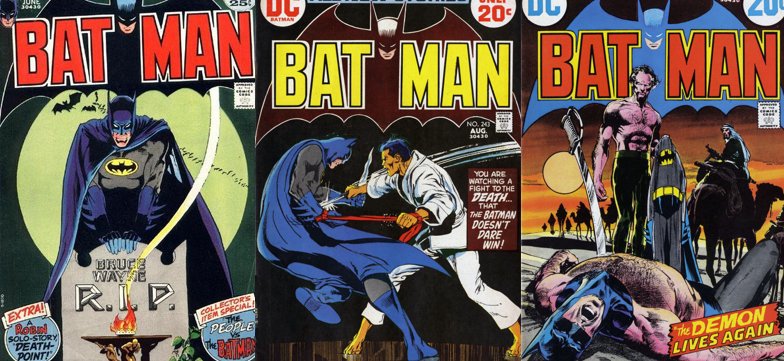
Story Title: “Bruce Wayne — Rest in Peace!”
Published: June 1972
Writer: Dennis O’Neil
Artist: Irv Novick and Dick Giordano

Story Title: “The Lazarus Pit!”
Published: August 1972
Writer: Dennis O’Neil
Artist: Neal Adams

Story Title: “The Demon Lives Again!”
Published: September 1972
Writer: Dennis O’Neil
Artist: Neal Adams

The Background:
Following their success with Clark Kent/Superman, National Comics Publications tasked Bob Kane with creating another masked crimefighter to add to their repertoire. Thanks to the invaluable and long-suppressed talent of artist Bill Finger, the “Bat-Man” quickly became one of DC Comics’ most popular characters and a mainstream cultural icon. Over the years, the Batman defended Gotham City from many costumed supervillains, but perhaps his most captivating and intriguing villain is “The Demon’s Head”, Rā’s al Ghūl. Created by editor Julius Schwartz, writer Dennis O’Neil, and artist Neal Adams during DC Comics’ reinvention of the Batman to downplay the camp trappings of the sixties, Rā’s al Ghūl was an enigmatic criminal mastermind not unlike a James Bond villain. His expansive criminal empire, lofty goal of ending worldwide conflict by any means necessary, and international flavour made him a dark counterpart to the Dark Knight. Following his first appearance, Rā’s al Ghūl continually plagued Batman thanks to the rejuvenating properties of his “Lazarus Pits”, which were introduced in these three issues and restored him from death at the cost of his keen intellect. Rā’s was a pivotal figure in DC Comics thanks to his daughter, Talia, who birthed Batman’s volatile son, and numerous appearances outside of comics. He was excellently brought to life by the eloquent David Warner, Matthew Nable, Alexander Siddig, and Liam Neeson. These issues also inspired some of these interpretations of Rā’s, with the story and visual of the two (or a Batman proxy) battling bare-chested and/or with swords being evoked in the DC Animated Universe, Batman Begins (Nolan, 2005), and Arrow (2012 to 2020).

The Review:
This three-part story kicks off with quite the sensational headline: “Bruce Wayne Vanishes!” In Commissioner James “Jim” Gordon’s office, the world-weary commissioner discusses the millionaire’s presumed death with the Caped Crusader, obviously oblivious that the Batman is Bruce Wayne. Both men lament Wayne’s assumed death before the Batman leaves, informing Gordon that he’ll be out of the country for some time. As the Batman swings through the city, we learn that he faked his alter ego’s death as a mysterious villain apparently knows of his dual identity and the Batman doesn’t want to risk endangering those closest to him. Begrudgingly, the Batman realises he needs help combating this threat and thus swoops into a downtown café to chat with crime boss “Matches” Malone. However, Malone sics his goons on the Batman and flees into the café’s kitchen. Cornered, Malone opens fire and apparently shoots Batman dead! Thus, the story follows Malone (whose gimmick, who may have guessed, is repeatedly lighting matches with his thumb) as he follows Doctor Harris Blaine through the Gotham Arms Hotel. When Dr. Blaine is attacked by an unknown assailant, Malone repays the favour and carries the unconscious doctor to a nearby building to meet the Batman, alive and well and grimly revealing that Rā’s al Ghūl – the seemingly immortal head of the worldwide criminal organisation the League of Assassins – has targeted Dr. Blaine due to his as-yet-unknown research. Dr. Blaine’s attacker, Lo Ling, interrupts the meeting and spontaneously reveals some of his backstory (he was saved by Rā’s and thus owes him his servitude) and that Rā’s’ daughter, Talia, disagrees with his vendetta against the Batman, all before tossing a knife right into the Dark Knight’s chest! Malone is so enraged by this that he accidentally topples over the projector Batman was using to show Dr. Blaine slides, temporarily blinding Dr. Blaine and allowing Lo Ling to vanish…along with the Batman’s corpse!
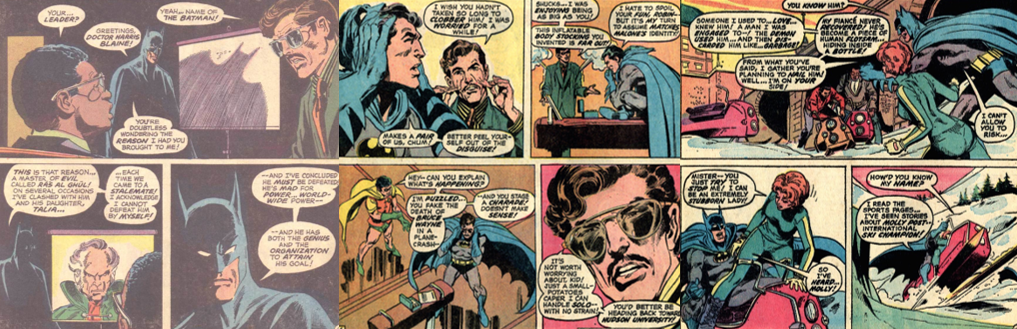
The Batman assembles a rag-tag team to track Rā’s al Ghūl to the Swiss alps.

Malone orders Dr. Blaine to the lobby and then races after Lo Ling. With Dr. Blaine out of sight, Malone removes his clever disguise and reveals that he was the Batman all along, the Dark Knight assuming the mobster’s identity after he accidentally killed himself and setting up a dummy for his meeting with Dr. Blaine. Lo Ling is so shocked to see the Caped Crusader alive that he slips from the rooftop, though the Dark Knight catches him mid-fall by racing to a lower-floor window. Now owing his life to the Batman as much as Rā’s al Ghūl, Lo Ling is drafted into Batman’s crusade, though insists on fighting him in respectful combat first. This time, Dick Grayson/Robin assumes Malone’s identity as the two battle, with Batman abandoning his blade and overpowering Lo Ling with his superior judo skills and earning Lo Ling’s eternal servitude. Despite needing allies for his war with Rā’s al Ghūl, the Batman sends Robin back to Hudson University to avoid endangering the Teen Wonder and to ensure that the Batman’s legacy can continue if he falls. Dr. Blaine and Lo Ling then meet with Malone (who’s Batman in disguise, keep up!) at a private airfield and take a plane to the Swiss alps, where it’s rumoured Rā’s al Ghūl is located. Upon landing, Lo Ling randomly spots Talia al Ghūl and rushes to capture her, eager to please his new master, only to be knocked out by Talia’s hulking bodyguard, Ubu. The Batman intervenes and quickly takes the brute down, only to be blasted by international ski champion Molly Post, who misread the situation and thought Batman was attacking Talia. This allows Ubu to kick the shit out of Batman, but Talia calls him off since she’s still got the hots for the Masked Manhunter.
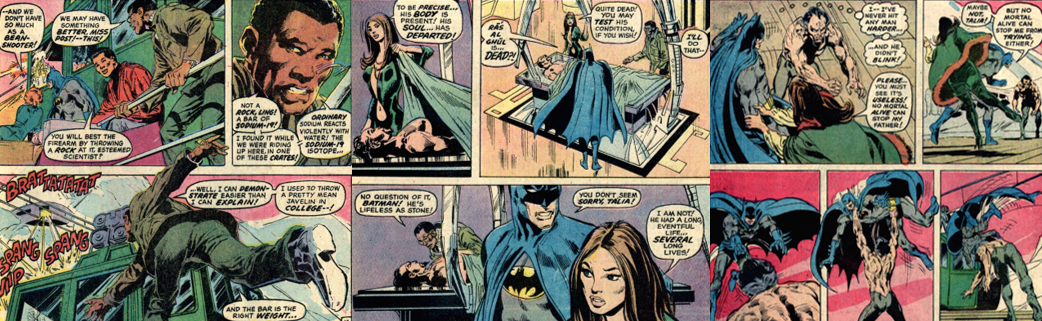
Although Batman and his allies find Rā’s dead, the Demon’s Head rises again, stronger than ever!

After apologising for her blunder, Molly insists on accompanying the three in hunting Rā’s al Ghūl since the Demon’s Head manipulated her fiancé so badly that he turned to alcoholism. Upon reaching Rā’s al Ghūl’s private cable car, Batman and Lo Ling KO two guards (much to Dr. Blaine’s chagrin) and have Molly and Dr. Blaine assume their identities, while Batman and Lo Ling cling to the outside of the cable car, to bypass the inept snipers. As swift as the Dark Knight and his ally are, however, the goons open fire, causing the group to be pinned down by machine gun fire from a nearby World War Two bunker that serves as Rā’s al Ghūl’s Swiss headquarters. Despite claiming to be a pacifist, Dr. Blaine resolves the situation by hurling a bar of Sodium-19 (which was being transported in the cable car) into the bunker, causing a massive explosion that the doctor is strangely confident their attackers will have survived. Eager to discover what Rā’s is planning for the Sodium-19, the Batman leads the group onwards, lamenting that he must endanger such brave and feisty lives, easily breaking into Rā’s’ stronghold and taking Ubu down with a flying kick. Although Molly tackles Talia, believe her to be a threat, Talia not only reaffirms her love for the Batman but also reveals that Rā’s is dead. Dr. Blaine confirms it by examining the body and Batman offers his condolences. Although Talia dismisses Batman’s sympathies and agrees to be arrested, the group miss that she activates a hidden switch that lowers Rā’s al Ghūl’s corpse into a bubbling, putrid green liquid – the Lazarus Pit. True to its name, the mysterious liquid reanimates Rā’s, returning him to life with the strength of ten men and the madness of an animal! Accordingly, the crazed, half-naked Rā’s races into the frigid cold to confront the group, laying Lo Ling out with a single punch and shrugging off the Batman’s most powerful blow! Refusing to back down even in the face of such a mighty madman, the Batman is easily manhandled and tossed into the cable car.
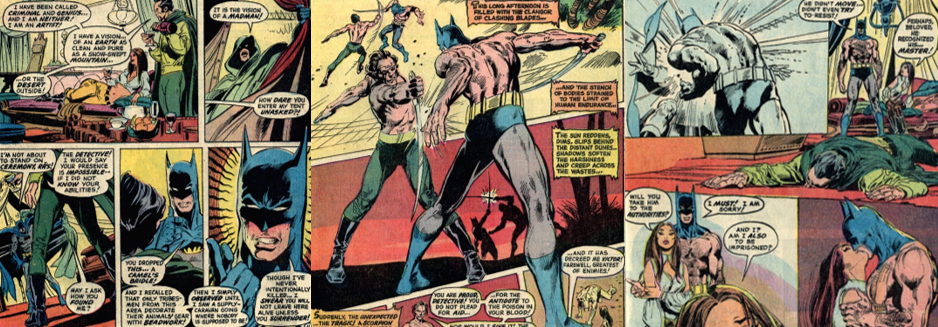
Following a beautiful sword fight, Batman KO’s his foe and takes him into custody.

After Dr. Blaine wrecks the cable car’s controls, Talia talks some sense into her father and flees with him to their hovercraft, leaving Batman to shake off his injuries and Dr. Blaine insisting they get the wounded Lo Ling to a hospital. Upon seeing Rā’s al Ghūl’s futuristic hovercraft blast away, the Batman is stunned when Molly gives chase on her skis, forcing him to follow to protect her. Though astonished by her recklessness, the Batman can’t help but admire her skill and bravery, and he’s even more impressed when Molly hurls one of her skis into the hovercraft’s propeller, forcing a crash landing, though she’s wounded from debris. This is all the distraction the al Ghūl’s need to flee and, after getting Molly to safety, the Batman returns during the night to inspect the downed hovercraft and discovers a camel’s bridle. With all his allies on the shelf, Batman heads to the desert of an unspecified nation to confront Rā’s, whose regained his senses and determined to rebuild his empire. Determined to stop Rā’s, Batman agrees to a duel to the death and the two face each other, topless and armed with swords, in the sweltering desert. As a weeping Talia watches her lover and her father clash, Batman and Rā’s battle long into the afternoon but the fight unexpectedly ends when Batman is stung by a scorpion. Declaring himself the victor, Rā’s abandons his foe to his fate, though a kiss from Talia revitalises Batman and counteracts the poison. Driven by rage and instinct, the Batman stalks to Rā’s’ tent and lays him out with a single punch, with Rā’s too humble and horrified to offer any resistance. Although the Batman carries Rā’s al Ghūl off to be the authorities, he lets his emotions get the better of him and spares Talia, leaving her with a final kiss.

The Summary:
These three stories (generally referred to as “The Demon Lives Again!”) have become iconic moments in the Batman’s long and storied career mainly due to the visual of the bare-chested Dark Knight duelling with the Demon’s Head in the arid desert. For me, this is peak classic Batman since I grew up with the writing and art of Dennis O’Neil and Neal Adams, which portrayed him as a well-rounded, intelligent, and stable individual more focused on crime solving than bashing heads or being a paranoid control freak. While the Batman loathes asking for help and putting others in danger to track down Rā’s al Ghūl, he feels compelled to do so to protect those he cares about (such as Robin and, assumedly, his mentor and father figure, Alfred Pennyworth). While the Batman is clearly rattled to have his civilian identity be targeted, to the point where he fakes Bruce Wayne’s death to operate autonomously as the Batman, it’s not clear what Rā’s al Ghūl’s goal is in this story arc. He targets Dr. Blaine for unspecified reasons and is stockpiling Sodium-19, but it’s not revealed why or what the endgame is beyond Rā’s wishing to strengthen his already powerful criminal empire. The assumption is that whatever Rā’s al Ghūl is planning can’t be good since he’s essentially a threat to the entire world by default, but it might’ve been nice to get some idea about what the stakes were beyond this vague threat. It’s also not revealed how and when Rā’s al Ghūl died. The Batman doesn’t seem to have known about this, so I doubt it happened in a previous story, and it raises questions regarding Talia. While she’s clearly conflicted between her loyalty to her father and her love for the Batman, it’s heavily implied that she’s begrudgingly carrying out his posthumous orders and is therefore the true threat of the story arc.
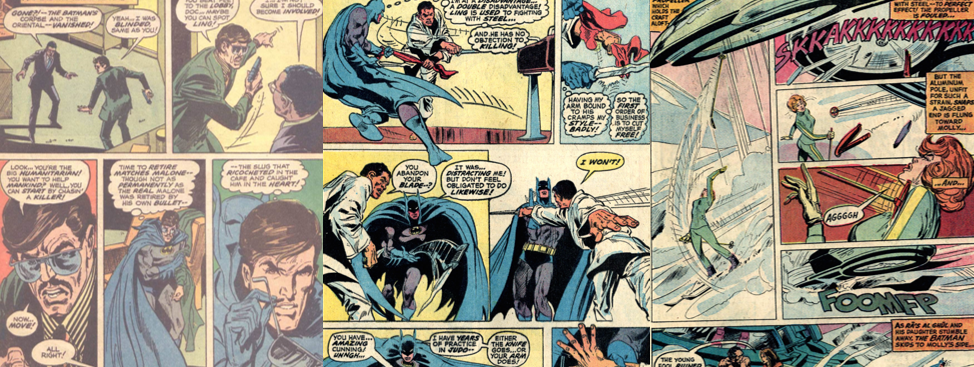
Batman’s allies and methods are questionable, adding little to the plot and ultimately being unnecessary.

Naturally, she hides it well, talking down Ubu, kissing the Dark Knight, weeping at the iconic clash between the two, and making no explicit moves against him, but Talia clearly can’t be trusted and carries out her father’s orders, willingly or not. The Batman’s plan is to assemble a team to hunt the Demon’s Head, though I’m not entirely sure what the benefit of assuming “Matches” Malone’s identity was since his underworld ties didn’t have any impact on their journey. I guess it helped to distract Lo Ling, who was fooled by the dummy Batman, but Malone didn’t seem necessary to the plot to me. It would’ve made more sense for “Bruce Wayne — Rest in Peace!” to revolve entirely around Batman masquerading as Malone to figure out who Rā’s al Ghūl is planning to target and then abandoning the disguise once Dr. Blaine was saved. I quite liked Lo Ling; he seemed like a tortured soul torn between his loyalties, like Talia, and was a useful ally in combat. It definitely would’ve made more sense for him to toss that Sodium-19 bar and for that to have killed Rā’s’ men, bringing some conflict between Lo Long’s methods and the Batman’s. It also would’ve made more sense for Lo Ling to guide Batman through the Swiss alps; he should know the location of Rā’s al Ghūl’s base, after all, meaning the inclusion of Molly Post also a questionable one. I liked that she impressed Batman time again, how resourceful, determined, and fearless she was, and that he was obviously taken by her, but I fail to see how she added anything to the story. Lo Ling and the Batman could’ve easily filled her role and it’s not like Molly and Batman become an item by the end. Additionally, Lo Ling and Molly are both grievously wounded in the final issue, which also takes Dr. Blaine out of the picture since he needs to see to her, meaning Batman faces Rā’s al Ghūl alone in the end…which was the exact opposite of his plan!
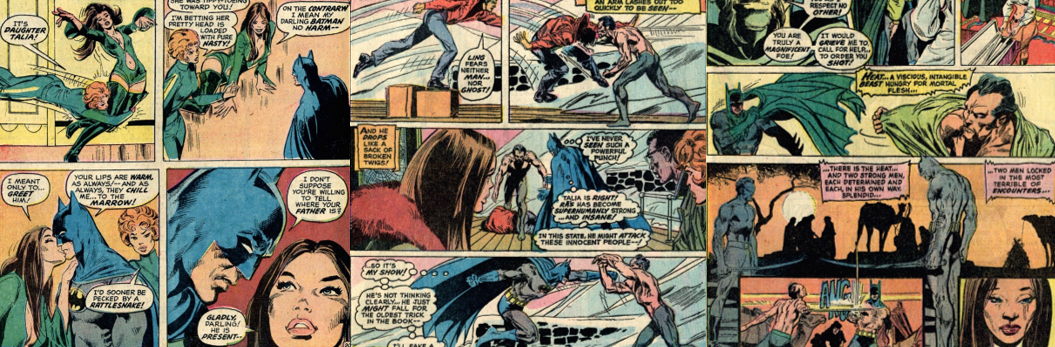
Batman’s relationship with Talia and rematch with Rā’s are the two highlights of this arc.

Therefore, the primary focus of this story arc (tracking down and stopping Rā’s al Ghūl’s mysterious plot) is a bit flimsy for me. However, these issues still stand as a landmark moment in the Dark Knight’s history simply because of how alluring and nuanced Rā’s al Ghūl and Talia are. Rā’s al Ghūl poses a significant threat to both the world and the Batman because of his resources and knowledge of Bruce Wayne’s identity, while Talia represents seductive temptation. Both the al Ghūl’s deeply respect and admire the Batman and wish him to join their cause, though they refuse to alter their methods to appeal to him and even Talia only defies her father so much. These issues not only reintroduce Rā’s al Ghūl but also introduce the concept of the Lazarus Pit, a mysterious, ancient substance that not only restores the dead to life but briefly bestows them with superhuman strength, though at the temporary loss of their sanity. When he rises from the dead, Rā’s al Ghūl is a mindless, animalistic force who easily fells Lo Ling and overpowers the Batman, only coming to his senses when confronted by his daughter. By the time the Batman intercepts them in Egypt Afghanistan whatever desert they flee to, Rā’s al Ghūl has fully regained his composure and is ready to battle to the death to settle his differences with the Dark Knight. While the Batman outright refuses to kill Rā’s al Ghūl, he also refuses to leave without the Demon’s Head in custody and accepts the challenge, providing the arc’s most powerful and sexually charged imagery. The actual sword fight, however, is surprisingly disappointing; neither competent draws blood, there’s no back and forth between the two, and it randomly ends when a scorpion stings Batman. Rā’s is incredibly pleased by this victory, claiming that nature itself has willed him as the victor, but so startled to see his foe fully recovered that he offers no resistance when the enraged Batman comes for him. In the end, these are decent enough stories, but I feel it could’ve been cut down to a two-part tale by removing some unnecessary characters and moments. This might’ve freed some panels to better explore Batman’s relationship with Talia and Rā’s al Ghūl’s plan, but there’s no denying the appeal of their sword fight and the juxtaposition between the Dark Knight and the Demon’s Head.

My Rating:

Rating: 3 out of 5.

Pretty Good

What did you think of Rā’s al Ghūl’s rematch with the Dark Knight? Do you agree that the additional characters bogged down the narrative or were you a fan of Lo Ling and the “Matches” Malone identity? Did you enjoy the bare-chested sword fight between the two? What are some of your favourite Rā’s al Ghūl stories? Which interpretation of the Rā’s al Ghūl, whether animated, pixelated, or live-action, is your favourite? Whatever you think about the Rā’s al Ghūl, share your thoughts below, support me on Ko-Fi, and check out my other Batman content!

Movie Night: John Wick

Released: 24 October 2014
Director: Chad Stahelski
Distributor: Summit Entertainment
Budget: $20 to 30 million
Stars: Keanu Reeves, Michael Nyqvist, Alfie Allen, Willem Dafoe, Adrianne Palicki, and Ian McShane

The Plot:
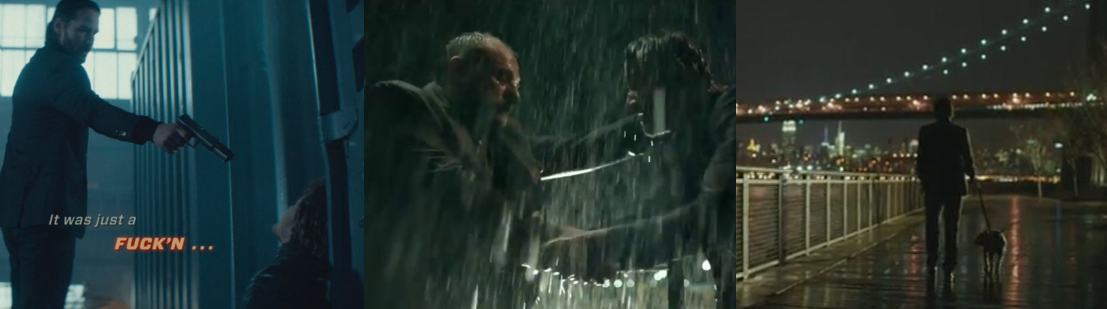
Former hitman John Wick (Reeves) returns to his violent life when a dog gifted to him by his beloved wife, Helen (Bridget Moynahan), is killed by a mobster’s reckless son, unleashing the feared “Baba Yaga” upon the terrified underworld once more.

The Background:
After Taken (Morel, 2008) became a surprise critical and financial success, it not only reinvigorated Liam Neeson’s career but also inspired a slew of similarly-themed movies. All of a sudden, aging action stars were in vogue, which meant writer Derek Kolstad’s dream to sell a spec script of an aging hitman being called back into service saw a new lease of life. The script caught the eye of producer Basil Iwanyk, who was looking for the freedom offered by smaller budget films and attracted to the core concept, and Kolstad accepted his lower bid so the movie could start production. The role was initially envisioned for an older star like Clint Eastwood and Bruce Willis was first attached to star before Keanu Reeves joined the project, eager for a new action role, and he recommending the script to veteran stuntmen Chad Stahelski and David Leitch. The duo suggested they direct they film (though Leitch was denied a co-director credit) and worked with Reeves to retool the script, de-aging the title character and making him a more stoic and mysterious character. Reeves’s personal experience with bereavement and previous experience with action roles served him well during his rigorous training, though the film was beset by budgeting woes. Inspired by crime thrillers and spaghetti westerns, Stahelski and Leitch sought to craft a unique world and avoid rapid editing for fight scenes, and the film’s $86 million box office made it a sleeper hit. Widely praised for Reeves’s enigmatic performance, impressive choreography, and exhilarating action sequences, John Wick was followed by equally praised sequels and spin-offs, re-established Reeves as an action star, and is the perfect film to revisit for the actor’s birthday.

The Review:
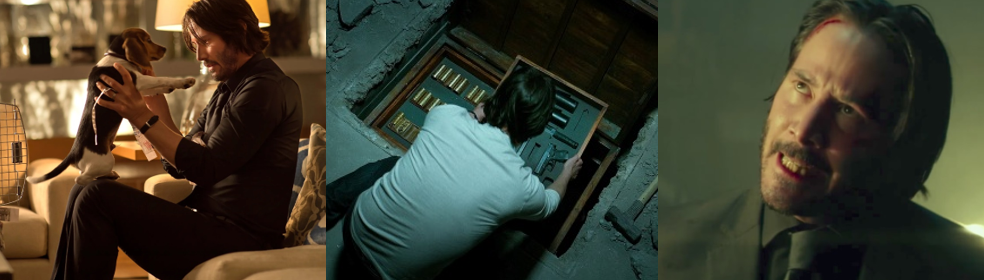
John Wick begins with intrigue, as it starts in medias res to find a battered and wounded John collapsing from his wounds, passing out while watching a video on his phone of his beloved wife. We then walk back a few days (maybe a week? Time’s a bit fast and loose here) to find John alone in his sparse, but spacious, home, still reeling from Helen’s unexpected death from an undisclosed illness (presumably cancer). Though surrounded by friends and well-wishers and finding some solace in his daily routine, John is like a zombie in these early scenes, sleepwalking through the burial and wake and greeting old friend Marcus (Dafoe) with a stoicism that borders on suspicion. It’s clear just from these quiet, sombre scenes that John’s a very private and reserved man who’s internalising his grief, that he faces an uphill battle of solitude and sorrow where his life has little meaning, the colour as drained from his world as it is from his abode. Then, an unexpected package arrives on his doorstep and John’s mask cracks as he reads Helen’s last message to him. Openly weeping, descending into heartbreaking floods of tears, John barely manages to read Helen’s note, which bequeaths him a cute little beagle, Daisy (Andy). Although John is initially ill-equipped for a puppy companion, forcing Daisy to sleep on the floor and feeding her cereal instead of kibble, the two quickly bond and John integrates her into his daily routine. This mostly consists of keeping a tidy and ordered house and taking his prized 1969 Ford Mustang Mach 1, a vehicle that was his second love after Helen and which he regularly takes for a spin to keep his obvious skills up to par and to vent his grief and anger. Daisy joins him for these jaunts, enjoying the thrill and giving him something to care for rather than losing himself to anguish. John’s car is so impressive that it catches the eye of loudmouthed Russian lout Iosef Tarasov (Allen), who arrogantly tries to buy the car and is stunned and angered when John not only refuses but insults him in perfect Russian.

Feared former hitman John Wick is drawn back into his violent lifestyle after his dog is murdered.

Unfortunately, John’s cool demeanour and stoic confidence during this confrontation come back to haunt him when Isoef and his shit-kicking cohorts follow John home and jump him at night. After beating John down and leaving him a bloody mess, they steal his car and maliciously murder Daisy with a lead pipe, returning John’s numb devastation and marrying it with a rage the likes of which the hoodlums could never expect. Excited by his latest acquisition, Iosef delivers the Mustang to Aurelio’s (John Leguizamo) chop shop, only for the mechanic to react in horror, punching the mobster’s son and incurring the wrath of his father, whose anger is immediately quenched when he learns that Iosef stole the legendary John Wick’s car. Rattled, Viggo Tarasov (Nyqvist) admonishes his son, clearly torn between fear, love, and desperation, and reveals that the “fucking nobody” was a hitman so feared within the criminal underworld that he was the man many hired to “kill the bogeyman”. Described as a man of focus and pure will, John left behind his violent ways after falling for Helen and successfully escaped that life by performing an impossible task: namely, murdering Viggo’s competition and making him New York City’s top mob boss. Having employed John in the past, Viggo is very familiar with his methods and reputation, having seen him kill three men with a pencil, and knows his son is doomed, for John’s wrath is mythical. Still, Viggo tries to reason with John, only to be met with blunt silence. He even tries to proactively stop John before he can get rolling, leaving his squad murdered and John calling in favours from the past to help clean up the mess. His life shattered, fuelled by grief, anger, and a lust for revenge, John digs up his long-buried weaponry, washes himself off, and suits up to take action, insisting that he’s paying a quick visit to his old life to get to Iosef. Though he’s been out of the game for five years, John is a slick, ruthless, and efficient killer, often ending most foes with a quick one-two to the chest and head and easily overwhelming groups of armed men with his superior gunplay and uncanny ability to adapt to his environment. His reputation proceeds him, with many (even his enemies) respecting him or knowing to stay out of his way, though John’s not some mindless killer and spares those who are simply doing their job.

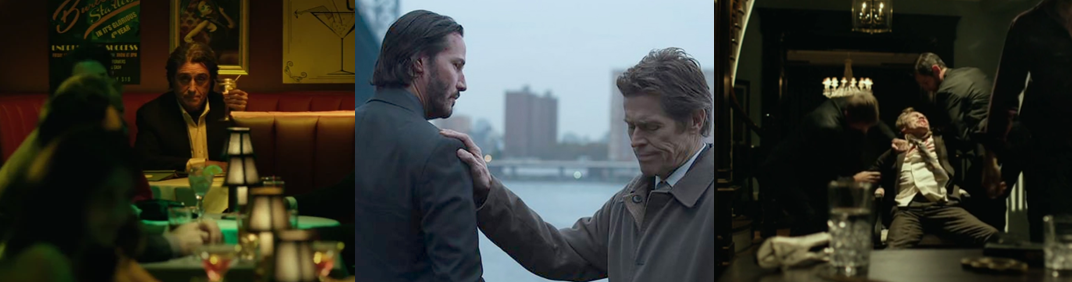
John is surreptitiously aided by some old allies, even if they pay the price for their deeds.

Despite insisting that he’s not returning to his old ways, John’s drawn back into his previous life by the need for information and resources. This leads him to the Continental, an opulent hotel and bar run by the enigmatic Winston Scott (McShane) and managed by Charon (Lance Reddick), a polite concierge who accommodates John’s wishes with a silver-tongue grace. Though pleased to see John, Winston warns him about dipping even briefly into his old ways and adds some additional lore to this fascinating world by stating that no “business” can be conducted on the Continental’s grounds, effectively making it a safe haven for all as long as they have enough of the strange gold coins the hitmen use for currency. Not everyone within the Continental is as mindful of these rules, however, as Miss Perkins (Palicki) eagerly ignores them to take a shot at John, relishing both the $2 million bounty and the chance to knock off the legendary John Wick. Though subdued by John, thanks to a warning shot from Marcus, Ms. Perkins seals her fate when she kills Harry (Clarke Peters), a former colleague of John’s who he paid to watch her and essentially becomes Viggo’s right-hand when he goes on a crazed revenge spree in the finale. This costs her dearly as Winston has her executed, not just for breaking his rules but also out of loyalty to John, whom he surreptitiously aids throughout the film. John’s also secretly aided by Marcus, a crack sniper and old friend who agrees to the $2 million contract only to help John by either warning him of imminent dangers or rescuing him, such as when he snipes the goons suffocating John during his passionate outburst to Viggo. This also ends badly for Marcus when Viggo takes a hands-on approach to making Marcus pay, though the feisty sniper doesn’t go down without a fight.

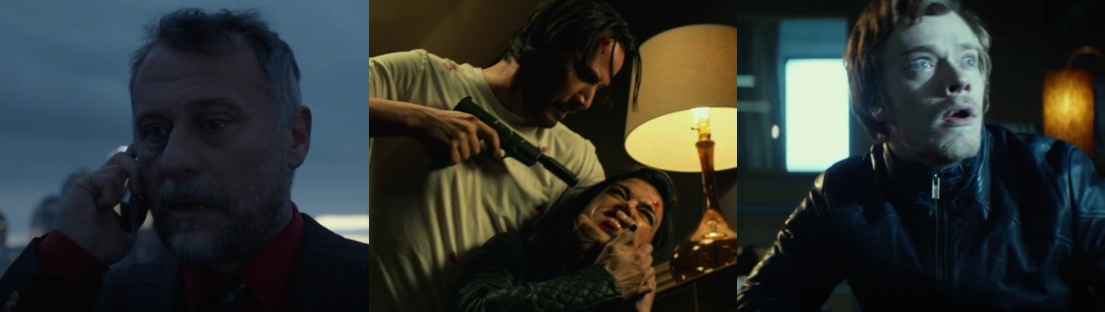
Despite knowing full well what John’s capable of, Viggo desperately tries to protect his son.

Despite having amassed a vast and profitable underworld empire thanks to John, Viggo is immediately rendered powerless upon learning that the “Baba Yaga” is coming for his son. He tries to barter with John and desperately tries to keep his son hidden and safe, but Wick is relentless, easily tracking Iosef down and extracting his revenge. Though he usually favours slick gunplay, John’s happy to get down and dirty with his foes, such as Iosef’s buddy, Gregori (Omer Barnea), whose neck he snaps with relish after he killed Daisy. Though far from invulnerable, and ending up pretty banged up from his escapades, John gloriously bests even swarms of armed opponents. However, he runs into a metaphorical wall when confronted by Kirill (Daniel Bernhardt), a towering opponent who briefly manhandles John and forces him to fight from beneath. Yet, John is implacable and is completely unfazed when he’s captured or held at gunpoint, sure that he’ll either find some innovative way to fight out of the situation or he’ll die trying, bringing as many with him as he can. Although Viggo could easily stop John’s rampage by giving up his son, he refuses to do this since, though Iosef is a fuck up and an asshole, Viggo has the same sense of loyalty and love as John feels for Helen and Daisy. Viggo’s reasonable at first but is enraged when John raids one of his hidden vaults and destroys not just a sizable stash of cash, but a bunch of documents and evidence he used to stay in power. However, when push coms to shove, Viggo is an opportunistic and self-serving mobster and eventually sells Iosef out to save his own hide. Interestingly, while John massacres Iosef’s bodyguards, there’s little to his final confrontation with the arrogant wannabe mobster, whom John simply executes via headshot. Although Viggo knew this was inevitable, having witnessed John at his peak and being terrified of him returning to the fold, Iosef’s death pushes Viggo over the edge. He transforms from a powerful but disconnected gangster into a spiteful, bloodthirsty savage as he takes his anger and grief out on Marcus and even taunts John, seemingly descending into near madness as he sees his end rushing towards him while John remains unnervingly cold and calm while on the job.

The Nitty-Gritty:
John Wick is a fascinating exploration of grief and how it affects different people. Even now, with all its sequels and spin-offs, we know surprisingly little about John’s life as the feared “Baba Yaga”. We get snippets of it here, but only as legends and in the way characters react to him (a mixture of fear and respect), but he is noted more than once to have been changed by Helen. It’s not clear how the two met, but her influence was clearly enough to have him questioning his ways and deciding to give up his guns for a simple life of peace and happiness. By all accounts, he stuck to this vow for “five years and change”, disappearing into myth to live an unglamorous but content existence, and characters react with both excitement and surprise when he appears to be “working again”. Interestingly, though John claims to have gotten “rusty”, his skills don’t appear diminished (but, then again, for all we know, the old “Baba Yaga” emerged unscathed from every fight) and he immediately snaps back into that mindset to get his revenge. John’s clearly struggling with his emotions and the weight of grief, which Helen knew would cause him only pain and loneliness, hence why she sent him Daisy. Although John and Daisy don’t spend much time together, she seems to at least partially fill the hole in his heart, and he was just getting used to her being around when she was ripped away from him. Plunged into the depths of his anguish and anger, John snaps back into his old ways and begins a quest for simple revenge, wishing only to make Iosef and his cohorts pay, but ends up tearing down Viggo’s empire as easily (if not more so) than he helped build it. It’s genuinely heartbreaking seeing John read Helen’s note, and hearing Daisy’s final yelp and seeing that she apparently crawled over to be near him as she died (or was dragged there to mock him). In this regard, John’s anger is fully justifiable as who hasn’t been enraged and spiralled into a fit of anguish at the unfair death of a loved one or the loss of a beloved pet?

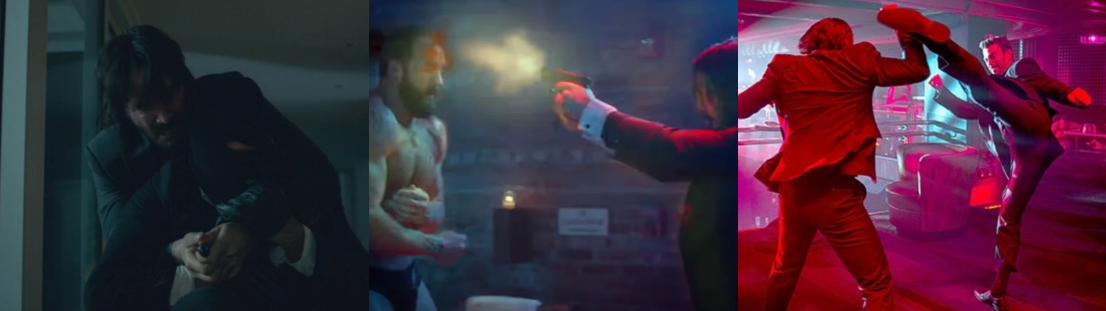
John Wick is depicted as a fast, efficient, and ruthlessly relentless killer.

Being that it was spearheaded by career stuntmen, John Wick naturally impresses with its brutal and scene stealing fight scenes. John is a focused and intelligent former assassin, laying explosive traps and using the environment to his advantage wherever possible. He tosses goons through windows, drowns them, and takes any chance to snap their necks or stab them when they’re injured or prone. Most of the goons he fights are simple, out of shape mobsters with itchy trigger fingers who easily go down with the old one-two to the chest and head, splattering blood on the walls and easily being manhandled by John’s equally skilled close quarters combat skills. Kirill represents a far greater challenge due to his height, imposing physique, and impressive fighting skills, easily hefting John over a balcony and choking him with a plastic bag. John, however, is not only constantly moving and fighting back, but also not afraid to fight dirty, targeting limbs and even the balls to wound his foes and give him time to skillfully reload and execute a headshot. This sees him biting Kirill to escape being throttled, attacking his eyes, and finally choking the life out of him with a headscissor hold. The sadistic Ms. Perkins also offers John a physical challenge, surprising him in the Continental and striking while he’s nursing a serious wound. Unlike the tight-lipped Kirill, Ms. Perkins delights in taunting John, using her speed and sleight stature to target his arm and wound; anything to give her the edge over the feared “Baba Yaga”. In the end, as with every fight, John’s sheer tenacity wins out, but this is a great fight to showcase his adaptability, as John fights unarmed (save for a pillowcase). Later, John lugs around an impressive heavy shotgun, blasting at Viggo to learn Iosef’s location, and takes a page out of Marcus’s book to snipe Iosef’s bodyguards. The fights would steadily get more complex and intricate as the series went on, but there’s a raw grit to John Wick’s action sequences, which eschew quick cuts and frantic editing to showcase violent, ferocious, and largely grounded fight scenes that leave John battered and bloody and a pile of bodies in his wake.

John callously takes his revenge and is then motivated to keep going with a new canine friend.

In an attempt to buy himself time or eliminate John through sheer numbers, Viggo puts out a $2 million contract (upped to $4 million for those who break the Continental’s rules) for the legendary assassin, only for his men and those that take up the challenge to by brutalised and dead at John’s skilled hands. In desperation, Viggo has Iosef taken to a safe house, only for Winston and then Viggo himself to give up the boy, leading to John shooting up a club and then getting his revenge by executing Isoef via headshot. This would’ve likely been the end of it but, when news of his son’s death reaches Viggo, he visibly and disturbingly transforms into a near-psychotic agent of revenge, grief overtaking him and driving him to violent acts, just as it did John. This sees him callously torture Marcus for betraying him and even challenge John to a final showdown to settle the score, planning to flee via helicopter and sacrifice his remaining men by proxy. John takes up the challenge, incensed by Marcus’s death and uncompromising in his quest to make everyone pay for taking away the last ray of hope in his life. What follows is an intense car chase through the city, where Viggo succumbs to drug-fuelled madness and simply laughs as John offs his men one by one, even passing his exasperated assistant, Avi (Dean Winters), a gun and wishing him luck before delighting as John crushes the man with his car. Though far from a physical match for John, Viggo engages him in a hand-to-hand bout in the rain. Naturally, John mortally wounds the mobster with a knife to the neck and, in his own way, pays morbid respect to Viggo as he dies. Though seemingly happy to face his own end while watching a video of Helen, his late wife’s words are enough to encourage John to treat his wounds at a nearby veterinary clinic, where he also finds and adopts a dog scheduled to be euthanised. Having thus found a reason to live, John limps off through the rainswept night to return home, unaware (or unfazed) that his actions will have dire consequences…

The Summary:
I’ve always been a fan of Keanu Reeves’ more action-oriented roles. The guy has done enough movies by this point to be considered a star of the genre and he impresses once again here, bringing John Wick to life with a brutal efficiency that defined not only this franchise, but this sub-genre of action/thriller cinema. While the movie’s premise may be ridiculously basic and even a little laughable, the execution is anything but and I appreciated the raw simplicity of a man seeking revenge for his dog’s death, as who can’t relate to that? Of course, it’s not just about that as John is as much motivated by his unresolved grief about Helen’s untimely death as Daisy’s and what we’re left with is the story of a man who desperately sought to leave behind his violent past who’s now forced to reignite that fire to avenge his losses. Of course, John Wick is also a spotlight for the underappreciated and extremely talented stuntmen who work in the movie industry, showcasing startling and engaging fight scenes in full detail, even when under cover of darkness or in a packed nightclub. There are no frantic editing or quick cuts here: just fast, efficient, physical action that paint John as an effective, ruthless, but also vulnerable assassin. While the sequels would continuously up the ante, the simplistic, gritty nature of the fight scenes has always been very appealing in this first entry. This extends to the world-building, too, as we’re given just enough breadcrumbs and insight into this strange world to be intrigued without completely lifting the lid. While I would’ve loved to see more detail about John’s former life, I loved how his legend spoke for itself and the mystery surrounding him, and Keanu Reeves excelled in showcasing a range of emotions (from utter grief, to boiling rage, to a focused stoicism) in this enduring platform for both the actor and this genre.

My Rating:

Rating: 5 out of 5.

Fantastic

Are you a fan of John Wick? What did you think of Keanu’s performance and which of the fight scenes was your favourite? Were you fully behind John once his dog died or did you find the plot a bit too ridiculous? What did you think of the bits and pieces of lore we got here and the presentation of this underworld of assassins? Which film in the franchise is your favourite, and what’s your favourite Keanu Reeves movie? Whatever your thoughts, leave a comment below and become a member on my Ko-Fi to suggest other Keanu Reeves movies for future reviews.

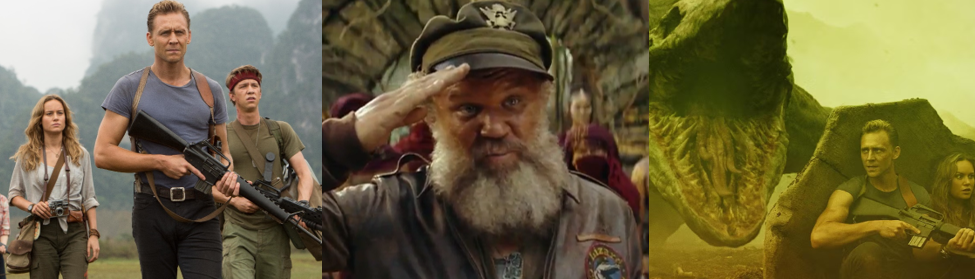
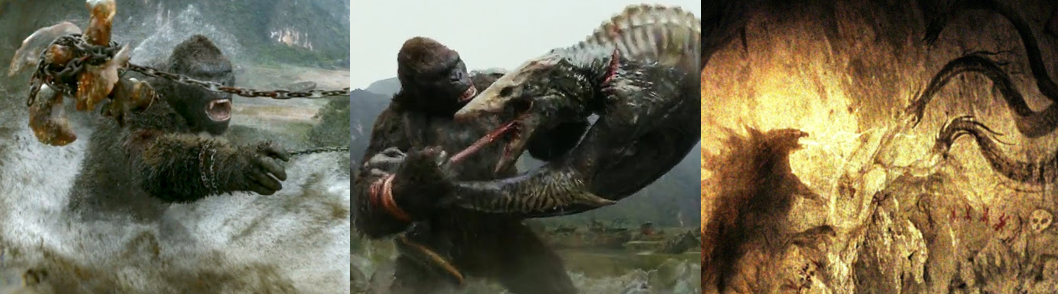
Back Issues [K-Month]: Skull Island: The Birth of Kong


In the absolutely bonkers science-fiction film Pacific Rim (del Toro, 2013), the monstrous Kaiju first attacked humanity on 10th August 2013, which was subsequently branded “K-DAY”. To celebrate this event, and giant monster movies, I dedicated every Sunday in August to one of cinema’s most prolific monsters: King Kong!


Writer: Arvid Nelson – Artist: Mohammad “Zid” Yazid

Story Title: “Part One: The People Who Came from the Sky”
Published: 12 April 2017

Story Title: “Part Two: The Mountain Who Thunders Death”
Published: 21 June 2017

Story Title: “Part Three: Valley of the Fallen Gods”
Published: 27 September 2017

Story Title: “Part Four: Over the Rainbow”
Published: 21 November 2017

The Background:
As difficult as it may be to believe now, it was about a hundred years ago that former World War I aviator turned filmmaker Merian C. Cooper thought up the iconic visual of a giant gorilla being shot from the Empire State Building by planes. Though one of the most influential movies of all time, King Kong (Cooper and Schoedsack, 1933) was followed by a comedic sequel, a profitable but polarising clash with Godzilla, a “Suitmationblunder that ended Toho’s brief stint with the license, an ambitious remake and its muchmaligned, blockbuster before the almighty Kong once again rubbing shoulders with Godzilla in the “MonsterVerse”. The foundation for this was laid with Kong: Skull Island (Vogt-Roberts, 2017), a critical and financial success that redesigned and recast Kong as a cantankerous, but benevolent, protector. The film’s success paved the way for future MonsterVerse projects but left many questions about this new Kong unanswered, questions this four-issue miniseries sought to partially address. While far from the first literary adaptation of the famous ape (or even the first comic book in the MonsterVerse library), Skull Island: The Birth of Kong aimed to bridge the gap between the film’s period setting and the modern day. The result was a miniseries lauded for its artwork and deeper exploration of Kong’s backstory, as well as expanding upon the MonsterVerse, while also being criticised for its short length and barebones plot.

The Review:
This tie-in comic series begins in 2012 with the Australian Navy finding a bizarre package bearing the Monarch logo floating in the waters of the South Pacific. Two weeks later, Houston Brooks is brought the item by an old friend and it’s revealed to be a recording device belonging to Aaron, Houston’s son who mysteriously disappeared some time ago. After cracking the device’s password, Houston thinks back to seventeen years prior when he and Aaron got into a heated argument regarding Skull Island. Angered that his father would leave an unpredictable wild animal like Kong to keep the Massive Unidentified Terrestrial Organisms (MUTOs) that have migrated there in check, Aaron stormed out to lead a team of crack monster hunters on an expedition to Skull Island. Knowing full well that his father would be pissed, Aaron compiled a complete record of the venture, which saw him team up with cantankerous cryptobiologist Evgenij Medov, enthusiastic Doctor Evelyn Matemavi, sarcastic survival instructor Helen Karsten, and the mysterious mythographer Walter R. Riccio. Determined to find evidence of Skull Island to expose Monarch’s operation, Aaron led the team through the raging storm that protects the island (with far less difficulty than in Kong: Skull Island) and parachuted to the prehistoric paradise after their plane was downed by Psychovultures. After briefly being awed by the beauty, wonder, and danger of the island, the team prepped to retrieve their pilot, Cejudo, secure their supplies, and make contact with the isolated locals, the Iwi tribe. After a pack of Death Jackals tear Karsten to pieces and critically inure Medov, they’re suddenly saved by Kong, allowing them to take cover in a cave. After stabilising Medov, the group are stunned when a handful of Iwi, led by Ato, greet them in English and bring them to their humble village.

Sceptical Aaron leads a team to Skull Island and finds himself on a sacred pilgrimage.

Confused and realising that Skull Island is full of secrets, Aaron learns that the tribe was taught English by Lieutenant Henry “Hank” Marlow during his tenure trapped there. Aaron is as impressed by this as he is by the Iwi’s construction skills, the healing properties of their various medicines, and the speed that Riccio learns their language and culture. Riccio reveals that their coming was foretold in Iwi legend and then dramatically shares a sudden vision of Kong’s family battling the Skull Crawlers to not only defend the island but also assert themselves as the dominant species. Riccio states that they’re to join the Iwi in Atenatua, a pilgrimage to learn the secrets of Kong. Though Aaron is sceptical of the mysticism, he’s determined to ensure Kong’s capable of keeping the “gateway to hell” shut so the island’s monsters don’t threaten civilisation. Riccio embraces the island’s culture for the pilgrimage, Medov makes a full recovery, and Ato leads them on, with the team amazed by a shipwreck that depicts Kong welcoming the Iwi to the island. They also learn that the “Devils of the island” from Riccio’s visions killed Kong’s parents, the last of their kind by the time the tribe arrived. When the gigantic, crocodile-like Sirenjaw suddenly attacks, the group is chased through the jungle. Luckily, they find the supplies left by Houston’s expedition many years prior, allowing the group to arm themselves. This is avoided, however, by the thunderous roar of Kong and, by the time the team races to the source, they find only the Sirenjaw’s dismembered corpse and a flock of hungry, opportunistic Psychovultures. Although they escape the voracious dinosaurs, they run right into a monstrous Swamp Locust and barely escape into the nearby valley. There, Aaron is horrified to learn that the creatures will probably take a week to finish feasting on the Sirenjaw’s remains, though his spirits lift when Cejudo radios in for help. Despite the damage to the plane, Cejudo reveals he’s flight worthy and offers to evacuate the team. However, Ato states that the only safe landing spot is beyond the bone yard, the home of the Skull Crawlers.

Kong foils Riccio’s mad scheme and makes a believer out of Aaron.

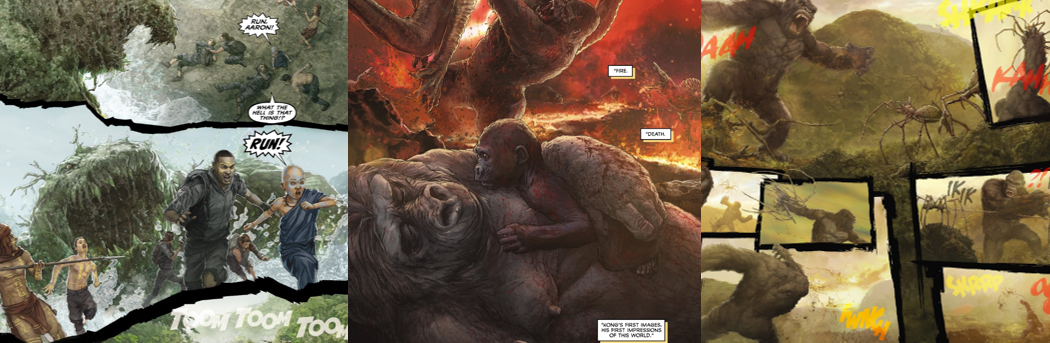
Despite Riccio insisting they complete their pilgrimage, the team head to the bone yard, discovering the skeletal remains of Kong’s family, and are promptly ambushed by Skull Crawlers. Ato leads them to another cave, where Riccio is assaulted by visions of Kong’s birth, which occurred in the heat of battle and saw the newborn Kong witness his parents’ brutal last stand against the creatures and left him the last of his kind. Though touched by Kong’s tragedy, Aaron urges them to press on and ultimately leaves Riccio behind when he insists on completing his “communion” with Kong. Thus, when Cejudo arrives to pick them up, Riccio blasts him from the sky with a rocket launcher, shoots Matemavi dead, and holds them at gunpoint to witness Kong’s divine glory. Riccio even attacks Ato, believing the village must fall for them to truly know whether Kong is an ambivalent, benevolent, or malevolent God. When Death Jackels attack, Aaron leads the others in escaping and realises the Riccio plans to use the explosives left behind by his father’s venture to enact his plan. Between panels, Ato leads them back to the village, too late to stop Riccio, whose actions allow a cluster of Mother Longlegs to rampage through the village. This leaves many dead, including Medov, though Riccio’s mad belief in Kong pays off when the great ape rips the giant spider-things apart. Riccio rejoices and praises Kong, proclaiming the ape the “savior of humankind”, only to be dismissively crushed by Kong’s giant fist. When Kong turns to Aaron, the sceptic becomes a believer when the cantankerous beast simply stares him down and Aaron sees that Kong isn’t some mindless beast, but a force of nature set on defending human life. Thus, Aaron makes his recording and sends it to his father on a makeshift sailboat, staying behind to help the Iwi rebuild and making amends with his dad. Having listened to the recording, Houston prepares to return to Skull Island and reunite with his son and the remainder of the book lists some information on all the beasts seen in the story.

The Summary:
Well, this was a lot of nothing. While Zid’s art is very close to Kong: Skull Island and perfectly captures the island, Kong, and the recognisable monsters that dwell there, the story leaves a lot to be desired, and it feels more like a partial retread of what we saw in the movie. While it’s nice to see the older Houston Brooks again, he basically bookends the paper-thin main plot, which revolves around his son and his vague, childish desire to prove his father wrong and paint Kong as a threat. This motivation doesn’t have much basis given Aaron seems to have no experience with Titans beyond Monarch’s records and his dad’s first-hand account, so it seems to come from simple fear rather than any tangible evidence. Aaron’s belief that Kong isn’t to be trusted and his motives and outburst seem like the actions of a disobedient teenager rather than a grown man, completely fracturing the backbone of the entire plot. It would’ve been so much easier to simply have Houston volunteer or encourage his son to join a routine expedition to Skull Island to witness its wonders and settle his scepticism first-hand, or even have Aaron be kidnapped by cutthroat mercenaries looking to somehow profit from Skull Island, or just have Aaron be a keen scientist like his dad. Forcing a conflict between them added little to the story beyond Aaron’s realisation that his father was right about Kong and learning to respect the delicate balance between the Titans, humanity, and nature, things that could easily have been hammered home just as effectively with my suggested changes.

It’s the impressive monsters and Kong’s tragic backstory that carries this lacklustre story.

If you’re hoping there’s some fun Kong action to make up for this, you’d be sadly mistaken. Kong barely appears here though, to be fair, it’s always an event when he does show up. Fittingly, The Birth of Kong focuses more on teasing the backstory of Kong’s species and how they were annihilated by the Skull Crawlers, effectively visualising the legends that were told in the movie. While this makes for some dramatic and bloody reading and casts Kong in a deeply sympathetic light, it is a shame to not have more of the story revolve around the titular ape as he steals the show whenever he appears. Skull Island’s monstrous natives somewhat make up for this, with some familiar faces (particularly the Mother Longlegs) making quite the visual impact. When Kong battles these creatures, the action is rendered in full, brutal glory, with few to no dialogue boxes to obscure or dilute the spectacle. Everyone is in awe of Kong and sees him as a divine figure, even Aaron, who can’t help but be amazed by the ape. It’s weird that the Iwis suddenly speak English, and somewhat unnecessary since sign language and even the master language expert Riccio could’ve filled in the blanks. Speaking of whom, Riccio really eats up the pages and quickly got on my nerves. While I enjoyed his visions of Kong’s family and violent, tragic birth, it’s weird that he’s the only one hit by these considering the others drank the special Iwi juice and his turn towards madness seemed like a vague repeat of Lieutenant Colonel Preston Packard’s insane obsession with bringing Kong down. Sure, Riccio’s more about proving Kong’s divine nature but it’s a similar, self-destructive downward spiral that didn’t really need to be here as we could’ve just as easily had Ato or even Kong’s dreams show the same information and then spent more time seeing the characters fighting monsters. Ultimately, you’re not missing much if you’ve never read The Birth of Kong. It adds little to the MonsterVerse lore and is probably non-canon these days anyway, so you’re better off sticking with IDW’s Godzilla comics, in my opinion.

My Rating:

Rating: 2 out of 5.

Could Be Better

Have you ever read Skull Island: The Birth of Kong? If so, what do you think to it and were you also disappointed by how barebones it was? Did you enjoy seeing some familiar faces return for some scares? What did you think to the depiction of Kong’s birth? Would you like to see more King Kong comics fleshing out his mysterious island? What’s your favourite version of Kong and how are you celebrating K-Day this month? Whatever your thoughts on King Kong and other Kaiju, please leave a comment below, support me on Ko-Fi, and check out my other King Kong and Kaiju content!
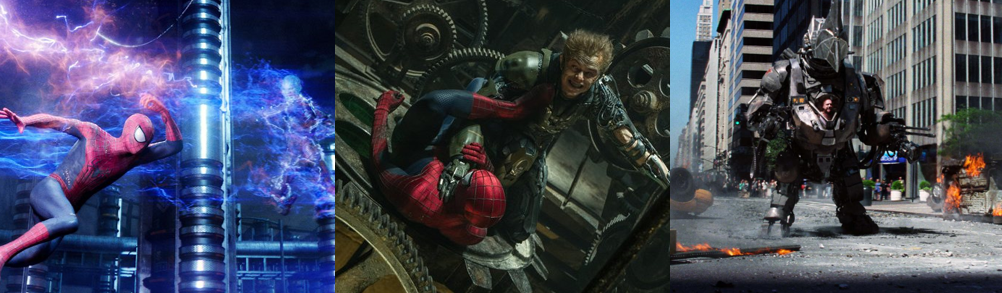
Movie Night [Judgment Day]: Terminator: Genysis


“Three billion human lives ended on August 29th, 1997. The survivors of the nuclear fire called the war Judgment Day. They lived only to face a new nightmare: the war against the machines”.


Released: 21 May 2009
Director: Alan Taylor
Distributor: Paramount Pictures
Budget: $155 to 158 million
Stars: Arnold Schwarzenegger, Emilia Clarke, Jai Courtney, Jason Clarke, and J. K. Simmons

The Plot:
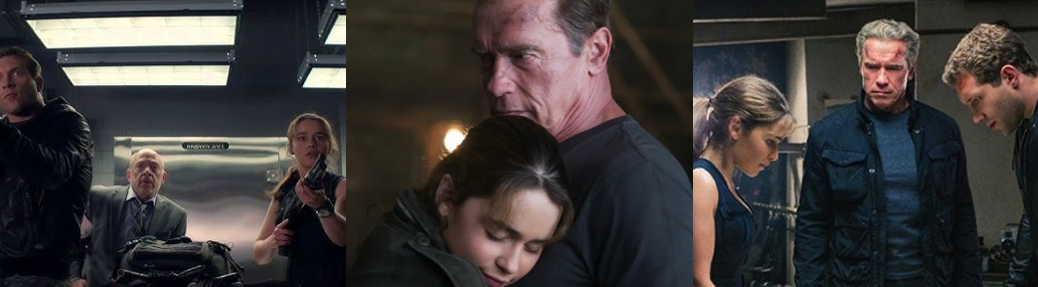
After being saved and raised by a benevolent T-800 (Schwarzenegger), stoic Sarah Connor (Emilia Clarke) reluctantly teams with her would-be protector, Kyle Reese (Courtney), to prevent the creation of Genysis, an operating system destined to wipe out humanity as Skynet.

The Background:
Although The Terminator (Cameron, 1984) was an unexpected financial hit, Terminator 2: Judgment Day (ibid, 1991) was a blockbuster success that is largely regarded as one of the greatest movie sequels ever made. Despite its definitive ending, the franchise made an unexpected return with Terminator 3: Rise of the Machines (Mostow 2003), a near-universal critical flop. However, Terminator 3’s surprising box office meant the franchise was still viable, leading to new creatives to step in with a prequel film. Unfortunately, Terminator Salvation’s (McG, 2009) dismal box office and onslaught of unfair reviews derailed plans for sequels as much as another slew of legal issues. As the franchise rights did the rounds, plans for a 3D animated film fell apart and pitches to return star Arnold Schwarzenegger to the franchise were raised, ultimately resulting in Megan Ellison and Annapurna Pictures consulting with Terminator creator James Cameron with how to incorporate an aging T-800 into a new film. With Paramount Pictures onboard to distribute the film, Alan Taylor signed on to direct out of his love for the franchise and desire to correct its mistakes. Largely inspired by the first two films, the filmmakers opted for a new spin on the established lore with an older T-800 and a story hoped to be the first of a new trilogy. Jai Courtney beat Boyd Holbrook and Tom Hardy for his leading role and Emilia Clarke was chosen over Brie Larson and Tatiana Maslany, with both training extensively for their roles. The production team convinced Nike to reproduce the Vandal sneakers from the first movie, the visual effects teams toiled for hours to render the new nanotechnology effects, and the film painstakingly recreated sequences from The Terminator, digitally recreating Schwarzenegger’s youthful visage so he could fight himself. Though its box office (over $440 million) was impressive, Terminator: Genysis underperformed and was largely mauled by critics who attacked its redundant plot, shallow nostalgia bait, and unimaginative CGI. While some reviews and even Cameron praised the film, the latter later rescinded this statement and Emilia Clarke expressed relief that the planned sequels fell through. Despite this, the franchise was revived again in 2019, only to produce an even more maligned critical and commercial flop.

The Review:
Although Terminator: Genysis could’ve easily opened a little differently, skipping the scene of young Kyle Reese (Bryant Prince) meeting legendary resistance leader John Connor (Jason Clarke) and thus implying that Terminator Salvation is still canon, it offers yet another alternative version of the Future War that initially presents itself as the true version of events before the first Terminator, before John was retroactively given a wife and such. While I’m disappointed to see Salvation swept away, I do enjoy seeing scenes set in the Future War, especially as I’ve long believed the Terminator franchise would’ve been better served focusing on this time period for a series of prequels. Genysis goes a step further by giving the resistance fighters their phased plasma rifles and accurately recreating the bleak, war-torn future depicted by Cameron. Like in Salvation, John is seen by many as a prophet since his unique insight into Skynet leads humanity to many victories, including a final two-pronged campaign against the Skynet system core and a hidden bunker in the remains of San Francisco. Since Reese is both John’s right-hand man and a good friend, Kyle naturally joins the latter assault, amazed by John’s seeming clairvoyance as Skynet is finally defeated and the Resistance discovers their time displacement equipment. These scenes remind me of the Terminator 2 novelisation from back in the day and essentially show how Reese volunteered to pursue the T-800 (Brett Azar/Schwarzenegger) back to 1984. This also gives the most detailed depiction of the time travel device and how it works, and emphasises the close bond between John and Reese, whom the leader kept close since the soldier is destined to be his father.

Loyal soldier Kyle Reese travels back in time to find forthright Sarah in little need of protection.

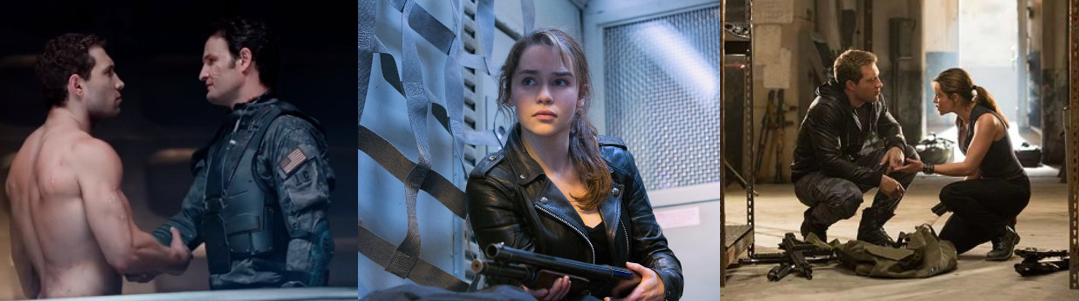
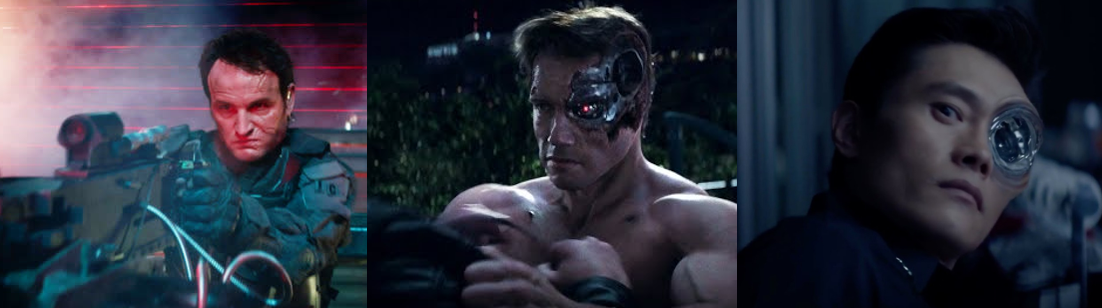
Reese gladly volunteers to protect Sarah not just because he’s John’s most loyal soldier, but also because he’s developed a love for her after being gifted a photograph and told stories about her. Unfortunately for Reese, things immediately go awry as John is attacked by the T-5000 (Matthew Smith), an avatar of Skynet, and Kyle’s deposited in a version of the past that seems very similar but is strikingly different from the first film. For one thing, Sarah isn’t some naïve, terrified waitress and is instead closer to her Terminator 2 counterpart, being proficient with guns, knowledgeable about Terminators, and fully aware of her fate. Reese is confused by this, and by their roles being reversed as Sarah is the one saving him from a liquid metal T-1000 (Byung-Hun Lee) sent back to kill him. Already overwhelmed by this and even more out of his depth than his original counterpart, Reese also struggles with an influx off new memories from a childhood he never had in which he’s enamoured by Sarah and memorising a warning about Genysis being the progenitor of Skynet. Reese’s confusion is only compounded by Sarah’s companion and protector, “Pops”, a reprogrammed T-800 that has acted as her guardian since she was a child. Naturally distrustful of the machine, Reese first leaps to destroy it and then develops a fun rivalry with Pops where they compete for Sarah’s affection and to see which is the more efficient protector. Reese is further perplexed to find Sarah is cold and almost dismissive of him, keeping him at arm’s length as she knows he’s destined to die after falling in love with her. This creates a rift between them, one compounded by her demanding nature and lack of social skills, that slowly mends as they fight and spend time together since she can’t deny her attraction to him despite being frustrated by her fate seemingly being predetermined.

Raised by her “Pops”, Sarah’s reluctant to fall for Kyle lest his destiny play out as intended.

I really liked Emilia Clarke’s work as Sarah here. She does a great job of embodying elements of Linda Hamilton’s performances from the first two films while bringing something new to the table in her relationship with Pops. Sarah is incredibly affection towards her guardian, though frustrated by him dictating her life and pushing her towards a destiny she hopes to avoid. While I find Jai Courtney to be quite wooden and his muscular stature is at odds with Michael Biehn’s more “Everyman” look, I dug Kyle’s chemistry with Sarah and the rivalry between him and Pops, which eventually sees the two come to a mutual respect as they both care about Sarah. Still, Reese is initially hesitant to trust Pops and his plan to bump them forward to 2014, and at Sarah’s refusal to follow his lead. This sees them run afoul of the local cops, unwittingly leading police detective O’Brien (Simmons) to descend into obsession and alcoholism after encountering them in the past. Though his assistance is ultimately not required as Pops constantly pulls the two out of the fire, it provides a background for Reese and Sarah to work out their issues, especially after Kyle learns of his true parentage. The two are further divided when John inexplicably arrives in the past and is revealed to have been forcibly transformed into a T-3000. While Reese is determined to try and reason with John, to bring out his personality and have him fight back against what he sees as invasive programming, Sarah is callous and aggressive towards John, rightfully surmising that her son no longer exists and that he’s been reconfigured into Skynet’s newest creation. The fact that Pops verifies this, explaining that the T-3000 is simply mimicking John’s personality and manipulating them into dropping their guard, Reese naturally pushes back. But even he’s forced to admit that his friend and mentor is gone and to take up arms against him to save Sarah and prevent a cataclysmic future.

More a father figure than ever, Pops struggles to match up against the advanced T-3000.

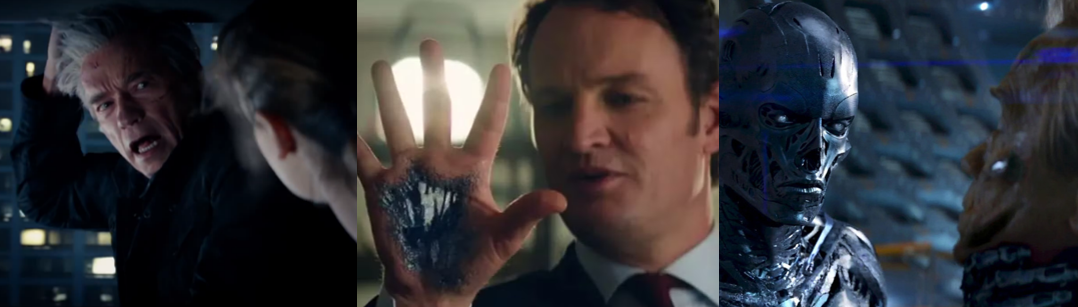
Once again, the T-800 returns as a protector, now aged since he’s been protecting Sarah since she was a girl (Willa Taylor). Although Pops has no memory of where he came from or who sent him, his mission to protect Sarah and ensure the survival of humanity (either by destroying Skynet or having her “mate” with Reese) is clear. Unlike Terminator 3, where the T-850 was an “obsolete design”, Pops regularly asserts that he’s “old, not obsolete” and constantly asserts himself to keep Sarah safe and belittle Reese, either by overpowering him or openly mocking him. Unlike his predecessors. Pops has developed a stunted paternal relationship with Sarah where he’s constantly giving her life lessons and acts as her father, while still remaining somewhat stoic to deliver some funny moments. Notably, Pops is the most loquacious of his predecessors, with Genysis lumbering poor Arnold with lengthy exposition regarding the design and function of the time displacement equipment, theories on conflicting and overlapping timelines, and other technical jargon. Sarah’s efforts to teach Pops to blend in are about as successful as those in Terminator 2, leading to Pops having a dry sense of humour and being as awkward in social situations as she is. Pops ages further when he takes the “long way” to 2014, his body noticeably malfunctioning as he struggles to function. Despite his assertions and how well-armed the group is, Pops is no match for the T-3000, who’s essentially a more powerful T-3000. John can shapeshift and form knives and stabbing weapons and instantly heal from all wounds thanks to nanotechnology, though his most potent weapon is his words as he spitefully uses John’s knowledge and visage against Reese and Sarah. John masquerades as a robotics genius specifically to manipulate Miles and Danny Dyson (Courtney B. Vance and Dayo Okeniyi) into funding and creating the Genysis operating system, an artificial intelligence that John protects and fosters so that it can rapidly evolve into Skynet and kick-start the machine uprising.

The Nitty-Gritty:
While I’ve never found the time travel elements of the Terminator franchise to be that confusing, Genysis goes out of its way to muddy the waters more than any film before it. You might not like the retcons of Terminator 3, but at least that stuck to a fairly linear timeline. Here, we see for the first time that the franchise is explicitly made up of multiple timelines and alternative pasts and futures, with the opening sequence appearing as a prologue to The Terminator and then tossing in the T-5000 to shake things up. I loved the idea of revisiting the original film but with elements of Terminator 2 spliced in, but this is largely abandoned once the group jumps to 2014 and there’s a massive question mark hanging over Pops. He has no memory of who sent him back and even John seems confused by his presence, referring to him as a “relic of a deleted timeline”, with the film simply stating that someone sent the T-800 back to ensure Sarah’s survival. This is all clearly sequel bait, as indicated by the post-credits scene showing Skynet survived the group’s assault on the Cyberdyne building, that’s was sadly never paid off as I’d love to know what the deal with Pops and the T-5000 was. Genysis tackles similar themes to the previous movies regarding fate and predestination, with Sarah frustrated that her life is predetermined, Reese struggling to comprehend how the past has changed, and Skynet’s creation being bumped even further forward. Once again, it seems Judgment Day is inevitable as the changes to the timeline simply see Skynet assume a new form, a vague operation system called Genysis, though this time its creation is explicitly linked to the future since Genysis only comes about when John comes back to invent it. These competing timelines are largely embodied through Reese’s new memories, which co-exist alongside his original memories (though they’re noticeably fragmented compared to his memories of the Future War) and this new timeline seemingly solidifies as the “prime” timeline by the film’s end.

The film’s at its best when it’s relying on nostalgia, though this isn’t enough to sustain it.

Although Terminator: Genysis suffers from an overabundance of CGI (and some wonky CGI, at that), it initially makes a decent impression by recreating the dismal, war-torn future and finally bringing the time displacement facility to life. I also really enjoyed how the film recreates key moments from The Terminator, such as Reese being chased by the cops and the T-800 accosting some punks. It’s obviously toned down from the original and given a new spin as Reese tangles with a T-1000 and the T-800 is immediately attacked by Pops and Sarah, who put it down with a high-powered round. The action is pretty frantic and exciting in these sequences as a confused Reese struggles to comprehend the T-1000’s capabilities, which see it change appearance, spawn blades, and even resurrect the T-800. The T-800’s endoskeleton attacks in impressive fashion, finally moving with a danger and grace befitting the machine but lacks the tangible charm of a physical prop. Conversely, I felt the T-1000 was wasted here as it’s neutralised pretty quickly and effectively by a fun acid trap. I think I would’ve liked to see this new spin on the first two films carried through, with the T-1000 perhaps masquerading as John and being the primary antagonist throughout the film as the T-3000 doesn’t offer much more in terms of its abilities, save for a black metal endoskeleton that’s both horrific and poorly rendered. There are some fun action sequences here, however, such as a chase across the Golden Gate Bridge that sees a school bus be impressively flipped (to the extend I question how Reese, especially, survived). There’s also a great helicopter chase where our heroes try to keep John from reaching the Cyberdyne building, resulting in Pops diving onto John’s helicopter. However, Terminator: Genysis is sadly very tame and bloodless; even shots of bare asses are obscured and deaths are limited to simple stabbings and shootings. When the T-800s are damaged, their endoskeletons appear through cleanly ripped flesh rather than being splattered with blood, with gore completely absent when Pop’s arm is melted to the machinery by an acid spray. Though outmatched against the T-3000, the characters rig up a portable magnet and subdue the machine with high-powered magnetic devices, but John simply recovers time and again and the characters continually use useless small arms fire rather than wielding grenade launchers or high-powered shotguns.

Though the day is saved and Pops is upgraded, there’s a lingering concern over the uncertain future…

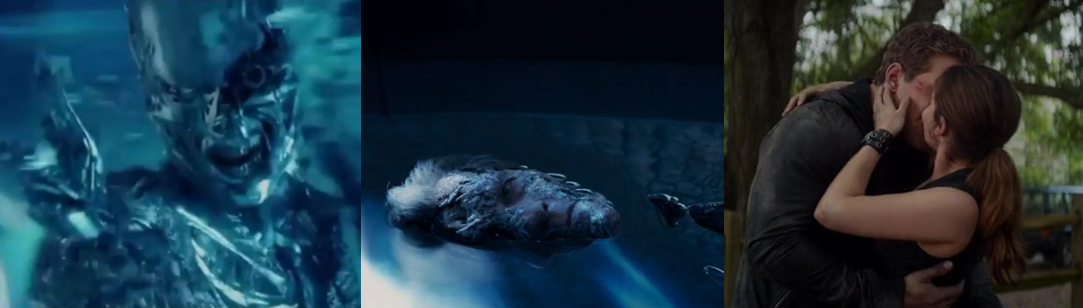
Though reeling from John’s betrayal (well, “corruption” is probably a better word), Reese eventually gets onboard with a plan to destroy the T-3000 and kill Skynet before its born. Thanks to Pops working on the Cyberdyne building, the group have all the intel and access they need to infiltrate the complex and plant explosives, only to find the Genysis A.I. rapidly aging and the T-3000 hot on their tails. Interestingly, both the T-3000 and Skynet make valid points about humans always destroying what they don’t understand, yet both are determined to wipe out humanity so there’s no hint towards a peace between the two. While the finale is essentially a more action-packed and over the top recreation of Terminator 2’s Cyberdyne destruction sequence, it does give us a bit more robot-on-robot action as Pops throws himself into battle with the T-3000. Though Pops was evenly matched against the T-800 and still came up short due to being older, and was largely outclassed against the T-1000, he had help both times and gets it again in this fight, with Sarah and Reese chipping in to distract and delay John long enough to Pops to attempt a self-sacrifice. Pops throws himself and the T-3000 into a prototype time displacement chamber, the gravitational forces ripping John apart and destroying him right before their explosives take out the building. Luckily for Pops, he’s thrown into a vat of mimetic polyalloy, upgrading him to a T-1000 so he can reunite with Sarah and begrudgingly offer kudos to Reese. Though still confused about the lingering questions regarding the future and the timeline Pops came from, Sarah finally feels free from the burden of her destiny and embraces her feelings for Kyle, the three forming a dysfunctional family unit as they face an unknown future together. To close the loop, they visit young Kyle (who Sarah ran into while escaping police custody) and implant the memories Reese has been seeing throughout the film, ensuring events play out as expected in this new timeline. However, they’re unaware that, despite their efforts, Skynet still exists as a threat in a deeper bunker…

The Summary:
I remember being quite excited for Terminator: Genysis back in the day. The film’s marketing and first half hour or so was all cleverly geared towards nostalgia, revisiting the first movie, splicing in the T-1000, and promising an alternate take on The Terminator. While this is still technically true by the end, I think Terminator: Genysis suffered a bit from having an unnecessarily complicated script and setting up hints towards sequels that never happened. While I’m no fan of Jai Courtney, I didn’t mind him here. He’s not the Kyle Reese we grew up with, but he works as an alternative version of Kyle, one perhaps better trained and prepared for his mission. He had decent chemistry with Emilia Clarke, who sizzled and impressed as Sarah. She captured the romantic elements of the character and married them with her no-nonsense, mercenary attitude from Terminator 2 while also being a little bratty and lamenting her destiny. Arnold Schwarzenegger is given a lot more to do here beyond looking like an Adonis; he has a lot of technical jargon to exposit while also presenting the T-800 as a true father figure. I enjoyed Pops’ rivalry with Reese and his relationship with Sarah, which felt like an evolution of his Terminator 2 counterpart, and how the film emphasised that the T-800 is still a force to be reckoned with despite Skynet’s superior models. For me, Genysis is let down by retreading the same ground as Terminator 2 but with a new, comparatively lazier A.I., wasting Matt Smith, and focusing on Jason Clarke as the main antagonist. While I like the twist that John was corrupted and this somewhat recalls the proposed ending for Terminator Salvation, I didn’t buy Jason Clarke as a threat and I would’ve much preferred seeing Byung-Hun Lee or Matt Smith take the lead as a T-1000…or had John arrive in the past to help his family. Ultimately, while Terminator: Genysis is better, overall, than Terminator 3 and has a lot of appeal in its nostalgic recreations of the first two movies, I would’ve preferred a direct sequel to Salvation and your nostalgia will be better satisfied by simply re-watching the first two movies.

My Rating:

Rating: 3 out of 5.

Pretty Good

What did you think to Terminator: Genysis? Were you also annoyed that it erased Salvation from the timeline? What did you think to Jai Courtney’s performance as Kyle Reese and Emilia Clarke’s version of Sarah Connor? Did you enjoy seeing the T-800 as an overprotective father or did you find his portrayal a bit cheesy? Where do you think Pops came from and were you disappoint that the cliff-hanger was never resolved? Did you like the twist that John was a Terminator or do you agree that this was poorly executed? How are you celebrating Judgement Day today? Whatever you think about Terminator: Genysis, and the Terminator franchise, leave a reply below and donate to my Ko-Fi to fund more Terminator reviews.

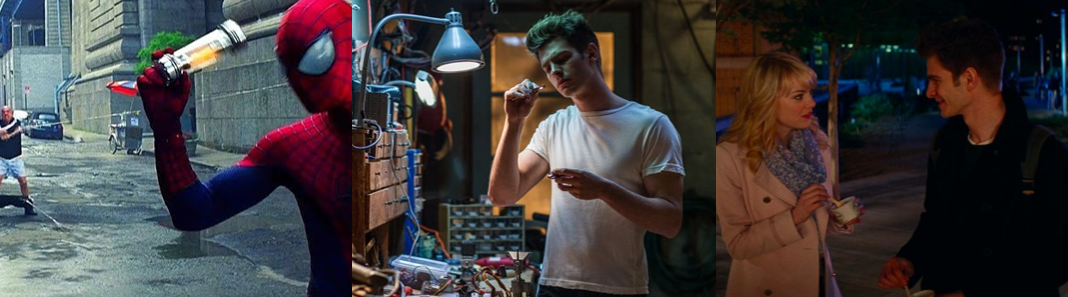
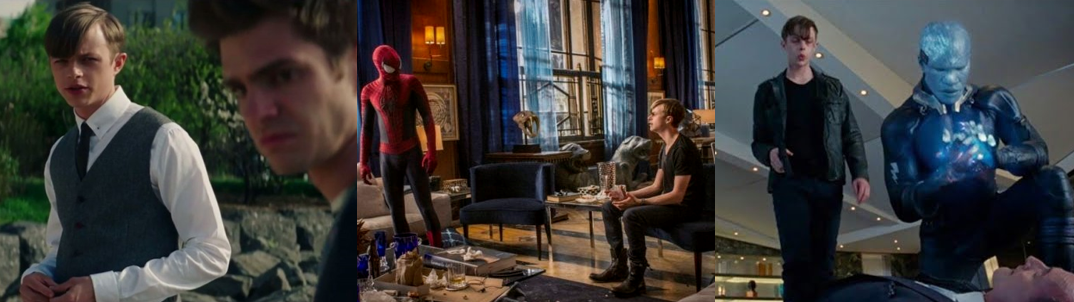
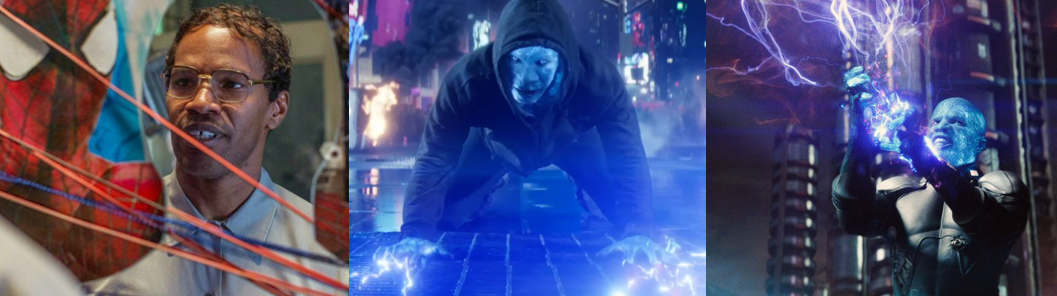
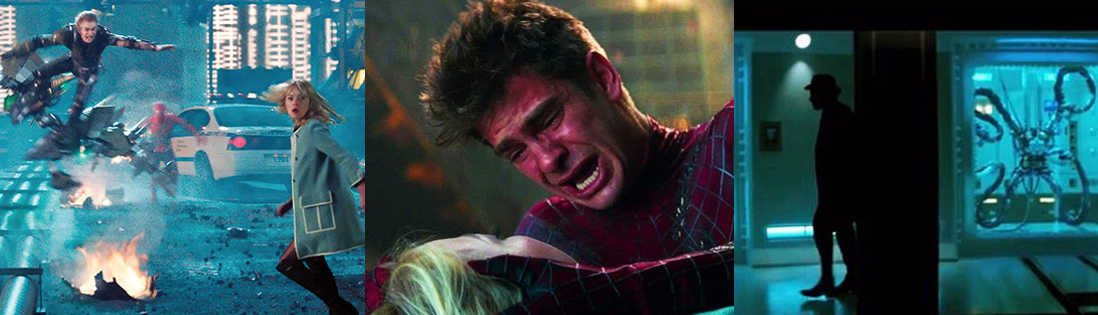
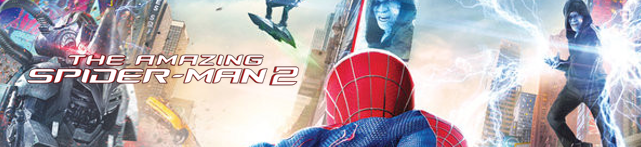
Movie Night [Spidey Month]: The Amazing Spider-Man 2


Easily Marvel Comics’ most recognisable superhero, unsuspecting teenage nerd Peter Parker was bitten by a radioactive spider and learned the meaning of power and responsibility in August 1962. Since then, the Amazing Spider-Man has featured in cartoons, movies, videogames, and countless comic books. To coincide with his day of celebration, I’m dedicating every Monday of August to everyone’s favourite web-head!


Released: 2 May 2014
Director: Marc Webb
Distributor: Sony Pictures Releasing
Budget: $200 to 293 million
Stars: Andrew Garfield, Emma Stone, Jamie Foxx, Dane DeHaan, and Sally Field

The Plot:
Already struggling to keep his love Gwen Stacy (Stone) safe from his double life, Peter Parker/Spider-Man’s (Garfield) troubles are compounded when downtrodden electrical engineer Maxwell “Max” Dillon (Foxx) is transformed into pure electricity!

The Background:
Following his debut issue becoming a best selling title for Marvel Comics, Spider-Man became their flagship character and appeared in numerous videogames, cartoons, and even a live-action series. Despite script and legal issues infamously delaying Spidey’s big-screen debut, Sam Raimi’s one-two punch of Spider-Man (Raimi, 2002) and Spider-Man 2 (ibid, 2004) gave us not only critical and commercial hits but also one of the greatest superhero movies ever made, and even the divisive Spider-Man 3 (ibid, 2007) was a huge commercial success. Although Raimi’s plans for a sequel were scrapped in favour of a reboot, The Amazing Spider-Man (Webb, 2012) somewhat reinvented Spider-Man to tell an exciting, if familiar, new story. Its $758.7 million worldwide gross also meant it did well enough for Marc Webb to return for a sequel. The cast also returned, Spidey got a revamped costume, and Sony Pictures Imageworks outdid themselves with an impressive and complex action sequence in Times Square. Yet, The Amazing Spider-Man 2 was plagued by a troubled production that saw an entire character excised and a bloated script. As part of their ongoing plan for multiple Spider-Man spin-offs, Sony insisted on shoe-horning in as many Easter Eggs and as much sequel bait as possible, ignoring Marvel Cinematic Universe head honcho Kevin Feige’s notes and alienating many fans. The film grossed the least of any Spider-Man movie to date and has been ridiculed by critics for years. They tore apart the questionable reimagining of classic Spidey villain Electro, decried the nonsensical side plots, and lamented the overstuffed narrative. Still, Garfield continued to be praised in the lead role, the tragic ending was seen as a highlight, and both Garfield and co-star Jamie Foxx reprised and redeemed their roles about ten years later for the multiversal adventure Spider-Man: No Way Home (Watts, 2021).

The Review:
In a first for Spider-Man’s big-screen outings, The Amazing Spider-Man 2 skips the usual title sequence and jumps straight into expanding upon the fate of Peter’s parents, Doctor Richard Parker (Campbell Scott) and his wife, Mary (Embeth Davidtz). It’s revealed that Richard packed himself and his wife up and dropped young Peter (Max Charles) with his doting aunt, May Parker (Field), after being threatened by his former financial backer and partner, Norman Osborn (Chris Cooper). Although Doctor Curtis “Curt” Connors (Rhys Ifans) is briefly mentioned a few times, he’s missing from these extended flashbacks, which instead focus on Richard and Norman splicing human DNA with spiders so their incredible ability to “self-heal” will not only cure Norman of his terminal, genetic illness (“Retroviral Hyperplasia”), but also help those suffering from life-threatening diseases. Unfortunately, the illness not only deformed and agonised Norman, it also drove him to desperation, leading to him making shady deals with military backers. When Richard discovered how corrupt Norman and Oscorp had become, he sought to expose his wrongdoings and went on the run for Peter’s safety. It’s not clear why Oscorp wouldn’t (and apparently never thought to) target Peter at May’s and the film spends more time focusing on a tense and horrific mid-air confrontation between Richard and an Oscorp assassin (Demián Bichir) that leaves both Parkers dead. Still, Richard and Mary’s shady past and their connection to Oscorp is fed to us (and Peter) through breadcrumbs, revealing that Richard deeply regretted his work being perverted and secretly sought to keep Norman from using his research by infusing the genetically engineered spiders with his DNA, somewhat attributing Peter’s spider powers to his father. The loss of his parents still weighs heavily on Peter, who laments their absence at his graduation as much as his beloved Uncle Ben’s (Martin Sheen) and who confesses to old friend Harry Osborn (DeHaan) that he actively avoids thinking about his parents. When his curiosity leads him to investigate his father’s satchel, Peter seeks to discover more about his late father, leading to a sweet moment between him and May where she chastises his father and vehemently asserts her place as Peter’s mother. Indeed, Peter and May’s relationship continues to be a highlight, with her despairing of her nephew’s strange behaviour and absences but still showing him nothing but love and affection.

Peter’s haunted by the previous film and forced to keep Gwen at arm’s length to protect her.

Unfortunately, despite still revelling in his abilities as Spider-Man and enjoying his spark-filled relationship with the gorgeous Gwen Stacy, Peter is haunted by Gwen’s father, Captain George Stacy (Denis Leary), whose grim visage serves as a reminder of his promise to keep Gwen safe. Though he loves Gwen dearly and the two still have amazing screen chemistry, Peter’s burdened by guilt, agonised at the thought that he could endanger her. Although Gwen loves Peter and is willing to take the risk, she ultimately ends their relationship when she becomes sick of his flip-flopping. Heartbroken, Peter throws himself into his antics as Spider-Man, dividing public opinion as the Daily Bugle’s smear campaign paints Spider-Man as a menace despite many praising him. Still, try as he might, Peter can’t keep himself away from Gwen and watches over her in a way that could be creepy but comes across as sad and sweet. While Spider-Man saves lives, Gwen faces a dilemma when she’s offered a prestigious scholarship in London, one she’s excited to take despite her unresolved feelings for Peter. Peter’s stunned and equally torn between his love for her and wanting the best for her, meaning he doesn’t react well upon learning of her news and embarrasses Gwen prior to her interview for the scholarship. Ultimately, Gwen chooses to go, believing that’s better for them both, compelling Peter to finally confess (in elaborate fashion) his true feelings, and even his willingness to go to London with her. As much as I love Andrew and Emma’s onscreen banter and chemistry (their escape from Oscorp was a particular highlight), I do think the film suffers a bit from Peter immediately reneging on his promise at the end of the last film. The Amazing Spider-Man 2 may have benefitted from Peter and Gwen’s relationship being frosty and unresolved from the start to focus more on how Peter has to choose a difficult path since he doesn’t want to risk endangering or losing someone he loves, though this would make the first half of the film too similar to Spider-Man 2.

When Peter and Spidey refuse to help him, a desperate Harry turns to Electro.

Following Norman Osborn’s death, Peter’s compelled to reconnect with Harry Osborn, a hitherto-unknown childhood friend who was sent to boarding school at eleven and spent most of the intervening years travelling the world and resenting his father for sending him away. Thus, Harry is spiteful and dismissive of his father, and rightfully so as Norman spends his final hours spitting insults at his son and effectively cursing him with the same degenerative illness. In the aftermath, Harry (…somehow…) assumes control of Oscorp, riling up Vice President Donald Menken (Colm Feore) and revelling in flaunting his newfound power, appointing Norman’s secretary, Felicia Hardy (Felicity Jones), as his second-in-command. Though delighted to reunite with Peter, Harry’s clearly maladjusted and his erratic behaviour only spirals as his disease takes greater hold, giving him the shakes and strange lesions (despite Norman living many years with the illness). Desperate for a cure, Harry accesses Oscorp’s secure files and believes the answer lies in Spider-Man’s blood, begging and even offering to pay the web-slinger for a sample, only to be incensed when Spidey refuses out of fear for Harry’s safety. This, and Menken’s machinations, sends Harry over the edge and leads to him making a deal with Electro to access Oscorp’s secret basement of origins special projects laboratory, where he finds the means to first cure himself and then avenge himself against those who’ve wronged him. Overall, I liked DeHann’s depiction of Harry. He was a bit sullener and more vindictive and flaunted his authority compared to James Franco, and he presented an interesting dilemma for Peter, who wanted to help his friend but was worried about killing him or turning him into a monster like the Lizard. Harry’s vendetta against Spider-Man is a touch rushed and I think it would’ve been better for him to put two and two together when he first approached Peter for help, just to put a further spin on their relationship. It also would’ve benefited to save Harry’s descent into manic Green Goblin mode for a third film.

Spidey super fan Max is driven to rage and insanity upon becoming powerful enough to be noticed.

Rather than being a simple electrical engineer who turns to a crime after being zapped by lightning, The Amazing Spider-Man 2 recasts Electro as a hopeless outcast who’s socially awkward and bumbling. Pushed around and ignored by everyone, from pedestrians to his boss, Alistair Smythe (B. J. Novak), Max is a sad, worthless nobody who becomes enamoured by Spider-Man after Spidey saves his life and offers him encouragement. This leads to Max imagining  conversations between the two and describing the webslinger as his best friend since he was the first person to “see” and “need” him. This later extends to Gwen, who also shows kindness to Max where everyone else treats him like shit, with Smythe forcing him to fix a maintenance issue (on his birthday, no less!) and leading to Max falling into a vat of genetically engineered eels. These not only fix Max’s crooked teeth but also transform him into Electro, a man of first partial and then almost pure electricity, allowing him to see, sense, and control electrical currents. The experience leaves him disoriented, confused, and enraged, leading to him first accidentally and then purposely endangering others when cops fire at him, Spidey hesitates to remember him, and the newfound voices in his head compel him to lash out. Although subdued, Electro is tortured by the sadistic and overly theatrical Doctor Ashley Kafka (Marton Csokas), though Max invites the experience to test his power and is fuelled by the pain to accept Harry’s offer for a partnership and avenge himself on his captors. Once freed, Electro assumes a more menacing form and demeanour, having now mastered his powers to ensnare and kill with a flick of his hands and desperate not only to destroy Spider-Man after he “betrayed” him, but also to plunge the city into darkness so they can feel his pain. Although somewhat similar to the sympathetic angle applied to some of his predecessors in Raimi’s films (and a far more well-rounded character than the comic Electro, who was just a crook with powers who rarely reached his full potential), I do have an issue with depicted Max as the stereotypical outcast “geek”. It rarely works well and seems a waste of Jamie Foxx’s acting prowess, though I did like Electro’s obsession with being “seen” and his turn towards a crueller and more malicious demeanour after aligning with Harry.

The Nitty-Gritty:
The Amazing Spider-Man 2 benefits from a much more distinctive score, which is less a rehash of Danny Elfman’s work and more a stirring overture for the titular hero. Electro’s theme was particularly memorable; I loved how it incorporated the voices in Max’s head fuelling his rage. However, while the film treads less of the same ground as Raimi’s films compared to its predecessor, it does rehash some of the same beats concerning Richard and Mary from The Amazing Spider-Man. Sure, we learn a bit more about Richard’s relationship with Norman and that he had a weird subway lab that somehow still works after nearly fifteen years, but it still feels like the filmmakers are unsure of the endgame to this sub-plot (though, thankfully, they excised the nonsensical reveal that Richard was still alive, which would’ve tipped this already bloated plot into overdrive). The Amazing Spider-Man 2 touches upon themes of choices, not letting the past define you, and living each day rather than taking things for granted. Although Peter struggles with all of this, Gwen is all for it; her valedictorian speech is all about it and she urges Peter to stop letting her father’s death hold him back. Gwen’s adamant that they should embrace what they have, regardless of her father or the risk, and insists that she makes her own choices, even if it means she’s in danger. While there is a lot happening in the Amazing Spider-Man 2, I don’t think it’s not as badly paced as some would say. As much as I hate to say it, they made the right choice to cut Shailene Woodley as I’m not sure how she would’ve factored into the plot, though it was weird to include Felicia when she was just a secretary rather than a cat burglar. I also think it might’ve been better to end the story on a cliffhanger concerning Harry, not just because the finale with his Green Goblin is a bit rushed but also because we’d seen the Green Goblin done to death and I could’ve done without retreading that narrative (even if it was a little different here).

Despite some great effects and sequences, the film is bloated with characters and sub-plots.

The Amazing Spider-Man 2’s costume is, for my money, the best and most comic accurate depiction we’ve ever seen (though I miss the distinctiveness of the one from the last film). Harry’s final Green Goblin form is also more monstrous and closer to the comics, though still a bit lacking (and rushed) and we were denied a truly gruesome transformation sequence. The Amazing Spider-Man 2 ups the focus on action thanks to not having to waste an hour of its runtime redoing Spidey’s origin, giving us a handful of montages and fun action sequences that continue to showcase why Andrew Garfield is the best Spider-Man. There’s more emphasis on slow-mo sequences to show how Spider-Man reacts to danger and thinks about saving people. It’s used to great effect in the Times Square sequence, giving us a fantastic depiction of Spidey’s speed and strength alongside his compassionate nature as he first tries to appeal to Max’s reason. Electro is depicted as an unpredictable threat, especially when he first emerges since his powers are unstable. While it’s disappointing that he doesn’t resemble his mainstream comic counterpart, and that Max didn’t take on aspects of this design after being freed by Harry, Electro is very to his Ultimate comics counterpart and is depicted as both incredibly powerful and emotionally unstable. Electro can fly, dissolve bullets, and absorb and emit electricity, so Peter has to science up solutions to counteract and ultimately overload Electro’s powers. Although the first-person sequences are gone, Spider-Man’s web-slinging and Electro’s bolts all popped off the screen when viewed in 3D and I enjoyed the opening sequence where Spidey toys with the crazed Aleksei Sytsevich (Paul Giamatti). While Spidey maybe mocks the brutish mafia thug a bit too much and endangers a few lives, this was a great showcase of how Peter’s embraced his role as Spider-Man, something reinforced in the finale when Aleksei returns in a mechanised rhino suit…only for the film to end right before we get to see the fight! I really wish we’d gotten at least an animated rendition of Spidey’s battle with the Rhino in the credits as I loved the lumbering mech and its many weapons, and Giamatti’s scenery-chewing performance as Aleksei, though his return probably should’ve been left for a third film.
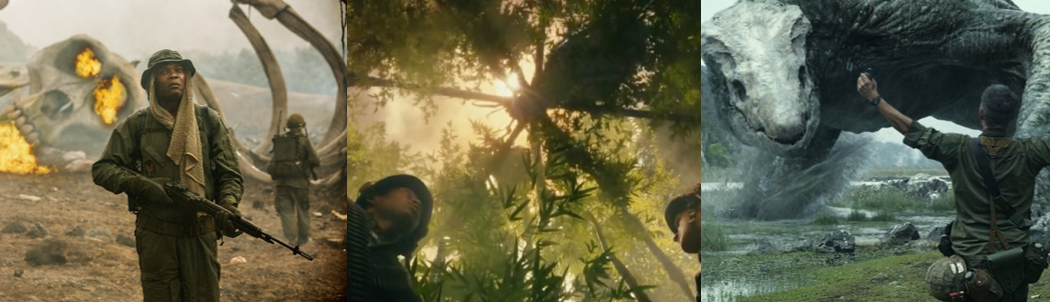
Harry’s revenge leaves Peter heartbroken, though sadly immune from future threats…

Desperate to avoid his father’s fate, Harry begs first Peter and then Spider-Man for help and is enraged when he’s denied, believing Spidey is a fraud despite him reasonably worrying about the effect his blood would have on the emotional Osborn. After being double-crossed by Menken, Harry begs Max to help him access Oscorp’s hidden bunker, where he forces Menken to inject him with a serum derived from Richard’s spiders, believing it to be a “cure”, only to be horrifically mutated as it both accelerates his condition and further alters him. Luckily, a convenient “healing” battlesuit keeps Harry from dying but the whole ordeal drives him as batty as Max, whose reward for helping is the freedom to absorb power from the electrical grid he created and was denied credit for to plunge the city into darkness and strike back at everyone who ignored him and idolised Spider-Man. Peter and Gwen’s reconciliation is interrupted by Electro’s revenge and Gwen insists on helping Spider-Man, putting herself in danger despite his protests. Spidey holds off Electro, done trying to reason with him, and risks his life grounding the misguided villain so Gwen can overload and seemingly destroy Electro. Their victory is short-lived, however, as the now demonic Harry swoops in on an Oscorp glider looking for revenge, figures out that Peter is Spider-Man, and spitefully threatens Gwen. This leads to a short and sadly rushed (but also brutal fight) between Spider-Man and the cackling Green Goblin that ultimately ends with Harry being knocked out and Gwen plummeting down a bell tower. Despite Peter’s best efforts and a heart wrenching image of him (and his webbing) reaching for her in freefall, Gwen suffers a similar (but far more horrific) fatal fall and Peter is left devastated. So much so that he spends five months so stricken by grief than he constantly visits Gwen’s graves and denounces Spide-Man. However, Peter suits up once more after a pep talk from Aunt May, reviewing Gwen’s speech about embracing life, and to confront the Rhino. Oh, and that mysterious gentleman (Michael Massee) also colludes with the incarcerated Harry to recruit a few individuals to use Oscorp’s secret projects to destroy Spider-Man.

The Summary:
I’ve always quite liked The Amazing Spider-Man 2. I remember liking it more than the first film when I first saw it and was glad to see it mostly leaning into new territory, though I could’ve done without the retread of the Osborn/Green Goblin plot. Still, the suit was fantastic and Andrew Garfield cemented his status as the best live-action Spider-Man in this film, still showcasing the wit, brains, and charisma I associate with the character. His chemistry with Emma Stone remains a highlight, though it does feel like the filmmakers walked back the ending of the last film after rushing to the rekindling of their romance. While I’m not a fan of the changes made to Electro’s personality, he grew on me as the film progressed, and I liked how he was desperate to be acknowledged and became obsessed with proving his worth and power. Dane DeHaan was a great Harry Osborn, though it’s weird that his illness is so advanced when it took decades for Norman to die, and his characterisation is a bit all over the place at times. While it’s utterly heartbreaking to witness Gwen’s death and Andrew sells it so well, I do think the Green Goblin, Rhino, and Gwen’s death should’ve been saved for a third film to devote the proper amount of screentime to those plots rather than rushing through them right at the end. There’s a lot happening in The Amazing Spider-Man 2 thanks to Sony’s obsession with bringing the Sinister Six to life and it definitely would’ve benefitted from a few more sub-plots being trimmed, but I still think it’s better than most people think. The exploration of guilt and grief is great, the effects and action are exhilarating, and it delivers a hell of a gut punch at the end, ultimately resulting in a film that’s still pretty decent despite some flaws.

My Rating:

Rating: 3 out of 5.

Pretty Good

Do you agree that The Amazing Spider-Man 2 isn’t as bad as its reputation? What did you think to Electro’s depiction and were you disappointed he didn’t resemble his classic look? Were you happy to see Peter don a more familiar suit? What did you think to the drama between him and Gwen and Harry’s depiction? Do you agree that there’s too much happening in the film? Would you have liked to see a third entry for these characters? How are you celebrating the wall-crawler this month? Whatever you think about The Amazing Spider-Man 2, leave a comment below, support me on Ko-Fi, and go check out my other Spider-Man reviews.

Movie Night [K-Month]: Kong: Skull Island


In the absolutely bonkers science-fiction film Pacific Rim (del Toro, 2013), the monstrous Kaiju first attacked humanity on 10th August 2013, which was subsequently branded “K-DAY”. To celebrate this event, and giant monster movies, I dedicated every Sunday in August to one of cinema’s most prolific monsters: King Kong!
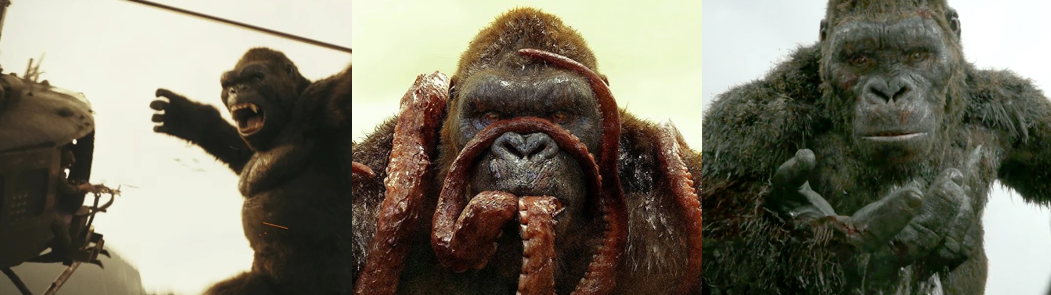

Released: 10 March 2017
Director: Jordan Vogt-Roberts
Distributor: Warner Bros. Pictures
Budget: $185 million
Stars: Tom Hiddleston, Brie Larson, Samuel L. Jackson, Terry Notary/Toby Kebbell, John Goodman, and John C. Reilly

The Plot:
Hired by the super-secretive Monarch, ex-British Special Air Service (S.A.S.) Captain Joseph Conrad (Hiddleston) and photographer Mason Weaver (Larson) accompany an Army unit to the mysterious Skull Island, where Lieutenant Colonel Preston Packard (Jackson) becomes obsessed with challenging the rule of the island’s guardian, Kong (Notary/Kebbell).

The Background:
Amazingly, former World War I aviator turned filmmaker Merian C. Cooper’s vision of a giant gorilla climbing the Empire State Building first appeared over 100 years ago, resulting in one of the most influential movies ever made, However, King Kong (Cooper and Schoedsack, 1933) was followed by a comedic sequel, a questionableSuitmation” film that ended Toho’s short stint with the character, and remakes ranging from ambitious to big-budget showcases. Somewhere in there, the mighty Kong even clashed with Godzilla in a profitable (if polarising) affair, and took a giant step towards renewing this rivalry as part of Legendary’s “MonsterVerse” following the critical and commercial success of Godzilla (Edwards, 2014). Initially, Adam Wingard and Guillermo del Toro were tapped to direct a sequel to Peter Jackson’s 2005 remake before the project was reconfigured into a MonsterVerse film. Writers Max Borenstein and John Gatins specifically avoided the traditional King Kong narrative in favour of a wartime setting inspired by Apocalypse Now (Coppola, 1979). Visual effects supervisor Stephen Rosenbaum and conceptual artist Carlos Huante redesigned Kong to return to his roots and act as a cantankerous, but benevolent, protector, and turned to anime to design Skull Island’s other monstrous inhabitants. After Tom Hiddleston took the lead role, John C. Reilly joined the project after scheduling conflicts saw Michael Keaton drop out and Toby Kebbell pulled double duty by providing motion capture for Kong’s facial expressions. Accompanied by a tie-in comic book designed to flesh out Kong’s backstory, Kong: Skull Island was a smash hit at the box office and with critics, who praised it as a fun, action-packed adventure, though many of the performances were criticised. Although a spin-off and direct sequel never materialised, the MonsterVerse Kong went on to co-star with Godzilla in some big, if mindless, blockbuster team ups.

The Review:
Set in 1973, amidst the backdrop of the end of America’s disastrous campaign into Vietnam, Kong: Skull Island tells a very different King Kong story, one not about the giant ape’s obsession with a pretty girl and one greedy opportunists attempt to profit off his stature. Instead, Kong: Skull Island is more of a war movie, taking very obvious inspiration from Apocalypse Now for many shots, characters, and the depiction of the United States military. At first, the story is framed as a scientific expedition, spearheaded by the eccentric William “Bill” Randa (Goodman), a former World War I sailor whose life was changed when he was left the sole survivor following an attack on his vessel by a titanic creature. Randa took this experience with him throughout his career at Monarch, a government research team created specifically to track and investigate such “Titans”, snapping up geologist Houston Brooks (Corey Hawkins) after he wrote a paper suggesting the presence of a “Hollow Earth” where such monsters dwell. However, with Monarch’s funding at risk following the end of the Vietnam War, Randa must beg Senator Al Willis (Richard Jenkins) to let them join an expedition to a recently discovered, uncharted island in hopes of finding precious minerals, medicines, and other notable discoveries before those pesky Russkies. Amazingly, Randa gets his wish, and his demand for a military escort, and enthusiastically braves Skull Island’s torrential, perpetual storm to finally feel vindicated after years of being branded a crackpot for his wild theories regarding Titans and the lost, prehistoric island. This means that the mission is less a geological, scientific voyage and more a personal vendetta for Randa, who hopes to both warn and inform the world that monsters exist by bringing back irrefutable proof. Yet, even he realises the dangers of Skull Island and the folly of man trying to battle against its monstrous inhabitants.

Conrad takes Marlow’s expertise to heart to lead the survivors through Skull Island’s dangers.

Since Randa, Brooks, and largely insignificant biologist San Lin (Jing Tian) are ill equipped to navigate Skull Island’s hazardous jungles, they recruit S.A.S. serviceman turned mercenary/tracker Joseph Conrad to lend his experience to the mission. Though initially sceptical due to the unforeseen dangers awaiting them, Conrad’s convinced by the promise of cold, hard cash and is intrigued by Skull Island, and the mystery surrounding Monarch’s true intentions. Striking up a subtle, but unmistakable attraction with anti-war photographer Mason Weaver, Conrad immediately adapts to the alien terrain and leads the survivors of Packard’s team though the jungle, taking charge of one group and prioritising reaching a preset rendezvous point while Packard directs another group in an increasingly insane attempt to avenge their losses against Kong. Though respectful of Packard’s command and experience, Conrad soon finds himself as the voice of reason when Packard threatens to risk his life (and the lives of his men) in a futile assault against Kong, consistently managing to appease the crazed Colonel into letting the civilians trek to safety rather than join his vendetta. Adaptable and a keen marksman and swordsman, Conrad is a dashing, enigmatic hero with an affable personality, constantly keeping a cool head and being respectful to those he meets. While the soldiers have itchy trigger fingers, Conrad peacefully greets the mysterious and silent Iwi tribe and is both sympathetic towards and intrigued by marooned U.S. Army Air Forces Lieutenant Hank Marlow’s (Reilly) plight and insight into Kong and his island. While Weaver is worthy of attracting even a giant ape’s lust and attention, Kong: Skull Island avoids having the ape become fixated on her and she instead documents the trip, snapping shots of the island, its inhabitants, and echoing Conrad’s call for peace and extraction rather than fighting an unwinnable war. She ends up in the thick of the action when Packard riles up the vicious “Skullcrawlers” that threaten Kong’s rule but plays a role in distracting the creatures to aid Kong and, like her predecessors in previous Kong movies, requires the Titan’s aid when he battles to curb the Skullcrawler threat.

Packard’s men are unprepared for Skull Island’s monsters and burned out from futile war.

Having been shot down in World War II alongside Japanese pilot Gunpei Ikari (Miyavi), Marlow has been stranded on Skull Island for nearly thirty years and left a little kooky as a result. While the Iwi are far more benevolent than previous Skull Island natives, they’re largely mute and he’s been left to his own thoughts ever since Gunpei was killed by a Skullcrawler. He’s thus ecstatic when Conrad and the others arrive and enthusiastically warns of the island’s dangers while delivering exposition regarding Kong, who’s recast as a bad tempered but ultimately benign God to the locals. While Marlow’s been unable to escape, warrant officer Reg Slivko (Thomas Mann) cobbles together the remains of his plane and a rudimentary raft to carry them to the rendezvous point, leading Marlow to bid an emotional farewell to his saviours, learn how the world has changed during his absence, and anxiously contemplate returning to his wife and son (Beth Kennedy and Will Brittain). Though Conrad defers to Marlow’s expertise, Packard isn’t as convinced and largely dismisses the pilot, refusing to heed his warnings about venturing into Skullcrawler territory and challenging Kong. Packard’s men, though exhausted from the futility of the Vietnam War and eager to return home, attack their new mission with gusto, convinced they can brave any threat. While many are one-dimensional characters, they provide enough charisma to make an impression, from warrant officer Glenn Mills (Jason Mitchell) being obsessed with his beloved mother, Silvo being torn between his duty and his morals, and Captain Earl Cole (Shea Whigham) maintaining a stoic calm no matter how many monsters he encounters. Even Cole reaches his limit, however, after everything he’s witnessed and Packard’s lunacy, leading to him attempting a dramatic sacrifice only to be undone when the Skullcrawler simply swipes him into a cliff. Major Jack Chapman (Kebbell) may as well be wearing a bullseye the entire film with all his pining for his son, Billy, which predictably leads to his gruesome death at the jaws of a Skullcrawler, adding further fuel to Packard’s obsession.

Packard’s obsession with killing Kong sees his men devoured and killed by some horrific monsters.

Portrayed as a grizzled war veteran who’s reached his limit, Packard has more than a few similarities to the likes of Colonel Walter Kurtz (Marlon Brando) and Captain Ahab. Feeling disillusioned and cheated out of victory in Vietnam, Packard jumps at the assignment to breach Skull Island’s storm front and venture into a new land, seemingly determined to assert his dominance rather than be humiliated by underequipped natives. Packard is personally affronted when Kong lashes out at his men when they drop Monarch’s seismic charges, becoming deadset on avenging his losses and continuing his war, no matter what it costs. Since his men are loyal to him, Packard’s fixation of reaching a weapons cache is only questioned by the likes of Conrad and Marlow, who emphasise safety and retreat over conflict. Packard, however, has none of this, threatening his allies at gunpoint when they disagree with him and being determined to kill Kong, despite the greater threat of the Skullcrawlers. As you’d expect, this obsession becomes Packard’s undoing as he refuses to set aside his grievances and only causes more death as even his seasoned troops are no match for Skull Island. Rather than being populated by dinosaurs, this Skull Island is full of unique, gigantic insects and other creatures that expertly camouflage into the jungle and easily get the drop on the unsuspecting grunts. While the Sker Buffalo is mostly harmless, the gigantic and frankly unsettling Mother Longlegs masquerades as mambo trees and skewers or webs up many of Packard’s men and Chapman is briefly spooked when a giant log turns out to be a Spore Mantis! Packard’s causal sniping of ugly “birds” unsettles a slew of voracious, bat-like Psychovultures who rip poor Victor Nieves (John Ortiz) to pieces and give Conrad a chance to show off his sick sword skills. Kong tangles with and partially devours a Mire Squid in a call-back to King Kong vs. Godzilla (Honda, 1962) but even his mighty strength and dominance is tested by the ferocious Skullcrawlers, who pop up from natural vents to devour everything in sight.

The fiercely territorial Kong is now a cranky but benevolent protector who defends his land.

Since Skullcrawlers wiped out Kong’s species, Kong has a natural vendetta against them and is duty bound to wipe them out lest their gigantic alpha re-emerge. This drives him to attack Packard’s helicopters as their seismic charges awaken the Skullcrawlers, who chow down on Chapman and Randa, spewing up their bones and clothing in surprisingly gruesome scenes and snagging prey with their frog-like tongues. In keeping with the MonsterVerse portraying Godzilla as a benevolent force, the large (but still growing) Kong is seen as a protector figure. The Iwi’s wall isn’t to keep Kong out, but to deter the Skullcrawlers, who terrorised their people for a thousand years before the Apus Giganticus defended them. Depicted as “king” of Skull Island, Kong again carries many scars and wounds from his constant battling to maintain his position as the land’s alpha. Marlow relates some of Kong’s backstory, depicting him as the last of his kind and we again the skeletal remains of his people, this time littering the Skullwalker’s turf and that the Iwi revere Kong’s protection through paintings (though they seemingly don’t offer him female sacrifices). Kong is largely disinterested in humans, ignoring them until they become a threat and barely interested in even the alluring Weaver. No longer simply an enlarged ape, Kong is depicted as an unknowable, unique entity, standing upright and having anthropomorphic tendencies while also emphasising his intelligence. Kong utilises makeshift weapons, such as an uprooted tree or the propeller of a scuttled ship, when battling Skullcrawlers alongside his usual brute strength, with him again favouring snapping his foe’s jaws. Kong becomes the embodiment of Packard’s obsession, a dangerous an alien “other” he can vent his insanity and frustration on, and is seen as a threat to the world despite him simply defending his territory. While Kong largely dismisses Packard, the irrational Colonel earns the Titan’s wrath through a napalm attack, leading to the enraged Kong simply crushing his would-be adversary like a gnat.

The Nitty-Gritty:
Kong: Skull Island makes the bold decision to focus basically its entire runtime on Skull Island, stranding its characters there and giving them a ticking clock to get to a rendezvous point before they’re potentially trapped like Marlow was. Unlike previous Kong movies, however, Kong: Skull Island emphasises action and a constant battle for survival, with the burned out and overwhelmed soldiers adding a touch of flavour to the proceedings as they’re slightly better equipped than the usual film crews and sailors who venture to the island. The film also cleverly limits their  encounters with the island’s inhabitants, emphasising quality over quantity to offer horrific insectile creatures and ensure that the CGI holds up far better than in Peter Jackson’s overstuffed remake. The film’s pacing also benefits from this, with the action moving at a steady pace and a sense of urgency in both teams as they battle to their objectives, while still giving poignant moments with Marlow and allowing Hiddleston and Larson to sizzle with their subtle chemistry. Not only does Kong not become protective of Weaver, he’s also one of the few Kongs to not only survive but also remain on the island, dramatically presenting Kong as a key player in the MonsterVerse. This is further emphasised in the post-credit scene, where Conrad and Weaver (who sadly never appear again) are given a taste of Kong’s true destiny, which is to defend the Earth from other, less benevolent Titans. The film also changes the Iwi to be far more altruistic than previous natives, with them welcoming outcasts while also being a deeply prideful people. They offer shelter and exposition and are said to have moved past concepts of war and personal possessions, providing a stark contrast to the “Oorah!” gusto of Packard’s soldiers, who cannot deny the call to take up arms even if they’re tired of the futility of war. Indeed, Packard’s men were looking forward to going home when the call came in, though their burned-out Colonel is consumed by the need to not be denied a victory of a native, seemingly primitive force like in Vietnam.  

A quality over quantity approach allows the film’s monsters to be more impressive and horrifying.

Rather than being hidden by an impenetrable fog, Skull Island is now protected by a violent storm that deters ships and planes from venturing further but is easily bypassed by Packard’s helicopters. The island is still a prehistoric lost world, home to many unique, gigantic, and dangerous creatures, but is also seemingly ground zero for the Hollow Earth, immense underground tunnels where Titans and unknowable monsters dwell. Fiercely territorial, Kong fights off any incursions from the Hollow Earth, primarily the voracious Skullcrawlers, but isn’t against asserting his dominance over the likes of the Mire Squid. Each is brought to life through some startlingly detailed CGI, with Kong being the obvious standout. The biggest he’s ever been (at that time), Kong dominates the horizon, rendered as an ape/man hybrid of sorts who leaps and crashes about rather than swinging through the trees. With thick, impressively rendered fur, a war-torn body, and a deeply expressive face, Kong exudes both a cantankerous attitude (like he’s sick of Packard’s shit) and a gruff intelligence, especially in his determination to battle the “Big One” and take up makeshift arms. While the Mire Squid looks a little dodgy, the water and blood effects on Kong are otherwise remarkable, with this easily being the most impressive version to date and him often appearing in daylight. The Skullcrawlers are effective nightmare fuel, being strange, lizard-like mutates with a voracious appetite and unnerving exposed skull. It’s the other insectile inhabitants that really caught my eye, though, as Kong: Skull Island presents new monsters rather than dinosaur variants, giving us horrific creatures like the Mother Longlegs to force us (and the characters) to question everything about their surroundings. Although the soldiers pack some serious firepower and later upgrade to napalm, they’re constantly depicted as out of their depth on Skull Island and it takes every resource they have to battle even one Skullcrawler, forcing them to flee just like they withdrew from Vietnam as their weapons are ultimately useless against the prehistoric land’s occupants.

Kong’s strength and intelligence see him victorious and ready to face now Titan threats…

Upon first seeing Kong, Packard’s already fragile mind snaps like a twig. While he initially frames his vendetta as a search party for Chapman, Packard’s true intention is to find the weapons cache and gain the means to kill Kong. When Marlow balks at this, Packard turns violent, lashing out and threatening him and Conrad at gunpoint before being convinced to pursue his vendetta with his few loyal men. However, as Kong is the only thing keeping the Skullcrawlers from running rampant and potentially threatening the world, Marlow convinces Conrad to intervene when Packard sets a trap not laced with chloroform, but with napalm, luring Kong with seismic charges and thus unleashing the alpha Skullcrawler. After fending off multiple smaller beasts, Kong battles the Titan-sized threat, which Marlow warned could be more than the ape’s match since it previously killed his parents. Indeed, while Kong easily dispatches of the smaller creatures, the Big One is a far greater threat, sending Kong hurtling across the swamp. While Kong is briefly tangled up in a scuttled ship’s chains, he uses this to his advantage, wrapping it around his arm and swinging the rusted propeller to gain the upper hand. When Weaver gets a little too close to the action, she ends up in Kong’s massive fist when he dramatically and gruesomely wrenches the Big One’s insides out tongue first to establish himself as the dominant Titan of Skull Island. Exhausted, overwhelmed, and in awe of Kong’s feat, Conrad leads the survivors to the rendezvous point and leaves Kong to roar his victory across the land. In the aftermath, a nervous, freshly shaved, and decorated Marlow finally returns home, embraced by his wife and stunned son while Conrad and Weaver are warned that other Titans are still to be discovered and their experiences have only justified Monarch’s existence…

The Summary:
I’ve always been a big fan of Kong: Skull Island. On paper, there are some elements that I wasn’t sure would work as it changes the concept of King Kong quite a bit, but it all comes together really nicely and presents a new, if familiar, version of the world’s most famous ape. Setting the film against the background of the Vietnam War and making allusions of Apocalypse Now was a great way to present a new spin on the Kong concept and Samuel L. Jackson gave a terrific, scenery chewing performance as the crazed Packard. While many of his soldiers weren’t as fleshed out, they shined enough through their identifiable traits and Tom Hiddleston and John C. Reilly went a long way to making up for any of their shortcomings. Hiddleston makes for a convincing action hero and I remain disappointed that he never got to reprise this role in the MonsterVerse films. I also loved Marlow’s blend of comic relief, wackiness, and poignant emotion. Kong: Skull Island equally impresses with its action-packed narrative, which breaks the tradition of presenting dull, boring boat and island sequences in Kong films, and by offering unique and well-crafted monsters to provide some tension. Kong was beautifully brought to life as a fantastic throwback to his origins and recast as a curmudgeonly protector, one as intelligent as he is fierce, and it was great to see him portrayed as something more than just a tragic beast. Kong: Skull Island also stands the test of time as a more grounded, intense entry in the increasingly over-the-top MonsterVerse films, laying the foundation of big, world-shaking blockbusters with a gritty, captivating discussion on the trauma of war and man’s obsession with conquering both nature and perceived primitive forces.

My Rating:

Rating: 4 out of 5.

Great Stuff

Were you a fan of he MonsterVerse version of King Kong? What did you think to him being presented as a protector figure? Which of Skull Island’s monsters was your favourite? Did you like the allusions to Apocalypse Now and Packard’s obsession with killing Kong? Would you have liked to see a Kong solo sequel and which MonsterVerse movie is your favourite version? How are you celebrating Kaiju this month? let me know what you think about the MonsterVerse in the comments, donate to my Ko-Fi if you want to see more MonsterVerse content, and go check out my other King Kong and Kaiju reviews!

Back Issues [Sonic CDay]: The Brotherhood of Metallix


Developed alongside the blockbuster Sonic the Hedgehog 2 (SEGA Technical Institute, 1992), Sonic the Hedgehog CD (Sonic Team, 1993) released on this day back in 1993. Expanding upon the Blue Blur’s debut title, Sonic CD introduced Metal Sonic (one of Sonic’s most popular and enduring rivals) and Amy Rose, and is considered by many to be one of the best of the classic Sonic titles.


Story Title: “The Brotherhood of Metallix (Part 1 to 4)”
Published: 1 September 1995 to 13 October 1995
Writer: Nigel Kitching
Artist: Richard Elson

The Background:
After Sonic the Hedgehog became a mainstream success and SEGA usurped Nintendo’s position at the top of the videogame industry, SEGA quickly capitalised on Sonic’s popularity not just with videogames but a slew of ancillary merchandise, including cartoons and comic books. About six months after Archie Comics started publishing a weird amalgamation of the Adventures of Sonic the Hedgehog (1993 to 1996) and Sonic the Hedgehog/SatAM (1993 to 1994) cartoons, United Kingdom publisher Fleetway Editions Limited started “Britain’s Official SEGA Comic”, Sonic the Comic (StC), a fortnightly publication that was a favourite of mine until its unfortunate end. Though StC pulled much of its lore from the now defunct Mobius and Doctor Ovi Kintobor storyline that was prevalent outside of Japan, StC quickly veered from the source material, portraying Sonic the a mean-spirited leader of a gang of Freedom Fighters comprised of videogame characters and anthropomorphic original characters. Like Archie’s comics, StC included some very loose adaptations of the videogames that truncated or adapted the source material to fit with its noticeably different lore. When StC adapted Sonic CD, they reimagined Metal Sonic as “Metallix” and told a self-contained time travel story. However, some years later, a second Metallix appeared and teased a “brotherhood” of Badniks, which was paid off in these issues and solidified Sonic’s robotic doppelgänger as one StC’s more dangerous and persistent secondary antagonists.

The Review:
“The Brotherhood of Metallix” takes place in the middle of Doctor Ivo Robotnik’s merciless rule over the planet Mobius. Having conquered the entire world thanks to a time dilation, Dr. Robotnik has become all powerful save for the efforts of Sonic and his friends, who’ve been driven from their homes and roam the Zones disguised as Bob Beaky’s Travelling Circus. The story begins with Porker Lewis, the technical support of the team, activating a security field around their caravan while the Freedom Fighters investigate reports of a new Badnik in Metropolis City, which is essentially Dr. Robotnik’s headquarters. Expecting some all-powerful death machine, the cocksure Sonic is incredulous by the clown-like Mister Blobnik (a thinly veiled parody of British television icon Mister Blobby). A ludicrous Badnik who staggers about blowing bubbles and fumbling with its weaponry, Mr. Blobnik nevertheless proves more durable than regular Badniks and Troopers, withstanding a Sonic Spin Attack and trapping Sonic in a an inescapable bubble upon defeat. Having successfully fooled the Freedom Fighters with a variation of the “Drunken Fist” technique, Mr. Blobnik’s head detaches from its remains and carries Sonic to Citadel Robotnik. However, rather than being tortured, transformed into a Badnik, or executed, Sonic is stunned when a panicked Dr. Robotnik reveals he needs to join forces with Sonic to oppose the “Brotherhood of Metallix”. While Sonic battled Mr. Blobnik, Dr. Robotnik was shocked when a Metallix teleported into his citadel via a corrupt version of the Omni-Viewer (a sentient television screen that resides in the Special Zone) and kidnapped his long-suffering assistant, Grimer. After learning that the Metallix, who were set to automatically replicate and improve themselves in Dr. Robotnik’s abandoned Egg Fortress base in the Special Zone, have gained sentience and are now ruled over by a gigantic Emperor, Grimer’s forced to aid their scheme for true autonomy.

When the Metallix mysteriously return, Sonic’s forced to join forces with Dr. Robotnik to investigate.

Although Sonic’s sceptical of Dr. Robotnik’s claims, he remembers his last encounter with an upgraded Metallix mentioned a “brotherhood” and reluctantly agrees to use his super speed to enter the Special Zone via a Star Post and investigate. Sonic arrives to find the Egg Fortress heavily damaged and seemingly abandoned, until he explores further and witnesses Grimer handing the Emperor Metallix a mechanical staff, the “Alpha Device”. With this in hand, the Emperor Metallix and its troops prepare to teleport to the Miracle Planet via their Omni-Viewer, only for Sonic to attack, reasoning that the Badniks are obviously up to no good. The Emperor Metallix silently commands two minions to attack. While they land a few good blows on the Blue Blur, Sonic dispatches them far easier than their predecessors by tricking one into blowing its fellow up with its chest cannon and simply smashing the other into junk with a swing of the Alpha Device. Sonic’s victory is short-lived, however, when the Emperor Metallix takes Grimer hostage and threatens to crush the life out of him unless Sonic hands over the Alpha Device. With no choice but to acquiesce as he can’t allow even his enemy to be killed, Sonic can only watch as the Emperor Metallix departs. Luckily, since the Miracle Planet has arrived in orbit once again, Sonic and his friends follow the Brotherhood of Metallix using the massive magic chain that binds the planetoid to Mobius. Despite their temporary truce, Sonic refuses to allow Grimer or Dr. Robotnik’s forces or weaponry to go with the Freedom Fighters, meaning we’re denied a true team up between the long-term allies. Instead, the Freedom Fighters witness the Emperor Metallix preparing to usher in a “new age” for its brotherhood via the Alpha Device, which has been created to reshape the mysterious Miracle Planet into Metallix’s form and provide them with the near-limitless power to conquer the world.

Thanks to Porker’s bravery and ingenuity, the Metallix are seemingly foiled on the Miracle Planet.

Detected by the Metallix, Sonic leads his friends into an immense network of caves (where, it’s revealed, he hid from Amy Rose for two days when they were trapped there some years ago). A Metallix stalks them through the tunnels and easily shrugs off Johnny Lightfoot’s attack. A Super Sonic Spin stuns the robot, however, allowing Amy Rose to take it out with a well-aimed crossbow to its neck (its one weak spot, as identified by Dr. Robotnik). The distraction is enough for the Emperor Metallix to enact its plan, however, and the Alpha Device begins transforming the Miracle Planet into a world of metal. The Emperor Metallix gloats when one of its troops arrives with Sonic, Johnny, and Amy, but is too late to notice that the unit has been tampered with by Porker Lewis. Porker presses a button on his remote and causes the Metallix to self-destruct, taking out all the emperor’s troops and severely damaging the big red overlord. For his efforts, Porker receives a kiss on the cheek from Amy Rose and even kudos from Sonic, traditionally a more hard-assed character in StC. Unfortunately, the Alpha Device is still functioning and rigged to explode if it’s tampered with. Thus, Porker steps up again, navigating the booby traps to shut down the Alpha Device and undo the damage being done to the Miracle Planet. With Mobius fading, Sonic ushers his friends down the magical chain, only for the Emperor Metallix to lurch to life and reactivate the Alpha Device before collapsing. With no other choice, Porker bravely returns to the Miracle Planet to shut the Alpha Device down once more, trapping himself on the magical world for a month and leaving Sonic with no choice but to wait and see if his friend was successful.

The Summary:
“The Brotherhood of Metallix” has one very obvious positive going for it right off the bat: it’s illustrated by Richard Elson, easily the best artist in Sonic the Comic’s all-too-short history. He brings Sonic and StC’s original characters to life with such a peerless flair and stories always felt more important when his name was attached to them. Unfortunately, it appears Elson was rushed during this particular story as I saw a lot of repetition in “The Brotherhood of Metallix”. Some panels during Sonic’s battles with the Metallix, for example, are directly lifted from Elson’s work in “The Sonic Terminator” (Kitching, et al, 1994) and many of Sonic’s poses looked familiar, too. It’s a minor thing and it’s not like every panel is like that, but it was noticeable and a little odd considering the detail seen in Mr. Blobnik and the Emperor Metallix. The story also suffers from promising a team up between Dr. Robotnik and Sonic and failing to deliver on almost every level. They don’t join forces or oppose the Metallix as a team; instead, Dr. Robotnik simply warns Sonic of the threat, tells him of the Metallix’s weak spot, and that’s it. It’s pretty disappointing as this could’ve been a longer, multi-part story where Sonic shuns his usual allies to team up with Dr. Robotnik instead, making his friends question his decision and having the mad dictator betray him to seize the Miracle Planet for himself. The cliff-hanger of Porker Lewis being left behind was resolved in a later story and expanded into a full-on nervous breakdown for the character, but it could’ve easily been Dr. Robotnik who rigged that Metallix to blow and was left trapped on the Miracle Planet. Consequently, as amusing as the Mr. Blobnik stuff was, I feel these panels were wasted and could’ve been better served showing a proper, awkward team up between Sonic and Dr. Robotnik where they battle at least one Metallix together.

As great as the art is, Metallix is strangely inconsistent and the story squanders its potential.

Speaking of which, the Metallix are a bit hit and miss here. In his first encounter with his robotic double, Sonic struggled to compensate for Metallix’s super speed, power, and armaments. This was taken one step further in Sonic’s second encounter with the robot, which was so powerful that it made mincemeat of Knuckles the Echidna and Sonic was forced to transform into his demonic, unstoppable alter ego, Super Sonic, to destroy it. Metallix has always shrugged off Sonic’s best shots and has always been depicted as being, as the kids say, “built different” from Dr. Robotnik’s other creations. While that’s somewhat true here, it’s pretty inconsistent: sometimes they shrug off the Super Sonic Spin Attack, sometimes it stuns them, sometimes they barely flinch when struck and sometimes Sonic shatters them with a glorified pole! To make matters worse, Porker Lewis easily blows a bunch of them up with a single explosion, severely diminishing their threat despite one or two of them being framed as formidable and menacing robots when they’re pursuing the Freedom Fighters. I did enjoy seeing Metal Sonic Kai from Knuckles’ Chaotix (SEGA, 1995) reimagined as the brotherhood’s emperor. It’s a fantastic design and almost resembles Davros at times, with the gigantic emperor floating about in its throne and spearheading the creation of a Metallix army to take over the world. The Emperor Metallix’s plot is somewhat vague and generic – it wants to transform the Miracle Planet and use its mysterious energies to produce more troops – but it’s at least framed as a threat in its large and menacing stature…until it’s easily disabled by Porker’s explosion! In the end, this was a decent enough follow-up to “The Sonic Terminator” but didn’t live up to its full potential, in my opinion. We didn’t get to see anything new from the Miracle Planet, we lost out on a proper Sonic/Dr. Robotnik team up, and the whole story seems to be more set up for future stories rather than properly standing on its own two feet.

My Rating:

Rating: 2 out of 5.

Could Be Better

Have you ever read “The Brotherhood of Metallix”, or any issues of Sonic the Comic? If so, what did you think of the story and the return of this version of Metal Sonic? Were you also disappointed that we didn’t get a true team up between Sonic and Dr. Robotnik? What did you think to the Emperor Metallix and the depiction of the Metallix in this story? How are you celebrating Sonic CD’s anniversary this year? Whatever your thoughts on Sonic CD, or Sonic in general, feel free to leave a comment below, support me on Ko-Fi, and check out my other Sonic content.

Back Issues [Spidey Month]: The Amazing Spider-Man #121/122


Easily Marvel Comic’s most recognisable superhero, unsuspecting teenage nerd Peter Parker was bitten by a radioactive spider and learned the meaning of power and responsibility in August 1962. Since then, the Amazing Spider-Man has featured in cartoons, movies, videogames, and countless comic books. To coincide with his day of celebration, I’m dedicating every Monday of August to everyone’s favourite web-head!


Writer: Gerry Conway Artist: Gill Kane

Story Title: “The Night Gwen Stacy Died”
Published: 13 March 1973 (cover-dated: June 1973)

Story Title: “The Goblin’s Last Stand!”
Published: 10 April 1973 (cover-dated: July 1973)

The Background:
In 1962, Marvel Comics editor and head writer Stan Lee followed up his success with the Fantastic Four with Spider-Man. The wall-crawler’s debut in Amazing Fantasy #15 proved one of Marvel’s best selling titles and Spider-Man’s popularity led to him getting his own solo title within a year. Very quickly, Spider-Man amassed one of the most colourful and memorable rogues galleries, though Norman Osborn/Green Goblin proved to be one of his most dangerous foes. A central figure in many prominent Spider-Man stories, the Green Goblin cemented his status as Spidey’s archenemy with these two issues, where Osborn contributed to the death of Peter’s long-time love interest, Gwendolyne “Gwen” Stacy. Created by Stan Lee and Steve Ditko and debuting in The Amazing Spider-Man #31, Gwen was the daughter of police captain George Stacy and first met Peter when they were students at Empire State University. Designed to be Peter’s one true love, Gwen and Peter had a rocky relationship, especially after she blamed Spider-Man for her father’s death and Lee was said to be adamantly against killing her off. Writer Gerry Conway and editor Roy Thomas disagreed, however, and wished to do away with the beautiful blonde in favour of the more rambunctious Mary Jane Watson/M.J. Said to have marked the end of the more innocent “Silver Age” of comics, Gwen’s death haunted Spider-Man for decades both literally (thanks to her clones and some abysmal retcons) and figuratively, as seen in his subsequent relationship with M.J. and his guilt over sharing the blame for Gwen’s death. This dramatic moment also came to be adapted into live-action, being echoed in the 1990’s cartoon and Spider-Man (Raimi, 2002), with M.J. (Saratoga Ballantine/Kirsten Dunst) as a substitute, and served as a heart-wrenching finale to The Amazing Spider-Man 2 (Webb, 2014) that Peter (Andrew Garfield) atoned for some ten years later. While alternative versions of Gwen have since gained popularity, “The Night Gwen Stacy Died” remains one of the most pivotal and iconic stories in Spider-Man’s long history.

The Review:
This classic two-part tale begins with Peter’s best friend, Norman’s son, Harry Osborn, suffering from an LSD-infused fever. By Norman’s request, Harry is cared for by his family doctor in his own home, with his friends Gwen and M.J. by his side, though the doctor grimly states that Harry’s repeated drug abuse has caused the onset of schizophrenia! Peering from the window, Spider-Man laments not being there for his friend and changes to Peter, slipping in through the rooftop to pay a visit. However, Peter’s intercepted by Norman, who angrily demands that he leave, blaming him for Harry’s condition and barking in his face. This exchange sees Peter reflect on Norman’s former dual life as the Green Goblin and their shared knowledge of each other’s identity, knowledge that Norman has forgotten thanks to a bout of amnesia but which apparently still lingers and informs his hatred of Peter. Norman then extends this to Gwen and M.J. and tosses the three out, leaving them dejected and concerned for Harry’s welfare. As if that wasn’t bad enough, Peter finds himself suffering from the flu; since he can barely bring his latest photos of Spider-Man to the Daily Bugle, the worse for wear hero heads home to rest. Things continue to get worse for Norman, who receives a phone call informing him that his company stock is continuing to plummet and, when Harry collapses in his arms, finds his thoughts descending into angry paranoia at his son’s “friends” and his perceived enemies. The stress culminates in Norman being attacked by a vision of Spider-Man and bombarded by memories, compelling him to race to an abandoned brownstone that contains his long-forgotten equipment and, with manic glee, the Green Goblin lives once more! Immediately recalling his hatred of Peter Parker and Spider-Man, the Green Goblin hops on his goblin glider and races to Peter’s apartment, where Gwen is waiting for Peter to discuss their friend and what they can do to help him.

When the Green Goblin resurfaces and kills Gwen, Spider-Man flies into a rage.

Spider-Man’s journey home is delayed by his illness, meaning he arrives too late to help and finds only Gwen’s handbag and one of the Green Goblin’s pumpkin bombs. Intuiting that Osborn’s returned to his violent alter ego and concerned for Gwen’s safety, Spider-Man follows his spider-sense to the George Washington Bridge. There, he finds the Green Goblin perched an archway with Gwen’s presumably unconscious body at his feet. The Green Goblin threatens to kill Gwen unless Spider-Man indulges in a final confrontation, to the death (naturally), and, angered at his girlfriend being targeted, Spidey readily agrees. Thrown by his flu, Spidey barely dodges a pumpkin bomb and is bashed by the raving Green Goblin’s glider. Luckily, Spider-Man snags his foe with his webbing and lands a huge left hook that sends the Green Goblin plummeting. Confident that his enemy is subdued for the time being, Spidey races to his unconscious lover, assuming she’s in shock, and is horrified when the Green Goblin makes a sudden recovery and spitefully knocks Gwen from the bridge! Desperate to save her, Spider-Man shoots a web line and is so elated when it snags on Gwen’s ankle that he misses the small Snap! at her neck… Congratulating himself, Spidey pulls Gwen up and embraces her, still clinging to denial, only to find Gwen doesn’t respond and is, in fact, dead despite his best efforts. Spotting the Green Goblin hovering nearby, Spidey sets Gwen safely on the ground and vows to make Osborn pay with his life for crossing the line. Attacking with a self-righteous fury, Spider-Man violently beats his foe, doubling down when the Green Goblin seemingly begs for mercy.

Despite his rage, Spidey’s left hollow by Norman’s death and to grieve with his friends.

Unfortunately, Spider-Man’s anger gets the better of him and sees him knocked from the glider, allowing the Green Goblin to escape. When the police come to check on Gwen, Spidey leaps to her defence, unconcerned about his reputation. Thankfully, one cop sees the anguish in Spider-Man, who’s tormented by memories of happier times with Gwen, the guilt of letting down her father, and the inescapable knowledge that Spider-Man not only drove a wedge between them but also caused her death. When the ambulance arrives, Spider-Man mournfully hands over Gwen’s body and takes responsibility for her death, lashing out when the cops try to arrest him and fleeing. Swinging to the Osborn house, Spidey switches back to Peter to talk to the paranoid and feverish Harry. However, seeing his delusional friend’s no state help, Peter decides settling the score with the Green Goblin trumps caring for his friend. Seeking a lead on the Green Goblin, Spidey heads to the Daily Bugle to talk to editor Joseph “Robbie” Robertson, who’s also reeling from Gwen’s death and points him to one of Osborn’s warehouses. Norman gleefully leaps to engage with Spider-Man, keeping the vengeful wall-crawler at bay with his finger blasts. The Green Goblin further enrages Spidey by insulting Gwen, causing Spidey to brutally pummel his crazed foe. However, Spider-Man comes to his senses at the last minute, disgusted by how close he came to being just like Osborn. Of course, the Green Goblin refuses to go quietly and activates his glider, intending to skewer his foe through the back. However, Spidey’s spider-sense sees him deftly duck, causing Norman to be impaled by his own glider! Finding no comfort in his hated enemy’s end, just further emptiness and misery, Spider-Man stalks off, unaware that someone’s watching him from the shadows. When he gets home, Peter finds M.J. waiting for him and lashes out at her, chastising her for being a selfish, party-loving airhead who couldn’t understand his pain. Despite being hurt by Peter’s words, M.J. sees his heartache and chooses to stay and comfort her friend in his grief.

The Summary:
There’s a lot happening in these two issues, as is common for Spider-Man stories. The toxic influence of Norman Osborn stretches far, infecting not just Peter’s life but the mindset of his best friend, Harry. After years of feeling insignificant next to his powerhouse businessman father, Harry turned to LSD for some relief and, despite his best efforts, has relapsed into drug use once more. Since he has no memory of his past as the Green Goblin and refuses to take responsibility for his actions, Norman turns his anger at the situation to Harry’s friends, particularly Peter, and insists that Harry be treated at home in a desperate attempt to show he’s a caring father. Every time we see Norman, he’s as drenched with sweat as his son, though Norman’s stress is caused not just by his son’s state and his work issues, but also the resurfacing of his Green Goblin persona. When his memories return, Norman immediately  regresses to a raving lunatic, one whose soul purpose is to protect Norman and make his enemies pay. Despite Norman’s outburst, Peter, Gwen, and M.J. truly care for Harry but find themselves powerless to help him. They each carry guilt for missing the signs of Harry’s degeneration sooner and not intervening before he returned to drugs, and each feels powerless to help him. When he returns to Harry to get a lead on Norman, Peter uncharacteristically rejects his friend, deciding to focus on his enemy rather than his suffering friend and causing Harry to further question his sanity. However, there’s a reason these two stories (generally collectively referred to as “The Night Gwen Stacy Died”) are so iconic and pivotal. They changed not only Spider-Man’s status quo but dramatically changed the landscape of all comicdom. Suddenly, significant supporting characters could die and that death would not only change the title character, but be a permanent fixture.

Gwen’s tragic death is left ambiguous, burdening Spider-Man with guilt for years to come.

I’ve always been more a fan of Mary Jane since she was Peter’s love interest when I started reading comics and therefore have always found Gwen to be a very shallow and one-note character. She was pretty and nice enough, sure, but there wasn’t much to her, even after her father died and we got that dramatic dichotomy where she hated Spider-Man but loved Peter. While I would’ve preferred to see Aunt May die and for her death to be permanent, killing Gwen is totally out of left field and has so much more weight to it. Readers have seen Peter struggle with his dual identity, which drove a wedge between him and his many girlfriends, so it was very cathartic for him to finally find happiness with Gwen, a girl who accepted Peter for who he was and asked for nothing but his loyalty. When Peter realises that his actions as Spider-Man have led his most dangerous foe to target his girlfriend, Spider-Man wastes no time tracking down his foe and flies into a frenzy to make Osborn pay, incensed that the Green Goblin would make their rivalry even more personal. It’s so interesting reading their battle knowing how it’s going to end because it really makes you question whether Gwen was already dead to begin with. The Green Goblin claims that the “shock” of the fall would’ve instantly killed Gwen before she hit the ground, that little Snap! sound effect implies the sudden stop from Spidey’s web broke Gwen’s neck, and the fact she’s unconscious the entire time suggests Osborn might’ve killed her between panels. It’s fantastically ambiguous but, in the end, it’s inconsequential. The Green Goblin spitefully boasts of causing her death, which is true, and Spider-Man sees himself as responsible since Gwen was only put in danger because of him, which is also true. It’s heart-wrenching seeing Spidey clouded by denial, patting himself on the back for his innovation and heroics and desperately trying to wake Gwen up despite her clearly being dead. Spider-Man is then bombarded by memories and guilt and desperate to keep strangers from messing with her body but eventually comes to accept that his love is not only dead, but that he is to blame for it. This consumes him with a grief so powerful that he lashes out at cops and bystanders alike, no longer caring to try and defend his reputation.

Peter’s vendetta sees him shun his friends and come close to crossing the line into murder.

Peter’s grief causes him to fly into an uncharacteristic rage. It’s widely said that Spider-Man means business when he drops the inane quips and, indeed, Peter adopts a more violent approach when tracking down and confronting the maniacal Green Goblin. He shuns his best friend, shuts down the petulant J. Jonah Jameson’s, and races to the Green Goblin’s location with murder on his mind. The resulting rematch is an aggressive affair where Spidey eschews all sympathy for his crazed foe and berates his spiteful, vindictive nature. When Spider-Man damages the glider, the Green Goblin enrages the wall-crawler by showing more concern for his toys than a human life and, true to his word, Spider-Man seems ready to beat the Green Goblin to death. However, logic and reason hit Spider-Man like a brick wall and, disgusted by his actions, he pulls back at the last second. This hesitation is seen by the Green Goblin as a weakness but it’s the fundamental difference between the two rivals: one is a murderous lunatic who gleefully tortures and kills and the other is a righteous hero, who sacrifices his own personal needs to protect others. The Green Goblin’s stubborn and wicked nature ultimately prove his undoing as he’s impaled by his glider in a surprisingly harrowing death scene, especially for the time. The moment is framed as sudden and hollow, with Spider-Man getting no pleasure or closure in the deed and only being further convinced that “an eye for an eye” is the furthest thing from justice. For me, this was the perfect way to kill off Norman Osborn and I’ve been salty for decades that he inexplicably survived. It was thematically fitting for Harry to take up the Green Goblin mantle and be similarly undone, and we had plenty of look-a-likes and Hobgoblins running around so I could’ve done with leaving the Osborns in the grave. However, that doesn’t diminish the impact of his death as presented here, or of these two issues. Gwen’s death rocked Spider-Man and haunted him for years; it raised the stakes faced by all comic book characters and changed the industry forever. The ambiguity of the event and the way it weighs on Spider-Man’s conscience are disturbing and I do think the right decision as made since Gwen couldn’t compete with M.J. Subsequent stories have also constantly reinforced that Gwen was his first true love, ensuring a legacy that’s far more potent than if she’d been left alive.

My Rating:

Rating: 4 out of 5.

Great Stuff

Where were you on the night Gwen Stacy died? Did you enjoy the story or were you annoyed that Gwen was killed off? What do you think killed Gwen, or do you believe she was dead to begin with? What did you think to Spider-Man assuming the blame and looking to kill the Green Goblin? Do you agree that Norman Osborn should’ve stayed dead or were you glad when he came back? What are some of your favourite Gwen Stacy stories? Whatever you thought to this classic Spider-Man story, share your thoughts below, support me on Ko-Fi, and be sure to check out my other Spider-Man content.

Game Corner [K-Month]: Peter Jackson’s King Kong: The Official Game of the Movie (Xbox 360)


In the absolutely bonkers science-fiction film Pacific Rim (del Toro, 2013), the monstrous Kaiju first attacked humanity on 10th August 2013, which was subsequently branded “K-DAY”. To celebrate this event, and giant monster movies, I dedicated every Sunday in August to one of cinema’s most prolific monsters: King Kong!


Released: 22 November 2005
Developer: Ubisoft Montpellier
Also Available For: Game Boy Advance, GameCube, Mobile, Nintendo DS, PC, PlayStation 2, PlayStation Portable, Xbox

The Background:
Considering his status as one of the titans of the monster movie genre, it’s kind of surprising that King Kong hasn’t featured in more videogames. Between his debut in 1933 and the release of Peter Jackson’s blockbuster remake of the influential original, King Kong had only featured in three videogames and was perhaps best represented by unsubtle knock-offs like Donkey Kong and the Rampage series (Various, 1986 to 2018). After a long period of dormancy following a slew of questionable sequels and the impressive 1976 remake, King Kong returned with a bang when life-long King Kong fan Peter Jackson reimagined the original into a critical success. Though plans for a sequel were scrapped in favour of a later reboot, the 2005 King Kong was accompanied by this videogame, whose Xbox 360 drew initial criticism for being unsuitable for standard-definition televisions. Heralded as an innovative title due to its cinematic presentation and minimal use of onscreen text, Peter Jackson’s King Kong: The Official Game of the Movie allowed players to explore Skull Island as a first-person shooter or as the titular ape, though the visuals were criticised compared to the elaborate environments. A commercial success, the game was praised for being ahead of its time and one of the rare, more competent tie-in games, though the simplistic gameplay was noted.

The Plot:
In 1933, film director Carl Denham coerces playwright Jack Driscoll and struggling actress Ann Darrow into accompanying him to Skull Island, a treacherous, forgotten land populated by dinosaurs, savage natives, and a gigantic ape who becomes besotted by Ann and the focus of Carl’s excursion.

Gameplay and Power-Ups:
Peter Jackson’s King Kong: The Official Game of the Movie (which I’ll simply be referring to as King Kong going forward because that is a ridiculously long and convoluted title) is a hybrid first-person shooter (FPS) and action game based, obviously, on the big-budget, long-winded remake of the same name. The game is split into a number of chapters that vary in length and primarily takes place entirely on Skull Island, with the bulk of the action seeing you controlling screenwriter Jack Driscoll, who turns out to be very handy with a variety of firearms (though he can always rely on his fists or one of the many spears). You get a pistol, a shotgun, a sniper rifle, and a Thompson machine gun, with this latter being the best weapon in my opinion. When playing as Jack, you’ll use the Left Trigger to aim your weapon, the Right Trigger to shoot, and (oddly) the Left Bumper to reload. RT also allows you to grab new weapons, swapping out your current one (Jack can only hold one firearm and one torch at a time), “repel” with a melee attack, or use levers. Y drops any spears you’re carrying, B checks your ammo (which is simply Jack commenting on how many rounds or magazines he has left), A lets you talk to nearby non-playable characters (NPCs), and X does nothing. Jack can crouch when you press in the left stick (though I found minimal use for this), zoom in by pressing in the right stick, and can bash open wooden barricades and push rotating locks with RT. If he runs out of ammo, Jack can use his fists or any spears nearby, or can smash ammo crates that drop from planes or even grab more ammo or a weapon from helpful NPCs. He can also light spears using any fire sources to solve puzzles or burn down thorny bushes to clear a path. Fire can deal additional damage, and take out some of the game’s smaller enemies, but don’t get too close as it’ll quickly sap your health, too.

Kong uses his size and strength to make short work of the monstrous enemies that prey on Jack,

Neither Jack or Kong need to worry about grabbing health kits as they’ll automatically regenerate health if you avoid damage for a bit, but there are also no power-ups to find beyond ammo crates and Kong’s “Fury Mode”, meaning there’s no real incentive to explore beyond trying to find a lever. If you’re hoping for some fun King Kong action, then you’ll be left disappointed. The titular ape is only playable a few times, and each is little more than chasing and mindless combat sequences that somewhat break up the monotony of the FPS sections. Kong is a massive, lumbering beast able to swing from branches and leap to handholds, cliffs, and vine-encrusted walls to chase his quarry. These actions are performed with X and see Kong rampage through the jungle and primitive settlements like a heavy, unstoppable beast. Kong can also push enemies, bite them or enter “Fury Mode” if you rapidly tap Y. This slows time and seems to empower Kong to easily dispatch the island’s biggest predators. He does this with A, which sees Kong hit enemies with clubbing blows or simply break their jaw if you tap the button like a madman. Kong can also grab Ann with B to carry her or put her down, and Ann will helpfully open doors or burn down obstacles so Kong to progress, though you’ll need to protect her by fending off any incoming attacks. Kong can also muscle obstacles out of the way, bash down doors, and clamber up buildings in downtown New York. However, he’s as vulnerable to harm as Jack. Both automatically regain health if you avoid danger for a short time, but Kong tends to jump from perfectly fine to near death with just a few attacks, meaning you’re best off activating Fury Mode before you tackle the game’s larger, more aggressive enemies. When in the city streets at the end of the game, Kong must avoid the military’s heavy cannons and take out spotlights on rooftops as artillery fire will quickly cut him down. He can also grab and pound the island’s monstrous inhabitants with relatively ease but you’ll be more concerned about being hit mid-jump and plummeting to your death.

Jack’s gameplay loop is sadly as repetitive as Kong’s, with little variety on offer.

Just as the movie plodded along and quickly outstayed its welcome, so too does King Kong very quickly fall into a repetitive series of simple tasks and annoying hazards. The gimmick of having no or very minimal information onscreen is interesting, but hardly anything game-changing and actually makes it more annoying to navigate or locate levers and keep track of your ammo. Jack repeats the same basic puzzles again and again, blasting monstrous creatures, finding levers, and pushing doors with NPCs. Sometimes you must defend Ann and your other allies (and you’ll be met with failure if they die); others, you must carefully cross narrow wooden platforms that collapse under your feet. One of the most common tasks is using fire to burn thorns to uncover new areas, find levers, or reach a goal. You can do this either by lighting your spear or breaking flaming skull symbols around the environment, and you must light multiple torches, with one enjoyable moment seeing you avoiding a herd of Brontosaurus’. Occasionally, you’ll be chased by the ravenous Vastatosaurus rex or King Kong himself and must  use flaming spears, stone buildings for cover, and distract the beasts util doorways open. One key way of achieving this is using the game’s “food chain” system, where enemies are distracted by your kills or various bait (large worms and flies) to allow you to escape or ambush them, which is essential for clearing spiders from levers. As for Kong, he has an even simpler gameplay loop; you just swing and jump and chase Ann as she’s carried away, and battle V. rexes and the bat-like Terapusmordax obscenus. It is fun playing as Kong, but his sections are far too brief. However, I did enjoy ploughing through the native’s village, clambering about avoiding a lava pit, and the parts where Kong’s massive hands and face burst through the scenery as he follows Ann when she’s rescued by Jack.

Presentation:
King Kong uses clips and footage from the movie its based on very sparingly. So sparingly, in fact, that they only really appear in the game’s opening, which tells an incredibly truncated version of the events that bring these characters to Skull Island. I don’t necessarily mind this as the movie spent what felt like an age set on the Venture, but there were plenty of times where film footage could’ve been used as cutscenes or to bolster the in-game action, but the game chooses to use its in-game graphics instead. Luckily, these aren’t too bad…for the most part. While characters have the voices and likenesses of their movie actors, they resemble marionettes more than anything; however, they are a little more lively than regular NPCs. Carl will continuously stop to bust out his camera and chastise you for obstructing his shot, Ann is actually very helpful and will burn thorns or open paths, and NPCs are always gifting you weapons or chiming in on the bizarre events around them. The game’s environments are quite impressive, too. While it gets repetitive exploring the thick jungle of Skull Island, rain and thunderstorm effects are used very effectively and the island is very alive thanks to the food chain system and a great deal of care has been put into creating the aesthetic of the movie, it’s just a shame there’s no collectibles or interesting Easter Eggs to find.

Although it faithfully echoes the movie, the game is quite bland and visually uninspired at times.

While the game runs fairly smoothly, I noticed some graphical pop-up, slow down, and fogging that’s used to obscure more complex models (however appropriate the fog is to the setting). You’ll venture into a number of dank, dark caves, so you might want to turn up the brightness settings. I’d also advise saving often as I had a few instances where the game wouldn’t load in a scripted sequence, forcing me to reload and do the section again to progress. There are some fun moments that break up the gameplay, such as when you’re forced onto makeshift rafts in tumultuous rapids or when Kong or the V. rex are chasing you, and it’s quite exhilarating playing as Kong. Kong feels large and sluggish but also nimble and powerful, exactly as I expect he would, and there are some impressive sections involving him, such as when you creep through his bone-littered lair to rescue Ann or when he first appears as you’re tied to a stake. Kong also hounds you, dropping you into a cave filled with giant insects, and there are times when you can set large parts of the jungle ablaze and explore some interesting ruins, but these are merely stop-gaps in the endless gameplay cycle. The finale sees Kong rampaging through downtown New York City, which should be an epic and thrilling experience but it’s actually quite claustrophobic and restrictive. The game doesn’t immediately tell you to clamber up buildings to use the rooftops, meaning you’re left wandering around and getting shot at, and it’s really more of an extended, interactive cutscene as there’s nothing to do except plough through obstructions and climb the Empire State Building.

Enemies and Bosses:
Jack and Kong will be set upon by the numerous prehistoric creatures that inhabit Skull Island, from giant bats and insects to more formidable dinosaurs. Even the island’s natives get in on the action, hurling spears and causing the environment to catch fire as they either chase you or desperately fend off your rampage. Typically, you’ll contend with giant insects and giant bats, which slither from every dark corner and swamp the skies at times but are easily put down with your basic pistol. If you don’t have any ammo, a spear will do the trick, or you can distract them using the food chain system, which is true of all the game’s enemies. Although Jack can’t kill or even damage to V. rex, he can put down the smaller Venatosaurs, which regularly attack in voracious packs. He also has to contend with scorpion-like creatures, blast at lizard-like beasties when his allies are crossing banks of water, and make sure that he’s keeping his friends alive whenever hordes of creatures close in. While Jack is limited in his means of fending these off, King is not. He doesn’t have to worry about ammo, only the game’s janky camera, his inability to lock-on to a target, and his inconsistent durability.

While Jack is spared fighting the bigger dinosaurs, Kong must wrestle them alongside the controls.

Kong simply pummels enemies that Jack has to pick off either strategically or in a frenzy. Kong can grab Megapedes and pound them into the dirt or toss them about, swat Terapusmordaxes out of the air, and flatten the natives, and offers players a fighting chance against the larger Queen Terapusmordaxes and the V. rexes. These are essentially the game’s boss battes; while Jack has to run and hide from these creatures, Kong tackles them head-on, to varying degrees of enjoyability. The Queen Terapusmordax is flanked by any of her smaller minions; she’ll dive at you, whereupon the game prompts you to hit X and A together to tackle her out of the sky, which can be tricky to master. When battling the V. rexes, you must avoid their tail swipes, bites, and claw attacks. The V. rexes will try and bite Kong’s neck, so you must mash buttons to escape, and you’ll often fight two or three at once. Your best bet when faced with Kong’s monstrous enemies is to quickly enter Fury Mode and swipe at them a few times. This quickly allows Kong to perform his jaw snap finishing move, allowing you to make short work of them, which is preferable as these can be frustrating sections. In the finale, Kong swats at biplanes from atop the Empire State Building, but there’s obviously no way to win this fight as Kong simply plummets to his death as always.

Additional Features:
If there’s one benefit to King Kong it’s that the game is short and the Achievements are simple to attain. Just play through the game and all nine Achievements will pop as you complete each chapter. It’s good in the sense you can rush through for an easy 1000G but disappointing that there aren’t any fun Achievements here. There are no collectibles to find, no Easter Eggs that net you extra Achievements, and not even basic stuff like “Kill 100 Enemies” or “Clear a Chapter Without Taking Damage”. Some extra content unlocks in the game’s gallery as you play, but it’s nothing but images and videos and such. There is no two-player mode where you and a friend work together as Jack and Hayes (or one of the other NPCs), no battle mode where you fight as Kong against the game’s bosses, no skins, and no real incentive to play the game again once you’ve beaten it as its so unremarkable and easy. There are push-button codes that’ll grant you unlimited spears, questionable invincibility (you have to enter the cheat every chapter and I found it often didn’t work), or gift you specific weapons but the game’s so easy that you shouldn’t need them and they don’t exactly make it more fun anyway.

The Summary:
Peter Jackson’s King Kong: The Official Game of the Movie tries to go for a unique, cinematic presentation to stand out from the many terrible videogame adaptations and, in some ways, it achieves this. The game lovingly and faithfully recreates the visual aesthetic and atmosphere of Jackson’s overblown remake and you definitely feel immersed when exploring the dense jungles and ruins of Skull Island. It’s interesting incorporating a food chain system and giving Jack such limited ammunition to increase the tension felt when enemies attack, but the repetitive gameplay cycle soon wears thin. While King Kong should offer some entertaining alternatives to this system, he doesn’t feature enough for it to be anything other than a glorified mini game and a boss battle system. I definitely would’ve preferred to see Kong’s gameplay fleshed out more, perhaps telling a prequel to the film’s events and then showing his perspective on what happens in the game. Rather than switching between characters, you could’ve had two story modes: one with ten longer, more unique missions as Jack and one with ten, more action-packed missions as Kong. Instead, we get an overall bland experience that suffers from pacing issues. Some chapters are over in a minute or so, others drag on needlessly, and none of them offer any variations on the gameplay beyond mixing up the enemies you fight. Ultimately, this is a game only worth playing to quickly add 1000G to your Gamer Score and is far from the definitive, immersive King Kong videogame I’d like to see.

My Rating:

Rating: 1 out of 5.

Terrible

What did you think to Peter Jackson’s King Kong: The Official Game of the Movie? Were you disappointed by how repetitive it became and the odd pacing of the chapters? Did you enjoy utilising the food chain system? What did you think to Kong’s gameplay, and would you have liked to see him included more? What’s your favourite videogame featuring giant monsters? Would you like to see a new King Kong videogame someday? Whatever you think, comment below, support me on Ko-Fi, and check out my other King Kong content.

Screen Time: Loki (Season Two)

Season Two

Air Date: 5 October 2023 to 9 November 2023
Network: Disney+
Stars: Tom Hiddleston, Owen Wilson, Sophia Di Martino, Ke Huy Quan, Wunmi Mosaku, and Jonathan Majors

The Background:
While Marvel Studios expanded into television ventures with the likes of Agents of S.H.I.E.L.D. (2013 to 2020) and various Netflix productions, the launch of streaming service Disney+ led to MCU godfather Kevin Feige producing various content to further explore the continuity of the MCU. Although Marvel Studios somewhat flooded the market with shows and movies, the first season of Loki (Herron, 2021) was met with critical acclaim for its characterisations and unique narrative. Since Tom Hiddleston’s portrayal of Norse God of Mischief Loki Laufeyson has been consistently popular over the years, a second season was all-but inevitable, especially considering the first ended on a massive cliff-hanger. Principal directors Justin Benson and Aaron Moorhead were excited to tackle the mischievous outcast and further explore Loki’s unlikely position as the saviour of the multiverse. While the writers strived to showcase new layers to Loki and the show’s returning characters, they faced an uphill battle in addressing lingering plot threads regarding Jonathan Majors’ multiple characters after he was accused of all kinds of wrongdoings and caused Feige to rejig the plans for Majors’ Kang the Conqueror. Still, the season aimed to dive deeper into the weirder side of the MCU while still focusing on character-driven stories, explore Loki’s emotional turmoil, and further set the stage for upcoming MCU projects. Released weekly on Disney+, Loki’s second season was widely praised for its bittersweet conclusion, the culmination of Loki’s selfless character arc, and the compelling performances.

The Plot:
Uncontrollably warping through time, an alternate version of Loki (Hiddleston) attempts to reunite with his female “time variant”, Sylvie Laufeydottir (Di Martino), and warn the Time Variance Authority (TVA) of the threat posed by variants of “He Who Remains” (Majors).

The Review:
If you’re anything like me and haven’t watched Loki’s first season since it originally aired, you’re in luck as season two opens with a helpful recap, largely narrated by the sentient artificial intelligence Miss Minutes (Tara Strong), that summarises the key events of the first season. Namely, the deceptive nature of the TVA (whose members are variants from destroyed (or “pruned”) timelines) who’ve had their memories continually wiped) and Loki and Sylvie’s climactic confrontation with He Who Remains. This saw Sylvie impulsively murder the enigmatic overseer, plunging the “Sacred Timeline” into chaos as the one coherent timeline diverged into an infinite number of strands. The first season saw this version of Loki, plucked from the peak of his villainous arc, transformed from a mischievous and self-centred antagonist into a reluctant hero, one who came to care for his allies at the TVA, particularly Mobius M. Mobius (Wilson). The first season concluded with Loki deposited in a version of the TVA where no one remembers him and a variant of He Who Remains is now immortalised as the founding father of the TVA. Since no one remembers him and Loki is renowned as a troublemaker, the TVA initially seeks to apprehend and prune him, forcing him to frantically flee through their offices since the time-displaced TVA has safeguards that negate his magic. As if this wasn’t bad enough, Loki finds himself painfully warping to different points in time where the TVA either remember him or don’t, something that should be impossible within the TVA but appears to be a result of one of the many temporal paradoxes and incursions peppering this season. Unfortunately, Loki’s “time slipping” is essentially resolved by the end of the first episode, “Ouroboros” (Benson and Moorhead, 2023), thanks to a time paradox Loki initiates that sees forgotten TVA technician Ouroboros/OB (Quan) cure Loki’s ailment using a “Temporal Aura Extractor”.

Despite being pulled through time, Loki is determined to help and defend his friends at all costs.

This desperate gamble, which sees Mobius brave a cosmic storm and approach the wildly unstable “Temporal Loom”, only succeeds because Mobius risks his life for his friend and Loki willing prunes himself from every timeline, stabilising his condition and allowing him to return to work alongside Mobius. However, Mobius is sceptical of Loki’s warnings about He Who Remains, an enigmatic variant whose death kick-started the catastrophe that threatens the TVA (and all reality) as he has a nigh-infinite army of variants waiting to wage war on time itself. Although Hunter B-15 (Mosaku) convinces the fractured TVA council (left in disarray after Ravonna Renslayer’s (Gugu Mbatha-Raw) betrayal) not to eradicate the branching timelines and thus sparing other variants of losing their worlds like they did, the TVA is largely unconvinced of the larger threat posed by He Who Remains, even after Loki dramatically reveals that he’s deceived them all. While dealing with He Who Remains is Loki’s top priority, he’s also desperate the safeguard Sylvie from the warmongering General Dox (Kate Dickie) and her chief agent, Hunter X-5 (Rafael Casal), who dismiss Hunter B-15’s arguments and launch a devastating attack on the splintering timeline before they’re apprehended. Distressed at the way their relationship fell apart over their disagreement concerning He Who Remains, Loki’s keen to make amends and recruit Sylvie to his cause, only to find her bitter at the TVA, angry at his loyalty to the organisation, and content to live a mundane life as a McDonald’s employee. This season really showcases how much Loki has changed as he’s extremely loyal to Mobius, makes fast friends with OB, and sees that the TVA saves more lives than it ends and is a necessary function to defend against He Who Remains. While interrogating Hunter X-5 (who abandons his mission to become successful actor “Brad Wolfe”), Loki takes the high ground when his moral stance is questioned and even councils Mobius when he lets Brad get under his skin, having learned to empathise with others and prioritise saving lives over taking them.

Though Loki and Sylvie clash, her perspective motivates Loki to take his rightful place at the End of Time.

While Loki’s still mischievous at times, using his powers of illusion to subdue Brad and then colluding with Mobius to threaten Brad into giving up Sylvie’s location, he demonstrates incredible patience, enduring Mobius’s more relaxed approach to field work, OB’s eccentricities, and Sylvie’s pig-headedness all to try and reason with them. When the likes of Brad and Renslayer call out Loki’s hypocrisy, he admits to having done bad things and experienced jealousy and rage in the past but is seemingly committed to doing good now. However, during his desperate attempt to time slip back to the TVA and prevent the Temporal Loom from exploding, Sylvie forces Loki to admit that, deep down, he’s motivated by a selfish desire to not be alone, leading him to briefly abandon his cause. Loki’s despair at his friends forgetting him and his desperate needs to assemble their variants in “Science/Fiction” (Benson and Moorhead, 2023) is palpable, with him being both frustrated and hurt when they forget him and enduring centuries of time slipping to try and save them all. When his efforts are doomed to fail, a chance comment by Sylvie sees Loki return to the citadel at the End of Time to endure another doomed time loop as Sylvie’s past self refuses to listen to reason and he cannot bring himself to kill her. Ultimately, Loki’s given the same choice as in season one: maintain the Sacred Timeline or risk total annihilation. While Sylvie advocates for free will, even if it means everyone dying, Mobius relates the burden of making sacrifices for the greater good. Thus, rather than risk his friends, Loki destroys the Temporal Loom and rearranges the disparate timelines into something more stable, a tree-like structure resembling Yggdrasil, with himself at the centre. While he previously admitted his fear of being alone, Loki gratefully assumes his duties with a content smile, having finally found his place as a more benevolent overseer of the many timelines.

Even variants of Loki’s beloved friends anchor him and drive him to safeguard all timelines.

While Mobius initially has no idea who Loki is, his memories quickly return in fragments and he’s soon following his instincts and bringing Loki to OB and risking having his skin peeled off by the Temporal Loom to help his friend. Though still distracted by jet skis, we get a few extra layers to Mobius this season as he adamantly refuses to peek into the many timelines and see the life he was denied by He Who Remains, being content with his job and enjoying it. However, after Loki encounters Mobius’s jet ski salesman variant, Brad, a single dad who’s awestruck that he’s essential to saving reality, Mobius eventually decides to take a break from the TVA. After plunging the Sacred Timeline into chaos, Sylvie retreats to 1982 and lives a content, if mundane, life as a McDonald’s employee. Adamant that she can handle any variants of He Who Remains, Sylvie angrily refuses to help Loki or the TVA, believing that free will is more important than anything. While Sylvie begrudgingly aids Loki despite this, she’s forced to join his group when her beloved timeline is spaghettified by the exploding Temporal Loom, yet still believes she was right to kill He Who Remains. Loki’s also aided by Casey (Eugene Cordero), a technician who helps Loki and Mobius track their targets, Hunter B-15 (who’s determined to stop haphazardly pruning timelines and thus horrified when Renslayer murders General Dox and her followers), and newcomer OB. An enthusiastic and quirky technician, OB wrote the TVA guidebook after being inspired by Victor Timely (Majors), who was in turn inspired by the same guidebook after being gifted it by Renslayer to turn him into He Who Remains, creating a paradox. Even OB’s unsuccessful sci-fi writer variant Doctor A.D. Doug is instrumental in helping Loki by cobbling together a crude TemPad and helping him master his time slipping. OB also spends what’s said to be centuries working with Timely to teach Loki about particle physics. Though this plan ultimately fails no matter how hard or fast Loki tries to utilise the “Throughput Multiplier” as the Temporal Loom is incapable of handling infinite timelines, the influence of Loki’s friends has a profound impact on him and he willingly gives up his personal freedom to safeguard their lives.

While Dox and Renslayer present immediate dangers, Timely is potentially a more destructive threat.

While Loki is terrified of the imminent danger posed by the variants of He Who Remains, they’re a very vague and ominous existential threat, one not seen in this season. Thus, the danger posed by the stubborn General Dox initially takes priority. Although Loki and Mobius apprehend Dox and her loyalists after working over Brad, they’re too late to stop her destroying most of the timelines. Encouraged by Judge Gamble (Liz Carr), Hunter B-15 attempts to find common ground with General Dox to safeguard the TVA, only for her and her loyalists to be gruesomely executed by Renslayer for refusing to join her. Brad does join Renslayer and Miss Minutes but immediately regrets it and ultimately turns on her soon after, finally feeling remorse after spending the entire season being a complete asshat. Renslayer forms a shaky alliance with Miss Minutes, hopping to 1893 to try and coerce Timely into joining with them, only for the eccentric Timely to ditch them since he’s so against a partnership and rightfully horrified when Miss Minutes reveals she’s in love with his counterpart. Spurned by Timely’s refusal and him choosing to assist Loki, Renslayer and Miss Minutes renounce He Who Remains, especially after Renslayer learns that she was once his commander and was discarded by him, to wage their own campaign against the TVA. Loki’s horrified upon seeing Timely, who shares the same visage as He Who Remains, and at the stuttering con artist’s potential to become He Who Remains, but soon defends the bumbling scientist and even respects him for braving the cosmic storm. Though a con man, Timely has a grand imagination and, inspired by the TVA guidebook, has the potential to become what Loki and Sylvie fear most. Ultimately, even Sylvie recognises that Timely isn’t the same man and he proves he’s committed to doing the right thing, even if it costs him his life. When trying to prevent the destruction of all reality, Loki confronts He Who Remains again, learning that he perfectly planned for all eventualities and that the risk of multiversal war remains as strong as ever. However, Loki’s sheer determination to find another way and ensure everyone gets the chance to thrive wins out, with the reorganised TVA shown to be actively hunting the variants of He Who Remains and presumably ending whatever threat they pose to the MCU.

The Summary:
Loki’s second season picks up right where the first one ended but presents a narrative under constant pressure from a few existential threats. Obviously, the danger posed by the unseen variants of He Who Remains is most pressing, and one Loki is eager to guard against, but it’s largely a non-factor here, especially compared to the imminent danger posed by the Temporal Loom. I initially believed season two who revolve around Loki’s sporadic time slipping but this is sadly cured by the end of the first episode. It does make a dramatic return by the finale, “Glorious Purpose” (Benson and Moorhead, 2023), to depict Loki repeating the same loop over and over for centuries, desperately trying to speed up OB’s plan and failing each time. While this is a great way to emphasise Loki’s newfound sense of devotion to his friends and commitment to saving countless lives, it is strange that he didn’t think to time slip further back sooner. There are some fun paradoxes in this season due to this mechanic, though, with Loki jumping to the future, where the TVA is moments from destruction, encountering himself at different times throughout the season, and quickly building a friendship with OB by consulting with him in the past and those memories aiding Loki and Mobius in the present. Unfortunately, this gimmick isn’t sustained throughout the season and, despite many characters glancing at their alternative timelines, we don’t explore many variant realities here. Loki spends all of “Science/Fiction” in one, only for his primary plan to fail and for desperation to drive him to reliving the same moments, kind of making this episode a waste even if it does finally give us the imagery of Owen Wilson on a jet ski.

While the character moments are on point, Timely was an aggravating addition.

The performances were as captivating as ever in this season. I particularly liked the friendship between Loki and Mobius, with Loki insisting on sitting his friend down and discussing his feelings over a slice of pie, being exasperated by his more cerebral approach in the field, and bickering about which of them should brave the cosmic storm and install the Throughput Multiplier. Mobius is explored a little more here, determined not to look into his other timelines out of fear that they will be better or worse than the life he’s devoted himself to, and Loki shows genuine affection towards him to show how far he’s progressed as a character. This extends to the standout character of the series, OB, whose infectious demeanour steals every scene and quickly makes him an ally Loki fights to protect. Sylvie is very different this time around, being somewhat jaded and content to lay down her arms unless challenged. She opposes Loki’s moral high ground and offers an extreme perspective on events but is ultimately an advocate for free will and willing to make any sacrifice to ensure people have that right. If there’s a weak link here, it’s Jonathan Majors, whose oddball, stuttering, bungling Timely really drags down every scene he’s in. I liked that he was a conman who sold faulty inventions and that he constantly switched his allegiance depending on what was best for him, but his eccentric personality and overly theatrical delivery quickly became grating. He does surprisingly showcase a great deal of bravery and fortitude, however, even earning Loki’s respect when he risks his life to save reality and ultimately chooses to take a different path to avoid becoming He Who Remains. Although Renslayer is more of a bit part this time, I liked how bitter and twisted she was and the rivalry between her and Miss Minutes, who both vie for Timely’s affections. I would’ve preferred Renslayer to play a larger role as a dual antagonist alongside Miss Minutes, perhaps with them replacing Brad in some way, as she felt like an afterthought by the end.

Despite some compelling moments, this season failed to live up to its potential in my eyes.

While Loki’s second season certainly looks the part and delivers some stirring character moments from the title character, who finally fulfils his “glorious purpose” and finds his place in reality, I did find it lacking. The entire season is essentially a do-over of the first season’s finale, with it all boiling down to the same choice between killing He Who Remains and risking war or maintaining the lie/sanctity of the Sacred Timeline. As Loki effectively ends up taking the place of He Who Remains and overseeing the newly formed timelines, I can’t help but feel like the show could’ve been reorganised to take the best episodes and ideas and present them as a ten-episode series that makes the same point. I was hoping this season would be about an unstable, time slipping Loki bouncing around the infinite multiverse encountering variants of He Who Remains and trying to prevent his creation. Instead, it was largely a race against time to find ways to repair and stabilise the Temporal Loom, with each approach failing because Loki is seemingly doomed to fail, especially at being anything but a villain. These aspects are where Loki shined the most, the ways it presented new aspects of Loki’s personality. I loved how he encouraged Brad’s criticism and seemingly veered towards his villainous ways when interrogating him, and that Loki constantly takes a higher path, offering support to his friends when they lose control and constantly trying to empathise with others. This season is, however, let down somewhat by the lack of variety in the time periods visited, with most of the action happening in the increasingly chaotic TVA, and failing to explore the multiverse as widely as I’d hoped. As a character-driven season, it’s pretty fascinating, but many of the narrative beats are recycled from the last season. Loki’s encounter with He Who Remains isn’t that much different to last time and, while its bittersweet to see Loki replace He Who Remains, it feels like all this madness could’ve been avoided if he’d just done that in the last season. Still, season two did a good job tying up some loose ends and giving many of these characters a satisfying send off, I just think it had the potential to be even better.

My Rating:

Rating: 3 out of 5.

Pretty Good

Did you enjoy the second season of Loki? Were you happy to see Loki evolve into a more heroic and balanced character? Did you also enjoy the friendship he shared with the likes of Mobius and OB? Were you also disappointed that the time slipping aspect was downplayed? Did Victor Timely also annoy you and what was your reaction when Loki finally took the place of He Who Remains? Drop your thoughts on Loki below, check out my other Asgard-adjacent content, and donate to my Ko-Fi to fund more reviews like this.