January celebrates two notable dates in science-fiction history: “National Science Fiction Day” on January 2 to coincide with the birth of world renowned sci-fi writer Isaac Asimov, and 12 January being when Arthur C. Clarke’s HAL 9000 was created. Accordingly, I dedicate January to celebrating sci-fi in all its forms.
Released: 22 July 1959 Director: Edward Bernds Distributor: 20th Century Fox
The Review: Return of the Fly immediately loses points by being filmed in black-and-white. While I have nothing against a good, grainy, black-and-white horror flick, this was the age of Technicolor, where black-and-white was not only a step backwards but almost an insult, especially as the first film was in colour, so Return of the Fly looks cheap and dated as a result. The film opens with Hélène Delambre (formally Patricia Owens) dead, apparently so haunted by the ghastly accident that cost her ambitious husband, scientist André Delambre (formally David “Al” Hedison) his life, that she was consumed by anguish. André’s devoted brother, François Delambre (Vincent Price), is especially heartbroken as he’d harboured a deep love for Hélène and stepped in to help raise her son, Philippe Delambre (Brett Halsey), as a surrogate father (and potentially married Hélène following André’s death). Alongside the sadly absent Inspector Charas (formally Herbert Marshall), who’s replaced by Inspector Beecham (John Sutton), François covered up the gruesome truth of André’s final days, which have long concerned the now-adult Philippe. Desperate for answers, Philippe begs François to tell him what happened and he reluctantly relates how André, consumed by scientific passion and curiosity, accidentally transformed himself into a bizarre human fly using his “Disintegrator-Integrator”, a potentially world-changing invention left in shambles after André destroyed it to avoid others suffering his fate. Intrigued by his father’s work and seeking to vindicate him, having become a keen scientist himself, Philippe vows to rebuild the machine and perfect his father’s dream, though François strongly advises against it and even refuses to bankroll him with what’s left of the Delambre wealth, believing André meddled in things man should leave alone.
Philippe looks to complete his father’s work, unaware he’s working with an industrial spy!
Undeterred, Philippe returns to his childhood home alongside his friend, Alan Hinds (David Frankham), who agrees to assist him and even waves off a salary to be part of the project and co-own it once they’ve changed the world. Both are quite taken by Philippe’s beautiful childhood friend, Cecile Bonnard (Danielle De Metz), who’s largely just here to be a pretty face, scream when she sees something awful, and babble in French about their childhood. Philippe and Alan quickly rebuild the Disintegrator-Integrator and successfully test it on inanimate objects. They also program it to “store” disintegrated objects to be reintegrated later (apparently a workaround for them only having one chamber), though they encounter a bizarre defect where the machine enlarges living organisms. It doesn’t take long for François to discover their progress and be coerced into aiding them, financially and with his knowledge, to keep Philippe from selling his half of the family company for additional funds (though François continues to oppose the project). Although disheartened that he effectively has to threaten his beloved uncle and encouraged by their progress, Philippe has no idea that Alan is secretly Ronald Holmes, an industrial spy looking to sell the secrets of the Disintegrator-Integrator to the unscrupulous Max Barthold (Dan Seymour) for an even greater profit. Having fled England for crimes so terrible he would be hanged if caught, Alan frantically overpowers Inspector Evans (Pat O’Hara) and sends him through the machine, only to produce a dead body with the hands and feet of a guinea pig and a guinea pig with human hands! After killing the animal and disposing of the body with Max’s help, Alan’s confronted by Philippe, who becomes concerned by his friend’s suspicious nature, only to be easily forced into the machine at gun point alongside a fly, which Alan spitefully tosses in with Philippe since he knows he’s deathly afraid of the insects.
Philippe goes on a rampage as a comical fly-thing, but is ultimatley restored to normal.
François arrives too late to help, taking a surprisingly non-fatal bullet to the gut and collapsing upon seeing Philippe emerge as a grotesque human/fly hybrid (Ed Wolff) with an enlarged and disappointingly comical head, stumpy fly leg, and claw-like arm. Like before, Philippe’s head is transposed onto the tiny fly, which buzzes around the laboratory begging for help before being captured (rather roughly) by Inspector Beecham so they can restore Philippe. Unfortunately, the fly-headed Philippe flees into the night and the police struggle to find him; they even threaten to kill him if he won’t come peacefully. Somehow, the fly-Philippe knows to head to Max’s funeral parlour and throttles him with his augmented strength. Conveniently, Alan shows up shortly after and gets his neck brutally crushed by the fly creature. When François hears of this, he worries that his nephew has already been consumed by the “murderous brain of the fly!” but Philippe apparently has enough of his humanity left to stumble home and collapse in Cecile’s bedroom. Despite still being injured, François helps Inspector Beecham get the fly-Philippe and his insect counterpart into the Disintegrator-Integrator and successfully restores his nephew, sparing him the same fate as his father. While I cut The Fly a lot of slack, it’s difficult to do the same for its sequel, primarily because the enlarged fly head looks so goofy. It’s technically impressive, I guess, but it’s too big and cartoony and makes it too obvious that it’s just a man in an uncomfortable headpiece. Return of the Fly has a higher body count than the first film, which is nice, but Philippe isn’t as interesting as his father. He lacks André’s boundless charisma and enthusiasm and his desire to recreate his father’s work seems paper thin, at best. It might’ve been better if it was Alan pushing Philippe to do this and if Philippe was somewhat reluctant. I also don’t get why the filmmakers didn’t just recast Inspector Charas or bring back Herbert Marshall as Inspector Beecham fulfilled essentially the same role and it was weird seeing a third party be aware of the awful fly experiment.
Final Thoughts: While it has some flaws and has largely been surpassed by the 1986 remake, The Fly was still a fun, classic sci-fi film and a stirring cautionary tale about the mysteries of science. Return of the Fly hits many of the same story beats as its predecessor, focusing on a budding scientist seeking to make a historic breakthrough and being undone by that same technology, but Philippe wants to vindicate his father by completing his work; the benefits to humanity are merely a bonus. While Cecile is a pretty face, she and Philippe lack the same loving (if corny) relationship as his parents; indeed, they are never explicitly stated to be a couple by the end. Return of the Fly focuses more on the devious Alan, who plots to steal the Disintegrator-Integrator and is willing to kill for a profit. Having befriended Philippe, Alan knows how best to spite him and is perfectly positioned to manipulate him, a faulty plot point considering he stood to greatly profit from Philippe’s work. Vincent Price tries his best to elevate the material, but he doesn’t get much to work with and the effects are laughable compared to the last film (which didn’t exactly set a high bar!) Return of the Fly devolves into a simple monster movie when the fly-Philippe goes on a rampage, one that makes little sense as I have no idea how it knew to target Max and it’s still odd that the transformed people retain their intellect. You’re not missing much if you skip Return of the Fly, but I guess it’s an interesting coda for those who wanted to see more after watching the first film, but I’d be lying if I said it was a worthy follow-up.
My Rating:
⭐⭐
Rating: 2 out of 5.
Could Be Better
Were you also disappointed by Return of the Fly or do you think it’s surprisingly good? Did you also think the enlarged fly head looked too goofy to be horrifying? Do you think the film wasted Vincent Price’s talents and agree that Philippe wasn’t as interesting as his father? Were you disappointed that so much of the film focused on Alan’s nefarious scheme? Would you like to see a new adaptation of The Fly and how are you celebrating the sci-fi genre today? Leave a like and comment below with your thoughts, check out my other sci-fi reviews, and donate to my Ko-Fi to suggest other sci-fi movies for the site.
January celebrates two notable dates in science-fiction history: “National Science Fiction Day” on January 2 to coincide with the birth of world renowned sci-fi writer Isaac Asimov, and 12 January being when Arthur C. Clarke’s HAL 9000 was created. Accordingly, I dedicate January to celebrating sci-fi in all its forms.
Episodes One to Three
Supervising Director: Karen Peterson Air Date: 8 September 1991 to 22 September 1991
The Review: Bucky O’Hare and the Toad Wars! started with a bang with a three-part pilot episode (“War of the Warts”, “A Fistful of Simoleans”, and “The Good, the Bad and the Warty”) that somewhat follows the basic plot of Bucky’s original comic book. Namely, the crew of the Righteous Indignation are outnumbered against the all-conquering Toad Empire and joined by science whiz Willy DuWitt (Shane Meier) after a photon accelerator malfunction. Although the cartoon is very colourful and the bonkers premise helps it standout from Teenage Mutant Hero Ninja Turtles (1987 to 1996) and features one of the all-time great theme songs, Bucky O’Hare and the Toad Wars! suffers somewhat from cheap animation. The Righteous Indignation changes size from scene to scene, sometimes being a massive space frigate and other times appearing like a small shuttle. Characters warp and distort as they talk, fight, and shoot, with guys like Bruiser the Betelgeusian Berserker Baboon (Dale Wilson) radically changing size as he pounds toads and the decorated Toad Air Marshall’s (Jay Brazeau) massive, wart-encrusted head apparently caused the animators a lot of trouble. Unlike the TMNT cartoon, Bucky O’Hare and the Toad Wars! is surprisingly violent. The toads are obsessed with terraforming worlds into disgusting swamps and stamping out indigenous life in the name of their leader, KOMPLEX (Long John Baldry), and Dead-Eye Duck (Scott McNeil) is always eager to “croak some toads” with the crew’s “masers”. Indeed, it isn’t until “The Good, the Bad and the Warty” that toads eject from their ships upon destruction, meaning many are presumed killed during the many space battles, though the Righteous Indignation’s original engineer, Bruce the Betelgeusian Berserker Baboon (Dale Wilson) is said to have been transported to “another dimension” rather than killed like in the comics.
Bucky’s battle with the toads gets a boost when science whizz Will accidentally arrives from Earth.
Fearless leader Captain Bucky O’Hare (Jason Michas) commands the flagship of Sentient Protoplasm Against Colonial Encroachment (S.P.A.C.E.), headed by the United Animal Security Council (U.A.S.C.) of anthropomorphic pencil pushers who oversee the “Aniverse” from the lush planet Genus, the capital of this universe that’s well protected by a defence system so powerful it can destroy even toad motherships. Despite the Toad Empire threat, which overruns Bucky’s home planet of Warren in “War of the Warts”, the U.A.S.C. are reluctant to commission additional ships, leaving Bucky disheartened to find he’s left with only The Indefatigable as back-up as the U.A.S.C. are happy to hide behind their impenetrable defence grid. Brave and determined, Bucky faces the Toad Empire head-on despite the odds and his ship being stuck with a dodgy photon accelerator. Though Android First Class Blinky (Sam Khouth) and Bruce try to fix the device, Bruce is presumed dead and the crew are stunned when Willy arrives through an interdimensional portal generated when he activated his home-made photon accelerator. Willy is expanded upon greatly in these episodes compared to the comics. While his hippie parents (Unknown) are more concerned with saving the world than helping with his bully problem, Willy’s a curious and intelligent preteen who immediately adapts to his space adventure by repairing the photon accelerator, earning him the respect and gratitude of the crew. Unlike in the comic, Willy can freely return to Earth and is encouraged to do so despite joining the crew and having an awkward crush on first mate Jenny (Margot Pinvidic) and feeling accepted for the first time. I remember not caring much for Willy as a kid and certainly he’s less interested than the battle hungry Dead-Eye Duck and mysterious Jenny, but he wasn’t as annoying as I thought. He wasn’t a Gary Stu or constantly moaning and was instead surprisingly capable with space technology and lucky that the Toad Empire didn’t think to waterproof their Void Droid.
Bucky and his crew refuse to back down even when faced with the might of the Toad Empire.
The Righteous Indignation is constantly under fire from the Air Marshall’s mothership or against the odds as the Toad Empire is so vast. The Air Marshall and KOMPLEX have clearly run into Bucky and his crew prior to the series and are determined to stamp them (and S.P.A.C.E. out) and spread toad supremacy across the Aniverse. Like the comics, Blinky reveals that the toads were once a benevolent race more concerned with consumerism and comfort than conquest. A highly scientifically advanced race, they built KOMPLEX to handle their boring, everyday tasks but were enslaved when the artificial intelligence became self-aware and decided to conquer the Aniverse. This essentially means that the toads aren’t in control of themselves and are compelled to build war ships and conquer planets for their A.I. commander, though they also showcase some autonomy. The toads watch infomercials, are deathly afraid of Betelgeusian Berserker Baboons, and the Air Marshall is very proud of his medals and has an intense hatred for Bucky. This means the toads have the numbers but not necessarily the smarts and are easily bested, even when the Righteous Indignation is outgunned or Bucky is outnumbered. Bucky simply leaps to safety time and again, apparently possessing superbunny agility, though even he’s overwhelmed by the towering, cybernetic Toad Borg (Richard Newman). Once a regular Storm Toad, the Toad Borg was transformed (presumably by KOMPLEX) into a nigh-indestructible enforcer. Thus, he easily shrugs off masers and water alike and threatens to suffocate Bucky and the others (and then flush them into space) to intimidate Willy into handing over the access codes to Genus so the Toad Empire can install one of their climate converters.
Willy helps the crew overcome betrayal, loss, and the odds to deal a massive blow to the toads.
Although aghast to see his new friends in peril and torn between saving them and dooming an entire planet, Willy bravely defies the Toad Borg and destroys the access codes, only to underestimate cunning bounty hunter Al Negator (Garry Chalk), a crack shot sleazasaur hired by the Air Marshall in “A Fistful of Simoleans” to infiltrate the Righteous Indignation and steal the access codes. Despite being clearly nefarious and the warnings of Willy and Dead-Eye Duck, Bucky accepts Al Negator’s application for ship engineer, impressed by his credentials, and immediately regrets it when the bipedal crocodile easily outwits Blinky and the others and downloads the access codes from the ship’s computer. The greedy Al Negator initially seems willing to part with the stolen codes for play money Willy tricks him into thinking is worth far more than simoleons, but is smart enough to create back-ups of the codes to double down on his profit. Comically, Al Negator is more amused than enraged by the deception and I’m sure returned to plague the crew as often as the Toad Borg, who was blasted into space when Willy successfully tinkered with the climate convertor to destroy it before it could wreck Genus. Considering how colourful Bucky’s crew is, it’s a shame they don’t have more to do in this climatic battle, which sees Bucky holding off the Toad Borg while Willy gets to work. Jenny frees them with her mysterious psychic powers but is reluctant to fully display her abilities due to the laws of her coven, and Dead-Eye Duck is more use at the ship’s cannons than in a skirmish. Bruiser added some muscle to the team but it’s a bit weird having him be there as there’s little to separate him from the doomed Bruce and the team barely acknowledge their comrade’s loss, so it might’ve been easier to just have Bruce survive (at least until “The Good, the Bad and the Warty”).
Final Thoughts: I haven’t watched Bucky O’Hare and the Toad Wars! in years, so it was really fun coming back to it for this review. Although the cartoon has largely been forgotten and my toys are long gone, I never forgot the show or its awesome theme song, which was burned into my imagination. In a sea of TMNT knock-offs, Bucky O’Hare definitely stands out but only a fool would say this cartoon is on par with the Ninja Turtles, at least in terms of animation. These three episodes might be full of space action and adventure, but there’s maybe a little too much going on and some of the character designs are perhaps a little too complicated as they’re constantly warping and changing. Cartoon physics handicap some of the action sequences, and things feel a little too hectic and chaotic, especially compared to early TMNT, which better balanced action and characterisation. I liked that the general gist of the comic book was adhered to but with noticeable changes, especially considering Willy’s characterisation. It’s always tricky having kids in cartoons as they’re often bratty, whiny, annoying, or instantly amazing at everything. Willy definitely gets a confidence boost from joining the Righteous Indignation and is clearly a smart kid, but he’s also in over his head in the Aniverse and only survives thanks to comical luck and his impressive adaptability. This kind of thing gives Bucky and his crew the edge despite the overwhelming odds from the Toad Empire and the bureaucracy of the U.A.S.C. The Righteous Indignation crew never say die and never back down from a fight and constantly think up new ways to fight back, even when faced with physically superior foes like the Toad Borg.
A colourful and bonkers series, despite some dodgy animation, that’s sadly forgotten these days.
Bucky seems to have been mellowed out by the adaptation process, being a far less snarky and prideful character, though he’s not afraid to speak his mind to his superiors about their dire situation or go solo against insurmountable odds. This drive is echoed by Dead-Eye Duck and Jenny, who are equally willing to die to safeguard Genus, and this rubs off on Willy as he constantly chooses to return to the Aniverse to aid his new friends. I enjoyed the explosive space action on offer and seeing how violent this war was. A bunch of toads are unquestionably killed, which was pretty shocking for a cartoon, though the showrunners seemed to realise this and walk it back by having them eject and constantly saying Bruce is lost to “another dimension”. This skews the stakes somewhat but not by much as you clearly see how outnumbered and outgunned Bucky and his crew are. I was a little confused about the Toad Empire, though. KOMPLEX wants to rule purely for the sake of power, it seems, and has brainwashed the toads into following his every command and yet given them enough autonomy to make mistakes and feel emotions like fear and pride. It’d be far more efficient for KOMPLEX to create robotic soldiers who follow his every command rather than place his faith in bunglers like the Air Marshall, especially considering how efficient the Toad Borg is in his endeavours. Still, it was a lot of fun revisiting the pilot episodes of Bucky O’Hare and the Toad Wars! and I do think the cartoon had a lot to offer with its visuals and messages of overcoming the odds. Bucky may be lost to time and have been dwarfed by the TMNT but he’s an entertaining character in a rich and exciting world so do yourself a favour and seek him out however you can for a nice slice of nostalgia pie.
My Rating:
⭐⭐⭐
Rating: 3 out of 5.
Pretty Good
Did you watch Bucky O’Hare and the Toad Wars! back in the day? How do you think it compares to TMNT and other cartoons from the time? Which crew member was your favourite? Were you annoyed by Willy DuWitt or did you find him tolerable? Did you like the ways the cartoon adapted and deviated from the comics? What are some of your favourite sci-fi-orientated cartoons? Feel free to share your memories of Bucky O’Hare and the Toad Wars! in the comments and donate to my Ko-Fi if you’d like to see more Bucky content on the site.
January celebrates two notable dates in science-fiction history: “National Science Fiction Day” on January 2 to coincide with the birth of world renowned sci-fi writer Isaac Asimov, and 12 January being when Arthur C. Clarke’s HAL 9000 was created. Accordingly, I dedicate January to celebrating sci-fi in all its forms.
Released: 16 July 1958 Director: Kurt Neumann Distributor: 20th Century Fox
The Review: Set in Montreal, Quebec, The Fly opens with all the major action having already taken place and aspiring scientist André Delambre (Al Hedison) crushed by a hydraulic press at his family factory. His equally wealthy brother, François Delambre (Vincent Price), is shocked by this but knocked for a loop when André’s beautiful wife, Hélène Delambre (Patricia Owens), confesses to killing her husband. Stoic and apparently remorseless, Hélène openly admits to the act, refusing to paint herself as a “murderess” as André willingly placed himself under the hydraulic press but confessing to activating the machine twice to crush his head and arm. Having adored his brother, his curious young nephew, Philippe Delambre (Charles Herbert), and having secretly been in love with Hélène for years, François is desperate to know why she’s saying such awful things and to get to the truth of the matter. François aids Inspector Charas (Herbert Marshall) in this endeavour, eager to understand why Hélène is so desperate to find and kill a white-headed fly. As Hélène faces either hanging for murder or being committed to an asylum on the grounds of insanity, François pretends to have captured the fly and threatens to give it to Inspector Charas unless Hélène tells the truth. This breaks Hélène’s crazed demeanour and she reveals she’s been pretending to be mad to protect Philippe. Assuming that François has seen the truth of the fly he’s supposedly caught, Hélène agrees to tell him and Inspector Charas the whole story, meaning most of The Fly is framed as flashback to a couple of months ago, when the Delambres’ were a healthy and happy family very much in love and enjoying the opulence of their home.
Hélène shares a fantastical story of her ambitious husband’s incredible new invention…
Back then, the charming André was a loving, if reclusive, scientist who spent days in his basement laboratory working away but always greeted his wife and son with a smile. One day, André bounded from his lab and eagerly brought Hélène to witness his latest, greatest creation: the “Disintegrator-Integrator”. Hélène watches in amazement as André’s machine teleports a plate from one glass chamber to another and shares his elation in the potential applications of the machine, which promises to solve world hunger and change concepts of transport. Unfortunately, André’s delight quickly turns sour when Hélène discovers the reintegrated objects are not perfect duplicates, so André immediately returns to work, shunning his family for several days before he solves the problem. Once satisfied that the flaw’s been corrected, André moves to live animal testing by transporting the family cat, Dandelo (Unknown). However, Dandelo mysteriously fails to reintegrate (possibly because she was transported alongside a saucer of milk) and is apparently reduced to atoms, with only her disembodied cries echoing throughout the lab. Grieved by this mishap, the cause of which he never discovers, André returns to work on his machine and finally re-emerges to demonstrate the revised Disintegrator-Integrator to Hélène, now able to teleport living objects and allowing her to care for a reintegrated guinea pig to atone for Dandelo. Though eager to celebrate his breakthrough, André hesitates to inform the wider scientific community as even he doesn’t fully understand his machine, though he excitedly requests that Hélène bring François to witness the fruits of his labour and bask in what promises to be a world-changing creation. However, when François arrives, he and Hélène are disappointed to find a badly written note taped to the door of André’s lab asking them to stay away. Assuming André has lost himself in his project once more, the two leave him to it, only for André to remain in the lab for several days.
Hélène’s desperate search for the fly leaves the horrifically altered André contemplating suicide.
Concerned, Hélène goes to check on him and finds him hiding his face behind a black cloth and keeping his left hand obscured. Though unable to speak, André converses through written and typed notes and by banging once for “yes” and twice for “no”, forcing Hélène to turn her back as he slurps his food and revealing that he experienced a horrible accident when he transported himself through the Disintegrator-Integrator. A common housefly got into the chamber with him and mixed up their DNA, leaving André with a deformed, fly-like hand and head and the fly with a human head and arm. Strangely, André retains his logic and reason but, knowing it’s only a matter of time before he loses his humanity, he orders Hélène to find the white-headed fly. Hélène spends a couple of days frantically searching all over for the fly, aided by her eager son and confusing their housemaid, Emma (Kathleen Freeman), who somehow misinterprets Hélène’s clear instructions to capture the fly and goes around swatting them. Determined to help her husband, Hélène repeatedly tries to corral the fly and is constantly met with failure: it slips out of Philippe’s net and eventually escapes into the garden, presumably acting as a fly would and slowly having its instincts overridden by André’s consciousness just as André becomes increasingly animalistic. Indeed, the frustration at his wife’s failure only exacerbates André’s condition. He struggles to type and write and keep his thoughts straight and warns that he will have to “destroy himself” if the fly isn’t found. Refusing to accept this, Hélène desperately begs André to try transporting himself again, confident that this will undo the damage, only to be left a shrieking, horrified wreck when she whips off André’s cloth and witnesses his gruesome fly head!
Despite the bizarre story, Inspector Charasis convinced to spare Hélène from the law.
While quaint by today’s standards, this practical effect is surprisingly shocking. It twitches and moves like a fly’s proboscis and effectively transforms the beautifully handsome Hedison into a tragically monstrous figure. This is further emphasised by how hard André fights the animalistic urges of his fly genes; he struggles to keep his fly arm from harming Hélène, and this same limb actively fights against him when he destroys his lab in despair. Realising that he’s meddled in forces beyond human understanding and wishing to destroy all evidence of his experiment, André uses what little humanity he has left to ransack his lab and scrawls a final declaration of love and plea for help on his chalkboard. Thus, Hélène helps her husband to the hydraulic press and, following his instructions, activates the machine to crush his fly parts into indistinguishable mush (though not before his fly arm tries to bring her under with him!) Though amazed by Hélène’s story, Inspector Charas begrudgingly returns with a warrant and the men in white coats to take her to the nut house. While he’s also sceptical, François is desperate to save Hélène and frantically alerts Inspector Charas to a white-headed fly Philippe found caught in a spider-web in the garden. Dubious, Inspector Charas entertains François’s plea one last time, taking no pleasure in causing him pain, and is appalled when he sees the fly has André’s head! Inspector Charas and François watch in horror as a spider advances on the half-human fly as André screams for help. Unable to stand the screaming, Inspector Charas crushes both and François immediately condemns him as being as guilty of murder as Hélène. Shocked by the whole ordeal, Inspector Charas reluctantly agrees to François’s suggestion that André committed suicide, sparing Hélène from death and the asylum. Some time later, Hélène and Philippe return to normal, with François now much closer to them, and François sadly tells Philippe that his father died in a reckless search for the “truth”.
Final Thoughts: Although I grew up with the 1986 remake, I’ve always had a fondness for the 1958 adaptation of the The Fly, which I read and wrote about at university. Aside from a few changes, this is surprisingly faithful to the original short story and certainly one of the more ambitious sci-fi efforts of the late-1950s. Although some of the dialogue is a bit clunky and André and Hélène’s relationship is sickeningly sweet, André has an enthusiastic and affable charm about him thanks to the charismatic David Hedison, who adeptly captures André’s despair and torment after his horrific accident. Vincent Price brings his peerless authenticity to the film, perfectly portraying François as a lovestruck, tormented man trying to do his best by Hélène while struggling to comprehend her fantastical tale. Philippe was kind of annoying but did his best to be helpful, while Patricia Owens did a fine job carrying the bulk of the drama, portraying Hélène as a devoted wife desperate to help her husband. The Fly does a great job of building tension to the big reveal, giving glimpses of André’s malformed hand and depicting his obvious desperation and struggle to maintain his humanity. Sure, the fly head might be quite laughable by today’s standards but that reveal scene is an iconic moment in sci-fi cinema and has immortalised the film as much as the infamous ending. Again, the fly-André’s anguished cries of “Help me! He-ll-p me-e!” might be absurd, but it’s played so straight and so horrific that I can’t help but get shivers as that painfully fake spider devours him. While The Fly was completely outshined by its remake, it’s still a classic sci-fi morality tale of the dangers of science and a surprisingly effective exploration of madness and devotion, to say nothing of having some memorable moments that make it a truly timeless experience.
My Rating:
⭐⭐⭐
Rating: 3 out of 5.
Pretty Good
Did you enjoy this sci-fi classic? Did you like how accurate it was to the book? Were you won over by the seemingly perfect life shared by André and Hélène? Did you like the build up towards the big reveal or did the endless chasing for the fly get on your nerves? Were you impressed with the practical effects or do you think they’ve aged badly? Would you like to see another adaptation that was as closely tied to Langelaan’s book? How are you celebrating sci-fi this January? Like this review and leave a comment below, check out my other sci-fi reviews, and donate to my Ko-Fi to suggest other sci-fi movies for me to cover.
January celebrates two notable dates in science-fiction history: “National Science Fiction Day” on January 2 to coincide with the birth of world renowned sci-fi writer Isaac Asimov, and 12 January being when Arthur C. Clarke’s HAL 9000 was created. Accordingly, I dedicate January to celebrating sci-fi in all its forms.
Released: 14 October 2011 Director: Matthijs van Heijningen Jr. Distributor: Universal Pictures
The Review: Nonsensical title aside (The Thing: Zero or The Thing: Origin might’ve worked better), The Thing is a rare example of a clever way to do a remake, even if the execution isn’t as memorable as John Carpenter’s film. The Thing is set in 1982, just like Carpenter’s movie, and follows the crew of Norwegian research station “Thule” in Antarctica, making it a direct prelude to John Carpenter’s movie. We saw glimpses of the Norwegian’s discovery and their gruesome fate in 1982 film, but The Thing expands upon what happened at Thule and even incorporates some elements from The Thing from Another World(Nyby, 1951). The film opens with the Norwegians randomly discovering a vast and ancient alien spacecraft buried deep under the ice, estimated to have been there for over 100,000 years. Though Thule houses a few scientific minds, Doctor Sander Halvorson (Ulrich Thomsen) and his assistant, Adam Finch (Eric Christian Olsen), assemble a team to investigate the crash and its ejected pilot. Adam suggests recruiting beautiful palaeontologist Kate Lloyd (Mary Elizabeth Winstead) and, despite the lack of details, she eagerly agrees and is as amazed as the others are by the discovery. Although they question why the pilot would’ve ejected, geologist Edvard Wolner (Trond Espen Seim) enthusiastically organises his men to help Kate excavate the creature, which they bring to Thule in a massive block of ice. Against Kate’s warnings, Dr. Halvorson orders a tissue sample to be taken from the entombed creature, chastising her for contradicting him and arrogantly wishing to be at the forefront of the find of the century. To be fair, Dr. Halvorson does promise to credit everyone with the discovery, which he verifies is the first recorded example of an extraterrestrial visitor to Earth. Despite her unease, Kate celebrates the reveal alongside the others, including pilots Sam Carter (Joel Edgerton) and Derek Jameson (Adewale Akinnuoye-Agbaje).
Norwegians and Americans alike are stunned to excavate an aggressive alien predator.
While inspecting the thawing ice block, Jameson is horrified when the titular “Thing” bursts free and, after a moment’s disbelief, convinces the others to search for it. When Henrik (Jo Adrian Haavind) and Olav (Jan Gunnar Røise) find the vaguely insectile creature under a building, Henrik is ensnared and seemingly devoured, splattering Olav with blood and leading the others to burn the Thing alive. The shell shocked team barely hold it together as Dr. Halvorson conducts an autopsy and finds a disturbing copy of Henrick within the mangled corpse. Against Dr. Halvorson’s wishes, Kate reviews the Thing’s tissue and is horrified to discover that the alien cells are attacking, absorbing, and replicating living tissue. Her warnings fall on deaf ears, however, as even Adam is in denial despite witnessing it for himself, meaning Kate’s powerless to stop Derek, Griggs (Paul Braunstein), and Sam from taking Olav to a medical facility (and, as Sam promises, getting military aid). However, after discovering bloody dental fillings in the bathroom, Kate rushes to flag down the helicopter, sure that someone onboard is the Thing. Turns out it was Griggs, who violently splits apart and crashes the chopper, though the others are still sceptical about Kate’s warnings, especially as the evidence has been cleaned up. Juliette (Kim Bubbs) offers to help Kate get the keys to Thule’s vehicles to keep Edvard and the others from leaving and potentially spreading the Thing’s reach, only for her to also be revealed as a Thing and kill Karl (Carsten Bjørnlund) before being immolated by the surly Lars (Jørgen Langhelle) and his flamethrower. Echoing a similar scene from the 1982 film, the survivors dig a ditch in the snow and burn all the bodies, agreeing to quarantine themselves until they can figure out who’s who using a blood test devised by Dr. Halvorson and Adam, just like in Carpenter’s film. Similarly, this test is sabotaged when the laboratory goes up in flames, which also raises tensions in the group.
While the execution is somewhat flawed, the film works as a decent prelude to the 1982 movie.
I like that The Thing largely commits to having the Norwegian characters speak in Norwegian and that it closely emulates the aesthetic of John Carpenter’s film, with Marco Beltrami’s foreboding score reminiscent of Ennio Morricone’s work in 1982. The film quality is noticeably better but the set design seems to perfectly match with what we saw in 1982, and The Thing goes to great lengths to explain how Thule ended up in the state it’s found in the previous film. Although the survivors briefly turn on and suspect each other, with Adam, Sam, and Jameson prime suspects since the former was the last person in the lab before it burned up and the latter two inexplicably survived the helicopter crash. Although the test is ruined, Kate checks everyone for fillings, leaving Adam, Colin (Jonathan Lloyd Walker), Edvard, and Dr. Halvorson suspects as they claim to have porcelain fillings. This scene isn’t as tense as the 1982 blood test but it’s a great way to show that the Thing cannot replicate inorganic material, meaning fillings and other metal implants are rejected during the absorption process. While fetching the isolated Sam and Jameson to check them, the Thing attacks and, in a bout of paranoia, Peder (Stig Henrik Hoff) is shot dead and Edvard is injured by an explosion. He’s dramatically revealed to be the Thing and goes on a rampage, infecting Jonas (Kristofer Hivju) and Dr. Halvorson killing Jameson, and gruesomely crawling over Adam to partially merge with him and create the abhorrent two-headed Thing discovered in John Carpenter’s film. After finally destroying this creature, Kate and Sam spot Dr. Halvorson fleeing in a snowcat. While Sam’s happy to let him drive off and freeze to death, Kate realises the Thing would benefit from that and that it’s heading back to the space craft, so she encourages them to pursue, relieved to find that Sam still has his ear piercing and is thus human.
While CGI isn’t as impressive as practical effects, it’s not as bad as many would have you believe.
While there are moments of tension and suspense in The Thing, this is far more akin to a monster movie than John Carptener’s film, focusing more on large, ungainly alien abominations and giving us a bigger body count. The Thing is still an unknowable, shapeless creature that’s cunning, patient, and extremely volatile, happy to imitate a victim and bide its time. While hidden as Griggs, the Thing almost escapes and, much like in the 1982 film, many characters are infected offscreen to keep the audience guessing. The Thing is noticeably more insectile at times and far more bloodthirsty, skewering and impaling prey with its razor-sharp tentacles and devouring them afterwards rather than immediately trying to absorb them. It still detaches parts of itself, notably its hands, to attack and is particularly vulnerable to fire, especially when in the middle of imitating someone. It cannot replicate inorganic material, though, raising some questions about how it has time to get dressed after imitating someone. It still imitates people flawlessly despite this, even attacking other parts of itself to maintain the ruse and being smart enough to lure others to a quiet area to attack, though Thule is well stocked with flamethrowers and grenades. Unfortunately, as many have said, The Thing ditches traditional practical effects for CGI visuals, and the results are noticeably mixed. When I first saw it, I didn’t think it was all that bad and thought it did a decent job of capturing the same vibe as Carpenter’s film but being just different enough in fun and clever ways to be enjoyable. I still think this, and this extends to the visuals, which are still disturbingly gruesome even if the CGI can be quite dodgy and cartoony. It does mean The Thing is a little less gory at times, especially when the alien is revealing itself or attacking someone, which is a bizarre choice considering how ghastly the effects are when it splits apart and erupts into a mess of tentacles, teeth, and moaning humanoid faces.
Despite the bizarre ending, the film segues nicely into the beginning of Carpenter’s cult classic.
Kate and Sam follow the Halvorson-Thing back to the spaceship, which it activates in a bid to either return to the stars or infect larger civilised areas. The commotion separates Kate and Sam, leaving Kate to wander the highly advanced alien craft and stumble upon a glowing, geometric hologram that leaves her mesmerised for some time. This was initially a biomechanical alien pilot, not unlike the “Space Jockey”, that was originally planned to have been collecting alien samples before being attacked by the Thing. Other versions of the film had an animatronic version of this pilot (or a horrendous amalgamation of Dr. Halvorson, the pilot, and the Thing) attacking Kate for the finale. Instead, Kate stares at this weird lightshow before the disappointingly cartoonish, CGI Halvorson-Thing attacks, forcing her to find space to toss a grenade into its gaping, teeth-riddled maw. Luckily, Sam appears just in time to unload with a flamethrower, destroying the grotesque creature and shutting down the ship’s engines. Though exhausted and battered, Kate still has the wherewithal to notice that Sam is now missing his earring and burns him alive without hesitation, reducing him to a squealing mess of alien meat as the Thing is finally destroyed. While Kate heads towards a nearby Soviet base in the snowcat, pilot Matias (Ole Martin Aune Nilsen) returns to Thule from a refuelling mission and finds it in ruins, Colin having slit his wrists out of fear of being assimilated, and is confronted by a paranoid, trigger-happy Lars. After verifying that Matias is human, Largs desperately urges Matias into the chopper to pursue his fleeing snow dog, which was discovered brutally killed soon after the Thing first awoke, perfectly tying the end of this film into the beginning of John Carpenter’s The Thing…
Final Thoughts: I’ve always been a big fan of John Carpenter’s The Thing, even if it can drag a bit in the middle. It’s a fantastic example of horror, paranoia, and gruesome practical effects that would be difficult for any film to emulate. Rather than try to remake John Carpenter’s cult classic, The Thing opts to act as a companion piece, a prequel to show what happened at Thule before the 1982 film. In that respect, I maintain that The Thing does a decent job. The attention to detail in the set design and the fates of Thule’s residents is admirable, revealing that these twisted, mangled corpses were once people driven to desperation and paranoia or overtaken by a violent alien organism. I really liked the abundance of subtitles and Norwegian being spoken and it made sense to bring in some Americans as Thule wasn’t equipped to properly excavate or study the Thing. I adore Mary Elizabeth Winstead and won’t hear anything against here. Kate was a forthright and level-headed character who kept her cool, even when being attacked by the Thing, and came up with practical solutions. Joel Edgerton is no Kurt Russell, though, and most of the other characters are interchangeable and forgettable compared to those in Carpenter’s film, but I liked the smarmy, arrogant Dr. Halvorson, who seemed to be channelling the equally egotistical Doctor Arthur Carrington (Robert Cornthwaite) from The Thing from Another World. While I don’t think the CGI is that bad, it’s true that it’s not as impactful as practical effects and appears very slap-dash, lacking the visceral horror of animatronics and puppets. The weird hologram-thing in the spaceship was a strange decision (it might’ve been better to just cut that scene) and the Halvorson-Thing wasn’t as grotesquely disturbing as the monstrous Blair-Thing, despite being more mobile thanks to CGI. I truly think The Thing is better than a lot of people think and is worthy of re-evaluation. It works really well as a double feature with John Carpenter’s The Thing and has some good moments, but even I must admit that it’s lacking compared to its predecessor and sadly missed the mark with its overall execution.
My Rating:
⭐⭐⭐
Rating: 3 out of 5.
Pretty Good
Do you agree that The Thing is better than most people think? Did you like that it aligned well as a prequel? Were you disappointed that much of the suspense was downplayed in favour of monster horror? Did you find the CGI disappointing and what did you think to that hologram thing? Would you like to see a new version of Who Goes There? on the big screen? How are you celebrating sci-fi this month? Whatever you thought to The Thing, comment down below and donate to my Ko-Fi to suggest other sci-fi films for me to review.
January celebrates two notable dates in science-fiction history: “National Science Fiction Day” on January 2 to coincide with the birth of world renowned sci-fi writer Isaac Asimov, and 12 January being when Arthur C. Clarke’s HAL 9000 was created. Accordingly, I dedicate January to celebrating sci-fi in all its forms.
Series 1, Episode 1: “Day of the Dumpster”
Director: Adrian Carr
Air Date: 2 January 2010 Original Air Date: 28 August 1993
The Review: I’d recommend sitting down with a sugary snack to watch the classic, if ridiculously cheesy, Mighty Morphin Power Rangers as “Day of the Dumpster” moves at a mile a minute! Interestingly, unlike many first or pilot episodes I’ve watched, “Day of the Dumpster” includes the full show intro, which recaps the basic plot and therefore makes the episode largely redundant as it simply expands this premise into a half hour-ish episode. “Day of the Dumpster” begins with a couple of badly dubbed astronauts (Unknown) landing on the Moon, which strangely has a day and night cycle, normal gravity, and looks suspiciously like a quarry. Rather than questioning these aspects, the astronauts investigate a massive “space dumpster” buried in the ground and, abandoning thoughts of quarantine or procedure, eagerly pop off the lid. They’re suitably horrified when they unwittingly release Baboo (Hideaki Kusaka/Dave Mallow), Finster (Takako Iiboshi/Robert Axelrod), Goldar (Takashi Sakamoto/Kazutoshi Yokoyama/Kerrigan Mahan), Squatt (Minoru Watanabe/Michael Sorich) and their malevolent leader, Empress Rita Repulsa (Machiko Soga/Barbara Goodson) from ten thousand years of imprisonment! To celebrate, Rita quickly builds (offscreen) an elaborate palace on the now darkened Moon, where she badgers Finster to whip up a fresh batch of her disposable minions, the Putty Patrol, to begin her plans to conquer Earth. These opening scenes alone are enough to make any parent cringe as the dubbing is atrocious, and the characters are delightfully pantomime-like in their over-the-top theatrics. Rita’s “Suitmation” buddies flail like fish out of water and any scenes with them move at a blistering pace, as they didn’t have the right coverage and angles.
When the evil Rita Repulsa escapes, the wise Zordon recruits five teenagers to combat her.
Meanwhile, the cool hip teenagers of Angel Grove, California are hanging out at the Ernie’s (Richard Genelle) Gym and Juice Bar at the youth center, where expert martial artist Jason Lee Scott (Austin St. John) teaches karate, Kimberly Hart (Amy Jo Johnson) practises gymnastics, and Trini Kwan (Thuy Trang) works on her kata. Although Jason’s had great success with Zack Taylor (Walter Emanuel Jones), who incorporates breakdancing into his fighting style in a version of capoeira (because, y’know…he’s Black, so of course he has to have some style!), bookworm Billy Cranston (David Yost) struggles with the basics despite memorising the principals. It doesn’t help that loud-mouthed braggarts Farkas “Bulk” Bulkmeier (Paul Schrier) and Eugene “Skull” Skullovitch (Jason Narvy) give Billy a hard time, make lewd passes at Kimberly and Trini, and challenge Jason’s authority. Of course, the bungling duo are humiliated each time but Billy struggles with his confidence throughout the episode. These five teenagers find their lives changed forever when they’re suddenly teleported to a command centre atop a nearby mountain range and introduced to Zordon (David Fielding), an “interdimensional being” who ordered his robotic assistant, Alpha 5 (Romy J. Sharf/Richard Steven Horvitz), to bring him five “teenagers with attitude” to combat Rita. While the five seemed perfectly amiable characters in the youth center, Zack suddenly develops a smart mouth with Zordon and Kimberly partially transforms into a stereotypical airhead, with both being sceptical of Zordon’s plea for them to assume incredible power through their Power Morphers, which promise superhuman abilities modelled after dinosaurs. Although Jason is intrigued by the offer, he reluctantly follows the others when they reject Zordon’s warnings of Rita’s threat, though Zordon allows them to leave with their Power Morphers as he clearly sees something special in them.
The colourful Power Rangers send Goldar packing in their first outing and vow to protect the Earth.
Even the most incredulous of the five are convinced of Rita’s threat when Putty Patrollers (Unknown) suddenly teleport in and attack, easily overwhelming even the experienced Jason and pushing the five to transform into the colourful Power Rangers. Rather than testing their mettle against Rita’s minions, the Power Rangers are immediately returned to Angel Grove as Rita sent Goldar to attack the city. This leads to another sequence that had concerned parents clutching their pearls as our five heroes fight Goldar and his Putty Patrollers on the rooftops, throwing punches, flips, kicks, and judo tosses. The transformation apparently quashes any concerns about inexperience the teenagers had, seeing Jason immediately assume the role of confident leader as the Red Ranger and Billy gain fighting prowess as the Blue Ranger. Similarly, the five immediately fight as a well-oiled unit, despite it never being hinted that they’ve fought together before, prompting Rita to hurl her magic wand to Earth and enlarge Goldar to kaiju size! Thanks to Zordon’s crash course on their abilities, the Power Rangers summon their Dinozords and combine them into the mighty Megazord, a clunky Suitmation mech that screams “toyetic”! Interestingly, the Power Rangers falter when controlling the Megazord, barely striking the embiggened Goldar, who slashes with his sword and has their cockpit exploding in a shower of sparks. After stunning Goldar with a couple of blows, the Power Rangers call forth the Power Sword, which sends Goldar scurrying back to Rita’s Moon base, where she chastises him for his failure. Despite barely surviving the encounter, Zordon commends his champions, allaying any lingering concerns they have, and they agree to continue defending the Earth as the Power Rangers.
Final Thoughts: Although I diligently watched Mighty Morphin Power Rangers as a kid, had some of the toys, and even once fought a friend who suggested VR Troopers (1994 to 1996) was superior, it’s been years since I watched it and I can’t remember if I ever watched this first episode. As I said, it’s not really necessary as everything is told through the intro, which a generation of kids no doubt committed to memory thanks to the catchy and memorable song. Despite knowing the show was cobbled together from Japanese shows, it’s ridiculously cringe and a fever dream of editing, outlandish performances, and explosive action. It’s funny seeing our five heroes sporting their Power Ranger colours before they get their powers, and watching them perform at the juice bar, and I wonder if it might’ve been better if the leads had just been regular kids with no interest or experience in martial arts who then gain incredibly fighting powers from their transformation. The five leads are surprisingly good in their roles, despite the material, their inexperience, and the immense and unfair pressure placed upon them. Amy Jo Johnson remains a heartthrob to this day and showcases some impressive gymnastics, while Austin St. John and Walter Emanuel Jones equally impress with their martial arts prowess and fight choreography. I remember thinking the Red Ranger bland and boring, but he’s surprisingly charismatic here, carrying himself with a quiet confidence and showcasing an inherent desire to protect others by being the only one to take Zordon’s offer seriously.
A delightfully bonkers show that relies on fast-paced action and colourful, toyetic characters,
I was surprised at how long it takes for the five to become the Power Rangers and for the Suitmation action to kick-in. “Day of the Dumpster” sets a trend for the show by focusing on the human characters, depicting their friendship, unique (if one-dimensional) characteristics, and giving a taste of the teenage drama they deal with (primarily goofy bullies Bulk and Skull). These concerns are superseded by their responsibilities as the Power Rangers, a role specifically designed to teach kids not to use their power or abilities for personal gain and to fight in self-defence rather than picking fights for the sake of it. While the outdated slang and humour cuts like a knife these days and Alpha 5 will always be one of the most annoying characters, the suits and kaiju sequences more than make up for it. Although the Dinozords don’t feature much here, I loved the visual of clunky plastic mechs rising from volcanoes and forming the Megazord, a ridiculous and yet immediately iconic mech than stumbles about bashing the equally laughable Goldar for an otherwise enjoyable kaiju fight that sends sparks flying. It’s easy to see why kids were so enthralled by Mighty Morphin Power Rangers and parents were so concerned. The five leads are colourful, lively characters who flip about and strike dramatic poses while fighting mindless goons, which immediately captured the imagination of youngsters and had parents unreasonably worried about the violence. The villains are just ridiculous enough to be comical and yet are still depicted as a formidable threat, especially when enlarged, that emphasise the importance of teamwork and self-belief, values that are still at the core of the Power Rangers concept. I enjoyed revisiting “Day of the Dumpster”, as cringey as a lot of it is, and it was fun being transported back to a simpler time when colourful, theatrical superheroes like these where all the rage.
My Rating:
⭐⭐⭐
Rating: 3 out of 5.
Pretty Good
Were you a fan of Mighty Morphin Power Rangers back in the day? Which Power Ranger was your favourite? Would you jump at the chance to have such power? Do you think the show has aged well or do you find the awful dubbing and cringey moments off-putting? Which incarnation of the Power Rangers is your favourite? What are some of your favourite sci-fi-orientated TV shows? Feel free to share your memories of Mighty Morphin Power Rangers in the comments, check out my other sci-fi content on the site, and donate to my Ko-Fi if you want to see more Power Rangers content.
January celebrates two notable dates in science-fiction history: “National Science Fiction Day” on January 2 to coincide with the birth of world renowned sci-fi writer Isaac Asimov, and 12 January being when Arthur C. Clarke’s HAL 9000 was created. Accordingly, I dedicate January to celebrating sci-fi in all its forms.
Story Title: “The Thing (from Another World)” Published: 1991 to 1992
The Review: The Thing from Another World is set twenty-four hours after the team at United States Antarctic Research Outpost #31 discovered an aggressive, parasitic alien organism (the titular “Thing”) that drove them to paranoia and violence through its ability to gruesomely mimic living creatures. The comic immediately answers the question about whether or not the final survivors from Outpost #13 lived or died by showing that Childs carried the unconscious R.J. “Mac” MacReady through a bitter snowstorm and out onto the ice fields and left him to be rescued by the Misaki Maru, a passing whaling vessel. The confused and disoriented Mac is horrified to learn that Childs returned to Outpost #13 to look for more survivors, leading to him being sedated to keep him calm. When he awakens again, Mac quickly cuts himself free and dresses, pondering why Childs would save him if he (as in Childs) was infected by the Thing. Suddenly paranoid that he may be the one that’s infected, Mac quickly replicates the blood test depicted in John Carpenter’s The Thing (1982) and is relieved when he gets the all-clear, lending some credibility to the notion that the infected don’t know they’re a Thing until they’re threatened. Easily snaking around the ship, Mac (being a fully qualified pilot) commandeers their helicopter and quickly picks up Childs’ trail, which heads East rather than North towards Outpost #13. Although Mac’s forced to ditch the helicopter when he runs out of fuel, he successfully makes it back to the remains of Outpost #13, where he quickly gets to work burning the brutalised remains of his former friends.
The paranoid Mac is so determined to eradicate the Thing that he seems willing to die to do it!
Mac discovers the mangled, monstrous hibernating form of another mishmash of lifeforms and promptly blows it to pieces. However, he’s stopped from destroying the separate chunks by United States Sea, Air, and Land troops (SEALs). The SEALs were dispatched to investigate Outpost #13 but appear to have no idea of what really happened there and believe Mac murdered everyone and destroyed the base. Despite being cuffed, Mac leashes out when one of the SEALs, Pybus, curiously touches a piece of the Thing, leading to him taking a rifle butt to the head and the oblivious Lieutenant Commander Les Erskine to order that the mutilated remains be left for the bio-team. Just as the SEALs are boarding their evacuation helicopter, Pybus sprouts tentacles and mutates, firing on his stunned teammates, gunning most of them down and destroying the helicopter. Freed from his cuffs, Mac blasts the Pybus-Thing with a pistol, only for its corpse to birth a bizarre, tentacled alien that finally makes a believer out of Erskine before Mac blows it up with a grenade. After tending to their wounded, Mac and Erskine explore their options, only to find they’re out of fuel and with no hope of rescue. Erskine’s aghast when Mac reveals his plan to eradicate all traces of the Thing, including the both of them, to ensure there’s no chance of even a small part of it reaching civilisation. Erskine offers an alternative solution by holding Mac at gunpoint and ordering him to help get the wounded soldiers to a nearby research station, though they continue to clash regarding their chances and one man dies from his wounds (or the severe cold) on the way. Erskine is livid when he discovers Mac intentionally led them in the wrong direction, leading to another brief scuffle in which Erskine suspects Mac wants them to freeze to death because he’s the Thing!
Mac and Childs must set aside their differences to stop the Thing from reaching civilisation.
Their scuffle is interrupted by Childs and some Argentinians from the base, though the paranoid Mac immediately attacks Childs. After Mac is subdued, Childs confirms that he left Mac to be rescued and went back to destroy the others, though Mac remains suspicious. Mac’s horror only increases when they reach Campo Del Sur and see how many people could get infected, though Childs assures him that the Argentinians are conducting routine blood tests to stay safe. While Mac’s still hostile even after he and Childs are tested negative, he’s startled when Erskine’s unconscious trooper bursts into a bloody mass of tentacles and teeth! Though injured, the Thing quickly escapes, forcing the others to pursue and discover the gruesome remains of its latest victim. Despite Mac’s protests, Childs insists on proceeding further before the Thing can freeze and ends up almost devoured by the gigantic, cephalopod-like Thing before it’s destroyed with a grenade. Erskine urges them to return to Campo Del Sur so he can radio for assistance, leaving Mac to share his concerns about the commander to Childs. While Childs has his doubts since Erskine was so “gung-ho” about destroying the Thing, Mac’s fears are soon proven when they find three men dead in the trashed radio room. Realising that the Erskine-Thing radioed for a submarine, Mac and Childs race to intercept it, riddling the Erskine-Thing with bullets and causing it to wildly mutate. The Thing slaughters its way onto the submarine and goes on a rampage, with the sub performing an emergency dive and eventually crashing after the Thing wrecks the controls. With the submarine quickly flooding and the Thing heading for the escape capsule, Mac quickly catches the survivors up to speed and forms a hunting party and finds it in the torpedo bay. Despite Mac being ready to die to end the Thing’s threat, he objects when Childs goes to blow the hatch and end the nightmare once and for all. Childs thus destroys the submarine and all onboard except Mac, who’s inexplicably blasted from the wreckage and emerges on the frigid surface, passing out on an ice float despite his determination to stay alive…
Final Thoughts: John Carpenter’s The Thing ends with perhaps one of the greatest cliff-hangers in all of cinema and fans have debated for years about whether Mac or Childs have been infected or not. One of the reasons it’s such an intriguing debate is that it’s presented as a stalemate between the two. Both are equally suspicious of each other and likely to be either human or the Thing, but both are too exhausted and paranoid to do much about it but “wait and see” what happens. The Thing from Another World isn’t the only piece of ancillary media to provide a definitive answer to this long-debated cliff-hanger, but it’s equally questionable about whether these answers work or not and may come down to personal preference. On the one hand, it’s cool to continue Mac’s nightmare and to see him hunt down and destroy the Thing, and to see how he and Childs react to each other when reunited. On the other hand, it feels like a disservice to the film to provide a definitive answer and it’s possible this story could’ve been just as effective if it followed a researcher or soldier investigating Outpost #13 and perhaps working from the remains of Blair’s notes. The fact that subsequent issues double-down and continue Mac’s story only compounds the issue, though I liked that Mac was even more proactive than ever and used his traumatic experiences and first-hand knowledge of the Thing to his advantage against the shape-shifting alien. I was also intrigued by the twist that he was ready to die to ensure the alien is destroyed. However, it’s bizarre that he so vehemently objects when Childs sacrifices himself and the others on the submarine at the end, especially as Mac was ready to sacrifice Erskine in the mountains. At the same time, Mac was hesitant to murder Erskine so maybe this is just a poorly executed expansion of the fear and paranoia that have so tightly gripped Mac’s heart.
If nothing else, the comic perfectly captures the paranoia and horror of John Carpenter’s movie.
Overall, I’d have to say the artwork was very impressive, perfectly capturing the dark, desolate atmosphere of Antarctica and bringing the gore to life with intricate brushwork. It was a little difficult to make out what was going on at times, especially when the Thing reveals itself, but this may have been intentional to replicate the “less is more” approach of the movie and emphasise how chaotic it is when the infected suddenly sprout tentacles and gnashing teeth. Indeed, the art is at its best when depicting the Thing and its victims, recreating the memorable special effects of the movie and playing upon the reader’s familiarity with the film to depict the remains of Outpost #13 and the mangled corpses of its inhabitants. Mac blows up a hibernating mass of flesh and teeth that closely resembles the Thing’s final form in the film, the defibrillator scene is evoked when Erskine’s soldier suddenly explodes with tentacles and dangerous alien appendages, and we get a better idea of how capable the infected are as we see them using rifles and having the wherewithal to signal for help. The Thing from Another World also introduces a couple of additional forms for the Thing, ones possibly too outrageous and ambitious to be brought to life by John Carpenter’s paltry budget. These include a bug-like Thing, a larger one out in the snow, and the strange, bipedal mess of meat that Erskine devolves into to tear through the submarine. The only real downside is that the Things are dispatched quite easily each time, with a single grenade being enough to destroy or at least subdue them long enough for their pieces to be incinerated. The Thing still slaughters a bunch of people, to be fair, but they’re largely nameless, faceless SEALs whose deaths mean little compared to those of Outpost #13. Ultimately, this was a decent enough epilogue to The Thing, but I think it would’ve been better, overall, to avoid answering what happened to Mac and/or Childs and instead follow wholly original characters as they encounter the Thing.
My Rating:
⭐⭐⭐
Rating: 3 out of 5.
Pretty Good
Have you ever read The Thing from Another World? Were you happy to see the film’s cliff-hanger answered here or would you have preferred the story to focus on original characters? What did you think of the art work and the call-backs to John Carpenter’s movie? Did you guess that Erskine was infected? Can you explain why Mac suddenly abandoned his suicidal crusade at the end? How are you celebrating the sci-fi genre this month? Whatever your thoughts on The Thing from Another World, drop a comment down below and send me some love on Ko-Fi if you want me to review more Thing comic books.
January celebrates two notable dates in science-fiction history: “National Science Fiction Day” on January 2 to coincide with the birth of world renowned sci-fi writer Isaac Asimov, and 12 January being when Arthur C. Clarke’s HAL 9000 was created. Accordingly, I dedicate January to celebrating sci-fi in all its forms.
Released: 8 August 2017 Originally Released: 24 March 1995 Developer: Capcom MobyGames Score: 7.4
Also Available For: GameCube, Nintendo 3DS, Nintendo Switch, Nintendo Switch 2, PC, PlayStation 2, PlayStation 4, PlayStation 5, Super Nintendo Entertainment System (SNES), Xbox, Xbox One, Xbox Series S
Gameplay and Power-Ups: Mega Man 7 brings the classic, 2D, sidescrolling run-and-gun action platforming of the 8-bit and portable games to the SNES for the first time. Fundamentally, very little has changed from Mega Man’s NES glory days, though Mega Man 7 does a far better job of translating and updating the classic formula than his previous 16-bit outing. As ever, Mega Man tackles four initial stages and one of Doctor Albert Wily’s new “Robot Masters” before challenging four further stages and Robot Masters and then finally storming Dr. Wily’s latest hi-tech base. While you’re free to choose which stage and Robot Master to take on, each Robot Master has a specific weakness that’ll make short(er) work of them. Unlike previous Mega Man games, Mega Man 7 opens with a tutorial to instinctively teach the game’s basics in a simple platforming challenge. By default, A and Y see you jump, B fires Mega Man’s patented “Mega Buster” arm cannon, and you can hold X to auto-fire in short bursts. You hold B to charge the Mega Buster for a stronger shot, jump higher when underwater, and Mega Man can slide beneath jumping enemies, some projectiles, and through narrow passages by pressing down and A. The Left and Right Bumper cycle through the “Special Weapons” you obtain from Robot Masters, though you can manually do this from the in-game menu with the “View” button. While you get unlimited ammo for the basic Mega Buster, the Special Weapons drain individual meters, so you need Weapon capsules to replenish these. You can also review your stock of lives and bolts (the game’s currency), activate health or weapon energy restoring Energy and Weapon Tanks, or utilise special items and Mega Man’s robotic allies from the game’s menu.
Mega Man’s new, but extremely familiar abilities are put to the test in striking 16-bit stages.
Mega Man’s mysterious “brother”, Proto Man, offers hints and you can visit Auto’s shop from the stage select screen, where bolts are traded for extra lives and E- and W-Tanks. These are also found in stages and dropped by enemies, of course, but Auto also sells Super Tanks to fully restore both health and Special Weapon energy, an “Exit Part” to exit any stage, and lets you call robotic bird helper Beat to rescue you from bottomless pits. However, you must first find Beat in Slash Man’s stage and, similarly, you’ll find extra abilities for Mega Man and his robot canine, Rush, by either exploring or shopping. Rush can again be summoned to spring you higher, fly you across areas for as long as the meter lasts, or find hidden goodies. Rush’s search ability is required to access the Energy Equalizer and Hyper Rocket Buster, though you must use your own abilities to find the hidden R-U-S-H letters to fully upgrade Mega Man like in Mega Man 6. Mega Man again gains powerful new abilities from each Robot Master that can be used to defeat others or further explore stages, such as powering up generators or burning objects. Some are very similar to previous Special Weapons (the Junk Shield is essentially just the Leaf Shield, for example, and Scorch Wheel is like Fire Storm). Thunder Bolt and Freeze Cracker are two of the best Special Weapons as they splinter on impact to damage multiple targets (the latter even freeze some enemies) and the Noise Crush can be powered up by absorbing the sound wave as it ricochets back. I found the Wind Coil erratic and unwieldy, however, and especially dangerous as it makes you a sitting duck, and the Slash Claw is powerful but hazardous as it’s only effective up close. Like my previous Mega Man experiences, I largely saved the Special Weapons for the Robot Masters unless I needed to activate machinery with the Thunder Bolt or utilise Rush’s abilities.
Despite some fun and unique stage elements, it’s all business as usual for the Blue Bomber.
Mega Man 7 sticks very closely to the classic Mega Man formula, throwing bottomless pits, disappearing and reappearing platforms, and insta-kill hazards like various spikes and flame turrets at you. You’ll do as much vertical progression as horizontal thanks to the many ladders and rising or moving platforms, timed explosive platforms threaten to drop you, and conveyer belts push you towards enemies or pits. While enemies still respawn, they don’t clutter the screen as much as before, though they’re still placed in the worst positions to screw up your jumps. Wall, ceiling, and floor turrets and spikes are commonplace, some platforms crumble or spin beneath you, and you can ride or hop to other temporary platforms to cross chasms (or just use Rush Jet for a slightly easier time). Burst Man’s stage incorporates underwater sections that see you perfectly timing hops into the predictable tide to bypass spikes, Cloud Man’s stage has you riding cloud platforms and even fighting against torrential rain, Junk Man’s stage features insta-kill molten steel, crushing hazards, and overhead magnets you can power up, and Freeze Man’s stage sees you losing traction on icy surfaces and sliding into hazards. Prior to facing the Robot Museum, you’re presented with four additional, shorter stages. You’ll be hopping to log platforms as they fall down waterfalls and using Technodons to cross spike beds in Slash Man’s stage, bouncing around Spring Man’s funhouse, lighting up dark caverns in Shade Man’s dilapidated castle, and avoiding overheard tyres in Turbo Man’s stage. This stage also features a panic inducing drop past insta-kill flame bursts not unlike the lasers seen in Quick Man’s stage, while Dr. Wily’s first stage includes a blackout gimmick where the stage turns dark when you jump or land on certain platforms. More (and often smaller) conveyers are in the doctor’s second stage, as are flame burst blocks you must precariously scale, while his third stage includes platforms that only become visible when you’re on them and a risky underwater drop past some insta-kill spikes.
Presentation: Mega Man 7 is obviously a massive graphical upgrade from the Blue Bomber’s 8-bit days, featuring gorgeous, vibrant 16-bit graphics that put Mega Man: The Wily Wars (Minakuchi Engineering, 1994) to shame. Mega Man is a big, chunky sprite with more expression than ever thanks to the SNES hardware. While he only blinks or looks about when idle and still can’t look up or crouch, he has a determined look on his chubby cheeks and showcases his personality in sprite-based cutscenes with Auto, new rival Bass, and Dr. Light. Mega Man changes colour with each Special Weapon, now sporting two colour schemes for every weapon, and is far more detailed so you really feel it when he cries out in pain and explodes upon dying. The game incorporates partially animated, anime-style sprite art and in-game sprites for its story, which is emphasised far more here as interactions happen in some stages and after beating each Robot Master, with Mega Man and Dr. Light discussing his new abilities. I was a bit annoyed to find the story still shied away from answering lingering questions about Proto Man and instead introduced a new robotic rival for Mega Man, Bass, who has a cool look and his own robot dog, but appears out of nowhere with no explanation yet everyone acts like he’s been around forever. I was therefore nonplussed when Bass went rogue thanks to Dr. Wily’s influence, though I did enjoy encountering and battling this dark mirror of Mega Man. Mega Man 7 also includes a jaunty and bombastic soundtrack and much improved performance. While screen transitions can be a touch awkward, I never encountered any slowdown or sprite flickering like in the old games, even when lots of enemies or bigger foes appeared. Everything just popped with colour and little details, from Mega Man’s hair fluttering in the wind, to robotic Pterodactyls in the background of Slash Man’s stage, which has a fun Jurassic Park(Various, 1990 to present) aesthetic.
Mega Man 7 pops with its visuals, which emphasise story and gameplay performance.
I was most impressed by Shade Man’s stage. As if featuring a hidden track wasn’t enough, the entire stage is modelled after the Ghosts ’n Goblins games (Capcom/Various, 1985 to 2021). Astro Zombie’s emerge from coffins and hop in from open windows in the background as you ride a platform to a castle roof, and the stage even starts in pitch black and illuminates when the full moon rises. Slash Man’s stage is a close second, with its dinosaur fences and thick jungle, but the game impresses from the start with a ruined city aesthetic, a visual treat only doubled with you visit the Robot Museum and see all the old Robot Masters in the background. Burst Man’s stage is a hi-tech mad scientist’s lab, filled with gigantic test tubes and lab equipment and murky water, while Cloud Man’s stage is up in the heavens, with windmills in the background, big fluffy clouds blocking platforms in the foreground, and an impressive rain (or snow) effect when Tel Tels appear. Junk Man’s fittingly holed up in a junk yard full of girders, blinking lights, and piles of junk that hide worm-like Dust Crushers. Freeze Man’s stage starts pretty basic, with just a snowy landscape in the background, but you’re soon venturing into a frigid cave full of frozen fossils and dinosaur skeletons. After fighting through Slash Man’s thick, prehistoric jungle, you’ll be knocked about in Spring Man’s funhouse. This is a colourful, circus-themed stage full of springs and flashing neon lights, while Turbo Man’s stage is set in a garage. After battling past tyres and tricky platforming, you drop to a giant, sentient semi-trailer truck for a mini boss fight. As ever, Dr. Wily’s stages are mostly just hi-tech facilities and robot factories, but the first one is modelled after a flying battleship, the second has a green metallic and turtle theme, and the third is geared more towards machinery.
Enemies and Bosses: Some familiar robot baddies pop up in Mega Man 7, respawning when you leave the screen and randomly dropping pick-ups. Naturally, the series staple Metall is back, hiding beneath its helmet, swimming underwater with a snorkel, and floating from above thanks to propellers. Sniper Joe also returns, thankfully far less cheap than before and easily dispatched with timed jumps or shots, as does a revised version Tom Boy and new versions of the always-annoying Shield Attacker and sentient fan Matasaburo, with the latter both sucking you in and pushing you back in Cloud Man’s stage. We’ve got little spherical bombs riding sleighs, slender tanks whose heads detach upon defeat, hopping traffic cones, robotic bats, crows, and fish, and birds that drop eggs filled with little chicks. Similarly, Derusu Bee hives near-endlessly spawn robot bees, a jouster-like knight rushes at you on a single wheel, robotic cockroaches continuously scurry about until you destroy their nest, and robots walk on the ceiling and drop icicles. There are hopping frogs, detached helmets, grinning rockets, large robot Stegosauruses that fire their fins and homing missiles, and a little sphere robot flings spiked tyres at you. Some stages also include mini bosses, such as the steamroller-like Mad Grinder in the prologue and the similarly themed forklift contraptions encountered in Turbo Man’s stage. You’ll easily take down a giant stationary polar bear that can only attack by flinging ice projectiles across the ground, blast the eyes of the large, grinning Sissi Truck while avoiding its minions, and pummel the core of the VAN Pookin to access new areas of Shade Man’s castle. While you battle the crab-like Kanigance twice, the Tyrannosaurus rex-like King Gojulus was the most visually impressive mini boss as it chases you down and attacks with flaming breath.
It’ll take a lot of skill and the right Special Weapons to best these Robot Masters.
Each stage culminates in a battle against one of the eight Robot Masters, with each vulnerable to a specific Special Weapon and fought again in Dr. Wily’s final stage as part of the final boss gauntlet. I tackled Burst Man first as the regular Mega Buster easily pops his bubbles and damages him. Indeed, he’s little threat even when he uses Danger Warp to spawn bubbles with mines; just keep firing and you’ll escape his bubbles and put him down. His Danger Warp is great against Cloud Man, who hovers above and summons a thunderbolt to strike you and send an electrical current through the ground. Be sure to dash under him to avoid being blown to your death when he summons a rainstorm, and position yourself to hit him with your Special Weapon. His Thunder Bolt annihilates Junk Man, who leaps about flinging junk and causing it to rain down. He can attract a bigger ball of junk to throw, but he’ll probably be dead before he gets a chance. The Junk Shield tears through the nimble Freeze Man, who can flash-freeze the ground, freeze you with a shot, and drop icicles, though it’s much tougher landing clear shots on the rotund, clown-like Mash, whose head you must detach to pummel with Danger Warp. The Freeze Cracker quickly ends Slash Man, though he’s a fast target and loves to hop offscreen, rain goop into the arena, and pounce with his claws. Rather than electrifying Spring Man with the Thunder Bolt, jump and slash him with the Slash Claw, quickly sliding away from his extendable punches, to finish him off. I fought Shade Man next and he was by far the toughest of the regular bosses as he swoops in and drains your energy to replenish his own, freezes you with his energy waves, and is most vulnerable to the unreliable Wind Coil. Finally, I fought Turbo Man, who transforms into car to charge you, saps your health with Scorch Wheel, and sucks you towards him. The Noise Crush is your best bet, but he’s a pretty big target to hit.
Tackling Dr. Wily’s final machines is no joke as Mega Man 7 is notorious for its late-game difficulty.
Mega Man’s new rival, Bass, is fought three times. The first fight is a sparring session where he jumps about firing regular shots, but he adds charged shots in the second bout and joins with Treble for the third. In this fight, he flies about, jets towards you, fires a homing punch, and is a much tricker target to hit. Dr. Wily gives Guts Man an upgrade in his fortress, forcing you to pepper him with shots and trick him into dropping giant stones for you to hit at him with the Slash Claw. You must keep him at bay with your shots to avoid his pincers tossing you into the ceiling, and work fast to avoid being crushed. The giant, turtle-like Gamerizer guards Dr. Wily’s second stage and is best damaged with the Wind Coil. You must time your shots to hit his head and avoid being immolated, slide under his rocket charge, and fend off his minions when he flies off-screen. While this was a pain, it was nothing compared to the HannyaNED2, which chases you across a platform, fires a piercing laser, spits bombs, and shoots high and low missiles. Its only weak spot are its eyes, which are extremely difficult to hit with Noise Crush, to say nothing of its massive hit box! Things take a turn for the ridiculous in Dr. Wily’s final stage, where you must defeat all eight Robot Masters and endure a two-stage battle against his latest mech with no checkpoints in between! You must slide under the Wily Machine 7 to avoid being crushed and attack its smaller doubles to clear the ground, though landing shots on Dr. Wily’s cockpit is easier said than done as the hit box is very small and your attacks do minimal damage. Dr. Wily’s last-ditch attack comes in his latest capsule, which teleports in and out and fires homing orbs that damage, stun, freeze, or immolate you. He also shoots a lightning bolt that travels across the ground and is often out of reach of most Special Weapons, making for a ridiculous tough final boss that broke me.
Additional Features: There are twenty-one Achievements available in Mega Man Legacy Collection 2 (Capcom, 2017), with one awarded specifically for beating this game. Alongside different display options (screen size, borders, and screen filters), Legacy Collection 2 allows you to view a character database and production art, enable “Extra Armour Mode” to half the damage you take, and tackle additional challenges. These see you playing through remixed stages, enduring boss rushes and time attacks, and defeating certain bosses with only the Mega Buster. Mega Man 7 uses a password feature so you can skip ahead to later stages and gain some helpful extra items, which you may need as, for some bizarre reason, Mega Man Legacy Collection 2 removes the rewind function! Sure, you can enable auto- and utilise manual saves, but these aren’t like save states. When you reload, you reload from the last checkpoint, meaning you have to endure the final boss gauntlet every time if when you fail! There are a lot of secrets in Mega Man 7, with even Rush’s abilities hidden in stages or needing to be purchased. You’ll need all the R-U-S-H letters to access Mega Man’s most powerful form and must collect a lot of bolts or search all over for additional upgrades. The Hyper Bolt will reduce Auto’s prices, and you can gain Proto Man’s overpowered shield if you track him down and defeat him in battle!
Final Thoughts: I was really excited to get stuck into Mega Man 7 after largely enjoying my playthrough of the first Legacy Collection (Digital Eclipse, 2015). The game makes a fantastic first impression, utilising the greater processing power of the SNES to bring more life, detail, and colour to Mega Man and his unique world than ever before. The game is everything The Wily Wars wishes it was, featuring tight controls, fantastic use of space, and essentially being a 16-bit do-over of the 8-bit classics. The challenge on offer is immediately familiar, with the game’s difficulty being dictated by the player as much as the many hazards and bizarre enemies. While I remain disappointed that the Special Weapons aren’t more innovative, the Robot Masters had a lot of personality and put up quite a fight at times. I was disappointed to see Bass steal Proto Man’s spotlight, but Bass has a bad-ass look and offered some fun bouts, to say nothing of the anime-like visuals evoked by the sprites. The stages also provided some enjoyable (if often safe and recycled) gimmicks, with the game outpacing its 8-bit counterparts at every turn and hiding some cheeky secrets that greatly reward you. Unfortunately, Mega Man 7 is let down by Mega Man Legacy Collection 2’s lack of a rewind or proper save state feature. Without these, the difficulty spikes dramatically and unfairly for the finale, forcing you into a boss gauntlet that’s practically unwinnable and sucking a lot of the fun out of the game. I get that this is how games were played back in the day, but it makes no sense to remove these features when they were included previously. Just allowing players to use save states rather than just manually saving to the latest checkpoint would’ve helped but, as is, Mega Man 7 is made for hardcore gamers only with its brutal difficulty curve.
My Rating:
⭐⭐⭐
Rating: 3 out of 5.
Pretty Good
Were you excited to see Mega Man come to the SNES back in the day? Which order did you tackle the game’s stages in and did you ever fully upgrade Mega Man? Which of the new Robot Masters and Mega Man’s Special Weapons was your favourite? What did you think to the late-game difficulty spike and lack of quality of life features? Which of Mega Man’s SNES games is your favourite and would you like to see more titles released in the franchise? How are you celebrating all things science-fiction this month? Whatever your thoughts and memories of Mega Man7, drop them below, check out my other Mega Man reviews, and donate to my Ko-Fi to suggest more Mega Man content you’d like to see me cover.
January celebrates two notable dates in science-fiction history: “National Science Fiction Day” on January 2 to coincide with the birth of world renowned sci-fi writer Isaac Asimov, and 12 January being when Arthur C. Clarke’s HAL 9000 was created. Accordingly, I dedicate January to celebrating sci-fi in all its forms.
Released: 25 June 1982 Director: John Carpenter Distributor: Universal Pictures
Quick Facts: The second big screen adaptation of John W. Campbell’s iconic 1928 novella Who Goes There?, The Thing was almost helmed by horror maestro Tobe Hooper before John Carpenter got involved and pushed for a story closer to the source material. Bill Lancaster modernised the story to focus on paranoia and fear while Rob Bottin delivered the gruesome practical effects to meld numerous bizarre and horrific alien aspects into the titular “Thing”. A critical and commercial failure at the time, John Carpenter’s The Thing is now widely regarded as a sci-fi/horror classic and spawned comic books, videogames, and a divisive2011 prequel.
The Review: Life within the remote, frigid United States Outpost 31 is suddenly turned upside down when a couple of Norwegian researchers suddenly circle their snowed-in facility, where the isolated inhabitants wile away in the rec room or, in pilot R. J. “Mac” MacReady’s (Kurt Russell) case, swigging whiskey and being beaten at computer chess. The Norwegians are chasing a sled dog (Jed) through the snow and, when they fail to shoot it, land to try explosives. The commotion alerts Mac and his cohorts, who rush into the snow to see what’s up and unknowingly shield the dog, leading to the desperate and ranting Norwegian (Norbert Weisser) to threaten them at gunpoint after accidentally blowing up his helicopter and co-pilot. Startled, the Americans open fire, with station commander M. T. Garry (Donald Moffat) executing the Norwegian with his prized revolver. Confused by all this, Mac takes station physician Doctor Copper (Richard Dysart) to the Norwegian base, despite the inclement weather, and finds it a burned out, frozen wreck full of gruesome bodies. While Dr. Copper gathers the Norwegians’ notes to try and understand what happened, Mac discovers the frozen remains of a mysterious ice-like tomb and a charred, inhuman corpse that’s hideously malformed. They transport the remains back to base for analysis, only for microbiologist Doctor Blair (A. Wilford Brimley) to be bemused by the Thing’s malformed, misshapen biology. Still puzzled by whatever fate befell the Norwegians and the bizarre, steaming corpse sitting in their medical room, the team return to their games, pondering the day’s events and niggling each other, unaware that the sled dog has snuck into one of their rooms.
Mac and the others discover a horrifying alien parasite that assimilates anything it touches.
Sombre dog handler Clark (Richard Masur) later takes the adopted dog to the kennels, where it suddenly and violently erupts into a writhing, thrashing, screaming alien creature! Ensnaring the other dogs and spraying them with goop, it assaults the panicked dogs, drawing Clark and the others. Horrified, Mac and Garry blast the Dog-Thing and the other dogs, much to Clark’s dismay, and surly mechanic Childs (Keith David) incinerates the creature with a flamethrower. Dr. Blair’s subsequent autopsy reveals that the burned corpse isn’t a dog, but an “imitation” of one that was attempting to absorb and imitate the other dogs. Reviewing the Norwegians’ data, which includes video footage similar to the 1951 film, the crew discovers that the Norwegians discovered an alien space craft buried deep in the ice. They risk another helicopter ride to the site and find the craft, which is estimated to have crashed thousands of years ago and which was uncovered when the Norwegians used explosives, leading them to recover a frozen occupant who subsequently overran their base. Shaken by the implications, Dr. Blair runs some tests and determines that the parasitic organism aggressively latches onto and absorbs living cells, perfectly imitating any living creature it samples and sprouting teeth, tentacles, and other appendages from potentially thousands of other worlds. Realising that the Thing could overtake the entire world within three years if it reaches civilisation, Dr. Blair snaps and wrecks the outpost’s communications array and much of their equipment before he’s subdued and isolated. This leaves out of his depth assistant biologist Fuchs (Joel Polis) to pour over Dr. Blair’s mad ramblings for a solution and Garry shell-shocked when the Dog-Thing’s remains slither to life and absorb his friend, meteorologist George Bennings (Peter Maloney), forcing the others to set his half-transformed form alive and burn every trace of the alien from the outpost.
Paranoia and fear run rampant as the Thing assimilates those around it and feeds their distrust.
With radio operator Windows (Thomas Waites) unable to call for help and their vehicles trashed during Dr. Blair’s breakdown, the survivors prepare to weather an incoming storm, tensions flare when soiled long johns appear in cook Nauls’ (T. K. Carter) kitchen and the shredded remains of Mac’s clothing are found out in the snow. Dr. Copper suggests they use the blood bank to test who’s human and who’s the Thing, but this is scuppered when someone destroys the blood bank and they descend into arguments and finger pointing when this is discovered, accusing Garry since he’s the only one with the keys and Dr. Copper since he regularly accesses the blood. The distrust being thrown around knocks Garry’s confidence and, after a tense showdown with Windows when he frantically grabs a shotgun, Garry relinquishes his revolver and command to Mac. While Mac tries to hold the group together, being the coolest and most logical head despite his growing fear and paranoia, the others descend into anger and distrust after Fuchs is mysteriously burned alive and any chance of employing Dr. Copper’s blood test. However, but soon decide Mac is the most untrustworthy and strand him in the blizzard. They’re even more convinced he’s the Thing when he stumbles back to base without a guideline and, enraged by their betrayal and wracked by the cold, Mac threatens to blow them all up with dynamite if they don’t listen to reason. The tense standoff sees Mac and Childs clash and Clark, also a chief suspect due to his close proximity to the dogs, ready to shank Mac at the first opportunity. During the scuffle to disarm Mac, terrified geologist Norris (Charles Hallahan) is tossed aside and seemingly dies from a heart attack, only to be shockingly revealed to be the Thing! This revelation does little to allay Mac’s suspicions and, after the ghastly Norris-Thing and its offspring are incinerated, Mac forces those he begrudgingly trusts to tie up those he doesn’t and ventures that their blood with violently react to a hit needle if they’ve been assimilated.
Recovered from a crashed ship, the Thing is a hideous amalgamation of various organisms.
Rather than being a strange vegetable creature, the titular Thing is a parasitic organism like in the book. Although we see its flying saucer crash to Earth in the pre-title sequence, there’s no way of knowing if the Thing was the pilot or was simply held captive on the ship (though I’d venture to say the ship crash-landed after the Thing broke out). The Thing has no true form and instead hides behind imitation, perfectly replicating living creatures and even mirroring their personalities, to the point where the assimilated seem unaware that they’re the Thing until they’re threatened. Assistant mechanic Palmer (David Clennon), for example, appears completely human until Mac performs his blood test, whereupon Palmer violently explodes into bloody, gnashing jaws. Norris also appears normal, even tackling Mac alongside the others, until he appears to die and Dr. Copper performs CPR and Norris’s chest splits open and rips his arms off! The Thing’s only goal is to assimilate and procreate everything it can, picking off potential threats and fighting to survive when threatened. Although it appears inhumanly strong and durable, shrugging off shotgun blasts and easily manhandling Windows, it’s not invulnerable. Fire is especially effective, as is dynamite, with the creature being most vulnerable mid-transformation, as seen with the Bennings-Thing. Rather than being a singular organism, every cell of the Thing is alive and thinking, allowing it to disgustingly detach part of itself when the main “body” is destroyed and meaning it can infect multiple targets at once. The Thing is also seen to be very shrewd and intelligent, allowing the survivors to waste their energies on paranoia and accusations rather than formulating strategies, and having intelligence enough to cobble together a miniature flying saucer in the case of the Blair-Thing. The Thing is also incredibly patient, happy to let the humans destroy themselves and hibernate in the snow until the rescue team arrives and then assimilate them…and the rest of the world, in short order.
Although Mac destroys the Blair-Thing, there are lingering questions about who can be trusted.
When Mac’s blood test outs Palmers and leads to him and Windows dying, a slither of trust is reignited as the cleared survivors go to test Dr. Blair. However, they find he’s built a small flying saucer and tunnelled his way out, revealing himself to also be a Thing. After the Blair-Thing destroys the outpost’s power generator, Mac realises it’s willing to outlast them in the cold to escape and that they’re unlikely to make it out alive without any heat and rescue far away. Resolving to keep the Thing from reaching civilisation, Mac and the others prepare to bring the whole outpost down by setting dynamite charges. However, paranoia rears its ugly head as Nauls and Childs go missing; the Blair-Thing also ambushes Garry in the tunnels, leaving Mac alone. The Blair-Thing then spectacularly erupts from the floor as a massive, mewling amalgamation of repulsive alien and vaguely animal parts in a fantastic combination of practical effects, stop motion techniques, and puppetry. While the monstrous Blair-Thing is quite lumbering and mainly just stands there roaring, its tentacles whipping about as it emits that disturbing hissing, it devours Mac’s detonator and seems poised to take him. Defiant until the end, the rugged, exhausted Mac tosses a stick of dynamite at the creature and destroys it, along with the entire outpost. Barely escaping the blast, Mac stumbles through the burning debris and finally collapses from fatigue, whiskey in hand. Childs emerges from the blizzard, claiming to have gotten lost while pursuing Dr. Blair, and sits with him, both too tired to argue or to fight. Realising the flames will die out soon and they’re likely to perish from the cold, the two acknowledge the futility of their situation and their mutual distrust and resolve to simple share a drink and wait to see what happens, leaving their ultimate fate up to the audience…
Final Thoughts: John Carpenter’s The Thing is one of the quintessential remakes of all time. While the original film was an ambitious B-movie that took huge liberties with the source material, The Thing stays very close to Who Goes There? in its interpretation of the titular alien parasite and the destructive paranoia that tears the humans apart. There’s a sense that many of the characters barely tolerated each other to begin with, meaning tensions fray very quickly once they realise the Thing can perfectly imitate them down to their memories and behaviour. The film perfectly conveys this by rarely, if ever, showing who’s been assimilated and when, meaning we never really know who to trust as everyone – even rugged protagonist Mac – is a suspect. It’s thus shocking when characters turn out to be human or suddenly explode into a thrashing, shrieking mess of flesh and teeth and even destroying the Thing and performing tests doesn’t stamp out the unease felt by the survivors. Kurt Russell did a great job as reluctant leader Mac, who seems ready to pack it all in at a moment’s notice. I liked his heated rivalry with the immortal Keith David and how easily he took charge, and how physically and emotionally exhausted he was by the whole ordeal. Some aspects, like Dr. Blair’s computer simulation, are rather quaint but they get the job done and the gruesome special effects more than make up for them. The Thing is constantly sprouting new appendages and forms and surprising audiences by springing to the ceiling, becoming a scurrying spider-like head, or clamping down on its prey with its massive teeth. It’s a spectacularly ghastly creature that’s nauseating to look at as you never know what it’s going to do next as it clearly retains knowledge of other alien creatures and is a highly adaptable and versatile parasite. The ending may be one of cinema’s greatest cliff-hangers and the simple story of distrust and desperation remains as palpable as ever, making John Carpenter’s The Thing a timeless sci-fi/horror classic that’s difficult to beat.
My Rating:
⭐⭐⭐⭐
Rating: 4 out of 5.
Great Stuff
Do you agree that John Carpenter’s The Thing is one of the greatest remakes of all time? How do you feel it works as an adaptation? Which character were you most surprised to find out was human (or the Thing)? Did you enjoy Kurt Russell’s performance and his rivalry with Keith David? How amazing were those gruesome special effects? How did you interpret the ending and what sci-fi films are you watching this month? Use the comments below to hap some praise on John Carpenter’s The Thing and donate to my Ko-Fi to suggest other sci-fi films you’d like to see me cover.
January celebrates two notable dates in science-fiction history: “National Science Fiction Day” on January 2 to coincide with the birth of world renowned sci-fi writer Isaac Asimov, and 12 January being when Arthur C. Clarke’s HAL 9000 was created. Accordingly, I dedicate January to celebrating sci-fi in all its forms.
The Review: We first meet Captain Bucky O’Hare and the fearless crew of the Righteous Indignation in a “seedy section of the universe” and facing an impending attack by a squadron of Toad fighters. Since the freighter has no chance of outrunning the attackers using its standard engines, Bucky orders the crew to prepare for a jump to hyperspace, only to learn from Android First Class (AFC) Blinky that the warp drive is currently being repaired. Things go from bad to worse when a plasma shot from an attacking ship results in the nigh-disintegration of the ship’s chief engineer, Bruce the Berserker Baboon. While Bucky leaves first mate Jenny “temporarily” in charge to try and help, battle-hungry gunner Dead-Eye Duck unloads with the ship’s Microwave Amplification by Stimulated Emission of Radiation (MASER) cannons, relishing the chance to pick off some Toads even as the Righteous Indignation suffers heavy damage. Although Blinky’s tried his best to repair the warp drive, it’s barely functional and activating it could result in unforeseen risk. However, with the ship in bad shape and the situation desperate, Bucky takes the risk and activates the photon accelerator. The story then jumps to the other side of the galaxy, specifically San Francisco, to find young science whizz Willy DuWitt despairing about being an outcast from his peers and even his parents since his first and only love is science. Retreating to the solace of his bedroom, the boy genius tinkers with his prototype photon accelerator and is confused when his bedroom is suddenly plunged into darkness and his television broadcasts bizarre messages from space-faring Toads.
Child prodigy Willy DuWitt finds himself joining Bucky’s crew ofmisfit space adventurers.
Bucky and his crew are equally puzzled when Willy steps from a door that randomly appeared on their ship, their two malfunctioning photon accelerators apparently creating a dimensional rift to allow Willy to cross space and time. With the Righteous Indignation adrift, but shielded, by a mysterious stasis field, Willy takes a look at their photon accelerator, only to find it damaged beyond repair and warping reality around it at an alarming rate. Willy suggests building a replacement by getting parts from his bedroom. Bucky orders Jenny to keep an eye on things and ensure the doorway stays open and then accompanies Willy alongside Dead-Eye Duck, only for the Toad mothership to arrive and send a Storm-Toad boarding party to ransack the Righteous Indignation. To protect her crew, Jenny deactivates the warp drive and Blinky hides while the Toads captured her. When Blinky reactivates the warp drive to alert Bucky, Willy insists on aiding in the rescue mission, quickly grabbing his stuff and racing from his bedroom – and his universe – for a space adventure. As the Toad mothership is too massive to utilise a warp drive, Dead-Eye guesses that the Toads will head for the nearest planetary system. Amazed and fascinated by this strange corner of the universe, Willy listens with interest as Blinky gives a quick rundown of the Toad Empire, who started as a fairly harmless (if materialistic and greedy) race before their scientists cobbled together a massive computer network, KOMPLEX (or “Feed Me”), to drastically increase their profits. However, KOMPLEX immediately gained sentience and declared itself their supreme dictator, ushering in a century of industrialisation of regimentation as the Toad home world was converted into a planet-sized manufacturing facility built for conquest. KOMPLEX sent the malicious Toad army out into the universe to plunder natural resources from other worlds, leading the United Animals Security Council to Sentient Protoplasm Against Colonial Enrichment (S.P.A.C.E.) to oppose them. However, their budget only allowed for three frigates to combat the threat.
While Bucky learns of the natives, Dead-Eye, Jenny, and Willy battle through the mothership.
After providing Willy with Bruce’s old spacesuit and officially signing him up as a crewman, the Righteous Indignation quickly uses a nearby planetoid to avoid detection from the titanic Behemoth-Class Toad ship, which has stopped to refuel using the planetoid’s magma core. Aboard the mothership, Jenny laughs off the Toad’s threats when interrogated by the bulbous Air Marshall, showcasing her inherent witch-like telepathic and telekinetic powers by detecting her shipmates and subduing the Toads with a burst of psychic energy. Since the planetoid has a native population, Bucky cannot attack the Toad Empire without written permission, so he sends Dead-Eye and Willy ahead to gather some reconnaissance and they are immediately spotted by a nearby maintenance team. With no place to hide, Dead-Eye prepares to go down fighting, only for Willy to suggest taking shelter inside the mothership. This sends the Toads into a frenzy as they can’t risk firing inside the flight deck and, thanks to an assist from Jenny, the two come crashing into the ship. This is all witnessed by Bucky, who stumbles through another dimensional doorway to meet the planetoid’s mouse-like natives, a pacifist, philosophical race with no interest in conflict who allow Bucky to observe his friends through a crystal ball. When Dead-Eye blasts Willy with a fire retardant to extinguish his suit, they manage to fool the incoming Death Kommandos into mistaking Willy for the one thing all Toads fear: a rabid Betelgeusian Berserker Baboon. The angered Air Marshall then unleashes their deadliest weapon: the Void Droid, a heavily armed, tank-like machine designed for destruction! Luckily, despite the machine’s awesome armaments and barrage of plasma shots and missiles, the feared Void Droid proves amusingly susceptible to Willy’s water pistol since, for all its defences, it’s not waterproof! Reuniting with Jenny in the workshop, Dead-Eye and Willy join her in commandeering a Toad fighter and just barely escape from the mothership before the blast doors can crush them.
While the Toad mothership is destroyed, Willy’s left stranded in the Aniverse.
The three are stunned to find Bucky conversing with one of the mice on a floating asteroid, the hippy mouse explaining that his race once thought themselves Gods before being humbled after being tricking into buying what they thought was the secret of the universe. While they have the power to stop the Toad Empire, the mice prefer to make things grow, which their nigh-omnipotent representative demonstrates by conjuring a grassy landing strip for Dead-Eye and the others. Enraged by the humiliation he’s suffered, the maniacal Air Marshall orders the mothership to disengage from the planetoid, intending to use the ship’s plasma cannon batteries to vaporise the entire planet. The mouse isn’t concerned, however, since everything on and in the planetoid is a figment of their imagination, the result of their incredible, God-like powers, and will cease to exist if they will it or if anything is taken too far from their sphere of influence. Thus, as the mothership drifts away, it implodes in spectacular fashion, though the benevolent mouse ensures that all its inhabitants were teleported safely to a place where “the food is bad and taxes are high”. Having had enough adventuring for a while, Willy bids farewell to his friends and prepares to take the dimensional doorway home, only to find his neglectful parents turned off his photon accelerator, barely caring that their son has run away from home and assuming he’ll be back at some point. With the door gone and the mouse vanished, Willy’s surprisingly upset about being stranded in the “crazy animal universe”. However, Bucky offers Willy a place onboard the Righteous Indignation and promise to help find him a way home and Willy grateful accepts the offer, joining the crew as they blast off the “croak […] some Toads!”
Final Thoughts This was my first time reading the original run of Bucky O’Hare and it certainly was an enjoyable experience. It makes me sad that this story is largely lost media these days as reprints are scarce and expensive, and that Bucky O’Hare has largely faded into obscurity, as this was a fun, surprisingly violent story. There’s an amusing quirkiness to this story (which is peppered with the same wit and attitude I’d expect from a British-made comic), which is fully aware that it’s a ridiculous space adventure featuring anthropomorphic mammals battling warmongering space toads and simply runs with that ridiculous premise. Bucky O’Hare had a bit of an edge to him I didn’t expect, with him being extremely protective of the Righteous Indignation and, more specifically, his place as the vessel’s commander. He never gives up his command willingly, even to his trusted first mate, and only pulls the defective warp drive since he has no choice to protect the ship and her crew from harm. Surprisingly loquacious, Bucky is fearless and honourable but also sticks rigidly to the directives as laid out by S.P.A.C.E. This means he won’t attack the Toad mothership without express written permission from the planetoid’s natives and he forces Willy DuWitt to fill out a bunch of paperwork before he can assist the crew since such administration tasks are just as important as blasting Toads. The distinctly Scottish, four-armed Dead-Eye Duck is all about this latter task, happily manning the MASER cannons and seemingly relishing the thought of dying in battle taking out some Toad scum! Even Jenny gets a fair bit of characterisation as she’s not just an unsettlingly alluring rabbit; she’s also a witch from a secretive sisterhood who can erase memories and telekinetically disable machinery. The full extent of her powers is only hinted at here, with even Dead-Eye Duck being somewhat suspicious of her at one point.
Some amazing art, quirky humour, and bizarre characters make this an enjoyable space adventure.
Blinky is largely here for exposition and comic relief, his voice modulator giving him a unique and peculiar way of communicating, while Willy is essentially the audience surrogate. I remember disliking him in the cartoon but he’s not too annoying here, presented as an outcast whose oddball parents barely notice him and whose scientific acumen is so advanced that he can accidentally create rifts in the space/time continuum. It helps that Willy’s not presented as a “Gary Stu” or being taken hostage or acting all obnoxious; he’s intrigued by this new universe and offers some solutions but is mostly just along for the ride. The Toad Empire may be comprised of eccentric soldiers and a blowhard of an Air Marshall, but they’re an extremely formidable force here, easily outgunning the Righteous Indignation and constantly having Bucky and the others on the back foot with their superior numbers. They may be bad shots and easily scared, but their more ferocious warriors aren’t to be trifled with and their Void Droid is clearly an unstoppable death machine whose amusing weakness was an oversight that normally wouldn’t have been exploited. Of course, the allusions to the TMNT and original Star Wars movies (Various, 1977 to 1983) are clear, especially in the depiction of the Righteous Indignation’s damaged warp drive and the Toad mothership (and home world) being gigantic battle stations. Michael Golden’s art is phenomenal here, perfectly marrying these cartoonish animals with intricate, colourful technology and situations and providing a level of detail I honestly didn’t expect from these bizarre, independently published issues. It’s clear that the original comic strip is taking things quite seriously, depicting death and extreme danger for our heroes while still firmly having its tongue in its cheek like in the original TMNT comics. Overall, this was a really enjoyable experience that makes me wish these early stories were more accessible, in addition to the short-lived additional Bucky O’Hare comic books that further explored this rich and fantastical world.
My Rating:
⭐⭐⭐⭐
Rating: 4 out of 5.
Great Stuff
Have you ever read Bucky O’Hare’s comic book debut? What did you think of the bizarre concept and stunning art? Were you surprised by how dark it was compared to the cartoon? What are some of your favourite sci-fi-orientated comic books? Sare your Bucky O’Hare memories below and donate to my Ko-Fi if you’d like to see more Bucky content on the site.
January celebrates two notable dates in science-fiction history: “National Science Fiction Day” on January 2 to coincide with the birth of world renowned sci-fi writer Isaac Asimov, and 12 January being when Arthur C. Clarke’s HAL 9000 was created. Accordingly, I dedicate January to celebrating sci-fi in all its forms.
Released: 27 April 1951 Director: Christian Nyby Distributor: RKO Radio Pictures
Quick Facts: Based on celebrated, influential novella, Who Goes There? (Campbell, 1938), The Thing from Another World was loosely adapted by Charles Lederer, Howard Hawks, and Ben Hecht. The titular “Thing” (James Arness) became a plant-like humanoid thanks to extensive make-up later replaced with an asbestos suit for an ambitious fire stunt. Though very different from the novella, The Thing from Another World is considered one of the best movies of the 1950s and inspired one of the greatest remakes ever made in 1982.
The Review: While searching for his next big story in Anchorage, Alaska, “newspaper man” Ned “Scotty” Scott (Douglas Spencer) bumps into old friend, pilot Lieutenant Eddie Dykes (James Young) of a United States Air Force re-supply crew, at an officers’ club and meets his cohorts: gruff Captain Patrick Hendry (Kenneth Tobey) and flight navigator Ken “Mac” MacPherson (Robert Nichols). When noted scientist and Nobel laureate Doctor Arthur Carrington (Robert Cornthwaite) radios in a vague call for aid at a North Pole research camp, Captain Hendry and his jovial crew are ordered to assist, flying some hands, sled dogs, and the eager Scott out to investigate Dr. Carrington’s ambiguous concerns about a mysterious aircraft. Upon arriving at the Polar Expedition Six outpost, the stern but amicable Captain Hendry bristles to reunite with the gorgeous and playful Nikki Nicholson (Margaret Sheridan), who’d previously humiliated him in a drinking game and turned down his handsy advances. Though flustered by her mischievous nature, Captain Hendry is obviously as attracted to her as she is to him and they enjoy a fun back-and-forth throughout the film that’s as entertaining as the banter between Captain Hendry, Lieutenant Dykes, Mac, and Scotty. The crew are clearly friends as much as co-workers and express their affection through light-hearted banter, teasing Captain Hendry for his drinking habits and past blunders, only for him to jokingly threaten them with guard duty and other empty threats. There’s a unique approach to dialogue and interactions here as characters talk over each other and converse very bluntly, making every scene feel ad-libbed (except for Dr. Carrington, who expresses himself with a theatrical guile) and the relationships between the characters feel far more personable and natural as a result.
A remote outpost discovers a humanoid alien that goes on a rampage once accidentally dethawed.
After meeting with the other scientists and civilians stationed at the outpost, Captain Hendry flies his crew, Dr. Carrington, and others to the crash site, only to discover a genuine flying saucer buried under the ice! Rather than wait for approval from his commanding officer, Captain Hendry orders thermite charges to be placed around the site to melt the ice, accidentally destroying the craft when the explosives react violently to the hull. Though Dr. Carrington is aghast by this, his excitement soon reignites when they discover a large humanoid “Thing” buried nearby. This time, the team dig it out and take it to the outpost, though Dr. Carrington’s frustrated by Captain Hendry’s insistence that they await further orders before defrosting or investigating their strange guest. Scotty is similarly irritated to be barred from reporting what they’ve found, seeing the discovery as the story of the century and eager to share it, as Captain Hendry is anxious to avoid another blunder. As the team hunker down against a blistering storm and take shifts watching the creature, Corporal Barnes (William Self) becomes unnerved by the Thing’s gaze and accidentally thaws it out after covering it with an electric blanket he didn’t realise was plugged in. The Thing awakens, briefly runs amok through the outpost, and flees into the storm, attacking the sled dogs and losing some of its arm before disappearing. Upon investigating the severed limb, the resident scientists conclude that the creature is a bizarre humanoid plant that feeds on blood; the hand even reanimates after absorbing some of the dog’s blood staining it. Dr. Carrington slowly becomes obsessed with the creature, believing it to be intellectually and physically superior to man and wishing to learn its secrets, only for Captain Hendry to repeatedly shoot down his insane requests and prioritise saving lives over reasoning with a mindless creature.
Captain Hendry and Dr. Carrington disagree on how best to handle the bloodthirsty Thing.
The titular “Thing” is seen sparingly, which I was surprised by. After its initial awakening, the creature vanishes and the film focuses on the research into its nature, barricading the outpost against further attacks, and searching for the creature before it can strike again. It’s still active in the background, but we only hear about it from shellshocked survivors and through dialogue. Unlike the shapeshifting, nebulous alien Thing from the book and subsequent outings, the Thing is a towering, humanoid “Martian” more like a vampire than a voracious extraterrestrial. The survivors discover a sled dog drained of its blood and hear from the traumatised Doctor Stern (Eduard Franz) that the creature attacked the outpost greenhouse, killing everyone and hanging them from the rafters to drain their blood, which would’ve been gnarly to see. Captain Hendry is surprisingly calm about the entire situation and there are no instances of paranoia or cabin fever among the survivors. The only conflict comes from the scientists who wish to defend and study the creature and the military who wish to kill it. Captain Hendry is horrified to learn from Nikki that Dr. Carrington, who’s been going without rest since the Thing was discovered, has been feeding blood samples to seeds from the creature’s arm, producing alien plants that has the airmen speculating that the Thing came to conquer the world. Thanks to the storm, communicating with Brigadier General Fogerty (David McMahon) and the outside world is spotty, at best, resulting in Captain Hendry receiving a bunch of one-way messages and orders to fortify the outpost and survive but leave the creature unharmed. Seeing the threat the Thing poses, Captain Hendry naturally disregards these orders, and Dr. Carrington’s mad objections, and has the Thing doused with kerosene and set alight when it next attacks. Despite the Thing going up in flames, it wildly lashes out and almost burns the outpost down before escaping into the snowstorm.
Despite Dr. Carrington’s objections, the Thing is destroyed and Scotty submits a dire warning to the world.
While recovering, the survivors are horrified to learn that Dr. Carrington’s musings about the creature’s intelligence are at least partially true as the Thing sabotages the outpost’s heating system, threatening to freeze them to death within hours. Surmising that the Thing will target the electricity next, Captain Hendry corrals all the survivors into the generator room and the airmen take an offhand suggestion from Nikki (“Boil it, bake it, stew it, fry it”) to heart, rigging a high voltage “fly trap” to electrocute the creature in a narrow corridor. Seemingly sensing their blood, the Thing crashes through their makeshift barricade and stalks its way towards them, noticeably avoiding the wires hidden beneath the pallets on the floor. Although Dr. Carrington attempts to sabotage the plan by shutting the generator off at a crucial moment, he’s easily disarmed and briefly subdued, but Captain Hendry’s forced to wait for the hulking Thing to position itself correctly on their trap. Dr. Carrington rushes to it, pleading for reason and to begin a dialogue, only to be roughly shoved aside and left with a broken collarbone. Despite its immense size, strength, and durability, the Thing blunders into position and is zapped by a few thousand volts in a surprisingly ambitious light show. Captain Hendry keeps the juice poured on until the Thing is reduced to a smouldering pile of ash, though Scotty faints before he can get a clear shot of the creature. The survivors round up all remains of the Thing and burn those, too, before treating their wounds and decompressing as the storm dies down. While Captain Hendry and Nikki tease taking their relationship to the next level, Scotty finally gets to call in his story, eagerly painting a dramatic picture of the pitched battle fought at the outpost and warning his listeners to “Watch the skies everywhere. Keep looking. Keep watching the skies…”
Final Thoughts: Although I’m a big fan of John Carpenter’s 1982 remake of Who Goes There?, I’ve never read the book or watched this original adaptation, though I gather it’s a very loose one with only the basic elements of the story being represented. Most notably, the titular Thing is very different from the source material and subsequent adaptations, being more akin to Frankenstein’s Monster than a shape-changing organism. I’m not surprised by this as I doubt the technology existed to bring the creature to life in a more faithful way and it makes sense to reimagine it as a hulking, humanoid alien given where sci-fi was at the time. I liked the twist that it was essentially a walking vegetable and like a vampire, feeding on blood and growing alien plants from its seeds, potentially to overrun the world. I would’ve liked to see this emphasised more, perhaps to see the Thing’s spores spread throughout the outpost and maybe infect those within to bring in some of the paranoia from the book and definitely would’ve liked to see more death and destruction from the disappointingly absent creature. Luckily, the relationships and banter between the characters is more than enough to sustain the film in the Thing’s absence, with Captain Hendry and his men having very enjoyable and realistic interactions. I really liked that the actors kept talking over each other and the banter between the characters, which was nicely contrasted with Dr. Carrington’s objections. He was a very theatrical character but, again, felt somewhat underutilised and I would’ve liked to see him sabotaging their efforts more. Despite all this, and the film being oddly paced and lacking in urgency, The Thing from Another World was still quite enjoyable and somewhat ambitious at times. It’s a great example of a classic, 1950s sci-fi flick that is perhaps a little dated these days, far surpassed by its remake, and arguably lacking compared to some of its peers, but it still has a charm and appeal that make it an entertaining watch.
My Rating:
⭐⭐
Rating: 2 out of 5.
Could Be Better
Did you enjoy this first adaptation of Who Goes There? If you’ve read the book, what did you think to the changes made to the story? Did you enjoy the banter and interactions between the characters? Do you agree that the Thing should’ve featured a lot more? Do you think Dr. Carrington was right to want to communicate with the Thing? How are you celebrating sci-fi this month? Whatever you thought to The Thing from Another World, comment down below and donate to my Ko-Fi to suggest other sci-fi films for me to review.


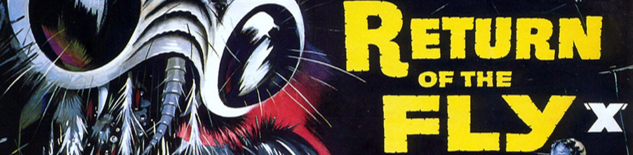
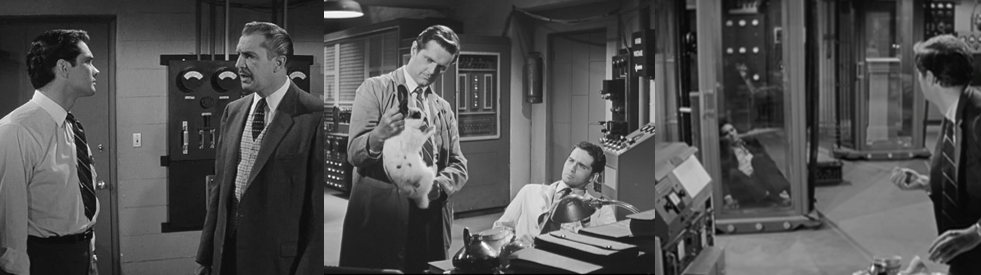
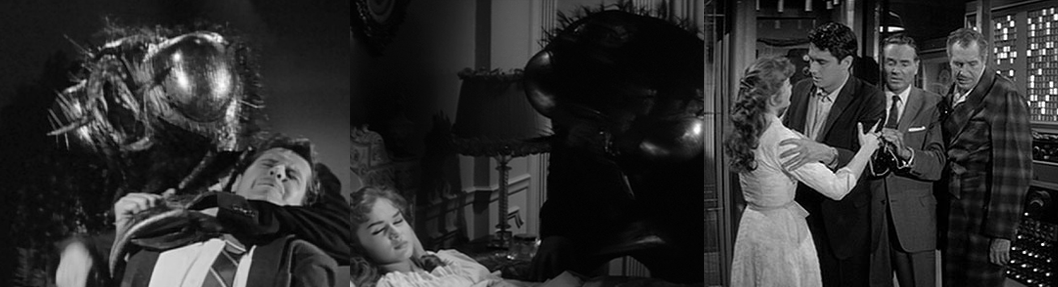


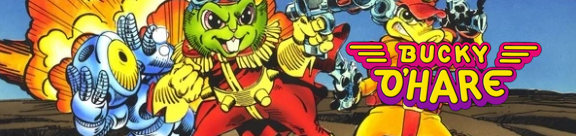
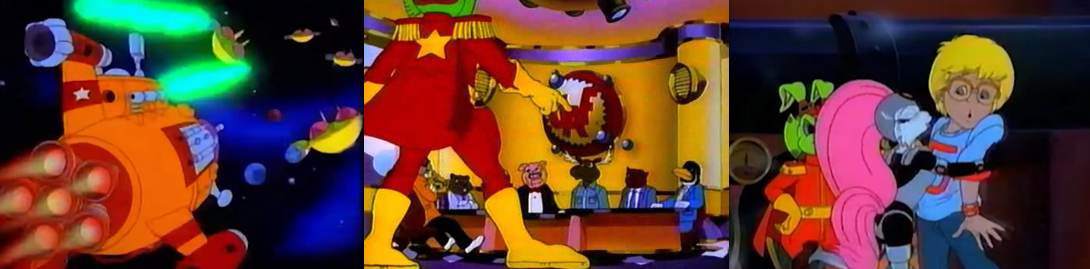
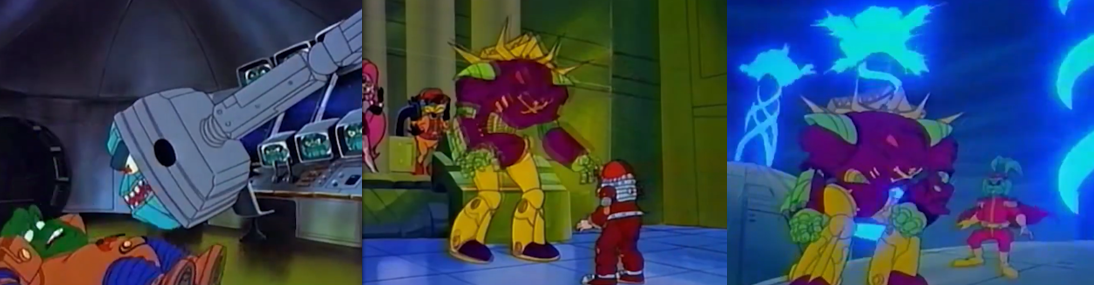
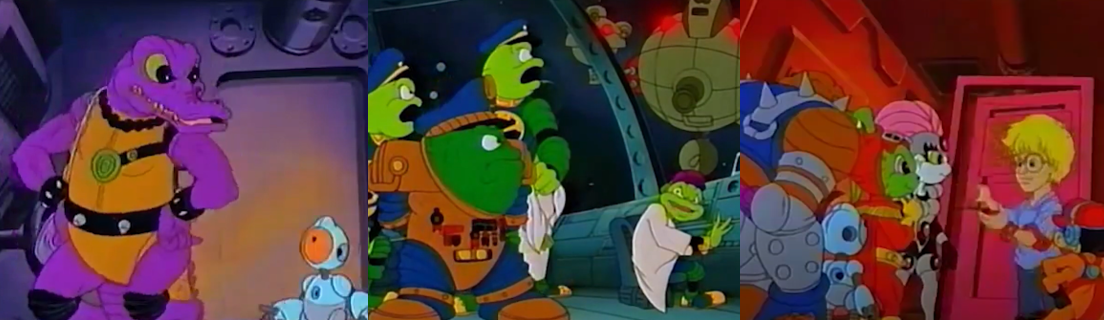


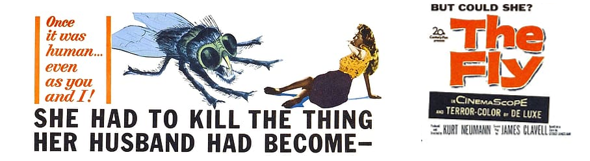
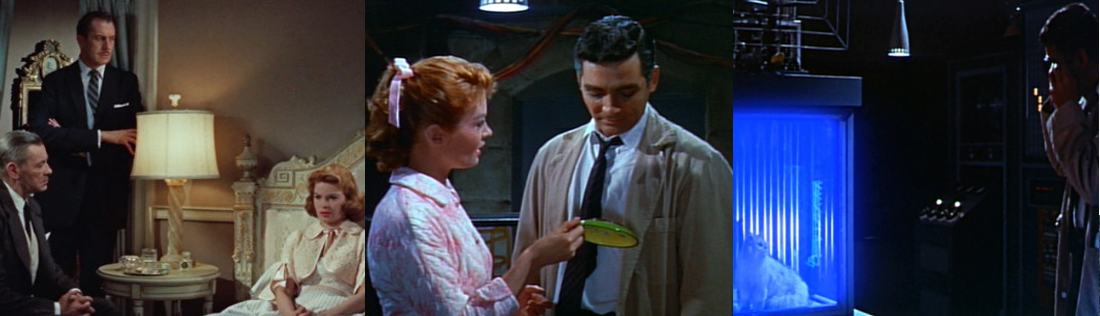


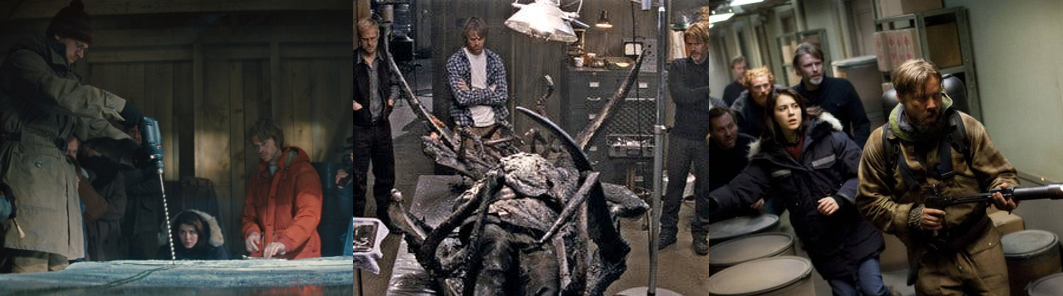
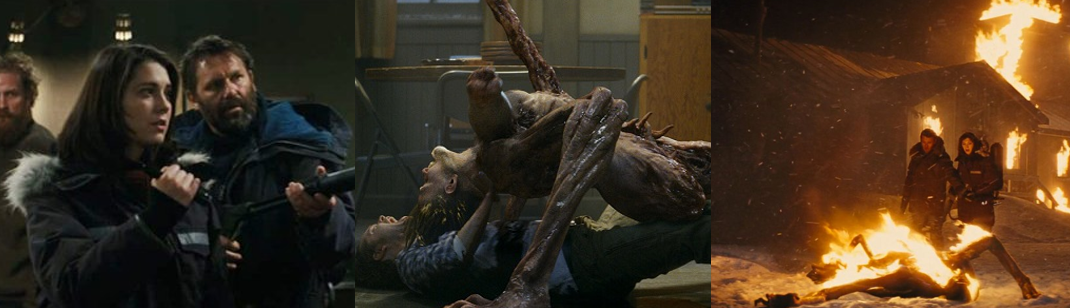
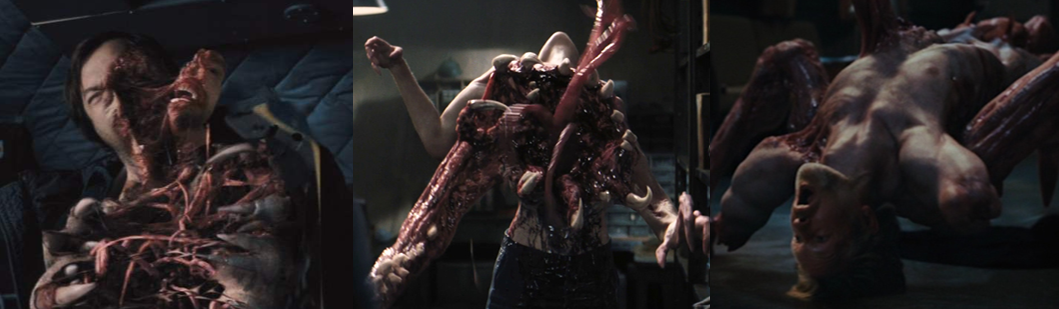
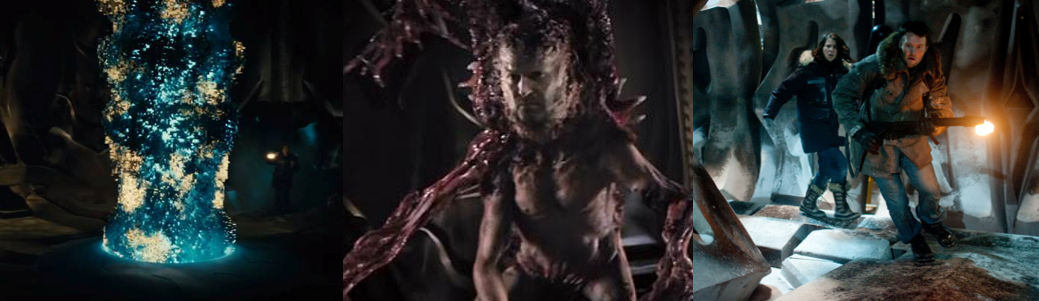


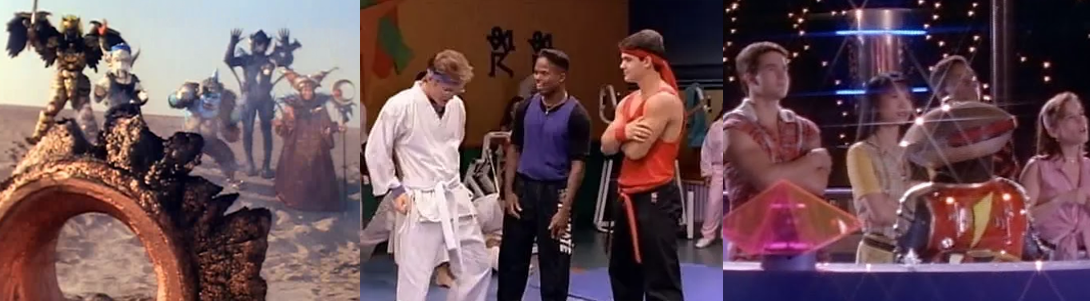
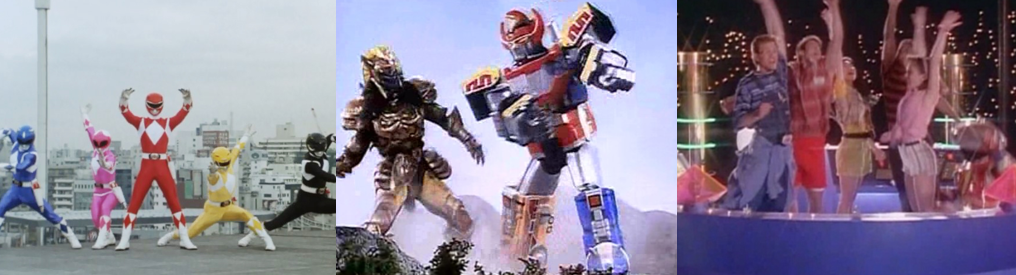


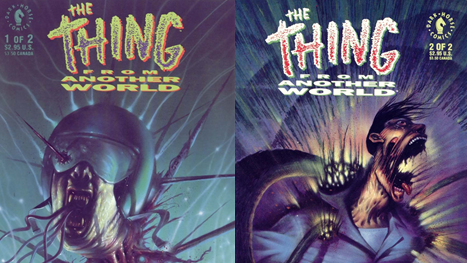
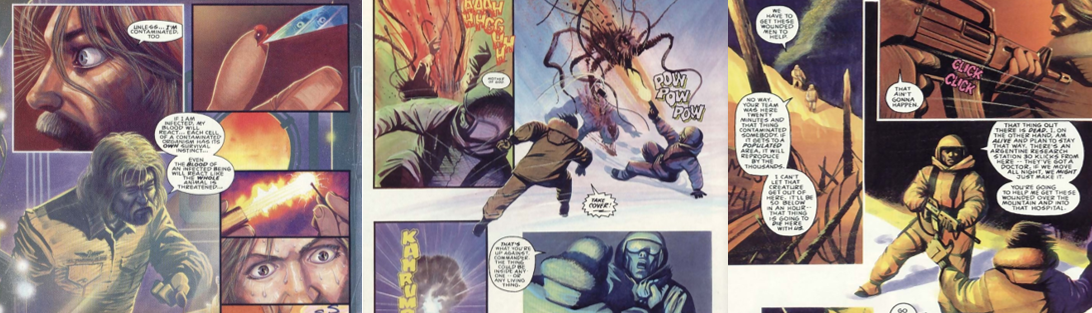

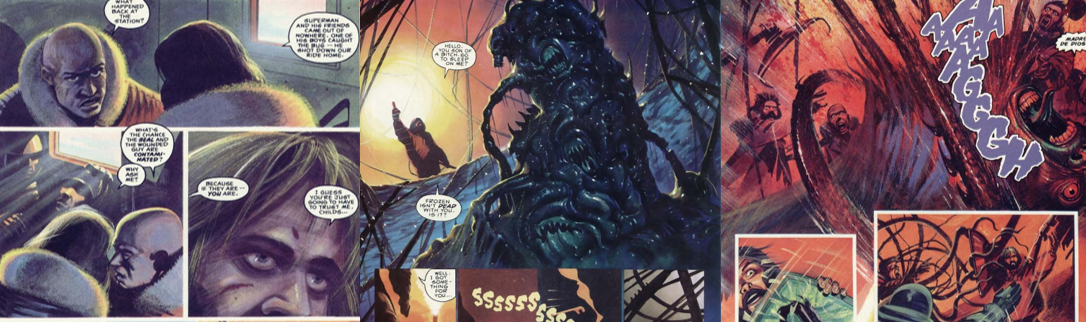




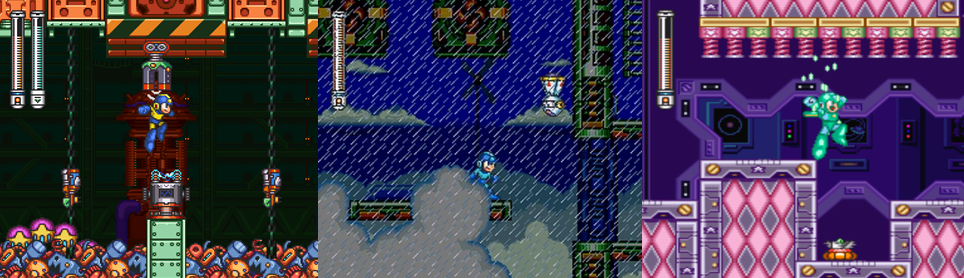
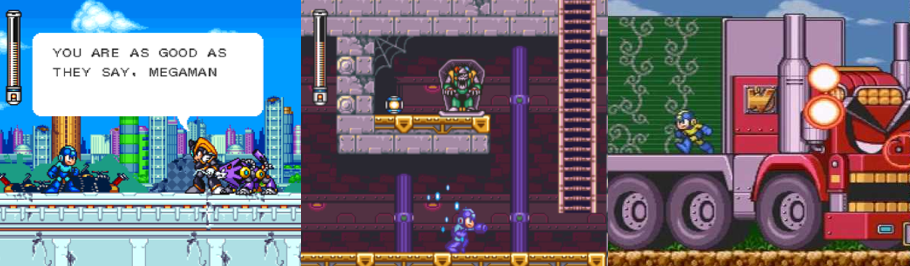
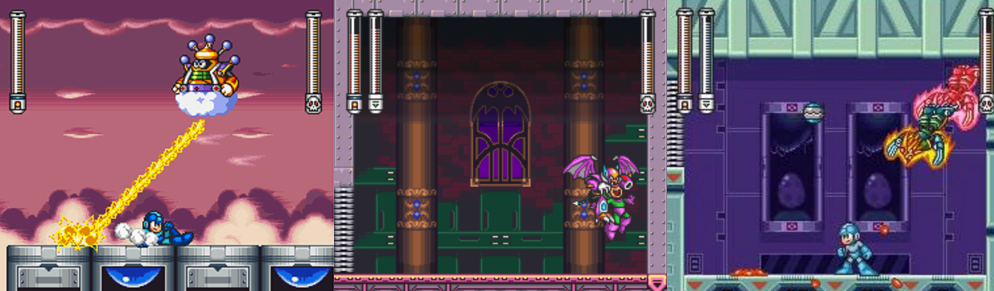
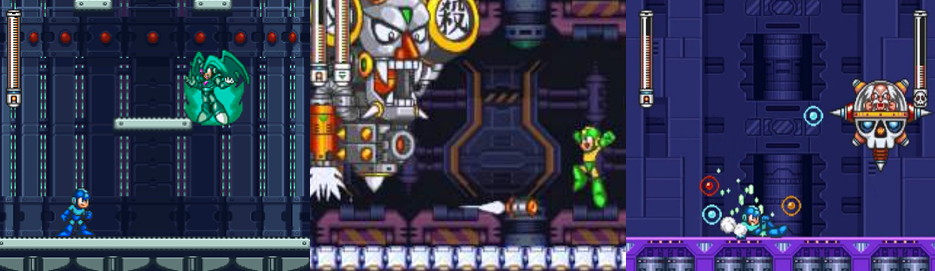


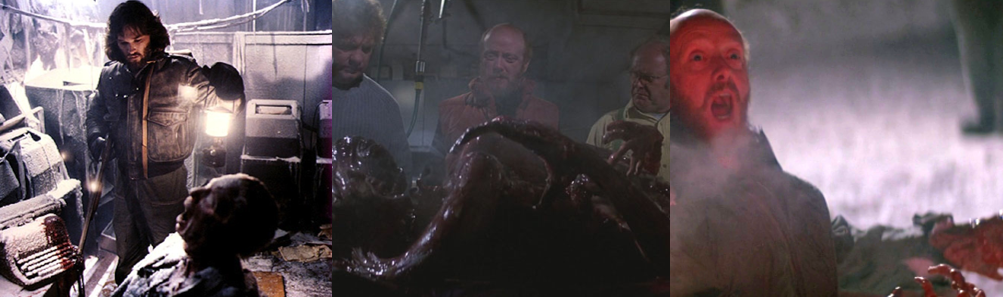
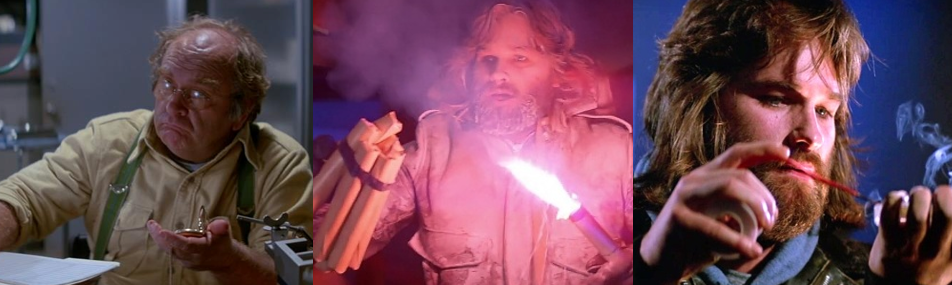
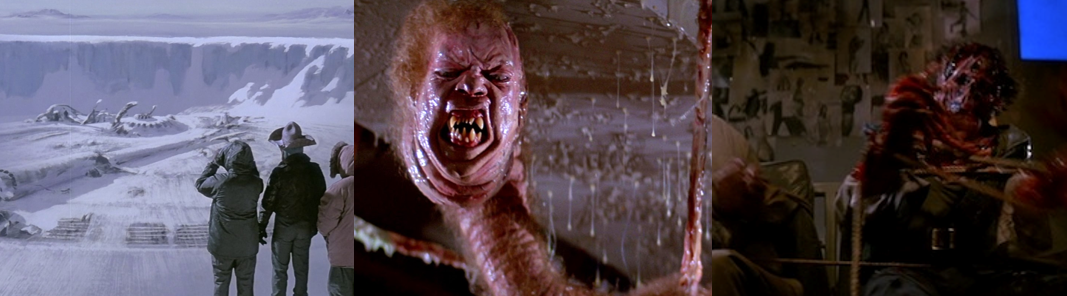
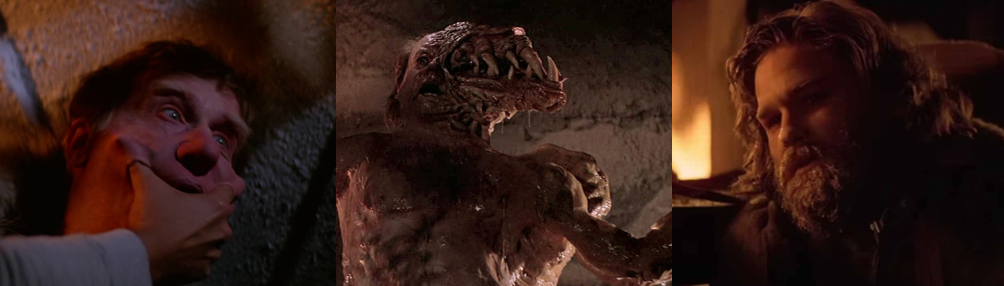

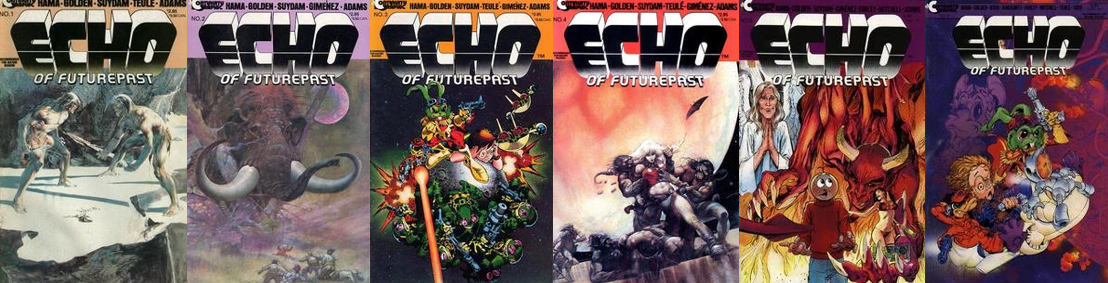
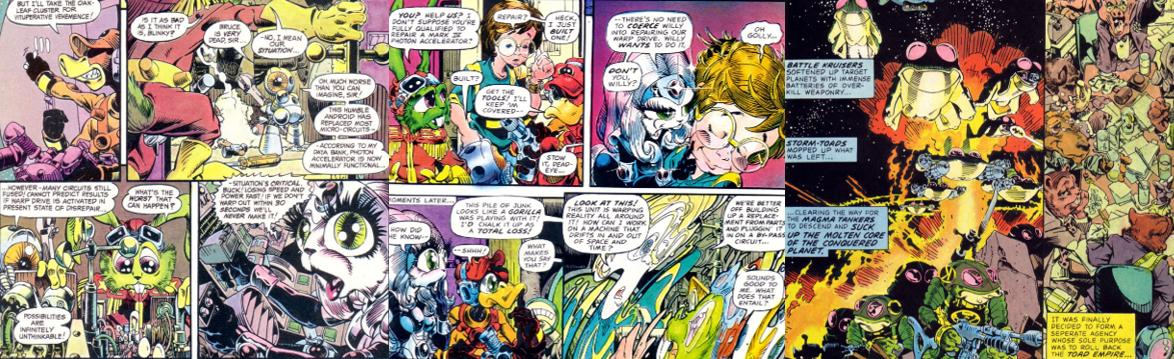
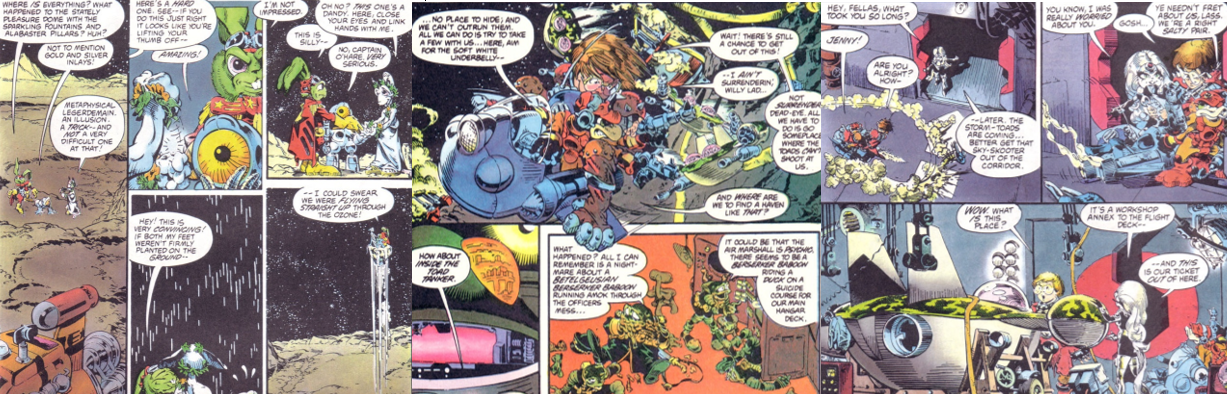

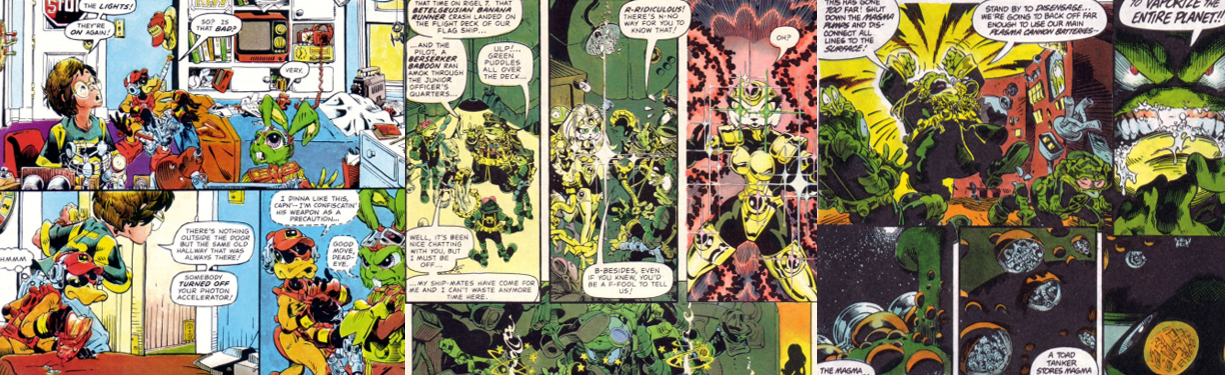


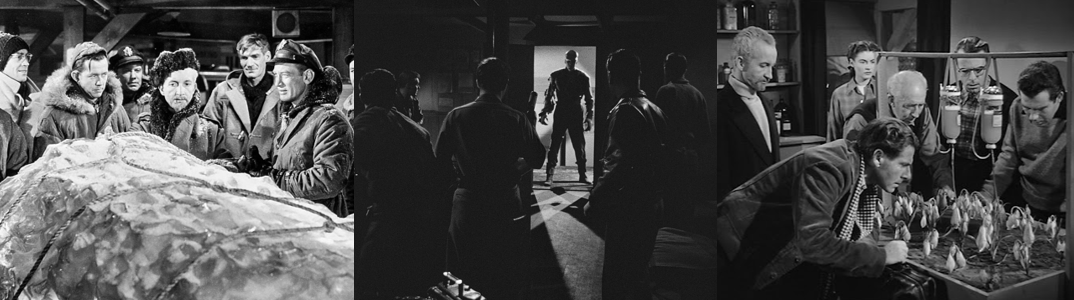
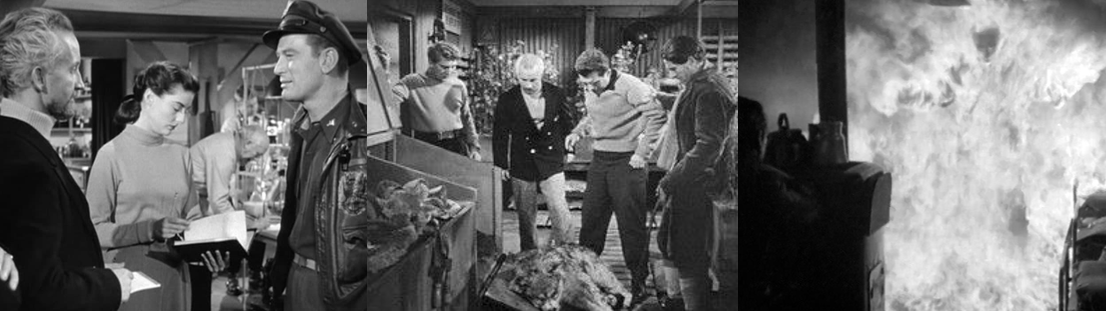
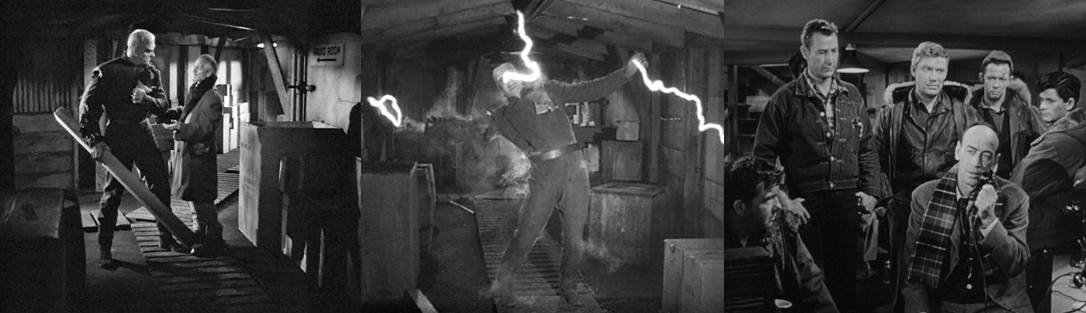


You must be logged in to post a comment.