Released: 2 July 2019 Director: John Herzfeld Distributor: Lionsgate/Universal Pictures Budget: $70.6 million Stars: Sylvester Stallone, Dave Bautista, Max Zhang, Harry Shum Jr, Devon Sawa, and Curtis “50 Cent” Jackson
The Plot: Ray Breslin’s (Stallone) past comes back to haunt him when Lester Clark Jr (Sawa), the son of his former business associate, abducts a number of people, including his girlfriend, and holds them hostage within the “Devil’s Station”, a sadistic supermax prison, leading Ray and his friend, Trent DeRosa (Bautista), to concoct a desperate rescue attempt.
The Background: Escape Plan 2(Miller, 2018) may have been a critical and commercial failure but, during filming, Stallone announced a third entry in the franchise that had started as as a decent excuse to bring him together with his action rival, Arnold Schwarzenegger, and had descended into a mediocre and disappointing straight-to-DVD franchise. Also titled Escape Plan: The Extractors, the third film dropped many of the new cast members from its predecessor and received a very limited theatrical release outside of the United States. Because of this limited release, Escape Plan 3 outperformed its predecessor, making just over $30 million at the box office but falling quite far from the almost $140 million of the first film. It did, at least, receive noticeably more positive reviews than the second film.
The Review: The first thing to note about Escape Plan 3 is that, despite the sequel spending most of its runtime focusing on Breslin’s protégé’s Shu Ren (Huang Xiaoming) and Lucas Graves (Jesse Metcalfe), neither of these characters make an appearance in the third film, which instead introduces even more new characters. This time around, Daya Zhang (Malese Jow), daughter of Wu Zhang (Russell Wong), is kidnapped by Lester Clark Jr as part of an elaborate revenge plot against Ray. Wu Zhang is the head of Zhang Innovations, the company responsible for the construction of the Tomb; you’d think that this would be the catalyst for bring Ray into the fold considering he swore to track down those responsible for such prisons at the end of the last film but, instead, he is only drawn into the plot when Daya’s bodyguard, Bao Yung (Shum, Jr), delivers him Lester’s video threat.
Lester seeks to avenge his father and nab a hefty ransom in the process.
Lester Clark Jr is, of course, the son of Lester Clark (Vincent D’Onofrio), Ray’s former partner who betrayed him and had him locked up in the Tomb; his plan for revenge involves taking a bunch of hostages, including Daya and Ray’s girlfriend, Abigail Ross (Jaime King), hostage inside another supermax prison, the “Devil’s Station”, and demanding a $700 million random. A ruthless, callous mercenary, Lester surrounds himself with imposing goons (including one of my favourite actors and stunt men, the great Daniel Bernhardt) but is perfectly happy to execute his hostages, including Abigail, to make his point and to make his revenge all the sweeter.
Ray assembles a team for his rescue mission and to settle the score with Lester.
All this amounts to a far more personal story this time around for Ray and for his new associates, who get a lead on Lester’s location from DeRosa; in the last film, this took DeRosa about a day and he had to go bust a few heads to get the information Ray needed but, this time, DeRosa simply guesses that Lester’s at the Devil’s Station and that’s it, they’re off without any fuss or muss. Lester alone would be enough to make things personal for Ray but, when Abigail is kidnapped and, later, killed, Ray launches into a vendetta alongside DeRosa, Shen Lo (Zhang), Daya’s former bodyguard and lover, and Yung. It’s personal for these latter two as well; Shen because of his feelings from Daya and Yung because he feels (and is constantly told) that he failed Daya by not being able to keep her safe. Unlike the Tomb and especially unlike Hades, the Devil’s Station is much more of a traditional prison; located in Latvia, the facility is a rundown, desolate hellhole designed to be an intimidating and demoralising maze. There’s no fancy high-tech hazards this time around, they’re not adrift in the sea, and there’s no complex system to hack into; instead, it’s just good, old fashioned iron bars, ruthless inmates, and the foreboding presence of Lester and his callous minions.
The Nitty-Gritty: Thankfully, Escape Plan 3 is much more coherent than its predecessor; with my senses no longer bombarded by erratic shaky cam and frantic editing, the film (and, more importantly, the action scenes) is much easier on the eyes and the pace is much improved as a result. It also helps considerably that the film isn’t bathed in constant near darkness, with many scenes within the Devil’s Station taking on a disconcerting yellow hue.
Despite having a team, this doesn’t really factor into the infiltration plan.
Unlike the last two films, which understandably involved breaking out of prisons, Escape Plan 3 is much more of a rescue movie; Ray and his team have to break into the Devil’s Station to rescue the hostages and confront Lester, meaning the film automatically stands out from its predecessors by putting Ray and his abilities in a much different situation. This necessitates the need for a team, meaning a much bigger role for Bautista this time around; if you’re a fan of 50 Cent and got excited when you saw his character, Hush, on the poster and the actor’s name share top billing then you’re in for a disappointment, though, as, while Hush does contribute more to the film and the team this time around, he’s still relegated to tech support. To be fair, though, the actual “team” aspect of the film isn’t as emphasised as you might expect either as they quickly split up to infiltrate the facility and Breslin largely disappears for a noticeable chunk of the movie.
The fight between Ray and Lester is a brutal, gritty affair, at least.
Unfortunately, given the low-tech approach of the Devil’s Station, the actual infiltration involves a lot of wandering around in poorly-lit sewer tunnels; thankfully, what the film lacks in visual presentation, it more than makes up for with some brutal action and kills. Driven to unbridled rage by Abigail’s death, Breslin’s normally composed demeanour cracks, leading to a vicious showdown with Lester. Devon Sawa, who I only really know for his role in Final Destination (Wong, 2000) and for appearing in the music video for Eminem’s “Stan”, actually makes for a fairly decent antagonist; a damaged and violent individual, Lester’s blind devotion to revenge against Breslin and those whom he feel used and betrayed his father makes for a volatile and unhinged villain. This isn’t some slick, corporate asshole in a suit; this is a ruthless mercenary who isn’t afraid to get his hands dirty or to twist the knife in any way he can and his inevitable contribution with Breslin is easily the highlight of the film. Rather than some slick, overly choreographed affair, this fight is a brutal, hard-hitting brawl that brings Breslin back into the fray with a bang and allows him to extract a measure of revenge.
The Summary: Escape Plan 3 is a definite improvement over the second film and it’s telling that the film goes out of its way to connect more with the first movie than reference the second. Still, as gritty and visceral as the film can be, and as interesting as it is to see a more personal story being told with Breslin and to place him in a different situation (breaking in instead of out), Escape Plan 3 still can’t compare with the first movie. It’s not even about Arnold Schwarzenegger at this point (though his continued absence from the franchise is a bitter pill to swallow), it’s just that the sequels can barely pull together a coherent and engaging film. While Stallone’s role is noticeably bigger this time around, he’s still more of a supporting character; Bautista is similarly criminally underutilised, meaning Escape Plan 3 ends up being about a bunch of new characters who aren’t anywhere near as interesting to look at or follow. If more of the actors from the second film had returned then, maybe, it would have allowed for a bit more investment in their fates but, still, Escape Plan 3 fails to really be anything more than a mediocre action/thriller that is noticeably better than the second…but that’s not exactly a high bar to clear.
My Rating:
⭐⭐
Rating: 2 out of 5.
Could Be Better
What did you think to Escape Plan 3? Did you find it more enjoyable than the second film or did you, perhaps, think it was just as bad, if not worse? What do you think to the trilogy overall? Do you think the films would have been better if Schwarzenegger had returned or would they still have failed to impress upon you? What do you think to Bautista as an actor and do you think he is deserving of bigger, more varied roles? No matter what you think, feel free to leave a comment below and be sure to check back in for more Stallone content later in the year!
In 1995, Marvel Comics created “National Superhero Day” and, in the process, provided comics and superhero fans the world over with a great excuse to celebrate their favourite characters and publications.
Released: 4 May 2012 Director: Joss Whedon Distributor: Walt Disney Studios Motion Pictures Budget: $220 million Stars: Robert Downey Jr, Chris Evans, Mark Ruffalo, Chris Hemsworth, Scarlett Johansson, Jeremy Renner, Tom Hiddleston, Clark Gregg, Stellan Skarsgård, and Samuel L. Jackson
The Plot: When Loki Laufeyson (Hiddleston) arrives on Earth wielding a mind-controlling spear and in search of the Tesseract, Nick Fury (Jackson), director of the Strategic Homeland Intervention, Enforcement and Logistics Division (S.H.I.E.L.D.) activates the “Avenger Initiative”. Tony Stark/Iron Man (Downey Jr), Steve Rogers/Captain America (Evans), Doctor Bruce Banner/The Hulk (Ruffalo), Thor Odinson (Hemsworth), Natasha Romanoff/Black Widow (Johansson), and Clint Barton/Hawkeye (Renner) are called into service and must find a way to co-exist before they can combat this otherworldly threat.
The Background: The development of an Avengers film began in 2003 with an outrageous plan to release a series of solo films for each character before having them all meet up, similar to how the Avengers formed in the comics back in 1963 courtesy of Martin Goodman, Stan Lee, Jack Kirby, and Dick Ayers. It was an unprecedented move, one which saw fledging studio Marvel Studios roll the dice on lower-tier heroes such as Iron Man and win big time with a slew of massively successful and popular superhero films, each one hinting towards a much larger, shared cinematic universe. When the time came for Earth’s Mightiest Heroes to finally meet onscreen, Marvel Studios turned to Joss Whedon to rewrite the script and direct the film and included Iron Man(Favreau, 2008) and Iron Man 2 (ibid, 2010) director Jon Favreau as an executive producer. After some differences of opinion, Marvel Studios chief Kevin Feige chose to recast Edward Norton in the role of Banner/Hulk and easily the biggest superhero film of all time was officially underway. The Avengers (known as Avengers Assemble here in the United Kingdom) was an absolutely phenomenal success, making over $1.500 billionat the box office, receiving ravereviews, and kicking off the extraordinary blockbuster success we know of today as the Marvel Cinematic Universe (MCU).
The Review: Avengers Assemble was the first time we had ever seen superheroes come together in a big screen, big budget movie. Before the MCU, before Iron Man, superheroes always existed in isolated bubbles and never interacted and, as a big fan of the interconnected world of the comics (not just in Marvel but in DC Comics and pretty much ever comic publication), I was excited to see these characters come together onscreen for the first-time and will always lean towards an interconnected, shared continuity. It was a risky venture taking admittedly B to D-tier characters like Iron Man and Captain America and shaping a series of movies around them but Avengers Assemble totally justified that risk, allowing these volatile egos and characters to share the same screen and mixing fantasy, science-fiction, magic, and technology all together in one action-packed adventure.
Loki comes to invade Earth and realise his grandiose desires for power and servitude.
Loki’s threat is immediately established when he suddenly arrives on Earth and makes short work of Fury’s men and then uses his spear to take control of Professor Erik Selvig (Stellan Skarsgård) and Barton. Though only a singular villain, one whom Thor has been able to best in combat before, Loki is a significant threat to the world since he is, effectively, a God and he has the entire Chitauri army at his command. Before the Chitauri arrive, though, Loki is formidable enough to justify bringing in Iron Man (despite Fury’s earlier reservations) and Cap since Thor wasn’t supposed to be able to get back to Earth. When Thor does arrive, his mission to capture Loki and bring him back to Asgard is hampered by Earth politics (since Fury wants to hold Loki accountable for the death and destruction he’s already caused) and as a result Loki manages to manipulate the fledgling Avengers into bickering and fighting with each other rather than him, allowing him to take possession of the Tesseract and bring the Chitauri to Earth. While he avoids active, physical combat, Loki is a daunting opponent when he does engage in battle, able to go toe-to-toe with Thor (thanks, largely, to Thor holding back out of love for his brother), easily catching Hawkeye’s arrow, and tossing Stark out of a window with just one hand. His downfall comes not only through the unification of the Avengers but is spelt out by Stark, who monologues about how, win or lose, they would hunt down and hold Loki personally responsible to ensure that he never truly wins, and, of course, more explicitly through the sudden and hilarious beat down he receives at the hands of the Hulk.
It’s a rough experience for Cap, who has awoken to a world that has radically changed.
Essentially, the film is a significant chapter in Cap’s story; since Captain America: The First Avenger(Johnston, 2011) ended with Cap being dethawed in the modern day, this was only the second time we had seen him in action; unfortunately, because of the nature of the film, Cap’s reintegration into society is largely glossed over and, rather than being dwelled upon, is replaced with Cap wishing to be given a mission, a focus, a reason to fight in the modern world. As a result, he unquestioningly follows Fury’s directions primarily out of instinct, duty, and a need to have a reason to go on in a world that has largely passed him by; he clashes with Stark’s rebellious attitude, believing that they should follow orders like soldiers, but is convinced enough to investigate further and is disgusted to find Fury in possession of Chitauri technology and with contingencies in place to combat the Avengers since they have the potential to be a threat to humanity. Cap is all business when in battle, instinctively taking command and exuding leadership even though he is the most out of touch and out of place of all the characters; his initial antagonism with Stark is eventually put aside to lead the team during the Chitauri invasion and Cap fights to the bitter end even when he is vastly overpowered by the alien forces, taking the most damage of any of his team mates (including the “weaker” members like Natasha and Barton).
Stark joins the team with his own agenda but eventually comes to respect and defer to his peers.
Stark is just as stubborn and snarky as ever; he’s clearly insulted by Agent Phil Colson (Gregg) and Fury’s decision to relegate him to a “consulting” role in the Avengers Initiate despite his claims to not want to be part of the team and believes himself to be the only one smart and capable enough of combating Loki’s impending threat. He comes aboard with the program purely out of a selfish desire to lord himself over Fury and the other Avengers and to learn more of S.H.I.E.L.D.s secrets, using them to call Fury out on his hypocrisy, and constantly goading his team mates (particularly Banner) into being themselves and rejecting Fury’s orders and control. While the prevailing arc for the entire team is learning to work together, Stark personifies this as he is the most antagonistic and reluctant to work as a team; he’s the most affected by Coulson’s death due to him knowing the agent the best, his experiences witnessing death and suffering first-hand in Iron Man, and his inability to properly cope with death and loss. Coulson’s death galvanises Stark, turning his incredulity to vengeance and giving him the motivation to not only put aside his ego to work with the team but also acknowledge Cap’s superior leadership skills.
The naturally apprehensive Banner has attained a measure of tenuous control over the Hulk.
Banner appears very differently to where we left him in The Incredible Hulk (Leterrier, 2008); fearing the unpredictability and ferocious nature of the Hulk, he has stayed in hiding, suppressing the Hulk with some success, but is unable to deny his innate wish to help others in need with his scientific and medical expertise. Banner has managed to keep the Hulk at bay not only through a risky and unique technique (he’s “always angry”, indicating that he constantly keeps his emotions at a level where the Hulk is satiated but doesn’t actually emerge) and a vehement refusal to acknowledge or speak the Hulk’s name. Banner is convinced to help advise on Loki’s spear by Natasha’s beauty and simply her asking him nicely, rather than forcing him to comply, but, while he is clearly excited to be working with S.H.I.E.L.D. and the Tesseract and forms a fast, budding friendship with Stark (with Stark goading Banner and acting like an annoying brother to him), he quickly comes to realise that Fury’s intentions aren’t entirely noble and questions the validity and ability of a team that is little more than a “timebomb” of ego and emotions. When the Hulk is forcibly unleashed as part of Loki’s plan, he is unbridled rage and fury, lashing out at everything and everyone around him in a mindless rage since the transformation was against Banner’s will. Later, during the Battle of New York, Banner initiates the transformation willingly and the Hulk is much more…maybe not “docile” but let’s say willing to cooperate, taking Cap’s orders and specifically targeting to Chitauri threat while protecting and aiding his teammates. A measure of Banner’s influence and the Hulk’s intelligence is seen as the Hulk makes the effort to save Iron Man from his fatal fall and his dismissive grunt of “Puny God!” after beating the piss out of Loki.
Thor’s complex relationship with Loki is a pivotal plot point throughout the film.
Thor’s arrival on Earth comes out of nowhere and is quickly waved away with a brief line about “dark energy”; personally, I never liked this or understood why the filmmakers had the Bifrost be destroyed in Thor(Branagh, 2011) when they knew very well that Thor would be back in Avengers Assemble but it is what it is and Thor is there. Thor is handicapped by his emotions towards his brother; he is elated and heartbroken to see Loki alive after believing him dead and just wants his brother to abandon his crusade and come home. Loki, however, is too full of jealously, rage, and resentment and constantly taunts, defies, and dismisses his brother, who finds himself unable to simply wade in, muscles bulging, and retrieve Loki thanks to opposition from Iron Man, Cap, and Fury and the greater issue concerning the Tesseract. Thor offers knowledge of another world, another level of understanding, that is unique amongst his teammates and spends much of the film believing his brother still has good in him and wishing to return him home. After Loki kills Coulson before Thor’s eyes and tries to kill him with a trap intended for the Hulk, Thor reluctantly gears up and enters the fray, so determined to stop his brother’s mad schemes that he’s willing to fight alongside the Avengers and submit to Cap’s orders since he, like Cap, is a stranger in this world and still learning how to navigate modern, human society.
Natasha remains a mystery despite the showcase of her skills and hints towards her past.
Natasha is still relatively new in this film since audiences only saw a fraction of her true character and abilities in Iron Man 2 so it’s good that she gets a solo action scene at the start of the film to showcase her physical and manipulative abilities. We learn bits and pieces of her character and backstory through her interactions with Banner, Loki, and Barton but she remains very much a mystery even by the end of the film. This would, of course, continue over the years since Black Widow was one of the last of the original Avengers to get a solo film, meaning an air of mystery constantly surrounds her, but much of her arc is focused on her relationship with Barton (which is one of duty, gratitude, and mutual, platonic respect) and her commitment to Fury and S.H.I.E.L.D. Like Cap, she follows orders unquestioningly but it also feels like she has her own agenda and reasons for going along with S.H.I.E.L.D.; while she, like Barton, is one of the weakest links in the Avengers, she’s still capable enough to hold her own against the Chitauri…for a time, at least.
Though he spends the majority of the film under Loki’s spell, Barton proves a formidable opponent.
Barton, who is only referred to as Hawkeye once in the film, spends most of the movie under Loki’s command (though this does harken back to his comic book beginnings as a villain); as a result, all we know about him is the few bits and pieces Natasha reveals about their relationship and their background. However, we do get to see him in action on more than one occasion; he’s a crack shot, almost to superhuman levels, and is able to bring down an entire Helicarrier with a single, well-placed arrow. He is an essential soldier in Loki’s army, offering him insight into Fury’s operation and resources, but is also able to provide the Avengers with key information regarding Loki after Natasha literally knocks some sense into him. He proves himself capable enough in the finale by providing much needed and peerless cover from a high vantage point, from which he is able to take out multiple Chitauri with a few well-aimed shots. He’s easily the least developed of all the characters thanks to the role he plays in the film but it works for the plot and means we’re left wanting to know more about him and his backstory. Fury plays a much larger role in this film than in the previous MCU movies since he’s a pivotal supporting character rather than a mere cameo; he believes that Loki represents a very real threat to humanity but also believes wholeheartedly in the concept of heroes and the ability of the Avengers Initiative to combat Loki’s threat.
Coulson is the glue that connects Fury’s Avengers and his death galvanises the team into action.
Fury opposes the World Security Council when they dismiss the Avengers as a legitimate solution and when they order a nuclear strike on New York which, along with his own brand of snark and dry wit, makes him a rebellious and layered character in his own right. However, he’s also a secretive and manipulative individual, constantly telling everyone only as much as they need to know and a handful of half-truths (as Stark says: “Fury’s secrets have secrets!”) and believes in having contingencies against any and all possible threats, both foreign and domestic. While he doesn’t fight alongside the Avengers in the final battle, he’s crucial to their formation and is a charismatic and alluring figurehead for their group. Sadly, this was as prominent as Fury would be for some time, with him quickly going back to being either a cameo or supporting character over the years, which is a shame as it’s always great to see Samuel L. Jackson in the role and interacting with these characters. Similarly, Coulson also gets much more screen time and development this time around; still acting as Fury’s go-to and the liaison between S.H.I.E.L.D. and the Avengers, Coulson (whose first name is revealed to be “Phil” rather than just “Agent”) is the relatable man among Gods, the common thread that links all of these volatile personalities together. Initially, all they really have in common beyond their heroic tendencies is their relationship with Coulson, with Stark having the closest link to him and Coulson being especially in awe of Cap, his hero and idol, and Coulson’s death is both sudden and heartbreakingly brutal. It’s a fantastic moment that serves to galvanise and motivate the them and, as much as I’ve enjoyed some episodes and seasons of Agents of S.H.I.E.L.D. (2013 to 2020), it did annoy me that his dramatic death was undone so soon after the film’s release. Thankfully, the MCU movies don’t acknowledge Coulson’s resurrection so his tragic death remains the principal motivating factor behind the coming together of Earth’s Mightiest Heroes.
The Nitty-Gritty: Considering the large cast of bombastic, unique characters and actors, Avengers Assemble is fantastically well paced; sure, Natasha and, especially, Barton don’t get anywhere near as much screen time or development as established guys like Cap or Stark but they get several character defining moments and character beats that help to keep them relevant and integral to the plot. The film isn’t full of non-stop action but it never feels slow or like it’s wasting time; any time there isn’t some kind of physical conflict, there’s a conflict of character, beliefs, or ideologies as each of the characters interacts with each other in different ways. The central conflict in the film is between the individual Avengers as much as it is with Loki as each one must learn how to interact and co-operate with the other, which leads to some friction between Rogers and Stark, disdain from the God-like Thor, and distrust from the understandably agitated Banner. This all comes to a head in one of the film’s most intense moments where the fledgling Avengers argue over Fury’s manipulations, the threat each of them oppose, and their conflicting egos in a scene that is easily as powerful as any of the film’s fight scenes. Here, each character talks and argues over each other; lots of fingers are pointed, egos are bruised, and accusations are made thanks to the influence of Loki’s spear, which exacerbates their most negative aspects and fuels the distrust and tension between the group. It’s an amazingly realised scene, with lots of dynamic camera work on offer and allows the characters to vent their frustrations and concerns about each other, the mission, and the inevitable escalation of conflict that threatens Earth now that it has experienced otherworldly threats and, in it, these conflicting personalities actually grow stronger as a result of their brutal honesty.
Seeing these colourful and volatile individuals interact is every fan’s dream come true!
However, amidst this, there are also numerous amusing little moments that help to add to the film’s levity and develop each character: Rogers handing Fury a $10 bill after being awe-struck by the Helicarrier, Stark pointing out that one of the S.H.I.E.L.D. agents is playing Galaga (Namco, 1981), Thor’s humiliation regarding Loki’s actions and heritage, and Banner’s flashes of anger all help to make the characters real and relatable. One of the best examples of this is Cap’s confrontation with Loki in which he, despite being “out of time”, recognises Loki’s evil and potential threat and openly opposes him just as he did a similar dictator in World War Two and engages him in combat despite Loki’s clear physical advantage over him. Cap’s whole character is that he continues to fight no matter the odds and that is continuously seen in Avengers Assemble as, even when outclassed or outnumbered, he continues to get back up and go on with the fight until it’s done, one way or another, and fails to give in to intimidation from concepts beyond his time such as Gods, aliens, and advanced technology. Their interactions with each other are equally impressive, with the heroes just as likely to come to blows as they are to work together; this means we get to see these bright, colourful costumed characters fighting with each other as much as alongside each other. Iron Man fights with Thor, Cap joins in to make it a triple threat, Black Widow fights with Hawkeye, and Thor memorably goes toe-to-toe with the Hulk to set up a friendly rivalry that would be fantastically revisited in Thor: Ragnarok (Waititi, 2017). It’s a staple of superhero team-ups that the heroes simply must fight at least once and Avengers Assemble delivers on this in spades; we’ve watched each of these characters in their own films, or be involved in other MCU films, over the years so to see them match wits, trade blows, and fight together is a true fanboy’s delight.
The Chitauri are, admittedly, underwhelming antagonists but they serve their purpose.
The finale is little more than a battle against mindless, indistinguishable alien hoards who, conveniently, operate in a hive mind and are “easily” shut down by Stark tossing a nuclear weapon at their mothership. I honestly expected a version of the Masters of Evil for the first Avengers movie, with Loki joining forces with Johann Schmidt/The Red Skull (Hugo Weaving) outside of the Realms and then teaming up with Emil Blonsky/The Abomination (Tim Roth) and/or Samuel Sterns/The Leader (Tim Blake Nelson) once they reach Earth for a smaller scale, six on six style team vs. team movie and, in some ways, it is a bit disappointing that the Avengers only went up against one villain and an army of drones but it really works in the film since the entire point of the movie is to bring these volatile characters together. The actual antagonist could have be anyone or anything and it wouldn’t really matter but it being Loki works wonders thanks to Tom Hiddleston’s iconic performance; he’s truly a snake in the grass, a wily, manipulative, vindictive villain who is intelligent and cruel enough to match wits with each of the Avengers both physically and vocally and the only previous villain I could see being able to do anywhere hear as good a job would be Hugo Weaving.
The Avengers win the day but a greater, far more powerful threat looms in the background…
One issue I have though is that, as much as I loved the “Avengers Assemble!” scene we eventually got, I still don’t get why we couldn’t have heard that iconic cry during that awesome panning shot of the team standing back-to-back. I think we definitely could have heard this cry in each of the team-up films and appearances of the group and it wouldn’t have taken away from that impactful scene; if anything, it would have added to it since it would be a rallying cry for the reunited heroes. Still, the Battle for New York is amazing in its scope; the Chitauri may be interchangeable alien drones but they are relentless. The Avengers are able to combat them and easily defeat them but their numbers are legion and, apparently, inexhaustible and it isn’t long before they are overwhelmed even with the might of Thor and the Hulk. The Chitauri’s larger reinforcements and advanced weaponry and sheer numbers mean that it is simply a matter of time before the Avengers, for all their power, are overwhelmed and Loki is successful, meaning that the Avengers’ main concern is holding the line and keeping the invasion at bay while their team mates confront Loki and cut off the source of the invasion. All throughout the film, Loki converses with “The Other” (Alexis Denisof) and is clearly being given power and resources from an unseen third party, revealed at the very end of the film to be none other than Thanos (Damion Poitier). At the time, we could never have anticipated the extent to Thanos’s threat and importance to the MCU but the bringing together of cosmic characters like Asgardians and threats like the Chitauri and Thanos only hinted at how large and varied the MCU was destined to become.
The Summary: Avengers Assemble is still one of the biggest and most entertaining movies in the MCU and, perhaps, ever made. Of all the movies in the MCU’s first phase, it’s easily my favourite and, for me, set the standard not just for subsequent MCU team-up movies but for every film in the MCU going forward. No longer were these characters going to exist in their own isolated bubble; they would interact with their fellow characters, reference the larger world we finally saw in all its glory, and be part of something much bigger and greater than a series of self-contained films. For me, this is the greatest appeal of the MCU; before Iron Man, superhero films were always solo affairs and we never saw heroes interact with each other. Thanks to the MCU, all of that changed and, finally, the movies came to resemble the comics by having a shared universe that has a tight continuity and an actual tangible, long-term plan. The film is alive with character moments, an amusing dry wit, and action-packed sequences but, as thrilling as the bombastic fight scenes can be, it’s all the little interactions and interpersonal conflicts that really make this film so entertaining and appealing to me even to this day.
My Rating:
⭐⭐⭐⭐⭐
Rating: 5 out of 5.
Fantastic
What are your thoughts on Avengers Assemble? How do you feel it holds up now that the MCU has become this massive, multimedia juggernaut? Were you disappointed that the film focused solely on the one villain and side-lined Hawkeye with a mind control sub-plot or were you satisfied with Hiddleston’s performance and the interpersonal conflicts between the characters? Which of the Avengers is your favourite and which of the comic’s characters are you excited to learn more about or see join the team? Which of the MCU movies, shows, or characters is your favourite and why? How are you celebrating National Superhero Day today? Whatever your thoughts, leave a comment below and be sure to stick around for more superhero and comic book content throughout the year.
In April of 1940, about a year after the debut of arguably their most popular character, Bruce Wayne/Batman, DC Comics debuted “the sensational find of [that year]”, Dick Grayson/Robin. Since then, Batman’s pixie-boots-wearing partner has changed outfits and a number of different characters have assumed the mantle as the Dynamic Duo of Batman and Robin have become an iconic staple of DC Comics. Considering my fondness for the character and those who assumed the mantle over the years, what better way to celebrate this dynamic debut than to dedicate an entire month to celebrating the character?
Season One
Air Date: 12 October 2018 to 21 December 2018 UK Network: Netflix OriginalNetwork: DC Universe Stars: Brenton Thwaites, Teagan Croft, Anna Diop, Ryan Potter, Alan Ritchson, Minka Kelly, and Curran Walters
The Background: In July of 1964, the sidekicks of DC Comics’ most powerful superheroes came together under the leadership of Dick Grayson/Robin to form the Teen Titans, a crimefighting group of teenagers who were designed to better appeal to younger readers. Since then, the group has undergone many changes, with runs by the likes of Marv Wolfman and George George Pérez being notably influential, and the team has seen success in a number of animated ventures. Development of a live-action adaption was first announced in 2014; the series, which would have aired on TNT, never came to fruition but the concept was resurrected to produce content for DC Universe, DC’s now-defunct video-on-demand streaming service. Separate from the ongoing “Arrowverse” continuity, Titans got off to a bit of a bad start due to the violent and adult nature of the show and was criticised for its abrupt cliffhanger ending after the true season finale was pulled to become the first episode of the second series. Regardless (and despite the vitriol I often see towards the show on my Twitter feed), Titansimpressed enough to earn subsequent seasons, inspired a spin-off show, and was even acknowledged as being adjacent to the Arrowverse during the Crisis on Infinite Earths crossover event (Various, 2019 to 2020).
The Plot: Dick Grayson/Robin (Thwaites), who is attempting to make a name for himself outside of Bruce Wayne/Batman’s (Alain Moussi/Maxime Savaria) shadow, works as a police detective by day and violent vigilante by night. When the mysterious Rachel Roth/Raven (Croft) comes to him for protection against the dangerous forces pursuing her, Dick finds himself joining forces with not only similarly confused and superpowered misfits but also his former Titans teammates to combat a threat to the entire world.
The Review: Unsurprisingly, much of Titans’ plot revolves around Dick Grayson, who now works as a police detective in Detroit; trying to make a name for himself as a solo act, he is very much against being partnered up with anyone, even within his own department, which makes him somewhat cold and rude towards his new partner, Amy Rohrbach (Lindsey Gort). Dick uses the information and resources of the Detroit police department to track down criminals and bring them to justice as Robin; while the scum he targets immediately dismiss him and are more concerned about Batman, they quickly regret it when faced with Robin’s ferocity and his presence concerns his superior (and the mayor). Dick reveals to Amy that he and his former partner disagreed on the way to go about their work; initially, Dick admired him and saw him as a hero, just like everyone else, but chose to walk away when he saw that he (Dick) was becoming too much like him. Clearly, he’s talking about Batman and this is a recurring theme throughout the show; a much darker and more violent figure, his vicious nature is augmented by his great physical skill and Batman’s training, making him a formidable and well-training combatant who is easily able to take on groups of armed men. Dick isn’t adverse to using knives, guns, and whatever means necessary (even appearing to fatally wound some thugs) to put a beating on lowlifes and seems to both revel in, and be disgusted by, his violent impulses.
Dick uses his position as a cop to track down and bring criminals to justice as Robin.
However, as meticulous and skilled as he is, he’s still vulnerable and carries the results of his actions on his body in the forms of bruises, cuts, and scars; his primary motivation, as Robin and as a police detective, is to help out troubled kids and youngsters targeted by criminals. This naturally leads to him to Rachel, who is clearly framed as the audience surrogate right from the start (her nightmares of Haley’s Circus show her (and us) Dick’s origins as a trapeze artist and the tragic death of his parents) and is our unknown, confused, window into this world of costumes and masks. Such nightmares are a regular occurrence for her that, despite her mother Melissa’s (Sherilyn Fenn) best efforts, continue to torment and frighten Rachel; Rachel, clearly influenced by some dark power, is an empath and can sense a great fear emanating from her deeply religious mother. An outcast at school, Rachel’s fears and confusion lead her to sporadic outbursts of aggression, often accompanied by a dark reflection of herself and a shadowy, ethereal aura. When a mysterious man forces Melissa to reveal that she’s not Rachel’s actual mother and then brutally murders her right in front of Rachel’s eyes, she goes on the run and, driven by her nightmares, heads to Detroit to track down Dick Grayson for help. Though she fears her dark half, which encourages both violence and the need to kill, it acts primarily to protect her from lies and deceit, which allows her to escape from some suspicious types and end up right where she needs to be: police custody. Dick’s relationship with Rachel is a pivotal aspect of Titans; at first, though driven to help her, he plans to leave her in the care of others (with a payoff to sweeten the deal) since he feels that he’s damaged after what Bruce trained him to become.
Kory uncovers evidence that links Rachel and her dark powers to a prophecy.
While his mindset soon changes and he becomes fiercely protective of her, she forms a bond out of necessity with Kory Anders (Diop) when her trust in Dick is shaken. A mysterious and enigmatic young woman suffering from amnesia, Kory’s relationship with Rachel is based as much on necessity as Rachel’s inability to feel anything from Kory, who is inexplicably able to read and speak foreign languages and wields an equally destructive power. Desperate to unlock her memories and find out who she really is, and believing that Rachel is the key to her true identity, Kory uncovers evidence linking Rachel to an apocalyptic prophecy concerning ravens and a vast underworld conspiracy involving the convent where Rachel was raised. However, while Sister Catherine (Meagen Fay) immediately recognises them both and reveals some scant information on Rachel’s childhood and Kory’s mission to track her down, she quickly drugs Rachel and locks her in the convent’s basement in order to hide her from “him”. Rachel’s dark half manifests and, after tormenting her with taunts, empowers her to escape from her confinement and out into the nearby forest. Scared and alone, she crosses paths with Gar Logan/Beast Boy (Potter), a green-haired boy who can transform into a disappointingly rendered CGI tiger. Obsessed with pop culture, movies, videogames, and geek culture, Gar is an awkward, quirky outcast who sees a kindred spirit in Rachel and who desires to explore the outside world and, in an effort to connect with her, brings Rachel to the manor house he shares with his fellow misfits, the Doom Patrol: Cliff Steel/Robotman (Jake Michaels and Brendan Fraser), Larry Trainor/Negative Man (Dwain Murphy and Matt Bomer), and Rita Farr/Elasti-Woman (April Bowlby). Each of them, like Gar, was involved in some kind of hideous accident that left them near death only to be saved (and horrifically changed) through the innovation and genius of the mysterious Niles Caulder/The Chief (Bruno Bichir). Rachel finally feels a sense of belonging amongst these freaks and outcasts, each of whom reflect the complex nature of her own self and dark powers: hidden behind his bandages, Larry is unable to reveal himself because of the destructive nature of his condition, Cliff is robbed of the trivial pleasures we all take for granted, and Rita is barely able to hold herself together to appear normal.
Brought together by tragedy, Hawk and Dove continue to fight crime as costumed vigilantes.
The Chief, however, is angered that Gar threatened their sanctity by leaving the house and bringing an outsider amongst them; despite a glimmer of a threatening, dubious nature, the Doom Patrol are all incredibly thankful and loyal to him for saving their lives and willingly allow the Chief to run his experiments in order to advance the betterment of human lives. The Chief promises that he can also help Rachel and her condition as well but, while she initially allows him to run some tests, she almost immediately changes her mind and grows scared. Although Gar tries to help her, the Chief tranquilises him and, angered by this, Rachel’s dark half manifests as a swirling dark liquid that attacks and paralyses him and frees her. Dick and Kory arrive just in time and Dick is able to talk Rachel down and promises to help her, reuniting them once more. Encouraged by Cliff, Gar goes with them to live a life outside of the mansion, setting the team up for their own strangely unrelated spin-off. Not that Dick is without his allies as well; initially, he plans to leave Rachel with Hank Hall/Hawk (Ritchson) and Dawn Granger/Dove (Kelly) in Washington, two of his former Titans allies who continue to operate as costumed vigilantes. As damaged as Dick is, Hank is equally traumatised by his past when, as a young boy (Tait Blum), he was sexually abused by his football coach to spare his younger half-brother Don (Jayden Marine). As teenagers, Hank and Don (Elliot Knight) became the first Hawk and Dove to specifically target sex offenders and to give Hank an outlet for his anger but Hank’s world was shattered when Don was killed in a random car accident. This same accident also took the life of Dawn’s mother, Marie (Marina Sirtis), and, in time, the two form a bond over their shared grief and need for an outlet for their unresolved issues. After she discovers Hank’s makeshift Hawk gear, Hank finally opens up about the abuse he suffered as a child and, together, they bring justice to his abuser and become the new Hawk and Dove. By the time of Titans, however, Hank is heavily reliant upon painkillers and pills, carries multiple scars, and is in near constant pain from a lifetime of crimefighting in addition to the multiple concussions he suffered during his college football days. The two plan on retiring from their violent double life once they finish breaking up a gang of gunrunners and, though he’s stubborn and pig-headed, Dawn is clearly devoted to Hank and supportive of him despite his injuries and impotence.
Dick is disturbed to find Bruce has replaced him with the arrogant and violent Jason Todd.
Flashbacks cast some light on their time together as Titans, where Dawn had a thing for Dick and Hank, being the arrogant meathead that he is, was rightly jealous and condescending towards Robin. Hank is unimpressed that Dick has come back into their lives and, resentful of Dick’s former relationship with Dawn, also has no faith or trust in Dick at all because of their past in the Titans. However, even Hank is horrified to see how brutal Robin has become as he throws his shurikens into a man’s eye, crushes another man’s balls, and viciously takes out the gun dealers before their shocked eyes, while Dawn sees a correlation between Dick’s relationship with Rachel and how Bruce helped him as a kid. Dick is disturbed, angry, and resentful to discover that Bruce has replaced him with Jason Todd (Walters), who acts as the new Robin, a vicious and arrogant youth who revels in being Batman’s partner, basks in the upgrades in his suit compared to Dick’s, and takes a perverse pleasure in being Robin and part of Batman’s legacy (even while acknowledging that his role is mainly to draw fire away from Batman). A largely annoying and grating character without even really needing to be, Dick is annoyed when Jason reveals that Bruce implanted tracking devices into the both of them and revoked his access to his newer technology. Dick tries to send Jason back to Gotham City and discourages him from continuing his life as Robin; despite trying to convince him that Bruce’s methods and motivations are less than benign, Jason reveals that he was sent there with evidence that his old circus family has been brutally murdered to send a message to him and that someone knows his true identity. Together, they track down the last surviving member of the circus, Clayton Williams (Lester Speight), who was like Dick’s surrogate father back in the day, who is almost immediately abducted by the perpetrator of the murders, the Phantom-like Nick Zucco (Kyle Mac), the “Melting Man” and son of gangster Tony Zucco (Richard Zeppieri), the man who killed Dick’s parents.
Donna advises Dick and helps uncover the truth about Kory and Rachel.
Nick is out for revenge because Dick, as Robin, intercepted Zucco during his transfer, mercilessly beat him and left him to die (watched him, no less) at the hands of the Maroni’s and their acid-firing weapons and then murdered the rest of Nick’s family. Goaded into a trap by Nick, Robin goes to save Clayton and, thanks to Jason, is able to subdue him. When the local cops show up, though, Jason brutalises them and, seeing the darkness he fears in himself mirrored in Jason, Dick is disgusted at Jason’s attitude. Initially, Jason regards Dick with awe and respect and they form a tenuous brotherly bond but, as their relationship sours due to their conflicting methods and attitudes, this is replaced a mixture of contempt and loathing for having walked away from such a sweet gig. Dick struggles with the idea of being replaced so quickly; he doesn’t want to be Robin and is trying to step away from Bruce’s shadow and influence but doesn’t want to see another kid be turned into a weapon like he was and resents the fact that Bruce has been keeping tabs on him while simultaneously keeping him out of the loop. When Dick finally decides to walk away from his Robin persona and burns his uniform, he seeks out another of his former Titans allies, Donna Troy/Wonder Girl (Conor Leslie). Having first met as teenage sidekicks, Dick and Donna formed the Titans back in the day and she’s one of the few people left who Dick feels will properly understand what he’s going through. Donna, now an investigative journalist, has long since walked away from her life as a costumed adventurer, Amazon, and Diana Prince/Wonder Woman’s sidekick, and is able to offer Dick some insight into what it means to redefine oneself outside of the shadow of one’s mentor and to help improve his social skills. Dick, however, finds it difficult to socialise and to keep his mind from wandering back to the “job”; despite being so composed, confident, and controlled when in the field or concentrating on superhero work, he’s a bit of a fish out of water in normal, everyday situations. His paranoia leads to him following Donna as she meets with a game hunter in pursuit of a story and disrupting her attempts to bring down a much bigger operation through his reckless attempt to take one more scumbag off the streets. Although Donna chastises him for his efforts, she encourages him to find a new path, one that isn’t Robin or Batman and is more productive than violent. Donna is also able to offer some insight into the strange text from Kory’s lockup that suggests that Kory’s true mission is actually to kill Rachel.
Adamson sends the disturbing Nuclear Family to track down Rachel.
The intrigue regarding the true nature of Rachel’s power and destiny is a central aspect of Titans; an empath, she’s able to feel and sense the pain of those around her, is frequently tormented by her dark half (which manifests in reflective surfaces and possess her during times of great stress), but also demonstrates the ability to heal the wounds of others. Rachel is targeted by the mysterious Organisation, which is headed by the dubious Dr. Adamson (Reed Birney); Adamson activates the “Nuclear Family” (a group of brainwashed psychopaths comprised of Nuclear Dad (Jeff Clarke), Nuclear Mom (Melody Johnson), Nuclear Sis (Jeni Ross), and Nuclear Biff (Logan Thompson) and, later, Nuclear Stepdad (Zach Smadu)) to track Rachel down so that she can fulfil her destiny to “purify the world”. Disturbingly polite and unnervingly relentless, the Nuclear Family gain formidable abilities from a mysterious vitamin shot, dog the protagonists at every turn, and even put Dawn into a coma during a particularly ferocious attack. Thanks to Dick’s intervention, the team are able to subdue the family but they are killed when Adamson remote detonates the explosives in their heads though, in the process, the team are led to the asylum where Rachel’s real mother, Angela Azarath (Rachel Nichols), is being held captive. This leads to probably the weakest episode of the season, “Asylum” (Kalymnios, 2018), which sees the team captured when they attempt to breach the facility and rescue Angela. The main reason this makes for the weakest episode is the unnecessary drama that sees Rachel and Gar head off on their own foolhardy rescue mission simply because Rachel couldn’t wait ten minutes for Dick to scope out the asylum’s defences and layout. As a result, all of them are captured and subjected to Adamson’s torturous experiments): Dick struggles to counteract Adamson’s serum, which forces him to confront his worst fears about himself and his past; Kory is locked in a dark cell that renders her powers useless and forced to endure an invasive procedure; and Gar is routinely poked with a cattle prod to provoke his transformation.
Dick struggles against his violent impulses and often loses control of himself.
Rachel is left in the disturbing company of Adamson himself, who tries to coerce her into assisting him by forcing her to watch her newfound friends suffer their individual tortures and winds up choking to death on his own blood as a result of Rachel’s unleashed wrath. Rachel then rescues her mother and teammates with a ridiculous amount of ease but Gar is left traumatised after he mauls one of his tormentors to death and this continues to haunt him throughout the remainder of the season. A primary plot point of Titans revolves around Dick’s struggle against his violent nature; believing that Batman’s training turned him into little more than a living weapon, he reveals to Rachel that he began to fear the violence he was forced to inflict to help others and to Kory that he had to walk away from his past because he was growing dangerously close to the edge. While he hasn’t operated as Robin for at least a year by the start of the season, he vehemently opposes any machinations to turn innocent kids into weapons and, even when not in his Robin costume, Dick often struggles with his violent nature; desperate to find Rachel after she goes missing, he briefly loses control and viciously beats a hunter who spotted her in the forest in front of his child, much to Kory’s shock, and absolutely brutalises the asylum’s guards during their escape from the facility and even instructs Kory burn the entire building to the ground (presumably killing everyone left inside). His rage stems from his traumatic childhood after first witnessing the murder of his parents and then having his rage and grief turned towards costumed crimefighting by Batman. However, as violent as Dick can be, Bruce’s training also made him a competent and capable leader; when Dick, Kory, Gar, and Rachel make their new alliance official, Dick begins a training regime to teach them how to master their individual abilities and work together as a cohesive team. All of these plot threads culminate in the season’s final episode, “Dick Grayson” (Winter, 2018); by this time, Kory’s true identity as Koriand’r of the alien world Tamaran is revealed and, with it, the knowledge that Rachel is doomed to bring her demonic father, Trigon (Seamus Dever), into being so that he can devour both of their worlds.
Dick is drawn into a confrontation with Batman after his mentor goes on a killing spree.
Betrayed by Angela, who was in league with Trigon all along, Rachel is manipulated into summoning her father to save Gar’s life and, after restoring Gar, Trigon sets in motion a plot to break Rachel’s heart in order to facilitate his master plan. He does this by thrusting Dick into a dreamworld where he is happily retired and settled down with Dawn; however, his idyllic life is shattered when Jason, now confined to a wheelchair after a botched mission against Edward Nygma/The Riddler, arrives to tell him that Batman has become obsessed with killing Joker in retaliation for his torture and killing of Commissioner James Gordon. Thanks to Trigon’s influence, Dick is compelled to return to Gotham (a dreary and rainswept hellhole where crime, debauchery, and violence are rife, turning the very streets into a desolate warzone) to try and talk Bruce away from the edge. However, despite Dick’s best efforts, Batman murders the Joker in cold blood and then goes on a killing spree throughout Arkham Asylum, killing the Riddler, Harvey Dent/Two-Face, Arnold Wesker/The Ventriloquist and many of the other guards and patients. After revealing Bruce’s identity to the authorities, Dick directs a SWAT team on an all-out assault on Wayne Manor that leaves them all slaughtered at Batman’s hands (including Kory, thanks to Batman busting out Doctor Victor Fries/Mister Freeze’s cold gun). Enraged, Dick orders the entire mansion to be destroyed by C4 explosives and, amongst the rubble and the wreckage, he finds Batman pinned helplessly beneath the debris; driven to the edge, Dick succumbs to the darkness and, with one swift boot, murders his mentor and father figure and, in the process, falls under Trigon’s spell to end the season on a massive cliff-hanger made all the more intriguing by the brief tease of Kon-El/Superboy (Brooker Muir) in a post credits scene.
The Summary: As much as I enjoy Titans (and, honestly, I really do, being a big fan of Robin and happy to see him actually get some acknowledgement and spotlight in live-action for a change), there are a couple of things that I find more than a little disappointing about it. Like many, I was a bit perturbed by Robin’s “Fuck Batman!” line and, while the violence and swearing was entertaining and brutal throughout the show, I do question if it’s really necessary in superhero adaptations that aren’t traditionally violent characters, like Frank Castle/The Punisher or Wade Wilson/Deadpool. Next is the fact that it exists in its own continuity separate from both the DC movies and television shows and this is a shame as it could easily have bridged to the Arrowverse by including Wally West/Kid Flash (Keiynan Lonsdale) or even been adjacent to the DC Extended Universe by including a cameo by Jeremy Irons as Alfred. Titans’ position as a separate, unrelated continuity was solidified in the second season, which upgraded Bruce Wayne from a mere cameo and into a fully realised (and surprisingly old) character played by Iain Glen.
Both Robin suits are impressive and Batman cuts a monstrous figure.
However, Titans excels in both casting and costume design; Brenton Thwaites is great as Dick Grayson and made for a pretty fantastic Robin and his costume, especially, is absolutely top notch in Titans. Both Robin suits look amazing and have probably the best and most practical look of any superhero show; clearly inspired by the awesome and sadly doomed suit that appeared all-too-briefly in Batman v Superman: Dawn of Justice(Snyder, 2016) and Tim Drake’s Robin costume, their dark, gritty, armoured look enables both Robins to not only appear imposing but also move unimpeded and look like they would hold up perfectly well in a big budget film. Similarly, although he only appears very briefly in the final episode, Batman also looks particularly impressive, especially compared to his depictions in Gotham (2014 to 2019) and Batwoman (2019 to present). Referenced continuously throughout the season, Batman is built up as this elusive, near mythological figure and his brief appearance leans heavily into that; frantic editing makes him appear as a monstrous, inhuman figure and the nightmarish appearance of his suit only serves to emphasis this further.
Sadly, the special effects don’t always do justice to the characters or the practical suits.
Hawk and Dove also benefit from Titans’ high-quality costume design; though very different from my limited experience with their comic book counterparts, their heavily armoured suits look both practical and ridiculous at the same time, appearing well-worn and dangerous thanks to their sharp appendages. However, it goes a bit downhill once we get to Kory; for the most part, she’s serviceable enough despite being a far more promiscuous and forthright character than in most interpretations, but her outfits are limited to tight fitting dresses that only somewhat recall her traditional costume. Similarly, Rachel’s not quite the sour, serious and withdrawn goth she’s usually characterised as and is, generally, portrayed as more of a confused and troubled teenager garbed in a vaguely raven-like hoody. Sadly, it’s Gar that suffers the most in Titans; of all the characters, he’s the one that sticks out the most to me as he doesn’t seem to really fit with the rest of the team and ends up being more of an afterthought most of the time. While the special effects used to bring Kory’s powers work, largely due to how infrequent and grounded they are depicted, Gar’s are pretty dreadful, making his animal forms resemble little more than cartoony creatures, which is a bit disappointing considering the quality of the special effects in the likes of Swamp Thing (2019), how impressive the CGI is in shows like The Flash (2014 to present), and the effort Titans went to the faithfully recreate the other members of the Doom Patrol.
Trigon manipulates Dick into succumbing to his influence in order to devour the world.
References to the larger DC universe are prominent throughout Titans thanks to Gar, who fawns over the likes of Batman and Wonder Woman, and the fact that many characters wear Superman t-shirts. For the most part, though, Titans is concerned only with its own gritty, grounded narrative that becomes increasingly more supernatural and elaborate as the plot progresses. The show builds towards these moments over time, with both Rachel and Kory discovering the full extent of their otherworldly abilities as the season progresses, but never shying away from the more flamboyant aspects of the source material with characters like the Doom Patrol and interdimensional beings such as Trigon. Largely based on Marv Wolfman’s initial run on The New Teen Titans, Titans primarily deals with Trigon’s impending arrival through Rachel and the formation of a new version of the Titans but, for the most part, is just as much a journey of self-discovery for Dick as he struggles to define himself outside of his role as Robin. Personally, I found this the most appealing part of Titans and would have happily ditched all the other side plots and storylines to focus entirely on this one plot point but, thanks to each episode focusing on different characters and their sub-plots and building intrigue around this world and the former iteration of the Titans, I found Titans to be incredibly enjoyable and was chomping at the bit for the second season to release to see how things turned out.
My Rating:
⭐⭐⭐⭐
Rating: 4 out of 5.
Great Stuff
What did you think to season one of Titans? Were you a fan of the season, and the show, or did its gritty, violent take on the traditionally plucky and colourful characters turn you off? Which character was your favourite and what did you think to the plots involving Dick’s struggle against his violent impulses and the mystery about Kory and Rachel? Did you enjoy the cameo appearance from the Doom Patrol and other references to DC heroes and properties? Did the climax of the season leave you wanting more or were you turned off by the concept? What did you think to the show’s portrayal of Robin, the inclusion of Jason Todd, and their costumes? Whatever your thoughts on Titans season one, feel free to leave a comment down below.
Audiences were first introduced to the horrific, biomechanical Xenomorphs in the classic science-fiction horror film Alien (Scott, 1979), a tense and suspense-filled monster film that kick-started an entire franchise. In that film, and much of the subsequent Alien media, an unsuspecting cargo crew investigates a beacon on the barren world of LV-426 and, as a result, the 26th of April is widely celebrated as “Alien Day”, a day to celebrate one of the greatest sci-fi/horror franchises ever created.
Released: 12 February 2013 Developer: Gearbox Software Also Available For: PC and PlayStation 3
The Background: Hooo boy, where to start with this one? So, if you’ve played games, follow games news, or watch online reviews or videos about games the chances are that, at some point, you’ve come across peopletalkingaboutAliens: Colonial Marines, a first-person shooter (FPS) that was heavily pushed as being the official, direct sequel to Aliens. Though originally conceived of by Gearbox Software, multiple development studios worked on the game between 2007 and its eventual release in 2013 since Gearbox was busy dividing their attentions between multiple other titles at the same time. This, perhaps inevitably, led to some disagreements regarding the design and direction of the game. Further compounding matters was the fact that Gearbox were dissatisfied with TimeGate Studio’s work on the PlayStation 3 version and, having already delayed the game significantly by this point, were forced to work against a strict deadline to finish the game for its intended release date. Interestingly, Aliens: Colonial Marines actually sold really well upon its release (perhaps because of the strength of the Aliens franchise) but was the subject of widespread scathing criticism; criticswereunimpressed with the graphics, bugs and glitches, poor textures and lighting effects, and its lack of continuity to the Alien franchise. While there were some who praised the game’s aesthetics and features, otherscriticised the intelligence of the game’s enemies, which had been corrupted and neutered thanks to a simple typing error in the game’s code. For my part, I’d heard all the horror stories surrounding this game and was still intrigued; being a big Aliens fan, and considering the game is dirt cheap and easy to come by, I figured it couldn’t really be as bad as I was being told, especially since I’d heard similar stories about Aliens vs. Predator(Rebellion Developments, 2010) and found that to be nowhere near as bad as I had been led to believe. Not perfect, for sure, but then again I’m not the biggest fan of FPS games so my expectations are quite low by default.
The Plot: Seventeen weeks after the events of Aliens, the Sephora receives a distress call from the Sulaco, which has inexplicably returned to orbit around LV-426. Corporal Christopher Winter is amongst the Colonial Marines sent to investigate the ship, discovering that it (and the planet below) is infested with Xenomorphs that have wiped out an entire regiment of Marines and that the malicious Weyland-Yutani corporation have once again secretly been plotting to acquire the creatures for their bio-weapons division.
Gameplay: Aliens: Colonial Marines is, like many titles in the franchise, a first-person shooter that is, for the most part, very similar to the Marine portions seen in Aliens vs. Predator and other FPS games. In a refreshing change of pace, you play as a character who isn’t silent for a change; Winter, like many of his fellow Marines, may look and sound like your typical overly-macho jarhead but it’s nice to actually have an FPS protagonist who isn’t as silent as a graveyard and can actually, properly interact with the game’s other characters.
Blast those Xeno bugs to mush with your FPS skills.
As you might expect, all the typical FPS clichés are present and accounted for: you can carry two weapons at a time, changing between them with the Y button, in addition to a limited number of explosives (frag grenades, firebombs, and claymores, specifically) and a pistol with unlimited ammo, both of which can be accessed by pressing right or left on the directional paid (D-pad). You can jump with A (though, thankfully, there isn’t really much in the way of platforming sections), crouch with B (doing so behind boxes or other parts of the environment to avoid incoming fire), sprint for a short burst by pressing in the left analogue stick, and execute a melee attack (generally bashing enemies with the butt of your weapon) by pressing in the right analogue stick. If Xenomorphs or Facehuggers pin you down, you’ll have to mash X to fight them off and may be reduced to your pistol for a few moments as you struggle to your feet; you can also shoot at explosive canisters to take out multiple enemies at once, which is always handy.
Don’t use the weapon wheel in the middle of combat or you might end up skewered!
Holding down the Y button will bring up the game’s weapon wheel; from here, you can equip different weapons as you collect or unlock them, which is useful but this weapon wheel doesn’t pause the game so, if you need to switch out our Assault Rifle for the Pulse Rifle in the middle of a skirmish, the chances are that you’re going to get injured or killed so it’s best to switch your weapons in safe areas. Most weapons have a secondary fire function as well, ranging from an explosive short or flame burst to a paralysing effect to your shots, and you can toggle your torch (or “flashlight” for you Americans) by pressing down on the D-pad. You’ll want this flashlight activated at all times since Aliens: Colonial Marines is a very dark game and you’ll need all the light you can get in some areas. I knew about this ahead of time and also cranked up the in-game brightness but, honestly, I actually didn’t mind the game’s darker areas and moments as they are all highly reminiscent of the source material and really added to the game’s fidelity to the movies and the sense of mounting dread and tension since you can never really tell what’s lurking around the next corner. Thankfully, you can whip out the franchise’s iconic motion tracker by pressing LB and a mini tracker will beep and appear onscreen when enemies are near. Neither are massively accurate and you can’t shoot and use the main tracker at the same time but it’s a welcome addition and better than nothing since the tracker also points you in the direction of your objective and notable characters/objects.
Gameplay occassionally slows down to have you defending barricades or using stealth.
The game features a relatively simple heads-up display (HUD) which tracks your armour, health, ammo, and experience points (EXP). Each time you kill an enemy or find a collectable, you’ll gain EXP and can spend these points on a variety of upgrades for each of your weapons. Your health is measured in three sections and will automatically refill in each section; however, should you lose a section of health, the only way to refill it is to grab one of the Med-Packs scattered across the game’s locations. Ammo, new weapons, and armour are relatively plentiful, often found stashed in the game’s quieter rooms or dropped by human enemies. The game also features some pretty generous checkpoints and, upon reloading a save, you’ll be gifted with full armour and health, which is always appreciated. The bulk of Colonial Marines’ gameplay is centred around exploring familiar environments from the first two movies, blasting a variety of Xenomorphs and human enemies as they rush at you, and some very basic missions. You’ll be cutting open sealed doors with your blowtorch, interacting with switches and consoles, finding flight recorders, taking out Weyland-Yutani scientists before they can activate alarms and set off poisonous gas, rescuing other Marines and personnel, and generally trying to survive and get to the bottom of Weyland-Yutani’s questionable schemes. Despite the game’s dark areas and the repetitiveness of many of the corridors and locations you find yourself in, the game is quite linear so you won’t find yourself getting lost that often but you can always refresh yourself on your current objectives by pressing the ‘Back’ button and just follow nearby non-playable characters (NPCs) if you get a bit stuck.
Set up and disable sentry guns to help tip the odds in your favour.
Occasionally, you’ll be charged with defending an NPC or holding out against wave upon wave of Xenomorphs as your fellow Marines attempt to cut through doors, signal for help, or start up the iconic Aliens dropship. These sections can be rather tense and frustrating since, while NPCs are helpful and will shoot at enemies (and make for great bait), they aren’t the most reliable computer-controlled allies I’ve ever had and it can be tricky to get a good shot at the agile and stealthy Xenomorphs. Often, you’ll also be tasked with grabbing and setting up an auto-turret in these situations, which can be extremely helpful, but you’ll also have to watch out for these turrets as Weyland-Yutani mercenaries have set them up to fire on you, requiring a bit of subterfuge as you take the long way around to disable the sentry guns. Aliens: Colonial Marines’ main campaign is divided into missions; as you complete each mission, you’ll be awarded with more EXP and given the option to continue or back out, allowing you to play in brief bursts if you desire. The game’s action is further broken up by a handful of instances where you must climb into the iconic Powerloader to open up a blast door and battle a particularly frustrating boss and, of course, numerous interruptions to the flow of the gameplay. These generally take the form of platforms collapsing beneath you, parts of the environment randomly exploding, or the risk of explosive decompression; in each instance, you’ll be forced to wait for the game to return control to you and then continue on though, thankfully, there are no disorientating moments where your senses are thrown off by concussive explosions.
I encountered few, if any, glitches in the A.I. of the bog standard enemies…
Overall, the game isn’t especially difficult; there are four difficulty options available and I finished a playthrough on “Soldier” (or “Normal” for us normal people) in about eight hours. As you might expect, the game lags a little thanks to its long loads times; many of these are unsubtly masked by long, drawn out periods of dialogue between characters or doors that need cutting open but you’ll also notice it whenever you die and reload a checkpoint. Considering all the horror stories I heard about the game’s buggy A.I., I found the enemies to be quite relentless and formidable; I never had any instance where enemies harmlessly ran against walls, got stuck against the environment, or passed right by me that weren’t intentional and I actually found myself dying quite a bit when the Xenomorphs attacked as a group (oddly, I found I accrued more deaths on the game’s easy mode…), though there were instances where the game’s dodgy coding could be exploited to my benefit.
Graphics and Sound: Aliens: Colonial Marines’ attention to detail is impressive, to be honest; every area looks and feels exactly as it did in Aliens or has been modelled to closely mimic James Cameron’s lived-in aesthetic. As you explore the Sulaco, you’ll find acid burns, claw marks, blood stains, and smashed lighting and other objects all over the place, which really adds to the immersion and the tension. You can even spot the lower half of Bishop (Lance Henriksen) in the Sulaco’s landing bay, alongside numerous Xenomorph husks, bloodied corpses, and dead Facehuggers. However, I will admit that I noticed some poorly-rendered textures, odd graphical hiccups, and that some of the voices would get cut off or be muted during dialogue.
The attention to detail is top notch but Hadley’s Hope is looking a little too intact…
In many ways, this attention to detail actually backfires somewhat as you progress through the game; as ridiculous as it is to conveniently be exploring the Sulaco, I can just about forgive it thanks to the very basic explanation the game provides. What I can’t quite forgive, though, is the fact that, after crash-landing on LV-426, you end up exploring Hadley’s Hope, the colony that was not only the primary setting for Aliens but was also completely obliterated by a nuclear explosion at the end of that film. Here, though, the colony is in exactly the same shape as it was at the start of Aliens; it looks exactly the same as it did when the Marines explored it in the movie, all the consoles work (to an extent) and all the movie’s locations are intact and recreated. You even come across Hudson’s (Bill Paxton) corpse, the medical bay, the area where the Marines set up their turrets, and explore the sewers, all of which show no signs of being vaporised as they surely would have been. This is great in terms of recreating the familiar locations of the movie but not so great when you stop and consider that the colony should have been reduced to a smouldering, highly radioactive crater. You also get to explore the derelict Engineer ship from Alien; similar to Alien Trilogy(Probe Entertainment, 1996), the ship has been quarantined by Weyland-Yutani and they have been investigating it, putting up floodlights and scaffolding and what-not in an attempt to harvest the Xenomorph eggs. This means, of course, that you also get to visit the massive egg chamber and the decaying remains of the Space Jockey from that film, which is always a delight, and I could have sworn that I spied the floating mapping device the protagonists used in Prometheus (Scott, 2012). Although all of the Marines resemble little more than action figures, the Xenomorphs come off looking much better; I always find it odd how games of this generation can render alien monstrosities so well but struggle with human likenesses.
Humans might look like garbage but the aliens look really good, at least.
While the game’s environments are dark, moody, and atmospheric, this all adds to the immersion and the tension since Xenomorphs can pop out from grates or smash through windows and doors at a moment’s notice, which really helps to keep you on your toes. Even the sewer section is made more exhilarating by the dank aesthetic, the presence of numerous, dried out Xenomorph husks, and the fact that you are stripped of all your weapons and must stealthy make your way through to avoid detection. Like many FPS titles, the majority of the game’s cutscenes are rendered using in-game graphics and without deviating from the first-person perspective, meaning full-motion cinematic cutscenes are few and far between. In terms of sound design, though, Aliens: Colonial Marines knocks it out of the park since everything is ripped straight out of Aliens; that means the familiar beep of the motion tracker, the recognisable bursts of the Pulse Rifle, the high-pitched squeals and growls of the Xenomorphs, and even the sounds of the computers and environment are all present and accounted for. Additionally, not only does Lance Henriksen return as Bishop but the developers somehow convinced Michael Biehn to return as Corporal Dwayne Hicks which, while welcome, makes absolutely no sense even in the game and seems to be based purely on the fact that the third movie is so unfairly hated.
Enemies and Bosses: You’ll never believe this but the most common enemy you’ll encounter in Aliens: Colonial Marines are the Xenomorphs! The regular drones are modelled after those seen in Cameron’s film, sporting ridged skulls and clambering all over walls and ceilings. These guys will pop out from vents, grates, and even from behind doors, slashing and clawing at you, leaping at you, and trying to pin you down to take a bite out of you. Thankfully, though, like in Aliens, these bugs are easily dispatched (and will often blow into chunks) with a few shots and are most dangerous when attacking in groups or from the shadows; while they do bleed acid blood and melt away upon defeat, this doesn’t seem to damage you (or, if it does, I didn’t really notice).
You’ll come up against a few new types of Xenomorph in this game.
There are also a couple of Xenomorph variants to contend with as well, such as the Lurker Xenomorph, which is more akin to the one seen in Alien; this smooth-skulled bastard creeps around and attacks from the darkness before darting out of sight, making it a particularly bothersome enemy. You’ll also come across a number of eggs scattered throughout the game’s environments; you should shoot these on sight with your pistol and be aware of Facehuggers in the immediate area, which are small and particularly difficult to get a good shot at. In the sewers, you’ll encounter the Boiler variants; these are heavily-degraded husks whose senses have been dulled by radiation poisoning and remain completely still until they hear movement. You must sneak past them, stand completely still if they hobble near you, and then activate a series of switches to lure them towards noises, whereupon they explode in a shower of acid. You’ll also have to contend with the Spitter Xenomorphs, which spit acid at you from a distance to whittle down your armour and health, and combinations of each Xenomorph type at various points. You’ll also have to contend with some human opposition as Weyland-Yutani send in a bunch of heavily-armed mercenaries to take you out and secure their investment. These assholes dart around, use cover, and fire at you with the same weapons available to you, packing Pulse Rifles, shotguns, tossing grenades, and even wielding Smart Guns and heavier armour. Thankfully, they go down just as easily as the Xenomorphs and any nearby aliens will also attack these humans, which is helpful, but the mercenaries are a constant source of frustration as they tend to blast you with a shotgun from behind when you least expect it.
The Raven makes for a persistant and frustrating boss.
Aliens: Colonial Marines only features four boss encounters (each of these uses the term loosely since you aren’t given the luxury of a health bar to check your progress) but each one is a little different and frustrating in its own way. The first boss you’ll have to contend with is the Raven, a large, Praetorian-like alien that appears to have burst out of Hudson’s chest. This thing is all-but-invincible and must be evaded and ran from when you first encounter it as you don’t have any of your weapons. Eventually, after darting through the sewers, dodging its wild swipes from floor grates, and racing across the barren wasteland of LV-426 while numerous drones try to cut you to ribbons, you make a final stand against it in the iconic Powerloader for, perhaps, one of the worst and most annoying boss fights ever. The Powerloader is slow and clunky and it’s never made entirely clear what you have to do or if your hits are even landing, not to mention the fact that your turning circle is abysmal and Xenomorphs swarm at you to whittle your health down. In the end, the best thing to do is concentrate on the Raven, whacking it with your left claw repeatedly and try to get it to glitch against the environment in a corner; land a few hits and then try using your right claw to choke it until, eventually (seemingly randomly), a cutscene will play out where Winter breaks the fucking thing in two.
Work your way past the APC’s heavy artillery in order to take it out of commission.
The next boss sees you taking on an Armoured Personnel Carrier (APC) that is manned, and protected, by Weyland-Yutani mercenaries. Like the Raven, this thing is completely bulletproof and will cut you in half, or blow you to pieces, in seconds with not only its heavy weaponry but also the firepower of the minions which protect it. I found this section particularly trying since you’re exposed in the open a lot, despite the abundance of cover (bullets and explosions can be seen to penetrate much of the cover anyway) and it’s really easy to get caught in a crossfire. It’s best to find a good vantage point, drive the APC back by shooting the nearby fuel tanks, and pick off the mercenaries (particularly the flamethrower and RPG-wielding assholes) to clear the way to the crane controls and crush the APC once and for all.
Luckily, you can use a game bug to make the Crusher far less threatening.
The third boss is the Crusher Xenomorph, a gigantic bull-like variant with a huge, armour-plated head that charges at everything head-first and will crush you under its elephantine feet. As if that wasn’t bad enough, swarms of Xenomorphs fill the area to distract you, making it hard to get a good shot at the Crusher but, luckily, you can again glitch the boss to make things a bit easier. When you enter the area where the boss spawns, head to the barricade on the left and hop on the crates and then on top of the barricade. The Crusher will stand completely still by the APC and no Xenomorphs will spawn in, allowing you to fire at it with your explosive shots and either significantly wound it or kill it outright to make the fight ten times easier.
It all ends with a game of hide and seek with the Alien Queen.
Finally, as you might expect, you must face off with a Xenomorph Queen. This gigantic bitch is completely bulletproof and you won’t be able to deal any damage to her at all; instead, you must use the conveniently-placed environment to hide and avoid her claws, tail, and sight, working your way around the hanger and towards a series of switches. You must then activate each switch to prime a cargo launcher, rushing back to cover and grabbing the respawning armour if she hits you and trying to not get sucked out into the atmosphere at the same time. Once the cargo launcher is fully primed, simply stand behind it and wait for her to get in front of it and activate it and that’s it. Of all the parts of the game, and the many battles I’ve had against Xenomorph Queens, this was by far the easiest and is simply a question of patience.
Power-Ups and Bonuses: Naturally, as both a FPS title and an Aliens game, you can acquire numerous weapons and items to increase your odds against the Xenomorph hordes. When you spot a weapon, ammo, or item, though, it’s not enough to just walk over to it; you actually have to press X to pick them up so make sure you do this or you could enter the next fire fight shorthanded! Winter begins the game with a handy stock of frag grenades, the iconic Pulse Rifle, a service pistol, and a shotgun for close-quarters combat. You can also acquire a number of other weapons as well though, including the Assault Rifle and Submachine Gun, the sniper rifle-like Battle Rifle, and the tactical shotgun. Each one comes with different ammo capacities, firepower, and accessories to purchase and equip with your EXP. These include increasing your ammo capacity, adding laser sights, or underbarrel grenade launchers and flamethrowers. It’s a good idea to swap out for a different weapon when you find a quiet moment in order to preserve your more powerful weapons, though this can result in your shots being a bit less effective and a bit more haphazard depending on which weapon you select.
Grab the Smart Gun and dice those Xenos up with auto aiming and auto tracking!
You can also find three super weapons scattered throughout the campaign, generally right before a story-based objective; these include the Smart Gun (which automatically targets and tracks nearby enemies), the Incinerator Unit (a flamethrower perfect for setting alight groups of enemies), and the RPG Launcher to take out anti-aircraft guns. When you grab each of these weapons, you’ll still keep your existing weapons but won’t be able to use them unless you drop your current weapon; none of them can be reloaded either so choose your shots wisely. Finally, you can also pick up six Legendary Weapons throughout the campaign; once you find them, they are all added to your inventory for regular use (with two exceptions) and, while you can’t modify or upgrade them and they take their own unique ammo type, they generally tend to be a bit more powerful than the standard weapons. You’ll find such memorable weapons as Hicks’ shotgun, Scott Gorman’s (William Hope) pistol, Hudson’s Pulse Rifle, and Jenette Vasquez’s (Jenette Goldstein) Smart Gun; finding all six will net you a cheeky Achievement but, luckily, they’re all pretty much sitting out in the open so it’s not hard to miss them.
Additional Features: Speaking of which, Aliens: Colonial Marines includes sixty Achievements, fifty of which in the main game and ten more made available through downloadable content (DLC). The majority of these are tied to story progression and the game’s multi-player but you’ll also net them for finding various goodies in the campaign (including a number of dog tags and audio files, the six Legendary Weapons, the head of Rebecca “Newt” Jordan’s (Carrie Henn) doll Casey, and even a stash of Xenomorph eggs painted up like literal Easter Eggs), completing missions under various time limits and restrictions, and for beating the game’s higher difficulty settings.
Pick up the game’s DLC for more multiplayer maps and a whole new solo campaign.
As alluded to above, Aliens: Colonial Marines features a multiplayer component; one allows for two players to play through the main campaign in co-op, which is achieved through a split screen, and the other is a typical deathmatch mode that, for some reason, cannot be played locally. Here, you can customise your Marine and Xenomorph’s appearance (unlocking additional attire, weapons, and attacks through successful play) and take part in various team-based missions across a variety of the game’s maps. Additionally, there’s a pretty decent amount of DLC available as well, including additional map packs for the multiplayer mode and an entirely new single player campaign, “Stasis Interrupted”, which explores the fourteen week gap between the end of Aliens and the start of Colonial Marines. This campaign sees you controlling a new Marine character, features a bunch of additional Achievements, and even has the player journeying to Fiorina “Fury” 161 in a desperate attempt to rescue Ellen Ripley (Sigourney Weaver). Finally, if you own the “Limited Edition” of the game as I (and, I’m sure, many) do, you’ll gain access to a number of classic characters and weapons from the Alien franchise, and some additional customisation options, to use in the multiplayer mode.
The Summary: Once again, it turns out that all of the horror stories and negativity I’d heard about a game is nowhere near the truth; sure, Aliens: Colonial Marines is by no means a perfect game but it’s far from the unplayable wreck I was led to believe it was. Instead, it’s a pretty by the numbers FPS title, offering little new or innovative from the genre, but elevated above much of its competition by a fantastic use of the Alien license. The game’s attention to detail is staggering and this very well may be the best one-to-one adaptation of Aliens ever; everything from the sounds, the weapons, and the environments is all ripped straight from Aliens and the game goes out of its way to recreate the look and feel of the film through the use of atmospheric lighting and almost slavish fidelity. It’s just a shame, then, that the developers didn’t think a little harder about the game’s narrative aspects in relation to its source material; as a midquel between the second and third movies, the game makes little sense, favouring fidelity and fan service over a coherent and consistent plot, which honestly drags the game down more than the minor graphical and A.I. bugs (of which I saw very little in the game’s basic enemies).
My Rating:
⭐⭐
Rating: 2 out of 5.
Could Be Better
What did you think about Aliens: Colonial Marines? Did you find it to be a broken mess of the game like so many others or did you, like me, find it to be a perfectly serviceable FPS title? What did you think to the game’s story and the way it brought Hicks back? Did you encounter any odd glitches or game-breaking moments? If so, what were they and how often did they crop up? Which of the Alien movies or videogames is your favourite and why and how are you celebrating Alien Day this year? Whatever your thoughts, stay frosty and drop a comment below!
In April 1985, the first issue of the ground-breaking Crisis on Infinite Earths(Wolfman, et al, 1986) released and saw the temporary destruction of the “Multiverse”. To celebrate this momentous event, I’ve spent every Sunday this month discussing multiversal crossovers in an event I dubbed “Crossover Crisis”.
Air Date: 8 December 2019 to 14 January 2020 UK Network: Sky One and (eventually) E4 Original Network: The CW Stars: Stephen Amell, Grant Gustin, Melissa Benoist, Ruby Rose, LaMonica Garrett, Tyler Hoechlin, David Ramsey, Carlos Valdes, Chyler Leigh, Caity Lotz, Brandon Routh, Tom Cavanagh, and Jon Cryer
The Background: Crisis on Infinite Earths was, easily, the biggest and most influential crossover in DC Comics history back when it was first published; even now, the reality-changing events of the twelve issue series can be felt in DC and cosmic events and crossovers are an important part of the comics industry. Still, such an event seemed irrevocably tied to the comics books; even DC’s animated ventures rarely attempted to tackle an event of such magnitude so to say that I never expected Arrow (2012 to 2020), of all things, to led to, and end with, a massive crossover between not just the “Arrowverse” but also the wide spectrum of live-action DC adaptations would be an understatement, to say the least. Crisis on Infinite Earths was first hinted at in the first episode of The Flash (2014 to present) but was explicitly referenced throughout the Elseworlds(Various, 2018) crossover and revealed in the conclusion of that event. The Crisis then become the focal point of the entire Arrowverse, with almost the entirety of Arrow’s eighth season and The Flash’s sixth season specifically preparing characters for the oncoming Crisis, visiting and destroying parallel worlds, featuring Mar Novu/The Monitor (Garrett) as a frequent guest star, and setting the stage for the biggest comic book crossover in television history as the writers and showrunners crammed in cameos and references galore to pay homage to DC’s many live-action adaptations. The result was some of the best-received and highly-praised episodes in all of the Arrowverse and a significant change in the presentation of the Arrowverse going forward as worlds lived, died, and were forever changed by the event, which saw both Supergirl (2015 to present) and Black Lightning (2018 to present) merged into a new version of the Arrowverse Earth.
The Plot: When a wave of destructive anti-matter threatens all life in the multiverse, the Monitor gathers seven heroes – Oliver Queen/Green Arrow (Amell), Barry Allen/The Flash (Gustin), Kara Danvers/Supergirl (Benoist), Sara Lance/White Canary (Lotz), Kate Kane/Batwoman (Rose), Doctor Ray Palmer/The Atom (Routh), and Clark Kent/Superman (Hoechlin) – to face the crisis. Facing overwhelming odds, the team must journey across time, space, and the expanse of the remaining multiverse to find seven “Paragons” who will decide the fate of all reality!
The Review: Crisis on Infinite Earths hits the ground running and kicks off with a massive bang in “Part One” (Warn, 2019), which was the ninth episode of Supergirl’s fifth season and saw the devastating wave of anti-matter obliterate Argo City and threaten the very fabric of Supergirl’s world, Earth-38. In a change for these crossovers, Supergirl and her supporting cast are given a prominent role right off the bat as she is forced to watch her home and family be destroyed by the mysterious, unstoppable wave of energy. She is overjoyed to see that Superman and Lois Lane (Elizabeth Tulloch) survived the destruction but deeply affected by the death of her mother, Alura Zor-El (Erica Durance), and the loss of her home, and the fact that the entire first episode actually takes place on her Earth allows her supporting characters to actually contribute in a meaningful way towards the Crisis.
Supergirl is heartbroken when Argo City is destroyed and is tempted to rewrite reality.
Faced with the impending destruction of their world, Alex Danvers (Leigh), J’onn J’onnz/Martian Manhunter (David Harewood), and Querl Dox/Brainiac 5 (Jesse Rath) are forced to call in every debt they are owed, and even turn to the unscrupulous Lena Luthor (Katie McGrath) for help evacuating as many people as possible to Earth-1. Interestingly, it is Superman who has the crisis of conscience in this first episode and finds his resolve faltering after failing to save Argo City and out of concern for his baby son, Jonathan; despite the losses she has suffered in such a short space of time, it is Supergirl who lifts his spirits and encourages him to remain hopeful in their ability to succeed. After discovering that the Book of Destiny has been recovered, Kara, as the Paragon of Hope, makes every effort she can, despite the incredible risk, to use the Book to restore her Earth, bringing her into a moral conflict with Kate.
Oliver has spent the last season preparing for the Crisis and to make the ultimate sacrifice.
The anti-matter wave spreads throughout all of time and space, however; throughout the most recent seasons of Arrow and The Flash, Oliver and Barry have been struggling with their impending deaths since the Monitor foretold that each of them would die in the coming Crisis. This has been particularly trying for Oliver, who, like Barry, has been trying to prepare for the coming event and get his team ready to operate without him once he’s gone but has been struggling with time travel shenanigans, which saw him meet his future daughter, Mia Smoak (Katherine McNamara). Normally the more grounded and pragmatic of the Arrowverse heroes, Oliver has had extensive experience not just with multiversal events by this point but also with the anti-matter’s effects thanks to his travels with the Monitor in preparation for the Crisis.
Even in death, Oliver finds a way to continue fighting and decide the fate of all reality.
Despite his lack of superpowers and being more of a tactician, Oliver plays a vital role throughout the Crisis as we seen his disillusioned Earth-16 counterpart run through some of this greatest hits (again…), and see that he is less than impressed to find that the deal he made with the Monitor to sacrifice his life in exchange for Barry and Kara’s is no longer valid. Though Oliver is angered at the deception, the Monitor purposely arranged for this to ensure that Oliver would be at his most prepared by planning for every eventuality; as if seeing multiple worlds be destroyed in short order wasn’t proof that the stakes for Crisis on Infinite Earths was unimaginably high, Oliver’s untimely sacrifice to cover the evacuation of Earth-38 certainly is. Of course, Oliver’s story doesn’t end there as he ultimately sacrifices himself again, first by taking on the role of the Spectre and then by giving his life once more to end the Anti-Montor’s threat.
Kate is horrified to see the disillusioned wreck Bruce has become on Earth-99.
Since Oliver is now well-versed in multiversal crossovers and events, and unexpectedly killed before his time, it is Batwoman who brings the pragmatic cynicism and is the fish out of water in Crisis on Infinite Earths. “Part Two” (Belsey, 2019), which was the ninth episode of Batwoman’s (2019 to present) first season (although it was the last episode here in the United Kingdom), explores her attempts to adapt to the unusual situation she finds herself in. Failing to see how her abilities, as vast as they are, can measure up to cosmic threats, Kate is distrustful of her colourful associates and begrudgingly agrees to tag along purely on Kara’s word and in the face of a clear and present threat. The revelation of the Paragons drives Kate into an unexpected voyage of self-discovery; initially, she believes her destiny is to recruit the Bruce Wayne of Earth-99 (Kevin Conroy) and, in the process, comes across a jaded and broken version of her cousin who has descended into a murderous and disillusioned crusade. Rattled by this incarnation of Bruce, and her actions in contributing to his death (to keep him from killing Supergirl), Kate is somewhat sceptical to learn that she is the Paragon of Courage.
Tired of killing Superman, Luthor compels the Earth-96 Kal to kill his Earth-38 counterpart.
The quest for the Paragons takes Superman, Lois, and Iris West-Allen (Candice Patton) to first Earth-167, where they briefly encounter a depowered version of Clark (Tom Welling), and then to Earth-96 and an older, far more troubled incarnation of the Man of Steel (Routh). In possession of the Book of Destiny, Lex Luthor (Cryer), who was returned to life to play a vital role in the Crisis, travels throughout the multiverse killing Superman and, ultimately, forces Superman to fight his Earth-96 counterpart in a brief, exhilarating moment before Lois and Iris wake up and realise that they can just punch Lex out. Lex, however, gets the last laugh by manipulating the Book of Destiny to replace the Earth-96 Superman with himself as the Paragon of Courage
Although fully prepared to meet his destiny, Barry’s Earth-90 counterpart takes his place.
As mentioned, Barry has also been trying to prepare for his untimely end; he’s been aware that he disappears, most likely due to his death, in a red-sky Crisis and he is so angered at Oliver’s death and the Monitor’s manipulations that he is driven to using the restorative nature of the Lazarus Pits to bring Oliver back to life in a crazed state with the help of John Constantine (Matt Ryan). “Part Three” (McWhirter, 2019), which aired as episode nine of season six of The Flash (2014 to present), leads Barry to facing his fate in the worst way possible when he is forced to watch the Earth-90 Flash (John Wesley Shipp) sacrifice himself to destroy an anti-matter cannon. Although Barry is more than willing to fulfil what he believes is his destiny, his counterpart takes his place willingly and, in the process, allows Barry to live on for his friends and family while also providing a fantastic excuse to showcase some highlights from Shipp’s turn as the Flash back in the nineties.
Both Luthor and Harbinger become brief secondary threats amidst the Crisis.
Of course, the intangible threat of the destructive anti-matter wave and the ominous fate that awaits Oliver and Barry isn’t the only threat facing the Arrowverse characters; throughout their journey across the multiverse to defend the Monitor’s Quantum Towers, they must battle against fittingly Grim Reaper-like “Shadow Demons” that, despite being easily destroyed, have the advantage through sheer numbers and their threat is escalated by the fact that Oliver was practically torn apart by them offscreen. Additionally, thanks to messing around with the Book of Destiny, Luthor manages to position himself as a man of incredible metahuman powers who first attempts to kill Supergirl in an effort to usurp the Monitor’s destiny and then, reluctantly and unwillingly, to join forces with the heroes. Lyla Michaels/Harbinger (Audrey Marie Anderson) also takes on a brief antagonistic role when she ends up falling under the influence of the crossover’s primary, physical antagonist, Mobius/The Anti-Monitor (Garrett), which causes her to betray and murder the Monitor against her will and set in motion the final days of all reality.
As secretive as the Monitor is, the Anti-Monitor craves nothing but complete annihilation.
The Monitor himself is a deceptive and mysterious character; thanks to Luthor’s manipulations, we learn in “Part Four” (Winter, 2020) that it was he, in his far more mortal form, who birthed the Anti-Monitor in a desperate and misguided attempt to view the creation of the universe. Of course, while the Monitor inspires much distrust and anger from the heroes (especially Barry), the Anti-Monitor is a form of pure, unadulterated evil; similar to other crossover threats, the Anti-Monitor is an elusive and ominous being who isn’t revealed in full until the conclusion of “Part 2”. His motivations are nothing less than pure destruction, making for a decidedly one-dimensional villain but, in truth, the Anti-Monitor has always been that way; he simply exists as a singular, cosmic force of evil for the heroes to unite against.
The stakes have never been higher or dourer than in Crisis on Infinite Earths.
Fittingly, for an adaptation of the greatest and most devastating storyline in DC Comics history, the stakes couldn’t be higher in Crisis on Infinite Earths; though a prevailing concept throughout the crossover is the idea of hope conquering above all, the odds are constantly against our heroes as entire worlds are wiped from existence, killing many of the supporting characters, and leaving the handful of remaining characters trapped at the Vanishing Point with no hope of escape and alongside Luthor, of all people. In their darkest hour, Oliver, as the Spectre, comes to them with a vague shot in the dark at reversing their fortunes but, even then, the cost is high. This, again, gives the crossover another excuse to run through some of Arrow’s greatest hits so that the disparate parts of his personality can be reunited in the speed force and empower him to transport them to the anti-matter universe and the inevitable showdown with the Anti-Monitor. I won’t lie; I can’t say that I’m a massive fan of the grim, gritty, grounded vigilante ultimately being to one to save and restore the entire multiverse and being the saviour of all humanity but even I have to admit that it’s an almost peerless heroic end for the character.
At great cost, reality is saved and the Arrowverse’s Justice League officially forms.
In the end, with all seven Paragons gathered and united (however reluctantly, in Luthor’s case) and the Spectre locked in a dual with the Anti-Monitor, the heroes are able to light the spark that reignites a new version of not just Earth-1 but the entire multiverse. Though he dies in the process, Oliver is finally at peace and leaves the future to his friends and family who, in “Part Five” (Smith, 2020), find their world has radically changed as a result; for one thing, many characters and locations are now on an amalgamated world dubbed “Earth-Prime” and, for another, Luthor is a world-renowned hero, and no one has any memory of what happened except the seven Paragons. Thanks to J’onn’s psychic powers, they are able to piece together what happened but, while they are able to ultimately banish the Anti-Monitor to the microverse, they are heart-broken to discover that Oliver is not among those restored by the entire process. In celebration of Oliver’s sacrifice, the Flash, Supergirl, J’onn, Batwoman, and Black Lightning hold a memorial service for their fallen comrade and officially give birth to the Arrowverse incarnation of the Justice League that, sadly, will look decidedly different in the near future.
The Summary: For such a large and ambitious crossover, Crisis on Infinite Earths does pretty well when it comes to its special effects; again, as we’ve seen in the other Arrowverse crossovers, some of these hold up better than others (Ray Terrill/The Ray (Russell Tovey) still looks terrible even in his brief appearance, as does Lyla’s teleporting effects and the “temporal zone”, but the destruction of the infinite worlds is disturbingly effective) but I’d say the CW did really well, especially when you consider that Marvel Studios spent billions of dollars on its big screencrossovers and it’s frankly ludicrous that they ever decided to greenlight an adaptation of Crisis on Infinite Earths. As you might expect, costume design is absolutely spot on; Nash Wells/Pariah (Cavanagh), the Monitor, and Anti-Monitor look a little goofy but I can’t fault the fidelity to the source material and the crossover delivers an absolutely fantastic adaptation of Bruce’s exoskeleton armour and the Kingdom Come (Waid, et al, 1996) Super-suit.
It probably should have been called Cameos on Infinite Earths…No? Just me?… Okay…
Of course, one of the most appealing and entertaining aspects of Crisis on Infinite Earths is the sheer abundance of cameos and references to other live-action adaptations of DC Comics; most of these are fleeting, appearing onscreen simply to be destroyed in seconds, but some are prominent aspects to the crossover’s massive narrative. Accordingly, we get much-appreciated and surprising appearances by Dick Grayson (Burt Ward) from the Batman sixties show, Alexander Knox (Robert Wuhl) from Batman (Burton, 1989), Hank Hall/Hawk (Alan Ritchson) and Jason Todd/Robin (Curran Walters) from Titans (2018 to present), Helena Kyle/The Huntress (Ashley Scott) and Barbara Gordon/Oracle (Dina Meyer) from Birds of Prey (2002 to 2003), Alec Holland/Swamp Thing (Derek Mears) from Swamp Thing (2019) and the cast of both Stargirl (2020 to present) and Doom Patrol (2019 to present). The crossover also splices in surprise appearances by Wil Wheaton, Wentworth Miller, comic creator Marv Wolfman, and even Ezra Miller alongside numerous references and allusions to comic book arcs such as the Death of Superman (Jurgens, et al, 1992 to 1993), and even setting up a potential spin-off for John Diggle (David Ramsey) after he appears to find a Green Lantern ring.
Sadly, not every character gets a large role in the massive crossover…
Interestingly, despite all these cameos (and more) and the myriad of characters from across the Arrowverse, Crisis on Infinite Earths does a surprisingly good job of balancing its pace, action, and cast; in the beginning, things are very rushed and frantic but, once everyone is gathered together, the story focuses up quite nicely. The stakes stay high and ominous throughout as we’re constantly reminded of the impending doom but there’s still time for a few amusing character moments, such as Mick Rory/Heat Wave (Dominic Purcell) realising his paternal instincts. Of course, with so many characters included and so much at stake, Crisis on Infinite Earths features a wide array of action and fight scenes; to make the best use of the many powers and characters in the crossover, these are largely ensemble pieces that truly unite the Arrowverse in a way we haven’t seen before. Even those who are largely side-lined throughout the crossover, like Diggle, for example, get something to do (he is incensed at Oliver’s death and joins Constantine, and Mia in journeying to Purgatory to retrieve Oliver’s soul) and many of the supporting characters contribute to the overarching plot even though their efforts are ultimately in vain. Some cameos, however, are all-too-brief; many of the Legends and Team Arrow get short-changed this time around, Lucifer Morningstar (Tom Ellis) was a welcome and unexpected inclusion but, sadly, the crossover chose not to bring Emmett J. Scanlan back as Jim Corrigan and, despite Ryan Choi (Osric Chau) and Black Lightning’s pivotal roles in the larger narrative, they’re not as heavily showcased as the more recognisable and established Arrowverse characters.
Such an elaborate crossover would never have been possible without time and dedication.
I said at the start that I never expected to see Crisis on Infinite Earths ever be the basis for an adaptation, much less a live-action adaptation; it barely works in the comics, to be honest, as it requires quite a lot of knowledge about DC Comics and outlandish concepts like the multiverse. Thankfully, the Arrowverse version of events focuses its adaptation by concentrating on the main Arrowverse characters, surrounding them with a myriad of cameos and references, and buildings its concept around these familiar aspects. If you’ve never watched an Arrowverse show before then of course it’ll be quite a daunting first start but, like its comic book namesake, it is clearly not intended for casual fans or newcomers. It’s interesting watching these Arrowverse crossovers back-to-back as Invasion! (Various, 2016) feels so rushed and frantic in comparison and Crisis on Infinite Earths does a much better job of balancing a far bigger and more diverse cast, which I honestly wouldn’t expect considering how daunting its concept is. Of course, this crossover would never have been possible without the long-running, episodic nature of the CW shows and that’s exactly why it works in a way that DC’s cinematic films often fail; rather than trying to crameverything into a couple of films, or tossing it all into a four-hour long epic, the Arrowverse was able to naturally build towards this crossover and deliver from start to finish and it’s honestly a shame that the films couldn’t have followed suit and that the Arrowverse is basically coming to an end now.
My Rating:
⭐⭐⭐⭐⭐
Rating: 5 out of 5.
Fantastic
What are your thoughts on Crisis on Infinite Earths? Did you ever expect to see the Arrowverse culminate in an adaptation of one of comics’ biggest crossover events? How do you feel the adaptation was handled? Which cameo was your favourite and which would you have preferred to see be featured more prominently? How did Oliver’s death affect you, if at all, and which of the CW Arrowverse shows is/was your favourite? Are you sad to see that the Arrowverse has changed following this event or do you feel it’s time for it to move on? Do you agree that building towards such an elaborate crossover is a matter of time, patience, and character development or were you not bothered by Zack Snyder’s attempts to cram it all into a couple of movies? Which of the many multiversal crossover events was your favourite, whether in comics, videogames, TV, or movies? Whatever your thoughts, go ahead and drop a comment down below and check back in again for more superhero content throughout the year.
Released: 29 June 2018 Director: Steven C. Miller Distributor: Lionsgate Home Entertainment Budget: $20 million Stars: Sylvester Stallone, Huang Xiaoming, Dave Bautista, Jesse Metcalfe, Wes Chatham, and Titus Welliver
The Plot: Ray Breslin (Stallone) has expanded his operation, taking on Shu Ren (Xiaoming) and Lucas “Luke” Graves (Metcalfe) as protégés. However, when Shu is kidnapped and imprisoned in a high-tech prison named “Hades”, Luke, Ray, and Ray’s associate, Trent DeRosa (Bautista), must find a way to infiltrate the most dangerous prison in the world to rescue him.
The Background: After the financial success of Escape Plan(Håfström, 2013), which finally brought action legends Sylvester Stallone and Arnold Schwarzenegger together in a meaningful way, a sequel was announced in 2016. Perhaps due to the fact that the first film recouped most of its box office success from the Chinese market, Escape Plan 2 (also known as Escape Plan 2: Hades) featured a more international cast and even received a limited theatrical release in China. Rather than bring these two stars back together for a bigger, better sequel, Escape Plan was released straight to DVD outside of China, Schwarzenegger was entirely absent, and even Stallone was reduced to more of a supporting role. Unsurprisingly, Escape Plan 2 was therefore a box office bomb, making a little over $17 million at the box office and receiving scathingreviews and Stallone regarded it as the “most horribly produced film [he had] ever had the misfortune to be in”.
The Review: Escape Plan 2 begins in Chechnya where Lucas, Shu Ren, and another of Breslin’s protégés, Jaspar Kimbral (Chatham), are attempting to free hostages; as an opening action sequence to show off our new protagonists, this is a bit of a frantic mess thanks to some shaky editing and low lighting. Regardless, it’s immediately obvious that Lucas is the blunt instrument of the group, Shu is the slick martial artist, and Kimbral is the weak link in the team since, thanks to his blind trust in his “algorithm”, his attempt to go off mission results in the death of a hostage. Unimpressed, Breslin fires Kimbral since he can’t trust him and believes that his algorithm is flawed and that Kimbral is letting his personal rivalry with Shu cloud his judgement in the field.
Shu must use all of Breslin’s teachings and tactics to figure out an escape plan of his own.
About a year later, while protecting his cousin, Yusheng Ma (Chen Tang), Shu is suddenly attacked and wakes up imprisoned in a super high-tech supermax prison known as “Hades”, which has (somehow) been built out of the remnants of the Tomb from the first film. Inside Hades, prisoners are regularly pitted against each other in brutal fights that result in rewards for the winners and punishment for the losers, or those who refuse to fight. Gregor Faust (Welliver), the “Zookeeper” of Hades, reveals that Shu and Yusheng are free to go the moment Yusheng hands over his communications patents. He also bumps into Kimbral and the three form a reluctant team as Shu falls back on Breslin’s training to formulate an escape plan; similar to Breslin in the last film, this involves learning the intricacies of Hades’ layout, staying mentally and physically fit, and manipulating any resource he can to his advantage which, naturally, leads to many a fight with fellow inmates and to him befriending others, such as Akala (Tyron Woodley), from whom he learns about Hades’ routines.
Hades is a largely automated and ridiculously futuristic facility.
Unlike the Tomb, Hades is a fully automated, high-tech prison; prisoners are kept in futuristic cells and restrained by forcefields and paralysing jolts of electricity. In place of guards, Hades favours robots (even the prisoner doctor is a robot!) but, thanks to Breslin’s training, Shu is able to ascertain a rough idea of the layout of the facility from the few areas he can see and even those he can’t. This allows him to figure out that the prison is constantly rotating, shifting, and moving without the inmates noticing and, thanks to manipulating the fight/reward system, learn the exact layout of the prison from a cult-like group of stoic hackers.
Ray turns to DeRosa for help but, sadly, Bautista’s role is very minimal.
Meanwhile, outside of Hades, Breslin and his team work to track down Shu and the location of Hades; this ends up with Lucas also being captured and sent to Hades and Ray meeting up with an old acquaintance, Trent DeRosa, who, despite his size and intimidating nature, is an eloquent and surprisingly intelligent individual. A man of taste and deliberation, DeRosa brings intellect and aptitude as much as his physical capabilities but, sadly, his role is largely minimal; Bautista can be a magnetic presence when he appears in films and I respect the guy’s range but I can’t imagine that being in this dreg of a film really did much to elevate his profile.
The Nitty-Gritty: If there’s one thing Escape Plan 2 has going for it, it’s some pretty decent, hard-hitting action; thanks to an influx of Chinese actors, fights are generally fast-paced, impactful, and full of impressive flips, kicks, and wire work. There’s a slickness to the action this time around that makes fights more heavily choreographed and elaborate than before but still brutal and gritty, just in a noticeably different, more frenetic way. Since the story jumps in and out of Hades to tell its two concurrent plots, we also get a bit more gunplay and a few more car chases this time around but the problem is that everything is shot so cheaply and so shakily and Hades is so poorly lit that it’s incredibly difficult to really follow what’s happening as the camera keeps dashing and darting all over the place, zooming in and out of focus and never stopping to really let the action breathe.
Kimbral is motivated purely by revenge and money, which isn’t very interesting for a villain.
Of course, the big twist of the film is that Kimbral is actually the prison warden and that the entire point of Hades was to one-up Shu and stick it to Ray by building a prison completely immune to his teachings and philosophy. Once this twist is revealed, Kimbral immediately throws on his suit and becomes a slick, arrogant, corporate antagonist who revels in lording his superiority of his former teammates and is motivated by nothing more than good, old-fashioned revenge (and money, of course). Sadly, what brings Escape Plan 2 down (and I mean way down) is the focus not on Breslin or even DeRosa but on his two protégés, who are far less dynamic and charismatic than either actor and no other addition to the cast could ever even hope to match Schwarzenegger’s star power or the appeal of seeing him onscreen with Stallone.
Sadly, neither of Breslin’s protégés are that interesting or dynamic protagonists.
Stallone is relegated to a mere supporting role; his teachings live on through Shu but, as capable and smart as Shu is, Xiaoming is no Stallone and it’s very strange to me that the script chooses not to capitalises on Stallone’s presence. The film could easily have been restructured to have Ray be the one locked up in Hades at the mercy of Shu (rather than Kimbral) and teaming up with DeRosa on the inside to battle against a host of young Chinese newcomers. Instead, Ray enters Hades far too late for me to really care about what’s going on; even when he’s inside the prison, he’s largely absent from the film. You’d think the action and intensity would ramp up almost immediately as the disgruntled student (Kimbral) jumped at the chance to make the master (Breslin) pay but, instead, Ray is able to freely communicate with Hush (Curtis “50 Cent” Jackson) to shut down Hade’s automated systems and to unite the inmates in a desperate escape attempt with very little in the way of opposition. Kimbral’s whole thing is being an arrogant upstart, a slighted child, rather than an imposing or formidable threat to our heroes; the Zoopkeeper makes a valiant effort to try and make up for this and even though Breslin and Kimbral do inexplicably end up settling their difference in a fist fight, both antagonists are easily dispatched with little effort on Ray or Shu’s part.
The Summary: I haven’t really looked into it to check for sure but I’m pretty sure that Escape Plan 2 is the first time a Stallone movie has ever gone straight to DVD; considering the first movie had the weight and star power of two of Hollywood’s biggest action stars, it blew my mind to see the sequel have a smaller budget, significantly less star power, and be relegated to a home media release. However, it’s easy to see why the film went straight to DVD as it’s pretty much a mess from start to finish; poor cinematography, messy editing, and an overly elaborate and unrealistic setting means that all the choreography in the world cannot keep Escape Plan 2 from being anything more than a disappointing waste of time and talent. This could have been a nice little sub franchise of fun action films involving Stallone and Schwarzenegger getting into some entertaining hijinks but, instead, we got a mediocre action film that even Jean-Claude Van Damme would have thought twice about signing up to.
My Rating:
⭐
Rating: 1 out of 5.
Terrible
So…what did you think to Escape Plan 2? How did to compare to the original for you? Were you a fan of the new blood featured in the film or do you agree that Stallone and Bautista should have had bigger roles? Were you surprised that the film went straight to DVD and can you think of any other big budget films that dropped off a cliff in the same way? What’s your favourite prison break movie? Whatever your thoughts, leave a comment below and check back in next Friday for my review of the third film in the franchise.
Released: August 1994 Developer: HeadGames Also Available For:Game Gear and Master System
The Background: Following his debut in “Devil May Hare” (McKimson, 1954) as a dim-witted and voracious foil to Bugs Bunny (Mel Blanc), my absolute favourite Looney Tunes (1930 to present) character, the Tasmanian Devil (or simply “Taz”), became a recurring character in subsequent Looney Tunes cartoons before graduating to his very own show, Taz-Mania (1991 to 1995), as part of the Looney Tunes renaissance of the nineties. Although technically not tied into that cartoon or a sequel to Taz-Mania(Recreational Brainware/Various, 1992), and a fundamentally very different game altogether, Taz in Escape from Mars is emblematic of the character’s enduring popularity. Unlike the previous title, which I was inspired to play after enjoying the Master System version, Taz in Escape from Mars has always been a daunting prospect for me; the game’s reputation is somewhat mixed and I remember it being a tough experience the few times I borrowed it as a kid. However, given my love for the character, I was looking forward to sitting down and actually putting some real time into the game and seeing if I could overcome it after all these years.
The Plot: Having amassed a collection of strange and wondrous alien creatures, Marvin the Martian comes to Earth to kidnap the insatiable Taz and cage him in a special zoo on Mars. Unimpressed at his predicament, Taz breaks free and goes on a rampage in a desperate attempt to return home.
Gameplay: Like its predecessor, Taz in Escape from Mars (or Escape from Mars Starring Taz, as the title screen states) is a 2D, sidescrolling action/platformer which places you in the role of Taz, the ravenous Tasmanian Devil of Looney Tunes fame. Despite sharing many of the same sprites and fundamental mechanics as that game, however, Escape from Mars is a much bigger and more entertaining adventure with more interesting and varied mechanics, a faster pace, and much more freedom of movement (you can now freely move the screen’s camera up and down, for example).
Taz’s spin is a lot more versatile this time around and allows him to reach new areas.
As before Taz can pick up and use objects and use levers and other mechanisms with A, spin like a tornado with B, and jump with C. Unlike in the last game, Taz cannot defeat enemies or damage bosses by jumping on them but his spin attack is much faster and more useful this time around as you can use it to bounce Taz up narrow walls to reach higher areas. You can also hold down the B button to race across certain surfaces, including walls and ceilings, and to break through certain walls to avoid attacks and progress further.
Taz can temporarily grow or shrink in size in order to force his way onwards.
Taz, though still lacking in jumping and walking frames, also moves much faster and the controls, in general, are much tighter and more responsive. Best of all, Escape from Mars appears to be completely free of bottomless pits and instant death traps and has far more variety in the presence of teleporters, grow rays, and shrinking potions. When temporarily super-sized, Taz loses his spin attack but is invulnerable and can stomp his enemies into dust and, while shrunk, he can fit through smaller passageways (though he cannot attack or pick up items of food). Taz can also use his spin attack to tunnel through the dirt in Moleworld and you’ll notice that the game’s worlds and enemies are much more vivid, wacky, and memorable this time around.
A number of new mechanics and gimmicks help make the game bigger and more varied.
Not only is there more depth to the game’s environments, there are more interesting gimmicks in place, such as moving and temporary platforms, floating platforms, using mushrooms to ascend around spiked mazes, and jumping from cow to cow in the Mexican desert to say nothing of encountering more Looney Tunes characters, such as the Roadrunner and Yosemite Sam. You can also use Taz’s spin to go up and down spiral staircases in the Haunted Castle, traverse environments on floating cubes, and there are even some gravity-based mechanics at work in Marvin’s House. Taz can even enter an alien device and be duplicated a few times in this level and you’ll need to hop onto the doppelgänger’s head to reach higher areas. Having said that, though, the game manages to balance out all the improvements it makes on its predecessor with some annoying enemy and hazard placements (there are now two types of bombs, for example, that Taz will happily gobble down and get blown up for his troubles); some enemies, like the aforementioned Yosemite Sam, can’t be defeated and will attack you relentlessly. It can also be frustrating to enter the background through doorways only to instantly get stuck or become lost as you either can’t see where you need to go or there is nowhere to go, making the mechanic a bit pointless. By far the most annoying gimmick in the game are the lasers that instantly turn you to ash in Marvin’s House; you’ll have to desperately float and flail about using the gravity mechanics and attacking the laser generators from precariously small platforms in the hopes of reaching (and eating) the coveted exit sign.
Graphics and Sound: Taz in Escape from Mars takes the charming, cartoony aesthetic from the previous game and expands upon it in every way. Taz’s sprite remains mostly the same except for a new coat of paint, which is a little disappointing as his jump is still lacking in frames and the developers didn’t even program him a new idle animation. They seem to have tried to make up for this by expanding and shrinking him, which is pretty neat, but these mechanics aren’t seen very often (I only grew big once in the entire game) so it would have been nice to see Taz’s sprites and range of motion expanded a bit more alongside his speed and abilities.
Levels are packed full with details and wacky cameos from Looney Tunes characters.
Taking Taz off-world, though, vastly improves the appeal of the game’s environments; big, colourful, and full of wacky enemies and elements, Escape from Mars’ levels are far more unique and appealing as Taz hops from planet to planet in an effort to get home. Taz’s journey takes him from Marvin’s zoo on Mars, to the purple sands of Moleworld, where he’ll be pursued by a giant drilling machine in a desperate auto-scrolling chase that is easily one of the more frustrating and nerve-wracking parts of the game. Planet X is one of the game’s more distinct locations; an alien, mushroom-filled world that features spiked walls and more than a few of those never-ending water slides that require you to jump off at the right moment to progress further. Eventually, Taz makes it back to Earth, specifically Mexico, where he has to jump across a stampede and then navigate through the maze-like city while bandits shoot at him, before ending up in what initially appears to be a quite out of place castle but soon transforms into a mad scientist’s dungeon.
Cutscenes make far better use of the in-game sprites and graphics and fit the game’s aesthetic.
Unlike the previous game, Escape from Mars skips using dialogue and awkwardly-drawn panels for its story and, instead, relies far more on in-game graphics and pantomime, which is all of great benefit as everything has a more cohesive and appealing aesthetic as a result. The music and sound effects are also much improved but, while you’re no longer bombarded with annoying sounds and weirdly-composed tunes, neither are anything particularly catchy or memorable, which is a bit of a shame as that was another area that needed much improvement.
Enemies and Bosses: Another area where Escape from Mars out-does Taz-Mania is in the variety and appeal of its enemies; while no characters from Taz’s cartoon appear apart from Taz himself, the game makes up for this by swapping out bats and weird rock monsters for a handful of crazy alien foes who explode in a swirl of smoke when hit with Taz’s spin.
Escape from Mars is full of wacky alien enemies to help mix things up.
Marvin’s zoo and house, especially, are populated by weird alien frog-like creatures, robots, and his oft-seen minions, the Instant Martians, and his dog, K-9. You’ll also battle a variety of bandits, weird alien snails, raging bulls, and come across Yosemite Sam both in a gun-firing rage and protected by suits of armour. Witch Hazel even makes an appearance in the Haunted Castle, and what appear to be semi-cybernetic moles will blast at you with electrical bolts on Moleworld, and even Roadrunner and Wile E. Coyote will damage you if you slip off your stampeding convoy.
Bosses are much bigger and more complex so you’ll need to use Taz’s new abilities to their fullest.
It’s all very surreal and this is reflected in the game’s bosses, which are much bigger and require a bit more that just spinning into (and jumping on to) them this time around. The first boss is a massive alien elephant thing that swings its trunk at you in a clockwise and anti-clockwise motion and spits spiked balls into the arena. Thankfully, as I mentioned, Taz’s spin will now carry him along walls and ceilings, which allows you to avoid damage and ricochet into the creature’s antenna-like eyes when they briefly appear in order to damage it. The second boss is a giant drilling machine which attacks you in free fall. Using small and otherwise precarious platforms, you must dodge its laser-like whip and missile attacks and spin into the pilot when he pops out from the cockpit. Thankfully, if you fall from your platform, the battle simply continues and I strongly recommend landing on a bigger platform to give yourself more freedom of movement.
It’s tricky to hit the worm’s tail but it’s even harder to time your jumps over Toto.
On Planet X, you’ll battle a gigantic worm-like creature than bursts out from the walls of the arena but sports a big, flashing weak spot on its rear end. Spin into this and you’ll destroy each segment of the worm, making it faster and more aggressive as the fight goes on until only the head remains for the final blow. Things take a bit of a turn for the worst in Mexico, however, where you’ll battle the posturing Toro the Bull; Toro charges at you in a rage and will send you flying into the air with its horns before stopping and posing but don’t think that this is your window to attack! Instead, you have to stand in place while Toro charges his attack and then dash away from him and jump over him right at the last minute so that he runs head-first into the walls of the arena, which can be really difficult to do as he moves very quickly and tends to simply stop right before the wall.
You’ll need to think outside the box and switch bodies with Gossamer to takeit out!
Easily the most confusing and annoying boss comes at the end of the Haunted Castle, however. Here, you are charged at and punched by the big red furry monster Gossamer while a mad scientist blasts at you with laser bolts. Gossamer is completely invulnerable except for in the eyes; you must spin into its eyes a few times until it’s stunned and, hopefully, get it to collapse into one of the seats in the background. Once it’s sat down, dash over to the other seat and pull the lever and you’ll swap bodies with Gossamer, which will allow you to destroy the laser device and end this perplexing boss battle.
Marvin attacks in his giant mech and requires some tricky jumps to hit his weak spot.
The finale sees you taking on Marvin the Martian in a giant mech made in his image. The mech stamps around the arena and tries to kick at you but it also likes to stop and dance about with one of its massive feet. This is one of the trickier bosses as you must quickly jump up the platforms on its feet and legs and then launch a spin attack at the yellow plume on the “head” of the mech in order to damage it. Do this enough times and Marvin’s mech will collapse in a heap and Taz will finally be able to return to his peaceful life back in Tasmania.
Power-Ups and Bonuses: As in Taz-Mania, Taz will automatically eat any items he comes across and you can blast them away with his spin attack. This means that he will explode if he eats bombs but will regain health if he eats junk food or first-aid kits and earn an extra life by chomping down on Taz icons. This time around, there seems to be a lot less health and far more bombs so, while there are a lot more opportunities to go blasting ahead, be sure to be mindful of your surroundings or you might miss some health when you need it the most. Also, don’t eat the cakes as they contain sticks of dynamite!
In addition to his fire breath, Taz can now spit rocks as well.
Taz can still breathe fire but, this time around, he has to gobble a can of gasoline rather than eating chili peppers. He can also eat boxes of rocks and spit a limited number of rocks at enemies as well, which is useful for taking out goofy aliens from afar and these projectile-based attacks are the only way of defeating some enemies, though there is no longer an invincibility star this time around.
Additional Features: Unlike Taz-Mania, there are no difficulty options in Escape from Mars; what you see is what you get and you’ll just have to deal with it. However, like the last game, you can take advantage of a few cheats by holding A and B on controller one and B and C on controller two when on the SEGA logo screen. If you did it right, you’ll hear a bark and, when you pause the game and press A, a debug menu will appear that allows you to refill your health, skip to any level in the game, and activate “XY” mode that lets you move Taz around the level freely.
The Summary: Taz in Escape from Mars is an improvement on its predecessor in almost every way; the core mechanics remain the same but expands upon them in just enough ways to make it a far more enjoyable experience. It’s funny because I distinctly remember this game being incredibly difficult back in the day but it was actually a lot more accessible than Taz-Mania, affording Taz a few new abilities and a greater range of movement and dramatically improving upon the level and enemy variety. Best of all, the game features no cheap deaths, bottomless pits, or instant death traps but it is populated by far more enemies and hazards. Sadly, a lot of the issues of the last game are still present and even made worse; sure, Taz is faster and more capable but he’s still a big, lumbering goof and levels might be more vibrant and interesting but they can still be frustrating and the music is still a let-down. Ultimately, Escape from Mars is a decent enough cartoony platformer to waste an hour or so on but it’s still a step behind other 16-bit games of the same genre and ends up being, in my opinion, about as enjoyable as its predecessor even with all the much-appreciated improvements.
My Rating:
⭐⭐⭐
Rating: 3 out of 5.
Pretty Good
Were you a fan of Taz in Escape from Mars? How do you think it compared to Taz-Mania and other 16-bit platformers? Were you a fan of Taz’s expanded moveset and the wackier levels and enemies of the game or were you disappointed to see the concept veer away from the Taz-Mania cartoon? Which Looney Tunes character and which of the old Looney Tunes videogames is your favourite? No matter what you think, leave a comment down below and let me know.
In April of 1940, about a year after the debut of arguably their most popular character, Bruce Wayne/Batman, DC Comics debuted “the sensational find of [that year]”, Dick Grayson/Robin. Since then, Batman’s pixie-boots-wearing partner has changed outfits and a number of different characters have assumed the mantle as the Dynamic Duo of Batman and Robin have become an iconic staple of DC Comics. Considering my fondness for the character and those who assumed the mantle over the years, what better way to celebrate this dynamic debut than to dedicate an entire month to celebrating the character?
Released: 12 June 1997 Director: Joel Schumacher Distributor: Warner Bros. Pictures Budget: $160 million Stars: George Clooney, Chris O’Donnell, Arnold Schwarzenegger, Uma Thurman, Alicia Silverstone, Jeep Swenson, and Michael Gough
The Plot: Gotham City is under siege from Doctor Victor Fries/Mister Freeze (Schwarzenegger), who is intent on freezing the city in order to save his critically-ill wife, Nora (Vendela Kirsebom). At the same time, Pamela Isley/Poison Ivy (Thurman) finds herself endowed with a poison kiss and irresistible pheromones, which she uses to turn Bruce Wayne/Batman (Clooney) and Dick Grayson/Robin (O’Donnell) against each other and distract them from her plot to turn nature against humanity.
The Background: With the release of Batman (Burton, 1989), “Batmania” swept across the world as part of Batman’s much-needed reinvention into a far darker and grittier interpretation. When the sequel, Batman Returns(ibid, 1992), upset parents and sponsors with its macabre content, Warner Bros. turned to Joel Schumacher to lighten up their live-action Bat-franchise with the often under-ratedBatman Forever (Schumacher, 1995), the success of which spurred them to immediately greenlight a sequel. When Warner Bros. again shot down Schumacher’s plans for a darker, more cerebral follow-up, the director begrudgingly acquiesced to their desire for a lighter, more kid-friendly movie by leaning into the campy styling of the classic 1960s television show and comic books. With the troublesome Val Kilmer absent from the title role due to “scheduling conflicts”, the up-and-coming and popular George Clooney was picked as his replacement specifically to portray a lighter version of the character and Arnold Schwarzenegger was convinced by a hefty $25 million salary to portray the film’s primary antagonist. Thanks to the sequel’s rushed production and deadline, shooting was a chaotic time for the cast and crew, with Schumacher repeatedly urging the actors to treat the film as little more than a live-action cartoon and toy companies being heavily involved in the look and content of the film. All of this came to be reflected in the film’s dismal box office and scathingcriticalreception, which derailed plans for a potential follow-up. In the years since, Clooney has never been shy about voicing his disdain for the film and the late Joel Schumacher would (perhaps unfairly, due to him being under immense pressure at the time from Warner Bros. to deliver a specific interpretation of Batman) shoulder much of the blame for the film’s failings.
The Review: Although it’s easy to pretend that Schumacher’s films are in their own bubble, that they’re not related to Tim Burton’s early, far darker efforts, Batman & Robin is clearly a sequel to Batman Forever and still in the same (loose) continuity as the Burton films. Think of these older Batman films like the James Bond franchise; some actors change, some stay the same, but there are enough references and allusions to the previous films to keep them in the same wonky timeline. For example, because Edward Nygma/The Riddler (Jim Carrey) destroyed the Batcave and the Batmobile in Batman Forever, it makes sense for there to be new toys suits and vehicles and such. The Riddler and Harvey Dent/Two-Face’s (Tommy Lee Jones) costumes can even be seen in Arkham Asylum, further tying the films together, though there’s strangely no mention of Doctor Chase Meridian (Nicole Kidman); Bruce is, instead, dating Julie Madison (Elle Macpherson) and has been for a long time. It’s a minor inclusion in the film that really serves no narrative purpose and it would have been much simpler to not have a woman on Bruce’s arm at all, to be honest.
The only distinction between Clooney’s Batman and Bruce is the anatomically correct rubber suit.
Val Kilmer might not be everyone’s cup of tea in Hollywood but he was a far more fitting choice for the dual role of Batman and Bruce Wayne than Doctor Doug Ross. Clooney’s Batman can be seen as an evolution of Kilmer’s since, in Batman Forever, Bruce came to terms with his pain and grief but he’s at the extreme other end of the spectrum, basically having transformed into the Adam West Batman; he’s chatty, polite, makes numerous public appearances, and is a revered superhero through and through. Despite being the only Batman to truly have a “no kill” policy in place (and even that is debatable when you factor in the big chase sequence between Batman, Robin, and Mr. Freeze), Clooney is pretty much the worst Batman ever in a lot of ways; he lacks the physical stature of Kilmer and the raw intensity of Keaton. He’s also pretty short and uninspiring in the role, despite the work of his stunt man, and there’s no real distinction between his Bruce Wayne voice and his Batman one except that, as Batman, he’s a little more…I don’t know, professional, maybe? Either way, the lines between the two are marginal, at best, and the only thing he brings to the role is an impressive emulation of Adam West’s iconic portrayal of the character. You can really see this in all the little nuances and inflections he utilises as Batman but, what makes his portrayal stand out is the unique narrative he gets in his building tension with Dick and his emotional arc with his father-figure, Alfred Pennyworth (Gough).
The film explores Bruce’s partnership with Dick and relationship with Alfred.
Dialogue between Bruce and Alfred reveals that Bruce doesn’t trust Dick to not get hurt and the crux of Bruce’s arc in this film; he’s afraid to trust, afraid to love, and afraid of the concept of them being a true family and partnership. He initially balks at this since he trusts Alfred but Alfred gently advise that he “shan’t be [there] forever”. He desperately tries to talk sense into Dick, whose resentment is fuelled by Poison Ivy’s influence, and his arc is about recognising the family dynamic they all have and trusting Dick to be responsible in his own way. Similar to Kilmer’s arc in Forever, though, the resolution to this is somewhat anti-climatic as Bruce is eventually able to get Dick back on side by repeating his own words about trust and family back to him in an exchange that includes a standout line (“She wants to kill you, Dick”) that never fails to get a snort of laughter out of me. Ultimately, though, there are a lot of Clooney apologists out there who will swear blind that he is capable of putting in a good performance as the character with a better script or direction; well, I would counter argue that these beliefs are based on Clooney’s abilities today; back in 1997, he was a goofy, bland choice (even he admitted that he was miscast in the role) clearly motivated by the actor’s popularity on ER (1994 to 2009) and, while his inclusion isn’t the worst part of the film, it’s certainly a significantly disruptive cog that left the franchise dead in the water and no amount of accolades or improvements in his ability can ever shake my dislike for Clooney as an actor.
Poison Ivy’s influence exacerbates Robin’s feelings of resentment towards Batman.
Luckily, though, Stephen Amell Chris O’Donnell returned as Dick Grayson, now portraying Nightwing in everything but name and sporting a fantastic red-themed replica of his suit and all his own gadgets and such. Far from the angst-filled biker boy of the previous film, Dick has matured into a respectable young man and hero in his own right and much of his conflict with Bruce stems from the fact that he is on the cusp of breaking away from Batman’s shadow and becoming his own man. While they work well together as partners, Batman is shown to be overly critical and condescending towards Robin, admonishing him for nearly breaking a priceless vase, leaving him to tackle Mr. Freeze’s thugs, and even reprimanding him when he comes to save him from Freeze’s ridiculous rocket ship. Ultimately, the first real signs of tension between the two come after Robin is frozen by Mr. Freeze after acting on his reckless impulses. Bruce punishes him by ordering him to spend “ten hours in the simulation training” (though it’s unclear if this is a virtual reality simulation or a real-life simulator of sorts), which frustrates Dick since he believes that he’s being unfairly punished for making a simple mistake and that Bruce doesn’t trust him. In Bruce’s defence, Bruce would mostly likely take a small mistake just as seriously and train himself to do better both to improve and as a form of punishment. Still, Poison Ivy’s subsequent influence over both of them (but especially Robin) exacerbates Robin’s feelings of resentment towards Bruce into aggression; in these heated exchanges, we see that Dick feels that Bruce is holding him back and keeping him from being all he can be and being overly protective. All he wants is Bruce trust and respect and for them to work together on equal ground but his hot-headedness, intensified by Ivy’s manipulations, brings all these deep-rooted feelings to the surface and results in a series of arguments and even the two coming to blows.
Mr. Freeze is, thematically, all over the place, switching from mania to pathos on a dime.
All of this serves as additional drama amidst the unrelenting crime spree of Mr. Freeze, a character largely more concerned with making every ice-pun in the book and revelling in destruction rather than exuding the intelligence and pathos audiences came to expect from the character after the excellent “Heart of Ice” (Timm, 1992) episode of Batman: The Animated Series (1992 to 1999). Instead, Freeze is a bombastic cartoon villain for kids and Arnold is clearly having a good time in the role but it’s difficult to believe that this man was ever a Noble Prize-winner scientist or a doting, loving husband. It’s similar to Two-Face, who was so maniacal and over the top and introduced already as a crazed supervillain so we never got a chance to see or truly appreciate the true tragedy of the character. Instead, we’re left with a Saturday morning cartoon villain garbed in fantastical intricate and well-crafted suit of armour. Still, Mr. Freeze is such a weird dichotomy of extremes; he’s this cringey supervillain, forces his minions to sing in his frozen lair, is a relatively eloquent and sophisticated man at times (especially when puffing on a big fat cigar and relating his plans to steal diamonds and hold the city to ransom with his giant freezing cannon), and also a tragic figure haunted by his past and his wife’s condition. One minute he’ll be yelling and acting like a petulant child but the next he’s weeping icy tears and pining for his cryogenically frozen wife. It’s a chaotic mess of conflicting emotions and makes any sympathy we might feel completely redundant because he’s so over the top! The film even tries to pull at the same heartstrings as “Heart of Ice” but it fails miserably even as an imitation of that ground-breaking episode, which really should have been the template for Freeze’s characterisation and motivation. Again, like in Batman Forever, the film would have worked much better if everything had been played completely straight (but especially Freeze), with only Ivy as the zany, madcap villain to allow the comedic elements to come naturally out of the straight-faced camp.
Rather than being killed by toxins, Isley becomes a sultry femme fatale with a deadly kiss.
Getting on to Poison Ivy, like the Riddler in the last film she is actually afforded an origin story and first introduced as Pamela Isley, a kooky and awkward scientist obsessed with genetically crossbreeding plants with animals so that they can fight back against the “thoughtless ravages of man”. She seals her fate when she happens upon her boss, Doctor Jason Woodrue (John Glover), using a bastardised version of her research to transform the deranged serial killer Antonio Diego (Michael Reid MacKay) into a mindless super-soldier Woodrue christens as “Bane” (Swenson). The idea that Woodrue had this whole evil lair right beneath Isley’s laboratory is ridiculous and it’s insane that she never stumbled across it until Woodrue was in the middle of showcasing his formula and auctioning Bane off to a group of terrorists and other unscrupulous individuals. Still, Woodrue’s subsequent attempt to kill Isley results in the poisons and toxins genetically altering her into Poison Ivy, a pheromone-induced supervillainess with a deadly kiss who begins a crusade against Bruce Wayne since he once funded their work. Whereas Nygma was already a bit of a nutjob before being spurned by Bruce Wayne and exposed to his “Box”, this transformation instantly alters Isley into an alluring, confident, half-crazed femme fatale who is obsessed with using her newfound abilities to manipulate men into aiding her cause to allow plants to overtake the world. Ivy’s “pheromone dust” is an effective way of stoking the tension between Batman and Robin and she’s not quite as maniacal as Freeze, Two-Face, or the Riddler but she’s still a massively over-dramatic, cartoony villain who monologues at every opportunity, cackles with glee, and even throws in an elaborate cry of “Curses!” when she’s defeated. Ivy is willing to kill millions of people to allow the planet, and plants, to thrive once more; like with Nygma, Bruce is patient and sympathetic to her cause but cannot sanction any action that causes such a death toll and, although Pamela’s presence appears to have an alluring effect on him, it’s at the auction where she, as Poison Ivy, truly begins to influence both him (as Batman) and Robin with her pheromones.
Bane, a neutered shadow of his usual self, was little more than a glorified henchman.
So smitten by her allure are they that they begin a very public, very childish bidding war for her services, resulting in one of the most cringe-worthy moments in not just a Batman movie but all of cinema…yet, in a bubble that sees this as an extension of the bright, campy sixties Batman, you can see this as a fun (as in “daft”) scene. When Mr. Freeze crashes the party, Ivy is immediately in awe of his strength, conviction, and direct approach; when her pheromones have no influence on him, she becomes even more interested in him as a potential partner and, just as Robin is infatuated by her, she comes to be enamoured with Freeze. To that end, she and Bane break Freeze out of the ridiculously elaborate Arkham Asylum (literally a gothic castle on a storm-swept island!) and, when he continually shoots down her advances, she kills off his wife out of jealousy and to sway him into an alliance to freeze first Gotham, and then the world, and have her animal/plant hybrids rule what’s left alongside them. Far from the intellectual mastermind of the comics, Bane is a hulking, mindless brute who follows Ivy’s commands simply…because (she’s never shown using her pheromones on him so it’s unclear exactly why he submits to her). As in many interpretations, Venom is both his strength and weakness, making him simultaneously superhuman but also reducing him to a quivering, helpless wreck when his tubes are severed. He exists simply because Bane was popular at the time thanks to the influential Knightfallstoryline (Dixon, et al, 1993 to 1994) but could easily have been any other Bat-brute; I’m thinking Waylon Jones/Killer Croc would have been a far better fit.
She’s not much more than eye candy but Alicia was servicable enough as Batgirl.
To help even the odds a bit, Batman & Robin brings a version of Batgirl into the fold; traditionally, it is Commissioner Jim Gordon’s daughter, Barbara Gordon, under the cape and cowl of Batgirl but, here, it’s Barbara Wilson (Alicia Silverstone), Alfred’s hitherto-unknown niece. A minor change, to be sure, but one that I’m actually onboard with since Gordon (Pat Hingle) is so inconsequential in this film and it helps to both make her slightly more relevant to the story and reveal hidden layers to Alfred’s character and backstory since he’s never mentioned her or his extended family before because of his stringent commitment to decorum. While the experience was quite harrowing, to say the least, for Silverstone, it can’t be denied that she doesn’t exactly impress with her acting chops and is easily the weakest link in the film, but she’s fantastic as eye-candy and plays the part of both flighty, innocent schoolgirl and bad girl racer well enough, Barbara’s intentions are also quite interesting in that she arrives at Wayne Manor to liberate Alfred from what she sees as a life of servitude; she initially doesn’t understand or appreciate the family dynamic Alfred has with Bruce and Dick and takes part in dangerous, illegal street races to win the money she needs to take him away from his life. Naturally, Dick is immediately attracted to her; she mostly deflects his advances and obvious flirting, preferring to focus first on racing for money and her love for Alfred and then her commitment to helping Batman and Robin as Batgirl. Essentially, Batgirl exists to sell more toys and to allow for a fight scene with Poison Ivy; Batman and Robin are never seen even throwing a punch Ivy’s way so this allows for a more “even” fight to occur between the two females.
Alfred’s emotional side-plot really belongs in a better Batman movie…
Finally, there is the whole sub-plot regarding Alfred’s advancing age, illness, and mortality; although we see Alfred flinching in obvious pain and discomfort during the film’s bombastic opening, it’s only after Barbara arrives that the true extent of his illness is brought to light. This sub-plot is the true heart of the film as Bruce, Dick, and Alfred himself must come to terms with Alfred’s mortality; seriously ill, he makes preparations to have his brother takeover his duties but is unable to reach him and (similar to his actions with Dick in Batman Forever) surreptitiously puts Barbara on the path to becoming Batgirl. The film’s standout moments come in the heart-warming (and heart-breaking) exchanges between Alfred and Bruce about the merits of family and trust, with the two sharing a truly emotional scene where they profess their love and admiration for each other. It’s a fantastic side plot that really belongs in a better movie and there’s a twist, and nuance, to this side story as Bruce is haunted by flashbacks of his childhood with Alfred rather than the traumatic deaths of his parents, which is a refreshing change.
The Nitty-Gritty: Essentially, Batman & Robin is almost beat-for-beat the same movie as Batman Forever: the score is largely unchanged; there’s a suit-up scene at the start with a cringey one-liner; a big, explosive fight with the new supervillain; a cliché villain team-up, a falling out between Bruce and Dick; and a new Bat-character is introduced, learns of their identities, before joining them for a big, climatic showdown featuring new suits and vehicles. Honestly, I actually dig the film’s costume design; the Batsuit isn’t that great but I actually like that it’s lacking any yellow colouring, Robin’s Nightwing suit is picture perfect, and Batgirl’s tight outfit is great for showing off her curves. Yes, the suits have nipples and clearly resemble rubber more than armour but I kind of get what Schumacher was going for with the design and it’s honestly not as distracting as some people make out. Frankly, if you’re spending your time fixated solely on Batman and Robin’s nipples then I think you might have a bit of a problem since there’s a lot of worse stuff in the film (the zany, madcap presentation, for example, is far worse since it’s just a hyperactive kids’ movie and little more than an expensive advertisement for a new line of Batman toys).
The film’s action sequences are completely cartoony and over the top!
Each of the film’s action sequences is like some kind of chaotic acid trip! Take the opening sequence, for example: Batman and Robin intercept Mr. Freeze at the Gotham Museum, contending with “the hockey team from hell”, performing all manner of physics-defying stunts and tricks, and conveniently sporting ice skates in their boots! Mr. Freeze freezes a dinosaur statue to cover his escape in a rocket that fires from his absolutely ridiculous Freezemobile! Batman follows and is left to freeze to death in space before Robin rescues him and they surf through the night sky on doors of the rockets to pursue Freeze, who sprouts wings from his armour! Having said that, though, the Batmobile/Redbird chase against the Freezemobile and Mr. Freeze’s goons is pretty good but would be even better if they weren’t racing across the building, iron biceps of a gigantic statue!
Mr. Freeze puts Gotham on ice but Batman eventually defeats him and appeals to his better nature.
However, as bombastic and over the top as Batman Forever’s finale was, Batman & Robin’s really takes the cake with Mr. Freeze using his diamond-powered gizmo to transform Bruce’s massive new telescope into a giant freezing cannon and cover the city in ice. Batman, Robin, and Batgirl race across the frozen city streets in their fancy new toys vehicles, scale the mountainous telescope, and then battle both Bane and Mr. Freeze over control of the telescope, maddeningly using satellites to…somehow…reflect sunlight from across the globe (why was satellite control even programmed into the telescope’s controls? Mr. Freeze wouldn’t have needed it for his plan and I don’t see how moving satellites would help with observing stars and planets…) to thaw out the city and put an end to Mr. Freeze’s mad designs. In the end, though, Batman takes pity on Mr. Freeze and appeals to his better nature, securing both a cure for Alfred and arranging for Freeze to continue his research at Arkham Asylum. I find it very interesting that the filmmakers utilised Mr. Freeze, of all of Batman’s rogue’s gallery, and can’t help but think that Doctor Jonathan Crane/The Scarecrow would have made for a far better villain (why is he even called “Mr. Freeze” anyway? The guy’s got a PhD! He’s underselling himself! He should be “Dr. Freeze!”). They could have consolidated Freeze and Ivy’s storylines into one villain, since both of their goals are easily adapted to suit Scarecrow, and told a far more grounded, intricate story about fear and overcoming it but that probably wouldn’t sell anywhere near as many toys now would it? While Batman doesn’t partake in any direct instances of murder in this film, Mr. Freeze is quite dark at times, declaring at one point his intention to “pull Batman’s heart from his body and watch it freeze in [his] hands” and there’s a lot of double entendre sand innuendo involving Poison Ivy that I find amusing was deemed acceptable by all those soccer moms who complained about how dark and inappropriate Burton’s films were.
Fight scenes are often spoiled by their cartoony nature and zany sound effects.
Gotham City is more neon-drenched and outrageous than ever, filled with even more giant statues, cramped streets, ornate skyscrapers, and other impractical architecture (even Bruce Wayne’s observatory is a garish, steampunk-like construction built into a mountain!) Fight scenes, though comical, are fast and frenetic and full of unfeasible physical stunts and actions but, again, at least we’re seeing a physically capable Batman and Robin. Sadly, fights are often spoiled by their cartoony nature, which includes accompanying zany sound effects wherever possible. Gotham is populated by a garish variety of street thugs; the neon-clad gang for Batman Forever return and a variety of undesirables are present at the underground race, from Clockwork Orange (Kubrick, 1971) lookalikes to punks and biker gangs. While the public, and police, are massively dependant upon Batman and Robin, more so than ever before, and revere the two as protectors and heroes (they are called in at the first sign of trouble and even make highly publicised appearances at things like auctions and police crime scenes), these types of gangs and criminals don’t get much focus in this film. Like in Batman Forever, street criminals are no longer Batman’s focus since he’s too busy fighting supervillains as a “superhero” rather than being the scourge of criminals across the city. The implication is that criminals are afraid of Batman enough that they no longer cause violent crimes but the gang was clearly planning to rape that girl in Batman Forever and the bike race is extremely dangerous in this film so you’d think Batman would put some effort into curtailing these criminal elements but…apparently not. This is kind of why I dislike the idea of Batman as a “superhero”; his focus should always be street level and against corruption and organised crime first. Sure, supervillains exist in Gotham but I feel like they’ve overshadowed Bruce’s original mission, which was to protect others from random acts of violence like the one he witnessed as a kid; Batman & Robin is a glaring example of the extreme other end of the spectrum and I wish I could say modern Batman stories aren’t routinely obsessed with large-scale, supervillain threats to Gotham but the sad truth is that they often are. Give me a dark, gritty tale focusing on corruption, street crime, and maybe the machinations of a colourful/maniacal rogue over city/world-dominated plots any day.
It’s clearly a product of a different time but its themes of family and trust are surprisingly poignant.
Annoyingly, the Bat-Cave still opens up and activates when there’s an intruder only now it’s even worse since a Max Headroom (Matt Frewer) version of Alfred politely greets any intruders. Though only a brief inclusion, the very idea that Alfred was somehow able to “program his brain algorithms into the Batcomputer” is both ludicrous and startling in its implications. I also love that Robin renders Ivy’s poison kiss mute with rubber lips when, arguably, it’s the saliva from her kiss that is venomous rather than just skin-on-skin contact but, to be fair, the film does present it as this latter way rather than the former so I guess it’s okay…? Finally, Batman is far more accepting of Barbara as Batgirl than he was of Dick as Robin, potentially because they are heading into the cartoony finale of the film so there’s no real time to focus on his reaction to her dynamite debut, instead accepting it right away and with a couple of one-liners. If I’m Robin, I’d be a bit annoyed at this since Barbara has far less training and experience and is something of a liability for all her enthusiasm (she clearly flounders in her fight with Ivy before winning with ridiculous ease because the script says she must). Still, she takes to her new role amazingly well and is easily able to use all of her suit’s gadgets, and to hold her own in fights against Poison Ivy and Bane. She then shows the unique talent she brings to the role in her computer skills, though I find it hard to believe that Batman, of all people, wouldn’t be able to handle such a task. The scene, however, is framed in a way to show Batman accepting of the help of others and the two of them as his partners and family.
The Summary: As a kid, I remember seeing this film at the cinema and absolutely loving it; I was firmly of the belief that the Batman movies just got better and better with each new film, adding more and more characters, villains, and recognisable elements from the comics I so enjoyed. I watched all the live-action films, the sixties movie, and was reading Batman stories from the sixties to nineties at the time and never had any trouble distinguishing between them. It was just Batman in different forms, and I was excited to see more of him, especially with Robin by his side. As an adult, it’s much harder to excuse the film since it’s a far cry from the dark, brooding Batman that is generally favoured but, when you view it as a love letter to the sixties Batman television series and bright, campy comics of that same era, you can kind of excuse a lot of its more glaring faults. It’s supposed to be a fun, mindless kids’ film; a live-action cartoon intended to sell toys and reap the rewards of its many and varied merchandise opportunities. It’s far from the guilty pleasure that Batman Forever is and it’s not the Batman I would prefer to see and I don’t like to hate on it because, for all its faults, at least it had the balls to use Robin and to tell an interesting story with both him trying to become his own man and hero and the side plot involving Bruce and Alfred.
My Rating:
⭐
Rating: 1 out of 5.
Terrible
Whew, well, that’s Batman & Robin, a divisive film, to say the least. What is your opinion on the film, its cast, and Schumacher’s unique direction for the character and franchise? Do you think George Clooney was a poor choice for Batman or do you also believe he could do the role justice with a different script? What did you think of the film’s portrayal of Mr. Freeze, interpretation of Batgirl, and Robin’s character arc? Would you have liked to see another Batman film under Schumacher’s direction? Whatever your thoughts, good, bad, or indifferent, please feel free to leave a comment below and come back next Tuesday for the last entry in Robin Month.
In April 1985, the first issue of the ground-breaking Crisis on Infinite Earths(Wolfman, et al, 1986) released and saw the temporary destruction of the “Multiverse”. To celebrate this momentous event, I’m discussing multiversal crossovers all throughout April in an event I dubbed “Crossover Crisis”.
Air Date: 9 December 2018 to 11 December 2018 UK Network: Sky One Original Network: The CW Stars:Stephen Amell, Grant Gustin, Melissa Benoist, Jeremy Davies, Tyler Hoechlin, David Ramsey, Carlos Valdes, Chyler Leigh, and Ruby Rose
The Background: The “Arrowverse” may have started as a grim, gritty reimagining of the life and times of Oliver Queen/Green Arrow (Amell) but it soon expanded to include all kinds of elaborate, comic book plotlines: time travel, metahumans, and parallel worlds were now all par for the course and annual crossovers with other superhero shows on the CW were a regular occurrence. After executive producer Marc Guggenheim noted that the cast and crew were pretty burned out by these massive crossover events, the CW relented thatDC’s Legends of Tomorrow (2016 to present) would not have to be included in the next crossover. Elseworlds was heavily inspired by a comic book concept from the mid-to-late-nineties which, in the absence of the usual infinite parallel worlds, allowed writers and artists to tell out of continuity tales of popular DC characters. The event was also primarily constructed to finally introduce Gotham City, and Bruce Wayne/Batman, to the Arrowverse and setup a new Arrowverse show, Batwoman (2019 to present) through the introduction of Rubt Rose as Kate Kane/Batwoman. Each of Elseworlds’ three episodes were received very positively and the production of the crossover not only saw a Batwoman spin-off take off not long afterwards but also brought the entire Arrowverse, and most of DC’s live-action adaptations, together for perhaps the biggest superhero crossover ever attempted the following year.
The Plot: When psychiatrist John Deegan is gifted the Book of Destiny by a mysterious individual and begins rewriting reality to his every whim, Oliver Queen and Barry Allen/The Flash (Gustin) inexplicably switch bodies! After seeking help from Kara Danvers/Supergirl (Benoist), the three travel to Gotham City to track down Deegan, who plans to use the Book’s power to assume the powers and abilities of Clark Kent/Superman (Hoechlin).
The Review: Elseworlds begins in earnest with, appropriately enough, “Part 1” (Tancharoen, 2018), which was the ninth episode of season five of The Flash (2014 to present). At that time, The Flash was knee-deep in the confusion and drama of Barry and Iris West-Allen’s (Candice Patton) daughter, Nora West-Allen/XS (Jessica Parker Kennedy), coming back in time to meet her father before his fated disappearance during a mysterious “Crisis” and to help Team Flash track down the big bad of the season, Orlin Dwyer/Cicada (Chris Klein). The central concept, and humour, of the crossover begins immediately after John Deegan is gifted the Book of Destiny by the mysterious Mar Novu/The Monitor (LaMonica Garrett) and Oliver Queen wakes up in the body of Barry Allen. Confused and disorientated, Oliver attempts to adapt to the confusing situation on the fly but, while he does blag his way through breakfast with Iris, he struggles to adjust to Barry’s superspeed and metahuman abilities. It’s amusing and entertaining to see Oliver struggling for a change; for all his training and preparation and adaptability, he’s totally out of his depth hanging around with Team Flash and having to be more open and honest with his feelings.
Barry is ecstatic to be in Oliver’s body and his enthusiasm rubs Ollie the wrong way.
Similarly, Barry finds himself without his superspeed and at the mercy of a beating from John Diggle/Spartan (Ramsey) and suddenly involved in Team Arrow’s campaign against Ricardo Diaz/Dragon (Kirk Acevedo). While Oliver struggles with his newfound powers and the bright, chippy nature of Barry’s team and city, Barry revels in having Oliver’s physical abilities; he only becomes motivated to get to the bottom of it all when Iris exhibits no recognition or belief in him. Normally, I’m not a massive fan of body swap storylines but seeing Barry and Oliver having to adapt to each other’s specific abilities and attitudes was an amusing twist for both; Barry has to dislocate his joints and adopt a far darker approach to his actions since Oliver’s focus and determination come from all of the anger and torment he’s been through. Conversely, Oliver must try and master (or, at least, stumble through) picking up Barry’s metahuman abilities and learn to act out of his feelings of love and positivity from his team and family. To try and get to the bottom of the body swap, which has also caused disconcerting red skies to cover the city, Oliver and Barry manage to escape and travel to Earth-38, where Kara is reconnecting with her cousin, Clark, and his partner, Lois Lane (Elizabeth Tulloch). This includes not only a fantastic little homage to Smallville (2001 to 2011) but also an amusing scene where Barry is in awe of Clark and Oliver puffs his chest out, and in which Oliver attempts to teach Barry how to actually use his abilities rather than relying on his powers and his team.
Even with Superman’s presence, it takes the entire team to defeat A.M.A.Z.O.
Annoyed at Barry’s pranks, Olivier tries to get a rise out of him but finds that he’s equally handicapped by Barry’s superspeed; in the end, the two are forced to admit that they are two very different people, with different motivations and experiences, which literally places each one in the other’s shoes. This forms the main conflict of the first episode and the crossover, leading to a lot of digs and points of contention between the two. Luckily, the two are able to focus their issues on a common enemy: the Anti-Metahuman Adaptive Zootomic Organism (A.M.A.Z.O.). Even better, Supergirl and Superman accompany them back to Earth-1 to battle the android, which can adapt to and counter their attacks and has absorbed a multitude of metahuman abilities. This means that Superman and Supergirl aren’t enough, by themselves, to defeat the android, which helps to emphasise the new teamwork dynamic of the crossover, and that actually gets to play a vital role in a crossover for the first time, a role that only increases in prominence and danger when Deegan takes over his body in “Part 3” (Warn, 2018).
Elseworlds finally brought Gotham City into the Arrowverse.
Deegan is largely absent for a great deal of Elseworlds buthis ominous presence is felt through Cisco Ramon/Vibe’s (Valdes) visions and the chaotic events of the crossover. For the majority of Elseworlds, the heroes are on the backfoot, forced to adapt to new situations and constantly chasing tangential leads about the source of their body swap. “Part 2” (Bamford, 2018), which was episode nine of season seven of Arrow (2012 to 2020), leads Barry, Oliver, and Kara to Gotham City, a location often hinted at in the Arrowverse but never seen or explicitly referenced beyond cheeky allusions. A great deal of focus in the second episode is placed on the urban legend of the Batman; similar to how he felt emasculated in Clark’s presence, Oliver is annoyed and frustrated at the idea that he isn’t the “original vigilante”. Barry, however, continues to exhibit his crossover-characteristic enthusiasm for visiting Gotham and potentially meeting the Batman, whom Oliver is convinced is merely a myth used to scare criminals.
With Batman having been gone for three years, Gotham’s streets are haunted by a Batwoman.
After a run-in with some muggers (including one of my favourite characters and stuntmen, Daniel Bernhardt), the three are arrested (mainly because Oliver’s identity as the Green Arrow is public knowledge by this point) on the corner of “Burton and Nolan” but are bailed out by Kate Kane. Stoic and unimpressed with their presence, Kate is only interested in getting the three out of Gotham as quickly as possible; it’s through their interactions that we are brought up to speed with the state of Gotham, which is noticeably different compared to what we see in Batwoman. Bruce Wayne is gone, having been missing for three years, and with him the Batman; the Crows are nowhere to be seen and the Gotham City Police Department are still in full force; the Bat-Cave looks entirely different; and Kate is already Batwoman, making this episode’s placement in Batwoman’s continuity a bit difficult to judge. Supergirl mainly acts as peacemaker between Barry and Oliver throughout the crossover, painting her in a noticeably different role than in other crossovers, where she’s generally the optimistic and polite ace in the hole (one thing I continuously find odd is that Kara insists on wearing her glasses when on Earth-1, which may be out of habit more than anything). However, Kara gets a chance to shine by connecting with Kate, mainly due to Clark and Bruce being friends on her Earth, and is able to learn a little more about both Kate and Bruce and get a more definitive lead on Deegan at Arkham Asylum (which includes a number of references to famous Bat-foes and even Guggenheim himself). Despite Batwoman’s callous attitude and no-nonsense approach, she is won over by Kara and the two end the second episode having taken the first steps towards what would, unfortunately, be a friendship fated not to last thanks to behind the scenes drama and shenanigans.
Deegan wrecks havoc with the Book of Destiny as part of the Monitor’s plan to test Earth’s heroes.
While Barry and Oliver deal with their identity crisis and, alongside Supergirl, attempt to track down Deegan, Team Arrow and Team Flash join forces to try and get to the bottom of the chaotic red skies that seem to follow Barry and Oliver everywhere they go. Team Flash, especially, are more of a hindrance than a help in the first episode as they lock Barry and Oliver up and refuse to even consider the possibility that they have switched bodies; Team Arrow are, surprisingly, more open to this suggestion, meaning the three get far more co-operation from the likes of Diggle, Felicity Smoak (Emily Bett Rickards), and Curtis Holt/Mister Terrific (Echo Kellum) than they do from Ralph Dibny/Elongated Man (Hartley Sawyer). Eventually, however, the teams are able to pool their resources, which leads to them making contact with the Flash of Earth- 90 (John Wesley Shipp) and discovering the source of Deegan’s powers: another, far more powerful and manipulative individual, the Monitor, a mysterious, enigmatic figure that appears to be behind not only the Book of Destiny and Deegan’s actions but also the disconcerting tumultuous red skies. Despite appearing to be a threatening, antagonistic force, the Monitor is eventually revealed to be simply “testing” Earth’s heroes for an oncoming, far greater Crisis by putting them up against overwhelming odds in preparation for a far more powerful threat.
Deegan becomes a corrupted version of Superman whose defeat requires strategy…and sacrifice.
The ninth episode of Supergirl’s (2015 to present) fourth season sees the culmination of this storyline and the shift to another altered timeline where both Barry and Oliver, lacking their abilities, are wanted criminals and Deegan has cast himself in the role of a hero as a black-suited version of Superman. Already an unhinged character even before he acquired the Book, having performed immoral experiments on the inmates of Arkham Asylum, Deegan is driven to near insanity by the Book’s magics and revels in Superman’s unmatched power. Deegan perverts not just Superman’s image and symbol but also the Team Arrow/Team Flash dynamic by usurping their friends and resources; although he paints himself as a hero, he’s a near-tyrannical despot but is, ultimately, handicapped by his lack of control, arrogance, and turbulent emotions that make him an aggressive and unpredictable, but easily out-witted, foe. One of the downsides to the previous crossovers was how easily the big bads were defeated and Elseworlds changes that, somewhat, thanks to Superman’s incredible powers being put to evil and the reality-changing powers of the Book of Destiny requiring a little more than just an anti-climatic fist fight this time around.
The Summary: Elseworlds, despite dealing with shifting realities and timelines, is a much less crowded and elaborate crossover than Crisis on Earth-X (Various, 2017) and, although the body swap storyline is a central focus of the crossover, action is still frantic and varied throughout Elseworlds; we get comically over the top fight scenes involving the likes of A.M.A.Z.O. and Superman but also gritty, down to Earth scuffles during the breakout in Arkham Asylum. Thanks to effects of Doctor Johnathan Crane/The Scarecrow’s fear gas, we also get brief cameos by Eobard Thawne/The Reverse-Flash (Cavanagh) and Malcolm Merlyn/The Dark Archer (John Barrowman) when Barry and Oliver believe that they are their greatest foes.
Elseworlds offers a differentspin on the Arrowverse characters and relationships.
Elseworlds is also a far more amusing and entertaining crossover thanks to its central focus on the identity crisis between Oliver and Barry; this dynamically changes their understanding of each other and the nature of their teamwork and allows them to understand each other a little more intimately. The fact that they spend pretty much the entire crossover either struggling with each other’s powers, abilities, and supporting cast, or depowered entirely, means that there is no easy solution to anything this time around. They are constantly on the backfoot, having to adapt on the fly and find new ways to figure out what’s going on, which makes for a decidedly unique dynamic for each character and those around him. Once again, Supergirl gets shafted quite a bit, with only Alex Danvers (Leigh) really having a significant role outside of Supergirl and Superman; while Supergirl doesn’t really get a whole lot to do besides be the straight woman in the bickering banter between Oliver and Barry, she finally comes into her own, appropriately enough, in the final part when she is able to reach her rewritten sister and stand up to a corrupted version of her cousin.
Though a more grounded crossover, Elseworlds set the stage for an even bigger Arrowverse event!
One thing I enjoyed about Elseworlds, and the majority of the Arrowverse crossovers, is how each of the heroes has a significant role to play no matter how powerful they are; Superman and Supergirl may have incredible powers and abilities far beyond those of mortal men but they alone are not enough to turn the tide against Deegan or to stand up to the Monitor’s power. Oliver, faced with incredible situations and God-like beings far beyond his comprehension and experience, struggles to adapt and, yet, still finds ways to not only be relevant but also forever affect not only this Crisis but the coming Crisis as well by bargaining with the Monitor. In the end, Elseworlds was an enjoyable crossover that was both amusing and action-packed, gritty and elaborate, and managing to both be an interpersonal drama in a unique way while also setting up a far bigger, more insane crossover than I, for one, never expected to see.
My Rating:
⭐⭐⭐⭐⭐
Rating: 5 out of 5.
Fantastic
What did you think to Elseworlds? Did you enjoy the body swap plot and the introduction of Batwoman? Were you disappointed that Supergirl didn’t have a slightly bigger role or were you happy to see her and Superman showing different sides to their personalities? What did you think to John Deegan and the ominous presence of the Monitor? Did Elseworlds leave you excited for its far bigger crossover? What are some of your favourite Elseworlds stories from DC Comics? Whatever your thoughts, drop a comment below and check out my review of the final Arrowverse crossover and the last week of Crossover Crisis!
Released: 18 October 2013 Director: Mikael Håfström Distributor: Summit Entertainment Budget: $54 to 70 million Stars: Sylvester Stallone, Arnold Schwarzenegger, Jim Caviezel, Vinnie Jones, and Vincent D’Onofrio
The Plot: Ray Breslin (Stallone) is the world’s foremost authority on escaping supermax prisons; however, when he’s double-crossed and thrown into the most impenetrable prison ever, the Tomb, he must team up with fellow inmate Emil Rottmayer (Schwarzenegger) in order to escape the supposedly inescapable facility.
The Background: Throughout the eighties and the nineties, Sylvester Stallone and Arnold Schwarzenegger had something of an intense professional rivalry going on; with both best known for their action movie roles, the two musclebound actors frequently clashed over body counts, box office receipts, and caused each other to make some significant career blunders before finally coming together to launch Planet Hollywood and collaborate on the Expendables trilogy (Various, 2010 to 2014). Originally a spec script that was rumoured to be a vehicle for fellow actor star Bruce Willis, Escape Plan brought these two heavy-hitters together in a significant collaboration for the first time which, most likely, contributed to the film’s impressive box office gross of just shy of $140 million. Critical reception may have been mixed but that didn’t stop the production of two direct-to-DVD sequels that I’ll also be covering over the next two Fridays.
The Review: To help sell the concept of the film, and Ray’s abilities as a master escape artist, Escape Plan begins, appropriately enough, with Ray in a prison and concocting an elaborate and multifaceted escape plan; immediately his nigh-impossible adaptability, psychological, and physical aptitude is emphasised for all to see as Ray goes to great lengths to ingratiate himself into prison society and learn the strengths, weaknesses, and routines of the system, its guards, and its inmates. Ray is able to exploit even the smallest flaws thanks to his keen eye, attention to detail, and commitment to his craft; he’s a master psychologist and an extremely intelligent and attentive individual, which is a nice change of pace for Stallone, who is often unfairly typecast as a bit of a meathead.
Thanks to Ray’s skills, his team has developed a reputation for being the best at what they do.
Of course, Ray is physically capable of holding his own as well, and he needs to be considering most of his plans to learn a prison’s systems or affect his escape involve getting into fights with other inmates and guards or a great deal of physical exertion on his part. When the chance arises to test the Tomb’s facilities, Ray’s team is immediately sceptical given the shady nature of the entire operation; Ray, however, cannot pass up the chance at a new challenge for his abilities and agrees to go against all of his usual safeguards to take on the job. Ray’s team is comprised of his partner and friend Lester Clark (D’Onofrio), his point-man Hush (Curtis “50 Cent” Jackson), and Abigail Ross (Amy Ryan), each of whom exhibit a sense of pride and confidence in their reputation and abilities to escape from even the most secure prison facilities thanks to Ray’s unparalleled reputation. Although they, in different ways, assist with Ray’s escape attempts, Ray’s breakouts are largely a result of his own unique set of skills and abilities rather than solely relying on outside help.
Rottmayer has an unusual fascination with Ray, leading to a reluctant team up between the two.
Once he realises that he’s been setup, Ray immediately puts his expertise to use in plotting out an intricate escape plan; at first, he is determined to follow through with this in his usual style, relying on little more than his skills and wits to find a way out but, very quickly, he’s forced to adapt to the Tomb’s complex structure and into forging a shaky alliance with the overly friendly Rottmayer. Seeing Schwarzenegger and Stallone finally sharing some significant screen time together is a blast and, unlike their awkward exchanges in The Expendables 2 (West, 2012), the two have some amusing and engaging rapport going on. Schwarzenegger, in particular, seems to be having a blast as Rottmayer, exuding a variety of different, uncharacteristic emotions and humour while still engaging in some brutal and gritty fight scenes.
Drake acts as the muscle for the malicious and sadistic Warden Hobbes.
The Tomb is overseen by Warden Hobbes (Caviezel), a malicious and sadistic individual who is unimpressed and personally insulted by Ray’s reputation; alongside his equally sadistic and aggressive head guard, Drake (Jones), Hobbes enforces a strict and brutal code throughout the Tomb that severely punishes and tortures any inmate who fails to fall in line or dares to defy his authority. Hobbes is a slick and conceited villain, mixing up the standard “guy-in-a-suit” cliché with a cruel mean streak and a stoic implacability towards his actions, Drake, in comparison, thoroughly enjoys trouncing the inmates and treating them like animals.
The Nitty-Gritty: Of course, the big twist of Escape Plan is that the entire thing is a setup by Lester to eliminate Ray and that the Tomb is actually a complex floating prison; once Hobbes becomes aware of Ray’s true identity, he begins a systematic plan of torture and cruelty towards Ray in an effort to break his spirit and uncover the information he requires about the elusive Victor X. Mannheim. While it appears as though Hobbes is successful in physically and mentally breaking Ray, his determination remains steadfast thanks to his stubbirn nature and unlikely support from Rottmayer.
Of course these two action icons come to blows during the film.
Naturally, one of the highlights and main appealing factors of Escape Plan is the rare opportunity to see two of the biggest action stars in the world interact with each other. Ray and Rottmayer have an amusing and entertaining love/hate relationship where they join forces out of necessity and trade humorous barbs (“You hit like a vegetarian!” is a notable standout for me) as well as punches on numerous occasions not out of any malicious intent but as part of Ray’s elaborate plan to learn the layout and specifics of the Tomb. Rottmayer’s initial amiable attitude towards Ray and eventual, reluctant agreement to numerous stints in the tortuous solitary cubes is all motivated by the fact that he is secretly Mannheim and behind Ray’s hiring. Still, this is an uncharacteristically subdued role for Arnold, who emits a quiet confidence and warmth while also being pragmatic, witty, and physically imposing when required.
Ray’s elaborate escape plan requires the assistance of some unlikely allies.
The reluctant friendship between the two extends even further to other inmates of the Tomb, including the initially antagonist Javed (Faran Tahir); Javed, who is a long-time rival of Rottmayer and his gang, clashes with both on numerous occasions but, ultimately is turned into another ally when Ray is able to cobble together enough of a practical escape plan but requires considerable assistance to bring this into effect. This also includes appealing to the better nature of the jaded Doctor Kyrie (Sam Neill) in order to acquire all the knowledge and tools he needs to escape.
While neither are at their peak, the film is a decent collaboration for these two action stars.
Of course, being an action/thriller starring two of the biggest action stars in the world and Vinnie Jones, Escape Plan has its fair share of action and fight scenes; it’s not as loud and bombastic as many of the two’s previous efforts, instead emphasising a more gritty and brutal kind of violence, but it nevertheless gives its musclebound stars a chance to show off what made them so famous in the first place. The staged fight between Ray and Rottmayer is a particular highlight of mine as is the inevitable showdown between Ray and Drake, which is a particularly violent and hard-hitting confrontation that ends with Drake taking one hell of a fall down some stairs and to his well-deserved death. Hobbes, of course, doesn’t offer much in the way of a physical threat but he has some pretty tight and formidable security and makes an impression with his cold, conceited attitude; he also isn’t afraid to get his hands dirty, which directly leads to his explosive end as the two make their dramatic escape.
The Summary: Escape Plan may not be the greatest film of Stallone and Schwarzenegger’s career, and arguably came about twenty years too late to really capitalise on the two’s star power, but it’s far from the worst, too, and still has a great deal of appeal thanks to the unique and rare opportunity to see the two stars collaborating. It’s a relatively run of the mill concept that I’m sure has been done a few times before but elevated through their star power, the intensity of Caviezel, and the rapport between Stallone and Schwarzenegger. Fans of either man, and action/thrillers in general, should find a lot to like in Escape Plan and I’d say it’s well worth your time as it’s a great way to spend a lazy afternoon.
My Rating:
⭐⭐⭐⭐
Rating: 4 out of 5.
Great Stuff
What are your thoughts on Escape Plan? Which were you a fan of back in the day, Stallone or Schwarzenegger, or were you a fan of both? Would you have liked to see the two team up during their prime or were you satisfied with the product we got? Would you like to see the two join forces again in the future? Are you a fan of prison escape films; if so, feel free to recommend them down in the comments, along with any other opinions you have. Also, be sure to check back in next week for my review of the sequel.



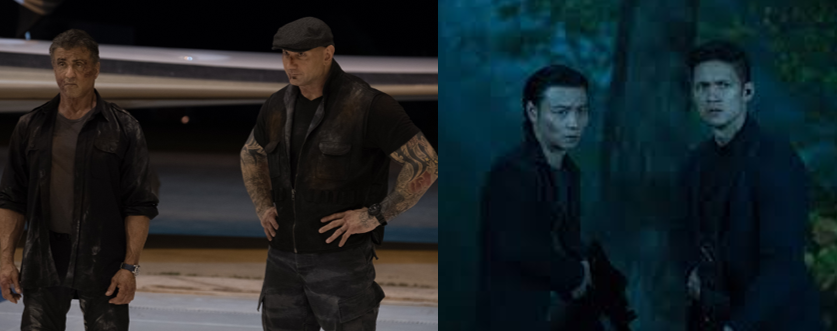
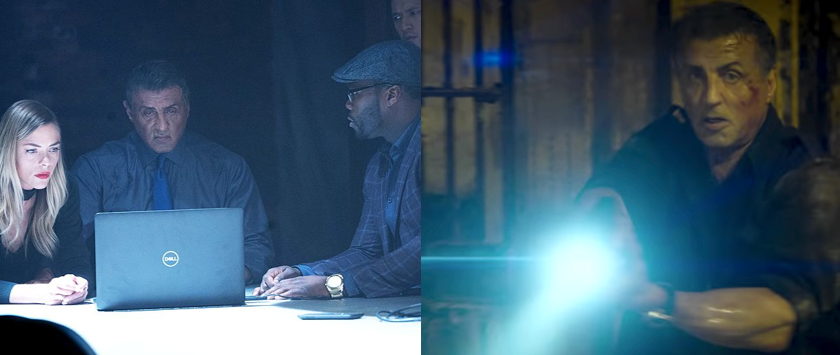
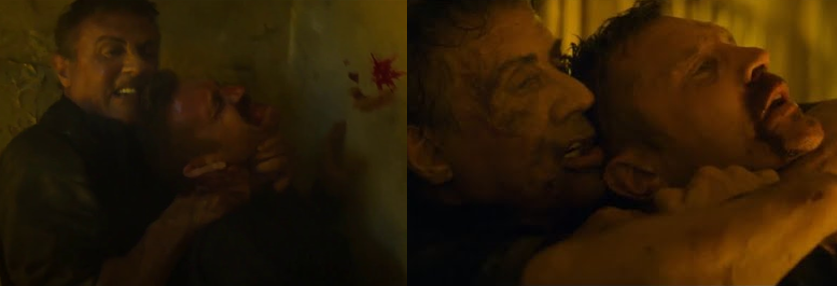



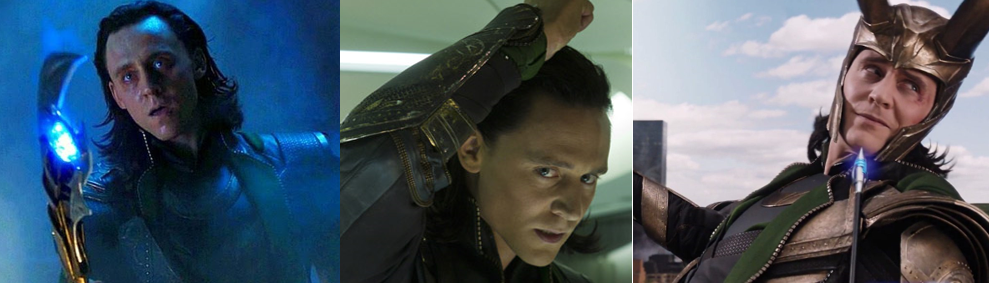
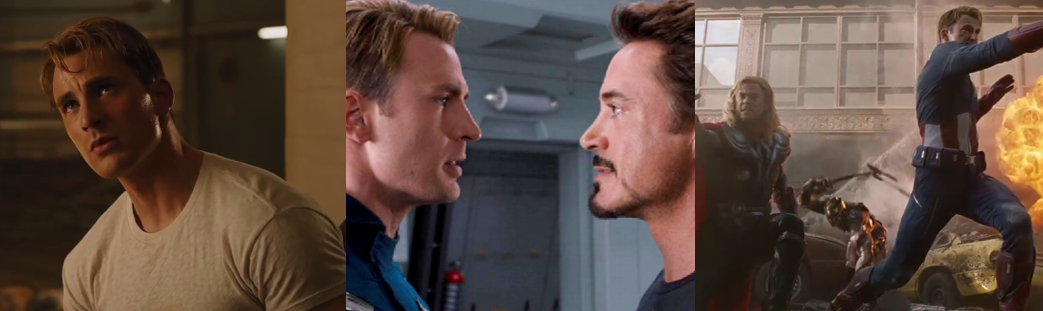
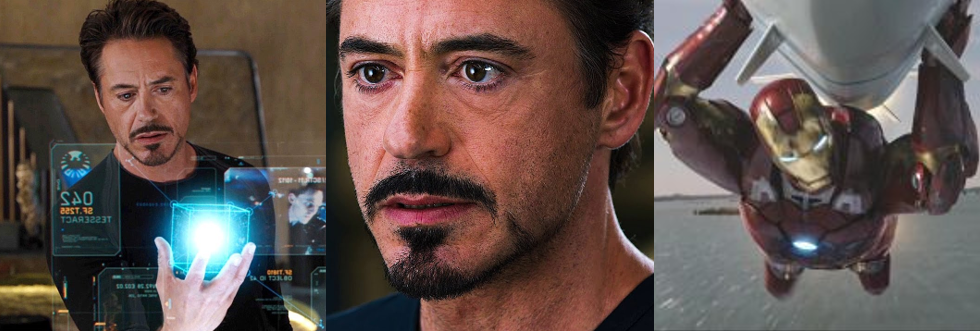
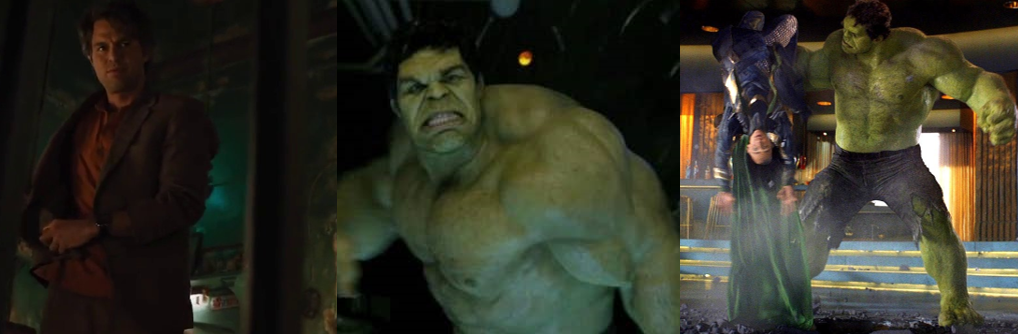
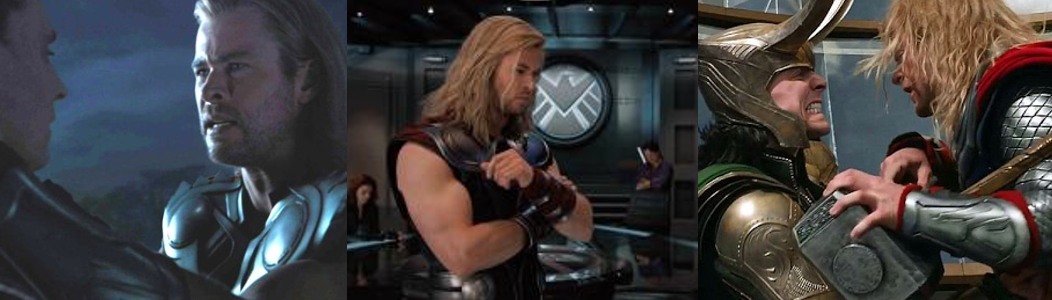
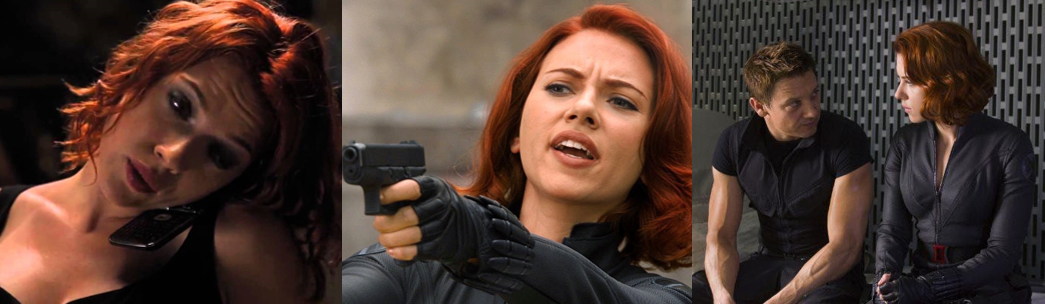
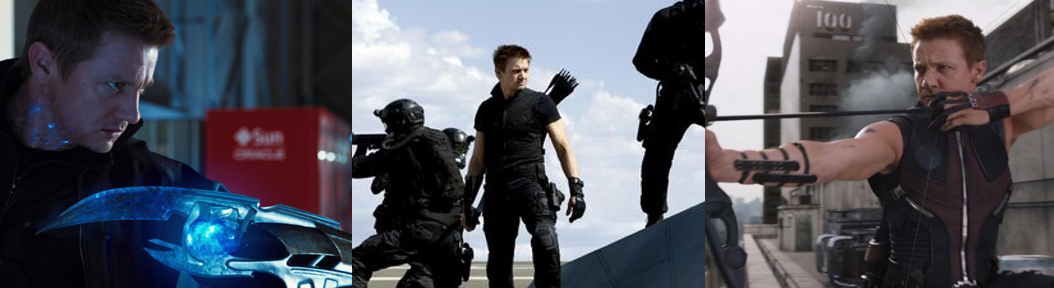
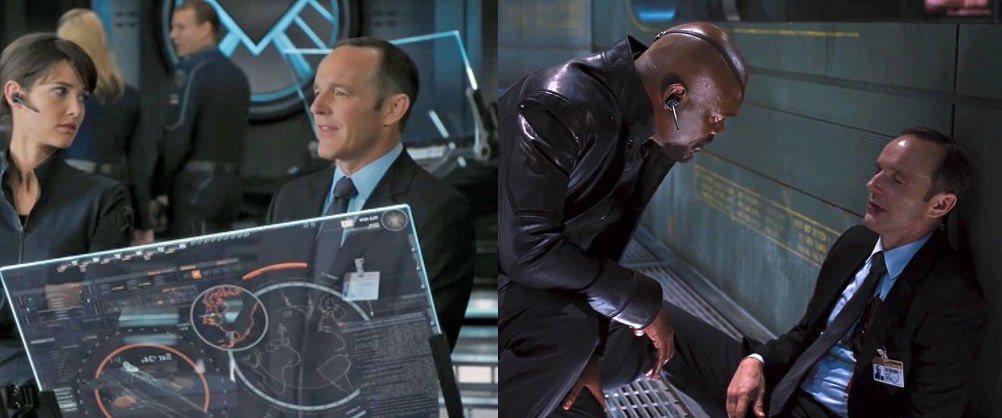
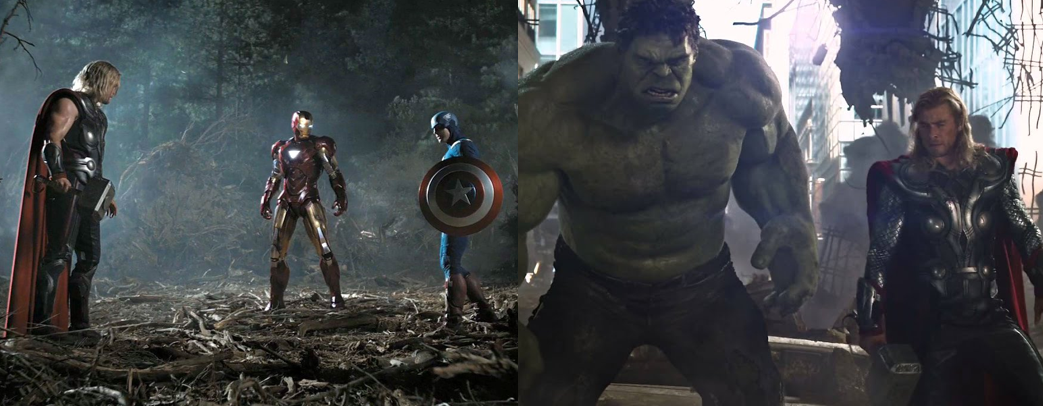
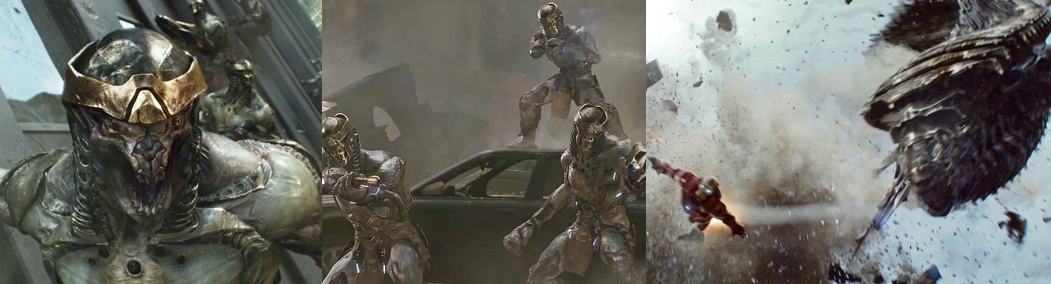
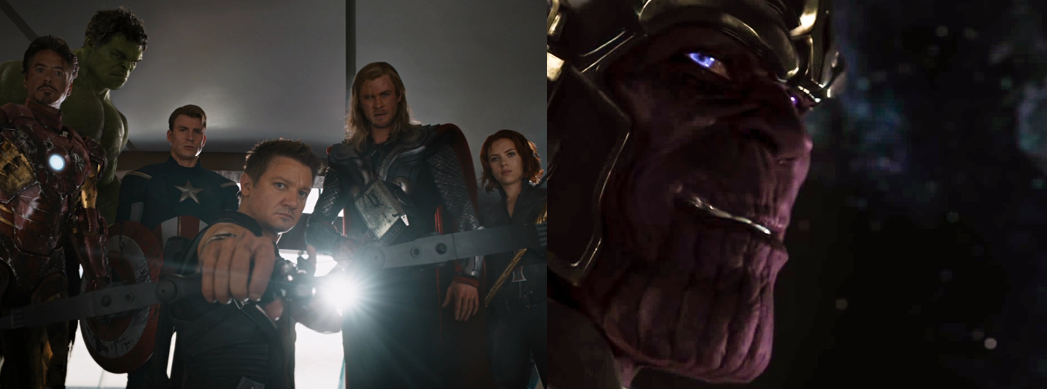



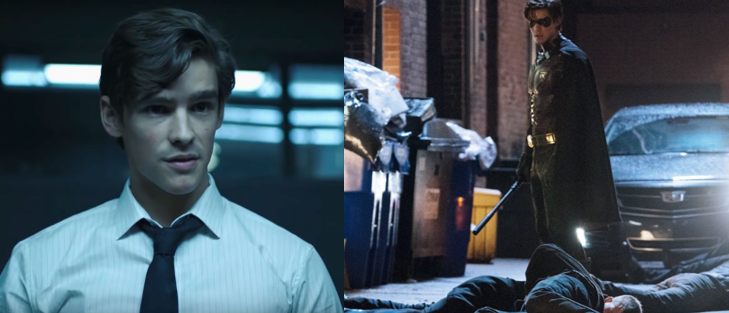
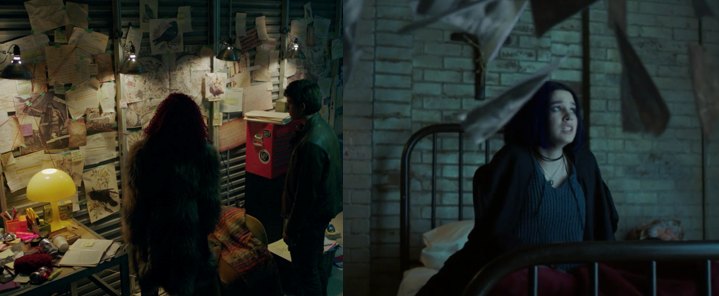
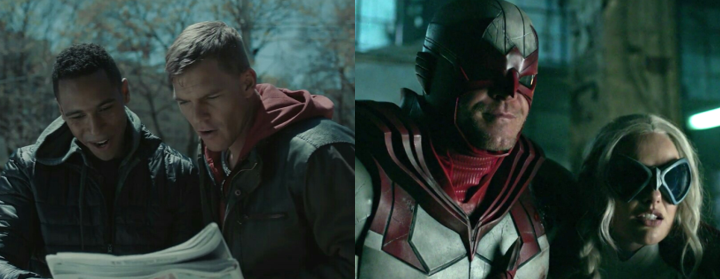
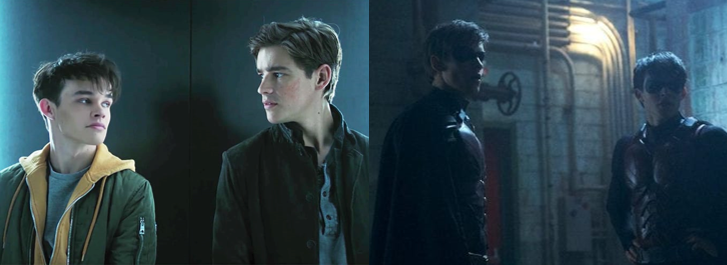

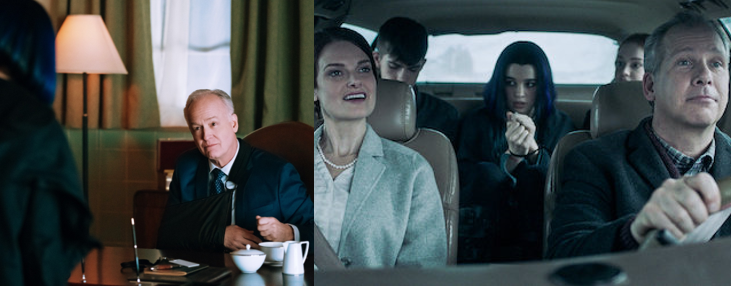
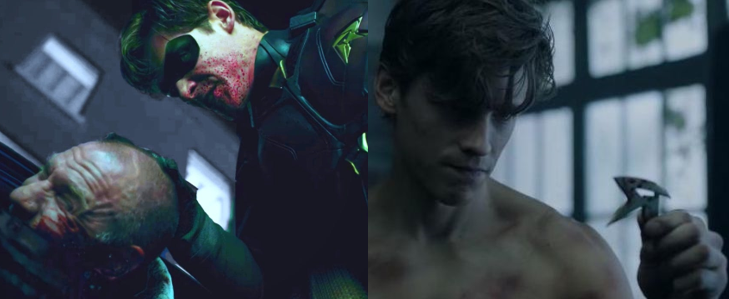
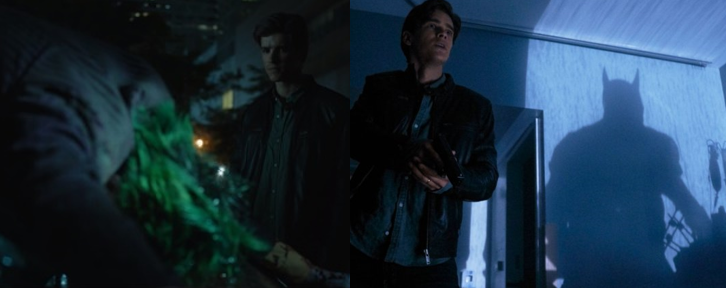
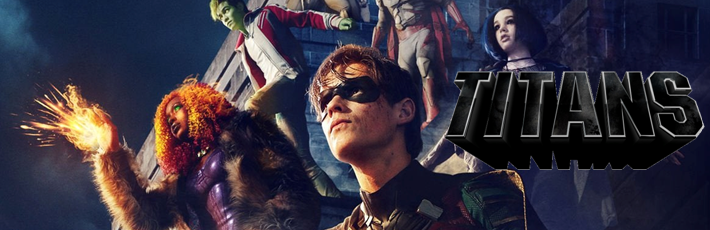
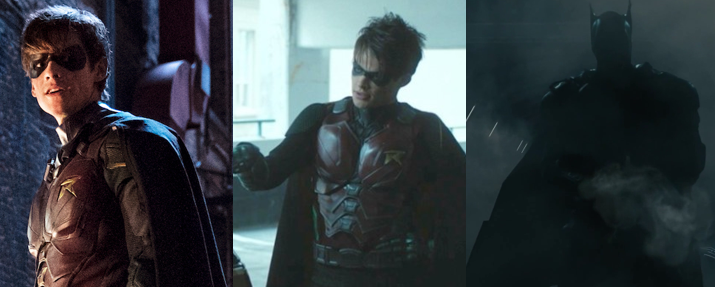
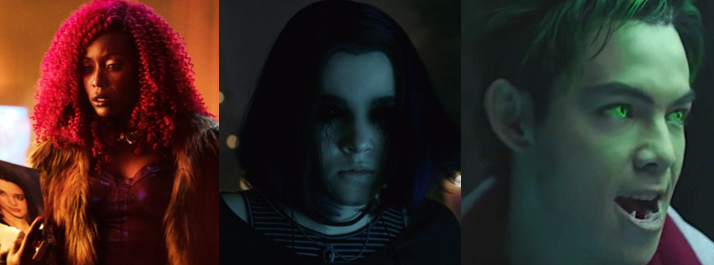
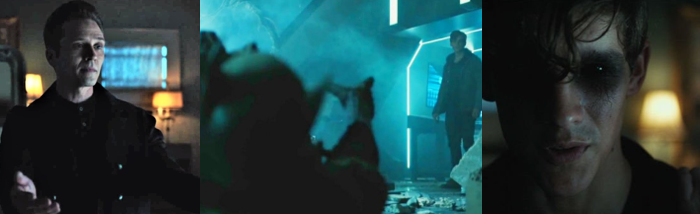



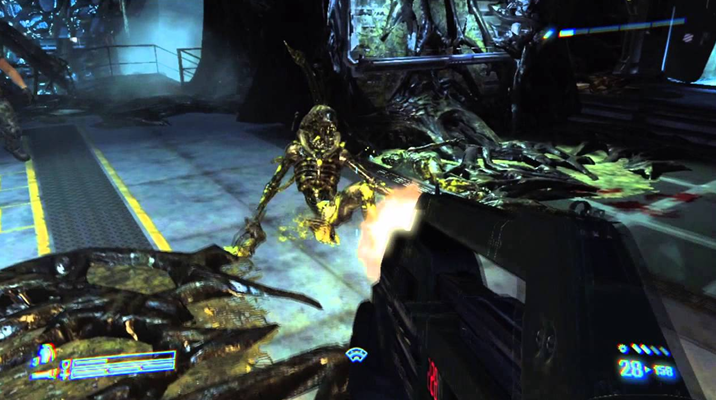
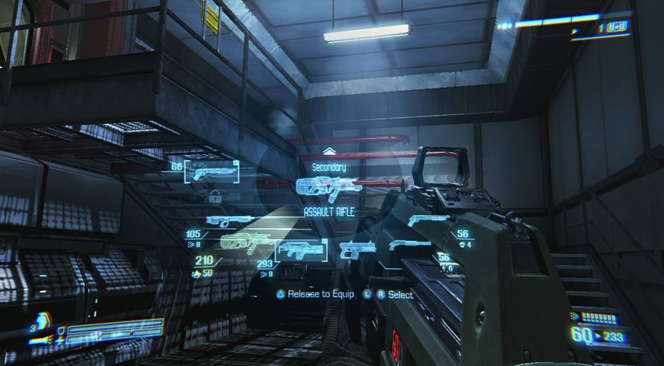

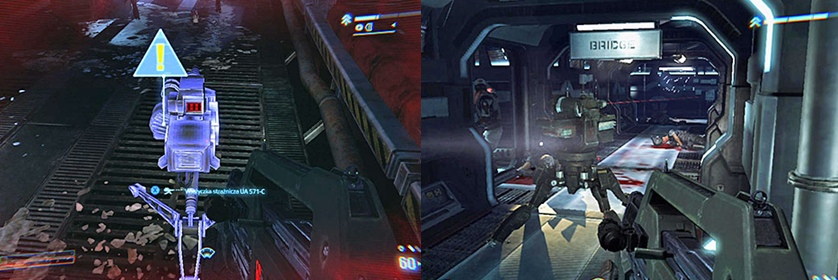


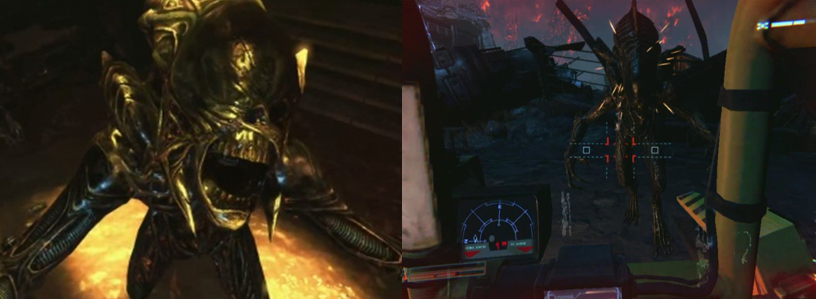
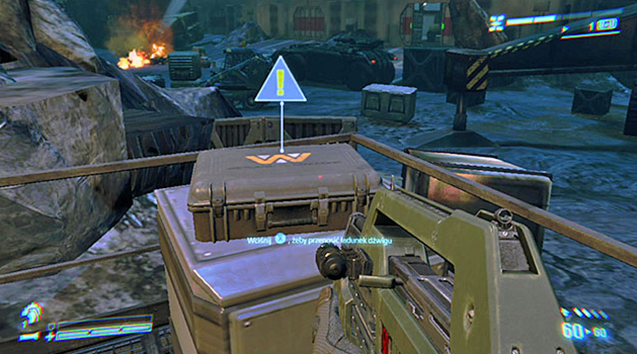


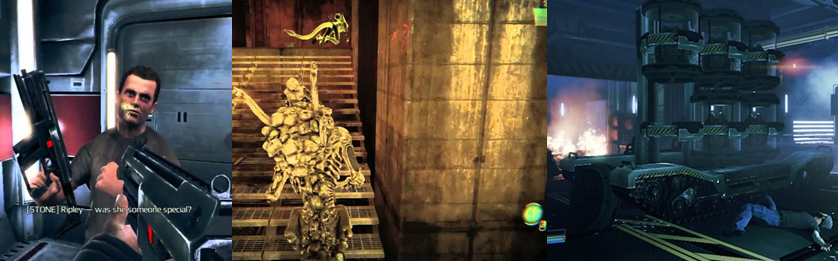











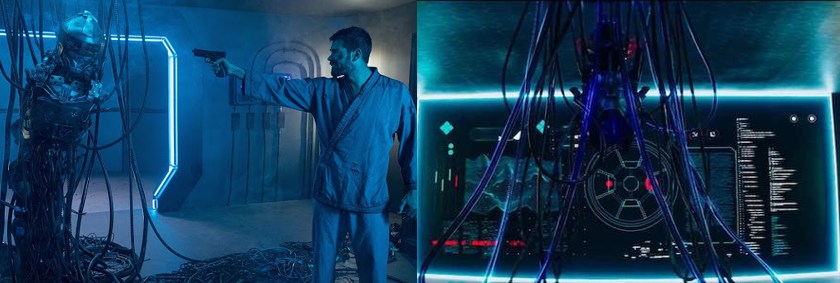
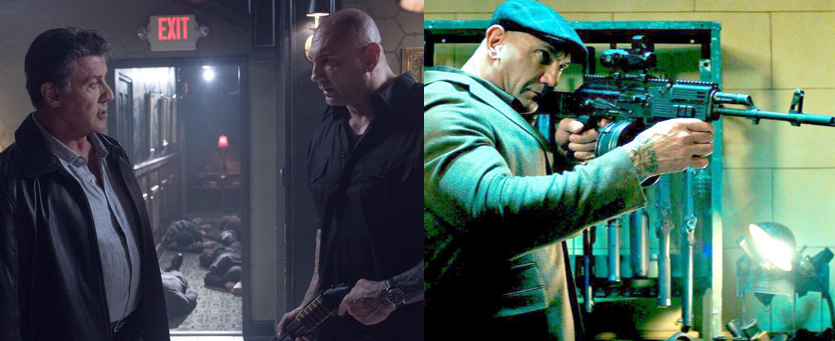
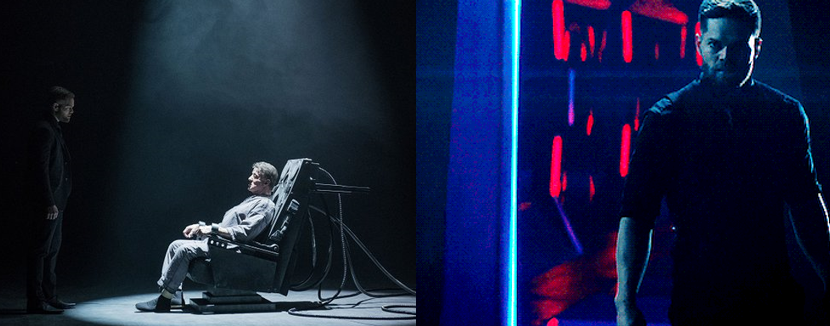
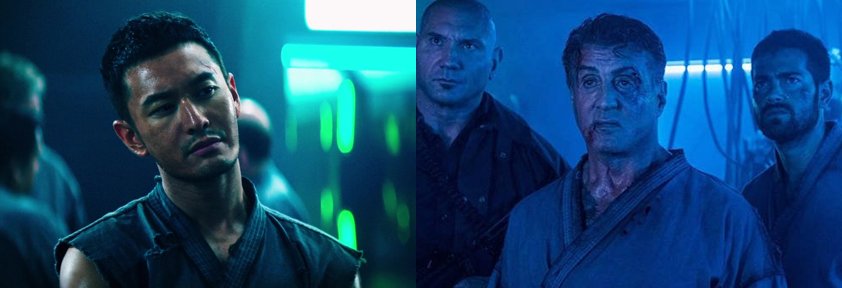







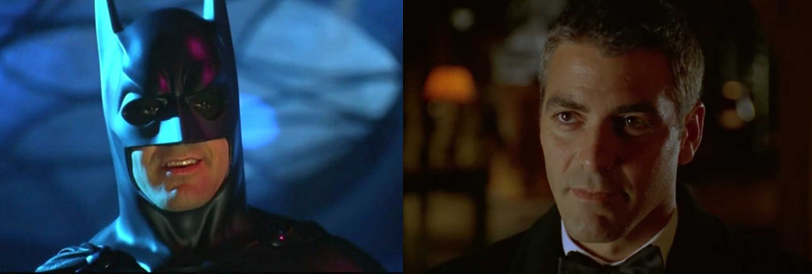
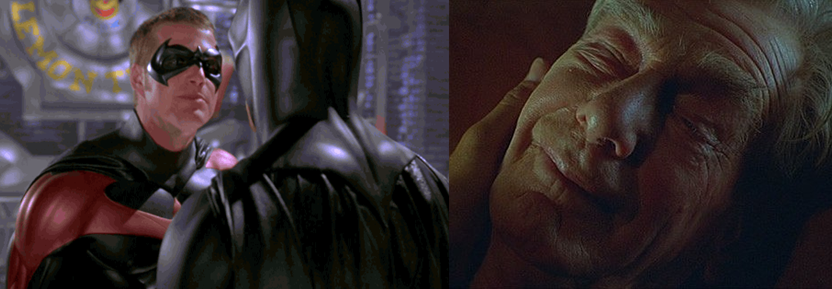
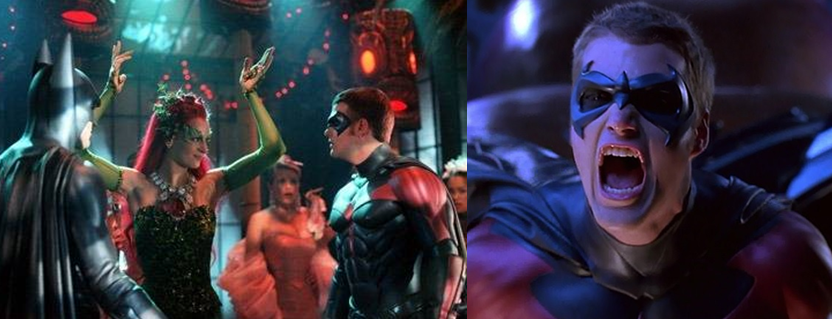
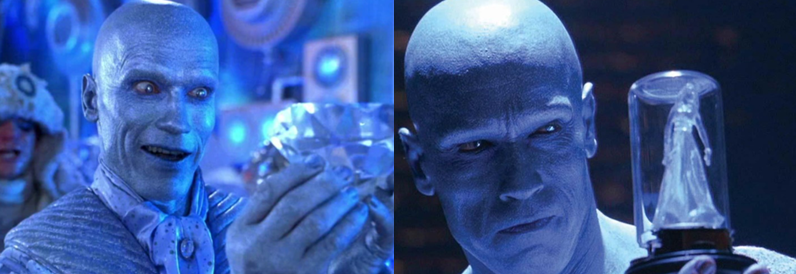

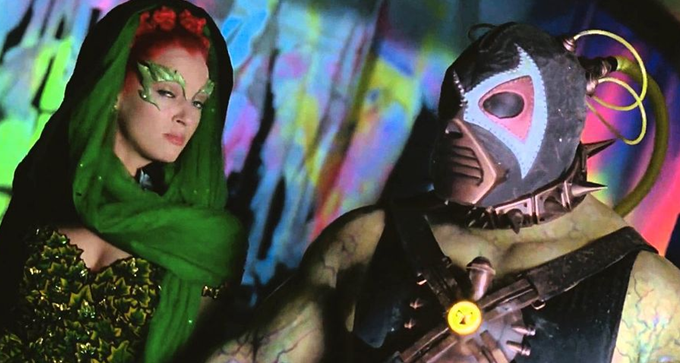

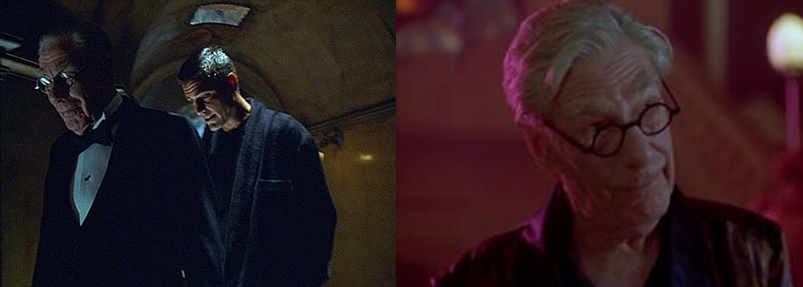










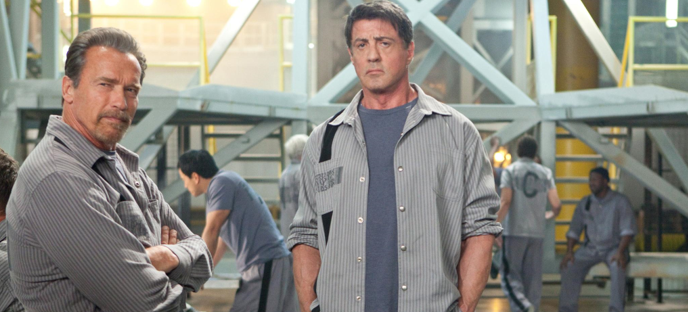
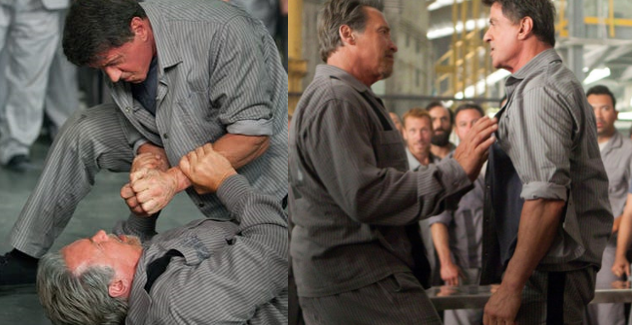
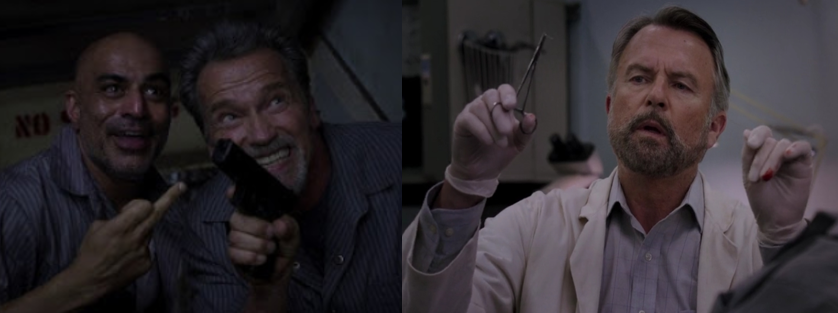
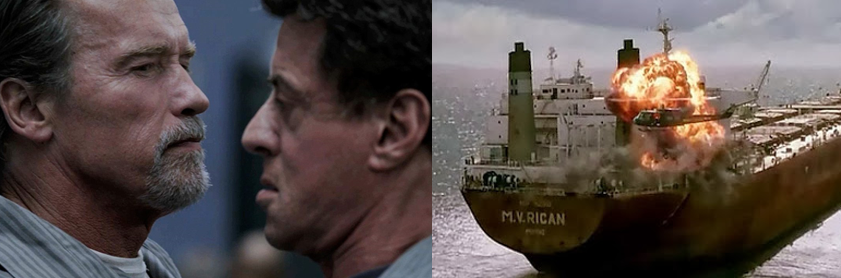
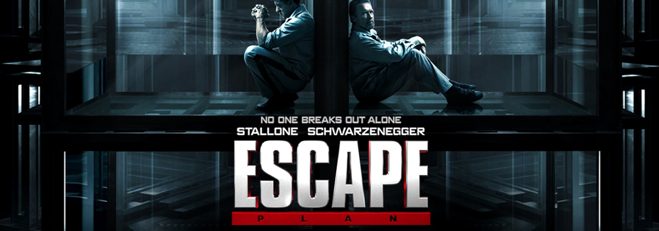

 Dr. K's Waiting Room
You must be logged in to post a comment.