Anthony Di Angelo, author of Sicilian Roulette, A Haunting for Christmas, and Descent into the Hallway of Madness.
1. First, introduce yourself a bit. What is your name (or pen name) and where are you from?
My name is Anthony Di Angelo and I’m originally from a small town in British Columbia, Canada. I moved to northern Alberta over ten years ago for work and hope that I can return to B.C. eventually.
2.Next, tell us a bit about your most recent work. Is this your first published book? What is it about and what genre would you classify it as?
My most recent book released is Sicilian Roulette. It is my third published novel, yet it is actually the first book I’ve ever written. It is a crime/drama saga based within the world of the mafia. It is an action packed story with a strong romantic subplot to balance the violence.
3. Tell us a bit about your main character; what are they like, how did they come about, and what are some of their strengths and weaknesses?
My main character for this novel is Alvario Di Sano, a young, frightened boy on the run and forced to live in exile. He yearns to be an artist, a filmmaker, a writer, a painter. He is extremely intelligent and cunning, but is something of an introvert. He is very street smart and great at reading people, yet is naïve when it comes to women. I drew from my own experiences to create Alvario. Though I certainly do not hail from the same streets or criminal background, many traits of Alvario are based on myself as a younger man.
4. What was your hardest scene to write in this (or any) book?
The hardest scenes for me to write are honestly sex scenes. My stories all explore romantic relationships and sex is a big part of it. I struggle to make the scene poignant enough without it becoming too graphic. Just enough to get my point across and remain tasteful.
5.Did you go the traditional route when publishing your book or did you choose to self-publish?
I have tried to go the traditional route. Last year, however, my agent recommended with the pandemic forcing her contacts to close up shop for the time-being, she suggested I self-publish. She said I have great talent and shouldn’t have to wait reveal my work to the world.
6. What would you say is the most difficult part of your writing journey and what advice would you give to other writers?
So far it has been the marketing aspect. I sometimes feel like a needle in a stack of needles with so much incredible talent out there and everyone is after the same goal. It is very tedious work to market yourself all on your own and hard to find the right venues to advertise especially with so many scammers on the internet these days. Most days I spend merely marketing and am not able to focus on the actual storytelling. As for offering advice, well, I’m still trying to make something of myself so I haven’t found the perfect formula thus far for success. I would say just keep plugging away. If you have a story you feel needs telling, then get to it, and don’t stop until you’ve reached that last word.
7. Do you want each book to stand on its own, or are you trying to build a body of work with connections between each book?
I would like my books to stand on their own. I drop little connections between each story that only people that know me personally, or people that pay close attention to detail will pick up. Not connected to the flow of the story or the narrative, just peripherally as a sort of nod to my other work.
8. What are some of your favourite authors and books and what inspired you to become a writer in the first place?
There are a few authors I quite enjoy, as millions of others do as well. Like movies or television, with books I am a fan of all genres so there are so many to choose from, one can’t pick a favourite. The one author that has influenced me most, I would have to say, would be Mario Puzo, author of The Godfather. His method of storytelling was so descriptive and captivating, a true master of the craft.
9. What would you say has been the best way to market your books?
I am on Goodreads, Facebook, and Twitter. So far the bulk of my connections have been on Twitter. There is an amazing amount of support from the writing community. There’s a lot of positivity and I’m steadily building my network on that platform. I am always looking for new avenues to venture down as I forge ahead.
10.Are there any tropes, clichés, or writing styles that you dislike and, if so, what are they and why?
If you look hard enough, you’ll find clichés or something to dislike in any story, whether written by a famous or unknown author. I focus more on the overall stories I read rather than pick it apart. If the story has an interesting flow and grabs my attention then I’ll be sure to finish it.
11. Do you read reviews of your book and, if so, how do you handle negative feedback?
I do read each review. I haven’t received a bad one as of yet. I have had some constructive criticisms and suggestions from other authors and those who have read my work. They may have found some parts of the novel early on that I didn’t see and brought it to my attention. I’m sure it won’t be easy to read once I do get a negative review, but I’ll try to use it as a way to improve future works.
12. What are some of your quirks as a writer? Do you like to plot everything out or do you prefer to just “wing it” and see where the story takes you? Do you listen to music when writing and, if so, what do you listen to?
I like to have a very skeletal outline of my novel before I start writing. Usually I dream a dramatic scene, which typically ends becoming the ending of my novels. Then from that dream, or ending, I backtrack and try to tell the story of how the characters reach that conclusion. Like I said, I do work from an open outline, but generally I go where the story takes me. I feel it has a more natural flow to it that way. I end up with many sleepless nights, however, as I often wake up in the middle of the night having to take notes from a dream I’ve had. I do enjoy listening to music while I work. Usually just in the background to drown out any other distracting sounds. For scenes when there is a lot of action or anger, I’ll play something with heavy guitar, hard rock type stuff. Then something softer when it comes to the romantic or emotional scenes. Then movie scores when it comes to something eerie. Music is an essential part of every scene and helps me build the effect I’m trying to achieve.
13. What is the best advice you’ve ever had when it comes to writing and what advice would you give to new writers?
Like I said earlier, if there’s a story you feel you need to tell, sit down and get it done. My aunt is also a published author and she has given some tips as I move forward. But the best advice, though it might sound somewhat generic, is believe in yourself and don’t give up.
14. What’s next for you? Are you currently working on any new books or stories?
Well I have three novels out at the moment and am currently working on the sequels for two of them. I plan on making each of them trilogies. Hopefully one day soon the restrictions brought forth by the pandemic will ease and I can get to experience book fairs and meet readers to promote my work that way, but until then I’ll keep plugging away at finishing my current works in progress. I also plan on writing a separate series that is comparable to Game of Thrones. I am also looking at writing a script for a television series.
15. Finally, feel free to plug your social media, website, and links to Amazon, GoodReads, and other relevant sites below, and detail any current offers available for your book/s:
Thank you so much for allowing me to blab on and on about myself. I greatly appreciate it.
My debut novel, Descent into the Hallway of Madness, is a dark and twisted psychological thriller. When a killer begins his reign of terror over the city, two broken detectives must overcome their demons to stop the death toll from rising. But nothing is what it seems….
My second novel, A Haunting for Christmas, is a modern day take on a timeless classic. It is a cold, spooky tale, mixed with all the warmth of the Christmas season. The story is a chilling tale of paranormal mystery with a dramatic and emotional conclusion.
My third novel, Sicilian Roulette, is an epic crime saga with cinematic appeal. It’s an action-packed story of betrayal, danger, lust for power, and revenge. Some debts can only be repaid with blood.
In 2013, DC Comics declared the 12th of June as “Superman Day”, a day for fans of the Man of Steel the world over to celebrate Clark Kent/Kal-El/Superman, the superpowered virtue of “Truth, Justice, and the American Way” who is widely regarded as the first ever costumed superhero.
Story Title: “Superman” Published: 18 April 1938 (cover-dated June 1938) Writer: Jerry Siegel (credited as “Jerome Siegel”) Artist: Joe Shuster
The Background: Jerry Siegel and Joe Shuster, both sons of Jewish immigrants, first met in 1932 while attending Glenville High School; by the time they were both sixteen, the two were already accomplished comics creators and, in 1933, they thought up their first concept for a superman with the story “The Reign of the Super-Man”. This story depicted a bald mad scientist (very much a prototype for Superman’s arch nemesis, Lex Luthor) attempt to dominate others with his telepathic powers; later, the two would revisit and dramatically retool this concept into the world’s first super-powered crimefighter. Considering the massive success Superman has become as a character and a brand, it took some time for Siegel and Shuster to sell their revised concept, which took inspiration from mythological figures such as Hercules, fictional adventurers like Robin Hood and Zorro, and even circus strongmen for the character’s now-iconic costume. Yet, when DC Comics eventually purchased the character for publication, the two were paid a pittance for the now globally renowned superhero. Legal issues and disputes would follow the character for many decades before DC were able to iron out a mutually beneficial agreement with Siegel and Shuster’s heirs and allow them to be more fairly compensated for depictions of perhaps the most influential fictional character in American history.
The Review: Action Comics #1 presents a much different version of Superman, one who might seem far removed from the virtual demigod we know and love today; back in 1938, for the Man of Steel’s iconic debut, Superman was still very much superhuman but he had yet to develop many of the powers and abilities he is now known for, much less the crazy, over-the-top powers he would later possess throughout later decades. The story begins by detailing Superman’s memorable origin…by summing it up in one simple panel. Yep, Superman’s home world (not yet identified as “Krypton”) is “destroyed by old age” in the comic’s opening panel and the future Superman’s rocket is discovered by a passing motorist in the next. Unlike traditional depictions of Superman’s origin, the alien infant within is immediately handed over to an orphanage where the attendants were “astounded at his feats of strength”. The next few panels quickly showcase the range of Clark Kent’s (his name comes out of nowhere a few panels later with no explanation) superhuman abilities: he can easily leap over a twenty-story building, lift incredible weight, run faster than an express train, and possesses impenetrable skin. Rather than explain his abilities as the result of Earth’s yellow sun or the differences in atmosphere between Earth and Krypton, the comic explains that the inhabitants of Kent’s home world had evolved a “physical structure millions of years advanced of our own” and compares them to the abilities of insects to lift incredible weights and leap vast distances.
There are many convenient excuses to show off Superman’s awesome powers in the story.
Rather than being taught values and morals by loving, doting parents, Clark simply decides, off panel, to put his fantastic abilities to good use and crafts the persona of Superman, “champion of the oppressed [and] physical marvel]”. Superman is then introduced racing through the night with a bound and gagged woman, with no context or explanation; he can’t fly yet so he just runs at super speed to “the governor’s estate”, barging his way in and forcing his way past the governor’s butler with an uncharacteristic discourtesy. The butler is aghast when Superman easily dismantles the door to the governor’s “sleeping room” which, for some reason, is made out of solid steel! Superman explains to the governor that he has a signed confession that proves one Evelyn Curry is innocent of murder but, before the governor can properly digest this information, his butler confronts the costumed intruder with a pistol. Superman, however, easily shrugs off the bullet and disarms the man. With time fast running out, Superman convinces the governor to make the life-saving call and leaves the real culprit (the woman he was carrying in his first panel) in the custody of the governor. The next day, Kent is pleased to see that his actions, as Superman, have made the front page of the Daily Planet Star and the governor is left feeling eternally grateful that Superman is on their side…and well he should be given Superman’s blunt and direct approach to the fight against injustice.
Clark keeps up his façadeas a weakling, much to Lois’s continued disgust.
Kent then meets with the unnamed chief editor of the Daily Star, who orders him the assignment of covering the mysterious Superman who has been making so many headlines. While it might seem like Kent has walked in off the street, the next panel seemed to prove that he does, in fact, work for the paper as he is informed by a co-worker of a wife-beating taking place (seems like an odd thing for a paper to be tipped off about but I didn’t live in the 1930s so maybe this was a thing…?) Superman immediately rushes over to the scene of the crime and makes the abuser pay by shoving him violently into a wall, breaking his knife on his impenetrable skin, and threatening the man so fully that he faints in his arms. Superman then quickly changes back into his civilian guise to explain the situation to a policeman, making sure to attribute the woman’s rescue to his super-powered alter ego. Later, Clark works up the courage to ask his co-worker, Lois (no last name yet), out on a date and she decides to “give him a break…for a change”. This, and the next panel, quickly summarises that Lois tends to avoid Clark and give him the run around in the office as, when he asks why she treats him so unfairly, she simply scoffs: “I’ve been scribbling “sob stories” all day long. Don’t ask me to dish out another”. When Butch Matson, a local tough or possibly a mobster, decides to impress his gang of apes by cutting in on Lois and Clark, Lois reveals the truth about why she avoids Clark: she sees him as nothing more than a “spineless, unbearable coward!”
Superman easily catches up to and destroys Butch’s car in an iconic visual.
Of course, during Clark’s confrontation with Butch, the narration boxes and Clark’s thought balloons briefly gloss over the fact that Clark merely pretends to be a “weakling” to keep his secret identity…well…a secret, which is another pivotal aspect of the character that would be explored further in later Superman stories. Lois leaves in a huff and her taxi is soon forced off the road by Butch’s car; in what would quickly become a recurring tradition, Lois is kidnapped by Butch and his gang for little other reason than he took a liking to her, felt slighted by her rejection, and apparently has plans on raping her. Clark, as Superman, had been observing the whole thing from a distance and puts the wind up Butch and his cronies by first leaping over their speeding vehicle, then catching up to it, shaking them all out, and finally smashing it to pieces on a nearby rocky hill.
You’ll have to read the next issue to find out what the hell Superman is doing!
Superman teaches Butch a further lesson by leaving him stranded high up on a telephone pole before racing Lois, who is struck with fear and awe at his presence, to safety. Against Superman’s wishes for anonymity, Lois tries to tell her editor about her ordeal but he dismisses her story as ravings (which is really strange as the other day he was desperate for the scoop on Superman!) Anyway, Kent’s editor sends him to San Monte to cover an escalating conflict but, similar to when he was given the Superman assignment, Clark immediately disobeys this directive and, instead, takes a train to Washington, D.C. to investigate Senator Barrows. Clark snaps a picture of Barrows talking with a man whom the local newspaper identifies as Alex Greer, “the slickest lobbyist in Washington”. His unfounded and unexplained suspicions about the senator aroused, Superman climbs up to Barrows’ residence (the visual of him clambering up a building like Peter Parker/Spider-Man is both amusing and bizarre) and discovers the senator and Greer are in cahoots to get a seemingly innocent bill passed that will see America “embroiled with Europe” before anyone even knows what’s happened. Superman immediately confronts Greer and demands answers, taking him out onto the telephone wires high above the city and taunting the crook him with the threat of electrocution. He then leaps over to the White House to put the wind up Greer and the issue ends with a cliffhanger as Superman continues his intimidation of his victim by, apparently, unsuccessfully making the leap to a nearby skyscraper.
The Summary: “Superman” is, honestly, a dreadful story in terms of its pacing and narrative; very little time is spent explaining much of anything, with Superman’s alien origins completely glossed over and readers being forced to infer everything through context. We’re never told that Clark works as a reporter for the Daily Star, we just have to get that he is through inference; Superman races around with a bound woman and barges into homes without provocation and we only find out why after the fact; and God only knows why he pursues Senator Barrows rather than attempting to intervene in the San Monte conflict. But…it’s Action Comics #1, the first ever appearance of the greatest and most recognisable superhero the world has ever known, so I have to recommend that you read it if only for the purposes of witnessing history but, if I’m being brutally honest, the story isn’t really that great beyond the introduction of such an iconic character.
Whether by coincidence or design, Superman primarily saves women from abuse and persecution.
The entire story hinges on the colourful and extraordinary character of Superman himself; an enigma capable of incredible superhuman feats, Superman is visually and imaginatively appealing, I’ll admit. He has no time for decorum or adhering to the rules of the system; he simply strikes back at injustice no matter how trivial it may seem. To Superman, the life of an innocent woman is just as important as the torment of a victim of abuse and he tackles both with the same brute efficiency, utilising his fantastic strength and unmatched physical abilities to dominate the corrupt and the wicked. It’s interesting that pretty much everyone Superman saves in the story is a woman, with each of them being powerless victims of male oppressors, making Superman the paragon of virtue and honour as much as justice.
Superman’s more recognisable elements wouldn’t appear for some time…
As Superman’s first ever story, and a product of its time, a lot of forgiveness and leeway needs to be given to Action Comics #1. Many of Superman’s more recognisable and traditional elements wouldn’t be introduced for some time so, in that regard, the story is a little alienating to those who’ve only ever known him as the flying, all-powerful demigod with a colourful rogues gallery and fully developed supporting cast. Indeed, the seeds for Superman’s more critically regarded aspects are there, they’re just glossed over or barely touched upon: Superman’s status as the most powerful immigrant, for example, and his adoption of a meek alter ego in a reflection of his views on humankind are seen very briefly but the story is more focused on the wish fulfilment of a colourfully-garbed super man shrugging off bullets, smashing up vehicles, and teaching good-for-nothings a much needed lesson.
Make no mistake, Lois was a despiable character here and for many, many years.
Similarly, the story introduces the idea of tension and friction between Clark and Lois. I’ve always hated the early characterisation of Lois Lane and never understood what Clark ever saw in her or why she was deemed worthy enough to carry her own comic title; she was a snobby, condescending, annoying woman who constantly berated Clark and was obsessed (obsessed!) with marrying Superman for no other reason than she wanted him and she was a far cry from the strong-willed, independent, snarky, and yet actually likeable and supportive character she is often depicted as these days. Interestingly, Lois reacts to Superman more with fright than the fanatical wonder she was known for for many decades and isn’t shown to prefer Superman over Clark in this story but her bitchy attitude towards Clark is well and truly intact, though it’s just a hint towards the despicable character she would eventually become.
My Rating:
⭐⭐
Rating: 2 out of 5.
Could Be Better
Have you ever read Action Comics #1; if so, what did you think of it and Superman’s debut? Were you surprised at how underdeveloped Superman’s origin and powers are in his debut issue or do you feel the focus on the action and spectacle of Superman justifies the brevity of its narrative? Do you prefer Superman as a more grounded, less elaborate superhero or do you prefer him as an all-powerful character? Which of Superman’s later, wackier powers and stories was your favourite? What is your favourite Superman story, character, or piece of media? How are you celebrating Superman Day today? Whatever you think, feel free to share your opinion and thoughts on Superman in the comments below.
Sonic the Hedgehog was first introduced to gamers worldwide on 23 June 1991 and, since then, has become not only SEGA’s most enduring and popular character but also a beloved videogame icon. Since the Blue Blur turned thirty this year, I have been dedicating every Friday to SEGA’s supersonic mascot.
Story Title: Dr. Eggman’s Challenge!!, Clash!! South Island, and Sonic Rampage Published: June to July 1991 Writer/s: Unknown Artist/s: Unknown
The Background: Sonic the Hedgehog (Sonic Team, 1991) underwent quite a complex development cycle; intended to be SEGA’s mascot and their answer to Nintendo’s Super Mario, numerous designs and concepts were submitted internally before SEGA settled on Naoto Ohshima’s spiky protagonist, later coloured blue and christened Sonic, and SEGA put a lot of effort and money into marketing and adapting Sonic to be appealing to a worldwide audience. This included not only redesigning the character somewhat but also stripping away some of the crazier aspects of Sonic’s Japanese lore. As a result, Sonic’s human girlfriend and rock band was dropped and Doctor Eggman was renamed Doctor Ivo Robotnik. Though this only really impacted the game’s manual, these changes were famously seen in a 1991 American promotional comic that established Sonic’s canon and informed his characterisation and world in comics and cartoons outside of Japan for years. Earlier that same year, though, Japanese readers of Mega Drive Fan were treated to a three-part manga that not only stuck far closer to the original, wackier ideas concerning Sonic’s lore but also the gameplay of the source material. Though never released outside of Japan, a fan translation does exist to provide a bit of a window into Sonic’s differing interpretations between the East and the West.
The Review: The first part of the story, “Dr. Eggman’s Challenge!!”, begins with the mysterious South Island suddenly being invaded by Dr. Eggman and a horde of never-before-seen robots. Rather than his traditional Badniks, Dr. Eggman is accompanied by an army of construction and worker robots who quickly set to work building his fortress on South Island, displacing the cute and cuddly natives and destroying the natural ecosystem.
Dr. Eggman is a fun, goofy villain with some pretty daft motivations.
Dr. Eggman (often referred to as “Dr. Eggman-sama” in a reflection of his high status) is an extremely excitable, volatile, and goofy character; he has an odd tendency to end every sentence with a enlivened “Yes!!”, mischievously chuckles with a dastardly “Dohohoho”, and is primarily motivated to invade South Island to aid his desire for world conquest and to buy lots of his favourite food: eggs. When one of his minions informs him of the presence of a Chaos Emerald on South Island, Dr. Eggman becomes even more excitable and doubles his endeavours to build his fortress and excavate to legendary gem. However, Dr. Eggman mainly wants the Chaos Emerald to power the world’s largest pot and boil the world’s largest egg, which he claims has been his “life dream ever since [he] was young”. Remember, back in Sonic’s early days, Dr. Eggman was often associated with eggs and egg puns so this is a fun way to reference that recurring in-joke.
Sonic, here a rowdy rock star, wastes no time in dispatching Eggman’s robots.
The story then jumps to Green Hill Zone where Sonic and his oft-forgotten rock band are putting on a show for a huge gaggle of screaming fans and his own personal “bodyguard platoon”. Unfortunately, and quite conveniently, Sonic’s concert is taking place right where the Chaos Emerald is hidden and, thus, Dr. Eggman and his robots quickly attack, disrupting the crowd, attacking his fans, and wrecking the stage. In response to the interruption, Sonic attacks Dr. Eggman’s robots and trashes them with his patented speed and Super Sonic Spin Attack. Sonic is a slightly different character than you might be used to at this point; he’s not some snarky freedom fighter or a cool anime hero. Instead, he’s a rock star who’s all about putting on a performance for the adulation of others; when Dr. Eggman interrupts his concert, he takes it as a personal insult and doesn’t hesitate to strike back with his skills and a snarky attitude that has, sadly, been largely dropped from his characterisation.
Sonic is enraged at Dr. Eggman’s plot to turn his friends into robotic Badniks.
With his robots destroyed, Dr. Eggman tries to squash Sonic with his Egg-O-Matic’s wrecking ball but Sonic is much too fast to be hit and makes short work of Dr. Eggman’s contraption. With the dastardly doctor defeated, Sonic goes back to his concert and Eggman retreats to lick his wounds and plot his revenge by playing Sonic the Hedgehog on the “Megadora”, which motivates him to capture South Island’s woodland critters and transform them into the iconic Badniks. Dr. Eggman’s plot continues in the second part, “Clash!! South Island”; Sonic is incensed to see Dr. Eggman’s robots have spread to Marble Zone and learns from Pocky and Picky that Dr. Eggman has captured all of their friends and used them as living batteries for his Badniks. Disgusted and enraged, Sonic vows to head straight to Dr. Eggman’s base to put an end to his plot and rescue his friends…but is momentarily embarrassed to discover that he has no idea where to go.
Sonic takes a beating from Dr. Eggman’s various nefarious traps and hazards.
Picky points Sonic in the general direction and he speeds off, only to run afoul of the many and varied traps that Dr. Eggman has built into Marble Zone. Despite almost being crushed and fried to a crisp, Sonic is able to avoid Dr. Eggman’s traps with his super speed but ends up getting bashed about by bumpers in “Sparkling Zone”. Regardless, though having taken a beating, Sonic survives and is able to free Ricky and Cucky from their Badnik casings. Ricky and Cucky lead Sonic to “Star Land Zone” and to a capsule where their friends are being held captive. Sonic uses one of the Zone’s seesaws to spring himself up there and easily gets past an Orbinaut before Dr. Eggman comes in to battle him again.
Curse words and a bevvy of traps dog Sonic’s progress.
As in the game, Dr. Eggman is now packing a large spike on the underside of his craft but Sonic is easily able to outmanoeuvre him and take him out with a single Spin Attack. With Dr. Eggman sent packing once again, Sonic breaks open the capsules and revels in the adulation of his friends. Despite the setback, though, Dr. Eggman is only enraged even further and even more motivated to make Sonic pay for his interference by holding Flicky, Pecky, and Pocky hostage in his heavily fortified mountain lair. The final part of the story, “Sonic Rampage”, mainly details Sonic’s livid assault on the remainder of Dr. Eggman’s forces (this includes a hilarious piece of questionable translation when a Burrobot and Motobug spit out “Fuck off, Sonic!” to which Sonic replies (whilst smashing them to junk): “Fuck off yourselves!!”) Also of note is the mixed up order of the Zones Sonic visits here as the story opens with him in “Clockwork Zone” before going to Labyrinth Zone, where the final confrontation with Dr. Eggman takes place. This actually helps, in a way, to explain an oddity in Sonic the Hedgehog that I never really understood, which is why the third Act of Scrap Brain Zone is basically a fourth Act for Labyrinth Zone.
Sonic frees the last of his friendsanddefeats Dr. Eggman once and for all.
Rather than battling Eggman in the Final Zone and contending with his giant weighted machine, Eggman holds Flicky, Pecky, and Pocky prisoner in an unseen claw-like attachment to his Egg-O-Matic and threatens to squeeze them to death. However, faster than the naked eye, Sonic frees his friends and destroys the claw attachment before Eggman can even register what has happened and, with a fury of spikes, he unleashes his “Rolling Attack Rapid Strikes!!” attack to defeat Eggman once and for all and end his threat against South Island.
The Summary: Sonic the Hedgehog Story Comic is a pretty simple but incredibly fun little adventure; obviously, the manga was designed purely to help advertise, promote, and sell copies of Sonic the Hedgehog and, as a result, each chapter ends with the characters or narrative breaking the fourth wall to advertise the game and the Mega Drive console. Still, what separates it from a lot of other Sonic media at the time is its fidelity to the source material; despite the fact that there are only a handful of Badniks, one for each of Sonic’s friends, and only three encounters between Sonic and Dr. Eggman (with only two involving his contraptions from the game), the manga captures the manic feel of the videogames much closer and reflects the simplistic narrative of the games much better than bogging it all down with the Ovi Kintobor story.
I really enjoy Sonic’s characterisation, which actually shows off his attitude and personality.
Of course, that’s not to say that it’s a 100% adaptation of the comics; for one thing, the Chaos Emeralds barely factor into the story at all. Only one is ever spoken about and it never actually appears in the story; the other five are completely missing, as are the Special Stages and Golden Rings, but then that does somewhat reflect how little importance the Chaos Emeralds had on the first game’s plot as it wouldn’t be until they were joined by a seventh that they would become a much more integral part of the plot. Two areas where the manga does excel, though, are the art and the characterisations; the art is very faithful to Akira Watanabe and Naoto Ohshima’s original Japanese artwork and aesthetic direction for Sonic, featuring such little details as Sonic have fangs and a great sense of his speed, with many of the illustrations of Sonic in action directly referencing his in-game sprites. As for characterisations, this is one of my favourite interpretations of Sonic; when he was first conceived, Sonic was the “Hedgehog with Attitude!” but, for the most part, he never really showcased that attitude. Sonic the Comic (1993 to 2002) reinterpreted Sonic as a sarcastic asshole but, for the most part, he was this good natured teenager who liked being the center of attention and getting praise and was extremely egotistical but was nowhere near as snarky and unruly as he is portrayed here and in the original video animation (OVA).
Eggman’s plans turn from conquering to a vendetta against Sonic.
Similarly, Dr. Eggman isn’t some bungling idiot or a semi-cybernetic dictator bent on subjected all of those beneath him; instead, he’s a goofy, maniacal bad guy motivated mainly out of greed, power, and the desire to have all the eggs he can handle. His temper flares as Sonic interferes in his plans and his plot alters from a vague desire for world domination to vindictively pursuing Sonic in a mounting obsession for revenge. It would be all too long before the goofier, more clown-like aspects of Dr. Eggman’s personality would find their way back into his character and they’re delightful to see here; he’s a goof, sure, but he’s also quite threatening at times, destroying the environment and kidnapping Sonic’s friends without hesitation, though he remains a largely ineffectual buffoon since, while he has a lot of robots and resources at his disposal, Sonic is easily able to take them all out and is never in any real danger.
My Rating:
⭐⭐⭐⭐⭐
Rating: 5 out of 5.
Fantastic
Have you ever read Sonic the Hedgehog Story Comic? Did you, perhaps, read the story when it was published in Mega Drive Fan or, like me, did you discover it through an online fan translation? What do you think to the early interpretation of Sonic as a snarky rock star? Were you a fan of the original ideas and design for Sonic or do prefer the changes made for his worldwide debut? What’s the most obscure piece of Sonic media you’ve ever seen or owned? Whatever your thoughts, feel free to leave a comment below and pop back next Friday for more Sonic content!
Sam Rose, PhD student and author of Gut Feelings: Coping With Cancer and Living With Lynch Syndrome.
Note: As Sam’s book is a non-fiction memoir, she has been provided with a slightly different set of questions.
1. First, introduce yourself a bit. What is your name (or pen name) and where are you from?
My name is Sam Rose and I’m from Northamptonshire, UK. I’m a poet, non-fiction writer, and the editor of Peeking Cat Literary. I’m also a PhD student researching the connection between creative writing and cancer survivorship issues such as fear of recurrence, poor body image and more.
2.Next, tell us a bit about your most recent work. Is this your first published book? What is it about and what genre would you classify it as?
My most recent work is my memoir, Gut Feelings: Coping With Cancer and Living With Lynch Syndrome. It’s a book of two parts, with the first part detailing my experiences of bowel cancer, duodenal cancer, uterine cancer and Lynch syndrome, which all started at the age of 22. The second part of the book is about the emotional effects of cancer survivorship, the ways in which the world isn’t entirely set up for us, and how we can practice self-care to help with our feelings. The book also describes some really happy and exciting times and experiences – it’’s not all doom and gloom! There is some dark humour in there, too, as cancer easily lends itself to that kind of vibe for me.
3. What is the most unethical practice in the publishing industry?
Vanity publishing is a sticky one, isn’t it? I think there are companies that prey on other people’s desperation to get published and take advantage of that, which is especially unethical if they aren’t transparent about the cost involved and the nature of the business.
I actually submitted my memoir to one publisher, who, although they did ask to see the full manuscript, eventually declined it. A while after that happened, someone got in touch with me from a sister company of that publisher. They said even though my book was rejected by the publisher, they wanted to offer me the opportunity to self-publish with this new “self-publishing” arm of the company. Essentially, what they were offering was a self-publishing package that would cost about £2,000 for me to purchase from them, and would include proofreading, marketing and other services. They said they were selective about the authors/books they offered this service to, so it was self-publication but carefully curated. Even so – my book wasn’t good enough for their main publishing company, but this other arm would publish it if I paid them to? No, thank you. Plus, the e-mail didn’t make it immediately obvious that I would have to pay for the book to be published. The whole thing felt off to me.
4. How did publishing your first book change your process of writing?
I wrote the first draft of my book very quickly – in 21 days, I think it was, with 35,000 words written in the space of eleven days. I set myself a mini NaNoWriMo challenge to get it all done quickly – I just wanted to get it down as the material was emotionally difficult to deal with. This was in 2019. Every so often, I would return to the book to edit it, but it wasn’t until towards the end of 2020 when I finished editing and decided I’d publish it the following year. I knew I wanted to get it done, but I also knew it would be hard to revisit the illness experiences I was describing, so I only edited a little at a time. This was very hard for me as I’m an impatient person and will complete a task in one sitting if I can, because I just want everything to be done already!
5.Did you go the traditional route when publishing your book or did you choose to self-publish?
I self-published it, which was a very rewarding experience. I wanted to get my story out there without someone else asking me to go through several rounds of edits. The book was very hard to write emotionally, so I decided if I’m happy with it, that’s good enough for me – let’s get on with it and get it out there.
6. What would you say is the most difficult part of your writing journey and what advice would you give to other writers?
I find consistency hard. It’s difficult to get motivated sometimes and I think part of that is comparing myself to others and thinking I can’t write as well as other people, or feeling jealous of other people’s successes. It helps to remember my own successes and keep track of them, and to remember that we’re probably all the same when it comes to having insecurities and comparing ourselves to others. I could probably have several best-selling books and still find something to feel insecure about! So I guess it’s just being mindful of that and choosing to remember all our great qualities and successes, no matter how big or small.
7. Do you want each book to stand on its own, or are you trying to build a body of work with connections between each book?
My work tends to stand on its own, but as I write about cancer a lot, there are definite themes within my work. I’ve had poems and nonfiction published in many literary magazines and anthologies, and they are all standalone but you can definitely find similar threads among them. My first poetry chapbook, Empowerthy, was also self-published and also about cancer survivorship, so I think it makes a good companion to my memoir.
8. What are some of your favourite authors and books and what inspired you to become a writer in the first place?
I love Stephen King and have a whole shelf dedicated to his books – The Shining was the first of his I read and is one of my favourites. I also love Matt Haig’s speculative fiction, especially The Humans and The Midnight Library. In terms of poetry, Julia Darling is a favourite and that’s partly because I see a bit of my own style and experiences in her writing. I think it can be really helpful to have someone to look up to whose writing is similar to yours – her work inspires me because it doesn’t intimidate me like some other poetry I love. Instead, it makes me feel like my own publication goals are attainable.
I also find inspiration from music, as it’s so similar to poetry and I love a good lyric. I’ve always been a writer, starting with fiction when I was a kid, then moving on to writing lyrics, and it was a natural progression from lyrics into poetry for me, so music has definitely been an important factor. I loved reading when I was a kid and I’ve just always written.
9. What would you say has been the best way to market your books?
I feel like my memoir has a very defined audience, which helped me to market it. Being involved in the online cancer community already, I have had articles and guest blog posts published on websites related to my book. So one thing I did was I went back to those places where I’d been a guest writer and said “Hey, thanks for publishing my article that time – this is where I am now and what’s going on with me. Can I write a follow-up article and let your readers know about my new book?” People have been very kind and accommodating, giving me a platform for telling more of my story, reaching more people and promoting my work.
10.Are there any tropes, clichés, or writing styles that you dislike and, if so, what are they and why?
I don’t like when things get too complicated. I am easily confused! So super intricate plotlines aren’t really for me. Also, the whole relationship on-again-off-again, will-they-won’t-they – it’s fine the first couple of times, but feels tedious to me when a couple breaks up for the fifth time but you know they’ll probably end up together – just get together and stay there, already! (I suppose I am thinking about certain sitcoms now!)
11. Do you read reviews of your book and, if so, how do you handle negative feedback?
I do read reviews for my memoir and I’m yet to see negative ones – probably because I haven’t had many reviews yet! If I do get a negative review, it’s just one person’s opinion, and while it would probably bum me out a little, I’d just have to go and read all the good reviews to feel better. And if the person has a point or touches on something I was already unsure about, then that could be useful feedback.
12. What are some of your quirks as a writer? Do you like to plot everything out or do you prefer to just “wing it” and see where the story takes you? Do you listen to music when writing and, if so, what do you listen to?
When I’ve previously written fiction, I’ve found plotting a bit tedious and prefer to just have a vague idea of what’s going to happen and see where it takes me. I like to try to run before I can walk so not much planning is involved.
I sometimes listen to music while writing. If I want to feel inspired to write poetry I’ll put on Ben Howard – I find his music so relaxing, like I’m lying in a field on a summer’s day, so it’s great if I want to write about nature or if I’m feeling introspective.
13. What is the best advice you’ve ever had when it comes to writing and what advice would you give to new writers?
Advice I’ve had recently from my PhD supervisors is to try writing without worrying about form. I’ve been thinking a lot about form lately and flitting between more traditional poetry with line breaks and prose poetry, and also trying to get my head around lyric essays. It’s been quite freeing to write without thinking “this is a poem” or “this is an essay” – the form doesn’t always need to be immediately obvious or decided. There is a lot of fun to be had in the space in between two forms and being experimental.
Advice I always give to new writers is to call yourself a writer. You’re not an aspiring writer – if you write, whether you’ve been published or not, you’re already a writer! That is your nature, so take ownership of it. You’re a writer, you’re practising your craft and you’re doing great things. Being a writer is a process and a state of being, not a destination you’ll get to one day – you’re already there and if you’re enjoying yourself and being true to yourself, that can be just as rewarding as publication.
14. What’s next for you? Are you currently working on any new books or stories?
I’d like to self-publish a collection of all my published poetry and non-fiction so far. I’ve had over 100 pieces of work published in over 60 literary magazines and anthologies, so I’d like to put all of these together in one book. As well as this, my main goal is to have a poetry or essay collection published the traditional way. I’d love for a publisher to believe in my work enough to publish an entire book of it. I’ve been querying with my first full-length poetry collection recently so I’m hoping it will get picked up. Of course, it’s about my cancer experiences! But I’d also like to write about non-cancer things, and I’ve spent some time recently thinking about who I am outside of cancer. It’s a difficult question when you’ve spent eleven years living with the thing, but I’m hoping to have a breakthrough soon and find something new I’m passionate about writing about.
15. Finally, feel free to plug your social media, website, and links to Amazon, GoodReads, and other relevant sites below, and detail any current offers available for your book/s:
It’s June 9th, which means that it’s National Donald Duck Day! Disney’s foul-tempered fowl first debuted in The Wise Little Hen (Jackson, 1934) way, way back on 9 June 1934 and has since become one of the multimedia conglomerate’s most enduring and popular characters, featuring in a variety of cartoons, videogames, and other merchandise.
Released: December 1991 Developer: SEGA Also Available For: SEGA Saturn
The Background: As I’ve said once or twice before, Disney had quite the reputation back in the nineties for licensing their popular characters and film franchises and producing some of the best 8- and 16-bit action/platformers on SEGA’s home consoles. Of all their enduring characters, Mickey Mouse, as the brand’s mascot, obviously featured in the majority of these titles but Donald Duck had his fair share of pixelated adventures over the years as well. Generally, Donald’s adventures were very similar to Mickey’s in that he would explore a fantasy world, generally trying to rescue his nephews Huey, Dewey, and Louie, and featured an abundance of jumping and platforming. QuackShot Starring Donald Duck was unique in that respect as, rather than bouncing on enemies and following a linear path from right to left, Donald becomes an Indiana Jones-type figure who travels the world in search of a lost treasure and the game featured a lot more backtracking and puzzle solving than most titles featuring Disney’s characters.
The Plot: When flicking though a book in his Uncle Scrooge McDuck’s library, Donald stumbles across a map that leads to the lost treasure of King Garuzia, former ruler of the Great Duck Kingdom in ancient times. Alongside his three nephews, Donald hops in his biplane and heads out across the world to track down the lost treasure all while Big Bad Pete and his goons try to stop him at every turn and beat Donald to the treasure.
Gameplay: QuackShot Starring Donald Duck is a 2D, sidescrolling action/platformer with a heavy emphasis on backtracking, exploration, and puzzle solving. Players take on the role of Donald Duck, decked out in an Indiana Jones-inspired getup, as he travels from Duckburg to Transylvania, to the South Pole and the ancient tomb of King Garuzia in pursuit of a lost treasure.
Run or slide to move a little faster and avoid a chargrilled butt.
Unlike other Disney titles, especially those starring either Donald or Mickey Mouse, QuackShot is a much slower, more methodical affair; Donald’s standard walking speed is painfully slow but, by holding down the A button, Donald will break out into what can best be described as a “spirited trot” for a few seconds, which really doesn’t speed things up all that much. When ducking, you can press the C button and Donald will slide forwards on his front, which is super handy for passing through small passageways and underneath spiked ceilings and can be a faster way of getting from start to finish.
Stun enemies with plungers or knock them out with popcorn.
Donald can also jump, as you might expect, but it’s more of a hop than anything else; Donald’s jumping height and distance is dependant on his momentum, angle, and the length at which you press the C button. Sadly, Donald cannot defeat enemies by jumping on them and is therefore entirely reliant on his special pop-gun to take out enemies. Donald’s gun can shoot out plungers to stun enemies so he can safely pass by or popcorn to permanently dispose of them; though he has unlimited plungers, Donald’s popcorn shots are limited and run out quite quickly as they fire in a spread. Plus, you know…enemies respawn after you leave the screen anyway so it’s better to just use the plungers.
Travel across the world using the map, checkpoints, and Donald’s handy-dandy biplane.
When you start QuackShot, you are presented with a map and can choose to travel to one of three destinations: Duckburg, Mexico, or Transylvania. Where you choose to go determines how far you can progress in the game; for example, if you visit Duckburg first, you’ll be soon stopped as you don’t have the ability to scale walls yet; if you visit Mexico, you’ll be told that you need a key to progress further; and, if you visit Transylvania first, you’ll need special ammo for your gun to progress further. In each case, a non-playable character (NPC) directs you to one of the other locations so you can get what you need to progress. Donald thus plants a flag (essentially a checkpoint) and you are able to call your nephews in your biplane to return to the map and travel elsewhere. Once you’ve cleared these first three areas, the map will expand and you’ll be able to travel to four new locations where the cycle repeats itself again; you can’t enter the temple in Egypt without retrieving the Sphinx Tear from the palace of the Maharajah and you can’t clear the Viking Ship of its ghost infestation without a special key from the South Pole, and so on. This partial progression and backtracking format makes the game much slower and requires a little more brain power than the average platformer; while NPCs always tell you where you need to go to progress in a particular level, if you miss that message and travel somewhere else instead, the only way to remind yourself of where you need to go is to hope that you remember where you just came from.
Collect enough peppers and you’ll fly into a berserker rage.
Donald’s health is indicated by a small power meter in the game’s heads-up display (HUD); when attacked or otherwise hurt, Donald loses some of his power but can replenish his health by stunning or attacking enemies and picking up ice cream cones or a roast chicken (there’s something very disconcerting about a duck eating chicken to replenish its health…). Attacking enemies adds to your score, which is also displayed in the HUD, and you’ll be awarded with an extra life when you reach a high enough score; extra lives can also be found in levels as well and, if you die, you can grab these again to effectively have infinite lives but, should you exhaust all of your lives, the game has infinite continues so you can simply choose to restart from your last checkpoint. The HUD also shows Donald’s current temper; when he picks up enough red-hot chilli peppers, he flies into a berserker rage that renders him invincible for a few seconds and allows you to attack any particularly annoying enemies. These peppers are few and far between, however, so I didn’t find myself entering this state too often. Some levels feature bottomless pits and instant death traps (falling ceilings, water, or lava) as well so you’ll have to factor this in as you explore the game’s environments. As you explore each area and speak to NPCs, you can access an in-game menu with the Start button. This is how you can call your aircraft (which can only be done when near to a checkpoint flag), use certain items (though these will only work when you’re right next to where they need to be used), and read things such as your map or other items to help you solve puzzles. The game’s puzzles are generally simple enough, requiring you to hop over moving platforms, stun moving blocks so you can progress, or hitch a ride on passing enemies. Probably the game’s more troublesome puzzle comes when Donald is about to be crushed by a falling ceiling and you have to hop on certain blocks in the right order in order to halt it and keep you from being flattened.
Graphics and Sound: As a Disney title on the SEGA Mega Drive, QuackShot looks just as gorgeous and appealing as the rest of their titles released around this time. Disney’s games are always bright, vibrant, and eye-catching and QuackShot is no different, with Donald, Pete, and the game’s various enemies and environments popping out and full of charm. When you leave Donald idle for some time, he’ll tap his foot impatiently like a certain blue hedgehog and he is full of life as he waddles and hops along. Levels aren’t quite as varied and unique as in some of Donald’s other outings, or those that feature Mickey; instead, you’ll visit more real-world locations than fantasy environments, which will see you walking through the streets and jumping across the rooftops of Duckburg, exploring the haunted lower depths of a Viking Ship, and traversing dangerous jungles.
QuackShot is colourful and lively, if a bit by the numbers.
They’re all pretty standard locations for your average action/platformer and they’re not especially teeming with life or background elements but they’re serviceable enough and generally quite short; you’ll play half a level and then have to jet off to another location before you can proceed any further, making playing both short and sweet but also quite long and complex. The game’s music is equally fun and lively and catchy enough but nothing especially ground-breaking or memorable. The game’s plot is told through a combination of stationary cutscenes and in-game dialogue boxes between Donald and recognisable characters like Goofy and Gyro Gearloose; they’re large and cartoony, though, and perfectly in keeping with the cartoon aesthetic of the videogame and certainly a lot more in-depth than those of other platformers from the same time period.
Enemies and Bosses: While Mickey generally had to deal with some fantastical and outlandish enemies, Donald is faced with more lacklustre and generic enemies sucu as vampire bats (that travel along a straight line and are easily avoided), incorporeal ghosts that cannot be harmed, and birds that drop wasp nests or bombs on you. Donald will also butt heads with a number of Pete’s goons who shoot at you or toss bombs at your head, Vikings who hide in barrels and try to shoot you full of arrows, kangaroos (complete with boxing gloves), evil cactus plants that break apart for added annoyance, and even skeletons who try to throw their heads at you.
Bosses are big and lively but pretty simple to put down.
While exploring Dracula’s Castle, you’ll also encounter a giant ghost who floats just out of reach and cannot be harmed; every so often, he breaks up into smaller ghosts before reforming and, rather than try to damage him, you actually have to find a certain platform that will take you to the castle’s upper levels and out of harm’s way. You’ll also come up against a few bosses on your travels, none of which really pose that much of a threat as long as you have enough health, ammo (if necessary), and can avoid their simple attack patterns. Donald has to fight against Count Dracula (easily dispatched by standing beneath him when he opens his cape and shooting plungers upwards), a ferocious fire-breathing tiger (dispatched by firing bubblegum shots when it’s jumping), and a possessed suit of Viking armour that constantly shields against your attacks and can only be harmed by hitting its head.
Pete finds his position as the game’s final boss usurped at the last second…
Eventually, you’ll face off against Pete himself in a bid to retrieve the map; this battle sees Pete circling the area in a massive press machine and attempting to squash Donald into a fine paste. Pete’s goons are also stationed around the arena to make hitting Pete in the face that much harder as you climb higher and higher up the arena but, like all the bosses, this is simply a test of patience rather than being an exercise in frustration.
The game’s true final boss isn’t much of a threat…
Once Pete is taken out, Donald heads over to the Great Duck Treasure Island, where the tomb of King Garuzia lies, to do battle with the knight guarding Garuzia’s treasure. As final battles go, this is a bit of a disappointment; the knight basically stays in the centre of the screen, twirling his sword and trying to fling it at you, and causing blocks to fall from the ceiling. He leaves himself wide open for your attacks, meaning it’s pretty simple to dodge the falling debris and blast him with your plungers or other weapons until he finally gives up King Garuzia’s treasure.
Power-Ups and Bonuses: The only real power-up you can get through regular gameplay is the aforementioned red-hot chilli peppers; you can also collect bags of cash to increase your score, though, and find some cheeky shortcuts peppered through stages that lead either to stockpiles of items and ammo, extra lives and health, or hidden doors to progress further.
Donald’s plunger gets a few upgrades along the way.
As you explore, you’ll receive two upgrades for your pop-gun; the first changes your yellow plunger to a red one, which allows you to scale vertical walls with temporary platforms, and the second changes it to green and allows you to hitch a ride on flying enemies. Gyro also supplies you with bubblegum ammo, which allows you to break open walls and certain blocks so you can explore a bit more of the map and the game’s locations. These bubbles are quite slow and linger around the screen for some time, which can limit your firing speed (which is already quite slow to begin with).
Additional Features: There’s not much replayability in QuackShot beyond playing through a perfectly acceptable action/platformer over and over. There’s no difficulty settings to choose from, no additional characters to unlock or play as, and there aren’t even any cheats or passwords to input. While this does mean you have to rely on old school gaming and memorisation to play through the game’s relatively short length, it also means that you can’t save your progress or jump to a later stage in the game if you have a power cut.
The Summary: Generally speaking, QuackShot Starring Donald Duck isn’t especially challenging but its pacing really ruins the many positive aspects of the game. Donald is so slow and clunky and the gameplay is so plodding and sluggish that there’s no real sense of urgency or agency to the game’s plot or action. QuackShot looks great and isn’t especially punishing or unfair but it’s nowhere near as action-packed or appealing as other Disney titles, even ones that also feature Donald Duck. Instead, you’re left with a perfectly average little title that looks and sounds great but doesn’t exactly leave you clamouring for more or especially excited.
My Rating:
⭐⭐
Rating: 2 out of 5.
Could Be Better
What did you think of QuackShot Starring Donald Duck? Where do you rate the game compared to other Disney titles of that era? Do you agree that it’s not as appealing as other Disney videogames on the Mega Drive or did you find it to be just as enjoyable? Which was your favourite, or least favourite, and who is your favourite Disney character? How are you celebrating National Donald Duck Day? Whatever you think about QuackShot, Donald Duck, or Disney in general, drop a comment below and have a great Donald Duck Day!
Throw on your proton pack and get ready to bust some ghosts because June 8th is, officially, “Ghostbusters Day”! Ghostbusters (Reitman, 1984) was first released on this day back in 1984 and, since then, has become a majorpopculture franchise that includes comic books, a popular cartoon and line of action figures, and videogames and it is, easily, one of my favourite films and franchises from that era.
Released: 8 June 1984 Director: Ivan Reitman Distributor: Columbia Pictures Budget: $25 to 30 million Stars: Dan Aykroyd, Bill Murray, Harold Ramis, Ernie Hudson, Sigourney Weaver, Rick Moranis, Annie Potts, and William Atherton
The Plot: After being fired from Columbia University, four bungling scientists put their research into the paranormal to use as supernatural exterminators of ghosts and ghouls across New York City. However, while a government official attempts to prove them frauds and shut them down, they soon discover that an ancient God of Destruction is gearing up to wreck havoc across the city…and the world!
The Background: Ghostbusters was the brainchild of actor Dan Aykroyd, who originally wrote the script (which also went through a number of slightly different titles) as a vehicle for himself, Eddie Murphy, and close friend John Belushi before the latter’s untimely passing. After Aykroyd settled on Ivan Reitman as the director, Reitman brought Harold Ramis onboard to star and rework the script into something they could realistically film, with the group casting Bill Murray soon after and specifically tailoring the script to the three actors’ strengths, characteristics, and ironing out the special effects sequences. Despite concerns from Reitman regarding the film’s ridiculous finale, Ghostbusters tracked well with test audiences and, upon release, finished as the number one movie for the weekend and made nearly $230 million by the end of its release, an incredible achievement considering the comparatively minuscule budget. A subsequent re-release in 1985 saw the worldwide gross hit nearly $240 million and established Ghostbusters as the most successful comedy of the 1980s. Reviews were, accordingly, extremelypositive, with the film winning many awards and launching a multimedia enterprise that included an under-ratedsequel, a cartoon, loads of toys, and laterfilmprojects.
The Review: Ghostbusters is a brisk, well-paced horror/comedy that immediately establishes its semi-realistic world right from the beginning before introducing us to our three main characters. The first of the Ghostbusters we meet is Doctor Peter Venkman (Murray), a lackadaisical scientist to say the least who uses his research as an excuse to get out of doing any real work and to try and impress women. He’s the sarcastic, cynical, loud-mouthed member of the team and, as Dana Barratt (Weaver) points out, is more of a con man than an actual scientist. At the same time, though, he’s the most socially conscious and capable of his fellow scientists, being much more street smart and handling a lot of the Ghostbusters’ press and advertising. Of course, you can make the case that Venkman is little more than a womanising, egotistic prick; a creep who literally chases every pretty face he sees and who has, despite his many legitimate degrees, literally no idea of what he’s doing or how to work his equipment. He is, as his former dean states, “A poor scientist” and, as Dana astutely observes, more like a gameshow host than a paranormal expert. Still, despite my dislike for Murray and his attitude towards the franchise after the sequel, it’s hard to deny that Venkman is the breakout character of the group thanks to his greedy, outspoken, snarky personality; where the other Ghostbusters maintain a degree of professionalism and awkwardness, Venkman is loud, arrogant, and ballsy and the most candid of the group.
The Ghostbusters are goofy and making it up as they go along but rarely portrayed as incompetent.
Doctor Ray Stanz (Akyroyd), meanwhile, is the overly enthusiastic heart of the group; without Ray, there would be no Ghostbusters since he’s the one who really drives their research and cause forward. Ray, however, is quite naïve and easily distracted by his passion for the paranormal; he is crushed when they are kicked out of the university but extremely excited to be putting their research into practise as the Ghostbusters and remains, despite the often dire nature of their situation, the general optimist. It is fitting, then, that since Ray is the heart of the Ghostbusters, it’s Ray who ultimately (accidentally) causes the Ghostbusters to face their ultimate threat as he’s unable to clear his mind when they’re forced to “choose the form of the Destructor”. Even knowing this, Ray attempts to think of the most harmless thing possible, a cherished memory from his childhood, and instead causes a hundred-foot-tall marshmallow man to rampage through downtown New York. Doctor Egon Spengler (Ramis), meanwhile, is the pragmatist of the three; he’s the most clearly intellectual and rational of the Ghostbusters, rarely letting his emotions rule him, but he’s not just a mere stick in the mud. He is as excited as Ray about the presence of ghosts and the potential their organisation has and has many more subtle moments where he really shines, such as his love for Twinkies, snappy one-liners (“I looked at the trap, Ray!” and his cry of “Your mother!” always gets a chuckle out me me), and his sly indications to Venkman to up the charge for their services to the Sedgewick Hotel’s manager.
Dana expertly rebukes Peter and Louis’s advances but appears to be a conduit for the supernatural.
The Ghostbusters are (eventually) rounded out by Winston Zeddemore (Hudson); if you forgot about Winston, I wouldn’t blame you since Hudson’s name and image is missing from practically all of the film’s promotional materials and that’s a real shame since he’s my second favourite character after Ray. Winston isn’t a scientist; he’s just a normal, everyday working man who joins the team when they expand their operation and, through him, we get a relatable character who voices many of the concerns and questions we may have with an entertaining bluntness. Winston also brings a unique perspective to the group by being a religious man; he approaches their work not from a scientific perspective but as that of a man exorcising awakened spirits yet, when faced with claims of the Ghostbusters’ legitimacy, passionately advocates for the reality of their work with one of my favourite lines in the film: “I have seen shit that will turn you white!” A prominent sub-plot in the film revolves around Dana, her encounters with Zuul’s minions, and Venkman’s subsequent attempts to flirt and impress her. Dana is a refreshingly strong and candid character; she doesn’t really believe in the supernatural, but the experience rattles her, forcing her to turn to the Ghostbusters, and she puts up with absolutely none of Venkman’s shit. She’s strong and independent, easily able to deter unwanted advances from the likes of Venkman and Louis Tulley (Moranis), and only ends up needing to be rescued because she gets possessed and, even then, this transforms her more into a secondary antagonist than a damsel in distress. Despite what is initially a purely superficial attraction to her, Venkman comes to respect Dana and more seriously, honestly pursue her; when he finds her possessed by the “Zuul, the Gatekeeper”, he sets aside his normally cavalier personality to subdue her and seems genuinely concerned for her wellbeing.
Peck is an insufferable thorn in the Ghostbusters’ side but was riled up by Peter’s attitude.
Despite dealing with an increasing number of ghosts and ghouls, the Ghostbusters also face the most dangerous threat of all: governmental red tape in the form of Walter Peck (Atherton), a representative of the Environmental Protection Agency. Peck is deeply sceptical of the Ghostbusters and their operation, believing them to be frauds and con artists but, to be fair, he only becomes an unbearable antagonistic character after Venkman gives him the run-around; had Venkman simply co-operated, things might have gone down a lot different and less disastrously. Still, it’s from Venkman’s rudeness that we see, arguably, Peck’s true nature as a slimy, rotten, manipulative little git who uses every resource at his disposal to shut down the Ghostbusters no matter what the consequences are despite the fact that he really doesn’t know anything about the Ghostbusters’ operation or equipment. One of the main appealing aspects of Ghostbusters is the goofy humour; while this is largely embodied by the three main cast members, it is Louis who fills the primary role of comic relief thanks to his clumsy, ungainly personality. Mostly an annoyance to Dana, Louis is a perpetual loser who throws parties for his clients rather than friends and is like a hyperactive dog who doesn’t know when to quit and Moranis really brings a quirky hilarity to the character when Louis is possessed by “Vince Glortho, Keymaster of Gozer” and begins running around the city spouting nonsense and talking to horses. Similarly, Ray, Egon, and Peter sneaking around in the library bantering back and forth is highly entertaining, as is their panicked fleeing when the Librarian Ghost attacks them. It’s not all goofball humour, though; much of the comedy comes from simple line delivery, particularly from Venkman and Janine Melnitz (Potts) thanks to their dry delivery and snarky ab-libs. The cast all gel so well together that it’s easy to believe that they are long-term friends and colleagues who are more like a dysfunctional family; they’re bungling fools at times, often making stuff up as they go along and playing it by ear, but they’re not incompetent fools and there’s a difference. Like, for example, they might not have had a successful live field test of their unlicensed nuclear accelerators and are, in all likelihood, operating an extremely volatile operation in the middle of the city, but they’re still smart and capable enough to construct all of their equipment, to say nothing of fixing up the fire station and the frankly scrap-worthy hearse Ray secures as their vehicle.
The Nitty-Gritty: Ghostbusters immediately establishes its world with an effective opening sequence that shows that, yes, ghosts are real and they are infrequently haunting buildings throughout New York City. One thing that is, seemingly, often forgotten about Ghostbusters is the truly creepy and terrifying elements of the film amidst its humour and the Librarian Ghost is our first exposure to that but this is only escalated later in the film with more monstrous ghosts and creature designs. Ghostbusters has a fantastic, timeless quality to it thanks to its masterful use of practical effects and traditional special effects work; ghosts are all unique and increasingly gruesome, being semi-transparent and slightly cartoony in their appearance but it works because they’re meant to be otherworldly spirits of a somewhat horrific nature. Similarly, the Ghostbuster’s equipment all looks suitably cobbled together and their proton streams are given an ethereal tangibility thanks to a combination of special and practical effects (sparks fly from the proton wand and explosions and scorch marks are left behind by the proton stream).
For a comedy film, Ghostbusters has a lot of terrifying moments and effects.
The score really helps towards emphasising the film’s more terrifying moments, most of them revolving around Dana, such as when eggs spontaneously begin to fry on her kitchen counter, her apartment is drenched in ectoplasm, and her various encounters with the Terror Dogs (with her abduction being particularly horrific). These monstrous Hellhounds are truly horrifying and are brought to life through a combination of (admittedly terrible) stop motion effects and practical animatronics. When a practical effect, the Terror Dogs are disturbingly scary, dripping with saliva and menace and help to place Ghostbusters as one of many films of the time to really push the boundaries of the PG rating.
The Stay-Puft Marshmallow Man makes for a ridiculously amusing finale.
Of course, the film’s most impressive effect is the absolutely ridiculous Stay-Puft Marshmallow Man. Up until the Stay-Puft’s appearance, the film plays its humour and concept mostly straight and realistic, but the Stay-Puft Marshmallow Man flips that entirely on its head. It’s a hilarious sequence where the intended and much-feared “Destructor” is forced into the most absurd form possible and, as Mr. Stay-Puft stomps through the middle of New York City as only suits, camera trickery, and miniatures can deliver, it’s both comical and alarming to think that the end of human life could come from such a cute, ludicrous being.
The Summary: I grew up watching Ghostbusters; it was one of the quintessential movies of my childhood that helped shape my love for cinema and big, special effects sci-fi/horror productions. As such, I have a great deal of fondness, nostalgia, and respect for the film but, even with all that aside, Ghostbusters is an effortlessly entertaining piece of cinema that, honestly, has everything you could want from a film. It’s funny, scary, enjoyable, charming, and appealing on so many levels, with some amazing old school special effects, great cinematography, and a fun and varied soundtrack, with the film becoming instantly iconic for Ray Parker Jr’s award-winning theme song alone. What I love the most about Ghostbusters, despite the great effects and unique premise, is how naturally organic all of the humour is; the leads have a realistic and appealing banter with each other that makes them instantly likeable and they bicker and trade snarky barbs like old friends. Even better is the fact that, unlike the much-maligned 2016 reboot, almost none, if any, of the humour is gender-based; the only character who’s slightly deplorable is Venkman and neither the film, nor its humour, is geared towards one gender over another. Instead, the humour is largely simple banter that can be enjoyed by anyone and everyone rather than always taking the lowest possible route and relying on crude toilet humour and gender-based insults. If anything, Ghostbusters is more an amusing commentary on politics and governmental bodies and even those aspects aren’t so explicit that they take over the film, making it a fun comedy/horror that appeals to everyone and remains highly recommended.
My Rating:
⭐⭐⭐⭐⭐
Rating: 5 out of 5.
Fantastic
What are your thoughts on Ghostbusters? Were you a fan of the film back in the day? Which of the four Ghostbusters was/is your favourite? What did you think to the Stay-Puft Marshmallow Man and the film’s premise? Perhaps you grew up with the cartoon and action figures; if so, what memories do you have of them? How are you celebrating Ghostbusters Day today? Whatever your thoughts and memories of Ghostbusters, drop a comment down below.
Released: 24 August 1990 Director: Sam Raimi Distributor: Universal Pictures Budget: $14 million Stars: Liam Neeson, Larry Drake, Frances McDormand, and Colin Friels
The Plot: When Doctor Peyton Westlake (Neeson) is left horrifically scarred and burned by mob boss Robert G. Durant (Drake), he uses his advanced (but fallible) synthetic skin and his augmented strength to take revenge upon those responsible while also struggling with his now volatile emotions and sense of humanity.
The Background: Long before he took the reigns of Sony’s Spider-Man franchise (Raimi, 2002 to 2007), and after making a name for himself with his Evil Dead splatter-horror films (ibid, 1984 to 1992), Sami Raimi had shown an interest in developing an a comic book adaptation. After failed to secure the rights to characters such as Batman and the Shadow, Raimi decided to create his own crime-fighting character, drawing heavy inspiration from classic Universal Monsters films and the likes of The Phantom of the Opera (Leroux, 1910) and The Elephant Man (Lynch, 1980). Working alongside his brother Ivan, his producing partner Robert Tapert, and Chuck Pfarrer, Raimi crafted a story that was much an exploration of the soul as it was a gruesome superhero production. After the studio opposed Raimi’s wish to cast his friend and long-time collaborator Bruce Campbell in the title role, he cast Liam Neeson, believing the actor would be able to convey the nuance of the character’s turmoil despite the film’s extensive make-up effects, which were the genius work of Tony Gardner. Darkman is one of my personal favourite movies and I’m delighted to see that it received a decent amount of praise upon release. The film only made $48.8 million at the box office but is often regarded as a culthit, spawning two direct-to-view sequels (without Neeson’s involvement) and a number of comic book spin-offs. Honestly, I’ll take any excuse to talk about this hidden gem of a film and today seems like the perfect opportunity given that it’s Liam Neeson’s birthday.
The Review: The first thing to note about this film is Danny Elfman’s fantastic, operatic score; bombastic, dark, and gothic, Elfman really captured the atmosphere Raimi was going for with this film and it works on many levels to sell it as a brooding tale of a twisted, tragic man turned superhero and as a monster film. The second thing the film does right off the bat is introduce one of the most under-rated and ominous performances ever put to film and that is Larry Drake as mob boss Robert G. Durant.
Durant is a commanding, menacing presence who exudes authority in every scene.
Drake, then best known for his role on L.A. Law (1986 to 1994), brings a sophisticated menace to the role and steals every seen he’s in with a simple, noticeable presence. Stoic and professional, Durant is an eloquent, intelligent, cold, and calculating individual who carries himself with a quiet confidence; when he walks into the room, he fully believes that he is the most powerful man present and is completely confidant that, no matter the odds, he is in complete control of every situation. This, largely, turns out to be true as he easily and calmly takes out several of Eddie Black’s (Jessie Lawrence Ferguson) men not just with the surprise firepower of his henchmen but also with a few well-placed shots of his gun. Durant’s signature is, of course, the cigar cutter which he uses to slice the fingers off his victims; Durant collects these in a special case, touching them up with reverence to really highlight how sick and sadistic this character is.
Westlake is brutally attacked and left a scarred shell of his former self.
When we’re first introduced to Peyton Westlake, he’s a relatively normal, everyday man and a simple scientist struggling to crack the secret of stability in his synthetic skin. Garbed in a nerdy cardigan, Peyton is passionate and committed to his work but not to the point of distraction; although bothered by his inability to get his synthetic skin cells to last longer then ninety-nine minutes, he still has time for his girlfriend, Julie Hastings (McDormand), and dotes on her wherever possible. The two have a fun, easy relationship but Peyton wants more and is heartbroken when Julie appears to turn down his marriage proposal; for all his intelligence and obvious scientific ability, Peyton is a very relatable, somewhat awkward man who is instantly likeable. It’s thus even more random and tragic when Peyton’s laboratory is attacked by Durant and his henchmen. This is a gruelling sequence in which Peyton is beaten, partially electrocuted, bludgeoned, dipped into acid, and forced to watch Durant’s favourite, Rick (Theodore Raimi), shoot his assistant in the head before his eyes. Despite the fact that he should have died in the ensuring explosion, Peyton clings to life but is irrevocably changed inside and out; unable to feel physical sensations and prone to extreme anger, Peyton is forced to live the life of a vagrant and desperately attempt to perfect his skin so that he can reclaim his former life. When his anger gets the best of him, he turns his attentions just as much, if not more so, to using his synthetic skin to take revenge on those responsible for his horrific appearance.
Though she seems a strong-willed character, Julie becomes little more than a damsel in distress.
If there’s a weak link in the film, it’s got to be Julie; Frances McDormand is a decent enough actress but she’s not that appealing as a woman or a character. Like Peyton, she’s just a normal person with a normal life trying to make the most of it and I can respect that they didn’t cast some knock-out bimbo or an overly made up woman and went for the more realistic look but, still, she never really grabbed me as an particularly alluring character. While she shows a lot of conviction in her morals and is even willing to accept Peyton in his altered condition, she ultimately becomes little more than a damsel in distress who Peyton, as Darkman, must fight to save, which diminishes her otherwise strong character somewhat. Like any good mob boss, Durant is not alone in his organisation and is joined by a handful of one-dimensional but somewhat memorable minions: there’s the aforementioned Rick, a young man who appears to be Durant’s protégé and whom Durant seems more than friendly with; the large, bald-headed Pauly (Nicholas Worth); Rudy Guzman (Rafael H. Robledo) the superstitious Mexican; and the deranged Smiley (Dan Bell). He also has another henchmen, Skip (Danny Hicks), but he disappears after the opening of the film. We don’t really learn anything about these guys except that they’re a bunch of sadistic bastards who follow Durant’s orders to the letter and take immense pleasure in the suffering and killing of others but they exist primarily to cause Peyton’s unenviable position and then fall victim to his machinations and brutal revenge.
Strack lacks any of the threat or nuance of Durant and makes for a disappointing final villain.
To be honest, you could also make the case that Durant is somewhat one-dimensional since we learn very little about him except that he is quick to anger when offended and more than willing to kill anyone, even his own men, if they fail him, offend him, or anger him. Despite this, he’s a far more charismatic and appealing antagonist than his employer, Louis Strack Jr (Friels), who is a slimy, corporate weasel of a villain. Though Durant is always well-dressed, he’s basically a thug in a suit; Strack, by contrast, is the typical suit-wearing puppeteer and, while he does claw back some personality in the finale where he’s revealed to be maniacal and possibly insane, he’s still a shadow of Durant’s aura and if there’s one failing of the film it’s that it ends with a final battle against Strack rather than Durant.
Peyton, left with nothing but the tattered remains of his former life, turns to premeditated revenge.
The bulk of the film revolves around following Peyton as he attempts to put back together the tattered remains of his life and concoct his elaborate plan for revenge; this means that we witness first-hand the degradation of his sanity and humanity as he struggles to keep his volatile emotions under control and to hold on to the last vestiges of his humanity. Too monstrous to return to Julie as he is, this means throwing himself into the perfection of his skin; Peyton becomes obsessed with this process and driven to fits of rage at the skin’s inability to survive prolonged exposure to the light, driving him towards a vicious revenge as a creature of the night. This transformation is both emotional and physical as we see Peyton struggling to maintain his composure when masquerading as himself and, as the film progresses, his tattered appearance degrades, revealing more and more glimpses of his true self until he is left to confront Strack with his gruesome visage on show for all to see.
The Nitty-Gritty: Darkman is quite the ridiculous concept, to be fair; you need to suspend your disbelief quite a bit to accept that a man would not only survive such an attack but also be able to function for any length of time with burns and injuries as grisly as Peyton’s are depicted in the film. It’s also an extremely over the top affair in many ways; Darkman was, and still is, the best “comic book” movie not actually based on a pre-existing comic book and it shows, with elaborate action sequences, cliché henchmen, and favouring style and spectacle more than logic. Still, with that being said, it’s an extremely enjoyable film because of all those elements; it’s dark, brooding, operatic, and bombastic when it needs to be, with much of the film revolving around the exploration of this simple scientist transforming before our eyes into an unrelenting monster of a man, a killer of killers who wants desperately to return to the life he once had despite the fact that he would never be able to even if he perfected his skin due to being changed emotionally as well as physically.
Unable to feel pain and despondent, Darkman is prone to violent outbursts.
This is seen at numerous points throughout the film but perhaps the best scene at showcasing just how tumultuous Peyton’s emotions and rage have become is his “Dancing freak!” outburst. Frustrated and despondent at his inability to crack the ninety-nine minute barrier, Peyton goes on a half-crazed rant about his condition and begins trashing his lab, ranting and raving before the unimpressed eyes of the cat he adopted by proxy. It’s a gut wrenching scene, one which ends with Peyton catching sight of his horrendous visage in a puddle and collapsing in despair to his knees, desperately attempting to calm himself with his rational mind. As fantastic as Neeson is at conveying this transformation, it’s Larry Drake who steals the show here; articulate and intimidating, Durant exudes authority and control and commands respect whenever he is onscreen. You get the sense that, in all his years, Durant has never failed and that his operation runs like clockwork so, once Peyton begins interfering in his business, he takes it extremely personally and as an affront to his reputation and position. Unlike Strack, and many film villains, Durant isn’t afraid to get his hands dirty or to avoid being up close and personal for the more violent aspects of his day-to-day; thus, when he learns that Peyton has survived as Darkman, he personally leads his men on an assault on the former doctor’s makeshift laboratory and attempts to kill his foe using a grenade launcher! In the end, Durant meets a horrific and satisfying end when Darkman causes the helicopter he is riding in to crash head-first into a bridge; Darkman revels in the death of his tormentor and there’s a real sense of poetic justice to the scene…it’s just a shame that it wasn’t the finale of the movie and that the sequel inexplicably depicts Durant as having survived this explosive end with minimal injuries.
While he initially laments what he has become, Darkman comes to revel in his brutal actions.
Unlike many of his more heroic, masked peers, Darkman isn’t afraid to kill those responsible for his shattered life and monstrous condition; he doesn’t take killing lightly and, at first, wallows in despair at the monster he has become but, over time, comes to revel in the deaths of his victims with a haunting, dramatic laugh reminiscent of the Shadow’s. And…why not? Peyton’s suffering is great and endless, his injuries ghastly and irreversible, and his victims more than deserve the fate he metes out to them. Darkman is the story of an ordinary man pushed as close to the edge as possible and, for a vigilante such as he, there is no room for compromise or mercy; he assumes the identities of many of Durant’s men (including Durant in an entertaining scene) and brings about the downfall of his organisation through manipulation, deception, and violence. It’s a little convenient, you might say, that Peyton is able to so closely mimic the voices of those he impersonates but, to be fair, we do see him practising this skill relentlessly and, while impersonating others, he keeps conversation to a minimum and we also see Peyton padding himself out to impersonate his more stoutly victims, which helps to sell this convenient element of the film. A central crux of the film is the ninety-nine minute time limit Peyton is forced to work around whenever he is out in the daylight; this means that there’s a constant sense of tension as Peyton is always on the clock, which drives him to bouts of mania and aggression as his skin gets closer and closer to disintegrating, and nowhere is this exhibited more explicitly or amusingly than in the iconic “Take the fucking elephant!” scene. While this scene is worth it for the memes alone, it’s also an astounding piece of acting from Neeson as Peyton desperately tries to keep his anger in control and fails, bit by bit, as the scene progresses, the camera skewing and twisting like his fractured psyche and resulting in a brutal explosion of rage and vindictiveness on Peyton’s part. As if to emphasise his true, inner self breaking through, his façade begins to immediately disintegrate in this moment, revealing to Julie that he isn’t the man he’s been pretending to be and, perhaps, never will be again.
The film does a superb job of showing the gruesome extent of Darkman’s injuries.
Of course, the most impressive aspect of Darkman is its truly gruesome special effects; thanks to Durant’s attack and the ensuing explosion, Peyton has been horrifically burned, with practically the entirety of his body covered in monstrous burns that expose his bones and tendons. The only part of his skin that remains unblemished is a small section of the left side of his face, which remains the last window into his failing humanity. Peyton’s scarring is genuinely terrifying and ghastly to behold, with him resembling little more than a chargrilled skeleton once the full extent of his injuries is revealed, and I remain astounded at how good the make-up effects are as Neeson disappears beneath the full-face prosthetics. Of course, there’s no way he’d be anywhere near as articulate as he is without his lips and the damage to his vocal chords but, again, we see him struggling to talk after he escapes from the hospital so the film does make an attempt to address this and, sure, his constantly-weeping wounds and exposed nerves, muscles, tendons, and skeleton would undoubtedly be a festering ground for crippling and fatal infection. Sadly, not all of the film’s effects are as good as the make-up; there are some pretty poorly-done greenscreen shots and effects compositions that definitely stand out but, thankfully, they are few and far between and also add to the film’s pulp origins and Raimi’s trademark campy filmmaking methods but…God damn the practical effects are absolutely top notch. Best of all, as I mentioned, there are numerous stages to the effects, with Darkman favouring bandages like Doctor Jack Griffin/The Invisible Man (Claude Rains) that degrade and reveal different aspects of his mutilation as the film goes on and it remains astounding to me that the effects can be this impressive and so massively downgraded in the straight-to-video sequels where Neeson’s replacement, Arnold Vosloo, was clearing wearing a far less impressive mask effect.
The Summary: Darkman is an elaborate pulp adventure with some massively over the top performances at times but, having said that, it’s an enjoyable romp because of it. Many of the performances are somewhat campy and exaggerated, making even the most one-dimensional henchmen memorable and entertaining as a result, but, while it dabbles in camp and simplistic pulp at times, it also has one other foot firmly rooted in the dark, gothic horror of the classic Universal Monsters films that really helps to give the film its unique edge. This is, of course, bolstered by Drake’s scene-stealing performance as the film’s villain, Neeson’s affecting, complex turn as the titular character, and Darkman’s impressive practical effects and make-up. Just that alone is worth the price of admission as it really shows how realistic and horrific even the most unlikely, monstrous burns can be but Darkman’s position as a monster of a man, granted augmented strength at the cost of his emotional stability and visual appeal, work in conjunction with his unique ability to impersonate others and really help make him stand out amongst other dark, brooding anti-heroes. While the film was an original idea not based on any one existing work, it truly evolved into an entity all its own through Raimi’s exceptional adaptation of many tried-and-tested influences, birthing a new kind of superhero who, honestly and ironically, deserves much more time in the spotlight.
My Rating:
⭐⭐⭐⭐
Rating: 4 out of 5.
Great Stuff
Have you ever seen Darkman? If so, what did you think of it? Did you enjoy the film as an over the top romp or were you, perhaps, unable to reconcile the film’s more elaborate stretches of logic and realism? What did you think to the performances of Neeson and Drake and the film’s ghastly make-up effects? Have you seen the sequels or read any of the Darkman comics? Would you like to see the character get more spotlight or do you think the concept works better as a cult favourite? How are you celebrating Liam Neeson’s birthday and what is your favourite Liam Neeson film? Whatever your thoughts, feel free to leave a comment below and let me know what you think.
1. First, introduce yourself a bit. What is your name (or pen name) and where are you from?
My name is Jesse Broadt, but I use a pen name, Jessica Russell. I live on the outskirts of Myrtle Beach SC, although I’m not originally from here.
2.Next, tell us a bit about your most recent work. Is this your first published book? What is it about and what genre would you classify it as?
I have been a professional web content writer for approximately 16 years, but last year I published my first novel-length work of fiction, Hot Winter Sun. It is a murder mystery-romance that is set against the backdrop of the English Civil War and is very rich in history.
3. Tell us a bit about your main character; what are they like, how did they come about, and what are some of their strengths and weaknesses?
The main character is Catherine Trefelner, who was raised in a radically Puritan home but nevertheless marries into a Royalist household. She is well educated but poor, which makes her feel caught between two worlds. She is a woman of strong character, but is sometimes too trusting. Catherine is not the typical female heroine in a historical fiction novel. Rather than a larger-than-life character, she has a calm and quiet demeanor and is a thinker as opposed to someone who acts and reacts based on emotion. This gives her a mysterious quality that attracts and intrigues certain people.
4. What was your hardest scene to write in this (or any) book?
The most difficult scene to write was probably the one involving the death of one of the main characters. To get it right, I pretended it was one of my own family members and that’s probably something I could never bear to do again, but it did make the grief very realistic.
5.Did you go the traditional route when publishing your book or did you choose to self-publish?
I initially had the interest of a traditional publisher, but because my story is meaty rather than fleshy, there was some conflict. I didn’t want to sacrifice the subplot and the historical dialogue for endless pages of cheesy sex scenes. I branched out on my own and found an excellent press for independent authors, where I keep 100% of my royalties and my book is made available not just on Amazon, but on a dozen other major retail sites for books. I just couldn’t sacrifice what I knew was a great story and multidimensional characters for the sake of cheap scenes that add little or nothing to the book.
6. What would you say is the most difficult part of your writing journey and what advice would you give to other writers?
Prior to publishing I thought that writing a book was the most difficult part. However, I learned that in reality, the hardest part of the journey is all the work that comes AFTER you’re published. Advertising and promoting are ongoing tasks that you have to do on a continuous basis after your book is on the market. So while the writing of a novel eventually comes to an end, the marketing never does. And it is definitely like another full-time job! I would advise other writers to map out a strategic plan for marketing that is both affordable and realistic.
7. Do you want each book to stand on its own, or are you trying to build a body of work with connections between each book?
I am currently writing a sequel to Hot Winter Sun, which will feature Catherine’s daughter as the heroin. I am hoping to do several more after that featuring the next generations.
8. What are some of your favourite authors and books and what inspired you to become a writer in the first place?
My favorite writers include iconic historical fiction authors such as Victoria Holt, Phyllis A. Whitney, and Belva Plain.
9. What would you say has been the best way to market your books?
Amazon ads, podcasts and book signings have given me the best return for my advertising dollars so far.
10.Are there any tropes, clichés, or writing styles that you dislike and, if so, what are they and why?
I think all writing styles have their place and there’s definitely a market for almost any approach, but I find it irritating when authors take three pages to say what could be said in three sentences. For example: “I got up, I got dressed, I went to the kitchen, I turned the coffee pot on, I waited for the coffee to brew, I drank the coffee, I put the cup in the sink, I got my coat on, I went out the door and went for a jog”. Why not just say: “I got up, had some coffee and went jogging”?
11. Do you read reviews of your book and, if so, how do you handle negative feedback?
I always read book reviews, and fortunately I haven’t gotten any truly negative reviews yet. Of course, that day will come as it does for all of us, but looking at it objectively helps. Sometimes people have a good point with their criticism of a book, while other times they simply aren’t connecting with what the author meant to say in his or her story.
12. What are some of your quirks as a writer? Do you like to plot everything out or do you prefer to just “wing it” and see where the story takes you? Do you listen to music when writing and, if so, what do you listen to?
I definitely always have a plot in mind, but if the story begins to take me in another direction, I follow. I don’t typically play music when I’m writing.
13. What is the best advice you’ve ever had when it comes to writing and what advice would you give to new writers?
The best advice I’ve been given with regard to creative writing is that you can’t always follow “rules”, such as “always begin your subplot in the fourth chapter,” “never open a scene with weather,” “don’t use ‘smiling’ words,” etc. I have found that these things typically only matter to editors. Readers, on the other hand, just want a good story. They don’t care if a person is smiling when they say something or if you mention the weather or what chapter your subplot started in as long as it makes sense. (They usually don’t notice whether or not you used the Oxford comma either. LOL) The best advice I would give to new writers is don’t give your books away for free! People don’t value something that they don’t have to pay for. New writers frequently fall into this trap. They run around offering their book to everybody for free, thinking that if people read it they will realise how wonderful it is and tell everyone else and eventually they will hit the big time. In reality, free books typically end up on a pile somewhere and never get read at all. People are far more apt to read a book they spent money on than something someone gave them for free. It makes the writer seem desperate.
14. What’s next for you? Are you currently working on any new books or stories?
I am currently working on the sequel to Hot Winter Sun.
15. Finally, feel free to plug your social media, website, and links to Amazon, GoodReads, and other relevant sites below, and detail any current offers available for your book/s:
Sonic the Hedgehog was first introduced to gamers worldwide on 23 June 1991 and, since then, has become not only SEGA’s most enduring and popular character but also a beloved videogame icon. This year, the Blue Blur turns thirty and what better way to celebrate than by dedicating every Friday of this month to SEGA’s supersonic mascot.
Released: 1 November 1999 Originally Released: 26 January 1996 and 22 March 1996 Director: Kazuho Ikegami Distributor: ADV Films Budget: Unknown Stars: Martin Burke, Lainie Frasier, Bill Wise, Edwin Neal, and Sascha Biesi
The Plot: Doctor Ivo Robotnik (Neal) takes Princess Sara (Biesi) hostage and forces Sonic the Hedgehog (Burke) and Miles “Tails” Prower (Frasier) to journey to Robotropolis to keep Planet Freedom from being destroyed and, in the process, have them battle his ultimate creation: Hyper Metal Sonic (Gary Lipkowitz).
The Background: After Sonic achieved worldwide success and became the hottest pop culture icon of the nineties following the release of Sonic the Hedgehog 2(SEGA Technical Institute, 1992), Sonic was practically everywhere as SEGA capitalised on their mascot’s success with comic books, story books, toys, spin-off videogames, and, of course, animated ventures. Outside of Japan, DiC Entertainment produced two widely differentSonic cartoons that ran simultaneously and would come to inform the long-running Archie Comics series. Just as Japan and the rest of the world saw different Sonicpromotional materials and lore, so too did each country have incredibly different animated ventures for SEGA’s mascot as, in 1996, Perriot studio produced a two part original video animation (OVA), “Welcome to Eggmanland” and “Sonic vs. Metal Sonic!”, that featured a traditional anime aesthetic that was closely modelled on the anime sequences from Sonic the Hedgehog CD (Sonic Team, 1993) and much closer to the source material thanks to the involvement of Sonic Team (specifically Yuji Naka and Naoto Ohshima). As audiences outside of Japan were enduring easily the worst Sonic cartoon ever created, Sonic Underground (1999), and to coincide (somewhat) with the North American release of the Dreamcast, ADV Films combined the two-part OVA into one feature length feature, subjected it to a questionable dubbing process, and released it straight to video. Still, the feature length animation holds largelyfavourable reviews among Sonic fans for its closer adherence to the source material despite being just as removed from it as Sonic’s American cartoons.
The Review: Sonic the Hedgehog: The Movie is this absolutely mental anime adaptation of the videogames that has a slick, detailed aesthetic that not only evokes the artwork of the videogames but also aligns almost perfectly with the anime sequences from Sonic CD. Because of this, though this world is as strange and unique as the various iterations of Mobius, the OVA feels like an authentic tie-in to the source material rather than a distilled, heavily altered commercial product like the cartoons.
Though short-tempered and lazy, Sonic revels in action and adventure.
What really makes the Sonic OVA stand out from other animated adaptations, apart from the anime aesthetic, is its portrayal of Sonic; rather than a wise-cracking show off, OVA-Sonic is a snarky, short-tempered teenager and actually showcases the “attitude” that Sonic was advertised as having. He just wants to sunbathe in peace and quiet and yells at Tails for interrupting his relaxation and has absolutely no interest in helping Robotnik even though the safety of the entire planet is, apparently at stake. Despite his lackadaisical attitude, though, Sonic is quick to race into action when he sees Tails is in real danger and begrudgingly agrees to solve Robotnik’s problem despite never shaking the belief that something fishy is going on. Sonic is not just cocky but also extremely arrogant, surprisingly lazy, quick to anger, and uncouth, something his current incarnations often seem to forget or ignore. While still heroic, Sonic prefers to wait until the very last second, or needs considerable persuasion, to act; Sonic desires challenge and, without it, is mainly lethargic. This is best depicted in his intense and escalating battle with Metal Sonic wherein Sonic’s stupor gives way to a passionate desire to defend his pride and identity.
Tails is at his most capable here, berating Sonic’s inaction and directly influencing the plot.
Tails, also, is far more capable and competent than his other animated counterparts; a genius with machines and computers, it’s heavily implied that he retrofitted all the junk and discarded technology to build his laboratory and aircraft hanger and he’s easily able to reprogram Robotnik’s navigational device to alter Hyper Metal Sonic’s programming and repair the Tornado after it crashes. Crucially, though clearly an enthusiastic and naïve little kid, Tails is Sonic’s conscience and the voice of reason; when Sonic refuses to help, Tails berates him and helps coerce him into action and, while he does need a bit of rescuing, he’s also quite capable of doing far more than just whining or being a mere hostage or a liability.
Sara is a pain in the ass but at least she has more personality than the President.
Tails’s usually annoying characteristics are, instead, supplanted into Sara; a grating, annoying character, Sara is selfish and aggravating, throwing tantrums over the littlest things and revelling in her ability to manipulate the hearts and minds of men with her allure. Interestingly, though, the annoying aspects of her character give her a little more personality than the average damsel in distress since she doesn’t just sit there like a lemon or cringe in fear; she shouts, screams, lashes out, and whines the entire time instead which, yes, means you end up questioning why anyone would want to rescue her annoying ass but an irritating personality is a personality nonetheless, at least, which is more than can be said about her father, the President (Neal), who is a largely ineffectual and useless character.
Knuckles is a far less gullible or bumbling character than he’s now characterised as.
Unlike the majority of Sonic’s American cartoons, the OVA immediately gets extra points from me for actually including my favourite Sonic character: Knuckles the Echidna (Wise). Of course, of all the characters, Knuckles is perhaps the most fundamentally changed by the adaptation process; rather than an echidna, he’s said to be a mole (one, somehow, capable of flying) who is more interested in treasure and bounty hunting than guarding Angel Island and the Master Emerald. In fact, neither of these two elements are ever mentioned, characterising Knuckles as this wandering nomad who is, nevertheless, “Sonic’s best friend”; Knuckles, far from the gullible and foolish character he has become in recent years, is a capable, confident, and knowledgeable source of exposition and gets some fun comedic moments like when he chastises Tails for landing on Sara’s boobs or when his beloved and bad-ass cowboy hat catches fire!
Though a buffoon at times, Robotnik is still a charismatic, deceptive, and competent villain.
For those only familiar with Sonic’s American cartoons, perhaps the most striking character in the OVA is Dr. Robotnik; rather than some bumbling fool or a semi-cybernetic, tyrannical dictator, Robotnik is far closer to his videogame counterpart and, when I think of the Robotnik from Sonic’s 2D videogames, this is the one I think of. A charismatic, deceptive, and a ruthless individual, Robotnik is easily able to intimidate the President by kidnapping his daughter, manipulate Sonic and Tails into doing his bidding, and ultimately capture Sonic’s “life data” to complete Hyper Metal Sonic. There’s a lot of backstory hinted at with this world, primarily through Robotnik, who explains how Planet Freedom works and hints towards previous encounters with Sonic and Tails, and Robotnik actually has a lot of depth to his personality as he seems to genuinely be besotted with Sara while also wishing to destroy Sonic and take over the Land of the Sky. Robotnik, of course, isn’t the only antagonist in the OVA; at first, we’re led to believe that the primary antagonist is the mysterious “Metal Robotnik”, a massive demonic anime mech that is, clearly, being piloted or at least controlled by Robotnik. The deception, however, completely fools everyone despite the fact that Metal Robotnik sounds exactly like Robotnik! The mech suit gives Robotnik a vast array of combat options that briefly give him the upper hand but the destruction of Metal Robotnik isn’t even a set back for Robotnik; it’s all simply part of his master plan, which is surprisingly competent and threatening.
Sonic insists on battling Metal Sonic alone, seeing the robot as a degrading imposter.
Hyper Metal Sonic, obviously, ends up becoming the main antagonist but it doesn’t actually properly appear until after our heroes get past Metal Robotnik, enter Robotropolis, and shut down the Robot Generator; it’s glimpsed in the opening, pre-title sequence, however, and looms over the narrative like an ominous cloud so that, once it does appear, it’s in suitably dramatic and threatening fashion. Hyper Metal Sonic is a cold, calculating, silent antagonist and Sonic sees its mere existence as both an insult and a threat to his position, categorically refusing to have his friends help him and choosing to battle his robotic counterpart alone in increasingly violent confrontations.
The Nitty-Gritty: Though there is a general, prevailing idea that Sonic the Hedgehog: The Movie is much closer to the source material than its other animated counterparts, that isn’t exactly true; the world we are presented with in the film is just as different from that seen in the games as Mobius is in the cartoons and comics, perhaps even more so since this is a strange world that resembles a shattered, post-apocalyptic version of our world more than the wacky, fantasy worlds seen in the videogames. However, the spirit of the videogames is evoked far closer thanks to the OVA’s anime aesthetic and locations closely resembling those seen in the games (Never Lake, for example, appears to be briefly seen onscreen at one point and Sonic races through traps and obstacles very similar to those from the games, including the first and most accurate onscreen portrayal of springs, spikes, and Badniks).
The world is both familiar and yet unique, borrowing from and then influencing Sonic‘s videogames.
One thing I love about this OVA is not just how well it captures the spirit of the source material but also came to influence later videogames and Sonic canon; it’s fitting that this was released outside of Japan around the time of the Dreamcast since there are many visual and aesthetic similarities between the OVA and Sonic Adventure (Sonic Team, 1998): Tails’s workshop, the airstrip that rises out of the ground, the visual of the “relics” of the Land of Darkness (clearly the remnants of New York City) sinking into the ocean are all clearly evoked in Sonic Adventure. Honestly, it’s a shame that more episodes of the OVA weren’t produced and that it hasn’t had a greater impact on larger Sonic canon; ideally, I’d love to see a 2D Sonic videogame utilise an artistic style or anime sequences such as the ones on display here for the cutscenes, if nothing else.
Animation is slick and fluid and the level of detail on offer is astounding at times.
Visually resembling Sonic CD’s impressive anime sequences, and loosely adapting its plot, unlike its American counterparts, the OVA featured a fairly simplistic story, but one given greater depth by its diagetic world. While some exposition exists regarding Planet Freedom and its two opposing “dimensions”, it is clearly not Earth, Mobius, or the Japanese videogame world either, despite some aesthetic resemblances to each. Instead, Planet Freedom is a post-apocalyptic alternate Earth where some calamity has caused the planet’s surface to break away and reduced the lower surface to ruins. As a result, the OVA’s visuals and scenery are amazingly detailed and even somewhat resemble the Zones of the source material. This, coupled with the OVA’s musical composition, evokes Sonic’s spirit in a way that its counterparts failed to do; by appropriating numerous anime tropes and conventions, the OVA’s characters act exactly as you expect and engage in frequent, intense, fast-paced action.
Amusingly, some risquémoments slipped past the OVA’s censors…
Of course, the OVA isn’t perfect; ask most people for their thoughts on it and the first thing they’ll mention is the pretty atrocious voice acting. Tails has a strange, nasally quality; Sonic’s voice is wildly inconsistent, croaking one minute and being strained the next, and Old Man Owl (Charles C. Campbell) is almost unintelligible. Knuckles, however, sounds pretty good and I love Dr. Robotnik’s boisterous, elaborate slightly German accent. Overall, I don’t really mind the voice work; it’s not like the ones in the American cartoons were always great and it actually adds to the OVA’s cheesy, goofy charm. Indeed, the OVA’s flaws come from the poor quality of some of the voice acting rather than the quality of the animation yet, interestingly, though it has the high-quality whitewash of respected Japanese anime to bolster its critical reception, Sonic the Hedgehog: The Movie remains almost as separate from its source material as any of the American animations, though ironically is able to better convey the essence of said source material better than any Sonic animation produced throughout the nineties. Furthermore, the OVA is made more entertaining by the fact that a few questionable moments made it past the censors: Sonic gives Metal Robotnik the finger, Sara is seen breastfeeding in a brief imaginary sequence and kicks the crap out of Metal Sonic when she thinks its looking up her dress, and Sonic lands on his crotch on Robotnik’s craft, which is all very wacky and amusing.
Metal ultimately comes to reflect not just Sonic’s speed and skill but his heroic heart as well.
Sonic the Hedgehog: The Movie excels in the quality of its animation; characters move with blinding super speed like in Dragonball Z (1989 to 1996) but are also slick and smoothly animated. Nowhere is the animation and art style represented better than in the depiction of Sonic’s battle against Hyper Metal Sonic and the design of Metal Sonic (and, also, Metal Robotnik). Their battles are a test of their skill, speed, and endurance as Sonic is somewhat on the backfoot given that Metal doesn’t tire or feel pain but Metal, far from a simple unemotional machine, begins to grow frustrated with Sonic’s persistence and will and evolves to mirror Sonic’s personality and body language as much as his speed. Thanks to Tails’s influence, Metal eventually chooses to sacrifice itself to save Sara and the President, refusing to be save from destruction since “There. Is. Only. One. Sonic”.
The Summary: Sonic the Hedgehog: The Movie is, still, perhaps the greatest Sonic animation ever created even though it still takes numerous, strange liberties with the source material, reflecting neither the Japanese or American versions of Sonic’s story or the story as told in the games themselves. Instead, the OVA is its own thing entirely, implying a continuity and a larger backstory that we, sadly, never get to explore as we only got to see these two episodes edited into one feature-length animation. Nostalgia and the general obscurity and rarity of the OVA obviously all helps to add to its appeal but Sonic the Hedgehog: The Movie is still well worth your time, especially if you’re a Sonic fan or a fan of anime in general since there’s plenty on offer here for both. Between the slick animation, catchy soundtrack, and action-packed narrative, Sonic the Hedgehog: The Movie presents perhaps the most appealing and cohesive bridge between Sonic’s many competing narratives and I’d love to see the concept and aesthetic revisited in more detail at some point. However, since that’s extremely unlikely given how wildly different the Sonic franchise is these days, at least we still have this hidden gem to fall back on.
My Rating:
⭐⭐⭐⭐⭐
Rating: 5 out of 5.
Fantastic
Have you ever seen Sonic the Hedgehog: The Movie? If so, what did you think to it? Were you able to look past the dodgy voice acting or was it simply too much to handle, despite the OVA’s impressive animation? Did you like the unique world of the OVA or do you feel it was too separate from the videogames and generally accepted narrative of the time? Would you like to see a return to this style of characterisation and animation for Sonic or would you prefer something a little different; if so, what? How are you planning on celebrating Sonic’s thirtieth anniversary this year? I’d love to hear your thoughts on the OVA, and Sonic in general, so feel free to leave a comment below.
To celebrate the release of the dismal RoboCop(Padilha, 2014) on home media, June 3rdwas declared “RoboCop Day” in the city of Detroit. While that movie wasn’t too impressive and had nothing on the original RoboCop (Verhoeven, 1987), this does give us the perfect excuse to talk, and celebrate, all things RoboCop on a specific day each year.
Released: 1988 Developer: Data East Also Available For: Amiga, Amstrad CPC, Apple II, Atari ST, Commodore 64, Game Boy, MSX, Nintendo Entertainment System (NES), PC, Tandy Color Computer 3, ZX Spectrum
The Background: In 1987, director Paul Verhoeven brought us RoboCop, a delightfully over-the-top science-fiction action film punctuated by copious amounts of gore, strong performances by all involved, a kick-ass score that alternated between synthesised and orchestral music, a unique perspective on themes of masculinity and humanity, and a tongue-in-cheek analysis of corporations and the power of deceptive media. Produced on a budget of a mere $13 million, the film grossed over $50 million of that in the United States alone, making it the fourteenth-highest grossing movie of that year, and eventually made over $50 million worldwide. This success, obviously, led to a number of sequels and spin-offs in other media and a slew of merchandising including comic books, action figures, and videogames. Ocean Software, a British software development company famous for purchasing the rights to make videogame adaptations of numerous film and television franchises, secured the RoboCop license and sub-licensed it to Data East, a Japanese developer known for creating arcade games, for the creation of a coin-op arcade adaptation of the sci-fi hit. Generallyquitewell-regarded amongst stiff arcade competition, the game’s various home console ports (also released by Ocean) received similarly-favourable reviews, with the game’s title theme later being licensed for use in a number of advertisements.
The Plot: After police officer Alex Murphy is brutally gunned down, he is rebuilt by Omni-Consumer Products (OCP) as an unstoppable cybernetic cop and charged with bringing law and order to the streets of Detroit.
Gameplay: RoboCop is a 2D, sidescrolling action shoot-‘em-up in which players are cast in the role of Alex Murphy, now reborn as a cybernetic police officer and tasked with cleaning up the streets of Detroit and the corruption within OCP. If you’ve ever played a game with RoboCop as a playable character before, you probably won’t be too surprised to find that Robo is a sluggish, clunky character to play as. Don’t get me wrong, I love me some RoboCop but the guy doesn’t really make for the most dynamic playable character and games often struggle as a result of his inherent weight and awkwardness. As a result, RoboCop plods along at a steady, but cumbersome pace, walloping thugs in the face and blasting at them with his iconic Auto 9, all while hopping around with one of the most unwieldy jumps in videogame history. Your choices for movement and attacking are extremely limited; RoboCop can go left or right, duck (though a lot of enemies shoot at you from above or from an angle, rendering this largely ineffectual), or awkwardly jump around the place and that’s about it. RoboCop is one of those videogame characters who also suffers a bit from the inherent need for him to have a health bar; realistically, RoboCop should be able to shrug off the small arms fire and melee attacks he has to endure in this game but, in an effort to keep kids dropping their change into the arcade cabinet, RoboCop’s health will whittle down pretty quickly thanks to an abundance of enemies, most of which run face-first into him or swarm the screen.
Replenish RoboCop’s health with baby food or scoring well at the shooting range.
To further drain your pocket of change, each of the game’s nine stages comes with a time limit; thankfully, the stages are quite short so this doesn’t really become an issue until the game’s later levels where the screen is filled with so many enemies and onscreen hazards that the frame rate slows to a crawl and you’ll find yourself dying every few steps. Luckily, when you choose to continue, the game restarts you right where you fell, though this can lead to you quickly dying again soon after restarting as you can respawn right in the middle of a crossfire or at the feet of a boss. RoboCop can also replenish his health by finding jars of baby food sporadically throughout the game; these are few and far between, however, and you’ll generally take more damage (or die) trying to collect one and replenish your health. The damage you’ve taken carries over to the next stage, as well, for added cheapness but you can also replenish it by getting a decent high score in the handful of shooting range segments that mix up the gameplay.
RoboCop mixes things up with a few stage hazards and hostage situations.
As for the gameplay, it’s as basic as you could want; you simply guide RoboCop from the left to the right, or from the bottom to the top, taking out enemies, smashing crates, and battling a number of bosses as you go. There are also a couple of occasions where you’ll be dodging hazards, using elevators, or when enemies will take a hostage, similar to that iconic scene from the movie, and you must shoot quickly to rescue the victim. Generally speaking, you’ll be taking out enemies with RoboCop’s piston-like punches but, about halfway through most stages (and, later, right from the start of some), RoboCop will pull out his Auto 9 and the game becomes decidedly more like Contra (Konami, 1987). Now, you can blast enemies from afar with infinite ammo or pick up other, limited ammunition to make short work of Detroit’s loathsome scum. Oddly, RoboCop can’t shoot through the numerous crates that block his way and it can be a little tricky to get the right angled shot but it’s a fantastic moment when RoboCop finally pulls out that gun and you can start blasting away! The game isn’t especially difficult in the early going; as long as you’re quick to hit the attack button, you can take out most enemies before they drain your health away but, as you progress, more and more enemies and hazards begin to fill the screen, pretty much guaranteeing that you’re going to go down and have to put in another coin to continue. It’s a fun, action-packed game but there is a definite challenge there because of this; these days, thanks to emulators and ROMs, this isn’t really an issue and you can just continue as often as you like but the sheer number of enemies, hazards, and bullets can get frustrating and I can imagine kids wasting a lot of their money on this one back in the day.
Graphics and Sound: RoboCop is a very attractive game with lots of big, expressive sprites and backgrounds. Oddly, unlike other RoboCop titles, Robo doesn’t have an idle animation, which is a bit of a shame, but he does dramatically pull out and holster his Auto 9 at various points; unfortunately, though, while RoboCop is a big and well-detailed sprite, he doesn’t really have too many frames of animation going on. This is the same for most of the game’s enemies, too, who are quite generic and exist mainly to tick a box; while many are modelled after the thugs seen in the film, they’re largely indistinguishable from each other. However, the game’s environments are quite large, considering how short most of them are, and detailed, ranging from the streets of Detroit to a steel mill and construction yard to the futuristic offices of OCP itself.
A few cutscenes do a good job of retelling the film’s plot.
A few static images are used to convey the game’s story, with a bit of text for good measure; it’s not much but it does the job and, as an added bonus, there’s even a couple of in-game cutscenes to advance the game’s plot and express the game’s ending. As you play, a fantastically catchy remix of Basil Poledouris’ iconic RoboCop theme plays pretty much non-stop; it is, thankfully, mixed up with a few other remixes of the film’s memorable tunes and never outstays its welcome. Even better, the game features numerous voice clips from the film to punctuate RoboCop’s war against crime and corruption and help to immerse yourself in the game’s simple, but entertaining, action.
Enemies and Bosses: The streets of Detroit are filled with generic thugs and criminals, most of the them modelled after the gang seen in the movie; many of these will run face-first into you, causing you damage and killing themselves at the same time, or take shots at you from a distance or from windows above you. You’ll also come up against a few more formidable enemies who toss grenades at you, wield chainsaws, drive at you on motorcycles, or buzz around in jetpacks. Some are armed with flamethrowers or the Cobra Assault Cannon and you’ll also have to contend with sentry guns and spider-like robots which fill the screen with bullets in the OCP building.
Thugs will try to smash and crush you to pieces in heavy machinery.
These thugs will pose a greater threat when they double up as end of stage bosses; you’ll battle them in an armoured van and in construction vehicles that swing a wrecking ball or pincer-like clamps to cause massive damage. Sadly, there’s no real showdown with Clarence Boddicker; you do grab one particular boss (which I assume is meant to be Clarence) and force him to take you to Dick Jones but you never get that chance to enact vengeance on Clarence in the same way as Robo does in the film.
ED-209 gets bigger, badder, and tougher each time you face it!
By far the game’s most persistent boss is the unforgettable ED-209; this massive, tank-like machine greets you at the end of the first stage where it poses the first real challenge of the game but pales in comparison to the different-coloured variants you’ll encounter as you progress further. You’ll have to battle ED-209 five times in total (with one particular boss battle pitting you against two at the same time!) but, while ED-209’s attacks and aggression increases each time, the strategy remains the same: try your best to duck, jump, or stay away from ED-209’s shots and hit box and blast at its head until it is destroyed.
The game ends with you anti-climaticallyrescuing the President from Dick Jones.
When you finally reach the top floor of the OCP building, you’ll have to contend with the final ED-209 and, afterwards, recreate the ending of the movie by shooting Dick Jones and rescuing “the President”. The context of the videogame changes this scene slightly, making it seem as though you’re rescuing a helpless authority figure from a corrupt businessman (or possibly even the President of the United States) and it offers very little challenge (especially compared to fighting ED-209) but its fidelity to the source material is admirable, regardless.
Power-Ups and Bonuses: Unlike many arcade titles at the time, RoboCop is surprisingly lacking in its power-ups; they’re pretty much limited to a handful of health-restoring items and a few different types of ammo for your Auto 9. You’ll pick up a double shot and a spread shot to help you clear the screen of enemies and do additional damage to bosses; even better is the ability to pick up the Cobra Assault Cannon for maximum damage. Be wary, though, as all of this ammunition is limited (with the Cobra, especially, being severely limited), so you can’t just mindlessly blast away like you can with the regular ammo and you’ll also lose these power-ups if you die.
Additional Features: As an arcade game, the main aim of RoboCop (beyond completing the game) is to get your initials entered into the high score table, preferably at the top. Beyond this, there isn’t much else on offer here besides a turn-based two-player mode if you fancy playing alongside a friend.
The Summary: RoboCop is a pretty simple, action-packing coin muncher of an arcade game. RoboCop is surprisingly fragile, dropping to his knees in the blink of an eye when faced with the game’s massive bosses or swarms of enemies, hazards, and bullets and, as always, he is a clunky and awkward character to play as. Yet, thanks to some large, detailed graphics, a catchy theme, and tight controls, there’s a lot to like about RoboCop. Taking inspiration from Contra was the right way to go as RoboCop excels when it is adapted into a run-and-gun shoot-‘em-up and, while these genres have been done better in other games and the movie might have benefitted from being an auto-scrolling first-person shooter rather than a sidescroller, that doesn’t change the fact that it’s a fun way to spend an hour or so of your life.
My Rating:
⭐⭐⭐
Rating: 3 out of 5.
Pretty Good
Did you ever play RoboCop in an arcade? Which RoboCop videogame is your favourite? Would you like to see a new RoboCop game; if so, what genre do you think would best fit the source material? Which RoboCop movie is your favourite? How are you celebrating RoboCop Day today? Whatever you think about RoboCop, feel free to leave your thoughts in the comments below.


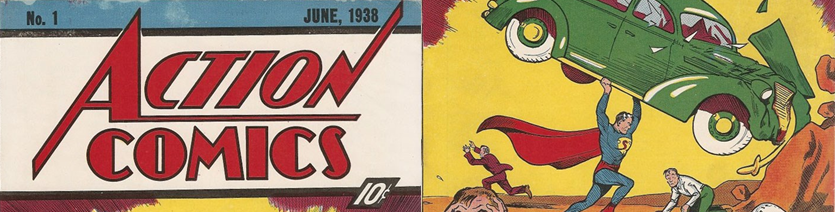
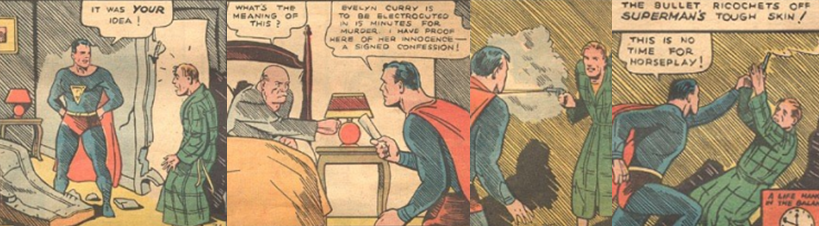
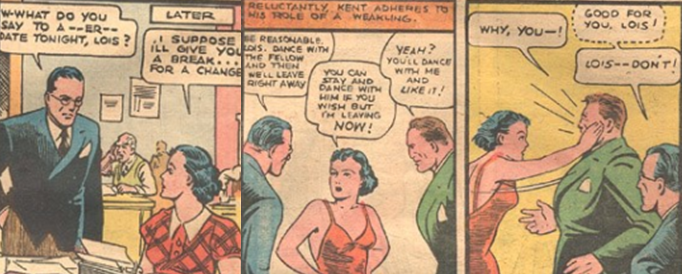
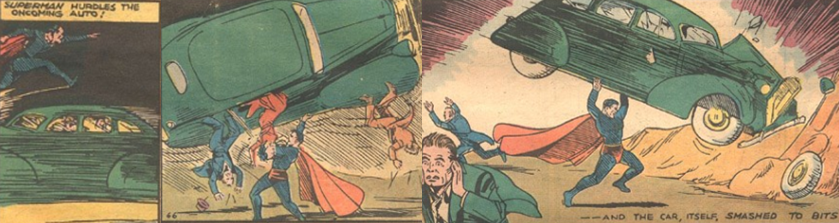
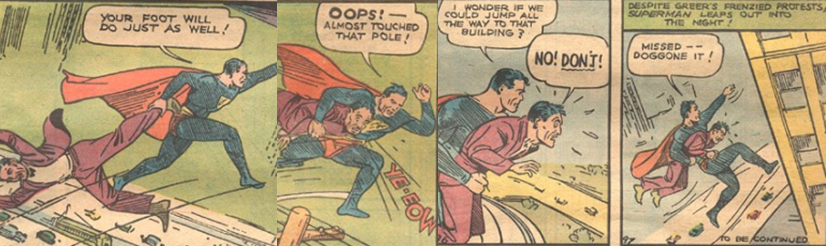
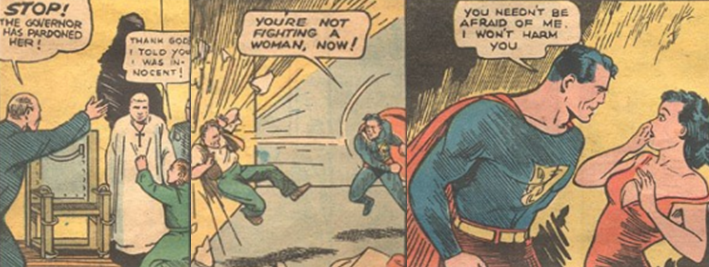
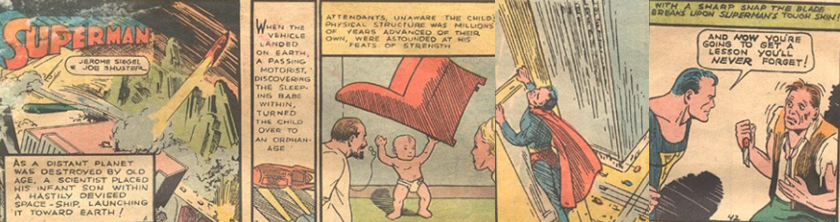
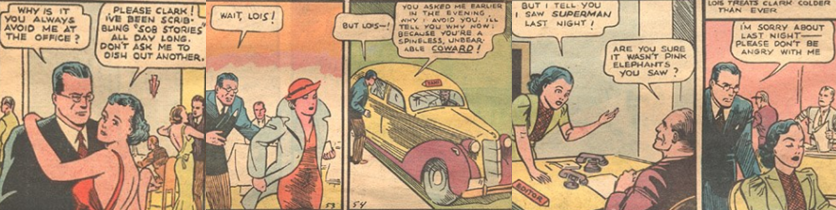





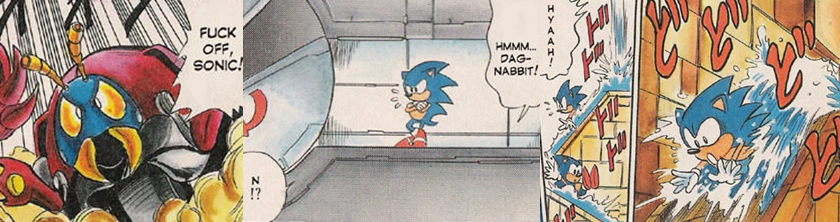


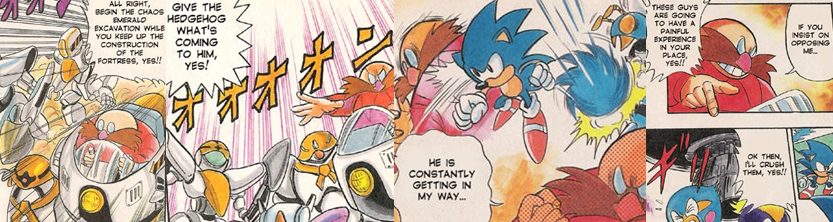







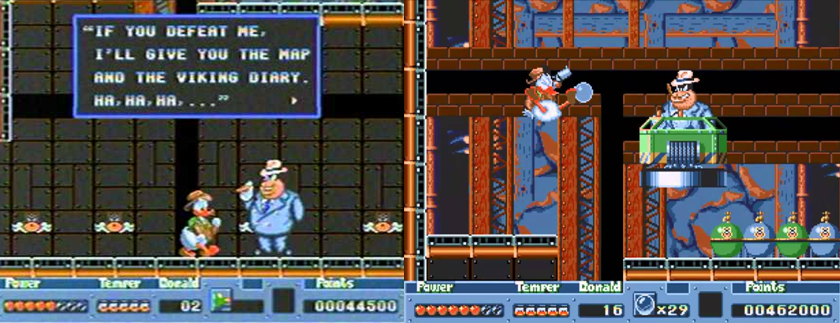

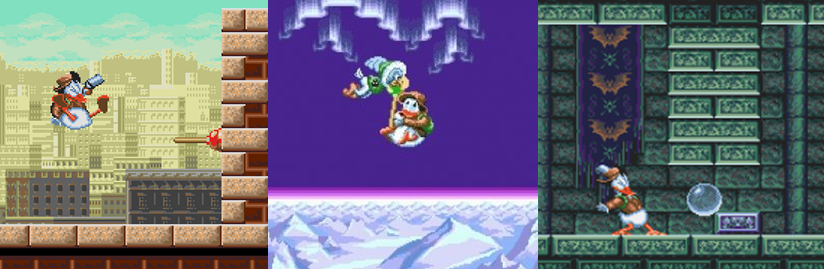


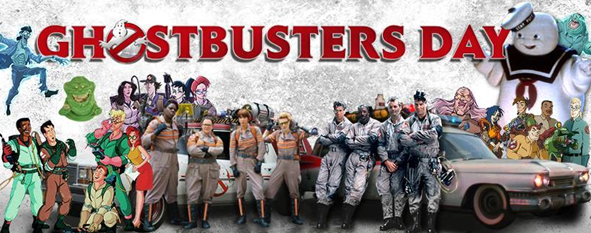


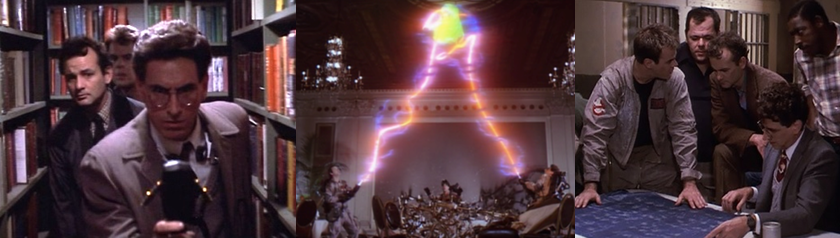
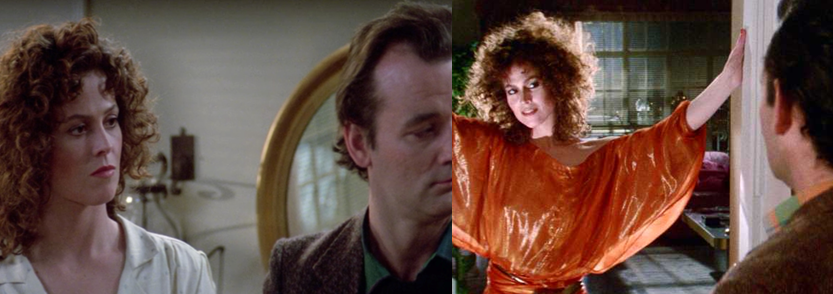
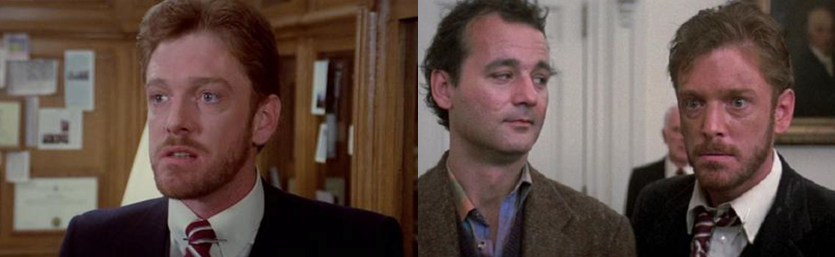
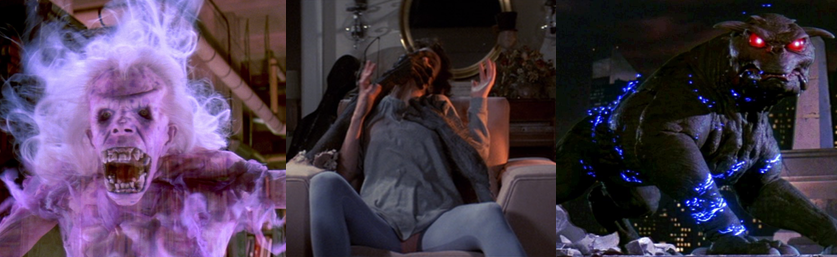
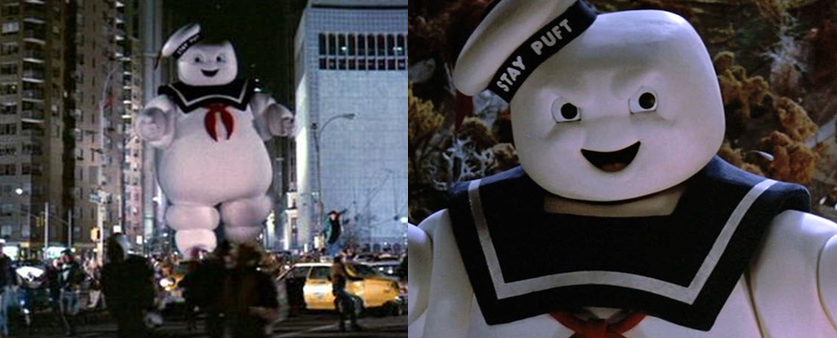
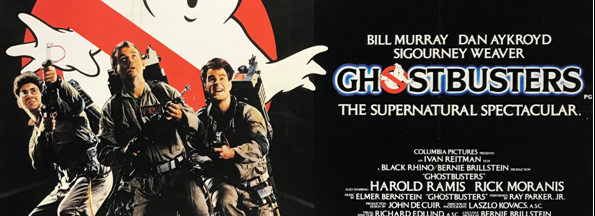


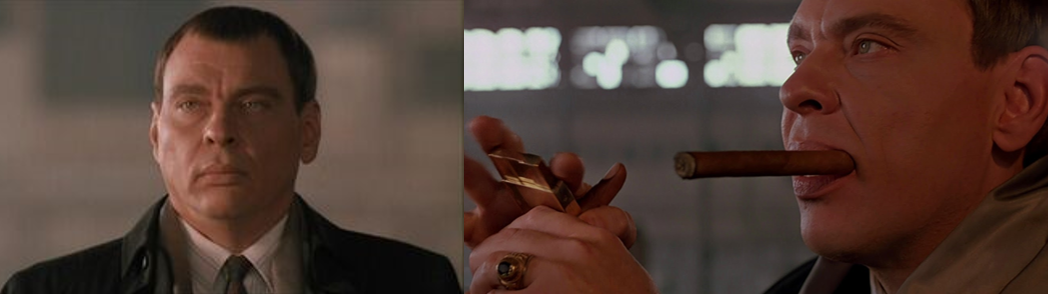
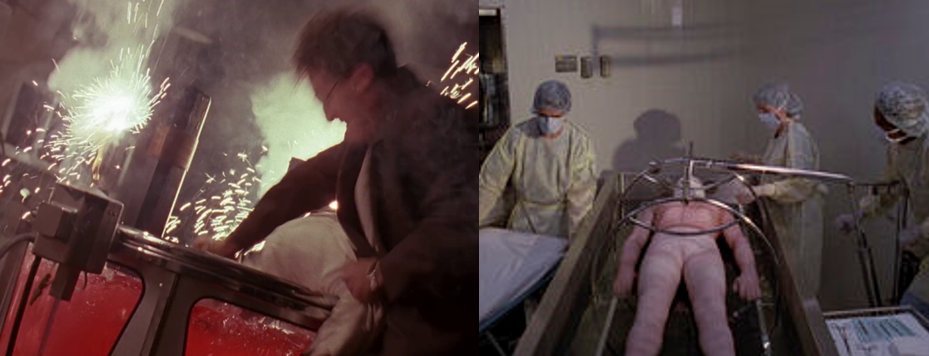

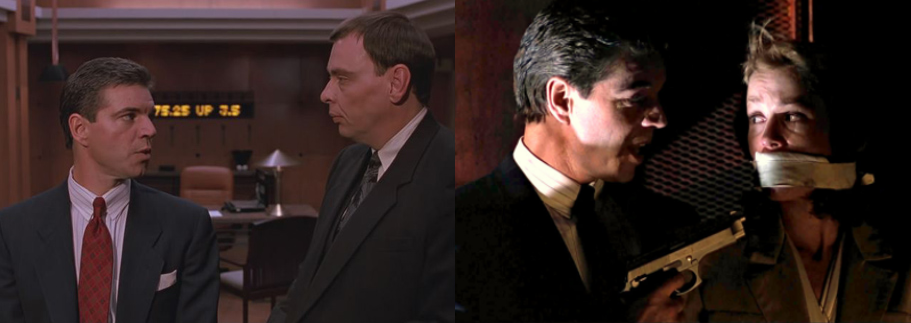
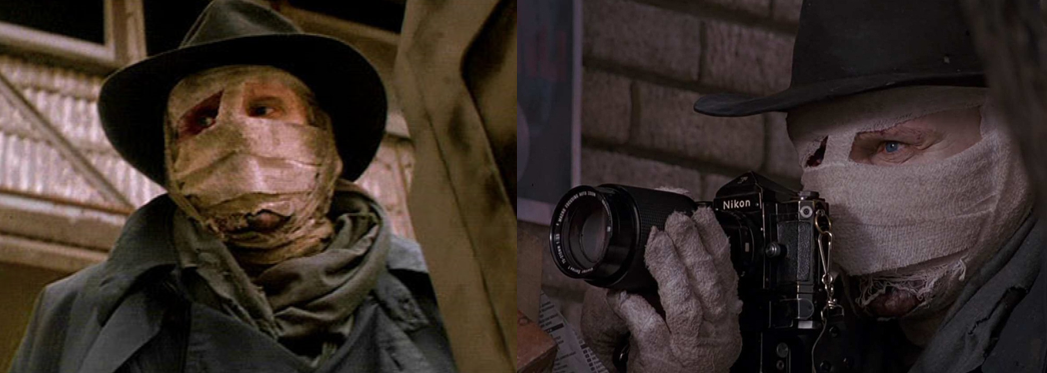
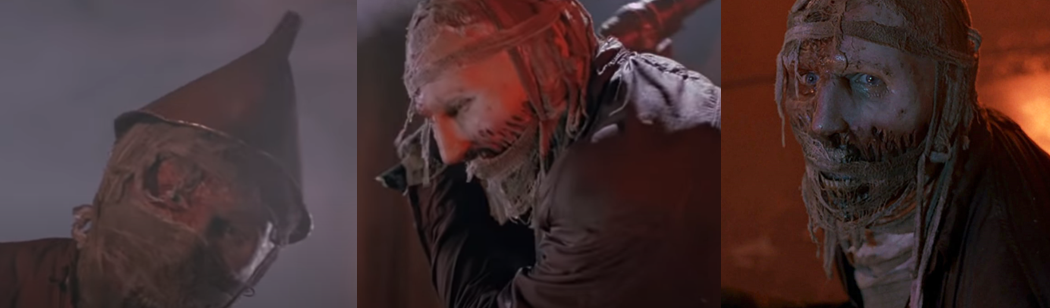
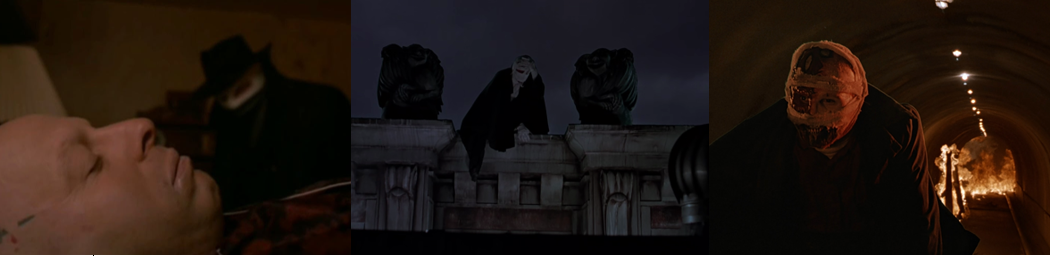
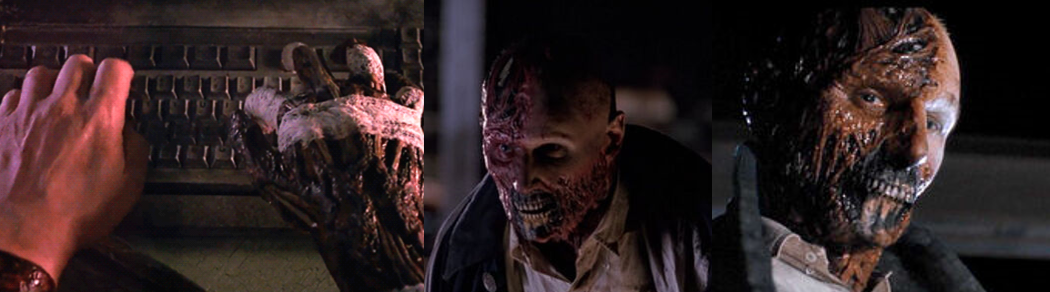
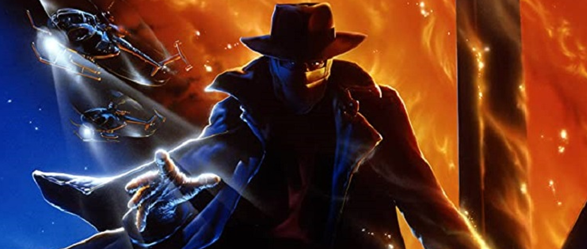


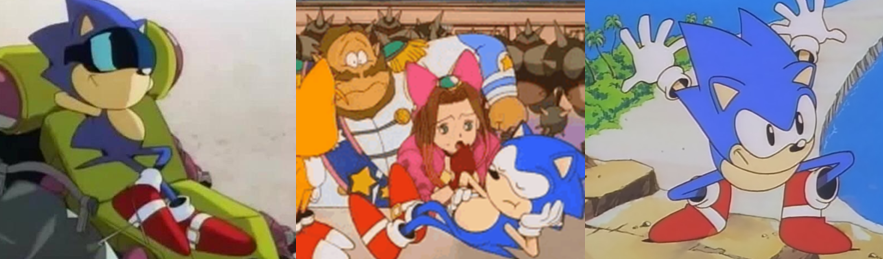
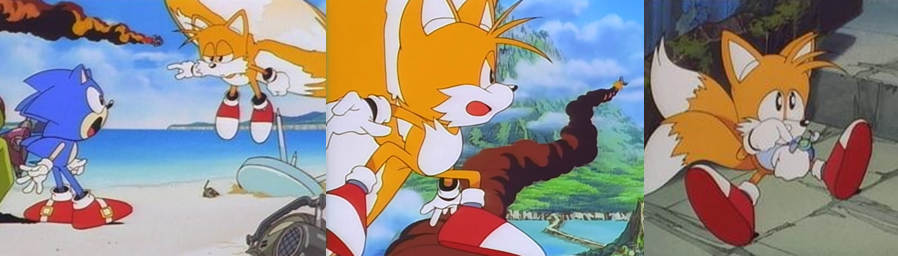

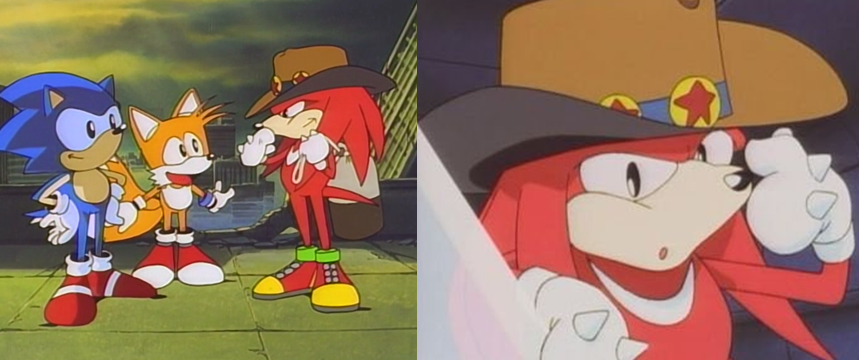
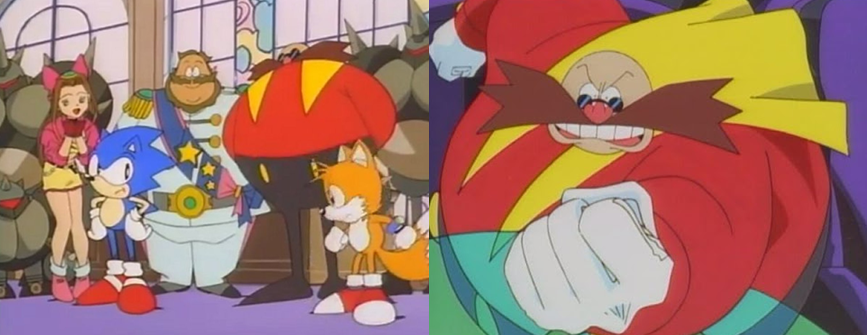

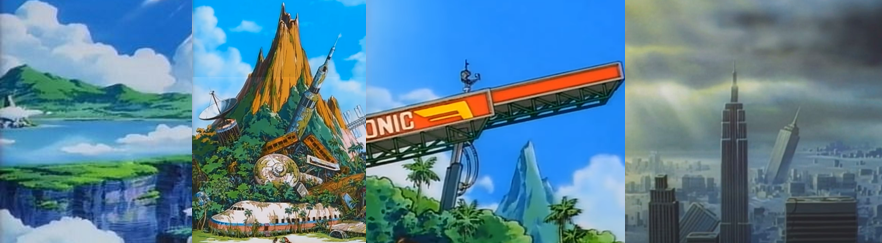
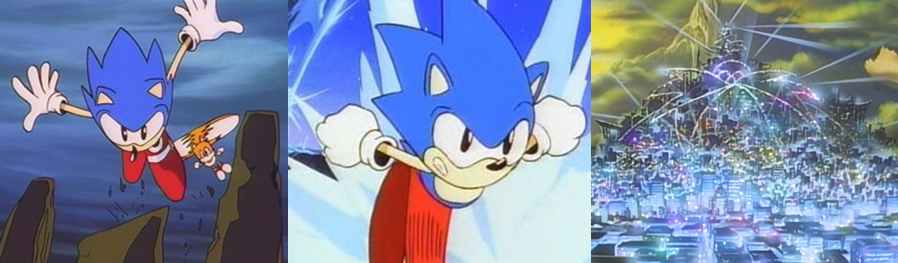
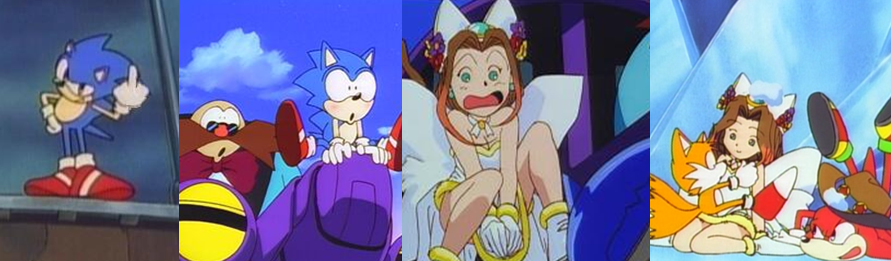
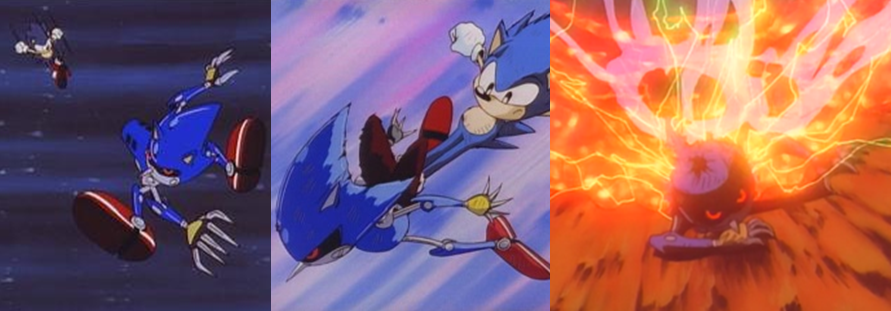
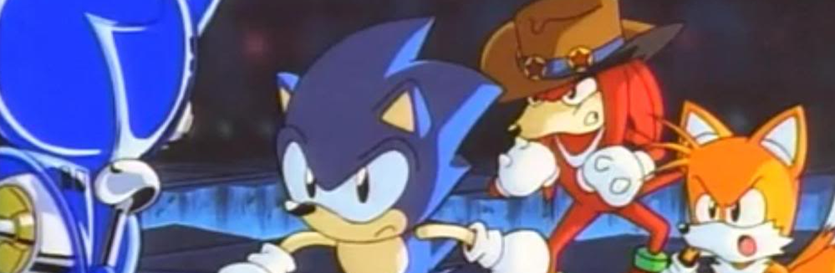




 Dr. K's Waiting Room
You must be logged in to post a comment.