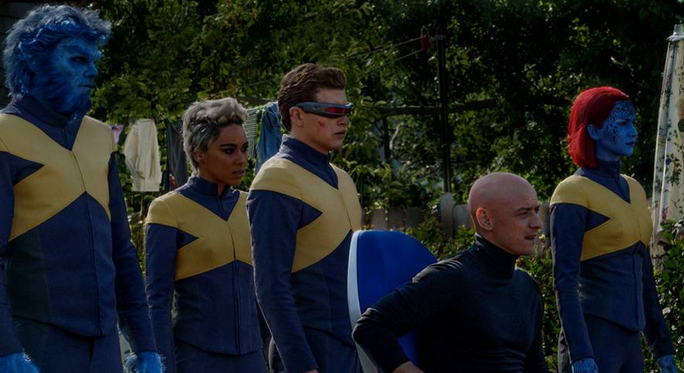
Movie Night: X-Men 2

Released: April 2003
Director: Bryan Singer
Distributor: 20th Century Fox
Budget: $110 to 125 million
Stars: Patrick Stewart, Ian McKellen, Hugh Jackman, Brian Cox, Famke Janssen, Rebecca Romijn-Stamos, Alan Cumming, James Marsden, Halle Berry, Anna Paquin, Shawn Ashmore, Aaron Stanford, Kelly Hu, and Bruce Davison

The Plot:
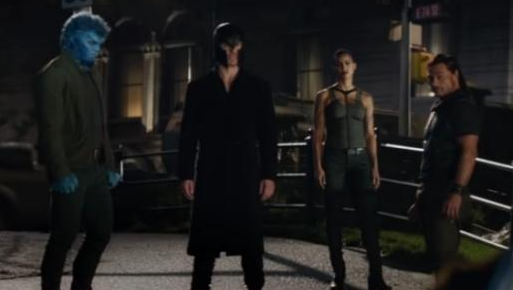
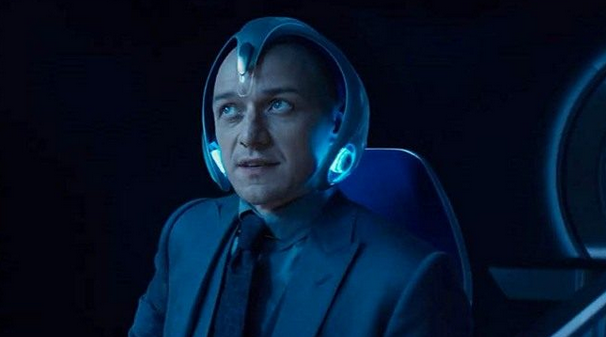
The war between humans and Mutants escalates after an attack on the President of the United States (Cotter Smith). Having interrogated Erik Lehnsherr/Magneto (McKellen), Colonel William Stryker (Cox) leads an assault on Professor Charles Xavier’s (Stewart) sanctuary for Mutants, scattering his X-Men and setting in motion a plot to rid the world of Mutantkind.

The Background:
After Stan Lee and long-time collaborator Jack Kirby created the original X-Men in 1963, Mutants have long been a staple of Marvel Comics; unlike many of Marvel’s superheroes, the X-Men (and Mutants in general) are hated and feared, standing in for oppressed creeds and minorities everywhere and giving Lee an easy way to produce numerous new superheroes with minimal effort. The X-Men later influenced a whole new generation through the much-lauded animated series from the nineties, the success of which led to 20th Century Fox purchasing the film rights and releasing the first live-action X-Men movie in 2000 with director Bryan Singer at the helm. Against the odds, X-Men proved a success, bringing in over $290 million against a $75 million budget. Production and development of a sequel began almost immediately, with Singer and producer Tom DeSanto both researching the more nuanced storylines of the X-Men comics, specifically God Loves, Man Kills (Claremont, et al, 1982), which introduced William Stryker into the X-Men lore. Singer also clearly drew inspiration from films like Star Wars: Episode V: The Empire Strikes Back (Kershner, 1980) and Star Trek II: The Wrath of Khan (Meyer, 1982) for X-Men 2’s bleaker, more sombre tone and sought to cast a bigger spotlight on the younger pupils of Xavier’s School for the Gifted. Allowances had to be made, however, when developing X-Men 2 (also known asX2” and even “X-Men: United”); after the release of X-Men, Halle Berry had won the Academy Award for Best Actress for her role in Monster’s Ball (Forster, 2001), necessitating that her character, Ororo Munroe/Storm, have more screen time. Other scenes, including the return of Sabretooth (Tyler Mane), the inclusion of the Danger Room, and an expanded role for Scott Summers/Cyclops (Marsden) were all cut due to the expanded cast and to keep the film at a reasonable length. After being released, X-Men 2 was a massive financial success, bringing in over $400 million in worldwide revenue and becoming the ninth-highest-grossing film of 2003. The critical reception was glowing as well and X-Men 2 still stands as one of the more well-regarded entries in Fox’s long-running X-Men franchise.

The Review:
As deep and impactful as the opening of X-Men was, X-Men 2 goes out of its way to top it with one of the most layered, complex, and engaging action sequences put to cinema; the film opens with Kurt Wagner/Nightcrawler (Cumming) infiltrating the White House and attacking Presidential guards. He is stopped short of potentially stabbing President McKenna but leaves behind a blade proclaiming “Mutant Freedom Now”. Immediately, the stage is set for an escalating conflict and that is the key word to describe X-Men 2: escalation. Everything that was great about the first movie is expanded upon and dialled up a notch, increasing both the stakes and the scope of Singer’s X-Men world.
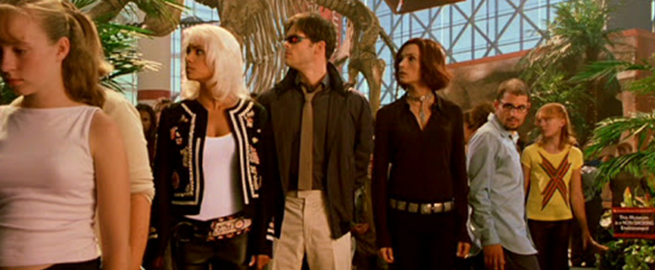
X-Men 2 benefits from not having to waste its runtime on copious amounts of exposition.

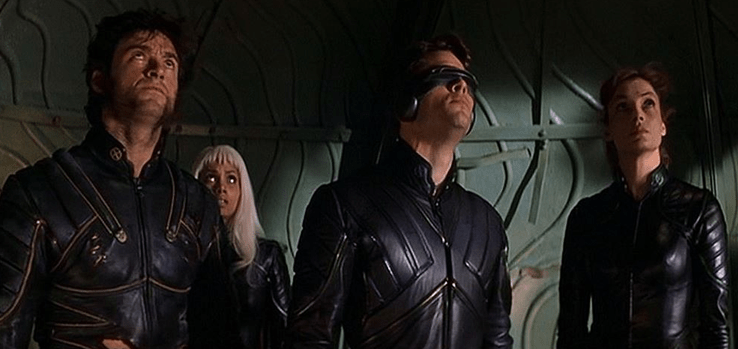
As X-Men devoted so much of its time (arguably too much) to establishing the rules and lore of this grounded, quasi-science-fiction take on the X-Men, X-Men 2 doesn’t have to worry about wasting time establishing characters or expositing information. When we’re reintroduced to Doctor Jean Grey (Janssen), Cyclops, and Storm, we already have an idea of their characters as we were exposed to them, albeit briefly, in the first movie. As an added bonus, actions from the first film have consequences in the sequel: Jean’s powers are a bit out of whack after exerting herself in the conclusion of the first movie and Logan/Wolverine (Jackman) is first reintroduced having found the abandoned facility Xavier directed him to in the last film.
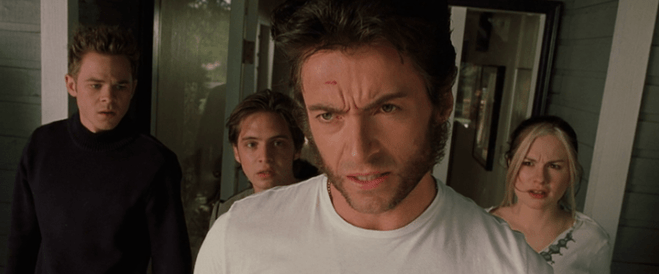
Logan’s paternal side is shown as he is left protecting the X-Kids.

The core X-Men are given far more to do this time around but, again, much of their screen time is taken away by other characters; however, whereas the Brotherhood were largely silent, one-dimensional antagonists in the first film, the “X-Kids” (Marie D’Ancanto/Rogue (Paquin), Bobby Drake/Iceman (Ashmore), and John Allerdyce/Pyro (Stanford)) are actually surprisingly well developed. We already know Rogue from the first film but, here, she’s far more comfortable in her own skin and with her powers; she and Drake struggle to reconcile their throbbing biological urges due to the nature of her powers but her story arc is indicative of the story of all of these X-Kids: maturity and growing into the role of an official X-Men. Both Iceman and Pyro get their own separate story arcs as well, both of which are far deeper and more developed than anything either Cyclops or Storm go through in the entire series! When Iceman, Pyro, and Rogue are forced from the X Mansion by Stryker’s team, Wolverine takes them to Iceman’s family in Boston. There, the film explicitly wallops us over the head with its themes by having Iceman “come out” as a Mutant to his family, who react in the same clichéd way as a lot of fictional (and real, I’m sure) parents do when their kids reveal themselves to be gay. Heartbroken at his family’s reaction, he leaves them behind to stick with his real family, the X-Men.
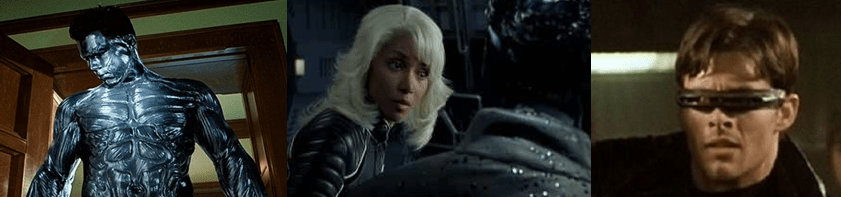
Storm may not get much but she’s got way more to do than Colossus or Cyclops!

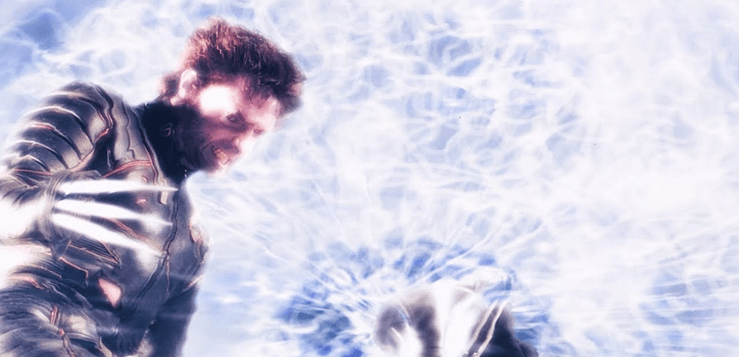
Pyro, however, is vastly developed from a brief cameo in the first movie to an obnoxious, fire-obsessed, angry young kid; clearly resentful of Iceman’s comfortable upbringing, he is as hot-headed and temperamental as his powers dictate, aggressively lashing out at cops and growing increasingly tired of Xavier’s more passive teachings. When he meets Magneto, he is clearly in awe and, when Magneto panders to Pyro’s ego, willingly joins the Mutant extremist at the film’s conclusion rather than try to grow beyond his anger. Other Mutants are not so lucky; Peter Rasputin/Colossus (Daniel Cudmore) appears in a tantalisingly frustrating cameo and, as mentioned, Cyclops’ screen time is significantly reduced. Halle Berry may have moaned a lot about her character being side-lined but at least she often has some kind of significant role; here, she doesn’t just fly the X-Jet but she also uses her weather powers to create some bad-ass tornados (twisters? Whatever) and gets a lot of development through her interactions with Nightcrawler. Cyclops, though, bickers with Logan (again), is worried about Jean, has one fight scene, and then disappears for almost the entire movie before Marsden puts in a fantastically heartbreaking performance for the film’s conclusion. I’m not fan of Cyclops but his character deserved so much better than he gets in this, and all of these movies. When he’s missing, Logan implies that Jean doesn’t even love him…when she’s been married to him for years! Speaking of Logan, he has a far bigger, meatier role in this film and the narrative does an excellent job of tying his mysterious past into the plot of the film and the events unfolding. Add to that the fact that we get some absolutely brutal onscreen action thanks to his berserker rage and Adamantium claws and you have a film that really ramps up whenever Wolverine is onscreen.
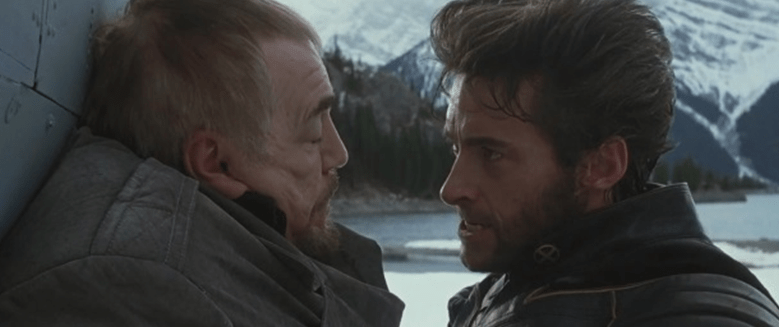
Wolverine utlimately rejects his past and the chance to learn who he really was.

Wolverine’s past is given a bit more clarification through his interactions with Stryker, who teases Wolverine with hints and promises of revealing his entire past and origin. Ultimately, though, Wolverine rejects his past, whatever it may be, and chooses to side with the X-Men full-time. This character arc would eventually be deconstructed in subsequent sequels and spin-offs but it really works here to show that Logan has decided to put whatever his past was behind him and focus on the present. Stryker is also a fantastic addition to Singer’s world. A cold, calculating, manipulative villain who is motivated by a personal grudge against Xavier and a maniacal, xenophobic desire to control or wipe out all Mutants, his charisma and screen presence is more than up to the task of matching that of Magneto. Sadly, though, Stryker and Alkali Lake would go on to be continually used and beaten into the ground in later X-Men movies but Cox’s captivatingly snake-like performance still makes this first use of the character the best, in my opinion. Speaking of Magneto, X-Men 2 largely defines the grey area the character would come to occupy in subsequent films. Arrogant and pretentious, Magneto takes one step further into the dark in this film; though he and Mystique (Romijn-Stamos) are forced to team up with the X-Men out of mutual survival, they are both happy to mock, manipulate, and betray the team (and humankind) at a moment’s notice. In X-Men 2, Magneto develops into the ultimate opportunist and manipulator; he is the best kind of bad guy as he believes that he is right and you can sympathise and empathise with his beliefs, though his methods grow more and more questionable throughout the film, leaving him firmly in the role of villain by the film’s end.

The Nitty-Gritty:
I said that everything that worked about the first film has been expanded, improved upon, and dialled up a notch and it’s true: the effects are way better, for one thing, and the narrative is paced and constructed a lot better thanks to there not being a need for loads of exposition and world-building. It’s true, though, that Cyclops suffers greatly from the inclusion of so many new characters; even Mystique gets more to do and a bigger role, which is a real shame for the X-Men’s long-standing field commander.
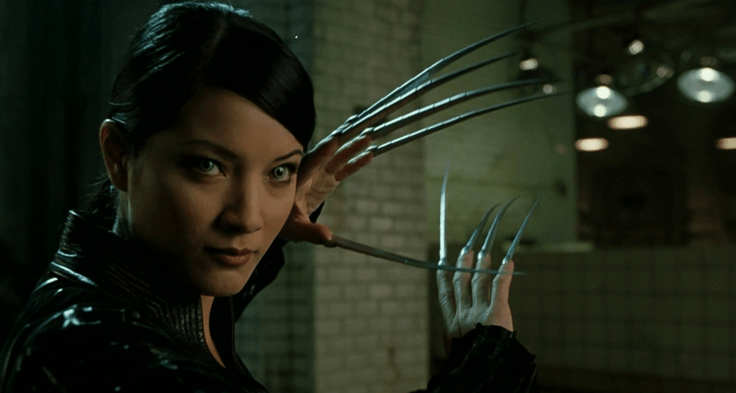
Deathstrike makes for a formidable opponent for Wolverine.

X-Men 2 also has the benefit of included far more interesting and engaging action sequences; the opening, obviously, and Magneto’s escape from his ludicrous plastic prison (seriously, how was that build so fast?) spring to mind but the inclusion of Yuriko Oyama/Deathstrike (Hu) also delivers perhaps the best Wolverine-centric one-on-one fight scene so far. While Deathstrike is little more than another mute henchwoman, this fight more than makes up for her lack of personality; sporting Freddy Krueger-like Adamantium claws, Deathstrike is like a mixture of Sabretooth’s raw animal power and Mystique’s athletic grace and is more than a match for Wolverine. When they get into it, it’s an especially brutal fight that, alongside Wolverine’s enraged skewering of Stryker’s soldiers, would set the scene for further Wolverine spin-offs.
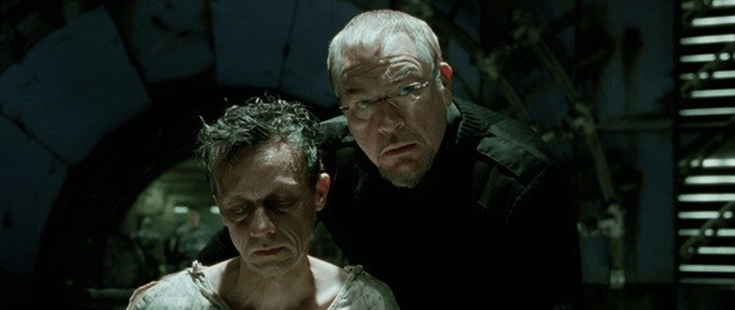
Stryker hates all Mutants and personally blames Xavier for the death of his wife.

Two of the film’s core themes are faith and family; faith is exemplified through Nightcrawler but family is portrayed in numerous different ways. Iceman’s family rejects his true nature, so he turns to his surrogate family; Wolverine also finds himself committing to this same surrogate family by the film’s end and the larger role played by the X-Kids and the pupils helps to emphasise that Xavier is a father figure as much as a mentor and teacher. The other side of this theme is portrayed through Stryker and his Mutant son, Jason (Michael Reid MacKay); convinced that mutation is a disease, Stryker was unable to accept that his son couldn’t be cured and driven half-mad when Jason used his vision-inducing powers to drive his wife to suicide. Stryker then developed a serum to control and brainwash Mutants using Jason’s cerebral fluid and had his son half-lobotomised in order to overpower Xavier; he even declares “My son is dead!”, indicating the lengths to which his madness and obsession with destroying Mutants has gone.
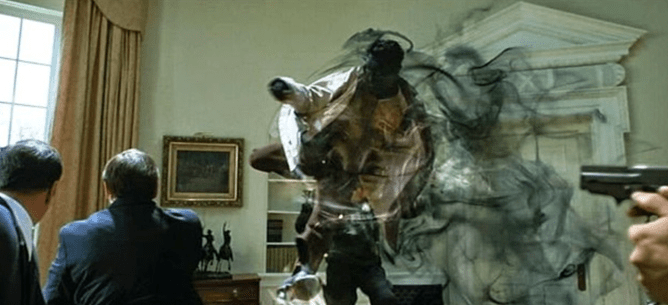
Nightcrawler was a great addition and a continual influence on the franchise.

One of the most influential additions to the film apart from Stryker, though, was Nightcrawler; as a new addition to the world, and the team, a surprising amount of nuance and detail is given to Nightcrawler’s characterisation and backstory. He has far more layers to his character than any of the three X-Men had in the first film and I learn more about Nightcrawler and what makes him tick in this film than I do about Cyclops in the entire series! Nightcrawler was in the circus, he’s a Mutant of devout faith, and he pities those who hate and fear him rather than hating them; despite his demonic appearance, he’s a Mutant of peace and inclusion. Compare this to what we know about Cyclops: he likes cars and motorcycles, is committed to Xavier (though we don’t know the specifics of what drives that devotion), loves Jean, dislikes Logan, and is a bit afraid of his full potential. Who is he? What’s his story? In one scene, we learn more about Nightcrawler than we do Cyclops in two movies and there’s something very wrong about that.
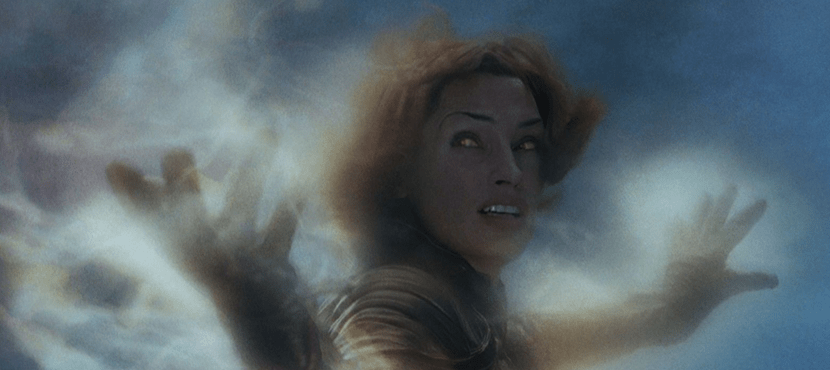
Jean struggles with her powers and ultimately sacrifices herself to save her friends and family.

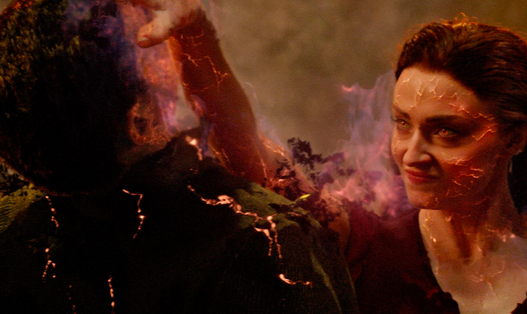
And then there’s Jean. In X-Men, she was just kind of…there. It was explicitly stated that she was nowhere near as powerful as Xavier, yet she was also a medical doctor so she wasn’t entirely useless (though her characterisation wasn’t up to much). Here, she spends the whole film struggling with her powers, which are wildly in flux and unpredictable. Her doubts cause a few moments of danger for the team but, when her friends and family are about to be wiped out by a wall of water, she ultimately choose to sacrifice herself to save them. Why? Well…because that happened in Wrath of Kahn, obviously, and Singer wanted to lay the groundwork for the much-coveted “Phoenix” arc of the comics. Jean regularly takes on an ethereal, fiery glow as she strains her powers to their limits and the silhouette of a phoenix can be seen after she has apparently died. While this storyline was largely botched in the sequel (and then again a few years later), it’s clear what Singer was going for here but, to me, the execution falls a bit flat. Why didn’t she just stay on the jet?

The Summary:
It’s obvious why X-Men 2 is still so renowned; it’s a far superior film compared to its predecessor and is worlds above its successor. It expands upon the world and the characters of the first film so much and actually feels like a real X-Men movie from start to finish, balancing the use of Wolverine and the involvement of its other characters really well (as long as you ignore Cyclops…) For me, it’s clearly still one of the best, if not the best, X-Men movies and is definitely in the top three but a lot of my enjoyment of it is soured by how poorly its plot threads were handled in the sequel and how Fox continually went back to the well and kept bringing back Stryker, Alkali Lake, and Nightcrawler (or Nightcrawler-like characters). It isn’t enough to make me say I dislike the film, though, as it still holds up really well and is a vast improvement on the original.

My Rating:

Rating: 4 out of 5.

Great Stuff

What are your thoughts on X-Men 2? What title did it have where you are from? How do you feel it holds up these days? Does it still rank high in your list of X-Men movies or do you, perhaps, place it lower? Whatever your thoughts on X-Men 2, or X-Men in general, leave your thoughts below and be sure to check out my review of the thirdX-Men film.


Movie Night: X-Men

Released: July 2000
Director: Bryan Singer
Distributor: 20th Century Fox
Budget: $75 million
Stars: Patrick Stewart, Ian McKellen, Hugh Jackman, Anna Paquin, James Marsden, Rebecca Romijn-Stamos, Famke Janssen, Ray Park, Halle Berry, and Bruce Davison

The Plot:
After discovering her potentially-lethal Mutant powers, Marie D’Ancanto/Rogue (Paquin) goes on the run and crosses path with James “Logan” Howlett/Wolverine (Jackman). When they are attacked by the henchmen of Erik Lehnsherr/Magneto (McKellen), they are rescued by Professor Charles Xavier’s (Stewart) “X-Men” and introduced to a nigh-inevitable conflict between Man and Mutant.

The Background:
The X-Men have been a staple of Marvel Comics since their introduction way back in 1963. Alongside long-time collaborator Jack Kirby, Stan Lee created a team of hip, young teens who had a built-in excuse for having their various and fantastic powers; they were Mutants, born with a latent “X-Gene” that activated at the onset of puberty, since their debut, more and more Mutants have appeared and, in some cases, dominated Marvel Comics, with the superhuman offshoot of humanity standing in for a variety of social issues including oppressed creeds, genders, and minorities everywhere through their deep and complex stories. Perhaps the greatest impact of the X-Men outside of comics was the popular and much-renowned animated series produced between 1992 and 1997 but development of an X-Men movie began as far back as 1984 and struggled to get off the ground for quite some time. After the success of the X-Men animated series, however, 20th Century Fox purchased the film rights and development of a live-action movie truly began to take shape. At the time, superhero movies were a bit dead in the water; Batman & Robin (Schumacher, 1997) had been a devastating critical failure and, while Blade (Norrington, 1998) had proven successful and lit the fuse for the explosion of superhero movies that were to come, it was far too dark and violent to capture a wider audience and we were still a couple of years away from Spider-Man (Raimi, 2002) truly capturing that intended audience. So, to say X-Men was a risk is not an understatement; featuring a cast of relative unknowns, bolstered by Stewart and McKellen’s classical training and professionalism, X-Men was a risky venture that paid off dividends, earning over $290 million, catapulting breakout star Hugh Jackman to superstardom, and kicking off one of the most profitable film franchises ever seen that brought comic book movies into undeniable prominence.

The Review:
X-Men begins with one of the most striking and affecting scenes in a superhero movie, one that instantly grounds and legitimises the film and its intentions. It’s 1944 in Nazi-occupied Poland and a young Erik Lehnsherr (Brett Morris) is being marched into an Auschwitz concentration camp and, most likely, his cruel death. Separated from his parents, the pain and trauma activate his Mutant ability to control metals and immediately you know everything you need to know about the future Magneto’s motivations: he has seen first-hand the atrocities of humankind and the oppression of his people and he has vowed to never again allow himself or his people to suffer at the hands of “Homo sapiens and their guns”.

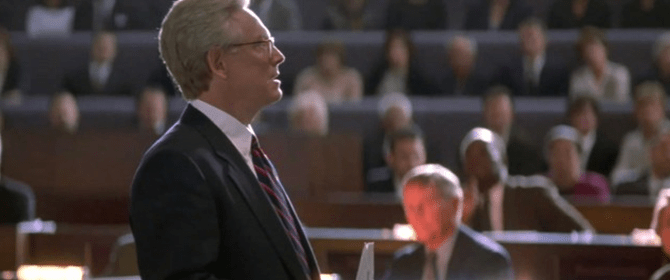
Senator Kelly advocates for Mutant registration to keep them regulated and under control.

Director Bryan Singer’s approach to Marvel’s colourful and bombastic comics characters is to ground them in a realistic world, one set in the “not too distant future” and strikingly similar to ours. That means relatable characters, realistic costumes, and an abundance of science-fiction over the more fantastical elements of the comics. As a result, when the film jumps ahead in time, we’re thrust immediately into the ongoing political debate regarding Mutants. Senator Robert Kelly (Davison) is adamant that Mutants need to register with the American government so that their abilities and level of threat can be established for the safety and security of all Americans, however his motivations are so pig-headed and blinkered that they can only be from a place of extreme fear and prejudice.

Jackman makes an immediate impression in the role of Wolverine.

With the threat of Mutant registration hanging in the air, the now adult Lehnsherr decides to finally put into motion a plan to level the playing field. He has assembled a group of like-minded Mutants, the Brotherhood, and constructed a machine that…somehow…uses his magnetic powers to generate an energy field that will trigger unexpected mutations in ordinary humans. As this machine drains Magneto’s powers almost to the point of death, he sends Sabretooth (Mane) to capture Rogue, whose mutation allows her to absorb the powers of other Mutants, so that he can sacrifice her life to make his point. However, thanks to the way the narrative is framed, it initially appears as though Magneto’s target is Logan, a Mutant with a superhumanly fast healing factor, heightened animalistic senses, and an indestructible metal called Adamantium surgically bonded to his skeleton (and claws). Suffering from amnesia and content to fight for money, Logan is unwittingly brought into the world of the X-Men when he and Rogue are saved by Xavier’s pupils; initially, he is a loner with no interest in their cause or the coming war but he develops a soft spot for Rogue and comes to begrudgingly team up with the X-Men in order to save her.

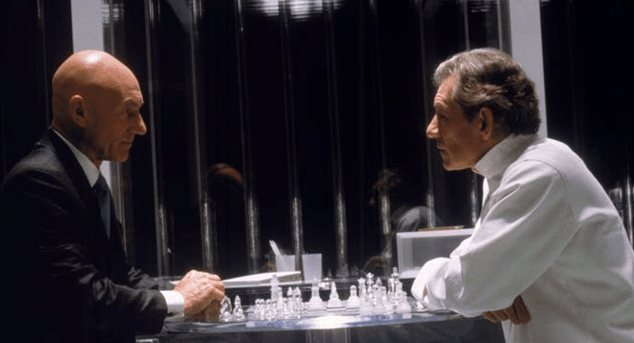
The complex relationship between Xavier and Magneto forms a central focus of the film.
Once Logan is brought to Xavier’s School for the Gifted, the movie really blows open; suddenly, Stewart’s dulcet, soothing tones are expositing information in easy to digest bites as the lore and scope of this world are related to us, the audience, through our two surrogates (Logan and Rogue). The school is built into Xavier’s childhood mansion and is a public front for the massively elaborate tools and resources of the X-Men; they even have a military-style jet under the basketball court. It’s a bit crazy when you stop and think about it but it’s probably best not to and just accept that, somehow, Xavier was able to build all his X-related stuff either without arousing suspicion or by wiping the minds of countless contractors. Central to the film, and Xavier’s exposition, is the relationship between Xavier and Magneto; though they share very little screen time together, Stewart and McKellen’s presence and gravitas instantly elevate the film above many of its peers. Xavier’s dialogue and the way he talks to and about Magneto really develops the sense of a fractured relationship, a long brotherly friendship destroyed by their clashing ideals. There’s a respect and an admiration there and it’s clear that they both appreciate how powerful the other is and have no real desire to fight with each other but will do so, if necessary.

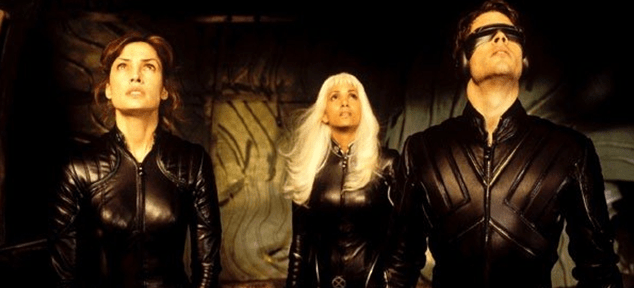
The other X-Men sadly don’t get much to do or much in the way of character development.

Despite being an ensemble piece, the film’s breakout character was, of course, Wolverine. Jackman’s natural charisma and impressive physique and commitment to the role saw him return to the character again and again, dominating Fox’s X-Men movies and largely accounting for the success of the franchise. Despite being far taller than the character is usually portrayed, Jackman certainly looks the part and captures the tortured, animalistic spirit of the role. Haunted by nightmares and struggling with his true origins and identity, Wolverine is initially dismissive and antagonistic towards Xavier’s ideals and his pupils; he laughs at their Mutant code-names, mocks the idea of training and preparing Mutants to defend and live alongside humanity, and immediately clashes with the X-Men’s field leader, Scott Summers/Cyclops (Marsden). Sadly, Cyclops, the characteristically straight-laced and officious leader of the X-Men, doesn’t really get a lot to do here. He mainly stands around, looks cute, and bickers with Wolverine over his unpredictability and the fact that he obviously has the hots for Cyclops’ wife, Jean Grey (Janssen). And did you know that Halle Berry is in this film? She plays Ororo Munroe/Storm, a Mutant who can control the weather and whose main purpose is to guilt-trip Logan into picking a side, providing fog cover to mask the approach of the X-Jet (which doesn’t even work as Magneto knows it’s them…), and deliver one of the worst lines in movie history.

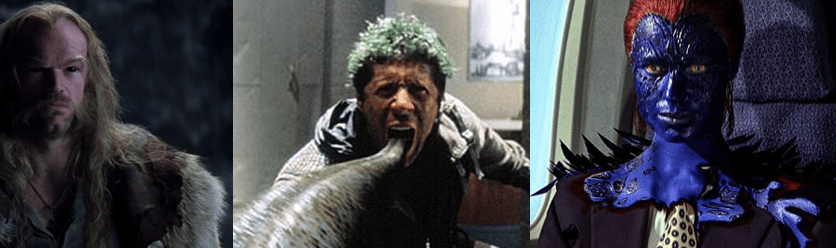
As visually impressive as the Brotherhood is, they’re largely silent and underdeveloped antagonists.

Truthfully, the main X-Men team gets quite shafted by the film’s bloated cast but the Brotherhood suffer even more. Sabretooth is little more than a growling bruiser; nothing is made of his connection to Wolverine, reducing him to Magneto’s muscle rather than the sadistic and murderous character he is in the comics. Toad (Park) is generally a silent character with little going for him other than his little character/body quirks and impressive martial arts abilities. And then there’s Raven Darkhölme/Mystique (Romijn-Stamos), Mangeto’s chief blue-tinted, shape-changing, super sexy henchman who would also go on to be a breakout character of the films. Sadly, however, we learn almost nothing about these characters, their motivations, or their origins and they’re all largely silent. They work as parallels to the X-Men and allow for some tame, but pretty engaging fight scenes but who are they? What drove them to join Magneto? We’re not told as there’s just so many characters and the script and runtime cannot accommodate them all.

The Nitty-Gritty:
I think one of the issues with X-Men is the presence of two audience surrogates; the dynamic between Logan and Rogue is interesting, though, and it almost feels as though the film would have worked better if it was them on the run from the Brotherhood and being assisted by, like, two of the X-Men and only being brought to the school at the end of the film. At the time, though, this narrative choice worked really well for introducing audiences to the world of the X-Men and setting the blueprint for the sequels and spin-offs that were to follow.
The colourful costumes are dropped for a uniform look that emphasises style over practicality.

Unfortunately, X-Men came out at a time when Hollywood was still cashing in on, and aping the success of, the action and stylistic aesthetic of The Matrix (The Wachowski Brothers, 1999). As a result, rather than the colourful costumes of the comics, the X-Men are decked out in impractical (but cool-looking) leather suits. I actually didn’t mind this at the time and still don’t now; the uniformity of the X-costumes actually works to show their unity and ties into Logan’s narrative arc: he starts off as a dissociated loner but, by the end, suits up and fights alongside the X-Men as one of the team. I’d still like to see more comic accurate costumes in the eventual X-Men reboot but I grew up with Michael Keaton’s Batman and an abundance of black, cool-but-impractical leather costumes so I’m largely okay with that choice.

Many of the film’s effects look a little dated these days.

Some of the effects, however, haven’t aged too well; the weird shimmering field Magneto uses to create Mutants looks quite janky, as does Mystique’s shape-shifting effects but they held up quite well when the film was first released and other effects, like Wolverine’s claws and Cyclops’ optic blast, still hold up really well thanks to an abundance of wire work and practical, on-set effects. The film’s themes still resonate, as well. As I said, Magneto’s motivations are very real and relatable and the disturbingly fitting end of Senator Kelly is surprisingly affecting. Altered by Magneto’s machine, Kelly mutates into a fish-like quasi-Mutant but, as his cells begin to deteriorate, he horrifically half-drowns before degenerating into liquid right before Storm’s eyes. It’s a terrifying visual, one that seems far too harsh a punishment even considering Kelly’s prejudices but there is some solace to be gained from seeing Kelly humbled at his end and turning to a Mutant for comfort.

The Summary:
X-Men works really well as an introduction to the world of Mutants; it grounds its narrative and action in a world not too far removed from our own, which allows it to be grounded and based in some kind of reality so that its more flamboyant, “comic book” elements can be introduced in a way that makes sense. Yet, it’s not a perfect film; there’s a lot of characters here, many of which are left completely one dimensional or underdeveloped. Further sequels would fail to address this for many of these characters, retroactively casting a shadow on X-Men for not doing a better job of dividing its time amongst its large cast a little better. Yet, Stewart, McKellen, and Jackman shine all the brighter as a result of this; the other characters are almost inconsequential compared to their charisma, screen presence, and individual and connected stories. X-Men establishes the rules of its world quite well and definitely laid the foundation for expansion but I can’t help but think that, with the benefit of hindsight and taking into account the lessons of the many X-Men sequels and spin-offs that we’ve had since, that we could the same concept done better in the near future.

My Rating:

Rating: 3 out of 5.

Pretty Good

What are your thoughts on the first X-Men movie? Were you excited for it when it first released? Do you feel it still holds up or do you agree that it’s seen better days? Which X-character was your favourite? How would you like to see a reboot of the franchise go down? How are you celebrating X-Men Day this month? Whatever you think, feel free to leave your thoughts and opinions on X-Men below and check out my other X-Men articles on the site.

Back Issues [X-Men Day]: The X-Men #1


To commemorate the culmination of their long-running and successful X-Men movies, 20th Century Fox declared May 13th as “X-Men Day”, a day to celebrate all things Mutant and the X-Men, Marvel’s iconic collection of superpowered beings who fight to protect a world that hates and fears them. To mark the occasion this year, I’ll be reviewing the original X-Men trilogy every Thursday from tomorrow to see how they hold up on a repeat viewing.


Story Title: “X-Men”
Published: 1 September 1963
Writer: Stan Lee
Artist: Jack Kirby

The Background:
By 1963, Marvel Comics were riding a wave of success thanks to characters like the Fantastic Four, Tony Stark/Iron Man, and, of course, Peter Parker/Spider-Man. Faced with the prospect of having to come up with more costumed heroes and needing a way to quickly and easily explain their powers, Stan Lee came up with the idea of “Mutants”, ordinary people who developed extraordinary powers once they hit puberty. Alongside long-time collaborator Jack Kirby, Lee created the concept of “The Mutants”, teenagers who were born with extraordinary abilities, but was asked to retool the concept with a new title: The X-Men, with the titular superheroes being students at a special school to hone their abilities into a force for good. Unlike superhero teams like the Avengers and the Fantastic Four, the X-Men were hated and feared by the general public for their powers and what they represented: the next step in human evolution. In this way, Mutants were used by Lee and Kirby to tackle variety of social issues, most notably racism. Although initial sales of The X-Men lagged compared to other Marvel titles and the comic was cancelled by issue sixty-six, a 1975 revival, in which an international team of Mutants joined the title, breathed new life into the concept and the X-Men have been an enduring and popular team in comics ever since, influencing an entire generation with a much-lauded animated series in the nineties and, of course, a series of massively successful live-action movies.

The Review:
“X-Men” had quite a difficult prospect ahead of it that most other comic book origins didn’t at the time and that is that the story had to introduce an entirely new concept (Mutants) as well as seven new characters and the concept of the X-Men all in one issue. As a result, it’s quite a rushed and underwhelming issue in a lot of ways and none more so than in its first few pages. The issue opens with Professor Charles Xavier/Professor X sitting and brooding in the study of his “exclusive private school”; he’s just sitting there, all casual, and then suddenly sends a mental command out to his students, the X-Men, to report for class immediately. His pupils obediently obey, with each one entering the frame almost right away and in a way that immediately shows off their powers and abilities: Warren Worthington III/The Angel flies in on Angel’s wings, Hank McCoy/The Beast (not quite his furry blue self yet and resembling more of a muscular hunchback or ape-like man) bounds in through the window, Bobby Drake/Iceman (here resembling a living snowman more than a man of ice) slides down an ice pole that is connected to nothing but appears to be attached to one of Angel’s wings, and “Slim” Summers/Cyclops…runs in from the background, indicating how useless he is.

While Cyclops and Angel dote on Xavier, Iceman and Beast wind each other up.

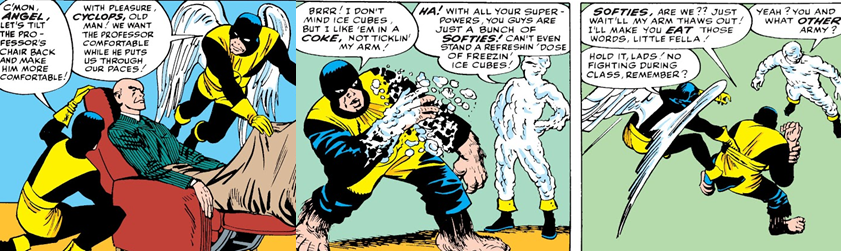
In the very next panel, Cyclops and Angel, like the suck-ups they are, dutifully attend to Xavier’s comfort by adjusting his chair while Iceman and Beast get into a bit of banter that sees Beast more than a little perturbed by his team mate freezing up his arm. Iceman taunts Beast, and his fellow X-Men, showcasing an arrogant, free-spirited approach to his powers and abilities that immediately brings to mind Johnny Storm/Human Torch (Beast, with his large frame and quick temper, is equally reminiscent of Ben Grimm/The Thing). Angel keeps the two from coming to blows and Xavier orders the teens to begin their training exercise under Cyclops’ tutelage. Each of the Mutants is ordered to perform a specific task within a short time frame to demonstrate their powers and the control they have over their abilities: Beast expertly grabs a taut wire with his toes, spins himself around at an unbelievable speed, and then ricochets off the walls of the training room (not quite the Danger Room yet) before showcasing his superhuman balance and coordination (though he does overshoot on the final test). Angel (who exhibits a casual racism towards Homo sapiens) is up next, dodging jets of flame, crushing weights, and spinning blades with his expert agility and coordination but is momentarily stunned when a “sudden sound concussion” threatens to knock him out of the air. He recovers, learning a lesson in humility and also taking another step towards mastering hovering, all while Xavier mentally commands and praises his abilities.

Cyclops is easily able to subdue and best his team mates even when they outnumber him.

Iceman, impatient and frustrated, decides to throw a tantrum, believing that Xavier is going easy on him since he’s a little younger than the others. Xavier stresses patience but Iceman, ever the hot-headed and immature youth, decides to goof off and dress himself up as a snowman. At the last second, Iceman realises that this was all part of Xavier’s test of his reflexes as Iceman is forced to whip up a shield of ice to deflect a massive weighted ball that Xavier commands the Beast to throw right at his frozen comrade’s head! At this point, we’ve yet to see what Cyclops is capable of; up until now, he’s simply operated the controls of the training machine and supervised the drills of his team mates. Unimpressed with Iceman and Beast’s lackadaisical attitude to their training, he goads them into combat and showcases his own unique talent, almost blasting Beast through the wall with his optic blasts. Although Iceman encases himself in a thick ice cube, Cyclops easily breaks through it and, when all three of his fellow Mutants attempt to subdue him, Cyclops easily keeps them at bay with his red eye beams and physical ability, proving that he is, perhaps, the most powerful and capable of the X-Men.

Jean exhibits her impressive telekinetic abilities to quiet her condescending peers.

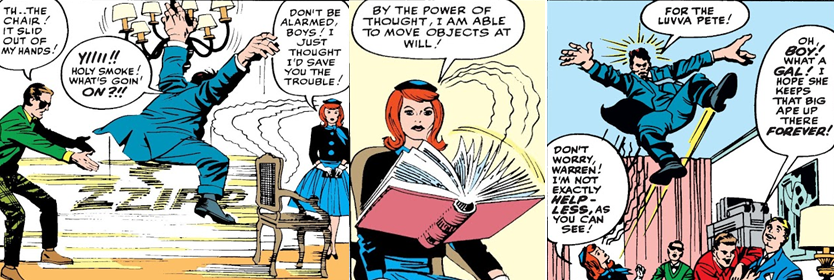
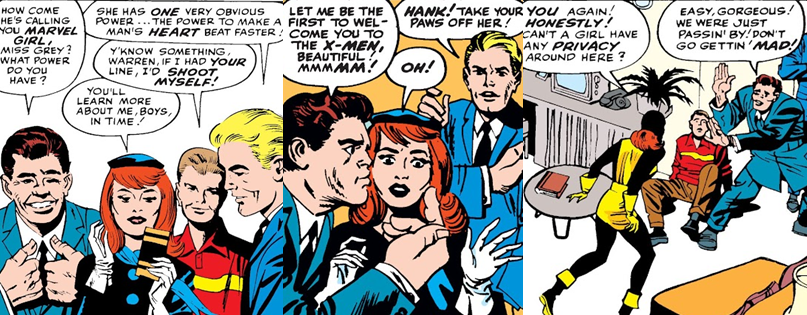
Satisfied with the abilities of his pupils, Xavier immediately calls and end to their training and rough-housing to introduce them to a new pupil, “a most attractive young lady”, which immediately sends the teens (with the curious exception of Iceman…at least, the dialogue makes it seem like it’s Iceman but he’s leering over her later in the story so who really knows?) into an excited frenzy as they leer at her from the window of Xavier’s study. The girl is, of course, Jean Grey, who has arrived more out of sheer curiosity than anything else since Xavier, apparently, didn’t give her any details prior to her arrival. He reveals that his school is actually a sanctuary for Mutants, those who posses “an extra power”, and home to his accordingly-named “X-Men”. Xavier introduces Jean to her new team mates, immediately inducting her into the school and onto the X-Men under the oft-forgotten and frankly lazy codename “Marvel Girl”. The boys, however, are unimpressed; seeing nothing unique about Jean, they regard her with scepticism and patronise her simply for being a gorgeous redhead. When “Slim” brings her a chair in which to sit, she shuts their condescending attitude right down by demonstrating her telekinetic powers, which are more than enough to move objects and fend off Hank’s creepy and inappropriate advances.

Magneto issues his threat against humanity and plots to take control of Cape Citadel.

With Jean part of the team, Xavier begins to divulge his backstory and the purpose of the X-Men: Xavier (who speculates that he was “possibly the first [Mutant]” since his parents worked on the “A-Bomb project”), recognising that “normal people” feared and distrusted him for his mental abilities, decided to set up a school to train Mutants in using their powers for the betterment of humanity, to help improve human/Mutant relations, and to protect the world from “evil Mutants”. The story then introduces us to one of these “evil Mutants”, Erik Lehnsherr/Magneto, who loudly monologues his own beliefs that humanity needs to be wiped out in favour of Mutants. Magneto demonstrates his incredible power of magnetism to destroy “the mightiest rocket of all”, turn a machine gun against a group of soldiers, and terrorise an army base by sending a tank amok before issuing an ultimatum to the Cape Citadel army base and calling for their immediate surrender. When the humans defy Magneto’s order, he destroys another of their missiles and then walks right into Cape Citadel! Garbed in a magnificently regal red costume and elaborate helmet, Magneto emits magnetic waves that render the soldier’s weapons useless and repels them with pure magnetic energy. Despite the General’s bluster, Magneto is easily able to overpower him and the entirety of his guards and lay claim to the base to fulfil his first objective towards his lofty goals of Mutant domination. Back at Xavier’s school, Bobby, Hank, and Warren’s disturbing leering of Jean is interrupted by another of the Professor’s mental summons; having heard of Magneto’s takeover of Cape Citadel, he orders his X-Men to confront the Master of Magnetism and defeat him in the first true test of their abilities. Seems a little unfair to Jean since the X-Men have been training together for some time and she literally just joined the team so she has no idea of their tactics and no experience of working alongside them as a team so she’s at a severe disadvantage even compared to the untested X-Men.

Magneto is defeated and the X-Men earn the respect and admiration of the army and their mentor.

Rather than dramatically flying to the base using the X-Jet on campus, the X-Men are driven to the airport in Xavier’s Rolls Royce and then spirited to their destination by a private jet controlled by Xavier’s “thought impulses”. Upon arrival, the X-Men find the army unable to penetrate Magneto’s magnetic force field and, driven to desperation, the General is willing to allow the X-Men fifteen minutes to attempt to breach Magneto’s defences. The soldiers are stunned by the X-Men’s abilities, which they thoughtlessly use to cut a path through their ranks and approach the shield, just in case you forgot what these new heroes are capable of. Thanks to Cyclops’ incredible optic blasts, the X-Men are able to easily breach Magneto’s barrier; the assault causes physical pain and a debilitating effect on Magneto so, in anger, he launches the base’s missile defences against the X-Men. Thanks to the team’s unique abilities and intense training, though, they’re easily able to avoid and dispatch the missiles, with even Marvel Girl pulling her weight with her telekinetic powers. Though impressed with their abilities, Magneto nevertheless takes immense pleasure in proving is power and superiority over them even when the X-Men are able to counter each of his attacks: when Magneto crushes Angel beneath a pile of junk, Cyclops blasts it away; when he sends a burning trolley of rocket fuel their way, Iceman shields them with an “igloo shield”. Magneto is then caught off-guard by the X-Men’s persistence and, after taking a blast from Cyclops, decides that an immediate and tactical retreat is in order; he levitates away using “magnetic repulsion” and uses another force field to keep the Mutants from following him. With Magneto scared away, the X-Men earn the respect and gratitude of the General as well as the praise and congratulations of their mentor,

The Summary:
Even taking into account the way Marvel operated back in the 1960s, “X-Men” is a very disappointing debut story for Marvel’s premier Mutant team. The art is stark, simple, and not very eye-catching or inspiring, with only Magneto really impressing in his design and abilities, and the dialogue is full of some of the worst clichés of comics at the time. The X-Men are constantly talking, generally always boldly exclaiming their names and abilities in a constant reminder of who they are and what they can do; this is indicative of comics of the time, as superheroes constantly felt the need to remind readers of these things (and their origins), but it’s especially annoying and off-putting here as it not only happens constantly but is the main thrust of the issue’s narrative. For a comic about the debut of a bombastic and exciting group of superpowered teenagers, barely anything happens throughout the issue as copious panels must be used to showcase these new characters and their abilities and to explain to the reader what Mutants are. I can understand it but it does interfere with the action and pace of the story and, ironically, would be a consistent issue in subsequent stories and arcs in future X-Men comics and spin-offs; even to this day I find X-Men comics quite off-putting due to the sheer amount of characters, dialogue, and dense lore that is packed into every issue and I pity anyone that tries to break into X-Men on a whim!

Jean must endure a lot of uncomfortable scepticism, leering, and comments from her team mates.

I can forgive the out-dated slang and even Marvel cutting corners on characterisation by supplanting the personalities of the Fantastic Four into their new team but it’s very hard to forgive the treatment of Jean Grey; like Susan Storm/Invisible Girl and even Janet van Dyne/The Wasp before her, Jean is constantly patronised, met with condescending comments, and leered over by the X-Men a frankly disgusting amount. Again, times were different back then, but Jean’s narrative is so simple it’s almost insulting: the boys are sceptical of her because she’s a girl but even when she demonstrates her powers they still treat her as little more than eye-candy, meaning she must not only prove herself as a capable X-Man but also constantly strive to be seen as a capable individual regardless of her gender. Still, at least she shows a bit of gumption and puts the horny teenagers in their place. Each of the X-Men gets a chance to showcase their personalities, which are as distinct as their powers, but some are more interesting and unique than others. Why should I care about Iceman being an arrogant, hot-tempered show-off when Johnny Storm already did it better? We learn next to nothing about Angel except that he’s a bit of a bigot towards humans and Beast is far from the eloquent, educated voice of reason we know him as today; instead, he’s just a Thing knock-off who is just as immature and foolhardy as Iceman. Cyclops, meanwhile, is the straight-laced teacher’s pet of the team; he gets a chance to show off how formidable his powers and abilities are, proving that he can best all of the X-Men even when they gang up on him, but he’s not an especially fun or interesting character since he’s all about adhering to Xavier’s rules and taking their training seriously.

Despite Magneto’s incredible power, he is defeated with ridiculous ease!

Xavier is also something of an enigma; we learn a bit about his background and his motivations and his cause is certainly a just one but he comes across as a stern and strict teacher, issuing orders and expecting them to be followed immediately, without question, and to the letter. His school is also noticeably light on students, meaning that he’s literally been training his X-Men to be superheroes rather than educating an assortment of Mutants for a variety of reasons, and he seems like a very secretive, devious individual since he freely reads people’s thoughts, projects his thoughts into the minds of others, and recruits Jean without her even understanding what she’s signing up for. Even Magneto, clearly the most visually interesting character, is little more than a rip-off of Victor Von Doom/Doctor Doom; he loves to monologue, is egotistical and brazen, and relishes in demonstrating his superior powers at every opportunity. Yet, despite appearing to be an unbeatable foe who is able to render men helpless simply through the weight of his magnetic force fields, Magneto is defeated with ridiculous ease! Seriously, the X-Men don’t even fight him as a team like the front cover suggests; they simply shrug off his pathetic attempts to destroy them, Cyclops blasts him once, and that’s it! Job done, Magneto flees, and the day is saved! It’s a lacklustre end to a lacklustre comic, to be honest, and it feels like everyone involved was just phoning it in and more concerned with getting over their new concept rather than debuting the X-Men in a fun and interesting way. The X-Men have certainly had better stories and debuts in the years since but it’s hard to really recommend their debut issue beyond nostalgia or curiosity to see how far the concept has come since its dull beginnings.

My Rating:

Rating: 1 out of 5.

Terrible

What are your thoughts of The X-Men #1? What did you think to the X-Men and their introduction? Do you agree that the story suffers somewhat from poor art and characterisation or were you instantly hooked on Marvel’s new team? Which character was your favourite? What did you think to Magneto’s debut, the portrayal of his powers, and his ultimate defeat? Which era of the X-Men is your favourite and who is your favourite ever team/character? How are you celebrating X-Men Day today? Whatever your thoughts, leave a comment below and be sure to come back tomorrow, and every Thursday for the rest of May, for more X-Men content.

Movie Night: Deadpool

Released: 8 February 2016
Director: Tim Miller
Distributor: 20th Century Fox
Budget: $58 million
Stars: Ryan Reynolds, Morena Baccarin, Ed Skrein, T.J. Miller, Gina Carano, Brianna Hildebrand, and Stefan Kapičić/Andre Tricoteux

The Plot:
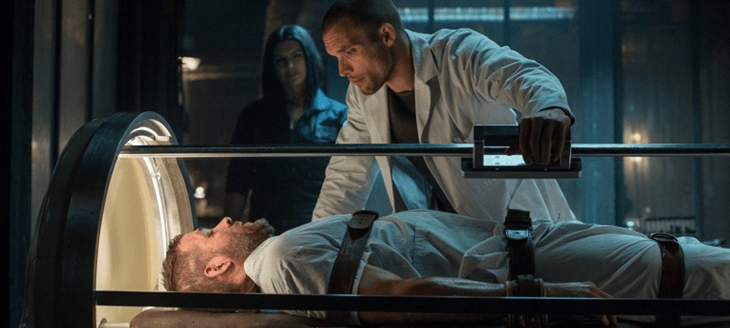
After mercenary for hire Wade Wilson (Reynolds) contracts terminal cancer, he turns to Francis Freeman/Ajax (Skrein), who subjects him to round-the-clock torture to activate his latent X-Gene. The experiment is a success, transforming Wade into a near-immortal Mutant but also horrifically disfiguring him and leading him on a bloody quest for revenge.

The Background:
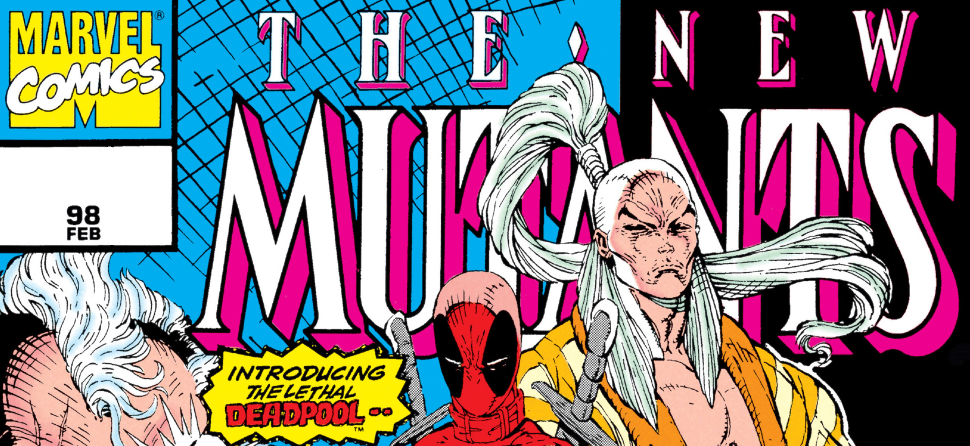
Deadpool was created by Fabian Nicieza and Rob Liefeld back in 1991; originally an antagonist who featuring in the duo’s New Mutants comics, the self-styled “Merc With a Mouth” gained significant popularity over the years, especially once he became self-aware and began breaking the fourth wall. This popularity eventually led to his own solo title, a series of team-ups with other Marvel heroes, appearances in Marvel/X-Men-related videogames, and even a cameo appearance in the beloved X-Men animated series (1992 to 1997). Deadpool made his live-action debut in the much-maligned X-Men Origins: Wolverine (Hood, 2009); here, the character was expertly portrayed by Ryan Reynolds (who had been eyed for the role as far back as 2004) and his inclusion was intended to setup a solo spin-off for the character. After X-Men Origins was critically panned and following the poor reception of the Reynolds-led Green Lantern (Campbell, 2011), however, 20th Century Fox (who had bought the film rights to the X-Men franchise some time ago) got cold feet about producing an expensive superhero film full of violence and cuss words. Yet, after director Tim Miller’s early test footage mysteriously leaked online to an overwhelmingly positive response, Fox committed to releasing the film as the director and actor wished but with a much smaller budget than traditional superhero films. As it turned out, however, the studio was wrong to be apprehensive and right to produce the film on a tighter budget as Deadpool eventually brought in over $780 million in worldwide gross which, alongside it’s overwhelmingly positive critical reception, more than justified the greenlighting of a sequel and a continued investment in the character on their part.

The Review:
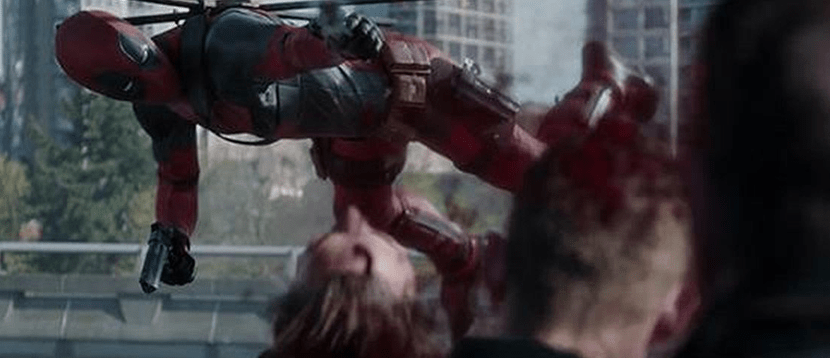
As described by Deadpool himself, Deadpool is, at its heart, a traditional love story of boy meets girl, boy contracts terminal cancer, boy acquires superhuman powers, boy gets girl. It’s the classic, age-old tale we’ve all come to know and love…just with more crotch shots and gratuitous violence than you might remember. Right off the bat, Deadpool opens with an impressive slow-motion shot right in the middle of Deadpool unleashing the carnage on a busy highway while Juice Newton’s “Angel of the Morning” plays and numerous sight and visual gags fill the screen (the majority of them poking fun and the cast and crew of the film and setting up Deadpool’s trademark crude humour). This highway sequence acts as a bridging device as Deadpool, directly addressing the camera and through the power of voiceover, explains his origin up to that point and we continuously return to the highway to see Deadpool blowing the brains out of Ajax’s men and skewering them with his blades.

Seriously, who wouldn’t fall in love with Morena Baccarin?

It turns out that Deadpool was just as childish and sadistic before he acquired his powers; as a mercenary for hire, Wade took on a variety of jobs issued to him by his kind-of-sort-of friend/business acquaintance Weasel (Miller). While he is characteristically coy about the exact specifics of his past, using dark humour to twist the exact truth of his background, he openly admits to having a “soft spot” and wishing to make some kind of small difference to people’s lives. It’s in the midst of this cavalier lifestyle that he meets Vanessa (Baccarin), an absolutely gorgeous woman who appears to be just as snarky and unhinged as he. The two immediately hit it off and spend an entire year doing little other than screwing like animals and falling in love. Right as Wade begins to feel alive again, though, he (literally) falls ill with terminal cancer and, unwilling to drag Vanessa into that “shit show” (as he calls it), packs up and leaves to die alone.

Thankfully, Ajax isn’t just another “guy in a suit”; he’s a sadistic bastard through and through.

For a character who is known for little more than cutting people’s heads off, spouting crude jokes and nonsensical one-liners, and engaging in mindless violence, Deadpool is a surprisingly tragic and relatable character even after he has become a nigh-unstoppable one-man-army. Reynolds excels in the role and I literally cannot imagine anyone else bringing as much humour, heart, and snarky bad-assery to the role. It’s easily the part he was born to play and you can tell that he relishes every last blood-soaked moment of it. Opposing Deadpool is Ajax, a role that demands little more from Ed Skrein than to be a stereotypical “British villain” but which he brings such a slimy arrogance to that you can’t help but want to see Deadpool get his hands on him. A former patient of the same facility Wade ends up in, Ajax’s mutation leaves him incapable of feeling pain (or anything else) and not only superhumanly strong but completely sadistic as well. As a result, he’s not only the perfect kind of amoral asshole but also a formidable threat in his own right since he can’t feel pain and Deadpool can heal from any injury, allowing the two of them to just go absolutely nuts on each other once they finally face off.

Negasonic Teenage Warhead is ballsy enough to match wits with Deadpool.

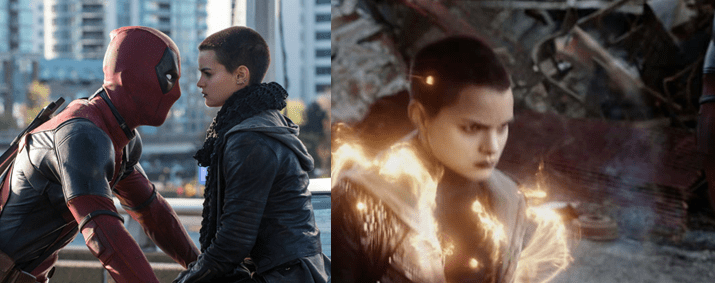
Ajax is joined by Angel Dust (Carano), a Mutant who is superhumanly strong; as is the crutch of the majority of the henchpeople in X-Men films, the role doesn’t really require much from Carano other than to stand around looking intimidating and bring the pain when required but it’s refreshing to see a woman in the role of the “muscle”. Her presence is inoffensive enough and she even manages to work in a few subtle character traits of her own here and there (she constantly chews on toothpicks and is even somewhat flustered in her fight against Piotr Rasputin/Colossus (Kapičić/Tricoteux)). Speaking of Colossus, this isn’t the underutilised character you know from previous X-Men films as portrayed by Daniel Cudmore; instead, Colossus is a colossal (pun intended) fully computer-generated character and always shown in his organic steel form. Sporting a true Russian accent and portrayed as a veteran of the X-Men, Colossus acts as Deadpool’s conscious and would-be-mentor figure as he attempts to persuade Wade away from the blood-soaking path he has put himself on and become a true hero as an X-Man. Joining Colossus is an entirely new character to these films, the preposterously-named Negasonic Teenage Warhead (Hildebrand); a typical moody, anti-social, and rebellious teenager, Negasonic mainly exists to be the butt of Wade’s numerous pop culture references, to spout equally-mean comments back to him, and to explode in atomic bursts for the film’s finale. While they could have used any other teenage X-Man for this role, the filmmakers specifically selected the character based on her striking name and had to negotiate with Marvel Studios in order to include her. While her powers may be different, she’s a decent enough character in her own right, especially coming into her own in the battlefield.

Deadpool‘s violence is just part of the film’s appeal.

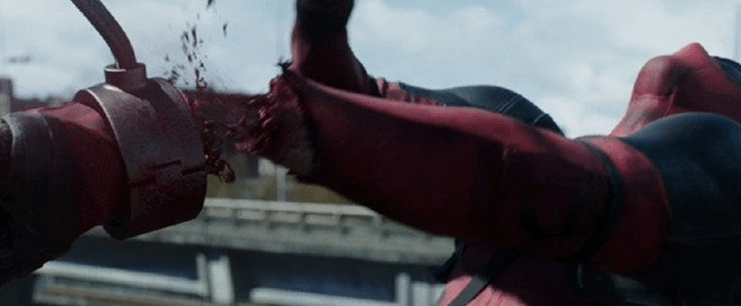
What separates Deadpool from other superhero films, though, is its presentation. Superhero films have been violent before; they’ve had swearing and killing and blood but they’ve never quite been like Deadpool. The film is an action/comedy, full of visual gags, constant one-liners and insults, and more violence than you can shake a stick at. Deadpool is relentlessly brutal in his methods, blowing brains out, splitting guys in two, and even cutting his own hand off to escape custody. He’s an insatiable killing machine, full of righteous anger but also with a surprising amount of pathos built into his character. While it’s hard to believe that the damage done to his face is enough to truly turn off any woman, much less one as devoted to him as Vanessa, the way his monstrous appearance affects his usual bold-as-brass confidence is affecting and it’s easy to buy into his quest for revenge against Ajax.

The Nitty-Gritty:
Deadpool is a brisk, non-stop action piece; the film hits the ground running and even in its slower, more poignant moments, it never drags or feels extraneous. Rather than worry itself with the disastrous continuity of the X-Men films, Deadpool exists instead in its own bubble that is adjacent to, and directly inspired by, the existing X-Men franchise but very much its own thing and it never shies away from poking fun at the films that have proceeded it or the mess Fox made of their continuity.

Deadpool is full of clever and entertaining references.

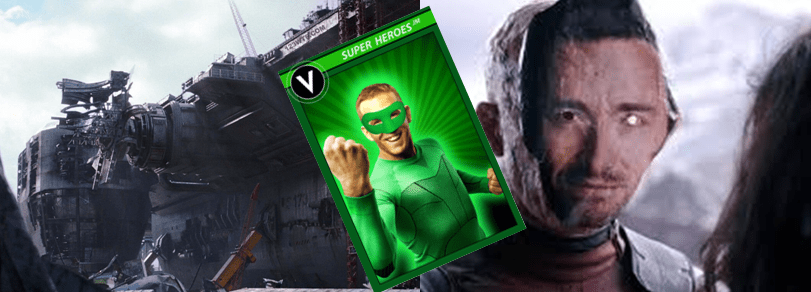
Speaking of which, the film goes out of its way to not only mock the treatment of Deadpool in X-Men Origins (Deadpool clearly acts as though that film never happened or was some kind of awful nightmare) but also Reynolds’ experiences on Green Lantern. Very little escapes the film’s humourous grilling, either; Deadpool references having to perform sordid act on Logan/Wolverine (Hugh Jackman) in order to get his own film, regards Brian Mills (Liam Neeson) as a bad father for always allowing his family to get taken, stages its entire finale on what is clearly the remains of a S.H.I.E.L.D. Helicarrier, and features two incredibly fun “cameos” from Jackman himself.

Deadpool‘s CGI and budget is put to good use and never overwhelms the film’s action or story.

Having a smaller budget really benefitted Deadpool; it meant that what little money it had had to be put to good use rather than on elaborate special effects and gratuitous CGI. It also allows the film to tell a far more grounded and focused story; the spotlight is on Deadpool the entire time, as it should be, and though it does include the X-Men they are used sparingly and in service of the film’s greater narrative rather than clogging the film’s runtime up with pointless cameos and fan service. Deadpool’s wise-cracking nature, jokes, and violent actions are fan service enough and, thankfully, remain the central hook for the film from start to finish.

The Summary:
I wasn’t really the biggest fan of Deadpool going into this film; I find X-Men comics very dense and nearly impenetrable so I hadn’t really read too much about him beyond what I saw online. This actually benefitted me in a lot of ways; it meant I wasn’t too bothered by how badly 20th Century Fox neutered the character in X-Men Origins: Wolverine and it meant that I would be seeing the film without high expectations. And, yet, Deadpool exceeds those expectations continuously the more I see it. I honestly find it difficult to talk about Deadpool; comedies are a difficult genre to really describe at the best of times, I find, and the only way you can really appreciate Deadpool’s humour and appeal is to just watch it for yourself. It really is an impressive and incredibly enjoyable action romp; even if the film hadn’t been full of gratuitous violence or swearing, there would still be loads left over to enjoy, I think, but the fact that the filmmakers just went in balls deep and decided to do an unapologetically true adaptation of Deadpool’s unique character is truly admirable. I honestly thought that the one-two-punch of Deadpool and Logan (Mangold, 2017) would open the doors for R-rated action films to once again be successful in Hollywood. That resurgence didn’t really come to pass, unfortunately, but we did get a pretty decent sequel out of it (I honestly struggle to pick my favourite of the two and often settle for just watching both back to back) and that doesn’t dilute the fact that Deadpool is an incredibly bad-ass and hilariously enjoyable experience from start to finish.

My Rating:

Rating: 5 out of 5.

Fantastic

What are your thoughts on Deadpool? Do you feel it did a better job of capturing the character’s essence than X-Men Origins: Wolverine or were there parts that disappointed you? What did you think of Ryan Reynolds’ portrayal and can you think of any other pitch-perfect castings in films? What was your first introduction to Deadpool and what do you think of him as a character? How are you celebrating Deadpool’s debut this month? Whatever your thoughts on Deadpool, and the X-Men, drop a comment below.

Back Issues: The New Mutants #98

Story Title: “The Beginning of the End”
Published: February 1991
Writers: Rob Liefeld and Fabian Nicieza
Artist: Rob Liefeld

The Background:
By the 1980s, the X-Men had become one of Marvel Comics’ most successful publications, prompting then-chief editor Jim Shooter to call for a series of X-Men-related spin-off titles. The New Mutants, a team of teenage students from Professor Charles Xavier’s School for Gifted Youngsters, came out of this need for fresh new X-Men titles; created by Chris Claremont and Bob McLeod, the first team of New Mutants debuted in September 1982 before graduating to an ongoing title that was first published between 1983 and 1991. The original team, comprised of far younger characters than those in the ongoing X-Men comics and representing a number of diverse ethnicities, eventually fell under the command of the time travelling Mutant known as Nathan Summers/Cable and was transformed into more of a mercenary team and, ultimately, reformed into X-Force. In 1991, however, Fabian Nicieza and Rob Liefeld introduced a new antagonist for this team of hot-headed youths, the mercenary known as Deadpool, and inadvertently created one of Marvel Comics’ most popular anti-heroes in the process.

The Review:
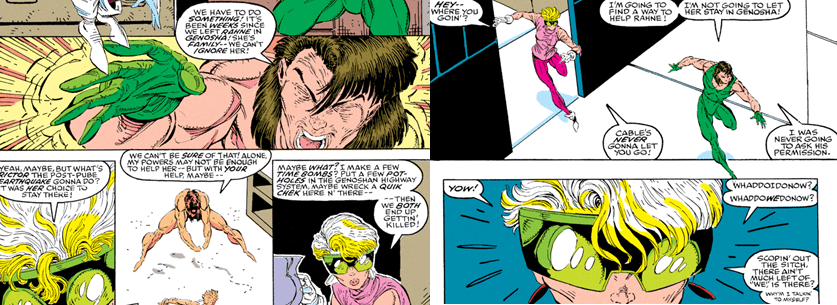
The New Mutants #98 introduces us to Gideon in the midst of a training program at Shaw Industries. Gideon is quite the enigma; possessing powers of “super human enhancement manipulation” and a very…unique sense of style, to put it mildly, he easily overcomes Sebastian Shaw’s combat modules in what appears to be a bastardised version of the X-Men’s famous Danger Room. Having wowed his underlings with his incredible performance (which mostly consists of a bit of dramatic jumping about and throwing his assailants into walls; nothing I would particularly describe as “impressive”), he runs through his itinerary for the day, paying particular emphasis on his vague plans for one Emmanuel da Costa.

Cable tries to push Cannonball’s powers to their limit.

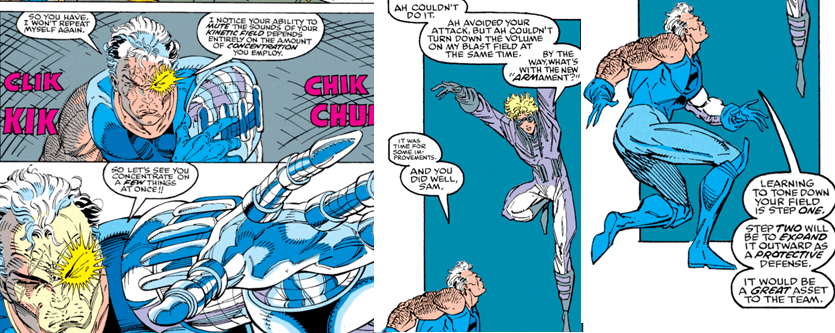
Gideon’s plot will have to wait, however, as an impressively Liefeld-esque splash page introduces us to the actual Danger Room, where Cable is engaging in a training exercise alongside Samuel Guthrie/Cannonball. Despite Cable’s rugged insistence that he doesn’t require any help, Cannonball pulls him from the grip of some giant, ugly green machine and justifies his actions by explaining that he’s supposed to be practicing at perfecting his Mutant abilities. Eager to put these to the test, Cable initiates a more aggressive counter-attack sequence and even takes pot shots at Cannonball himself with his incredibly versatile cybernetic arm. Despite failing to balance his focus on multiple threats at once, Cable commends Cannonball’s abilities and wishes for him to expand his kinetic abilities to shield the rest of the team in battle.

Rictor is determined to get Rahne back from Genosha.

Cannonball then points out that the “team” is shy a few members and Cable conveniently runs down the reasons as to why; it seems Warlock died in the line of duty recently and Rahne Sinclair/Wolfsbane’s loyalties are in question but, in any case, Cannonball takes umbrage to him and his team mates being thought of as mere soldiers rather than family but Cable, rugged and war-ravaged as always, is steadfast that the reality of their situation is that all Mutants are soldiers in the world they live in. At the Da Costa International residence, a suspicious redhead hands the aforementioned Emmanuel da Costa a fresh cup of hot coffee that proves to be his last! Just one sip Emmanuel collapses to the floor in fatal convulsions while his assassin watches with glee. Back at the New Mutants’ bunker beneath the X-Mansion, Julio Richter/Rictor and the stupidly-named Tabitha Smith/Boom-Boom are arguing about having been forced to leave Rahne back in Genosha some weeks ago. While Rictor is all for leading a full-on assault against Genosha to rescue her, Boom-Boom is against it not least because such action would undoubtedly be suicide but also because Rahne chose to stay on the island. Undeterred, and temperamental, Rictor rushes out to help his team mate with or without Boom-Boom’s assistance or Cable’s permission.

Cabel is saved from certain death by Cannonball.

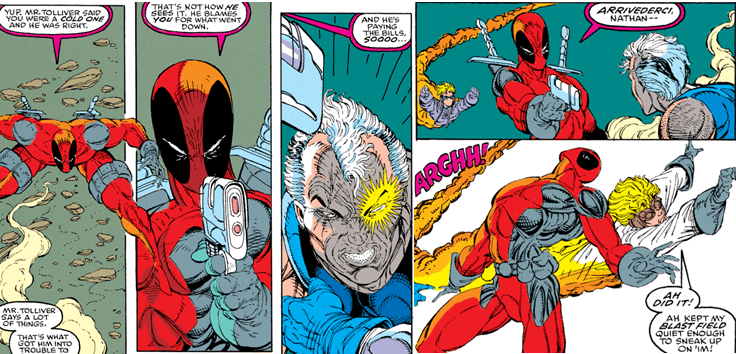
Speaking of Cable, everyone’s favourite time travelling poster boy of nineties excess is suddenly attacked while browsing the library. His attacker? None other than a mercenary known as Deadpool; sporting unique speech bubbles and a quick wit, Deadpool immediately reveals that he was hired by the mysterious “Mister Tolliver” to find, and kill, Cable (though he insists that the job is nothing personal). I’m not really sure what the beef is between Cable and Tolliver but it’s enough for the man to have hired an assassin despite Cable claiming that he wasn’t to blame for “what went down”. Without any real effort, Deadpool is in a position to end Cable right then and there with a clear headshot but the time traveller is saved just in the nick of time by Cannonball. Impressed with Cannonball’s abilities, but no less unprepared for them, Deadpool quickly disables Cannonball and returns to the task at hand; a swift blow from Cable breaks Deadpool’s jaw as the Mutant states: “You talk too much” and he’s not wrong. Deadpool has been jabbering a mile a minute since his explosive entrance and, while he doesn’t directly address the reader or break the fourth wall and is a far cry from his rude, crude, wise-cracking self we know now, he’s still full of the quips, words, and even gets side-tracked talking to himself.

Deadpool is shipped back to Tolliver and the issue ends on something of a cliffhanger…

Despite claiming that Cable has broken his jaw, Deadpool continues to assault his target with both words and attacks and is again in position to finish off his foe when Rictor, Roberto da Costa/Sunspot, and Boom-Boom join the fray. This, however, is of little worry to Deadpool, who easily subdues Rictor and is primed to finish the others off when he is suddenly felled from behind by Neena Thurman/Domino. Cable’s demeanour is noticeable changed by Domino’s presence (the New Mutants believe he is smitten with her) and they easily restrain Deadpool, deciding that the best course of action is to send him back to Tolliver to face the consequences of his failure. With that, Deadpool is gone from the story as Cable gives Domino the rundown on what is left of his team; while Rictor makes good on his promise to go and try to save Rahne and Cable states that he has a plan to bolster his ranks, the issue ends with Gideon delivering the news of Emmanuel’s death to his son, Sunspot, ending the issue on a bit of a cliffhanger.

The Summary:
“The Beginning of the End” is a perfect of example of why I tend to shy away from X-Men comic books; the lore is so dense and impenetrable, with so many characters and stories and things to remember and keep track of, that it can be very difficult to pick up an issue, even a first issue, and know exactly what is going on. As much as I love the group and its wide variety of characters, this does sour me on trying to read more X-Men adventures as things are constantly shifting and changing all the time. Having said that, though, this is obviously issue ninety-eight so it’s geared more towards a dedicated readership than a first-time reader, so those who have been following The New Mutants since their introduction are likely to get a lot more out of this.

Cable is every fanboy’s wet dream, sporting more powers than you can shake a stick at!

Even with that, though, there is some truly ugly artwork on display here; I love the excess and elaborate art of the nineties (which was all impossibly-defined characters, pouches, guns-upon-guns, and an abundance of unnecessarily dark grittiness) but even I struggle a bit with Leifeld’s signature style. Cable looks like a man-mountain in most panels, then dramatically shrinks or grows as the page dictates, and is a hodge-podge of every fanboy’s fantasy: he’s gritty and stoic, he’s got a metal arm that shoots lasers, and a bionic eye! Thankfully, he’s largely (uncharacteristically) under-equipped in this issue and is bereft of his trademark guns and pouches. He’s even caught on the back foot by Deadpool and seemingly unable to defend himself without the assistance of others, which kind of goes against the few things I know of Cable’s reputation as a “Gary Stu”. The team’s newest villain, Gideon, is equally hideous; garbed in a tight waistcoat and wearing weird gold/bronze armlets, he sports a frankly ridiculous little white ponytail on an otherwise bald head and exhibits what I am supposed to believe are exceptional physical talents in his little training simulation. As a puppet master, Gideon is clearly positioned as a kind of anti-Charles Xavier, favouring manipulative subterfuge over the more direct methods of the X-Men’s usual foes. Whatever his grand plans are, though, I find myself apathetic thanks to his uninspired presentation and little to know explanation of the scope of his powers of influence.

Deadpool is easily able to subdue the New Mutants and instantly makes an impression.

As a result, it’s pretty damn easy for Deadpool to steal the show. Looking like a twisted version of Peter Parker/Spider-Man, he (literally) explodes onto the scene and immediately looks like a formidable threat by how easily he takes Cable off-guard and overwhelms not only him but his team as well. Deadpool comes well-prepared, able to counter all of the New Mutants’ powers and abilities, and seemed poised for victory before the untimely intervention of Domino. Though he’s clearly a far cry from the self-aware, hyper-violent anti-hero we know these days, it’s clear that Deadpool has far more charisma and appeal than the likes of Gideon. We know nothing about him or his abilities and yet, through his undeniable skills and his unique style of speech, he instantly makes an impression, even more so when compared with the issue’s primary big bad. Clearly the writers thought they had something there with Deadpool as well as he is spared from execution and his storyline is left up in the air, leaving him ripe for a comeback and a brighter spotlight in subsequent issues. All-in-all, there isn’t really much to this issue of The New Mutants. Obviously Deadpool made an impression on readers at the time but I can only view the issue in retrospect and, for me, he was clearly the stand-out part of this issue and the only real reason to read this story unless you like seeing Mutants prancing around in training simulations and prattling on about their current situation. Remove Deadpool from this issue and it’s pretty much a nothing story but, thanks to his inclusion, there is at least one bright spark amidst the angst and it’s just a shame that we didn’t get to see more of him throughout the issue rather than wasting time on uninspiring nobodies like Gideon.

My Rating:

Rating: 2 out of 5.

Could Be Better

Did you ever read “The Beginning of the End” or The New Mutants back in the day? If so, what did you think of the team and the comic’s direction? What were your first impressions of Deadpool back when he debuted? Did you ever think he’d become as popular as he is today or were you, perhaps, unimpressed with his debut? If you were to assemble a team of New Mutants today, who would you pick and why? How are you celebrating Deadpool’s debut this month? Whatever your thoughts on the New Mutants, Deadpool, or X-Men in general, feel free to leave a comment below.

10 FTW: Under-Rated Sequels

10FTW

Sequels are funny things; you have to get the balance just right between providing everything people enjoyed about the first moving but expanding upon the plot and characters in a natural way. If it’s difficult for a lot of sequels to get this right, it’s even harder for third, fourth, or other sequential entries to hit the mark. There’s a few prime examples of sequels done right (Back to the Future Part II (Zemeckis, 1989), Terminator 2: Judgment Day (Cameron, 1991), and The Dark Knight (Nolan, 2008) spring to mind as some near-undisputed examples of sequels that were everything their predecessor was and more) and even fewer examples of completely perfect movie trilogies as most stumble by the third entry due to one reason or another. I can’t tell you, though, how often I’ve seen people talk shit about some sequels that are actually not that bad at all and, arguably, criminally under-rated. When movies, comics, and videogames produce remakes or other ancillary media based on these franchises, they either always complete ignore these films or openly criticise them for absolutely no reason. Today, I’m going to shed some light on ten under-rated sequels and, hopefully, try to show why they’re actually not as bad as you might think…

URSaw2
10 Saw II (Bousman, 2005)

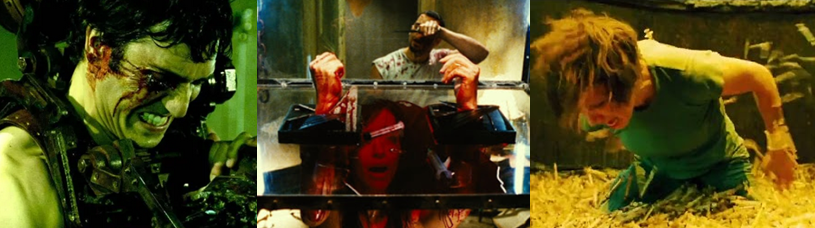
While the Saw (Various, 2004 to present) noticeably dipped in quality as Lionsgate milked the series for all its worth with sequel after sequel after sequel (most of which were actually interquels as they foolishly killed off John Kramer/Jigsaw (Tobin Bell) way too early in the series), I feel like a lot of people don’t give Saw II enough credit. Saw (Wan, 2004) was an intense, terrifying experience that saw two people trapped in a room with the only option of escape being death or sawing a foot off with a rusty hacksaw. It kick-started a whole “torture porn” sub-genre of horror, despite most of its terror coming from the horrific situations rather than copious amounts of gore. Saw II, however, put the focus on Jigsaw, who was an almost mythic figure in the first movie and wasn’t fully revealed until the film’s dramatic conclusion. Here, we delve deep into his motivations for putting people through his gruesome “tests” and this film is a worthwhile watch simply for the subtle menace exuded by Tobin Bell.

URSaw2Traps
Saw II has some gruesome traps.

Not only that, Saw II ramps up the gore and the desperation by having seven shady individuals all infected with a deadly, slow-acting nerve agent and trapped in a horror house, of sorts. The film’s tension comes from the desperation of Detective Eric Matthews (Donnie Wahlberg), who is frantic to save his son from Jigsaw’s trap and to bring Jigsaw in by any means necessary. Yes, there’s more gore and more onscreen violence and, arguably, Saw II set the standard for the myriad of sequels to come by ramping up Jigsaw’s traps and plots to an absurd degree, but this was before the series fell off a cliff. Here, minor characters from the first film are expanded upon, the lore of this world is fleshed out beautifully, and we have some of the franchise’s best traps ever.

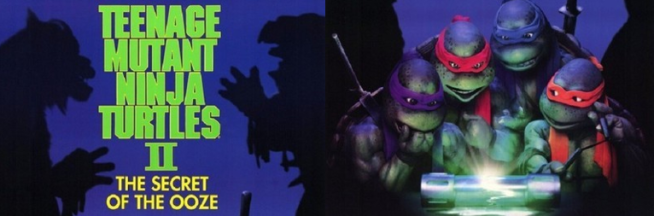
For many of us back in the nineties, Teenage Mutant Ninja Turtles (Barron, 1990) was the first time the “Hero” Turtles were depicted as being as violent and nuanced as in their original Mirage Comics run. Up until the release of this movie, the Turtles were cute, cuddly superheroes who we watched foil the Shredder (James Avery) week after week and whose toys we bought with reckless abandon. However, given how dark and violent the first film was, this sequel does a massive course correction, increasing the silliness and reducing the onscreen violence and decreasing the Turtles’ use of their weapons in an attempt to align the live-action movies more with their more kid-friendly, animated counterparts. Yet, that doesn’t mean this sequel isn’t good in its own right. The Turtle suits (once again brought to live by Jim Henson’s Creature Shop) look amazing and are probably better and more expressive than in the previous movie; the film also stays relatively close to its source material by focusing on the mutagenic ooze that created the Turtles, and it also introduced two mutant antagonists for the Turtles to fight.

Tokka and Rahzar are surprisingly formidable.

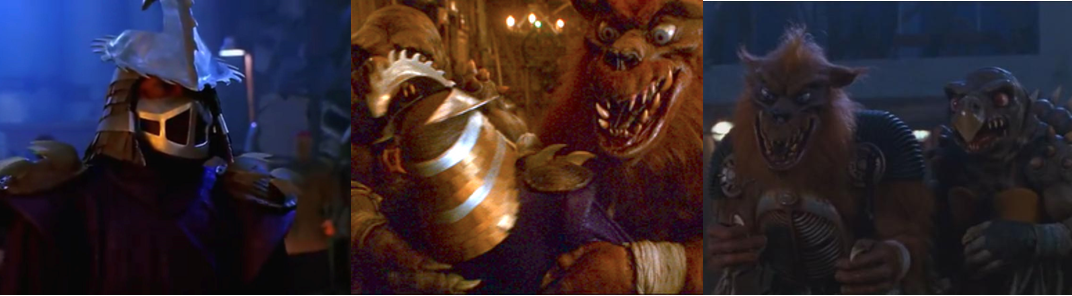
While they’re not Bebop (Barry Gordon and Greg Berg) and Rocksteady (Cam Clarke), Tokka (Rock Lyon and Kurt Bryant) and Rahzar (Gord Robertson and Mark Ginther) are a fun, welcome addition. It’s great seeing the Turtles kick the snot out of faceless members of the Foot Clan but Ninja Turtles has always been about the crazy mutated characters and these are two of the most impressive looking and formidable, especially considering their childlike demeanours. The Shredder (François Chau) also returned in this movie and is a lot closer to his animated incarnation, being decidedly more theatrical than in the first movie but no less intimidating. Probably the only thing that lets this movie down for me (no, it’s not the Vanilla Ice rap scene) is the final battle between the Turtles and the ooze-empowered Super Shredder (Kevin Nash) in which Shredder is unceremoniously defeated by being crushed under a pier due to his own foolishness. Apart from that, though, I feel this movie is the perfect balance between the dark, violent Mirage Comics and the light-hearted animated series and this balance is where the Ninja Turtles (a ridiculous concept to begin with) shine the brightest.

URBatmanMcDs
8 Batman Forever (Schumacher, 1995)

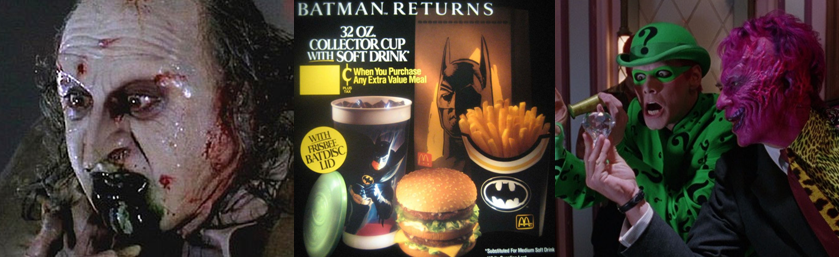
Now, admittedly, Batman Forever has its fan-base; there’s plenty of very vocal people out there who rate this quite highly among the many Batman movies (Various, 1966 to present) , especially after viewing the special edition and a lot of the deleted scenes which, had they been implemented, would probably have elevated this movie even higher. There’s a couple of reasons why this film is often unfairly attacked: one is because of how God-awful its sequel, Batman & Robin (ibid, 1997) was. That film’s over-the-top camp, painful performances, and nipple-suits are often considered so bad that both of Schumacher’s Bat-movies are unfairly lumped together and judged as a failure, when this just wasn’t the case. The second reason is because of how dramatically different it is from the previous Bat-movies; after Tim Burton brought us a dark, brooding, serious interpretation of Batman (Michael Keaton) in 1989, he was given free reign on the sequel, Batman Returns (Burton, 1992). While this made for one of my personal favourite Bat-movies thanks to Burton’s Gothic sensibilities, it upset a lot of parents (…and McDonald’s) and, similar to Turtles II, Schumacher was brought in to make Batman more “kid friendly”.

URBatmanForeverRobins
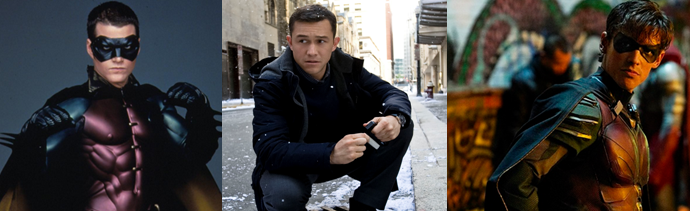
It’d be some time before Robin would truly fly again.

And yet despite the gratuitous neon lighting, the slapstick elements, and an incredibly over-the-top (and massively unsuitable) performance by Tommy Lee Jones, Batman Forever not only brought us a physically imposing Bruce Wayne/Batman (Val Kilmer) for the first time but it actually had the balls to include Dick Grayson/Robin (Chris O’Donnell). Schumacher smartly uses Robin’s origin as a parallel to Batman’s so that the film can tread familiar ground but in a new, fresh way while also bringing us one hell of a bad-ass Robin suit. Thanks to the blinkered, narrow-minded opinion that Robin (a character who has been around basically as long as Batman) is somehow “not suitable” for a Bat-movie, it wouldn’t be until the recent Titans (2018 to present) series that we would finally see Dick Grayson realised in live-action once again (though we came so close to seeing another interpretation of the character in the DC Extended Universe). Also, sue me, I grew up in the nineties and have always been a big fan of Jim Carrey’s. His performance as Edward Nygma/The Riddler might be over-the-top but his manic energy steals every scene he’s in and he genuinely looks like he’s having the time of his life channelling his inner Frank Gorshin and chewing on Schumacher’s elaborate and impractical scenery.

7 Terminator Salvation (McG, 2009)

Okay, I’m just going to come out at say it: Terminator Salvation was, hands down, the best Terminator (Various, 1984 to 2019) sequel after Terminator 2 and always will be, no matter how many times they force Arnold Schwarzenegger to throw on the shades and the jacket. After how perfectly Terminator 2 ended the series, the only smart way to produce further sequels was to have Terminators travel to other times and target other key members of the resistance (a plot point touched upon in the Dark Horse Comics, the dismally disappointing Terminator 3: Rise of the Machines (Mostow, 2003), and threaded throughout the semi-decent Terminator: The Sarah Connor Chronicles (2008 to 2009) television series) or to make prequels that focused on the war against the machines in a post-apocalyptic future. This latter idea would be my preference and, as such, I absolutely love Terminator Salvation. Is it perfect? Well, no, but it’s a different type of Terminator movie…and that is a good thing, people! Rather than making yet another lacklustre retread of Terminator 2, Salvation is, ostensibly, a war movie depicting the last vestiges of humanity driven to the brink of extinction by increasingly-dangerous killer machines.

Christian Bale always makes for fantastic casting.

Not only that, we got Christian Bale as John Connor! After the pathetic casting and portrayal of Nick Stahl (remember him?) in the third movie, we got freakin’ Batman as the last, best hope of humankind! And he gives a great performance; stoic, gritty, hardened, this is a Connor who is on the edge of accepting his true destiny and is desperate to do anything he can to stay one step ahead of Skynet. Add to that we got a pretty decent battle between Connor and the T-800 (Roland Kickinger). People like to shit on this sequence because Kickinger has Schwarzenegger’s likeness digitally laid over his face but, honestly, it isn’t that bad an effect and, if you can’t get Arnold back, this was a great way to utilise him. The only faults I have with this movie are that Connor shouldn’t have received such a clearly-mortal wound from the T-800 (I know he was originally supposed to die but, after they changed the ending, they really should have re-edited this scene to make his wound less deadly) and that the franchise has largely ignored it with subsequent sequels rather than continuing on from its open-ended finale, meaning we’ll forever be denied the bad-ass visual of an army of Arnold’s marching over a field of human skulls!

Okay, just hear me out…Attack of the Clones is not that bad, especially after Star Wars: Episode I: The Phantom Menace (ibid, 1999) focused way too much on boring shit like “trade disputes” and politics, insulted our intelligence with the dreadful Jar Jar Binks (Ahmed Best), and sucked all of the menace and intrigue out of Darth Vader (David Prowse and James Earl Jones) by portraying Anakin Skywalker (Jake Lloyd) a whiny, annoying little brat. Arguably, the Prequel Trilogy would have been better if Lucas had opted to have Anakin discovered as a young adult and cast Hayden Christensen in the role from the start as this would be a far better parallel to his son’s own journey to becoming a Jedi. Christensen is a decent enough actor and he was simply handicapped by Lucas’s dreadful script; if Lucas had opted to let someone else take another pass at his dialogue, we could have seen a bit more of the snarky banter Anakin shares with his mentor, Obi-Wan Kenobi (Ewan McGregor). Despite the copious amount of green screen and computer-generated characters thrown at us here, Attack of the Clones has a lot of visual appeal; from the city planet of Coruscant to the rain-swept Kamino and the dry lands of Geonosis, the only location that lets Attack of the Clones down is its return to the sand planet Tatooine but even that is used as a pivotal moment in Anakin’s turn towards the Dark Side.

I would’ve preferred to see what Boba Fett was capable of.

And let’s not forget the fantastic Lightsaber battles on display here; every battle is as good as the final battle from The Phantom Menace, featuring some impressive choreography and setting the stage for one hell of an epic showdown between Anakin and Obi-Wan in the next movie. While I don’t really care for Yodi (Frank Oz) being a CG character, or wielding a Lightsaber, there is a perverse pleasure to be gained from seeing Yoda flip about like a maniacal spider monkey. Oh, and this movie has freakin’ Christopher Lee in it! Unfortunately, Lee’s Count Dooku/Darth Tyranus is criminally underused in this movie and killed off all-too-soon in the sequel. Another misfire for me was Lucas wasting time introducing Jango Fett (Temuera Morrison); I’ve never really understood why people love Boba Fett (Jeremy Bulloch) so much as he’s a bit of a klutz and doesn’t really do anything, but he does have a rabid fan base and, since we never see his face in the Original Trilogy, I would have instead cast Temuera as Boba so that we could see him actually do something.

URHallraiser4
5 Hellraiser: Bloodline (Yagher (credited as Alan Smithee), 1996)

Hellraiser (1987 to present) is a horror franchise that seems to have struggled to be as successful as some of its other peers. I’ve already talked about how the original Hellraiser (Barker, 1987) really hasn’t aged very well and this applies to every sequel in the series as well as they seem to immediately age to moment they are released thanks to the decision to release every sequel after the third movie direct to video. Admittedly, a lot of my fondness for Hellraiser: Bloodline is based on two things: it was the first Hellraiser movie I was able to sit through from start to finish and was responsible for me becoming a fan of the series, and Event Horizon (Anderson, 1997) is one of my favourite science-fiction/horror movies. Arguably, Event Horizon is a far better version of Bloodline’s core concept (that being “Hellraiser…in Space!”) but there’s an important thing to remember about that: Bloodline isn’t set solely in space! Instead, Bloodline takes place in three different timelines and follows the descendants of Philippe Lemarchand (Bruce Ramsay), an 18th century toymaker who was unwittingly responsible for creating the magical Lament Configuration, a puzzle box that, when solved, summons Cenobites from a dimension where the lines between pleasure and pain are blurred.

URHallraiser4Pinhead
Pinhead has lofty aspirations in Bloodline.

Cursed for this act, Lemarchand’s descendants are driven by an inherent desire to create the Elysium Configuration, a means to forever seal the Cenobites from our world forever Dr. Paul Merchant (also Ramsay) is merely the latest in a long line of these toymakers to encounter the demonic Cenobite dubbed Pinhead (Doug Bradley) and his acolytes; unlike his predecessors, Merchant actually succeeds in his mission and destroys both Pinhead, and the portal to Hell, forever using a massive space station. There’s a few reasons I think people misjudge this movie: one is that it was absolutely butchered by Miramax, who demanded all kinds of reshoots and changes, meaning that the film’s original director’s cut has never been seen. Another is a holdover from Hellraiser III: Hell on Earth (Hickox, 1992), which saw Pinhead ape Freddy Krueger (Robert Englund) and become just another slasher villain with a twisted sense of humour. Similarly, in Bloodline, Pinhead goes from being a representative of the Order of the Gash (…lol), to wanting to unleash Hell on Earth permanently like some kind of invading force, to the point where he takes hostages and transforms people into Cenobites whether they have opened the box or not. Yet none of this changes the fact that Bloodline is a pretty decent film; we finally get to see some background into the mysterious puzzle box, there’s multiple times when the structure and history of Hell is hinted at, and there’s some really disgusting kills and gore. Personally, I rate this film higher than the second (because that film is boring) and the third simply because it doesn’t have a Cenobite with CDs jammed in its head!

4 X-Men Origins: Wolverine (Hood, 2009)

This one is gonna cost me a lot of credibility but I honestly do not get why X-Men Origins: Wolverine gets so much shit, especially considering how incoherent and screwed up the timeline and continuity of the X-Men (Various, 2000 to present) movie series became after this film. Sure, Wade Wilson/Deadpool (Ryan Reynolds) is poorly represented, some of the CG is a bit wonky, and there are a lot of flaws in the plot, but there’s also a lot to like about this film. First, and most obvious, is the film’s opening credit sequence, which many have cited as being their favourite moment of the film. Seeing James Howlett/Logan/Wolverine (Hugh Jackman) and Victor Creed (Liev Schreiber) racing through various wars is stunning and I do agree that the film really should have based around this premise and their slow degeneration into bloodlust, with Logan overcoming it and Victor giving in to it to become Sabretooth. Yet, often, I see a lot of criticism about how the X-Men movies tend to always focus on Wolverine at the expense of other Mutants…yet people still hate on this movie, which puts the spotlight entirely on Wolverine and still manages to feature some new Mutants and fill in a few plot points along the way. We get to see Logan’s time in Team X, the full extent of the procedure that gave him his Adamantium skeleton (although we miss out on the feral Wolverine showcased so brilliantly in the otherwise-disappointing X-Men: Apocalypse (Singer, 2016)), and even how unknowingly pivotal he was in bringing the original X-Men together.
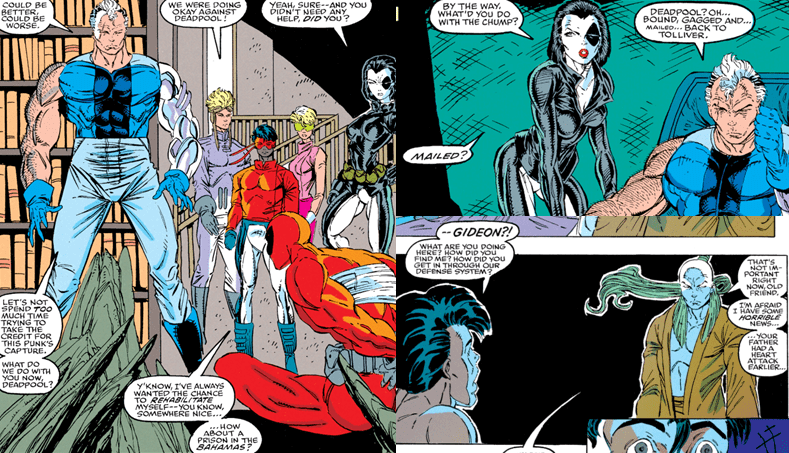
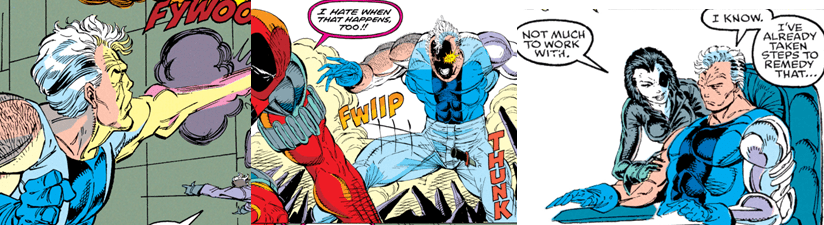
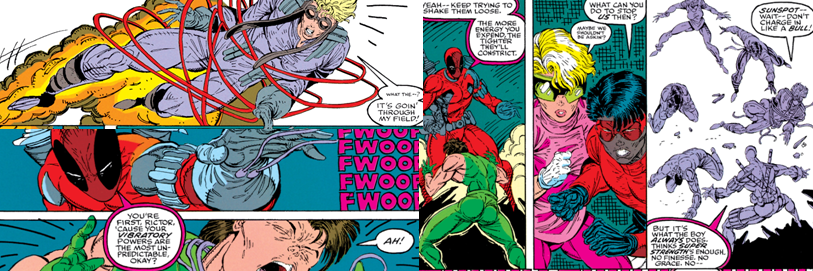
The cast for Origins was pretty much perfect.

The casting really makes this movie shine: Jackman is at his most jacked as Wolverine and, while he’s a little too tame compared to what you’d expect from this point in his life, he always brings a great intensity and charisma to his breakout role. Schreiber was an inspired choice to portray Logan’s brother, who (it is strongly hinted) eventually succumbs to his animalistic ways to become Sabretooth (Tyler Mane), bringing a nuanced menace and sophistication to what is normally seen as a feral character. Danny Huston is always great as a smug, scenery-chewing villain (though he doesn’t exactly resemble Brian Cox) and Reynolds gave a great tease at what he was capable of as everyone’s favourite “Merc with a Mouth” (…until it was sown shut). We also get some new Mutants, which I appreciate even more after subsequent sequels could never seem to let go of having teleporting demons involved in their plots; Fred Dukes/The Blob (Kevin Durand) is fantastically realised in the movie and has a great (and hilarious) boxing match with Logan and everyone’s favourite card-throwing Cajun, Remy LeBeau/Gambit (Taylor Kitsch) also makes his one (and, so far, only) film appearance here. I only expected a brief, unsatisfying cameo from Gambit but he actually has a surprisingly substantial role. Could it have been bigger? Sure, but I’d say he was treated a lot better than Deadpool (who, it should be remembered, was still planned to get a spin-off from this film).

3 RoboCop 2 (Kershner, 1990)

Now, don’t get me wrong: I love RoboCop (Verhoeven, 1987). It told an easily self-contained story of Detroit City police officer Alex Murphy (Peter Weller) being rebuilt from death as a bad-ass cybernetic enforcer of the law and rediscovering his humanity. It’s a classic film, with some amazing effects, hilarious commentary on consumerism, media, and corporate greed, and would be a tough act for anyone to follow. Yet, call me crazy, but RoboCop 2 succeeds far more than it fails. RoboCop has a fresh coat of paint and has (literally) never looked better onscreen; he’s just as efficient and pragmatic as before and, though he seems to have regressed back to a more mechanical mindset, he still exhibits a great deal of humanity but in new and interesting ways. First, he is routinely referred to as “Murphy” by other officers (particularly Anne Lewis (Nancy Allen), his partner) and struggles so badly with reconnecting with his wife and son (who believe that Murphy is dead and buried) that he routinely stalks them, which contributes to his superiors deciding to reprogram him. This results in a deliciously over-the-top sequence where RoboCop, his head full of insane, politically correct directives, tries to calm situations with talk rather than bullets. It eventually becomes so maddening that he is forced to electrocute himself just to clear his head enough for him to focus on the big bad of the film, Cain (Tom Noonan).

RoboCain is an impressively ambitious inclusion.

Now, Cain and his psychopathic gang of untouchable drug dealers are great, but they’re not Clarence Boddicker (Kurtwood Smith); instead of Clarence’s manic energy, Cain brings a quiet, intellectual approach to his menace. He also manages to dismantle RoboCop’s metallic body, just as Clarence destroyed his human one, and is eventually able to go toe-to-toe with RoboCop as the frankly fantastic RoboCop 2 (or “RoboCain”). If you liked ED-209 from the last movie, RoboCain is bigger, badder, and better. A combination of animatronics and stop-motion, RoboCain was an ambitious choice for the film and actually works really well considering the technological limitations of the time. The fight between Cain and RoboCop also holds up surprisingly well and is far more interesting than Robo’s encounters with ED-209 thanks to the villain being far more versatile than his clunky counterpart. I think what brings this movie down, for many, is that Cain’s gang aren’t as charismatic or memorable as Boddicker’s (I can only name two of Cain’s guys off the top of my head, whereas I can name at least five of Boddiker’s), some of the plot is a bit redundant (Robo’s story arc is, essentially, a truncated version of the same one from the first), and the awfulness of subsequent RoboCop movies leaving such a sour taste that people assume all RoboCop sequels are terrible…and that’s just not the case.

2 Predator 2 (Hopkins, 1990)

Okay, full disclosure: as a kid, I was not a fan of this movie. I loved Predator (McTiernan, 1987); it was over-the-top, filled with massive action heroes, and featured a tense build-up to one of cinema’s most memorable alien creatures. The sequel just seemed to be lacking something; maybe it was because we’d already seen the Predator (Kevin Peter Hall) in its full, gruesome glory and didn’t really need to go through the suspense of its eventual reveal all over again. Replacing Schwarzenegger is Danny Glover’s Lieutenant Mike Harrigan, a hardened, smart-mouthed loose cannon who plays by his own rules (as was the tradition for any cop worth a damn in cinema back then). I was in awe at Schwarzenegger as a kid so it was disappointing to go from him to Glover but, honestly, Glover is probably better in many ways: his anti-authoritative, roguish nature makes him more relatable as a character and the fact that he actually gets hurt and struggles to physically prevail makes him far more human. He’s a much more believable protagonist in a lot of ways and, thanks to his more developed acting chops, is more than a suitable replacement for Arnold. Predator 2 also takes the titular hunter out of the jungle and places him in the next most logical place: the concrete jungle. Now, a lot of people hate this change; even Arnold hated that the Predator would be in Los Angles for the sequel but…surely doing the sequel in the jungle again would have just resulted in exactly the same movie as before?

Predator 2 established almost all of the Predator’s lore and society.

It’s so weird that people rag on the city setting as it makes perfect sense, is realised really well, and even set the ground for a lot of the Dark Horse comics. No other sequel around this time repeated the first in this way; Aliens (Cameron, 1986), Terminator 2, Batman Returns, Lethal Weapon 3 (Donner, 1992), just to name a few, all fundamentally alter the concept of the first movie rather than rehashing it so why does Predator 2 get such a hard time for doing it (and doing it well, I might add)? To make matters worse, Predator 2 has been criminally overlooked in subsequent sequels; there was no mention of the film’s events at all in the otherwise-excellent Predators (Antal, 2010), a film that went out of its way to reference (both through homage and direct mention) the first movie, and it only gets a passing mention in the disappointing The Predator (Black, 2018). Jake Busey, son of Gary Busey, even featured as an expert on the Predator species but there was no mention in the film of his relationship to Busey’s character, Peter Keyes, despite the two being father and son! I’ll never understand this; it’s a real insult, to be honest. Predator 2 brought so much to the table; it defined the honour system of the Predator species, introduced a whole bunch of the alien’s iconic weaponry, and laid the foundation for comic books, videogames, and sequels and spin-offs to follow for years to come. Subsequent movies have no problem reusing the weaponry or the culture of the Predator introduced in this movie but when it comes to actually directly referencing the film’s events they shy away and why? It’s a great film! Great kills, great action, great tension, some fantastic effects, and a super enjoyable chase sequence between the Predator and Harrigan across the streets and rooftops of Los Angeles! I just don’t get the hate, I really don’t.

1 Ghostbusters II (Reitman, 1989)

Man, if you thought I was mad about Predator 2, just wait until you hear this one. Ghostbusters II suffers from a lot of the plagues of Predator 2, and other films on this list: it’s unfairly criticised for not being exactly the same as the iconic first film, it’s overlooked time and time again, and direct references to it are few and far between. Just look at the majority of Ghostbusters-related media; be it toys, videogames, or otherwise, the characters almost always look exactly like the first movie rather than this one. And why? Because it doesn’t have the Stay Puft Marshmallow Man in it. Give me a fuckin’ break! As much as I love him, and that entire sequence, it wouldn’t make any sense of Mr. Stay Puft to appear in this movie! The Ghostbusters destroyed it when they defeated Gozer the Gozerian (Slavitza Jovan and Paddi Edwards) and this movie revolves around an entirely different villain and plot so why bring it back? I guess audiences were just used to antagonists returning ins equels at that time but to judge this movie just for not having Mr. Stay Puft is not only unfair, it’s down-right stupid.

The river of slime always freaked me out as a kid.

After all, it has the Statue of Liberty coming to life instead! Sure, it doesn’t match up to Stay Puft’s rampage, but it’s still pretty decent. Also, the film’s antagonist, Vigo the Carpathian (Wilhelm von Homburg), is voiced by Max von Sydow, who is an absolute legend. Vigo’s threat is arguably much higher than Gozer’s in a way as his mood slime has been brewing under New York City for decades and is the direct result of all the animosity in the world (…or, just New York, which is bad enough). It’s powerful enough to cause ghosts to go on a rampage again and turn the Ghostbusters against each other, and is a far more grounded threat than Gozer’s plot to destroy the world. The stakes are raised in Ghostbusters II through the fact that the titular ‘Busters have been forced to disband and go their separate ways. Through this, we see something that is also often overlooked about this movie: character growth. Would you criticise Ellen Ripley’s (Sigourney Weaver) character growth in Aliens? Well, yes, probably; you are the internet after all but this plot point allows Ghostbusters II, like RoboCop 2, to retread the familiar ground of the disgraced Ghostbusters being called upon to save the city in a new way. The characters are all a bit more haggard after how badly the city burned them so seeing them rise up regardless, to the point where they’re even able to resist the mood slime, is a great arc.

There are some really horrific scenes in this film…

Add to that the film’s consistent and enjoyable special effects, the truly gruesome sequence in the abandoned Beach Pneumatic Transit system, and a creepy performance (as always) by Peter MacNicol and you’ve got a film that, like Turtles II, is more than a worthy follow-up to the original. And, yet, like I said, this film is often overlooked, almost with a vendetta. It doesn’t help that co-star Bill Murray despised the movie, which is always bad press for any film; his cantankerous ways also constantly held up the long-awaited third movie to the point where we had to suffer through that God-awful reboot before a follow-up would be approved. Despite Murray’s opinions, Ghostbusters II has managed to endure in some respects, though; characters and events were directly referenced in Slimer! and the Real Ghostbusters (1988 to 1991) and Vigo’s portrait was prominently featured in the true third entry, Ghostbusters: The Video Game (Terminal Reality/Red Fly Studio, 2009). In fact, I was very surprised that Ghostbusters: Afterlife (Reitman, 2021) didn’t completely ignore this movie and even then it barely references it.

URGhostbusters2Conclusion

Do you agree with my list? I’m guessing not and you think most of these movies are terrible but why do you think that? Are there any other under-rated sequels you can think of? Write a comment and give me your thoughts below.

10 FTW: Things I Hate About Movies

10FTW

So, when it comes to movies, I am surprisingly optimistic. This may be because I would never pay to see a movie if I wasn’t reasonably sure that I was going to enjoy it and because I stick to genres and franchises that I know I like, but I usually go into a film with certain expectations and, as long as those are met, I am generally satisfied. With that said, there are some things about movies that drive me mad…or, at least, annoy me. Tropes that I would like to see less or, if not phased out entirely, and I’m come up with ten of them to rant about right now.

10FTWGuardians
10 Lack of Opening Credits

I’m fairly certain I’m the only person who cares about these days, where everyone is all about cutting right to the action, and I do understand that but there’s something I find innately lazy and annoying about not even seeing the movie’s title appear onscreen at the start of a film. We have to sit through grandiose logo sequences for movie studios, some that last about three minutes and sometimes watching up to five in quick succession, but we can’t just plaster the movie’s title on the screen? I believe the earliest I was exposed to this was in RoboCop 2 (Kershner, 1990) but it’s become especially noticeably in the works of Marvel Studios. I’m not expecting entire cast credits, as these can be admittedly annoying to sit through (though you can just place them over the opening scene, as in Batman v Superman: Dawn of Justice (Snyder, 2016) or the Guardians of the Galaxy (Gunn, 2014 to 2023) films, but just throw the movie’s title up there and help me out a bit!

10FTWSpidey
9 Pointless Post-Credit Scenes

I am a sucker for post-credit scenes; Marvel Studios have popularised this to the point where it’s now expected that every movie has some kind of pre-, mid-, or post-credits scene. Unfortunately, a lot of them aren’t really worth sitting through ten minutes of credits for. Marvel have become especially lazy with this in recent years; no longer to their post-credit scenes set up further events or hints of things to come and, instead, they’re usually just throwaway gags or scenes purposely made to troll us (I’m looking at you, Spider-Man: Homecoming (Watts, 2017)!) These days, it seems like the pivotal, must-see scenes for Marvel movies now come before the credits rather than after them and the worst thing about a lot of these is that they are often used to hint at sequels that either never come or are fundamentally altered between movies; this is especially true of the DC Extended Universe but it also applies to the Dark Universe, which is seemingly dead in the water.

10FTWRaiders
8 Mismatching Title Fonts

Another thing that really bugs me is when movies use a specific title font for the posters, merchandise, and DVD covers but never actually use this font or logo in the film. Take Raiders of the Lost Ark (Spielberg, 1981), which has that awesome orange font for its logo but instead uses a simpler, less grandiose font in the film. What’s worse is that Spielberg used the Indiana Jones logo for Indiana Jones and the Temple of Doom (ibid, 1984) but reverted back to the much less exciting font for the subsequent Indy films. While Christopher Nolan’s Dark Knight trilogy (2005 to 2012) may not have had the most exciting title font ever, at least this was uniform across the film and merchandise. It seemed like Warner Brothers were employing this as the standard font for their DC movies…until Green Lantern (Campbell, 2011) ruined it by using the basic font on the posters and a far more exciting, comic-inspired font in the movie!

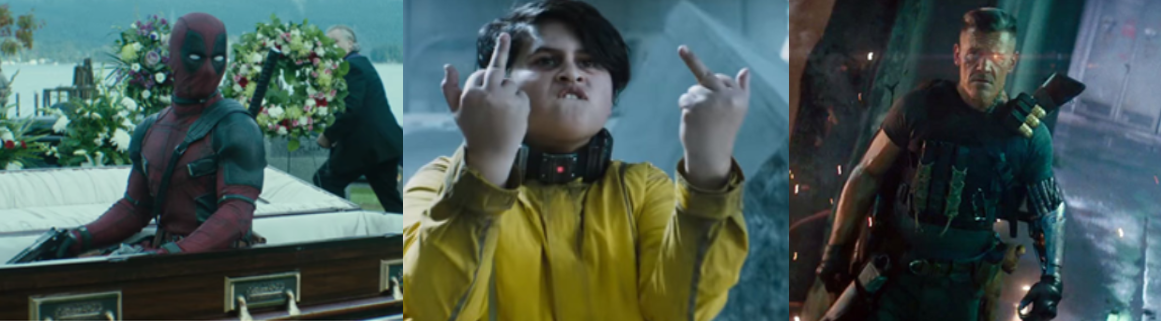
7 Prequel Sequels

You know what really gets my arse up? Numbers in movies are sequential; you have the first movie, then the second, then the third and so forth so, when movies use a number in their title, a 2 should mean it’s the second movie and, therefore, a continuation of the first. But, instead, movies like to slap a 2, 3, or even a 4 on there when, in actual fact, it’s a prequel! Tarzan 2 (Smith, 2005) and Insidious: Chapter 3 (Whannell, 2015) are perfect examples of this but, for a better example, take a look at the Scorpion King (2002 to 2018) franchises! The Scorpion King (Russell, 2002) is a spin-off of the Mummy (1999 to 2008) franchise, taking place before The MMovie Night: The Mummy (1999)ummy (Sommers, 1999). Its sequel, The Scorpion King 2: Rise of a Warrior, despite having a 2 in its title, is actually a prequel with the subsequent three sequels all being sequels to The Scorpion King, resulting in the following viewing order:

The Scorpion King 2: Rise of a Warrior
The Scorpion King
The Scorpion King 3: Battle for Redemption
(Reine, 2012)
The Scorpion King 4: Quest for Power (Elliot, 2015)
The Scorpion King: Book of Souls (Paul, 2018)
The Mummy
The Mummy Returns
(Sommers, 2001)
The Mummy: Tomb of the Dragon Emperor (Cohen, 2008)

6 Senseless CGI

I grew up in an age where special effects were constantly evolving, where complex camera techniques and detailed prosthetics were the order of the day. Consider the laborious effort that went into composting all of the matte paintings, models, and sets in Aliens (Cameron, 1986), a film that also employed fantastic suits, miniatures, and puppets that really made it seem as though there were hundreds of Xenomorphs out for Sigourney Weaver’s blood. Nowadays, filmmakers just CGI the hell out of it and be done with it and, while this can result in some breath-taking movies and action scenes, often it’s an egregious use of a tool that should be used to enhance films rather than overwhelm them. Let’s talk, again, about George Lucas, one of the pioneers of practical effects, who used puppets, models, and complex filming techniques to craft his original Star Wars trilogy (1977 to 1983). However, when it came time for him to produce the prequel trilogy (1999 to 2005), he used nothing but green screens, digitally adding almost every element of the films in after this actors stumbled through scenes with no frame of reference. Honestly, just because you can use CGI to create all the Clone Troopers doesn’t mean you should and, to me, it just seems unnecessarily lazy and an arrogant use of your time, budget, and resources.

5 Panic Stations

I’m probably the only person who will admit to liking the Marc Webb/Andrew Garfield Amazing Spider-Man films (2012; 2014). I loved the suit in The Amazing Spider-Man, the slightly different take on Peter Parker’s origin, and that it looked like Sony were finally going to be setting up the Sinister Six…and then The Amazing Spider-Man 2 happened. Despite making $700 million worldwide against a nearly $300 million budget, reception of the film was mixed and, rather than finish the series off with a finale, Sony finally decided to cooperate with Marvel Studios and opted to bring Spider-Man into the MCU. However, rather than integrate the MCU with the Amazing films (as had been previously suggested), Marvel Studios opted to complete recast the character, bringing in Tom Holland. Now, I like Holland as Peter/Spidey, but his introduction in Captain America: Civil War (Russo Brothers, 2016) came just two years after Garfield’s last appearance. Considering The Amazing Spider-Man rebooted the franchise only five years after Spider-Man 3 (Raimi, 2007), that is a lot of reboots and changes to Spider-Man in a very short amount of time. Halloween (Green, 2018), Hellboy (Marshall, 2019), and Terminator: Dark Fate (Miller, 2019) are also guilty of this, falling back on rebooting, retconning, or straight-up ignoring previous movies and returning “to their roots”. The DCEU has also suffered from Warner Brothers panicking to the reactions to their darker, gritty comic book movies, which caused Justice League (Snyder/Whedon, 2017) to suffer from rewrites and drastic changes.

10FTWWilhelm
4 The Wilhelm Scream

The Wilhelm Scream used to be cute, a fun little recurring gag in movies. Like the creator cameos (popularised in recent years by Stan Lee showing up in Marvel movies), this used to be a fun Easter Egg for knowing audiences. Now, though, I have come to really despise this over used sound effect. It has been done to death in the Star Wars and Indiana Jones films alone but seems to crop in every movie you see these days and I am just so sick of hearing it; it really takes me out of the experience and just makes me grimace every time it gets snuck in there.

3 Daft Movie Titles

Movie titles should be simple and striking; they should relate what’s going to happen and give the general gist of the movie. They should not be a chore to read or be indistinguishable from other film titles and, yet, we live in a world with films like The Mummy: Tomb of the Dragon Emperor, Batman v Superman: Dawn of Justice, Fantastic 4: Rise of the Silver Surfer (Story, 2005), and Rise of the Planet of the Apes (Wyatt, 2011). Here’s some alternative titles just for those movies: Tomb of the Mummy, Fantastic 4: Doomsday, Rise of the Apes. As for Batman v Superman, I don’t think it ever should have had a title at all; it literally should have just been the Batman and Superman logos on top of each other, with the film referred to as Batman/Superman. Let’s not forget such lazy titles as Solo: A Star Wars Story (Howard, 2018), The Wolverine (Mangold, 2013), and The Dark Knight Rises, all of which could have easily been called Smuggler’s Run, Wolverine: Ronin, and Knightfall. Don’t even get me started on all the movies we got with Rise of, Age of, and Dawn of in their titles not that long ago!

2 Repeating Past Mistakes

I’m looking at Spider-Man 3 for this one; by the time that movie came out, it was pretty well known that a lot of comic book fans weren’t too happy with the revelation that Jack Napier/the Joker (Jack Nicholson) was the man who gunned down Bruce Wayne’s (Michael Keaton) parents in Batman (Burton, 1989). Yet, Sam Raimi seemingly didn’t hesitate at all to do exactly the same thing when he fingered Flint Marko/Sandman (Thomas Hayden Church) as the gun man in his movie. And why? Just so there would be a “connection” between Peter Parker/Spider-Man (Tobey Maguire) and Sandman…despite the fact we already had a personal connection between Spidey and Harry Osborn/”New Goblin” (James Franco). It wasn’t the only mistake he made in that movie but it was one of the most baffling, especially considering all the controversy surrounding the Joker revelation. We saw a similar situation when Green Lantern decided that Parallax (Clancy Brown) would be much more effective as a big ol’, CGI mess of a space cloud, something that worked out just as well for Galactus in Rise of the Silver Surfer. Similarly, Justice League didn’t earn itself any favours by repeated the same “big fight against a CGI monstrosity” from both Batman v Superman and Suicide Squad (Ayer, 2016), which were its direct predecessors and the subject of a lot of online backlash.

1 Ignoring Continuity

I touched on this earlier but there’s nothing I hate more than a film series or sequels completely ignoring their established continuity. The X-Men (Various, 2000 to present) series is the worst offender of this, throwing continuity out of the window with every entry and thinking it’s cute to poke fun at it in their Deadpool (Various, 2016; 2018) spin-offs. The Terminator series (Various, 1984 to present) is also just as bad with this, mainly because the film rights keep being passed between different studios and bodies, but it seems like every new Terminator movie disregards chunks of, if not the entirety of, their previous entries, making for a disjointed franchise that’s difficult to care about, with Terminator: Dark Fate being a mish-mash of its predecessors rather than something fresh and new. I get that, sometimes, aspects of films or entire movies/sequels aren’t received too well but I would much rather the screenwriters tried to address and move on from any problems rather than simply ignoring them or waving them away. If you’re just going to ignore what’s come before, make a remake or reboot and start completely fresh; otherwise, try something a little lazy than just ignoring entire movies.

How about you? What tropes of movies and cinema do you dislike? Let me know in the comments, or if you think I’m full of shit.

Movie Night: X-Men: Dark Phoenix

XMenDPLogo

Released: June 2019
Director: Simon Kinberg
Distributor: Walt Disney Studios Motion Pictures
Budget: $200 million
Stars: James McAvoy, Sophie Turner, Jessica Chastain, Tye Sheridan, Nicholas Hoult, Michael Fassbender, and Jennifer Lawrence

Plot:
Ten years after the events of X-Men: Apocalypse (Singer, 2016), the X-Men have become celebrated superheroes. After answering a distress call from NASA, Jean Grey (Turner) is exposed to cosmic energies that send her powers rampant. With their teammate confused, conflicted, and being corrupted, the X-Men find their loyalties and friendships tested as they race to keep Jean from harming others with her newfound powers.

Background:
The X-Men franchise (Various, 2000 to present) has had a tumultuous history in recent years; after X-Men (Singer, 2000) helped audiences to take superheroes films seriously and popularise the genre as a money-making endeavour, the series has taken a bit of a downturn since 20th Century Fox decided to produce a series of films stupidly marketed as prequels that were actually soft reboots that have done nothing but screw up the franchise’s continuity and timeline with each instalment. X-Men: Apocalypse is largely regarded as being a disappointment, despite making a load of money at the box office, and, in the years since its release, 20th Century Fox has been acquired by Disney, meaning that the X-Men will soon be integrated into the Marvel Cinematic Universe in some way, shape, or form. However, X-Men: Dark Phoenix, was already in production before this purchase, meaning that this is the last gasp for this franchise in its current form.

The Review:
Considering that Disney will one day bring the X-Men into the MCU, Dark Phoenix seems largely redundant; the timeline and continuity of the films, and this franchise, is too messed up to sustain itself much less be integrated into the MCU without a complete recast and reboot, meaning that it really doesn’t matter how good, or bad, this film is, what it does, or how it ends. As a result, there’s a distinct lack of agency and investment when watching Dark Phoenix and all you can really hope for is that it does a better job of adapting the much-lauded Dark Phoenix Saga (Claremont, Bryne, et al, 1976 to 1977) than X-Men: The Last Stand (Ratner, 2006). The answer is that it does, in some ways, and doesn’t in other ways; for example, making the Phoenix a dark, suppressed aspect of Jean Grey’s (Famke Janssen) personality was actually a much neater, relatable way of realising the character in the grounded, semi-realistic context of the first X-Men movies. Dark Phoenix, however, uses the space element by having Jean bombarded with a destructive cosmic force that simply enhances her powers to dangerous levels.

XMenDPVuk.PNG
Vuk seeks to obtain or control to Phoenix Force.

If this is more comic accurate then I guess that’s fine but Dark Phoenix also introduces a bunch of shapeshifting aliens, the D’Bari, who come to Earth seeking to obtain or control the cosmic force. Their primary agent, Vuk (Chastain), manages to help twist Jean against her team mates to facilitate her turn into the titular Dark Phoenix but there’s something off-putting about aliens suddenly and so awkwardly being thrust into this franchise that I found a little jarring. I think the D’Bari could have just as easily been a radical group of Mutants who see Jean as their saviour or they could even been replaced completely by Erik Lehnsherr/Magneto (Fassbender) and his Brotherhood of Mutants, similar to how Magneto (Ian McKellen) helped to corrupt Jean in The Last Stand.

XMenDPCostumes.PNG
The X-Men are decked out in matching, comic-accurate costumes.

There are some other questionable choices at work here as well; for example, at the end of X-Men: Apocalypse, the X-Men were decked out in some very swanky, mid-nineties comics-accurate costumes that they have promptly ditched in favour of uniform suits to help emphasise that they are a team to the media and society, while these are also comic accurate, it’s a shame we never got to see Scott Summers/Cyclops (Sheridan) rocking that outfit from the end of X-Men: Apocalypse. Also, Professor Charles Xavier (McAvoy) undergoes a bit of an odd character twist in this movie; despite apparently reuniting with Moira McTaggert (Rose Byrne) in X-Men: Apocalypse, Moira is nowhere to be seen and, instead, Xavier is basking in the adulation of the media and the relationship he has with the US government (which includes a hot line directly to the Oval Office and public commendations from the President (Brian d’Arcy James)). This changes Xavier’s entire motivations from the preservation of Mutantkind and the protection of humanity to an ego trip and skews his entire drive to forming the X-Men into wanting fame and respect, which is very jarring and out of character. At the same time, Xavier is also portrayed as being less than noble due to tampering with Jean’s mind, which raises the ire of Hank McCoy/Beast (Hoult) so much that he brands Xavier a monster and joins forces with Magneto. Yet, Xavier’s tampering is nowhere near the level seen in The Last Stand and you would think that one of his closest friends and allies, who stuck with him through addiction and the deaths of their team mates, would see that he was just trying to protect Jean.

XMenDPBeast.PNG
Grief forges some unlikely alliances.

Instead, both Hank and Jean turn to Magneto in their time of need, which is a very odd way to push the character into the plot. Magneto has formed a community of Mutants of the island of Genosha and has no desire to be involved in the outside world any more. Personally, I am glad that Dark Phoenix is the end of this series of movies as I am so sick of seeing each of these films jump forward another ten years and find yet another preposterous way of neutering Magneto; at the end of X-Men: First Class (Singer, 2011), Magneto had evolved into a fully-costumed version of the character who was actively recruiting Mutants for his Brotherhood and seeking to attack humanity but, in X-Men: Days of Future Past (ibid, 2014) he was in jail and portrayed as an anti-hero who was trying to protect Mutants until the end when he became a fully-costumed version of the character seeking to attack humanity. Then, in X-Men: Apocalypse, he inexplicably had a family and had retired from his “war” until he became a fully-costumed version of the character seeking to attack humanity…and then redeemed himself at the end and now, once again, he’s back to simply being another dark shade of grey in a film largely comprised of characters who are struggling between good and evil. As for the other X-Men, Sheridan actually has a decent amount to do as Cyclops but every quickly takes a backseat as Xavier leads the X-Men into battle to try and save Jean. He, like Kurt Wagner/Nightcrawler (Kodi Smit-McPhee) and Ororo Munroe/Storm (Alexandra Shipp) simply follows Xavier’s leads and orders without question and each of them are simply…there…because they are X-Men.

XMenDPJean.PNG
Sophie Turner is absolutely stunning…

Cyclops gets a bit more to do given that he’s emotionally and physically involved with Jean but, once again, this adaptation of the Dark Phoenix Saga is less about Scott and Jean’s relationship than it really should be. Luckily, as I mentioned before, Sophie Turner is absolutely gorgeous; she portrays Jean’s conflict and emotion very well, seems to relish the opportunity to do more and showcase more range, and is absolutely stunning. I live for the day when she and Amber Heard can be onscreen together; I may actually die! Given that the main plot of the movie revolves around Jean struggling with her increasingly out of control powers, X-Men: Dark Phoenix is more about characters and deconstruction their relationships than it is about action sequences. Jean’s powers and abilities increase and become more destructive as the film goes on, which makes her a real threat to the other characters, and there is a pretty good action scene that takes place on a train but the film is more about the emotional rollercoaster of Jean’s turn and struggle with her morality. Unfortunately, given that we know that this is the last film for this interpretations of these characters, it’s difficult to care about that, especially as Jean was only introduced in the last X-Men movie and it’s hard to be that invested in her sudden emotional struggle when she’s not a very well fleshed out character. Hell, we’ve followed Xavier, Magneto, Beast, and Raven Darkhölme/Mystique (Lawrence) this whole time and it’s hard to really be that invested in them as they undergo exactly the same character arcs in each movie, never age despite being in their sixties at this point, and have some questionable character arcs in this movie that basically make them either bland (in the case of Mystique), completely different (Xavier), or one-note (Magneto) despite strong performances by McAvoy and Fassbender.

The Nitty-Gritty:
If you’ve watched the trailers for this movie, you may have guessed that Jean kills Mystique in this film and, honestly, I could not be happier about that. I am not a fan of Jennifer Lawrence and her performance as Mystique leaves a lot to be desired, especially in this film, where she basically sleepwalks through every scene she’s in. I really don’t like Mystique being the field leader of the X-Men and every line she says is so stilted and forced that it’s a pain to watch. Luckily, though, she tried to appeal to Jean’s good nature and, unable to control her new powers, jeans blasts her away and impales her on some debris, finally ridding us of the character once and for all.

XMenDPXavier.PNG
Once again, we’re forced to question Xavier’s morality.

I mean, obviously that completely destroys the timeline, but the X-Men timeline is completely fucked at this point anyway. Peter Maximoff/Quicksilver (Evan Peters) is back and now part of the X-Men team but, as always, he’s basically there for one slow-motion action sequence before he is blasted by Jean and hospitalised for the entire movie until the epilogue because, as always, his super-speed would allow him to end things to quickly and, rather than try and use the character in a decent way or tie up the lingering plot thread regarding his parentage, lazy writing took precedence and he was relegated to little more than a cameo. As mentioned, Xavier tampers with Jean’s mind a bit in this movie; this time, he blocks out traumatic memories of when she caused her parents’ car to flip and accidentally killed her mother. The cosmic forces causes some of these memories tor eturn and she flips out, turning against Xavier almost instantly despite the truth being that her father was afraid of her and Xavier took her in to raise as his own in a protected environment, which you would think she would know simply by virtue of being….raised by Xavier in a protected environment. Instead, Beast, grieving for Mystique, rages at Xavier for his actions, Jean tries to kill him, and Magneto treats Xavier as the “real bad guy” simply because he tried to spare a young girl from relieving a traumatic memory.

XMenDPSpace.PNG
A cosmic force corrupts Jean’s powers.

Jean going to Genosha is such a weird scene; she has no reason to really go there and asking Magneto how he stopped killing is a pretty flimsy reason to go. She’s literally there just so the X-Men cane find out where she is and also go and all get captured by the government; it would have made much more sense to have Magneto take Vuk’s place and offer Jean sanctuary, only to turn on her in the same way once he realised/found out that she killed Mystique. Beast teaming up with Magneto was equally weird, given their history, but I guess makes a bit of sense given that he knows Magneto will want Jean dead after she killed Mystique, though the X-Men turned on and fought against each other pretty quickly and easily when you think about it. Similar to The Last Stand, the actual Dark Phoenix stuff ends up being quite lacklustre and rushed; again, since we haven’t really been following Jean’s story for that long, it’s hard to be that invested in her turn to the dark side. I really think these movies would have benefitted from being complete, obvious reboots set entirely in the mid-sixties to late-seventies rather than bouncing forward ten years each time to desperately try and chase the first X-Men movie despite obviously not being a precursor to the film any more. In the end, Jean comes to her senses and sacrifices herself to destroy Vuk, which seems like a hollow sacrifice and a move made simply because the Dark Phoenix Saga always ends with Jean dying. This also screws up the timeline as we already saw Jean alive and well in the Good Future at the end of X-Men: Days of Future Past but, again, nobody cares about continuity in these movies anyway.

The Summary:
X-Men: Dark Phoenix is…okay. It’s not the worst X-Men movie ever made but, as a final swansong for these characters and this cast, it’s very mediocre and feels more like a by-the-numbers sequel rather than a conclusive finale. It was better than I thought it would be but far from the epic saga the source material deserves, and that’s coming from someone who views the Dark Phoenix Saga as an overrated story that didn’t need another adaptation.

My Rating:

Rating: 1 out of 5.

Terrible

10 FTW: Films That Need Remakes

10FTW

It seems blasphemous to say it but, sometimes, films do deserve a modern remake. The stigma that remakes are “bad” or “unnecessary” is one that I have already contested before, as some of the best films in cinema history are actually remakes. However, whether because they haven’t aged too well, or sequels ruined the original concept or expanded upon it in ways that actually affect the original negatively, or there is the potential that some films could just be done better, I put it to you that there are some movies that totally are in need of a remake and here are just some of them.

10 X-Men

I’ve already discussed, at length, my ideas for the surely-inevitable X-Men reboot that will come once Marvel Studios decides to integrate Mutants into the Marvel Cinematic Universe but it needs repeating here: the X-Men franchise is a mess! 20th Century Fox could have rebooted the franchise with X-Men: First Class (Vaughn, 2011) but, instead, they chose to produce a sloppy mish-mash of sequel, reboot, and retcon because God forbid that they lose the revenue produced every time Hugh Jackman’s Wolverine pops his claws. Similarly, X-Men: Days of Future Past (Singer, 2014) could have straightened things out using time travel but that clearly was asking too much; the focus was on powering through with a nonsensical, confusing timeline, not on any sense of continuity or logic. Therefore, X-Men really needs to have the plug pulled and a whole new retelling to help bring some kind of order and logic to one of Marvel’s biggest and most profitable franchises.

9StreetFighter
9 Street Fighter

What’s that, you say? “Street Fighter already had a reboot; Street Fighter: The Legend of Chun-Li (Bartkowiak, 2009)!” Really? You’re happy for that atrocity to stand as your Street Fighter adaptation? Jeez, at least Street Fighter (de Souza, 1994) was fun; dumb, yes, but fun. The only things Legend of Chun-Li had going for it were higher production values, Robin Shou, and the use of chi; literally everything else was a slap in the face to any fan of the videogames or action movies in general. Now, you might also be wondering why I didn’t pick Mortal Kombat (Anderson, 1995) and the answer is simple: it is a fantastic film; fun, witty, with some great fight scenes and decent effects. Street Fighter, however, is still waiting for a halfway decent adaptation; go old-school with it, make it a gritty, Kickboxer (DiSalle and Worth, 1989)/Bloodsport (Arnold, 1988)-style action movie; maybe throw in some inspiration from Warrior (O’Connor, 2011). In today’s climate, where MMA and UFC are mainstream and popular, Street Fighter has the potential to be a pretty solid action film if handled correctly.

8TheMask
8 The Mask

Our first remake where my overriding advice is simple: “Go back to the source material!” Don’t get me wrong, I love The Mask (Russell, 1994); it’s a great vehicle for Jim Carrey’s talents and looks fantastic as a live-action cartoon but it’s not really a great adaptation of Mike Richardson’s original comic book. In the comics, “Big-Head” was a complete and utter psychopath and the titular Mask was anything but a force for wacky comedy. Therefore, rather than simply trying to ape Carrey’s performance, do a complete 1800 and make a super-stylised, hyper-violent action/horror movie. Honestly, given how successful Deadpool (Miller, 2016) and its sequel were, I am surprised that we haven’t heard rumblings of a new Mask movie as it’s basically the same premise but even more over the top, if you can believe that!

7Resident Evil
7 Resident Evil

Easily the most inevitable of all of these films given recent news that a director has already been picked, I once again would advise revisiting the source material this time around (or, you know, actually bother to look at the source material at all) as the movies churned out by Paul W. S. Anderson have little to no resemblance to Capcom’s survival-horror series. Seriously, stop trying to copy Aliens (Cameron, 1986) and concentrate on making a dark (literally and figuratively), tense, atmospheric movie where two characters have to survival against some gory, fucked up zombies and gristly, practically-created (CGI just for enhancement, please!) monsters. It’s a bad sign when Doom (Bartkowiak, 2005) is a better Resident Evil movie than any of the actual Resident Evil movies so, come on, bring back the splatter-gore zombies movies of old and make a real Resident Evil adaptation for once!

(Side note: I actually love Doom. Fight me).

6 The Crow

Here’s one that’s been in and out of development hell for decades now. We have come so close to getting a new Crow movie so many times, with names like Bradley Cooper and Jason Momoa both attached at one point, only to have it snatched away at the last second. Honestly, I am fine with this as The Crow (Proyas, 1994) remains one of the most haunting and beautiful movies (and adaptations) of all time. However, while I am in no hurry to see a remake, if we do ever get one I again urge those behind it to look a little closer at James O’Barr’s original 1989 comic book, if only to differentiate the new film from the original. Go for a moody, stylised, neo-noir piece, taking inspiration from Sin City (Miller and Rodriguez, 2005), and craft a dark, sombre film that has little to do with heroism and more to do with cold, uncompromising vengeance.

5LXG
5 The League of Extraordinary Gentlemen

Ah, yes, the film that notoriously caused Sean Connery to retire from Hollywood altogether. Again, I am actually a bit of a fan of The League of Extraordinary Gentlemen (Norrington, 2003); it’s not perfect but I liked seeing all these literary characters come together and the steampunk aesthetic of the movie. However, I would not be against Hollywood giving this one another go as it could definitely be done better. Keep the steampunk aesthetic but really emphasise the gritty, world-weary nature of these characters; you’re bringing together some of the most beloved, nuanced, and interesting fictional characters ever created so don’t belittle them with goofy antics. Go back to Alan Moore’s comic books, maybe take some inspiration from the second volume in which Moore has the League participate in the War of the Worlds (Wells, 1897) and for God’s sake do not promote the movie as “LXG”!

4 Fantastic Four

Another pick that is surely inevitable given Disney’s purchase of 20th Century Fox, I could go into a lot of detail about how the first family of Marvel Comics should be introduced into the Marvel Cinematic Universe (and hey, maybe I still will!) but, suffice it to say, the Fantastic Four really need a movie deserving of their longevity and popularity. There were things I liked about both of Tim Story’s movies, and even the much-maligned reboot by Josh Trank, but all three films failed to capture the essence of the Fantastic Four and really do them justice. This is a chance for Marvel Studios to make a film with actual responsible adults in it; bring in an older cast for Reed Richards and Susan Storm (Bruce Campbell is a great choice for Reed but may be a bit too old; I’d suggest Pierce Brosnan, if he isn’t used for Magneto), get a popular, utterly handsome guy in his mid-twenties-to-late-thirties for Johnny Storm (Zac Efron?), and use that patented Marvel CGI wizardry (preferably in conjunction with practical effects) to create a truly lifelike Thing (voiced by, I dunno, Danny DeVito?). Whatever they do, though, it is crucial (and I mean absolutely crucial) that they get Doctor Doom right (and I mean pitch perfect); Doom should be a premier villain in the MCU and they shouldn’t shy away from his mystical origins. Get someone who isn’t afraid to wear a mask the entire time and who has the presence and gravitas to pull off such an enigmatic role (again, I would go the older route, maybe try and bring in Arnold Vosloo?)

3Spawn
3 Spawn

Oh, Spawn, you’re so very nineties! A Spawn remake/reboot has also been kicking around for decades, with creator Todd McFarlane constantly banging on about how it’s being scripted, in production, coming soon, won’t feature Spawn much (which is insanity!), will be super dark, super scary, and loads of other talk but, until we see a poster, a trailer, and the film in cinemas it’s just that: talk. Spawn (Dippé, 1997) is not a great film; you could argue that it’s not even a good film. It’s rushed, sloppy, disjointed, and some of the effects have aged terribly. This is the reason we need a new movie, one that isn’t afraid to go dark, be super violent, and really do justice to the character and his original run. Take the effects work from Venom (Fleischer, 2018), go balls-deep with the violence and surreal nature of the concept, take notes from the excellent animated series, and bring in Denzel Washington to play the titular hellspawn and you could have a winning formula.
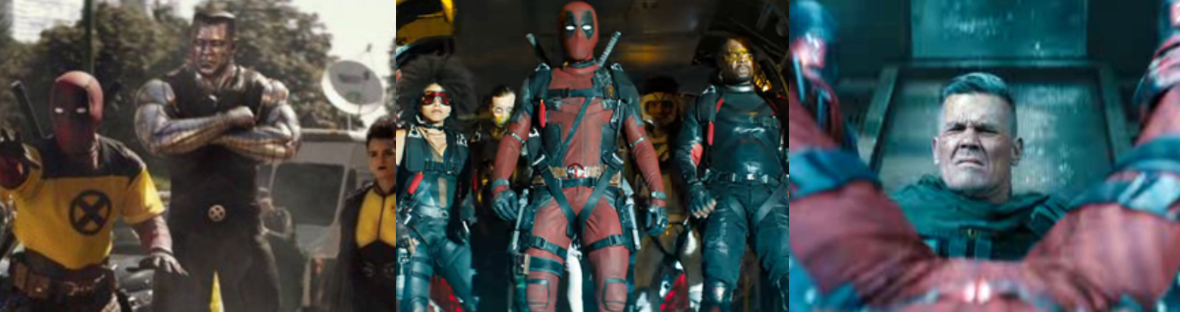
2 Hellraiser

Here’s another remake that’s been doing the rounds for a while. Despite all the talk and anticipation of a remake, however, it seems we’re doomed to getting ashcan sequels and direct-to-DVD releases that keep this franchise limping along on life support (would you believe that there are ten films in this series!?) Hellraiser makes the list because the original 1987 movie and its immediate sequels have not aged well; in fact, they have aged terribly. I applaud them for using practical effects and making the most of their obviously limited budget but it’s clear to see that this movie could be made so much better with modern filmmaking techniques. Indeed, one of the few good points of the later sequels is how much better the effects are and, done right, a Hellraiser remake could really surprise at the box office. So, I say to you: Go back to Hellraiser and Clive Barker’s original novel, look at the lore and legacy of the series, and put some time, effort, and money into making a truly nightmarish, surreal, and atmospheric horror movie. And if you’re not going to cast Doug Bradley as Pinhead, at least have him dub the lines or something.

1Highlander
1 Highlander

Oooh, boy, this film. Similar to Hellraiser, Highlander (Mulcahy, 1986) makes the list because it just doesn’t hold up; the effects are bad, the fight sequences are shit, and, thanks to all of the nonsense introduced in the sequels, the original movie is a laborious chore to sit through. Yet, the concept is a good one; the franchise clearly had some staying power as well, if the television series is anything to go by. However, we really need to look at the lore and iron out some specifics: what is the Prize? How many Immortals are there and will we address where they come from? What is the exact nature of the Quickening? Seriously, these concepts are so ill-defined in the original and bogged down with retcons and illogical additions in the sequels that I have no idea what’s going on. Either get a clear picture and make a decent fantasy film based on that or ignore some of the sequels and bring back Christopher Lambert in the mentor role; either way, you absolutely must cast Thomas Jane in the title role…and maybe Dave Bautista as the Kurrgan.

Talking Movies: Deadpool 2

Talking Movies
Deadpool2Logo

Honestly, after Deadpool (Miller, 2016) became the highest-grossing R-rated movie in history, I actually expected a new renaissance of action movies to flood cinema screens. Finally, I thought, the days of watered down 12/12A-rated action movies is behind us; I thought we would see the gloriously foul-mouthed, gory, over-the-top action movies of the 1980s make a return now that they had been proven to be critically and commercially viable prospects. Unfortunately, that didn’t actually happen and I’m still waiting for the action movie renaissance I’ve dreamed about for the last few years; but, in the mean time, director David Leitch takes the reigns of the highly-anticipated Deadpool sequel, a movie that, again, emphasises that audiences are ready for a return of the entertaining, bombastic action movies of yesteryear.

Deadpool’s forced to try and protect Russell from Cable’s wrath.

Picking up about two years after the first movie, the immortal, wise-cracking, maniacal mercenary, Wade Wilson/Deadpool (Ryan Reynolds, returning to the role he was born to play) has been carving a path of destruction through various criminal underworlds. Unfortunately, he suffers a personal tragedy when one of his targets returns for revenge; distraught and disillusioned, he attempts to kill himself in various hilarious and unsuccessful ways before Colossus (Stefan Kapičić) literally picks up the pieces and brings him to the X-Mansion. While attempting to find a place in the world as a rookie X-Man, Deadpool meets an angry, traumatised young Mutant named Russell Collins (Julian Dennison), who christens himself Firefist. Recognising that the boy has been mistreated by the Mutant-hating Headmaster (Eddie Marsan) and staff of the Essex Home for Mutant Rehabilitation, Deadpool kills one of the ordeals and the two of them are fitted with power-nullifying collars and sent to the Ice Box (a super-max prison for dangerous Mutants). Finally dying now that the collar keeps his powers from curing his cancer, Deadpool shirks Russell and wishes to die in peace; however, a cybernetic Mutant named Cable (Josh Brolin) travels back from the future and breaks into the prison to kill Russell, who is destined to grow into a dangerous killer. Torn between his desire to die and his urge to put Russell on the right path, Deadpool reluctantly finds himself assembling his own team of Mutants to protect Russell and keep Cable at bay.

With more action, more laughs, and more lewd humour than ever, Deadpool 2 definitely delivers.

Deadpool 2 had one job, in my eyes: to be everything the first movie was and more and, in many ways, it delivers. The movie has real heart, as Deadpool is forced to confront a very real loss and question his place in the world. This is, arguably, a ridiculous premise for a character that is aware that he is fictional by Reynolds pulls it off nicely; Deadpool is just as capable of pulling off some kind of over-the-top action sequence as he is cracking wise or emoting and you really root for his redemptive arc in the film. Similarly, Brolin, who brings fan-favourite Cable to life, is suitably grim and gritty; it’s as if Brolin watched all of Clint Eastwood’s Westerns and Arnold Schwarzenegger’s science-fiction movies to create this stoic brick of a man who is, nevertheless, razor-focused and carries a haunting sense of loss about him. Thankfully toned down from his comics counterpart, Cable is the straight man to Deadpool’s madcap insanity and the two play off of each other fantastically whenever they’re on screen. Brianna Hildebrand returns as Negasonic Teenage Warhead, now revealed to be in a same-sex relationship, though her role seems to be the same, if not reduced, from the first movie. Instead, Deadpool recruits Domino (Zazie Beetz), Bedlam (Terry Crews), Shatterstar (Lewis Tan), Zeitgeist (Bill Skarsgård), the Vanisher (Brad Pitt, in a blink-and-you’ll-miss-it cameo), and (hilariously) the entirely ordinary and nondescript Peter (Rob Delaney) to form X-Force, a Mutant team capable of doing what the X-Men refuse to do and kill Cable. While the team’s fate is ill-fated, to say the least, the recruitment process and their initial mission are a highlight of the movie. Unlike the first film, Deadpool 2 does not really feature a central antagonist; Cable is more of an anti-hero throughout the film and the Headmaster is not a physical threat to anyone. Once Russell decides to enact revenge against the Headmaster, he recruits some serious muscle in the form of an all-CGI Juggernaut (Ryan Reynolds), finally doing the character a modicum of justice, but the central theme of the movie is more about coping with loss and family. Deadpool, who was on the verge of having a family of his own, forms a surrogate family through X-Force and his X-Men allies and, through them, finds the means of both redemption and to seemingly correct the loss he suffers at the beginning of the movie. Filled with Easter Eggs, in-jokes, meta-humour, action, and enough blood to make Paul Verhoeven proud, Deadpool 2 does exactly what I wanted: it takes everything that made the first movie great, ramps it up to eleven or twelve, and then expands Deadpool’s world and cast of characters beautifully.

My Rating:

Rating: 4 out of 5.

Great Stuff


Recommended: Definitely, movies like Deadpool and Deadpool 2 are a lost art in these days of PG-friendly cinema.
Best moment: As mentioned, the recruitment process of X-Force and their first mission is pretty funny, while the rescue operation and the second fight between Deadpool and Cable is pretty bad-ass. There’s also some unexpected cameos in the X-Mansion that made me chuckle.
Worst moment: We don’t learn too much about Cable’s back-story beyond the basics (it’s not clear which future he’s from, for example) and the film did lack a central physical antagonist but, given Cable is due to return in future films and the theme of the movie, these are minor nit-picks.