Ever since Kevin Eastman and Peter Laird’s Teenage Mutant Ninja Turtles (TMNT) first debuted, the franchise has enjoyed worldwide mainstream success thanks to action figures, cartoons, and videogames. Since I found some free time this December, I decided to spotlight four such videogames every Tuesday of this festival season.
Released: 30 August 2022 Originally Released: 15 November 1991 Developer: Digital Eclipse Original Developer: Konami Also Available For: Game Boy, Nintendo Switch, PC, PlayStation 4, PlayStation 5, Xbox One, Xbox Series S
The Background: In the late-eighties and early-nineties, you’d be hard pressed to find a franchise more popular than Teenage Mutant Ninja Turtles. Known as Teenage Mutant Hero Turtles here in the United Kingdom, the original dark and violent comic books exploded into an incredibly successful cartoon and extensive toy line, and a slew of videogame outings courtesy of developer Konami. Konami’s efforts helped to make the NES a household name here in the UK, produced two of the most beloved titles for arcades and home consoles, and also extended to three handheld titles for Nintendo’s super successful portable, the Game Boy. Building upon the standards set by its predecessor, Back from the Sewers improved upon the visuals despite the obvious limitations of the Game Boy hardware and expanded the gameplay options available to bring the sub-series more in line with its bigger, better 16-bit counterparts. Since a complete physical version of the game is still ridiculously expensive for the quality of the game, I was still glad to see Back from the Sewers included in the 2022 Cowabunga Collection alongside a host of other TMNT games and quality of life features.
The Plot: The TMNT’s archnemesis, Oroku Saki/The Shredder, returns, now bolstered by the forces of the sinister Krang and kidnaps April O’Neil to get his revenge on the foursome.
Gameplay: Like its predecessor, Back from the Sewers is a simple sidescrolling action game rather than a traditional arcade style beat-‘em-up. After selecting from three difficulty levels (Easy, Normal, or Hard), you pick one of the four turtles and battle your way from the left side of the screen to right across six stages (referred to as “Acts”). Again, the Game Boy’s limited colour palette means that the turtles are only distinguished by their individual weapons, but they again have different strengths and weaknesses: Leonardo is a bit of an all-rounder, for example, with Raphael having a fast attack but a terrible range. Sadly, the shuriken projectiles are gone; they’re replaced by a sliding kick that I only found a handful of uses for as it often leaves you open to enemy attacks, but you can toss shuriken when using ladders. The buttons have been remapped, with A allowing you to jump (holding it again allows you to get some extra height with a reanimated somersault) and X performing your attack; you can pull off a jumping attack by pressing X in mid-air and the game still allows you to hit back or destroy most incoming projectiles with your attack. Screen transitions are much more involved this time and initiated by climbing ladders but you’ll also clamber along pipes to cross gaps and there is a lot more emphasis on vertical traversal, with you hopping up and down girders and platforms using up and down on the directional pad and A.
The graphics and gameplay have been overhauled to more closely resemble the arcade titles.
The essential gameplay remains mostly unchanged; the screen and hardware limitations mean things are still very restrictive but there are far more influences from the TMNT’s arcade titles (the Foot jump up from manholes and you can fall down the holes, for example). The most obvious of these is in Act 2, which sees you racing along a bridge on a rocket-powered skateboard attacking enemies and dodging barrels, and Act 6, which recreates the classic Sewer Surfin’ level, to say nothing of the inclusion of not one but two traditional elevator sequences in Act 3 and 6. There are also some additional gameplay elements here, such as a race away from a rolling boulder in Act 4, mines being scattered across the ground, bursts of flames and machine gun fire, and jumping to a series of floating platforms in Act 5. Levels are a bit longer and more involved but the game loves to artificially up the difficulty by swarming you with an endless barrage of Mousers and bug ‘bots; these fuckers will pop out from holes in the caves and sewers and from mechanical ports and it can be extremely frustrating trying to fend them all off and back jumps in Act 3’s construction sites. Some stages seem to be on a loop as well, though I think this is just a consequence of the limited hardware, and you’ll still have to avoid the same obstacles like falling hazards and electrical bolts. As before, you can pick a different character between stages and if your health is drained; each turtle has their own health bar, any damage you take carries over to the next Act, and any captured turtle can be rescued in bonus games, with these now taking place upon completion of an Act and seeing you chasing around an enclosed arena to refill your health as much as possible in a short time limit.
Graphics and Sound: Although Back from the Sewers is still handicapped by the Game Boy’s hardware, it’s an obvious graphic step up over its predecessor right from the start, where it ambitiously recreates the cartoon’s iconic opening sequence, and the game even includes some limited sound bites to punctuate the action. The game’s overall presentation is far more akin to the cartoon than many other TMNT titles as it not only basis its story art on the cartoon but even includes level intros and a pause screen that mimic the show’s episode titles. All of the sprites and environments have been overhauled and are all the better for it; the TMNT are bigger and more detailed, with Leonardo and Raphael now carrying two weapons each and all four having a more detailed idle animation. Although the sprites appear a bit stiffer and more clunky than other TMNT titles, they pull an amusing panic face when running from the aforementioned rock and will be left charred when caught in flames and explosions.
Sprites and environments have been greatly improved, despite the Game Boy’s limitations.
Similarly, the game’s environments are far more detailed than those seen in the previous game; this is evident from the opening Act, which actually provides a level of depth and visual interest to the sewers despite the lack of moving water. This extends to the streets as well, where vehicles and there’s an attempt to showcase some depth to the backgrounds can be seen, and in the overhauled Technodrome which now sports many of the same hazards and features as the arcade versions. While there are only a handful of unique environments, such as a cave and an overused construction site, there is much more to spot in the background, from Splinter working in a pizza parlour, Foot Soldiers hiding behind cover and sliding at you, chain link fences and cityscapes, and holes in the environment leading to sewers and such, though the caves can be a bit of a mess. There are far more enemies onscreen at any one time thanks to those damnable Mouser holes and turrets, and you’ll still get an annoying beep when your health is low, and the ending is even sparser than in the first game. On the plus side, the music is much more varied and there are some fun in-game cinematics, such as Splinter piloting the turtle blimp, and options to move around in a wider area like in the arcade titles once you’re descending down the stairwell.
Enemies and Bosses: Surprising no one, you’ll primarily be battling against the Shredder’s inexhaustible army of robotic Foot Soldiers; they’ll jump in at you but actually managed to land a hit or two this time with their sliding kicks, dynamite, large projectiles, standing on each other’s shoulders, and firing bazookas at you. As indicated, the Mousers and bug ‘bots return; they might not bite your hand anymore but they are absolutely relentless, spawning so fast and so frequently that it’s hard to fend them off and progress through some stages. Roadkill Rodneys are also back, now firing laser bolts, and the game even includes a handful of mini bosses this time around; a swarm of Foot Soldiers, a Pizza Monster in the sewers, Baxter Stockman’s fly form on a rooftop, and the Game Boy debut of the Rock Warriors in General Traag and Granitor.
Boss are greater in number, strength, and visual appeal this time around.
Each Act naturally concludes with a boss battle; each sports a life bar but they’re all just variations on the boss battles we saw in the last game. Once again, your first test is against Rocksteady; this time, he jumps about while Foot Soldiers drop objects from the windows above and shoots deflectable bullets at you, pausing to laugh and leaving himself open for your attacks. Bebop (and his ridiculously disproportinate head) awaits at the end of the bridge stage, firing out a spread of diamond projectiles and knocking you silly with an uppercut when he’s not hopping all over the place. Krang makes a rare appearance in his little walker at the end of Act 3, stomping about firing rings and raining bombs on the arena, and leaping overhead to try and crush you in a nigh-unavoidable attack. You’ll have rematch with the Shredder at the end of Act 4; this time, he fires an energy wave at you that you can jump over but not duck under, dives at you with a flying kick, and runs from one side of the screen to the other, meaning you’re basically guaranteed to take damage as the window of opportunity to dodge and counterattack is so small. Granitor confronts you in Act 5, rolling about the place and roasting you with his flamethrower, but the additional movement options afforded in this arena help to make this more manageable. When you get to the Technodrome in Act 6, you’ll have to battle General Traag to get inside the machine in a conflict made more troublesome by the 2D pane and the treadmill under foot. The Shredder mutates into his Super Shredder form for the penultimate boss, plodding about and swiping at you, teleporting about the place, and confusing you with a bevvy of duplicates to try and land a sneak attack. Finally, you’ll take on Krang’s android body in the finale; this time, Krang is nice and big and is able to stun you with a ground-shaking stomp, however he’s far weaker than in the last game and much easier to defeat than either of the Shredder fights in this game since you can just jump kick him and run underneath him when he’s jumping in for an attack.
Power-Ups and Bonuses: As in the last game, your only pick-ups are the odd slice of pizza; these are sometimes carried by enemies and sometimes found floating around the environment, generally before a boss battle, but are noticeably rare and still the only power-up available.
Additional Features: Back from the Sewers trumps its Game Boy predecessor by including three difficult levels, but it’s still very limited in terms of in-game options. Luckily, the Cowabunga Collection awards a 70G Achievement for completing the game, offers a strategy guide to help with the game’s trickier sections, lets you view the game’s box art and manuals, includes both the Japanese and American versions, and offers various borders and display options (including an LCD display to recreate the Game Boy’s headache-inducing screen). The game also allows you to rewind the game with the Left Bumper and access save states using Right Bumper and you can take advantage of the enhancements to jump to any level you wish and enable infinite lives without fear of missing out on your Achievement.
The Summary: Undoubtably,Teenage Mutant Ninja Turtles II: Back from the Sewers is a vast improvement over the TMNT’s previous Game Boy title. If the first one was a pretty basic proof of concept, this sequel takes the capabilities of the handheld system and uses them to its advantage to produce a title that’s still very restricted by its hardware but much more akin to a 2D version of its arcade counterparts. While the sprites and animations are still a bit stiff and limited, they’re far more detailed, as are the backgrounds, and I loved how the game included versions of the sidescrolling chase sequences from the arcade games. Placing the bonus game sat the end of Acts was a nice way to break up the monotony and I enjoyed the improved music, cutscenes, and the expanded length; tossing in a few mini bosses also helped and it was just great to have so much to se happening around you. Unfortunately, it’s still not perfect; I don’t mind the loss of a turtle as a life system but the endless swarm of Mousers and bug ‘bots was needlessly frustrating and some of the bosses were almost impossible without full health. The strange loop system and slide kick were also odd inclusions, but the overall presentation was much improved and far more fitting for the license and the standards set by its technically superior counterparts. There are still better games on the Game Boy, and better TMNT videogames, however, but this one is a little bit more worth your time compared to its predecessor.
My Rating:
⭐⭐
Rating: 2 out of 5.
Could Be Better
Was Teenage Mutant Ninja Turtles II: Back from the Sewers included in your Game Boy library back in the day? How do you think it compares to the last TMNT Game Boy game? What did you think to the additional elements included from the arcade titles? Were you a fan of the overhauled sprites and backgrounds, and which character was your favourite? What did you think to those Mouser holes and the addition of mini bosses? Do you have any fond memories of the Game Boy? Whatever your thoughts, you can share the, in the comments section below or you can join the discussion on my social media.
Ever since Kevin Eastman and Peter Laird’s Teenage Mutant Ninja Turtles (TMNT) first debuted, the franchise has enjoyed worldwide mainstream success thanks to action figures, cartoons, and videogames. Since I found some free time this December, I’ve decided to spotlight four such videogames every Tuesday of this festival season.
Released: 30 August 2022 Originally Released: 3 August 1990 Developer: Digital Eclipse Original Developer: Konami Also Available For: Game Boy, Nintendo Switch, PC, PlayStation 4, PlayStation 5, Xbox One, Xbox Series S
The Background: Back in the late-eighties and early-nineties, it was tough to find a franchise more popular than Teenage Mutant Ninja Turtles (or Teenage Mutant Hero Turtles as we knew them in the UK); the Teenage Mutant Ninja Turtles (1987 to 1996) cartoon and extensive toy line saw the “Heroes in a Half-Shell” dominate an entire generation. The TMNT were also prominent videogame characters thanks to the efforts of Konami, which saw them help to make the NES a household name here in the UK and produce two of the most beloved arcade games that also impressed on home consoles back in the day. Not content with their arcade and 8- and 16-bit titles, Konami also produced three handheld titles for Nintendo’s ground-breaking portable console, the Game Boy. Limited by the Game Boy hardware, Fall of the Foot Clan was obviously lacking in many areas and struggled to live up to the standards of its technically superior predecessors, though it was still praised for its ambitious attempt to give fans a portable TMNT experience. With a complete version of the title being pretty expensive for what it is, it was very much appreciated to see it included in the 2022 Cowabunga Collection alongside a host of other TMNT games and quality of life features.
The Plot: When their archnemesis, Oroku Saki/The Shredder, kidnaps April O’Neil, the TMNT emerge from the sewers to take on the Shredder’s Foot Clan once more.
Gameplay: Unlike most TMNT videogames at the time, Fall of the Foot Clan is a pretty simplistic sidescrolling action game; you pick from one of the four turtles and travel from left to right across five stages attack enemies with their signature weapons. The TMNT are even more indistinguishable from each other thanks to the Game Boy’s non-existent limited colour palette but are, as ever, identified by their weapons and the reach offered to them. Raphael gets up close and personal with foes with his sai, for example, while Donatello is afforded a greater reach with his longer bo staff, however this is so far the only TMNT game I’ve played that allows you to throw shuriken by default (and an infinite number to boot), thereby affording even the most limited ninja turtle a projectile attack. The controls are as simple as you could want; you press X to jump (and holding the button sees you jumping higher into a somersault) and A to attack. You can attack in mid-air and press down and A to toss your shuriken, but a big mechanic in this game is the ability to swat away most incoming projectiles with your attack, which is almost mandatory given the much smaller screen size of the Game Boy.
A basic sidescroller that mixes up its gameplay with bonus games and mild platforming.
Gameplay is very restrictive and doesn’t really ask all that much of you other than to continue to the right, slashing at enemies as they jump at you, and avoiding the odd level hazard, such as falling blocks, bouncing balls, electrifying obstacles, and spiked ceilings. Here and there you’ll get the option to hop up to a higher level or wade through sewer water; you can destroy barriers to reach bosses, hop on and rush underneath pistons, jump over fire pits, and leap from log to log over a raging river. If your turtle runs out of health, they’ll be “captured” and you’ll have to pick another to tackle the stage again, though you’ll helpfully be placed at the start of the boss battle if you reached that point when you died. One mechanic Fall of the Foot Clan incorporates that separates it from pretty much all of the classic TMNT games is the presence of hidden bonus areas in every stage; these aren’t immediately obvious (though the strategy guide clearly highlights them for your benefit) and allow you to restore your health by guessing the number Master Splinter has in mind, fighting with Krang by eradicating as many stars as possible, or partaking in a bit of target shooting. You’re generally given a few chances to succeed at these but they’re not particularly inspired or fun or easy, though I appreciate the attempt to mix the simplistic gameplay up a bit with these little distractions.
Graphics and Sound: Naturally, you need to keep expectations low here; not only is Fall of the Foot Clan a Game Boy title, it’s an early game Boy title so it plays things very safe and doesn’t try to throw too much at the player or tax the game engine. The result is enemies leaping at you largely one at a time and barely launching an attack before you take them out in one hit and keeping the amount of onscreen action to a minimum, but there are a surprising number of little details that certainly make it somewhat ambitious. The TMNT don’t have idle animations and Leonardo and Raphael only have one weapon each rather than the usual two, but their weapons move as they walk, and Raphael and Michelangelo even twirl theirs as they plod along. When ensnared by a Roadkill Rodney, you’ll even see your turtle’s skeleton as they’re shocked and they get crushed by pistons and weights as well, all of which are nice little touches I wouldn’t really expect from such a limited title.
Though basic, the graphics and presentation are ambitious at times.
Environments aren’t really anything to shout about; stages are pretty long, consisting of a few different screens and transitioning from different areas as you progress, but there isn’t a great deal of detail in the background in environments like the Technodrome. At the same time, the streets have a bit going on, with graffiti and posters on the walls behind you, and you’re even able to hit a parking meter to use it as a projectile at one point. I also liked seeing the mountains in the background of Stage 4 but easily the most visually interesting stage is Stage 3, which sees you jumping across the backs of trucks and vehicles down a speeding highway. Sprites are all nice and big and certainly capture the essence of the cartoon; the Foot even drive past in a jeep at one point and the classic TMNT theme plays, with the rest of the chip tune soundtrack being very fitting to the franchise and the action. The game’s story is as basic as you could want and is told using some basic text under pretty decent sprite art recreating scenes from the cartoon. Unfortunately, the ending falls a little flat, with the Technodrome just disappearing from frame and the epilogue consisting of a bunch of text, and you’ll be assaulted be an incessant beeping when your health is low, which is always a pain.
Enemies and Bosses: You’ll never believe it but you’ll primarily be fighting off an endless supply of Foot Soldiers on your short journey; they’ll come jumping in and be reduced to a little explosion before even getting a chance to attack, but they’re capable of tossing darts and bricks at you but are largely disposable. Generic enemies like bats, fish, and anthropomorphic fireballs are also a problem, but the classic TMNT enemies like Mousers and Roadkill Rodneys are also present and capable of chomping on your hand and electrocuting you, respectively. Each stage naturally culminates in a boss battle against five of the TMNT’s most recognisable and popular villains, each of which is afforded a life bar.
Classic TMNT enemies are recreated in the Game Boy’s limited hardware.
The first boss you’ll battle is Rocksteady, who simply wanders across the screen blasting at you from his rifle; Bebop ups the ante by rushing at you in a charge, punching you up close, and firing rings from his pistol, but it’s not exactly a stretch to hop over them, swipe them with your weapon, or toss a shuriken their way. Baxter Stockman attacks in his fly form at the end of the all-too-brief Stage 4; he hovers overhead, firing projectiles at you, and swooping down in a dive, but again you can just jump over him and attack without too much difficulty. In a change of pace, the Shredder is encountered as a penultimate boss rather than the final battle; he can be a bit tricky if you go in with low health, advancing towards you and swiping with his katana before teleporting to safety after. This means that Krang is the game’s final challenge; he emerges in his android body from a transport wall and stomps about, completely immune to your shuriken and trying to kick you in the face. While he’s quite a large target and he likes to jump about, you can again jump over him and attack him and whittle his health down if you stay in a good rhythm.
Power-Ups and Bonuses: As ever, the TMNT can restore their health by picking up the odd slice of pizza; these are sometimes dropped by enemies and sometimes found floating around the environment, occasionally before a boss battle, but are noticeably infrequent and are the only power-up you’ll find in the game.
Additional Features: Unlike most TMNT videogames, there’s no two-player option here. In fact, there aren’t any options to speak of in the base game, not even a difficulty mode or any sound options. Thankfully, the Cowabunga Collection remedies that, awarding you a 70G Achievement for completing the game and allowing you to view the game’s box art and manuals, switch between the Japanese and American version, and apply various borders and display options (including an LCD display to recreate the feeling of playing on the Game Boy’s eye-watering screen). The enhancements not only allow you to remove slowdown and sprite flicker, rewind the game with the Left Bumper and access save states using Right Bumper, but you can also choose to practice the bonus games if you want to bump up your health in your next playthrough.
The Summary: I don’t like to throw too much shade at Game Boy titles, especially early ones, but Teenage Mutant Ninja Turtles: Fall of the Foot Clan really isn’t all that impressive or fun to play through. There are some ambitious and admirable elements here and there, don’t get me wrong; the odd bit of animation, the ability to throw shuriken, the attempt at variety in the stages are all positives and I liked how it did the best it could with the hardware limitations to adapt the aesthetic of the cartoon. However, there’s no denying that this is a far too simple effort to really give it too high a score, especially compared not only to the obviously better arcade and home console TMNT games but also the later Game Boy titles. This feels like a proof of concept to show that a simple sidescrolling action game can be cobbled together with the license rather than an attempt to really try anything too innovative with the platform. Throwing in bonus games was a nice, if frustrating, touch and there was even some call-backs to the superior arcade titles here and there, but the TMNT would definitely be represented far better in subsequent Game Boy games and I can’t see myself going back to this one over the other TMNT games included in the Cowabunga Collection.
My Rating:
⭐
Rating: 1 out of 5.
Terrible
Did you have Teenage Mutant Ninja Turtles: Fall of the Foot Clan in your Game Boy library back in the day? What did you think to gameplay and presentation of the game, especially regarding its simple sidescrolling format? Which of the characters was your favourite to play as and which boss was the most exciting for you? Were you able to beat the bonus games? What did you think to the additional features added to the Cowabunga Collection? What’s your favourite Game Boy title? I have a comments section down below where you can share your opinions on the TMNT’s Game Boy debut, or you can start the discussion on my social media.
Ever since Kevin Eastman and Peter Laird’s Teenage Mutant Ninja Turtles (TMNT) first debuted, the franchise has enjoyed worldwide mainstream success thanks to action figures, cartoons, and videogames. Since I found some free time this December, I’ve decided to spotlight four such videogames every Tuesday of this festival season.
Released: 30 August 2022 Originally Released: 12 May 1989 Developer: Digital Eclipse Original Developer: Konami Also Available For: Amiga, Amstrad CPC, Atari ST, Commodore 64, MS-DOS, MSX, Nintendo Entertainment System (NES), Nintendo Switch, Nintendo Wii, PC, PlayChoice-10, PlayStation 4, PlayStation 5, Xbox One, Xbox Series S, ZX Spectrum
The Background: The Teenage Mutant Ninja Turtles (or Teenage Mutant Hero Turtles here in the UK) were the in thing for kids in the eighties or nineties thanks, largely, to the popularity of the Teenage Mutant Ninja Turtles (1987 to 1996) cartoon and an extensive toy line. A couple of years before Konami brought the “Heroes in a Half-Shell” to the arcades, the developers helped to make the NES a household name here in the UK with this adventure title, produced at a time when videogames (especially those on Nintendo’s ground-breaking platform) were built to last by ramping up their difficulty. Reportedly the first TMNT product to release in Japan, the game suffered from glitches and exploits across all its versions and is often cited as one of the hardest NES games of all time thanks, largely, to it featuring in an early episode of The Angry Video Game Nerd. regardless, the game was a huge success at the time and sold over four million copies worldwide despite mixed reviews, with some praising the controls and graphics and others flagged the lack of polish and recognisable elements from the franchise. Although readily available at the time on a variety of consoles, Teenage Mutant Ninja Turtles has been pretty difficult to come by after being removed from the Wii Shop Channel in 2012, that is until this Cowabunga Collection released for modern consoles alongside a host of other TMNT games and quality of life features.
The Plot: The Turtles are on a mission to retrieve the Life Transformer Gun from their archnemesis, Oroku Saki/The Shredder, who has kidnapped their friends and is terrorising New York City with bombs, ninjas, and his army of robots.
Gameplay: Unlike the vast majority of TMNT videogames, the original NES Teenage Mutant Ninja Turtles title is a 2D, sidescrolling action platformer that allows you to switch between the four titular turtles at any time via the pause screen. Being as it was an NES title, your controls and options are somewhat limited, but also effective; X sees you attacking with your turtle’s signature weapon and A allows you to jump, and you can both hold A for a higher and longer jump and attack while in mid-air or crouching. The TMNT are separated not only by the colour of their bandanas but by the range, speed, and power of their weapons; Donatello has the longest reach and is great for dispatching enemies above or below with his bo staff, for example. He and Raphael also seem to dish out more damage, destroying some enemies in one hit that would take Leonardo and Michelangelo two or three, however Leo and Mike have better options for attack with an arc or a swing. You’ll also comes across a number of secondary weapons with limited ammo, which you can switch to using the Xbox controller’s ‘View’ button and will find some pick-ups that activate automatically to carry you across gaps. Each turtle has their own health bar, and the game “helpfully” alerts you when you’re at low health by emitting a warning wound, so you’ll need to switch between them to get past trickier sections with fire pits and the like. If a turtle’s health is depleted, he’ll be captured and unplayable until found and rescued, though it’s game over if all four are captured.
Navigate through mazes, repetitive areas, and the infamous electric seaweed to rescue your allies.
The game is split into two very distinct sections; the first is a top down overworld, a recreation of New York City and the surrounding district, which is split into six areas that act as the stages of the game. Here, you can wander about, attacking enemies and avoiding larger vehicles such as Roller Cars, carpet-bombing fighter jets, and helicopters with search lights. At one point, you’ll hop into the turtles’ Party Wagon, which allows you to blast at Roller Cars and enemies on the overworld with X, though you’ll need to search for a handful of high-powered missiles to destroy barriers with X and progress further. The second part of the game is the 2D, sidescrolling action stages, which are accessed via manholes placed all over the overworld or by entering certain buildings. These drop you into claustrophobic sewers, aircraft hangers, enemy warehouses, and robot factories and see you navigating past enemies, hazards, and tricky jumps to small blocks or platforms to either progress, find health and pick-ups, rescue a comrade, or access new areas, like the rooftops and caves. Not only to enemies respawn when you leave the screen for just a second, but hazards are numerous; you’ll be stuck on conveyor belts, walking across some smaller gaps and trying to jump across others to tiny blocks, and hopping over spike and lava pits. At some points, you’ll be dumped back onto the outside if you fall while jumping across the rooftops or landing in the raging sewer waters, and you’ll also have to contend with spiked ceilings and instant-kill crushing spiked walls near the end of the game. Easily the game’s most infamous section is encountered pretty early on when, after reaching the damn, you’re given 2:20 to navigate an underwater section full of electrical bolts and electrifying seaweed in search of eight bombs to disarm. While it’s true that this is a difficult section thanks to the unfair hit boxes, the tight time limit, and the labyrinthine nature of the section, it’s made all the easier with the Cowabunga Collection’s rewind feature and you can tank through some of it using well-timed character swaps.
Graphics and Sound: Since it’s an NES title, the graphics are obviously somewhat dated; the top-down sections on the overworld aren’t great, with movement being noticeably clunky, and the game’s reliance on mazes and looping paths can get annoying when you’re stumbling around the airport trying to find the correct path or dodging searchlights in the dark to find the right manhole. The variety in these top-down locations is appreciated, though; you’re in the city, visit a dam, pop along the JFK Airport, and infiltrate the Shredder’s secret base under cover of darkness, and the game opens with a pretty ambitions character introduction screen and is accompanied by some fitting chip tunes to help ease even the most annoying sections, and each stage ends with a rendition of the TMNT theme to punctuate your victory. When you pause the game, you’ll get access to a pretty basic grid-like map that isn’t much help but it’s better than nothing; April O’Neil and Splinter will also offer some limited advice to give you an idea of what you’re looking for or how to defeat the game’s bosses, but these features are stripped from you in the final area as you’re “lost”.
Although limited by the hardware, the game’s fairly distinctive and graphically ambitious.
The 2D sections are where the game shines since you can actually see the TMNT in action, though the actual sprites obviously don’t emote or animate all that much unless they’re being swept away by the current. Mostly, the controls work just fine; you’re generally restricted in your horizontal and vertical movement so it’s rare that you have to make precise jumps but, when you do, they have to be pretty bang-on. Hit boxes are quite big, which is an issue in such close quarters, and backgrounds can be disappointingly bland and repetitive; all that separates one sewer section from another is the amount of brown and green, for example, so it can be easy to get lost, especially in sections that have to warping about trying to find the right exit. Things pick up a bit as you progress, with large background elements being used as static boss sprites, and you can avoid any slowdown or sprite flickering by turning them off with the Cowabunga Collection’s enhancements (though a fair amount still remains, perhaps unavoidably). The game’s story is primarily told through limited text and some art portraits, but the game doesn’t include any credits and it’s a bit cheap how the enemies constantly respawn but the health items and other pick-ups don’t, meaning you sometimes have to backtrack into dangerous areas to restock your health and ammo.
Enemies and Bosses: Considering the source material has a near inexhaustible cast of characters to choose from, Teenage Mutant Ninja Turtles features some truly bizarre and misplaced enemies; I may not be able to remember every TMNT character but I could barely recognise any of the enemies encountered here, with the shuriken-throwing Foot Soldiers and the Mousers being the most familiar for me. There are some really weird baddies here, ones that are far too generic for a TMNT game and sadly symptomatic of this era of gaming; we’ve got robot bugs, spider-like jumpers, flaming men who spit out smaller minions, a large porcupine that shoots spines at you, a big bald asshole with a chainsaw, flying eye drones, this weird blank slate of a humanoid who becomes invulnerable when crouched down, another bald asshole who tosses boomerangs, crawling eyes, giant mutated frogs and fleas, and some truly aggravating Dimension X Troopers who hover about firing lasers right at you, no matter where you are, and always attack in groups! Some of these enemies will act as mini bosses, gaining a health bar and teaching you their attack patterns and such, but most of the time they’ll swarm the screen just to annoy you and screw up your jumps.
You’ll need to defeat TMNT mainstays and a robo-turtle to rescue April and Splinter.
Each stage of the game ends in a boss battle, generally with the life of one of the TMNT’s allies at stake; Bebop goes solo in this game as Rocksteady is holding April hostage, though he attacks in very much the same way as he always does, by charging at you with a head of steam, punching you when you get close, and jumping at you with a kick. It’s pretty simple to stay at the right side of the screen, jumping up to where Rocksteady and April are to avoid Bebop’s limited attacks, and smack him with your weapons. Rocksteady gets in on the action at the end of the warehouse stage and follows very much the same pattern; while April sits all tied up, Rocksteady charges at you with his horn, tries to jump at you, and fires bullets at you. However, you can destroy these projectiles, which is always helpful, and you can absolutely cheese this by hopping on top of the crates on the right-hand side and using Donatello’s crouch attack to defeat him without taking a single hit! When you finally figure out where the rope is and how to get across the rooftops, you’ll find Splinter held hostage by a dark version of Leonardo; this guy attacks exactly as Leo would when you play as him, with sword swipes and such, but draining his health reveals that he was the “Mecaturtle” (not to be confused with Metalhead…) all along. The Mecaturtle hovers about using its rocket boots and fires homing missiles at you, punching when up close, but there’s a lot of room to dodge and land hits.
Bosses get bigger and tougher near the end, though the Shredder’s a bit of a joke.
After fighting through the Shredder’s robot factory, you’ll battle one of the more visually impressive bosses of the game – a giant Mouser that’s rendered as a background element and reminds me of the titular war machine from the original Metal Gear (Konami, 1987). While it looks intimidating, its lack of movement and predictability make this a pretty easy boss; it fires twin laser beams from its eyes that are simple to avoid, the smaller Mousers it drops are easily defeated, and you can easily smash away at the weak point in its mouth using Donatello’s ridiculously long bo staff. Naturally, you’ll eventually make your way to the Technodrome, which also acts as a large, impressive, and formidable boss battle; the humongous machine idles along on its treadmill base, frying you with electrical currents from its front and back spokes and protected by two turrets and an endless supply of Foot Soldiers. You need to fight against the pull of the treadmill, fend off the ninjas, and attack the Technodrome’s giant eye to eventually blow open an entrance, but this is easily the toughest and cheapest boss battle in the game. Once you fight your way through the insanity of the Technodrome, the game ends with a one-on-one encounter with the Shredder; after teleporting in with a burst of lightning, he jumps about the enclosed arena trying to punch you and firing deadly shots from his one-hit-jill de-evolution pistol. However, it’s laughably easy to avoid this and stay out of his way, especially with Donatello, and you can even trap him in a corner using Leo’s rapid sword swings to make short work of the would-be-conqueror.
Power-Ups and Bonuses: As ever, you’ll occasionally find pizza strewn about in the 2D sections to refill either two bars of your health with a slice, four with half a pizza, and the entire bar with a whole pizza. Like all of the game’s items, these are quite rare and hard to track down thanks to the maze-like nature of the levels, and you’ll need to remember to switch to a turtle with low health when you spot one to keep everyone in tip-top condition. You can also find a turtle-face icon that looks like its should be an extra life but actually grants your temporary invincibility and puts you into an awkward frenzy. In one specific area of the game, you’ll also need to track down missiles for the Party Wagon to destroy the barrier son the overworld, though you can just about get by with one load of ten if you plan your route and shots correctly. Areas three and four also hide the rope item, which you’ll need to automatically cross large gaps across rooftops in area four.You can also pick up additional weapons, which you can switch to with the ‘View’ button and which act as projectiles, with each having a limited amount of ammo. Sometimes enemies will drop additional ammo, but mostly you’ll just stumble upon the weapons out in the open in 2D sections and they’re extremely effective, killing many enemies in one hit. You can grab shurikens, tossing either one or a triple-shuriken spread for maximum coverage, a boomerang, and a “kaiai”, which fires out a powerful energy wave.
Additional Features: In a change from most TMNT videogames, there’s no two-player option here; in fact, there aren’t any options to speak of in the base game, not even a difficulty mode or any sound options. Luckily, the Cowabunga Collection remedies that, awarding a 70G Achievement for completing the game and allowing you to view the game’s box art and manuals, switch between the Japanese and American version, and apply various borders and display options. While the enhancements only allow you to remove slowdown and sprite flicker, you can still rewind the game with the Left Bumper and access save states using Right Bumper, and choose to watch the game play itself if that’s your jam.
The Summary: I was actually surprised by how much I enjoyed the TMNT’s first venture onto the NES. It helped that I knew all about some of its more frustrating and obscure moments thanks to watching the Angry Video Game Nerd and the reputation that game as earned over the years online as one of the most difficult NES titles. While the game’s presentation and execution are a bit janky, opting for a restrictive and confusing 2D sidescroller rather than a mindless beat-‘em-up, I liked that each turtle was selectable at any time and shared their own health and weapons. While they all control the same, they’re made unique by their individual weapons, which can be particularly game-breaking in certain situations, and I liked the top-down sections of the game, despite how confusing it can be to navigate at times. What lets the game down is the oddball nature of the enemies on show; it’s almost as if this could’ve been any NES action game as the enemies are decidedly off-brand for the TMNT, and the environments just aren’t detailed or distinctive enough to really make an impact or make best use of the license. The respawning enemies and labyrinthine gameplay certainly add to the game’s difficulty; some of the enemies are needlessly cheap and make it extremely difficult to not take damage. However, I enjoyed the boss battles, especially the presentation of the giant Mouser and the Technodrome, and it’s fun to add a little more depth to the TMNT beyond just repetitively pummelling enemies. Tense, frustrating, and head scratching at times, Teenage Mutant Ninja Turtles has a fair amount of action packed into it for such a limited title and it’s definitely worth checking out, especially with the enhancements offered by the Cowabunga Collection, which definitely reduce the challenge offered by this influential NES title.
My Rating:
⭐⭐⭐
Rating: 3 out of 5.
Pretty Good
Was Teenage Mutant Ninja Turtles a part of your NES library back in the day? What did you think to gameplay and presentation of the game, especially regarding its maze-like aspects? Which of the characters was your favourite to play as and which boss was the most exciting for you? Were you able to make it through the underwater section? What did you think to the additional features added to the Cowabunga Collection? What’s your favourite challenging game from the NES days? I have a comments section down below where you can share your opinions on this classic NES title, or you can start the discussion on my social media.
Released: 25 November 2021 Developer: Mr Nutz Studio Also Available For: Nintendo Switch, PC, PlayStation 4, PlayStation 5, Xbox One, Xbox Series S
The Background: Less than ten years after debuting in the pages of Pilote, the first Asterix book was adapted into a feature-length animation and animated and live-action Asterix films have been pretty consistent ever since. Similarly, we’ve seen a number of Asterix videogames, with the first being released for the Atari 2600 in 1983 and a large part of my childhood spent playing Astérix (SEGA, 1991) on the Master System as opposed to its flawed Mega Drive counterpart. Although Asterix dabbled in all sorts of genres, from real-time strategies to action/platformers and mini game collections, perhaps the most suitable format has always been the classic sidescrolling beat-‘em-up. Sadly, while Konami’s 1992 arcade titlelooked and played really well, it was unnecessarily restrictive, andwas never ported to home console ports, a flaw this spiritual sequel somewhat rectified despite physical versions of the game being difficult to come by. Sporting hand-drawn graphics and gameplay specifically designed to evoke the arcade games of old and the original comics, Asterix & Obelix: Slap Them All! was met with generally positive reviews, which praised the visual style and fidelity to the source material. Though the tedious combat and lack of content was criticised despite the short, sharp fun offered by the game’s emphasis on action, it still received a sequel.
The Plot: The year is 50 BC. Gaul is entirely occupied by the Romans save for one village of indomitable Gauls. With the Romans expanding their campaign across the ancient world, Asterix and Obelix, embark on a globe-trotting adventure to fight them off wherever they may be.
Gameplay: Asterix & Obelix: Slap Them All! is a 2D, sidescrolling beat-‘em-up that emulates the classic arcade brawlers of yesteryear. Players can choose to go it alone as either Asterix or Obelix, or team up with a friend for some couch co-op action, which sees them bashing Romans and other baddies across the ancient world in six chapters (referred to as “Acts”) Fundamentally, Asterix and Obelix have the same range of motion and attack options available to them, but there are a couple of differences. Both can jump with A and attack enemies with X; successive presses of X will see each of them pull off a combo, building up your “Slap” counter and allowing you to amass greater and greater combo strings, and you can perform a jumping attack by pressing X in mid-air (though this can be a little inaccurate against smaller foes). You can block incoming attacks with the Right Bumper, dash across the screen and clear away enemies by double tapping the direction you’re facing, press B to pick up health items or grab enemies, and Y pulls off a special attack. This is one area where the characters differ: if you hold Y as Asterix, he’ll pull off a spinning top-like attack for a bit and pressing Y in mid-air will see him performing a jumping variation of this move. Obelix, however, can pull off a slower, far more powerful combo of punches by pressing Y and stun enemies with a huge butt stomp with A and Y. All of these special attacks, blocking, and even dashing consume energy, represented by lightning bolts under your health meter. Energy automatically refills as you attack and defeat enemies, however, but you still need to be careful about how and when you pull off your special attacks. Pressing up and Y or down and Y will see both characters uppercut their enemies or slam the ground, respectively, and each has different options for grabbing and throwing: pressing A and Y together allows Asterix to swing enemies over his head and tapping B sees him fire them across the screen, while Obelix can tap X to slap them about, tap Y to slam them on the ground, or launch them across the screen with B.
Pummel enemies, race through barricades, and smash everything in this mindless brawler.
You can switch between Asterix and Obelix at any time with the Left Bumper, however there is a short delay as each character performs an intro animation, which can leave you vulnerable to attack, and there’s distinct differences between the two: Asterix is smaller, more agile, and a little weaker whereas Obelix is stronger but slower and a far bigger target. Those playing with a friend will be disappointed to learn that there are no team moves in this game, though there’s no friendly fire option either; the game also lacks a timer, but the life system is a little wonky. The mission ends if either Asterix or Obelix’s health is drained, meaning you’ll need to restart from the beginning of the stage; there are no checkpoints, no revive system, and you can’t simply continue on as the other character, meaning it’s best to play through the majority of the stage as one and switch to the other when it’s safe, making sure to swap to whoever needs any health pick-ups you find. Pretty much the whole game is a simple beat-‘em-up; you start on the left side of the screen and travel to the right, bashing any enemies that cross your path. It quickly becomes very tedious, especially as the game’s Acts are proceeded by brief interludes where you’re in the forest, storming a Roman camp, or battling pirates on their ship in environments that change very little as the game progresses. Occasionally, you can explore other paths for goodies and barricades, rocks, or catapults to smash for extra points; you’re also tasked with climbing ladders, cliff faces, and vines as well as smashing down doors on a handful of missions. Gameplay is broken up a little bit by a couple of different racing sections; one has you rapidly tapping A to beat your friend or Roman gladiator Gluteus Maximus in a foot race, and the other sees you holding X as you automatically race through the forest hunting boar and smashing through barricades, barrels, and Romans. One mission gives you sixty seconds to destroy all the barrels in the pirates’ cargo hold; you get another timed mission in Act VI, where you’re given one minute and forty seconds to destroy all the catapults and barrels across the Roman landscape. Finally, you’ll be tasked with fighting your way to, into, and through various Roman camps between Acts; these mostly all amount to the same thing, however, though there are a couple of occasions where you’re placed on a static screen and asked to fend off waves of enemies as they try to storm the village or other allied settlement.
Graphics and Sound: If there’s one thing Asterix & Obelix: Slap Them All! has going for it, it’s the game’s graphics; sporting a beautiful hand drawn style that perfectly captures the spirit of the comic books and apes the look of the feature-length animations, the game is lovely to look at. Asterix and Obelix are full of life; each has idle animations, different walk cycles, and a range of reactions and animations when attacking or being hurt. They’ll both drop a few quips and lines here and there as you plough through enemies (oddly, they seem to have British accents, which is strangely common in Asterix adaptations), though voice acting is restricted to a few clips and a very brief bit of narration between Acts. The game’s music is equally forgettable; there’s some jaunty, fitting tunes but nothing massively spectacular, which is a shame as it would’ve been nice to have some memorable music to hum along to as you’re bashing through countless enemies. Comic book sound effects punctuate the action, which absolutely nails the slapstick violence of the source material; you can uppercut Romans out of their sandals with a loud PAF!, charge through them at superhuman speeds and send their shields flying, and some enemies have fun defeat animations where their weapons break over their heads or their pants fall down. Just about the only complaint I have about the sprites is that they get very repetitive very quickly; there are a few different types of enemies, but you’ll have encountered the majority of them within the first few missions and the game doesn’t always take advantage of its globe-trotting narrative to deliver new enemy types (there are no unique enemies in Corisa or Egypt, for example).
As beautiful as the game is, environments and enemies repeat far too often, offering little visual variety.
This is true of the environments as well; while they’re equally beautifully and are also ripped straight from the source material, there’s only so many times you can fight through the same forest, ship, and beach before things start to get a little tedious. In this regard, the original arcade title does a far better job of keeping things visually interesting because it simply dropped you in a new area that altered as you fought through it; here, the Acts are broken down into missions, so you have to traverse a forest, then cross a stone pathway or bridge, then fight on a ship, then across a beach, then maybe up some cliffs (which may or may not have some mist effects), and into a Roman camp in practically every single mission. It smacks of padding, unfortunately, and it takes too long for the game to mix things up by spiriting you away to Egypt, where you’ll fight through pyramid construction sites and dark tombs. To be fair, some of these areas do get a bit of a visual change up; you’ll battle on different ships and different times of day, forests and rural landscapes are eventually interspersed with Roman trappings like roads, villas, and columns, and you’ll find yourself fighting through jails and in the sands of the arena in due time…it just takes a while to get there. The game’s cutscenes are a mixture of static images and written dialogue, animated sequences with a bit of voice acting, and motion comic-like sequences; they’re okay and they tell truncated versions of some classic Asterix stories, but I think I would’ve preferred more sprite-based cutscenes just so we could’ve had a little more visual variety in the onscreen characters.
Enemies and Bosses: As you might expect from an Asterix videogame, your primary enemies will be the Roman forces that have swept across ancient Europe. Romans came in all shapes and sizes, from smaller legionnaires to plumper ones with swords and gaunt variants who annoyingly toss spears at you from a distance or perform a melee attack up close. Eventually, the Romans try and get a little clever and hide in bushes and tree stumps, jabbing at you with swords and spears from each, and bring in a bigger brute who can block your attacks and cannot be thrown but their greatest asset is their sheer numbers. Asterix & Obelix: Slap Them All! certainly doesn’t shy away from filling the screen with enemies for you to plough through and, if you’re not quick enough, it’s easy for your enemies to whittle your health down and force a restart. I was surprised, and disappointed, that the game didn’t include the chunkier gold-armoured Roman commander, any Roman formations, or enemies on horseback (though you do have to dodge speeding chariots and bulls on a couple of occasions). Other enemies include a persistent gang of pirates and brigands; the former sport more elaborate weapons, such as axes and nunchakus, while the latter are capable of charging across the screen with their fists thrashing in an unblockable attack that also damages other enemies. Much later into the game, you’ll also encounter armoured and armed gladiators in the game’s fighting arenas who also race across the screen and attack you with tridents, and even lions, though you’ll only encounter the hulking Normans in Act II and they all unfortunately look the same.
Sadly, you’ll be facing these same bosses over and over, with little to differentiate them.
Bosses are few and far between and easily one of the game’s biggest let downs as the game reuses and recycles five of the bosses over and over, with little variation between them. The first boss you’ll fight is a Roman Centurion who pretty much sets the standard for all of the game’s bosses; they’re too big to grab or throw, often block your attacks, sport a health bar, and are accompanied by endless reinforcements, the remainder of which you must take out to complete the mission. The Centurion is fought five times throughout the game, usually inside of or outside of the Roman camps, with Act III and Act IV forcing you to battle two at once, but again I would’ve liked to see them be more visually distinct. Additionally, they’re not too difficult to defeat; they attack with a sword combo and can defend against your attacks, but they’re a pretty big target and easy to just spam a combo on over and over until they’re bested. You’ll also fight the pirate captain, Redbeard, a bunch of times. He’s a little bit more formidable as he performs a wake-up attack every time you knock him down, so you need to remember to jump out of the way after you’ve sent him flying. This fight is changed up a little on two occasions; one where there isn’t any health pick-ups on the ship and another where you fight him on a beach instead of that same damn ship. Another boss you’ll encounter a couple of times is Gluteus Maximus; this proud gladiator challenges you to a race on two occasions and then engages you in hand-to-hand combat alongside other bosses on two others. In a fist fight, Gluteus is actually pretty tough; he has a good block and a fast punching combo, so it’s better to use jump attacks, your special attacks, and stay on the move when fighting him.
Unique bosses are in short supply as the game prefers to just throw more of the same at you.
Thankfully, there are some visually unique bosses to fight, though you can pretty much use the same tactics you use against all of the others to best them. Olaf Timandahaf might look intimidating but he’s no different from the Centurion except he uses a sword (which can get stuck in the ground) and performs a rhino-like charge. Similarly, the Auroch you fight in Act III is probably the easiest boss battle as there aren’t any other enemies to distract you and you simply jump over it when it charges and pummel it at every opportunity. Pugnatius, a man mountain of a Roman enforcer, pops ups in Act V; though he sports a clubbing punch and a double-handed clap attack, he’s very slow and a massive target so he only really becomes a threat when he teams up with Gluteus as the final bosses of the game. Before you reach that point, though, you need to fight through a whole bunch of gladiators, lions, brutish Romans, and the sadly underutilised Insalubrius, a whip-wielding gladiator who pummels you with punches if you get too close. Pugnatius and Gluteus form quite the formidable duo for the finale, especially as they’re backed up by other large enemies, but it’s not a massive stretch of your skill to isolate one or even attack both with a combo and I was a little disappointed that there wasn’t a more visually distinct enemy to face in the end. The lack of a chariot race and other recognisable Asterix baddies bad the game’s bosses needlessly repetitive; I don’t expect to go one-on-one with Julius Caesar, but I was a little disappointed that the game didn’t crib more enemy types from the various Asterix comic books.
Power-Ups and Bonuses: As you battle through the game’s environments, you’ll come across a number of barrels that can be smashed apart to yield coins; coins and bags of sestertii also drop from enemies and all add to your score, though there’s very little incentive to collect these beyond earning an Achievement. Smashing barrels also uncovers apples, legs of meat, and roast boar to refill your health but there are no other power-ups to find here. There’s no invincibility, no allies to call in, no temporary buffs to your strength or defence, and no weapons to pick up. Obelix doesn’t even use his trademark menhir and the only way you’ll drink magic potion is by switching to Asterix, who automatically swigs from a gourd before a fight.
Additional Features: There are thirty Achievements up for grabs here, with six automatically being awarded after clearing each Act and four given for besting the game on the different difficulty settings. There are four difficulty settings (Easy, Medium, Hard, and Hardest), but you’ll be swamped by enemies on even the “Medium” difficulty mode, which makes for a very chaotic an action-packed experience. If you’re struggling, the game allows you to lower the difficulty whenever you like, but the majority of its Achievements are earned by playing on at least “Medium”. You’ll get an Achievement for clearing a mission with each character, performing all of the duo’s attacks in a single mission, and for starting a mission in co-op (but, oddly, not for clearing the game in co-op). If you get the combo counter over six-hundred you’ll snag some G too; other Achievements pop from landing forty hits with Asterix’s spinning attack, destroying objects within a time limit, knocking over or uppercutting a certain number of enemies, and clearing a mission without being hit. Mostly, they’re all pretty do-able but, again, it feels like there could’ve been more done here, such as scattering pick-ups throughout the game or allowing you to spend your coins on concept art or alternate costumes or something. Instead, the only think you unlock by beating the game’s story is a freeplay mode that lets you replay any mission; there’s no gallery, no concept art, and no other unlockables on offer. This is a shame as a boss rush, some kind of endless arena mode, or even a versus mode where you replay the races or fight with a friend would’ve been nice but the only incentive to replay the game is to beat your high score or clear the game on the harder difficulty settings.
The Summary: I was really excited, and surprised, when I learned of Asterix & Obelix: Slap Them All!, which just kind of came out of nowhere as I hadn’t heard anything about it or seen any advertising or anything. As a massive fan of the franchise, the arcade game, and classic arcade beat-‘em-ups, I was equally taken by the game’s artistic style and direction. Certainly, this is probably the most faithful Asterix game I’ve ever played; the format really lends itself to a brawler like this and it’s definitely fun ploughing through endless waves of Romans and pulling off the duo’s iconic moves. I liked how the game adapted a bunch of classic Asterix stories, but I question the inclusion of some; there’s very little to distinguish Corsica from Spain, for example, so it would’ve been nice to journey to America or India to mix things up a bit. Equally, I was surprised by the length of the game; I expected it to be a short beat-‘em-up but the game is unnecessarily padded with its rural jaunts, pirate ships, and the storing of Roman camps. This wouldn’t be so bad if they were changed up a little, with other Gauls aiding you or a stronger visual identity to each camp, but they’re basically the same environments with the same enemies and bosses. By the time this game came out, there were thirty-nine Asterix stories to pull from, with numerous visually interesting and distinct enemies to use as inspiration, but Asterix & Obelix: Slap Them All! plays things way too safe in this regard. It plays well, for the most part, but combat and gameplay quickly becomes very repetitive as there’s nothing to collect or unlock, little incentive to explore, and you’re just bashing up the same enemies over and over again. It’s a shame as the game really does look beautiful and perfectly captures the slapstick violence and humour of the source material, but the original arcade game, for all its faults, offered a lot more variety and was way less monotonous. Similarly, there are other arcade-style beat-‘em-ups out there for modern consoles that offer more incentive to play through additional characters, modes, and unlocks, meaning Asterix & Obelix: Slap Them All! comes across like an ambitious, but limited, budget title (and it’s not even that, as they’re charging over £30 for this as a digital title and nearly £40 for a physical copy!)
My Rating:
⭐⭐⭐
Rating: 3 out of 5.
Pretty Good
Have you played Asterix & Obelix: Slap Them All!? If so, what did you think to it and which of the two characters was your favourite to play was? Did you enjoy the game’s visual presentation and combat? What did you think to the more repetitive aspects, such as the recycled enemies, locations, and bosses? Were there and character or stories you would’ve liked to see included in the game? What is your favourite Asterix videogame, story, or adaptation? Whatever your thoughts on Asterix & Obelix: Slap Them All!, or Asterix in general, feel free to leave a comment below.
The Day of the Dead (or Dia de los Muertos) is a traditional Latin American holiday on which, every November 1st, the lives of deceased loved ones are celebrated with food, drink, parties, and a great deal of masquerade involving the calacas and calaveras (skeletons and skulls). For me, this seems like the perfect excuse to look back on the long-running and ever-changing zombie genre that was largely popularised by director George A. Romero, which I devoted a great deal of my PhD thesis towards and which has often been used as a parallel to various aspects of society and culture.
Released: 27 April 2022 Originally Released: 13 September 1996 Developer: MegaPixel Studio S.A. Original Developer: SEGA AM1 Also Available For: Google Stadia, Nintendo Switch, PlayStation 4, Xbox Series S, Xbox One (Remake); Arcade, PC, and SEGA Saturn (Original Release)
The Background: The influence of renowned horror writer and director George A. Romero cannot be understated; not only did he forever change the concept of zombies from their origins as voodoo slaves to the shambling undead we know and love today, but his zombie movies had a profound influence on videogames. The Resident Evil franchise (Various, 1996 to present) was directly inspired by (and constantly paid homage to) Romero’s films, and his influence can be equally felt in the popular light-gun title The House of the Dead. Originally built using the same game engine as Virtua Cop (SEGA AM2, 1994), The House of the Dead was put together over the course of a year and three months by a team that couldn’t speak a word of English. Initially, the developers wanted to include more complex branching paths, but these ideas had to be dropped due to time constraints; to save time, the enemy designs skipped the rough sketch phase and went straight from the initial idea to the design drawing stage, though the developers were able to anticipate the game’s violence would need to be toned down overseas and so included the option to change the blood colour. The initial arcade version of the game was a critical and commercial hit and the SEGA Saturn port was generally well regarded in turn, thus kick-starting a pretty successful series of follow-ups despite two widely derided live-action adaptations. In April 2021, a remake of the original game was announced for the current generation of consoles that included updated visuals and controls, a new “Horde Mode” that increases the number of onscreen enemies, and other additional features. While the Nintendo Switch version received mixed reviews, critical feedback for the Xbox One/Series version of the game was largely positive, with reviews praising the horror presentation and nostalgia offered by the title despite the lack of a physical light-gun accessory.
The Plot: After renowned biochemist and geneticist Doctor Curien becomes obsessed with discovering the nature of life and death, his experiments at the Curien Mansion take a gruesome turn. After government agent Thomas Rogan receives a distress call from his fiancée, Sophie Richards, from the Curien Mansion, he and his partner, “G”, fly out to investigate only to find the mansion overrun with Curien’s undead creatures!
Gameplay: The House of the Dead: Remake is a first-person rail shooter in which players step into the role of two government agents, Thomas Rogan and “G”, and blast their way through hoards of zombies and other demonic creatures across four chapters. While you never have to worry about moving your character, as you traverse a set path at all times with few deviations, you can direct an aiming reticule using the left stick and automatically centre it with the X button. Otherwise, though, your controls are nice and simple: The Right Trigger and A button lets you fire, the Left Trigger and B button lets you reload, Y activates a torch (or “flashlight” for your Americans), and that’s basically it. You can go into the options and set up an auto reload function (though I find manually reloading is far more intuitive) as well as set a variety of other gameplay and aesthetic effects (such as changing the colour of your reticule and the level of aiming assistance you receive). You can also switch between your different weapons using left and right on the directional pad, though you’ll have to go to some effort to actually unlock additional weapons to use; they’re found in weapon crates scattered throughout each chapter, but these are only accessible by saving scientists from zombies and other life-threatening situations, which can be easier said that done when you have a trigger finger as itchy as mine gets in games such as this.
Mow down hoards of the undead but be careful not to kill any innocent scientists!
The game comes with two playable modes: “Original” and “Hoard”, with each one sporting four difficulty levels, the option to switch to a “Classic” and “Modern” scoring system, and allowing solo, co-operative play, or competitive play. The main different between original and Hoard is that there are loads more enemies in Hoard mode, making for a much more frenetic and action-packed experience. While the different difficulty levels make enemies tougher and more resilient, the “Arcade” option imposes health and credit limits; in this mode, you still get three health bars (represented as these glowing jugs) but each hit fully depletes one of them rather than dealing half damage as on the easier difficulties and, when you lose a life, you have a limited number of credits available to continue playing. You can use your points to buy more credits, but these cost about 5000 points a piece so you can easily run out in a playthrough, but the “modern” scoring system earns you extra points for successive kills without missing or being hit. Some enemies can block your shots with their arms or weapons, meaning you either need to time your shot to hit their weak spot or blast away their weapon or limbs to take them out but, while you can shoot their heads off, some will continue to attack regardless. All of them lumber towards you until you put them down but will slash and bite at you up close, and they even throw projectiles, barrels, and bladed weapons from a distance and have a tendency to pop out of nowhere so you need to be quick on the trigger, but not so quick that you shoot the scientists and cost yourself some health and points. At times, levels will split into multiple paths, but it’s not always clear how you take these routes; sometimes you need to shoot a button or blast away a door, debris, or trap door, but other times you need to shoot specific enemies, save certain scientists, or even let yourself get hit to drop down to a new area, which encourages experimentation and multiple playthroughs.
Graphics and Sound: Rail shooters don’t tend to be the most graphically intense games, in my experience; generally, the action is far too fast and frenetic to worry about the presentation as you’re constantly on the move and being swung about the place by the auto movement, but The House of the Dead: Remake looks and sounds really, really good. There’s a fantastic B-movie-level menace to everything, from the mansion’s grounds to the gothic interior, the rancid sewers, and Dr. Curien’s high-tech laboratory. The exteriors are bathed in a red glow or the darkness of night, while the interior as full of little touches, from suits or armour to wrecked paintings, and decorations that you can destroy at will. As you explore, you can blast crates and barrels to find the odd health pick-up or score bonus, but you’ll also activate new paths in the same manner, calling elevators, dropping through trap doors, and wading through water depending on your actions, which will then lead you to disgusting sewers, narrow corridors, billiard rooms, and stone hallways not unlike a medieval castle.
Blast your way through a gothic mansion and high-tech lab all while the fantastically cheesy plot unfolds.
Eventually, you’ll reach Dr. Curien’s laboratory, where blast doors block your path and require key cards to open, high-tech computers and monitors are everywhere, and tougher enemies are stored in glass tanks or scrambling about on the ceiling. Enemies can also come crashing through doors and windows, pop out from electrical barriers, and will blast into chunks when you shoot them, losing limbs and heads and having their skeleton and guts exposed as they take damage. The music is all very suitable for the action and the aesthetic, being an adrenaline-pumping mixture of rock and synth, and the satisfaction gained from hearing zombies groan in pain as you put them down or hearing your bullets clang against metal or tear apart a false door or chandelier is pretty fulfilling. The voice acting is hilariously bad, of course, but that’s all part of the charm of the game’s B-movie presentation; both Rogan and “G” have different dialogue and grunts as you play, which is a nice touch, and the line delivery is suitably over the top to immerse you in the atmosphere (there’s even some typos in the subtitles which, intentional or not, I found amusing).
Enemies and Bosses: Dr. Curien’s mansion has primarily been overrun by zombies; these shambling, bloody ghouls will stumble towards you, throw knives or axes from a distance, or pop up right in your face to scratch and bite at you, but they can be blasted apart and put down into a rapidly bubbling pool of viscera pretty quickly. Bats, weird winged dogs, vicious worms, spiders, and even mutated monkeys are all commonplace enemies too, but it’s the various zombie variants who’ll give you the most trouble. Larger, more rotund zombies will throw barrels at you or charge at you with a chainsaw in hand, slimy decomposing corpses pop out of the sewers or drop from above, suited zombies scamper about with knives, and hulking brutes wield massive sledgehammers or balls on chains that you need to shoot out of the air. Similarly, the Borg-like cybernetic zombies fire claw projectiles at your face, a pale variant attacks with a laser knife, and you’ll even encounter bigger zombies covered in iron armour that can resist your bullets.
Dr. Curien’s most monstrous creations await you at the end of each chapter.
Each chapter ends in a battle against one of Dr. Curien’s more powerful creations, with two of these returning as sub-bosses in the final chapter. The first you’ll battle is Type-27 (or “Chariot”), a large, rotting humanoid garbed in heavy armour and swinging a bardiche. Chariot relentlessly shuffles towards you, looking to maim you with his weapon, but can be forced back by shooting at the weak spot on his breastplate. After enough hits, he’ll burst free of his armour and you can start blasting his decomposing flesh to put him down for good but he can also defend against your shots by covering up with his armour and limbs. Type-041 (or “The Hanged Man”) is much trickier to defeat; this bat-like creature hovers above the rooftops sending bats to attack you, which you must shoot out of the sky and then desperately try and get a good shot at the weak point on his chest as he darts about the night sky and closes in on you for a close range attack. This fight goes on a bit as, when weakened, the Hanged Man will fly away and then force you to a different section of the rooftop, where he repeatedly dives at you to attack, which also leaves him wide open for your shots. Type 6803 (“Hermit”) is a far easier fight; this giant spider-like creature climbs towards you up a cobwebbed tunnel and you must shoot it in the face to force it back. When you follow it, it backs up and fires projectiles from its egg sack and then protects its head as it scurries towards you, but it’s pretty simple to blast it in the face once its exposed. Finally, after dispatching Chariot and the Hanged Man once more, you’ll face Dr. Curien’s greatest creation: Type-0, AKA “Magician”. This synthetic humanoid floats around the arena, quickly darting all over the place and making itself a difficult target, while tossing flaming projectiles at you that can be difficult to shoot down. Covered in an armoured hide, its only weak spots are the exposed flesh dotted around its body, mainly on the legs, and it can summon a rain of projectiles that you need to shoot down and also zoom up close to land a swiping attack, making it easily the toughest boss in the game simply because just landing a hit can be difficult due to its speed and small weak point.
Power-Ups and Bonuses: As you play through the game’s four chapters, you’ll find scientists being chased, threatened, or otherwise endangered by Dr. Curien’s creatures. Saving them nets you a score bonus and eventually leads to you unlocking new weapons, but they will also often gift you some health, which can either replenish or increase your health, so it’s worth taking the time to save them. Shooting crates and barrels may also reveal health power-ups and other objects, like coins and golden frogs, which add to your score tally. Sadly, the only way to actually access new weapons is to save as many scientists as you can, which will unlock the weapon crates found in each chapter and gift you far better weapons, such as the assault rifle and grenade launcher, as well as a crossbow and the pitter.
Additional Features: There are forty-one Achievements to earn here, with five being earned simply by beating the game on any difficulty setting. There are three endings to earn as well, with four Achievements tied to them, and these are gained by finishing the game with a certain number of points rather than on different difficulty settings. There is an Achievement for beating the game’s “Arcade” mode, but not the “Hoard” mode, and others for playing with a friend, killing a certain number of enemies, rescuing and killing scientists, and unlocking every weapon. In addition to “busy work” Achievements (like finding every alternative path or picking up every item you see in one playthrough), there are some more obscure and inventive ones, such as blasting enemies over a wall or juggling a zombie with your assault rifle. As you play through the game and encounter enemies, they’ll be added to the creature gallery, which allows you to view their character models, bio, and weak spots. After beating the game for the first time, you can replay any chapter at will (meaning you can just jump to chapter four to beat “Arcade” mode for an easy Achievement), and you can also play alongside a friend, register your high score on the leaderboard, and even input cheat codes on the main menu to unlock infinite ammo, all weapons, one-hit kills, a free-play option and, eventually, invincibility but, while you’ll still be able to get Achievements with these cheats activated, they’ll only take effect once you’ve earned a certain number of Achievements.
The Summary: The House of the Dead: Remake is a fun, frantic, blood-soaked shoot-‘em-up that’s packed full of gore, action, and fun gameplay. I really enjoyed the presentation, the call-backs to B-movies and zombie classics, and the fast-paced shooting that had me mowing down zombies without a second’s thought and desperately trying not to hit any innocent scientists. Sadly, though, the game is very short; “Hoard” mode really doesn’t add all that much except a whole bunch of additional enemies to fill full of holes and, while it’s fun discovering new paths and burning through the game in repeated playthroughs trying to save everyone you find, it’s not always clear which route you need to take or when these are even available to you. The content is also lacking a bit; it would’ve been nice to have Achievements specifically tied to “Hoard” mode or to have the option to play the original arcade release, or to have included the other arcade titles in with the package as it’s not exactly a lengthy or deeply complex game. Overall, it’s a great way to spend a few hours of your time but the novelty soon wears off; I used to have The House of the Dead: Overkill – Extended Cut (Headstrong Games, 2011) on the PlayStation 3 and I think I remember that having a lot more going for it in terms of length, variety, and unlockable content but if you’re itching for a bit of simple, arcade, zombie-blasting action then The House of the Dead: Remake has you more than covered.
My Rating:
⭐⭐⭐
Rating: 3 out of 5.
Pretty Good
Did you enjoy The House of the Dead: Remake? How do you think it compares to the original game, or other titles in the franchise? Did you ever discover al the different paths and save all those scientists? What did you think to the variety and gameplay options, and did you think there was anything lacking in the game? Which of the bosses was your favourite and what did you think to the B-movie presentation of the game? What is your favourite House of the Dead game, or other zombie videogame? How are you celebrating the Day of the Dead today? Whatever your thoughts on The House of the Dead: Remake, and zombies in general, feel free to either sign up and leave a comment below or leave your thoughts on my social media.
Released: 19 August 2021 Originally Released: 22 June 1996 Developer: Nightdive Studios Original Developer: id Software Also Available For: Amiga, Linux, MS-DOS, Nintendo 64, Nintendo Switch, PC, PlayStation 4, PlayStation 5, SEGA Saturn, Xbox One, Xbox Series S
The Background: Following the unprecedented success of Doom(id Software, 1993), first-person, PC-based shooters were suddenly all the rage and the pioneers of the genre, unquestionably, were developers id Software. Having capitalised on Doom’s success, and the wave of knock-offs, with a sequel, expansions, and ports, id Software drafted in Doom creator John Romero to create a successor series based on the original Doom engine. After his pitch for a third-person melee title was turned down, tensions were raised between Romero and id Software that ultimately led to his departure. Originally intended to feature a Thor-likecharacter, Aztec elements, and even role-playing mechanics, Quake eventually took the form of a more action-orientated follow-up to the Doom games and was bolstered by a sinister soundtrack from Trent Reznor of Nine Inch Nails fame. For my part, I played a decent amount of Quake on PC as a kid and, based on my enjoyment of Duke Nukem 3D (3D Realms, 1996), I picked up the Nintendo 64 port back in the day, something which earned me a great deal of flack from my friends. Regardless, Quake is very highly regarded, especially on the PC, kick-started a popular sub-series of first-person shooters (FPS), and surprisingly received a remasterfor modern consoles in August of 2021 that I decided to snap up since I was signed up to Game Pass Ultimate at the time.
The Plot: When the military’s experiments with teleportation technology result in the creation of an inter-dimensional portal known as the “Slipgate”, humanity find itself threatened by the demonic beings code-naked “Quake”. After “Operation Counterstrike” is slaughtered, a sole surviving Marine is left to gather the four magic runes that are the key to stopping the enemy and ending their invasion of Earth.
Gameplay: Quake is a first-person shooter (FPS) in which players are placed into the role of a hardened, nameless Marine and traverse a number of dark, demon environments battling all kinds of monsters and ghouls. If you’ve ever played Doom or any of its classic sequels, you’ll be immediately familiar with Quake’s gameplay and presentation but there are a few things that make Quake stand out from its predecessor. First of all, the player is able to actually aim their crosshair, allowing for full 3600 field of view and making it easier than ever to blast enemies no matter where they’re hiding. The rest of the game’s controls are standard fair but are also fully customisable from the main options menu; when I played the game, I mapped jump to A, shoot to the Right Trigger, and the ability to quickly switch between weapons to X and B. This remaster of Quake adds a weapon wheel to the game, which I mapped to the Right Bumper but never actually used, and you can also assign buttons to have you dive and rise when swimming or use the Anti-Grav Belt to fly. You can also customise various display options while you’re at it, which allows you to change the size of the crosshair and the presentation of the heads-up display (HUD), but I left most of these alone. When in the pause menu, you can also use the Left Bumper and Right Bumper to quick load and quick save the game, which is super useful.
Explore dark, terrifying environments in search of keys to find the exit.
Like in Doom, your primary objective when playing Quake is to fight your way to the Slipgate exit. This sees you traversing a number of dark, ominous environments and taking out a whole mess of demons and monsters while collecting gold and silver keys (known as Keycards, Keys, and Runekeys depending on the theme of the level) to open doors and progress throughout the area. You’ll also be pressing in buttons and switches by walking into them to lower drawbridges, creating bridges, or otherwise opening up tunnels or doors so you can progress a little further. One thing you’ll probably notice right away is that Quake lacks any kind of map system but, for the most part, it doesn’t really need it; while many levels are somewhat maze-like and a handful are specifically constructed to be more labyrinthine than others, overall the environments are much smaller and easier to find your way around than in its sister-series and you’ll often find arrows, Slipgates, and gates to help you get to where you need to go. Exploration is often rewarded with secret areas containing armour, health, and other power-ups and the game’s difficulty is entirely up to you as you can select different difficulty settings from the main menu (ranging from “Easy” to “Nightmare”); in this remaster, you can also select whichever level you want to start from right from the start but this won’t count towards you unlocking the game’s many completion Achievements. Selecting higher difficulty settings will naturally increase the amount of enemies, their aggression, and how much damage they dish out, which can mean the difference between dispatching a boss with one move or with three.
Press switches, swim through water, and watch out for death traps as you explore.
When you start a new game, you are dropped into a small hub world from which you can also choose from different difficulty paths and jump into the next mission and you’ll need to make liberal use of the manual save system because, when you die, you’ll have to restart the last mission right from the start without any of the weapons you picked up before and during your last run. It doesn’t take long before you’ve experienced basically everything that Quake has to offer; dark military bases, bloodstained castles, and Hellish dimensions are the order of the day and you’ll find yourself taking a dip in water to reach new sections in each area, dodging balls of molten rock, and being surprised when the floor suddenly collapses beneath you and drops you into either a pit of lava for an instant death or a body of slime that slowly saps your health. Gameplay gets mixed up a little bit the further you progress, though, allowing you to hop between stationary and moving platforms or rising and falling columns of rock, riding in boats, elevators, and lifts, and blasting you around the place in air tubes. Occasionally, you’ll be faced with slightly more ambiguous puzzles that have you pushing barely-visible buttons, shooting or pressing and number of Quake pads to complete a sequence and open a new area, and dodging a variety of environmental hazards. Levels will contain crushing weights, electrical traps, rapid-firing nail guns, spears, and other death traps that you’ll often have to either run through as fast as you can, jumping madly to try and keep damage to a minimum, or carefully make your way through the trap to avoid being crushed into a bloody paste.
Graphics and Sound: Unlike Doom or the vast majority of Duke Nukem 3D, Quake’s enemies are entirely rendered as 3D character models. This gives them a much more solid and weighty appearance and means that enemies now lumber about as jerkily-animated 3D models rather than clumsily stumbling about the place as jerkily-animated 2D sprites. Still, they do explode into bloody, meaty chunks when defeated and their bodies drop to the floor and stay there, which is super useful for retracing your steps. The main character is primarily represented as one of many floating guns and a grimacing face on the HUD that reacts when you’re attacked and becomes more bloodied and dishevelled as your health drops, but you will get to see the Marine in full during the handful of brief third-person cutscenes that punctuate the end of each of the game’s episodes.
Dark, ominous hallways, medieval ruins, and pixelated Hellish surroundings are the order of the day.
Environments are dark, foreboding, and full of Lovecraftian and Satanic imagery. You’ll navigate through futuristic military bases of rusted metal, grey stone castles full of spikes and drawbridges, and volcanic levels full of demonic ruins. While the game retains that old-school, pixelated graphical sheen that was the order of the day for videogames at the time, the textures and game stability are undoubtedly the best they’ve ever been and, while you’ll see a lot of the game’s architecture and layouts repeated, they’re often mixed up enough to make each level distinct from others. You’ll see blinking control panels, pools of blood, dank sewers filled with zombies, blast through graveyards and catacombs, and explore high-tech military installations overrun with all manner of beasts. When you finish each episode or defeat one of the game’s handful of bosses, you’ll be met with a bit of text to help give some context to the game but much of Quake’s horror and tension comes from the fantastic soundtrack, which manages to be both fittingly ominous and rocking at the same time. Levels are also made all the more terrifying by the screams and roars of enemies and the sounds of more monsters teleporting in, all of which helps to keep the adrenaline constantly pumping as you bolt through pitch-black tunnels and explore caverns barely lit by flickering candles.
Enemies and Bosses: Contrary to other FPS videogames, Quake doesn’t actually feature that many boss battles; instead, you’ll generally have to collect keys to open exits and battle through hordes of enemies in order to finish most episodes. Enemies are visually very interesting and range from zombies (who throw chunks of bloody meat at you and can only be put down for good with your heavier ordinance), gun-toting Marines possessed by Quake’s evil, and sword-swinging knights. One of the most recurring (and annoying) enemies in the game is the Ogre, a chainsaw-wielding monstrosity that has a tendency to shoot grenades right in your face! You’ll also come across Death Knights, who fire flaming bolts at you in addition to wildly swinging at you with their swords, the floating, leech-like Scrags, piranha-like fish and eels in some bodies of water, Rottweilers, and vicious Fiends (who leap at you and swipe at you with their claws).
You’ll need to employ speed and strategy to take down Cthon and avoid Vore’s seeking explosives.
That’s not to say that boss battles don’t exist in Quake, however; at the end of the first episode, you’ll have to battle the mighty Cthon, a gigantic beast made entirely of lava and resembling Satan Himself. Cthon is entirely immune to all of your weapons and can only be defeated by running up to the upper path and pressing two buttons to lower two columns either side of him. You then race back to the start of the enclosed arena and press a third button to activate a bolt of electricity that either blows Cthon into chunks or sends him back to his lava pit for you to repeat the sequence on higher difficulty levels. At the end of the second mission, you’ll encounter the disgusting Vore enemy for the first time; this spider-like monstrosity scuttles around trying to slice you with its limbs and shoots heat-seeking spiked balls that explode on contact, meaning you have to constantly stay on the move and dodge behind walls and cover to avoid taking damage. After clearing this mission, Vores will appear sporadically as regular enemies but this can actually be to your benefit; when large groups of enemies gather, you can race/strafe around in a circle and cause them to attack and damage each other, which is super helpful.
The recurring Shamblers are far more dangerous than their eldritch creator.
Another boss-like enemy that becomes a recurring foe is the horrific Shambler, a massive beast that stomps around the environment blasting a bolt of lightning at you and trying to pummel you with its huge claws. After taking out the first with your best weapons, these bastards will teleport in or appear at the most inappropriate moments and often guard the keys you need to collect to progress and can even appear in groups of two or alongside Vores and other enemies. Both Shamblers and Vores populate the final mission of the main game, which sees you confronting the leader of these enemies, code-named “Quake” but in actuality the “Black Goat of the Woods with a Thousand Young” herself, Shub-Niggurath. You’ll have to settle for battling those enemies, though, as Shub-Niggurath is little more than a screaming, pulsating mound of flesh in the middle of a lava pit and, while she’s immune to your weapons, defeating Shub-Niggurath is ridiculously easy; simply wait for the spiked ball that’s circling the arena to enter the demonic Old One and then jump into the Slipgate. This will see your character teleport inside Shub-Niggurath, who simply explodes in a burst of chunky pieces.
A host of new maps, enemies, weapons, and challenging bosses await in the additional missions.
Thankfully, this remaster of Quake comes with four additional mission packs that include not only all-new maps but also additional enemies, such as Gremlins (essentially a reskin of the Fiends), nail-shooting, cybernetic scorpions known as Centroids, sentient swords, Grim Reaper-like Wraths, and a number of additional bosses. The first is the cybernetic Armagon, who fires lasers, rockets, and shockwaves at you in a claustrophobic arena. Luckily, you can take cover behind the many columns and take advantage of the weapons and power-ups strewn around, and he actually goes down pretty easily on the easiest difficulty as a result. Far more troublesome is the multi-armed, Grim Reaper-esque Overlord; this robed mage teleports around an arena full of Wraths and nail traps, hacking at you with its axes and firing a homing ball at you much like the Vores. Other additional bosses include Hephaestus, (a smaller, weaker version of Cthon), a Mummy (which is functionally the same as a zombie but does (and takes) greater damage), and three Guardians (Aztec and Egyptian warriors and blast at you with their staffs and spawn in more minions the more damage you inflict). After battling through longer, far more dangerous levels filled with a variety of the game’s enemies that will test your mettle to the limit, you’ll eventually face off against a monstrous dragon in an arena filled with lava and narrow rock pathways. The dragon flies overheard in a circular motion and spits fireballs and energy blasts at you, but you’re completely safe as long as you stay out of its sight, follow it from behind, and don’t slip into the lava. The arena is full of some of the game’s most powerful weapons but, even so, the dragon can absorb a great deal of punishment and can be tricky to hit while safely circling the arena. After you do bring it down, you’ll have to unload the remainder of your weapons on the Quake Temporal Energy Convertor (while, again, being careful not to slip into the lava beneath it) to finally put a stop to the demons’ invasion of Earth.
Power-Ups and Bonuses: Being an FPS title, your most recurring power-up will be the large amount of weapons and ammo made available to you as you play through Quake’s missions. Unlike other FPS protagonists, the Marine has no unarmed combat mode and, instead, swings a pretty useless bloodied axe at enemies when no other weapons are available; you’ll also be happy to learn that there are no pistols or small firearms here and that your default weakest weapon is a good, old-fashioned shotgun. You can also grab heavier ordinance, such as grenade and rocket launchers, but the signature weapon of the game is undoubtedly the rapid-fire Nailgun. Furthermore, you can also pick up upgrades to these weapons, such as a double-barrelled shotgun (my preferred weapon of choice) and the Super Nailgun, and the game’s super weapon, the Thunderbolt, a futuristic-looking firearm that blasts enemies with a bolt of lightning.
In addition to a slew of devastating weapons, you can also grab temporary power-ups.
You’ll find more weapons in the additional mission packs, such as the lightning-spewing Mjölnir of Norse legend, a multi-grenade and rocket launcher, a proximity mine launcher, a laser cannon (that shoots high-intensity laser blasts that ricochet all over the environment and can damage even you), a grapple gun and throwing star, and further upgrades to the Nailgun and Thunderbolt that spit out lava nails and a burst of energy, respectively. In addition to health packs and armour, you can also find a number of temporary power-ups: the aforementioned Anti-Grav Belt allows you to moon jump to higher areas, the wetsuit and biosuit allow you to traverse water and slime without fear of drowning or taking damage, respectively, and you can grab Quad Damage to deal four times as much damage for a limited time. You can also pick up the Pentagram of Protection and Ring of Shadows to become temporarily invulnerable and invisible, respectively (although enemies will still attack you if you fire on them while invisible), and there are even more opportunities to increase your defence and attack in the additional mission packs. You can even grab the Horn of Conjuring to summon a random monster to fight by your side, and there are also other power-ups that are exclusive to the multiplayer deathmatch modes, such as the Rune and Vengeance Sphere.
Additional Features: Quake comes loaded with thirty-five Achievements for you to earn, with the vast majority of these being tied to completing the game’s single player campaign and finding secret exits. In fact, there is only one Achievement reserved for multiplayer, which is good news for me, though you will have to take on the game’s more challenging difficulty modes in order to get 100% completion. Additionally, you can’t just load up the final levels of the game and beat them to pop the Achievements; you actually need to play through the entire game to earn them, and you’ll find that there are a couple of quirky ones that have you killing a Shambler with only an axe or before it can fire its lightning attack, and causing enemies to kill each other. As mentioned, the game comes with a multiplayer component that allows you to play on- and offline against a friend or other players in standard deathmatches, such as free-for-all and team play, and you can even play alone against computer-controlled ‘bots that you can set to different difficulty levels. As I also detailed, the game comes with four additional mission packs to play through that seriously up the game’s difficulty; new enemies, weapons, power-ups and bosses have been added and maps and textures have been redesigned to create entirely new levels so you can keep fragging demon scum to your heart’s content. Finally, you can also download the Nintendo 64 port, though unlike the other mission packs there are no Achievements tied to this version of the game (which is basically just a stripped down version of the base game).
The Summary: For over twenty years, my friends have ragged on me because I once owned the Nintendo 64 version of Quake. I didn’t have it for long but, for whatever reason, it was enough to become a recurring joke between us and I have shunned the series ever since in favour of Duke Nukem 3D and a cursory relationship with the Doom franchise. When I heard that there was a remaster of Quake, I was both surprised and sceptical but, against my better judgement, I took advantage of it being free on Game Pass and downloaded it mainly to snag the game’s Achievements and up my Gamer Score. However, I found myself really enjoying the game, far more than I remember in the past. Thanks to a dark, foreboding atmosphere, a fittingly ominous soundtrack, and some disturbing visuals and enemies, Quake is a tense and action-packed experience. The controls are tight and intuitive; blasting demons has arguably never felt more gratifying and, despite a few annoying instances where the floor suddenly collapsed into lava or I was unexpectedly overwhelmed by a horde of enemies, I found the game to be an enjoyable and intense ride. Although the game has a serious lack of boss battles, the ones it does have generally require more from you than just mindlessly blasting away, and though the environments can be dark and confusing at times, they’re not brain-bending mazes and it’s pretty simple to plough your way through to the exit in short bursts. Overall, I’d actually say I rate this higher than the original Doom since Quake definitely improves upon the game engine of its predecessor and delivers one of the most horrific and bloodthirsty shooters in the process.
My Rating:
⭐⭐⭐⭐
Rating: 4 out of 5.
Great Stuff
Are you a fan of the original Quake? How do you think it compares to other FPS titles of that time? What did you think to the game’s enemies, aesthetic, and soundtrack? Were you a fan of the focus on medieval and Lovecraftian horrors and what did you think to the battle against Shub-Niggurath? Which of the game’s weapons and expansion packs was your favourite and what did you think to Quake’s multiplayer options? Which game in the Quake franchise is your favourite and would you like to see a new game on modern hardware? Have you ever had your friends take the piss out of you for owning a game before? What horror-theme videogames are you playing this October in anticipation of Halloween? Whatever your thoughts on Quake, sign up and drop a comment below or comment on my social media.
Released: 26 July 2019 Originally Released: 10 December 1993 Developer: Bethesda Softworks Original Developer: id Software Also Available For: 3DO, Amiga, Android/iOS, Atari Jaguar, Game Boy Advance, Linux, MS-DOS, Nintendo Switch, PC/Mac, PlayStation, PlayStation 3, PlayStation 4, RISC, SEGA Saturn, SEGA-32X/Mega-32X, Solaris, Super Nintendo Entertainment System (SNES), Xbox 360, Xbox One, Xbox Series S
The Background: First-person shooter (FPS) videogames existed before Doom but, thanks to having been ported to every console and format available, the genre was pretty much defined by Doom, whichinspired a wave of FPS titles on the PC and home consoles, as well as popularising online “Deathmatches” against other human players. Doom owes its existence to its forefather, Wolfenstein 3D (id Software, 1992), and id co-founder and lead programmer John Carmack. Inspired by classic science-fiction and horror films and board games, Carmack joined forces with designer John Romero and lead artist Adrian Carmack to create Doom, though the process wasn’t all plain sailing. The small, five-person team disagreed about the importance of story to the game and certain gameplay features, such as a score tally and the expansive nature Carmack envisioned, and the limitations of the hardware available to them. Carmack wanted the game to be faster and more brutal than its predecessor, and to have more abstract level designs to separate it from Wolfenstein 3D, which upset designer Tom Hall and saw him replaced late into the game’s development.
Doom has been run on nearly every device, including in Doom itself!
Largely programmed in ANSI C, Doom was released as “shareware”; the first episode was distributed for free and gamers were encouraged to play it, share it around, and purchase the full game if they liked it. Although it was a late addition to the game, Doom’s deathmatches were so popular that the game caused servers to crash, and the game was such a success that it was said to have been installed on more computers than Windows 95! Accordingly, id Software were making $100,000 a day (!) from sales of the game as Doom topped 3.5 million physical copies sold and was banned from workplaces after employees kept clogging the networks with deathmatches! Doom was met with widespread critical acclaim; despite some criticisms regarding the presentation and difficulty, critics lauded the game’s addictive gameplay, and it has cemented its legacy by being regarded as one of the greatest games of all time. Naturally, Doom was the subject of much controversy due its graphic violence and Satanic imagery, but its success led to a slew of expansions, sequels, ports, ancillary media, and even movie adaptations, which more than speaks to the popularity and longevity of the franchise.
The Plot: In the future, an unnamed marine (popularly known as the “Doomguy”) is posted to a Union Aerospace Corporation (UAC) outpost on Mars, where a secret teleportation experiment opens a portal to Hell!
Gameplay: Surprising absolutely nobody, Doom is the quintessential classic FPS gameplay experience that eschews the modern gameplay mechanics we’ve become so accustomed to and is as basic as you can get. There’s no options here for strafing, no quick-turn, and you can’t aim the crosshair anywhere but left and right but, on the plus side, your shots will generally always hit your target no matter where they are as long as you’re shooting in their general vicinity. The Right Trigger fires your current weapon at a steady rate, with no worries about reload times or the amount of weapons you can carry at any one time; you can use the Right and Left bumpers and the directional pad to quickly switch between your available arsenal, though its important to remember that you’ll lose everything but the basic pistol and your trusty fists when progressing between the game’s four chapters.
Blast through the demonic hordes to find coloured keys and make your way to the exit.
You can either hold down the Left Trigger to sprint or turn auto-run on from the options (I recommend the latter) and, while there’s no awkward first-person jumping or platforming to worry about, you can interact with switches, levels, and doors by pressing A. Y will bring up a useful wire-frame map of the current level, but this can be a bit disorientating as it takes up the entire screen and I always found it difficult to figure out which direction I was heading. Your ammo, health, and armour, are all helpfully displayed in the heads-up display (HUD), and this is where you’ll keep track of the coloured key cards and skulls you’ve collected in each level. These are necessary to open the appropriately-coloured doors or activate coloured barriers, and function as the primary puzzle/objective of each area: wade in, dispose of demons, grab keys, and get to the exit, snagging new weapons, ammo, and power-ups along the way. While you don’t need to worry about submerging or swimming through water or hopping from columns, you will have to keep an eye out for poison, lava, and crushing traps and getting all turned around from teleporters. On the plus side, you can lure enemies into attacking and killing each other, which is a nice touch, and destroy explosive barrels to take out larger groups of enemies.
While levels quickly become bizarre hellscapes, it’s easy to get lost in the samey environments.
And make no mistake, the hordes of Hell are out for your blood. The game has five different difficulty levels, with the enemies increasing in number and aggression depending on how difficult you set the game, and enemies will skulk around in the dark, fly at you from the shadows, and teleport in to take shots at you. You can also take advantage of these teleporters to be instantly transported around the level, and the further you progress into the game’s story, the more prominent such puzzles will be. Equally, things start off quite linear and it’s not too difficult to make your way from the start to the exit and find secret areas and rooms hidden behind seemingly innocuous walls. However, it isn’t long before the levels get a bit bigger, a bit more open, and start to take on a maze-like quality; walls, rooms, and textures start to look the same and it’s easy to find yourself running around in circles, desperately trying to figure out how to get to the next key and open up the next door. Sometimes, this requires you to pull a series of levels to active a bridge, open a door, or open up an area and it’s not always entirely clear what you’ve done or changed in a level, making exploration that much more confusing at times.
Graphics and Sound: I mean it’s classic Doom so you know exactly what to expect. I have to say that Doom has probably never looked better than in this high-definition version for the Xbox Series X; environments are as dark and foreboding and gothic as ever, and there’s some impressive and ominous use of flickering lights and darkness to help add to the claustrophobia and horror. While enemies are comprised of 2D sprites, giving the game something of a 2.5D look that’s often like blasting through a diorama at times, I’m not going to dump on the visuals because they speak to the nostalgia in my veins and add to the game’s charm. The game’s iconic soundtrack only bolsters the experience; while areas might be strewn with bloodied corpses, flickering candles, crucified souls, and Satanic imagery, a number of memorable beats help to keep the adrenaline up.
While the graphics are nothing special now, the nostalgia is strong, the gore is brilliant, and the soundtrack is fantastic.
Demons and other enemies growl and snort at you from the dark, exacerbating the constant feeling of dread at work in the game, but all the sound work in the world can’t change the fact that many of the game’s areas look the same and only add to Doom’s confusing, maze-like nature. You’ll explore space facilities and outposts, cargo holds full of UAC crates, and journey to gothic castles and medieval structures sitting amidst the burning lava of Hell, but it can be difficult to distinguish one area from the next after a while. Some odd colour effects also make some mountains look like they’re glitching out, though neat touches like pentagrams, drawbridges, blood fountains, and lava waterfalls help to make some areas more memorable. One of the most entertaining aspects of Doom is the HUD, which features a pixelated representation of the Doomguy reacting in pain when hurt or grin sadistically when acquiring new weapons, and there’s some really fun, gory death animations included to make blasting demons (and your friends) endlessly enjoyable. After completing each chapter, you’ll be presented with some small, very difficult to read text that gives you the low-down on the story, but I didn’t really pay much attention to this, and a cool little map screen shows where you are in each chapter between levels, which helps to make up for the limitations of the game’s graphics.
Enemies and Bosses: As you make your way through UAC’s Mars outposts and into the fiery depths of Hell, you’ll come up against a handful of macabre enemies that are all out for your blood. There’s not much in the way of enemy variety, and you’ll encounter the same enemies in ever chapter, but they can take a few good shots to put down and often attack you from the shadows, from afar, or randomly spawn in to swarm over you. The weakest enemies in the game are the zombified marines, who shuffle about firing at you with either a pistol or a shotgun, and these are often found alongside or near to fireball-throwing Imps, the most common demon you’ll encounter. Things progressively get more harrowing when you’re attacked by the gorilla-like Pinky, which can also be invisible for added annoyance, and the bulbous, disgusting Cacodemon, but by far the most annoying enemies are the Lost Souls, flaming skulls that float about and fly at you in a suicide run!
Some huge, monstrous demons await you at the end of each chapter and double as sub-bosses!
Each of the game’s four chapters ends with a boss battle to wrap up the action. The first of these is the Baron of Hell, a huge demonic Satyr that plods around throwing balls of green, flaming energy at you and swiping at you when you get in close. You’ll actually battle two of these at once at the conclusion of “Knee-Deep in the Dead” and they tend to crop up at the worst time in the game’s later chapters as sub-bosses, of sorts, usually guarding keys, doors, or the level’s exit. The Barons are succeeded by the Cyberdemon, a gigantic devil-like monster that lumbers around a wide open arena firing rockets at you. Luckily, there’s loads of rocket launcher ammo nearby and columns to run behind for cover, meaning you can easily hit and run and stay on the move, but when the Cyberdemon randomly appears in later chapters as a sub-boss, your options for weapons and cover are severely limited! The game’s final boss is the Spiderdemon, a massive brain-like ghoul trapped in a mechanized, spider-like body that jerks around the place rapidly firing its chaingun at you and accompanied by Cacodemons. The first time you fight it, you can take cover behind loads of columns and structures, but then it randomly reappears in the last level of the fourth and final chapter, “Thy Flesh Consumed”, it’s proceeded by Barons of Hell, Cyberdemons, accompanied by far more enemies, and lurking out in the open. However, focus your fire on the cybernetic arachnid and you’ll be awarded with the final victory over Hell’s minions.
Power-Ups and Bonuses: Doomguy starts out with nothing more than a pistol and his bare fists, but it’s not long before you get your hands on my go-to weapon of choice, the shotgun. There’s no Super Shotgun available here, but get up close to most of the game’s enemies with this bad boy and you’ll put the majority of them down in one hit. When surrounded by enemies, it’s best to bust out the chaingun or plasma cannon for some rapid fire action, or whip out the chainsaw to chew up demon meat into bloody chunks, but I would save the rocket launcher for the game’s bigger enemies and bosses. Of course, if you look hard enough, you’ll get your hands on Doom’s signature weapon, the BFG-9000, which will unleash a powerful green energy blast that obliterates any onscreen enemies and makes short work of the game’s bosses.
Grab some ordinance, protect yourself with armour, and power-up to make short work of demon scum!
As you explore your environments, you’ll find stimpacks and medikits to restore your health and pick up various armours to increase your resistance to attack. While your maximum health and armour is defaulted to 100%, you can increase it further with health and armour bonuses, and shrug off the damage dealt by lava or poison with radiation shielding suits. Poorly lit or darkened areas are a worry of the past with the light amplification visor, and you can unlock the entirety of the map, including seeing all the secret areas, with the computer area map. You can also pick up temporary powerups like the Berserk, Invulnerability, Invisibility, and Supercharge to help you dish out additional damage against enemies, full heal yourself, and shrug off any dangers you might encounter for a short time.
Additional Features: There are nineteen Achievements to earn in Doom, with four of these popping after successfully completing every level of the game’s four chapters, others popping for killing a certain number of enemies in certain ways, and others awarded for beating every level of the game’s highest difficulty setting. There are a number of secret areas to find, and you’ll get an Achievement for finding one and then all of them, and you can also earn a few by finishing every level in co-op mode or getting first twenty-five and then a hundred kills in the game’s deathmatch mode. Although the game is severely cropped in this mode and your options are limited to setting how many kills equate to victory and the time limit of each match, it remains a fun and frantic little extra that can make or break friendships, and it’s nice to see a co-op feature included as I don’t think I’ve seen that in Doom before. You can also input a number of push-button codes to activate cheats, though being able to select every level right from the off and having a quick-save function makes this a little bit of overkill, and sign up to Bethesda.net to download some additional add-ons to add a little more to your Doom experience.
The Summary: Unlike so many other gamers, I didn’t grow up playing Doom; I was playing Duke Nukem 3D (3D Realms, 1996) instead and the closest I got to playing Doom was my tumultuous relationship with the Nintendo 64 version of Quake(id Software, 1998). Still, I have played Doom before, specifically the port included in Doom3’s (ibid, 2004) BFG Edition on the PlayStation 3, but I jumped at the chance to pick up the Doom: Slayers Collection (ibid, 2019) for Xbox One when I saw it going cheap so I could experience the game once more. I have to say, even some thirty years after it first released, Doom remains an almost timeless gaming experience. Sure, your control options are limited, the game quickly becomes quite repetitive as there’s little to do but collect keys and mow through enemies, and the game isn’t the prettiest thing you’ll ever play, but nostalgia is a powerful thing and there’s something very powerful about the simplicity of Doom. It’s such a fun game to play in short bursts or one quick-fire playthrough, and the feeling of blowing demon scum into bloody chunks never gets old. The game is tight as a drum and controls very well even all these years later; while the maze-like construction of some areas is annoying and really not my thing, I enjoyed having some bad-ass beats to nod along to, discovering secrets or bloody Easter Eggs, and the rush of adrenaline from a Baron of Hell suddenly emerging from behind a door! Obviously, Doom’s sequels and successors would tweak and improve upon the presentation, mechanics, and options but, in terms of the FPS genre, it all began here and it remains a rollicking good time even after all this time and a must-play for fans of horror, shooters, and videogames in general.
My Rating:
⭐⭐⭐⭐
Rating: 4 out of 5.
Great Stuff
Are you a fan of the original Doom? When did you first play it? Do you have fond memories of playing deathmatches with your friends? Which of the game’s chapters and weapons was your favourite? Which boss was the toughest for you? How highly do you rate this version of the game? Whatever your thoughts on Doom, or FPS games in general, sign up to drop a comment below or let me know on my social media.
In the decades since his first dramatic appearance in the pages of Detective Comics, Bruce Wayne/Batman has become a mainstream, worldwide, pop culture icon. The brainchild of writer Bob Kane, Batman was brought to life by artist Bill Finger and has been a popular staple of DC Comics and countless movies, videogames, and cartoons over the years. Accordingly, September celebrates “Batman Day” and is just another perfect excuse to celebrate comic’s grim and broody vigilante and, this year, I’ve been dedicating every Wednesday to Gotham’s Dark Knight Detective.
Released: 23 June 2015 Developer: Rocksteady Studios Also Available For: PC, PlayStation 4, PlayStation 5, Xbox One, Xbox Series S
The Background: After a rocky relationship with videogame adaptations, Eidos Interactive and Rocksteady Studios turned the Dark Knight’s fortunes around with the critically and commercially successful Batman: Arkham Asylum (ibid, 2009) and the bigger and better sequel, Batman: Arkham City (ibid, 2011). Eager to capitalise on this success, and to allow Rocksteady Studios the time to craft a suitable third entry, Warner Bros. Interactive Entertainment turned to WB Games Montréal to develop a prequel set during Batman’s early days that, while criticised as somewhat derivative, still sold incredibly well and helped keep the franchise alive while Rocksteady worked on their next game. Development of Batman: Arkham Knight began shortly after the completion of Arkham City and took four years to complete; utilising the greater graphical and processing power of then-current consoles, this new game would allow of five times the number of enemies to be present onscreen at any time, cutscenes to be rendered in real time, and have items like cloth react realistically to movement and wind. The game’s story was designed to be the concluding chapter in Rocksteady’s Arkham saga and the developers chose to expand upon the game world by implementing Batman’s famous Batmobile and redesigned the city to incorporate the car’s unique gameplay mechanics. Arkham Knight was met with generally favourable reviews; reviews praised the game’s puzzles and expansion of Batman’s gameplay and repertoire but also criticised the game’s big narrative twist and the over-reliance on Batmobile sections. Still, Arkham Knight was the fastest-selling game of 2015 and, as with its predecessors, was expanded upon through the release of downloadable content (DLC) that served as both pre- and post-game content that was met with mixed to negative reviews.
The Plot: On Halloween, Doctor Jonathan Crane/The Scarecrow forces everyone but the very worst of Gotham City’s inhabitants to leave the city when he threatens to swamp the streets with his fear toxin. With the city under lockdown and some of his worst rogues at large, Batman is faced with his greatest challenge yet when he encounters the mysterious “Arkham Knight”, who not only commands a well-armed militia but also has a personal vendetta against the Dark Knight.
Gameplay: For Batman: Arkham Knight, the game developers once again returned to the formula that worked so well in Arkham City and, by expanding upon them exponentially and even infusing a few mechanics inspired by Arkham Origins, sought to create the biggest and most definitive Batman videogame to date. Consequently, the stakes are much higher, the city is larger than ever, and Batman’s repertoire has been refined, improved, and expanded upon but, most crucially, the game’s central control scheme remains as fluid and familiar as ever. The basic control mechanics remain largely unchanged from the previous games: you hold A to run and glide when running from a ledge or tap it to perform a dodge, press B to perform a stun with a swoosh of Batman’s iconic cape, and tap X to attack and counter incoming attacks (indicated by a helpful Bat symbol over their heads) with Y and string these moves together to build up a combo attack that increases your multiplier, speed, and damage output. Pressing the Right Trigger allows you to crouch to soften your steps and sneak up on enemies, and you can select a gadget by pressing down on the directional pad (D-Pad), aim it with the Left Trigger, and fire off Batman’s patented grapple with the Right Bumper.
Batman’s stealth options are bolstered by the new Fear Takedown mechanic.
Rocksteady’s trademark “freeflow combat” system remains as fluid and intuitive as ever; you can make use of any of Batman’s gadgets by holding LT and pressing buttons like X and Y to add to his combo multiplayer and must stun, evade, and utilise split-second timing to avoid, counter, and counterattack the game’s various distinct, yet familiar, enemies. You can, as before, also utilise Batman’s gliding mechanics to take out enemies by performing a dive bomb or even by firing off certain gadgets mid-flight and, as is also the standard by this point, stealth is just as important as Batman’s combat prowess. Consequently, you’ll still be grappling up to higher levels to scope out large groups of armed and unarmed enemies in order to pick them off undetected. Vents, smoke pellets, and various parts of the environment can also be used to disorientate or take out enemies and to allow you to get the drop on unsuspecting thugs, which allows you to silently choke them out or perform an instant “Knockout Smash” but at the cost of alerting other enemies. Arkham Knight introduces a new “Fear Takedown” mechanic that allows Batman to subdue up to five enemies in one move as long as he remains undetected, with time slowling down to allow you to easily focus on your next target.
Batman’s Detective Vision allows him to recreate crime scenes and navigation is as intuitive as ever.
Batman’s ever-useful “Detective Vision” is now mapped to the D-Pad; pressing up bathes the world in an x-ray-like filter that highlights nearby enemies, secrets, and points of interest. Similar to how this was a crucial part of progressing the story in Arkham Origins, Batman’s Detective Vision can be utilised to reconstruct crime scenes and review evidence from various angles by use of his Evidence Scanner. This allows you to hold X to scan in any evidence and then cycle through a holographic reconstruction of the incident to find clues, progress the story, and solve crimes. You’ll also once again find yourself using your Detective Vision to isolate Edward Nashton/Edward Nygma/The Riddler’s informants in order to get clues to track down the Riddler’s trophies and challenges; these tugs are highlighted in green and should be left until last so you can press Y to squeeze information out of them. The game map is noticeably larger than ever before, with many new and familiar areas of the city to explore, but thankfully Rocksteady’s ever-useful map and compass system remain intact to help you to navigate; you can place waymarkers on the main map to guide you to your destination and a Batsignal will shine into the sky to direct you towards your next objective, whether mandatory or otherwise.
Though a bit clunky, the Batmobile allows for fast, explosive travel and hard-hitting combat.
Unfortunately, there is no fast travel system like in Arkham Origins and still no way to fast exit interiors; Batman still has his gadgets (particularly his cape and grapnel gun) to help him traverse the city but, if you really want to get somewhere fast, you’re heavily encouraged to press the Left Bumper to summon the Batmobile! This armoured vehicle is very similar to the Tumbler and allows you to rocket through the grimy city streets, through destructible parts of the environments, and across rooftops by holding down RT. You can boost with Y, brake and reverse with X, dodge and slide with A and the control stick, and will conveniently and non-fatally automatically repel any nearby enemies with the car’s electrified defences. The Batmobile can even be remote piloted but, while its “Pursuit Mode” is extremely responsive (unless you’re attempting sharp turns or driving up tunnels without enough speed) and helpful arrows guide you towards your intended destination, the controls get a bit clunky when you hold down LT and enter “Battle Mode”. This transforms the Batmobile it into a mini tank and allows you to fire a missile barrage, send out a sonar signal to detect nearby enemies, and blast at the Arkham Knight’s automated tanks using a high-impact cannon or a rapid-fire gun. The Batmobile is absolutely essential to clearing the game’s main story and side missions, with many puzzles specifically tailored to have you flying over ramps, utilising a winch, or blasting at weakened walls in order to progress and complete side quests. The most notable of these sees you forced to take on the Riddler’s many hazard-filled race tracks hidden all over the city, which will test your skill as much as your patience, and the numerous instances where you must either pursue a foe at high speed or engage with wave upon wave of conveniently unmanned tanks.
You’ll get to tag in, or briefly play as, other supporting characters throughout the main campaign.
Gameplay in Arkham City is further mixed up through the return of similar puzzles from previous games that see you hacking or locating radio signals, activating machinery or crossing gaps with your various Bat-gadgets, making extensive use of the Batmobile’s versatile winch, and utilising the new (if brief) team-based mechanics. While you won’t get to switch to Selina Kyle/Catwoman this time around, you can control her during various Riddler challenges and there are instances where you’ll get to either tag in or briefly play as either Tim Drake/Robin, Dick Grayson/Nightwing, and even Commissioner Jim Gordon in a short flashback. Unfortunately, just like in Arkham City, there is no option to play as either of these characters on the main story outside of these instances, which I continue to find both confusing and disappointing. Similarly, there’s a section right at the end of the main story where you’ll take control of the Joker, who not only gets to wield a shotgun in a first-person sequence that sees him desperately trying to take control of Batman’s mind but also has his own “Jokermobile”. Despite being unequivocally dead, the Joker continues to play a pivotal role in the story; thanks to being infected with the Joker’s blood, Batman is continually haunted and tormented by visions of the Joker throughout the main campaign, which include a recreation of his crippling of Barbara Gordon and Joker’s torture of Jason Todd, and eventually leads to Robin questioning Batman’s sanity and stability.
You’ll need all of Batman’s upgrades to lock his villains up in the G.C.P.D. cells.
Although you can no longer travel to the Batcave, Batman has set up a makeshift laboratory in the city and you can enter the Gotham City Police Department to converse with non-playable characters (NPCs) and the cells will fill up with his various rogues as you defeat and capture them in the main story. As always, defeating enemies, scanning objects of interest, finding Riddler Trophies, and completing missions earns you experience points (XP) that allow you to not only level-up to upgrade Batman’s suit and gadgets but also augment the Batmobile’s capabilities. As the game gets progressively harder as you complete story objectives, with more and more varied enemies appearing all over the city and in larger numbers than ever before, you’ll definitely need to make the most of these upgrades if you want to increase your chances at succeeding. The game has different difficulty settings that can be changed at any time if you’re struggling but you’ll be forced to utilise all of Batman’s skills and gadgets as the story progresses; this means chaining combos using the Batmobile, taking on small encampments of enemies, and (as is also the standard) tackling the game’s “New Game +” mode that starts you off with all of your upgrades and XP but removes counter indicators and increases enemy aggressiveness.
Graphics and Sound: You probably won’t be surprised to hear that Arkham Knight is the most graphically impressive of all the Batman: Arkham videogames; bathed in the perpetual blanket of a dark and ominous night, Gotham City has never looked better and is awash with filthy streets, high-rise industrial areas, and abandoned docks and dingy alleyways. Rain will occasionally wash over the city, giving everything a sleek and suitably menacing look, and it’s genuinely impressive how the game utilises these effects, lighting, and shadows to craft one of the most gorgeous looking titles I’ve ever played. Batman, in particular, looks spectacular; now sporting a far more futuristic suitthat emphasis the “Knight” of the game’s title, he again accumulates battle damage as the game progresses and remains a fearsome and impressive character model. Unfortunately, while I have many positives to say about Rocksteady’s interpretation of Robin, I can’t say I care too much for Nightwing’s new suit, which includes an odd and uncomfortable looking headpiece.
Gotham is huge and full of large, detailed locations both old and new.
Gotham City is nothing short of spectacular; as I mentioned before, it’s super fun to see Batman’s enemies end up populating the cells at the G.C.P.D. and you can also revisit notable areas from the previous games and even Barbara Gordon/Oracle’s church tower. While it’s disappointing to find the city is once again abandoned and largely devoid of life except for criminal scum, Gotham City is almost too big this time around and it does baffle me a little bit that the developers didn’t include the Batwing fast travel system but there’s a great deal of fun to be had gliding or grappling through the air or blasting through the streets in the Batmobile. One of the game’s most prominent missions sees you infiltrating the blimp-like airship of industrialist Simon Stagg, which introduces a bit of an aggravating tilting mechanic to the game that can be a bit tricky to get past. Another mission that is a personal favourite of mine sees Batman willing to give his life when the ACE Chemicals reactor goes critical. This has you very carefully placing big tubes into slots to contain the reaction, which can be a bit finnicky but the section is made all the more poignant thanks to the dialogue between Batman and his butler and father-figure, Alfred Pennyworth, and the touching orchestral score.
Not only is the city bigger than ever, but the locations are large, detailed, and more dangerous and garish.
It’s actually pretty amazing how the developers tweaked the city to be both believable in its construction and also conveniently tailored to suit the new features offered by the Batmobile. All too often, this means forcing you to use the Batmobile to solve a puzzle to open up a new area or speed through a tunnel or race track but, while these can be aggravating moments, there’s an exhilaration to be had in using the Batmobile and there’s nothing stopping you not using it outside of mandatory sections. Gotham City is comprised of three large islands (Miagami, Founders’, and Bleake), each with their own distinctive areas that include Wayne Tower, a dilapidated sewer system, and large bridges connecting them to each other. The Riddler’s challenges are more elaborate than ever; bathed in a garish neon glow, you’ll race through massively impractical sewer tunnels avoiding his many hazards or use Batman and Catwoman’s various skills to solve the Riddler’s death traps. Many of the interiors you visit are pretty much the same fair from previous games an are comprised of industrial facilities, rundown buildings, and an abandoned movie theatre repurposed for the villain’s purposes but all of them are perfectly in keeping with this world and they’re so much bigger, more detailed, and more impressively realised than before; you rally feel it when buildings explode or you bomb around the city in the Batmobile.
There’s a lot to see in the city, including jump scares from Man-Bat and a flood of fear gas!
As in the other Batman: Arkham games, a number of Batman’s other rogues are at large in the city and must be taken down in side missions. One of the most prominent is Doctor Kurt Langstrom/Man-Bat, who will randomly pop up to give you the fright of your life when you’re casually traversing around the city. Thanks to the Scarecrow’s fear toxin, you can expect things to get a bit twisted here and there as well; indeed, the game begins with you controlling a Gotham cop using a first-person perspective and forced to watch as the city descends into chaos. Thanks to the Joker’s influence, Batman will see various hallucinations of his foe across the city, a PlayStation-exclusive piece of DLC sees you racing through a nightmarish version of Gotham City transformed by the Scarecrow’s fear gas, and the city is shrouded in this same gas thanks to the release of Cloudburst. This bathes the game world in a thick, copper-tinted fog, drives enemies intro a manic frenzy, and you’ll even find the city being torn to shreds when Pamela Isley/Poison Ivy helps you out in this section.
Arkham Knight features some powerful, poignant performances from series staples Hamill and Conroy.
Even now, Batman: Arkham Knight is one of the most impressive videogames I’ve ever played; the game runs so smoothly, with quick loading times and a consistent frame rate. Textures, assets, and parts of the environment are just there onscreen, with no pop-up or distortion, and the sheer amount and variety of enemies onscreen at any one time really helps to add to the stakes and pressure Batman feels in this final outing. While it is a bit disappointing that the developers felt the need to include the Joker again, even after he has been killed, I’ll never complain about hearing Mark Hamill in his iconic role and matching wits with the immortal Kevin Conroy one last time. As always, Gotham’s thugs are extremely chatty and full of amusing sound bites and exclamations; Batman stays in constant contact with Oracle, Alfred, Lucius Fox, and Gordon throughout the story (with Alfred basically telling you “Go do some side missions” when the main story takes an awkward break) and, as if the Scarecrow’s constant taunting threats aren’t bad enough, Batman also finds his communications hacked by the Arkham Knight.
Enemies and Bosses: If you’ve played any of the previous Batman: Arkham games, you’ll know what to except from Arkham Knight’s goons; a slew of vagrants and scumbags can be found all over the city in various groups and they’ll rush at you with knives, baseball bats, and even grab car doors to use as rudimentary shields or wield stun batons. Gun-toting enemies remain an obvious threat since Batman won’t last long against sustained gunfire or sniper shots so you should either disable, disarm or take down these enemies first or as quickly as possible. Thanks to the Arkham Knight’s technology and knowledge of Batman’s methods, thugs will also place booby traps, destroy vantage points, and even jam Batman’s Detective Vision to make things more difficult. As you might expect, there are a number of different enemies on offer in Arkham Knight: Combat Experts resemble Arkham City’s ninjas and can teleport away from your attacks and attack with swords, medics revive their fallen comrades, and Brutes must be stunned and subjected to a beatdown or lured to environmental takedown points to dispatch (or, in the case of the minigun variants, snuck up on and taken down with a quick-time event ). You’ll also have to contend with the Arkham Knight’s more heavily armed and capable forces; in “Predator” sections, this means picking armed thugs off one at a time but, out in the city, you’ll battle against unmanned Drone Tanks that can either be quickly destroyed in one hit or with a well-timed shot to their turret. When battling the Drone Tanks, you must be careful not to leave the designated area and make use of the Batmobile’s turning circle and dodge mechanic to avoid damage, which can be a bit clunky thanks to the way the controls are implemented.
Though dead, the Joker continues to haunt Batman and must be fought in his mind and by proxy.
Although the Joker is not an actual, tangible threat in this game, he does have a consistent presence; notably, when Batman is exposed to the Scarecrow’s fear gas, he sees enemies as the Joker and even becomes briefly possessed by him, skewing his perception of reality at certain key points in the story. The Joker also infected five Gotham citizens with his blood (with one of them being Batman) and, as part of the story, you’ll have to try and find and rescue these victims in a bid to save them. Two of them, however, serve as boss battles; the first of these, Albert King, you’ll battle alongside Robin. It’s best to stay out of King’s reach, take out the goons that accompany him, and utilise team attacks and beatdowns to defeat the Jokerised boxer. When you track down Johnny Charisma, Batman hallucinates him as the Joker, who sings a mocking song while strapped to a bomb. Rather than fighting Charisma, you must take control of Robin and sneak around to disarm the bombs as Batman stares down his adversary on a rotating stage. Other Joker infected are also encountered, though they’re generally hidden behind standard combat and stealth sections; you’ll also encounter Doctor Harleen Quinzel/Harley Quinn during these sections of the game, but defeating her simply amounts to performing a Team Takedown with Batman and Robin and then fending off her goons.
The Batmobile is instrumental in dispatching the Arkham Knight’s militia.
The Arkham Knight’s forces extend to a number of Armoured Personnel Carrier (A.P.C.) vehicles that pose a significant threat; when these appear on the map, you’ll need to chase them down in the Batmobile, side-swiping their support vehicles as you desperately try to hack them with Batman’s tech. The Arkham Knight will battle you four times during the course of the story, with the first seeing him take the controls of an attack helicopter. The Arkham Knight will bombard you with missiles while his forces try to distract you, so be sure to take out his Drone Tanks first before blasting at it his helicopter with the Batmobile’s cannon. In the second encounter, the Arkham Knight roams the fear gas-covered city in the heavily-armed Cloudburst Tank while being flanked by a number of Cobra Tanks. Rather than tackling these tank-like vehicles head-on, you’ll need to utilise stealth (while in the Batmobile) to sneak around behind the tanks to damage their weak spot on the back until only the Cloudburst remains. You must then scan it to identity its weak spots and then creep up on the Cloudburst Tank to land a hit on one of its four cooling systems before blasting away as fast as possible to avoid being blasted to smithereens by the tank’s high-powered weaponry. Once its central core is exposed, position yourself into a wide open space so that you can avoid his missiles and finally put an end to this absolute bitch of a boss fight that dragged on way too long and was far too finnicky to be enjoyable.
While Deathstroke is reduced to a tank battle, Pyg and Firefly prove formidable, if repetitive, villains.
However, don’t think it’s over yet as, after clearing the main story, Slade Wilson/Deathstroke takes control of the remnants of the Arkham Knight’s militia and you basically get to do a variation of this tedious battle all over again! As many have mentioned, it’s a shame that Deathstroke is reduced to such an insignificant and tiresome boss fight; the battle against him in Arkham Origins was brutally tough, yes, but it was a far better representation of the mercenary’s skills and actually put your combat prowess to the test. Another notable boss encounter in the game is a side mission that sees you investigating mutilated corpses that culminates in a battle against the ruthless butcher Lazlo Valentin/Professor Pyg. This sees Pyg’s zombie-like patients attack you relentlessly and these can only be put down for good with a ground takedown. Pyg himself spends most of his time tossing meat cleavers at you, which you can send back at him with a well-timed press of Y; once his minions are finally disposed of, stun him by smacking a cleaver at him and perform a takedown to end his threat but be warned as I found it oddly difficult to get the game to trigger the takedown in this fight. Other notable Batman enemies also crop up in side missions; as mentioned, Man-Bat will randomly appear flying through the city skies. When you spot him, you must try and get to high ground in order to land on his back and retrieve a blood sample in order to synthesise a cure at Langstrom’s lab using a simple mini game. Afterwards, you’ll need to wait for Man-Bat to appear a couple more times in order to administer this cure. Similarly, you’ll often get notified of fire stations that have been set ablaze; when you reach one of these, you’ll need to use the Batmobile to extinguish the flames and then chase the man responsible, Garfield Lynns/Firefly, across the city until the fuel in his jetpack runs out, allowing you to blast out of the Batmobile and bring him down. Like many of the side missions in the game, these occur randomly and the main campaign often grinds to a halt as you’re left trying to seek one of them out in order to reach 100% completion.
After taking out his drill machine, Batman goes head-to-head with his former protégé.
Later in the story, you’ll encounter the Arkham Knight one last time in the city tunnels; this time, he’s in a massive drilling machine that cannot be damaged by any of the Batmobile’s arsenal. Instead, you must flee from it to avoid being chewed up into scrap, boosting through a tunnel to avoid various unbreakable obstacles and luring the drill to a series of explosives in order to damage it. Afterwards, you’ll confront the Arkham Knight (who, by this point, has obviously been revealed to be Jason Todd) using Batman’s more familiar skills; you must avoid being spotted by the Arkham Knight’s red targeting sight, stay out of sight of his drone while taking out his goons, and escape from a room filled with poison gas within thirty seconds in repeated phases in order to grapple up to his vantage point and damage, and ultimately defeat, him. Rather than actually get to fight against the Scarecrow, the finale of the game sees Batman overcoming the Joker’s influence and finally putting the Clown Prince of Crime to rest and, thanks to surprising assistance from Jason, defeating the Scarecrow once and for all (but at the cost of his true identity being revealed to the world).
Power-Ups and Bonuses: Just like the previous games, you’ll be able to use XP to upgrade Batman’s armour to improve his resistance to melee attacks and gunfire, add additional takedowns to his arsenal, and upgrade his many gadgets to improve their range and efficiency. If you’ve played the previous games then you’ll be immediately familiar with the vast majority of Batman’s gadgets: he’s got his patented Batarangs his Batclaws, explosive gel, smoke pellets, a tightrope-creating Line Launcher, a Remote Hacking Device to hack control panels, the Disruptor to render weapons inert, and the Remote Electrical Charge to activate certain electronic puzzles.
In addition to his many returning gadgets, Batman has some new toys and, of course, his tank car!
One of the most useful new gadgets is the Voice Synthesizer, which allows Batman to mimic the voices of his enemies and other NPCs to gain access to new areas and lure goons into a takedown. The Freeze Blast also makes a return, though it can be easily missed as it’s not necessary to finish the main campaign, but the most useful gadget in Batman’s arsenal is easily his Batmobile, whose weaponry can also be upgraded to increase your accuracy, reload speed, and weapon energy and efficiency as well as giving you the ability to hack the Drone Tanks to turn them against each other.
Additional Features: Batman: Arkham Knight has sixty-nine Achievements for you to earn, many of which pop simply for playing through the main campaign and taking down Batman’s rogues. You’ll also get Achievements for using a hundred Quick Gadgets in combat, gliding four-hundred meters while less than twenty meters from the ground, landing fifty critical shots on Drone Tanks, for performing twenty Fear Takedowns. Some are a little more tricky, requiring you to glide under three bridges, completing a series of jumps in the Batmobile, and avoiding damage against Drone Tanks, all for a measly 5G each.
Riddler, Two-Face, Azrael, and other Batman villains offer various side quests of varying quality.
As is to be expected, there are a number of side missions to occupy your time away from the main campaign and net you additional Achievements; these include completing Augmented Reality trials, destroying militia watchtowers, disarming a series of mines using the Batmobile, and (of course) collecting Riddler Trophies. This time around, the Riddler forces Batman and Catwoman to work together to both save a number of hostages from his death traps and overcome his deadly racetracks and puzzles. This culminates in a battle that pits the two against the Riddler, who first sends a swarm of robots after you (which are colour-coded so that only Batman can destroy the blue ones and Catwoman the red) before attacking you in a massive, steampunk-like mech! Batman will also have to team up with Nightwing to locate and destroy Oswald Cobblepot/The Penguin’s weapon caches, which culminates in Batman having to rescue Nightwing from the Penguin’s goons and subdue the mobster with a Team Takedown. Batman will also have to foil a series of robberies perpetrated by Harvey Dent/Two-Face, rescue firemen held hostage all over the city, and finally close the book on the case of Doctor Thomas Elliot/Hush and Michael Lane/Azrael. Both of these are quite anti-climatic considering that Arkham City seemed to be indicating that they would play a pivotal role in this game, though the Azrael side mission does result in some fun combat situations rather than simply culminating in a glorified quick-time event like the disappointing Hush side mission.
The DLC, while short, at least offers multiple different characters to play as.
Fans of the Arkham Challenge Mode will be glad to hear that it returns once more, again pitting you against a series of combat, stealth, and mini campaigns (many of which you can customise with different buffs and debuffs) to earn Medals, Achievements, and actually have an opportunity to play as other characters besides Batman. Arkham Knight was expanded upon with a decent amount of DLC, which added additional skins for Batman, his allies, and even his vehicles and brought the total Achievement count up to 113. While a lot of the DLC was comprised of yet more race tracks (with some based on the 1960s show and Tim Burton’s film), there were a few additional mini campaigns on offer. These included additional villains to encounter in the main campaign, a prelude in which you get to play as Barbara Gordon’s Batgirl, and post-game stories where you play as Nightwing, Catwoman, Harley Quinn and Jason Todd (now in the guise of the Red Hood). While none of these were as long as some of the additional DLC missions seen in Arkham City or Arkham Origins, they featured additional Achievements, new areas and villains, and it was nice to actually get to play as someone other than Batman if only for a short period of time and in an isolated narrative bubble.
The Summary: I can totally understand why people would have been left a bit disappointed by Batman: Arkham Knight: the big twist regarding the titular character was incredibly predictable (especially for long-time Batman fans), the villains utilised in the story were a bit bland and uninspired (the game’s really missing those nightmarish Scarecrow sections from the first game), there was a certain amount of dismay inherent to the game since it was the last in the series, and the forced emphasis on the Batmobile definitely bogged down the usual combat and stealth-based mechanics of the previous games. Being as it was the third (well, fourth, technically) game in the series, a certain amount of predictability was to be expected; by this point, the series had done so much and included so many stories and side stories that it’s arguable that Rocksteady would have struggled to please everyone no matter how they told their finale. For me, the primary glaring flaw in the game is how the main campaign literally stops dead in its tracks on multiple occasions and you’re told to do some side quests, which can be difficult to accomplish as many of them are only playable when the game randomly loads them in. This noticeably interrupted the flow and the lack of checkpoints in some of the harder Batmobile sections (particularly against the Cloudburst Tank) and the sheer abundance of annoying Riddler racetracks and death traps, relying too much on Batmobile combat for certain scenarios (especially battling Deathstroke), offering lacklustre conclusions to Arkham City’s loose threads, and a disappointing assortment of DLC do weigh heavily on the overall experience. Yet, despite all of this, it cannot be denied that Batman: Arkham Knight is an abolsutely phenomenal experience. While Batman: Arkham City may be my favourite in the series, with Arkham Origins close behind, I have to make room in the ranking for Arkham Knight for its sheer scale alone. This is a Batman at the absolute top of his game and, accordingly, Arkham Knight may very well be the quintessential Batman experience. With a host of new combat mechanics, detective skills, and gadgets at you disposal, never has a game encapsulated what it means to be Batman better than Arkham Knight; there’s still loads to see and do, the story is intense and engaging and feels very raw, personal, and like a true finale for this version of the character.
My Rating:
⭐⭐⭐⭐⭐
Rating: 5 out of 5.
Fantastic
Were you a fan of Batman: Arkham Knight? How do you feel it holds up compared to the previous games in the series? What did you think to the larger, more open and varied game world? Were you a fan of the tag team mechanics and, like me, would you have liked to see these other characters actually playable in the open world this time around? Did you ever find all of the Riddler’s Trophies and what did you think to his racetracks? Were you a fan of the Batmobile? What did you think to the game’s DLC? How did you celebrate Batman Day this year and what is your favourite Batman videogame? Whatever you think about Batman: Arkham Knight, or Batman in general, drop a comment below!
Released: December 2019 Originally Released: 26 June 2014 Developer: Yacht Club Games Also Available For: Amazon Fire TV, Nintendo 3DS, Nintendo Switch, Nintendo Wii U, OS X Linux, PC, PlayStation 3, PlayStation 4, PlayStation 5, PlayStation Vita, Xbox Series X/S
The Background: Shovel Knight began life as a lunch time joke between the development team that soon grew into a serious videogame concept. Inspired by the bright, colourful 8-bit platformers from the Nintendo Entertainment System (NES) days, the game sought to combine ludicrous concepts with backtracking, exploration, and simple pick-up-and-play mechanics to make it as accessible as possible. Following a wealth of interest and support, the game easily surpassed and exceeded its Kickstarter goals and released to widespread critical acclaim and sold over 700,000 copies. Shovel Knight quickly became an influential indie title; the character cameoed in a number of other titles and the game was accompanied by a bunch of equally-lauded downloadable content (DLC) that was eventually collected in this Treasure Trove edition of the game.
The Plot: During a fateful adventure up the Tower of Fate, Shovel Knight’s partner and lover, Shield Knight, is cursed by a mysterious amulet. Grief stricken, Shovel Knight goes into exile but takes up arms once more to rescue his beloved when the malevolent Enchantress rises to power and unseals the Tower of Fate, though he’ll have to travel far and combat the Enchantress’s “Order of No Quarter” in order to triumph.
Gameplay: Shovel Knight: Treasure Trove is a collection of 8-bit-style platformers that are heavily inspired by the platforming titles that populated the NES back in the day, and these are comprised of four sidescrolling, story-based campaigns and a multiplayer battle mode. I’ll cover these other modes later in the review but the main story, Shovel of Hope, puts players in control of the titular armoured knight, a cute little figure who travels across a fantasy land smacking enemies with his trusty shovel, collecting gems and gold, defeating the Order of No Quarter, and acquiring powerful relics to aid his righteous quest. Shovel Knight’s controls and options are fully customisable; players are given ten save slots and can name, copy, and delete each one, can adjust the volume and sound effects, the screen shake and flash, and can customise the game’s controls to their liking. I was happy with the standard setup, though, which sees Shovel Knight jumping with A, attacking with X or B, and switching relics with the Left- and Right Bumper but I did map the relics to the Y button for faster use. Shovel Knight moves at a brisk pace and has a generous jump; he’s never too slippery or unwieldy and can reach most platforms with no problem, though carelessness will see you tumble into a bottomless pits or a bed (or ceiling) of instant-death spikes and lava.
Use Shovel Knight’s pogo attack to traverse levels and be sure to recover your lost gold!
While Shovel Knight can dispatch most enemies with a few swipes of his trusty shovel, one of his most useful attacks is a pogo stick-like manoeuvre that allows him to bounce off enemies, break blocks, and hop around to reach higher areas by holding down as you jump in the air. This quickly becomes the most versatile move in your arsenal and absolutely essential to traversing the game’s levels even right from the off as you use it to bounce off bubbles to cross chasms. Bottomless pits and instant death spikes and lava are peppered all throughout Shovel Knight, alongside a variety of enemies who will respawn when you leave the screen or fall from an upper area. Shovel Knight begins the game with four hearts, and can take eight hits before dying, though these (and your maximum item total) can be increased at the village hub world. Although you are blessed with infinite lives, and a number of generous checkpoints are littered throughout the game’s levels (though be wary as these can be destroyed, which can set you back a bit), you’ll lose some of your accumulated gold upon death. After respawning, you can try to reclaim your lost gold, but often this can simply result in another death as they float around near hazardous areas and, if you die before reclaiming your loot, it’ll disappear and be replaced with your next set of lost gold. Thankfully, enemies will drop gold and gems upon defeat, you can dig up mounds of dirt and fish in sparkling areas to grab more coins and ammo, and you’ll find apples and roast chickens sporadically spawning after defeating certain enemies or opening certain chests (though again, be wary as these often contain bombs, too!)
Each DLC character is similar but has unique differences, like King Knight being hampered by a card game.
The other characters in the DLC modes control similarly, but also very differently: Plague Knight tosses bombs with X, and holding X will charge up his “bomb burst” to allow him to reach higher, further areas. He has no equivalent to the pogo attack but has a double jump and can stay airborne by rapidly tossing bombs while in mid-air, and can alter his bombs and his burst to attack in more diverse ways. Specter Knight can run up walls and attacks with his deadly scythe; he also breaks blocks just by jumping on them and absorbs magic (or “Darkness”) from enemies, but lacks a double jump. Of the four playable characters, King Knight provides the most startlingly different gameplay; his platforming levels are much shorter and occasionally have secret exits, bosses are fought in special areas on the overworld, and he must barge into enemies and walls to progress with a little tornado twirl, but the main focus of his story is on Joustus. This is an aggravating card game that you must play to complete his story and sees you placing cards to fill a small grid (usually 2×2), shoving your opponent’s cards away and claiming gems at the same time. Sadly, I absolutely suck at card games and had no patience for this; your opponents use better, more powerful cards as you progress, meaning you need to shuffle your deck accordingly but risk losing your better cards as a result. Personally, I found it easier to limp my way through and use the “Card Thief” cheat to steal a victory when needed.
Levels are soon peppered with a variety of tricky sections and hazards to keep you on your toes.
Shovel Knight starts off pretty simply but you’ll soon find your platforming skills tested by bigger chasms and more elaborate onscreen hazards and enemy placements. Very soon, you’ll have to contend with temporary platforms, explosive enemies, burning lava falling from above, and tricky bouncing trips across floating enemies to reach higher paths and find bigger and better gems and loot out of the way. It’s also worth swiping at walls here and there as they often contain treasure chests and can help provide an extra platform for you to get your bearings, and you can occasionally reflect enemy’s fireballs back at them with your shovel, which is a nice touch. Soon, you have to cross chasms on moving or temporary platforms, use your shovel to bounce along on small and large cannonballs or enemies, and jump from ladder to ladder across smaller and smaller platforms. In Pridemoor Keep, you’ll have to hit a magical book to spawn platforms for a short time, while you’ll have to cross deadly waters in the Lich Yard using carefully weighting red skeletal platforms. Both enemies and platforms will explode in the aptly-named Explodatorium and flames will burst from the ground to knock you to your death, and you’ll need to make carefully-timed jumps in the Iron Whale’s underwater sections, where the water makes you extra floaty.
Levels are accessed from an overworld map and feature a number of mechanics to test your skills.
Stages are accessed via an overworld map that’s clearly inspired by Super Mario Bros. 3 (Nintendo R&D4, 1988), with paths and areas unlocking as you progress; from here, you can also enter the village and other safe areas where you can interact with non-playable characters (NPCs) very much like in Zelda II: The Adventure of Link (ibid, 1987) to learn hints and flesh out the game’s story and upgrade Shovel Knight’s abilities. NPCs are full of life and character and will often ask for payment of some sort, or have you watch a little dance or indulge their whims before they’ll help you. You can also access shortcuts to literally catapult you across the map and challenge a number of additional bosses on the overworld; between stages you’ll be occasionally be asked to catch Shield Knight as she falls from the sky (often after fending off a hoard of enemies) and you can even uncover smaller bonus areas where you can farm a few extra gems and gold for your troubles. Levels eventually get much more difficult and feature staples such as vertical and horizontally autoscroller sections, slippery ice platforms, winds that will propel you over gaps or up towards a dreaded spike ceiling, and a weird floating platform you have to hit to spawn temporary rainbow platforms that allow you to cross a dangerous chasm. All of your skills will be tested when you reach the three-stage final area, the Tower of Fate, which brings back some of the trickiest stage hazards from the levels prior and remixes them with tougher enemies, intangible platforms, and light tricks to really test your mettle.
Graphics and Sound: Shovel Knight is presented exactly like an 8-bit title from the glory days of the NES, and looks absolutely fantastic as a result; everything from the levels to the sprite work not only looks exactly akin to the likes of DuckTales (Capcom, 1989) and Castlevania (Konami, 1986) but also sounds just like those old school titles, as well. Levels are punctuated by some incredibly catchy, 8-bit-style chip tunes that, like Bloodstained: Curse of the Moon (Inti Creates, 2018), perfectly captures the look and feel of the bygone area of videogaming while bringing in modern gameplay tweaks and quality of life improvements, especially when it comes to the controls and presentation. While Shovel Knight doesn’t have much in the way of an idle animation (his armour simply glints when he stands still), levels are packed full of colour and detail, including background elements and all kinds of different objects to interact with or explore; the drapes in Pridemoor Keep, for example, hide gems and the chandeliers will fall from the ceiling and there’s even a beautiful aurora borealis in the background of the Stranded Ship stage.
The game’s environments are full of life and colour and perfectly capture the 8-bit aesthetic.
Speaking of which, this level, like many in the game, features a variety of areas to keep each level visual interesting; it starts off as an ice and snow world before you venture on to a Viking ship. Similarly, the Iron Whale features underwater sections but also sees you fighting through a submerged submarine. Areas are generally as cliché as you might expect from a platformer of this kind (forest-like plains, a castle, the aforementioned ice and water stages, and a lava stage) but are made all the more visually appealing and interesting thanks to this variety. The Lich Yard is both a haunted town and a spooky graveyard, for example; Mole City is an underground cavern filled with different types of dirt and rock and lava, and the Tower of Fate is a suitably ominous, gothic castle. In some stages, you’ll encounter a near-total absence of light as the environments and sprites are cast in silhouettes, or lit only by brief flashes of lighting; rain will beat down, revealing tangible platforms, and you’ll be hard pressed to stay on safe, solid ground as you desperately hop around on the Flying Machine. The entire game as a charming, fantasy aesthetic that is perfectly evoked in every area, from the overworld map to the safe areas, to the varied stages and it was genuinely impressive to see how much detail was crammed into the game considering the 8-bit graphical aesthetic.
NES style graphics, sprites, and text do a wonderfully charming job of telling the story.
The game’s story is told through the use of classic NES-style text and larger sprite work for certain cutscenes; there’s no voice acting here at all beyond a few chuckles and such, but text scrolls by at a decent speed to keep you invested. Encounters with bosses and rivals is proceeded by using text boxes over the in-game graphics, and you can freely skip any of the game’s cutscenes whenever you like. After clearing the game, you’ll view a nice little coda that shows you how the kingdom repaired following the Enchantress’s defeat, and the additional story missions take this all one step further since each of these takes place either before or before and during the main story to flesh out some of the game’s bosses. This allows you to see the tragic backstory and downfall of the Specter Knight and the events that led to him serving the Enchantress, King Knight’s lust for power and riches causing him to sell out his friends and family, and Plague Knight’s unsuccessful attempt to usurp the Enchantress’s power for himself. All of this presents the game’s levels in different ways, with layouts switched up, music remixed, NPCs presented differently (enemies will act as NPCs in many of these stories, which is fun), and even an altered overworld map and presentation of levels (taking place at night or at dusk, for example), which really helps to add extra variety to the game and expand the story even though you are, essentially, replaying the same levels.
Enemies and Bosses: There are a variety of enemies populating Shovel Knight’s world, ranging from little bugs and rats (which either explode or float around on propellers), to sword-wielding skeletons, a number of wizards (who throw out fireballs, gears, bombs, or snowflakes), to ghosts who either turn intangible or fly towards you to take a bite out of you and charging lance-wielding horses! As you progress, more elaborate enemies will appear, such as a range of knights (who can both shield against your attacks and toss projectiles in an arch, alongside their sword attacks), the liquid samurai (who rushes at you with a sword or fires arrows at you), pharaoh-like skeletons who try to submerge you in water, electrified frogs, and a barrage of needle-like enemies, erratic birds, and electric eels and jellyfish who try to knock you into pits or spikes. You’ll also have to be mindful of crushing hazards, bombs dropping from overhead, and other onscreen dangers that can send you to your death, though you can also turn these against your enemies if you attack them just right.
In addition to recurring mini bosses like Black Knight, you’ll also fight Shovel Knight in the DLC!
Some larger enemies will also appear in levels and act as mini bosses, of sorts. The first these you’ll encounter is a large, bubble-spitting dragon who can only be attacked by bouncing on his bubbles and his head; next, you’ll comes across a stationary griffin who tries to swipe at you when you’re up close and spits wavy fireballs at you (and, again, is vulnerable only on its head). A massive skeleton haunts the Lich Yard and will bounce around trying to crush you or drop you to the deadly waters below, and collapses into a pile of bones when attacked; a giant angler fish chases you through the watery caverns of the Iron Whale stage and can only be damaged by hitting the treasure chest dangling from its head; and a giant, spear-wielding, armoured grunt dogs your progress in Mole City. There’s a mad scientist in the Explodetorium who frantically tosses vials at you and transforms into a rampaging beast, spear-throwing Vikings in the Stranded Ship whose helmets protect them from aerial attacks, gear-tossing brutes in the Clockwork Tower, and a bomb-throwing airship in the Flying Machine stage, and remixed versions of these mini bosses are peppered throughout the Tower of Fate and the other stories (the dragon spits snowflakes, for example, and the angler fish attacks from above as well as from the side). Before you can even battle the Order of No Quarter, you’ll have to contend with the Black Knight, Shovel Knight’s rival who acts as the first boss and a recurring boss throughout the game. In the first battle, the Black Knight attacks very similar to Shovel Knight (shovel swings and a pogo-like attack) while also tossing out purple fireballs that you can reflect back, but he later gets a big power-up and sprouts swings! Flying around the entrance to the Tower of Fate, he dashes around faster than you can see and launches numerous fireballs at you, and conjures meteors and rocks to rain down on you. He’s also noticeably more challenging when playing Specter of Torment as he hops onto a rhino-like creature to charge at you, and you’ll also battle against Shovel Knight himself in this mode, in the Explodatorium, who attacks very similar to the Black Knight (only using Shovel Knight’s relics).
You’ll encounter altered versions of bosses depending on which character you choose.
At the end of Pridemoor Keep, you’ll battle King Knight, who hops around his throne room occasionally dropping down for a stunning attack and dashes towards you for a quick attack, and causes confetti to rain down in the arena while posing. When battling him as Specter Knight, King Knight will cause holes to appear in the floor and also floats overheard dropping blocks and cards. In the King of Cards story, when playing as King Knight, you’ll battle his father, King Pridemoor, instead: King Pridemoor hops into a mech-like armour and wields a mace, a devastating charge attack, and even calls on a griffin to fly overhead and spit fireballs at you. Specter Knight awaits you in the Lich Yard; this Grim Reaper-like figure hovers around, tossing his scythe like a buzzsaw and rushing at you, conjuring skeletons and causing lightning flashes to limit your visibility, forcing you to hop around on the platforms and toss projectiles or swing at him as he passes. This is actually a bit easier as Plague Knight thanks to his different bomb casings, and is entirely absent in Specter of Torment, where it’s supplanted by the otherwise optional bout against the Phantom Striker. Plague Knight himself guards the end of the Explodatorium, bouncing and teleporting all over the arena, tossing bombs, and conjuring jars of chemicals and doubles of himself. While Plague Knight battles Shovel Knight in this area, he does have to battle a dark mirror of himself later in Plague of Shadows, while King Knight must first battle Plague Knight’s underling, Percy, and then Plague Knight and Percy at the same time in King of Cards, both of whom feature similar bomb/projectile-based attacks and destructible blocks beneath your feet.
Later bosses will use their environment to attack, defend, and endanger you.
Treasure Knight, who greatly resembles one of Mega Man’s (Capcom, 1987) Robot Masters, waits at the end of the Iron Whale and attacks using a retractable, claw-like anchor on a chain; he also floats overhead, grappling down at you or landing with a shockwave that kips up sand or causes mines to float around the arena in bubbles. When facing him as Specter Knight and King Knight, you’ll find the arena slightly changed up and that Treasure Knight also drains the water and attacks by kicking up gold. Mole Knight opts to charge at you through the dirt walls of his boss arena, sending sparks flying at you as he skids along the floor, and also burrows into the ground, causes lava to form a protective shield over himself while also spitting embers out at you, and drops blocks into the arena to damage or entrap you. In the DLC stories, he spawns in bouncy green gel that actually helps you to fight him since the new characters have different moves and abilities. Similarly, Polar Knight drops in extra pillars to aid your progress in the DLC stories, while still sending giant snowballs towards you with his snow shovel, dropping down from above, and digging up snow to uncover deadly spikes in the arena. You can also pay 5000 gold to enter the Hall of Champions, where a massive ghost awaits; you can actually damage him, however, thanks to the lanterns in the area that you can hit to spit off light blasts to damage him or dispel his little minions. This boss also reappears in the Eerie Manor in King of Cards, and you can do the reverse of the Hall of Champions in Plague of Shadows (i.e.: slaughtering a bunch of knights and turning the hall dark rather than brightening it up by defeating ghosts).
Bosses become much trickier and you’ll need to conquer a boss rush before taking on the Enchantress.
After besting the spiral pillars and turning gears of Clockwork Tower, you’ll face off with Tinker Knight, a tiny little welder guy who frantically runs around tossing spanners at you. Once you defeat him, he hops into a giant mech, which fires small missiles and larger ones that you can use to hop up to his head and land some good hits. In the DLC stories, this latter stage is repurposed as an autoscrolling chase, with Tinker Knight hovering just overhead to the right and the mech endlessly pursuing you while churning up the ground. Propeller Knight was probably the trickiest boss in my first run; this guy darts at you with a rapier, blows you towards the gaps in the arena, and tries to skewer you before destroying parts of the platform with cannonballs from his airship. In the DLC stories, a new, much easier second phase is added to this where you’re in freefall, jumping from debris and platforms and avoiding the bombs he drops across the screen. As if battling these knights wasn’t enough, you’ll have to fight them all again in a boss rush in the Tower of Fate; each one attacks you in turn, though you are given health and magic power-ups between each fight to tip the odds in your favour, and you’ll even have to fight Shovel Knight again when playing the Plague of Shadow story. Once you get past this, though, you’ll reach the final area; after avoiding and crossing some floating blocks intent on killing you, you’ll battle the Enchantress, who rapidly fires energy blasts at you that you can reflect back at her, floats around, dashes at you diagonally, and conjures flames to destroy the blocks of the arena. You’ll also have to be careful of using your pogo attack as that’ll destroy the blocks beneath you, which makes this quite tricky but it’s even harder as Plague Knight as your bombs (your primary attack) frequently destroy these same blocks (though I found the battle easier as Specter Knight and King Knight since the blocks disappeared less frequently and there were more opportunities to attack her, and she spawns temporary blocks that you can use to your advantage).
Each story ends with a massive, increasingly difficult and frustrating boss battle.
Once she’s defeated, she transforms into her ultimate form and begins showering the arena with energy balls and wrecking the ground; luckily, you’re joined by Shield Knight, who shields you from these attacks and creates a platform you can pogo off to hit the Enchantress’s head (which can be tough to pull off until you get the timing down) and, even better, you won’t have to battle the Enchantress’s first phase if you die on her second phase. When playing Plague of Shadow, Specter of Torment, and King of Cards, you’ll be treated to a unique second phase to this boss battle. Plague Knight battles a gigantic, corrupted version of himself that spits orbs from its mouth, fires dual laser beams, and jumps all over the arena and will need a very specific weapon combination (the lob casing, cluster powder, and big bomb arcane) to actually attack the weak spot in its mouth, which took me a while to figure out. Specter Knight battles an empowered version of Reize, one of the wandering travellers you’ll encounter on the overworld, which sees you dashing along and attacking from a series of rails while avoiding Reize’s fireballs and attacks (though I actually found this far easier than the last two final bosses). King Knight has to battle a giant mechanical king, which proved to be the most annoying final boss by far. This mech fires homing orbs at you, lasers that ricochet all over the arena, and tries to crush you and destroy the ground with its hands. You need to hop onto its hands (carefully, as touching them can hurt you) to shoulder barge into the jewels on the side of its head until the outer casing is destroyed. Then, you have to stay on its hands in a vast void, avoiding homing shots and spiralling into its exposed brain, which can be very frustrating even though it spits out hearts after a few hits.
Some familiar faces, allies, and NPCS show up as optional and surprise bosses!
In addition to this, as mentioned, you’ll encounter a few additional bosses on the overworld; these wandering travellers appear on the map (or in certain stages for some DLC stories) and challenge you to a fight, and include the would-be-swordsman Reize, the lighting-conjuring Phantom Striker, and a beefy version of Simon Belmont, Baz, complete with Vampire Killer whip. After being fleeced by the customers in the armor outpost shop, you’ll have a fight against the proprietor, Mister Hat, and you’ll even face off against the Battletoads at one point in a three-stage boss battle that sees you descending down a shaft, challenging the damnable Turbo Tunnel, and fighting all three at once to prove your worth. The DLC stories not only include the chance to battle Shovel Knight, but also Shield Knight in Specter of Torment and a handful of entirely new bosses in King of Cards, such as the Troupple King (who surrounds himself with Troupple Fish while you battle on a precarious little boat being careful not to fall in the deadly water) and the King Birder (who floats around a steadily claustrophobic arena shooting lasers as you desperately bash and twirl off the blocks that circle the walls). King Knight also has the added headache of having to challenge the Joustus Judges to Joustus, a card game that saps Shovel Knight of all its action and fun.
Power-Ups and Bonuses: As you battle through the game’s stages, you’ll pick-up health and pots to refill your item count (similar to the Hearts in Castlevania), and gold and jewels to add to your currency. The bigger the gem, the more money you’ll get, so it literally pays to explore all around, attacking walls to uncover jewels or treasure chests as you’ll find caches of sparkly gems or even a hidden musical scroll that you can sell to the bard in the village. You can buy (and find) meal tickets to increase your health, and also pay more money to increase the amount of ammo you have and purchase additional relics, such as the chalices that the Troupple King and his allies will fill with one-use power-ups to grant you invincibility or full health.
Shovel Knight can gain new abilities from relics, which Plague Knight can trade for better gear.
You can also acquire relics in the levels, usually by defeating mini bosses but also by buying them from Chester, who’s hidden in special treasure chests; these increase your versatility and allow you to access new areas in stages, encouraging replayability. At the cost of some ammo, you can fish in sparkly areas for bonus items, fire a projectile with the Flame Torch, render yourself briefly intangible to all harm (except lava) with the Phase Locket, attack airborne enemies with the Throwing Anchor, bash through dirt blocks with the Dust Knuckles, destroy all onscreen enemies with the War Horn, ride the Mobile Gear to reach higher areas, and dash through the air with the Propeller Dagger. In the armor outpost, you can also upgrade Shovel Knight’s shovel to make digging instantaneous, charge a more powerful swing, or send out a spark when at full health, and your armour to reduce the gold you lose, sacrifice ammo for more durability, or just look cool. All of these relics reappear in Plague of Shadows, but Plague Knight must trade them with Chester for his own weapons; Plague Knight has a magic meter that depletes as he uses stuff like the big bomb, smoke bomb, and the Staff of Surging but it will automatically refill over time. You can also increase his maximum health and magic meter, upgrade his outfit in the same way as Shovel Knight’s armour, and also acquire additional casings and powders for his bombs, and elements to his bomb burst jump. This allows you to toss bombs that leave a trail of fire or swirl around in a protective circle, toss them in an arch, or float through the air after a charged jump or even spin through enemies in a blaze, and you can also find (and buy) tonics to increase your health even further. While Plague Knight can also find his own set of musical scrolls, you’ll also need to find green Cipher Coins hidden in new areas of levels to fully upgrade Plague Knight’s repertoire.
Both Specter and King Knight have to earn their upgrades but only the king has to worry about Joustus.
Similarly, Specter Knight needs to find Red Skulls to access all of his “Curios”; after trading in for these, though, Specter Knight has to complete a short stage where he can only use the Curio to get past the enemies and obstacles (something that is repeated in King of Cards). These Curios allow him to throw a small scythe projectile, attack enemies up close with a swipe, regain health, or even target the nearest onscreen enemy regardless of hazards or the environment. Specter Knight can also find (or buy) “wilful wisps” to increase his health and Darkness meter, and can pay to upgrade his cloak to reduce the gold he loses from death, grind across all surfaces, or charge up his scythe attack, amongst other bonuses. Much of this is the same for King Knight, though he is somewhat handicapped as his upgrades and “Heirlooms” are at a much higher cost; you’ll need to spend both gold and Merit Medals to fully upgrade his health, magic, and armour, and these are earned not just from defeating enemies and finding chests but also winning games of Joustus. Chests, Chester, and victory in these card games will also net you additional Joustus cards (ranging from weak level one cards to more powerful, rarer level four cards) and I’d heavily advise buying Chester’s cheat cards to make the game easier on yourself. For an absolutely extortionate amount (30,0000 in total), you can also pay for some aesthetic paintjobs on the game’s presentation and environments in this mode, too.
Additional Features: There are forty-five Achievements (known in-game as “Feats”) on offer in the main Shovel of Hope game, which range from finishing levels without taking damage, eating food, or collecting gold, defeating certain bosses without taking a hit or in certain ways, or full upgrading Shovel Knight and acquiring all of his relics and musical scrolls. An additional sixty Achievements are included in the three DLC packs, bringing the total up to 105, with many of these being repeats of those in Shovel of Hope (don’t take damage, finish the game, get all upgrades and such). Disappointingly, there are a great deal of 0G and 5G Achievements in the game, which is frustrating as things like beating all of the wandering travellers or uncovering hidden rooms should really net you more than nothing. Some of the hardest Achievements are best acquired in the New Game+ modes that you unlock for each story after completing the main game as you are charged with finishing the game without spending any money or acquiring any upgrades, but by far the hardest will ask you to finish the game without falling into bottomless pits or by destroying every checkpoint.
In addition to New Game+, you can battle head-to-head in Showdown or tackle extra challenges.
Shovel Knight also has a “body swap” feature that I think is to further customise the game for male and female players, and also comes with a co-op mode, though there are no Achievements and few benefits to playing with a friend; although you both share gold and have your own health bar, if one of you dies, it’ll cost health from the remaining player to respawn your partner. The game does warp the player who is lagging behind to the next area, which is good, but, similar to Contra (Konami, 1986), Shovel Knight is much harder with two players. After clearing each story, you unlock the aforementioned New Game+ (which lets you keep all the health, magic, gold, and upgrades you’ve acquired but delivers a tougher overall gaming experience), additional challenges for the Challenge Mode (where you must survive waves of enemies, perform tricky platforming tasks, collect gold, and many other varied tasks though, again, there are no Achievements linked to this mode), and extra music for the game’s sound test. Shovel Knight: Treasure Trove includes the Plague of Shadows, Specter of Torment, and King of Cards DLC packs, all of which remix and repurpose the existing game’s levels to accommodate the new character’s abilities. The story, cutscenes, and dialogue are all changed as well, with many of the stories being prequels to the main game, and new areas, collectibles, and gameplay modes are accessible. Specter Knight, for example, doesn’t get an overworld map and must warp to each level from the Tower of Fate; King Knight gains a completely different overworld map, and an airship to ride around in. Beyond all the various story modes, there’s also a battle mode, Shovel Knight Showdown, a competitive fighting mode very much like Super Smash Bros. (HAL Laboratory, 1999) that sees you battle through a series of story-based fights on one of three difficulties (Easy, Medium, and Hard), with the story and opponents differing depending on which character you pick. You can also fight up to three computer-controlled opponents (or friends) in battles that range from stock, time, and gem-based fights in a variety of arenas with intractable hazards, elements, and items. Shovel Knight’s basic three-button gameplay doesn’t really translate that well into a 2D fighter but it’s a fun little distraction; though there aren’t any Achievements tied to this mode either, it’s probably quite fun with a few friends. There are also a huge number of cheat codes available for the game that will change it in bizarre ways, though they also disable Achievements, and numerous little side quests to keep you busy. For example, you need to hunt down all the collectibles, defeat every Joustus player (which includes a super tough final, final boss), and purchase every item to get full, 100% completion so there’s definitely a lot to keep you coming back for more.
The Summary: I didn’t grow up playing the NES titles that Shovel Knight: Treasure Trove owes its existence to; I was playing the MSX, Spectrum, and Master System around that time instead, so I’m much more a fan of the 16-bit era of gaming, but I do enjoy a good retro throwback and Shovel Knight may very well be the best retro throwback out there. I went into it concerned that it would be “NES Hard” like games like the aforementioned Mega Man and Contra but, thankfully, it was much more in the same style as DuckTales and Castlevania in terms of difficulty, challenge, and presentation. Shovel Knight was a really good time, with loads to see, do, and collect across its many worlds and different gameplay modes; the titular knight is a fantastic modern icon and his 8-bit world is both familiar and incredibly unique in its presentation. His gameplay is tight as a drum; there are some frustrating moments and deaths but they’re all down to poor luck or skill on your part rather than dodgy mechanics or unfair difficulty spikes, and it’s extremely gratifying mastering his pogo skill to conquer tricky areas. The additional story modes are a fantastic addition as well; remixing and redressing the music, levels, and mechanics was a novel idea and each character plays in similar, but different, ways so you can easily get to grips with them and adapt to the new layouts and gameplay styles. They expand upon both the gameplay and the story by fleshing out the lore and characters of this world, repurposing enemies into NPCs and presenting levels in ways that challenge your familiarity with the game. The only blight against the game are the numerous 0G Achievements, which just seem like a complete waste of time to me; why even bother programming them in if you get nothing for your efforts? Also, I could have done without the Joustus gameplay of King of Cards; I dislike card-based games at the best of times and it was easily the least fun part of the game. These issues are minor, though, and the package is more than worth it for the other characters and the sheer amount of gameplay, content, and variety on offer in the remainder of Shovel Knight: Treasure Trove. Fans of the NES-era of gaming should be well at home with this little package and I was extremely pleased with the overall game, and all of the replayability on offer here, so I would definitely recommend it, especially to fans of retrogames.
My Rating:
⭐⭐⭐⭐
Rating: 4 out of 5.
Great Stuff
Were you a fan of Shovel Knight: Treasure Trove? Did you enjoy Shovel Knight’s NES-style mechanics and abilities or did you struggle to get to grips with his pogo-like attack? Which of the Order of No Quarter was your favourite and why, and which boss did you struggle against? Did you enjoy the DLC story modes? Which of the three was your favourite? Were you a fan of Joustus or, like me, did you struggle to adapt to the card-based gameplay? Did you ever get all of the Achievements in the game and were you also annoyed at the amount of 0G Achievements on offer here? What are your favourite games from the 8-bit era, or your favourite retro throwback titles, and would you like to see another Shovel Knight game in the future? Whatever your thoughts on Shovel Knight: Treasure Trove, sign up to leave your thoughts below or drop a comment on my social media post.
Released: 16 June 2022 Developer: Tribute Games Also Available For: Linux, Nintendo Switch, PlayStation 4, Xbox One, Xbox Series S
The Background: Like many kids back in the eighties or nineties, I was super into the Teenage Mutant Ninja Turtles (TMNT, known as Teenage Mutant Hero Turtles here in the United Kingdom), which dominated playgrounds years before Mighty Morphin’ Power Rangers(1993 to 1996) and Pokémon(1997 to present) with the popular cartoon, toys, and, of course, videogames. Although a toned down version of the original Mirage Comics characters, the TMNT were unbelievably popular at the time and this was reflected in their videogames; Konami’s original arcade title was one of the defining titles of the beat-‘em-up genre (despite being a bit limited in terms of its content and combat), the first TMNT title on the Nintendo Entertainment System (NES) was one of the quintessential games that defined what it meant to be “NES Hard”, and the Heroes in a Half-Shell have seen quite a bit of success in a variety of genres, though beat-‘em-ups like Teenage Mutant Ninja Turtles IV: Turtles in Time(Konami, 1991) were regarded as some of the team’s best. Considering their track record with beat-‘em-up, it’s fitting that Tribute Games and Dotemu were behind this loving throwback to the TMNT’s heyday; inspired by these titles and the popular cartoon, the game saw the return of many of the original voice cast to the franchise, and Teenage Mutant Ninja Turtles: Shredder’s Revenge was met with universal critical acclaim upon launch as reviews gushed over the visual presentation, the references to the TMNT’s rich history, and the arcade-style beat-‘em-up gameplay.
The Plot: With Bebop and Rocksteady assaulting Channel 6 and stealing pieces of Krang’s robotic body as part of Oroku Saki/The Shredder’s latest twisted plan, the TMNT and their allies must take on some of their most memorable enemies in a journey that will take them from the streets of Manhattan to the dank sewers and all the way to Dimension X!
Gameplay: Like the classic TMNT videogames from the arcade era, Teenage Mutant Ninja Turtles: Shredder’s Revenge is a 2D, sidescrolling beat-‘em-up in which you and up to five other plays take control of one of the four titular mutant turtles or one of their allies and battle through wave upon wave of Foot Soldiers and other enemies across sixteen stages. If you’ve ever played the original arcade release of Turtles in Time (or even more modern releases, like Scott Pilgrim vs. The World: The Game(Ubisoft Montreal, 2010) and Streets of Rage 4(Dotemu, Lizardcube, and Guard Crush Games, 2020)) then you’ll be more than familiar with the criteria and the controls: simply move from the left side of the screen to the right, tapping the control stick or directional pad to run and using A to jump and X to attack, repeatedly tapping the button to string together simple combos. The controls are fully customisable so you can set them to whatever works best for you, but I found the default settings to be more than adequate, and the game includes an optional ‘How to Play’ mode that runs you through what the characters are capable of. I mentioned Scott Pilgrim just now and that’s an appropriate comparison as the characters in Shredder’s Revenge will level up to a maximum level of ten the more you fight and play, increasing their gauges and unlocking additional moves to use.
Bust some shell with the TMNT and their allies’ versatile combat options.
Streets of Rage 4 is also an appropriate comparison considering Dotemu developed both that and Shredder’s Revenge, and there are some similar mechanics here: B allows you to perform a backflip (or a hop with some characters) to avoid attacks or launch into a reverse attack with X, you’ll grab enemies automatically when standing close to them and can toss them, fling them at the screen, or slam them, pressing A when running performs a sliding attack, and you can press A or B to do a quick wakeup roll or get up faster when knocking down. You can also hold X to charge up a heavy attack and smack enemies upwards for a juggle and, as you pummel enemies, you’ll build up your “Ninja Power” gauge; when full, you can press Y to pull off a special attack that drains this meter rather than your health and sees your character explode in a whirlwind of sais, swords, or nunchakus to take out groups of enemies. When you level-up, this gauge will increase up to three levels, allowing you to perform subsequent special attacks and, eventually, enter “Radical Mode” with the Right Bumper to temporarily increase your speed and attack power at the cost of being able to perform a special attack. Eventually, you’ll be able to press Y in mid-air or out of a backflip to perform different special attacks, and you can also press RB to perform a taunt that leaves you vulnerable but will instantly fill your Ninja Power gauge. When playing with friends, you can perform team attacks simply by attacking the same enemies at the same time; the Left Bumper allows you to high five them to grant them two hit points from your own health meter, and you’ll have ten seconds to revive them when they’re defeated by holding LB (and a slice of pizza) before their downed form.
Speed along on rocket boards and watch for stage hazards!
While all the controls and even the special moves aren’t that different between characters, they do have different attributes; you’ll need to consider their range, speed, and power when selecting a character as guys like Raphael have a short reach, Casey Jones is quite slow and lumbering, and April O’Neil is fast but not particularly powerful. You’ll also want to consider the game’s difficulty settings, with “Chill” offering a very casual experience but “Gnarly” increasing the number and aggression of your enemies, and the additional challenge offered by the “Arcade” mode, which limits your lives and continues and features no save progression for a more authentic arcade experience. The main story mode sees you travelling to and from stages (referred to as “Episodes”) using a world map, which is easy to navigate and allows you to replay previous missions to level-up further or find any collectibles you missed. In stages, you’ll find plenty of things to smash to uncover power-ups and collectibles, but these can also help fend off enemies, such as fire hydrants to blast them back, explosive barrels, and smacking cameras, shopping trolleys, or traffic cones. Enemies can also toss things at you, though, and will often burst up from manholes or behind billboards and such, which then act as pits for you to fall down and other stage hazards, like electrical wires, spikes, freeze blasts, and subway trains are also present. The enjoyable mindless beat-‘em-up action is somewhat broken up by a handful of Episodes that see you rocketing along the streets or through the skies on a skate/hoverboard, taking out similarly-equipped and flying enemies with the full range of your attacks still available to you. Jump-kicking flying enemies can be a little tricky to judge, however, even with their shadows being on screen and, in the event that you do exhaust all your lives, you’ll need to restart the Episode from the very beginning.
Graphics and Sound: Shredder’s Revenge opts for absolutely gorgeous sprite work for its in-game graphics to make it seem like a modern version or update of the classic TMNT arcade titles. All of the sprites are big, colourful, and packed full of character; all of the playable characters have different idle and movement animations, so Splinter hobbles along on his cane, Michelangelo flails about when running, and characters swing about their weapons and comment when left standing still. Many of the voices from the original cartoon return to voice their respective characters, though this is limited to in-game outbursts and comments rather than full-on voice acting. Even the enemies have a great deal of personality; you’ll see Foot Soldiers chilling out, blending in in the background, playing Game Boys, eating ice cream, and many other amusing sight gags that encourage multiple playthroughs and all the moves, combos, and controls are so slick thanks to how well done the sprite work and animation is. There’s loads of Easter Eggs packed into Shredder’s Revenge, from enemies using some of the toy vehicles to graffiti or recognisable elements dotted all over the place, and references to the original arcade release, Turtles in Time, the live-action movies, and, of course, the original cartoon frequently cropping up so you’ll probably spot something new each time you play.
The whole game is a visual homage to the TMNT cartoons and videogames of old.
If you’ve played the original arcade game or Turtles in Time, many of Shredder’s Revenge’s locations will be immediately familiar; you’ve got the streets of New York, the rat-infested sewers and subway tunnels, the Channel 6 building (including the kitchen, a cooking show, and the office where you’ll find the likes of Irma, Burne Thompson, and Vernon Fenwick), the dingy alleys and high-speed skies of the city (where you’ll see the TMNT blimp in the background and the Foot attacking the Statue of Liberty), and eventually the jungles, wilds, and technological nightmares of Dimension X. There are also more colourful locations, like the fairground and attractions of Coney Island (where you’ll briefly battle across a beach and find the Punk Frogs), the cages and animals of the Central Park Zoo (where monkeys toss bananas at you and rhinos and warthogs stampede across the stage), and the creature comforts of the Crystal Palace Mall (where you’ll smash through barriers, ride escalators, and destroy arcade machines). There are, of course, a couple of instances where you’re trapped on an elevator and must fend off waves of goons and, while there’s not much focus on vertical traversal, stages often have multiple areas to help keep things visually interesting. The music is pretty much standard TMNT fare but there’s some fun inclusions from the likes of Lee Topes and (surprisingly) Raekwon and Ghostface Killah; even Mike Patton of Faith No More does a rocking cover version of the classic TMNT theme song. Speaking of which, this iconic intro is lovingly recreated and expanded upon through a slick animated sequence, while the remainder of the game’s cutscenes are rendered using either the in-game graphics or larger sprite work with text boxes just like in the old games.
Enemies and Bosses: As is pretty much always the case for a TMNT videogame, you’ll primarily be battling through the seemingly endless hordes of the robotic Foot Clan; these multi-coloured ninjas come in a variety of forms, from the standard purple variant to blue, yellow, pink, and black, with each one wielding a different weapon. Some fire arrows or plungers, others can tangle you up in their whips, while others have katanas, axes, lances, or shields and can block your attacks. Some will be able to disappear in a puff of ninja smoke and toss daggers at you, while others drive motorcycles or the Foot Cruiser or pilot a spider-like mech that can only be damaged when the pilot is dizzy from missing a big axe handle smash. You’ll also encounter smaller robotic enemies, such as Roadkill Rodneys they grab you with their tentacles or spit out bombs, and Mousers, which can clamp onto you and be spawned by their larger variants. Hulking Triceratons and Stone Warriors can take quite a beating, charge at you, and even protect themselves with forcefields to take pot shots at you. Easily one of the most annoying enemies in the game, however, are the mud-like beasts that resemble the Pizza Monsters; these bastards leap up from the ground, clamping themselves to your face, and can be difficult to get a hit on since they pop up so quickly.
Some of the TMNT’s most memorable foes return as action-packed boss battles.
Naturally, you’ll also have to contend with some bigger, tougher bosses; many of these will appear mid-way through the Episode to take hostages, cause havoc, or head off with a piece of Krang’s robotic body, forcing you to pursue them across the stage. Two bosses you’ll encounter on numerous occasions are series staples Bebop and Rocksteady; both are fought alone in the first two episodes, with Bebop blasting laser bolts from his pistol and stunning himself when you avoid his shoulder barge and Rocksteady stomping around while hurling grenades at you. You’ll chase the two down through tunnels and across a bridge in Episode 3, where they attack from the Turtle Tenderiser, a large armoured jeep that erratically veers across the stage while they shoot and toss grenades at you. Later on, after clearing the rooftop stage, you’ll battle both on the ground and at the same time. This is definitely much tougher than the previous fights as their projectiles and physical attacks become much more erratic and aggressive, but it’s not too difficult to isolate one of them or even pummel them both when they’re on the same side of the screen. I was happy to see a number of familiar faces return as bosses throughout the game as well; the Rat King awaits in the sewers, charming a stampede of rats from atop a wrecked Footski with this flute and tossing you about with a whirling-like throw, and Leatherhead is fought at the end of the Coney Island episode, where he randomly hops out from grates to snap at you with his powerful jaws while the Punk Frogs toss barrels and pizzas to help you.
Some familiar, and obscure, TMNT enemies also show up for some fun boss encounters.
Baxter Stockman attacks (in his human fly form) at the end of the Secret Laboratory episode, hovering just out of reach and blasting at you, firing a gooey fist from his gun, and retreating to the background to blast massive laser cannons across the arena. Recognisable enemies like Tokka and Rahzar also make an appearance courtesy of Tempestra, a villain I’m not actually familiar with but who spawns them in to burp debilitating gas and roll around in a spiked shell and to distract you from attacking her when she’s not protecting herself with a burst of electricity. Shredder reprograms Metalhead to fight you in an electronics shop in the Silicon Alley episode, where he attacks with extendable arms and is accompanied by a bunch of Mousers, General Traag awaits in Balamphon after a descending elevator sequence, shielding himself with a piece of wall panel and blasting at you with a huge bazooka, and one of my favourite TMNT enemies, Slash, stalks you from the jungles of Dimension X and attacks you outside the ruins of the Technodrome, flying in a bladed whirlwind, causing boulders to rain down (and even throwing one at you), and spinning about in a shell attack. There are also a few other somewhat more obscure (at least they were to me) bosses to battle: Groundchuck and Dirtbag attack together, shooting spiked projectiles and digging under the ground to attack with a shovel, respectively; Wingnut battles you in the skies above New York, dashing about at high speeds and firing missiles at you while Foot Soldiers come hovering in (though you can just focus on him for a relatively easy win); Captain Zorax of the Triceratons fights you in the Natural History Museum, blasting at you and ordering a herd of Triceratons to try and flatten you like a pancake; and Chrome Dome confronts you in Balamphon, proving completely invulnerable to conventional attacks and requiring you to fling Foot Soldiers at him when the screen shifts to his first-person perspective in a call-back to the final battle against the Shredder from the original arcade game.
Besting Krang leads to you clashing swords with the Shredder and a true test of your skills.
Speaking of the Shredder, he crops up here and there in cutscenes and to sic enemies and bosses after you but won’t actually be fought until the final Episodes of the game. Each time, you must get through Krang first, who also appears (in pieces, in his little walker, or as a floating brain) throughout the story mode as Shredder’s henchmen try and reassemble his disparate parts. After fighting through pretty much every single previous enemy in the Outworld Hideout episode, you’ll fight against Krang in his robotic body. This isn’t too bad as long as you avoid his kick when up close and it’s pretty easy to dodge his mace-like punch from across the screen, but it gets a bit tricky when Krang splits into two parts; his feet stomping and kicking and his torso hovering around and firing lasers. You’ll have to face the Shredder immediately afterwards as well, with the armoured ninja slashing at you up close, flinging you away with a burst of electricity, and duplicating himself for three times the danger and with only one of his doubles being the right one. Once they’re defeated, Krang takes control of the Statue of Liberty and you face his gargantuan form atop a ruined rooftop, not unlike similar massive battles from other beat-‘em-ups and fighting games; your attack range is limited here as Krang smashes his fists and sends you flying with a shockwave, fires a devastating mouth laser, and turns Lady Liberty’s head into a cannon that targets you with an explosive bolt. Foot Soldiers will also swarm into the small platform you’re on, but it’s not massively difficult to pummel Krang up close and avoid his shots to take him out once and for all. Back on the city streets, the Shredder will once again transform into his ultimate form, the hulking Super Shredder, for the final battle of the game; Super Shredder is completely invulnerable and dashes about leaving a trail of flames in his wake. He can also teleport, grab and slam you, and send out waves of flames that you can somewhat easily avoid by staying in the corner furthest from him. He then unleashes an electrical sphere attack that also shields him as his shadowy doubles fire projectiles from the four corners of the screen, but he will eventually succumb to the mutagen’s debilitating effects and be rendered vulnerable for a very short period of time, allowing you to land a quick combo (but be sure to backflip away before he slashes you with a shadowy duplicate).
Power-Ups and Bonuses: Each character comes equipped with their own signature weapons, from Leonardo’s double katana to Casey’s array of sporting paraphernalia, all of which can be utilised with your combos and other attacks, though this does mean that there are no opportunities to pick up and throw weapons so you’ll have to settle for attacking parts of the environment to help you out in a pinch. Onscreen hazards like spikes, electrical bolts, falling lights, and laser turrets can often damage enemies as well, so it’s worth manoeuvring them to be damaged by these, but there are a couple of pick-ups you can find throughout the game, too. Pizza will replenish your health (and you won’t pick it up if you’re at full health, meaning it’s harder to screw over your friends) so be sure to grab that but there are two other pizzas you can get, too; one will grant you an endless Ninja Power gauge for about ten seconds and another sends you into a frenzy, devastating all onscreen enemies with a super special attack. It’s worth playing through as each character as well as they’ll level-up and gain better meters and additional moves, increasing your chances of success on other modes and difficulties.
Additional Features: Teenage Mutant Ninja Turtles: Shredder’s Revenge has thirty Achievements on offer, with six awarded simply for playing through the story mode. You’ll get Achievements for playing with friends, too, including reviving and high fiving them, and for performing a number of combo attacks. Achievements can also be earned for clearing the “Arcade” mode on higher difficulties and without continues, for defeating the Rat King as Splinter, and for clearing the game as every character, as well as powering each character up to the max and flinging enemies at the screen. Each Episode also comes with three challenges for players to aim for; these range from finishing the stage without taking damage, performing certain moves, or not doing certain things and will add to the points you earn upon completion to aid with your levelling-up. Once complete, you don’t need to worry about redoing these challenges on each playthrough, but it would’ve been nice to see new challenges loaded in each time to help level-up other characters on subsequent playthroughs. Once you clear the game’s story mode, you’ll unlock Casey Jones as a playable character, and you can replay your completed file at any time. Most of the game’s Episodes are also hiding a recognisable TMNT side character, such as the four Punk Frogs or the Neutinos, who’ll then appear on the world map and task you with finding certain items in each Episode (newspapers, bugs, VHS tapes, and crystals); finding all of these will award you extra points to level-up and some Achievements, though they’re pretty easy to find on a casual playthrough. The game allows for local and online co-operative play and is at its most challenging on “Arcade” mode, but sadly doesn’t have too much in the way of unlockables; there are no extra skins or colour palettes (which is a shame as I would’ve liked to see a black and white mode akin to the Mirage Comics or Slash included as a playable character), no versus mode, no boss rush, no gallery or concept art, and the only way you can currently get a physical copy of the game is to get one of the extremely limited and expensive copies offered by Limited Run.
The Summary: I’ve always been a massive fan of sidescrolling beat-‘em-ups and have long lamented how so many of the classic titles are denied to us on modern consoles due to being discontinued or licensing right and such, and this is true of a great many of the TMNT videogames (at least, for now…) so to see the Heroes in a Half-Shell make such a spectacular, unexpected, and welcome return to form is truly a delight to see and Teenage Mutant Ninja Turtles: Shredder’s Revenge was a no-brainer purchase for me. Everything about the game is a love letter not just to the beat-‘em-up titles of the past but to the cartoon and the franchise as a whole; there are enemies, vehicles, bosses, and references to the movies, the comics, and the vast toy line all over the game, but the decision to bring back the cartoon’s voice cast and stick closely to the aesthetic and lore of the popular animated show just adds to the charm and nostalgia of this title. Even better, the added combat options and variety offered by the characters and stages really helps to keep things from getting repetitive; the sheer personality, allure, and cartoony humour etched into Shredder’s Revenge helps to keep the game fast-paced and action-packed from start to finish. The added extras like finding items for some of the TMNT’s supporting characters and offering an extra level of challenge in the “Arcade” mode are welcome additions to help keep you coming back for more, though it’s a shame that more of the additional modes and features from Streets of Rage 4 weren’t included (though I wouldn’t rule out some downloadable content in the future). Ultimately, Shredder’s Revenge proved to be a wonderfully enjoyable throwback to the bygone era of beat-‘em-up TMNT videogames; the presentation, combat, and gameplay was all top notch, offering a fun-filled, action-packed experience that lovingly pays homage to one of the greatest cartoon and toy franchises of the eighties.
My Rating:
⭐⭐⭐⭐⭐
Rating: 5 out of 5.
Fantastic
Did you enjoy Teenage Mutant Ninja Turtles: Shredder’s Revenge? Which of the playable characters was your go-to and what did you think to the original voice cast returning? Did you enjoy the many references and homages to the cartoons and videogames? Which of the stages or bosses was your favourite? Would you like to see more characters and modes added to the game in the future? What are some beat-‘em-ups you’d like to see make a comeback? Whatever your thoughts on the Teenage Mutant Ninja Turtles: Shredder’s Revenge, feel free to sign up to leave them below or drop a comment on my social media.




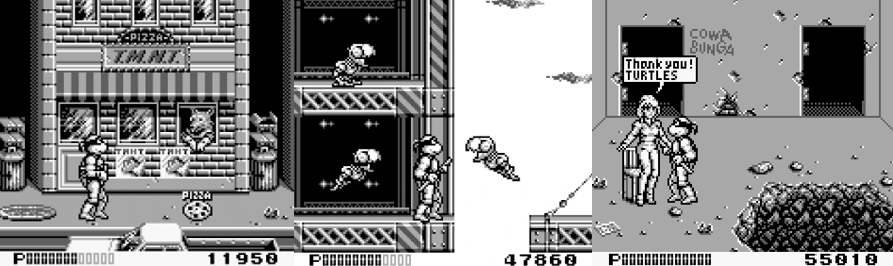
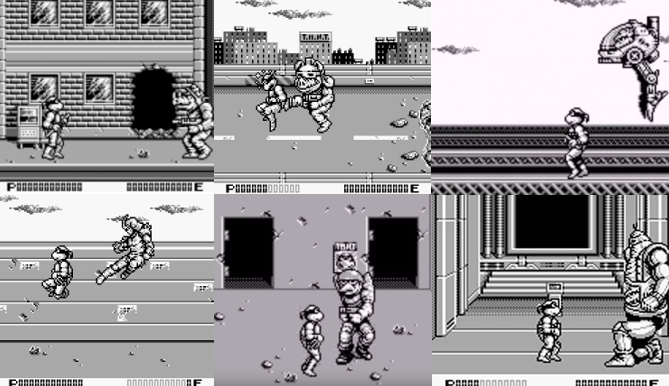



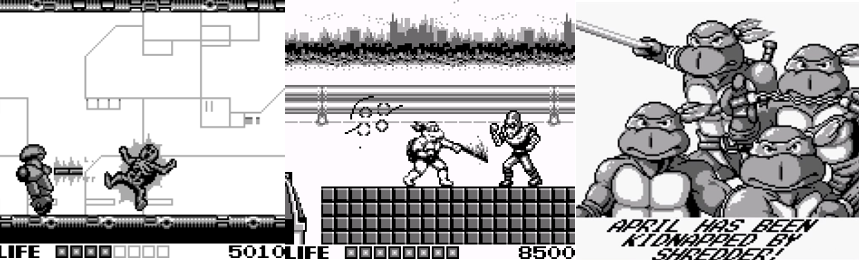


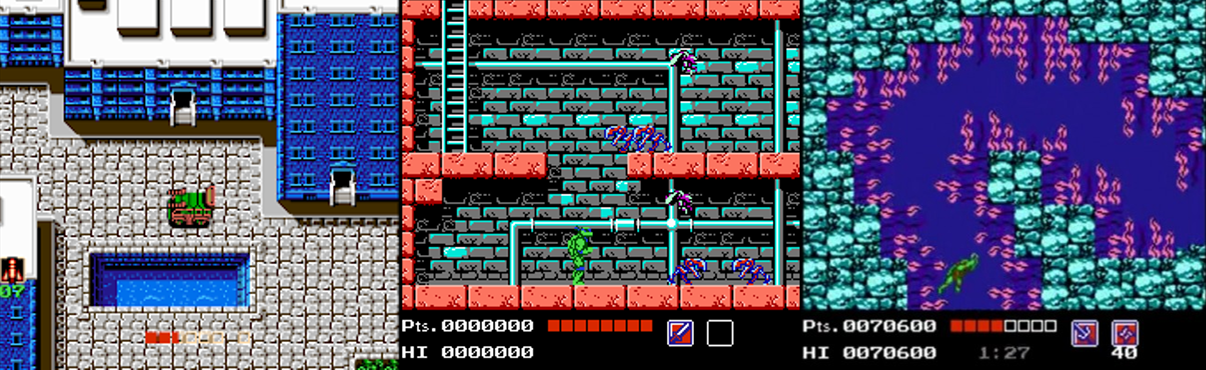

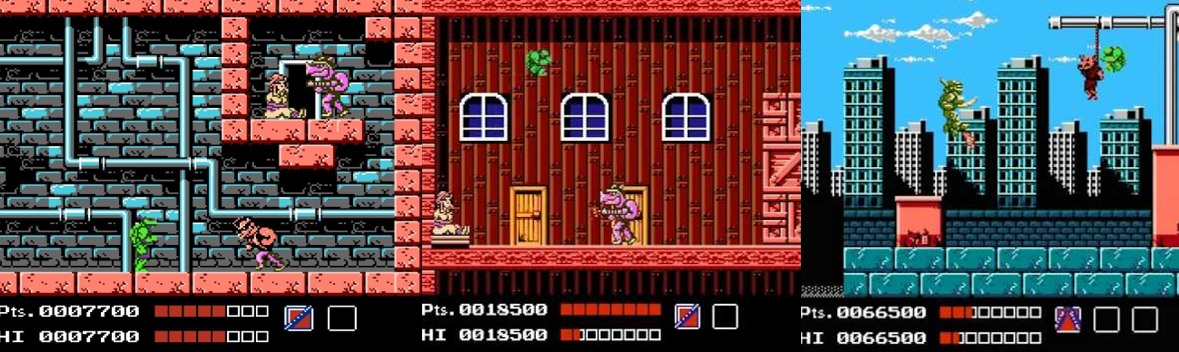
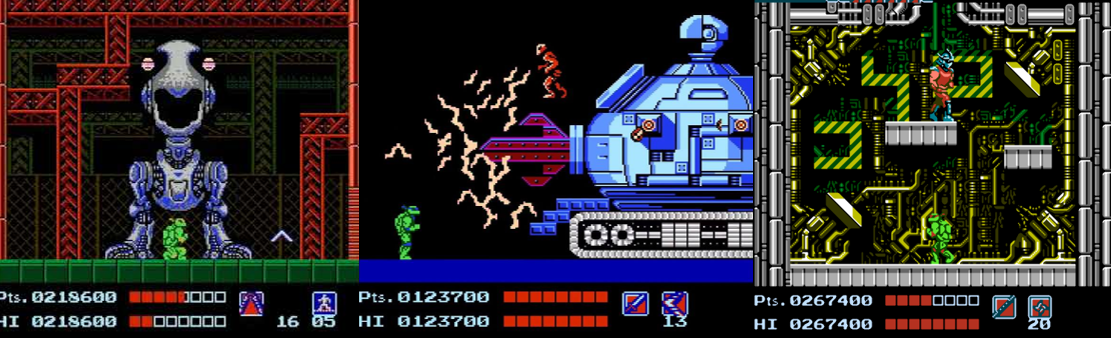


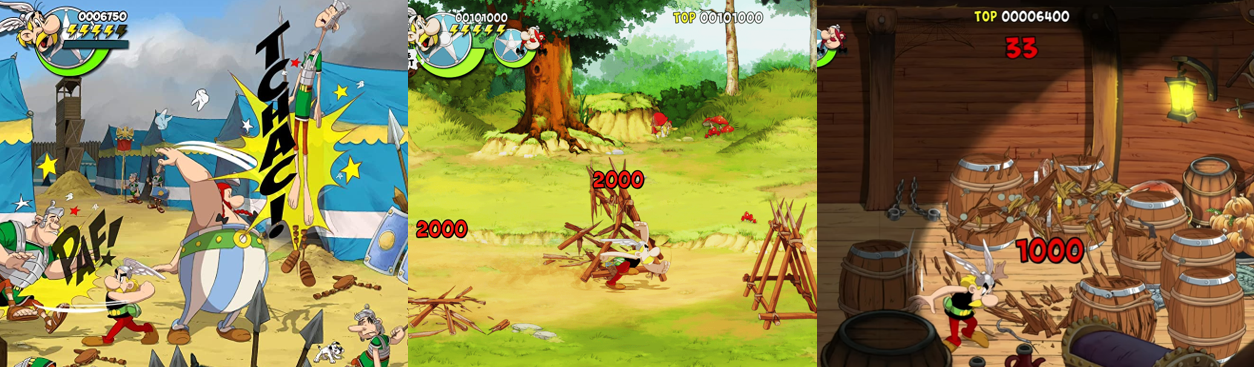
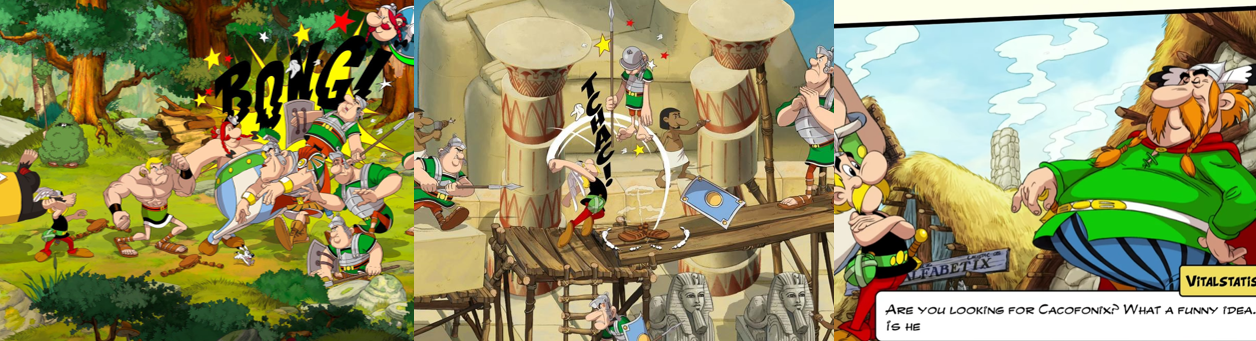
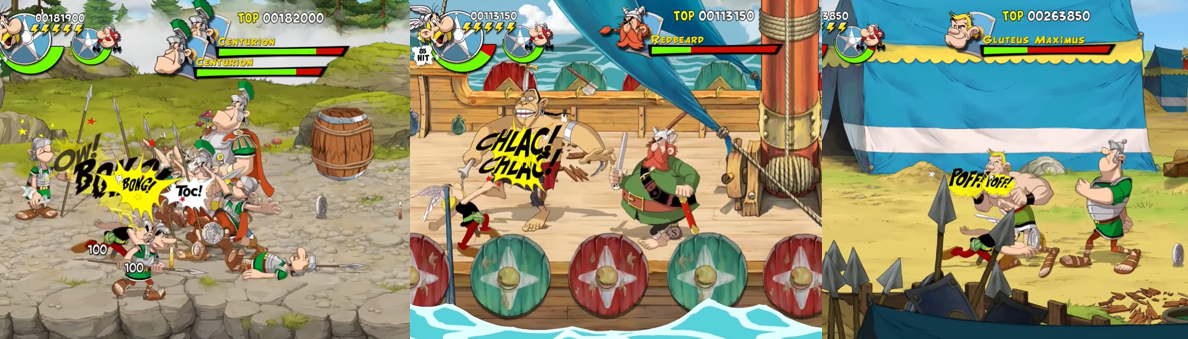
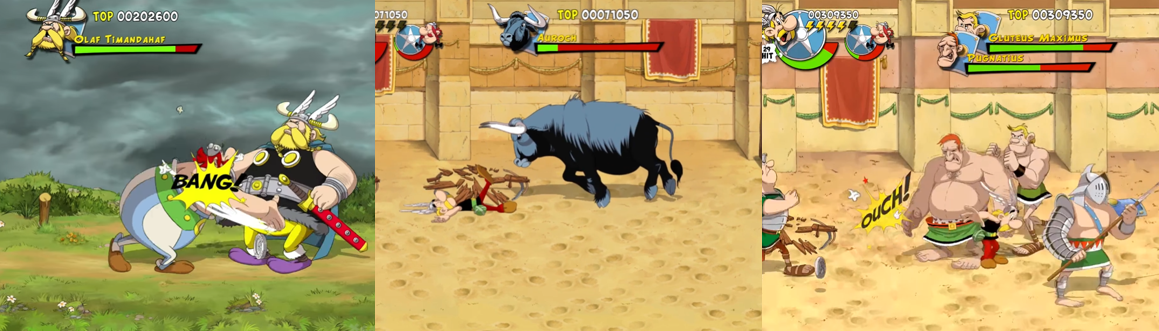


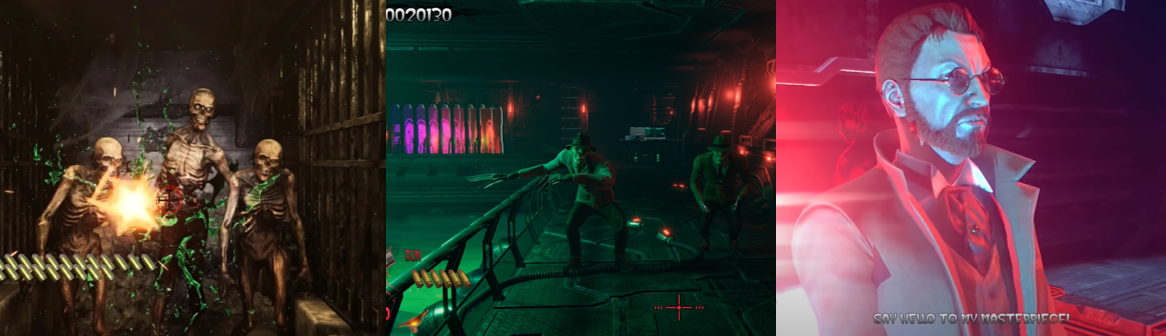
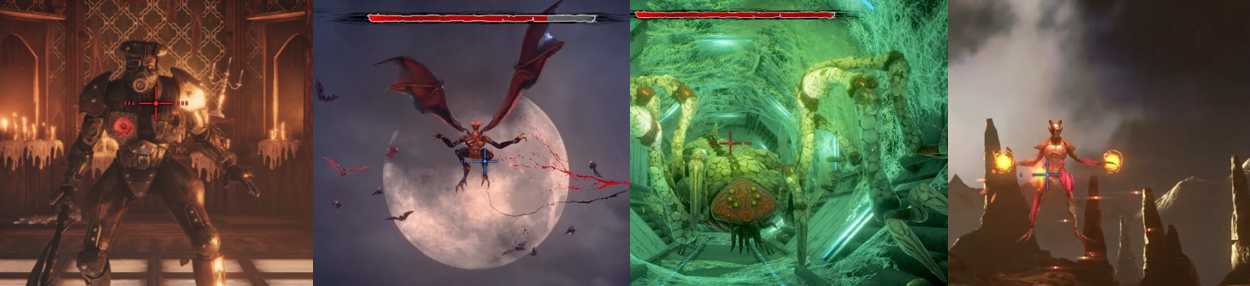


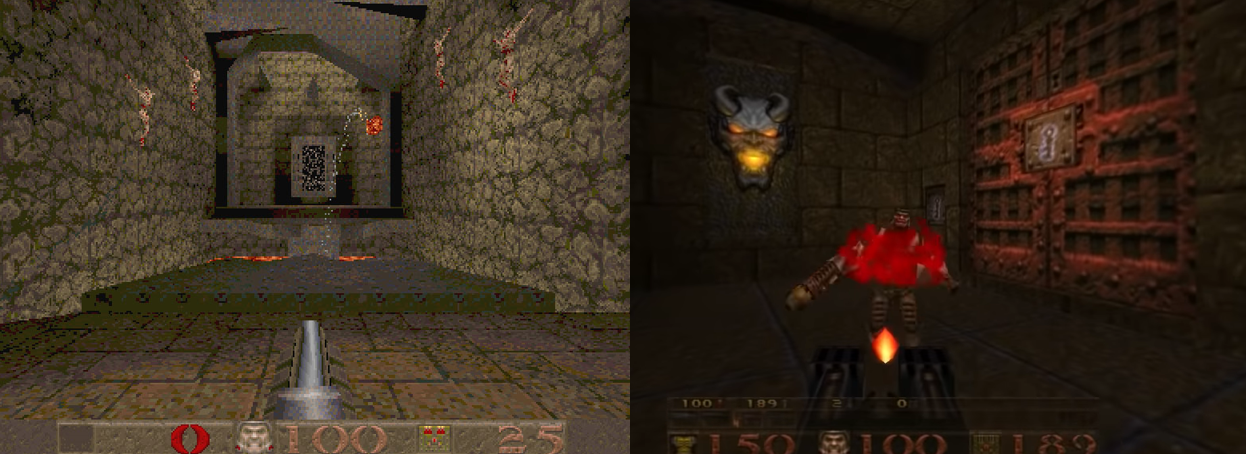
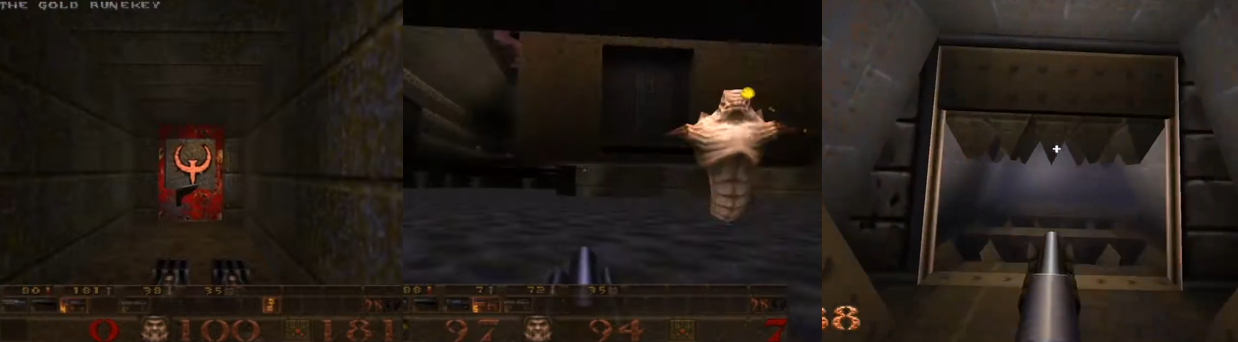



















You must be logged in to post a comment.