In September 1963 the legendary duo of Stan Lee and Jack Kirby assembled Earth’s mightiest heroes, the Avengers, who became the premier team of Marvel Comics, formed the backbone of the Marvel Cinematic Universe, and become an unbelievably popular and successful franchise.
Story Title: “…And Deliver Us From–The Masters of Evil!” Published: 9 May 1968 (cover-dated: July 1968) Writer: Roy Thomas Artist: John Buscema
Story Title: “Mayhem Over Manhattan!” Published: 11 July 1968 (cover-dated: August 1968) Writer: Roy Thomas Artist: John Buscema
Story Title: “Betrayal!” Published: 13 May 1969 (cover-dated: July 1969) Writer: Roy Thomas Artist: Barry Windsor-Smith
Story Title: “We Stand at Armageddon!” Published: 10 June 1969 (cover-dated: August 1969) Writer: Roy Thomas Artist: Barry Windsor-Smith
Story Title: “…And We Battle for the Earth!” Published: 8 July 1969 (cover-dated: September 1969) Writer: Roy Thomas Artist: Barry Windsor-Smith
The Background: After DC Comics brought together their most popular and powerful superheroes to form the Justice League of America in 1960, Marvel Comics head honcho Martin Goodman tasked Stan Lee with creating a similar team following his success with the Fantastic Four and the X-Men. Luckily, Lee and his most famous collaborators had already introduced numerous colourful characters and, thus, Anthony “Tony” Stark/Iron Man, Doctor Robert Bruce Banner/The Hulk, Doctor Donald Blake/Thor Odinson, and Doctor Hank Pym/Ant-Man and Janet Van Dyne/The Wasp became the first Avengers. Since the debut issue, the Avengers have been a consistent and influential presence in Marvel Comics and their roster has constantly shifted and changed, with the long-retired Captain Steve Rogers/Captain America joining their ranks in issue four. The Avengers splinter groups, been disassembled and reassembled, aided in massive cosmic events, and battled some of Marvel’s most powerful supervillains. Perhaps one of their greatest recurring enemies is the psychotic cyborg Ultron, who was first revealed under the guise of the Crimson Cowl in The Avengers #55. Created by Roy Thomas and John Buscema, and built in-universe by Hank Pym, Ultron is a sentient android who developed a murderous obsession with destroying the Avengers and conquering the world. Capable of changing his form, improving and becoming more powerful over the years, Ultron inadvertently created one of the Avengers’ most powerful allies, the Vision, expanded his schemes to include both the galaxy and altering the timeline, and even merged with his creator at one point. Ultron has made regular appearances in videogames as a powerful, penultimate, or final boss, is often portrayed as a formidable villain in Marvel cartoons, and was masterfully brought to life by James Spader in Avengers: Age of Ultron(Whedon, 2015).
The Review: The Avengers’ first encounter with the killer automaton Ultron began with T’Challa/The Black Panther testing Dr. Hank Pym/Goliath’s new defensive protocols at the Avengers Mansion. Satisfied that the booby traps are fully functional, Giant-Man alerts the Avengers’ butler, faithful Edwin Jarvis, who’s shocked at the subtle insinuation that he would ever betray his team’s secrets. However, Jarvis then slinks away to make a clandestine phone call and then slips out to visit his mother, only to venture to a secret base beneath a condemned building to meet the villainous Masters of Evil! Rather than being brainwashed or some elaborate decoy, Jarvis has truly betrayed the Avengers for a hefty cash sum and, while Chen Lu/Radioactive Man is suspicious of their enemy’s butler working with them, the team’s newest leader – the elusive and secretive Crimson Cowl – vouches for Jarvis. Still, Ulysses Klaw is anxious to have his revenge against Earth’s Mightiest Heroes, specifically the Black Panther, and is tempted to kill Jarvis as a substitute. Thanks to Dane Whitman/The Black Knight and Bruno Horgan/The Melter, the enraged villains cool off enough to let Jarvis speak. However, after Jarvis delivers the floorplan for Pym’s new defences, the Crimson Cowl double-crosses him with a puff of knockout gas and sends the Masters of Evil on their way. While flying about on his winded horse, Aragorn, the Black Knight recalls how he joined the new Masters of Evil to betray them to the Avengers. However, the Crimson Cowl anticipates this and sends the others to intercept Whitman at the Avengers Mansion. Though overwhelmed, the Black Knight orders Aragorn away but, while Clint Barton/Hawkeye spots the horse, the abrasive Avenger is attacked by the Melter before he can alert the team.
The Avengers and their foes are stunned when their newest adversary turns out to be more than he seems.
Though he fires off a few arrows, Hawkeye’s downed when the Melter buries him under some debris. Simultaneously, David Cannon/Whirlwind attacks the Black Panther, sending him flying with a whirling cyclone, and the Wasp is accosted by Klaw. Despite showing no fear and her super shrinking ability, the Wasp is easily defeated when she flies head-first into a door! Similarly, Radioactive Man surprises Goliath and Doctor William “Bill” Foster in the Avenger’s lab, subduing Foster with a super adhesive and luring Goliath into a trap where he’s ensnared by his own devices! With all the Avengers captured, the gloating Masters of Evil introduce their master, who’s first revealed to be a distinctly Ultron-looking robot decoy and then unmasked to be Jarvis! The Masters of Evil load their prisoners into a futuristic craft and head back to their master, relishing their victory, though the villains are as unnerved by Jarvis’s turn as the Avengers, if not more since Jarvis demonstrates an uncanny ability to be fully aware of everything, no matter how trivial. Although Goliath escapes his restraints, Klaw’s saved by the Crimson Cowl, who admonishes his carelessness. When Klaw turns his incredible Sonic Claw on his master, he’s amazed when it has no effect and is left grovelling at the hooded figure’s feet, suitably humbled. The Crimson Cowl then reveals his plan to drop the Avengers into the ocean and blackmail New York City with a hydrogen bomb. However, the Crimson Cowl purposely drops the Avengers in a craft so they can slowly suffocate after learning that Jarvis was hypnotically duped into betraying them by none other than Ultron-5!
After freeing Jarvis from Ultron, the Avengers are later betrayed by the Vision!
Though it seems like the Melter crushes Jarvis under some rubble during his desperate escape, the remorseful butler survives and wanders the streets, succumbing to exhaustion just as he’s found by the Black Knight. Thanks to Jarvis’s tipoff, the Black Knight intercepts Ultron-5’s craft and frees the Avengers. The team quickly avenge themselves against the Masters of Evil, causing Whirlwind to flee but apprehending the others and easily dismantling the hydrogen bomb. When the Avengers confront their regretful butler, Jarvis reveals he sold out to pay for his mother’s treatments, and they quickly forgive him and part with the Black Knight on good terms, though Ultron-5 is left vowing revenge. Some time later, aboard a Supreme Headquarters, International Espionage and Law-Enforcement Division (S.H.I.E.L.D.) Helicarrier, a new version of the Avengers tests the durability of the mysterious Adamantium, a substance powerful enough to tank blows from Thor Odinson’s hammer and Iron Man’s Repulsor Rays. This proves that, as the team feared, the mineral has been altered by a “molecular rearranger” and presents a serious threat. As Goliath (now Barton garbed in a garish costume) tries to prove he can succeed where they failed, the strangely silent synthezoid, the Vision, is suddenly assaulted by an unseen force and compelled to brood over the grave of Simon Williams/Wonder Man, whose brain patterns formed his personality. Though he first suspects Simon’s spirit is calling him, the Vision suddenly has a revelation and flies off, leaving Pym (now known as Yellowjacket) to ponder his ally’s fate. While Iron Man tests himself in the mansion’s combat simulator, the Vision returns to the team’s Helicarrier, subdues a guard, and steals the Adamantium before lowering the ship’s air pressure to leave none alive. When the team finds out and find Janet attacked, they angrily confront the Vision, who coldly rejects his humanity, easily shrugs off their attacks, and heralds the rebirth of his creator, now in the jet-powered form of Ultron-6!
The remorseful Vision tries to atone for his mistakes by battling his creator to the death.
Now made of the indestructible Adamantium, the vengeful Ultron-6 attacks without mercy, easily defeating Thor and Goliath when the battle hungry Thor strikes the android’s body with his enchanted hammer, Mjölnir, and causes a massive shockwave. Though Yellowjacket gets the drop on his creation, Ultron-6 easily throws him off and then targets Pym over Iron Man and the Wasp, hell-bent on killing his “father”, though he proves too powerful for Iron Man to affix some electrodes to stop him. Bored of the conflict, Ultron-6 flees, unknowingly pursued by the repentant Vision, realising his creator programmed a failsafe to ensure his servitude. After regrouping, the Avengers set out to stop Ultron-6, who returns to his stronghold and prepares to launch a cache of nuclear weapons, determined to wipe out the human race! When confronted by his melancholic, wayward “son”, Ultron-6 flies into a rage, desperate to prove himself superior to his creation, though the Vision’s incredible matter-altering powers make him more than a match for his “father”. Ever the stubborn android, Ultron-6 escapes the Vision’s wrath by transforming into “sheer ionic force” and leaves the Vision to be attacked by S.H.I.E.L.D. soldiers for stealing their Adamantium. When the Avengers arrive, they discover Ultron-6 is one lever pull away from causing nuclear destruction, though the murder machine is left incensed that lever is mysteriously inoperable. Regardless, Ultron-6 is still powerful enough to endure Yellowjacket’s electrical blasts and throw the team around like ragdolls with a burst of explosive ionic power. Yet, despite apparently being strong enough to kill the Avengers and then enact his diabolical plot, Ultron-6 simply vanishes and the team is left to witness the Vision’s theatrical sorrow for being controlled by his creator. Before collapsing from his efforts to defeat Ultron-6, the Vision also reveals that he caused Ultron-6’s plan to go awry by trashing his apparatus.
Despite his all-powerful new form, Ultron is undone by some Pym trickery.
After convincing S.H.I.E.L.D. to relinquish custody of the Vision, the Avengers fail to rouse him with a concentrated dose of solar energy and thus turn to Yellowjacket’s “rudimentary mind-probe” to learn that the molecular rearranger is the key to stopping Ultron-6 since the only thing that can rearrange Adamantium. Although the device was also stolen alongside the Adamantium, Yellowjacket contacts the Black Panther while he’s fending off an invasion of Wakanda and requests a chunk of his nation’s Vibranium. Upon learning that the Avengers plan to publicly reveal his threat, Ultron-6 decides to enter their obvious trap and slaughter them, intent on kidnapping Adamantium expert Doctor Myron McLain and forcing him to build an army of Ultron duplicates so he can conquer the world. Despite being a capable and adaptable fighter, the Wasp is more concerned with dressing well for the team’s arrival at the United Nations building, where Dr. McLain is attacked by Ultron’s newest shell, a towering humanoid construct claiming to be the “ultimate” Ultron. Easily dispatching the nearby S.H.I.E.L.D. agents, Ultron calls out the Avengers and renews their battle, barely flinching when struck by Mjölnir and shrugging off the clumsy Goliath’s gigantic fist before briefly putting both Avengers down with lasers. Ultron then forces the Avengers to back off lest he murder Dr. McLain, leaving them powerless to stop him from affixing a “mind-draining device” to the doctor’s head to absorb his immense knowledge and secrets. However, Ultron’s forced to break the connection when he struggles to contain Dr. McLain’s vast intellect, leaving him on the brink of a complete meltdown. Thankfully, Thor averts this by containing Ultron within a special expanding chamber…thing…made of Vibranium, seemingly destroying Ultron in the process. In the aftermath, it’s revealed that “Dr. McLain” was really super genius Hank Pym in disguise and that he forced Ultron to absorb a phrase so alien to him that it led to his destruction: “Thou shalt not kill.”
The Summary: While I’ve always been a fan of Ultron, his first encounters with the Avengers felt a bit lacking to me. The first two issues, especially, are a bit of a mess, overloaded with characters and painting Jarvis, of all people, as a deceiver and a villain! I understand the idea of behind bringing together a new Masters of Evil, especially as the villains nicely counter each hero’s abilities, but their victory felt forced here. Ultron-5 goes to the effort to brainwash Jarvis (despite him later admitting that he “sold out” for money for his sick mother) to acquire Pym’s floorplan, only for Whirlwind to just enter through a window and the Melter to…well, melt…a hole in the wall. There was barely a co-ordinated attack on the Avengers Mansion, the villains just caught them by surprise with such sophisticated tricks as fancy glue and slamming a door. I would’ve much preferred it if Ultron-5 had used Jarvis’s knowledge to reprogram or take control of Pym’s machinery, turning them against the Avengers as he turns training room against Iron Man and overwhelming them with a real show of power. Instead, the first two issues try to sell Jarvis as a traitor, with no one (not even Pym) recognising Ultron-5 until he reveals himself and the Masters of Evil happily following Jarvis’s commands. Ultron-5 is also depicted as a grandiose fool, more focused on gloating and humbling his enemies than finishing the job, and ends up undone by the Black Knight, of all people, and a comparatively weak incarnation of the Avengers. For me, this makes the “Crimson Cowl” part of Ultron’s history an odd and forgettable side note in the killer robot’s lineage, one perhaps only good for a pub quiz.
Despite his menacing appearance, Ultron is a boasting, psychotic braggart whose plans go awry.
Ultron makes a better impression in the second story, even if Hawkeye is parading around in a gimp outfit as Goliath and Pym is making a fool of himself as Yellowjacket. One thing I’ve always loved about Ultron’s design is his permanently screaming face, with the flaming energy bursting from his mouth, which is surprisingly expressive and matches his chaotic mood swings. These three issues are also noteworthy for introducing Adamantium and depicting it as the strongest and perhaps most dangerous substance on Earth. Its nigh-indestructible properties make it the perfect target for Ultron-6, who compels his “son”, the Vision, to steal it and fortify his otherwise laughable half-torso, half-rocket jet form. This also seems to facilitate an evolution in Ultron’s physical self, allowing him to project and even transform into ionic energy, easily making him a physical match for Thor and making fools of Goliath and the Wasp. By this point, Ultron-6’s plan has changed from blackmail to worldwide destruction and there’s a real sense of tension as the team desperately pursues him, especially as Ultron-6 is depicted as psychotic in his desire to eradicate human life. Yet, Ultron-6 apparently cannot construct new bodies for himself or robotic minions, which leads to his undoing when he targets Dr. McLain and is easily fooled by Yellowjacket. Still, despite “ultimate” Ultron failing to impress, Ultron is depicted as a significant threat as he outmatches, outwits, and outpowers a far stronger team of Avengers and comes dangerously close to enacting his plan. While he meets his end in dubious fashion, seemingly destroyed by the thought Pym plants in his head and the laughable Vibranium bell-thing Thor encases him in, I enjoyed seeing Ultron throw the Avengers around and be publicly revealed as a very real threat to the world.
Melancholy Vision proves ineffectual against Ultron compared to Pym’s elaborate scheme.
These three issues also largely focus onto the Vision, a melancholy, brooding figure who’s treated with some distrust by Barton, apprehension by Pym, and naturally seen as a tortured soul by the flakily Janet. Prone to breaking into gloomy soliloquies, the Vision is constantly questioning his purpose and humanity and is torn between his loyalties to his teammates and the programming forced upon him by Ultron-6. Having created the synthezoid some time ago, Ultron-6 compels his “son” to subdue any in his way using his bizarre powers, phase through walls, and betray his allies by stealing the Adamantium. Conveniently, Ultron-6’s control over the Vision isn’t permanent and he soon comes to his senses, only to be set upon by S.H.I.E.L.D. soldiers and put his relationship with the Avengers in doubt. This, as well as the desire to stop his creator, drives the Vision to confront Ultron-6 in a battle to the death. Thanks to the Vision being effectively all-powerful, their fights are brutal and merciless, though Ultron-6 maintains the advantage with his ionic powers and the Vision is left seemingly comatose after exerting himself. I’m not a big fan of the Vision’s dramatic ways but it is fun seeing him go toe-to-toe with Ultron-6 and getting a sense of how powerful Ultron can be since he holds his own against powerhouses like the Vision and Thor. Still, the Avengers’ first counters with Ultron were surprisingly low-key, despite Ultron wishing to wipe the human race off the Earth. Ultron’s shown to be incapable of making good on this threat after the Vision wrecks his equipment, ironically needing the knowledge of a human to prove his mechanical superiority, and spends more time boasting and plotting than actually seeing things through. It definitely makes him a megalomaniacal villain and I really dig his creepy aesthetic, but I don’t think it did him any favours to go up against such mismatched Avengers teams, who handily defeated him despite not being as powerful as they could be.
My Rating:
⭐⭐⭐
Rating: 3 out of 5.
Pretty Good
What did you think to Ultron’s first encounters with the Avengers? Where does Ultron rank in your hierarchy of Marvel villains? Did you believe that Jarvis had turned traitor? Were you surprised when the Vision betrayed his team? Which incarnation of Ultron is your favourite or who would you like to see on the Avengers roster one day? What are some of your favourite Ultron stories or moments? How are you celebrating the debut of the Avengers today? Share your thoughts on Ultron, and the Avengers below and, if you’d like to see more Ultron reviews, go support me on Ko-Fi.
The Background: For decades, few videogame publishers were as synonymous with Marvel Comics as Activision, who produced adaptations Marvel’s most popular properties. While some were better than others, Activision’s efforts were largelypraised, especially after they partnered with Raven Software on the X-Men Legends games (2004; 2005). Activision and Raven Software expanded their scope to the rest of the Marvel universe with Marvel: Ultimate Alliance (2006), a largely successful team-based brawer praised for improving upon its predecessors. Though now delisted, it was followed by a sequel three years later, courtesy of Vicarious Visions, which tweaked the gameplay with team-based attacks to encourage experimentation. Though Marvel: Ultimate Alliance 2(2009) was praised for its branching storyline, the stripped down roleplaying mechanics were criticised. While it was also delisted in 2020, fans were clamouring for a follow-up and, just ten years later, Team Ninja stepped in to work alongside Marvel in reviving the franchise. Seeking to place additional emphasis on combat, the developers explored the cosmic scope of the Marvel universe by including the Infinity Stones and lesser-known characters and chose to make the title a Nintendo Switch exclusive after developing a close relationship with Nintendo. Although Marvel: Ultimate Alliance 3: The Black Order was the sixth best-selling game in its first week and was later bolstered by extensive downloadable content (DLC), it was met with mixed reviews that praised the colourful action but criticised its lack of innovation.
The Plot: While battling Nebula and Ronan the Accuser, the Guardians of the Galaxy stumble upon a plot by the mad titan, Thanos, to collect the six Infinity Stones. Although they scatter the Stones, Thanos’s acolytes, the Black Order, pursue the gems, prompting an alliance of Earth’s mightiest heroes to retrieve them first.
Gameplay and Power-Ups: Like its predecessors, Marvel: Ultimate Alliance 3: The Black Order is a team-based action role-playing game in which players assemble a squad of four heroes from across the Marvel universe to battle various nefarious baddies, primarily the titular Black Order, who are hunting the six all-powerful Infinity Stones on behalf of their master, Thanos. The game offers five save slots, two initial difficulty levels, and a base roster of thirty-six playable characters, with many being encountered as you play through the story and joining your alliance either after fighting alongside you or being freed from some kind of mind control. Marvel: Ultimate Alliance 3 offers three controller configurations, thankfully none of which involve motion controls, and allows you to toggle overlays, notifications, tips, and other onscreen elements from the “Settings” menu. These include altering the camera placement, which enables a lock-on feature by pressing in the right stick, though the camera generally remains more focused on whichever character you’re controlling rather than offering a bird’s eye view as in the last two games. Although you can fight alongside friends either locally or online, you switch between your teammates with the directional pad (D-pad) when playing alone and your computer-controlled partners are very useful in a fight, attacking, enabling team attacks, and reviving defeated characters without any input from you. Pressing A sees you interact with the environment to activate consoles, pick up or move certain objects, and talk to other characters. You jump with B, executing a double jump, swinging from webs, or flying depending on which character you’re playing as, and throw light attacks with X and heavy attacks with Y. These can be strung together to perform basic combos and you can also perform a mid-air attack and throw objects (like bombs and missiles) by pressing Y. You block incoming attacks by holding the Z trigger and tap it to dodge, and collect glowing red orbs from defeated enemies or smashed crates to restore health, blue orbs to refill your Energy Point (EP) gauge, and credits to spend on upgrades.
Combat is thick, fast, chaotic, and constant thanks to loads of enemies and character abilities.
As in the last two games, each character has specific abilities tied to their superpowers or superhero traits. You activate these by holding the Right trigger and selecting an icon using the D-pad; using Abilities drains your EP, however, and each Ability comes with a different cost. However, these attacks allow you to stun, stagger or deal elemental damage to enemies using Peter Parker/Spider-Man’s webs, Thor Odinson’s lightning, and Doctor Robert Bruce Banner/The Hulk’s incredible strength. Many characters have projectile attacks in their arsenal, such as Wade Wilson/Deadpool firing guns and Scott “Slim” Summers/Cyclops blasting his eye beams, while others cause splash damage or specific buffs, like Piotr Rasputin/Colossus being able to reflect projectiles and Wanda Maximoff/The Scarlet Witch healing her allies. Some, like James “Logan” Howlett/Wolverine, have passive abilities that allow them to automatically regenerate health as they walk around; others, like Johnny Blaze/Ghost Rider and Ororo Munroe/Storm, specifically deal in elemental damage. Character’s Abilities can also be mixed and matched by holding ZR and pressing one of the face buttons (or pressing A when prompted); this sees two characters attack in a combo for additional damage. As you dish out and take damage, you’ll also build the Extreme (EX) Gauge). Once full, you can press L and R up to three times to have two to four of your teammates perform a devastating combination attack that’s great against bosses. While the various cannon fodder you fight are easily dispatched, larger commanders and bosses need their “stun” meter drained before you can really put a beating on them and others (and certain treasure chests) require specific combination attacks to breach their shields. Defeating enemies sees your characters gain experience points (XP) to level-up, increasing their statistics (attack, defence, etc), though you can also use the various Orbs you find to manually level-up. Each character’s special Abilities can also be further enhanced using Ability Orbs and credits, reducing the EP cost and increasing their damage, among other benefits. You can also earn “Team Bonuses” depending on your team selection: pick a group of X-Men, for example, and your strength or resistance stat will increase, while picking characters of royalty ups your maximum energy stat.
Search for chests to gain currency and other expendables to upgrade and buff your alliance.
Although you can’t equip gear to your characters, the boss battle against the Destroyer armour sees you temporarily empowered by Asgardian magic and you can eventually equip your team with “ISO-8” crystals, coloured stones that enhance their attack power, resistance to elements, or critical hit ratio, among others. You can further upgrade these with credits and ISO-8 capsules, though some of the rarer ones will also debuff you (for example, your attack my increase but your defence will decrease accordingly). You’ll also inevitably gain access to the Strategic Hazard Intervention Espionage Logistics Directorate (S.H.I.E.L.D.) Lab, which acts as the game’s skill tree. By spending credits and Enhancement Points (EP), you can further increase your team’s overall attack, defence, resistance, vitality, and such and even unlock additional ISO-8 slots (with more being earned by levelling-up). You can also enter the S.H.I.E.L.D. Depot from the main menu to purchase additional costumes and social icons by spending S.H.I.E.L.D. Tokens. Marvel: Ultimate Alliance 3 is pretty forgiving (on the “Friendly” difficulty, at least), with multiple checkpoints in each area. When you activate a S.H.I.E.L.D. checkpoint, your team is fully healed, and you can swap or enhance them if you wish. If a teammate is defeated, you can hold A to revive them, but I wouldn’t recommend it unless you absolutely have to. Not only are revives limited, but downed characters will eventually return to full health even before you reach a checkpoint so it’s not worth risking another character taking damage by healing a partner. Exploration generally leads you to treasure chests or special walls that require a special combination attack to open, or to a “Rift” challenge that takes you away from the main game to tackle a special challenge (usually a boss rematch or enemy gauntlet) for extra rewards. Your path is incredibly linear most of the time, hence why there’s no map, and the game’s primary focus is on chaotic combat and visually manic team-based attacks. Unlike in the last two games, you can no longer grapple or throw enemies (though you can still send them flying off certain platforms) and there are no character-specific team-up moves, meaning the action can quickly get quite tiresome.
Sadly, puzzles are practically non-existent, with only Rifts offering additional challenges.
Because of its focus on hectic combat, there’s even less room for puzzles than there is for exploration in Marvel: Ultimate Alliance 3. Puzzles boil down to activating a console to open a door or making a platform move and that’s it. Sometimes, you’ll hold A to move a block and avoid lasers or cannons, but mostly you’ll be timing jumps between said lasers to progress and simply hurling missiles at those cannons. Sometimes, you’ll rotate statues or press switches to progress; others, you’ll be avoiding toxic ooze in Hel or solving door puzzles at the Raft or in Avengers Tower. After hopping across the rooftops of New York City, you’ll infiltrate the heavily fortified fortress of the Hand, dealing with ninjas that drop from the sky and hidden arrow hazards. When in Wakanda, Advanced Idea Mechanics (A.I.M.) corrupt T’Challa/The Black Panther’s defences, leading to an exasperating section where you must avoid snipers and being roasted by a giant panther statue’s energy blast. When transported to the Dark Dimension, you must use portals to reach new areas and defeat waves of demonic enemies to lower magical barriers and progress. Some attacks also screw up your controls or temporarily freeze you; some enemies are best defeated by tossing explosives at them; and many missions have an additional character fighting alongside you who’s often unlocked afterwards. However, a lot of the additional features of the previous games are missing; you can talk to other characters, but there are no dialogue options or character-specific interactions. There are no trivia quizzes, no optional side missions beyond the Rifts, and no character specific challenges to unlock extra stuff for each character. There aren’t even hub areas, in the traditional sense, with characters just appearing around S.H.I.E.L.D. checkpoints at times, though you can destroy a fair bit of the environment, and some encounters have you fleeing towards the camera as bosses chase you or present you with unwinnable battles.
Presentation: Whereas the last two games primarily based their aesthetics on the comics books, especially the Ultimate comic line, Marvel: Ultimate Alliance 3 adheres very closely to the Marvel Cinematic Universe (MCU), especially in the visuals of its locations. I was hard pressed, for example, to tell the difference between Asgard here and the Asgard to the MCU, with both the golden city and the rainbow bridge, the Bifrost, appearing almost exactly as they’re depicted in the films. The same is true for Wakanda, the Dark Dimension, and Knowhere, all of which are virtually indistinguishable from how they appear in the MCU. There are some differences, of course: Taneleer Tivan/The Collector’s museum, for example, uses coloured cube cages and Wakanda leans much more into traditional architecture than the pseudo-futuristic science of the films (likely because Black Panther(Coogler, 2018) released a year before this game was made). Xavier’s School for the Gifted is lifted almost exactly from the 20th Century Fox X-Men movies (Various, 2000 to 2020), however, including a hedge maze, 1:1 Cerebro room, and basketball court that doubles as a landing pad for the Blackbird. While the Dark Dimension and the cosmic mind trip that is Sanctuary also heavily borrow from the bizarre cosmic imagery of the MCU, the Raft and Avengers Tower are much more akin to their comic book counterparts, though they’re comparatively bland locations, lacking fun areas like the Danger Room or Wakanda’s Necropolis (though you do pass through Anthony “Tony” Stark/Iron Man’s Hall of Armours in the tower). Although you only make a brief stop in Attilan to try and get help from the Inhumans, the architecture is far more visually interesting than that awful television show, seemingly being comprised of Celestial technology, and I enjoyed the ominous gothic presentation of Hel, with its restless Viking warriors and damaging sludge. Unfortunately, Marvel: Ultimate Alliance 3 continues the trend of having disappointingly bland and forgettable music, opting for generic themes for each location, event, and character that are lost amidst the constant fighting.
A visually impressive brawler that takes obvious inspiration from the MCU films.
The game also opts for an almost cel-shaded, action figure-like aesthetic for its colourful cast of characters. While many again both look and sound like their MCU counterparts, there are some exceptions: Peter Quill/Star-Lord, for example, looks nothing like Chris Pratt and the X-Men are far closer to the comic books than Fox’s films. Despite you assembling a custom team of heroes, cutscenes depict either everyone or characters specific to the location you’re in (the corrupted Doctor Stephen Strange in the Dark Dimension, for example) as they’re better suited to advance the plot against the local baddies. With the game shifting to a more third-person perspective, you’re closer than ever to the action and can see more of the environment than in the previous games. However, this comes with some drawbacks: mainly, there are far less opportunities or incentives to explore. Second, environments are painfully linear, with dead ends or locked doors barring your progress. Third, and most frustrating, is the camera, which easily loses track of your opponent/s and often lumbers you with wireframe representations when the foreground blocks the view. Thankfully, you won’t be falling down pits and rarely have to worry about onscreen hazards, but it can be aggravating trying to figure out which platforms and crates can be jumped on and which can’t. Marvel: Ultimate Alliance 3 offers a diverse cast of characters, each with their own idle poses and quips, though these do inevitably repeat. The game’s also surprisingly light on Easter Eggs: you’ll spot Deadpool singing away as he makes tacos in the X-Mansion, but not much else, and there are no optional missions or choices to encourage replaying missions. It’s a far cry from the first game, where there was always something to collect or an additional character to help out. Instead, it’s basically all combat, all the time in Marvel: Ultimate Alliance 3. Luckily, the game looks pretty good (everything’s very colourful and true to its inspirations) and performs really well, though there are some long load screens and it is annoying being forced to continue your game every time you challenge a Rift.
Enemies and Bosses: All the usual suspects appear here as disposable cannon fodder for you to endlessly beat up, with many of the game’s goons sharing traits across the various locations. You’ll encounter Kree, Ultron Drones, agents of A.I.M., and Doombats who all pack various energy blasters. Ultron’s clones are the worst for this, relentlessly firing energy blasts and crashing through windows. The Raft’s unscrupulous prisoners attack in large groups, as do the restless Viking warriors who populate Hel, tossing axes from afar and luring you into toxic goop. Gargoyle-like Fire Demons also dwell here, offering a greater challenge with their swoop attack and fire breath, not unlike the monstrous Outriders and Mindless Ones who make up Thanos and the dread Dormammu’s forces, respectively. Alpha Primitives, Hydra goons, and towering Sentinels also appear, with the latter firing huge energy blasts from the palms and best attacked by throwing their explosive energy cores back at them. No matter where you are and what enemies you fight, more powerful commanders will also appear. Larger, tougher, and sporting a stun meter, these commanders should be your top priority as they’ll charge across the screen, cause shockwaves, and generally offer a far greater challenge even when you’re at a higher level. These minions often fight alongside their masters, generally so you can recover some health and EP to better damage the bosses, and will endlessly spawn in one of the additional modes unless you destroy their teleporters. Some of the game’s challenges or story-based missions charge you with defeating a certain number of enemies to progress. Other times, bosses appear in these waves, and you must occasionally flee or purposely lose some fights. This happens when Cain Marko/The Juggernaut comes tearing through the X-Mansion, for example, and in early encounters with the Black Order, who cannot be beaten or will chase you, raining lightning or other attacks from the sky and across the ground.
Few bosses require more than just hit-and-run tactics, even when augmented by an Infinity Stone.
There are loads of bosses to fight in Marvel: Ultimate Alliance 3, with some returning from the previous games, some teaming up, some having a couple of phases, and all boiling down to whittling down their stun bar, unleashing an EX attack and/or your most powerful Abilities, and avoiding damage until you can repeat this. The first ones you’ll face are Nebula and Ronan the Accuser, who often appear as a duo in optional challenges. Nebula is faster and more nimble, wielding blades where Ronan uses a massive warhammer. Both set a standard all bosses follow, which is that they’ll use either a jumping slam or an explosion of energy (or both) to send you flying. While quelling the riot in the Raft, you’ll encounter a version of the Sinister Six, with some unique variations to each battle. Flint Marko/The Sandman, for example, flings waves of sand and erupts his big sand fist from the ground as a large sand creature. You must use A to mount the nearby cannons and unload on him to chip away at his stun meter. Maxwell “Max” Dillon fights alongside Eddie Brock/Venom, raining lighting and electrocuting you with bursts of electricity, before he’s eaten by Venom and starts busting out electrically-enhanced symbiote powers. Venom joins the team after this fight and is tested against Quentin Beck, who first brainwashes Mile Morales/Spider-Man, Gwen Stacy/Spider-Woman, and Kamala Khan/Ms. Marvel to fight you and then unleashes a poisonous mist, teleports about, and confuses you with duplicates, Doctor Otto Octavious/Dr. Octopus is fought in a two-stage fight where you must first avoid his tentacles and scurry charge and then attack each arm to stun him. Finally, you’ll battle Norman Osborn/The Green Goblin for the Time Stone. The Green Goblin swoops overhead and lingers slightly out of reach, peppering the arena with his pumpkin bombs, charging at you, and freezing time to bombard you. He’s noticeably weak to his pumpkin bombs, however, so try and toss them at him before they explode in your face! After battling into the Hand’s fortress, you must first free Elektra Natchios from the Hand’s influence and then face Lester/Bullseye and Wilson Fisk/The Kingpin in separate fights. You must take out the ninjas feeding Elektra power, avoid Bulleye’s spread of razor sharp and explosive cards, and dodge the furniture and massive energy beam thrown by the Power Stone-enhanced Kingpin. The Kingpin also charges like a rhino, leaps at you to cause shockwaves, and even rips up stone columns to use as melee weapons!
Gigantic bosses and the quirkier villains help mix-up the otherwise tedious combat.
Avengers Tower is then attacked by Ultron and his drones, who assist him in battle. Not that he needs it as the Mind Stone allows Ultron to mess up your controls, to say nothing of his signature face and palm beams. Ultron then grows to gigantic proportions, sweeping the area with his eyebeams before Clint Barton/Hawkeye intervenes and Ultron merges with Ultimo. This is the first giant boss battle in the game and sees you blasting Ultimo with cannons and avoiding his massive swipes. The Infinity Sentinel is comparatively smaller, but no less dangerous thanks to its own face beam and missiles. Though you can damage it with Sentinel cores, it’s finished in a cutscene by Erik “Magnus” Lehnsherr/Magneto, who then tosses debris and throws you off balance with magnetic pulses while Juggernaut pummels you and Raven Darkholme/Mystique tosses daggers. After surviving Mystique’s Danger Room trials, you face Magneto, now even tougher thanks to the Power Stone, before being chased away and banished to the Dark Dimension by the Black Order. There, you battle past Loki Laufeyson (who boasts elemental attacks and duplication tricks) to eventually face the dread Dormammu, who wields the Reality Stone and is the second giant boss. You must subdue his minions and avoid his flame bursts, whittling down his magical barrier either directly or be destroying three nearby orbs, all while dodging his giant fists and ground spikes. The brief fight with Maximus Boltagon is far easier, even though the mad Inhuman carries a massive energy cannon and you must take cover in Thane’s energy bubble to avoid Maximus’s barrage of lasers. Ulysses Klaue/Klaw awaits in Wakanda and his sound-based energy blasts and waves must be overcome to rescue and recruit James Buchanan “Bucky” Barnes/The Winter Soldier. You then fight past A.I.M. to confront their master, George Tarleton/Mental Organism Designed Only for Killing (MODOK), who uses the Soul Stone to turn the Dora Milaje against you and attacks with a slew of appendages, from buzzsaw arms, poison gas, failing tentacles, and his signature forehead blast.
Battles with the empowered Black Order, Thanos, and Thane offer some of the most enjoyable challenges.
Though your goal in Hel is to confront Hela, you’ll actually battle the fire demon, Surtur, in another giant boss battle. This was a bit of a difficulty spike for me as Surtur’s flaming sword has a long reach and he causes the ground to erupt in flames, to say nothing of stun locking you with repeat sword strikes! Best him and Hela sets Johann Schmidt/The Red Skull on you, with the Nazi madman firing a powerful revolver and sapping your health with his “Dust of Death”. Hela gives the Red Skull a boost, protecting him with a shield and allowing him to fire a Bifrost-like laser, before placing his consciousness into the Destroyer armour. Though bolstered by Hydra forces and boasting a sweeping face beam, you can get a power-up from glowing crystals to overcome this destructive force. Finally, you venture to Knowhere and must run the Black Order gauntlet to retrieve the Infinity Stones, with checkpoints between each fight. Ebony Maw is first, firing a spread of projectiles and rocks and using the Soul Stone to create portals to trip you up. Supergiant tosses dark spheres and a golden homing shot that messes up your controls, though you can toss explosive cores from her minions to deal big damage. Cull Obsidian infuses his battleaxe with the Power Stone, sending out waves of purple energy and massive purple shockwaves, though he’s far slower and also susceptible to the nearby bombs. Corvus Glaive is much faster, landing multiple hits with his lance and using the Reality Stone to spring spikes form the ground and conjure duplicates who fill the arena with energy waves that can stun lock you. Finally, Proxima Midnight takes her fellow’s teleportation trick to the next level with the Space Stone and fills the arena with lightning bolts and strikes. All these powers are then recycled when you face Thanos, who gathers the six Infinity Stones into the Infinity Gauntlet to rain meteors, teleport, mess up your controls, freeze time, and fire his signature eyebeams. Thanos then joins you to battle Thane, who usurps him and boasts similar powers, though also upgraded by the Infinity Armour. Thane exhibits superhuman speed, traps you in a cube, fills the arena with portals and flames, and explodes in fury, though both battles were fun challenges rather than impossible tasks.
Additional Features: Unlike in the previous two games, you won’t be finding data logs, action figures, or meeting certain requirements to unlock new attacks or costumes. You just fight over and over, earning whatever you need to unlock, buy, or upgrade whatever you wish and finding some concept art in treasure chests. A far harder (but more rewarding) “Superior” difficulty unlocks upon clearing the game alongside an additional “Nightmare” mode, accessible via the “Curse of the Vampire” campaign. You also unlock Thanos and can freely replay any mission on any difficulty (though you must start a new save to play on “Superior”) to grind and enhance your characters and ISO-8. Dimensional Rifts transport you to special challenges (not unlike the S.H.I.E.L.D. Simulator discs from the first game) that are often rematches with bosses or gauntlet challenges, though far tougher and gifting better rewards if you succeed. There are also three additional modes; however, though you can play a taster of each, you must purchase the expansion pass to fully unlock them. “Curse of the Vampire” adds vampiric enemies to the main story in “Nightmare” mode and offers a “Gauntlet” mode where you battle waves of enemies and bosses against both a time limit and a range of debuffs (including limited health restoration and draining EP). You can also tackle an “Endless” mode that’s pretty self-explanatory, and unlock additional characters like Frank Castle/The Punisher and Eric Brooks/Blade…if you buy the DLC. “Rise of the Phoenix” sees you form a four-person team and go head-to-head with a friend or the computer in three-round Danger Room scenarios. These see you tackling bosses again or wiping out hordes of enemies, awarding additional buffs and effects if you meet certain criteria (such as using any Ability or Synergy attack four times). You can only tackle the first challenge without the DLC, so I didn’t get very far, but this could be a fun distraction for those looking to test their skills against a friend. “Shadow of Doom” adds an epilogue story campaign that sees you return to Wakanda to oppose Doctor Victor Von Doom’s invasion. Dr. Doom’s Doombots endlessly spawn unless you destroy their teleporters, and you even battle the arrogant dictator in the recycled Necropolis, with him teleporting, firing lasers form his palms, and having his health restored by his Doombots. You’ll add Marvel’s First Family to your roster (alongside an alternative Thanos and other characters) by buying the expansion pass and battle Annihilus, a gigantic Celestial, and even “God Emperor” Doom!
The Summary: I quite enjoyed the first two Ultimate Alliance games. They were mindless and largely repetitive, but I liked the large cast of characters and all the different references and locations from the comic books. Still, I put off Marvel: Ultimate Alliance 3: The Black Order for some time, mainly because I was annoyed by it being a Nintendo Switch exclusive; however it turned out to be a decent enough brawler. Despite the different development team, a few tweaks, and an apparent disconnection from the previous games, Marvel: Ultimate Alliance 3 offers a lot of the same gameplay and enjoyment as its predecessors, which is great for long-time fans of the franchise. Unfortunately, it doesn’t improve on these elements in a meaningful way and actually removes some content that I found enjoyable from the last two. There are no optional missions, for example, no alternative endings, no choices, and no character-specific challenges beyond fighting and levelling-up. I found this made the tedious combat even more aggravating after a while as I wasn’t being rewarded with gear or costumes or anything other than stat boosts. Even the skill tree was limited since you must grind to acquire enough credits and expendables to enhance your team, and I found the ISO-8 mode to be more confusing than engaging. The game also does little to improve the boss battles. Very few were very innovative or required more of you than to strike fast, avoid shockwaves and projectiles, and unleash your Extreme attack. The giant bosses were more of a challenge and I liked the final fight against Thanos and Thane, but I was hoping for a bit more complexity, especially given the possibilities offered by the Infinity Stones. There is a fun selection of characters, but they don’t offer much more than what we saw in the last two games and actually offer less as there are no character-specific team-up moves. While I enjoyed the visual influence from the MCU and the variety, I feel like Marvel: Ultimate Alliance 3 played things a little too safe by relying so heavily on combat and not mixing up the gameplay with a few other puzzles and challenges. Overall, it’s a good enough game and a worthy entry in the series, but it’s a shame that the developers didn’t try to be a bit more innovative and offer some more incentive to keep slogging away in endless fights.
My Rating:
⭐⭐⭐
Rating: 3 out of 5.
Pretty Good
Did you enjoy Marvel: Ultimate Alliance 3: The Black Order? How do you think it holds up against the previous two games? Which characters did you choose for your team? Were you disappointed that the combat was so similar to the last two games and the bosses so repetitive? Did you ever conquer all the Rift challenges? What did you think to the MCU influences and the final battle with Thanos and Thane? Did you ever play through the DLC? Would you like to see another Ultimate Alliance game? Whatever your thoughts, leave a comment below, support me on Ko-Fi, and go check out my other superhero content across the site.
Having introduced comic readers to a whole host of colourful characters, in September of 1963 the legendary duo of Stan Lee and Jack Kirby brought together six of Earth’s mightiest heroes to form the Avengers. A super team like no other, with a constantly rotating roster, the Avengers has become the premier team of Marvel Comics and, thanks to the team and its individual members forming the backbone of the Marvel Cinematic Universe (MCU), have become an unbelievably popular and successful franchise in their own right.
Released: 1 May 2015 Director: Joss Whedon Distributor: Walt Disney Studios Motion Pictures Budget: $365 million Stars: Robert Downey Jr, Chris Evans, Mark Ruffalo, Chris Hemsworth, Scarlett Johansson, Jeremy Renner, James Spader, Elizabeth Olsen, Aaron Taylor-Johnson, and Paul Bettany
The Plot: After finally defeating the last remnants of Hydra, Tony Stark/Iron Man (Downey Jr), Steve Rogers/Captain America (Evans), Doctor Bruce Banner/The Hulk (Ruffalo), Thor Odinson (Hemsworth), Natasha Romanoff/Black Widow (Johansson), and Clint Barton/Hawkeye (Renner) face an even greater threat when Stark and Banner’s prototype for an artificial intelligence, Ultron (Spader), becomes self-aware and concocts a diabolical scheme to unleash an extinction-level event upon the world.
The Background: After the unprecedented success of Avengers Assemble/The Avengers (Whedon, 2012), the MCU was well and truly on its way to becoming an unstoppable multimedia juggernaut. Following the conclusion of that film, the MCU firmly entered its second phase and director Joss Whedon stated early on that his intention for an Avengers sequel was to tell a more personal and intimate story rather than necessarily being bigger and better. Taking inspiration more from the likes of Star Wars: Episode V: The Empire Strikes Back(Kershner, 1980) than the Marvel Comics story of the same name, the script initially included the first appearance of Carol Danvers/Captain Marvel, and many were surprised to see Whedon focus on Ultron after teasing Thanos (Damion Poitier) the end of the first film. The script also saw the introduction of Wanda (Olsen) and Pietro Maximoff/Quicksilver (Johnson), who both Marvel Studios and 20th Century Fox were allowed to include in separate film franchises thanks to a legal loophole. Tensions were frayed between Whedon and Marvel’s executives, however, as they disagreed with some of his scenes and choices, which eventually led to Whedon parting ways with the studio. Although Avengers: Age of Ultron made about $100,000 less than its predecessor, it still grossed $1,404 billion at the box office. Critical reception wasn’t quite as universally positive as with the first film, however; while the effects and action were praised, many were disappointed with how overstuffed and mundane the film was.
The Review: Much has changed in the MCU since the conclusion of Avengers Assemble; not only has the entire world seen that extraterrestrial threats lie beyond our planet, but all manner of strange and powerful cosmic artefacts and concepts are now loosed upon the Earth. One positive that came out of the whole debacle, though, was the formation of the Avengers themselves and, since the last film and the fall of the Strategic Homeland Intervention, Enforcement, and Logistics Division (S.H.I.E.L.D.), the team have dedicated themselves to tracking down Loki Laufeyson’s (Tom Hiddleston) sceptre and erasing the last remnants of the clandestine organisation Hydra, which has secretly been manipulating events behind the scenes ever since World War Two.
Inspired my Loki’s sceptre, Stark convinces Banner to help him create Ultron.
The retrieval of the sceptre is a cause for much celebration within the team as it marks the end of a lengthy campaign against Hydra, but it leads into not only all of the film’s subsequent problems but also opens the MCU up to an ever greater threat lurking deep amongst the stars. Within the sceptre, Tony Stark and Bruce Banner (who had bonded over their keen love for science in the first film) discover a powerful gem, just one of the many Infinity Stones, that holds the key to completing Stark’s plans for a global defence program known as “Ultron” that he is desperate to deploy to protect the world form extraterrestrial threats. Shaken by his experiences in the last film, where he saw just how outgunned and outmatched the Earth was compared to the vastness of the galaxy, Stark is keen to build a metaphorical suit of armour around the world and encourages Banner to assist him in completing Ultron despite the doctor’s reservations. Banner, still a timid and cautious fellow, argues the moral and potentially dangerous consequences of giving birth to an artificial intelligence without the approval of the entire team and without proper testing, but is persuaded to co-operate by the force of Stark’s conviction.
Banner and Romanoff struggle with their pasts, natures, and feelings for each other.
Although in a far more comfortable position within the team and with himself, Banner is still subject to the whim of his green-skinned alter ego. Thanks to his ability to summon the Hulk at will, Banner is a valuable asset to the Avengers out in the field and, in an unexpected turn of events, the Hulk is easily subdued and calmed down by the influence of Romanoff. When in his more stable and timid human form, Banner has a close relationship with Romanoff that sees him clearly besotted by her but missing or ignoring her obvious flirtatious advances. He explains this as him being aware that Romanoff flirts with everyone, and the obvious interpretation is that he is afraid to act on his feelings because of his monstrous passenger, but he later reveals that he is holding himself back because he cannot offer her anything resembling a “normal” life. After the accident that first triggered his transformation, Banner has been rendered sterile and potentially dangerous by the sheer amount of Gamma radiation coursing through his veins, to say nothing of the fact that he can’t allow himself to get too excited for fear of triggering a transformation, burdening the doctor with a tragic loneliness no matter how close he is to his team mates. While it may seem strange that Romanoff is suddenly so infatuated with Banner, he represents a sense of kindness and stability that is often missing from her chaotic and deceptive life; even when Banner is explaining himself to her, she opens up to him and reveals some of the horrendous experiences she suffered in the “Red Room” while being trained as an efficient and ruthless spy. Since this also involved a full hysterectomy, she also sees herself as inadequate and monstrous since she’s not only done countless despicable things in the past but is so pained by her inability to be a “real” woman that she feels she can’t be anything more than the famed Black Widow.
While Thor’s side quest derails things somewhat, it’s great to see Barton’s personality fleshed out.
For Thor, recovering the sceptre spells the end to his brother’s impact upon his beloved adopted world; since the last film, Thor has built quite the rapport with his team mates and their extended families and revels with them as he would conquering Asgardian comrades. Thor is enraged, however, when he sees Loki’s magic perverted into Ultron and very nearly comes to blows with Stark over his reckless actions in meddling with cosmic powers beyond his comprehension. Thor’s concerns over the gem are only exacerbated after his encounter with Wanda, which causes him to suspect a greater threat and seek out his friend, Doctor Erik Selvig (Stellan Skarsgård), to accompany him on a short side quest to learn more about the mysterious gems that keep popping up in his life. After spending the majority of the first film under Loki’s control, Barton gets far more screen time and relevance in the sequel than I think many people expected; rather than focusing on his relationship with Romanoff, the film initially suggests that he may be a double-agent or keeping his own secrets from the team, but dramatically reveals that he has a wife and kids that he has kept quiet from everyone except for Romanoff. Protected and hidden from official records by former S.H.I.E.L.D. director Nick Fury (Samuel L. Jackson), Barton’s family provides refuge for the wounded and exhausted team after their encounter with the twins and goes a long way to fleshing out Barton’s character beyond just being “the guy with the arrows”.
Tensions rise between Steve and Stark as both have very different methods and ideologies.
Finally, there’s Captain America himself, Steve Rogers. Still very much the field leader and default commander of the superhero team, Steve has committed himself to tracking down and eradicating Hydra’s influence as part of the guilt he feels over not finishing the job back in World War Two. Steve’s old-fashioned sensibilities are a source of much amusing banter within the team, but his pure heart, dedication, and moral integrity mean that he’s devoted to saving and protected all lives above anything else. Indeed, he’s so pure-hearted that he’s even able to ever so slightly budge Mjölnir during a friendly competition, is the only one of the team not driven into a paranoid frenzy by Wanda’s cruel visions, and, of course, takes the moral high ground when he sees the consequences of Stark’s arrogance first stumble to life. Burned by the events of Captain America: The Winter Soldier (Russo and Russo, 2014), Cap is understandably annoyed that Stark would go behind their backs and unleash a potentially world-ending threat upon the world, but is also fair and just enough to try and convince the twins of Ultron’s threat and accept them into the team despite the destruction their actions have caused.
Ultron twists Stark’s vision for peace and personality quirks into a megalomaniacal plot for extinction.
As for Ultron…Like a lot of people, I was surprised to see the second Avengers film make a sudden left turn towards Marvel’s famous cyborg maniac, but curious to see how the character would be brought to life. Since Doctor Hank Pym (Michael Douglas) would not make his debut until the following year, the film alters Ultron’s origins and has it be a creation of Stark and Banner (though mainly Stark); personally, I feel like another redraft of the script could have restored Pym as Ultron’s creator and introduced the character earlier, perhaps with Pym also taking the place of Doctor Helen Cho (Claudia Kim) and helping to further set up his antagonism towards Stark and the Avengers in Ant-Man(Reed, 2015). Regardless, I can understand the change, and Ultron’s depiction as this conceited, self-righteous, boastful villain makes for one of the MCU’s most loquacious and enigmatic antagonists if nothing else. Positioned as a dark reflection and extreme perversion of Stark’s desire to protect the world, Ultron learns of humanity’s tendency towards war and self-destruction by first absorbing Stark’s resident A.I., Just A Rather Very Intelligent System (J.A.R.V.I.S.; Paul Bettany) and then trawling the internet. It concludes, as many sentient A.I.’s do, that humanity can only be truly united and learn to survive and prove their worth after suffering from near extinction and sets in motion a dual plot to spread his influence through multiple, disposable copies of itself while forced Cho to construct a near-invulnerable synthetic body and to turn the ravaged nation of Sokovia into a gigantic meteor to drop onto the planet and bring humanity to the brink of desperation…and greatness.
The twins cause havoc with the Avengers before reluctantly joining forces with them to oppose Ultron.
Ultron is assisted by the twins Wanda and Pietro, who were subjected to bizarre and horrendous experiments by Baron Wolfgang von Strucker (Thomas Kretschmann), a Hydra commander who unfortunately gets very little screen time before being killed offscreen but who leaves a lasting impact in his influence on the twins. While the brash and snarky Pietro exhibits superhuman speed, Wanda wields a dangerous and unpredictable red energy that allows her to fire off psionic bolts and manipulate the minds of others. It’s thanks to her influence that Stark sees a vision of the Avengers left decimated and the Earth vulnerable to alien invasion (which compels him to create Ultron in the first place), that Romanoff is forced to relive her traumatic experiences in the Red Room, that Thor learns of the cosmic disaster threatened by the Infinity Stones, and that the Hulk goes on a mindless rampage through Johannesburg. Wanda and Pietro have their own vendetta against Stark that causes them to willingly assist Ultron; Stark’s weapons caused the deaths of their parents and left them trapped, fearing their own death, for two days when they were children. However, when Wanda learns that Ultron’s plan extends beyond killing Stark and destroying the Avengers and into worldwide genocide, the twins turn against the maniacal machine and reluctantly join forces with the Avengers for the action-packed finale.
The Nitty-Gritty: It’s true that Avengers: Age of Ultron had a lot to live up to; not only was Avengers Assemble a massive, massive box office event, but it changed the course of the MCU and both comic book films and cinema forever. Add to that the decision to title the film after one of the biggest and most complex crossovers in then-recent Marvel Comics and the film definitely had a bit of an uphill battle; I get that titling films “Age of…” was a common practice in Hollywood for a while, and the desire to capitalise on Brian Michael Bendis’ story arc, but I would have picked Ultron Unleashed instead, which would have both paid homage to the comics while also slightly lowering audience’s expectations somewhat. Still, the banter and wit on offer is just as entertaining and compelling as in the first film; the team give Steve a hard time for calling out Stark’s bad language, Thor’s mission report on the Hulk’s actions against Strucker’s forces is amusing (as is his banter with Stark regarding their girlfriends), and it’s nice just see the team relaxing and socialising outside of battle.
While the action is big and exciting, the film primarily sows seeds of dissension between the Avengers.
I think the film gets a bit of a bad reputation because it opts for a more subdued and interpersonal story rather than necessarily being bigger and better; the film starts basically where the first film left off, with the Avengers operating as a co-ordinated and efficient team, sharing banter and doing their parts individually and collectively in the assault on Strucker’s fortress. It took basically the entirety of Avengers Assemble to get these big egos and characters to work through their issues and set aside their personal grievances for the greater good, so to see them in action as a fortified unit is incredibly gratifying as a comic book fan. When Ultron first reveals itself to the team, they instinctively leap into action and the question isn’t whether they can fight together, but whether they can co-exist and stay on the same page regarding the greater threats. While Stark’s actions in trying to pre-empt their defences against these dangers were irresponsible, his motivations are entirely understandable and he was right: the Earth did need to prepare itself for a greater threat, but arguably they would have been in a better position to do that if Stark had consulted with his team mates first. As angry as Thor is with Stark for meddling in cosmic powers, Steve is equally disappointed in his friend’s recklessness and the first hints of friction between the two are sowed in this film; while Steve fully believes that the team is best served working together, win or lose, Stark would rather prepare for the best-case scenario and have contingencies in place, no matter how morally questionable they are.
When Wanda screws with the Hulk, Stark is forced to bust out the awesome Hulkbuster mech!
This is further evidenced in the dramatic and exciting depiction of “Veronica”, a massive mech-suit designed by Stark and Banner specifically to combat the Hulk. A contingency neither wish to see put into action, Stark is forced to call upon this “Hulkbuster” armour when Wanda screws with Banner’s mind and sends the Hulk on a mindless rampage. Although we don’t get to see Banner’s nightmarish vision, we can assume that it must be either incredibly devastating, traumatic, or tragic based on what Stark, Cap, Thor, and Romanoff are forced to relive, and it’s most likely something that ties into the fear Banner and the Hulk have of each other. Either way, the rest is an absolutely massive and incredible impressive brawl between the Hulk and the Hulkbuster; easily Stark’s biggest and most powerful armour yet, the Hulkbuster quickly repairs and rearms itself when damaged by the Hulk and is more than capable of going toe-to-toe with the Green Goliath, however it’s still heavily implied that the suit was designed to quickly overpower and subdue the Hulk, something easier said than done considering the Hulk’s ever-growing rage. Indeed, it’s only after a prolonged beatdown and having a building dropped on his head that Wanda’s influence is finally shaken for the Hulk, who’s left visibly distraught at the damage and destruction he has wrought.
Although the Hulk doesn’t get to talk, the film is full of fun cameos to set up the new Avengers team.
Sadly, despite the Hulk clearly uttering words in Avengers Assemble, the Green Goliath returns to being a largely mute creature who communicates only in growls, grunts, and facial expressions; indeed, he kind of fades into the background by the finale before jetting off to places unknown in order to keep Romanoff safe from his violent nature. While I was quite happy with the amount of Hulk action on offer in the film, it is disappointing that he wasn’t depicted as talking here as I was expecting him to be fleshed out more in that regard. Age of Ultron does, however, have time for a few fun cameos from Colonel James “Rhodey” Rhodes/War Machine (Don Cheadle) and Sam Wilson/The Falcon (Anthony Mackie), who officially join the Avengers by the end of the film, and provides a slightly bigger role for former S.H.I.E.L.D. agent Maria Hill (Cobie Smulders), who largely replaces Phil Coulson (Clark Gregg) and even Fury as the Avengers’ go-to liaison, and all of these characters (except, obviously, for Coulson) play a part in the final battle against Ultron. Another criticism of the film was the shoe-horning in of unnecessary world-building, specifically Thor’s “vision quest” that seems to serve little purpose other than reminding audiences of Thanos’ (Josh Brolin) looming threat. Personally, I never had much of a problem with this as it made Thor pivotal to the creation of the Vision (Bettany); furthermore, much of the film is devoted towards further exploring Stark’s guilt and desperation regarding his friendship with the team and his desire to protect the world, all of which paid off beautifully as the MCU progressed.
Hawkeye forms a bond with Wanda and seems destined to die but it’s Pietro who takes one for the team.
Thanks to being revealed to be a loving and devoted father and husband, Hawkeye slips naturally into the role of a mentor to the twins and the heart of the team; he initially has an antagonistic rivalry with the condescending Pietro but is the only one of the team to anticipate and counteract Wanda’s mind control. When the twins join the team, he helps to integrate them into the Avengers’ code and nowhere is this more evident in the pragmatic and honest pep talk he gives to Wanda, who is overwhelmed by the chaos and insanity of the battle against Ultron’s drones. This perfectly encapsulates not just Barton’s moral centre but also the entire point of the Avengers as a team and a concept: no matter how crazy things get or how unwinnable the odds seem, they shake it off and keep fighting until the very end, regardless of the outcome. Cap reinforces this philosophy when he tells the team: “If you get hurt, hurt ‘em back. If you get killed, walk it off”, and these words have a significant impact not only in encouraging Wanda not to hold herself back in the battle against Ultron but also in Pietro’s decision to be selfless for the first time in his life. Seeing Barton using himself as a human shield to try and protect an innocent child, Pietro rushes in and saves them both at the cost of his own life, a random and absolutely unexpected (and potentially unnecessary) sacrifice that continues to be a little confusing. It appears Whedon decided to kill off Pietro because it would have been too obvious to off Barton, a character who had been set up throughout the entire film as basically doomed and living on borrowed time, but keeping him alive ended up paying off on a longer story arc for the character within the MCU.
Ultron aims to transfer itself into the perfect body, but its Vision grows to oppose and destroy it.
Ultron begins life as a confused and disembodied artificial intelligence; as it quickly absorbs information, its curiosity turns to contempt and it soon perverts Stark’s desire for “peace in our time” to the extreme. It regards Stark’s other creations as mere puppets and is quickly able to learn everything about the team, and the world, and evade true destruction by escaping through the internet and transferring its consciousness halfway across the world into a slew of disposable bodies. As a fully CGI character, Ultron is certainly impressive; the only real complain I have is that I don’t think it needed to have lips. Thankfully, Spader provides an enigmatic and surprisingly layered performance; Ultron fully believes that its actions are just and truly cares for the twins, and is unsettling in its unpredictability as it can be charismatic and almost kind-hearted one minute and then a complete psychopath the next. To help position itself as an unstoppable overlord in its new world, Ultron has Cho create a perfect synthetic body; however, the Avengers are able to intercept this form and, despite concerns about Stark’s recklessness, infuse it with J.A.R.V.I.S.’s consciousness, Thor’s lightning, and the mysterious Mind Stone that was contained within Loki’s sceptre, thus giving birth to a new artificial lifeform dubbed the Vision. Understandably cautious and wary of this new individual, the Avengers’ fears of the Vision’s intentions are immediately set aside when he proves his mettle by being capable of wielding Mjölnir; while I can understand the argument that the Vision’s introduction is a bit rushed and his powers somewhat ill-defined, having him grab Mjölnir like it’s nothing was a great shorthand to tell us everything we needed to know about the character at that point, and he plays a pivotal role in paralleling Ultron’s destructive megalomania with a more pragmatic and reasonable logic.
The Avengers stop Ultron and avert worldwide disaster, unaware of an even greater threat on the horizon.
Having used Stark’s technology, Cho’s research, the power of the Mind Stone, and the near-limitless potential of Wakanda’s Vibranium, Ultron succeeds in lifting Sokovia high up into Earth’s atmosphere. Its inexhaustible army of drones may be simply disposable minions for the Avengers to tear apart, much like the Chitauri, but the stakes are far bigger this time around as the Avengers are forced to hold off Ultron and its copies while also trying to slow or safely stop its make-shift meteor, all while trying to evacuate the entire city onto Fury’s repurposed Helicarrier. They’re successful largely thanks to Wanda who, devastated by her brother’s death, decimates Ultron’s drones and crushes its primary body, ripping its heart out for good measure before the Hulk sends it flying off the floating city. Thanks to Stark and Thor, the landmass is overloaded and blasted to smithereens before it can pose a threat, and Ultron’s final form is seemingly eradicated forever following a philosophical debate with its “son”, the Vision. In the aftermath, Thor returns to Asgard to investigate the Infinity Stones and Stark officially leaves the team to follow through with the promise he made to Virginia “Pepper” Potts (Gwyneth Paltrow) in Iron Man 3(Black, 2013) and Cap and Romanoff move to a new Avengers facility far outside of the city where they prepare to train a new team of Avengers. However, while all seems well between the team, the Mad Titan, Thanos, arms himself with a glistening gauntlet and prepares to take care of matters personally.
The Summary: I remember being somewhat underwhelmed by Avengers: Age of Ultron when I first saw it at the cinema; it wasn’t that it was bad, or necessarily worse than Avengers Assemble, but it didn’t really seem to be much better than its predecessor. Avengers Assemble was such a big event because it was the first time these characters were coming together onscreen and I had waited so long so see comic book characters in a shared universe rather than being restricted to isolated worlds, so it always gets extra credit for me due to that and the power of nostalgia. Being just as good as one of the MCU’s best films is nothing to be ashamed of, however, but I think I, like many audiences, was just expecting something a little more substantial from the team’s next big outing. Still, it’s definitely gotten better over time and remains an action-packed spectacle that ties into Phase Two’s themes of challenging the status quo of the MCU and lays the first hints of dissension within the Avengers. Seeing the Avengers in full force never gets old; as much as I enjoy the direction the MCU took, part of me would have liked to see one more film of them as a cohesive unit with the resources of S.H.I.E.L.D. behind them, possibly battling the Masters of Evil, simply because I enjoy the banter and teamwork of the Avengers so much and it’s always a spectacular moment whenever that rousing theme kicks in and the team appears onscreen. While it’s not a perfect film by any means, Age of Ultron introduces a lot of new elements to the MCU and makes an impact with its entertaining action scenes; it’s still amazing seeing Iron Man don the Hulkbuster armour, Pietro’s superspeed and Wanda’s freaky magic add some unique pizazz to the film’s events and finale, but the film really makes its mark with the introduction of the Vision and Spader’s performance as Ultron. A complex and psychotic villain who is all the worst parts of Stark dialled up to eleven, Ultron is both menacing and amusing thanks to its overabundance of personality and snark, and is perfectly juxtaposed by the more life-affirming and analytical Vision. Overall, I feel it’s an under-rated entry in the MCU that is more than deserving of a little more respect and credibility; sure, it’s a little overstuffed and introduces a lot of new elements but, as Ultron states, “with the benefit of hindsight” I think there’s a lot on offer in Avengers: Age of Ultron and that it works wonders for encapsulating the spirit and integrity of the team, perfectly setting them up for their eventual disassembling and climatic reassembling against their greatest every threat, so I’d say it’s a more than worthy follow-up despite some flaws here and there.
My Rating:
⭐⭐⭐⭐
Rating: 4 out of 5.
Great Stuff
Are you a fan of Avengers: Age of Ultron? How do you feel it holds up against the first film, and the other Phase Two movies? Were you disappointed with the depiction of the Hulk, Banner’s romance sub-plot with Romanoff, and Pietro’s sudden and dramatic death? What did you think to the new characters introduced to the team in this film, specifically Wanda and the Vision? Where does Ultron rank amongst the Avengers’ villains for you and what did you think to the alterations made to his origin, and Spader’s performance? Would you have liked to see one more Avengers movie before the team splintered and, if so, which characters would you have liked to see added to the team? How are you celebrating the debut of the Avengers today and what are some of your favourite Avengers storylines, characters, or adaptations? Feel free to sign up and share your thoughts and opinions on the Avengers in the comments below, or drop me a line on my social media.
In September 1961, DC Comics published “Flash of Two Worlds” (Fox, et al), a landmark story that brought together two generations of the Flash: the Golden Age Jay Garrick and the Silver Age Barry Allen thanks to the concept of the multiverse, an infinite number of parallel universes that allowed any and all stories and characters to co-exist and interact. Marvel Comics would also adopt this concept and, to celebrate the release of Doctor Strange in the Multiverse of Madness(Raimi, 2022) this month, I’ve been both celebrating the Master of the Mystic Arts and exploring the Marvel Cinematic Universe’s (MCU) equivalent of the multiverse every Sunday of May.
Air Date: 11 August 2021 to 6 October 2021 Network: Disney+ Stars: Hayley Atwell, Chadwick Boseman, Samuel L. Jackson, Benedict Cumberbatch, Mark Ruffalo, Michael B. Jordan, Chris Hemsworth, Ross Marquand, and Jeffrey Wright
The Background: As a big comic book fan, it’s been absolutely amazing seeing the MCU become a multimedia juggernaut and some of Marvel Comics’ most beloved characters and concepts come to life on screen. Although Marvel Studios dabbled in television ventures with the likes of Agents of S.H.I.E.L.D. (2013 to 2020) and their Netflix shows, they really doubled down on TV productions for the MCU’s fourth phase to produce content for their parent company’s streaming service, Disney+. With MCU head honcho Kevin Feige behind them, the Disney+ shows aimed to maintain and expand the ongoing continuity of the MCU, but I don’t think anyone could have predicted that Marvel Studios would delve so deeply into the multiverse that we’d seen an adaptation of What If…?What If…? began life as a semi-consistent series of hypothetical, often light-hearted (or downright dark), stories that presented Marvel heroes and storylines with subtle (or major) changes. The Disney+ show followed this format and recontextualised the premise as an animated anthology series that would explore what the MCU would be like if characters or events had unfolded differently. The show’s animation was headed by Stephan Franck and sported a cel-shaded design that emphasised hyper-realism; as the MCU was officially exploring the concept of the multiverse, episodes could be part of the franchise’s overall canon and many recognisable faces, names, and voices returned to put a new spin on their iconic roles; however, although voice recording was able to continue remotely during the COVID-19 pandemic, this production sadly marked the final performance of the late Chadwick Boseman as T’Challa/Black Panther. What If…? was received extremely well and the series was praised as a love-letter to the fans; despite some reservations about the format and presentation, reviews were primarily positive and spin-offs were quickly announced as either being in production or on the cards. Crucially, the multiversal scope of the series would be revisited in the live-action MCU films and characters and concepts from the show even seem set to cross over into the main MCU canon going forward.
The Plot: From beyond the multiverse, the cosmic being known as Uatu the Watcher (Wright) observes as the events of the MCU unfold differently, resulting in Peggy Carter (Atwell) becoming Captain Carter, Doctor Stephen Strange (Cumberbatch) becoming a force for evil, a zombie infection running rampant, and T’Challa (Boseman) becoming Star-Lord. However, when a version of Ultron (Marquand) acquires the Infinity Stones and threatens the entire multiverse, the Watcher must break his oath of non-interference to assemble a heroic force capable of fending off this threat.
The Review: Because of the nature of the series, I think it’d be much better to look at each individual episode, what they do and how they work by themselves, and then talk about some overall themes and give my opinion on the entire concept down in the summary. The first season of What If…? is a nine-episode series of animated adventures that examine familiar characters and events in the MCU but change things about in subtle, or major, ways to create entirely new stories as part of the MCU multiverse. These alternate realities are observed by the enigmatic Watcher, a cosmic being bound only to observe and never directly interfere, and who acts as the narrator of the show. The Watcher’s opening narration explains the basics of the multiverse; as we were told in Avengers: Endgame(Russo and Russo, 2019), time and reality in the MCU is not a single, linear, fixed path. Instead, multiple timelines and alternate universes exist, with the deviations occurring from different decisions being made at key moments in time, however big or small. In this regard, time is less like a line and more like a river, with an infinite number of paths trailing off all over the place, and the Watcher acts as our impassive guide to this vast multiverse. The Watcher also serves as our narrator, quickly catching us up on the events preceding the episode and explaining when, where, and how each divergent timeline was created; however, he has taken a solemn vow to never interfere in the events he witnesses, no matter how gruesome or extreme they are.
Peggy takes Steve’s place and is forced to make the ultimate sacrifice to stop Hydra’s interdimensional beast.
The series kicks off with “What If…Captain Carter Were the First Avenger?” (Andrews, 2021), essentially a retelling of Captain America: The First Avenger (Johnston, 2011). Unlike in the original timeline, Strategic Scientific Reserve (SSR) Agent Peggy Carter chooses to stay and watch on the ground as skinny, ill-bodied Private Steve Rogers (Josh Keaton) prepares to become a super soldier. However, when the Nazi sleeper agent attacks the experiment this time around, Peggy manages to keep him from escaping with a sample of the serum but Steve is wounded, so Peggy ignores the orders of her commanding officer, John Flynn (Bradley Whitford), and voluntarily becomes enhanced to the peak of human physical conditioning before the experiment is lost forever. Promoted to head of the SSR, Flynn is outraged at the result; disgusted that the super soldier serum was wasted on a woman, he refuses to allow Peggy to actively participate in the war, much less on the front line, out of sheer prejudice, much to her chagrin and fury. As before, Hydra figurehead Johann Schmidt/The Red Skull (Marquand) seeks to usurp Adolf Hitler and claim victory for himself with the mysterious and all-powerful Tesseract. Flynn, however, is unimpressed by the threat and unwilling to risk even one man, let alone an entire platoon, on recovering the cube; luckily, inventor Howard Stark (Dominic Cooper) believes so strongly in the Tesseract’s threat that he furnishes Peggy with a striking Union Jack-style costume and a familiar Vibranium shield so that she can single-handedly recover the Tesseract from Schmidt’s Hydra colleague, Doctor Arnim Zola (Toby Jones), decimating an entire convoy of Hydra’s soldiers with efficiency and glee and earning herself an official promotion to “Captain Carter”. Although he lost his best shot at fighting alongside his friend, Sergeant James Buchanan “Bucky” Barnes (Sebastian Stan), Steve is fully supportive of Peggy’s newfound strength and abilities and only too glad to pilot Stark’s Tesseract-powered “Hydra Stomper” armour. However, following an action-packed montage, Steve is apparently lost during a familiar assault on an armoured train; though grief-stricken, Peggy forces information out of Zola and leads an all-out assault against the Red Skull’s fortress, where they find Steve alive but are too late to stop the Red Skull from opening a dimensional rift with the Tesseract. The tentacles of a gigantic, interdimensional, Lovecraftian creature breach the portal, killing Schmidt and threatening all life on Earth; Peggy and Steve fend off the beast as Stark tries to shut down the portal, but Captain Carter is forced to sacrifice herself to the unknown by physically forcing the creature through the rift. The story then skips ahead to find the Tesseract being reactivated, spitting Peggy and the remains of the beast’s tentacles out into a Strategic Homeland Intervention, Enforcement, and Logistics Division (S.H.I.E.L.D.) facility where she meets Director Nick Fury (Jackson) and Agent Clint Barton/Hawkeye (Jeremy Renner) and learns the bittersweet news that the Allied Forces won the war but she is now seventy years in the future, and thus forever cut off from her friends and loved ones.
T’Challa is a galaxy-renowned force for good who has a positive influence on even the Mad Titan!
While the first episode arguably played things a little safe, we really see the potential of a What If…? series with the second episode, “What If…T’Challa Became a Star-Lord?” (Andrews, 2021), which wildly deviates from the story of Guardians of the Galaxy(Gunn, 2014). Young T’Challa (Maddix Robinson) longed to explore beyond Wakanda but was shielded from the chaotic outside world by his beloved and overprotective father, T’Chaka (John Kani), only to be abducted due to a mistake by Yondu Udonta’s (Michael Rooker) subordinates. Surprisingly, he was excited at embarking on adventures throughout the cosmos with the Ravagers and, while T’Challa doesn’t possess the Black Panther’s near-superhuman abilities, he sports all of Peter Quill’s (Brian T. Delaney) gadgets in addition to his Wakandan fighting prowess. His greatest assets, however, are his charisma, diplomacy, and reputation as a Robin Hood-type figure. Indeed, T’Challa is far more competent, notorious, and respected than his mainstream MCU counterpart; not only does Korath the Pursuer (Djimon Hounsou) know who he is, he views sparring with Star-Lord as the greatest honour and willingly joins his crew. T’Challa’s positive influence means the Ravagers put their skills towards helping others rather than for personal reward, thus sparing Drax the Destroyer’s (Fred Tatasciore) family and even convincing Thanos (Josh Brolin) that his destructive aspirations weren’t the answer to the galaxy’s problems! Touched by T’Challa’s mission to save others after the presumed destruction of Wakanda, Nebula (Karen Gillan), now a far less violent and far more beautiful woman, proposes a heist to steal the Embers of Genesis, a cosmic dust capable of ending galactic hunger, from Taneleer Tivan/The Collector (Benicio del Toro). While sneaking around the Collector’s museum, T’Challa finds a Wakandan spacecraft and is angered to find that Yondu lied to him about Wakanda in order to help him realise his true calling as an adventurer. The two reconcile in the best way possible: by teaming up to fight with this much more formidable version of the Collector, who is enhanced by weapons, technology, and items retrieved from some of the MCU’s most powerful and prominent individuals and races. Thanks to their teamwork, the Collector is disarmed and left at the mercy of his captives, and T’Challa forgives Yondu’s deception before reuniting with T’Chaka and his people in Wakanda, bringing his two families together in celebration over their mutual friend. Across the world, however, a greater threat awaits when Ego (Kurt Russell) comes looking for his son, here a mere Dairy Queen employee.
Pym is revealed as the culprit but, after he’s apprehended, Loki usurps his threat and conquers the world!
“What If…the World Lost Its Mightiest Heroes?” (Andrews, 2021) takes us back to the middle of Iron Man 2 (Favreau, 2010) and Nick Fury and Natasha Romanoff/Black Widow’s (Lake Bell) latest effort to recruit Tony Stark/Iron Man (Mick Wingert) to the Avengers Initiative. Fury is horrified when his attempt to stave off Stark’s palladium poisoning apparently has the unexpected side effect of killing the would-be Avenger; this tragedy is quickly followed by Thor Odinson (Hemsworth) being accidentally killed by Hawkeye’s errant arrow and the archer later being found dead while locked in an impenetrable S.H.I.E.L.D. cell. Fury suspects that his recruits are being targeted by an unknown party, and charges Natasha to escape Brock Rumlow’s (Frank Grillo) custody and make contact with Doctor Betty Ross (Stephanie Panisello). Though initially distrustful of Natasha due to her association with those who’ve hounded her friend, colleague, and former lover, Doctor Bruce Banner/The Hulk (Ruffalo), Betty is convinced to take a closer look at the injector used on Stark and theorises that a microscopic projectile fired from the needle killed the superhero. Hungry for blood after learning of Hawkeye’s death, Natasha agrees with Fury’s theory that their killer is targeting Avengers recruits; unfortunately, General Thaddeus “Thunderbolt” Ross (Mike McGill) arrives looking to arrest Banner and sparks his transformation into the rampaging Hulk as in his solo film. However, the seemingly immortal Green Goliath also falls victim to the mysterious killer when he violently explodes from the inside out, and things escalate even further when Loki Laufeyson (Tom Hiddleston) arrives looking to avenge Thor’s death. Fury manages to buy himself one day to solve Thor’s murder on the promise of delivering the culprit to the God of Mischief and, when Natasha finds that a dead agent’s credentials were used to access S.H.I.E.L.D.’s database, she’s brutally beaten to death by an unseen assailant, and only able to tell Fury that all the deaths are relating to “hope”. This, however, is enough to piece together the perpetrator’s true identity: Doctor Hank Pym (Michael Douglas), who targeted Fury’s recruits in the guise of the size-altering Yellowjacket after his daughter, Hope van Dyne (Evangeline Lilly), died while working for S.H.I.E.L.D. A broken, bitter, twisted old man, Pym blames Fury and has become a deranged killer due to his grief and anger. However, Pym and his tech are outmatched when Fury is revealed to be Loki in disguise but, after Pym is defeated and taken into Asgardian custody, Loki double-crosses Fury and declares himself ruler of humanity. To combat this threat, Fury gets back to work assembling his super team, starting with calling Carol Danvers/Captain Marvel (Alexandra Daniels) back to Earth and uncovering Captain America’s frozen body.
A grief-stricken Dr. Strange finds he cannot save his love no matter how much he alters the past.
The show shifts over to the world of magic and mysticism for “What If…Doctor Strange Lost His Heart Instead of His Hands?” (Andrews, 2021), which presents a world where Dr. Strange and Doctor Christine Palmer (Rachel McAdams) are still a couple in a loving relationship. Fully supportive and enamoured by Dr. Strange, Christine encourages his ego and his skills as a surgeon, but sadly her influence doesn’t extend to his driving skills. However, in this world, Dr. Strange is relatively unharmed from the car crash that took his MCU counterpart’s hands but is left grief-stricken when Christine dies as a result of his negligence. In a bid to fill the void in his life, and his heart, Strange travels the world and, once again, ends up studying the mystic arts at Kamar-Taj under the tutelage of the Ancient One (Tilda Swinton). Like his mainstream counterpart, Strange becomes the Master of the Mystic Arts after the Ancient One’s death and successfully bargains with the Dread Dormammu (Cumberbatch), but remains preoccupied with the mistakes of his past and the promises offered by the Eye of Agamotto’s time-bending abilities. Haunted by memories of happier times with Christine, Strange ignores the warnings of the Ancient One and his manservant, Wong (Benedict Wong), and uses the Eye to place his current consciousness into the body of his past self. Unfortunately, the tragedy still occurs no matter how safely he drives, which route he takes, or even his refusal to go to the award speech as Christine dies again and again whether he’s there or what he does. Dr. Strange’s anguish at being unable to save Christine isn’t helped by the Ancient One’s explanation that her death cannot be averted as it would create a potentially universe-destroying time paradox (if Strange prevents her death, he won’t become a sorcerer and be able to go back and save her).
Strange Supreme saves Christine, but only briefly and at the cost everything that ever is or was in his reality.
Refusing to believe that Christine is fated to die, and angered at the Ancient One’s refusal to help him break this “absolute point” in time, Dr. Strange uses the Eye to flee from the confrontation and consult the ancient tomes of the Lost Library of Cagliostro. There, he meets O’Bengh (Ike Amadi) and learns that one can potentially gain the power he requires by absorbing magical beings; thus, Dr. Strange conjures a variety of demonic, Lovecraftian, and magical creatures (including gnomes, familiars, dragons, and even the octopus-like creature Captain Carter fought). When they won’t willingly share their power, he resolves to forcibly take it, and quickly becomes obsessed with gaining more and more magical power from these entities over the course of centauries to become “Strange Supreme”. As he does so, he grows increasingly monstrous and takes on more of their attributes, but is shocked to learn from O’Bengh that he’ll never be powerful enough to achieve his dreams due to the Ancient One using magic from the Dark Dimension to split him in two and create two concurrent timelines. His other half, who took Wong’s advice and moved on from Christine’s death, is charged by an echo of the Ancient One to oppose his dark doppelgänger before his ambition erases all of reality. When Strange Supreme’s attempts to coerce his other half into joining his cause are rejected, a magical battle ensues that spans multiple dimensions. Despite Wong’s protective spells and Strange’s efforts to talk down his dark half, Strange Supreme’s centauries of basking in the powers of countless magical beings makes him the superior and he’s ultimately able to absorb his missing half. Finally whole again, Strange Supreme succeeds in undoing Christine’s death but is transformed into a demonic being by the effort this requires; understandably, she is horrified by his nightmarish appearance, and he’s left helpless to stop the time paradox from devouring all of his reality. Desperate to preserve the world, he begs the Watcher for help but he refuses to get involved, despite wishing to punish Strange Supreme’s reckless arrogance, and the once Sorcerer Supreme is left alone, despondent, and remorseful in the tiniest pocket of reality with nothing but his grief and regret for company.
Banner is horrified to find the world, and many of its heroes, infected by a zombie virus.
One popular, recurring storyline in Marvel Comics in recent years has been the Marvel Zombies spin-off (Various, 2005 to present) that tells of a devastating zombie plague overwhelming the Marvel universe (and beyond). A version of this reality is explored in “What If…Zombies?!” (Andrews, 2021), which finds the Hulk crash-landing into the Sanctum Sanctorum as in Avengers: Infinity War (Russo and Russo, 2018) only to find it, and the streets of New York City, deserted. When Iron Man, Dr. Strange, and Wong arrive to take care of Ebony Maw (Tom Vaughan-Lawlor) and Cull Obsidian (Terry Notary), Banner’s elation soon turns to horror when the three are revealed to be vicious, flesh-eating zombies who tear Thanos’s children to shreds, instantly infecting them in the process, and Banner is only saved from the same fate thanks to the timely intervention of Dr. Strange’s Cloak of Levitation, a swarm of ants commanded by Hope van Dyne/The Wasp, and Peter Parker/Spider-Man (Hudson Thames). Spider-Man’s amusing orientation video shows that the MCU’s zombies largely confirm to the “rules” commonly associated with their kind; they’re decomposing corpses with a voracious hunger who turn others with a single bite and can only be killed by removing the head or destroying the brain. However, they’re not as mindless or shambling as traditional zombies; they’re intelligent enough to co-ordinate their attacks and utilise tech like the Iron Man armour and magic like the Sling Rings. In a change of pace, the Watcher reveals a definite origin for the zombie outbreak by relating how Janet van Dyne (Michelle Pfeiffer) became infected with the virus while stuck in the Quantum Realm; when she bit Hank Pym, he brought the virus back with him and the entire world was quickly overrun once the Avengers were turned.
The survivors narrowly escape Zombie Wanda, completely unaware of a greater threat waiting in Wakanda.
Banner joins up with the few uninfected survivors and learns from Okoye (Danai Gurira) of a possible cure at Camp Lehigh, New Jersey; the group travel to the Grand Central Station, where they’re attacked by zombified versions of Sam Wilson/The Falcon (Anthony Mackie), Hawkeye, and Captain America. Although they lose Harold “Happy” Hogan (Jon Favreau), the group is able to get the train working and fend off the zombies thanks to Okoye and the Wasp. However, the train is attacked by Zombie Cap, who infects Sharon Carter (Emily VanCamp) and forces Bucky to end his undead existence, retrieving his shield in the process, but Hope is also infected from a small cut she receives after disposing of Sharon. Although Peter tries to remain optimistic that she’ll be cured before she can turn, Hope sacrifices herself to atone for her part in causing the outbreak by carrying the group through a horde of zombies and dropping them off at Camp Lehigh. There, they find the zombies refuse to breach the camp thanks to the presence of the Mind Stone in the Vision’s (Paul Bettany) head; he and the severed head of Scott Lang (Paul Rudd) reveal that the Mind Stone’s properties can reverse the zombie virus, and the group is excited to spread the cure throughout the world from Wakanda. However, Banner learns that they’re not the first to respond to the Vision’s beacon, and Bucky is horrified to find that the Vision has been feeding parts of other survivors (including T’Challa) to a zombified version of Wanda Maximoff (Elizabeth Olsen) since she’s proven resistant to the Mind Stone and he’s been unable to kill her due to his love for her. When Wanda breaks free and proves uncontrollable due to her powers and hunger, the Vision rips the Mind Stone out of his head to atone for his actions and the group’s escape is covered by Bucky and the Hulk, who finally emerges from Banner’s psyche and is able to resist the zombie’s bite and hold back Wanda so the others can take off. The one-legged T’Challa, beheaded Lang, and shellshocked Peter console themselves with the knowledge that they’ll be able to save the world once they reach Wakanda, completely unaware that the nation has already succumbed to the infection and is under the rule of a zombified Thanos and his partially-completed Infinity Gauntlet!
Killmonger rescues Stark and becomes his most trusted confidante to kill his way to his birthright.
We then go back to where the MCU all started in “What If…Killmonger Rescued Tony Stark?” (Andrews, 2021), which recreates the opening moments of Iron Man(Favreau, 2008) with one key difference: right as Tony Stark is about to be injured by one of his own missiles, he’s saved by N’Jadaka/Erik Stevens/Killmonger (Jordan), who fends off the Ten Rings soldiers looking to kidnap Stark and thus means that the genius, billionaire philanthropist never learns the humility or courage that led to him becoming Iron Man. Instead, he remains a conceited, arrogant, self-serving glory hound who believes that he needs to build bigger, better weapons to protect America’s interests. To that end, he drafts in Killmonger, who wastes no time in publicly outing Obadiah Stane (Kiff VandenHeuvel) as the man who bankrolled the Ten Rings’ attack on Stark, and Stark is so grateful to his saviour that he quickly promotes Killmonger to his new Chief Operations Officer, alienating Virginia “Pepper” Potts (Beth Hoyt) in the process. Killmonger swiftly becomes Stark’s closest friend and confidante and, together, they create robot drones, the “Liberators”, based on Killmonger’s fandom for anime. Killmonger pushes Stark to use Vibranium as a power source for the Liberators, and Stark sends in Colonel James “Rhodey” Rhodes (Don Cheadle) to steal some from Ulysses Klaue (Andy Serkis). However, the Black Panther attacks the meeting to recover stolen Vibranium, only for Killmonger to reveal his true intentions and kill T’Challa with one of Stark’s weapons. He chastises Rhodey for wearing the uniform of his oppressors and kills him with the Black Panther’s claw to make it seem like they killed each other; thanks to Just A Rather Very Intelligent System (J.A.R.V.I.S.; Bettany), however, Killmonger’s actions are revealed to Stark. Stark tries to avenge his friend’s murder using a Liberator, but Killmonger easily bests the drone and kills Stark with a Dora Milaje spear, which escalates the tensions between the United States and Wakanda into all-out war. General Ross assumes control of Stark’s assets and the Liberators are pushed into mass production; Killmonger then kills Klaue in order to deceive the Wakandans, then seizes control of the Liberators to lead his people in “defeating” the invading army. His victory and battle prowess wins over his uncle, T’Chaka, and earns him the mantle of the Black Panther; however, T’Challa’s astral warnings of Killmonger’s impending defeat are left a distinct possibility not only due to Ross’s obsession with continuing the war but also when Pepper and Shuri (Ozioma Akagha) agree to work together to expose Killmonger’s deception.
This Thor just wants to party, but his good time is spoiled by Captain Marvel and Jane blabbing to Frigga.
“What If…Thor Were an Only Child?” (Andrews, 2021) lightens things up a bit by retelling the events of Thor(Branagh, 2011); in this version of the story, in the absence of a brother to grow up alongside, Thor is little more than a lackadaisical, party-loving frat-boy who, despite still being worthy of Mjölnir, is far more interested in wasting time revelling with his friends than following his mother, Frigga’s (Josette Eales), instructions to behave or becoming a bore like his father, Odin Allfather (Anthony Hopkins). To avoid the all-seeing gaze of Heimdall (Idris Elba), Thor and his drinking buddies head the Midgard, the most backwater, insignificant world in all the Nine Realms, and invite guests from all over to join them in a massive, nonstop party. Tracking the cosmic disturbance and fearful of an alien invasion, Doctor Jane Foster (Natalie Portman) investigates and is both disturbed to find that Thor’s parties are so out of control that they can kill planets and won over by the Thunder God’s otherworldly charm. Jane and her intern, Darcy Lewis (Kat Dennings), join the party, quickly being swept up in all the intergalactic chaos and merriment on display; Darcy even marries Howard the Duck (Seth Green), and Jane and Thor get matching tattoos, but soon wake up to massive hangovers and the arrival of S.H.I.E.L.D. Acting Director Maria Hill (Cobie Smulders) is deeply concerned that Thor is leaving a trail of destruction as he takes his party on the road, and calls in Captain Marvel to assist with the perceived threat. Thor’s reunion with fellow party animal Prince Loki of Jotunheim is interrupted by Captain Marvel’s arrival; Thor brushes off her demands that he leaves, and a fight ensues that sees the two battle all across the globe. Despite Thor’s petulant, childish nature, the two are seemingly equally matched in terms of power and durability, but Carol’s forced to hold back her full power to avoid damaging the world or endangering lives. Since Jane disagrees with attacking or eliminating Thor since she’s so enamoured by him, she uses her tech to contact Heimdall and literally tells on Thor to Frigga. As Hill prepares an all-out nuclear strike against Thor, he’s terrified by Frigga’s impending arrival and begs his guests to help him clean up all evidence of their shenanigans. Despite Thor’s best, most frantic efforts to put right all the anarchy he and his friends had caused, she sees through his deception; however, rather than being mad at Jane for selling him out, he thanks her for teaching him a lesson in humility and asks her out…only for he, and the Watcher, to be stunned by the sudden appearance of an alternate version of Ultron!
This alternate version of Ultron is such a threat to the multiverse that the Watcher is forced to intervene.
This cliff-hanger is explained in the following episode, “What If…Ultron Won?” (Andrews, 2021), which presents a post-apocalyptic world where Black Widow and Hawkeye are the only Avengers left to oppose the all-powerful Ultron. In this world, Hawkeye not only sports his ridiculous mohawk and a mechanical right arm, but Ultron successfully fulfilled its goal to cause an extinction-level event by claiming the Vision’s body as its own, killing Iron Man, Cap, and Thor, and launching a worldwide nuclear attack that decimated humanity. When Thanos arrived looking to retrieve the Mind Stone, Ultron split him in two with one shot and claimed the Infinity Stones for itself, becoming a God-like being capable of laying waste to entire worlds and Realms with its endless supply of drones. Asgard, Ego, Xandar, and countless others all fall before Ultron’s power and even Captain Marvel is unable to oppose it; having eradicated the vast majority of life across the universe and ascended to a higher pane of existence, Ultron not only sees but also hears the Watcher. Although the Watcher previously considered intervening in Dr. Strange’s story, he held true to his vow of non-interference since he deals in a cosmic balance beyond the lives of mere mortals, even ones as powerful as the Master of the Mystic Arts. However, Ultron’s threat is so terrifying even to this cosmic observer that the Watcher is sorely tempted to assist Natasha and Clint in their efforts to coerce Zola’s artificial intelligence into helping them. The Watcher is pleased when their perseverance pays off but, although Zola is able to possess one of Ultron’s drones, he cannot shut down Ultron’s hive mind as Ultron is outside of the known universe, meaning Clint is forced to sacrifice himself so that Natasha and Zola can escape. The Watcher is aghast when Ultron not only does the impossible and breaches his cosmic observatory but is also able to match even the Watcher’s cosmic power. Their battle sees them literally smashing the dimensional barriers into numerous alternate realities and sees Ultron devour a whole universe and force the Watcher to flee. While Ultron prepares to lay waste to the entire multiverse, the Watcher is forced to turn to Strange Supreme for help in opposing Ultron’s threat.
The Guardians of the Multiverse join forces to end Ultron’s threat.
This story, and the entire show, comes to a head in the final episode, “What If…the Watcher Broke His Oath?” (Andrews, 2021), which sees the Watcher recruiting Captain Carter, T’Challa Star-Lord, Killmonger, Party Thor, and a previously unseen version of Gamora (Cynthia McWilliams) to join Strange Supreme as the Guardians of the Multiverse. He enlists each of them right as they’re in the middle of tying up loose ends from their respective episodes and emphasises that every one of them is needed to protect something even bigger than their individual lives or concerns. Captain Carter immediately recognises the gravity of the situation, while Strange Supreme sees this as his chance at true redemption, and, despite the odds, they all tentatively agree to work together to combat Ultron, steal his Soul Stone, and destroy it using Gamora’s “Infinity Crusher” device. While Strange Supreme struggles to contain the dark magics within his body, Gamora is troubled by Killmonger’s obsession with Ultron’s technology, and Thor accidentally attracts Ultron’s attention, but the group is thankfully shielded by Strange Supreme’s protection spell. Following Captain Carter’s lead, the Guardians are able to launch a co-ordinated attack that allows T’Challa to swipe the Soul Stone; when Ultron makes short work of Zombie Wanda and follows the Guardians to its home reality, it gets summarily pummelled by the Guardians’ repeated attacks and Strange Supreme’s ability to counteract both Ultron’s Time Stone and match its enlarged form with his monstrous magic. Although they’re stunned to find the Infinity Crusher ineffectual because it and the Infinity Stones are from different realities, Ultron’s threat is ended when Captain Carter helps Natasha avenge Clint and fire an arrow containing Zola’s consciousness into Ultron’s armour, erasing its sentience once and for all. In the aftermath, Killmonger claims Ultron’s armour and proposes using the Infinity Stones to “fix” their universes; when they refuse, he attempts to destroy them and they’re saved by a Zola-controlled Vision, who tries to take the Infinity Stones for himself. Before they can properly get into a potentially devastating battle over the gems, Strange Supreme freezes them in time and seals them within a pocket dimension, ending their threat once and for all. The Watcher trusts Strange Supreme with watching over the two, and returns everyone to their proper place and time; since Natasha’s world was left lifeless by Ultron, the Watcher sends her to help Nick Fury overthrow Loki, and then alters his vow of impassive observation to a pledge to protect the multiverse when needed.
The Summary: At first, I wasn’t too sold on What If…?’s animation style; the slick, computerised cel-shaded look has never been a favourite of mine, but I was quickly won over by it due to how closely each character and episode mirrors their live-action counterparts. Everything from the recreation of certain shots, to the musical cues, to the costumes and likenesses perfectly emulates the source material each episode is based on, meaning we get the brown-hued colour scheme of World War Two for Captain Carter, the barrage of bizarre cosmic colours for Star-Lord, and the industrial, high-tech grey of Stark and S.H.I.E.L.D. facilities. Although some notable names from the MCU didn’t return to lend their voices to their iconic characters, What If…? employs the services of some incredibly gifted soundalikes and even goes the extra mile in presenting a version of Bruce Banner that resembles both Edward Norton and Mark Ruffalo, which is fitting considering we encounter this character between his solo film and his first big MCU crossover. Animation also means that What If…? is theoretically able to do absolutely anything it desires, regardless of budget, and is limited only be the imagination of the animators; thus, while things are a little on the safe side with slightly different retelling of Captain America: The First Avenger, Thor, and other MCU films, it’s not long before we’re seeing massive Lovecraftian creatures, a whole host of Marvel heroes interacting in ways we’ve not really seen before, an additional taste of the cosmic madness of the universe (and multiverse), and a wide variety of both horrifying and oddball concepts to really test the waters of what the MCU is capable of going forward.
Captain Carter and T’Challa Star-Lord are just as competent, if not more so, as their MCU counterparts.
I really liked that, despite their reversed roles, Peggy and Steve still have a mutual attraction based on mutual respect and their respective struggles; Peggy faces an uphill battle due to being a woman in a male-orientated world (and war) that constantly weighs her down even after she’s enhanced by the super soldier serum, and of course Steve has been overlooked and undervalued his entire life due to his gaunt frame and sickly nature. While everyone else is either incredulous due to her being a woman or impressed by her fighting prowess because she is a woman, and she must prove her worth through her deeds to win them over, Steve admires the person that she is and her fighting spirit; he’s the only one that doesn’t judge her for her gender and who doesn’t need convincing that she’s the right person for the job and is only too grateful to be an active combatant alongside her in the Hydra Stomper. Peggy is also quite different in the role; like Steve, she attacks it with a sense of duty and honour, but she also takes far more joy in her newfound abilities. There’s a sense that she’s finally able to let loose, that she’s been given the physical gifts to realise her full potential, and she literally dives head-first into making the most of that opportunity. T’Challa’s characterisation as a galaxy-wide force for good is a fitting tribute to the late Chadwick Boseman; unlike Peter Quill, T’Challa is a well-respected and competent space mercenary, and I loved the running gag that he’s somehow able to convince even the most maladjusted individuals to give up their villainous or tyrannical ways simply through presenting a convincing argument. Korath is only too willing to change sides simply out of his worship of Star-Lord, and his crew follow his lead into doing good deeds simply because he was such a positive influence on them. Unfortunately, he’s not able to have the same influence on the Collector, who’s not only blinded by his position in this universe, but also driven by his inherent greed and given a major power boost thanks to his artefacts. However, while threats still remain in this timeline, on the surface it seems to be a far more peaceful and united universe simply thanks to T’Challa’s positive influence on others.
What If…? isn’t afraid to get very dark and show twisted or corrupted versions of these popular characters.
Things take a turn to the dark side once the Avengers (especially Stark) start getting killed off; What If…? is a self-contained show within the larger MCU multiverse, meaning literally anything can happen to anyone, and seeing the franchise’s core six heroes be so brutally murdered really hammers that home. It also gives Hank Pym, someone introduced later into the MCU, a chance to be a more prominent player in this sandbox; seeing him active in the MCU’s first phase is a great way of fleshing out the world in a unique way, especially as he’s become a murdering psychopath. This is a Pym whose neuroses and paranoia have been pushed to breaking point, which deftly showcases just how much of a threat a guy with Pym’s intellect and technology can be to even the most superhuman individuals. Of course, the epitome of dark character turns is the tragic tale of Strange Supreme; it’s absolutely heart-breaking to see Dr. Strange left so desperate and despondent by Christine’s loss that he fell deeper and deeper to the darkness. His frustration and anguish at being unable to change the past see him become obsessed with gaining more and more power, to the point where he is fixated only on being reunited with his love. This makes him blind to all pleas, even those of his uncorrupted counterpart, and it isn’t until all of reality is about to be erased forever that he realises the error of his ways. Sadly, by then, it’s much too late for him to undo anything; Christine once again dies in his arms and everything that ever was is unravelled due to his time paradox; even the Watcher judges his heinous actions, and the once mighty Strange Supreme is left alone and repentant in the tiniest slither of reality. It’s a poignant and gut-wrenching take on the snarky, stubborn, and arrogant Sorcerer Supreme, one that shows just how dangerous a threat he could be if he lost his strong moral compass, and it’s a testament to the show that the character remained a tragic and relatable figure right up until the end rather than simply being a malevolent antagonist.
What If…? showed characters are their grimmest and worst and also at their most carefree.
Easily the darkest tale is the inclusion of zombies; never before has the MCU veered so closely towards traditional horror and I really appreciated the bleak, gory change of pace. It was fantastic seeing the MCU’s most powerful characters reduced to animalistic ghouls, forcing the few survivors to battle their lifelong friends and making painful sacrifices to ensure the safety of others against overwhelming odds. This was also a prime opportunity to show a new side to the Vision; him luring in survivors just to feed his love is a haunting glimpse at the darker side of his cold, calculating logic. We’ve seen such behaviour, this overpowering sense of denial, in zombie films before and, here, it served as a gruesome reminder of just how close to the brink this alternate reality is to total collapse. This continued in Killmonger’s welcome reappearance, with his alternate tale basically showing what could have happened if he had succeeded in his goals of reclaiming his Wakandan birthright; Killmonger was always one of the MCU’s more driven and dangerous antagonists and his episode showed just how truly vindictive and sadistic he really was. He had no qualms about deceiving or using anyone and any resource at his disposal, and even incited an all-out war just so that he could get himself into a position of trust and power, which serves as a stark reminder to just how ruthless a villain he really was. The party-loving version of Thor is the polar opposite; Party Thor cares little for battle or being a king and just wants to enjoy himself. He revels in being the centre of attention and throwing the biggest, most outrageous parties in all the Nine Realms and is lauded amongst his guests as being the wildest party animal around. Thor is a consummate free spirit and a friend to all; alien races, Gods, and recognisable beings from all across the cosmos cheer his name and share in his revelry, making for some of the most light-hearted and amusing moments in the entire series as Surtur (Clancy Brown) tries it on with Lady Liberty and Frost Giants deface Mount Rushmore. This episode also leads to one of the best fist fights in the series as Thor and Captain Marvel trade blows, but he delights in the fight as much as he does in enjoying himself with mead, and only the disapproval of his mother finally shakes Thor from his apathy and pushes him to make amends for his reckless merriment.
The Watcher is forced to take action for the first time in his long life in order to defend the multiverse.
Of course, things come to a suitably dramatic and action-packed conclusion with the final two episodes, which finally force the Watcher into action. Up until then, the watcher existed outside of the normal universe, powerful and cosmic enough to remain completely undetected, but Ultron’s sentience and force grows to such an extent that it’s able to sense the Watcher, breach his observatory, and begin a maniacal campaign to conquer and destroy the entire multiverse. Untold aeons of quietly observing the multiverse haven’t exactly dampened the Watcher’s power cosmic, but in the face to Ultron’s might, enhanced by the six Infinity Stones, the enigmatic onlooker is forced to do the one thing he has never done and ask for help, calling upon the characters he has been observing and asking them to intervene where he cannot. Seeing these wildly different versions of these characters interacting was a blast; they arguably got on the same page much faster than the regular Avengers (which is no doubt due to the short length of the episodes) and were able to launch a united attack on Ultron as a result. Indeed, Ultron kind of got a bit shafted in the last episode; it went from going toe-to-toe with a cosmic being to getting battered about by a handful of mortals and Godlings simply because the Guardians were able to keep the pressure on and keep Ultron from activating the Infinity Stones. Realistically, Ultron could’ve just “snapped” them all away, but then that wouldn’t be anywhere near as exhilarating for a final battle now, would it? Seeing Killmonger claim the gems and just the idea of what his twisted imagination would use them for was a cool moment, as was the idea that he might someday escape his trap to threaten the multiverse again, and just about the only issue I had with that last episode was the random inclusion of a Gamora when they could’ve maybe employed Zombie Wanda instead. Overall, though, I thoroughly enjoyed this series; the presentation, the humour, the fun twists on established characters, and the bizarre stories were all really fun and engaging and I can’t wait to see more from this as the MCU continues to expand into more and ore obscure concepts.
My Rating:
⭐⭐⭐⭐⭐
Rating: 5 out of 5.
Fantastic
Did you enjoy What If…?? Which episode was your favourite, and which of the alternate characters did you like the most? Did you enjoy the Watcher’s inclusion and characterisation? What did you think to all the cameos and the animation style? Did you enjoy seeing Ultron as an all-powerful force and what did you think to its battle with the Watcher? Were you also disappointed that Gamora didn’t get her own episode? Are you a fan of the What If…? comics and, if so, which was your favourite? What other hypothetical scenarios would you like to see explored in a future season? Whatever your thoughts on What If…?, sign up to drop a comment down below and check back next Sunday for the final instalment of Multiverse Madness.

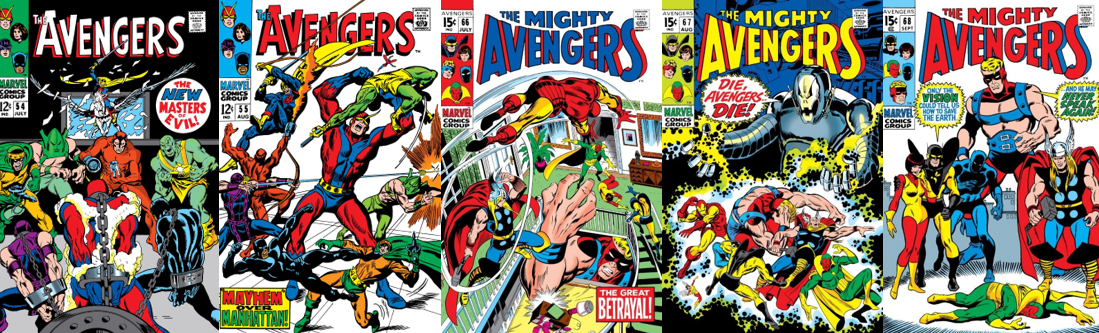
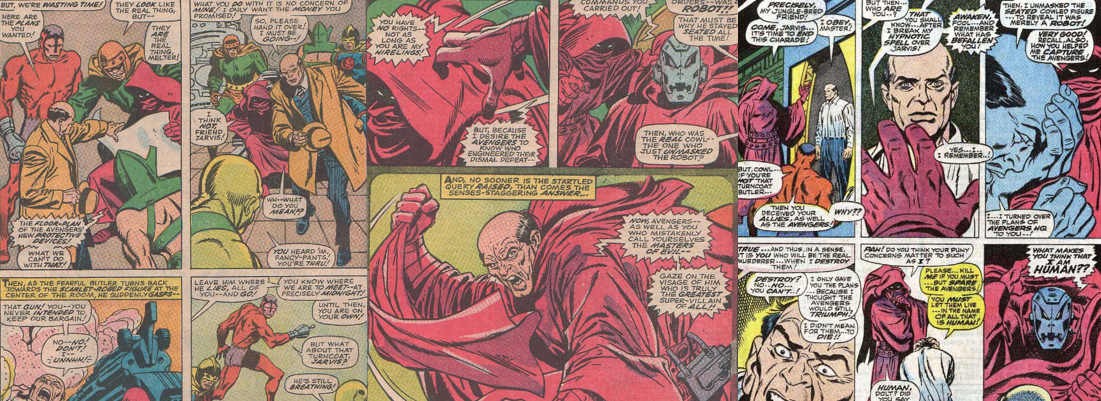
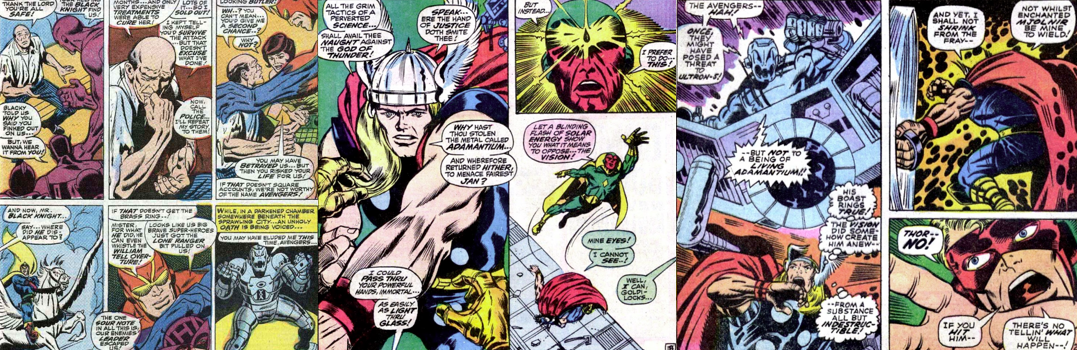
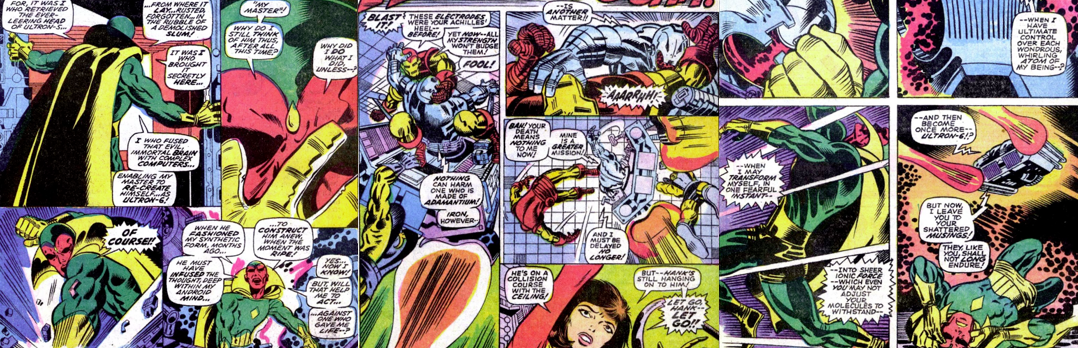
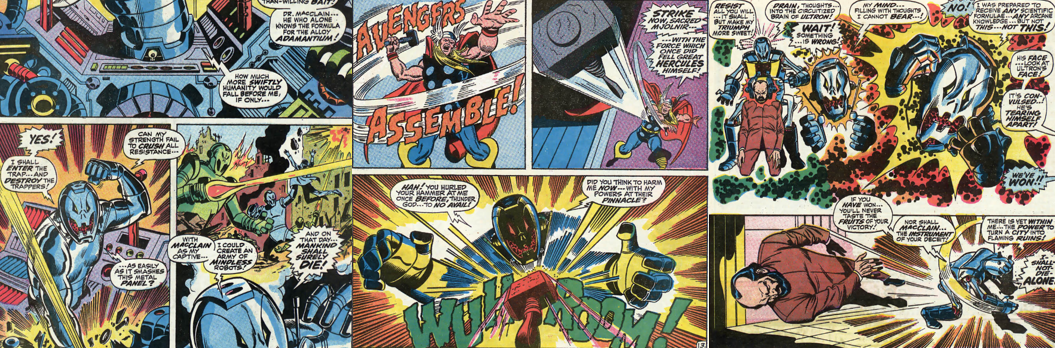
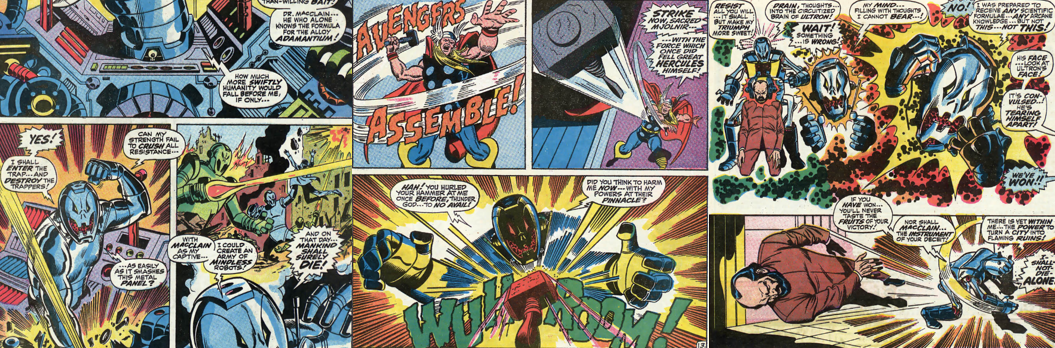
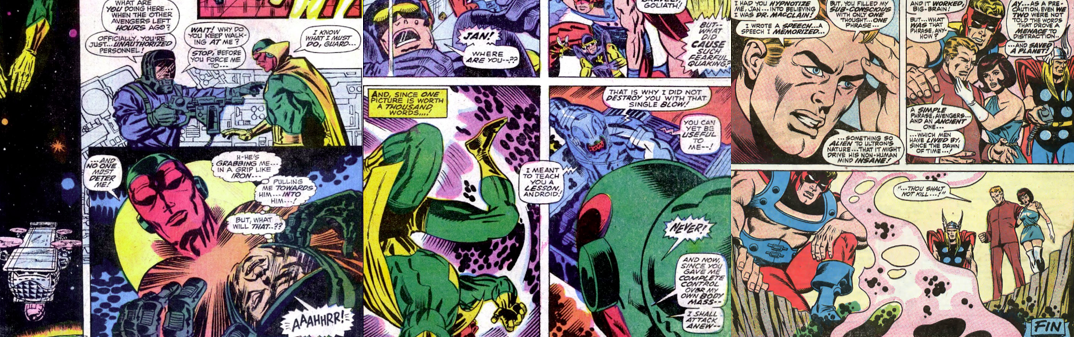


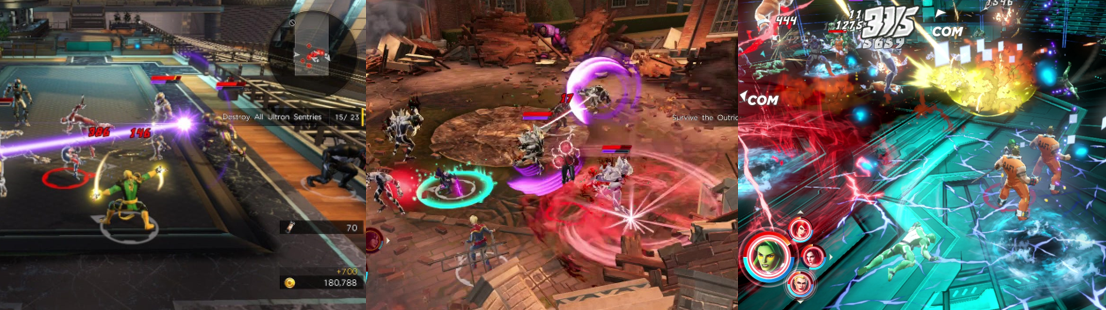
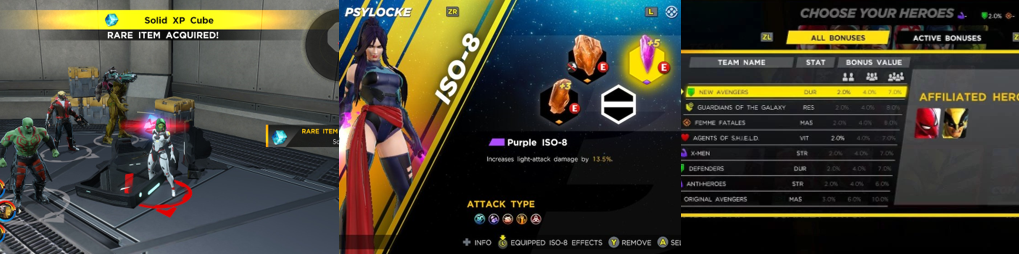
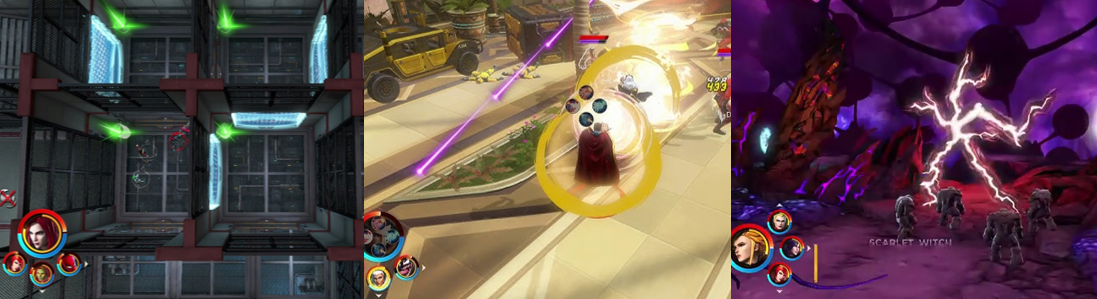
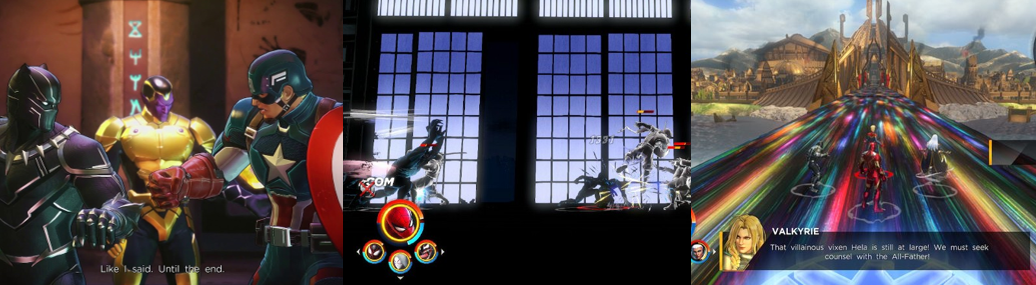
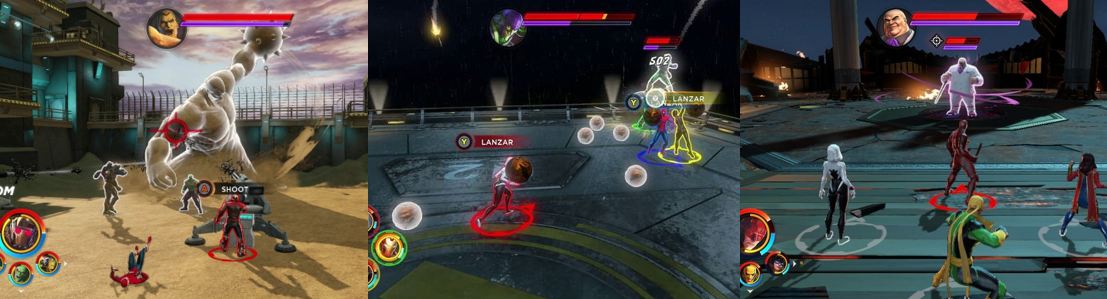
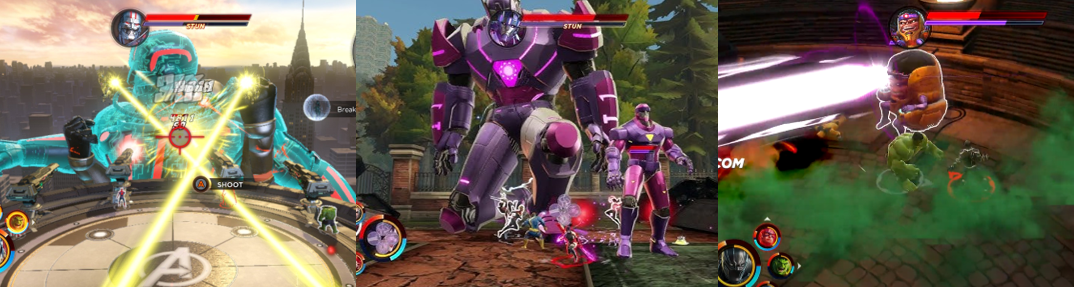
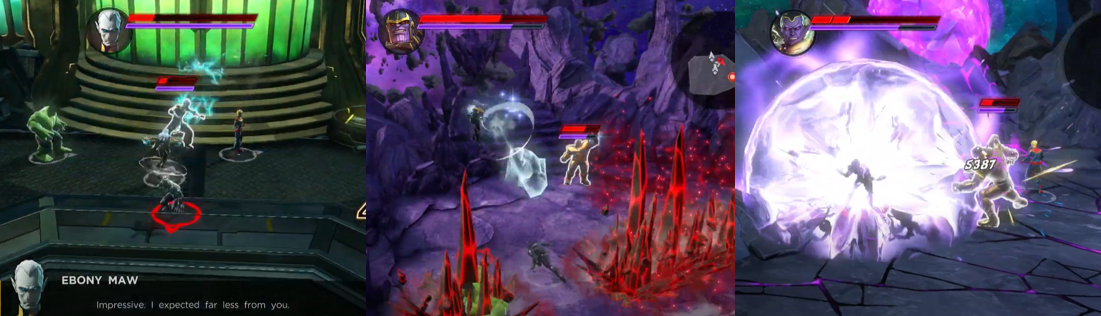


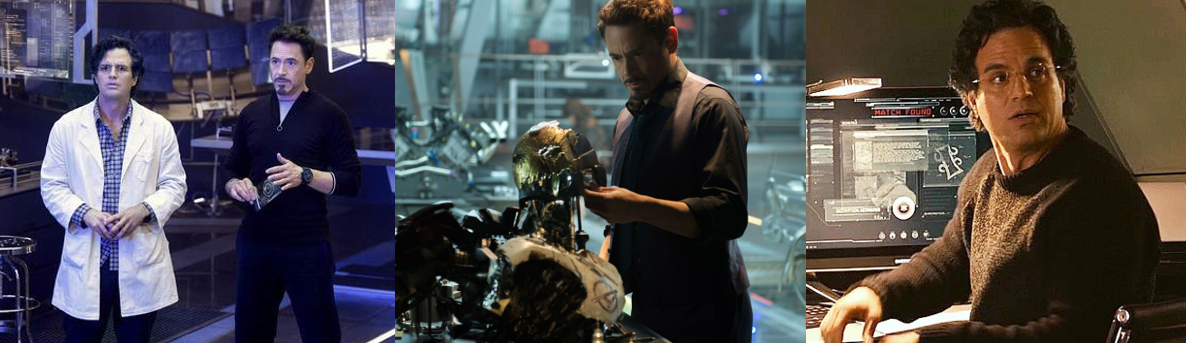

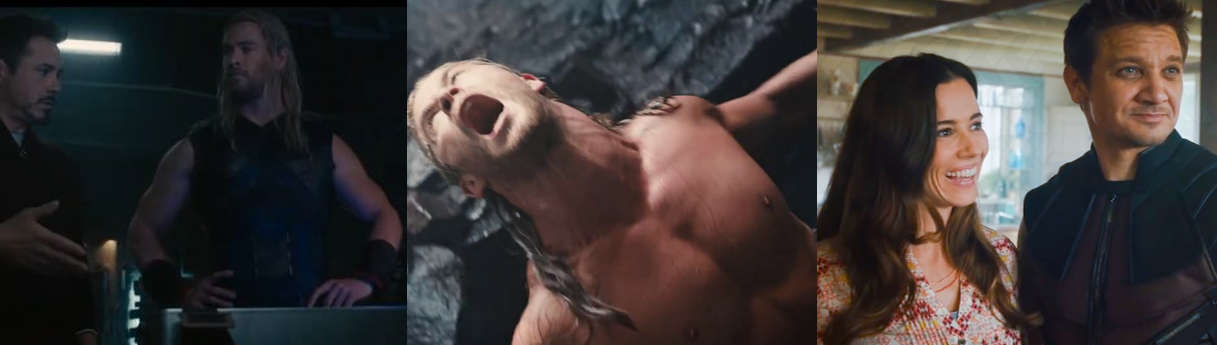
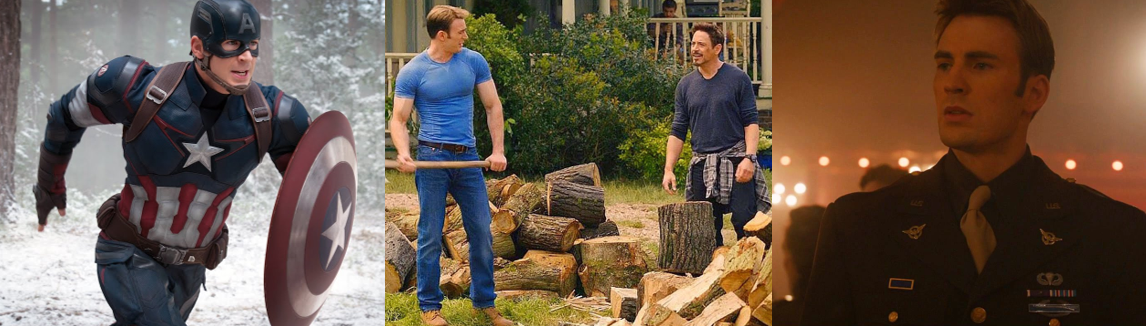
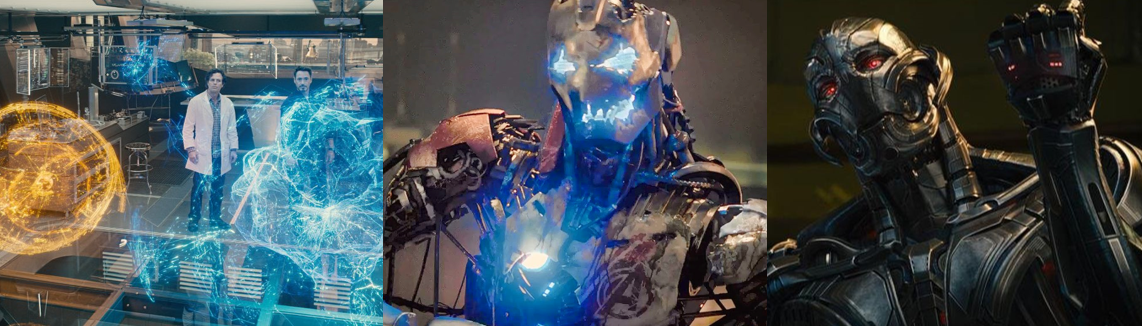
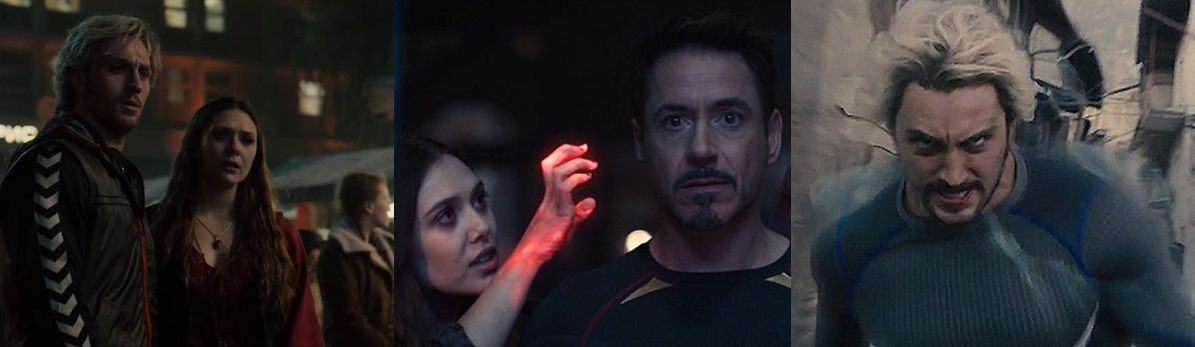

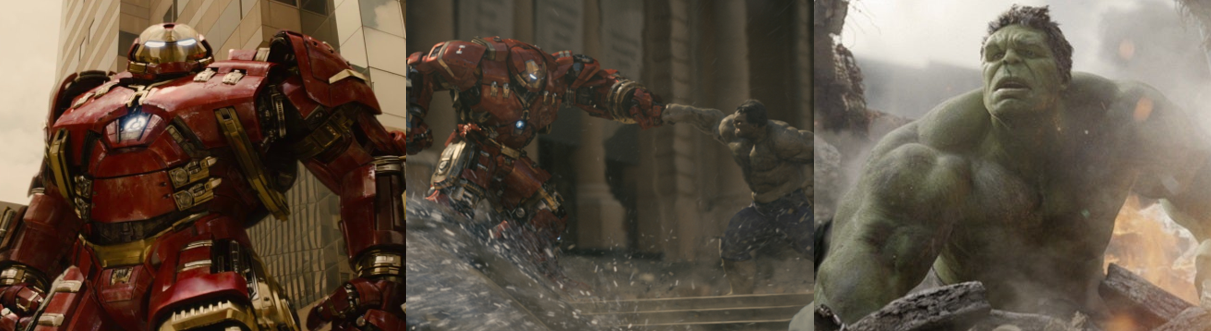


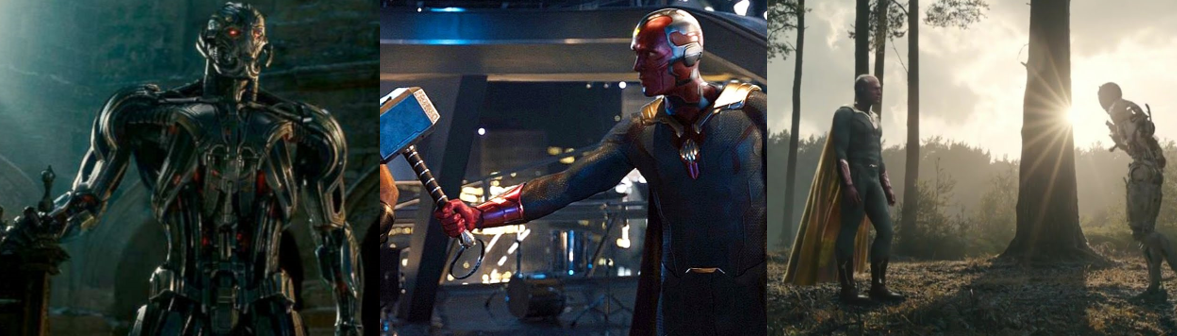
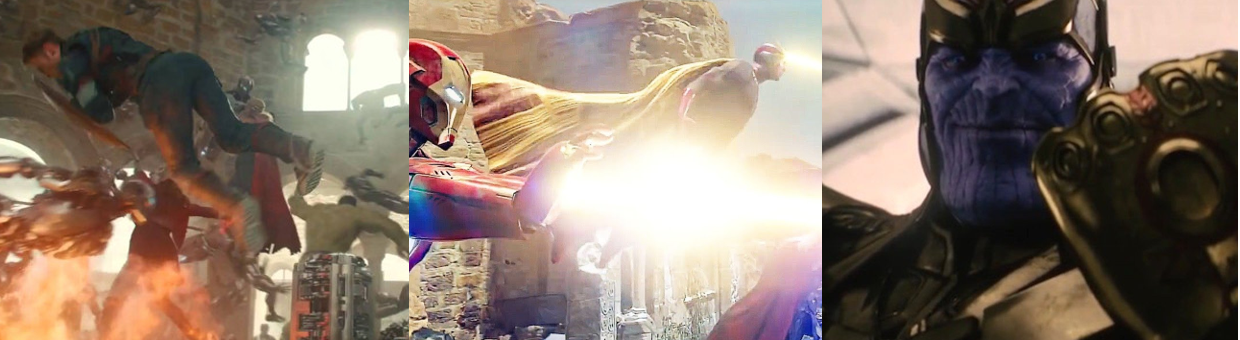





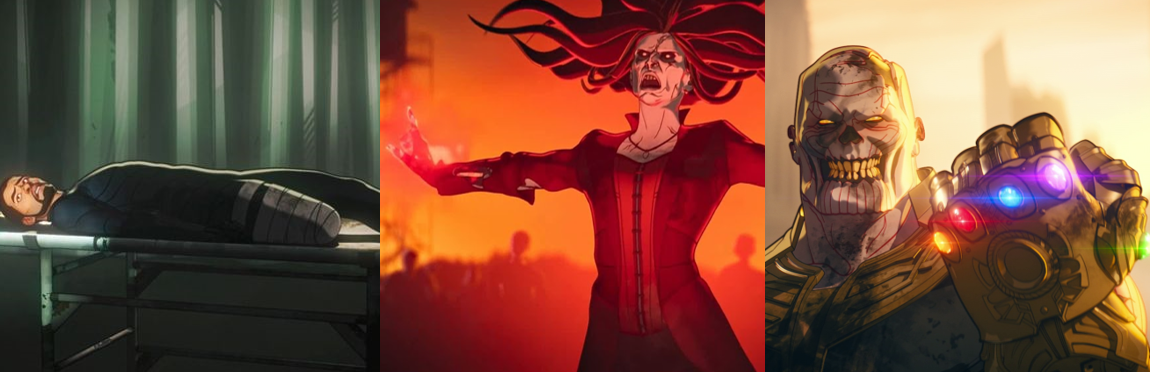

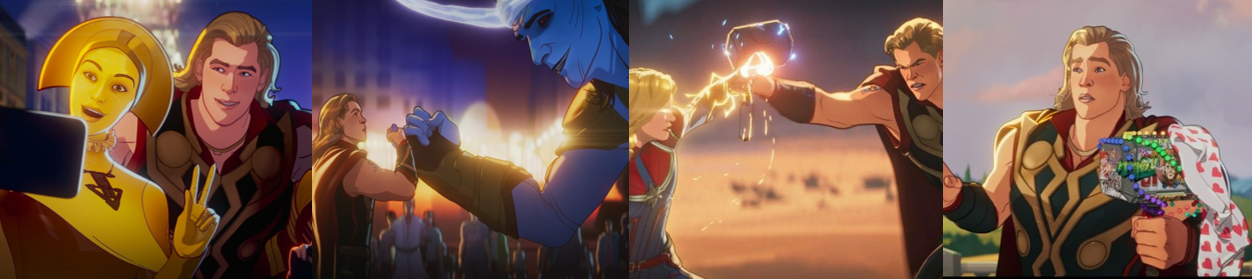
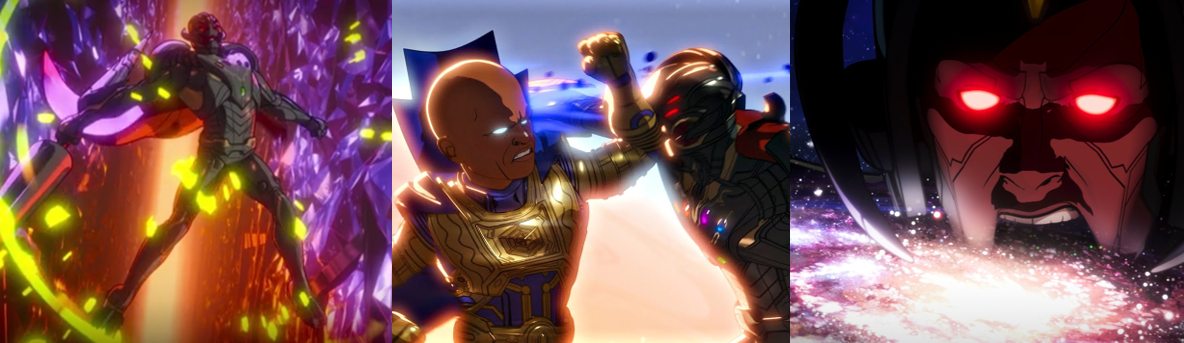


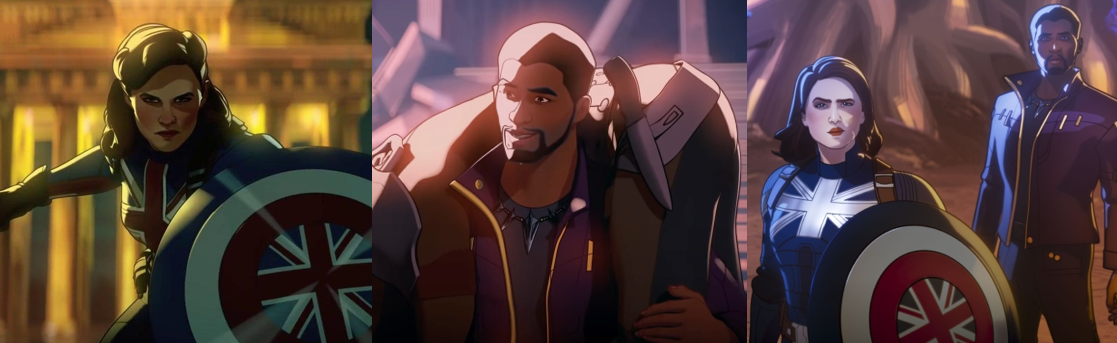
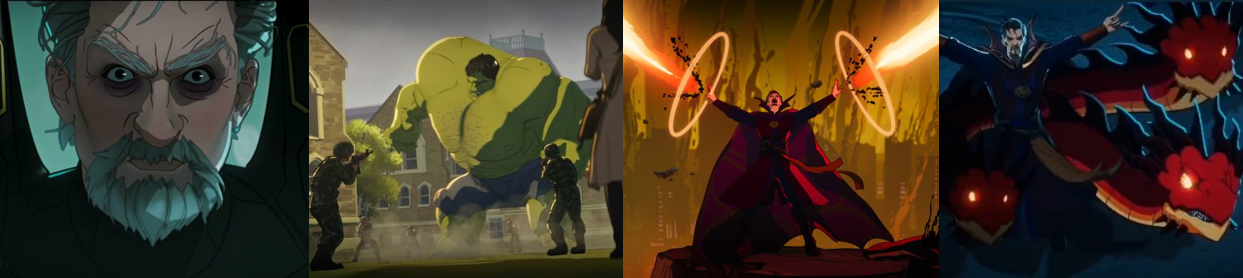
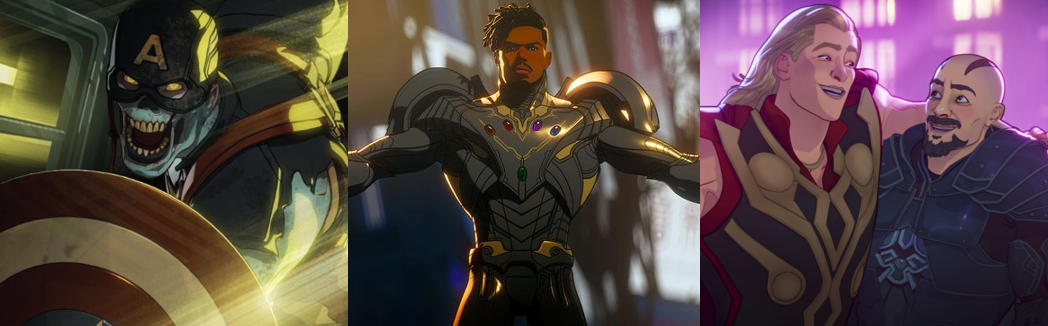
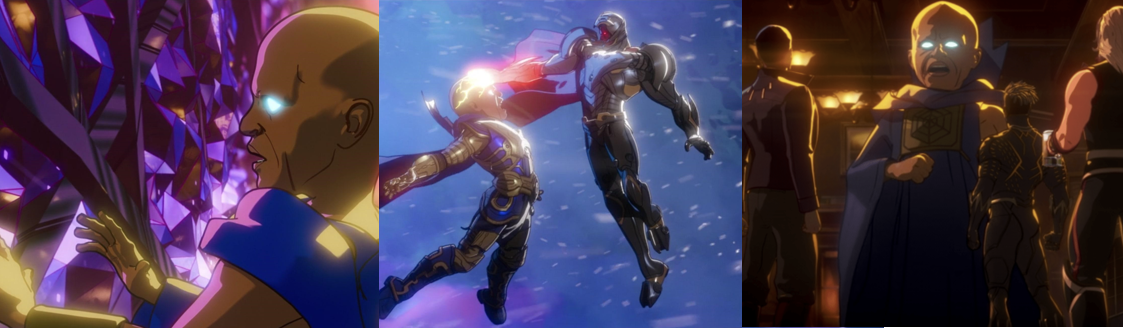

 Dr. K's Waiting Room
You must be logged in to post a comment.