Although May 4th is known the world over as Star Wars Day, many also choose to celebrate the popular, generation-spanning science-fiction saga on May 5th as a play on the word “Sith”. This can extend Star Wars Day into three day celebration of the influential science-fiction series and, as a result, is another great excuse for Star Wars fans to celebrate the beloved franchise in a variety of ways.
Released: 10 December 2016 Director: Gareth Edwards Distributor: Walt Disney Studios Motion Pictures Budget: $200 to 265 million Stars: Felicity Jones, Diego Luna, Ben Mendelsohn, Donnie Yen, Mads Mikkelsen, Alan Tudyk, Riz Ahmed, Jiang Wen, and Forest Whitaker
The Plot: When construction of the Galactic Empire’s planet-killing superweapon stalls, Director Orson Krennic (Mendelsohn) coerces scientist Galen Erso (Mikkelsen) to complete the space station. Years later, Galen’s daughter, Jyn (Jones), is reluctantly recruited by the Rebel Alliance to retrieve a holographic message from her father that may hold the key to destroying the “Death Star” ahead of schedule.
The Background: In 1977, George Lucas brought the world Star Wars for the very first time with the release of Episode IV: A New Hope. Essentially a “space opera” in the style of pulp science-fiction serials like Flash Gordon (Stephani, 1936), Star Wars went through many drafts before becoming the influential sci-fi masterpiece we know and love today. Almost immediately, Star Wars became a phenomenon that inspired not just one generation but, thanks to multiple sequels and lucrative merchandising, numerous generations for years to come. In 2012, Lucas sold his lucrative franchise to Disney for a cool $4 billion who immediately began developing not just a whole new trilogy of movies but also a series of spin-off feature films to further flesh out the Star Wars saga. Envisioned a more of a grounded war film compared to the grandiose space adventure of the other Star Wars movies, Rogue One had an interesting development as numerous reshoots fundamentally altered several presumed aspects of the story. Upon release, the film went on to gross over $1 billion at the box office and became the second-highest-grossing film of the year; yet, despite receiving generally positive reviews, I often see a lot of people talking down about this film. For my money, it’s better than the entire SequelTrilogy combined and probably my second-favourite Star Wars movie after Episode V: The Empire Strikes Back(Kershner, 1980).
The Review: Rogue One was quite the experimental project at the time; foregoing many of the recognisable elements and tropes of the Star Wars saga (including the traditional opening crawl), the film filled the gap between Episode III: Revenge of the Sith(Lucas, 2005) and A New Hope by telling the events that led to the Rebel Alliance acquiring the Death Star plans that kicked the entire saga in motion. The linchpin of this is Galan Erso, an Imperial scientist who, disillusioned with his work being used to subjugate and destroy others, walks away from the Empire in order to raise his daughter, Jyn, and live out his days as a simple farmer. However, when Orson Krennic arrives and murders Galan’s wife (Valene Kane) in front of him, Galan is forced to return to work in order to keep Jyn safe from Imperial reprisals. He spends the next fifteen years paying the role of dutiful, down-trodden subordinate to bring the Death Star to completion all while secretly including a well-hidden weakness into the space station and conspiring to deliver this information to the Rebel Alliance.
Jyn is inspired by Saw to take an active role in the fight against the Empire.
Galan isn’t in the film much but he’s an interestingly complex character thanks, largely, to the range and ability of Mads Mikkelsen, who commands the screen every time he appears on camera. Though the Rebel Alliance believes Galan to be a traitor and orders his assassination under the pretence of extraction, Jyn remains steadfast in her belief in her father’s morals, even more so when she views the holographic recording he made professing his true intentions and subterfuge. Jyn herself is a serviceable enough character; given when Rogue One was released, one cannot help but compare her to fellow Star Wars protagonist Rey (Daisy Ridley) and, arguably, Jyn is the stronger and more interesting character as she has a bit of a chip on her shoulder, she isn’t immediately the best at everything she does, and she is largely more interested in her own survival rather than getting swept up in the rebellion against the Empire. Her outlook changes after reuniting with her surrogate father, Saw Gerrera (Whitaker), and viewing her father’s message; after seeing the lengths her father went to to deceive the Empire and keep her safe, she does an almost immediate about-turn and is all for fighting for hope, however small, rather than emotional, misdirected rebellion. A competent and independent female character, Jones is believable enough at portraying an “Everywoman” character but is, perhaps, a little lacking in her delivery of certain lines and feeling like a truly organic piece of this universe. Compare her to Cassian Andor (Luna), for example; little more than a war-weary assassin of sorts, Andor is a bitter and pragmatic individual who may not like having to get his hands dirty for the Rebellion but is willing to do so since he is 100% committed to their cause.
As great as Krennic is, I think it would’ve been better to just cast Mendelsohn as Tarkin instead.
There are many layers to Andor’s character as he executes a friend and fellow Rebel (Daniel Mays) without hesitation rather than risk them getting caught and is more than willing to do the same to Galan until Jyn’s passionate plea causes him to question himself. Eager to atone for the blood he has shed in the name of the Rebellion, Cassian willing volunteers himself for what amounts to little more than a suicide mission against the Imperial garrison where the Death Star plans are being held and switches his allegiance just as fully to Jyn’s rogue team of Rebels. The Rebels are directly opposed by Orson Krennic, played with delicious relish by Ben Mendelsohn, who makes an immediate impact with his beautiful, clean white Imperial garb and Mendelsohn’s superb ability to steal every scene his in, chewing scenery at every opportunity to portray Krennic as a sadistic, ambitious, and self-serving scumbag. Krennic’s pride and joy is the Death Star, which was the product of his own design and direction, and he is driven to near desperation to ensure that the space station remains under his control and that credit is given to him and him alone for its unmatched power. This brings Krennic into direct opposition with Grand Moff Tarkin (Guy Henry/Peter Cushing), who openly talks down to Krennic and then immediately takes full credit for the Death Star after witnessing a mere fraction of its power. The digital effects used to bring Cushing back to life through Tarkin are impressive, if unavoidably noticeable; I can’t help but think it might have been better to either feature the character sparingly, in shadow or as a distorted hologram, or simply cast Mendelsohn in the role. The effect works but some scenes are better than others and it gets more than a little disturbing and perturbing when the character continues to crop back up again and again.
The Rogue One crew make the most of their few opportunities to shine.
While Krennic is sent into a desperate frenzy to tie up all the loose ends that might keep him from receiving his full recognition, his efforts are continually disrupted by the remainder of Jyn’s little band of misfits: while meeting with Saw in the remains of a Jedi Temple on Jedha, Jyn and Cassian successfully rescue Bodhi Rook (Ahmed), the pilot who carried Galan’s message, and hook up with the blind quasi-Jedi Chirrut Îmw (Yen) and his friend and bodyguard, of sorts, Baze Malbus (Wen). These three characters have more personality and are more likeable than the majority of the emotionally-stunted cast of the Prequel Trilogy; Bodhi is a quirky, almost neurotic pilot who acts largely as the film’s comic relief (something its bleak tone really needs at times), Chirrut is a shadow of the Jedi’s former power but no less bad-ass for it, and Baze is a hulking and devoted protector who wields a kick-ass chaingun-like laser rifle. As great as these characters are at stealing little moments and injecting personality into their roles to make the most of their screen time, they (and almost every other character) are completely overshadowed by K-2SO (Tudyk), a reprogrammed Imperial enforcer droid who acts as Cassian’s co-pilot and partner. K-2SO is a snarky, blunt, hilarious character who isn’t shy about sharing his feelings with others; I imagine that K-2SO is probably what R2-D2 (Kenny Baker/Jimmy Vee/Ben Burtt) would sound like if he could talk, just this rude, smart-mouthed droid who begrudgingly helps his allies out but always seems like he’s been put out by it. It’s truly a film-stealing inclusion and something I didn’t expect heading into Rogue One given that droids in the Star Wars saga were generally quite polite or (dare I say it…?) robotic until K-2SO.
The Nitty-Gritty: I mentioned earlier that Rogue One’s tone is bleak and don’t misunderstand me: It is a bleak film but that’s not a bad thing. In fact, it’s a good thing; it recalls the same against-the-odds atmosphere of The Empire Strikes Back and is in stark contrast to the usual adventurous and peppy feel of the saga. It’s a testament that I find the film’s bleak ending to be so affecting considering that there really wasn’t any need to kill off all of he film’s protagonists; just because we don’t see them in other Star Wars films doesn’t mean they couldn’t have survived and, arguably, given that Cassian eventually got his own Disney+ spin-off prequel series, they probably should have so that further media could have been produced to continue their story behind (and between) the scenes of the main Star Wars saga.
The Rogue One crew lead a desperate, suicidal assault to retrieve the Death Star plans.
Still, it hammers home the overwhelming odds that the Rebellion faces against the Empire and their new Death Star and really helps to further flesh out just how stacked the deck is against the Empire in the other films. When Jyn and the others break away from the Rebellion to find the plans, they know that it’s most likely going to be a suicide mission but are nevertheless committed to seeing it through even in the face of incredible odds. It seems, for a brief moment, that they may actually have a fighting chance as not only does the Rebel Alliance arrive for some much-needed backup but they have the advantage of surprise and even manage to successfully broadcast the plans to the Rebels despite Krennic’s best efforts. Still, it’s all for naught; having assumed command of the Death Star while Krennic was out chasing his tail, Tarkin doesn’t hesitate to use a small fraction of its power to decimate the Imperial garrison as the first official demonstration of the Death Star, thereby erasing Krennic’s legacy and replacing it with his own. In that white-hot flash of fire and destruction, however, the spark of hope survives thanks to the sacrifices of Jyn, Cassian, and their friends as the Death Star plans are successfully intercepted by Princess Leia Organa (Ingvild Deila/Carrie Fisher), effectively ending the film right where A New Hope begins.
Darth Vader steals the show in his brief, but brutal, appearance at the finale.
Of course, things aren’t as simple as all that; not only do the Rebels have to contend with the Imperial ground troops, walkers, and TIE Fighters, countless Rebel soldiers are cut down by the vicious swings of Darth Vader’s (Spencer Wilding/Daniel Naprous/James Earl Jones) lightsaber. Despite Jones’s voice obviously sounding noticeably aged and gravelly, Vader’s inclusion is one of the film’s biggest highlights; not only does he come across as a subtly intimidating presence when Krennic meets with him on Mustafa, the end scene where he cuts down Rebels without any mercy, quarter, or compromise is, perhaps, the most ferocious and brutal we have ever seen the character onscreen. It’s as though his uncharacteristically subdued portrayal in A New Hope was hiding this caged animal just waiting to be unleashed and it really helps add to the tension and desperation of the film’s final scenes.
The Summary: Despite the praise Rogue One received upon release, I feel as though the film is unfairly overlooked and forgotten about in favour of near-endless debates about the Prequel and Sequel Trilogies. People generally talk about Vader’s dramatic and merciless slaughter and the digital recreations of classic Star Wars actors while failing to acknowledge all of the other strengths the film has. With is bleak and gritty tone and aesthetic, Rogue One really helps to sell you on the desperation and futility of the Rebel Alliance’s efforts against the all-powerful Empire. They are outnumbered and outgunned at every turn, fighting and scratching and clawing for any advantage and this often means performing less-than-noble tasks in service of gaining just a slither of ground against the Empire. Uncompromising and original in its execution, tone, and direction, Rogue One deserves to be talked about with the same level of reverence as The Empire Strikes Back for helping to flesh out a previously-unknown story in the Star Wars saga and adamantly hammering home its message of the harsh realities of war.
My Rating:
⭐⭐⭐⭐⭐
Rating: 5 out of 5.
Fantastic
What are your thoughts on Rogue One? Did you enjoy it for its more bleak direction or did it, perhaps, fail to live up to your expectations for a Star Wars film? Do you think that some or all of the film’s characters should have lived or do you agree that it makes a far lasting impression to see them all die to facilitate the Star Wars saga? What did you think of Darth Vader’s inclusion and the digital resurrection of classic Star Wars actors? How are you celebrating May the Fourth this year? Whatever your thoughts, feel free to leave a comment below and go read my other Star Wars reviews!
May 4th is known the world over as Star Wars Day thanks to it acting as perhaps one of the most fitting and amusing puns ever devised (“May the Fourth be with you” in place of the traditional “May the Force be with you”). The first and most popular of what can easily become a three day celebration of the influential science-fiction series, the day stands as the perfect excuse for Star Wars fans to celebrate the beloved franchise in a variety of ways.
Released: 15 August 2008 Director: Dave Filoni Distributor: Warner Bros. Pictures Budget: $8.5 million Stars: Matt Lanter, Ashley Eckstein, James Arnold Taylor, Tom Kane, Dee Bradley Baker, Nika Futterman, David Acord, and Christopher Lee
The Plot: Count Dooku (Lee) orchestrates a plan to turn notorious crime lord Jabba the Hutt (Kevin Michael Richardson) against the Galactic Republic by framing the Jedi for the kidnapping of his son, Rotta the Huttlet (Acord). While Jedi Master Obi-Wan Kenobi (Taylor) battles the Separatist army, Jedi Knight Anakin Skywalker (Lanter) is lumbered with an overly enthusiastic apprentice, Ahsoka Tano (Eckstein), in his attempts to deliver Rotta back to his father and expose Dooku’s plot.
The Background: In 1977, George Lucas introduced the world to his “space opera” Star Wars saga and, almost immediately, birthed a phenomenon that inspired not just one generation but, thanks to multiple sequels and lucrative merchandising, numerous generations for years to come. Before selling his lucrative franchise to Disney in 2012, Lucas licensed the property out to multiple different multimedia ventures, including videogames, a slew of original novels, and a computer-generated animated series that looked to bridge the gap between his two trilogies. Impressed by completed footage of some early episodes, Lucas began developing a big-screen feature film to act as an introduction to what would become one of the most beloved and influential spin-offs of the mainstream Star Wars saga. Inspired by anime, Lucas urged his animators at Lucasfilm and Lucasfilm Animation to create a stylistic look rather than a realistic one, one that would be produced using similar techniques to a traditional live-action film. Although Star Wars: The Clone Wars made an impressive $68.3 million at the box office and led to the aforementioned animated series, the feature was met with largely negative reviews; reviews criticised the wooden animation, dull characterisations, and the line delivery, and the film is generally regarded as one of the worst Star Wars productions ever made.
The Review: I feel it’s only fair to preface this review by saying that I never really watched The Clone Wars (2008 to 2020; 2021) when it aired; I’ve seen a few episodes, mainly from the first season, and caught it every now and then but I just wasn’t really watching many cartoons in that time. I had seen this movie, though, and don’t remember being massively impressed by it, which may have been part of the reason why I didn’t venture into the show until I heard Darth Maul (Sam Witwer) had shown up, but a major reason why I didn’t really want to watch The Clone Wars was purely because of my immediate dislike for the character of Ahsoka Tano, but I’ll get into that a little later into the review. The Clone Wars begins in a time of considerable galactic turmoil, as told to us through a homage to military recruitment videos: the battle between the Separatists and the Republic wages, with Count Dooku/Darth Tyranus leading the droid army (Matthew Wood) and seizing control of major hyperspace lanes to cut Chancellor Palpatine (Ian Abercrombie) off from the majority of his clone army (Baker). As a result, the Jedi Order has been forced to take a far more active role in the combat, which means that peace and order across the galaxy has suffered as a consequence, and directly results in the main plot of this film coming to pass as Jabba beseeches the Jedi order to rescue his kidnapped son from a rival band of pilots.
Jabba’s so desperate that he asks the Jedi for help, who can only spare two guys knee-deep in conflict.
Although both Palpatine and Jedi Master Mace Windu (Samuel L. Jackson) are cautious of getting involved with a crime lord like Jabba, Palpatine reasons that rescuing young Rotta would greatly aid the war effort as Jabba controls the space lanes around Tatooine. With the Jedi routed by General Grievous (Matthew Wood), Windu is only able to spare Jedi Master Obi-Wan Kenobi and his Jedi Knight partner, Anakin Skywalker, to aid in the rescue. The two are currently knee-deep in battle on the planet Christophsis; their relationship is very much (and very fittingly) somewhere in the middle of Obi-Wan’s strained mentorship from Star Wars: Episode II: Attack of the Clones(Lucas, 2002) and his more peer-based camaraderie fromStar Wars: Episode III: Revenge of the Sith (ibid, 2005). Anakin is clearly not the brash, pouty youth from Attack of the Clones and has been hardened by battle (something his nifty new eye scar is a helpful indication of), but is still growing into his role as a leader of the Republic forces. Obi-Wan is thus still a much-needed counterbalance to Anakin’s more impetuous nature; the two share a brotherly relationship based on mutual trust and confidence in each other’s abilities and strengths, but Anakin remains the more hot-headed and unpredictable of the two, though they do share some battlefield banter that helps to show that they’re completely at ease with each other in the midst of even overwhelming odds. Fatigued and having suffered heavy losses and in desperate need of reinforcements and supplies, both Jedi are stunned when, rather than receiving much-needed resources, they are greeted by Ahsoka Tano, a Youngling Jedi dispatched to deliver Jedi Master Yoda’s (Kane) message regarding the situation on Tatooine.
Anakin is unimpressed to find himself lumbered with the reckless Ahsoka as his new apprentice.
For Anakin, Ahsoka’s presence is more than a shock, it’s a downright insult as he feels like the Jedi are ignorant to the struggles they’ve faced on Christophsis and has little time for fledgling Jedi. Already indifferent towards Obi-Wan’s insistence that he take up a Padawan to help train the next generation of Jedi and learn something about himself in the process, Anakin is overly dismissive of Ahsoka after being forced by Yoda to supervise her training and their relationship is noticeably frosty due to his belief that an unprepared and undisciplined Youngling would only slow him down. His abrasive attitude is only exacerbated by her snarky nature, wide-eyed optimism, and overly friendly personality; she openly greets everyone with a plucky vigour and riles Anakin up no end by tagging him with the grating nickname “SkyGuy” (to which he counters by calling her “Snips”). Eager to offer her assistance and to gain the battle experience necessary to her training, Ahsoka jumps at the chance to break through the droid army’s energy shield; even though Anakin agrees with her suggestion in theory, he’s aggravated that she continuously speaks above her position and by her refusal to respect his seniority. Although her overenthusiasm means that she’s yet to learn her place in the pecking order, Ahsoka continuously comes up with viable suggestions that even Anakin is forced to agree with, but her inexperience and immaturity continually cause friction between the two and trouble for the plot; she’s handy with a lightsaber, that’s for sure, but blunders into obvious traps due to her recklessness and her abilities with the Force lack in the finesse that comes from time and practice.
Although Rotta is rescued, the Jedi are opposed by Dooku’s mysterious disciple, Asajj Ventress.
Still, Anakin comes to offer his begrudging respect and sees a lot of himself in Ahsoka; he agrees to take her on as his apprentice and she accompanies him to the Teth system to rescue Rotta while Obi-Wan travels to Tatooine to negotiate a treaty with Jabba. Jabba is understandably anxious to see his son returned to him; he’s angered when the heads of the bounty hunters he hired are returned to him and gives the Jedi only one Tatooine day to succeed, after which he fully intends to employ the services of Count Dooku and the Separatists. Rotta’s rescue is very much a trial by fire for Ahsoka thanks to the fortress where he’s being held being heavily fortified and defended by the droid army; still, the Jedi are able to secure the fortress and find the infantile Huttling, but Count Dooku is able to use the footage to frame the Jedi as having kidnapped the child. Indeed, it transpires that Rotta’s kidnapping was part of a grand scheme by Chancellor Palpatine, who secretly leads the Separatist forces as the malevolent Darth Sidious; Dooku acts as Sidious’s commanding officer and as the public face of the army, and here further distorts the nonsensical “Rule of Two” by having an apprentice of his own, Asajj Ventress (Futterman). A mysterious and vindictive Dark Jedi, Ventress doesn’t really get much characterisation or backstory; all we really learn about her is that she’s motivated by revenge against the Jedi, commands a great deal of respect within the droid army, and wields a double-bladed lightsaber, so again we’re left with a villainous character who looks, sounds, and fights extremely well but about whom we’re forced to do extensive reading or research to find out anything about. Still, Ventress’s appearance does result in a thrilling lightsaber duel that pits her against Obi-Wan; he exhibits a familiarity with her (I believe they fought in the original Star Wars: Clone Wars (Tartakovsky, 2003 to 2005) micro-series) and their battle is easily one of the few non-clone/droid conflict highlights of the film thanks to Taylor’s enigmatic performance as Obi-Wan and the slick presentation of the fight.
The Nitty-Gritty: Star Wars: The Clone Wars definitely stands out from other animated movies of the time with its visual presentation; character models are a bit stiff and rigid, not unlike the marionettes seen in Gerry Anderson’s productions, and yet surprisingly fluid when in action. The presentation kind of resembles a more grown-up version of the LEGO videogames and feature films, resulting in visuals that maybe aren’t as technically impressive or as detailed as other animated films but are surprisingly fitting for the Star Wars universe. It’s not a stretch to see these characters as exaggerated versions of their film counterparts, and the aesthetics and filmmaking techniques all perfectly evoke the atmosphere and presentation of the Prequel Trilogy. Even though some of the main cast don’t reprise their roles, their replacements are more than capable of bringing these characters to life and, in some cases, actually do a better job (Matt Lanter is able to bring far more depth and emotional complexity to Anakin thanks to the additional screen time and context given by the film and series). However, considering it’s an animated feature, there aren’t many unique or visually interesting locations on offer; we get the usual trappings like the Jedi Temple of Coruscant and the bridge of various Republic star cruisers, but Christophsis is a largely barren and war-torn cityscape and even Teth, where Ventress ambushes the Jedi, isn’t exactly mind blowing. Of course, for me the greatest is crime is the return to the desolate wasteland of Tatooine; sand planets and settings have never been all that visually interesting to me and I remain continuously disappointed by Star Wars’ insistence of returning to this location or trope again and again, but it’s especially egregious here, where the animatiors had the freedom to dream up new characters and locations and instead the filmmakers defaulted back to tried, tested, and tired trappings like Jabba and Tatooine.
War is at the forefront of The Clone Wars, more so than other Star Wars features.
The Clone Wars definitely feels like a natural expansion of Attack of the Clones in the depiction of conflict, its presentation, and the ominous nature of Darth Sidious’s looming threat. Being that The Clone Wars is set at the height of the titular conflict, war and battle are a central focus of the film; the battle on Christophsis is indicative of that, and stylistically very similar to the final assault on Geonosis from Attack of the Clones. Here, the full force of the droid army is seen in foreboding detail as their various different mechanical attack droids lay down a veritable wall of suppressing fire against the Republic’s forces but, as is often the case, the Jedi remain the x-factor necessary to turn the tide and cause a retreat. Naturally, the clone troopers play a big role in the film and are given a surprising amount of personality and distinctiveness considering that all have the same face and voice; their co-ordination and dedication to their cause makes them a near-inexhaustible force, but they are wisely made distinct and more relatable through slight colouring and hair variations and Obi-Wan and Anakin’s familiarity with Captain Rex (Baker) and Commander Cody (ibid). Interestingly, despite being portrayed as an overwhelming, inexhaustible, and constant threat and being responsible for many clone trooper deaths, the droids are also paradoxically played for comedic effect; during the campaign on Teth, the droid commanders bicker and suffer numerous pratfalls that I guess are there to ease the tension from the conflict but result in them just coming across as an inconsistent menace. It’s not all ground- and space-based combat, either; Obi-Wan outsmarts the Christophsis general, Whorm Loathsom (Corey Burton), by feigning surrender and Anakin and Ahsoka sneak their way past the army’s forces to destroy their energy shield, indicating that the conflicts are solved by strategy and intelligence as much as brute force and reinforcements.
Ahosoka eventually became a fan favourite, but she’s a pain in the ass to me.
So, I mentioned at the top that I wasn’t a fan of Ahsoka and that is largely because of her characterisation in this feature. Ahsoka is an annoying, smart mouthed little know-it-all who grates on my patience almost as much as she does Anakin’s. She’s inexperienced and overeager, constantly rushing head-first into conflicts without thought of the consequences, and what’s worse is how often her approach or observations get results! It was her idea that allowed the energy barrier to be lowered on Christophsis, she logically pushes Anakin to prioritise Rotta’s life over aiding Rex and the clones, she even saves Anakin’s life more than once with her reckless methods, and her passion to be an active combatant and gain the experience necessary to earn respect actually pays off as both Anakin and Captain Rex are impressed by her efforts. Her insubordination and overconfidence are trying; it’s more annoying than endearing that she constantly has to comment on everything, from Anakin’s techniques, to the teachings of the Jedi, to battle plans and her surroundings, and it’s pretty clear that she was written to be as aggravating as possible so that her potential and thematic parallels to Anakin could be all the more explicit. Anakin is on the cusp of becoming a Jedi Master but has yet to properly learn what it means to be a humble and considerate member of the Jedi order; his faith in his abilities has only increased as he has won and commanded more and more battles, and Yoda purposely lumbered him with an apprentice in an effort to teach him the greater aim of a Jedi beyond combat. Indeed, Ahsoka mirrors many of Anakin’s worst personality traits and is much like he was as a child and in Attack of the Clones, but without the anger that would later spell the end of the Jedi Order. Thus, Ahsoka shows Anakin how much he’s grown and gives him a taste of his own medicine; however, while I’m sure that Ahsoka became much more likeable and interesting over the course of many episodes and years, I have little interest in seeing that growth since I just don’t really enjoy her character in principal or in context and think the idea of Anakin having a hitherto-unheard of Padawan just raises more unnecessary questions (chief among them being where was she in Revenge of the Sith?)
The timely intervention of Padmé sees Jabba agree to a treaty, though darkness still looms…
After rescuing Rotta, and stabilising his fever, Anakin and Ahsoka are attacked and shot down over Tatooine by Dooku’s forces to curry favour with the bulbous warlord; Anakin battles Dooku on the sands of Tatooine with a decoy, but is forced to rush off when he sees Ahsoko is in danger. However, he goes right to Jabba’s Palace, forcing Ahsoko to prove her mettle against the robotic MagnaGuards; although he’s elated to be reunited with Rotta, Jabba orders the two Jedi to be executed. Thankfully, though, Anakin’s secret wife, Senator Padmé Amidala (Catherine Taber) makes a late-film arrival and discovers that Jabba’s uncle, Ziro (Corey Burton), conspired with Dooku to have Rotta kidnapped as part of an elaborate plan to seize control of Jabba’s territory for himself. Having learned of the truth, Jabba agrees to grant the Republic use of his trade routes and ends his hostilities with the Jedi, however this victory is tainted somewhat by the continued threat posed by the Sith lurking in the background. While the galaxy is divided by conflict and the Jedi are distracted by war and growing unrest across the many systems, Sidious is easily able to manipulate events in his favour; kidnaping Rotta, attempting to frame the Jedi, and causing disruptions and hostilities across the galaxy all contribute to his endgame, which is larger than any one battle or single loss. Consequently, even when the Jedi score a victory in battle or succeed in winning Jabba’s favour, Sidious remains undeterred in the larger goals of his machinations against the Jedi Order.
The Summary: I don’t absolutely hate Star Wars: The Clone Wars; I wouldn’t go as far as to say that it’s the worst Star Wars film to ever be produced, but it’s not exactly the best either. I think, for me, a big issue with the feature is that it’s set during the Prequel Trilogy, which is not an era of Star Wars that I look back upon fondly. I know that, for a lot of people, the subsequent animated series really helped to redeem the Prequels by vastly expanding upon the lore, conflict, and characters portrayed so questionably in the films, but I don’t subscribe to this logic. None of the character growth from the series is reflected in Revenge of the Sith; it’s easy to assume that, between Attack of the Clones and Revenge of the Sith, Anakin was hardened by battle and grew into a more competent Jedi, and there’s certainly no indication that he learned any valuable lessons from an unnecessary Padawan. I get the idea of Ahsoko Tano as a fresh face for the spin-off and a thematic parallel to Anakin to help him grow, but I can’t get over just how weird it is to see Anakin taking on an apprentice when there was no mention or indication of this in the films. The animation is pretty good, though; I get why it’s not everyone’s cup of tea but I think it’s very fitting for the Star Wars universe, especially in recreating the presentation and essence of the Prequel Trilogy, and the scenes of conflict are all very well done. I think it helps that the whole film is computer-generated, which makes everything look a lot better than slapping actors on green and blue screens with a reckless excess like in Lucas’s films, and the characterisations really go a long way to fleshing Anakin and Obi-Wan out. The greater overall threat of the Sith plot sadly takes a bit of a back seat due to the odd decision to focus on rescuing a Huttling, but it’s a decent enough animated adventure to set the stage for the popular spin-off and probably worth a watch if you’ve never seen The Clone Wars before, though it definitely isn’t as exciting or engaging as the live-action films by any means.
My Rating:
⭐⭐
Rating: 2 out of 5.
Could Be Better
How do you feel about Star Wars: The Clone Wars? Did you enjoy the film or are you in agreement with the general consensus that it’s a poor effort for Star Wars? Are you a fan of Ahosko and, if so, what was it about her that won you over and how long did it take you to become a fan? What did you think to the rescue plot and the depiction of conflict in the film? How are you celebrating May the Fourth this year? What’s the worst piece of Star Wars media you’ve ever seen? Whatever your thoughts, feel free to leave them below or drop a comment on my social media, and check out my other Star Wars content!
While May 4th is known the world overas Star Wars Day, many also choose to extend the celebrations of the course of three days, with one of them being the “Evil Star Wars Day” of May 6th (as in “Sith”). This year, I’ve been using the three Star Wars Days as the perfect excuse to go back over the Prequel Trilogy.
Released: 19 May 2005 Director: George Lucas Distributor: Walt Disney Studios Home Entertainment Original Distributor: 20th Century Fox Budget: $113 million Stars: Ewan McGregor, Hayden Christensen, Natalie Portman, Ian McDiarmid, Samuel L. Jackson, Matthew Wood, and Frank Oz
The Plot: Three years after Star Wars: Episode II: Attack of the Clones(ibid, 2002), the Jedi lead the clone army of the Galactic Republic against the Separatists. Following the death of Separatist leader Count Dooku (Christopher Lee), Jedi Master Obi-Wan Kenobi (McGregor) is sent to eliminate the semi-cybernetic General Grievous (Wood) to put an end to the conflict. Meanwhile, though struggling with premonitions of his wife Padmé Amidala (Portman) dying in childbirth, Anakin Skywalker (Christensen) is tasked with spying on Supreme Chancellor Palpatine (McDiarmid), who is secretly preparing a diabolical plot to destroy the Jedi!
The Background: It’s safe to say that, by 2005, the Prequel Trilogy had struggled to live up to the lofty expectations set by George Lucas’ original three Star Wars films; Star Wars: Episode I: The Phantom Menace (ibid, 1999) was a financial success, Attack of the Clones didn’t fare quite so well at the box office and both films were subjected to scathing criticism. Despite having jotted down the outline of Anakin’s fall to the Dark Side decades prior, Lucas struggled to properly formulate Revenge of the Sith’s script, which went through a number of changes even in post-production. As in Attack of the Clones, Revenge of the Sith featured copious digital shots and effects; still, stars Hayden Christensen and Ewan McGregor bulked up and underwent extensive and rigorous training with stunt coordinator Nick Gillard for their climatic lightsaber duel. Despite a copy of the film leaking online, Revenge of the Sith fared marginally better than its predecessor at the box office with a $86.4 million gross. Critically, however, the film fared much better than the previous two films; generally considered to be the best of the Prequel Trilogy, critics praised the film’s bleak tone and more action-packed moments though the dialogue and acting still came under scrutiny.
The Review: As much as I enjoy Star Wars, I’ve always been more of a casual fan; since the Original Trilogy never seemed to be on television when I was a kid, my exposure was a bit limited compared to others who had VHS copies of the films. The Prequel Trilogy, and the release of the Special Editions, changed that and really helped to get me properly into Star Wars, but even then I was more about the videogames and Expanded Universe books. As a result, the first Star Wars film I saw at the cinema was actually Star Wars: Episode III: Revenge of the Sith; I’m not sure why I didn’t see the first two episodes at the cinema but it may simply have been because I was too young to drive or get to our nearest cinema. In any case, despite how disappointing aspects of the Prequel Trilogy had been, my anticipation was high for Revenge of the Sith since it promised to finally show the emergence of the Galactic Empire, the downfall of the Jedi Order, and Anakin’s transformation into Darth Vader.
Obi-Wan is devastated when the war turns his trusted ally and protégé into dangerous enemies.
Obi-Wan is now not only a member of the Jedi Council but also a battle-hardened General; his relationship with Anakin has progressed from teacher/student to equals and they work together to combat the Separatists. While Obi-Wan still despairs of Anakin’s more flamboyant and reckless piloting and battle strategies, the two are a far more polished team than in Attack of the Clones (thanks, presumably, to having been through many adventures in the Clone Wars) and even share a little playful banter with each other. This means that their rematch with Count Dooku goes far better this time as they work as a team, however cracks still exist and are formed in their relationship due to Obi-Wan’s distrust of Palpatine since the Chancellor has refused to give up his “emergency powers” and Anakin steadfastly defends the Chancellor, whom he views as a trusted ally and father-figure. Still, Obi-Wan has come to trust in his apprentice’s skills and abilities, as well as relying on the clone troopers under his command, specifically Commander Cody (Temuera Morrison). In both instances, he is ultimately betrayed but, even after seeing how far Anakin has fallen, he desperately pleads with the angry young Jedi to renounce the Dark Side to avoid battling Anakin, whom Obi-Wan views as a brother.
Despite appearing a stronger character, Anakin’s fears and resentment turn him to the Dark Side.
Anakin, of course, takes on a far larger role this time; now sporting longer hair, a nasty scar from battle, and having grown into a fully-fledged Jedi Knight, war has largely tempered his immaturity from the last film and made him a far more capable Jedi. However, he still remains conflicted; now haunted by visions of Padmé dying in childbirth and continuing to harbour a resentment towards Obi-Wan and the Jedi Council, to say nothing of how easily persuaded he is to execute Dooku, Anakin’s perception of the Jedi and the galaxy begins to quickly unravel as he desperately tries to keep those he cares about alive after failing to save his mother, Shmi (Pernilla August) in the last film. This desire is the decisive catalyst Palpatine needs to finally reveal his true nature to Anakin and coerce him into turning to the Dark Side; while this turn is very abrupt in the moment, a great deal of the film (and the entire Prequel Trilogy) is devoted to showing just how conflicted Anakin is, which honestly does help to somewhat justify this. In the end, he pledges himself to the Sith Lord in a frantic desire to keep Padmé alive and is clearly tormented at the hideous acts he commits to attain the power he needs to facilitate this.
Padmé is absolutely heartbroken to learn of Anakin’s turn to the Dark Side.
Padmé has undergone quite the change from when we first met her in The Phantom Menace; having secretly married Anakin, she is carrying his children and growing increasingly concerned about the deceptive nature of their lives and love. Despite being pregnant, Padmé still remains an active member of the Galactic Senate but, distrustful of Palpatine’s intentions, colludes with notable names in the Senate and the Jedi to try and force the Chancellor to give up his powers, only to be left devastated when the oppressive Galactic Empire is voted into power “with thunderous applause”. Sensing that a far greater conflict is on the horizon, Padmé is equally terrified of the fact that both she and Anakin stand to lose everything if their marriage became public. So obsessed is Anakin with ensuring Padmé’s safety that she turns to Obi-Wan for comfort and support, which only enrages the newly-christened Darth Vader at the film’s finale. Consequently, despite being absolutely devoted to him, Padmé is so heartbroken at his turn to the Dark Side and everything Anakin has done that she literally cannot find the will to continue living.
Returning characters may not have much to do but be helpless and die but Mace finally gets to shine.
From being a questionable addition in the first film to the creature responsible for Palpatine’s rise to power, Jar Jar Binks (Ahemd Best) is reduced to a mere cameo in this film, further making me question why he was even created in the first place. R2-D2 (Kenny Baker) and C-3PO (Anthony Daniels) return in supporting roles for Anakin and Padmé, respectively, but don’t really factor too much into the plot since Lucas’ focus is obviously more on depicting Anakin’s tumultuous final journey towards the Dark Side. Many of the Jedi we saw in minor supporting roles in the last two films return here primarily to die, though Mace Windu (Samuel L. Jackson) finally gets some major screen time and a plays a pivotal role in the third act; suspicious of Anakin due to his relationship to Palpatine, Mace is ironically on the verge of trusting Anakin after he reveals Palpatine’s true identity as Darth Sidious and Mace even gets to have a decent lightsaber battle…only to be mutilated and blasted to his death in a scene that is played as dramatic but, thanks to Lucas’ awkward writing, comes across as a bit rushed and corny. However, despite many of the other Jedi not really being given names or prominence in the films, it’s still pretty tragic to see them being gunned down by their own troops or cut to pieces by Palpatine or Darth Vader, and to see strong and confident characters like Yoda (Oz) and Bail Organa (Jimmy Smits) desperately fleeing from Palpatine and his clone troopers.
Dooku may die early but Palpatine has enough minions and gusto to more than make up for this.
Count Dooku briefly returns for a rematch with Anakin and Obi-Wan but is quickly beheaded by Anakin in service of pushing him further to the Dark Side. Thus the film introduces another new antagonist in General Grievous, a largely cybernetic creature who seems to be the extreme far end of Darth Vader; half crippled by a debilitating cough and obvious pain, Grievous is both visually striking and a formidable foe thanks to wielding four lightsabers. However, I still can’t help but think that it would have made so much more narrative sense to have Darth Maul (Ray Park) survive The Phantom Menace, torment Obi-Wan in Dooku’s stead in Attack of the Clones, and finally be killed in Revenge of the Sith. Obviously, Palpatine also gets a lot more to do here; his wooing of Anakin is more prevalent and he finally drops his façade, literally transforming into a twisted, cackling, demonic figure as he ruthlessly cuts down Jedi and embraces his new role as the Emperor. Similar to Yoda, I’m not entirely convinced we really needed to see Palpatine swinging a lightsaber but it makes for a pretty intense conflict to see the extreme good (Yoda) clashing with the extreme evil (Palpatine) and failing due to underestimating the sheer overwhelming power Palpatine now wields. If nothing else, Revenge of the Sith is enjoyable for McDiarmid’s scenery-chewing, meme-worthy performance; while he may go a little too far into pantomime with his cackling demeanour, it’s a joy to watch and actually makes a lot of sense since he’s finally through hiding and delighting in showcasing his true power.
The Nitty-Gritty: One of the best things about The Phantom Menace was George Williams’ incredible score; and this returns with a vengeance in Revenge of the Sith; not only is the “Imperial March” far more explicitly featured this time around, “Duel of the Fates” is evoked during Anakin and Obi-Wan’s climatic duel on Mustafar. Sadly, though, Lucas’ cringe-worthy dialogue still drags parts of the film down; however, for every scene where Anakin and Padmé bang on about love, there’s a chillingly ominous soliloquy from Palpatine to help get things back on track. Of course, CGI is still in high abundance but much better and less distracting than in Attack of the Clones, especially when showcasing massive space and ground battles; while green screen scenes involving live-action actors and some of the later creatures still look a little dodgy, it’s pretty impressive to see Grievous’ ship tilt and break apart in orbit before dramatically crashing to Coruscant.
CGI is still in abundance but used to far better dramatic effect this time around.
Despite there being a full-scale war going on, there’s actually not too much large-scale conflict in the film since it opens towards the end of the Clone Wars. Things start off with a bang to depict a massive space battle in the atmosphere of Coruscant and through to Anakin and Obi-Wan’s campaign onto Grievous’ ship, which is a fantastically realised sequence that really helps shows the scale and stakes of the conflict. It was great to finally see Kashyyyk but it also feels like this battle could’ve happened anywhere and was put in simply to shoe-horn a glorified cameo from Chewbacca (Peter Mayhew) into the film. In addition to seeing the founding members of the future Rebellion coming together in defiance of Palpatine’s new Empire, we also get see a wide variety of interesting locations (some of which are free from Lucas’ trademark green screens) but we don’t really dwell on them too much since they’re just there to show the scale of the conflict. Consequently, Mustafar makes an immediate impression; Obi-Wan and Anakin battle on a planet that’s basically an active volcano and, since it basically resembles hell, this provides the perfect chaotic background for the final duel of the film.
Palpatine preys on Anakin’s fears and turns to the Dark Side with promises of power.
Obviously, the story of Anakin’s turn to the Dark Side and the fall of the Jedi is a pivotal aspect of the film; terrified of losing Padmé, Anakin refuses to turn to even Obi-Wan for help or to listen to reason, and falls under Palpatine’s lure since the Chancellor knows exactly the right words to say to stoke Anakin’s ego and fears. Anakin is outraged not only when Mace Windu appoints him a seat on the Jedi Council but denies him the rank of Jedi Master but also when Obi-Wan surreptitiously asks Anakin to spy on Palpatine. Still, when Palpatine reveals himself to Anakin, the young Jedi’s first instinct is to arrest (or kill) the Chancellor and he even shares this revelation with Mace Windu is but ultimately driven to turn against the Jedi in order to attain the power he needs to ensure Padmé’s survival. Christened Darth Vader, Anakin immediately assassinates not just the Separatist heads and disables their droid army, he also goes on a killing spree on Coruscant, slaughtering every man, woman, and child in the Jedi Temple. Though this clearly brings him no pleasure, he is left with no choice but to do as Palpatine commands and desperately tries to justify his actions as bringing order to the galaxy.
Anakin’s duel with Obi-Wan leaves him a wretched, tragic figure and more machine than man.
Of course, the main highlight of the film is the long-awaited battle between Obi-Wan and Anakin; thanks to seeing Obi-Wan match and overcome the multi-armed General Grievous earlier in the film, Anakin’s sheer power and skill are all the more impressive since he wields just the one lightsaber and pushes Obi-Wan to the edge throughout the battle. Unlike similar battles in the other Star Wars films, this dramatic and aggressive conflict is juxtaposed not by a space battle but by Yoda’s equally intense fight against Palpatine; however, this doesn’t detract from the emotion and intensity of this climatic conflict. Beginning on stable ground and crossing raging lava and explosive outbursts of the chaotic planet, Anakin and Obi-Wan are almost entirely evenly matched; while Anakin attacks with unbridled rage, finally giving in to all of his hatred and resentment towards his mentor, Obi-Wan matches him blow for blow despite being torn at having been forced into the conflict. Ultimately, Anakin’s arrogance in his powers is his downfall and, despite Darth Maul proving in The Phantom Menace that having the high ground doesn’t ensure victory, he is left a crippled, smouldering husk of a man with a few swings of Obi-Wan’s lightsaber. Heartbroken, but unable to deliver the killing blow, Obi-Wan leaves his former apprentice to die and, surely, Anakin would have died had it not been for his intense hatred and the timely intervention of Palpatine. As Padmé breathes her last, the Darth Vader we all know and love lumbers to life with an ungainly step and the booming baritone of James Earl Jones and Anakin is left devastated at having lost everything and with no choice but to remain at Palpatine’s side as the Empire consolidates its grip and few remaining Jedi go into hiding to await a new hope.
The Summary: It’s pretty clear to me that George Lucas put everything he had into Star Wars: Episode III: Revenge of the Sith (even if his dialogue still desperately needs work); by its very nature, the film is the bleakest and grimmest of perhaps the entire saga and, while many elements remain unsatisfying (Anakin’s turn is quite abrupt and his Sith name seems to just be plucked out of thin air), it’s easily the strongest of the Prequel Trilogy. Seeing Palpatine finally step out of the shadows and shroud himself in the dark cloak of the Emperor, literally transforming into his more familiar, gnarled form is as haunting as his cackling, aggressive skills with a lightsaber. Seeing Anakin turn on his friends and go on a killing spree remains an emotional and uncomfortable watch since he is clearly tormented at having to kill children and there’s a definite sense that he has been left with no choice but to fully commit to his dark path, which ironically brings him only further pain. Seeing Yoda distraught by failure and Obi-Wan’s despair at having not only witnessed Anakin’s actions but also being forced to battle him to the death goes a long way to adding to the burden of guilt he’s clearly carrying some twenty years later and the entire Order 66 sequence makes for some of the most moving scenes in the entire franchise. Ultimately, it’s a shame that the entire Prequel Trilogy couldn’t have been this good but, as awkward as Lucas’ jump was, he definitely stuck the landing here to deliver a thoroughly satisfying and tragic finale.
My Rating:
⭐⭐⭐⭐
Rating: 4 out of 5.
Great Stuff
What are your thoughts on Star Wars: Episode III: Revenge of the Sith? Did you find it to be a satisfying conclusion to the Prequel Trilogy and how would you rank it against other films in the Star Wars saga? What did you think to the execution of Anakin’s final turn to the Dark Side; did you think it was too rushed and do you feel his actions could ever truly be redeemed? What did you think to Palpatine’s true nature being revealed and the slaughtering of the Jedi? Do you think Obi-Wan should have done a more thorough job in finishing Anakin off? Do you think Lucas made the right decision in killing Padmé’ or were you expecting her to survive to be with, at least, her daughter? Whatever you think, drop a comment below and let me know and thanks for joining me in revisiting the Prequel Trilogy over the last three days.
Although May 4th is known the world overas Star Wars Day, many also chooseto celebrate the popular, generation-spanning science-fiction saga on May 5th as a play on the word “Sith”. This can extend Star Wars Day into three day celebration of the influential science-fiction series and, as a result, I am using each of these days to look back at the Prequel Trilogy!
Released: 22 September 2019 Director: George Lucas Distributor: Walt Disney Studios Home Entertainment Original Distributor: 20th Century Fox Budget: $115 million Stars: Ewan McGregor, Hayden Christensen, Natalie Portman, Christopher Lee, Ian McDiarmid, Temuera Morrison, and Frank Oz
The Plot: Ten years after the events ofStar Wars: Episode I: The Phantom Menace(ibid, 1999), the galaxy is on the brink of civil war as Jedi Master Obi-Wan Kenobi (McGregor) and his volatile apprentice, Anakin Skywalker (Christensen), investigate an assassination attempt on Senator Padmé Amidala (Portman) and uncover a mysterious conspiracy involving the creation of a clone army to service the Galactic Republic.
The Background: Although The Phantom Menace made over $1 billion at the box office, the film was generally poorly received and, as a result, George Lucas was hesitant to begin work on the next chapter in his epic space opera saga and specifically wrote the script for Episode II to focus more on action rather than political intrigue. Unlike the previous Star Wars films, Attack of the Clonesrelied heavily on digital effects and CGI creations and went all-in with its use of fascist allegories in its depiction of corruption within the Galactic Republic. Despite Lucas’s insistence on swamping the film with digital effects, Attack of the Clones’ budget was exactly the same as its predecessor; however, the film made considerably less than The Phantom Menace, clocking in at just under $655 million. While I have come to regard the film as an under-rated entry in the saga, reviews have been less than favourable and criticised the script and line delivery (rightfully so, I’d say) and many weaker CGI and narrative moments, and it is is generally regarded as being one of the worstStar Wars films.
The Review: I mentioned in my review of The Phantom Menace that it, and the Special Edition release of the Original Trilogy around the same sort of time, rekindled interest in Star Wars but I can’t really say the same for Attack of the Clones. The negative feedback from Episode I kinda killed any momentum and interest I and a lot of people had in the films, especially as they erased the popular Expanded Universe books, comics, and videogames from continuity and replaced them with material that was so far, far less interesting. Indeed, as far as I can remember, people were mainly interested in Attack of the Clones because of the trailer showing Yoda (Oz) in action, the nostalgia that follows Star Wars everywhere, and the vague hope that things couldn’t get any worse.
Now more seasoned Jedi, Obi-Wan is troubled by Anakin’s recklessness and the conspiracy he uncovers.
Young, fresh-faced, and headstrong in the first film, Obi-Wan Kenobi has grown into a far wiser and more seasoned Jedi Master between films. Though he often despairs of Anakin’s recklessness, impatience, and bouts of insubordination, Obi-Wan and his Padawan have grown closer and their bond is analogous to an older brother with an impudent younger sibling. Much of Obi-Wan’s interactions with Anakin consist of reminding the youngster of his place, warning against the dangers of politicians and the shadiness of bureaucracy, and emphasising that Anakin needs to slow down, calm down, and focus his thoughts and feelings. Rather than dwell on the specifics of their partnership and see how their tumultuous relationship develops in the field, the two are split apart from the majority of the film as Obi-Wan investigates the bounty hunter Jango Fett (Morrison) and discovers not only that he’s formed the basis for a secret clone army, but also that former Jedi Count Dooku (Lee), using the Sith alias Darth Tyrannus, has brought together various villainous factions into a Separatist army.
Anakin has grown powerful but arrogant, impatient, and quick to fits of rage.
Far from the annoying, wide-eyed boy from the first film, age and experience have caused Anakin to become as arrogant as he is powerful; impatient and overconfident, Anakin is torn between feeling a genuine affection for his master (whom he respects and sees as a father) and his jealousy of Obi-Wan’s stature as a revered Jedi Master. Frustrated at constantly having to endure Obi-Wan’s lectures and teachings, Anakin finds his ego and prowess fuelled by Supreme Chancellor Palpatine (McDiarmid), who has taken a shine to the prophesised “Chosen One”. Eager to prove himself when he’s finally given a solo assignment, Anakin is equally excited and anxious to be reunited with Padmé; his schoolboy crush turning into complicated feeling of lust and desire, Anakin goes out of his way to try and impress and prove himself to her only to constantly stumble because his feelings clash with his strict Jedi teachings. Haunted by nightmares of his mother, Shmi (Pernilla August), Anakin soon sets out to find her on Tatooine and his tumultuous emotions are sparked into a furious rage when he finds her tortured to death by Tuskan Raiders; lamenting having given in to his bloodlust and tormented by his forbidden feelings for Padmé, Anakin is largely characterised as a powerful but petulant youth who isn’t in full control of his emotions, much less his vast Jedi powers.
Despite rebuking his advances, Padmé is torn between her love for Anakin and her duties as a senator.
Having moved away from her royal position on Naboo, Padmé is now a senator in the Republic and actively trying to steer the galaxy away from conflict by working within the Galactic Senate. Padmé is annoyed at being forced away from Coruscant by the threat to her life and treats Anakin with a mixture of contempt and empathy, which only further confuses the young Padawan. Despite rebuking his awkward attempts to flirt with her, Padmé is actually harbouring her own feelings for the young Jedi as she is extremely mindful of her diplomatic duties and Anakin’s loyalty to the strict Jedi Order. As much as I defend this film, I can’t say that I’m a fan of the idea that Jedi can’t fall in love as there never seemed to be an inclination of this “rule” in the Original Trilogy; however, this does add some layers to Padmé’s character as, for all her logic and reason, she still encourages Anakin to disobey Obi-Wan and head to Tatooine, comforts him after he slaughters the Tuskan Raiders responsible for Shmi’s death, and, against her better judgement, she confesses her true feelings to him regardless of the consequences of this admission.
Classic characters get an odd CGI face-lift and we’re introduced to some familiar faces.
Of course, it wouldn’t be a Star Wars movie without old favourites like R2-D2 (Kenny Baker) and C-3PO (Anthony Daniels); this time around, C-3PO gets a little more to do as he’s picked up by Anakin and Padmé while on Tatooine and tags along largely to provide awkward comic relief and be replaced by an obvious and uncannily awful CGI model. This was also the first film to render Yoda as a CGI character, primarily to make his big fight scene more diverse and energetic, but I’ll get into the CGI Yoda a little later. R2-D2’s role and capabilities are also greatly expanded to afford him a host of abilities that really would’ve been useful long before this movie (like, seriously, why not just have Artoo roll onto or take control of a floating platform instead of being able to fly with little booster jets?) Still, there are some positives: Jar Jar Binks (Ahmed Best) is practically non-existent, boring political debates have been replaced with a far more intriguing mystery regarding the clone army on Kamino; and we even get to meet Owen Lars (Joel Edgerton), Beru Whitesun (Bonnie Piesse), and other characters who would form the backbone of the future Rebellion, such as Bail Organa (Jimmy Smits).
Palpatine manipulates minions such as Jango and Dooku to sow discord across the galaxy.
Palpatine continues to manipulate events both within the Senate as the Supreme Chancellor and behind the scenes in his guise as the Sith Lord Darth Sidious and, as discord has increased across the galaxy, Palpatine’s plan has grown far greater in scope and complexity. Thanks to orchestrating events to position the Separatists as a serious threat to order and stability, Palpatine is easily able to get himself appointed “emergency powers” and appears as a conquering hero when he immediately reveals his vast army to defend democracy while surreptitiously ensuring a stranglehold on the galaxy for himself. Since he’s still very much a puppet master (and Darth Maul (Ray Park) was stupidly offed in the last film), it falls to Dooku and Jango to shoulder the burden as the film’s primary antagonists. I never really understood why Lucas bothered to have Jango in the film; since we never see under Boba Fett’s (Jeremy Bulloch) helmet in the Original Trilogy, I feel like it would’ve been much simpler to just have Morrison portray Boba here to give the fan favourite character a bit more screen time and personality, but I guess it does tie into Lucas’ themes of the sins of the father and all that since young Boba (Daniel Logan) is raised to be a merciless bounty hunter like his father and sees his dad beheaded in front of him. While I think it would’ve been far better to have had Darth Maul survive The Phantom Menace and get more screen time in the sequels, you can’t go wrong with Christopher Lee and Dooku makes for an enigmatic and compelling villain; a former Jedi turned to the Dark Side by Darth Sidious, Dooku is a manipulative, loquacious snake who becomes a ruthless and bloodthirsty warrior when forced into combat.
The Nitty-Gritty: One of the main things I disliked about The Phantom Menace (and which undoubtably brings down the entire Prequel Trilogy) is George Lucas’ terrible dialogue; nowhere are the flaws in Lucas’ script more evident than in Attack of the Clones, where Anakin’s attempts at expressing his love for Padmé come across as stilted and wooden and not in a way that you’d expect from an awkward, love-sick youth. Jake Lloyd might not be around to grate on my last nerve, but Daniel Logan isn’t much better, and once again Lucas seems to be happy to settle for inelegant, unnatural line deliveries and sub-par performances. Ewan McGregor, Temuera Morrison, and Christopher Lee are the obvious standouts in the film and even they seem to be struggling to make Lucas’ clunky dialogue acceptable.
I think I’ve seen less CGI in entirely animated movies…
Of course, it probably doesn’t help that the film is absolutely swamped with CGI; almost every single shot bar those on Tatooine seems to have been filmed on a massive green screen, which makes many of the scenes seem surreal as the live-action actors jut out from a cartoony, computer-generated environment and interacting with largely CGI characters doesn’t appear to have excited the cast all that much. Don’t get me wrong, I am not against CGI, especially in Star Wars and sci-fi films, but it’s clear that Lucas went way, way overboard here and the film hasn’t aged too well as a result. The sequence on Geonosis where Anakin, Padmé, Theepio, and Artoo get into all sorts of hijinks amidst an abundance of stupidly big and cartoonish CGI hazards stands out as one of the worst moments of the film, and the excess of terrible-looking CGI monsters in the coliseum are a far cry from the impressiveness of the Rancor or the Wampa. The overreliance on CGI may make for grander battles and a much bigger scope than was possible back in the seventies or eighties, and CGI’ing all the clones may have been faster and is technically impressive, but was it all really necessary? Imagine how well practical effects such as animatronics, miniatures, and puppets could have benefitted from Lucas’ technological innovations if he had just exercised a little restraint rather than dropping his actors into a massive green screen and clumsily splicing in dodgy-looking CGI creatures.
Palpatine strokes Anakin’s ego and he struggles with his commitment to the Jedi code.
A core aspect of the film revolves around Palpatine’s scheme to assume control of the galaxy through complex manipulations; not only is he manipulating the Jedi Council without being suspected (beyond his position as a politician being a source of distrust for Obi-Wan and the other Jedi), but he’s also been busying corrupting Jedi, erasing their records to cover his tracks, building his own private army, and orchestrating events to lay the foundation of the Galactic Empire and the construction of the Death Star. Palpatine delights in stroking Anakin’s ego and encouraging his ambitions; playing on the Padawan’s resentment towards Obi-Wan, his immaturity, and his desperate need to be all-powerful, Palpatine woos Anakin with promises of him one day achieving his full potential as the most powerful Jedi of all. Frustrated with being “held back” and eager to rush to that end, Anakin’s arrogance is matched only by his fear and anger. Despite Christensen being hampered by Lucas’ script, he does a commendable job of juggling Anakin’s many complex emotions; he’s meant to be this stroppy, volatile braggart and it’s genuinely interesting (if not down-right heart-breaking) to see him both hate and love Obi-Wan and both revel in and be disgusted by his slaughter of the Tuskan Raiders.
The lightsaber battles continue to be a highlight, with even Yoda getting in on the action!
One of the best parts of The Phantom Menace were the fight scenes and battles which, unlike other parts of the film, generally benefit from the advantages of CGI. Obi-Wan and Anakin’s pursuit of Zam Wesell (Leeanna Walsman) through the skies of Coruscant is very exhilarating, as is the chase between Obi-Wan and Jango through an asteroid field, though the first deployment of the clone army isn’t as impressive despite the scope of the battle being beyond anything achievable thirty years prior. Still, for me, this sequence and the introduction of the clones is all a little rushed; when the Clone Wars were first mentioned, I never imagined that they would actually (technically) be the good guys and I can’t help but feel like they should’ve been a much bigger part of all three films (perhaps set up in the first one, in full force here, and concluded in the third). Still, just as the lightsaber battles were one of the best parts of the last film, so too are they an endlessly entertaining aspect of this one; although the Jedi are small in numbers (for…some reason…) we get to see them in full force when Mace Windu (Samuel L. Jackson) leads them in rescuing Obi-Wan, Padmé, and Anakin and, while some of them are killed off with a ridiculous amount of ease and the monsters they fight look terrible, the scene with them coming in, laser swords flashing, in the coliseum is pretty entertaining. Obi-Wan’s battle against Jango on the storm-swept landing bay is an intense fight scene as well and great for showcasing what Fett’s armour is actually capable of but, of course, the highlight of the film comes in the finale where Obi-Wan and Anakin confront Count Dooku. Here, Anakin’s recklessness cost him not only their advantage but also an arm and Dooku is easily able to best the two Jedi thanks to them being unable to get on the same page and fight as a unit. Thus, it falls to Yoda to battle his former Padawan in one of the most thrilling, if ludicrous, sequences in all of Star Wars. While I can understand the mindset that Yoda really shouldn’t even need to use a lightsaber since his command of the Force is that powerful, it can’t be denied that seeing him whip out a laser sword and hop all over the play like a crazy little monkey is incredibly entertaining and just serves to emphasise how desperate events have become where even Yoda is taking an active role in the rising conflict.
The Summary: A lot of people hate on Star Wars: Episode II: Attack of the Clones and, honestly, it’s easy to see why: there’s too much green screen and too much CGI; the script, dialogue, and line delivery is down-right awful at times; the “love story” (and I use the term very loosely) is contrived, forced, and painfully awkward; and Anakin is overbearingly immature and petulant throughout. Yet, for whatever reason, I actually find myself enjoying it far more overall than The Phantom Menace and it’s probably my second favourite of the Prequel Trilogy. While handicapped by Lucas’s terrible writing, Ewan McGregor really shines in this film and looks to be having a blast; bringing in Christopher Lee was an inspired decision to add the same kind of gravitas that Alec Guinness and Peter Cushing brought to the first fourth film, and the escalation of the galactic turmoil is really interesting to see. I find it fascinating that Palpatine was able to so masterfully fool everyone into allowing him to simply usurping control of the galaxy by first sowing discord and then manoeuvring himself into a position where he was the natural choice to lead a war effort. While Jedi like Obi-Wan, Mace Windu, and Yoda suspect a greater, more dangerous threat, they are all completely blinded to Palpatine’s true and obvious motivations because he has them running around with limited resources fighting the likes of Jango and Dooku. While I never imagined the Clone Wars to be depicted in the way they are here, having them basically be the proto-Empire was a bitter irony as the people basically ended up causing their own oppression. Obviously, though, Attack of the Clones isn’t a perfect film by any means but I think it has more positives than negatives and is deserving of a little more credibility than it often gets.
My Rating:
⭐⭐⭐
Rating: 3 out of 5.
Pretty Good
Are you a fan of Star Wars: Episode II: Attack of the Clones? Where does it rank against the rest of the Prequel Trilogy, and the other films in the Star Wars saga, for you? Do you agree that it is under-rated or do you think the script and green screen effects irrevocably ruin the experience? What did you think to the conspiracy sub-plot and the introduction of Count Dooku? Were you a fan of Jango Fett and do you agree that Lucas could have just used Boba instead? What did you think to the romance between Anakin and Padmé and Anakin’s chaotic emotions? How are you celebrating Revenge of the 5th today? Whatever you think, comment below and let me know, and be sure to check out my review of the final part of the Prequel Trilogy.
May 4th is known the world over as Star Wars Day thanks to it acting as perhaps one of the most fitting and amusing puns ever devised (“May the Fourth be with you” in place of the traditional “May the Force be with you”). The first and most popular of what can easily become a three day celebration of the influential science-fiction series, the day stands as the perfect excuse for Star Wars fans to celebrate the beloved franchise in a variety of ways and, this year, I’ll be celebrating with a three day review of the Prequel Trilogy!
Released: 19 May 1999 Director: George Lucas Distributor: Walt Disney Studios Home Entertainment Original Distributor: 20th Century Fox Budget: $115 million Stars: Liam Neeson, Ewan McGregor, Natalie Portman, Jake Lloyd, Ahmed Best, Ray Park, and Ian McDiarmid
The Plot: Thirty-two years before the Original Trilogy, during the era of the Galactic Republic, Jedi Master Qui-Gon Jinn (Neeson) and his apprentice Obi-Wan Kenobi (McGregor) are assigned to protect Queen Padmé Amidala (Portman) during an interplanetary trade dispute. In the process, they meet Anakin Skywalker (Lloyd), a slave boy with an unusually strong connection to the Force, and find themselves under attack by the mysterious return of the Sith.
The Background: Since its debut in 1977, George Lucas’ science-fiction “space opera” has become a near-unstoppable multimedia juggernaut that includes numerous sequels, prequels, spin-offs, novels, videogames, comic books, and more. Following the conclusion of the Original Trilogy, Lucas had little desire to return to the franchise; however, the success of the “Expanded Universe” series of books saw a revitalised interest in Star Wars and Lucas began developingthe backstories he created for the saga and its characters back in 1977. Simultaneously, he produced “Special Edition” versions of the Original Trilogy in 1997 to be refamiliarise and prepare audiences for his new films and to refine the digital effects that would become so prevalent in the prequels. Infusing The Phantom Menace with themes regarding destiny and faith, Lucas also deliberately sought not only to appeal to a younger demographic but to bog the narrative down in political debate while, paradoxically, also containing some of thebest action scenes in the entire saga at the time. Although many took issue with the film’s racial undertones and the script, The Phantom Menace was proof that Star Wars, as a brand, is destined to always be successful as, despite a myriad of lacklustre to average reviews (and even criticism from star Ewan McGregor), the film made over $1 billion at the box office. bolstered by an aggressive marketing campaign and tie-in media.
The Review: It’s easy to forget now but The Phantom Menace was a big deal back in the day. When I was a kid, I was aware of Star Wars but I hadn’t really ever seen it as the films never seemed to be on television so when the Special Edition versions of the Original Trilogy came to VHS, it was quite an exciting time for me to finally experience Star Wars and the long-awaited first entry in the saga had a great deal of hype in the playground. Merchandise (mostly all marketed simply as Star Wars: Episode I) was all over the place and I remember anticipation being at a fever pitch for it. And then the film starts and, once the opening crawl appears on screen, things get a bit weird almost right away; talk of taxation, trade routes, and politics leave a bit of a bad taste in the mouth but there’s no denying that finally seeing the “Episode I” title crawl past had a real impact at the time.
Headstrong Obi-Wan is still learning at the start of the film and is pushed to become a mentor.
The Phantom Menace introduces us to young, fresh-faced Obi-Wan Kenobi; at this point in time, Obi-Wan is a Jedi Padawan and still learning the ways of the Force during a period when the Jedi Order is at the height of their powers. Far from the wise mentor of the Original Trilogy, he is somewhat headstrong and defers to the council of his master, Qui-Gon Jinn, who is an advocate for the “Living Force” (i.e: being aware and in tune with the moment rather than being distracted by the past and future). Though a capable warrior, Obi-Wan is still young enough that he lets emotions such as anger and pride influence his decisions, and is somewhat dismissive of his master’s predication for befriending “pathetic lifeforms” such as Jar Jar Binks (Best) and young Anakin Skywalker, seeing them as mere distractions compared to more immediate threats. Qui-Gon’s teachings push Ob-Wan towards being more mindful of the potential and capabilities of other individuals and their society, and many of the events of this film serve to shape the man he would eventually become.
Qui-Gon is the wise mentor figure whose teachings and death shape Obi-Wan’s character.
Qui-Gon is every bit the wise and benevolent Jedi Master; a sage voice of wisdom, his views on the Force put him at odds with the Jedi Council and he’s very much a rogue and trend-setter in his own way. He believes so strongly in Anakin’s Force potential and destiny as the “Chosen One” that he basically threatens to separate himself from the Jedi Order to train the boy, and even Obi-Wan finds his master’s stubbornness exasperating at times. A capable negotiator, Qui-Gon is a master at influencing others (through both his words and the influence of the Force) into assisting him by speaking in clear, logical tones. When faced with the avaricious Watto (Andy Secombe), Qui-Gon is forced to rely on the will of the Force and Anakin’s unparalleled podracing skills rather than his manipulative abilities and is still able to tip the odds in his favour by taking advantage of Watto’s greed. Though an older man, Qui-Gon is more than capable in a fight; it’s clear that his intense battle with Darth Maul (Park) takes a toll on his body but he is able to employ meditation techniques to restore his energy. As much as I enjoy a bit of Liam Neeson, and Qui-Gon’s character, I do think it was a mistake to have him in the film; I think it takes away from Anakin and Obi-Wan’s overall story a bit and it would’ve been far better to focus on Obi-Wan, though there’s a clear indication that many of the subsequent events happen because Qui-Gon set an impossible example for Obi-Wan to follow.
Enthusiastic Anakin falls for Padmé, a forthright queen trying to keep her people free from oppression.
Since he lacks a father and idolises the Jedi, Anakin becomes immediately attached to and besotted with Qui-Gon; despite having grown up a slave on the desert planet of Tatooine, Anakin is an enthusiastic, energetic little child who is a capable pilot and masterful mechanic. He is absolutely devoted to his mother, Shmi (Pernilla August), and willing to help others with no thought of reward; he is immediately enamoured by Padmé and, though it breaks his heart to leave his home and his mother after Qui-Gon arranges for his freedom, he is nevertheless excited to be out in the galaxy and on the path to becoming a Jedi. Sadly, though, I don’t really agree with showing Anakin as an annoying, wide-eyed little kid and think the movie would’ve been better served with him as a cocky, Han Solo-esque teen, especially as Jake Lloyd is so cringe-worthy in this film with his talk of “angels” and endless chattering. As for Padmé, she is a stoic and logical monarch who spends the majority of the film defying Nute Gunray (Silas Carson) and Rune Haako (Jerome St. John Blake) of the Trade Federation and masquerading as her own handmaiden. Despite the fact that Lucas somehow manages to absolutely waste Natalie Portman and draws a stilted, wooden performance from her (and many of the actors), Padmé is a strong and forthright character who cares only for the safety and well-being of her people and has little time for the impotent bureaucracy of the Galactic Senate. However, despite Padmé being adamantly anti-war, isn’t afraid to take up arms to take up arms, but is adamantly against endangering her people with all-out war.
As contrived as many of the cameos and inclusions are, Jar Jar was quite the insult to long-time fans.
As you might expect from a Star Wars movie, there a number of other supporting characters to help bolster the film and add to Lucas’ unique sci-fi world. Many of these are political figures who drone on endlessly about bureaucracy but we also get to see the Jedi Order at the height of the powers, with figures such as Yoda (Frank Oz) and Mace Windu (Samuel L. Jackson) basically lording up their position as peacekeepers and advisors to the Senate. They are, however, far too comfortable in their unchallenged position, which leaves them constantly blinded to the darker conspiracies (hence the title, the phantom menace) at work behind the Trade Federation. The film also features the first meeting of R2-D2 (Kenny Baker) and C-3PO (Anthony Daniels); for some reason I’ll never understand, Lucas made the odd decision to have Anakin be the one who built Threepio despite the fact that he could have easily just been Padmé’s protocol droid or something, though he’s barely in the film so I guess it doesn’t really matter. Of far more consequence is Jar Jar Binks, a contentious character to say the least, Jar Jar is no Chewbacca (Peter Mayhew) that’s for sure and I think would have greatly benefited from being either cut or completely rewritten especially considering how his role was significantly downplayed in subsequent films.
The Trade Federation and criminally wasted Darth Maul are pawns for the mysterious Darth Sidious.
Since the Galactic Empire has yet to be created, The Phantom Menace’s main antagonistic force is the Trade Federation, who command an army or quirky droids who are little more than terrible comic relief and cannon fodder to be smashed into pieces without fear of an unreasonable body count. The Trade Federation are, however, merely a distraction for a greater, far more subtle threat orchestrated by the mysterious Darth Sidious, who is clearly Senator Sheev Palpatine (McDiarmid) in a thinly veiled disguise that fools the characters in the film but never the audience. Like the film’s political sub-plot, though, this is clearly intentional; the idea is that all the endless debating of the Senate has overwhelmed, confused, and distracted even the Jedi from Palpatine’s true nature (however, I feel there could have been a more interesting way to convey this). Since he’s operating as the puppet master, Sidious sends his apprentice, Darth Maul, to take out Obi-Wan and Qui-Gon; a visually striking character, Maul makes an immediate impression with his horns, body paint, double-bladed lightsaber, and Ray Park’s impressive martial arts skills. Oddly, Lucas has Peter Serafinowicz provide Maul’s voice but the character might as well be a mute since he barely utters a word; even worse, Lucas made the bone-headed decision to introduce a ridiculous “rule of two” for the Sith and to kill Maul off, a decision that caused the sequels to suffer as they had to keep bringing in new Sith to replace him and the extended canon had to bend over backwards to bring him back despite there being no possible way for him to survive being slice in half!
The Nitty-Gritty: Of course, you can’t talk about The Phantom Menace without mentioning the great midi-chlorian debate; when I first saw the film, I didn’t think much to this but, considering how quickly Lucas backpedalled on dwelling on midi-chlorians in the sequels, you can tell that it was something that irked a lot of people. Originally, the Force was depicted as a mystical energy that anyone could potentially utilise with proper training but, all of a sudden, Jedi became a bit like Saiyans and were the only ones who could properly utilise the Force because of some bullshit microscopic life-forms. Lucas’ subsequent attempts to parallel the symbiotic relationship between the Jedi and the midi-chlorians with the Gungans and the Naboo ultimately falls flat because it was a completely unnecessary addition. similar to how I didn’t need to know that Jedi didn’t simply return as Force Ghosts after death because of their connection to the Force before Qui-Gon pioneered the technique, I didn’t need any deeper explanation into the Force other than the one given in the first film. Still, on the plus side, George Williams is at his absolute best with the score here; the iconic “Imperial March” punctuates and serves as an ominous foreshadowing of Anakin’s ultimate fate and “Duel of the Fates” may very well be my favourite track from any Star Wars film.
Amidst themes of destiny and social class, we have unnecessary exposition like midi-chlorians…
Although it would get noticeably worse in the sequel, the direction leaves a lot to be desired here; as good as Neeson and McGregor and some of the other actors are, far too many of the performances are uninspiring, and the film greatly suffers without a roguish Han Solo figure and the appeal of the Original Trilogy’s characters and script. Although Lucas undoubtedly decided to cater to children with an abundance of cringe-worthy slapstick and toilet humour, The Phantom Menace still contains many poignant themes regarding destiny, corruption, and social class in this time of building discord. At the start, the Gungans despise the Naboo, who they believe think themselves superior to them, but the two different societies ultimately join forces against a common foe that disregards racial tension. Similarly, Padmé’ is shocked to see slavery still exists in the Outer Rim, where the Senate as little influence; however, while Tatooine is a crime-ridden cesspit, it is also home to perhaps the most selfless person in the galaxy in Anakin, who brings with him a great deal of fear and loneliness after leaving his mother behind (which I’m sure won’t factor into the wider saga at all…) to fulfil his destiny as the “Chosen One”. This aspect (and Shmi’s miraculous conception) are also a point of contention for me; just as the midi-chlorians could’ve simply been a measure of someone’s Force potential, they could have simply emphasised that Anakin’s potential means he could be very powerful (or potentially dangerous) without painting him as this destined saviour of the Jedi Order.
In a film full of CGI, the podrace sequence stands out as one of the most exhilarating.
Although Lucas swamps The Phantom Menace was an abundance of computer-generated characters and effects, the film still contains a fair amount of practical effects and, especially, locations compared to its sequels. Still, the sheer excess of CGI means that this film “feels” very different from the Original Trilogy, which is something that only becomes more noticeable in the second film. Regardless, The Phantom Menace features a couple of stand-out action sequences; the first is, obviously, the visually impressive and thrilling podrace sequence. Exhilarating and fast-paced, the podrace is pivotal not just to the plot but also in showing just how adaptable and capable Anakin is and is one of the best parts of the film (and the entire Prequel Trilogy) despite the annoying racing announcers. In what appears to be an effort to evoke the third sixth movie, the film also concludes with both a big space battle and a big ground-based battle that pits a fledgling or technologically stunted force against a far greater and advanced threat. Sadly, though, not only do these two battles distract from the far superior lightsaber fight between Obi-Wan, Qui-Gon and Darth Maul, they’re also largely robbed of a lot of their impact because of Jar Jar’s buffoonery, Anakin’s grating yelps and squeals, and how weak the droid army are.
The thrilling lightsaber fights are some of the biggest highlights of the film.
Undoubtedly, the film’s biggest saving grace are the intense and extraordinary lightsaber battles that set the standard for the Prequels and subsequent Star Wars films. As good as the lightsaber battles were in the Original Trilogy, they were of a much more subdued intensity; here, the laser sword action is slick, hard-hitting, and full of impressive flips, jumps, and stunts. Ray Park’s skills are phenomenal here and he conveys so much of Darth Maul’s hatred and character through his body language and the merciless way he attacks his Jedi foes. At the time, we had never seen Jedi fight in this way before and the climax is absolutely electrifying as a result; when Maul brutally murders Qui-Gon, you can literally feel the anger and need for revenge seeping out of Obi-Wan’s wild eyes and aggressive counterattack, which not only sees him triumph despite Maul having the high ground and sets the stage for bigger and even more elaborate lightsaber battles to come but also dictates Obi-Wan’s character development through his promise to his dying master to train Anakin in the ways of the Force.
The Summary: Honestly, I’m not really one to dump on Star Wars: Episode I: The Phantom Menace. By and large, the Prequel Trilogy is a lot of misses with some memorable hits sprinkled throughout but, to be fair, there are quite a few elements of the Original Trilogy (and all of Star Wars for that matter) that are far from perfect. There are a lot of things that work in The Phantom Menace (the score, for one, the action and lightsaber battles for another); there are some talented actors here (though they’re often hampered by Lucas’ script and direction) and, while the CGI is in high abundance, it works pretty well (though I do miss the charm of the Original Trilogy’s puppets and animatronics and such). Ultimately, what spoils the film for me is Jake Lloyd’s performance and some of the odd decisions, such as C-3PO’s origin, focusing on bureaucracy and politics, and creating a prequel to Star Wars that feels incredibly disconnected from the Original Trilogy. Hindsight makes it easy to see where the film went wrong and Lucas was pretty quick to pivot away from what fans didn’t like, but I think the main thing that might have helped some of the weaker points of the entire Prequel Trilogy (and especially this film) is having someone else take a pass at the script. The Original Trilogy managed to appeal to audiences of all ages but, for whatever reason, Lucas dumbed things way down but juxtaposed this with dull political intrigue and, while the action and brighter parts of the film stand out all the more because of these negative elements, they’re not enough to completely overshadow them and result in an overall disappointing experience.
My Rating:
⭐⭐
Rating: 2 out of 5.
Could Be Better
What do you think about Star Wars: Episode I: The Phantom Menace? Where do you rank it in the Prequel Trilogy and against the other films in the Star Wars saga? What did you think to the decision to show Anakin as a young child? Did you think the film wasted Darth Maul and would you have preferred to see him live to the next film? Were you a fan of Qui-Gon or do you think it would’ve been better to focus on Anakin and Obi-Wan? What are your thoughts on Jar Jar and the midi-chlorians? How are you celebrating Star Wars Day today? Whatever your thoughts, good or bad, feel free to leave a comment below and be sure to check out my review of the far-superior sequel!
While May 4th is known the world over as Star Wars Day, many also choose to extend the celebrations of the course of three days, with one of them being the “Evil Star Wars Day” of May 6th (as in “Sith”). This year, I’ve been using the three Star Wars Days as the perfect excuse to go back over the Original Trilogy.
Released: 22 September 2019 Originally Released: 25 May 1983 Director: Richard Marquand Distributor: Walt Disney Studios Home Entertainment Original Distributor: 20th Century Fox Budget: $32.5 million Stars: Mark Hamill, Harrison Ford, Carrie Fisher, Anthony Daniels, Kenny Baker, Peter Mayhew, David Prowse/James Earl Jones, Billy Dee Williams, and Ian McDiarmid
The Plot: After rescuing Han Solo (Ford) from the clutches of Jabba the Hutt (Scott Schumann), Jedi Knight Luke Skywalker (Hamill) prepares himself for a showdown with his father, Darth Vader (Prowse/Jones) while Princess Leia Organa (Fisher) and the Rebel Alliance prepare for one final, all-or-nothing assault on the partially-constructed Death Star II in the hopes of ridding the galaxy of the Emperor (McDiarmid) once and for all.
The Background: By 1983, George Lucas’s science-fiction “space opera” had developed into an extremely successful series of films and multimedia merchandise; yet, though the wave of books, action figures, and videogames that were released back then was prominent, it merely only hinted at the nigh-unstoppable reach of the franchise. After Star Wars: Episode V: The Empire Strikes Back (Kershner, 1980) proved an incredible, if divisive, box office success, Lucas began financing a third film and looking at potential directors (including Steven Spielberg). Eventually, he settled on Richard Marquand but was frequently on set offering advice and assistance. Originally produced under the title Revenge of the Jedi, Lucas eventually altered the title and would clash somewhat with star Harrison Ford over the fate of Han Solo: Ford wanted Solo to die but Lucas was vehemently against it and, eventually, talked the former carpenter around. Although Return of the Jedi didn’t make quite as much at the box office as its predecessor, it was still an incredible financial success, making over $475 millionat the box office and finishing first at the box office for six of its first seven weeks of release. The film’s critical reception appears to have been the opposite of Empire’s, with critics of the time largelypraising the film and modern audiences generally regarding the film as the weakest of the Original Trilogy for its more child-friendly inclusions and derivative elements. As with the other films in the Original Trilogy, Lucas later revisited and augmented the film using modern technologies which has resulted in one of the most derided inclusions of all the alterations Lucas has made to his influential trilogy.
The Review: I touched upon this in my review of Empire but when I was a kid, I knew about Star Wars and I liked what I saw but I hadn’t really ever had the opportunity to watch any of the films from start to finish; they never seemed to be on television (we only had the basic four channels back then) and the VHS tapes were quite hard to come by until the 1997 Special Editions were released. As a result, while I can recall snapshots and snippets of each film, the first one I remember sitting down and watching from start to finish (or, at least, enjoying all the way through) was Return of the Jedi and, for a long time, it was my favourite of the Original Trilogy until I came to find a deeper appreciation for The Empire Strikes Back’s bleak brilliance. Still, there is a lot to like about Return of the Jedi; the effects, for one thing, are at their peak in the Original Trilogy and it represents the culmination of each character’s journey and arc since we were first introduced to them.
Leia puts her love for Han ahead of her commitment to the Rebellionand fights by his side.
Unfortunately, a lot of it is a bit redundant as we’ve already seen a fully operational Death Star before so returning to that well was a bit derivative and it lacks both the gritty, “lived-in” feel of Star Wars: Episode IV: A New Hope(Lucas, 1977) and the large scale impact of Empire but what we’re left with is still a pretty decent rollicking space adventure when you focus on Luke’s journey and the desperate battle against the partially-constructed Death Star II. When Jedi begins, the Rebel Alliance are in a bit of disarray; though the threat of a new Death Star lingers ominously in the background, Princess Leia risks everything to deviate from concocting an assault on the space station to infiltrate the sordid palace of the disgusting and nefarious slug-like crime lord Jabba the Hutt in order to rescue her beloved Han. I mentioned when reviewing Empire how, in the previous film, Leia’s militaristic and pragmatic façade was slowly and methodically stripped away as her more human, vulnerable, and emotional side came to the forefront through her burgeoning feelings for Han and nowhere is that best expressed than in her putting aside her commitment to the Rebel Alliance to rescue Han. Once he is safely back amidst the Rebel Alliance, she then steps away from her more diplomatic role as a co-ordinator and commander to join Han in the mission to knock out the Death Star II’s shield generator, now fully embracing both her proactive, action-orientated abilities and her softer, more empathetic side.
Luke’s powers and confidence have grown significantly but he’s far from a flawless character.
Leia’s infiltration is just a mere part of the grand plan to rescue Solo, however, and it’s all been devised by Luke Skywalker. Now a far cry from the wide-eyed, naïve farmboy of A New Hope, Luke is garbed head to toe in black and Jedi robes, confidant in his ability to use the Force and sure that he has the power and ability to rescue Solo with a minimum of fuss. As impressive as Luke’s newfound abilities are, however, he’s not without flaws; he doesn’t bank on Jabba resisting his Jedi mind tricks or Han emerging from the slab of carbonite with temporary blindness. His concern for the well-being of his friend, particularly his treasured Leia, also causes him to receive a blaster shot to his cybernetic hand during the rescue though they are, nevertheless, successful. Somewhere between movies, Luke has grown considerably and, despite receiving only a crash course in Jedi training, is all-but a Jedi Knight when Jedi begins. However, upon returning to his wizened master Yoda (Oz), Luke learns that he must confront and defeat Darth Vader if he is ever to become a true Jedi. Luke is aghast at the suggestion, sure that he is unable to kill his father, and his doubts are further compounded when the spirit of his first mentor, Obi-Wan Kenobi (Alec Guinness), reveals that Leia is actually his twin sister. Rather than dwell on the romantic and sexual feelings and moments they shared in the previous films, Luke resolves to instead attempt to turn his father from the Dark Side and redeem him rather than kill him and is so convinced that Vader is in conflict between his good and bad feelings that he’s even willing to die in this attempt.
Though still a loveable rogue, Han has matured into a full-blown team leader.
After being freed from the carbonite and recovering from his vision loss, Han fully commits to the Rebel Alliance and their desperate crusade against the Death Star II; to show just how far his character has grown over the years, rather than simply laughing off or walking away from the Rebel cause, he voluntarily agrees to lead the ground assault against the shield generator and takes up a commanding position with ease and grace. He’s still the most charismatic of the characters and actors, however, and maintains that gruff, rugged edge that made him so likeable but he’s also clearly developed as a character, showing layers of vulnerability and leadership, respectively, where he previously only showed selfishness. Han reluctantly hands the keys to the Millennium Falcon over to his former smuggling buddy Lando Calrissian (Williams); it’s not addressed onscreen why Han immediately trusts Lando considering he was betraying him to Vader and the bungling bounty hunter Boba Fett (Jeremy Bulloch) in the previous film but, regardless, Lando is now an accepted and integral part of the Rebellion and trusted enough with leading the head-on assault against the second Death Star. Still emitting a cool, smooth charm, Lando fulfils the role of a principal figure in the Rebellion as easily as Han, as though he was merely hiding from his greater destiny all this time. Once again, our heroes are supported by the droids C-3PO (Daniels), R2-D2 (Baker), and the Wookie, Chewbacca (Mayhew); this time around, Threepio gets a bit more of the spotlight as he is revered as a God by the tribal-like teddy bears known as Ewoks and shines in his comedic contributions and an abridged, adorable retelling of the saga so far. Artoo, meanwhile, doesn’t really get a whole lot to do beyond being Luke’s unquestioning confidant and getting the Rebels into the shield generator stronghold and, similarly, Chewbacca is taken away from the space action to join Han’s ground party where he humourously bonds with the Ewoks and commandeers an All-Terrain Scout Transport (AT-ST) walker during the big forest battle.
Either Luke kills the Emperor or he kills Vader; either way, the Emperor wins.
Although the Emperor was retroactively inserted into Empire, he was first introduced in the flesh here in Jedi. After the Force and their kind were openly mocked and treated with scorn in A New Hope, its humbling and affecting to see that the Imperials fear the Emperor almost as much, if not more so, than Vader himself. A cackling, manipulative, wizened crone in a dark robe, the Emperor’s words are full of confidence and poison and he is so convinced of his victory that he willingly leaks information about the Death Star II to the Rebels in order to lure them into a trap. Seated in his enigmatic throne aboard the second Death Star, the Emperor taunts and cajoles Luke in order to fuel his anger and affect his turn towards the Dark Side; everything the Emperor says is designed to push Luke further and further and he even leaves himself completely defenceless, seemingly ready to die so that Luke can turn to the Dark Side and succeed him. His true motivation, of course, can be read through subtext; the Emperor wants Luke to battle, kill, and ultimately replace Vader as his apprentice and he (the Emperor) doesn’t really try to hide this motivation. As for Darth Vader, he is at his most conflicted in Jedi; in A New Hope, he was a mere puppet, almost bored with the mundane routine of his life, but he was a driven, focused force of nature in Empire. In Jedi, we see just how committed and devoted to his Emperor Vader is; he willingly bows in the Emperor’s presence, speaks for him to the Imperial subordinates, and seems in awe (or fear) of the Emperor’s power and ability in the Dark Side of the Force. In Empire, Vader offered Luke the chance to join him so that they could overthrow the Emperor and you can tell, even with the featureless helmet and after shunning Luke’s assertions of his inner conflict, that Vader truly desires to unite with his son to displace the Emperor’s authority.
The Nitty-Gritty: Return of the Jedi really ups the ante when it comes to practical and special effects; it’s truly a shame to see what a mess Lucas made of the Prequel Trilogy by relying so heavily on computer-generated characters and effects when the standards for the suits and puppets and stop motion work were so high in Jedi. Jabba makes an immediate impression thanks to being a huge, tangible puppet; slimy and disgusting, he’s little more than a lackadaisical slug but is so expressive and lifelike that you really buy into his presence and menace.
Return of the Jedi‘s puppets and practical effects were the best in the series at that point.
Similarly, the effects on the Rancor are still commendably impressive; a large, bipedal, nightmarish monster, we’ve never seen a character engage with a monster like the Rancor in the Star Wars films before and it’s very impressive the way the filmmakers pulled it off. Similarly, the integration of the Imperial Walkers into the more complex environment of the forest moon of Endor is equally impressive, marred only by the poor effects seen in the speeder bike chase. Return of the Jedi also features the best space battle of the saga so far as the entire Rebel fleet converges on the second Death Star and the second biggest twist of the series is revealed when the Death Star starts blowing up their frigates with its super laser. What follows is an intense, suicidal mission as the outnumbered and outgunned Rebels desperately engage with countless TIE Fighters and numerous gigantic Star Destroyers until Han’s group manages to bring down the shield and allow Lando to lead the assault into the space station’s superstructure. It’s a big, visually impressive space battle and leagues beyond the more gritty skirmish we saw in A New Hope; because of the sheer amount of ships and destruction happening onscreen at any one time, you really get a sense of the urgency and overwhelming odds that the Rebels are up against and that ths is their last chance at defeating the Empire for good.
Vader is overwhelmed and overpowered when Luke explodes into a relentless rage.
Ultimately, though, Vader willingly engages his son in the most brutal and emotionally charged lightsaber battle of the saga so far; like the Emperor, Vader taunts Luke, threatening his friends and sister to goad him into giving in to his hatred and anger. This works a little too well, however, as Luke flies into a rage and relentlessly pummels Vader, severing his cybernetic arm and rendering him beaten and helpless. Now held at the mercy of Luke’s lightsaber in a thematic reversal of the conclusion to their last battle, Vader wheezes helplessly on the floor, even holding a hand up as if to ward off Luke’s wrath and it is only when Luke compares his own cybernetic hand to Vader’s prosthetics that he realises how alike they truly are and he dramatically casts aside his lightsaber and refuses to kill his father. Insulted and angered, the Emperor unleashes his full power on Luke and reveals a peak at the true destructive potential of the Force; prior to Jedi, the Force was an abstract concept with a multitude of uses but never truly tangibly seen onscreen but the Emperor’s devastating Force Lightning changes that and it’s extremely unsettling to see him cackling away and taking such pleasure in roasting Luke alive.
One act is apparently enough to atone for a lifetime of genocide…
Darth Vader is deeply perturbed by these events; literally turning his head to his suffering son and his all-powerful master, physically evoking the conflict deep within his dark heart. Ultimately, Vader chooses to turn on his master, hoisting the Emperor up and casting him down a vast chasm to his death and absorbing the full, lethal force of his master’s lightning at the same time. Many like to argue that this one act redeems Vader (and Jedi goes out of its way to show this as the case as Vader, now restored to the form of Anakin Skywalker (Hayden Christensen), appears alongside Obi-Wan and Yoda as a Force ghost at the film’s conclusion, now content and happy) but I actually take issue with this. It’s a poignant and moving seen seeing Vader’s scarred and vulnerable true face as he has one last heartfelt moment with his son but does one act, no matter how pivotal, truly make up for the years of torture and genocide that Vader personally revelled in? I would argue that it doesn’t and that it takes the focus off of Luke who, for me, is the true “Chosen One” of the saga and that Anakin’s destiny was to sire the Chosen One rather than be it himself.
The Summary: Many people like to rag on Star Wars: Episode VI: Return of the Jedi and I can understand why: the plot is largely derivative, the inclusion of the cute and cuddly Ewoks was a bit jarring, and it seems like a much shorter, far less intense film of the most part. For me, personally, I have no real issue with the Ewoks as they help to expand the Star Wars universe and tell a decent story of primitive cultures triumphing over superior forces (acting as a pretty on the nose allegory for the Rebellion itself in many ways) and the film’s intensity ramps up considerably once the big space battle and the culmination of Luke’s journey begins. No, for me, Return of the Jedi’s flaws lie in the disappointing trend it set for further Star Wars films to focus more on call-backs and redundant elements than trying something new; not only does the Death Star return, the first portion of the film returns to the bleak, barren, boring landscape of Tatooine and, while it does something new with this environment, it’s disappointing to me how many subsequent Star Wars films re-used this desert landscape or returned to the idea of a planet-killing super weapon. Still, that aside, there’s a lot to like in Return of the Jedi, particularly if you focus on the assault against the Death Star II and Luke’s emotional confrontation with his father and it’s easily the second best film in the Original Trilogy for me.
My Rating:
⭐⭐⭐⭐
Rating: 4 out of 5.
Great Stuff
Where do you rank Star Wars: Episode VI: Return of the Jedi against the Original Trilogy, and the other films in the Star Wars saga? What did you think to the inclusion of the Ewoks and bringing the Death Star back into the story? How about the Emperor; what did you think of him and of Darth Vader’s sacrifice in the film’s finale? Do you feel that one act redeemed Vader or do you agree that one act cannot be weighed against a lifetime of evil deeds? What did you think to the revelation that Leia is Luke’s sister? How are you celebrating May the Sith today? Whatever you think, drop a comment below and let me know and thanks for joining me in revisiting the Original Trilogy over the last three days.
Although May 4th is known the world over as Star Wars Day, many also choose to celebrate the popular, generation-spanning science-fiction saga on May 5th as a play on the word “Sith”. This can extend Star Wars Day into three day celebration of the influential science-fiction series and, as a result, I am using each of these days to look back at the Original Trilogy!
Released: 22 September 2019 Originally Released: 17 May 1980 Director: Irvin Kershner Distributor: Walt Disney Studios Home Entertainment Original Distributor: 20th Century Fox Budget: $33 million Stars: Mark Hamill, Harrison Ford, Carrie Fisher, Anthony Daniels, Kenny Baker, Peter Mayhew, David Prowse/James Earl Jones, Billy Dee Williams, and Frank Oz
The Plot: Three years after destroying the Death Star, Luke Skywalker (Hamill), Han Solo (Ford), and Princess Leia Organa (Fisher) and the Rebel Alliance have been constantly hounded by the Galactic Empire. Having been driven from their hidden base, the Rebellion is scattered, with Luke journeying to refine his Jedi sills and Han and Leia relentlessly pursued by Darth Vader (Prowse/Jones).
The Background: George Lucas’s science-fiction “space opera” was a near-immediate hit upon release and, almost immediately, talks began of producing a sequel. Despite the filming of Star Wars: Episode IV: A New Hope (ibid, 1977) proving a harrowing experience, Lucas wasn’t finished with his story and soon relented to the demand for a follow-up but had to navigate the minefield of sci-fi films and media that Star Wars had subsequently inspired. Having financed much of the film himself in order to maintain creative control, creating his own film studio in the process, Lucas turned directing duties over to Irvin Kershner, and filming began on 5 March 1979. Filming ran into a few snags when star Mark Hamill was injured in a car accident and Harrison Ford first voiced his desire for his character, Han Solo, to be killed off, both of which necessitated a number of rewrites. Conversely, the film’s now-iconic twist was kept a closely-regarded secret, with only a handful of cast and crew being in on the dramatic revelation, ensuring that audiences were shocked at the reveal. For me, even now, The Empire Strikes Back is the best Star Wars film in the entire saga, with Rogue One: A Star Wars Story(Edwards, 2016) a close second. Fittingly, the film was massively profitable, making over $550 millionat the box office but, interestingly, opinions on the film were divided when it first released, with many critics dismissing it outright. Since then, the film’s reputation was increased and it has, rightfully, been lauded as one of the greatest films ever made. Although Lucas would return to the film, restoring, augmenting, and remastering it, of the three films in the Original Trilogy it has received the least amount of alterations and changes, which, to me, says a lot about the standard to which The Empire Strikes Back was made.
The Review: So I said in my review of A New Hope that, while I like Star Wars, I don’t really think that much of the first film Lucas released; it’s far simpler, narratively, and lot of its characters and concepts seem jarringly out of place with the rest of the saga. Today, I have another confession: I actually preferred A New Hope over The Empire Strikes Back as a child. If I’m being totally honest, Star Wars: Episode VI: Return of the Jedi(Marquand, 1983) was my favourite as a kid and was, as I recall, the first Star Wars movie I actually watched from start to finish (or, at least, the first one I remember enjoying). Over the years, however, my opinion has changed and I have come to regard Empire as the greatest Star Wars film of them all for its bleaker tone and the way it raised the stakes against our heroes.
Luke undergoes gruelling training in anticipation for his revenge against Darth Vader.
Luke Skywalker is back, a little older and a little less naïve than in the last film; now a Commander in the Rebel Alliance, he has attained a degree of notoriety amongst his peers (and the Empire) for destroying the Death Star and is no longer the wide-eyed, inexperienced farmboy we knew. That’s not to say that he’s become this battle-hardened soldier, though; Luke remains this adventurous, optimistic character through whom we are introduced to the complexities of the Force. Guided by the spirit of his deceased mentor, Obi-Wan Kenobi (Alec Guinness), Luke splits off from the Rebellion to travel to Dagobah and seek out another Jedi Master to further refine his skills. On the desolate swamp planet, he encounters the wizened Yoda (Oz), a curious little hermit of a creature who speaks in riddles and vagaries regarding the true nature of the Force and what it means to be a Jedi. Luke’s training is physically and mentally gruelling as he is forced to learn harsh lessons about his distracted ways and the anger boiling inside of him. Still, he learns much from Yoda and in a comparatively short length of time, certainly enough to motivate him to interrupt his training to rush to the aid of his friends. This, it turns out, proves to be his harshest lesson so far but, again, Luke’s motivations are clouded by his desire to help the ones he loves and to get a measure of revenge against the man who killed his father and his mentor: Darth Vader.
Through her growing feelings for Han, Leia’s pragmatic façadestarts to slip.
Having undergone perhaps the most significant character arc in the last film, Han Solo’s arc in Empire is intertwined with that of Leia’s as both characters are now in denial of their true feelings towards one another. Luke throws a spanner into the works as he is still infatuated with Leia but, luckily (especially in retrospect…), the film doesn’t dwell on or descend into a bitter love triangle thanks, largely, to our main characters being separated for the majority of the film. Accordingly, though now a Captain in the Rebellion and actively aiding their cause, Han is anxious to leave to pay off his debts but finds himself fleeing the Rebel base on the ice planet Hoth with Leia in tow and forced into a dramatic cat-and-mouse game with the pursuing Empire thanks to damages to his ship, the Millennium Falcon. This will-they-won’t-they attraction between Han and Leia helps to flesh her character out a bit more, too; still a competent and devoted leader in the Rebellion, Leia’s outspoken nature and forthrightness is revealed to be a front for her true feelings. Having denied or suppressed her personal desires due to her complete focus on bringing down the Empire, her interactions with Han allow her façade to slip and show her as a more vulnerable and layered character. Ultimately, when faced with what could be Han’s death, she is unable to hold back her true feelings and expresses them with a passionate kiss and cry of “I love you” to which Han, ever the loveable rogue, simply replies: “I know”, indicating that they were both in love for a long time, perhaps forever, but unable to properly express it due to their nature and commitment to playing a certain role (the competent, unemotional leader and the daredevil smuggler, respectively).
While Artoo assists Luke, Chewie tries to repair Threepio and the Falcon…with mixed results.
Once again, our heroes are supported by the bickering droids C-3PO (Daniels) and R2-D2 (Baker) as well as the loveable Wookie, Chewbacca (Mayhew). Each play a pivotal role in supporting the main narrative and the arcs of the main characters: C-3PO is the awkward comic relief always ruining potentially romantic moments between Han and Leia and ultimately learns of a betrayal against his companions, R2-D2 is the blank slate Luke can convey his concerns and doubts to on Dagobah and later finally repairs the Millennium Falcon’s hyperdrive so the character’s can beat a hasty retreat, and Chewbacca is shown to be much more than a brutish, growling bodyguard as he desperately tries to repair the Falcon, puts his mechanical ability to better (and more comedic) use trying to repair the damaged Threepio, and explodes into anger and anguish when they are betrayed and Han meets a bitter fate.
A smooth talking charmer, Lando is in cahoots with, and screwed over by, the Empire.
This latter plot point is due to the film’s other new addition, Lando Calrissian (Williams), a smooth talking former smuggler turned respectable businessman whom Han is forced to turn to for repairs and shelter. Williams excels in the role, exuding a slick and flawless charisma while still appearing somewhat disreputable and shady due to the nature of his past and his business. Ultimately, of course, he is forced to betray Han and the others to the Empire to keep the Empire from interfering with his business but this immediately backfires on him when Darth Vader continuously alters the terms of their agreement. Similar to Han in the last film, Lando is then forced to re-align himself with the Rebellion and join their cause in order to remove the Empire from Cloud City and try to rescue his old smuggling buddy. That proves much harder than first anticipated thanks to Darth Vader employing the services of a number of unnamed bounty hunters, chief among them an individual who would go on to become one of the franchise’s most popular characters: Boba Fett (Jeremy Bulloch/Temuera Morrison). Now, I like Boba Fett, don’t get me wrong; he has a cool look, a cool voice, and is a very mysterious and enigmatic character but I’ve never really understand why he is so popular amongst Star Wars fans. Taken in a bubble, using only the two films he appears in as a reference, he is only ever portrayed as competent once and that’s in this film and largely because Darth Vader allows him that chance. Otherwise, he’s just a nameless, faceless grunt who pursues the Millennium Falcon and takes possession of Han’s frozen corpse by the film’s finale.
Vader is driven, focused, obsessed with getting his hands on Luke Skywalker!
Thankfully, however, Darth Vader is greatly expanded upon in Empire; no longer a mere puppet of the Empire, Vader is proactively leading the Imperials seen in the film and even has his own Super Star Destroyer, the Executor, which is, like, three times the size of other Star Destroyers. The obsession with finding the one responsible for destroying the Death Star has, apparently, reawakened Vader’s passion and he is a far more intimidating and threatening presence in this film. Quick to anger at the incompetence of his subordinates (and no longer on the leash of other high-ranking Imperials), Vader doesn’t hesitate to kill those who fail him (he even utters a dry quip while doing so at one point). However, Vader isn’t just a cold, merciless machine; he promotes Captain Piett (Kenneth Colley) and entrusts him with hunting down the Millennium Falcon and makes a point to order his bounty hunters (in particular Boba Fett) that he desires his prisoners, especially Luke, to be captured alive. When meeting with the Emperor (Ian McDiarmid),Vader is even able to subtly steer his master towards attempting to turn Luke to the Dark Side of the Force rather than kill him and all of this comes to a head when the film’s big twist is revealed. During his dramatic and engaging lightsaber duel with Luke, Vader is far more aggressive and competent as a swordsman than before and, in revealing the truth to Luke, reveals yet more layers to his personality; you get a sense that he is absolutely overwhelmed, almost addicted, to the power of the Dark Side and he appears visibly shaken when Luke escapes his clutches at the lasts second, all of which does wonders for expanding on what was previously little more than a one-dimensional character with a cool look and an intriguing past.
The Nitty-Gritty: The Empire Strikes Back takes everything that worked about A New Hope and expands upon it masterfully; the galaxy is opened up much wider to include such locations as the desolate ice world of Hoth, the putrid swamps of Dagobah, and the beautiful copper-red skies of Bespin. Thanks to a far larger array of memorable characters and locations, we finally get a sense of the scope of Lucas’ galaxy; strange alien creatures don’t just walk the streets, they inhabit entire asteroids and take up such lucrative professions as bounty hunters, all of which only adds to the “lived-in” feeling of the world Lucas established in A New Hope. Furthermore, the film’s special effects and action sequences are easily 100% better than those in A New Hope; the Millennium Falcon doesn’t just lazily list to the left during space scenes, it spins and darts and flies all over the place to outmanoeuvre not just the smaller, faster TIE Fighters but the massive Star Destroyers as well. Space battles are actually few and far between in Empire in favour of more character-building moments, lightsaber combat, and ground-based action, meaning that the Falcon is left to carry the entirety of the film’s space battles and, thanks to its improved manoeuvrability and the tension-building sequences in the asteroid belt, it does so wonderfully.
Yoda has some harsh lessons to teach Luke about patience and the Force.
I mentioned the ground battles earlier and I would be remiss to not spend some time talking about easily one of the film’s most impressive effects sequences, the battle of Hoth, in which the Rebel Alliance is set upon by gigantic All-Terrain Armoured Transport (AT-AT) and All-Terrain Scout Transport (AT-ST) walkers; these incredibly well-constructed machines are brought to life through a combination of models and traditional stop motion techniques and really make an impact, decimating the Rebel base and forcing them to flee into the vastness of space. Aside from Lando and Boba Fett, Empire also introduces another pivotal character to the saga in Yoda; a wizened old crone, Yoda reveals more about the intricacies of the Force and guides Luke’s training, however reluctantly. Like Obi-Wan, Yoda is clearly haunted by the mistakes and events of a vaguely-defined past and is continually disappointed by Luke’s impatience and conflicting feelings of attachment, fear, and anger. This comes to a head when Luke battles a vision of Darth Vader and, reacting out of instinct and emotion, sees himself literally reflected in Vader’s gruesome visage and, after Luke rushes off to help his friends, Yoda is left despondent but secure in the knowledge of “another” who could be trained to take Luke’s place.
Vader casually drops one of cinema’s all-time greatest plot twists!
Similarly, as mentioned, lightsaber combat is significantly improved in Empire; although we only really get one actual lightsaber battle, it is leagues above the plodding, awkward affair seen in A New Hope thanks to Luke’s youthful exuberance and desire for revenge. The fight has many layers to it, too, with Vader clearly toying with Luke in the early going and somewhat taken aback by Luke’s tenacity; in the end, though, while Luke is able to land a glancing blow on Vader, experience and ruthlessness allow Vader to easily (and literally) disarm Luke with a mere swing of his red-tinted lightsaber. It is in this moment, while Luke is in agony and overwhelmed by fear and anger, that Vader drops perhaps the biggest twist in movie history: not only did Obi-Wan lie about the fate of Luke’s father, Anakin, but Vader himself is Luke’s father! It’s a startling, shocking revelation given so much poignancy thanks to John William’s booming, iconic score (the unforgettable “Imperial March” debuts in this film, which elevates it even more in my opinion) and Luke’s agonising reaction. Shaken by this revelation, Luke willingly plummets to an unknown fate, apparently perfectly willing to die and only saved by luck or the will of the Force and the film ends with Luke’s hand being replaced with a cybernetic prosthetic, Han a prison of Boba Fett and encased in carbonite, and the Rebel Alliance in tatters. Luke’s faith in everything he was told is shaken and he and his friends gaze out into an unknown future, ending the film on an incredibly bleak cliff-hanger that masterfully sets the stage for the final showdown with both Vader and the Empire.
The Summary: Star Wars: Episode V: The Empire Strikes Back is still the best Star Wars film ever made. It just is and that’s all there is to it but, if you want to get technical, just look at what it offers: the effects are bigger and better, the score is more iconic and bombastic, the characters are more nuanced and layered, and the lore is greatly expanded upon to show that there is so much more than even the titbits we were fed in A New Hope. With its far grittier, more mature, and bleak atmosphere and ending, some of the saga’s most memorable characters and, of course. one of the greatest reveals in movie history, The Empire Strikes Back stands head and shoulders above its predecessor, offering exciting space and sci-fi action, an emotionally charged and engaging lightsaber battle, and far more intriguing themes regarding destiny and portrayals of the futility of battling against a superior force. Empire very much sets the tone for the remainder of the Star Wars saga and many of the subsequent films and spin-off media would take their cue from its revelations and direction, for better or worse, and its influence to the franchise cannot be understated.
My Rating:
⭐⭐⭐⭐⭐
Rating: 5 out of 5.
Fantastic
Where does Star Wars: Episode V: The Empire Strikes Back rank against the Original Trilogy, and the other films in the Star Wars saga, for you? Do agree that it is the best film in the Original Trilogy and the saga or do you, perhaps, prefer a different Star Wars film? Are you a fan of Boba Fett? If so, what is it about his character as portrayed in this movie that you find so appealing? What did you think of the other characters introduced in this film, like Lando and Yoda, and the way existing characters were developed? What was your reaction upon hearing Darth Vader’s revelation for the first time? How are you celebrating Revenge of the 5th today? Whatever you think, comment below and let me know, and be sure to check out my review of the final part of the Original Trilogy.
May 4th is known the world over as Star Wars Day thanks to it acting as perhaps one of the most fitting and amusing puns ever devised (“May the Fourth be with you” in place of the traditional “May the Force be with you”). The first and most popular of what can easily become a three day celebration of the influential science-fiction series, the day stands as the perfect excuse for Star Wars fans to celebrate the beloved franchise in a variety of ways and, this year, I’ll be celebrating with a three day review of the Original Trilogy!
Released: 22 September 2019 Originally Released: 25 May 1977 Director: George Lucas Distributor: Walt Disney Studios Home Entertainment Original Distributor: 20th Century Fox Budget: $11 million Stars: Mark Hamill, Harrison Ford, Carrie Fisher, Anthony Daniels, Kenny Baker, Peter Mayhew, David Prowse/James Earl Jones, Peter Cushing, and Alec Guinness
The Plot: For twenty years, the galaxy has been held in the grip of the malevolent Galactic Empire. Although captured by the wicked Darth Vader (Prowse/Jones), Princess Leia Organa (Fisher) manages to spirit away the plans for the Empire’s superweapon. When unassuming farm boy Luke Skywalker (Hamill) unwittingly acquires these, he is suddenly swept into a conflict against the Empire and their all-powerful, planet-destroying battle station: the Death Star!
The Background: Nowadays, everyone knows about Star Wars; the science-fiction “space opera” film has become a near-unstoppable multimedia juggernaut, branching off into numerous sequels, prequels, spin-offs, novels, videogames, comic books, and more. But, back in 1977, it was merely the brainchild of a very young director called George Lucas, who was just coming off of the commercial failure of his debut feature, THX 1138 (ibid, 1971). Inspired by pulp science-fiction serials like Flash Gordon (Stephani, 1936), Lucas’s initial drafts for The Star Wars held the nucleus for what would become a generation-spanning franchise but was, at the time, a low-budget, risky venture for film studios to bank on. After refining the script into something more closely resembling the film we actually got, Lucas formed his own visual effects company to bring to life his vision for an ambitious galactic conflict and managed to secure veteran actors Peter Cushing and Alec Guinness (who, paradoxically, so believed in the film that he signed on to receive 2.25% of the royalties but also disliked the undue attention the film’s success brought him), and filled out the cast with a bunch of relative unknowns (and some carpenter who I’ve never heard of…) Despite the pressure and stress of filming negatively affecting Lucas’s health, Star Wars made over $10 million at the box office and became a cultural phenomenon almost immediately upon release. The critical reception was overwhelminglypositive and the film won numerous Academy Awards. Star Wars would go on to have numerous sequels, prequels, and spin-offs but Lucas returned to the film numerous times over the years to use modern computer-generated imagery and special effects to expand, improve, and remaster his classic film. While these changes have been debated by long-term series fans, many of these changes have been for the better, such as restoring long-lost scenes and improving the film’s noticeably-dated effects.
The Review: I’m going to kick this one off with a controversial statement: as much as I like Star Wars, I am not really the biggest fan of A New Hope. Of the three films in the Original Trilogy, it ranks the lowest for me because, as visually impressive and exciting as it is, it doesn’t quite feel like it “fits” in the overall saga because of the concessions Lucas made to consolidate his original ideas. Things like Darth Vader acting so neutered and out of character really stick out for me; I never get the sense that he’s supposed to be the “hero” of the franchise or really anything more than an intimidating, mysterious henchman of Grand Moff Tarkin and a lot of the film’s effects and lore are sub-par compared to what we see in later sequels. Crucial, for me, is the fact that the Death Star is destroyed at the end; this is the Empire’s greatest weapon, capable of destroying planets, no doubt staffed with thousands of their people, and it’s hard to really top that or believe that their forces are as formidable after it’s destroyed. Still, it is an appealing space/fantasy film and it works really well in a bubble; its themes and world were greatly expanded and improved upon in subsequent films, though, meaning that whenever I watch A New Hope (particularly in a Star Wars marathon) I can’t help but notice that it just sticks out a bit from the others and it doesn’t surprise me at all that Lucas added and expanded so much of the film in subsequent re-releases to try and better align it with existing continuity.
Though largely motivated by his libido, Luke eventually becomes a hero of the Rebellion.
Anyway, A New Hope is basically the story of Luke Skywalker, a wide-eyed farm boy from a back-water, desert world who longs to escape the monotony of his everyday life and find adventure and excitement out in the big, wide galaxy just like his long-dead father, whom he idolises with a naïve hero’s worship. Luke acts as the audience surrogate for the most part; cut off from the rest of the galaxy and ignorant to many of the greater conflicts and nuances of life, we learn bits and pieces of this world as he does and are drawn into the conflict alongside him, and view the majority of the film’s events through the eyes of this unassuming farm hand. Luke is primarily motivated by his libido; after stumbling across Leia’s holographic plea for help, he becomes immediately infatuated with her and, though torn between his desire to meet and help her and to explore the galaxy and his duties to his uncle, Owen Lars (Phil Brown), he jumps at the chance to accompany Obi-Wan Kenobi (Guinness) on his journey to assist the Rebel Alliance after the Empire slaughters the only family he has ever known, turning his motivation also into one of hatred and revenge for the Empire and everyone in it. Accordingly, the minute he infiltrates the Death Star alongside his newfound friends and gets a blaster in his hand, he is more than happy to blast away at the myriad of nameless, faceless Stormtroopers and the first one to jump into the cockpit of an X-Wing to take on and destroy the Death Star to deal a crippling blow against the Empire he hates so much.
Obi-Wan’s sacrifice pushes Luke towards his greater destiny.
Obi-Wan (posing as an old hermit with the ridiculously paper thin pseudonym of “Old Ben Kenobi”) acts as Luke’s wise old mentor and father-figure; having fought alongside Luke’s father, Anakin, in the “Clone Wars”, Obi-Wan is Luke’s sole remaining (and strongest) link to the father he never knew. Obi-Wan talks of Anakin with reverence and respect, passes his lightsaber down to Luke, and is extremely enthusiastic about training Luke as a Jedi so that he can follow in his father’s footsteps. Though old and clearly haunted by events from the past, Obi-Wan is a patient and sage character, able to use the Force (the mystical energy that binds the galaxy together and can be manipulated by Jedi and Force-sensitive individuals) to influence (or manipulate, I guess) the minds of the “weak minded” (which, arguably, also includes Luke…) and resorting to conflict only when absolutely necessary. Obi-Wan also adds to Luke’s motivation not only by fostering and encouraging his desires for adventure but by fuelling his personal vendetta against the Empire through his self-sacrifice; aboard the Death Star, Obi-Wan has a confrontation with Darth Vader, a former pupil of his who he claims betrayed and murdered Anakin, and the two have a…lacklustre duel that is absolutely devoid of the hatred and animosity that there is supposed to be between these characters, which is disappointing when you consider the calibre of later lightsaber battles in the saga. Still, the point of this duel is to kill off Obi-Wan so that he can ascend to a higher state of existence and to push Luke further towards his destiny and it remains a surprisingly affecting scene as Obi-Wan is one of the most compelling and interesting characters thanks to the backstory he hints at and Guinness’s quiet, veteran screen presence.
Leia assumes many roles and is more than capable of holding her own in a fight.
As the only prominent female character in the film beyond Luke’s Aunt Beru (Shelagh Fraser), it falls to Leia to carry the film as a strong-willed, independent female character. Though she appears to be a mere helpless damsel in distress who is dependant on a gaggle of misfit men to rescue her, she immediately takes charge of their escape from the Death Star, berating Han Solo’s (Ford) recklessness and immaturity and throwing snark at him, Luke, and even the mighty Chewbacca (Mayhew). Fully capable of holding her own in a firefight, she’s also human and sympathetic enough to console Luke after Obi-Wan’s death and respected and influential enough to be a commanding figure in the Rebel Alliance once they finally reach the Rebel base on Yavin 4. We don’t really learn a huge amount about her (truthfully, we don’t about any character save Luke and vague hints of life prior to the film from Obi-Wan) but her actions speak louder than words; she’s clearly a very complex and layered character as she has deceived the Empire (and Darth Vader) into thinking she is a loyal supporter of their cause while actually being a principal figurehead in the Rebellion and her commitment to bringing down the Empire drives her character through and through.
Star Wars is populated by a variety of memorable characters.
The linchpins for the film’s entire plot are, of course, probably the most famous droid duo in cinema history, C-3PO (Daniels) and R2-D2 (Baker); Threepio is an overly polite and helpful protocol droid who has no time for drama or adventures but is swept up into perhaps the biggest space adventure ever, whittling and complaining and despairing the entire way, and Artoo is the unsung hero of the film (and the entire saga) whose entire personality is brought to life very effectively despite the fact that he can only communicate through “beeps” and “boops” and at Threepio’s discretion. For the most part, they exist as mere supporting characters and the film’s comic relief but, without them, the movie couldn’t happen; similarly, Chewbacca, despite his great size and communicating only through growls or Han’s translation, isn’t much more than a supporting character but makes an immediate impact thanks to his unique design and screen presence.
Han is easily the film’s most appealing protagonist thanks to his loveable, rugged charm.
Speaking of which, easily the film’s most likeable character is, of course, Han Solo. World-weary and cynical, Han is a loveable, self-serving rogue who is only motivated by the money and has little time for the Rebellion’s futile efforts against the Empire or “hokey religions” like the Jedi and disparate concepts like the Force. Where Luke is young and naïve, Han is well travelled and has experienced the very worst that the galaxy has to offer; it helps that Ford brings a natural, relatable, and likeable charisma to the role and that, as a result, Han is the most “normal” of the film’s heroes and his “Everyman” persona is immediately appealing. His character arc is, obviously, that he comes to sympathise with the Rebellion’s plight and you really get the sense that he comes to care for Luke as a surrogate younger brother and it’s still a fantastic moment when he dramatically swoops in in the Millennium Falcon to clear Luke’s path in the film’s finale, proving that he has a moral compass and a heart of gold after all.
Though a threatening, impressive presence, Vader is little more than Tarkin’s puppet.
Finally, there is the film’s antagonistic force, the Empire, represented by Tarkin and, of course Dark Vader. Tarkin is the voice of “the Emperor”, an unseen figurehead who is behind the Empire and their iron grip on the galaxy; with his straight-laced, officious tones, Tarkin immediately commands and demands respect and attention from all of his peers…and that includes Darth Vader. Of course it helps that Tarkin is masterfully portrayed by the late, great Peter Cushing, whose screen presence and veteran ability commands attention; when Tarkin walks into a room or speaks, you pay attention and the film does a great job of showing how disconcertingly quiet and sadistic he is through his unwavering decision to torture Leia and destroy her home planet without hesitation. In the end, though, pride is Tarkin’s downfall; like many of the other Imperial officers, he believes so completely in the Death Star’s power and impenetrability that he refuses to heed the warnings and is killed alongside countless others when the Death Star is destroyed. Which brings us, at last, to Darth Vader…and this isn’t the complex, terrifying character we would come to know in subsequent sequels. Though he cuts an intimidating figure with his cold, emotionless suit and booming voice and wields mysterious powers that the ignorant cannot comprehend, Vader is little more than Tarkin’s puppet in this film. There are attempts to show him as a threatening presence and a malevolent force through the way Obi-Wan talks about him and his callous murdering and terrorising of those around him but it seems as though Vader is overwhelmed by apathy and boredom in this film (perhaps understandably so, in retrospect). He seems to lack the passion and drive we would see in later films and is a hollow character for it; thankfully, his personality, characterisation, and backstory are expanded upon significantly as the saga goes on but, for me, Vader sticks out the most as the film’s most out of place personality.
The Nitty-Gritty: For a sci-fi fantasy that deals with a conflict that spans galaxies, A New Hope is surprisingly limited in terms of its locations; thanks to the film’s small budget, we only really spend any significant time on one alien world and it is, for me, the worst kind of environment to see in a film as it is little more than a dry, arid, boring desert. As soon as our heroes dramatically escape from Tatooine and head towards the Death Star, the film really picks up and gets interesting and that’s a bit of an odd thing to say considering how bland and uniform the Death Star’s grey and black corridors look. Still, it’s way more visually appealing than a desert and we get to see a lot of different locations on the Death Star before joining Luke and Rogue Squadron for their thrilling assault on the space station.
Star Wars has some of the most iconic starships in cinema history.
Although the effects in A New Hope are probably the most dated of all of those in the Original Trilogy, even after all of Lucas’s re-edits and digital tweaks, it’s still commendable and impressive how detailed and visually interesting all of the film’s models and ships and such are. Everything has a very practical, “lived-in” feel to it, as though it’s been around for some time and characters have had to make do or the focus has been placed on purely practical, military equipment. The standouts are, obviously, the Millennium Falcon and the Death Star; probably one of the most, if not the most, iconic ship in sci-fi history, the Millennium Falcon is as rugged and crude as Han and you really get the sense that it is just barely holding together despite Han’s boasts and its impressive capabilities. Compare that to the sleek, quiet ominous Death Star, which hovers against a blanket of darkness and stars like a foreboding eye. The Death Star’s planet-destroying power is a terrifyingly immediate threat and one that, I feel, was perhaps too great for the first (or fourth, whatever) film in a series but that is, again, the benefit of hindsight; if you watch A New Hope as a standalone feature, it works really well and the film even ends with the suggestion that the Empire has been irrevocably crippled. As part of a saga, it then works as the first real, decisive blow against the Empire but the Death Star’s threat was never really topped in subsequent films, only duplicated and expanded, such is the influence of that impressive battle station.
A New Hope takes the first steps into a much wider and more complex world.
Finally, we have the film’s more disparate elements and world-building; it is primarily through Obi-Wan that we learn of the Force but both Tarkin and Vader also provide a few snippets of insight into this abstract concept. The suggestion is that those who can truly harness the power of the Force were once known as Jedi Knights and that the Force’s power renders even the capabilities of the Death Star obsolete; we don’t really see any of that in the film (or any Star Wars film, to be honest) but that’s mainly because the Jedi are all-but-extinct and the Force is largely perceived as an “ancient religion” that has died out, become a folk talk, or is a source of derision. Far more proactive and useful than simple blind faith, the Force allows Obi-Wan to manipulate the minds of others, move objects with his mind, feel the death of Leia’s home world, and ascend to a higher plane of existence from where he can continue to advise and direct Luke. Trusting in the Force over his targeting computer and more tangible senses allows Luke to make the all-but-impossible shot that destroys the Death Star, thus putting him on the path towards his destiny of following in his father’s footsteps and becoming a Jedi Knight.
The Summary: There is a lot to like about Star Wars: Episode IV: A New Hope; the world-building and concepts introduced and hinted at are intriguing and Lucas presents just enough to both wet our appetite for expansion of this lore and tell a simple sci-fi fantasy with a beginning, middle, and end. The characters are all distinct and likeable in their own way, with each one hinting at having a particularly interesting and exciting life prior to the film except for Luke, who longs to be a part of an interesting and exciting life and, through the will of the Force, gets his wish in more ways than he could have bargained for. And, yet, for all the respect and praise I have for A New Hope, it remains, for me, the weakest of the Original Trilogy and one of the weaker entries in the entire Star Wars saga. It’s just too simple, is the thing, too limited in its scope and so at odds with the films that come after it. As a standalone movie, it absolutely works but it’s as though Lucas struggled to fit A New Hope into his wider narrative in retrospect as the film’s portrayal of Darth Vader, the Force, and the groundwork it lays for the Clone Wars are all decidedly at odds with what we later experience and was unsatisfactorily waved away by a throwaway line from Obi-Wan in the third (sixth? Whatever!) film. It may be a classic piece of cinema but the sequel takes everything that worked about A New Hope and expands upon it in ways that make it, and even subsequent follow-ups, superior in many ways as the narrative has been clearly established rather than being distilled into one single film.
My Rating:
⭐⭐⭐
Rating: 3 out of 5.
Pretty Good
What do you think about Star Wars: Episode IV: A New Hope? Where do you rank it in the Original Trilogy and against the other films in the Star Wars saga? Do you think I’ve committed a cardinal sin by expressing my dislike of the film over others in the saga or do you, perhaps, agree that it’s a weaker entry compared to its sequels? What do you think about Darth Vader’s portrayal in this film and the way the Force and the Clone Wars are presented? Which character was your favourite and why? How are you celebrating Star Wars Day today? Whatever your thoughts, good or bad, feel free to leave a comment below and be sure to check out my review of the far-superior sequel!
The Plot: Five years after the Great Jedi Purge, former Jedi apprentice Cal Kestis is hunted by the Galactic Empire’s Inquisitors, led by the mysterious and malevolent Second Sister, and he soon finds himself travelling with a rag-tag crew of misfits to secure a Jedi Holocron that names potential Force-sensitive children.
Gameplay: Star Wars Jedi: Fallen Order is an action/adventure videogame with a heavy emphasis on backtracking, story, and learning and upgrading Force abilities using Skill Points earned from battle and finding secrets, similar to a role-playing game. Players take control of former Jedi apprentice Cal Kestis, a young man who has suppressed his connection to the Force and must rediscover his abilities through the course of his journey. However, the emphasis on exploration and searching through long-defunct Jedi Temples and the general thrust of the gameplay reminded me much more of the likes of Tomb Raider(Crystal Dynamics, 2013) than the Star Wars: The Force Unleashedvideogames (LucasArts/Various, 2008/2010).
Cal’s lightsaber combat is comprised of quick attacks and well-timed parries.
Cal has a range of abilities that are simple to learn but can take some time to master; he can jump with a press of the A button, evade with B, and sprint ahead by pressing in the left analogue stick. Although his Force abilities are quite light to begin with, they can be upgraded with Skill Points and you’ll be using the Force to push, pull, slow down, and freeze enemies and objects with the Right and Left Triggers. The Force also comes into play with your lightsaber attacks, allowing you to press Y to pull off stronger attacks in conjunction with mashing X as long as your Force Meter is full. Similar to the Force Unleashed games, lightsaber combat is pretty simple, for the most part; you simply hit X to unleash a number of combos and mix your attacks up with Force manoeuvres and evades to avoid taking damage and deliver a swift kick or counterattack. Key to lightsaber combat is the game’s block and parry system; you can hold down the Left Bumper to automatically block incoming attacks but, with a well-timed press of LB, you’ll reflect blaster bolts back at your enemies and parry incoming melee attacks. This will leave your foe vulnerable and allow you to follow up with an attack of your own in a system that reminded me of the Batman: Arkham games (Rocksteady Studios/Various, 2009 to 2015) but it’s not quite the same in that, despite being attuned to the Force, there’s much less indication of when to parry and combat can get a bit hectic.
Wall run, slide, and swing your way across the galaxy’s dingiest corridors and environments.
You can target an enemy by pressing in the right analogue stick but this only really helps in one-on-one situations; when groups of enemies attack you, you better be prepared to be attacked from behind and off-camera quite often even after acquiring a double-bladed lightsaber to help deal with multiple enemies. As you cut down enemies, you’ll build up your Force Meter but the only way to restore your health is to press up on the directional pad (D-Pad) to have your cute little droid companion, BD-1, administer you with a Stim Canister or find a special glowing meditation circle. Here, you can save your game, spend Skill Points, and choose to completely refill your health and Stim Canisters (though every enemy you’ve killed will respawn once you leave the circle). Like The Legend of Zelda: Breath of the Wild(Nintendo NPD, 2017), climbing is an important mechanic in Jedi: Fallen Order; however, unlike in that game, Cal isn’t hampered by a stamina meter and you can even set up the option to auto-climb climbable surfaces from the game’s settings. Anytime you see vines or serrated surfaces or a splash of white paint on a ledge, you can usually climb up it with LT, jumping up and across to cover a greater distance (though, thanks to the game’s janky camera and perspective, you’re just as likely to leap into the void). You can also run along walls, slide down…slides…and swing from ropes, chains, and vines, and you will also eventually learn to bring these to you with the Force to swing about like Peter Parker/Spider-Man but, again, the game’s camera and wonky physics often cause you to fly past your target or ragdoll down a bottomless pit. Jedi: Fallen Order takes Cal on a journey back and forth across a whole five planets (not counting the areas you can’t revisit from Cal’s ship, the Stinger Mantis). Once Cal leaves Bracca, the salvage planet he has been hiding out on, he travels to Zeffo and begins his quest to reconnect with the Force and recover a Jedi Holocron from a vault hidden on the planet. This quest takes him to recognisable worlds from the Star Wars saga, such as Dathomir and Kashyyyk, and worlds I’m unfamiliar with, each one with their own visual style and with secrets to uncover and enemies to fight.
Cal’s reawakened Force abilities will allow him to access new shortcuts and paths.
Unfortunately, the game loves to lock areas off from you and to send you all over the place to learn new abilities just to replay through entire sections all over again to progress further. Don’t get me wrong, I get it and I don’t mind a bit of backtracking and the “Metroidvania” style of videogames but Jedi: Fallen Order really takes the piss with it. So, you’ll visit, say, Dathomir and be able to progress to a certain point but you’ll have to come back once you’ve learned the Jedi Flip to jump further. Similarly, the Force Push will allow you to break through certain walls and doors to explore further but the problem is that, despite the planets each looking and feeling different, many of them are occupied by the Empire and have a lot of similar-looking grey corridors and areas and, despite an abundance of meditation rings, there’s no fast travel system on each world so it’s pretty easy to get lost and turned around. You can create shortcuts and are provided with a map but, honestly, it’s not that helpful as I found it really difficult to see how the different levels of each environment connected and could have really done with an onscreen mini map to help with this.
The game slows to a crawl whenever you’re forced to figure out its annoying puzzles.
Gameplay isn’t all combat or exploration; Jedi: Fallen Order is also very heavy on the puzzles, particularly involving giant spheres. Unlike in some Star Wars games, you can’t actually freely manipulate objects with the Force; you simply freeze them in place or push them forwards, which is not helpful at all when you’re moving spheres. At one point, Cal is captured by the bounty hunter Null Chance and stripped of his lightsaber and BD-1, meaning you have to rely on your awkward Force powers to power up generators and rescue your little droid pal. The game often encourages you to ask BD-1 for a hint but these are generally very vague and unhelpful; he does, however, help you out by “splicing” open doors and crates for you to create shortcuts and unlock additional items; you can also use him to travel across zip wires, which is especially useful once you upgrade him with a motor, and have him scan enemies so you can better prepare from future encounters. Occasionally, you’ll be asked to perform a couple of button mashing quick-time events (QTEs), usually in boss battles, but you can helpfully turn these off from the settings if you’re not into that and they’re nowhere near as abundant as in the Force Unleashed games. There are also four different difficulty levels to choose from, with each one altering the aggressiveness of enemies and the parry system, but there are no Achievements tied to them so you may as well play on the easiest mode. Finally, while you spend a lot of time on a ship, there’s no space combat in Jedi: Fallen Order but you do get to take the controls of an All-Terrain Armoured Transport (AT-AT). You might think this would be pretty cool but it’s not that great and all too brief; the controls are a bit clunky (which I guess makes sense given the AT-AT’s size) and all the weapons come with a cooldown period so you can’t just mindlessly blast away.
Graphics and Sound: Heading into Jedi: Fallen Order, I’d heard that it was a highly detailed and photorealistic game and one of the best games of its generation and, at first, this definitely seemed to be the case; Cal looks startling like his voice actor and likeness, Cameron Monaghan, and all of the game’s worlds and environments are full of little details such as weather effects, ships and monsters in the background, and have that lived-in aesthetic that permeates a lot of Star Wars lore.
Worlds appear vast and full of details but it’s easy to get lost thanks to the bland colour scheme.
Ships, characters, and technology are startlingly close to the source material; the many different Stormtroopers and the new Inquisitors all look exactly as you’d expect and the Stormtroopers even share some amusing dialogue that helps to humanise them beyond being mere cannon fodder. Droids, especially, look fantastic, and the game does a decent job of distinguishing its different worlds…again, until the Empire’s influence creeps into the environment. Grey is the order of the day here and, while each of the Imperial outposts and locations differs, it’s easy to get them mixed up and to get a bit lost when revisiting worlds.
The high quality cutscees are not reflective of the in-game graphics or the game’s stability.
Sadly, outside of the high-quality cinematics, things start to take a bit of a drop; the in-game graphics see a significant dip in quality, resulting in character models becoming noticeably low resolution. The crew of the Mantis ends up being comprised of several different races and characters, each of whom are very distinct and well-rounded in their own way, but they end up just standing around like action figures outside of cutscenes. Worst of all, the game is plagued by long load times, graphical pop up, and a whole bevvy of glitches; characters and enemies will blink in and out of existence, slide along as if on ice, ragdoll all over the place, and I even had the game crash on me on more than one occasion (usually when planning my next hyperspace jump). Honestly, it might be the most bug-filled videogame I’ve ever played; textures sometimes take a long time to load, the frame rate stutters when there’s a lot happening onscreen, voices, music, and sound effects would frequently cut off or out entirely and, honestly, I expected a lot more from a triple-A title such as this and it really lets the game down and makes it almost unplayable at certain points.
Enemies and Bosses: As is the case in pretty much every Star Wars videogame, your primary enemies will be the Empire’s finest Stormtroopers. Regular ‘Troopers will blast at you from afar and try to bash your head in with the butt of their rifles but are notoriously bad shots and easily offed with a single swing of your lightsaber (but you can’t dismember them, unfortunately). Very soon, you’ll encounter Scout Troopers wielding electrified staffs that will require you to parry their attacks, ‘Troopers with flamethrowers, and ‘Troopers with heavy machine guns and small shields, though it’s pretty simple to reflect their shots back at them despite their rapid fire. You’ll also come up against the much more competent Purge Troopers; these black-clad bastards make Jedi hunting their speciality and wield a variety of lightsaber-rebelling weaponry, including electrostaffs and electrohammers. Faster and much more aggressive, they’re also capable of negating or recovering from your Jedi attacks so you’ll have to weaken them a bit before tossing them off a cliff and breaking through their guard so you can deliver a swift finishing blow. Similarly, the Nightbrothers await you on Dathomir and will attack you with magically-charged clubs and arrows but the strategy remains, largely the same. Later, you’re attack by undead Nightsisters who swarm and grab at you but are easily cut down with your double-blade dlightsaber.
You’ll also have to contend with droids and bounty hunters as the game progresses.
Each world you visit is also home to a number of creatures; Bog Rats headbutt and charge at you, Scazz’s pop out of burrow holes to attack (often shoving you off a cliff in the process), Phillaks bash you with their horned heads and will kick you with their hooves; and Mykals will swoop at you from above. You’ll also encounter some larger, more formidable enemies, with even bigger and more aggressive variants of these popping up from time to time; Oggdos will try to suck you into their jaws with their sticky tongues, Wyyyschokks pounce out of nowhere and try to either bite your face off or tie you up in their webbing, and Nydaks will thrash at you with their powerful claws. With a lot of these creatures, it’s best to wait for them to glow red and dodge out of the way and then follow up with a quick combo or to hang back and let them attack any nearby Stormtroopers to level the playing field somewhat. Compounding matters are the presence of the Empire’s Security Droids; while the astromech droids can be simply sliced in two, you’ll need to dish out quite a bit of lightsaber damage to take out their bigger cousins but, with a later upgrade, you can have BD-01 hack the droids so that they’ll attack enemies on your behalf. You can also do this with the Probe Droids that hover throughout later areas of the game’s worlds; these little buggers float just out of reach until they’re damaged enough and then they’ll charge at you in a suicide run! Later, you’ll also find a number of bounty hunters are suddenly waiting for you when you revisit worlds; these range from jetpack-wearing Boba Fett wannabes, shield-wielding mercenaries, and large battle droids and will often attack in pairs but are, in actual fact, some of the more interesting and entertaining battles in the game.
AT-STs are ridiculously easy to take down compared to Dathomir’s resident giant bat.
Bosses are a bit of a mixed bag, to be honest. You’ll have to contend with a number of large ships and creatures but some are more like underwhelming mini bosses; an attack ship blasts at you at the beginning of the game and forces you to dash between cover to avoid being blasted to pieces and, later, you’ll trade shots with a shuttlecraft while piloting your AT-AT. You’ll also have to fight against All-Terrain Scout Transports (AT-STs) more than once but, unlike in most Star Wars games, these are stupidly easy to take down as you can reflect their blaster bolts, easily jump over or reflect back their electrical bombs, and just hack away at their legs or cockpit until they go down (but remember to kill the pilot afterwards or you’re likely to be shot in the back). On Dathomir, you’ll also have to fight a giant bat, the Gorgara, in the game’s most unique battle; this thing stamps around the arena to produce shockwaves and screeches at you as you attack its wings. It’s also stupidly persistent, cashing you up a wall as you frantically climb away, before you end up having to free fall through the air, cling on to it with LT, and smash it into a series of structures until it finally goes down.
You’ll fight with the Second Sister multiple times but can only defeat her in the finale.
The game’s primary antagonist, the Second Sister, is yet another Darth Vader wannabe, one who draws more than a little inspiration from Kylo Ren, and you’ll battle her on numerous occasions throughout the game’s story. However, in each battle, there’s no point in trying to defeat her as she’s not only more powerful than you and incredibly aggressive, but the game is programmed in such a way where the point is that you’re not supposed to win; you simply have to knock her health down enough until a cutscene plays, which gets really old after a while. Eventually, you will battle her in a proper, no-holds-barred boss battle right at the end of the game; she’s faster and more aggressive than ever, tossing flashbangs and dashing around the arena, but isn’t too difficult to best if you watch her attacks, dodge, and parry properly.
Jedi boss battles are few and far between and not too challenging if you dodge and parry properly.
You’ll also engage with the Ninth Sister, a ridiculous and cartoony-looking member of the Second Sister’s group; after quite an intense chase sequence on Kashyyyk, you’ll fight her one-on-one in a battle that sees you parrying her lightsaber attacks and leaping over the shockwaves she produces. The fight is also split into stages that are separated by QTEs and cutscenes, which can get a bit distracting. Later, on Dathomir, you’ll also have to battle the fallen Jedi, Taron Malicos; Malicos dual-wields his lightsabers, tosses boulders at you, and leaps in to attack. The gorgeous Nightsister Merrin helps even the odds in this battle, however, allowing you to easily break his block and cut him down with your more powerful attacks so neither of these battles are particularly difficult.
Darth Vader makes a surprise and mostly unwelcome appearance to usurp the game’s antagonist.
After defeating the Second Sister, Darth Vader comes in and kills her with absolutely no effort at all and completely robs her of any menace and steals the show for the last part of the game. You can battle with Vader but, again, it’s a fruitless endeavour and basically an interactive cutscene prior to you having to madly escape from the Fortress Inquisitorius as Vader tears it apart with his Force abilities. It’s an intense end to the game, one that sees you having to quickly jump across floating platforms and run across walls as Vader pursues you, but it’s a bit of a shame that the game spends so much time building up the backstory between the Second Sister and Cal’s crewmate, Cere, only to have Vader come in and undo it all with his presence.
Power-Ups and Bonuses: As you defeat enemies and scan your environment, you’ll acquire Skill Points that can be used to purchase new Force abilities; you’ll unlock more as you play through the game’s story mode and also be able to upgrade existing ones to extend your health, Force Meter, increase the range and power of your push, and learn new combat moves that see you throwing your lightsaber or performing more powerful melee attacks. Be warned, though, as these will expend your Force Meter but you can extend this, and your health, by finding “essences” hidden throughout the game’s environments. Similarly, BD-1 can scan enemies, plants, and other notable parts of the environment to add to your various databases and earn you more Skill Points and Achievements so, if you see him hop off your shoulders, be sure to stop and let him scan whatever’s caught his attention. This will also allow you to grow plants in the Mantis’s terrarium and open up better crates to acquire more Stim Canisters and find new materials for your outfit, lightsaber, BD-1 himself, and ship. Each of these can be customised with a variety of colour schemes; for BD-1 and the Mantis, this is sadly just a series of palette swaps and, unlike the Force Unleashed games, Cal’s wardrobe is depressingly light on options. Cal’s under outfit can be customised with a handful of colours and you can choose to garb him in different poncho designs or a jacket but none of them are that interesting and this feature disappointingly lacks options for other skins or recognisable clothing from the saga. Similarly, the various elements of Cal’s lightsaber can be customised to your liking; you can change the blade’s colour (initially, you can only pick from three colours but you unlock more later, though the options are still surprisingly limited) and equip different materials for the hilt and switch and such but, honestly, you rarely notice these changes when playing the game and they add nothing to your attack power or prowess.
Additional Features: Star Wars Jedi: Fallen Order has thirty-nine Achievements for you to earn; most of them are tied to the main story campaign and unlocking the Skill Tree and, as a result, are quite time consuming to achieve. You also get Achievements for parrying attacks, taking out certain monsters, offing enemies in certain ways, and scanning everything in sight and opening every chest. Others are slightly more obscure, requiring you to kick a Phillak after it’s kicked you, defeat a Stormtrooper with their own slowed blaster bolt, cut out an Oggdo’s tongue when it grabs you, and recruit an elusive animal on Zeffo to join your crew. After you finish the game, you’ll unlock “New Journey+” mode which, as you might expect, carries over most of your unlocks for your next playthrough; you also unlock a bad-ass Inquistor outfit and red lightsaber for Cal and gain access to “Meditation Training” from save points. These are kind of like the challenge maps in the Arkham games and allow you to take on a pre-set or customised series of challenges against a variety of enemies but, while you can use this as a good excuse to quickly mop up any combat-related Achievements you’re missing, there aren’t any Achievements specifically tied to these modes, which is a bit of a missed opportunity and, while you can return to your save file to mop up anything you’re missing, the New Journey+ cosmetics can’t be used in your old save file.
The Summary: Star Wars Jedi: Fallen Order has a lot going for it; it may be, on many levels, the best and most impressive Star Wars game I’ve ever played thanks to how large and fitting its scope is compared to the movies. The attention to detail is impressive and the sense of immersion is fantastic; the decision to slowly integrate Cal into the ongoing battle against the Empire helps to keep things grounded and build up towards the more elaborate and intense moments as Cal’s skills in the Force are reawakened. Unfortunately, it’s also a glitchy, bug-filled mess of a game full of graphical errors, instabilities, and frustrating moments that, in just as many ways, place it on exactly the same level as the Force Unleashed games. Add to that the abundance of backtracking and how poor the map and level layouts are and Jedi: Fallen Order is a chore to get through sometimes. When the game shines, it shines brightly but, at the same time, the good moments only serve to highlight how disappointing the game’s flaws are. I feel like a bit more cohesion, a bit more focus on travelling to distinct worlds or ships, and a bit more time testing would have greatly benefitted the game but the lack of unlockables and customisation features, combined with the unpredictability of the game’s performance, result in an underwhelming experience overall.
My Rating:
⭐⭐
Rating: 2 out of 5.
Could Be Better
Are you a fan of Star Wars Jedi: Fallen Order? Do you feel EA redeemed themselves or were you also put off by the amount of bugs and glitches in the game? Perhaps you played on an Xbox Series X or PlayStation 5 and never encountered these issues; if so, what are your thoughts on the game’s stability and performance? Were you a fan of the new characters introuced in the game and, if so, which was your favourite and why? What did you think to the Second Sister and Darth Vader’s sudden appearance at the end of the game? Were you also disappointed by the customisation options available or did you enjoy cobbling together your own unique lightsaber? Which Star Wars videogame is your favourite? No matter what you think about Star Wars Jedi: Fallen Order, and Star Wars videogames in general, drop a comment down below and check back in for more Star Wars content in the near future.
Sequels are funny things; you have to get the balance just right between providing everything people enjoyed about the first moving but expanding upon the plot and characters in a natural way. If it’s difficult for a lot of sequels to get this right, it’s even harder for third, fourth, or other sequential entries to hit the mark. There’s a few prime examples of sequels done right (Back to the Future Part II(Zemeckis, 1989), Terminator 2: Judgment Day(Cameron, 1991), and The Dark Knight(Nolan, 2008) spring to mind as some near-undisputed examples of sequels that were everything their predecessor was and more) and even fewer examples of completely perfect movie trilogies as most stumble by the third entry due to one reason or another. I can’t tell you, though, how often I’ve seen people talk shit about some sequels that are actually not that bad at all and, arguably, criminally under-rated. When movies, comics, and videogames produce remakes or other ancillary media based on these franchises, they either always complete ignore these films or openly criticise them for absolutely no reason. Today, I’m going to shed some light on ten under-rated sequels and, hopefully, try to show why they’re actually not as bad as you might think…
10Saw II (Bousman, 2005)
While the Saw (Various, 2004 to present) noticeably dipped in quality as Lionsgate milked the series for all its worth with sequel after sequel after sequel (most of which were actually interquels as they foolishly killed off John Kramer/Jigsaw (Tobin Bell) way too early in the series), I feel like a lot of people don’t give Saw II enough credit. Saw(Wan, 2004) was an intense, terrifying experience that saw two people trapped in a room with the only option of escape being death or sawing a foot off with a rusty hacksaw. It kick-started a whole “torture porn” sub-genre of horror, despite most of its terror coming from the horrific situations rather than copious amounts of gore. Saw II, however, put the focus on Jigsaw, who was an almost mythic figure in the first movie and wasn’t fully revealed until the film’s dramatic conclusion. Here, we delve deep into his motivations for putting people through his gruesome “tests” and this film is a worthwhile watch simply for the subtle menace exuded by Tobin Bell.
Saw II has some gruesome traps.
Not only that, Saw II ramps up the gore and the desperation by having seven shady individuals all infected with a deadly, slow-acting nerve agent and trapped in a horror house, of sorts. The film’s tension comes from the desperation of Detective Eric Matthews (Donnie Wahlberg), who is frantic to save his son from Jigsaw’s trap and to bring Jigsaw in by any means necessary. Yes, there’s more gore and more onscreen violence and, arguably, Saw II set the standard for the myriad of sequels to come by ramping up Jigsaw’s traps and plots to an absurd degree, but this was before the series fell off a cliff. Here, minor characters from the first film are expanded upon, the lore of this world is fleshed out beautifully, and we have some of the franchise’s best traps ever.
For many of us back in the nineties, Teenage Mutant Ninja Turtles (Barron, 1990) was the first time the “Hero” Turtles were depicted as being as violent and nuanced as in their original Mirage Comics run. Up until the release of this movie, the Turtles were cute, cuddly superheroes who we watched foil the Shredder (James Avery) week after week and whose toys we bought with reckless abandon. However, given how dark and violent the first film was, this sequel does a massive course correction, increasing the silliness and reducing the onscreen violence and decreasing the Turtles’ use of their weapons in an attempt to align the live-action movies more with their more kid-friendly, animated counterparts. Yet, that doesn’t mean this sequel isn’t good in its own right. The Turtle suits (once again brought to live by Jim Henson’s Creature Shop) look amazing and are probably better and more expressive than in the previous movie; the film also stays relatively close to its source material by focusing on the mutagenic ooze that created the Turtles, and it also introduced two mutant antagonists for the Turtles to fight.
Tokka and Rahzar are surprisingly formidable.
While they’re not Bebop (Barry Gordon and Greg Berg) and Rocksteady (Cam Clarke), Tokka (Rock Lyon and Kurt Bryant) and Rahzar (Gord Robertson and Mark Ginther) are a fun, welcome addition. It’s great seeing the Turtles kick the snot out of faceless members of the Foot Clan but Ninja Turtles has always been about the crazy mutated characters and these are two of the most impressive looking and formidable, especially considering their childlike demeanours. The Shredder (François Chau) also returned in this movie and is a lot closer to his animated incarnation, being decidedly more theatrical than in the first movie but no less intimidating. Probably the only thing that lets this movie down for me (no, it’s not the Vanilla Ice rap scene) is the final battle between the Turtles and the ooze-empowered Super Shredder (Kevin Nash) in which Shredder is unceremoniously defeated by being crushed under a pier due to his own foolishness. Apart from that, though, I feel this movie is the perfect balance between the dark, violent Mirage Comics and the light-hearted animated series and this balance is where the Ninja Turtles (a ridiculous concept to begin with) shine the brightest.
8Batman Forever(Schumacher, 1995)
Now, admittedly, Batman Forever has its fan-base; there’s plenty of very vocal people out there who rate this quite highly among the many Batman movies (Various, 1966 to present) , especially after viewing the special edition and a lot of the deleted scenes which, had they been implemented, would probably have elevated this movie even higher. There’s a couple of reasons why this film is often unfairly attacked: one is because of how God-awful its sequel, Batman & Robin(ibid, 1997) was. That film’s over-the-top camp, painful performances, and nipple-suits are often considered so bad that both of Schumacher’s Bat-movies are unfairly lumped together and judged as a failure, when this just wasn’t the case. The second reason is because of how dramatically different it is from the previous Bat-movies; after Tim Burton brought us a dark, brooding, serious interpretation of Batman (Michael Keaton) in 1989, he was given free reign on the sequel, Batman Returns(Burton, 1992). While this made for one of my personal favourite Bat-movies thanks to Burton’s Gothic sensibilities, it upset a lot of parents (…and McDonald’s) and, similar to Turtles II, Schumacher was brought in to make Batman more “kid friendly”.
It’d be some time before Robin would truly fly again.
And yet despite the gratuitous neon lighting, the slapstick elements, and an incredibly over-the-top (and massively unsuitable) performance by Tommy Lee Jones, Batman Forever not only brought us a physically imposing Bruce Wayne/Batman (Val Kilmer) for the first time but it actually had the balls to include Dick Grayson/Robin (Chris O’Donnell). Schumacher smartly uses Robin’s origin as a parallel to Batman’s so that the film can tread familiar ground but in a new, fresh way while also bringing us one hell of a bad-ass Robin suit. Thanks to the blinkered, narrow-minded opinion that Robin (a character who has been around basically as long as Batman) is somehow “not suitable” for a Bat-movie, it wouldn’t be until the recent Titans (2018 to present) series that we would finally see Dick Grayson realised in live-action once again (though we came so close to seeing another interpretation of the character in the DC Extended Universe). Also, sue me, I grew up in the nineties and have always been a big fan of Jim Carrey’s. His performance as Edward Nygma/The Riddler might be over-the-top but his manic energy steals every scene he’s in and he genuinely looks like he’s having the time of his life channelling his inner Frank Gorshin and chewing on Schumacher’s elaborate and impractical scenery.
7Terminator Salvation (McG, 2009)
Okay, I’m just going to come out at say it: Terminator Salvation was, hands down, the best Terminator (Various, 1984 to 2019) sequel after Terminator 2 and always will be, no matter how many times they force Arnold Schwarzenegger to throw on the shades and the jacket. After how perfectly Terminator 2 ended the series, the only smart way to produce further sequels was to have Terminators travel to other times and target other key members of the resistance (a plot point touched upon in the Dark Horse Comics, the dismally disappointing Terminator 3: Rise of the Machines(Mostow, 2003), and threaded throughout the semi-decent Terminator: The Sarah Connor Chronicles (2008 to 2009) television series) or to make prequels that focused on the war against the machines in a post-apocalyptic future. This latter idea would be my preference and, as such, I absolutely love Terminator Salvation. Is it perfect? Well, no, but it’s a different type of Terminator movie…and that is a good thing, people! Rather than making yet another lacklustre retread of Terminator 2, Salvation is, ostensibly, a war movie depicting the last vestiges of humanity driven to the brink of extinction by increasingly-dangerous killer machines.
Christian Bale always makes for fantastic casting.
Not only that, we got Christian Bale as John Connor! After the pathetic casting and portrayal of Nick Stahl (remember him?) in the third movie, we got freakin’ Batman as the last, best hope of humankind! And he gives a great performance; stoic, gritty, hardened, this is a Connor who is on the edge of accepting his true destiny and is desperate to do anything he can to stay one step ahead of Skynet. Add to that we got a pretty decent battle between Connor and the T-800 (Roland Kickinger). People like to shit on this sequence because Kickinger has Schwarzenegger’s likeness digitally laid over his face but, honestly, it isn’t that bad an effect and, if you can’t get Arnold back, this was a great way to utilise him. The only faults I have with this movie are that Connor shouldn’t have received such a clearly-mortal wound from the T-800 (I know he was originally supposed to die but, after they changed the ending, they really should have re-edited this scene to make his wound less deadly) and that the franchise has largely ignored it with subsequent sequels rather than continuing on from its open-ended finale, meaning we’ll forever be denied the bad-ass visual of an army of Arnold’s marching over a field of human skulls!
Okay, just hear me out…Attack of the Clones is not that bad, especially after Star Wars: Episode I: The Phantom Menace(ibid, 1999) focused way too much on boring shit like “trade disputes” and politics, insulted our intelligence with the dreadful Jar Jar Binks (Ahmed Best), and sucked all of the menace and intrigue out of Darth Vader (David Prowse and James Earl Jones) by portraying Anakin Skywalker (Jake Lloyd) a whiny, annoying little brat. Arguably, the Prequel Trilogy would have been better if Lucas had opted to have Anakin discovered as a young adult and cast Hayden Christensen in the role from the start as this would be a far better parallel to his son’s own journey to becoming a Jedi. Christensen is a decent enough actor and he was simply handicapped by Lucas’s dreadful script; if Lucas had opted to let someone else take another pass at his dialogue, we could have seen a bit more of the snarky banter Anakin shares with his mentor, Obi-Wan Kenobi (Ewan McGregor). Despite the copious amount of green screen and computer-generated characters thrown at us here, Attack of the Clones has a lot of visual appeal; from the city planet of Coruscant to the rain-swept Kamino and the dry lands of Geonosis, the only location that lets Attack of the Clones down is its return to the sand planet Tatooine but even that is used as a pivotal moment in Anakin’s turn towards the Dark Side.
I would’ve preferred to see what Boba Fett was capable of.
And let’s not forget the fantastic Lightsaber battles on display here; every battle is as good as the final battle from The Phantom Menace, featuring some impressive choreography and setting the stage for one hell of an epic showdown between Anakin and Obi-Wan in the next movie. While I don’t really care for Yodi (Frank Oz) being a CG character, or wielding a Lightsaber, there is a perverse pleasure to be gained from seeing Yoda flip about like a maniacal spider monkey. Oh, and this movie has freakin’ Christopher Lee in it! Unfortunately, Lee’s Count Dooku/Darth Tyranus is criminally underused in this movie and killed off all-too-soon in the sequel. Another misfire for me was Lucas wasting time introducing Jango Fett (Temuera Morrison); I’ve never really understood why people love Boba Fett (Jeremy Bulloch) so much as he’s a bit of a klutz and doesn’t really do anything, but he does have a rabid fan base and, since we never see his face in the Original Trilogy, I would have instead cast Temuera as Boba so that we could see him actually do something.
5Hellraiser: Bloodline (Yagher (credited as Alan Smithee), 1996)
Hellraiser (1987 to present) is a horror franchise that seems to have struggled to be as successful as some of its other peers. I’ve already talked about how the original Hellraiser(Barker, 1987) really hasn’t aged very well and this applies to every sequel in the series as well as they seem to immediately age to moment they are released thanks to the decision to release every sequel after the third movie direct to video. Admittedly, a lot of my fondness for Hellraiser: Bloodline is based on two things: it was the first Hellraiser movie I was able to sit through from start to finish and was responsible for me becoming a fan of the series, and Event Horizon(Anderson, 1997) is one of my favourite science-fiction/horror movies. Arguably, Event Horizon is a far better version of Bloodline’s core concept (that being “Hellraiser…in Space!”) but there’s an important thing to remember about that: Bloodline isn’t set solely in space! Instead, Bloodline takes place in three different timelines and follows the descendants of Philippe Lemarchand (Bruce Ramsay), an 18th century toymaker who was unwittingly responsible for creating the magical Lament Configuration, a puzzle box that, when solved, summons Cenobites from a dimension where the lines between pleasure and pain are blurred.
Pinhead has lofty aspirations in Bloodline.
Cursed for this act, Lemarchand’s descendants are driven by an inherent desire to create the Elysium Configuration, a means to forever seal the Cenobites from our world forever Dr. Paul Merchant (also Ramsay) is merely the latest in a long line of these toymakers to encounter the demonic Cenobite dubbed Pinhead (Doug Bradley) and his acolytes; unlike his predecessors, Merchant actually succeeds in his mission and destroys both Pinhead, and the portal to Hell, forever using a massive space station. There’s a few reasons I think people misjudge this movie: one is that it was absolutely butchered by Miramax, who demanded all kinds of reshoots and changes, meaning that the film’s original director’s cut has never been seen. Another is a holdover from Hellraiser III: Hell on Earth (Hickox, 1992), which saw Pinhead ape Freddy Krueger (Robert Englund) and become just another slasher villain with a twisted sense of humour. Similarly, in Bloodline, Pinhead goes from being a representative of the Order of the Gash (…lol), to wanting to unleash Hell on Earth permanently like some kind of invading force, to the point where he takes hostages and transforms people into Cenobites whether they have opened the box or not. Yet none of this changes the fact that Bloodline is a pretty decent film; we finally get to see some background into the mysterious puzzle box, there’s multiple times when the structure and history of Hell is hinted at, and there’s some really disgusting kills and gore. Personally, I rate this film higher than the second (because that film is boring) and the third simply because it doesn’t have a Cenobite with CDs jammed in its head!
4X-Men Origins: Wolverine (Hood, 2009)
This one is gonna cost me a lot of credibility but I honestly do not get why X-Men Origins: Wolverine gets so much shit, especially considering how incoherent and screwed up the timeline and continuity of the X-Men (Various, 2000 to present) movie series became after this film. Sure, Wade Wilson/Deadpool (Ryan Reynolds) is poorly represented, some of the CG is a bit wonky, and there are a lot of flaws in the plot, but there’s also a lot to like about this film. First, and most obvious, is the film’s opening credit sequence, which many have cited as being their favourite moment of the film. Seeing James Howlett/Logan/Wolverine (Hugh Jackman) and Victor Creed (Liev Schreiber) racing through various wars is stunning and I do agree that the film really should have based around this premise and their slow degeneration into bloodlust, with Logan overcoming it and Victor giving in to it to become Sabretooth. Yet, often, I see a lot of criticism about how the X-Men movies tend to always focus on Wolverine at the expense of other Mutants…yet people still hate on this movie, which puts the spotlight entirely on Wolverine and still manages to feature some new Mutants and fill in a few plot points along the way. We get to see Logan’s time in Team X, the full extent of the procedure that gave him his Adamantium skeleton (although we miss out on the feral Wolverine showcased so brilliantly in the otherwise-disappointing X-Men: Apocalypse(Singer, 2016)), and even how unknowingly pivotal he was in bringing the original X-Men together.
The cast for Origins was pretty much perfect.
The casting really makes this movie shine: Jackman is at his most jacked as Wolverine and, while he’s a little too tame compared to what you’d expect from this point in his life, he always brings a great intensity and charisma to his breakout role. Schreiber was an inspired choice to portray Logan’s brother, who (it is strongly hinted) eventually succumbs to his animalistic ways to become Sabretooth (Tyler Mane), bringing a nuanced menace and sophistication to what is normally seen as a feral character. Danny Huston is always great as a smug, scenery-chewing villain (though he doesn’t exactly resemble Brian Cox) and Reynolds gave a great tease at what he was capable of as everyone’s favourite “Merc with a Mouth” (…until it was sown shut). We also get some new Mutants, which I appreciate even more after subsequent sequels could never seem to let go of having teleporting demons involved in their plots; Fred Dukes/The Blob (Kevin Durand) is fantastically realised in the movie and has a great (and hilarious) boxing match with Logan and everyone’s favourite card-throwing Cajun, Remy LeBeau/Gambit (Taylor Kitsch) also makes his one (and, so far, only) film appearance here. I only expected a brief, unsatisfying cameo from Gambit but he actually has a surprisingly substantial role. Could it have been bigger? Sure, but I’d say he was treated a lot better than Deadpool (who, it should be remembered, was still planned to get a spin-off from this film).
Now, don’t get me wrong: I love RoboCop (Verhoeven, 1987). It told an easily self-contained story of Detroit City police officer Alex Murphy (Peter Weller) being rebuilt from death as a bad-ass cybernetic enforcer of the law and rediscovering his humanity. It’s a classic film, with some amazing effects, hilarious commentary on consumerism, media, and corporate greed, and would be a tough act for anyone to follow. Yet, call me crazy, but RoboCop 2 succeeds far more than it fails. RoboCop has a fresh coat of paint and has (literally) never looked better onscreen; he’s just as efficient and pragmatic as before and, though he seems to have regressed back to a more mechanical mindset, he still exhibits a great deal of humanity but in new and interesting ways. First, he is routinely referred to as “Murphy” by other officers (particularly Anne Lewis (Nancy Allen), his partner) and struggles so badly with reconnecting with his wife and son (who believe that Murphy is dead and buried) that he routinely stalks them, which contributes to his superiors deciding to reprogram him. This results in a deliciously over-the-top sequence where RoboCop, his head full of insane, politically correct directives, tries to calm situations with talk rather than bullets. It eventually becomes so maddening that he is forced to electrocute himself just to clear his head enough for him to focus on the big bad of the film, Cain (Tom Noonan).
RoboCain is an impressively ambitious inclusion.
Now, Cain and his psychopathic gang of untouchable drug dealers are great, but they’re not Clarence Boddicker (Kurtwood Smith); instead of Clarence’s manic energy, Cain brings a quiet, intellectual approach to his menace. He also manages to dismantle RoboCop’s metallic body, just as Clarence destroyed his human one, and is eventually able to go toe-to-toe with RoboCop as the frankly fantastic RoboCop 2 (or “RoboCain”). If you liked ED-209 from the last movie, RoboCain is bigger, badder, and better. A combination of animatronics and stop-motion, RoboCain was an ambitious choice for the film and actually works really well considering the technological limitations of the time. The fight between Cain and RoboCop also holds up surprisingly well and is far more interesting than Robo’s encounters with ED-209 thanks to the villain being far more versatile than his clunky counterpart. I think what brings this movie down, for many, is that Cain’s gang aren’t as charismatic or memorable as Boddicker’s (I can only name two of Cain’s guys off the top of my head, whereas I can name at least five of Boddiker’s), some of the plot is a bit redundant (Robo’s story arc is, essentially, a truncated version of the same one from the first), and the awfulness of subsequent RoboCop movies leaving such a sour taste that people assume all RoboCop sequels are terrible…and that’s just not the case.
Okay, full disclosure: as a kid, I was not a fan of this movie. I loved Predator (McTiernan, 1987); it was over-the-top, filled with massive action heroes, and featured a tense build-up to one of cinema’s most memorable alien creatures. The sequel just seemed to be lacking something; maybe it was because we’d already seen the Predator (Kevin Peter Hall) in its full, gruesome glory and didn’t really need to go through the suspense of its eventual reveal all over again. Replacing Schwarzenegger is Danny Glover’s Lieutenant Mike Harrigan, a hardened, smart-mouthed loose cannon who plays by his own rules (as was the tradition for any cop worth a damn in cinema back then). I was in awe at Schwarzenegger as a kid so it was disappointing to go from him to Glover but, honestly, Glover is probably better in many ways: his anti-authoritative, roguish nature makes him more relatable as a character and the fact that he actually gets hurt and struggles to physically prevail makes him far more human. He’s a much more believable protagonist in a lot of ways and, thanks to his more developed acting chops, is more than a suitable replacement for Arnold. Predator 2 also takes the titular hunter out of the jungle and places him in the next most logical place: the concrete jungle. Now, a lot of people hate this change; even Arnold hated that the Predator would be in Los Angles for the sequel but…surely doing the sequel in the jungle again would have just resulted in exactly the same movie as before?
Predator 2 established almost all of the Predator’s lore and society.
It’s so weird that people rag on the city setting as it makes perfect sense, is realised really well, and even set the ground for a lot of the Dark Horse comics. No other sequel around this time repeated the first in this way; Aliens(Cameron, 1986), Terminator 2, Batman Returns, Lethal Weapon 3 (Donner, 1992), just to name a few, all fundamentally alter the concept of the first movie rather than rehashing it so why does Predator 2 get such a hard time for doing it (and doing it well, I might add)? To make matters worse, Predator 2 has been criminally overlooked in subsequent sequels; there was no mention of the film’s events at all in the otherwise-excellent Predators(Antal, 2010), a film that went out of its way to reference (both through homage and direct mention) the first movie, and it only gets a passing mention in the disappointing The Predator(Black, 2018). Jake Busey, son of Gary Busey, even featured as an expert on the Predator species but there was no mention in the film of his relationship to Busey’s character, Peter Keyes, despite the two being father and son! I’ll never understand this; it’s a real insult, to be honest. Predator 2 brought so much to the table; it defined the honour system of the Predator species, introduced a whole bunch of the alien’s iconic weaponry, and laid the foundation for comic books, videogames, and sequels and spin-offs to follow for years to come. Subsequent movies have no problem reusing the weaponry or the culture of the Predator introduced in this movie but when it comes to actually directly referencing the film’s events they shy away and why? It’s a great film! Great kills, great action, great tension, some fantastic effects, and a super enjoyable chase sequence between the Predator and Harrigan across the streets and rooftops of Los Angeles! I just don’t get the hate, I really don’t.
Man, if you thought I was mad about Predator 2, just wait until you hear this one. Ghostbusters II suffers from a lot of the plagues of Predator 2, and other films on this list: it’s unfairly criticised for not being exactly the same as the iconic first film, it’s overlooked time and time again, and direct references to it are few and far between. Just look at the majority of Ghostbusters-related media; be it toys, videogames, or otherwise, the characters almost always look exactly like the first movie rather than this one. And why? Because it doesn’t have the Stay Puft Marshmallow Man in it. Give me a fuckin’ break! As much as I love him, and that entire sequence, it wouldn’t make any sense of Mr. Stay Puft to appear in this movie! The Ghostbusters destroyed it when they defeated Gozer the Gozerian (Slavitza Jovan and Paddi Edwards) and this movie revolves around an entirely different villain and plot so why bring it back? I guess audiences were just used to antagonists returning ins equels at that time but to judge this movie just for not having Mr. Stay Puft is not only unfair, it’s down-right stupid.
The river of slime always freaked me out as a kid.
After all, it has the Statue of Liberty coming to life instead! Sure, it doesn’t match up to Stay Puft’s rampage, but it’s still pretty decent. Also, the film’s antagonist, Vigo the Carpathian (Wilhelm von Homburg), is voiced by Max von Sydow, who is an absolute legend. Vigo’s threat is arguably much higher than Gozer’s in a way as his mood slime has been brewing under New York City for decades and is the direct result of all the animosity in the world (…or, just New York, which is bad enough). It’s powerful enough to cause ghosts to go on a rampage again and turn the Ghostbusters against each other, and is a far more grounded threat than Gozer’s plot to destroy the world. The stakes are raised in Ghostbusters II through the fact that the titular ‘Busters have been forced to disband and go their separate ways. Through this, we see something that is also often overlooked about this movie: character growth. Would you criticise Ellen Ripley’s (Sigourney Weaver) character growth in Aliens? Well, yes, probably; you are the internet after all but this plot point allows Ghostbusters II, like RoboCop 2, to retread the familiar ground of the disgraced Ghostbusters being called upon to save the city in a new way. The characters are all a bit more haggard after how badly the city burned them so seeing them rise up regardless, to the point where they’re even able to resist the mood slime, is a great arc.
There are some really horrific scenes in this film…
Add to that the film’s consistent and enjoyable special effects, the truly gruesome sequence in the abandoned Beach Pneumatic Transit system, and a creepy performance (as always) by Peter MacNicol and you’ve got a film that, like Turtles II, is more than a worthy follow-up to the original. And, yet, like I said, this film is often overlooked, almost with a vendetta. It doesn’t help that co-star Bill Murray despised the movie, which is always bad press for any film; his cantankerous ways also constantly held up the long-awaited third movie to the point where we had to suffer through that God-awful reboot before a follow-up would be approved. Despite Murray’s opinions, Ghostbusters II has managed to endure in some respects, though; characters and events were directly referenced in Slimer! and the Real Ghostbusters (1988 to 1991) and Vigo’s portrait was prominently featured in the true third entry, Ghostbusters: The Video Game (Terminal Reality/Red Fly Studio, 2009). In fact, I was very surprised that Ghostbusters: Afterlife(Reitman, 2021) didn’t completely ignore this movie and even then it barely references it.
Do you agree with my list? I’m guessing not and you think most of these movies are terrible but why do you think that? Are there any other under-rated sequels you can think of? Write a comment and give me your thoughts below.


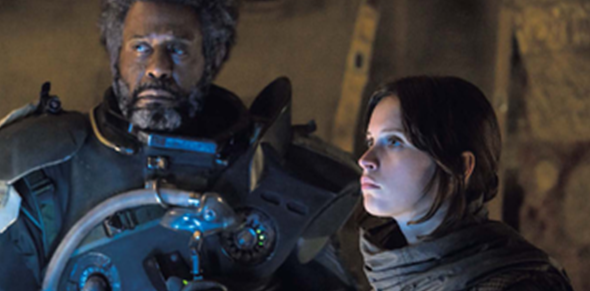

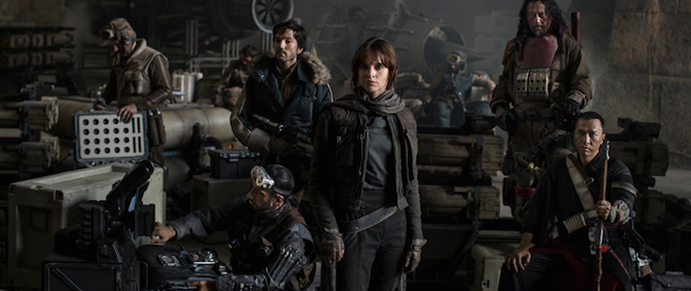




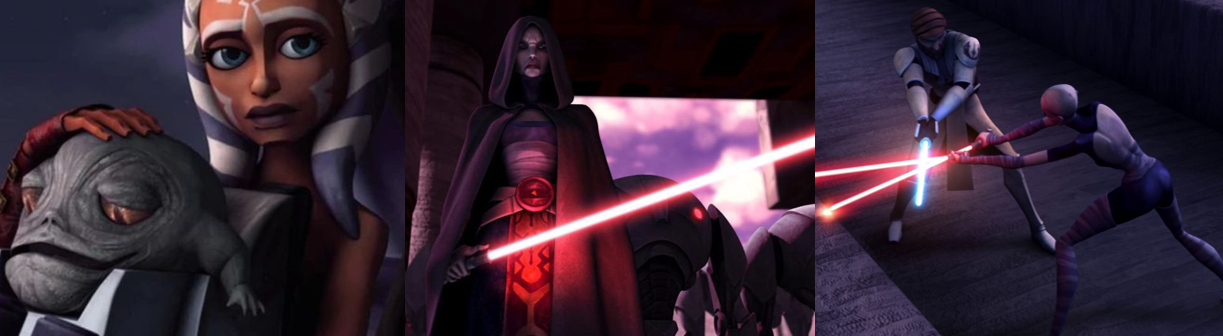

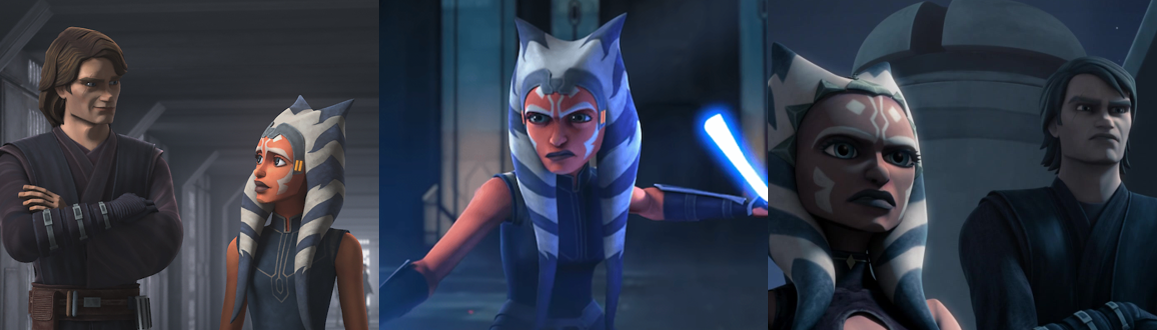



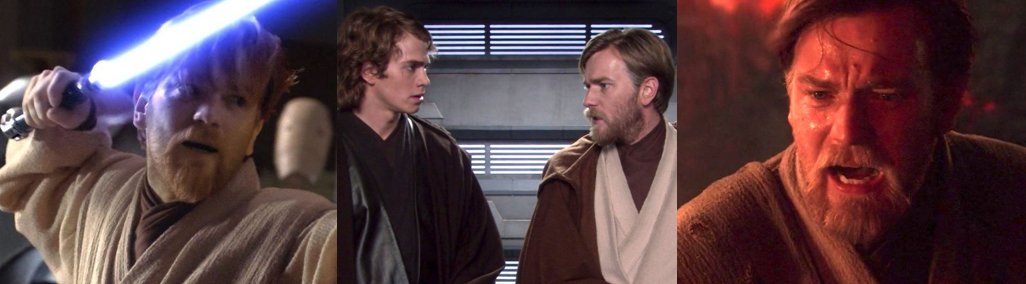
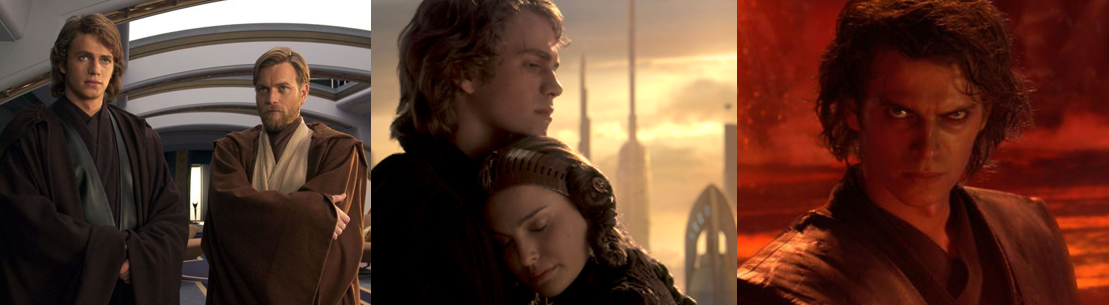


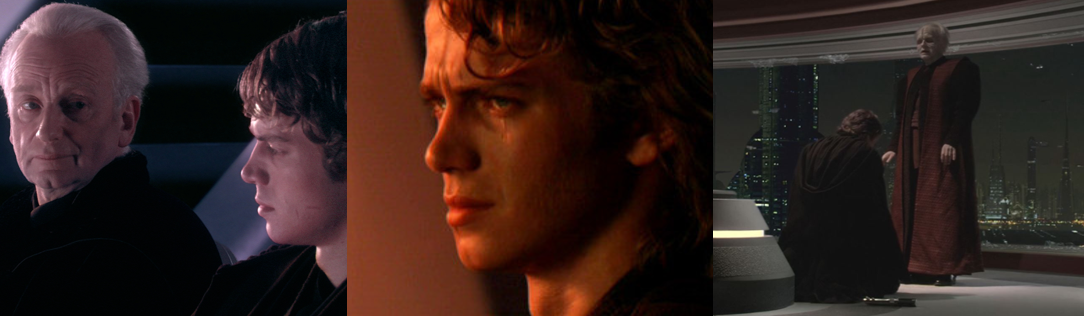


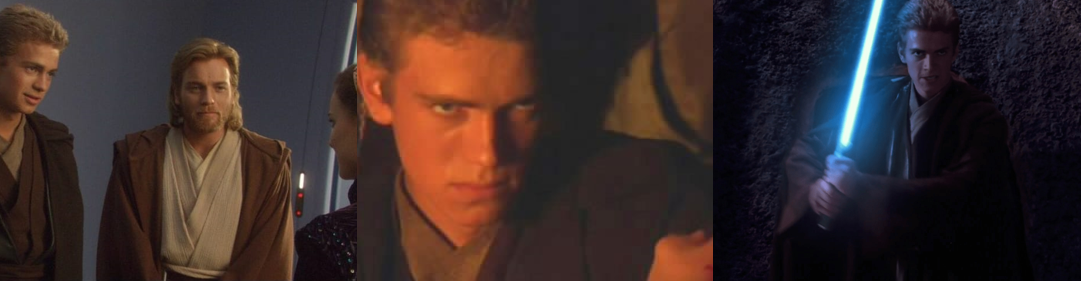


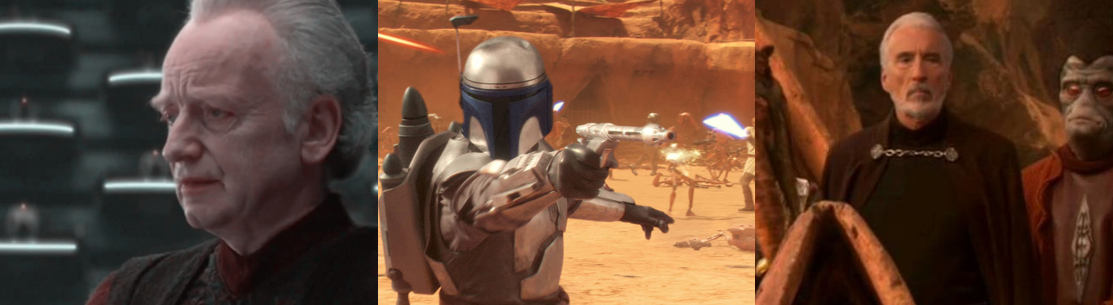
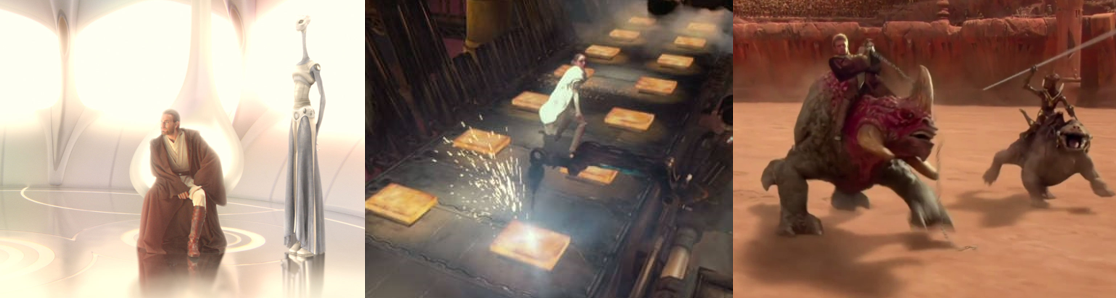

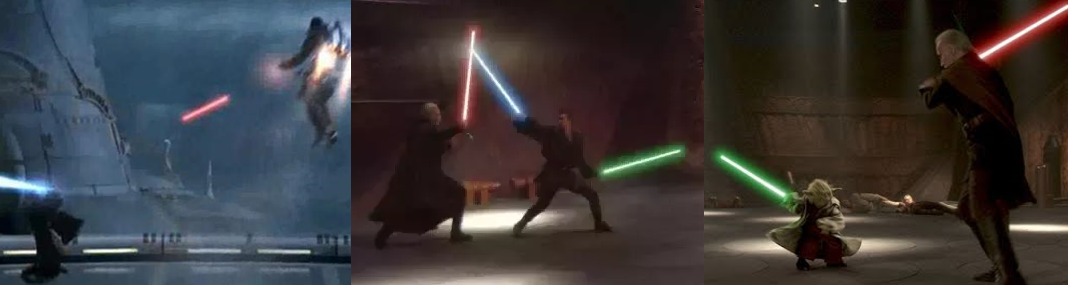


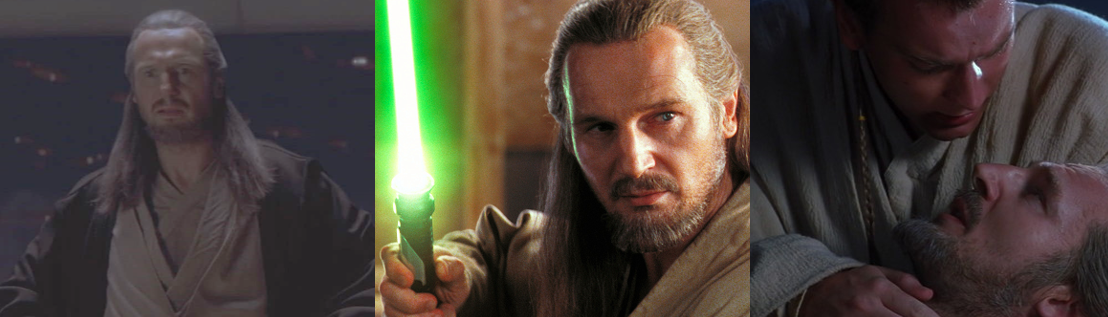
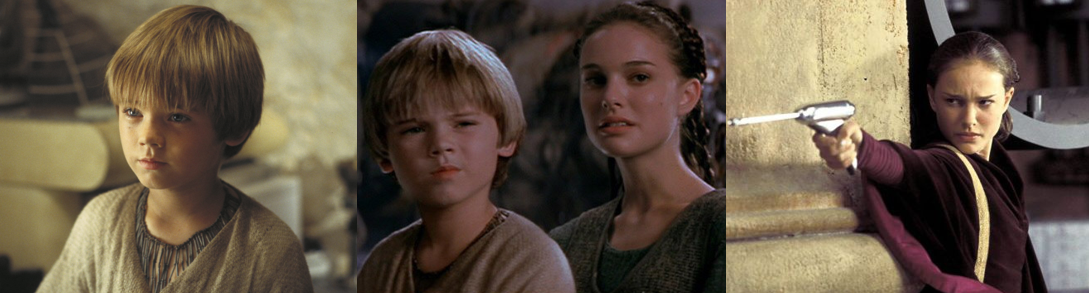
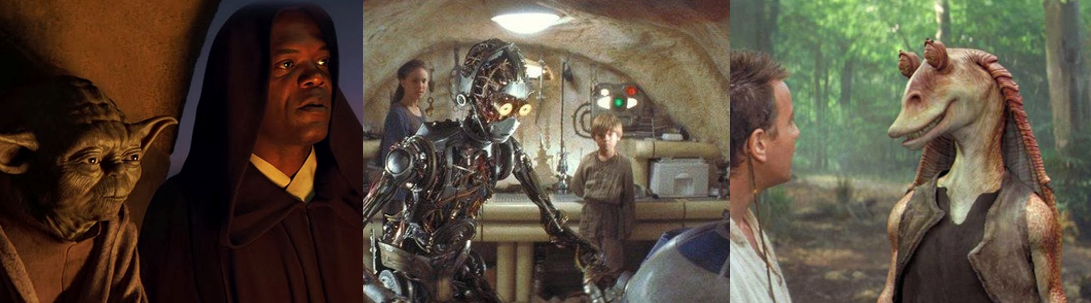
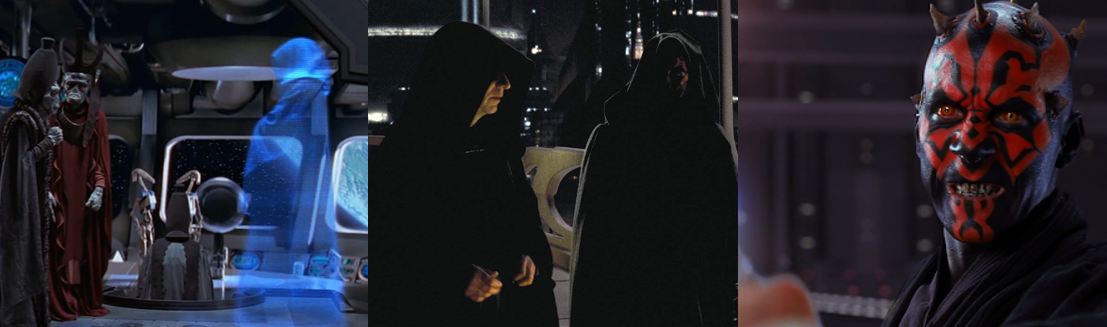

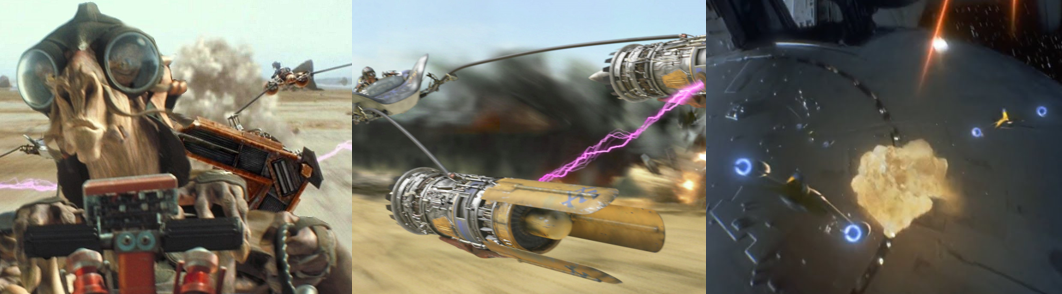




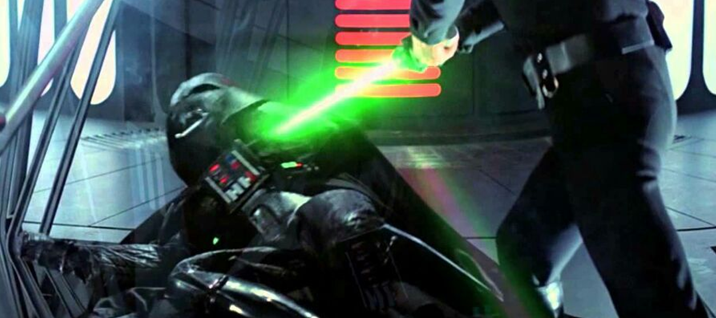


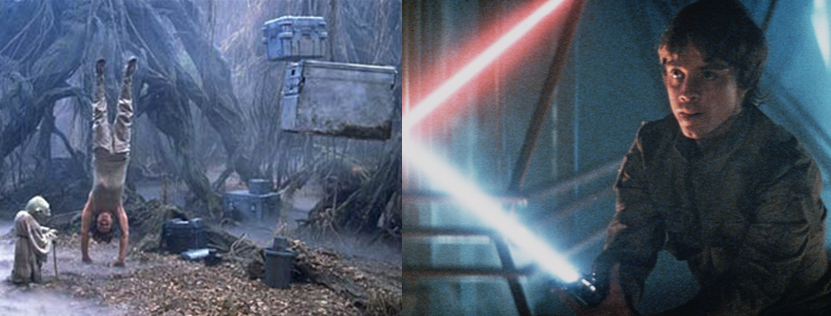
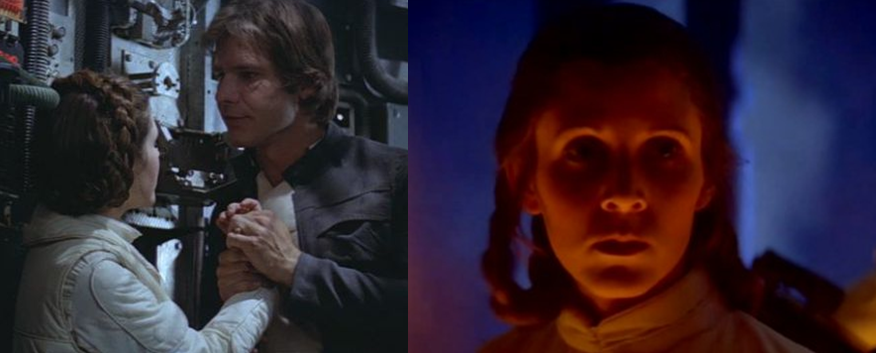

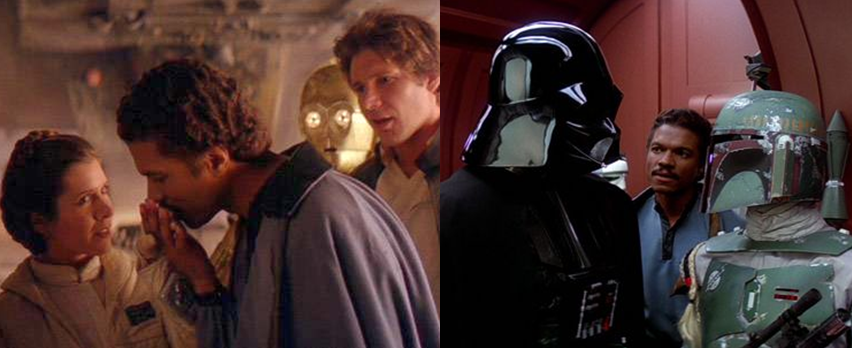
















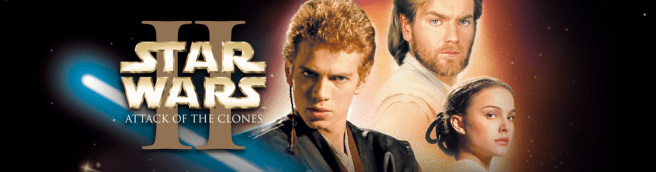



You must be logged in to post a comment.