Story Title: “Carnage – Part One: Savage Genesis” Published: 13 February 1993 (cover-date: April 1992)
Story Title: “Carnage – Part Two: Savage Alliance” Published: 10 March 1993 (cover-date: May 1992)
Story Title: “Carnage – Part Three: Savage Grace!” Published: 14 April 1993 (cover-date: June 1992)
The Background: In 1982, Marvel Comics editor-in-chief Jim Shooter purchased an illustration of Peter Parker/Spider-Man in a slick black outfit from Randy Schueller for an outrageous $200, a concept that writer Tom DeFalco and artist Ron Frenz interpreted as an alien organism following Marvel Super Heroes Secret Wars #8. After revelling in the costume’s unique ability to form both clothing and organic webbing, Spidey was aghast when Doctor Reed Richards/Mister Fantasticrevealed it was a sentient symbiote and quickly rid himself of the parasite using a cacophony of church bells. Throughout 1988, Peter was stalked and attacked by a mysterious assailant who turned out to be disgruntled reporter Eddie Brock, now bonded to the symbiote to form Venom, Spider-Man’s dark doppelgänger. An immediate favourite of mine, Venom has had many hosts over the years and undergone many changes, but took their first step towards becoming a more virtuous (if violent) “lethal protector” when they set aside their vendetta against Spider-Man to battle their more dangerous offspring, Cletus Kasady/Carnage. First teased in The Amazing Spider-Man #345 and allegedly dubbed “Chaos” and “Ravage” before assistant editor Eric Fein suggested “Carnage”, writer David Michelinie and artist Mark Bagley specifically designed Carnage to be a more sadistic counterpart to Venom, one whose symbiosis was so complete that Kasady and the symbiote were in total unity. Heavily influenced by the Joker, Carnage has long been a fan favourite and has repeatedly returned (even from death) to perpetrated some truly deplorable acts, from slaughtering thousands during the sprawling “Maximum Carnage” event (DeFalco, et al, 1993) to becoming a near-literal God! Despite Carnage’s violent nature, the character frequently appears in Spidey/Marvel videogames and, most surprisingly, cartoons, and was played with scenery-chewing relish by Woody Harrelson in Sony’s Spidey-less Venom films (Various, 2018 to 2024).
The Review: After appearing as Eddie Brock’s psychotic cell mate, Cletus Kasady took a page out of his “old man’s” book by popping up in “asides” in The Amazing Spider-Man #359 and #360. While Spider-Man was busy dealing with Doctor Elias Wirtham/Cardiac, Cletus communed with his “other” to slaughter a guard and escape Ryker’s Island. He then looked up the stupidest name he could find and brutally suffocating Gunther “Gunny” Stein, before finally getting his first full-page reveal murdering a lab technician simply to prove that “law and order” is an illusion. Peter gets a call about this while helping his doting Aunt May, ruminating on how the killing is the latest in a spree of violent murders perpetrated by a psychopath who signs his name (“Carnage”) in blood at each crime scene. While overhearing an eyewitness, Spider-Man is horrified at the implication that Venom is back to their old, murderous ways, despite Eddie living in peace in the mistaken belief that Peter is dead. When he shares these concerns with his highly strung actress wife, Mary Jane Watson-Parker/M.J., she begrudgingly supports him when he voices his responsibility towards subduing the symbiote he enraged. While running some background checks on Eddie, Peter becomes aware of Cletus and is disturbed by his rap sheet: eleven murders, suspected of a dozen more, and potentially burned down the orphanage he was raised in and bashed in an employee’s head in the process. Though alarmed, Peter questions punks, hookers, landladies, and more about Cletus to confirm he’s a twisted sadist who charms with a silver tongue and kills without a thought.
When a violent new symbiote comes to town, Spidey’s forced to team up with Venom!
Theorising that Cletus feels a kinship to the orphanage, Spidey finds Cletus there, naked before a small fire and talking to a stuffed teddy bear! Spider-Man’s unease turns to terror when Cletus transforms into a blood red-and-black symbiotic lifeform and attacks with unexpected speed and strength. Like Venom, Carnage doesn’t set off Spidey’s “spider-sense” but can Carnage uniquely extend and solidify his alien appendages. Overwhelmed by Carnage’s power and confused as to how the symbiote bonded with Cletus, Spidey is stunned when Carnage tosses temporary axe-like projectiles! When two cops investigate, Spider-Man gains a temporary reprieve, only to be incensed when Carnage callously tosses dart-like pieces of himself at a patrolmen, leaving him clinging to life. This distraction allows Carnage to flee, leaving a parting message in his own blood that unnerves the web-slinger. Obsessed with tracking Carnage, Peter decides that the only way to defeat Carnage is to team up with Venom! After catching a lift from Johnny Storm/The Human Torch and retrieving Mr. Fantastic’s sonic gun, Spidey heads to the remote island where he left Eddie, surprising and enraging Venom. Despite the pain caused by the sonic gun and the Human Torch’s flames, Venom almost drowns Johnny before he desperately activates his “nova flame”. Spidey and Venom repeat their earlier fight at the abandoned mining village, with Venom getting the drop on him with their invisibility, before the Human Torch blasts them with the sonic gun. Despite the agony, and his hatred of Spider-Man, Eddie is furious to learn that Carnage is killing innocents. He also reveals that the symbiotes produce asexually and that they have no interest in traditional concepts of “family”, explaining why his “other” didn’t mention that it had reproduced.
Carnage’s disregard for life sees him target random innocents and those who champion order.
Venom also theorises that Carnage’s lineage and Earth’s environment has altered his symbiote, and that Kasady’s warped personality makes him extremely dangerous. Venom also demands their freedom in return for their help and Spider-Man’s forced to agree. Although Johnny’s unnerved, he flies them back to New York City, where Venom follows their unique connection. Meanwhile, Carnage attacks wealthy Robert Sutcliff, brutalising his guards and tossing his helicopter off the roof (with Sutcliff in it!), simply for jokes. Asserting full control over the union, Cletus eschews logic to return to Sutcliff’s domicile, where he’s confronted by Spidey and Venom. Despite Carnage’s offer to team up and fillet Spider-Man, Venom attacks but, even with Spidey’s added strength, is no match for Carnage. The scuffle sees Carnage endanger a baby and escape while Spidey and Venom rescue the bawling tyke. Though Carnage blocks Venom’s senses, the duo quickly figure out that the killer’s next target is the cantankerous J. Jonah Jameson and, sure enough, Carnage surprises the Daily Bugle’s editor’s latest tirade. Despite him claiming to be “to important to die”, Carnage sees Jonah as the self-appointed bastion of “law an’ order”, the very things he strives to destroy. Thus, it only makes sense in his twisted mind that Jonah should be killed to set an example and show that the only truth is chaos carnage! Despite lashing out when Jonah reaches for a panic button, Carnage decides he’d much rather prove his point before an audience.
Spidey’s forced to make some tough decisions to end Carnage’s threat, which costs many lives.
Venom shares that Cletus was a natural loner who preferred to listen to heavy metal music than exercise (relatable!) and theorises (correctly) that Carnage has inherited both Peter and Venom’s powers. Though concerned about Venom’s own crazed morality and alarmed by Carnage’s body count, Spidey realises that Kasady plans to murder Jonah at a heavy metal concert at Madison Square Garden. When Carnage rushes the stage and kills a security guard, the braying crowd cheers him, assuming it’s part of the show, and quickly whips them into a violent mob with anti-authority rhetoric. When Spider-Man intervenes, Jonah selfishly tries to turn the situation to his advantage when Venom attacks Carnage. The fight drops into Penn Station, where Carnage slaughters innocent bystanders, keeps Spidey at bay with his darts, disrupts Venom with his stronger, “nastier” symbiote. Sensing the agony may kill Venom, Spider-Man knocks Carnage onto the live rail, but Kasady quickly recovers and targets Jonah again. While Venom tangles with their offspring, Spider-Man commandeers the venue’s sound system, setting the blasting both symbiotes with unbearable levels of sound. Despite the agony, Eddie demands Spidey keep going, correctly surmising that he’s strong enough to resist the pain. However, after Kasady collapses, his symbiote apparently evaporated, Eddie attacks Spider-Man, despite his weakened state, still convinced that Peter is evil. Luckily, Mr. Fantastic and the Human Torch arrive and subdue Venom, proving that Spidey never planned to honour their bargain. Not only does this convince Venom that Spidey’s no hero, Jonah’s also, incredibly, critical of Spider-Man for breaking his word, leading Spidey to lash out at the publisher and leave conflicted.
The Summary: There’s no doubt that, by this time, Mark Bagley was the quintessential symbiote Spider-Man artist. Few are as synonymous with the flowing, monstrous creatures that Bagley, who gives a fluidity and life to the creatures that makes them both captivating and terrifying. Venom’s abilities were already near limitless, allowing them to reproduce Spider-Man’s webbing and wall climbing, simulate clothing, turn invisible, and circumnavigate Peter’s spider-sense. “Carnage” expands the symbiote lore, revealing they’re largely solitary creatures who don’t care for, nurture, or even consider their offspring. In fact, Venom seems enraged at having a spawn and driven to destroy it out of an inherent sense of superiority. Not only does Carnage have all of Venom and Spider-Man’s abilities, but he’s stronger and faster than both combined and can solidify his “other” in dangerous new ways, launching darts, axes, and forming bladed appendages. He also happily chokes his victims and even endangers babies, all for a sick thrill and to prey upon his enemy’s morals. Venom theorises that Kasady’s warped mindset has infected the symbiote as much as the “alien” environment, and it was interesting to see Kasady admonishing his “other” when it tried to “lecture” him. Most obviously, Carnage refers to himself as “I” and makes all the decisions, driven by a psychotic need to destroy social order, kill at random, and show that all life (and death) is random and chaotic. In this regard, Carnage is far worse than Venom, who has a twisted sense of morality and truly believes they’re saving innocents from evildoers like Spider-Man. While Venom kills to protect others and is clearly nuts, they still strive to save lives, whereas Carnage relishes taking life and happily pushes randomers in front of traffic or thrusts them through walls simply for fun.
Carnage’s threat is so great that even Spider-Man and Venom combined have trouble defeating him.
This is apparent from Carnage’s appearance, with him seemingly formed from Kasady’s own blood, and Kasady’s decision to write warnings and messages in his blood. Portrayed as a psychotic, crazed serial killer, Kasady is also described as a polite and quiet man who pays his bills and doesn’t cause trouble. This is all a façade, however, as Kasady is deeply disturbed and clearly burned his childhood orphanage down, killing at least one person, and regresses to an unnerving, childish voice when in solitude. Kasady is almost comically without sympathy, painted as a cruel and sadistic killer who delights in causing random mayhem. Carnage is seemingly emblematic of the youth at the time, enjoying horror and heavy metal music and ranting against “the man”, to the point where a bunch of rockers are ready to kill purely on his word! Spider-Man is horrified by Kasady’s crimes, callous disregard for life, and incredible strength, which drives him to disregard M.J. and the Human Torch’s concerns and turn to Venom for help. This partnership is the highlight of the story as Venom continuously unnerves Spidey and makes him question his decision, singing “Strangers in the Night” and seemingly ready to snap at any moment. Spider-Man takes a huge risk partnering with Venom and undoing the ruse he tricked him with, but it turns out to be beneficial as Venom’s more concerned with eliminating his offspring than destroying his hated enemy. Venom proves invaluable, providing additional insight into the symbiotes, sensing Carnage’s presence, and holding the killer off so Spider-Man can think up a more permanent solution. “Carnage” doesn’t outstay its welcome (these days, it would probably be an eight-part story) but could probably have done with an extra issue to further explore Kasady’s backstory, though this would’ve unnecessarily humanised him. It’s not as deep or as impressive as other Venom or Carnage stories, but it’s a notable story for introducing one of Spidey’s most violent foes (and for its beautiful artwork!)
My Rating:
⭐⭐⭐⭐
Rating: 4 out of 5.
Great Stuff
What did you think of Carnage’s violent debut? Were you a fan of Cletus Kasady or did you find him too random and crazy? Did you enjoy the team up between Spidey and Venom? Were you impressed by how different and psychotic Carnage was? What are some of your favourite Venom and Carnage stories and how are you celebrating Venom’s debut this month? Whatever your thoughts on Venom and Carnage, share them below, support me on Ko-Fi, and check out my other Venom and Spider-Man content.
Easily Marvel Comics’ most recognisable superhero, unsuspecting teenage nerd Peter Parker was bitten by a radioactive spider and learned the meaning of power and responsibility in August 1962. Since then, the Amazing Spider-Man has featured in cartoons, movies, videogames, and countless comic books. To coincide with his day of celebration, I’m dedicating every Monday of August to everyone’s favourite web-head!
Released: 2 May 2014 Director: Marc Webb Distributor: Sony Pictures Releasing Budget: $200 to 293 million Stars: Andrew Garfield, Emma Stone, Jamie Foxx, Dane DeHaan, and Sally Field
The Plot: Already struggling to keep his love Gwen Stacy (Stone) safe from his double life, Peter Parker/Spider-Man’s (Garfield) troubles are compounded when downtrodden electrical engineer Maxwell “Max” Dillon (Foxx) is transformed into pure electricity!
The Review: In a first for Spider-Man’s big-screen outings, The Amazing Spider-Man 2 skips the usual title sequence and jumps straight into expanding upon the fate of Peter’s parents, Doctor Richard Parker (Campbell Scott) and his wife, Mary (Embeth Davidtz). It’s revealed that Richard packed himself and his wife up and dropped young Peter (Max Charles) with his doting aunt, May Parker (Field), after being threatened by his former financial backer and partner, Norman Osborn (Chris Cooper). Although Doctor Curtis “Curt” Connors (Rhys Ifans) is briefly mentioned a few times, he’s missing from these extended flashbacks, which instead focus on Richard and Norman splicing human DNA with spiders so their incredible ability to “self-heal” will not only cure Norman of his terminal, genetic illness (“Retroviral Hyperplasia”), but also help those suffering from life-threatening diseases. Unfortunately, the illness not only deformed and agonised Norman, it also drove him to desperation, leading to him making shady deals with military backers. When Richard discovered how corrupt Norman and Oscorp had become, he sought to expose his wrongdoings and went on the run for Peter’s safety. It’s not clear why Oscorp wouldn’t (and apparently never thought to) target Peter at May’s and the film spends more time focusing on a tense and horrific mid-air confrontation between Richard and an Oscorp assassin (Demián Bichir) that leaves both Parkers dead. Still, Richard and Mary’s shady past and their connection to Oscorp is fed to us (and Peter) through breadcrumbs, revealing that Richard deeply regretted his work being perverted and secretly sought to keep Norman from using his research by infusing the genetically engineered spiders with his DNA, somewhat attributing Peter’s spider powers to his father. The loss of his parents still weighs heavily on Peter, who laments their absence at his graduation as much as his beloved Uncle Ben’s (Martin Sheen) and who confesses to old friend Harry Osborn (DeHaan) that he actively avoids thinking about his parents. When his curiosity leads him to investigate his father’s satchel, Peter seeks to discover more about his late father, leading to a sweet moment between him and May where she chastises his father and vehemently asserts her place as Peter’s mother. Indeed, Peter and May’s relationship continues to be a highlight, with her despairing of her nephew’s strange behaviour and absences but still showing him nothing but love and affection.
Peter’s haunted by the previous film and forced to keep Gwen at arm’s length to protect her.
Unfortunately, despite still revelling in his abilities as Spider-Man and enjoying his spark-filled relationship with the gorgeous Gwen Stacy, Peter is haunted by Gwen’s father, Captain George Stacy (Denis Leary), whose grim visage serves as a reminder of his promise to keep Gwen safe. Though he loves Gwen dearly and the two still have amazing screen chemistry, Peter’s burdened by guilt, agonised at the thought that he could endanger her. Although Gwen loves Peter and is willing to take the risk, she ultimately ends their relationship when she becomes sick of his flip-flopping. Heartbroken, Peter throws himself into his antics as Spider-Man, dividing public opinion as the Daily Bugle’s smear campaign paints Spider-Man as a menace despite many praising him. Still, try as he might, Peter can’t keep himself away from Gwen and watches over her in a way that could be creepy but comes across as sad and sweet. While Spider-Man saves lives, Gwen faces a dilemma when she’s offered a prestigious scholarship in London, one she’s excited to take despite her unresolved feelings for Peter. Peter’s stunned and equally torn between his love for her and wanting the best for her, meaning he doesn’t react well upon learning of her news and embarrasses Gwen prior to her interview for the scholarship. Ultimately, Gwen chooses to go, believing that’s better for them both, compelling Peter to finally confess (in elaborate fashion) his true feelings, and even his willingness to go to London with her. As much as I love Andrew and Emma’s onscreen banter and chemistry (their escape from Oscorp was a particular highlight), I do think the film suffers a bit from Peter immediately reneging on his promise at the end of the last film. The Amazing Spider-Man 2 may have benefitted from Peter and Gwen’s relationship being frosty and unresolved from the start to focus more on how Peter has to choose a difficult path since he doesn’t want to risk endangering or losing someone he loves, though this would make the first half of the film too similar to Spider-Man 2.
When Peter and Spidey refuse to help him, a desperate Harry turns to Electro.
Following Norman Osborn’s death, Peter’s compelled to reconnect with Harry Osborn, a hitherto-unknown childhood friend who was sent to boarding school at eleven and spent most of the intervening years travelling the world and resenting his father for sending him away. Thus, Harry is spiteful and dismissive of his father, and rightfully so as Norman spends his final hours spitting insults at his son and effectively cursing him with the same degenerative illness. In the aftermath, Harry (…somehow…) assumes control of Oscorp, riling up Vice President Donald Menken (Colm Feore) and revelling in flaunting his newfound power, appointing Norman’s secretary, Felicia Hardy (Felicity Jones), as his second-in-command. Though delighted to reunite with Peter, Harry’s clearly maladjusted and his erratic behaviour only spirals as his disease takes greater hold, giving him the shakes and strange lesions (despite Norman living many years with the illness). Desperate for a cure, Harry accesses Oscorp’s secure files and believes the answer lies in Spider-Man’s blood, begging and even offering to pay the web-slinger for a sample, only to be incensed when Spidey refuses out of fear for Harry’s safety. This, and Menken’s machinations, sends Harry over the edge and leads to him making a deal with Electro to access Oscorp’s secret basement of origins special projects laboratory, where he finds the means to first cure himself and then avenge himself against those who’ve wronged him. Overall, I liked DeHann’s depiction of Harry. He was a bit sullener and more vindictive and flaunted his authority compared to James Franco, and he presented an interesting dilemma for Peter, who wanted to help his friend but was worried about killing him or turning him into a monster like the Lizard. Harry’s vendetta against Spider-Man is a touch rushed and I think it would’ve been better for him to put two and two together when he first approached Peter for help, just to put a further spin on their relationship. It also would’ve benefited to save Harry’s descent into manic Green Goblin mode for a third film.
Spidey super fan Max is driven to rage and insanity upon becoming powerful enough to be noticed.
Rather than being a simple electrical engineer who turns to a crime after being zapped by lightning, The Amazing Spider-Man 2 recasts Electro as a hopeless outcast who’s socially awkward and bumbling. Pushed around and ignored by everyone, from pedestrians to his boss, Alistair Smythe (B. J. Novak), Max is a sad, worthless nobody who becomes enamoured by Spider-Man after Spidey saves his life and offers him encouragement. This leads to Max imagining conversations between the two and describing the webslinger as his best friend since he was the first person to “see” and “need” him. This later extends to Gwen, who also shows kindness to Max where everyone else treats him like shit, with Smythe forcing him to fix a maintenance issue (on his birthday, no less!) and leading to Max falling into a vat of genetically engineered eels. These not only fix Max’s crooked teeth but also transform him into Electro, a man of first partial and then almost pure electricity, allowing him to see, sense, and control electrical currents. The experience leaves him disoriented, confused, and enraged, leading to him first accidentally and then purposely endangering others when cops fire at him, Spidey hesitates to remember him, and the newfound voices in his head compel him to lash out. Although subdued, Electro is tortured by the sadistic and overly theatrical Doctor Ashley Kafka (Marton Csokas), though Max invites the experience to test his power and is fuelled by the pain to accept Harry’s offer for a partnership and avenge himself on his captors. Once freed, Electro assumes a more menacing form and demeanour, having now mastered his powers to ensnare and kill with a flick of his hands and desperate not only to destroy Spider-Man after he “betrayed” him, but also to plunge the city into darkness so they can feel his pain. Although somewhat similar to the sympathetic angle applied to some of his predecessors in Raimi’s films (and a far more well-rounded character than the comic Electro, who was just a crook with powers who rarely reached his full potential), I do have an issue with depicted Max as the stereotypical outcast “geek”. It rarely works well and seems a waste of Jamie Foxx’s acting prowess, though I did like Electro’s obsession with being “seen” and his turn towards a crueller and more malicious demeanour after aligning with Harry.
The Nitty-Gritty: The Amazing Spider-Man 2 benefits from a much more distinctive score, which is less a rehash of Danny Elfman’s work and more a stirring overture for the titular hero. Electro’s theme was particularly memorable; I loved how it incorporated the voices in Max’s head fuelling his rage. However, while the film treads less of the same ground as Raimi’s films compared to its predecessor, it does rehash some of the same beats concerning Richard and Mary from The Amazing Spider-Man. Sure, we learn a bit more about Richard’s relationship with Norman and that he had a weird subway lab that somehow still works after nearly fifteen years, but it still feels like the filmmakers are unsure of the endgame to this sub-plot (though, thankfully, they excised the nonsensical reveal that Richard was still alive, which would’ve tipped this already bloated plot into overdrive). The Amazing Spider-Man 2 touches upon themes of choices, not letting the past define you, and living each day rather than taking things for granted. Although Peter struggles with all of this, Gwen is all for it; her valedictorian speech is all about it and she urges Peter to stop letting her father’s death hold him back. Gwen’s adamant that they should embrace what they have, regardless of her father or the risk, and insists that she makes her own choices, even if it means she’s in danger. While there is a lot happening in the Amazing Spider-Man 2, I don’t think it’s not as badly paced as some would say. As much as I hate to say it, they made the right choice to cut Shailene Woodley as I’m not sure how she would’ve factored into the plot, though it was weird to include Felicia when she was just a secretary rather than a cat burglar. I also think it might’ve been better to end the story on a cliffhanger concerning Harry, not just because the finale with his Green Goblin is a bit rushed but also because we’d seen the Green Goblin done to death and I could’ve done without retreading that narrative (even if it was a little different here).
Despite some great effects and sequences, the film is bloated with characters and sub-plots.
The Amazing Spider-Man 2’s costume is, for my money, the best and most comic accurate depiction we’ve ever seen (though I miss the distinctiveness of the one from the last film). Harry’s final Green Goblin form is also more monstrous and closer to the comics, though still a bit lacking (and rushed) and we were denied a truly gruesome transformation sequence. The Amazing Spider-Man 2 ups the focus on action thanks to not having to waste an hour of its runtime redoing Spidey’s origin, giving us a handful of montages and fun action sequences that continue to showcase why Andrew Garfield is the best Spider-Man. There’s more emphasis on slow-mo sequences to show how Spider-Man reacts to danger and thinks about saving people. It’s used to great effect in the Times Square sequence, giving us a fantastic depiction of Spidey’s speed and strength alongside his compassionate nature as he first tries to appeal to Max’s reason. Electro is depicted as an unpredictable threat, especially when he first emerges since his powers are unstable. While it’s disappointing that he doesn’t resemble his mainstream comic counterpart, and that Max didn’t take on aspects of this design after being freed by Harry, Electro is very to his Ultimate comics counterpart and is depicted as both incredibly powerful and emotionally unstable. Electro can fly, dissolve bullets, and absorb and emit electricity, so Peter has to science up solutions to counteract and ultimately overload Electro’s powers. Although the first-person sequences are gone, Spider-Man’s web-slinging and Electro’s bolts all popped off the screen when viewed in 3D and I enjoyed the opening sequence where Spidey toys with the crazed Aleksei Sytsevich (Paul Giamatti). While Spidey maybe mocks the brutish mafia thug a bit too much and endangers a few lives, this was a great showcase of how Peter’s embraced his role as Spider-Man, something reinforced in the finale when Aleksei returns in a mechanised rhino suit…only for the film to end right before we get to see the fight! I really wish we’d gotten at least an animated rendition of Spidey’s battle with the Rhino in the credits as I loved the lumbering mech and its many weapons, and Giamatti’s scenery-chewing performance as Aleksei, though his return probably should’ve been left for a third film.
Harry’s revenge leaves Peter heartbroken, though sadly immune from future threats…
Desperate to avoid his father’s fate, Harry begs first Peter and then Spider-Man for help and is enraged when he’s denied, believing Spidey is a fraud despite him reasonably worrying about the effect his blood would have on the emotional Osborn. After being double-crossed by Menken, Harry begs Max to help him access Oscorp’s hidden bunker, where he forces Menken to inject him with a serum derived from Richard’s spiders, believing it to be a “cure”, only to be horrifically mutated as it both accelerates his condition and further alters him. Luckily, a convenient “healing” battlesuit keeps Harry from dying but the whole ordeal drives him as batty as Max, whose reward for helping is the freedom to absorb power from the electrical grid he created and was denied credit for to plunge the city into darkness and strike back at everyone who ignored him and idolised Spider-Man. Peter and Gwen’s reconciliation is interrupted by Electro’s revenge and Gwen insists on helping Spider-Man, putting herself in danger despite his protests. Spidey holds off Electro, done trying to reason with him, and risks his life grounding the misguided villain so Gwen can overload and seemingly destroy Electro. Their victory is short-lived, however, as the now demonic Harry swoops in on an Oscorp glider looking for revenge, figures out that Peter is Spider-Man, and spitefully threatens Gwen. This leads to a short and sadly rushed (but also brutal fight) between Spider-Man and the cackling Green Goblin that ultimately ends with Harry being knocked out and Gwen plummeting down a bell tower. Despite Peter’s best efforts and a heart wrenching image of him (and his webbing) reaching for her in freefall, Gwen suffers a similar (but far more horrific) fatal fall and Peter is left devastated. So much so that he spends five months so stricken by grief than he constantly visits Gwen’s graves and denounces Spide-Man. However, Peter suits up once more after a pep talk from Aunt May, reviewing Gwen’s speech about embracing life, and to confront the Rhino. Oh, and that mysterious gentleman (Michael Massee) also colludes with the incarcerated Harry to recruit a few individuals to use Oscorp’s secret projects to destroy Spider-Man.
The Summary: I’ve always quite liked The Amazing Spider-Man 2. I remember liking it more than the first film when I first saw it and was glad to see it mostly leaning into new territory, though I could’ve done without the retread of the Osborn/Green Goblin plot. Still, the suit was fantastic and Andrew Garfield cemented his status as the best live-action Spider-Man in this film, still showcasing the wit, brains, and charisma I associate with the character. His chemistry with Emma Stone remains a highlight, though it does feel like the filmmakers walked back the ending of the last film after rushing to the rekindling of their romance. While I’m not a fan of the changes made to Electro’s personality, he grew on me as the film progressed, and I liked how he was desperate to be acknowledged and became obsessed with proving his worth and power. Dane DeHaan was a great Harry Osborn, though it’s weird that his illness is so advanced when it took decades for Norman to die, and his characterisation is a bit all over the place at times. While it’s utterly heartbreaking to witness Gwen’s death and Andrew sells it so well, I do think the Green Goblin, Rhino, and Gwen’s death should’ve been saved for a third film to devote the proper amount of screentime to those plots rather than rushing through them right at the end. There’s a lot happening in The Amazing Spider-Man 2 thanks to Sony’s obsession with bringing the Sinister Six to life and it definitely would’ve benefitted from a few more sub-plots being trimmed, but I still think it’s better than most people think. The exploration of guilt and grief is great, the effects and action are exhilarating, and it delivers a hell of a gut punch at the end, ultimately resulting in a film that’s still pretty decent despite some flaws.
My Rating:
⭐⭐⭐
Rating: 3 out of 5.
Pretty Good
Do you agree that The Amazing Spider-Man 2 isn’t as bad as its reputation? What did you think to Electro’s depiction and were you disappointed he didn’t resemble his classic look? Were you happy to see Peter don a more familiar suit? What did you think to the drama between him and Gwen and Harry’s depiction? Do you agree that there’s too much happening in the film? Would you have liked to see a third entry for these characters? How are you celebrating the wall-crawler this month? Whatever you think about The Amazing Spider-Man 2, leave a comment below, support me on Ko-Fi, and go check out my other Spider-Man reviews.
Easily Marvel Comic’s most recognisable superhero, unsuspecting teenage nerd Peter Parker was bitten by a radioactive spider and learned the meaning of power and responsibility in August 1962. Since then, the Amazing Spider-Man has featured in cartoons, movies, videogames, and countless comic books. To coincide with his day of celebration, I’m dedicating every Monday of August to everyone’s favourite web-head!
Writer: Gerry Conway –Artist: Gill Kane
Story Title: “The Night Gwen Stacy Died” Published: 13 March 1973 (cover-dated: June 1973)
Story Title: “The Goblin’s Last Stand!” Published: 10 April 1973 (cover-dated: July 1973)
The Background: In 1962, Marvel Comics editor and head writer Stan Lee followed up his success with the Fantastic Four with Spider-Man. The wall-crawler’s debut in Amazing Fantasy #15 proved one of Marvel’s best selling titles and Spider-Man’s popularity led to him getting his own solo title within a year. Very quickly, Spider-Man amassed one of the most colourful and memorable rogues galleries, though Norman Osborn/Green Goblin proved to be one of his most dangerous foes. A central figure in many prominent Spider-Man stories, the Green Goblin cemented his status as Spidey’s archenemy with these two issues, where Osborn contributed to the death of Peter’s long-time love interest, Gwendolyne “Gwen” Stacy. Created by Stan Lee and Steve Ditko and debuting in The Amazing Spider-Man #31, Gwen was the daughter of police captain George Stacy and first met Peter when they were students at Empire State University. Designed to be Peter’s one true love, Gwen and Peter had a rocky relationship, especially after she blamed Spider-Man for her father’s death and Lee was said to be adamantly against killing her off. Writer Gerry Conway and editor Roy Thomas disagreed, however, and wished to do away with the beautiful blonde in favour of the more rambunctious Mary Jane Watson/M.J. Said to have marked the end of the more innocent “Silver Age” of comics, Gwen’s death haunted Spider-Man for decades both literally (thanks to her clones and some abysmal retcons) and figuratively, as seen in his subsequent relationship with M.J. and his guilt over sharing the blame for Gwen’s death. This dramatic moment also came to be adapted into live-action, being echoed in the 1990’s cartoon and Spider-Man(Raimi, 2002), with M.J. (Saratoga Ballantine/Kirsten Dunst) as a substitute, and served as a heart-wrenching finale to The Amazing Spider-Man 2 (Webb, 2014) that Peter (Andrew Garfield) atoned for some ten years later. While alternative versions of Gwen have since gained popularity, “The Night Gwen Stacy Died” remains one of the most pivotal and iconic stories in Spider-Man’s long history.
The Review: This classic two-part tale begins with Peter’s best friend, Norman’s son, Harry Osborn, suffering from an LSD-infused fever. By Norman’s request, Harry is cared for by his family doctor in his own home, with his friends Gwen and M.J. by his side, though the doctor grimly states that Harry’s repeated drug abuse has caused the onset of schizophrenia! Peering from the window, Spider-Man laments not being there for his friend and changes to Peter, slipping in through the rooftop to pay a visit. However, Peter’s intercepted by Norman, who angrily demands that he leave, blaming him for Harry’s condition and barking in his face. This exchange sees Peter reflect on Norman’s former dual life as the Green Goblin and their shared knowledge of each other’s identity, knowledge that Norman has forgotten thanks to a bout of amnesia but which apparently still lingers and informs his hatred of Peter. Norman then extends this to Gwen and M.J. and tosses the three out, leaving them dejected and concerned for Harry’s welfare. As if that wasn’t bad enough, Peter finds himself suffering from the flu; since he can barely bring his latest photos of Spider-Man to the Daily Bugle, the worse for wear hero heads home to rest. Things continue to get worse for Norman, who receives a phone call informing him that his company stock is continuing to plummet and, when Harry collapses in his arms, finds his thoughts descending into angry paranoia at his son’s “friends” and his perceived enemies. The stress culminates in Norman being attacked by a vision of Spider-Man and bombarded by memories, compelling him to race to an abandoned brownstone that contains his long-forgotten equipment and, with manic glee, the Green Goblin lives once more! Immediately recalling his hatred of Peter Parker and Spider-Man, the Green Goblin hops on his goblin glider and races to Peter’s apartment, where Gwen is waiting for Peter to discuss their friend and what they can do to help him.
When the Green Goblin resurfaces and kills Gwen, Spider-Man flies into a rage.
Spider-Man’s journey home is delayed by his illness, meaning he arrives too late to help and finds only Gwen’s handbag and one of the Green Goblin’s pumpkin bombs. Intuiting that Osborn’s returned to his violent alter ego and concerned for Gwen’s safety, Spider-Man follows his spider-sense to the George Washington Bridge. There, he finds the Green Goblin perched an archway with Gwen’s presumably unconscious body at his feet. The Green Goblin threatens to kill Gwen unless Spider-Man indulges in a final confrontation, to the death (naturally), and, angered at his girlfriend being targeted, Spidey readily agrees. Thrown by his flu, Spidey barely dodges a pumpkin bomb and is bashed by the raving Green Goblin’s glider. Luckily, Spider-Man snags his foe with his webbing and lands a huge left hook that sends the Green Goblin plummeting. Confident that his enemy is subdued for the time being, Spidey races to his unconscious lover, assuming she’s in shock, and is horrified when the Green Goblin makes a sudden recovery and spitefully knocks Gwen from the bridge! Desperate to save her, Spider-Man shoots a web line and is so elated when it snags on Gwen’s ankle that he misses the small Snap! at her neck… Congratulating himself, Spidey pulls Gwen up and embraces her, still clinging to denial, only to find Gwen doesn’t respond and is, in fact, dead despite his best efforts. Spotting the Green Goblin hovering nearby, Spidey sets Gwen safely on the ground and vows to make Osborn pay with his life for crossing the line. Attacking with a self-righteous fury, Spider-Man violently beats his foe, doubling down when the Green Goblin seemingly begs for mercy.
Despite his rage, Spidey’s left hollow by Norman’s death and to grieve with his friends.
Unfortunately, Spider-Man’s anger gets the better of him and sees him knocked from the glider, allowing the Green Goblin to escape. When the police come to check on Gwen, Spidey leaps to her defence, unconcerned about his reputation. Thankfully, one cop sees the anguish in Spider-Man, who’s tormented by memories of happier times with Gwen, the guilt of letting down her father, and the inescapable knowledge that Spider-Man not only drove a wedge between them but also caused her death. When the ambulance arrives, Spider-Man mournfully hands over Gwen’s body and takes responsibility for her death, lashing out when the cops try to arrest him and fleeing. Swinging to the Osborn house, Spidey switches back to Peter to talk to the paranoid and feverish Harry. However, seeing his delusional friend’s no state help, Peter decides settling the score with the Green Goblin trumps caring for his friend. Seeking a lead on the Green Goblin, Spidey heads to the Daily Bugle to talk to editor Joseph “Robbie” Robertson, who’s also reeling from Gwen’s death and points him to one of Osborn’s warehouses. Norman gleefully leaps to engage with Spider-Man, keeping the vengeful wall-crawler at bay with his finger blasts. The Green Goblin further enrages Spidey by insulting Gwen, causing Spidey to brutally pummel his crazed foe. However, Spider-Man comes to his senses at the last minute, disgusted by how close he came to being just like Osborn. Of course, the Green Goblin refuses to go quietly and activates his glider, intending to skewer his foe through the back. However, Spidey’s spider-sense sees him deftly duck, causing Norman to be impaled by his own glider! Finding no comfort in his hated enemy’s end, just further emptiness and misery, Spider-Man stalks off, unaware that someone’s watching him from the shadows. When he gets home, Peter finds M.J. waiting for him and lashes out at her, chastising her for being a selfish, party-loving airhead who couldn’t understand his pain. Despite being hurt by Peter’s words, M.J. sees his heartache and chooses to stay and comfort her friend in his grief.
The Summary: There’s a lot happening in these two issues, as is common for Spider-Man stories. The toxic influence of Norman Osborn stretches far, infecting not just Peter’s life but the mindset of his best friend, Harry. After years of feeling insignificant next to his powerhouse businessman father, Harry turned to LSD for some relief and, despite his best efforts, has relapsed into drug use once more. Since he has no memory of his past as the Green Goblin and refuses to take responsibility for his actions, Norman turns his anger at the situation to Harry’s friends, particularly Peter, and insists that Harry be treated at home in a desperate attempt to show he’s a caring father. Every time we see Norman, he’s as drenched with sweat as his son, though Norman’s stress is caused not just by his son’s state and his work issues, but also the resurfacing of his Green Goblin persona. When his memories return, Norman immediately regresses to a raving lunatic, one whose soul purpose is to protect Norman and make his enemies pay. Despite Norman’s outburst, Peter, Gwen, and M.J. truly care for Harry but find themselves powerless to help him. They each carry guilt for missing the signs of Harry’s degeneration sooner and not intervening before he returned to drugs, and each feels powerless to help him. When he returns to Harry to get a lead on Norman, Peter uncharacteristically rejects his friend, deciding to focus on his enemy rather than his suffering friend and causing Harry to further question his sanity. However, there’s a reason these two stories (generally collectively referred to as “The Night Gwen Stacy Died”) are so iconic and pivotal. They changed not only Spider-Man’s status quo but dramatically changed the landscape of all comicdom. Suddenly, significant supporting characters could die and that death would not only change the title character, but be a permanent fixture.
Gwen’s tragic death is left ambiguous, burdening Spider-Man with guilt for years to come.
I’ve always been more a fan of Mary Jane since she was Peter’s love interest when I started reading comics and therefore have always found Gwen to be a very shallow and one-note character. She was pretty and nice enough, sure, but there wasn’t much to her, even after her father died and we got that dramatic dichotomy where she hated Spider-Man but loved Peter. While I would’ve preferred to see Aunt May die and for her death to be permanent, killing Gwen is totally out of left field and has so much more weight to it. Readers have seen Peter struggle with his dual identity, which drove a wedge between him and his many girlfriends, so it was very cathartic for him to finally find happiness with Gwen, a girl who accepted Peter for who he was and asked for nothing but his loyalty. When Peter realises that his actions as Spider-Man have led his most dangerous foe to target his girlfriend, Spider-Man wastes no time tracking down his foe and flies into a frenzy to make Osborn pay, incensed that the Green Goblin would make their rivalry even more personal. It’s so interesting reading their battle knowing how it’s going to end because it really makes you question whether Gwen was already dead to begin with. The Green Goblin claims that the “shock” of the fall would’ve instantly killed Gwen before she hit the ground, that little Snap! sound effect implies the sudden stop from Spidey’s web broke Gwen’s neck, and the fact she’s unconscious the entire time suggests Osborn might’ve killed her between panels. It’s fantastically ambiguous but, in the end, it’s inconsequential. The Green Goblin spitefully boasts of causing her death, which is true, and Spider-Man sees himself as responsible since Gwen was only put in danger because of him, which is also true. It’s heart-wrenching seeing Spidey clouded by denial, patting himself on the back for his innovation and heroics and desperately trying to wake Gwen up despite her clearly being dead. Spider-Man is then bombarded by memories and guilt and desperate to keep strangers from messing with her body but eventually comes to accept that his love is not only dead, but that he is to blame for it. This consumes him with a grief so powerful that he lashes out at cops and bystanders alike, no longer caring to try and defend his reputation.
Peter’s vendetta sees him shun his friends and come close to crossing the line into murder.
Peter’s grief causes him to fly into an uncharacteristic rage. It’s widely said that Spider-Man means business when he drops the inane quips and, indeed, Peter adopts a more violent approach when tracking down and confronting the maniacal Green Goblin. He shuns his best friend, shuts down the petulant J. Jonah Jameson’s, and races to the Green Goblin’s location with murder on his mind. The resulting rematch is an aggressive affair where Spidey eschews all sympathy for his crazed foe and berates his spiteful, vindictive nature. When Spider-Man damages the glider, the Green Goblin enrages the wall-crawler by showing more concern for his toys than a human life and, true to his word, Spider-Man seems ready to beat the Green Goblin to death. However, logic and reason hit Spider-Man like a brick wall and, disgusted by his actions, he pulls back at the last second. This hesitation is seen by the Green Goblin as a weakness but it’s the fundamental difference between the two rivals: one is a murderous lunatic who gleefully tortures and kills and the other is a righteous hero, who sacrifices his own personal needs to protect others. The Green Goblin’s stubborn and wicked nature ultimately prove his undoing as he’s impaled by his glider in a surprisingly harrowing death scene, especially for the time. The moment is framed as sudden and hollow, with Spider-Man getting no pleasure or closure in the deed and only being further convinced that “an eye for an eye” is the furthest thing from justice. For me, this was the perfect way to kill off Norman Osborn and I’ve been salty for decades that he inexplicably survived. It was thematically fitting for Harry to take up the Green Goblin mantle and be similarly undone, and we had plenty of look-a-likes and Hobgoblins running around so I could’ve done with leaving the Osborns in the grave. However, that doesn’t diminish the impact of his death as presented here, or of these two issues. Gwen’s death rocked Spider-Man and haunted him for years; it raised the stakes faced by all comic book characters and changed the industry forever. The ambiguity of the event and the way it weighs on Spider-Man’s conscience are disturbing and I do think the right decision as made since Gwen couldn’t compete with M.J. Subsequent stories have also constantly reinforced that Gwen was his first true love, ensuring a legacy that’s far more potent than if she’d been left alive.
My Rating:
⭐⭐⭐⭐
Rating: 4 out of 5.
Great Stuff
Where were you on the night Gwen Stacy died? Did you enjoy the story or were you annoyed that Gwen was killed off? What do you think killed Gwen, or do you believe she was dead to begin with? What did you think to Spider-Man assuming the blame and looking to kill the Green Goblin? Do you agree that Norman Osborn should’ve stayed dead or were you glad when he came back? What are some of your favourite Gwen Stacy stories? Whatever you thought to this classic Spider-Man story, share your thoughts below, support me on Ko-Fi, and be sure to check out my other Spider-Man content.
Easily Marvel Comics’ most recognisable superhero, unsuspecting teenage nerd Peter Parker was bitten by a radioactive spider and learned the meaning of power and responsibility in August 1962. Since then, the Amazing Spider-Man has featured in cartoons, movies, videogames, and countless comic books. To coincide with his day of celebration, I’m dedicating every Monday of August to everyone’s favourite web-head!
Story Title: “The Man Called Electro!” Published: 12 November 1963 (cover-dated: February 1964) Writer: Stan Lee Artist: Steve Ditko
The Background: After his success with the Fantastic Four, Stan Lee (Marvel’s editor and head writer at the time) continued his winning streak with teenage superhero Peter Parker/Spider-Man, whose debut in Amazing Fantasy #5 was a best seller. To capitalise on his subsequent popularity, Marvel had Spider-Man headline other comics and match wits against some of comics’ most colourful and memorable villains. Former electrician turned supervillain crook Maxwell “Max” Dillon was transformed into Electro in this, the ninth issue of The Amazing Spider-Man, thanks to Stan Lee and Steve Ditko. Unlike most of Spider-Man’s villains, Electro was a simple man who turned to crime after his accident, relishing the incredible power bestowed upon him. While initially a small time nuisance, Electro became a founding member of the Sinister Six, received more than one power boost over the years, and even destroyed the Daily Bugle office building! Electro received a dramatic redesign in Marvel’s Ultimate comics, one that influenced his much-decried live-action debut in The Amazing Spider-Man 2(Webb, 2014), and featured prominently as a low-level threat in various Spidey videogames and cartoons. Electro also got a notable redesign when he returned to live-action in 2021, got a significantly reworked backstory for his appearance in the 1990’s Spider-Man cartoon, and has secured his place as one of Spidey’s most recognisable villains.
The Review: The first electrifying (heh) tale of Electro starts with a typical day in New York City for Spider-Man. To the amazement of the startled bystanders, the web-slinger is seen leaping from rooftop to rooftop presumably on a matter of life and death. As a bunch of crooks shoot it out with New York’s finest, the tense stalemate seems to end when Spidey swings overhead. However, both parties are stunned when the young superhero simply passes by without intervening. Arriving in Queens, Spider-Man races through the streets, changing to his civilian identity as he goes, and arrives at his childhood home, where his sickly Aunt May lies in bed. Peter dotes on his grateful old aunt, delivering her the medicine she so badly needs but, as she sleeps, worries over her frail condition and the severity off her illness. While the troubled youngster begins his nightly vigil, the man once known as Max Dillon garbs himself in a garish green and yellow costume and charges his incredible electrical powers in anticipation of his debut as Electro. Seeking to challenge himself, Electro targets an armoured car carrying a gold shipment. When the armed guards mock him, Electro proves his power by zapping their wrists with “electric shocks” and surrounding them with a ring of electricity, terrifying them into giving in to his demands for the gold. The next morning, Peter’s alarmed when the doctor tells him that Aunt May is worsening and must be admitted to hospital (though, naturally, the old dear is more concerned with Peter’s health). Peter’s so distracted by his aunt’s deteriorating condition that he appears aloof at school, ignoring his classmate’s taunting and giving Eugene “Flash” Thompson the cold shoulder when the arrogant knob tries to reach out to the troubled teenager. Peter’s mood lifts later that day when Aunt May’s condition improves, and when he finds Betty Brant sitting with his old aunt. Betty notes that Peter seems to be bottling up his emotions and putting on a calm façade and, when he swings around the city as Spider-Man, his inner monologue reveals a boy desperate to raise the cash needed for his aunt’s operation.
Distracted by Aunt May’s health and Jonah’s headlines, Spidey is caught off-guard by Electro.
Peter’s issues only worsen as a rainstorm sweeps the city, ruining any chance of taking decent photos of Spider-Man and getting cash from his tight-fisted employer, J. Jonah Jameson. Speaking of the grouch, we jump to the next day to find Jonah getting some figures from the Forest Hills Bank, meaning he’s at ground zero when Electro attacks! Toying with the accountant and Jonah with his electrical bursts, Electro brazenly rips open the vault with his powers, grabs a bag of cash, and scales a building across the street thanks to magnetising his hands and feet! Naturally, Jonah sees this (and Electro’s familiarity with him and having spotted Spidey swinging past moments later) as proof that Electro is Spider-Man in disguise and immediately prints a scathing headline, and loudly shouts his accusations at anyone who’ll listen. Predictably, many New Yorkers believe Jonah’s claims despite the lack of proof, which only exacerbates the stress Peter feels about his aunt’s operation. After Jonah refuses Peter’s request for a loan, Peter realises he can cash in if he captures Electro and immediately swings out as Spider-Man in search of the crook. After a couple of false alarms, Spidey’s spider-sense alerts him to Electro’s presence and he finds him searching for a hidden safe using his bizarre powers. After snapping some pictures, Spidey leaps into action, barely dodging Electro’s bolts and temporarily blinding him with his webs. However, Spidey receives the shock of his life (literally) when he grabs Electro and is zapped by a burst of electricity so powerful that it knocks the youngster unconscious. When he recovers, Peter successfully dupes Jonah with doctored photographs, getting the money he needs but finding himself wracked by guilt and shame for stooping to such measures. Elated to have the “proof” he so desperately wanted, Jonah prints a story confirming that Spidey is Electro, shocking the civilians and taking the heat off the real Electro.
Unburdened by Aunt May’s condition, Spidey uses innovative methods to subdue the powerful Electro.
While gloating in his secret lair, Electro ruminates on his origin. Some time ago, Max Dillon, ordinary electric lineman, was a selfish ass who refused to help an endangered co-worker unless he was paid for his time. After rescuing his co-worker from a high-tension pole, fate saw Max struck by lightning; incredibly, rather than being killed, Max found himself transformed by the electricity. Realising he could generate and control the element, Max experimented with his powers, constructing a harness to perpetuate his electrical charge and learning to toss lightning bolts. Back in the present, Electro breaks some prisoners out of jail to recruit some muscle for his operation and, though he’s compelled to intervene when he learns of the jailbreak, Peter’s forced to stay at the hospital while Aunt May goes into the operating theatre. Though the prisoners refuse to listen to Electro’s warnings and clash with the guards and cops, Spider-Man’s absence only strengthens belief that he and Electro are the same man. Thankfully, Aunt May’s operation is a success, much to Peter’s relief. However, when he insists on taking pictures of the riot, Peter’s shocked when Betty accuses him of thrill seeking. Still, free from the worry about his aunt, Peter leaps into action as Spider-Man, much to Jonah’s chagrin, and slips on rubber gloves and shoes to negate Electro’s powers. After easily manhandling the violent inmates, Spidey tackles Electro, using his scientific know-how to redirect Electro’s lightning bolts with a steel chair and landing a solid left hook. After receiving a quick power boost, Electro grabs a discarded gun and demonstrates his awesome power by turning a flurry of sand Spidey kicks at him into glass! Even with his rubbers, Spidey finds Electro’s attacks too aggressive, forcing him to think on his feet and use a nearby water hose to short circuit Electro. Afterwards, Peter smugly downplays Jonah’s threats to fire and sue him for selling him fraudulent pictures by selling him pictures of the fight between Spidey and Electro. Additionally, not only is Aunt May still doing well but Peter and Betty resolve to work through their misunderstanding and explore their feelings for each other by the story’s end.
The Summary: For a story titled “The Man Called Electro!”, Electro is more of a secondary concern here. Instead, the primary focus is on Aunt May’s mysterious and worrisome illness. It’s possible that a previous issue detailed exactly what was wrong with her, judging by Peter’s internal monologue, but she’s definitely in a bad state here. Aunt May’s so ill that Peter’s forced to ignore both regular street crime and a prison riot to bring her medicine and be by her side. However, he’s more disturbed by the depths he sinks to pay for her operation. After being surprised by Electro’s incredible power, Peter’s left without any photographs of the super-powered crook and forced to super-imposed himself over the pictures he does have, providing Jonah with “proof” that Spidey is Electro and leaving Peter filled with shame at being so deceitful. Sadly, this aspect isn’t explored beyond a few panels. On the one hand, I’m glad as I could easily see it leading to an unnecessary recap of Uncle Ben’s death. On the other hand, seeing Peter shun his responsibilities and forced down such a dark path could’ve made for good drama. It’s still here, obviously, as both Betty and even Flash note Peter’s changed demeanour, but I’ve seen Peter in similar situations before where he worried himself into a fever and was driven into a panic attack or blind rage from his various dramas. Jonah is on top form here, forcing misshapen jigsaw pieces to fit his narrative of Spider-Man turning to crime as Electro and publishing his wild claims without any proof. Not that half of New York requires proof, though, as the disturbingly fickle and easily swayed civilians find themselves doubting the web-slinger simply based on a sensationalist headline. This issue really hammers home how devoted Peter is to Aunt May and how much she cares for her nephew. While she mollycoddles him a little too much for his age and disregards her own health in favour of his, Peter ignores everything (from his studies to his responsibilities as Spider-Man, to his peers and even Betty) to care for her and to get her the help she needs, even if it is unclear what’s wrong with her and what operation she underwent (I assume it was something to do with her heart).
Though Electro uses his powers for petty crime, Peter’s forced to use dubious methods to raise funds.
These factors aid in Electro slipping under Spider-Man’s radar for a while. It’s only when the Daily Bugle prints scandalous headlines that Peter gets investing in tracking down the super-powered crook, and he ensures his aunt’s welfare before tackling Electro again. Electro has incredible power: he can super-charge his body to electrocute on contact, toss lightning bolts, magnetise his hands and feet to climb walls, and basically manipulate anything with an electrical current. Garbed in an elaborate costume that’s both ridiculous and iconic, Electro’s nearly inexhaustible powers means that, on paper, he should be a formidable foe. Indeed, Spider-Man’s reflexes barely avoid Electro’s attacks, which strike with (presumably) lightning-fast speed, and Spidey dons rubbers to protect against Electro’s current…and even then, he struggles to ward off Electro’s whip-like lightning in the finale. However, rather than being a significant threat, Electro sticks to his working-class roots and resorts to petty crimes. Limiting himself to knocking off armoured vans and banks, Electro’s all about the cash, which he spends kitting out a vast lab to super-charge his body. It isn’t until he starts making headlines that Electro assembles a crew and, though he demonstrates his powers in the prison break, he doesn’t have a commanding enough presence to sway the inmates (at least, not until they turn to him for protection from Spider-Man). Most tellingly, after being defeated by a simple water hose, Electro is unmasked by the wall-crawler…who naturally has no idea who he is, setting up the long-running thread of Electro being a nobody with extraordinary powers that he doesn’t use to their full potential. However, he makes for a visually interesting villain, and I enjoyed the well-balanced focus on drama and action in this story, especially regarding Aunt May and Jonah. Though I would’ve liked to see Peter’s shame explored further, it was amusing seeing Jonah publicly humiliated and then readily accepted Peter’s next set of photos as real after being duped the first time. I also liked the suggestion that there’s more to Betty than we (and Peter) realises and that Spidey was forced to think on his feet to find was to counter and subdue Electro’s otherwise awesome powers.
My Rating:
⭐⭐⭐⭐
Rating: 4 out of 5.
Great Stuff
Did you enjoy Electro’s debut story? Are you a fan of the villain and, if so, what are some of your favourite Electro moments and stories? Would you have also liked to see Peter’s shame explored in more detail? What did you think to Electro’s origins and the way he utilised his powers? Would you be so easily swayed by one of Jonah’s headlines? Where does Electro rank in your tier list of Spidey villains? Share your opinions on Electro in the comments, support me on Ko-Fi, and go check out my other Spider-Man content.
Easily Marvel Comics’ most recognisable superhero, unsuspecting teenage nerd Peter Parker was bitten by a radioactive spider and learned the meaning of power and responsibility in August 1962. Since then, the Amazing Spider-Man has featured in cartoons, movies, videogames, and countless comic books. To coincide with his day of celebration, I’m dedicating every Monday of August to everyone’s favourite web-head!
Released: 3 July 2012 Director: Marc Webb Distributor: Sony Pictures Releasing Budget: $200 to 230 million Stars: Andrew Garfield, Emma Stone, Rhys Ifans, Denis Leary, Sally Field, and Martin Sheen
The Plot: Bitten by a genetically enhanced spider, Peter Parker (Garfield) tries to atone for the death of his beloved Uncle Ben (Sheen) as Spider-Man while romancing science-whiz Gwen Stacy (Stone) and opposing Doctor Curtis “Curt” Connors’ (Ifans) mad plot to turn New York City into lizard people like him!
The Review: Personally, I’ve always felt it was a bit odd to do a full-on Spider-Man reboot just five years after the end of Sam Raimi’s trilogy. Considering how much The Amazing Spider-Man borrows and rehashes form Raimi’s films, I’ve often wondered if it might’ve been better to simply recast and continue in the world he established, like with the James Bond films or Joel Schumacher’s Batman movies. Even The Amazing Spider-Man’s title sequence is a truncated version of Raimi’s, and James Horner’s score is stylistically similar to Danny Elfman’s. Still, The Amazing Spider-Man tries to separate itself in the early going by showing a glimpse into Peter’s past, where young Peter (Max Charles), is spirited away in the middle of the night by his parents, his heartbroken mother, Mary (Embeth Davidtz) and his secretive scientist father, Richard (Campbell Scott), after his father’s office and work was ransacked during the night. Of course, the confused and scared Peter is left with his doting Aunt May (Field) and Uncle Ben Parker, who raise him after his parents die, offscreen, in a plane crash. The loss of Peter’s parents weighs heavily on him, despite his close relationship with Ben and May, and he’s left with many questions regarding their disappearance and feeling an outcast at home and at school, since he inherited his father’s aptitude for science. However, while Tobey Maguire was a moronic geek who clammed up at the first sign of confrontation, Andrew Garfield is a snarky, skateboarding kid who stands up to the bullish antics of Eugene “Flash” Thompson (Chris Zylka) despite being physically outmatched and who’s more quirky and reclusive than a stereotypical bookworm. When he’s not skateboarding or studying, Peter’s taking photographs for the school bulletin board and helping his uncle with odd jobs, which is how he discovers his father’s battered old briefcase and discovers a bunch of scientific documents and a photograph of his father with a mysterious, one-armed scientist. This piques Peter’s curiosity and leads Ben, remorseful at rarely speaking about Richard, to identify the scientist as Dr. Curt Connors.
Greif-stricken outcast Peter embarks on a vigilante quest for revenge after his beloved uncle is killed.
This leads Peter to amusingly tag along with an intern group at the towering, high-tech Oscorp skyscraper, where the beautiful Gwen Stacy works alongside Dr. Connors as his head intern. There, Peter impresses Dr. Connors (while shocking Gwen with hiss appearance) with his knowledge of cross-species genetics, the very subject Dr. Connors and Richard Parker worked on in the hopes of curing diseases and ailments by infusing the DNA of other species into sick or maimed people. Despite Gwen warning Peter to behave, his curiosity gets the better of him and he wanders into a restricted laboratory, where he discovers a batch of genetically modified spiders created by his father and, while being chastised by Gwen, receives a painful bite. As in Raimi’s first film, Peter experiences bouts of nausea and passes out, only this time he blacks out on the subway and discovers his powers purely on instinct when he’s accosted by other passengers, suddenly springing and clinging to the ceiling and demonstrating superhuman strength and reflexes. This Peter is far more unnerved by his powers, which initially make him anxious and eccentric as he reacts to his enhanced senses, leading to an insatiable hunger, him snatching a fly in mind-air, and some pratfalls as he adapts to his incredible strength. This also gives him the edge to humiliate Flash, much to his uncle’s chagrin, and the additional confidence to up his adorable flirting with Gwen. However, while the film wastes a good hour with all this setup and exploring Peter’s abilities with a skateboarding montage, the euphoria again leads him to forget his responsibilities, leading to a chewing out by his uncle that sees Peter storm out. This time, Peter runs afoul of a convenience store clerk (Michael Barra) and is therefore dismissive when a thuggish gunman (Leif Gantvoort) robs the place. Unfortunately, Uncle Ben gets shot when confronting the robber, leaving Peter grief-stricken and embarking on late-night searches for the killer, accosting any street thugs he encounters and continuously coming up short, eventually crafting a disguise after punks see his face and being inspired by luchador masks.
While Dr. Connors get some spotlight, it’s the chemistry between Peter and Gwen that really impresses.
However, this Spider-Man far less virtuous. Although Peter later gets into a heated debate with Police Captain George Stacy (Leary) he’s about “protecting people” and “stopping bad guys”, Spider-Man is obsessed with finding his uncle’s killer, neglecting his aunt, constantly bruised and morose, and only saves innocents by proxy. It isn’t until Dr. Connors’ first rampage as the monstrous Lizard that Peter realises Spider-Man is capable of more, saving saves young Jack (Jake Ryan Keiffer) from a fall and earning his father’s (C. Thomas Howell) eternal gratitude. This Spider-Man is also far more scientifically gifted, cobbling together his trademark webshooters, piecing together the solution to the “decay-rate algorithm” that’s been dogging Dr. Connors’ work, and helping to synthesise a cure for the Lizard alongside Gwen. Gwen is far more capable than her predecessor as well. Not only does she have fantastic sexual chemistry with Peter, but she’s just as much of a science nerd as he is and aids him in created the cure in the finale. Though attracted to Peter, Gwen’s interest skyrockets when he impulsively reveals his identity, and she remains infatuated despite her apprehension due to her father’s dangerous profession. Similarly, I adored Sally Field as Aunt May. She’s a lot younger than Rosemary Harris and much more of a working-class Aunt May than a doting old woman, but her grief at losing her husband and her anguish at Peter’s constant injuries is palpable. Yet, her love for him remains strong and she desperately tries to reach him even when he’s consumed by anger and guilt, something reflected in the change in Peter’s relationship with Flash. While he starts out as a jock asshole, Flash awkwardly tries to connect with Peter after Ben’s death, leading to them forming a more stable friendship by the film’s end.
While the Lizard suffers from questionable CGI, Stacy embodies the spirit of J. Jonah Jameson.
Although Peter investigates Oscorp and Dr. Connors works there, and the criminally underutilised Doctor Rajit Ratha (Irrfan Khan) exudes the same shady menace as the laughably faceless Norman Osborn, the company merely facilitates the film’s drama and action. Dr. Connors has dreamed of improving himself (and curing others) with his research, only to be labelled a mad scientist and be frustrated by roadblocks, both scientifically and politically. When Peter offers a solution, Dr. Connors’ hope and excitement is reignited, especially after they successfully implant lizard DNA into a rat and regrow its limb. However, when Ratha steals his research and fires him for his hesitance to start human testing, a desperate Dr. Connors injects himself with the serum and is elated when his arm grows back. This quickly turns to horror, however, as he undergoes a startling and monstrous transformation, losing his rational mind to animalistic rage. Stunned by the Lizard, Peter investigates and stupidly leads the crazed scientist to him by leaving his name on one of his cameras! Thirsty for revenge, the Lizard attacks Midtown Science High School and, when Spider-Man pursues him to his makeshift sewer lab, Peter discovers his identity and his plot. Dr. Connors, driven mad, plots to use a mutagenic solution to twist his dream of making everyone “equal” and healthy by transforming them into lizards! As much as I enjoyed finally seeing the Lizard get his time to shine, I have to admit I’ve always been disappointed by his appearance. He looks very off and far too dinosaur-like, sadly shedding his signature tattered lab coat. The film also wastes so much time retreading Spidey’s origin that Dr. Connors’ family is omitted, meaning he lacks a lot of the sympathy often associated with the character. Though Peter tries to warn Captain Stacy of the threat, he’s dismissed, largely because Stacy was unimpressed by Peter’s defence of what he sees as a dangerous and unpredictable vigilante. Indeed, while J. Jonah Jameson is absent, his spirit lives on in Captain Stacy, who publicly denounces Spider-Man, orders his arrest, and hounds him on sight. Still, Stacy’s sharp enough to investigate Dr. Connors and later sees the true threat first-hand, leading to an unlikely team up between the webslinger and the police captain in the finale.
The Nitty-Gritty: The Amazing Spider-Man initially advertised itself as the “untold story” of Spider-Man and, if you squint, some of that remains amidst all the rehashing of Raimi’s films. The sub-sub-plot about Richard and Mary Parker is intriguing, but sadly little more than a tease as we learn nothing about what happened to them beyond a brief flash of a headline and it’s left somewhat vague about what they were working on and why that was a threat. While threatening Dr. Connors, Ratha suggests the Parkers’ deaths were due to Oscorp but it all feels very tenuous and isn’t as big a deal as I would’ve liked. Instead, The Amazing Spider-Man wastes a lot of time retreading familiar ground, dwelling on Peter’s pre-Spidey life, showing him exploring his powers and making his suit, and detailing how he abandons his selfish crusade for a higher purpose. As much as I loved all the actors and performances, I really think this is a detriment to the film and things could’ve been sped up. It means Dr. Connors doesn’t get much screen time and it makes it harder for Andrew to stand out from Tobey, despite being a far better fit for the role with his uncanny physical performance and much more natural smart mouth. I absolutely think rewriting the film to be a continuation of Raimi’s movies would’ve been far better. We could’ve reduced the origin to a montage and jumped into the action, with Gwen still being the love interest and exploring Peter’s relationship with Dr. Connors in more detail. To its credit, The Amazing Spider-Man does a lot better than Raimi: the webslinging is much more exciting, Peter’s characterisation is a vast improvement, and even the webshooters are a fun addition (as much as I like and prefer organic webbing). It just really hurts the pacing to waste a whole hour redoing the origin rather than getting to the action, especially when the chemistry between Peter and Gwen is so captivating…and hot! Seriously, these two are horny for each other and I am all for it!
While Spidey has never looked or been embodied better, the Lizard’s CGI is questionable, at best.
Still, The Amazing Spider-Man separates itself from Raimi’s films in a few ways, most obviously the redesigned Spidey suit. While I recall many hating the redesign, I’ve always been a fan of it and I was actually a bit disappointed that they switched to a more traditional costume for the sequel. Just as Andrew’s performance and poses are more animalistic and bug-like, so too is his suit more menacing and insectile, sporting a slick, almost wet-looking texture that makes it seem otherworldly. Another way the film stands out is by his dark it is! So much of The Amazing Spider-Man takes place at night, obscuring a lot of the action and CGI (a conscious decision, I’m sure) and also giving an additional menace to Spider-Man, especially when he’s unloading on thugs and evading the cops. Ironically, this Spider-Man is the wittiest and most amusing yet; I especially loved when he feigned horror when a carjacker (Keith Campbell) pulled a small knife on him! This Spidey is faster and leans into his bug-like nature more than ever, cocooning the Lizard in webbing, making a spread of webs to detect the Lizard in the sewers, and being hyperaware of his surroundings in a way not seen before. I was strangely okay with the first-person shots and odd camera choices, and even the obvious moments shot for 3D viewings, especially as I first saw this in 3D and it absolutely worked like a charm. It’s unfortunate, then, that the Lizard looks so awful. I’ve always been forgiving and understanding of this since it’s a difficult, CGI-heavy character and the film had a reduced budget compared to the last film, but the rest of the movie looks so slick and gorgeous (when you can make out the actions) that the Lizard can’t help but be a letdown. Perhaps if the filmmakers had gone for a gradual transformation, using prosthetics with CGI enhancements and saving the final, complete transformation until the end (or using the heavy shadows), it might’ve been executed better. It’s a shame as the Lizard is pretty impressive, slashing and smashing everything in sight and giving Spider-Man not only a far greater physical challenge but also a mental one, as he (and Gwen) must science-up a way to reverse the mad scientist’s formula.
While Spidey foils the Lizard’s plot, thecost is high and a mysterious threat lingers in the background…
This culminates in an action-packed and emotionally charged finale. After clashing with Captain Stacy over branzino and their different opinions on Spider-Man, Stacy goes all-out to try and apprehend Spider-Man even after confirmation of the Lizard’s threat. After realising Dr. Connor’s plot, Spidey races to stop him and is accosted by the cops, eventually shot mid-swing with a taser bolt and left unmasked before the police captain. Stunned, realising he’s been mistaken and yet conflicted between his duty and his morals, Stacy reluctantly allows Peter to leave but Spidey takes a bullet in the process. Luckily, Jack’s father organises some crane operators to clear a path to Oscorp Tower, though the injured Spidey is physically outmatched by the monstrous scientist. Luckily, Stacy (…somehow…) arrives in time to help with a shotgun and the anti-lizard cure, courtesy of the resourceful Gwen. Unfortunately, though Stacy slows the Lizard with repeated shots and some well-placed liquid nitrogen, he gets skewered through the gut, though Spidey just manages to insert the cure before the device activates. The results are near-instantaneous, painfully reverting the Lizard and restoring his sanity in time to not only save Peter and lament the loss of his arm but to realise the gravity of his murderous actions. Though Peter tries to save him, the mortally wounded Stacy begs him off and reconciles with the young hero, begging Peter, with his dying breath, to leave Gwen out of his double life for her safety. Though grief stricken, Peter honours Stacy’s wishes, ending the relationship, only for Gwen to realise it’s because of her father and for Peter to almost immediately walk back his promise, which I think was supposed to be a subversion of Spider-Man’s ending but came across as a bit awkward and spiteful on Peter’s part. Though Peter heads out into the night for a celebratory swing, now fully embracing his newfound purpose as Spider-Man, he’s unaware that a mysterious individual (Michael Massee) visits the remorseful, incarcerated Dr. Connors regarding the Parkers, hinting at some deeper plot concerning Peter’s parents…
The Summary: Despite the circumstances surrounding its creation, I think time has been quite kind to The Amazing Spider-Man and, on the whole, removed from the confusion and disappointment of the time period, it holds up pretty well. Andrew Garfield remains my favourite Peter Parker/Spider-Man, embodying the character like never before at the time with his physicality, his wit a d his quirky performance. His absolutely raw emotional range and chemistry with Emma Stone oozes off the screen and I loved how capable and smart and sassy Gwen was, a far cry from the source material and her wooden predecessor. The cast, all around, is superb here, with Rhys Ifans giving a sombre and magnetic performance that turns into the right level of over-the-top camp once he transforms and Denis Leary grumbling his way through every line. I just wish we’d gotten more time with some of the actors. Spidey’s suit, movements, and action sequences were top-notch as well, far beyond anything Raimi’s films did, and I loved the subtle edge given to him, where he’s initially driven more by anger and revenge. Unfortunately, The Amazing Spider-Man stumbles due to a hesitancy to go all-in with the reboot idea. Visually and thematically, it’s very similar to Raimi’s films and it retreads far too much of Spidey’s origin to truly stand alone, again making me wish it had simply been a soft reboot set in the same world. Any intrigue surrounding Peter’s parents is swept under the rug and it’s simply there as sequel bait and to make you think this is something new and the reliance on Oscorp was disappointing after three movies of Osborn shenanigans. As much as I enjoyed Ifans as Dr. Connors, the Lizard is painful to watch at times, barely resembling the source material and losing many of the qualities that made him such a strong and sympathetic villain, meaning the film falls back on the tired “crazy scientist” trope that Raimi drove into the ground. It’s a thrilling and exciting adventure at times with some incredible visuals and moments, but a lot of it is lost in all the darkness and poor lighting, meaning Spider-Man doesn’t pop with colour like he should. It’s a shame as there’s a lot to like here, but The Amazing Spider-Man stumbles more than it strides and it’s difficult to look past some of its failings, despite the appeal of its charismatic cast.
My Rating:
⭐⭐⭐
Rating: 3 out of 5.
Pretty Good
Were you a fan of the Amazing Spider-Man or were you surprised to see a reboot so soon after Raimi’s films? What did you think to Andrew Garfield’s performance and his suit? Were you also disappointed by how much of the origin was rehashed and how dark the film was? What did you think to the chemistry between Peter and Gwen? Which Spider-Man film is your favourite and how are you celebrating the wall-crawler this month? Let me know what you think about The Amazing Spider-Man in the comments, support me on Ko-Fi, and check out my other Spider-Man content.
Easily Marvel Comics’ most recognisable superhero, unsuspecting teenage nerd Peter Parker was bitten by a radioactive spider and learned the meaning of power and responsibility in August 1962. Since then, the Amazing Spider-Man has featured in cartoons, movies, videogames, and countless comic books. To coincide with his day of celebration, I’m dedicating every Monday of August to everyone’s favourite web-head!
Story Title: “Face-to-Face with… the Lizard!” Published: 8 August 1963 (cover-dated: November 1963) Writer: Stan Lee Artist: Steve Ditko
The Background: After finding success with the Fantastic Four, Marvel editor and head writer Stan Lee dreamed up teenage superhero Peter Parker/Spider-Man, whose Amazing Fantasy debut became a best seller for Marvel Comics. Spider-Man’s subsequent popularity saw him headline numerous comics, including partnering with other, less mainstream superheroes in Marvel Team-Up, and amass perhaps the most colourful and memorable rogues gallery in all of comics. Doctor Curtis “Curt” Connors/The Lizard first appeared in the sixth issue of Spidey’s long-running Amazing Spider-Man book, courtesy of Stan Lee and Steve Ditko. Like many of Spider-Man’s villains, the Lizard was a tragic victim of science gone wrong and very much in the same vein as Doctor Henry Jekyll and Mister Edward Hyde: a seemingly normal man who underwent a horrific mental and physical transformation due to science. Spidey’s relationship with Dr. Connors became a complicated one, with the two often working together to try and cure the scientist or figure out solutions to Spidey’s latest drama, and them desperately trying to keep the doctor’s condition a secret from his family. Though he’s threatened to turn all of New York City’s inhabitants into lizards and even regressed into a monstrous form, the Lizard has turned towards the light before, though he’s primarily used as a low-tier supervillain in Spidey videogames. The Lizard has also featured in Spider-Man’s animated ventures. Most notably, he featured in the first episode of the 1990’s Spider-Man cartoon (Richardson, 1994) and later helped Spider-Man in the cartoon’s Secret Wars (Shooter et al, 1984 to 1985) adaptation. While we never got to see Dr. Connors (Dylan Baker) become the Lizard in Sam Raimi’s films, the Lizard was the main villain in The Amazing Spider-Man(Webb, 2012). While his design was heavily criticised, Rhys Ifans returned to voice the character nearly ten years later, and the Lizard is generally seen as one of Spidey’s more under-rated villains.
The Review: Our story opens in “the murky swamps of Florida’s everglades”, where a group of…well, I assume they’re tourists but one of them has a gun so maybe they’re poachers? Or perhaps they just have a well-prepared tour guide? It’s hard to tell and ultimately inconsequential. Anyway, a group of men are suddenly attacked by a giant, man-sized lizard in purple trousers and a lab coat. As if the sight of a six-foot lizard wasn’t shocking enough, the creature speaks (and quite eloquently, too), voicing rage and displeasure at the men for venturing into his swamp. After proving bulletproof, the Lizard causes the trespassers to flee by uprooting a massive tree and waving it about in a threatening manner. Further reports of additional encounters and attacks soon spread, leading the locals to avoid the swamplands and live in fear of the man-lizard in the region. The news is so astonishing that it even reaches the streets of New York, courtesy of the Daily Bugle, whose editor, the miserly J. Jonah Jameson, wastes no time using his publication to challenge Spider-Man to defeat the Lizard. Though he scoffs at the headline, Spider-Man reasons that he might be able to convince Jonah to send him to Florida to snap some pictures of the Lizard. However, Jonah shoots him down, primarily because he believes the whole thing’s a hoax anyway (making me question why he’d risk the Daily Bugle’s reputation printing the headline). Though dejected, Peter heads to the Natural History Museum to brush up on his lizard knowledge. During a lecture on dinosaur anatomy, Peter’s spider-sense alerts him to two thieves, who he quickly subdues, and he’s so bolstered by his actions that he decides to approach Jonah in his masked identity. Spider-Man humiliates Jonah in his office and accepts his challenge, but on the caveat that Jonah sends a photographer to capture the fight, however Peter’s plan backfires somewhat when Jonah insists on tagging along! After saying his farewells to his doting Aunt May, Peter takes his mind off the uncomfortable plane ride by researching Dr. Connors, a lizard expert in the Everglades who he tags as a possible source.
After hearing of Dr. Connors’ tragic fate, Spidey works to find a cure and stop his monstrous rampage.
After ditching Jonah, Peter checks out the swamp-like Everglades and is ambushed by the Lizard! Dragged underwater and nearly drowned, the web-slinger’s reflexes are all that save him from a swipe from the monster’s tail, though the Lizard proves to be as strong as he is fast as he sends the youngster flying with a flick of the appendage! Convinced that he needs more intel, Spidey drops by Dr. Connors’ house and finds his wife, Martha, in tears. She not only reveals that her husband is the Lizard but also fills Spidey in on the whole backstory. A former surgeon, Dr. Connors was forced to retire after losing an arm “during the War” and became obsessed with the unique regenerative properties of lizards. Hoping to not only regrow his arm but also help countless others, Dr. Connors worked tireless in his experiments, fully supported by his loving wife and awestruck son, Billy. After many months, Dr. Connors synthesised a serum from lizard DNA and successfully tested it on a rabbit. Emboldened by this, Dr. Connors wasted no time and downed the solution and, after a brief spot of agony, was delighted when his arm grew back! Unfortunately, his elation quickly turned to horror as he transformed into a hideous, half-human lizard. Although the monstrous Dr. Connors returned to try and reverse the process, his mind quickly degenerated and, with the last vestiges of his humanity, he begged Martha to get herself and Billy to safety. However, some trace of Dr. Connors obviously still remains in the Lizard as Martha’s story is interrupted by Billy being accosted by the creature outside. After getting Billy to safety, Spider-Man fights the Lizard again, this time noting the creature’s tough, dinosaur-like armour plating and ability to snap his webs! When Martha rushes to Billy, the Lizard flees in horror and Spidey spends the next few hours going through the doctor’s notes to try and create a cure.
Spidey endures the Lizard’s assault and cures Dr. Connors, but gets screwed by Jonah.
Thanks to his scientific acumen, Spider-Man is successful and, right on cue, the Lizard attacks the lab. Overwhelmed by the creature’s speed, ferocity, and incredible strength, Spider-Man is beaten unconscious, allowing the Lizard to retrieve his serum to empower the local lizards in a mad plot to conquer the Earth. With no time to call for help and no choice but to pursue, Spidey whips up a pair of “web swamp-shoes” and goes paddling through the stream into the Lizard’s territory, pondering how he’s going to subdue the Lizard without harming Dr. Connors. Reaching an abandoned fort, Spider-Man spots the Lizard monologing to a congregation of alligators, who listen intently and obey his every command, attacking Spider-Man when instructed and forcing the hero to scale the fort’s tower to escape. Determined to keep the Lizard distracted, Spider-Man throws webs and his quick wit at the creature and stays on the move, eventually trapping them both within the fort. When the Lizard pursues him up the walls, Spidey makes a desperate gamble and plunges to the ground, tackling the Lizard in mid-air and forcing the antidote down his throat. Spidey is stunned by the Lizard’s powerful tail and left powerless but, just as the Lizard moves to strike, the antidote takes effect. In a few panels, the Lizard’s transformation regresses and Dr. Connors returns, human and sane again (though still missing an arm) to reunite with his family. After Dr. Connors vows to destroy his research, Spidey takes pity on him and promises to keep his secret, much to their relief. In the aftermath, Jameson destroys the photos Peter brings him, convinced the Lizard was all made up and the trip was a waste. He therefore refuses to pay Peter, adds the cost of the trip to his bill and, to make matters worse, Peter’s shot down by Elizabeth “Liz” Allen since she’s got the hots for Spider-Man!
The Summary: It’s always funny to me to look back at these old stories and see these now-iconic and nuanced villains treated as simple, run-of-the-mill, monthly issues for our favourite web-spinner. “Face-to-Face with… the Lizard!” has a bit more meat on its bones than some stories from back then thanks to Dr. Connors’ tragic origin story, but it’s still full of a few blunders. I’m not the biggest fan of these single issues wasting time on Peter’s supporting cast and this issue definitely does that with Peter’s visit to the museum. It makes sense for him to brush up on his lizard knowledge, but he visits the dinosaur exhibit, which isn’t really the same thing, and later gets exposition from Martha so this feels like a waste. Sure, we get to see Spidey in action but I feel those panels could’ve been used to add to his later fights with the Lizard. And, yes, we see Eugene “Flash” Thompson and Liz Allen there and that ties into Peter’s ongoing social angst, but he also flirts with Jonah’s secretary, Betty Brant, so I do feel some reshuffling could’ve been done. The worst example, though, is the whole side plot with Jonah tagging along. He doesn’t factor into the story at all except as a bookend so it seems like a waste of time to have him go to Florida. It’s not like we cut away from the main story to see him searching for Peter, arguing with hotel staff, or trying to prove the Lizard is a hoax. He just belittles Peter, laughs at the idea of a man-lizard despite printing headlines about it, then disregards the photographic evidence and vows to make Peter reimburse him. I definitely think Jonah should’ve been taken out or reduced or had some significance to the plot if he was gonna be there. Perhaps he could’ve gotten involved in the Spidey/Lizard fight and the story would end with another outrageous headline claiming Spider-Man is in cahoots with the Lizard. As it is, it feels like unnecessary padding to add to the page count.
Despite some colourful battles, the story and its plot felt very rushed and didn’t live up to its potential.
This is a shame at the best of times but particularly disappointing considering the unique tragic backstory of the Lizard. While we get a decent insight into this thanks to Martha, freeing up panels and page space could’ve gone into more detail about his accident, his drive to help similarly disabled people, and his loving relationship with his family. It also could’ve added to the Lizard’s fights with Spider-Man, which felt very rushed. I was hoping we’d see Spidey out of his element in the swamp and therefore at a disadvantage because of the trees, murky water, and aggressive wildlife and, while these elements are briefly touched upon, it’s nowhere near as in-depth as I’d expect. The fights aren’t given much time to breathe; the Lizard boasts of his superior strength and speed and demonstrates it, but it doesn’t have the impact I’d expect. It’s as though everything’s rushing along rather than having a more natural pace. I liked that Peter scientific acumen was put to the test but find it awfully convenient that he whipped up an antidote in a few hours. The reveal that the Lizard can command alligators was fun but underutilised; again, we could’ve had a few more panels of Spidey tangling with the ‘gators to add to the tension. The serum the Lizard steals disappears, never to be seen again; the Lizard’s said to be a ruthless and animalistic creature but he’s incredible articulate and calculating; and, while the idea that Spidey had to be careful not to harm Dr. Connors had legs, I never felt like there was a danger of that since Spidey couldn’t penetrate the Lizard’s hide and had a magic antidote to cure him. Everything’s very colourful, at least, and I liked seeing Spider-Man in a new environment. I also dug the tragedy of the Lizard and that Spidey took pity on him rather than bringing him to the authorities, especially as Dr. Connors didn’t really hurt anyone. However, I don’t think this is all it could’ve been and it felt very rushed and nonsensical at times. That might not be surprising given the rate Marvel were pumping out stories back then, but it is disappointing and hurt my enjoyment of this issue.
My Rating:
⭐⭐
Rating: 2 out of 5.
Could Be Better
What are your thoughts on the Lizard’s debut? Are you a fan of the character and, if so, what are some of your favourite Lizard stories? Did you also think the whole Jonah side plot was a waste of time? What did you think to the Lizard’s tragic backstory and his plot to conquer the world with lizards? Were you also disappointed with the pacing of the story? Which of the Lizard’s appearances outside of the comics is your favourite? Feel free to leave your thoughts on the Lizard below, support me on Ko-Fi, and be sure to check out my other Spider-Man content.
Story Title: “Act 1: The Suit” Published: 19 July 2000 (cover-dated: September 2000)
Story Title: “Act 2: The Unicorn” Published: 16 August 2000 (cover-dated: October 2000)
Story Title: “Act 3: The Photograph” Published: 20 September 2000 (cover-dated: November 2000)
Story Title: “Act 4: The Conspiracy” Published: 18 October 2000 (cover-dated: December 2000)
Story Title: “Act 5: The Betrayal” Published: 15 November 2000 (cover-dated: January 2001)
Story Title: “The Truth” Published: 31 January 2001 (cover-dated: February 2001)
The Background: Debuting in 1938, Clark Kent/Kal-El/Superman wasn’t just an immediate hit with readers, he was also the first-ever costumed superhero, inspiring every single colourful crimefighter that came after him. Oddly, despite co-creating and bringing to life some of the industry’s most recognisable and beloved characters, Marvel Comics legend Stan Lee struggled to emulate the success of the Man of Steel. Over the years, many Marvel characters have been positioned as the company’s parallel to Superman, with none really making much of an impact. Robert “Bob” Reynolds/The Sentry, however, is perhaps the closest Marvel came to this endeavour. First conceived of by Paul Jenkins and Rick Veitch back in the late-1990s, the Sentry was pitched as an over-the-hill superhero struggling with addiction and was cleverly positioned as a “forgotten” hero from Marvel history. Easily one of Marvel’s most overpowered heroes, the Sentry was also a figurehead for mental illness thanks to his drug addiction and psychotic split personality, though this often led to him being seen an aggravating and inconsistent character. Despite some bad-ass moments and turning the tide in many conflicts due to his awesome power and unpredictable nature, Marvel’s insistence of reverting to the status quo meant the character has had more downs than ups over the years, to the point of fading from the spotlight. Indeed, as of this writing the Sentry has only ever appeared in supporting roles in Marvel videogames, with no animated appearances to his name, though the character did make the jump to the Marvel Cinematic Universe, courtesy of Lewis Pullman, in 2025.
The Review: We first meet Bob Reynolds when he’s awoken by a lightning storm that triggers memories of an aggressive alien menace known as “The Void”. After reassuring his wife, Lindy Lee-Reynolds, Bob retrieves a bottle of liquid and is haunted by scattered memories that emulate the art style of the legendary Jack Kirby. Through them, we learn that a young, naïve Bob stumbled upon the mysterious “Professor’s” secret serum and drank it, fashioning a golden costume and blue cape and fighting both crime and supervillains as “The Sentry”. As Bob struggles to reconcile these memories, torn between them being fanciful delusions made from a comic book and real-life recollections of his battles against the Void alongside the Avengers, he remembers dispelling the Void with “the power of a million exploding suns” and the shadowy villain’s vow to return one day. Plagued by self-doubt, Bob’s memories shift to a decidedly darker, more Frank Miller-esque style as the Professor runs down his strengths and weaknesses. The serum supercharged his molecules, causing each atom to be slightly out of shift with time, granting him a “hyperstate of consciousness” and rendering him functionally immortal thanks to the power of the Sun. His only weakness was that his powers were tied to the serum, though the Sentry ignored the Professor’s warnings of him becoming addicted to the drug in favour of saving the galaxy from the Void. Desperate to regain a more coherent sense of himself and to be “vigilant” once more, Bob swigs from the serum and is immediately wracked by pain and spasms. Visions of the Void see Bob branded a common junkie and lectured about the emptiness of life so, when Lindy discovers him delirious and with an empty botte nearby, she naturally assumes he’s fallen off the wagon. Refusing to see her lover destroy himself before her eyes, Lindy walks out, leaving Bob to fool himself into thinking he’s slipping back into his costume and answering “the Sentry Signal” when, in reality, he’s simply put on a jacket with a crude cape pegged to the back! Still, he can fly, at the very least, so he heads to New York City (vaguely remembering when the Void reduced Manhattan to a smouldering crater) and is confronted by Doctor Reed Richards/Mister Fantastic. Though Bob speaks to Mr. Fantastic as an old friend, Reed has no idea who he is, though the word “unicorn” triggers something in the curious adventurer.
Triggered by cloudy memories, Bob tries to reconnect with a world that’s forgotten his heroics.
While Bob remembers Lindy accepting his superhero life right before their wedding, Mr. Fantastic talks the incident over with his family, perturbed by the sudden appearance of a golden unicorn that Bob gifted to Reed, who was his best friend. Disturbed and curious, Reed discovers a VHS tape in the unicorn that contains a warning from himself about the Void, but the tape explodes before the Fantastic Four learn anything tangible. Meanwhile, Bob (who “becomes” the Sentry the more he recalls his fragmented past, with his rudimentary costume even being revitalised) visits Doctor Robert Bruce Banner/The Hulk. Unlike the others, the Hulk remembers “Golden Man” as his “best amigo”, though Bob is disturbed to find the Green Goliath hasn’t evolved past his savage, childlike demeanour. Bob shares his concerns regarding a conspiracy surrounding him and convinces the Hulk to stand by him when the Void returns. Bob then meets Peter Parker/Spider-Man, who doesn’t remember Bob, sees only a blank piece of paper when Bob shows him a photograph he once took of the Sentry, and brands Bob a “fruitcake”. However, as he goes to leave, Bob begs Spidey to investigate further. As the world is thrown into turmoil, Peter’s memory is jogged after he confirms that multiple publications have been excised from public record. Additionally, Doctor Stephen Strange confirms the Void’s threat to Reed and, though he refuses to elaborate, he does magically conjure a memory of the Fantastic Four and Dr. Strange erasing everyone’s memories of the Sentry and Reed forcing Dr. Strange to keep that information hidden. Bob has a psychic parlay with Professor Charles Xavier/Professor X, causing Professor X’s memories resurface, and the X-Men to be put on alert. Similarly, Anthony “Tony” Stark/Iron Man remembers the Sentry, leading Bob to fly into a tirade about how he inspired all the world’s superheroes and was simply forgotten. Bob remembers that the Avengers staged an intervention regarding his overreliance on the serum and the lingering threat of the Void, with all begrudgingly agreeing that the Sentry, despite his many good deeds, should disappear. Since Tony stood up for him, Bob begs him to get the others onboard before flying to a desolate area of the city, his impressive super suit finally reformed. He returns to his long-forgotten fortress, the Watchtower, while his scarred and disabled former sidekick, Billy Turner/Scout, awakens from a disturbing nightmare.
Despite fragmented memories of betrayal, the Sentry rallies to oppose the Void’s return.
Inside the Watchtower, the Sentry reunites with its Centrally Located Organic Computer/C.L.O.C. to investigate a subliminal message being transmitted around the world by a small, bug-like transmitter that’s powered by the same serum that gives the Sentry his incredible abilities. Thanks to a “self-modifying loop virus”, C.L.O.C. cannot directly aid the Sentry without being destroyed, so the Sentry disables the crude device himself. This leads to a brief and near imperceptible shift in the fabric of reality and, suddenly, kids discover their Sentry memorabilia, Billy finds his old costume, and people are filled first with relief at remembering their hero…and then horror as they also remember the Void. They also remember the Sentry dying in battle (at least, as far as the public were concerned), marking the end of a “Golden Age” of heroes. This event also sees the Sentry remembering Reed condemn him as a traitor and a criminal, claiming that Bob accepted bribes from the criminal underworld to fund his addictions and then mislead the public into thinking he was a hero while also profiting from his violent impulses. Angered at this betrayal and slander, the Sentry reconciles with a remorseful Lindy, only for her to be attacked and threatened by the Void. Gleefully, the Void spitefully monologues about his scheme to bathe the world in darkness and devour every living soul in the universe, saving his hated foe until last just to make him suffer. With that, the Void tosses Lindy aside and conjures an alarming and devastating hurricane out at sea that threatens the mainland. The Sentry makes a quick public address to announce his return, protest his innocence, and warn that the storm signals the return of the Void. After calling for a mass evacuation, the Sentry pleads with his superpowered cohorts to stand by his side once more against the threat on Liberty Island. Though he’s uncharacteristically afraid, the Hulk is the first to arrive out of gratitude for all the support the Sentry once showed him. Spider-Man, the X-Men, the Avengers, and all the city’s costumed protectors then arrive soon after, alongside Billy Turner. When Mr. Fantastic arrives, the Sentry berates him for his betrayal, though Reed’s still got some gaps in his memory and is adamant that he’d never betray his best friend like that.
A remorseful Bob is forced to sacrifice his reputation to keep the Sentry, and the Void, forgotten.
Faced with the Void’s pending arrival and the potential end of the world, the Sentry steels himself, with friends and foes at his back, for the assault. The Void attacks with “infinitendrils” that sap even the Sentry’s abilities and confidence. The trinkets the Sentry gifted to his allies barely keep them from succumbing to the Void’s influence and unnamed heroes and untold civilians die as the Void’s attack decimates the city. During the chaos. Dr. Strange prompts Reed to remember when the Void attacked Manhattan in the past, causing catastrophic damage and leaving a pile of slaughtered bodies in his wake, only for Susan Storm/The Invisible Woman to discover the Void and the Sentry were one and the same! In the face of the Void’s destructive power, which left a million people dead, and faced with a man they’d known and respected and could clearly see was suffering a psychotic episode that manifested in a separate personality, Reed and Bob came up with a plan. After Bob shared his concerns about himself and admitted to his addiction, the two constructed the hypnotic transmitters to ensure that no one, not even Bob, would remember the Sentry, thus keeping the Void at bay. Thus, at Bob’s insistence, the Sentry’s death was faked, his funeral staged, and his reputation tarnished to ensure that the people who loved and admired him so much would submit to the hypnosis. In the present, the physical and existential battle between the Sentry and the Void rages, breaking even the Hulk’s super-tough body, until Reed intervenes. Although the Void whispers poison in Bob’s ear, fuelling his confusion and anger, Reed triggers Bob’s memories, much to the Void’s anger. Desperate to live and to wreak havoc, the Void threatens to take full control of Bob’s body, so the Sentry rushes back to C.LO.C. alongside his allies. After a moment’s hesitation, the Sentry orders C.L.O.C to reactivate the transmitter and Bob gets a brief moment to reconcile with his best friend before their memories are wiped. In the aftermath, the devastation is blamed on a “temporal anomaly” and Bob returns to his mundane life with Lindy. However, when they stop for a bite and are served by Billy, a flash of a memory suggests the Sentry may not be completely forgotten…
The Summary: This was my first time reading the Sentry’s debut story arc and I was quite excited to get into it. I don’t know much about the Sentry, but I remember his debut being quite a big deal and have seen it being talked about, and seen him pop up in a few crossover events and such, so I was eager to get into this and see if it lived up to the hype. Unfortunately, I really don’t think it did and I was left a bit disappointed. For starters, it bugged me that the story wasn’t contained in a five or six-issue arc. Instead, we have five issues laying the foundation for the Sentry and the Void, a couple of team-up stories that take between #5 and The Sentry vs. The Void #1, and that standalone resolution to the arc. This was a story clearly written for trade collections, which is fine on paper as that’s my preferred way to read comics, but it’s pretty damn arrogant of Marvel Comics to assume that people are going to be this heavily invested in their brand-new superhero right off the bat. Luckily, the central concept has a lot of legs to it, and I did enjoy the story as a very different, more cerebral superhero tale. It’s always engaging and interesting when comic books are more than just big superhero fights or cosmic events, and the Sentry’s debut definitely delves more into the psychological thriller genre as Bob, Reed, and the reader try to piece together the truth about this strange and apparently forgotten character. The mystery of the Void was equally well done and I liked that he was perceived as a world (well, universe) ending threat and the sense of desperation behind him. The idea that someone or something was so dangerous to all life that even the Avengers and the Fantastic Four blurred their morals to erase the minds of everyone in the world is very powerful and still holds up now, even knowing the truth about the two.
The Sentry is a bit of a Gary Stu and changes long-running aspects of Marvel continuity.
I liked that Bob is presented as an out of shape everyman. He’s a nobody whose wife barely seems to tolerate him and who’s haunted by nightmares and faded memories that could just as easily be comic books he read as a kid. When something (it’s not clear what) triggers the revival of the Void, Bob’s ordinary life is turned upside down and his body undergoes a slow and dramatic change upon drinking the mysterious serum that makes him an all-powerful demigod. I’m not sure how this transforms his costume or why a simple potion can give him such incredible power, but Bob’s memories, personality, and sense of self worth return the more he indulges in the serum and the more he meets with his old allies. Even his physical appearance changes, returning him to the superman physique he enjoyed in his prime, and his trip down memory lane changes many preconceptions of existing Marvel heroes. The Sentry is said to be the “first” costumed superhero, the one who inspired all the others, and his deeds were almost incalculable. He tamed the Hulk, was best friends with Reed Richards, scored Peter Parker his first Pulitzer Prize, and saved the world countless times. Indeed, this debut story goes out of its way to really hammer home that the Sentry was the bastion of all that’s good in the world, that no one could compare to him, and that he was the example others lived by. He had an elaborate headquarters in the heart of New York City, a kid sidekick, and all kinds of gadgets, making him very much a child’s perfect amalgamation of what makes a good superhero. It’s a bit grating, to be honest, primarily because we don’t really get to see any of the Sentry’s past deeds. We simply hear people talk about them and how great he is, with little evidence to back it up since even Bob barely remembers fact from fiction. Equally, we never get to see any of the Sentry’s incredible and much-touted powers beyond a few brief glimpses. Sure, he can fly and take a hit, but I’m not sure what “the power of a million exploding suns” means or how it scales with, say, the Hulk or Thor Odinson.
A unique and engaging story, but one that didn’t live up to its full potential for me.
I really enjoyed the panels that reflected other artists and key eras in comic book history. They went a long way to keeping up the ruse that the Sentry was a long-forgotten hero from Marvel’s glory days, dusted off and reinserted into mainstream continuity. In fact, I’d go as far as to say that we should’ve gotten more of these. They could’ve helped flesh out Bob’s backstory and past exploits, his relationship with Billy, and maybe retroactively insert him into key moments in Marvel history. Instead, they’re just fun panels that don’t live up to their potential, which is a shame. While you could argue that the mystery surrounding the Void, how stubbornly cagy Dr. Strange was and how fragmented records were, hinted towards the final reveal as much as Bob’s obvious unstable mental state, I think it landed really well. There’s a degree of responsibility on the reader’s part to understand that things aren’t quite what they seem. When the heroes assemble to help repel the Void in the finale, they’re not necessarily standing with the Sentry against the oncoming storm. Instead, they’re observing him violently lashing out as the Void reasserts control. While I would’ve liked more panels devoted to the destruction, it’s painted as the greatest threat the world has ever seen and one that the heroes are unable to stop through conventional means. It’s only by appealing to the man they once knew that the heroes manage to contain the Void once more, convincing Bob to make the ultimate sacrifice one more time since his powers and mentality are too unstable to be trusted. It’s a very unusual and dramatic end to a superhero story and paints the Sentry as a very fragile and complex character, one who would continue to suffer from his mental health issues and addictions in subsequent appearances. Unfortunately, I do feel the execution was a bit lacking and the story didn’t quite live up to its full potential. This seems par for the course with the Sentry, who doesn’t seem all that relevant these days, which is also a shame as I really think there’s something here and that it’s a very unique way to introduce a new superhero and supervillain.
My Rating:
⭐⭐⭐
Rating: 3 out of 5.
Pretty Good
What did you think to the Sentry’s debut story, and the character in general? Were you surprised and excited by the unusual depiction of the character? Did you guess that the Sentry and the Void were the same person or was it a surprise for you? What did you think to the Sentry being retroactively inserted into Marvel continuity? Do you agree that the story fell a little flat in the end or were you intrigued to see more? What are some of your favourite moments involving the Sentry? Which of Marvel’s Superman knock-offs is your favourite? Whatever your thoughts on the Sentry, leave a comment below, support me on Ko-Fi, and check out my other Marvel content on the site.
In 1995, Marvel Comics created “National Superhero Day” and, in the process, provided comics and superhero fans the world over with a great excuse to celebrate their favourite characters and publications.
Story Titles: “A Time of Marvels”, “Monsters”, “Judgment Day”, and “The Day She Died” Published: 9 November 1993 (cover-dated: January 1994) to 22 March 1994 (cover-dated: April 1994) Writer: Kurt Busiek Artist: Alex Ross
The Background: In 1939, pulp-magazine publisher Martin Goodman created Timely Productions, expanding his reach into the increasingly popular medium of comic books. Timely’s first publication, Marvel Comics #1, was spearheaded by the first appearances of Jim Hammond/The Human Torch and Prince Namor McKenzie/The Sub-Mariner, and went on to sell over 900,000copies. This success was followed by Captain America Comics #1 selling over a million copies just two years later, the same year that Goodman’s wife’s sixteen-year-old cousin, Stanley Lieber, was named interim editor under the pseudonym “Stan Lee”. Though superheroes declined in popularity after the Second World War, Goodman continued to publish Westerns, horror, and war comics under Atlas Comics before rebranding to Marvel Comics in 1961. Stan Lee and Jack Kirby then ushered in the “Marvel Age” of comics with the Fantastic Four, kick-starting a slew of costumed superheroes and Marvel’s distinct narrative style. These colourful heroes caught the eye of artist Alex Ross from an early age; known for his startlingly photorealistic artwork, Ross later cemented his position in the industry with Kingdom Come (Waid, et al, 1996). However, his big break came when he teamed with writer Kurt Busiek to produce this four-issue miniseries that reframed many of Marvel’s most iconic moments through the eyes of a common man. Marvels was an award-winning, widelypraised miniseries that inspired a much grimmer counterpart story in 1995, a follow-up series in 2008 (though Alex Ross did not return), and a sister-series in 2021.
The Review: Marvels followers budding photographer Phil Sheldon who, at the beginning of the story in 1939, is eager to go to Europe and make a name for himself as a war photographer. While his friend and fellow cub reporter, a youthful J. Jonah Jameson, scoffs at the futility of the war, he shares his own lofty aspirations of one day owning the Daily Bugle and making his own headlines. While Jameson heads off to cover a labour dispute, Sheldon attends a press conference hosted by noted scientist Phineas T. Horton, who unveils his revolutionary “synthetic man”, a robotic creation indistinguishable from the real thing except that it bursts into flame when exposed to oxygen. While the reporters initially mock the demonstration as an elaborate hoax, they react in horror when this “Human Torch” moves and appears sentient. Subsequent sensationalist headlines – the “power of the press”, as Sheldon puts it – slander Professor Horton and see him bury his creation lest it prove to be a danger. While shopping for a gift for his betrothed, Doris Jacquet, Sheldon rushes to investigate a disturbance, hopeful for the big break that’ll get him shipped to Europe, only to the find the Human Torch running amok through the streets of New York City. While the ridiculously fickle New Yorkers brush the event off as an elaborate prank, Sheldon is shaken by his second sight of the flaming man and is therefore the only person to take reports of a “Sub-Mareener” seriously. Over the next few panels, both the Human Torch and the Sub-Mariner raise the ire of everyday folk with their antics, but they captivate Sheldon, who turns down the chance to cover to war to stay and follow these ever-prominent “Marvels”. As awe-struck as he is by such costumed super-men, Sheldon can’t help but question what their presence means for mankind, who suddenly seem secondary in the evolutionary chain. Thus, when the Human Torch and the Sub-Mariner inevitably come to blows in what’s likened to a battle between Gods, Sheldon shares the same fear as his fellow citizens, despite protests from the likes of officer Betty Dean, who vouches for Namor’s character.
Photographer Phil Sheldon witnesses the terrifying and awesome debut of the “Marvels”.
As the two titans battle, hijacking the airwaves and causing a great deal of property damage, Sheldon is angered at them for making humanity feel so helpless. The conflict is ultimately resolved by Officer Dean, who cools the differences between the two, though Sheldon echoes the same bitterness of his peers at both superhumans escaping any punishment for their actions. In the face of his helplessness, and intuiting that such occurrences will only escalate, Sheldon reluctantly suggests pushing back the wedding and, resenting him, Doris opts to call the whole thing off until he feels more like a “man”. By winter, the press was alive with reports of Captain Steve Rogers/Captain America’s colourful adventures; kids and adults alike revelled in his Axis-smashing antics. While at the cinema, Sheldon’s musings that Cap is so accepted because he’s not perceived as a threat are given further credence when the entire audience (him included) applaud news reports of the Human Torch and the Sub-Mariner teaming up to battle the Nazis. Just like that, the Marvels are celebrated, national heroes; the public debates which of them is better and stronger and Sheldon’s perspective has changed enough to rekindle his relationship with Doris. His elevation is short-lived, however, when it’s suddenly reported that Namor has turned on the Allies and waging his own war against America, a war that sees him flood New York with a catastrophic tidal wave! The Human Torch confronts him and Sheldon’s right there to snap some pix, now revelling in witnessing such a titanic clash, only to be injured by flying debris and lose an eye in the process. Surprisingly, he feels no ill will towards the Marvels and instead chooses to focus on the bigger picture – the war and his impending wedding, specifically. After the wedding, Sheldon finally gets to cover the war in Europe and is right there when Cap, the Human Torch, Namor, and the rest of their superpowered Invaders, storm a Nazi compound, noting in a letter to Doris that the Marvels aren’t some temporary fad; they’re here to stay.
While the Avengers and Fantastic Four are celebrated, even Sheldon hates and fears Mutants.
Some decades later, an older and more experienced Sheldon is convinced to cover a battle between the Avengers and the Masters of Evil. Cap has just returned from his icy sabbatical, inspiring the awe and admiration of Sheldon and the public. By this time, sights such as Anthony “Tony” Stark/Iron Man, Thor Odinson, and Doctor Hank Pym/Giant-Man cutting through the city skyline and dwarfing mere mortals are commonplace but no less impressive. Sheldon hopes to publish a book of his photos of their heroics, convincing his publisher to take a shot on the idea based on how inspirational Marvels like the Fantastic Four are. While mulling over his opening text, Sheldon’s swept up by an angry mob who descend upon the X-Men, convinced that the Mutant teenagers tried to kill an innocent construction worker. Sharing the sentiment that the Mutants are dangerous killers, Sheldon literally casts the first stone, left shaken by the words of Scott “Slim” Summers/Cyclops (“They’re not worth it”) and pondering why Mutants illicit such hatred and distrust compared to the other Marvels. He concludes it’s because Mutants are genetically predisposed to be the next step in human evolution, thereby conjuring fears of death and redundancy in everyday folk. Ruminating these matters at home with his kids (who idolise the Marvels), Sheldon is gifted a writing assignment covering an art exhibition hosted by blind sculptress Alicia Masters. He’s also right there for when Doctor Reed Richards/Mister Fantastic announces his engagement to Susan Storm/The Invisible Girl, landing Sheldon another book deal with Jameson for every photo he takes of the colourful couple and landing him on the guest list for the wedding. With major shake-ups occurring in the Avenger’s roster and the likes of Matt Murdock/Daredevil making a splash downtown, to say nothing of the wedding drama, Sheldon almost forgets about the Mutant problem…save for the abundance of anti-Mutant graffiti plastered around town.
Sheldon sees the worst of humanity when the Mutant problem escalates into all-out paranoia.
Sheldon’s stunned when he returns to his quiet suburb and finds an angry mob literally grabbing pitchforks to hunt down a Mutant in the area. His first thought is his family but Sheldon’s shocked to come home and find his children sheltering a Mutant child, Maggie, a frightened little girl who’s the anthesis of everything Sheldon had so firmly believed about her species. Suddenly likening the persecution of the Mutants to the horrors of Auschwitz, Sheldon resolves to protect the girl from their friends and neighbours, who wouldn’t think twice to burn their house down to get to her. While his family keep Maggie safe, Sheldon reads up on Mutants and tries to find some way to help her, only to be met with dead ends and realise that the government wants to lock them up, at best, and execute them, at worst. Sheldon realises that the X-Men could help but falters, worrying they would remember him as another angry human, and meanders through even Reed and Sue’s wedding, his thoughts so preoccupied by Maggie’s fate. His concerns are only exacerbated when a television debate between Professor Charles Xavier/Professor X and Bolivar Trask sees the unveiling of his Mutant-hunting Sentinel machines and the outing of Professor X as a Mutant. Driven into a frenzy by fear, hated, and paranoia, an all-out riot breaks out. Sheldon’s right there, recording evidence of man’s inhumanity to man, as the monstrous Sentinels fly overhead, and is distraught to return home and find Maggie left to keep them safe and unable to comfort his kids when they worry about her safety. Within a mere two months, the fickle public begin to turn on the Marvels, holding them accountable for their actions and questioning their methods. Their primary target is Tony Stark, who bankrolls the Avengers and pays Iron Man to be his personal bodyguard, and the Avengers, who had recently been framed by evil doppelgängers. Disturbed by how sordid the Marvels have become, Sheldon throws himself into his work, determined to keep his family fed and sheltered, but unwittingly drives a wedge between him and Doris and the girls.
Sheldon’s incensed when the public slanders the Marvels even after they defeat Galactus.
The Marvels’ bad press is only escalated by Jameson’s personal vendetta against Peter Parker/Spider-Man and Sheldon comes to question his perception of the Marvels once more. However, he and the entire city are horror-struck when the skies burst into flames, asteroids fill the horizon, and a mysterious “Silver Surfer” arrives, seemingly heralding the onset of judgement day. Once again, despite their distrust and slander, the people must put their faith in the Marvels and be mere spectators as the Fantastic Four raced to confront the Silver Surfer, only to be dwarfed by the might and terror of the titanic Galactus! To the stunned horror of the public, the Fantastic Four lose the battle and none of their other defenders appear to help, leaving them to contemplate their end and watch, helplessly, as Galactus constructs an elaborate device around the Baxter Building. The people celebrate as the Fantastic Four and the Silver Surfer attack Galactus in full force, but Sheldon decides to leave the scene and be with his family, realising that the Marvels could fail and that he would rather be with his loved ones at the end. Luckily for him, and everyone, the Fantastic Four fend Galactus off with the Ultimate Nullifier but, rather than being celebrated as heroes, the team – and all Marvels – are further slandered by Jameson’s derogatory headlines. Sheldon’s protests fall on deaf ears and even he’s disgusted to find teenage photographer Peter Parker gleefully selling incriminating photos of Spider-Man to Jameson. His contempt for the public reaches a boiling point as Sheldon heads to cover a battle between the X-Men and Count Luchino Nefaria, snapping at them for slandering the very people, even Mutants, who save their lives. Still, by the 1970s, the public turn to his book of photographs for comfort after the Avengers are stuck in another galaxy determining the fate of all reality, begrudgingly guilty for questioning their methods. Now feeling his age, Sheldon takes on an assistant, Marcia Hardesty, though even this can’t help lighten his increasingly sour mood as he repeatedly sees the Marvels questioned, persecuted, and smeared by the courts, the public, and Jameson.
Sheldon ultimately decides to leave the awe and drama of the Marvels behind.
After the Fantastic Four again fend off Galactus, Sheldon desperately tries to turn opinion in favour of the Marvels, only to be dismissed as an overworked old man. Sheldon resolves to use his skills as a reporter to clear Spider-Man of Captain George Stacy’s death, interviewing a bystander who unashamedly blames Stacy’s death on Spider-Man. Sheldon’s as sceptical as the cops he meets with; however, while they have evidence that suggests Doctor Otto Octavius/Doctor Octopus caused Stacy’s death, they can’t prove anything without questioning Spidey. Confident that the underappreciated Marvels will handle a crisis happening at the Sun, Sheldon interviews some more people, all of whom believe Spidey’s a menace, and even questions Jameson, revealing the cantankerous publisher feels inadequate against such Marvels and is therefore determined to besmirch them, guilty or not. Jameson’s attitude makes Sheldon seriously consider an offer to write for the Daily Globe and he takes the first boat to Ryker’s Island to talk with the captive Dr. Octopus, only to find the stubborn scientist unwilling to co-operate with his inquiries. With no roads left, Sheldon visits Stacy’s daughter, Gwen, finding that, while she did initially blame Spider-Man, she no longer does. Reinvigorated, Sheldon regularly meets with Gwen; she’s with him when Namor invades New York with an army of mechanical attack craft. Rather than being terrified, Gwen marvels at their beauty and Sheldon realises that lives like hers are what the Marvels are fighting for and resolves to rework his new book into championing the heroes, flaws and all. Sheldon’s conviction turns to dread when he goes to Gwen’s to pick up some of her father’s journals and witnesses her being kidnapped by Norman Osborn/The Green Goblin. Sheldon follows in a taxi and witnesses the brutal battle between Spidey and the Goblin, sure that good would triumph over evil, and is crushed when Gwen’s knocked from the bridge and dies when Spidey tries to save her. Angered that Gwen’s death is buried under Jameson’s anti-Spidey campaign and left disillusioned by the Marvel’s failure, Sheldon loses interest in his book and grows resentful of the world moving on without a care. However, he realises that Marcia still sees the good in the Marvels and ultimately hands the assignment to her, retiring to be with his family and leaving the Marvels behind.
The Summary: I’ve long criticised the hypocrisy of Marvel Comics’ everyday citizens. The people, especially New Yorkers, are a fickle and judgemental bunch, easily swayed by a few headlines and news reports. They can literally be dodging Galactus’ footsteps one day and then will laugh it off as a hoax the next. They can witness Spider-Man saving people from a burning building and yet fully believe Jameson’s claims that the wall-crawler started the blaze. They’ll come out in droves to cheer the wedding of Reed and Sue and applaud the star-spangled heroics of Captain America, but hurl bricks at Mutants and accuse them of all sorts in the same breath. They are a terrible, unappreciative, unreliable bunch of ingrates who don’t appreciate that these heroes put their lives on the line to save not just them, but the entire world and even the whole universe! Marvels is a perfect examination of this phenomena, with our equally culpable main character witnessing first-hand as Joe Public fear the likes of the Human Torch and the Sub-Mariner because they’re “different” and then cheer them on when they fight to defend America’s interests. Much of the public’s fickle nature isn’t just because of Jameson’s outrageous headlines, either; people, even Sheldon, feared the Marvels in the 1930s simply because of the existential threat they presented. This evolved and escalated once Mutants came along, with the species inarguably representing the next step in humanity’s inevitable extinction and thus causing the public to hate and fear them out of paranoia of being replaced (or the simple fear of death). Yet, Marvel’s civilians can never be appeased; they even turn on celebrated heroes like the Avengers for “abandoning” them and treat many of the Marvels as disposable celebrities. Their everyday, awesome feats lose their grandeur for many, who just become inconvenienced by their battles, and public opinion wildly fluctuates throughout the decades represented here as a result, even spilling over into paranoid violence when Mutants and shapeshifters become commonplace.
Flawed photographer Sheldon finds his awe of the Marvels tested over time.
At the heart of it all is flawed photographer Phil Sheldon. Phil’s a complex character, for sure, echoing the awe and fear of his peers at the sight of the Marvels and feeling small, insignificant, against these God-like figures. His opinion regarding the Marvels fluctuates throughout the story, with him praising and celebrating them during their “Golden Age” and profiting from their antics, never losing his faith in their good deeds even when it costs him an eye. Yet, like the public, Sheldon hates and fears Mutants. Unlike the average Joe, Sheldon contemplates why this is and realises he doesn’t really know, beyond that aforementioned existential dread. When he discovers Maggie hiding in his house, fully accepted by his well-meaning kids, he finally realises that he’s as guilty of persecution as the Nazis he once so heartily rallied against and privately defends Mutantkind. His perception changed for the better, Sheldon comes to see the worst in humanity: while they accuse Mutants of being dangerous, he sees only heroes trying to defend the innocent and angry mobs tearing their neighbourhoods apart out of sheer paranoia. Haunted my Maggie’s unresolved fate, time and weariness with the public’s everchanging opinions takes its toll on Sheldon. He remains in awe of the Marvels but focuses on them so much that he neglects his family, desperate to figure out what it is about them that distracts him so much. When Galactus arrives and the end of the world seems nigh, Sheldon realises that none of that matters; all that matters is being with the ones you love. This attitude leads into him becoming very short-tempered when people question or slander the Marvels, snapping at the unappreciative public for not realising that they owe their lives to the same people they’re dragging over the coals. Unfortunately, Sheldon lives long enough to see the best and worst of both humanity and the Marvels, realising with gut-wrenching finality that these “Gods” are as flawed as the everyday man. He comes to put all his faith in Gwen’s innocence and is thus heartbroken when Spider-Man fails to save her, but comes to see that his time with the Marvels has come to an end and that it’s time to let those concerns go to focus on what really matters.
Alex Ross’s beautiful artwork brings some of Marvel’s most epic moments to glorious life.
Of course, what really makes Marvels shine is Alex Ross’s frankly gorgeous artwork. Every panel is painstakingly hand-drawn and painted to bring these colourful, outlandish superheroes to life. Unlike many of his peers, especially later in life, Alex Ross doesn’t try to reinvent these characters or make them more “realistic”; he simply presents photorealistic interpretations of their classic costumes, with the sole exception that he depicts Namor as being completely naked. This can be hit and miss; Spider-Man, for example, looks phenomenal under Ross’s penmanship but Thor and Iron Man struggle somewhat with their more outlandish designs. Still, Ross delivers some gorgeous full-page spreads, recreating Reed and Sue’s wedding, showing the battles between Namor and the Human Torch, and bringing these incredible moments to life from a street level perspective. Nowhere is this represented better than in Galactus’s arrival. Despite being faithful to Jack Kirby’s original design, Galactus cuts an intimidating and awe-inspiring figure here, towering over skyscrapers and constantly framed as though a Titan has risen from the Earth. While the story primarily focuses on Sheldon’s family life during this bout, the glimpses of the Fantastic Four and the Silver Surfer’s battle against Galactus deliver a sense of scale and realism not often seen in comics. This is further echoed in the coming of the Sentinels and Spider-Man’s battle with the Green Goblin, events where Sheldon is merely a bystander amongst the faceless masses watching history unfold, powerless to intervene. Ross fills every panel with little cameos and an amazing attention to detail, basing many characters’ likenesses off real-world celebrities and figures, and his work really makes you appreciate the craft and effort put into every panel, no matter how small. Marvels is a dramatic and compelling distillation of the first thirty-years-or-so of Marvel Comics, linking major events on a realistic timeline and giving us a glimpse at how these heroes, Gods, and villains are perceived by the common man. It’s a startlingly bleak tale at times, criticising our hypocrisy and inclination towards hatred and violence, but also an uplifting story. Sheldon, and many characters, celebrate and are inspired by the Marvels, championing them even when a small, volatile minority try to slander them. It’s the perfect snapshot of what life in Marvel’s New York City can be like and a great way to witness such iconic moments from a street-level perspective.
My Rating:
⭐⭐⭐⭐
Rating: 4 out of 5.
Great Stuff
Have you ever read Marvels? If so, what did you think to it? Are you a fan of Alex Ross’s artwork? What did you think to the presentation of Marvel’s fickle public? Did you relate to Sheldon as a protagonist and enjoy his growth throughout the series? Which “Marvel” is your favourite? How are you celebrating National Superhero Day today? Whatever your thoughts, leave a comment below and be sure to check out my other superhero and comic book content.
The Background: For decades, few videogame publishers were as synonymous with Marvel Comics as Activision, who produced adaptations Marvel’s most popular properties. While some were better than others, Activision’s efforts were largelypraised, especially after they partnered with Raven Software on the X-Men Legends games (2004; 2005). Activision and Raven Software expanded their scope to the rest of the Marvel universe with Marvel: Ultimate Alliance (2006), a largely successful team-based brawer praised for improving upon its predecessors. Though now delisted, it was followed by a sequel three years later, courtesy of Vicarious Visions, which tweaked the gameplay with team-based attacks to encourage experimentation. Though Marvel: Ultimate Alliance 2(2009) was praised for its branching storyline, the stripped down roleplaying mechanics were criticised. While it was also delisted in 2020, fans were clamouring for a follow-up and, just ten years later, Team Ninja stepped in to work alongside Marvel in reviving the franchise. Seeking to place additional emphasis on combat, the developers explored the cosmic scope of the Marvel universe by including the Infinity Stones and lesser-known characters and chose to make the title a Nintendo Switch exclusive after developing a close relationship with Nintendo. Although Marvel: Ultimate Alliance 3: The Black Order was the sixth best-selling game in its first week and was later bolstered by extensive downloadable content (DLC), it was met with mixed reviews that praised the colourful action but criticised its lack of innovation.
The Plot: While battling Nebula and Ronan the Accuser, the Guardians of the Galaxy stumble upon a plot by the mad titan, Thanos, to collect the six Infinity Stones. Although they scatter the Stones, Thanos’s acolytes, the Black Order, pursue the gems, prompting an alliance of Earth’s mightiest heroes to retrieve them first.
Gameplay and Power-Ups: Like its predecessors, Marvel: Ultimate Alliance 3: The Black Order is a team-based action role-playing game in which players assemble a squad of four heroes from across the Marvel universe to battle various nefarious baddies, primarily the titular Black Order, who are hunting the six all-powerful Infinity Stones on behalf of their master, Thanos. The game offers five save slots, two initial difficulty levels, and a base roster of thirty-six playable characters, with many being encountered as you play through the story and joining your alliance either after fighting alongside you or being freed from some kind of mind control. Marvel: Ultimate Alliance 3 offers three controller configurations, thankfully none of which involve motion controls, and allows you to toggle overlays, notifications, tips, and other onscreen elements from the “Settings” menu. These include altering the camera placement, which enables a lock-on feature by pressing in the right stick, though the camera generally remains more focused on whichever character you’re controlling rather than offering a bird’s eye view as in the last two games. Although you can fight alongside friends either locally or online, you switch between your teammates with the directional pad (D-pad) when playing alone and your computer-controlled partners are very useful in a fight, attacking, enabling team attacks, and reviving defeated characters without any input from you. Pressing A sees you interact with the environment to activate consoles, pick up or move certain objects, and talk to other characters. You jump with B, executing a double jump, swinging from webs, or flying depending on which character you’re playing as, and throw light attacks with X and heavy attacks with Y. These can be strung together to perform basic combos and you can also perform a mid-air attack and throw objects (like bombs and missiles) by pressing Y. You block incoming attacks by holding the Z trigger and tap it to dodge, and collect glowing red orbs from defeated enemies or smashed crates to restore health, blue orbs to refill your Energy Point (EP) gauge, and credits to spend on upgrades.
Combat is thick, fast, chaotic, and constant thanks to loads of enemies and character abilities.
As in the last two games, each character has specific abilities tied to their superpowers or superhero traits. You activate these by holding the Right trigger and selecting an icon using the D-pad; using Abilities drains your EP, however, and each Ability comes with a different cost. However, these attacks allow you to stun, stagger or deal elemental damage to enemies using Peter Parker/Spider-Man’s webs, Thor Odinson’s lightning, and Doctor Robert Bruce Banner/The Hulk’s incredible strength. Many characters have projectile attacks in their arsenal, such as Wade Wilson/Deadpool firing guns and Scott “Slim” Summers/Cyclops blasting his eye beams, while others cause splash damage or specific buffs, like Piotr Rasputin/Colossus being able to reflect projectiles and Wanda Maximoff/The Scarlet Witch healing her allies. Some, like James “Logan” Howlett/Wolverine, have passive abilities that allow them to automatically regenerate health as they walk around; others, like Johnny Blaze/Ghost Rider and Ororo Munroe/Storm, specifically deal in elemental damage. Character’s Abilities can also be mixed and matched by holding ZR and pressing one of the face buttons (or pressing A when prompted); this sees two characters attack in a combo for additional damage. As you dish out and take damage, you’ll also build the Extreme (EX) Gauge). Once full, you can press L and R up to three times to have two to four of your teammates perform a devastating combination attack that’s great against bosses. While the various cannon fodder you fight are easily dispatched, larger commanders and bosses need their “stun” meter drained before you can really put a beating on them and others (and certain treasure chests) require specific combination attacks to breach their shields. Defeating enemies sees your characters gain experience points (XP) to level-up, increasing their statistics (attack, defence, etc), though you can also use the various Orbs you find to manually level-up. Each character’s special Abilities can also be further enhanced using Ability Orbs and credits, reducing the EP cost and increasing their damage, among other benefits. You can also earn “Team Bonuses” depending on your team selection: pick a group of X-Men, for example, and your strength or resistance stat will increase, while picking characters of royalty ups your maximum energy stat.
Search for chests to gain currency and other expendables to upgrade and buff your alliance.
Although you can’t equip gear to your characters, the boss battle against the Destroyer armour sees you temporarily empowered by Asgardian magic and you can eventually equip your team with “ISO-8” crystals, coloured stones that enhance their attack power, resistance to elements, or critical hit ratio, among others. You can further upgrade these with credits and ISO-8 capsules, though some of the rarer ones will also debuff you (for example, your attack my increase but your defence will decrease accordingly). You’ll also inevitably gain access to the Strategic Hazard Intervention Espionage Logistics Directorate (S.H.I.E.L.D.) Lab, which acts as the game’s skill tree. By spending credits and Enhancement Points (EP), you can further increase your team’s overall attack, defence, resistance, vitality, and such and even unlock additional ISO-8 slots (with more being earned by levelling-up). You can also enter the S.H.I.E.L.D. Depot from the main menu to purchase additional costumes and social icons by spending S.H.I.E.L.D. Tokens. Marvel: Ultimate Alliance 3 is pretty forgiving (on the “Friendly” difficulty, at least), with multiple checkpoints in each area. When you activate a S.H.I.E.L.D. checkpoint, your team is fully healed, and you can swap or enhance them if you wish. If a teammate is defeated, you can hold A to revive them, but I wouldn’t recommend it unless you absolutely have to. Not only are revives limited, but downed characters will eventually return to full health even before you reach a checkpoint so it’s not worth risking another character taking damage by healing a partner. Exploration generally leads you to treasure chests or special walls that require a special combination attack to open, or to a “Rift” challenge that takes you away from the main game to tackle a special challenge (usually a boss rematch or enemy gauntlet) for extra rewards. Your path is incredibly linear most of the time, hence why there’s no map, and the game’s primary focus is on chaotic combat and visually manic team-based attacks. Unlike in the last two games, you can no longer grapple or throw enemies (though you can still send them flying off certain platforms) and there are no character-specific team-up moves, meaning the action can quickly get quite tiresome.
Sadly, puzzles are practically non-existent, with only Rifts offering additional challenges.
Because of its focus on hectic combat, there’s even less room for puzzles than there is for exploration in Marvel: Ultimate Alliance 3. Puzzles boil down to activating a console to open a door or making a platform move and that’s it. Sometimes, you’ll hold A to move a block and avoid lasers or cannons, but mostly you’ll be timing jumps between said lasers to progress and simply hurling missiles at those cannons. Sometimes, you’ll rotate statues or press switches to progress; others, you’ll be avoiding toxic ooze in Hel or solving door puzzles at the Raft or in Avengers Tower. After hopping across the rooftops of New York City, you’ll infiltrate the heavily fortified fortress of the Hand, dealing with ninjas that drop from the sky and hidden arrow hazards. When in Wakanda, Advanced Idea Mechanics (A.I.M.) corrupt T’Challa/The Black Panther’s defences, leading to an exasperating section where you must avoid snipers and being roasted by a giant panther statue’s energy blast. When transported to the Dark Dimension, you must use portals to reach new areas and defeat waves of demonic enemies to lower magical barriers and progress. Some attacks also screw up your controls or temporarily freeze you; some enemies are best defeated by tossing explosives at them; and many missions have an additional character fighting alongside you who’s often unlocked afterwards. However, a lot of the additional features of the previous games are missing; you can talk to other characters, but there are no dialogue options or character-specific interactions. There are no trivia quizzes, no optional side missions beyond the Rifts, and no character specific challenges to unlock extra stuff for each character. There aren’t even hub areas, in the traditional sense, with characters just appearing around S.H.I.E.L.D. checkpoints at times, though you can destroy a fair bit of the environment, and some encounters have you fleeing towards the camera as bosses chase you or present you with unwinnable battles.
Presentation: Whereas the last two games primarily based their aesthetics on the comics books, especially the Ultimate comic line, Marvel: Ultimate Alliance 3 adheres very closely to the Marvel Cinematic Universe (MCU), especially in the visuals of its locations. I was hard pressed, for example, to tell the difference between Asgard here and the Asgard to the MCU, with both the golden city and the rainbow bridge, the Bifrost, appearing almost exactly as they’re depicted in the films. The same is true for Wakanda, the Dark Dimension, and Knowhere, all of which are virtually indistinguishable from how they appear in the MCU. There are some differences, of course: Taneleer Tivan/The Collector’s museum, for example, uses coloured cube cages and Wakanda leans much more into traditional architecture than the pseudo-futuristic science of the films (likely because Black Panther(Coogler, 2018) released a year before this game was made). Xavier’s School for the Gifted is lifted almost exactly from the 20th Century Fox X-Men movies (Various, 2000 to 2020), however, including a hedge maze, 1:1 Cerebro room, and basketball court that doubles as a landing pad for the Blackbird. While the Dark Dimension and the cosmic mind trip that is Sanctuary also heavily borrow from the bizarre cosmic imagery of the MCU, the Raft and Avengers Tower are much more akin to their comic book counterparts, though they’re comparatively bland locations, lacking fun areas like the Danger Room or Wakanda’s Necropolis (though you do pass through Anthony “Tony” Stark/Iron Man’s Hall of Armours in the tower). Although you only make a brief stop in Attilan to try and get help from the Inhumans, the architecture is far more visually interesting than that awful television show, seemingly being comprised of Celestial technology, and I enjoyed the ominous gothic presentation of Hel, with its restless Viking warriors and damaging sludge. Unfortunately, Marvel: Ultimate Alliance 3 continues the trend of having disappointingly bland and forgettable music, opting for generic themes for each location, event, and character that are lost amidst the constant fighting.
A visually impressive brawler that takes obvious inspiration from the MCU films.
The game also opts for an almost cel-shaded, action figure-like aesthetic for its colourful cast of characters. While many again both look and sound like their MCU counterparts, there are some exceptions: Peter Quill/Star-Lord, for example, looks nothing like Chris Pratt and the X-Men are far closer to the comic books than Fox’s films. Despite you assembling a custom team of heroes, cutscenes depict either everyone or characters specific to the location you’re in (the corrupted Doctor Stephen Strange in the Dark Dimension, for example) as they’re better suited to advance the plot against the local baddies. With the game shifting to a more third-person perspective, you’re closer than ever to the action and can see more of the environment than in the previous games. However, this comes with some drawbacks: mainly, there are far less opportunities or incentives to explore. Second, environments are painfully linear, with dead ends or locked doors barring your progress. Third, and most frustrating, is the camera, which easily loses track of your opponent/s and often lumbers you with wireframe representations when the foreground blocks the view. Thankfully, you won’t be falling down pits and rarely have to worry about onscreen hazards, but it can be aggravating trying to figure out which platforms and crates can be jumped on and which can’t. Marvel: Ultimate Alliance 3 offers a diverse cast of characters, each with their own idle poses and quips, though these do inevitably repeat. The game’s also surprisingly light on Easter Eggs: you’ll spot Deadpool singing away as he makes tacos in the X-Mansion, but not much else, and there are no optional missions or choices to encourage replaying missions. It’s a far cry from the first game, where there was always something to collect or an additional character to help out. Instead, it’s basically all combat, all the time in Marvel: Ultimate Alliance 3. Luckily, the game looks pretty good (everything’s very colourful and true to its inspirations) and performs really well, though there are some long load screens and it is annoying being forced to continue your game every time you challenge a Rift.
Enemies and Bosses: All the usual suspects appear here as disposable cannon fodder for you to endlessly beat up, with many of the game’s goons sharing traits across the various locations. You’ll encounter Kree, Ultron Drones, agents of A.I.M., and Doombats who all pack various energy blasters. Ultron’s clones are the worst for this, relentlessly firing energy blasts and crashing through windows. The Raft’s unscrupulous prisoners attack in large groups, as do the restless Viking warriors who populate Hel, tossing axes from afar and luring you into toxic goop. Gargoyle-like Fire Demons also dwell here, offering a greater challenge with their swoop attack and fire breath, not unlike the monstrous Outriders and Mindless Ones who make up Thanos and the dread Dormammu’s forces, respectively. Alpha Primitives, Hydra goons, and towering Sentinels also appear, with the latter firing huge energy blasts from the palms and best attacked by throwing their explosive energy cores back at them. No matter where you are and what enemies you fight, more powerful commanders will also appear. Larger, tougher, and sporting a stun meter, these commanders should be your top priority as they’ll charge across the screen, cause shockwaves, and generally offer a far greater challenge even when you’re at a higher level. These minions often fight alongside their masters, generally so you can recover some health and EP to better damage the bosses, and will endlessly spawn in one of the additional modes unless you destroy their teleporters. Some of the game’s challenges or story-based missions charge you with defeating a certain number of enemies to progress. Other times, bosses appear in these waves, and you must occasionally flee or purposely lose some fights. This happens when Cain Marko/The Juggernaut comes tearing through the X-Mansion, for example, and in early encounters with the Black Order, who cannot be beaten or will chase you, raining lightning or other attacks from the sky and across the ground.
Few bosses require more than just hit-and-run tactics, even when augmented by an Infinity Stone.
There are loads of bosses to fight in Marvel: Ultimate Alliance 3, with some returning from the previous games, some teaming up, some having a couple of phases, and all boiling down to whittling down their stun bar, unleashing an EX attack and/or your most powerful Abilities, and avoiding damage until you can repeat this. The first ones you’ll face are Nebula and Ronan the Accuser, who often appear as a duo in optional challenges. Nebula is faster and more nimble, wielding blades where Ronan uses a massive warhammer. Both set a standard all bosses follow, which is that they’ll use either a jumping slam or an explosion of energy (or both) to send you flying. While quelling the riot in the Raft, you’ll encounter a version of the Sinister Six, with some unique variations to each battle. Flint Marko/The Sandman, for example, flings waves of sand and erupts his big sand fist from the ground as a large sand creature. You must use A to mount the nearby cannons and unload on him to chip away at his stun meter. Maxwell “Max” Dillon fights alongside Eddie Brock/Venom, raining lighting and electrocuting you with bursts of electricity, before he’s eaten by Venom and starts busting out electrically-enhanced symbiote powers. Venom joins the team after this fight and is tested against Quentin Beck, who first brainwashes Mile Morales/Spider-Man, Gwen Stacy/Spider-Woman, and Kamala Khan/Ms. Marvel to fight you and then unleashes a poisonous mist, teleports about, and confuses you with duplicates, Doctor Otto Octavious/Dr. Octopus is fought in a two-stage fight where you must first avoid his tentacles and scurry charge and then attack each arm to stun him. Finally, you’ll battle Norman Osborn/The Green Goblin for the Time Stone. The Green Goblin swoops overhead and lingers slightly out of reach, peppering the arena with his pumpkin bombs, charging at you, and freezing time to bombard you. He’s noticeably weak to his pumpkin bombs, however, so try and toss them at him before they explode in your face! After battling into the Hand’s fortress, you must first free Elektra Natchios from the Hand’s influence and then face Lester/Bullseye and Wilson Fisk/The Kingpin in separate fights. You must take out the ninjas feeding Elektra power, avoid Bulleye’s spread of razor sharp and explosive cards, and dodge the furniture and massive energy beam thrown by the Power Stone-enhanced Kingpin. The Kingpin also charges like a rhino, leaps at you to cause shockwaves, and even rips up stone columns to use as melee weapons!
Gigantic bosses and the quirkier villains help mix-up the otherwise tedious combat.
Avengers Tower is then attacked by Ultron and his drones, who assist him in battle. Not that he needs it as the Mind Stone allows Ultron to mess up your controls, to say nothing of his signature face and palm beams. Ultron then grows to gigantic proportions, sweeping the area with his eyebeams before Clint Barton/Hawkeye intervenes and Ultron merges with Ultimo. This is the first giant boss battle in the game and sees you blasting Ultimo with cannons and avoiding his massive swipes. The Infinity Sentinel is comparatively smaller, but no less dangerous thanks to its own face beam and missiles. Though you can damage it with Sentinel cores, it’s finished in a cutscene by Erik “Magnus” Lehnsherr/Magneto, who then tosses debris and throws you off balance with magnetic pulses while Juggernaut pummels you and Raven Darkholme/Mystique tosses daggers. After surviving Mystique’s Danger Room trials, you face Magneto, now even tougher thanks to the Power Stone, before being chased away and banished to the Dark Dimension by the Black Order. There, you battle past Loki Laufeyson (who boasts elemental attacks and duplication tricks) to eventually face the dread Dormammu, who wields the Reality Stone and is the second giant boss. You must subdue his minions and avoid his flame bursts, whittling down his magical barrier either directly or be destroying three nearby orbs, all while dodging his giant fists and ground spikes. The brief fight with Maximus Boltagon is far easier, even though the mad Inhuman carries a massive energy cannon and you must take cover in Thane’s energy bubble to avoid Maximus’s barrage of lasers. Ulysses Klaue/Klaw awaits in Wakanda and his sound-based energy blasts and waves must be overcome to rescue and recruit James Buchanan “Bucky” Barnes/The Winter Soldier. You then fight past A.I.M. to confront their master, George Tarleton/Mental Organism Designed Only for Killing (MODOK), who uses the Soul Stone to turn the Dora Milaje against you and attacks with a slew of appendages, from buzzsaw arms, poison gas, failing tentacles, and his signature forehead blast.
Battles with the empowered Black Order, Thanos, and Thane offer some of the most enjoyable challenges.
Though your goal in Hel is to confront Hela, you’ll actually battle the fire demon, Surtur, in another giant boss battle. This was a bit of a difficulty spike for me as Surtur’s flaming sword has a long reach and he causes the ground to erupt in flames, to say nothing of stun locking you with repeat sword strikes! Best him and Hela sets Johann Schmidt/The Red Skull on you, with the Nazi madman firing a powerful revolver and sapping your health with his “Dust of Death”. Hela gives the Red Skull a boost, protecting him with a shield and allowing him to fire a Bifrost-like laser, before placing his consciousness into the Destroyer armour. Though bolstered by Hydra forces and boasting a sweeping face beam, you can get a power-up from glowing crystals to overcome this destructive force. Finally, you venture to Knowhere and must run the Black Order gauntlet to retrieve the Infinity Stones, with checkpoints between each fight. Ebony Maw is first, firing a spread of projectiles and rocks and using the Soul Stone to create portals to trip you up. Supergiant tosses dark spheres and a golden homing shot that messes up your controls, though you can toss explosive cores from her minions to deal big damage. Cull Obsidian infuses his battleaxe with the Power Stone, sending out waves of purple energy and massive purple shockwaves, though he’s far slower and also susceptible to the nearby bombs. Corvus Glaive is much faster, landing multiple hits with his lance and using the Reality Stone to spring spikes form the ground and conjure duplicates who fill the arena with energy waves that can stun lock you. Finally, Proxima Midnight takes her fellow’s teleportation trick to the next level with the Space Stone and fills the arena with lightning bolts and strikes. All these powers are then recycled when you face Thanos, who gathers the six Infinity Stones into the Infinity Gauntlet to rain meteors, teleport, mess up your controls, freeze time, and fire his signature eyebeams. Thanos then joins you to battle Thane, who usurps him and boasts similar powers, though also upgraded by the Infinity Armour. Thane exhibits superhuman speed, traps you in a cube, fills the arena with portals and flames, and explodes in fury, though both battles were fun challenges rather than impossible tasks.
Additional Features: Unlike in the previous two games, you won’t be finding data logs, action figures, or meeting certain requirements to unlock new attacks or costumes. You just fight over and over, earning whatever you need to unlock, buy, or upgrade whatever you wish and finding some concept art in treasure chests. A far harder (but more rewarding) “Superior” difficulty unlocks upon clearing the game alongside an additional “Nightmare” mode, accessible via the “Curse of the Vampire” campaign. You also unlock Thanos and can freely replay any mission on any difficulty (though you must start a new save to play on “Superior”) to grind and enhance your characters and ISO-8. Dimensional Rifts transport you to special challenges (not unlike the S.H.I.E.L.D. Simulator discs from the first game) that are often rematches with bosses or gauntlet challenges, though far tougher and gifting better rewards if you succeed. There are also three additional modes; however, though you can play a taster of each, you must purchase the expansion pass to fully unlock them. “Curse of the Vampire” adds vampiric enemies to the main story in “Nightmare” mode and offers a “Gauntlet” mode where you battle waves of enemies and bosses against both a time limit and a range of debuffs (including limited health restoration and draining EP). You can also tackle an “Endless” mode that’s pretty self-explanatory, and unlock additional characters like Frank Castle/The Punisher and Eric Brooks/Blade…if you buy the DLC. “Rise of the Phoenix” sees you form a four-person team and go head-to-head with a friend or the computer in three-round Danger Room scenarios. These see you tackling bosses again or wiping out hordes of enemies, awarding additional buffs and effects if you meet certain criteria (such as using any Ability or Synergy attack four times). You can only tackle the first challenge without the DLC, so I didn’t get very far, but this could be a fun distraction for those looking to test their skills against a friend. “Shadow of Doom” adds an epilogue story campaign that sees you return to Wakanda to oppose Doctor Victor Von Doom’s invasion. Dr. Doom’s Doombots endlessly spawn unless you destroy their teleporters, and you even battle the arrogant dictator in the recycled Necropolis, with him teleporting, firing lasers form his palms, and having his health restored by his Doombots. You’ll add Marvel’s First Family to your roster (alongside an alternative Thanos and other characters) by buying the expansion pass and battle Annihilus, a gigantic Celestial, and even “God Emperor” Doom!
The Summary: I quite enjoyed the first two Ultimate Alliance games. They were mindless and largely repetitive, but I liked the large cast of characters and all the different references and locations from the comic books. Still, I put off Marvel: Ultimate Alliance 3: The Black Order for some time, mainly because I was annoyed by it being a Nintendo Switch exclusive; however it turned out to be a decent enough brawler. Despite the different development team, a few tweaks, and an apparent disconnection from the previous games, Marvel: Ultimate Alliance 3 offers a lot of the same gameplay and enjoyment as its predecessors, which is great for long-time fans of the franchise. Unfortunately, it doesn’t improve on these elements in a meaningful way and actually removes some content that I found enjoyable from the last two. There are no optional missions, for example, no alternative endings, no choices, and no character-specific challenges beyond fighting and levelling-up. I found this made the tedious combat even more aggravating after a while as I wasn’t being rewarded with gear or costumes or anything other than stat boosts. Even the skill tree was limited since you must grind to acquire enough credits and expendables to enhance your team, and I found the ISO-8 mode to be more confusing than engaging. The game also does little to improve the boss battles. Very few were very innovative or required more of you than to strike fast, avoid shockwaves and projectiles, and unleash your Extreme attack. The giant bosses were more of a challenge and I liked the final fight against Thanos and Thane, but I was hoping for a bit more complexity, especially given the possibilities offered by the Infinity Stones. There is a fun selection of characters, but they don’t offer much more than what we saw in the last two games and actually offer less as there are no character-specific team-up moves. While I enjoyed the visual influence from the MCU and the variety, I feel like Marvel: Ultimate Alliance 3 played things a little too safe by relying so heavily on combat and not mixing up the gameplay with a few other puzzles and challenges. Overall, it’s a good enough game and a worthy entry in the series, but it’s a shame that the developers didn’t try to be a bit more innovative and offer some more incentive to keep slogging away in endless fights.
My Rating:
⭐⭐⭐
Rating: 3 out of 5.
Pretty Good
Did you enjoy Marvel: Ultimate Alliance 3: The Black Order? How do you think it holds up against the previous two games? Which characters did you choose for your team? Were you disappointed that the combat was so similar to the last two games and the bosses so repetitive? Did you ever conquer all the Rift challenges? What did you think to the MCU influences and the final battle with Thanos and Thane? Did you ever play through the DLC? Would you like to see another Ultimate Alliance game? Whatever your thoughts, leave a comment below, support me on Ko-Fi, and go check out my other superhero content across the site.
Story Title: “The Tomorrow Soldier” (Part 1 to Conclusion) Published: 2 July 2014 (cover-dated: September 2014) to 1 October 2014 (cover-dated: December 2014) Writer: Rick Remender Artists: Carlos Pacheco and Stuart Immonen
The Background: By 1941, Nazi Germany had decimated Denmark and Norway and World War Two was fully underway and, after some initial resistance, the United States joined the War against the “Axis powers” of Germany, Japan, and Italy. Patriotism and national pride was high, especially in America, during those dark days, making it the perfect time for Joe Simon and the legendary Jack Kirby to debut Captain Steve Rogers/Captain America and his kid sidekick, James Buchanan Barnes/Bucky, to encourage support of the war effort. Once the War was over, superheroes saw a decline and Captain America’s solo publication was cancelled in 1954. However, Cap got a second chance when he joined the Avengers as a “man out of time”, battling iconic villains like Johann Shmidt/The Red Skull and even opposing his fellow superheroes during a “Civil War”. After surrendering to the authorities, Cap was seemingly killed and his troubled sidekick, better known as the Winter Soldier, took up the mantle until Steve’s inevitable resurrection. However, in 2014, cybernetic supervillain Arnim Zola’s machinations saw Cap drained of the super soldier serum and rapidly aged into an old man! Thus the battle was on the see who would become the new Star-Spangled Avenger, a battle eventually won by Cap’s long-time ally, Sam Wilson/The Falcon, to much undue controversy, Created by Stan Lee and Gene Colon in 1969, the Falcon was the first Black American superhero in mainstream comic books and was specifically created to challenge social perceptions. After a lengthy career as a bit-player in Marvel Comics, Sam made headlines with his promotion, a story arc that achieved mainstream recognition due to Anthony Mackie’s celebrated portrayal of the character in the Marvel Cinematic Universe.
The Review: Sam Wilson’s assumption of the Captain America mantle didn’t come easy, nor without drama. In the leadup to this story, Cap was kidnapped by Arnim Zola and spirited away to Dimension Z, where the mad scientist plotted to drain his super soldier serum to create a race of genetic super-beings! Cap broke free but was trapped in Dimension Z for ten years, during which time he raised Zola’s son, Ian, as his own. Though Cap eventually escaped with Jet Zola/Jet Black, Zola’s daughter, both Ian and Cap’s lover, Agent 13/Sharon Carter, were lost. Cap then spent some time working with Sam to mould Jet Black into a hero but, in a battle with former Strategic Homeland Intervention, Enforcement, and Logistics Division (S.H.I.E.L.D.) agent-turned-madman, Ran Shen/Iron Nail, Cap’s super soldier serum was neutralised and he quickly aged into frail, infirm old man! Our story picks up with Steve sequestered at Avengers Mansion, stewing over sensationalist news reports demanding accountability for Captain America and S.H.I.E.L.D.’s dangerous and destructive antics. Steve’s offered council by S.H.I.E.L.D. director maria Hill and the decidedly Samuel L. Jackson-esque Nick Fury Jr., who assure him that he saved countless lives taking down Iron Nail. Unfortunately, his shield has been left too radioactive to be returned to him and Steve’s aghast when he’s told S.H.I.E.L.D. won’t be destroying Gungnir, the weaponised, Transformer-like Helicarrier Iron Nail hijacked and threatened the United States with. Steve is so angered that he starts to wonder if the reports of corruption within the government and S.H.I.E.L.D. aren’t valid, though Fury simply explains that contingencies such as Gungnir are vital to protect innocent civilians and keep the public from being overly reliant on costumed heroes, especial as the Avengers’ roster has dwindled lately.
When Armin Zola’s mutates invade, the Avengers gain an unlikely ally in Steve’s adopted son!
Over on the upper west side, Sam Wilson wakes up to a hell of a hangover and to find he spent the night with Jet Black! Though he’s not exactly thrilled at having crossed that line, he seems won over by her affections, but their tender moment (and the awkwardness) is interrupted when Jet spots a commotion outside. It turns out that her father, Armin Zola, is so eager for revenge that he rips open a hole in the fabric of reality and his monstrous, “hyperevolved mutates” come pouring into Central Park, followed closely by a mysterious man garbed in a spiked battle suit. Zola quickly contacts the Red Skull to co-ordinate their newest efforts in overthrowing the decadent West, asserting himself as a menacing force in his own right and seemingly earning the Red Skull’s respect with his army of mutates. While Anthony “Tony” Stark/Iron Man and Doctor Robert Bruce Banner/The Incredible Hulk work to find some way of restoring Steve’s superhuman condition, they (along with Thor Odinson and Steve himself) are alerted to the crisis via the mansion’s monitors. Steve immediately recognises the threat as Zola; Stark is incredulous but quickly convinced of the danger when the armoured mutate comes crashing through the wall. Luckily, the Hulk is around to face the stranger (with Banner having more control over the Hulk at this point). Naturally, Iron Man adopts a snarky “shoot first, ask questions later” philosophy, leading to an explosive confrontation as he and Thor try to keep the masked intruder from reaching Steve. However, the masked man easily avoids their attacks and even gets the better of Thor, running rings around them, only to be astonished by Steve’s frail condition. This distraction allows the Hulk needs to strike; ironically, though the stranger deftly evades the Green Goliath, Steve easily subdues the masked man. However, Steve is stunned when the intruder unmasks to reveal himself as Ian Ziola, now Ian Rogers, Steve’s adopted son, who was regenerated from death by one of Zola’s “bio-mass [tanks]”.
Zola manipulates events to coerce his daughter, whom the Falcon rushes to defend.
Overjoyed to see Ian alive and that he’s come to help, Steve proudly introduces him to his fellow Avengers but distraught to learn that Ian’s been fighting Zola alone for the last ten years. Steve then gets a call from the Falcon, who relays the extent of Zola’s attack: thanks to the city’s birds, Sam has seen the monsters rapidly spread throughout New York City. Jet Black then reveals she knows a way into her father’s fortified tower that may help them to stop the invasion and calls upon the Avengers to go along with her father’s plan, which is to face him head-on, to provide a suitable distraction. The Avengers readily accept, taking the fight to the ravenous, near-mindless hoards alongside their new ally, and are initially unimpressed by Zola’s forces. However, they’re soon confronted by Zola’s “hyper-mutates”, warped, monstrous copies of the Avengers that call themselves the “Unvengers”! Meanwhile, Jet Black and the Falcon easily infiltrate Zola’s tower, affirming that her allegiances lie anywhere but with her crazed father and insisting on using her position as the madman’s daughter to throw off his mutate guards. The plan works and they advance through the tower, only to find Sharon held hostage in a pitiful cell! After learning about Sharon’s predicament from Sam, Steve immediately asks Ian to leave the fight to the Avengers and go rescue her; though Sharon warns that such an act was all foreseen by Zola. When Jet confronts her father in his control room, he all-but guarantees the Red Skull that he can win her over to their side, claiming everything she’s done – even her betrayal – was also all part of his manipulative will. The Falcon breaks up the tense family reunion, tackling Zola out the window and sending him crashing to the streets below. Zola recovers near-instantly, however, his patience with his “perfect child” wearing thin, but the Falcon immediately intercepts him in mid-air.
Though the Avengers turn on Jet, Sam survives to take up the Captain America mantle.
Raging at Zola for his ill treatment of Jet, the Falcon fights valiantly even as Zola smashes a bus onto the mis-matched hero. When Jet rushes to his aid and Zola sees how much she cares for the Falcon, Zola vows to murder him to rid her of such weaknesses all while hypocritically declaring his undying love for her! Thanks to Sharon, Steve warns the Falcon that Zola plans to blow up Avengers Tower, though Sam inadvertently kickstarts the detonation when he has Redwing remove Zola’s “telepathic broadcast doohickey”! When the Unvengers keep Iron Man from helping and Ian and Sharon are unable to disarm it, the Falcon bravely and selflessly grabs the bomb and flies high into the sky, bidding an emotional farewell to Steve and urging him and Sharon to enjoy their retirement with Ian before the bomb explodes in his arms. A horrified Steve thinks back to when he and Sam first met, the adversity he fought through, and how hard he worked to be a hero without any superpowers, fancy gadgets, or special serum as Iron Man sombrely retrieves the Falcon’s surprisingly intact body. Though Zola pleads with Jet Black to return to Dimension Z where she can be safe from the Red Skull’s looming threat, she angrily rebukes him. Sharon, Steve, and the Avengers gather in quiet mourning, only to be astonished when he comes to and reveals that Stark made him some Adamantium wings, which absorbed most of the blast! Though everyone’s overjoyed by this, Sharon blames Jet for Zola’s attack and accuses her of being a double agent. To Jet’s dismay, even Sam has his doubts and, when the Avengers try to restrain her to investigate, she angrily rushes to Zola’s tower, believing her father was right that her new allies couldn’t be trusted. One week later, seemingly every superhero around gathers at Avengers Mansion, where Steve announces his retirement from superheroics due to his condition (though he and Sharon plan to aid the Avengers with tactical support). He also reveals that Sam is the new Captain America and proudly hands him his shield, entrusting one of his oldest friends with his legacy, which Sam humbly accepts with a cry of “Avengers Assemble!”
The Summary: This was a difficult story to just jump into without context. A lot of modern comics are like that, with one series of mini arcs leading to the next, all of it part of a bigger picture. I get it and I accept it and I know there’s some onus on the reader to maybe get some background before diving in feet-first. However, since I’m mostly going on some background reading and what the “Previously…” recap is telling me, there were a few characters and events that I wasn’t very familiar with. Jet Black and Ian Rogers were two main examples; I knew Steve aged into an old man around this time, but I didn’t realise he took a son and a protégé as well. Consequently, Ian’s big reveal didn’t impact me as much as other, more invested readers but I think Rick Remender did a great job of conveying Steve’s shock and joy at seeing his son alive and well. I loved that Steve proudly introduced him to his surrogate family, the Avengers, and that Ian wasn’t some bitter, twisted soul looking to kill his adopted father. Instead, we got a young man who’s actually happy to see and fight alongside his father for a change, something very rare in comics. Ian meshes well with the Avengers, sporting a smart mouth and a capable agility despite his years of fighting against his maniacal father and living in a nightmarish alternate dimension. Similarly, I didn’t have much of a connection with Jet Black but I think the story did a good job of showing her as a character just trying to find her way. I liked her blossoming relationship with Sam (even if his reaction at waking up with her was a little odd) and that she willingly and selflessly opposes her father once he arrives. She does nothing except lash out against Zola, rebuking his offers and voicing her hatred of him even as he tries to win her over with his silver tongue. And, for all her efforts and hard work and personal turmoil, Jet is met with suspicion and accusations from even her own brother. Thus, she’s driven from her newfound allies and retreats back to Zola, devastated to learn that he was right and that she would never be accepted as one of them all because Sharon blew her lid and Sam barely even vouched for Jet’s trustworthiness.
For a story meant to be Sam’s crowning moment, he was strangely portrayed throughout.
Indeed, I hope subsequent issues delved into Sam’s feelings regarding this. He barely says anything when Sharon accuses Jet and gets only one panel where he seems conflicted or upset by what he sees as a betrayal. It’s a weird way to end the conflict, especially considering everyone was just mourning Sam’s loss and celebrating his survival. Sam’s selfless actions and his commitment to justice despite lacking any superpowers are the qualities that make him suitable to take up the Captain America mantle, yet this feels somewhat tarnished since he didn’t showcase any loyalty to Jet or any conviction in defending her. He stood there, stunned, and let everyone run their mouths, which doesn’t scream “Captain America” to me. In fact, this is a bit of an odd story to introduce Sam as Cap in general, really. For most of the issues, he’s not really doing anything except flying around and reporting intel to the Avengers. Sure, this is useful from a tactical standpoint but the mutates were swarming everywhere; I’m pretty sure the Avengers would’ve spotted them without him. The Falcon does take the fight directly to Zola, infiltrating his tower with Jet Black, and he does valiantly fight the cybernetic madman despite clearly being outmatched. During this fight, the Falcon also sticks up for Jet in a way he fails to do once the conflict is resolved and his fighting spirit is certainly commendable, but I feel like any hero would’ve fought just as hard in his stead. The Falcon making the sacrifice play is a great shorthand for the mentality needed to be Captain America but, again, it feels a touch hollow. Like, Iron Man was just about to take care of the bomb before he got interrupted and Sam probably wouldn’t have had to make that call if he hadn’t yanked out Zola’s broadcast device. It just felt a bit rushed and out of nowhere to me and I can’t help but wonder if maybe it would’ve been better to play things a little closer to the ground. Like, have Zola threaten to kill a group of civilians and have Sam shield them with his wings and seemingly be beaten to death, or something like that. Just something a little less random and a bit more in-line with his status as a more grounded, “human” superhero.
I liked that Steve passed on the mantle but the story felt oddly rushed at times.
On the plus side, Carlos Pacheco and Stuart Immonen do good artwork. I liked Iron Man’s darker armour and Ian’s totally nineties emo armour (I mistook him for Robbie Baldwin/Penance at first), though Jet Black felt a bit overdesigned. Similarly, while Sam’s Falcon outfit is a vast improvement over his debut costume, I can’t say I’m a big fan of his Falcon/Captain America hybrid suit. He reckons it’s “sexy” but it looks a bit of a mess to me, with miss-matching colours and a far too “busy” design. Maybe if his chest emblem was just the star, which was an extension of his weird-looking cowl, I’d like it more. I dunno, it just looks uncomfortable to wear and a pain in the ass to draw. I quite enjoyed the passing of the torch, though, in concept. I like seeing Steve rendering incapable of continuing as Captain America and retiring to a more sedentary life, though I do think Bucky is a better choice to take up the mantle. I get the idea that Captain America is a symbol of what a normal man can strive to be, but Steve was at least partially superhuman thanks to the super soldier serum. Then again, considering the Falcon survived having a bus dropped on his head, it’s safe to assume he’s more durably than Joe Public. I really like seeing all the other heroes immediately accept and endorse Sam; there was no question or objection, and he slipped into the role effortlessly. However, I feel he didn’t play a big enough role in this conflict. He fought Zola, sure, but to a standstill and didn’t defeat him; he just stopped his plan, and he lost his girl in the process. It’s a weirdly, tonally confused story for me and a strange way to usher in a new Captain America, though I was left curious to explore how Sam adapted to the role and the fallout from this adventure.
My Rating:
⭐⭐⭐
Rating: 3 out of 5.
Pretty Good
What did you think to Sam’s promotion to Captain America? Do you agree that this was a strange story to make that change or did you like the way it went down? What did you think to Sam’s suit, and do you like seeing him in the role? Were you disappointed that the Unvengers didn’t do more, and that Sam didn’t try harder to defend Jet Black? What are some of your favourite moments from Sam’s time as Captain America? Use the comment section below to share your thoughts and go read my other Marvel and Captain America content on the site.

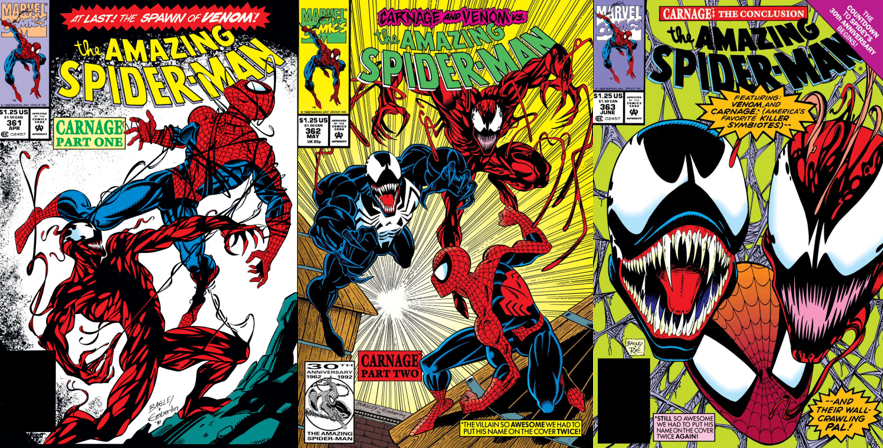
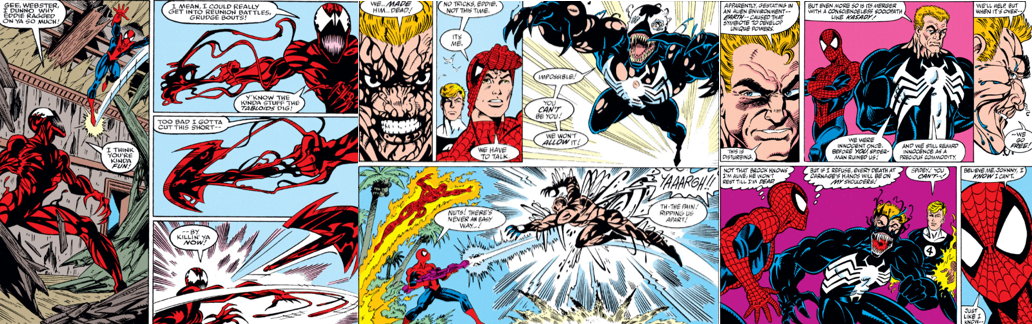
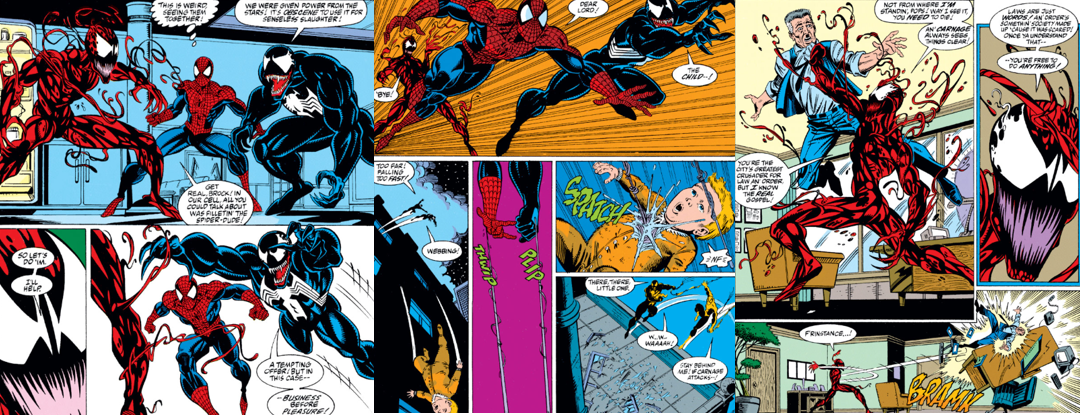
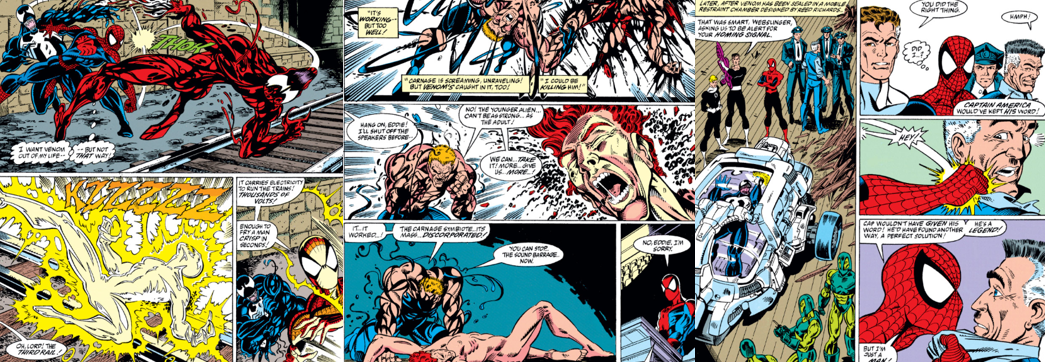
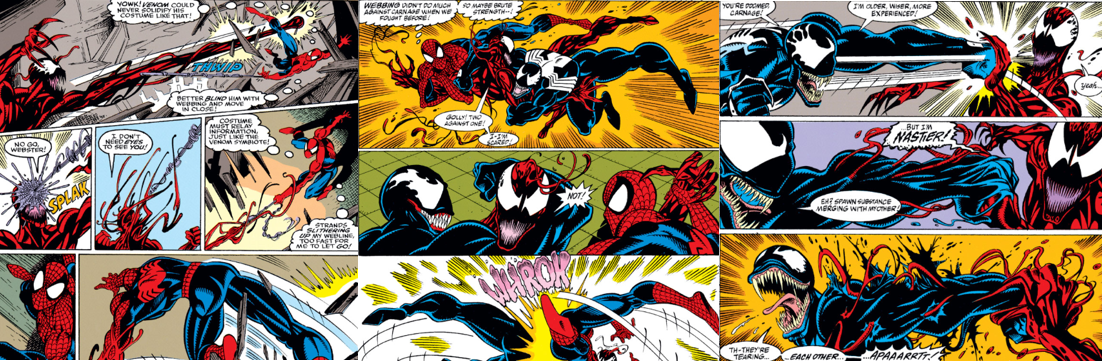




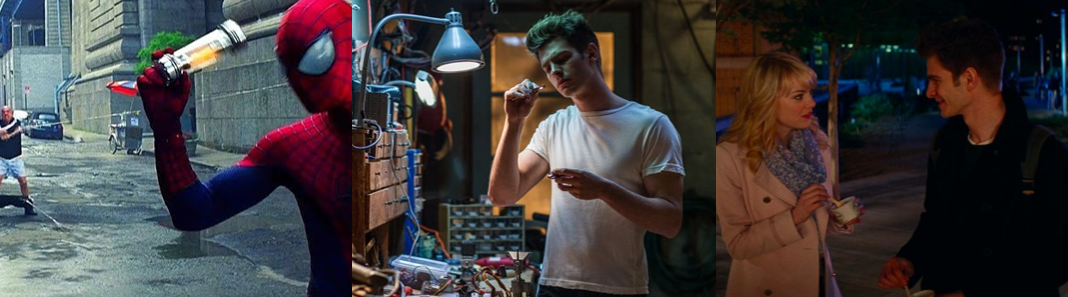
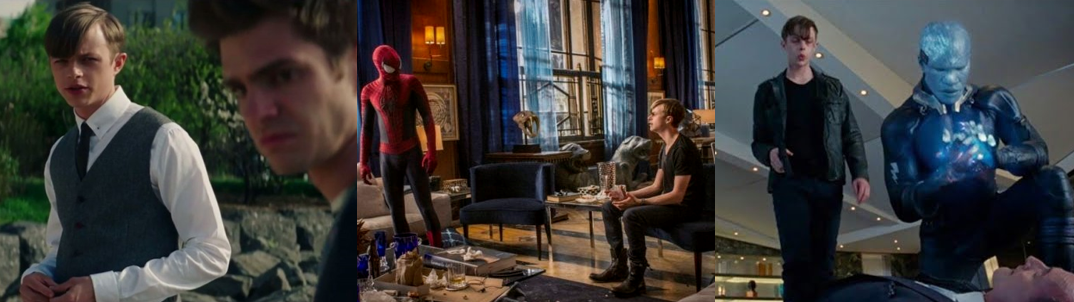
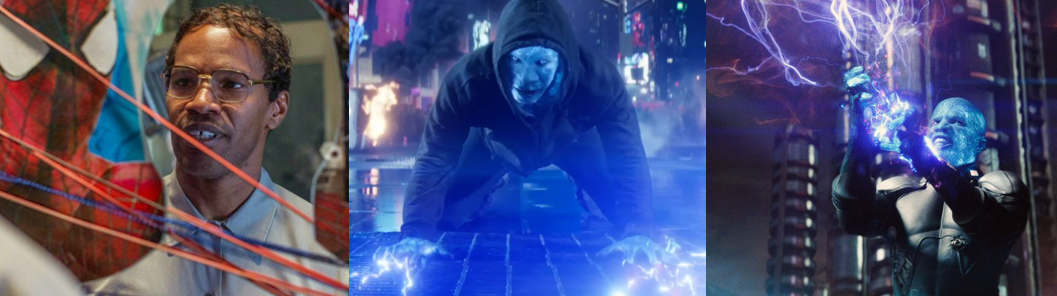
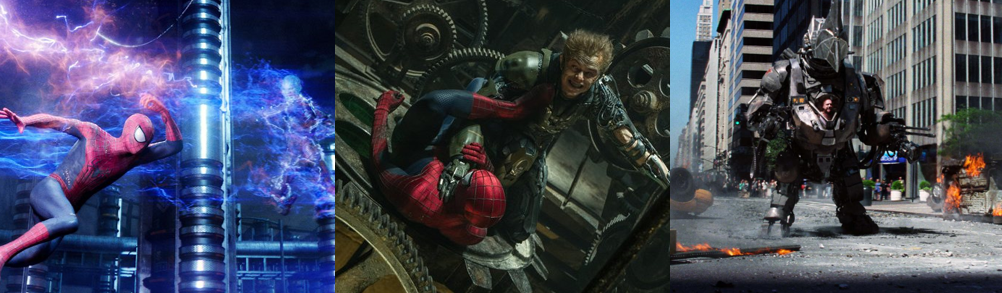
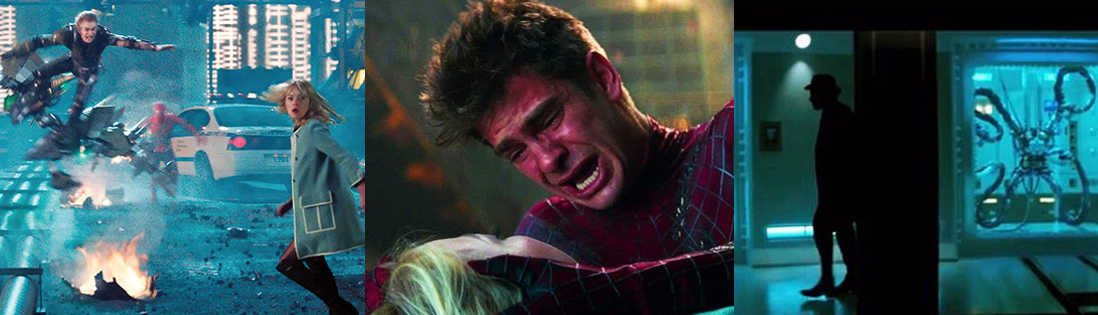

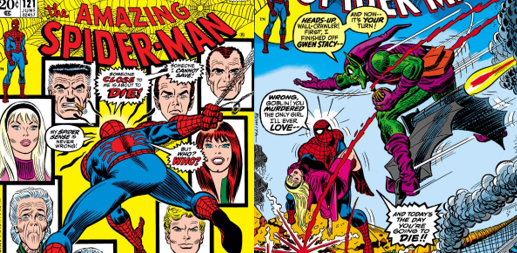
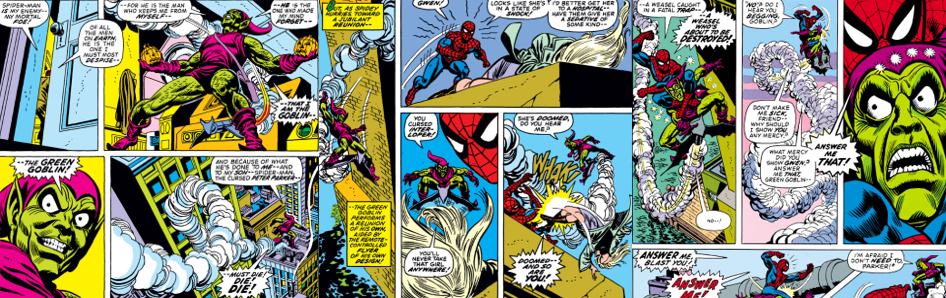
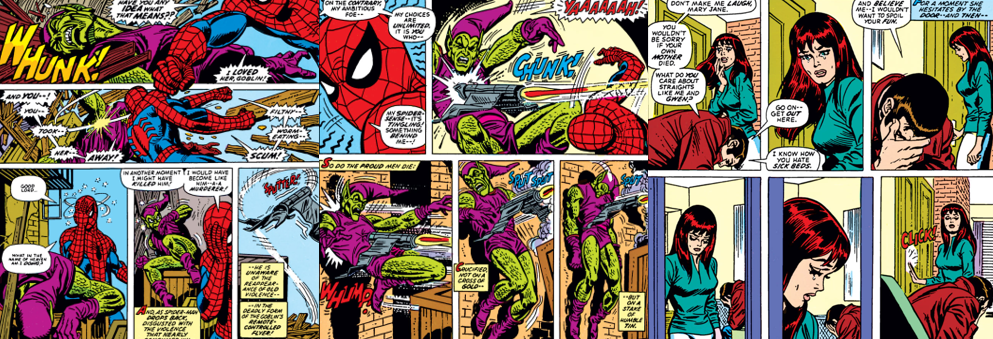
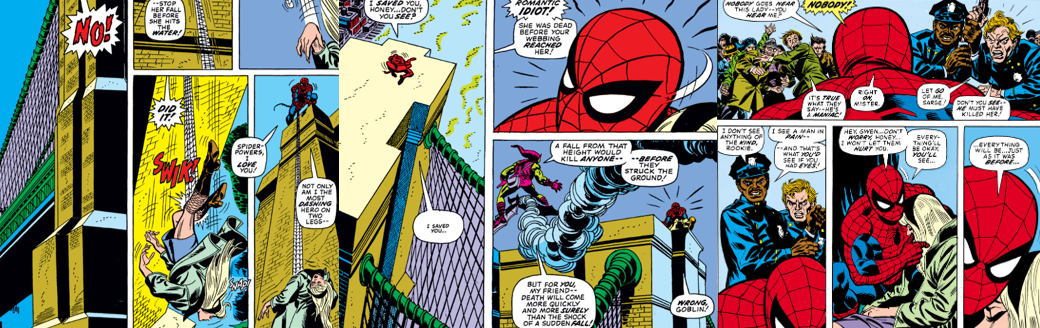
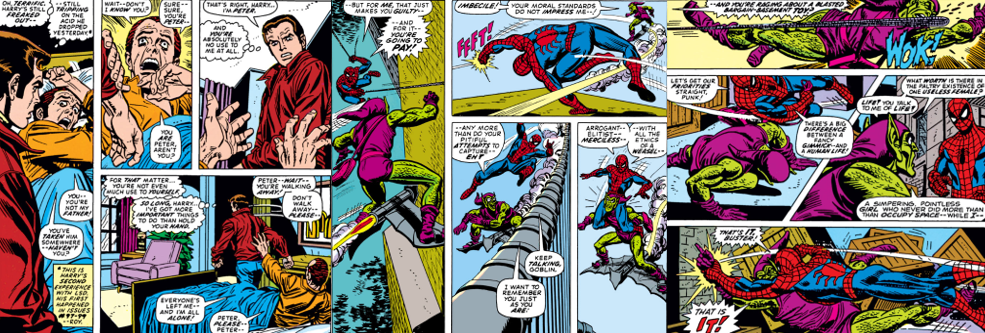

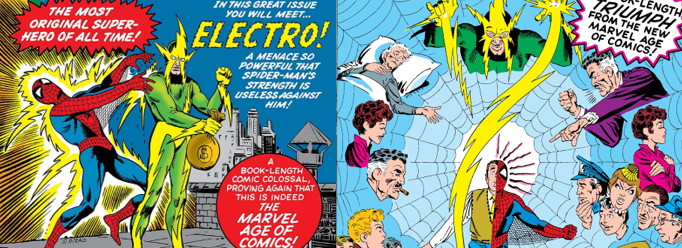
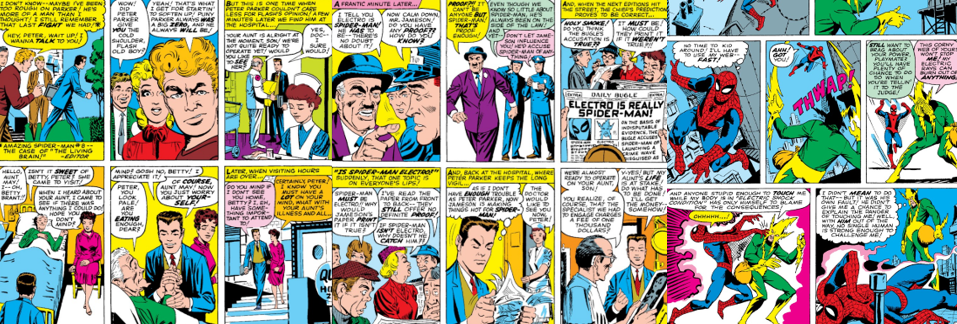
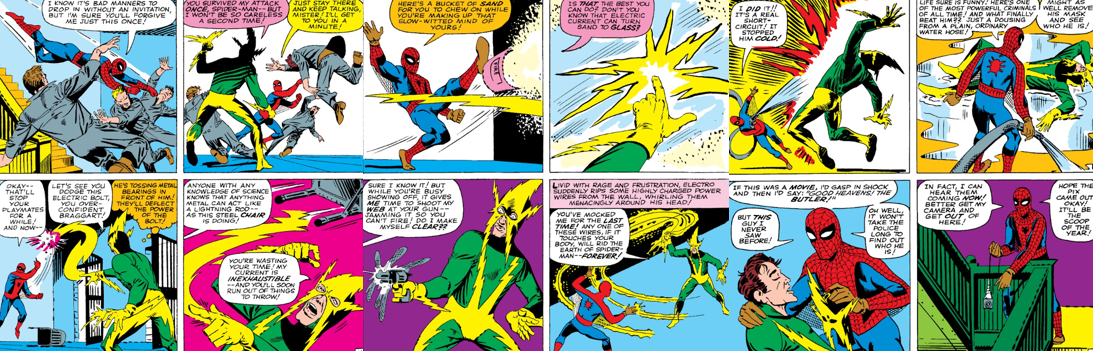
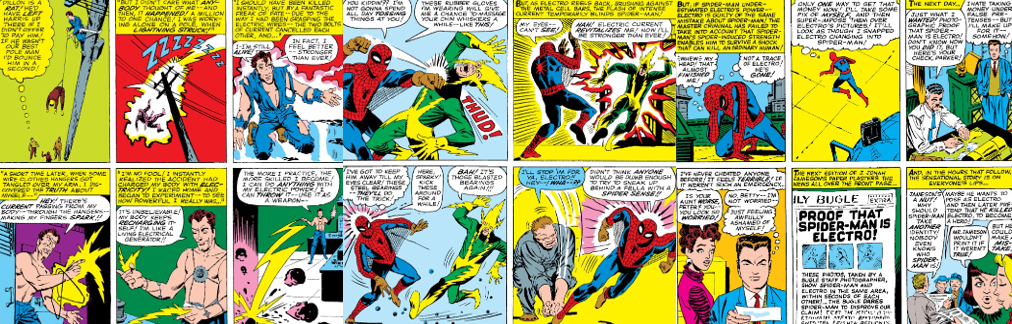


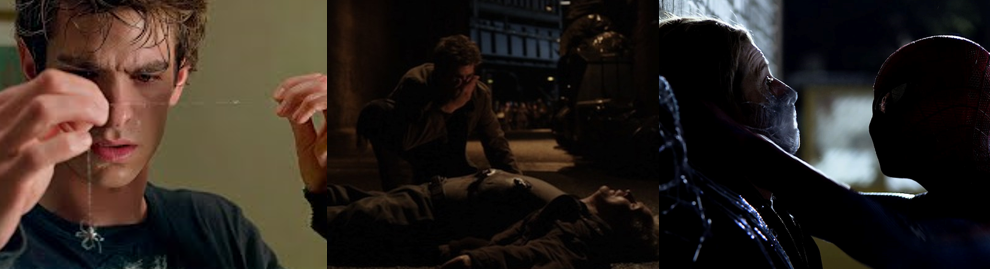
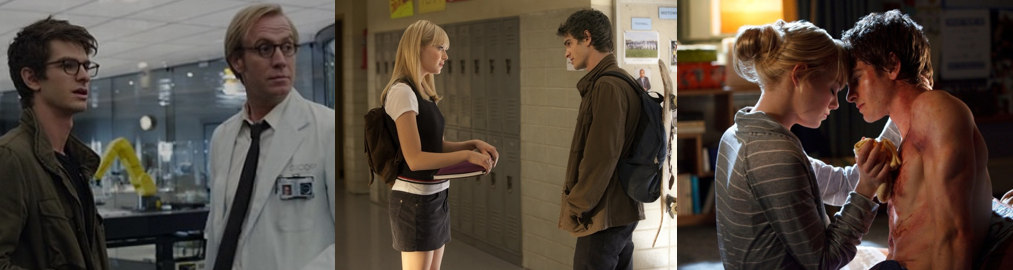
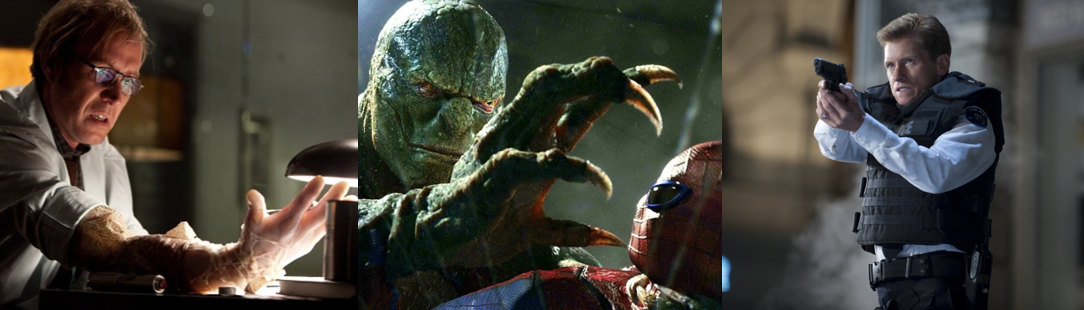
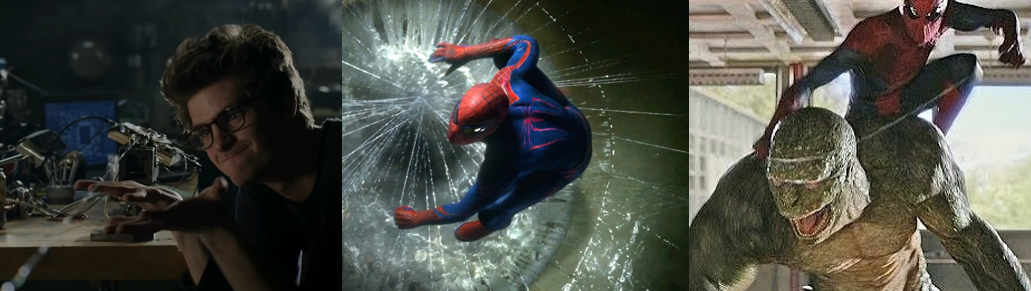
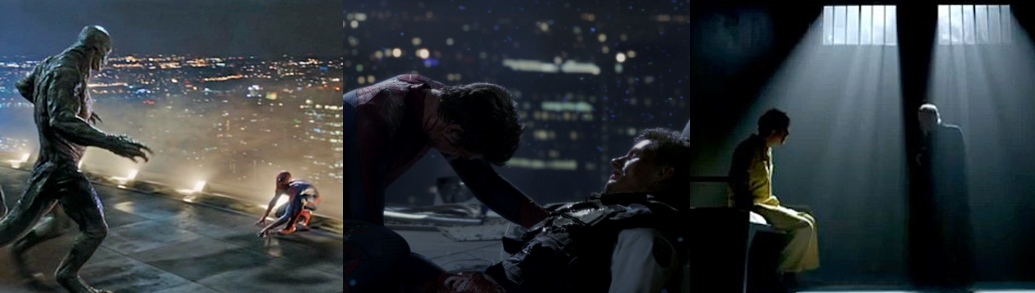

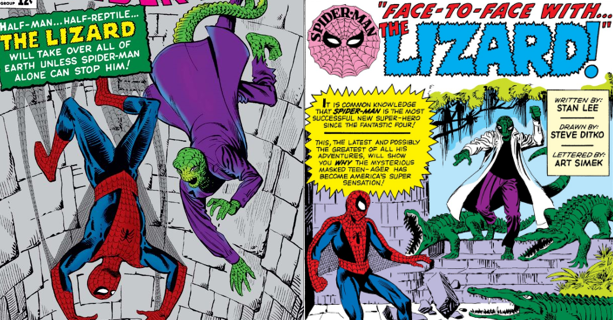
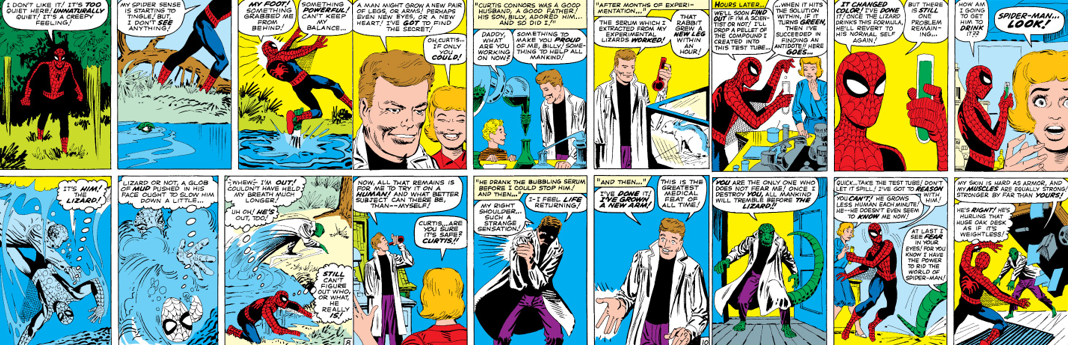
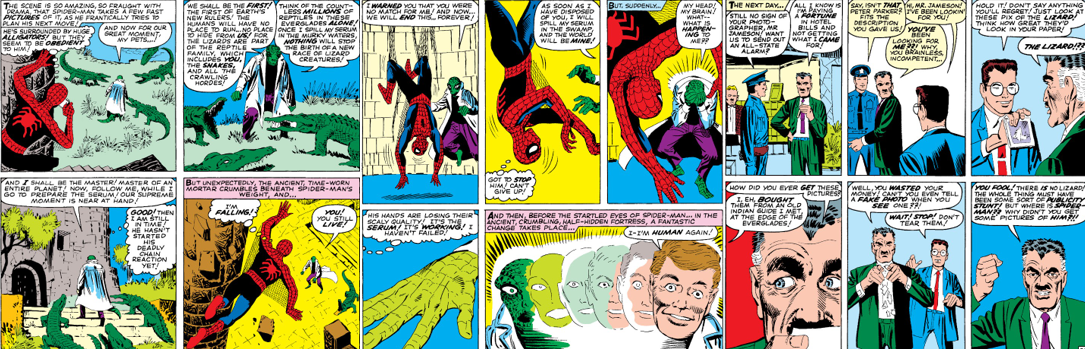
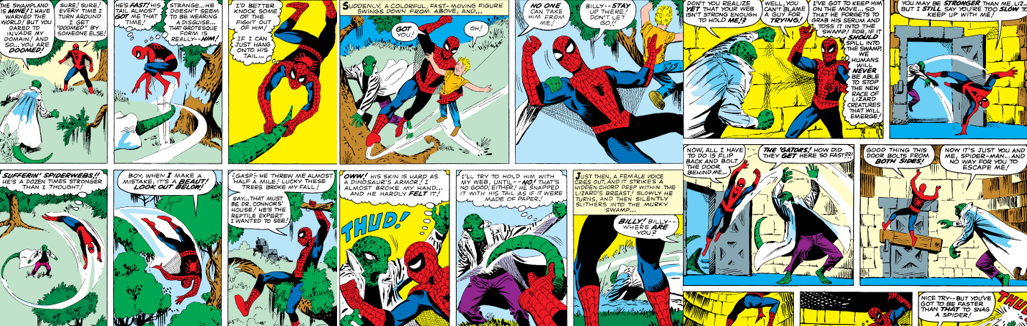


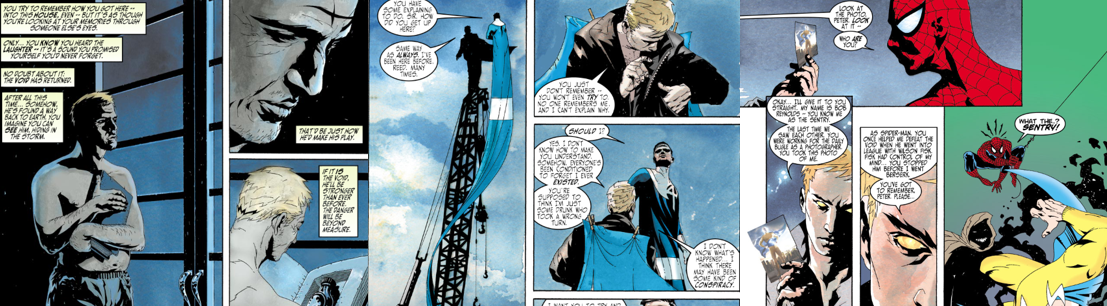





 Dr. K's Waiting Room
You must be logged in to post a comment.