January sees the celebration of two notable dates in science-fiction history, with January 2 christened “National Science Fiction Day” to coincide with the birth date of the world renowned sci-fi writer Isaac Asimov, and HAL 9000, the sophisticated artificial intelligence of Arthur C. Clarke’s seminal 2001: A Space Odyssey (1968), being created on 12 January. This year, however, I’ve been spending every Thursday of January celebrating sci-fi’s toughest lawman, Judge Joseph Dredd!
Released: 16 June 1995 Developer: Probe Software Also Available For: Game Boy, Game Gear, PC/MS-DOS, and Super Nintendo Entertainment System (SNES)
A Brief Background: Still published to this day, British science-fiction comic book 2000 AD first appeared in February 1977 and, in March of that same year, introduced readers to the uncompromising lawman of the future, Judge Joseph Dredd. Created of John Wagner, Carlos Ezquerra, and Pat Mills, Dredd became one of the most popular and iconic British comic book characters of all time. Accordingly, the character has expanded beyond the comic book panels and into the realms of videogames on more than on occasion; his first videogame outing was a largely repetitive platform shooter, a concept expanded upon by its bigger, more graphically impressive Amiga follow-up. Dredd’s relationship with videogames is largely considered to be hit and miss but, when the time finally came for the character to make the jump to the silver screen, an adaptation was put into development. While the movie would become a notoriousbox office bomb, developers Probe Software sought to be as faithful to the production as possible by digitising the film sets to be featured as locations in the game, however their efforts resulted in mixed-to-negative reviews across the board. While some reviews praised the gameplay and fidelity to the source material, others criticised the difficulty and lack of variety, and the game failed to make a lasting impression regardless of which system it was played.
First Impressions: Judge Dredd is a 2D, sidescrolling run-and-gun that, for the most part, emulates the plot and visual aesthetic of the bombastic movie. Players assume the role of Judge Dredd (whose sprite more resembles his comic book counterpart than Sylvester Stallone’s look from the film) and play through twelve stages taking out street punks, mutants, and even Dredd’s fellow Judges just like in the movie. Players are given three lives to start with and can collect more by picking up extra life icons, and each stage has a primary a secondary objective, both of which are relayed to the player using sprite art modelled from scenes of the film and traditional text. Primary objectives range from destroying ammo supplies, locating Dredd’s mentor, Judge Fargo, reaching the council in the Hall of Justice, and defeating specific enemies. Secondary objectives appear to be option, but you must complete the primary objective in order to exit the current stage, something which can prove problematic given how maze-like and strangely designed many of the game’s stages are.
Though often cluttered, the game certainly makes an effort to marry the visuals of the film and comic book.
Judge Dredd is armed with his trust Lawgiver; tapping or holding the A button will see Dredd fire a variety of shots, from unlimited regular bullets to heat-seekers, grenades, and missiles, and you can even hold down the button to fire uninterrupted. Dredd can also sprint by tapping the directional pad (D-pad), and shoot while running, jumping, and crouching, and in all directions (including diagonally!) Although some objectives tell you not to shoot certain enemies, you’re free to be as trigger happy as you like; however, you’ll score more points if you use Dredd’s melee skills (A up close or X if you have a six-button controller) to disarm and arrest perps when “GUILTY” appears over their head. Dredd can jump with B and even fly about for a few seconds if you find an Anti-Grav Belt; you’ll be doing a fair amount of platforming but Dredd can’t jump very high so you’ll often need to make use of ladders, monkey along overhead lines, or even a running jump to reach new areas. Dredd can also crawl about, push some objects, and access terminals to see his current mission progression and health and ammo stats or lock doors in certain stages. Dredd controls quite well but is a bit clunky; pressing up will scroll the screen, which can be disorientating, and there’s a few too many frames of animation at times, meaning there is often a delay between button presses. Dredd is quite sturdy but can replenish his health with small and large hearts, pick up additional ammo, or even grab a temporary forcefield and invincibility to help even the odds.
There’s some variety on display in the different Dredd’s objectives and gameplay mechanics.
After completing each stage, you’re given a score tally and a password to help you skip ahead; while there don’t appear to be any useful passwords for this version of the game, such as infinite health or ammo, it is a handy feature to pick up where you left off or try out different missions. In my case, this is almost mandatory; it took quit a bit of trial and error to complete even the first stage as you can get stuck in an area with no way back. While Dredd will nip up on the spot after being killed, it’s quite easy to get stuck as ladders and hazards aren’t always immediately visible, and while you can duck and shoot most enemies, you’ll be majorly outclassed by the wild mutants in the Cursed Earth and the Atomic, Bacterial, and Chemical Warriors (A.B.C. Warriors) you’re tasked with destroying later on. The game certainly looks good; sprites are a bit small but Dredd has some fun idle animations, such as twirling his gun and cleaning his badge (there’s even a little squeak-squeak sound effect), and there’s some splashes of blood when you off enemies. The environments are visually very faithful to the movie, including trucks, futuristic skyscrapers, and the Statue of Liberty as in the film, but can be cluttered and a little too large for their own good. Gameplay is somewhat broken up by one stage that has you flying through the skies on your Lawmaster while fending off pursuing Judges (Herman Fergusson/Fergee fires at the rear while Dredd fires ahead) and by the fact that some enemies will be possessed by the four Dark Judges; you’ll know when they are as they’ll have an aura about them and a spirit will fly out that you can catch for bonus points if you have some Boing ammo.
My Progression: Judge Dredd is a surprisingly tough game; at first, it reminded me of classic run-and-guns like Turrican (Factor 5, et al, 1990) or Duke Nukem (Apogee Software, 1991), especially with the placement of the heads-up display and dystopian, sci-fi setting. Seconds into the first stage, I hit a literal wall and had to think for a minute as the ladder I needed was so difficult to see and things only got more confusing from there; vents randomly damage you, trash falls from above, and you can’t even step in a small puddle of water in the Cursed Earth without taking damage. Just destroying the ammo crates in the first stage is a chore as they can only be destroyed by your explosive weapons and you need to explore the stage in a specific way so you don’t miss any and get stuck. Rather than running past terminals in Aspen, you need to access them to initiate the lockdown procedure, and enemies can take a few shots before they go down even before the clunky A.B.C. Warriors enter the picture. It appears that most stages end with a boss battle, too; the first is a guy who looked a lot like DC Comic’s James Harper/Guardian and who constantly blocks your shots with his shield while firing at you with a machine gun, tossing Molotov Cocktails, launching an almost unavoidable energy wave, or bashing your head in when you get close. You can use nearby barrels for cover but he absorbs shots like a sponge and the timing required to jump and duck under his shots meant that I couldn’t actually beat him!
Sadly, the game’s difficulty meant I couldn’t get very far and I wasn’t motivated to skip ahead much further.
Using a password, I jumped to stage two and fared much better n the Aspen Penal Colony. There’s some neat effects on the waters of the sewer area and I was actually able to beat the stage the boss, a brute with a big club who rides an elevator that he tries to crush you with, tosses grenades and Molotov cocktails, and smacks you silly up close. It was a slog, but I did beat him, but I couldn’t get past the Cursed Earth for the life of me. Here, the mutated inhabitants live in the ruins of society and Judge Hunters patrol the wooden walkways, but the leaps of faith and confusing level layout got the better of me. I skipped ahead to the Hall of Justice and that wasn’t a problem, nor was the chase on the Lawmaster, but the A.B.C. Warriors stomping about on the construction site around the Statue of Liberty were enough to have me calling it quits. They’re immune to your regular shot, so you’ll need a healthy supply of missiles or other explosives, but their missiles and the stage’s bottomless pits were the last straw for me. it was a bit of a shame as the game’s layout and objectives actually got easier the deeper I got and, from what I can see, there’s a bit of a post-game that looks right up my alley. After dealing with Dredd’s psycho clone brother, Rico, players head to Deadworld, an alternative dimension where all life was deemed a crime, to do battle with Dredd’s reaper-like spectral counterpart, Judge Death! I could’ve used passwords to jump ahead to this point but I decided that enough was enough, but I am impressed that a videogame adaptation from this time actually expanded on the film; the game does a decent job of following the movie’s narrative but infuses it with more elements from the source material, including my favourite Dredd antagonists, the Dark Judges, which is pretty rare for a game of this era in my experience.
I wasn’t really sure what to expect from Judge Dredd; videogame adaptations of movies tended to be more hit than miss back in the 16-bit games, at least in my experience, but sadly there were some issues here that kept me from really enjoying the experience. Visually, the game is both impressive, bland, and confusing all at the same time; the horizon and backgrounds aren’t always very detailed but the foregrounds are almost too detailed, making things a bit cluttered and messy at times. Dredd looks great and plays okay, but I find it amusing that the developers included the ability to arrest people when Dredd is far more likely to just sentence criminals to death for even more infractions. Since the game doesn’t really penalise you if you kill everyone, I recommend taking a traditional run-and-gun approach, especially as you’ll be distracted by vague objectives and the maze-like areas. Overall, it was a mediocre experience, one that I struggled to get through thanks to the difficulty spike and clunky presentation. It’s a shame as I feel the concept could have legs if it was more like Contra (Konami, 1986) or Metal Slug (Nazca Corporation, 1996) and leaned more into arcade-style action rather than tedious exploration. Still, maybe I’m being too harsh? Maybe you actually enjoyed the gameplay on offer here? Perhaps you prefer one of the movie’s other ports or a different Judge Dredd game entirely? Either way, I’d love to hear about it so leave a comment below or on my social media and be sure to check out my other Judge Dredd content.
January sees the celebration of two notable dates in science-fiction history, with January 2 christened “National Science Fiction Day” to coincide with the birth date of the world renowned sci-fi writer Isaac Asimov, and HAL 9000, the sophisticated artificial intelligence of Arthur C. Clarke’s seminal 2001: A Space Odyssey (1968), being created on 12 January.
Released: February 2023 Originally Released: November 1991 Developer: Nintendo Original Developer: Nintendo R&D1 Intelligent Systems Also Available For: Game Boy, Nintendo 3DS, Nintendo Wii, Nintendo Wii U
The Background: Brain-blasting bounty hunter Samus Aran shocked the gaming world when she was revealed to be a woman in the challengingNintendo classic, Metroid(Nintendo R&D1 Intelligent Systems, 1986). Although highly praised and crucial to the popularisation of the “Metroidvania” sub-genre, Metroid’s sequel came not on the Nintendo Entertainment System (NES) like Nintendo’s other franchise characters, but on their revolutionary (and incredibly popular) handheld system, the Game Boy. Many of Metroid’s developers returned for the sequel, which separated itself from other Game Boy titles with graphics comparable to its 8-bit counterparts and expanding upon Samus’s abilities and narrative in ways that would influence future games. Not only was Metroid II my first experience of the franchise, but it also included a unique palette for when played on the Game Boy Color, though it largely divided critics upon release. Reviews praised the quality of life improvements and expansion upon the gameplay of its predecessor, while also criticising the music and limitations of the Game Boy hardware. Yet, Metroid II endured; a fangame remake was scuppered by Nintendo prior to them remaking the game for the Nintendo 3DS in 2017, with Metroid: Samus Returns (MercurySteam, Nintendo EPD) being largely well received. The original version of the game also found a home on Nintendo’s online services, including this Nintendo Switch Online version, to help keep this cult classic alive for new gamers.
The Plot: Following her encounter with the Metroids, bounty hunter Samus Aran is sent to the Metroid home world, SR388, to destroy the entire species.
Gameplay: Metroid II: Return of Samus is a run-and-gun adventure game with an emphasis on exploring the various alien landscapes of SR388, upgrading Samus’s suit and abilities, and hunting down forty Metroid variants to curb the malicious species. Players once again assume the role of the intergalactic bounty hunter Samus Aran, who sports the same abilities from the first game and more, most notably the ability to shoot upwards and while crouching, simple additions that make blasting aliens and destructible blocks so much easier. You’re given three save files to play with, which can be switched to or deleted from the main menu, though there are no options to reconfigure any game settings, like the controls or difficulty. However, since it was originally a Game Boy title, you’ll only make use of two buttons during gameplay: A lets you jump (and you can hold it to jump a little higher) and B lets you shoot (and you can hold it to continually fire at foes). Samus will compress into a spherical Morph Ball if you press down on the directional pad twice, and you can switch from her infinite gun arm to her finite supply of missiles by pressing the – button. The + button pauses the game, but you again won’t find a map screen, here, meaning exploration is still a chore, despite Metroid II being a slightly more forgiving and straightforward title.
Run, shoot, and roll your way through a confusing alien world hunting Metroids.
Unlike in the last game, players can make use of save stations to save their progress and sporadic refill pods for their health and ammunition, reducing how often you’ll blast away at enemies to farm for resources. As before, enemies will respawn whenever you enter an area, though this time around to you must alter the environment, clearing lava and other hazards so you can progress further. Puzzle solving isn’t really a thing in Metroid II; the closest you get are blasting certain doors with your missiles to open them and navigating deep chasms, some of which are somewhat maze-like and have hidden holes that drop you to lower levels, though you’ll sometimes have to use Samus’s Bomb power-up to blast away boulders. This game debuts the Spider Ball, which allows Samus to slowly crawl up walls and ceilings, and you’ll be using this a lot to scale cliffs and ruins, especially as the game progresses. However, your primary objective is to hunt down the forty Metroid variants hidden around SR388; you can keep track of how many remain using the game’s limited heads-up display, but you won’t be given any hints or direction about where to find them beyond hitting dead ends until you’ve acquired new power-ups. Occasionally, Samus will dive into water or must traverse sticky goop; spikes and lava pits are commonplace, as are destructible elements like weeds and sandstone, and you’ll also have to navigate a pitch-black area later in the game that’s incredibly frustrating as there’s no way to light your path. Mostly, though, you’ll be exploring long corridors, deep shafts, and crawling up walls and through narrow tunnels, blasting enemies and hoping the path leads to an upgrade or another Metroid.
Graphics and Sound: Releasing a couple of years after the debut of the Game Boy, Metroid II is quite a bland looking game, especially as far as the backgrounds are concerned. Backgrounds are largely completely blank, either white, black, or that weird green colour the Game Boy favoured, with very little in the way of foreground details, for the most part. Some areas are the exception to this rule, of course, with an abundance of overgrown stone ruins, rocky caves, and biomechanical areas peppered throughout the game so you know when you’ve transitioned from what could loosely be called the overworld to an area of some significance. Many areas contain lethal lava, dank water, or gloopy muck that restricts your movements but are largely indistinguishable from each other; sometimes the rocks look more like peanuts, sometimes they’re metallic, and sometimes they’re almost like bubbles, but the game becomes disappointingly and confusingly uniform very quickly. Caverns, ruins, and mechanical trappings signpost areas containing Metroids and power-ups, but it’s easy to think you’ve accidentally backtracked as SR388 isn’t exactly divided into elemental sections. Having the overworld be rocky and the main sections be distinctly water-, metal-, botanical-, or lava-themed would’ve helped to distinguish them but, as is, there’s only a handful of areas that impress when it comes to their aesthetics. While this is commonplace on the Game Boy, it’s not as if there weren’t games that were able to do a little more with the hardware, so it’s pretty disappointing here, especially as the game lacks a map.
As impressive as many of the sprites are, the backgrounds, locations, and music suffer.
On the plus side, Samus looks great, far better than she did on the NES and showcasing a surprising level of detail. While she doesn’t have any idle poses, her suit changes to reflect her upgrades and she has more poses to assume thanks to her expanded moveset. In addition to her iconic ship sat in the opening section, you’ll always know when a Metroid is nearby by the presence of a hatched Metroid egg, there are a couple of cutscenes showing the Metroids evolving into new, more powerful forms, the Chozo Statues are nice and big (with one even being destroyed), and there are usually some fun hidden paths to take towards goodies. Sadly, the music isn’t all that impressive, aiming for claustrophobic and ominous but being limited by the Game Boy hardware. However, the biggest disappointment for me was the complete lack of any story; there’s no story text, the title screen is incredibly bland, there’s no introductory cutscene, and the game just…ends, albeit with an impressive large sprite of Samus running alongside the credits that changes depending on how fast you beat the game.
Enemies and Bosses: In addition to the indigenous Metroid population, SR388 is home to a whole host of alien lifeforms, from bug-like creatures to robotic forces and defences that I have assume were left behind by the Space Pirates. All of these will respawn after you exit an area and, while most can be defeated in one or two shots, others will be almost invulnerable until you acquire new power-ups or continually spawn and chase after you to bash you into spikes or lava. We’ve got floating slug-like enemies, laser turrets, hopping toad-like creatures, tiny bugs that drop from ceilings, weird flying proboscis-type things that drop you towards hazards, bat-like drones, and slug-like fish that slither around platforms. Speaking of which, the bone-armoured Motos resist your blaster and can only be taken out from behind or with the Screw Attack (though they often drop larger health orbs); they’re often found alongside Ramulken, who are similarly armoured but jump about the place, though most enemies can simply be blasted or outright avoided, especially if you’re close to a health point. The only boss-type enemy you’ll encounter that isn’t a Metroid variant is the armadillo-like Arachnus, which disguises itself as a Chozo Sphere and not only spits projectiles at you but completely resists your attacks when rolled up. However, it’s vulnerable to your bombs, so you can lay a bunch of those to take it out and pry the Spring Ball from its remains.
You’ll need plenty of missiles (and patience) to snuff out the various monstrous Metroids.
As in many Metroid games, the titular, jellyfish-like aliens will appear near the end of the game, latching onto you and draining your health and only being vulnerable when frozen by the Ice Beam and peppered with missiles. The forty other Metroids you battle in several mini boss encounters are evolved Metroids that take on an insectile, ant- or wasp-like form that allows them to fly. The most common of these are the “Alpha” variant, which are largely harmless and simply float about the place, meaning the “Gamma” variant is quite the sharp difficulty curve with its more monstrous appearance and lightning bolt appendages. They’re a joy compared to the “Zeta” Metroids, though, which frustratingly badger you from behind, spit fireballs, and can only be damaged when blasted in the face with missiles. Similarly, while the “Omega” Metroids are far slower, they spit electrical sparks that produce splash damage and float about the place, making them a difficult target despite their size. Each of these may also be fought in enclosed arenas, above spikes or lava, within sandstone, or in areas with small platforms or blocks to make avoiding damage even more troublesome. Once you’ve destroyed thirty-nine of them, nine more regular Metroids need to be dispatched before you face off with their monstrous, dragon-like queen. While technically a simple battle, requiring only that you use the Screw Attack to escape damage and blast the queen with missiles (you can even Morph Ball to safety to refill your health and ammo using a convenient tunnel), this is a laborious and dull fight thanks to the restricted area, the aggressiveness of the queen, and the fact that you need to hit her with 100 missiles! Apparently, there’s a way to Morph Ball into her mouth and lay a bunch of bombs in her, but I couldn’t manage that so it was a lot of tedious evading, blasting (missing), and rewinding when I took too much damage.
Power-Ups and Bonuses: As ever, enemies will drop health orbs and missiles to refuel you but, this time around, you can also find larger, dedicated, and inexhaustible refuel stations to top these up in a pinch, and they’re not always hidden away either. Similarly, you can find Energy and Missile Tanks to expand your health bar and maximum ammo (though these are often hidden away or at the end of winding tunnels). As is often (if not always) the case, Samus mysteriously loses all the upgrades she got in the last game and needs to reacquire them from Chozo Statues hidden throughout SR388. You can upgrade her arm cannon to the Wave Beam (which increases accuracy), the Ice Beam (which temporarily freezes enemies), the Spazer Laser Beam (which fires a triple shot), and the Plasma Beam (the most powerful, which passes through objects and enemies), and will even get the chance to switch back to them at one point (with the Ice Beam being required for the final section). Samus’s jump can be extended with the High Jump Boots before allowing her to reach higher, further areas (through carefully timed taps of A) with the Space Jump, before becoming an offensive move with the iconic Screw Attack. Her Morph Ball can also be upgraded to drop bombs, bounce, and cling to walls, which, while slow, is basically a requirement in some areas.
Additional Features: Sadly, there’s not much to Metroid II. Like I said, there are Energy and Missile Tanks to find that you could conceivably miss but that’s about it. The only reason you’d replay the game beyond enjoying wandering around a confusing handheld landscape is to try and beat the game in under three hours so you’ll be treated to seeing Samus in a bikini; otherwise, there are no bonus or extra features to speak of here. As ever, you can make liberal use of the Nintendo Switch’s rewind and save state features to make the game a lot easier, though it’s still a challenge at times.
The Summary: I’m glad I finally played through Metroid II: Return of Samus; when I was a kid, I had the original cartridge for my Game Boy, but I remember getting stuck fairly soon into the game. Low and behold, I hit the same dead end here and quickly became reliant upon an online guide, which is not my preferred way of playing any game. Sadly, it’s basically required here as there’s no map system, which is weird as I definitely think a rudimentary map could’ve been inserted whenever you pause the game. Ultimately, this was a tough one for me; I liked how much the gameplay mechanics of the original were improved, even if only in basic ways, but I don’t think this kind of game works on the Game Boy; Metroid is all about exploration and backtracking and, while Metroid II is a bit more linear than others in the series, it still requires more than the Game Boy is capable of delivering. Yes, the sprite work looks good, but every area is too constricted and repetitive to stand out like they would on even the NES and it gets a bit boring facing the same batch of Metroids over and over again. There is a lot to like here, with some fun encounters and areas and the thrill of upgrading Samus’s suit and abilities, but I think Metroid II was trying to be a little too ambitious for the Game Boy. I’m tempted to see what the Nintendo 3DS remake is like to compare it but, sadly, it’s ridiculously expensive to get hold off so I’m left with this paradoxically technically impressive and technically limited entry in the series that felt too much like a chore to play through for mee to properly enjoy.
My Rating:
⭐⭐
Rating: 2 out of 5.
Could Be Better
Are you a fan of Metroid II: Return of Samus? Did you own it on the Game Boy and, if so, how did you cope without a guide or the rewind features? Were you impressed with Samus’s new abilities and combat options? What did you think to the more linear mission and Metroid-hunting gameplay? If you’ve played the Nintendo 3DS remake, how does it compare to the original? Which Metroid game is your favourite? Whatever your thoughts, feel free to leave a comment below or on my social media, and be sure to check out my other Metroid reviews.
January sees the celebration of two notable dates in science-fiction history, with January 2 christened “National Science Fiction Day” to coincide with the birth date of the world renowned sci-fi writer Isaac Asimov, and HAL 9000, the sophisticated artificial intelligence of Arthur C. Clarke’s seminal 2001: A Space Odyssey (1968), being created on 12 January. This year, however, I’m spending every Thursday of January celebrating sci-fi’s toughest lawman, Judge Joseph Dredd!
Released: 30 June 1995 Director: Danny Cannon Distributor: Buena Vista Pictures / Cinergi Productions Budget: $85 to 90 million Stars: Sylvester Stallone, Armand Assante, Diane Lane, Rob Schneider, Jürgen Prochnow, and Max von Sydow
The Plot: In the year 2080, the world has become a scorched wasteland and the Judges enforce martial law in the overpopulated Mega-Cities and Mega-City One’s most efficient and decorated officer, Judge Joseph Dredd (Stallone), is framed for murder by his own half-brother, the psychotic Rico (Asante), who plots to usurp the oppressive regime with an army of superhuman clones.
The Background: It was thanks to British science-fiction comic book 2000 AD and the work of John Wagner, Carlos Ezquerra, and Pat Mills that readers were introduced to Judge Joseph Dredd in March 1977, a tough-as-nails lawman known for his extreme political satire. Dredd’s subsequent popularity meant that Hollywood soon came calling, and long-time fan Danny Cannon pursued the project with a passion, even turning down the chance to helm Die Hard with a Vengeance (McTiernan, 1995) in favour of this adaptation. Although development stalled somewhat thanks to the similarly-themed action/sci-fi satire RoboCop(Verhoeven, 1987), production soon got underway once Sylvester Stallone was cast in the title role, beating out his action movie rival Arnold Schwarzenegger despite being unfamiliar with the character. The filmmakers looked to Blade Runner (Scott, 19982), to bring the sprawling Mega-City One to life and rejected designs from famed fashion mogul Gianni Versace for the film’s costumes. Initially shot to be an R-rated feature with a darker, satirical bent, Cannon clashed with Stallone over the direction of the film and was left so disappointed with the star’s insistence towards comedy that he vowed never to work with the Italian Stallion again. This was largely reflected in subsequent reviews, which criticised the film’s confused tone and disappointing production. While the visual appeal of the film has been praised, Stallone’s performance was not; the tie-in videogame was also a disappointment and a box office gross of under $115 million made the film a commercial flop. Both Stallone and Dredd co-creator John Wagner expressed disappointment with the film and it would take nearly twenty years for the character to return to cinema screens.
The Review: As I mentioned in my review of Judge Dredd’s debut story, I’ve been a big fan of the character since I was a teenager, largely because of my dad. I was always ore drawn towards Dredd’s clashes against the Dark Judges and his more momentous storylines, such as “The Cursed Earth” (Mills, et al, 1978), “The Day the Law Died” (Wagner, et al,1978 to 1979), and “The Judge Child” (ibid, 1980), which is fitting since Judge Dredd draws several influences from these stories for its core narrative. I was just the right age for Judge Dredd; while I was regularly enjoying violent sci-fi romps like RoboCop, I also enjoyed colourful, action-packed sci-fi comedies like Demolition Man (Marco Brambilla, 1993), so my expectations for the film were simply to enjoy seeing a stern lawman of the future kicking ass in a visually entertaining environment. This means I have a certain level of nostalgia for the film; it was, after all, the only live-action Judge Dredd movie available for decades and it’s not as if the character had a more violent animated series to fall back on. At the time, if you wanted Judge Dredd, it was either this, the comics, or a handful of videogames, but that doesn’t mean that my opinion of the film hasn’t changed as I’ve gotten older and come to appreciate the subtle dark comedy and violent nature of the source material. It’s a shame as well since Judge Dredd gets off to a good start (it’s always a plus when James Earl Jones provides an opening narration) and has more positives in it than a lot of people like to acknowledge, but it fumbles on some of the most basic characterisations of its title character in order to appeal to a wider, more mainstream audience.
Hard-nosed Dredd is framed for murder and forced to confront his psychotic brother.
Don’t get me wrong, I totally understand this. R-rated movies like RoboCop might kick all the ass but they’re a bit of a risk for producers and investors, especially when it comes to comic book properties and especially back in 1993, when many superheroes where being bastardised commercialised for maximum profit. Thus, Judge Dredd, the straight-laced, grim-faced, by-the-book lawman of the future who is just as likely to prosecute innocent bystanders to nail a perp, is transformed from a tough, no-nonsense future cop into a more heroic figure over the course of the movie. Dredd starts out as a pragmatic and uncompromising officer; he shows no fear, even when outnumbered and outgunned, and has not hesitation in gunning down criminals to quell a riot. Similarly, he doesn’t hesitate to slap former convicted hacker Herman “Fergee” Ferguson (Schneider) with the maximum prison sentence simply for trying to save himself from being caught in the crossfire. Dredd’s rigid enforcement of the law has earned him quite the reputation; ordinary street punks fear him, and rightfully so, and his lack of humanity and propensity to favour summary execution draw criticism from fellow Judge Barbara Hershey (Lane) and Dredd’s mentor and father figure, Chief Justice Eustace Fargo (von Sydow), who orders him to spend time at the academy training the future generation of Judges not in combat but in the enforcement of ethics in an attempt to inject some humanity and compassion into Dredd’s approach. Although Dredd is clearly unhappy with this assignment, he follows his orders because he has such respect for his mentor and he truly believes in the world of the law, following the literal book to the letter and committing his very life and soul to upholding its ideals, even at the expense of his emotions and empathy.
Whether through compassion or “humour”, both Hershey and Fergie help to humanise Dredd.
Dredd’s cold demeanour is contrasted by Hershey, the closest thing he has to a friend. Although Dredd has respect for all of his peers, he openly acknowledges that Hershey is “one of the smartest of the new breed” and turns to her to defend him when he’s accused of murder out of respect for her capabilities. Unlike Dredd, Hershey is far more empathetic; she chastises herself when her rookie Judge is murdered on her watch and openly disagrees with Dredd’s philosophy that Dredd’s must commit their lives to the law until they either die on the streets of venture out into the Cursed earth for “retirement”. Indeed, she’s perfectly happy to openly criticise him for being too harsh and lacking in humanity and is both hut and betrayed when the evidence condemns him as a traitor. Moved by the emotional depths Dredd displays after learning of his true origins, she agrees to help him track down Rico both out of a genuine loyalty and affection for him and to avenge the losses her and her fellow Judges have suffered at Rico’s hands. Much of Judge Dredd comedy is focused on Dredd’s stoic demeanour and the awkwardness of him relying on others after he’s betrayed by the very system he dedicated his life to. Have no fear, though, as Fergie is here to act as the comic relief of the film and boy, does it start to grate very quickly. Unlike his simple-minded comic book counterpart, Fergie is a former hacker who, after serving his sentence, finds himself in the wrong place at the wrong time. Naturally, he objects to Dredd’s harsh sentencing and cannot help but laugh at the irony of the grim Judge being convicted for a crime he didn’t commit, but Fergie has no choice but to rely on Dredd when they crash in the Cursed Earth and end up in the clutches of the notorious Angel Gang. From there, Fergie acts as Dredd’s bungling sidekick; a dead weight he’s forced to lug around. Indeed, Fergie’s hacking talents really have no relevance until the last act; Dredd has Hershey and tech-savvy cadet Nathan Olmeyer (Balthazar Getty) to offer more practical help, so Fergie is literally just there to offer manic “humour” that basically amounts to him being a nuisance. However, his presence does tie into the film’s attempts to humanise Dredd; Dredd’s stoic façade and aggravation towards Fergie noticeably lifts as they spend more time together and there’s a genuine sense that the two have become begrudging friends by the finale.
Fargo reluctantly opts to step down to protect Dredd and the sanctity of the justice system.
The Judges have a great deal of resources at their command, from Lawgiver pistols that fire an array of ammo to Lawmaster bikes that let them blast through the skies (when they actually work). What they don’t have, however, is manpower; with the city growing more volatile, Judges such as Dredd are forced to rely on more extreme measures to safeguard the citizens, and this draws them much criticism from the likes of news reporter Vartis Hammond (Mitchell Ryan). Hammond’s sentiments are echoed by Chief Justice Fargo, a well-respected and long-tenured senior Judge who is burdened by the responsibilities he feels towards the welfare of Mega-City One. He’s reluctant to enforce harsher methods as he wants the Judges to stand for freedom and justice rather than oppression and, while he’s a figure that commands great respect, it’s undeniable that his beliefs are opposed by Dredd and even those in his council, like Judge Jürgen Griffin (Prochnow). Fargo is equally reluctant to reactive “Project: Janus”, an abortive attempt at cloning Judges rather than recruiting them, and is conflicted by his guilt and affection for Dredd, whom he sees as a son since he was cloned from his genetic material. After seeing Rico, Dredd’s clone brother, descend into madness, Fargo fears that he’s made a mistake in placing so much faith in Dredd but ultimately agrees with Griffin’s suggestion to take the Long Walk and spare Dredd’s life rather than risk the truth about Project: Janus being released and what little faith the people have in the justice system being compromised. A compelling and commanding presence, Fargo delivers much of the film’s emotional gravitas thanks to Max von Sydow’s alluring performance; his death is an emotional moment not just for the audience but for Dredd, too, who struggles with his turmoil of emotions his mentor’s revelations and passing stir up in him.
As if the corrupt Griffin wasn’t enough, Dredd has to contend with the cannibalistic Angel Gang.
Of course, it turns out that Fargo’s retirement is orchestrated by Judge Griffin in a conscious effort to remove him from the council, ascend to the role of Chief Justice, and coerce his fellow councilmembers into reactivating Project: Janus. Griffin sees the escalation of crime and violence in the city as an epidemic, one that must be stamped out with every resource at their disposal, in order to bring about “an ordered society”, even if it means suppressing basic human rights. To this end, he conspires to release Rico from his imprisonment, frame Dredd for the murder of Vartis Hammond and his fellow councilmembers, and instil his own brand of order to the city through the deployment of a new batch of genetically enhanced clones. Of all the character sin the film, I’d say that Griffin is the most changed from his comic book counterpart; here, he’s an ambitious and antagonistic schemer who wants to reshape the Judges into his own image, but even he is aghast when Rico tampers with the clones so that they’re born from his genetic material rather than the wise and benevolent council. Griffin is contrasted by the admirably faithful Angel Gang; a mutated group of in-bred misfits who have turned to cannibalism and madness in the wastelands of the Cursed Earth, the Angel Gang are comprised of patriarch Pa Angel (Scott Wilson) and his backwoods sons Junior (Ewen Bremner), Link (Phil Smeeton), and Mean Machine (Christopher Adamson). Unfortunately, we don’t learn too much about them except that they’re God-fearing misfits who openly torture and kill anyone who stumbles into their territory; Mean Machine Angel, always the most visually interesting and tragic of the family, is an obvious standout thanks to his raging temper and cybernetic enhancements but, sadly, they’re mainly included as a brief obstacle for Dredd to overcome while stranded in the radioactive wastelands and could’ve easily been replaced by the same nameless, faceless Judges who later enter the scene anyway, but I appreciate the effort used to translate them to the screen, however brief it was.
Bolstered by his robotic bodyguard, the psychotic Rico plans to cause cause across the city.
Our primary antagonist is, of course, the psychotic and strangely alluring Rico. Like in the comic books, Rico is Dredd’s clone brother but, unlike in the source material Dredd is unaware of this until late into the second act. While Dredd embodies the law and everything it stands for, Rico embodies chaos; a former Judge and Dredd’s only true friend, Rico turned to wholesale mayhem and destruction and was sentenced to death as a result, which directly contributed to Dredd adopting his cold-hearted demeanour. However, Judge Griffin intervened and saw to it that Rico was simply incarcerated so he could use him as his agent to bring about his new order for Mega-City One. Griffin unleashes Rico, hoping he’ll stir up anarchy, but quickly loses control over the maniacal killer, who reprograms a battered old Atomic, Bacterial and Chemical Warrior (ABC Warrior) to act as his bodyguard, murders the council, and sets about birthing his own bath of clones. Rico is an undeniable highlight of the movie thanks to Armand Asante’s snake-like performance; he’s constantly walking the fine line between reason and insanity, flipping on a dime between the two and coming across as a volatile and unpredictable personality with a surprising amount of depth. Rico was hurt when Dredd brought him to justice and feels betrayed by him, but also wishes Dredd to join him in restructuring the justice society, with Dredd as Chief Justice, in a bid to build a true family. Rico is also assisted by Doctor Ilsa Hayden (Joan Chen), a woman who’s primarily there to help Rico with the clone science and to give Hershey someone to fight in the finale; otherwise, she may as well not be there and she’s just a one-dimensional piece of ass-kicking eye candy that just stands next to Rico and reacts to his monologues.
The Nitty-Gritty: It’s interesting that the tone of the film veers so far away from the more violent and dark humour of the source material, especially as the opening credits consist of a collage of various Judge Dredd and 2000 AD comic book covers as an acknowledgement of the film’s roots. To be fair, there is an attempt at evoking the violence of the comics throughout the movie; squibs and blood effects are prominent when characters are shot, especially during the opening Block War and subsequent shootouts, and Warden Miller (Maurice Roëves) suffers a particularly brutal shot to the throat during Rico’s escape. A lot of the more gruesome violence is rendered offscreen, but this is actually beneficial; when Rico orders the ABC Warrior to rip off Chief Justice Fargo’s arms and legs, the noise is enough to know how horrific that fate is, and there’s even a brief shot of the Angel Gang’s latest meal being chargrilled on a spit roast. It’s pretty obvious that the film was cut to avoid being slammed with a higher rating, but my main issue with the tone is the over-reliance on Fergie’s comedic mishaps to counterbalance the few, fleeting violent moments, though I do enjoy the dynamic between him and Dredd, especially when Dredd begrudgingly considers Fergie’s usefulness as a good luck charm and some of the Judge’s stoic one-liners. And Stallone has some great quips here, from his booming declaration of “I am…the law!”, his surly growl of “Courts adjourned”, and his explosive outburst in the trial scene! I also have to compliment Alan Silvestri’s rousing score; it strikes a fantastic balance between heroic, military-esque, and stirring and really bolsters the onscreen action as only Silvestri can.
While some effects haven’t aged well, overall the film holds up and impresses with its visuals.
One area where Judge Dredd really excels is in its visual aesthetic and presentation; obviously drawing much of its inspiration from Blade Runner, the film’s rendition of Mega-City One is as a sprawling, technologically advanced, overcrowded super-city that merges recognisable landmarks like the Statue of Liberty with impossibly high, futuristic skyscrapers. Neon signs, holographic projectors, and impressive technology such as flying cars, artificial intelligence, and mechanical conveniences are commonplace and many of them, like the Judge’s Lawmaster motorcycle, are comically unreliable. Indeed, there’s a definite sense of the city being cobbled together and everything has a very “lived-in” look; while the Judges have access to sleek toys and vehicles in contrast to the gritter back alleys where riots are frequent, there’s a definite sense that everyone’s just trying to make the best of what they have on offer, which ties in perfectly to the rising tensions in the streets over strained resources and overcrowding. The special effects hold up really well thanks to being a combination of miniatures, matte paintings, and practical effects; even the Cursed Earth and the exterior of Mega-City One have a grand sense of scale and CGI use is sporadic and not too glaring, though the Lawmaster chase through the city skyline does look a bit suspect. I can forgive this, however, as the flying vehicles and visual presentation is, overall, very impressive and very reminiscent of the source material. This is true of the Judge’s uniform; if anything, the film adheres too close to the source material here, translating the uniform into a form-fitting body suit bolstered by gleaming armour when it should probably be realised as something a bit more practical. Still, the Judges look great, especially Dredd; their helmets, badges, and armour are all extremely faithful to the source material and the same is true of Mean Machine Angel. My favourite of the Angel Gang, this psychotic cyborg is brought to gruesome life through the use of heavy prosthetics and my only complaint is that he doesn’t get much screen time. Similarly impressive is Rico’s recommissioned ABC Warrior; styled after Hammerstein and brought to live as a fully functioning practical effect, the ABC Warrior has a real weight and presence in the film and all of these real-life special effects make up for the few wonky special effects and help Judge Dredd stand the test of time even to this day, at least in terms of its visual appeal.
After a strong start, the movie commits the cardinal sin of removing Dredd’s helmet and making him a hero.
Of course, Judge Dredd betrays the very essence of the character within the first twenty minutes of its runtime when Dredd “[stands] at ease” and removes his helmet! I absolutely understand why this decision was made; if you’ve hired Sylvester Stallone, you want to see his face and it helps the character, and the actor, to express a greater range of motions but it undeniably goes against everything the character is known for. In the comics, Dredd essentially loses his humanity and individuality after Rico turns against the law, becoming the embodiment of the justice system, flaws and all, rather than a simple man. While he’s still that here and Dredd gives a particularly rousing speech to the young cadets regarding the level of commitment he expects from every Judge, the film is much more focused on humanising Dredd, turning him from a grim, almost robotic character and into a more compassionate, heroic figure… not unlike the narrative arc seen in RoboCop. Unfortunately this really doesn’t fit with Dredd’s characterisation and appeal; the whole point is that he’s a tough, but fair, enforcer of the law in an increasingly lawless society. Any political or social commentary is dumbed down in Judge Dredd, which approaches such aspects with a disappointingly toothless attack, but Dredd removing his helmet is basically a slap in the face to the audience, a way of saying “We’re here to make money”. The biggest irony of this is that the film has the perfect excuse to have its cake and eat it too; all they had to do was cast Stallone in a dual role, playing both Dredd and Rico, then he could’ve kept the helmet on and still been allowed to act with his face unobscured. Asante could’ve been cast as Judge Griffin since Prochnow isn’t exactly the most compelling presence in the movie (his performance is strangely exaggerated at times) and the script could’ve been rewritten to accommodate these alterations. I don’t know if that would’ve necessarily made the movie better but it would’ve at least stayed true to the spirit of the character and perhaps spared us the visual of the citizens cheering Dredd on in the finale like he’s a conquering hero, something his comic book counterpart would probably have deemed a public nuisance.
Dredd destroys his clones, dispatches Rico, and returns to duty as a street Judge.
Still, it’s hard to deny the gravitas that Asante brings to Rico and how captivating his performance is; Stallone definitely can act and has always stood out from his action hero peers as being more than a slab of meat, but he’s a little in over his head here and largely bolstered by his supporting cast as he focuses entirely on tweaking Dredd’s persona from an uncompromising man of the law to a more empathetic individual. Dredd undergoes a great deal of emotional turmoil in the film, from being betrayed and convicted by the system to discovering that he’s a clone of Fargo and that Rico is his genetic brother. The trial is particularly hard on Dredd, who knows he’s innocent but is convicted because of irrefutable genetic evidence, forcing him to see the flaws in the system, but he’s absolutely devastated when Fargo dies before his eyes after revealing the truth to him. After finally opening up to Hershey, Dredd gears up to confront his brother in the remains of the Statue of Liberty, where Project: Janus is situated. In this elaborate laboratory, Rico has spawned a new crop of clones using his own genetic material and, after Dredd refuses to join him in his campaign, Rico orders that the clones are hatched before they’re fully gestated, briefly forced Dredd to contend with the gruesome copies that are little more than monstrous drones. Although injured (by a shot that really should’ve been fatal…), Fergie is able to disable to ABC Warrior and Hershey fends off Dr. Hayden as the laboratory explodes around them, leaving Dredd and Rico to face off in a brutal fist fight in Lady Liberty’s head after just… ignoring the clones, which are basically just there for a jump scare. Despite clearly being Rico’s physical superior, Dredd ends up dangling precariously over a fatal drop after they exchange blows; luckily for Dredd, Rico can’t pass up the chance for one final monologue in which he chastises his brother’s lack of loyalty and vision, given Dredd the opportunity he needs to distract Rico with a flare, deliver one last one-liner, and sent him plummeting to his death. In the wake of Rico’s death, the truth about Griffin’s actions is broadcast, exonerating Dredd and leaving him in prime position to ascend to the role of Chief Justice. Surprisingly, the movie adheres to the spirit of the comics by having Dredd decline and recommit himself to his daily duties, and then deviates from it wildly by having him exhibit only confusion and intrigue rather than insult when Hershey plants a kiss on his lips.
The Summary: So, yeah… I’m a little torn. If anyone knows the complexities of adaptation, it’s me, and I totally get that some things need to change to bring a concept to life. generally, I go into an adaptation looking to see how it stands by itself, what it does differently, and how it works in its new medium and genre and judge it according to those standards. By that measure, Judge Dredd is a pretty by-the-numbers sci-fi action/comedy; it’s colourful and visually stunning, with some decent action set pieces and humour (when Rob Schneider isn’t trying too hard) that has a certain appeal, especially for younger viewers. If you’ve seen Demolition Man, which came out only a couple of years before this, and Blade Runner, this is very much a mash up of those two, with a sprinkling of RoboCop in there; it’s not exactly ground-breaking, but the practical effects and visual presentation go a long way to making it an entertaining flick. Stallone does a decent job here; honestly, he was a great choice to play Judge Dredd and (literally) fills the boots well, carrying himself with a grim, stoic demeanour that perfectly contrasts with his stellar supporting cast. Unfortunately… it’s just not really Judge Dredd for me. it captures some of the essence of the source material, but not enough to truly do it justice. I can understand toning down the violence and changing some aspects, but removing the helmet was a big no-no. Obviously, it would’ve been a very different movie if Stallone had kept it on (and again, I don’t know if it’d really be “better”), but the key thing here is that Dredd’s character is changed to make him a more heroic figure, when that’s really missing the point of what Dredd’s all about. Ultimately, I think the filmmakers just played things too safe; this wasn’t a time when comic book movies were known for taking risks and that really shows here, resulting in a fun action romp but one that is more like a taster introduction to Dredd’s world rather than truly being representative of it, which is a shame.
My Rating:
⭐⭐
Rating: 2 out of 5.
Could Be Better
What did you think to Judge Dredd’s live-action debut? Were you annoyed that he removed his helmet or do you think it made sense considering who was in the role? What did you like to Stallone’s performance and this interpretation of Dredd? Were you impressed by the film’s visuals, costume design, and special effects? What did you think to the plot regarding Dredd’s framing and his clash against Rico? Feel free to share your thoughts in the comments or on my social media and be sure to check out my other Judge Dredd content.
January sees the celebration of two notable dates in science-fiction history, with January 2 christened “National Science Fiction Day” to coincide with the birth date of the world renowned sci-fi writer Isaac Asimov, and HAL 9000, the sophisticated artificial intelligence of Arthur C. Clarke’s seminal 2001: A Space Odyssey (1968), being created on 12 January.
Released: 14 November 2018 Originally Released: 6 August 1986 Developer: Nintendo Original Developer: Nintendo R&D1 Intelligent Systems Also Available For: GameBoy Advance, GameCube, Nintendo Entertainment System (NES), Nintendo Wii, Nintendo Wii U
The Background: It’s probably fair to say that, compared to Nintendo’s other heavy-hitters like Super Mario and The Legend of Zelda (Various, 1986 to present), the Metroid franchise (Various, 1986 to present) is maybe one of the company’s more under-rated properties. I actually have had very little experience with the series outside of the Super Smash Bros. series (Various, 1999 to 2018) and brief experiences with Metroid II: Return of Samus(Nintendo R&D1, 1991) and Super Metroid(Nintendo R&D1 Intelligent Systems, 1994), though this is mainly due to growing up as a SEGA guy. Metroid came about after Nintendo had seen success with their early titles for their industry-saving console, the NES. Producer Gunpei Yokoi and directors Satoru Okada and Masao Yamamoto collaborated on the title, which was heavily influenced by Alien(Scott, 1979). The developers sought to create an action-orientated game in which power-ups would be not only permanent, but necessary to completion, and with a strong emphasis on non-linear exploration. Metroid ended up being so successful in this regard that it, and Castlevania (Konami, 1986), spawned an entire videogame subgenre dubbed “Metroidvania”. Metroid was well-received upon release; reviews praised its challenging gameplay and it has since been recognised as one of the greatest games ever made. Metroid would spawn a number of sequels and spin-offs, and was ported to many subsequent Nintendo consoles either as an unlockable bonus or as a full-blown remake. Considering how popular and influential the series, and this first game, have become over the years, it’s no surprise that Metroid was included in the Nintendo Switch Online service soon after it launched, which also allowed me the chance to play it for the first time.
The Plot: Bounty hunter Samus Aran journeys to the planet Zebes to retrieve the parasitic Metroid organisms from the malicious Space Pirates, who plan to replicate the Metroids by exposing them to beta rays and then use them as biological weapons in their mad plot for galactic conquest.
Gameplay: Metroid is a 2D, sidescrolling, action/platformer with a strong emphasis on run-and-gun action, horizontal and vertical jumps, backtracking, and exploration. Players take on the role of Samus Aran, an armoured bounty hunter with a blaster for an arm, and must explore the planet Zebes, which is comprised of five relatively distinct areas all joined together in a huge game map. Samus begins the game able to shoot directly ahead or above and to jump, and you’ll quickly find that ground-based enemies are beyond your ability to destroy in the early going as Samus can’t shoot downwards or defeat enemies by jumping on them. You’ll also, literally, run face-first into a wall if you give into your gamer’s instinct and head to the right; instead, you should go left from the starting area, where you’ll find your first Chozo Statue and your first power-up, the Morph Ball, which lets you curl up into a ball by pressing down and thus slip into small tunnels and areas. From there, the sheer scope of your mission quickly becomes very daunting; not only do enemies respawn when you leave the immediate area (not the immediate screen, as you can scroll to the left and then go back to the right and your enemies will be back) but you’re missing the most crucial aspect a game like this needs: an onscreen map. I have absolutely no idea how gamers managed to play Metroid without this simple convenience, and have heard that they either drew their own maps or consulted magazines at the time just to get an idea of where the hell you’re meant to go. Since you acquire different upgrades along the way that help you access new areas, and a lot of the areas look very similar save for some different colours and flourishes, you’ll need a good memory and a lot of experimentation to figure out where you’re going and what you’re doing.
Explore a large, interconnected map finding upgrades to reach new areas.
Thankfully, you can at least hold down B or X for a rapid fire function and hold A to jump a little higher, and Samus is relatively durable; her health is measured in numerical units, and her default weapon has unlimited ammo, but you will have to deal with some difficult jumps (made all the more frustrating by some horrendous enemy placement and movements) and knockback damage that can send you dropping into lava or spikes, where your health will whittle away to nothing in no time at all. Metroid gives you just one chance to finish the game; if (well, when, really) you die, the game is over and you’re given a ludicrously long password to continue but, thankfully, the Nintendo Switch version allows for both save states and a rewind function if (again…when) you make a mistake. Health and ammo is dropped by enemies and there are numerous points where you can simply stand there, blasting at constantly respawning enemies to farm health or missiles, but take care as enemies can pounce from behind and more spawn in the moment you pick up your item. Your primary goal in Metroid is to find and defeat two bosses to create a bridge that leads to the final area, Tourian, to confront Mother Brain but, to reach these bosses, you’ll need to find new upgrades to open doors or reach new areas with a higher jump, temporary platforms, or dropping down through destructible blocks. Although areas start out pretty simple, it’s not long before you need to blast at stone blocks to create pathways and platforms (though you need to be careful as the blocks will damage you if you’re standing there when they spawn back in), hopping over tiny rocky platforms floating over lava, and dodging past tougher enemies. Luckily, there are no instant death hazards here, but you can easily get trapped in a dangerous position where enemies and hazards drain your health, or you’re left with such little health that you’ll die soon after anyway. All of this means that Metroid is a pretty touch experience, even with the quality of life features offered by the Nintendo Switch; it doesn’t take much for a simple mistake to lead to disaster, enemies can take quite a few hits before being dispatched, and it’s ridiculously easy to get turned around and completely lost. Luckily, there’s no time limit to worry about, and the game is much more enjoyable with a detailed map to help you out.
Graphics and Sound: Given that it’s an 8-bit title, Metroid is quite the pixelated adventure; Samus, especially, stands out against all of the game’s dark backgrounds thanks to her orange armour but, as you might expect, doesn’t really have many frames of imagination. She ambles along at a decent pace, even able to shoot and run at the same time, but you’ll notice that the game suffers from severe slowdown when too many enemies or items are onscreen at the same time. Each area of Zebes is accompanied by a funky little tune, with the now-recognisable Metroid theme being the catchiest of them, but you won’t encounter any context or story-related text until the final moments of the game, meaning you’ll need the instruction manual to have any idea of what the hell’s going on.
While areas can be distinctive, there are many screens and sections that are confusingly similar.
Planet Zebes is split into five areas: Brinstar, Kraid’s Lair, Norfair, Ridley’s Lair, and Tourian, with each one connected by stone or mechanical tunnels and lifts that you can descend and ascend. Each area has a different colour scheme to help differentiate them a little (blue, green, grey, purple, etc) but they’re also very similar and feature nearly identical tunnels and screens in each area, meaning that it’s very easy to lose track of where you are. Some areas feature cloud platforms, stone columns, lava, bubble or monstrous platforms and ceilings, while others are long vertical shafts you need to make your way up. These long shafts can be safer spaces where you can restock on your supplies, but you’ll also need to make use of your Bomb to blow up blocks and descend downwards to give your Morph Ball a little boost to enter into seemingly impassable walls. While lava pits are best avoided, some are actually fake and lead to new areas; other times, you’ll need to navigate through tubes, avoiding or blowing up enemies and hoping you don’t end up being boiled alive. Little touches like moss, different types of stones or foreground elements, and minor visuals help to make some screens a little more distinct but it’s very easy to get confused as some screens are literally identical but at different points on the map and you’ll no doubt be driven made by the constant beeping when your health is low.
Enemies and Bosses: Planet Zebes is host to all manner of alien baddies who will hop, swoop, and fly right at you without a second’s hesitation. While some of the smaller, weaker enemies can be destroyed in one shot, others take multiple shots and even the simplest of enemies can cause a major problem as they respawn constantly from all angles and it’s easy to get hit by one (and knocked into lava…) Spiked Zoomers are the easiest and most frequent enemy, though you’ll probably be farming pick-ups from Zebs quite often as well. Skree drop from the ceiling and will explode if you don’t destroy them quickly, Wavers, Rios, Multivolas, and Sidehoppers bounce around the screen erratically, Dragons spit fireballs at you in an arc from lava, and Rippers travel back and forth and make for useful temporary platforms oney you acquire the Ice Beam. In Tourian, you’ll encounter the titular Metroids, bug-like parasites that float around and home in on you to suck your energy away and which can only be destroyed with your limited supply of missiles.
After besting Ridley and Kraid, you’ll face your toughest challenge yet in Mother Brain’s defenses.
Considering the size of its map, Metroid only features three bosses; I assume you can theoretically tackle Kraid and Ridley in whatever order you like (assuming you take the right paths using a guide) but I fought Ridley first. This stubby little purple dragon hops up and down in the middle of the arena shooting projectiles at you. These also form a kind of protective shield that will block your shots, but can be destroyed with your weapons. Ridley doesn’t really need to do much else as he can absorb a huge amount of punishment before finally exploding, and the same can also be said about Kraid. Kraid is a little more formidable; he meanders back and forth across a platform surrounded by acid and constantly fires missiles and throws bladed projectiles at you, all of which you must dodge and shoot through in order to land the necessary multiple hits on the bulbous monster. There’s also a fake version of Kraid hiding in his lair, which will respawn upon defeat, and only by destroying the real Kraid can you complete the bridge and enter the game’s toughest and most unfair area by far. Mother Brain is a stationary brain inside a glass jar but is protected by an intricate and unrelenting arsenal of wall-mounted lasers, bubble-like projectiles, and barriers which you must blast through with your missiles. As if that isn’t bad enough, you’re given precarious platforms to stand on to shoot at her and must battle over a lava pit, constantly dodging and being pummelled by projectiles as you desperately try to fire your missiles at her through the narrowest of openings. Once she’s defeated, you’re then given about 999 in-game seconds to navigate up one final shaft and get to safety before the whole place explodes, making for a heart-poundingly tense and massively frustrating finale to an already challenging game.
Power-Ups and Bonuses: Samus will find a wide variety of useful, permanent power-ups to gradually make her journey a little easier. It’s well worth taking the time to explore (or use a map…) to seek these out as you can increase her health by finding Energy Tanks (which will add another block of 99 health units to your total) and increase her maximum supply of missiles up to 255 with Missile Tanks. Since you need missiles to open doors and deal the maximum amount of damage to enemies, and will find yourself absolutely crucified in Tourian without these, these are both well worth seeking out. As mentioned, you’ll need the Morph Ball to progress past the first few screens, and soon acquire the Bomb to use in this form to destroy ground-based enemies or propel Samus into tunnels. The Long Beam will extend the range of Samus’s default weapon, which can also be upgraded to the Ice Beam (which, naturally, freezes enemies and turns them into temporary platforms but be warned as a subsequent shot will unfreeze them) and, eventually, the Wave Beam (which increases the firing range of your main attack). Samus can also find the High Jump Boots to extend her vertical jump, the Screw Attack to damage enemies with a spinning jump attack, and the Varia Suit to reduce the amount of damage she takes from enemies and hazards.
Additional Features: As mentioned, the Nintendo Switch version allows for up to three save states and includes a rewind feature, both of which are incredibly useful for when you land in a sticky situation or want to take a break. If you fancy jumping ahead, you can also play an “SP” version of the game that bestows you with all the available equipment and upgrades and drops you right outside of the battle with Ridley. Unlike many videogames of its era, Metroid doesn’t feature a high score system but it does include multiple endings; the faster you finish the game, the more of Samus’s true form will be revealed in the ending. Additionally, after finishing the game, you’ll automatically start over in a new game with all of your power-ups (though without the additional Energy and Missile Tanks you acquired) or even garbed in a skin-tight outfit rather than armour.
The Summary: I may not have ever properly played a Metroid game before, but I was fully aware of the franchise and its emphasis on backtracking and exploration. Consequently, I was a little intimidated to play through Metroid, especially as my limited experience with the series had left me struggling to find my way around. Although it is a real problem that Metroid doesn’t feature any kind of map (which is weird, as The Legend of Zelda (Nintendo R&D4, 1986) released earlier that same year and featured a rudimentary map system), it’s nothing you can’t solve with a quick Google search, meaning your only remaining hurdle is the challenge offered by the gameplay. While the controls are tight enough, Samus is a bit slippery and floaty at times, and her inability to fire in all directions makes things problematic, but nowhere near as annoying as the respawning, erratic enemies and tricky platforming sections. The various upgrades definitely help with this, and once you have a bit more health and a more powerful main attack and have gotten used to the repeating rooms and enemies, the game becomes a lot of fun. It’s definitely rough around the edges, though; when playing retro games on modern consoles, I always try to imagine how gamers coped back in the day and, in the case of Metroid, I can only assume they got through it with a great deal of patience and trial and error. Still, this was a decent experience and I’m glad that I finally played through it; it’s maybe a little too challenging and confusing at times for just a casual playthrough, though, so I’m interested to see if I find the later releases more appealing with their improved graphics and controls.
My Rating:
⭐⭐⭐
Rating: 3 out of 5.
Pretty Good
Have you ever played Metroid? If so, what did you think to it and how do you think it holds up today, both against its subsequent titles and other games from that era? Did you struggle to navigate the inter-connected game map? Which of the bosses and upgrades was your favorite? Have you ever finished the game without using modern enhancements, and what’s the best ending you’ve achieved? Which Metroid game is your favourite? Whatever your thoughts, feel free to leave a comment below or leave a reply on my social media, and be sure to check out my other Metroid reviews.
January sees the celebration of two notable dates in science-fiction history, with January 2 christened “National Science Fiction Day” to coincide with the birth date of the world renowned sci-fi writer Isaac Asimov, and HAL 9000, the sophisticated artificial intelligence of Arthur C. Clarke’s seminal 2001: A Space Odyssey (1968), being created on 12 January. This year, however, I’m spending every Thursday of January celebrating sci-fi’s toughest lawman, Judge Joseph Dredd!
Story Title: “Judge Dredd” (also known as “Judge Whitey”) Published: 5 March 1977 Writer: John Wagner Artist: Carlos Ezquerra
The Background: Everyone knows DC and Marvel Comics; they’re unquestionably the top two comic book publishers in the United States and have birthed some of the greatest comic characters. Over here in the United Kingdom, comics are a little different; generally focusing on slapstick strip characters, British-made superheroes are a little more niche compared to those in the US. And then there’s 2000 AD, a sci-fi comic book that began life in February 1977 and is still published to this day; although the comic wasn’t expected to last long, 2000 AD briefly revitalised British pulp icon Dan Dare before crafting an entirely original character to appeal to their readers’ love of anti-authoritarian attitudes and narratives. Created by John Wagner, Carlos Ezquerra, and Pat Mills, the uncompromising Judge Dredd was the logical extreme from Wagner’s previous hardened cop, Jackson McBane/One-Eyed Jack and his name came from modifying the title of Mill’s unproduced horror strip, Judge Dread. Inspired by the leather-clad appearance of Death Race 2000’s (Bartel, 1975) “Frankenstein” (David Carradine), artist Carlos Ezquerra developed Dredd’s signature look of body armour, zips, and chains and placed Dredd into a futuristic setting far beyond the original intention, necessitating script alterations, with more reportedly coming about after the original story proved too violent. Known for keeping his face entirely obscured, aging in real time as the years went on, and his steadfast dedication to upholding law in a lawless futuristic society, Judge Dredd became one of the most popular and iconic British comic book characters of all time. Essentially an extreme parody of the US politics and judicial system, Judge Dredd has been involved in some violent and politically-charged tales in his nearly fifty years on the force, including crossovers with DC and Dark Horse properties and even meeting his two live-action counterparts in a one-off special. Judge Dredd has also made the leap into prose texts, videogames, andmovies (with varying success) and even inspired the concept of the all-action sci-fi classic RoboCop(Verhoeven, 1987), proving that this ultra-violent lawman is one of the UK’s most enduring and influential fictional characters.
The Review: Like all my comic book, sci-fi, and action fondness, I owe my love of Judge Dredd to my dad; my dad is a big fan of the character and 2000 AD comics and is responsible for getting many of Dredd’s collected adventures and individual issues into my hands when I was a kid. Personally, I prefer Dredd’s more epic and horror-themed tales, especially those involving the Dark Judges, but I’m always up for reading more of his adventures and have familiarised myself with a fair few of this escapades over the years. His earliest stories are a little different to later tales, with Dredd’s character being noticeably different and his appearance more subdued compared to the stony-faced grimace and imposing physique he’s now known for and this is noticeably right from the first impressive splash page of his debut tale. “Judge Dredd” introduces us to New York in the year 2099 A.D., so right away we have a few things different compared to established Dredd canon; rather than operating within the overcrowded walls of Mega-City One, Dredd enforces the law on the futuristic and crime-ridden streets of New York some seventy-five years from now (and over 120 years into the future from the date the story was published), with even the ruins of the Empire State Building factoring into the narrative over more recognisable Mega-City One structures and trappings. It’s a moot point in many ways since Mega-City One encompasses New York but an interesting observation that the story initially had its roots more firmly planted in real-world locations. Similarly, the captions tell us: “Judges are special lawmen of the 21st century. Elected by the people to enforce the law” which, as far as I’m aware, is decidedly at odds with the more totalitarian nature of the Judges, who are often a borderline dictatorship since crime and social chaos are so rampant within the city walls.
Judge Dredd doesn’t hesitate to show some Judge-killing punks who’s the law in the far future!
Anyway, one of these Judges races along a futuristic highway to intercept a gang of criminals, led by the sadistic and Judge-hating Whitey, only to be cut down by Whitey’s high-impact laser blast. Although he and his disreputable cohorts are disappointed to find they murdered Judge Alvin instead of the legendary Judge Dredd (who already has a reputation as “the toughest of the Judges” even in his first appearance), Whitey consoles himself with the promise of killing more Judges, especially Dredd, and in taking Judge Alvin’s helmet and badge for his own, rechristening himself “Judge Whitey”. Whitey’s true target, Judge Dredd, is in the middle of being praised by the “Grand Judge” for his efforts in reducing the crime rate in Section Six when they’re interrupted by the arrival of Judge Alvin’s dead body strapped to his motorcycle with a threatening note from Judge Whitey. Incensed, the Grand Judge prepares to order an air strike to obliterate Whitey at the Empire State Building but Judge Dredd volunteers to go in alone to teach people to have “respect for the law”. Dredd easily avoids Judge Alvin’s fate by distracting them with his bike, which he sets to automatic so he can get the drop on them from behind. Despite being outnumbered and outgunned, Judge Dredd lives up to his reputation and his skill as a lawman by gunning down Whitey’s minions and taking it to the would-be Judge with his bare hands. Although no match for the Judge, Whitey promises to escape from prison and continue his vendetta, only to be reduced to a tears when Dredd sentences him to life at “Devil’s Island”, a huge traffic island in the middle of a dangerous and bustling inter-city highway complex where any escape attempt is comparable to suicide. The Grand Judge approves of Dredd’s stern sentencing and laments that it’s perhaps the fate of all Judges to die in service of their duties, a destiny Dredd fully supports if it means upholding the law.
The Summary: Although a brisk, five-page story with some notable differences to later Judge Dredd canon, Judge Dredd’s debut appearance establishes much of the lore and characterisation that would become so synonymous with the lawman and his world for the next fifty-plus years. What little we see of this proto-Mega-City One is beautifully rendered as a bustling futuristic landscape full of oddly-shaped buildings, dangerous stretches of highway, and clogged with traffic all amidst the ruins of New York City. Although the strip is brought to life in black-and-white, there’s a level of detail here that really gives a depth and intrigue to this far-flung world, where criminals use high-powered laser rifles, the Judges ride around on supped-up motorcycles, and the technology of the time is rendered with a kind of 1960s-esque fantasy that makes everything feel lived in and somewhat anachronistic. It’s interesting seeing so many references to the Judges acting on behalf of the public and being talked about as celebrated civil servants by the righteous citizens; my experience with Judge Dredd is that he’s just as likely to arrest or punish an innocent bystander for being a public nuisance as he is a violent criminal so it’s kind of fascinating seeing that the Judges were initially painted as being more virtuous rather than an exaggerated pastiche of militant, martial law.
The groundwork for Judge Dredd’s long and colourful history is all nicely established here.
A tougher, more violent law enforcer for a chaotic futuristic society, Judge Dredd is seemingly the embodiment of law and order, willing diving head-first into even the most dangerous situations simply to set an example to the people. Although there’s a sense that he’s just as angered by Judge Alvin’s death as the Grand Judge, his motivation for tackling Whitey and his gang is more about sending a message to criminals and the general public that the Judges are a force to be reckoned with; he believes that an air strike would diminish the people’s faith in their law enforcers and so volunteers to re-establish that there are consequences to killing one of their number. Judge Dredd’s faith in the system is so total that he considers dying in the line of duty to be the highest honour and he respectfully places Judge Alvin’s badge amongst the dozens hanging from a commemorative wall at “Justice H.Q.”. His sentencing of Whitey to such an inhumane punishment is also motivated by his disgust at the death of a comrade, something he would rather see Whitey suffer for than be granted a merciful death. Judge Dredd is clearly younger and a bit less stoic than I’ve come to know him; he shows respect and appreciation towards the Grand Judge and even cracks a bit of sass with Whitey’s gang before executing them. While many characters talk about Dredd’s reputation, we immediately see that he’s a far more skilled and wily Judge than Judge Alvin as he’s not only smart enough to avoid being so easily gunned down but effortlessly kills Whitey’s comrades and brings the perp in without breaking a sweat. Overall, this was an enjoyable little romp; the basic sense of Judge Dredd and his crime-infested world is all here and it’s fascinating to witness the character’s origins and trace his evolution as a more complex and multifaceted character as time goes on. It’s maybe a little too short and probably lacking in deep characterisations and world-building, but there’s enough here to whet the appetite and give a sense of this no-nonsense lawman of the future.
My Rating:
⭐⭐⭐
Rating: 3 out of 5.
Pretty Good
What did you think to Judge Dredd’s debut story? Did you like that he started out in a futuristic New York City or do you prefer the more unique setting of Mega-City One? What did you think to Dredd’s characterisation as an uncompromising lawman? Did you find Whitey and his gang to be disappointing first enemies for Dredd or do you prefer seeing him effortlessly gun down punks? What are some of your favourite Judge Dredd stories, characters, villains, and moments? Share your thoughts on the lawman of the future in the comments below and be sure to check out my other Judge Dredd content.
January sees the celebration of two notable dates in science-fiction history, with January 2 christened “National Science Fiction Day” to coincide with the birth date of the world renowned sci-fi writer Isaac Asimov, and HAL 9000, the sophisticated artificial intelligence of Arthur C. Clarke’s seminal 2001: A Space Odyssey (1968), being created on 12 January. Accordingly, I’ve been dedicated every Sunday of January to celebrating sci-fi in all its forms.
Season One, Episode 13: “Quality of Mercy”
Air Date: 16 June 1995 Director: Brad Turner US Network: Showtime UK Network: BBC 2 Stars: Robert Patrick, Nicole de Boer, and Mark McCracken
The Background: The Twilight Zone (1959 to 1964; 1985 to 1989) wasn’t on when I was a kid; growing up, I only had the then-four channels of terrestrial television available to me so my sci-fi/horror anthology series of choice was The Outer Limits (1995 to 2002). A revival of the original 1960s show, The Outer Limits was an award-winning anthology series originally broadcast here in the United Kingdom on BBC 2; every week, a new tale would unfold, usually revolving around aliens, artificial intelligence, or other sci-fi, horror, or fantastical stories, though there were also a number of recurring themes, characters, and even semi-sequential stories to be found in the show’s long history. Considering my nostalgia and affection for the series, it’s great to see others also have a fondness for the show, and I’m always happy to revisit it when I get the opportunity.
The Plot: Mankind is fighting a losing battle against an aggressive alien race; at the height of the conflict, Major John Skokes (Patrick) is captured and imprisoned alongside a young cadet, Bree Tristan (de Boer). While Stokes is determined to escape and return to the fight, his defiance is rattled when he discovers that the alien jailers have begun experimenting with grafting samples of their own skin onto Bree in an effort to make her one of them!
The Review: “Quality of Mercy” begins with Major John Skokes being forcibly dragged and manhandled into a prison cell on an alien world but a physically superior, war-like race of aliens who have been locked in a one-sided battle against Earth’s United Nations Defense Forces (UNDF) for some time. An abrasive, proud, and stubborn military man, John’s first instinct in all things is to fight back, even when he’s clearly outmatched by his alien captors. This instinct extends not just to his defiance at being thrown into a cell, right when he’s at the peak of the war no less, but also to his determination to find a way out of the cell and to his initial militant attitude towards his cell-mate, the timid and terrified Bree Tristan. While John is a combat veteran who has fought on the front lines of the war for so long that he hasn’t actually been back to Earth in years, Brie is a cadet (second class) from Europa base who has only ever flown and fought in training missions. Captured during the “second Europa raid”, Brie estimates that she has been imprisoned and tortured for about three months and has been by herself for some time after her commander, Hartley, a much older and physically impaired man, died some time ago. She’s been kept there, in the dark and alone, ever since; forced to scavenge for food by chasing after the odd little rubbery parasites her captors toss to her and having lost all track of time and hope, Brie’s state of mind is only further fractured by the horrific experiments the aliens have been conducting on her as they have been routinely grafting their skin and DNA onto her body into an effort to physically transform her into one of them!
While John is determined to escape back to the fight, Brie is overcome by the futility of it all.
While Brie is off getting tortured, John busies himself exploring every inch of their cell, which is home to a pool of acid-like liquid and a curious red vegetation that seems more than a little inspired by the works of H. G. Wells. Although the diamond-hard walls cannot be breached, John is able to climb them to a barred ventilation shaft in the ceiling, through which he can hear the screams and desperate cries of Brie (and other humans) being tortured. After fashioning a cutting tool from a shard of the rock, John sets to work using all of his strength and free time trying to cut through the bars in the ceiling; although Brie is wracked by pain and despair at her condition, John offers her hope not only in his discovery but in giving her physical comfort. Having been caught up in the conflict, Brie has lived without love and passion or the touch of another, and derives much solace and comfort from even John’s hesitant attempts to console her. While Brie desperately tries to cling on the love and believes it’s what separates humanity from their enemy, John has been consumed by hatred; he is so resolute in his determination to escape that he’s even willing to go down fighting, if need be, but considers this a worst-case scenario. Feeling sympathy for her plight and virginity, having been so caught up in conflict that he has lost touch with the simple pleasures of life, John takes his sexual urges towards Brie and uses them as more motivation to cut through the bars, and pays the price for his stubbornness when his leg is shredded by a ravenous little creature in the vent and his hand is cut off at the wrist when he foolishly tries to keep Brie from being harmed further.
Brie is distraught as she loses more and more of her humanity and identity to the aliens’ experiments.
John’s determination stems from a deep-rooted need to get back into the fight because the future of humanity depends upon it; he was excited to deal a decisive blow against the enemy for the first time and to prove that they could be bested, and is angered at being captured right when he’s needed the most. John’s mindset contrasts heavily with Brie’s and both characters provide not only different perspectives on the conflict but to the world-building of this episode; John apparently embodies the single-minded, militaristic focus of those in the thick of the fight, while Brie seems very much against the war. Since John has been fighting pretty much non-stop for the last four years, he hasn’t seen what’s become of the Earth; Brie has however, and horror stories of a world turned into a police state, churning out munitions and training soldiers in a constant cycle to feed the war effort. John, however, remains adamant that humanity will come out of the war stronger than ever; he believes that the conflict will unite humankind, ending their petty squabbles and political and racial differences, to come together as one unified race. Forced into service by a standardised test and lacking John’s passion for the fight, Brie is ashamed to admit that she caved under torture and spilled everything she knew to spare herself further pain (though, as a mere cadet and a trainer, neither she nor Hartley had no information of real value) and she doesn’t share John’s fighting attitude or confidence that their enemy can be defeated. Of course, her will is only further sapped by the continual experiments and violations she suffers at the hands of their captors; the alien skin grafts cause her incredible physical pain and cannot be forcibly removed, despite John’s best efforts. Brie is taken away again and again, changing a little more each time, and her sense of identity and humanity degrade a little more each time she returns. At first, the graft is simply a leathery, reptilian wound on her arm but, soon, her entire back is converted into a sickening alien flesh and part of her face is lost to the aliens’ appalling visage.
John’s determination sees him gravely injured, but his resolve is shattered by Brie’s devastating revelation.
With Brie’s transformations becoming more and more severe, and John’s injuries effectively crippling any minor chance they had at escape, the two begin to realise that their options have become severely limited. With a heavy heart, John admits that he can’t fulfil his promise; earlier, Brie talked about how she and Hartley had planned to commit suicide but he was too weak to go through with it and she was too scared, and sadly John is unable to bring himself to put her out of his misery due to how attached to her he has become. Still, Brie is grateful that John was able to give her a brief, shining moment of hope for herself and for humanity and, with the end in sight, John tries one last time to comfort her with the knowledge that, although it may be the end for them, humanity will live on. John reveals that the UNDF has been feigning defeat and have held back a massive armada of their strongest fighters on the far side of the Sun, which were due to launch a devastating attack on the alien home world thirty days before John was captured. He fully believes that this desperate military strike will be a turning point in the war, and enough to strike a crippling blow against the enemy even though the two of them won’t live to see it, but he is left screaming in despair when Brie drops a bombshell of her own. When the alien jailer (McCracken) returns once more, Brie willingly goes to it and reveals that she was being changed back into one of them, thus exposing herself as a sleeper agent who has manipulated John into revealing humanity’s greatest military secret and assumedly dooming the human race to destruction.
The Summary: “Quality of Mercy” is one of a handful (something like six to eight) episodes of The Outer Limits that really stuck with me, both as a kid when I first watched it and now, later in life. I remember enjoying this episode so much, being so influenced by it, that I plagiarised it for a short story assignment at secondary school! Although the episode is pretty much confined to one rather uninspiring location (an alien prison cell that looks to have taken a leaf out of Star Trek’s (1966 to 1969) playbook) and only really feature three character’s, its themes of human determination, and naivety, beautifully summed up as always by the narrator (or “Control Voice”; Kevin Conway): “Men of war have long known that warriors must often abandon those verities they defend. Peace, human kindness, love…for they hold no meaning to the enemy. And so, to win, do we become what we despise…and despise what we become? In the darkest of hours…in the greatest of battles…we must never forget who, or what, we are.“
The aliens are mysterious, physically imposing, and sadistic war-like race who have humanity endangered.
Although they’re not given a name, we are told quite a few things about the alien force that has imprisoned our main characters. They are a war-like race with little compassion and, though they can apparently understand human language and speak it through a machine, they have no understanding of concepts like “mercy”; they treat their prisoners like rats to be observed, forcibly experimented on, and dissected to learn more about their ways and their enemy. They seem oddly curious about human beings; they left Commander Hartley’s body in the cell with Brie for some time as if expecting her to do something with it (and John suspects that they eat their dead) and were fascinated by the differences between male and female bodies and sexual organs. Brie recounts with disgust and dismay how they forced her to strip down and violated her with probes and instruments, and of course she is horrified at the continued alterations being made to her body by their experiments. The aliens are depicted as huge, armoured creatures that tower over and physically dominate their captors, despite John’s best efforts to fight them back and, though we don’t see their forces in this episode, we do here many a horror story from John about how the alien’s ships have decimated humanity’s forces and proved to be a high-unconquerable enemy. And yet, despite Brie trying to encourage John to partake of the limited sustenance the aliens provide and talk him out of the futility of trying to escape or discover some weakness in their captors, John’s resolve remains absolute and steadfast His immediate focus is on learning the layout of their cell, figuring out how observed they are, and gathering as much information as he possibly can about where they are and what options are available to him, and he continually shouts defiance to his captors, taunting them with the revelation that he personally destroyed on of their capital ships and remaining adamant that they aren’t as indestructible as they immediately seem.
John’s desperation to give Brie hope may very well have doomed humanity to total destruction.
In the end, “Quality of Mercy” is a harrowing tale of desperation, deceit, and determination; John and Brie couldn’t be two more different, contrasting characters and they react to their hopeless situation in wildly different ways that both define and alter their characters and add to the intriguing lore of this world. Set in a future where humanity has been locked in an interstellar war for so long that Earth’s entire society has changed to become entirely focused on producing weapons, soldiers, and ships for the conflict and hatred for their aggressive, uncompromising alien enemy has become the norm, over-riding compassion, love, and the simple pleasures of life. John embodies this perfectly, being a good soldier who is frothing at the mouth to get back out there and fight, whether it means his death or not, and is defiant right up until the moment where he realises that the only way out is suicide. Of course, the most memorable moment of this episode is the shocking twist ending; this blew my mind as a kid, and I really think the episode does a great job of building up to this reveal as Brie is so timid and frightened and clinging to her humanity with everything she has and is positioned as an innocent victim of horrendous torture. The slow degradation of her body is juxtaposed with her failing hope for the future of humanity, and every action John takes is geared towards restoring that hope and finding a way out, and a way to fight! Ultimately, however, he is just another pawn manipulated by a superior alien force; the final shot of him screaming in hopeless defiance is extremely powerful and has stuck with me for decades. I’ve always enjoyed the bleak twist endings that closed out many episodes of The Outer Limits, and “Quality of Mercy” is easily one of the best for that thanks to how strong the two lead’s performances are and how well the episode uses every bit of its limited budget and run time.
My Rating:
⭐⭐⭐⭐⭐
Rating: 5 out of 5.
Fantastic
Have you ever seen “Quality of Mercy” or the 1995 revival of The Outer Limits? If so, what did you think to it and what were some of your favourite episodes? Did you see the twist coming or were you as shocked as I was when I first saw this episode? What are some other stories of alien transformation and conflict that you enjoy? Whatever your thoughts, feel free to sign up and leave a comment below or leave a reply on my social media, and be sure to check back in next week for the conclusion of Sci-Fi Sunday.
January sees the celebration of two notable dates in science-fiction history, with January 2 christened “National Science Fiction Day” to coincide with the birth date of the world renowned sci-fi writer Isaac Asimov, and HAL 9000, the sophisticated artificial intelligence of Arthur C. Clarke’s seminal 2001: A Space Odyssey (1968), being created on 12 January. Accordingly, I’m spending every Sunday of January celebrating sci-fi in all its forms.
Story Title: Total Recall Published: May 2011 to August 2011 Writer: Vince Moore Artist: Cezar Razek
The Background: Total Recall (Verhoeven, 1990) was the blockbuster adaptation of Philip K. Dick’s 1966 short story, We Can Remember It for You Wholesale. Though an extremely expensive production, Total Recall was a critical success and widely regarded as one of the greatest science-fiction/action movies of all time. Total Recall’s success led to a number of adaptations, including a videogame and even a somewhat-tangentially-related television series, Total Recall 2070 (1999). While Minority Report (Spielberg, 2002) began life as a sequel to Total Recall, we wouldn’t see an actual follow-up to the sci-fi classic until over twenty years after the film’s release when Dynamite Entertainment acquired the license and produced this four-issue miniseries that picked up immediately where the film ended.
The Review: As mentioned, “Total Recall” begins right where the movie left off with no question about whether the film’s events were real or a delusion of hero Douglas Quaid; Mars is now home to a breathable atmosphere, effectively turning it into a smaller version of Earth. Quaid still struggles a bit with his sense of identity and self, since everything that has transpired is exactly as specified by Rekall, Inc., and, while he is grateful to be alive, he questions what is next for him now that his “Ego Trip” has reached its conclusion. While Mars administrator Vilos Cohaagen dead, his forces are still as loyal as ever and not only open fire on Quaid and his love interest (and member of the rebels), Melina, but also launch an all-out assault on the rebels of Venusville. There, they reunite with fellow rebels Thumbelina and Tony, that latter of which remains frosty and distrustful of Quaid (whom he continuously calls “Hauser”) and tries to attack him for his part in the death of the rebel leader, Kuato.
Quaid overcomes his identity crisis by becoming a mediator for peace.
Tired of all the fighting and discord, Quaid opts to go against Tony’s advice and dive into gunfire to appeal to Captain Everett in the hopes of brokering a truce between the warring forces. While Everett reluctantly agrees to stand his troops down on the proviso that Quaid can convince the rebels to do the same, he also reveals that, with Cohaagen and Kuato both dead, anarchy is breaking out all over Mars and that Cohaagen’s two children, Milos and Vila, are set to arrive and act as the new administrators of the planet. Milos and Vila vow to continue the mining of “Turbinium” (or “Terbinium”; both spellings are used at various points) and to improve the quality of life on Mars while still supporting the war effort back on Earth but it doesn’t take long before the killing and terrorist acts flare up again and the two are reinstating martial law across the planet. Additionally, the mutants of Venusville are suffering from an inexplicable, fatal disease of sorts that claims the life of Eva, the young mutant girl who told Quaid’s fortune in the film and who mutters, with her dying breath, a warning that “the Martians are coming”.
Mars gets new administrators, but conflict is rife as Quaid uncovers more Martian tech.
Tensions flare between Tony and Quaid once more over Eva’s death and the unexplained deaths of other mutants all across the Martian colony, which Tony is quick to pin on the Cohaagens. Quaid, however, speculates that Mars’ new atmosphere may be responsible and resists Tony’s rallying call for the rebels to take up arms against the administrators. Quaid’s pleas fall on stubborn, deaf, and frightened ears, however, and Mars is once again thrown into bloody and violent conflict, which only escalates when the Cohaagens respond by cutting off the water supply to know-rebel areas of the planet. The result is many people protest at being tarnished with the same brush, many other die, and the Mars military relentlessly hunt down and kill or arrest any rebels and mutants they come across. Quaid is, however, able to buy the rebels of Venusville time to get them to some kind of safety by pleading with one of the army’s sergeants (who know that Quaid, the muscle-bound action hero who never reloaded his gun once, was such a diplomat?) Still, Quaid is preoccupied with the continued warning about the “Martians” and heads back to the Pyramid Mines in hopes of finding some kind of answers.
The arrival of the Martians throws Mars into further chaos!
There, he discovers another gigantic, ancient Martian machine and a mutant named Q’d, who bares a striking similarity of Quaid and keeps repeating: “The Martians are coming. I must prepare the way”. Fearing what the machine could unleash if activated (much like Cohaagen in the film, it has to be said), Quaid attacks but is soundly overwhelmed by the man, who activates “the second machine” to “[preserve] the Mar on Mars” by covering it in vegetation and, in response, the Martians return to their planet. The Martians’ arrival causes a great deal of fear and concern amongst everyone on both Mars and Earth; still, M’s’s, the enigmatic spokesperson of the Martians’ assures them that they come in peace and that their intentions are to help humans and mutants alike find their place on Mars. Milos, however, is concerned that the moss is a threat to their position of power on the planet and his desire to seek revenge against Quaid for killing their father, with all the fighting and bloodshed merely being a minor concern against that goal and the mining of Turbinum. Vila, however, doesn’t share this same sentiment and actually conspires against her brother’s machinations in order to make the most of her inheritance.
Richter makes a surprise appearance…only to be defeated almost immediately.
Quaid is largely nonplussed about the appearance of Martians (which is a bit odd and contradictory considering he was so dead-set on finding out what Eva’s warning meant just a few pages earlier…) as there are lives at stake from the mysterious fatal affliction striking down the mutants. Tony, however, remains unconvinced about his intentions and desire to track down the root cause of it all, and mass rioting breaks out, forcing the Cohaagens to turn to Quaid for help regarding their common interests. Although Quaid is able to track down Q’d, believing him to be the key to solving all of the recent problems on Mars, he is once again bested in combat and then ambushed by Richter! Having somehow survived his plummet, and his sporting mechanical arms, Richter chokes Q’d and then attacks Melina in revenge for her part in Lori’s death. However, Richter allows his emotions to get the better of him and is easily dispatched when Quaid rams into him with a digger and sends him plummeting down a canyon, wasting all of our time in the process.
The mutants recover from their illness just in time for the military to prepare to destroy the colony!
However, Quaid is unable to stop Q’d from activating the final Martian machine, bringing water to the Red Planet and causing both Martians sudden appear all over the planet and, in the process, mass panic. The illness that had crippled and killed the mutants suddenly has the opposite effect, imbuing them incredible physical strength and vitality, although M’s’s states that this as an unintended side effect as the Martian machines weren’t built to consider their effect on mutants. In response to the Martian “invasion”, Admiral Nimitz of the Northern Block assumes command of the Martian colony and orders the army to open fire on the Martians. Using psionic powers, the Martians are able to shield themselves from harm but many innocent people are killed in the fracas; this time, Captain Everett refuses to listen to Quaid’s pleas and the two brawl before Everett is ordered to cease his attack anyway. Much to the outrage of the Cohaagens, Nimitz plans to attack the colony with the Reagan space weaponry platform in order to cleanse the aliens in one move.
Quaid once again saves Mars from destruction and commits to his perception of reality.
Enraged at having his birthright taken from him, Milos ventures out with a gun to kill M’s’s and, when he saves the Martian’s life, Quaid. Luckily for Quaid, Milos is a terribly shot and Quaid is easily able to disarm him, though Milos refuses to co-operate with him. Vila, however, is much more co-operative and allows Quaid to take their private shuttle to the weapons platform to shut it down before it can fire. During all that drama, M’s’s drones on and on to Melina about how the Martians foresaw everything that transpired in the film (and this comic…though apparently not the mutants…?) and set in motion everything Quaid would need to bring life to Mars as recompense for the Martians’ previous destructive ways. Joined by Q’d, Quaid and Melina fight their way through the space station’s marines all while cracking jokes and quips. Still, Quaid manages to hit the abort button and save Mars once again. In the aftermath, the Cohaagens remain in control of the colony (and Milos begrudgingly abandons his vendetta against Quaid), the beginnings of co-operation and communication are forged between the military and the Martians, and the story ends with Quaid not really caring if it had all been a dream and just making out with Mileena.
The Summary: As I mentioned in my review of the film,Total Recall is one of my all-time favourite movies; it’s action-packed, thought-provoking, and features some of the most impressive practical effects ever put to film. The film’s complex themes of identity and reality are matched only by how elaborate he sets and animatronics are and the film is almost the perfect balance of action, humour, and intrigue. I could honestly watch it every day and talk about it for hours and never get tired of it; the nostalgia and influence of it is that strong for me.
The comic’s pacing is all over the place and bogged down by exposition!
It’s a shame then that this comic book continuation is so mind-numbingly dull and boring! For a comic that is a follow-up to Total Recall, there is so much exposition crammed into every page, every speech bubble and text box, and even during fights! Exposition and world-building was delivered at an easy-to-digest pace in the film but, here, characters go on and on and on about basically nothing and it’s much more a tale of diplomacy than an action-packed thrill-ride. Quaid, especially, suffers from this; given that he (somewhat…) resembles Arnold Schwarzenegger, it’s really weird trying to imagine the Austrian Oak spouting as much dialogue as his comic-book counterpart does. His speech patterns are so not-Arnold that it’s almost to the point of parody and I never pegged Quaid, a man who was bored by his mundane existence and relished the idea of being a secret agent, to be the voice of reason!
Melina gets very few moments to shine and may as well not even be in this mess of a story…
Other returning characters equally suffer; Melina may as well not even be in the story since she does so little and Tony’s animosity towards Quaid, while somewhat understandable, is comically exaggerated to the point where he dismisses any suggestion that isn’t all-out war. It was a nice surprise to see Richter make a reappearance but it was an absolute waste of time and effort as he basically has no impact on the story at all (his role could easily have been fulfilled by an extended fight sequence with Q’d). As for the introduction of Martians…I mean, what? Obviously the film hinted that Martians existed but actually seeing them was a bit jarring, as was Q’d’s inexplicable resemblance to Quaid (that I don’t think was explained…?) and the fact that they, too, basically did nothing. Again, it would have been a lot easier to have them be a long dead society whose technology is appropriated by humans, or the Cohaagens, or whatever rather than having them wander about making speeches and disappearing for huge chunks of the story.
Quaid often gets his ass handed to him in the comic’s few fight scenes.
It’s a shame as there are some glimmers of enjoyment to be had here; when the action actually picks up, it’s pretty fun and exciting but a lot of it eventually falls flat because the art really isn’t very good at all and Quaid is constantly being bested in combat. I suppose this has some resemblance to the film as Quaid did struggle when fighting Lori (Sharon Stone) and Richter (Michael Ironside) but I would argue that was mainly due to him being attacked when he was unprepared. Here, he often has the upperhand against much smaller foes, like Milos, and still struggles to hold his own; many of his fights end anti-climatically as a result and the whole thing just feels like a massive waste of everyone’s time as it does a pretty terrible job of continuing Total Recall’s story or paying homage to one of the greatest sci-films of all time.
My Rating:
⭐
Rating: 1 out of 5.
Terrible
Have you ever read Dynamite Entertainment’s Total Recall comics? If so, what did you think to them? Did you feel like the story was a good way to continue the movie or, like me, were you disappointed at how boring, clunky, and unappealing it was? What did you think to the introduction of Martians to the plot and Richter’s sudden reappearance? Do you think the events of the film, and the comic, were all real or were they just Quaid’s delusion? Leave your thoughts about Total Recall, whatever form it takes, in the comments below and check back in next week as Sci-Fi Sunday continues.
January sees the celebration of two notable dates in science-fiction history, with January 2 christened “National Science Fiction Day” to coincide with the birth date of the world renowned sci-fi writer Isaac Asimov, and HAL 9000, the sophisticated artificial intelligence of Arthur C. Clarke’s seminal 2001: A Space Odyssey (1968), being created on 12 January. Accordingly, I’m spending every Sunday of January celebrating sci-fi in all its forms.
Released: 5 May 2017 Director: James Gunn Distributor: Walt Disney Studios Motion Pictures Budget: $200 million Stars: Chris Pratt, Zoe Saldaña, Dave Bautista, Vin Diesel, Bradley Cooper, Karen Gillan, Kurt Russell, and Michael Rooker
The Plot: After angering the Sovereign, the Guardians of the Galaxy are saved by Ego (Russell), a Celestial being who takes the form of a sentient planet. Claiming to be Peter Quill/Star-Lord’s (Pratt) true father, Ego promises to open Quill’s mind to the vast power and knowledge of the universe, but Quill’s adopted father-figure, Yondu Udonta (Rooker), reveals a far more sinister motive behind Ego’s seemingly benign nature.
The Background: Despite being one of Marvel’s more obscureproperties, and having undergonemanychanges over the years, the Guardians of the Galaxy proved to be a massive financial success after making their live-action debut in the Marvel Cinematic Universe (MCU). Since the property was deemed to have strong franchise potential, and to even become as integral to the MCU as the Avengers, it’s perhaps unsurprising that the director and cast of the first film were soon revealed to be returning for a sequel. While determined to expand on the cast and lore of the first film, Gunn was mindful about overloading the sequel with a slew of new characters; Gunn went solo on the film’s story, which he planned to focus on exploring a new version of Star-Lord’s heritage, and was afforded a great deal of creative control regarding the direction of the story and its place in the wider MCU. Gunn also continued to push the importance of practical effects and set wherever possible, especially as the film would make far more liberal use of computer-generated effects to bring Ego (one of the most complex CGI creations ever) to life. Guardians of the Galaxy Vol. 2’s box office gross of over $863 million surpassed that of its predecessor, but reviews were generally more mixed; while the film was praised for being visually impressive and telling a surprisingly touching story, the pace and tone received some criticism. Still, the film cemented the team’s importance to the MCU and its success easily justified not only a third movebut also a holiday-themed special.
The Review: I was pleasantly surprised by Guardians of the Galaxy; despite knowing next to nothing about the team or the concept heading into it when it first came out, the trailers and marketing had won me over and appealed to my love of science-fiction romps and bizarre comedic superhero adventuring. The film was a real breath of fresh air for the MCU at a time when things were just starting to really gear up towards full-on cosmic shenanigans and it remains one of my favourite entries not just in Phase Two, but in the entire franchise. So, to say my anticipation was high for the sequel would be an understatement; once again Marvel had outdone themselves by somehow getting Kurt Russell onboard and just the idea that they would even consider doing a concept like Ego, a literal sentiment planet, really told you all you needed to know about the scope of the MCU going forward: nothing was off limits, not even the most bizarre cosmic element of the source material.
The team may function a lot better now but they’re still a dysfunctional and argumentative bunch.
Some time has passed since the events of the first film, and the Guardians of the Galaxy have become somewhat renowned as a freelance peacekeeping force, of source and are happy to help those in need…for a price. Thanks to having saved the galaxy, they can afford to charge higher rates for their services, but it’s undeniable that they’re a much more well-oiled team than the band of misfits and outcasts we saw in the last film. The family dynamic has been dialled up to eleven, with Quill and Gamora (Saldaña) acting as the parental figures of the group, Drax the Destroyer (Bautista) and Rocket Raccoon (Cooper/Sean Gunn) acting as petulant teenagers, and Baby Groot (Diesel) as the curious and mischievous child. However, while they have clearly grown as a team and a surrogate family, the Guardians remain flawed and troublesome characters: hired by the Sovereign to destroy the inter-dimensional Abilisk, the team struggle to get their shit together and attack the beast between bickering with each other over their priorities and weapon choices and expressing concern for Baby Groot, whom they are all fiercely protective of. Although far from his larger, more capable self from the first film, Baby Groot proves instrumental in helping Rocket escape from the Ravagers, but is primarily here to cute appeal and comic relief; young and childish, he has trouble understanding things sometimes, which leads to a number of amusing instances where he struggles to retrieve items or follow instructions.
Rocket angers the Sovereign and pushes away his friends with his abrasive attitude, something Yondu can relate to.
As before, the one member of the team with the most sense remains Gamora, who is the only one capable and clear-headed enough to deliver the killing blow to the Abilisk. To be fair, Quill was the one who recognised that the creature had a pre-existing wound on its neck for Gamora to exploit, but Drax’s best plan was to foolishly try and attack the beast from the inside. While their methods are often haphazard and lacking in finesse, they get the job done and it’s Quill who takes point in speaking for the team to Ayesha (Elizabeth Debicki), the enigmatic and alluring High Priestess of the Sovereign race. While Quill flirts with Ayesha and attempts to keep relations with the proud race amicable, they incur her wrath when Rocket steals a bag full of their incredible rare and Anulax Batteries; of all the members of the team, it’s Rocket who struggles the most to let go of his selfish and underhanded ways, which brings him into continued conflict with the team and Quill’s leadership. A grouchy and antagonistic character, he actively pushes people away, even those closest to him, to avoid being hurt by them; he finds an unlikely confidante in Yondu Udonta (Rooker), an embittered space pirate who has spent his life doing the same thing and urges Rocket to recognise that he has people who actually care about him and help repair his relationship with Quill and his misfit family.
An ages-old Celestial, Ego wishes to spread his influence across the galaxy to consume all life.
Overwhelmed by the Sovereign fleet, the Guardians are mere moments away from being blown to smithereens thanks to Quill and Rocket wasting time and energy bickering over their piloting skills. Although they are saved by the timely intervention of Ego, the Milano is crippled, but Quill finds something he has long been missing in his life: his father. A sentient planet, Ego reveals himself to be an ages-old Celestial, a being who has known nothing but loneliness for the longest time; his only companion is Mantis (Pom Klementieff), a naïve and sheltered character who strikes up an odd relationship with Drax and uses her empathic powers to help Ego sleep…and to ease his conscience. Thanks to some extremely impressive de-aging effects and a facial double (Aaron Schwartz), the film opens with Kurt Russell appearing in his prime years back in the eighties to woo Meredith Quill (Laura Haddock) and sows the seeds (literally and figuratively) for Ego’s true plot to spread his consciousness across the entire galaxy using seeds planted on distant worlds. To do this, he needed to sire a part-Celestial heir but was continuously met with failure; the bodies of his rejected children are literally piled up and hidden away on his planet, and his joy at finding Quill can harness his cosmic powers soon turns to anger when his son chooses to turn that very power against him to oppose his dreams of galaxy-wide conversion.
The Guardians face threats from all sides as enemies old and new conspire to enact their revenge.
The Sovereign turn Nebula’s semi-cybernetic stepsister, Nebula (Gillan), over to the Guardians. Nebula’s hatred and resentment of Gamora has only grown between films; as children, their adopted father, Thanos (Josh Brolin), had them fight for supremacy over and over, and Gamora won every single time, reaping in Thanos’s praise while Nebula was replaced a piece at a time with mechanical parts. Gamora is happy to return Nebula to Xandar to collect her bounty and rid herself of her brutal stepsister once and for all, but Nebula is driven by rage and bitterness and takes every opportunity she can get to break free and hunt her sister down. This leads her to forming a brief, mutually beneficial alliance with the Sovereign and Taserface (Chris Sullivan), a mutilated member of Yondu’s crew who might be a laughable threat with a ridiculous name but he incites a mutiny and flushes those who stand against him and his followers out into space. This only further complicates matters for Yondu, who raised Quill as a space pirate and thief after learning of Ego’s true nature and intentions for the young Quill, but his part in child trafficking left him and his crew dishonoured and ostracised from the wider Ravager community by prominent Ravager figurehead Stakar Ogord (Sylvester Stallone). Betrayed by many of his crew, Yondu is forced to team up with Rocket to enact a merciless revenge with his fancy tricky arrow and rush to Quill’s aid when Ego’s true intentions are revealed, and an intense and brutal battle between Nebula and Gamora sees the two sisters reaching a mutual understanding and gaining the Guardians an additional unlikely ally for the finale.
The Nitty-Gritty: As before, music and pop culture play an important part not just in Guardians of the Galaxy Vol. 2’s soundtrack but in defining Quill’s character, especially in relation to his mother. The flashback at the start of the film shows how Ego assumed the form of an irresistible 1980s rogue: he’s got the mullet, the car, and the tunes to go along with it and easily wins over Meredith with his good looks and silver tongue. Ego’s undeniable charisma and ability to manipulate his form are made more explicit when he pours vocal honey into Quill’s ears with stories of his love for Meredith and even assumes the form of his childhood hero, David Hasselhoff (Himself), showing that Ego knows exactly how to manipulate people by playing to (and preying on) their likes, hopes, and dreams. Quill’s love for music stems from his mother, who put together mixtapes for him that he listens to endlessly on his Walkman and onboard the Milano; so great is his love for music that Rocket even prioritises setting up a loud speaker for them to listen to Quill’s tune during their battle with the Abilisk and Quills still firmly drawing his pop culture reference from his childhood and the seventies and eighties. Just as these elements help him to remember and feel closer to his mother (and bond him closer with his newfound family), so too do they help to quickly build up a trust between him and his father when Ego expresses a liking for the same music and pop culture that was so integral to Quill’s childhood.
Space combat and action might be fleeting but are beautifully brought to life with some stunning visuals.
I remember being a little disappointed by Guardians of the Galaxy Vol. 2 when I first saw it as I was expecting the film to be bigger and better than the first but, similar to Avengers: Age of Ultron(Whedon, 2015), it struck me as being just as enjoyable as the original, which actually knocked my rating of it. I have no problem with it telling a story more focused on the tea dynamic and exploring these characters further, I just hadn’t expected it when I first saw it, so I definitely appreciated it more on repeat viewings. However, there is still a decent amount of onscreen action and visual spectacle to keep viewers entertained: the Sovereign are a minor antagonistic force in the film existing mainly to drive the plot forwards and get our heroes to Ego, but they have a unique armada comprised of thousands (maybe even millions) of remote drones that are piloted very much like arcade machines and lead to some frantic space battles and an intense chase through a “quantum asteroid field” that’s like the asteroid chase from Star Wars: Episode V: The Empire Strikes Back(Kershner, 1980) on steroids! The hexagonal jump points help to add to the mysterious nature of the galaxy and result in an amusing scene where Rocket and Yondu are warped in bizarre ways by multiple jumps, and Ego pilots a sleek, egg-like ship that is unlike any other in the galaxy, but the true visual spectacle of the film is realised when the characters arrive on Ego’s planet. A lush, verdant alien world home to some bizarre, vegetation and an elaborate palace housing Ego’s memories and plans, Ego’s world is just like him: beautiful and alluring at first glance but hiding a dark secret beneath the surface that comes to fruition when Ego’s very face warps the planet’s crust.
Family is even more pivotal this time around as bonds are reforged or rejected in favour of true family.
The dysfunctional family dynamic between the titular team is a pivotal element of the sequel; although they’re far more trusting and accepting of each other, they still wind each other up and get on each other’s nerves. While much of this is embodied by Rocket, Drax’s blunt and literal perspective doesn’t help matters much and Quill is continuously distracted by his attraction to Gamora. Despite Drax’s assertions that Gamora isn’t interested in him in that way, she’s incredibly supportive of Quill and is touched by his stories of his childhood pining for a father who wasn’t there, which confuses and angers him when she suspects that something isn’t quite right about Ego’s planet and raises questions about what counts as true family, blood or those you are closest to. Naturally, the question of Quill’s parentage is a huge plot point of the film; after being left as a blatant dangling plot thread and piece of sequel bait in the first film, Guardians of the Galaxy Vol. 2 goes to great lengths to establish that Quill isn’t fully human, like his comic book counterpart, and is instead part-Celestial thanks to being one of Ego’s many progeny seeded across the galaxy. This afford him many fantastic abilities when present on Ego’s plant form, and potentially opens up the vats secrets of the universe to him, but his human nature and the nurturing of his mother, his oddball family, and his father figure, Yondu, prove to be strong enough influences on Quill’s morals and character and force him to reject Ego. Quill is further driven to this decision when Ego drops the bombshell that it was he who caused Meredith’s fatal brain tumour, thus dooming her and pushing Quill into an enraged defiance that sees him pull out all the stops to oppose Ego’s plan to terraform the worlds he’s seeded.
Ego is destroyed at great cost but an even greater threat looms in the Guardians’ future…
This means not only turning down the ability to construct greater things, and even life, using Ego’s cosmic power but also the virtual immortality offered by Ego’s planet; disappointed by sentient life across the galaxy, Ego realised that his destiny wasn’t to simply walk among men, but to dominate and consume them through “The Expansion”. His façade as a loveable, charismatic figure quickly gives way to a cold-hearted, self-centred parasite befitting of his name and capable of great love (for he truly loved Meredith and was tempted to give up his enterprise for her) but also intense anger. Fully capable of manipulating every element of his planet-form to his will, Ego is a monstrous, nigh-unstoppable God-like being comprised of pure energy but capable of bending matter as he sees fit to protect his brain at the core of his planet. Thanks to being part-Celestial, Quill is also able to manipulate the planet to a degree, leading to a visually impressive sequence where Rocket drills through Ego’s crust using lasers and Quill constructs a massive version of Pac-Man to go head-to-head with his father. With the Sovereign closing in and adding to the melee, Mantis strains her powers to the limit to put Ego to sleep while Rocket cobbles together a bomb to destroy Ego’s core. Although the threat is ended and Gamora and Nebula finally reconcile (and Quill and Gamora finally admit their true feelings to each other), Quill forever loses his immortality and Celestial powers…and also his true father when Yondu sacrifices himself to save Quill from Ego’s destruction and the vacuum of space for a surprisingly emotional and heart-breaking finale. However, Yondu is finally honoured by the Ravagers in death, and Kraglin Obfonteri (Sean Gunn) assumes command of his arrow and his crew; while the Guardians find dealing with a moody adolescent Groot to be a challenge in the post-credits scene, they remain unaware that Ayesha has vowed to destroy them by breeding a perfect instrument of destruction dubbed “Adam”.
The Summary: It’s definitely true that Guardians of the Galaxy Vol. 2 holds up much better with each subsequent viewing; in many ways, it’s more of the same from the last film, but with a far greater focus on the characterisations of the titular team and the dysfunctional family dynamic they have. While it doesn’t necessarily match or expand upon the space-faring action and excitement of the first film, and may disappoint some viewers in that respect, the grounded, more personal story told here is a poignant and affecting one. Seeing Quill struggle with his heritage, his feelings for Gamora, and to hold the team together is what makes these outlandish characters so surprisingly relatable, and the banter and relationship between each member of the team is some of the most entertaining produced by the MCU. What we have here is a film that peels back the layers of one of the most obscure properties in Marvel, and the MCU, and makes even their most alien members human and vulnerable; expanding on Yondu’s character and showing how complex Rocket is as a character was a surprising highlight, as was the heart-breaking final reconciliation between Yondu and Quill. There’s plenty of amusing elements throughout the film thanks to Drax’s blunt nature and Baby Groot’s childish antics, and Kurt Russell seems to be having the time of his life being part of his big-budget production. The cosmic scope of the MCU was expanded even further with the introduction of the Celestials and laying the groundwork for the future dynamic and troubles coming to the Guardians and, while I don’t rate it as highly as the first film, that’s not to say that there isn’t a great deal to enjoy here and I’d say it’s well worth your time, especially for those who might not have been convinced by the Guardians’ characterisation in the last film and wanted to get to know these characters better.
My Rating:
⭐⭐⭐
Rating: 3 out of 5.
Pretty Good
What did you think to Guardians of the GalaxyVol. 2? Were you disappointed that the film wasn’t as action-packed as the first or did you enjoy the more character-focused story? What did you think to the added emphasis on the team as a dysfunctional family? Which of the new characters introduced was your favourite? What did you think to Ego’s plot and the changes made to his character? Would you have liked to see Quill retain his cosmic powers or did you dislike that he was made part-Celestial? Which members of the team would you like to see included in the MCU later down the line? I’d love to know your opinion on Guardians of the GalaxyVol. 2, so sign up to share them below or leave a comment on my social media, and be sure to check in next Sunday as Sci-Fi Sunday continues!
January sees the celebration of two notable dates in science-fiction history, with January 2 christened “National Science Fiction Day” to coincide with the birth date of the world renowned sci-fi writer Isaac Asimov, and HAL 9000, the sophisticated artificial intelligence of Arthur C. Clarke’s seminal 2001: A Space Odyssey (1968), being created on 12 January. Accordingly, I have decided to spend every Sunday of January celebrating sci-fi in all its forms.
Released: 1 August 2014 Director: James Gunn Distributor: Walt Disney Studios Motion Pictures Budget: $232.3 million Stars: Chris Pratt, Zoe Saldaña, Dave Bautista, Vin Diesel, Bradley Cooper, Lee Pace, and Michael Rooker
The Plot: Abducted from Earth as a small child, Peter Quill (Pratt) grows up to become the intergalactic rogue known as “Star-Lord”. However, after stealing a mysterious orb, Quill finds himself relentlessly pursued by the war-hungry Ronan the Accuser (Pace) and forced to team up with a rag-tag group of misfits and criminals in order to oppose the Kree warlord’s plans to devastate a peace-keeping world.
The Background: While I’m sure that the Guardians of the Galaxy had their fair share of fans before they made their debut in the Marvel Cinematic Universe (MCU), I think it’s fair to say that the intergalactic superhero team were one of Marvel’s more obscureproperties, especially compared to heavy-hitters like the Avengers. Writer Arnold Drake and the immortal Stan Lee changed Roy Thomas’s concept of super-guerrillas fighting Russians and Red China into an interplanetary team of misfits, and the team was resurrected and given their much more recognisable line-up over the years, and MCU head honcho Kevin Feige first name-dropped an adaptation of the team in 2010 as part of the MCU’s continued expansion towards more cosmic adventures. Director James Gunn won out to helm the film, which whole-heartedly embraced even the most ridiculous characters and concepts from the team’s history; the film embraced its ensemble line-up and utilised both practical and computer-generated effects to brings its bizarre characters to life. Gunn also emphasised the importance of featuring large, practical sets and bolstered the film’s humour and themes through a referential soundtrack. Guardians of the Galaxy was a phenomenal success, grossing over $772 million at the box office and proving that even Marvel’s most obscure creations could be a box office success. The film was met with an overwhelmingly positive reception; critics praised the banter and comedy, the quirky uniqueness of the film, and for bringing something new to the genre. Others were a little more critical of the film’s pace and comedic elements, but Guardians of the Galaxy’s box office success more than justified subsequentsequels and spin-offs and the Guardians of the Galaxy quickly became a popular and integral part of the larger MCU.
The Review: My knowledge of the Guardians of the Galaxy was basically non-existent when the film was first announced and released. In all my years of reading Marvel Comics, I had never once encountered the team beyond reading the issue where they encountered Cuchulain the Irish Wolfhound as part of my undergraduate studies and happening to read a story where Doctor Bruce Banner/The Hulk fought an early version of Groot. Thus, when I first heard of the film and saw the trailers, I was a little confused but intrigued by the concept, which reminded me of the kind of space-faring snark and adventure I’d enjoyed in Serenity (Whedon, 2005) and Star Trek (Abrams, 2009), and willing to go along with this risky venture of bringing such an obscure Marvel property to life. Although the film is unquestionably an ensemble piece and introduces many bizarre characters to the MCU, Guardians of the Galaxy is anchored by Peter Quill, a vain and self-centred space adventurer who, as a boy (Wyatt Oleff), was forced to watch his beloved mother (Laura Haddock) suffer and ultimately succumb to a cancerous tumour. Unable to bare the loss, he ran out of the hospital in his grief and was unexpectedly abducted by Quill Yondu Udonta (Rooker) of the Ravagers on the order of his mysterious father, whom his mother descried in her delirium as an “angel”. Rather than be delivered to his father, Quill was raised by Yondu as a surrogate son and taught the ways of the space pirates, growing up to become a thief and modelling himself after the film stars of his youth, such as Patrick Swayze and Harrison Ford.
Quill wishes to be as notorious as Gamora, a bad-ass warrior known as the daughter of Thanos.
However, Quill is not as notorious throughout the galaxy as he likes to think, despite having a bunch of gadgets and tech at his disposal (such as his blaster, gravity grenades, personal space helmet and rocket boots, and even his own ship, the Milano). While Quill may be a loser with delusions of grandeur, his greatest ability is convincing others to listen to his words and come together against a common goal; even though he doesn’t always have a plan (or even a percentage of a plan), he’s able to talk his newfound allies into setting aside their differences first in the name of survival and profit, and then to defend Xandar from destruction. Gamora (Saldaña) begins the film as a minion of Ronan the Accuser (Pace), on loan to him from her adopted father, the Mad Titan, Thanos (Josh Brolin/Sean Gunn), much like her cybernetic stepsister Nebula (Karen Gillan). There’s a rivalry and animosity between the two that extends beyond simply trying to impress their father; while Gamora is a renowned and notorious warrior, she secretly plots against her father, who destroyed her people and turned her into a living weapon simply for his own amusement. She is a non-nonsense, laser-focused individual who is riled up by Quill’s inane banter and buffoonery, but comes to find a surrogate family with her oddball team mates; as much as she hates Thanos and desires to kill him, she has a real love and pity for her Nebula, who has become cold and merciless and driven by hatred and resentment since Thanos always favoured Gamora, which inevitably leads to dramatic conflict between the two. Gamora is eventually convinced to trust Quill when he puts himself at risk not only by summoning Yondu for aid but by braving the cold, suffocating vacuum of space to save her, which also goes a long way to proving his selflessness and worthiness as a hero (however unlikely) to his newfound teammates.
Rocket, Groot, and Drax become reluctant allies after being convinced by Quill’s quick-thinking.
Rocket Racoon (Cooper/Sean Gunn) and Groot (Diesel/Krystian Godlewski) are already branded as criminals at the start of the film, but operate as independent bounty hunters who are simply trying to et rich by bringing in marks and run across Quill and Gamora while staking out Xandar for bounties. Though Rocket appears to be the brains of the operation, Groot is far from a mindless creature, despite only ever uttering “I am Groot!”; Groot is insightful, curious, and compassionate and surprisingly gentle for such a lumbering brute, and adds to the film’s humour and heart thanks to his childish nature. Rocket also has a surprising amount of depth to his character; essentially a snarky, embittered raccoon-like creature, he was subjected to horrific experiments and takes a perverse pleasure in sticking it to those in positions of authority. After being arrested by the Nova Corps and locked up in the Kyln, these four are reluctantly forced to work together since all of the other inmates immediately target them because of their association with Gamora and her association with Ronan and Thanos. No other inmate has more of a vendetta against Ronan than Drax the Destroyer (Bautista), a musclebound warrior whose family were slaughtered by Ronan for sport and who longs to kill Gamora as recompense. Drax, who comes from a race of people that take everything literally and cannot understand metaphors, is convinced to spare Gamora by the fast-talking Quill so that they can join forces to lure Ronan out and kill him. Although reluctant to team up, Drax is won over by Quill’s reputation and Rocket’s plucky adaptability, but is so focused on having his revenge against Ronan that he puts his newfound teammates at risk by summoning Ronan to Knowhere, only to be summarily humiliated in single combat with his hated foe.
Despite his potential to be a decent recurring villain, Ronan is a disappointingly forgettable antagonist.
Each of the film’s protagonists has either a personal vendetta against, or comes into conflict with, Ronan, a Kree warrior branded a terrorist as he refuses to abide by the peace treaty between his people and Xandar, home of the Nova Corps. A maniacal zealot who wishes nothing less than the power to strip Xandar of all life, he makes a deal with Thanos, to retrieve the Orb for him in return for Thanos unleashing his might against Xandar, however he’s sadly another largely lacklustre villain; even killing the Other (Alexis Denisof) and making demands of Thanos does little to impress and he’s simply a large, malevolent force for the team to rally against. He does have some notable moments, however, such as delivering a massive beatdown to Drax and laying claiming the Power Stone that lies within the Orb, thus granting him incredible, nigh-unlimited power. Unfortunately, there’s really not much to go on with him; his fanatical vendetta against Xandar make him largely unsympathetic, he does a lot of posturing for someone so feared and revered by other characters, and is easily distracted by Quill’s hilarious dance moves and undone by the titular Guardians sharing the power of the Power Stone between them and atomising him. It’s a shame, really, as I feel like Ronan could have been a decent enough recurring villain, or even a reluctant ally, of the Guardians in subsequent films (or repurposed into one of Thanos’s Black Order), but instead he’s simply built up as this unstoppable bad-ass and then done away with before he can really earn that reputation.
A number of supporting character actors bolster the film’s scope, or steal the show with their antics.
The film is bolstered by a number of supporting characters, with Yondu being the clear standout; Quill’s mentor and, essentially, adopted father, there is an animosity between the two as Yondu believes Quill is ungrateful that he wasn’t eaten by the rest of the Ravagers and Quill believes that Yondu only kept him around because he was small enough to help steal stuff. However, there relationship softens over the course of the film and Yondu goes from placing a bounty on Quill’s head and wanting him dead to helping him push back Ronan’s forces, which is good news for Quill as Yondu can command a specialised arrow with just a few piercing whistles and cut down enemies in the blink of an eye. As home to the peacekeeping Nova Corps, Xandar offers some additional faces to the film’s line up, including the exasperated Nova Prime, Irani Rael (Glenn Close), who is frustrated at Ronan’s continued attacks against her people and the reluctance of the Kree to intervene, and Nova Corpsmen such as Rhomann Dey (John C. Reilly) and Denarian Garthan Saal (Quill Serafinowicz), who are both impressed and judgemental of the titular team’s notoriety and become reluctant allies of theirs for the finale. Another additional highlight of the film is the enigmatic Taneleer Tivan/The Collector (Benicio del Toro), a peculiar gatherer of oddities and knowledge who reveals the Orb’s true nature as housing an Infinity Stone and pushing the Guardians into leaving it in the care of the Nova Corps rather than selling it or allowing Ronan to lay claim to it.
The Nitty-Gritty: All young Quill had to cope with his mother’s failing health was his music; she would compile mix tapes for him that he would listen to repeatedly to help distract him from reality and, after being kidnapped by Yondu, he was (somehow) able to keep his Walkman and tapes working by retrofitting space technology. Quill is so attached to the Walkman and his music that he delays his escape from the Klyn to retrieve it, much to Drax’s chagrin, and he finds solace in the music of Blue Suede, Redbone, and Marvin Gaye. Obviously attracted to Gamora, Quill briefly begins to win her over by letting her share his music, and he has spent his entire adult life putting off unwrapping his mother’s final gift to him, which turns out to be a new mixtape full of even more classic tracks from the seventies and the eighties.
Guardians massively expanded the scope and intricacies of the MCU’s galaxy.
Being the MCU’s first adventure to be fully set in the deepest depths of space, Guardians of the Galaxy continues to impress with is visual presentation; from the sets, props, and special effects, everything has such depth and variety to it. Xandar is slick and advanced, clean and with the best resources available, while Knowhere is a desolate, lived-in hellhole full of scum and villainy. The Milano is a beat-up mess not a million miles away from the Millennium Falcon (although it doesn’t look like the Falcon), while Ronan’s ship, the Dark Aster, is a dark and ominous vessel carving its way trough the galaxy. The Ravagers are a bunch of degenerates holed up on a huge, filthy ship and made up of a variety of representable races, and the differences between their ship and the advanced forces of the Nova Corps is vast. However, it takes the combined efforts of these unlikely allies to defend Xandar and push back Ronan using a combination of space combat, a massive energy shield that amounts to a suicide run, and breaching the Dark Aster in an unsuccessful attempt to kill Ronan. I really enjoy the visual style of the film, which quickly shows in a very short period of time that the MCU’s galaxy is full of history, technology, and races that we’ve still only begun to scratch the surface of. Knowhere is carved from the severed head of a Celestial, the Collector’s museum is stuffed full of trinkets and captives from across the vastness of space and Marvel lore, and there’s a real sense that we could see another twenty films set in MCU space and still not really understand everything about it.
Family is at the heart of Guardians as its misfits and outcasts find a purpose in the universe.
One of the most prominent themes that separates Guardians of the Galaxy from other films in the MCU is the sense of family; unlike other films in the MCU, Guardians of the Galaxy was given the unenviable task of introducing a whole team of new heroes all in one film and, while many of them are analogous to their Avengers counterparts, they manage to stand out from them thanks to their individual personalities and quirks. Quill is desperate to make a name for himself as notorious outlaw Star-Lord; until now, he’s being trying to do that by stealing shit and being a disreputable rogue, but he finds his true calling as a reluctant space hero and saviour by the film’s end and finally gets his wish when Korath (Djimon Hounsou) uses his codename. Quill is also carrying a tremendous amount of guilt over never getting to say goodbye to his mother and has been running from his past ever since; while he seems to have no wish to return to Earth and find a new family in the Guardians, he clings on to the pop culture of his childhood, and it’s his love for his mother that gives him the strength to endure the Power Stone’s power in the finale. The familial themes continue with Gamora and Nebula, stepsisters who have a bitter rivalry but are reluctant to admit how much they both have in common: bother were used and abused by Thanos and both wish to see him dead, but Nebula is too blinded by her hatred and resentment to consider working alongside her sister. Drax is completely motivated by love for his lost family, whose deaths haunt him and dictate both his vendetta against Ronan and his eventual acceptance of his newfound friends.
Despite heavy losses, Ronan is defeated and the galaxy is left in the capable (?) hands of its new guardians.
This band of misfits, degenerates, and losers finally finds something worth fighting for thanks to their common goals and interests, forced to work together for survival, their interests quickly turn from profit and revenge to putting their lives on the line for a greater good when they pledge to defend Xandar from Ronan and keep the Power Stone out of his grasp. Alongside the Ravagers and the Nova Corps, the newly christened Guardians of the Galaxy fend off the likes of Korath and Ronan’s Necrocraft in a co-ordinated attempt to kill Ronan. Unfortunately, Ronan embeds the Power Stone into his Warhammer, obliterating Saal and many of the Nova Corps and easily shrugging off Rocket’s specially made missile. Outmatched by the empowered Ronan, the Guardians are only granted a reprieve when Rocket punches a whole in the Dark Aster sending it crashing down to Xandar, and they’re only saved by the selfless and poignant sacrifice of Groot, who shields his newfound family using his own body. Thanks to the Power Stone, Ronan also survives the crash, but is so busy making speeches that he probably would have ben undone even without Quill’s distracting him with his dance moves. With Ronan’s Warhammer destroyed, Quill lays claim to the Power Stone, but its sheer destructive power threatens to teat him apart; memories of his mother give him the strength to hold back the damage and link hands with his newfound friends, who share the burden of the Infinity Stone’s power and allow them to triumph over Ronan. For their efforts, Quill makes amends with Yondu (despite again cheating him out of the Orb’s bounty, and Yondu taking with him the truth of Quill’s true parentage). The Nova Corps repair the Milano and wipe away the Guardians’ criminal records, and the head out into the galaxy to cause more mischief.
The Summary: I am continuously impressed by Guardians of the Galaxy; I was pleasantly surprised the first time I saw it and, even now, it stands out as one of the most unique and entertaining entries in the MCU. Essentially a space adventure, the film has a visual style and humour that really helps it stand out from other films in the MCU. The film does a fantastic job of extending the scope of the MCU beyond Earth and really showing how much variety, lore, and different technology, races, and conflicts exist out in the depths of space. Tying everything together is, of course, the titular team themselves; reminiscent of their Avengers counterparts (a man out of time, a warrior female, a snarky mechanic, a monstrous brute, and an oddball meathead), the Guardians shine trough their unique characteristics and the sense of loss that drives them. Each has a past, with many of them having committed unspeakable crimes prior to the film, and is motivated by a desire to find a sense of belonging, put to rest their demons, and discover their purpose in the wide, dangerous galaxy. Of course, to begin with, none of them would ever really admit to this and they’re more motivated by profit or revenge, but being forced together turns out to be the best thing for this band of misfits and assholes as they’re able to put their egos, pride, and selfish desires to come together for a greater good. It’s not easy debuting an ensemble team in one film, but Guardians of the Galaxy is fantastically paced and gives everyone a chance to shine; even supporting characters like Yondu and Nebula get a decent amount to do and, while Ronan is squandered as a villain, the overall package shines just as brightly now as it did when I first saw it and I remember coming away from Guardians of the Galaxy extremely excited for the future of the MCU, which looked to be near-limitless at the time.
My Rating:
⭐⭐⭐⭐⭐
Rating: 5 out of 5.
Fantastic
Are you a fan of Guardians of the Galaxy? Which of the characters was your favourite? Were you disappointed that the film didn’t feature the original version of the team, or a different line-up? What did you think to the MCU expanding its scope deep into space and with such an obscure property? Were you also disappointed with Ronan, or does he rank quite high in your list of MCU villains? What did you think to the hints towards the full scope of the Infinity Stones and the wider MCU peppered throughout the film? Did you enjoy the changes the film made to characters like Drax and the Nova Corps? Which members of the team would you like to see included in the MCU later down the line? I’d love to hear your thoughts on Guardians of the Galaxy, so please sign up to share them down below or leave a comment on my social media, and be sure to check in next Sunday for my review of the sequel as Sci-Fi Sunday continues!
January sees the celebration of two notable dates in science-fiction history, with January 2 christened “National Science Fiction Day” to coincide with the birth date of the world renowned sci-fi writer Isaac Asimov, and HAL 9000, the sophisticated artificial intelligence of Arthur C. Clarke’s seminal 2001: A Space Odyssey (1968), being created on 12 January. Accordingly, I’ll be spending every Sunday of January celebrating sci-fi in all its forms.
Story Title: “Guardians of the Galaxy! Earth Shall Overcome!” Published: January 1969 Writer: Arnold Drake Artist: Gene Colan
The Background: Nowadays, Marvel Comics’ Guardians of the Galaxy are quite a well-known team of reprobates thanks to their inclusion in the Marvel Cinematic Universe (MCU); when Guardians of the Galaxy(Gunn, 2014) was produced, it’s fair to say that the team (and the concept) was relatively obscurecompared to other Marvel heavy-hitters like the Avengers and Peter Parker/Spider-Man. Fans of the films and the MCU may be surprised to learn that the cosmic team was quite different when they first debuted in the pages of Marvel Super-Heroes!, a Marvel spin-off title that told standalone side-stories and was responsible for debuting many of the publications supporting characters. The concept began life as an idea by writer and editor Roy Thomas about super-guerrillas fighting against Russians and Red Chinese that was altered into an interplanetary situation by writer Arnold Drake and the legendary Stan Lee. Despite strong sales of the team’s debut issue, the Guardians of the Galaxy remained dormant for about five years; eventually, though, the team earned their own solo series and underwent numerous alterations over the years before evolving into something resembling the team dynamic reflected in the MCU and it all began with this bizarre space adventure about a team of misfits from the year 3007.
The Review: As mentioned at the end there, our story opens in the far-off future of 3007 to find the Earth, and dozens of other planets, united as the United Lands of Earth Federation (U.L.E.). However, conflict is still rife throughout the various star systems of the galaxy and it is into this squall that we are introduced to Charlie-27, a stout, semi-cybernetic inhabitant of Jupiter who is finally returning home after six months of “solitary space-militia duty”. Expecting a big parade for returning as a conquering hero, Charlie-27 is confused to find the immediate area deserted and lifeless except for a contingent of the nefarious Badoon, a reptilian race of warmongers who have overrun the entire planet and captured its inhabitants, including Charlie-27’s father. After disposing of a couple of Badoon using his massive bulk, Charlie-27 follows a prison transport and finds his fellow Jovians are being forced to mine “high-intensity Harkovite”, a substance that will cause them all to die of radiation poisoning within five days.
The crystal-bodied Martinex helps Charlie-27 escapes the Badoon forces who have over-run Pluto.
Realising that it is suicide to take on the invading Badoon forces alone, Charlie-27 desperately dives into a teleporter and randomly arrives on Pluto hoping to recruit an army to aid his cause and finding the ice-planet equally empty of life an, d overrun by the Badoon. Set upon by a Saturn Hound-Hawk, Charlie-27 is rescued by Martinex, a Pluvian man comprised entirely of a crystal-like substance. Though Maritinex harbours resentment to people like Charlie-27, who refer to him and his kind by the derogatory term “Rock Head” despite both races being descended from Earthman, Martinex catches the Jovian up with event son Pluto and uses a radio transmitter to cause a distraction that allows them to take a Tele-Train to Earth. Like Jupiter and Pluto, however, Earth has been enslaved by the Badoon; Drang, the Badoon supreme commander, is overjoyed to find his men has captured Major Vance Astro, the so-called “Thousand-Year-Old Man” who was the first Earthman to visit the stars. Curious to learn his story, Drang subjects Astro to a painful Memory Probe that quickly recaps how he came to be in the year 3007: back in 1988, Earth had established a small Moon colony and had started making excursions to Mars and Vance volunteered to be cryogenically frozen for a thousand years in a bid to explore beyond the reach of Earth’s solar system. Awakening a thousand years later, Vance was forced to remain forever garbed in a copper foil wrapping lest his centuries of slumber catch up to him and found his trip was ultimately futile as humanity learned to travel faster than light in the intervening years.
After a brief misunderstanding, the four misfits join forces against the Badoon as the Guardians of the Galaxy.
Thanks to his unique knowledge and experiences, Vance is spared the Badoon’s usual slave disk and seemingly agrees to aid Drang’s dreams of conquest. However, when Drang puts Vance’s loyalty to the test by having him execute his comrade, Yondu Udonta, Vance reveals it was all a ploy to reunite his blue-skinned friend with his special bow-and-arrow, which Yondu is able to control using whistles to take out Drang’s forces and allow them to escape. Vance and Yondu immediately run into Charlie-27 and Martinex, with each duo mistaking the other for an enemy; a fight between the two teams breaks out, in which Martinex showcases his ability to freeze air molecules and Vance reveals that he has (somehow…) acquired psychic powers, but they are soon interrupted by their actual enemy, the Badoon. United against a common foe, the group dispatch the Badoon guards and teleport themselves to New New York, determined to find the rumoured free colony and free the Earth from Badoon enslavement as the Guardians of the Galaxy.
The Summary: When I went to see Guardians of the Galaxy, I was intrigued by the presentation of the film, which gave off vibes of Firefly (2002)/Serenity (Whedon, 2005) and the J. J. Abrams Star Trek films (2009; 2013), I knew absolutely nothing about the characters, the team, or the concept beyond a very rudimentary familiarity with the likes of Drax the Destroyer, Gamora, and Nebula thanks to having read The Infinity Gauntlet (Starlin, et al, 1991). No doubt to capitalise on the release and success of the first film, Marvel released a collection of Guardians of the Galaxy stories as part of their “Marvel Platinum” range of graphic novels and this is primarily where my experience of the comic book versions of the team comes from. Reading the Guardians’ debut issue is a bit jarring for anyone who is a fan of their MCU counterparts; the only character that carries over to the films is Yondu, here characterised as little more than a simpleton rather than the leader of a band of space pirates. There’s no Peter Quill/Star-Lord, no Drax, Rocket Raccoon, or Groot and rather than being a band of well-meaning reprobates, the original Guardians of the Galaxy are a rag-tag collection of oddballs united by a common cause.
This is a very different team of Guardians than you may be used to…
Each of the Guardians is the last of their kind either due to slavery or the slow passage of time and are very bold, independent characters…with the exception of Yondu, who is denied any kind of in-depth backstory and whose character is reduced to a couple of throw-away lines from Vance. Aesthetically, ‘Guardians of the Galaxy! Earth Shall Overcome!” is a bit of a mess; taking place in the far future, we find that colonisation has extended far into our solar system and rendered even gas giants like Jupiter entirely habitable but evolution has also caused Earthlings to adapt in radical ways to survive in their new environments. A lot of the backgrounds and the comic’s more cosmic-trappings are very reminiscent of the works of Jack Kirby but, while this is very fitting, it does make for quite a cluttered and messy presentation. The issue has its work cut out for it by introducing four brand-new characters in about thirty pages of story, something I find early Marvel Comics often struggled with, and while there are some interesting elements to each character (Charlie-27 seems to be going for a self-entitled righteousness, Martinex hints at possibly being racially targeted, Yondu is a monosyllabic grunt, and Vance has his whole, very rushed, “man out of time” thing going on), I can’t really say that I was massively blown away by either their characterisation or their abilities (which are, for the most part, vaguely defined).
The Badoon are a major invasion force for the fledgling Guardians to unite against.
I’m not massively familiar with the Badoon; from what I can tell, this story wasn’t their first appearance but they really don’t seem to be that much different from other monstrous, semi-humanoid galactic conquers like the Free and the Skrull (despite, obviously not having shape-shifting powers). As a villainous force to unite against, they’re relatively unremarkable; while we can assume that they’re a formidable force since they have completely enslaved Jupiter, Pluto, and the Earth, Drang’s forces crumble like paper whenever they engage with the Guardians. Still, they have the numbers advantage, which is a great way to show that even a veteran like Charlie-27 knows when to fight and when to flee, and it’s pretty clear that the main aim of this issue was to bring together these misfits to continue telling stories of their struggle against the Badoon in subsequent issues. Still, as interesting as it is to see how the Guardians first came about the Yondu’s wildly different initial characterisation, there’s not really a whole hell of a lot to really say about this first Guardians tale; this isn’t the team that’s been popularised in the decades since, inevitably the writing and presentation is a product of its time, and the art isn’t particularly engaging or eye-catching (or even good, at times) so this is more of a quaint look at the Guardians’ humble beginnings rather than a bombastic showcase of what the team is truly capable of and probably has more appeal to die-hard fans of Marvel’s cosmic stories than the more casual Guardians readers like myself.
My Rating:
⭐⭐⭐
Rating: 3 out of 5.
Pretty Good
Have you ever read the Guardians of the Galaxy’s debut story? If so, what did you think to it, especially compared to the various interactions of the team that have come since? What did you think to the idea of setting the story in the year 3007 and of the Badoon having conquered the solar system? Which of the original four characters was your favourite? Which version of the team is your favourite and why? Are you a fan of the Guardians of the Galaxy comics and, if so, did you like the MCU’s interpretations of the characters and concepts? Would you like to see the original team get a larger focus in the MCU someday? Share your thoughts on the Guardians of the Galaxy in the comments below and check in again next Sunday for more sci-fi content.



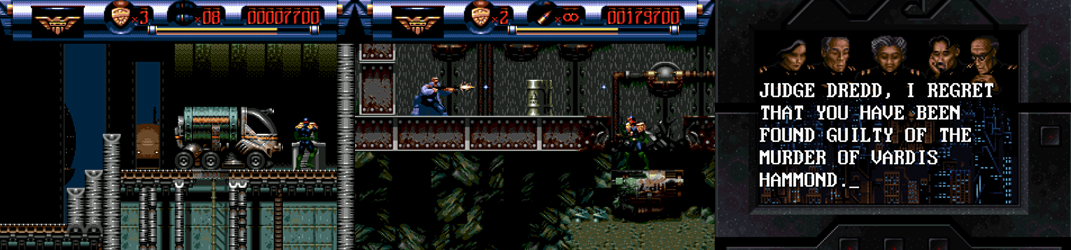
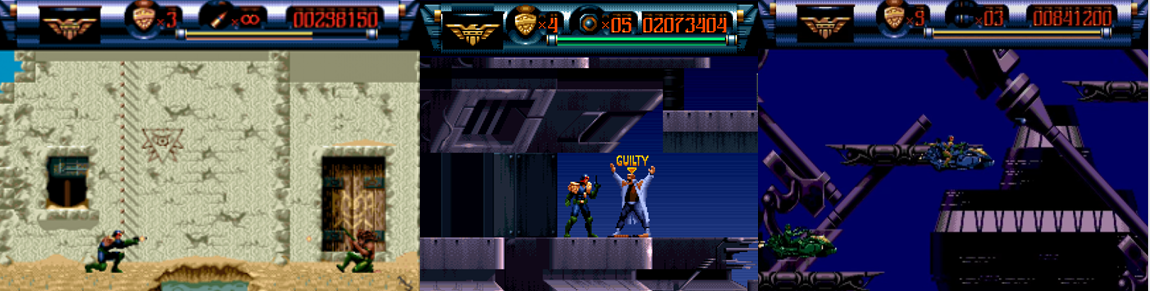
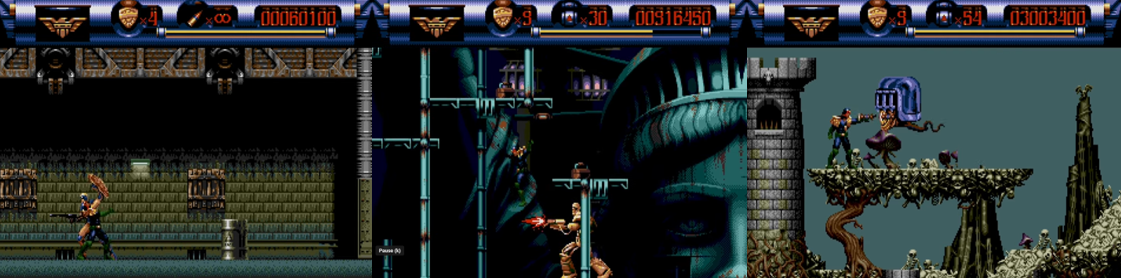






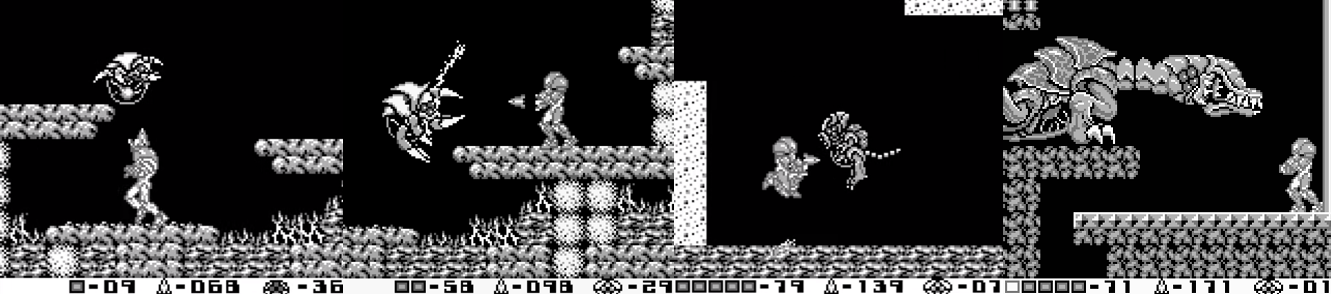


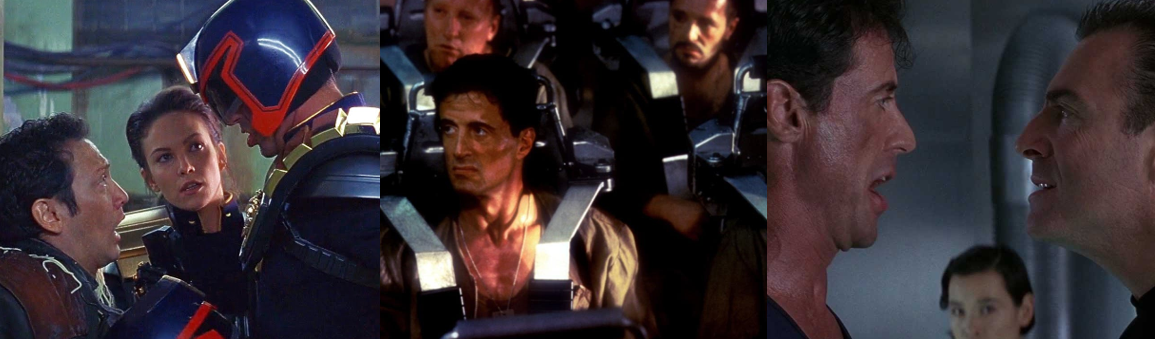
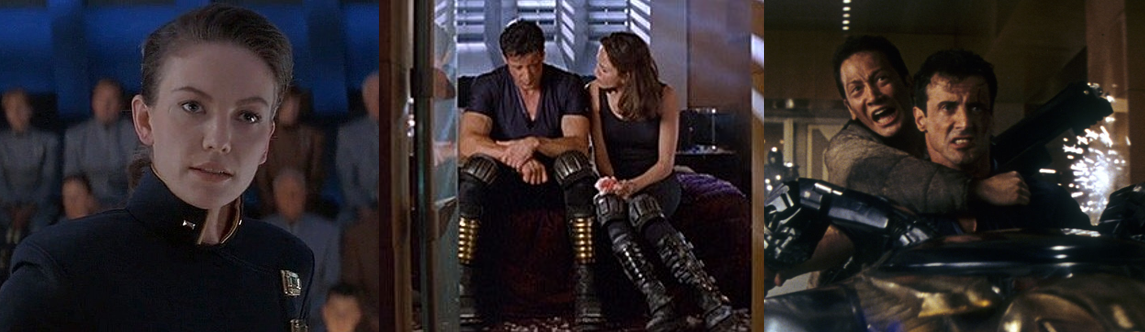
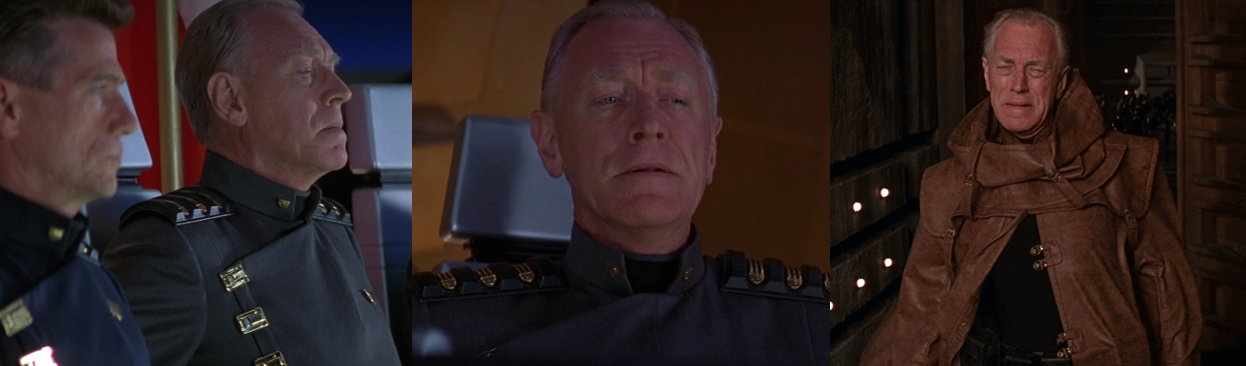
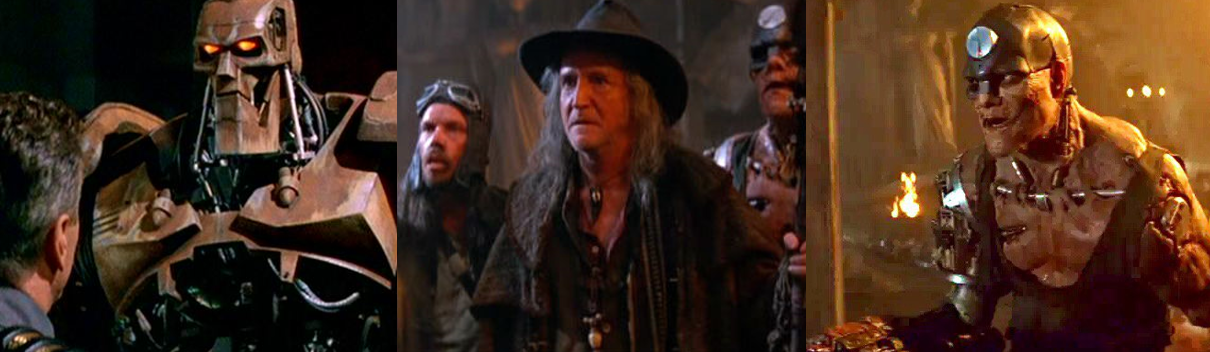

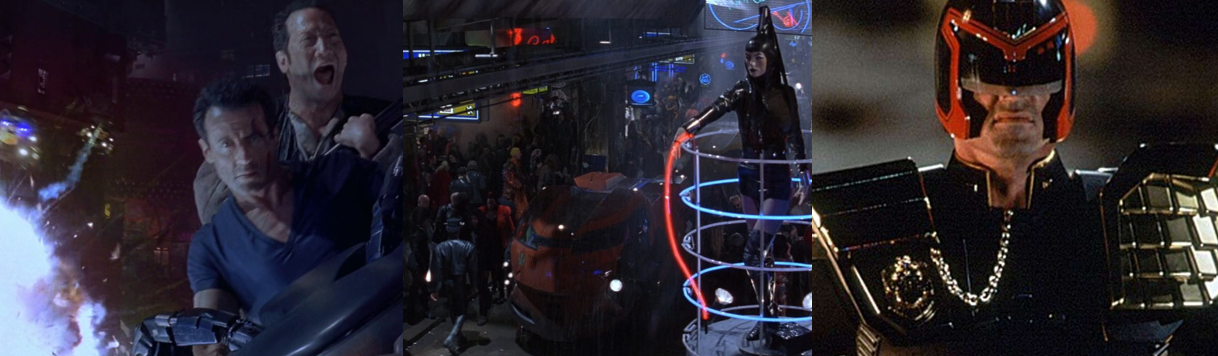
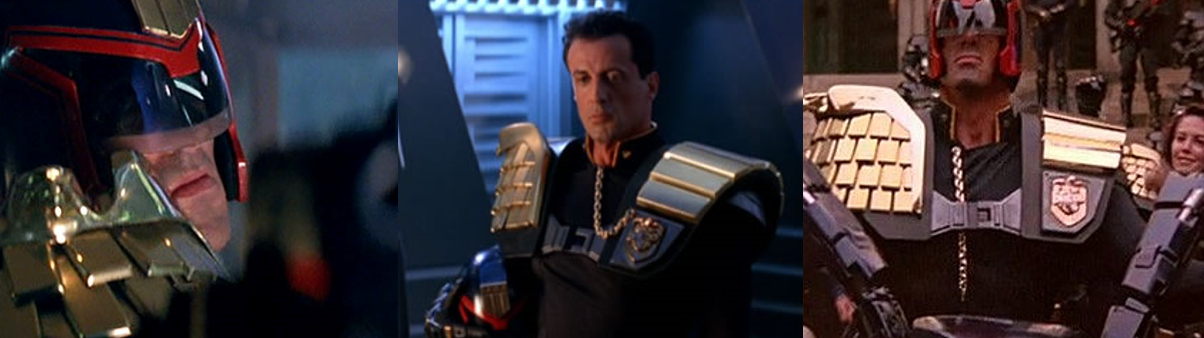
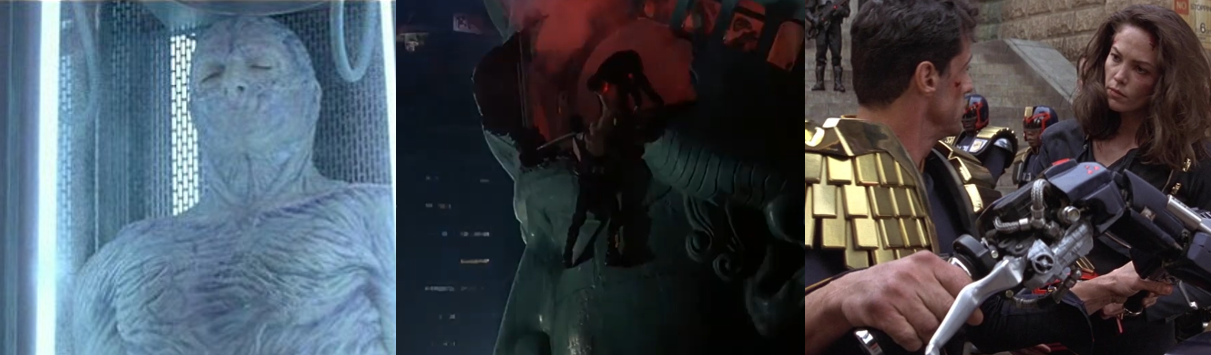



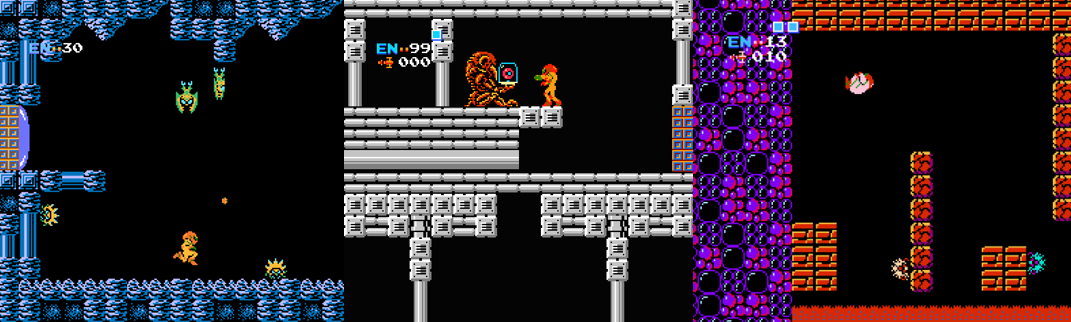




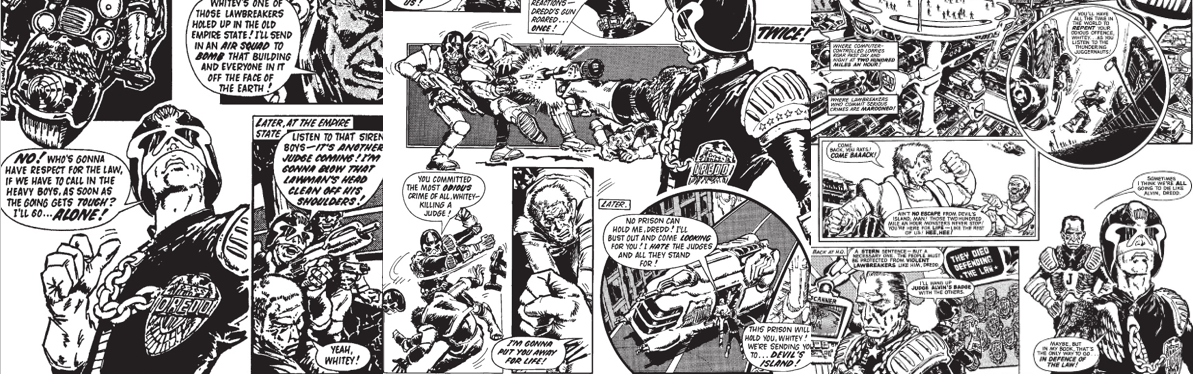
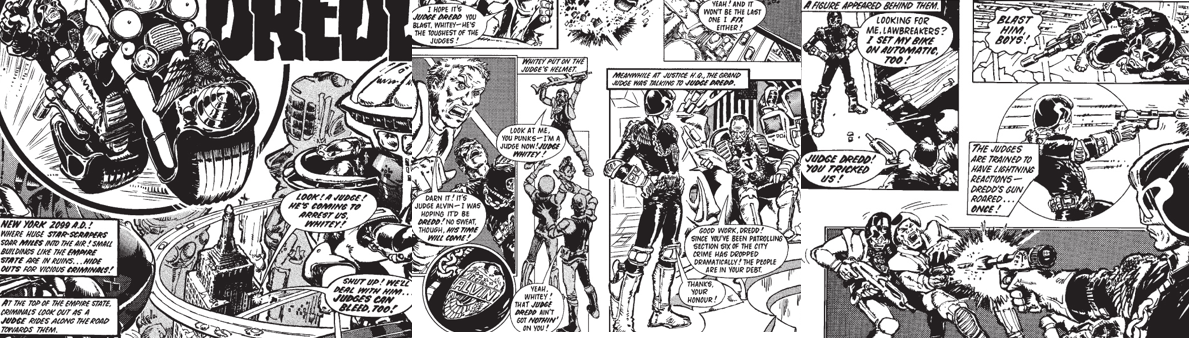


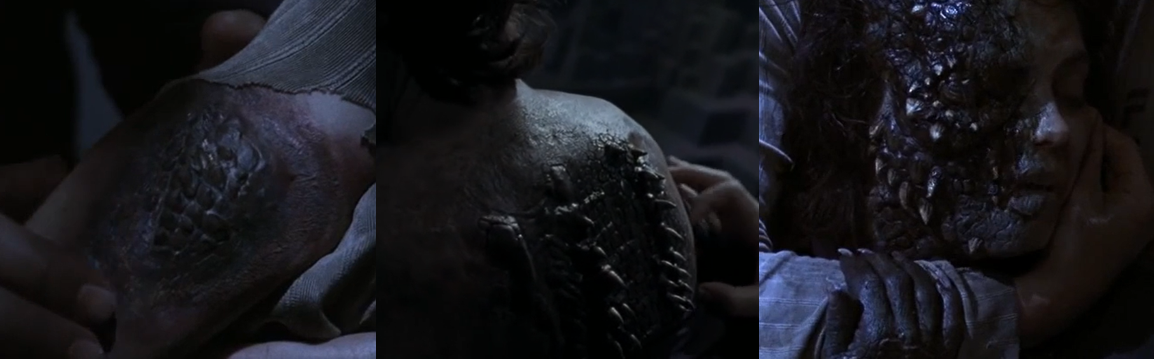





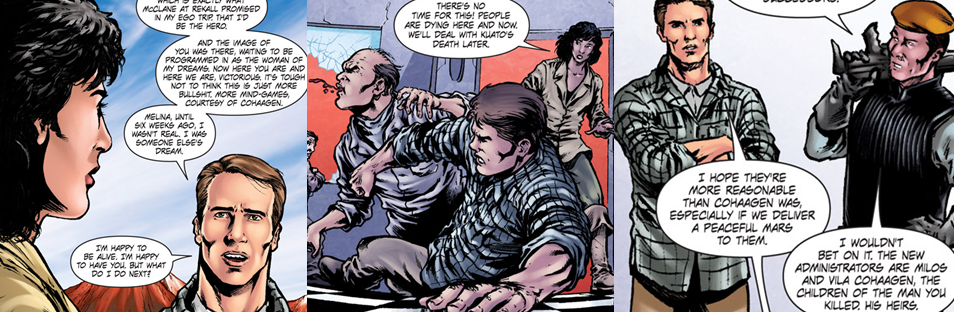


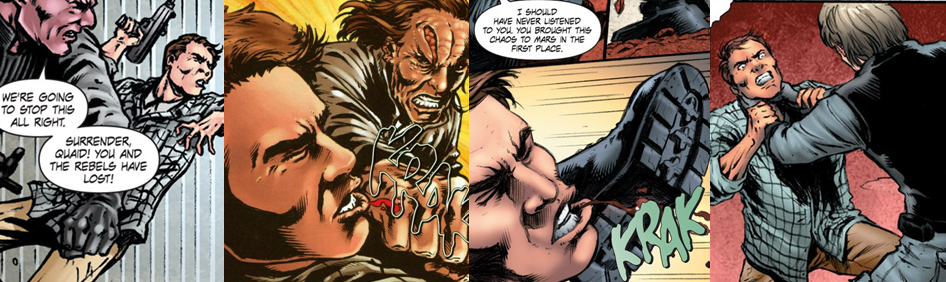





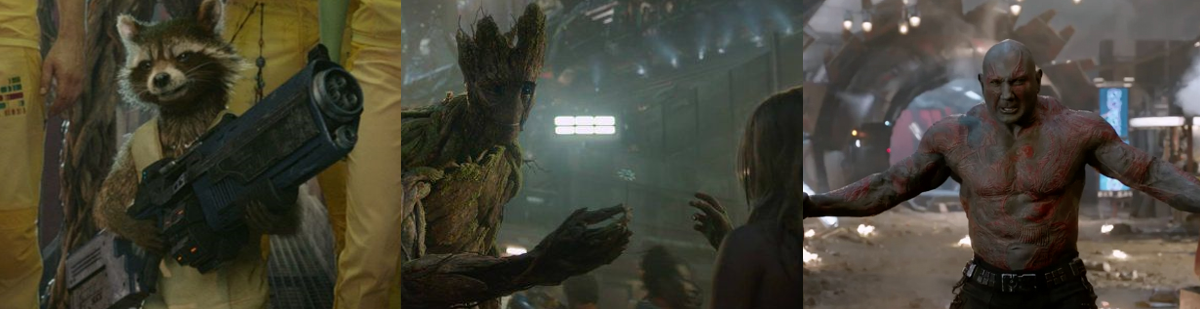
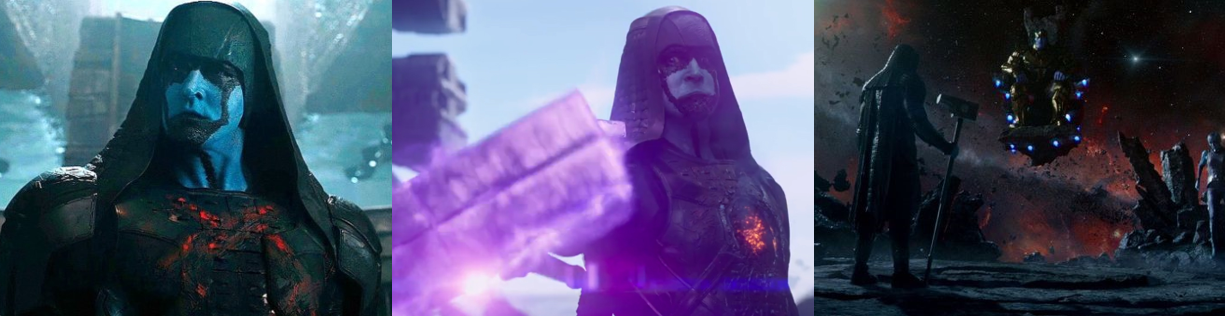

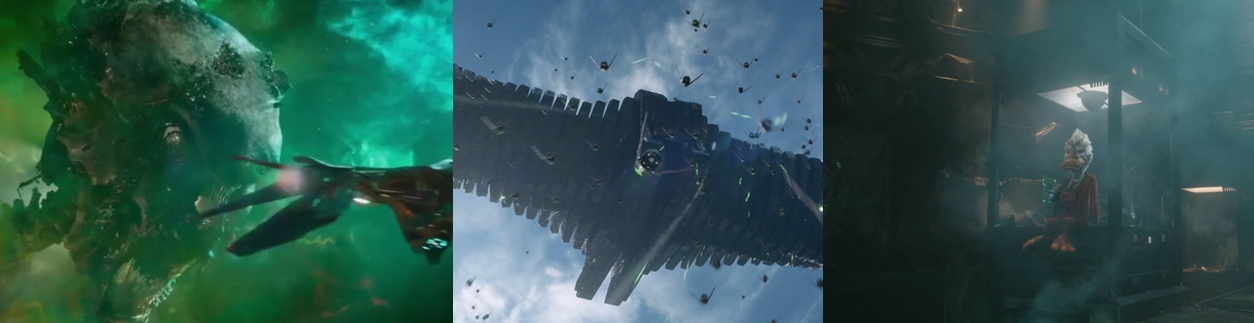


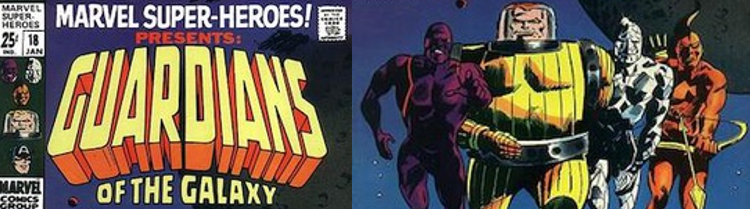

 Dr. K's Waiting Room
You must be logged in to post a comment.