Movie Night: Saw X

Released: 29 September 2023
Director: Kevin Greutert
Distributor: Lionsgate
Budget: $13 million 
Cast: Tobin Bell, Synnøve Macody Lund, Shawnee Smith, Renata Vaca, Octavio Hinojosa, Paulette Hernández, and Steven Brand 

The Plot: 
With only two months left to live thanks to a malignant brain tumour, John Kramer (Bell) desperately searches for a cure to prolong his work as the infamous Jigsaw. When Cecilia Pederson (Lund) offers an unsanctioned operation that claims to save his life, John puts his unique brand of justice into motion after learning he’s been scammed by an elaborate hoax. 

The Background:
In 2004, Australian writer/director duo Leigh Whannell and James Wan brought us Saw, a low-budget horror affair inspired by the unexpected success of The Blair Witch Project (Myrick and Sánchez, 1999). The film’s iconic death traps helped popularise the “torture porn” sub-genre and stir up some controversy but its $103.9 million box office made it the most profitable horror film since Scream (Craven, 1996). This success naturally led to sequels, and soon a dense and popular horror franchise was born; however, while the box office of the Saw series remained strong, critical reaction soon became mixed as the concept was dragged out over numerous sequels and tie-in merchandise. Although Saw 3D: The Final Chapter (Greutert, 2010) was intended to be the final film in the series, Lionsgate twice tried to revive the franchise over the next decade or so, with mixed results. After Spiral: From the Book of Saw (Bousman, 2021) became the lowest-grossing film in the series and was blasted by negative reviews, Lionsgate decided to revive previous ideas for this tenth instalment. The film’s placement in the convoluted Saw timeline allowed star Tobin Bell to return and he was excited to be more heavily involved in the plot and production this time around, and he was joined by some returning cast and crew. Director Kevin Greutert was adamant about returning to Saw’s roots, including employing practical effects for the traps and death scenes, and ultimately decided against digitally de-aging the returning actors to retain their performances. As of this writing, Saw X has grossed over $60 million worldwide, making it the second-least-profitable of the franchise, though the critical reaction was largely positive; while the traps and gore were noticeablypraised, it was Bell’s performance that won the most acclaim amidst criticisms of the film’s plot and other characterisations.

The Review: 
I’ve always been a big fan of the Saw franchise; it’s a big claim to fame of mine to say that I saw every film in the series at the cinema (with the exception of Spiral; thanks, Covid!) and I’ve always taken a perverse pleasure in the unique blend of horror used in the series. There’s a dirty, gritty, frantic appeal to Saw, one that relies heavily on explicit and elaborate traps, but the franchise is just as appealing thanks to its alluring and contradictory main antagonist, John Kramer. Saw has never been a linear franchise; all the films have played with the timeline to come up with ways to flesh out John’s character even after his untimely death, but Saw X may be the most unique in that it takes place in a grey area between Saw, Saw II (Bousman, 2005), and Saw III (ibid 2006).  This means that John is still alive, though gaunt and noticeably wizened from his inoperable brain tumour, which has numbered his days dramatically. John’s despair at his impending demise isn’t just because he’s not ready to die yet; it’s also because he has established himself as “Jigsaw”, a sadistic (and yet unnervingly fair) punisher of those who do not appreciate their lives. John is distraught at the idea of dying before he’s had a chance to “help” others with his work and finds little comfort in the pragmatic advice of his doctor (David Alfano) or the cancer support group he begrudgingly attends. 

Desperate to prolong his life and his work, John turns to a groundbreaking miracle cure.

However, when a member of this group, Henry Kessler (Michael Beach), makes a miraculous recovery, John learns about Cecilia Pederson, daughter of world-renowned surgeon Doctor Finn Pederson (Donagh Gordon), and her off-the-grid clinic that claims to have developed a radical new procedure and drug concoction which has a 90% success rate in cancer patients. Despite being portrayed as one of the most intelligent and Machiavellian horror villains of all time, desperation sees John cling to this unbelievable hope, and he makes the trip out to Mexico to meet with Cecilia. He’s abducted and brought to an isolated villa where he’s introduced to Cecilia and her team: brain surgeon Doctor Cortez (Joshua Okamoto), anaesthesiologist Mateo (Hinojosa), nurse Valentina (Hernández), and two of Cecilla’s former patients, the kindly Gabriela (Vaca) and grateful Parker Sears (Brand). John is welcomed into the villa, which is also home to a former chemical plant that has been adapted into a makeshift operating theatre. In keeping with his intellectual superiority, John asks many questions and is both reassured and overwhelmed by Cecilia’s kindness, knowledge, and success rate. Since being diagnosed with brain cancer, John has made it his life’s work to teach others to appreciate their lives, putting them through horrendous physical and mental tests as Jigsaw to give them a chance at redemption and to show them the value of their comparative health and happiness. It’s all he’s lived for and has consumed him, costing him both friends and family, but Cecilia offers him a true opportunity to regain his life and to set aside this crusade, and John is completely taken in by her words and soon undergoing brain surgery to remove the tumour from his head. 

Betrayed by his would-be-saviours, John enacts a gruesome revenge.

When he awakens, John is elated to learn that the operation was a success. He’s grateful beyond words to Cecilia and feels immediately reinvigorated by a new appreciation for life. Although he was transported to the villa in secret and Cecilia’s entire operation was performed under the radar to avoid reprisals from “big pharma”, John uses his astute intelligence to find the villa in a bid to express his gratitude and say goodbye to the friends he made there. Unfortunately, he finds the villa deserted and that the entire operation was a scam; they simply lured him in with false promises, drugged him, and pretended to perform surgery using an educational video to help sell the illusion. Previously depicted as a polite, learned, and grateful man who was desperate to regain his life, John’s demeanour immediately snaps upon learning he was scammed; he allows himself one brief emotional outburst before placing a called to his apprentice, Detective Mark Hoffman (Costas Mandylor), to help him track down those responsible for duping him was false hope, making a fool of him, and stealing $250,000 of his money. Given his frail disposition, he’s aided by his other apprentice, former drug addict Amanda Young (Smith), who delights in playing an integral role in abducting and tormenting Cecilia and her team. Although Amanda clearly looks fifteen years older than she should, it’s mostly covered by some make-up effects and the film spends a surprising amount of time fleshing out her relationship with John; she’s distraught by his impending death and angered at the scam, wishing to simply kill those responsible and begrudgingly allowing John to subject them to his tests due to his twisted moral code. She also shows an unexpected glimmer of humanity and hesitation since she feels a kinship to Gabriela, who was simply duped into Cecilia’s plot due to her addiction to drugs. However, John keeps Amanda focused on the task at hand and uses the entire situation as a learning opportunity for all involved; Amanda needs to learn to be dispassionate about the job she’s been primed to take on after his death and Cecilia and her team need to learn that their actions have consequences. 

The Nitty-Gritty: 
One of the things I love about the Saw franchise is the complexity and hypocrisy of John Kramer. Jigsaw has always claimed (as he does in this film) that he’s not a murder; that he presents his subjects with a choice (“live or die”) and they are the ones who mutilate themselves or lose their lives by failing to follow his rules or lacking he will to live. For the longest time, Jigsaw’s campaign seemed methodical but ultimately impartial; his victims were people he observed and deemed unworthy of their fortune, so he put them to the test. Over time, though, this motivation has been skewed; Jigsaw has targeted doctors, lawyers, and police officers who have wronged or pushed too hard into investigating him and many of his victims have been those responsible for his greatest tragedies, be it the loss of his unborn son, not covering his medical bills, or diagnosing his condition in the first place. Saw X continues this hypocritical vendetta; John projects an emotional detachment to the “game” he subjects Cecilia and the others to, but has brief flares of emotion because of his personal attachment to the game and it’s obvious that the only reason they’re being targeted is because they wronged him. Saw X shows that John is always on the lookout for new subjects; he suspects everyone and not only sketches ideas for new traps but also envisions how those traps will work, showing a hyper awareness of his surroundings. It’s no wonder, then, that he’s so enraged by Cecilia’s deception and shows no mercy to her or any of her team, no matter how much they beg, and simply coldly advises them to “play [the] game” to show how much they’re willing to sacrifice to atone for their sins and continue living. 

While a couple of traps are suitably horrific, many are disappointing or overly complex.

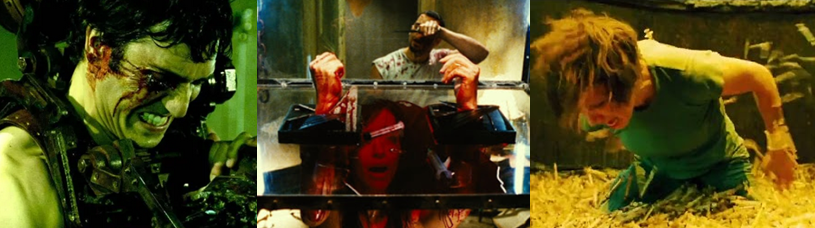
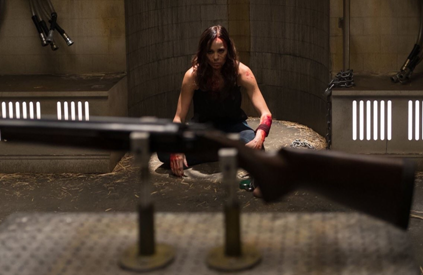
This is a major aspect of Saw X; after ten films in the franchise, it’s important for a new Saw movie to give us something new, and Saw X decides to do that by firmly casting John as the aggrieved protagonist. Previously, there was always a twisted logic behind Jigsaw; you could usually understand where he was coming from and even sympathise with him, no matter how twisted his games were, but Saw X explicitly asks you to root for him by casting him as a victim and presenting a character (Cecilia) who’s even more obnoxious and malicious since she lacks even his skewed moral code. This means that the traps presented have a different level of catharsis; usually, we’re supposed to root for his victims to survive, but this time you want to see them suffer and fail for taking advantage of so many desperate people. Unfortunately, I wasn’t too blown away by Saw X’s traps; I was hoping for the film to return to the more grounded traps for the first two films, but these are again pretty elaborate and complex considering how close to death John is. Things start off well with John subjecting a thieving orderly (Isan Beomhyun Lee) to a vacuum trap that sucks out his eyes if he doesn’t break his fingers, but this turns out to simply be a fantasy of John’s. When he tracks down Dr. Cortez (actually Diego, his taxi driver), he forces him to slice chunks out of his arm to remove two explosives, a gruesome task that Diego surprisingly survives. Valentina is forced to severe her leg and drain bone marrow to keep her head from being sliced off, which is extremely gory and harrowing and results in failure, while Gabriela is suspended by chains and must smash her wrist and ankle to avoid being roasted by radiation. Mateo is subjected to the most elaborate and bonkers scenario; he’s strapped to a chair and forced to cut into his brain to avoid being roasted by a heated mask, something he obviously struggles to do as he’s just a vet rather than a trained doctor. 
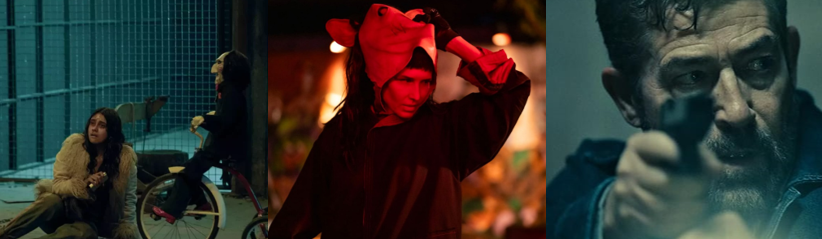
The film primarily focuses on reframing John as a sympathetic and even heroic character,

I think what bugged me the most about these traps isn’t just how lacklustre a lot of them were, but also that John’s vengeance was flawed, as Amanda points out. Cecilia was the mastermind behind the whole operation and the others waste no time in selling her out, but to John they’re all as culpable as each other. However, I do think the traps would’ve worked better if Cecilia had been forced to take part in them. Perhaps she could’ve been strung up by chains like a puppet and forced to slice off Valentia’s leg; she also would’ve been better suited to perform Mateo’s makeshift brain surgery, and Gabriela’s trap could’ve been reworked so Cecilia could’ve taken part in it. Think Jeff Denlon (Angus Macfadyen) in Saw III; his test was to save others from a gruesome fate, and I definitely think this would’ve been a better fit here. Instead, there’s a lot of unnecessary waiting around; I like that John is front and centre for this game, directly interacting with his subjects and overseeing it from a control room, but there’s a huge gap between Valentina’s death and Mateo’s trap. This is, of course, all part of John’s plan but I think his larger plot would’ve succeeded without there being so much waiting around. At first, it seems there’s the hope of salvation for John’s victims and the possibility of a new recruit for John when Parker comes by angrily looking to confront Cecilia for scamming him. Subdued by Amanda, Parker briefly acts as a witness to John’s sadistic game and seems conflicted; like John, he wants to see Cecilia and the others punished for their misdeeds, but his vengeance extended simply to getting his money back and yelling at the con artists, not witnessing their brutal dismemberment. His presence is particularly unnerving to Amanda, to whom the entire ordeal is an additional test of her will; unfortunately, a lot of this tension is exhausted since we know Amanda’s fate, but it’s interesting seeing her as a flawed but devoted follower of John’s. 
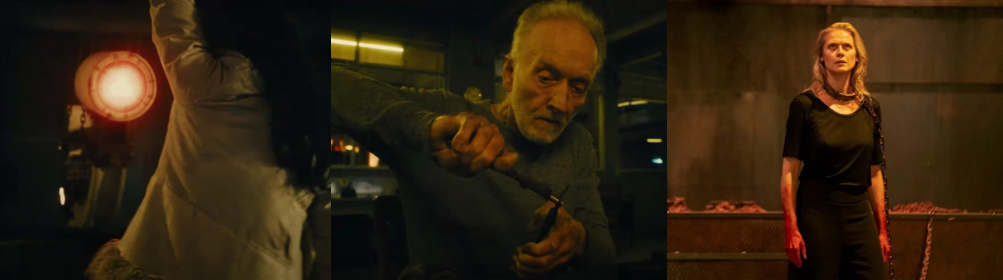
Despire seemingly being outsmarted, John finds a way to triumph through sheer force of will.

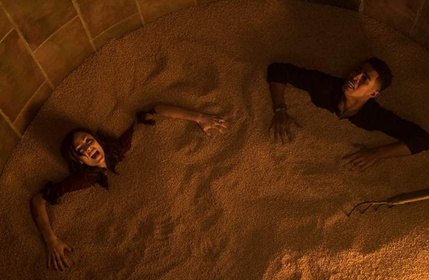
Parker is so horrified by what he’s witnessing that he disobeys John’s rules, retrieves his gun, and interrupts the game; nonplussed by Parker’s threats, John calmly agrees to free Cecilia and barely flinches when Parker is revealed to have been in on it all (largely because Diego spilled the beans on the whole operation earlier). It’s here where Saw X takes a weird turn; freed from her shackles, Cecilia forces John and Amanda to lock themselves in and delights in lording her superiority over the legendary “Jig-fucking-saw”. Rather that force John and Amanda to endure her test, Cecilia takes young Carlos (Jorge Briseño) hostage when he wanders past and forces him to join John in a particularly dreadful trap. John and Carlos are held down on a seesaw like platform by chains and waterboarded with blood; the only way to survive is for one of them to pull on a lever, subjecting the other to the torture. Although John begs Carlos not to pull the lever and is prepared to endure the torture himself, Carlos shows incredible resolve and takes his fair share of the punishment. This whole trap casts John in an extremely different light; earlier, he showed kindness to Carlos and he’s clearly conflicted and disturbed at an innocent child (and “unexpected” victim) being caught up in his plot. Indeed, the film paints John in a heroic light as he’s willing to sacrifice himself to spare the boy, though both are ultimately spared when Cecilia and Parker retrieve their cash and set off another trap. This disables the waterboard trap, allowing John, Amanda, and Carlos to escape, and sets off a corrosive gas in the control room. Cecilia and Parker are forced to fight for the death to reach a ventilation hole only big enough for one of them, a fight the cruel Cecilia wins by stabbing Parker, though her fate is left ambiguous as John, Amanda, and Carlos simply leave her there.   

The Summary: 
Even I, as a big Saw fan, must admit that the franchise quickly became quite derivative; even now, I struggle to remember which film is which and I can see how a lot of the entries are very similar and stretched the premise way too far. In hindsight, I think the producers made a mistake killing Jigsaw in Saw III; they could’ve left him alive for a couple more films and done a bit more with him, since he’s one of the most compelling aspects of the franchise. In Saw X, John is front and centre, but this lands in such a weird way; here’s a morally reprehensible guy, a villain for all intents and purposes, and we’re asked to sympathise and root for him. In this context, he’s justified in seeking retribution (even if he denies this is his obvious motive), but it’s an interesting way to present him. In many ways, I would’ve liked to see this format used for previous Saw movies; take John and have him use his skills in interesting ways against people who wrong him, kinda like when arrogant mobsters unknowingly incite the wrath of the likes of John Wick (Keanu Reeves). As a character study of John, Saw X sheds a little more light and humanity on him, but again it’s not really anything we didn’t learn from the myriad of flashbacks across the other films. Normally, a Saw movie compensates for its paper-thin plot with gore and traps; however, while Saw X has plenty of gore, the traps are just as ludicrous as ever, which is a shame as I would’ve liked to see a grittier, more realistic bent to the traps given John’s more personal vendetta here. Ultimately, Saw X is like a love letter to the series; it puts the focus squarely on Jigsaw, giving him one last swansong, and contains some fun cameos and fan service here and there, but it was lacking something for me to really rate it much higher. It’s interesting seeing John be scammed like this, but I really don’t think he would’ve been; even at his most desperate, he was always ten steps ahead of everyone, so the premise was flawed for me from the start and the execution of the game failed to impress, despite how interesting John’s characterisation is throughout. 

My Rating:

Rating: 2 out of 5.

Could Be Better

What did you think to Saw X? Did you buy the John would be so easily fooled by Cecilia’s scam? What did you think to the traps and the execution of John’s game? Were you surprised that Amanda has such a big role in the film? Did you see the twists coming in the finale? Where would you rank Saw X against the other films in the franchise and do you think you would survive one of Jigsaw’s games? Whatever you think about Saw X, and Saw in general, leave a comment below.  

Movie Night: Saw: Uncut Edition

Released: 18 October 2005
Originally Released: 29 October 2004
Director: James Wan
Distributor: Lions Gate Films
Budget: $1 to 1.2 million
Stars: Cary Elwes, Leigh Whannell, Danny Glover, Ken Leung, Michael Emerson, and Tobin Bell

The Plot:
Doctor Lawrence Gordon (Elwes) and voyeur Adam (Whannell) wake up in a dirty bathroom with their feet chain to pipes, the latest captives of the twisted and mysterious “Jigsaw” (Bell) who subjects his victims to deadly “games” to test their commitment to life. With his family at risk, Dr. Gordon has just hours to either kill Adam or use the rusty saw to cut through his foot and escape his fate!

The Background:
After finishing film school, Australian writer/director duo Leigh Whannell and James Wan were desperate to fund a film of their own. Inspired by the unprecedented success of the low-budget Blair Witch Project (Myrick and Sánchez, 1999), the two dreamed up the basic concept that would become Saw: two men chained up in a room with a dead body between them that played out like a mystery thriller. To raise the funds they required, Wan and Whannell shot a seven-minute short, with Whannell in the lead, depicting a man with a modified bear trap strapped to his head, which caught the eye of producer Gregg Hoffman. Hoffman loved the short and agreed to finance it, and give the two creative control and a percentage of the profits, through their production company, Twisted Pictures, and that same short was also enough to convince Cary Elwes to sign on, though a legal dispute saw this relationship deteriorate for the better part of five years. Once Danny Glover was signed on, Tobin Bell jumped at the chance to take part, especially considering the twist ending, and the crew set to work constructing the elaborate, dingy sets. The film was shot very quickly, with little time for rehearsals, which resulted in the Saw’s gritty presentation and rapid cuts, though Wan used this to his advantage to help bolster the editing process. The film’s gruesome death traps became not only a staple of the resulting franchise but helped popularise the “torture porn” sub-genre of horror cinema and caused a great deal of controversy amongst critics. Indeed, although Saw‘s eventual $103.9 million box office made it the most profitable horror film since Scream (Craven, 1996), reviews were mixed; many were put off by the frantic editing and gross-out content, while others praised Saw as a ground-breaking entry in the genre. Regardless, Saw‘s strong opening weekend saw a sequel approved and Saw quickly spiraled into a dense and popular (if divisive) horror franchise, with six sequels released annually between 2005 and 2010 alongside videogames, comic books, other merchandise, and later sequels.

The Review:
I vividly remember the hype for Saw; it was one of the few times I actually visited a film’s website and participated in the viral marketing campaign, which was especially surprising considering that I wasn’t a massive fan of the overly bleak and dreary Seven (Fincher, 1995), which mainly impressed me because of its gruesome kills and twist ending. However, Saw was both heavily advertised as being grittier and nastier than Seven and the trailers had hooked me on the premise alone, so I was all for it and I’m very happy to say that I saw all the Saw movies at the cinema when they first released and became a huge fan of the franchise, despite them getting more and more over the top. The first Saw, though, is decidedly low key; most of the film takes place in one location, a dingy bathroom with a dead body in the middle of it, and focuses on the plight of its two main characters, two men who couldn’t be more different and who find themselves stuck together, chained to pipes, with their only options being death or murder. Of the two, Adam is the first to awaken; after narrowly avoiding drowning, he’s flustered, confused, and aghast to find himself trapped in the dilapidated room alongside Dr. Gordon while the doctor is much calmer and more pragmatic about their situation, at least from the off.

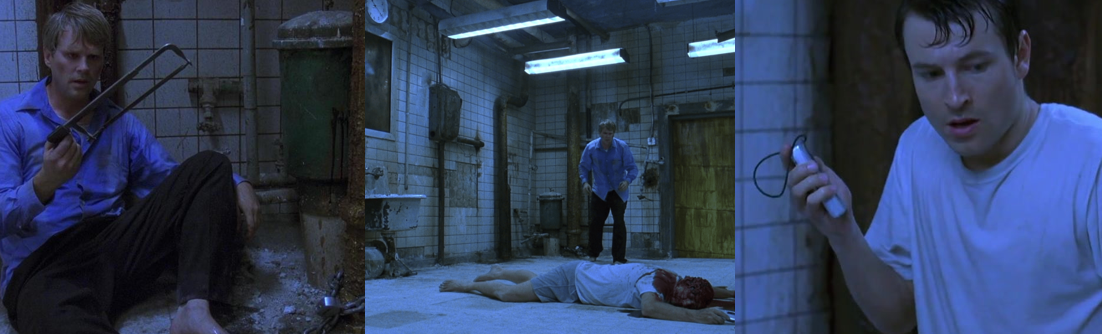
Dr. Gordon and Adam are trapped in a room where the only way out is death or blood!

After their initial introductions and trying to get their heads around what’s happening, the two find they each have a microcassette on their person and, with a great deal of difficulty, Adam retrieves the tape player from the suicide victim whose brains are splattered across the bathroom floor. Playing the tapes reveals that the two are the latest victims of a sadistic killer labelled Jigsaw by the tabloids; he challenges Dr. Gordon to a simple game: kill Adam by six o’clock or else his wife and daughter, Alison and Diana (Monica Potter and Makenzie Vega, respectively) will die. Jigsaw also subtly gives the two the option of suicide or even using the hacksaws Adam later finds in the funky water of the toilet cistern to cut through their feet since the chains are too strong. While Adam continues to be horrified by the situation, Dr. Gordon is more than familiar with Jigsaw since he was once a prime suspect in the police investigation into the killer, but his knowledge of Jigsaw fails to alleviate Adam’s anxiety or the mistrust between the two, which only escalates as the film progresses since Adam is a terrible liar (something amazingly conveyed by Whannell’s atrocious acting!) Luckily, Dr. Gordon was cleared of any suspicion, but he witnessed first-hand the lengths Jigsaw goes to test his victims after hearing the testimony of the only known survivor of his games, former drug addict Amanda Young (Shawnee Smith). When Dr. Gordon receives a call from Alison, who’s being held at gunpoint by Jigsaw’s desperate accomplice, Zep Hindle (Emerson), warning him not to trust Adam, a series of flashbacks reveal that Adam was hired to follow Dr. Gordon and photograph his movements, and that Dr. Gordon has been less than faithful in his marriage, which was already strained by his long hours and neglectful tendancies. Once they stop playing coy with each other, Dr. Gordon and Adam actually work quite well to figure out that they’re being watched and come up with ways of trying to get around Jigsaw’s games; unfortunately, their attempts to fool Jigsaw are squandered not just by Adam’s unconvincing attempt to play dead but also because Jigsaw has seemingly prepared for every eventuality and shocks the two with an electrical current running through the pipes they’re chained to.

After his partner’s death, Detective Tapp is driven to near insanity by his pursuit of Jigsaw.

When the film isn’t following the two captives, either directly in the room or via video feed being observed by Zepp, it’s flashing back to show glimpses of their lives before they were captured; Adam’s are mainly focused on him stalking Dr. Gordon and being abducted by a pig-masked figure, but Dr. Gordon’s show his tumultuous homelife and busy day-to-day working as an oncologist to terminal cancer patients like John Kramer (Bell). This is where he meets Detective David Tapp (Glover) and his partner, Detective Steven Sing (Leung), the cops investigating Jigsaw. Having met with nothing but dead ends and the horrific leftovers of Jigsaw’s victims, save for Amanda’s harrowing story, Tapp believes they’ve finally found their man when one of Dr. Gordon’s penlights is found at Jigsaw’s latest twisted game. Although they’re unable to connect him to the killer in any meaningful way, careful analysis of the tape Jigsaw left for Amanda allows them to deduce his possible location and they’re so gung-ho about catching Jigsaw that they immediately investigate without back-up or a proper search warrant. There, they find a disused warehouse full of traps, Jigsaw’s now-iconic proxy (a puppet named Billy), little models of Jigsaw’s games, and Jeff (Ned Bellamy) strapped to a chair. Although they get the drop on the hooded Jigsaw, they’re left scrambling to keep Jeff from being killed by the drills closing in on his head, which is enough of a distraction for Jigsaw to violently slice Tapp across the throat! When Sing pursues, he accidentally triggers a shotgun trap and is brutally killed, leaving the scarred and traumatised Tapp to descend into near madness. Convinced that Dr. Gordon was their man, Tapp shuts himself away and devotes himself to tracking Lawrence’s every movement, employing Adam to keep tabs on him to try and catch him in the act, but doesn’t hesitate at a chance for revenge when he spots Zepp struggling with Alison in the Gordon home.

While Zepp holds Dr. Gordon’s family captive, the true mastermind lurks in the shadows.

Throughout the film, the true identity of Jigsaw is kept a tantalising mystery. When he appears, it’s either via a pre-recorded message (either on a tape recorder or speaking through Billy), under a hood or disturbing pig mask, or simply as an eye since he likes to get up close and personal with each of his victims. The few times we do see Jigsaw in person, he’s characterised as a methodical and eerily intelligent man, one who speaks in riddles and half-truths and challenges everyone, whether they’re his victims or his potential prosecutors, to both think their way out of situations and consider their perspective on life. He openly criticises Adam for living the life of a voyeur, as well as Dr. Gordon’s lack of appreciation for his family, and is seen to be a patient and fastidious man who painstakingly plans out each game to account for every eventuality. However, for much of the film, we’re led to believe that Jigsaw is Zep, a lowly orderly from Dr. Gordon’s hospital; this twist comes fairly early on, when Dr. Gordon recognises him from the various disturbing Polaroids left in his wallet, and from there Zepp is seen unobscured as he toys with Alison and Diana. Yet, while Zepp is clearly seen to be unhinged and dangerous, since he shoots and kills Tapp during their struggle, there’s an ongoing sense that there’s something not quite right; for one thing, Zepp doesn’t sound anything like Jigsaw and he is also constantly showcasing an emotional paranoia about “rules” and the situation that doesn’t fit with Jigsaw’s more patient demeanour. Indeed, despite his tendency to slice a jigsaw piece out of each of his victims (hence the name), Jigsaw openly describes his abject disgust at those who waste their lives and the sickness eating inside of him, thus perfectly laying the seeds for the film’s dramatic finale where it’s proven that Zepp was just another victim of Jigsaw’s depraved games.

The Nitty-Gritty:
If there’s one theme in Saw, it’s of trust. Dr. Gordon and Adam almost instantly distrust each other not just because of their strange situation or Adam clearly trying to cover up his knowledge of Dr. Gordon’s identity and life, but also because of the class divide between them. Adam is a desperate mercenary, of sorts; he lives in squalor job to job, caring little for who pays him or why they want people followed or the lives of the person he’s photographing. In comparison, Dr. Gordon lives very comfortably; he has a nice house, a nice office, and takes his life for granted so much that he’s happy to rest on his laurels and even consider a fling with Carla (Alexandra Chun), one of his interns (though, ironically, he put a stop to the liaison before it could properly get underway right before he was abducted, showing that he was already planning to turn his life around and try harder with his family). There’s a discord between Dr. Gordon and Alison, to the point where she treats him very coldly since she believes he’s lying about his happiness, and Sing’s unwavering trust in Tapp is arguably what leads to his death since he doesn’t stop to question his partner in raiding Jigsaw’s warehouse. This leads me to the second most prominent theme in Saw: obsession. After his injury and Sing’s death, Tapp becomes obsessed with proving Dr. Gordon’s guilt, to the point where he’s fired, divorced, and turns to alcohol and isolation. Tapp’s so consumed by grief and obsession that he’s suffered a mental breakdown and has become obsessed with “closing [the] case”, and it’s this obsession that drives him not just to intervene when Zepp tries to kill Alison and Diana but also to pursue him to the bathroom, where he’s shot and killed in a brief struggle with the manic orderly.

Jigsaw forces his victims to endure life-or-death games to test their survival instincts.

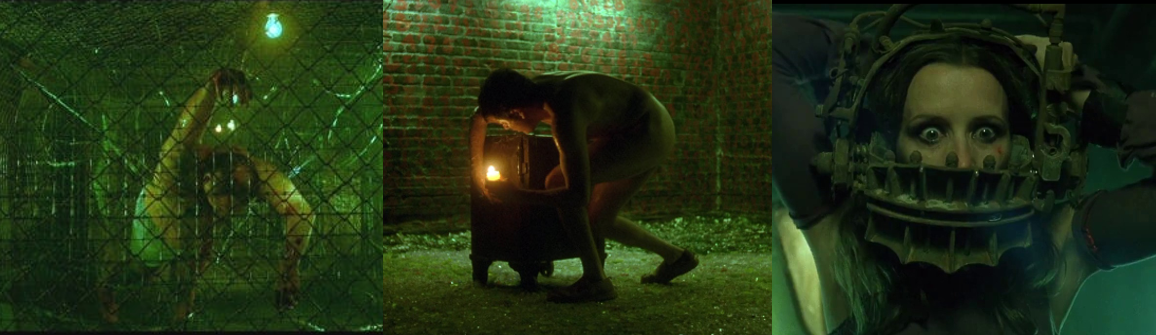
Of course, one of the main selling points of Saw are the gruesome traps Jigsaw sets for his victims and the violent ways in which they die. Shot using a frenetic camera and fast edits and bolstered by a dingy, almost low-rent lighting, the traps are presented in a way that invites the audience to experience the fear and panic felt by their victims, who are all subjected to torturous tests that reflect their sin, vices, or crimes. The first trap we see finds Paul (Mike Butters) wrapped up in razor wire after bleeding to death in an attempt to escape; Paul was chosen for the simple crime of cutting himself despite being perfectly healthy and sane, so Jigsaw wanted to test if he was truly suicidal or just wanted attention. Next, Tapp and Sing investigate the immolated corpse of Mark (Paul Gutrecht), a man who had claimed to be sick but was always out and about; to test his “illness”, Jigsaw injected him with a slow-acting poison, doused him in flammable jelly, and challenged him to navigate a field of broken glass to find the combination to the safe containing the antidote using only a candle to light his way. Easily the most iconic trap of the film (and, quite possibly, the entire franchise) is the reverse bear trap that Amanda found strapped around her head after she refused to stop wasting her life on drugs. Amanda’s only hope of survival lay in the stomach of Donnie Greco (Oren Koules) and, though reviled and hesitant, Amanda had no choice but to disembowel him to get a key out of his stomach. Considering how iconic the reverse bear trap became, it’s interesting that we don’t actually see what it’s capable of beyond a brief demonstration on a mannequin; a later Saw film would rectify this and the franchise returned to the trap again and again but in its original incarnation, the threat and sheer dread evoked by the bear trap was terrifying enough! While there’s a fair amount of blood in Saw, the first film is decidedly more reserved than its more over-the-top successors; it’s more about the atmosphere and sense of desperation here, making Saw more of a gore-thriller than a straight-up “torture porn” movie, though this Uncut Edition of the film does add a few extra frames of gore, blood, and panic to the mix despite actually running shorter than the theatrical version. Later films would up the ante on not just the traps but in exploring Jigsaw’s entire twisted philosophy, but it’s quite bitter and simplistic in Saw: he hates those who don’t appreciate life and wants to punish them for it so they can justify their existence through extreme measures and bloodshed. Crucially, there’s a distinction made that Jigsaw isn’t some psychotic murderer; technically, he hasn’t killed anyone, but his depraved methods make him a top priority for the likes of Tapp and Sing. The hints towards him being an enigmatic, almost cult-like figure are sown here, however; not only does his reputation proceed him, but Amanda asserts that Jigsaw “helped [her]” with his test, despite the fact that it’s clearly left her an emotional wreck.

Dr. Gordon resorts to extreme measure to escape but the true Jigsaw was hiding in plain sight!

Jigsaw’s traps may be a highlight but there’s a definite sense that these gruesome games were simply a test of his greater designs for those who don’t appreciate life. I say this because it definitely seems like he abducted the likes of Paul, Mark, and Jeff and simply placed them in a life-or-death situation, but he concocts an elaborate, multi-staged plan with all these different elements (Zepp, a kidnapping, planting evidence, even luminous paint and alternative ways to kill Adam) for Dr. Gordon’s test. Dr. Gordon’s calm demeanour degenerates as his situation becomes more and more desperate; hearing Alison’s voice and learning of Zepp’s involvement only exacerbates his emotional state and he’s pushed to the brink when his time runs out and he hears what appears to be the agonising death of his wife and child. His logic and reasoning evaporate and are consumed by an obsessive, desperate need to save their lives at any cost so, much to Adam’s abject horror, Dr. Gordon wraps a makeshift tourniquet around his ankle and gets sawing! Even this sequence, as harrowing and uncomfortable as it is, is nowhere near as gory as it could be or what we’d see in later films as Saw wisely keeps the focus on Dr. Gordon’s crazed expression and Adam’s horrified reaction. Finally free from his shackle, Dr. Gordon shoots Adam but is unable to kill or even oppose Zepp when he comes to finish them off for failing to complete the game in time. Luckily, Dr. Gordon only wounded Adam, who springs to life in a maniacal rage and beats Zepp to death using the toilet tank lid! Bleeding to death and barely clinging to life, Dr. Gordon drags himself off to get help though, sadly, this version of the film strangely omits Dr. Gordon’s final line to Adam (“I wouldn’t lie to you”) that I always felt was a lovely way to show how far their relationship had progressed. Injured and in shock, Adam is stunned when he roots around in Zepp’s pockets for the key only to find he possessed a tape of his own (it’s not clear what Zepp’s crime was but he was coerced into helping the true Jigsaw enact his plan on pain of death), which leads to easily one of the best twist endings in all of cinema, one perfectly bolstered by Charlie Clouser’s iconic “Hello Zepp” score. After playing the tape, Adam is astonished when the corpse in the middle of the room comes to life and rips some of the fake blood from his head to reveal himself as Dr. Gorodn’s patient! Kramer then tells Adam that the key was in the bathtub all along (if you re-watch the opening, you see it get sucked down the drain) but, when Adam tries to shoot him with Zepp’s gun, Kramer incapacitates him with an electric shock via remote control and dramatically slams the bathroom door shut with a simple stern declaration: “Game over!”

The Summary:
As much as I’ve enjoyed seeing the Saw franchise evolve and delve deeper into Jigsaw’s twisted sense of morality, methods, and justification for his horrendous actions, it’s hard, even now, to deny the appeal and almost timeless quality of the original film. Saw has a very gritty, urban feel to it; the entire film is awash in bleak, stark colours, moody lighting, and rusted, dirty tools and environments that give the whole thing an edge and an atmosphere that not only set the standard for the franchise, but which subsequent films have attempted to emulate and surpass, for better or worse. The central premise of Saw is really strong (just two guys trapped in a room with a horrifying choice to make), but I also enjoyed following the cops trying to bring Jigsaw in; Danny Glover gives the strongest performance of any of the protagonists, but Cary Elwes hold his own as well, despite this accent slipping a few times, to deliver a nuanced and tragically relatable portrayal of a successful, pragmatic man driven to the edge. The traps are, of course, a highlight of the film not just for their depravity but for how simple and effective they are; there’s a definite sense that Jigsaw cobbled all this together by hand and through meticulous planning that gets a little muddled in later films once the traps become outlandish and more nightmarish. Even more appealing is the twisted logic behind the traps, that they’re designed to punish those within with a fitting crime to test their commitment to and appreciation of life, and the suggestion that this all comes from a man whose life is coming to an end. Later films would obviously expand on this but it’s all here in the subtext and things like that, and all the little clues and background details, make Saw a classic horror/thriller even before you get to the shocker of an ending!

My Rating:

Rating: 5 out of 5.

Fantastic

What did you think to Saw? Did you enjoy its frantic, gritty presentation or were you put off by the quick edits and gruesome content? Which of the traps was your favourite and do you think you’d be able to survive if placed in one? Were you shocked by the ending or did you suspect there was more to that corpse? Which of the Saw films is your favourite and what do you think to Jigsaw’s mentality? Whatever your thoughts on Saw, feel free to share them below and check out my other Saw content across the site!

Game Corner: Saw (Xbox 360)

Released: October 2009
Developer: Zombie Studios
Also Available For: PC and PlayStation 3

The Background:
In 2004, writer Leigh Wannell and director James Wan brought us Saw, a psychological horror film in which two men find themselves trapped in a grimy bathroom, victims of the twisted John Kramer, also known as the Jigsaw Killer (Tobin Bell), and forced to play a demented game of survival where one must die or both must cut through their feet to escape their shackles. Saw was a surprise success; produced on a budget of $1.2 million, it grossed over $100 million at the box office, making it (at the time) the most profitable horror film in about eight years and kick-starting not only an ongoing horror franchise but also inspiring a whole other sub-genre of horror cinema, the “torture porn” genre. By 2009, Saw’s success had translated into six sequels that continued the story, each of varying quality. This, apparently, was the perfect time to capitalise on the franchise’s success with a puzzle-based, quasi-survival/horror videogame. While the game was initially announced in 2006, development stalled somewhat despite the creators of the franchise working closely on the game’s narrative, aesthetics, and gameplay elements. Konami eventually took over the production of the game, viewing it as a potential spiritual successor to their Silent Hill (Various, 1999 to 2012) franchise; however, while the game did well enough to get a sequel in 2010, it received little more than average to mediocre reviews at the time of release.

The Plot:
Disgraced police detective David Tapp, who ran afoul of Jigsaw in the first Saw movie, finds himself trapped in a former mental asylum at the mercy of the Jigsaw Killer. Forced to confront his mistakes and the demons of his past, he must solve a series of gruesome traps and puzzles in an attempt to earn his freedom.

Gameplay:
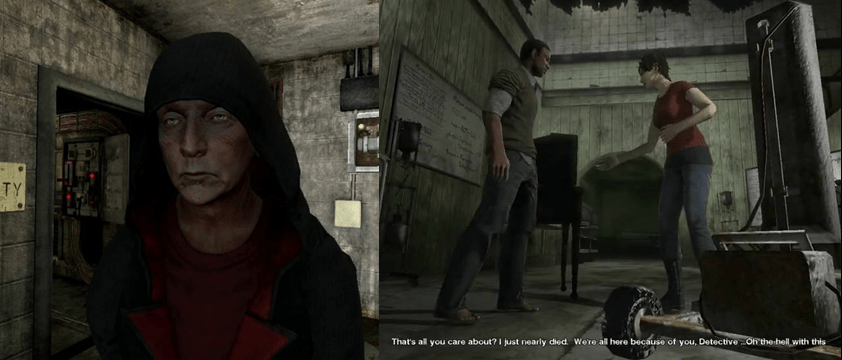
Saw is a third-person action/puzzle game with an emphasis on puzzle-solving, collecting items, and evading or smartly dispatching of a few foes similar to other survival/horror titles. Players are put into the shoes of a familiar character from the franchise who looks and acts absolutely nothing like the character as portrayed by Danny Glover; here, Tapp is far from the broken, semi-insane former cop with a  grouchy voice thanks to a scar across his throat and is, instead, more like a desperate, guilt-ridden cop.

Former detective Tapp finds himself trapped in one of Jigsaw’s demented “games”.

The game’s story is pretty standard Saw fare; Tapp must try to survive the asylum, which is filled with traps and other victims looking to kill him, solving puzzles and freeing victims chosen specifically to test Tapp’s morals and conscious. Unlike in the movies, though, you must past these tests and free these victims; they then promptly flee through means apparently unavailable to you and you continue on, learning a bit more about Tapp’s character and backstory as you go through Jigsaw’s cryptic taunts, audio tapes, and various documents and clippings found strewn throughout the asylum. However, while this does a lot to flesh out the Saw world beyond the movies and the game does a decent job at recreating the aesthetics of its source material, it’s tough to really enjoy it since Tapp controls like a lump of clay; slow, sluggish, and awkward, your options for exploration and combat are made needlessly complicated thanks to the game’s janky, tank-like controls (Tapp literally walks in reverse when you could back on the analogue stick) that see you jogging around the asylum at a listless pace as though the ground is made of sticky mud. Collision issues will see you sometimes clip into the environment or clip onto of it (the closest Tapp ever gets to jumping) and it can be difficult to navigate thanks to the grey, nondescript surroundings and next-to-useless map.

If you have to choose a light source, always choose the flashlight!

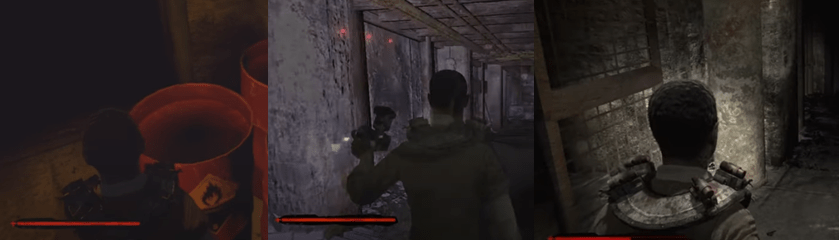
In true Saw fashion, your field of view is limited thanks to ambient, broken lighting, dark corners, and the asylum being little more than a blood, trap, and debris-strewn environment. To help with your navigation, you can acquire three different times to light your way; a lighter (which lights the immediate area a little bit, can cause certain barrels to explode, and goes out when you move too fast), a camera (which illuminates the immediate area in a burst of light but for such a brief period that it’s next to useless), and a flashlight (easily the best source of light as it lights up the largest area and is far more reliable). You can to manually activate these with the Y button, and have to do so every time you restart from a death, but often automatically lose them as the story progresses. Although Jigsaw saved him from the bullet that clearly killed him in the first movie, Tapp must still be feeling the effects as he’s quite a fragile man. A few blows from enemies will send him crumbling to the floor like a ragdoll, you need to constantly be alert from shards of broken glass that will drain your health, and he constantly runs afoul of Jigsaw’s many booby traps scattered throughout the asylum. If you don’t disarm the traps, you’ll get your head blown off, and if you can’t keep your balance you’ll plunge to your death at numerous points.

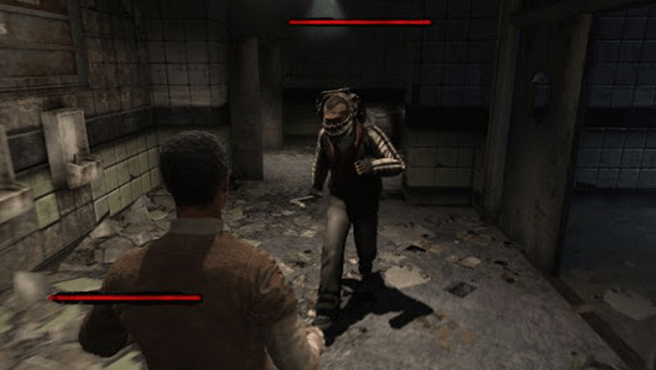
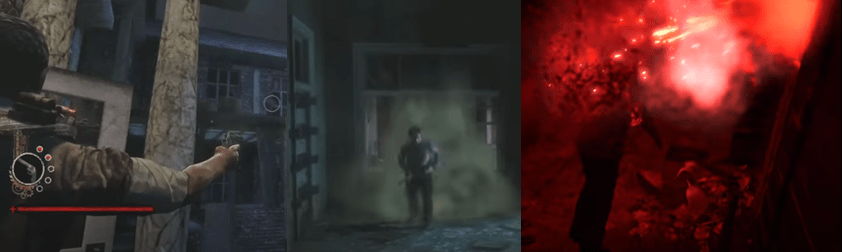
Combat is something you’ll come to dread in Saw thanks to the game’s sluggish controls.

Luckily, there’s a generous autosave feature and you can simply retry from your last checkpoint and Tapp can pick up bandages, a sewing kit, or bottles of water, or water fountains to instantly refill his health or carry around five syringes to heal your wounds. Combat, however, is a diabolical affair; luckily, there aren’t many enemies to engage with and they usually come at you one at a time because Tapp is a poor fighter in every sense of the word. Tapp can punch with his fists, swing destructible weapons, or shoot at enemies with limited ammo, or lure his enemies into traps to dispatch of them but you better be well prepared for when enemies come at you as they generally attack faster than you can “block” or “dodge” and faster than you cans wing, too. It also doesn’t help that the camera zooms in and kind of freaks out a bit when enemies appear, making it way too easy for you to get trapped in the environment or stuck behind a door or some piece of scenery. Most enemies go down pretty easily, which is helpful, and you can knock them down to finish them off or use the proximity alarms on their collars to blow their heads off but, more often than not, you’ll be trying to land a few strikes as quickly as possible and then backing away to clear some room. Often, I found fleeing from enemies caused them to either stand around aimlessly or despawn completely, which can be helpful, and you’ll often come across a number of enemies fighting with each other so you can sneak past or take care of whoever’s left.

Tapp must endure horrific injuries and situations to progress further.

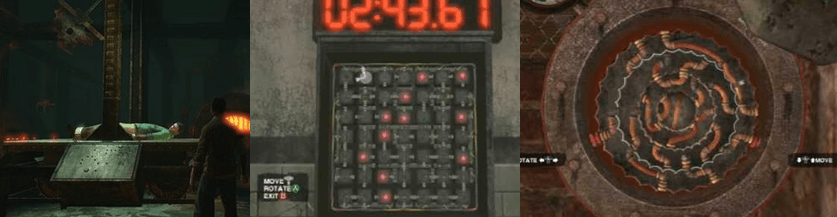
In place of fighting hoards of enemies, you’ll be tasked with exploring your surroundings (carefully, to Jigsaw’s many instant-death traps), solving a few rudimentary puzzles before tackling Jigsaw’s more gruesome “games”. These range from shoving your hand into barrels of acid or toilet bowls fill of syringes to grab keys, attaching different-sized gears to access better weapons, pressing A, X, B, and Y at the right time or aligning certain screws to unlock doors and such, and (my personal favourite) aligning pipes to stop Tapp being gassed to death. Most of the time, solving these leads you to items and things of interest but you’ll also have to endure a few timed puzzles to progress further; these involve moving racks of pig carcasses before you freeze to death, shutting off steam valves, finding fuses to open doors of shut off electrified floors, bashing down weak walls and slipping through, trying not to get crushed to death, and rewiring fuse boxes.

Saw‘s puzzles are so commonplace that they quickly outstay their welcome.

While many of these puzzles are found throughout the game, some see you battling against the clock; linger too long and you’ll be caught in an explosion, which does help add to the tension and immersion of the videogame but the puzzles are always the same at varying levels of difficulty, meaning it all gets very monotonous very quickly. You’ll also often be tasked with using and exploring your environment to find clues, such as codes and keys for doors or other items to unlock sealed doors, which is very much in keeping with the movies but, again, these generally amount to you visiting a new area (that looks strikingly similar to other areas of the game), maybe navigating a few traps or variations of these same puzzles, dispatching the odd enemy or two, and then getting back to where you need to be. It’s not massively difficult since you pretty much see everything the game has to offer within the first hour or so and it’s not too difficult to find your way around, which is helpful as the game’s map is absolutely rubbish.

Graphics and Sound:
While Saw does a pretty good job of emulating the dismal, gritty, dank visual style of many of the Saw movies, in particular the first three films, and the environments look suitably “lived-in” and dangerous, the game really doesn’t look all that great. Character models are hopelessly low quality, using none of the voices or likenesses of any of the actors save for Tobin Bell, and resemble little more than flailing puppets at times. Cutscenes are little more than simplistic cutaways from the main action and all utilise the in-game graphics and models which, while giving the game come consistency and, again, aligning very closely with the fast-paced, frantic cuts of the movies, serve to only emphasise how lacklustre and mediocre the game looks.

As great as it is to see, and hear, Tobin Bell, Saw‘s graphics aren’t up to much.

Where the game excels, as with the movies, is in its depiction of graphic and gruesome death traps and the gravelly, alluring tones of Tobin Bell’s Jigsaw. Thanks to Bell providing near-constant commentary throughout the game, there’s a continual feeling of dread and suspense as you wonder what is waiting around the next corner or in the next area. While many of the puzzles do outstay their welcome, they’re always punctuated by Bell’s distinct voice and his presence definitely elevates the quality of the game…but not quite enough to ignore its many failings.

Enemies and Bosses:
Tapp isn’t alone in the asylum; he’s been trapped with other victims of Jigsaw’s game, all of whom have been told their only way to freedom is to kill Tapp and retrieve a key from his body. These enemies are few and far between but do have some variations; some have the reverse bear trap on their head, some have metal boxes over their heads, others wield weapons, some have explosives attached to their wrists or shotgun neck braces on that will explode you if you don’t keep your distance, and some toss Molotov cocktails at you. the fact that they can easily attack you without mercy and either kill you outright or knock you to your death makes even the game’s standard enemies a tough obstacle to overcome as you need to be well-prepared before engaging in combat, which helps make every enemy a meaningful encounter but also frustrating thanks to the game’s janky camera, collision detection, and combat controls.

The Pighead fight is the closest thing Saw gets to a traditional “boss” battle.

In terms of actual bosses, though, Saw only really has one encounter that could be deemed as a true “Boss battle”; as you progress through the story, you’ll catch sight of the infamous Pighead, an apprentice of Jigsaw, who haunts the asylum, trapping others in death traps and stacking the odds against Tapp. Eventually, you’ll have to battle the Pig head to get a key to progress; armed with a nail bat, Pighead can be a formidable foe but it’s just as easy to rush past him and lure him into a metal cage, lock him in, and then activate a switch to fry his ass alive. In place of traditional boss battles, each chapter of the game ends with Tapp having to same Jigsaw’s victims from death traps; the first of these is another familiar name (though not a familiar face), Amanda Young, and straight away this trap sets the tone for how annoying Saw can be. Amanda and Tapp are both strapped into a machine and the player must cause red or blue antidotes to correctly drop to the left and right, respectively, using the shoulder buttons. This can be a tedious task as it’s not very clear how to do this and you only get about three chances to make a mistake before you fail and must retry from the beginning. The trap’s difficulty spikes in the second stage where you’ll have to sometimes guide two blues and two reds to the same pathway, which means a lot of forward planning and trial and error.

Many of the games are simply harder versions of Saw‘s regular puzzles.

To rescue Melissa Sing, you’ll have to solve three magnetic maze puzzles before she’s chopped to pieces. If you had one of these games as a kid, this trap isn’t too difficult, especially compared to the previous two traps, but it can be tricky to find a safe path to the spiral symbol that is your goal as it’s often not possible to avoid moving over an x strike and speeding up the threat to Melissa’s life. Three of the victims require you to solve increasingly-difficult variations on common puzzles found throughout the game; the gear puzzle, the fuse box puzzle, and the pipe dial puzzles. How difficult you find these traps will depend on your skill at solving these different puzzles but the ones found in these traps are of considerable difficulty, at times, thanks to being much more complex than those you’ll find elsewhere in the game. While they aren’t massively difficult, it can be tricky to remember the order and sequence needed to quickly solve each part and move on to the next mini game before time runs out; it also doesn’t help that the game constantly cuts away from the mini game so you can see the victim suffering further or edging closer to death the longer you take.

The final test is a question of matching images, which are always randomised for extra frustration.

The final victim can only be freed by matching up items on television screens; shotgun shells must match with a shotgun, for example, and a severed foot with a saw. While this isn’t as difficult or as stress-inducing as some of the other traps, it is frustrating as you only get some many chances to make mistakes and the images are randomised with each retry, making it a tedious game of trail, error, and luck as you’re all-but-guaranteed to make at least one mistake when solving this puzzle. Once you complete this test, though, the final test is yours as you must choose between two doors, “Freedom” and “Truth”, with each one leading to a suitably bleak ending for Tapp and the game in general.

Power-Ups and Bonuses:
Tapp certainly has the odds against him; in keeping with the game’s close adherence to the source material, you won’t find anything helpful like shields or speed-ups here. Instead, you must explore and solve puzzles and search everywhere for health-restoring items or weapons. Though he can bash enemy’s heads in with his bare fists, Tapp isn’t much of a pugilist so it’s best to grab one of the many weapons found throughout he asylum; you can grab steel pipes, crowbars, shovels, bottles (and use your lighter to create a Molotov cocktail and set enemies alight), table legs, hatchets, mannequin arms, and nail bats to break and bludgeon over your enemy’s skulls.

Use a gun, a variety of bombs, or re-wire Jigsaw’s traps to tip the odds in your favour.

These weapons will break apart the more you use them but, luckily, there’s often another weapon nearby or to be retrieved from a downed enemy. You can also obtain a revolver at a couple of points; you only get six shots, though, so it’s best to sue this weapon wisely as it’ll pretty much kill any enemy (bar Pighead) in one shot. You’re also able to cobble together traps of your own to stun, gas, and explode enemies though I found this more cumbersome and annoying than useful; it’s far more useful to simply rearm one of Jigsaw’s existing traps to blow or fry enemies away quickly and efficiently.

Additional Features:
Saw comes with forty-six Achievements for you to earn; many of these are can’t be missed as long as you complete the game’s story mode while others require you to defeat a certain number of enemies, use every weapon in the game, and unlock a certain number of doors. They’re not especially difficult to get in one playthrough and you can always load up a previous chapter to get any you’ve missed by killing the same enemy over and over again. Although Saw comes with two difficulty modes, there’s no real reason to play the harder difficulty as there’s no Achievement tied to it. You can also go into the “Features” menu to view character, environment, prop, and trap concept art, if you like that sort of thing, but that’s about it.

The Summary:
I am a big fan of the Saw franchise; I find the character of Jigsaw intriguing and fascinating because of how skewed and warped his motivations and philosophies are and the gruesome death traps make for some of the most horrific pieces of horror cinema in recent memory. Sadly, while Saw does go to a great deal of effort to match and recreate the look, feel, and atmosphere of the movies it is based on and part of, it fails to really hold the attention for too long. The game is average, at best, and a frustrating mess at worst; with a dodgy camera, janky controls, wonky physics, and a piss-poor combat system, Saw could have been a tense and atmospheric survival/horror game with a focus on numerous increasingly tough, imaginative puzzles but is, instead, an uninspiring experience that is over pretty quickly, adds little to the lore, and requires very little from you other than battling past the game’s screwy controls and mastering a handful of different puzzles until you reach which depressing ending you choose to indulge.

My Rating:

Rating: 1 out of 5.

Terrible

Did you ever play Saw; if so…why, and what did you think of it? Did you struggle with the game’s presentation and gameplay or did you actually enjoy it for what it was? Are you a fan of the Saw franchise? Which of the films do you think is the best, or how would you rank the movies? Whatever you think about Saw, drop a comment below.

10 FTW: Under-Rated Sequels

10FTW

Sequels are funny things; you have to get the balance just right between providing everything people enjoyed about the first moving but expanding upon the plot and characters in a natural way. If it’s difficult for a lot of sequels to get this right, it’s even harder for third, fourth, or other sequential entries to hit the mark. There’s a few prime examples of sequels done right (Back to the Future Part II (Zemeckis, 1989), Terminator 2: Judgment Day (Cameron, 1991), and The Dark Knight (Nolan, 2008) spring to mind as some near-undisputed examples of sequels that were everything their predecessor was and more) and even fewer examples of completely perfect movie trilogies as most stumble by the third entry due to one reason or another. I can’t tell you, though, how often I’ve seen people talk shit about some sequels that are actually not that bad at all and, arguably, criminally under-rated. When movies, comics, and videogames produce remakes or other ancillary media based on these franchises, they either always complete ignore these films or openly criticise them for absolutely no reason. Today, I’m going to shed some light on ten under-rated sequels and, hopefully, try to show why they’re actually not as bad as you might think…

URSaw2
10 Saw II (Bousman, 2005)

While the Saw (Various, 2004 to present) noticeably dipped in quality as Lionsgate milked the series for all its worth with sequel after sequel after sequel (most of which were actually interquels as they foolishly killed off John Kramer/Jigsaw (Tobin Bell) way too early in the series), I feel like a lot of people don’t give Saw II enough credit. Saw (Wan, 2004) was an intense, terrifying experience that saw two people trapped in a room with the only option of escape being death or sawing a foot off with a rusty hacksaw. It kick-started a whole “torture porn” sub-genre of horror, despite most of its terror coming from the horrific situations rather than copious amounts of gore. Saw II, however, put the focus on Jigsaw, who was an almost mythic figure in the first movie and wasn’t fully revealed until the film’s dramatic conclusion. Here, we delve deep into his motivations for putting people through his gruesome “tests” and this film is a worthwhile watch simply for the subtle menace exuded by Tobin Bell.

URSaw2Traps
Saw II has some gruesome traps.

Not only that, Saw II ramps up the gore and the desperation by having seven shady individuals all infected with a deadly, slow-acting nerve agent and trapped in a horror house, of sorts. The film’s tension comes from the desperation of Detective Eric Matthews (Donnie Wahlberg), who is frantic to save his son from Jigsaw’s trap and to bring Jigsaw in by any means necessary. Yes, there’s more gore and more onscreen violence and, arguably, Saw II set the standard for the myriad of sequels to come by ramping up Jigsaw’s traps and plots to an absurd degree, but this was before the series fell off a cliff. Here, minor characters from the first film are expanded upon, the lore of this world is fleshed out beautifully, and we have some of the franchise’s best traps ever.

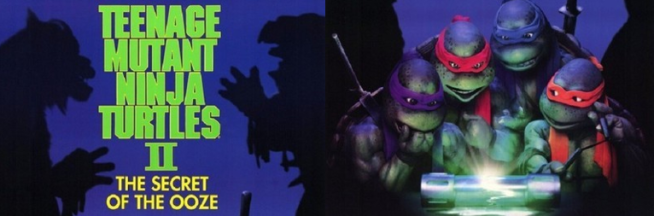
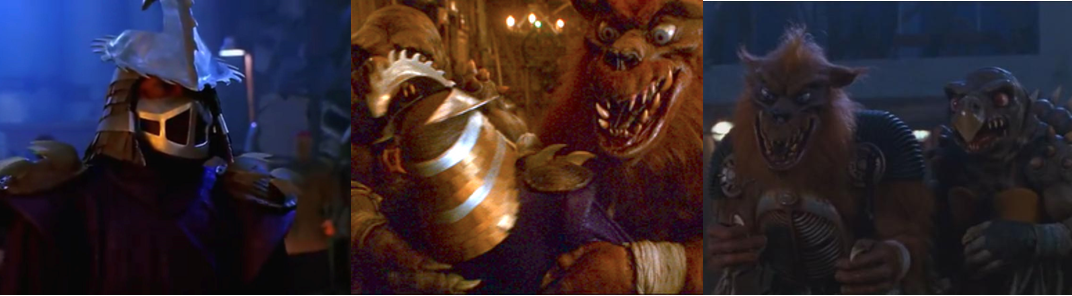
For many of us back in the nineties, Teenage Mutant Ninja Turtles (Barron, 1990) was the first time the “Hero” Turtles were depicted as being as violent and nuanced as in their original Mirage Comics run. Up until the release of this movie, the Turtles were cute, cuddly superheroes who we watched foil the Shredder (James Avery) week after week and whose toys we bought with reckless abandon. However, given how dark and violent the first film was, this sequel does a massive course correction, increasing the silliness and reducing the onscreen violence and decreasing the Turtles’ use of their weapons in an attempt to align the live-action movies more with their more kid-friendly, animated counterparts. Yet, that doesn’t mean this sequel isn’t good in its own right. The Turtle suits (once again brought to live by Jim Henson’s Creature Shop) look amazing and are probably better and more expressive than in the previous movie; the film also stays relatively close to its source material by focusing on the mutagenic ooze that created the Turtles, and it also introduced two mutant antagonists for the Turtles to fight.

Tokka and Rahzar are surprisingly formidable.

While they’re not Bebop (Barry Gordon and Greg Berg) and Rocksteady (Cam Clarke), Tokka (Rock Lyon and Kurt Bryant) and Rahzar (Gord Robertson and Mark Ginther) are a fun, welcome addition. It’s great seeing the Turtles kick the snot out of faceless members of the Foot Clan but Ninja Turtles has always been about the crazy mutated characters and these are two of the most impressive looking and formidable, especially considering their childlike demeanours. The Shredder (François Chau) also returned in this movie and is a lot closer to his animated incarnation, being decidedly more theatrical than in the first movie but no less intimidating. Probably the only thing that lets this movie down for me (no, it’s not the Vanilla Ice rap scene) is the final battle between the Turtles and the ooze-empowered Super Shredder (Kevin Nash) in which Shredder is unceremoniously defeated by being crushed under a pier due to his own foolishness. Apart from that, though, I feel this movie is the perfect balance between the dark, violent Mirage Comics and the light-hearted animated series and this balance is where the Ninja Turtles (a ridiculous concept to begin with) shine the brightest.

URBatmanMcDs
8 Batman Forever (Schumacher, 1995)

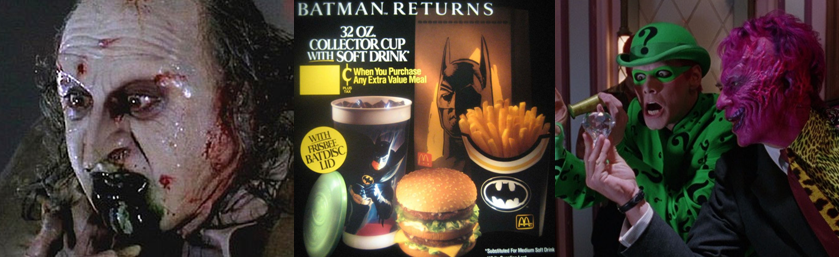
Now, admittedly, Batman Forever has its fan-base; there’s plenty of very vocal people out there who rate this quite highly among the many Batman movies (Various, 1966 to present) , especially after viewing the special edition and a lot of the deleted scenes which, had they been implemented, would probably have elevated this movie even higher. There’s a couple of reasons why this film is often unfairly attacked: one is because of how God-awful its sequel, Batman & Robin (ibid, 1997) was. That film’s over-the-top camp, painful performances, and nipple-suits are often considered so bad that both of Schumacher’s Bat-movies are unfairly lumped together and judged as a failure, when this just wasn’t the case. The second reason is because of how dramatically different it is from the previous Bat-movies; after Tim Burton brought us a dark, brooding, serious interpretation of Batman (Michael Keaton) in 1989, he was given free reign on the sequel, Batman Returns (Burton, 1992). While this made for one of my personal favourite Bat-movies thanks to Burton’s Gothic sensibilities, it upset a lot of parents (…and McDonald’s) and, similar to Turtles II, Schumacher was brought in to make Batman more “kid friendly”.

URBatmanForeverRobins
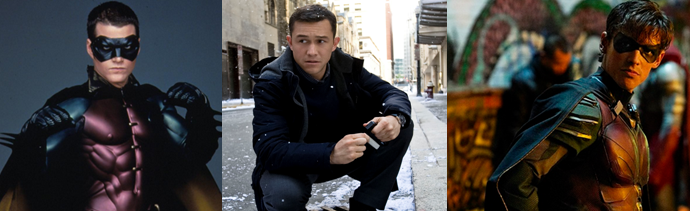
It’d be some time before Robin would truly fly again.

And yet despite the gratuitous neon lighting, the slapstick elements, and an incredibly over-the-top (and massively unsuitable) performance by Tommy Lee Jones, Batman Forever not only brought us a physically imposing Bruce Wayne/Batman (Val Kilmer) for the first time but it actually had the balls to include Dick Grayson/Robin (Chris O’Donnell). Schumacher smartly uses Robin’s origin as a parallel to Batman’s so that the film can tread familiar ground but in a new, fresh way while also bringing us one hell of a bad-ass Robin suit. Thanks to the blinkered, narrow-minded opinion that Robin (a character who has been around basically as long as Batman) is somehow “not suitable” for a Bat-movie, it wouldn’t be until the recent Titans (2018 to present) series that we would finally see Dick Grayson realised in live-action once again (though we came so close to seeing another interpretation of the character in the DC Extended Universe). Also, sue me, I grew up in the nineties and have always been a big fan of Jim Carrey’s. His performance as Edward Nygma/The Riddler might be over-the-top but his manic energy steals every scene he’s in and he genuinely looks like he’s having the time of his life channelling his inner Frank Gorshin and chewing on Schumacher’s elaborate and impractical scenery.

7 Terminator Salvation (McG, 2009)

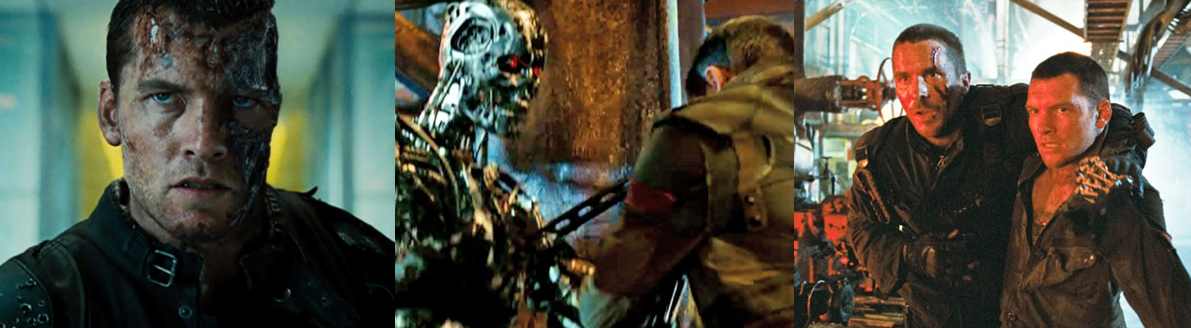
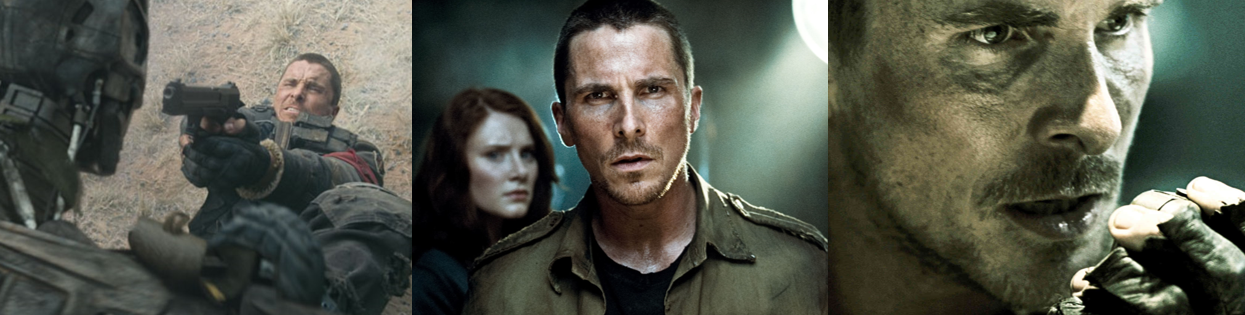
Okay, I’m just going to come out at say it: Terminator Salvation was, hands down, the best Terminator (Various, 1984 to 2019) sequel after Terminator 2 and always will be, no matter how many times they force Arnold Schwarzenegger to throw on the shades and the jacket. After how perfectly Terminator 2 ended the series, the only smart way to produce further sequels was to have Terminators travel to other times and target other key members of the resistance (a plot point touched upon in the Dark Horse Comics, the dismally disappointing Terminator 3: Rise of the Machines (Mostow, 2003), and threaded throughout the semi-decent Terminator: The Sarah Connor Chronicles (2008 to 2009) television series) or to make prequels that focused on the war against the machines in a post-apocalyptic future. This latter idea would be my preference and, as such, I absolutely love Terminator Salvation. Is it perfect? Well, no, but it’s a different type of Terminator movie…and that is a good thing, people! Rather than making yet another lacklustre retread of Terminator 2, Salvation is, ostensibly, a war movie depicting the last vestiges of humanity driven to the brink of extinction by increasingly-dangerous killer machines.

Christian Bale always makes for fantastic casting.

Not only that, we got Christian Bale as John Connor! After the pathetic casting and portrayal of Nick Stahl (remember him?) in the third movie, we got freakin’ Batman as the last, best hope of humankind! And he gives a great performance; stoic, gritty, hardened, this is a Connor who is on the edge of accepting his true destiny and is desperate to do anything he can to stay one step ahead of Skynet. Add to that we got a pretty decent battle between Connor and the T-800 (Roland Kickinger). People like to shit on this sequence because Kickinger has Schwarzenegger’s likeness digitally laid over his face but, honestly, it isn’t that bad an effect and, if you can’t get Arnold back, this was a great way to utilise him. The only faults I have with this movie are that Connor shouldn’t have received such a clearly-mortal wound from the T-800 (I know he was originally supposed to die but, after they changed the ending, they really should have re-edited this scene to make his wound less deadly) and that the franchise has largely ignored it with subsequent sequels rather than continuing on from its open-ended finale, meaning we’ll forever be denied the bad-ass visual of an army of Arnold’s marching over a field of human skulls!

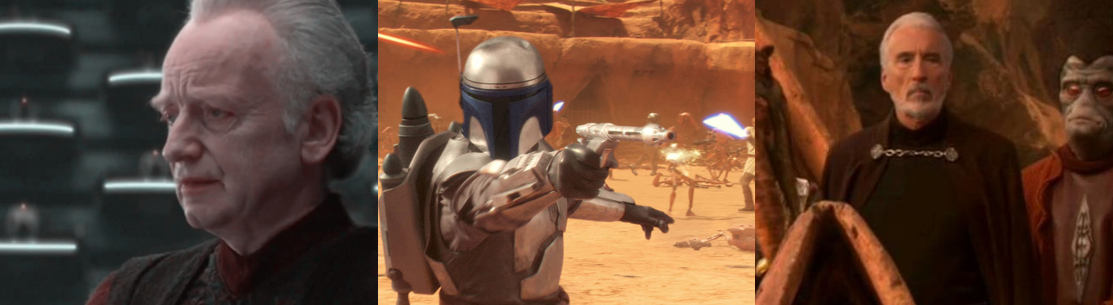
Okay, just hear me out…Attack of the Clones is not that bad, especially after Star Wars: Episode I: The Phantom Menace (ibid, 1999) focused way too much on boring shit like “trade disputes” and politics, insulted our intelligence with the dreadful Jar Jar Binks (Ahmed Best), and sucked all of the menace and intrigue out of Darth Vader (David Prowse and James Earl Jones) by portraying Anakin Skywalker (Jake Lloyd) a whiny, annoying little brat. Arguably, the Prequel Trilogy would have been better if Lucas had opted to have Anakin discovered as a young adult and cast Hayden Christensen in the role from the start as this would be a far better parallel to his son’s own journey to becoming a Jedi. Christensen is a decent enough actor and he was simply handicapped by Lucas’s dreadful script; if Lucas had opted to let someone else take another pass at his dialogue, we could have seen a bit more of the snarky banter Anakin shares with his mentor, Obi-Wan Kenobi (Ewan McGregor). Despite the copious amount of green screen and computer-generated characters thrown at us here, Attack of the Clones has a lot of visual appeal; from the city planet of Coruscant to the rain-swept Kamino and the dry lands of Geonosis, the only location that lets Attack of the Clones down is its return to the sand planet Tatooine but even that is used as a pivotal moment in Anakin’s turn towards the Dark Side.

I would’ve preferred to see what Boba Fett was capable of.

And let’s not forget the fantastic Lightsaber battles on display here; every battle is as good as the final battle from The Phantom Menace, featuring some impressive choreography and setting the stage for one hell of an epic showdown between Anakin and Obi-Wan in the next movie. While I don’t really care for Yodi (Frank Oz) being a CG character, or wielding a Lightsaber, there is a perverse pleasure to be gained from seeing Yoda flip about like a maniacal spider monkey. Oh, and this movie has freakin’ Christopher Lee in it! Unfortunately, Lee’s Count Dooku/Darth Tyranus is criminally underused in this movie and killed off all-too-soon in the sequel. Another misfire for me was Lucas wasting time introducing Jango Fett (Temuera Morrison); I’ve never really understood why people love Boba Fett (Jeremy Bulloch) so much as he’s a bit of a klutz and doesn’t really do anything, but he does have a rabid fan base and, since we never see his face in the Original Trilogy, I would have instead cast Temuera as Boba so that we could see him actually do something.

URHallraiser4
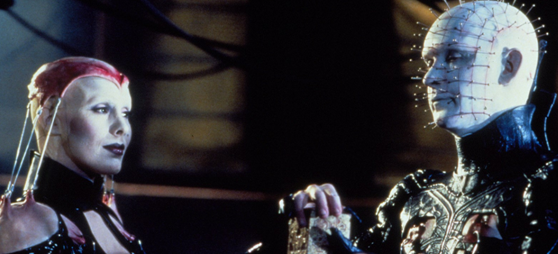
5 Hellraiser: Bloodline (Yagher (credited as Alan Smithee), 1996)

Hellraiser (1987 to present) is a horror franchise that seems to have struggled to be as successful as some of its other peers. I’ve already talked about how the original Hellraiser (Barker, 1987) really hasn’t aged very well and this applies to every sequel in the series as well as they seem to immediately age to moment they are released thanks to the decision to release every sequel after the third movie direct to video. Admittedly, a lot of my fondness for Hellraiser: Bloodline is based on two things: it was the first Hellraiser movie I was able to sit through from start to finish and was responsible for me becoming a fan of the series, and Event Horizon (Anderson, 1997) is one of my favourite science-fiction/horror movies. Arguably, Event Horizon is a far better version of Bloodline’s core concept (that being “Hellraiser…in Space!”) but there’s an important thing to remember about that: Bloodline isn’t set solely in space! Instead, Bloodline takes place in three different timelines and follows the descendants of Philippe Lemarchand (Bruce Ramsay), an 18th century toymaker who was unwittingly responsible for creating the magical Lament Configuration, a puzzle box that, when solved, summons Cenobites from a dimension where the lines between pleasure and pain are blurred.

URHallraiser4Pinhead
Pinhead has lofty aspirations in Bloodline.

Cursed for this act, Lemarchand’s descendants are driven by an inherent desire to create the Elysium Configuration, a means to forever seal the Cenobites from our world forever Dr. Paul Merchant (also Ramsay) is merely the latest in a long line of these toymakers to encounter the demonic Cenobite dubbed Pinhead (Doug Bradley) and his acolytes; unlike his predecessors, Merchant actually succeeds in his mission and destroys both Pinhead, and the portal to Hell, forever using a massive space station. There’s a few reasons I think people misjudge this movie: one is that it was absolutely butchered by Miramax, who demanded all kinds of reshoots and changes, meaning that the film’s original director’s cut has never been seen. Another is a holdover from Hellraiser III: Hell on Earth (Hickox, 1992), which saw Pinhead ape Freddy Krueger (Robert Englund) and become just another slasher villain with a twisted sense of humour. Similarly, in Bloodline, Pinhead goes from being a representative of the Order of the Gash (…lol), to wanting to unleash Hell on Earth permanently like some kind of invading force, to the point where he takes hostages and transforms people into Cenobites whether they have opened the box or not. Yet none of this changes the fact that Bloodline is a pretty decent film; we finally get to see some background into the mysterious puzzle box, there’s multiple times when the structure and history of Hell is hinted at, and there’s some really disgusting kills and gore. Personally, I rate this film higher than the second (because that film is boring) and the third simply because it doesn’t have a Cenobite with CDs jammed in its head!

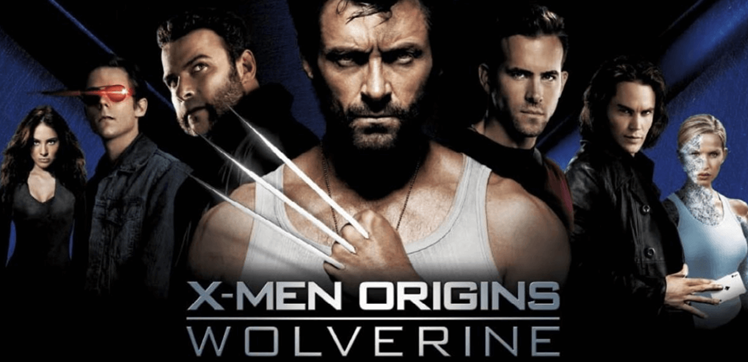
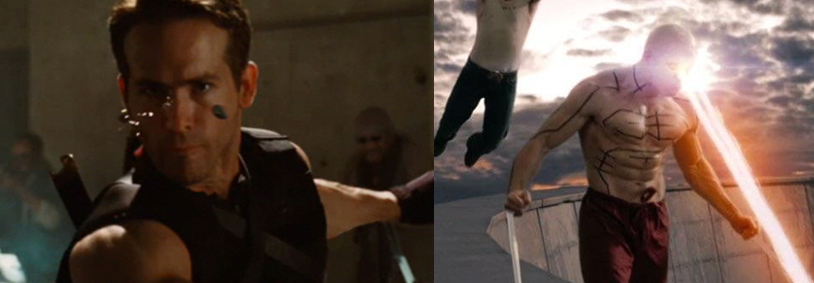
4 X-Men Origins: Wolverine (Hood, 2009)

This one is gonna cost me a lot of credibility but I honestly do not get why X-Men Origins: Wolverine gets so much shit, especially considering how incoherent and screwed up the timeline and continuity of the X-Men (Various, 2000 to present) movie series became after this film. Sure, Wade Wilson/Deadpool (Ryan Reynolds) is poorly represented, some of the CG is a bit wonky, and there are a lot of flaws in the plot, but there’s also a lot to like about this film. First, and most obvious, is the film’s opening credit sequence, which many have cited as being their favourite moment of the film. Seeing James Howlett/Logan/Wolverine (Hugh Jackman) and Victor Creed (Liev Schreiber) racing through various wars is stunning and I do agree that the film really should have based around this premise and their slow degeneration into bloodlust, with Logan overcoming it and Victor giving in to it to become Sabretooth. Yet, often, I see a lot of criticism about how the X-Men movies tend to always focus on Wolverine at the expense of other Mutants…yet people still hate on this movie, which puts the spotlight entirely on Wolverine and still manages to feature some new Mutants and fill in a few plot points along the way. We get to see Logan’s time in Team X, the full extent of the procedure that gave him his Adamantium skeleton (although we miss out on the feral Wolverine showcased so brilliantly in the otherwise-disappointing X-Men: Apocalypse (Singer, 2016)), and even how unknowingly pivotal he was in bringing the original X-Men together.

The cast for Origins was pretty much perfect.

The casting really makes this movie shine: Jackman is at his most jacked as Wolverine and, while he’s a little too tame compared to what you’d expect from this point in his life, he always brings a great intensity and charisma to his breakout role. Schreiber was an inspired choice to portray Logan’s brother, who (it is strongly hinted) eventually succumbs to his animalistic ways to become Sabretooth (Tyler Mane), bringing a nuanced menace and sophistication to what is normally seen as a feral character. Danny Huston is always great as a smug, scenery-chewing villain (though he doesn’t exactly resemble Brian Cox) and Reynolds gave a great tease at what he was capable of as everyone’s favourite “Merc with a Mouth” (…until it was sown shut). We also get some new Mutants, which I appreciate even more after subsequent sequels could never seem to let go of having teleporting demons involved in their plots; Fred Dukes/The Blob (Kevin Durand) is fantastically realised in the movie and has a great (and hilarious) boxing match with Logan and everyone’s favourite card-throwing Cajun, Remy LeBeau/Gambit (Taylor Kitsch) also makes his one (and, so far, only) film appearance here. I only expected a brief, unsatisfying cameo from Gambit but he actually has a surprisingly substantial role. Could it have been bigger? Sure, but I’d say he was treated a lot better than Deadpool (who, it should be remembered, was still planned to get a spin-off from this film).

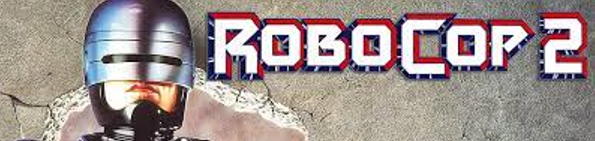
3 RoboCop 2 (Kershner, 1990)

Now, don’t get me wrong: I love RoboCop (Verhoeven, 1987). It told an easily self-contained story of Detroit City police officer Alex Murphy (Peter Weller) being rebuilt from death as a bad-ass cybernetic enforcer of the law and rediscovering his humanity. It’s a classic film, with some amazing effects, hilarious commentary on consumerism, media, and corporate greed, and would be a tough act for anyone to follow. Yet, call me crazy, but RoboCop 2 succeeds far more than it fails. RoboCop has a fresh coat of paint and has (literally) never looked better onscreen; he’s just as efficient and pragmatic as before and, though he seems to have regressed back to a more mechanical mindset, he still exhibits a great deal of humanity but in new and interesting ways. First, he is routinely referred to as “Murphy” by other officers (particularly Anne Lewis (Nancy Allen), his partner) and struggles so badly with reconnecting with his wife and son (who believe that Murphy is dead and buried) that he routinely stalks them, which contributes to his superiors deciding to reprogram him. This results in a deliciously over-the-top sequence where RoboCop, his head full of insane, politically correct directives, tries to calm situations with talk rather than bullets. It eventually becomes so maddening that he is forced to electrocute himself just to clear his head enough for him to focus on the big bad of the film, Cain (Tom Noonan).

RoboCain is an impressively ambitious inclusion.

Now, Cain and his psychopathic gang of untouchable drug dealers are great, but they’re not Clarence Boddicker (Kurtwood Smith); instead of Clarence’s manic energy, Cain brings a quiet, intellectual approach to his menace. He also manages to dismantle RoboCop’s metallic body, just as Clarence destroyed his human one, and is eventually able to go toe-to-toe with RoboCop as the frankly fantastic RoboCop 2 (or “RoboCain”). If you liked ED-209 from the last movie, RoboCain is bigger, badder, and better. A combination of animatronics and stop-motion, RoboCain was an ambitious choice for the film and actually works really well considering the technological limitations of the time. The fight between Cain and RoboCop also holds up surprisingly well and is far more interesting than Robo’s encounters with ED-209 thanks to the villain being far more versatile than his clunky counterpart. I think what brings this movie down, for many, is that Cain’s gang aren’t as charismatic or memorable as Boddicker’s (I can only name two of Cain’s guys off the top of my head, whereas I can name at least five of Boddiker’s), some of the plot is a bit redundant (Robo’s story arc is, essentially, a truncated version of the same one from the first), and the awfulness of subsequent RoboCop movies leaving such a sour taste that people assume all RoboCop sequels are terrible…and that’s just not the case.

2 Predator 2 (Hopkins, 1990)

Okay, full disclosure: as a kid, I was not a fan of this movie. I loved Predator (McTiernan, 1987); it was over-the-top, filled with massive action heroes, and featured a tense build-up to one of cinema’s most memorable alien creatures. The sequel just seemed to be lacking something; maybe it was because we’d already seen the Predator (Kevin Peter Hall) in its full, gruesome glory and didn’t really need to go through the suspense of its eventual reveal all over again. Replacing Schwarzenegger is Danny Glover’s Lieutenant Mike Harrigan, a hardened, smart-mouthed loose cannon who plays by his own rules (as was the tradition for any cop worth a damn in cinema back then). I was in awe at Schwarzenegger as a kid so it was disappointing to go from him to Glover but, honestly, Glover is probably better in many ways: his anti-authoritative, roguish nature makes him more relatable as a character and the fact that he actually gets hurt and struggles to physically prevail makes him far more human. He’s a much more believable protagonist in a lot of ways and, thanks to his more developed acting chops, is more than a suitable replacement for Arnold. Predator 2 also takes the titular hunter out of the jungle and places him in the next most logical place: the concrete jungle. Now, a lot of people hate this change; even Arnold hated that the Predator would be in Los Angles for the sequel but…surely doing the sequel in the jungle again would have just resulted in exactly the same movie as before?

Predator 2 established almost all of the Predator’s lore and society.

It’s so weird that people rag on the city setting as it makes perfect sense, is realised really well, and even set the ground for a lot of the Dark Horse comics. No other sequel around this time repeated the first in this way; Aliens (Cameron, 1986), Terminator 2, Batman Returns, Lethal Weapon 3 (Donner, 1992), just to name a few, all fundamentally alter the concept of the first movie rather than rehashing it so why does Predator 2 get such a hard time for doing it (and doing it well, I might add)? To make matters worse, Predator 2 has been criminally overlooked in subsequent sequels; there was no mention of the film’s events at all in the otherwise-excellent Predators (Antal, 2010), a film that went out of its way to reference (both through homage and direct mention) the first movie, and it only gets a passing mention in the disappointing The Predator (Black, 2018). Jake Busey, son of Gary Busey, even featured as an expert on the Predator species but there was no mention in the film of his relationship to Busey’s character, Peter Keyes, despite the two being father and son! I’ll never understand this; it’s a real insult, to be honest. Predator 2 brought so much to the table; it defined the honour system of the Predator species, introduced a whole bunch of the alien’s iconic weaponry, and laid the foundation for comic books, videogames, and sequels and spin-offs to follow for years to come. Subsequent movies have no problem reusing the weaponry or the culture of the Predator introduced in this movie but when it comes to actually directly referencing the film’s events they shy away and why? It’s a great film! Great kills, great action, great tension, some fantastic effects, and a super enjoyable chase sequence between the Predator and Harrigan across the streets and rooftops of Los Angeles! I just don’t get the hate, I really don’t.

1 Ghostbusters II (Reitman, 1989)

Man, if you thought I was mad about Predator 2, just wait until you hear this one. Ghostbusters II suffers from a lot of the plagues of Predator 2, and other films on this list: it’s unfairly criticised for not being exactly the same as the iconic first film, it’s overlooked time and time again, and direct references to it are few and far between. Just look at the majority of Ghostbusters-related media; be it toys, videogames, or otherwise, the characters almost always look exactly like the first movie rather than this one. And why? Because it doesn’t have the Stay Puft Marshmallow Man in it. Give me a fuckin’ break! As much as I love him, and that entire sequence, it wouldn’t make any sense of Mr. Stay Puft to appear in this movie! The Ghostbusters destroyed it when they defeated Gozer the Gozerian (Slavitza Jovan and Paddi Edwards) and this movie revolves around an entirely different villain and plot so why bring it back? I guess audiences were just used to antagonists returning ins equels at that time but to judge this movie just for not having Mr. Stay Puft is not only unfair, it’s down-right stupid.

The river of slime always freaked me out as a kid.

After all, it has the Statue of Liberty coming to life instead! Sure, it doesn’t match up to Stay Puft’s rampage, but it’s still pretty decent. Also, the film’s antagonist, Vigo the Carpathian (Wilhelm von Homburg), is voiced by Max von Sydow, who is an absolute legend. Vigo’s threat is arguably much higher than Gozer’s in a way as his mood slime has been brewing under New York City for decades and is the direct result of all the animosity in the world (…or, just New York, which is bad enough). It’s powerful enough to cause ghosts to go on a rampage again and turn the Ghostbusters against each other, and is a far more grounded threat than Gozer’s plot to destroy the world. The stakes are raised in Ghostbusters II through the fact that the titular ‘Busters have been forced to disband and go their separate ways. Through this, we see something that is also often overlooked about this movie: character growth. Would you criticise Ellen Ripley’s (Sigourney Weaver) character growth in Aliens? Well, yes, probably; you are the internet after all but this plot point allows Ghostbusters II, like RoboCop 2, to retread the familiar ground of the disgraced Ghostbusters being called upon to save the city in a new way. The characters are all a bit more haggard after how badly the city burned them so seeing them rise up regardless, to the point where they’re even able to resist the mood slime, is a great arc.

There are some really horrific scenes in this film…

Add to that the film’s consistent and enjoyable special effects, the truly gruesome sequence in the abandoned Beach Pneumatic Transit system, and a creepy performance (as always) by Peter MacNicol and you’ve got a film that, like Turtles II, is more than a worthy follow-up to the original. And, yet, like I said, this film is often overlooked, almost with a vendetta. It doesn’t help that co-star Bill Murray despised the movie, which is always bad press for any film; his cantankerous ways also constantly held up the long-awaited third movie to the point where we had to suffer through that God-awful reboot before a follow-up would be approved. Despite Murray’s opinions, Ghostbusters II has managed to endure in some respects, though; characters and events were directly referenced in Slimer! and the Real Ghostbusters (1988 to 1991) and Vigo’s portrait was prominently featured in the true third entry, Ghostbusters: The Video Game (Terminal Reality/Red Fly Studio, 2009). In fact, I was very surprised that Ghostbusters: Afterlife (Reitman, 2021) didn’t completely ignore this movie and even then it barely references it.

URGhostbusters2Conclusion

Do you agree with my list? I’m guessing not and you think most of these movies are terrible but why do you think that? Are there any other under-rated sequels you can think of? Write a comment and give me your thoughts below.
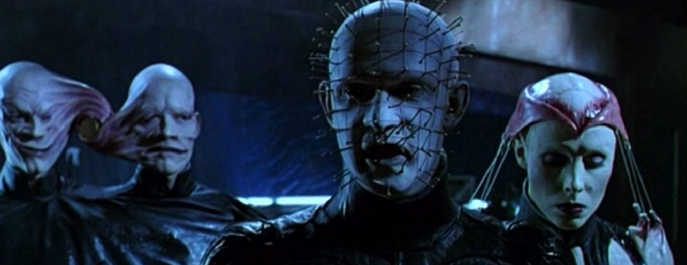
Talking Movies: Jigsaw

Talking Movies
JigsawLogo

It’s been seven years since the last Saw movie, Saw 3D: The Final Chapter (Greutert, 2010), spent the majority of its running time haphazardly tying up all the loose ends of one of the most gruesome and convoluted horror franchises of all time. Back then, Saw 3D wasn’t actually supposed to be the last film in the franchise but, as the quality of the films began to wane in its last years, Lionsgate decided to put the franchise on ice until a suitable way to resurrect the series could be figured out. With Jigsaw (Spierig Brothers, 2017), Lionsgate appears to hoping to reclaim the season of Halloween with one of the most successful horror franchises ever but has there simply been too much time between movies?

JigsawCops
Two more incompetent cops struggling to stop Jigsaw.
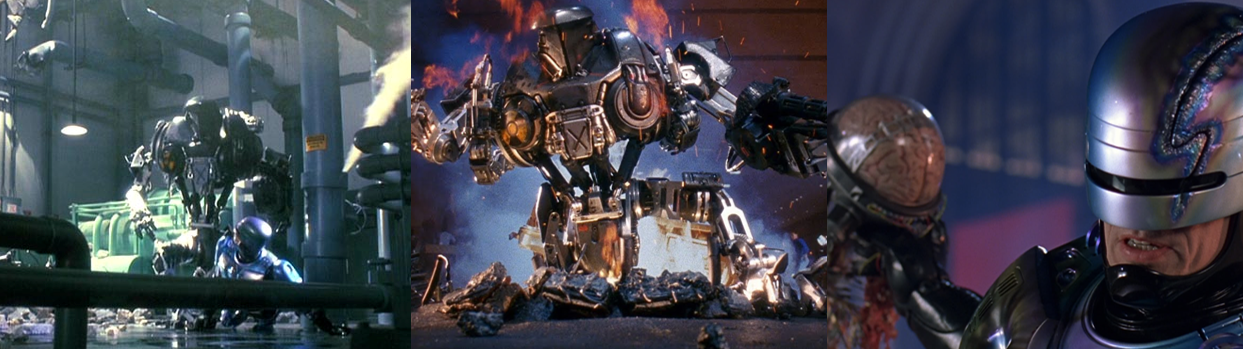
Jigsaw opens with a notorious criminal, Edgar Munsen (Josiah Black) in the midst of one what appears to be one of John “Jigsaw” Kramer’s (Tobin Bell) diabolic games of life and death; chased across rooftops, he is eventually shot by police (led by Detective’s Halloran (Callum Keith Rennie) and Keith Hunt (Clé Bennett), in an attempt to stop him from triggering a detonation. Instead, he triggers another game across town, where five victims are chained by the next in a room where the opposite wall is lined with buzzsaws. The familiar rasping tones of Jigsaw inform them that they must make a sacrifice of blood to escape the room and, in a surprising twist, one of the victims, Anna (Laura Vandervoortt), figures out that just a small cut will release them from their bonds. Although she is able to encourage three of her fellows to follow her example, one is not so lucky and is presumably skewered by the blades. Encouraged by Jigsaw to confess their sins, the victims bicker and argue about their past transgressions in the next room, which forcibly hangs them by their necks until Carly (Brittany Allen) chooses one of three syringes to either cure the poison on her blood or eat her alive through the injection of acid. The now-stereotypical hot-head of the group, Ryan (Paul Braunstein), eventually stabs her with all three needles in a desperate attempt to be freed and, as you’d expect, she is melted to death by the acid.
JigsawBuckethead
It’s not a good night unless you wake up with an explosive bucket on your head….

Meanwhile, Halloran and Hunt meet with their resident forensic experts, Eleanor Bonneville (the delectable Hannah Emily Anderson) and Logan Nelson Matt Passmore), who examine the bodies of the victims of the game that is in progress and find unbelievable evidence to suggest that John Kramer is actually still alive and running this new game. Whether its paranoia over the last spate of killings perpetrated by Jigsaw and his apprentices or the desperate need to wrap the investigation up quickly, Halloran almost immediately begins to suspect both Eleanor and Logan of being involved in the game. These suspicions seem to be somewhat founded as Eleanor reveals to Logan that she is not only an avid follower of cult-like online discussions surrounding Jigsaw but also has a whole studio filled with some of Jigsaw’s most infamous traps and mechanisms, including one that was never actually used in a publicly-known game. With tensions running high and the victims trapped in increasingly ghastly situations, the race is soon on to find where the game is being played, rescue the victims, and figure out whether Kramer has actually returned from the dead.

JigsawForensics
Seriously, I am in love with this woman…

Before going into the film, I figured that Jigsaw would be a soft reboot of sorts; I was sure that it would take place about ten years later, with John Kramer dead but his legacy living on, possibly though his cult-like followers as indicated at the end of Saw 3D. Surprisingly, Jigsaw is very closely tied to the mythology and legacy of the previous films; although the film doesn’t delve too deeply into the exact specifics of the events that came before it, newcomers to the series would probably be best served by watched, at last the first, third, and seventh films before this movie.

JigsawBurying
Jigsaw’s traps are fairly lacklustre for the series.

One of Saw’s biggest selling points is its use of “torture porn” traps that force victims to endure unimaginable pain in order to survive Jigsaw’s games. Unlike some of the later Saw traps, Jigsaw’s traps are some of the more grounded. The most technically unbelievable ones are at the beginning of the game, with the five victims chained up to a massively complex series of winches and gears; later, Ryan finds his leg caught in a constantly-tightening wire trap while Anna and Mitch (Mandela Van Peebles) are being buried by grain and farmyard tools rain down on them. The traps are interesting and cringe-worthy in their own way but hardly the most horrific or disgusting from the series; Anna is, for a change, surprisingly smart, level-headed, and logical about most of the traps and encourages the others to follow Jigsaw’s rules, allowing the majority of the victims to survive the first three trials. The second of Saw’s selling points is the now-cliché twist ending; Saw (Wan, 2004) had one of the most iconic and unexpected twist endings of all time and, honestly, none of the films that have followed have really come close to topping or even matching that twist. Jigsaw is no exception; there are three twists here, all of which have been done in previous Saw movies (Jigsaw’s game had already been played to completion in Saw II (Bousman, 2005), Mark Hoffman (Costas Mandylor) faked being a victim only to reveal himself as Jigsaw’s apprentice in Saw IV (ibid, 2007), and he, and Amanda Young (Shawnee Smith), both posed as Jigsaw in Saw III (ibid, 2006), Saw V (Hackl, 2008), Saw VI (Greutert, 2009), and Saw 3D).

JigsawShotgun
The final twist wasn’t too difficult to see coming.

The revelation that John Kramer is not actually alive shouldn’t really be that much of a surprise as, unless he comes back as a zombie (which would be super out of place given the generally grounded nature of the franchise), but it’s always great to see Tobin Bell onscreen. Honestly, though, I felt like Jigsaw could have done without him being in it; given that Logan used audio samples to imitate Kramer’s voice, I think it would’ve sufficed to simply have Bell return as the voice of Jigsaw (or whoever is imitating Jigsaw) rather than be shoe-horned in in increasingly difficult to piece together flashbacks. In this case, given that we’ve already seen in great detail how Amanda and Hoffman aided Kramer in the past, it’s a bit jarring to suddenly wedge a new apprentice into the mix. For a guy dying of cancer, John sure fit a lot of tutelage and elaborate planning and trap-making into his last few years.

JigsawLasers
The lasers really took me out of it, to be honest.

In the end, despite an interesting premise, the thrill of seeing a new Saw movie, another great performance by Tobin Bell, and my newest crush, Hannah Emily Anderson, Jigsaw fell a bit flat for me. I felt it was too safe, feeling very much in the vein of Saw VI rather than taking some risks or returning to the simple premise of the first movie. As a way of kicking off a new series of Saw movies, this is pretty disappointing; I would much rather have spent more time with the victims than running around with the detectives/forensics guys dumping exposition about the previous movies. Also, it seemed like it would have made more sense for Eleanor to be the true inheritor of John’s legacy, the idea that Logan’s victims would all die in the same way of those in Jigsaw’s original game was a bit far-fetched (even for this franchise) and, overall, while I enjoyed it, it didn’t surpass my favourite film in the franchise (Saw II) and ended up feeling more like an entry that would be more at home between Saw V and Saw VI than a true return to form for the franchise.

My Rating:

Rating: 2 out of 5.

Could Be Better


Recommended: For Saw fans who have been clamouring for a new film, yes. Newcomers might want to brush up on their Saw experience first, general audiences? Probably not; watch the first film instead.
Best moment: Normally, I’d say the traps/kills but they were honestly a bit lacklustre here. I guess it’d have to be the part where Ryan’s must pull a lever to sever his leg below the knee to free Anna and Mitch from being buried alive.
Worst moment: Mitch’s death, hands down. Considering Eleanor hyped up the trap he was caught in so much it ended up falling very flat; and it was powered by a motorcycle? Seemed a bit over the top, even by Saw’s standards.

10 FTW: Horror Movies Where Evil Triumphs in the End

These days, it’s probably one of the most clichéd elements of the horror movie genre to have the antagonistic force terrorising the protagonists rise again by the end of the last act. Yet, this staple of the genre can have a dramatic impact on the viewer, sometimes altering entire events that preceded it, salvaging a mediocre film at the last second, or (more often than not) setting up a sequel or even an entire franchise.

With that in mind, here are ten of the most memorable moments in horror movies where evil ultimately proved triumphant:

10.png
10 Final Destination (Wong, 2000)

The definition of a mediocre horror picture, Final Destination follows a group of teens who evacuate a plane moments before it explodes in mid-flight, only to find themselves falling victim as death stalks them to rebalance the scales. Hardly a classic in terms of horror, the sequels eventually descended into near-slapstick parody in their efforts to set up increasing complex and contrived ways of killing the unfortunate protagonists. After deciphering “death’s plan” and escaping to Paris, Alex Browning (Devon Sawa) is saved from a gruesome fate by former bully-turned-friend Carter Horton (Kerr Smith). Just as the audience breathes a sigh of relief at seeing the protagonist pushed to safety, a massive neon sign comes hurtling towards Carter before the film changes to black and the credits run. While this ending became a hallmark of the franchise, in the first movie, the predictability that would befall the series had yet to be established and the ending was new, fresh, and somewhat unpredictable.

9
9 The Last Exorcism: Part II (Gass-Donnelly, 2013)

Unlike its predecessor, which adopted the “found footage” approach, this sequel utilised more straight-forward techniques. Though these failed to make it any better than the film that preceded it, The Last Exorcism: Part II turned the events of the first film on its head by having its antagonistic demon be in love with the main character, Nell Sweetzer (Ashley Bell). In a surprising turn of events, at the brink of death, Nell opts to take the hand of the malevolent force that has been stalking her and allow it to possess her. She then kills a bunch of people, burns a house down, and drives off into the night as trees and vehicles combust around her, signalling the beginning of the apocalypse on Earth.

8
8 Saw: The Final Chapter (Greutert, 2010)

Saw is a horror/thriller franchise where evil triumphant at the end of every movie since the first instalment; John “Jigsaw” Kramer’s (Tobin Bell) meticulous planning and attention to detail dictated that, even when his victims escaped alive from his death traps, they often did so only as part of his grander plan or fell victim to his successors. By the end of the seventh movie, Jigsaw’s goal to teach people to value their lives has been perverted and his successor, Detective Mark Hoffman (Costas Mandylor) as devolved into a serial killer looking to tie up the last of his loose ends and flee before he can be exposed. However, just as it looks as though he is about to get away with his murder spree, he is attacked and locked up in the disused bathroom from the first movie by none other than Doctor Lawrence Gordon (Cary Elwes). Flashbacks reveal that, after severing his foot and crawling to safety, Gordon also became one of Jigsaw’s helpers and that Jigsaw tasked him with protecting his estranged wife. With her dead at Hoffman’s hands, Gordon enacts Jigsaw’s final revenge and ensures that his legacy lives on.

7 Friday the 13th (Cunningham, 1980)

Although the first film, and many of its sequels, has not exactly aged too well, the original Friday the 13th inspired countless slasher knock-offs looking to capitalise on its success. In the first movie, Camp Crystal Lake is terrorised by an unknown killer who systematically kills off the counsellors looking to re-open the camp; it’s the uncanny practical effects and atmosphere that steal the show here more so than anything else, and its effective use of the unknown killer became a common motif in horror for years to come. After the killer, revealed to be Pamela Voorhees (Betsy Palmer) seeking revenge after her son drowned due to the negligence of the former counsellors, is finally dispatched by lone survivor Alice (Adrienne King), all seems calm and well. Alice collapses into a raft and drifts out onto Crystal Lake, only to suddenly be attacked by a rotting, disfigured boy (Ari Lehman) who emerges from the water and drags her under. Although the subsequent sequels made better use of Jason as an unstoppable, unkillable supernatural killer, without the original shot of Jason’s mangled form leaping from the lake we may never have had the opportunity to classify this as a cliché much less have had the multitude of sequels that followed.

6
6 Drag Me to Hell (Raimi, 2009)

Sam Raimi returned to horror with a bang in 2009 with this surprisingly fun and gruesome tale of Christine Brown (Alison Lohman), a young, aspiring bank worker who finds herself placed under a gypsy curse whereby the demon Lamia will torment her for three days before taking her to Hell. What follows is a montage of terrifying imagery and events as Christine races against time and Raimi’s trademark semi-slapstick horror to salvage what’s left of her soul. After surviving these trials, Christine learns that she can pass her curse on to another and successfully passes it back onto the gypsy who placed it upon her. However, just as she is ready to celebrate her newfound life with her boyfriend, Professor Clayton Dalton (Justin Long), she realises that she made a mistake and that she is still carrying the curse upon her. Dalton can do nothing but watch in horror as Christine is set upon by demonic hands, which grasp at her from beneath the ground and pull her down into the hellish fiery pits.

Still, an eternity in Hell has got to be preferable than spending the rest of your life with Justin Long!

5
5 The Grudge (Shimizu, 2004)

Now I’m sure this won’t win me any fans but I haven’t actually seen the original Japanese version of this film. Considering that the Americanised version is set in Japan, directed by the man behind the original Ju-on series, and includes numerous elements that are shot exactly as in their Japanese counterparts, though, I don’t really regret that. Plus, it’s a damn creepy, horrifying film in its own right. Although featuring a non-linear narrative, The Grudge primarily follows exchange student Karen Davis (Sarah Michelle Gellar), who finds herself haunted and tormented by a vengeful spirit that seeks to kill anyone who enters a cursed house. After her boyfriend goes to the house to look for her, Karen goes to rescue him, only to find him dead. Witnessing the violent events that led to the houses carrying its curse, Karen sets the houses ablaze but is prevented from escaping by Kayako Saeki (Takako Fuji), who contorts herself towards her, looking to claim her life too. However, Karen is rescued from the house and taken to a hospital where it appears as though she has miraculously survived the never-ending curse. There she learns not only that the fire was subdued and that the house is still intact but also that Kayako is right behind her, bringing the film to a dramatic close and proving that Japanese spirits just don’t know when to quit.

4 The Cabin in the Woods (Goddard, 2012)

I’m not going to lie: I consider this movie to be an absolute masterpiece. Not only does it subvert all expectations for a horror film, it’s also an extremely clever, incredibly enjoyable movie that pokes fun at the tropes of the genre and tells an incredibly original story. After a zombie family terrorises their friends and leaves them the sole survivors, Dana Polk (Kristen Connolly) and Marty Mikalski (Fran Kranz) stumble into a large underground facility where they discover that a covert organisation ritualistically sacrifices victims such as themselves to appease the malevolent Lovecraftian Ancient Ones. After defying the Director’s (Sigourney Weaver) urging that they complete the ritual through self-sacrifice and save humanity, they share one last joint as the facility is ripped apart by the awakening Ancient Ones as they emerge from beneath the Earth to doom humanity forever.

3 A Nightmare on Elm Street (Craven, 1984)

Wes Craven’s seminal horror film ensured that no ne was ever going to go to bed easily ever again as a group of teenagers are stalking in their dreams by a hideously burned killer sporting a glove adorned with razor blades. The idea that a vengeful spirit could cause you harm or even kill you simply through your dreams was a poignant, original, and terrifying idea and Craven created one of horrors most enduring, popular, and horrifying horror icons in Freddy Krueger (Robert Englund). As her friends are killed one by one, sole survivor Nancy Thompson (Heather Langenkamp) learns that she can pull things out of her dreams. Fortifying her house with booby traps, she manages to bring Freddy into the real world in an attempt to kill him. However, after Freddy kills her mother, Nancy realises that she is still asleep and, understanding that her fear has been making Freddy more powerful, she denounces him and her fear of him, apparently dissipating his spirit. Nancy awakens to a new day that is overly bright and cheerful where all of her friends are alive and her mother is no longer a chronic alcoholic. However, just as she begins to drive away into a literal happy ending, Nancy realises that the car sports Freddy’s trademark red-and-green colours and that she is trapped inside. She then watches on as Freddy bursts through the little window in her front door, grabs her mother, and violently pulls her through the opening. Although a somewhat confusing and odd ending, this shocker set up the idea that Freddy’s threat can never truly end no matter what tactics his victims use, something that the later sequels would drive into the ground.

2 John Carpenter’s Halloween (Carpenter, 1978)

Before Friday the 13th there was Halloween, without a doubt the grandfather of the slasher genre. John Carpenter’s atmospheric, tension-filled masterpiece brings horror to the suburban homestead as the cold-hearted Michael Myers (Nick Castle and Tony Moran) returns fifteen years after killing his sister to stalk and kill a group of babysitters. Having worked his way through the neighbourhood, Myers closes in on the last girl standing, Laurie Strode (Jamie Lee Curtis) with his psychiatrist, Doctor Sam Loomis (Donald Pleasence) in hot pursuit. After shrugging off a coat-hanger to the eye and a knife attack, Myers looks ready to claim his final victim only to be shot by Loomis. Stumbling backwards, he falls from the balcony to the ground below, lifeless and prone. However, when Loomis looks again, Michael has vanished into the night and he stares into the darkness with a look of horror on his face as he knows not only that Michael is still out there but also that a number of mediocre sequels and remakes are still to come.

1
1 The Omen (Donner, 1976)

Could it really have been any other film? Richard Donner’s horror classic takes the top spot simple because it depicted the birth and rise of the ultimate evil and then concluded with the threat that a little boy would grow up to bring humanity to its end. After his son dies during childbirth, US diplomat Robert Thorn (Gregory Peck) agrees to adopt another without telling his wife, only for the child – Damien (Harvey Spencer Stephens) – to actually be the son of the devil. Having uncovered the truth behind Damien’s blasphemous conception and his true destiny as the destructor of humanity, Thorn witnesses enough death and evidence to spirit Damien away to a church. Just as Thorn is about to drive seven sacred daggers into Damien before the alter of Christ, he is gunned down by policemen. At his father’s funeral, Damien smiles to the camera as he holds the hand of his newly adopted father – the President of the United States – leaving the audience with the knowledge that the Anti-Christ is perfectly positioned to usher in the end of humanity.