In August 1962, Stan Lee, Larry Lieber, and Jack Kirby debuted Thor Odinson, God of Thunder and cosmic adventurer, who became another of Marvel’s most successful and versatile characters. As today the first Thursday (or “Thor’s Day”) of the month, this is the perfect time to celebrate the God of Thunder!
Writer and Artist: Walter “Walt” Simonson
Story Title: “Doom” Published: 2 August 1983 (cover-dated: November 1983)
Story Title: “A Fool and His Hammer…” Published: 30 August 1983 (cover-dated December 1983)
Story Title: “Something Old, Something New…” Published: 4 October 1983 (cover-dated: January 1984)
The Background: After debuting Doctor Robert Bruce Banner/The Incredible Hulk, legendary Marvel Comics writer, editor, and creator Stan Lee took inspiration from Norse legends to create an even more powerful superhero. Working alongside his brother, Larry Lieber, and the immortal Jack Kirby, Marvel Comics introduced a new version of the Norse God Thor Odinson, who claimed ownership of Journey into Mystery before replacing it with his own self-titled comic in 1970. Thor was a founding member of Marvel’s premier super team, the Avengers, regularly clashed with his adopted brother, Loki Laufeyson, and was even transformed into a frog! In 1983, writer and artist Walt Simonson sought to shake up The Mighty Thor by introducing a new, alien character, Beta Ray Bill the Korbinite, who, despite his monstrous appearance, would not only be eloquent and heroic, but also worthy of lifting Thor’s enchanted hammer, Mjölnir. After clashing with Thor in his three-issue debut, Beta Ray Bill gained an enchanted weapon of his own, Stormbreaker, and operated as a cosmic superhero, battling the likes of Surtur and the mythical “Great Beasts” and even driving the mighty Galactus to the brink of starvation. Though a largely obscure character amidst Marvel’s heavy hitters, Beta Ray Bill has a strong cult following, headlined a few self-titled comics, and has often appeared in videogames as a skin for Thor. Beta Ray Bill has also appeared in a few Marvel cartoons, with The Avengers: Earth’s Mightiest Heroes (2010 to 2012) loosely adapting his debut, though he was cut from an early draft of Thor: Ragnarok (Waititi, 2017).
The Review: The ballad of Beta Ray Bill begins with the destruction of a faraway galaxy, which leaves behind a chunk of “molten ingot of star-stuff” that’s grasped by a leering, titanic cosmic being wielding an equally massive pair of tongs. The impact of the star-stuff being smashed against a gigantic anvil reverberates across “a billion billion worlds”, though they’re buried beneath the sounds of Grant Park, Chicago, where Doctor Donald Blake, alter ego of the Mighty Thor, is taking a stroll. Somewhat envious of humanity’s carefree nature, Dr. Blake ruminates on how blessed he is to be amongst mortals when he’s suddenly abducted by Colonel Nick Fury of the Supreme Headquarters, International Espionage and Law-Enforcement Division (S.H.I.E.L.D.) Demonstrating knowledge of Dr. Blake’s dual identity, Fury flies the two to the strangely phallic looking S.H.I.E.L.D. Helicarrier so Agent Jasper Sitwell can fill him in one their current crisis. Agent Sitwell explains to Thor that S.H.I.E.L.D. developed a hyper-advanced probe to transmit pictures of the cosmos back to Earth and discovered an alien vessel destroying an entire star to refuel its engines. Concerned about a potential threat, Fury requests Thor check out the ship and, curious himself, the God of Thunder agrees. While Lady Sif seeks a great battle to ease Thor choosing “Midgard” over her, Balder Odinson drowns his sorrows, and Volstagg hopes to dine with better company, Loki’s abject boredom is suddenly broken by the arrival of the alluring Lorelei, whose very words send Asgard’s warriors fleeing and whose presence intrigues the God of Mischief. When the story jumps back to Thor, he arrives at the alien vessel’s location courtesy of Mjölnir, Thor presses his pursuit, only to be repeatedly blasted by the ship’s energy cannons.
Thor’s power is usurped by the cybernetic alien Beta Ray Bill, who’s determined to protect his people.
Angered, Thor rips into the ship and is attacking by a monstrous, horse-faced brute who’s the subject of this review. Impressed by Thor’s strength, the imposing cyborg nonetheless attacks, determined to stamp out “all of demonkind” and confusing Thor, since the warrior has clearly mistaken him for some other “breed”. Regardless, Thor matches Beta Ray Bill blow for blow but, in his warrior rage, he forgets his hammer and, having been separated from Mjölnir for too long, magically and forcibly reverts back to his human form! This allows Beta Ray Bill to easily knock the stunned Avenger out, however the damage causes his ship to crash land on Earth. When Nick Fury and S.H.I.E.L.D. surround the ship and try to negotiate, the prideful Beta Ray Bill desperately searches for his foe’s powerful weapon. When he finds only a wooden stick, the cyborg lashes out in anger but is amazed to be imbued with the power of Thor! Suitably empowered, Beta Ray Bill attacks Fury’s forces and revels in his newfound might, only for Odin Allfather to suddenly appear and, mistaking Beta Ray Bill for his son, spirit him to Asgard, leaving Dr. Blake stranded and “forsaken” on Earth! Despondent and heartbroken, Dr. Blake is comforted by Fury, while Beta Ray Bill angrily and blindly lashes out at the Asgardians as they celebrate “Thor’s” return, believing them to be demons. Naturally, Odin immediately realises something’s amiss and demands answers so Beta Ray Bill, ever the hothead, immediately and arrogantly attacks. Odin easily reclaims Mjölnir and finds truth in Beta Ray Bill’s claims that he won the hammer “in combat”. Odin immediately sets to put things right and summons Dr. Blake to Asgard, where he becomes Thor once more, and then apologises to Beta Ray Bill and offers him sanctuary. Wary, Beta Ray Bill demands that the Asgardians prove they’re not demons before he relaxes his guard, so Odin takes the two to the frigid summit of Hliðskjálf to parlay.
Beta Ray Bill bests Thor in a fight to the death and lays claim to Mjölnir.
While Loki and Lorelei use their illusions to anger Lady Sif and make her think Thor is cheating on her, Beta Ray Bill tells his story to Odin and his son. Claiming to come from an “ancient and noble race”, Beta Ray Bill tells how his once prosperous people were all-but destroyed when the core of their galaxy suddenly exploded. The survivors fled in spacecrafts and Beta Ray Bill was chosen to be genetically and cybernetically altered into their protector. While leading his people in his warship, the Skuttlebutt, as they slept in cryogenic chambers, Beta Ray Bill was suddenly attacked by destructive demons, whom he’s been pursuing ever since. Determined to use Mjölnir to destroy the demons and safeguard his people, Beta Ray Bill refuses to give up the hammer. Since both his son and the cyborg have valid claims to it, Odin orders them to face each other in equal combat, with the victor claiming the prize and aiding Asgard in battling the demonic horde. Thus, Odin transports the two to Skartheim, a barren and dangerous landscape, for their fight. Beta Ray Bill attacks while Thor searches for more stable ground and the two grapple and exchange blows with equal might and bluster. Impressed by his foe’s strength and conviction, Thor doubles his efforts, unaware that Beta Ray Bill feels the same awe and respect for his opponent. Striking while Thor’s readying his next attack, Beta Ray Bill hurls boulders at the Avenger, one of which Thor tosses back to bring Beta Ray Bill close to a horrific fall into lava. However, when Thor flies in to press his attack, the two warriors collapse from exhaustion. Beta Ray Bill recovers first and, seeing his foe is still unconscious and heading to a nasty end, flies Thor to safety and returns to Asgard victorious!
Odin arranges events to gift Beta Ray Bill with his own weapon so he can fight alongside Thor.
When Beta Ray Bill collapses immediately after, Odin has the two brought to the Royal physicians, where the disgusted Lorelei keeps a close eye on them during their recovery, clashing with Lady Sif in the process. Feeling he’s disgraced his father, Thor denounces his Godhood and believes he’s no longer worthy of Mjölnir, while a grateful and concerned Beta Ray Bill worries that he may lose the hammer’s power, as Thor did, and begs Odin to help with his dilemma. Impressed by the bionic warrior’s conviction, Odin travels to the tranquil realm of the dwarfs, Niðavellir, to ask the surly Dwarf King Eitri for a favour. Despite his race being shunned by the Gods, Eitri agrees on the condition that Odin provide their champion with a woman to either best him in combat or “serve as his chattel”. While Thor commends Beta Ray Bill’s victory and wishes him well as Mjölnir’s wielder, determined to forsake his former life, the cyborg humbly points out that his victories have largely been luck. Their conversation is interrupted when Thor spots Lady Sif battling the dwarves champion, the hulking Throgg, as requested by the Allfather. Lady Sif deals first blood to her foe and knocks him unconscious, choosing to spare her grotesque foe the sharp edge of her blade. Eitri reveals that Throgg was a menace who’s now been suitably humiliated, but honours his bargain and commands his people to light the incredible furnaces of Niðavellir, moulding Uru, the material of the Gods, into a mighty battleaxe – dubbed Stormbreaker – that Odin enchants so that its mighty powers will belong to Beta Ray Bill alone. Thus, the cyborg claims his prize, and his power, and vows to wield it proudly. Odin then returns Mjölnir to his son and, learning of the demons’ pending approach upon Beta Ray Bill’s slumbering people, Thor leaps aboard his enchanted chariot, alongside Lady Sif, to meet the threat with his newfound ally.
The Summary: I’ve always been fascinated by Beta Ray Bill, a monstrous and unlikely wielder of Thor’s magical hammer, and the implications his character has on Thor’s mythos. Until Beta Ray Bill, Thor was a person, not a mantle or a title, despite what the hammer’s enchantment said, with even Thor’s human form being the same personality, just as a mortal to keep him humble. Suddenly, the enchantment wasn’t just a threat to Thor’s ability to command thunder and lightning, it was a promise that any “worthy” champion would essentially become Thor, which opened the floodgates for future stories. While the art is a bit janky at times, this story was very bold and cosmic in its scope, with the narrative punctuated by some unknown, titanic figure forging a massive sword that apparently speaks to a looming threat. There’s also a side plot concerning Lady Sif’s desire to prove herself worthy of Thor’s attention in battle, which actually feeds into the finale when she readily faces Throgg and then insists on accompanying Thor and Beta Ray Bill to battle the demons. The secondary sub-plot concerning Loki and Lorelei’s efforts to discredit Thor was interesting, and clearly sowing the seeds for a future story, but somewhat took away from the battles between Thor and Beta Ray Bill, limiting them to tests of physical strength and dramatic claims by our unseen narrator. I enjoyed the portrayal of Thor here, who starts out so proud and happy to be this all-powerful warrior and then feels so humbled by his losses that he’s ready to give up Mjölnir, only to still be deemed worthy by his father. It’s interesting as it speaks to Thor’s brief wish to be relieved of his responsibilities, and even Beta Ray Bill tries to talk him out of so readily giving up his awesome power, as much as the bionic warrior needs it to protect his people.
An action-packed and thought-provoking debut for an interesting, if grotesque, new hero.
Naturally, Beta Ray Bill is the standout character in these issues. I would’ve loved to see a bit more time and effort spent fleshing out what, exactly, the “demons” are that threaten his people, but it’s enough to know that he’s desperate to protect what’s left of his civilisation from a very real theat. So much so that he willingly allowed himself to be altered, even gene spliced with his people’s most deadly predator and augmented with cybernetics, to serve as their protector. This single-minded need somewhat blinds Beta Ray Bill, leading to him to attack Thor on sight and even lashing out at Odin before he’s convinced that the Asgardians aren’t demons. Despite his horrific appearance, Beta Ray Bill is deemed worthy enough to lift and be empowered by Mjölnir and immediately relishes having the power necessary to wipe out his enemies. Thus, while Beta Ray Bill respects Thor, sparing his life and recognising that his victories may not have been entirely honourable, the cyborg champion is reluctant to give up his newfound Godhood. Depicted as Thor’s equal in terms of strength and conviction, Beta Ray Bill is a stubborn, hot-headed, but ultimately honourable character, so much so that it’s implied Odin is subtly manipulating events to grant him Godly power and that the Allfather goes to Eitri for help, despite the dwarves being wary of their Gods. While Beta Ray Bill proves himself in battle against Thor, Odin compromises and ensures that he’ll never lose his power as long as he wields Stormbreaker, gifting the cosmos a new champion and providing Thor with a powerful and equally worthy ally. This was a fun story with a lot of action, a lot of discussions regarding duty and worthiness, and some fun asides that fed into the main plot. I really dig the juxtaposition of this grotesque alien cyborg being such an honourable warrior that he’s worthy of Thor’s power, and his own Asgardian weapon, and that the two came to respect each other through combat. The art was a bit wonky at times and I would’ve loved to see more of their powers on display in their fights, but this was a great introduction to Beta Ray Bill and I’d happily read more stories featuring him.
My Rating:
⭐⭐⭐⭐
Rating: 4 out of 5.
Great Stuff
Are you a fan of Beta Ray Bill? What did you think to his debut story, and the dichotomy of his grotesque appearance and honourable nature? Were you shocked when Beta Ray Bill went toe-to-toe with Thor and lifted his hammer? Did you enjoy seeing the two clash ad that Odin commissioned a weapon for the cyborg? What are some of your favourite Beta Ray Bill moments? Do you have a favourite character, arc, or era in Thor’s long publication history? How are you celebrating Thor’s debut this month, if at all? I’d love to see your thoughts on Thor and Beta Ray Bill in the comments below, and it’d be great if you supported me on Ko-Fi and checked out my other Thor content.
First appearing in 1941, Captain Steve Rogers/Captain America, became one of Marvel Comics’ most recognisable and celebrated characters not just for his super patriotism but also for being a prominent member and leader of Marvel’s premier super team, the Avengers. As today is Independence Day, this is the perfect excuse to pay tribute to the star-spangled Avenger.
Story Title: “The Winter Soldier” (Part 1 to Conclusion) Published: 20 July 2005 (cover-dated: September 2005) to 1 February 2006 (cover-dated: April 2006) Writer: Ed Brubaker Artist: Steve Epting and Michael Lark
The Background: By 1941, World War Two was in full swing and, after Nazi Germany invaded Denmark and Norway, the United States finally joined the fight to oppose the triumvirate “Axis powers” of Germany, Japan, and Italy. The ever-escalating conflict meant patriotism and national pride were high in America and Joe Simon and the legendary Jack Kirby capitalised by having Captain America and his kid sidekick, James Buchanan Barnes/Bucky, take the fight to the Axis and encourage readers to support the War. After the War ended, superheroes declined in popularity and Captain America’s solo title was cancelled in 1954. However, he got a new lease of life when he was recast as a “man out of time” and joined the Avengers. For decades, Bucky was one of the few comic book characters whose death seemed permanent but that all changed with this story arc. It was writer Ed Brubaker, fresh off reinventing Cap’s comics as espionage thrillers, who dreamed up the idea of reviving Bucky as part of a life-long desire to reinvent him as a brainwashed, special ops soldier. Although Captain America editor Tom Brevoort initially opposed the idea, he eventually relented when Brubaker pitched the idea as recontextualising Cap’s greatest failure and crafting a new anti-hero for readers to connect with. “The Winter Soldier” was widely praised and is seen as one of the greatest Captain America stories ever told. It also reinvented Bucky for a modern age and set him up to assume the Captain America mantle later down the line. The story was so influential that it was adapted into videogames, cartoons, and brought to life in the Marvel Cinematic Universe, with Sebastian Stan receiving critical acclaim for his portrayal of the character.
The Review: Our story begins way back in 1945 in an experimental Soviet submarine floundering in the English Channel. There, we find the crew intercepting coded messages from Nazi Germany confirming that Captain America was blown up over the Channel Islands and, accordingly, they move to intercept and discover a heavily injured, one-armed survivor floating in the sea. We then jump to the Helicarrier, the flying battleship headquarters of the Strategic Hazard Intervention Espionage Logistics Directorate (S.H.I.E.L.D.), where Nick Fury and Sharon Carter/Agent 13 show Cap photographic evidence of his old partner, Bucky, appearing older and alive and well despite seemingly perishing in that aforementioned explosion. Naturally, Cap isn’t just sceptical, he’s in full-blown denial, believing it must be some kind of trick and refusing to entertain the idea that his friend is not only alive but responsible for a horrific act of terrorism in Philadelphia. Specifically, a devastating bomb attack that saw Cap clash with Advanced Idea of Destruction (A.I.D.) whose beekeeper agents appeared to recover the tech, mercilessly gunning down any survivors, and set their Military Operatives Designed Only for Combat (MODOC) Squad on Cap. His skills tested by the seemingly semi-cybernetic ninjas as they quickly adapted to his superhuman abilities, Cap nevertheless bested his foes, though was wounded by a knife to the gut. Distracted by the wound, Cap was almost picked off by a MODOC soldier but was unexpectedly saved by a mysterious man in a domino mask and sporting a cybernetic arm, whom Cap recognised as his old partner, seemingly back from the dead and with no memory of his real name. Though his mysterious saviour fled, Cap’s told by Fury that he’s cropped up across the world over the decades as the “Winter Soldier”, a near mythical assassin for the Committee for State Security (KGB) who’s said to be kept in suspended animation between jobs. Unable to deny the evidence, Cap first lashes out and then commits to Fury’s plan to find Aleksander Lukin, the man behind the Philadelphia attack, and relieve him of his Cosmic Cube, dealing with the Winter Soldier if and when he crops up along the way.
Already frustrated by bureaucracy, Cap’s distraught to learn of Bucky’s horrendous fate.
While Brock Rumlow/Crossbones picks off soldiers stationed at a “re-education facility” and kidnaps the amnesiac Synthia Schmidt, daughter of the Red Skull, to set up a future conflict, Cap and Sharon prepare to drop into Mongolia but find their relationship strained since, just the day before, Sharon raged at Cap for recommending she be kept off the mission. Although Steve argued that he was trying to avoid her going off on a vendetta since her boyfriend was killed in the Philadelphia attack, she believes he was trying to keep her from killing Bucky and remained steadfast in his belief that the overwhelming evidence against his former friend was either faked or a misunderstanding. It doesn’t help that, two days previously, Fury confided to Steve that the mission isn’t authorised by the United States government, primarily due to all the “red tape” and diplomatic drama Lukin caused with his own little empire, Kronas International, on the Mongolian border. Cap, Sharon, Fury, and a S.H.E.I.L.D. squad storm Kronas, setting aside their grievances to fight their way inside, only to find Lukin hosting a meeting with high-ranking American politicians! Though ordered to stand down, Cap is aghast to find they’re brokering an oil pipeline deal with Lukin and refuse to believe he’s anything other than a lucrative businessman since all the evidence points to a convenient patsy, Jack Marlow. Forced to leave and unable to act since Lukin has diplomatic immunity, Cap stews on the ride home though he, Sharon, and Fury vow to topple the maniac one way or another. Luckily for them, a dossier mysteriously vanishes from Lukin’s office and ends up in Cap’s apartment. The document details how the injured Bucky was saved from death by the freezing water, revived by Soviet doctors, and suffered from brain damage that left him only with the instinct to fight. Though dismayed to find he wasn’t subjected to the super soldier serum, Bucky was kept in stasis and later fitted with his prosthetic arm. Bucky was then subjected to invasive brainwashing, reconditioned to become a loyal soldier and assassin for the Soviets, and easily assassinated high profile targets as the Winter Soldier. The dossier explains, in great detail, the Winter Soldier’s early missions, which were all completed successfully, and that he was kept in stasis since his mental state became increasingly unstable while conscious and threatened to undo their brainwashing.
Bucky’s violent past as the Winter Soldier causes tension between Cap and Sharon.
This came to a head in 1973 when, after assassinating his latest target, the Winter Soldier fled across America. Desperate to retrieve him, the Soviets aggressively interrogated anyone they could before finally following his erratic movements to New York City. Although he was apprehended, the incident rattled the Soviets and they decided not to deploy the Winter Soldier on American soil. The Winter Soldier was next charged with safeguarding Major General Vasily Karpov, who was highly suspicious of his “bodyguard” because of his background, though he took a perverse pleasure in the irony of an American protecting him. After successfully mitigating America’s efforts to invade the Middle East for about five years, the Winter Soldier was decommissioned and left to rot in an undisclosed location alongside other abandoned experiments. Disturbed by the dossier, Steve calls Fury and Sharon to discuss it further, believing Lukin used the Cosmic Cube to deliver the dossier to taunt him. Fury takes the document to be verified, though both he and Steve are confident that it’s accurate. Although Sharon believes that Bucky is lost to decades of Soviet brainwashing, Steve is adamant, based on the evidence, that a part of Bucky’s true self is still alive. Steve’s emotions are heightened by memories of when he and Bucky were celebrated War heroes. Back then, Bucky was an enthusiastic and thrill-seeking teenager in contrast to Steve’s more sombre respect for the harsh reality of war. Steve also remembers when he first met Bucky, then a plucky kid with some impressive fighting skills. Though initially hesitant because of his age, Steve agreed to take Bucky as his partner to inspire teenagers to sign up to the Army. Back in the present day, Steve and Sharon continue to butt heads and morals regarding the Winter Soldier: while Sharon believes he should be killed for his crimes, Steve refuses to entertain the idea that Bucky was anything other than an unwilling puppet.
Falcon and Iron Man help Cap track down the Cosmic Cube, which is guarded by the Winter Soldier.
Meanwhile, Lukin hosts a bidding war for his Cosmic Cube, proving its reality-bending power not just by manipulating the bidders to attend but also compelling them to sign documents to make their corporations subsidiaries of Kronas. However, during a recess, Lukin stumbles and appears physically drained by the Cosmic Cube and is driven into a violent rage when his aide dares to caution against its use. While racing across the city rooftops, Cap also finds his emotions in turmoil, desperately willing himself to get it together to save his former partner. He remembers another time when the two were fighting through the Netherlands in pursuit of the Red Skull and they were horrified when their enemy sent boobytrapped prisoners of war to curtail their counterattack. Cap’s thoughts are interrupted by his friend and former partner, Sam Wilson/The Falcon, who offers Steve a friendly ear and speculates that there’s more going on with Lukin and the Winter Soldier. Unlike the sceptical Sharon and Fury, the Falcon agrees to help Steve save Bucky and the two bring in Anthony “Tony” Stark/Iron Man to raid an A.I.D. facility. Though they encounter some resistance from a gigantic, weaponised mech suit, the three subdue their targets and force them to hand over the means to track the Cosmic Cube. Thanks to Tony’s tech, the three discover that the Cosmic Cube is heading to a Kronas research facility, unaware that Lukin has tasked the Winter Soldier with spiriting the Cosmic Cube far away and burying it, believing it to be cursed. Unfortunately, Tony’s unable to accompany them as recent corporate shenanigans would make it look bad for him if he was seen tangling with Kronas. Thus, Steve and Sam head out by themselves (though, once she finds out about it all, Sharon organises a strike team) unaware that the Winter Soldier has taken up a sniping position.
After a brutal slugfest, Cap restores Bucky’s memories with the Cosmic Cube.
Despite having the two dead to rights, the Winter Soldier misses a kill shot when the Falcon’s given a head’s up by the local birds and, his position compromised, calls in some backup to hold the gate. Undeterred, Cap charges through the troops, leaving the Falcon to cover his rear, and finally comes face-to-face with the Winter Soldier. Naturally, a brutal fist fight ensues during which Cap repeatedly tries to reason with his former friend and bring him to his senses and the Winter Soldier stubbornly refuses to listen to Cap’s words. Evenly matched, with the Winter Soldier’s bionic arm countering Cap’s vibranium shield, Bucky’s enraged by Cap’s repeated pleas, the fight spilling the two further into the facility. Realising that the Winter Soldier is determined to kill him, Cap surrenders and dares Bucy to pull the trigger. Sharon and the Falcon arrive in time to see not only the shot but also Cap’s superhuman reflexes; Steve dodges the bullet and tosses his shield, causing it to ricochet off the walls and knock he Cosmic Cube from the Winter Soldier’s grasp. Despite the Falcon earlier warning that no one has ever made the Cosmic Cube to work properly, Cap retrieves the artifact and utters a simple request: “Remember who you are”. Thanks to the Cosmic Cube’s reality warping powers, the Winter Soldier is bombarded by memories of both his past before he became an assassin and his time carrying working for the Soviets. Though Sharon’s ready to kill the Winter Soldier while he’s vulnerable, Cap talks her down and moves to comfort his traumatised friend. Overwhelmed by his actions and coming to his senses, Bucky lashes out in anger and remorse and grabs the Cosmic Cube, seemingly atomising himself as penance for his actions. However, Cap’s suspicions that Bucky’s still alive are quickly shown to be true, though Bucky’s left distressed by the ordeal. The story then ends with the reveal that Lukin shares his consciousness with the disembodied Red Skull, who chastises him for disposing of the Cosmic Cube and vows to assert full control in time.
The Summary: This is my first time reading the “Winter Soldier” arc and I have to say that it lived up to the hype. Although I’m not the biggest fan of this art style, which was quite prominent in Marvel Comics at the time, it really adds to the mood and tension of the story. The arc is much more of a thriller than an all-out action piece, and a meditation on Captain America’s past and moral compass. As such, there isn’t really a primary villain for him to sink his fists into (an explosive scruffle with A.I.D’s mech is the best we get in this regard) and Cap instead battles more powerful enemies, such bureaucracy and international law. Despite possessing the Cosmic Cube, a device whose power is limited only by the wielder’s imagination (and their ability to keep a strong grip on it), Aleksander Lukin is more of an untouchable manipulator than a physical threat. As related by the Red Skull, Lukin never used the Cosmic Cube to its fullest extent, wary of its power and limited himself to small, controllable actions to mitigate its side effects. Indeed, the moment he experiences negative effects from wielding the Cosmic Cube, Lukin orders the Winter Soldier to dispose of it and is relieved to be rid of it. Still, Lukin remains a despicable villain, perpetrating horrendous acts of terrorism and hiding behind diplomatic immunity, making him the perfect foil for Captain America, who’s unable to bring Lukin to justice lest he spark a global conflict. Seen as a master manipulator who uses mind games and tricks to rile up his foes, Lukin otherwise hides behind his public façade and colludes with other, more disreputable forces (such as the Winter Soldier) to carry out his darker aspirations in secret.
Cap’s emotions are all over the place thanks to Lukin’s machinations and Bucky’s reappearance.
Consequently, “The Winter Soldier” would’ve been an extremely trying and aggravating time for Captain America even without Bucky’s involvement. Steve claims to be level-headed and focused on the mission but repeatedly loses his cool throughout the story thanks to Lukin’s machinations and his inner dialogue shows a man wrestling with his emotions. He has many outbursts over these issues, putting an aggressive beating on A.I.D’s forces and lashing out at both Fury and Sharon when they try to get him to see sense. The only person he doesn’t flip out on is the Falcon, who loyally stands by his side and takes his side even if he has his own doubts about the situation and the Winter Soldier. Cap’s shown to be in deep denial over the whole situation, first refusing to believe that Bucky is still alive, then refusing to believe that he’s a Soviet assassin, and stubbornly refusing to entertain Sharon’s arguments about killing the Winter Soldier or that there isn’t some part of Bucky still alive inside the killer. He’s partially right about this but I wonder if Bucky would’ve regained his senses without Cap using the Cosmic Cube and the story is very ambiguous about this, allowing the reader to see all sides of the argument. It helps that Sharon has a fully justified argument for killing the Winter Soldier. However, while is he responsible for many deaths over the years, Sharon’s judgement is clouded by her personal feelings since Bucky killed her boyfriend. Simultaneously, there’s no doubt that Cap is also biased towards Bucky and, believing he failed the boy by both involving him in his life and causing his condition, Cap’s determined to “save” Bucky, even if it means going against his present-day allies. Numerous flashbacks further reinforce this, showcasing Bucky’s incredible aptitude for fighting, his infectious enthusiasm, and how the atrocities of war affected him over time. Cap’s always carried a great deal of guilt and regret about Bucky’s death so it’s a shock to see his partner alive and turned into a mindless weapon and Cap sees it as a chance for redemption, both for himself and for his young friend. Cap believes so blindly in Bucky that he eventually refuses to fight and leaves his life in the assassin’s hands, then braves severe consequences by wielding the unstable Cosmic Cube to restore Bucky’s memories to the fractured Winter Soldier.
Bucky was totally reinvented as a bad-ass, tortured assassin.
Of course, the star of the show here is the titular Winter Soldier. At the time, I was sceptical about bringing Bucky back since he was one of the rare comic book characters who seemed destined to be dead forever. However, just like when DC Comics brought Jason Todd/Robin back as the Red Hood, retconning Bucky to have survived that explosion was a genius move that not only added new layers to Cap’s characterisation but also brought a bad-ass new anti-hero into Marvel Comics. Sporting long hair, a stoic visage, a form-fitting leather outfit, and an awesome robotic arm, the Winter Soldier cuts an intimidating and mysterious figure that’s only enhanced by his decades of assassinations. Restored to life and brainwashed by the Soviets, Bucky was transformed into a living weapon, a “blank slate” they could program to kill anyone they wished, one who easily infiltrated their enemy’s ranks since he looked and sounded just like them. Depicted as a natural fighter whose first instinct is to fight, the Winter Soldier is a keen marksman and an adept assassin, eliminating numerous targets when activated and easily holding his own against Cap despite lacking superhuman abilities. However, the Winter Soldier’s psyche is fractured, his mental state unstable, and he was frequently noted to be unreliable when activated for too long. When deployed on American soil, the Winter Soldier became confused and almost escaped his Soviet masters, ultimately leading to him being mothballed. It’s not made clear how and why he was released from captivity, but Bucky’s appearance causes a great deal of turmoil for Cap and their encounters cause confusion and anger in the unstable assassin. Obviously, much of Bucky’s past and future was cleared up in subsequent stories but this was a fantastic revival of the character, one that turned Cap’s life upside down and forever transformed Bucky from a plucky, annoying kid sidekick into a sexy, bad-ass killer.
My Rating:
⭐⭐⭐⭐
Rating: 4 out of 5.
Great Stuff
Have you ever read the “Winter Soldier” arc? If so, what were your thoughts and what did you think to Bucky being revived? Do you think Sharon was right and that Bucky should’ve been put down? Did you enjoy seeing Cap wrestle with his guilt and conflicting morals? What did you think to the Winter Soldier’s look and backstory? Can you name some of your favourite Winter Soldier moments? How are you celebrating Independence Day today? Whatever your thoughts, drop a comment below and be sure to check out my other Captain America content across the site!
The Background: For decades, few videogame publishers were as synonymous with Marvel Comics as Activision, who produced adaptations Marvel’s most popular properties. While some were better than others, Activision’s efforts were largelypraised, especially after they partnered with Raven Software on the X-Men Legends games (2004; 2005). Activision and Raven Software expanded their scope to the rest of the Marvel universe with Marvel: Ultimate Alliance (2006), a largely successful team-based brawer praised for improving upon its predecessors. Though now delisted, it was followed by a sequel three years later, courtesy of Vicarious Visions, which tweaked the gameplay with team-based attacks to encourage experimentation. Though Marvel: Ultimate Alliance 2(2009) was praised for its branching storyline, the stripped down roleplaying mechanics were criticised. While it was also delisted in 2020, fans were clamouring for a follow-up and, just ten years later, Team Ninja stepped in to work alongside Marvel in reviving the franchise. Seeking to place additional emphasis on combat, the developers explored the cosmic scope of the Marvel universe by including the Infinity Stones and lesser-known characters and chose to make the title a Nintendo Switch exclusive after developing a close relationship with Nintendo. Although Marvel: Ultimate Alliance 3: The Black Order was the sixth best-selling game in its first week and was later bolstered by extensive downloadable content (DLC), it was met with mixed reviews that praised the colourful action but criticised its lack of innovation.
The Plot: While battling Nebula and Ronan the Accuser, the Guardians of the Galaxy stumble upon a plot by the mad titan, Thanos, to collect the six Infinity Stones. Although they scatter the Stones, Thanos’s acolytes, the Black Order, pursue the gems, prompting an alliance of Earth’s mightiest heroes to retrieve them first.
Gameplay and Power-Ups: Like its predecessors, Marvel: Ultimate Alliance 3: The Black Order is a team-based action role-playing game in which players assemble a squad of four heroes from across the Marvel universe to battle various nefarious baddies, primarily the titular Black Order, who are hunting the six all-powerful Infinity Stones on behalf of their master, Thanos. The game offers five save slots, two initial difficulty levels, and a base roster of thirty-six playable characters, with many being encountered as you play through the story and joining your alliance either after fighting alongside you or being freed from some kind of mind control. Marvel: Ultimate Alliance 3 offers three controller configurations, thankfully none of which involve motion controls, and allows you to toggle overlays, notifications, tips, and other onscreen elements from the “Settings” menu. These include altering the camera placement, which enables a lock-on feature by pressing in the right stick, though the camera generally remains more focused on whichever character you’re controlling rather than offering a bird’s eye view as in the last two games. Although you can fight alongside friends either locally or online, you switch between your teammates with the directional pad (D-pad) when playing alone and your computer-controlled partners are very useful in a fight, attacking, enabling team attacks, and reviving defeated characters without any input from you. Pressing A sees you interact with the environment to activate consoles, pick up or move certain objects, and talk to other characters. You jump with B, executing a double jump, swinging from webs, or flying depending on which character you’re playing as, and throw light attacks with X and heavy attacks with Y. These can be strung together to perform basic combos and you can also perform a mid-air attack and throw objects (like bombs and missiles) by pressing Y. You block incoming attacks by holding the Z trigger and tap it to dodge, and collect glowing red orbs from defeated enemies or smashed crates to restore health, blue orbs to refill your Energy Point (EP) gauge, and credits to spend on upgrades.
Combat is thick, fast, chaotic, and constant thanks to loads of enemies and character abilities.
As in the last two games, each character has specific abilities tied to their superpowers or superhero traits. You activate these by holding the Right trigger and selecting an icon using the D-pad; using Abilities drains your EP, however, and each Ability comes with a different cost. However, these attacks allow you to stun, stagger or deal elemental damage to enemies using Peter Parker/Spider-Man’s webs, Thor Odinson’s lightning, and Doctor Robert Bruce Banner/The Hulk’s incredible strength. Many characters have projectile attacks in their arsenal, such as Wade Wilson/Deadpool firing guns and Scott “Slim” Summers/Cyclops blasting his eye beams, while others cause splash damage or specific buffs, like Piotr Rasputin/Colossus being able to reflect projectiles and Wanda Maximoff/The Scarlet Witch healing her allies. Some, like James “Logan” Howlett/Wolverine, have passive abilities that allow them to automatically regenerate health as they walk around; others, like Johnny Blaze/Ghost Rider and Ororo Munroe/Storm, specifically deal in elemental damage. Character’s Abilities can also be mixed and matched by holding ZR and pressing one of the face buttons (or pressing A when prompted); this sees two characters attack in a combo for additional damage. As you dish out and take damage, you’ll also build the Extreme (EX) Gauge). Once full, you can press L and R up to three times to have two to four of your teammates perform a devastating combination attack that’s great against bosses. While the various cannon fodder you fight are easily dispatched, larger commanders and bosses need their “stun” meter drained before you can really put a beating on them and others (and certain treasure chests) require specific combination attacks to breach their shields. Defeating enemies sees your characters gain experience points (XP) to level-up, increasing their statistics (attack, defence, etc), though you can also use the various Orbs you find to manually level-up. Each character’s special Abilities can also be further enhanced using Ability Orbs and credits, reducing the EP cost and increasing their damage, among other benefits. You can also earn “Team Bonuses” depending on your team selection: pick a group of X-Men, for example, and your strength or resistance stat will increase, while picking characters of royalty ups your maximum energy stat.
Search for chests to gain currency and other expendables to upgrade and buff your alliance.
Although you can’t equip gear to your characters, the boss battle against the Destroyer armour sees you temporarily empowered by Asgardian magic and you can eventually equip your team with “ISO-8” crystals, coloured stones that enhance their attack power, resistance to elements, or critical hit ratio, among others. You can further upgrade these with credits and ISO-8 capsules, though some of the rarer ones will also debuff you (for example, your attack my increase but your defence will decrease accordingly). You’ll also inevitably gain access to the Strategic Hazard Intervention Espionage Logistics Directorate (S.H.I.E.L.D.) Lab, which acts as the game’s skill tree. By spending credits and Enhancement Points (EP), you can further increase your team’s overall attack, defence, resistance, vitality, and such and even unlock additional ISO-8 slots (with more being earned by levelling-up). You can also enter the S.H.I.E.L.D. Depot from the main menu to purchase additional costumes and social icons by spending S.H.I.E.L.D. Tokens. Marvel: Ultimate Alliance 3 is pretty forgiving (on the “Friendly” difficulty, at least), with multiple checkpoints in each area. When you activate a S.H.I.E.L.D. checkpoint, your team is fully healed, and you can swap or enhance them if you wish. If a teammate is defeated, you can hold A to revive them, but I wouldn’t recommend it unless you absolutely have to. Not only are revives limited, but downed characters will eventually return to full health even before you reach a checkpoint so it’s not worth risking another character taking damage by healing a partner. Exploration generally leads you to treasure chests or special walls that require a special combination attack to open, or to a “Rift” challenge that takes you away from the main game to tackle a special challenge (usually a boss rematch or enemy gauntlet) for extra rewards. Your path is incredibly linear most of the time, hence why there’s no map, and the game’s primary focus is on chaotic combat and visually manic team-based attacks. Unlike in the last two games, you can no longer grapple or throw enemies (though you can still send them flying off certain platforms) and there are no character-specific team-up moves, meaning the action can quickly get quite tiresome.
Sadly, puzzles are practically non-existent, with only Rifts offering additional challenges.
Because of its focus on hectic combat, there’s even less room for puzzles than there is for exploration in Marvel: Ultimate Alliance 3. Puzzles boil down to activating a console to open a door or making a platform move and that’s it. Sometimes, you’ll hold A to move a block and avoid lasers or cannons, but mostly you’ll be timing jumps between said lasers to progress and simply hurling missiles at those cannons. Sometimes, you’ll rotate statues or press switches to progress; others, you’ll be avoiding toxic ooze in Hel or solving door puzzles at the Raft or in Avengers Tower. After hopping across the rooftops of New York City, you’ll infiltrate the heavily fortified fortress of the Hand, dealing with ninjas that drop from the sky and hidden arrow hazards. When in Wakanda, Advanced Idea Mechanics (A.I.M.) corrupt T’Challa/The Black Panther’s defences, leading to an exasperating section where you must avoid snipers and being roasted by a giant panther statue’s energy blast. When transported to the Dark Dimension, you must use portals to reach new areas and defeat waves of demonic enemies to lower magical barriers and progress. Some attacks also screw up your controls or temporarily freeze you; some enemies are best defeated by tossing explosives at them; and many missions have an additional character fighting alongside you who’s often unlocked afterwards. However, a lot of the additional features of the previous games are missing; you can talk to other characters, but there are no dialogue options or character-specific interactions. There are no trivia quizzes, no optional side missions beyond the Rifts, and no character specific challenges to unlock extra stuff for each character. There aren’t even hub areas, in the traditional sense, with characters just appearing around S.H.I.E.L.D. checkpoints at times, though you can destroy a fair bit of the environment, and some encounters have you fleeing towards the camera as bosses chase you or present you with unwinnable battles.
Presentation: Whereas the last two games primarily based their aesthetics on the comics books, especially the Ultimate comic line, Marvel: Ultimate Alliance 3 adheres very closely to the Marvel Cinematic Universe (MCU), especially in the visuals of its locations. I was hard pressed, for example, to tell the difference between Asgard here and the Asgard to the MCU, with both the golden city and the rainbow bridge, the Bifrost, appearing almost exactly as they’re depicted in the films. The same is true for Wakanda, the Dark Dimension, and Knowhere, all of which are virtually indistinguishable from how they appear in the MCU. There are some differences, of course: Taneleer Tivan/The Collector’s museum, for example, uses coloured cube cages and Wakanda leans much more into traditional architecture than the pseudo-futuristic science of the films (likely because Black Panther(Coogler, 2018) released a year before this game was made). Xavier’s School for the Gifted is lifted almost exactly from the 20th Century Fox X-Men movies (Various, 2000 to 2020), however, including a hedge maze, 1:1 Cerebro room, and basketball court that doubles as a landing pad for the Blackbird. While the Dark Dimension and the cosmic mind trip that is Sanctuary also heavily borrow from the bizarre cosmic imagery of the MCU, the Raft and Avengers Tower are much more akin to their comic book counterparts, though they’re comparatively bland locations, lacking fun areas like the Danger Room or Wakanda’s Necropolis (though you do pass through Anthony “Tony” Stark/Iron Man’s Hall of Armours in the tower). Although you only make a brief stop in Attilan to try and get help from the Inhumans, the architecture is far more visually interesting than that awful television show, seemingly being comprised of Celestial technology, and I enjoyed the ominous gothic presentation of Hel, with its restless Viking warriors and damaging sludge. Unfortunately, Marvel: Ultimate Alliance 3 continues the trend of having disappointingly bland and forgettable music, opting for generic themes for each location, event, and character that are lost amidst the constant fighting.
A visually impressive brawler that takes obvious inspiration from the MCU films.
The game also opts for an almost cel-shaded, action figure-like aesthetic for its colourful cast of characters. While many again both look and sound like their MCU counterparts, there are some exceptions: Peter Quill/Star-Lord, for example, looks nothing like Chris Pratt and the X-Men are far closer to the comic books than Fox’s films. Despite you assembling a custom team of heroes, cutscenes depict either everyone or characters specific to the location you’re in (the corrupted Doctor Stephen Strange in the Dark Dimension, for example) as they’re better suited to advance the plot against the local baddies. With the game shifting to a more third-person perspective, you’re closer than ever to the action and can see more of the environment than in the previous games. However, this comes with some drawbacks: mainly, there are far less opportunities or incentives to explore. Second, environments are painfully linear, with dead ends or locked doors barring your progress. Third, and most frustrating, is the camera, which easily loses track of your opponent/s and often lumbers you with wireframe representations when the foreground blocks the view. Thankfully, you won’t be falling down pits and rarely have to worry about onscreen hazards, but it can be aggravating trying to figure out which platforms and crates can be jumped on and which can’t. Marvel: Ultimate Alliance 3 offers a diverse cast of characters, each with their own idle poses and quips, though these do inevitably repeat. The game’s also surprisingly light on Easter Eggs: you’ll spot Deadpool singing away as he makes tacos in the X-Mansion, but not much else, and there are no optional missions or choices to encourage replaying missions. It’s a far cry from the first game, where there was always something to collect or an additional character to help out. Instead, it’s basically all combat, all the time in Marvel: Ultimate Alliance 3. Luckily, the game looks pretty good (everything’s very colourful and true to its inspirations) and performs really well, though there are some long load screens and it is annoying being forced to continue your game every time you challenge a Rift.
Enemies and Bosses: All the usual suspects appear here as disposable cannon fodder for you to endlessly beat up, with many of the game’s goons sharing traits across the various locations. You’ll encounter Kree, Ultron Drones, agents of A.I.M., and Doombats who all pack various energy blasters. Ultron’s clones are the worst for this, relentlessly firing energy blasts and crashing through windows. The Raft’s unscrupulous prisoners attack in large groups, as do the restless Viking warriors who populate Hel, tossing axes from afar and luring you into toxic goop. Gargoyle-like Fire Demons also dwell here, offering a greater challenge with their swoop attack and fire breath, not unlike the monstrous Outriders and Mindless Ones who make up Thanos and the dread Dormammu’s forces, respectively. Alpha Primitives, Hydra goons, and towering Sentinels also appear, with the latter firing huge energy blasts from the palms and best attacked by throwing their explosive energy cores back at them. No matter where you are and what enemies you fight, more powerful commanders will also appear. Larger, tougher, and sporting a stun meter, these commanders should be your top priority as they’ll charge across the screen, cause shockwaves, and generally offer a far greater challenge even when you’re at a higher level. These minions often fight alongside their masters, generally so you can recover some health and EP to better damage the bosses, and will endlessly spawn in one of the additional modes unless you destroy their teleporters. Some of the game’s challenges or story-based missions charge you with defeating a certain number of enemies to progress. Other times, bosses appear in these waves, and you must occasionally flee or purposely lose some fights. This happens when Cain Marko/The Juggernaut comes tearing through the X-Mansion, for example, and in early encounters with the Black Order, who cannot be beaten or will chase you, raining lightning or other attacks from the sky and across the ground.
Few bosses require more than just hit-and-run tactics, even when augmented by an Infinity Stone.
There are loads of bosses to fight in Marvel: Ultimate Alliance 3, with some returning from the previous games, some teaming up, some having a couple of phases, and all boiling down to whittling down their stun bar, unleashing an EX attack and/or your most powerful Abilities, and avoiding damage until you can repeat this. The first ones you’ll face are Nebula and Ronan the Accuser, who often appear as a duo in optional challenges. Nebula is faster and more nimble, wielding blades where Ronan uses a massive warhammer. Both set a standard all bosses follow, which is that they’ll use either a jumping slam or an explosion of energy (or both) to send you flying. While quelling the riot in the Raft, you’ll encounter a version of the Sinister Six, with some unique variations to each battle. Flint Marko/The Sandman, for example, flings waves of sand and erupts his big sand fist from the ground as a large sand creature. You must use A to mount the nearby cannons and unload on him to chip away at his stun meter. Maxwell “Max” Dillon fights alongside Eddie Brock/Venom, raining lighting and electrocuting you with bursts of electricity, before he’s eaten by Venom and starts busting out electrically-enhanced symbiote powers. Venom joins the team after this fight and is tested against Quentin Beck, who first brainwashes Mile Morales/Spider-Man, Gwen Stacy/Spider-Woman, and Kamala Khan/Ms. Marvel to fight you and then unleashes a poisonous mist, teleports about, and confuses you with duplicates, Doctor Otto Octavious/Dr. Octopus is fought in a two-stage fight where you must first avoid his tentacles and scurry charge and then attack each arm to stun him. Finally, you’ll battle Norman Osborn/The Green Goblin for the Time Stone. The Green Goblin swoops overhead and lingers slightly out of reach, peppering the arena with his pumpkin bombs, charging at you, and freezing time to bombard you. He’s noticeably weak to his pumpkin bombs, however, so try and toss them at him before they explode in your face! After battling into the Hand’s fortress, you must first free Elektra Natchios from the Hand’s influence and then face Lester/Bullseye and Wilson Fisk/The Kingpin in separate fights. You must take out the ninjas feeding Elektra power, avoid Bulleye’s spread of razor sharp and explosive cards, and dodge the furniture and massive energy beam thrown by the Power Stone-enhanced Kingpin. The Kingpin also charges like a rhino, leaps at you to cause shockwaves, and even rips up stone columns to use as melee weapons!
Gigantic bosses and the quirkier villains help mix-up the otherwise tedious combat.
Avengers Tower is then attacked by Ultron and his drones, who assist him in battle. Not that he needs it as the Mind Stone allows Ultron to mess up your controls, to say nothing of his signature face and palm beams. Ultron then grows to gigantic proportions, sweeping the area with his eyebeams before Clint Barton/Hawkeye intervenes and Ultron merges with Ultimo. This is the first giant boss battle in the game and sees you blasting Ultimo with cannons and avoiding his massive swipes. The Infinity Sentinel is comparatively smaller, but no less dangerous thanks to its own face beam and missiles. Though you can damage it with Sentinel cores, it’s finished in a cutscene by Erik “Magnus” Lehnsherr/Magneto, who then tosses debris and throws you off balance with magnetic pulses while Juggernaut pummels you and Raven Darkholme/Mystique tosses daggers. After surviving Mystique’s Danger Room trials, you face Magneto, now even tougher thanks to the Power Stone, before being chased away and banished to the Dark Dimension by the Black Order. There, you battle past Loki Laufeyson (who boasts elemental attacks and duplication tricks) to eventually face the dread Dormammu, who wields the Reality Stone and is the second giant boss. You must subdue his minions and avoid his flame bursts, whittling down his magical barrier either directly or be destroying three nearby orbs, all while dodging his giant fists and ground spikes. The brief fight with Maximus Boltagon is far easier, even though the mad Inhuman carries a massive energy cannon and you must take cover in Thane’s energy bubble to avoid Maximus’s barrage of lasers. Ulysses Klaue/Klaw awaits in Wakanda and his sound-based energy blasts and waves must be overcome to rescue and recruit James Buchanan “Bucky” Barnes/The Winter Soldier. You then fight past A.I.M. to confront their master, George Tarleton/Mental Organism Designed Only for Killing (MODOK), who uses the Soul Stone to turn the Dora Milaje against you and attacks with a slew of appendages, from buzzsaw arms, poison gas, failing tentacles, and his signature forehead blast.
Battles with the empowered Black Order, Thanos, and Thane offer some of the most enjoyable challenges.
Though your goal in Hel is to confront Hela, you’ll actually battle the fire demon, Surtur, in another giant boss battle. This was a bit of a difficulty spike for me as Surtur’s flaming sword has a long reach and he causes the ground to erupt in flames, to say nothing of stun locking you with repeat sword strikes! Best him and Hela sets Johann Schmidt/The Red Skull on you, with the Nazi madman firing a powerful revolver and sapping your health with his “Dust of Death”. Hela gives the Red Skull a boost, protecting him with a shield and allowing him to fire a Bifrost-like laser, before placing his consciousness into the Destroyer armour. Though bolstered by Hydra forces and boasting a sweeping face beam, you can get a power-up from glowing crystals to overcome this destructive force. Finally, you venture to Knowhere and must run the Black Order gauntlet to retrieve the Infinity Stones, with checkpoints between each fight. Ebony Maw is first, firing a spread of projectiles and rocks and using the Soul Stone to create portals to trip you up. Supergiant tosses dark spheres and a golden homing shot that messes up your controls, though you can toss explosive cores from her minions to deal big damage. Cull Obsidian infuses his battleaxe with the Power Stone, sending out waves of purple energy and massive purple shockwaves, though he’s far slower and also susceptible to the nearby bombs. Corvus Glaive is much faster, landing multiple hits with his lance and using the Reality Stone to spring spikes form the ground and conjure duplicates who fill the arena with energy waves that can stun lock you. Finally, Proxima Midnight takes her fellow’s teleportation trick to the next level with the Space Stone and fills the arena with lightning bolts and strikes. All these powers are then recycled when you face Thanos, who gathers the six Infinity Stones into the Infinity Gauntlet to rain meteors, teleport, mess up your controls, freeze time, and fire his signature eyebeams. Thanos then joins you to battle Thane, who usurps him and boasts similar powers, though also upgraded by the Infinity Armour. Thane exhibits superhuman speed, traps you in a cube, fills the arena with portals and flames, and explodes in fury, though both battles were fun challenges rather than impossible tasks.
Additional Features: Unlike in the previous two games, you won’t be finding data logs, action figures, or meeting certain requirements to unlock new attacks or costumes. You just fight over and over, earning whatever you need to unlock, buy, or upgrade whatever you wish and finding some concept art in treasure chests. A far harder (but more rewarding) “Superior” difficulty unlocks upon clearing the game alongside an additional “Nightmare” mode, accessible via the “Curse of the Vampire” campaign. You also unlock Thanos and can freely replay any mission on any difficulty (though you must start a new save to play on “Superior”) to grind and enhance your characters and ISO-8. Dimensional Rifts transport you to special challenges (not unlike the S.H.I.E.L.D. Simulator discs from the first game) that are often rematches with bosses or gauntlet challenges, though far tougher and gifting better rewards if you succeed. There are also three additional modes; however, though you can play a taster of each, you must purchase the expansion pass to fully unlock them. “Curse of the Vampire” adds vampiric enemies to the main story in “Nightmare” mode and offers a “Gauntlet” mode where you battle waves of enemies and bosses against both a time limit and a range of debuffs (including limited health restoration and draining EP). You can also tackle an “Endless” mode that’s pretty self-explanatory, and unlock additional characters like Frank Castle/The Punisher and Eric Brooks/Blade…if you buy the DLC. “Rise of the Phoenix” sees you form a four-person team and go head-to-head with a friend or the computer in three-round Danger Room scenarios. These see you tackling bosses again or wiping out hordes of enemies, awarding additional buffs and effects if you meet certain criteria (such as using any Ability or Synergy attack four times). You can only tackle the first challenge without the DLC, so I didn’t get very far, but this could be a fun distraction for those looking to test their skills against a friend. “Shadow of Doom” adds an epilogue story campaign that sees you return to Wakanda to oppose Doctor Victor Von Doom’s invasion. Dr. Doom’s Doombots endlessly spawn unless you destroy their teleporters, and you even battle the arrogant dictator in the recycled Necropolis, with him teleporting, firing lasers form his palms, and having his health restored by his Doombots. You’ll add Marvel’s First Family to your roster (alongside an alternative Thanos and other characters) by buying the expansion pass and battle Annihilus, a gigantic Celestial, and even “God Emperor” Doom!
The Summary: I quite enjoyed the first two Ultimate Alliance games. They were mindless and largely repetitive, but I liked the large cast of characters and all the different references and locations from the comic books. Still, I put off Marvel: Ultimate Alliance 3: The Black Order for some time, mainly because I was annoyed by it being a Nintendo Switch exclusive; however it turned out to be a decent enough brawler. Despite the different development team, a few tweaks, and an apparent disconnection from the previous games, Marvel: Ultimate Alliance 3 offers a lot of the same gameplay and enjoyment as its predecessors, which is great for long-time fans of the franchise. Unfortunately, it doesn’t improve on these elements in a meaningful way and actually removes some content that I found enjoyable from the last two. There are no optional missions, for example, no alternative endings, no choices, and no character-specific challenges beyond fighting and levelling-up. I found this made the tedious combat even more aggravating after a while as I wasn’t being rewarded with gear or costumes or anything other than stat boosts. Even the skill tree was limited since you must grind to acquire enough credits and expendables to enhance your team, and I found the ISO-8 mode to be more confusing than engaging. The game also does little to improve the boss battles. Very few were very innovative or required more of you than to strike fast, avoid shockwaves and projectiles, and unleash your Extreme attack. The giant bosses were more of a challenge and I liked the final fight against Thanos and Thane, but I was hoping for a bit more complexity, especially given the possibilities offered by the Infinity Stones. There is a fun selection of characters, but they don’t offer much more than what we saw in the last two games and actually offer less as there are no character-specific team-up moves. While I enjoyed the visual influence from the MCU and the variety, I feel like Marvel: Ultimate Alliance 3 played things a little too safe by relying so heavily on combat and not mixing up the gameplay with a few other puzzles and challenges. Overall, it’s a good enough game and a worthy entry in the series, but it’s a shame that the developers didn’t try to be a bit more innovative and offer some more incentive to keep slogging away in endless fights.
My Rating:
⭐⭐⭐
Rating: 3 out of 5.
Pretty Good
Did you enjoy Marvel: Ultimate Alliance 3: The Black Order? How do you think it holds up against the previous two games? Which characters did you choose for your team? Were you disappointed that the combat was so similar to the last two games and the bosses so repetitive? Did you ever conquer all the Rift challenges? What did you think to the MCU influences and the final battle with Thanos and Thane? Did you ever play through the DLC? Would you like to see another Ultimate Alliance game? Whatever your thoughts, leave a comment below, support me on Ko-Fi, and go check out my other superhero content across the site.
Story Title: “The Tomorrow Soldier” (Part 1 to Conclusion) Published: 2 July 2014 (cover-dated: September 2014) to 1 October 2014 (cover-dated: December 2014) Writer: Rick Remender Artists: Carlos Pacheco and Stuart Immonen
The Background: By 1941, Nazi Germany had decimated Denmark and Norway and World War Two was fully underway and, after some initial resistance, the United States joined the War against the “Axis powers” of Germany, Japan, and Italy. Patriotism and national pride was high, especially in America, during those dark days, making it the perfect time for Joe Simon and the legendary Jack Kirby to debut Captain Steve Rogers/Captain America and his kid sidekick, James Buchanan Barnes/Bucky, to encourage support of the war effort. Once the War was over, superheroes saw a decline and Captain America’s solo publication was cancelled in 1954. However, Cap got a second chance when he joined the Avengers as a “man out of time”, battling iconic villains like Johann Shmidt/The Red Skull and even opposing his fellow superheroes during a “Civil War”. After surrendering to the authorities, Cap was seemingly killed and his troubled sidekick, better known as the Winter Soldier, took up the mantle until Steve’s inevitable resurrection. However, in 2014, cybernetic supervillain Arnim Zola’s machinations saw Cap drained of the super soldier serum and rapidly aged into an old man! Thus the battle was on the see who would become the new Star-Spangled Avenger, a battle eventually won by Cap’s long-time ally, Sam Wilson/The Falcon, to much undue controversy, Created by Stan Lee and Gene Colon in 1969, the Falcon was the first Black American superhero in mainstream comic books and was specifically created to challenge social perceptions. After a lengthy career as a bit-player in Marvel Comics, Sam made headlines with his promotion, a story arc that achieved mainstream recognition due to Anthony Mackie’s celebrated portrayal of the character in the Marvel Cinematic Universe.
The Review: Sam Wilson’s assumption of the Captain America mantle didn’t come easy, nor without drama. In the leadup to this story, Cap was kidnapped by Arnim Zola and spirited away to Dimension Z, where the mad scientist plotted to drain his super soldier serum to create a race of genetic super-beings! Cap broke free but was trapped in Dimension Z for ten years, during which time he raised Zola’s son, Ian, as his own. Though Cap eventually escaped with Jet Zola/Jet Black, Zola’s daughter, both Ian and Cap’s lover, Agent 13/Sharon Carter, were lost. Cap then spent some time working with Sam to mould Jet Black into a hero but, in a battle with former Strategic Homeland Intervention, Enforcement, and Logistics Division (S.H.I.E.L.D.) agent-turned-madman, Ran Shen/Iron Nail, Cap’s super soldier serum was neutralised and he quickly aged into frail, infirm old man! Our story picks up with Steve sequestered at Avengers Mansion, stewing over sensationalist news reports demanding accountability for Captain America and S.H.I.E.L.D.’s dangerous and destructive antics. Steve’s offered council by S.H.I.E.L.D. director maria Hill and the decidedly Samuel L. Jackson-esque Nick Fury Jr., who assure him that he saved countless lives taking down Iron Nail. Unfortunately, his shield has been left too radioactive to be returned to him and Steve’s aghast when he’s told S.H.I.E.L.D. won’t be destroying Gungnir, the weaponised, Transformer-like Helicarrier Iron Nail hijacked and threatened the United States with. Steve is so angered that he starts to wonder if the reports of corruption within the government and S.H.I.E.L.D. aren’t valid, though Fury simply explains that contingencies such as Gungnir are vital to protect innocent civilians and keep the public from being overly reliant on costumed heroes, especial as the Avengers’ roster has dwindled lately.
When Armin Zola’s mutates invade, the Avengers gain an unlikely ally in Steve’s adopted son!
Over on the upper west side, Sam Wilson wakes up to a hell of a hangover and to find he spent the night with Jet Black! Though he’s not exactly thrilled at having crossed that line, he seems won over by her affections, but their tender moment (and the awkwardness) is interrupted when Jet spots a commotion outside. It turns out that her father, Armin Zola, is so eager for revenge that he rips open a hole in the fabric of reality and his monstrous, “hyperevolved mutates” come pouring into Central Park, followed closely by a mysterious man garbed in a spiked battle suit. Zola quickly contacts the Red Skull to co-ordinate their newest efforts in overthrowing the decadent West, asserting himself as a menacing force in his own right and seemingly earning the Red Skull’s respect with his army of mutates. While Anthony “Tony” Stark/Iron Man and Doctor Robert Bruce Banner/The Incredible Hulk work to find some way of restoring Steve’s superhuman condition, they (along with Thor Odinson and Steve himself) are alerted to the crisis via the mansion’s monitors. Steve immediately recognises the threat as Zola; Stark is incredulous but quickly convinced of the danger when the armoured mutate comes crashing through the wall. Luckily, the Hulk is around to face the stranger (with Banner having more control over the Hulk at this point). Naturally, Iron Man adopts a snarky “shoot first, ask questions later” philosophy, leading to an explosive confrontation as he and Thor try to keep the masked intruder from reaching Steve. However, the masked man easily avoids their attacks and even gets the better of Thor, running rings around them, only to be astonished by Steve’s frail condition. This distraction allows the Hulk needs to strike; ironically, though the stranger deftly evades the Green Goliath, Steve easily subdues the masked man. However, Steve is stunned when the intruder unmasks to reveal himself as Ian Ziola, now Ian Rogers, Steve’s adopted son, who was regenerated from death by one of Zola’s “bio-mass [tanks]”.
Zola manipulates events to coerce his daughter, whom the Falcon rushes to defend.
Overjoyed to see Ian alive and that he’s come to help, Steve proudly introduces him to his fellow Avengers but distraught to learn that Ian’s been fighting Zola alone for the last ten years. Steve then gets a call from the Falcon, who relays the extent of Zola’s attack: thanks to the city’s birds, Sam has seen the monsters rapidly spread throughout New York City. Jet Black then reveals she knows a way into her father’s fortified tower that may help them to stop the invasion and calls upon the Avengers to go along with her father’s plan, which is to face him head-on, to provide a suitable distraction. The Avengers readily accept, taking the fight to the ravenous, near-mindless hoards alongside their new ally, and are initially unimpressed by Zola’s forces. However, they’re soon confronted by Zola’s “hyper-mutates”, warped, monstrous copies of the Avengers that call themselves the “Unvengers”! Meanwhile, Jet Black and the Falcon easily infiltrate Zola’s tower, affirming that her allegiances lie anywhere but with her crazed father and insisting on using her position as the madman’s daughter to throw off his mutate guards. The plan works and they advance through the tower, only to find Sharon held hostage in a pitiful cell! After learning about Sharon’s predicament from Sam, Steve immediately asks Ian to leave the fight to the Avengers and go rescue her; though Sharon warns that such an act was all foreseen by Zola. When Jet confronts her father in his control room, he all-but guarantees the Red Skull that he can win her over to their side, claiming everything she’s done – even her betrayal – was also all part of his manipulative will. The Falcon breaks up the tense family reunion, tackling Zola out the window and sending him crashing to the streets below. Zola recovers near-instantly, however, his patience with his “perfect child” wearing thin, but the Falcon immediately intercepts him in mid-air.
Though the Avengers turn on Jet, Sam survives to take up the Captain America mantle.
Raging at Zola for his ill treatment of Jet, the Falcon fights valiantly even as Zola smashes a bus onto the mis-matched hero. When Jet rushes to his aid and Zola sees how much she cares for the Falcon, Zola vows to murder him to rid her of such weaknesses all while hypocritically declaring his undying love for her! Thanks to Sharon, Steve warns the Falcon that Zola plans to blow up Avengers Tower, though Sam inadvertently kickstarts the detonation when he has Redwing remove Zola’s “telepathic broadcast doohickey”! When the Unvengers keep Iron Man from helping and Ian and Sharon are unable to disarm it, the Falcon bravely and selflessly grabs the bomb and flies high into the sky, bidding an emotional farewell to Steve and urging him and Sharon to enjoy their retirement with Ian before the bomb explodes in his arms. A horrified Steve thinks back to when he and Sam first met, the adversity he fought through, and how hard he worked to be a hero without any superpowers, fancy gadgets, or special serum as Iron Man sombrely retrieves the Falcon’s surprisingly intact body. Though Zola pleads with Jet Black to return to Dimension Z where she can be safe from the Red Skull’s looming threat, she angrily rebukes him. Sharon, Steve, and the Avengers gather in quiet mourning, only to be astonished when he comes to and reveals that Stark made him some Adamantium wings, which absorbed most of the blast! Though everyone’s overjoyed by this, Sharon blames Jet for Zola’s attack and accuses her of being a double agent. To Jet’s dismay, even Sam has his doubts and, when the Avengers try to restrain her to investigate, she angrily rushes to Zola’s tower, believing her father was right that her new allies couldn’t be trusted. One week later, seemingly every superhero around gathers at Avengers Mansion, where Steve announces his retirement from superheroics due to his condition (though he and Sharon plan to aid the Avengers with tactical support). He also reveals that Sam is the new Captain America and proudly hands him his shield, entrusting one of his oldest friends with his legacy, which Sam humbly accepts with a cry of “Avengers Assemble!”
The Summary: This was a difficult story to just jump into without context. A lot of modern comics are like that, with one series of mini arcs leading to the next, all of it part of a bigger picture. I get it and I accept it and I know there’s some onus on the reader to maybe get some background before diving in feet-first. However, since I’m mostly going on some background reading and what the “Previously…” recap is telling me, there were a few characters and events that I wasn’t very familiar with. Jet Black and Ian Rogers were two main examples; I knew Steve aged into an old man around this time, but I didn’t realise he took a son and a protégé as well. Consequently, Ian’s big reveal didn’t impact me as much as other, more invested readers but I think Rick Remender did a great job of conveying Steve’s shock and joy at seeing his son alive and well. I loved that Steve proudly introduced him to his surrogate family, the Avengers, and that Ian wasn’t some bitter, twisted soul looking to kill his adopted father. Instead, we got a young man who’s actually happy to see and fight alongside his father for a change, something very rare in comics. Ian meshes well with the Avengers, sporting a smart mouth and a capable agility despite his years of fighting against his maniacal father and living in a nightmarish alternate dimension. Similarly, I didn’t have much of a connection with Jet Black but I think the story did a good job of showing her as a character just trying to find her way. I liked her blossoming relationship with Sam (even if his reaction at waking up with her was a little odd) and that she willingly and selflessly opposes her father once he arrives. She does nothing except lash out against Zola, rebuking his offers and voicing her hatred of him even as he tries to win her over with his silver tongue. And, for all her efforts and hard work and personal turmoil, Jet is met with suspicion and accusations from even her own brother. Thus, she’s driven from her newfound allies and retreats back to Zola, devastated to learn that he was right and that she would never be accepted as one of them all because Sharon blew her lid and Sam barely even vouched for Jet’s trustworthiness.
For a story meant to be Sam’s crowning moment, he was strangely portrayed throughout.
Indeed, I hope subsequent issues delved into Sam’s feelings regarding this. He barely says anything when Sharon accuses Jet and gets only one panel where he seems conflicted or upset by what he sees as a betrayal. It’s a weird way to end the conflict, especially considering everyone was just mourning Sam’s loss and celebrating his survival. Sam’s selfless actions and his commitment to justice despite lacking any superpowers are the qualities that make him suitable to take up the Captain America mantle, yet this feels somewhat tarnished since he didn’t showcase any loyalty to Jet or any conviction in defending her. He stood there, stunned, and let everyone run their mouths, which doesn’t scream “Captain America” to me. In fact, this is a bit of an odd story to introduce Sam as Cap in general, really. For most of the issues, he’s not really doing anything except flying around and reporting intel to the Avengers. Sure, this is useful from a tactical standpoint but the mutates were swarming everywhere; I’m pretty sure the Avengers would’ve spotted them without him. The Falcon does take the fight directly to Zola, infiltrating his tower with Jet Black, and he does valiantly fight the cybernetic madman despite clearly being outmatched. During this fight, the Falcon also sticks up for Jet in a way he fails to do once the conflict is resolved and his fighting spirit is certainly commendable, but I feel like any hero would’ve fought just as hard in his stead. The Falcon making the sacrifice play is a great shorthand for the mentality needed to be Captain America but, again, it feels a touch hollow. Like, Iron Man was just about to take care of the bomb before he got interrupted and Sam probably wouldn’t have had to make that call if he hadn’t yanked out Zola’s broadcast device. It just felt a bit rushed and out of nowhere to me and I can’t help but wonder if maybe it would’ve been better to play things a little closer to the ground. Like, have Zola threaten to kill a group of civilians and have Sam shield them with his wings and seemingly be beaten to death, or something like that. Just something a little less random and a bit more in-line with his status as a more grounded, “human” superhero.
I liked that Steve passed on the mantle but the story felt oddly rushed at times.
On the plus side, Carlos Pacheco and Stuart Immonen do good artwork. I liked Iron Man’s darker armour and Ian’s totally nineties emo armour (I mistook him for Robbie Baldwin/Penance at first), though Jet Black felt a bit overdesigned. Similarly, while Sam’s Falcon outfit is a vast improvement over his debut costume, I can’t say I’m a big fan of his Falcon/Captain America hybrid suit. He reckons it’s “sexy” but it looks a bit of a mess to me, with miss-matching colours and a far too “busy” design. Maybe if his chest emblem was just the star, which was an extension of his weird-looking cowl, I’d like it more. I dunno, it just looks uncomfortable to wear and a pain in the ass to draw. I quite enjoyed the passing of the torch, though, in concept. I like seeing Steve rendering incapable of continuing as Captain America and retiring to a more sedentary life, though I do think Bucky is a better choice to take up the mantle. I get the idea that Captain America is a symbol of what a normal man can strive to be, but Steve was at least partially superhuman thanks to the super soldier serum. Then again, considering the Falcon survived having a bus dropped on his head, it’s safe to assume he’s more durably than Joe Public. I really like seeing all the other heroes immediately accept and endorse Sam; there was no question or objection, and he slipped into the role effortlessly. However, I feel he didn’t play a big enough role in this conflict. He fought Zola, sure, but to a standstill and didn’t defeat him; he just stopped his plan, and he lost his girl in the process. It’s a weirdly, tonally confused story for me and a strange way to usher in a new Captain America, though I was left curious to explore how Sam adapted to the role and the fallout from this adventure.
My Rating:
⭐⭐⭐
Rating: 3 out of 5.
Pretty Good
What did you think to Sam’s promotion to Captain America? Do you agree that this was a strange story to make that change or did you like the way it went down? What did you think to Sam’s suit, and do you like seeing him in the role? Were you disappointed that the Unvengers didn’t do more, and that Sam didn’t try harder to defend Jet Black? What are some of your favourite moments from Sam’s time as Captain America? Use the comment section below to share your thoughts and go read my other Marvel and Captain America content on the site.
In 1995, Marvel Comics created “National Superhero Day” and, in the process, provided comics and superhero fans the world over with a great excuse to celebrate their favourite characters and publications.
Released: 15 September 2009 Developer: Vicarious Visions Also Available For: Nintendo DS, Nintendo Wii, PC, PlayStation 2, PlayStation 3, PlayStation 4, PlayStation Portable (PSP), Xbox One
The Background: Few videogame publishers are as closely associated with Marvel Comics than Activision, who have been spearheading adaptations of some of Marvel’s most popular characters since 2000. Of course, these weren’t all smash hits but some of their titles are counted as being among the best outings for the likes of Peter Parker/Spider-Man and the X-Men. In 2004, Activision teamed with Raven Software and achieved big success with X-Men Legends, a team-based brawler that mixed role-playing elements and co-op gameplay, and its sequel, so the two expanded to incorporate the larger Marvel universe with Marvel: Ultimate Alliance (Raven Software, 2006), a sadly delisted title that was met with generally favourable reviews. For the sequel, Activision turned to Vicarious Visions, who developed the game engine for the first game, and tweaked the gameplay to focus on team-based “Fusion” attacks to encourage players to experiment with different character combinations. Rather than tell an original story like the first game, or deliver on the many optional endings for Marvel: Ultimate Alliance, the sequel drew inspiration from the controversial “Civil War” story arc (Millar, et al, 2006 to 2007) that saw Marvel’s heroes divided over a governmental registration act, though the game was met with positive reviews. The action-packed gameplay and branching storyline were particularly praised, though some decried the stripped down roleplaying mechanics; the game was also delisted in 2020 and it would take just under ten years for another developer to produce a third entry.
The Plot: After a series of devastating attacks on the United States, the American government passes the Superhero Registration Act (SRA), forcing all super-powered individuals to act under official regulation, to reduce the chaos that results from their battles. The superhero community is left divided; Tony Stark/Iron Man and his followers champion the Act while Steve Rogers/Captain America and his oppose it, but the two warring factions soon find themselves battling a new enemy that threatens global peace.
Gameplay: Like its predecessor, Marvel: Ultimate Alliance 2 is a team-based brawler with limited roleplaying mechanics, exploration options, and puzzle elements. Players can (eventually) assemble a team of four from a roster of around twenty-five characters, many of which return from the last game alongside some newcomers, though your options are limited by story-mandated restrictions and the decision you make partway through to side with the Pro-Registration side or the Anti-Registration side. Regardless of which character you pick, your basic combat and control mechanics remain the same: tapping A executes a light attack while B throws a heavy attack; you can hold B to charge up a stronger strike and mix these together to form basic combos, such as a pop-up attack to break an opponent’s guard. X lets you activate doors and consoles, grab anything from crates to cars to toss at enemies, pull shields off foes and even grab enemies to pummel or throw them to their doom. Y lets you jump; press an attack button in mid-air and you’ll crash to the ground with a slam and press Y again for a double jump or to web-sling, fly, or dart along on a glider or ice bridge depending on who you’re playing as. The Left Bumper allows you to block incoming attacks or dodge out of the way by wiggling the left stick at the same time; there are also times when you’ll need to hit LB to deflect incoming projectiles. The Right Bumper allows you to heal yourself or your allies or revive a fallen comrade as long as you have a Heal Token in stock; these are found scattered across each location, usually spawning in during boss encounters or after defeating enemies, and you can hold up to two at a time.
Characters boast new superpowers and can combine abilities in devastating Fusion attacks.
Although up to four players can play Marvel: Ultimate Alliance 2 simultaneously; you can also play alone with some competent A.I. companions and freely switch to another character using the directional pad when playing solo. You can press in the right stick for a handy arrow to point you to your next objective or bring up the game map from the pause menu. Each character as a life and stamina bar; the former is filled when you collect red Health Orbs or level-up and the latter fills automatically, and each character also comes equipped with their own Super Powers, which you activate by holding the Right Trigger and pressing A, B, X, or Y. Many of these are shared across characters, but with a unique flare to each; Spider-Man can web enemies towards him, for example, while Matt Murdock/Daredevil homes in with his grapple cane, but both can lash at foes with their whip-like weapons. Most characters tend to have a ranged attack (Johnny Storm/The Human Torch’s flaming projectiles, Iron Man’s Repulsor blasts, Ororo Munroe/Storm’s lightning strikes, etc) and a clearing attack (Doctor Bruce Banner/The Hulk’s ground pound, Doctor Reed Richards/Mister Fantastic’s tornado spin, and Remy LeBeau/Gambit’s kinetically-charged card barrage, etc), but some also have abilities that buff either their attacks or their team (Doctor Jean Grey/Phoenix can automatically revive characters or add fire damage to her attacks, Danny Rand/Iron Fist’s “Healing Hand” technique heals him, and Captain America can temporarily reduce the damage he takes, for example). Not only can these be improved by earning experience points (XP) and levelling-up and spending “Ability Points” (AP) in the character menu, but you can now combine powers for powerful “Fusion” abilities. As you dish out damage, you’ll build up the Fusion Meter and you can store up to two Fusion Stars at once and combine powers by holding the Left Trigger and pressing either A, B, X, or Y to team up with one of your allies. This produces various effects depending on the combination but, again, many of them are very similar and only made unique by the way the characters team up. For example, you can perform the iconic “Fastball Special” by combining James “Logan” Howlett/Wolverine, Daredevil, Iron Fist, and Mr. Fantastic with bruisers like the Hulk, Ben Grimm/The Thing, or Mac Gargan/Venom. Venom, Hulk, and the Thing can also do a dual stomping attack and you’ll be able to suck enemies in with tornados from the likes of Storm and Thor Odinson while adding elemental attacks to these twisters with the Human Torch and Phoenix.
Puzzles and objectives are simpler than ever and dialogue trees give the illusion of dramatic discord.
No matter the combination of characters, you’ll be prompted to tap A to increase the radius, target specific enemies, or hit successive foes to score extra points and unlock additional abilities and buffs for your characters. Tapping or holding X is also the most common way you’ll be solving the game’s puzzles; generally, you’re tasked with clearing out all nearby enemies and then activating a console or door with X, but sometimes you’ll need to push or pull amplifiers and giant batteries to power up (or down) generators or pass through barriers, rip off control panels, or destroy projectors. Other objectives include destroying anti-aircraft guns, defeating certain enemies, activating consoles in the correct order, and moving stone columns around to unlock doorways and paths, and some missions also contain optional objectives (such as destroying weapon stockpiles or teleporter pads) that net you additional rewards. Additionally, while you’re often told over your comms that you need to act quickly, only certain objectives actually carry a time limit (you’re given less than six minutes to defeat certain bosses, dispose of bombs, or escape collapsing facilities, for example) and you’re often given options to pick from in dialogue trees that will earn you buffs for being “aggressive”, “diplomatic”, or “defensive”. However, as near as I can tell, this doesn’t really alter the story or your character relationships like picking between Pro- and Anti-Reg, which will restrict the characters available to you and alter both the bosses and mission objectives you’re given (protecting or destroying a Strategic Hazard Intervention Espionage Logistics Directorate (S.H.I.E.L.D.) convoy, for example, or raiding or defending a S.H.I.E.L.D. base). Other missions will see you joined by an additional fifth character (technically not a non-playable character as many, like Captain America and Nick Fury, are playable) who will provide support; however, you can’t select them during gameplay, and you’ll still be met with failure if all four of your team are knocked out.
Graphics and Sound: There’s been a decent graphical upgrade between Marvel: Ultimate Alliance and its sequel, namely in the sense that the game is far less dark than before and environments are a little more varied, though the same issues with things becoming repetitive and visually dull persist despite how many additional destructible elements have been added. The game starts in Latveria and sees you infiltrating both the castle town, with its many statues of dictator Doctor Victor Von Doom, and Dr. Doom’s main castle, a location that featured in the last game and is now far more linear and less confusing. This is true of all of Marvel: Ultimate Alliance 2’s locations; it’s very rare that’ll you’ll need to explore off the beaten track, mazes and repeating areas are pretty much non-existent, and everything is much more straightforward this time around, which is great in the sense that levels tended to drag on a bit and be frustrating in the first game but disappointing as you don’t have much to do in, say, Wakanda, except follow a straight path taking out enemies and gun placements and simply walking past the waterfalls, jungles, and tribal trappings in the background. Additionally, Marvel: Ultimate Alliance 2 is way less fantastical; there are no trips to Atlantis, Asgard, or Hell here and, instead, you have to make do with such inspiring locations as…downtown, the rooftops of Hell’s Kitchen, train tracks, and high-tech facilities. Some, like Phineas Mason/The Tinkerer’s lab, T’Challa/The Black Panther’s throne room, and the Negative Zone prison are actually visually very interesting but, for the most part, this is a far more grounded affair, and the game loses a lot of its madcap appeal as a result since the focus is on the more grounded struggles of the Civil War.
While the characters and cutscenes look good, the game is noticeably less visually interesting than its predecessor.
This disappointment is also felt in the game’s soundtrack, which once again opts for very generic, military-esque tunes and rock-inspired beats that serve only to make the mindless gameplay all the more tedious. The voice acting and cutscenes are a lot better this time around; there’s still an obvious graphical difference between pre-rendered cutscenes and in-game graphics, but there’s more focus on character interactions and debating the merits of the SRA. Characters will continue to offer commentary during gameplay, with Wade W. Wilson/Deadpool regularly breaking the fourth wall and characters alerting you when they’re on low health, plus you sometimes get bonuses and additional dialogue if you have certain characters speak to each other. Character models seem better this time around, though; the animations used to bring their powers to life feel more unique and tailored to each hero, though it is disappointing (though, at the same time, understandable) that the same Fusion animations are recycled for certain team-ups. Once again, you’ll be operating out of various hub worlds, like Stark Tower and the White Star base, where you can chat to other characters and find collectibles, and performing certain deeds during gameplay will net you extra costumes (though, sadly, each character only has one this time around). Unfortunately, though, you won’t be treated to as many bizarre and wacky Easter Eggs or endings as before; you only really get one game-changing choice to make here, meaning there are only two endings to see, which is a shame as I really enjoyed all the different consequences of your actions in the first game and how it led to more replay value, whereas here you’re limited to picking Pro- or Anti-Reg.
Enemies and Bosses: A slew of disposable goons will be set against you throughout Marvel: Ultimate Alliance 2, from Dr. Doom’s soldiers and robots to S.H.I.E.L.D. forces and the nanite-controlled minions of “The Fold”, a rogue A.I. that springs up in the game’s final act to reunite the warring superheroes. Regardless of who you’re fighting, you’ll come across the same recycled enemy tropes again and again: gun-toting soldiers, grunts with shields, ones who block your attack or inflict elemental statuses on you (such as burning, electrocution, and poisoning), and larger mechs. Helicopters will need to be taken out by tossing their grenades back at them, enemies will fire missiles and rockets at you; some have swords, some need to be stunned with your charged attack, some are shielded, and some toss explosive barrels your way. You’ll also have to watch for flame-spitting turrets, laser guns imbedded in walls, loose wires, and flaming hazards that’ll need a dose of coolant (or Bobby Drake/Iceman’s ice powers) to get past. It all gets very repetitive very quickly; the basic enemies aren’t much of a threat to you with your various powers and abilities but can quickly whittle your health down as they start mixing and matched and increasing in number, with more enemies onscreen than the last game and many of them being called in to boost or interrupt the many mini and main boss battles that you’ll have to contend with throughout the story. Like the last game, a who’s-who of Marvel’s most obscure and memorable villains are encountered throughout the game’s three acts, many of which crop up again, often in tandem with other villains.
The Tinkerer, Lucia von Bardas, and the damn Titanium Man represent a dramatic difficulty spike.
The first supervillain you’ll face is Max Dillon/Electro, who teleports around a church in a burst of electricity, performs an electrical blast attack, and can recharge his powers at the capacitors dotted throughout the area. After that, you’ll come up against Bentley Wittman/The Wizard and Steven Hudak/The Scorcher, with the former capable of erecting a shield and the latter roasting you with flame blasts, but your first real boss battle is against the Tinkerer. The Tinkerer stomps about in a large, spider-like tank mech that fires homing missiles, stamps the ground and sets it aflame, and sweeps that area with a laser blast. He’s also supported by an endless swarm of robotic minions, but you can use these to build up your Fusion Meter to target the Tinkerer’s legs and turn his mech into scrap metal. The Shocker/Herman Schultz’s stunning pulses must then be endured to rescue Carol Danvers/Ms. Marvel, then you’ll have your first of many encounters with the scythe-handed Eric Williams/Grim Reaper, one of the most recurring mini bosses who’s actually pretty tough thanks to his fast speed and quick, targeted slashes. Electro, the Scorcher, the Shocker, and the Wizard all reappear during the chaotic battle against cyborg Lucia von Bardas, which takes place on the deck of a ship. You’ll need to avoid her blasts and destroy the four cannons in each corner of the deck, which is easier said than done as Lucia defends three of them with flaming jets and you’ll have to contend with her supervillain bodyguards. Lucia also rains bombs from the sky, protects herself (and her minions) with energy shields, regularly hovers out of reach, and compounds the entire fight with a time limit. In the last part of the game’s first act, which takes part in Washington, D.C., you’ll have to do battle with Deadpool (who teleports about and riddles you with uzi bullets) and hit a bit of a brick wall when you go up against the mysterious Titanium Man. At first this isn’t so hard (he sends you flying, slows you with a pulse, and showers you with a laser spread) but things get much tougher in the second phase, where he turns invisible, is bolstered by minions and floating cannons, sends out loads of annoying vortexes, and there are no checkpoints during this battle, making it all the more frustrating.
While Bishop and Deathstrike can be aggravating, the Yellowjacket boss fight was actually pretty fun.
After this, you’ll be forced to pick a side and this alters the characters you pick and fight against; I went with Anti-Registration (because, frankly, the was the right choice all along) so I’ll primarily talk about those bosses. First up is a scuffle with Natalia Romanova/The Black Widow, who keeps you at bay with her pistols, cartwheel kicks, and grenades, and your first battle with Colonel James Rhodes/War Machine, who’s basically a mirror of Iron Man and attacks with a rocket-powered punch and missiles, though both are pretty easy fights here, especially compared to the one against Lucas Bishop. Your energy attacks will actually heal the grenade-toting Bishop, so try to focus on physical attacks, but you’ll deal the greatest damage against him if you attack and destroy the terminals he plugs himself into. This actually gets pretty tricky as you have to hit three power terminals to cause feedback, then hit four nodes on other terminals to stop him regaining health, and finally hit all six nodes when he draws energy from the middle of the terminals, all while avoiding his rushes and shockwave attacks. In comparison, Melissa Gold/Songbird is a bit of a joke since all you have to worry about are her pink sonic waves, but the difficulty ramps up again when you butt heads with Yuriko Oyama/Lady Deathstrike, who attacks with her Adamantium claws like a whirling dervish. Though the Thing saves your ass, you’ll have to contend with S.H.I.E.L.D.’s soldiers and robots in the second phase; Deathstrike will repair these mechs, so it pays to quickly take them out, but that’s not easy thanks to her speed and aggression. Thankfully, this is followed by a fun and visually interesting fight against Doctor Henry “Hank” Pym/Yellowjacket, who pounds and slaps at you in his gigantic form; you need to attack his massive fists to build up your Fusion Meter and stun him, only then can you unleash a Fusion attack to deal big damage to him, though you’ll have to watch for his double-fist slam and the minions who swarm the rooftops. When in the unstable chemical plant, you’ll have a quick run-ins with Bullseye (who I had no issues with despite his triple-shot projectile), Simon Williams/Wonder Man (who’s also not too hard despite teleporting about the place and sporting powerful melee attacks), and even an unexpected alliance between Jennifer Walters/She-Hulk and Mark Raxton/Molten Man that sees you avoiding the former’s jumping slams and the latter’s flame bursts.
You’ll face different bosses depending on which side you choose, which also impacts the game’s difficulty.
You’ll also contend with a more formidable version of War Machine and have a brief fight with Iron Man (who’s basically the same as War Machine but with fancier laser attacks) before he tags in Mr. Fantastic (who’s actually a bit of a pain thanks to his stretchy limbs bursting up from the floor and his tornado spin). Iron Man and Mr. Fantastic prove quite the double team when you battle them together; even with Captain America on hand to help and with victory coming by defeating Iron Man alone, this can be a tough fight as Mr. Fantastic sometimes glitches and perpetually spins in place and Iron Man flies around the arena sending energy projectiles your way. Finally, you’ll need to help Nick Fury dispose of some bombs while fending off a joint attack from Doctor Norman Osborn/The Green Goblin and Venom; the former flies around dropping grenades or tosses pumpkin bombs in your face while the latter attacks with their tendrils and even webs up the bomb disposal vent and commandeers the Goblin’s glider! On the Pro-Reg side, you’ll have to quell Eli Bradley/Patriot after your betrayal, fend off Jessica Drew/Spider-Woman rather than Black Widow and Hercules instead of Wonder Man, as well as tangle with Nathanial Summers/Cable, who proves highly resistant to damage, constantly teleports about the place, and forces you to rely on your standard attacks and super powers since there are no minions to help build up your Fusion Meter. Ritchie Gilmore/Prodigy, Angelica Jones/Firestar, Tandy Bowen/Dagger, Piotr Rasputin/Colossus, and Jamie Madrox/Multiple Man also crop up, with the latter being quite the obstacle if you don’t have the right teammates, while Tom Foster/Goliath takes Yellowjacket’s place. Instead of fighting War Machine, Mr. Fantastic, and Iron Man, you’ll take on Iron Fist, Luke Cage/Power Man, and Captain America, with this latter fight complicated by plumes of fire and the Cage and Cap being able to pull off Fusion attacks!
After battling numerous foes, you’ll need all your powers to defeat the nanite-infused Nick Fury.
Before you enter the Negative Zone prison, Commander Maria Hill hands over a key card without issue and Robbie Baldwin/Penance is subdued and recruited after a brief fight. Terrance Sorenson/Equinox proved much tougher thanks to the nearby turrets and his health-draining elemental attacks, and you’ll battle the nanite-infected Grim Reaper, Bullseye, and Molten Man to rescue Luke Cage and Firestar. To escape the prison with the nanite samples, you’ll take on the combined might of David Cannon/Whirlwind, Karla Sofen/Moonstone, and Rachel Leighton/Diamondback; though Captain America and Iron Man help out, this can be a frustrating fight as Whirlwind is constantly spinning about and minions are always spawning in but focusing on one mini boss can help mitigate the danger. While in Wakanda, you’ll fight off Alexander Summers/Havok (whose concussive powers are bolstered by nearby vibrational pillars), the combined threat of Hulk-clone Rick Jones/A-Bomb and Vance Astrovik/Justice (who shields his nanite ally), and once again deal with the duo of Green Goblin and Venom, this time in the Black Panther’s throne room and with a wider, more versatile space for them to avoid your attacks (though having a flame-orientated character or buffs will help against Venom). Wonder Man and Spider-Woman guard the entrance to the Fold’s Iceland base, with both proving tougher than before, while She-Hulk, Firestar, Colossus, and Whirlwind await inside guarding amplifiers. You’ll also battle the Tinkerer again here; this time, he’s almost constantly shielded by the Fold’s enhanced elites, who you’ll need to destroy in order to deal damage to the mad inventor, though the sheer influx of enemies can make this a gruelling prospect. Finally, after battling on a rising elevator and reaching the top of the Fold’s amplifier tower, you’ll fight the nanite-infected Nick Fury. Using a coloured holographic projection, Fury emulates the powers of other characters and bosses to constantly keep you on your toes; he strikes with lightning, sends out energy pulses, rapidly moves and teleports all over the place, creates duplicates, absorbs and projects energy, blasts out a stream of light, and causes the ground to erupt in flames. Although a frustrating and long-winded bout, this was actually easier than some other bosses; switch characters to whoever’s closest, unleash your rapidly-filling Fusion Meter, and remember to deflect his projectiles when prompted and you should emerge victorious without having to expend a single revive, which is more than I can say for the damn Titanium Man!
Power-Ups and Bonuses: As mentioned, combat yields XP that levels you and your team up; all characters level-up regardless of whether you use them or not, but levelling-up alone isn’t enough to power-up your team. You need to spend AP boosting their four superpowers and all four will only be unlocked by levelling-up; thankfully, AP is easily earned by beating enemies, rapidly tapping A during Fusion attacks, and smashing crates and other onscreen destructibles. Each character also has “Passive” abilities that can be upgraded in the character menu; many of these are locked to a specific side, so you’ll never have full access to all abilities in a single playthrough, and they provide buffs such as raising your chances of landing a critical hit, allowing more frequent use of your powers, regenerating health, reducing damage, and increasing the stamina you gain. Defeating mini bosses and bosses also rewards you with medals that provide additional “Boosts”; you can manually or automatically equip up to three of these at a time to increase your health, teamwork, resistance to or ability to inflict elemental attacks, and other similar bonuses. It also pays to utilise your comic book knowledge; if you make a team comprised entirely of X-Men or the Fantastic Four, for example, you’ll get an additional boost to aid you. Finally, extra rewards are on offer for performing three “Heroic Deeds” per character; these range from defeating fifty enemies, performing specific Fusion attacks, or using certain superpowers and will unlock a new costume or ability for each character, as well as being a fun aside.
Additional Features: There are fifty Achievements to snag in Marvel: Ultimate Alliance 2, with sixteen being tied to the story mode alone, though you’ll need to do two playthroughs and experience both the Pro- and Anti-Reg missions to earn them all. You’ll also earn Achievements for completing missions in co-op mode, clearing the game on “Legendary” difficulty, performing ten Fusions with a friend, earning high scores from Fusions, unlocking costumes, collecting boosts, and finding the various dossiers and audio logs scattered throughout the game. You’ll unlock additional characters not just through the story mode, but also by collecting Asgardian Ruins, pieces of the M’kraan Crystal, and Gamma Regulators; some characters’ alternate costumes also act as skins, such as General Thaddeus “Thunderbolt” Ross/Red Hulk and Eddie Brock/Venom. You’ll also find simulator discs scattered about that once again let you take on special simulator missions from the game’s hub worlds, can put your Marvel knowledge to the test in various trivia games for more XP, and will be given the option of starting a new game, with all your unlocks and stats, but at the cost of your existing save file. There is no option to replay previous missions as far as I can tell so you’ll need to start over if you missed anything. I’d also advise making use of the manual save function as often as possible, especially before you pick a side so you don’t have to start right from the beginning to see the other side of the story. If you were lucky enough to own this game before it got delisted, you can also expand the roster with some downloadable characters, like Cletus Kasady/Carnage and Erik Lehnsherr/Magneto, though this feature is obviously unavailable these days; additionally, other versions of Marvel: Ultimate Alliance 2 include console-specific characters, like Eric Brooks/Blade.
The Summary: I was always hesitant about getting into Marvel: Ultimate Alliance 2, simply because of my hatred for the diabolical Civil War storyline. Even with that bias to one side, I wasn’t impressed that the sequel stripped back the story and scope of the franchise so much; the first game arguably tried to do a bit too much and touch base with a bunch of different locations and characters in the Marvel universe, but at least it embraced the bonkers spirit of the source material and wasn’t as blinkered as the sequel. I really missed the unpredictability at the first game; here, the only replay value is in picking a different side, especially as all characters are available to you in the finale, so all you’re really left with is the new-fangled Fusion mechanic. Sadly, this isn’t as good as the game makes it out to be; once you’ve seen a handful of them, you’ve basically seen them all and they weren’t as impressive as I had hoped. I also wasn’t a big fan of some of the character choices and the lack of extra skins, though overall I think I preferred the gameplay and combat; it’s still mindless and tedious and gets old really quickly, but at least the different superpowers felt a little more dynamic this time. While I have no complaints about the game’s linearity since it made it faster to play, it is a shame that exploration has been cut way back this time around and that many of the level-up and customisation mechanics have been stripped down. Once again, the game’s biggest issue is cramming so much into it; it’s great for a Marvel fan but it does impact the enjoyment and memorability of the mini bosses since a lot of them are just the same thing over and over with the same tactics used to overcome them. Overall, I feel Marvel: Ultimate Alliance 2 is no better or worse than the first game: I miss the different gameplay mechanics and visual variety of the first game, but the sequel feels a bit more refined and focused; I don’t like how grounded and restricted it is, but the graphics and ability options are a step up. I think the best thing to do (if you can afford it) is have both and play them back to back for a complete experience but if I honestly had to pick which one was better, I’d go with the first one since I’m much more inclined to play it and see what wacky endings I can earn rather than seeing the SRA repealed or lessened by the end of this game.
My Rating:
⭐⭐⭐
Rating: 3 out of 5.
Pretty Good
Have you ever played Marvel: Ultimate Alliance2? If so, how do you think it compares to the first game? Which side did you pick and who made it into your team? What did you think to the new Fusion mechanic and the changes to the roster? Were you disappointed that the boss battles were still mostly tedious exercises and that the scope was scaled so far back? Did you ever complete all the Heroic Deeds and simulator missions? How are you celebrating National Superhero Day today? Whatever your thoughts, leave a comment below or on my social media, and be sure to check out my other superhero and comic book content across the site!
Released: 10 November 2023 Director: Nia DaCosta Distributor: Walt Disney Studios Motion Pictures Budget:$270 million Stars: Brie Larson, Teyonah Parris, Iman Vellani, Zawe Ashton, and Samuel L. Jackson
The Plot: Whilst investigating a universal threat as a favour to Nick Fury (Jackson), Captain Carol Danvers/Captain Marvel (Larson) discovers an anomaly in the fabric of space and time caused by venge-seeking Kree commander Dar-Benn (Ashton). Coincidentally interacting with the anomaly at the same time as Captain Monica Rambeau (Parris) and Kamala Khan/Ms. Marvel (Vellani) use their own cosmic powers, Danvers finds herself switching places with the two heroes and forced to join forces with them to prevent Dar-Benn from destroying the people dearest to her.
The Review: I really enjoyed Captain Marvel. At the time, I was fully expecting the film to dictate the next phase of Marvel movies, positioning Captain Marvel as a powerful force in the MCU and establishing the shape-shifting Skrulls as an ongoing threat to these colourful characters. Sadly, however, that didn’t really happen; the movie subverted expectations and cast the Skrulls in a sympathetic light and attempts to make them more antagonistic were questionable, at best. Indeed, the Skrulls barely feature in The Marvels except for a brief sub-plot where Dar-Benn arrives on Tarnax, where they have established a refugee colony under the leadership of Emperor Dro’ge (Gary Lewis), under the guise of a peace treaty simply to create an unstable jump point that strips Tarnax of its atmosphere and forces the Skrulls from their world once more. Despite Captain Marvel having helped settle the colony, and the assistance of her and her new allies in evacuating much of Tarnax and arranging safe refuge with King Valkyrie (Tessa Thompson), Emperor Dro’ge is seen to have lost faith in Captain Marvel, primarily because he believes she ruined a chance for the Skrulls to return to prosperity in the Kree Empire and resents her for inviting conflict. Captain Marbel also ended with the promise of Carol avenging herself against her warmongering Kree superiors, a plot point that sadly sets a precedent for The Marvels as it’s simply rushed through, brushed aside, and barely explored, especially considering Carol’s destruction of the now-comic-accurate Supreme Intelligence is the catalyst not just for the slow destruction of the Kree home world, Hala, but also Dar-Benn’s entire vendetta against Captain Marvel. It’s a shame as I would’ve liked to see Carol fighting to free her adopted people from the manipulation and influence of the Supreme Intelligence, but it feels as though there was a Captain Marvel 2 we never got that actually told this story, including a rematch with Yon-Rogg (Jude Law) and her former Starforce allies, as all of this is relegated to a quick flashback and a brief scene where Carol awkwardly expresses guilt over setting the paper-thin plot of this movie in motion.
Carol and Monica finally reunite, brush past their issues, and join forces.
So, what are we left with instead? Well, Captain Marvel has effectively lost herself to her work; she’s so busy investigating and confronting cosmic threats and trying to atone for essentially dooming Hala to destruction that she’s largely closed herself off to others. The only person she regularly talks to is Fury and the closest thing she has to a friend is the cat-like Flerken, Goose (Nemo and Tango); her shame at being labelled the murderous “Annihilator” has kept her away from Earth and her surrogate niece, Monica, earning her the new-empowered Captain’s resentment. Though haunted by the gaps in her memory and anxious about opening herself up to others, Carol is nonetheless excited to reunite with the grown-up Monica, even more so when she sees that Monica’s not only gained light-based powers of her own that allow her to become intangible, fire bursts of energy, and (eventually) fly, but also followed in and surpassed the footsteps of her mother, Captain Maria Rambeau (Lashana Lynch) by joining Fury’s Strategic Aerospace Biophysics and Exolinguistic Response (S.A.B.E.R.) crew. New to, and resistant towards, the superhero game (she actively resists being labelled with a code-name), Monica struggles to reconcile her conflicting emotions towards her Aunt Carol; on the one hand, she’s glad to be with her again but, on the other, she begrudges Carol for leaving her to face her mother’s death and life after the Blip alone. Still, Monica acquits herself well in this fast-paced cosmic adventure; her powers may be strangely defined, but she takes a commanding role in the threesome and quickly embraces and enjoys teaming up with Carol and Kamala. Because Captain Marvel has definitely been shown to be one of the (if not the most) powerful characters in the MCU, it can be difficult to imagine her struggling against any enemy or ever requiring a team, even though we saw that she is far from an infallible, unstoppable one-woman army in Avengers: Endgame(Russo and Russo, 2019).
Kamala is the adorable heart and soul of the film and awestruck by her hero.
Still, The Marvels gets around Carol’s incredible and unmatched power through a unique and enjoyable body-swapping mechanic. Thanks to Dar-Benn’s actions and the similarities in their cosmic, light-based powers, Carol, Monica, and Kamala switch places whenever they use their powers in unison; this causes a great deal of distress for the young Ms. Marvel, who suddenly finds herself dumped halfway across the galaxy and fighting Kree warriors and her family – overbearing Muneeba Khan (Zenobia Shroff), astonished Yusuf Khan (Mohan Kapur), and exasperated Aamir Khan (Saagar Shaikh) – threatened by those same forces. Still, Kamala is the shining light in this film; her adorable, infectious enthusiasm is a joy to see and she’s genuinely excited to meet, and team up with, her lifelong hero. When there’s tension between Carol and Monica, Kamala acts as the intermediary, dishing out sympathy, excitement, and hugs despite how in over her head she is. Since Dar-Benn possesses the other mystical bangle, Kamala becomes a target for the fanatical Kree, who wishes to have both so that she can enact the full extent of her diabolical plan, and Kamala is determined to prove herself to Carol, Monica, Fury, and her family. However, as thrilling as it is for Kamala to bond with Carol and Monica (and they do develop a true, charming sisterhood over a few montages), she also learns how dangerous and bleak the superhero life is. Carol’s actions are not always virtuous and she’s forced to make hard choices as often as she is to visit planets like Aladna, where the inhabitants can only communicate through song and dance, though the experience galvanises Kamala’s spirit and inspires her to seek out other young heroes to form a team of their own. Fury was also quite enjoyable here; although he doesn’t work alongside Carol in the same way as the first film, The Marvels repositions him as the principal figurehead for Earth/galaxy relations and he takes an active role in guiding the Marvels and evacuating S.A.B.E.R.’s inhabitants using a clowder of Flerkens in another of the film’s strangely bizarre sequences.
The vengeful Dar-Benn is a disappointingly bland and forgettable villain.
While the relationship between the Marvels is naturally at the forefront here, and is easily the best element of the film, other aspects are underdeveloped and rushed; The Marvels is the shortest MCU movie to date and really ploughs through all its characterisations and plot, which means things like Monica’s relationship towards Carol and Carol’s shame at her actions are touched upon and then quickly cast aside. However, the real casualty of the film’s brisk pace is the lead villain. Essentially just Ronan the Accuser (Lee Pace) again, Dar-Benn even wields Ronan’s mallet-like staff (which strangely still glows and demonstrates the same properties it did when it had the Power Stone in it), which just lends further credibility to my argument that Ronan should’ve been a recurring threat in the MCU. Dar-Benn sadly ends up as a throwback to villains like Ronan and Malekith (Christopher Eccleston), underdeveloped, one-dimensional bad guys who do “bad guy stuff” simply because the movie needs a bad guy. Dar-Benn’s vendetta is based on Carol destroying the Supreme Intelligence, an act that…somehow…had cataclysmic ramifications for Hala, including destroying its atmosphere, oceans, and even its sun, driving Dar-Benn to use the vaguely-defined bangle to rip open holes in space and time to suck these resources from Carol’s adopted worlds in what is, essentially, the villainous plot from Spaceballs (Brooks, 1987). A driven, fanatical patriot, Dar-Benn is a hero by her people and poses a significant threat to the Marvels thanks to her bangle absorbing their blasts, the power of her mallet, and the confusion caused by them switching bodies, but is ultimately overwhelmed without much trouble and destroyed by her own obsession. She’s sadly far from a memorable villain, despite her posing a legitimate threat to the universe, and is just another aspect of the film that’s not given enough time to flourish onscreen; it’s a real shame as I thought we were past the age of unforgettable, wasted villains in comic book movies but here’s The Marvels to prove me wrong and harken back to lacklustre movies like Fantastic 4: Rise of the Silver Surfer(Story, 2007).
The Nitty-Gritty: There are some themes at work in The Marvels, but they’re severely rushed and take a backseat to keeping the narrative and the action moving ever forwards. It’s as though the film is afraid to linger too long on complex emotions and characterisations, or like a good hour or so of the plot was excised in favour of wacky nonsense that bogs down the otherwise intriguing relationship between the Marvels. Monica resents Carol for leaving her and prioritising work over her friends and family, something we learn is as much because of Carol’s humiliation at dooming Hala to destruction as it is because of her duties to the cosmos. Carol believed she was liberating the Kree when she destroyed the Supreme Intelligence but was horrified by the consequences of her actions, which see the Kree brand her as the feared “Annihilator” and target her allies in recompense. While fangirl Kamala is overjoyed to meet and fight alongside her idol, she quickly learns how dangerous the superhero life is when she’s placed in constant danger (much to the concern of her family) and sees that, sometimes, heroes can’t save everyone. Her enthusiasm remains boundless, however, and she’s very much the heart that binds the Marvels together and makes their training montages and interactions even more enjoyable, but The Marvels is handicapped by some truly bizarre sequences. They trio travel to Aladna to warn of Dar-Benn’s threat, a planet where Carol is revered as a princess and married to the forgettable Prince Yan (Park Seo-joon), and where the inhabitants communicate through singing and dancing, forcing a really surreal musical number into the film that feels more at home in Taiki Waititi’s Thor movies (2017; 2022).
Some fun action mechanics and impressive visuals can’t atone for the film’s more surreal moments,
The Marvels may also alienate those who haven’t seen the Ms. Marvel Disney+ series. Although Kamala and her family are introduced to unaware viewers, they still kind of appear from nowhere for the uninitiated, not unlike the mentions of Westview in Doctor Strange in the Multiverse of Madness(Raimi, 2022). I firmly believe we’re at a point where MCU fans are digesting every product the MCU puts out, so there probably aren’t many people who are confused when the Disney+ shows are referenced or appear in the movies, but this could escalate into a bigger problem in the future. Still, the inclusion of Ms. Marvel adds to the film’s frantic action sequences; it’s fun seeing the three stumble about, suddenly deposited in different locations and having to quickly adapt to save themselves, and others, as the situation dictates. Through some fun montages and learning to communicate, the Marvels overcome the issue of their body swapping to form a cohesive unit that both allows them to overwhelm Dar-Benn and keeps the ultra-powerful Captain Marvel from simply ending every threat by herself. Cosmic, space-based action is kept to a minimum this time around, with most of the special effects reserved for planetary destruction and depicting rips in the fabric of reality. I will say, though, that Ms. Marvel’s powers look a little iffy at times, though the film’s costumes make up for this, with Carol sporting some snug, sexy uniforms and Kamala getting a nice upgrade that sees her gain a whip-like scarf, though I didn’t care for Monica rejecting adopting a code name and tearing off the disco-wings of her Aladna outfit as, again, I thought we were past the age of mocking superhero tropes.
The Marvels work together to defeat Dar-Bonn, but Monica sacrifices her freedom to save the galaxy,
So, Dar-Benn’s revenge sees her scour the universe for the sister bangle to Kamala’s heirloom; when combined with Ronan’s staff, this allows her to create unstable jump points that suck air, water, and the sun from worlds that are close to Carol, with the goal of restoring the Kree home world and delivering a decisive blow to Carol. Although she has an army of loyal soldiers at her back, this doesn’t really factor into Dar-Benn’s plan and the Kree exist primarily as cannon fodder for the Marvels to beat up as they save lives and try to confront the head of the snake. This confrontation takes place, naturally, on Dar-Benn’s command ship as she arrives to suck the life out of Earth’s sun and sees the Marvels working in unison to overwhelm their foe, ultimately (and inadvertently) mortally wounding her. Carol echoes Kamala’s compassion for the fallen Kree and, on Monica’s suggestion, offers to reignite Hala’s sun to atone for her actions, which Dar-Benn seems to agree to but she ultimately can’t let go of her vendetta and destroys herself after creating a massive tear in the fabric of reality. Luckily, the Marvels surmise that Carol and Kamala can recreate the energy used to create this tear and use it to empower Monica so she can close it, an action that must be performed from inside the rift and ultimately results in Monica seemingly sacrificing herself to save the universe. Changed by the experiences, Carol decides to spend more time on Earth to wait for Monica’s inevitable return, and Kamala heads out to start her own superhero team, with Fury spearheading the repairs to S.A.B.E.R. to monitor future intergalactic threats. Of course, Monica isn’t dead as a mid-credits scene shows her waking up in a hospital, overjoyed and overwhelmed to find her mother at her side. However, this is a variant of Monica’s mother, one who has adopted the Captain Marvel powers and codename of Binary and works alongside Doctor Henry “Hank” McCoy/Beast (Kelsey Grammer) at the X-Mansion. This was a fun stinger since recent MCU products have laid the groundwork for the X-Men and I enjoyed the inspiration from the nineties’ cartoon, but Beast was an unsightly CGI creation and I remain incredulous to Marvel’s resistance towards recasting new actors as the X-Men, and the idea that Mutants need to step through a tear in reality to exist in the MCU.
The Summary: I had high hopes for The Marvels; I really enjoyed Captain Marvel, and Ms. Marvel, and was interested to see Carol and Kamala meet onscreen, and explore the relationship between Carol and Monica. These aspects were, thankfully, exceedingly well realised; the three had some great chemistry, obviously had fun working together, and formed a fun sisterhood that perfectly balanced their different characters and experiences (and inexperiences, in some cases). I don’t normally like body swap narratives (and, in truth, it started to wear out its welcome here in the early going) but, for the most part, it was a fun inclusion; it was a unique way to nerf Captain Marvel’s vast cosmic powers and show her the benefits of working with others, and to repair the rift between her and Monica and induct Ms. Marvel into the wider superhero community. Sadly, that’s about where my praise for The Marvels ends; Dar-Benn is in the running for weakest MCU villain of all time, the plot was slapdash and simple, and any nuance or intrigue laced into the narrative was breezed through to get to the next wacky sequence. It honestly felt like major cuts were made, or we missed an entire movie, and I didn’t care for the half-assed characterisation of Dar-Benn or the mockery of superhero tropes, which are both negative elements of the genre that I thought we had moved on from. On the one hand, I liked that the film didn’t outstay its welcome and had a brisk pace, but I think the overall plot and characterisations (outside of the titular trio) suffered because of it. This is definitely a miss-fire for me, ultimately coming across as a film that exists for the sake of existing and setting up future MCU products rather than delivering a solid follow-up worthy of the principal cast.
My Rating:
⭐⭐⭐
Rating: 3 out of 5.
Pretty Good
Did you enjoy The Marvels? What did you think to the dynamic between the trio and which of the three is your favourite? Did you like the film’s brisk pace, or do you agree that certain elements were rushed? Were you also disappointed in Dar-Benn? Are you also annoyed that the X-Men are being introduced as part of the multiverse? Would you like to see the Marvels join forces in a future MCU movie? Whatever your thoughts on The Marvels, leave a comment down below.
Air Date: 21 June 2023 to 29 July 2023 Director: Ali Selim Network: Disney+ Stars: Samuel L. Jackson, Ben Mendelsohn, Kingsley Ben-Adir, Don Cheadle, Emilia Clarke, Olivia Colman, and Cobie Smulders
The Background: January 1962 saw legendary duo Stan Lee and Jack Kirby introduce the Skrulls to Marvel Comics readers. This race of warmongering shape-shifters have long hounded Marvel’s heroes but are perhaps best known not just for their long-standing conflict against the Kree but also the divisiveSecret Invasion story arc (Bendis, et al, 2008 to 2009), an eight-issue story accompanied by multiple tie-ins and spin-offs that detailed a lengthy and aggressive infiltration of Earth’s mightiest heroes, Following their live-action debut in Captain Marvel(Boden, 2019), the Skrulls have appeared sporadically throughout the Marvel Cinematic Universe (MCU) but took centre stage in this series, which MCU head honcho Kevin Feige claimed would impact future MCU productions. The series was also produced as a means to explore the potential of Nick Fury (Jackson), a character mainly utilised in a supporting or administrative role, and evoke the atmosphere of classic Cold War/espionage thrillers (rather than load the narratives with superpowered imposters) by playing into the paranoia and distrust of the original storyline. Although Secret Invasion received heavy backlash for utilising AI for its opening title sequence, the series was praised for its darker, more mature direction; the tension and drama evoked through the narrative was equally praised, as was Jackson’s performance, though some found Secret Invasion to be a dull and tedious affair.
The Plot: Nick Fury, former director of the Strategic Homeland Intervention, Enforcement, and Logistics Division (S.H.I.E.L.D.) returns to Earth to investigate and intercept a faction of shape-shifting Skrulls who have infiltrated all aspects of human life and society.
The Review: Secret Invasion is a six-part miniseries that takes its title from the action-packed Marvel event of the same name. In many ways, the plot of this series is what I originally envisioned would permeate the MCU when Captain Marvel’s first trailer dropped. Before the movie recast the Skrulls as sympathetic refugees, I imagined we’d see an extended plot concerning their infiltration of human society throughout Marvel’s movies, however that didn’t actually happen. On the one hand, I was glad of this as plots like that annoy me for how cliché they are but, on the other hand, it’s resulted in this miniseries that takes that basic concept and significantly downplays its scope to deliver what’s actually more of a character inspection of Nick Fury than a significant shake-up of the MCU status quo. At first, though, it seems like this isn’t the case; the opening sequence of the series sees recurring MCU side character Everett Ross (Martin Freeman) pursued and killed by Talos (Mendelsohn), revealing him to have been a Skrull in disguise, and this same episode ends with frequent Avenger ally Maria Hill (Smulders) dead and Fury himself publicly blamed for her murder thanks to the actions of Skrull revolutionary Gravik (Ben-Adir). However, although Colonel James “Rhodey” Rhodes/War Machine (Cheadle) co-stars, now working as an advisor to the United States President Ritson (Dermot Mulroney), he’s the only Avenger-level inclusion in Secret Invasion, which reframes the paranoia and subterfuge of the source material into less of a colourful classic of bombastic superheroes and more of a political thriller in the same vein as Captain America: The Winter Solder(Russo and Russo, 2014) and The Falcon and the Winter Soldier(Skogland, 2021). In fact, this last comparison is startlingly apt as much of Gravik’s plot to wipe out humanity and the motivations of his Skrull loyalists is reminiscent of Karli Morgenthau (Erin Kellyman) and her Flag Smashers; the show even has a similar visual style and focus on grounded and practical explosions, again keeping things gritty and intriguing but perhaps at the cost of being a visually engaging, unique, or exciting narrative.
Nick Fury takes centre stage, showcasing a more nuance and vulnerable side to his character.
Fury returns to Earth after being absent for some time; he’s spent what’s said to be years out in deep space aboard the S.A.B.E.R. space station, working with Skrulls to establish an outer space defence network for the Earth. However, what he’s really been doing is hiding; ever since returning from the Blip, Fury is noted to have changed. His age is constantly brought up, and even he admits that the years he spent gone have caused him to lose more than a step or two; his appearance is dishevelled for most of the series, meaning it’s a thematic celebration when he visits one of his many gravesites and retrieves his iconic eye patch and coat, and much of the series focuses on exploring Fury in a way we’ve never seen before. Far from the influential spy of spies, Fury is recontextualised as a simple agent who got lucky; Talos tears into Fury, telling him that he owes his entire career to the information and assistance offered to him by the many Skrulls who agreed to act as his eyes and ears in return for a safe haven and we get to see a far more nuanced and vulnerable side to Fury. Specifically, flashbacks and de-aging effects show him in his younger days, forging an alliance with Talos and the Skrulls and even falling in love with the Skrull Varra (Charlayne Woodard), who takes the form and life of Priscilla and eventually marries him. Feeling a deep sense of obligation and respect towards the Skrulls, Fury promised to find them a new home in return for acting as his personal spy network, but was unable to deliver on this promise, infuriating Gravik and many of his followers, and therefore Fury has a personal stake in outing the Skrull infiltration since he’s largely responsible for their antagonism towards humans. Fury and Talos were united in their belief that the Skrulls would be accepted by humanity if they were willing to compromise; if they defended the Earth and kept their true selves hidden, they would be safe and able to thrive, but many came to resent having to hide themselves and joined Gravik in scheming to wipe out humankind. While Fury’s main concern is safeguarding the world, he maintains the belief that Skrulls and humans can co-exist throughout the series and constantly pleads with Gravik to end his vendetta despite how personal he makes their conflict. Ultimately, it’s a much deeper characterisation of Fury; we see him more relaxed, less authoritative, incredibly vulnerable, and relying on a handful of trusted allies to curb Gravik’s threat before it’s too late, while exploring how utterly broken he was following the Blip and his inability to prevent such a disaster.
Talos sacrifices everything to campaign for human/Skrull relations, which inspires G’iah.
One of the best aspects of Secret Invasion is the relationship between Talos and Fury; since their first adventure, the two became close friends and were united in their love of humanity and the belief that the Skrulls need to work together with humans to be accepted and safe. Unfortunately, there’s a bit of resentment between them in Fury’s absence; Talos is frustrated that Fury refuses to open up to him about his near-death experience and feels slighted that Fury would use his people to his own ends, but they maintain a begrudging mutual respect since they both know they need each other to oppose Gravik. Talos is grieving the loss of his wife, Soren (Sharon Blynn), at Gravik’s hands, his ousting from the Skrull council in favour of Gravik’s more fanatical ways, and the fracturing of his relationship with his daughter, G’iah (Clarke), who’s signed up to Gravik’s cause both to spite her father and because she resents having to hide away. Talos’s motivations in stopping Gravik are thus as multifaceted as Fury’s; his personal vendetta against Gravik sees him explode in a violent and uncharacteristic rage on more than one occasion and he’s left heartbroken and frustrated when G’iah continues to give him the cold shoulder even after she learns the truth about Gravik and his plan and decides to work against him from the inside. Talos is convinced that the Skrulls will be accepted by humanity if they prove themselves through heroic deeds, so much so that he teams up with Fury to defend President Ritson from Gravik’s attack and ends up fatally wounded as a result. Although the series initially makes it a bit unclear, this sees Talos killed before he can reconcile with G’iah and leaves Fury devastated; on the plus side, G’iah connects with Priscilla, who performs a traditional (if sadly intimate) funeral for her father and his death is enough to push G’iah into fully standing against Gravik, if only to get revenge. Spirited and forthright, G’iah is also young, brash, and quite bratty; she joins with Gravik mainly out of spite and continues to subscribe to the belief that the Skrulls deserve their own home rather than to hide amongst people who hate and fear them. However, the sheer magnitude of Gravik’s plot is enough to shake her faith in his deals, especially as he becomes more unstable; to that end, she’s forced to expose herself to Gravik’s “Super-Skrull” machine to grant herself additional superpowers to both survive his reprisals and confront him in the final.
Gravik feels slighted by Fury and, alongside his followers, is determined to destroy humanity.
Though also young and headstrong, Gravik is equally passionate and violent in his beliefs; recruited into Fury and Talos’s cause from a young age, Gravik initially carried out his orders without hesitation, killing in the name of Fury and his people in the firm belief that Fury would find them a home. However, as the years passed, the guilt and the blood on his hands mounted up, and Fury became increasingly absent, meaning bitterness and resentment took root in Gravik and turned him against all humans, but especially Fury, whom he sees as the embodiment of humankind and against whom much of his aggression is targeted. Gravik goes to great lengths to mess with Fury, having his followers impersonate people close to Fury and even assuming his form to frame him for Hill’s murder, all to show the world that this legendary figure is a fallible, untrustworthy, broken-down old man. As much as he desires power, granted to him by both the Skrull Council and Doctor Rosa Dalton’s (Katie Finneran) work in constructing his Super-Skrull machine, Gravik wishes to break Fury’s spirit, have him witness both his greatest failure and the death of his people, and then kill him for going back on his word. To facilitate this, Gravik has placed his followers in key roles within the world’s superpowers and is stoking the flames of conflict between the United States and Russia from a glorified refugee camp dubbed “New Skrullos” and sitting in a deeply irradiated area of Russia, where his people are safe from reprisals and live simple lives as farmers or take more active roles as soldiers. However, Gravik’s desire for revenge sees him place the settlement right in the line of fire and willing to sacrifice (or out-right execute) his own people to achieve victory, something many of his followers are unable to speak out against thanks to his ruthlessness and being imbued with various superpowers from his experiments. Undeniably, Gravik’s chief agent in encouraging President Ritson to strike back against Russia is Rhodey, who’s revealed to be a Skrull in disguise; an arrogant, pompous sellout, Rhodey continually dismisses Fury’s claims of a Skrull invasion and takes great pleasure in both firing him and labelling him a criminal and constantly gets in Ritson’s ear about the Russian/Skrull threat against the United States, bringing the world on the brink of annihilation simply through choice words and evidence supplied by Gravik himself. Naturally, this doesn’t end well for Rhodes; like many of the rebellious Skrulls loyal to Gravik’s cause, he’s ultimately killed to prevent this catastrophe, but Gravik’s followers are more than willing to give up their lives if it means dying as their true selves rather than pretending to be something they’re not.
The Summary: Oddly, Secret Invasion’s episodes get shorter as the series progresses, starting at around an hour and going as short as just over half an hour, indicating to me that there wasn’t as much story as other Marvel shows. Episode two was the longest at nearly an hour, while most episodes (including the finale) were less than forty minutes. Indeed, I wonder if this could’ve been a two-hour streaming film or cut down to four episodes if some of the padding, like Priscilla, was omitted. Priscilla definitely adds new layers to Fury’s character; there was never a hint that he was married or had much of a personal life before, but here we get to see his secluded home, his loving and equal relationship with Priscilla, and see him as more of a man, all masks cast aside. Naturally, their relationship isn’t perfect; Priscilla also notes a change in Fury and has even been somewhat swayed to Gravik’s cause in her husband’s absence, ultimately causing their relationship to fall apart until they reconcile in the finale. Again, this allows for a looser, less uptight characterisation for Fury but it somewhat bogs down the series; I wonder if expanding on his relationship with Hill might’ve been a better option, or perhaps spending more time developing his past with MI6 agent Sonia Falsworth (Coleman), an unnervingly polite and yet surprisingly devious ally of his who is happy to blatantly torture and murder Skrulls to get information on Gravik’s plot. Even saying that makes me wonder what the point of Falsworth really was when the show could’ve easily slotted Valentina Allegra de Fontaine (Julia Louis-Dreyfus) into this role to explore her vaguely defined relationship with Fury and offer to help G’iah in the finale for her own unscrupulous ends.
Themes of trust, race, and political intrigue are rife in this gritty, if small-scale, thriller.
Still, I did enjoy Fury’s characterisation here; his interactions with Talos, in particular, Priscilla, G’iah, and even Gravik show a man who’s been worn down by secrets, conflict, and bigotry and is striving to find a way for humanity to co-exist with extraterrestrial beings in a mutually beneficial way, even if it means compromises on both sides. He openly plays the race card when talking with Rhodey in an attempt to convince him to believe him, reinstate him, and take the Skrull threat seriously only to be met with hostility, and likens the Skrull’s displacement to the same persecution his people went through in the past (and even today). This adds an extra layer onto his motivations for helping the Skrulls as he feels a kinship to them, but he couldn’t help but use their unique shape-shifting powers to his benefit to ensure global security. As Talos mentions, this makes Fury quite the hypocrite since he had no problem exploiting the Skrulls for a “good” reason, making him thematically similar to Gravik, who exploits them for a “bad” reason. Rather than have the Skrull campaign against the Earth be religiously motivated and their people impersonate key superhero figures, Gravik and his followers are entrenched within the world’s governments and want to destroy humanity to claim the Earth for themselves. With a million displaced Skrulls hiding on Earth, many have every right to fear for their lives and to resent having to hide themselves, which sees those loyal to Gravik branding Talos as weak and a traitor, sentiments largely echoed by G’iah until she reluctantly comes to see how extreme Gravik’s plot has become. While Secret Invasion is built around the fundamental question of trust, there are very few Skrull reveals that surprised me or made me care; I think everyone assumed Rhodey would be a Skrull, though I wasn’t expecting Ross to be one until he showed up in the first episode, and everyone else who’s shown to be a Skrull is a new character for the show to avoid messing up the status quo, which is predictably restored in the finale when the real Rhodey and Ross are rescued by G’iah since the Skrulls conveniently need to keep their hosts alive to better maintain their façade and leech off their memories, experiences, and personalities.
Ultimately, Gravik’s plan is foiled but the Skrull presence is perceived as a nationwide threat.
On the one hand, I do like that Secret Invasion opted for a more grounded, gritty thriller story; it would be unrealistic to expect some of the MCU’s biggest names to appear and be revealed as Skrulls and the intimate nature of the narrative helps to make things more personal and raw. Car chases, explosions, and fire fights feel more visceral and real as, mostly, the series has two feet firmly on the ground if you ignore the sparing use of shape-shifting aliens. When the Skrulls do utilise their powers, or more fantastical elements like Extremis or that holographic-mask technology are employed, it’s treated as a big deal since, for the most part, we’re just following two old blokes trying to coerce or beat information out of people. However, a lot of this is done away with in the last episode; by then, G’iah has already gained additional powers from Gravik’s machine and Gravik himself uses the “Harvest” to gain the powers of all the Avengers and multiple of superpowered and alien entities to become a Super-Skrull. This means the ending comes down to a big ol’ fist fight between G’iah and Gravik and Fury and Falsworth exposing Rhodey’s true nature to the baffled and horrified President Ritson. One is an overly elaborate CGI punch-up that ends in anti-climactic fashion and the other is tense showdown that ends with the Rhodey-Skull dead because of his own hubris and President Ritson so rattled by the Skrull invasion that he openly declares war against all Skrulls, leading to a brief montage of trigger-happy bigots gunning down suspected Skrulls whether they’re innocent or not. This leads Fury and Priscilla (who reassumes her Skrull name and form) to return to S.A.B.E.R. to negotiate a peace treaty with the Kree and Falsworth offering G’iah the resources to fight back against Ritson’s campaign, essentially ending the series where it started with Fury off-world, Skrulls in hiding, and tensions high within the world’s governments. Sadly though, as much as I liked the peek into Fury’s private life and seeing him take centre stage, Secret Invasion felt like a mixed bag to me. Although Gravik’s plot is to kickstart World War Three, the stakes never felt very high and it was difficult to care when characters died as they were either expendable, had outlived their usefulness (Hill), were revealed to still be alive (Ross and Rhodey), or their deaths were strangely rushed to the point where I’m sure they’ll be revealed to be fake later (Talos). The relationship and banter between Fury and Talos was great, I enjoyed Gravik’s impassioned speeches and maniacal bent, and it’ll be interesting to see where Super-Skrull G’iah factors into the MCU going forward but this felt like a series you could easily skip over without missing anything and I’ll be surprised if it actually has any lasting impact on the MCU since it goes to such lengths to restore the status quo by the end.
My Rating:
⭐⭐
Rating: 2 out of 5.
Could Be Better
What did you think to Secret Invasion? How do you think it compares to the source material and Marvel’s other Disney+ shows? What did you think to the deeper dive into Nick Fury’s characterisation and personal life? Did you enjoy his relationship with Talos and kinship with the Skrulls? What did you think to Talos and G’iah’s resentment towards him? Were you impressed with Gravik and his plan or did you find it a bit too derivative? What did you think to what few Skrull reveals we got, and would you have preferred to see this narrative stretched out throughout the MCU rather than rushed in a miniseries? Whatever you think about Secret Invasion, feel free to drop a comment below or share your thoughts on my social media pages and don’t forget to check out my other MCU reviews across the site!
Published: June 2008 to January 2009 Writer: Brian Michael Bendis Artists: Leinil Francis Yu
The Background: In January 1962, legendary duo Stan Lee and Jack Kirby introduced Marvel Comics readers to the Skrulls, a race of warmongering shape-shifters who have long hounded Marvel’s heroes, particularly the Fantastic Four, by assuming their identities and powers. Experimented on by the all-mighty Celestials and launching aggressive campaigns against both the Earth and their hated enemies, the Kree, the Skrulls have been at the forefront of numerous Marvel stories over the years in addition to featuring as villains in various videogames and animated ventures before making their live-action debut, in a decidedly different manner, in Captain Marvel(Boden, 2019). Perhaps one of their most prominent storylines was the Secret Invasion arc that ran through these eight issues and multiple tie-ins and spin-offs; the brainchild of writer Brian Michael Bendis, Secret Invasion had not only been hinted at for some time and was heavily advertised as a means of changed up the perception of legacy Marvel characters and even return some to mainstream publication. Reviews of the storyline were mixed, with some noting that it was an anti-climatic Marvel event and others praising the marketing and artwork while criticising the religious undertones and spotty dialogue. Still, an adaptation of the story made its way into the Avengers: Earth’s Mightiest Heroes cartoon (2010 to 2012) and it also formed the basis of a six-episode, live-action series of the same name on Disney+.
The Review: This eight-issue event series begins “years ago” after the destruction of the Skrull throneworld, a cataclysmic, prophesied event that leads the few survivors back to their queen, Veranke, who kicks the story’s narrative in motion by seeding Skrull agents throughout our world. It took years for this to be uncovered, and it was revealed in dramatic fashion when it turned out that the resurrected assassin Elektra Natchios was a Skrull in disguise, a revelation that alerted Tony Stark/Iron Man (then the conceited and self-righteous director of the Strategic Hazard Intervention Espionage Logistics Directorate (S.H.I.E.L.D.) following the game-changing events of Civil War (Millar, et al, 2006 to 2007)) to the depths of the Skrull’s infiltration. Recognising that even his armour’s sensors can’t be trusted to identity friend from foe, Stark drafts in his allies – Doctor Reed Richards/Mister Fantastic and Doctor Henry “Hank” Pym/Yellowjacket – to perform an autopsy in an attempt to figure out how the Skrull was able to remain completely undetected to technology, magic, and Mutant probing. Conveniently enough, a Skrull ship chooses this exact moment to come crashing into Earth’s atmosphere and make landfall in the Savage Land, taking Iron Man away from the operating room so he can investigate. Concerned that this could be the full-scale invasion they fear, Jessica Drew/Spider-Woman calls in the renegade “New” Avengers (those who refused to sign up to the ludicrous Superhero Registration Act in Civil War), which leads to Luke Cage/Power Man, Peter Parker/Spider-Man, James “Logan” Howlett/Wolverine, Danny Rand/Iron Fist, Clint Barton/Ronin, and Maya Lopez/Echo subduing Black Widow/Natasha Romanova and stealing her Quinjet to beat Iron Man and his government-sanction Mighty Avengers – Iron Man, Spider-Woman, Black Widow, Carol Danvers/Ms. Marvel, Janet van Dyne/The Wasp, Ares, Simon Williams/Wonder Man, and Robert “Bob” Reynolds/The Sentry – to the crash site. Both sets of Avengers are aware of the potential Skrull threat, which drives an even greater wedge between them as not only are the Secret Avengers being actively hunted by their former comrades, but they can’t even trust each other to be who they say they are.
While the Skrulls cripple Earth’s defenses, the fractured Avengers battle their classic counterparts.
After being brought down by one of the Savage Land’s rampaging dinosaurs, the New Avengers prepare to open up the crashed ship, but they’re intercepted by the Mighty Avengers, with Iron Man immediately trying to arrest them and Luke Cage obviously telling him and his jumped-up thugs to go kick rocks. Iron Man’s attempt to keep the rogue superheroes from overstepping the mark are scuppered when Timothy “Dum Dum” Dugan and his trusted butler, Edwin Jarvis, unexpectedly sabotage not only the orbiting the Sentient World Observation and Response Department’s (S.W.O.R.D.) satellite base but also Stark’s armour and S.H.I.E.L.D.’s Helicarriers and bases, effectively disabling the armoured Avenger and crippling the superhero community’s resources and communications. Additionally, maximum security prisons the Raft and the Cube are suddenly hit by mass breakouts and Mar-Vell/Captain Marvel and Susan Storm/Invisible Woman disable the villainous Thunderbolts and the rest of the Fantastic Four, with each of these supposed heroes flashing ominous eyes and assuring their victims that “He loves [them]”. Meanwhile, a Skrull armada bares down on Earth and Mr. Fantastic finds himself reduced to an elasticated mess right as he figures out the key behind the Skrull’s newfound undetectability, the victim of a shot from Pym, who’s revealed to also be the Skrull Citri Noll! Momentarily setting aside their differences to get Tony Stark to aid, the two Avengers groups are startled when a slew of classic-styled, currently deceased or long-changed superheroes emerge from the Skrull ship; Captain Steve Rogers/Captain America, the Vision, Thor Odinson, Doctor Jean Grey/Phoenix, Doctor Henry “Hank” McCoy/The Beast, Wanda Maximoff/Scarlet Witch, Jessica Jones/Jewel, Emma Frost/The White Queen, and Barbara “Bobbi” Morse/Mockingbird appear alongside classic versions of Spider-Man, Power Man, Wonder Man, Iron Man, Hawkeye, Ms. Marvel, Wolverine, and the Invisible Woman. Naturally, a tense showdown ensues in which both groups assume the other are Skrulls in disguise; guys like Wolverine, Spider-Man, Emma Frost, and the Vision struggle to get any kind of reading on their counterparts beyond sensing their distrust while Ronin is stunned to see his former flame, Mockingbird, alive and well but, despite Ares trying to convince his allies that it’s a trap, tensions boil over and an all-out brawl kicks off!
As more characters enter the fray, internal distrust is as rife as the escalating war with the Skrulls.
With Stark in agony from the alien virus that’s crippled his armour, Ms. Marvel flies him to safety as the others duke it out; the two Spider-Men trade quips and punches, the Vision uses the Sentry’s fear of his destructive and malevolent alter ego, the Void, to disable his God-like power, and Ronin steals his counterpart’s weapons to subdue their attackers but the arrival of a raging Tyrannosaurus rex disrupts the fracas. Trampled to death by the dinosaur, the classic Spider-Man and Hawkeye are revealed to be Skrulls, and Wolverine intuits that the Skrulls are setting them against each other to wipe out any resistance to their invasion plan. However, when he tries to eviscerate Mockingbird, Ronin intervenes and questions her; she’s adamant that she’s not a Skrull and even reveals personal information that only she and Clint would know, which is enough to convince him to trust her. This offers Luke Cage the hope that the Cap and Iron Man aboard the ship are the real deal, which would certainly explain Stark’s recent manic behaviour and allow the recently deceased Cap to still be alive, but Wolverine’s far from convinced. Meanwhile, back in New York City, a portal opens up and a whole slew of Avengers-inspired Super-Skrulls attack; there’s Skrulls combining the powers of various X-Men, a Fantastic Four Super-Skrull, one that’s a mixture of Spider-Man villains, and even an Illuminati hybrid, meaning the Young Avengers – Eli Bradley/Patriot, Dorrek VIII/Hulkling, Billy Kaplan/Wiccan, Tommy Shepherd/Speed, Kate Bishop/Hawkeye, and their mentor, the Vision – are completely overwhelmed despite Hulkling’s efforts to talk down their attackers with his royal status. Thankfully, they receive some back-up in the timely arrival of fledgling superheroes, the Initiative – Joseph Green/Gauntlet, Rachel Leighton/Diamondback, Cassandra “Cassie” Lang/Stature, David Alleyne/Prodigy, Anthony Masters/Taskmaster, Geldoff/Proton, Z’Reg/Crusader, Jimmy Santini/Batwing, Fahnbullah Eddy/Gorilla Girl, Wallace Jackson/Red 9, Delilah Dearborn/Geiger, Melee, Andrea Roarke/Sunstreak, and Alexander Ellis/Annex. Though the Skrull forces prove ruthlessly formidable, and the Vision is lost in the battle, even more help arrives when the Secret Warriors – Colonel Nick Fury, Yo-Yo Rodriguez/Slingshot, Daisy Johnson/Quake, Alexander Aaron/Phobos, J.T. Slade/Hellfire, Jerry Sledge/Stonewall, and Sebastian Druid/Druid – add yet more names and the bodies to the chaotic artwork and conflict.
Heroes and villains set aside their differences to take the fight to the invading Skrull army.
The Skrull threat is doubled thanks to the distrust between the world’s heroes, with even Nick Fury abandoning Ms. Marvel because of her alien DNA. Meanwhile, as a weakened Stark desperately attempts to repair his armour, Spider-Woman reveals herself to be the Skrull Queen, Veranke, and tries to convince him that he’s a Skrull agent so deep undercover that he’s forgotten his true nature. Before her poison (both literal and figurative) can take hold, Black Widow causes her to flee and Stark reveals that the key to victory lies with Mr. Fantastic, who’s currently being tortured aboard a Skull ship. Thankfully, S.W.O.R.D. director Abigail Brand bluffs her way onto the ship and flushes the Skrull into space to rescue him; Reed then fashions a device that exposes the Skrulls’ real forms, arriving just in time to stop another conflict in the Savage Land and revealing not only that the classic Emma Frost, Invisible Woman, Thor, Ms. Marvel, and Jessica Jones are Skrulls but that Mockingbird is as well, enraging Clint. The real Thor transports everyone to New York for a final confrontation, which even the Watcher, Uatu, shows up to observe and also sees Parker Robbins/The Hood’s criminal syndicate and Doctor Norman Osborn’s Thunderbolts pitch in with the nearly-incomprehensible brawl. While Mr. Fantastic and Iron Man try to take out Veranke (still disguised as Spider-Woman) to demoralise the Skrulls, the Wasp targets Citri Noll, who apes Pym’s Giant-Man form, though it’s Stature and the assassin Bullseye who end up taking him out. Iron Man is forced to withdraw so he can sort out his messed-up armour, Fury’s forces save Mr. Fantastic from being torn apart by multiple Skrulls posing as the Invisible Woman, the real Jessica Jones joins the fray, and Kate Bishop ends up gravely injured amidst the chaos. Although Wolverine tries to take out Veranke, the bio-electrical powers she stole from Spider-Woman keep him at bay, meaning it’s an arrow through the face courtesy of the vengeful Ronin that ultimately subdues her.
Although the Skrulls are defeated, the general distrust in Stark allows Osborn to seize power!
With Veranke compromised, Citri Noll activates a device that causes Janet to enlarge uncontrollably and unleash a chemical agent designed to kill humanity and Skrulls alike. With no other choice available, Thor whips up a hurricane with his magical hammer, one so powerful that is destroys the enlarged Janet and dissipates the weird black spots that threaten everyone’s lives. Although Wolverine seeks to make Veranke pay for Janet’s death, it’s Norman Osborn who gets the kill shot, then Iron Man finally gets his shit together and leads an all-out assault on the remaining Skrull ships, with the now disillusioned and leaderless armada being easy pickings. Iron Man also frees everyone the Skrulls impersonated since the shape-shifters conveniently needed the original versions alive in order to make the deception more convincing, meaning Elektra and Mockingbird return to “life”, Reed is finally reunited with his family, and the true versions of the likes of Spider-Woman re-join society. Unfortunately, this also means that Jessica Jones left her and Luke’s baby, Danielle Cage, in the care of the Skrull-Jarvis, a plot thread left unresolved in this story. Although recent tensions are eased in the aftermath and ensuing celebration, there’s an unshakable sense of hesitation given how long the Skrulls had been a part of Earth’s society and superhero community; Thor also condemns Stark’s recent actions and refuses to associate with him. Thanks to having publicly executed Veranke, Osborn is able to manipulate the President of the United States into equally losing faith in Stark, his methods, and his technology; the President thus ousts Stark as director of S.H.I.E.L.D. and names Osborn as the new overseer of any and all superhuman and defensive measures under a new organisation, H.A.M.M.E.R., unaware that this is exactly the opportunity the scheming madman and his Cabal of allies (Emma Frost, Doctor Victor Von Doom/Dr. Doom, The Hood, Prince Namor McKenzie/The Sub-Mariner, and Lady Loki) were waiting for.
The Summary: Now, I am by no means an expert on the Skrulls; I know of them, primarily as an antagonistic, shape-shifting race of aliens who are almost constantly at war with the Kree and getting into scuffles with the Fantastic Four, but they’re generally on the periphery of most Marvel stories I’ve read. Secret Invasion is probably, to date, their most prominent story, at least in my experience, and it definitely adds some nuance to them that I didn’t expect. Normally, I see them as a warmongering race who live to conquer through both subterfuge and force but, here, they’re motivated by a fanatical devotion to their God (the “He” they keep referring to) and their invasion is seen almost as divine intervention. The Skrulls swamp television screens with their pseudo-religious propaganda, hijacking every telecommunications device across the globe and assuming the guise of various political figures, celebrities, and superpowered monarchs like Erik Lehnsherr/Magneto and Dr. Doom, and insist that they’re there to bring glory to our world and that their might cannot be opposed. Given the strength of their invasion and that their Super-Skrulls have mimicked the combined powers of many of Marvel’s heroes, it’s perhaps not surprising that Marvel’s ridiculously fickle citizens embrace their alien overlords, though this scene showcases that the Skrulls aren’t simply defending themselves or there to usher in a new age for mankind as they claim and are hell-bent on conquering the planet.
Having lost everything, the Skrulls throw themselves at Earth with fanatical desperation.
This campaign is spearheaded by their queen, Veranke, a figure of worship for the Skrulls and who has placed herself on the frontline, earning the trust of Tony Stark by posing as Spider-Woman and becoming privy to many of Earth’s defences. Stark even reflects on his role in the invasion and the shame he feels about not recognising the threat sooner in a show of guilt that was somewhat uncharacteristic of him at this time; this is a man who was so blinded by his belief that superhumans needed to register with the government that he actively fought and imprisoned his fellow heroes and abandoned many of them, and his morals, in favour of an uncompromising, borderline fascist mentality that only led to further conflict and resentment Indeed, Veranke revels in the irony of having twisted Earth’s technology and heroes towards her agenda, something she was easily able to do thanks to Stark being so dead-set about forcing or punishing his peers to register their true identities and powers. However, as much as Veranke likes to preach that hers is a Holy mission, she’s actually equally motivated out of revenge, specifically against Mr. Fantastic and the Fantastic Four after they tricked a contingent of Skrulls into believing they were cows decades prior. Since the Skrull home world has been lost and their once-prosperous empire lies in ruins, the Skrulls follow her without question and throw everything they have at Earth; they’re even willing to give their lives in the process, and in a last-ditch effort of mutually assured destruction, only to be defeated and left dejected. Veranke’s death leaves the Skrulls directionless and all their once-formidable might is as nothing; those that survive are left demoralised as they saw this as their last chance at survival and glory. Thus, Veranke’s quest for vengeance and conquest leaves her people devastated and more worse off than ever as a sizable portion of their armada is destroyed and the last thing they had in all the universe, their faith, is also shattered by their defeat.
The Skrulls are so deeply entrenched that the already frayed heroes are strained to breaking point.
I’m generally not a fan of imposter storylines; it’s a tired cliché and one that quickly outstays its welcome, but it actually works quite well in Secret Invasion. Many of the Skrulls seem to be completely unaware of their true nature; the Mockingbird-Skrull believes that she’s the real deal right up until the end and is begging Clint to listen to her even as he attacks her in a rage. This is also true of Captain Marvel, who believed so strongly that he was the deceased former hero that he couldn’t bring himself to kill and was convinced by Norman Osborn, of all people, to turn on his race; he even died begging the Kree warrior Noh-Varr/Marvel Boy to carry on the fight in his stead, so complete was his conditioning. It’s not revealed exactly how the Skrulls have the memories they do but it’s one of the big reasons why so many of them went undetected; however, many of the Skrulls posing as classic Avengers continued to believe they were the real deal after their true nature was revealed rather than immediately attacking the heroes in service of their God, which definitely paints much of this conflict in a morally grey area. The Skrulls pick the perfect time to strike the Earth; its heroes are divided and at war with each other and easy to manipulate, and seeing the return of dead heroes like Captain America, Mockingbird, and Captain Marvel, as well as the original version of Iron Man, only fuelled the flames of conflict between them thanks to Stark’s actions during Civil War leading to many deaths, including Captain America’s. It would’ve been so easy to explain away Stark’s recent actions as being the work of the Skrulls but, interestingly, that doesn’t turn out to be the case and, similarly, Cap’s death isn’t immediately undone with the presence of his classic counterpart. Instead, we’re left with a world where Stark is still shouldering the burden of his actions and where Cap’s mantle has been taken up by his friend, James Buchanan “Bucky” Barnes; there are no quick-fixes in this story to explain away the events of Civil War and there isn’t really a sense that bridges have been mended by the end of it as distrust is still rife and the status quo remains unchanged.
A decent story with some interesting wrinkles but a bit overstuffed and manic at times.
Ultimately, I quite enjoyed this story; it’s hard to read as an eight-issue standalone as you need some knowledge of prior Marvel events, especially Civil War, and it’s clear that there’s a lot of additional story and conflict in supplementary collections and books, but the narrative works just as well if you only read these eight issues. I enjoyed seeing the Mighty and New Avengers be forced to set aside their differences when faced with their classic counterparts and the reveals of which characters were Skrulls, even if none of the major players were aliens in disguise. The quasi-religious bent to the Skrull invasion was an interesting twist, as was them siphoning and combining the powers of Marvel heroes into an army of Super-Skrulls, and the art was pretty consistent and easy to follow throughout. Unfortunately, the biggest issue I had with Secret Invasion was the sheer number of characters jammed into it; it was hard to keep track of it all at times and it’s obvious that teams like the Young Avengers, Thunderbolts, and Secret Warriors all had bigger parts to play in spin-off stories, but I think they could’ve been downplayed a little here. There’s a Skrull-Galactus with absolutely no context or consequence to the story and even Uatu shows up, which is generally a short-hand to indicate that the events are of cosmic importance but, again, it doesn’t actually factor into the story in a meaningful way. Stark spends most of the arc out of action thanks to the Skrull virus messing up his armour, which is great for leaving him vulnerable and in pain and unable to participate in the wider conflict but then he just shows up in an older armour with a throwaway line for the finale. Similarly, Thor just pops in out of nowhere, formally prominent characters like Wolverine and Spider-Man get lost in the shuffle, and late appearances from Jessica Jones and Norman Osborn are simply there to set up the next big Marvel events and stories. Overall, it was pretty enjoyable and not as much of a mess as some Marvel events, but the action got a little too chaotic at times and there were too many characters wedged into these issues, which I think would’ve been far stronger if they’d focused on, say, eight or ten main characters and then just showcased the others in supplementary materials.
My Rating:
⭐⭐⭐
Rating: 3 out of 5.
Pretty Good
Did you enjoy Secret Invasion? Were you shocked to find out which characters were Skrulls in disguise? Were you hoping that some of the classic Avengers would turn out to be the real heroes? Which of the teams featured was your favourite? Did you think there were too many teams and characters in the story and which of the spin-off books did you enjoy? What did you think to Veranke, the pseudo-religious slant to the Skrulls, and the Skrull invasion? Were you also frustrated by Tony Stark’s characterisation during this time, or did you enjoy seeing Marvel’s heroes in dispute? What are some of your favourite Skrull-centric stories? Whatever your thoughts on Secret Invasion, feel free to share them below or leave your thoughts on my social media.
Story Title: “Seven Against the Nazis!” Published: 5 March 1963 (cover-dated May 1963) Writer: Stan Lee Artists: Jack Kirby
The Background: Over its many decades of existence, Marvel Comics has produced some of the most colourful and memorable characters in the entire industry. There was a time, generations ago, when comic books hadn’t quite found the niche they have today, leading to pulp tales, surreal horror-themed publications, and war comics. War tales were bolstered by spandex-clad heroes like Captain Steve Rogers/Captain America, who encouraged readers to buy war bonds and support their fighting troops overseas, leading to quite the booming period in Post-War America. For Marvel Comics, it was the legendary duo of Stan Lee and Jack Kirby who were responsible for creating some of their most popular characters through their unique “Marvel Method” of writer/artist collaboration, but it might surprise you to know that Nicholas “Nick” Joseph Fury, the eyepatch-wearing, cigar-chomping agent of super-spy agency Supreme Headquarters, International Espionage and Law-Enforcement Division (S.H.I.E.L.D.), actually came about as the result of a bet between h and his publisher, Martin Goodman, that Lee and Kirby could sell a comic with a ridiculous title like Sgt. Fury and his Howling Commandos. The racially and ethnically diverse titular squad would be led by a tough, no-nonsense sergeant as a more adult counterpart to DC Comics’ Boy Commandos, though Fury would be rebranded as more of a James Bond-type figure just two years after this debut appearance and is perhaps more famous for his association with S.H.I.E.L.D. and his duplicitous (and often contentious) dealings with Marvel’s superhero community. Although Nick Fury has featured in cartoons, videogames, and even got his own much-maligned live-action feature, he has been largely supplanted by his more recognisable African-American variant; General Nick Fury featured in Marvel’s comparatively short-livedUltimate line of comics, where his design was based on Samuel L. Jackson, who would go on to portray a version of the character in the Marvel Cinematic Universe.
The Review: The first couple of pages of Sgt. Fury and his Howling Commandos #1 are spent introducing us to the titular team of battle-tempered soldiers: we have “six foot two […] steel-muscled, iron-nerved” Sgt. Nick Fury who’s built a reputation for being one of the most feared men in the Army; Jonathan Juniper/Junior, the “cheerful eager-beaver” who’s “fast as a panther and just as dangerous”; Robert Ralston/Rebel, an ex-jockey who’s “tougher than his small size makes him appear”; Corporal “Dum-Dum” Dugan (whose real name isn’t revealed here), a former circus strongman garbed in a bowler hat; Gabriel Jones/Gabe, a proficient trumpet player; actor Dino Manelli; and scrappy, moustachioed mechanic Izzy Cohen. Rather than then jump into showing us these seven colourful characters interacting or showcasing their personalities and skills, the story switches to a French underground communications centre where two members of the French resistance, Pierre and Henri, scramble to warn the Howling Commandos of the Nazi’s latest plans. Although Henri is wounded and the two are captured, Henri successfully sends the message via Morse code, and it reaches the attention of executive officer “Happy Sam” Sawyer. Sawyer isn’t optimistic about the message, which requests that his Howling Commando division be sent in to rescue the leader of the French resistance, but the fate of Operation Neptune (or “D-Day”, as it’s most commonly known) is at hand so, while it might be a suicide mission, he orders Sgt. Fury to get his team ready. An abrasive, aggressive, stone-faced commander, Sgt. Fury goes to round up his troops, who are practising their manoeuvres in a most extreme way: Dum Dum is firing live ammo over their heads from a mounted machine gun as they crawl across a mine field! Sgt. Fury puts a stop to their “fun”, but his commandos relish the opportunity to get out into the field and go up against the Nazis, even if the odds are stacked against them; they’re so gung-ho that they even believe that they outnumber the Nazis!
The grizzled Howling Commandos embark on a suicide mission to rescue an important ally.
However, for all their macho bravado, the Howling Commandos’ plane is set upon by a squadron of Luftwaffe, forcing the troop to parachute to the ground (though Dum Dum is inexplicably able to take out one of the German planes with a well-aimed grenade toss). The soldiers reach a French town occupied by Nazis and, true to their name, the group fire upon the enemy, with Sgt. Fury taking out a tank-full of Nazis single-handily with his own grenade, all while howling with glee! The blast injures Sgt. Fury; though he’s too stubborn to rest, he, Dum Dum, and Junior are forced to take cover from the Nazi retaliation. Luckily, Dino, Rebel, and Izzy rig up a “king-sized Molotov cocktail”, which they hurl at the advancing troops and set their other tank ablaze. The Nazis quickly shower the Howling Commandos with bullets, pinning them down but not injuring or killing a single one of them; still, they’re helpless to fight back, so it’s up to the French resistance to bail them out by killing their attackers off-panel. Rebel and Izzy then steal the Nazi uniforms and Dino dresses up in the coat and cap of a Nazi officer, which is a disguise and performance good enough to convince the other Nazis to withdraw, thus saving Sgt. Fury and the others. Though wounded, Sgt. Fury is as pig-headed and determined as ever to complete his mission, but their saviours rightly point out that they haven’t a hope in hell without the underground’s help, and they’ll only assist them if they save the rest of the townsfolk from being executed by the Nazis. Still in disguise as “an imperious Nazi Ubergruppen-Feuhrer” Dino easily fools the firing squad, and the Commandos and the underground’s superior numbers, and firepower, quickly see the Nazis surrendering; Izzy then steals their truck and the allies climb aboard towards Louivers, where the ludicrously-named underground leader Monsieur LaBrave is being held captive in a Nazi-controlled fortress.
Sgt. Fury shrugs off death to turn the tide and give the Allied Forces the edge on D-Day.
Though beaten and weary, LaBrave refuses to give in to his torture and reveal the plans for the D-Day assault; pressured by Adolf Hitler himself to get the information by any means necessary under pain of death, the Nazi General Von Ritzik hands over the interrogation to the feared Gestapo, who immediately kidnap LaBrave’s daughter and threaten to harm her if he doesn’t co-operate. Luckily, the Howling Commandos and their French ally (later named Marie) are closing in on the heavily-fortified Louivers; despite his injuries and the insanity of launching a daylight campaign, Sgt. Fury refuses to wait until dark or let himself or any of his soldiers rest for the coming battle and his stubborn, bull-headedness briefly raises the ire of Dum Dum. Posing as an old farmer pulling a cart of produce, the soldiers easily slip past the enemy guards and destroy their arsenal with a “holocaust” of an explosion! This diversion is enough to allow them to storm the fortress, where Gabe and Junior bravely hold back the advancing troops so the others can continue on the mission. When Junior is jumped by Nazis in his attempt to take out the machine gun placement laying down supressing fire in the courtyard, Sgt. Fury simply crawls along the cobblestone ground on his belly and chucks a bundle of dynamite at the Nazis, seemingly perishing in the blast as he’s buried under a pile of rocks. Although Marie turns her tears into an angry wrath and Dum Dun pushes on with the same dogged determination as his fallen commander, the two of them are soon captured and lined up alongside their comrades, and LaBrave, before another firing squad. It turns out that Marie is actually LaBrave’s daughter and that he was almost tricked into giving up their cause for her safety; however, now that she is actually there, the Gestapo threatens to shoot her before his eyes if he doesn’t spill the beans. Fortunately, Sgt. Fury is alive and well and comes bursting out from his tomb guns blazing! Galvanised by seeing their grim commander alive, the Howling Commandos easily fend off the Nazis and capture General Von Ritzik, who secures them save passage down to the coast so he can be shipped back to the Allies, and the story ends with the teaser that this victory gave the Howling Commandos and their allies the edge they needed in the subsequent D-Day assault.
The Summary: So, here’s a fun fact: this is both the first issue of Sgt. Fury and his Howling Commandos and the first solo Nick Fury story I’ve ever read! I don’t think that’s much of a stretch of the imagination to believe, though, as Nick Fury is generally more of a background player or a supporting character in other Marvel stories and, quite frankly, that’s how I prefer him. This is a Nick Fury at the peak of his curmudgeonly ways; war has made him little more than a gruff bull who charges head-first into battle with no time for sentiment, rest, or even to tend to his own injuries. He’s hard on his soldiers, who are equally hungry to mix it up with the Nazis, and even harder on his enemies, who he attacks with little to no quarter. He expects nothing but total commitment from his men because that’s what he’s willing to give; he doesn’t care how stacked the odds are or how suicidal his missions are, he just wants to go in (and out) in a blaze of glory, chomping his cigar, firing off bullets, and ranting at his Nazi enemies as he goes down. He’s every bit the opposite of Captain America’s more righteous attitudes, but that makes sense as Sgt. Fury represents the hardened soldier on the front lines, one constantly forced to endure the dirt worst of conflict for the greater good, and thus Sgt. Fury embodies the indomitable American fighting spirit, one that will spit in your face and walk through Hell just to put down one more no-good Nazi.
The gruff Sgt. Fury stands out from his mostly bland and underutilised fellow soldiers.
While I see a lot of parallels between Sgt. Fury and Ben Grimm/The Thing (both in their demeanour and their stony appearance), it’s a good thing that he stands out so much as his other Howling Commandos aren’t afforded such a luxury. It’s interesting that so much time is spent introducing each soldier and their basic characteristics as there aren’t many opportunities for them to shine in this story; Dum Dum is said to be a former circus strongman but exhibits no feats of strength and instead is portrayed as being a slightly less harsh version of Sgt. Fury, which leads them to butt heads a couple of times despite their deep respect for each other. Gabe is said to be quite the musician but never gets the chance to showcase this, the closest Izzy gets to using his mechanical skills is in commandeering a Nazi vehicle, and Junior is all excited about getting to blow shit up at the start of the story but ends up never getting the chance to actually use any explosives. Of them all, it’s Dino and Dum Dum who get the most chances to shine; Dum Dum makes an immediate impression with his stocky stature, thick moustache, and trademark hat but also appears to be half-crazed since his training methods are literally life or death for the Howling Commandos! Yet, when in the field, it’s Dum Dum who suggests they wait for the cover of darkness and tend to their wounds, only to be chewed out by his aggressive superior! Dino’s acting background comes into play when he disguises himself as a Nazi commander, but the story presents this in such a way that I would argue anyone could’ve done just as good a job as all he does is prance around in the uniform and bark orders in German; it’s not like he infiltrated the enemy and led them astray, or anything. Still, as disappointing as it is that most of the Howling Commandos don’t get the chance to do more than show off their fighting spirt and tenacity, it’s not entirely unexpected (there are seven main characters, after all) and they come off a lot better than Marie, who isn’t even named until right at the end of the comic and, for all her gumption, is still depicted as being more emotional compared to her war-hungry male counterparts.
All of the Nazi’s forces and power are little consequence to the fighting American spirit.
Surprisingly, Sgt. Fury and his Howling Commandos makes an effort to portray the Nazis as a genuine threat; their sheer numbers and evil intentions loom over the story like an oppressive cloud, driving Sgt. Fury and his allies on since they know how important this mission is to the larger war effort. While Adolf Hitler is portrayed as a braying, childish brat, he’s only included as a cameo and his soldiers are more than capable of dominating entire towns, threatening woman and children alike, and delight in lining up innocents and enemies before a firing squad. However, while they are a clearly superior force, their numbers and weapons are nothing compared to the Howling Commandos; the troop’s reputation as crazed maniacs proceed them and still the Nazis are easily foiled by the crowing soldiers, who blow up their planes, tanks, and munitions stores with barely a sweat. Even when the Nazis have them pinned down, the Howling Commandos take no damage; at one point, it seems like Gabe and Junior are being left for dead (Sgt. Fury even acknowledges that they have no chance against the Nazis) but no, they’re fine. The worst offender of this, however, is the titular, grouchy Sgt. Fury himself; not only does he shrug off the injuries he suffers from a grenade blast, but he’s also eventually revealed to be little more than dishevelled after being caught in another blast and buried under a pile of rocks! Again, this speaks to his tenacity, but I do wonder if killing off one of the Howling Commandos or at least treating their wounds more seriously would have helped reinforce the team as tough, but human and relatable, soldiers on the front lines. While I’m generally not a big fan of Jack Kirby’s more outlandish artwork, it actually worked really well in this war-time setting; everything has a gritty realism to it, though there are still some fun comic book moments peppered throughout, and the comic does a decent job of representing the violence and bloodshed of war even though a lot of the killing is either implied or takes place off-panel. In the end, this was a decent enough story, full of bravado and patriotic vigour, but I think it’ll strike more of a chord with fans of war comics than casual readers.
My Rating:
⭐⭐⭐
Rating: 3 out of 5.
Pretty Good
Have you ever read Sgt. Fury and his Howling Commandos #1 or any of its subsequent issues? Are you a fan of Nick Fury and, if so, what are some of your favourite stories of his? Which of the Howling Commandos is your favourite and would you have liked to see their individual talents showcased more here? Are you a fan of war comics? Which version of Nick Fury do you prefer and why? Whatever your thoughts on Nick Fury, leave them down below or comment on my social media, and go check out my other Marvel content across the site.
Released: 6 May 2016 Director: Anthony and Joe Russo Distributor: Walt Disney Studios Motion Pictures Budget: $250 million Stars: Chris Evans, Robert Downey Jr., Scarlett Johansson, Sebastian Stan, Anthony Mackie, Elizabeth Olsen, Daniel Brühl, and Chadwick Boseman
The Plot: After saving the world, Steve Rogers/Captain America (Evans) and Natasha Romanoff/Black Widow (Johansson) work alongside a new team of Avengers. However, Wanda Maximoff’s (Olsen) unpredictable nature threatens to the the team unless they fall under governmental jurisdiction. This causes tensions between Steve and Tony Stark/Iron Man (Downey Jr.) that are exacerbated when Helmut Zemo (Brühl) activates James Buchanan “Bucky” Barnes/The Winter Soldier’s (Stan) brainwashing.
The Background: Considering that Captain America: The Winter Soldier (Russo and Russo, 2014) was such a massive hit and that, by 2016, the Marvel Cinematic Universe (MCU) had basically become an unstoppable franchise juggernaut, a third Captain America movie was never in question. The first film of Phase Three of the MCU was originally revealed under a very different title before it was revealed to be taking inspiration from the controversial storyline of the same name. Pitched as a psychological thriller, Captain America: Civil War quickly became the biggest solo Marvel movie when many returning characters and Avengers signed on to feature. The film saw not only the debut of a new team of Avengers and the introduction of T’Challa/Black Panther (Boseman) but also the long-awaited inclusion of Peter Parker/Spider-Man (Tom Holland) to the MCU. The directors lobbied hard to include Spider-Man and, after much negotiating, Marvel were able to reach an agreement with Sony Pictures to recast and share the character. Though ostensibly Avengers 2.5, Captain America: Civil War was incredibly successful; it made over $1.150 billion and was the highest-grossing film of 2016. Like its predecessor, the film was almost universally praised; while some criticised the film’s bloated cast and premise, many were impressed with the film’s action and intrigue and the dramatic wayit fractured the Avengers to set the stage for the MCU’s biggest film yet.
The Review: I honestly can’t say that I really had much of a reaction when I found out that the third Captain America movie wouldn’t be tackling the Serpent Society; I only really know the group from the Avengers: Earth’s Mightiest Heroes (2010 to 2012) cartoon, where I found them to be annoying and over-used. However, I was a bit concerned when it was revealed that Marvel Studios would be adapting the “Civil War” (Millar, et al, 2006 to 2007) storyline as not only was I not a fan of how out of character everyone (especially Iron Man) acted in that story but the MCU Avengers had just ended Avengers: Age of Ultron(Whedon, 2015) on a high note and, like the downfall of the Strategic Homeland Intervention, Enforcement and Logistics Division (S.H.I.E.L.D.), it seemed a bit too soon to be tearing these characters apart when they were still so new as a group.
Cap’s efforts to train a new Avengers team are disrupted when his loyalties are divided.
One thing I’ve always found odd about the “Civil War” storyline is the fact that Captain America, the living embodiment of America’s ideals, is the one fighting against the government and Stark, the arrogant industrialist who actively spits in the face of governmental boards, is the one pushing for registration and culpability. Yet, it sends a clear message when the bastion of truth and freedom finds something oppressive about the ruling body and Steve is a proud man who sees the world in old-fashioned shades of black and white and has learned enough about the modern world to become suspicious of those who wield too much political power and who just wants to do the right thing without compromise. The trailers and hype for the film excited me and I was keen to see a Marvel solo movie featuring so many additional costumed characters in supporting roles as I am a big fan of that in my superhero movies after years of them all living in isolated bubbles. Plus, even with the expanded cast, the film remains, at its core, a Captain America story and is completely focused on Cap’s divided loyalties between his Avengers team-mates and his old friend-turned-brainwashed assassin, Bucky. Cap begins the film as the field commander of the newly-formed team of Avengers we first saw at the end of Age of Ultron; as always, he is all business when on the job and determined to teach the younger members of the team, like Wanda Maximoff, how to best scope out potential targets and situations and build a rapport as a team.
Wanda’s unpredictable powers are the catalyst for the film’s events.
The catalyst for the eventual conflict within the Avengers is Wanda; unlike the other members of the Avengers, she’s still very young, inexperienced, and an outsider. Add to that the fact that her “Hex Powers” are both unpredictable and volatile and she is a bit of a powder keg, despite her generally calm and composed demeanour. Deep down, she just wants to help people and do the best she can so, when she instinctively uses her powers to hurl Brock Rumlow/Crossbones (Frank Grillo) into the air to keep his suicide bomb from killing innocents, she is devastated when her throw goes awry and kills several Wakandan humanitarians. Although Steve tries to console her, rightfully pointing out that no-one, however (super)powerful can save everyone, she only really feels a connection with the Vision (Paul Bettany), another being born of an Infinity Stone to whom she has grown very close and who desires to not only explore his abilities and humanity but who also seeks to understand the nature of the Infinity Stone embedded in his forehead.
The Avengers are divided on the Sokovia Accords, which would see them conform or retire.
Cap’s team is also comprised of his friends, Sam Wilson/The Falcon (Mackie) and Black Widow. Now much more comfortable in his role as a superhero, the Falcon has built a camaraderie with the other Avengers and is a vital member of the team thanks to his drone, Redwing, and his specialised flight suit, both of which allow him to provide unprecedented air support. Natasha, meanwhile, continues to be an absolute bad-ass in the field, striking with speed, precision, and power, while also sharing the responsibility of teaching Wanda how to conduct herself out in the field. They, and many of their team mates, live and train at a specialist compound, paid for by Stark’s not-inconsiderable funds. Stark, meanwhile, has semi-retired from the superhero life and is only brought back into the fold after the incident in Lagos which, especially after the devastating events in Sokovia in Age of Ultron, call into question the unchallenged actions of the Avengers. Thus, in a continuation of his growing sense of impending cosmic danger and his desire to protect the planet by any means necessary (and due to his guilt at being responsible for collateral damage caused by the Avengers’ actions), Stark is immediately onboard with the “Sokovia Accords”. Although Thaddeus “Thunderbolt” Ross’s (William Hurt), now promoted to Secretary of State, acknowledges that the world owes the Avengers an unpayable debt, he stresses that they must register to answer to a democratic committee before acting so that they can be properly held accountable for their actions. The Sokovia Accords rattle each member of the team in different ways based on their previous experiences and relationships; James “Rhodey” Rhodes/War Machine (Don Cheadle) and the Vision, for example, look at the numbers and the orders and, influenced by their relationship with Stark, believe that signing the Accords is the only logical action whereas Sam is adamant that it will only be a matter of time before the government screw them over.
Zemo plots to destroy the Avengers from the inside out and is focused only on his vengeance.
Steve, ever the soldier and pragmatist, argues against “[surrendering] their right to choose” and his conviction to take a stand against being controlled, even by the United States government, is galvanised after the death of his former flame, Peggy Carter (Hayley Atwell), who firmly believed in standing up for her beliefs. However, when it appears as though Bucky has attacked the ratification of the Accords and killed the peace-affirming Wakandan king, T’Chaka (John Kani), Steve makes it his mission to personally track down his former friend and bring him in before he can be arrested by the authorities. T’Chaka’s son, T’Challa, overwhelmed by grief and bloodlust, dons the ceremonial Vibranium suit of the Black Panther to hunt down and kill Bucky, causing tensions to bubble to boiling point. It is into this tumultuous storm of ideals, emotions, and conflicting beliefs that Zemo enters the fray. A survivor from Sokovia who relentlessly goes on a hunt torturing and murdering Hydra operatives to acquire “Mission report. December 16. 1991”, a document that proves the final spark to ignite the titular civil war within the Avengers. Zemo has acquired the Soviet’s book of codewords and is able, through his charm and false documents, to gain access to Bucky after he is arrested and activate him in order to acquire the information he seeks. Bucky, who has been living off the grid and on the run since the end of The Winter Soldier, continues to suffer from decades of cryogenic stasis, manipulation, brainwashing, and memory wiping, which have made him a confused and purely instinctual creature. Although Steve still remembers their time together as friends and the entirety of Bucky’s past, Bucky is haunted by fragmented memories of his time as an assassin and naturally paranoid, lashing out at friend and foe alike when they try to reach him.
Everyone, especially Black Panther, is after Bucky thanks to Zemo’s machinations.
While Wanda shoulders a lot of the guilt for what happened in Lagos, Steve feels he is also to blame as he was distracted by Rumlow’s mention of Bucky. Still, he is steadfast that what he, and the other Avengers, do cannot be regulated by a governing body, especially after how deeply entrenched Hydra was into S.H.I.E.L.D. This causes a clash of ideals and beliefs between and Stark; showing his partial growth as a character, Stark is now more than willing to compromise and work within the system to keep them in check and also to ensure that the team stays together but Steve is adamant that they shouldn’t have to answer to anyone lest they be stopped from intervening where they are most needed. While the Sokovia Accords themselves probably would have divided the Avengers enough to cause some kind of conflict, they potentially wouldn’t have come to blows if it wasn’t for Zemo’s manipulations and Bucky’s apparent culpability in T’Chaka’s death. When he comes to his senses, Bucky reveals that he was just one of many Winter Soldiers created by the soviets and that Zemo was responsible for the bombing at the ratification. Stark, however, remains oblivious to the deception that has taken place and takes it upon himself to lead his allies in apprehending Bucky, even if it means recruiting the young and relatively untested Spider-Man to help throw Cap off his game and fighting against his allies for the greater good. Steve, realising that he is now, once again, a fugitive, puts together a team of his own to defend Bucky and fight their way to uncovering and exposing Zemo’s plot. To this end, he recruits Clint Barton/Hawkeye (Jeremy Renner) and, on Sam’s suggestion, Scott Lang/Ant-Man (Paul Rudd) to help him out, and such is the strength of Captain America’s conviction and fortitude that he is able to convince ex-cons like Scott, retired heroes like Clint (both of whom have familial responsibilities), and Agent Sharon Carter (Emily VanCamp) to put themselves and their careers at risk to help his cause.
The Nitty-Gritty: Being as it’s basically an Avengers movie in disguise, Captain America: Civil War is a natural escalation of The Winter Soldier in every way. As a result, it’s bigger and far more intricate and bombastic than the previous Captain America movies but, arguably, maybe not the definitive ending to a trilogy of standalone movies in the same way as, say, Iron Man 3(Black, 2013) tried to be. However, there is a very good reason for this and that is that, at this point, MCU movies were much more about focusing on a singular hero but also expanding their shared world exponentially in the lead-up to their biggest movies ever. Despite its heavy subject matter and action-packed events, the film also has time for absolute tone-perfect comedy; Bucky and Sam’s reaction to Steve’s admittedly awkward kiss with Sharon, Scott’s gushing over meeting Captain America and the other Avengers, and Spider-Man’s incessant quips and references during the big airport fight all brilliantly break the tension and add some pitch-perfect levity to the film.
Tom Holland made an immediate and exhilarating impression as the all-new Spider-Man.
Of course, one of the main selling points of the film is the climatic fight between Team Cap and Team Iron Man and the introduction of Spider-Man to the MCU. As much as I loved Andrew Garfield in the role and still think it would’ve been a lot simpler and easier to simply fold him and the Amazing Spider-Man films (Webb, 2012 to 2014) into the MCU, casting a younger actor as an inexperienced version of the character was a great way to introduce Spider-Man with a clean slate and Tom Holland played the role to perfection. Although enthusiastic about getting a shot to team up with heavy-weights like Iron Man and the Vision and eager to impress both Stark and the Avengers, Spider-Man is in way over his head; still he holds his own and delivers both quips for days and some of the best web-slinging in just one big fight scene even after (at the time) nearly fifteen years of Spider-Man movies. Though young and operating in a homemade suit that allows him to use his powers responsibly, Peter is still portrayed as something of a child prodigy as he manufactures his own webbing and web shooters and, despite not mentioning his beloved Uncle Ben by name, has the same strict moral code as any other iteration of the character, making for perhaps the most well-rounded portrayal even after many decades of Spider-Man adaptations.
The fight between the two teams soon escalates when Rhodey is critically injured.
The clash between Team Cap and Team Iron Man isn’t just about Spider-Man, though, or even Steve and Stark; instead, it’s a reluctant fight between close friends and allies, many of whom use known weaknesses against their team mates in order to gain a bit more ground. While you might think that a guy like Hawkeye is no match for the Vision, his various trick arrows do a decent job of disrupting the synthezoid and burying Iron Man beneath a pile of cars. Similarly, Cap is technically physically outmatched and reluctant to fight against a teenager like Spider-Man but is able to best him using his shield and distracting him with falling debris. Another star of the conflict is Ant-Man who, in addition to enlarging vehicles with Pym Particles, makes an entertaining and amusing debut as Giant-Man, and we even get to see Hawkeye and Black Widow go at it, albeit with an acknowledged reluctance. Even Stark doesn’t actually want to fight; he brings his team to the airport to convince Cap to stand down out of respect for their friendship and for the sake of the team, and specifically orders them to subdue their former allies rather than grievously harm them. However, despite this, and as entertaining as this clash between the two groups of Avengers is, things end up becoming much too real when an errant shot from the Vision ends up crippling Rhodey from the waist down, which only adds further fuel to Stark’s fire.
Cap is forced to defend Bucky from Stark in the finale as the Avengers implode from within.
Both Steve and Stark make compelling arguments for and against signing the Sokovia Accords but, as is to be expected of the storyline and these larger than life characters, take their argument to the extreme. In the source material, this led to Stark hunting down and imprisoning his fellow heroes in the ultimate act of uncompromising betrayal, becoming something of a tyrant in the process. Here, he doesn’t go quite that far until he has absolutely no other choice; despite his grating personality, it’s clear that Stark sees Steve and the others as trusted friends and allies and like Natasha, is more than willing to compromise to keep the team together, in check, and to advocate for amendments to the Accords later down the line. However, both Steve and Stark are pushed too far when the others continuously refuses to see things from their perspective and to compromise their integrity or conscience. After the climatic airport fight, however, and the truth of Zemo’s manipulations is revealed, Stark swallows his pride and heads to Siberia to investigate the other Winter Soldiers. Unfortunately, his conflict with Steve and Bucky is reignited when it is revealed that Bucky was brainwashed into killing Howard and Maria Stark (John Slattery and Hope Davis, respectively) to acquire super soldier serum for the Soviets. Stark’s introduction to the film, and a major sub-plot of his previous appearances, dealt with his unresolved issues with his father and, upon learning that both of his parents were taken from him, he flies into a mindless rage and attacks the two in a fantastically realised and emotional fight scene. Though torn between his friendship with Stark and his loyalty to Bucky, Steve ultimately has no choice but to choose to defend his old friend in order to get him the help he needs and, in the process, Zemo’s master plan succeeds as the Avengers are torn apart and Cap gives up his shield to go on the run with Bucky.
It’s a bittersweet ending as the Avengers are left divided andscattered thanks to Zemo’s efforts.
This finale is the perfect culmination of a film that is packed full of fantastic action sequences and fight scenes; expanding upon the brutal, gritty action of The Winter Soldier, Civil War continues to deliver some hard-hitting action from the likes of Cap and Black Widow, especially. Their fight against Rumlow is a great way to open the film and, following an equally engaging conflict of ideologies and beliefs, the action only escalates as Steve desperately tries to reach Bucky and bring him in independently only to end up fighting against the German police in a cramped stairwell and racing across the rooftops and streets of Berlin. Black Panther joins the battle for this latter sequence in a brilliant introduction to the character that only scratches the surface of his physical capabilities. Unlike other MCU villains who, by this point, showed glimmers of complex personalities and had somewhat multi-faceted personalities but were often just dark mirrors of the titular heroes, Zemo is quite the layered villain. Unlike his comic book counterpart (who, visually, he wouldn’t come to resemble for some time), Zemo isn’t some crazed fascist dictator or maniacal supervillain. Instead, he’s a former Sokovian soldier haunted by the loss of his family in Sokovia due to the Avengers’ actions and who wants to bring them down from the inside out in order to ensure that they never again threaten the safety of innocents. Simultaneously, Zemo has no love for Hydra either and wishes to see both costumed heroes and villains made a thing of the past; he also views his crusade to be a suicide mission as, once he sees Iron Man driven to the point of murderous rage, he considers his mission complete and prepares to kill himself. He is stopped, however, by Black Panther who, having witnessed the Avengers tear themselves apart over grief and rage, chooses to spare his father’s killer and see him brought to true justice. The damage, however, is done; even though the film ends with Cap going to rescue his friends from imprisonment on the Raft and offering an olive branch to Stark, the Avengers are effectively disbanded and wouldn’t come together again until the greatest threat imaginable came knocking.
The Summary: As brilliant as the last two Captain America films were, Captain America: Civil War was a massive escalation for the character. In many ways, you could make the argument that Marvel Studios could have had the third Cap film focus solely on his hunt for Bucky and made a third Avengers movie for the “Civil War” storyline, but it does a surprisingly good job of balancing its different characters and themes. None of the extra Avengers or the wider conflict between them overshadow Cap’s story or the continuation of his character arc and story with Bucky and, if anything, all of the different conflicts and personalities help to bolster this narrative. At its core, Civil War is a film about secrets, truths, and complex ideologies; both Steve and Stark have valid points for and against superhero registration and Bucky is a tortured soul responsible for an untold number of tragedies and atrocities and yet he wasn’t in full control of himself and was forced into perpetrating those acts and that, as much as their friendship, motivates Steve to protect him to see that he gets help rather than be unjustly imprisoned or killed. Black Panther vows to kill Bucky to avenge his father but chooses to spare Zemo when he learns the truth, showing a fundamental moral compass that helps to define him in his brief screen time. Stark is also driven to avenge his parents when he learns that the Winter Soldier killed them and the result is the complete fracturing of any trust between him and Steve, disassembling the Avengers and, similar to the destruction of S.H.I.E.L.D. in The Winter Soldier, fundamentally changing the nature of the MCU to ensure the stakes are as dire as possible for when Thanos (Josh Brolin) comes calling. As under-rated a gem asCaptain America: The First Avenger(Johnston, 2011) is and as impressively thrilling as The Winter Soldier is, Civil War edges both out in terms of sheer spectacle and showed that even a solo MCU film could have Avengers-level implications for Marvel’s shared universe.
My Rating:
⭐⭐⭐⭐⭐
Rating: 5 out of 5.
Fantastic
Were you a fan of Captain America: Civil War? What did you think to the conflict between Steve and Stark and were you on Team Cap or Team Iron Man? Did you enjoy seeing the other Avengers in the film or do you feel like it got a bit too crowded for a Captain America movie? What did you think about Zemo, his character and motivations, and Bucky’s overarching story? Are you a fan of the “Civil War” comic book? Did you enjoy the debut of Black Panther and Spider-Man? What did you think to the decision to tear the Avengers apart at that stage in the larger MCU story? Are there any Captain America stories and villains you would have liked to seen make it to the big screen? How have you been celebrating the Star-Spangled Avenger this month? Whatever you think about Civil War, or Captain America in general, drop a comment down below.

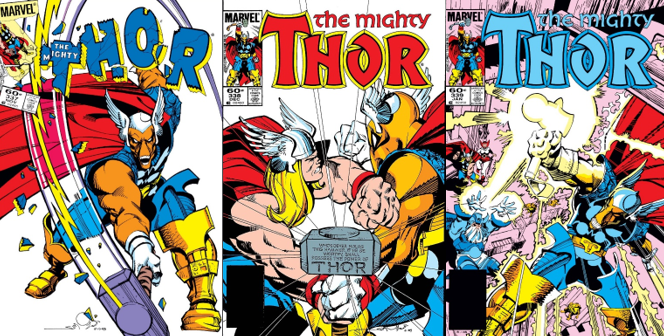
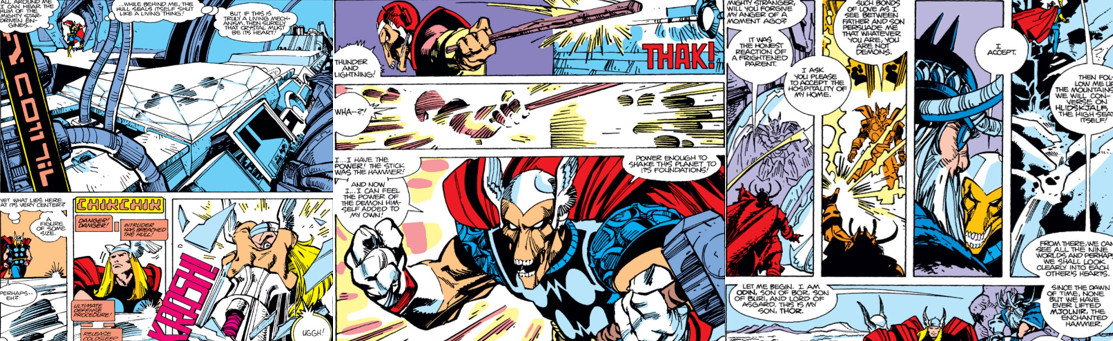
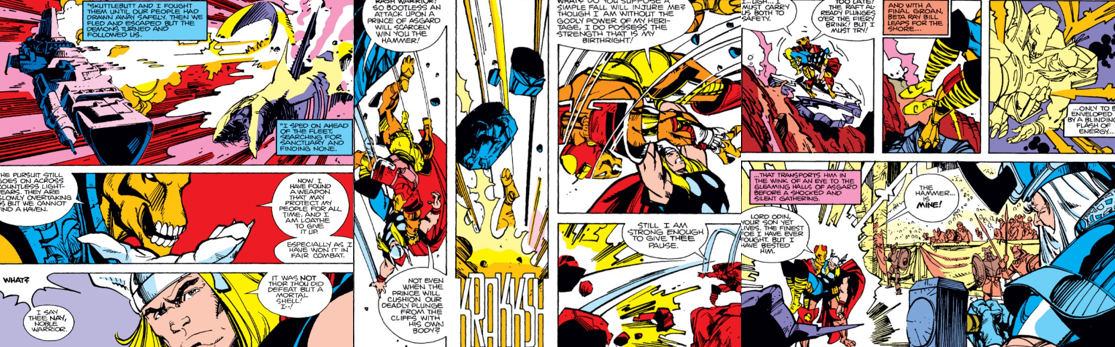
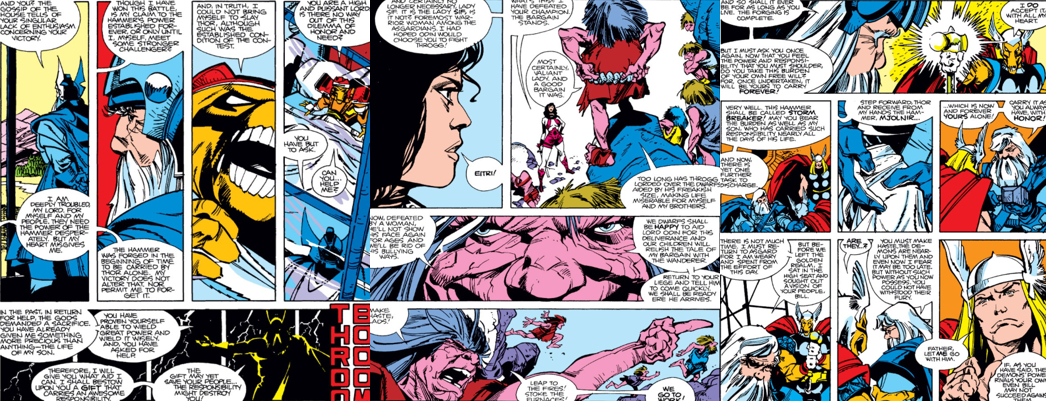
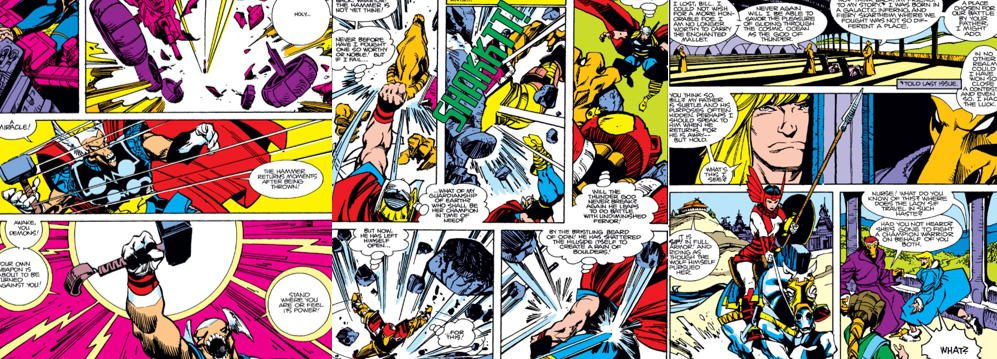


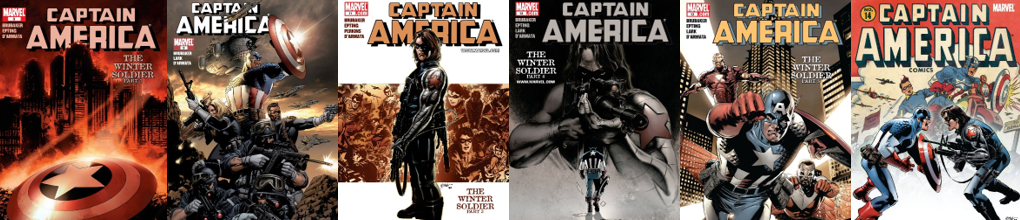
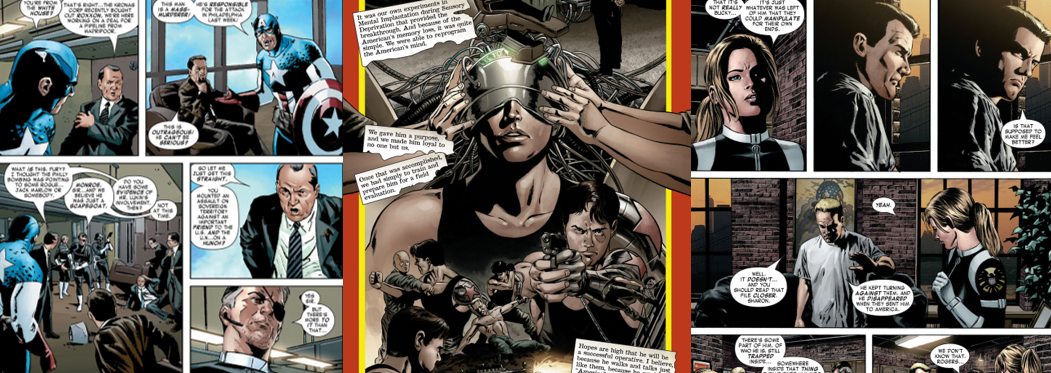
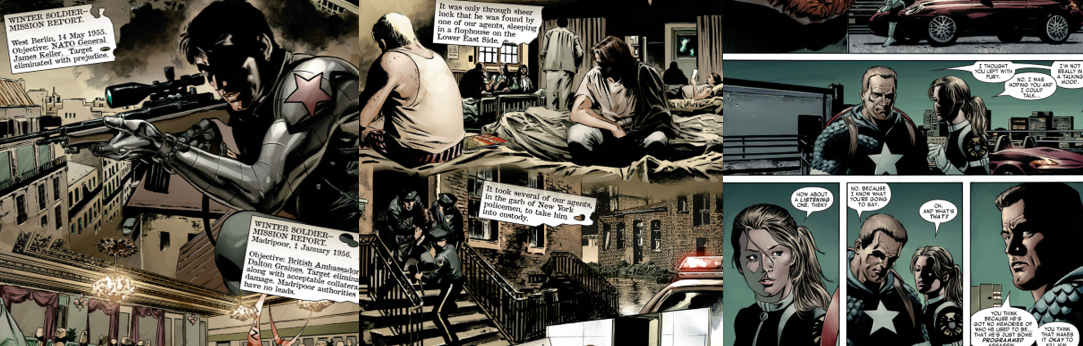
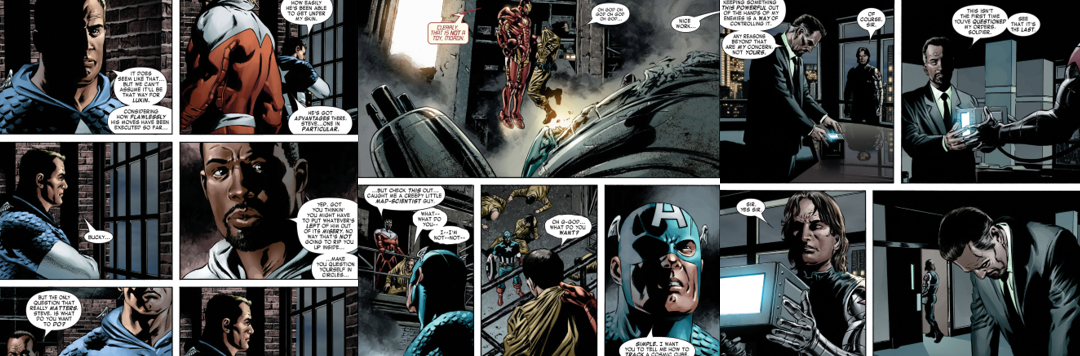
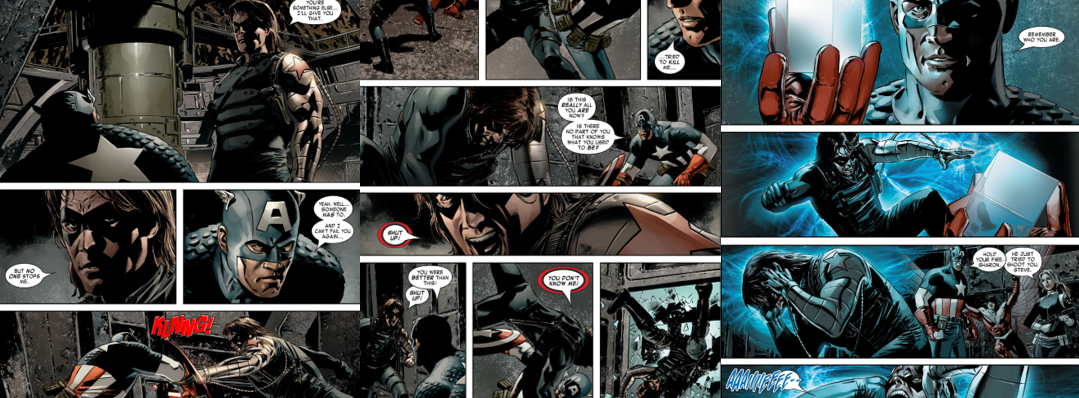
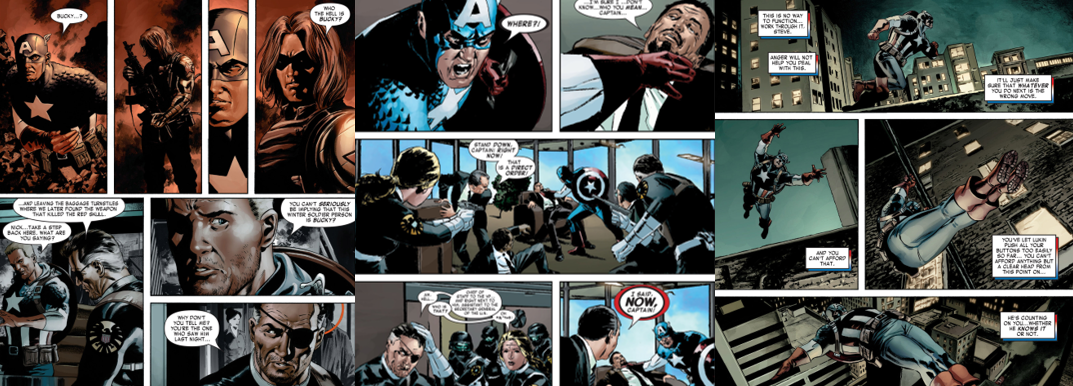
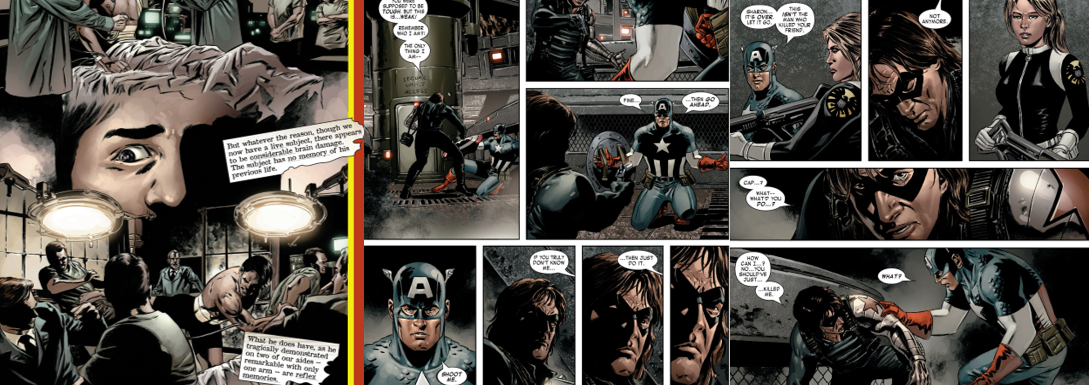


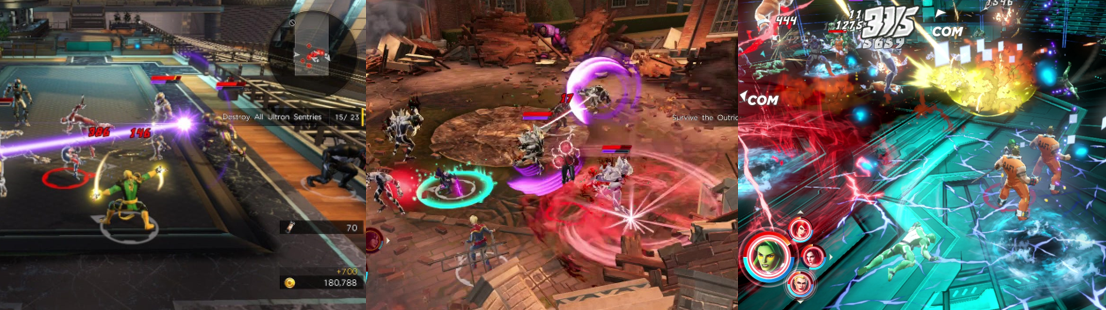
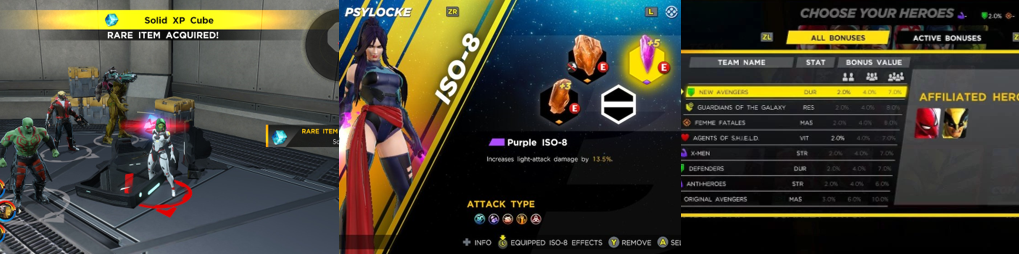
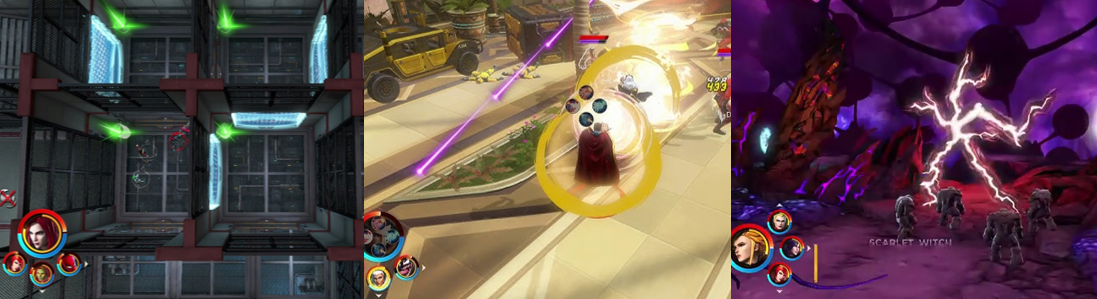
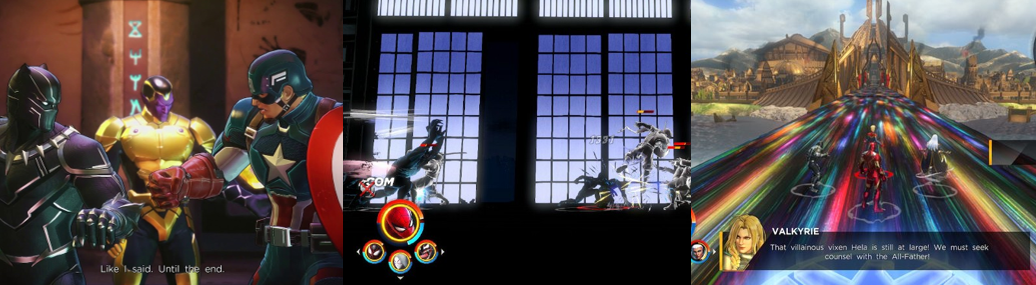
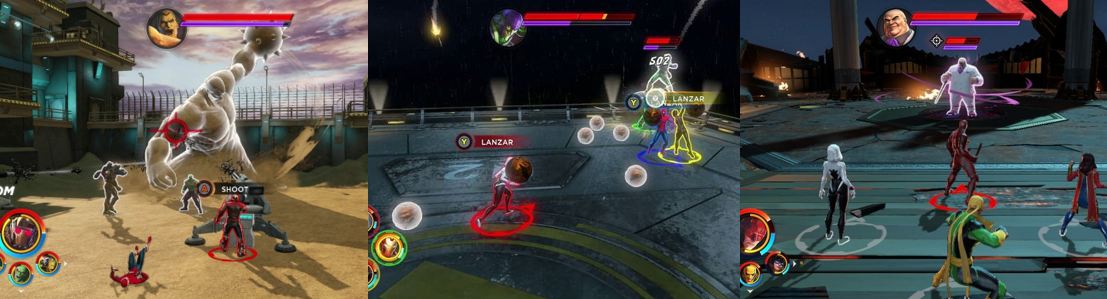
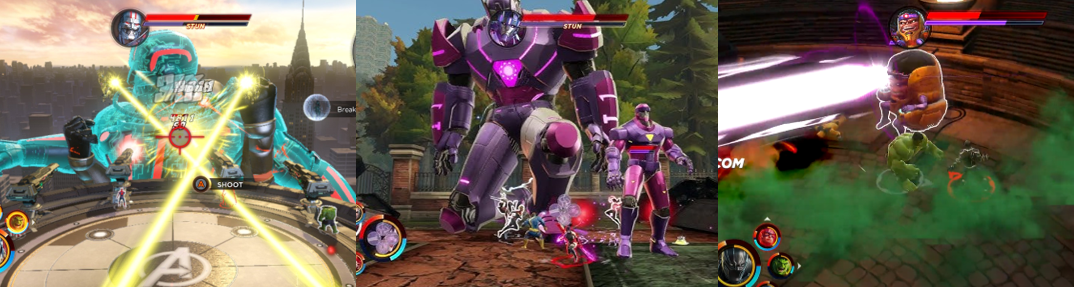
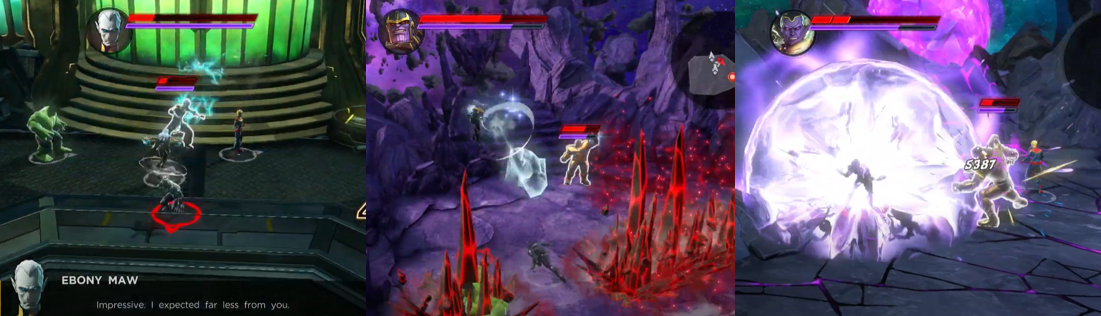

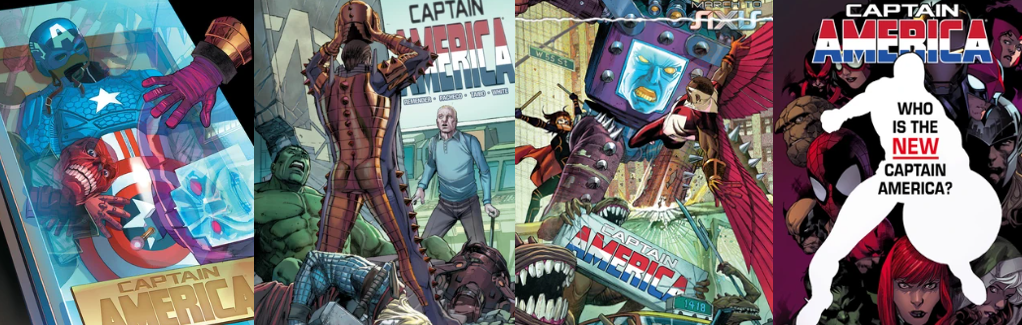
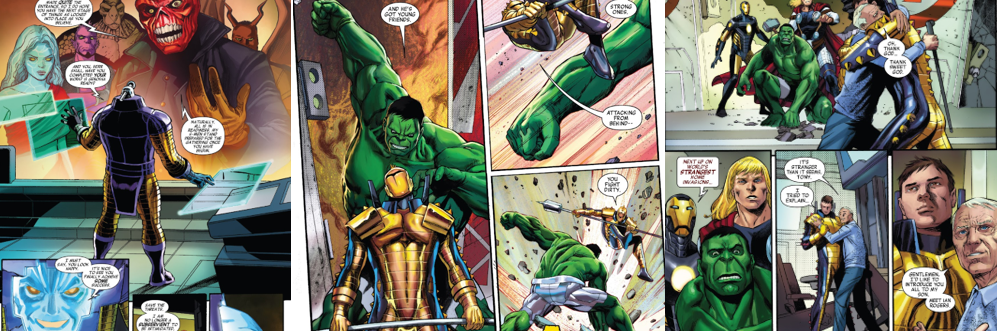
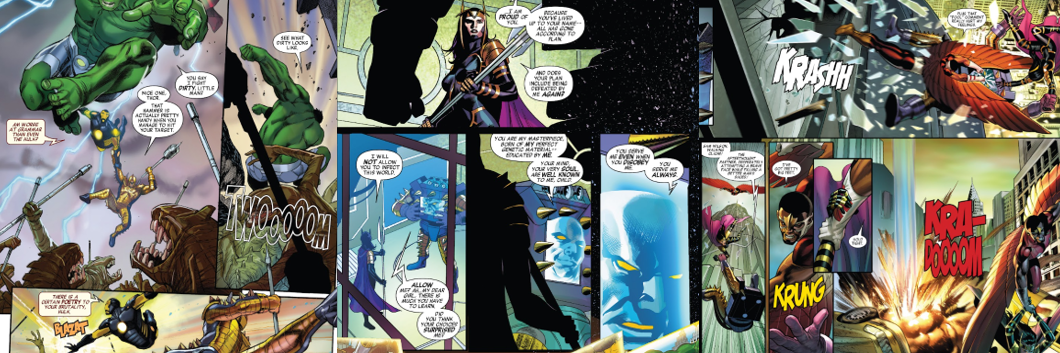
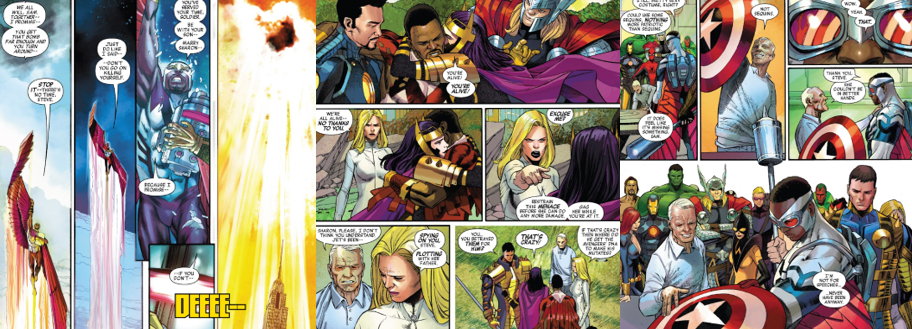
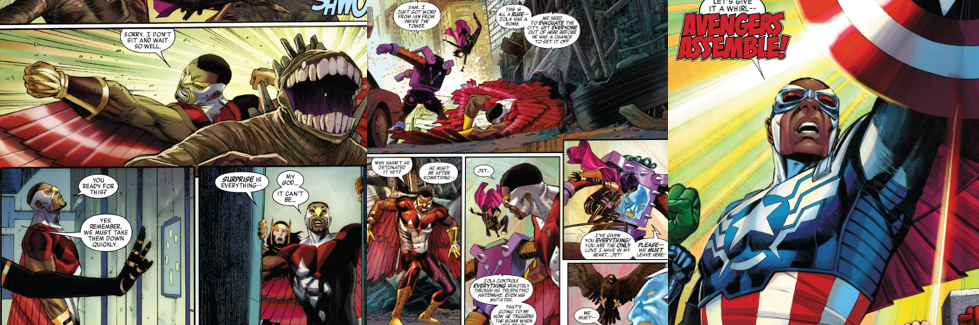
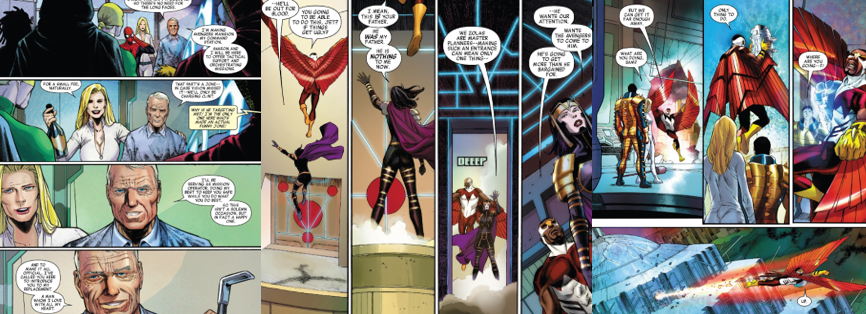


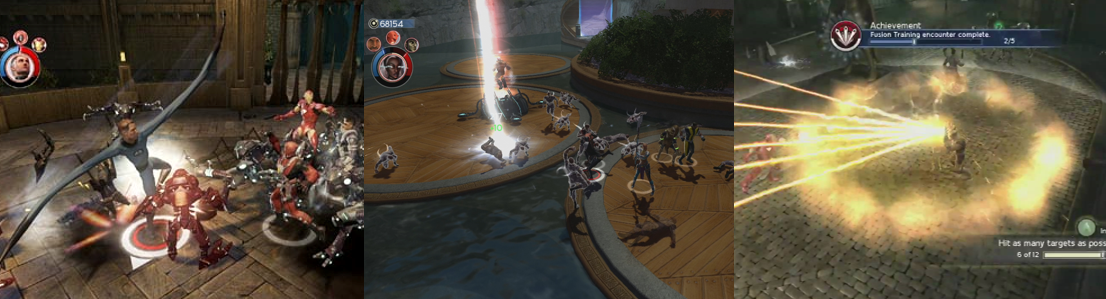
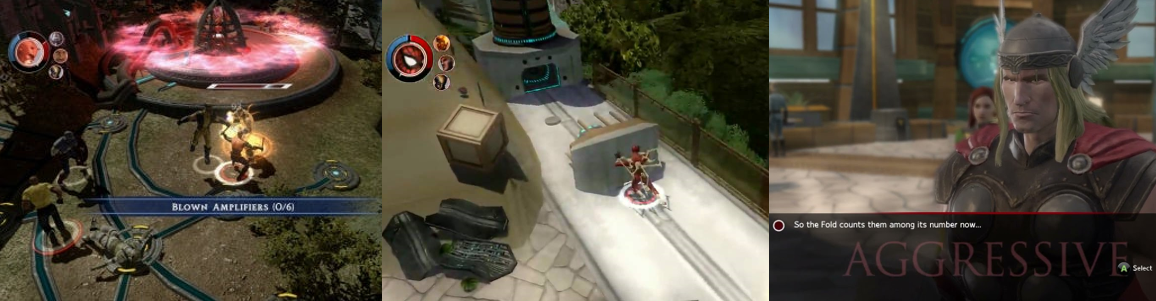
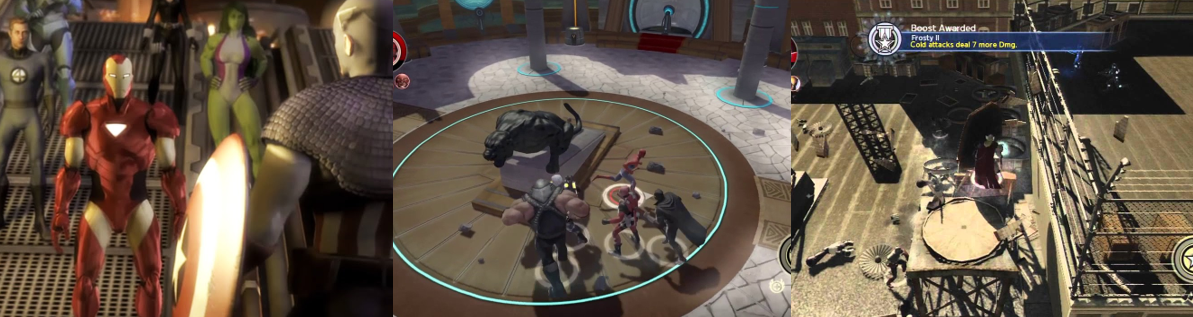
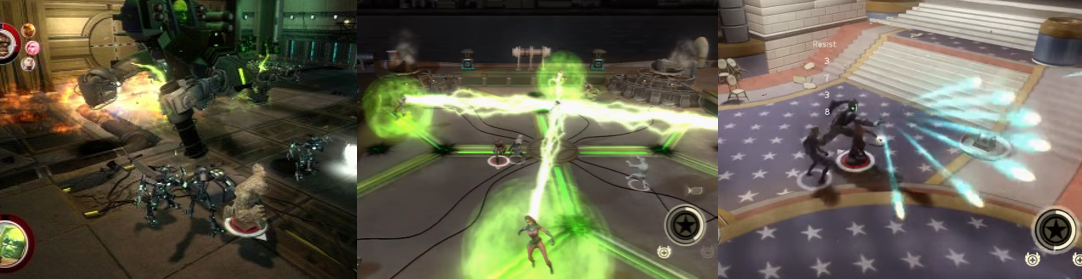
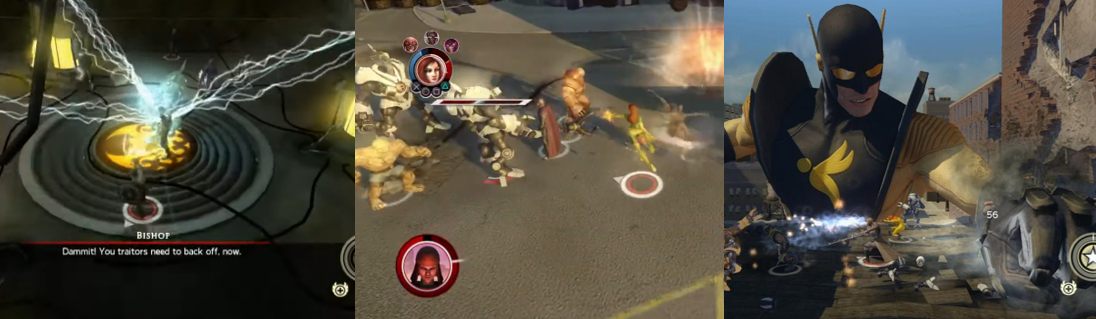










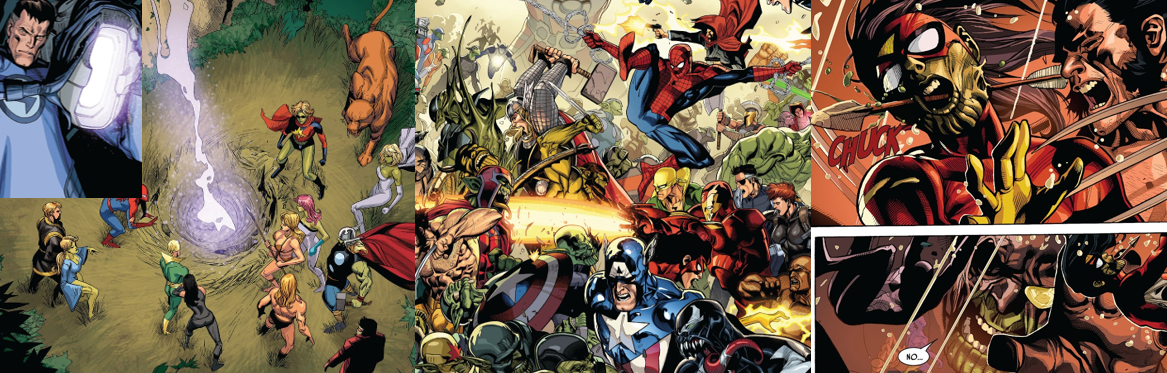

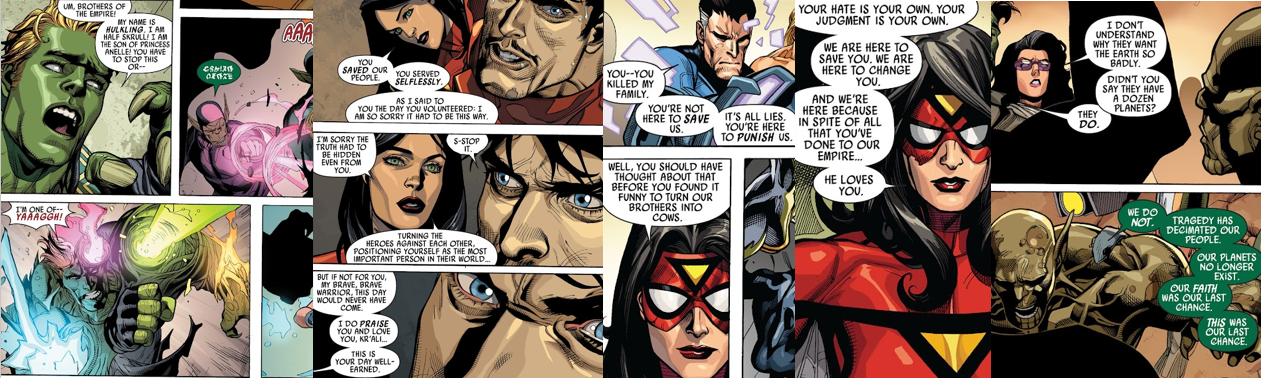
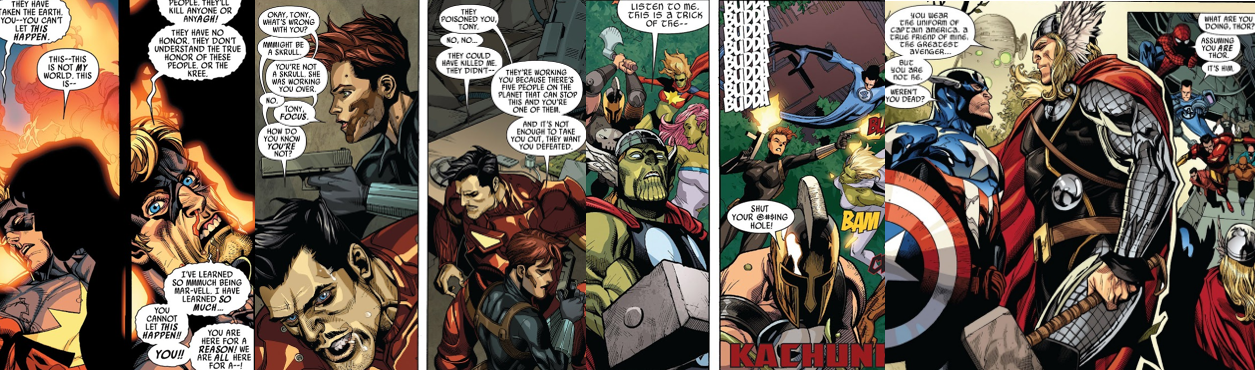


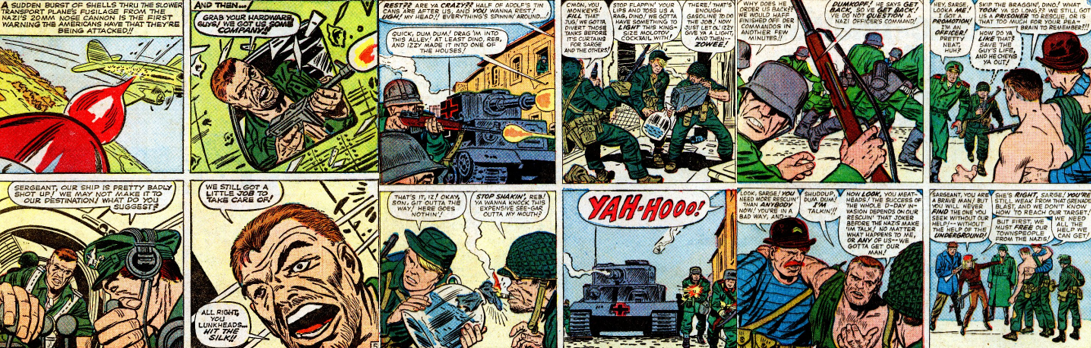

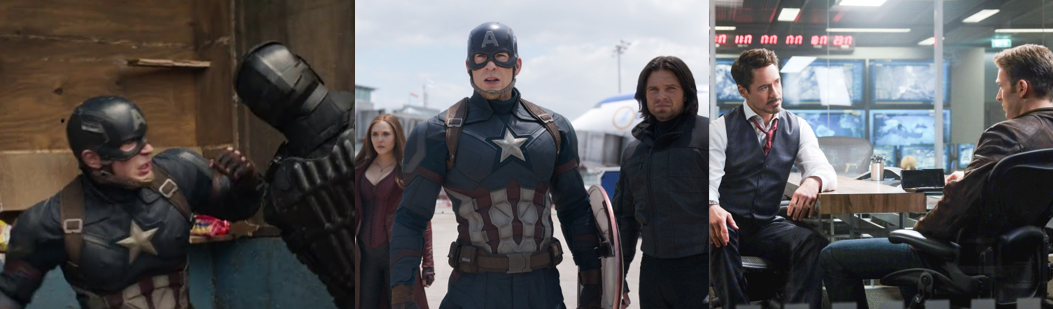

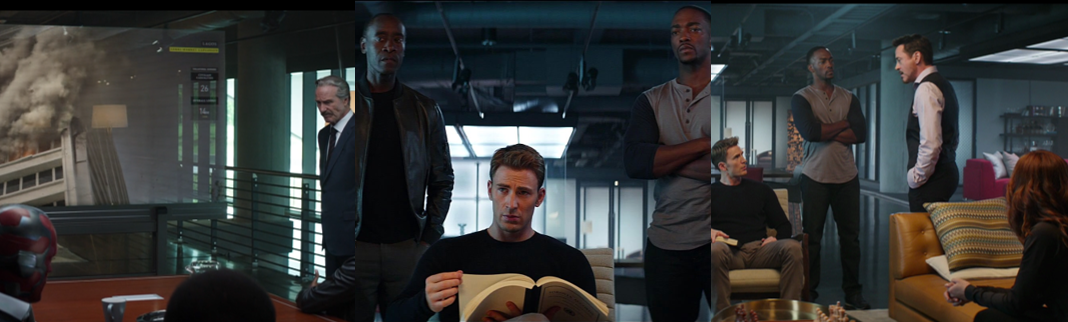


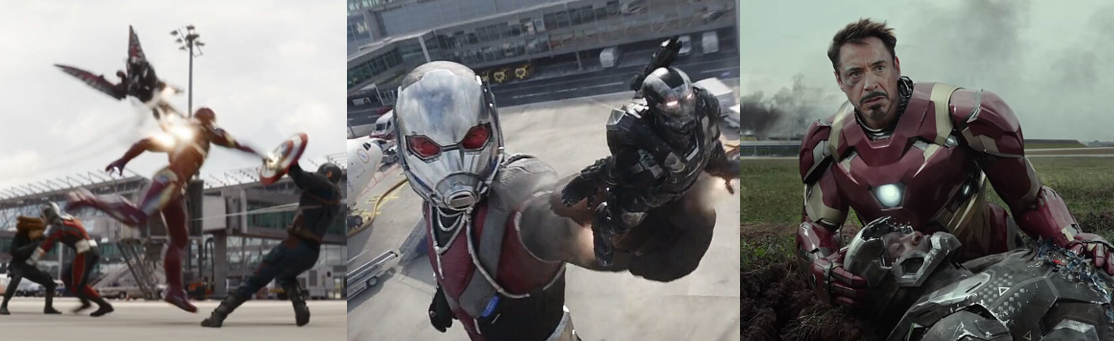
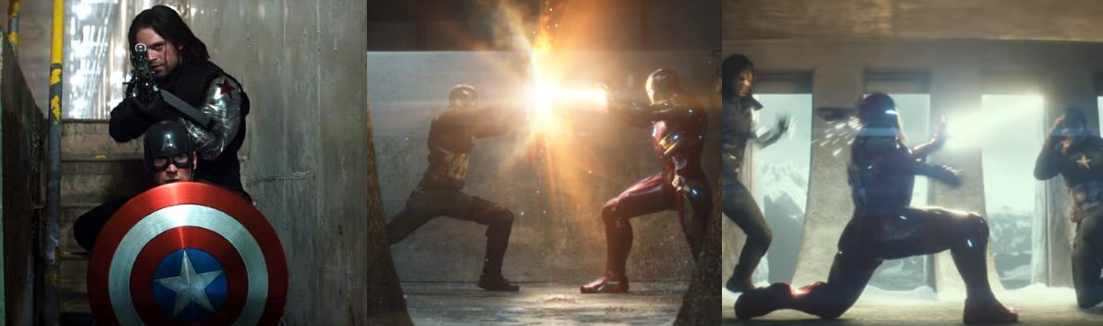
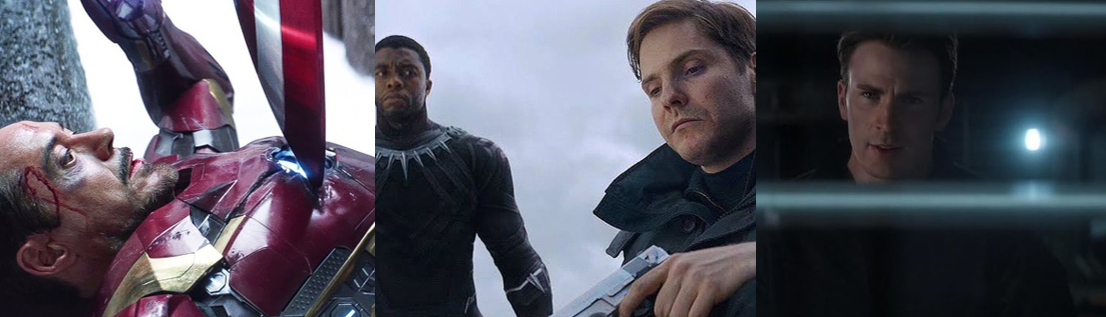


 Dr. K's Waiting Room
You must be logged in to post a comment.