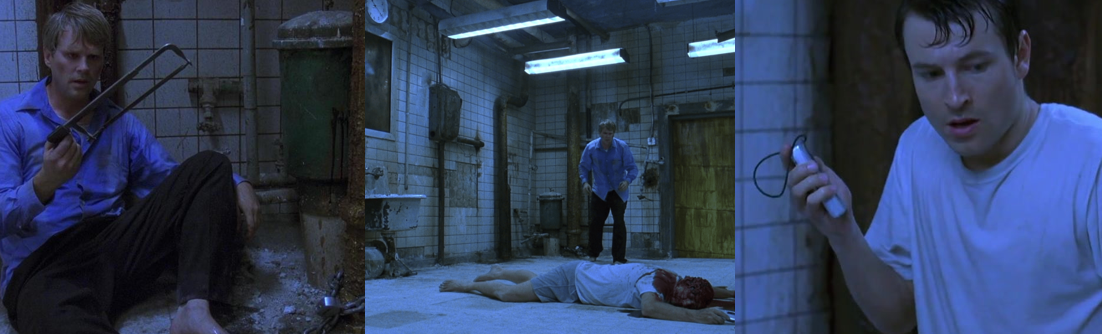
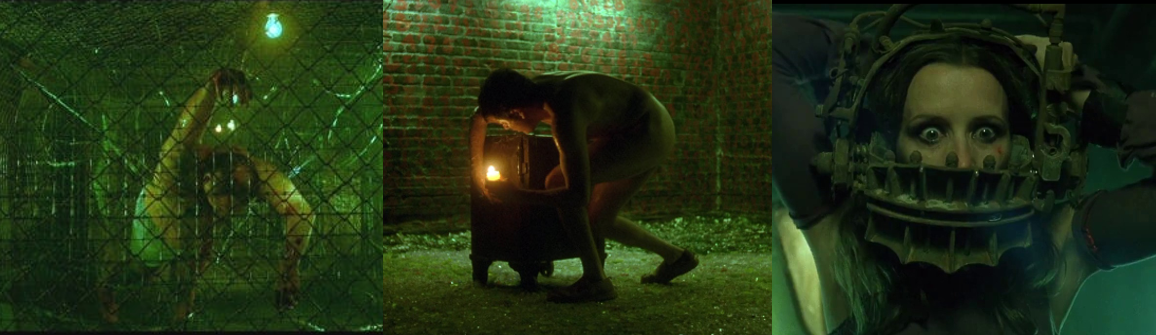
Movie Night: Saw X

Released: 29 September 2023
Director: Kevin Greutert
Distributor: Lionsgate
Budget: $13 million 
Cast: Tobin Bell, Synnøve Macody Lund, Shawnee Smith, Renata Vaca, Octavio Hinojosa, Paulette Hernández, and Steven Brand 

The Plot: 
With only two months left to live thanks to a malignant brain tumour, John Kramer (Bell) desperately searches for a cure to prolong his work as the infamous Jigsaw. When Cecilia Pederson (Lund) offers an unsanctioned operation that claims to save his life, John puts his unique brand of justice into motion after learning he’s been scammed by an elaborate hoax. 

The Background:
In 2004, Australian writer/director duo Leigh Whannell and James Wan brought us Saw, a low-budget horror affair inspired by the unexpected success of The Blair Witch Project (Myrick and Sánchez, 1999). The film’s iconic death traps helped popularise the “torture porn” sub-genre and stir up some controversy but its $103.9 million box office made it the most profitable horror film since Scream (Craven, 1996). This success naturally led to sequels, and soon a dense and popular horror franchise was born; however, while the box office of the Saw series remained strong, critical reaction soon became mixed as the concept was dragged out over numerous sequels and tie-in merchandise. Although Saw 3D: The Final Chapter (Greutert, 2010) was intended to be the final film in the series, Lionsgate twice tried to revive the franchise over the next decade or so, with mixed results. After Spiral: From the Book of Saw (Bousman, 2021) became the lowest-grossing film in the series and was blasted by negative reviews, Lionsgate decided to revive previous ideas for this tenth instalment. The film’s placement in the convoluted Saw timeline allowed star Tobin Bell to return and he was excited to be more heavily involved in the plot and production this time around, and he was joined by some returning cast and crew. Director Kevin Greutert was adamant about returning to Saw’s roots, including employing practical effects for the traps and death scenes, and ultimately decided against digitally de-aging the returning actors to retain their performances. As of this writing, Saw X has grossed over $60 million worldwide, making it the second-least-profitable of the franchise, though the critical reaction was largely positive; while the traps and gore were noticeablypraised, it was Bell’s performance that won the most acclaim amidst criticisms of the film’s plot and other characterisations.

The Review: 
I’ve always been a big fan of the Saw franchise; it’s a big claim to fame of mine to say that I saw every film in the series at the cinema (with the exception of Spiral; thanks, Covid!) and I’ve always taken a perverse pleasure in the unique blend of horror used in the series. There’s a dirty, gritty, frantic appeal to Saw, one that relies heavily on explicit and elaborate traps, but the franchise is just as appealing thanks to its alluring and contradictory main antagonist, John Kramer. Saw has never been a linear franchise; all the films have played with the timeline to come up with ways to flesh out John’s character even after his untimely death, but Saw X may be the most unique in that it takes place in a grey area between Saw, Saw II (Bousman, 2005), and Saw III (ibid 2006).  This means that John is still alive, though gaunt and noticeably wizened from his inoperable brain tumour, which has numbered his days dramatically. John’s despair at his impending demise isn’t just because he’s not ready to die yet; it’s also because he has established himself as “Jigsaw”, a sadistic (and yet unnervingly fair) punisher of those who do not appreciate their lives. John is distraught at the idea of dying before he’s had a chance to “help” others with his work and finds little comfort in the pragmatic advice of his doctor (David Alfano) or the cancer support group he begrudgingly attends. 

Desperate to prolong his life and his work, John turns to a groundbreaking miracle cure.

However, when a member of this group, Henry Kessler (Michael Beach), makes a miraculous recovery, John learns about Cecilia Pederson, daughter of world-renowned surgeon Doctor Finn Pederson (Donagh Gordon), and her off-the-grid clinic that claims to have developed a radical new procedure and drug concoction which has a 90% success rate in cancer patients. Despite being portrayed as one of the most intelligent and Machiavellian horror villains of all time, desperation sees John cling to this unbelievable hope, and he makes the trip out to Mexico to meet with Cecilia. He’s abducted and brought to an isolated villa where he’s introduced to Cecilia and her team: brain surgeon Doctor Cortez (Joshua Okamoto), anaesthesiologist Mateo (Hinojosa), nurse Valentina (Hernández), and two of Cecilla’s former patients, the kindly Gabriela (Vaca) and grateful Parker Sears (Brand). John is welcomed into the villa, which is also home to a former chemical plant that has been adapted into a makeshift operating theatre. In keeping with his intellectual superiority, John asks many questions and is both reassured and overwhelmed by Cecilia’s kindness, knowledge, and success rate. Since being diagnosed with brain cancer, John has made it his life’s work to teach others to appreciate their lives, putting them through horrendous physical and mental tests as Jigsaw to give them a chance at redemption and to show them the value of their comparative health and happiness. It’s all he’s lived for and has consumed him, costing him both friends and family, but Cecilia offers him a true opportunity to regain his life and to set aside this crusade, and John is completely taken in by her words and soon undergoing brain surgery to remove the tumour from his head. 

Betrayed by his would-be-saviours, John enacts a gruesome revenge.

When he awakens, John is elated to learn that the operation was a success. He’s grateful beyond words to Cecilia and feels immediately reinvigorated by a new appreciation for life. Although he was transported to the villa in secret and Cecilia’s entire operation was performed under the radar to avoid reprisals from “big pharma”, John uses his astute intelligence to find the villa in a bid to express his gratitude and say goodbye to the friends he made there. Unfortunately, he finds the villa deserted and that the entire operation was a scam; they simply lured him in with false promises, drugged him, and pretended to perform surgery using an educational video to help sell the illusion. Previously depicted as a polite, learned, and grateful man who was desperate to regain his life, John’s demeanour immediately snaps upon learning he was scammed; he allows himself one brief emotional outburst before placing a called to his apprentice, Detective Mark Hoffman (Costas Mandylor), to help him track down those responsible for duping him was false hope, making a fool of him, and stealing $250,000 of his money. Given his frail disposition, he’s aided by his other apprentice, former drug addict Amanda Young (Smith), who delights in playing an integral role in abducting and tormenting Cecilia and her team. Although Amanda clearly looks fifteen years older than she should, it’s mostly covered by some make-up effects and the film spends a surprising amount of time fleshing out her relationship with John; she’s distraught by his impending death and angered at the scam, wishing to simply kill those responsible and begrudgingly allowing John to subject them to his tests due to his twisted moral code. She also shows an unexpected glimmer of humanity and hesitation since she feels a kinship to Gabriela, who was simply duped into Cecilia’s plot due to her addiction to drugs. However, John keeps Amanda focused on the task at hand and uses the entire situation as a learning opportunity for all involved; Amanda needs to learn to be dispassionate about the job she’s been primed to take on after his death and Cecilia and her team need to learn that their actions have consequences. 

The Nitty-Gritty: 
One of the things I love about the Saw franchise is the complexity and hypocrisy of John Kramer. Jigsaw has always claimed (as he does in this film) that he’s not a murder; that he presents his subjects with a choice (“live or die”) and they are the ones who mutilate themselves or lose their lives by failing to follow his rules or lacking he will to live. For the longest time, Jigsaw’s campaign seemed methodical but ultimately impartial; his victims were people he observed and deemed unworthy of their fortune, so he put them to the test. Over time, though, this motivation has been skewed; Jigsaw has targeted doctors, lawyers, and police officers who have wronged or pushed too hard into investigating him and many of his victims have been those responsible for his greatest tragedies, be it the loss of his unborn son, not covering his medical bills, or diagnosing his condition in the first place. Saw X continues this hypocritical vendetta; John projects an emotional detachment to the “game” he subjects Cecilia and the others to, but has brief flares of emotion because of his personal attachment to the game and it’s obvious that the only reason they’re being targeted is because they wronged him. Saw X shows that John is always on the lookout for new subjects; he suspects everyone and not only sketches ideas for new traps but also envisions how those traps will work, showing a hyper awareness of his surroundings. It’s no wonder, then, that he’s so enraged by Cecilia’s deception and shows no mercy to her or any of her team, no matter how much they beg, and simply coldly advises them to “play [the] game” to show how much they’re willing to sacrifice to atone for their sins and continue living. 

While a couple of traps are suitably horrific, many are disappointing or overly complex.

This is a major aspect of Saw X; after ten films in the franchise, it’s important for a new Saw movie to give us something new, and Saw X decides to do that by firmly casting John as the aggrieved protagonist. Previously, there was always a twisted logic behind Jigsaw; you could usually understand where he was coming from and even sympathise with him, no matter how twisted his games were, but Saw X explicitly asks you to root for him by casting him as a victim and presenting a character (Cecilia) who’s even more obnoxious and malicious since she lacks even his skewed moral code. This means that the traps presented have a different level of catharsis; usually, we’re supposed to root for his victims to survive, but this time you want to see them suffer and fail for taking advantage of so many desperate people. Unfortunately, I wasn’t too blown away by Saw X’s traps; I was hoping for the film to return to the more grounded traps for the first two films, but these are again pretty elaborate and complex considering how close to death John is. Things start off well with John subjecting a thieving orderly (Isan Beomhyun Lee) to a vacuum trap that sucks out his eyes if he doesn’t break his fingers, but this turns out to simply be a fantasy of John’s. When he tracks down Dr. Cortez (actually Diego, his taxi driver), he forces him to slice chunks out of his arm to remove two explosives, a gruesome task that Diego surprisingly survives. Valentina is forced to severe her leg and drain bone marrow to keep her head from being sliced off, which is extremely gory and harrowing and results in failure, while Gabriela is suspended by chains and must smash her wrist and ankle to avoid being roasted by radiation. Mateo is subjected to the most elaborate and bonkers scenario; he’s strapped to a chair and forced to cut into his brain to avoid being roasted by a heated mask, something he obviously struggles to do as he’s just a vet rather than a trained doctor. 
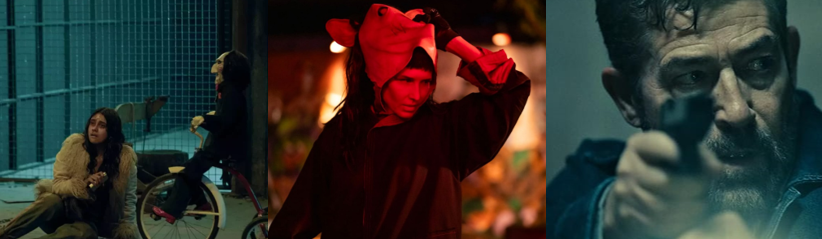
The film primarily focuses on reframing John as a sympathetic and even heroic character,

I think what bugged me the most about these traps isn’t just how lacklustre a lot of them were, but also that John’s vengeance was flawed, as Amanda points out. Cecilia was the mastermind behind the whole operation and the others waste no time in selling her out, but to John they’re all as culpable as each other. However, I do think the traps would’ve worked better if Cecilia had been forced to take part in them. Perhaps she could’ve been strung up by chains like a puppet and forced to slice off Valentia’s leg; she also would’ve been better suited to perform Mateo’s makeshift brain surgery, and Gabriela’s trap could’ve been reworked so Cecilia could’ve taken part in it. Think Jeff Denlon (Angus Macfadyen) in Saw III; his test was to save others from a gruesome fate, and I definitely think this would’ve been a better fit here. Instead, there’s a lot of unnecessary waiting around; I like that John is front and centre for this game, directly interacting with his subjects and overseeing it from a control room, but there’s a huge gap between Valentina’s death and Mateo’s trap. This is, of course, all part of John’s plan but I think his larger plot would’ve succeeded without there being so much waiting around. At first, it seems there’s the hope of salvation for John’s victims and the possibility of a new recruit for John when Parker comes by angrily looking to confront Cecilia for scamming him. Subdued by Amanda, Parker briefly acts as a witness to John’s sadistic game and seems conflicted; like John, he wants to see Cecilia and the others punished for their misdeeds, but his vengeance extended simply to getting his money back and yelling at the con artists, not witnessing their brutal dismemberment. His presence is particularly unnerving to Amanda, to whom the entire ordeal is an additional test of her will; unfortunately, a lot of this tension is exhausted since we know Amanda’s fate, but it’s interesting seeing her as a flawed but devoted follower of John’s. 
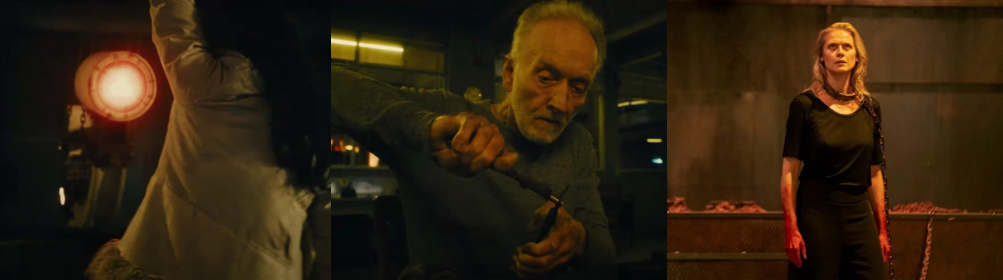
Despire seemingly being outsmarted, John finds a way to triumph through sheer force of will.

Parker is so horrified by what he’s witnessing that he disobeys John’s rules, retrieves his gun, and interrupts the game; nonplussed by Parker’s threats, John calmly agrees to free Cecilia and barely flinches when Parker is revealed to have been in on it all (largely because Diego spilled the beans on the whole operation earlier). It’s here where Saw X takes a weird turn; freed from her shackles, Cecilia forces John and Amanda to lock themselves in and delights in lording her superiority over the legendary “Jig-fucking-saw”. Rather that force John and Amanda to endure her test, Cecilia takes young Carlos (Jorge Briseño) hostage when he wanders past and forces him to join John in a particularly dreadful trap. John and Carlos are held down on a seesaw like platform by chains and waterboarded with blood; the only way to survive is for one of them to pull on a lever, subjecting the other to the torture. Although John begs Carlos not to pull the lever and is prepared to endure the torture himself, Carlos shows incredible resolve and takes his fair share of the punishment. This whole trap casts John in an extremely different light; earlier, he showed kindness to Carlos and he’s clearly conflicted and disturbed at an innocent child (and “unexpected” victim) being caught up in his plot. Indeed, the film paints John in a heroic light as he’s willing to sacrifice himself to spare the boy, though both are ultimately spared when Cecilia and Parker retrieve their cash and set off another trap. This disables the waterboard trap, allowing John, Amanda, and Carlos to escape, and sets off a corrosive gas in the control room. Cecilia and Parker are forced to fight for the death to reach a ventilation hole only big enough for one of them, a fight the cruel Cecilia wins by stabbing Parker, though her fate is left ambiguous as John, Amanda, and Carlos simply leave her there.   

The Summary: 
Even I, as a big Saw fan, must admit that the franchise quickly became quite derivative; even now, I struggle to remember which film is which and I can see how a lot of the entries are very similar and stretched the premise way too far. In hindsight, I think the producers made a mistake killing Jigsaw in Saw III; they could’ve left him alive for a couple more films and done a bit more with him, since he’s one of the most compelling aspects of the franchise. In Saw X, John is front and centre, but this lands in such a weird way; here’s a morally reprehensible guy, a villain for all intents and purposes, and we’re asked to sympathise and root for him. In this context, he’s justified in seeking retribution (even if he denies this is his obvious motive), but it’s an interesting way to present him. In many ways, I would’ve liked to see this format used for previous Saw movies; take John and have him use his skills in interesting ways against people who wrong him, kinda like when arrogant mobsters unknowingly incite the wrath of the likes of John Wick (Keanu Reeves). As a character study of John, Saw X sheds a little more light and humanity on him, but again it’s not really anything we didn’t learn from the myriad of flashbacks across the other films. Normally, a Saw movie compensates for its paper-thin plot with gore and traps; however, while Saw X has plenty of gore, the traps are just as ludicrous as ever, which is a shame as I would’ve liked to see a grittier, more realistic bent to the traps given John’s more personal vendetta here. Ultimately, Saw X is like a love letter to the series; it puts the focus squarely on Jigsaw, giving him one last swansong, and contains some fun cameos and fan service here and there, but it was lacking something for me to really rate it much higher. It’s interesting seeing John be scammed like this, but I really don’t think he would’ve been; even at his most desperate, he was always ten steps ahead of everyone, so the premise was flawed for me from the start and the execution of the game failed to impress, despite how interesting John’s characterisation is throughout. 

My Rating:

Rating: 2 out of 5.

Could Be Better

What did you think to Saw X? Did you buy the John would be so easily fooled by Cecilia’s scam? What did you think to the traps and the execution of John’s game? Were you surprised that Amanda has such a big role in the film? Did you see the twists coming in the finale? Where would you rank Saw X against the other films in the franchise and do you think you would survive one of Jigsaw’s games? Whatever you think about Saw X, and Saw in general, leave a comment below.  

Movie Night [Friday the 13th]: Friday the 13th: The Final Chapter


Long considered to be an unlucky day due to superstitions involving the number thirteen and religious connotations, Friday the 13th is perhaps equally as well-known as being the title of a long-running series of slasher movies. As a result, this is clearly the best opportunity to take a look at the Friday the 13th (Various, 1980 to 2009) horror series and to commemorate this unlucky and dreaded date.


Released: 13 April 1984
Director: Joseph Zito
Distributor:
Paramount Pictures
Budget:
$2.6 million
Stars:
Kimberly Beck, Corey Feldman, Joan Freeman, Crispin Glover, E. Erich Anderson, Barbara Howard, and Ted White

The Plot:
Immediately after Friday the 13th Part 3 (Miner, 1982), masked maniac Jason Voorhees (White) escapes from a morgue and returns to Crystal Lake to continue his killing spree. His victims include a fresh batch of teenage vacationers, secretive hiker Rob Dier (Anderson), and locals Tracy Jarvis (Freeman), Trish (Beck), and young son Tommy (Feldman), who must make a desperate last stand against the deformed murderer.

The Background:
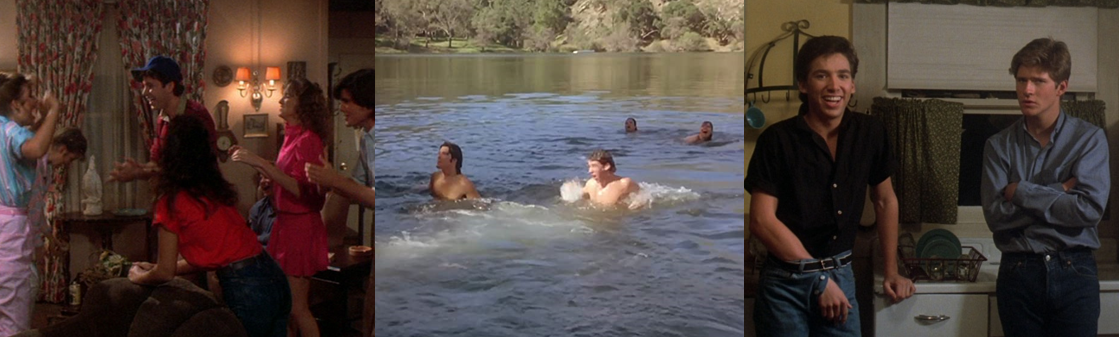
Hot on the heels of John Carpenter’s Halloween (Carpenter, 1978), which essentially gave birth to the “slasher” genre of horror cinema, Friday the 13th (Cunningham, 1980) became an unexpected box office success. Despite producer/director Sean S. Cunningham distancing himself from the franchise and continued negative reviews, both Friday the 13th Part 2 (Miner, 1981) and Friday the 13th Part 3 were financial successes. However, Paramount executives began to be embarrassed by their association with the shlock franchise and, after their initial plans to end the series with the third film fell through, actively planned to close the book on Jason for good with this fourth film. Director Joseph Zito came onboard after receiving compensation for both writing and directing duties, but secretly worked with writer Barney Cohen on the script, which featured not just two survivors instead of the traditional one but also a child protagonist and a relatable family unit at the heart of the horror. Special effects maestro Tom Savini returned to work on the film’s make-up and practical effects, giving him the chance to not only redesign Jason once more but also kill the character off in gruesomely spectacular fashion. Up-and-coming child actor Corey Feldman won the role of Tommy Jarvis, and his character’s love of special effects was a homage to Savini, but Jason actor and stuntman Ted White reportedly didn’t get along with his young, bratty co-star during filming. Though the actor rarely talks about his involvement and only took the job for a pay cheque, the film also gained notoriety for actor Crispin Glover’s absolutely bonkers dance routine and for a lost alternative ending that was only recently partially restored. With a final box office gross of $33 million, Friday the 13th: The Final Chapter made less than the third film but more than the second, and still significantly more than its $2.6 million budget, making it a commercial success. The film was equally lambasted by scathing reviews that branded it a by-the-numbers retread of its predecessors that focused on gore and sex more than telling a coherent story, but many consider it to be one of the best (if not the best) entries in the entire franchise. Tommy Jarvis went on to be regarded as Jason’s archenemy and became a recurring character in the films that followed as, surprise surprise, this “Final Chapter” was nothing of the sort and a fifth film came out just one year later.

The Review:
As many Friday the 13th fans will be aware, these classic slashers are generally divided into a couple of categories: there’s the classic human Jason era (which spans the first four films), the zombie era (which covers the rest of the series), and then sub-categories like the aborted attempt to continue the series without Jason and the remake (and probably even the New Line Cinema movies since they were so bizarre). Although I was aware of Jason as a horror icon, my introduction to him was actually Friday the 13th Part VI: Jason Lives (McLoughlin, 1986) so I have a preference for zombie Jason, an unstoppable supernatural force of nature, and this meant that I ended up working my way backwards through the previous films to see how he got to that point. After being disappointed by the first film, surprisingly entertained by the second, and somewhat bored by the third, I have to say that I (like many) consider Friday the 13th: The Final Chapter one of the best in the franchise, and clearly the best of the human Jason films until the remake. Like the last two movies, The Final Chapter opens with flashbacks to the previous films to remind audiences about Jason’s origins, his mother’s rampage, and some of the best kills so far and, crucially, that Jason has survived extreme wounds and trauma. Once we’re all caught up, the film picks up immediately after the end of Friday the 13th Part III; although we don’t get much indication of the fate of Chris Higgins (Dana Kimmell), Jason’s body is bagged up and taken to the morgue after he took an axe to the face, which strongly indicates that Chris hallucinated being attacked by Pamela Voorhees’ decomposing corpse (Marilyn Poucher) since Jason’s body was still in the barn. The details of Jason’s rampage are thus primarily related using footage of Paul Holt’s (John Furey) campfire story rather than the likes of perverted coroner Axel Burns (Bruce Mahler) and his antics are certainly not common knowledge to our newest crop of horny twenty-somethings teenagers (despite Part III’s events making it to the local news).

A fresh batch of horny teens arrives at Crystal Lake, with Ted and Jimmy being the stand outs.

While our new bunch of victims may not be the most interesting group, they’re certainly more likeable than those in Part III and are made up of just enough personalities to not be completely paper thin, disposable meat bags. What we have here are two sets of couples – Paul Guthrie (Alan Hayes) and Samantha Lane (Judie Aronson), Doug Bell (Peter Barton) and Sara Parkington (Barbara Howard) – and friends Ted Cooper/Teddy Bear (Lawrence Monoson) and Jimmy Mortimer (Glover). Sara stands out somewhat from the others (and her counterparts) in that she’s a shy and awkward virgin; despite being in a relationship with Doug, she’s unsure of herself and nervous about having sex, which is in stark contrast to Sam, who is a fully self-confident lover. However, there’s no animosity between them; they have a heartfelt discussion about the matter, and what it means to have a sexual reputation, and Sam is constantly encouraging Sara to be more carefree. Doug doesn’t make much of an impression beyond being a pretty patient and caring kinda guy; he doesn’t pressure Sara into sex or cheat on her, and is probably the most unremarkable as a result. Not that Paul fares much better; despite being with Sam, he’s easily swayed once twins Tina and Terri Moore (Camilla and Carey More) are absorbed into the group. He completely misses that Tina’s flirting with him, upsetting Sam and causing her to take an impromptu skinny dip in the lake and end up butchered as a result, and he’s fittingly impaled through the groin with a harpoon after he finally realises that he’s neglected his lover. Of the group, it’s Ted and Jimmy who make the most immediate impression; Jimmy has just been dumped and is feeling both lovelorn and horny, while Ted is an overconfident jokester who believes his wit and smart mouth are irresistible to girls. Ted riles his friend up by branding him a “dead fuck” and tries every trick in his playbook to get into the pants of both Tina and Terri, only to be rebuked at every opportunity and end up cackling at old timey pornography while high off his nut. It’s Jimmy who ends up coming out more successful in his endeavours; after Paul realises he’s been a dick and ditches her, Tina turns her attentions to Jimmy (despite his outrageous dance moves) and his sexual prowess is finally vindicated, much to his delight, though his joy is short-lived as he is killed by Jason soon after, leaving him a literal dead fuck.

The local Jarvis family is targeted by Jason’s wrath, leaving Trish and young Tommy to fend him off.

This gaggle of colourful characters are only half the story, however, for they rent a cabin that neighbours the home of the Jarvis family, a loving family unit consisting of doting mother Tracy, tomboyish daughter Trish, and mischievous Tommy. From a throwaway piece of dialogue between Tracy and Trish, we can infer that the family recently went through a divorce or, at the very least, a trial separation as their patriarch is nowhere to be seen and relations between him and Tracy are frosty, at best. Thankfully, there’s no tension, resentment, or bickering between these three; Tracy chastises Tommy for playing Zaxxon (SEGA, 1983) too loud and for needing a haircut, but it’s nothing overbearing or controlling. She compliments his mask-making skills, encourages Trish to visit her father to keep their relationship alive, and, if anything, the three are a bit too sickly sweet with their healthy affections for each other. While Tracy and Trish regularly jog together and Tracy is happy (if a little perturbed) for her daughter to socialise with others her age, Tommy is the stand out of the family. Not only is he the quintessential eighties kid (he loves videogames, horror movies, and has a passion for mask and model making that exceeds his youth), Tommy’s also a budding mechanic, regularly being called upon by Trish to fix her unreliable car, and (like many young boys) is transfixed by the rampant female nudity and sexual activity right on his doorstep, much to his mother and sister’s chagrin. While a cheeky smart aleck who’s a little too smart for his own good at times, Tommy is basically a good kid who cares for his mother and sister, and is left scared out his mind when the bodies start piling up next-door and cinema’s most famous hockey-masked killer comes literally crashing into their house. While Trish risks her life trying to lure Jason away to protect her kid brother, Tommy makes the bold decision to use Jason’s past against him, quickly shaving and cutting his hair so that he resembles the hulking murderer as a small boy and then finally ending the fiend’s life with repeated maniacal swings of his trademark machete.

Jason is stronger and madder than ever, easily overpowering and cutting down even his most driven victims.

Indeed, while Jason is more powerful than ever before and none of the main group of teens has any hope of fending him off, he actually comes up against not one but two relatively formidable foes here. We see an interesting new side to Jason’s actions in this film; The Final Chapter opens with cops and coroners cleaning up his crime scene and, when his supposedly dead body is being wheeled to the morgue, we see grieving families to really hammer home that these characters we so often see as disposable actually have lives and families, which is best exemplified in Rob, a nomad with a working knowledge of Jason’s past, his mother, and his killing spree thanks not only to researching the killer but also because he’s the brother of Sandra (Marta Kober) from Friday the 13th Part 2. Although he comes across as quite shady at first, both Tommy and Trish take a shine to the hunky stranger; Tommy jumps at the chance to show off his monster masks and Trish is horrified to learn that so much bloodshed haunts her hometown. Rob’s mission to track down and kill Jason and avenge his sister is an admirable one but, though he comes physically and intellectually armed, he’s ultimately no match for the killer and is bludgeoned to death in overly comical fashion when surprised by Jason in the basement. While Trish very much fits the mould of a “Final Girl”, having largely avoided Jason’s rampage, stumbling upon the bloodied corpses he’s left in his wake, and being the last “man” standing by the finale, it’s actually Tommy who steps up as an unexpected hero in the end. Jason really isn’t messing around this time; at this point, he’s been on a rampage for about three days and it’s clear that he’s getting more and more pissed off at all the horny teens stomping around his grounds. Whenever he spots one, he goes for them without hesitation, stalking from the shadows and striking with a noticeable brutality; he’s much more apt to use his superhuman strength to crush and manhandle his victims this time around, and his body language screams unbridled rage. He explodes through the Jarvis’s window, crushes skulls, and skewers kids all over the place, but is also smart enough to both take advantage of the darkness and rain to surprise his prey and cut off their phone lines, making for an exceptionally driven and ferocious version of the famous killer.

The Nitty-Gritty:
Thankfully, unlike Part III, which opted for a weird disco track in place of the classic Friday the 13th theme, Harry Manfredini refocuses on the iconic musical beats and the “ki-ki-ki-ma-ma-ma” so synonymous with the series, but bolsters it with a faster, more action-packed tone that delivers probably the best Friday the 13th score so far as it has the right mixture of dread and adrenaline to keep you engaged with the tension or bloody action onscreen. While every Friday the 13th is full of sex and violence, The Final Chapter offers some different takes on the former: Axel is a horny coroner more interested in perving over girls both dead and alive than he is about showing any kind of compassion, and his fixation on the female form makes him an easy victim once Jason awakens; Sam is nervous about her first time but nonetheless excited to actually have the moment happen; Jimmy is fixated on his sexual performance and as desperate to get laid as Teddy but benefits from Tina being a bit of a slut and happy to settle for him after being rejected by Paul. There’s a bit of a parallel here between Tina and Sam; earlier, Sara alluded to Sam having a reputation, but she was perfectly happy being exclusive to Paul, whereas Tina unashamedly throws herself at Paul and only settles for Jimmy after Paul turns her down, and even then she puts Paul’s baseball cap on Jimmy’s head and has sex with him in Paul’s bedroom (though she seems legitimately into him after they have sex). This brazen sexuality indirectly leads to both Paul and Sam’s death, and both Jimmy and Tina are targeted by Jason soon after, but even a loved-up couple like Doug and Sara (and Terri, who doesn’t engage in any sexual activity) also pay the price for even being associated with such debauchery.

The Final Chapter has some sudden and brutal kills that shine even with the mandatory cuts.

The Final Chapter is bolstered by some of the best-looking kills in the series thanks to special effects wizard Tom Savini, who had really honed his craft since the first film. While much of the gore and violence was disappointingly cut to secure a marketable rating, we’re still left with some brutal kills that really reinforce Jason’s newfound rage and cruelty. Axel may not get his head twisted around by Jason’s bare hands, but a hacksaw to the throat is a pretty horrific way to go and Jason is far more interesting with a surgical scalpel than his Halloween counterpart. Previously, Jason slaughtered anyone who ventured onto his territory, but he initially has to make his way back to Crystal Lake and thus makes short work of a frustrated hitchhiker (Bonnie Hellman) by stabbing her through the next with a spear; there’s no finesse to Jason in this movie, he’s all about blunt, brutal, efficient kills and has really mastered taking his victims by surprise. While out on the lake, frustrated that Paul didn’t immediately follow her and at risk of hypothermia, Sam is caught completely unawares when Jason pops out of the water and pays homage to his mother by skewering her through the belly with a spear. After freaking out upon discovering her body, Paul desperately swims to shore only to get impaled through the groin by Jason’s spear gun and, in a perfect example of just how powerful Jason is now, he’s lifted clear off the ground for the killer to fire the spear for the coup de grâce. Easily the lamest kill is Tracy’s, which isn’t even shown as the film opts for a jump cut instead; even Terri and Tina fare slightly better than this and they’re simply framed by a flash of lightning and a brief shot hitting the house and thrown from a window, respectively. Two of the film’s most memorable kills are Rob’s exaggerated bludgeoning after finally coming face-to-face with his sister’s killer and Jimmy’s fruitless search for a corkscrew, which sees him impaled though the hand by said tool and then whacked in the face with a meat clever in a death somewhat reminiscent of my favourite kill from Part 2. Teddy ultimately ends up stabbed in the back of the head through a projection screen, which is a pretty sudden and simple kills, while Doug gets his head crushed against the bathroom tiles and Sara takes a wicked axe right to the chest!

Tommy puts an end to Jason’s massacre, and his life, but is left traumatised by the experience.

Friday the 13th: The Final Chapter, by accident or design, adheres very closely to the formula of its predecessors while also turning it on its head a bit. The addition of a normal, everyday family alone mixes things up and offers a contrast (and a refreshing break) from all the usual slasher depravity we know and love, and having a character like Rob, someone who knows all about Jason and is fixated on ending him once and for all, had a lot of potential. Sadly, Rob doesn’t live up to this, ending up as another red herring, but we’d actually see Tommy later fulfil a similar role when he returned in Jason Lives. When Trish is reduced to a panic-stricken, screaming, rainswept mess for the finale, tripping over bodies and running for her life, it seems as though we’re in store for pretty much the same climax we’d seen three times before but The Final Chapter takes a leaf out of Part 2’s playbook by having a character manipulate Jason using his past to render him temporarily stunned. Being stabbed in the neck, having a television smashed over his head, and taking a machete to the hand Jason can shrug off without much more than an annoyed growl but whip on his mother’s jumper or shave your head to evoke his childhood and the hulking brute is left perplexed. This leaves him wide open for Trish’s counterattack, but rather than repeat the beheading sequence of the first film, Trish succeeds only in knocking off Jason’s mask and exposing his ugly mug once more. For a moment, it almost seems as though Trish is going to break the trend and end up being killed by Jason, but Tommy surprisingly takes up the bloody machete and drives it right into Jason’s head! The impact of this wily little kid suddenly ramming a blade into one of cinema’s most notorious killers is shocking enough, but the way Jason’ falls to his knees and then lands face-first on the floor, driving the machete right through his skull, his eye twitching sickeningly as his head is split open, makes for one of the most gruesome kills in the entire series! In a testament to Jason’s relentlessness, even this isn’t immediately fatal and, when Tommy spots the killer’s claw-like hand twitching, he goes to town on Jason, screaming “Die! Die! Die!!” over and over as the film fades to white (a common trope often used to indicate death in the series and which usually accompanied the brutal murder of Jason’s other victims). There’s no question here that Jason is dead, hacked to bloody chunks by his own weapon, and the ending is about as definitive as you can get for the hockey-masked-killer, but The Final Chapter can’t resist giving us a last minute stinger as Tommy hugs his sister and shoots a look at the camera which suggests that he’s been fundamentally traumatised by the events he witnessed and his surprisingly brutal bloodthirstiness. As much as I enjoy Tommy as a recurring heroic figure, I often find myself wondering what would’ve happened to the franchise if he had become the new killer and taken up Jason’s mask and machete, but sadly we’ll never really know as Jason’s marketability was just too strong to replace him.  

The Summary:
It’s not always easy being a Friday the 13th fan. Have you ever sat down and watched all the films back-to-back? It can be exhausting, especially with the first five films as they’re all so similar and very rarely deviated from the pacing and standard set by the first film. Sure, the kids were different, the kills got better (or were more cut), and some wrinkles were added here and there to expand upon (and contradict) Jason’s backstory, but it’s easy to see how formulaic the franchise was even back then. Still, Friday the 13th: The Final Chapter is a breath of fresh air that’s as enjoyable as the second film; thanks to not being burdened by a pointless 3D gimmick like Part III, the film can focus on giving us some fun and interesting (if, naturally, a little one-dimensional) group of new victims and delivering on the promise of sex and gore that these films offer. The movie mixes up the formula with both the vengeful Rob and the Jarvis family, two elements which add a little extra spice to the plot and showcase the devastating consequences of Jason’s killing spree. This is easily my favourite version of human Jason before the remake came along; brutal and unrelenting, he’s more of a force of nature than ever, pouncing upon his victims and ending them with a merciless rage that becomes palpable by the finale, where he’s just tossing bodies through windows, ripping bloodied corpses from walls, and crashing through windows to get at the Jarvis’s. Having Jason meet such a definitive end not by the hands of Rob or a Final Girl, but by a child (one who impersonates Jason, no less) was a brilliantly unexpected twist and, even now, it’s clear that the filmmakers wanted this to be the final end to the killer’s massacre and I still wonder where the franchise would be if they’d actually followed through with that. Some fun, if outrageous, performances by the likes of Crispin Glover and Lawrence Monoson help make the kids more than just disposable victims, but by this point audiences we here for two things: Jason and the kills, and The Final Chapter has both well covered thanks to the work of Tom Savini. Overall, this is easily my favourite of the human Jason era of the franchise; it’s as cliché and formulaic as its predecessors at times, but mixes things up just enough to be far more engaging and I’ll never get tired of seeing that machete sink through Jason’s skull over and over!

My Rating:

Rating: 4 out of 5.

Great Stuff

What did you think to Friday the 13th: The Final Chapter? How do you feel it holds up against its predecessors and its many sequels? Which of the new characters was your favourite and why, and were you a fan of Tommy? Would you have liked to see more from Rob? Which of the kills was your favourite, and were you shocked to see Jason killed off here? Would you have liked to see Tommy take over as the new killer? Which of the Friday the 13th movies is your favourite? Do you consider Friday the 13th to be unlucky? Are you watching a Friday the 13th movie today? Whatever your thoughts on Friday the 13th (the movie, franchise, and day), go ahead and leave them down below and be sure to check in again for more horror content in the near future!

Movie Night: Blade (1998)

Released: 21 August 1998
Director: Stephen Norrington
Distributor: New Line Cinema
Budget: $45 million
Stars: Wesley Snipes, Stephen Dorff, N‘Bushe Wright, Donal Logue, Kris Kristofferson, and Udo Kier

The Plot:
Blade (Snipes), a half-human, half-vampire dhampir born with all of the strengths of a vampire but none of their weaknesses (save the thirst for human blood), hunts vampires alongside his grouchy mentor and father-figure, Abraham Whistler (Kristofferson). Their mission is upended when Blade helps haematologist Doctor Karen Jenson (Wright) after she is bitten, and when sadistic upstart vampire Deacon Frost (Dorff) sets in motion a plot to usurp his elders and evoke the mythical “Blood God”.

The Background:
Eric Brooks/Blade began life as an extremely obscure, culturally problematic vampire hunter in the pages of The Tomb of Dracula, courtesy of Marv Wolfman and Gene Colan, after Marvel Comics were were finally allowed to publish stories involving vampires and other supernatural creatures. Development of a Blade movie can be traced back to 1992, when New World Pictures bought the rights to the character and rapper LL Cool J was initially attached to the role. Obviously, this never came to fruition and the rights eventually ended up with New Line Cinema, where the property caught the attention of writer David S. Goyer. After battling against the studio’s wishes to make a spoof film, and change Blade’s race, Goyer won out with his gritter, bloody, realistic reimagining of the character. Goyer’s revised ideas for Blade were reflected in his guest appearances on the nineties Spider-Man animated series where he was also a dhampir and accompanied by Whistler (Malcolm McDowell/Oliver Muirhead). Although actors Denzel Washington and Laurence Fishburne were considered for the role, Goyer pushed for Snipes, who had previously been attached to star in an unproduced Black Panther movie. Norrington’s first 140-minute cut was heavily trashed by test audiences, necessitating not just heavy reshoots but also an entirely new ending, but the final movie went on to be a huge success; it grossed over $131 million at the box office and was highly praised for its slick visual style, seedy depiction of vampire society, and unapologetic violence and gore. Though there were some reservations with the disparate genres at work in the film, the results spoke for themselves; not only was the comic book Blade altered to match his live-action counterpart, but Blade spawned two sequels of varying quality and an unfortunately short-lived TV show. Blade was also one of the first movies to really kick-start the surge in popularity for superhero properties in cinema, so it was only fitting when Marvel Studios reacquired the rights to bring the character back to the big screen with a reboot.

The Review:
Before Blade, I (like many) had never heard of Marvel’s most famous vampire hunter. Hell, I wasn’t even that familiar with Wesley Snipes, having seen him in Demolition Man (Brambilla, 1993) and very little else since my action movie dance card was firmly filled up with Arnold Schwarzenegger’s body of work. Still, like The Matrix (The Wachowski Brothers, 1999) and Armageddon (Bay, 1998), Blade was a  constant presence at sleepovers and birthdays, and probably the last good vampire film I watched until 30 Days of Night (Slade, 2007)). It didn’t help that the genre became oversaturated with lame-ass, love drunk teenage vampires and Blade and Matrix rip-offs like the God-awful Underworld franchise (Various, 2003 to 2017). Don’t get me wrong, I’m a huge fan of the dark, gory, gritty, leather-and-guns aesthetic that these films popularised at the time, but crafting a good vampire film in this day and age seems like a lost art as filmmakers lean a little too heavily towards the camp and an excess of CGI. But still, Blade was (largely) immune to all of that, and barely even had the stigma of being a comic book movie (the film doesn’t even have the classic Marvel logo in the opening) since no-one really knew who he was; I’d seen him in Spider-Man and even I hardly remembered him, so in many ways this was the perfect “back door pilot” for the superhero movies we were about to see explode onto cinema screens. Unfortunately, we wouldn’t see R-rated superhero films take centre stage during this movement, but I still maintain that not every superhero property even needs to be full of gore and cuss words; but those who do deserve it, like Blade, should definitely veer more towards that and would do well to take a few notes from this classic horror/action film.

With all a vampire’s strengths but none of their weaknesses, Blade wages a relentless crusade.

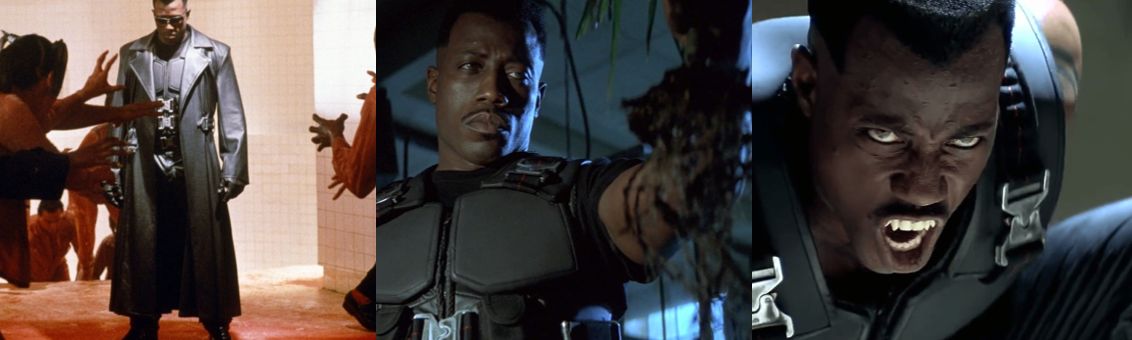
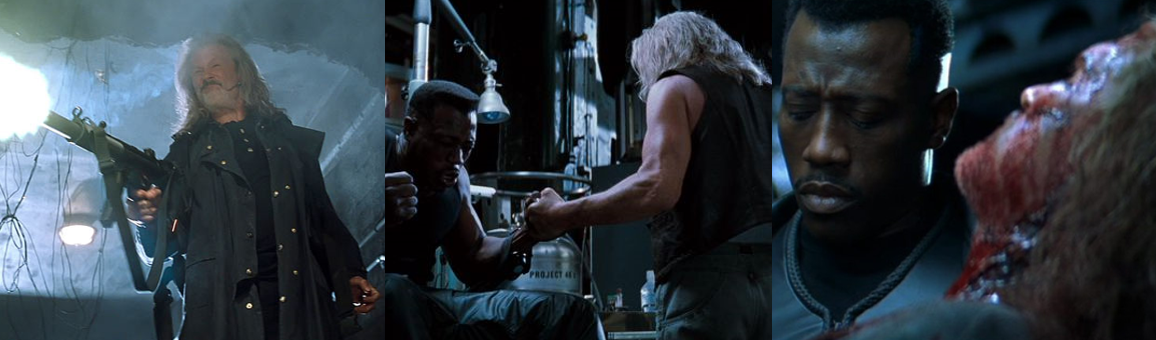
Blade is the story of…well…Blade…a stoic and highly skilled vampire hunter who was born Eric Brooks. When his mother, Vanessa (Sanaa Lathan), was bitten by a vampire (later revealed to have been the big bad, Deacon Frost) while pregnant, Eric was born a “dhampir” (though the film prefers the term “Daywalker”), a human being with all the strengths of a vampire (heightened senses, superhuman strength, agility, and durability, and skin-piercing fangs) but with none of their weaknesses to sunlight or ultraviolet radiation (which burns and eventually explodes on contact), garlic, or silver. For all his fantastic abilities, though, Blade still ages like a normal human and is still hampered by perhaps the vampire’s most crippling affliction: “The Thirst” for human blood. While other vampires freely indulge their bloodlust, luring in unsuspecting prey and literally raving at underground bloodbaths, Blade relies upon a special serum, derived by his half-crippled mentor, Whistler, to keep the Thirst at bay. Blade takes this serum at least once a day and this is the first time (and one of the rare times) that we see him in an kind of vulnerable state; strapped to a chair, grasping Whistler’s hand for support, his body is wracked by seizures as the serum courses through his veins, leaving his hunger satiated and his body trembling. Aside from this, Blade is an absolute machine when out in the field; stone-faced and exuding menace and confidence, he thinks nothing of walking into a club filled to the brim with horny, blood-hungry vampires and even little of storming a hospital or Frost’s penthouse in the pursuit of his targets. Harbouring a deep-rooted hatred towards vampires since they killed his mother and cursed him with a life of violence and pain, Blade is relentless in his quest to kill every vampire that crosses his path, disrupt and destroy their entrenched hierarchy, and track down and kill Frost, which has earned him a reputation amongst the vampire community as a feared and formidable figure, the aforementioned Daywalker, who is effectively their bogeyman. However, Blade is deeply ashamed by himself; disgusted at his inhuman thirst for blood and sickened at what Frost did to his mother, he seeks solace in the only thing he knows: killing the monsters responsible for his existence to gain just a small sliver of his humanity back with each victory.

Grouchy hard-ass Whistler has devoted his life to training Blade and killing vampires.

Although Blade is somewhat cold and dismissive towards Whistler, who is a crotchety and jaded old man with a prominent limp and a tendency to smoke around flammable liquids, there’s a mutual respect and admiration between the two. When Blade was a boy, Whistler stumbled upon him on the streets and nearly killed him before realising what he was and has been teaching him everything he knows ever since. Whistler has even less love for vampires than the titular hunter; years ago, his wife and children were killed after taking in a drifter, who turned out to be a vampire, and he was forced to watch as they were tortured before his eyes. Quite how he survived this encounter isn’t elaborated, but he’s made it his mission to take them out one by one. Despite their contentious relationship, where Whistler is often admonishing Blade for his actions, there’s a father/son bond between the two; it’s obvious that they care about each other, and Whistler is clearly disturbed at the serum’s increasing ineffectiveness and concerned for Blade’s welfare out in the field. Unfortunately, age, injuries, and cancer have taken their toll on Whistler and he’s no longer able to be an active combatant, something you can tell is a source of great frustration for him. Despite this, he’s still a valuable ally and resource for Blade; his vast knowledge of vampire society and their inner workings allows Blade to pursue Deacon Frost, and Whistler furnishes Blade with all his weapons and his supped-up muscle car, and even makes a dramatic and amusing last-minute save later in the film (his “Catch you fucker’s at a bad time?!” and “Somebody get me a Goddamn wheelchair!” lines are some of the best in the film). For all his piss and vinegar, Whistler has a large heart; he truly cares for Blade and sympathises with Karen’s plight, and his whole mission is motivated by a desire to protect others from the vampire’s bloodlusts. However, while he has an indomitable fighting spirit, his best efforts to protect Karen and fend off Frost are for naught, leaving him beaten, bloodied, and bitten. Blade is left shell-shocked and refuses to finish off his father figure; it’s all he can do to clean Whistler’s wounds and, seeing his protégé’s struggle, Whistler demands that he walk away so he can finish the job himself, and Blade begrudgingly obeys, resuming his grim façade and fuelled by an even greater need to extract revenge on Frost.

Violently thrust into Blade’s world, haematologist Karen works to find a cure for vampirism.

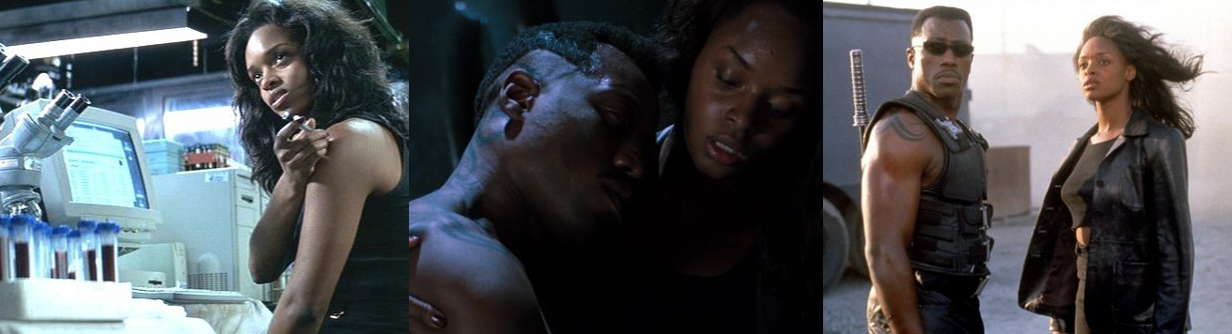
When we first meet her, Karen is just an average overworked and underpaid haematologist trying to get through a nightshift while dismissing the advances of her colleague and former flame, Doctor Curtis Webb (Tim Guinee). She’s violently introduced to Blade’s gruesome world, however, when the charred corpse of Frost’s underling, Quinn (Logue), springs to life and violently attacks both her and Curtis. Although it’s admittedly a bit weird that Blade went to all the trouble of setting Quinn alight to send a message to Frost and then immediately came back to “finish [him] off”, thereby endangering innocents by letting Quinn live, it does mean that he crosses paths with the injured and infected Karen. In a rare moment of emotion, Blade sees a resemblance between Karen and his mother and chooses to take her to his lair rather than finish her off or leave her to turn. Karen thus becomes the audience surrogate; it’s through her interactions with Whistler and Blade that we learn about Blade’s origin, the rules of these vampires, and the lore behind the movie. At first, she’s naturally terrified; not only has she just been attacked by a ravenous, burned up corpse but this hulking motherfucker just threw her out a window and effectively kidnapped her, and her fear only worsens when she’s told that she has a high chance of becoming a vampire even after the treatment they give her. Determined to avoid this fate, and fascinated by their operation, Karen experiments with ethylenediaminetetraacetic acid (EDTA), discovering that it not only has explosive results when mixed with vampire blood but could also hold the key to curing vampirism. Though this wouldn’t have any affect on Blade since he was born with his abilities, she’s confident that she can cure him with enough time but, ultimately, he requests that she synthesise a more effective serum for him. Since she was attacked, Karen becomes “marked” and thus remains at risk of vampire attacks; this comes to a head when she’s taken hostage by Frost, meaning she willingly allows Blade to drink her blood in order to restore his strength for the finale, but any romantic subplot between them is continually (and refreshingly) downplayed due to Blade’s intense focus on his never-ending mission (although the scene where he drinks her blood seems purposefully shot to evoke an intense love scene).

Upstart sadistic Frost wants nothing more than to rule over the humans and usurp his antiquated elders.

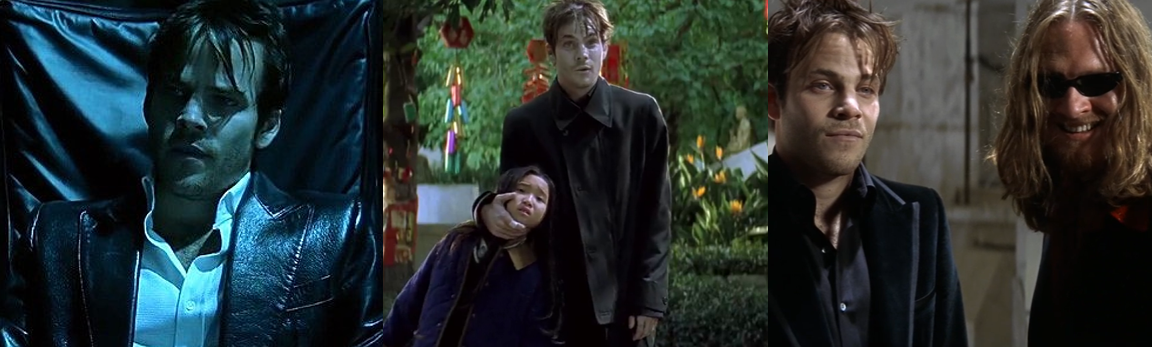
As different as Blade is from his comic book counterpart, Frost is equally a departure from the silver-haired, middle-aged man seen in the comics. Indeed, the movie version of Frost has more in common with David Powers (Kiefer Sutherland) from The Lost Boys (Schumacher, 1987), both aesthetically and in terms of his motivation. Frost is seen by his more composed elders as a disruptive and chaotic individual, one who regards vampires as the dominant species and humans as mere food and whosr antics draw unnecessary attention to their kind not just from Blade, the scourge of vampire society, but also from the humans they so tentatively live alongside. Frost’s mindset is an intriguing one; since he was “merely turned” into a vampire, and was thus once human, his hatred and resentment towards humanity seems to stem from an untampered, sadistic lust for power, bloodshed, and a superiority complex afforded by his superhuman abilities. Seeing the vampire high council as relics of a bygone era, Frost wants nothing more than to run free and rampant, unrestricted by antiquated rules and treaties, and has even found a way to operate in the sunlight using sun block (a ludicrous solution, but it makes for an intimidating confrontation between him and Blade and one of the first popular instances of “bullet time” in cinema). Frost is a twisted, arrogant punk who surrounds himself with a gaggle of likeminded cronies, all of whom revel in indulging their thirst for blood and anarchy, and this extends even as far as to threaten a young girl just to hold Blade at bay and to take the head of the vampire council, Gitano Dragonetti (Kier), rip his fangs out with pliers, and leave him to be annihilated by the rising sun. Despite his disrespect and frustration with the old ways, Frost devotes a great deal of his time, energy, and resources to translating the secret of the “Blood God”, La Magra, from the Book of Erebus (the “Vampire Bible”), discovering that sacrificing twelve “Pure Bloods” will summon the eldritch force and infuse him with its power. A cruel-hearted and vicious individual, Frost takes great pleasure in beating Whistler half to death and delights in torturing Blade not just with the knowledge that his mother is still alive (and a vampire now entirely loyal to Frost) but also by draining his blood to fuel his transformation into the Blood God. Imbued with a virtual immortality, Frost’s ambition more than exceeds his grasp, allowing him to effectively usurp his elders and ascend to a level of existence that threatens to spell the end of days for both humans and any vampires that don’t pledge undying fealty to him.

The Nitty-Gritty:
If there’s a downside to Blade, it’s that it suffers from the annoying trend of having its antagonists sit around in suits and in elaborate boardrooms and office buildings, lording their power and control over the city. However, this actually plays into Frost’s character; unlike the vampire high council and the likes of Gitano Dragonetti, Frost shuns the corporate ways of their society and prefers to indulge his whims, and this dispute leads to a great deal of antagonism between his upstart group and their elders. Indeed, vampire society in Blade is depicted as being firmly entrenched within what we recognise as the real world; they’ve infiltrated every level of society, from politics to law enforcement and real estate, and enjoy the wealth and privileges such influence brings, allowing them to carefully select their victims and modulate their base desires so as not to draw attention to themselves. In contrast to these Pure Bloods, Frost and his cronies are seen as petulant children; admonished for encouraging gatherings of similarly turned vampires and threatening the “treaty” they have with the human politicians (indicating an awareness of vampire society at a higher governmental level, but it’s ignored and/or tolerated to keep from sparking an all-out war that would cost humans their lives and vampires their lofty position). If you’ve ever watched Buffy the Vampire Slayer (1997 to 2003), you’ll be immediately familiar with vampire society in Blade: there’s the older Pure Bloods at the top of the food chain, those they’ve turned and inducted into their cabal (like Frost), but there are also more monstrous variants in their ranks. The morbidly obese Pearl (Eric Edwards), who’s been feeding on children while helping translate the Vampire Bible, is just one such example, but Curtis later pops up as a horrific zombie-like creature as a common by-product of being bitten. On the other side of the coin, the vampires frequently employ “Familiars”, regular humans like Krieger (Kevin Patrick Walls), a police officer who carries Frost’s tattoo and hopes to one day be turned for assisting his master.

Blade excels in its action-packed fight scenes, gritty presentation, and unapologetic gore.

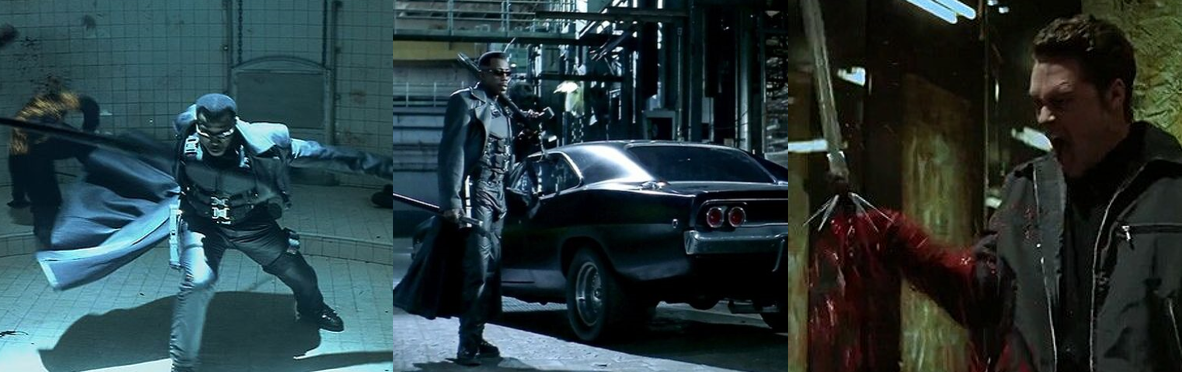
One of the things I absolutely love about Blade is, like The Crow (Proyas, 1994) and The Matrix before it, the film has a heavy reliance upon bad-ass leather trench coats and kung-fu. Garbed head to toe in black and sporting a nifty armour vest, Blade cuts quite the intimidating figure; our introduction to him, standing bone dry amidst a literal bloodbath, couldn’t be more striking and watching him dismantle vampires left and right with ease and skill is always a joy thanks to Snipes’ slick movements and some incredibly well-shot and well-choreographed fight scenes. The action is easy to follow, even when in low or strobe lighting, and Blade oozes confidence and charisma every time he’s on screen even though the character is largely stoic and no-nonsense. Having said that, though, Blade’s grim demeanour does crack on more than one occasion; he gives himself a little fist pump after nailing Quinn to a wall, shares some banter with Whistler, expresses concern over Karen and appreciation towards his allies, but perhaps his most amusing attribute is that he often delivers cool, snappy one-liners (his outburst of “Motherfuckah, are you outta your damn mind?” when the cops shoot at him never fails to amuse and his “Some motherfuckahs are always tryin’ t’ice skate uphill” is exactly the right level of awesome and ridiculous). Blade is so proficient at killing vampires because his superhuman abilities are bolstered by some awesome weapons, courtesy of Whistler; he carries a variety of silver stakes to instantly turn vampires to charred ash, wields a modified MAC-11 for rapid fire like he’s fuckin’ Alex Murphy/RoboCop, blows vampire heads clean off with his shotgun and, of course, carries a titanium, silver-tinted sword that easily allows him to not only sever limbs and reduce even roomfuls of armed vampires to dust but also contains a security feature that means no one but him can hold it without losing a hand! Whistler even furnishes Karen with a compound of “vampire mace” to fend off any unwanted attention, and has put together quite the sexy muscle car for Blade to bomb around the city streets in.

Unfortunately, the film’s effects and finale are bogged down by some ugly CGI blood.

I mentioned Buffy the Vampire Slayer earlier and the comparison is more fitting that you might think; while the vampires don’t sport monstrous make-up like in the show and appear much sexier with their glistening fangs and gothic attire, they die in very much the same way. After being stabbed or sliced with silver, or exposed to sunlight, vampires quickly and violently burn to ash and cinders, an effect that is visually interesting if a little dated. For the most part, Blade does a great job of keeping everything nice and practical; Snipes excels in his fight scenes and shoot-outs, which are all nice and varied and have a great balance of fast-paced, hard-hitting action, explosions, and blood, and the sets are equally diverse, ranging from high-tech archives, the juxtaposition between Frost’s elaborate penthouse and Blade’s rundown lair in the industrial district, and the ancient stone of the Temple of Eternal Night. On the other hand, Pearl is little more than a disgusting mass of rubbery flesh, Frost’s Mac is strangely able to render a complete 3D recreation of the temple simply from translating the Vampire Bible, and, of course, there’s the final confrontation between Blade and Frost himself. After being restored by Karen’s blood (and receiving a power boost as a result) and cutting through Frost’s underlings, and even killing his mother (ultimately an underutilised plot point, I feel, that could’ve easily been dropped), Blade battles the empowered Frost one last time. This one is actually a challenge for Blade; not only is Frost able to match him blow for blow and sword swing for sword swing, but he’s functionally immortal thanks to the Blood God. Despite Frost’s henchwoman, Mercury (Arly Jover), killing one of the twelve Pure Bloods, the ceremony goes off without a hitch, imbuing Frost with the powers of the God (although it’s possible that Mercury’s actions caused him to be more of a demigod than a literal whirlwind of blood). When Blade does cut through Frost’s abdomen for a killing blow, the upstart vampire easily reconnects himself using probably the worst CGI blood effect you’ll ever see. Luckily, these poor blood effects are fleeting and don’t overpower the finale like in the first disastrous test footage, but they do rear their ugly head when Blade bests Frost by injecting him with his entire supply of EDTA, causing him to violently explode in an ugly, bloated mess. Although Frost is dead, this was merely a battle in an ongoing and never-ending war and the film ends with Blade more willing than ever to see his cause through to the conclusion (even ending up hunting vampires in Russia) rather than accept the vague promise of a cure.

The Summary:
It’s actually a little surprising to me how well Blade holds up today; the film has a slick, science-fiction edge to it that permeated subsequent comic book movies like the X-Men films (Various, 2000 to 2020) but it had something to it, a dark, gritty edge, that even now films in the same genre tend to either downplay or ignore. Although it’s undeniably comic book-y in its premise and execution, Blade eschews many of the clichés we’ve come to see from the genre; rather than being a by-the-numbers origin story or feature form-fitting costumes, Blade is primarily a horror/action film and, in this regard, it exceeds tremendously. Full of fast, exciting fight scenes, frenetic chase sequences, and action-packed shoot-outs, Blade is even a cut above other films in the action genre and may very well be the perfect marriage of all these disparate elements. Edgy, gory, and unapologetically aimed at a more mature audience, the film takes everything that worked in The Crow and expands upon it with its gothic, gruesome premise and proceeds the “wire-fu” craze popularised by The Matrix. I’ve never been a massive fan of Wesley Snipes; he’s undeniably cool and certainly has some skills, but it’s a little difficult for me to reconcile his personal life with his movies, which haven’t always been able to compete with his peers, but Blade was a great showcase of his physical abilities and easily his most iconic character for me since it allows him to be stoic, deeply emotional, and snarky in addition to tossing fools around like they were nothing. The depiction of vampire society as being a conflict of interests between the antiquated old guard and Frost’s arrogant upstarts echoed The Lost Boys and nicely challenged the cliché of all-powerful, corporate antagonists, and was a significant influence on the genre going forward. While some of the effects haven’t aged too well and the plot point of Blade’s mother still being alive didn’t really land for me, neither of these things really detract from how enjoyable Blade is. Although I actually prefer the more violent and action-packed sequel, there’s a definite appeal to how raw and uncompromising the original is, especially in its depiction of more horrific and gory moments, and it’s a great piece of dark, gritty vampire fiction for fans of the genre.

My Rating:

Rating: 4 out of 5.

Great Stuff

Are you fan of Blade? What did you think to it when it first came out and how do you think it holds up today? Were you a fan of the comic book character prior to this film and, if so, what did you think to the changes made to his powers and origin? What did you think to the performances, specifically Wesley Snipes and Stephen Dorff, and were you moved by Whistler’s death? Did you enjoy the film’s gore and action sequences, and what are your thoughts on the CGI used in the finale? Which vampire movie or story is your favourite, and which of the Blade films or comics do you enjoy? Whatever your thoughts on Blade, feel free to share them below.

Movie Night: Saw: Uncut Edition

Released: 18 October 2005
Originally Released: 29 October 2004
Director: James Wan
Distributor: Lions Gate Films
Budget: $1 to 1.2 million
Stars: Cary Elwes, Leigh Whannell, Danny Glover, Ken Leung, Michael Emerson, and Tobin Bell

The Plot:
Doctor Lawrence Gordon (Elwes) and voyeur Adam (Whannell) wake up in a dirty bathroom with their feet chain to pipes, the latest captives of the twisted and mysterious “Jigsaw” (Bell) who subjects his victims to deadly “games” to test their commitment to life. With his family at risk, Dr. Gordon has just hours to either kill Adam or use the rusty saw to cut through his foot and escape his fate!

The Background:
After finishing film school, Australian writer/director duo Leigh Whannell and James Wan were desperate to fund a film of their own. Inspired by the unprecedented success of the low-budget Blair Witch Project (Myrick and Sánchez, 1999), the two dreamed up the basic concept that would become Saw: two men chained up in a room with a dead body between them that played out like a mystery thriller. To raise the funds they required, Wan and Whannell shot a seven-minute short, with Whannell in the lead, depicting a man with a modified bear trap strapped to his head, which caught the eye of producer Gregg Hoffman. Hoffman loved the short and agreed to finance it, and give the two creative control and a percentage of the profits, through their production company, Twisted Pictures, and that same short was also enough to convince Cary Elwes to sign on, though a legal dispute saw this relationship deteriorate for the better part of five years. Once Danny Glover was signed on, Tobin Bell jumped at the chance to take part, especially considering the twist ending, and the crew set to work constructing the elaborate, dingy sets. The film was shot very quickly, with little time for rehearsals, which resulted in the Saw’s gritty presentation and rapid cuts, though Wan used this to his advantage to help bolster the editing process. The film’s gruesome death traps became not only a staple of the resulting franchise but helped popularise the “torture porn” sub-genre of horror cinema and caused a great deal of controversy amongst critics. Indeed, although Saw‘s eventual $103.9 million box office made it the most profitable horror film since Scream (Craven, 1996), reviews were mixed; many were put off by the frantic editing and gross-out content, while others praised Saw as a ground-breaking entry in the genre. Regardless, Saw‘s strong opening weekend saw a sequel approved and Saw quickly spiraled into a dense and popular (if divisive) horror franchise, with six sequels released annually between 2005 and 2010 alongside videogames, comic books, other merchandise, and later sequels.

The Review:
I vividly remember the hype for Saw; it was one of the few times I actually visited a film’s website and participated in the viral marketing campaign, which was especially surprising considering that I wasn’t a massive fan of the overly bleak and dreary Seven (Fincher, 1995), which mainly impressed me because of its gruesome kills and twist ending. However, Saw was both heavily advertised as being grittier and nastier than Seven and the trailers had hooked me on the premise alone, so I was all for it and I’m very happy to say that I saw all the Saw movies at the cinema when they first released and became a huge fan of the franchise, despite them getting more and more over the top. The first Saw, though, is decidedly low key; most of the film takes place in one location, a dingy bathroom with a dead body in the middle of it, and focuses on the plight of its two main characters, two men who couldn’t be more different and who find themselves stuck together, chained to pipes, with their only options being death or murder. Of the two, Adam is the first to awaken; after narrowly avoiding drowning, he’s flustered, confused, and aghast to find himself trapped in the dilapidated room alongside Dr. Gordon while the doctor is much calmer and more pragmatic about their situation, at least from the off.

Dr. Gordon and Adam are trapped in a room where the only way out is death or blood!

After their initial introductions and trying to get their heads around what’s happening, the two find they each have a microcassette on their person and, with a great deal of difficulty, Adam retrieves the tape player from the suicide victim whose brains are splattered across the bathroom floor. Playing the tapes reveals that the two are the latest victims of a sadistic killer labelled Jigsaw by the tabloids; he challenges Dr. Gordon to a simple game: kill Adam by six o’clock or else his wife and daughter, Alison and Diana (Monica Potter and Makenzie Vega, respectively) will die. Jigsaw also subtly gives the two the option of suicide or even using the hacksaws Adam later finds in the funky water of the toilet cistern to cut through their feet since the chains are too strong. While Adam continues to be horrified by the situation, Dr. Gordon is more than familiar with Jigsaw since he was once a prime suspect in the police investigation into the killer, but his knowledge of Jigsaw fails to alleviate Adam’s anxiety or the mistrust between the two, which only escalates as the film progresses since Adam is a terrible liar (something amazingly conveyed by Whannell’s atrocious acting!) Luckily, Dr. Gordon was cleared of any suspicion, but he witnessed first-hand the lengths Jigsaw goes to test his victims after hearing the testimony of the only known survivor of his games, former drug addict Amanda Young (Shawnee Smith). When Dr. Gordon receives a call from Alison, who’s being held at gunpoint by Jigsaw’s desperate accomplice, Zep Hindle (Emerson), warning him not to trust Adam, a series of flashbacks reveal that Adam was hired to follow Dr. Gordon and photograph his movements, and that Dr. Gordon has been less than faithful in his marriage, which was already strained by his long hours and neglectful tendancies. Once they stop playing coy with each other, Dr. Gordon and Adam actually work quite well to figure out that they’re being watched and come up with ways of trying to get around Jigsaw’s games; unfortunately, their attempts to fool Jigsaw are squandered not just by Adam’s unconvincing attempt to play dead but also because Jigsaw has seemingly prepared for every eventuality and shocks the two with an electrical current running through the pipes they’re chained to.

After his partner’s death, Detective Tapp is driven to near insanity by his pursuit of Jigsaw.

When the film isn’t following the two captives, either directly in the room or via video feed being observed by Zepp, it’s flashing back to show glimpses of their lives before they were captured; Adam’s are mainly focused on him stalking Dr. Gordon and being abducted by a pig-masked figure, but Dr. Gordon’s show his tumultuous homelife and busy day-to-day working as an oncologist to terminal cancer patients like John Kramer (Bell). This is where he meets Detective David Tapp (Glover) and his partner, Detective Steven Sing (Leung), the cops investigating Jigsaw. Having met with nothing but dead ends and the horrific leftovers of Jigsaw’s victims, save for Amanda’s harrowing story, Tapp believes they’ve finally found their man when one of Dr. Gordon’s penlights is found at Jigsaw’s latest twisted game. Although they’re unable to connect him to the killer in any meaningful way, careful analysis of the tape Jigsaw left for Amanda allows them to deduce his possible location and they’re so gung-ho about catching Jigsaw that they immediately investigate without back-up or a proper search warrant. There, they find a disused warehouse full of traps, Jigsaw’s now-iconic proxy (a puppet named Billy), little models of Jigsaw’s games, and Jeff (Ned Bellamy) strapped to a chair. Although they get the drop on the hooded Jigsaw, they’re left scrambling to keep Jeff from being killed by the drills closing in on his head, which is enough of a distraction for Jigsaw to violently slice Tapp across the throat! When Sing pursues, he accidentally triggers a shotgun trap and is brutally killed, leaving the scarred and traumatised Tapp to descend into near madness. Convinced that Dr. Gordon was their man, Tapp shuts himself away and devotes himself to tracking Lawrence’s every movement, employing Adam to keep tabs on him to try and catch him in the act, but doesn’t hesitate at a chance for revenge when he spots Zepp struggling with Alison in the Gordon home.

While Zepp holds Dr. Gordon’s family captive, the true mastermind lurks in the shadows.

Throughout the film, the true identity of Jigsaw is kept a tantalising mystery. When he appears, it’s either via a pre-recorded message (either on a tape recorder or speaking through Billy), under a hood or disturbing pig mask, or simply as an eye since he likes to get up close and personal with each of his victims. The few times we do see Jigsaw in person, he’s characterised as a methodical and eerily intelligent man, one who speaks in riddles and half-truths and challenges everyone, whether they’re his victims or his potential prosecutors, to both think their way out of situations and consider their perspective on life. He openly criticises Adam for living the life of a voyeur, as well as Dr. Gordon’s lack of appreciation for his family, and is seen to be a patient and fastidious man who painstakingly plans out each game to account for every eventuality. However, for much of the film, we’re led to believe that Jigsaw is Zep, a lowly orderly from Dr. Gordon’s hospital; this twist comes fairly early on, when Dr. Gordon recognises him from the various disturbing Polaroids left in his wallet, and from there Zepp is seen unobscured as he toys with Alison and Diana. Yet, while Zepp is clearly seen to be unhinged and dangerous, since he shoots and kills Tapp during their struggle, there’s an ongoing sense that there’s something not quite right; for one thing, Zepp doesn’t sound anything like Jigsaw and he is also constantly showcasing an emotional paranoia about “rules” and the situation that doesn’t fit with Jigsaw’s more patient demeanour. Indeed, despite his tendency to slice a jigsaw piece out of each of his victims (hence the name), Jigsaw openly describes his abject disgust at those who waste their lives and the sickness eating inside of him, thus perfectly laying the seeds for the film’s dramatic finale where it’s proven that Zepp was just another victim of Jigsaw’s depraved games.

The Nitty-Gritty:
If there’s one theme in Saw, it’s of trust. Dr. Gordon and Adam almost instantly distrust each other not just because of their strange situation or Adam clearly trying to cover up his knowledge of Dr. Gordon’s identity and life, but also because of the class divide between them. Adam is a desperate mercenary, of sorts; he lives in squalor job to job, caring little for who pays him or why they want people followed or the lives of the person he’s photographing. In comparison, Dr. Gordon lives very comfortably; he has a nice house, a nice office, and takes his life for granted so much that he’s happy to rest on his laurels and even consider a fling with Carla (Alexandra Chun), one of his interns (though, ironically, he put a stop to the liaison before it could properly get underway right before he was abducted, showing that he was already planning to turn his life around and try harder with his family). There’s a discord between Dr. Gordon and Alison, to the point where she treats him very coldly since she believes he’s lying about his happiness, and Sing’s unwavering trust in Tapp is arguably what leads to his death since he doesn’t stop to question his partner in raiding Jigsaw’s warehouse. This leads me to the second most prominent theme in Saw: obsession. After his injury and Sing’s death, Tapp becomes obsessed with proving Dr. Gordon’s guilt, to the point where he’s fired, divorced, and turns to alcohol and isolation. Tapp’s so consumed by grief and obsession that he’s suffered a mental breakdown and has become obsessed with “closing [the] case”, and it’s this obsession that drives him not just to intervene when Zepp tries to kill Alison and Diana but also to pursue him to the bathroom, where he’s shot and killed in a brief struggle with the manic orderly.

Jigsaw forces his victims to endure life-or-death games to test their survival instincts.

Of course, one of the main selling points of Saw are the gruesome traps Jigsaw sets for his victims and the violent ways in which they die. Shot using a frenetic camera and fast edits and bolstered by a dingy, almost low-rent lighting, the traps are presented in a way that invites the audience to experience the fear and panic felt by their victims, who are all subjected to torturous tests that reflect their sin, vices, or crimes. The first trap we see finds Paul (Mike Butters) wrapped up in razor wire after bleeding to death in an attempt to escape; Paul was chosen for the simple crime of cutting himself despite being perfectly healthy and sane, so Jigsaw wanted to test if he was truly suicidal or just wanted attention. Next, Tapp and Sing investigate the immolated corpse of Mark (Paul Gutrecht), a man who had claimed to be sick but was always out and about; to test his “illness”, Jigsaw injected him with a slow-acting poison, doused him in flammable jelly, and challenged him to navigate a field of broken glass to find the combination to the safe containing the antidote using only a candle to light his way. Easily the most iconic trap of the film (and, quite possibly, the entire franchise) is the reverse bear trap that Amanda found strapped around her head after she refused to stop wasting her life on drugs. Amanda’s only hope of survival lay in the stomach of Donnie Greco (Oren Koules) and, though reviled and hesitant, Amanda had no choice but to disembowel him to get a key out of his stomach. Considering how iconic the reverse bear trap became, it’s interesting that we don’t actually see what it’s capable of beyond a brief demonstration on a mannequin; a later Saw film would rectify this and the franchise returned to the trap again and again but in its original incarnation, the threat and sheer dread evoked by the bear trap was terrifying enough! While there’s a fair amount of blood in Saw, the first film is decidedly more reserved than its more over-the-top successors; it’s more about the atmosphere and sense of desperation here, making Saw more of a gore-thriller than a straight-up “torture porn” movie, though this Uncut Edition of the film does add a few extra frames of gore, blood, and panic to the mix despite actually running shorter than the theatrical version. Later films would up the ante on not just the traps but in exploring Jigsaw’s entire twisted philosophy, but it’s quite bitter and simplistic in Saw: he hates those who don’t appreciate life and wants to punish them for it so they can justify their existence through extreme measures and bloodshed. Crucially, there’s a distinction made that Jigsaw isn’t some psychotic murderer; technically, he hasn’t killed anyone, but his depraved methods make him a top priority for the likes of Tapp and Sing. The hints towards him being an enigmatic, almost cult-like figure are sown here, however; not only does his reputation proceed him, but Amanda asserts that Jigsaw “helped [her]” with his test, despite the fact that it’s clearly left her an emotional wreck.

Dr. Gordon resorts to extreme measure to escape but the true Jigsaw was hiding in plain sight!

Jigsaw’s traps may be a highlight but there’s a definite sense that these gruesome games were simply a test of his greater designs for those who don’t appreciate life. I say this because it definitely seems like he abducted the likes of Paul, Mark, and Jeff and simply placed them in a life-or-death situation, but he concocts an elaborate, multi-staged plan with all these different elements (Zepp, a kidnapping, planting evidence, even luminous paint and alternative ways to kill Adam) for Dr. Gordon’s test. Dr. Gordon’s calm demeanour degenerates as his situation becomes more and more desperate; hearing Alison’s voice and learning of Zepp’s involvement only exacerbates his emotional state and he’s pushed to the brink when his time runs out and he hears what appears to be the agonising death of his wife and child. His logic and reasoning evaporate and are consumed by an obsessive, desperate need to save their lives at any cost so, much to Adam’s abject horror, Dr. Gordon wraps a makeshift tourniquet around his ankle and gets sawing! Even this sequence, as harrowing and uncomfortable as it is, is nowhere near as gory as it could be or what we’d see in later films as Saw wisely keeps the focus on Dr. Gordon’s crazed expression and Adam’s horrified reaction. Finally free from his shackle, Dr. Gordon shoots Adam but is unable to kill or even oppose Zepp when he comes to finish them off for failing to complete the game in time. Luckily, Dr. Gordon only wounded Adam, who springs to life in a maniacal rage and beats Zepp to death using the toilet tank lid! Bleeding to death and barely clinging to life, Dr. Gordon drags himself off to get help though, sadly, this version of the film strangely omits Dr. Gordon’s final line to Adam (“I wouldn’t lie to you”) that I always felt was a lovely way to show how far their relationship had progressed. Injured and in shock, Adam is stunned when he roots around in Zepp’s pockets for the key only to find he possessed a tape of his own (it’s not clear what Zepp’s crime was but he was coerced into helping the true Jigsaw enact his plan on pain of death), which leads to easily one of the best twist endings in all of cinema, one perfectly bolstered by Charlie Clouser’s iconic “Hello Zepp” score. After playing the tape, Adam is astonished when the corpse in the middle of the room comes to life and rips some of the fake blood from his head to reveal himself as Dr. Gorodn’s patient! Kramer then tells Adam that the key was in the bathtub all along (if you re-watch the opening, you see it get sucked down the drain) but, when Adam tries to shoot him with Zepp’s gun, Kramer incapacitates him with an electric shock via remote control and dramatically slams the bathroom door shut with a simple stern declaration: “Game over!”

The Summary:
As much as I’ve enjoyed seeing the Saw franchise evolve and delve deeper into Jigsaw’s twisted sense of morality, methods, and justification for his horrendous actions, it’s hard, even now, to deny the appeal and almost timeless quality of the original film. Saw has a very gritty, urban feel to it; the entire film is awash in bleak, stark colours, moody lighting, and rusted, dirty tools and environments that give the whole thing an edge and an atmosphere that not only set the standard for the franchise, but which subsequent films have attempted to emulate and surpass, for better or worse. The central premise of Saw is really strong (just two guys trapped in a room with a horrifying choice to make), but I also enjoyed following the cops trying to bring Jigsaw in; Danny Glover gives the strongest performance of any of the protagonists, but Cary Elwes hold his own as well, despite this accent slipping a few times, to deliver a nuanced and tragically relatable portrayal of a successful, pragmatic man driven to the edge. The traps are, of course, a highlight of the film not just for their depravity but for how simple and effective they are; there’s a definite sense that Jigsaw cobbled all this together by hand and through meticulous planning that gets a little muddled in later films once the traps become outlandish and more nightmarish. Even more appealing is the twisted logic behind the traps, that they’re designed to punish those within with a fitting crime to test their commitment to and appreciation of life, and the suggestion that this all comes from a man whose life is coming to an end. Later films would obviously expand on this but it’s all here in the subtext and things like that, and all the little clues and background details, make Saw a classic horror/thriller even before you get to the shocker of an ending!

My Rating:

Rating: 5 out of 5.

Fantastic

What did you think to Saw? Did you enjoy its frantic, gritty presentation or were you put off by the quick edits and gruesome content? Which of the traps was your favourite and do you think you’d be able to survive if placed in one? Were you shocked by the ending or did you suspect there was more to that corpse? Which of the Saw films is your favourite and what do you think to Jigsaw’s mentality? Whatever your thoughts on Saw, feel free to share them below and check out my other Saw content across the site!

Movie Night [Global James Bond Day]: The Man with the Golden Gun


To celebrate the release of Dr. No (Young, 1962), the first in the long-running series of James Bond movies (Various, 1962 to present), October 5th is officially recognised as “Global James Bond Day”. Today, this franchise stands as the longest-running franchise ever and the character is one of the most recognised and popular movie icons of all time.


Released: 19 December 1974
Director: Guy Hamilton
Distributor: United Artists
Budget: $7 million
Stars: Roger Moore, Christopher Lee, Britt Ekland, Hervé Villechaize, Soon-Taik Oh, Richard Loo, and Maud Adams

The Plot:
Sophisticated super spy James Bond/007 (Moore) may have met his match in Francisco Scaramanga (Lee), a world-renowned assassin whose weapon of choice is a distinctive gold pistol. When Scaramanga seizes the priceless Solex Agitator energy convertor, Bond must recover the device and confront the trained killer in a heart-stopping duel to the death!

The Background:
James Bond, Agent 007 of MI6, was the creation of writer Ian Fleming in 1953 and was heavily inspired by his time and experiences as a navy intelligence officer. James Bond was most famously brought to life by Sean Connery, who kick-started an unparalleled cinematic franchise. However, after five films as the super spy, Connery began to tire of the role; after being lured back for a whopping $1.25 million and other perks, Connery walked away from Bond (…for a time…) and, while still finishing up with The Saint (1962 to 1969), suave Roger Moore took over and immediately set about making it his own so as not to imitate Connery’s iconic performance, eventually becoming a softer and more gentle Bond. Moore’s Bond debut, Live and Let Die (Hamilton, 1973) was a commercial success, though garnered mixed reviews, and famed Bond producers Albert R. Broccoli and Harry Saltzman finally set about making a big-screen adaptation of Fleming’s 1965 novel, a polarising tale that set Bond against a notorious assassin. It was writer Tom Mankiewicz who altered Scaramanga’s character into a dark mirror of Bond himself, and the adaptation ended up being very different from the source material after taking inspiration from the 1973 energy crisis. Christopher Lee, Fleming’s step-cousin, finally got his chance to play a Bond villain and received high praise for his performance, though he struggled a bit with the Golden Gun prop device. The film was shot in numerous locations around Hong Kong, with the nearby Ko Khao Phing Kan islands housing Scaramanga’s suitably elaborate and bizarre lair. The Man with the Golden Gun was notable for its car stunts, one of which made it into the Guinness Book of Records; the barrel roll was caught in one take and saw a stunt driver guide an AMC Hornet over a specially-constructed ramp for the shot, which was mired only by an unfortunate slide whistle sound effect. Although The Man with the Golden Gun grossed over $97 million at the box office, notably less than its predecessor and coming in as the fourth-lowest-grossing film in the series. Reviews were mixed upon release, with critics questioning the script and redundancy of the film, regarding it as an uninspiring entry, despite Lee’s performance, and the film very nearly ended the franchise right then and there. It didn’t, of course; Moore’s Bond was back three years later with The Spy Who Loved Me (Gilbert, 1977), which got the franchise back on track and has been regarded as one of the best Bond movies ever.

The Review:
It was very interesting in preparing for this review to find out that The Man with the Golden Gun wasn’t very successful or well liked upon release, and that it’s since garnered a legacy as one of the worst Bond films ever made. When I first started getting into James Bond, Roger Moore was my main doorway into the classic films; Pierce Brosnan was the Bond of my generation and I’d struggled to get into the Sean Connery films for some time, but Moore’s films were far more appealing to me as they were more fun and quirky and far less dry and dull like a lot of Connery’s films. Consequently, I always had a fondness for The Man with the Golden Gun; granted, much of this was because there was a mystique surrounding the title character thanks to his trademark weapon being such a game-breaking inclusion in the classic GoldenEye 007 (Rare, 1997) but this game was my primary gateway into the franchise so anything that was included in it became a fascination for me. The film opens not with a crazy action sequence or with James Bond on a mission, but on Scaramanga’s opulent island getaway near Red China. Here, surly gangster Rodney (Marc Lawrence) shows up to kill Scaramanga and claim a hefty bounty from his pint-sized butler, Nick Nack (Villechaize). Naturally, he’s unsuccessful, but this establishes many aspects of the titular assassin that come into play later in the film: he’s a skilled gunman and survivor who delights in engaging in live competition against other killers, his island is a veritable funhouse full of animatronic distractions used to disorientate both him and his foe, he’s a crack shot with his trademark weapon, easily scoring a headshot even under low lighting, and he seems to regard James Bond as the ultimate opponent since he has a life-sized dummy of the super spy in his house of tricks.

The bullish Bond appears to have met his match in renowned assassin Scaramanga.

Scaramanga holds a unique distinction amongst other Bond villains in that he’s only the second one to have not only the film but also the title song named after him. Everything you need to know about this sadistic marksman is related in Lulu’s awkward, if catchy, opening song; he’s a world-famous assassin who’s so proficient that he can afford to charge $1 million for a hit. With few morals, he’ll take any contract as long as the client pays this fee, and he likes to engage in “love” before completing his assignment, and only requires one bullet to claim his bounty. However, there’s actually a surprising amount of depth and quirkiness to Scaramanga; as a child, he worked in the circus training animals, and was so enraged when his best friend, a performing elephant, was killed by a stage hand that he immediately took his revenge and found that he enjoyed killing even more than animals. Consequently, while he basks in the opulence of his fully-automated and luxurious island abode, Scaramanga takes a perverse pleasure in every kill and thrives on testing his skills against other, equally worthy opponents. Though he’s notorious enough that even James Bond and MI6 are aware of him, few have actually seen Scaramanga’s face and lived to tell of it; he’s readily identifiable, however, by his recognisable third nipple, a curious physical quirk that allows Bond to impersonate Scaramanga. Although he comes across as a cool, calculating, and even charismatic man, charming women and clients alike with his eloquence and wealth, Scaramanga is a ruthless and abusive man; Andrea Anders (Adams) lives in constant fear of him, to the point where she risks her life and offers her body just to get Bond to free her from his grasp, and even Nick Nack appears to covet Scaramanga’s wealth and power. Bond also gives a quick rundown of the titular assassin’s life history; of course, during his time, Bond films loved to have 007 do this, so this isn’t exactly anything new and actually helps establish the a reputation Scaramanga has. Despite his constant despair over Bond’s childish antics, M (Bernard Lee) is thus understandably perturbed when one of Scaramanga’s golden bullets arrives baring not only Bond’s number but also Scaramanga’s fingerprints, resulting in one of my favourite exchanges in the film where M gruffly rattles off the list of potential suspects who would happily pay $1 million to kill Bond. Recognising the threat, M forces Bond to take a sabbatical, but surreptitiously gives him carte blanche to investigate the threat. Luckily for Bond, his concerns about the “energy crisis” and the mysterious Solex Agitator align with his efforts to track down Scaramanga, which is made easier by Scaramanga having assassinated a fellow 00 Agent in Beirut but also because Bond is approached by Andrea, the woman behind the golden 007 bullet, who offers him anything he desires to kill her abuser.

Bond is aided, and opposed, by a variety of cartoonish supporting characters.

As much as I enjoy the quirkier side of Bond as embodied by Moore, it’s true that he’s not quite in that role here; Bond is unduly rude and dismissive of Mary Goodnight (Ekland), threatens to shoot a man in the groin, tosses a little boy into water, and smacks Andrea around before seducing her in the same brutally manipulative style of his predecessor. Still, Moore’s suave charm is more than evident (he easily seduces a belly dancer (Carmen du Sautoy) in possession of one of Scaramanga’s bullets) and to be fair, it’s implied that Bond is more than familiar with Goodnight and doesn’t regard her as much of an agent (and why would he? She’s easily one of the more scatter-brained Bond Girls so I’m not surprised that Bond is exasperated by her). Bond walks into every situation with an effortless confidence; even when attacked by larger men, or highly-trained karate students, his resolve doesn’t falter and he finds a way to fight, shoot, or run from the problem with trademark physics-defying deftness. A far cry from later, more independent and capable Bond Girls, Goodnight is little more than an inconvenience; she has some local knowledge, but mostly just gets in the way and ends up taken hostage. Although she has one flash of brilliance when she superbly knocks down Bond’s charms, she’s only too eager to hop into bed with him and is incensed when he literally stuffs her into a wardrobe to screw Andrea to get closer to Scaramanga, meaning she’s one of the few Bond Girls who’s immediately besotted by Bond and desires him, whereas most of her counterparts at least need a bit of convincing first. Goodnight is juxtaposed by the alluring Andrea, a desperate victim of Scaramanga’s lusts and control who puts her life on the line getting his finger prints on the bullet and note sent to MI6 all so Bond can slap her about and bully her into revealing Scaramanga’s location. However, this is nothing compared to Scaramanga; we never see or learn exactly what he does to Andrea, aside from a brief scene of her clearly disgusted by him, but it’s clear that she has nothing but hatred for the cold-blooded assassin, who has no compunction about putting killing her for her betrayal. While in Hong Kong, Bond works with local agent Lieutenant Hip (Oh) who, wouldn’t you know it, is not only proficient in martial arts but even has nieces who are similarly trained, allowing the movie to clumsily capitalise on the recent popularity of kung-fu movies like Enter the Dragon (Clouse, 1973). Sadly, Q’s (Desmond Llewelyn) role is disappointingly small and little more than a cameo and armaments expert Colthorpe (James Cossins) steals lines and screen time away from the recurring quartermaster, and the secondary villains aren’t much to shout about either. Scaramanga takes a contract from Thai industrialist Hai Fat (Richard Loo), whom he promptly kills (for free, despite Lulu’s assertions to the contrary…) so he can assume control of his business and claim the coveted Solex Agitator for himself, and his reportedly perverted, diminutive henchman Nick Nack is little (no pun intended…) more than a cackling nuisance who Bond easily dispatches, despite wishing to take his employer’s vast estate for himself by arranging (or, at least, co-operating) in his death.

The Nitty-Gritty:
As with any James Bond film, it’s always worth discussing the title sequence and song. Sadly, The Man with the Golden Gun doesn’t impress in this department; James Bond films of this era were decidedly simple and lacklustre compared to the more elaborate title sequences that would come later, but this is a mess of glittering lights, dancing bodies, and primarily focuses on the titular weapon being held and waved in our faces just in case you forget what Scaramanga is known for. Earlier, I described Lulu’s song as “awkward”; it’s a catchy tune and definitely sticks in the head, but there’s some weird lines like “If-you-want-to-get-rid-of-some-one, the-man-with-the-golden-gun-n-n…willgetitdone!”, which would flow a lot better if “want to” was substituted with “wanna”. While Bond films tend to be quite formulaic, especially in this era, they’re often salvaged by their exotic locations, gadgets, and colourful villains and The Man with the Golden Gun excels in this latter aspect. Christopher Lee brings a charismatic menace, largely carrying the film and stealing every scene with his magnetic performance and alluring delivery, switching between affable and menacing with a natural ease. It’s a shame, then, that the film is lumbered with a far less interesting side plot regarding the Solex Agitator; Q stresses that the device is integral to solving the world’s energy crisis but it’s not clear how it works and even Scaramanga isn’t all that interested in the specifics. I guess the film wouldn’t have been as interesting without some kind of world-threatening crisis in the background, but it might’ve benefitted from making Scaramanga’s endgame a little more explicit as he’s far more focused on killing and testing his unmatched marksmanship against the world’s greatest super spy.

Scaramanga is positioned as Bond’s dark mirror and feels a kinship towards the famous super spy.

A prominent theme throughout the film is the idea of both Scaramanga and Bond being world-renowned killers; Scaramanga views Bond as the only man worthy of testing his skills against, and even gun and munitions manufacturer Lazar (Marne Maitland) is in awe of Bond’s reputation as a marksman. I have some issues with this (after all, it can hardly be conducive for a spy for all and sundry to know their name and repute), but it fits perfectly with Bond’s ego and arrogance (he always openly introduces himself as “Bond, James Bond”, gives out his number, and usually always identifies himself as working for the British government so it’s natural that the underworld is aware of him). This ties directly into Scaramanga’s belief that he and Bond are cut from the same cloth; while treating Bond to his lavish hospitality, Scaramanga goads 007 by suggesting they each get a thrill out of killing, though Bond vehemently disagrees. It’s a fascinating dichotomy, one that is probably an ill fit for Moore’s Bond, who seems nonchalant about killing half the time (always pausing to straighten his tie and deliver a pithy one-liner) and regretful the rest, with only a handful of instances where he was more brutal in his methods (none of which are here, where Bond’s body count is noticeably low). When it’s revealed that Scaramanga hasn’t been contracted to kill Bond, cracks noticeably appear in this plot thread; Scaramanga states that he “doesn’t have anything against” Bond when they finally meet, and yet has a life-size dummy of him in his funhouse and, later, delivers a menacing diatribe about how alike they are, and even M admits that things would be easier if Scaramanga were gunning for Bond as it would be less of a crisis compared to the disappearance of the Solex Agitator, which promises to end the energy crisis by making fossil fuels redundant.

While the fights aren’t great, the sets are fun and the famous car roll remains an impressive stunt.

The Man with the Golden Gun is surprisingly light on Bond gadgets; Bond doesn’t get a fancy car or even some wearable tech. In fact, the only thing Q fits him with is an artificial third nipple so he can impersonate Scaramanga, a ruse that fails since Hai Fat has a working relationship with the renowned assassin, and the only impressive gadget is the titular golden gun, a custom-built, single-shot pistol assembled from four seemingly innocuous golden objects. Still, that’s not to say that The Man with the Golden Gun doesn’t have its fair share of stunts and exciting chase sequences; Bond flees from Hai Fat’s martial arts academy (after being inexplicably left behind by Hip) on a motorised sampan for some wacky hijinks, Scaramanga escapes in an AMC Matador that bizarrely transforms into a plane, but of course the most memorable stunt is Bond’s incredible barrel roll in an AMC Hornet that’s sadly undermined not just by the aforementioned slide whistle effect but also the blustering commentary provided by the cartoonish Sherriff J. W. Pepper (Clifton James). Bond’s fight scenes are as ungainly as ever from this time in the franchise, with Moore’s Bond specialising in improvisation and underhanded tactics such as using nearby objects, attacking the groin, and disregarding kung-fu’s code of honour. Bond succeeds in every physical encounter simply because the script says he must, meaning he can hold his own against two sumo wrestlers and even punch out Hai Fats top student, Chula (Chan Yiu Lam), and unfortunately he’s not really given a physical challenge to test himself against beyond enduring Scaramanga’s funhouse. As is also a Bond tradition, The Man with the Golden Gun visits some exotic locations, primarily Hong Kong and Thailand; Bond reconvenes with his superiors on the wreckage of the RMS Queen Elizabeth, giving us a fun slanted set, fights and speeds away through rural Bangkok, and has a tense encounter with Scaramanga at a Muay Thai boxing match, but the most impressive set is, naturally, Scaramanga’s island home.

Bond outsmarts Scaramanga, ending his threat, and finally gives Goodnight some attention.

Although she ends up as little more than a piece of eye candy as Scaramanga’s hostage, Goodnight allows Bond to pinpoint Scaramanga’s location thanks to the homing device she placed in his vehicle, leading 007 to Scaramanga’s vast, elaborate estate. In addition to his elaborate funhouse, Scaramanga’s lair houses a sophisticated solar power planet facility that, luckily for the charming assassin, is all fully automated (he has one inept guard, Kra (Sonny Caldinez)). Interestingly, it’s Bond, rather than Scaramanga, who explains what the facility is capable of since Scaramanga doesn’t understand the Solex Agitator. Indeed, he’s more interested in using focused solar energy to power his destructive laser cannon, and he’s largely content to use Hai Fat’s business to give himself the monopoly in solar energy, which he can then outsource or sell to others (or take bribes from fossil fuel manufacturers). Rather than concern himself with the particulars of all this science and business, Scaramanga’s absolutely giddy at finally testing himself against the legendary James Bond. Despite putting himself at a disadvantage since his golden gun only fires one bullet, Scaramanga has the natural advantage since they’re on his home turf and both he and Nick Nack delight in watching Bond stumble around, wasting his ammo on the same distractions that were so helpfully shown in the opening sequence. Ultimately, however, Scaramanga meets his match when Bond uses his life-sized dummy to catch the wealthy murderer by surprise with a single shot from his Walther PPK, finally ending Scaramanga’s threat. Quite conveniently, Goodnight knocked Kra into a vat of liquid helium, causing the facility (and the entire island) to go into meltdown. Of course, Bond retrieves the Solex Agitator (despite Goodnight’s bumbling) and escapes, and even fends off one final attack from Nick Nack before finally getting it on with Goodnight ahead of the credits.

The Summary:
It’s hard for me to be negative about The Man with the Golden Gun as it was one of the first Roger Moore James Bond film I ever saw and I’ve always had a soft spot for it, primarily because of how alluring and enigmatic the titular assassin is. Christopher Lee always brought his A-game to every role, especially villainous ones, and he plays Francisco Scaramanga with such delicious relish that it’s hard to deny that he’s the best part of the film and seems to be enjoying himself. Roger Moore, as ever, remains one of the most fun and charismatic Bonds; although he’s got a little too much of Sean Connery’s blunt edge here, and is quite the bully towards Mary Goodnight, he effortlessly charms, fights, and overcomes every situation, no matter how unlikely the odds or how physically outmatched he is, and I’ve always been a fan of his suave delivery and unflinching confidence in the role. While the film is undeniably bogged down by some cartoonish supporting characters and perplexing side plots, The Man with the Golden Gun is the first movie to present us with a dark reflection of 007 in Scaramanga, a sadistic assassin whose skills with a pistol are more than a match for Bond’s own, and I would’ve loved to see the idea of Bond’s occasionally ruthless and cold-blooded ways being explored in a dark opposite in one of Daniel Craig’s movies since his Bond had more of an edge than Moore’s. Still, it makes for one of the best and most memorable Bond villains; the climactic showdown between the two is a tense and engaging shoot out, despite Goodnight’s pratfalls, and I enjoyed seeing Bond on the back foot for a change and having to adapt to his surroundings to win rather than simply overpowering or outshooting his rival because the script says so. Honestly, I’m not sure why people rate this one so low; it’s not perfect, of course, and has its flaws, but all Bond films do. It’s maybe not the best of Roger Moore’s outings as the famous spy, but it’s still one of my favourites of his and I find the positives far outweigh the negatives thanks to Christopher Lee’s captivating presence and performance, the thematic parallels between Scaramanga and Bond, and the lavish locations on offer.

My Rating:

Rating: 4 out of 5.

Great Stuff

Are you a fan of The Man with the Golden Gun? Where does it rank against the other James Bond films for you? What did you think to the thematic parallel between Bond and Scaramanga? Did you enjoy Christopher Lee’s performance and where does Scaramanga rank in your list of favourite Bond villains? What did you think to Goodnight and Bond’s bullish ways? Which Bond actor, film, story, villain, or moment is your favourite? How are you celebrating Global James Bond Day today? Whatever you think about The Man with the Golden Gun, or James Bond in general, feel free to leave a comment below.
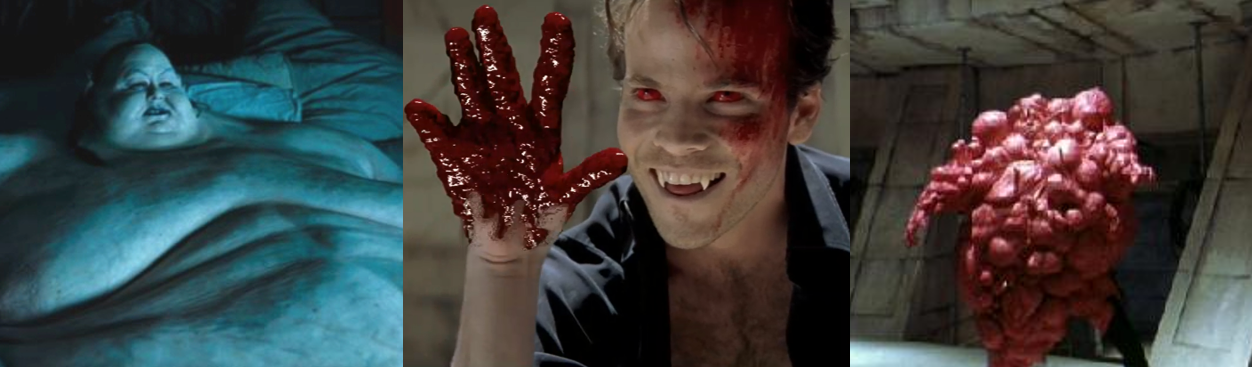
Movie Night [Bat-Month]: Batman Begins


In the decades since his first dramatic appearance in the pages of Detective Comics, Bruce Wayne/Batman has become a mainstream, worldwide, pop culture icon. The brainchild of writer Bob Kane, Batman was brought to life by artist Bill Finger and has been a popular staple of DC Comics and countless movies, videogames, and cartoons over the years. “Batman Day” fell on 16 September this year and I figured this was a perfect excuse to spend every Saturday celebrating comic’s grim and broody vigilante.


Released: 15 June 2005
Director: Christopher Nolan
Distributor: Warner Bros. Pictures
Budget: $150 million
Stars: Christian Bale, Liam Neeson, Katie Holmes, Cillian Murphy, Gary Oldman, Tom Wilkinson, Michael Caine, and Morgan Freeman

The Plot:
As a child, young Bruce Wayne (Gus Lewis) developed a crippling fear of bats and witnessed his beloved parents murdered before his eyes in a random street mugging. Carrying his guilt and anger into adulthood, Bruce (Bale) travels the world to learn the tools to turn fear against the corrupt and unjust. Upon returning to Gotham City, Bruce poses as a wealthy playboy by day and takes to the city’s corrupt and desolate streets by night as “The Batman”, but finds his crusade marred when the ghosts of his past threaten the city he loves so dearly.

The Background:
In the eighties, DC Comics subjected Batman to a long period of alteration after he had been transformed from a ruthless vigilante into a colourful, camp, family friendly figure in the the sixties. This change directly influenced Batman’s return to the big screen, wherein noted auteur Tim Burton transformed “Mr. Mom” Michael Keaton into a brooding, tortured vigilante. Batman (Burton, 1989) was a huge success but parents and McDonald’s weren’t too thrilled by the disturbing sequel, which led to Joel Schumacher dramatically reinventing the franchise into two lighter, camper movies that resulted in a dismal box office, scathing critical reception, and effectively killed the franchise for some time. During that time, Warner Bros. desperately attempted to get a new movie off the ground but things didn’t get moving until they brought in visionary writer/director Christopher Nolan to helm a dark, gritty reboot. Working alongside writer David S. Goyer, Nolan sought to explore the origins and psychological motivation behind the character within a grounded, realistic context, and the two were heavily influenced by notable Batman stories like “The Man Who Falls (O’Neil, et al, 1989) and Batman: Year One (Miller, et al, 1987). To achieve his goal, Nolan emphasised Bruce’s relationship and fear of bats, altering his origin and shedding some light on a vague aspect of the Dark Knight’s years in training to turn his fear against criminals.

After Batman & Robin bombed, Nolan crafted a grim and gritty reboot.

Numerous actors were considered for the title role before Nolan cast noted method actor Christian Bale, who packed on 220lbs of muscle following a dramatic weight loss for The Machinist (Anderson, 2004), eventually trimming down to 190lbs and training in Wing Chun Kung Fu to present the most physically capable Batman yet. Cillian Murphy, who lost out on the lead role, was cast as Doctor Jonathan Crane/The Scarecrow and purposely downplayed the character’s more theatrical comic book appearance to focus on his obsession with mind manipulation. The film also marked a turning point in superhero movies with serious actors like Morgan Freeman, Gary Oldman, Michael Caine, and Liam Neeson lending a dramatic credibility to the production. This was further bolstered by Nolan’s remarkable attention to detail, practical sets and effects, and infusing Batman’s gadgets with a real-world believability. The new Batmobile, dubbed “The Tumbler”, was designed and built by production designer Nathan Crowley; the final vehicle could reach speeds of 100 miles per hour and had an actual jet engine fixed to the rear. The new Batsuit was created by costumer designer Lindy Hemming and made from molded cream latex sections and finished off with a cape inspired by parachute nylon and a cowl that gave Bale a better range of head movement. Upon release, Batman Begins was a massive success; with a worldwide gross of over $373 million, the film became the seventh-highest-grossing film of 2005 in the United States and was accompanied by an incredibly popular critical reception. Reviews praised the film’s portrayal of Bruce’s motivations, the dark tone, and focus on story and psychology rather than special effects; however, while Bale’s performance in the duel role was praised, the romantic sub-plot and fight sequences drew some criticism. Still, the critical and commercial success was more than enough to kick-start a whole new Batman franchise; the film was accompanied by a videogame tie-in, an animated spin-off, and one of the most celebrated Batman movies ever made a few years later.

The Review:
Interestingly enough, considering all the hatred Batman & Robin gets, I actually remember thinking it was the best Batman movie ever when I first saw it as a kid. I don’t really remember why, but I suspect it was a combination of factors: It was the first Batman movie I saw at the cinema, it was big and loud and colourful, it had new villains and Dick Grayson/Robin (Chris O’Donnell) in it, and there was a lot of hype surrounding it so it was kind of exciting as a young lad. Obviously, however, it was an absolute dumpster fire from start to finish and made the grave mistake of harkening back to an era of Batman many fans would rather forget. So, to say that my anticipation was high for the far darker, more serious Batman Begins would be an understatement. Terrible title aside, I was captivated by the trailers, which presented a far more suitable atmosphere and take on my favourite DC Comics character, and I remember being so enamoured by the cast (these were big-time, serious, high-quality actors, after all!) that I went out of my way to familiarise myself with Christian Bale’s previous body of work, discovering some of my favourite movies in the process and instantly becoming a fan of his commitment and work ethic. Batman Begins immediately separates itself from its predecessors (and many other superhero films from the time) by forgoing a traditional title sequence and daring to tackle the source material with a grounded, realistic take that would set the standard for many superhero films to come.

Haunted by his traumatic childhood, Bruce embarks on a worldwide quest to study the criminal mind.

More than any other Batman film before or since, Batman Begins delves deeply into Bruce’s psychology, motivations, and training. When we first meet Bruce, he’s a prisoner in a squalid Bhutan hellhole where he’s forced to fight just to eat the slop they serve. Thankfully, he’s more than capable of fending off larger (and multiple) opponents with a brutal and precise (if frenetically shot) fighting style that leaves his attackers injured and humbled (but, crucially, alive). Tormented by nightmares of bats, Bruce is haunted by memories of his childhood, which are related through clever flashbacks to keep the first hour or so of the movie constantly switching between the adult, rage-filled Bruce and his younger self (played by both Gus Lewis and Bale with a slightly different haircut). As a boy, young Bruce fell down a well on the Wayne Estate and was attacked by a swarm of bats and left traumatised by a crippling fear of them, despite the best efforts of his beloved father, Doctor Thomas Wayne (Linus Roache), to help him recognise that the bats were simply acting out of fear. Sadly, Bruce’s terror is so bad that he urges his parents to leave a performance of Arrigo Boito’s Mefistofele (an opera filled with bats), leaving him distraught by survivor’s guilt when they are shot by desperate mugger Joe Chill (Richard Brake). Heartbroken at the loss of his wealthy, loving parents, Bruce is left in the care of doting butler Alfred Pennyworth (Caine) and, as he grows, his guilt turns to anger and a burning desire for revenge, and a resentment towards his great family name. As a young adult, Bruce finally gets the chance at revenge when Chill agrees to testify against powerful crime boss Carmine Falcone (Wilkinson) in exchange for early parole; however, as Bruce moves to shoot Chill, the mugger is gunned down by one of Falcone’s agents, robbing him of the pleasure of taking the man’s life while also allowing him to watch Chill die.

Though a catalyst for his life-changing journey, there’s little chemistry between Rachel and Bruce.

It’s only due to the intervention of his childhood friend and love interest, assistant district attorney Rachel Dawes (Holmes), that Bruce realises how selfish and misguided he’s been. In an awkward scene, she repeatedly slaps him and tells him his father would be ashamed of him wallowing in his own pain while Gotham descends into desperation and anarchy. The slum-like “Narrows”, especially, have become a breeding ground for thugs like Joe Chill, and mobsters like Falcone are able to stay virtually untouchable thanks to them corrupting the police department and judicial system. She emphasises that his parents put their wealth to good use, providing jobs and a cheap city-wide transportation system and desperately trying to counteract the rise in crime, and that his desire to kill one lowly mugger just to make himself feel better sickens her. Stunned by Rachel’s outburst, and finding no solace in Chill’s death, Bruce attempts to confront Falcone and finds that the mobster is not only unimpressed but connected enough to do anything, even shoot someone as well-know as Bruce dead, without any repercussions. This drives Bruce to throw away his gun in a fit of disgust and hop on the next boat out of Gotham to travel the world, without any of his resources or finances, on a mission to not only train his body in multiple martial arts but also to understand the criminal mind. When he returns seven years later, Gotham has only gotten worse; despite this, Rachel is still fighting an endless sea of corruption but is disappointed to see that her close friend is more concerned with buying sports cars, dating supermodels, and throwing his wealth around on selfish endeavours than trying to fix the city. Although reinvigorated by the intervention of the mysterious Batman, who finally gives her means to take down Falcone, Rachel is fascinated by the masked vigilante and stunned to find that it’s Bruce beneath the mask, finally putting his anger and skill to the greater good.

Rā’s is determined to destroy Gotham in order to eradicate its cesspool of crime and corruption.

Bruce accomplishes this thanks to the tutelage of the enigmatic Ducard (Neeson), the head trainer of the League of Shadows, a shadowy organisation of ninjas and highly trained mercenaries who have battled crime and corruption for generations. Recruited by Ducard while wallowing in prison, Bruce is subjected to a highly powerful toxic that brings his worst fears to life and, through physical and mental training, learns to confront his worst fear and master it, to turn his rage and guilt into a powerful force that can be used to fight criminals rather than consume him. A wise and driven tutor, Ducard comes to see Bruce as his greatest student and spends seven years honing him into the perfect instrument through which his master, Rā’s al Ghūl (Ken Watanabe), can stamp out the injustice that has infested Gotham by destroying the city as they have done to countless corrupt civilisations in the past. Unfortunately for the two, Bruce maintains an unfaltering moral belief in the sanctity of life and judicial system, and therefore adamantly refuses to become their executioner. His rejection of the League’s murderous ways leads to the temple going up in flames and Rā’s being killed in the chaos, though Bruce saves Ducard’s life and finally returns to Gotham to begin his mission to save the city using the lessons he learned from the League. However, it turns out that Ducard was the true mastermind behind the League (a revelation that falls a little flat since Neeson looks exactly like Rā’s al Ghūl anyway); through the use of his decoy and theatricality, he has been able to fabricate the notion that “Rā’s al Ghū” is a supernatural, immortal force and thus catches Bruce completely off-guard when he gate-crashes his birthday party with his goons, burns Wayne Manor to the ground, and prepares to destroy the city not through economics or all-out invasion but through perverting an experimental Wayne Enterprises microwave emitter. Far from a colourful, insane villain, Rā’s al Ghūl is a measured, manipulative, and eloquent man driven by tragedy and with an innate desire to stamp out crime by any means necessary. This includes executing petty criminals and murders, deposing entire governmental bodies, and destroying cities that have become mired in corruption, and his mastery of numerous martial arts, willingness to take lives, and to go to any lengths to achieve his goals places him as Batman’s dark opposite.

Bruce is provided moral, tech, and field support from his allies who all want to see Gotham cleaned up.

Upon returning to Gotham, Bruce quickly establishes himself as a carefree playboy; he feigns interest in his family’s company only to gain access to the Research and Development department, where former board member Lucius Fox (Freeman) immediately deduces that his employer’s many requests for armoured outfits, lightweight fabrics, and prototype gadgets is for more than just spelunking. Quite how Fox is able to guess that Bruce is secretly cobbling together a vigilante persona for himself is beyond me, and it’s never said out loud so Fox can have plausible deniability, but it’s a good job that he is aware of it as it gives Bruce access to everything he needs to craft a horrifying symbol to strike terror into the hearts of criminals everywhere. His inspiration for this is his own dread, the bat, and he soon makes an immediate impression upon both Falcone and jaded, but incorruptible, Sergeant Jim Gordon (Oldman) when he leaves Falcone beaten and tied to a searchlight. While police commissioner Gillian B. Loeb (Colin McFarlane) is appalled at vigilante running around on his streets, Gordon is intrigued by the Batman and their interests soon align not only because Gordon showed Bruce compassion as a child but also because he’s one of the few honest cops in the city and is therefore vital to Batman’s goal of usurping the organised crime that is choking the life from the city. Though weary from the corruption within the police department, Gordon believes that Batman is trying to help and his tip-off about his amoral partner, Detective Arnold Flass (Mark Boone Jnr.), is a vital clue to uncovering Dr. Crane’s designs for the city. Gordon’s gut instinct about the mysterious vigilante leads to him directly aiding the Batman on at least two occasions, with the first being when he helps get the fear-addled Rachel to safety during a breakout at Arkham Asylum in scenes directly inspired by Batman: Year One, before being the only cop brave enough to enter the chaotic Narrows during the finale. Although Alfred despairs over Bruce’s recklessness and for throwing all his time and effort into his monstrous persona, he nevertheless willingly assists the driven orphan in building his Batsuit and reconfiguring a vast cavern beneath Wayne Manor into a suitable headquarters. These three allies are thus instrumental not just in Bruce becoming Batman, but in guiding his quest to become an incorruptible symbol into fruition. Alfred’s loyalty, Fox’s tech, and Gordon’s field support all allow Bruce to find an outlet for his pain and to not only fight crime but also save the city from descending into total chaos from Rā’s al Ghūl’s plot.

With Falcone deposed, Dr. Crane is free to indulge himself as the horrifying Scarecrow.

This scheme is only made possible thanks to the research and assistance of Dr. Crane, the slimy and vindictive chief administrator at Arkham Asylum. Thanks to being on Falcone’s payroll, Dr. Crane is well compensated for his expert testimonies, which have helped Falcone’s thugs escape extended jail sentences on the grounds that they’re mentally unstable. However, Dr. Crane actually has a more powerful and influential employer, Rā’s al Ghūl himself, who has been funding his research into the League’s psychotropic drug. This aligned perfectly with Dr. Crane’s fascination of the mind’s power over the body, how fear and intense emotions can override logic and reason and drive people to do incredible (and insane) things, and allowed him to not only weaponise the drug, but lace Gotham’s water supply with it and turn it into a fear-inducing gas he can blast in people’s faces from a wrist-mounted device. With his subject induced into a panic, they’re left helpless as Dr. Crane dons a tattered burlap mask and terrorises even the most hardened individuals (from Falcone to Batman) as “The Scarecrow”. Cillian Murphy excels in this role, exuding a disquieting menace and slick, unsettling demeanour; his condescending public face slips as he delights in torturing others as the Scarecrow but, while his fear toxin effectively drives all of the Narrows into a violent frenzy, he remains a purely psychologic threat rather than a physical one and, rather than Batman taking him down, he’s dispatched by a taser to the face from Rachel. Unfortunately, Batman doesn’t actually target the kind of street thugs who killed his parents; instead, he immediately targets Falcone to disrupt the stranglehold organised crime has on Gotham, and his mission is to clean up the streets and bring hope to the people not by picking off random punks but by tackling the source of the problem, free from the red tape and corruption and diplomacy that has swamped the city. Since this corruption has seeped into the police department, Batman also faces opposition from Gotham’s cops; with him barrelling around the city streets (and across rooftops!) in his supped-up tank, he attracts the police’s undue attention and is labelled by Loeb as a public menace, though by the end of the film has established himself as a heroic figure rather than just a symbol of terror, especially to the downtrodden citizens.

The Nitty-Gritty:
If there’s a drawback to Batman Begins, it’s the score. Don’t get me wrong, I eventually came to really enjoy Hans Zimmer and James Newton Howard’s work on Nolan’s films, and the score definitely established a dark, brooding mood to the rebooted Batman but, much like how Clark Kent/Superman is forever associated with John Williams’ iconic theme, it’s hard to watch a Batman movie without Danny Elfman’s absolutely perfect work. Still, this is a minor issue, and the score is soon embedded in your brain and getting you pumped for Batman’s big chase through the city or pulling at your heart strings when young Bruce is breaking down in tears in Alfred’s arms. The amount of time the movie spends with Bruce’s childhood, and his training, goes a long way to actually making this feel like a Batman movie. As good as its predecessors were, the previous Batman films all felt like Batman was more of a supporting player in his own movie as his villains took centre stage, but that absolutely isn’t the case here. While the death of the Waynes has been done to death at this point, the sudden brutality of it and the impact it has on young Bruce is absolutely tragic here. You can see how this carefree, curious little boy was rendered a terrified, hollow shell of himself and his fear and guilt twist into a burning desire for revenge as he grows. Seeing Bruce willing to kill Chill to try and heal that wound is a powerful scene, one that forever cements not just his refusal to use guns but also his unwillingness to kill, and he actively goes out of his way to save lives wherever possible (though there is some collateral damage along the way, and he does bend this rule for the finale, which clouds this philosophy somewhat).

While I’m a fan of the realistic slant, and Batman looks fearsome, I didn’t care for the tank-like Tumbler.

In terms of visual presentation and atmosphere, this was the best Batman and Gotham City had looked for quite some time. Eschewing the horrific gothic claustrophobia and bright, neon excess of the previous films, Batman Begins opts for a dank, gritty urban landscape that is comprised of numerous different layers. From the more respectable courthouse and upper-class areas to the seedy, dishevelled streets of the Narrows, Gotham feels like a living, breathing, physical space that packs its inhabitants in close quarters and breeds tension and anarchy through harsh living conditions from its poorest civilians. The wealthy and the corrupt live in far greater luxury, with Wayne Enterprise’s establishments and stately home being the most impressive and opulent, and the film is bolstered by a tangible realism, with minimal CGI employed throughout. This approach is best seen in the Batsuit; while the suit can look a bit grey and puffy in promotional pictures, it’s perfectly lit in the film to give Batman a menacing, fearsome look, especially when seeped in shadows or he’s hunched over railings. There’s a particularly stunning panoramic shot of him standing atop a towering structure, watching over the city, and the range of movement offered by the suit is worlds beyond anything we’d seen from the more obviously moulded rubber suits. While I prefer the texture and appearance of a leathery cape, the fabric one works extremely well, especially when draped over the suit and when electrified to allow Batman to effortlessly glide through the Gotham skies. While this Batman relied a little too heavily on his gliding for my liking, this does make for some dynamic shots and he utilises a gas-powered grapnel gun that looks and feels very realistic. It’s great seeing Bruce and Alfred tinkering away in the Batcave, making bat-shaped shurikens, spraying his gear, and testing out his equipment, which helps to show that Bruce isn’t entirely dependent on Fox. However, as fantastic as the Tumbler is, I’m still not really a fan; the Batmobile should be sleek, elegant, and terrifying, not a literal mini tank capable of blasting through solid concrete, ploughing through cars like they were cardboard, or flying across rooftops in the exact opposite of stealth. Alfred’s right; it’s a wonder no-one was killed, and it never fails to amuse me that the Tumbler’s idea of “stealth” is to simply turn all its lights off.

Bale is the quintessential Batman for me, expertly balancing Bruce’s different personas.

A serious point of contention in Nolan’s Batman movies, but especially this one, was the depiction of combat. Nolan does narrative pacing and introspective character development extremely well, but it’s clear that he’s not much of a fight choreographer. Batman’s first appearance is frenetic and obscured, full of rushed jump cuts and incoherent action, which actually works when you view the scene from the perspective of his terrified foes but this leeway can’t be afforded to other fight scenes in the film, which are filmed a little too close quarters for my liking and don’t really show off the brutal efficiency of Batman’s power and skill. On the plus side, Bale makes for a fantastic Batman; even now, he is the best embodiment of the complex duality of the character and he perfectly balances Bruce’s three metaphorical masks (public carefree playboy, private stoic trauma victim, and the intensity that is Batman) with subtle changes to his demeanour, body language, and voice. Bale’s Bat-voice has also caused some debate, but it’s pretty spot on here; his Batman speaks with a growling whisper, which escalates into a gravelly bark when he’s intimidating foes, but it works best when he’s not taxing his vocal chords to their limits. More than any actor before him, Bale also captures the physicality of Batman; he’s tall, well-built, and incredibly believable as a toned, highly trained individual capable of downing terrified mobsters with a sharp strike to the face and absolutely lives the role in a way the his predecessors could only dream of. It’s a shame, then, that he’s lumbered with such a disappointing love interest. Katie Holmes is cute but there’s just no chemistry between her and Bale, despite their best efforts. It doesn’t help that Rachel’s an entirely original character, but she’s so dull and uninspiring that it’s hard to really care when she’s in danger. Holmes does a commendable job of selling Rachel’s utter panic after she’s gassed by Scarecrow, but Bale carries this sequence with his intense desperation to get Rachel to safety and administer a serum to counteract the fear toxin. There’s a quiet moment between Batman and Rachel in the Batcave where he reassures her and keeps up his stoic façade, only to slip his cowl off after she passes out that hints towards what could’ve been a loving relationship between the two but, as I say, Holmes just isn’t capable of pulling it off and Nolan made the right decision to recast her with the far more capable Maggie Gyllenhaal in the sequel. Still, the scene prior to this, and one earlier in the film where Scarecrow blasted fear gas in Batman’s face really showcases what the fear toxin is capable of. The victim is so manic with uncontrollable terror that the world warps and twists into a nightmarish hellscape around them, to say nothing of how Batman appears to those affected! Rendered a salivating, monstrous man-bat, it’s no surprise that Dr. Crane is driven half out of his mind when subjected to his own toxin.

With Gordon’s help, Batman condemns Rā’s to death and they forge a partnership to clean up Gotham.

This leads me to talking about the microwave emitter, probably the most comic book-y element in the film (well…beyond the psycho dressed as a bat, of course). This machine vaporises a city’s water supply, which effectively allows Rā’s al Ghūl to cover most of the city (and all of the Narrows) in Scarecrow’s fear toxin. Would this actually vaporise the water in the human body? Did nobody boil water in all the time Dr. Crane was lacing the water supply? Well, maybe, but I don’t think it’s too much to ask to suspend your disbelief regarding this plot point, though I do have to admit that the frantic statements of Gotham’s panicked public servants was a step too far during the Tumbler chase and the climatic finale. So, as mentioned, Ducard is revealed to be the true Rā’s al Ghūl; he delivers an ominous threat to Bruce at his birthday party, forcing Bruce to ingeniously (and amusingly) feign being drunk and insult his guests so they won’t be harmed, and loads the microwave emitter onto Dr. Wayne’s train to quickly reduce all the water along the path to Wayne Tower into a panic-inducing fear gas. Inoculated against the gas, and with Fox working on mass producing the serum to counter its effects, Batman goes to confront his former mentor. Thanks to Gordon, who uses the Tumbler to scupper the train in another amusing little sub-plot, the train is derailed before it can vaporise the entire city’s water supply, but the Narrows descend into all-out chaos as a result of the gas. Before the train crashes in dramatic fashion thanks to some highly detailed miniatures, Batman chooses to confront Rā’s al Ghūl face-to-face on the out of control transport. Despite Rā’s al Ghūl trying to slow him down with his pawns and taunting him with his inability to “mind [his] surroundings” or take lives, Batman is finally able to best his one-time friend thanks to the advantages offered by his Batsuit. Unable to stop the train (and never actually planning on doing so), Batman is in prime position to end Rā’s al Ghūl’s life but, rather than kill him, he simply refuses to save him and glides to safety right before it goes up in flames, taking the draconian despot with it. Considering Bruce made such a show about not wanting to kill anyone, this does seem contradictory; surely refusing to save a life and leaving a man to die is the same as killing them, after all? I do think it might’ve worked a little better if Batman had tried to save Rā’s al Ghūl and his foe had instead stabbed him, or kicked him away, only to find out too late that Batman had jammed the controls and he was doomed to die. In any case, Gotham is saved (for the most part); Bruce resolves to rebuild Wayne Manor and takes full control of his family business, placing Fox in charge of the company’s day-to-day running, in a bid to aid the city’s redevelopment and underprivileged just as his father did before him. Although Bruce indicated his true identity to Rachel, she asserts that they can’t be together since “Bruce Wayne” is now a mask assumed by his true persona, Batman, symbol of fear and hope to the city. However, although he refuses to accept any thanks for his help, Batman ends the film having established a working relationship with the newly promoted Lieutenant Gordon, who calls for his input using a specially-made signal atop police headquarters regarding a theatrical villain who may require their future attention…

The Summary:
I kind of feel like a lot of people have forgotten how good Batman Begins was (and still is) since the sequel was such a massive hit and pretty much overshadowed the first film in Nolan’s trilogy, and that’s a shame as it really is a top-notch Batman movie. This was the dark, gritty, serious take on the character that long-term Batman fans so desperately needed; it treated the source material with the utmost respect and translated it into a realistic setting to offer a deep dive into Bruce Wayne’s tragedy, psychology, and motivations behind donning the iconic Batsuit. Bolstered by some superb actors and performances, Batman Begins showed that superhero films weren’t just for kids and that celebrated actors could be brought in to elevate the genre into a whole new stratosphere. Christian Bale was, and remains for me, the quintessential Batman; be absolutely embodied every aspect of the character I enjoy, from his physical commitment to the role to his expert portrayal of Bruce’s different, complex personalities and tumultuous emotions, and he’s let down only by his leading lady and some poorly shot fight sequences. Still, even Katie Holmes’ awkward performance and the mundane action scenes don’t detract from the broody, melancholic atmosphere Nolan so expertly crafted. His focus on realism and delivering a layered character study on the World’s Greatest Detective was the shot in the arm Batman really needed at this time, and I loved that the film dared to focus on less mainstream villains like the Scarecrow and Rā’s al Ghūl and to show a new side to Batman’s origin and early years. Sure, The Dark Knight (Nolan, 2008) took everything that worked here (and some of the things that didn’t) and improved and expanded upon them to craft one of the finest superhero movies we’ve ever seen, but don’t let that cloud how awesome Batman Begins was as a subdued, gritty, engaging action thriller that sheds new light on Batman and introduces audiences to one of the best onscreen portrayals of the character ever seen.

My Rating:

Rating: 4 out of 5.

Great Stuff

Did you enjoy Batman Begins? How do you feel it holds up compared to its sequels and other Batman movies? Did you enjoy Christian Bale’s performance and the inclusion of such acting heavy weights as Liam Neeson and Michael Caine? What did you think to Nolan’s realistic take on Batman, his fight scenes, and his suit? Were you a fan of the Tumbler, and what did you think to the romance between Bruce and Rachel? What’s your opinion on Rā’s al Ghūl’s ultimate fate and what do you think to Batman’s No-Kill rule? How did you celebrate Batman Day this year and what is your favourite Batman movie? Whatever your thoughts on Batman Begins, or Batman in general, share them below or leave a comment on my social media.

Movie Night [MK Day]: Mortal Kombat: Annihilation


This image has an empty alt attribute; its file name is mortalmonday.png

To celebrate the simultaneous worldwide release of Mortal Kombat (Midway, 1992) on home consoles, 13 September 1993 was dubbed “Mortal Monday”. Mortal Kombat’s move to home consoles impacted not only the ongoing “Console War” between SEGA and Nintendo but also videogames forever thanks to its controversial violence and I think that it’s only fitting that we continue celebrating this influential fighting series every September 13th.


Released: 21 September 1997
Director: John R. Leonetti
Distributor: New Line Cinema
Budget: $30 million
Stars: Robin Shou, Talisa Soto, Brian Thompson, James Remar, Sandra Hess, Lynn Red Williams, Musetta Vander, and Reiner Schöne

The Plot:
Despite Liu Kang’s (Shou) victory in the Mortal Kombat tournament, Outworld emperor Shao Kahn (Thompson) bends the Elder Gods’ sacred rules and assaults Earthrealm. With Lord Rayden (Remar) weakened, Liu Kang and his friends have seven days to recruit new allies and learn the key to stopping Kahn’s invasion before all of Earthrealm is annihilated.

The Background:
As I’ve touched on before, competitive fighting games were all the rage in the nineties thanks to the many iterations of Street Fighter II: The World Warrior (Capcom, 1991). To compete with this title, developers Ed Boon and John Tobias, inspired by movies like Enter the Dragon (Clouse, 1973), Bloodsport (Arnold, 1988), and Big Trouble in Little China (Carpenter, 1986), created a tournament fighter that changed the genre thanks to its ultra-violent content. It was producer Lawrence Kasanoff who saw Mortal Kombat’s potential as a multimedia franchise and it was thanks to him, and director Paul W. S. Anderson, that we got the cult hit Mortal Kombat (ibid, 1995), which was both surprisingly profitable, widely recognised as one of the best videogame adaptations, and a principal influence on my PhD thesis. Unfortunately, you can’t talk about Mortal Kombat without mentioning its universally derided sequel. Rather than smartly infuse the relatively simply videogame lore with filmic inspirations, Kasanoff aimed to go bigger and more spectacular, stuffing the script with as many characters and references to the source material as possible in an effort to cater exclusively to Mortal Kombat’s growing fanbase. Paul W. S. Anderson passed on the director’s chair and only two members of the original cast returned for the sequel, which was full of cringe-worthy performances and terribly rendered CGI as New Line Cinema didn’t actually release the finished version of the film. This was reflected in the film’s dismal $51.3 million box office gross and scathing critical reception; everything from the confused narrative, underwhelming fight scenes, and the laughably bad acting has been highlighted as a negative, and rightfully so. Despite the film’s universally negative reception, Kasanoff’s multimedia ventures continued with the live-action prequel, Mortal Kombat: Conquest (1998 and 1999) but, while New Line Cinema initially had plans for a third film, the teases for it were cut from Annihilation and it remained in Development Hell for decades until the franchise was finally rebooted in 2021.

The Review:
I was such a huge fan of the original Mortal Kombat movie as a kid, and even now I still regard it as probably the best live-action videogame adaptation ever made. That’s hard for me to say as I loathe what Anderson did to the Resident Evil franchise (Capcom/Various, 1996 to present) with his filmic endeavours (Anderson/Various, 2002 to 2016) but it’s true; I remember renting it as a kid, basing an entire birthday around watching it, and even the day I bought the VHS copy from a market stall. My anticipation for the sequel was so high and it seemed like we were waiting for so long for it to come out but, in reality, it was only a couple of years. When Mortal Kombat: Annihilation finally did come out, all I remember seeing of it was the poster and that was enough to get me excited as I was eager to see that cliff-hanger ending resolved, but I missed out on seeing it at the cinema as it wasn’t very easy to get to the cinema at the time, so I didn’t see it until it came out on VHS some time later. I don’t remember what I thought to the film as a kid; I was probably just super happy to see all my favourite Mortal Kombat characters brought to life and given more screen time, but I do have a vague memory of thinking it wasn’t as good as the original film and, as I’ve gotten older and rewatched and even academically studied the film, that opinion has only grown stronger.

Things are off to a bad start right from the opening and only get worse from there….

Mortal Kombat: Annihilation opens with a quick recap of the last film; scenes of Mortal Kombat’s best fights and memorable moments (purposely cut to excise the original actors from the footage) play over Rayden’s narration as he brings us up to speed and we’re brought back to the ending of the first movie, but with some noticeable and jarring changes. You’ll spot these immediately since James Remar sounds nothing like Christopher Lambert (still the quintessential Raiden for me and it baffles me that he hasn’t done more voice work for the character, at least) and definitely doesn’t look anything like him. Sporting an entirely new outfit and a far more obvious wig, Remar fails to convey the same enigmatic presence as his predecessor but it doesn’t end there; Liu Kang is also wearing a completely different outfit and both Johnny Cage (Chris Conrad) and Lieutenant Sonya Blade (Hess) have been completely recast. Even more egregious is that Cage has his trademark sunglasses back, despite the fact they were crushed by the monstrous Goro (Tom Woodruff, Jr./Kevin Michael Richardson) in a pretty memorable sequence in the last film. Still, none of that really compares to the absolutely atrocious visual effects slashing across the sky and the arrival of Outworld Emperor Shao Kahn. Originally portrayed as a gigantic semi-translucent, monstrous figure voiced by the immortal Frank Welker and bursting from the Temple of Light, Kahn is now a far less intimidating muscular brute garbed in a Halloween costume and surrounded by a gaggle of porn stars, Gladiators, and cos-players and immediately lacks all of the subtle menace and nuance of Cary-Hiroyuki Tagawa’s menacing Shang Tsung.

Liu Kang must go on a bizarre quest to rescue Kitana and find the power to defeat Shao Kahn.

Still, let’s continue on. Like the last film, our main character is Liu Kang (thankfully still portrayed by the endlessly likeable and charismatic Robin Shou, whose martial arts prowess is one of Annihilation’s few highlights even if his acting ability isn’t quite enough to carry this mess of a script), whose elation at having overcome his personal demons, avenged his brother, and safeguarded Earthrealm from Outworld is immediately cut short by Shao Kahn’s arrival. Although he learned to trust in Rayden in the last film, and that all the legends he grew up hearing about were true, despite his scepticism, Liu Kang is angered that their victory, which the Elder Gods decreed would keep Earthrealm safe from invasion for at least one generation, was all for nothing thanks to Shao Kahn finding a loophole in the rules. Liu Kang’s anger only increases when Cage is unceremoniously killed right before his eyes, and his first instinct is to avenge his fallen friend, only to be told that he’s “no match for Kahn” and must embark on a perilous journey of self-discovery to find the power necessary to overcome the Emperor. Rayden splits the heroes into teams for this mission, and Liu Kang’s demeanour (but not his crotch) is softened by the presence of the beautiful Kitana (Soto), with whom he had a flirtatious romance in the last film. Here, they are ready to take the next step in their relationship, but this is suddenly ripped away from Liu Kang when the Edenian princess is kidnapped by the returning Scorpion (J. J. Perry/Ed Boon). Fraught with guilt over failing to keep her safe, Liu Kang is guided towards the elusive Nightwolf (Litefoot), a Native American mystic who endeavours to teach him to harness his “Animality” by undergoing a series of tests designed to focus his mind, body, and spirit for his inevitable fight against Shao Kahn.

Sonya, angry at Cage’s death, reluctantly teams with Jax, the charismatic everyman with bionic arms!

Although she has a new face, wardrobe, and haircut, the first thing you’ll notice about Sonya here is that she’s reverted back to being an angry, embittered, distrustful, and overall unlikeable character. She’s absolutely devastated when Cage is murdered and desperate to make Shao Kahn pay, but blinded by her grief and rage so Rayden has her journey to some facility to reunite with her partner, Major Jackson “Jax” Briggs (Lynn red Williams). Initially, Sonya rejects this idea as she doesn’t want to lose anyone else she cares about, and she carries a chip on her shoulder throughout the film and basically has to learn the same lessons about trusting others as she did in the first movie. While Mortal Kombat: Annihilation is littered with chaotic and random fight scenes, at least Liu Kang and Rayden are focused on opposing Shao Kahn; Sonya has no chance against the Emperor but has no other clear antagonist to focus on since Kano (Trevor Goddard) is dead, meaning she’s forced to settle for “leftovers” like Cyrax (J. J. Perry) and Ermac (John Medlen). Thankfully, she’s partnered up with Jax; for a former American Football player and Gladiator, Williams does a really good job in this role and has a down-to-earth, relatable charisma to him. As an everyman character who has no idea what’s going on, he’s a natural conduit for exposition and it’s fun seeing him react to the bizarre events happening all around him. Jax’s “thing” in this movie is that he struggles with self-confidence; to that end, he underwent a surgical procedure to graft cybernetic prosthetics to his already muscular arms to give him a power boost. Jax’s arms are a valuable asset, saving his life and even allowing him to cause shockwaves by hitting the ground, but Rayden and the others teach him that they’re merely a tool and that his true power comes from within. Unlike Sonya, Jax ends up squaring off with a clear rival in the finale, the half-human centaur Motaro (Deron McBee) and, in the process, overcomes his insecurities and sheds his mechanical arms to deliver a pretty cathartic beatdown on Kahn’s monstrous minion.

The plot revolves around Kitana and Sindel, but the actors struggle to convey this drama.

While she was mostly relegated to an alluring figure and a secondary mentor in the first film, Kitana takes on a much larger role in the sequel. Although she only gets a couple of fight scenes and ends up locked in a cage for her man to come and rescue her, Kitana is right at the forefront of the plot since her mother, Queen Sindel (Vander), is the key to Shao Kahn’s illegal invasion. Stunned to find her mother alive (and in perfect physical health), Kitana is even more heartbroken to find that Sindel has been corrupted by Kahn’s influence and that her resurrection has allowed him to bring destruction to Earthrealm. Confused by this turn of events, Rayden consults with the Elder Gods who advise him that the love Kitana has for her mother can break Kahn’s spell, restore her, and undo the damage caused and he blindly follows their instructions, even sacrificing his status as a Thunder God (and debuting an absolutely dreadful new appearance in the process that is anything but Raiden) in order to reunite the two. Unfortunately, they’ve all been duped by the corrupt Elder God Shinnok (Schöne) and lured into a trap; Sindel laughs in her daughter’s face when she tries to profess her love for her and Rayden is left powerless, resulting in his death at Kahn’s hands and Kitana having to battle her mother in the finale. Unfortunately, neither Talisa Soto nor Musetta Vander have the acting ability to pull any of this off; both are obviously stunningly beautiful, but Kitana and Liu Kang have all the chemistry of a wet paper bag and Sindel is little more than a cackling pantomime villain. Remar also suffers in this regard; if he’s trying to channel Lambert’s stoic playfulness, he fails miserably and just seems bored and confused, even during his terribly shot fight against the Reptiles (Mark Caso, Paul Driver, and Sultan Uddin).

Though he cuts an intimidating figure, Shao Kahn is simply trying to please his overbearing father.

However, they’re all Oscar-winning actors compared to the absolutely dreadful Brian Thompson. I actually like Thompson; he always plays big, brutish thugs really well when he crops up in supporting roles but he has neither the size nor the charisma to impress as Annihilation’s lead antagonist. Essentially coming across as a poor man’s Kurgan (Clancy Brown; a fitting comparison, for sure), Shao Kahn is a loud, arrogant bully with an overdeveloped sense of grandeur and a taste of pomp and ceremony. Upon arriving on Earthrealm, he attempts to establish himself as a meaningful threat by surrounding himself with his generals and killing Cage, but is easily outmatched by Rayden. Indeed, Rayden is only stopped from killing Kahn right then and there because the Emperor takes Cage as a hostage, and Rayden is so stunned to see one of his chosen mortals killed that he doesn’t even make good on his promise to “take” Kahn’s generals from him. While the heroes go off on their confusing missions, Kahn returns to his throne room and is content to allow the seven-day merger of Outworld and Earthrealm to take place without his direct involvement. However, if his cheap plastic armour and rubbish skull helmet didn’t diminish Kahn’s threat enough, his contentious relationship with his father, Shinnok, certainly does. Chastised at every turn by the corrupt Elder God, Kahn quickly turns from a brutish tyrant to a meek child desperate to impress his father, and he absurdly takes his anger out on his generals at every opportunity. Even this doesn’t make sense; why kill your underlings when you’re in the middle of an invasion? And Kahn’s lashing out at Rain for failing to kill Kabal and Stryker is super weird considering Shinnok chewed him out for sparing Rayden. Imagine if Shinnok had just killed Kahn for that, as he does his general? Absolutely ridiculous! Completely devoted to his witch-like queen and confidant in his victory, Kahn allows his troops to wreak havoc across the globe (though we barely see any of this) and is fixated only on killing Rayden and conquering Earthrealm in order to earn his father’s respect. Where Shang Tsung was a scheming, charismatic sorcerer, Shao Kahn is little more than a thug with delusions of grandeur and it’s hard to picture anyone bending the knee to him since he exhibits little of the threat that Tsung did beyond his admittedly impressive physical stature.

The Nitty-Gritty:
Contrary to my usual everyday mindset, I don’t actually like to be too negative in my reviews, or when watching movies or playing videogames or whatever, and when discussing Mortal Kombat: Annihilation for my PhD thesis I tried to come at it with a positive perspective. Primarily, this involved praising it for capturing the madcap nonsense of the franchise’s latter-day releases, like Ultimate Mortal Kombat 3 (Midway Games, 1995) and its successor, Mortal Kombat Trilogy (ibid, 1996). These were fighters crammed full of characters, bonkers finishing moves, and which tried to mash together all the established lore and many of the contradictory characters, which made for a pretty chaotic gaming experience but one full of variety (even if many characters were just palette swaps and many of the violent finishing moves were pretty lazy). Still, if all you cared about was seeing your favourite Mortal Kombat characters in one game, these two titles had you covered and, in that respect, Mortal Kombat: Annihilation delivers in terms of fan service. The plot is also a pretty close approximation of Mortal Kombat 3’s (Midway, 1995), which depicted Kahn resurrecting Sindel and leading an illegal invasion of Earthrealm, and the iconic theme song by The Immortals is back and has even been tweaked to include the new characters seen in this film. Unfortunately, that’s about where the praise ends for, while Mortal Kombat: Annihilation does feature a bunch of characters, hardly any of them have any personality or nuance to them. Instead, basically every character that isn’t a lead protagonist or antagonist is treated as badly as Scorpion (Chris Casamassa) and Sub-Zero (François Petit) were in the first film. Rain (Tyrone Wiggins) is here, and even gets a few lines, but is he a conflicted Edenian prince with control of water and lightning? No, he’s just another ninja who gets smashed into a fiery pit for angering his master.

Almost every Mortal Kombat character is shoe-horned into the film whether it makes sense or not.

An extremely poor rendition of Baraka (Dennis Keiffer) randomly shows up, looking more like a guy in a rubbery Halloween costume than a vicious mutated cannibal, and Mileena (Dana Hee) even makes a brief appearance to wrestle around in the mud with Sonya but is she depicted as Kitana’s bloodthirsty clone or stepsister? Is she bollocks. Hell, Sonya even mistakes her for Kitana at first, which makes absolutely no sense as she doesn’t look anything like Kitana; maybe if she’d also been played by Talisa Soto, and Jade (Irina Pantaeva) and Baraka had been dropped from the script, Mileena could’ve played a bigger role but, as is, she’s just some hot chick in a magenta outfit for Sonya to fumble around with. This even carries over to the finale, when Sonya takes on Ermac (who has just one line and isn’t even named), who randomly splits into two (actually this is Noob Saibot (J. J. Perry), who also isn’t named and is given no context) to double-team her but why the hell should we care when we don’t even know who these masked morons are? Still, at least these losers feature onscreen; “two of Earth’s warriors, Kabal and Stryker” aren’t even given that luxury and this absolutely ugly looking CGI monstrosity gets way more screen time than it deserves. Sadly, this continues with some of my favourite Mortal Kombat characters. Sub-Zero (Keith Cooke) makes a dramatic return, now sporting his bad-ass eye scar and actually being the younger brother of the previous one. He comes sliding in to save Liu Kang from Smoke (Ridley Tsui), who’s actually a combination of Smoke and Sektor, and deliver some clunky exposition about how the cyborg was reprogrammed by Kahn to target Liu instead of him (as in Sub-Zero). Why was Smoke going after Sub-Zero? Does he have any relation to Cyrax? Was he Sub-Zero’s former friend turned into a cyborg against his will and did Sub-Zero even care that he just killed his friend? None of these questions are answered as the film pauses for a pretty awesome battle between Sub-Zero and Scorpion which, despite being something I and many Mortal Kombat fans missed from the first film, also makes little sense as there’s no reason given in the film for the animosity between the two beyond the filmic Scorpion being evil and Sub-Zero trying to protect Kitana. Even crazier is the part where, after losing Kitana to Scorpion, Sub-Zero delivers a heartfelt plea to Liu Kang that “[he] alone [is] not ready for what’s ahead” and then disappears from the film! I just…what?! You just said that Liu Kang needs allies but you couldn’t stick around to help? What could Sub-Zero possibly have to do that’s more important?!

Many of the characters are just there for the sake of it and make very little impact as a result.

This does lead Liu Kang to Nightwolf, but he’s another throwaway character; sure, he looks the part but all he does is speak in riddles, knock Liu Kang out with a tomahawk, and prattle on some trite about his “Animality”. It’s assumed that Jade killed Nightwolf while Liu Kang underwent his little nightmare sequence but who the hell knows, and why the fuck where there suddenly Reptiles waiting to attack the heroes after Jade betrayed them?! Nothing makes any sense, and it’s frustrating as all they had to do was have Kahn’s minions be Motaro, Sindel, Scorpion, Mileena, and Sheeva (Marjean Holden) and things could’ve been much more streamlined. Oh, Jesus…I haven’t even talked about Sheeva, have I? Rather than portray her using animatronics like with Goro, Sheeva is simply another pantomime villain with some prosthetic arms who plays next to no role in the movie and is unceremoniously killed off without even having a proper fight scene! There’s one very brief scene where she and Motaro get into it over who should replace Rain as Kahn’s right-hand man, hinting at the rivalry between their races, but Sheeva may as well not even be in the fuckin’ movie as she does absolutely nothing before being squashed by a cage! Motaro comes off a little better, but not by much; Deron McBee at least looks to be enjoying himself in the role, which requires little more than for him to stand around with his flex on and look tough, and the filmmakers actually did a decent job of rendering his horse-like lower half using clever shots, some practical effects, and CGI. He certainly comes off a lot better than whatever the fuck that demonic monster-thing is, and absolutely should have taken that creature’s place, but unfortunately has absolutely none of the screen presence or importance of Goro since he’s hardly in the movie and only seen as a relevant factor in the finale.

Liu Kang is ultimately able to best Shao Kahn and save Earthrealm once again.

So…okay….Mortal Kombat: Annihilation decides that the complex and bonkers lore of the videogame just isn’t enough for the big-screen and makes some changes. I can understand that; change is inevitable in the adaptation process, but apparently the simple concept of “good versus evil” wasn’t enough for this movie and they had to shoe-horn in this bat-shit crazy familial link between Rayden, Shao Kahn, and Shinnok that has never been seen before or since. Apparently, Rayden and Shao Kahn are brothers and, eons ago, they fought for Shinnok’s approval; Rayden won, but couldn’t kill his brother and both have held a grudge ever since. Shinnok sees both his sons as being weak; Rayden for valuing life and being compassionate and Kahn for not killing Rayden or being more forceful in his endeavours, but he favours Shao Kahn since he at least values strength and power over loyalty and empathy. This weird inclusion is treated like a big deal; Jax is especially perturbed by the revelation and the mortals are left investing their hopes in Liu Kang since Rayden’s trustworthiness is called into question. The film then asks that we give two shits when Shao Kahn murders this abomination of an adaptation of Rayden, but it all just falls completely flat and is meaningless since the entire film has been about getting Liu Kang ready to fight Kahn, not Rayden. When Liu Kang and the Emperor finally square off, it’s nowhere near the intense or engaging martial arts contest like Liu vs. Tsung; indeed, the focus on delivering high quality martial arts is noticeably lacking all throughout Mortal Kombat: Annihilation and, instead, Shao Kahn throws his weight (but not his hammer, because that would be too cool, I guess) around until Liu Kang finally taps into his Animality and transforms into, hands down, the worst CGI effect I think I have ever seen…only for Kahn to top it with his own monstrous transformation. The two butt-ugly affronts to eyesight slap each other about a bit before inexplicably transforming back and being forced to battle in Mortal Kombat (now altered to remove Kahn’s powers, something we didn’t see in the last film where powers were fair game…). The loss of his powers puts Kahn at an immediate and irreconcilable disadvantage and Liu Kang easily finishes him off; although Kahn is ripped apart when his stupid little dragon tattoo bursts to life upon his defeat, his death is a far cry from seeing Tsung impaled on those spikes. With Kahn defeated and Shinnok turned into Tetris (Alexey Pajitnov, 1984) blocks, Sindel returns to normal, Rayden is resurrected and promoted to an Elder God, and all of Earthrealm is restored. In fact, everything returns to normal…except for Johnny Cage, whose body I assume is just lying on the ground somewhere…but that’s okay because all of the heroes are some bullshit family now, I guess.

The Summary:
Mortal Kombat set the standard for videogame adaptations; by drawing from some of the best martial arts movies and focusing on the relationships between the characters and crafting a fun, action-packed fantasy adventure, it absolutely delivered as an entertaining adaptation even without the franchise’s trademark gore. All of that goodwill was obliterated in the sequel, which took everything that worked in the first film and threw it out the window. No, sorry, not out the window; they threw it right in the fuckin’ bin! The only saving graces are the soundtrack, a handful of decent fight scenes (anything involving Liu Kang, Scorpion, and Sub-Zero), and seeing pretty much every single Mortal Kombat character brought to life but the execution misses the mark on almost every level. The acting is bad, the script is bad, the line delivery is bad; the new actors are dreadful, the costumes (while technically better) look far more like cheap cos-play than a high-budget production, and the CGI is more than atrocious…it’s God-awful! As nonsensical as the Mortal Kombat videogames could get at the time (and even now…), nothing makes sense in Mortal Kombat: Annihilation; why were those spheres in those tunnels? Who built them? Why? Why didn’t they just die when riding them? When Baraka falls into those flames, why is it recycled footage of Rain’s death? Why is Baraka even there? Why didn’t Sub-Zero help Liu Kang? Why did Rayden and presumably all those other lives lost in the attempted merger come back to life but not Johnny Cage? Just….I mean, holy God it is hard to defend this movie! Yes, Robin Shou is great. Yes, seeing Scorpion and Sub-Zero fight is great. Yes, Jax is a standout character, Motaro looks pretty good, and the film does a decent job of translating the bat-shit insanity of Mortal Kombat Trilogy to the screen but there’s just no heart, no logic, no sense to anything. It’s just a mish-mash of generally poor fight scenes, rubbish visual effects, appalling acting and a mind fuck of ideas and visuals that more resembles a music video than a coherent movie. It’s got some charm, and is probably appealing to kids hyped up on sugar, but your life would probably benefit from never watching this one even if it was for free.

My Rating:

Rating: 1 out of 5.

Terrible

Am I being too harsh on Mortal Kombat: Annihilation? Do you have any fond memories of this film? What did you think to the new cast and how did they compare to their predecessors? Which of the film’s fights was your favourite, and with characters would you have liked to see more from? Do you think the film juggled its many characters well or would you have preferred to see the cast cut down a little bit? Would you have liked to see a direct follow-up to this film or were you happy with the reboot we got? How are you celebrating Mortal Kombat’s release today? Whatever you think about Mortal Kombat: Annihilation, write your thoughts below.
Movie Night [Star Trek Day]: Star Trek III: The Search for Spock


On this day, 8th September 1966, the first episode of Star Trek (1966 to 1969), “The Man Trap” (Daniels, 1966), first aired. Since then, Star Trek has become a massive cultural phenomenon that endures to this day, spawning numerous continuations, spin-offs, and ancillary media to become, perhaps, the most influential science-fiction franchise of all time. Accordingly, the 8th of September has been deemed “Star Trek Day” and is thus the perfect excuse to dedicate some more time to, and celebrate, this massive sci-fi franchise.


Released: 1 June 1984
Director: Leonard Nimoy
Distributor: Paramount Pictures
Budget: $16 million
Stars: William Shatner, Christopher Lloyd, DeForest Kelley, Robin Curtis, Merritt Butrick, and Leonard Nimoy,

The Plot:
Still reeling from the death of his friend, Captain Spock (Nimoy), Admiral James T. Kirk (Shatner) is shocked to learn that Spock placed his “katra” in the mind of Doctor Leonard “Bones” McCoy (Kelley). Determined to reunite Spock’s spirit with his restored body on the Genesis planet, Kirk defies Starfleet’s direct orders but soon comes into conflict with a hostile Klingon, Kruge (Lloyd), who wants Genesis’s secrets for himself.

The Background:
Despite grossing almost $140 million, Paramount were disappointed with Star Trek: The Motion Picture (Wise, 1979), which was met with mixed to negative reviews. Since the studio placed most of the blame on Star Trek-creator Gene Roddenberry, it fell to Harve Bennett to pen the far more critically lauded sequel. Although Star Trek II: The Wrath of Khan (Meyer, 1982) made less at the box office than its predecessor, it was incredibly influential and is widely considered one of the best Star Trek movies. Paramount’s eagerness to capitalise on Wrath of Khan’s success was matched by Nimoy’s renewed interest in his iconic character and the actor readily agreed to return and to direct the third film. Bennett and Nimoy collaborated on the script to come up with a plausible way to bring Spock back from the dead using inspiration from the television show, and it was Bennett who came up with the idea to destroy the Enterprise to subvert audience expectations. With a slightly bigger budget than Wrath of Khan, the filmmakers were given more money for special effects scenes; Industrial Light & Magic produced the effects and models for the film, including an elaborate Spacedock and a large and threatening Klingon Bird of Prey, though many of the interiors were redressed sets to save money. While friendship, specifically the bond between Kirk and Spock, was at the heart of the film, Nimoy wanted The Search for Spock to be operatic in its scope, and to develop the Klingon species beyond the television show to be allegorical stand-ins for Soviet Russia. With a worldwide box office of $87 million, The Search for Spock was the lowest-grossing Star Trek movie at the time; reviews, however, were generally positive. Its grandiose scope was praised, as was the direction and chemistry between the actors, though the film has been criticised for being overplotted and arbitrary. In the years since, The Search for Spock has gained something of a cult following; while I often regard it as inferior to The Wrath of Khan, some believe it’s an under-appreciated entry in the series and have attempted to sing its praises as a result.

The Review:
I hate to be cliché, but The Wrath of Khan is definitely my favourite of the classic Star Trek movies (although, truth be told, I have a soft spot for Star Trek V: The Final Frontier (Shatner, 1989), which I feel is an under-rated entry). I think a lot of this is because The Motion Picture was so dreadfully God-awful, and the second film just nailed the characterisations and atmosphere that I was looking for in a Star Trek film. It also helps that Spock’s death was so tragic; Kirk’s eulogy is still one of the most heart-breaking scenes in cinema for me, even though I know full well that Spock returned just two years later. It’s interesting to me that The Wrath of Khan included a tease for this; it’d be so easy to retroactively extend the recap of the last film at the start of this one with new footage of the “Remember” moment between him and Bones, but the producers clearly never intended Spock’s death to be permanent when they made Wrath of Khan, which you could argue diminishes Spock’s sacrifice somewhat but I’d still say it’s a deeply emotional scene regardless. If Spock’s death hit me hard, it practically cripples Kirk; in the last film, it was stated that Kirk had “never faced death” and that he didn’t believe in a “no-win situation”, meaning he was arrogant enough (even in his advancing age) to think that he could think, fight, or talk his way out of any situation to avoid having to face such a loss. Consequently, Spock’s death hit Kirk like a brick wall and he’s still carrying the grief and guilt of that loss at the start of this film, despite having discovered and built a fledgling relationship with his recently discovered son, Doctor David Marcus (Butrick).

Determined to undo his greatest failure, Kirk defies orders to reunite Spock’s soul with his restored body.

Already struggling to cope with the loss of his dear friend, and feeling like he’s left a part of himself on the Genesis planet with Spock’s corpse, the suggestion from the last film’s finale that Kirk has rediscovered his zest for life has been replaced with a sullen despair at how empty the Enterprise feels with Spock dead and David and Lieutenant Saavik (Curtis) off exploring Genesis. In addition to these concerns, and the strange behaviour of Bones, Kirk is astounded to learn from Admiral Morrow (Robert Hooks) that the Enterprise is to be decommissioned rather than refit since Starfleet feels “her day is over”. This continues the themes of age established so well in the last film and, when his attempts at diplomacy are rebuked since Starfleet has designated the Genesis planet as top secret, Kirk is compelled to steal his ship to reunite Spock’s spirit with his body. This mission is only made possible thanks to the arrival of Spock’s father, Sarek (Mark Lenard), who initially believes Spock passed his katra to Kirk and rebukes the Admiral for leaving his son’s body behind. Reviewing footage from the last film and realising that Spock’s soul dwells in McCoy, Kirk is once again reinvigorated and happily defies Starfleet orders to try and make up for his previous failure and restore his beloved friend. Kirk is stunned when Bones starts begging (in Spock’s voice) for help and to be returned “home” to Vulcan. Bones’s mind has been fractured by Spock’s consciousness, which intrudes upon his normally grouchy demeanour and results in some amusing scenes where Bones (who was routinely aggravated by Spock’s cold, logical nature) despairs over the illogical nature of alcohol and unsuccessfully attempts to perform the Vulcan nerve pinch. The Search for Spock gives Bones the rare opportunity to be more than the cantankerous ship’s doctor; Kelley now channels Nimoy’s mannerisms and line delivery into his performance, and Bones is left both perplexed by his condition and resentful towards Spock for lumbering him with such a burden in, what he sees as being “revenge for all those arguments [Spock] lost” to him.

The ruthless Kruge will do anything to get his hands on Genesis, even killing Kirk’s son!

Honestly, it’s been tough for every subsequent movie since Wrath of Khan to top the malicious menace and scene-stealing threat of Khan Noonien Singh (Ricardo Montalbán) but The Search for Spock certainly gives Kirk’s most infamous rival a run for his money with Kruge. Although Star Trek movies overly relied on the Klingons as a persistent antagonistic force, this maniacal Klingon commander is probably their most memorable villain thanks to the grandiose and operatic performance by Christopher Lloyd. Barely recognisable under the Klingon’s heavy make-up, Lloyd exudes menace and is absolutely captivating in every scene thanks to a barking, sinister eloquence. Kruge’s cold-blooded ruthlessness is established right away during his introduction when he casually executes his lover, Valkris (Catherine Shirriff) since she viewed the Genesis data. A cruel and calculating villain who is determined to bring honour to himself, his crew, and the Klingon Empire, Kruge commands absolute authority onboard his monstrous Bird-of-Prey; when his gunner (Bob K. Cummings) lands a “lucky shot” on the Grissom, Kruge is outraged and vaporises the Klingon since he “wanted prisoners” (this immediately paints him as going against Klingon tradition as Kirk stated in the last film that “Klingon’s don’t take prisoners”). Having witnessed the destructive potential of the Genesis Device, Kruge is obsessed with obtaining the secrets of Genesis for himself and use it as a weapon to establish himself as the premier Klingon force in the galaxy. So consumed by this desire is Kruge that he refuses to listen to pleas for mercy; gleeful at having David and Saavik as leverage to force Kirk to give in to his demands, he thinks nothing of ordering one of them killed and, in that moment, earns Kirk’s wrath after his proxy (Dave Cadiente) murders David in cold blood.

While the rest of the crew don’t get much to do, David and Saavik try to help the restored young Spock.

Spock’s death is like a heavy weight baring down on the entire Enterprise crew; Commander Pavel Chekov (Walter Koenig) reluctantly takes Spock’s place as interim Science Officer for their journey back to Spacedock, made possible thanks to chief engineer, Commander Montgomery “Scotty” Scott (James Doohan). Although the Enterprise suffered massive damage in the last film, Scotty fixes it up for the trip back and promises to fully repair it within two weeks (rather than eight). Despite receiving a promotion to Captain and being assigned to Starfleet’s greatest ship yet, Excelsior, Scotty is dismayed about the Enterprise’s decommissioning since he has put so much of himself into the ship and is only too happy to assist Kirk in stealing the Enterprise. Although Commander Nyota Uhura (Nichelle Nichols) and Lieutenant Commander Hikaru Sulu (George Takei) are instrumental in freeing Bones from Starfleet custody (Sulu even gets a quick fight scene out of it) and stealing the Enterprise, the crew still don’t get much to do other than stand around, frantically pilot the ship, and react with dismay when David is killed, though they willingly stand by Kirk out of sheer loyalty despite knowing that they will all face a severe court-martial for their actions. Since the Genesis planet is such a scientific wonder and a controversial subject, Morrow forbids any talk or travel to the planet. David and Saavik are onboard the science vessel Grissom and marvel at the various terrain, weather, and geological properties of the planet. Notably absent is David’s mother, Doctor Carol Marcus (Bibi Besch); Kirk takes her place as the narrator of the Genesis Device and David is now the principal scientist behind the technology, which is revealed to have used experimental “protomatter” to stabilise the device and create “life from lifelessness”. Despite her cold, Vulcan logic, Saavik is clearly disgusted by David’s recklessness, which has resulted in the planet becoming violently unstable and teetering on the bring of destruction, spawning mutated parasitic lifeforms, and had the unexpected side effect of restoring Spock’s body and forcing him to rapidly advance from a child, to a youth and, finally, to a full-grown adult. Essentially a mindless, agonised, and confused form, Spock is comforted throughout his tumultuous changes by Saavik but incapable of anything other than tortured screams as his body rapidly changes and he suffers the painful effects of “Pon Farr”. The Search for Spock introduces some interesting twists to Vulcan society; it is apparently the way of their species to transfer their consciousness to another before death, but it’s not made clear how their katra is normally restored to their body as the ritual is said to not have been performed since “ages past”(“and then only in legend”, hardly inspiring confidence) and it’s not as if dead bodies are routinely restored to life like Spock’s was here.

The Nitty-Gritty:
The Search for Spock was probably the most ambitious Star Trek movie to date in terms of its visual effects; model shots and traditional cinematic techniques like matte paintings and practical props are aplenty here, though admittedly many ships are repurposed from previous Star Trek movies. While the space battles aren’t as prominent as in the last film since the Enterprise is in no condition for combat and is manned by a skeleton crew, Kruge’s Bird-of-Prey still makes an impact with its fearsome design and destructive phaser blasts. Much of the film is set on the tumultuous Genesis planet, a man-made world best by chaos; snow, desert, forests, and mountains are scattered haphazardly across the surface and conditions constantly change in violent ways. The planet appears to be directly tied to Spock’s physical and mental wellbeing, meaning when he suffers the agony of Pon Farr the climate shifts and ominous thunderstorms blare overhead. This allows for a great deal of variety in the film’s locations, and we even get to see a little variety off-planet as Bones tries to charter a ship in a seedy bar and Kirk and the others have to liberate him from a holding cell at Spacedock. Spacedock itself is finally explored as well, and much grandeur is made of the Excelsior, which results in some amusing scenes when Scotty sabotages the trans-warp ship and the Enterprise barely manages to escape from Spacedock before crashing into the doors.

Kirk’s mission results in him suffering even greater losses in the pursuit of being reunited with his friend.

Despite having devoted himself to the ideals and expectations of Starfleet, Kirk doesn’t hesitate to defy Morrow’s direct order; although he emphasises that he doesn’t expect his loyal crew to follow him further than to the Enterprise, he’s grateful for their support in journeying to Genesis even though he knows that it means they’ll all face punishment for their mutinous actions. Still, the chance to reunite Spock’s immortal soul with his restored body is seen by Kirk as worth the risk but comes to cost Kirk more than he bargained for. Although the Enterprise manages to put up a fight against Kruge’s Bird-of-Prey, a stalemate ensues when Kruge threatens his hostages to learn the secrets of Genesis. When the Klingons attempt to kill Saavik in a demonstration of power, David desperately defends her and is killed in the process. This loss hits Kirk hard; seeing Kirk collapse in stunned shock, his distressing cries of “Klingon bastards…you’ve…killed my son!”, is disturbing not just to his crewmen but also the audience. After a lifetime devoted to gallivanting across the stars and having missed out on most of David’s life, Kirk was just finally starting to build bridges with the misguided scientist when Kruge’s order ripped him away from him with a violent callousness that only galvanises Kirk’s hatred for the Klingon species for years to come. As if this tragedy wasn’t bad enough, Kirk is forced to sacrifice his beloved ship; since the Enterprise is still suffering from her battle with Khan, the ship ends up summarily disabled by Kruge’s firepower and Kirk is forced to activate the self-destruct sequence to take out Kruge’s boarding party. Thus, for the second film in a row (and for a second time in a row), Kirk (and the audience) are forced to endure a disastrous loss; the visual of seeing the iconic starship burst apart and then careen through the sky as a flaming husk is a powerful one, one that is just as harrowing for Kirk as the loss of his friend and son since he’s literally giving up the most important aspects of himself to bring Spock back.

Ultimately Kirk bests Kruge and Spock’s spirit is restored, much to the joy of his crewmates.

Still, the sacrifice enables Kirk and his crew to beam safely to the Genesis planet, where they’re stunned to see Spock restored and suffering from his unnatural aging. Despite the planet being ravaged by severe storms, Kirk takes the time to cover up his son’s body, and then lures the callous Klingon commander to the planet’s surface by promising him the knowledge he desires. Although Kirk convinces Kruge to beam the others to the Bird-of-Prey, Kruge spitefully refuses to take Spock along and, refusing to back down even though the planet is literally being torn apart around them, a final confrontation between Starfleet’s most celebrated commander and the vindictive Klingon ensues. Naturally, Kirk is no physical match for the superior Klingon, but he’s fuelled by a need to avenge his son and protect his restored friend; this, in addition to the constantly shifting, “exhilarating” landscape, essentially means the two are almost on equal ground. With flames and lava spewing around them and the ground cracking apart, Kirk ultimately sends his hated enemy plummeting to the molten rock below when Kruge refuses Kirk’s attempt to save his life. Feigning Klingon, Kirk and Spock are beamed to safety and his crew easily take control of the Bird-of-Prey and pilot it to Vulcan. There, much to Sarek’s dismay at Kirk’s losses and gratitude for his heroics, the Enterprise crewmen witness an ancient ritual in which a wizened Vulcan priestess, T’Lar (Dame Judith Anderson), successfully transfers Spock’s katra from Bones’s mind and into Spock’s restored body. Although T’Lar stresses that the “fal-tor-pan” poses a great danger to both Bones and Spock, the re-fusion is successful with very little fuss and fanfare and, while understandably confused, Spock soon recognises his friends and crew as they joyfully gather around him, grateful to have their companion returned to them despite the heavy price they paid.

The Summary:
There’s a stigma that all the odd-numbered Star Trek movies are “bad”. I can somewhat understand this given how terrible the first film was and how some seem to suffer more than others, but I’ll never concede that the ultra-dull Star Trek VI: The Undiscovered Country (Meyer, 1991) is better than The Final Frontier (because…it’s not!) and, similarly, The Search for Spock also bucks the trend a bit. I think the biggest issue facing this film is that it followed the universally lauded Wrath of Khan, and the entire thrust of its plot is undoing one of the most memorable and impactful moments of that film (and in all of Star Trek), all of which place the film at a severe disadvantage from the get-go. I think viewing it now, with the benefit of hindsight and in the grand scheme of things, helps to elevate The Search for Spock’s stock somewhat; the film is a great continuation of the themes and characterisations established in the last film, and aims to be a feel-good coda to Wrath of Khan’s dour ending. The conclusion of The Search for Spock largely delivers on this, with the crew’s elation at Spock’s return being evident but the film is actually one of he bleakest and most tragic Star Trek movies. David, a character who really got the shaft and could’ve been moulded into a young, fresh-faced addition to the aging cast, is unceremoniously killed before we ever really get the chance to know him and what could be more impactful than the death of a beloved character like Spock than seeing the Enterprise go down in flames? The film also seems to undo or walk back many of the messages of the last film, with the needs of the one now outweighing the needs of the many, but the underlining message of The Search for Spock seems to be one of hope. If you have a chance to redeem a mistake or save a loved one, you must do everything in your power to fulfil that, whether that means defying your superiors or sacrificing your livelihood. It’s a poignant theme that definitely underscores the bond between Kirk and Spock, but I can understand how it’s a little muddled amidst all the tragedy that befalls Kirk in service of this mission. Ultimately, The Search for Spock is a pretty decent third entry; it’s worth it for the amusing moments, Christopher Lloyd’s stellar performance, and the continuation of Kirk’s character development into a more jaded individual. While it doesn’t quite live up to the standards of the last film, I still rather enjoy it as one of the more under-rated Star Trek films.  

My Rating:

Rating: 3 out of 5.

Pretty Good

Where does Star Trek III: The Search for Spock rate for you amongst the other Star Trek films? What did you think to it as a follow-up to The Wrath of Khan and do you think it succeeded, or failed, to match its predecessor? Did you enjoy Christopher Lloyd’s portrayal of Kruge? What did you think to his ruthless methods, the killing of David, and the destruction of the Enterprise? Were you happy to see Spock’s return or do you feel like the cost was too great? Which Star Trek captain, crew, show, or movie is your favourite and why? How are you celebrating Star Trek Day today? No matter what you think, leave your thoughts down below or leave a comment on my social media.

Movie Night: The Matrix Reloaded

Released: 15 May 2003
Director: The Wachowski Brothers
Distributor: Warner Brothers
Budget: $127 to 150 million
Stars: Keanu Reeves, Carrie-Anne Moss, Hugo Weaving, Laurence Fishburne, Lambert Wilson, and Randall Duk Kim

The Plot:
After shedding the artificial reality of his mundane life and realising his destiny as “The One”, Neo (Reeves) is conflicted between his duty and his status as a saviour to the remnants of humanity. As the machines prepare an all-out assault against Zion, Neo must unravel the mystery of his purpose and face the fight of his life when his old enemy, Smith (Weaving), inexplicably returns with the power to endlessly duplicate himself!

The Background:
Back in 1999, up-and-coming writer/director duo Andy and Larry Wachowski (as they were known then) brought together an impressive mixture of martial arts, philosophy, and science-fiction that pulled heavily from manga and anime and made an instant and lasting impression on action cinema by popularising “bullet time” and wire-assisted kung fu (or “wire-fu”) in movies. The Matrix was a smash at the box office, and with critics, and the Wachowskis made the bold decision to follow it up with not one film, but two, filmed back-to-back and accompanied by a bunch of tie-in multimedia, including comics, videogames, and a series of animated shorts. Seeking to push the boundaries of the mind-bending concepts and special effects pioneered in the first film, Warner Bros. set up ESC Entertainment to develop the technology needed to bring their vision to life once more. Virtual cameras, incredibly detailed facial capture programs, and optical flow techniques, among others, allowed the duo to better manipulate the virtual space and pit Neo against hundreds of Agent Smiths in the memorable “Burly Brawl” and the producers even constructed a 1.5-mile freeway specifically for an action-packed chase sequence. Going bigger with the action and spectacle paid off dividends at the box office as The Matrix Reloaded made over $740 million worldwide, though critics were divided on the increased focus on philosophy and its complex narrative. Unlike the first film, which was relatively straight-forward, The Matrix Reloaded spawned endless readings and discussion with its dense themes, though many praised the intense and spectacular action sequences and fight scenes. Audiences didn’t have to wait long for the third, far more contentious entry, though it would be nearly twenty years before Warner Bros. decided to revive the franchise. Still, I’ve always enjoyed this second Matrix movie and, since today is Keanu Reeves’ birthday, this seems like the perfect time to revisit it once more.

The Review:
It’s still pretty crazy to me to think back to The Matrix, which was a huge deal when it came out. When my friends and I had sleepovers, The Matrix was usually always one of a handful of films we would put on and we were all enthralled by the action, the special effects, and the concept of machines having overrun a post-apocalyptic world and subdued us all in a virtual reality environment. The hype for the sequel was pretty high, as I remember; The Matrix opened up so many philosophical and layered discussions that it was probably my first experience of really intense fan debates and speculation about where the series would go in the sequel, especially regarding the expansion of this fictional world. I don’t recall if I watched The Animatrix (Various, 2003) before seeing this film, but I know I didn’t play the videogames (and have still yet to do that), so I went into this with only my affection for the first film and the anticipation of the trailers behind me, both of which were more than enough to excite me.

For all his power within the Matrix, Neo remains a conflicted and doubt-ridden saviour.

The Matrix Reloaded takes place some six months after the events of the first film and finds Neo in a much more comfortable position than he was throughout The Matrix, where he was mostly confused, overwhelmed, and struggling to pick between panic, adrenaline, and instinct. Now garbed in an all-black ensemble that resembles an all-in-one suit and cape, Neo cuts a confident and awe-inspiring figure thanks to having unlocked incredible and unprecedented powers within the Matrix. This allows him to sense the presence of Agents of the system, view the Matrix’s code at will, perform superhuman and physics-bending actions, and, of course, to fly through the sky at the speed of sound. While many in Zion, the last human city, don’t fully understand Neo’s abilities or question his status as their saviour, there’s no doubt that he’s easily the most powerful character in the film when plugged into the Matrix. While other characters are forced to run from the Agents, Neo can engage them in hand-to-hand combat and best them without much difficulty, even when going up against “upgrades” like Agent Johnson (Daniel Bernhardt). However, as formidable as Neo’s physical abilities are within the Matrix and as celebrated a figure he is amongst a certain sect of Zion’s inhabitants, he remains a fallible man plagued by self-doubt that’s only been exacerbated since being heralded as a saviour and the growing pressure he faces at being the literal key to the survival of humanity. As before, he seeks guidance from the Oracle (Gloria Foster), who continues to bombard him with riddles regarding his true destiny and turns to his lover, Trinity (Moss), for support and solace as he struggles to meet the lofty expectations placed upon him and combat the incredible power of his old enemy, Smith, when he makes an unexpected return.

In addition to being Neo’s rock, Trinity is a bad-ass character willing to sacrifice herself for him.

While Trinity was very much a catalyst for Neo’s unplugging and guiding him towards realising his true calling as The One in the first film, here she’s reconfigured the centre of Neo’s world. While the chemistry between the two characters (and actors) is incredibly lacking, with both being quite wooden in their passion and delivery (beyond when they’re sucking face or getting raunchy during a sweaty rave), the film goes out of its way to emphasise that their connection, their true love, is central to Neo’s relationship to humanity. Still a forthright and capable figure, Trinity is far more than just Neo’s arm candy or a damsel in distress; she’s treated as one of his strongest supporters and an equal and given her fair share of action scenes thanks to her taking the lead on liberating and safeguarding the Keymaker (Duk Kim) using her motorcycle skills. There’s no question that Trinity is a formidable and bad-ass fighter and shooter; even when fighting alongside Neo, who can basically do whatever he wants in the Matrix (though, oddly, rarely ever does this), Trinity holds her own but all the physical skill in the world don’t stop her from taking offense when Persephone (Monica Bellucci) demands a passionate kiss from Neo before she agrees to betray her husband, the condescending Merovingian (Wilson), so they can get to the Keymaker. While Neo and Trinity don’t really have the greatest chemistry as a couple (which is potentially due to everyone assuming a stoic demeanour within the Matrix), their love is much envied by Persephone, who has grown weary of her husband’s cheating ways and pompous arrogance and longs for the days when he was more like Neo (a throwaway line that many took to believe that the Merovingian was once a One), but warns that their love is doomed to end in tragedy. Accordingly, Trinity plays a huge role in the film as Neo finds himself plagued by nightmares of her impending demise during a bombastic action scene; fearing that his visions may come true, and desperate not to lose her, Neo asks that she stay out of the Matrix for the finale, which sees the crew of the Nebuchadnezzar team up with other crews in a multi-staged assault to get Neo plugged into “The Source”. However, when the crew of the Vigilant is destroyed during a Sentinel attack, Trinity has no choice but to enter the Matrix to complete the mission and, in the process, Neo is faced with his greatest choice yet as he must pick between literally saving the last remnants of humanity from the machine’s reprisals or saving the life of the woman he loves.

Morpheus is now a questionable figure whose beliefs and methods are the subject on ongoing debate

A pivotal and memorable character in the first film, Morpheus (Fishburne) undergoes a significant character shift here from wise and benevolent mentor to a figure of some controversy. As presented in The Matrix, I always saw Morpheus as a crucial figurehead in the Zion hierarchy but it turns out that he’s actually something of a religious zealot; many in Zion not only question is unwavering belief in the Oracle, Neo, and the prophecy of The One but also see him as a reckless, disobedient, and dangerous individual who often acts against the interests of the ruling council. Labelled as “crazy” by some and treated with contempt by Commander Lock (Harry Lennix), whose concerns are more realistically focused on the impending assault from the machines, Morpheus jarringly loses much of his mystique and becomes a much more layered and human character as a result. This is aided by the presence of Captain Niobe (Jada Pinkett Smith) of the Logos, a sceptical character who once had a romantic relationship with Morpheus that was forever changed after Morpheus first met the Oracle and learned that his destiny was to find The One. Clearly still harbouring feelings for each other, their relationship is frosty, to say the least, thanks to Niobe now being with Lock and her resentment towards The One and Morpheus’s devotion to his beliefs. Still, it’s not as if everyone doubts Morpheus; Neo and Trinity still hold him in high esteem for showing them the truth, Councillor Hamann (Anthony Zerbe) and others on the council treat him with reverence and respect even if they don’t fully believe the same things he does, and he’s revered as an influential figure, regardless of his beliefs, who can inspire the citizens of Zion to rise up against the fear of their impending destruction and therefore face the oncoming attack with gusto. Within the Matrix, Morpheus plays a largely supporting role but sparks up a bit of a rivalry against Agent Johnson and plays an important part in helping Neo fend off the Merovingian’s minions, though his primary role within the virtual reality environment is to be a stoic and implacable believer in Neo’s abilities and destiny to lead the human race to victory regardless of the odds, the risk, or the concerns of others. Indeed, Morpheus is completely nonplussed by his doubters; it’s only when Link (Harold Perrineau) questions his decisions that he steps in, and his faith is even rewarded as Neo arrives to save him when he “prays” for help during the chaotic highway chase. However, his unwavering devotion to the cause is shaken in the finale, when he sees his ship destroyed before his eyes and stunned to find that Neo’s insertion into the Source didn’t out-right destroy the Matrix as he was led to believe.

Neo’s abilities cause a stir within Zion, with some sceptical and others devouted to him.

Naturally, given that The Matrix Reloaded is a much bigger film than its predecessor and actually shows just how large and complex the steampunk underground city of Zion is, the film includes a large number of supporting characters. The Nebuchadnezzar has been reduced to a four-man crew, with newcomer Link acting as the ship’s operator; Link is still getting used to his role and processing not only Morpheus’s unwavering faith in Neo and the prophecy but also Neo’s incredible abilities, which he’s seen first-hand and has turned from a sceptic to a believer. The aforementioned Niobe, Hamann, and Lock are three of the principal figureheads of Zion, with each one offering another wrinkle to the film’s greater focus on philosophy and the question of choice and destiny. Lock is a pig-headed, militaristic man who wants every resource possible at his disposal to effectively barricade Zion and fend off the impending attack and is constantly frustrated at the council’s insistence of wasting manpower and ships following Morpheus’s mad beliefs but, while he might be a hard-nosed blowhard, his devotion to the safety of Zion is never in question. Niobe remains torn between her lingering feelings for Morpheus and her scepticism regarding The One; while she has little faith in this, she does believe in Neo’s character and volunteers to help the Nebuchadnezzar get Neo to The Source, much to Lock’s chagrin and jealousy. Amusingly, Neo is actually more perturbed by his believers than the sceptics; he’s visibly uncomfortable when Zion’s citizens offer him gifts and beg him to watch over their friends and family as part of the film’s explicit and unashamed Christ metaphor and aggravated by the hero worship piled onto him by The Kid (Clayton Watson), an overly enthusiastic youngster who yearns to join Morpheus’s crew to fight alongside his hero. Finally, Hamann walks the line between practicality and faith; having lost much of his life to the virtual reality of the Matrix, he seizes every waking moment and is clearly awestruck by Neo’s abilities, which he believes are a greater design even if he doesn’t fully understand what that is.

Suspicion surrounds many allies when they’re revealed to be programs of the system.

Hamann also lays the groundwork for the film’s overarching theme regarding control; the humans use machines to maintain their lives, while fighting other machines looking to kill them, and the balance between the two, their duel capacity for life and death, plays a pivotal role in Neo’s ultimate destiny when he’s faced with the choice between giving into a greater power or smashing the system that maintains so many lives, even if only in a form of slavery. This is in stark contrast to the Oracle, an enigmatic and cryptic figure who continues to pick and choose what information she gives out. Quickly revealed to actually be a program, and thus part of the system of control within the Matrix, the Oracle’s trustworthiness and true motivations are briefly called into question by Neo, despite his gratitude to her for helping guide himself towards his great destiny. Believing that the war between needs to come to an end and that both races need to find a way to co-exist, the Oracle adds to Neo’s considerable load by expositing that he must reach The Source to complete his destiny and that he’s as much a slave to his choices and fate as she is to her programming. It’s through conversations with the Oracle that we learn more about the Matrix and get a sense of just how complex The One is; it’s not merely about bullet time or humbling Agents, it’s a coding system that holds the key to humanity’s salvation, and the weight of this responsibility weighs heavily on Neo’s shoulders. This time, the Oracle is accompanied by a bodyguard, Seraph (Collin Chou), a program designed to safeguard her at all costs; he doesn’t say much but makes an immediate impression by going toe-to-toe with Neo in order to “truly know him”. When Neo and the others finally reach the Keymaker, they find a wizened old man with a collection of keys that allow one to travel vast distances through doors and even traverse backdoor corridors in the Matrix’s coding. The Keymaker represents the film’s focus on everyone having a reason and a purpose; his purpose is to make the keys and to know how to access The Source, and protecting him from the Agents becomes the protagonist’s highest priority in their desire to end the war.

While the Merovingian and the Twins are more interesting than Agents, they’re wasted potential.

This mission is, as ever opposed by the Agents; these men-in-black antagonists remain as formidable as ever, able to jump to new host bodies, dodge bullets, and proving a persistent threat even when Neo is around thanks to having been “upgraded” to give him a bit more of a fight. Their threat is eventually lessened not just by Smith and his inexhaustible army of clones but also the presence of the Merovingian, a charismatic and self-aggrandising “Exile” who has amassed an army from previous versions of the Matrix (inexplicably meaning that vampires and werewolves make a very brief cameo) to establish a vast network for programs, like himself, who wish to travel beyond the restrictions of the virtual reality world. A self-styled “trafficker of information”, the Merovingian is arrogant and patronising to the heroes, unimpressed with their grandeur and what he sees as their lack of knowledge about what they want and why. Seeing them as little more than lapdogs for the Oracle, he dismisses their demands and shows no fear of Neo’s powers, having “survived his predecessors” in the past. Oozing disgust and disdain, the Merovingian lives only for his own self-gratification; he delights in creating programs that cause physical and sexual stimulation, regularly cheats on his wife, and desires only to acquire more power and knowledge through whatever means necessary. While Hamann muses on the duality of control, the Merovingian delivers a twisted diatribe on the illusion of choice; although he’s speaking in the context that people are unable to deny their true natures, his perspective is actually not a million miles away from the truth as Neo eventually discovers that the choices everyone makes (especially those connected to the Matrix) are not of their own free will but dictated to them by the system’s methods of control and also all part of the greater cycle of death and rebirth inherent to the nature of the Matrix. His primary underlings, and one (two?) of the film’s more wasted opportunities, are the Twins (Neil and Adrian Rayment), albino, dreadlocked sadists who can assume gruesome, incorporeal forms and attack with straight razors and can even heal their wounds with a thought (something that, like almost everything about them, is unfortunately not elaborated upon). Sadly, these two have very few lines and, despite being central to some of the second act’s biggest action scenes, end up underutilised and ultimately wasted as they fail to retrieve the Keymaker, or really cause much of a problem for Morpheus and Trinity despite being more threatening than the regular Agents, and are then promptly taken out by a car explosion (despite clearing turning incorporeal), meaning both the visually impressive Twins and the eloquent menace of the Merovingian boil down to some philosophical musings and adrenaline-fuelled action sequences and little else. It’s such a shame as the Twins look and fight so cool, and really stand out against the black-suited Agents, so I would’ve loved to see them have a greater role here or in the next movie, but you could honestly remove them from the film (or replace them with Agents) and the plot wouldn’t even suffer in the slightest.

Now able to duplicate himself, Smith threatens to overrun everything and everyone in the Matrix.

On the other hand, Smith is back in full force; now literally unplugged from the system he once rebelled against, Smith is exploring his newfound freedom by indulging every sadistic desire that comes to mind and literally spreading himself across the Matrix using his newfound copy ability. With a violent thrust to the chest of an Agent or human, Smith can override their code (both digital and genetic) and create an exact duplicate of himself, with all of his powers and personality, though a “prime” version remains at the forefront. Like everything in The Matrix Reloaded, Smith’s survival and new abilities is the subject of discussion in the film, with Smith musing that Neo somehow overwrote or passed on a piece of himself when he destroyed him at the end of the last film and then promptly dismissing it as “irrelevant” compared to his new purpose in life, which is to eradicate all life within the Matrix and replace it with himself. As formidable as Smith was before, his threat is now magnified to an almost incalculable degree as more and more of his copies swarm in to overwhelm Neo; even though Neo is able to fend them off and trump Smith with his ability to fly (and can even resist Smith’s infection through sheer force of will), he can’t simply destroy or erase Smith with a thought (although…he should be able to do this, but that wouldn’t be very visually exciting now, would it?) and he’s forced to flee, giving Smith the chance to make more and more copies and continue to show up at the worst possible times to hinder their mission. Though Smith’s desire to kill Neo and the others aligns with that of the Merovingian and the Agents, he is allied with neither of these forces and actually copies himself to their minions to increase his power; so evolved is Smith that he even overtakes the body of Bane (Ian Bliss), a resistance fighter, to allow a version of himself to wander around in the real world! Although this wouldn’t be fully explored until the next movie, we do get a glimpse of how sadistic Smith is as he cuts his human form and attempts to stab Neo in the real world before being interrupted, and even plays an active role in sabotaging the humans’ mission in the third act simply because he gets a sick thrill out of causing death and destruction.

The Nitty-Gritty:
Like in the last film, music plays a huge role in The Matrix Reloaded; composer Don Davis put together a whole bunch of memorable and catchy beats to accompany the film’s biggest moments, such as the Burly Brawl and the highway chase, which were collaborations with Juno Reactor, in addition to a great tie-in song by P.O.D. Diegetically, music is pivotal to rallying the people of Zion; it’s a surreal inclusion in the film, but the big sweaty rave scene galvanises the people, with all their doubts and fears, in a celebration of life. Highly sexually charged, the scene shows how passionate these people are at embracing their lives, even though the real world is hard and dangerous and lacks the creature comforts of the Matrix. Still, Zion is doing a lot better than I ever imagined from the brief descriptions in the first film; despite the revelation that humans have been fighting the machines for 100 years, Zion is a bustling, steampunk-inspired metropolis filled with rudimentary dormitories, a huge dock, defensive cannons and blast doors, an independent virtual reality security system, and even a water recycling and processing plant and the means to heat, feed, and clothe all of its citizens. There’s never a question that Zion is lacking in these resources, only that some are extremely basic (clothes, food, and possessions) and others are unbelievably advanced (their ships and technology), and I do find myself asking how they make their clothes and built all that stuff. It’s somewhat implied that they repurposed a lot of the machines’ technology to their own ends, but actually building such a large and self-sustaining city seems beyond the capabilities of the few human liberated from the Matrix, and the actual implied truth is far more ominous.

The Burly Brawl and chateau fights show off the new technology and Neo’s incredible powers

Without a doubt, The Matrix Reloaded is much, much bigger than the first film; with at least double the budget, the film is able to present far more visually interesting and technologically impressive fight and action scenes. Fights are much longer and more detailed, slicker and contain more combatants and movements at any one time, and bolstered by an abundance of wire work and CGI to bring Neo’s gravity-defying moves to life. The film’s big action scene is the Burly Brawl, wherein a seemingly inexhaustible swarm of Smiths pile onto Neo in the middle of an urban playground; while it’s true that many aspects of this sequence haven’t aged as well as others in the film (or the first movie), it remains an exciting and surprisingly long fight scene as Neo (or a rubbery representation of him) fends off Smith after Smith with blows, throws, and a strangely bendy steel pipe. While I find it an exhilarating display of Neo’s superhuman abilities, the fight goes on so long that it almost becomes a little ridiculous, but I suspect that might’ve been the point thanks to the bowling pin sound effects used when the Smiths are knocked down. Punctuated by some fun wire-fu, effective use of bullet time, and dynamic camera shots, the Burly Brawl is primarily there to show off the technology that’s been developed since the first film, to paint Neo as an absolute bad-ass as he holds his own against the Smith army, and Smith as this relentless, unstoppable force that’s desperate to tear his hated enemy apart. The chateau brawl is a similarly visually engaging fight, but very different; not only is it more claustrophobic due to taking place in a more enclosed space, it also features much more weapon combat, more diverse combatants, and more variety as Neo isn’t just swatting away hundreds of guys in suits and he actually gets a chance to show off a few fancier movies. While the Merovingian’s minions number far less than Smiths army, they’re no less formidable; made up of programs exiled from older, far more primitive versions of the Matrix, they’re assumed to be somewhat supernatural and, unlike Smith, actually cause Neo to bleed thanks to favouring bladed weapons. This means their fight is exciting in wholly separate way as Neo must flip about, balance on bannisters, and use swords and sai to fend them off.

The action comes thick and fast and showcases the awesomeness of Neo’s abilities within the Matrix.

On the flip side, we get a noticeably subdued exchange between Neo and Seraph; while it’s clear that Neo isn’t exerting anywhere near the power as he was against the Agents or Smith, it’s still a fun fight that includes an impressive one-handed cartwheel from Neo and is a great shorthand to show that Seraph is no slouch when it comes to fighting. Things ramp up again for the highway chase, another obvious standout action sequence; this is an adrenaline-fuelled sprint that features Agents desperately overtaking bodies to chase after Trinity and the Keymaker on a high-speed motorcycle, Morpheus battling Agent Johnson on top of a trailer truck with a samurai sword, and the Twins ghosting through vehicles and tangling with Trinity in close quarters from the back seat of a car. The action then suitably ramps up for the third act as Trinity is forced to storm a power plant full force, which is actually the explosive opening sequence of the film and serves to show just how capable she is even without code-bending abilities. As fun as all of these action sequences are, however, the true highlight of the film for me is Neo, now liberated from many of the shackles and doubts about himself that held him back in the last film. We saw a glimpse of what The One was capable of when he easily fought off the Agents with one arm, destroyed Smith, and then blasted off into the sky but, here, Neo practically has no equal. He can rocket into the sky at will, blast down the streets and supersonic speed, and even enter the code and physical body of others to remove bullets. However, despite what you and many of the characters think, he’s not some all-powerful God; he can bleed just as easily as anyone, is as conflicted by self-doubts as any of us, and his fight scenes aren’t just a simple case of him blinking his opponents out of existence. He still has to stop bullets in mid-air, dodge blades, and tackle his foes hand-to-hand and the film generally tries to both make him look powerful and vulnerable at the same time by throwing multiple opponents at him at once to give him something resembling a physical challenge.

Neo vehemently rejects the system’s control and discovers new aspects of his powers in the process.

Neo’s biggest challenge, however, is emotional; terrified at the idea of losing Trinity and burdened by the weight of expectation, Neo is still trying to find his way in this complex world where he has so much power but little understanding of what he’s actually supposed to do with it. Luckily for him (but not so lucky for some segments of the audience), Neo has his destiny spelled out to him, in a fashion, in the finale when he enters The Source and comes face-to-face with the Architect (Helmut Bakaitis), a conceited and haughty program who claims to have created the Matrix. In what essentially amounts to an overly complicated version of the dressing down Mr. Rhineheart (David Aston) gave Neo (then Thomas Anderson) in the last film, the Architect explains (using condescending words like “concurrently”, “apropos”, and “ergo”, which I have since added to my vocabulary) that Neo isn’t as special as he first thought. Instead, he is the fifth “One”, an unavoidable anomaly that the machines expect to crop up as a side effect of giving everyone plugged into the Matrix a choice to accept or reject the program. While only a tiny percentage of people do this, they eventually grow into Zion and a resistance effort and, with each generation, the machines cull Zion’s population and have The One reboot the Matrix, taking a bunch of its inhabitants to rebuild the city and start the cycle over again. Neo is aghast at the idea that he’s as much a part of this system of control as anything else and vehemently rejects the Architect’s demand that he fulfil this function to allow the human race to continue limping along for, if he chooses not to, Zion will be destroyed and the Matrix itself will suffer a “cataclysmic system cash” that will kill everyone plugged into it, thereby causing humanity’s extinction. However, unlike his predecessors, Neo has a far more specific human attachment, Trinity, and he chooses not to go along with this plot in favour of rescuing her even if it means the death of his species. While I admit that I’ve read more into this scene using interpretations and essays and such, I really enjoy it as a deep dive philosophical discussion regarding choice and control; it’s also really fun seeing Neo’s multiple reactions reflected in the television screens, which actually let him showcase some emotion as he vehemently rejects the “old white prick’s” overwhelmingly arrogant diatribe. Neo barely even gives the Architect’s ultimatum a second’s thought; he chooses to save Trinity, adamant that he’ll be able to fight against the resulting disaster but, while he does save her, things immediately go downhill soon after: the Nebuchadnezzar is destroyed, Bane is found comatose and accused of sabotage, and Neo passes out after exhibiting electromagnetic powers in the real-world for a dramatic cliff-hanger ending!

The Summary:
I’ve spoken to a lot of people over the years who’ve told me that they don’t understand The Matrix, and I’ve never understood this; the first film is pretty simple (humans are trapped in virtual reality by machines in a post-apocalyptic world) but The Matrix Reloaded definitely confuses things and I can totally understand how some people were left a bit baffled by the lengthy, vague discussions regarding fate, choice, and the nature of humanity. While the films have long been the subject of academic debate, these discussions really ramped up with The Matrix Reloaded, which hinted at there being so much more at work in this sci-fi world than we originally believed; Morpheus had a questionable reputation, not all programs were malevolent, and Zion was this impossibly self-sustaining city. Questions were raised about whether or not the real world was also a simulation, people wondered if the Merovingian and Seraph were former Ones, and all of a sudden The Matrix turned from a thought-provoking piece of visually stunning sci-fi cinema to this absolute mind bender of philosophy and metaphysical debate. Personally, I’ve always really enjoyed this. The Matrix Reloaded is a thinking man’s sci-fi film, one that’s maybe a little too vague and a little too clever for its own good but which always has me engaged whether characters are throwing punches or discussing the self-destructive nature of love and choice. The action and fight sequences are absolutely thrilling, and probably the best in the series thanks to how consistent they are; sure, some effects haven’t aged all that well, but I loved seeing the multiple Smiths dog-piling Neo and watching Neo fend off numerous enemies at once with a slick efficiency. It’s not a perfect film, of course, and hindsight makes me wish the filmmakers had done a few things differently (the Matrix-within-a-Matrix might’ve been good, giving the Twins a bigger role, and maybe making Morpheus a little less controversial would be just three examples), but this is still my second favourite of the entire franchise. While even I, as a big Keanu Reeves fan, have to admit that Keanu was disappointingly wooden throughout much of this, Neo’s mannerisms and stoic proficiency paint him as an effortlessly cool hero, and I love that even after finding himself he’s still conflicted and how the world is just made more complex following his awakening as The One. It’s maybe a little too heavy-handed to put on all the time, but The Matrix Reloaded remains an exciting, visually and intellectually stimulating film that never fails to impress or entertain me and I think it’s well worth a deeper consideration as there’s a lot to sink your teeth into here, even if the payoff for all its plot threads didn’t exactly deliver as many might’ve hoped.

My Rating:

Rating: 4 out of 5.

Great Stuff

Are you a fan of The Matrix Reloaded? What did you think to the progression of Neo’s character and his powers? Were you a fan of Smith’s copy ability and what do you think to the action scenes? Did you enjoy the film’s characters and concepts or do you feel like it became too bogged down in philosophy? What are some of your favourite fan theories regarding the franchise from back in the day? How are you celebrating Keanu Reeves’ birthday today and what are some of your favourite roles of his? Whatever you think about The Matrix Reloaded, drop a comment below or let me know your thoughts on my social media.

Movie Night [Judgment Day]: Terminator 3: Rise of the Machines


“Three billion human lives ended on August 29th, 1997. The survivors of the nuclear fire called the war Judgment Day. They lived only to face a new nightmare: the war against the machines”.


Released: 2 July 2003
Director: Jonathan Mostow
Distributor: Warner Bros. Pictures / Columbia TriStar Film Distributors International
Budget: $187.3 million
Stars: Arnold Schwarzenegger, Nick Stahl, Claire Danes, Kristanna Loken, and David Andrews

The Plot:
Years after ensuring that the malevolent artificial intelligence known as Skynet doesn’t come into creation, John Connor (Stahl) is haunted by dreams of an apocalyptic future. His fears come to life when an all-new Terminator, the T-X/Terminatrix (Loken), travels through time to murder prominent members of the future Resistance. John’s only hope is a reprogrammed T-850 machine (Schwarzenegger) that has been sent not only to protect him…but also his future wife!

The Background:
Since The Terminator (Cameron, 1984) was an unexpected financial success, there was little doubt that a sequel would soon follow. Terminator 2: Judgment Day (ibid, 1991) not only out-did its predecessor but is frequently regarded as one of the greatest movie sequels. Although the man behind the franchise, James Cameron, and his co-writer were adamant that T2 marked the natural end for the story, producer Gale Anne Hurd and Carolco Pictures both pushed for a third film, and Cameron became involved after working on the theme park ride T2-3D: Battle Across Time. After Carolco filed for bankruptcy, 20th Century Fox negotiated with the stars and filmmakers to try and get the project off the ground, but financial concerns soon saw the rights fall into the hands of Andrew G. Vajna and Cameron eventually giving his blessing for a third film to be made without his involvement after repeated attempts and missed opportunities to purchase the rights for himself. Although initially reluctant to return without Cameron, Schwarzenegger was advised by the director to reprise his role for the money, if nothing else, which ultimately led not only to his staggering $30 million salary and him putting up $1.4 million to complete an elaborate chase scene. Schwarzenegger worked daily to get back into peak shape for his most iconic role, and even had a gym on set to work out in; however, he returned without co-star Linda Hamilton, who declined reprising her role as Sarah Connor due to being unimpressed with the script. Although Edward Furlong initially signed on to return as John Connor, his substance abuse problems led to him being replaced with Nick Stahl, a decision which alienated some fans. Kristanna Loken beat out the likes of Famke Janssen and Vin Diesel for the T-X role, who was once again brought to life by the legendary Stan Winston and Industrial Light & Magic, who used a combination of miniatures, practical, and visual effects brought the new semi-liquid metal Terminator to life. Although Terminator 3: Rise of the Machines impressed with a $433.4 million box office, reviews were dissatisfied with the film’s mindlessness and redundant narrative. Terminator 3’s derivative nature and tone-deaf humour marked it as a low point for the franchise, rather than a return to form. Even a couple of tie-in videogames and Schwarzenegger’s return to his most famous role failed to impress, and it wouldn’t be long before the franchise rights were once again shopped around to a new owner.

The Review:
Personally, as much as I love the Terminator films, I never actually found myself clamouring for a third entry. At least, not one that continued the story past the second film, anyway. I always thought there was potential in a prequel, though, one set during the Future War and showing John Connor’s struggles against the machines. I’ve always felt that it was a missed opportunity that we never got to see this sweeping shot of an army of Arnolds marching over a skull-littered, post-apocalyptic wasteland firing lasers at hapless Resistance fighters. On the other hand, I was mildly excited for Terminator 3 simply because it would be the first time I’d get to see a Terminator movie at the cinema, and the trailers had done a relatively decent job of selling the film as an action-packed spectacle, but this would be the start of a downward spiral for the franchise in which far too many sequels and spin-offs sought to ape the franchise-changing success of Terminator 2 rather than actually try something new.

Haunted by nightmares of the Future War, John is stunned when the Terminator reappears in his life.

Having narrowly escaped with this life after the events of the second film, John Connor is all grown up and has inherited his mother’s paranoid and nightmarish visions of a war-torn future. In the years between Terminator 2 and Terminator 3, Sarah Connor (Linda Hamilton) has died of leukaemia, but had managed to stay alive (against all medical logic) just long enough to ensure that the world didn’t end on August 29th, 1997 as Kyle Reese (Michael Biehn) had once warned. The world continued on as always, but John was forever traumatised by her loss and his knowledge of a world overrun by killer machines, so he took himself off the grid and went on the run, drifting from place to place and job to job before, conveniently, ending right back where he started in California. So distracted by his nightmares is John that he takes a nasty fall from his bike and is forced to break into a veterinarian’s to patch himself up, and in the process coincidentally runs across an old flame of his, Katherine Brewster (Danes), who he’d once made out with as a kid. John’s reputation proceeds him, however, as Kate remembers his foster parents dying and him disappearing under suspicious circumstances, but he’s forced to reveal the truth about himself, and what happened all those years ago, when they’re attacked by the T-X and saved by the Terminator. Like Sarah before him, John is stunned to see the familiar, grim-faced cyborg return; so stunned, in fact, that he inexplicably believes the machine to not just be the same make and model as the last Terminator but to literally be his former father figure, which I guess you can chalk up to the shock of learning that their efforts to stop Skynet’s creation and the onset of Judgement Day simply delayed the inevitable. I never quite “got” the Nick Stahl experiment; he popped up in a few films around this time and he just never really clicked for me. He plays John as a neurotic, quirky, and melancholic drifter, one who feels beaten down by the expectation placed upon him by his mother’s teachings (and, apparently, fate) since he feels ill-equipped to be the future saviour of mankind. Thus, John does everything he possibly can to once again rally against this desolate future; his focus remains not on surviving the oncoming nuclear apocalypse, as the Terminator emphasises, but on stopping it altogether by infiltrating the source of Skynet’s creation, now shifted to Cyber Research Systems (CRS), and his entire character seems to be in this limbo between abject denial of the obvious truth staring him in the face and a resigned acceptance that the world expects more than he is prepared to give.

Unassuming Kate’s feisty nature soon reveals a capable fighter buried beneath her exterior.

New to the lore is the idea that, in the future, John will have a wife and child; thanks to the events of Terminator 2, the timeline has shifted, delaying Judgement Day and altering the future somewhat, to the point where the future Kate ends up being the one who sends the reprogrammed Terminator back through time to act as John’s protector once more. In the present day, however, Kate is little more than a naïve and under-appreciated vet; her priorities involve little more than registering gifts for her wedding to kindly, one-dimensional milksop Scott Mason (Mark Famiglietti), tending to the animals under her care, and trying to build bridges between Scott and her overprotective father, Lieutenant General Robert Brewster (Andrews). Kate acts as the audience surrogate here and, though there’s a brief suggestion that she’s not entirely sure about her upcoming wedding, her simple life is turned upside down in the most violent way possible when the cyborg killers literally come crashing into her vet in search for her. While she’s confused and overwhelmed, Kate is a pretty feisty character; she tricks John and stuns him with a taser, locking him up in a cage until she can figure out what’s going on, and even tries (futilely) to fend off the Terminator when it manhandles her for her own safety. Believing herself to be the victim of an elaborate kidnapping, Kate is sceptical of John’s claims about the future and the machines and escapes at the first opportunity, only to witness Scott transform into the T-X before her eyes and be faced with the undeniable truth that Skynet is a very real, very much impending threat. Kate barely even mourns Scott, however, and instead focuses on safeguarding her father from the T-X and using his connection to CRS to help them locate the Skynet mainframe. In the process, she undergoes a transformation not a million miles away from Sarah’s in the first film (John even remarks that she “reminds [him] of [his] mother”) that shows a glimpse of how proactive and capable she can be under stressful situations. Though she is adamant (nay, disgusted) that she and John will never be a couple in the future, she’s the first of the two to piece together that their mission wasn’t to prevent Judgement Day, but to survive it, and accepts their fate much faster than John in the finale. Kate brings an interesting perspective on the Terminator, one similar to John’s in the second film, as she addresses it as though it’s a person rather than a machine, and, through her curiosity, we learn that the Terminator might not be capable of human emotions but seems nevertheless despondent at the idea of failing its mission, which John later uses to snap it out of the T-X’s corrupting nanites.

In addition to being a protector, this Terminator uses basic psychology to strengthen the humans’ resolve.

While Arnold naturally slips back into his most famous role looking like barely a year has past since his last appearance, the Terminator once again undergoes a transformation for its third outing; although it still has a fancy for leather jackets, sunglasses, and stoic quips like its predecessor (and even has recognisable traits like checking for car keys under the sun visor and ensuring it doesn’t kill), the titular Terminator is, naturally, a completely different machine than before. Hell, it’s actually a different model entirely, being a T-850 rather than a T-800, which actually translates to a few notable additions and alterations, but it’s made explicitly clear that this once fearsome unstoppable killer and heroic father-figure is now a figure of comedy as, rather than ripping apart street punks or tossing aside a bar full of bikers to get its threads, this Terminator wanders into ladies’ night and accosts a male stripper. Additionally, this Terminator is powered by two highly combustible hydrogen fuel cells, making it functionally more vulnerable than its predecessors, and second is its programming in basic human psychology. This allows the Terminator to lie, cross-examine, and offer insight into the mental welfare of its charges (though it admits that its database “does not encompass the dynamics of human peer bonding”), and is largely used to comedic effect as the Terminator awkwardly encourages the two to mate, gets offended at being labelled a “robot”, and barks commands to the hysterical Kate in an effort to calm her down. One scene where this really comes into play is when John, overwhelmed at the burden he’s been forced to carry since he was a child, has a complete breakdown in his mother’s tomb and the Terminator calls his bluff, threatening to choke the hysterical John until he spits vitriol in the Terminator’s face since “Anger is more useful than despair”. This means that, while this Terminator is absolutely a protector figure, it’s far more blunt and less patient with the human protagonists (especially John, who is in real need of a kick up the ass that the Terminator is happy to provide) and concerned only with safeguarding them to meet their destiny. Another difference that is really underplayed is the fact that this Terminator wasn’t chosen at random; it infiltrated the Resistance and utilised Future-John’s emotional connection to its model number to terminate him. It was then reprogrammed by Future-Kate and sent back to protect him, meaning that John is faced not just with the inevitability of his eventual death but also forced to rely on the machine that will one day kill him, and the Terminator consequently only follows Kate’s orders. Again, this is largely played for comedic effect but there was some real potential behind this concept, and the Terminator even seems to deliver John a warning in the finale (“We will meet again”) to perhaps enable him to avoid his fate.

The T-X is a faster, more efficient, anti-Terminator Terminator that’s full of underutilised abilities.

As outclassed as the Terminator was in Terminator 2, there’s no question that it’s on the backfoot this time around; the Terminator even admits that it’s an “obsolete design” compared to the Terminatrix, an apathetic and alluring cyborg assassin that has both a metal endoskeleton and a liquid metal exterior. Somehow, this allows the T-X to shape-shift like its predecessor (I guess the endoskeleton is liquid metal, too…which only raises more questions about how it survived the trip through time…) but the T-X rarely uses this ability; instead, it relies on its ability to transform its arms into weapons. And not “knives and stabbing weapons” like the T-1000 (Robert Patrick); this bitch creates an energy cannon and a flamethrower, though, again, this ability is rarely utilised. The T-X seems to be on a tight deadline here as there’s no question at all that it’s the villain of the film since we see it tracking down and murdering John’s future lieutenants (who are young kids, no less) in cold blood rather than make any attempt at subterfuge. The T-X has other new abilities as well; it can grow its breasts to distract men, identify humans by sampling their blood, and is able to infect and remotely control computer systems and machines using a kind of nanotechnology. This allows it to chase after its prey by controlling police cruisers (which is pretty inconceivable since there’s no way they’d be able to drive in the way she controls them), taking over the T-1 machines at CRS, and even corrupts the Terminator’s systems to set it against John and Kate. The T-X is every bit as formidable as the Terminator, easily overpowering it and taking its shots in their brawl, but is portrayed as being both faster and more powerful in every conceivable way, which contributes to the Terminator’s primary plan of escaping to safety rather than trying to tackle it head-on. The T-X isn’t entirely vulnerable, though; rocket launchers soon damage its arm and it’s rendered temporarily helpless thanks to the magnetic pull of a particle accelerator, but it’s a pretty vicious and vindictive machine; it not only hunts down and murders John’s future allies in cold blood, but shoves its hand through a police offer’s stomach in the film’s bloodiest sequence. I know Kristanna Loken from the under-rated Mortal Kombat: Conquest (1998 to 1999) and this basically remains her biggest film role to date; she does a decent job of portraying an emotionless killer cyborg but, like the Terminator and T-1000 before her, also adds a lot of nuance to the role. The T-X becomes visibly frustrated at the Terminator’s interference and screams with rage, scurrying about like an insect as it desperately tries to fulfil its mission in the finale.

The Nitty-Gritty:
If you’ve seen Terminator 2, then you’ve basically seen everything Terminator 3 has to offer. The film borrows so much from its predecessor that it’s not even funny, which is super ironic considering the film offers a more comedic slant on moments such as the Terminator acquiring its clothing (now from a male stripper who doesn’t seem to match Arnold’s dimensions in the lightest), exhibiting personality and humanity, and even offering neutered versions of actions sequences like the assault on Cyberdyne and CRS, respectively. Consequently, many of the same themes from the second (and first) film carry over here; there’s a focus on fate and destiny, the inevitability of our own destruction, and the dangers of artificial intelligence, but the fundamental message of the Terminator franchise has been twisted simply to justify the existence of this film. Previously, the message was “The future’s not set. There’s no fate but what we make for ourselves” but it turns out that this was a bit of a misdirect; Judgement Day is now seen as “inevitable”, the creation of a destructive A.I. unavoidable, and it no longer matter show hard the characters fight or deny this fact, humanity is doomed to be driven to the point of complete destruction. This means that Terminator 3 has a far bleaker tone than the last film, which ended on a message of hope, and instead skews the narrative into one where it’s somewhat implied that everything that’s happened (including the future messages) has been to get John born, trained, and to safety so he can lead humanity to ultimate victory rather than trying to avoid this outcome altogether.

Since Judgement Day is now “inevitable”, the machines certainly do rise by the end.

Although Sarah is dead, her presence is very much felt throughout the film; one of the many demons John is trying to hide from is the teachings and expectations she placed upon him and, while he loved his mother and clearly misses her, he also resents her for tainting his childhood and screwing him up with stories of war against the machines. Although she held on to ensure that Judgement Day didn’t happen, it turns out that Sarah was also unable to shake off her fear and paranoia and had a casket full of armaments buried in place of her remains, which helpfully enables one of the film’s more visually interesting shoot-outs. Earl Boen makes a surprising and amusing return for his cameo as Doctor Peter Silberman, which sees him offering some mild comfort to Kate and then fleeing in fear at spotting the Terminator, and there are so many mentions of Terminator 2 that it’s genuinely hard for the film to stand on its own two feet. Interestingly, and disappointingly, Terminator 3 fails to borrow the iconic Terminator theme until the end credits; Marco Beltrami’s score is suitably machine-like and has traces of Brad Fiedel’s memorable work laced throughout it, but it’s just not Terminator without the “duh-duh-dun-duh-dun” at the forefront of the soundtrack. And yet, Robert Brewster heads up CRS, which acquired Cyberdyne’s assets and is in the midst of struggling with a particularly aggressive computer virus throughout the film. Although his technicians insist that Skynet will be able to identify and eradicate the virus, Brewster is reluctant to activate the advanced artificial intelligence as he’s uncomfortable with handing over that much power and responsibility to a machine. Unfortunately, he’s over-ruled by his superiors and John and Kate are unable to get there in time to stop him from bringing Skynet online; he realises all too late that Skynet was the virus and that he has effectively doomed humanity to near extinction from the self-aware A.I. Gunned down by the T-X, Brewster pleads with John to get Kate to safety and provides them with the location of Crystal Peak, and their last hope at stopping the nuclear apocalypse.

The film has some decent action and fight scenes, though there’s a heavy reliance on CGI.

Visually, Terminator 3 is still pretty impressive; the opening rendition of the Future War, in which we see an army of Terminator endoskeletons carving a path of destruction across a smouldering battlefield, are as harrowing as those of the previous films. Additionally, this is the first time we actually see the Terminators arrive in the past in full detail, which was cool as I’d always wondered about how they actually materialised in the past. Although the effects have definitely moved more towards CGI than practical puppetry and animatronics, traditional effects remain a constant highlight. Not only does the Terminator cut open its abdomen to remove its damaged fuel cell, but the T-X’s armaments (no pun intended…) are largely practical, and there’s some pretty enjoyable throwdowns between the two machines once they swap out their weapons for hand-to-hand combat. However, the appeal of these fights is, again, more comedic than tense; the T-X grabs the Terminator’s crotch, the two smash each other into toilets, and the main thrust of their combat is based around the once terrifying cyborg killer being manhandled (or, I guess, machinehandled?) by a smaller, female variant against which it has very little chance of success. While the big chase scene is pretty thrilling and involves a lot of destruction, it’s hard to not spot the overabundance of CGI used to flip cars and send the Terminator crashing through walls. Similarly, it’s a bit of an awkward effect when the Terminator reattaches its severed head, though the CGI does allow for probably the best battle-damaged look for the Terminator in the finale. Additionally, the T-1 machines are entirely practical, which makes for some fun (and deceptively impactful) scenes of them trundling around CRS and gunning down technicians like hulking Grim Reapers, and the effects used to bring the Future War to life are better than ever, but a lot of the gritty, weighty, mechanical feel of the previous films is lost in favour of a sleek shine that gives the Hunter Killers (HKs) and the T-X’s endoskeleton a glossy, almost alien aesthetic but also makes them feel very fake. Say what you will about the jerky puppets and stop-motion effects of the first film but I never felt like the Terminator wasn’t “there” in the scene but, here, fights and sequences often boil down to CGI ragdolls flailing about like action figures, which somewhat undermines any dramatic tension we’re supposed to feel.

The TX is destroyed but the world is nuked regardless for an unexpectedly bleak ending.

In fact, dramatic tension is difficult to find anywhere in Terminator 3 because the awkward focus on making jokes, quips, and gags even when the characters are fleeing for their lives or discussing the extinction of humanity. The Terminator throws up a “Talk to dah hand”, which severely dates the film, casually mentions how it assassinated John, and much of its delivery is meant to illicit a chuckle from the audience, which really creates a very tone-deaf film. Moments of levity were few and far between in the last two films, but when they popped up they were natural and didn’t feel anywhere near as forced; when the Terminator snapped “Fuck you, asshole”, it was an amusing glimpse at how human the killer cyborg could be, and the T-1000’s “Say…that’s a nice bike” had an air of menace to it that was only exacerbated by how callously it murdered people previously. Here, the Terminator is going out of its way to shop for designer sunglasses, roughly grabbing John and Kate to assess their physical wellbeing, and spitting out bullets and admonishing Kate all for a cheap laugh and it’s jarring not just for the franchise but in the context of the film. As soon as the Terminator acquires John and Kate, it tries to get them to safety so they can survive the inevitable blast zones, but is constantly derailed from its mission by John and Kate’s insistence that they try to stop the war. Despite continuously emphasising that the war can’t be stopped since there’s no time and they’ve no hope of fighting the T-X, the Terminator is duty-bound to go along with their commands, but John is distraught to find that Crystal Peak doesn’t contain Skynet’s system core but a fallout shelter for governmental officials. The Terminator (literally) crashes in to battle the T-X one last time, ultimately sacrificing itself by jamming its remaining fuel cell into the T-X’s mouth and ending its threat, leaving John with the stark realisation that the future he has long feared and rallied against is finally coming to pass. In a poignant moment that the film in no way earns, the bombs drop as John and Kate embrace in the bunker, begrudgingly left with no choice but to prepare for the fight of their lives, and ending the film on a depressingly bleak note that is decidedly at odds with the majority of its more comedic runtime.

The Summary:
It’s hard to deny that Terminator 3: Rise of the Machines was a massive misfire; rather than trying to do something fresh and new with the franchise, the film settled on being a poor man’s rip-off of Terminator 2, something that would unfortunately continue to plague the series going forward. I get it, I honestly do; if you’ve bought the rights to the Terminator films, you want Arnold back and you want to try and recreate what worked before, but there were so many other avenues that the filmmakers could’ve gone down here. The idea of Skynet hunting down John’s lieutenants has a lot of potential, and could have been the focal point of the film; maybe John could’ve taken on the Kyle Reese role to protect Kate from the Terminator, which would not only draw a bit more from the first film but also allow Arnold the chance to do something a little different by portraying a evil version of his most iconic character once more. Or, even better, do the Future War and show the Resistance fighters battling the machines, which was probably beyond the budget of this movie, but the end result was got is a conflicting, confusing mess of a film that isn’t sure if it wants to be a family friendly action comedy or a dour science-fiction movie laying the foundation for a devastating apocalypse. The tone and atmosphere is all over the place, completely negating any of the high points (and there are some, like the car chase, the Terminator-on-Terminator fight scenes, and the dour ending) and leaving a sour taste in the mouth since it literally feels like we just watched a budget version of Terminator 2. It’s no surprise that, when viewing the timeline of the Terminator movies, it’s pretty easy to skip this one; while Kate does eventually make a return, pretty much every Terminator production after this just ignored this one and I can’t say that I blame them as it’s a pretty disappointing and unnecessary retread of ground we’d seen done bigger and better back in 1991.

My Rating:

Rating: 2 out of 5.

Could Be Better

By any chance, did you enjoy Terminator 3: Rise of the Machines? How do you think it compares to the first two films and the other sequels? Were you a fan of Arnold Schwarzenegger’s performance and the changes made to his character? What did you think to Terminatrix and its abilities? Were you a fan of Nick Stahl’s take on John Connor and what did you think to his relationship with Kate? Did you enjoy the greater emphasis on CGI this time around? How are you celebrating Judgement Day today? No matter what you think about Terminator 3, and the Terminator franchise, feel free to s leave a reply down below.