Story Title: “Act 1: The Suit” Published: 19 July 2000 (cover-dated: September 2000)
Story Title: “Act 2: The Unicorn” Published: 16 August 2000 (cover-dated: October 2000)
Story Title: “Act 3: The Photograph” Published: 20 September 2000 (cover-dated: November 2000)
Story Title: “Act 4: The Conspiracy” Published: 18 October 2000 (cover-dated: December 2000)
Story Title: “Act 5: The Betrayal” Published: 15 November 2000 (cover-dated: January 2001)
Story Title: “The Truth” Published: 31 January 2001 (cover-dated: February 2001)
The Background: Debuting in 1938, Clark Kent/Kal-El/Superman wasn’t just an immediate hit with readers, he was also the first-ever costumed superhero, inspiring every single colourful crimefighter that came after him. Oddly, despite co-creating and bringing to life some of the industry’s most recognisable and beloved characters, Marvel Comics legend Stan Lee struggled to emulate the success of the Man of Steel. Over the years, many Marvel characters have been positioned as the company’s parallel to Superman, with none really making much of an impact. Robert “Bob” Reynolds/The Sentry, however, is perhaps the closest Marvel came to this endeavour. First conceived of by Paul Jenkins and Rick Veitch back in the late-1990s, the Sentry was pitched as an over-the-hill superhero struggling with addiction and was cleverly positioned as a “forgotten” hero from Marvel history. Easily one of Marvel’s most overpowered heroes, the Sentry was also a figurehead for mental illness thanks to his drug addiction and psychotic split personality, though this often led to him being seen an aggravating and inconsistent character. Despite some bad-ass moments and turning the tide in many conflicts due to his awesome power and unpredictable nature, Marvel’s insistence of reverting to the status quo meant the character has had more downs than ups over the years, to the point of fading from the spotlight. Indeed, as of this writing the Sentry has only ever appeared in supporting roles in Marvel videogames, with no animated appearances to his name, though the character did make the jump to the Marvel Cinematic Universe, courtesy of Lewis Pullman, in 2025.
The Review: We first meet Bob Reynolds when he’s awoken by a lightning storm that triggers memories of an aggressive alien menace known as “The Void”. After reassuring his wife, Lindy Lee-Reynolds, Bob retrieves a bottle of liquid and is haunted by scattered memories that emulate the art style of the legendary Jack Kirby. Through them, we learn that a young, naïve Bob stumbled upon the mysterious “Professor’s” secret serum and drank it, fashioning a golden costume and blue cape and fighting both crime and supervillains as “The Sentry”. As Bob struggles to reconcile these memories, torn between them being fanciful delusions made from a comic book and real-life recollections of his battles against the Void alongside the Avengers, he remembers dispelling the Void with “the power of a million exploding suns” and the shadowy villain’s vow to return one day. Plagued by self-doubt, Bob’s memories shift to a decidedly darker, more Frank Miller-esque style as the Professor runs down his strengths and weaknesses. The serum supercharged his molecules, causing each atom to be slightly out of shift with time, granting him a “hyperstate of consciousness” and rendering him functionally immortal thanks to the power of the Sun. His only weakness was that his powers were tied to the serum, though the Sentry ignored the Professor’s warnings of him becoming addicted to the drug in favour of saving the galaxy from the Void. Desperate to regain a more coherent sense of himself and to be “vigilant” once more, Bob swigs from the serum and is immediately wracked by pain and spasms. Visions of the Void see Bob branded a common junkie and lectured about the emptiness of life so, when Lindy discovers him delirious and with an empty botte nearby, she naturally assumes he’s fallen off the wagon. Refusing to see her lover destroy himself before her eyes, Lindy walks out, leaving Bob to fool himself into thinking he’s slipping back into his costume and answering “the Sentry Signal” when, in reality, he’s simply put on a jacket with a crude cape pegged to the back! Still, he can fly, at the very least, so he heads to New York City (vaguely remembering when the Void reduced Manhattan to a smouldering crater) and is confronted by Doctor Reed Richards/Mister Fantastic. Though Bob speaks to Mr. Fantastic as an old friend, Reed has no idea who he is, though the word “unicorn” triggers something in the curious adventurer.
Triggered by cloudy memories, Bob tries to reconnect with a world that’s forgotten his heroics.
While Bob remembers Lindy accepting his superhero life right before their wedding, Mr. Fantastic talks the incident over with his family, perturbed by the sudden appearance of a golden unicorn that Bob gifted to Reed, who was his best friend. Disturbed and curious, Reed discovers a VHS tape in the unicorn that contains a warning from himself about the Void, but the tape explodes before the Fantastic Four learn anything tangible. Meanwhile, Bob (who “becomes” the Sentry the more he recalls his fragmented past, with his rudimentary costume even being revitalised) visits Doctor Robert Bruce Banner/The Hulk. Unlike the others, the Hulk remembers “Golden Man” as his “best amigo”, though Bob is disturbed to find the Green Goliath hasn’t evolved past his savage, childlike demeanour. Bob shares his concerns regarding a conspiracy surrounding him and convinces the Hulk to stand by him when the Void returns. Bob then meets Peter Parker/Spider-Man, who doesn’t remember Bob, sees only a blank piece of paper when Bob shows him a photograph he once took of the Sentry, and brands Bob a “fruitcake”. However, as he goes to leave, Bob begs Spidey to investigate further. As the world is thrown into turmoil, Peter’s memory is jogged after he confirms that multiple publications have been excised from public record. Additionally, Doctor Stephen Strange confirms the Void’s threat to Reed and, though he refuses to elaborate, he does magically conjure a memory of the Fantastic Four and Dr. Strange erasing everyone’s memories of the Sentry and Reed forcing Dr. Strange to keep that information hidden. Bob has a psychic parlay with Professor Charles Xavier/Professor X, causing Professor X’s memories resurface, and the X-Men to be put on alert. Similarly, Anthony “Tony” Stark/Iron Man remembers the Sentry, leading Bob to fly into a tirade about how he inspired all the world’s superheroes and was simply forgotten. Bob remembers that the Avengers staged an intervention regarding his overreliance on the serum and the lingering threat of the Void, with all begrudgingly agreeing that the Sentry, despite his many good deeds, should disappear. Since Tony stood up for him, Bob begs him to get the others onboard before flying to a desolate area of the city, his impressive super suit finally reformed. He returns to his long-forgotten fortress, the Watchtower, while his scarred and disabled former sidekick, Billy Turner/Scout, awakens from a disturbing nightmare.
Despite fragmented memories of betrayal, the Sentry rallies to oppose the Void’s return.
Inside the Watchtower, the Sentry reunites with its Centrally Located Organic Computer/C.L.O.C. to investigate a subliminal message being transmitted around the world by a small, bug-like transmitter that’s powered by the same serum that gives the Sentry his incredible abilities. Thanks to a “self-modifying loop virus”, C.L.O.C. cannot directly aid the Sentry without being destroyed, so the Sentry disables the crude device himself. This leads to a brief and near imperceptible shift in the fabric of reality and, suddenly, kids discover their Sentry memorabilia, Billy finds his old costume, and people are filled first with relief at remembering their hero…and then horror as they also remember the Void. They also remember the Sentry dying in battle (at least, as far as the public were concerned), marking the end of a “Golden Age” of heroes. This event also sees the Sentry remembering Reed condemn him as a traitor and a criminal, claiming that Bob accepted bribes from the criminal underworld to fund his addictions and then mislead the public into thinking he was a hero while also profiting from his violent impulses. Angered at this betrayal and slander, the Sentry reconciles with a remorseful Lindy, only for her to be attacked and threatened by the Void. Gleefully, the Void spitefully monologues about his scheme to bathe the world in darkness and devour every living soul in the universe, saving his hated foe until last just to make him suffer. With that, the Void tosses Lindy aside and conjures an alarming and devastating hurricane out at sea that threatens the mainland. The Sentry makes a quick public address to announce his return, protest his innocence, and warn that the storm signals the return of the Void. After calling for a mass evacuation, the Sentry pleads with his superpowered cohorts to stand by his side once more against the threat on Liberty Island. Though he’s uncharacteristically afraid, the Hulk is the first to arrive out of gratitude for all the support the Sentry once showed him. Spider-Man, the X-Men, the Avengers, and all the city’s costumed protectors then arrive soon after, alongside Billy Turner. When Mr. Fantastic arrives, the Sentry berates him for his betrayal, though Reed’s still got some gaps in his memory and is adamant that he’d never betray his best friend like that.
A remorseful Bob is forced to sacrifice his reputation to keep the Sentry, and the Void, forgotten.
Faced with the Void’s pending arrival and the potential end of the world, the Sentry steels himself, with friends and foes at his back, for the assault. The Void attacks with “infinitendrils” that sap even the Sentry’s abilities and confidence. The trinkets the Sentry gifted to his allies barely keep them from succumbing to the Void’s influence and unnamed heroes and untold civilians die as the Void’s attack decimates the city. During the chaos. Dr. Strange prompts Reed to remember when the Void attacked Manhattan in the past, causing catastrophic damage and leaving a pile of slaughtered bodies in his wake, only for Susan Storm/The Invisible Woman to discover the Void and the Sentry were one and the same! In the face of the Void’s destructive power, which left a million people dead, and faced with a man they’d known and respected and could clearly see was suffering a psychotic episode that manifested in a separate personality, Reed and Bob came up with a plan. After Bob shared his concerns about himself and admitted to his addiction, the two constructed the hypnotic transmitters to ensure that no one, not even Bob, would remember the Sentry, thus keeping the Void at bay. Thus, at Bob’s insistence, the Sentry’s death was faked, his funeral staged, and his reputation tarnished to ensure that the people who loved and admired him so much would submit to the hypnosis. In the present, the physical and existential battle between the Sentry and the Void rages, breaking even the Hulk’s super-tough body, until Reed intervenes. Although the Void whispers poison in Bob’s ear, fuelling his confusion and anger, Reed triggers Bob’s memories, much to the Void’s anger. Desperate to live and to wreak havoc, the Void threatens to take full control of Bob’s body, so the Sentry rushes back to C.LO.C. alongside his allies. After a moment’s hesitation, the Sentry orders C.L.O.C to reactivate the transmitter and Bob gets a brief moment to reconcile with his best friend before their memories are wiped. In the aftermath, the devastation is blamed on a “temporal anomaly” and Bob returns to his mundane life with Lindy. However, when they stop for a bite and are served by Billy, a flash of a memory suggests the Sentry may not be completely forgotten…
The Summary: This was my first time reading the Sentry’s debut story arc and I was quite excited to get into it. I don’t know much about the Sentry, but I remember his debut being quite a big deal and have seen it being talked about, and seen him pop up in a few crossover events and such, so I was eager to get into this and see if it lived up to the hype. Unfortunately, I really don’t think it did and I was left a bit disappointed. For starters, it bugged me that the story wasn’t contained in a five or six-issue arc. Instead, we have five issues laying the foundation for the Sentry and the Void, a couple of team-up stories that take between #5 and The Sentry vs. The Void #1, and that standalone resolution to the arc. This was a story clearly written for trade collections, which is fine on paper as that’s my preferred way to read comics, but it’s pretty damn arrogant of Marvel Comics to assume that people are going to be this heavily invested in their brand-new superhero right off the bat. Luckily, the central concept has a lot of legs to it, and I did enjoy the story as a very different, more cerebral superhero tale. It’s always engaging and interesting when comic books are more than just big superhero fights or cosmic events, and the Sentry’s debut definitely delves more into the psychological thriller genre as Bob, Reed, and the reader try to piece together the truth about this strange and apparently forgotten character. The mystery of the Void was equally well done and I liked that he was perceived as a world (well, universe) ending threat and the sense of desperation behind him. The idea that someone or something was so dangerous to all life that even the Avengers and the Fantastic Four blurred their morals to erase the minds of everyone in the world is very powerful and still holds up now, even knowing the truth about the two.
The Sentry is a bit of a Gary Stu and changes long-running aspects of Marvel continuity.
I liked that Bob is presented as an out of shape everyman. He’s a nobody whose wife barely seems to tolerate him and who’s haunted by nightmares and faded memories that could just as easily be comic books he read as a kid. When something (it’s not clear what) triggers the revival of the Void, Bob’s ordinary life is turned upside down and his body undergoes a slow and dramatic change upon drinking the mysterious serum that makes him an all-powerful demigod. I’m not sure how this transforms his costume or why a simple potion can give him such incredible power, but Bob’s memories, personality, and sense of self worth return the more he indulges in the serum and the more he meets with his old allies. Even his physical appearance changes, returning him to the superman physique he enjoyed in his prime, and his trip down memory lane changes many preconceptions of existing Marvel heroes. The Sentry is said to be the “first” costumed superhero, the one who inspired all the others, and his deeds were almost incalculable. He tamed the Hulk, was best friends with Reed Richards, scored Peter Parker his first Pulitzer Prize, and saved the world countless times. Indeed, this debut story goes out of its way to really hammer home that the Sentry was the bastion of all that’s good in the world, that no one could compare to him, and that he was the example others lived by. He had an elaborate headquarters in the heart of New York City, a kid sidekick, and all kinds of gadgets, making him very much a child’s perfect amalgamation of what makes a good superhero. It’s a bit grating, to be honest, primarily because we don’t really get to see any of the Sentry’s past deeds. We simply hear people talk about them and how great he is, with little evidence to back it up since even Bob barely remembers fact from fiction. Equally, we never get to see any of the Sentry’s incredible and much-touted powers beyond a few brief glimpses. Sure, he can fly and take a hit, but I’m not sure what “the power of a million exploding suns” means or how it scales with, say, the Hulk or Thor Odinson.
A unique and engaging story, but one that didn’t live up to its full potential for me.
I really enjoyed the panels that reflected other artists and key eras in comic book history. They went a long way to keeping up the ruse that the Sentry was a long-forgotten hero from Marvel’s glory days, dusted off and reinserted into mainstream continuity. In fact, I’d go as far as to say that we should’ve gotten more of these. They could’ve helped flesh out Bob’s backstory and past exploits, his relationship with Billy, and maybe retroactively insert him into key moments in Marvel history. Instead, they’re just fun panels that don’t live up to their potential, which is a shame. While you could argue that the mystery surrounding the Void, how stubbornly cagy Dr. Strange was and how fragmented records were, hinted towards the final reveal as much as Bob’s obvious unstable mental state, I think it landed really well. There’s a degree of responsibility on the reader’s part to understand that things aren’t quite what they seem. When the heroes assemble to help repel the Void in the finale, they’re not necessarily standing with the Sentry against the oncoming storm. Instead, they’re observing him violently lashing out as the Void reasserts control. While I would’ve liked more panels devoted to the destruction, it’s painted as the greatest threat the world has ever seen and one that the heroes are unable to stop through conventional means. It’s only by appealing to the man they once knew that the heroes manage to contain the Void once more, convincing Bob to make the ultimate sacrifice one more time since his powers and mentality are too unstable to be trusted. It’s a very unusual and dramatic end to a superhero story and paints the Sentry as a very fragile and complex character, one who would continue to suffer from his mental health issues and addictions in subsequent appearances. Unfortunately, I do feel the execution was a bit lacking and the story didn’t quite live up to its full potential. This seems par for the course with the Sentry, who doesn’t seem all that relevant these days, which is also a shame as I really think there’s something here and that it’s a very unique way to introduce a new superhero and supervillain.
My Rating:
⭐⭐⭐
Rating: 3 out of 5.
Pretty Good
What did you think to the Sentry’s debut story, and the character in general? Were you surprised and excited by the unusual depiction of the character? Did you guess that the Sentry and the Void were the same person or was it a surprise for you? What did you think to the Sentry being retroactively inserted into Marvel continuity? Do you agree that the story fell a little flat in the end or were you intrigued to see more? What are some of your favourite moments involving the Sentry? Which of Marvel’s Superman knock-offs is your favourite? Whatever your thoughts on the Sentry, leave a comment below, support me on Ko-Fi, and check out my other Marvel content on the site.
The Background: For decades, few videogame publishers were as synonymous with Marvel Comics as Activision, who produced adaptations Marvel’s most popular properties. While some were better than others, Activision’s efforts were largelypraised, especially after they partnered with Raven Software on the X-Men Legends games (2004; 2005). Activision and Raven Software expanded their scope to the rest of the Marvel universe with Marvel: Ultimate Alliance (2006), a largely successful team-based brawer praised for improving upon its predecessors. Though now delisted, it was followed by a sequel three years later, courtesy of Vicarious Visions, which tweaked the gameplay with team-based attacks to encourage experimentation. Though Marvel: Ultimate Alliance 2(2009) was praised for its branching storyline, the stripped down roleplaying mechanics were criticised. While it was also delisted in 2020, fans were clamouring for a follow-up and, just ten years later, Team Ninja stepped in to work alongside Marvel in reviving the franchise. Seeking to place additional emphasis on combat, the developers explored the cosmic scope of the Marvel universe by including the Infinity Stones and lesser-known characters and chose to make the title a Nintendo Switch exclusive after developing a close relationship with Nintendo. Although Marvel: Ultimate Alliance 3: The Black Order was the sixth best-selling game in its first week and was later bolstered by extensive downloadable content (DLC), it was met with mixed reviews that praised the colourful action but criticised its lack of innovation.
The Plot: While battling Nebula and Ronan the Accuser, the Guardians of the Galaxy stumble upon a plot by the mad titan, Thanos, to collect the six Infinity Stones. Although they scatter the Stones, Thanos’s acolytes, the Black Order, pursue the gems, prompting an alliance of Earth’s mightiest heroes to retrieve them first.
Gameplay and Power-Ups: Like its predecessors, Marvel: Ultimate Alliance 3: The Black Order is a team-based action role-playing game in which players assemble a squad of four heroes from across the Marvel universe to battle various nefarious baddies, primarily the titular Black Order, who are hunting the six all-powerful Infinity Stones on behalf of their master, Thanos. The game offers five save slots, two initial difficulty levels, and a base roster of thirty-six playable characters, with many being encountered as you play through the story and joining your alliance either after fighting alongside you or being freed from some kind of mind control. Marvel: Ultimate Alliance 3 offers three controller configurations, thankfully none of which involve motion controls, and allows you to toggle overlays, notifications, tips, and other onscreen elements from the “Settings” menu. These include altering the camera placement, which enables a lock-on feature by pressing in the right stick, though the camera generally remains more focused on whichever character you’re controlling rather than offering a bird’s eye view as in the last two games. Although you can fight alongside friends either locally or online, you switch between your teammates with the directional pad (D-pad) when playing alone and your computer-controlled partners are very useful in a fight, attacking, enabling team attacks, and reviving defeated characters without any input from you. Pressing A sees you interact with the environment to activate consoles, pick up or move certain objects, and talk to other characters. You jump with B, executing a double jump, swinging from webs, or flying depending on which character you’re playing as, and throw light attacks with X and heavy attacks with Y. These can be strung together to perform basic combos and you can also perform a mid-air attack and throw objects (like bombs and missiles) by pressing Y. You block incoming attacks by holding the Z trigger and tap it to dodge, and collect glowing red orbs from defeated enemies or smashed crates to restore health, blue orbs to refill your Energy Point (EP) gauge, and credits to spend on upgrades.
Combat is thick, fast, chaotic, and constant thanks to loads of enemies and character abilities.
As in the last two games, each character has specific abilities tied to their superpowers or superhero traits. You activate these by holding the Right trigger and selecting an icon using the D-pad; using Abilities drains your EP, however, and each Ability comes with a different cost. However, these attacks allow you to stun, stagger or deal elemental damage to enemies using Peter Parker/Spider-Man’s webs, Thor Odinson’s lightning, and Doctor Robert Bruce Banner/The Hulk’s incredible strength. Many characters have projectile attacks in their arsenal, such as Wade Wilson/Deadpool firing guns and Scott “Slim” Summers/Cyclops blasting his eye beams, while others cause splash damage or specific buffs, like Piotr Rasputin/Colossus being able to reflect projectiles and Wanda Maximoff/The Scarlet Witch healing her allies. Some, like James “Logan” Howlett/Wolverine, have passive abilities that allow them to automatically regenerate health as they walk around; others, like Johnny Blaze/Ghost Rider and Ororo Munroe/Storm, specifically deal in elemental damage. Character’s Abilities can also be mixed and matched by holding ZR and pressing one of the face buttons (or pressing A when prompted); this sees two characters attack in a combo for additional damage. As you dish out and take damage, you’ll also build the Extreme (EX) Gauge). Once full, you can press L and R up to three times to have two to four of your teammates perform a devastating combination attack that’s great against bosses. While the various cannon fodder you fight are easily dispatched, larger commanders and bosses need their “stun” meter drained before you can really put a beating on them and others (and certain treasure chests) require specific combination attacks to breach their shields. Defeating enemies sees your characters gain experience points (XP) to level-up, increasing their statistics (attack, defence, etc), though you can also use the various Orbs you find to manually level-up. Each character’s special Abilities can also be further enhanced using Ability Orbs and credits, reducing the EP cost and increasing their damage, among other benefits. You can also earn “Team Bonuses” depending on your team selection: pick a group of X-Men, for example, and your strength or resistance stat will increase, while picking characters of royalty ups your maximum energy stat.
Search for chests to gain currency and other expendables to upgrade and buff your alliance.
Although you can’t equip gear to your characters, the boss battle against the Destroyer armour sees you temporarily empowered by Asgardian magic and you can eventually equip your team with “ISO-8” crystals, coloured stones that enhance their attack power, resistance to elements, or critical hit ratio, among others. You can further upgrade these with credits and ISO-8 capsules, though some of the rarer ones will also debuff you (for example, your attack my increase but your defence will decrease accordingly). You’ll also inevitably gain access to the Strategic Hazard Intervention Espionage Logistics Directorate (S.H.I.E.L.D.) Lab, which acts as the game’s skill tree. By spending credits and Enhancement Points (EP), you can further increase your team’s overall attack, defence, resistance, vitality, and such and even unlock additional ISO-8 slots (with more being earned by levelling-up). You can also enter the S.H.I.E.L.D. Depot from the main menu to purchase additional costumes and social icons by spending S.H.I.E.L.D. Tokens. Marvel: Ultimate Alliance 3 is pretty forgiving (on the “Friendly” difficulty, at least), with multiple checkpoints in each area. When you activate a S.H.I.E.L.D. checkpoint, your team is fully healed, and you can swap or enhance them if you wish. If a teammate is defeated, you can hold A to revive them, but I wouldn’t recommend it unless you absolutely have to. Not only are revives limited, but downed characters will eventually return to full health even before you reach a checkpoint so it’s not worth risking another character taking damage by healing a partner. Exploration generally leads you to treasure chests or special walls that require a special combination attack to open, or to a “Rift” challenge that takes you away from the main game to tackle a special challenge (usually a boss rematch or enemy gauntlet) for extra rewards. Your path is incredibly linear most of the time, hence why there’s no map, and the game’s primary focus is on chaotic combat and visually manic team-based attacks. Unlike in the last two games, you can no longer grapple or throw enemies (though you can still send them flying off certain platforms) and there are no character-specific team-up moves, meaning the action can quickly get quite tiresome.
Sadly, puzzles are practically non-existent, with only Rifts offering additional challenges.
Because of its focus on hectic combat, there’s even less room for puzzles than there is for exploration in Marvel: Ultimate Alliance 3. Puzzles boil down to activating a console to open a door or making a platform move and that’s it. Sometimes, you’ll hold A to move a block and avoid lasers or cannons, but mostly you’ll be timing jumps between said lasers to progress and simply hurling missiles at those cannons. Sometimes, you’ll rotate statues or press switches to progress; others, you’ll be avoiding toxic ooze in Hel or solving door puzzles at the Raft or in Avengers Tower. After hopping across the rooftops of New York City, you’ll infiltrate the heavily fortified fortress of the Hand, dealing with ninjas that drop from the sky and hidden arrow hazards. When in Wakanda, Advanced Idea Mechanics (A.I.M.) corrupt T’Challa/The Black Panther’s defences, leading to an exasperating section where you must avoid snipers and being roasted by a giant panther statue’s energy blast. When transported to the Dark Dimension, you must use portals to reach new areas and defeat waves of demonic enemies to lower magical barriers and progress. Some attacks also screw up your controls or temporarily freeze you; some enemies are best defeated by tossing explosives at them; and many missions have an additional character fighting alongside you who’s often unlocked afterwards. However, a lot of the additional features of the previous games are missing; you can talk to other characters, but there are no dialogue options or character-specific interactions. There are no trivia quizzes, no optional side missions beyond the Rifts, and no character specific challenges to unlock extra stuff for each character. There aren’t even hub areas, in the traditional sense, with characters just appearing around S.H.I.E.L.D. checkpoints at times, though you can destroy a fair bit of the environment, and some encounters have you fleeing towards the camera as bosses chase you or present you with unwinnable battles.
Presentation: Whereas the last two games primarily based their aesthetics on the comics books, especially the Ultimate comic line, Marvel: Ultimate Alliance 3 adheres very closely to the Marvel Cinematic Universe (MCU), especially in the visuals of its locations. I was hard pressed, for example, to tell the difference between Asgard here and the Asgard to the MCU, with both the golden city and the rainbow bridge, the Bifrost, appearing almost exactly as they’re depicted in the films. The same is true for Wakanda, the Dark Dimension, and Knowhere, all of which are virtually indistinguishable from how they appear in the MCU. There are some differences, of course: Taneleer Tivan/The Collector’s museum, for example, uses coloured cube cages and Wakanda leans much more into traditional architecture than the pseudo-futuristic science of the films (likely because Black Panther(Coogler, 2018) released a year before this game was made). Xavier’s School for the Gifted is lifted almost exactly from the 20th Century Fox X-Men movies (Various, 2000 to 2020), however, including a hedge maze, 1:1 Cerebro room, and basketball court that doubles as a landing pad for the Blackbird. While the Dark Dimension and the cosmic mind trip that is Sanctuary also heavily borrow from the bizarre cosmic imagery of the MCU, the Raft and Avengers Tower are much more akin to their comic book counterparts, though they’re comparatively bland locations, lacking fun areas like the Danger Room or Wakanda’s Necropolis (though you do pass through Anthony “Tony” Stark/Iron Man’s Hall of Armours in the tower). Although you only make a brief stop in Attilan to try and get help from the Inhumans, the architecture is far more visually interesting than that awful television show, seemingly being comprised of Celestial technology, and I enjoyed the ominous gothic presentation of Hel, with its restless Viking warriors and damaging sludge. Unfortunately, Marvel: Ultimate Alliance 3 continues the trend of having disappointingly bland and forgettable music, opting for generic themes for each location, event, and character that are lost amidst the constant fighting.
A visually impressive brawler that takes obvious inspiration from the MCU films.
The game also opts for an almost cel-shaded, action figure-like aesthetic for its colourful cast of characters. While many again both look and sound like their MCU counterparts, there are some exceptions: Peter Quill/Star-Lord, for example, looks nothing like Chris Pratt and the X-Men are far closer to the comic books than Fox’s films. Despite you assembling a custom team of heroes, cutscenes depict either everyone or characters specific to the location you’re in (the corrupted Doctor Stephen Strange in the Dark Dimension, for example) as they’re better suited to advance the plot against the local baddies. With the game shifting to a more third-person perspective, you’re closer than ever to the action and can see more of the environment than in the previous games. However, this comes with some drawbacks: mainly, there are far less opportunities or incentives to explore. Second, environments are painfully linear, with dead ends or locked doors barring your progress. Third, and most frustrating, is the camera, which easily loses track of your opponent/s and often lumbers you with wireframe representations when the foreground blocks the view. Thankfully, you won’t be falling down pits and rarely have to worry about onscreen hazards, but it can be aggravating trying to figure out which platforms and crates can be jumped on and which can’t. Marvel: Ultimate Alliance 3 offers a diverse cast of characters, each with their own idle poses and quips, though these do inevitably repeat. The game’s also surprisingly light on Easter Eggs: you’ll spot Deadpool singing away as he makes tacos in the X-Mansion, but not much else, and there are no optional missions or choices to encourage replaying missions. It’s a far cry from the first game, where there was always something to collect or an additional character to help out. Instead, it’s basically all combat, all the time in Marvel: Ultimate Alliance 3. Luckily, the game looks pretty good (everything’s very colourful and true to its inspirations) and performs really well, though there are some long load screens and it is annoying being forced to continue your game every time you challenge a Rift.
Enemies and Bosses: All the usual suspects appear here as disposable cannon fodder for you to endlessly beat up, with many of the game’s goons sharing traits across the various locations. You’ll encounter Kree, Ultron Drones, agents of A.I.M., and Doombats who all pack various energy blasters. Ultron’s clones are the worst for this, relentlessly firing energy blasts and crashing through windows. The Raft’s unscrupulous prisoners attack in large groups, as do the restless Viking warriors who populate Hel, tossing axes from afar and luring you into toxic goop. Gargoyle-like Fire Demons also dwell here, offering a greater challenge with their swoop attack and fire breath, not unlike the monstrous Outriders and Mindless Ones who make up Thanos and the dread Dormammu’s forces, respectively. Alpha Primitives, Hydra goons, and towering Sentinels also appear, with the latter firing huge energy blasts from the palms and best attacked by throwing their explosive energy cores back at them. No matter where you are and what enemies you fight, more powerful commanders will also appear. Larger, tougher, and sporting a stun meter, these commanders should be your top priority as they’ll charge across the screen, cause shockwaves, and generally offer a far greater challenge even when you’re at a higher level. These minions often fight alongside their masters, generally so you can recover some health and EP to better damage the bosses, and will endlessly spawn in one of the additional modes unless you destroy their teleporters. Some of the game’s challenges or story-based missions charge you with defeating a certain number of enemies to progress. Other times, bosses appear in these waves, and you must occasionally flee or purposely lose some fights. This happens when Cain Marko/The Juggernaut comes tearing through the X-Mansion, for example, and in early encounters with the Black Order, who cannot be beaten or will chase you, raining lightning or other attacks from the sky and across the ground.
Few bosses require more than just hit-and-run tactics, even when augmented by an Infinity Stone.
There are loads of bosses to fight in Marvel: Ultimate Alliance 3, with some returning from the previous games, some teaming up, some having a couple of phases, and all boiling down to whittling down their stun bar, unleashing an EX attack and/or your most powerful Abilities, and avoiding damage until you can repeat this. The first ones you’ll face are Nebula and Ronan the Accuser, who often appear as a duo in optional challenges. Nebula is faster and more nimble, wielding blades where Ronan uses a massive warhammer. Both set a standard all bosses follow, which is that they’ll use either a jumping slam or an explosion of energy (or both) to send you flying. While quelling the riot in the Raft, you’ll encounter a version of the Sinister Six, with some unique variations to each battle. Flint Marko/The Sandman, for example, flings waves of sand and erupts his big sand fist from the ground as a large sand creature. You must use A to mount the nearby cannons and unload on him to chip away at his stun meter. Maxwell “Max” Dillon fights alongside Eddie Brock/Venom, raining lighting and electrocuting you with bursts of electricity, before he’s eaten by Venom and starts busting out electrically-enhanced symbiote powers. Venom joins the team after this fight and is tested against Quentin Beck, who first brainwashes Mile Morales/Spider-Man, Gwen Stacy/Spider-Woman, and Kamala Khan/Ms. Marvel to fight you and then unleashes a poisonous mist, teleports about, and confuses you with duplicates, Doctor Otto Octavious/Dr. Octopus is fought in a two-stage fight where you must first avoid his tentacles and scurry charge and then attack each arm to stun him. Finally, you’ll battle Norman Osborn/The Green Goblin for the Time Stone. The Green Goblin swoops overhead and lingers slightly out of reach, peppering the arena with his pumpkin bombs, charging at you, and freezing time to bombard you. He’s noticeably weak to his pumpkin bombs, however, so try and toss them at him before they explode in your face! After battling into the Hand’s fortress, you must first free Elektra Natchios from the Hand’s influence and then face Lester/Bullseye and Wilson Fisk/The Kingpin in separate fights. You must take out the ninjas feeding Elektra power, avoid Bulleye’s spread of razor sharp and explosive cards, and dodge the furniture and massive energy beam thrown by the Power Stone-enhanced Kingpin. The Kingpin also charges like a rhino, leaps at you to cause shockwaves, and even rips up stone columns to use as melee weapons!
Gigantic bosses and the quirkier villains help mix-up the otherwise tedious combat.
Avengers Tower is then attacked by Ultron and his drones, who assist him in battle. Not that he needs it as the Mind Stone allows Ultron to mess up your controls, to say nothing of his signature face and palm beams. Ultron then grows to gigantic proportions, sweeping the area with his eyebeams before Clint Barton/Hawkeye intervenes and Ultron merges with Ultimo. This is the first giant boss battle in the game and sees you blasting Ultimo with cannons and avoiding his massive swipes. The Infinity Sentinel is comparatively smaller, but no less dangerous thanks to its own face beam and missiles. Though you can damage it with Sentinel cores, it’s finished in a cutscene by Erik “Magnus” Lehnsherr/Magneto, who then tosses debris and throws you off balance with magnetic pulses while Juggernaut pummels you and Raven Darkholme/Mystique tosses daggers. After surviving Mystique’s Danger Room trials, you face Magneto, now even tougher thanks to the Power Stone, before being chased away and banished to the Dark Dimension by the Black Order. There, you battle past Loki Laufeyson (who boasts elemental attacks and duplication tricks) to eventually face the dread Dormammu, who wields the Reality Stone and is the second giant boss. You must subdue his minions and avoid his flame bursts, whittling down his magical barrier either directly or be destroying three nearby orbs, all while dodging his giant fists and ground spikes. The brief fight with Maximus Boltagon is far easier, even though the mad Inhuman carries a massive energy cannon and you must take cover in Thane’s energy bubble to avoid Maximus’s barrage of lasers. Ulysses Klaue/Klaw awaits in Wakanda and his sound-based energy blasts and waves must be overcome to rescue and recruit James Buchanan “Bucky” Barnes/The Winter Soldier. You then fight past A.I.M. to confront their master, George Tarleton/Mental Organism Designed Only for Killing (MODOK), who uses the Soul Stone to turn the Dora Milaje against you and attacks with a slew of appendages, from buzzsaw arms, poison gas, failing tentacles, and his signature forehead blast.
Battles with the empowered Black Order, Thanos, and Thane offer some of the most enjoyable challenges.
Though your goal in Hel is to confront Hela, you’ll actually battle the fire demon, Surtur, in another giant boss battle. This was a bit of a difficulty spike for me as Surtur’s flaming sword has a long reach and he causes the ground to erupt in flames, to say nothing of stun locking you with repeat sword strikes! Best him and Hela sets Johann Schmidt/The Red Skull on you, with the Nazi madman firing a powerful revolver and sapping your health with his “Dust of Death”. Hela gives the Red Skull a boost, protecting him with a shield and allowing him to fire a Bifrost-like laser, before placing his consciousness into the Destroyer armour. Though bolstered by Hydra forces and boasting a sweeping face beam, you can get a power-up from glowing crystals to overcome this destructive force. Finally, you venture to Knowhere and must run the Black Order gauntlet to retrieve the Infinity Stones, with checkpoints between each fight. Ebony Maw is first, firing a spread of projectiles and rocks and using the Soul Stone to create portals to trip you up. Supergiant tosses dark spheres and a golden homing shot that messes up your controls, though you can toss explosive cores from her minions to deal big damage. Cull Obsidian infuses his battleaxe with the Power Stone, sending out waves of purple energy and massive purple shockwaves, though he’s far slower and also susceptible to the nearby bombs. Corvus Glaive is much faster, landing multiple hits with his lance and using the Reality Stone to spring spikes form the ground and conjure duplicates who fill the arena with energy waves that can stun lock you. Finally, Proxima Midnight takes her fellow’s teleportation trick to the next level with the Space Stone and fills the arena with lightning bolts and strikes. All these powers are then recycled when you face Thanos, who gathers the six Infinity Stones into the Infinity Gauntlet to rain meteors, teleport, mess up your controls, freeze time, and fire his signature eyebeams. Thanos then joins you to battle Thane, who usurps him and boasts similar powers, though also upgraded by the Infinity Armour. Thane exhibits superhuman speed, traps you in a cube, fills the arena with portals and flames, and explodes in fury, though both battles were fun challenges rather than impossible tasks.
Additional Features: Unlike in the previous two games, you won’t be finding data logs, action figures, or meeting certain requirements to unlock new attacks or costumes. You just fight over and over, earning whatever you need to unlock, buy, or upgrade whatever you wish and finding some concept art in treasure chests. A far harder (but more rewarding) “Superior” difficulty unlocks upon clearing the game alongside an additional “Nightmare” mode, accessible via the “Curse of the Vampire” campaign. You also unlock Thanos and can freely replay any mission on any difficulty (though you must start a new save to play on “Superior”) to grind and enhance your characters and ISO-8. Dimensional Rifts transport you to special challenges (not unlike the S.H.I.E.L.D. Simulator discs from the first game) that are often rematches with bosses or gauntlet challenges, though far tougher and gifting better rewards if you succeed. There are also three additional modes; however, though you can play a taster of each, you must purchase the expansion pass to fully unlock them. “Curse of the Vampire” adds vampiric enemies to the main story in “Nightmare” mode and offers a “Gauntlet” mode where you battle waves of enemies and bosses against both a time limit and a range of debuffs (including limited health restoration and draining EP). You can also tackle an “Endless” mode that’s pretty self-explanatory, and unlock additional characters like Frank Castle/The Punisher and Eric Brooks/Blade…if you buy the DLC. “Rise of the Phoenix” sees you form a four-person team and go head-to-head with a friend or the computer in three-round Danger Room scenarios. These see you tackling bosses again or wiping out hordes of enemies, awarding additional buffs and effects if you meet certain criteria (such as using any Ability or Synergy attack four times). You can only tackle the first challenge without the DLC, so I didn’t get very far, but this could be a fun distraction for those looking to test their skills against a friend. “Shadow of Doom” adds an epilogue story campaign that sees you return to Wakanda to oppose Doctor Victor Von Doom’s invasion. Dr. Doom’s Doombots endlessly spawn unless you destroy their teleporters, and you even battle the arrogant dictator in the recycled Necropolis, with him teleporting, firing lasers form his palms, and having his health restored by his Doombots. You’ll add Marvel’s First Family to your roster (alongside an alternative Thanos and other characters) by buying the expansion pass and battle Annihilus, a gigantic Celestial, and even “God Emperor” Doom!
The Summary: I quite enjoyed the first two Ultimate Alliance games. They were mindless and largely repetitive, but I liked the large cast of characters and all the different references and locations from the comic books. Still, I put off Marvel: Ultimate Alliance 3: The Black Order for some time, mainly because I was annoyed by it being a Nintendo Switch exclusive; however it turned out to be a decent enough brawler. Despite the different development team, a few tweaks, and an apparent disconnection from the previous games, Marvel: Ultimate Alliance 3 offers a lot of the same gameplay and enjoyment as its predecessors, which is great for long-time fans of the franchise. Unfortunately, it doesn’t improve on these elements in a meaningful way and actually removes some content that I found enjoyable from the last two. There are no optional missions, for example, no alternative endings, no choices, and no character-specific challenges beyond fighting and levelling-up. I found this made the tedious combat even more aggravating after a while as I wasn’t being rewarded with gear or costumes or anything other than stat boosts. Even the skill tree was limited since you must grind to acquire enough credits and expendables to enhance your team, and I found the ISO-8 mode to be more confusing than engaging. The game also does little to improve the boss battles. Very few were very innovative or required more of you than to strike fast, avoid shockwaves and projectiles, and unleash your Extreme attack. The giant bosses were more of a challenge and I liked the final fight against Thanos and Thane, but I was hoping for a bit more complexity, especially given the possibilities offered by the Infinity Stones. There is a fun selection of characters, but they don’t offer much more than what we saw in the last two games and actually offer less as there are no character-specific team-up moves. While I enjoyed the visual influence from the MCU and the variety, I feel like Marvel: Ultimate Alliance 3 played things a little too safe by relying so heavily on combat and not mixing up the gameplay with a few other puzzles and challenges. Overall, it’s a good enough game and a worthy entry in the series, but it’s a shame that the developers didn’t try to be a bit more innovative and offer some more incentive to keep slogging away in endless fights.
My Rating:
⭐⭐⭐
Rating: 3 out of 5.
Pretty Good
Did you enjoy Marvel: Ultimate Alliance 3: The Black Order? How do you think it holds up against the previous two games? Which characters did you choose for your team? Were you disappointed that the combat was so similar to the last two games and the bosses so repetitive? Did you ever conquer all the Rift challenges? What did you think to the MCU influences and the final battle with Thanos and Thane? Did you ever play through the DLC? Would you like to see another Ultimate Alliance game? Whatever your thoughts, leave a comment below, support me on Ko-Fi, and go check out my other superhero content across the site.
Story Title: “The Tomorrow Soldier” (Part 1 to Conclusion) Published: 2 July 2014 (cover-dated: September 2014) to 1 October 2014 (cover-dated: December 2014) Writer: Rick Remender Artists: Carlos Pacheco and Stuart Immonen
The Background: By 1941, Nazi Germany had decimated Denmark and Norway and World War Two was fully underway and, after some initial resistance, the United States joined the War against the “Axis powers” of Germany, Japan, and Italy. Patriotism and national pride was high, especially in America, during those dark days, making it the perfect time for Joe Simon and the legendary Jack Kirby to debut Captain Steve Rogers/Captain America and his kid sidekick, James Buchanan Barnes/Bucky, to encourage support of the war effort. Once the War was over, superheroes saw a decline and Captain America’s solo publication was cancelled in 1954. However, Cap got a second chance when he joined the Avengers as a “man out of time”, battling iconic villains like Johann Shmidt/The Red Skull and even opposing his fellow superheroes during a “Civil War”. After surrendering to the authorities, Cap was seemingly killed and his troubled sidekick, better known as the Winter Soldier, took up the mantle until Steve’s inevitable resurrection. However, in 2014, cybernetic supervillain Arnim Zola’s machinations saw Cap drained of the super soldier serum and rapidly aged into an old man! Thus the battle was on the see who would become the new Star-Spangled Avenger, a battle eventually won by Cap’s long-time ally, Sam Wilson/The Falcon, to much undue controversy, Created by Stan Lee and Gene Colon in 1969, the Falcon was the first Black American superhero in mainstream comic books and was specifically created to challenge social perceptions. After a lengthy career as a bit-player in Marvel Comics, Sam made headlines with his promotion, a story arc that achieved mainstream recognition due to Anthony Mackie’s celebrated portrayal of the character in the Marvel Cinematic Universe.
The Review: Sam Wilson’s assumption of the Captain America mantle didn’t come easy, nor without drama. In the leadup to this story, Cap was kidnapped by Arnim Zola and spirited away to Dimension Z, where the mad scientist plotted to drain his super soldier serum to create a race of genetic super-beings! Cap broke free but was trapped in Dimension Z for ten years, during which time he raised Zola’s son, Ian, as his own. Though Cap eventually escaped with Jet Zola/Jet Black, Zola’s daughter, both Ian and Cap’s lover, Agent 13/Sharon Carter, were lost. Cap then spent some time working with Sam to mould Jet Black into a hero but, in a battle with former Strategic Homeland Intervention, Enforcement, and Logistics Division (S.H.I.E.L.D.) agent-turned-madman, Ran Shen/Iron Nail, Cap’s super soldier serum was neutralised and he quickly aged into frail, infirm old man! Our story picks up with Steve sequestered at Avengers Mansion, stewing over sensationalist news reports demanding accountability for Captain America and S.H.I.E.L.D.’s dangerous and destructive antics. Steve’s offered council by S.H.I.E.L.D. director maria Hill and the decidedly Samuel L. Jackson-esque Nick Fury Jr., who assure him that he saved countless lives taking down Iron Nail. Unfortunately, his shield has been left too radioactive to be returned to him and Steve’s aghast when he’s told S.H.I.E.L.D. won’t be destroying Gungnir, the weaponised, Transformer-like Helicarrier Iron Nail hijacked and threatened the United States with. Steve is so angered that he starts to wonder if the reports of corruption within the government and S.H.I.E.L.D. aren’t valid, though Fury simply explains that contingencies such as Gungnir are vital to protect innocent civilians and keep the public from being overly reliant on costumed heroes, especial as the Avengers’ roster has dwindled lately.
When Armin Zola’s mutates invade, the Avengers gain an unlikely ally in Steve’s adopted son!
Over on the upper west side, Sam Wilson wakes up to a hell of a hangover and to find he spent the night with Jet Black! Though he’s not exactly thrilled at having crossed that line, he seems won over by her affections, but their tender moment (and the awkwardness) is interrupted when Jet spots a commotion outside. It turns out that her father, Armin Zola, is so eager for revenge that he rips open a hole in the fabric of reality and his monstrous, “hyperevolved mutates” come pouring into Central Park, followed closely by a mysterious man garbed in a spiked battle suit. Zola quickly contacts the Red Skull to co-ordinate their newest efforts in overthrowing the decadent West, asserting himself as a menacing force in his own right and seemingly earning the Red Skull’s respect with his army of mutates. While Anthony “Tony” Stark/Iron Man and Doctor Robert Bruce Banner/The Incredible Hulk work to find some way of restoring Steve’s superhuman condition, they (along with Thor Odinson and Steve himself) are alerted to the crisis via the mansion’s monitors. Steve immediately recognises the threat as Zola; Stark is incredulous but quickly convinced of the danger when the armoured mutate comes crashing through the wall. Luckily, the Hulk is around to face the stranger (with Banner having more control over the Hulk at this point). Naturally, Iron Man adopts a snarky “shoot first, ask questions later” philosophy, leading to an explosive confrontation as he and Thor try to keep the masked intruder from reaching Steve. However, the masked man easily avoids their attacks and even gets the better of Thor, running rings around them, only to be astonished by Steve’s frail condition. This distraction allows the Hulk needs to strike; ironically, though the stranger deftly evades the Green Goliath, Steve easily subdues the masked man. However, Steve is stunned when the intruder unmasks to reveal himself as Ian Ziola, now Ian Rogers, Steve’s adopted son, who was regenerated from death by one of Zola’s “bio-mass [tanks]”.
Zola manipulates events to coerce his daughter, whom the Falcon rushes to defend.
Overjoyed to see Ian alive and that he’s come to help, Steve proudly introduces him to his fellow Avengers but distraught to learn that Ian’s been fighting Zola alone for the last ten years. Steve then gets a call from the Falcon, who relays the extent of Zola’s attack: thanks to the city’s birds, Sam has seen the monsters rapidly spread throughout New York City. Jet Black then reveals she knows a way into her father’s fortified tower that may help them to stop the invasion and calls upon the Avengers to go along with her father’s plan, which is to face him head-on, to provide a suitable distraction. The Avengers readily accept, taking the fight to the ravenous, near-mindless hoards alongside their new ally, and are initially unimpressed by Zola’s forces. However, they’re soon confronted by Zola’s “hyper-mutates”, warped, monstrous copies of the Avengers that call themselves the “Unvengers”! Meanwhile, Jet Black and the Falcon easily infiltrate Zola’s tower, affirming that her allegiances lie anywhere but with her crazed father and insisting on using her position as the madman’s daughter to throw off his mutate guards. The plan works and they advance through the tower, only to find Sharon held hostage in a pitiful cell! After learning about Sharon’s predicament from Sam, Steve immediately asks Ian to leave the fight to the Avengers and go rescue her; though Sharon warns that such an act was all foreseen by Zola. When Jet confronts her father in his control room, he all-but guarantees the Red Skull that he can win her over to their side, claiming everything she’s done – even her betrayal – was also all part of his manipulative will. The Falcon breaks up the tense family reunion, tackling Zola out the window and sending him crashing to the streets below. Zola recovers near-instantly, however, his patience with his “perfect child” wearing thin, but the Falcon immediately intercepts him in mid-air.
Though the Avengers turn on Jet, Sam survives to take up the Captain America mantle.
Raging at Zola for his ill treatment of Jet, the Falcon fights valiantly even as Zola smashes a bus onto the mis-matched hero. When Jet rushes to his aid and Zola sees how much she cares for the Falcon, Zola vows to murder him to rid her of such weaknesses all while hypocritically declaring his undying love for her! Thanks to Sharon, Steve warns the Falcon that Zola plans to blow up Avengers Tower, though Sam inadvertently kickstarts the detonation when he has Redwing remove Zola’s “telepathic broadcast doohickey”! When the Unvengers keep Iron Man from helping and Ian and Sharon are unable to disarm it, the Falcon bravely and selflessly grabs the bomb and flies high into the sky, bidding an emotional farewell to Steve and urging him and Sharon to enjoy their retirement with Ian before the bomb explodes in his arms. A horrified Steve thinks back to when he and Sam first met, the adversity he fought through, and how hard he worked to be a hero without any superpowers, fancy gadgets, or special serum as Iron Man sombrely retrieves the Falcon’s surprisingly intact body. Though Zola pleads with Jet Black to return to Dimension Z where she can be safe from the Red Skull’s looming threat, she angrily rebukes him. Sharon, Steve, and the Avengers gather in quiet mourning, only to be astonished when he comes to and reveals that Stark made him some Adamantium wings, which absorbed most of the blast! Though everyone’s overjoyed by this, Sharon blames Jet for Zola’s attack and accuses her of being a double agent. To Jet’s dismay, even Sam has his doubts and, when the Avengers try to restrain her to investigate, she angrily rushes to Zola’s tower, believing her father was right that her new allies couldn’t be trusted. One week later, seemingly every superhero around gathers at Avengers Mansion, where Steve announces his retirement from superheroics due to his condition (though he and Sharon plan to aid the Avengers with tactical support). He also reveals that Sam is the new Captain America and proudly hands him his shield, entrusting one of his oldest friends with his legacy, which Sam humbly accepts with a cry of “Avengers Assemble!”
The Summary: This was a difficult story to just jump into without context. A lot of modern comics are like that, with one series of mini arcs leading to the next, all of it part of a bigger picture. I get it and I accept it and I know there’s some onus on the reader to maybe get some background before diving in feet-first. However, since I’m mostly going on some background reading and what the “Previously…” recap is telling me, there were a few characters and events that I wasn’t very familiar with. Jet Black and Ian Rogers were two main examples; I knew Steve aged into an old man around this time, but I didn’t realise he took a son and a protégé as well. Consequently, Ian’s big reveal didn’t impact me as much as other, more invested readers but I think Rick Remender did a great job of conveying Steve’s shock and joy at seeing his son alive and well. I loved that Steve proudly introduced him to his surrogate family, the Avengers, and that Ian wasn’t some bitter, twisted soul looking to kill his adopted father. Instead, we got a young man who’s actually happy to see and fight alongside his father for a change, something very rare in comics. Ian meshes well with the Avengers, sporting a smart mouth and a capable agility despite his years of fighting against his maniacal father and living in a nightmarish alternate dimension. Similarly, I didn’t have much of a connection with Jet Black but I think the story did a good job of showing her as a character just trying to find her way. I liked her blossoming relationship with Sam (even if his reaction at waking up with her was a little odd) and that she willingly and selflessly opposes her father once he arrives. She does nothing except lash out against Zola, rebuking his offers and voicing her hatred of him even as he tries to win her over with his silver tongue. And, for all her efforts and hard work and personal turmoil, Jet is met with suspicion and accusations from even her own brother. Thus, she’s driven from her newfound allies and retreats back to Zola, devastated to learn that he was right and that she would never be accepted as one of them all because Sharon blew her lid and Sam barely even vouched for Jet’s trustworthiness.
For a story meant to be Sam’s crowning moment, he was strangely portrayed throughout.
Indeed, I hope subsequent issues delved into Sam’s feelings regarding this. He barely says anything when Sharon accuses Jet and gets only one panel where he seems conflicted or upset by what he sees as a betrayal. It’s a weird way to end the conflict, especially considering everyone was just mourning Sam’s loss and celebrating his survival. Sam’s selfless actions and his commitment to justice despite lacking any superpowers are the qualities that make him suitable to take up the Captain America mantle, yet this feels somewhat tarnished since he didn’t showcase any loyalty to Jet or any conviction in defending her. He stood there, stunned, and let everyone run their mouths, which doesn’t scream “Captain America” to me. In fact, this is a bit of an odd story to introduce Sam as Cap in general, really. For most of the issues, he’s not really doing anything except flying around and reporting intel to the Avengers. Sure, this is useful from a tactical standpoint but the mutates were swarming everywhere; I’m pretty sure the Avengers would’ve spotted them without him. The Falcon does take the fight directly to Zola, infiltrating his tower with Jet Black, and he does valiantly fight the cybernetic madman despite clearly being outmatched. During this fight, the Falcon also sticks up for Jet in a way he fails to do once the conflict is resolved and his fighting spirit is certainly commendable, but I feel like any hero would’ve fought just as hard in his stead. The Falcon making the sacrifice play is a great shorthand for the mentality needed to be Captain America but, again, it feels a touch hollow. Like, Iron Man was just about to take care of the bomb before he got interrupted and Sam probably wouldn’t have had to make that call if he hadn’t yanked out Zola’s broadcast device. It just felt a bit rushed and out of nowhere to me and I can’t help but wonder if maybe it would’ve been better to play things a little closer to the ground. Like, have Zola threaten to kill a group of civilians and have Sam shield them with his wings and seemingly be beaten to death, or something like that. Just something a little less random and a bit more in-line with his status as a more grounded, “human” superhero.
I liked that Steve passed on the mantle but the story felt oddly rushed at times.
On the plus side, Carlos Pacheco and Stuart Immonen do good artwork. I liked Iron Man’s darker armour and Ian’s totally nineties emo armour (I mistook him for Robbie Baldwin/Penance at first), though Jet Black felt a bit overdesigned. Similarly, while Sam’s Falcon outfit is a vast improvement over his debut costume, I can’t say I’m a big fan of his Falcon/Captain America hybrid suit. He reckons it’s “sexy” but it looks a bit of a mess to me, with miss-matching colours and a far too “busy” design. Maybe if his chest emblem was just the star, which was an extension of his weird-looking cowl, I’d like it more. I dunno, it just looks uncomfortable to wear and a pain in the ass to draw. I quite enjoyed the passing of the torch, though, in concept. I like seeing Steve rendering incapable of continuing as Captain America and retiring to a more sedentary life, though I do think Bucky is a better choice to take up the mantle. I get the idea that Captain America is a symbol of what a normal man can strive to be, but Steve was at least partially superhuman thanks to the super soldier serum. Then again, considering the Falcon survived having a bus dropped on his head, it’s safe to assume he’s more durably than Joe Public. I really like seeing all the other heroes immediately accept and endorse Sam; there was no question or objection, and he slipped into the role effortlessly. However, I feel he didn’t play a big enough role in this conflict. He fought Zola, sure, but to a standstill and didn’t defeat him; he just stopped his plan, and he lost his girl in the process. It’s a weirdly, tonally confused story for me and a strange way to usher in a new Captain America, though I was left curious to explore how Sam adapted to the role and the fallout from this adventure.
My Rating:
⭐⭐⭐
Rating: 3 out of 5.
Pretty Good
What did you think to Sam’s promotion to Captain America? Do you agree that this was a strange story to make that change or did you like the way it went down? What did you think to Sam’s suit, and do you like seeing him in the role? Were you disappointed that the Unvengers didn’t do more, and that Sam didn’t try harder to defend Jet Black? What are some of your favourite moments from Sam’s time as Captain America? Use the comment section below to share your thoughts and go read my other Marvel and Captain America content on the site.
Published: June 2008 to January 2009 Writer: Brian Michael Bendis Artists: Leinil Francis Yu
The Background: In January 1962, legendary duo Stan Lee and Jack Kirby introduced Marvel Comics readers to the Skrulls, a race of warmongering shape-shifters who have long hounded Marvel’s heroes, particularly the Fantastic Four, by assuming their identities and powers. Experimented on by the all-mighty Celestials and launching aggressive campaigns against both the Earth and their hated enemies, the Kree, the Skrulls have been at the forefront of numerous Marvel stories over the years in addition to featuring as villains in various videogames and animated ventures before making their live-action debut, in a decidedly different manner, in Captain Marvel(Boden, 2019). Perhaps one of their most prominent storylines was the Secret Invasion arc that ran through these eight issues and multiple tie-ins and spin-offs; the brainchild of writer Brian Michael Bendis, Secret Invasion had not only been hinted at for some time and was heavily advertised as a means of changed up the perception of legacy Marvel characters and even return some to mainstream publication. Reviews of the storyline were mixed, with some noting that it was an anti-climatic Marvel event and others praising the marketing and artwork while criticising the religious undertones and spotty dialogue. Still, an adaptation of the story made its way into the Avengers: Earth’s Mightiest Heroes cartoon (2010 to 2012) and it also formed the basis of a six-episode, live-action series of the same name on Disney+.
The Review: This eight-issue event series begins “years ago” after the destruction of the Skrull throneworld, a cataclysmic, prophesied event that leads the few survivors back to their queen, Veranke, who kicks the story’s narrative in motion by seeding Skrull agents throughout our world. It took years for this to be uncovered, and it was revealed in dramatic fashion when it turned out that the resurrected assassin Elektra Natchios was a Skrull in disguise, a revelation that alerted Tony Stark/Iron Man (then the conceited and self-righteous director of the Strategic Hazard Intervention Espionage Logistics Directorate (S.H.I.E.L.D.) following the game-changing events of Civil War (Millar, et al, 2006 to 2007)) to the depths of the Skrull’s infiltration. Recognising that even his armour’s sensors can’t be trusted to identity friend from foe, Stark drafts in his allies – Doctor Reed Richards/Mister Fantastic and Doctor Henry “Hank” Pym/Yellowjacket – to perform an autopsy in an attempt to figure out how the Skrull was able to remain completely undetected to technology, magic, and Mutant probing. Conveniently enough, a Skrull ship chooses this exact moment to come crashing into Earth’s atmosphere and make landfall in the Savage Land, taking Iron Man away from the operating room so he can investigate. Concerned that this could be the full-scale invasion they fear, Jessica Drew/Spider-Woman calls in the renegade “New” Avengers (those who refused to sign up to the ludicrous Superhero Registration Act in Civil War), which leads to Luke Cage/Power Man, Peter Parker/Spider-Man, James “Logan” Howlett/Wolverine, Danny Rand/Iron Fist, Clint Barton/Ronin, and Maya Lopez/Echo subduing Black Widow/Natasha Romanova and stealing her Quinjet to beat Iron Man and his government-sanction Mighty Avengers – Iron Man, Spider-Woman, Black Widow, Carol Danvers/Ms. Marvel, Janet van Dyne/The Wasp, Ares, Simon Williams/Wonder Man, and Robert “Bob” Reynolds/The Sentry – to the crash site. Both sets of Avengers are aware of the potential Skrull threat, which drives an even greater wedge between them as not only are the Secret Avengers being actively hunted by their former comrades, but they can’t even trust each other to be who they say they are.
While the Skrulls cripple Earth’s defenses, the fractured Avengers battle their classic counterparts.
After being brought down by one of the Savage Land’s rampaging dinosaurs, the New Avengers prepare to open up the crashed ship, but they’re intercepted by the Mighty Avengers, with Iron Man immediately trying to arrest them and Luke Cage obviously telling him and his jumped-up thugs to go kick rocks. Iron Man’s attempt to keep the rogue superheroes from overstepping the mark are scuppered when Timothy “Dum Dum” Dugan and his trusted butler, Edwin Jarvis, unexpectedly sabotage not only the orbiting the Sentient World Observation and Response Department’s (S.W.O.R.D.) satellite base but also Stark’s armour and S.H.I.E.L.D.’s Helicarriers and bases, effectively disabling the armoured Avenger and crippling the superhero community’s resources and communications. Additionally, maximum security prisons the Raft and the Cube are suddenly hit by mass breakouts and Mar-Vell/Captain Marvel and Susan Storm/Invisible Woman disable the villainous Thunderbolts and the rest of the Fantastic Four, with each of these supposed heroes flashing ominous eyes and assuring their victims that “He loves [them]”. Meanwhile, a Skrull armada bares down on Earth and Mr. Fantastic finds himself reduced to an elasticated mess right as he figures out the key behind the Skrull’s newfound undetectability, the victim of a shot from Pym, who’s revealed to also be the Skrull Citri Noll! Momentarily setting aside their differences to get Tony Stark to aid, the two Avengers groups are startled when a slew of classic-styled, currently deceased or long-changed superheroes emerge from the Skrull ship; Captain Steve Rogers/Captain America, the Vision, Thor Odinson, Doctor Jean Grey/Phoenix, Doctor Henry “Hank” McCoy/The Beast, Wanda Maximoff/Scarlet Witch, Jessica Jones/Jewel, Emma Frost/The White Queen, and Barbara “Bobbi” Morse/Mockingbird appear alongside classic versions of Spider-Man, Power Man, Wonder Man, Iron Man, Hawkeye, Ms. Marvel, Wolverine, and the Invisible Woman. Naturally, a tense showdown ensues in which both groups assume the other are Skrulls in disguise; guys like Wolverine, Spider-Man, Emma Frost, and the Vision struggle to get any kind of reading on their counterparts beyond sensing their distrust while Ronin is stunned to see his former flame, Mockingbird, alive and well but, despite Ares trying to convince his allies that it’s a trap, tensions boil over and an all-out brawl kicks off!
As more characters enter the fray, internal distrust is as rife as the escalating war with the Skrulls.
With Stark in agony from the alien virus that’s crippled his armour, Ms. Marvel flies him to safety as the others duke it out; the two Spider-Men trade quips and punches, the Vision uses the Sentry’s fear of his destructive and malevolent alter ego, the Void, to disable his God-like power, and Ronin steals his counterpart’s weapons to subdue their attackers but the arrival of a raging Tyrannosaurus rex disrupts the fracas. Trampled to death by the dinosaur, the classic Spider-Man and Hawkeye are revealed to be Skrulls, and Wolverine intuits that the Skrulls are setting them against each other to wipe out any resistance to their invasion plan. However, when he tries to eviscerate Mockingbird, Ronin intervenes and questions her; she’s adamant that she’s not a Skrull and even reveals personal information that only she and Clint would know, which is enough to convince him to trust her. This offers Luke Cage the hope that the Cap and Iron Man aboard the ship are the real deal, which would certainly explain Stark’s recent manic behaviour and allow the recently deceased Cap to still be alive, but Wolverine’s far from convinced. Meanwhile, back in New York City, a portal opens up and a whole slew of Avengers-inspired Super-Skrulls attack; there’s Skrulls combining the powers of various X-Men, a Fantastic Four Super-Skrull, one that’s a mixture of Spider-Man villains, and even an Illuminati hybrid, meaning the Young Avengers – Eli Bradley/Patriot, Dorrek VIII/Hulkling, Billy Kaplan/Wiccan, Tommy Shepherd/Speed, Kate Bishop/Hawkeye, and their mentor, the Vision – are completely overwhelmed despite Hulkling’s efforts to talk down their attackers with his royal status. Thankfully, they receive some back-up in the timely arrival of fledgling superheroes, the Initiative – Joseph Green/Gauntlet, Rachel Leighton/Diamondback, Cassandra “Cassie” Lang/Stature, David Alleyne/Prodigy, Anthony Masters/Taskmaster, Geldoff/Proton, Z’Reg/Crusader, Jimmy Santini/Batwing, Fahnbullah Eddy/Gorilla Girl, Wallace Jackson/Red 9, Delilah Dearborn/Geiger, Melee, Andrea Roarke/Sunstreak, and Alexander Ellis/Annex. Though the Skrull forces prove ruthlessly formidable, and the Vision is lost in the battle, even more help arrives when the Secret Warriors – Colonel Nick Fury, Yo-Yo Rodriguez/Slingshot, Daisy Johnson/Quake, Alexander Aaron/Phobos, J.T. Slade/Hellfire, Jerry Sledge/Stonewall, and Sebastian Druid/Druid – add yet more names and the bodies to the chaotic artwork and conflict.
Heroes and villains set aside their differences to take the fight to the invading Skrull army.
The Skrull threat is doubled thanks to the distrust between the world’s heroes, with even Nick Fury abandoning Ms. Marvel because of her alien DNA. Meanwhile, as a weakened Stark desperately attempts to repair his armour, Spider-Woman reveals herself to be the Skrull Queen, Veranke, and tries to convince him that he’s a Skrull agent so deep undercover that he’s forgotten his true nature. Before her poison (both literal and figurative) can take hold, Black Widow causes her to flee and Stark reveals that the key to victory lies with Mr. Fantastic, who’s currently being tortured aboard a Skull ship. Thankfully, S.W.O.R.D. director Abigail Brand bluffs her way onto the ship and flushes the Skrull into space to rescue him; Reed then fashions a device that exposes the Skrulls’ real forms, arriving just in time to stop another conflict in the Savage Land and revealing not only that the classic Emma Frost, Invisible Woman, Thor, Ms. Marvel, and Jessica Jones are Skrulls but that Mockingbird is as well, enraging Clint. The real Thor transports everyone to New York for a final confrontation, which even the Watcher, Uatu, shows up to observe and also sees Parker Robbins/The Hood’s criminal syndicate and Doctor Norman Osborn’s Thunderbolts pitch in with the nearly-incomprehensible brawl. While Mr. Fantastic and Iron Man try to take out Veranke (still disguised as Spider-Woman) to demoralise the Skrulls, the Wasp targets Citri Noll, who apes Pym’s Giant-Man form, though it’s Stature and the assassin Bullseye who end up taking him out. Iron Man is forced to withdraw so he can sort out his messed-up armour, Fury’s forces save Mr. Fantastic from being torn apart by multiple Skrulls posing as the Invisible Woman, the real Jessica Jones joins the fray, and Kate Bishop ends up gravely injured amidst the chaos. Although Wolverine tries to take out Veranke, the bio-electrical powers she stole from Spider-Woman keep him at bay, meaning it’s an arrow through the face courtesy of the vengeful Ronin that ultimately subdues her.
Although the Skrulls are defeated, the general distrust in Stark allows Osborn to seize power!
With Veranke compromised, Citri Noll activates a device that causes Janet to enlarge uncontrollably and unleash a chemical agent designed to kill humanity and Skrulls alike. With no other choice available, Thor whips up a hurricane with his magical hammer, one so powerful that is destroys the enlarged Janet and dissipates the weird black spots that threaten everyone’s lives. Although Wolverine seeks to make Veranke pay for Janet’s death, it’s Norman Osborn who gets the kill shot, then Iron Man finally gets his shit together and leads an all-out assault on the remaining Skrull ships, with the now disillusioned and leaderless armada being easy pickings. Iron Man also frees everyone the Skrulls impersonated since the shape-shifters conveniently needed the original versions alive in order to make the deception more convincing, meaning Elektra and Mockingbird return to “life”, Reed is finally reunited with his family, and the true versions of the likes of Spider-Woman re-join society. Unfortunately, this also means that Jessica Jones left her and Luke’s baby, Danielle Cage, in the care of the Skrull-Jarvis, a plot thread left unresolved in this story. Although recent tensions are eased in the aftermath and ensuing celebration, there’s an unshakable sense of hesitation given how long the Skrulls had been a part of Earth’s society and superhero community; Thor also condemns Stark’s recent actions and refuses to associate with him. Thanks to having publicly executed Veranke, Osborn is able to manipulate the President of the United States into equally losing faith in Stark, his methods, and his technology; the President thus ousts Stark as director of S.H.I.E.L.D. and names Osborn as the new overseer of any and all superhuman and defensive measures under a new organisation, H.A.M.M.E.R., unaware that this is exactly the opportunity the scheming madman and his Cabal of allies (Emma Frost, Doctor Victor Von Doom/Dr. Doom, The Hood, Prince Namor McKenzie/The Sub-Mariner, and Lady Loki) were waiting for.
The Summary: Now, I am by no means an expert on the Skrulls; I know of them, primarily as an antagonistic, shape-shifting race of aliens who are almost constantly at war with the Kree and getting into scuffles with the Fantastic Four, but they’re generally on the periphery of most Marvel stories I’ve read. Secret Invasion is probably, to date, their most prominent story, at least in my experience, and it definitely adds some nuance to them that I didn’t expect. Normally, I see them as a warmongering race who live to conquer through both subterfuge and force but, here, they’re motivated by a fanatical devotion to their God (the “He” they keep referring to) and their invasion is seen almost as divine intervention. The Skrulls swamp television screens with their pseudo-religious propaganda, hijacking every telecommunications device across the globe and assuming the guise of various political figures, celebrities, and superpowered monarchs like Erik Lehnsherr/Magneto and Dr. Doom, and insist that they’re there to bring glory to our world and that their might cannot be opposed. Given the strength of their invasion and that their Super-Skrulls have mimicked the combined powers of many of Marvel’s heroes, it’s perhaps not surprising that Marvel’s ridiculously fickle citizens embrace their alien overlords, though this scene showcases that the Skrulls aren’t simply defending themselves or there to usher in a new age for mankind as they claim and are hell-bent on conquering the planet.
Having lost everything, the Skrulls throw themselves at Earth with fanatical desperation.
This campaign is spearheaded by their queen, Veranke, a figure of worship for the Skrulls and who has placed herself on the frontline, earning the trust of Tony Stark by posing as Spider-Woman and becoming privy to many of Earth’s defences. Stark even reflects on his role in the invasion and the shame he feels about not recognising the threat sooner in a show of guilt that was somewhat uncharacteristic of him at this time; this is a man who was so blinded by his belief that superhumans needed to register with the government that he actively fought and imprisoned his fellow heroes and abandoned many of them, and his morals, in favour of an uncompromising, borderline fascist mentality that only led to further conflict and resentment Indeed, Veranke revels in the irony of having twisted Earth’s technology and heroes towards her agenda, something she was easily able to do thanks to Stark being so dead-set about forcing or punishing his peers to register their true identities and powers. However, as much as Veranke likes to preach that hers is a Holy mission, she’s actually equally motivated out of revenge, specifically against Mr. Fantastic and the Fantastic Four after they tricked a contingent of Skrulls into believing they were cows decades prior. Since the Skrull home world has been lost and their once-prosperous empire lies in ruins, the Skrulls follow her without question and throw everything they have at Earth; they’re even willing to give their lives in the process, and in a last-ditch effort of mutually assured destruction, only to be defeated and left dejected. Veranke’s death leaves the Skrulls directionless and all their once-formidable might is as nothing; those that survive are left demoralised as they saw this as their last chance at survival and glory. Thus, Veranke’s quest for vengeance and conquest leaves her people devastated and more worse off than ever as a sizable portion of their armada is destroyed and the last thing they had in all the universe, their faith, is also shattered by their defeat.
The Skrulls are so deeply entrenched that the already frayed heroes are strained to breaking point.
I’m generally not a fan of imposter storylines; it’s a tired cliché and one that quickly outstays its welcome, but it actually works quite well in Secret Invasion. Many of the Skrulls seem to be completely unaware of their true nature; the Mockingbird-Skrull believes that she’s the real deal right up until the end and is begging Clint to listen to her even as he attacks her in a rage. This is also true of Captain Marvel, who believed so strongly that he was the deceased former hero that he couldn’t bring himself to kill and was convinced by Norman Osborn, of all people, to turn on his race; he even died begging the Kree warrior Noh-Varr/Marvel Boy to carry on the fight in his stead, so complete was his conditioning. It’s not revealed exactly how the Skrulls have the memories they do but it’s one of the big reasons why so many of them went undetected; however, many of the Skrulls posing as classic Avengers continued to believe they were the real deal after their true nature was revealed rather than immediately attacking the heroes in service of their God, which definitely paints much of this conflict in a morally grey area. The Skrulls pick the perfect time to strike the Earth; its heroes are divided and at war with each other and easy to manipulate, and seeing the return of dead heroes like Captain America, Mockingbird, and Captain Marvel, as well as the original version of Iron Man, only fuelled the flames of conflict between them thanks to Stark’s actions during Civil War leading to many deaths, including Captain America’s. It would’ve been so easy to explain away Stark’s recent actions as being the work of the Skrulls but, interestingly, that doesn’t turn out to be the case and, similarly, Cap’s death isn’t immediately undone with the presence of his classic counterpart. Instead, we’re left with a world where Stark is still shouldering the burden of his actions and where Cap’s mantle has been taken up by his friend, James Buchanan “Bucky” Barnes; there are no quick-fixes in this story to explain away the events of Civil War and there isn’t really a sense that bridges have been mended by the end of it as distrust is still rife and the status quo remains unchanged.
A decent story with some interesting wrinkles but a bit overstuffed and manic at times.
Ultimately, I quite enjoyed this story; it’s hard to read as an eight-issue standalone as you need some knowledge of prior Marvel events, especially Civil War, and it’s clear that there’s a lot of additional story and conflict in supplementary collections and books, but the narrative works just as well if you only read these eight issues. I enjoyed seeing the Mighty and New Avengers be forced to set aside their differences when faced with their classic counterparts and the reveals of which characters were Skrulls, even if none of the major players were aliens in disguise. The quasi-religious bent to the Skrull invasion was an interesting twist, as was them siphoning and combining the powers of Marvel heroes into an army of Super-Skrulls, and the art was pretty consistent and easy to follow throughout. Unfortunately, the biggest issue I had with Secret Invasion was the sheer number of characters jammed into it; it was hard to keep track of it all at times and it’s obvious that teams like the Young Avengers, Thunderbolts, and Secret Warriors all had bigger parts to play in spin-off stories, but I think they could’ve been downplayed a little here. There’s a Skrull-Galactus with absolutely no context or consequence to the story and even Uatu shows up, which is generally a short-hand to indicate that the events are of cosmic importance but, again, it doesn’t actually factor into the story in a meaningful way. Stark spends most of the arc out of action thanks to the Skrull virus messing up his armour, which is great for leaving him vulnerable and in pain and unable to participate in the wider conflict but then he just shows up in an older armour with a throwaway line for the finale. Similarly, Thor just pops in out of nowhere, formally prominent characters like Wolverine and Spider-Man get lost in the shuffle, and late appearances from Jessica Jones and Norman Osborn are simply there to set up the next big Marvel events and stories. Overall, it was pretty enjoyable and not as much of a mess as some Marvel events, but the action got a little too chaotic at times and there were too many characters wedged into these issues, which I think would’ve been far stronger if they’d focused on, say, eight or ten main characters and then just showcased the others in supplementary materials.
My Rating:
⭐⭐⭐
Rating: 3 out of 5.
Pretty Good
Did you enjoy Secret Invasion? Were you shocked to find out which characters were Skrulls in disguise? Were you hoping that some of the classic Avengers would turn out to be the real heroes? Which of the teams featured was your favourite? Did you think there were too many teams and characters in the story and which of the spin-off books did you enjoy? What did you think to Veranke, the pseudo-religious slant to the Skrulls, and the Skrull invasion? Were you also frustrated by Tony Stark’s characterisation during this time, or did you enjoy seeing Marvel’s heroes in dispute? What are some of your favourite Skrull-centric stories? Whatever your thoughts on Secret Invasion, feel free to share them below or leave your thoughts on my social media.
In September 1961, DC Comics published “Flash of Two Worlds” (Fox, et al), a landmark story that brought together two generations of the Flash: the Golden Age Jay Garrick and the Silver Age Barry Allen thanks to the concept of the multiverse, an infinite number of parallel universes that allowed any and all stories and characters to co-exist and interact. Marvel Comics would also adopt this concept and, to celebrate the release of this very film, I’ve been both celebrating the Master of the Mystic Arts and exploring the Marvel Cinematic Universe’s (MCU) equivalent of the multiverse every Sunday of May.
Released: 6 May 2022 Director: Sam Raimi Distributor: Walt Disney Studios Motion Pictures Budget: $200 million Stars: Benedict Cumberbatch, Elizabeth Olsen, Xochitl Gomez, Rachel McAdams, Benedict Wong, and Chiwetel Ejiofor,
The Plot: Following a number of reality-altered events, Doctor Stephen Strange (Cumberbatch) is unexpectedly thrown into a fight not just for his life, but for the fate of the entire multiverse when a girl with the power to traverse alternate dimensions is threatened by a corrupted force seeking to take her power for her own.
The Background: Steve Ditko and Stan Lee’sbizarre creation, Dr. Strange, has undoubtedly become one of Marvel’s most pivotal figureheads since his unimpressive debut and has had a storied history with adaptation. After an ill-fated live-action film in the seventies, a number of animated ventures, and a long period of Development Hell, Marvel’s Master of the Mystic Arts finally made his big-screen debut as part of the MCU to both universal praise and incredible financial success. Development of a sequel began in 2016, with director Scott Derrickson eager to incorporate the villain Nightmare and really delve into Dr. Strange’s weirder aspects. MCU producer and figurehead Kevin Feige saw Dr. Strange as the linchpin on the MCU’s fourth phase, which would expand upon the multiversal aspects of their successful franchise, while Derrickson initially aimed to introduce more horror elements to the sequel. This caused some creative differences between the two parties, and led to Derrickson stepping down and Sam Raimi being brought in as the director and injecting his own blend of horror to the script after delays due to the COVID-19 pandemic. After attempting to introduce the character in previous MCU projects, Feige finally found an avenue to bring in America Chavez, and the script was rewritten to both play to Raimi’s strengths as a director and to further expand on Wanda Maximoff’s (Olsen) character growth from WandaVision (Shakman, 2021). Seeking to infuse a horror vibe to the MCU and explore the consequences of dabbling in black magic and the multiverse, the film also ended up including a number of cameo appearances from iconic actors and fan casted characters to tease towards even bigger things for the MCU. Despite the film not seeing a release in LGTBQ+-intolerant countries, Doctor Strange in the Multiverse of Madness amassed a worldwide gross of $955.8 million and was met by widely positive reviews; critics praised its harrowing tale of grief and desperation, the unique horror slant, and the visual spectacle on offer, though some found it to be a bit formulaic and bloated at times.
The Review: Right off the bat I have to say that I’m not actually the biggest fan of comic book movies delving into the multiverse concept. It’s a strange opinion to have given I regularly celebrate the trope and have enjoyed a lot of multiversal stories in comics, but I’m having a lot of difficulty reconciling that audiences aren’t more confused by it all. I’m a lifetime comic book fan and even I struggle with it a bit and, as much as I enjoyed Spider-Man: No Way Home (Webb, 2021) and Alfred Molina’s portrayal of Doctor Otto Octavius/Doctor Octopus, I can’t help but wonder if bringing that version of that villain back cost us seeing a new actor’s take on the character. I give Marvel a lot of leeway, though; after ten-plus years of building up their cinematic universe, exploring science, the cosmos, time and space, I think they’re in a far better position to start exploring beyond the confines of their singular reality. It’s not like, say, the DC Extended Universe, which jumped into alternate versions, timelines, and multiverse shenanigans just a few years after their first movie, to the point where they’re already having to rejig their timeline to try and make sense of it all. I feel Marvel’s execution so far has been very respectful and very exciting for us die-hard fans of the comics and movies, and also suspect that this phase of bringing back popular actors in their iconic superhero roles may soon pass as we head towards whatever the culmination of Phase Four really is.
With the world still reeling from the Blip, Dr. Strange is thrust into the chaotic multiverse.
Still, if you’re going to explore the multiverse, what better character than the Master of the Mystic Arts himself? When the movie begins, Dr. Strange is still guarding the Sanctum Sanctorum in New York City but, thanks to being dusted during the Blip, is also still no longer the Sorcerer Supreme, with those duties now being fulfilled by Wong (Wong). Their relationship isn’t one of master and servant, but more one of bickering peers; there’s a recurring gag that Dr. Strange refuses to bow to Wong since he’s still a bit annoyed at having lost his lofty position but, despite this, he remains a dedicated and powerful spellcaster since Wong’s duties are more focused on training sorcerers at Kamar-Taj. Dr. Strange is, however, facing a bit of a personal crisis; his dedication to his newfound lifestyle, and having been gone for five years, means that he’s missed out on the girl. Doctor Christine Palmer (McAdams) has not only met someone else, but is getting married to him, and he’s plagued by doubts concerning his decision to surrender the Time Stone to the Mad Titan, Thanos (Josh Brolin), which saved the lives of billions but also disrupted the lives of countless others, including his former colleague, Doctor Nicodemus West (Michael Stuhlbarg), who questions Dr. Strange’s actions. Strange remains justified, however, as he acted out of the greater good, having viewed millions of potential timelines, but these doubts over his character and motivation continue to surface throughout the film when he learns from America Chavez (Gomez) that his alternative selves have been so focused on the big picture that they’ve been driven to unspeakable acts, such as attempting to take America’s power for his own and even being corrupted by the forbidden magical tome, the Darkhold. Since she’s being pursued by forces far beyond her power, and is unable to control her dimension-hopping abilities, America has little choice but to trust Dr. Strange to protect her, but both her and the alternate versions of Christine have reservations about Strange’s character after seeing the lengths his other selves have gone to to keep the vast multiverse safe.
Devastated at losing her kids, Wanda covets America’s power and wages war as the Scarlet Witch.
America is quite the anomaly; in an infinite number of alternate realities, it appears as though there’s only one of her, since she hasn’t encountered a counterpart in all of her random travels throughout the multiverse and she doesn’t dream (the film posits that dreams are a window into the lives of our alternate selves, which is an intriguing concept). Desperate, afraid, and alone, America is carrying a great deal of guilt after her chaotic powers accidentally sucked her mothers to an unknown fate when she was a child. America’s ability to conjure a massive, star-shaped portal to anywhere in the multiverse is triggered by fear and panic, meaning she has little control over her abilities but they offer a wealth of possibilities to more powerful and experienced forces who could absorb her power for their own ends. Dr. Strange first meets America when she’s being pursued by an unspeakable eldritch abomination, which he and Wong recognise to be a creature of witchcraft rather than sorcery, so he seeks out console from Wanda Maximoff/Scarlet Witch, hoping to recruit the former Avenger to help protect America. However, Wanda has been so consumed with grief after losing her magically-conjured sons, Billy (Julian Hilliard) and Tommy (Jett Klyne) from the conclusion of WandaVision that she’s turned to the Darkhold to find ways of being reunited with them in an alternate reality. The Darkhold’s dark magic, coupled with the destructive potential of the Scarlet Witch, have driven Wanda into a maniacal obsession with obtaining America’s powers and, when Dr. Strange refuses to hand the girl over peacefully and condemn her to death at the Scarlet Witch’s hands, Wanda launches a brutal all-out assault against Kamar-Taj and, after they’re stranded in the multiverse, to force Wong to take her to the forbidden land of Mount Wundagore, where the Darkhold was transcribed, to both locate them and find the power to “dream walk” into the body of her alternate self to relentlessly pursue them, slaughtering anyone and everyone who gets in her way.
The alternate Mordo brings Dr. Strange before the Illuminati, but Wanda mercilessly slaughters them all.
Since America can’t control or direct her powers, Dr. Strange immediately out his alternative self for help, only to find that he heroically died saving the universe from Thanos and that his former mentor, Baron Karl Mordo (Ejiofor), has taken his place as the Sorcerer Supreme. For those who were hoping for a resolution to Mordo’s vow to hunt down and eliminate sorcerers at the end of Doctor Strange (Derrickson, 2016), you’ll be disappointed to learn that “prime” Mordo (i.e. the one from what the MCU calls “Earth-616”) isn’t actually in this film and his counterpart is a far less antagonistic character…or so it seems. Initially, Mordo is welcoming and courteous but, all too soon, Dr. Strange and America find themselves drugged, fitted with power-dampening restraints, and placed in holding cells under the observation of the alternative Christine to determine whether 6161-Strange is as much of a threat as his counterpart. This leads to Mordo bringing Dr. Strange before the judgement of the “Illuminati”, a panel of superpowered beings who stood against Thanos and executed their version of Dr. Strange after he became corrupted by the Darkhold. Comprised of Mordo, Captain Peggy Carter/Captain Carter (Hayley Atwell), Captain Maria Rambeau/Captain Marvel (Lashana Lynch), Blackagar Boltagon/Black Bolt (Anson Mount), Professor Charles Xavier (Sir Patrick Stewart), and Doctor Reed Richards/Mister Fantastic (John Krasinski), the Illuminati underestimate Wanda’s devastating power in favour of focusing on Strange’s potential threat, which ultimately results in all of them being mercilessly slaughtered by the raging Scarlet Witch when she puppets her alternative self right into their chamber. Wanda easily negates Black Bolt’s destructive voice, turning it back on himself so he blows a hole in his head, slices Captain Carter in two with her own shield, crushes Captain Marvel to death, reduces Mr. Fantastic to spaghetti, and snaps Xavier’s neck in a harrowing sequence that’s just one of many allusions to director Sam Raimi’s past as a horror director. Thought assisted by Christine and led towards the Book of Vishanti, which promises the power to oppose Wanda’s black magic, this tome is destroyed, America is captured, and Dr. Strange is forced to turn to another corrupted version of himself, and ultimately the Darkhold, to find the means to keep Wanda from killing America, regardless of the toll such dark magic threatens to extract on his soul.
The Nitty-Gritty: Loneliness, grief, and desperation are core themes in Doctor Strange in the Multiverse of Madness; Dr. Strange maintains that he’s perfectly happy being the Master of the Mystic Arts and with his newfound purpose in life, but it’s clear that he still has feelings for Christine and regrets losing his chance to be with her. All throughout the film, he’s disturbed (but not surprised) to learn that his alternate selves all fumbled their chance at happiness, though the ramifications of this were far more destructive for his counterparts; similar to Strange Supreme from What If…?(Andrews, 2021), Strange’s corrupted doppelgänger was turned towards dark magic after losing Christine and his focus on trying to scour the multiverse for a world where they could be happy directly led to his universe being torn asunder by an “incursion” event, the very thing the Illuminati feared both their Dr. Strange and 616-Strange would cause if he wasn’t put down ahead of time. America’s fear of her powers and of trusting others is directly tied to that traumatic incident in her childhood where she literally swept her parents away in an accidental outburst, and her reluctance to trust Dr. Strange is based entirely on his alternative self turning on her to keep her powers out of Wanda’s hands, so her character arc isn’t just about learning that the ability to control her powers has been within her all along but also about finding a place to belong in the infinite worlds of the multiverse. Finally, Wanda is so desperate to be reunited with her children that she not only allows the Darkhold to corrupt her vast powers but also attacks friend and foe alike, embracing her destiny as the destructive Scarlet Witch and fully prepared to sacrifice America’s life (and the life of her doppelgänger) to be with her children once more.
The multiverse and all its monstrous potential is vividly brought to life in this visual spectacle.
Doctor Strange in the Multiverse of Madness takes the rules of magic and the snippet of the multiverse we saw in Doctor Strange and Spider-Man: No Way Home and absolutely runs with it; in the years since his debut movie, Dr. Strange’s power and command over magic has vastly increased, meaning he’s able to do far more than just conjure protective shields or glowing whips. Now, he can summon magical buzz saws, demonic hands, animated musical notes and use them as projectiles, and perform all manner of miraculous and visually entertaining feats. Naturally, this makes him an incredibly over-powered character, but the film goes to great lengths to put him in jeopardy by placing even greater, often more monstrous, threats in his path; when Gargantos attacks America, it takes both Dr. Strange and Wong to put it down, which is a feat in and of itself, but even they and their magical cohorts of Kamar-Taj are no match for the full fury of the Scarlet Witch, who leaves an untold number of charred corpses and ashen remains in her wake as she pursues America. When America transports herself and Dr. Strange through the multiverse, the film really starts to come alive; they are blasted through an animated universe, the Quantum realm, the Dark Dimension, a universe where they’re turned into paint, and one where they’re literally pulled apart into tiny pieces. Eventually dumped in the M. C. Escher-esque void between universes and a desolate universe where a devastating incursion has caused reality and physics to fold in on itself, Dr. Strange’s brief and violent tour of the multiverse sees him travelling to strange worlds where society and history are slightly different, characters are noticeably changed, and even possessing the lifeless body of one of his counterparts in order to oppose Wanda. I can certainly see why Wanda’s turn to the dark side probably rattled a few people; I definitely didn’t expect that to happen (or, at least, I thought maybe the reveal that she was behind it all would happen mid-way through or near the end) and I was doubled surprised by just how many references were made to WandaVision since the MCU has notoriously ignored its TV projects in the past. WandaVision was a startling examination of the destructive power of grief, and I think the idea that someone can just get past the sort of trauma Wanda has been through without lasting repercussions is a bit unlikely, and the film definitely paints her as someone in a great deal of pain and corrupted by the Darkhold’s influence. While seeing her match Dr. Strange blow for blow was a great way to showcase her power, having her tear through the Illuminati was an even greater example of her potential threat to the multiverse.
Dr. Strange is forced to use dark magic to combat the threat Wanda poses to the multiverse.
While it’s clear that many of the Illuminati’s actors weren’t all on set at the same time, it was fun seeing Patrick Stewart back in his iconic role (and accompanied by the nineties cartoon theme, no less) one last time, and to see long-time fan casting John Krasinski portray Mr. Fantastic, but it was Anson Mount returning as Black Bolt which really surprised me as I never thought we’d see the Inhumans referenced or included after their disastrous show. Again, you could argue that these characters were “wasted” but I saw them as fun little bits of fan service for long-time fans; I said up top that I get annoyed at other actors not having a crack in these roles, though, so I am still holding out hope that we see a new actor portray Xavier if and when the X-Men are properly introduced to the MCU. Dr. Strange doesn’t come to this decision lightly; all throughout the film, his goal has been to claim the Book of Vishanti to acquire the power to stop the Scarlet Witch but, when it’s destroyed, he’s left with no choice but to turn to the Darkhold possessed by his corrupt alternate self. Transformed into a three-eyed, monstrous version of himself, this alternate Strange has become as consumed by the Darkhold as Wanda and, after his defeat, the lingering question of how the book will affect 616-Strange hangs in the air for the finale. Thankfully, the alternate Christine is on hand to act as his moral compass, encouraging him to utilise the power of the dark spirits seeking to punish him for desecrating his other self’s body, which is enough for him to save Wong from Wanda’s rock monsters and free America before her power (and life) can be consumed. Finally harnessing her incredible powers, America first lashes out at Wanda and then, when she realises she’s no match for the Scarlet Witch, grants the corrupted Avenger her wish and transports her to her boys, who are naturally terrified of this malevolent version of their loving mother. Devastated at seeing them cower in fear of her, Wanda abandons her crusade and, to atone for her heinous actions, willingly brings Mount Wundagore down around her, presumably killing herself in the process (but we never see a body, so I wouldn’t be surprised if she doesn’t pop up again in some way, shape, or form). in the aftermath, Wong beings repairing Kamar-Taj and training his students (with America among their number, the implications of which could make her one of the MCU’s most powerful characters ever) and Dr. Strange finds a peace with himself after finally admitting to the alternate Christine that he loves her. However, his jovial mood is immediately shattered when he’s crippled by whispering voices and the emergence of a third eye on his forehead like his corrupted counterpart as a result of the Darkhold’s influence, but even this is instantly swept under the rug when, in a mid-credits sequence, a mysterious woman (apparently Clea (Charlize Theron)) demand she help her repair an incursion in the Dark Dimension…
The Summary: After seeing Doctor Strange in the Multiverse of Madness, I have to commend Marvel for their marketing strategy; while the trailers hinted at Wanda’s turn to the dark side, nothing was made explicit and even the official blurb was little more than a vague statement about the film, so I was very surprised to see her transform into this malevolent, vindictive witch of incredible power. Wanda’s pain and grief are very real and believable, and I was also surprised that the film didn’t shy away from assuming the audience was familiar with WandaVision as a part of her character arc, and seeing her become this malicious force of darkness definitely raises the stakes for the MCU and means that anything can happen to these characters, no matter how heroic they may be. Dr. Strange also had an intriguing arc in the film; torn between his regrets and his duties, he fully commits to protecting America at all costs, no matter the sacrifice and the lingering question over whether he will also succumb to the darkness helps add a fascinating edge to the character as his concerns must be on a far wider scale at all times, necessitating tough choices and questionable actions. The exploration of the multiverse was great; I definitely think the film has established a short-hand for the concept and that future iterations of it will simply be taken for granted going forward, and I did enjoy seeing some new and old faces appear in cameo roles as the Illuminati, which again hints towards some exciting things in the MCU’s future. The film does suffer a little from some pacing and repetitive issues, however; obviously it can’t be all action all the time, but it does slow down to explain its concepts one time too many, and I found the framing of Dr. Strange’s meeting with the Illuminti jarring as it just highlighted that many of the actors weren’t actually there. Leaving Mordo’s vendetta unresolved was also a bit of a disappointment for me, as was the mid- and post-credits sequences, but I’m interested to see these plot threads resolved in a future film and had a blast with the film’s bizarre visuals and bat-shit-crazy moments. Bolstered by some great horror-themed shots and full of fan service and surreal imagery, the film, Doctor Strange in the Multiverse of Madness was an entertaining thrill-ride and absolutely galvanised Dr. Strange as one of the cornerstones of the MCU and, I hope, has opened the door for new versions of some of Marvel’s most popular characters to join this ever-expanding cinematic universe.
My Rating:
⭐⭐⭐⭐
Rating: 4 out of 5.
Great Stuff
What did you think to Doctor Strangein the Multiverse of Madness? Are you a fan of the muliverse concept or do you find it a bit too complex? What did you think to Dr. Strange’s character arc and the potential of him turning bad? Were you a fan of America Chavez or do you think she’s a bit too overpowered? What did you think to Wanda’s turn to the dark side and were you disappointed that Mordo was pushed to the side? Which member of the Illuminati surprised you the most and what did you think to their inclusion? Were you a fan of the film’s horror elements? Whatever your thoughts on Doctor Strangein the Multiverse of Madness, sign up to leave your thoughts below or leave a comment on my social media, and thanks for sticking around for Multiverse Madness!
In September 1961, DC Comics published “Flash of Two Worlds” (Fox, et al), a landmark story that brought together two generations of the Flash: the Golden Age Jay Garrick and the Silver Age Barry Allen thanks to the concept of the multiverse, an infinite number of parallel universes that allowed any and all stories and characters to co-exist and interact. Marvel Comics would also adopt this concept and, to celebrate the release of Doctor Strange in the Multiverse of Madness(Raimi, 2022) this month, I’ve been both celebrating the Master of the Mystic Arts and exploring the Marvel Cinematic Universe’s (MCU) equivalent of the multiverse every Sunday of May.
Air Date: 11 August 2021 to 6 October 2021 Network: Disney+ Stars: Hayley Atwell, Chadwick Boseman, Samuel L. Jackson, Benedict Cumberbatch, Mark Ruffalo, Michael B. Jordan, Chris Hemsworth, Ross Marquand, and Jeffrey Wright
The Background: As a big comic book fan, it’s been absolutely amazing seeing the MCU become a multimedia juggernaut and some of Marvel Comics’ most beloved characters and concepts come to life on screen. Although Marvel Studios dabbled in television ventures with the likes of Agents of S.H.I.E.L.D. (2013 to 2020) and their Netflix shows, they really doubled down on TV productions for the MCU’s fourth phase to produce content for their parent company’s streaming service, Disney+. With MCU head honcho Kevin Feige behind them, the Disney+ shows aimed to maintain and expand the ongoing continuity of the MCU, but I don’t think anyone could have predicted that Marvel Studios would delve so deeply into the multiverse that we’d seen an adaptation of What If…?What If…? began life as a semi-consistent series of hypothetical, often light-hearted (or downright dark), stories that presented Marvel heroes and storylines with subtle (or major) changes. The Disney+ show followed this format and recontextualised the premise as an animated anthology series that would explore what the MCU would be like if characters or events had unfolded differently. The show’s animation was headed by Stephan Franck and sported a cel-shaded design that emphasised hyper-realism; as the MCU was officially exploring the concept of the multiverse, episodes could be part of the franchise’s overall canon and many recognisable faces, names, and voices returned to put a new spin on their iconic roles; however, although voice recording was able to continue remotely during the COVID-19 pandemic, this production sadly marked the final performance of the late Chadwick Boseman as T’Challa/Black Panther. What If…? was received extremely well and the series was praised as a love-letter to the fans; despite some reservations about the format and presentation, reviews were primarily positive and spin-offs were quickly announced as either being in production or on the cards. Crucially, the multiversal scope of the series would be revisited in the live-action MCU films and characters and concepts from the show even seem set to cross over into the main MCU canon going forward.
The Plot: From beyond the multiverse, the cosmic being known as Uatu the Watcher (Wright) observes as the events of the MCU unfold differently, resulting in Peggy Carter (Atwell) becoming Captain Carter, Doctor Stephen Strange (Cumberbatch) becoming a force for evil, a zombie infection running rampant, and T’Challa (Boseman) becoming Star-Lord. However, when a version of Ultron (Marquand) acquires the Infinity Stones and threatens the entire multiverse, the Watcher must break his oath of non-interference to assemble a heroic force capable of fending off this threat.
The Review: Because of the nature of the series, I think it’d be much better to look at each individual episode, what they do and how they work by themselves, and then talk about some overall themes and give my opinion on the entire concept down in the summary. The first season of What If…? is a nine-episode series of animated adventures that examine familiar characters and events in the MCU but change things about in subtle, or major, ways to create entirely new stories as part of the MCU multiverse. These alternate realities are observed by the enigmatic Watcher, a cosmic being bound only to observe and never directly interfere, and who acts as the narrator of the show. The Watcher’s opening narration explains the basics of the multiverse; as we were told in Avengers: Endgame(Russo and Russo, 2019), time and reality in the MCU is not a single, linear, fixed path. Instead, multiple timelines and alternate universes exist, with the deviations occurring from different decisions being made at key moments in time, however big or small. In this regard, time is less like a line and more like a river, with an infinite number of paths trailing off all over the place, and the Watcher acts as our impassive guide to this vast multiverse. The Watcher also serves as our narrator, quickly catching us up on the events preceding the episode and explaining when, where, and how each divergent timeline was created; however, he has taken a solemn vow to never interfere in the events he witnesses, no matter how gruesome or extreme they are.
Peggy takes Steve’s place and is forced to make the ultimate sacrifice to stop Hydra’s interdimensional beast.
The series kicks off with “What If…Captain Carter Were the First Avenger?” (Andrews, 2021), essentially a retelling of Captain America: The First Avenger (Johnston, 2011). Unlike in the original timeline, Strategic Scientific Reserve (SSR) Agent Peggy Carter chooses to stay and watch on the ground as skinny, ill-bodied Private Steve Rogers (Josh Keaton) prepares to become a super soldier. However, when the Nazi sleeper agent attacks the experiment this time around, Peggy manages to keep him from escaping with a sample of the serum but Steve is wounded, so Peggy ignores the orders of her commanding officer, John Flynn (Bradley Whitford), and voluntarily becomes enhanced to the peak of human physical conditioning before the experiment is lost forever. Promoted to head of the SSR, Flynn is outraged at the result; disgusted that the super soldier serum was wasted on a woman, he refuses to allow Peggy to actively participate in the war, much less on the front line, out of sheer prejudice, much to her chagrin and fury. As before, Hydra figurehead Johann Schmidt/The Red Skull (Marquand) seeks to usurp Adolf Hitler and claim victory for himself with the mysterious and all-powerful Tesseract. Flynn, however, is unimpressed by the threat and unwilling to risk even one man, let alone an entire platoon, on recovering the cube; luckily, inventor Howard Stark (Dominic Cooper) believes so strongly in the Tesseract’s threat that he furnishes Peggy with a striking Union Jack-style costume and a familiar Vibranium shield so that she can single-handedly recover the Tesseract from Schmidt’s Hydra colleague, Doctor Arnim Zola (Toby Jones), decimating an entire convoy of Hydra’s soldiers with efficiency and glee and earning herself an official promotion to “Captain Carter”. Although he lost his best shot at fighting alongside his friend, Sergeant James Buchanan “Bucky” Barnes (Sebastian Stan), Steve is fully supportive of Peggy’s newfound strength and abilities and only too glad to pilot Stark’s Tesseract-powered “Hydra Stomper” armour. However, following an action-packed montage, Steve is apparently lost during a familiar assault on an armoured train; though grief-stricken, Peggy forces information out of Zola and leads an all-out assault against the Red Skull’s fortress, where they find Steve alive but are too late to stop the Red Skull from opening a dimensional rift with the Tesseract. The tentacles of a gigantic, interdimensional, Lovecraftian creature breach the portal, killing Schmidt and threatening all life on Earth; Peggy and Steve fend off the beast as Stark tries to shut down the portal, but Captain Carter is forced to sacrifice herself to the unknown by physically forcing the creature through the rift. The story then skips ahead to find the Tesseract being reactivated, spitting Peggy and the remains of the beast’s tentacles out into a Strategic Homeland Intervention, Enforcement, and Logistics Division (S.H.I.E.L.D.) facility where she meets Director Nick Fury (Jackson) and Agent Clint Barton/Hawkeye (Jeremy Renner) and learns the bittersweet news that the Allied Forces won the war but she is now seventy years in the future, and thus forever cut off from her friends and loved ones.
T’Challa is a galaxy-renowned force for good who has a positive influence on even the Mad Titan!
While the first episode arguably played things a little safe, we really see the potential of a What If…? series with the second episode, “What If…T’Challa Became a Star-Lord?” (Andrews, 2021), which wildly deviates from the story of Guardians of the Galaxy(Gunn, 2014). Young T’Challa (Maddix Robinson) longed to explore beyond Wakanda but was shielded from the chaotic outside world by his beloved and overprotective father, T’Chaka (John Kani), only to be abducted due to a mistake by Yondu Udonta’s (Michael Rooker) subordinates. Surprisingly, he was excited at embarking on adventures throughout the cosmos with the Ravagers and, while T’Challa doesn’t possess the Black Panther’s near-superhuman abilities, he sports all of Peter Quill’s (Brian T. Delaney) gadgets in addition to his Wakandan fighting prowess. His greatest assets, however, are his charisma, diplomacy, and reputation as a Robin Hood-type figure. Indeed, T’Challa is far more competent, notorious, and respected than his mainstream MCU counterpart; not only does Korath the Pursuer (Djimon Hounsou) know who he is, he views sparring with Star-Lord as the greatest honour and willingly joins his crew. T’Challa’s positive influence means the Ravagers put their skills towards helping others rather than for personal reward, thus sparing Drax the Destroyer’s (Fred Tatasciore) family and even convincing Thanos (Josh Brolin) that his destructive aspirations weren’t the answer to the galaxy’s problems! Touched by T’Challa’s mission to save others after the presumed destruction of Wakanda, Nebula (Karen Gillan), now a far less violent and far more beautiful woman, proposes a heist to steal the Embers of Genesis, a cosmic dust capable of ending galactic hunger, from Taneleer Tivan/The Collector (Benicio del Toro). While sneaking around the Collector’s museum, T’Challa finds a Wakandan spacecraft and is angered to find that Yondu lied to him about Wakanda in order to help him realise his true calling as an adventurer. The two reconcile in the best way possible: by teaming up to fight with this much more formidable version of the Collector, who is enhanced by weapons, technology, and items retrieved from some of the MCU’s most powerful and prominent individuals and races. Thanks to their teamwork, the Collector is disarmed and left at the mercy of his captives, and T’Challa forgives Yondu’s deception before reuniting with T’Chaka and his people in Wakanda, bringing his two families together in celebration over their mutual friend. Across the world, however, a greater threat awaits when Ego (Kurt Russell) comes looking for his son, here a mere Dairy Queen employee.
Pym is revealed as the culprit but, after he’s apprehended, Loki usurps his threat and conquers the world!
“What If…the World Lost Its Mightiest Heroes?” (Andrews, 2021) takes us back to the middle of Iron Man 2 (Favreau, 2010) and Nick Fury and Natasha Romanoff/Black Widow’s (Lake Bell) latest effort to recruit Tony Stark/Iron Man (Mick Wingert) to the Avengers Initiative. Fury is horrified when his attempt to stave off Stark’s palladium poisoning apparently has the unexpected side effect of killing the would-be Avenger; this tragedy is quickly followed by Thor Odinson (Hemsworth) being accidentally killed by Hawkeye’s errant arrow and the archer later being found dead while locked in an impenetrable S.H.I.E.L.D. cell. Fury suspects that his recruits are being targeted by an unknown party, and charges Natasha to escape Brock Rumlow’s (Frank Grillo) custody and make contact with Doctor Betty Ross (Stephanie Panisello). Though initially distrustful of Natasha due to her association with those who’ve hounded her friend, colleague, and former lover, Doctor Bruce Banner/The Hulk (Ruffalo), Betty is convinced to take a closer look at the injector used on Stark and theorises that a microscopic projectile fired from the needle killed the superhero. Hungry for blood after learning of Hawkeye’s death, Natasha agrees with Fury’s theory that their killer is targeting Avengers recruits; unfortunately, General Thaddeus “Thunderbolt” Ross (Mike McGill) arrives looking to arrest Banner and sparks his transformation into the rampaging Hulk as in his solo film. However, the seemingly immortal Green Goliath also falls victim to the mysterious killer when he violently explodes from the inside out, and things escalate even further when Loki Laufeyson (Tom Hiddleston) arrives looking to avenge Thor’s death. Fury manages to buy himself one day to solve Thor’s murder on the promise of delivering the culprit to the God of Mischief and, when Natasha finds that a dead agent’s credentials were used to access S.H.I.E.L.D.’s database, she’s brutally beaten to death by an unseen assailant, and only able to tell Fury that all the deaths are relating to “hope”. This, however, is enough to piece together the perpetrator’s true identity: Doctor Hank Pym (Michael Douglas), who targeted Fury’s recruits in the guise of the size-altering Yellowjacket after his daughter, Hope van Dyne (Evangeline Lilly), died while working for S.H.I.E.L.D. A broken, bitter, twisted old man, Pym blames Fury and has become a deranged killer due to his grief and anger. However, Pym and his tech are outmatched when Fury is revealed to be Loki in disguise but, after Pym is defeated and taken into Asgardian custody, Loki double-crosses Fury and declares himself ruler of humanity. To combat this threat, Fury gets back to work assembling his super team, starting with calling Carol Danvers/Captain Marvel (Alexandra Daniels) back to Earth and uncovering Captain America’s frozen body.
A grief-stricken Dr. Strange finds he cannot save his love no matter how much he alters the past.
The show shifts over to the world of magic and mysticism for “What If…Doctor Strange Lost His Heart Instead of His Hands?” (Andrews, 2021), which presents a world where Dr. Strange and Doctor Christine Palmer (Rachel McAdams) are still a couple in a loving relationship. Fully supportive and enamoured by Dr. Strange, Christine encourages his ego and his skills as a surgeon, but sadly her influence doesn’t extend to his driving skills. However, in this world, Dr. Strange is relatively unharmed from the car crash that took his MCU counterpart’s hands but is left grief-stricken when Christine dies as a result of his negligence. In a bid to fill the void in his life, and his heart, Strange travels the world and, once again, ends up studying the mystic arts at Kamar-Taj under the tutelage of the Ancient One (Tilda Swinton). Like his mainstream counterpart, Strange becomes the Master of the Mystic Arts after the Ancient One’s death and successfully bargains with the Dread Dormammu (Cumberbatch), but remains preoccupied with the mistakes of his past and the promises offered by the Eye of Agamotto’s time-bending abilities. Haunted by memories of happier times with Christine, Strange ignores the warnings of the Ancient One and his manservant, Wong (Benedict Wong), and uses the Eye to place his current consciousness into the body of his past self. Unfortunately, the tragedy still occurs no matter how safely he drives, which route he takes, or even his refusal to go to the award speech as Christine dies again and again whether he’s there or what he does. Dr. Strange’s anguish at being unable to save Christine isn’t helped by the Ancient One’s explanation that her death cannot be averted as it would create a potentially universe-destroying time paradox (if Strange prevents her death, he won’t become a sorcerer and be able to go back and save her).
Strange Supreme saves Christine, but only briefly and at the cost everything that ever is or was in his reality.
Refusing to believe that Christine is fated to die, and angered at the Ancient One’s refusal to help him break this “absolute point” in time, Dr. Strange uses the Eye to flee from the confrontation and consult the ancient tomes of the Lost Library of Cagliostro. There, he meets O’Bengh (Ike Amadi) and learns that one can potentially gain the power he requires by absorbing magical beings; thus, Dr. Strange conjures a variety of demonic, Lovecraftian, and magical creatures (including gnomes, familiars, dragons, and even the octopus-like creature Captain Carter fought). When they won’t willingly share their power, he resolves to forcibly take it, and quickly becomes obsessed with gaining more and more magical power from these entities over the course of centauries to become “Strange Supreme”. As he does so, he grows increasingly monstrous and takes on more of their attributes, but is shocked to learn from O’Bengh that he’ll never be powerful enough to achieve his dreams due to the Ancient One using magic from the Dark Dimension to split him in two and create two concurrent timelines. His other half, who took Wong’s advice and moved on from Christine’s death, is charged by an echo of the Ancient One to oppose his dark doppelgänger before his ambition erases all of reality. When Strange Supreme’s attempts to coerce his other half into joining his cause are rejected, a magical battle ensues that spans multiple dimensions. Despite Wong’s protective spells and Strange’s efforts to talk down his dark half, Strange Supreme’s centauries of basking in the powers of countless magical beings makes him the superior and he’s ultimately able to absorb his missing half. Finally whole again, Strange Supreme succeeds in undoing Christine’s death but is transformed into a demonic being by the effort this requires; understandably, she is horrified by his nightmarish appearance, and he’s left helpless to stop the time paradox from devouring all of his reality. Desperate to preserve the world, he begs the Watcher for help but he refuses to get involved, despite wishing to punish Strange Supreme’s reckless arrogance, and the once Sorcerer Supreme is left alone, despondent, and remorseful in the tiniest pocket of reality with nothing but his grief and regret for company.
Banner is horrified to find the world, and many of its heroes, infected by a zombie virus.
One popular, recurring storyline in Marvel Comics in recent years has been the Marvel Zombies spin-off (Various, 2005 to present) that tells of a devastating zombie plague overwhelming the Marvel universe (and beyond). A version of this reality is explored in “What If…Zombies?!” (Andrews, 2021), which finds the Hulk crash-landing into the Sanctum Sanctorum as in Avengers: Infinity War (Russo and Russo, 2018) only to find it, and the streets of New York City, deserted. When Iron Man, Dr. Strange, and Wong arrive to take care of Ebony Maw (Tom Vaughan-Lawlor) and Cull Obsidian (Terry Notary), Banner’s elation soon turns to horror when the three are revealed to be vicious, flesh-eating zombies who tear Thanos’s children to shreds, instantly infecting them in the process, and Banner is only saved from the same fate thanks to the timely intervention of Dr. Strange’s Cloak of Levitation, a swarm of ants commanded by Hope van Dyne/The Wasp, and Peter Parker/Spider-Man (Hudson Thames). Spider-Man’s amusing orientation video shows that the MCU’s zombies largely confirm to the “rules” commonly associated with their kind; they’re decomposing corpses with a voracious hunger who turn others with a single bite and can only be killed by removing the head or destroying the brain. However, they’re not as mindless or shambling as traditional zombies; they’re intelligent enough to co-ordinate their attacks and utilise tech like the Iron Man armour and magic like the Sling Rings. In a change of pace, the Watcher reveals a definite origin for the zombie outbreak by relating how Janet van Dyne (Michelle Pfeiffer) became infected with the virus while stuck in the Quantum Realm; when she bit Hank Pym, he brought the virus back with him and the entire world was quickly overrun once the Avengers were turned.
The survivors narrowly escape Zombie Wanda, completely unaware of a greater threat waiting in Wakanda.
Banner joins up with the few uninfected survivors and learns from Okoye (Danai Gurira) of a possible cure at Camp Lehigh, New Jersey; the group travel to the Grand Central Station, where they’re attacked by zombified versions of Sam Wilson/The Falcon (Anthony Mackie), Hawkeye, and Captain America. Although they lose Harold “Happy” Hogan (Jon Favreau), the group is able to get the train working and fend off the zombies thanks to Okoye and the Wasp. However, the train is attacked by Zombie Cap, who infects Sharon Carter (Emily VanCamp) and forces Bucky to end his undead existence, retrieving his shield in the process, but Hope is also infected from a small cut she receives after disposing of Sharon. Although Peter tries to remain optimistic that she’ll be cured before she can turn, Hope sacrifices herself to atone for her part in causing the outbreak by carrying the group through a horde of zombies and dropping them off at Camp Lehigh. There, they find the zombies refuse to breach the camp thanks to the presence of the Mind Stone in the Vision’s (Paul Bettany) head; he and the severed head of Scott Lang (Paul Rudd) reveal that the Mind Stone’s properties can reverse the zombie virus, and the group is excited to spread the cure throughout the world from Wakanda. However, Banner learns that they’re not the first to respond to the Vision’s beacon, and Bucky is horrified to find that the Vision has been feeding parts of other survivors (including T’Challa) to a zombified version of Wanda Maximoff (Elizabeth Olsen) since she’s proven resistant to the Mind Stone and he’s been unable to kill her due to his love for her. When Wanda breaks free and proves uncontrollable due to her powers and hunger, the Vision rips the Mind Stone out of his head to atone for his actions and the group’s escape is covered by Bucky and the Hulk, who finally emerges from Banner’s psyche and is able to resist the zombie’s bite and hold back Wanda so the others can take off. The one-legged T’Challa, beheaded Lang, and shellshocked Peter console themselves with the knowledge that they’ll be able to save the world once they reach Wakanda, completely unaware that the nation has already succumbed to the infection and is under the rule of a zombified Thanos and his partially-completed Infinity Gauntlet!
Killmonger rescues Stark and becomes his most trusted confidante to kill his way to his birthright.
We then go back to where the MCU all started in “What If…Killmonger Rescued Tony Stark?” (Andrews, 2021), which recreates the opening moments of Iron Man(Favreau, 2008) with one key difference: right as Tony Stark is about to be injured by one of his own missiles, he’s saved by N’Jadaka/Erik Stevens/Killmonger (Jordan), who fends off the Ten Rings soldiers looking to kidnap Stark and thus means that the genius, billionaire philanthropist never learns the humility or courage that led to him becoming Iron Man. Instead, he remains a conceited, arrogant, self-serving glory hound who believes that he needs to build bigger, better weapons to protect America’s interests. To that end, he drafts in Killmonger, who wastes no time in publicly outing Obadiah Stane (Kiff VandenHeuvel) as the man who bankrolled the Ten Rings’ attack on Stark, and Stark is so grateful to his saviour that he quickly promotes Killmonger to his new Chief Operations Officer, alienating Virginia “Pepper” Potts (Beth Hoyt) in the process. Killmonger swiftly becomes Stark’s closest friend and confidante and, together, they create robot drones, the “Liberators”, based on Killmonger’s fandom for anime. Killmonger pushes Stark to use Vibranium as a power source for the Liberators, and Stark sends in Colonel James “Rhodey” Rhodes (Don Cheadle) to steal some from Ulysses Klaue (Andy Serkis). However, the Black Panther attacks the meeting to recover stolen Vibranium, only for Killmonger to reveal his true intentions and kill T’Challa with one of Stark’s weapons. He chastises Rhodey for wearing the uniform of his oppressors and kills him with the Black Panther’s claw to make it seem like they killed each other; thanks to Just A Rather Very Intelligent System (J.A.R.V.I.S.; Bettany), however, Killmonger’s actions are revealed to Stark. Stark tries to avenge his friend’s murder using a Liberator, but Killmonger easily bests the drone and kills Stark with a Dora Milaje spear, which escalates the tensions between the United States and Wakanda into all-out war. General Ross assumes control of Stark’s assets and the Liberators are pushed into mass production; Killmonger then kills Klaue in order to deceive the Wakandans, then seizes control of the Liberators to lead his people in “defeating” the invading army. His victory and battle prowess wins over his uncle, T’Chaka, and earns him the mantle of the Black Panther; however, T’Challa’s astral warnings of Killmonger’s impending defeat are left a distinct possibility not only due to Ross’s obsession with continuing the war but also when Pepper and Shuri (Ozioma Akagha) agree to work together to expose Killmonger’s deception.
This Thor just wants to party, but his good time is spoiled by Captain Marvel and Jane blabbing to Frigga.
“What If…Thor Were an Only Child?” (Andrews, 2021) lightens things up a bit by retelling the events of Thor(Branagh, 2011); in this version of the story, in the absence of a brother to grow up alongside, Thor is little more than a lackadaisical, party-loving frat-boy who, despite still being worthy of Mjölnir, is far more interested in wasting time revelling with his friends than following his mother, Frigga’s (Josette Eales), instructions to behave or becoming a bore like his father, Odin Allfather (Anthony Hopkins). To avoid the all-seeing gaze of Heimdall (Idris Elba), Thor and his drinking buddies head the Midgard, the most backwater, insignificant world in all the Nine Realms, and invite guests from all over to join them in a massive, nonstop party. Tracking the cosmic disturbance and fearful of an alien invasion, Doctor Jane Foster (Natalie Portman) investigates and is both disturbed to find that Thor’s parties are so out of control that they can kill planets and won over by the Thunder God’s otherworldly charm. Jane and her intern, Darcy Lewis (Kat Dennings), join the party, quickly being swept up in all the intergalactic chaos and merriment on display; Darcy even marries Howard the Duck (Seth Green), and Jane and Thor get matching tattoos, but soon wake up to massive hangovers and the arrival of S.H.I.E.L.D. Acting Director Maria Hill (Cobie Smulders) is deeply concerned that Thor is leaving a trail of destruction as he takes his party on the road, and calls in Captain Marvel to assist with the perceived threat. Thor’s reunion with fellow party animal Prince Loki of Jotunheim is interrupted by Captain Marvel’s arrival; Thor brushes off her demands that he leaves, and a fight ensues that sees the two battle all across the globe. Despite Thor’s petulant, childish nature, the two are seemingly equally matched in terms of power and durability, but Carol’s forced to hold back her full power to avoid damaging the world or endangering lives. Since Jane disagrees with attacking or eliminating Thor since she’s so enamoured by him, she uses her tech to contact Heimdall and literally tells on Thor to Frigga. As Hill prepares an all-out nuclear strike against Thor, he’s terrified by Frigga’s impending arrival and begs his guests to help him clean up all evidence of their shenanigans. Despite Thor’s best, most frantic efforts to put right all the anarchy he and his friends had caused, she sees through his deception; however, rather than being mad at Jane for selling him out, he thanks her for teaching him a lesson in humility and asks her out…only for he, and the Watcher, to be stunned by the sudden appearance of an alternate version of Ultron!
This alternate version of Ultron is such a threat to the multiverse that the Watcher is forced to intervene.
This cliff-hanger is explained in the following episode, “What If…Ultron Won?” (Andrews, 2021), which presents a post-apocalyptic world where Black Widow and Hawkeye are the only Avengers left to oppose the all-powerful Ultron. In this world, Hawkeye not only sports his ridiculous mohawk and a mechanical right arm, but Ultron successfully fulfilled its goal to cause an extinction-level event by claiming the Vision’s body as its own, killing Iron Man, Cap, and Thor, and launching a worldwide nuclear attack that decimated humanity. When Thanos arrived looking to retrieve the Mind Stone, Ultron split him in two with one shot and claimed the Infinity Stones for itself, becoming a God-like being capable of laying waste to entire worlds and Realms with its endless supply of drones. Asgard, Ego, Xandar, and countless others all fall before Ultron’s power and even Captain Marvel is unable to oppose it; having eradicated the vast majority of life across the universe and ascended to a higher pane of existence, Ultron not only sees but also hears the Watcher. Although the Watcher previously considered intervening in Dr. Strange’s story, he held true to his vow of non-interference since he deals in a cosmic balance beyond the lives of mere mortals, even ones as powerful as the Master of the Mystic Arts. However, Ultron’s threat is so terrifying even to this cosmic observer that the Watcher is sorely tempted to assist Natasha and Clint in their efforts to coerce Zola’s artificial intelligence into helping them. The Watcher is pleased when their perseverance pays off but, although Zola is able to possess one of Ultron’s drones, he cannot shut down Ultron’s hive mind as Ultron is outside of the known universe, meaning Clint is forced to sacrifice himself so that Natasha and Zola can escape. The Watcher is aghast when Ultron not only does the impossible and breaches his cosmic observatory but is also able to match even the Watcher’s cosmic power. Their battle sees them literally smashing the dimensional barriers into numerous alternate realities and sees Ultron devour a whole universe and force the Watcher to flee. While Ultron prepares to lay waste to the entire multiverse, the Watcher is forced to turn to Strange Supreme for help in opposing Ultron’s threat.
The Guardians of the Multiverse join forces to end Ultron’s threat.
This story, and the entire show, comes to a head in the final episode, “What If…the Watcher Broke His Oath?” (Andrews, 2021), which sees the Watcher recruiting Captain Carter, T’Challa Star-Lord, Killmonger, Party Thor, and a previously unseen version of Gamora (Cynthia McWilliams) to join Strange Supreme as the Guardians of the Multiverse. He enlists each of them right as they’re in the middle of tying up loose ends from their respective episodes and emphasises that every one of them is needed to protect something even bigger than their individual lives or concerns. Captain Carter immediately recognises the gravity of the situation, while Strange Supreme sees this as his chance at true redemption, and, despite the odds, they all tentatively agree to work together to combat Ultron, steal his Soul Stone, and destroy it using Gamora’s “Infinity Crusher” device. While Strange Supreme struggles to contain the dark magics within his body, Gamora is troubled by Killmonger’s obsession with Ultron’s technology, and Thor accidentally attracts Ultron’s attention, but the group is thankfully shielded by Strange Supreme’s protection spell. Following Captain Carter’s lead, the Guardians are able to launch a co-ordinated attack that allows T’Challa to swipe the Soul Stone; when Ultron makes short work of Zombie Wanda and follows the Guardians to its home reality, it gets summarily pummelled by the Guardians’ repeated attacks and Strange Supreme’s ability to counteract both Ultron’s Time Stone and match its enlarged form with his monstrous magic. Although they’re stunned to find the Infinity Crusher ineffectual because it and the Infinity Stones are from different realities, Ultron’s threat is ended when Captain Carter helps Natasha avenge Clint and fire an arrow containing Zola’s consciousness into Ultron’s armour, erasing its sentience once and for all. In the aftermath, Killmonger claims Ultron’s armour and proposes using the Infinity Stones to “fix” their universes; when they refuse, he attempts to destroy them and they’re saved by a Zola-controlled Vision, who tries to take the Infinity Stones for himself. Before they can properly get into a potentially devastating battle over the gems, Strange Supreme freezes them in time and seals them within a pocket dimension, ending their threat once and for all. The Watcher trusts Strange Supreme with watching over the two, and returns everyone to their proper place and time; since Natasha’s world was left lifeless by Ultron, the Watcher sends her to help Nick Fury overthrow Loki, and then alters his vow of impassive observation to a pledge to protect the multiverse when needed.
The Summary: At first, I wasn’t too sold on What If…?’s animation style; the slick, computerised cel-shaded look has never been a favourite of mine, but I was quickly won over by it due to how closely each character and episode mirrors their live-action counterparts. Everything from the recreation of certain shots, to the musical cues, to the costumes and likenesses perfectly emulates the source material each episode is based on, meaning we get the brown-hued colour scheme of World War Two for Captain Carter, the barrage of bizarre cosmic colours for Star-Lord, and the industrial, high-tech grey of Stark and S.H.I.E.L.D. facilities. Although some notable names from the MCU didn’t return to lend their voices to their iconic characters, What If…? employs the services of some incredibly gifted soundalikes and even goes the extra mile in presenting a version of Bruce Banner that resembles both Edward Norton and Mark Ruffalo, which is fitting considering we encounter this character between his solo film and his first big MCU crossover. Animation also means that What If…? is theoretically able to do absolutely anything it desires, regardless of budget, and is limited only be the imagination of the animators; thus, while things are a little on the safe side with slightly different retelling of Captain America: The First Avenger, Thor, and other MCU films, it’s not long before we’re seeing massive Lovecraftian creatures, a whole host of Marvel heroes interacting in ways we’ve not really seen before, an additional taste of the cosmic madness of the universe (and multiverse), and a wide variety of both horrifying and oddball concepts to really test the waters of what the MCU is capable of going forward.
Captain Carter and T’Challa Star-Lord are just as competent, if not more so, as their MCU counterparts.
I really liked that, despite their reversed roles, Peggy and Steve still have a mutual attraction based on mutual respect and their respective struggles; Peggy faces an uphill battle due to being a woman in a male-orientated world (and war) that constantly weighs her down even after she’s enhanced by the super soldier serum, and of course Steve has been overlooked and undervalued his entire life due to his gaunt frame and sickly nature. While everyone else is either incredulous due to her being a woman or impressed by her fighting prowess because she is a woman, and she must prove her worth through her deeds to win them over, Steve admires the person that she is and her fighting spirit; he’s the only one that doesn’t judge her for her gender and who doesn’t need convincing that she’s the right person for the job and is only too grateful to be an active combatant alongside her in the Hydra Stomper. Peggy is also quite different in the role; like Steve, she attacks it with a sense of duty and honour, but she also takes far more joy in her newfound abilities. There’s a sense that she’s finally able to let loose, that she’s been given the physical gifts to realise her full potential, and she literally dives head-first into making the most of that opportunity. T’Challa’s characterisation as a galaxy-wide force for good is a fitting tribute to the late Chadwick Boseman; unlike Peter Quill, T’Challa is a well-respected and competent space mercenary, and I loved the running gag that he’s somehow able to convince even the most maladjusted individuals to give up their villainous or tyrannical ways simply through presenting a convincing argument. Korath is only too willing to change sides simply out of his worship of Star-Lord, and his crew follow his lead into doing good deeds simply because he was such a positive influence on them. Unfortunately, he’s not able to have the same influence on the Collector, who’s not only blinded by his position in this universe, but also driven by his inherent greed and given a major power boost thanks to his artefacts. However, while threats still remain in this timeline, on the surface it seems to be a far more peaceful and united universe simply thanks to T’Challa’s positive influence on others.
What If…? isn’t afraid to get very dark and show twisted or corrupted versions of these popular characters.
Things take a turn to the dark side once the Avengers (especially Stark) start getting killed off; What If…? is a self-contained show within the larger MCU multiverse, meaning literally anything can happen to anyone, and seeing the franchise’s core six heroes be so brutally murdered really hammers that home. It also gives Hank Pym, someone introduced later into the MCU, a chance to be a more prominent player in this sandbox; seeing him active in the MCU’s first phase is a great way of fleshing out the world in a unique way, especially as he’s become a murdering psychopath. This is a Pym whose neuroses and paranoia have been pushed to breaking point, which deftly showcases just how much of a threat a guy with Pym’s intellect and technology can be to even the most superhuman individuals. Of course, the epitome of dark character turns is the tragic tale of Strange Supreme; it’s absolutely heart-breaking to see Dr. Strange left so desperate and despondent by Christine’s loss that he fell deeper and deeper to the darkness. His frustration and anguish at being unable to change the past see him become obsessed with gaining more and more power, to the point where he is fixated only on being reunited with his love. This makes him blind to all pleas, even those of his uncorrupted counterpart, and it isn’t until all of reality is about to be erased forever that he realises the error of his ways. Sadly, by then, it’s much too late for him to undo anything; Christine once again dies in his arms and everything that ever was is unravelled due to his time paradox; even the Watcher judges his heinous actions, and the once mighty Strange Supreme is left alone and repentant in the tiniest slither of reality. It’s a poignant and gut-wrenching take on the snarky, stubborn, and arrogant Sorcerer Supreme, one that shows just how dangerous a threat he could be if he lost his strong moral compass, and it’s a testament to the show that the character remained a tragic and relatable figure right up until the end rather than simply being a malevolent antagonist.
What If…? showed characters are their grimmest and worst and also at their most carefree.
Easily the darkest tale is the inclusion of zombies; never before has the MCU veered so closely towards traditional horror and I really appreciated the bleak, gory change of pace. It was fantastic seeing the MCU’s most powerful characters reduced to animalistic ghouls, forcing the few survivors to battle their lifelong friends and making painful sacrifices to ensure the safety of others against overwhelming odds. This was also a prime opportunity to show a new side to the Vision; him luring in survivors just to feed his love is a haunting glimpse at the darker side of his cold, calculating logic. We’ve seen such behaviour, this overpowering sense of denial, in zombie films before and, here, it served as a gruesome reminder of just how close to the brink this alternate reality is to total collapse. This continued in Killmonger’s welcome reappearance, with his alternate tale basically showing what could have happened if he had succeeded in his goals of reclaiming his Wakandan birthright; Killmonger was always one of the MCU’s more driven and dangerous antagonists and his episode showed just how truly vindictive and sadistic he really was. He had no qualms about deceiving or using anyone and any resource at his disposal, and even incited an all-out war just so that he could get himself into a position of trust and power, which serves as a stark reminder to just how ruthless a villain he really was. The party-loving version of Thor is the polar opposite; Party Thor cares little for battle or being a king and just wants to enjoy himself. He revels in being the centre of attention and throwing the biggest, most outrageous parties in all the Nine Realms and is lauded amongst his guests as being the wildest party animal around. Thor is a consummate free spirit and a friend to all; alien races, Gods, and recognisable beings from all across the cosmos cheer his name and share in his revelry, making for some of the most light-hearted and amusing moments in the entire series as Surtur (Clancy Brown) tries it on with Lady Liberty and Frost Giants deface Mount Rushmore. This episode also leads to one of the best fist fights in the series as Thor and Captain Marvel trade blows, but he delights in the fight as much as he does in enjoying himself with mead, and only the disapproval of his mother finally shakes Thor from his apathy and pushes him to make amends for his reckless merriment.
The Watcher is forced to take action for the first time in his long life in order to defend the multiverse.
Of course, things come to a suitably dramatic and action-packed conclusion with the final two episodes, which finally force the Watcher into action. Up until then, the watcher existed outside of the normal universe, powerful and cosmic enough to remain completely undetected, but Ultron’s sentience and force grows to such an extent that it’s able to sense the Watcher, breach his observatory, and begin a maniacal campaign to conquer and destroy the entire multiverse. Untold aeons of quietly observing the multiverse haven’t exactly dampened the Watcher’s power cosmic, but in the face to Ultron’s might, enhanced by the six Infinity Stones, the enigmatic onlooker is forced to do the one thing he has never done and ask for help, calling upon the characters he has been observing and asking them to intervene where he cannot. Seeing these wildly different versions of these characters interacting was a blast; they arguably got on the same page much faster than the regular Avengers (which is no doubt due to the short length of the episodes) and were able to launch a united attack on Ultron as a result. Indeed, Ultron kind of got a bit shafted in the last episode; it went from going toe-to-toe with a cosmic being to getting battered about by a handful of mortals and Godlings simply because the Guardians were able to keep the pressure on and keep Ultron from activating the Infinity Stones. Realistically, Ultron could’ve just “snapped” them all away, but then that wouldn’t be anywhere near as exhilarating for a final battle now, would it? Seeing Killmonger claim the gems and just the idea of what his twisted imagination would use them for was a cool moment, as was the idea that he might someday escape his trap to threaten the multiverse again, and just about the only issue I had with that last episode was the random inclusion of a Gamora when they could’ve maybe employed Zombie Wanda instead. Overall, though, I thoroughly enjoyed this series; the presentation, the humour, the fun twists on established characters, and the bizarre stories were all really fun and engaging and I can’t wait to see more from this as the MCU continues to expand into more and ore obscure concepts.
My Rating:
⭐⭐⭐⭐⭐
Rating: 5 out of 5.
Fantastic
Did you enjoy What If…?? Which episode was your favourite, and which of the alternate characters did you like the most? Did you enjoy the Watcher’s inclusion and characterisation? What did you think to all the cameos and the animation style? Did you enjoy seeing Ultron as an all-powerful force and what did you think to its battle with the Watcher? Were you also disappointed that Gamora didn’t get her own episode? Are you a fan of the What If…? comics and, if so, which was your favourite? What other hypothetical scenarios would you like to see explored in a future season? Whatever your thoughts on What If…?, sign up to drop a comment down below and check back next Sunday for the final instalment of Multiverse Madness.
In September 1961, DC Comics published “Flash of Two Worlds” (Fox, et al), a landmark story that brought together two generations of the Flash: the Golden Age Jay Garrick and the Silver Age Barry Allen thanks to the concept of the multiverse, an infinite number of parallel universes that allowed any and all stories and characters to co-exist and interact. Marvel Comics would also adopt this concept and, to celebrate the release of Doctor Strange in the Multiverse of Madness(Raimi, 2022) this month, I’m both celebrating the Master of the Mystic Arts and exploring the Marvel Cinematic Universe’s (MCU) equivalent of the multiverse every Sunday of May.
Released: 4 November 2016 Director: Scott Derrickson Distributor: Walt Disney Studios Motion Pictures Budget: $165 to 236.6 million Stars: Benedict Cumberbatch, Chiwetel Ejiofor, Rachel McAdams, Mads Mikkelsen, Benedict Wong, and Tilda Swinton
The Plot: Doctor Stephen Strange’s (Cumberbatch) life is a celebrated neurosurgeon is shattered when a car accident robs him of the use of his hands. When traditional medicine fails him, he turns to the enigmatic Ancient One (Swinton). Quickly, and arrogantly, mastering spells and magics, Dr. Strange is forced to choose between his life of fortune and status and defending the world from rogue sorcerer Kaecilius (Mikkelsen).
The Background: The creation of legendary artist Steve Ditko, Dr. Strange started out as a five-page pitch prior to his debut in the pages of Strange Tales and was known for his elaborate spells and quirks and bizarre adventures. Dr. Strange is renowned as one of Marvel’s most pivotal figureheads, and actually has quite the storied history with adaptation. Like a number of Marvel superheroes, the Master of the Mystic Arts first flirted with the silver screen in the seventies thanks to an extremely obscure live-action adaptation that I’m sure the vast majority of people have never heard of. Dr. Strange also cropped up in Marvel cartoons over the years, and even had a feature-length animated adventure back in 2007, but another live-action adaptation very nearly happened in the late-eighties and mid-nineties as well. After many failed attempts to bring the character to cinema screens throughout the 2000s, the legalities surrounding Dr. Strange were tidied up when, in 2014, Dr. Strange was officially announced to be part of the MCU’s third phase of films. Scott Derrickson was chosen to helm the film after producing not only a twelve-page scene for the film but also a ninety-minute pitch, concept art, and even an animatic all at his own expense. Derrickson’s background was in horror, and he aimed to ensure that he had actors of the highest calibre to experience the film’s fantastical elements. Although many actors were considered for the title role, Derrickson (and many fans) always envisioned Benedict Cumberbatch as the Sorcerer Supreme, and the actor took great care to properly reproduce the character’s hand gestures from Ditko’s art work. Derrickson also returned to Ditko’s original art for the film’s special effects, which aimed to bombard the viewer with surreal imagery and fantastical visuals to set the film apart from others in the MCU. Despite being one of Marvel’s more obscure superheroes, Doctor Strange was a massive success; its worldwide gross of almost $680 million ensured that the film would receive a sequel, and the film was universally praised for its visuals and originality in a genre quickly becoming bloated with superhero adventures.
The Review: I remember being quite excited and intrigued when Doctor Strange was announced and the first trailers dropped; Dr. Strange is another Marvel superhero who I am not really all that familiar with, as my reading of him is limited to a few sporadic appearances in other stories and the comics collected in his Marvel Platinum compilation. Thus, the bulk of my knowledge about him comes from what I’ve read online, his appearances in the 1994 Spider-Man cartoon, and the aforementioned animated feature; however, it turned out that this was more than enough to make me familiar with the character, some of his abilities, and a couple of his major enemies ahead of seeing his live-action debut for the first time.
Arrogant neurosurgeon Dr. Strange is ironically left unable to operate after a devastating car crash.
When we’re first introduced to Dr. Strange, he’s already a wealthy, acclaimed, and arrogant neurosurgeon; so talented are Dr. Strange’s abilities that he can easily perform life-saving brain surgery while identifying music tracks, and not only instantly identify a premature case of brain death and operate on a man already declared clinically dead but also perform complex invasive procedures into the brain without the aid of scans or camera imagery. Dr. Strange is so full of himself that he talks down to others at every opportunity, offering little in the way of professional courtesy or respect, and routinely turns down surgical prospects that he deems unworthy of this time and attention in order to be given a real challenge. He believes that a normal, everyday Emergency Room is a “butcher’s shop” that is capable of only saving one life at a time compared to the scope of his more specialised field of expertise, which has brought him fame and acclaim. This has bought him a luxurious apartment full of expensive clothes and accessories, and a supercar that he drives with reckless abandon that is only compounded by his insistence on talking on speaker phone while rocketing around tight, winding roads outside of the city; distracted by his phone, Dr. Strange is blindsided and sent careening down a cliff side in a horrific car crash that leaves him a bloodied, broken mess. Although he survives, his hands are completed shattered from the accident and, following many painful and desperate surgeries, he is left frustrated and angered by a constant trembling in his hands that spells the end of his surgical career.
Former lover Christine is the closet thing Dr. Strange has to a friend.
Dr. Strange’s condescending attitude and tendency to show off means he clashes with fellow surgeon Nicodemus “Nick” West (Michael Stuhlbarg), a fully qualified and experienced doctor whom Dr. Strange sees as an incompetent fool at the start of the film. Dr. Strange partially blames Nick for the state of his wrecked hands mid-way through the film, but he is forced to turn to him later on when his trembling hands still prove incapable of performing surgery. However, while also frustrated by Dr. Strange’s attitude, his medical skill and sheer genius in the operating room are a source of awe to Doctor Christine Palmer (McAdams), a former lover of Strange’s and the closest thing he has to a friend. While he helps her with a misdiagnosed patient, he does so mainly to stick it to Nick and more to show off his incredible talents rather than out of any kind of professional courtesy, and, though the two share some banter given their previous relationship, she knows all-too-well how vain and self-centred Dr. Strange is. However, even she couldn’t predict the sudden shift in his attitude following the accident; where he was once arrogant and condescending, Dr. Strange becomes a broken, infuriated, embittered man who lashes out at her attempts to help, drains his fortune on experimental procedures, and is so driven to desperation that he seeks out Jonathan Pangborn (Benjamin Bratt), a former paraplegic who made a miraculous recovery and points him towards Kamar-Taj.
Mordo is a devout follower of the Ancient One, an all-powerful sorcerer with a dark secret.
Using the last of his resources, Dr. Strange travels to Kathmandu to seek out the mysterious Kamar-Taj and attracts the attention of Karl Mordo (Ejiofor), who saves Strange from a brutal beating at the hands of muggers and brings him to the doorstep of a dilapidated building, where he is introduced to “The Ancient One”. Even in his pain and suffering, Dr. Strange remains sceptical and somewhat insolent; this is understandable, to be fair, given he’s a man of science and logic and the idea of magic is as bizarre to him as it would be to us, but his insolence is only exacerbated thanks to his relentless ego and temper. Mordo empathises with Strange’s scepticism, and even relates to it, but is a far more respectful and informed individual after learning from the Ancient One. The Ancient One literally forces Dr. Strange to open his eyes to a wider world, one beyond the limits of the physical body and his rational perspective on life, by pushing him into the Astral Dimension by separating his Astral Form from his body. There, beyond time and space and the limits of reality, he is given the briefest glimpse of the vast, dangerous wonder of the multiverse. Though cast away from Kamar-Taj, Dr. Strange’s stubbornness impresses Mordo, who is able to convince the Ancient One to give the damaged neurosurgeon a chance to redeem himself under their tutelage, despite the similarities she sees between Strange and Kaecilius.
Though a quick study, Dr. Strange struggles to overcome his scepticism and his physical ailments.
What follows is an extended training montage in which the Ancient One introduces to Dr. Strange (an the audience) the logistics of magic and how it works in the MCU; through training and hard work, sorcerers are able to draw upon energies from across the multiverse to conjure weapons, cast spells, and work wonders. Because of the damage to his hands, Strange initially struggles with the physical aspects of his training, but is humbled when he sees an amputee performing spells and learns that he must set aside his ego, and his disbelief, in order to succeed; the Ancient One pushes him to this revelation by stranding him on Mount Everest and forcing him to transport himself back or risk death. Thankfully (or conveniently, depending on your perspective), Dr. Strange possesses a photographic memory; just as this allowed him to acquire Medical Doctorate and PhD at the same time, this means that he can digest multiple volumes from the Kamar-Taj library both while awake and asleep thanks to utilising his Astral Form. Dr. Strange’s thirst for knowledge and incredible learning ability impresses the Kamar-Taj librarian, Wong (Wong), who puts Strange onto more advanced tomes and warns him against stealing from the Ancient One’s private collection. Stoic and gruff, Wong provides much of the film’s comic relief, but it’s also through him (and while learning combat alongside Mordo) that Dr. Strange learns more about Kaecilius and how he fell from grace.
Kaecilius is determined to expose the Ancient One and “save” the world from death and suffering.
Kaecilius was introduced at the very start of the film, when he and his zealots attacked Kamar-Taj, and stole pages from one of the library’s many mystical tomes before managing to escape from the Ancient One after one hell of a visually impressive confrontation in what we later learn is the “Mirror Dimension”, a pocket reality where the environment is constantly shifting and changed around the inhabitants as the caster dictates. Proud and headstrong, Kaecilius questioned the Ancient One’s teachings and turned against his teacher after learning that the Ancient One was drawing forbidden powers from the Dark Dimension to extend her lifespan and grant her her awesome powers. A cold, driven man, Kaecilius believes her to be a hypocrite who deceived all of her pupils and, alongside those he has convinced to his cause, works to decipher the pages he stole from Kamar-Taj to both draw from that same dark energy and expose the Ancient One’s true nature. This sees him, and his fellow zealots, become imbued with the malevolent influence of the Dread Dormammu (Cumberbatch), a primordial cosmic entity that is seemingly the embodiment of hatred and seeks to infest and conquer all realities using sorcerers like Kaecilius as puppets. Kaecilius, sadly, falls into the same trap as many MCU villains in that he’s largely a waste of a talented actor and disappointingly absent for much of the film; spoken about as a kind of bogeyman and as a dark mirror of Dr. Strange, Kaecilius ends up being a lot like Malekith (Christopher Eccleston) in that he makes an impression when he is on screen thanks to Mikkelsen’s scowling countenance and silky-smooth line delivery but ends up being a regrettably forgettable villain who is simply there to give Dr. Strange someone to fight against and strive to be the opposite of.
The Nitty-Gritty: Magic such as this is a tricky concept to bring to life, and was wholly new to the MCU at the time; we had seen a version of magic before, of course, one that is just as much attributed to near-God-like alien physiology and technology, but had never seen literal, unequivocal magical spells and abilities before. Thus, it was smart of the film to introduce this franchise-changing concept slowly, and in a way that kept things tantalisingly grounded (for the most part) while hinting at magic’s incredible (and near-limitless potential). Sorcerers tend to limit their magic to glowing, sparking whips, shields, or melee weapons and to instantaneously shift from one location to another, and often focus their abilities through weapons or objects such as the Staff of the Living Tribunal or the Sling Ring. The film slowly develops the wealth and potential of magic as it progresses, localising it in the mysterious foreign land of Kamar-Taj and then expanding it to encompass more familiar and urban locations, such as New York City. This allows us to see that this kind of magic has always existed in the MCU, we just haven’t experienced it yet, and it was smart to frame magic, and the secret of Kamar-Taj, as a mystery that Dr. Strange must solve.
Dr. Strange mostly focuses on defensive magic, but recklessly experiments with the Time Stone.
Wong reveals to Dr. Strange that the true purpose of Kamar-Taj, and the sorcerers, is to man three Sanctum Sanctorums across the world and continuously fend off threats from beyond their world, such as Dormammu, in an on-going battle of light against darkness. Despite everything he’s seen and learned, this is where Dr. Strange initially chooses to bow out since he has no intention of fighting a magical war, but he is forced to fight alongside Mordo and Wong when Kaecilius suddenly attacks the Sanctum Sanctorums. Though a talented and peerless surgeon, Dr. Strange struggles to learn the ways of magic; even after absorbing knowledge from Wong’s library, he is severely outmatched against Kaecilius and his followers, and succeeds only through luck, the use of rudimentary spells, and the intervention of the Cloak of Levitation, a semi-sentient cape that allows him to fly and adds more comic relief to the film. Dr. Strange’s scepticism soon turns to an insatiable thirst for knowledge and to challenge himself by experimenting with more and more advanced magic; this not only leads him to steal volumes from the library and question the nature of Kamar-Taj, but also to experiment with the Eye of Agamotto. This ancient relic houses the Time Stone and allows the user to control the flow of time itself, localising it to reverse or speed up time as they dictate, and Wong and Mordo are angered by Strange’s recklessness with the Infinity Stone. Mordo, in particular, is outraged at Strange’s careless tampering with the laws of reality, something he believes should be protected at all costs, just as he whole-heartedly believes in the teachings and standards set by the Ancient One.
The Ancient One teaches Dr. Strange about the vast dangers of the multiverse whichdwarf his ego.
The multiverse is presented as a veritable acid trip, a bizarre bombardment of colours, energy, and surreal environments that overwhelm Dr. Strange’s perception of reality and throw all logic out of the window. This, and the fantastical nature of Dr. Strange, allows the film to stand out from others in the MCU with some truly trippy visuals, such as New York collapsing in on itself, Dr. Strange’s Astral Form directing Christine’s attempts to save his physical body (and even killing one of Kaecilius’s followers, something he is aghast at thanks to his Hippocratic Oath), and worlds full of fantastic visuals, warped gravity, and cosmic impossibilities that exist side-by-side with a Dark Dimension full of malice and hatred, where only malevolence lives. Seduced by Dormammu’s influence, Kaecilius longs to destroy all concepts of time and allow the Dark Dimension to envelop the world in a perverted attempt to “save” it. So driven by his conviction and power is Kaecilius that he fatally wounds the Ancient One, but not before revealing that the Ancient One has been drawing power from the Dark Dimension. Before dying, the Ancient One explains to Dr. Strange, in the Astral Dimension, that her methods were necessary in order to defend the world and that such bending of the rules will be necessary to balance out Mordo’s steadfast nature and defeat Kaecilius.
Dr. Strange successfully bargains with Dormammu, but Mordo is left disillusioned by deception.
Indeed, Dr. Strange is faced with an apocalyptic scenario when Kaecilius and his zealots conjure Dormammu in Hong Kong, leading to widespread chaos and destruction and the deaths of Wong and many other sorcerers. Taking the Ancient One’s words to heart, Dr. Strange sees no other option but to first reverse time to restore those who have fallen and journey to the Dark Dimension himself and confront Dormammu head-on. There, in a world of swirling, nightmarish, eldritch horror, we see how truly gigantic the scope of the MCU is as the titanic cosmic being that is the Dread Dormammu dwarfs the fledging sorcerer and threatens to overcome the entire world and spread his reach to every man, woman, and child. However, Dr. Strange has the last laugh when he unleashes the power of the Time Stone to trap Dormammu in an ever-repeating loop of time; there, Dormammu’s continual attempts to kill Dr. Strange, though successful, ultimately fail as the loop resets over and over, angered the malevolent creature since he is unfamiliar with the concept of time and forced to bargain with Dr. Strange. In return for taking Kaecilius and his followers and abandoning his desires to consume the Earth, Dr. Strange agrees to release Dormammu from the loop, thus saving the entire world and ending the threat from the Dark Dimension. Although we see Dr. Strange die again and again, we have no way of knowing exactly how long this loop lasted for, or how much pain and suffering Dr. Strange endured as he made perhaps the greatest sacrifice of anyone in the MCU as he was fully committed to ending his days in that cycle of death and this moment not only completed Dr. Strange’s character arc in the film of learning to set aside his ego but also cemented him as a big-time player in the larger MCU. Unfortunately, while Dr. Strange finally sees that his true destiny is to serve a greater good, Mordo is disillusioned by the revelations and the lengths that Strange goes to to repel Dormammu and pledges to rid the world of sorcerers.
The Summary: Doctor Strange remains one of the most unique and intriguing entries in the MCU; even when Thor Odinson (Chris Hemsworth) first burst into the franchise and shook it up by introducing Gods and a version of magic, and we started seeing the first hints of the Infinity Stones, I never would have guessed that we would see the Sorcerer Supreme reversing the flow of time, fending off cosmic entities like Dormammu, or blowing the fabric of his fictional world apart with concepts like the multiverse. And yet, at its core, Doctor Strange is the humbling story of redemption for a vain, arrogant asshole of a man who endures a horrific accident, has his entire world destroyed, and is forced to accept a greater destiny. It’s pretty clear now that the intention was to set up Doctor Strange as a counterpart to Tony Stark/Iron Man (Robert Downey, Jr); both are snarky, self-absorbed men who put their unique talents to use in service of both personal glory and the wellbeing of the world around them. However, while Iron Man helped to ground the MCU and make its fantastical elements relatable, Dr. Strange’s very existence meant that the scope of the MCU was basically limitless and we’ve since seen that it stretches beyond even our reality. Full of mind-bending visuals that make for some entertaining action sequences, Doctor Strange might have played things a little too safe but that’s not exactly a bad thing when it comes to a concept like magic, which can basically do anything and make characters like Dr. Strange severely overpowered. Thankfully, the film frames Strange as very much a rookie and struggling to master and even fully understand this bizarre world he has entered into, meaning that subsequent appearances by the character can simply build upon the foundations laid by this fantastical first film.
My Rating:
⭐⭐⭐⭐
Rating: 4 out of 5.
Great Stuff
Were you a fan of Doctor Strange? What did you think to the introduction of magic to the MCU and the way the film explained the concept? Did you enjoy Dr. Strange’s character arc and portrayal in the film? What did you think to the Ancient One and the depiction of Mordo? Were you also a little disappointed by Kaecilius, and what did you think to the final showdown between Dr. Strange and Dormammu? What are some of your favourite stories involving these characters and do you think Dr. Strange is too overpowered as a character? Whatever your thoughts on Doctor Strange, sign up to leave your thoughts below or leave a comment on my social media, and check back in next Sunday for more Multiverse Madness!
In September 1961, DC Comics published “Flash of Two Worlds” (Fox, et al), a landmark story that brought together two generations of the Flash: the Golden Age Jay Garrick and the Silver Age Barry Allen thanks to the concept of the multiverse, an infinite number of parallel universes that allowed any and all stories and characters to co-exist and interact. Marvel Comics would also adopt this concept and, to celebrate the release of Doctor Strange in the Multiverse of Madness(Raimi, 2022) this month, I’ll be both celebrating the Master of the Mystic Arts and exploring the Marvel Cinematic Universe’s (MCU) equivalent of the multiverse every Sunday of May.
Story Title: “Doctor Strange, Master of Black Magic!” Published: 9 April 1963 (cover-dated July 1963) Writer: Stan Lee Artists: Steve Ditko
The Background: Dr. Strange began life as the brainchild of legendary artist Steve Ditko, when he submitted a five-page pitch for a new type of character, one who dabbled in black magic, to the immortal Stan Lee. The character was so named as he was to debut in the pages of Strange Tales, a Marvel Comics anthology title that initially published horror tales, and it was Lee who infused the character with many of his more elaborate spells and quirks. Known for his surreal visuals and bizarre adventures, Dr. Strange has since become one of Marvel’s most pivotal figureheads. The Master of the Mystic Arts has been at the centre of many of Marvel’s most important stories and remains one of their most powerful characters, and has even successfully crossed over into the mainstream thanks to featuring in various videogames, cartoons, and the MCU.
The Review: The story begins with a man being tormented by horrific nightmares as he sleeps; presumably having tried every solution to no avail (though there’s no actual in-comic evidence of that), he seeks out the help of the mysterious Dr. Strange, a man rumoured to practise the dark arts, in order to ease his torment. The next morning, he arrives “on a quiet street in New York’s colourful Greenwich Village” at the fantastic home of the aforementioned doctor, and begs for his help. The man tells of a haunted figure, bound in chains, who incessantly glares at him in his dreams, and Strange immediately pledges to visit him that evening and discover the answer by entering the man’s slumbering mind!
Dr. Strange agrees to help a man being tormented by horrific nightmares.
Before this, though, Dr. Strange indulges in a bit of meditation where he separates his soul (or “metaphysical spirit”) from his physical form and effortlessly travels through walls and across vast distances to “a hidden temple somewhere in the remote vastness of Asia” where his wizened master dwells. The old man warns Strange of a darkness that threatens him and urges him to be cautious as Strange is set to succeed the elderly wizard as the defender against the forces of evil. Dr. Strange heeds the warning, and promises to depend upon his magical amulet when under threat, and makes good on his promise to visit the man and enter his nightmare using his metaphysical spirit form.
In the dream dimension, Dr. Strange comes under threat from the mysterious Nightmare.
In the desolate void of the dream world, Strange encounters the figure tormenting the man and demands answers. The cloaked spirit claims to the symbol of the evil this man has done to a “Mr. Crang”, but their conversation is quickly interrupted by the arrival of a caped, shadowy figure on horseback, one far more menacing and known all-too-well to Dr. Strange. The entity is Nightmare, a being of darkness and chaos, who vows to make Strange pay for entering the hostile dream dimension once more. As Dr. Strange’s physical body is left helpless and in a trance, the sleeping man awakens and, keen to keep Strange from revealing what he knows about Mr. Chang, pulls out a gun and prepares to murder the sorcerer on Nightmare’s bidding!
Thanks to the intervention of his master, Strange is saved and the criminal is exposed.
However, Dr. Strange isn’t left entirely helpless; he calls out to his master for aid and, from half a world away, the elderly wizard manipulates the mysterious golden amulet around Strange’s neck. The trinket glows brighter and brighter, revealing “a fantastic metal eye […] such as no mortal has ever beheld” and, upon seeing this strange eye, the would-be gunman freezes on the spot and is left immobile. This is all the distraction Strange needs to easily dart past Nightmare and return to his body, though his shadowy foe vows to have his revenge one day. Upon returning to the physical world, Strange compels the man to speak the truth and he finally reveals that his nightmares were caused by all the robberies he committed against other businessmen. The story ends with Dr. Strange urging the man to confess to his crimes as it’s the only way he’ll be able to sleep and thus ends the…less than thrilling first appearance of the Master of the Mystic Arts.
The Summary: “Doctor Strange, Master of Black Magic!” is very clearly a back-up tale in a comic book featuring a bunch of different short stories and, as a result, is a brisk little episode simply designed to introduce this quirky new character to Marvel’s readers. We really don’t learn a whole hell of a lot about anything going on here; we don’t even learn the name of the man being haunted by Nightmare let along any background on Dr. Strange, his origin, or his motivations. Even Dr. Strange’s powers are vague, at best, with the focus of this first story being solely on his ability to astral project and enter dreams to help others. His magical amulet isn’t named or explained beyond being this mystical artefact and a lot of the familiar trappings either aren’t really here or are ill-defined compared to what you might expect from the character.
While the story’s not that great, Dr. Strange stands out as an enigmatic highlight.
The story itself is incredibly simplistic, which is most likely due to how few panels and pages were allotted to tell the tale, and there’s definitely a lot of questions left hanging in the air for subsequent stories to fill us in on, which is a refreshing change from other superhero debuts that bombard the reader with nothing but exposition. “Doctor Strange, Master of Black Magic!” is arguably too vague, though, but it’s definitely very intriguing; Dr. Strange isn’t really positioned as a superhero in the traditional sense and is, instead, more of an enigmatic consultant for ailments and supernatural occurrences. The real standout here is the art, particularly regarding Dr. Strange’s character design; while the backgrounds and locations aren’t that interesting (the dream dimension is basically an empty void), Dr. Strange is colourful and eye-catching and I enjoy how he gives off a wise, almost condescending authority that would become so synonymous with the character going forward. The hooded figure and Nightmare are intriguing malicious forces representing guilt, sin, and chaos but they’re very vaguely defined, so it’s pretty easy for Dr. Strange to steal the show. It’s just a shame that he basically spends the entire story either standing around or sitting down in a trance rather than doing something more interesting, like casting spells or spewing out nonsense incantations.
My Rating:
⭐⭐
Rating: 2 out of 5.
Could Be Better
Have you read “Doctor Strange, Master of Black Magic!”? Do you own a copy of Strange Tales #110? What did you think to the story and the mystery surrounding Dr. Strange? Do you think that the tale needed a few more pages to tell a bit more of his story or did you enjoy the intrigue surrounding Dr. Strange and Nightmare? What are some of your favourite Dr. Strange stories and who is your favourite villain of his? Do you enjoy multiverse shenanigans in comics or do you find them to be overly complicated? Whatever your thoughts on Dr. Strange, sign up to drop a comment down below or let me know on my social media and check back next Sunday for more Multiverse Madness from the Sorcerer Supreme.
Released: 17 December 2021 Director: Jon Watts Distributor: Sony Pictures Releasing Budget: $200 million Stars: Tom Holland, Zendaya, Jacob Batalon, Willem Dafoe, Alfred Molina, Jamie Foxx, and Benedict Cumberbatch
The Plot: After having his secret identity publicly outed, Peter Parker/Spider-Man (Holland) finds himself branded a murderer and requests Doctor Stephen Strange (Cumberbatch) cast a spell to make everyone forget his identity. However, when the spell is corrupted, reality is fractured and Peter is beset by foes from across the multiverse seeking to avenge themselves against Spider-Man, no matter what world he’s from!
The Background: Following the massive success of the original Spider-Man trilogy (Raimi, 2000 to 2007) and the largely mediocre reception of the poorly-timed reboot films, Marvel Studios were finally able to achieve the impossible when they reached an agreement to include a new version of the iconic web-slinger in their interconnected Marvel Cinematic Universe (MCU). Tom Holland took on the role of a young, fresh-faced take on the character and debuted in spectacular fashion in Captain America: Civil War(Russo and Russo, 2016) before spinning off (no pun intended) into the incredibly successfulSpider-Man: Homecoming (Watts, 2017). Spider-Man: Far From Home’s (ibid, 2019) impressive $1.132 million box office proved that the MCU could sustain the success it had amassed even after the cataclysmic events of Avengers: Endgame(Russo and Russo, 2019) but development of a third outing for the character was initially stalled when financial disputes threatened to see the character once again pulled from Marvel’s control. After these issues were resolved, and following a delay due to the Covid-19 pandemic, production finally got underway in late-2020 and, almost immediately, rumours began circulating regarding the possible return of actors from the previous Spider-Man franchises. These were only exacerbated when Benedict Cumberbatch was confirmed to reprise his role as Dr. Strange, a character who was already scheduled to have his own multiversal adventure, and when the long-awaited trailer was finally released following a leak, confirming that Alfred Molina would be returning as Doctor Otto Octavius/Doctor Octopus thanks to digital de-aging. Finally, after months of speculation and wild fan rumours, the film’s final trailers confirmed that this story would tackle Spider-Man’s varied cinematic multiverse and the film received an official release date. Thanks to bringing together elements from across Spider-Man’s cinematic legacy, Spider-Man: No Way Home was met by unanimous praise; critics lauded the performances and heart of the film, in addition to atmosphere and chemistry between the actors, and the film made a mammoth $1.916 billion at the box office.
The Review: I feel it’s only fair to emphasise here that I simply cannot find the language to talk about this film without using spoilers. If the title and various warnings aren’t enough for you, then this text should be: here be spoilers, and I’m not planning on holding back as I feel the movie deserves to be discussed in detail and the only way to do that is to talk about spoilers. Also, I was initially torn when it came to this film; the build up to it saw some really toxic opinions and members of the fandom rear their ugly heads, and the marketing has been a bit all over the place. Sony showed a surprising amount of restraint with their trailers, and maybe held them off a little too long, but it definitely built up a great deal of hype and intrigue surrounding it and it felt good to be excited and curious about a movie for a change. Having said that, though…be better, people, come on. If you have a favourite Spider-Man, that’s great, but don’t rag on people for having a different opinion. Spider-Man is really lucky as he has had so many adaptations and so much representation, so many live-action portrayals, and all of them have been extremely accurate to the source material and exciting outings in their own right, so maybe just be thankful that the web-head gets so much love and is so popular rather than being ungrateful or attacking others for their opinions?
Jameson’s smear campaign spells personal trouble for Spider-Man and his friends.
Spider-Man: No Way Home picks up immediately where Spider-Man: Far From Home left off, with blustering, loud-mouthing online personality J. Jonah Jameson (J. K. Simmons) gleefully broadcasting edited footage sent to him by Quentin Beck/Mysterio (Jake Gyllenhaal) that not only implicates Peter as a murderer but also outs his secret identity to the entire world. Naturally, this sends New York City into a bit of an uproar and, pretty much immediately, both Spider-Man and his new girlfriend Michelle Jones-Watson/M. J. (Zendaya) are swamped by a mob that is split between worshipping and condemning Spider-Man, paparazzi looking to get a sound bite, and cops seeking to question Peter’s involvement in Beck’s death. Despite his best efforts to escape the chaos, and to break the news to his beloved Aunt May (Marisa Tomei) and his begrudging friend and handler, Harold “Happy” Hogan (Jon Favreau), Peter and his friends and family are soon apprehended by the Department of Damage Control (DODC), which has now extended its scope into being a federal agency responsible for such matters. Although M. J. and May remain tight-lipped on the matter, Peter’s bungling but loyal friend Ned Leeds (Batalon) and Peter himself don’t exactly help his case, and Peter is left overwhelmed by the barrage of accusations and the public’s awareness of his true identity. Any legal ramifications concerning these matters are quickly swept under the table, however; although Happy and May recently ended their fling (much to Happy’s dismay), the Parkers are given sanctuary at Happy’s secure apartment and an especially good blind lawyer is able to ensure that the charges against Peter are dropped. However, public opinion remains divided; since the world considers Mysterio a hero, many people condemn Spider-Man (which isn’t helped by Jameson’s continuing smear campaign against Peter) and Peter is treated with both awe, fear, and adulation by his fellow pupils. Thankfully, he has M. J. and Ned there to support him through it; despite the revelation uprooting their lives and thrusting them into the spotlight as well, they remain his loyal and understanding companions, which is always sweet to see. While Peter appreciates this, and could probably have adjusted to the major changes in his life with their support, his guilt and shame are magnified when neither her, Ned, or M. J. are able to successfully get into college.
Peter turns to Dr. Strange for help, but muddles the spell and causes reality to fracture as a result.
Because of the media storm and controversy surrounding Peter, no college wants to risk being associated with any of them, and Peter is guilt-ridden at having cost his loved ones the chance of realising their dreams. Yet, even though this has happened, M. J. and Ned still take it on the chin and remain optimistic (or, at least, put on a brave face, in M. J.’s case) and neither of them blame Peter for this, but it does little to alleviate his guilt. Desperate for a solution, Peter seeks out the council of Dr. Strange (who, it is amusingly revealed, is no longer the Sorcerer Supreme thanks to being snapped away for five years; Wong (Benedict Wong) has assumed the position instead, which could potentially be explored to greater humourous effect in Strange’s upcoming movie). Although Wong cautions against it, Dr. Strange offers to cast a complicated and dangerous spell that will erase the knowledge of Peter’s secret identity from everyone in the world; however, Peter starts to panic mid-way through the spell and requests that May, M. J., Ned, and Happy be exempt from the erasure, which causes Strange to lose control of the spell and contain it within a jewel least it wreak havoc upon the world…and the multiverse. The relationship between Dr. Strange and Peter is notably different to what we saw between Peter and Tony Stark/Iron Man (Robert Downey, Jr); Strange isn’t a mentor to Peter, he’s more like a work associate, and he’s willing to help the kid out because of his efforts at restoring half the population, but he’s easily frustrated by Peter’s naivety and ignorance, especially when it comes to the world of magic, and angered that Peter risked tampering with the fabric of reality before properly exploring all of the real-world options available to him or learning to adapt to the changes in his life.
Molina makes a triumphant return as the crazed Doc Ock, who’s intrigued by the MCU.
Determined to make up for this, Peter tracks down a college professor to plead M. J. and Ned’s case, only to suddenly be attacked by a face very familiar to us but completely alien to him as Dr. Octopus attacks the Queensboro Bridge in a confused rage, ranting at Peter and demanding to know what happened to his “machine”. Though confused by the villain’s sudden appearance, Spider-Man holds his own in impressive fashion thanks to the advanced technology and gadgets built into his Iron Spider costume, saving lives while fending off Doc Ock’s mechanical arms; his genius mind addled by the corrupting influence of his mechanical tentacles, Doc Ock is intrigued by the Iron Spider’s nanotechnology but startled to find a very different face behind the mask. His confusion soon turns to manic frustration when Peter is able to use the suit’s nanotech to take control of Doc Ock’s arms and render him helpless, and Octavius’s rage is only incensed further when he suddenly finds himself a prisoner in a dark catacomb beneath Dr. Strange’s Sanctum Sanctorum. Although dismissive of the idea of magic and vehemently rejecting the idea that he needs help or to be fixed, Doc Ock is intrigued to see the evidence of a multiverse surrounding him; not only has he met the MCU version of Peter and M. J., but he shares his prison with Doctor Curt Connors/The Lizard (Rhys Ifans), a monstrous creature Dr. Strange was able to subdue offscreen and who is very clearly from another reality. Ock’s curiosity is only piqued further when he and Peter catch a fleeting glimpse of another Spider-foe Octavius knows all-too-well, Doctor Norman Osbourn/The Green Goblin (Dafoe), before being imprisoned.
Peter finds a number of monstrous, and maniacal, villains have crossed over into the MCU.
Angered at the incursions that have slipped into their world because of Peter’s ignorance, Dr. Strange demands that he and his friends “Scooby-Doo this shit!” and round up the visitors so they can be sent home; he grants Peter a magically-charged gadget that allows him to shoot a web that instantly teleports the villains to the prison, and Peter is forced to turn his suit inside-out after it gets ruined by paint thrown by a mob. Although he initially heads out to track down the Green Goblin, Peter instead finds Max Dillon/Electro (Foxx), who draws power from electricity lines to regain his physical form and alter the nature of his powers. Disorientated at having being violently ripped from his reality, Electro lashes out in anger, and Peter is only saved by the timely intervention of Flint Marko/The Sandman (Thomas Hayden Church), who helps Peter subdue and capture Electro. However, upon realising that he’s trapped on another world, the Sandman also grows antagonistic and winds up confined as a result, and Peter learns from each of them the nature of their personalities, their worlds, and their fates: Green Goblin, Doc Ock, and Electro are all fated to die in battle with Spider-Man, and returning them home would seal that fate, and that’s something Peter cannot, in good conscience, allow.
The Green Goblin quickly re-establishes himself as Peter’s greatest threat.
This brings him into conflict with Dr. Strange, who is determined to activate the jewel and send the visitors back home regardless since he’s weighing the fate and stability of the entire multiverse rather than the lives of a few villains. When Peter tries to take the jewel from him, a bit of a scuffle ensues in which we see Peter is able to control his body even while forced into his astral force thanks to this spider-sense, and his knowledge of geometry also allows him to figure out the mirror dimensions, web up Strange, and leave him stranded there while he works to cure the villains. While he has good intentions, and his friends and family support his efforts, and he is even able to convince the villains to trust him to help keep them alive, Peter underestimates the depths of Norman’s psychosis. Rendered a meek, bewildered scientist who is lost and in pain, Norman willingly works alongside Peter to help fix Doc Ock, returning the tentacled menace to his more good-natured self, but Norman’s dark half, the Green Goblin, soon resurfaces to throw Peter’s entire plan out the window. I got a real kick out of seeing Norman and Otto being familiar with each other, and the Lizard and Electro also having a familiarity with each other, it really helped to flesh out their respective worlds and deliver exposition regarding the characters to those who might not be familiar with them. While it’s disappointing that the Sandman was rendered entirely in his sand form for 90% of the movie, and the Lizard was basically a non-factor (there’s even a moment where he is simply confined to a van and forgotten about until the film’s big climax needs to happen), both Doc Ock and the Green Goblin play significant roles in the story. The Goblin wraps the remains of his God-awful suit in a tatter cloak and Dafoe’s demented facial expressions get to shine trough as he operates entirely unmasked throughout the film; he’s also far more vicious and deadly than ever before, cackling in Peter’s face and taunting him at every turn. While all of these returning actors slipped back into their roles perfectly (and even got a chance at redemption, in Electro’s case), Dafoe steals the show ones again as a maniacal and vicious villain who simply wants to cause Peter pain, no matter which Peter it is!
The Nitty-Gritty : When I first heard that Tom Holland’s third solo movie was going to delve into the multiverse, I have to admit that I was disappointed and annoyed; I enjoyed Spider-Man: Into the Spider-Verse (Persichetti, Ramsey, and Rothman, 2018) but even with that film I questioned the logic of confusing matters with multidimensional shenanigans. The MCU definitely seems to be gearing towards exploring the multiverse, but I expected this to be confined to Dr. Strange’s solo films and worried that bringing in faces from the Sam Raimi and Marc Webb films would just be pandering and confusing. Not only that, but I’m of the firm belief that every role can be recast: Dafoe, Simmons, and Molina were all fantastic in their previous iterations but who’s to say that another actor wouldn’t be just as good, if not better? I expected this third Spider-Man movie would be the perfect excuse to finally bring the Sinister Six to life using the villains already established in the MCU: Adrian Toomes/The Vulture (Michael Keaton), Herman Schultz/The Shocker (Bokeem Woodbine), Mac Gargan/The Scorpion (Michael Mando), and even Mysterio (he was the master of illusions, after all) could all have returned and joined forces with two new villains (ideally an all-new Doc Ock) to collect a bounty on Spider-Man. Hell, I was more excited at the prospect of Charlie Cox returning as Matt Murdock/Daredevil or Spider-Man being forced to go on the run and teaming up with the Netflix Defenders than complicating things with multiverse hijinks, and I still maintain that it makes zero sense to have Eddie Brock/Venom (Tom Hardy) exist in a separate universe when it would have been far simpler to have him be based in San Francisco but still exist in the MCU (like how other MCU heroes and movies take place in different cities but those characters don’t have to be transported through time and space to interact).
Spider-Man butts heads with Dr. Strange regarding how to deal with the villains.
And yet….man, was it a thrill to see Alfred Molina return in the role! Bringing back these iconic actors in their most famous villain roles might be unapologetic fan service but it was fan service executed almost to perfection. I say “almost” as we were one villain short from an iteration of the Sinister Six; Eddie doesn’t show up into the mid-credits scene and he is teleported back where he came from without having any impact on the movie (though he does leave a part of himself behind…) and there was no secret sixth villain added to the roster. However, that’s not to say that the five villains we did get were disappointing…far from it! Since the MCU is different to where he came from, Electro is able to not only reconstitute his body, but also alters his powers; the addition of an Arc Reactor only pushes his powers even further, allowing him to resemble his traditional comic book appearance far closer than in his original iteration. The Sandman may be in sand form for the majority of the film, but he remains an emotionally conflicted character; at first, he helps Peter, and even tries to talk sense into some of the villains, but the idea of being kept from his home world and his daughter pushes him against the web-slinger out of pure self-preservation. This motivation is the driving force behind many of the villains, as they have either accepted their monstrous new powers or have no wish to be sent away to die. In the case of Doc Ock and the Lizard, this is due to technology or mutation clouding their judgement; when Peter repairs the inhibitor chip on Ock’s neck, he becomes much more agreeable and even helps Peter to hold off the villains in the finale, and when the Lizard ingests the cure and returns to his human form, he returns to his more docile personality.
Peter is devastated by loss and pushed to the edge by the Green Goblin.
The same is also true of the Green Goblin, however Norman’s psychosis is far more manipulative, calculating, and violent. He has no desire to return home to meet his end and absolutely brutalises Peter to keep him from trying to cure him; the Goblin quickly re-establishes himself as Peter’s most dangerous and notorious foe not only by swaying the other villains into turning on Peter, but delivering a massive beatdown on him that leaves him helpless to keep his Aunt May from harm. Although Peter manages to shield May from the Goblin’s pumpkin bomb, the glider blindsides her and leaves her with a fatal wound, and she tragically dies in his arms, leaving him heartbroken and with her final words of encouragement ringing in his ears: “With great power, there must also come great responsibility.” May’s death devastates Peter, and drives him into a quest for revenge against the Goblin; no longer merely satisfied to cure or help the villains, he wishes nothing less than the Goblin’s death at his hands, and it’s a true moment of despair for the young Avenger. No Way Home really puts Peter through the wringer, pushing his morals and optimistic outlook to breaking point, and really burdens him with the guilt of having indirectly caused his mother-figure’s death by trying to help the villains rather than allowing them to return home and potentially die as fated.
Spider-Man gets some unexpected help to fend off the combined threat of these multiversal villains.
Desperate to find Peter and give their support, M. J. and Ned mess about with one of Dr. Strange’s sling-rings and discover the presence of two more familiar faces who slipped through the dimensional barriers and are determined to help and let me tell you…I have never seen a cinema explode into rapturous applause before but my screening blew the roof off when Andrew Garfield and Tobey Maguire made their long-awaited, and long-rumoured, return to their famous roles. Both arrived due to Strange’s spell and have been trying to track down MCU-Peter, and both have arrived from later in their careers, finally giving us a coda to their stories: Webb-Peter reveals that he struggled to cope after failing to save Gwen Stacy (Emma Stone), and almost lost himself to his rage at one point, and that he has thrown himself into his duties as Spider-Man to cope. Raimi-Peter is noticeably older, but still in good shape, and, though haunted by his failures and losses, maintains that he and M. J. (Kirsten Dunst) found a way to carry on). The scenes with the three Peters are an obvious highlight and they share some fantastic line sand banter together; Webb-Peter is elated to have found “brothers” and they work together to synthesise cures for the villains based on their previous experiences and scientific acumen. They also share stories of their adventures and powers, with Webb-Peter and MCU-Peter both being astounded (and a little disturbed) by Raimi-Peter’s organic webbing, Raimi-Peter extending a much-needed pep talk to Webb-Peter, and both Webb- and Raimi-Peter being impressed by MCU-Peter’s space adventures. Seeing them work together, offering MCU-Peter support and understanding, is fantastic as Webb-Peter delivers an emotional soliloquy about his failures (and gets to make amends for it by catching M. J. in a truly emotional moment) and Raimi-Peter relates the messages passed on to him by his beloved Uncle Ben (Cliff Robertson), and MCU-Peter is even able to help them get past being solo heroes and work together using his experiences of teamwork as an Avenger.
The multiversal breach rages out of control, leading to Peter making a selfless sacrifice…
With three Spider-Man working together, the Lizard, the Sandman, and Electro are all subdued and returned to their human forms, presumably alleviating them of their madness and violent tendencies, in a mind-blowing final confrontation around the Statue of Liberty (which is being refurbished to hold Captain America’s shield aloft). Despite the best efforts of his alternative counterparts, though, MCU-Peter is driven into a rage and attacks the Green Goblin mercilessly and even prepares to deliver a fatal blow with his own glider, only for Raimi-Peter to intervene (and get stabbed in the back for his efforts). Ultimately, MCU-Peter delivers a cure, rather than a kill, to his newest foe and Norman is left an emotional and remorseful wreck, though this pales in comparison to the threat unleashed by one of his pumpkin bombs as Strange’s spell is blown free and miscellaneous, vaguely-defined villains and intruders from all across the multiverse threaten to converge on the MCU. Dr. Strange struggles to contain the spell and, determined to make amends for his previous mistake, MCU-Peter decides to make the ultimate sacrifice and has Strange cast a new spell that will make everyone, everywhere, forget all about Peter Parker. He thanks his counterparts for their help and bids an emotional farewell to M. J. and Ned, promising to find them and rekindle their friendship/relationship after the spell is cast, but hesitates upon seeing how happy and better off M. J. and Ned are without him in their lives. Ultimately, Peter chooses to leave them be and fashions a new, 100% comic accurate costume for himself using his counterparts’ suits as inspiration and finally gets his big, triumphant final swing as he begins a new life safe in the knowledge that no one knows his true identity any more…and that he’s not alone in the vast, dangerous multiverse.
The Summary: After viewing that first trailer and seeing Doc Ock show up once again, my mind was pretty much blown when it came to this movie. It raised so many questions, many of them being concerns that Tom’s third solo outing would get overwhelmed or bogged down by multiverse shenanigans and blatant fan service. Subsequent trailers helped shed a bit more light on the film, and I began to calm down a bit and predict that these returning characters wouldn’t be as integral to the narrative as many were making out. This turned out to be true, to a degree; the villains are definitely a big part of the film, but Spider-Man: No Way Home still does a fantastic job of focusing on Peter, his relationships, his growth, and his identity crisis. Could we have seen a grittier, more grounded film that dealt with him being on the run and learning to adapt to his tumultuous new public life? For sure, yes, and I would also argue that many of these villains could have been recast and reimagined as MCU characters and it would have worked just as well, but again there is such a thrill to be had at seeing these actors return to their iconic roles and, in many cases, reinvigorate their characters with the benefit of hindsight. I loved that Peter’s focus was on others the entire time; his selflessness is a driving force of his character, and every decision he makes is to try and benefit either his friends or family or to save lives. This is motivated by his guilt, of course, as they would only be in danger because of him, and he remains a flawed character trying to make amends for his mistakes, which is the quintessential essence of Spider-Man for me. More than any other Spider-Man, MCU-Peter tries to help even the most villainous characters rather than condemn them to death, it was truly heart-breaking to see him o devastated by Aunt May’s death that he was willing to cross that line. Of course, the undisputable highlight is seeing Tom Holland share the screen with Tobey Maguire and Andrew Garfield; while it’s painfully obvious that all three actors weren’t on set or in the studio at the same time for every shot (whether due to Covid or scheduling), it’s still a blast to see them interacting, hearing those iconic themes, and seeing them in action. Once I accepted that No Way Home was going to be a multiverse adventure, my hope was that the film would go all-out to deliver on its potential…and I’m happy to say that it went above and beyond! Action-packed, emotional, and amusing throughout, Spider-Man: No Way Home may very well be in the top-tier of Spider-Man adventures and I am very excited to see where Peter’s journey takes him now that his status quo has been so dramatically changed.
My Rating:
⭐⭐⭐⭐⭐
Rating: 5 out of 5.
Fantastic
Have you seen Spider-Man: No Way Home? Were you excited at the idea of iconic Spider-Man villains making their return or do you think that the multiverse stuff should stay in the Dr. Strange movies? What did you think to the way the film handled the public’s knowledge of Spider-Man’s identity and would you have preferred to see this explored a little more in-depth? Which of the returning villains was your favourite, and how excited were you to see Tobey Maguire and Andrew Garfield return (and Charlie Cox finally be incorporated into the movies)? Were you disappointed that we came so close to the Sinister Six and that Venom didn’t have a role in the film? Where do you see the MCU-Spider-Man’s story going from here? Whatever your thoughts on Spider-Man: No Way Home, leave a comment below.
Superheroes may dominate television screens these days, but it all started back in the seventies. Long before the Marvel Cinematic Universe (MCU) took cinemas by storm and drummed up enough cash to sink a small cruise liner, Marvel Comics had ventured into live-action adaptations of their comics books by licensing their properties to studios like CBS and Universal Television. This produced the iconic Incredible Hulk (1977 to 1982) television show that firmly entrenched the Green Goliath in the cultural consciousness and produced tropes that became synonymous with the character for years to come.
You wouldn’t like him when he’s angry…
However, The Incredible Hulk wasn’t the only live-action adaptation of a Marvel Comics property to be produced in the seventies; in fact, there were so many productions (or, at least, so many Marvel characters) around this time that a version of the MCU can be seen to have existed long before Iron Man(Favreau, 2008) graced cinema screens. So, today, I’m going to take a quick look back at some of these productions and have a chat about the MCU we very nearly saw come together back in the days of Pink Floyd, frayed jeans, and mullets…
As I mentioned, The Incredible Hulk kicked all of this off; starring Bill Bixby as Dr. David Bruce Banner, the show depicted a scientist recklessly experimenting on himself with gamma radiation in a bid to unlock the hidden strength and potential of the human body. When he absorbs too much gamma radiation, moments of stress and anger cause him to transform into the green, bestial Hulk (Lou Ferrigno), a creature of limited intelligence, immense rage, and incredible strength.
McGee relentlessly hounded Banner.
Believed dead at the Hulk’s hands, Banner is forced to wander around the country in search of a cure, helping those in need with both his intelligence and the strength of the Hulk when pushed too far, all while being relentlessly pursued by reporter Jack McGee (Jack Colvin). The show was famous for coining the phrase: “Don’t make me angry. You wouldn’t like me when I’m angry”, which has since become so synonymous with the character that it has appeared in most Hulk adaptations. Equally popular was both Bixby’s portrayal of Banner as a wandering nomad, desperate to cure himself of his alter ego and return to normal life, and Ferrigno’s portrayal of the Hulk (a role that Arnold Schwarzenegger auditioned for and that originally went to mammoth actor Richard Kiel).
Ferrigno always had a place in Hulk adaptations.
Ferrigno has since become so associated with his role as the Hulk that he went on to not only voice the character in the animated Incredible Hulk (1996 to 1997) television series but also collaborated with Mark Ruffalo in voicing the Hulk in the MCU and cameoed in both Hulk(Lee, 2003) and The Incredible Hulk(Leterrier, 2008), a movie that was heavily influenced by the ‘70s television show. If there’s any downside to the show, and Ferrigno’s performance, it’s that they both popularised the notion that the Hulk is a feral, growling creature rather than a semi-to-impressively articulate individual. While Stan Lee himself may have signed off on this at the time (“I had the Hulk talking like this: “Hulk crush! Hulk get him!” […] that would have sounded so silly if he spoke that way in a television show” (Lee, quoted in Greenberg, 2014: 19 to 26)), I feel this was more a case of Lee signing off on anything for the licensing revenue. This portrayal even carried over into the MCU, where the Hulk was capable of rudimentary speech (one or two growling lines here and there) but did not properly articulate until Thor: Ragnarok (Waititi, 2017); to compare, Bradley Cooper was snarking up cinema screens as Rocket Raccoon in Guardians of the Galaxy(Gunn, 2014) before Hulk was allowed to properly talk.
The Incredible Hulk returned with a bang.
In any case, The Incredible Hulk ran for eighty episodes before finally coming to an end on 12 May 1982. Banner’s adventures, however, continued in the made-for-television film The Incredible Hulk Returns(Corea, 1988). While the TV show shied away from including any Marvel characters aside from Banner and the Hulk, much less his fellow Marvel cohorts, The Incredible Hulk Returns featured two of the most unlikely inclusions you could imagine given the show’s relatively rounded approach to its source material. After successfully suppressing the Hulk for two years, Banner’s idyllic life is turned upside down when an old student of his, Donald Blake (Steve Levitt), seeks him out. Right as Banner is on the cusp of finalising a potential cure in the Gamma Transponder machine, Blake reveals that he discovered an enchanted hammer in Norway that, upon his command, releases the mighty immortal warrior Thor (Eric Kramer) from Valhalla.
I honestly can’t tell the difference…
When Thor upsets Banner, he briefly battles with the Hulk and damages Banner’s the Gamma Transponder, but the two (three, I guess) are forced to work together to stop criminals from stealing Banner’s research and harming his life interest, Dr. Margaret Shaw (Lee Purcell). In the end, while Shaw is rescued, Banner is forced to destroy a vital component to the Gamma Transponder and, with the Hulk’s presence catching McGee’s attention, promptly returns to the road to seek out a new cure for himself. When I was a kid, I never got the chance to watch The Incredible Hulk, so one of my first exposures to it was with The Incredible Hulk Returns, which I found to be hugely enjoyable largely because of the thrill of seeing the Hulk in live-action and the banter between Blake and Thor. Rather than transforming into Thor, as in the comics, Blake instead brings Thor forth with the hammer and is charged with guiding him in life and in the fulfilment of a number of heroic deeds so he can take his place at Odin’s side in Valhalla. It’s absolutely mental, especially as a continuation of the TV show, but Kramer is so much fun as the loud-mouthy, arrogant, meat-headed Thor that you can’t help but smile when he’s onscreen, especially when he’s drinking and fighting in a bar or battling with (and alongside) the Hulk.
Banner forms a kinship with Daredevil.
I said I never really watched the show but, in truth, my first ever exposure to the Bixby and Ferrigno team was the follow-up movie, The Trial of the Incredible Hulk (Bixby, 1989), in which Banner, now a desolate soul who’s lost all hope, wanders into a city and, after disrupting a mugging on an underground train, is wrongfully imprisoned. As luck would have it, his appointed attorney is none other than Matt Murdock (Rex Smith), a blind lawyer who also patrols the streets at night as the black-clad vigilante Daredevil. Murdock is pursuing evidence against Wilson Fisk (John Rhys-Davies), an entrepreneur whom Murdock (rightfully) believes is a dangerous crime boss. While Banner is content to stay safely locked up in jail, the idea of being put on trial causes him to Hulk out and, eventually, team up with Murdock/Daredevil in bringing Fisk to justice.
John Rhys-Davies was great as Fisk.
The Trial of the Incredible Hulk is notable for a couple of reasons; it features Stan Lee’s first-ever live-action cameo in a Marvel production, it heavily adapts elements of Frank Miller’s iconic run on the Daredevil comics, and the titular trial only actually takes place in a nightmare Banner has while imprisoned. Nevertheless, Rhys-Davies is exceptional as Fisk; he’s never referred to as the Kingpin onscreen but that doesn’t stop him being a cool, calculating puppet master of a villain; his eventual escape (in a God-damn rocket ship!) is a loose end that was never tied up as the final TV movie, The Death of the Incredible Hulk(Bixby, 1990), chose to bring an end to the Incredible Hulk series and did not feature any additional Marvel characters.
Hammond was a decent Peter Parker…and he had a great stunt double.
Hulk wasn’t the only one to get his own live-action TV show though; after the feature-length pilot, Spider-Man(Swackhamer, 1977), proved popular, Marvel’s web-head got his own thirteen episode series in the form of The Amazing Spider-Man (1977 to 1979). In addition, episodes of the show were edited (“cobbled”, is probably a better word) together into two made-for-television movies, Spider-Man Strikes Back (Statlof, 1978) and Spider-Man: The Dragon’s Challenge (ibid, 1981), both of which (along with the pilot) are the only exposure to this show I’ve had. The Amazing Spider-Man starred Nicholas Hammond as Peter Parker (with the show’s stunt co-ordinator, Fred Waugh, taking the role of Spider-Man, which was pretty obvious given their wildly contrasting size and builds) and, if you thought that this show took more from the source material than The Incredible Hulk then you’re going to be woefully disappointed.
I mean…they did the best the could…
Jonah Jameson (played by both David White and Robert F. Simon) featured quite prominently but Robbie Robertson (Hilly Hicks) and Peter’s Aunt May (Jeff Donnell) only appeared in the pilot episode and, though Spidey tussled with hypnotists, terrorists, and gangs, he never once butted heads with any of his colourful rogues gallery. Spidey (and Parker) also initially ran afoul of Police Captain Barbera (played with gruff, loveable glee by Michael Pataki), but this character was sadly dropped for the show’s second season. The Amazing Spider-Man was an ambitious project, especially for the seventies; Spider-Man is a character who requires a lot of effects and stunt work to pull off correctly and is arguably far more dependent on modern computer effects than the likes of even the Hulk. As a result, while the show featured an incredibly faithful recreation of Spidey’s origin, costume, and web shooters and did its best to portray Spidey’s wall-crawling and web-slinging through wires, pulleys, and other camera tricks, the show always came across as being far more absurd than its Universal counterpart.
For whatever reason, Doctor Strange got a movie too.
There was more to come from Universal Television, however, as they also produced a Dr. Strange (DeGuere, 1978) made-for-television movie that featured Peter Hooten in the title role (I guess Tom Selleck was unavailable…) and Jessica Walter as Morgan Le Fay. This one’s especially obscure and many have probably never heard of or seen it; it actually got a DVD re-release in 2016, coincidentally around the same time as Doctor Strange (Derrickson, 2016) was released in cinemas. Interestingly, Stephen Strange is portrayed as a psychiatrist rather than a physician and stumbles into his destiny as the Sorcerer Supreme when Le Fay possesses one of his patients, Clea Lake (Eddie Benton). The movie also featured other recognisable faces from the source material, such as Wong (Clyde Kusatsu) and the Ancient One (Michael Ansara), which is already a bit of a leg up on the Hulk and Spider-Man outings. What scuppered Dr. Strange, though, was, again, the fact that it was produced at a time when special effects simply were not up to the task of doing the character justice. It also didn’t help that the film was criticised for being overly long and boring and lacking any real urgency. In all honesty, there really isn’t much to see here that’s worth you rushing out to watch except the novelty of seeing a C-list character like Strange get a live-action movie well before his time.
Yeah, I don’t think K.I.T.T. had anything to worry about…
CBS also had one another Marvel character to offer the seventies; Captain America (Holcomb, 1979) brought the star-spangled Avenger to life on television screens and…dear Lord, is this a sight to behold! Reb Brown starred as Steve Rogers, a former marine-turned-artist living in the present day whose patriotic father was known as “Captain America”. After he’s nearly killed by an attempt on his life, he’s inexplicably chosen to be administered with the super-serum F.L.A.G. (Full Latent Ability Gain), which turns him into a superhuman. He then decks himself out in a horrendous version of the Captain America costume and takes to the streets on a modified super-cycle so massively over-the-top with gadgets and features than even K.I.T.T. would blush! Luckily, by the end and the sequel, Captain America II: Death Too Soon (Nagy, 1979), Rogers adopts a more faithful version of the costume and uses his abilities to oppose the plans of General Miguel (inexplicably played by Christopher Lee!), who desires to create a dangerous chemical. I’m actually far more familiar with the equally-lambasted Captain America (Pyun, 1990), which is still a guilt pleasure of mine. Nevertheless, both films were released on DVD and, while Dr. Strange was lost to the mists of time and obscurity, these films appear to have at least partially influenced the MCU as Cap (Chris Evans) does favour a motorcycle (but, to be fair, so did the comics Cap…).
I would’ve watched a show with either of these two in.
Both The Incredible Hulk Returns and The Trial of the Incredible Hulk introduced Thor and Daredevil with the intention of setting them up for spin-off shows of their own but, for a variety of reasons, this never came to be and that’s a bit of a shame. Smith is no Charlie Cox but, while his Murdock was quite dull and boring, he gave a pretty good turn as Daredevil and it would probably have been easier and far cheaper to produce a Daredevil TV show than a Hulk or even Thor one. Similarly, I love the portrayal of Thor in Trial; sure, he doesn’t look or act anything like his Marvel Comics counterpart, but it could have been pretty fun to see him tossing fools around, getting into bar fights, and learning lessons in humility on an episodic basis. One thing that is equally unfortunate about all this is that the inclusion of Thor and Daredevil really took a lot of the focus off of Banner and the Hulk; sure, in the show, he was often a supporting player in a bigger story and other character’s lives, but these movies devoted so much of their runtime to pushing and establishing their new characters that it’s easy to forget that Banner and Hulk are even in them. The Death of the Incredible Hulk rectified this, but at the cost of killing both characters off in what was, while emotional (as a child, anyway), probably the lamest way imaginable.
All these guys co-existed at about the same time…
Unfortunately, there hasn’t been much love shown to The Amazing Spider-Man over the years; it’s never been released on home media outside of a few VHS tapes and, while Hammond appears to have been the basis for Parker’s design in the Spider-Man (1994 to 1998) animated series, he’s never returned to the character or the franchise again, not even for a quick cameo or a voice role (though I’m hoping the sequel to Spider-Man: Into the Spider-Verse (Persichetti, Ramsey, and Rothman, 2018) will rectify that). Interestingly enough, there were apparently talks in 1984 to produce a movie that would see Spider-Man cross paths with Banner and the Hulk, with Spidey even donning the black costume during the film. There were, apparently, also talks of an additional made-for-television Hulk movie, The Revenge of the Incredible Hulk, which would have seen Banner (somehow) revived and forced to recreate the accident that turned him into the Hulk (or be reborn as the Hulk with Banner’s intellect, depending on what you read) but neither of these ideas ever came to fruition and were ultimately halted when Bixby sadly died in 1993.
Magic linked these shows together, however tenuously.
However, none of this changes the fact that, sometime around 1978 to 1979, there were all these Marvel characters running around on television screens at about the same time, all produced by two studios and, in some cases, airing on the same networks. What this effectively means, then, is that it’s easy to imagine an alternative world where negotiations never broke down and the shows and movies proved popular enough for Spider-Man to crossover with the Hulk and, by extension, interact with Thor and Daredevil. So, what if…? What if there were a threat so big, so far beyond petty street crooks and one-note villains that these heroes would be forced to band together? Dr. Strange was heavily steeping in magic and mysticism, which was already (however unfitting) be proven to be a part of The Incredible Hulk’s world; hell, even The Amazing Spider-Man dabbled in the paranormal at times.
It’s easy to image these guys existing in the same place and time.
Perhaps the threat would involve Fisk waging a war against Daredevil and all costumed heroes? The city is never named in The Incredible Hulk Returns but it could easily be New York City, the same New York City that Spider-Man swings around in. Perhaps this would be a chance to do a supervillain team-up, of sorts, between Fisk and Le Fay or to introduce other classic Marvel villains, such as Loki and the Red Skull. I would have loved to have worked Nick Fury (David Hasselhoff) into this imaginary Marvel team-up but it’s difficult to do that seeing as Bixby died in 1993 and Nick Fury: Agent of S.H.I.E.L.D. (Hardy, 1998) didn’t release until 1998 but what if…? What if Bixby hadn’t suffered from cancer, or had beaten the disease and Banner had been resurrected in The Revenge of the Incredible Hulk? Perhaps we would have seen a version of the Professor Hulk or Grey Hulk personas, one that merged the brawn and the strength together, and Fury could have banded these heroes together to fight a common enemy.
Spidey and Daredevil often work well together.
Personally, though, I would have preferred to see Banner and Hulk as they were portrayed in the television series; Bixby would have been the veteran actor who held this team up together and I would have limited his Hulk outs to two or three occurrences. Have him be the team’s moral compass, the hesitant advisor who learns to reconcile with his enraged alter ego through working with the other heroes. Murdock, as the older of the two, could have also acted as a kind of mentor to Spider-Man as the two are often portrayed as friends in the comics and have a lot in common with their “everyman” approach to super heroism. While the effects would not have allowed us to properly see the two swing across the New York rooftops, I think they could have cobbled together enough to produce some semi-decent, maybe even slightly acrobatic, fight scenes between the two.
These guys are worlds apart.
You’d obviously think that Captain America would be the natural leader of this group but, remember, this isn’t the war-tested superhero we all know and love and I am not proposing an Avengers movie; Brown’s Cap is more of a secret agent, an enhanced super soldier who hasn’t nearly a fraction of the combat experience that Cap is usually known for. Because of that, I’d imagine him as the public face of the group and (in the absence of S.H.I.E.LD.), a source of the group’s intelligence resources. Perhaps Cap prefers to work alone and he has to learn to work with a group, rather than tackling everything head-on.
Thor still had a lot to learn about humility.
Instead, I’d have Doctor Strange be the de facto leader of the team by virtue of his age and power as the Sorcerer Supreme. His arc, perhaps, would have revolved around him needing to shift his focus from the bigger picture to factoring in the smaller issues that his peers face on a daily basis, effectively making himself both a public figure of the superhero community and improving his interpersonal skills. And then there’s Thor (and Blake, of course); Thor would be the group’s hot-headed jock, the guy who runs in, hammer swinging, trying to fix every problem with brute strength. This team up would be the perfect opportunity to teach Thor proper humility, to accept that he must work alongside mortals and lead by example rather than being a blundering buffoon. While he learned some of this in The Incredible Hulk Returns, it was clear that there was more to tell with his story and, perhaps, this team up and his learning of humility would be the final heroic act that would earn him his place in Valhalla, allowing Blake to, however sorrowfully, begin his life anew.
In the end, for as hokey and cringe-worthy as a lot of these seventies Marvel shows were, it does disappoint me that we never got, at least, to see Spider-Man, Hulk, and Banner crossover onscreen. There was a lot to like about each of these, from the impressively realised costumes to the heart-felt emotion, to even the woeful action scenes and I would honestly have loved to see all of these characters come together to battle a common enemy. What do you think about Marvel’s television show and movies from the seventies? Do you have fond memories of The Incredible Hulk? Do you also wish that The Amazing Spider-Man would get a release on DVD? Perhaps you hated the monotony and ridiculousness of these shows. Whatever your opinion, leave a comment below and get in touch.


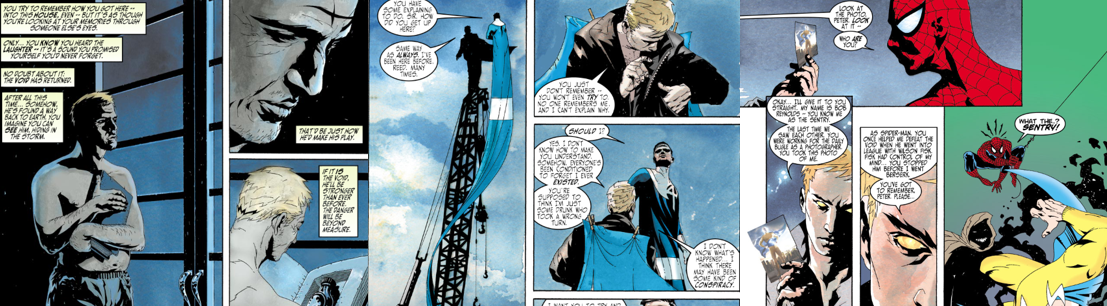
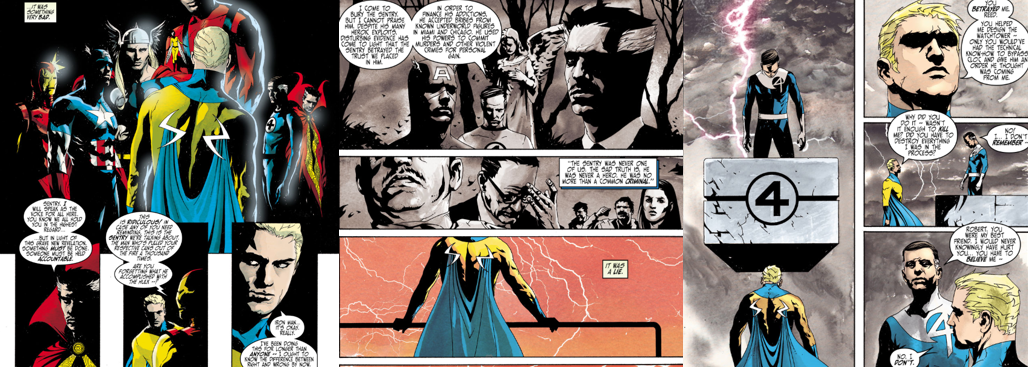
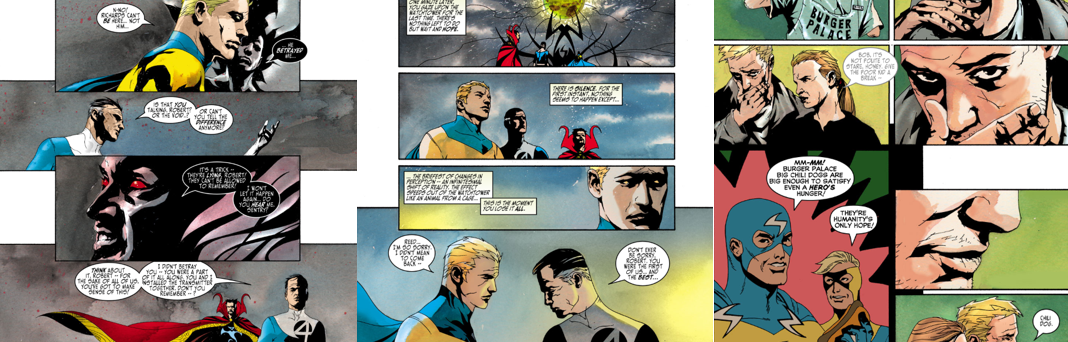
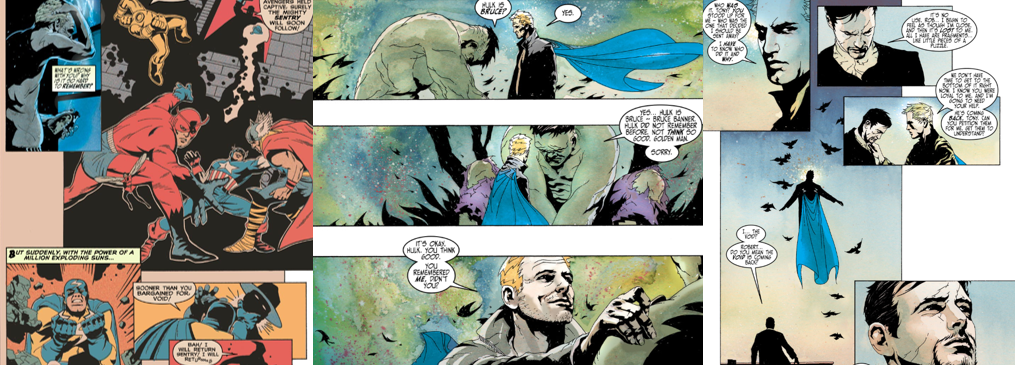
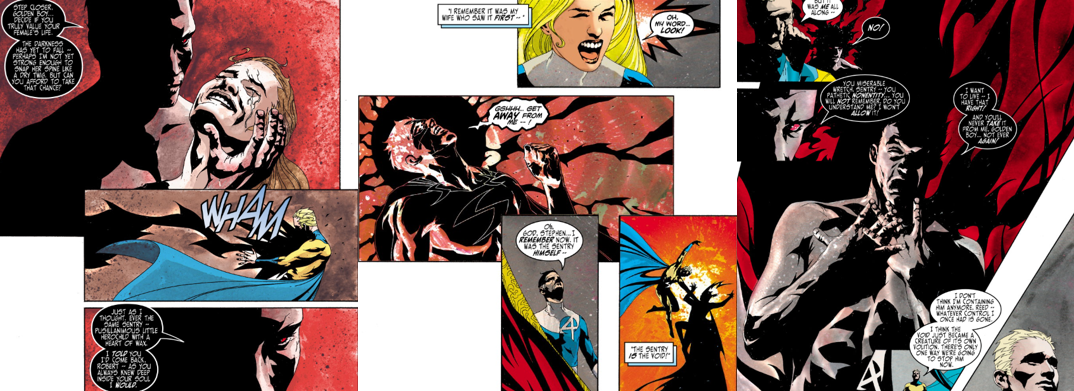


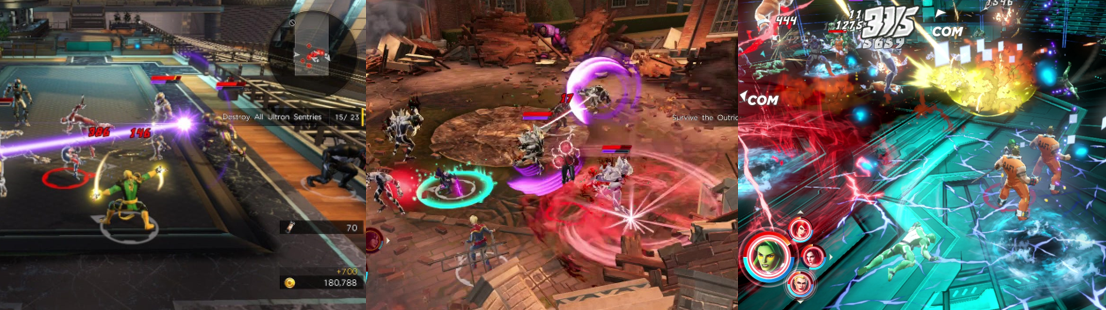
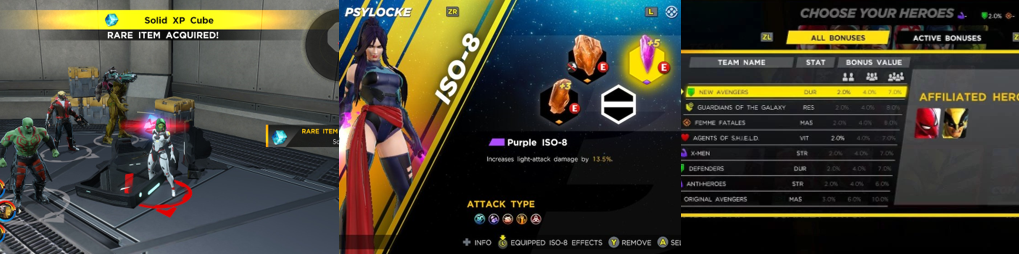
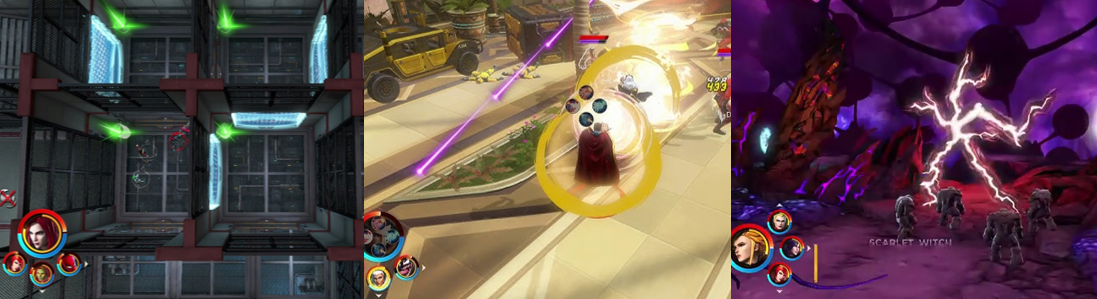
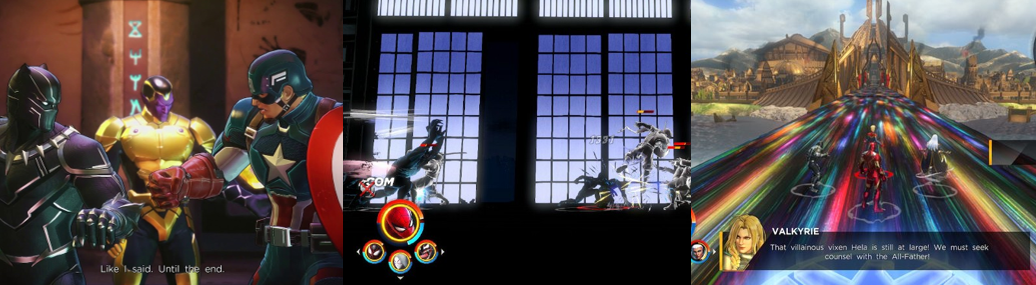
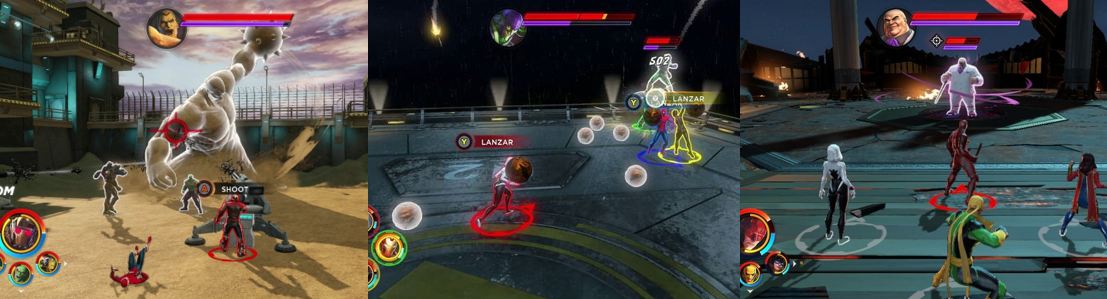
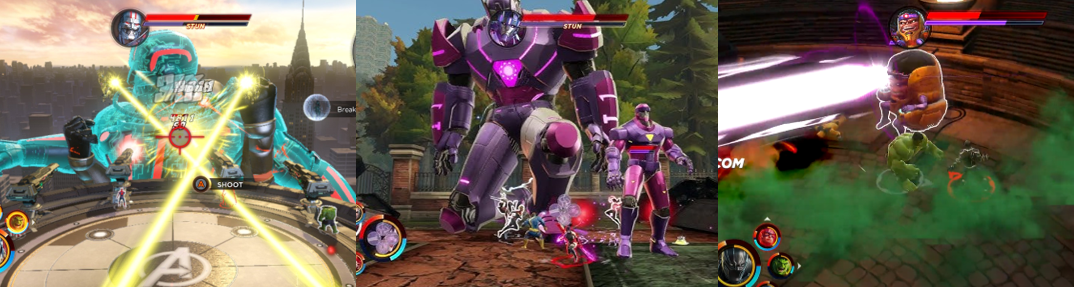
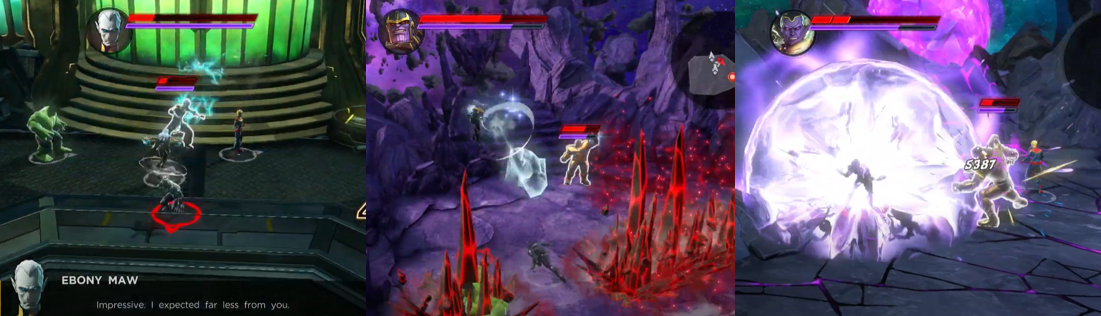

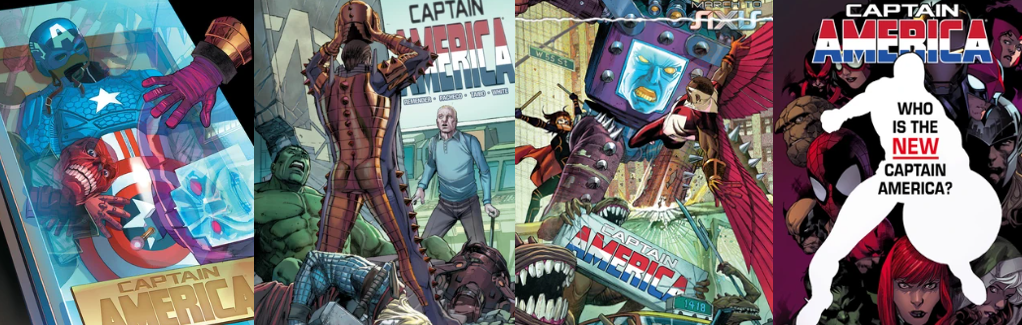
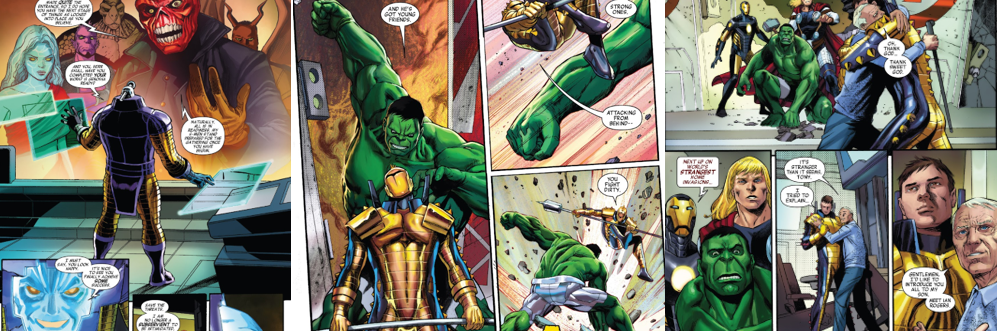
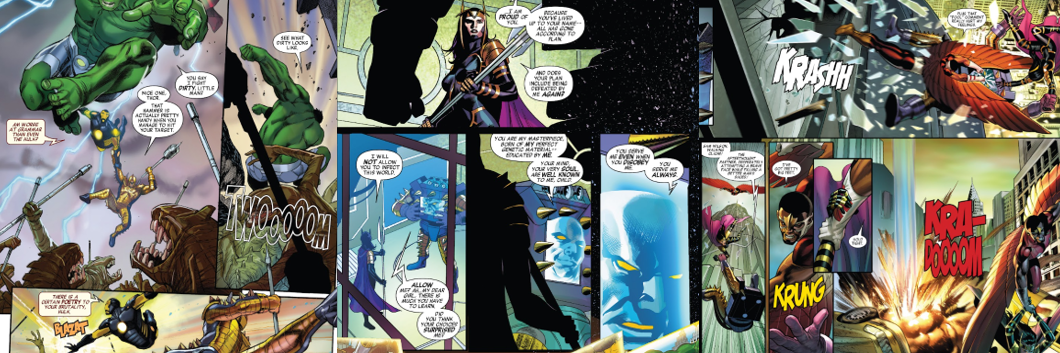
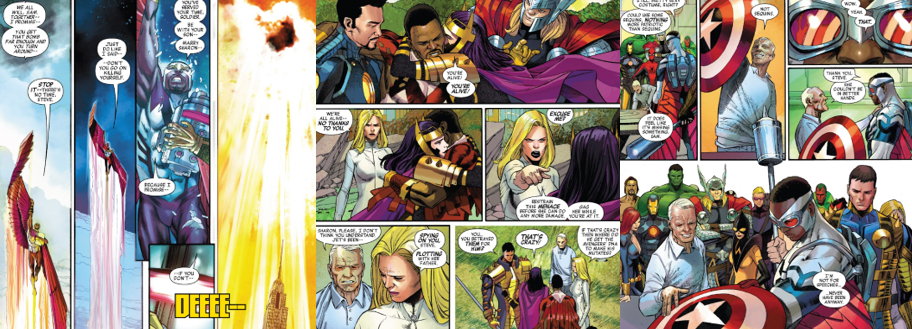
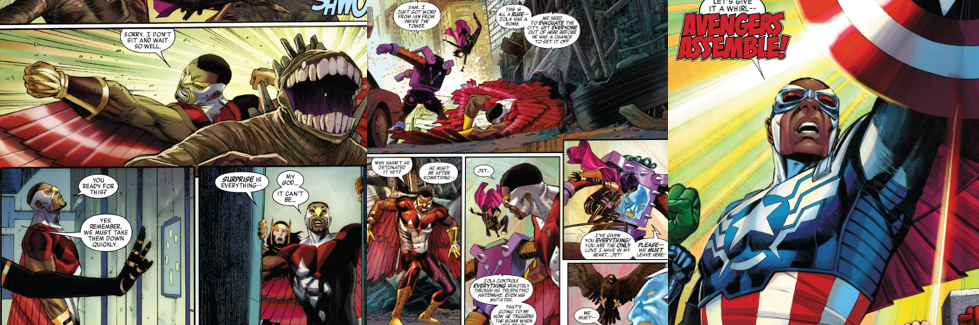
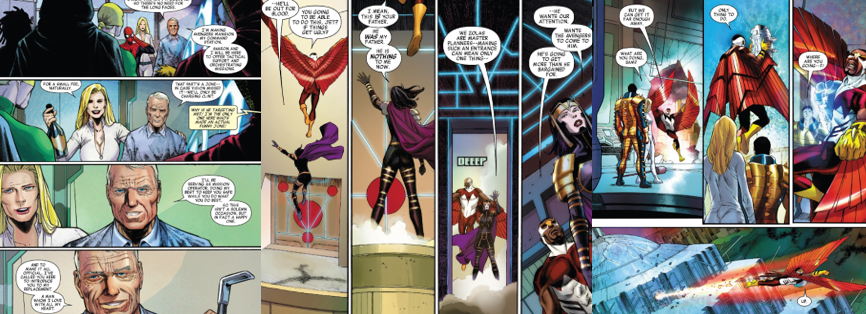


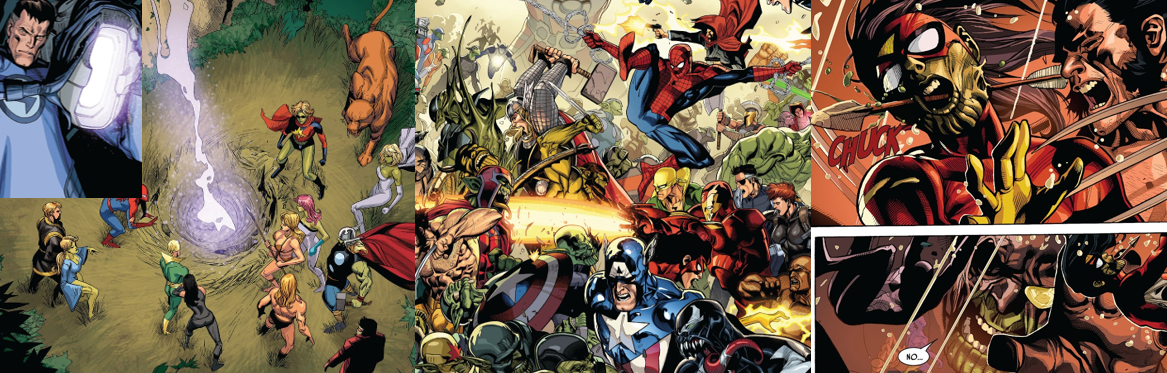

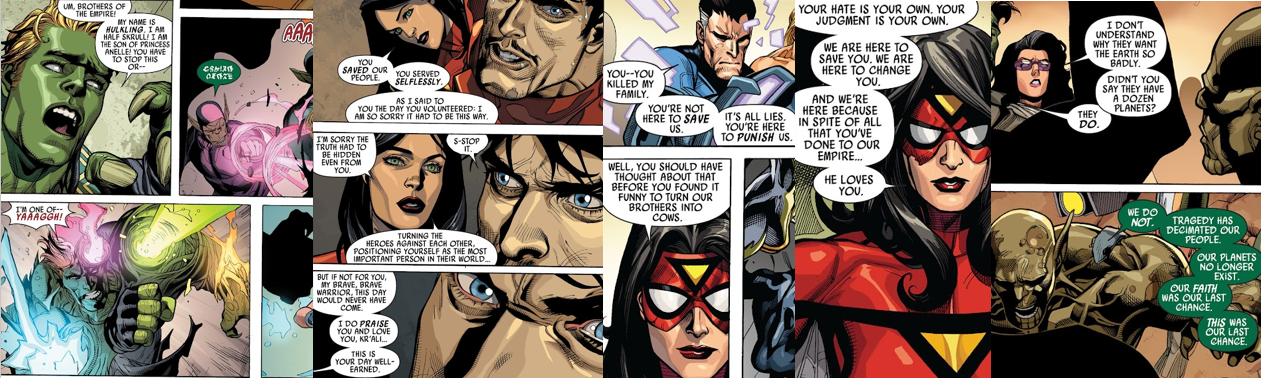
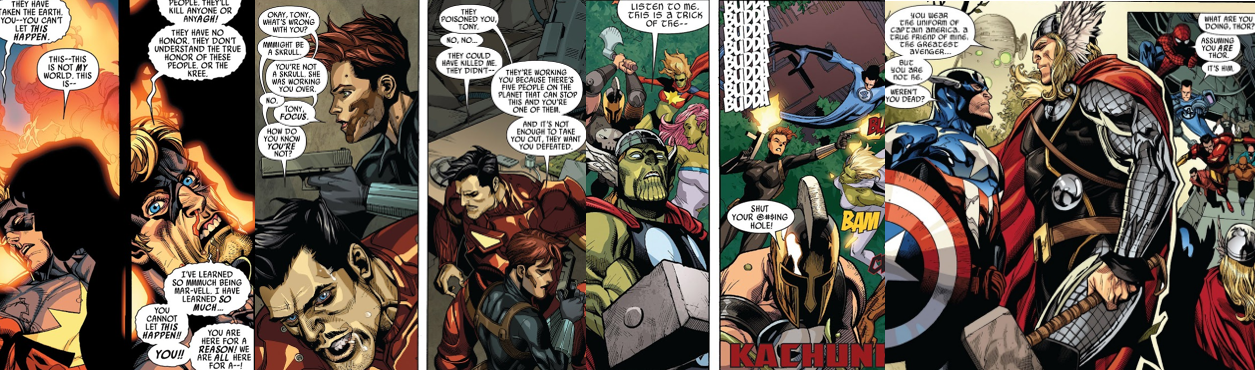


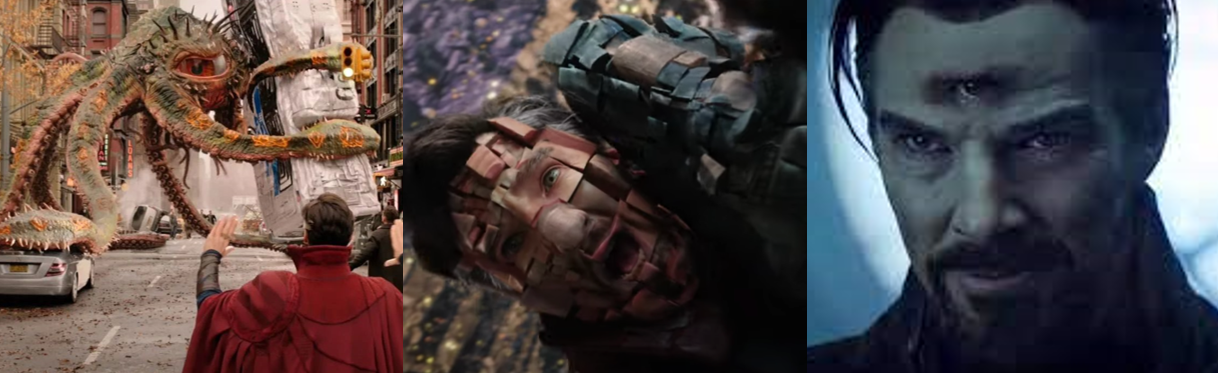















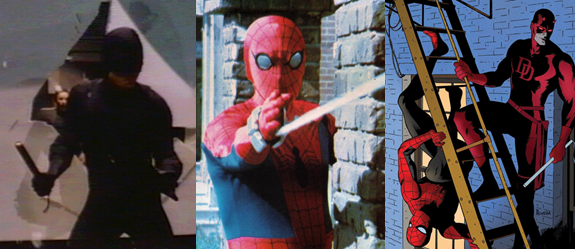
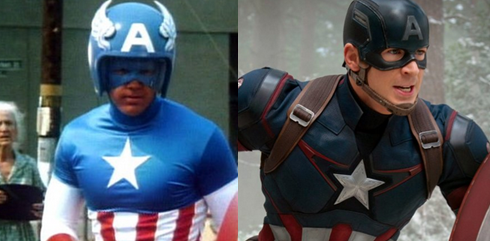


 Dr. K's Waiting Room
You must be logged in to post a comment.