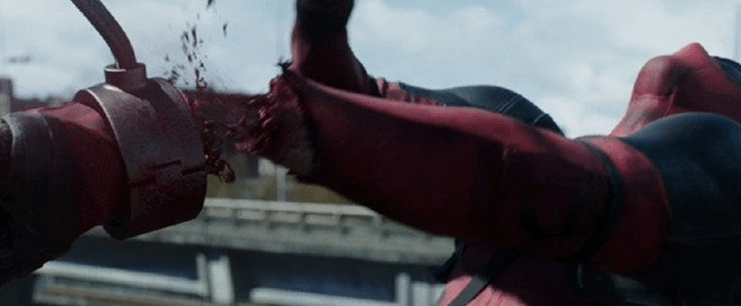
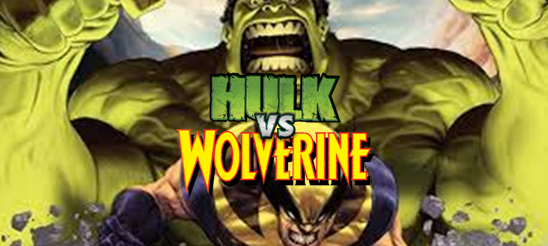
Movie Night: Hulk vs. Wolverine

Released: 27 January 2009
Director: Frank Paur
Distributor: Lionsgate
Budget: Unknown
Stars: Steven Blum, Fred Tatasciore, Tom Kane, Janyse Jaud, Colin Murdock, Mark Acheson, Nolan North, Bryce Johnson, and Tom Kane

The Plot:
After Doctor Bruce Banner’s (Johnson) rampaging alter-ego, the Hulk (Tatasciore), is suspected of destroying a town, Department H sends James “Logan” Howlett/Wolverine (Blum) to confront the creature, attracting soldiers from Weapon X.

The Background:
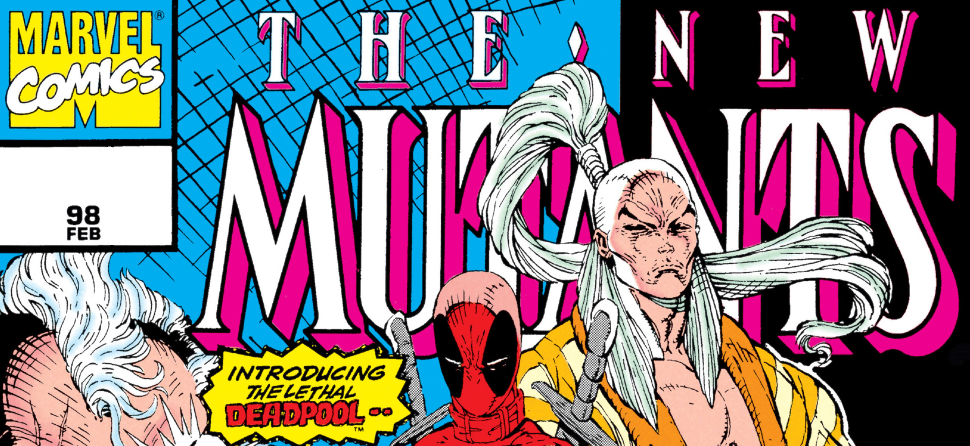
Marvel Comics have had a long history with animated ventures; some of these, like the X-Men animated series (1992 to 1997), largely defined a generation of fans. In 2004, with the Marvel Cinematic Universe was still about four years away from it genesis, Marvel licensed many of their characters out for live-action films, many of which were massive critical and financial successes. To capitalise on this wave of mainstream popularity, Marvel made a deal with Lions Gate Entertainment to produce a series of direct-to-video animated movies based on their characters. Sales were initially very strong and, while the releases soon dropped from two per year to one, 2009 saw a dual feature release that pitted the Hulk against Wolverine and Thor Odinson in separate adventures. Hulk vs. would go on to make the second-highest gross out of all of these animated films and Hulk vs. Wolverine was met with generally positive reviews, potentially because of Wolverine’s inclusion and growing popularity at the time and the inclusion of fan favourite character Deadpool. Wade W. Wilson (also known as “Deadpool”) was created by Fabian Nicieza and Rob Liefeld and first appeared in The New Mutants #98 in February 1991. Though originally little more than a cold-blooded mercenary, the wise-cracking “Merc With a Mouth” went on to become one of the few comic book characters to be aware that they are comic book characters, leading to a warped, violent sense of humour, a tendency to break the fourth wall, and one of Marvel Comics’ most popular characters.

The Review:
Hulk vs. Wolverine begins with a narration by Wolverine, who awakens beaten and bloodied in the middle of the Canadian wilderness. Momentarily disorientated, he painfully shoves his arm back into his socket and his memory is jogged by the dramatic arrival of the enraged Hulk. From there, the feature flashes back to four hours earlier in the day; Logan was transported into Canada by Department H after a town was destroyed by a creature believed to be the Hulk. Wolverine’s senses give him the general sense of what happened and, excited at the prospect of hunting down the Hulk, is given carte blanche to stop the Green Goliath by any means necessary before he can hurt anyone else. Free-falling to the snow-encrusted wilderness, Wolverine follows his enhanced sense of smell deep into the forests and mountains in search of the Hulk (a search made all the easier by the gigantic impact craters the Hulk has left behind as he leaps across the mountains) but finds only the distraught Bruce Banner.
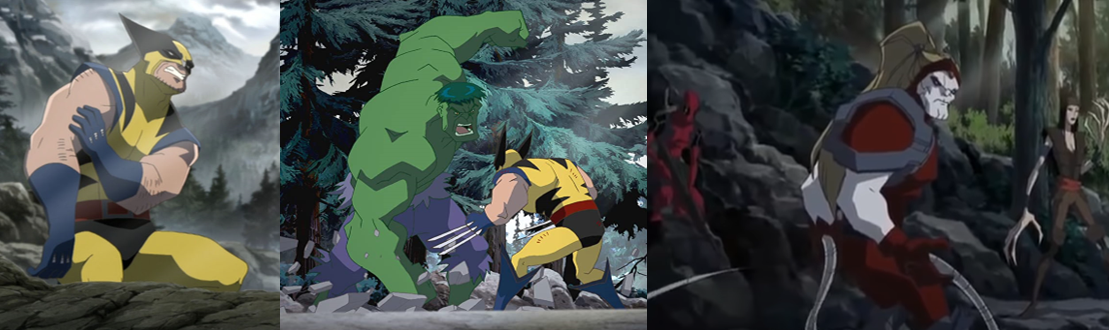
Wolverine is sent to stop the Hulk but their fight is interrupted by Weapon X.

Although Banner begs him to leave and laments his condition, his transformation into the rampaging Hulk s triggered when Wolverine catches the Hulk’s scent on Banner and threatens him. After being knocked clear across the valley from a single punch from the Hulk, Wolverine recovers as in the opening and an all-out slugfest between the two ensues. Rather than engage the Hulk in head-to-head combat, Wolverine initially tries to use his wiles to attack the Hulk from behind, stabbing him repeatedly in the back, but the Hulk’s unquenchably rage and strength quickly overpower Wolverine and leave him a beaten, bloody pulp. As tenacious as his namesake, Wolverine gives in to his bloodlust and continues the fight, gouging deep, bloody wounds into the Hulk using his Adamantium claws but their fight is soon interrupted by a barrage of tranquilizer darts fired by Deadpool (North) and the arrival of Victor Creed/Sabretooth (Acheson), Arkady Rossovich/Omega Red (Murdock), and Yuriko Oyama/Lady Deathstrike (Jaud). Succumbing to the dart, Logan recalls how, while drinking himself into a stupor, he was abducted by the mysterious Professor (Kane) and subjected to the Adamantium bonding process against his will.
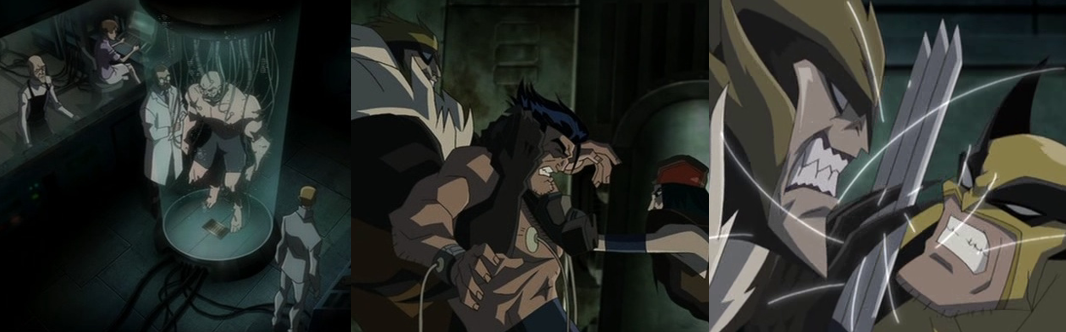
Wolverine’s past in Weapon X comes back to haunt him with a vengeance.

In the aftermath, he became the brainwashed soldier code-named Weapon X and was forced into a series of combat scenarios alongside the other Weapon X “graduates”; in time, Sabretooth’s unheeded warnings regarding Logan’s stability came to pass and he violently escaped from the facility and fled into the Canadian wilderness. Wolverine is brought back to the present by a vicious beating from his former teammate; as Sabretooth beats on him, Deadpool chatters incessantly, but the Professor (now sporting a robotic claw hand) interrupts to proceedings to reveal that Weapon X has been pursuing the Hulk and causing the destruction attributed to the beast in their efforts to capture him. The Professor plans to wipe the Hulk’s memories and brainwash him using the same procedures they subjected Logan to back in the day and place Wolverine back into the containment capsule in order to subdue him once more. As each of the Weapon X members wants Wolverine dead, Sabretooth kills the Professor so that he and Deathstrike can torture Logan and rip him to shreds; however, Wolverine is able to goad Deathstrike into skewering him in such a way that frees him from Sabretooth’s grip and, after slicing off her arm, attempts to escape the facility, slaughtering a whole bunch of armed guards in the process.
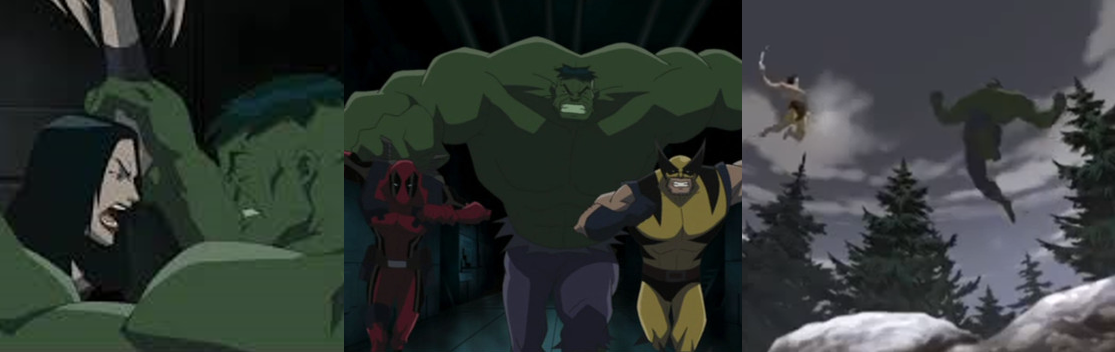
Hulk tears his way through Weapon X but the film ends with his fight against Logan unresolved.

Although Deadpool isn’t convinced by Sabretooth’s story that Wolverine attacked the Professor, he agrees to hunt down and kill Logan, who frees Banner in order to get the Hulk’s help. A frail, despondent figure, Banner is tired of his dual existence and yet also terrified at the prospect of being turned into a weapon. Although horrified by Omega Red and Deadpool, Banner refuses to let the Hulk out so Wolverine stabs him in the gut to help speed up the transformation before engaging his adversaries alone; thanks to their individual healing factors, the fight is bloody and brutal and effectively pointless and yet each of them do everything they can to try and kill the other. Despite his best efforts, Banner is unable to hold off the transformation and, as Omega Red as Wolverine tangled up in his electrified tentacles, the Hulk attacks in a blind rage. The Hulk easily shrugs off Deadpool’s bullets and Omega Red’s tentacles, unwittingly saving Wolverine from Deathstrike’s clutches in the process; remembering Wolverine as an enemy, the Hulk charges after him, swatting aside Deadpool when Wolverine hilariously uses him as a human shield and dispatching Deathstrike with his patented clap before ripping her cybernetic limbs off. Hulk then pounds Omega Red into submission before bringing the entire facility down around them in his desperate need to escape; Wolverine is launched clear by the resultant explosion and the film ends with the two once again leaping to engage each other amidst the Canadian snow.

The Nitty-Gritty:
Unlike the other Marvel animated efforts, Hulk vs. Wolverine isn’t exactly what you would call a feature-length presentation; this is mainly because it was released alongside Hulk vs. Thor (Liu, 2009) and, together, the two are supposed to form a kind of double feature. While they’re not exactly directly related to each other, this does help explain the brevity of Hulk vs. Wolverine, which is more like a bite-size version of a much greater story. You might think that this means the feature is a simple extended fight scene between the two characters but that isn’t actually the case; yes, Wolverine and the Hulk engage in bloody, brutal combat for a few minutes but their fight is quickly interrupted by the Weapon X members. The primary selling point of the feature then takes an extended break to touch upon Wolverine’s back story with Weapon X, which makes this much more like a snapshot of his character rather than a battle for the ages.
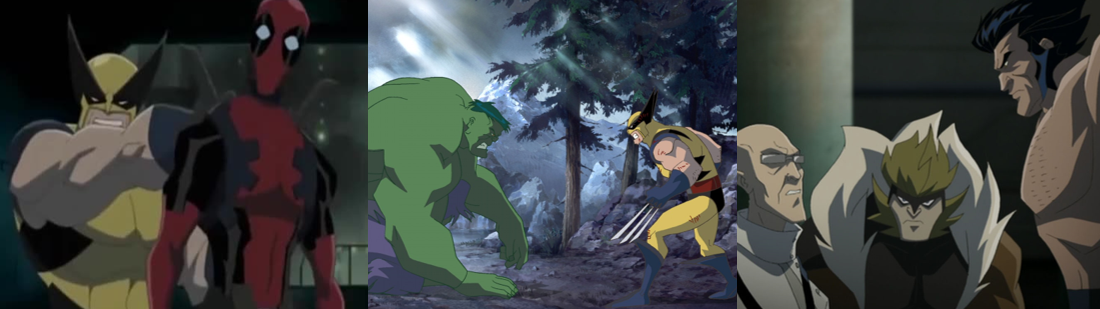
As amusing as Deadpool is, the Weapon X plot completely overshadows the title fight.

Indeed, Wolverine (and the Hulk, for that matter) spend more of the feature fighting against Weapon X than they do each other. On the plus side, this means there’s still a lot of violence and action packed into the feature’s short runtime and loads of opportunities for Deadpool to steal the show with his wit and wacky nature but those looking to see Hulk fighting Wolverine, as the title promises, may be left disappointment at how little of the action is actually focused on this fight. It’s interesting seeing a brief glimpse into Wolverine’s animosity against Weapon X but it’s all very rushed and glossed over to get to the next violent scuffle; I would have liked to see a bit more time spent exploring Banner’s desperation and downtrodden character at the sacrifice of, say, Omega Red (who was largely inconsequential overall) and a bit more time spent exploring the dichotomy between Banner/Hulk and Wolverine (since both are characters who rage and animal nature often overcome their rational minds). Instead, the feature blasts through a “greatest hits” package of Wolverine’s life, hints at relationships to characters many audiences might not be immediately familiar with (the past between Wolverine and Sabretooth and Deathstrike is given the bare minimum of lip service), and seems to have little faith in the concept of Hulk fighting Wolverine since it would rather skew its run time towards the more popular Wolverine.
The Summary:
Hulk vs. Wolverine is a fun, if brief, way to spend about forty minutes of your life. Although it doesn’t quite deliver on its premise, the fight between the Hulk and Wolverine is brutal and exciting and there is a great deal of violence packed into its short run time. Hulk vs. Wolverine definitely doesn’t shy away from the ferocious nature of its title characters, or their adversaries, which is refreshing to see since these are violent characters and should be treated as such, but it definitely feels as though Wolverine’s presence overshadows that of the Hulk and the core concept of the feature. Although Deadpool’s role in the animated is small, he definitely stands out and it was exciting to see him included but, in the end, the insertion of Weapon X and the focus on Wolverine’s character definitely keeps Hulk vs. Wolverine from living up to its potential. I guess seeing the Hulk and Wolverine go at it for about half an hour straight wouldn’t have been that interesting but, as I said, there was a lot of potential in paralleling Logan’s animalistic character and nature with Banner’s condition that was imply abandoned to capitalise on Wolverine’s incredibly popularity and that’s a bit of a shame despite the feature being chock full of violent action and bloody violence.

My Rating:

Rating: 2 out of 5.

Could Be Better

What did you think to Hulk vs. Wolverine? Do you feel like it wasted the potential of its premise or were you happy with what was presented? How do you feel it compares to Hulk vs. Thor and the other Marvel animated features? Which member of Weapon X was your favourite and how did you feel about the way Banner was portrayed here? What did you think to Deadpool’s inclusion and characterisation and would you like to see him featured in animation more often? How are you celebrating Deadpool’s debut this month? Whatever your thoughts on the Deadpool, or Marvel’s animated features, feel free to leave a comment below.


Movie Night: Deadpool

Released: 8 February 2016
Director: Tim Miller
Distributor: 20th Century Fox
Budget: $58 million
Stars: Ryan Reynolds, Morena Baccarin, Ed Skrein, T.J. Miller, Gina Carano, Brianna Hildebrand, and Stefan Kapičić/Andre Tricoteux

The Plot:
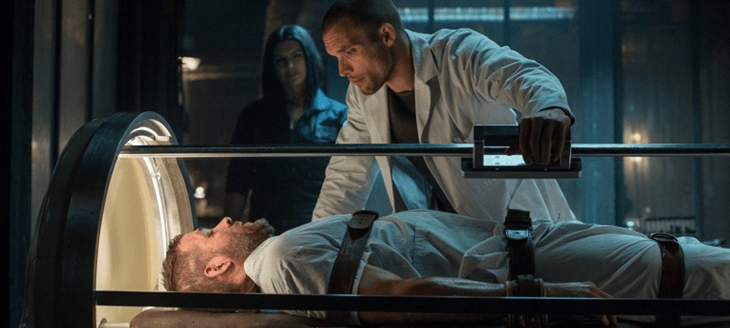
After mercenary for hire Wade Wilson (Reynolds) contracts terminal cancer, he turns to Francis Freeman/Ajax (Skrein), who subjects him to round-the-clock torture to activate his latent X-Gene. The experiment is a success, transforming Wade into a near-immortal Mutant but also horrifically disfiguring him and leading him on a bloody quest for revenge.

The Background:
Deadpool was created by Fabian Nicieza and Rob Liefeld back in 1991; originally an antagonist who featuring in the duo’s New Mutants comics, the self-styled “Merc With a Mouth” gained significant popularity over the years, especially once he became self-aware and began breaking the fourth wall. This popularity eventually led to his own solo title, a series of team-ups with other Marvel heroes, appearances in Marvel/X-Men-related videogames, and even a cameo appearance in the beloved X-Men animated series (1992 to 1997). Deadpool made his live-action debut in the much-maligned X-Men Origins: Wolverine (Hood, 2009); here, the character was expertly portrayed by Ryan Reynolds (who had been eyed for the role as far back as 2004) and his inclusion was intended to setup a solo spin-off for the character. After X-Men Origins was critically panned and following the poor reception of the Reynolds-led Green Lantern (Campbell, 2011), however, 20th Century Fox (who had bought the film rights to the X-Men franchise some time ago) got cold feet about producing an expensive superhero film full of violence and cuss words. Yet, after director Tim Miller’s early test footage mysteriously leaked online to an overwhelmingly positive response, Fox committed to releasing the film as the director and actor wished but with a much smaller budget than traditional superhero films. As it turned out, however, the studio was wrong to be apprehensive and right to produce the film on a tighter budget as Deadpool eventually brought in over $780 million in worldwide gross which, alongside it’s overwhelmingly positive critical reception, more than justified the greenlighting of a sequel and a continued investment in the character on their part.

The Review:
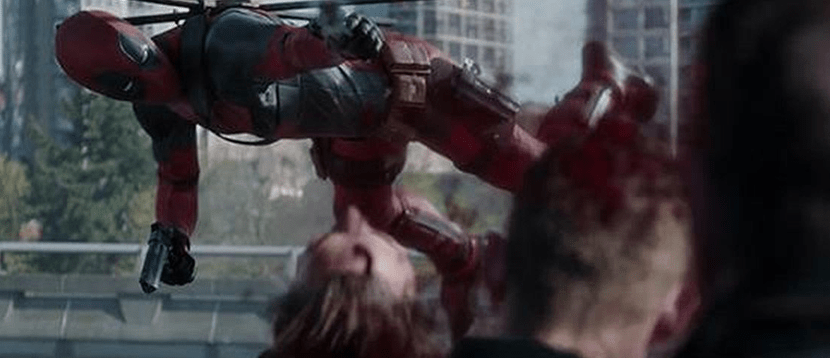
As described by Deadpool himself, Deadpool is, at its heart, a traditional love story of boy meets girl, boy contracts terminal cancer, boy acquires superhuman powers, boy gets girl. It’s the classic, age-old tale we’ve all come to know and love…just with more crotch shots and gratuitous violence than you might remember. Right off the bat, Deadpool opens with an impressive slow-motion shot right in the middle of Deadpool unleashing the carnage on a busy highway while Juice Newton’s “Angel of the Morning” plays and numerous sight and visual gags fill the screen (the majority of them poking fun and the cast and crew of the film and setting up Deadpool’s trademark crude humour). This highway sequence acts as a bridging device as Deadpool, directly addressing the camera and through the power of voiceover, explains his origin up to that point and we continuously return to the highway to see Deadpool blowing the brains out of Ajax’s men and skewering them with his blades.

Seriously, who wouldn’t fall in love with Morena Baccarin?

It turns out that Deadpool was just as childish and sadistic before he acquired his powers; as a mercenary for hire, Wade took on a variety of jobs issued to him by his kind-of-sort-of friend/business acquaintance Weasel (Miller). While he is characteristically coy about the exact specifics of his past, using dark humour to twist the exact truth of his background, he openly admits to having a “soft spot” and wishing to make some kind of small difference to people’s lives. It’s in the midst of this cavalier lifestyle that he meets Vanessa (Baccarin), an absolutely gorgeous woman who appears to be just as snarky and unhinged as he. The two immediately hit it off and spend an entire year doing little other than screwing like animals and falling in love. Right as Wade begins to feel alive again, though, he (literally) falls ill with terminal cancer and, unwilling to drag Vanessa into that “shit show” (as he calls it), packs up and leaves to die alone.

Thankfully, Ajax isn’t just another “guy in a suit”; he’s a sadistic bastard through and through.

For a character who is known for little more than cutting people’s heads off, spouting crude jokes and nonsensical one-liners, and engaging in mindless violence, Deadpool is a surprisingly tragic and relatable character even after he has become a nigh-unstoppable one-man-army. Reynolds excels in the role and I literally cannot imagine anyone else bringing as much humour, heart, and snarky bad-assery to the role. It’s easily the part he was born to play and you can tell that he relishes every last blood-soaked moment of it. Opposing Deadpool is Ajax, a role that demands little more from Ed Skrein than to be a stereotypical “British villain” but which he brings such a slimy arrogance to that you can’t help but want to see Deadpool get his hands on him. A former patient of the same facility Wade ends up in, Ajax’s mutation leaves him incapable of feeling pain (or anything else) and not only superhumanly strong but completely sadistic as well. As a result, he’s not only the perfect kind of amoral asshole but also a formidable threat in his own right since he can’t feel pain and Deadpool can heal from any injury, allowing the two of them to just go absolutely nuts on each other once they finally face off.

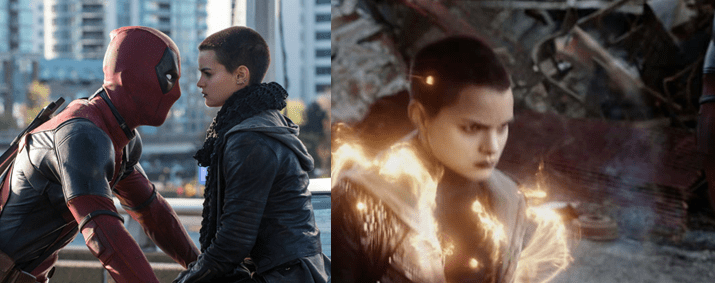
Negasonic Teenage Warhead is ballsy enough to match wits with Deadpool.

Ajax is joined by Angel Dust (Carano), a Mutant who is superhumanly strong; as is the crutch of the majority of the henchpeople in X-Men films, the role doesn’t really require much from Carano other than to stand around looking intimidating and bring the pain when required but it’s refreshing to see a woman in the role of the “muscle”. Her presence is inoffensive enough and she even manages to work in a few subtle character traits of her own here and there (she constantly chews on toothpicks and is even somewhat flustered in her fight against Piotr Rasputin/Colossus (Kapičić/Tricoteux)). Speaking of Colossus, this isn’t the underutilised character you know from previous X-Men films as portrayed by Daniel Cudmore; instead, Colossus is a colossal (pun intended) fully computer-generated character and always shown in his organic steel form. Sporting a true Russian accent and portrayed as a veteran of the X-Men, Colossus acts as Deadpool’s conscious and would-be-mentor figure as he attempts to persuade Wade away from the blood-soaking path he has put himself on and become a true hero as an X-Man. Joining Colossus is an entirely new character to these films, the preposterously-named Negasonic Teenage Warhead (Hildebrand); a typical moody, anti-social, and rebellious teenager, Negasonic mainly exists to be the butt of Wade’s numerous pop culture references, to spout equally-mean comments back to him, and to explode in atomic bursts for the film’s finale. While they could have used any other teenage X-Man for this role, the filmmakers specifically selected the character based on her striking name and had to negotiate with Marvel Studios in order to include her. While her powers may be different, she’s a decent enough character in her own right, especially coming into her own in the battlefield.

Deadpool‘s violence is just part of the film’s appeal.

What separates Deadpool from other superhero films, though, is its presentation. Superhero films have been violent before; they’ve had swearing and killing and blood but they’ve never quite been like Deadpool. The film is an action/comedy, full of visual gags, constant one-liners and insults, and more violence than you can shake a stick at. Deadpool is relentlessly brutal in his methods, blowing brains out, splitting guys in two, and even cutting his own hand off to escape custody. He’s an insatiable killing machine, full of righteous anger but also with a surprising amount of pathos built into his character. While it’s hard to believe that the damage done to his face is enough to truly turn off any woman, much less one as devoted to him as Vanessa, the way his monstrous appearance affects his usual bold-as-brass confidence is affecting and it’s easy to buy into his quest for revenge against Ajax.

The Nitty-Gritty:
Deadpool is a brisk, non-stop action piece; the film hits the ground running and even in its slower, more poignant moments, it never drags or feels extraneous. Rather than worry itself with the disastrous continuity of the X-Men films, Deadpool exists instead in its own bubble that is adjacent to, and directly inspired by, the existing X-Men franchise but very much its own thing and it never shies away from poking fun at the films that have proceeded it or the mess Fox made of their continuity.

Deadpool is full of clever and entertaining references.

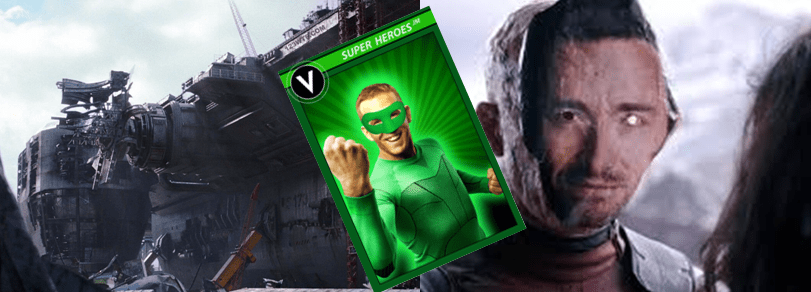
Speaking of which, the film goes out of its way to not only mock the treatment of Deadpool in X-Men Origins (Deadpool clearly acts as though that film never happened or was some kind of awful nightmare) but also Reynolds’ experiences on Green Lantern. Very little escapes the film’s humourous grilling, either; Deadpool references having to perform sordid act on Logan/Wolverine (Hugh Jackman) in order to get his own film, regards Brian Mills (Liam Neeson) as a bad father for always allowing his family to get taken, stages its entire finale on what is clearly the remains of a S.H.I.E.L.D. Helicarrier, and features two incredibly fun “cameos” from Jackman himself.

Deadpool‘s CGI and budget is put to good use and never overwhelms the film’s action or story.

Having a smaller budget really benefitted Deadpool; it meant that what little money it had had to be put to good use rather than on elaborate special effects and gratuitous CGI. It also allows the film to tell a far more grounded and focused story; the spotlight is on Deadpool the entire time, as it should be, and though it does include the X-Men they are used sparingly and in service of the film’s greater narrative rather than clogging the film’s runtime up with pointless cameos and fan service. Deadpool’s wise-cracking nature, jokes, and violent actions are fan service enough and, thankfully, remain the central hook for the film from start to finish.

The Summary:
I wasn’t really the biggest fan of Deadpool going into this film; I find X-Men comics very dense and nearly impenetrable so I hadn’t really read too much about him beyond what I saw online. This actually benefitted me in a lot of ways; it meant I wasn’t too bothered by how badly 20th Century Fox neutered the character in X-Men Origins: Wolverine and it meant that I would be seeing the film without high expectations. And, yet, Deadpool exceeds those expectations continuously the more I see it. I honestly find it difficult to talk about Deadpool; comedies are a difficult genre to really describe at the best of times, I find, and the only way you can really appreciate Deadpool’s humour and appeal is to just watch it for yourself. It really is an impressive and incredibly enjoyable action romp; even if the film hadn’t been full of gratuitous violence or swearing, there would still be loads left over to enjoy, I think, but the fact that the filmmakers just went in balls deep and decided to do an unapologetically true adaptation of Deadpool’s unique character is truly admirable. I honestly thought that the one-two-punch of Deadpool and Logan (Mangold, 2017) would open the doors for R-rated action films to once again be successful in Hollywood. That resurgence didn’t really come to pass, unfortunately, but we did get a pretty decent sequel out of it (I honestly struggle to pick my favourite of the two and often settle for just watching both back to back) and that doesn’t dilute the fact that Deadpool is an incredibly bad-ass and hilariously enjoyable experience from start to finish.

My Rating:

Rating: 5 out of 5.

Fantastic

What are your thoughts on Deadpool? Do you feel it did a better job of capturing the character’s essence than X-Men Origins: Wolverine or were there parts that disappointed you? What did you think of Ryan Reynolds’ portrayal and can you think of any other pitch-perfect castings in films? What was your first introduction to Deadpool and what do you think of him as a character? How are you celebrating Deadpool’s debut this month? Whatever your thoughts on Deadpool, and the X-Men, drop a comment below.

Back Issues: The New Mutants #98

Story Title: “The Beginning of the End”
Published: February 1991
Writers: Rob Liefeld and Fabian Nicieza
Artist: Rob Liefeld

The Background:
By the 1980s, the X-Men had become one of Marvel Comics’ most successful publications, prompting then-chief editor Jim Shooter to call for a series of X-Men-related spin-off titles. The New Mutants, a team of teenage students from Professor Charles Xavier’s School for Gifted Youngsters, came out of this need for fresh new X-Men titles; created by Chris Claremont and Bob McLeod, the first team of New Mutants debuted in September 1982 before graduating to an ongoing title that was first published between 1983 and 1991. The original team, comprised of far younger characters than those in the ongoing X-Men comics and representing a number of diverse ethnicities, eventually fell under the command of the time travelling Mutant known as Nathan Summers/Cable and was transformed into more of a mercenary team and, ultimately, reformed into X-Force. In 1991, however, Fabian Nicieza and Rob Liefeld introduced a new antagonist for this team of hot-headed youths, the mercenary known as Deadpool, and inadvertently created one of Marvel Comics’ most popular anti-heroes in the process.

The Review:
The New Mutants #98 introduces us to Gideon in the midst of a training program at Shaw Industries. Gideon is quite the enigma; possessing powers of “super human enhancement manipulation” and a very…unique sense of style, to put it mildly, he easily overcomes Sebastian Shaw’s combat modules in what appears to be a bastardised version of the X-Men’s famous Danger Room. Having wowed his underlings with his incredible performance (which mostly consists of a bit of dramatic jumping about and throwing his assailants into walls; nothing I would particularly describe as “impressive”), he runs through his itinerary for the day, paying particular emphasis on his vague plans for one Emmanuel da Costa.

Cable tries to push Cannonball’s powers to their limit.

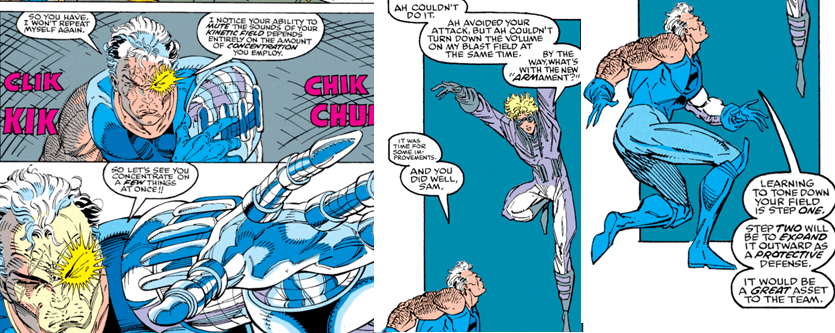
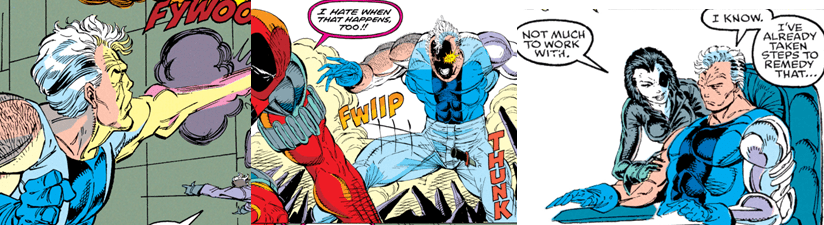
Gideon’s plot will have to wait, however, as an impressively Liefeld-esque splash page introduces us to the actual Danger Room, where Cable is engaging in a training exercise alongside Samuel Guthrie/Cannonball. Despite Cable’s rugged insistence that he doesn’t require any help, Cannonball pulls him from the grip of some giant, ugly green machine and justifies his actions by explaining that he’s supposed to be practicing at perfecting his Mutant abilities. Eager to put these to the test, Cable initiates a more aggressive counter-attack sequence and even takes pot shots at Cannonball himself with his incredibly versatile cybernetic arm. Despite failing to balance his focus on multiple threats at once, Cable commends Cannonball’s abilities and wishes for him to expand his kinetic abilities to shield the rest of the team in battle.

Rictor is determined to get Rahne back from Genosha.

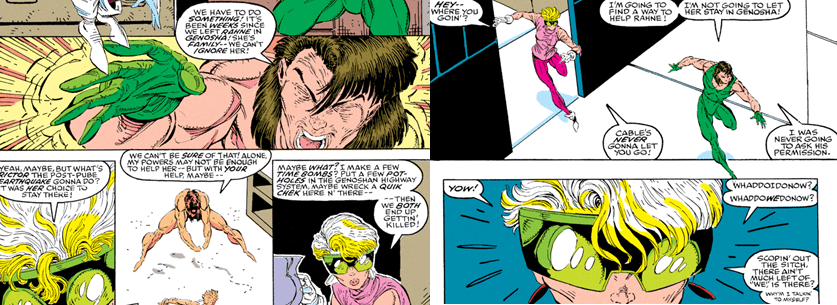
Cannonball then points out that the “team” is shy a few members and Cable conveniently runs down the reasons as to why; it seems Warlock died in the line of duty recently and Rahne Sinclair/Wolfsbane’s loyalties are in question but, in any case, Cannonball takes umbrage to him and his team mates being thought of as mere soldiers rather than family but Cable, rugged and war-ravaged as always, is steadfast that the reality of their situation is that all Mutants are soldiers in the world they live in. At the Da Costa International residence, a suspicious redhead hands the aforementioned Emmanuel da Costa a fresh cup of hot coffee that proves to be his last! Just one sip Emmanuel collapses to the floor in fatal convulsions while his assassin watches with glee. Back at the New Mutants’ bunker beneath the X-Mansion, Julio Richter/Rictor and the stupidly-named Tabitha Smith/Boom-Boom are arguing about having been forced to leave Rahne back in Genosha some weeks ago. While Rictor is all for leading a full-on assault against Genosha to rescue her, Boom-Boom is against it not least because such action would undoubtedly be suicide but also because Rahne chose to stay on the island. Undeterred, and temperamental, Rictor rushes out to help his team mate with or without Boom-Boom’s assistance or Cable’s permission.

Cabel is saved from certain death by Cannonball.

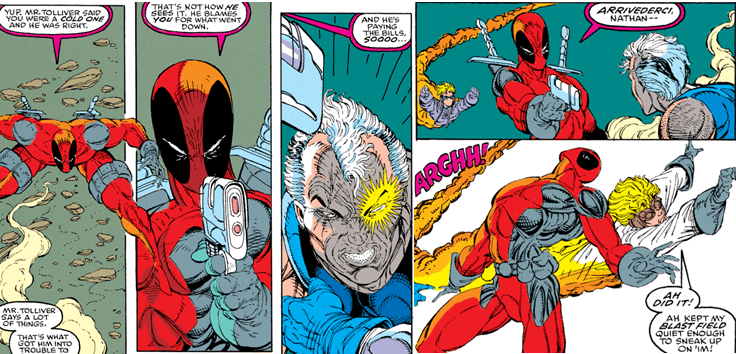
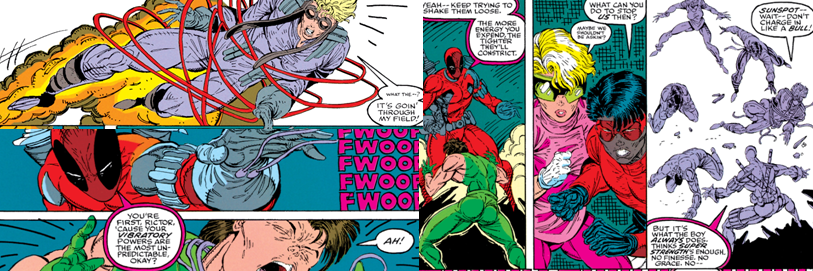
Speaking of Cable, everyone’s favourite time travelling poster boy of nineties excess is suddenly attacked while browsing the library. His attacker? None other than a mercenary known as Deadpool; sporting unique speech bubbles and a quick wit, Deadpool immediately reveals that he was hired by the mysterious “Mister Tolliver” to find, and kill, Cable (though he insists that the job is nothing personal). I’m not really sure what the beef is between Cable and Tolliver but it’s enough for the man to have hired an assassin despite Cable claiming that he wasn’t to blame for “what went down”. Without any real effort, Deadpool is in a position to end Cable right then and there with a clear headshot but the time traveller is saved just in the nick of time by Cannonball. Impressed with Cannonball’s abilities, but no less unprepared for them, Deadpool quickly disables Cannonball and returns to the task at hand; a swift blow from Cable breaks Deadpool’s jaw as the Mutant states: “You talk too much” and he’s not wrong. Deadpool has been jabbering a mile a minute since his explosive entrance and, while he doesn’t directly address the reader or break the fourth wall and is a far cry from his rude, crude, wise-cracking self we know now, he’s still full of the quips, words, and even gets side-tracked talking to himself.

Deadpool is shipped back to Tolliver and the issue ends on something of a cliffhanger…

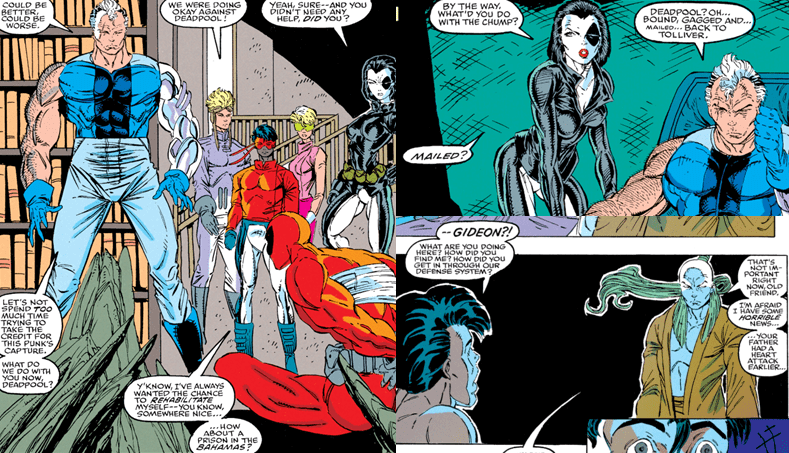
Despite claiming that Cable has broken his jaw, Deadpool continues to assault his target with both words and attacks and is again in position to finish off his foe when Rictor, Roberto da Costa/Sunspot, and Boom-Boom join the fray. This, however, is of little worry to Deadpool, who easily subdues Rictor and is primed to finish the others off when he is suddenly felled from behind by Neena Thurman/Domino. Cable’s demeanour is noticeable changed by Domino’s presence (the New Mutants believe he is smitten with her) and they easily restrain Deadpool, deciding that the best course of action is to send him back to Tolliver to face the consequences of his failure. With that, Deadpool is gone from the story as Cable gives Domino the rundown on what is left of his team; while Rictor makes good on his promise to go and try to save Rahne and Cable states that he has a plan to bolster his ranks, the issue ends with Gideon delivering the news of Emmanuel’s death to his son, Sunspot, ending the issue on a bit of a cliffhanger.

The Summary:
“The Beginning of the End” is a perfect of example of why I tend to shy away from X-Men comic books; the lore is so dense and impenetrable, with so many characters and stories and things to remember and keep track of, that it can be very difficult to pick up an issue, even a first issue, and know exactly what is going on. As much as I love the group and its wide variety of characters, this does sour me on trying to read more X-Men adventures as things are constantly shifting and changing all the time. Having said that, though, this is obviously issue ninety-eight so it’s geared more towards a dedicated readership than a first-time reader, so those who have been following The New Mutants since their introduction are likely to get a lot more out of this.

Cable is every fanboy’s wet dream, sporting more powers than you can shake a stick at!

Even with that, though, there is some truly ugly artwork on display here; I love the excess and elaborate art of the nineties (which was all impossibly-defined characters, pouches, guns-upon-guns, and an abundance of unnecessarily dark grittiness) but even I struggle a bit with Leifeld’s signature style. Cable looks like a man-mountain in most panels, then dramatically shrinks or grows as the page dictates, and is a hodge-podge of every fanboy’s fantasy: he’s gritty and stoic, he’s got a metal arm that shoots lasers, and a bionic eye! Thankfully, he’s largely (uncharacteristically) under-equipped in this issue and is bereft of his trademark guns and pouches. He’s even caught on the back foot by Deadpool and seemingly unable to defend himself without the assistance of others, which kind of goes against the few things I know of Cable’s reputation as a “Gary Stu”. The team’s newest villain, Gideon, is equally hideous; garbed in a tight waistcoat and wearing weird gold/bronze armlets, he sports a frankly ridiculous little white ponytail on an otherwise bald head and exhibits what I am supposed to believe are exceptional physical talents in his little training simulation. As a puppet master, Gideon is clearly positioned as a kind of anti-Charles Xavier, favouring manipulative subterfuge over the more direct methods of the X-Men’s usual foes. Whatever his grand plans are, though, I find myself apathetic thanks to his uninspired presentation and little to know explanation of the scope of his powers of influence.

Deadpool is easily able to subdue the New Mutants and instantly makes an impression.

As a result, it’s pretty damn easy for Deadpool to steal the show. Looking like a twisted version of Peter Parker/Spider-Man, he (literally) explodes onto the scene and immediately looks like a formidable threat by how easily he takes Cable off-guard and overwhelms not only him but his team as well. Deadpool comes well-prepared, able to counter all of the New Mutants’ powers and abilities, and seemed poised for victory before the untimely intervention of Domino. Though he’s clearly a far cry from the self-aware, hyper-violent anti-hero we know these days, it’s clear that Deadpool has far more charisma and appeal than the likes of Gideon. We know nothing about him or his abilities and yet, through his undeniable skills and his unique style of speech, he instantly makes an impression, even more so when compared with the issue’s primary big bad. Clearly the writers thought they had something there with Deadpool as well as he is spared from execution and his storyline is left up in the air, leaving him ripe for a comeback and a brighter spotlight in subsequent issues. All-in-all, there isn’t really much to this issue of The New Mutants. Obviously Deadpool made an impression on readers at the time but I can only view the issue in retrospect and, for me, he was clearly the stand-out part of this issue and the only real reason to read this story unless you like seeing Mutants prancing around in training simulations and prattling on about their current situation. Remove Deadpool from this issue and it’s pretty much a nothing story but, thanks to his inclusion, there is at least one bright spark amidst the angst and it’s just a shame that we didn’t get to see more of him throughout the issue rather than wasting time on uninspiring nobodies like Gideon.

My Rating:

Rating: 2 out of 5.

Could Be Better

Did you ever read “The Beginning of the End” or The New Mutants back in the day? If so, what did you think of the team and the comic’s direction? What were your first impressions of Deadpool back when he debuted? Did you ever think he’d become as popular as he is today or were you, perhaps, unimpressed with his debut? If you were to assemble a team of New Mutants today, who would you pick and why? How are you celebrating Deadpool’s debut this month? Whatever your thoughts on the New Mutants, Deadpool, or X-Men in general, feel free to leave a comment below.

10 FTW: Comic Book Crossovers We Need To See

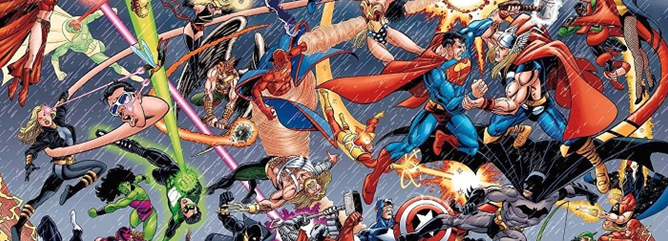
If there’s one thing comic books allow, it’s the grandiose crossover between characters. Ever since Barry Allen met Jay Garrick all the way back in 1961 and introduced the idea of multiple parallel universes, comic book characters have existed in both isolated shared universes and travelled across a near infinite multiverse. However, while it’s relatively common to see Bruce Wayne/Batman and Clark Kent/Superman interact with the Justice League or the Teen Titans, or to have Peter Parker/Spider-Man randomly join forces with the Fantastic Four or the X-Men, we’ve also seen the characters of DC and Marvel Comics interact with each other. We’ve seen Superman and Batman both cross paths with Spider-Man, the X-Men team with the New Teen Titans, and both publishers’ greatest heroes go head-to-head in the epic DC Versus Marvel Comics (Marz and David, et al, 1996) crossover.

10FTWCrossoversWeird
There have been some weird crossovers in comics.

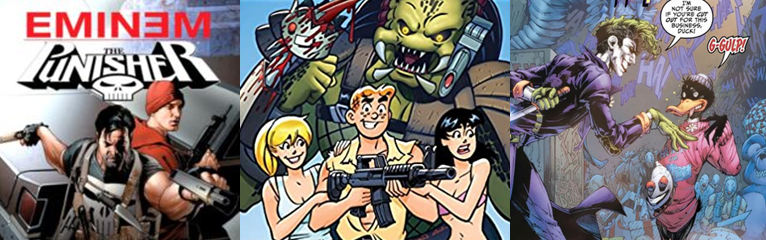
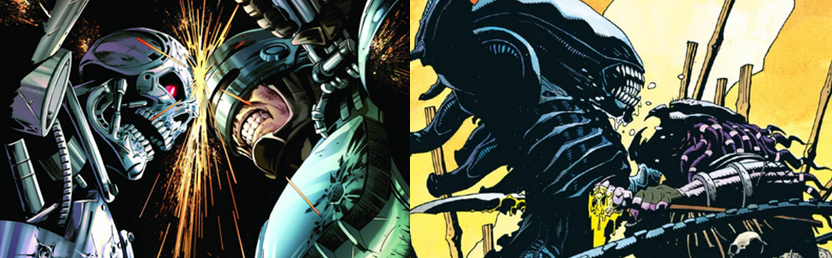
In addition, Dark Horse Comics snapped up multiple science-fiction and horror film franchises, giving us crossovers such as RoboCop Versus The Terminator (Miller, et al, 1992) and a whole slew of Aliens vs. Predator (Various, 1989 to present) comics. It doesn’t end there, either; we’ve seen Batman cross paths with Judge Dredd on multiple times and Frank Castle/The Punisher team up with not only Eminem but also pop up in Archie Comics, and it was thanks to such comic book crossovers that we finally got to see the three-way mash-up between Freddy Kruger, Jason Voorhees, and Ash Williams! Yet, as many and varied and seemingly limitless as these crossovers can be, it seems like we’ve missed out on a few seemingly-obvious crossovers. Maybe it’s because of licensing issues or the fact that DC and Marvel Comics don’t tend to do a lot of business together lately, but, either way, I figured I’d talk about ten crossovers I’d love to see in comic books.

10FTWCrossoversJSWM
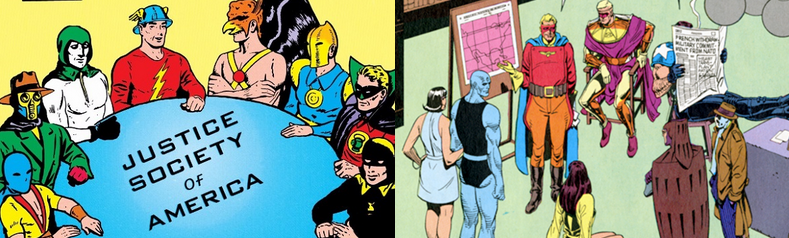
10 Justice Society/Watchmen

After DC Comics finally put an end to the largely-awful New 52 run, they teased Alan Moore’s seminal work, Watchmen (ibid, et al, 1986 to 1987), becoming part of DC canon when Edward Blake/The Comedian’s iconic smiley-face button turned up in the Batcave. Cue the extremely delayed publication schedule of Doomsday Clock (Johns, et al, 2017 to 2019), a storyline that revealed that Doctor Jon Osterman/Doctor Manhattan had been influencing DC canon for decades. While this, obviously, brought the characters of Watchmen (or, at least, versions of them) into conflict with Superman, Batman, and other versions of the Justice League, it’s the older, more seasoned members of the Justice Society of America (JSA) I’d like to see have extended interactions with the Crimebusters. The JSA were at their peak around the time of World War Two, meaning they are decidedly more optimistic and pragmatic about their approach to crimefighting. The Crimebusters, meanwhile, existed in a largely dystopian version of the 1980s that was pretty bleak and constantly on the verge of another World War, meaning this team up could produce an interesting clash of styles and philosophies that would probably be more in keeping with Moore’s more reflective text rather than an all-out brawl. Plus, who doesn’t want to see who would win a battle between Jim Corrigan/The Spectre and Doctor Manhattan?

10FTWCrossoversPulp
9 Pulp Heroes United

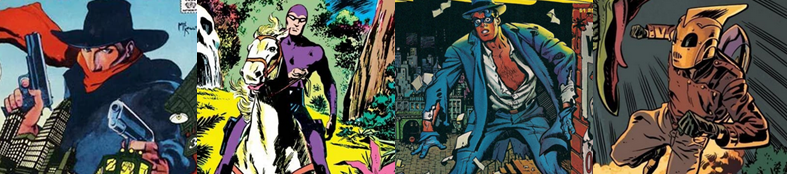
Before Batman and Superman, there were the pulp heroes of the 1930s to 1950s. Names like the Phantom, the Shadow, the Spirit, the Rocketeer, and Green Hornet may have faded from mainstream relevance in recent years, but they live on thanks to publications from Dynamite Comics and crossovers with DC Comics. Speaking of Dynamite Comics, they came very close to this crossover with their Masks (Various, 2014 to 2016) series, which saw the Shadow teaming up with the Green Hornet and Kato, a version of Zorro, and the Spider but this crossover has so much potential to really pay homage to the heroes of yesteryear. Ideally, such a comprehensive team up would be similar to The League of Extraordinary Gentlemen (Moore, et al, 1999 to 2019) in its scope and legacy; hell, I’d even have the Phantom, the Shadow, the Spirit, the Rocketeer, Green Hornet and Kato, Zorro, Doc Savage, the Lone Ranger and Tonto, and the rest of their ilk butting heads with the Martians from The War of the Worlds (Wells, 1897) at the turn of the century. A proper sepia-toned, steampunk-filled piece that sees these wildly different pulp heroes begrudgingly working together to save the world could be a great way to thrust these overlooked classic heroes back into the spotlight.

10FTWCrossoversRHWS
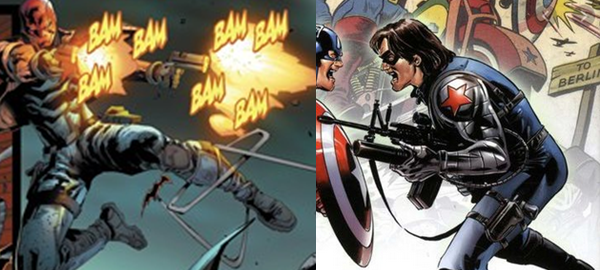
8 Red Hood/Winter Soldier

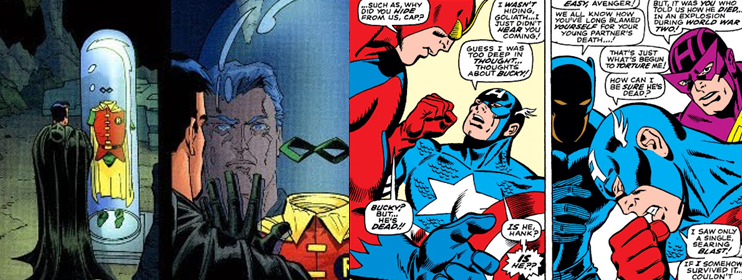
If the comic industry was like it was back in the mid-nineties, we would surely have already seen this crossover, which is as obvious and as fitting as the team up between the Punisher and Jean-Paul Valley/Azrael during his brief tenure as Batman. Speaking of which, a team up between Jason Todd/Red Hood and the Punisher is just as enticing but, in terms of thematically complimentary characters, you’re hard pressed to find two more fitting that Jason Todd and Bucky Barnes. Both characters were well-known sidekicks to greater heroes whose deaths shaped, influenced, and affected their mentors for years, and both even returned to life as violent, broken anti-heroes around the same time.

10FTWCrossoversJTBB
Jason and Bucky’s deaths weighed heavily on Bat and Cap for years.

Yet, while Bucky has gone on to not only redeem himself and assume the mantle of Captain America (and is largely far more mainstream thanks to his prominent inclusion in the Marvel Cinematic Universe), Jason Todd has floundered a little bit. It didn’t help that Jason’s resurrection was directly tied to DC’s latest reality-shattering Crisis for years (even though there have since been far less convoluted explanations, and he really should have been Hush all along) but, even ignoring that, Jason’s place is skewed as one minute he’s a sadistic killer, then he’s a violent anti-hero, then he’s wearing the Bat embalm and is an accepted (however begrudgingly) member of the Bat Family. However, both characters have carved a name out for themselves as being willing to go to any lengths to punish the guilty; each has blood on their hands, a butt load of emotional and personal issues, and a degree of augmented strength, speed, and skill thanks to their training or resurrection. While both are similar, Bucky is far more likely to be the bigger man and take the more moral ground, which would be more than enough to emphasise the differences between the two (provided Jason feels like being more antagonistic in this theoretical crossover).

10FTWCrossoversRCJD3
7 Judge Dredd/RoboCop

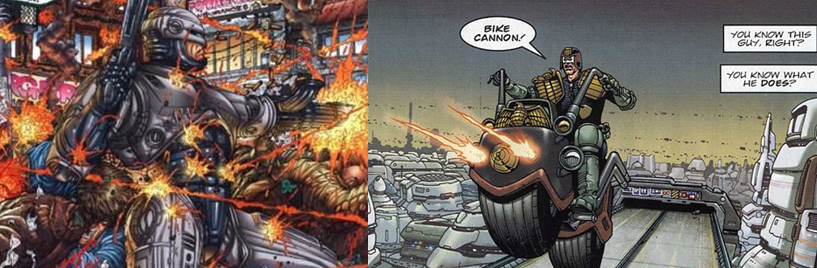
It’s no secret that RoboCop exists almost solely because of Judge Dredd; without 2000 A.D.’s no-nonsense lawman, we’d likely never have seen the excellently gore-and-satire-filled sci-fi action that is RoboCop (Verhoeven, 1987). While Batman has had more than a few run-ins with Judge Dredd, Detroit’s resident cyborg supercop has yet to meet his cinematic counterpart. The story is so simple is basically writes itself; you could have RoboCop awakened from suspended animation or reactivated after decades of being offline in the war-ravaged dystopia of Mega City One and briefly come into conflict with Dredd. I’d wager that RoboCop would be the more likely of the two to be more morally inclined; RoboCop generally operates based on very specific, law-abiding directives (or, depending on the version, his own conscience) that justify violence in service of protecting the innocent. Dredd, meanwhile, is just as likely to arrest victims of crimes as those who perpetrate them and is generally more an example of totalitarianism and uncompromising brutality in the name of the “law!” Yet, just as Dredd and Batman were able to work together despite coming to blows over their methods and philosophies, these two would make quite the formidable team once they’d ironed out their differences…though RoboCop may need an upgrade or two to survive in the future.

10FTWCrossoversDPTM
6 Deadpool/The Mask

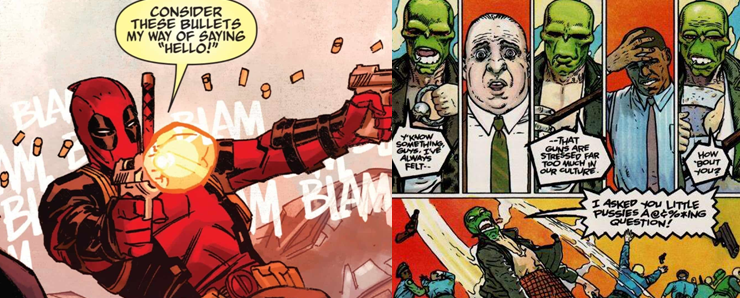
DC Comics have had many crossovers with Dark Horse over the years, resulting in numerous interactions between DC’s finest and the Xenomorphs, Predators, and Terminators. Similarly, both companies worked together on a number of crossovers revolving around the violent, big-headed cartoon anti-hero “the Mask”. It stands to reason, then, that if the Joker acquiring the magical mask and gaining its powers is a natural fit, a crossover between the near limitless power of the mask and everyone’s favourite fourth-wall breaking Mutant, Wade Wilson/Deadpool, would be just as fitting. Both characters are known for their over-the-top, cartoony violence, springing weapons out of thin air, directly addressing the reader, and busting heads with a maniacal glee. Hell, DC and Dark Horse had Lobo team up with “Big-Head” and even acquire the mask in another crossover and, given Lobo’s similarities to Deadpool, it wouldn’t bee too hard to imagine a crossover between these two being little more than a non-stop bloodbath as they tried in vain to damage each other, before Deadpool inevitably acquires the mask for himself and, in all likelihood, reduces all of conscious reality to a cheesy puff.

10FTWCrossoversRvTvAvP
5 RoboCop vs. Terminator vs. Aliens vs. Predator

Speaking of Dark Horse Comics, they really have brought us some great crossovers over the years; RoboCop Versus The Terminator and Aliens vs. Predator were natural stories to present in comics, videogames, and toys that were (arguably) too big for movies. They also merged three of these franchises together in Aliens versus Predator versus The Terminator (Schultz, et al, 20000), though that story was more a sequel to Alien: Resurrection (Jeunet, 1997) and a continuation of the Aliens vs. Predator comics than anything to do with the Terminator (Various, 1984 to 2019) films. Instead, this four-way crossover would give Dark Horse a chance to take the time-hopping, action-packed story of RoboCop Versus The Terminator and merge it with their complex Aliens vs. Predator comics. RoboCop would probably be best served as the central character of the story; a member of the human resistance could travel back in time to try and eliminate RoboCop, only to run into a T-800 right as Predators come to clean up a Xenomorph outbreak in Detroit. A time dilation could transport them to the war-ravaged future, where RoboCop could team up with a reprogrammed T-800 (or John Connor) against the aliens, or perhaps the future war would be changed by the reverse-engineering or Predator technology. There’s a lot of potential in this crossover but, for me, it only really works if you include RoboCop. Without him, you end up with a poorly-executed concept like Aliens versus Predator versus The Terminator, which really didn’t utilise the Terminator franchise enough. But imagine a Terminator/Xenomorph (or Predator) hybrid exchanging plasma blasts with a Predator-tech-upgraded RoboCop and tell me that doesn’t sound cool!

10FTWCrossoversHBJC
4 Hellboy/Constantine

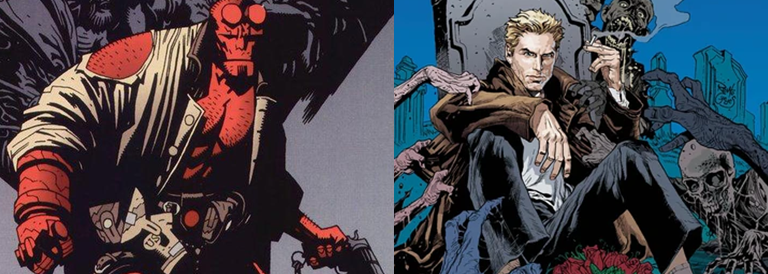
We’re scaling back a bit with this one. Honestly, I am very surprised we’ve never seen these two team up before, especially considering the amicable relationship DC and Dark Horse Comics have had over the years. Hell, we did get a brief team up between Hellboy and Batman but, arguably, this is the far more fitting choice. In this concept, I would go with the idea that John Constantine and Hellboy co-exist in the same world and have them cross paths when investigating the same supernatural threat or mystery. Obviously, they’d have to fight before teaming up (or, perhaps, they’d just rub each other the wrong way after being forced to team up), but can you imagine the quips and taunts and insults Constantine would have for Hellboy all throughout this crossover? Toss in guys like Swamp Thing and Etrigan, or even the Justice League Dark and the rest of Hellboy’s buddies (and absolutely have Mike Mignola provide his distinctive art style to the piece alongside co-authoring the story with either Grant Morrison or Neil Gaiman) and you could have a very dark, moody, and entertaining paranormal crossover.

10FTWCrossoversBGSG
3 Batgirl/Spider-Gwen

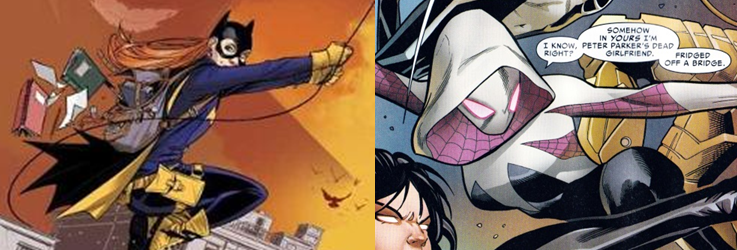
This one is more of a light-hearted pick but there’s nothing wrong with a bit of unapologetic fun amidst all the big action set pieces and violent action. After her debut in the “Spider-Verse” (Slott, et al, 2014 to 2015) storyline and prominent inclusion in Spider-Man: Into the Spider-Verse (Persichetti, Ramsey, and Rothman, 2018), this alternative version of Gwen Stacy has gained quite the fan following over the years and has become firmly entrenched in Marvel canon as Ghost-Spider. Meanwhile, since the New 52, DC have returned Barbara Gordon to the role of Batgirl; this wasn’t without some controversy as, for years, Barbara had operated just fine as a paraplegic and the Batgirl mantle had been assumed by other, far more suitable candidates. Yet, DC have continued unabated, largely changing Barbara from a smart and capable tech and information wizard, to a far more catty, athletic, and socially-conscious young lady. Despite this, this has the potential to be a really fun crossover between these two; while Babs should really be the older and more mature of the two, they’re both around the same age these days (somewhere between fifteen and twenty-one, depending on DC and Marvel’s sliding timelines), meaning there would be a lot of common ground between the two. No doubt they would have plenty to say about each other’s costumes, hair, and ex boyfriends (throw Nightwing in there and have that cause a bit of tension between the two) and I would even have them team up against C-list villains, like the Vulture, Chameleon, Shocker, Mad Hatter, or Killer Moth, just to keep the focus on fast-paced, witty action rather than getting all sour and bleak.

10FTWCrossoversSM2099BB
2 Spider-Man 2099/Batman Beyond

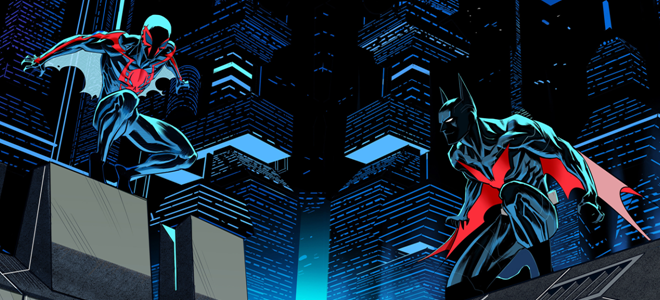
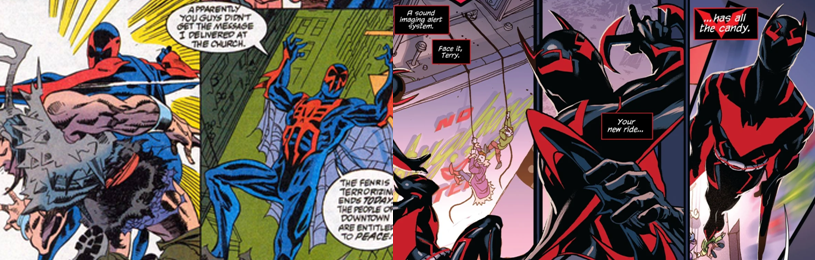
I know what you’re thinking: Shouldn’t this be a crossover between Batman Beyond (1999 to 2001) and Spider-Man Unlimited (1999 to 2001), considering both cartoons aired at the same time and both characters wore similar, futuristic costumes? Well, you might be right, but Spider-Man Unlimited really should have been based on the initial Spider-Man 2099 (Various, 1992 to 1996) comics as that cartoon is largely remembered for being a poor follow-up to the superior Spider-Man (1994 to 1998) animated series and for featuring a pretty neat new costume for Spidey. Instead, I’d go with Spidey’s futuristic counterpart, Miguel O’Hara, who is more famous for operating in an alternative future of Marvel Comics. Again, the easiest way for him to interact with Terry McGinnis would be to have them exist in the same world but there’s a bit of an issue with that: Batman Beyond was set in 2039 when Terry was sixteen. The Justice League Unlimited (2004 to 2006) episode “Epilogue” (Riba, 2005) jumps to fifteen years later and Terry is a thirty-one-year-old Batman but the story would probably need some kind of time travel plot to bring these characters together at their peak.

10FTWCrossoversSM2099BB2
Both characters come from similar futuristic worlds.

Luckily, neither character is no stranger to time-hopping adventures; perhaps the best way to do this would be to have two similar villains in each world experimenting with time/reality-bending technology and cause a dilation that threatens to merge both timelines unless Miguel and Terry can stop them. I’d even have them both swap places; have Miguel wake up one morning in Neo-Gotham, running into the aged, grouchy Bruce Wayne (Kevin Conroy) and battling some of Terry’s foes, while Terry randomly finds himself dumped in Nueva York and running afoul of Alchemax. After two issues of them exploring each other’s world, the third issue would be the obligatory fight between the two before they agree to team up for the fourth and final issue and sort out the problem. Both characters’ futuristic costumes have very similar traits and exist in visually interesting futuristic worlds, making a potential clash and eventual team up between them an exciting prospect for the art work and banter alone.

10FTWCrossoversDetective
1 Batman/The Crow

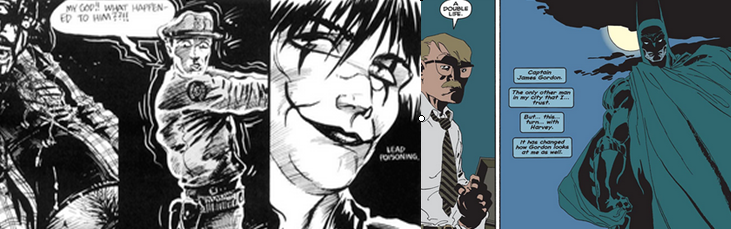
Easily the top choice for me, and the genesis of this list, I literally cannot shake how perfect a crossover between Batman and Eric Draven/The Crow would be. Neither are strangers to inter-company crossovers but, while the Crow has had to settle for teaming up with the likes of Razor, The X-Files (1993 to 2018), and Hack/Slash (Seeley/Various, et al, 2014 to 2018), Batman has met Al Simmons/Spawn, Spider-Man, Judge Dredd, and even Elmer Fudd and the Teenage Mutant Ninja Turtles. Yet, this crossover provides the opportunity to get Batman back to the gritty, noir-inspired style of stories like The Long Halloween (Loeb, et al, 1996 to 1997) utilising an art style that is part Dave McKean and part James O’Barr. As for the plot, I’d have Eric return to his undead life once again after it is revealed that there was another figure pulling the strings of Top Dollar’s gang. This would, of course, bring Eric to Gotham City, where he’d start killing members of this extended gang of thugs with his usual brand of violence and poetic justice. Naturally, this would lead him into conflict with Batman but, rather than the two descending into a poorly written, childish brawl as in Spawn/Batman (Miller and McFarlane, 1994), it would probably be better to focus on Batman’s detective skills as he investigates Eric’s murder, those behind the murder, and Eric’s violent actions on the streets of Gotham. In fact, I probably would only have the two interact right at the conclusion of the story, just as Eric is about to kill his final target; they could have a discussion on morality and the meaning of justice but, ultimately, Eric would fulfil his mission and return to the grave regardless of Batman’s protestations, leaving Batman to ponder the line between justice and vengeance.

10FTWCrossoversEnd

What comic book crossover would you like to see? Which comic book crossover has been your favourite, or most reviled? Whatever you think about comic book crossovers, leave a comment below.
Game Corner: Deadpool (Xbox One)

GameCorner
DeadpoolGameLogo

Note: Those who actually read my blog with any regularity will notice that I am starting a different format with Game Corner with this review.
Released: November 2015
Originally Released: June 2013
Developer: High Moon Studios
Also Available For: Xbox 360, PlayStation 3, PlayStation 4, and PC

The Background:
First announced at the 2012 San Diego Comic Con, Deadpool was published by Activision who, at the time, held the rights for all videogames based on Marvel Comics properties. It was developed by High Moon Studios, who were primarily known for their work on a number of Transformers videogames released between 2010 and 2012; they would also go on to work on a couple of Call of Duty titles in 2016 and 2019 despite the fact that, after completing work on Deadpool, around forty of High Moon’s employees were unceremoniously fired by Activision. The game is, obviously, based on the Marvel Comics character of the same name; created in 1991 by Fabian Nicieza and Rob Liefeld, the “Merc With a Mouth” has gone on to become one of Marvel’s most popular and enduring anti-heroes whose use of violence, fourth-wall breaks, and crude humour has made him a consistent fan favourite. Deadpool received mixed reviews upon release and was soon removed from all circulation after Activision lost the Marvel license; once the Ryan Reynolds-starring movie came out in 2016, however, the videogame was re-released for Xbox One and PlayStation 4…before again being dropped due to licensing issues, meaning that the only way to play it now is to pick up a second hand copy.

The Plot:
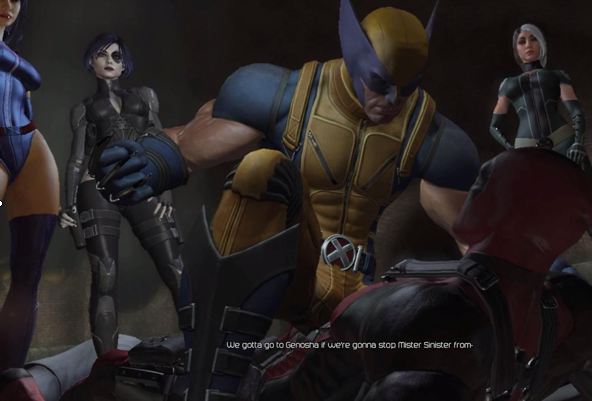
Bored in his crummy apartment, Deadpool calls up High Moon Studios and threatens them to produce a videogame based on his specifications and soon finds himself embroiled in a battle against Mister Sinister.

Gameplay:
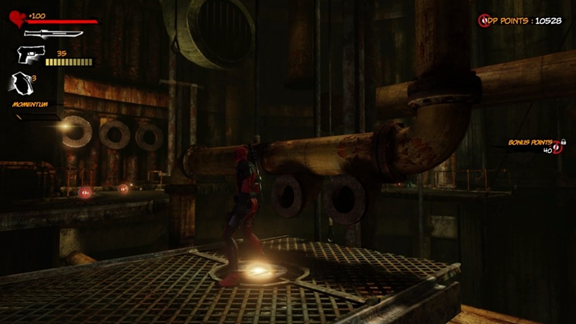
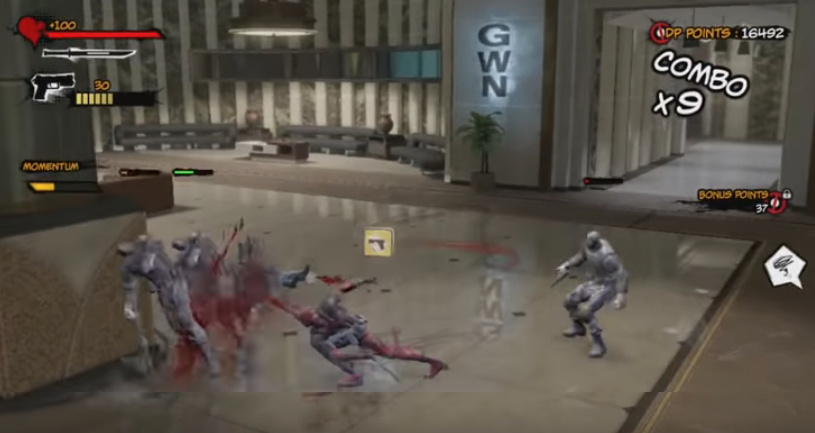
Deadpool is a third-person, hack-and-slash action shooter with some elements of stealth and platforming. Ostensibly taking its cues from the God of War (SIE Santa Monica Studio/Various, 2005 to present) and Devil May Cry (Capcom/Ninja Theory, 2001 to present) franchises, players must use a variety of melee weapons (swords, sais, and mallets, all double-wielded) to hack apart enemies while also employing firearms (pistols, machines guns, and shotguns…also all duel-wielded) and grenades to blow apart anyone who gets in their way. Deadpool is also equipped with a teleporter to travel short distances or dodge and counter enemy attacks and is tasked with performing some rudimentary platforming across gaps and floating platforms. Deadpool’s teleporter can be upgraded to assist with this and he can also wall jump, clamber up certain ledges, and teleport back to safety if he falls down a bottomless pit.

DeadpoolGameCombat
Cut through enemies to earn experience points.

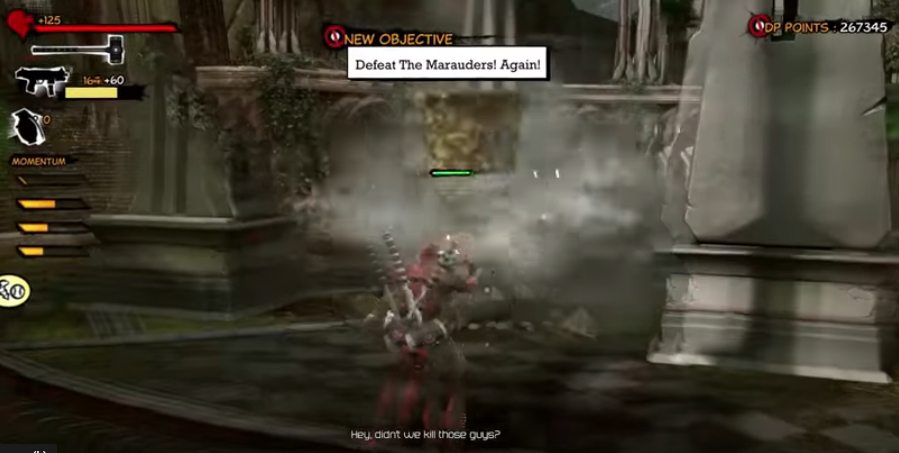
There are, occasionally, sections of the game where Deadpool must perform a stealth kill; creeping up behind unsuspecting enemies, Deadpool can use any one of his weapons to execute his target in brutal fashion. Attacking enemies builds up Deadpool’s momentum and, by pressing two buttons together and either holding or mashing a button, Deadpool will unleash a super move to dispatch his foes. Attacking also employs a combo system; racking up a chain of combos awards Deadpool greater bonuses in the form of Deadpool Points (or “DP”), which can be spent upgraded Deadpool’s weaponry and basic stats (such as health and ammo). Deadpool is gifted with a generous healing factor; he can take a lot of punishment, and accrue damage to his costume and person but, if you duck away from the chaos for a few seconds, his health will automatically regenerate. If his health is depleted, you can restart from the last checkpoint, but you can also recover health by eating tacos.

DeadpoolGameVariety
The game always finds weird ways to keeps things entertaining.

There are a few more ludicrous moments in the game as well, such as when Deadpool’s head is twisted on backwards and he must chase his dog to recover his missing arm all while battling reversed controls. There are also moments where you blast enemies with laser cannons, take control of Rogue after she absorbs too much of Deadpool’s powers and personality, and classic 2D gameplay interludes that help to keep the game fun and interesting.

Graphics and Sound:
The jump to Xbox One hasn’t really done much to improve Deadpool’s aesthetics; the strongest element of Deadpool’s graphical presentation is in the character designs and the over-the-top, gore-filled anarchy of the game’s combat but environments leave a lot to be desired.

DeadpoolGameLevels
Deadpool‘s environments can be disappointingly bland.

While Deadpool’s apartment is full of character and some fun little things to interact with, you’ll quickly find yourself hacking your way through such exciting locations as…an office building, a sewer, and a prison. Deadpool does visit Genosha, which is an iconic Marvel location, and there’s a fun sequence where Deadpool embarks on a spirit quest, but none of the game’s environments are that lively or interesting to look at.

DeadpoolGameCharacters
Deadpool‘s character designs are top notch.

The game’s characters, however, look great; even the enemies and non-playable characters (NPCs) are all rendered in a gloriously over-the-top fashion that evokes Liefeld’s, shall we saw “trademark”, artistic style. Characters are all impossible muscles, jiggling boobs, or massive tanks and they animate with a charm and character matched only by the game’s on-point script. Sound design is where Deadpool really excels; while gunshots and sword slashes aren’t anything to write home about, the game is almost constantly narrated by Deadpool and his three competing personalities, voiced by the always-amazing Nolan North. Deadpool will quip, break the fourth wall, and comment on everything from the game’s design, his relationship with other characters (especially Mister Sinister, Wolverine, Rogue, and Cable), and, thanks to the work of former Deadpool writer Daniel Way, he is perhaps the most accurate recreation of the infamous anti-hero outside of the movies.

Enemies and Bosses:
Deadpool cuts his way through a whole mess of nameless, faceless goons in his quest to take out Mister Sinister; there’s the standard, everyday grunts who offer little in the way of resistance but then you’ll also have to contend with enemies who will buff their cohorts with shields or attack bonuses. However, things quickly ramp up once Deadpool starts battling Sinister’s clones. Cloned from some of Marvel’s most famous X-Men, Deadpool battles knock-off versions of Lady Deathstrike and Gambit while also having to content with the likes of Arclight, Blockbuster, and Vertigo. Each of these offers a different challenge that forces you to use different methods of attack: the Gambit clones, for example, rush at Deadpool and explode (all while constantly, hilarious, babbling “Mon amie!” over and over), meaning it’s better to take them out from a distance; the Deathstrikes and other sword-wielding enemies require you to mix up Deadpool’s light and heavy attacks to break their shielding, and the bigger enemies can only be put down by using Deadpool’s speed and more powerful attacks.

DeadpoolGameBosses
Deadpool‘s bosses can be tricky, if predictable.

Bosses are a slightly different breed; Vertigo will mess up your display and Blockbuster must be dodged, countered, and stunned before your attacks will do any damage. There’s no battles against massive Sentinels, unfortunately, and, quite often, a lot of Deadpool’s boss battles either boil down to a hit-and-run while taking out hordes of regular enemies, punishing endurance battles against waves of opponents, or a simple quick-time event.

DeadpoolGameSinister
Sinister doesn’t pose much of a threat.

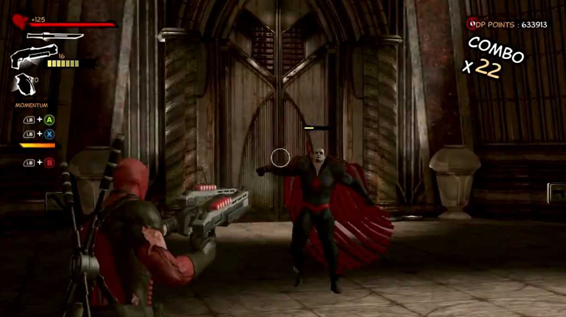
Even the final battle against Mister Sinister isn’t all that thrilling; he simply attacks alongside copies (or clones) of himself and, as long as you keep your distance enough to keep your health regenerating and pick up the ammo strewn around the arena, it isn’t all that difficult. The endurance gauntlet that precedes it that sees wave upon wave of enemies relentlessly whittle your health down and then forces you to battle Arclight, Vertigo, and Blockbuster all at the same time is actually a lot harder than this final battle.

Power-Ups and Bonuses:
Deadpool comes equipped, by default, with his trademark double pistols and double swords; as you earn DP, you can purchase additional weaponry that can then be upgraded even further. This will allow your weapons to deal more damage, reward more DP, or make your enemies bleed so they die even faster. Some of the bigger enemies also drop massive laser cannons or grenade launchers that deal maximum damage but, as far as power-ups go, that’s about it. Deadpool will only get stronger and more powerful if you work to accumulate DP and spend it on upgrading his skills; once you have, though, you can unleash more of his special attacks and increase your odds in battle with more options. There are also occasions where Deadpool teams up with Cable, who will blast at enemies and help clear them out but, in terms of actual, acquirable power-ups that aid your gameplay, that’s about it.

Additional Features:
Deadpool is a single-player only experience; you’ve got the main story campaign, with three difficulty modes, a Challenge mode, and some character biographies and that’s about it. In the Challenges, you’ll be…challenged…with battling waves of enemies and graded on your performance; this, and replaying previous levels, is a great way to grind DP to upgrade your weapons and skills but it doesn’t really translate into actual, in-game rewards. There are no costumes, skins, or bonuses to unlock or earn here; it’s simply play, play some more, and work towards getting those Achievements. Speaking of which, there are obviously some Achievements to get in Deadpool; some are stupidly easy as the game literally just awards you two right off the bat but others are tied into more specific things, like interacting with NPCs, clearing sections in certain ways, repeatedly slapping Wolverine in the face, or surviving the sewer slide without injury. Some of the trickier ones will require a bit more of your time and patience but, if you just want to rack up a bunch of easy Achievements like I do, Deadpool has you covered.

DeadpoolGameSummary

The Summary:
There’s a lot to like in Deadpool; the action is fun and fast, the characters and writing are crude and amusing, and the gore and violence is a blast to take part in. However, the game does suffer from a jerky camera (you can lock it on to a target but I found that more difficult that it should be), some frustrating platforming sections, some bland environments, and some really annoying enemies. Perhaps the worst thing about Deadpool was the glitchy frame rate; I don’t know if it’s just my version and maybe my disc was a bit smudged or scratched but I constantly found the game would pause and stutter even when there were no enemies onscreen. This meant a lot of missed jumps, broken combos, and just a generally annoying experience, like I was fighting against the game most of the time. Overall, though, I think there’s enough here for fans of hack-and-slash, third-person action shooters and definitely enough for Deadpool fans. If you’ve never really had any exposure to Deadpool before than this game is a great introduction; once you learn to be patient with the game and enjoy its eccentricities, it’s a real blast to play through.

My Rating:

Rating: 3 out of 5.

Pretty Good

What did you think about Deadpool? Did you play it when it first came out or were you like me and hunted down a copy later on? Did you have any issues with the game bugging out on you? Leave a comment below and let me know what you though, and your feedback on my new format for Game Corner.

Talking Movies: Deadpool 2

Talking Movies
Deadpool2Logo

Honestly, after Deadpool (Miller, 2016) became the highest-grossing R-rated movie in history, I actually expected a new renaissance of action movies to flood cinema screens. Finally, I thought, the days of watered down 12/12A-rated action movies is behind us; I thought we would see the gloriously foul-mouthed, gory, over-the-top action movies of the 1980s make a return now that they had been proven to be critically and commercially viable prospects. Unfortunately, that didn’t actually happen and I’m still waiting for the action movie renaissance I’ve dreamed about for the last few years; but, in the mean time, director David Leitch takes the reigns of the highly-anticipated Deadpool sequel, a movie that, again, emphasises that audiences are ready for a return of the entertaining, bombastic action movies of yesteryear.

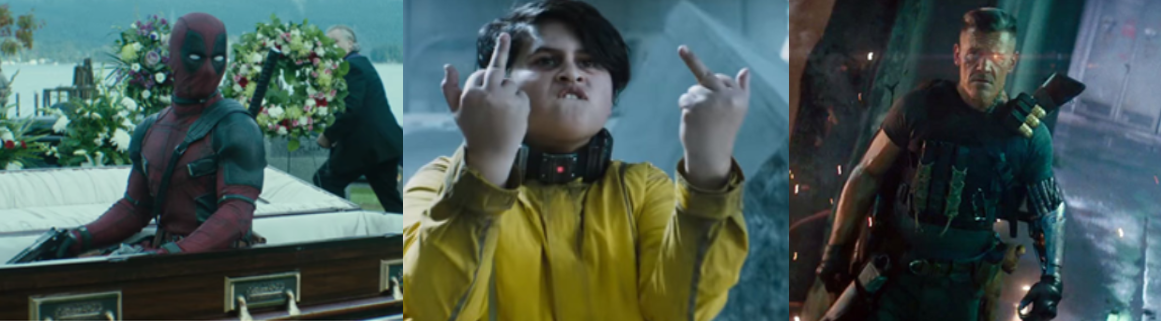
Deadpool’s forced to try and protect Russell from Cable’s wrath.

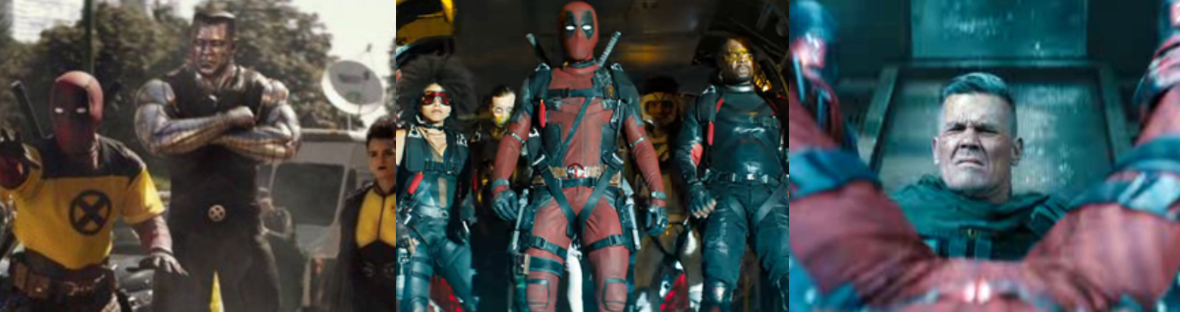
Picking up about two years after the first movie, the immortal, wise-cracking, maniacal mercenary, Wade Wilson/Deadpool (Ryan Reynolds, returning to the role he was born to play) has been carving a path of destruction through various criminal underworlds. Unfortunately, he suffers a personal tragedy when one of his targets returns for revenge; distraught and disillusioned, he attempts to kill himself in various hilarious and unsuccessful ways before Colossus (Stefan Kapičić) literally picks up the pieces and brings him to the X-Mansion. While attempting to find a place in the world as a rookie X-Man, Deadpool meets an angry, traumatised young Mutant named Russell Collins (Julian Dennison), who christens himself Firefist. Recognising that the boy has been mistreated by the Mutant-hating Headmaster (Eddie Marsan) and staff of the Essex Home for Mutant Rehabilitation, Deadpool kills one of the ordeals and the two of them are fitted with power-nullifying collars and sent to the Ice Box (a super-max prison for dangerous Mutants). Finally dying now that the collar keeps his powers from curing his cancer, Deadpool shirks Russell and wishes to die in peace; however, a cybernetic Mutant named Cable (Josh Brolin) travels back from the future and breaks into the prison to kill Russell, who is destined to grow into a dangerous killer. Torn between his desire to die and his urge to put Russell on the right path, Deadpool reluctantly finds himself assembling his own team of Mutants to protect Russell and keep Cable at bay.

With more action, more laughs, and more lewd humour than ever, Deadpool 2 definitely delivers.

Deadpool 2 had one job, in my eyes: to be everything the first movie was and more and, in many ways, it delivers. The movie has real heart, as Deadpool is forced to confront a very real loss and question his place in the world. This is, arguably, a ridiculous premise for a character that is aware that he is fictional by Reynolds pulls it off nicely; Deadpool is just as capable of pulling off some kind of over-the-top action sequence as he is cracking wise or emoting and you really root for his redemptive arc in the film. Similarly, Brolin, who brings fan-favourite Cable to life, is suitably grim and gritty; it’s as if Brolin watched all of Clint Eastwood’s Westerns and Arnold Schwarzenegger’s science-fiction movies to create this stoic brick of a man who is, nevertheless, razor-focused and carries a haunting sense of loss about him. Thankfully toned down from his comics counterpart, Cable is the straight man to Deadpool’s madcap insanity and the two play off of each other fantastically whenever they’re on screen. Brianna Hildebrand returns as Negasonic Teenage Warhead, now revealed to be in a same-sex relationship, though her role seems to be the same, if not reduced, from the first movie. Instead, Deadpool recruits Domino (Zazie Beetz), Bedlam (Terry Crews), Shatterstar (Lewis Tan), Zeitgeist (Bill Skarsgård), the Vanisher (Brad Pitt, in a blink-and-you’ll-miss-it cameo), and (hilariously) the entirely ordinary and nondescript Peter (Rob Delaney) to form X-Force, a Mutant team capable of doing what the X-Men refuse to do and kill Cable. While the team’s fate is ill-fated, to say the least, the recruitment process and their initial mission are a highlight of the movie. Unlike the first film, Deadpool 2 does not really feature a central antagonist; Cable is more of an anti-hero throughout the film and the Headmaster is not a physical threat to anyone. Once Russell decides to enact revenge against the Headmaster, he recruits some serious muscle in the form of an all-CGI Juggernaut (Ryan Reynolds), finally doing the character a modicum of justice, but the central theme of the movie is more about coping with loss and family. Deadpool, who was on the verge of having a family of his own, forms a surrogate family through X-Force and his X-Men allies and, through them, finds the means of both redemption and to seemingly correct the loss he suffers at the beginning of the movie. Filled with Easter Eggs, in-jokes, meta-humour, action, and enough blood to make Paul Verhoeven proud, Deadpool 2 does exactly what I wanted: it takes everything that made the first movie great, ramps it up to eleven or twelve, and then expands Deadpool’s world and cast of characters beautifully.

My Rating:

Rating: 4 out of 5.

Great Stuff


Recommended: Definitely, movies like Deadpool and Deadpool 2 are a lost art in these days of PG-friendly cinema.
Best moment: As mentioned, the recruitment process of X-Force and their first mission is pretty funny, while the rescue operation and the second fight between Deadpool and Cable is pretty bad-ass. There’s also some unexpected cameos in the X-Mansion that made me chuckle.
Worst moment: We don’t learn too much about Cable’s back-story beyond the basics (it’s not clear which future he’s from, for example) and the film did lack a central physical antagonist but, given Cable is due to return in future films and the theme of the movie, these are minor nit-picks.