Story Titles: “Chapter One: Who I Am – How I Come to Be”, “Chapter Two: War Is Declared”, “Chapter Three: Black Dawn”, and “Chapter Four: Friend in Need” Published: February 1987 to May 1987 Writer: Frank Miller Artist: David Mazzucchelli
The Background: Capitalising on the success of Clark Kent/Superman’s debut, artist Bob Kane drew up a design for a new masked crimefighter, the “Bat-Man”. Thanks to the tireless andlong-suppressed work of artist Bill Finger, the Bat-Man was transformed into the figure who would become a mainstream cultural icon. Over the many years since his debut, however, Batman underwent significant changes and alterations to his character and supporting cast; he gained a kid sidekick to appear more appealing to younger readers and was transformed into a much softer, more fantastical character. Indeed, although writers like Dennis O’Neil helped to rectify this in the 1970s, it’s safe to say that Batman’s image had been tainted somewhat by the glorious camp (and incredibly popular) 1960s television show. After wiping their continuity mostly clean in the Crisis on Infinite Earths(Wolfman, et al, 1985 to 1986), DC Comics sought to retell the origins of many of their most popular characters, with Batman being chief among them. Following his mainstream success with his work on Daredevil, writer and artist Frank Miller signed a contract with DC Comics that led not only to his seminalBatman: The Dark Knight Returns (Miller, et al, 1986) but also a revamped origin for the Dark Knight. Assured he would be given full creative control, Miller expanded upon Batman’s original story to craft one of the most lauded and well-regarded Batman stories that would go on to influence numerous Batman films, stories, and interpretations for years to come.
The Review: Batman: Year One is as much a story about James “Jim” Gordon as it is about Bruce Wayne’s first appearance as the Batman. The story is split between the two men and their separate narratives, with each having their own distinct text boxes, perspectives, and experiences within Gotham City. This helps to show the parallels between the two and how they are both driven to extremes due to the city’s bleak, depressing, and corrupt nature and we see their differing perspectives right off the bat (no pun intended) with their respective arrivals in the city in January. Lieutenant Gordon, who has just transferred to Gotham and whose wife Barbara (not that Barbara) is currently pregnant with their first child, laments the state of the city, which he experiences first-hand by mistakenly arriving by train. Twenty-five-year-old Bruce, however, thinks the exact opposite; he wishes that he’d arrived by train to “see the enemy” rather than by air, where the city almost looks civilised. While Bruce is mobbed by reporters desperate for the story of his twelve year absence from Gotham, Gordon is met at the train station by the hulking Detective Arnold Flass, who assures him that “cops got it made in Gotham”.
Both Bruce and Gordon struggle with the harsh nature of Gotham City.
While Gordon grits his teeth through his first meeting with the detestable Commissioner Gillian Loeb, Bruce returns to his familial home, Wayne Manor, and his faithful butler, Alfred Pennyworth. Bruce spends the next month or so mentally preparing himself for the task ahead of him; physically, he’s well-trained and highly capable, able to smash through bricks and topple a tree with a single kick, but he feels something is missing for his plans for Gotham. Gordon, however, is immediately introduced to the ugly side of Gotham’s police force as Flass randomly assaults a group of youths for no good reason at all. Gordon keeps his opinions to himself but takes care to study Flass’ movements and physical capabilities for later, but soon finds himself under suspicion as Flass disagrees with his morals. Having brought this to Loeb’s attention, Flass is given permission to put a beating on Gordon in an effort to teach him how important it is to “fit in” in Gotham. Although Gordon has a military background, it has, in his words, “been a while” and, while he puts up a good fight, he takes a bit of a beating from a few masked assailants wielding baseball bats. Riled up, Gordon heads over to Flass’ favourite bar and runs his drunk-ass off the road. Tossing his gun aside, Gordon offers Flass a baseball bat as a “handicap” and sets about taking the big man to school. Beaten and left naked and cuffed in the snow, Gordon feels confident that he has taught Flass not to mess with him again.
Bruce’s first night goes pretty bad, leading to him assuming a frightening persona.
Coincidentally enough, this occurs on the very first night that Bruce attempts to strike back at the city’s criminal underworld; disguising his identity with some make-up and a fake scar, he goes out looking for trouble in the Red Light District and ends up taking a beating of his own. Stabbed in the leg, mauled by a cat-like prostitute, and shot by some of Gotham’s finest, Bruce manages to escape police custody and, with his last ounce of strength, stumble back to Wayne Manor. Bleeding out, he contemplates his failures and begs his deceased father, Doctor Thomas Wayne, for guidance on how to do better and to strike fear into the hearts of criminals. Tormented at having witnessed the brutal and random deaths of his parents as a small boy, he resolves to let himself die unless he can find the answer and, at that moment, a gigantic bat crashes through the window of his study. Just like that, Bruce has his answer and vows to “become a bat”. By April, Gordon has built up something of a reputation as a soft touch, which brings him into direct opposition with Sergeant Branden of Special Weapons and Tactics (S.W.A.T.) and the support of the press (which makes reprimanding him extremely difficult for Loeb). Gordon’s mounting aggravation and depression at bringing his wife and pregnant child to such a cesspit is interrupted by reports of a “giant bat” in the city as, across town, the Batman makes his dramatic first appearance. Thanks to his fearsome appearance and an animalistic growl, Batman is able to frighten a group of thieves a little too well as one of them topples over the edge of the balcony they’re on. So determined is Batman to keep the perp from falling to his death that he puts himself at risk to save the guy’s life and only manages to come out of it relatively unscathed due to his adaptability, strength, sheer for of will, and (as he chastises himself) a great deal of luck.
Batman threatens the city’s mobsters but runs afoul of the trigger-happy police.
To ensure that the criminals and corrupt know that they are living on borrowed time, Batman makes a dramatic show of himself at a dinner function hosted by noted mob boss Carmine “The Roman” Falcone and attended by corrupt commission Loeb. News of the Batman, of course, reaches the Gotham police department; Flass is just one of the officers to have encountered the vigilante, who is widely regarded as a horrific, winged demon. Ordered by Loeb to bring Batman in, Gordon’s efforts are met with failure; staged muggings go without incident and Falcone is left humiliated in his own chambers, and not just because of Batman’s wily prowess as Assistant District Attorney Harvey Dent has entered into a secret alliance with the Dark Knight. Batman and Gordon’s paths finally cross when the two both risk their lives to save a homeless woman from being run down by a truck. Despite Batman’s heroic actions, Gordon orders his men to take the vigilante alive; however, Batman receives a bullet to the leg and is quickly left trapped and wounded thanks to Branden laying waste to the building he’s hiding in. The spreading fires destroy Batman’s utility belt and leave him with only his wits and ninja training to survive, which are more than enough to pick off the S.W.A.T. team one by one despite his leg wound. Cornered and running out of tricks, however, Batman is barely able to avoid another round of gunfire but manages to elude capture by attracting a flock of bats all the way from Wayne Manor that cover his escape, leave many of the cops and bystanders in hospital, and go a long way to adding to the Batman’s dramatic mystique.
Gordon’s efforts to uncover Batman’s identity lead him into a passionate affair.
Humiliated by this incident, Gordon increases his efforts in trying to decipher the Batman’s true identity. Initially suspicious of Dent, it is Detective Sarah Essen who nudges his attentions towards Bruce Wayne because of his wealth and traumatic childhood. Over the course of the last few months and pages, the two have grown extremely close since Gordon is spending more and more time at work and trying to shield Barbara from the atrocities in Gotham. This leads to a passionate affair between the two that Gordon immediately hates himself for; his guilt is matched only by his confusion regarding Batman, who is clearly taking the law into his own hands and yet may very well be the most righteous and incorruptible person in the city. Bruce, however, is able to throw Gordon’s suspicions off by playing up the role of a wealthy, bored socialite but, after Batman’s efforts see Flass incarcerated for taking part in a massive drug operation, Loeb threatens to expose the Lieutenant’s affair to his wife.
Bruce saves Gordon’s son and gains a valuable ally in the process.
Although he already ended the affair, Gordon decides to admit to his wrongdoings to his wife in order to begin repairing his marriage (something also aided by the birth of their son, James Junior) and to dispel any leverage the corrupt have over him. Batman’s world, however, becomes a little more complicated when the prostitute he countered on his first night, Selina Kyle, decides to craft a costumed identity of her own and begins targeting Falcone’s operation as Catwoman. After Catwoman scars his face, Falcone (who believes that the two are in cahoots) orders his men to kidnap James Jnr. Gordon arrives too late to save his son but is able to keep Barbara from harm; however, he also shoots and wounds Bruce (who is disguised in a motorcycle jacket and helmet) in the process. The two of them chase after Falcone’s goon and a fight breaks out on the bridge; overpowered by the thug, Gordon is helpless to keep his baby boy from falling to the cold, shallow water below. Luckily, Bruce dives after the boy and saves him, earning Gordon’s respect and gratitude. In the aftermath, Loeb is forced to resign after Flass spills the beans on all his dirty dealings and Sarah moves away to New York. As for Gordon, he and Barbara agree to attend marriage counselling, he is in line for a promotion to Captain, and he has found himself a friend to help tackle a manic named “The Joker” who has poisoned the city’s reservoir.
The Summary: Of all the Batman stories crafted by Frank Miller, Batman: Year One is still my favourite. It’s a gritty, bleak, grounded reinterpretation of Batman’s origin and first year in Gotham City and paints him as a regular man (albeit one well trained and with more wealth than you or I) who isn’t yet the hyper-prepared, experienced vigilante with a network of allies and resources. The artwork is simple but gorgeous, with everything taking on a wash of waterpaint-like noir that emphasises deep shadows and harsh lights and has the majority of the story taking place in the dank, depressing darkness of night. One of the main reasons I dislike The Dark Knight Returns (and other Batman stories by Miller) is the dialogue (and the artwork). Miller has a very…shall we say “distinctive” way of having characters talk and likes to kind of just spit words and odd statements at the reader. For the most part, Year One is relatively light on these “Miller-isms” but they do still show up here and there (mostly when Batman is eluding or attacking people). Thankfully, Alfred’s trademark dry wit makes up for this and seeing Bruce act like an complete cad to throw off Gordon’s suspicions was absolutely fantastic.
Year One is focused much more on Gordon’s perspective of the city and its vigilante.
It’s interesting that Batman: Year One is such an effective Batman story considering it’s much more of a Jim Gordon story. We learn very little about Bruce, his background, or his training and, instead, focus more on Gordon and his struggles to adjust to and cope with life in the city. Everything we learn about Gotham and the state of its police force comes from Gordon, a flawed man who has made mistakes and is trying to hold onto his morals but struggles in the face of near-endless corruption and his own temptations towards Sarah. Bruce’s tragic origin is recounted very briefly and much of his training and motivation is delivered through exposition or his thought boxes, which take on a cursive slant that can be difficult to make out at times. Still, it provides a fascinating glimpse into Bruce’s early struggles to find the means by which to fight crime in the city and the preparation that goes into his various traps and assuming the guise of the Batman. At its core, Batman: Year One is a story of struggle and trust; both Gordon and Bruce struggle to find their place in Gotham and figure out how to conduct themselves and their mission in a city that is constantly fighting back against them and both of them feel alone in this endeavour. It isn’t until their paths cross and they see how selfless the other is that they both begin to consider changing their position; while guys like Branden just want to shoot Batman dead no questions asked, Gordon would prefer to see him brought in alive to get to the root of his mystery and Bruce realises that he needs the good-natured lieutenant onside if he is ever to be effective as Batman and avoid getting shot on a nightly basis.
As it’s Batman’s first year, he’s a far more inexperienced and flawed character than usual.
This comes to a head in the finale where, rather than Batman saving Gordon’s son, it is Bruce in a questionable disguise. Indeed, the artwork and dialogue makes it intentionally vague as to whether or not Gordon truly recognises his boy’s saviour or not and, in the end, he decides it doesn’t matter who the Batman is as he has learned to think of him as a friend in a lawless city. As a tale of Batman’s earliest days in action, it’s hard to get much better than Year One. Personally, I love Batman stories that show him to be vulnerable and flawed and we definitely see a lot of that here as he’s constantly being stabbed and shot and hurt and forced into tight corners. This is a Batman who is lacking many of the bells and whistles of his later career; there’s not really a Batcave, no Bat-Signal or Batmobile, and a limited array of Bat-themed gadgets, all of which means that Batman has to use his wits and adaptability a lot more than his fancy high-tech toys which, again, I also find incredibly appealing. The portrayal of Batman’s influence is equally great; most treat the idea of a giant bat-garbed vigilante as ridiculous until they come face-to-face with him and then they are scared witless and this goes a long way to painting the Batman as this urban myth amongst the just and unjust alike.
My Rating:
⭐⭐⭐⭐⭐
Rating: 5 out of 5.
Fantastic
Have you ever read Batman: Year One? What did you think of Frank Miller’s reinvention of Batman? Are you a fan of Miller’s work, especially on Batman? What did you think to Year One’s focus on Jim Gordon and the depiction of a Batman without all his bells and whistles? What was your first experience of Batman and how are you celebrating his debut this month? Whatever your thoughts, sign up to drop them below and be sure to check in next Saturday for my review of Batman’s newest big-screen outing!
Story Title: “The Riddler” Published: 23 August 1948 (cover-dated October 1948) Writer: Bill Finger Artist: Dick Sprang
The Background: After Clark Kent/Superman proved to be a massive success in their Action Comics title, National Comics Publications wanted more superheroes under their banner and charged Bob Kane with creating a new masked crimefighter. Thanks to the long-suppressed influence of artist Bill Finger, Bob Kane’s concept of a “Bat-Man” not only became one of DC Comics’ most popular characters but also a mainstream cultural icon. Over the years, the Batman has matched wits against many colourful supervillains, with some of his most memorable challenging his reputation as the world’s greatest detective, and perhaps none have tested his intelligence more than Edward Nashton, a.k.a. Edward Nygma, a.k.a. The Riddler. Another creation of Bill Finger (alongside artist Dick Sprang), the Riddler has confounded Batman for over eighty years and has earned a reputation as one of the Dark Knight’s most devious and intelligent enemies. Brought to life with delicious relish by the late, great Frank Gorshin, the Riddler has played an integral role in Batman adaptations for years, overwhelming players with riddles and collectibles, seeking to suck the brain waves out of Gotham City, provoking anarchy as a twisted serial killer, and being at the forefront of some of Batman’s greatest stories.
The Review: Our story begins by giving us some backstory on Bruce Wayne/Batman and Dick Grayson/Robin’s newest confounding criminal as we flash back to the youth of the Riddler, known here as Edward Nygma and shown to be a conniving little creep even as a schoolboy. When his teacher sets the class an assignment to complete a jigsaw puzzle to win a prize, Nygma cheats by taking a picture of the completed puzzle using his “flash camera” and continuously humiliates his class mates by challenging them to solve puzzles and using slight of hand and other underhanded tricks to showcase his supposed skill. As he grows into adulthood, Nygma becomes an accomplished con man, fooling and cheating the general public out of their money as “E. Nygma – The Puzzle King”, but grows bored of the lack of challenge his cheating ways bring him. He becomes so sure of his genius and talent with puzzles that he decides to test his abilities against not just the police, but the Batman himself, donning a garish question mark-themed costume and taking the name of the Riddler for the first time.
The Riddler bamboozles Batman and Robin with his deceitful riddles.
The Riddler’s first heinous act is to commandeer a massive advertising billboard that features a crossword theme and challenge Batman and Robin to learn a clue regarding his planned crime. Within two panels, Batman and Robin decipher the solution to the Riddler’s crossword and accordingly head to the Basin Street Banquet. However, when they blunder in hoping to apprehend the crook, they find the city’s upper class safe and sound and are stunned to learn that the Riddler tricked them with word play and actually flooded a nearby bank (“bank-wet”). The Riddler floods the bank’s underground vaults using a water main and robs the bank after easily figuring out the combination to the vault, and is safely washed away to safety using the sewers. Bamboozled by the Riddler, Batman is doubly determined to nail his newest adversary, who delivers a massive jigsaw puzzle to Police Commissioner Jim Gordon at police headquarters. Batman has the police transport the giant jigsaw to the football stadium and directs them, via loudspeaker and microphone, in solving it to determine that the Riddler plans to target the Eyrie nightclub atop a skyscraper. The Dynamic Duo head to the Eyrie later that night, and Batman sends Robin in alone, where the Boy Wonder is left to see Gotham’s socialites party away with no sign of the Riddler.
Batman comes up with an inspired solution to escape the Riddler’s death trap.
It turns out that the Riddler actually meant that he was planning to rob the home of Harrison Eagle, a millionaire collector, but this time Batman is smart enough to figure this out and interrupt the Riddler…though he is momentarily stunned by the Riddler’s gas bomb and the puzzle master is able to slip away as Batman is forced to break apart an elaborate steel rod trap before Harrison Eagle suffocates to death. Riding high on his momentum, the Riddler’s next conundrum is a little more direct and dangerous to the general public as he sends a truck careening through the streets carrying a massive corncob and a devious riddle: “Why is corn hard to escape from?” Luckily, Batman and Robin are on hand to halt the out of control vehicle with the Batmobile, and Batman deduces that the solution is “maize”; or, more specifically, the big glass “maze” at the Pleasure Pier amusement park. Despite arriving in time to spot the Riddler fleeing into the glass maze, having robbed the park, the Dynamic Duo find themselves trapped in the translucent labyrinth and left at the mercy of the Riddler, who has planted a bomb in the maze that is set to go off in half an hour! Although the glass is shatter-proof, Batman marks their route using the “diamonds on [his] badge” but, when they reach the exit, they find it closed up and the Riddler watching them as time ticks down. Batman comes up with the unlikely ingenious plan to pile up rolls of carpet against the glass panel and set it alight; the heat expands the glass just enough for Batman to force the pane open, but the Dynamic Duo are left with no time to apprehend the villain as they have to dive for cover to avoid perishing in the Riddler’s explosion. Trapped on the edge of the pier, the Riddler is flown into the sea, cursing his failure, and leaves behind only a question mark where he landed and the lingering riddle of whether he drowned or escaped to bewilder the Dark Knight another day.
The Summary: I was pleased to find that the Riddler’s conundrums weren’t as simple as they first appeared; Batman and even Robin easily decipher the Riddler’s clues, only to be fooled by the master of puzzles thanks to wordplay and deceit, as is his speciality. Thanks to his devious ways, the Riddler is able to make fools out of the Dynamic Duo and get away with bags full of loot, and his victories only spiral his superiority complex into overdrive. Crucially, however, it’s important to note that the Riddler eludes capture, and Batman, at every turn; even when Batman is upon him, Nygma slips away using a smoke bomb and endangering an innocent man’s life. The Riddler constantly stays one step ahead, and traps the Dynamic Duo within the glass maze, and is only undone because his hubris demands that he lord it over his adversaries. However, even in defeat, he remains ultimately victorious as he eludes capture, imprisonment, and consequences for his crimes, and is even afforded the luxury of being assumed dead so he can carry out more elaborate crimes at a later date.
A colourful tale, and villain, that is as ridiculous in its execution as you’d expect from the time.
“The Riddler” is certainly a colourful and whimsical debut for one of Batman’s most notorious and clever adversaries; Edward Nygma is presented as an arrogant and deceptive little creep who cheats and uses underhanded tactics to bamboozle others with his supposed genius when, in actuality, he’s just a liar and a con man. Having cheated his way to victory countless times over the years, his narcissism is exacerbated by an inflated sense of accomplishment to the point where he’s no longer satisfied with duping the general masses and wishes to pit his “skills” against the Gotham police and the ultimate challenge: The Batman. Ultimately, “The Riddler” is a wholly ridiculous but fun little tale from Batman’s Golden Era, one that is more about presenting a quick, colourful tale that taxes Batman in a new way with a bombastic new villain, but I can’t say it’s the most memorable or influential story of Batman’s early years. It’s fun seeing the absurd means that the Riddler delivers his puzzles, and to see him outwit Batman on technicalities and semantics, and the bizarre ways that Batman gets out of his predicaments during this time is always amusing, but there are definitely better Batman stories from this era – and Riddler tales – to find.
My Rating:
⭐⭐
Rating: 2 out of 5.
Could Be Better
Have you ever read “The Riddler”? What did you think of the Riddler’s debut and the puzzles he threw Batman’s way? Did you correctly solve the Riddler’s conundrums or were you also outwitted by his deceptive ways? What are some of your favourite Riddler stories? Which interpretation of the Riddler, whether animated, pixelated, or live-action, is your favourite? Whatever you think about the Riddler, sign up to share your thoughts below or leave comment on my social media, and be sure to check back in next Saturday for more Batman content!
Story Title: Technically untitled, but commonly known as “The Cat” Published: March 1940 Writer: Bill Finger Artist: Bob Kane
The Background: Following the huge success of Clark Kent/Superman, National Comics Publications set Bob Kane to work creating another masked crimefighter to add to their repertoire. Thanks to the long-suppressed influence of artist Bill Finger, the “Bat-Man” soon became not only one of DC Comics’ most popular characters but also a mainstream cultural icon. In the years that followed, the Batman matched wits against numerous costumed supervillains, but none more alluring or enticing that Selina Kyle/Catwoman. Debuting in Batman’s first solo comic book, Kane and Finger collaborated on the creation of a femme fatale who would add some sex appeal for their readers; originally calling herself “The Cat”, Catwoman began life as a beguiling and wily burglar and jewel thief whose inspirations were actresses like Jean Harlow and Hedy Lemarr. Following this inauspicious debut, Catwoman would go on to be a constant thorn in Batman’s side; their on-again-off-again relationship has been explored in both mainstream and non-canon stories and the character is often cited as one of his greatest adversaries and a powerful feminist icon in her own right. Naturally, Catwoman has featured in many of the Dark Knight’s forays into videogames, cartoons, and live-action, and even starred in her own dreadful standalone feature film before being brought to life in a far more comic-accurate portrayal in The Batman(Reeves, 2022).
The Review: Our story opens to find a luxurious yacht, the Dolphin, out on stormy seas, where Dick Grayson/Robin is currently working undercover. We learn that, some days prior, wealthy philanthropist Bruce Wayne spotted in the newspaper that Martha Travers arranged for a select group of guests to join her on a yacht party and get a glimpse of her ludicrously expensive emerald necklace. Bruce has a hunch that this will attract every crook in town; however, since he has a prior engagement, he requests that his ward take point on this investigation, something Dick is only too eager to sign up for.
Dick discovers plenty of suspects willing to steal from wealthy Martha Travers.
Thanks to Bruce’s connections, Dick is easily placed onboard the Dolphin as an unassuming young steward and sets to work eavesdropping on Martha’s conversations for any hint of any potential threat to her. However, he overhears nothing more suspicious than the affluent lady’s “favourite nephew”, Denny, introducing her to the wizened and hobbled Mrs. Pegg, but one of the other stewards shares a titbit that Denny is little more than a shameless moocher who’s no better than all the other guests and constantly leeching off Martha’s vast fortune and generosity. Later, Dick overhears a heated argument between Martha and her brother, Roger, where she vehemently refuses to lend him the money he desperately needs to pay off his stock losses and he makes a thinly veiled threat against her as a result. Dick’s suspicions are raised even further when he spots a letter from the mysterious “Cat” in which the villain is colluding to steal the necklace and, sure enough, the Cat makes good on their threat and Martha is devastated to find that her necklace has been stolen from her room!
The Batman has Robin teach the thugs, and younger readers, a lesson about relying on guns.
While Denny and the other guests console her, the cost guard quite conveniently come aboard to help, but are quickly revealed to be heavily armed gangsters looking to hijack the boat and steal the necklace for themselves. Although Martha convinces the captain to offer no resistance, she is driven to laughter at the demands and the crooks are stunned to find that the Cat has beaten them to their prize! Believing that the necklace must have been swiped by one of the guests, the gangsters begin accosting the passengers and Dick finally leaps into action, tackling and fighting the goons before diving into the water and shedding his guise to switch to his Robin persona. The crooks speed away from the Dolphin with their loot but are quickly apprehend by the Batman, who has finally showed up after the trail on his other case ran cold. Oddly, Batman decides to teach the thugs a lesson in humility by disarming them and having Robin pummel all four of them at once in a fourth-wall-breaking moment designed, I guess, to teach any young readers that armed criminals are all cowards deep down.
Batman unmasks the Cat, but is so captivated by her beauty that he allows her to slip away!
Anyway, Robin catches Batman up to speed and the Dark Knight immediately suspects that Denny is in league with the Cat, but has his own suspicions about who amongst the guests is the enigmatic Cat. He exposes the true culprit by making a splash at Martha’s costume party, handing over the stolen jewels and spotting that the elderly Mrs. Pegg is quite spritely (and shapely) for an old woman when she races off at the sound of a fire alarm. Mrs. Pegg tries to make a run for it but is collared by Robin and dramatically revealed to be a beautiful young woman in disguise. Batman then wallops Denny when he tries to take the necklace at gunpoint, but turns down the Cat’s proposal that the two of them join forces as partners in crime. However, when the Cat leaps overboard while being transported back to dry land, Batman makes no attempt to stop her and even gets in Robin’s way when the Boy Wonder tries to pursue her. Robin is less than impressed by how smitten Batman was with the Cat, and the issue ends with the Dark Knight musing over the beautiful thief’s captivating eyes.
The Summary: Well, this was certainly a short and whimsical tale full of the same ridiculous conveniences and elements you’d expect from a Golden Age Batman tale. I’ll never not be amused by the sight of Bruce Wayne sucking on a pipe, or the odd, corny inclusions in tales from this era. Just the fact that the story wastes so many panels on having Robin beat up unarmed thugs is incredible in so many ways; I get that the idea is to show that, deep down, bullies and criminals are cowards who hide behind guns but the message also seems to be “Hey kids, don’t be afraid to get into a dust up with adults as long as they’re not packing heat!” The Robin fan in me enjoyed how big a role the Boy Wonder played in this story, going undercover and building a healthy list of suspects and even being very hands-on with the crime busting and apprehension of the Cat. Unfortunately, his efforts are completely overshadowed by the Batman; after hearing all of Robin’s evidence, he immediately pegs the culprit as “Mrs. Pegg” despite the fact that other passengers actually seemed much more viable, and his explanation for figuring our Mrs. Pegg’s true identity is paper thin, to say the least.
While an alluring femme fatale, the Cat lacks everything that makes her later incarnations so iconic.
If you’re a big Catwoman fan, this probably isn’t the best issue for showcasing her character; we never learn anything about the Cat beyond the fact that she takes a perverse thrill in conning the wealthy out of their prized jewels, and we don’t even learn her real name. Additionally, she’s not technically Catwoman here either; she has no cat-themed accessories and is far from the sultry femme fatale she would come to be known as. Instead, this is a Catwoman at the very beginning of her career, one who relies on disguises and subterfuge rather than claws and agility. One thing that is very familiar about her, though, is the mutual attraction between her and Batman; she practically throws herself at him, impressed but his strength and charisma, and he is so captivated by her that he actively breaks his own code to let her go free. It’s pretty clear that the Cat would be inspired by Batman’s iconography to take on her more theatrical appearance in later stories, but in her debut she’s just another wily, self-serving swindler who presents a mystery for Batman to solve with his uncanny deductive abilities. The Cat is able to stand out from Batman’s other rogues by being an alluring, beautiful woman but I’d argue that seeing Batman so lovesick by her beauty actually makes him seem like a bit of a fool by the end, and I much prefer the more playful, physical back-and-forth the two would build up in subsequent meetings.
My Rating:
⭐⭐
Rating: 2 out of 5.
Could Be Better
Have you ever read “The Cat”? What did you think to Catwoman’s debut story and the mystery of her true identity? Did you guess who was behind the theft or were you surprised when Batman fingered Mrs. Pegg? What are some of your favourite Catwoman stories? Which interpretation of Catwoman, whether animated, pixelated, or live-action, is your favourite? Whatever you think about the Catwoman, sign up to share your thoughts below or leave comment on my social media, and be sure to check back in next Saturday for more Batman content!
Released: 16 June 1992 Director: Tim Burton Distributor: Warner Bros. Pictures Budget: $65 to 80 million Stars: Michael Keaton, Danny DeVito, Michelle Pfeiffer, Christopher Walken, and Michael Gough
The Plot: Gotham City’s Christmas is interrupted by the deformed Oswald Cobblepot/The Penguin (DeVito), who is manipulated into running for Mayor by Machiavellian businessman Max Shreck (Walken). While Bruce Wayne/Batman (Keaton) investigates the Penguin’s truth motivations, he faces a secondary threat when Shreck’s disgruntled employee, Selina Kyle (Pfeiffer), wages a vendetta against him and Batman as Catwoman.
The Background: In the eighties, DC Comics readers saw the culmination of a long period of alteration for Batman who, for the majority of the sixties, had been transformed from a ruthless vigilante and into a colourful, camp, family friendly figure. One of the principal examples of this change was Batman(ibid, 1989), a dramatically different take on the DC Comics staple that saw noted auteur Tim Burton bring his signature gothic flair to the character, transforming both Batman from a spandex-wearing goof and into a stoic, armour-clad urban legend and “Mr. Mom” Michael Keaton into a brooding, tortured vigilante, and resulting in a surge of popularity for the character as audiences flocked to see the movie. Despite some criticism regarding the film’s tone and pacing, Batman was an incredible success, making nearly $412 million against a $35 million budget. Although Warner Bros. wished for a sequel to begin as early as 1990, Burton held back on returning to the franchise until he was ready, and, when he did return, he was successful and proven enough to be granted far more creative control over the film’s production. Originally known as Batman II, Batman Returns underwent numerous rewrites, with both Harvey Dent/Two-Face and a version of Robin originally being included and the original character of Max Shreck originally intended to be the Penguin’s brother. The majority of the filming took place on sound stages that included full-size sets of downtown Gotham City and the sewers, the many real-life penguins featured in the film were given special treatment, and Keaton also received a significant salary increase. Batman Returns received largelypositive reviews and made over $280 million at the box office. However, parents were horrified at the film’s macabre content and McDonald’s weren’t too thrilled at being associated with such a controversial picture. This backlash led to a dramatic reinvention of the franchise for the two subsequent films.
The Review: Right off the bat (no pun intended), Batman Returns separates itself from its predecessor in a number of ways: first, it’s set at Christmas so Gotham City is blanketed by flurries of snow and full of Christmas trappings (if not yuletide cheer); second, it’s far darker and much more brooding in its atmosphere and tone. Burton’s vision for Batman and Gotham is of a nightmarish, gothic landscape full of ominous, intimidating structures, gargoyles, and an overall sense of foreboding hanging in the air. All of this is expertly punctuated not just in Burton’s distinct aesthetic style but also Danny Elfman’s peerless Batman theme, which is now mixed with a haunting chorus of chanting and a tragic ambiance amidst its bombastic and heroic overture.
Bruce is more brooding and violent than ever despite the catharsis he achieved in the last film.
Some time has passed since the events of Batman; it’s not clear or made explicit exactly how much time but Gotham has adjusted to the presence of Batman, with Police Commissioner James Gordon (Pat Hingle) calling for the Caped Crusader’s assistance at the first sign of the Red Triangle Circus Gang. Though Batman’s relationship with the police, particularly Gordon, is much improved, he’s still a stoic and mysterious individual, talking very little and in a blunt, gravelly whisper. It seems avenging the death of his parents has done little to assuage his grief at their deaths or bring him any semblance of peace; instead, he’s more brooding than ever, literally sitting alone in the dark at Wayne Manor until being called into action by the Bat-Signal and more than willing to kill even regular thugs like the Penguin’s colourful goons.
In a city full of monsters, the twisted and manipulative Shreck fits right in.
Max Shreck is introduced as “Gotham’s own Santa Claus”, a beloved and well-respected businessman who has captured the hearts of the city between films. Shreck is, however, a devious and snake-like individual; he plots to construct a massive power plant to monopolise Gotham’s energy supply on the pretence of having a legacy to hand over to his cherished son, Chip (Andrew Bryniarski), but truly desires simple accolades such as power and control. In a world seemingly populated by freaks and monsters, Shreck fits right in as he is twisted on the inside, more than willing to threaten the Mayor (Michael Murphy) with a recall and to kill to get what he wants (he pushes his absent-minded assistant, Selina, out of a window with the intention of killing her and it’s heavily implied that he killed his wife).
Selina undergoes the most dramatic change from a meek victim to an aggressive vigilante.
Speaking of Selina, of all the characters in the film, she is the one who undergoes the most dramatic development throughout the story. She begins as a meek, helpless woman; she stutters and struggles to speak her mind to her boss, is little more than a witless hostage for one of the Penguin’s goons, and lives alone with nothing but her cat and her nagging mother’s voicemail for company. After her brush with death and subsequent…resurrection (seriously, Selina’s rebirth is one of the stranger aspects of an already-batshit (also no pun intended) film), she becomes an enraged, vindictive, aggressively confidant and capable woman. As Catwoman, she begins a short-lived campaign against Shreck but comes to violently oppose all men, especially those in positions of authority, and even women who allow such men to walk all over them.
Despite his eloquent persona, the Penguin is constantly at odds with his more animalistic nature.
Catwoman’s outward transformation into a monster pales in comparison to the Penguin’s position as an actual monster; far from an upstanding crime boss or distinguished member of high (and low) society, Burton reimagines the Penguin as a horrific circus freak who eats raw fish, spits black goop, and is completely maladjusted to humanity and society. And yet, the Penquin is an eloquent, intelligent, and ruthless villain; while Shreck believes that he is the one manipulating Oswald, the Penguin is actually the master manipulator as he uses Shreck to glorify his ascension to the outside world in order to enact his twisted plot to kidnap and kill the first-born sons of Gotham. Like Shreck, the Penguin is fully capable of blackmail, murder, and violence but he takes this to the next level, eventually launching a desperate campaign against all of Gotham City once Batman scuppers his scheme.
Batman is noticeably more mobile and far better equipped this time around.
While Keaton’s range of motion is still restricted by his absolutely bad-ass Batsuit, Batman’s action scenes are much improved over the previous film; Batman fights with a simple, blunt efficiency, making full use of his many bat-themed toys and even busting out some new ones, like his inexplicably rigid gliding ability. Batman’s suit is far less anatomically correct this time around, resembling armour more than anything; as a kid, I disliked these changes but, now, I’ve come to regard the Returns Batsuit as one of the top live-action costumes for its impressive appearance, being both practical and frightening. Burton’s awesome Batmobile also makes a return, now sporting all kinds of new gadgets and even being featured in one of the most entertaining sequences of the film when the Penguin is bizarrely able to take control of the Batmobile, with Batman in it, and take it on a destructive joyride through the snow-strewn streets of Gotham.
Practical effects and miniatures are used to great effect throughout the film.
One of the most appealing aspects of Batman Returns is its fantastic use of practical effects, camera tricks, miniatures, and elaborate sets; Gotham feels noticeably more claustrophobic this time around but that actually adds to the ominous nature of the film and positions the city as an gloomy presence in its own right. Not every effect is a winner, of course; Batman’s glide through the bat-swept skies of Gotham hasn’t aged too well but the digital effects of the Penguin’s rocket-firing troops is still impressive, Penguin’s prosthetic make-up makes for an unsettlingly horrific villain, and Batman’s Batskiboat chase through the sewers and the destruction of the Penguin’s frozen zoo hideout are all impressively realised through the use of models and miniatures. The film also goes to some effort to tie up some loose ends and complaints about Batman; Vicky Vale (Kim Basinger) is mentioned a couple of times, with Bruce explaining that their relationship “didn’t work out” because he couldn’t give up being Batman and he and his father-figure and loyal confidant, Alfred Pennyworth (Gough), debating his much-contested decision to reveal Bruce’s identity to Vicki. As I’ve explained, I never had a problem with this scene but I’m sure it did a lot to quell the complaints.
The Nitty-Gritty: Batman Returns contains some of my favourite moments of any Batman film, from Batman and Penguin’s intimidating first meeting outside of Shreck’s shop to the heart-breaking death of Oswald at the conclusion (I remember, as a kid, being somewhat distraught at Penguin’s emperor penguins being left without their master and wondering who would look after them with him dead). It also stands out as being one of the first big-budget superhero films of its time to not only feature multiple villains and masked characters but also to balance them extremely well. Sure, Batman still doesn’t have as much screen time as you would expect considering his name’s in the title but it’s easy to infer much of his motivation and development from Keaton’s characteristically stoic and haunted portrayal of the character and through the parallels between Batman’s dual nature and those of his villains.
Bruce continues to be more comfortable as Batman and struggles with his dark nature.
I can understand why parents and audiences were more than a little perturbed by Batman Returns when it was released as it’s not only full of dark, gothic imagery but also some puzzlingly ghoulish choices on Burton’s part. However, I watched this film as a kid both alone and with my parents and it never did me any harm; plus, I feel like Batman is a character and concept that can never be “too dark” and grisly as he works best when depicted as a dark and terrifying force in an increasingly insane world. Furthermore, Batman Returns is rife with subtle (and explicit) themes duality, humanity, and deception. All four of the main characters wear a mask of some kind, whether explicit or metaphorical (or both) and is hiding their true, darker nature. Bruce is, of course, one of the most obvious since he literally garbs himself in a heavily armoured suit and becomes an entirely different person when acting as Batman. There’s again a sense that he’s not entirely comfortable being in public or out of the suit as he is only truly able to confide in Alfred before becoming attracted to Selina and, though he openly opposes Shreck’s plans as Bruce, he’s seemingly only able to make a real impact on the city when operating as Batman.
Catwoman’s appearance degrades alongside her mental state as the film progresses.
Selina, too, hides behind a physical mask; after her rebirth, Selina becomes more and more disassociated with her former life and revels in the freedom and power of being Catwoman. Previously, she was timid and powerless but, once she has power, she exercises it without restraint or mercy; when she first encounters Batman, she attacks with a combination of sexuality and violence, seeing him as the ultimate symbol of patriarchy. He fractured state of mind only degenerates further as the film progresses and this is reflected in the explicit destruction of her alluringly skin-tight outfit; by the film’s conclusion, she’s hardly recognisable, resembling little more than a besmirched wild animal who feels she has to reject Bruce’s advances and offer of a “normal” life because of her altered nature that drives her to obsessive pursue Shreck’s death even at the potential cost of her own life.
Though a tragic villain, the Penguin is still a monstrous individual willing to slaughter all of Gotham.
The Penquin doesn’t hide being a mask in the way as his adversaries; indeed, because of his monstrous appearance, he is forced to literally hide from society first in the circus and then, for many years, in the sewers and when he does emerge into the limelight, it’s under the guise of being a misunderstood outcast. Ironically, this isn’t actually too far from the truth as the Penguin is a truly tragic figure within the film but, even as a baby, his violent tendencies are made explicit so, in many ways, he’s the opposite of Catwoman: his true nature is to be a wild animal and he masks it with the shroud of respectability. It’s an ill-fitting persona for Oswald, though, as his animalistic urges and lack of social graces make him undignified; indeed, as eloquent and charismatic as the Penguin is capable of being, he descends into a monstrous individual that salivates over the merciless death and destruction of everyone in Gotham.
Shreck’s true, twisted nature is revealed when he meets his gruesome end.
And then there’s Max Shreck; yes, I would have preferred Harvey Dent (Billy Dee Williams) to have returned and supplanted this character but Christopher Walken sure as hell does steal the show, every time he walks into a room, the scene becomes about him, with the camera seemingly naturally focusing on him even when he’s standing next to vivid characters such as the Penguin and Batman. As fantastically alluring as DeVito is at portraying this nightmarish version of the Penguin, Walken’s natural charisma and bombastic acting method makes him an undeniable highlight of the film. Like the Penguin, Max doesn’t where an actual mask but his is a mask that is far more subtle and all the more dangerous in its application; having won the hearts and minds of the city, and being a wealthy businessman in a position of great power, Shreck represents the horror of aggressively ambitious capitalism and the power of the social elite. Confidant to the point of arrogance, Shreck exudes authority and ensures that he is always the most powerful man in any given situation; he barely flinches when he first meets the Penguin, immediately attempts to bargain with Catwoman, and defiantly stands up to both her and Batman but his true, twisted nature is revealed for all to see after he meet his gruesome, explosive end in the finale.
The Summary: When I was a kid, I always preferred Batman to Batman Returns; I think this was mainly because of the iconography of the Joker as a character and it being a little less heavy-handed with its themes and imagery. As I grew older, though, I came to really appreciate all the positives of Batman Returns; in many ways, it’s a far superior film, which a much more unique visual identity, far superior costume design, and even improving on Elfman’s already flawless score. While it’s far more of a standalone sequel than a direct continuation, Batman Returns drops us into a twisted, nightmarish version of Gotham City that seems to have been physically changed because of the city’s adoption of Batman as its protector. My appreciation for the film’s themes of duality and humanity came to a head during my studies at university when, asked to produce a presentation on a film, I spearheaded Batman Returns as my group’s project and, in the process, delved deep into the way it deals with its complex themes. Getting an A in that presentation encouraged me to further pursue writing about the things I loved from my childhood and influenced my eventual PhD and I owe most of that success to Batman Returns, a film that, while probably not too suitable for young kids and despite not being massively accurate to the source material, remains one of the darkest, most visually engaging, and thought-provoking Batman movies ever made and, to this day, is a must-watch film during the Christmas season.
My Rating:
⭐⭐⭐⭐⭐
Rating: 5 out of 5.
Fantastic
What are your thoughts on Batman Returns? How does it compare to the first film, and the other films in Batman’s long cinematic history? Did you see this as a kid; if so, did you enjoy it or were you traumatised by its dark, macabre tone? Perhaps you were one of those parents who kicked off about the film; if so, what was it that set you off and how do you feel about it now? What did you think to Burton’s twisted interpretations of the Penguin and Catwoman? Did you enjoy Christopher Walken’s performance? Were you a fan of Michael Keaton’s performance this time around? Which Batman film, and actor, is your favourite and why? Do you consider Batman Returns a Christmas movie and, if not, why not and what the hell is wrong with you? It’s set at Christmas! Whatever you think about Batman Returns, go ahead and drop a comment down below and be sure to check in next Saturday for more Christmas content!
To celebrate the release of Justice League (Snyder/Whedon, 2017), DC Comics named November 18 “Justice League Day”. Sadly, this clashes with another pop culture holiday but, setting aside all the drama surrounding that movie, this still provides a perfect excuse to dedication some time to talking about DC’s premier superhero team, which set the standard for super teams in comics by bringing together DC’s most powerful heroes.
Story Title: “Starro the Conqueror!” Published: 29 December 1959 (cover-dated March 1960) Writer: Gardner Fox Artist: Mike Sekowsky
The Background: All Star Comics (1940/1941), brought together eight superheroes from a number of different publishers for the first time as the Justice Society of America (JSA). This not only heralded the birth of the first ever superhero team in comics but also allowed readers to see their favourite characters interacting all for the same price as reading any one comic. The JSA’s roster expanded and changed over the years but the team underwent their most significant change when, in the late 1950s, then-editor Julius Schwartz asked writer Gardner Fox to reintroduce and rebrand the team as the Justice League of America (JLA) to capitalise on the popularity of the American Football League and Major League Baseball’s National League. Though the team debuted in The Brave and the Bold #28, a title famous for featuring team-ups between various fictional and superheroic characters, the team’s actual origin wasn’t revealed until the ninth issue of their self-titled series, which became one of DC Comic’s best-selling titles. As with the JSA and other super teams, the JLA’s roster has changed over the years and many splinter groups and spin-offs have been introduced but perhaps there is no more iconic line-up than the JLA’s original roster that was comprised of DC’s heavy-hitters: Clark Kent/Superman, Bruce Wayne/Batman, Diana Prince/Wonder Woman, Hal Jordan/Green Lantern, Arthur Curry/Aquaman, Barry Allan/The Flash, and J’onn J’onzz (referred to here as “John Jones”)/Martian Manhunter.
The Review: “Starro the Conqueror!” begins with the odd choice to not detail the first time these superheroes joined forces and, instead, starts off with the seven heroes already having agreed to come together in times of crisis (they each have a signalling device to summon the others). I kind of like this on the one hand as it suggests that DC’s top superheroes already set aside their differences for the greater good without any real fuss and it helps speed things up but, on the other hand, it feels a bit out of place to not detail the first meeting of these heroes. Anyway, the first member of the team to become aware of an impending threat is Aquaman who, thanks to information provided to him by a puffer fish, is learns of the arrival of the gigantic extraterrestrial starfish known as Starro.
Aquaman’s summons is answered by some of DC’s greatest superheroes.
This monstrous being has travelled across the depths of space to Earth with one goal in mind: conquest. To that end, Starro…somehow…transforms three of Earth’s starfish into replicas of itself and spreads them across the world to begin its mad scheme. Aquaman’s summons are immediately picked up and answered by Wonder Woman (who is in the middle of an awkward conversation with her beau, Steve Trevor, regarding marriage), Green Lantern (who, as Hal Jordan, was in the middle of a test flight), the Flash (who quickly disperses of a potentially life-threatening tornado), and the Martian Manhunter (who was simply about to start his vacation…). Each of these introductory panels immediately gives the reader and idea of what each character is capable of: Aquaman can breath underwater and talk to fish, Wonder Woman has an invisible jet, Green Lantern’s ring allows him to perform virtually any task, the Flash is super fast, and the Martian Manhunter can shape-shift. Aquaman’s signal also reaches Superman and Batman but the two are unable to respond right away since Superman is busy taking care of a potentially dangerous meteor shower and Batman is in the middle of stopping a crime spree. You might think that Superman would have spotted Starro’s arrival from space but he was dealing with a great deal of meteors (it’s also entirely possible that Starro caused the meteor shower specifically to distract Superman) and I guess it’s in character for Batman to prioritise Gotham City’s safety over a JLA summons (though a JLA-level peril is surely more threatening for Gotham than a crime spree…)
Green Lantern is able to defeat the Starro duplicate with relative ease.
Regardless, the five heroes meet at the “modernistically outfitted cavern” that serves as the JLA’s headquarters. Having been informed of Starro’s threat and where it intends to strike, the Flash, as the JLA’s chairman, orders the team to split up and it is at this point that the story diverges from the team-based format and instead switches to cover each individual mission. The first sees Green Lantern battling one of Starro’s deputies in the skies above Rocky Mountain National Park; Hal arrives in time to see the gigantic creature but is too late to stop it from attacking a passing air force jet-bomber and relieving it of its payload: nothing less than an atom bomb! Green Lantern is able to save the aircraft when it goes into a deadly freefall but is unable to keep the Starro duplicate from detonating the atom bomb! Thankfully, Hal’s energy shield protects him from the blast and he watches in horror as the creature absorbs the energy released from the bomb. Hal pursues and is nearly blasted from the sky by a scorching beam fired from the creature’s tentacle. However, Green Lantern is easily able to avoid the creature’s thrashing limbs and attacks and reduce it down to a regular starfish by scoring a direct hit on its massive eye.
Starro’s duplicate falls before the might of Wonder Woman and the Martian Manhunter.
Next, the story switches to “Science City” where Wonder Woman and Martian Manhunter (why Diana has to team up with another hero is beyond me…) find another of Starro’s deputies abducting the “Hall of Science”, where the greatest scientific minds of the United States are gathered. The creature intends to bring the scientists into the upper atmosphere so it can absorb their brainpower and knowledge; Wonder Woman attempts to use her magical lasso to prise the creature’s tentacles from the building but ends up being yanked off of her invisible jet and onto the Hall of Science thanks to the giant starfish’s incredible strength. Meanwhile, J’onn uses his super-breath to bombard the creature with fragments of the meteors Superman is destroying and uses the same technique to cause a torrential rainfall when flames from the building threaten his life. Starro’s deputy then attempts to destroy them both by firing bolts of nuclear energy their way but Wonder Woman is, of course, able to deflect them with her magical bracelets and J’onn shields himself using the building’s conveniently lead-lined roof. Diana then whips her lasso around her jet and uses the momentum to forcibly drag the building out of the sky. The effort of battling both heroes at once soon takes its toll on the creature, which plummets from the sky and begins to revert back into a regular starfish.
The Flash makes short work of the final Starro duplicate.
When then join the Flash as he confronts another of Starro’s deputies at Happy Harbour; this part of the story is easily the worst simply because it introduces one of the most annoying and aggravating characters ever conceived: the JLA’s “mascot”, Snapper Carr. Snapper is a hip, super cool teenager with the annoying habit of constantly snapping his fingers all the God-damn time who is shocking to find his family, and the entire town, enthralled by Starro’s trance. For whatever reason (possibly due to being high, judging by the way he speaks!), Snapper is immune to Starro’s influence so he needs to be saved from certain death by the Flash. Despite Starro’s best efforts to vaporise the Scarlet Speedster, the Flash (literally) runs rings around the creature and ultimately defeats it when it tries to hide in the sea. In the process, the townsfolk are freed from their trance and Snapper’s family are able to tell Flash where they were ordered by the creature to head to: Turkey Hollow.
The JLA defeat Starro with ridiculous ease and make Snapper an honorary member!
The final part of the story sees the team reunite to take on the real Starro at Turkey Hollow; despite the defeat of its deputies, Starro remains confident since it was still able to absorb the power of that atomic bomb, the knowledge of Earth’s scientists, and…whatever it is the townsfolk of Happy Harbour contributed to its mind (local Earth knowledge, I guess?) Starro plans to use all that it has learned to force humanity into destroying the world with nuclear weapons and then use the influx of nuclear energy would then allow it to conquer other worlds across the universe. When the JLA arrive, Starro immediately puts its abilities to good use by reading Hal’s mind and turning itself yellow to render itself immune to his power ring but the Flash notices that Starro’s awesome energy ray has absolutely no effect on Snapper (who he, of course, brought along for the ride!) Flash orders Wonder Woman and the Martian Manhunter to distract Starro while Hal uses his power ring as a spectroscope to discover that Snapper is covered in lime from when he was mowing the lawn earlier. Apparently, lime is deadly to starfish so Hal dumps a whole bunch of it onto Starro to weaken it. Martian Manhunter then uses his super-breath to blow a load of calcium oxide (which is, apparently, also lime) onto the creature and thus imprison it within an unbreakable shell of lime. With Starro’s threat ended, Superman and Batman return just in time to see the Flash making Snapper an honorary member of the JLA and…boy, do they look thrilled to be there!
The Summary: I don’t mind telling you that I am a bit disappointed by “Starro the Conqueror!”; the story started pretty strong but fell off a cliff pretty quickly at the end, becoming little more than a science class rather than a big old fight between Earth’s greatest heroes and an alien menace. I suppose it speaks to the intelligence of the JLA (specifically Barry) to come up with a way to outwit, rather than outfight, the creature and the sudden introduction of lime as the might Starro’s one weakness is arguably no less lame than fire being J’onn’s weakness and yellow being Hal’s and there is a lot of action prior to the finale but still…the entire point of the comic is to see these heroes joining forces and we don’t really get that.
Aquaman is unfairly side-lined and does nothing except alert the JLA to Starro’s presence.
You might be wondering where the hell Aquaman was during this story; despite appearing to be a pivotal member of the team in the early panels, Arthur is little more than an early warning system to alert the team to Starro’s threat. Hell, when Barry is divvying out the JLA’s individual missions, Aquaman doesn’t even get to fight one of the creatures as he’s sent back to the ocean to watch out for any more of the duplicates and, when he does return to the story for the finale, he does absolutely nothing. It’s pretty sad considering the JLA were light on power with Superman out of the equation and when you consider that Arthur might have actually been really useful at Happy Harbour so could have easily teamed up with the Flash for that mission…but then we might never have gotten Snapper-fuckin’-Carr now, would we!?
Hal and J’onn are severely underutilised, with their powers reduced to the bare minimum.
Honestly, Snapper could have been dropped entirely from the story; he’s only there so the teenager readers can act like they’re fighting alongside their favourite heroes, after all, and it’s legitimately sad that he’s more important to the story than Aquaman! Seriously, drop Snapper, have Aquaman and the Flash go to Happy Harbour, and have Arthur get covered in lime while battling the creature in the water and reveal the key to Starro’s defeat. Seems like a pretty simple solution to me. Similarly, it’s pretty disappointing that Superman and Batman don’t play any part in the story at all. I can understand why as Superman’s power alone would probably be able to end Starro’s threat but it’s a bit of a let down that they don’t even join the team for the big climactic battle. Instead, we’re left with the likes of the Martian Manhunter, who is probably just as powerful as Superman if not more so and yet is reduced to simply puffing away with his super-breath. Similarly, Hal’s potential and power is also significantly reduced; his ring allows him to do virtually anything but, in the end, all he really uses it for is to fly about, rescue a falling plane, and zap at Starro with energy blasts.
Starro seems like a threatening villain but end sup being a massive disappointment.
Still, at least Wonder Woman gets a lot to do; she basically does all the work in her team-up with J’onn which, again, makes me question why she has to have a partner and no one else does. The implication may be that it’s because she’s a woman but she’s easily the most dependable and capable superheroine I’ve seen all year; she doesn’t even get bound or anything, which is refreshing. The Flash also gets far more chances to show off his abilities and competence; beyond his super speed allowing him to easily best one of Starro’s duplicates, Barry is portrayed as a decisive team leader and his intelligence is what ultimately wins the day over brute strength. Overall, Starro is just another in a long line of potentially dangerous foes that really don’t amount to a whole hell of a lot. It openly admits that its plot to conquer Earth is the first time it’s ever tried anything like that, exposing its naivety and inexperience in world conquest and battle. Its scheme seems pretty good to start with as it creates duplicates of itself and absorbs power and knowledge but it fails to really do anything with this beyond making itself yellow; it could have spewed flames at J’onn, bound Wonder Woman’s wrists, subjected Aquaman to intense heat, or slowed the Flash down with quicksand but it never does any of that. For all the power and knowledge it has, Starro ends up just being a giant alien punching bag that, arguably, the Flash alone could have defeated and, because of that, it’s simply a piss-poor excuse to see all these heroes band together and even then they spend the majority of the story working separately!
My Rating:
⭐⭐
Rating: 2 out of 5.
Could Be Better
What did you think to the JLA’s debut appearance? Were you happy to see five out of the seven joining forces for the first time or would you have liked to see all seven of them getting in on the action? What did you think of Starro as the principal villain and the introduction of Snapper Carr? Which era or incarnation of the JLA is your favourite and what are some of your favourite JLA stories? Who would you like to see in the JLA some day? How are you celebrating Justice League Day this year? Whatever your thoughts on the JLA, feel free to leave a comment below.
Released: 16 December 2020 Director: Patty Jenkins Distributor: Warner Bros. Pictures Budget: $200 million Stars: Gal Gadot, Chris Pine, Kristen Wiig, Pedro Pascal, and Connie Nielsen
The Plot: Decades after losing her former love, Steve Trevor (Pine), during the First World War, Princess Diana of Themyscira (Gadot) works at the Smithsonian Institution while covertly helping others in her guise as Wonder Woman. After befriending shy geologist and cryptozoologist Barbara Ann Minerva (Wiig), both Diana and her friend find themselves forever changed when business tycoon Maxwell Lorenzano/Max Lord acquires a mystical artefact, the “Dreamstone”, and begins bringing people’s deepest wishes to life.
The Background: Following her creation by psychologist William Moulton Marston, Wonder Woman has been a firm staple of DC Comics and an influential feminist icon. Wonder Woman achieved mainstream success as a pop culture icon following Lynda Carter’s portrayal of the character in the 1970s and she finally proved to be a massive critical and commercial box office success with the release of Wonder Woman (ibid, 2017). Although the DC Extended Universe (DCEU) was in flux following the poor receptionof Justice League(Whedon/Snyder, 2017), production of a Wonder Woman sequel was officially announced in 2017, with both stars Gadot and Pine and director Jenkins set to return. Rather than produce a direct sequel,Wonder Woman 1984 (or simply WW84) jumped ahead to another unexplored period in the character’s long history, the 1980s, to capitalise on the recent interest in the decade. The film’s release was hampered by the COVID-19 pandemic but WW84 finally saw the light of day at the end of 2020, where it was met with a lukewarm and underwhelming critical response. This, coupled with its limited release, meant the film massively underperformed and brought in only $166.4 million at the box office; however, while many criticised certain narrative elementsof the film, Gadot’s performance was praised as a highlightand a third entry in the franchise is was greenlit soon after the film’s release.
The Review: Like the first film, WW84 begins with Diana narrating a flashback to her childhood where, as a girl (Lilly Aspell) on the island of Themyscira, she competes in a gruelling obstacle course. Although she’s able to hold her own for the most part, she is knocked from her horse at a crucial moment and, in order to catch up, opts to take a shortcut and, as a result, is penalised and reprimanded by her aunt and mentor, Antiope (Robin Wright), who teaches her a valuable lesson that forms the basis for the film’s main theme: that she must be honest and true to herself and that she must have patience in order to succeed in life.
Despite claiming to have left the man’s world, Diana is covertly saving lives in 1984.
Despite claiming to have walked away from man’s world for a hundred years after Steve Trevor’s death, Diana is living and working in Washington, D.C. and we’re reintroduced to her as she performs various heroic deeds as Wonder Woman in an amusingly edited montage that is both bright and vibrant thanks to the excess of the eighties and comically exaggerated in a way that recalls Superman (Donner, 1978). Although Diana makes an effort to destroy security cameras and move quickly to largely avoid being seen, she does appear in full costume in the middle of a shopping mall in front of numerous witnesses, though the film does make a point to show that her identity is unknown. Still, regardless of the continuity blip this causes (it’s hard to imagine Bruce Wayne/Batman (Ben Affleck) wouldn’t have been somewhat aware of Diana before he first encountered her judging by this film’s events), it’s a fun and exciting way to be reintroduce to Diana that is immediately offset by the emotion of seeing that she’s largely closed off from the wider world.
The insecure and shy Barbara instantly idolises Diana.
Thanks to brief shots of photographs in her apartment, we see that Diana continued to maintain a friendship with Etta Candy (Lucy Davis) and ties with Steve Trevor but is, otherwise, quite a lonely individual. In this regard, she meets a kindred spirit in Barbara Minerva, a quirky, social inept, and insecure geologist who is largely ignored by her co-workers and those around her. Barbara is excited when Diana actually gives her the time of day and the two bond over their interest in history; the two quickly form a friendship, filling the gaps in each other’s lives, and Barbara comes to idolise Diana for being everything she wishes to be.
Max Lord is a charismatic con manobsessed with obtaining power and the Dreamstone.
After foiling a robbery in the film’s opening, Barbara is asked to examine an artefact that was recovered, which claims to be a wish-granted stone, the Dreamstone. Although both are sceptical about this, the stone’s powers turn out to be genuine when Barbara wishes to “be like” Diana and wakes up the next day to find herself suddenly noticed by others, slipping into sexier clothing, and her fortunes generally turning for the better. Sadly, however, her insecurities remain the same and she is easily tricked by the film’s main antagonist is Max Lord, into allowing him to steal the stone for himself. Lord, a prominent figure in DC Comics and, here, is portrayed as a charismatic and silver-tongued oil tycoon and enigmatic television personality who appears to be another corporate, suit-wearing industrialist. Behind his public façade, however, is a is a con man whose oil business is slowly falling apart around him, whose debts are being called in, and who desperately wishes to make his son, Alistair (Lucian Perez) proud of him.
Diana unwittingly wishes Steve back to life and the two pick up right where they left off.
Another consequence of Barbara’s wish is that she develops superhuman strength and agility, just like Diana has, while Lord does the natural thing and wishes to embody its powers, thus turning his fortunes around overnight. The stone’s powers also have a startling affect on Diana when she unknowingly wishes for Steve Trevor to be resurrected; the stone accomplishes this by having his spirit inhabit the body of another man (Kristoffer Polaha). Overjoyed at being reunited with him, Diana and Steve immediately pick up where they left off and, despite how awkward it is for Diana to be taking advantage of a random stranger, this allows the film to present the reverse of the first movie’s concept. Now, Steve is the fish out of water, confused and puzzled by “the future” he has returned to, and it is Diana who has to guide him through navigating the world and the garish style of the eighties.
The Dreamstone’s powers come at a price, weakening the character’s physical and mental health.
Perturbed by the stone’s powers, Diana and Steve set out to investigate it; while Barbara begins to revel in her newfound confidence, abilities, and popularity, possessing the stone’s powers turn Lord into an influential, Donald Trump-like figure and Diana is horrified to discover that the Dreamstone is a construct of the Gods, specifically Mendacius, the “Duke of Deception”. Like all good things, the stone’s powers come at a cost; Diana finds her superhuman abilities beginning to wane, Max’s mind and body starts to deteriorate from the immense power, and Barbara slowly loses her humanity until she eventually transforms entirely into the cat-like Cheetah. The only way to reverse the damage is for them tor enounce their wishes, something none of them are willing to do at first since it would mean losing everything they have desired for so long
The Nitty-Gritty: WW84 is a much more character-driven film that it’s predecessor; much of the runtime is spent exploring Diana and Steve’s renewed relationship, acclimatising him to the then-modern world, and rekindling their passion. Thankfully, Gadot and Pine still make for a charismatic and engaging duo and the two gel really well together as equals but it can’t be denied that things would have been much less awkward if the stone had literally returned Steve to life rather than having him possess an unassuming stranger’s body Quantum Leap (1989 to 1993) style.
Diana is forced to let Steve go once again in order to put a stop to Lord’s carnage.
Still, on the one hand, spending so much time on Diana and Steve’s relationship does help to further develop her character; she’s clearly still grieving his loss, even after all these years, and doesn’t have much of a social life, though she still uses her abilities to help others as covertly as possible. She forms a real bond with Barbara, perhaps the first real friendship she’s had in some time, and is elated to be reunited with Steve. Her character arc in this film is learning to rediscover her humanity, somewhat, and to let go of the past, something we know from Batman v Superman: Dawn of Justice(Snyder, 2016) that she doesn’t really do after these events but it’s still wonderfully realised here as Diana applies the lesson she learned as a child to her current situation and, however reluctantly, renounces her wish to regain her strength and put the world to rights after Lord’s actions cause worldwide upheaval.
When the action does kick in, it’s exhilarating and thrilling.
This has a detrimental effect on Lord, who begins to suffer more and more physical pain and consequences for playing Wishmaster (Kurtzman, 1997); driven to desperation, he finds himself unable to stop granting wishes and tries to restore himself by absorbing the energy of others, plunging the world into chaos in the process. Ultimately, rather than engaging him in a fist fight, Diana is able to convince him to renounce his abilities after forcing him to relive his own unhappy childhood and reconnect with his son. That’s not to say that WW84 doesn’t have its fair share of action; the opening sequence in the mall is a lot of fun and Diana’s attempt to chase down Max Lord in Egypt seems to be a homage to the seventies show, and Diana’s lasso-based fight scene in the White House was very thrilling, but the scene-stealing sequence is the moment when Diana dramatically swings her way through the storm-swept sky by lassoing onto lighting!
Diana dons ceremonial armour to battle Cheetah in the film’s finale.
Diana’s journey in WW84 is one of gaining strength from these decisions; she demonstrates the ability to turn a jet invisible, acquires the golden armour of Asteria (Lynda Carter), and gains the ability to fly (to the stirring chords of “Adagio in D Minor”) after renouncing her wish and regaining her full powers. This comes in handy for her big showdown with Cheetah; earlier, Cheetah had been able to defeat Diana since her powers were fading, which helped to showcase Barbara as a physical threat to Diana. Drunk on the power and freedom offered by the stone’s powers, Barbara becomes a formidable and fierce adversary and a far cry from the meek character she was at the start of the film. Unfortunately, Cheetah kind of lets the film down a bit in the effects department; even though her fight with Diana takes place in the murkiness of night, the CGI is quite wonky, which is a shame as the practical effects look pretty good. Still, it’s a thrilling climax to the film, which even goes a long way to showing Diana’s compassion as she chooses to save Barbara and even Max rather than just kill them.
The Summary: Wonder Woman 1984 is a curious film; rather than being bigger and better than the original, it opts to tell a more dramatic, character-based story that focuses more on Diana coping with her grief and loss and learning to let go of the past rather than being a bombastic, action-packed sequel. This is pretty good for Diana’s character development; it’s clear that she is overjoyed to have Steve returned to her and torn between wanting to be with him even if it means leaving the world to its fate and seeing her step into the role of a full-blown hero and saviour is very gratifying. The twist of Steve being the fish out of water this time around was interesting but, at the same time, could potentially have been handled differently or excised entirely in some ways, and I was surprised to find that Barbara’s “geeky, quirky, obsessed” character cliché wasn’t as annoying or aggravating as in other superhero films; it’s perfectly suited to Wiig’s strengths and she pulled off the character’s descent into villainy really well. Thanks to his charisma and magnetism, Pascal successfully walked the fine line between being a scenery chewing character and a cartoonish villain and it was great to see Pine and Gadot’s chemistry back in action. My only real gripes with the film were its length (and even that wasn’t that big a deal as I was interested throughout) and some continuity hiccups with the larger DCEU but, considering the mess the DCEU has become since then, I think I can forgive it and would say WW84 manages to be just as enjoyable as the first film while still mixing things up with its presentation and narrative.
My Rating:
⭐⭐⭐⭐
Rating: 4 out of 5.
Great Stuff
What are your thoughts on Wonder Woman 1984? How do you feel it compared to the first film and were you disappointed by it? Were you happy to see Chris Pine return and what did you think to Diana’s character arc in this film? Were you a fan of Max Lord and Cheetah? What are your thoughts on WW84’s placement in the wider DCEU?What are some of your favourite Wonder Woman stories, characters, and moments? How are did you celebrate Wonder Woman Day this year? Whatever your thoughts on Wonder Woman, drop a comment down below.
Released: 15 May 2017 Director: Patty Jenkins Distributor: Warner Bros. Pictures Budget: $120 to 150 million Stars: Gal Gadot, Chris Pine, Danny Huston, Elena Anaya, Connie Nielsen, Lucy Davis, and David Thewlis
The Plot: Before taking the mantle of Wonder Woman, Princess Diana of Themyscira (Gadot) was an Amazonian warrior raised in seclusion on an island paradise. However, when American pilot Steve Trevor (Pine) crashes on their shores and brings awareness of a worldwide conflict, Diana finds herself compelled to leave her home and take up arms in a bid to destroy the God she believes is responsible.
The Review: Wonder Woman begins in the present day, between the end of Batman v Superman and the start of Justice League(Whedon/Snyder, 2017), and is framed by Diana’s narration concerning her past after having a photograph of her time in the First World War sent back to her by Bruce Wayne (Ben Affleck). From there, the film flashes back over a hundred years into the past and to the secluded island paradise of Themyscira where we see a young Diana (Lilly Aspell), emulating the ways of her warrior sisters and yearning to begin her training as a warrior. Diana’s mother, Queen Hippolyta (Nielsen) is vehemently against Diana becoming a fighter; instead she wishes that Diana would be better served learning the ways of peace and tolerance. To emphasise the foils of war and conflict, she tells Diana a harrowing story of Zeus’s son, the warmongering Areas, influencing the hearts and minds of man into bloodshed and his subsequent slaughter of the Greek pantheon. After defeating Ares, Zeus created Themyscira with his dying breath to shield them from the outside world so that their natural ways of peace and love could prosper far away from the easily manipulated ravages of Man.
Diana’s curiosity at Steve’s presence turns to rage when German forces kill her aunt.
Hippolyta also shows Diana the ancient sword, Godkiller, a weapon only the fiercest of Amazons could hope to wield. Despite her mother’s wishes, the young Diana (Emily Carey) is inspired by the stories of battle and glory and secretly trains with her aunt Antiope (Robin Wright) in the ways of the warrior. Antiope is finally able to convince Hippolyta to train Diana “harder than any Amazon before her” to make her powerful enough to stand against Ares when he inevitably finds her. However, while Diana (now played by the gorgeous Gadot) becomes a fierce warrior thanks to this rigorous training, her powers (mainly tied to her magical gauntlets) make her unpredictable and dangerous. It is while lamenting these issues that Diana rescues Steve Trevor after his plane crash-lands in the waters around Themyscira; this action not only brings a man onto the hidden island for the first time since its creation (which is of immediate curiosity and interest to Diana) but also the greater worldwide conflict currently gripping the globe as German forces invade Themyscira in pursuit of Steve. Although the Amazonians fend off and defeat the invaders, they suffer heavy losses thanks to the German artillery and, in the battle, Diana’s beloved aunt Antiope is killed. It’s a great scene to showcase the warrior ways of the Amazons and their incredible prowess with swords, bows and arrows, and to give Diana a personal reason to leave the island and get involved in the War, while also showcasing that, as powerful and skilled as the Amazons and even Diana are, they are not invulnerable.
Diana is puzzled by “man’s world” and the film’s comedy comes from her being an outsider.
Angered at Steve’s presence and the invasion of men, Hippolyta interrogates him using the magical Lasso of Hestia, which compels him to reveal the truth; in the process, and despite attempting to resist, he reveals that he is a spy for the Allied Forces who discovered a plot by General Erich Ludendorff (Huston) to develop a potent and deadly new strain of mustard gas using the research of the disfigured Doctor Isabel Maru/Doctor Poison (Anaya). This story not only establishes the film’s two main antagonist but also Steve’s conviction and bravery as he goes against his orders to steal Maru’s notebook to warn the Allies of Maru’s weapons. Convinced that this World War is the product of Ares’ return, Diana defies her mother’s wishes once more and arms herself with the Godkiller sword, ceremonial armour, and the magical lasso to accompany Steve back to London. This gives the film a chance to be a bit more playful as Diana is a fish out of water in the modern world; confused and intrigued by men, their society and their ways, she’s puzzled by the simplest of things (watches, ice creams, consumerism, romance, vehicles, revolving doors, and the like) and her interactions with Etta Candy (Davis) really give Gadot a chance to shine and add some depth and personality to Diana’s character. She’s a character of great love, curiosity, and conviction but also naivety; even on Themyscira she is something of an outsider, believing fully in the Amazons’ destiny to defend the world from evil and stop Areas, and her character development includes not just becoming wiser in the world of man but also in the ways of her own world and she is forced to learn, the hard way, that the world’s conflicts are far more complicated than the machinations of one singular being, even a God like Ares.
Steve Trevor has seen a lot in his time and is focused on the big picture.
Steve is similarly intrigued by Diana; obviously, he has a near-instant attraction to her (and, truth be told, she to him) and marvels at her island and her convictions but, as charming and charismatic as he is, he is also somewhat world-weary. Having witnessed first-hand the atrocities of war and the folly of man, he believes that all people are capable of unspeakable acts out of their pure nature rather than the influence of a supernatural being, which is a harsh lesson he is forced to teach Diana. Similarly, Diana is disturbed by Steve’s focus on the big picture and adherence to staying on mission, which leaves innocents suffering the cost of the war, but his reasons are perfectly valid and believable: the War is horrendous and brutal and his focus cannot be on saving every single person, only trying to stop the most direct threat and he remains a likable and appealing character thanks to Pine’s fantastic charisma and onscreen chemistry with Gadot and, even in the face of Diana’s amazing abilities he is able to hold his own as a soldier and a hero.
Lundendorff and Maru are real threats butwar-time politics are also an obstacle.
Similarly, Huston is as captivating as always in the role of Ludendorff, a brutal German general who enforces his will through strict corporal punishment and high expectations. Thanks to Mau’s potions and elixirs, he is granted a degree of superhuman strength and heightened aggression and Maru herself is a sadistic and hideously alluring villain whose experiments with chemistry produce a gas capable not just of choking the life out of those exposed to it but also eating through protective gear like gas masks. As real and credible as their combined threat is, however, it is the politics of war and society that prove the greatest hurdle in the early going as Sir Patrick Morgan (Thewlis) and others in the upper echelon are more concerned with agreeing an armistice with the Germans than proactively moving against them. Interestingly, the German forces are depicted as desperate, running low on resources, and on the verge of agreeing to the armistice and, disgusted by their weakness and unable to simply give up on the conflict, Ludendorff assassinates them in order to strike his decisive blow against the Allies. This leads to Steve recruiting a rag-tag team of misfits to head to the Front Line and take out Ludendorff’s chemical facilities; despite them being a little rough around the edges, his group is made up of some colourful characters: Sameer (Saïd Taghmaoui), a smooth-talking French spy; Charlie (Ewen Bremner), an expert sharpshooter with a drinking problem and traumatised by his experiences in war; and the Native American smuggler Chief Napi (Eugene Brave Rock), who initially refuses to take sides in the War given everything his people lost colonisers. With these allies, and surreptitious assistance from Morgan, they are able to reach the Western Front for one of the film’s breakout sequences: with the Allies pinned down by gunfire, Diana boldly steps into No Man’s Land to deflect the gunfire and take the enemy trench and, in the process, not only liberate a village from the Germans but also share an intimate moment with Steve.
The Nitty-Gritty: One of the most memorable aspects of Wonder Woman’s debut in Batman v Superman was her stirring orchestral theme, which her solo movie beautifully expands upon to turn it from a bad-ass battle theme into a rousing, heroic melody that punctuates Diana’s evolution as a character and her actions throughout the film. Given the film’s period setting, there is also a great deal of commentary on the role of women in society at the time; Diana is confused and insulted by man’s opinions and treatment of women, having grown up in a warrior society where woman are strong and independent, and brings (through her words but also simply by her appearance and actions) these principals to the wider world long before they really became a talking point.
Costume design is on point and Gadot looks breathtaking as Wonder Woman.
Wonder Woman shines in its visual aesthetic and costume design; Themyscira is a beautiful environment and full of interesting little elements and a rich lore that is only hinted at in the film. This is, however, largely for the best as Wonder Woman is more focused on the greater conflict of the First World War, meaning it is full of period-accurate costumes, technology, and bleak depictions of the folly and futility of warfare. Amongst these drab and depressing elements, and against the smoke-filled hustle and bustle of London, Diana stands out wonderfully in her amazingly realised and faithful costume. Wonder Woman’s outfit is often one of contention but the DCEU version of the character brought her classic look to screen in the best way possible by infusing it with realistic elements of Greek armour and it’s honestly one of the best and most accurate comic book costumes ever made.
Diana is obsessed with killing Ares to “free” men from his evil and distraught to learn the truth.
The film’s themes of warfare and suffering are potent thanks to its setting; while there are obvious comparisons to be made to Captain America: The First Avenger(Johnston, 2011), Wonder Woman is a very different film to that one and these comparisons are superficial, at best. Instead the focus is on Diana trying to acclimatise to man’s world and her total dedication to ending Ares’ threat; initially, she believes that Ares has taken Ludendorff’s form in order to spread chaos and devastation and is horrified to learn that her mother and Steve were both accurate in how easily men can be corrupted by their own evils and destructive impulses. This by itself would have made for a striking theme about the inherent evil that we are all capable of but, of course, Wonder Woman is a blockbuster superhero film that needs to end with Diana realising her destiny as the “Godkiller” and battling Ares (revealed to have been Morgan all along). As exciting and thrilling as this conclusion is, since it finally allows Diana the chance to showcase the full extent of her powers, it is kind of a shame that Ares is a vague and ominous threat for the majority of the film rather than actually being a tangible antagonist for us to learn about. In fact, we learn very little about Ludendorff or Maru, who are both criminally underused despite giving really good performances. However, it does serve the overall message of the film and the harsh lesson that Diana is forced to learn about human nature; when Ares finally reveals himself to Diana, it is at her lowest moment and he tempts her into joining his cause and destroying humanity but Diana’s convictions to her cause remain steadfast and are further emboldened when Steve comes to exemplify man’s capacity for good by sacrificing himself to end Maru’s threat just as Diana kills Ares once and for all.
The Summary: Honestly, I didn’t expect to like Wonder Woman as much as I did; I like the character and enjoy her involvement in team-up comics but have never been a massive Wonder Woman fan but the film won me over with its fantastically realised themes of war, and, sacrifice. The First World War setting was an inspired choice and really gave Diana a chance to see first-hand the atrocities of man and the complexities of human nature. Obviously, both her world and Steve’s world came to be true to a degree, with Ares ultimately revealed to have been influenced the human antagonists and inspiring the tools necessary for war, and this merging of these two separate worlds was wonderfully realised in the characterisations of Steve and Diana and their growing relationship over the course of the film. While I would have preferred Ares to be a more tangible threat throughout the film rather than a surprise twist at the end, I cannot fault the movie for its direction, cinematography, or presentation; there’s just as much heart and humour at work in the film alongside some stunningly realised action sequences that portray Wonder Woman as both beautiful and formidable and Gadot does an impressive job of giving some real depth and tragedy to Diana’s character that help to inform her portrayal and overall character arc in Batman v Superman and subsequent DCEU films.
My Rating:
⭐⭐⭐⭐
Rating: 4 out of 5.
Great Stuff
What did you think to Wonder Woman? Do you feel it deserved all the praise that it got? What did you think to Gal Gadot and Chris Pine’s performances, the characterisations of Diana and Steve, and their relationship? Did you enjoy the themes at work in the film and the “fish out of water” aspects? Did you see the Ares reveal coming and would you have preferred that the antagonists got a bit more time to shine or were you satisfied with the film overall? What are some of your favourite Wonder Woman stories, characters, and moments? How are you celebrating Wonder Woman Day tomorrow? Whatever your thoughts on Wonder Woman, leave a comment below and check out my review of the sequel.
Air Date: 31 May 2019 to 2 August 2019 UK Distributor: Netflix OriginalNetwork: DC Universe Stars: Derek Mears, Crystal Reed, Andy Bean, Will Patton, Virginia Madsen, Kevin Durand, Maria Sten, and Jeryl Prescott
The Background: Although the monstrous swamp creature known as Swamp Thing first appeared in July 1971, the character is best known for his Alec Holland incarnation, though both characters were created by writer Len Wein and artist Bernie Wrightson. Not to be confused with a similar swamp monster published by Marvel Comics, the Man-Thing, Swamp Thing has long been personified as the protector of the “Green” and all environmental life. Considering how obscure the character is, Swamp Thing has quite a lucrative history in adaptation; he received two live-action horror/comedies in the 1980s, a spin-off live action series, a cartoon, and often crops up in animated ventures and videogames. Development of a new horror series based on the character began in 2018; ostensibly produced to provide more content for DC Universe, DC’s now-defunct video-on-demand streaming service. Existing in a separate continuity to other DC live-action shows, Swamp Thing was cancelled almost as soon as it began airing because of creative differences and financial concerns, which killed any plans for follow-up seasons and spin-offs. Despite this, Swamp Thing was generally very well received and the popularity of the show, in addition to the character’s very brief cameo in the Crisis on Infinite Earths crossover (Various, 2019 to 2020), has left the vague lingering hope that Swamp Thing might be integrated into the “Arrowverse” in the same was as Matt Ryan’s John Constantine.
The Plot: When a deadly illness hits a small town in Louisiana, Doctor Abby Arcane (Reed) is sent to investigate and begins to suspect that disgraced scientist Alec Holland’s (Bean) research may be related to the outbreak. However, in the midst of her investigation into shady businessman Avery Sunderland (Patton) and the mysteries of the nearby swamp, Alec is suddenly killed but appears to live on as a monstrous swamp creature.
The Review: All throughout Swamp Thing, the swamp is treated as a dark, ominous force that stalks intruders and actively hunts those who venture within it, no matter their intentions. Thanks to the dumping of mutagen accelerator, the swamp is alive, malevolent, and brutally kill those who invade its depths, and its influence has begun to spread into the nearby town of Marais, causing a debilitating virus known as the “Green Flu”. The town is understandably disturbed by the virus but also believes that the swamp, their primary source of income, is responsible and is striking back at those who would seek to destroy or damage it. Local businessman Avery Sunderland, who has brought prosperity to the town, is fascinated by the swamp after witnessing its power as a boy when his father, Burritt (Steve Wilcox), was murdered by the swamp for attacking one of its trees was when Avery was a boy.
Abby is puzzled by the Green Flu, which appears to be connected to Alec’s research.
The mysterious plague brings Abby back to Marais, her hometown; she’s a pretty, smart CDC doctor who immediately and affably takes charge of the hospital staff and the organisation of a response team but is haunted by memories of her childhood in Marais. Though stumped by the potency of the disease, which mutilates its victims with swamp life and roots and is capable of reanimating corpses into violent planet creatures, Abby’s investigation is aided Alec Holland, a quirky and mysterious but brilliant biologist who clearly knows more about the infection than he’s letting on. His research focuses on dangerous mutagens, which he has identified growing and mutating out in the swamp, and he explicitly demonstrates to Abby that the swamp is growing aggressively and malevolently and causing the disease. Although unsure of Alec’s odd demeanour, he and Abby quickly pool their talents; a quick Google reveals to Abby Alec’s sketchy past, which saw him disgraced after manipulating data to prove his theories, but instead of arguing, they bond over their past mistakes and remain focused on figuring out the Green Flu. During their efforts, they are horrified to witness the swamp’s malevolent effects but, right when they are on the cusp of figuring out how the Green Flu came about, Alec is suddenly shot and killed.
Swamp Thing isn’t the only thing brought to monstrous life by the swamp’s malevolent forces.
In his place is a large, monstrous bog monster (the titular Swamp Thing) that emerges from the swamp in a confused and agonised daze and, for a brief period, has a strange connection to Susie Coyle (Elle Graham), a young girl infected by the swamp. Susie is able to sense Swamp Thing’s emotions and even see through his eyes, to an extent, which causes her a great deal of distress, nightmares, and to leave the hospital in search of Swamp Thing. There, she witnesses two of men dumping the mutagen, a particularly brutal murder, and Swamp Thing violently attack and kill one of the men, Munson (Micah Fitzgerald), using the roots and branches of the swamp. Now able to communicate with the swamp and other plant life (known as the “Green”), Swamp Thing is functionally immortal as he’s able to almost immediately heal from any injury and has no need for his plant-like organs. Thanks to Swamp Thing’s unique connection to the swamp, Abby is able to suppress the Green Flu but this also alerts him to a foreboding, oncoming Darkness that has spread death and devastation throughout the swamp. When the Darkness manifests as the Rot, it reanimates Munson’s body into a zombie-like creature who spews and controls insects and goes on a killing spree until Swamp Thing defeats it. He’s also instrumental in curing and counteracting an infection that spreads from the Darkness and causes this exposed to see disturbing, nightmarish visions of their worst fears that lead them to violently injure and kill themselves and others in a frenzied panic.
Maria regresses when Abby returns to town and soon descends into mania and insanity.
Abby’s return to Marais causes quite a stir for many characters; for her childhood friend, Matt Cable (Henderson Wade), who is now a police officer, she reawakens his childhood feelings for her. These drive him to accompany her into the swamp and to aid with her search for Alec, much to the chagrin of his mother, Lucilia (Jennifer Beals), who is also the town sheriff. Resentful and distrustful of Abby, Lucilia dissuades Matt from helping Abby, believing her to be nothing but trouble who will just break his heart, but, when Matt learns that Lucilia is little more than a corrupt official who has lied about his true parentage and been covering up evidence of Avery’s wrongdoings, he begins to consider transferring to a different department. Lucilia, who murders without a thought to protect her son, is driven to conspiring against Avery when she discovers that he manipulated his son into killing Alec, an action that ultimately dooms her to further betrayal and murder. Like Lucilia, Avery’s wife, Maria (Madsen), is extremely perturbed by Abby’s return; blaming Abby for the death of her daughter, Shawna (Given Sharp), Maria is cold and hostile towards Abby and demands that she leave the moment her work in Marais is done. Having struggled with alcoholism after Shawna’s death, Abby’s return causes Maria to regress; she takes to sleeping in Shawna’s death and turns to local blind fortune teller, Nimue Inwudu/Madame Xanadu (Prescott) for comfort, only to be driven to both violence and near madness by Shawna’s vengeful spirit, which possesses Susie and attempts to kill both Maria and Abby. Fully aware of Avery’s transgressions, and having grown weary of him using her wealth to her own ends, she cuts him off and, after conspiring to kill him, appropriates Avery’s research for her own to enter into an alliance with Nathan Ellery (Michael Beach) and the shadowy Conclave Group. Abby also reconnects with another of her friends, Liz Tremayne (Sten), a local reporter who believes that uncovering the truth behind Avery’s shady operation will be her big break. At every turn, even after encountering Swamp Thing, Abby confides in Liz and is met with nothing but unconditional support as Liz takes every opportunity to aid Abby in her efforts to help Alec, solve the mysteries of the swamp, and expose Avery’s true nature.
The supernatural and the macabre are pivotal aspects of Swamp Thing‘s appeal.
Liz’s investigative abilities not only help to lead Abby to Swamp Thing after he is captured by the mysterious Conclave Group but also leads her to Daniel Cassidy (Ian Ziering), an former stuntman and actor who found fame as a live-action version of the superhero Blue Devil and runs a video rental store where Alec lived and worked. Unable to leave Marais due to a supernatural force, Daniel is compelled to assist Abby by the mysterious Phantom Stranger (Macon Blair), who bound him to Marais some time ago, even when this leaves him comatose and trapped in the town. Supernatural elements such as these are a pivotal aspect of Swamp Thing: Xanadu finds her visions and psychic abilities augmented by the dark forces growing in the swamp, Shawna’s ghost spirit torments Maria and Abby, and Alec’s presence haunt Abby, the show, and Swamp Thing himself. The ghosts of his former life echo in Swamp Thing’s dreams alongside disturbing visions of numerous dead bodies, which the Phantom Stranger explains are actually the memories of all the events the trees and the swamp and the Green have witnessed over the centuries. The Phantom Stranger encourages Swamp Thing to hold on to the humanity still in his heart and soul and to embrace his newfound connection to the Green, which allows Abby the see the truth about Shawna’s death, but it is through his continued relationship with Abby that Swamp Thing finds his most potent connection to his humanity. Desperate to find out what happened to him and return him to normal, Abby reconnects with Alec in the episode “Brilliant Disguise” (Ostrander, 2019), which sees him temporarily reassume his human guise thanks to a mysterious flower. Here, Alec reveals the true extent of the Darkness and the Rot and believes that he has been transformed into a warrior to combat these malevolent forces and, accepting his new destiny, reluctantly asks her to leave and move on with her life.
With Maria committed, Avery ends up little more than a murderer infected by the swamp’s darkness.
Of course, the dark forces in the swamp aren’t the only things Swamp Thing has to content with in the show; Avery’s dumping of the mutagen accelerator was meant to bring him more opportunities for profit and expansion but, after witnessing the power of the swamp and seeing what Alec has transformed into, he begins to manipulate the situation back into his favour. A disreputable and manipulative individual, he Avery regularly engages in extramarital relations with Lucilia (which ultimately turn Maria against him) delivers thinly veiled threats to Abby and Liz when they continue to poke their nose into his business, and purposely exploited Matt to eliminate Alec when he got close to discovering Avery’s plot. A slick and deceptive individual, he’s even able to trick Swamp Thing into trusting him and doesn’t hesitate to twist the narrative in his favour wherever possible, including having his wife committed to a mental hospital and threatening friend and foe alike. I found Avery to be quite an intriguing character and he had a lot of complex layers to him; though both he and Maria were heartbroken at Shawna’s death, Maria’s reaction is far rawer and more aggressive, and Avery is much more accepting of Abby. Rather than blaming her for Shawna’s death, he sees her as a surrogate daughter and regrets not defending her in the past and there’s a genuine sense that he cares for her even when he’s clearly primarily concerned with his own self interests. A master manipulator, he’s able to prey upon Maria’s fragile state of mind and lingering fears about Susie’s health into continuing his funding in order to improve the image of their family in the eyes of the public and the investors. Despite being betrayed by all those around him and having lost everything, Avery remains adamant in his ability to bounce back from his losses out of a pig-headed belief that the town is reliant upon his generosity and influence. With Maria reduced to a mindless shell of her former self, and having learnt that he is Matt’s true father, he attempts to rekindle his relationship with Lucilia only to be adamantly rebuked by her after everything he’s done to her and Matt.
Thanks to Woodrue’s invasive experiments, Swamp Thing is dismayed by the truth about his origins.
Although Lucilia reconciles with Matt, she doesn’t live to see that through as Avery stabs her from the backseat of her car and dumps her body, and the car, in the swamp. By the end, he’s been reduced from an affluent and influential industrialist to a cold-blooded, remorseless killer; he mysteriously spits up a piece of the swamp, hinting that he may have been infected by the Rot. Avery also forges an alliance with Doctor Jason Woodrue (Durand), an unorthodox biogeneticist with an unhealthy obsession with plants who was responsible for creating Avery’s mutagen accelerant and causing the plague. While Woodrue is incredulous since the swamp’s very nature invites disease, Avery is unimpressed with Woodrue’s efforts, which were supposed to allow him to profit and have, instead, brought an unwelcome amount of attention and death to his doorstep. Woodrue is both in admiration of the aggressiveness and potency of the Green Flu and the swamp but also determined to stay support his wife, Caroline (Selena Anduze), as she suffers from early-onset Alzheimer’s disease. Like Abby, Woodrue is astounded by Swamp Thing’s genetic make-up and the regenerative capabilities and, upon discovering evidence of Swamp Thing’s existence, convinces Avery to provide him the resources to hunt down and capture the creature, alive, for further research. Ever the opportunist, Woodrue willingly betrays and allies with each of the Sunderland’s in his desperate bid to find a cure for his wife’s condition; to that end, Ellery provides Woodrue with the proper facilities to continue his research and is instrumental in luring Swamp Thing into a trap to freeze him with nitrogen blasts. Subjected to an invasive examination more akin to an autopsy and subdued by special lights, Swamp Thing is horrified when Woodrue discovers that he has no nerve or pain receptors (despite the fact that he clearly reacts to injury), can survive without any internal organs, and his theory that Alec’s consciousness was merely absorbed by the swamp and given a humanoid form by its mutagenic properties. Disturbed by Woodrue’s claims, Swamp Thing returns to the swamp after being rescued and is devested when he retrieves Alec’s mangled corpse from its depths, confirming that he is merely an autonomous plant creature possessing the shadow of Alec’s consciousness. Thought despondent at this discovery, Abby insists that Swamp Thing is imbued with Alec’s heart and soul regardless and, after mercilessly slaughtering Ellery’s men in retaliation for the suffering they caused him, he is bolstered by Alec’s sprit and Abby’s devotion to stay in the swamp and find a new path for himself against the coming Darkness.
The Summary: I really enjoyed Swamp Thing; at only ten episodes long, the show is paced incredibly well and the structure is just about perfect; it never feels like there’s any filler and everything flows naturally and nicely and with a real purpose. The show’s emphasis on dark, gritty horror really makes it stand out against other superhero shows and it does a really good job of explaining its unique lore and introducing just enough intrigue to keep you hooked; the supernatural elements are seen as equal parts mysterious and dangerous and beautiful and alluring, and the ominous presence of the oncoming Darkness was a fascinating inclusion that I’m sad to see has not been resolved in the Arrowverse as of late. In many ways, it feels like the showrunners should have tried to slightly rewrite the concept to refer to the destructive anti-mater wave that was the subject of the Crisis on Infinite Earths crossover but I remain hopeful that Swamp Thing’s loose ends will be addressed in some way, shape or form at some point.
Swamp Thing excels in its fantastic and creative use of practical and special effects.
One of the most appealing aspects of Swamp Thing is how well it utilises its special effects; the swamp, a living, largely malevolent being in and of itself, writhes and squirms through a mixture of practical and special effects that reanimates dead bodies with a sickening burst of ever-growing and malicious tentacles but nowhere is its influence more impressively realised that in Swamp Thing himself. Brought to life through the power of an impressive practical suit and augmented by animatronics and just the right amount of CGI, Swamp Thing is both impressive and horrific in his appearance thanks to an abundance of dark lighting, shadows, and well-framed shots but he also impresses when seen in full lighting. It seems like the showrunners wisely put a great deal of Swamp Thing’s budget into the titular creature, which results in them creatively cutting corners when it comes to Blue Devil. Sadly, we never get to see a clear shot of Blue Devil, who slaughters the Conclave’s goons through the power of frenetic and blood-soaked editing; to be fair, though, this does work to emphasise the brutality, horror, and mystery of Blue Devil. Performances are strong throughout Swamp Thing; Crystal Reed is a fantastically alluring lead actress, carrying just the right mixture of gumption, intelligence, and empathy. She feels a tremendous amount of guilt over her part on Shawna’s death and is both heartbroken and desperate to try and help Alec after he’s transformed into Swamp Thing. Similarly, while she’s little more than a supporting character, there’s a surprising amount of depth to Liz; I was very pleased to see that the two never fell out or had any interpersonal drama and were simply two close friends who supported each other no matter what, even in the face of their own deaths.
Sadly, as good as Swamp Thing was, its loose ends probably won’t be tied up any time soon.
I was impressed with Durand’s range for his portrayal of Woodrue, who is continually torn between his work and his wife just as Swamp Thing is torn between his humanity and the creature he has become, and his descent into insanity and villainy was all the more affecting because he wasn’t just some over the top comic book villain. I was similarly intrigued by Patton’s performance as Avery; a deceitful, manipulative character who always has the upper hand, he fought and clawed against his descent from his lofty position and always had another scheme, another option, at hand to try and turn things to his advantage. The only real issue I had, in fact (apart from the show being cancelled) was that Susie seems like she’s going to be important but basically disappears from the show after a few prominent episodes and her connection to Swamp Thing is not as pivotal as it seems at first. Honestly, it’s a real shame that Swamp Thing was cancelled almost as immediately as it started as it was very entertaining as a horror/mystery show and was a very different type of comic book adaptation. The show was also packed with some clever additions and references to the wider DC universe; Adrienne Barbeau, who starred in the first live-action movie, makes a cameo appearance as the CDC’s new assistant director, the Phantom Stranger was a surprising and welcome inclusion, and the show even does a good job of bringing Blue Devil to life when Daniel eventual transforms into an actual, fire-breathing demon. The show even ends on a massive cliff-hanger when Woodrue, driven to madness by his wife’s accidental overdose and his obsession with curing her, ingests Swamp Thing’s organs and transforms himself into the Floronic Man.
My Rating:
⭐⭐⭐⭐⭐
Rating: 5 out of 5.
Fantastic
Were you a fan of Swamp Thing? Did you enjoy the show’s emphasis on horror and practical effects or was a bit too obscure and dark for you? What did you think to the Swamp Thing suit and effects and Derek Mears’ performance as the character? Which of the show’s characters and sub-plots was your favourite and did you enjoy the inclusions of names like the Phantom Stranger and the Blue Devil? How well do you think the show did at adapting the source material and were there any characters and plots you would have liked to see included in the show? Were you disappointed that Swamp Thing was cancelled and would you like the see the character and the show’s loose ends tied up in the Arrowverse? Whatever your opinions on Swamp Thing, leave your thoughts down below.
To celebrate the simultaneous worldwide release of Mortal Kombat (Midway, 1992) on home consoles, 13 September 1993 was dubbed “Mortal Monday”. Mortal Kombat’s move to home consoles impacted not only the ongoing “Console War” between SEGA and Nintendo but also videogames forever thanks to its controversial violence. Fittingly, to commemorate this game-changing event, I’ve been dedicating every Monday of September to celebrating the Mortal Kombat franchise.
Released: 17 November 2020 Originally Released: 23 April 2019 Developer: NetherRealm Studios Also Available For: Nintendo Switch, PC, PlayStation 4, PlayStation 5, Stadia, Xbox Series X
The Background: Mortal Kombat was a phenomenal success for Midway; thanks to its controversial violence and unique digitised graphics, the game stood out from the likes of Street Fighter II: The World Warrior(Capcom, 1991). While the franchise went from strength to strength during the 2D era of gaming, Mortal Kombat struggled to really stand out amidst a slew of revolutionary 3D fighters and, following the lacklustre release of Mortal Kombat vs. DC Universe(Midway Games, 2008), the series looked to be in serious trouble after Midway went bankrupt in 2010. Thankfully, Warner Bros. Interactive stepped in and the Mortal Kombat team was rebranded as NetherRealm Studios. Their first order of business was to get their violent franchise back on track, which they did with Mortal Kombat (NetherRealm Studios, 2009), a particularly well-received reboot of the surprisingly convoluted lore. This gritty, violent reboot again stirred controversy but sales of the game alone were enough to cover the costs of Midway’s acquisition and work on a follow-up soon began.
After the disappointing Mortal Kombat vs. DC Universe, Mortal Kombat made an impressive comeback.
Mortal Kombat X (ibid, 2015) instantly impressed and out-did its predecessor in every way, being both the most violent entry and having the biggest launch in the franchise’s long history at the time. Mortal Kombat X also scored very well and the success of the game earned it not just a host of additional downloadable content (DLC) but also an expanded version, Mortal Kombat XL, in 2016. Keen to capitalise on the good will they had earned back with these releases, NetherRealm announced the development of Mortal Kombat 11 at the Games Awards 2018, a game that saw the triumphant return of actor Cary-Hiroyuki Tagawa to the role of Shang Tsung and sold over eight million copies by October 2020. Like its predecessors, Mortal Kombat 11 received an expanded addition that included all of its DLC fighters and even additional story mode content and was met with favourable reviews, though some criticised the randomisation of the game’s unlockables and the overreliance on grinding, mechanics that, for me, affected the appeal of Injustice 2 (ibid, 2017).
The Plot: After the defeat of Shinnok at the conclusion of Mortal Kombat X, Raiden has become corrupted by the Elder God’s amulet and, angered at the Thunder God’s repeatedly meddling in the fabric of space and time, the keeper of time (and Shinnok’s mother), Kronika, plots to rewrite history to erase Raiden from existence. With past versions of classic Mortal Kombat characters showing up all over the place, and Earthrealm’s most dangerous and long-dead enemies forging an alliance to usher in Kronika’s “New Era”, Earthrealm’s Special Forces and allies face a battle against time itself to keep the realms from being torn asunder.
Gameplay: As you might expect by now, Mortal Kombat 11 Ultimate is a 2.5D fighting game in which players can pick from one of thirty-seven characters and battle through the game’s single-player story mode, fight one-on-one against another player or computer-controlled opponent, battle their way though a variety of arcade-style towers, or challenge other players to a variety on online battles. Battles take place in a best-of-three format and against a time limit, though you can alter these settings (and many others, including the difficulty of computer-controlled opponents) from the game’s comprehensive menu to speed up gameplay or make it more accessible.
One of the things I love about Mortal Kombat is that gameplay and combos are generally easy to pick up.
As in the other 3D Mortal Kombat fighters, fights in Mortal Kombat 11 are extremely accessible and easy to master. You can attack your opponent with punches with either X or Y, kicks with A or B, block with RT, throw (again, this is more like a grapple) with LB or X and Y and a directional input, and interact with the game’s environments when indicated with RB. You can also dash towards and away from your opponent, jump in or crouch down to attack or avoid projectiles, and string together combos by pressing the attack buttons and using directional inputs quickly. The game features a comprehensive tutorial mode that teaches you all of the basics and intricacies of the game’s combat, which gets deeper and more complex depending on your skill level and who you play as but is still extremely easy for even novice players to pick up and pull off a few simple combos.
In addition to trademark special moves, characters can also pull off gruesome Fatal Blows.
Each character also boasts a number of special moves, also pulled off by a few simple button and directional inputs (back, forward, X, for example, or forward, down, B); these can be stringed together with combos and augmented with a well-timed press of RB (this will, however, drain a meter at the bottom of the screen but this will quickly refill in time). Unlike in the last two games, though, you can no longer build your meter towards a gruesome X-Ray move; instead, when your health is sufficiently depleted, you’ll have the option of pulling off a “Fatal Blow” once per fight (not per round) to mash your opponent into mush. While these are suitably impressive, violent, and gory, I have to say that I miss being able to build up to and pull off a momentum-changing special move whenever I want rather than when I’m near death. While special moves are pretty easy to perform, you can review them at any time from the pause menu and even “tag” team so they appear onscreen for easy reference, but I would have liked the option to pick and choose which ones are displayed for quick reference.
Fatalities are more visceral and gory than ever and see you dismembering and eviscerating your opponent.
As horrific as the Fatal Blows can be, though, the real star of the show is, once again, the game’s Fatalities, the trademark of the franchise. At the end of the deciding round (usually round two), you’ll be told to “Finish Him!!” (or her…) and given a short period of time to stand in a specific spot and enter another button combination to tear your opponent to pieces, usually resulting in their guts, brains, and eyes bursting from their body or them being shredded and blown apart. Every character has three Fatalities available to them: one that is readily available, one that is locked and must be unlocked in the Krypt (or looked up online…), and one that is assigned to pulling off special Fatalities in certain stages (“Stage Fatalities”, like the classic uppercut into an acid pit) and you can also find (or purchase) “Easy Fatality Tokens” to pull them off more easily and practice them in the Fatality Tutorial.
There’s more than one way to finish your opponent, including a couple of non-lethal options.
Fatalities aren’t the only way to finish your opponent, though; by following a specific set of instructions during a fight (such as not blocking or hitting a certain number of moves and ending the decisive round with a specific attack), you can once again end your foe with a “Brutality” (although, as Factions are no longer included, Faction Kills are also not present this time). You can also pull off a non-lethal “Friendship” if you don’t wish to eviscerate your opponent and even replenish a small portion of their health by showing “Mercy” to allow the fight to continue a little longer. There are benefits to finishing off your opponent, though, as this will award you Hearts, one of four different forms of in-game currency, additional Koins (the primary form on in-game currency), and contribute to your player level and allow you to unlock additional bonuses.
Once again, it’s going to take a lot of grinding to earn enough to unlock everything in the game.
One of the biggest complaints I had about Injustice 2 was the sheer abundance of different in-game currencies and the unfortunate emphasis on grinding for levels and unlockables and the randomness of the game’s loot crates. Sadly, Mortal Kombat 11 carries a lot of this forward; there are numerous customisation options available to you, from backgrounds and icons for your gamer card to individual gear and skins for each character but pretty much all of them are locked behind the game’s time-consuming grinding system. You earn Koins, Soul Fragments, Hearts, and Time Crystals by playing every single one of the game’s modes; while each of these can be spent in the Krypt to unlock chests and release souls (which will net you additional currency, skins, gear, augments, and Konsumables), Time Crystals can be spent in the in-game shop but, as items in the shop at so expensive, you’re encouraged to spend real world money to unlock additional stuff.
Battle through Klassic and online towers to earn rewards, see character endings, and unlock gear.
Unfortunately, while each character has a whole load of gear and skins and customisation options available to them, these are locked behind grinding; you can find many of these in the Krypt but others are unlocked by playing story mode, completing the character tutorials, or besting the game’s many towers. As in the classic 2D games, you can once again pick between three different towers (Novice, Warrior, and Champion); which tower you pick determines the amount of fighters you’ll face and the degree of the rewards you’ll earn from completion. You can also take on the Endless tower to face and endless number of opponents until you quit or are defeated and the Survival tower in which the damage you receive from each fight carries over to the next. Similar to Mortal Kombat X and Injustice 2, you can also challenge a number of different online towers, the “Towers of Time”; these provide you with a variety of challenges but are only available for a set amount of time before they’re replaced with a fresh challenge. However, you even access this mode you first need to clear a number of tutorials first, which seemed a bit redundant, and you will need to pay and also perform certain tasks (such as a certain amount of attacks or specials) to complete each character’s specific tower and unlock more gear and skins for them.
Timelines collide in the story mode, which occassionally asks you to pick between two fighters.
A big part of the game is its story mode; once again, the story is broken down into twelve chapters, with each chapter assigned to at least one character but, every now and then, you’ll be given the option of picking between two characters. It doesn’t really matter which character you pick, though, as you don’t even need to tick off all of these options to 100% the story mode and it hardly affects the narrative at all. Despite the fact that you can’t finish off and kill your opponents, the story mode is a great way to earn Koins and gear and get to grips with each character; the story sees characters from the past return to life as Kronika attempts to rewrite history, which effectively undoes a lot of the development done to the series in Mortal Kombat X but it’s a good excuse to have classic characters return to the series. You can set the difficulty setting for the story mode whenever you like but there are no Achievements tied to beating it or any of the other mode son higher difficulties but you do generally earn better rewards for taking on more difficult challenges.
Graphics and Sound: Mortal Kombat 11 looks fantastic; character faces still look a bit shiny and odd at times (particularly the females) but there’s even less distinction between the in-game graphics and the many cutscenes you’ll see as you play through the story. Every character is full of life and little quirks, such as Liu Kang constantly hopping from foot to foot in true Bruce Lee style, Kano nonchalantly spitting on the floor, and Skarlet cutting herself open. If the winning fighter is too close to their fallen foe when a round ends, they’ll back away with their own unique animation and voice clips and taunts can be heard throughout each fight as you pull of special moves, combos, and gain victories. Unfortunately, as always, the developers continue to render the character’s different endings using a motion comic aesthetic and voice over rather than utilise the full motion CGI cutscenes used to great effect in the game’s story, which continues to be a disappoint for me and I’ve never really understood this choice.
While environmental interactions seem limited, they’re still a great way to deal some damage.
Where Mortal Kombat 11 fails a little bit is in the stages; stages are a big part of any fighting game but especially Mortal Kombat and NetherRealm Studios’ recent efforts since they introduced the concept of interacting with various parts of the environment. This returns again, allowing you to skewer opponents with spears, throw bodies at them, wall run out of harms way, or toss or wield a variety of weapons (such as a chainsaw and a sledgehammer) to deal additional damage. These will often finally utilise the gruesome x-ray feature that was a big part of the last two games (which can also be triggered with certain special moves and augmented specials) but it feels as though there are a lot less opportunities to interact with the background and pull off Stage Fatalities than normal, making environments look and feel very alive but being disappointingly light on interactive elements despite all of the cameos and interesting elements at work in the background.
The game goes to great lengths to recreate iconic environments and locations from the first two games.
One thing I did like, though, was the return of some classic stages from past Mortal Kombat games, such as the courtyard and the dead pool; the best stage for this is, easily, the Retrocade stage, which randomly generates pixel-perfect recreations of classic Mortal Kombat stages complete with music. The game also goes above and beyond to recreate Shang Tsung’s island in immaculate detail in the Krypt; not only does it feature every stage from the first Mortal Kombat but it also recreates scenes and locations from the brilliant Mortal Kombat (Anderson, 1995) and cameos and references to numerous Mortal Kombat characters, which makes it a fantastic area to explore that is sadly let down by how confusing the Krypt’s map system is. Not only that but Cary-Hiroyuki Tagawa lends his voice and likeness to Tsung once again, adding his unmatched gravitas to the character, and you can even buy a skin pack that adds skins for Sonya Blade, Johnny Blaze, and Raiden that adds three more likenesses and voices from the film.
As gruesome and visceral as the Fatalities are, the Fatal Blows are gloriously rendered in macabre detail.
While the game does excel in its many cutscenes and does a great job of telling its story with just the right level of cheese and seriousness, the main draw of the game is in its violence and gore and Mortal Kombat 11 certainly delivers in that respect. Skin is literally peeled from the bones, eyeballs fly in geysers of blood, bodies are dismembered, split into pieces, dissolved, and shredded, and limbs are torn apart in a variety of ghastly ways and it’s always a joy to see the horrifying ways characters are going to mutilate their opponents. The Fatal Blows are sometimes just as good, if not better, as any of the game’s Fatalities, with characters being stabbed, shot, and blasted in ways that would surely kill them only for the characters to hop right back up afterwards. While character’s clothes and accessories don’t rip or tear during the fights, they do seem to get stained by blood at times and skin can be seen baring wounds and scars from battle.
Enemies and Bosses: As a fighting game, every single character in Mortal Kombat 11 is your enemy and you’ll be forced to do battle with all of them at least once, at some point, as you play through the story mode and arcade towers. Because every character controls and fights a little differently, with some focusing on ranged attacks or brawling while others emphasis slow but hard-hitting attacks, it’s best to sample each for yourself and to get an idea of your favourite character’s different abilities and variations in order to achieve success. Also crucial is mastering a handful of the game’s combos; many are as simple as X, X, Y or X, Y, X but others require directional inputs, longer button presses, and the co-ordinated stringing together of frame-perfect attacks and special moves. Luckily, though, every character usually has one or two simple combos for you to master so it’s simple enough for players of any skill level to pick up and play.
Your attack strategy may have to change depending on who you are fighting or playing as.
Some characters, though, play a little differently to others and this affects not only how you play but also how you fight them. Shang Tsung, for example, can not only steal the soul of his opponent, which not only drains their health but also has him assume their form and moveset for a short period, but can also morph into various masked ninjas from the franchise; Shao Kahn primarily attacks with his massive hammer, which can make his attacks slower; Jax Briggs can charge up his metal arms with punches and other attacks, which allows him to pull off his projectile attacks; and Erron Black can whip out a shotgun, which allows him to fire at and melee attack his opponent but also needs reloading and to be manually put away. Other opponents can be a lot cheaper than others; Noob Saibot, for example, is always a bit of a pain because of his vast array of teleporting attacks and the same applies to Mileena, who’s capable of quickly teleporting about the place and launching sais at you. There are also some returning favourites you’ll have to watch out for, such as Sub-Zero’s ice ball, Scorpion’s kunai spear, and Liu Kang’s lightning quick kicks and fireballs but the new characters have their own tricks to watch out for, too. Geras, for example, loves to spam his little sand pit trap and Certrion will spawn elemental hazards out of thin air to trap and hurt you.
Cyrax and Sektor can only be fought in the story and you’ll face tough boss battles in the Towers.
When playing through the game’s story mode, you’ll also have to fight a couple of familiar faces in the form of Cyrax and Sektor. These cybernetic ninjas sadly don’t make the cut this time around so they essentially fill the role of mini bosses, in a way, despite appearing quite early on in the story mode. In addition, there will also be time sin the story (and in certain towers) where you have to face two opponents in a handicap match very similar to the “Endurance” matches from the first game, which see your opponents automatically tag into battle once their comrade has fallen while you’re forced to continue with whatever health you have left. When taking on the Towers of Time, you’ll get to battle against a character that has been augmented to “boss” status; this means that you can’t use Konsumables and that your opponent will be super tough, requiring multiple players to take on the challenge while its active to help bring them down and earn rewards.
After Kronika is defeated you must choose between facing Fire God Liu Kang or Shang Tsung.
When you play the story mode or battle through one of the other towers, your final opponent will be Kronika, an unplayable boss character who presents a unique challenge compared to the likes of Shinnok and Shao Kahn. The battle against Kronika takes place in one round but is split between three fights against her and three different locations and time periods, with each phase seeing you having to battle a randomly generated opponent. Unlike other characters, Kronika cannot be thrown, staggered, or hit with a Fatal Blow; when you try any of these attacks and certain combos, she’ll take damage but you won’t see the usual animations play out, which can leave you open to one of her devastating attacks. Kronika likes to teleport around the arena and summon energy balls and projectiles but her most lethal attack is a time warp that renders you helpless and drains a massive chunk of your health bar, which basically means that it’s best to reach her final phase with as much health as possible or else you have to replay the entire fight from the beginning. At the conclusion of the Aftermath story mode, you have the choice of facing either Shang Tsung (who has usurped Kronika’s powers) or “Fire God” Liu Kang (a merged form of Liu Kang and Raiden) as your final opponent. Unlike Kronika, though, these are standard battles and subject to all the normal gameplay mechanics, meaning you’re free to hit your Fatal Blows and augmented special moves and combos without fear of being left vulnerable. Indeed, as long as you’re proficient enough with a few combos and special moves, these fights should be noticeably easier than the one against Kronika though be wary as Shang Tsung and Liu Kang are also much more versatile in their attacks than Kronika, who favours bursts of temporal energy over combo strings.
Power-Ups and Bonuses: Like in Injustice 2, each character has a number of gear that can be equipped but, thankfully, unlike in that game, these do not affect the character’s stats or abilities and are merely cosmetic. As you battle with your character, their gear will level up and unlock up to three augment slots and you can then equip augments to their gear to increase their special attacks, defence, and other attributes to make them more efficient. Similar to Mortal Kombat X, each character has a number of variations available to them but, this time, it’s up to you to equip and assign these variations to each character; these are limited to three slots, which allow you to assign different special moves and abilities to each character to differentiate them (you can have Scorpion, for example, focus on flame or kunai attacks, or mix and match them). You can also assign different intros and outros for each variation (once you unlock these) and tweak their artificial intelligence (A.I.) stats to make them more focused on reversals or brawling, for example, or a more balanced fighter when taking part in A.I. Battles.
Equip Konsumables and augments to give you buffs and power-ups and make Towers a little easier.
To help you clear these modes, you can choose to have the computer battle through each tower on your behalf and also use up to four Konsumables to tip the odds in your favour. These allow you to flick the right analogue stick and call upon assistance from other characters or effects (such as a brief acid rain, missiles, or similar projectiles) and/or earn additional rewards from battle or performing finishers. Other times, especially in the Towers of Time, your opponents will have access to similar Konsumables and augments, which essentially recreates the Test Your Luck feature from Mortal Kombat (2009), and you’ll again have the option of teaming up with others to take on super tough boss battles.Each time you take on a tower, you’ll be asked to take on a number of “Dragon Challenges”; these appear at the bottom of the screen and ask you to do such tasks as switching stance, ducking, jumping, or performing (or not performing) a certain number of actions throughout the fight and the more you complete, the more additional Koins you can earn so I recommend drawing the fight out so that you can pull off as many as possible.
Additional Features: There are fifty-eight Achievements on offer in Mortal Kombat 11 and, unlike most games, most of these are tied to repetitive actions rather than playing though the story mode. You’ll earn an Achievement for pulling off a certain number of Fatalities and Brutalities, one for performing two Fatalities with every character who isn’t a DLC fighter (which is a good way to test out each fighter), using a certain number of Konsumables, and opening a certain number of chests in the Krypt, for example. You’ll also earn Achievements for clearing the Klassic Tower with first one and then ten characters (why not all of them is beyond me), running five miles in the Krypt, and for taking part in A.I. and online battles and clearing half of (and all) of the main story mode.
All of the DLC is included as standard but, sadly, there are no additional Achievements tied to these.
Sadly, however, the Achievements do not extend to any of the DLC fighters or story content; there are no Achievements to be earned from clearing Aftermath or specifically tied to any of the DLC fighters, which is a real shame when you’ve got RoboCop and the Terminator in your game and when you consider that Mortal Kombat XL had sixty Achievements to earn, with an extra thirteen added with its DLC fighters. On the one hand, this does mean that it’s a lot easier to get Achievements in Mortal Kombat 11 since there are far less devoted to online play but, on the other, I was disappointed that the Achievements didn’t encourage more replayability and variety; instead, it’s all repetitive actions and nonstop grinding and I’d be pretty pissed off to have paid £40-odd for the Aftermath DLC and all those fighter packs only to find that they don’t come with any extra Achievements.
Some familiar faces and movie icons feature as guest fighters…and also the Joker, who I could live without.
Speaking of which, Aftermath and all of the DLC fighter packs and skins are included in Mortal Kombat 11 Ultimate (…except for those released after the game) but you should be aware that your previous save data from the base Mortal Kombat 11 is not compatible with Ultimate. This means that you can play Aftermath right away, if you want, and thus complete the actual story since the main story just kind of ends unresolved. The additional fighters include the likes of Spawn, RoboCop, the Terminator, and even John Rambo (with Keith David, Peter Weller, and Sylvester Stallone all lending their voice talents (and likeness, in Rambo’s case) to the game. You can also play as returning characters such as Sindel, Fujin, and one of my favourites, Rain though I question the inclusion of the Joker as I really think Pennywise the Dancing Clown would have fit a lot better. There are also a number of cheeky DC Comics skins and gear to equip that turn Cassie Cage into Harley Quinn, Geras into Darkseid, Kitana into Catwoman, and Baraka into Killer Croc and you can even dress Jacqui Briggs up in Spawn’s costume.
The Krypt is full of Easter Eggs and references to both the 1995 movie and the franchise’s long histor.y
Aside from fighting, much your time is also spent exploring the Krypt and spending all of your hard-earned currency on skins, gear, augments, and the like. The Krypt is the biggest it has ever been, encompassing the entirety of Shang Tsung’s island and is full of treasure chests, death traps, and references to the videogames and movies. Unfortunately, though, as great as the Krypt is for Easter Eggs and such, it’s a bitch to navigate; you can create shortcuts by smashing through walls and pulling levers and such but the map is dreadful and it can be extremely difficult to get to where you need to be as it relies on an awkward coordinate system. It’s also ridiculously expensive to open the chests, which can lead to you spending over 10,000 Koins just for some useless icons and concept art and it’ll cost you 100 Soul Fragments and 250 Hearts every time you want to open one of those chests. There’s a lot to see and do, though, with new areas to stumble across and fun little Easter Eggs to find but, again, no Achievements really tied to this; when I find the statue of Reptile’s reptilian form from the movie or examine Drahmin’s mask or find Goro’s corpse, I’d expect at least a fun little 5G Achievement but…nope.
The Summary: I knew that we would eventually be getting Mortal Kombat 11 Ultimate and specifically held off from purchasing the base game or Aftermath while waiting for this release, which bundles 99% of the game’s content all onto one disc (well…technically it’s two…) for you to play at your leisure (after the lengthy download and installation process, of course). In many ways, I wasn’t disappointed; Mortal Kombat has never looked better, with blood and guts and gore being rendered in exquisitely visceral detail and the recreation of Shang Tsung’s island for the Krypt is stunning, full of little details and references that really reward my many years of fandom. Equally, the story mode and fights are brought to life fantastically and the scaled back approach to gear and customisation is appreciated since it means I don’t have to worry about my character being underpowered if they look how I want.
Mortal Kombat has arguably never looked better but the emphasis on grinding lets the game down.
Unfortunately, though, there are a few things that let it down. The Fatal Blow system is great but seems catered more to new players and a defensive playstyle; tying so much of the game to online servers results in a lot of dodgy slowdown and loading on the menus at times; locking everything behind the towers and such is fine but forcing players to grind for in-game currency to spend on even challenging those towers is not; the handful of Achievements might be pretty simple to get but there’s not a lot of variety or fun to them; and I question some of the choices made for the roster. First of all…why thirty-seven fighters? Why not go all-in and bring it up to a nice, even forty? Where are Takeda Takahasi and Kung Jin, the actual descendant of the Great Kung Lao? They weren’t exactly my favourite characters from Mortal Kombat X but they were just as important to the “new generation” of fighters as Cassie and Jacqui but they’re missing yet that lumbering oaf Kotal Kahn is still there. In the end, there’s a lot of fun to be had in Mortal Kombat 11 but it’s notably more finite and time-consuming than in the last two Mortal Kombat games; it’s not as bad with the randomness and loot boxes as Injustice 2 but some of the better skins and gear and such is still annoying locked away and will take a lot of time and effort to unlock, which is especially aggravating when the game uses four different types of in-game currency and yet your options for actually purchasing new stuff in-game are severely limited.
My Rating:
⭐⭐⭐
Rating: 3 out of 5.
Pretty Good
What are your thoughts on Mortal Kombat 11: Ultimate? Did you wait for this version to come out or did you buy the base game and DLC separate? Either way, do you think there was enough value for your money or, like me, were you disappointed to find the DLC didn’t have any new Achievements to earn? Which fighter in the game (or the franchise) is your favourite and why? What did you think to the story mode and the use of competing timelines to bring back classic characters? Were there any characters or features missing from the game for you? What did you think to the online options and the different towers the game had to offer? Which Mortal Kombat game, movie, comic, or other piece of media is your favourite? Whatever your thoughts on Mortal Kombat 11, or Mortal Kombat in general, leave a comment down below.
In September 1961, DC Comics published “Flash of Two Worlds” (Fox, et al), a landmark story that brought together the Golden Age Jay Garrick and the Silver Age Barry Allen. In the process, DC Comics created the multiverse, an infinite number of parallel universes that allowed all stories and characters to exist and I’ve been celebrating this ground-breaking concept every Sunday of this month!
Released: 23 February 2010 Director: Sam Liu and Lauren Montgomery Distributor: Warner Home Video Budget: Unknown Stars: William Baldwin, Mark Harmon, Gina Torres, James Woods, Brian Bloom, and Chris Noth
The Plot: In an alternate version of Earth, the Crime Syndicate (evil doppelgängers to the Justice League) rule with an iron fist. When the Lex Luthor (Noth) of this parallel world travels across the dimensions, the Justice League find themselves battling against their dark mirrors to decide the fate of all worlds.
The Background: Following the much-laudedBatman: The Animated Series (1992 to 1999) and the conclusion of Batman Beyond (1999 to 2001), co-creator Bruce Timm spearheaded easily the biggest and most ambitious DC animated show of that era, Justice League (2001 to 2004), and then out did himself with the exhaustive roster of Justice League Unlimited (2004 to 2006). Both cartoons were incredibly well-received and helped contribute to the continued success and popularity of the DC Animated Universe. Originally, Timm intended to produce an animated feature named Justice League: Worlds Collideto bridge the gap between Justice League and Justice League Unlimited that would draw inspiration from the seminal story “Crisis on Earth-Three!” (Fox, et al, 1964). However, these plans were scrapped by Warner Brothers, who were in the middle of producing a series of direct-to-video animated films with no ties to any existing continuity, and the script was consequently rewritten to avoid directly referencing either show. Despite this, Justice League: Crisis on Two Earths shared a very similar style to Timm’s earlier works and, considering the first issue of the ground-breaking Crisis on Infinite Earths(Wolfman, et al, 1986) was first publish in this month back in 1986 I figured this would be as good a time as any to look back at this often overlooked animated feature.
The Review: The multiverse is quite a daunting and confusing concept, to be honest; even I, a self-confessed comic book enthusiast, struggle with the notion at times and I feel it only really works in comics, where readers are used to the idea after a few decades of dimensional-hopping antics, and television (especially cartoons), since long-running series’ just have more time to introduce and explore the concept. In that regard, Crisis of Two Earths eases viewers into the idea of parallel worlds by primarily focusing on the idea of two alternative worlds and also its opening sequence, in which we see our beloved heroes radically changed, monstrous even, and killing a heroic version of the Joker, the Jester (James Patrick Stuart), and being opposed by a far more virtuous incarnation of Lex Luthor. We then switch over to our Earth, where a more recognisable version of the Justice League are finishing up the construction of their Watchtower space station and their teleportation device; right away, we’re introduced to two concepts that form the basis of the film: the Flash (Josh Keaton) is the comic relief and Batman (Baldwin) is a bit of a grouch. Flash is full of the quips and amusing pop culture references but Batman is a stubborn pragmatist; even when clearly outmatched by Superwoman’s (Torres) power, he preserves through a broken rib and is able to subdue her with anaesthetic gas, proving his capability despite his lack of super powers.
An alternative Lex Luthor recruits the Justice League to help liberate his world.
When the alternative Luthor arrives, he is immediately apprehended and brought to the attention of the League; Superman (Harmon) confirms that the duplicate isn’t their Lex and the Luthor brings the League up to speed with the issue of the Crime Syndicate of his Earth. On this alternate world, Luthor was the leader of the Justice League but the Syndicate has rendered their world a virtual dictatorship thanks to their power and maliciousness, held in check only by the threat of a nuclear retaliation. Superman, naturally, doesn’t trust Luthor but J’onn (Jonathan Adams) confirms that the alternative refuge is telling the truth. The League debate the merits, logistics, and morals of assisting Luthor’s world and, though Green Lantern (Nolan North) is opposed to it, it is Batman who is most against the mission since they struggle to maintain order on their world. Regardless, the majority agree to assist.
Owlman and Superwoman exercise the Syndicate’s diabolical will with relish.
The Crime Syndicate, specifically Owlman (Woods), are interrupted in their search for the “Quantum Trigger” by the arrival of the Justice League and a fight breaks out. This gives the film a chance to showcase a variety of evil versions of classic heroes, “Made Men”, such as Black Lightning, Vixen, and Elongated Man. Though the League are able to get the upper hand, Luthor forces them to retreat to avoid facing even more of the Syndicate’s Made Men and, in the process, they end up in a battle with the Captain Super family (evil versions of the Shazam/Captain Marvel family). This takes the battle from inside to the cloudy skies of this parallel world as Wonder Woman (Vanessa Marshall) is able to commandeer Owlman’s ship and use its cloaking device to escape the fray. The Crime Syndicate are revealed to run their organisation like a super-powered crime family, with Ultraman (Bloom, using a bit of a stereotypical Italian mobster accent) acting as the head of the “family”, who have thousands of lieutenants working beneath them (the aforementioned Made Men) and dividing their territories between them. Thanks to their power, they are able to bribe and forcible coerce the world’s government and other officials into bowing to their every whim but Owlman takes this to the next level by constructing the Quantum Eigenstate Device (Q.E.D.), a bomb that will give them the ability to hold the entire world hostage. While the public largely wishes to simply acquiesce to the Syndicate’s demands to maintain some kind of peace, their dictatorship is openly challenged by Rose Wilson (Freddi Rogers), daughter of Slade Wilson (Brice Davison), who is the President of the United States in this world.
Owlman has plans of his own to destroy all life on every Earth.
Unlike the League, which is a largely unified team ruled by democracy, the Syndicate is a fragile alliance of egos and greed; Ultraman rules through sheer power and intimidation but Owlman and Superwoman conspire behind his back. Owlman plans to use the Q.E.D. to destroy all life without mercy or conscious since the discovery of an infinite number of parallel worlds has shattered his grasp on reality. Believing that no decision he, or anyone, makes has any meaning since whatever they accomplish means nothing elsewhere in the multiverse, he plans to find “Earth-Prime” in order to use the Q.E.D. to annihilate all life everywhere, which Superman, a self-confessed murdering psychopath, finds to be one hell of a turn on. Although Luthor recruits the League to help, he insists on taking on and defeating Ultraman himself since “if it’s going to mean anything after [the League] is gone, it has to be [Luthor]”. Luthor is able to match blows with Ultraman thanks to his armoured suit and having acquired a piece of Blue Kryptonite, the only substance that can hurt and weaken Ultraman. Because of this, Luthor is able to defeat and humiliate Ultraman in public and have him arrested for his crimes; however, as gallant as his actions are, he is chewed out by the President for risking further retaliations from the remaining members of the Syndicate and Ultraman is allowed to go free in a desperate attempt to keep a shaky truce with the Syndicate.
The Nitty-Gritty: Many of the film’s action sequences, though exciting, are, understandably, all too lacking in context; thanks to the wildly different designs of the parallel worlds Made Men, it’s not always easy to tell who is cameoing when and most of them don’t have any speaking lines, making them little more than disposable grunts who exist simply to showcase the stranglehold the Syndicate have on their world and give the League someone to beat up without fighting the same handful of Syndicate members all the time. Because of the large roster and many different characters running around the film, there’s obviously not enough time for everyone to really get much to do; Green Lantern, for example, is a bit of a non-factor and, while J’onn does get an interesting side plot revolving a romantic attraction to Rose, the majority of the League exist simply to battle with the evil doppelgängers. This is exacerbated when Batman calls in heroes from his world to help fend off Superwoman and the Super family, resulting in yet more cameos and characters taking up the film’s run time; don’t get me wrong, it’s great to see so many heroes onscreen at once and all these villainous versions of normally heroic characters but I also feel like the focus should have been more on the League/Syndicate members since those are the only fights that really mean anything.
As you might expect, the film (eventually) degenerates into an all-out brawl.
Thankfully, the film does eventually focus up once Rose provides the League with the location of the Syndicate’s headquarters (spoilers: it’s on the Moon) and the two teams engage in an all-out brawl with their doppelgängers. Green Lantern’s evil counterpart, Power Ring (North), is about as useless as heroic double; Superman, for all her strength and aggression, lacks the finesse and combat acumen of Wonder Woman; and Ultraman’s sadistic focus on destruction means he not only destroys much of the environment but is easily outwitted by Superman. Of course, the battle between the Flash and Johnny Quick (Stuart) comes down to a test of their super speed but, amidst all the mindless brawling, Owlman is able to escape with the Q.E.D. to enact his insane plan to destroy all realities. Faced with the threat of mutually assured destruction, the League and the Syndicate form a shaky truce simply to save their own hides.
Batman ultimately sacrifices Johnny Quick and kills his counterpart to save the multiverse.
A side plot throughout the film is that the Flash believes Batman doesn’t like or respect him and the idea that Batman is this irritable, obstinate loner. However, when they need someone to power the Quantum Trigger, Batman has Johnny Quick take the Flash’s place as the conduit to spare his teammate’s life since he knows that the effort will kill the speedster. While this is a great way to show that Batman does truly care for the Flash and his teammates, it’s a little out of character since he knew that the effort would kill Johnny so he willingly sacrificed a life to confront Owlman and then, rather hypocritically, lectured his counterpart about his willingness to kill untold numbers of people with the Q.E.D. Somewhat unsurprisingly, given that Batman is generally the focus of all of DC’s animated endeavours, the film culminates in a battle of ideologies and skill between him and Owlman, with the depths of his doppelgänger’s psychosis revealed so completely that Batman has no choice but to doom Owlman to destruction on a desolate, barren alternate world, saving the multiverse in the process but at the cost of Johnny’s life.
The Summery: Justice League: Crisis on Two Earths is a pretty decent little animated film; it’s full of action and lots of big, explosive, and visually interesting fights but the main draw of the film, for me, is the philosophical and ideological differences between the Justice League and the Crime Syndicate, specifically between Batman and Owlman, this dichotomy is given the most focus throughout the film, which is probably the right choice but it does mean that we don’t really get to see just how different the Syndicate are to their heroic counterparts beyond them being super-powered mobsters and psychopaths. If you watched any of the Justice League and Justice League Unlimited episodes based around the Justice Lords, it’s arguable that you could say the film’s concept is somewhat redundant and has already been explored but I think there’s enough here to separate the film from those episodes, mostly thanks to the abundance of cameos and the iconography of the Crime Syndicate. While the film doesn’t complete align with those cartoons, I think you can easily suspend disbelief to see it as a bridge between Justice League and Justice League Unlimited since it ends with the League preparing for a massive recruitment drive but it also works pretty well as a standalone animated feature…as long as you’re already somewhat familiar with DC’s characters and some of their more complex concepts.
My Rating:
⭐⭐⭐
Rating: 3 out of 5.
Pretty Good
Have you ever seen Justice League: Crisis on Two Earths; if so, what did you think to it and where would you rank it against the other DC animated movies? Which character was your favourite and what did you think to the film’s voice cast? Which evil doppelgänger would have liked to see more of and what do you think about the concept of the Crime Syndicate and the DC multiverse? Did you ever watch the Justice League cartoons and, if so, what were some of your favourite characters and moments? How are you celebrating the publication of Crisis on Infinite Earths this month? Whatever your thoughts on DC’s animated ventures, the multiverse, and the Justice League, feel free to leave a comment below.
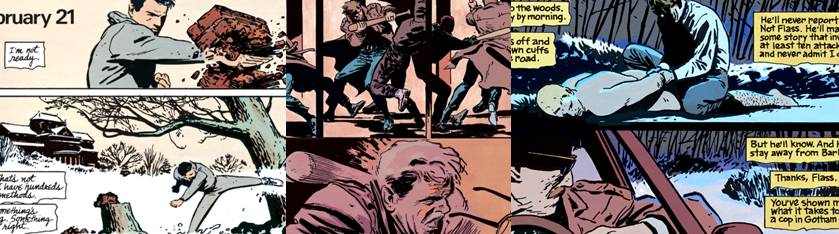
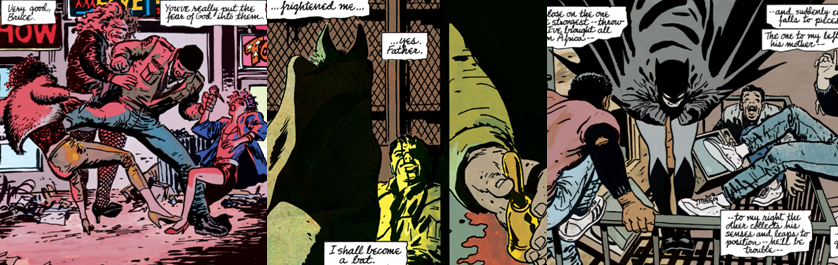
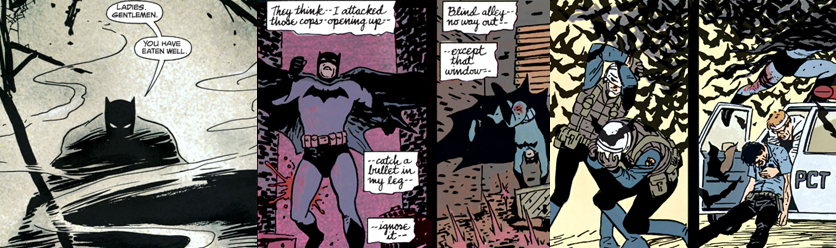
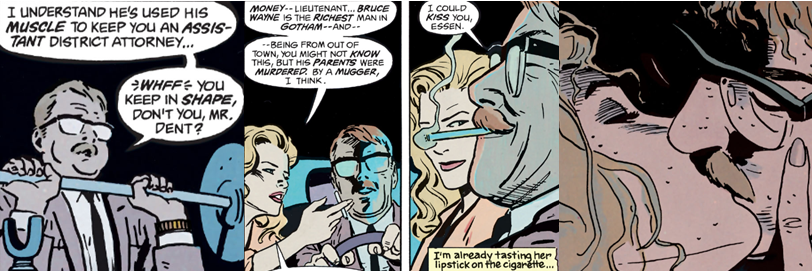
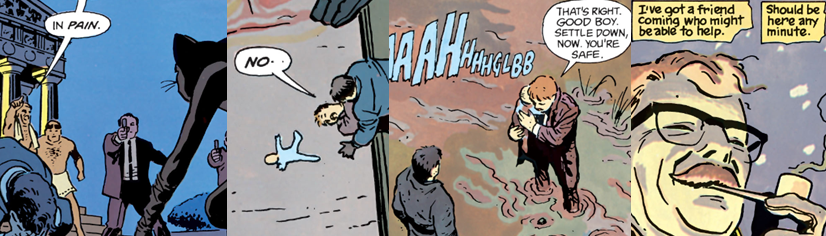
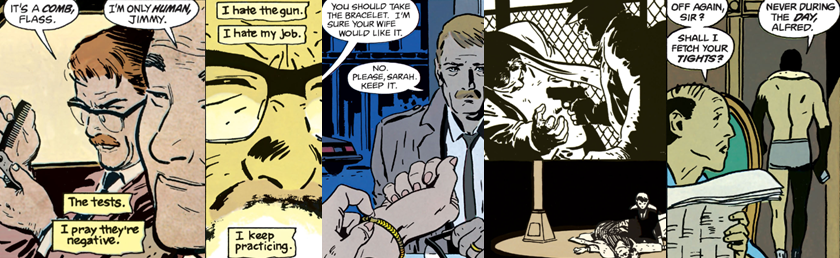
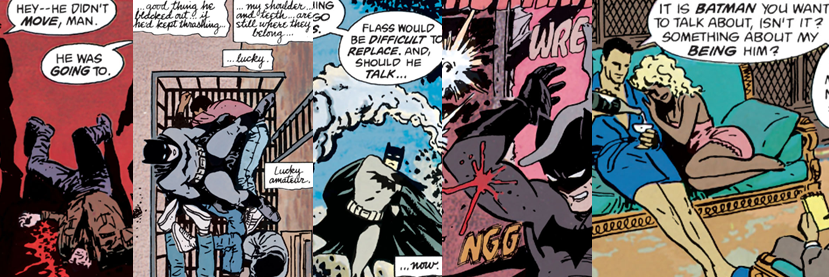

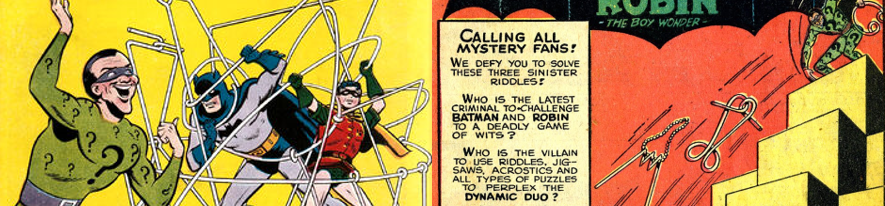
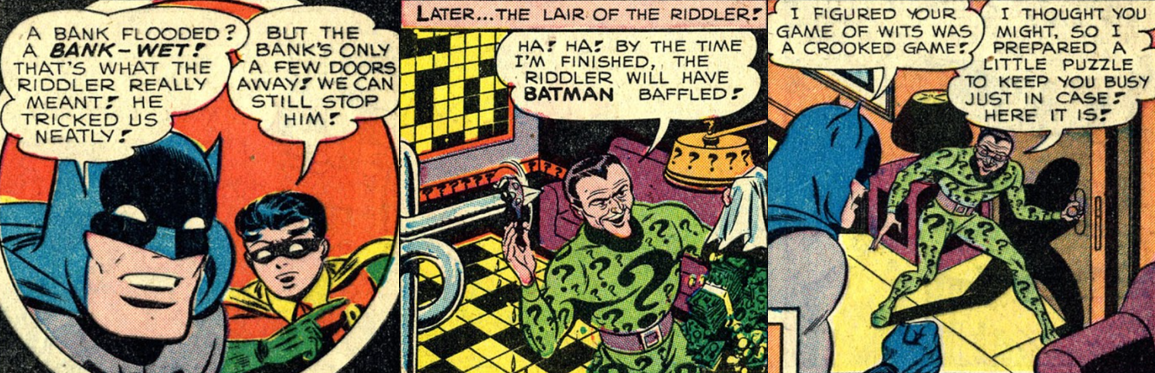
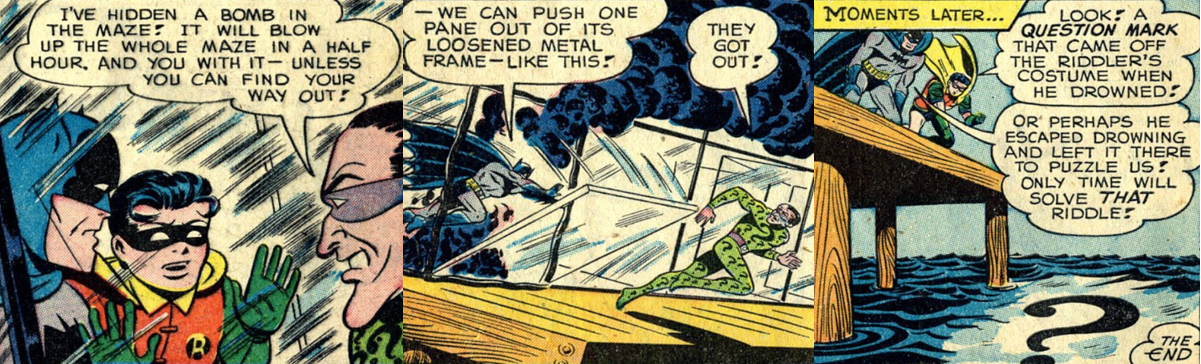
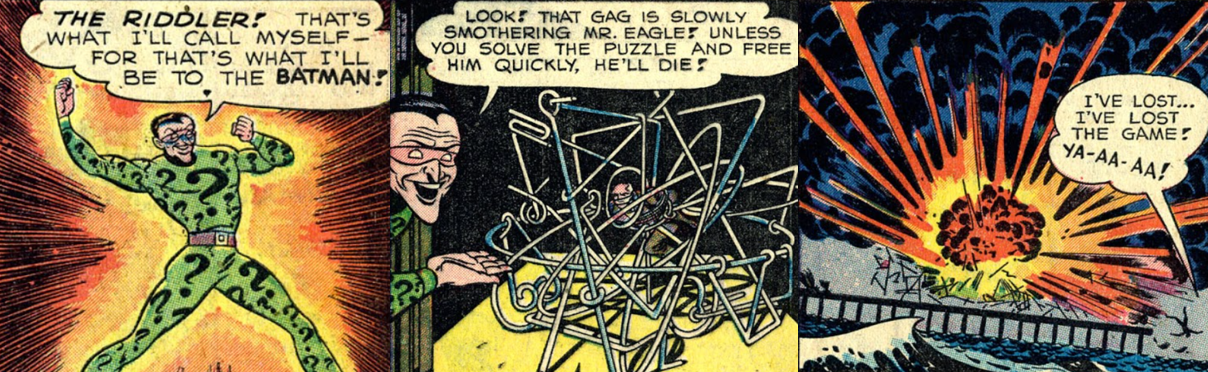


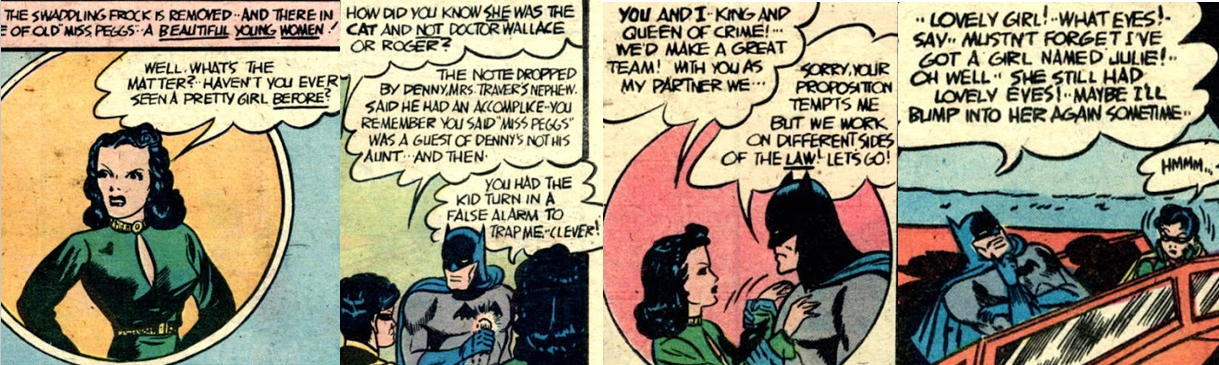



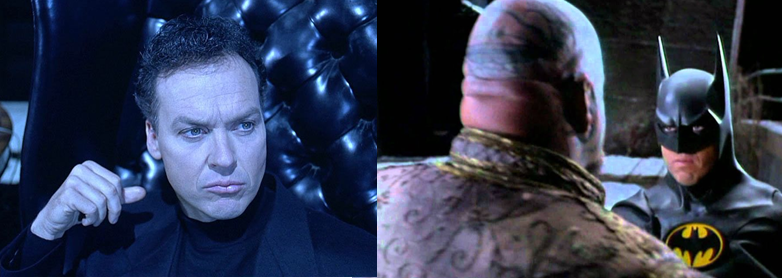
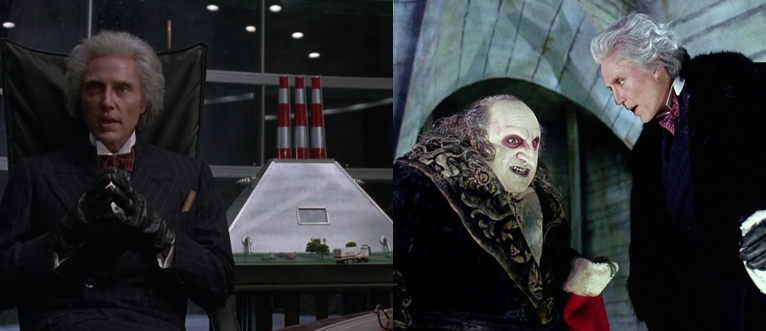

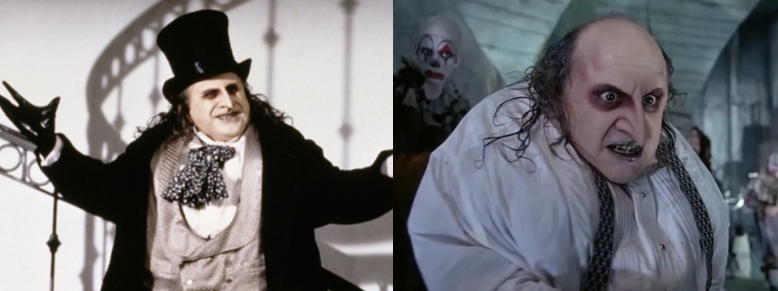
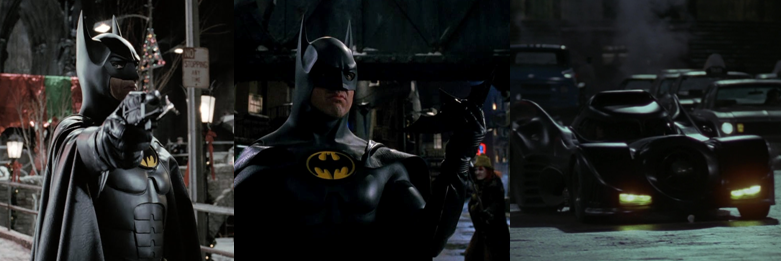
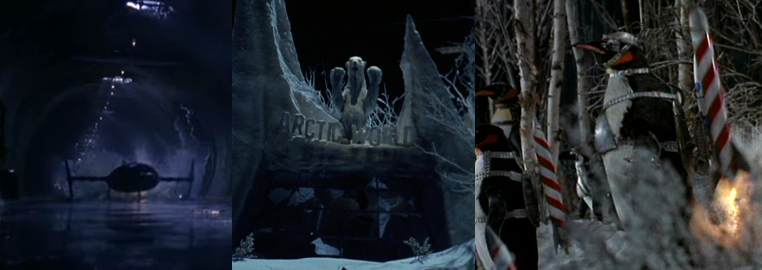
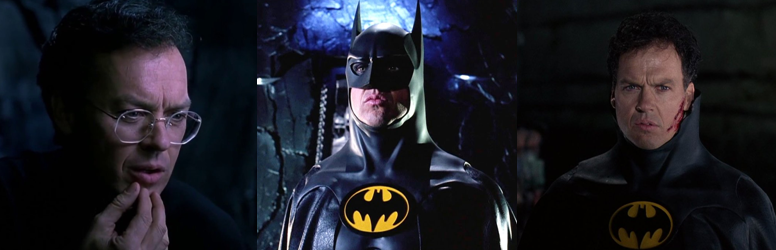
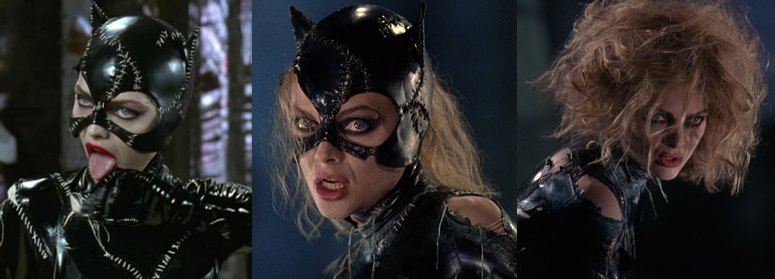
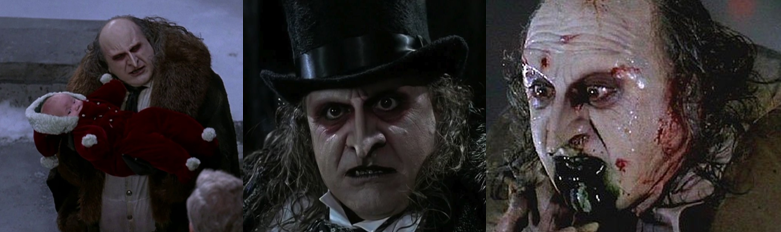
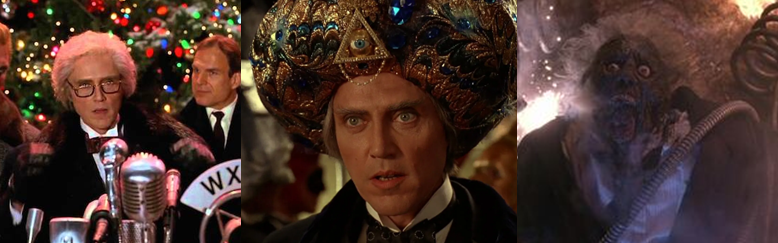


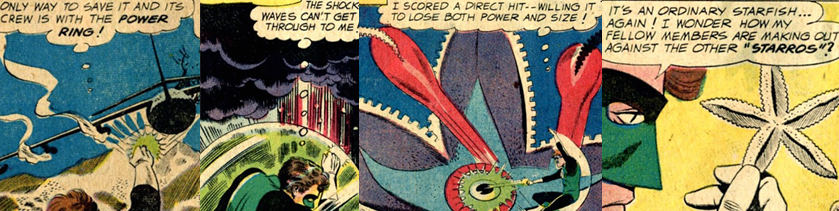
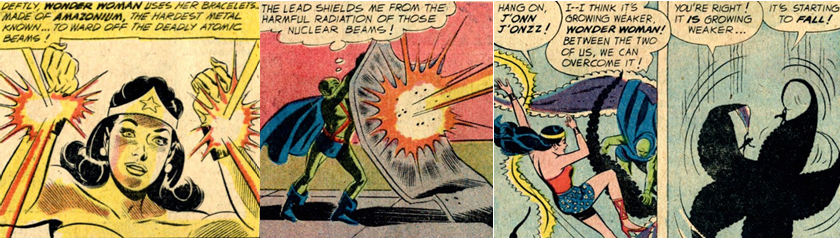
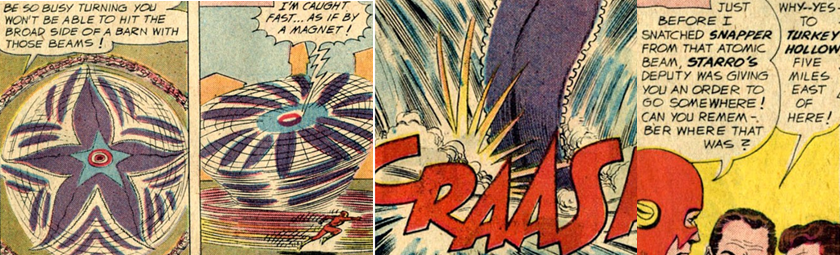
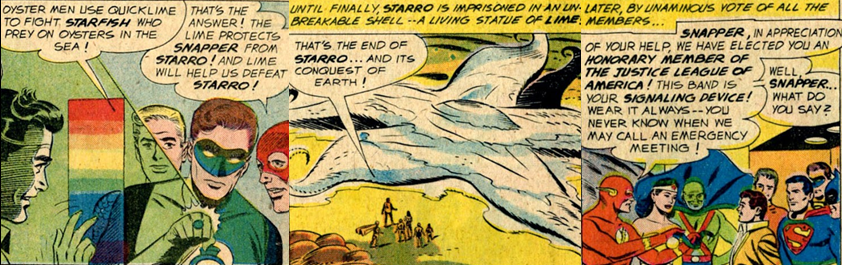
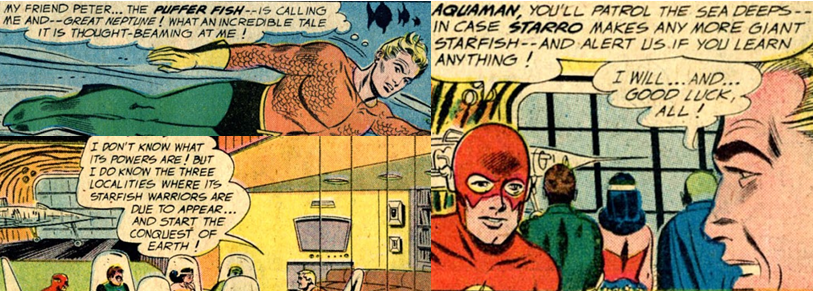
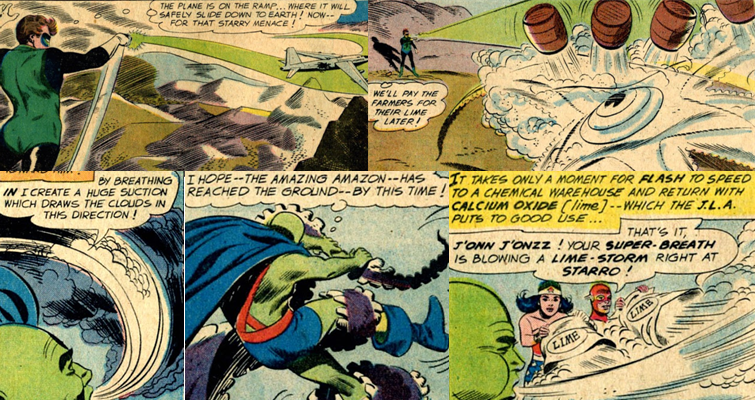
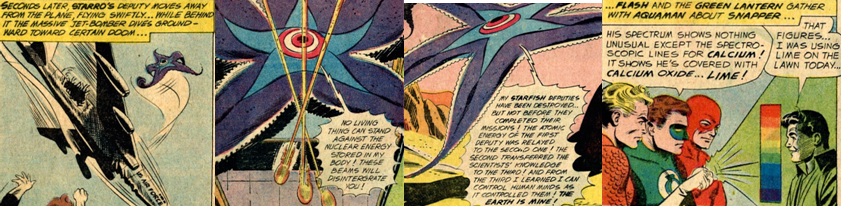







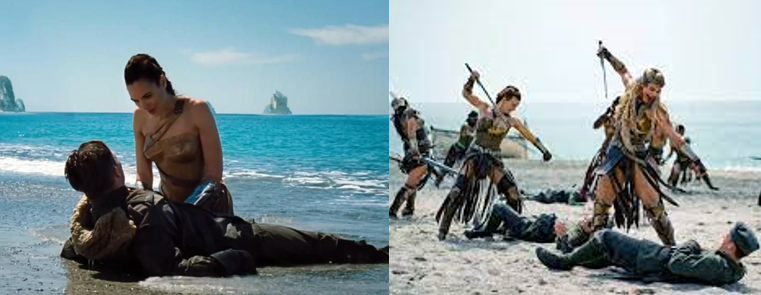
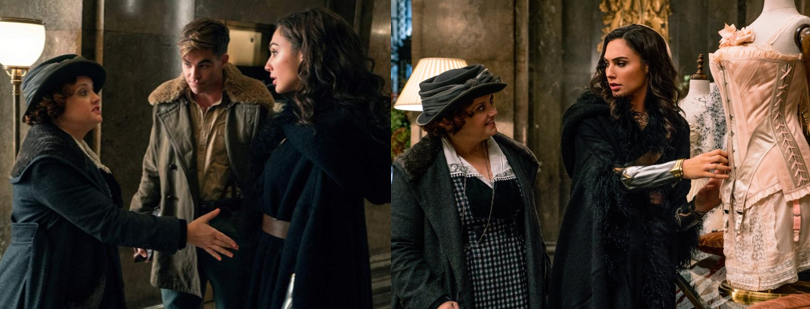
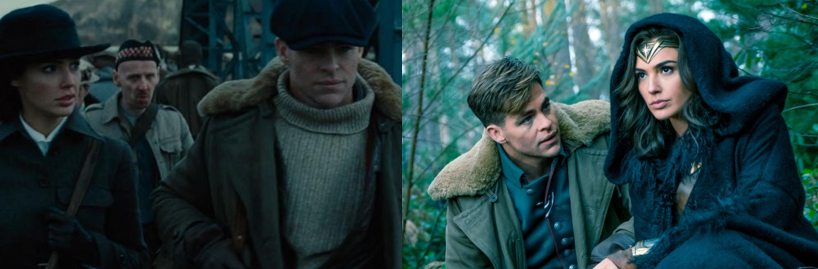

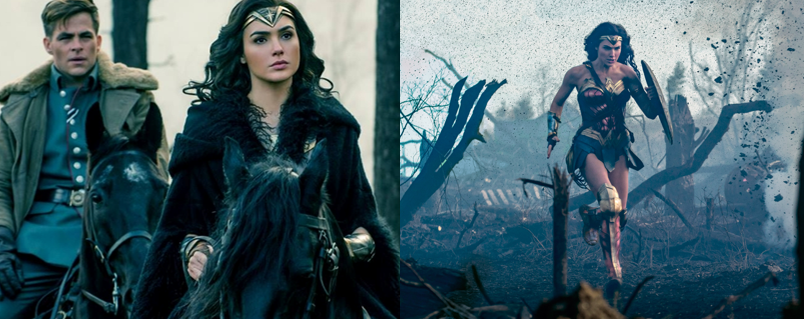
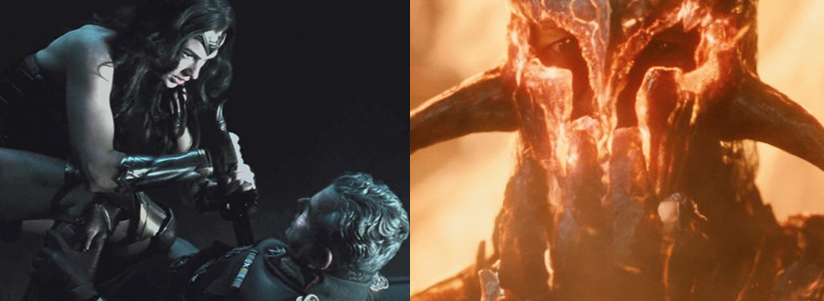


















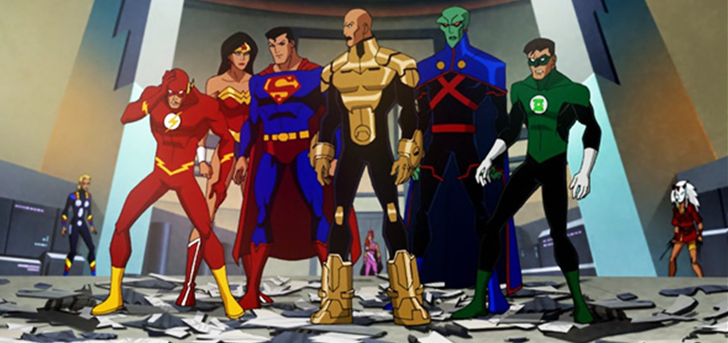
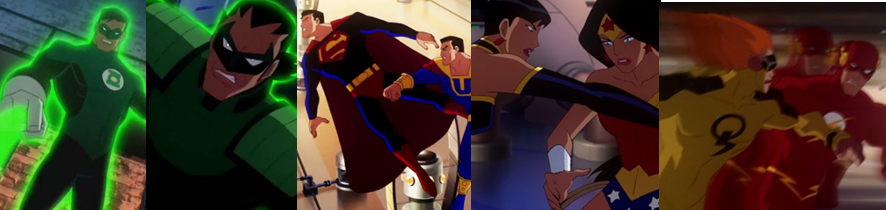



You must be logged in to post a comment.