This review has been supported by Chiara Cooper. If you’d like to support the site, you can do so at my Ko-Fi page.
Released: November 1992 Developer: Tiertex Design Studios Also Available For: Amiga, Amstrad CPC, Atari ST, C64, DOS, Game Boy, Game Gear, MSX, Master System, Nintendo Entertainment System (NES), ZX Spectrum
A Brief Background: In 1981, legendary director Steven Spielberg joined forces with George Lucas and Harrison Ford to bring the first Indiana Jones film to cinema screens; inspired by both old serial films and theJames Bond franchise, the three crafted an action/adventure film that was so critically and commercially successful that it kicked off one of cinema’s most beloved franchises, helped launch Harrison Ford to superstardom, and fundamentally changed the cinema rating system. Naturally, given the franchise’s success, the Indiana Jones films and character have been adapted into books, comics, and videogames; the first Indiana Jones videogame was a simple 8-bit adventure for the Atari but it was the third film, Indiana Jones and the Last Crusade(Spielberg, 1989) that received the most love back in the day, with three titles released across multiple platforms between 1989 and 1991. This particular game was the more action-orientated version and was met with divisive reviews that praised the presentation but criticised the content, combat, and difficulty of the game.
First Impressions: Indiana Jones and the Last Crusade: The Action Game (boy, is that ever a mouthful!) is a 2D, sidescrolling action/adventure game in which players assume the role of the titular archaeologist and adventurer. The controls couldn’t be simpler; by default, you press A to punch, B to attack or swing with your whip, and C to jump, but you can customise these inputs as you desire. Indy can also duck and crawl through tunnels, attacking as he goes, climb up and down ropes (lashing out with his whip to take out enemies), and can swing from certain objects simply by whipping near them. Although Indy doesn’t seem to utilise his pistol, his whip can be used to take out enemies from afar, but the more you use it, the weaker it becomes, as indicated by the whip icons decreasing with each button press. Luckily, you can replenish this by finding whip pick-ups in suitcases and you can still use the whip even after exhausting your supply. Indy’s mission is to travel across a number of levels (referred to as “Scenes”) from the movie, exploring hazardous environments and reaching the exit before the timer runs out. Players can pick between “Easy” and “Hard” difficulty modes and are given two lives and two credits on Easy mode, which you’ll quickly realise is nowhere near enough to help you get through his unforgiving title. Literally everything around you is out to get you; Indy will even lose health if he jumps and hits his head on the ceiling, to say nothing of the falling stalactites, boulders, and armed enemies looking to quickly drain his health and leave him little more than his trademark hat.
Don’t be fooled by the graphics or your love of the franchise: this game is absolutely merciless!
Gameplay is given a little bit of variety thanks to the gimmicks found in each Scene; you’ll get to jump in a minecart in the caves, for example, but will need quick reactions to hop from one cart to another, and to a rope, to avoid plummeting to your death. The second Scene sees you running across train carriages jumping over telegraph poles, ducking through tunnels, and avoiding giraffe heads and snake pits as you desperately try to progress without falling. You can also grab flaming torches to light up dark areas, but you’ll need to watch out for spikes that instantly kill you, bursts of flame from the ceiling, and make precarious jumps up a castle wall in rain-swept Venice. Enemies are all largely generic and look the same in each Scene and can punch and shoot at you, though they’re easily defeated in a few hits. Unfortunately, Indy’s punch is pathetically short and you’re more likely to take damage engaging with them, so it’s best to just avoid combat or use your whip wherever possible, though none of that will save you from the game’s many instant death traps or the fact that you take damage from jumping! Water, snake pits, train tracks, and skeletons will instantly kill Indy, meaning there is very little margin for error, and you’ll not only have to deal with some merciless knockback but often need split second reactions to dodge damaging (or instant death) traps after besting each Scene’s boss. Indy can find goblets to replenish his health and sand timers to increase the time, but you’re constantly walking on eggshells as so much can either hurt you or out-right kill you that it makes playing the game a frustrating chore and Indy, one of cinema’s toughest action heroes, weak as a kitten.
My Progression: Technically, I couldn’t even get past the first Scene; I inched my way onwards only to fall victim either to accumulated damage or an instant death trap, made all the worse by how large and unforgiving Indy’s hit box is. Thus, I used the one and only cheat for the game, which is a level select code; this not only lets you pick the Scene to start on, but the starting point as well (the game is filled with hidden checkpoints), which is very handy for seeing later areas of the game or battling bosses. I fought the first three bosses, the first being a strongman with a huge piece of wood that he swings at you to knock you to the instant death water and smashes on the ground to cause rocks to fall on you, the second being a bulbous fire-breather whose flames you need to quickly duck or jump over while frantically whipping him, and the third a Native American who shoots high and low arrows at you, but I shut the game off shortly after besting this boss.
I was really hoping for a challenging, but fun, action/adventure title and instead what I got was a torturous and ridiculously difficult title that no doubt had many kids pulling their hair out back in the day. When you struggle, or can’t, get past the first level, to me that’s the sign of a bad game and Indiana Jones and the Last Crusade: The Action Game reeks of being cobbled together to cash-in on the movie by having kids rent it over and over just to get past the first damn level! It’s a shame as there’s a lot to like here. Graphically, the game looks really well; Indy doesn’t really have an idle animation, but he looks and controls pretty well, and games environments are all nicely detailed. The sound is pretty good too, with a decent rendition of the iconic Indiana Jones theme, but the game is just too difficult to really enjoy. It’s a shame as I’m a big fan of the franchise and was hoping this would be a decent little action platformer, but it kicked my ass the moment I pressed the jump button under a low ceiling and Indy is just way too fragile for the game to be as enjoyable as I would like. But maybe I just suck. Maybe you’ve beaten this game multiple times, or really enjoy it. Or maybe you prefer a different Indiana Jones videogame. Whatever your thoughts or experiences on the subject, sign up to share them below or leave a comment on my social media.
In 2013, DC Comics declared the 12th of June as “Superman Day”, a day for fans of the Man of Steel the world over to celebrate Clark Kent/Kal-El/Superman, the superpowered virtue of “Truth, Justice, and the American Way” who is widely regarded as the first ever costumed superhero. This year, I expanded Superman Day to “Superman Month“ and have been spending every Monday of June celebrating the Man of Steel.
This review has been supported by Chiara Cooper. If you’d like to support the site, you can do so at my Ko-Fi page.
Released: 14 June 2013 Director: Zack Snyder Distributor: Warner Bros. Pictures Budget: $255 to 258 million Stars: Henry Cavill, Amy Adams, Michael Shannon, Antje Traue, and Russell Crowe and Kevin Costner
The Plot: Just before the planet Krypton is destroyed, scientist Jor-El (Crowe) sends his young son to Earth. Raised by a kindly couple, Clark Kent (Cavill) hides his superhuman powers from the world but, when he discovers the truth of his alien heritage, he finally assumes the mantle of Earth’s greatest protector, Superman, just in time to defend his adopted home world from the maniacal General Zod (Shannon), a Kryptonian warrior seeking to terraform Earth into a new Krypton!
The Review: Those who’ve read my reviews of the Richard Donner/Christopher Reeve films, and Superman Returns, will know that my relationship with those movies is a contentious one. While Reeve was undoubtably iconic in the role, and the first two films not only helped establish Superman in the eyes of the general audience but influenced comic books and their adaptations for decades, I also grew up reading the Post-Crisisversion of Superman as written by John Byrne and firmly believed that the character had significantly changed since his wacky Pre-Crisis days. In the comics I read, Clark Kent wasn’t some bumbling reporter, Lois Lane wasn’t an obsessed stalker, and Superman was a relatable and at times vulnerable character; he got married, died and came back, and, crucially, had a humanity at the heart of his character and was far less God-like than in the sixties and seventies. Consequently, I was quite excited to see a new version of the character brought to the big screen, with a revised origin and no ties to the films that had come before it. I believe this is the route Warner Bros. should have taken with Superman Returns and, if they had, the nature of the DCEU could be quite different today. I was doubly excited since the studio not only had Christopher Nolan onboard as a producer but brought in Zack Snyder, who had impressed me with his visuals and brutal action-orientated storytelling in 300 (Snyder, 2006) and Watchmen(ibid, 2009), and even roped in Kevin Costner and Russell Crowe in pivotal roles.
Amidst a chaotic opening, Jor-El is able to spirit his infant son to safety before Krypton is destroyed.
As is tradition at this point, Man of Steel opens on Krypton, a world decidedly different from what we’ve seen onscreen and in the comics before. While many interpretations of Krypton like to draw upon Donner’s cold, crystalline wasteland, Man of Steel presents a vast alien world whose technology is based around a sort of fluid nanotech, genetic engineering, and artificial intelligence. The landscape is also much more alive and vibrant, with massive creatures roaming the ground and the skies, other planets dominating the horizon, and a tint of copper red/orange applied to the world, whose architecture is a curious mixture of almost Aztec-like structures and advanced anti-gravity technology. In this version of events, Krypton is quite the lackadaisical race; having grown weary of colonising other worlds, they’ve allowed themselves to become somewhat stagnant on their home world. Their society is comprised of genetically engineered individuals pre-programmed into specific roles, such as warriors, scientists, and politicians, and thus the infant Kal-El is the first natural birth in centauries. However, their hubris remains as steadfast as ever and they ignore Jor-El’s warnings that the planet’s core is quickly destabilising after (presumably) decades of mining it following an energy crisis. Realising the planet is doomed, Jor-El pleads with the Kryptonian Council to allow him access to the “Codex”, a complete record of their society and genetic history, in order to ensure that a new generation of Kryptonians survives the calamity, but his demands are quickly interrupted by a coup d’état led by General Zod, who disposes the council and causes the planet to erupt in all-out war despite the looming danger. Consequently, Man of Steel has an extremely chaotic opening where we’re bombarded with information and explosive visuals; Kal-El is born, Krypton is said to be close to destruction, war breaks out!, Kal-El is imbued with the vaguely-defined Codex and rocketed to safety, Zod kills Jor-El before his insurrection is quashed and is banished to the Phantom Zone alongside his cohorts, and then the planet explodes all within the first twenty minutes! While this is clearly important to give us a glimpse of Kryptonian society and the sacrifices his parents made, and absolutely a narrative device used in Superman media time and time again, I can’t help but feel like the opening could have been trimmed down a little and scattered throughout the film, especially as Jor-El’s holographic interface later gives Clark the rundown on these events, and Zod also relates things from his perspective, meaning we essentially learn the same information twice.
Having struggled with his powers, and guilt over his father’s death, Clark with his place in the world.
This bombastic and visual cacophony then gives way to a much more nuanced, grounded, and undeniably Nolan-influenced portion of the film where we jump ahead some thirty years to find the now grown-up Kal-El travelling Earth as Clark Kent and trying to get a better understanding of himself and the nature of humanity in order to figure out how best to utilise the fantastic abilities afforded him by our yellow sun. This narrative device makes far better use of the film’s run time to parallel Clark’s journey as an adult with his childhood growing up in Smallville, Kansas, where young Clark (Cooper Timberline and Dylan Sprayberry) was initially overwhelmed with his developing abilities, which cause him pain, discomfort, and fear and are framed very much as an allegory for puberty. Clark’s superhearing and x-ray vision are depicted as being harrowing for the young boy, who has a full-blown panic before his kindly adopted mother, Martha Kent (Diane Lane), helps him to focus himself, to block out the noise and the visions that plague him, and to master his abilities. As he grows older, he comes to resent having to hold himself back and to hide his powers, which very much sets up an ongoing moral conflict within the film. Indeed, his adopted father, Jonathan Kent (Costner), even suggests that he should have let a busload of his classmates drown rather than risk revealing himself since he’s of the firm belief that the world isn’t ready to accept the truth of what he is. However, Jonathan and Jor-El both believe that Clark, and his gifts, have world-changing implications; his presence will inspire both fear and hope, reverence and hostility, as humankind realises that they’re not alone in the universe and that their world has been forever changed. Jonathan recognises that this is not only a huge burden but will result in Clark being viewed as something other than human, whether for good or ill, and just wants his son to be prepared to either face up to this great destiny or to walk away from it without regret. Clark’s fear and confusion eventually turn into resentment and adolescent rage as he grows older and becomes tired of having to hide himself and lashes out at Jonathan without thinking, only to have to watch, helplessly, as his adopted father is swept away by a tornado since he was forbidden to act and expose himself before he was ready. While this death is overly dramatic and lacks the subtle nuance of Jonathan succumbing to a simple heart attack thus teaching Clark that even he cannot stop nature, it does result in him being so guilt-ridden that he travels the world to try and find himself and learn how best to honour his father.
Lois is integral to Clark’s decision to reveal himself as Superman and is at the forefront of the chaos.
By the time he’s an adult, Clark has experienced much of the conflicting nature of humanity; there are bullies and assholes but also those who will go out of their way to save others, proving that humankind has a spark of decency buried deep beneath the conflict. When he discovers the Kryptonian scout ship and meets the holographic representation of his birth father, Clark learns of his true heritage and the reason for his existence and finally discovers the means to reconcile the conflict within him. Donning an absolutely glorious alien suit and flowing cape, and inspired by both his fathers, Clark finds he has only begun to realise the true extent of his abilities as he defies Earth’s gravity, clearly basking in the feelings of liberation brought not only from flying through the air but from finally accepting his birthright. Clark is shown to have always had a strong relationship with Martha, who only ever showed him love and affection and tried to help him to focus his abilities. While both her and Jonathan loved him unconditionally, their methods at helping him through his adolescence and his burgeoning powers differed somewhat, as she was perfectly happy to just let him grow up, fully confident that he’d make the right decisions, whereas Jonathan continually went out of his way to stress that Clark is there for a reason and has a greater destiny. After Jonathan’s death, Clark’s bond with Martha grows even stronger, partially due to his guilt but also because she’s all that he has left and he flies into a rage when her life is threatened by Zod and his cronies later in the film. Of course, intrepid reporter Lois Lane (Adams) remains a central influence in Clark’s decision to embrace his destiny and put his powers to good use; depicted as a strong-willed, curious, and empathetic woman, Lois is a fearless reporter who doesn’t hesitate to put herself in harm’s way, or the most extreme environments, in order to get a good story. When she learns that a centuries-old Kryptonian scout ship has been located in the Canadian Arctic, she doesn’t hesitate to head out there, immediately establish herself as a woman of some fortitude before the somewhat disapproving Colonel Nathan Hardy/Guardian (Meloni), and even brave the frigid environment to get up close and personal with the ship. After she’s attacked by the Kryptonian security droids and Clark saves her life, she throws herself into trying to track down her mysterious saviour, much to the chagrin of her editor, Perry White (Lawrence Fishburne), and is intrigued by the many and varied reports of a superpowered do-gooder helping others before disappearing.
Strong supporting characters flesh out the world and ask new questions about Superman’s presence.
In a fantastic change of pace, Lois experiences Clark’s abilities and is privy to his identity right away, doing away with the need for him to assume the guise of a bumbling fool. Lois not only gives him the name Superman (in a roundabout way), but also plays an important role as an audience surrogate as she uses her reputation as a celebrated reporter to accompany and talk to him after he surrenders himself to the distrustful Lieutenant General Calvin Swanwick (Harry Lennix) and even goes with him to Zod’s ship after Superman willingly agrees to give himself up to spare his world. Cavill and Adams have a real tangible onscreen chemistry and Lois very much acts as a mediator between Clark’s somewhat sheltered upbringing, the awe that his presence (and unparalleled physicality) inspires, the suspicion of Swanwick and some others, and the demands of Zod. General Zod announces his arrival by broadcasting an ominous message across all media platforms and in all languages to deliver Clark with an ultimatum, thereby giving him another moral quandary over whether to surrender himself to the Kryptonians or to humanity, neither of which are particularly trustworthy. Zod isn’t alone in his mission, of course. He’s joined by a number of Kryptonian followers, the most prominent of which are Faora-Ul (Traue) and an unnamed towering brute who ransack Smallville to draw Superman out for a conflict. Much like Ursa (Sarah Douglas), Faora-Ul is absolutely devoted to General Zod and follows his every order without question. Interestingly, she sparks up a rivalry (and, apparently, a mutual attraction and respect) with Colonel Hardy during the conflict between the military and the Kryptonians that eventually drives them to go out in a burst of glory during the finale. Perry White also has quite a prominent role here; not only does he bust Lois’s balls over daring to suggest the Daily Planet print a story about aliens, but he’s also less than impressed that she protects Superman’s identity and actually takes an active role in helping his staff (and others) during the cataclysmic finale. Lieutenant General Swanwick takes the lead in the military’s investigation of Superman; legitimately concerned and thrown off by the revelation that an alien has been living amongst them for thirty-three years, he treats Superman with a great deal of apprehension since he has such incredible power but acts independently of anyone’s interests, to say nothing of those of the United States government.
Zod is a cruel and malicious warrior who is dedicated to ensuring the survival of the Kryptonian race.
I do think that the film would have benefitted from a slight restructuring to allow for a time jump between Clark discovering his suit and Zod’s arrival; Clark is Superman for barely a day before the Kryptonians arrive to cause havoc, meaning his first real test is right in the deep end against a bunch of fanatical warriors and I think it would have benefitted the film (and the sequel) to have had a bit of a montage that showed him performing superheroic feats across the world and lay the seeds for the hope and fear his presence inspired in people. Kryptonian society is a little different to what we saw in the old films; genetic engineering is the norm, so everyone has a predefined role; while Clark, as the first natural-born Kryptonian in centuries, is the exception to this rule, General Zod is a warrior through and through whose desire to ensure Krypton’s survival drives him to extreme and devastating actions that he couldn’t stop even if he wanted to. Having spent a great deal of time in exile and spurred by the perceived betrayal of his fellow Kryptonians, Zod is an interesting dichotomy; he’s both one-dimensional and multi-dimensional since he is fixated on ensuring Krypton’s survival and yet he’s genuinely hurt when Jor-El refuses to join forces with him in meeting this goal, and at being forced to fight against his old friend. Rather than being a criminal and a conqueror simply for personal glory, Zod seeks to terraform Earth and extract the Codex from Clark in order to rebuild Kryptonian society and is disgusted that Clark shares the same compassion and weakness as his father. As much as I was glad to see that Man of Steel avoided using typical Superman villains and devices like Lex Luthor and Kryptonite, I was a little disappointed that Zod was used as the main antagonist; Michael Shannon is amazing in the role, don’t get me wrong, exuding an intelligence and a malice that help him be as distinct from Terence Stamp’s memorable rendition of the character as Cavill is from Reeve, but I do think the film could’ve been largely the same, and actually somewhat superior, if Zod had been replaced with Brainiac. By taking influences from Superman: The Animated Series (1996 to 2000) and elements of the Eradicator and Zod’s fanatical fixation on rebuilding Kryptonian society, Brainiac could have helped the film stand out even more from its predecessors, and Michael Shannon could have brought the same calculating intensity to that role as he does to Zod, but I very much enjoyed how Zod was such a devious, manipulative, and brutal foe here.
The Nitty-Gritty: Man of Steel owes more than a little to Nolan’s grounded and gritty take on Bruce Wayne/Batman in the Dark Knight trilogy; like those films, Man of Steel is a very serious and thought-provoking deconstruction of easily the most iconic superhero in all of comicdom. The film is front-loaded with themes regarding destiny, nature/nurture, and realising oneself in a world that’s not as black and white as we’d like. More than ever, Superman and General Zod are presented as thematic opposites; while Zod is pained to have killed his friend and is acting only in the interest of preserving his long-dead society, Superman is determined to safeguard his world and others but has struggled for his entire life with finding the means to do so. Both Jor-El and Jonathan see him as a world-changing symbol of hope and the capacity to achieve something greater, and he even wears his family crest (the symbol of hope) as Superman, but a prevailing concern throughout the film (which later turns out to be true) is that humanity will stumble, to say the least, in their efforts to keep pace with him. As ever, Superman is accompanied by strong religious themes; one of Jonathan’s many worries about him exposing himself is how it will change humanity’s perception of their beliefs in both scientific and religious teachings, when Zod arrives Clark communes with a priest (Coburn Goss) before surrendering himself (fitting, considering his dialogue with Jor-El clearly evokes a conversation with the Creator), and of course Superman adopts the image of the crucifix before dashing off to rescue Lois’s escape pod.
Superman, his enemies, the tech, and the entire film shines thanks to a strong visual identity.
One of the benefits of bringing in Zack Snyder is his strengths as a visual storyteller; Man of Steel is beautifully shot, utilising a subdued colour scheme that gives the film a very tangible, grounded aesthetic. Shots of Krypton, and Superman, are given a suitably grandiose sheen, making for some of the most impressive flying sequences in a Superman film yet and ensuring that Superman makes a lasting impact every time he’s onscreen. Snyder is far from a subtle storyteller, however, though, here, his tendencies are clearly tempered by Nolan’s more measured and intellectual approach. Still, Snyder’s propensity towards spectacle and engaging visuals results in some harrowing sequences; one of the standouts is a dream-like confrontation between Superman and Zod where the Man of Steel sinks beneath the skeletal remains of billions of murdered humans. Superman’s powers are somewhat subdued here, potentially to maintain the grounded tone of the film; Superman exhibits superhearing, vision, and strength but he and the other Kryptonians primarily rely on their heat vision, superspeed, and flight rather than freezing breath. Thanks to fully utilising modern technology, Man of Steel has the best flying sequences of any Superman movie, taking the lessons learned in Superman Returns and cranking them up to eleven. Snyder loves him some dramatic camera zoom; it’s a little overused but actually makes it feel as though the camera is tracking the action and flying in real-time. Of course, I have to gush about Cavill’s super-suit; yes, debates will rage seemingly for all eternity about whether he should have trunks or not but this is, for me, the best Superman costume we’ve ever seen in live-action. The symbol is alien, and yet familiar, and the texture work is sublime. His cape is nice and long and flowing, making for some dramatic shots as it billows out behind him, and the colour grading allows it to be both colourful and realistic without being overly comic book-y. While the Kryptonian suits are all CGI, you’d never know it since they never appear to be fake; I love how they’re all garbed in this functional dark armour, which is a brilliant thematic and visual parallel between their dark designs for Earth and Superman’s heroism. Krypton and its technology are far more alien than is the norm, comprised of squid-like robotic aides, a sort of nanotechnology used for communication, and a life-like holographic projection of Jor-El that guides Superman and helps Lois. When Superman arrives on the Kryptonian ship and learns about his society, there’s a distinct visual contrast between himself and the world he knows on Earth and this unknown alien society, which is similar to ours but fundamentally different and far more advanced in so many ways.
Metropolis is wrecked by the destructive conflict in scenes analogous to a disaster movie.
Superman ultimately embraces aspects of both worlds by donning a Kryptonian suit and his father’s crest and using his powers to benefit his adopted world while also being mindful of his adopted father’s fears that society will never fully trust, or embrace, him due to how different he is. Thanks to having lived on Earth for his entire life, Clark has fully mastered all of the sensory bombardment that comes from his powers, however he’s still learning and is untested in operating in public. Onboard Zod’s ship, Superman is rendered powerless and as vulnerable as they are when exposed to Earth’s atmosphere, which initially causes them crippling pain. However, the Kryptonians are born and bred warriors, trained to master their senses and their environment, so quickly adapt to the atmosphere and the powers that come with it; they’re also far more adept at fighting than Clark, and not only outnumber him but have devastating terraforming technology at their disposal, meaning Superman faces a very real and formidable physical threat throughout the film. This results in Man of Steel being almost the exact opposite of Superman Returns, and its other predecessors, as it features more action, fight scenes, and depictions of gratuitous destruction than you could ever hope for…and it’s pretty freakin’ glorious! Even Jor-El gets in on the action, donning both the Superman suit and Kryptonian armour, blasting at Zod’s forces, flying through the battle that rages in Krypton’s sky, and even going toe-to-toe with Zod himself to help establish that Superman’s fighting spirit and defiance is potentially inherited from his father. The action is intense and brutal, with a huge area of Metropolis and Smallville being destroyed as Superman ploughs his opponents through buildings and Zod’s World Engine machine devastating the city with its energy cannon. This Superman is an extremely emotional and reactive character who flies into a rage and is determined to tackle his enemies using brute force, meaning untold collateral damage in the process that received a lot of backlash but is clearly evoking the imagery of cataclysmic events such as 9/11 to show how these God-like beings pose a real danger to the world. While I can’t deny that Snyder definitely went way overboard with the destruction caused during the finale (Metropolis literally looks like it’s been entirely wiped out at one point, and Superman sends Zod’s ship crashing right into the heart of the city, which absolutely killed thousands of people), Clark’s just become Superman and is being threatened by a formidable force who won’t listen to reason, so he’s not as experienced as his predecessor or comic book counterpart. Plus, I think it’s important to remember that Superman does make an effort, wherever possible, to save lives; hell, the entire reason Colonel Hardy learns to trust Superman is because he saved his life, and he pushes himself to the absolute limit to destroy the World Engine in the Indian Ocean, thus saving the entire world from destruction.
Superman takes drastic action to end Zod’s threat and settles into his new life as an unassuming reporter.
With his ship downed, his World Engine destroyed thanks to Superman and Hardy’s sacrifice, and his followers all dead, General Zod is left utterly devastated; he’s lost his world, the last remnants of his people, and his entire reason for living (nay, being) has been brought to ruins all because Superman, the son of his former friend and hated enemy, chose his adopted world over his birth planet. Fuelled by his rage, and his commitment to ensuring the greater good of his people, Zod flies into a brutal and merciless assault, resulting in a vicious battle between him and Superman through the remains of Metropolis. Thanks to the benefits of modern day effects, this fight isn’t restricted in the same way as the finale of Superman II was, allowing Superman and Zod to plough through buildings, tear through walls, smash through a Wayne Enterprises satellite in the upper atmosphere, and finally gives us the violent and exciting airborne fist fight we’ve wanted from a Superman film since seeing The Matrix Revolutions (Wachowski Brothers, 2003). Although the battle has already cost the lives of God-knows how many, Superman is ultimately faced with an impossible decision; trapped in a headlock, General Zod refuses to ever stop his destructive vendetta and threatens to immolate a nearby family with his heat vision, leaving Superman no choice but to break the fanatical Kryptonian’s neck to end his threat once and for all. Again, this sparked a great deal of controversy and I can fully understand that, but it’s not as if Superman hasn’t killed Zod before (he did it in Superman II (twice, actually) and famously did executed him the comics, too) and I would much rather have Superman forced to make that decision and then learn to deal with it rather than just sweep it under the rug because he’s supposed to “be better”. In the aftermath, Superman maintains that Swanwick will just have to trust that he’s there to help and isn’t a threat to humanity (something that, sadly, is a focal point of the sequel) and, in a move that I was genuinely surprised to see, goes to work with Lois at the Daily Planet. Considering how fast and loose Man of Steel played Superman’s identity, I was almost sure that Snyder would avoid using this trope but it is tradition, after all, and the film ends with the hope that the world will change for the better following Superman’s arrival (which, again, would be dashed in the sequel…)
The Summary: After years of Superman being pigeon-holed into this outdated Silver Age characterisation as a God-like being forever embodied by Christopher Reeve, Man of Steel was a real breath of fresh air for the character and really changed the perception and portrayal of the character in interesting ways. I’ve said it before but playing Superman is no mean feat because Reeve cast a very long, dark shadow and comparisons will always be made between him and every actor to take on the tights and cape, but Cavill really brought a physicality and charisma that hadn’t been seen for some time. It helps that he’s an absolute beefcake, but his suit is incredible, and I enjoyed the deeper insight into his relationship with humanity and the burden of living up to the responsibility of his incredible powers. It’s maybe a bit too grounded and gritty and dour for a Superman film, especially as he’s meant to be a paragon of truth, justice, and the American Way, but I think it did a great job of introducing a new version of Superman to a new generation of audiences. The visual presentation and explosive action is an absolute spectacle; there’s a real sense of danger and consequence when Superman throws hands with his Kryptonian foes that may not be the most subtlest approach to take when it comes to disastrous events but absolutely makes for the most action-packed Superman film yet. Man of Steel is only bolstered by strong performances across the board; there’s a fantastic chemistry between Lois and Clark, Zod is a malicious and spiteful despot, and even the supporting actors all do a wonderful job of grounding this world and setting the stage for the coming DCEU. It’s a shame that so many people couldn’t get past the wanton destruction and more controversial aspects as there’s a lot to like here, and even more of a shame that Snyder (and Warner Bros.) squandered all the potential of this world with the follow-up by presenting Superman as a contentious figure and then killing him. While I have grown to despise die-hard Snyder fans and their antagonistic behaviour, I still really enjoy Man of Steel and am incredible happy with how it all came together to deliver a Superman much more in line with what I wanted to see onscreen.
My Rating:
⭐⭐⭐⭐
Rating: 4 out of 5.
Great Stuff
Did you enjoy Man of Steel? What did you think to Henry Cavill’s performance as Superman and how do you think he compares to other live-action Superman? Did you enjoy the new interpretation of Krypton? What did you think to the extended discussion regarding Clark’s powers and place in the world? Did you enjoy the way the film handled his secret identity and the new suit? What did you think to this version of General Zod? Were you put off by the destruction and Zod’s execution or did you enjoy the more violent aspects of the film? What is your favourite Superman story, character, or piece of media? How did you celebrate Superman Day this month? Whatever your thoughts, feel free to share them below or leave a comment on my social media.
This review has been supported by Chiara Cooper. If you’d like to support the site, you can do so at my Ko-Fi page.
Released: February 1992 Developer: Tiertex Design Studios Also Available For: Amiga, Amstrad CPC, Atari ST, C64, DOS, Game Boy, Game Gear, MSX, Mega Drive, Nintendo Entertainment System (NES), ZX Spectrum
A Brief Background: 1981 saw legendary director Steven Spielberg join forces with George Lucas and Harrison Ford to bring the first Indiana Jones film to cinema screens; inspired by the serial films of yesteryear and theJames Bond franchise, the three crafted an action/adventure film that was so critically and commercially lauded that it marked the beginning of one of cinema’s most beloved franchises, propelled Harrison Ford to superstardom, and fundamentally changed the cinema rating system. Since the franchise was so successful, Indiana Jones has been adapted into books, comics, and videogames, with the first being an 8-bit adventure for the Atari. It was the third film, Indiana Jones and the Last Crusade(Spielberg, 1989), that received the most love back in the day, however, as three titles were released across numerous platforms between 1989 and 1991. This particular game was the technically inferior version of its 16-bt counterpart that scored rather well at the time thanks to its colourful graphics and gameplay, but was also criticised for its difficulty and collision detection.
First Impressions: Indy – Indiana Jones and the Last Crusade: The Action Game (yep, somehow the developers found a way to make the title even longer!) is a 2D, sidescrolling action/adventure game that puts you in control of the famous archaeologist and adventurer. Since the Master System only uses two buttons, you wouldn’t believe how simple the controls are in this version: Button 1 allows you to punch, crack your whip, and swing while Button 2 allows you to jump. These buttons can’t be switched around, but Indy can duck down to avoid incoming bullets and punches and attacks from below, and climb up and down ropes simply by jumping to them. It doesn’t appear that Indy can use a gun of his own this time around, and his whip is limited significantly here; you need to pick up a whip icon to even use it, and you only get a few swings before you lose it until you get the next power-up. As in the bigger 16-bit title, Indy must journey through six levels (referred to as “Scenes”) that recreate environments and situations from the movie, but there are no difficulty settings here; instead, you start with six lives and three credits and face a super tight time limit to clear each Scene, gaining additional time by picking up hourglasses and aiming to accrue a high score and some precious extra lives. As in the Mega Drive game, Indy has a daunting uphill battle ahead of him as he’s practically made of glass; not only does he take fall damage, but hitting the ceiling will drain his health, and he’ll crumble to his knees in seconds from dodgy hit detection and instant death hazards such as water.
Don’t let the impressive visuals fool you, this game is tough as balls!
While the game recreates the train scene from the film and eventually sees you scaling a castle and airship as in the film, you’re unlikely to see this as it’s more than a chore to progress any further the first few screens of the first Scene. While the game delivers a fair attempt at recreating the iconic Indiana Jones theme for the title screen, levels are completely silent save for the sounds of attacks and your continuous death, though the graphics are surprisingly impressive. Sprites aren’t exactly the most expressive but they’re colourful and quite detailed; Indy grabs his hat when he jumps, wooden platforms crumble beneath his feet, and the environments contain a decent amount of detail for a Master System title. The first Scene is primarily based around traversing the caves using ropes; you’ll need to hop to them (avoiding hitting your head, of course) and shimmy down, avoiding gun fire, and then precariously jump across lethal water to progress. As in the Mega Drive version, there are a number of hidden checkpoints in the Scenes, and you’ll even restart from these after continuing after losing all of your lives, but the constant injury you’ll take form everything around you and the ludicrously tight timer make just playing the game one of the most difficult experiences I’ve ever had the misfortune of suffering through.
My Progression: While I couldn’t get past the first Scene in the Mega Drive game, I was at least able to give it a decent shot; here, though, there was absolutely no hope. Indy’s six lives will disappear in a blink of an eye and, before you know it, you’ll be staring at the game over screen again and again having made little progression. There aren’t even any cheat codes to help you jump ahead to other Scenes, either, so I have absolutely no idea how anyone is ever supposed to see anything other than the first Scene as the game absolutely bricks you right out the gate. Looking ahead at the game (which can apparently be beaten in about ten minutes…), it seems like you’ll face a lot of the same challenges as in the 16-bit title, including avoiding Native Americans on a circus train, fireballs and skeleton pits, even trickier jumping and swinging up the caste’s stone walls, and be faced with avoiding buzz saws and bottomless pits in a pseudo-isometric rendition of the Temple of the Sun. Although you’ll collect artefacts from the movie, there are absolutely no bosses to contend with this time around, making for an extremely frustrating and lacklustre experience, I would imagine.
After the struggle I went through with the Mega Drive version of this game, I didn’t exactly expect much from Indy – Indiana Jones and the Last Crusade: The Action Game; I guess part of me was hoping that it would be easier, since it would obviously be a scaled down version of its 16-bit counterpart, and it certainly offers a lot less than that version of the game but ramps up the difficulty to a ridiculous degree. The longplay I watched to get a sense of the rest of the game made it look so easy but this really was a kick in the balls to play, and I imagine would have really disappointed kids who rented (or, heaven forbid, bought) it back in the day. Indy is so fragile that the game may as well have one-hit kills, the sound is basically non-existent, and all the impressive visuals in the world can’t make up for the fact that this game is basically unplayable and not enjoyable in the slightest. I’m curious, though: what did you think to this version of the game? Did you prefer it to the Mega Drive version? What’s your favourite Indiana Jones videogame? Whatever your thoughts or experiences on these games, share them below or leave a comment on my social media.
This review has been supported by Chiara Cooper. If you’d like to support the site, you can do so at my Ko-Fi page.
Released: August 1985 Developer: Atari Games Also Available For: Amiga, Amstrad CPC, Apple II, Atari ST, Commodore 64, DOS, MSX, ZX Spectrum
The Background: In 1981, director Steven Spielberg joined forces with George Lucas and Harrison Ford to bring Indiana Jones to life in Raiders of the Lost Ark (Spielberg, 1981), a critical and financial success that launched one of cinema’s most beloved franchises and expediated Ford’s rise to superstardom. The movies soon led to a wealth of multimedia merchandise, including toys, comic, a spin-off television series, and videogames, beginning with an extremely basic 8-bit adventure for the Atari. Although Spielberg’s sequel, Indiana Jones and the Temple of Doom(ibid, 1984) made slightly less than its predecessor at the box office and attracted controversy for its performances, potentiallyinsensitive cultural depictions, and its darker aspects, it too was accompanied by a videogame. Thanks to a graphically superior version being released in arcades, Temple of Doom was allegedly the first Atari System 1 game to include digitised speech, voice clips, and even John Williams’ iconic music. Seen as a marked improvement over its predecessor, Temple of Doom was also reportedly the fourth-most-successful upright arcade unit of August 1985 in Japan and has been noted as being one of the best videogame adaptations of a movie at that time.
The Plot:Archaeologist and adventure-seeker Doctor Henry Jones Jr., better known as “Indiana Jones” (or simply “Indy”), infiltrates a Thuggee cult to free the children they’ve kidnapped as slaves, recover the mystical Sankara Stones, and defeat the cult’s leader, Mola Ram.
The Review: Anyone who actually makes a habit of reading my reviews will notice that this review is laid out a little differently from my usual ones and there’s a very good reason for that: there’s honestly not enough to Indiana Jones and the Temple of Doom to warrant a more extensive analysis. Considering the accolades it apparently received at the time, I was left very disappointed by the barebones presentation and mechanics offered by the game, which is a simple 2D adventure that takes place entirely in the lava-and-ladder-infested caves of the Thugee cult. Players, obviously, take control of Indy, in an extreme basic control scheme that allows him to whip in multiple directions, including diagonally, but unable to jump. Indy’s whip will only stun the Thugee enemies who relentlessly pursue him, however; to actually kill them, you’ll need to whip an explosive barrel or knock them to their deaths. Luckily, the snakes and weirdo, dinosaur-like bats can be killed but this is a small consolation considering how many enemies swarm you at any one time.
Whip, swing, and explore to reescue the children from their cages.
Upon starting the game, you’re presented with a pretty decent piece of sprite art depicting Indy and one of the game’s handful of voice samples from the film, which are muffled and painfully basic. From there, you select to play with either three or seven lives (which you’d ever pick less is beyond me) and pick from the Easy, Medium, and Hard difficulty setting and are tasked with rescuing several captured children from cages scattered all around the looping screens. Here, you’ll need to run up ladders, avoid slipping from platforms, swing over gaps using your whip, and try not to fall into lava as you rescue the kids and allow access to the minecart that acts as the level’s exit. Unfortunately, Indy is not only extremely limited in his abilities, being unable to jump, duck, punch, or shoot, but he’s extremely fragile, too. One touch from an enemy or spikes will do him in and, while he can drop from small heights, a high plummet will also kill him and the game’s clunky, slippery controls make it very easy to fall to your death and end up being asked to enter your initials on the high score table. Luckily, you’ll be granted an extra life after accumulating a set number of points and the only time you’ll face a time limit is when picking your difficulty setting; however, the amount of kids you need to rescue, and the hazards and enemies you’ll face, increase with each playthrough and it doesn’t matter how many credits you have, once you get a game over you’re done, so I recommend playing on an emulator to make liberal use of save states.
Even if you somehow best the minecarts and acquire the stones, you still have to face Mola Ram…
Gameplay is broken up a bit by two other sections; after reaching the minecart, you’ll race along a track just like in the film, leaning this way and that to avoid dead ends, and using your whip to dispatch enemies or set off explosives. At this, these sections are quite fun but, by the end, they feature such fast-paced, winding, and hazard-filled tracks that I have no idea how you’re supposed to legitimately get past them. After each of these, you’ll need to snag one of the three Sankara Stones from Mola Ram’s volcanic altar. You’ll need to quickly cross a wooden bridge, avoiding the trapdoor that leads to the lava, or swing across from the far ends of the room while fending off Thugee enemies. Once you have all three and conquered one final, vertically inclined cave section with ten children to rescue and more enemies than you can shake a stick at, you’ll reach the wooden bridge from the finale of the film for a final confrontation with Mola Ram. Mola Ram randomly appears during the game’s other stages, teleporting in and sending a flaming heart that is very difficult to hit and follows you around incessantly, and he represents the game’s most frustrating challenge here. Thugee will constantly spawn in from behind as you clunkily cross the bridge, forcing you to quickly whip them to the deaths and then turn the other way to smack Mola Ram’s projectiles out of the air, which requires split second timing and more luck than this game sees fit to gift you. If you somehow do get close enough, a cutscene will play showing Indy collapsing the bridge and you’ll get to play through a bonus round in the cave section where you run, climb, and slide about whipping golden statues for extra points until your lives are exhausted.
The Summary: I was excited to play Indiana Jones and the Temple of Doom; I love old arcade games, and even got to play it in the wild at an arcade place a short drive from where I live. Technically, the game’s presentation is pretty good; sprites are large and colourful, if a bit crude and repetitive, and the handful of environments certainly are faithful to the movie. If you were a fan of anything other than the temple scenes, minecart chase, and the final, though, and characters other than Indy, Mola Ram, and random Thugee cultists, you’re shit out of luck as the entire game is built around these few individuals and locales. The classic Indiana Jones music is barely included, playing only as a celebratory jingle, and the voice samples, while cute, aren’t really worth praising. The main issue with the game is its crippling, unforgiving difficulty; this is another rare arcade game where credits mean nothing, a clearly conscious decision to account for the game’s limitations and short length. Indy is depressingly fragile, crumbling from the lightest touch, and the weird, quasi-isometric perspective our untimely death makes it far too easy to slip from platforms to your untimely death. It’s a shame as Indiana Jones could easily have worked as a fun, mindless run-and-gun (or run-and-whip) adventure, with thrilling minecart chases and button mashing sequences sprinkled throughout. Instead, the developers went for the cheapest, easiest route to force kids to waste their hard-earned pocket money trying to shift Indy’s useless ass around the cave and make blind, near impossible decisions in the minecart, making for a frustrating experience that looks far more appealing than it actually is.
My Rating:
⭐⭐
Rating: 2 out of 5.
Could Be Better
Have you ever played the arcade version of so Indiana Jones and the Temple of Doom? If so, what did you think to it and were you also put off by its unrelenting difficulty? Were you impressed by the visuals and the voice samples? What did you think to Indy’s limitations and vulnerability? Did you enjoy the minecart and Sankara Stone sections and were you ever able to best Mola Ram? Which Indiana Jones videogame is your favourite and why? Whatever your thoughts on Indiana Jones and the Temple of Doom and classic arcade games, feel free to share them in the comments or on my social media.
In 2013, DC Comics declared the 12th of June as “Superman Day”, a day for fans of the Man of Steel the world over to celebrate Clark Kent/Kal-El/Superman, the superpowered virtue of “Truth, Justice, and the American Way” who is widely regarded as the first ever costumed superhero. This year, I’m spending every Monday of June celebrating the Man of Steel as I expand Superman Day to “Superman Month“.
This review has been supported by Chiara Cooper. If you’d like to support the site, you can do so at my Ko-Fi page.
Released: 28 June 2006 Director: Bryan Singer Distributor: Warner Bros. Pictures Budget: $270 million Stars: Brandon Routh, Kate Bosworth, Parker Posey, Tristan Lake Leabu, James Marsden, and Kevin Spacey
The Plot: Returning to Earth after five years in deep space investigating the remains of his home planet, Krypton, Clark Kent/Superman (Routh) returns to find former flame Lois Lane (Bosworth) married and with a young son. However, as he struggles to acclimatise to a world that may no longer need him, criminal mastermind Lex Luthor (Spacey) steals Kryptonian technology and enacts a diabolical plot avenge himself on the Man of Steel.
The Background: Those that have read my reviews will know that my opinions of the four live-action Superman feature films produced between 1978 and 1987 are somewhat dismissive. There are elements from each of them that I enjoy, and obviously I enjoy Christopher Reeve’s iconic portrayal of the title character, but overall I feel they haven’t really aged well at all and often hold back reinterpretations of the character. After Superman IV: The Quest for Peace (Furie, 1987) turned out to be a dismal financial and critical failure, Superman was persona non grata from cinema screens for nearly twenty years. Oh, sure, he had a few live-action and animated shows to tide him over and some pretty big comic book events in the intervening years but Warner Bros. struggled to get a new feature film off the ground. After attempts by the likes of writer/director Kevin Smith and Tim Burton failed to materialise and cost the studio millions in production costs, director Bryan Singer conceived of and pitched the general idea of Superman Returnsduring filming of X2: X-Men 2/X-Men United(Singer, 2003). Wishing to recapture the magic of Richard Donner’s original film, Singer cast relative unknown Brandon Routh in the title role because of his many similarities to the late Christopher Reeve, acquired permission to repurpose Marlon Brando’s footage from the first twoSuperman movies, and envisioned the film as a continuation of Donner’s films. Superman Returns was supposed to be a pretty big deal for DC Comics, Warner Bros. and Superman in general but, while the film’s $391.1 million gross meant that it was a financial success, the film was met with mixed reviews and even Bryan Singer later expressed regret with the direction and marketing of the film. Although it was followed by a videogame tie-in, this response sank plans for a sequel and Superman wouldn’t return to cinema screens for another seven years, though Routh did return to the role as an aged version of Superman in “Crisis on Infinite Earths: Part Two” (Belsey, 2019).
The Review: Superhero cinema was in an interesting place in the early 2000s; the X-Men (Singer; Ratner, 2000 to 2006) and Spider-Man (Raimi, 2002 to 2007) trilogies were proving to be big box office hits, but the Marvel Cinematic Universe was a mere pipedream at that point despite the growing influx of adaptations produced year after year. While Marvel adaptations were undoubtably popular and successful, and had proven that the genre could be critically and commercial successful, it was Batman Begins (Nolan, 2005) that arguably turned the most heads when it came to bringing prestige to the genre. Ignoring its camp, cartoony predecessor in favour of a dark, serious take on the character and bolstered by a reputable cast, Batman Begins took the source material seriously and so anticipation was quite high when Superman Returns was announced as the character had similarly stagnated since his last ridiculous onscreen appearance. In a move I found surprising considering I grew up with the Post-Crisis John Byrne version of the Man of Steel, who was (initially) quite different from his more ludicrous Golden and Silver Age counterpart, Superman Returns opted not to reboot the character like in Batman Begins, but to position itself as a continuation of Richard Donner’s films, one that ignored (or presumably ignored) all of the sequels after the first film save for some tenuous links to Superman II (Lester, 1980) and sought to bring Christopher Reeves’ iconic version of the Man of Steel into a post-9/11 world following a lengthy absence.
Superman returns from a five year absence to find the world has moved on without him.
This, for me, meant that the film started on rocky ground right from the off; as much as I enjoyed Donner’s original version of Superman, I never understood the decision to resurrect that character rather than reboot it from scratch. After all, it’s not as if Batman Begins was a prequel to Batman (Burton, 1989) so it just seemed like a shameless cash-in on the iconography and success of Donner’s influential first film. The film’s premise is that, after becoming the world’s foremost superpowered protector and opposing the mad schemes of Lex Luthor, Superman abandoned the world to its own devices when astronomers discovered Krypton’s remains many light-years away. Even in a repurposed Kryptonian spacecraft, the trip there and back takes Superman five years and, obviously, results only in Superman finding the shattered remains of his home world. So, right away there’s a lot of questions here: why did Superman feel compelled to go and see this when he knew from the words of his long-dead father, Jor-El (Marlon Brando), that Krypton was destroyed? What was he hoping to gain from this? There’s a sense that he wanted closure but…why? He seemed perfectly happy to accept that Krypton was dead and that the Earth was his true home, so suddenly taking off like that really doesn’t make any sense at all, especially considering Superman and Superman II made such a big deal about his attachments and importance to humanity. When Superman returns, the world has largely moved on without him; not only that, Lex Luthor has spent the intervening years showing elderly Gertrude Vanderworth (Noel Neill) “pleasures that [she’s] never felt” in order to con her out of her vast wealth and return himself to a position of power and prominence. Clark’s own elderly mother, Martha Kent (Eva Marie Saint) is still alive, however, and has been covering for his lengthy absence by sending regular letters and postcards to his Daily Planet colleagues while maintaining his old childhood farm home in Smallville and stockpiling newspapers and reports so he can catch up on what he missed.
Clark is stunned to find Lois has settled down with a family and feels a resentment towards Superman.
Superman’s absence had two very important side effects for both his personal life and the entire world; first was that intrepid reporter Lois Lane won a Pulitzer Prize for her article “Why the World Doesn’t Need Superman” and has established a family of her own with fiancé Richard White (Marsden) and son Jason (Leabu) and the second is that Luthor was even able to get out of prison in the first place. Thanks to his disregard for due process and missing a vital court appearance, Superman was indirectly responsible for Luthor being remanded into Gertrude’s custody and released back into the civilised world, and his abandonment of his duties and responsibilities is only part of the reason why Lois acts so cold towards him. She learned to live without him, as did the rest of the world but, while everyone else applauds his long-awaited return, she is resentful of him because she feels he abandoned her as much as anything (or anyone) else. Richard is the pilot nephew of Daily Planet editor Perry White (the masterful, and completely wasted Frank Langella) and his characterisation seems to boil down to him being a nice guy who’s supportive of his wife, loves his child, and is jealous of Superman and Lois’s obvious fascination with him. Otherwise, he’s just kind of there and only really comes into prominence when questioning Lois’s previous relationship with Superman and in the climax, when his convenient piloting skills help rescue Superman for his big finale, and I can’t help but feel like Marsden made a mistake abandoning his role as Scott Summers/Cyclops in the X-Men films for such an inconsequential role. As for Lois, she’s noticeably different from the Margot Kidder version in many ways, but no less daring and inquisitive; she continually puts herself right at the forefront of big stories, even if it means she’s placed in mortal danger, and has her world (and her heart) turned upside down when Superman returns. As ever, she barely even registers that Clark is back and is instead constantly distracted by Superman, to the point where she confronts him directly. Thankfully, the two don’t end up going for a long, awkward flight with a cheesy song this time around, and she warms towards him after learning of his reasons for leaving.
Despite his personal drama, Clark continues his façade as a bungling reporter and saving lives as Superman.
Upon returning to Earth, Clark immediately jumps back into his old life; he returns to work at the Daily Planet and continues putting on the act of a good-natured, bungling reporter to contrast with the confidant and heroic Superman. Considering he was a relative unknown, and such a fresh-faced young actor at the time, Brandon Routh does a masterful job of not only resembling the late, great Christopher Reeves but adopting many of the same mannerisms he showcased as both Clark and Superman. He certainly looks the part, and fills out the suit well, and I buy that he’s a slight variation of this character, but there’s something a little off about him. It’s possibly because Routh was given the monumental task of being the first big-screen Superman in twenty years and also emulating Reeves’ performance; any actor has big shoes to fill when taking on Superman, but only Routh had to literally be Reeves’ version of the character. Consequently, comparisons between the two are not only inevitable but actively encouraged by the film’s presentation as a sequel to Donner’s film, which I feel unfairly reflects on Routh’s performance here. He gives it a good shot and certainly embodies many of the moral and physical ideals of the character, but he was lumbered not just was continuing Reeves’ performance but also a diabolical script that called for him to morosely stalk his former flame and cast him in an uncomfortable light as an unreliable, overly sombre, and disappointingly stoic Superman. Routh has few moments to showcase the character’s friendlier, more trusting characteristics and this is a shame as he had a wonderful smile and exudes charisma in these moments, but Superman is so weighed down with doubts and regrets and drama that it really sucks all the life and fun out of the character (and the film). Even Clark’s bungling nature can’t really salvage these moments, again mainly because his comic book counterpart had also evolved quite a great deal since the seventies. Instead, what we’re left with is a throwback to an outdated version of the character and a sullen version of the Man of Steel who’s so distracted by his personal issues that he doesn’t realise Luthor is a threat until it’s almost too late, which is odd considering that the film makes a big deal of showing that Superman is deeply affected by the planet’s cries for a saviour and yet he somehow doesn’t pick up on Luthor’s latest plot.
Luthor flips between cold, calculating menace to unhinged mania seemingly at random.
Luthor’s grand plan this time around is, essentially, similar to that of his predecessor; namely, the acquisition of profit from real estate. Quite why this continued to be a concern for the self-professed greatest criminal mind ever to walk to Earth is beyond me, but this Luthor is noticeably more bitter and twisted than Gene Hackman’s take on the character. Finally sporting his trademark bald head and wielding Gertrude’s vast wealth, Luthor sets himself up on her fancy yacht and surrounds himself with idiotic underlings simply because he was forced to make questionable allies to survive his time in prison. Thanks to the events of Superman II, Luthor directs his crew to the Fortress of Solitude and refamiliarises himself with Jor-El and Krypton’s technology; specifically, Luthor learns of the Kryptonian crystals’ ability to expand and create landmasses, which he plans to use to create a whole new continent in the Northern Atlantic Ocean that will supplant the mainland United States, killing millions of people in the process. Aided by Kitty Kowalski (Posey), who’s essentially exactly the same character as Eve Teschmacher (Valerie Perrine), Luthor is only too eager to avenge himself on the Man of Steel when he makes his dramatic return to the spotlight and has Kitty distract Superman so that he (as in Luthor) can reacquire the chunk of Kryptonite he used in the first film in order to make his new landmass fatal to his hated enemy. While Hackman gloriously ate up the scenery in the previous films, Spacey absolutely devours it here with a wild and manic performance that shifts from cold, calculating menace to unhinged hysteria at the flip of a coin. It’s uncomfortable to praise any Kevin Spacey performance these days but he really was a pretty fantastic Lex Luthor; while I would much rather see either the mad scientist or corrupt businessman version of the character, Luthor is an enigmatic and cold-hearted villain who relishes the opportunity to bring Superman to his knees and bring about the deaths of countless innocents simply to fuel his ego and lust for power.
The Nitty-Gritty: Perhaps the most prominent thematic inclusion here is the question of whether or not the world even needs a Superman; the world has continued on without him, and even gotten used to his absence, and both Clark and even Lois question whether he even has a place there anymore. Although Lois’s career was boosted by her anti-Superman article, Superman returns to action, saving people and solving problems the world over, because all he can hear is a world crying out for a saviour. I’m really not sure why this is such a recurring theme in Superman movies; Zack Snyder wasted a huge chunk of Batman v Superman: Dawn of Justice(ibid, 2016) asking similar questions and it really bothers me for some reason. I haven’t read every single Superman comic book or story ever made but I’ve rarely ever come across this plot point in the source material and, while it raises interesting questions regarding the need for a God-like superhero, I can’t help but feel like it drags the already dull plot down quite a bit. Furthermore, it personally doesn’t sit well with me that the film is so closely tied to Donner’s original film; Superman’s supposed to have been gone for five years, from approximately 1980, but everyone seems younger than they were before, and the only character who even remotely seems to evoke their counterpart is Superman. As much as I enjoy Donner’s iconography, tying them together was a big mistake in my book; Superman had changed so much in the comics by this point that this felt like a massive step back and seemed way too “safe” of an option. The film wisely reuses John Williams’ iconic score, but not often enough; it’s most prominently heard in the opening credits (which are a direct homage to the original film) and Superman’s handful of action scenes. Even dusting off unused footage of Marlon Brando doesn’t help matters as the film’s weirdly stuck in the past and yet also supposed to be set in the then-modern day, which results in a confused presentation as it’s unclear which version of Superman II Superman Returns is set after, and it even confusingly seems to suggest that it’s a only direct sequel to the first film!
Superman Returns is full of heavy themes but paints Superman in an uncomfortable light.
Of course, the film is also rife with themes of responsibility and parenthood. Superman is, sadly, framed very poorly here; not only did he abandon his adopted home world on a whim, he never considered the legal fallout of Luthor’s arrest and thus was absent for a critical moment in his adjudication. Even worse is the fact that Superman is characterised almost like an obsessed stalker; he uses his super hearing to eavesdrop on Lois’s conversations both at work and in the office, his super vision to watch her at home as she makes a poor effort of hiding her emotions at Superman’s return, and he generally comes across as being unable to let go of the past. Lois hides her desire for Superman behind a mask of contempt and self-reliance; she defies Perry’s order to cover Superman in favour of the blackout caused by Luthor’s experiments but continually circles back to her feelings of abandonment by her long-time crush. Even distracting herself with her sickly child doesn’t help as she’s clearly as besotted with the Man of Steel as ever, just weighed down with her responsibilities as a mother and her career. Clark is stunned to find that Lois has settled down and had a child, and unethically uses his powers to gain insight into her emotional state, which is as uncomfortable as it sounds. Still burdened by Jor-El’s decree that he be a beacon of hope for all of humanity rather than devote himself to any one person, Superman is nonetheless overjoyed to find that Jason is his son. Unfortunately, this revelation is painfully telegraphed despite the boy’s asthma and fragility, and just serves to make Superman look even worse since the implication is that he had a one night stand with Lois and then took off and left her to raise his illegitimate child alone, forcing her to turn to another man in the process. I’m not massively against the idea of Superman being a father; it’s now been the status quo in DC Comics for some time and the film takes the time to have Superman recontextualise Jor-El’s words about the son becoming the father in a heartfelt moment but, sadly, there really isn’t all that much time spent exploring what being a father means to Superman, which could have been much more interesting than watching him spy on his ex from afar.
The suit is as divisive as the lack of action as Superman is left struggling to find his way in the world.
One area where the film excels, and surprisingly still holds up, are the special effects; the Fortress of Solitude is particularly striking here and scenes of Superman flying and showcasing his physical strength are slick and presented as a visual spectacle, which is only fitting. I’m a little torn on the suit, though; overall, it looks good, appearing to be a modern take on the classic outfit, but the colour palette is very subdued and dark. The symbol is way too small; the cape fits weird and is too thick and leathery and lacks the symbol on the back (a common occurrence in modern Superman films), and it somehow looks plainer than Reeves’. And yet, Routh fills it out wonderfully with his toned physique and the film definitely aims to make every shot of him a piece of art, even including a marvellous homage to the iconic cover of Action Comics #1. As awesome as Superman’s calm confrontation with a maniacal gunman is, the plane rescue is the film’s big, memorable action piece; as others have said, it’s great how Superman has to deal with the physics of the crisis, slowing and guiding the plane to a safe landing, but sadly the film doesn’t ever even try to top this. Superman barely uses any of his additional powers; he only uses his heat vision and super breath once, and he doesn’t even throw a punch! I get that Donner’s Superman wasn’t exactly an action-packed spectacle, but times have changed since then; Superman Returns came out after The Matrix Revolutions (Wachowski Brothers, 2003), which gave a tantalising glimpse into what a new Superman might be like with its epic final fight scene that pitted two superpowered characters against each other in the skies. Sadly, Superman Returns opts not to include a superpowered foe for Superman or any kind of physical danger; instead, it’s firmly focused on exploring the drama of his return, the interpersonal conflict of his character, and his struggles to find his place in a world that has moved on from him, none of which is particularly interesting or even fitting for the character.
Superman musters the strength to stop Luthor’s plot, recovers from death, and returns to duty.
All of this distracts Superman’s focus for the majority of the film, as does solving problems both big and small all over the world. Despite being knocked sideways by Superman’s return, Lois continues to follow her hunch on the blackout, which leads her directly to Lex Luthor and at ground zero for his latest maniacal scheme. Reunited, and with a showdown with his old foe impending, Luthor descends into complete lunacy because of his unwavering arrogance at being able to outthink the Man of Steel. Not only has Luthor kept a shard of Kryptonite for himself, he’s infused his alien landmass with the substance, thus rendering Superman weakened for this inevitable confrontation. In a surprisingly harrowing scene, Luthor’s henchman brutalise Superman and Luthor vindictively stabs him, critically injuring the Man of Steel and requiring Lois and Richard’s aid to pull him from danger. However, despite his injuries, Superman bathes in the healing energies of the sun to muster the strength to lift the entire Kryptonian landmass from the ocean and fling it into space. Quite how he was able to do this is also beyond me; even after being boosted by the yellow sunlight, he’s still handling what amounts to pure Kryptonite, the very substance which just moments earlier had left him helpless to fend off Luthor’s attack. To be fair, the effort is draining for Superman; here, Singer abandons all subtlety and absolutely wallops audiences over the head with the Christ allegory as Superman not only literally falls to Earth in a crucifix pose but also dies to save us and rises some time later. I get that the “Death of Superman” (Jurgens, et al, 1992 to 1993) was a monumental story for the character but, again, I really don’t get this obsession with “killing” off the character, which was a recurring suggestion in the many unproduced drafts before this film and, again, resurfaced in Batman v Superman, where it was equally rushed and unwarranted. Here, Superman just gets better after a few days in hospital, finally takes the moral high ground and leaves Lois and her family the hell alone while promising that Jason will continue his legacy and the legacy of Krypton, and does his trademark lap of the planet before vanishing from cinema screens for another seven years.
The Summary: Even now, with the benefit of hindsight, it’s hard to regard Superman Returns as anything other than a massive disappointment and missed opportunity. Warner Bros. had the perfect opportunity to reboot the character, or otherwise reintroduce him, to a fresh new audience eager to jump on the next big-budget superhero film but instead pandered to an aged and dated version of the character simply to cash-in on nostalgia for Christopher Reeves’ influential portrayal and to piggyback off the success of Richard Donner’s original film. Admittedly, a lot of my dislike for this film comes from my desire to move away from such outdated representations of the Man of Steel and to do something new and more akin to his Post-Crisis characterisation, and my general dislike for much of the themes and presentation of those original films. Batman got a clean slate a few years prior so it’s astounding to me that Superman didn’t get the same treatment; even more mind-boggling is the suggestion that Brandon Routh and Christian Bale would’ve crossed paths in a potential crossover movie, which would’ve just been insane to imagine as you’d be effectively pitting the same Superman who reversed time against the most grounded and realistic Batman we’d seen at that point in time. Ultimately, it’s a real shame as there’s a lot to like in Superman Returns; the film is shot beautifully, challenges Superman in interesting ways, and features some great performances. Routh was placed in an unenviable position and delivered a pretty decent performance as the Man of Steel, but I think maybe it was a little too much too soon for him; he definitely commanded the role much better when he returned to it years later, though, so I like to think he might’ve been even more impressive if Superman Returns had gotten a sequel. Sadly, though, there’s just not enough here to really sustain things; Superman’s characterisation is uncomfortably off and the film just drags all the way through. Lex Luthor showcases some maniacal cruelty when he finally gets to put a beating on Superman, but this disturbing scene really belongs in a better film and Superman Returns ends up being a big missed opportunity to have the world’s greatest superhero return to the big screen in a meaningful way in favour of simply cashing in on the nostalgia for a film that was incredibly influential, yes, but an outdated representation of the character by this point.
My Rating:
⭐⭐
Rating: 2 out of 5.
Could Be Better
Are you a fan of SupermanReturns? What did you think to Brandon Routh’s portrayal of the character and his efforts to evoke Christopher Reeve? Were you also disappointed that the film was a continuation of Donner’s effort or did you enjoy the links to the classic Superman films? What did you think to Lex Luthor’s plot and the focus on interpersonal drama rather than action? What is your favourite Superman story, character, or piece of media? How are you celebrating Superman Day today? Whatever your thoughts on Superman Returns, feel free to share them below and be sure to check out my other Superman content.
This review has been supported by Chiara Cooper. If you’d like to support the site, you can do so at my Ko-Fi page.
Released: 1991 Developer: Data East Also Available For: Amiga, Amstrad GX4000, Atari ST, Commodore 64, Game Boy, Nintendo Entertainment System (NES), ZX Spectrum
The Plot: Detroit is being over-run by gangs, crime, and corruption thanks to the machinations of Omni-Consumer Products (OCP) and only cybernetic police officer RoboCop can hope to maintain law and order on the city streets.
Gameplay: Like its predecessor, RoboCop 2 is a 2D, sidescrolling action shoot-‘em-up in which players once again assume control of Alex Murphy, cybernetic police officer RoboCop, and are tasked with cleaning up the streets of Detroit. Much like every RoboCop title I’ve ever played, RoboCop remains a sluggish, clunky, and awkward playable character. The controls couldn’t be simpler; you move RoboCop left and right with the joystick and can fire his iconic Auto 9 either directly ahead or directly behind him, allowing you to blast at enemies quickly and efficiently (though I did have some trouble remembering which button corresponded to which direction, and you can’t just hold down the fire button like in other run-and-gun games). RoboCop can’t duck but he can still haul his metal butt into the air to jump; thankfully, you won’t be required to do any kind of platforming and this is purely to allow you to hit certain bosses in their weak point with a “Jumping Shot” since you can’t aim your Auto 9 in any direction but the one you’re facing.
RoboCop must blast away thugs both horizontally and vertically, and chase them down on his bike.
You’ll have to contend with quite a few onscreen enemies at once, as well as a time limit, but each credit you enter will give you two lives and RoboCop is far more durable this time around. When enemies get up close, RoboCop will unleash a few piston-like punches and toss them away, which is super useful not just for clearing enemies off you but also dealing damage as enemies can take quite a few shots before going down but seem weaker to your melee attacks. You won’t really have to worry about anything except battling your way ever onwards, no matter how different the environment around you gets; you’ll occasionally get to fire at barrels or crates for power-ups or smash through pipes and doors, but I found these often just blinked out of existence rather than exploding. Gameplay is mixed up a little bit with a brief instance where you must frantically mash the fire button and waggle the joystick to overpower a car and, more consistently, when the perspective shifts to a vertical shooter and you have to pick off goons when they pop out from behind columns like a shooting range and in first-person bonus stages where you’re riding on a motorcycle or in a car for a bit of rail shooting.
Graphics and Sound: One area where RoboCop really takes a hit is in the sprite work; sure, RoboCop and the enemies he encounters are much bigger and more detailed than in the last game, but they’re lacking in personality and animations. There might be a few voice samples from the films included but RoboCop doesn’t have an idle animation anymore; he just stands there like a statue until you get him plodding along. He’ll twirl and holster his Auto 9 after clearing a stage, which is all very well and good but, ironically, he only seems at his most alive when he’s being knocked down or killed. He scrambles to his feet and is rendered a smouldering mess of limbs upon death, which is a nice touch, but sadly this kind of detail is missing from his active sprite.
Sprites and environments are big, detailed, and accurate but lack animation and personality at times.
Thankfully, the recognisable bosses and areas from the movies fare much better in this respect; you start off on the graffiti-stained wreckage of the Detroit streets, passing behind wrecked cars and battling through the arcade past arcade machines and an air hockey table and into the Nuke production factory, and eventually end up at the OCP building. Like the gun shop and the Nuke factory, this area is ripped straight from the movie (it even has the little model of Delta City in the background) and you’ll battle through its hallways, up a lift, and fall from the rooftop to the streets below just like in the movie’s finale. Various pixelated shots from the movie are incorporated into the game’s opening sequence and the title screen, though the ending is related using only simple text; however, if you’re playing the Japanese version of the game, you’ll be treated to a pixel-art recreation of the first film that plays before and during a whole new opening stage that recreates RoboCop’s showdown at OCP headquarters from the end of that movie.
Enemies and Bosses: Detroit’s finest scumbags are out in force in RoboCop 2; these mohawk-wearing punks initially attack with knives and guns but are soon busting out axes and large mallets to pummel you with. They’ll also race around on motorcycles, sport some nifty karate moves, and whip out heavier ordinance when you reach the gun shop. Soon, you’ll match wits with OCPs security droids, have arcade machines tossed at you, and be shot at by laser rifles and rocket launchers. Punks will also take shots at you from the backs of vans and from helicopters in the rail shooter sections, and you’ll find the enemies get mixed and matched as you reach the end of the game.
Despite Cain having a gang of thugs in the movie, they don’t really show up as the game’s bosses.
Each stage ends in a boss battle that’s made all the more tedious by the fact that each once can absorb a great deal of damage before being put down. Even the first stage boss, which is just a frog-footed motorcycle thug swinging a chainsaw around, doesn’t go down easy, and things quickly escalate when you come across a goon in a mechanised suit. This bugger flies around dropping mines everywhere and blasting at you with a machine gun and missile launcher, and even crops up again later in the game for a rematch; be sure to shoot at the pilot when he ejects, if only for a bit of catharsis. In the Nuke factory, you’ll encounter some mutated enemies clearly inspired by the first film’s “Melting Man” effect, and even battle a monstrous version of Catzo after dunking him in a vat of the stuff. You’ll also have to contend with a massive hopping cannon than leaps about the place blasting at you with its main weapon, tosses grenades at your head, and fires a machine gun at you. While you won’t take damage if you touch it and the main cannon can be put out of commission, it’ll become more erratic and aggressive when near defeat.
Battle ED-209 and then take on your would-be replacement in a multi-stage battle!
When you get to the OCP building, you’ll finally face off against one of the franchise’s most memorable foes, the Enforcement Droid 209/ED-209. Of course, you initially battle against this in the prelude in the Japanese version, but both battles are the same; you must avoid ED-209’s machine gun fire and missiles and shoot at its big domed head with your jumping shot. This is all you really need to worry about as ED-209 doesn’t really move that much or have other attacks but, while you’ll employ the same strategy against RoboCain, you’ll find this final boss much more formidable and mobile. First, the battle against RoboCain takes place over three phases; in each phase, RoboCain gains more health and adds additional attacks to its arsenal. At first, RoboCain plods about blasting at you with its machine gun arm and swiping at you with its metallic talon, then it gains its extending arm attack and flails its arms around like a whirlwind, and then it attacks with its electrical claw up close and fries homing missiles at you. When you crash to the ground outside the OCP building, RoboCain will lose some of its armaments the more your pour on the attacks, eventually crumbling to its knees and leaving itself wide open for RoboCop to rip its brain out and end its threat once and for all.
Power-Ups and Bonuses: Health is extremely scarce in RoboCop 2, but you can occasionally grab pills to refill your health bar. Your main in-game upgrade, however, will be the additional, extremely temporary weapons you can grab here and there as you battle through each stage. You can grab such state-of-the-art bang-bangs as the Cobra Assault Cannon, a mini gun, and a bazooka, all of which deal heavy damage but are only good for a few shots before you lose them, which is extremely disappointing.
Additional Features: Your main reason to replay RoboCop 2 will, of course, be to beat your high score. However, the game can be played in two-player co-operative mode, with player two taking control of a blue chromed RoboCop for twice the action. As mentioned, the Japanese version also features an additional opening stage so it’s probably best to play that version of the game so you can wring a little more game time out of it.
The Summary: RoboCop 2 is very similar to its predecessor in a lot of ways; it remains a simplistic, action-packing shoot-‘em-up with a little variety thanks to the first-person and vertical shooter sections. While RoboCop is far more durable this time around, so are his enemies and, although there’s far less onscreen hazards to have to worry about, RoboCop remains as unwieldy as ever. The game features some nice big, detailed sprites and environments that are ripped straight from the movie, but the lack of personality and animation frames makes it all the clunkier to play. It’s a decent enough way to spend about forty minutes of your life, but it really doesn’t bring anything new to the table and is, in a way, a little less appealing than the first game due to the lack of enemy variety and entertaining action sequences. RoboCop 2 just about saves itself with an impressive amount of attention to detail, especially in recreating the brawl between RoboCop and RoboCain, and the additions found in the Japanese version absolutely make that the definitive version of this game, but you’re not really missing out on much if you skip this one or only play about ten minutes of it.
My Rating:
⭐⭐⭐
Rating: 3 out of 5.
Pretty Good
Did you ever play RoboCop2 in an arcade? Which RoboCop videogame is your favourite? Would you like to see a new RoboCop game; if so, what genre do you think would best fit the source material? Which RoboCop movie is your favourite? Either way, leave your thoughts about RoboCop2 below, or drop a comment on my social media.
Throw on your proton pack and get ready to bust some ghosts because June 8th is, officially, “Ghostbusters Day”! Ghostbusters (Reitman, 1984) was first released on this day back in 1984 and, since then, has become a majorpopculture franchise that includes comic books, a popular cartoon and line of action figures, and videogames and it is, easily, one of my favourite films and franchises from that era.
This review has been supported by Chiara Cooper. If you’d like to support the site, you can do so at my Ko-Fi page.
Released: 30 June 1990 Developer: SEGA / Compile
The Background: Ever since Ghostbusters was released and became a bighit, the concept of four somewhat-bumbling New York parapsychologists snagging troublesome spirits has developed into a pretty significant franchise. We’ve had the under-ratedsequel, a questionablereboot, and a decent enough modern follow-up, a couple of popular cartoons, a whole slew of action figures and comic books, and, naturally, videogames. The first Ghostbusters-branded videogame was a multi-platform release from Activision that was a huge success despite being wildly different across each home console and containing humourous grammatical errors. Although the much-loved cartoon spin-off failed to replicate its success at the arcades, Japanese developer Compile made up for this with a much-sought-after Mega Drive title in 1990. The game, which was oddly missing Winston Zeddemore from its roster, was largelypraised for its graphics and addictive gameplay, but criticised for its music and sound design. Although ranked highly among Ghostbusters videogames, the Mega Drive title is also seen as one of the strangest titles in the franchise for its unique art style and gameplay mechanics.
The Plot: After saving New York City (and the entire world) from Zuul, business is slow for the Ghostbusters. However, when ghosts and ghouls rise again, the three supernatural exterminators rush to help (and earn some cash in the process) and solve the mystery of an ancient stone tablet.
Gameplay: Ghostbusters is a 2D, sidescrolling run-and-gun with light platforming elements and an emphasis on exploration, purchasing upgrades, and choosing which missions to undertake. Players can pick from one of the three Ghostbusters, and there are slight differences between each character: Doctor Peter Venkman is the allrounder, with normal speed and stamina; Doctor Ray Stanz (referred to as “Raymond”) compensates for his slow speed with a higher stamina; and Doctor Egon Spengler is fast on his feet but has less health than his fellow Ghostbusters. In this case, I guess it makes some sense to leave Winston out of the game as his stats would inevitably mirror one of the others, but it’s still a kick in the teeth that all four Ghostbusters aren’t playable. Despite the fact that Ghostbusters was very much an ensemble movie and focused on the camaraderie between the main characters, the videogame is a single player experience, and once you pick a Ghostbuster, you can’t switch to another one mid-way through the game.
Explore a number of locations zapping and trapping ghosts to earn cash.
Regardless of which Ghostbuster you pick, the game’s primary controls and mechanics remain the same; pressing A will see you toss one of your limited supply of bombs to deal damage to or defeat enemies, B will fire your current weapon from your proton pack, and C allows you to jump. Oddly, you cannot change these controls, which is a bit of a shame as I’d much rather have A be fire, B jump, and C throw bombs but it’s not too difficult to adapt to the controls. Pressing Start brings up the game’s inventory screen, where you can select a different weapon, activate a shield, use items such as food or the infrared scope, and view the grid-like map. The map gets coloured in as you explore and will give you a vague idea of where the “middle ghosts” and bosses are in each level, but it’s a very barebones map screen not unlike those seen in the early Metroid videogames (Various, 1986 to present). The heads-up display (HUD) will show your stamina (basically your health bar), proton pack energy, remaining lives, the number of bombs you have left, and how many ghosts are left for you to catch in the stage you’re in. When you start the game, you can pick from one of four different locations in New York City; each building has a different number of spooks that you need to catch and will net you a different cash pay-out, and basically the amount of money you can earn determines how difficult the stage will be. Once in the location, you need to seek out the ghosts and try to catch them; along the way, you’ll encounter some basic enemies that’ll you need to blast and hazards to avoid or hop over. The Ghostbusters can fire while moving and shoot both upwards and diagonally, which is extremely helpful; they can also crouch through small gaps and vents and swim without worrying about drowning. Your goal is to “encounter” the stage’s resident ghosts, which act as sub-bosses; once the ghost has been defeated, its spirit will float around the immediate area and you’ll have to hold down fire button (or tap it, it’s not very clear) to snag the spook in your proton stream and try to drag it over the ghost trap to capture it. If you manage to do this (and it’s easier said than done sometimes), you’ll see some of your health and energy restored and get a cash bonus; if you fail, either due to running out of energy or taking too long, the ghost will run away and you’ll lose out on these bonuses.
There’s some freedom to level and item selection, and the difficulty shifts accordingly.
However, you don’t actually need to capture these ghosts in order to progress; you just need to battle and defeat them and tick them off in the HUD in order for the boss ghost to appear on the map. You can freely navigate your way back to the start of the stage to exit back to the Ghostbuster’s headquarters and purchase additional health, items, and gear if you need to and you’ll have a limited number of continues at your disposal to carry on playing if you lose a life. The game can be played in either Easy, Normal, or Hard mode; I played on Easy and had nine continues, but I imagine the harder modes limit your continues (possibly your lives as well) and potentially make enemies more aggressive. Enemies will respawn when you leave the screen, or sometimes when you hang around too long, and you’ll encounter such hazards as spikes, lava, limited visibility due to lack of lighting, swinging axes, and projectile-spitting barriers that block your progress. Thankfully, there’s no time limit to worry about so you can take your time exploring each location, and you’ll need to search all over to track down the ghosts and figure out how to progress further. This can be confusing at times, thanks both to the map and how familiar some of the stages are laid out and appear, and the screen sometimes doesn’t scroll up fast enough for you to see temporary platforms or ladders that lead to a new area or the final boss. There are also no checkpoints in the levels so, if you exit or lose all your lives and have to continue, you’ll have to play through the entire stage from the start again but, on the plus side, you won’t have to capture the middle ghosts again.
Graphics and Sound: I’ve played the 8-bit Ghostbusters videogames, and the arcade shooter, and I have to say that I have long been intrigued by screenshots and gameplay footage of this title. The game immediately stands out by utilising a charming chibi-style aesthetic than compresses the characters down to squat, cartoonish sprites with comically oversized heads! This gives the Ghostbusters a great deal of personality and expression, especially when hit, dying, or left idle; you’ll even see their breath in the frozen apartment stage, and you’ll be treated to a 16-bit rendition of the iconic Ghostbusters theme alongside some jaunty and catchy tunes to keep you invested in even the more uninspiring locations. While the bog standard enemies aren’t much to shout about, the sub-bosses and bosses are extremely creative and unique in terms of their appearance; the game even includes some fun homages, such as a giant man-eating plant not unlike Audrey II (Levi Stubbs, et al) from Little Shop of Horrors (Oz, 1986), alongside familiar enemies like Slimer and the Stay Puft Marshmallow Man.
Though the locations are a bit bland, the sprites are comical and expressive and the story’s told well.
Indeed, Mister Stay Puft will be a constant presence in the high-rise building stage, leering in through windows and punching through the background as you progress upwards. The game’s main four stages are all quite similar in terms of their basic layout, containing doors to pass through, ladders to climb, and spikes to avoid, but the more profitable stages are noticeably bigger and more maze-like. The “Home Sweet Home” stage is a haunted mansion that just about separates itself from the high-rise building with dining tables and falling (and candle-tossing) chandeliers; the apartment stage grows increasingly frozen as you progress, with falling icicles dropping from above (but, thankfully, you don’t have to worry about the ground being slippery); the woody house requires the infrared scope to cast some light in the darkness and is filled with lava and narrow (or temporary) wooden log platforms. Once you’ve beaten the main four stages, you’ll head to a mossy, dungeon-like castle and, finally, descend into a deep hole full of diamond-like glass and damaging globs. The story is told through text boxes and pixelated renditions of the characters and their clients as they discuss the mysterious tablet pieces they acquire and the dialogue captures that amusing Ghostbusters banter that made the film so memorable; some limited sprite animations also help progress the story, but the majority of the cutscenes take place in these small box windows that somewhat limit their appeal.
Enemies and Bosses: Each stage is filled with some minor enemies who dog your progress and don’t offer any pick-ups or cash upon defeat; you’ll encounter leaping slime balls, possessed cutlery and tablecloths, ice-like golems, big jellyfish, bouncing orbs, flaming bat-like spooks, gaunt zombies, and demonic teddy bears. Each of these can be dispatched in just a few hits but, as enemies will respawn and have a tendency to follow you, it’s quite easy to get caught off-guard or swamped with enemies at times, and this can be frustrating as you’ll experience some knock-back upon taking damage with can cause you to drop to a lower area or fall onto some spikes or lava.
You’ll need to wait for a lot of the middle ghosts to reveal themselves so you can properly damage them.
There are ten middle ghosts that need to be fought (and, ideally, captured) in order to refill some of your health and energy, snag a cash bonus, and unlock the stage’s boss battle. These “encounters” take place in an isolated area in each stage and, since you can take on the main four stages in any order, their difficulty can vary depending on which route you take. I played “Home Sweet Home” first, which sees you battling Silk Hatton, a headless gentleman ghost who resists your projectiles; you can only deal damage to this spirit when its demonic, dog-like “head” pops out of its top hat. You’ll need to avoid (or shoot) Silk Hatton’s projectiles and, once you deal enough damage, it’ll split into two disembodied parts that need to be blasted to reduce it to a catchable spirit. You’ll battle the ice giant Crystarobo in the apartment stage; this crystalline monster lumbers and hops about, blasting lightning that spawns small minions, swinging overhead, and even detaching its limbs to attack you and it can only be damaged by shooting its head. You’ll also need to battle the Siren, a witch-like entity that flies about at the top of the screen shooting a three-way projectile at you and splitting into three to fire large shots your way; it’s invulnerable when flying overhead and you’ll need to shoot the correct Siren in order to whittle her health down and snag her spirit. In the woody house, you’ll encounter the Fire Dragon and Fire Giant; while the “giant” is anything but and leaps all over the place spitting embers at you and is comparatively weak, the dragon is a pain in the ass as it randomly pops up through the floor to breathe a long plume of fire at you that is very difficult to dodge.
Monstrous creatures, possessed Ghostbusters, and even Death itself must be conquered to progress.
In the high-rise building, you’ll come across the 100-Eyed Centipede that worms around in mid-air and splits into separate, sweeping parts as you damage it; the 3-Way Shot upgrade is super useful here as the creature spreads itself across a large area and can be tricky to dodge as a result. You’ll also battle the Shell Beast, a green, glob-like ghost that shields itself from attacks with a pink shell and bounces around the arena; you must fire up at it when it cracks open, but can blast its projectiles to make this one of the easier encounters in the game. Finally, in the castle, you’ll battle the massively annoying Broccoli Worm that’s a bastard to jump over and splits into separate parts, the Grim Reaper himself (who flies about swinging his scythe at you and sending flaming blades spinning around the arena, and who can only be damaged by hitting his head), and even possessed versions of your kidnapped Ghostbuster pals! These two will mimic your currently-equipped weapon and match you shot for shot but, oddly, cannot damage you on physical contact; equally, the only way you can free them from their possession is to get around them to blast the spirit floating around near them, and I recommend equipping the Phaser Shell weapon as it’s slow and easier to dodge than other shots.
Bosses can take quite a bit of punishment, and love hopping about and firing projectiles.
Once you’ve captured the middle ghosts in each stage, you’ll be able to fight the boss can acquire a piece of the tablet or other key item to progress the story. There are five main bosses, one for each of the main levels, and four of them will need to be battled again in the “Deep Hole” stage before you can tackle the game’s final boss. In the apartment stage, you’ll find Scalon, a reptilian creature that rolls and hops about and is protected by its scales. When it attacks, it sends its scales flying off its body, exposing its true form and leaving it vulnerable, but you’ll need to fend off these projectiles and try to hop over or run under it as it moves back and forth across the arena. The frozen apartments are home to a demonic Snowman; this frosty customer floats above your head and spawns smaller versions of itself that shoot their carrot noses at you, but is pretty simple to take out, especially if you have the 3-Way Shot equipped. One of the more laborious bosses for me was the Wall Man from the woody house; in the first encounter, this massive projectile-spitting face is fought over a gap that leads to a lava pit, but this obstacle is missing in the “Deep Hole” stage, making the battle a lot easier. Basically, you need to fire diagonally upwards or jump-shoot at the eye that appears on the Wall Man’s forehead or chin, avoiding the enemies and projectiles he spits out, but he appears (seemingly at random) on either side of the screen, making this an exercise in trial and error.
After defeating a couple of familiar foes, you’ll face the newest God of Destruction on the block!
On the roof of the high-rise building, you’ll have a rematch with Mr. Stay Puft; this joyous kaijiu looms in the background firing lasers from its eyes, will-o’-the-wisp-like flames from its mouth, and trying to punch you from either side of the screen. However, it’s surprisingly simple to just blast away at Mr. Stay Puft’s grinning visage and put him down for the count. Easily the most difficult boss you’ll encounter before the finale is the Insect Trapper, a huge man-eating plant and fires a large laser from its gaping mouth and constantly spawns fines and snapping plant minions to attack you. I couldn’t quite tell if he creature was immune to my shots when its mouth was closed, so I simply poured on the firepower non-stop and kept low to the ground, switching to 3-Way Shot to dispatch the smaller minions. Once they’re all defeated, you’ll face off against Janna in a two-stage encounter; first, the massive, armoured monstrosity sits stationary and tosses an easily-avoidable bouncing heart at you and launches a spinning scythe that you need to race all the way to the left to avoid. Damage her head (her one weak spot) enough and she’ll detach from the background and float around, constantly hovering just out of reach of your attacks and tossing her scythe at you; however, if you stay on the move, duck and crawl when necessary, and take to the high ground when she exposes herself, you can take her down without too much trouble.
Power-Ups and Bonuses: In-game power-ups and pick-ups are few and far between, making this a tough experience at times; you’ll come across Slimer in every stage (sometimes more than once, and usually right before or after an encounter) and can blast him for a health or energy boost, but he won’t respawn unless you lose a life or use a continue. If you’re extremely lucky, you might stumble across a 1-Up in a stage, which is massively useful, but you’ll generally be dependent on capturing ghosts or defeating the boss to refill your health and energy meters outside of buying items. You’ll find safes in each level that can be destroyed to gift you bags of cash (or damaging bombs) and you can spam-collect these by entering and exiting stages over and over so you can buy everything you need.
Slimer will drop power-ups, but you’ll need cold, hard cash to purchase new weapons and gear.
There are two shops at Ghostbusters HQ; an item shop and a weapon shop. At the item shop, you can buy health-restoring items, bombs, and infrared scopes but these items will sell out pretty quickly so be sure to use them sparingly in stages. At the weapon shop, you can purchase new weapons and shields to make things easier on yourself; I found the most useful weapon to be the 3-Way Shot but you can also get the Phaser Shell (which fires a slow, but powerful, burst of energy), the Bubble Projectile (a slow, floaty bubble that I had little use for), and an explosive shot to damage multiple enemies at once. These additional weapons do drain your energy meter a lot faster, however, which can limit their use and your ability to capture ghosts. You can also upgrade and extend your energy meter and buy protective gear like the Special Suit that reduces the amount of damage you take for a limited time and the Barrier, which renders you temporarily invincible at the cost of draining your energy meter. Each of these items and weapons can be equipped from the inventory menu, carries a hefty price tag, and often can only be used once per life.
Additional Features: Although Ghostbusters is a fairly lengthy game for its era, there’s not too much extra material to spice things up. As mentioned, there’s no two-player mode and there isn’t even a high score to try and beat. Instead, the replayability comes from the addictive gameplay, the option to play as a different Ghostbuster, and the freedom in picking which order you play the first four stages.
The Summary: I have to admit that I was a little intimidated and concerned when I finally sat down the play Ghostbusters; the game is so expensive and so hard to come by that I was worried that it wouldn’t live up to the hype I’d built up for it or the promise of its graphics. Thankfully, the game definitely delivers a solid experience; the controls are tight and responsive and blasting ghosts and enemies is a lot of fun, despite how difficult I found it to be to actually capture the little buggers. The graphics are charming and amusing, especially the sprite work on the main characters and the enemies, which more than makes up for some lacklustre environments. I actually really enjoyed earning cash to purchase new items and weapons; while you will need to grind a bit if you want to buy everything on sale, you don’t necessarily need to have every item the game offers to you and can fare well enough with the default weapon and setup. While it’s a shame that the game doesn’t include some kind of two-player mechanic or the ability to play as Winston or drive Ecto-1, Ghostbusters is easily the best videogame adaptation of the film I’ve played from this era of gaming; it’s tough but fair, presented wonderfully, and kept me engaged from start to finish. The only real drawback is how hard it can be to get your hands on a physical copy; I got lucky with mine, but it’s probably best you emulate it to save your money and also take advantage of save states to make things even easier on yourself.
My Rating:
⭐⭐⭐⭐
Rating: 4 out of 5.
Great Stuff
Have you ever played Ghostbusters on Mega Drive? If so, what did you think to it and how does it compare to other Ghostbusters videogames from that era? Which of the Ghostbusters did you play as, and were you disappointed by Winston’s absence? Which of the bosses was your favourite and did you also struggle with capturing spooks for cash? What memories do you have of Ghostbuster merchandise like cartoon and action figures? How are you celebrating Ghostbusters Day today? Whatever your thoughts and memories of Ghostbusters, go ahead and share them below.
This review has been supported by Chiara Cooper. If you’d like to support the site, you can do so at my Ko-Fi page.
Story Title: “Concrete Jungle” Published: June 1989 to March 1990 Writer: Mark Verheiden Artist: Chris Warner and Ron Randall
The Background: In 1980, Mike Richardson founded Dark Horse Comics, a comic publisher that separated itself from the heavy-hitters like DC Comics and Marvel Comics by focusing its efforts on creator-owned titles. Dark Horse Comics achieved greater mainstream success in 1988 by publishing licensed stories and adaptations of horror and science-fiction films and franchises, the most prominent of these was the merging of the Alien franchise (Various, 1977 to present) and the Predator films (Various, 1987 to present). However, concurrent to writer Chris Warner’s three-issue clash between those two, Dark Horse Comics also published this four-issue spin-off of the Predator franchise, specifically revolved around the hitherto-unknown brother of Major Alan “Dutch” Schaefer (Arnold Schwarzenegger), later retitled to “Concrete Jungle”. Perhaps bolstered by the crossover between Aliens and Predator, “Concrete Jungle” proved popular enough to spawn not only a slew of additional Predator spin-off comics and movie adaptations, but also crossovers with other comic book icons such as DC Comics’ superheroes and even lawman of the future Judge Joseph Dredd. While the Predator movies have often been met with mixed reviews, comic book adaptations continued to be published, with the alien hunters even crossing over into Marvel Comics after Disney purchased 20th Century Fox.
The Review: Much like Predator 2(Hopkins, 1990) “Concrete Jungle” is set in an overpopulated and crime-ridden city during a stifling heatwave that drives its citizens to violence and even murder. In this case, we’re in New York City and following police detectives and long-term friends and partners Errol G. Rasche and John Schaefer, Dutch’s older brother who got them transferred from narcotics to homicide after tossing a cartel chief off a rooftop. While Rasche is convinced this is a conspiracy headed by their corrupt police captain, McComb, to have them offed by local gangs, Schaefer’s more concerned about the stars looking “different” than either their current situation or the escalating drug problem sweeping the city streets. This nicely segues to a tense meeting between two rival gangs, headed by Lamb and Carr; while Carr advocates for them joining forces to maximise their profits and fend off Columbian cartels, Lamb would much rather fight to the death and see who’s left to reap the rewards. Just as an all-out gunfight is about to break out, one of Lamb’s men is blasted from behind by the Predator’s plasma cannon; another is diced up when he sticks his head out the window and, assuming it’s an attack by the Columbians, both gangs open fire and blow a hole in the building wall. The fracas draws the attention of the cops but, when Rasche and Schaefer arrive, they’re barred from entering the building until Captain McComb arrives.
StubbornSchaefer ignores all the warnings and ends up going toe-to-toe with a Predator.
Just like the hot-headed Lieutenant Mike Harrigan (Danny Glover), Schaefer doesn’t really give a damn about McComb’s authority and he and Rasche head on in after one of the gang members is hurled from a window and crashes into a police car. Inside, they’re horrified to find the remains of the two gangs littering the floor and strung up, skinned, from the ceiling. Carr, who somehow survived the massacre, opens fire, blaming the cops for what happened, and manages to slip away right before Special Weapons and Tactics (S.W.A.T.) come crashing in, led by an incensed McComb. Pissed that Schaefer disobeyed a direct order, McComb continues the homage retread of Predator 2 by chewing the blonde-haired muscleman out for overstepping his boundaries. Later, Rasche and Schaefer investigate a wholesale slaughter in the subway, again covering the same ground as Predator 2 and seeing McComb reprimand them despite the fact that they’re literally just responding to calls rather than actively involving themselves in the investigation. This time, however, McComb’s orders are overruled by the appearance of General Homer Philips, Dutch’s former commanding officer from the first movie, who takes Rasche and Schaefer aside to warn them off out of loyalty to Dutch. While we’re never told what happened to Dutch or where he is, he clearly told General Philips enough about his big brother and the Predator for him to step in, for their own safety, assuring them that it’ll all be over in about two weeks if they don’t interfere. Realising that the gruesome murders are somehow connected to Dutch, Schaefer naturally ignores these warnings and breaks into Lamb’s apartment, now a crime scene, where he’s blindsided by the Predator. A fist fight breaks out, one naturally one-sided, that sees the Predator place a curious implant into Schaefer’s neck and him managing to steal the creature’s helmet after smashing it off with a piece of timber.
Schaefer’s search for answers takes him to South America, where he easily scores his first Predator kill.
For his efforts, he’s left with a broken nose and sent plummeting to the street below; he’s saved from death only by grabbing on to and tangling himself up in washing lines conveniently hanging between buildings. Despite being left a bloody mess, his snark remains intact, but his doctor is unconvinced by the paper thin explanations the two give for the brute’s injuries. Stubbornly refusing to take the time to rest, Schaefer limps his way over to Rasche’s home where he suggests that the Predator tagged him to keep track of him for later and insists that they try to find General Philips so they can get some real answers. Their efforts are interrupted by a furious McComb, but when he threatens to have Schaefer brought up on charges, the hulk lashes out, smashing his telephone, ramming McComb against the wall, and threatening him with further violence if he doesn’t give up General Philips. However, McComb is too low on the totem pole to help; as far as he’s concerned, General Philips doesn’t exist, there is no investigation, and all of it is far above his paygrade. With no other leads to go on, Schaefer decides to fly out to South America, Dutch’s last known location, and look for answers himself despite the danger posed to him by the Columbians he’s pissed off. He finds himself a guide in a seedy bar in Riosucio and is led to first the overgrown remains of the guerrilla camp Dutch and his team ransacked in Predator and then the massive crater left over from the Predator’s (Kevin Peter Hall) self-destruct device. At night, Schaefer reminisces about his childhood with Dutch (the two of them used to hunt in the woods, not for sport or fun but to test their mettle against nature) and arms himself with a fully automatic shotgun when his neck implant alerts him to the Predator’s presence. Although he’s able to dodge the Predator’s plasma cannon and even land a shot on the creature’s shoulder, Schaefer’s caught off-guard by the Predator’s cloak; still, he’s able to stab it in the ribs before being manhandled. Schaefer’s as quick with his wit as he is with his thinking, though, and tosses salt in the Predator’s eyes before beating it with a log, successfully knocking it over a cliff edge and causing it to be impaled on a spike-like tree branch.
In the face of a Predator invasion and military cover-ups, Schaefer seeks allies in low places.
Schaefer’s less than surprised when it turns out that his guide was one of General Philips’ men, who’s distraught that Schaefer killed the creature and even suggests that Philips knew about the Predator when he sent Dutch into the jungle. As he forces Schaefer to face General Philips, chastising him for not understanding the implications of killing one of the alien hunters, they’re attacked by Columbian drug lords, who kill the guide and manage to knock Schaefer out. Although Schaefer’s able to fight his way out before he can be tortured, a whole gang of Predators strikes the drug camp, wiping out the Columbians with their plasma cannons and setting the base on fire. Thankfully, General Philips arrives to help get Schaefer out of there and back to New York, where Philips confirms that he’s known about the Predators all along and that they seem to be fixated on Schaefer and his brother. Meanwhile, Rasche messes about with the Predator’s helmet and, when he puts it on, figures out what’s been screwing with television receptions and the stars when he sees a whole fleet of cloaked Predator ships hovering throughout the city skyline! When he attempts to warn McComb, the police captain shoots him down and threatens him with jail for withholding evidence and he’s taken into custody by agents of the Inland Revenue Service acting on behalf of the Federal Bureau of Investigation (FBI). When he realises that the Feds mean to hand Schaefer over to the Predators, Rasche is able to take advantage of the accountants’ penchant for numbers to overpower them and load up at the station armoury. Showing little concern for the safety of New York, Schaefer knocks Philips out and forces his chopper to land so he can reconvene with Rasche but, realising that they’re outgunned and outmatched against the alien menace, Schaefer goes to Carr to recruit him and his gang.
Just when all hope seems lost, the Predators just…decide to leave and the conflict is over.
Although he’s naturally suspicious of the cop, Carr is immediately attacked by a Predator; when Schaefer struggles to fend off the Predator, Rasche arrives and blows it away with a bazooka, convincing Carr to set aside their differences to combat the alien invasion. The Predator ships open fire, bombarding the city with devastating laser blasts but Schaefer and the others manage to escape to safety and get their forces together to make a final stand against the invaders. Schaefer draws first blood, using the Predator helmet to direct Carr in bringing down a Predator ship with a single rocket, somewhat undermining the threat of their advanced technology and looming ships. Their efforts catch the attention and anger of Captain McComb, who surrounds the immediate area and calls for their surrender but, just as McComb is about to gun Schaefer down in the street, a Predator ship decloaks and opens fire, resulting in McComb getting his face blasted off by a Predator’s plasma blast. Schaefer’s helmet is damaged after he goes off all gung-ho and Rasche is injured by a plasma shot before General Philips and the army turn up, only to reveal that the military is preparing to launch a massive air strike that will level the city and lay waste to both the populace and the “foreigners”. Schaefer targets fire hydrants to short out the Predator’s technology, revealing their ground forces and allowing him and his allies to take the fight to them, but the Predators quickly overpower even Schaefer. However, they burst into laughter when they see the incoming choppers amidst a dark, rainy sky. Schaefer finally pulls his neck implant out as the Predators leave, theorising that the weather has turned too cold, and the situation has escalated so far that there’s no sport to be found in New York anymore. Schaefer vows to see them again the next time it grows unseasonably hot and ignores General Philips’ scolding to get Rasche to safety, showing little consideration for the state of the city.
The Summary: While the artwork of “Concrete Jungle” is pretty good, with Schaefer appearing as a good facsimile of Arnold Schwarzenegger and New York City mimicking the aesthetic of Predator 2, the writing and narrative leaves a lot to be desired. Although Dutch dropped a couple of situational one-liners, he wasn’t some cliché, snark-spouting machine; his older brother, however, has almost John McClane (Bruce Willis) levels of sarcasm and is never short of a wry remark no matter how desperate the situation is. This is fine for a one-dimensional action hero and helps to differentiate the elder Schaefer from his brother, but it doesn’t always land for me; it doesn’t help that he’s motivated not out of a desire to serve and protect but more to test his own limits. A proud man with little regard for authority, he sees New York as an unsalvageable cesspool and he simply rises to the challenge when the Predators arrive, sensing their presence even before he’s forcibly implanted with their relatively unexplained and ultimately pointless neck device. In many ways, Schaefer is a mixture of Dutch’s musclebound bravado and Harrigan’s weathered, roguish character; he bursts into crime scenes, shows up where he’s not wanted, and openly defies both his superior and the American military, just like Harrigan, while throwing his muscles around and being a driven man’s-man just like his younger brother. Unfortunately, these elements come together in a way that doesn’t really gel for me; “Concrete Jungle” has a really interesting premise that it just squanders in favour of recreating or referencing events from the first two Predator films.
The story contains a few too many callbacks to the films and completely upends General Philips’ character.
I really like the idea of the hunters arriving on Earth en masse; the visual of characters wearing their helmets, being horrified at the sight of the fleet, and the Predator ships opening fire upon New York City and swarming the streets is a striking one and a natural escalation from the existing movies that only comics can provide since they’re unconstrained by budgets. But all the potential of these plot points isn’t realised until the final few pages of the last issue and, instead, the bulk of the story is spent on a rehash of the main plot elements of Predator 2. Like Los Angeles, New York is a grimy city in the middle of a gang war about drugs that involves a lot of violence, and, like Harrigan, Schaefer has no time for the red tape surrounding this and wants to bring both gangs down. The Predator not only slaughters both gangs much like in the opening moments of Predator 2 but even randomly attacks subway passengers, just like in that film; McComb’s anger at Schaefer is a combination of Special Agent Peter Keyes (Gary Busey) and Deputy Chief Phil Heinemann (Robert Davi), and the general visual and narrative thrust of the first two issues is geared very much towards recreating sequences of Predator 2, robbing “Concrete Jungle” of much of its identity. The story then finds a contrived reason to ship Schaefer over to South America for literally no other reason than to reference events from the first film; it turns out that he’s right and General Philips is there, but this could’ve just as easily taken place somewhere else, and Dutch’s actions could’ve been represented by pictures and dialogue rather than literally having Schaefer stand in that crater. I enjoyed the return of General Philips, a character I would’ve loved to see make a return in a hypothetical Predator 3 back in the nineties, and it was interesting learning that he was aware of the Predator before sending Dutch in, effectively turning him into a Keyes substitute.
Some good art and action doesn’t make up for a squandered plotand diminished Predator threat.
I can’t say I actually enjoy this twist, though; the brief interaction between Dutch and Philips spoke to me as two old friends who have an immense amount of respect for each other, and nothing in Predator suggested that he (or anyone apart from Anna Gonsalves (Elpidia Carrillo)) was aware of the Predators. In fact, the prevailing understanding is that the world (or, at least, the government and military) only became aware of the Predators after that first film and I found it a bit disappointing and frustrating to find out that Philips was happy to sacrifice his best soldier and close friend to the alien hunters. Of the two protagonists, Rasche gets quite a bit of development; we see his home, learn and see a little from his family, and he’s much more concerned with the implications of their actions compared to Schaefer; it’s also through him that we learn anything about Schaefer for some time, as surface-level as it is, so I was glad that he didn’t die, especially as it seemed like he was going to. Then there’s the Predators; modelled after the ones seen in the first two movies with little deviations, they sport very little new weaponry or technology, and their threat has been significantly downplayed. Naturally, in a one-on-one fight, not even Schaefer can stand against one of them, but he is able to wound them, knock one of their helmets off, sense their presence even before he gets his neck implant, and is able to kill one much easier than either of the films’ two protagonists. Schaefer can dodge their plasma cannons pretty easily, regularly fights them off with melee weapons, and never has to worry about their wrist blades, combisticks, or other weapons as these either don’t get much play or are only used against disposable background characters. The ending was also extremely anti-climactic; with all of New York under siege and the human characters vastly overpowered, the battle/invasion/whatever just…ends because of a bit of rain and the suggestion that the Predators just wanted to goad humans into destroying each other. It’s a bit vague and very unfulfilling for an ending, with the only consolation being that it didn’t end the same way as the films (with a one-on-one fight against a Predator) but, in this case, maybe it should’ve as it seems like the Predators were just messing about and never intended to wipe out the city (and/or humanity) despite clearly being able to with their superior force (…as long as you ignore how easily Carr took down one of their ships…)
My Rating:
⭐⭐
Rating: 2 out of 5.
Pretty Good
Have you ever read the original, four-issue Predator story? If so, what did you think to it? Do you own a copy of the original comics or did you pick up the collected edition? Were you also disappointed by repetition of events from the first two movies? What did you think to John Schaefer, especially compared to his little brother, and the revelation that General Philips knew about the Predators? Were you disappointed that the story didn’t do more with the Predator invasion plot or did you enjoy the callbacks to the first two films? Which of Dark Horse’s Predator stories or adaptations was your favourite? Whatever your thoughts on Predator, and comic book adaptations of this kind, drop a comment down below or share your thoughts on my social media.
In 2013, DC Comics declared the 12th of June as “Superman Day”, a day for fans of the Man of Steel the world over to celebrate Clark Kent/Kal-El/Superman, the superpowered virtue of “Truth, Justice, and the American Way” who is widely regarded as the first ever costumed superhero. This year, I’m spending every Monday of June celebrating the Man of Steel as I expand Superman Day to “Superman Month“.
This review has been supported by Chiara Cooper. If you’d like to support the site, you can do so at my Ko-Fi page.
Released: 28 November 2006 Originally Released: 9 April 1981 Director: Richard Donner Distributor: Warner Bros. Budget: $54 million Stars: Christopher Reeve, Margot Kidder, Terence Stamp, Sarah Douglas, Jack O’Halloran, and Gene Hackman
The Plot: Having thwarted Lex Luthor’s (Hackman) maniacal plans, Clark Kent/Superman (Reeve) faces a new challenge when intrepid reporter Lois Lane (Kidder) deduces his secret identity. While Clark prepares to give up his incredible powers to be with Lois, General Zod (Stamp) and his cohorts escape from the Phantom Zone and terrorise the planet, forcing Clark to choose between his happiness and his responsibilities to mankind.
The Background: As detailed previously, producers Ilya and Alexander Salkind and Pierre Spengler convinced Warner Bros. to produce a two-part Superman adaptation back in the late seventies. However, the production of Superman (Donner, 1978) was fraught with financial and creative issues; director Richard Donner frequently clashed with the producers and Richard Lester was brought in as a mediator to allow the filmmakers to focus on the first film, which was a financial and critical success. Despite having shot 75% of the sequel, Donner was ultimately replaced by Richard Lester, a decision that irked star Gene Hackman so much that he refused to return for the necessary reshoots; Lester shot an entirely new opening for Superman II in addition to making numerous changes to emphasise slapstick silliness. Star Christopher Reeve returned after negotiating a better deal for himself but Marlon Brando was excised completely due to his unrealistic financial demands. Despite all the behind the scenes turmoil, Superman II was a critical and commercial success but fans campaigned for years to see Donner’s original vision restored. Donner was understandably reluctant to return to the film but came onboard after Warner Bros’ reached a deal with Brando’s estate as part of the production for Superman Returns(Singer, 2008). Working from the original negatives, Donner oversaw the assembly of a version that best represented his original vision for the film, and even incorporated screen test footage for additional scenes to fundamentally alter the tone and context of the theatrical cut. Following a limited theatrical release, Superman II: The Richard Donner Cut released on home media and was received far better than its theatrical counterpart; the film was praised as a love-letter to the fans and a superior version of the film, while some found the re-cut jarring and little more than a curio.
The Review: As a kid, Superman II was easily my favourite of the original four Superman movies; it was far more of a spectacle than its slower, more deliberate predecessor and hadn’t yet devolved into outright buffoonery or ridiculousness like its successors. However, I don’t recall having any knowledge that so much material had been cut from the film until around about the time that Superman Returns released; suddenly, some of the odd decisions in Superman II made a bit more sense, though I was actually fine with the first film’s focus being on Jor-El (Marlon Brando) and the second one having more emphasis on Lara (Susannah York) and, as we’ve seen countless times, Superman exhibited loads of bizarre additional superpowers back in the Golden and Silver Age so why not a memory wiping kiss? Still, my philosophy is generally that a great film can only be made better by an extended or director’s cut (usually…) so I was eager to see what the original version of Superman II would turn out like. After a disclaimer alerting viewers that the film contains test footage, and a touching dedication to Christopher Reeve, The Richard Donner Cut opens very similarly to the theatrical cut; however, the scene of General Zod, Ursa (Douglas), and Non (O’Halloran) breaking into one of the Kryptonian council’s crystal chambers and destroying one of their crystals has been excised and we’re instead treated to a reused scene from Superman that re-establishes that Jor-El acted as the trio’s chief prosecutor. Because of this, Zod holds Jor-El directly responsible for their imprisonment in the Phantom Zone and swears that the Kryptonian scientist, and his heirs, will bow down before him.
Lois is so sure that Clark is Superman that she puts her, and his, life at risk to force him to reveal the truth.
After Superman diverted Luthor’s missiles and put an end to his maniacal plot to set off the San Andreas Fault, daring reporter Lois Lane receives the front-page exclusive on the story and is praised by her boss, Perry White (Jackie Cooper). When budding Daily Planet photographer Jimmy Olsen (Marc McClure) offhandedly points out that Clark Kent and Superman are never around at the same time, the gears start turning in Lois’s head and, after crudely drawing a pair of spectacles and a hat on a picture of Superman, she begins to suspect that her timid co-worker isn’t all that he seems. Similar to the theatrical cut, Lois is so sure that she’s figured out Superman’s true identity that she literally puts her life on the line; however, rather than leaping into Niagara Falls, she takes the much more sensible option of leaping out the window of a high-rise office building to force Clark into action, though he’s again able to subtlety use his powers to slow and cushion her fall, thus throwing her off the scent. Interestingly, in this version of the film, it’s made much more explicit that Clark is trying to romance Lois; I honestly never really got the impression that he was actively pursuing her in the original film or its sequel, but here he gives an impassioned, stammering plea that she stop comparing him to Superman and accept him for who he really is, but she’s so adamant that her theory is correct that she fires a gun at Clark to force him to reveal his true self to her. Just like in the Richard Lester version, Superman wastes no time in spiriting Lois off to the Fortress of Solitude so that they can have some privacy; this time, though, they consummate their relationship before Clark decides to give up his powers. Much to the despair of his father’s holographic spirit, Clark chooses his love for Lois over his duties to humankind, and the new footage of Brando really emphasises that Clark’s calling is to serve a higher purpose, one far beyond any one person, even himself. Jor-El even goes so far as to call Clark selfish, and shoot a glaring condemnation at Lois as Clark bathes in the red sunlight that renders him human, and vulnerable. The context of this narrative element remains largely the same, and just as confusing; for me, it always seemed to exist simply as a dramatic device to add additional grief to Clark, and was mostly lost on me since Clark and Lois were a married couple in DC Comics in the mid-nineties when I was watching the theatrical cut so it never made much sense to me that Clark would have to pick one life or the other.
Backed by his loyal followers, General Zod is hungry to rule, and avenge himself on Jor-El and his progeny.
Like before, Clark almost immediately comes to regret this decision not just when he has the crap kicked out of him by abrasive trucker Rocky (Pepper Martin) but when Zod calls out Superman on live television from the White House, forcing the depowered Kryptonian to make the dangerous trek back to the Fortress of Solitude and humbly beg his father for forgiveness. Having been condemned to a lifetime of imprisonment in the Phantom Zone, Zod has sworn vengeance against Jor-El and his bloodline; a megalomaniacal despot who feels it’s his birthright to rule over others, Zod stewed in the Phantom Zone, alongside his followers, for the better part of thirty years, his anger and lust for power and revenge only growing more potent as they drifted the endless void of space. Luckily for them, the Phantom Zone spirals towards Earth and the three are freed from an explosion caused by one of Luthor’s missiles, which Superman diverted to save countless lives on Earth. Upon release, the three are immediately bestowed with the same powers as Superman since, in this original film continuity, Kryptonians require no time at all to gain the superhuman befits of Earth’s yellow sun. The three explore their powers, maliciously killing three astronauts without a second’s thought, with Zod’s followers unquestionably following his enigmatic leadership and every command; Ursa remains fixated by patches, badges, and symbols and a loyal advocate of her General, while Non is still little more than a childish brute easily distracted by flashing lights. Just as Zod quickly tires of the ease with which he destroys a small town in Houston, Texas, the renegade Kryptonian grows equally bored after assuming control of the United States, and the entire world, following his attack on the White House; he is reinvigorated, however, when Lex Luthor tells him that Kal-El, the son of his hated jailer, is on Earth and finds new motivation in breaking his hated enemy’s progeny to prove, once and for all, his physical and mental superiority of his long-dead foe.
Luthor schemes to avenge himself on Superman by manipulating the Kryptonian villains.
As in the theatrical cut, Lex Luthor (finally sporting his signature bald head) is locked up in a common prison with his bungling henchman, Otis (Ned Beatty), who indirectly assists Luthor in realising that Superman has a secret up north. Despite the fact that Luthor’s previous plot threatened to kill her beloved mother, Eve Teschmacher (Valerie Perrine) returns to assist Luthor’s escape from prison with a hot-air balloon (though Otis is left behind in the attempt), and the two again discover the Fortress of Solitude amidst the frozen wastes. There, the irritable and self-conceited criminal mastermind communicates with a holographic representation of Jor-El and learns about the three Kryptonian criminals and is immediately giddy at the prospect of adding their might and lust for chaos to his own devious ends. Although Zod and the others are already master of all they survey, Luthor is able to win them over with his knowledge of Jor-El and the revelation that the mysterious “Superman” who they’ve heard of is actually their foe’s son, and the criminal mastermind is quickly able to earn their trust in return for sovereignty over Australia (and, later, Cuba). Luthor is so consumed with avenging his loss to Superman in the first film that he manipulates the Kryptonians into attacking the Daily Planet and threatening Lois in order to draw Superman out, but quickly comes to realise that the three are far too dangerous and violent to be properly trusted, much less controlled. Superman is, of course, able to exploit Luthor’s deceptive nature to get the better of his superpowered foes and, in this version of the film, makes the odd decision to destroy the Fortress of Solitude to keep Luthor from invading his privacy again…despite the fact that he turns back time and thus undoes this act.
The Nitty-Gritty: Although John Williams was unable to return to work on this new cut, Donner reused much of his work on Superman to largely replace Ken Thorne’s original score. Some characters also lose their original dubbing (notably Luthor, since Hackman’s original lines and scenes have been restored, and Non, who’s childish squeals are replaced by more monstrous roars). It’s interesting to learn that Richard Donner wasn’t responsible for so many of the scenes that I consider to be integral to the narrative of Superman II. Without actually witnessing a sample of what made three antagonists so reprehensible on their native Krypton, we’re left simply with Jor-El’s vague descriptions of their heinous ways and acts. Simplicity such as this is rife in The Richard Donner Cut, which shows that the three saw Krypton’s destruction from their prison and even spotted the infant Kal-El’s birthing chamber as they spiralled throughout the galaxy; furthermore, the entirely new opening sequence of Lois’s escapades in Paris is completely replaced with footage from Superman’s efforts to stop Luthor’s missiles intercut with scenes of the three tumbling towards Earth. Similar to the theatrical cut, this makes Superman the unwitting saviour of the criminals but directly ties their accidental escape from the Phantom Zone into the events of the first film, thus indirectly making Luthor responsible for their freedom as well.
Jor-El disapproves of Clark’s decision, and then sacrifices himself to re-power his son to full strength.
Conspicuous in their inclusion is the use of test footage of Reeves and Kidder for scenes in Niagara Falls where Lois tries to help Clark be more assertive and self-confident and then shoots at Clark to prove he’s Superman! While the revelation that she was firing blanks makes this a little less disturbing, and it’s a little jarring that Reeves’ hair and glasses change throughout, it’s a much more effective way to force his dramatic unmasking than him simply tripping on a bear-skin rug. Naturally, it’s Brando who’s the most notable reinsertion into the film. Oddly, Brando’s restored footage is rendered in wildly inconsistent ways, appearing both translucent and in an odd, distorted, holographic effect, and his presence completely removes Lara from the film’s narrative to continue the father/son themes and relationship from the first film. While I liked that Superman II gave Lara the chance to be there for her son, here it’s Jor-El who Clark again turns to regarding his love for Lois and the conflict he faces between choosing her or his responsibilities to the world. Jor-El pleads (with about as much enthusiasm as Brando can muster, which is to say not much at all) with Clark to reconsider giving up his destiny, and grieves at having to forever disappear in order to restore Clark’s powers. Although Clark is obviously devastated at having let down his father, and the thought of losing his last remaining link to a family and people he never knew, Jor-El’s sacrifice allows Superman to return to the service of truth, justice, and the American Way and this sequence also gives us the only physical onscreen interaction between Reeves and Brando, fulfilling the Kryptonian prophecy that “The son becomes the father, and the father becomes the son”. Although General Zod still displays the odd ability to levitate objects, many of the bizarre superpowers showcased by the Kryptonians are thankfully missing from this version of the film, meaning we don’t have to suffer through Superman’s weird plastic S-shield attack he did in the theatrical cut or the characters randomly duplicating and teleporting throughout the Fortress of Solitude. On the downside, this means we miss out on the scene of the three rapidly defacing Mount Rushmore, which is replaced by a brief shot of them destroying the Washington Monument, but the trio’s assault on the White House is far more violent and brutal, and even includes an amusing scene where Zod gleefully fires an assault rifle.
The ending is wildly different, with Superman again reversing time to undo Zod’s destruction.
Following their attack on the Daily Planet (which is far less impactful without Thorne’s score, and even replaces the iconic “General, would you care to step outside?” line), Superman again battles his three foes in the skies and streets of Metropolis. You’ll notice a few additional shots here, which are sadly let down by the fact that this project clearly didn’t have much of a budget as the shot composition is even more obviously dodgy than it was in the original film, which was already extremely ambitious in its superpowered brawl. All of the slapstick nonsense is missing from this scene, replaced with a foreboding menace as Superman matches his foes blow for blow until he’s forced to flee to the Fortress of Solitude to keep the three from causing further damage and harm to the city and its inhabitants. Rather than engaging in a battle of strength and skill in the Fortress, Superman uses his wits to outsmart the maniacal Zod; Zod demands that Superman submits to him, becoming his slave for eternity, in exchange for the lives of others and, thanks to Luthor’s deceitful nature, Superman is again able to turn Luthor’s edict of “mind over muscle” against his enemies to render them powerless using the Fortress’s red sunlight. Superman and Lois dispose of the three using lethal means, but the moral quandary of these actions is arguably rendered mute when Superman once again reverses the rotation of the planet to turn back time. This returns Luthor to prison, and the three Kryptonians to the Phantom Zone, but also undoes the relationship he forged with Lois over the course of the film; ultimately, the result is the same, that Superman couldn’t bring himself to put Lois through the pain of knowing the truth and chose to continue living a lie. As I understand it, the original idea was to have the time travel element only in this film, which really makes you wonder how Superman would have undone Lois’s death in the last film, but either way it’s just as much of a cheap trick as the memory-wiping kiss and kind of shows Superman to be a bit of a hypocrite as he takes these extreme actions but doesn’t really learn anything from it as he goes right back to awkwardly flirting with Lois as the bungling Clark Kent (and even pays Rocky back for the beating he gave him earlier, despite the fact that this didn’t actually happen).
The Summary: I think the main question anyone wants to know about Superman II: The Richard Donner Cut is: is it better than the theatrical version? And, I guess, it technically is; the removal of the more slapstick scenes and continuing the themes from the first movie makes it more cohesive and helps it to act as a more fitting follow-up, but I can’t honestly say that it really trumps the original in a fundamental way. This isn’t an extended version of the film, but rather an alternative cut, one that is the closest we’ll ever get to what Donner originally intended and, had we seen this (or something very much like it), we probably would have had a better overall experience that felt likes two parts of a greater whole but I really can’t say that there’s any scenes or inclusions here that make the film objectively better. A lot of this is due to my nostalgia for the original, which I’m very fond of, and my bias against Brando and his abrasive, difficult attitude which impacted his performance as Jor-El and tainted my perception of him. It’s definitely very poignant to see Jor-El reinserted into the film, and his inclusion offers a little more explanation about how Superman regains his powers, but I liked seeing Lara comfort her son in the sequel and was happy with the implication that the green crystal simply restored Superman offscreen. I’m glad that some of the weirder elements are gone, but there isn’t too much in their place to make up for their removal. I enjoy the extra scenes involving Zod and his crew, but the ending is just as head-scratching as in the theatrical cut (seriously, why destroy the Fortress if you’re going to turn back time?!), so, for me, you can just kind of flip a coin and watch either version and pretty much get the same story, just with a few different scenes and contexts between the two.
My Rating:
⭐⭐⭐
Rating: 3 out of 5.
Pretty Good
What are your thoughts on Richard Donner’s version of Superman II? Did you feel like it’s superior to the theatrical cut or were you put off by the newly inserted scenes? What did you think to the alterations made by re-inserting Marlon Brando’s lost footage? Were you a fan of the altered ending? What is your favourite Superman story, character, or piece of media? How are you planning to celebrate Superman Day this month? Whatever you think, feel free to sign up to share your opinion below or leave a comment on my social media.
Sixty-five million years ago, dinosaurs ruled the Earth. These massive beasts existed for about 180 million years and came in all shapes and sizes, before finally going extinct following a cataclysmic event that forever changed our world and rendered these creatures mere fossils to be discovered and studied. Fittingly, “Dinosaur Day” is actually celebrated twice a year, giving dino fans the world over ample opportunities to pay homage to this near-mythical titans.
This review has been supported by Chiara Cooper. If you’d like to support the site, you can do so at my Ko-Fi page.
Released: 23 May 1997 Director: Steven Spielberg Distributor: Universal Pictures Budget: $73 million Stars: Jeff Goldblum, Julianne Moore, Vanessa Lee Chester, Pete Postlethwaite, Vince Vaughn, and Arliss Howard
The Plot: Four years after escaping from Isla Nubar and left disgraced after speaking out about the chaotic events on Jurassic Park, Doctor Ian Malcolm (Goldblum) is forced to head to the park’s “Site B”, Isla Sorna, to rescue his girlfriend, Doctor Sarah Harding (Moore). However, Malcolm’s worst fears about the genetically engineered dinosaurs soon come to pass when the immoral InGen seek to transport them from the island and to a new attraction in downtown San Diego!
The Background: It was only fitting that Steven Spielberg helmed the big-budget adaptation of Michael Crichton’s bestselling JurassicPark (ibid, 1990) since the book quickly caught Spielberg’s eye and, thanks to inspirations from classic movie monsters and special effects wizards Stan Winston, Phil Tippett, and Dennis Muren, created not only one of the biggest blockbuster releases of all time but also pioneered many of the CGI techniques we still see in Hollywood today. Bolstered by a huge merchandising campaign, Jurassic Park (Spielberg, 1993) grossed over $1.030 billion at the box office and was swamped with overwhelmingly positive reviews, so naturally there was a talk of a sequel. However, both Crichton and Spielberg were reluctant to work on a direct follow-up; Crichton due to having never written a sequel before and Spielberg due to a general fatigue from big-budget productions. After Crichton caved to fan demand and began writing a second book, however, Spielberg and writer David Koepp began pre-production on the sequel, which ditched Spielberg’s initial ideas and differed noticeably from the book of the same title to feature a more dramatic and visually entertaining finale that Spielberg originally envisioned for a potential third movie. Although the film featured an entirely new cast of characters, Jeff Goldblum was elevated to the leading man (despite his character dying in the original book) and a slew of new dinosaurs were added to the script alongside fan favourites like the Velociraptor and Tyrannosaurus rex. While the film still utilised a number of practical effects and animatronics, far more emphasis was placed on digital creations from the likes of Industrial Light & Magic and Stan Winston to bring these extinct titans to life. Two of the film’s biggest effects sequences involve the T. rex, with one having the actors dangling precariously over a cliff edge in the pouring rain and the other showcasing the T. rex rampaging through downtown San Diego, both of which required the use of miniatures, animatronics, and CGI to make everything work seamlessly. Like its predecessor, The Lost World: Jurassic Park was accompanied by a massive marketing campaign and, while its $618.6 million box office was noticeably less than the first film, it still broke several box office records and became the second highest-grossing film of 1997. Reviews, however, were somewhat mixed; critics were impressed by the special effects but disappointed by the characterisations. While Jeff Goldblum’s performance and the larger role of the T. rex was praised, even Spielberg felt the film failed to match expectations and the film is generally regarded as being inferior to the original. While its reputation is far stronger than that of its third entry, it wouldn’t be until 2015 that the franchise once again properly wowed audiences.
The Review: I mentioned in my review of Jurassic Park that I didn’t care for the book; I found it dry and dull and lacking in the visual spectacle offered by the big-screen adaptation, which took the concept and filtered out all the boring waffle and focused on overdelivering on the concept of dinosaurs being brought back to life through genetic engineering. If you’re hoping that I preferred The Lost World then you’re sadly mistaken; I found it to be just as bad, and actually worse in a lot of ways as it was essentially the exact same book except there were a few different characters and the they had a bigger, fancier truck. While a standout supporting character in the first film for his eccentric personality and scene-chewing performance, Dr. Ian Malcolm is now thrust into the spotlight. Despite his injuries from the first film, he’s physically fine but his reputation is in the gutter as he refused to adhere to the non-disclosure agreement he signed before visiting Jurassic Park and was branded a fraud as a result. Already a somewhat cynical individual, Malcolm is incensed to learn that Doctor John Hammond (Richard Attenborough) had a second dinosaur island all along, a far less restrictive breeding ground where the dinos would be incubated and bred before being transported to the main park. While Malcolm is no longer prone to expositing Chaos Theory, he’s still just as prone to judging Hammond’s poor decision-making skills and inability to understand or recognise that he’s still tampering with powers outside of his control. Vehemently refusing to visit the island and vowing to warn off the team that Hammond has convinced to document the thriving dinosaurs, Malcolm’s objections turn to fear and panic when he learns that his girlfriend, Sarah, is already there, pushing him to lead a rescue mission.
Despite his warnings, Ian’s family insist on venturing onto Hammond’s second, more dangerous island.
A running thread throughout the film is Malcolm’s repeated attempts to warn those around him of how dangerous the dinosaurs and Hammond’s islands are and everyone simply ignoring him; if they’re not outright dismissing his claims as paranoia, they’re fixated on the wonderous nature of witnessing dinosaurs up close and personal, meaning he gets multiple chances to rub it in their faces when his warnings turn out to be true and to feel further vindication of his objections when the body count rises. Although he spent much of Jurassic Park doped up on morphine, he brings with him knowledge and experience of the dinosaur’s habits, nature, and aggressive tendencies that are repeatedly ignored, leading to people constantly provoking or antagonising the dinosaurs and incurring their territorial wrath as a result. Even Sarah, despite having heard all of Malcolm’s horror stories, completely waves off his concerns for her safety; an experienced wildlife photographer, she leapt at the chance to document the dinosaurs in the wild and seemed to be confident to the point of arrogance in her ability to stay out of sight and undetected. While it can be argued that Malcolm’s frantic search for her was to blame for disrupting this and almost causing her to be killed by a herd of Stegosaurus, Sarah’s common sense and intelligence is somewhat unpredictable throughout the film; she chastises Nick Van Owen (Vaughn) when he rescues a baby T. rex from being used as bait to satisfy the corporate desires of Hammond’s nephew, Peter Ludlow (Howard), she doesn’t hesitate to help fix its broken leg and doesn’t realise until it’s far too late that her shirt is covered in the baby’s blood and thus attracting the attention of the adult T. rex’s. while Malcolm would rather never set foot on a dinosaur island ever again and Ludlow’s team are determined to transport them to a zoo in San Diego, Sarah is one of the many voices calling for the dinosaurs to be left to thrive in their own unique ecosystem and views them with an awe and respect that turns to abject terror as the more ferocious dinos begin hounding them. Malcolm’s desperation to get her off the island and to safety is so great that it means missing out on time with one of his many daughters, Kelly Curtis (Chester), a pouty and ignorant teenage girl who simultaneous adores and resents her fair-weather father after a lifetime of unreliability. Partially out of spite and partially as a lark, she sneaks her way onto the island and is a constant burden thanks to her argumentative, oblivious impetuousness. She does, however, eventually prove to be somewhat useful when she (or, at least, her stunt double) uses her gymnastics skills to kick a ‘raptor out a window but this is the one time she does anything worthwhile and it’s probably the most unrealistic and overly elaborate aspect of the entire film.
The Lost World certainly isn’t short on characters, with Roland being one of the few standouts.
One thing The Lost World isn’t short on is characters; the movie is absolutely stuffed with actors as we follow Malcom’s rescue team and Ludlow’s capture team, following their different experiences on the island and seeing their storylines converge. Malcolm joins Eddie Carr (Richard Schiff) and Nick as they prepare to join Sarah on the island; Eddie is the field expert, though his satellite phone is more than a little temperamental and his “High-Hide” seems laughably impractical since it’d put its inhabitants in easy biting reach but actually proves quite effective during the T. rex attack. The team has this big, decked out truck full of all the equipment that require but it mainly exists to dangle precariously over a cliff while the T. rex makes a meal out of poor Eddie, and the movie expects us to believe that Vince Vaughn, of all people, is this bad-ass animal right activist sent by Hammond to disrupt Ludlow’s efforts to get the dinosaurs off the island. He succeeds only in disrupting their operating, endangering and indirectly costing the lives of many of Ludlow’s team through his actions, but we’re encouraged to root for him because he knows the value of the dinosaur’s lives and rights to freedom and Ludlow’s group is a little disreputable in their methods and motives. Ludlow himself is every slimy, corporate sleazebag you’ve ever known; while Hammond at least had some appreciation of the grandeur and beauty of his creations, Ludlow is concerned only with the bottom line and getting Jurassic Park – San Diego up and running to make a tidy profit. His troop is primarily made up of an assortment of unnamed victims and mercenaries, with Dieter Stark (Peter Stormare) being a rare standout for his cruelty to a Compsognathus which comes back to literally bite him when he’s separated from the others and viciously attacked by a pack of the tiny dinos. The sole standout of Ludlow’s team is veteran big-game hunter Roland Tembo (Postlethwaite); having hunted every animal on the face of the Earth and longing for the chance to hunt a male T. rex, Roland is largely dismissive of Ludlow’s dreams and the promise of financial compensation and a somewhat ambivalent character since he sees the jaunt as just another job. However, he shows an attentive side towards Sarah, a desire to shield Kelly from any death, and is so devastated by the death of his best friend, Ajay Sidhu (Harvey Jason), that he abandons his lifestyle completely after bagging his prize, finding no joy in his victory and having grown weary of being surrounded by death.
Dinosaurs old and new thrive, hunt, and breed in this makeshift ecosystem.
Once again, though, it’s the dinosaurs who are the real stars of the show and what we all came to see. The film starts somewhat similarly to the last one with a dinosaur attack but, this time, it’s the Compies who get the opening kill in a sequence actually lifted from the first book and which establishes right away that the dinosaurs are not afraid of man and can attack without provocation. There are a number of new dinosaurs in the film, including a fiercely protective Stegosaurus herd and a stampede of rampaging Pachycephalosaurus, whose powerful headbutt is played for laughs as Roland desperately tries to remember the names of the dinosaurs while capturing them. Many of the smaller and less aggressive dinosaurs are quickly rounded up by Roland and his team and showcased by Ludlow to InGen’s investors, but Nick sets them all three and causes them to run wild through the enemy camp, and decides the best course of action when finding the injured, captured baby T. rex is to bring it to their trailer for medical attention. Although Sarah has to guess the dosage of pain medication and Malcolm is concerned that the baby’s cries will attract its parents, the baby T. rex is patched up and returned to its parents, but the adult T. rex’s are driven to attack the trailer, driving it over the edge, and continue to hound the human characters as they desperately try to escape the island. Along the way, they have to pass through a large expanse of tall grass teeming with Velociraptors, which have a surprisingly subdued role in this film; in the first one, they were very much the primary antagonistic dinosaur but, while they are responsible for a pretty high body count here and deliver one of the film’s more terrifying sequences as they pounce on the characters as they race across the grass, they’re used sparingly this time around. The T. rex crops back up a couple more times, drawn to the scent of its offspring, leading to a harrowing sequence where it tramples people to death underfoot and gulps down InGen’s dinosaur expert and walking dino exposition machine Doctor Robert Burke (Thomas F. Duffy) after he’s spooked by a snake, of all things. In the end, Roland is successfully able to capture alive T.rex but it…somehow…manages to kill off an entire ship’s crew and then return to the cargo hold to make its dramatic appearance once the ship reaches San Diego so it can go on a rampage through the city.
The Nitty-Gritty: It’s a shame that The Lost World never followed up on the lingering plot thread of the cannister of dinosaurs samples stolen and dropped in the first film; this could’ve been a natural jumping off point for Hammond’s rivals to be behind the new island and thus take Ludlow’s place as the main antagonists, which would’ve have changed the film all that much but would’ve felt a little more natural. The plot point of Hammond’s nephew trying to usurp and exceed his aspirations is somewhat interesting, as it shows there’s division within InGen, but I find it difficult to believe that Hammond is so wealthy that he can buy not one, but two islands, kit them out with all the facilities and equipment they need, and also just abandon a San Diego zoo project beforehand. And even if he could do all that, the losses and financial backlash caused from abandoning these projects, losing all of Jurassic Park’s dinosaurs to the lysine contingency, and presumably compensating or covering up the deaths from the last film would’ve surely bankrupted or heavily crippled InGen. Of course, this doesn’t happen and we get to visit Site B, which is where the dinosaurs were properly bred before being transported to Jurassic Park; the island is a curiosity to the likes of Hammond and Sarah as, despite all the odds, the dinosaurs have been able to adapt and thrive there, changing sex to breed and overcoming their lysine deficiency and finding a way to survive without the interference of their human breeders, but for Malcolm it’s just another example of Hammond’s arrogance and a place no one should ever willingly visit due to the inherent danger posed by nature itself.
On paper, this had the potential to be a bigger, better film but it’s bogged down by pacing issues.
On paper, The Lost World has everything it needs to be bigger and better than the first film; more cannon fodder to add to the body count, more dinosaurs, and more action should’ve meant that it was even more of a visual spectacle and, in many ways, it is. The dinosaurs still look fantastic and, thanks to many of the bigger action sequence staking place at night and/or in the rain, they’re just as believable as ever and even more formidable. We get not one, but two T. rex’s, there are more instances of herds of dinosaurs grazing, living, or running in the wild, and the final shot even shows all kinds of different species living side by side in their makeshift ecosystem. However, the film suffers from incredibly dull pacing; it’s only a few minutes longer than the last film but it drags so much and so often that even the big dinosaur sequences can’t save it and I find myself tuning out and growing bored waiting for something to happen and to care about these characters. The story is just far too bloated; there’s too many throwaway mercenaries on Ludlow’s team, too few interesting and engaging characters in general, and even the amazing Jeff Goldblum can’t carry this to an enjoyable experience. In fact, he’s actually something of a detriment here; rather than playing an eccentric character, he’s just full-on quirky Goldblum and it’s actually quite distracting. Neither the always-dreadful Vince Vaughn or the incredibly miscast and aggravating Vanessa Lee Chester make for compelling performances and, if it wasn’t for Pete Postlethwaite, there wouldn’t be anyone interesting at all in the cast.
The film’s climax is certainly striking, but feels tacked on and should’ve had far more focus.
It’s a shame as the dinosaur sequences can be very entertaining; The Lost World is much more of a horror/monster film than its more subdued predecessor, even though numerous attempts are made to emphasise that the dinosaurs are just acting out of instinct and to protect their young and territory. The T. rex’s rip poor Eddie to shreds, squash nameless goons, and tear limbs off; one even eats a dog during the finale, which is always a step too far, and yet Nick goes out of his way to take Roland’s bullets away from him! The Compie attack, while somewhat comical, end sup being pretty terrifying as Stark is eaten alive just out of frame and the ‘raptor attack in the grass is an equally tense and distressing sequence sadly undermined by Kelly’s ridiculous athletics. The finale, which sees a T. rex go on a rampage in downtown San Diego, feels unnaturally tacked on (mainly because it was…) and I’m torn between wishing we’d seen more stuff like that to differentiate the sequel from the original or omitting it entirely. It does result in some of the best looking shots of the film; the juxtaposition of this massive, prehistoric beast barrelling down the street, crushing cars, and chomping on terrifying pedestrians is quite striking, but it’s very rushed and by the time it happens you’re just wanting begging for the movie to be over. In the end, Malcolm and Sarah manage to retrieve the baby T. rex and use it to lure its Mama or Papa (it’s not really made clear which it is) back to the boat, where Ludlow is left in the cargo hold as a tasty snack for their journey back to the island. It’s not made clear who, if anyone, is piloting the boat back but the incident becomes public knowledge, bringing a mainstream awareness of the island and the existence of dinosaurs, but the movie ends with Hammond imploring mankind to take a step back and let life find a way, which is presented as though he’s finally learned a lesson but could just as easily be an attempt to once again avoid any legal repercussions for his research.
The Summary: When I was a kid, The Lost World: Jurassic Park was my favourite of the Jurassic Park films; the first one had been such a spectacle and made such a huge impression that anticipation was high for the sequel and I think I associated the success and appeal of the first movie to mean the sequel had to be just as good, if not better. I was (and still am) a massive Jeff Goldblum fan as well, so that just added to the appeal of the sequel since he took a lead role, but it can’t be denied that The Lost World is inferior in almost every aspect. Even the dinosaurs don’t always look as good; the CGI, while still impressive, is far more noticeable in a lot of shots, even though the animatronics and the likes of the T. rex look fantastic as ever. Unfortunately, the film is overstuffed with uninteresting, forgettable characters, bland and uninspiring performances, and is such a slog to get through that I find myself growing increasingly bored every time I watch it. The spectacle and allure is just missing, or dulled, despite how hard the film tries to recapture the magic of the first movie; it’s much more like a generic monster film in a lot of ways and borrows a little too much from the last film to really stand out. The areas where it is a bit more unique are sadly underdeveloped; the idea of a rival company building their own dinosaur island or theme park could’ve been interesting, as could dinosaurs running amok in the city, but it’s all just kind of crammed in here with very little rhyme or reason and not sense of urgency. It’s a shame, really, as there was such potential in a Jurassic Park sequel, but there’s just very little substance to The Lost World; it’s still technically very impressive at times and it has moments where its bigger and more impressive than the last film, but it falls flat overall and ends up being this plodding, lifeless affair filled with inane characters, bone-headed decisions, and lacklustre action that feels too much like a desperate, corporate attempt to make lightning strike twice rather than a genuine attempt to match the spectacle and wonder of its predecessor.
My Rating:
⭐⭐
Rating: 2 out of 5.
Could Be Better
What did you think to The Lost World: Jurassic Park? Do you think I’m being too harsh on it and that it’s actually just as good, if not better, than the first film? Are you a fan of the book and, if so, did you still enjoy the film or was there too much changed in the adaptation process? Were you happy to see Ian Malcolm return and which of the new characters was your favourite? What’s your favourite dinosaur, either in this film or in general? Were you a fan of the finale or do you agree that the film suffered from pacing issues? Which of Jurassic Park’s sequels is your favourite or do you consider the first one to be the best? How are you celebrating Dinosaur Day this year? Whatever your thoughts on The Lost World: Jurassic Park, and dinosaurs in general, sign up to leave them below or drop a comment on my social media.


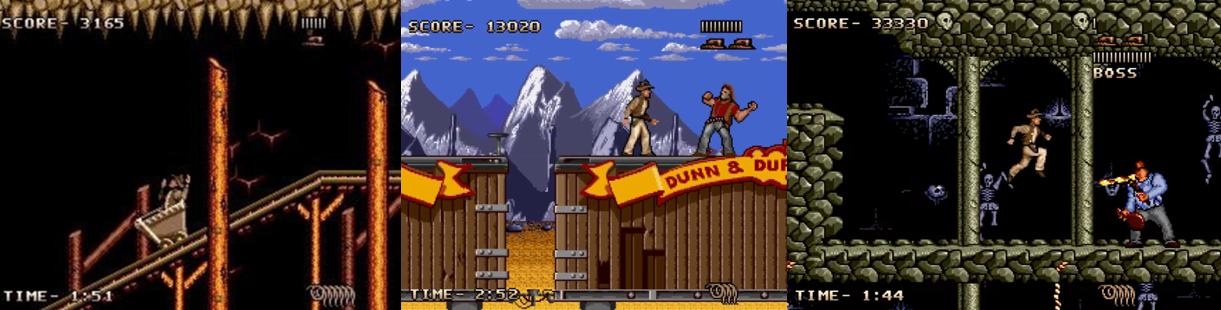





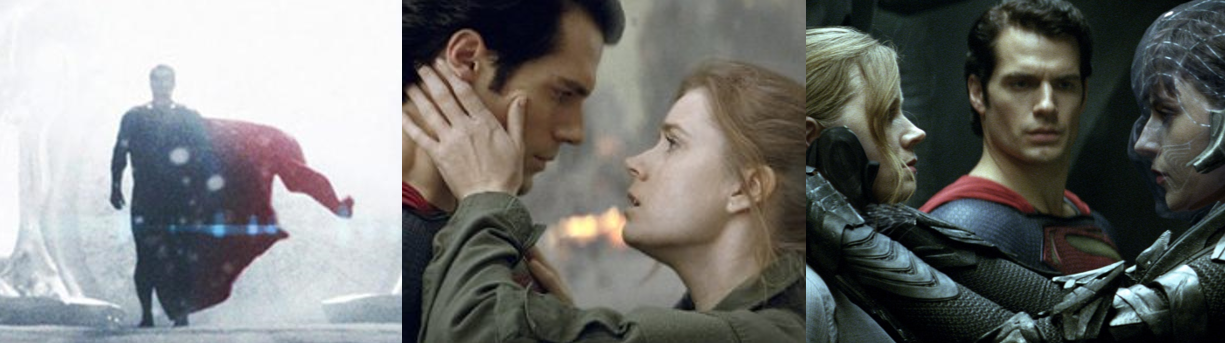
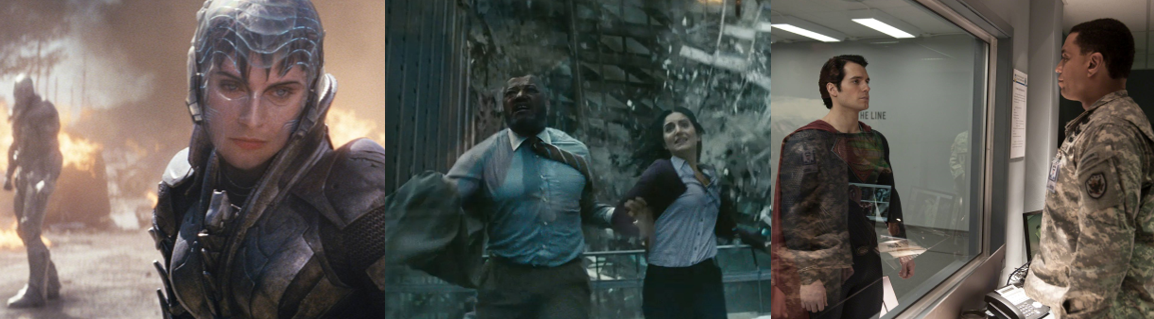


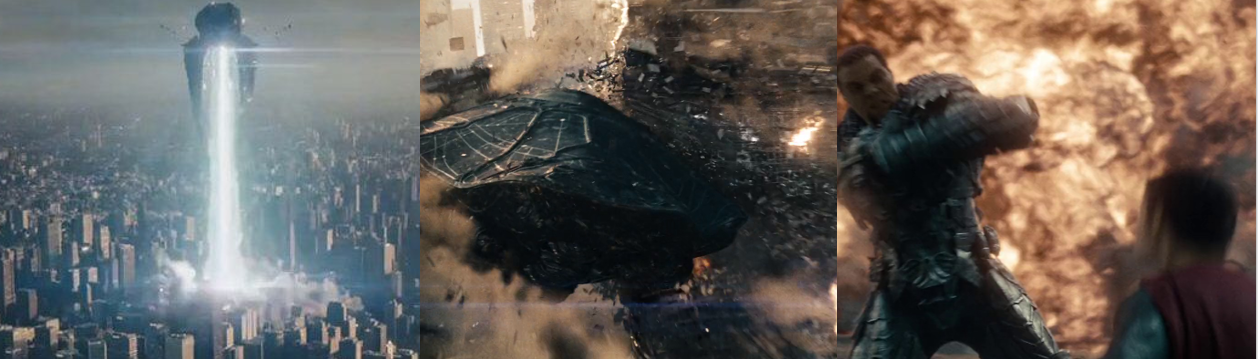
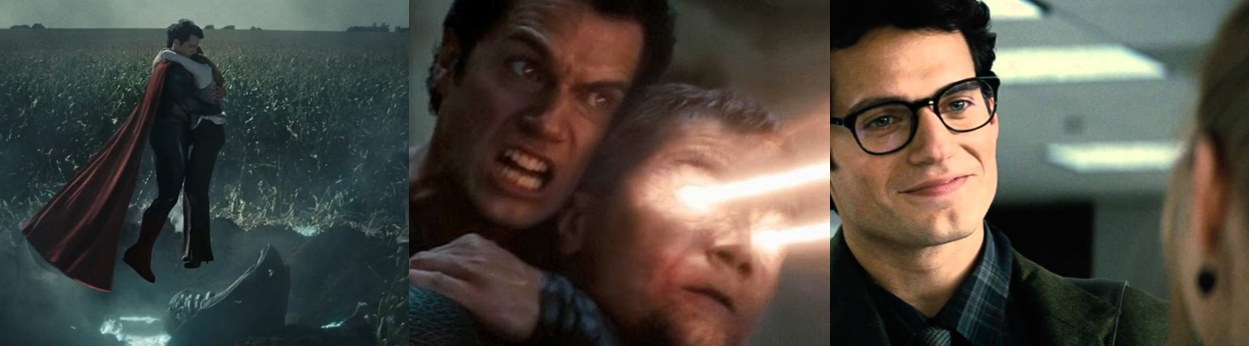


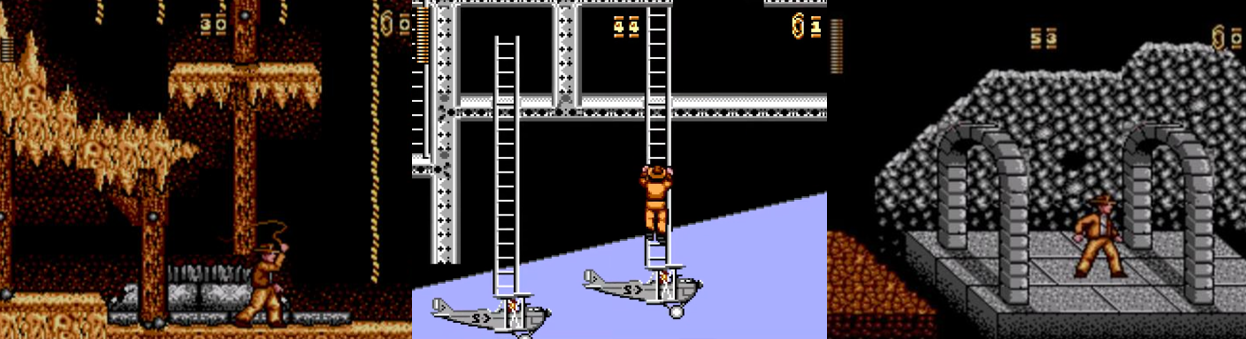


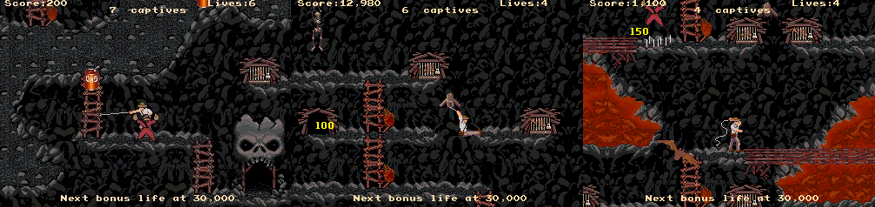
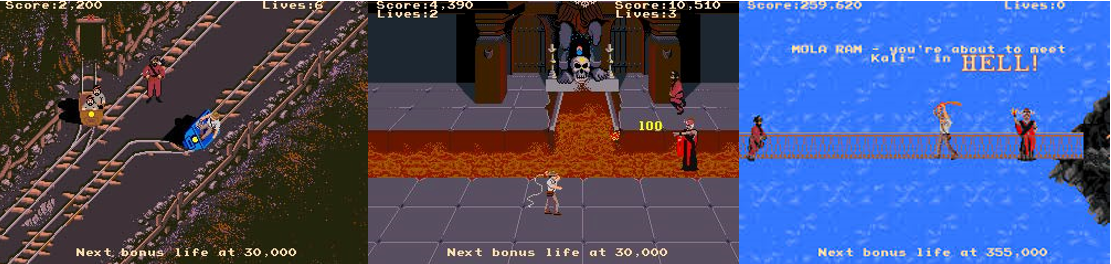


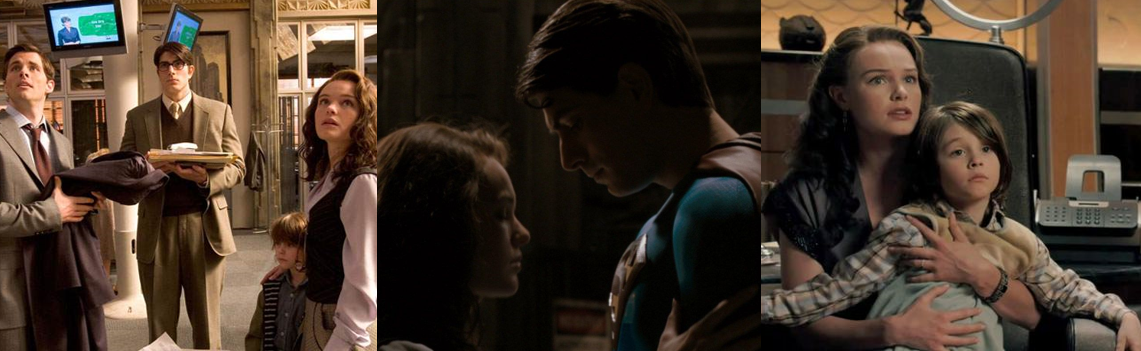
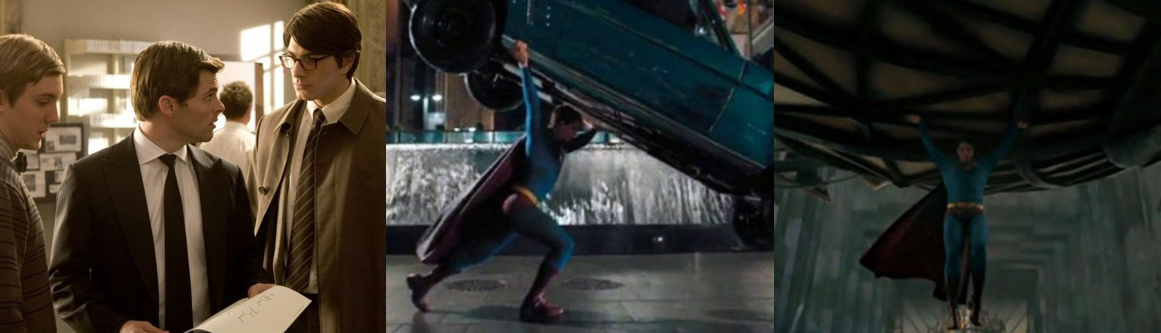

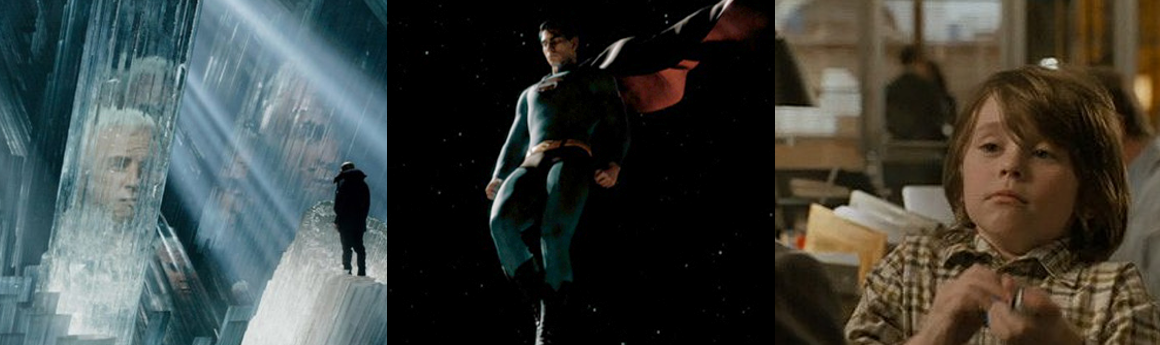
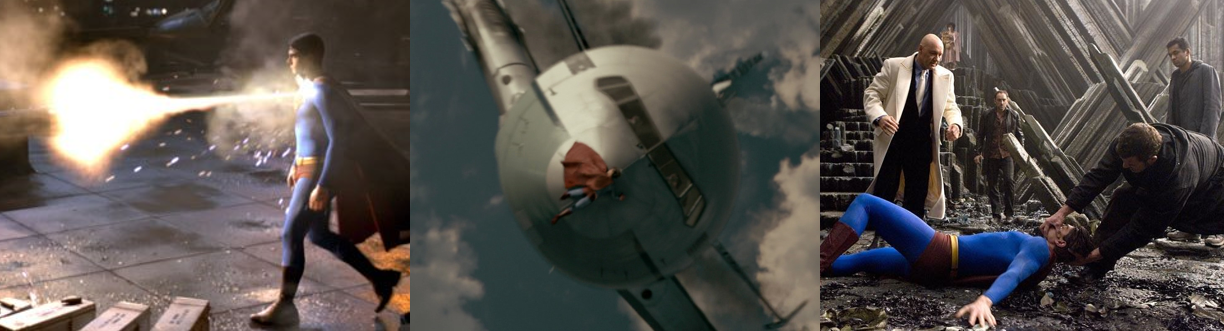
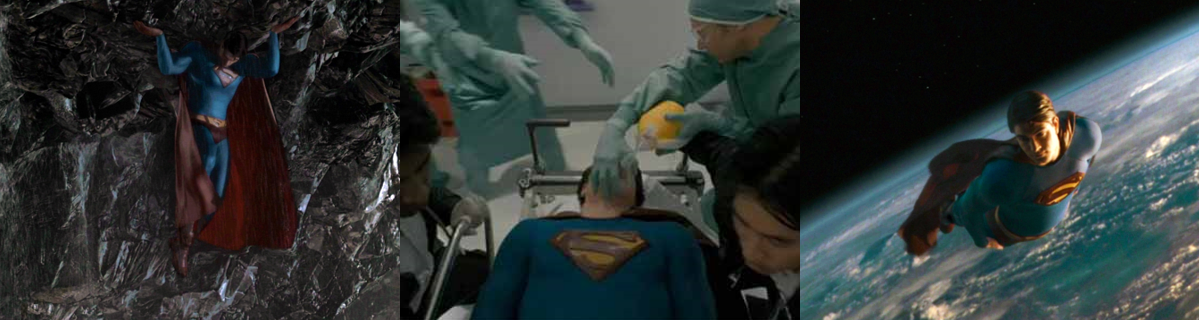




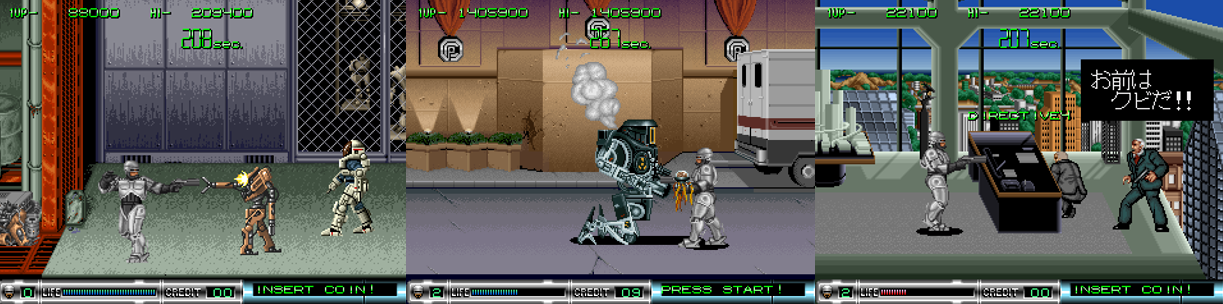

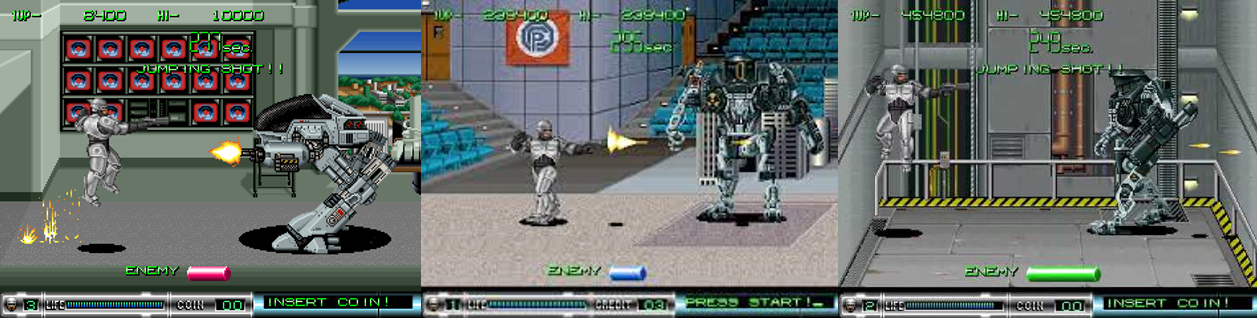
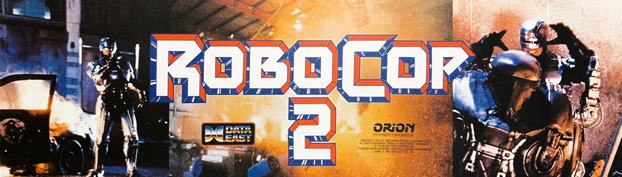


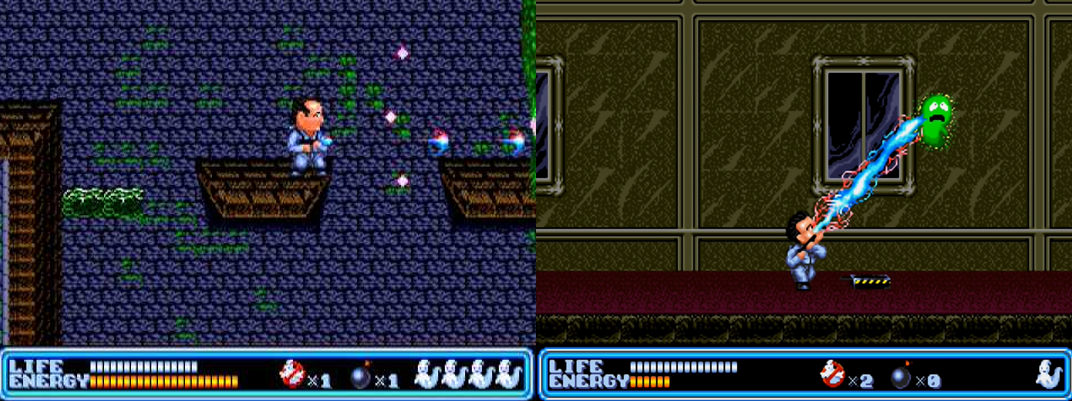
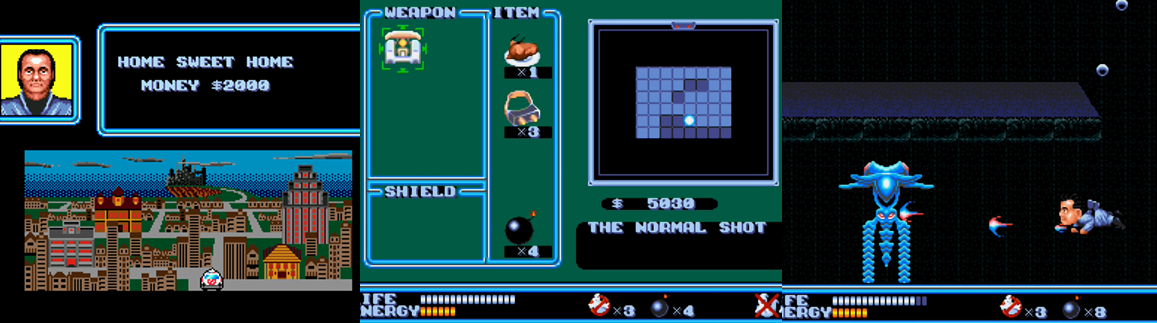






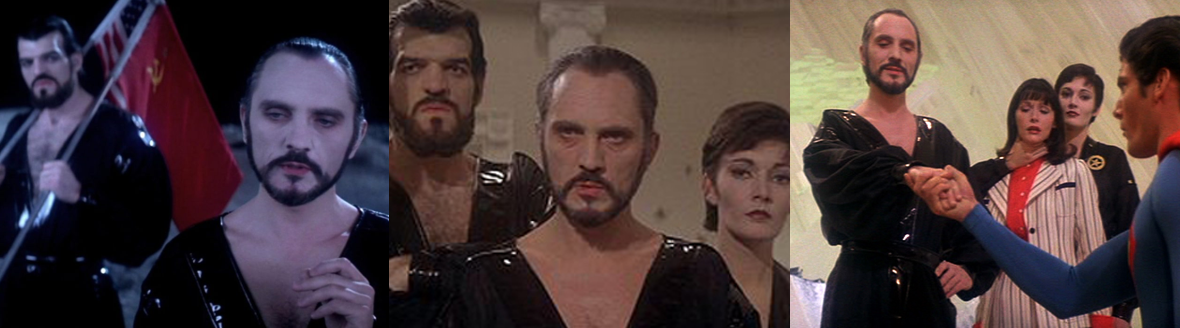
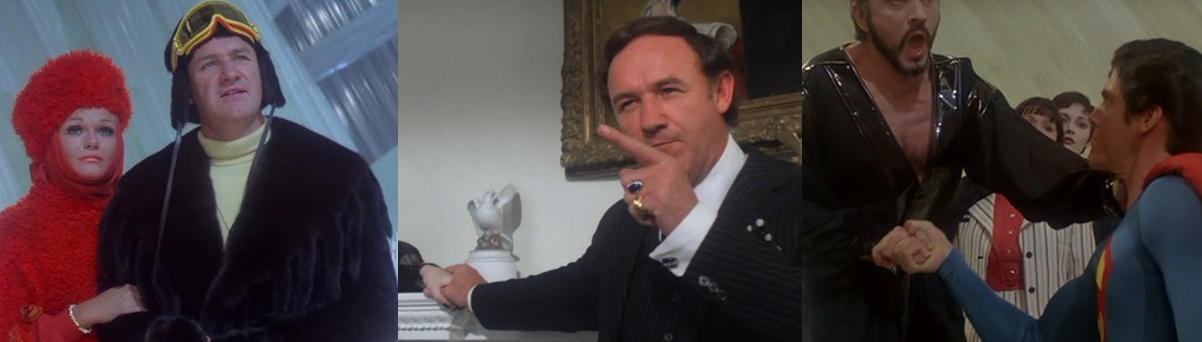
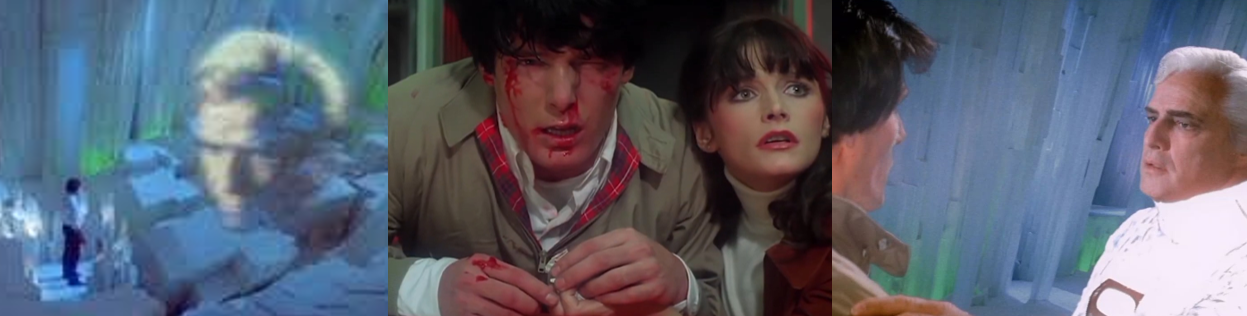
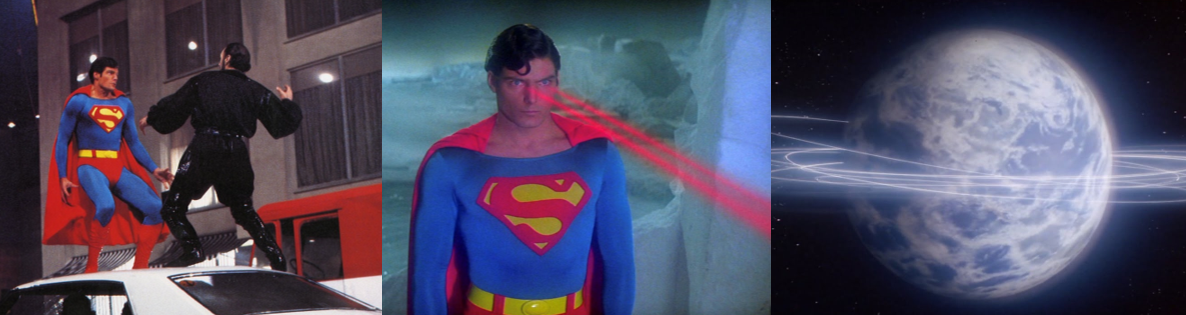



 Dr. K's Waiting Room
You must be logged in to post a comment.