Game Corner [Dragon Ball Day]: Dragonball Z: Battle of Z


DragonBallDay

When the Great Demon King Piccolo was released upon the world, he broadcasted a message on television declaring May 9th as “Piccolo Day”…and promptly celebrated by announcing his ownership over the planet. Since then, May 9th has been officially recognised as “Goku Day” but, to make things simpler, I’m using this as a good excuse to celebrate all things Dragon Ball,


Released: 23 January 2014
Developer: Bandai Namco Games
Also Available For: PlayStation 3 and PlayStation Vita

The Background:
Akira Toriyama’s Dragon Ball franchise, particularly Dragonball Z, has a long history with videogame adaptations; the first Dragonball Z videogame released for the Family Computer (Famicom) back in 1990 and, since then, a range of different titles based on the long-running manga and its popular anime counterpart have been released, generally in the form of tournament fighters or one-on-one beat-‘em-ups that retell the events of the anime over and over again. In 2009, Bandai Namco acquired the rights to the franchise and, since then, got into a bit of a routine of releasing new Dragon Ball titles on an annual basis. With Dragonball Z set to make a long-awaited return with the first feature-length production in seventeen years, Dragonball Z: Battle of Gods (Hosoda, 2013), the publishers produced a new Dragonball Z game to coincide with the film’s release, one that focused on team-based combat rather than one-on-one fights or role-playing mechanics. Dragonball Z: Battle of Z received mixed reviews upon release, however, with criticisms levelled at the game’s repetitive and unreliable combat mechanics and artificially augmented difficulty.

The Plot:
Through a series of battles, ranging from one to four characters at a time, Dragonball Z: Battle of Z retells famous events from the long history of the Dragonball Z franchise, from the arrival of the Saiyans, to the Z Fighters’ battles against Frieza, the Androids, Perfect Cell, and Majin Buu, and even select fights from the many non-canon movies and alternative timelines, culminating in battles against the franchise’s biggest names, enemies, and characters and a showdown with the God of Destruction himself, Beerus.

Gameplay:
I’ve played a handful of Dragonball Z  videogames in the past; I remember really enjoying Dragonball Z: Budokai Tenkaichi 3 (Spike, 2007) and have been putting off picking up Dragon Ball FighterZ (Arc System Works, 2018) for ages as I’m waiting to see if it gets re-released with all the downloadable content (DLC) included. As a result, and being a big Dragonball Z fan, I was intrigued when I was gifted Dragonball Z: Battle of Z but instantly a bit perturbed when I discovered that the game was a team-based fighter. Call me a traditionalist but I really don’t enjoy team-based fighters; I find it just artificially drags out the gameplay and the fights because you’re forced to fight two or more fighters in every round, meaning more chances to lose and more frustrations. I just don’t get why games that utilise this feature can’t just have the option to disable it and let players fight one-on-one. Interestingly, you can do this in Battle of Z but it’s really not recommended as you’re generally fighting a slew of enemies at once so you’ll need all the backup you can get.
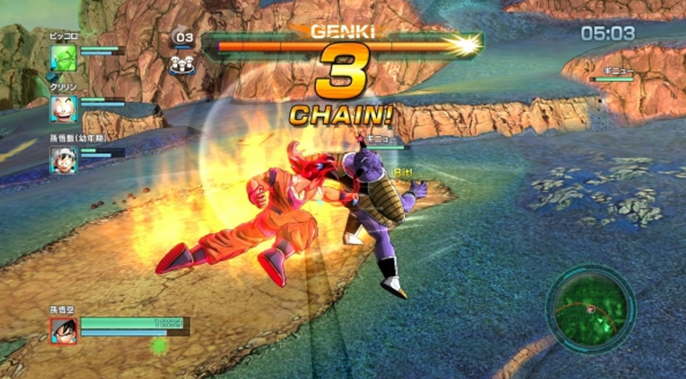
Rush at your opponent and smash them into the air to pull off a Meteor Chain combo.

Controls and fighting in Battle of Z are surprisingly complicated for a fighting game; you can attack your enemy with Y, fire a ki blast with B, and use X and A to ascend and descend, respectively. You can target an enemy with RB (remember to do this or else you’ll have a hard time actually landing a hit on your opponent), cycle through available targets with the right analogue stick, and dash towards your intended target (and, usually, head-first into their attacks) by holding A or X. Holding LB will see your character put up their guard to minimise the effects of incoming attacks (though, annoyingly, there is no counter attack system in place), and you can press LT and RT simultaneously to unleash your character’s signature attacks when they have enough ki energy. You can also perform a side step and dodge with LB and the left analogue stick and hit your opponent with a “Strike Impact” blow that allows you to chase after them and bash them around the environment and build up a “Meteor Chain” combo with your teammates.
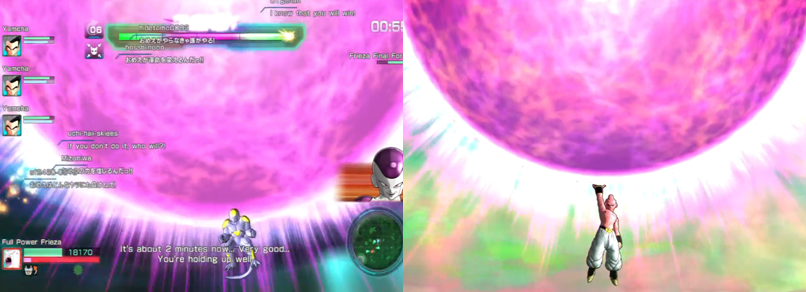
Fill up the Genki Gauge to unleash your character’s most devastating Ultimate Move.

As you attack your opponents, you’ll build up the “Genki Gauge” as well as your ki energy. When your ki energy is full enough, you’ll be able to pull off more powerful ki attacks such as Son Goku’s Kamehameha, Vegeta’s Garlick Gun, or Majin Buu’s Chocolate Beam. However, wasting your ki on normal ki blasts and your character’s other special attacks can make it harder for you to pull off these more powerful attacks and, if the bar is completely drained, you’ll be left stunned and vulnerable as you wait for it to refill. If you manage to completely fill up the Genki Gauge, though (and if you’re playing as the right character), you’ll be able to pull off an Ultimate Move, such as Goku’s Spirit Bomb or Super Saiyan 2 Son Gohan’s Father-Son Kamehameha blast. In some battles, the only way to win is to pull off these Ultimate Moves and fights are specifically structured in these cases to allow you to perform them but you’ll still have to work to build up the gauge. Occasionally, you’ll be asked to rapidly tap B to “share your energy” from the Genki Gauge, which seems to restore the ki energy of you and your fighters but, honestly, I must have missed the actual point of this as it just seemed like a waste of time, especially when you’re forced to switch your team out in the next mission more often than not. Of course, a major feature of Battle of Z is its team-based mechanic; before each mission, you’re asked to assemble a team of four fighters (comprised of you and three computer-controlled players or you and fellow human players if you’re connected to the internet) but, unfortunately, you’re rarely ever given free reign to pick your team as the characters you can select are restricted to the Saga you’re playing. For example, in the Saiyan Saga, you won’t be able to play as characters from the Cell Saga and you won’t be able to play as the Androids when taking on the Buu Saga.
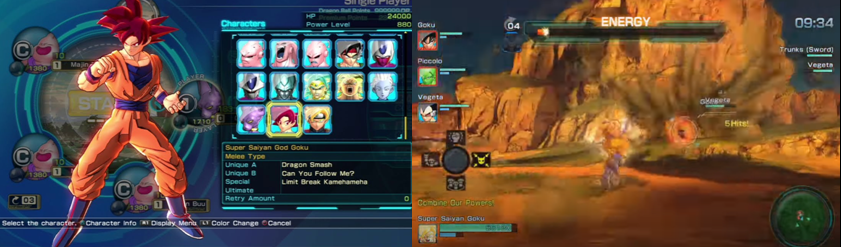
Assemble a diverse team of fighters and issue commands on the fly to best your opponents.

You can, however, assemble a team of multiple duplicate fighters, which can be helpful for the game’s tougher missions. Each fighter has a different speciality and, thus, each behaves and controls a little differently: Melee Types excel in up-close melee attacks; Ki Blast Types deal greater damage with their ki attacks and can fire three blasts at a time instead of just one; Interfere Types specialise in distracting and disrupting enemy movements; and Support Types will prioritise healing, reviving, and restoring you and your teammates in battle. During a fight, you can issue basic commands to your team using the directional pad (D-Pad) to instruct them to fight at full power, join forces with you against an opponent, go on the defensive, or hang back and leave the fighting to you (not really recommended and I never found a time when this was preferable). If you co-ordinate with your teammates, you can chain together Meteor Strikes to bash a target all over the place and even perform a “Synchro Rush” combo where you and your allies will pummel a chosen target with a combo of strikes. You can also target your allies and restore their health, ki, or revive them if they’re fallen but I found it much easier to concentrate on the offensive and leave the reviving to my teammates. When you head into a battle, you share a limited number of retries with your team mates; when your health is drained, your allies have ten seconds to revive you before you lose a try and, if all tries are exhausted by you and your teammates falling too often, the battle ends. It’s essential, then, to keep an eye on how many tries you have left as, quite often, battles can abruptly end without warning simply because your allies have fallen once too often. You’re also constantly battling against a time limit (usually about ten minutes), which makes every fight a constant struggle and a chore to get through, especially when you’re faced with wave upon wave of seemingly endless enemies.
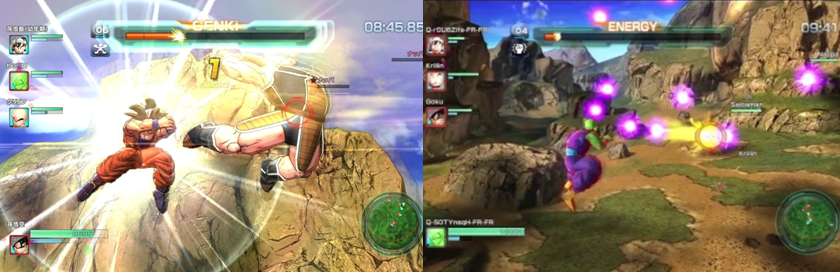
Battles are hetic and leave you pummelled relentlessly, which can be extremely frustrating.

Like pretty much every single Dragonball Z videogame, Battle of Z takes you through an (extremely) truncated retelling of the entire Dragonball Z saga using a strict mission-based structure, with a few bonus missions tossed in that adapt some of the feature films or present hypothetical scenarios. If you’re not that familiar with Dragonball Z then you might get a little lost as the story is told in brief snippets and character interactions before each fight and split across different missions; if you simply play the main missions, you’ll only experience events from one perspective and will have to switch to playing as the villains to experience the full story. On the one hand, this is a pretty decent way of getting you accustomed to a variety of different fighters but, on the other, it makes the story mode very fragmented and has you constantly switching out your load outs and setups as you’re forced to assemble new teams each time. Personally, I found it much easier to stick to one fighter (usually Super Saiyan Goku, Super Vegeta, or Full Power Frieza) and have three computer-controlled allies who all specialised in healing (such as Android #18 or Jeice) to avoid being pummelled into oblivion within the first few seconds battle. Since you’re forced to make a team of four for every fight, Dragonball Z’s story is tweaked to accommodate characters who weren’t present at certain events. Other times, you’re forced to battle against waves of opponents or certain foes (such as Raditz) who are inexplicably joined by disposable grunts who relentlessly bombard you with ki blasts. Every time you win (or, at least, complete) a fight, you’re given a ranking, earn a number of Battle Points (BP), and acquire cards and items. Unlike most Dragonball Z fighting games, Battle of Z opts for a quasi-open world presentation which allows you to freely fly and dash around a large environment ripped right from the anime from a third-person perspective. Unfortunately, the camera, physics, and controls are often as detrimental to your success as the often overwhelming difficulty of your opponents and you’ll be struggling with the janky camera as much as trying to land blows on your chosen target. If you forget to lock on to a target, you’ll simply swipe at thin air and, often, you’ll be battered by ki blasts from all angles or attacked from behind and, in the time it takes you to switch targets, you’ll probably end up knocked out on the ground like a chump. Helpfully, you can view your character’s abilities, your mission objectives, and the difficulty level of each mission from the pause menu and can simply manually retry if you are close to failure, which you may have to do a few times as, while the game starts off pretty simple, it quickly ups the difficulty level. It doesn’t help that downed enemies don’t seem to lose health when you attack them and you can never assemble a team of your favourite characters as you often need to have specific characters of Support Types on your team in order to succeed.

Graphics and Sound:
As is the case for pretty much every single Dragonball Z videogame, Battle of Z emulates the style and fast-paced, kinetic energy of the anime by employing a cel-shaded aesthetic. This is fitting but nothing you’ve not really seen before in other Dragonball Z games or similar fighters and results in character models looking pretty much spot on, if a little static and lifeless at times as they tend to just stand there or strike a dramatic pose while spouting abridged lines from the anime. Battle of Z expands on its roster by having each character’s different forms and transformations take up a character slot; as a result, you won’t be powering up or transforming mid-battle like the characters do in the anime and, instead, must select these forms from the character select screen. This means that we miss out on the iconic visual of the characters surrounded by crackling auras and powering up (outside of cutscenes, at least) but the game does a pretty good job of recreating the big, explosive special attacks from the anime…when you actually have enough ki to pull them off, that is. Still, it’s pretty cool to finally bust out attacks like Evil Buu’s Assault Rain, Super Vegito’s Spirit Sword, and Super Saiyan Broly’s Burst Eraser.
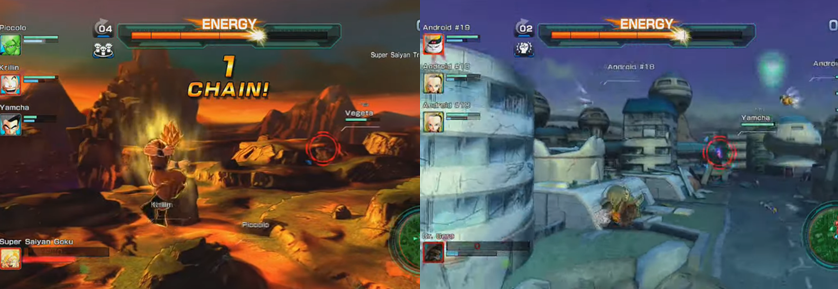
Environments may be accurate to the anime and partially destructible but they’re also quite barren.

Environments are just as faithfully recreated, almost to a fault; you’ll battle out in the countryside, in the middle of cities, out in the desert, and on iconic planets such as Namek and the Supreme Kai’s world. Unfortunately, while much of the environments are destructible (if you manage to smash your opponents into them properly), they’re largely barren and lifeless and often only varied by such exciting elements as different times of day. They’re also quite large, which is helpful if you’re trying to take a break from being relentlessly attacked and means that the onscreen radar actually comes in useful at times, but also means that it’s very easy for you to be attacked from afar due to lack of cover and results in you flying head-first into attacks as you desperately try to dash across the open plains to reach your target.
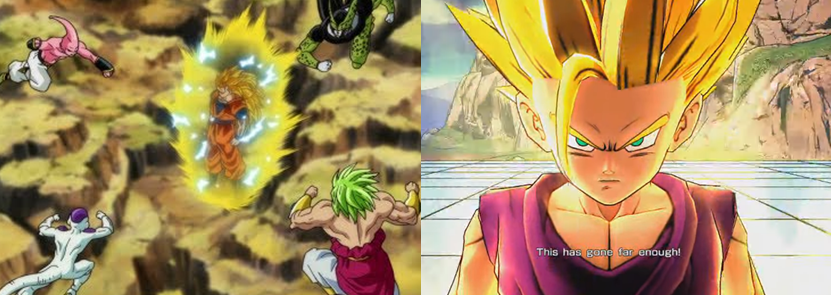
After an incredible anime opening, the game relies on its in-game graphics to give a little context to its fights.

As I mentioned, the game’s story takes a bit of a backseat; the in-game graphics are used to relay a condensed version of Dragonball Z’s sagas and movies through a few brief interactions between your team and their enemies. This can result in some different lines and interactions if you have different characters from the Saga present, and unique interactions between characters like Goku and Bardock, and all of the voice actors from the anime return to recreate and redub their lines from the anime. The game also recreates the music from the anime, including a remix of the iconic theme song, ‘Cha-La Head-Cha-La’, over an impressive anime opening sequence created specifically for the game that is, honestly, one of the more entertaining moments of Battle of Z.

Enemies and Bosses:
Since Battle of Z recreates the events of the anime and a handful of the feature-length movies, you’ll be tasked with tackling all of the series’ most iconic villains and characters as you play through the different missions with certain specific characters. Along the way, you’ll also have to contend with waves of disposable enemies who either come at you over and over again, support the more formidable characters, or respawn after being defeated. This means you’ll face numerous palette swapped variants of the Saibamen, Frieza’s grunts, Cell Jnr’s, and facing off against Z Fighters like Piccolo, Yamcha, and Tien Shinhan who often come in to tip the odds against you right when it seems like you’re on the cusp of victory.
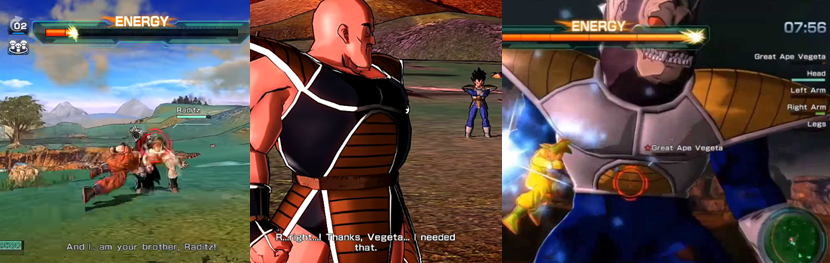
The Saiyans arrive on Earth to cause trouble and wreck havoc in their Great Ape forms.

In the Saiyan Saga, you’ll have to battle Raditz, Nappa, and Vegeta in a variety of different formations; the first time you face Raditz, you’ll first have to dispose of a wave of Saibamen, which can leave you quite drained and underprepared for the actual battle against Goku’s brother. After recreating Gohan’s training against Piccolo out in the wastelands, you’ll then have to take on Nappa, first accompanied by Saibamen and then joined by the main antagonist of this Saga, Vegeta. Vegeta’s ultimate threat comes when he transforms into his gigantic Great Ape form, which you can stun by targeting its limbs while trying to dodge his massive mouth laser and crushing grip. Honestly, though, the most annoying enemies in this Saga are Nappa (who constantly targeted me with relentless melee attacks) and Vegeta (who fires a non-stop barrage of ki blasts when you’re trying to fend off his cohorts). When playing as the villains, you’ll have to take on the Z Fighters as the perspective shifts to you mainly battling against Goku; you’ll also have to take on Gohan’s Great Ape form, which is far more rampant than Vegeta’s and likes to toss boulders right at your head.
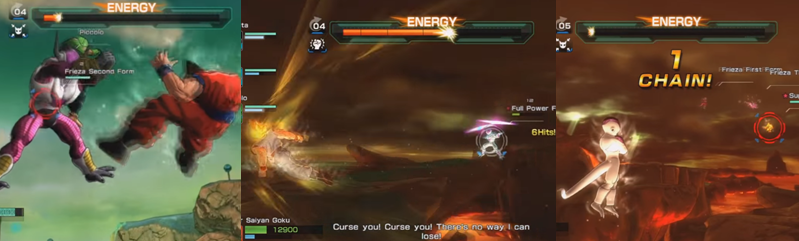
To finish off Frieza, you’ll have to also battle against a tight time limit and deal with his rapid teleporting.

In the Frieza Saga, you’ll mostly be confined to the planet Namek in various stages of disarray; Frieza’s soldiers are a constant headache all throughout this Saga and make battling the Ginyu Force much more annoying than it needs to be. The Ginyu’s are also far more versatile and frustrating than their Saiyan counterparts as Guido will freeze you in place with his telekinetic powers, Recoome will constantly fly at you with melee attacks much like Nappa, and things only get more annoying when the entire Ginyu Force comes at you in waves. Thankfully, Captain Ginyu doesn’t bust out his annoying change form mechanic (or, at least, he didn’t in my playthrough) so you don’t have to worry about him taking over your body or being forced to play as him but it’s quite a shock to find the Ginyu Force being so formidable when they’re generally depicted as being incompetent nincompoops. Once you get past the Ginyu Force, you’ll have to battle against Frieza’s various forms as Namek disintegrates around you. While his first form is a walk in the park, his second form allows him to shield himself with a protective aura and, as if that wasn’t bad enough, you’ll be forced to take on his third form in the same mission, making it more of a gauntlet. Another mission has Frieza zap your team to half health and asks you to either defeat him or survive for three minutes before he reaches his full power form, which you’re given just five minutes to defeat him. This makes this fight needlessly frustrating as Frieza is an absolute bitch and teleports all over the place while blasting at you with devastating ki attacks but it does work to your advantage in the villain story where you get to play as Frieza and battle against Super Saiyan Goku. Another alternative mission in the Frieza Saga has you battling all of Frieza’s forms at once which, honestly, I found easier than battling the damn Ginyu Force!
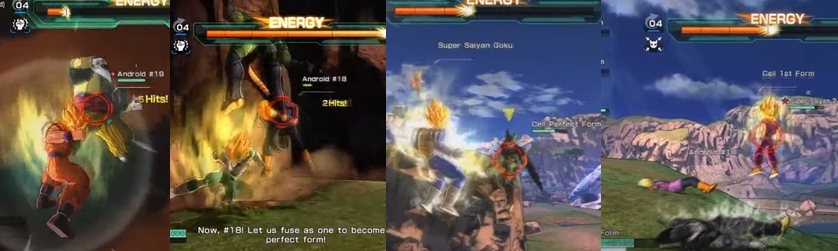
After besting the Androids, you’ll face your toughest challenge yet in the form of Perfect Cell.

In the Android Saga, you’ll first have to spar against the other Z Fighters before tackling Future Trunks and then confront Android #19 and Doctor Gero; unlike in some Dragonball Z videogames, and the anime, the androids are susceptible to your ki attacks rather than absorbing them and you’re also given a bit of a break as you don’t have to defeat Dr. Gero when he decides to run from the battle. Android #18 and #19 are more formidable, primarily because of how good #18’s healing abilities are, but they’re easy to target individually since they’re not supported by endless swarms of goons. Once the Cell Saga starts, you can actually have Cell attack the Androids on your behalf as the mission briefing is to destroy Cell’s different forms and the only real benefit to taking out all your enemies is the acquisition of additional BP. Cell isn’t much of a threat in his Imperfect form but he loves to spam Solar Flare to evade your attacks and his threat dramatically increases when you’re forced to battle Android #16 and #17, then them and Semi-Perfect Cell, and then fight Perfect Cell all in the same mission! This, however, is nothing compared to the sudden brick wall of Mission 26, which sees you annihilated by aggressive and frustrating Cell Jnr’s before being wrecked by Perfect Cell once more. The only way I could clear this mission was to have my three teammates be Teen Gohan so that I could be consistently and reliably healed and revived during the fight, which was particularly annoying to me as I wanted to use a team of Super Saiyans. Things only get more challenging in the villain and alternative missions, which have you battling against Perfect Cell as the Androids or fighting as Perfect Cell against Super Saiyan 2 Gohan (alongside Super Saiyan Vegeta, Super Saiyan Trunks, and Android #16, of course).
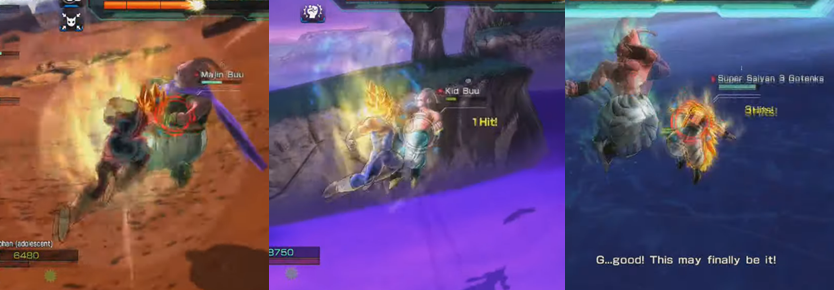
Buu becomes a significant threat once he assumes his powerful, maniacal Kid Buu form.

Things get a little less frustrating in the Buu saga, which sees you battling the likes of Dabura (who can turn you to stone with his spit) and, of course, Majin Buu’s various different forms as well as Majin Vegeta (who loves to block your attacks and is, fittingly, super aggressive). In these missions, Buu will also attack your enemies so it can be useful to hang back and let him weaken them on your behalf while conserving your ki energy but you’ll also have to battle Evil Buu right after defeating regular Buu, which can be quite the chore. The shit really hits the fan when you face off against Kid Buu, a maniacal and hyper aggressive enemy who is super fast and super tough, dashing and teleporting all over the place, blocking your attacks, and attacking with his stretchy limbs, furious ki combos, and even gaining invincibility frames and taking refuge behind the environment to really drag out the battle. When playing on the villain’s story, you’ll also be tasked with defeating or surviving for three minutes against Super Saiyan 3 Goku and a particularly gruelling gauntlet that sees you battling Son Goten and Kid Trunks individually, fused as Gotenks, their Super Saiyan 3 form, and Piccolo all in the same mission within the Hyperbolic Time Chamber.

Fight hard enough and you’ll unlock missions based on the feature-length movies and specials.

As mentioned, you’ll also recreate some of the most recognisable fights from the feature films; this means battling the Androids as Future Trunks, taking on Bardock (who has his own Great Ape and Super Saiyan forms), and fighting against the likes of Cooler (a battle that I found impossible to clear because of how tough and annoying his goons were), Hirudegarn, Meta-Cooler (which are essentially the same as battling the Great Apes but made far more frustrating), and Broly. As you might expect, Broly represents one of the game’s most challenging battles as he’s not only accompanied by constantly-respawning Saibamen but he also powers up to his Super Saiyan and Legendary Super Saiyan forms. Additionally, there are a number of alternative battles on offer that see you fighting against all of Vegeta and Goku’s family, all of the Saiyans in waves where they power up to their strongest forms, the entire Ginyu Force followed by all of Frieza’s forms and Cooler, and, eventually, a battle against Beerus (and against Super Saiyan Vegito as Beerus) in an adaptation of the Battle of Gods feature film. Unfortunately, to reach this (and unlock all of the game’s fights), you must complete and clear every single mission in the game, which is an incredibly tall order and one unfortunately, beyond my ability as I tapped out some time after losing to Super Saiyan 3 Gotenks.

Power-Ups and Bonuses:
When you select characters, you can customise their palette and power them up with cards and items. These are often earned, or unlocked, by clearing missions but are primarily purchased in the in-game shop using your BP. Cards can be used to increase your character’s melee attack power, defence, ki blast attack power, and have their natural abilities increase or cause their attacks to have detrimental effects on their targets. You can also earn Premium Points (PP) by meeting certain conditions or earning SS ranks in missions. PP can be spent in the Premium Shop and allow you to acquire more powerful items (most of which can only be used once before you have to buy another one and cards). These will buff your character and team’s stats, increasing them under certain conditions or draining health or ki from your enemies, speeding up your ability to level up and earning you more BP, or restoring you to full health upon defeat using Senzu Beans. Since you’ll be switching your teams out quite often, it’s best to make use of the auto customise options, which allow you to assign the most powerful cards to your characters (or which remain after equipping cards) at the push of a button.

Additional Features:
There are forty-nine Achievements on offer in Battle of Z; a lot of these are awarded simply for clearing each of the available story routes, though this becomes increasingly challenging as you tackle the alternate story missions. Others are tied to performing Ultimate Moves, clearing every mission, earning certain cards, playing as every character, or meeting certain conditions in the game’s online mode. You can team up with other players online to take on the game’s missions in co-op mode, battle against each other in a standard four-on-four fight, fight to attain the highest score, or race to acquire the seven Dragon Balls scattered throughout the environment. Sadly, the game doesn’t include couch co-op or offline multiplayer, so I never got to experience any of these modes as the servers don’t appear to still be active (or, if they are, players are few and far between these days). There’s a decent amount of replayability on offer through the many different story mode missions on offer; clearing missions unlocks parallel, adjacent, and subsequent missions that see you playing as different characters or taking on characters from the feature films. However, as these are some of the more frustrating and difficult missions in the game, it can be very tedious and challenging to clear every mission and unlock all the game’s playable characters (many of which can only be attained by clearing certain missions with the highest rank). You can also purchase some additional DLC in the form of extra fighters and forms, such as a Naruto (1999 to 2014) inspired outfit for Goku, Super Saiyan Bardock, and Super Saiyan Vegito.
The Summary:
Dragonball Z: Battle of Z certainly looks and sounds pretty good; its cel-shaded aesthetic closely mirrors the look of the anime and it’s great to hear the voice cast come back and re-record their lines for some new interactions in certain situations. It provides a slightly different spin on the usual formula through its use of team-based fighting mechanics, meaning that it’s a little different from most videogame adaptations of the anime but, essentially, if you’ve played any Dragonball Z videogame, there’s not really anything new here narratively speaking and it’s the same retreading of the Sagas we’ve seen numerous times before. What lets Battle of Z down, though, is the steep difficulty curve and the reliance on these team-based mechanics. Your teammates are often not really good for much more than distracting your enemies and will drain your retries if you don’t heal them up; it’s equally annoying that you can’t form your own, personalised team right off the bat and have to compromise or cheese the more challenging missions by loading up on Support Type characters. The game’s focus on a heavily condensed version of the story also hurts it as you simply jump from fight to fight and mission to mission with very little context and have to hop between the different story routes to get the full story, which is a bit annoying. In the end, it was fun at times but infuriating for the most part as missions were a chore to clear, the requirements to unlock everything were ridiculously unfair at times, and I can’t say that I’d recommend this one over other more traditional, 2.5D/tournament-based Dragonball Z videogames.

My Rating:

Rating: 2 out of 5.

Could Be Better

Have you ever played Dragonball Z: Battle of Z? If so, were you a fan and how would you rate it compared to other Dragonball Z videogames? Are you a fan of team-based fighters? Who was your go-to team in this game? What did you think to Battle of Z’s recreation of the anime and the slight twists it took with the different missions? What is your favourite Dragon Ball videogame and how are you celebrating Dragon Ball day today? Whatever your thoughts on Battle of Z, or Dragon Ball in general, leave a comment below.

Weekly Writing Prompt: 09/05/2022

Gillian Church posts Writing Prompts every week on her Horror Prompts Instagram account and I like to take part with a few snippets and pieces of flash fiction.

The Prompt:
It’s so quiet. Where is everybody?

The Submission:
I found myself walking through town, aimlessly it seemed, stunned by the stark silence that surrounded me.

There was not a bird in the air nor a soul on the street; it was eerie and unsettlingly.

Even worse was the mist that had descended over everything; it hung in the air, a swirling vapour, and as I cut through it with squinted eyes I could swear I could see shadows darting through it.

I spied the flickering orange light from a lamppost up ahead and instinctively moved towards it, telling myself the dread that crept up my spine was simply from the atmosphere and not from ethereal hands caressing the back of my neck.

My heart stopped as I reached the beam of light.

Andrea.

Of all the times and places for her to show up.

She was exactly as I remembered her: those long, curling locks, those wide green eyes, that silky smooth skin. She was even wearing the same coat, a long black number with buttons down the front, over a striped yellow and orange top that clung to her in all the right ways…and yet was classy and respectable.

I lump formed in my throat. Whispers danced all around me, urging me towards her, and when she looked up and waved, that same small smile tugging at her lips, I just about died.

I tried to wave back but my arms felt heavy as lead, and I prepared to tell her how much I missed her and awkwardly flirt with her like how I used to everyday when she casually walked through me as if I wasn’t even there.

I turned, shocked, and watched her disappear into the mist. I frantically patted myself all over, stunned, and that was when I saw the blood stain spreading down the front on my shirt. The whispering grew to a crescendo all around me as that one shining light finally fizzled out and, in the darkness that swamped me, I felt hands clutching at my body, pulling me deeper into the black.


What did you think to this week’s writing prompt? Did you submit anything for it? Have you ever written any flash fiction before? I’d love to know what you think to my snippets and writing prompts, so feel free to sign up and let me know what you think below or leave a comment on my Instagram page. You can also follow Gillian Church and Horror Prompts to take part in the Weekly Writing Prompt challenge.

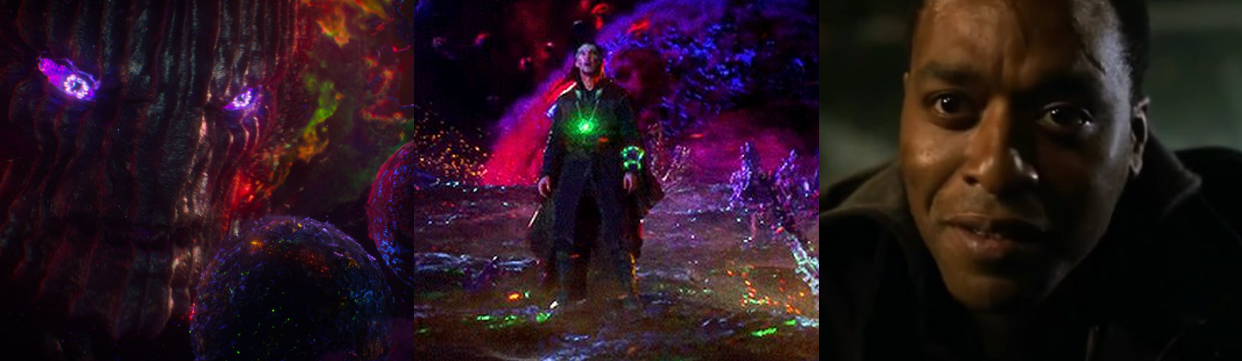
Movie Night [Multiverse Madness]: Doctor Strange


In September 1961, DC Comics published “Flash of Two Worlds” (Fox, et al), a landmark story that brought together two generations of the Flash: the Golden Age Jay Garrick and the Silver Age Barry Allen thanks to the concept of the multiverse, an infinite number of parallel universes that allowed any and all stories and characters to co-exist and interact. Marvel Comics would also adopt this concept and, to celebrate the release of Doctor Strange in the Multiverse of Madness (Raimi, 2022) this month, I’m both celebrating the Master of the Mystic Arts and exploring the Marvel Cinematic Universe’s (MCU) equivalent of the multiverse every Sunday of May.


Released: 4 November 2016
Director: Scott Derrickson
Distributor:
Walt Disney Studios Motion Pictures
Budget: $165 to 236.6 million
Stars:
Benedict Cumberbatch, Chiwetel Ejiofor, Rachel McAdams, Mads Mikkelsen, Benedict Wong, and Tilda Swinton

The Plot:
Doctor Stephen Strange’s (Cumberbatch) life is a celebrated neurosurgeon is shattered when a car accident robs him of the use of his hands. When traditional medicine fails him, he turns to the enigmatic Ancient One (Swinton). Quickly, and arrogantly, mastering spells and magics, Dr. Strange is forced to choose between his life of fortune and status and defending the world from rogue sorcerer Kaecilius (Mikkelsen).

The Background:
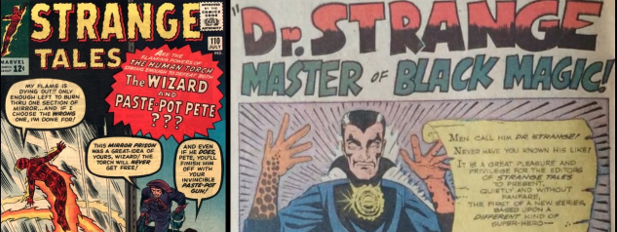
The creation of legendary artist Steve Ditko, Dr. Strange started out as a five-page pitch prior to his debut in the pages of Strange Tales and was known for his elaborate spells and quirks and bizarre adventures. Dr. Strange is renowned as one of Marvel’s most pivotal figureheads, and actually has quite the storied history with adaptation. Like a number of Marvel superheroes, the Master of the Mystic Arts first flirted with the silver screen in the seventies thanks to an extremely obscure live-action adaptation that I’m sure the vast majority of people have never heard of. Dr. Strange also cropped up in Marvel cartoons over the years, and even had a feature-length animated adventure back in 2007, but another live-action adaptation very nearly happened in the late-eighties and mid-nineties as well. After many failed attempts to bring the character to cinema screens throughout the 2000s, the legalities surrounding Dr. Strange were tidied up when, in 2014, Dr. Strange was officially announced to be part of the MCU’s third phase of films. Scott Derrickson was chosen to helm the film after producing not only a twelve-page scene for the film but also a ninety-minute pitch, concept art, and even an animatic all at his own expense. Derrickson’s background was in horror, and he aimed to ensure that he had actors of the highest calibre to experience the film’s fantastical elements. Although many actors were considered for the title role, Derrickson (and many fans) always envisioned Benedict Cumberbatch as the Sorcerer Supreme, and the actor took great care to properly reproduce the character’s hand gestures from Ditko’s art work. Derrickson also returned to Ditko’s original art for the film’s special effects, which aimed to bombard the viewer with surreal imagery and fantastical visuals to set the film apart from others in the MCU. Despite being one of Marvel’s more obscure superheroes, Doctor Strange was a massive success; its worldwide gross of almost $680 million ensured that the film would receive a sequel, and the film was universally praised for its visuals and originality in a genre quickly becoming bloated with superhero adventures.

The Review:
I remember being quite excited and intrigued when Doctor Strange was announced and the first trailers dropped; Dr. Strange is another Marvel superhero who I am not really all that familiar with, as my reading of him is limited to a few sporadic appearances in other stories and the comics collected in his Marvel Platinum compilation. Thus, the bulk of my knowledge about him comes from what I’ve read online, his appearances in the 1994 Spider-Man cartoon, and the aforementioned animated feature; however, it turned out that this was more than enough to make me familiar with the character, some of his abilities, and a couple of his major enemies ahead of seeing his live-action debut for the first time.

Arrogant neurosurgeon Dr. Strange is ironically left unable to operate after a devastating car crash.

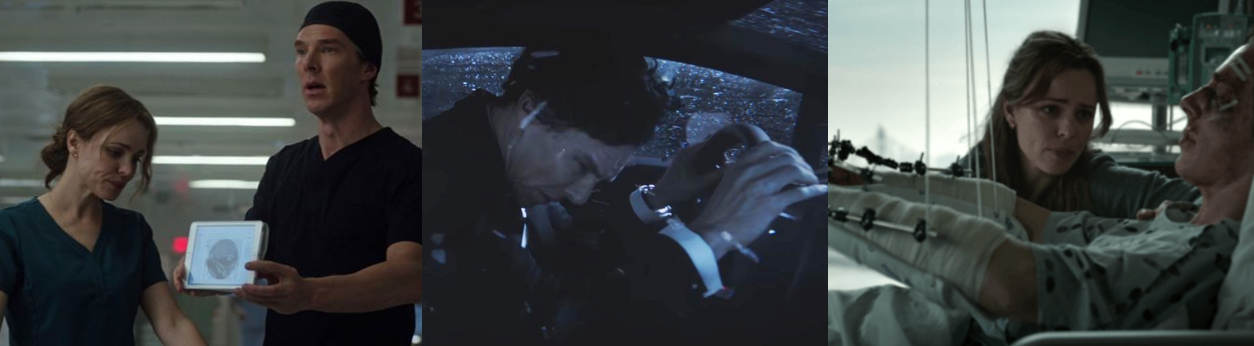
When we’re first introduced to Dr. Strange, he’s already a wealthy, acclaimed, and arrogant neurosurgeon; so talented are Dr. Strange’s abilities that he can easily perform life-saving brain surgery while identifying music tracks, and not only instantly identify a premature case of brain death and operate on a man already declared clinically dead but also perform complex invasive procedures into the brain without the aid of scans or camera imagery. Dr. Strange is so full of himself that he talks down to others at every opportunity, offering little in the way of professional courtesy or respect, and routinely turns down surgical prospects that he deems unworthy of this time and attention in order to be given a real challenge. He believes that a normal, everyday Emergency Room is a “butcher’s shop” that is capable of only saving one life at a time compared to the scope of his more specialised field of expertise, which has brought him fame and acclaim. This has bought him a luxurious apartment full of expensive clothes and accessories, and a supercar that he drives with reckless abandon that is only compounded by his insistence on talking on speaker phone while rocketing around tight, winding roads outside of the city; distracted by his phone, Dr. Strange is blindsided and sent careening down a cliff side in a horrific car crash that leaves him a bloodied, broken mess. Although he survives, his hands are completed shattered from the accident and, following many painful and desperate surgeries, he is left frustrated and angered by a constant trembling in his hands that spells the end of his surgical career.

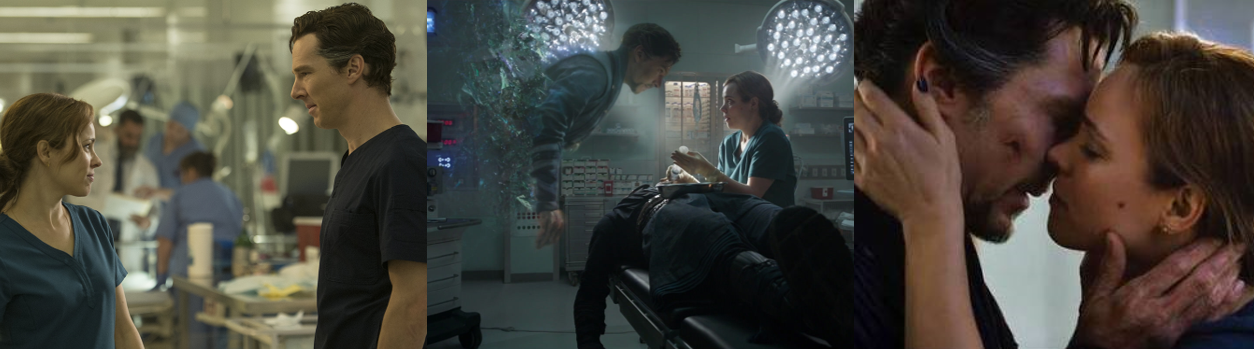
Former lover Christine is the closet thing Dr. Strange has to a friend.

Dr. Strange’s condescending attitude and tendency to show off means he clashes with fellow surgeon Nicodemus “Nick” West (Michael Stuhlbarg), a fully qualified and experienced doctor whom Dr. Strange sees as an incompetent fool at the start of the film. Dr. Strange partially blames Nick for the state of his wrecked hands mid-way through the film, but he is forced to turn to him later on when his trembling hands still prove incapable of performing surgery. However, while also frustrated by Dr. Strange’s attitude, his medical skill and sheer genius in the operating room are a source of awe to Doctor Christine Palmer (McAdams), a former lover of Strange’s and the closest thing he has to a friend. While he helps her with a misdiagnosed patient, he does so mainly to stick it to Nick and more to show off his incredible talents rather than out of any kind of professional courtesy, and, though the two share some banter given their previous relationship, she knows all-too-well how vain and self-centred Dr. Strange is. However, even she couldn’t predict the sudden shift in his attitude following the accident; where he was once arrogant and condescending, Dr. Strange becomes a broken, infuriated, embittered man who lashes out at her attempts to help, drains his fortune on experimental procedures, and is so driven to desperation that he seeks out Jonathan Pangborn (Benjamin Bratt), a former paraplegic who made a miraculous recovery and points him towards Kamar-Taj.

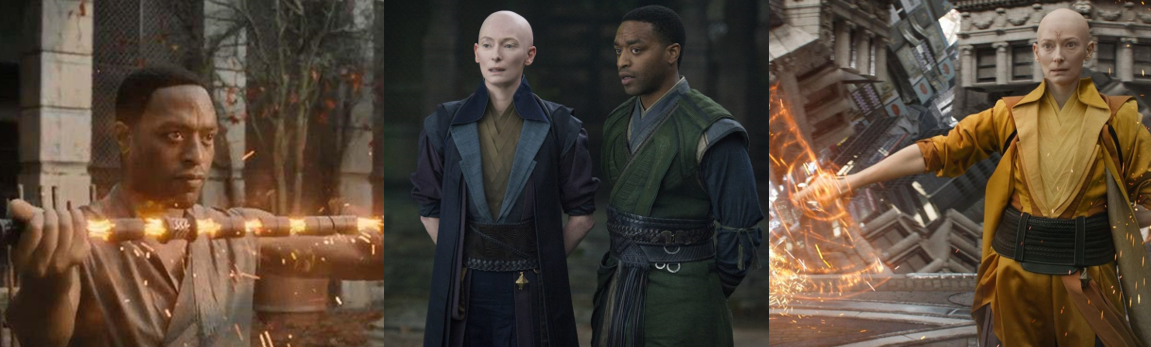
Mordo is a devout follower of the Ancient One, an all-powerful sorcerer with a dark secret.

Using the last of his resources, Dr. Strange travels to Kathmandu to seek out the mysterious Kamar-Taj and attracts the attention of Karl Mordo (Ejiofor), who saves Strange from a brutal beating at the hands of muggers and brings him to the doorstep of a dilapidated building, where he is introduced to “The Ancient One”. Even in his pain and suffering, Dr. Strange remains sceptical and somewhat insolent; this is understandable, to be fair, given he’s a man of science and logic and the idea of magic is as bizarre to him as it would be to us, but his insolence is only exacerbated thanks to his relentless ego and temper. Mordo empathises with Strange’s scepticism, and even relates to it, but is a far more respectful and informed individual after learning from the Ancient One. The Ancient One literally forces Dr. Strange to open his eyes to a wider world, one beyond the limits of the physical body and his rational perspective on life, by pushing him into the Astral Dimension by separating his Astral Form from his body. There, beyond time and space and the limits of reality, he is given the briefest glimpse of the vast, dangerous wonder of the multiverse. Though cast away from Kamar-Taj, Dr. Strange’s stubbornness impresses Mordo, who is able to convince the Ancient One to give the damaged neurosurgeon a chance to redeem himself under their tutelage, despite the similarities she sees between Strange and Kaecilius.

Though a quick study, Dr. Strange struggles to overcome his scepticism and his physical ailments.

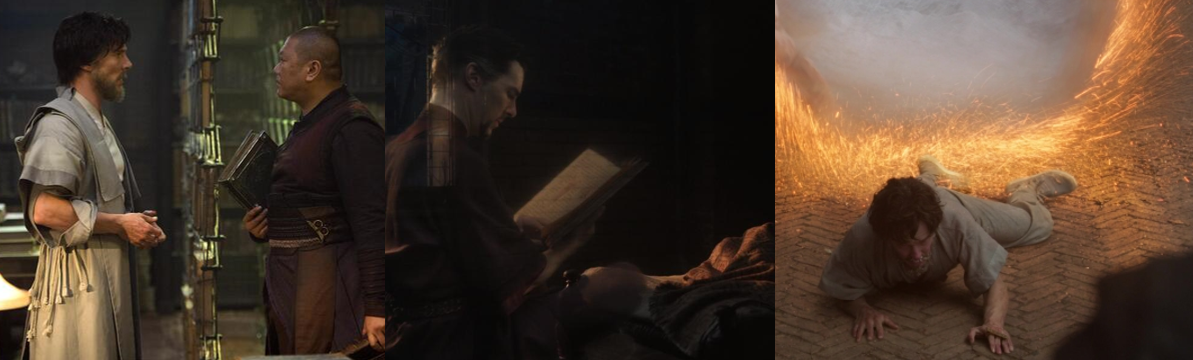
What follows is an extended training montage in which the Ancient One introduces to Dr. Strange (an the audience) the logistics of magic and how it works in the MCU; through training and hard work, sorcerers are able to draw upon energies from across the multiverse to conjure weapons, cast spells, and work wonders. Because of the damage to his hands, Strange initially struggles with the physical aspects of his training, but is humbled when he sees an amputee performing spells and learns that he must set aside his ego, and his disbelief, in order to succeed; the Ancient One pushes him to this revelation by stranding him on Mount Everest and forcing him to transport himself back or risk death. Thankfully (or conveniently, depending on your perspective), Dr. Strange possesses a photographic memory; just as this allowed him to acquire Medical Doctorate and PhD at the same time, this means that he can digest multiple volumes from the Kamar-Taj library both while awake and asleep thanks to utilising his Astral Form. Dr. Strange’s thirst for knowledge and incredible learning ability impresses the Kamar-Taj librarian, Wong (Wong), who puts Strange onto more advanced tomes and warns him against stealing from the Ancient One’s private collection. Stoic and gruff, Wong provides much of the film’s comic relief, but it’s also through him (and while learning combat alongside Mordo) that Dr. Strange learns more about Kaecilius and how he fell from grace.

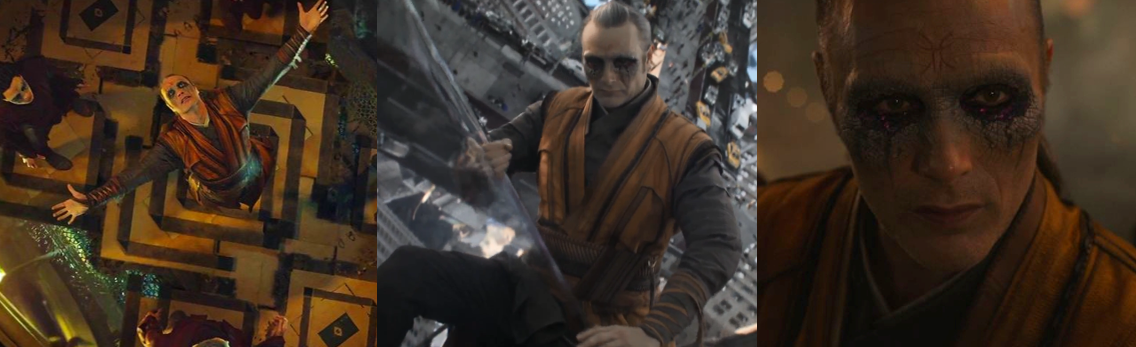
Kaecilius is determined to expose the Ancient One and “save” the world from death and suffering.

Kaecilius was introduced at the very start of the film, when he and his zealots attacked Kamar-Taj, and stole pages from one of the library’s many mystical tomes before managing to escape from the Ancient One after one hell of a visually impressive confrontation in what we later learn is the “Mirror Dimension”, a pocket reality where the environment is constantly shifting and changed around the inhabitants as the caster dictates. Proud and headstrong, Kaecilius questioned the Ancient One’s teachings and turned against his teacher after learning that the Ancient One was drawing forbidden powers from the Dark Dimension to extend her lifespan and grant her her awesome powers. A cold, driven man, Kaecilius believes her to be a hypocrite who deceived all of her pupils and, alongside those he has convinced to his cause, works to decipher the pages he stole from Kamar-Taj to both draw from that same dark energy and expose the Ancient One’s true nature. This sees him, and his fellow zealots, become imbued with the malevolent influence of the Dread Dormammu (Cumberbatch), a primordial cosmic entity that is seemingly the embodiment of hatred and seeks to infest and conquer all realities using sorcerers like Kaecilius as puppets. Kaecilius, sadly, falls into the same trap as many MCU villains in that he’s largely a waste of a talented actor and disappointingly absent for much of the film; spoken about as a kind of bogeyman and as a dark mirror of Dr. Strange, Kaecilius ends up being a lot like Malekith (Christopher Eccleston) in that he makes an impression when he is on screen thanks to Mikkelsen’s scowling countenance and silky-smooth line delivery but ends up being a regrettably forgettable villain who is simply there to give Dr. Strange someone to fight against and strive to be the opposite of.

The Nitty-Gritty:
Magic such as this is a tricky concept to bring to life, and was wholly new to the MCU at the time; we had seen a version of magic before, of course, one that is just as much attributed to near-God-like alien physiology and technology, but had never seen literal, unequivocal magical spells and abilities before. Thus, it was smart of the film to introduce this franchise-changing concept slowly, and in a way that kept things tantalisingly grounded (for the most part) while hinting at magic’s incredible (and near-limitless potential). Sorcerers tend to limit their magic to glowing, sparking whips, shields, or melee weapons and to instantaneously shift from one location to another, and often focus their abilities through weapons or objects such as the Staff of the Living Tribunal or the Sling Ring. The film slowly develops the wealth and potential of magic as it progresses, localising it in the mysterious foreign land of Kamar-Taj and then expanding it to encompass more familiar and urban locations, such as New York City. This allows us to see that this kind of magic has always existed in the MCU, we just haven’t experienced it yet, and it was smart to frame magic, and the secret of Kamar-Taj, as a mystery that Dr. Strange must solve.

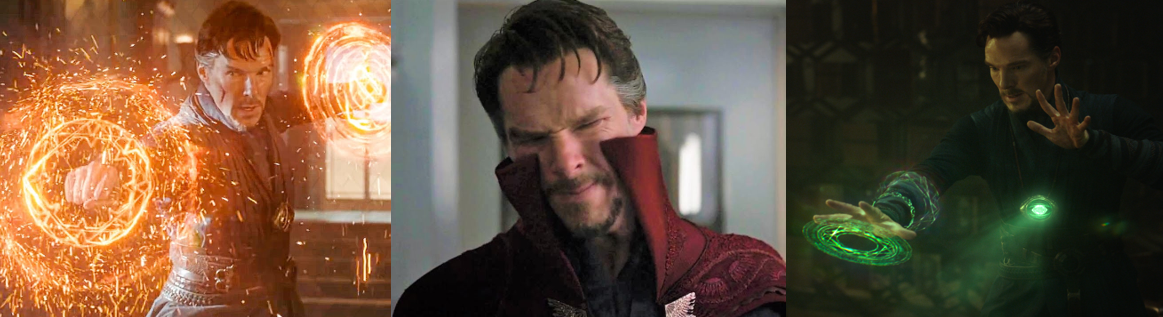
Dr. Strange mostly focuses on defensive magic, but recklessly experiments with the Time Stone.

Wong reveals to Dr. Strange that the true purpose of Kamar-Taj, and the sorcerers, is to man three Sanctum Sanctorums across the world and continuously fend off threats from beyond their world, such as Dormammu, in an on-going battle of light against darkness. Despite everything he’s seen and learned, this is where Dr. Strange initially chooses to bow out since he has no intention of fighting a magical war, but he is forced to fight alongside Mordo and Wong when Kaecilius suddenly attacks the Sanctum Sanctorums. Though a talented and peerless surgeon, Dr. Strange struggles to learn the ways of magic; even after absorbing knowledge from Wong’s library, he is severely outmatched against Kaecilius and his followers, and succeeds only through luck, the use of rudimentary spells, and the intervention of the Cloak of Levitation, a semi-sentient cape that allows him to fly and adds more comic relief to the film. Dr. Strange’s scepticism soon turns to an insatiable thirst for knowledge and to challenge himself by experimenting with more and more advanced magic; this not only leads him to steal volumes from the library and question the nature of Kamar-Taj, but also to experiment with the Eye of Agamotto. This ancient relic houses the Time Stone and allows the user to control the flow of time itself, localising it to reverse or speed up time as they dictate, and Wong and Mordo are angered by Strange’s recklessness with the Infinity Stone. Mordo, in particular, is outraged at Strange’s careless tampering with the laws of reality, something he believes should be protected at all costs, just as he whole-heartedly believes in the teachings and standards set by the Ancient One.  

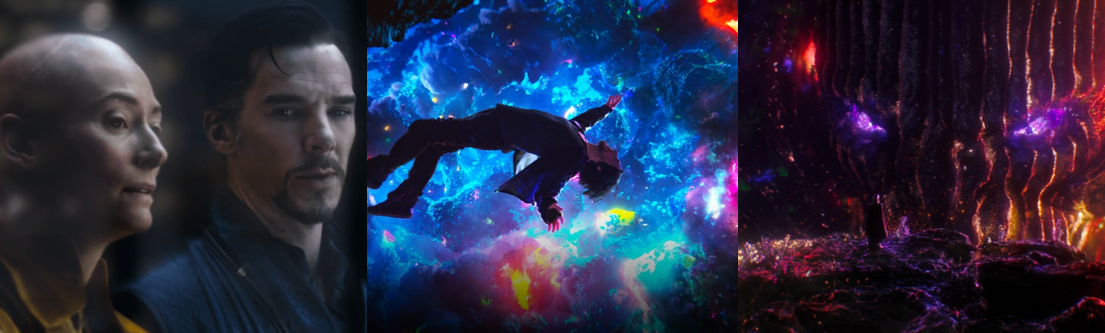
The Ancient One teaches Dr. Strange about the vast dangers of the multiverse which dwarf his ego.

The multiverse is presented as a veritable acid trip, a bizarre bombardment of colours, energy, and surreal environments that overwhelm Dr. Strange’s perception of reality and throw all logic out of the window. This, and the fantastical nature of Dr. Strange, allows the film to stand out from others in the MCU with some truly trippy visuals, such as New York collapsing in on itself, Dr. Strange’s Astral Form directing Christine’s attempts to save his physical body (and even killing one of Kaecilius’s followers, something he is aghast at thanks to his Hippocratic Oath), and worlds full of fantastic visuals, warped gravity, and cosmic impossibilities that exist side-by-side with a Dark Dimension full of malice and hatred, where only malevolence lives. Seduced by Dormammu’s influence, Kaecilius longs to destroy all concepts of time and allow the Dark Dimension to envelop the world in a perverted attempt to “save” it. So driven by his conviction and power is Kaecilius that he fatally wounds the Ancient One, but not before revealing that the Ancient One has been drawing power from the Dark Dimension. Before dying, the Ancient One explains to Dr. Strange, in the Astral Dimension, that her methods were necessary in order to defend the world and that such bending of the rules will be necessary to balance out Mordo’s steadfast nature and defeat Kaecilius.

Dr. Strange successfully bargains with Dormammu, but Mordo is left disillusioned by deception.

Indeed, Dr. Strange is faced with an apocalyptic scenario when Kaecilius and his zealots conjure Dormammu in Hong Kong, leading to widespread chaos and destruction and the deaths of Wong and many other sorcerers. Taking the Ancient One’s words to heart, Dr. Strange sees no other option but to first reverse time to restore those who have fallen and journey to the Dark Dimension himself and confront Dormammu head-on. There, in a world of swirling, nightmarish, eldritch horror, we see how truly gigantic the scope of the MCU is as the titanic cosmic being that is the Dread Dormammu dwarfs the fledging sorcerer and threatens to overcome the entire world and spread his reach to every man, woman, and child. However, Dr. Strange has the last laugh when he unleashes the power of the Time Stone to trap Dormammu in an ever-repeating loop of time; there, Dormammu’s continual attempts to kill Dr. Strange, though successful, ultimately fail as the loop resets over and over, angered the malevolent creature since he is unfamiliar with the concept of time and forced to bargain with Dr. Strange. In return for taking Kaecilius and his followers and abandoning his desires to consume the Earth, Dr. Strange agrees to release Dormammu from the loop, thus saving the entire world and ending the threat from the Dark Dimension. Although we see Dr. Strange die again and again, we have no way of knowing exactly how long this loop lasted for, or how much pain and suffering Dr. Strange endured as he made perhaps the greatest sacrifice of anyone in the MCU as he was fully committed to ending his days in that cycle of death and this moment not only completed Dr. Strange’s character arc in the film of learning to set aside his ego but also cemented him as a big-time player in the larger MCU. Unfortunately, while Dr. Strange finally sees that his true destiny is to serve a greater good, Mordo is disillusioned by the revelations and the lengths that Strange goes to to repel Dormammu and pledges to rid the world of sorcerers.

The Summary:
Doctor Strange remains one of the most unique and intriguing entries in the MCU; even when Thor Odinson (Chris Hemsworth) first burst into the franchise and shook it up by introducing Gods and a version of magic, and we started seeing the first hints of the Infinity Stones, I never would have guessed that we would see the Sorcerer Supreme reversing the flow of time, fending off cosmic entities like Dormammu, or blowing the fabric of his fictional world apart with concepts like the multiverse. And yet, at its core, Doctor Strange is the humbling story of redemption for a vain, arrogant asshole of a man who endures a horrific accident, has his entire world destroyed, and is forced to accept a greater destiny. It’s pretty clear now that the intention was to set up Doctor Strange as a counterpart to Tony Stark/Iron Man (Robert Downey, Jr); both are snarky, self-absorbed men who put their unique talents to use in service of both personal glory and the wellbeing of the world around them. However, while Iron Man helped to ground the MCU and make its fantastical elements relatable, Dr. Strange’s very existence meant that the scope of the MCU was basically limitless and we’ve since seen that it stretches beyond even our reality. Full of mind-bending visuals that make for some entertaining action sequences, Doctor Strange might have played things a little too safe but that’s not exactly a bad thing when it comes to a concept like magic, which can basically do anything and make characters like Dr. Strange severely overpowered. Thankfully, the film frames Strange as very much a rookie and struggling to master and even fully understand this bizarre world he has entered into, meaning that subsequent appearances by the character can simply build upon the foundations laid by this fantastical first film.

My Rating:

Rating: 4 out of 5.

Great Stuff

Were you a fan of Doctor Strange? What did you think to the introduction of magic to the MCU and the way the film explained the concept? Did you enjoy Dr. Strange’s character arc and portrayal in the film? What did you think to the Ancient One and the depiction of Mordo? Were you also a little disappointed by Kaecilius, and what did you think to the final showdown between Dr. Strange and Dormammu? What are some of your favourite stories involving these characters and do you think Dr. Strange is too overpowered as a character? Whatever your thoughts on Doctor Strange, sign up to leave your thoughts below or leave a comment on my social media, and check back in next Sunday for more Multiverse Madness!

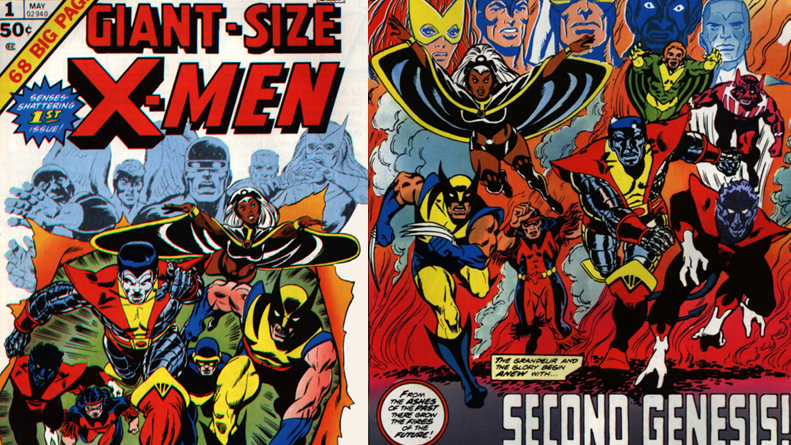
Back Issues [X-Men Month]: Giant-Size X-Men #1


To commemorate, the culmination of their long-running and successful X-Men movies, 20th Century Fox declared May 13th as “X-Men Day”, a day to celebrate all things Mutant and X-Men and celebrate Marvel’s iconic collection of superpowered beings who fight to protect a world that hates and fears them.


Story Titles: “Second Genesis!”, “…And When There Was One!”, “Assault Force!”, and “Krakoa…The Island That Walks Like a Man!”
Published: May 1975
Writer: Len Wein
Artist: Dave Cockrum

The Background:
In 1963, after achieving success with characters like the Fantastic Four, Tony Stark/Iron Man, and, of course, Peter Parker/Spider-Man, Marvel Comics’ Stan Lee and Jack Kirby dreamed up the concept of “Mutants”, ordinary people who developed extraordinary powers once they hit puberty. In contrast to lauded superhero teams like the Avengers and the Fantastic Four, the X-Men were hated and feared by the general public and thus used to tackle variety of social issues, most notably racism. Unfortunately, the X-Men initially struggled to find an audience and the comic was cancelled by issue sixty-six in 1970. Five years later, under the direction of Chris Claremont, Len Wein and Dave Cockrum collaborated on a revival of the title, which saw an international team of Mutants join the team, breathed new life into the title, and the X-Men have been an enduring and popular team in comics ever since, influencing an entire generation with a much-lauded animated series in the nineties and, of course, a series of massively successful live-action movies.

The Review:
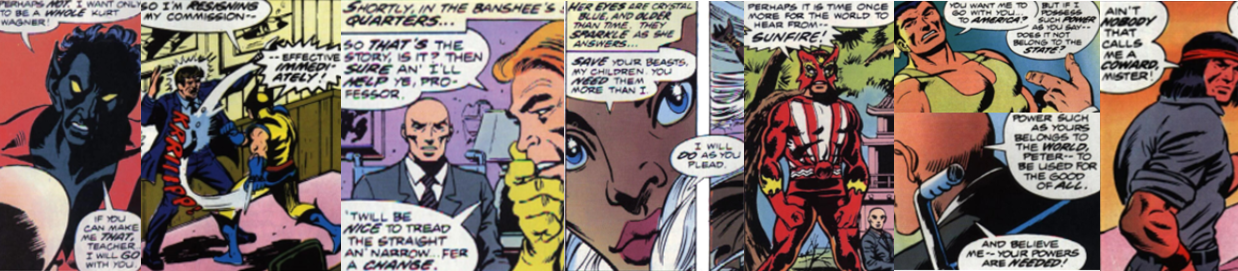
The story opens in Winzeldorf, Germany where a torch-carrying horde of bigots are chasing after Kurt Wagner/Nightcrawler; despite his demonic appearance, Nightcrawler pities the braying crowd for their “mindless prejudices” and laments that they are so blinded by their hatred of him that they’re risking their own safety. Rather than teleport to safety, Nightcrawler opts to leap into the crowd and fight them off with the only language the bigots understand: violence. The numbers game is too much for the young Mutant, however, but he is saved from a fiery death by the timely intervention of Professor Charles Xavier/Professor X, who freezes the horde with his incredible mental powers and offers Kurt a place at his school in order to both shield him from such hatred and help him “find [his] true potential”, an offer that Nightcrawler gratefully accepts. The story then jumps over to Quebec, Canada where Xavier meets with another Mutant, Logan/Wolverine (also codenamed Weapon X by the Canadian government). Having been impressed with Wolverine’s recent fight against Doctor Bruce Banner/The Hulk, Xavier offers the abrasive Mutant a place on his team to help other Mutants in need. Wolverine jumps at the chance to be freed from the shackles Canadian government, resigning in typical Wolverine fashion and happily leaving alongside the wheelchair-bound professor.

Xavier is able to recruit his new team, despite some reservations from the would-be X-Men.

After Xavier quickly recruits former ally Sean Cassidy/Banshee over the course of three panels, the story jumps over to Kenya where a group of African tribesmen beg Ororo Monroe/Storm to use her powers of weather to end the drought that has ravaged their lands. Revered as a Goddess, Storm conjures winds and rain to help out the struggling natives and, after informing Storm of her Mutant status, Xavier appeals to her curiosity enough to recruit her to his cause as well. Siro Yoshida/Sunfire of Osaka, Japan is recruited even faster and easier than Banshee and then Xavier heads over to Siberia to draft Piotr “Peter” Rasputin/Colossus (despite his reservations about leaving his family), a muscle-bound patriot who is able to cover his skin in an organic metal that renders him strong and impenetrable enough to shield his sister from a runaway tractor. Finally, Xavier travels to Camp Verde, Arizona to recruit the last member of his new team of X-Men, John Proudstar/Thunderbird, a Mutant swift and strong enough to catch up to and bring down a charging bison. If Wolverine was a bit rough around the edges, Thunderbird is down-right rude as he offers Xavier little more than ridicule and boastful pride; Xavier is able to convince him to his cause, however, by questioning his courage.

The X-Men are attacked and captured, leaving Cyclops the sole survivor.

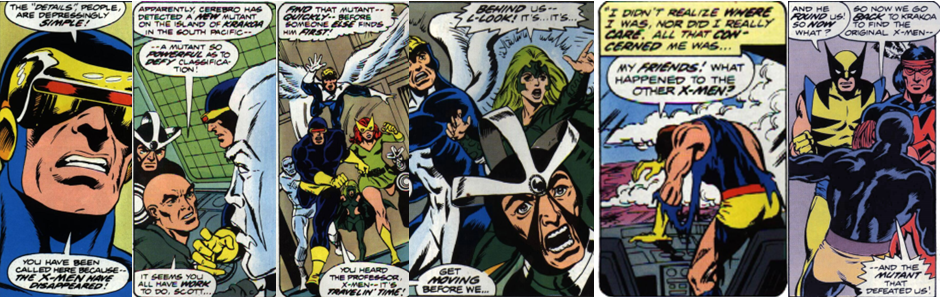
The team assembles at Xavier’s school in Westchester, New York, now garbed in uniforms made of “unstable molecules” that Xavier obtained from Doctor Reed Richards/Mister Fantastic. Sunfire demands answers and Xavier provides them by introducing them to Scott Summers/Cyclops, who informs them all that the X-Men have disappeared. Cyclops relates how the team were alerted to a new Mutant (who was “so powerful as to defy classification”) on the island of Krakoa by Xavier’s Mutant-detecting machine, Cerebro; Cyclops lead Jean Grey/Marvel Girl, Warren Worthington III/Angel, Bobby Drake/Iceman, Alexander Summers/Havoc, and Lorna Dane/Polaris to Krakoa but, shortly after landing, they were attacked by an unseen foe. Cyclops awoke disorientated, his costume in tatters, and without his visor and briefly unable to project his trademark optic blasts; he took the Strato-Jet back to Xavier’s mansion to alert the professor (finding his powers to have increased in the process) and assemble a new team to rescue the X-Men.

The new X-Men struggle to work as a cohesive unit thanks to their egos.

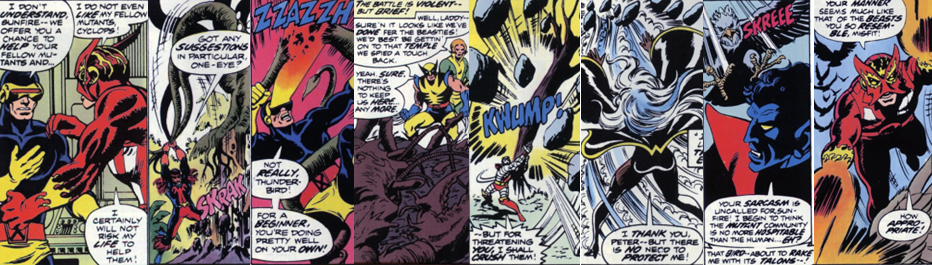
Although Sunfire initially refuses to go along with the mission, claiming to hate his fellow Mutants as much as humans, he intercepts the jet on the way to Krakoa to join the mission anyway. This, as noted by both Storm and Thunderbird, calls attention to the fragility of this new, untested team and they’re right to point this out as Xavier has effectively slapped together a team of egos, misfits, and strangers who have even less field training as a unit that the original X-Men. Regardless, the team soon arrives at Krakoa and Cyclops splits them into teams of two: Storm and Colossus head to the North, Banshee and Wolverine the East, Sunfire and Nightcrawler the South (much to Sunfire’s chagrin), and Thunderbird and Cyclops take the West. Upon landing, Cyclops and Thunderbird note that strange temples have suddenly erupted from the ground and, as they move to investigate, they are attacked by living vines. Over on the East side of the island, Banshee and Wolverine are similarly attacked by a giant crab but, thanks to Wolverine’s viciousness and Banshee’s scream, they make short work of the crustacean. Meanwhile, on the North side, Storm and Colossus manage to fight their way out of a seemingly sentiment landslide and, finally, Sunfire and Nightcrawler battle through a flock of raging birds on the South side all while Sunfire continually berates Nightcrawler with sarcasm and criticism.

By pooling their energies into Polaris, the X-Men defeat Krakoa and blast it into space!

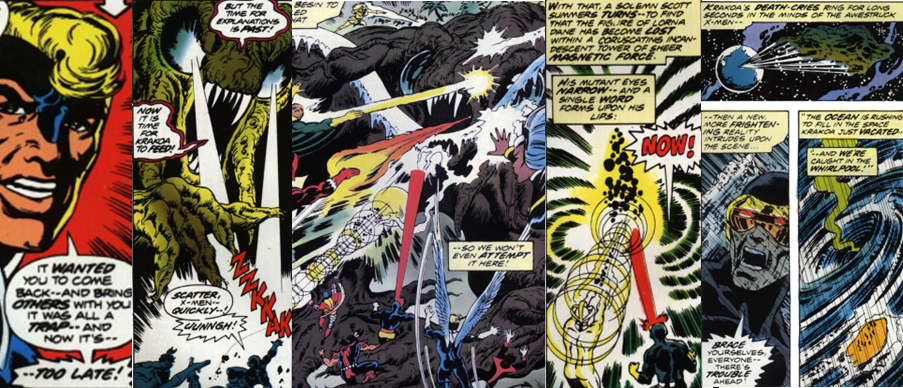
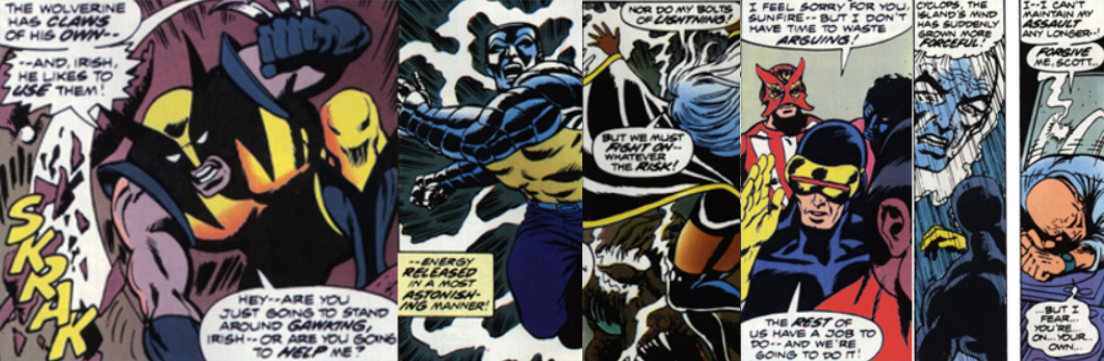
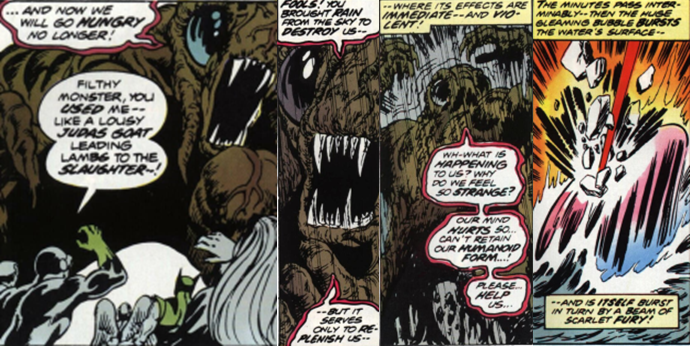
Regardless, the team all rendezvous at the temple, break their way in, and find the X-Men being held captive and, apparently, fed upon by vines. After the X-Men are rescued, their prison crumbles to pieces and Angel scolds Cyclops for coming back for them as the island comes to life around them. It turns out that Krakoa itself is the Mutant Xavier detected, having been brought to ravenous life by an atomic blast, and referring to itself as “we” as it details its plan to feed upon “Mutant energies”. Krakoa attacks the two teams of Mutants, who struggle to co-ordinate their strategies and to make a dent on the Mutant’s considerable hide. Thankfully, Xavier telepathically contacts Cyclops and informs him of Krakoa’s one weak point; while Xavier mentally battles the creature, Cyclops directs the team from the ground, channelling Storm’s ability to conjure lightning into Polaris and then adding his and Havoc’s energy blasts to the building magnetic force. The result is a surge of magnetic energy that disrupts Krakoa’s ability to retain its humanoid form and, as the island breaks apart around them, the team blast their way to safety on an ice float. As they watch, Krakoa is hurled off the planet’s surface and away from the planet and the Mutants survive the tumultuous seas thanks to Iceman’s ice-bubble and are left united and victorious.

The Summary:
Those who read my review of The X-Men #1 (Lee, et al, 1963) will remember that I wasn’t exactly impressed with the X-Men’s debut appearance. Setting aside the sexist attitudes and outdated dialogue at work in that comic, the story was a plodding, laborious read that ended right as it was about to get interesting. Additionally, you may recall that I’m not exactly the most well-read of X-Men fans; I find the lore to be somewhat impenetrable because there are so many characters and so many stories that even trying to read the most famous arcs can leave you scratching your head in bemusement at the density of the mythology. Giant-Size X-Men #1 is therefore far more accessible, in some ways, as it acts as a soft reboot for the comic that features some of the most iconic X-Men ever created.

Most of the new X-Men get a chance to shine with their colourful powers and abrasive personalities.

What makes Giant-Size X-Men #1 a better read than The X-Men #1, though, is that the characters are much more visually interesting and distinct in their personalities. Wolverine, Thunderbird, and Sunfire are all different levels of abrasive, with Sunfire openly clashing with Nightcrawler, Wolverine resorting to violence at the drop of a hat, and Thunderbird offering criticisms on the stability of the new team. Conversely, Storm, having lived a sheltered life where she was worshipped as a Goddess, is somewhat naïve and Nightcrawler just wants everyone, human and Mutant alike, to be accepted. Banshee, Cyclops, and Professor X are, of course, some familiar faces to long-time X-Men readers. Thankfully, both Professor X and Xavier are far less annoying than in their debut comic; Xavier is less of a stern, uncompromising teacher and more a worried father-figure desperate to rescue his students from their mysterious fate and Cyclops, rather than trying to force his authority over the new Mutants, is similarly concerned only with holding the fledging team together long enough to rescue his friends and loved ones.

Krakoa exists mainly to bring the X-Men together and it doesn’t take much to defeat it.

Similar to The X-Men #1, Giant-Size X-Men #1 is more concerned with introducing and assembling its team of Mutants rather than all-out action but, as I say, it does a far better job of doing this than its predecessor as the new team is introduced in interesting ways rather than just expositing their abilities in the Danger Room. Although little is made of Nightcrawler’s teleportation abilities or Wolverine’s heightened senses, each of the new characters get a bit of time to shine, although the final battle against Krakoa boils down more to Polaris channelling various energies into herself rather than a concentrated group effort besting the island-sized Mutant. Still, I much preferred the dialogue, characterisations, and presentation here than in the X-Men’s debut story, though I’ll admit that a lot of that has to do with me favouring these characters and the move away from redundant exposition and storytelling from the sixties.

My Rating:

Rating: 4 out of 5.

Great Stuff

What are your thoughts of Giant-Size X-Men #1? What did you think to the new X-Men and their introduction? Which of the new characters was your favourite? What did you think to Krakoa as the main threat and the way it was defeated? Which era of the X-Men is your favourite and who is your favourite ever team/character? How are you planning on celebrating X-Men Day this month? Whatever your thoughts, leave a comment below, and be sure to come back every Saturday for the rest of May for more X-Men content.

Movie Night [May the Sith]: Star Wars: Episode III: Revenge of the Sith


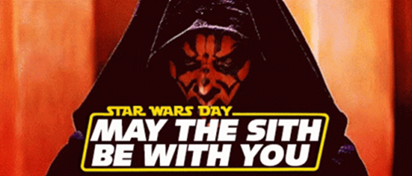
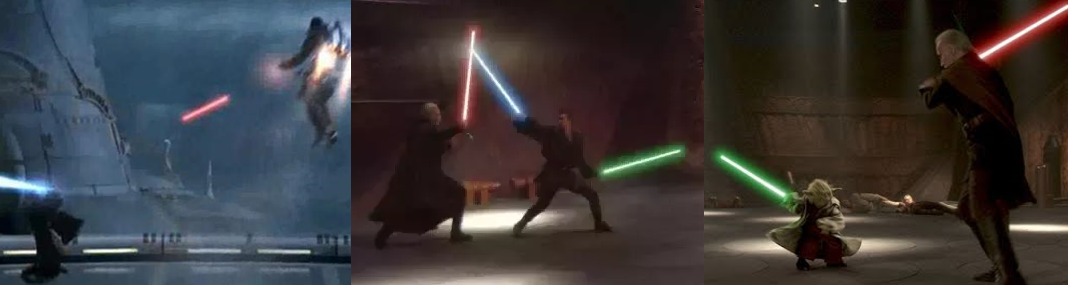
While May 4th is known the world over as Star Wars Day, many also choose to extend the celebrations of the course of three days, with one of them being the “Evil Star Wars Day” of May 6th (as in “Sith”). This year, I’ve been using the three Star Wars Days as the perfect excuse to go back over the Prequel Trilogy.


Released: 19 May 2005
Director: George Lucas
Distributor: Walt Disney Studios Home Entertainment
Original Distributor: 20th Century Fox
Budget: $113 million
Stars: Ewan McGregor, Hayden Christensen, Natalie Portman, Ian McDiarmid, Samuel L. Jackson, Matthew Wood, and Frank Oz

The Plot:
Three years after Star Wars: Episode II: Attack of the Clones (ibid, 2002), the Jedi lead the clone army of the Galactic Republic against the Separatists. Following the death of Separatist leader Count Dooku (Christopher Lee), Jedi Master Obi-Wan Kenobi (McGregor) is sent to eliminate the semi-cybernetic General Grievous (Wood) to put an end to the conflict. Meanwhile, though struggling with premonitions of his wife Padmé Amidala (Portman) dying in childbirth, Anakin Skywalker (Christensen) is tasked with spying on Supreme Chancellor Palpatine (McDiarmid), who is secretly preparing a diabolical plot to destroy the Jedi!

The Background:
It’s safe to say that, by 2005, the Prequel Trilogy had struggled to live up to the lofty expectations set by George Lucas’ original three Star Wars films; Star Wars: Episode I: The Phantom Menace (ibid, 1999) was a financial success, Attack of the Clones didn’t fare quite so well at the box office and both films were subjected to scathing criticism. Despite having jotted down the outline of Anakin’s fall to the Dark Side decades prior, Lucas struggled to properly formulate Revenge of the Sith’s script, which went through a number of changes even in post-production. As in Attack of the Clones, Revenge of the Sith featured copious digital shots and effects; still, stars Hayden Christensen and Ewan McGregor bulked up and underwent extensive and rigorous training with stunt coordinator Nick Gillard for their climatic lightsaber duel. Despite a copy of the film leaking online, Revenge of the Sith fared marginally better than its predecessor at the box office with a $86.4 million gross. Critically, however, the film fared much better than the previous two films; generally considered to be the best of the Prequel Trilogy, critics praised the film’s bleak tone and more action-packed moments though the dialogue and acting still came under scrutiny.

The Review:
As much as I enjoy Star Wars, I’ve always been more of a casual fan; since the Original Trilogy never seemed to be on television when I was a kid, my exposure was a bit limited compared to others who had VHS copies of the films. The Prequel Trilogy, and the release of the Special Editions, changed that and really helped to get me properly into Star Wars, but even then I was more about the videogames and Expanded Universe books. As a result, the first Star Wars film I saw at the cinema was actually Star Wars: Episode III: Revenge of the Sith; I’m not sure why I didn’t see the first two episodes at the cinema but it may simply have been because I was too young to drive or get to our nearest cinema. In any case, despite how disappointing aspects of the Prequel Trilogy had been, my anticipation was high for Revenge of the Sith since it promised to finally show the emergence of the Galactic Empire, the downfall of the Jedi Order, and Anakin’s transformation into Darth Vader.

Obi-Wan is devastated when the war turns his trusted ally and protégé into dangerous enemies.

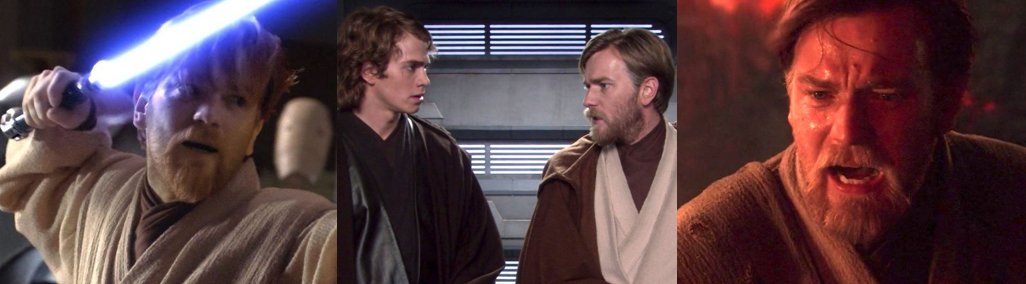
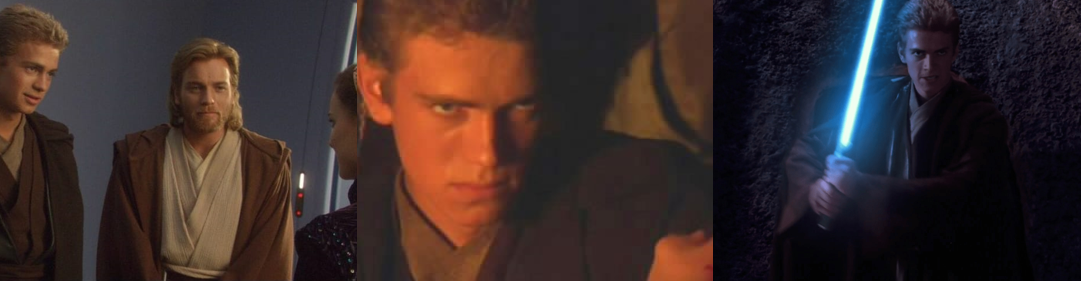
Obi-Wan is now not only a member of the Jedi Council but also a battle-hardened General; his relationship with Anakin has progressed from teacher/student to equals and they work together to combat the Separatists. While Obi-Wan still despairs of Anakin’s more flamboyant and reckless piloting and battle strategies, the two are a far more polished team than in Attack of the Clones (thanks, presumably, to having been through many adventures in the Clone Wars) and even share a little playful banter with each other. This means that their rematch with Count Dooku goes far better this time as they work as a team, however cracks still exist and are formed in their relationship due to Obi-Wan’s distrust of Palpatine since the Chancellor has refused to give up his “emergency powers” and Anakin steadfastly defends the Chancellor, whom he views as a trusted ally and father-figure. Still, Obi-Wan has come to trust in his apprentice’s skills and abilities, as well as relying on the clone troopers under his command, specifically Commander Cody (Temuera Morrison). In both instances, he is ultimately betrayed but, even after seeing how far Anakin has fallen, he desperately pleads with the angry young Jedi to renounce the Dark Side to avoid battling Anakin, whom Obi-Wan views as a brother.

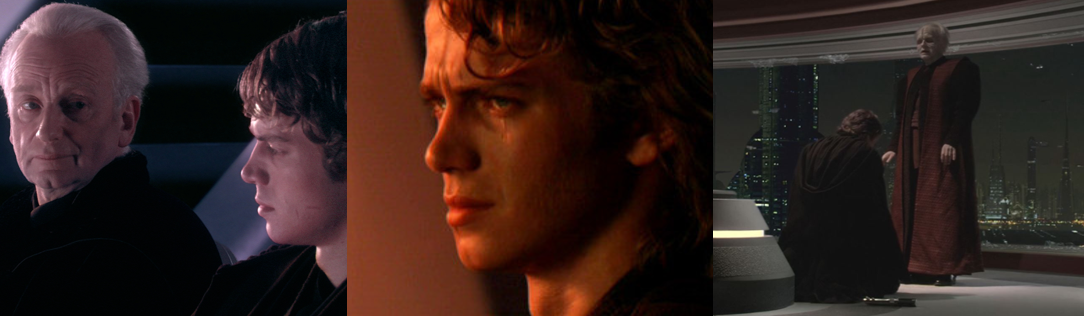
Despite appearing a stronger character, Anakin’s fears and resentment turn him to the Dark Side.

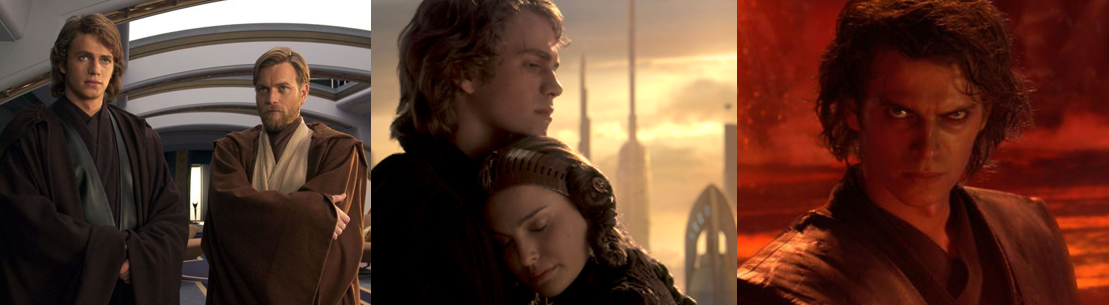
Anakin, of course, takes on a far larger role this time; now sporting longer hair, a nasty scar from battle, and having grown into a fully-fledged Jedi Knight, war has largely tempered his immaturity from the last film and made him a far more capable Jedi. However, he still remains conflicted; now haunted by visions of Padmé dying in childbirth and continuing to harbour a resentment towards Obi-Wan and the Jedi Council, to say nothing of how easily persuaded he is to execute Dooku, Anakin’s perception of the Jedi and the galaxy begins to quickly unravel as he desperately tries to keep those he cares about alive after failing to save his mother, Shmi (Pernilla August) in the last film. This desire is the decisive catalyst Palpatine needs to finally reveal his true nature to Anakin and coerce him into turning to the Dark Side; while this turn is very abrupt in the moment, a great deal of the film (and the entire Prequel Trilogy) is devoted to showing just how conflicted Anakin is, which honestly does help to somewhat justify this. In the end, he pledges himself to the Sith Lord in a frantic desire to keep Padmé alive and is clearly tormented at the hideous acts he commits to attain the power he needs to facilitate this.

Padmé is absolutely heartbroken to learn of Anakin’s turn to the Dark Side.

Padmé has undergone quite the change from when we first met her in The Phantom Menace; having secretly married Anakin, she is carrying his children and growing increasingly concerned about the deceptive nature of their lives and love. Despite being pregnant, Padmé still remains an active member of the Galactic Senate but, distrustful of Palpatine’s intentions, colludes with notable names in the Senate and the Jedi to try and force the Chancellor to give up his powers, only to be left devastated when the oppressive Galactic Empire is voted into power “with thunderous applause”. Sensing that a far greater conflict is on the horizon, Padmé is equally terrified of the fact that both she and Anakin stand to lose everything if their marriage became public. So obsessed is Anakin with ensuring Padmé’s safety that she turns to Obi-Wan for comfort and support, which only enrages the newly-christened Darth Vader at the film’s finale. Consequently, despite being absolutely devoted to him, Padmé is so heartbroken at his turn to the Dark Side and everything Anakin has done that she literally cannot find the will to continue living.

Returning characters may not have much to do but be helpless and die but Mace finally gets to shine.

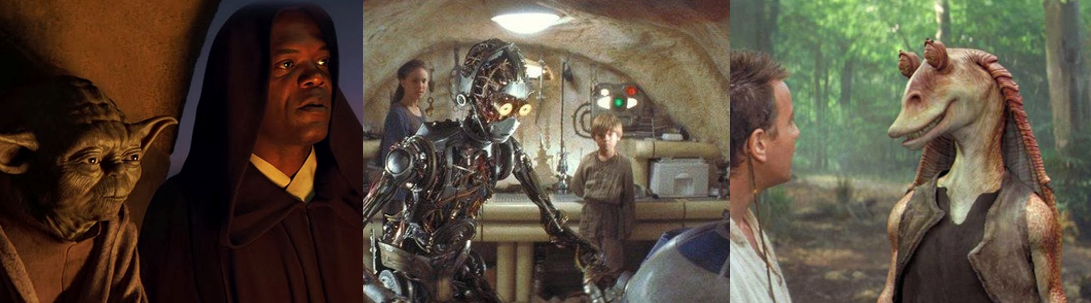
From being a questionable addition in the first film to the creature responsible for Palpatine’s rise to power, Jar Jar Binks (Ahemd Best) is reduced to a mere cameo in this film, further making me question why he was even created in the first place. R2-D2 (Kenny Baker) and C-3PO (Anthony Daniels) return in supporting roles for Anakin and Padmé, respectively, but don’t really factor too much into the plot since Lucas’ focus is obviously more on depicting Anakin’s tumultuous final journey towards the Dark Side. Many of the Jedi we saw in minor supporting roles in the last two films return here primarily to die, though Mace Windu (Samuel L. Jackson) finally gets some major screen time and a plays a pivotal role in the third act; suspicious of Anakin due to his relationship to Palpatine, Mace is ironically on the verge of trusting Anakin after he reveals Palpatine’s true identity as Darth Sidious and Mace even gets to have a decent lightsaber battle…only to be mutilated and blasted to his death in a scene that is played as dramatic but, thanks to Lucas’ awkward writing, comes across as a bit rushed and corny. However, despite many of the other Jedi not really being given names or prominence in the films, it’s still pretty tragic to see them being gunned down by their own troops or cut to pieces by Palpatine or Darth Vader, and to see strong and confident characters like Yoda (Oz) and Bail Organa (Jimmy Smits) desperately fleeing from Palpatine and his clone troopers.

Dooku may die early but Palpatine has enough minions and gusto to more than make up for this.

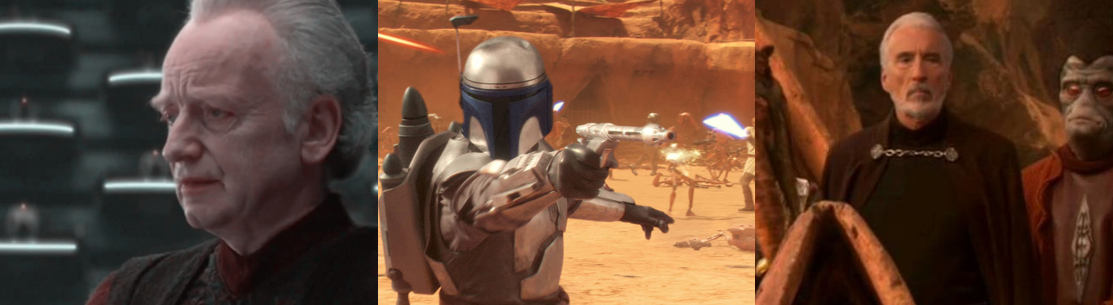
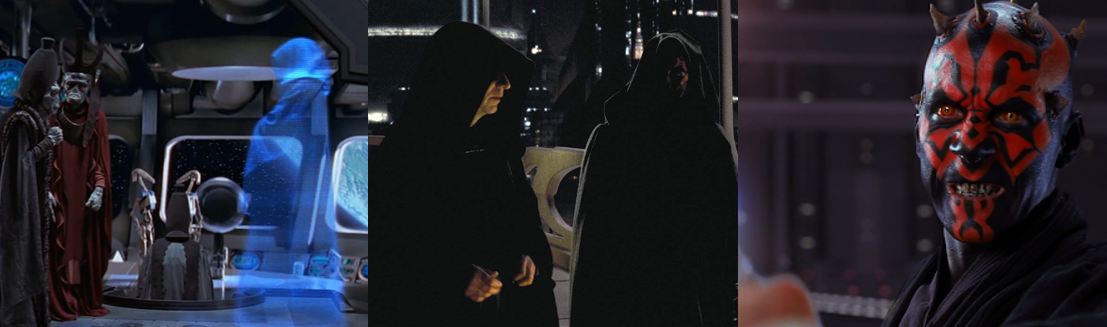
Count Dooku briefly returns for a rematch with Anakin and Obi-Wan but is quickly beheaded by Anakin in service of pushing him further to the Dark Side. Thus the film introduces another new antagonist in General Grievous, a largely cybernetic creature who seems to be the extreme far end of Darth Vader; half crippled by a debilitating cough and obvious pain, Grievous is both visually striking and a formidable foe thanks to wielding four lightsabers. However, I still can’t help but think that it would have made so much more narrative sense to have Darth Maul (Ray Park) survive The Phantom Menace, torment Obi-Wan in Dooku’s stead in Attack of the Clones, and finally be killed in Revenge of the Sith. Obviously, Palpatine also gets a lot more to do here; his wooing of Anakin is more prevalent and he finally drops his façade, literally transforming into a twisted, cackling, demonic figure as he ruthlessly cuts down Jedi and embraces his new role as the Emperor. Similar to Yoda, I’m not entirely convinced we really needed to see Palpatine swinging a lightsaber but it makes for a pretty intense conflict to see the extreme good (Yoda) clashing with the extreme evil (Palpatine) and failing due to underestimating the sheer overwhelming power Palpatine now wields. If nothing else, Revenge of the Sith is enjoyable for McDiarmid’s scenery-chewing, meme-worthy performance; while he may go a little too far into pantomime with his cackling demeanour, it’s a joy to watch and actually makes a lot of sense since he’s finally through hiding and delighting in showcasing his true power.

The Nitty-Gritty:
One of the best things about The Phantom Menace  was George Williams’ incredible score; and this returns with a vengeance in Revenge of the Sith; not only is the “Imperial March” far more explicitly featured this time around, “Duel of the Fates” is evoked during Anakin and Obi-Wan’s climatic duel on Mustafar. Sadly, though, Lucas’ cringe-worthy dialogue still drags parts of the film down; however, for every scene where Anakin and Padmé bang on about love, there’s a chillingly ominous soliloquy from Palpatine to help get things back on track. Of course, CGI is still in high abundance but much better and less distracting than in Attack of the Clones, especially when showcasing massive space and ground battles; while green screen scenes involving live-action actors and some of the later creatures still look a little dodgy, it’s pretty impressive to see Grievous’ ship tilt and break apart in orbit before dramatically crashing to Coruscant.

CGI is still in abundance but used to far better dramatic effect this time around.

Despite there being a full-scale war going on, there’s actually not too much large-scale conflict in the film since it opens towards the end of the Clone Wars. Things start off with a bang to depict a massive space battle in the atmosphere of Coruscant and through to Anakin and Obi-Wan’s campaign onto Grievous’ ship, which is a fantastically realised sequence that really helps shows the scale and stakes of the conflict. It was great to finally see Kashyyyk but it also feels like this battle could’ve happened anywhere and was put in simply to shoe-horn a glorified cameo from Chewbacca (Peter Mayhew) into the film. In addition to seeing the founding members of the future Rebellion coming together in defiance of Palpatine’s new Empire, we also get see a wide variety of interesting locations (some of which are free from Lucas’ trademark green screens) but we don’t really dwell on them too much since they’re just there to show the scale of the conflict. Consequently, Mustafar makes an immediate impression; Obi-Wan and Anakin battle on a planet that’s basically an active volcano and, since it basically resembles hell, this provides the perfect chaotic background for the final duel of the film.

Palpatine preys on Anakin’s fears and turns to the Dark Side with promises of power.

Obviously, the story of Anakin’s turn to the Dark Side and the fall of the Jedi is a pivotal aspect of the film; terrified of losing Padmé, Anakin refuses to turn to even Obi-Wan for help or to listen to reason, and falls under Palpatine’s lure since the Chancellor knows exactly the right words to say to stoke Anakin’s ego and fears. Anakin is outraged not only when Mace Windu appoints him a seat on the Jedi Council but denies him the rank of Jedi Master but also when Obi-Wan surreptitiously asks Anakin to spy on Palpatine. Still, when Palpatine reveals himself to Anakin, the young Jedi’s first instinct is to arrest (or kill) the Chancellor and he even shares this revelation with Mace Windu is but ultimately driven to turn against the Jedi in order to attain the power he needs to ensure Padmé’s survival. Christened Darth Vader, Anakin immediately assassinates not just the Separatist heads and disables their droid army, he also goes on a killing spree on Coruscant, slaughtering  every man, woman, and child in the Jedi Temple. Though this clearly brings him no pleasure, he is left with no choice but to do as Palpatine commands and desperately tries to justify his actions as bringing order to the galaxy.

Anakin’s duel with Obi-Wan leaves him a wretched, tragic figure and more machine than man.

Of course, the main highlight of the film is the long-awaited battle between Obi-Wan and Anakin; thanks to seeing Obi-Wan match and overcome the multi-armed General Grievous earlier in the film, Anakin’s sheer power and skill are all the more impressive since he wields just the one lightsaber and pushes Obi-Wan to the edge throughout the battle. Unlike similar battles in the other Star Wars films, this dramatic and aggressive conflict is juxtaposed not by a space battle but by Yoda’s equally intense fight against Palpatine; however, this doesn’t detract from the emotion and intensity of this climatic conflict. Beginning on stable ground and crossing raging lava and explosive outbursts of the chaotic planet, Anakin and Obi-Wan are almost entirely evenly matched; while Anakin attacks with unbridled rage, finally giving in to all of his hatred and resentment towards his mentor, Obi-Wan matches him blow for blow despite being torn at having been forced into the conflict. Ultimately, Anakin’s arrogance in his powers is his downfall and, despite Darth Maul proving in The Phantom Menace that having the high ground doesn’t ensure victory, he is left a crippled, smouldering husk of a man with a few swings of Obi-Wan’s lightsaber. Heartbroken, but unable to deliver the killing blow, Obi-Wan leaves his former apprentice to die and, surely, Anakin would have died had it not been for his intense hatred and the timely intervention of Palpatine. As Padmé breathes her last, the Darth Vader we all know and love lumbers to life with an ungainly step and the booming baritone of James Earl Jones and Anakin is left devastated at having lost everything and with no choice but to remain at Palpatine’s side as the Empire consolidates its grip and few remaining Jedi go into hiding to await a new hope.

The Summary:
It’s pretty clear to me that George Lucas put everything he had into Star Wars: Episode III: Revenge of the Sith (even if his dialogue still desperately needs work); by its very nature, the film is the bleakest and grimmest of perhaps the entire saga and, while many elements remain unsatisfying (Anakin’s turn is quite abrupt and his Sith name seems to just be plucked out of thin air), it’s easily the strongest of the Prequel Trilogy. Seeing Palpatine finally step out of the shadows and shroud himself in the dark cloak of the Emperor, literally transforming into his more familiar, gnarled form is as haunting as his cackling, aggressive skills with a lightsaber. Seeing Anakin turn on his friends and go on a killing spree remains an emotional and uncomfortable watch since he is clearly tormented at having to kill children and there’s a definite sense that he has been left with no choice but to fully commit to his dark path, which ironically brings him only further pain. Seeing Yoda distraught by failure and Obi-Wan’s despair at having not only witnessed Anakin’s actions but also being forced to battle him to the death goes a long way to adding to the burden of guilt he’s clearly carrying some twenty years later and the entire Order 66 sequence makes for some of the most moving scenes in the entire franchise. Ultimately, it’s a shame that the entire Prequel Trilogy couldn’t have been this good but, as awkward as Lucas’ jump was, he definitely stuck the landing here to deliver a thoroughly satisfying and tragic finale.

My Rating:

Rating: 4 out of 5.

Great Stuff

What are your thoughts on Star Wars: Episode III: Revenge of the Sith? Did you find it to be a satisfying conclusion to the Prequel Trilogy and how would you rank it against other films in the Star Wars saga? What did you think to the execution of Anakin’s final turn to the Dark Side; did you think it was too rushed and do you feel his actions could ever truly be redeemed? What did you think to Palpatine’s true nature being revealed and the slaughtering of the Jedi? Do you think Obi-Wan should have done a more thorough job in finishing Anakin off? Do you think Lucas made the right decision in killing Padmé’ or were you expecting her to survive to be with, at least, her daughter? Whatever you think, drop a comment below and let me know and thanks for joining me in revisiting the Prequel Trilogy over the last three days.

Movie Night [Revenge of the 5th]: Star Wars: Episode II: Attack of the Clones


Although May 4th is known the world over as Star Wars Day, many also choose to celebrate the popular, generation-spanning science-fiction saga on May 5th as a play on the word “Sith”. This can extend Star Wars Day into three day celebration of the influential science-fiction series and, as a result, I am using each of these days to look back at the Prequel Trilogy!


Released: 22 September 2019
Director: George Lucas
Distributor: Walt Disney Studios Home Entertainment
Original Distributor: 20th Century Fox
Budget: $115 million
Stars: Ewan McGregor, Hayden Christensen, Natalie Portman, Christopher Lee, Ian McDiarmid, Temuera Morrison, and Frank Oz

The Plot:
Ten years after the events of Star Wars: Episode I: The Phantom Menace (ibid, 1999), the galaxy is on the brink of civil war as Jedi Master Obi-Wan Kenobi (McGregor) and his volatile apprentice, Anakin Skywalker (Christensen), investigate an assassination attempt on Senator Padmé Amidala (Portman) and uncover a mysterious conspiracy involving the creation of a clone army to service the Galactic Republic.

The Background:
Although The Phantom Menace made over $1 billion at the box office, the film was generally poorly received and, as a result, George Lucas was hesitant to begin work on the next chapter in his epic space opera saga and specifically wrote the script for Episode II to focus more on action rather than political intrigue. Unlike the previous Star Wars films, Attack of the Clones relied heavily on digital effects and CGI creations and went all-in with its use of fascist allegories in its depiction of corruption within the Galactic Republic. Despite Lucas’s insistence on swamping the film with digital effects, Attack of the Clones’ budget was exactly the same as its predecessor; however, the film made considerably less than The Phantom Menace, clocking in at just under $655 million. While I have come to regard the film as an under-rated entry in the saga, reviews have been less than favourable and criticised the script and line delivery (rightfully so, I’d say) and many weaker CGI and narrative moments, and it is is generally regarded as being one of the worst Star Wars films.

The Review:
I mentioned in my review of The Phantom Menace that it, and the Special Edition release of the Original Trilogy around the same sort of time, rekindled interest in Star Wars but I can’t really say the same for Attack of the Clones. The negative feedback from Episode I kinda killed any momentum and interest I and a lot of people had in the films, especially as they erased the popular Expanded Universe books, comics, and videogames from continuity and replaced them with material that was so far, far less interesting. Indeed, as far as I can remember, people were mainly interested in Attack of the Clones because of the trailer showing Yoda (Oz) in action, the nostalgia that follows Star Wars everywhere, and the vague hope that things couldn’t get any worse.

Now more seasoned Jedi, Obi-Wan is troubled by Anakin’s recklessness and the conspiracy he uncovers.

Young, fresh-faced, and headstrong in the first film, Obi-Wan Kenobi has grown into a far wiser and more seasoned Jedi Master between films. Though he often despairs of Anakin’s recklessness, impatience, and bouts of insubordination, Obi-Wan and his Padawan have grown closer and their bond is analogous to an older brother with an impudent younger sibling. Much of Obi-Wan’s interactions with Anakin consist of reminding the youngster of his place, warning against the dangers of politicians and the shadiness of bureaucracy, and emphasising that Anakin needs to slow down, calm down, and focus his thoughts and feelings. Rather than dwell on the specifics of their partnership and see how their tumultuous relationship develops in the field, the two are split apart from the majority of the film as Obi-Wan investigates the bounty hunter Jango Fett (Morrison) and discovers not only that he’s formed the basis for a secret clone army, but also that former Jedi Count Dooku (Lee), using the Sith alias Darth Tyrannus, has brought together various villainous factions into a Separatist army.

Anakin has grown powerful but arrogant, impatient, and quick to fits of rage.

Far from the annoying, wide-eyed boy from the first film, age and experience have caused Anakin to become as arrogant as he is powerful; impatient and overconfident, Anakin is torn between feeling a genuine affection for his master (whom he respects and sees as a father) and his jealousy of Obi-Wan’s stature as a revered Jedi Master. Frustrated at constantly having to endure Obi-Wan’s lectures and teachings, Anakin finds his ego and prowess fuelled by Supreme Chancellor Palpatine (McDiarmid), who has taken a shine to the prophesised “Chosen One”. Eager to prove himself when he’s finally given a solo assignment, Anakin is equally excited and anxious to be reunited with Padmé; his schoolboy crush turning into complicated feeling of lust and desire, Anakin goes out of his way to try and impress and prove himself to her only to constantly stumble because his feelings clash with his strict Jedi teachings. Haunted by nightmares of his mother, Shmi (Pernilla August), Anakin soon sets out to find her on Tatooine and his tumultuous emotions are sparked into a furious rage when he finds her tortured to death by Tuskan Raiders; lamenting having given in to his bloodlust and tormented by his forbidden feelings for Padmé, Anakin is largely characterised as a powerful but petulant youth who isn’t in full control of his emotions, much less his vast Jedi powers.

Despite rebuking his advances, Padmé is torn between her love for Anakin and her duties as a senator.

Having moved away from her royal position on Naboo, Padmé is now a senator in the Republic and actively trying to steer the galaxy away from conflict by working within the Galactic Senate. Padmé is annoyed at being forced away from Coruscant by the threat to her life and treats Anakin with a mixture of contempt and empathy, which only further confuses the young Padawan. Despite rebuking his awkward attempts to flirt with her, Padmé is actually harbouring her own feelings for the young Jedi as she is extremely mindful of her diplomatic duties and Anakin’s loyalty to the strict Jedi Order. As much as I defend this film, I can’t say that I’m a fan of the idea that Jedi can’t fall in love as there never seemed to be an inclination of this “rule” in the Original Trilogy; however, this does add some layers to Padmé’s character as, for all her logic and reason, she still encourages Anakin to disobey Obi-Wan and head to Tatooine, comforts him after he slaughters the Tuskan Raiders responsible for Shmi’s death, and, against her better judgement, she confesses her true feelings to him regardless of the consequences of this admission.

Classic characters get an odd CGI face-lift and we’re introduced to some familiar faces.

Of course, it wouldn’t be a Star Wars movie without old favourites like R2-D2 (Kenny Baker) and C-3PO (Anthony Daniels); this time around, C-3PO gets a little more to do as he’s picked up by Anakin and Padmé while on Tatooine and tags along largely to provide awkward comic relief and be replaced by an obvious and uncannily awful CGI model. This was also the first film to render Yoda as a CGI character, primarily to make his big fight scene more diverse and energetic, but I’ll get into the CGI Yoda a little later. R2-D2’s role and capabilities are also greatly expanded to afford him a host of abilities that really would’ve been useful long before this movie (like, seriously, why not just have Artoo roll onto or take control of a floating platform instead of being able to fly with little booster jets?) Still, there are some positives: Jar Jar Binks (Ahmed Best) is practically non-existent, boring political debates have been replaced with a far more intriguing mystery regarding the clone army on Kamino; and we even get to meet Owen Lars (Joel Edgerton), Beru Whitesun (Bonnie Piesse), and other characters who would form the backbone of the future Rebellion, such as Bail Organa (Jimmy Smits).

Palpatine manipulates minions such as Jango and Dooku to sow discord across the galaxy.

Palpatine continues to manipulate events both within the Senate as the Supreme Chancellor and behind the scenes in his guise as the Sith Lord Darth Sidious and, as discord has increased across the galaxy, Palpatine’s plan has grown far greater in scope and complexity. Thanks to orchestrating events to position the Separatists as a serious threat to order and stability, Palpatine is easily able to get himself appointed “emergency powers” and appears as a conquering hero when he immediately reveals his vast army to defend democracy while surreptitiously ensuring a stranglehold on the galaxy for himself. Since he’s still very much a puppet master (and Darth Maul (Ray Park) was stupidly offed in the last film), it falls to Dooku and Jango to shoulder the burden as the film’s primary antagonists. I never really understood why Lucas bothered to have Jango in the film; since we never see under Boba Fett’s (Jeremy Bulloch) helmet in the Original Trilogy, I feel like it would’ve been much simpler to just have Morrison portray Boba here to give the fan favourite character a bit more screen time and personality, but I guess it does tie into Lucas’ themes of the sins of the father and all that since young Boba (Daniel Logan) is raised to be a merciless bounty hunter like his father and sees his dad beheaded in front of him. While I think it would’ve been far better to have had Darth Maul survive The Phantom Menace and get more screen time in the sequels, you can’t go wrong with Christopher Lee and Dooku makes for an enigmatic and compelling villain; a former Jedi turned to the Dark Side by Darth Sidious, Dooku is a manipulative, loquacious snake who becomes a ruthless and bloodthirsty warrior when forced into combat.

The Nitty-Gritty:
One of the main things I disliked about The Phantom Menace (and which undoubtably brings down the entire Prequel Trilogy) is George Lucas’ terrible dialogue; nowhere are the flaws in Lucas’ script more evident than in Attack of the Clones, where Anakin’s attempts at expressing his love for Padmé come across as stilted and wooden and not in a way that you’d expect from an awkward, love-sick youth. Jake Lloyd might not be around to grate on my last nerve, but Daniel Logan isn’t much better, and once again Lucas seems to be happy to settle for inelegant, unnatural line deliveries and sub-par performances. Ewan McGregor, Temuera Morrison, and Christopher Lee are the obvious standouts in the film and even they seem to be struggling to make Lucas’ clunky dialogue acceptable.

I think I’ve seen less CGI in entirely animated movies…

Of course, it probably doesn’t help that the film is absolutely swamped with CGI; almost every single shot bar those on Tatooine seems to have been filmed on a massive green screen, which makes many of the scenes seem surreal as the live-action actors jut out from a cartoony, computer-generated environment and interacting with largely CGI characters doesn’t appear to have excited the cast all that much. Don’t get me wrong, I am not against CGI, especially in Star Wars and sci-fi films, but it’s clear that Lucas went way, way overboard here and the film hasn’t aged too well as a result. The sequence on Geonosis where Anakin, Padmé, Theepio, and Artoo get into all sorts of hijinks amidst an abundance of stupidly big and cartoonish CGI hazards stands out as one of the worst moments of the film, and the excess of terrible-looking CGI monsters in the coliseum are a far cry from the impressiveness of the Rancor or the Wampa. The overreliance on CGI may make for grander battles and a much bigger scope than was possible back in the seventies or eighties, and CGI’ing all the clones may have been faster and is technically impressive, but was it all really necessary? Imagine how well practical effects such as animatronics, miniatures, and puppets could have benefitted from Lucas’ technological innovations if he had just exercised a little restraint rather than dropping his actors into a massive green screen and clumsily splicing in dodgy-looking CGI creatures.

Palpatine strokes Anakin’s ego and he struggles with his commitment to the Jedi code.

A core aspect of the film revolves around Palpatine’s scheme to assume control of the galaxy through complex manipulations; not only is he manipulating the Jedi Council without being suspected (beyond his position as a politician being a source of distrust for Obi-Wan and the other Jedi), but he’s also been busying corrupting Jedi, erasing their records to cover his tracks, building his own private army, and orchestrating events to lay the foundation of the Galactic Empire and the construction of the Death Star. Palpatine delights in stroking Anakin’s ego and encouraging his ambitions; playing on the Padawan’s resentment towards Obi-Wan, his immaturity, and his desperate need to be all-powerful, Palpatine woos Anakin with promises of him one day achieving his full potential as the most powerful Jedi of all. Frustrated with being “held back” and eager to rush to that end, Anakin’s arrogance is matched only by his fear and anger. Despite Christensen being hampered by Lucas’ script, he does a commendable job of juggling Anakin’s many complex emotions; he’s meant to be this stroppy, volatile braggart and it’s genuinely interesting (if not down-right heart-breaking) to see him both hate and love Obi-Wan and both revel in and be disgusted by his slaughter of the Tuskan Raiders.

The lightsaber battles continue to be a highlight, with even Yoda getting in on the action!

One of the best parts of The Phantom Menace were the fight scenes and battles which, unlike other parts of the film, generally benefit from the advantages of CGI. Obi-Wan and Anakin’s pursuit of Zam Wesell (Leeanna Walsman) through the skies of Coruscant is very exhilarating, as is the chase between Obi-Wan and Jango through an asteroid field, though the first deployment of the clone army isn’t as impressive despite the scope of the battle being beyond anything achievable thirty years prior. Still, for me, this sequence and the introduction of the clones is all a little rushed; when the Clone Wars were first mentioned, I never imagined that they would actually (technically) be the good guys and I can’t help but feel like they should’ve been a much bigger part of all three films (perhaps set up in the first one, in full force here, and concluded in the third). Still, just as the lightsaber battles were one of the best parts of the last film, so too are they an endlessly entertaining aspect of this one; although the Jedi are small in numbers (for…some reason…) we get to see them in full force when Mace Windu (Samuel L. Jackson) leads them in rescuing Obi-Wan, Padmé, and Anakin and, while some of them are killed off with a ridiculous amount of ease and the monsters they fight look terrible, the scene with them coming in, laser swords flashing, in the coliseum is pretty entertaining. Obi-Wan’s battle against Jango on the storm-swept landing bay is an intense fight scene as well and great for showcasing what Fett’s armour is actually capable of but, of course, the highlight of the film comes in the finale where Obi-Wan and Anakin confront Count Dooku. Here, Anakin’s recklessness cost him not only their advantage but also an arm and Dooku is easily able to best the two Jedi thanks to them being unable to get on the same page and fight as a unit. Thus, it falls to Yoda to battle his former Padawan in one of the most thrilling, if ludicrous, sequences in all of Star Wars. While I can understand the mindset that Yoda really shouldn’t even need to use a lightsaber since his command of the Force is that powerful, it can’t be denied that seeing him whip out a laser sword and hop all over the play like a crazy little monkey is incredibly entertaining and just serves to emphasise how desperate events have become where even Yoda is taking an active role in the rising conflict.

The Summary:
A lot of people hate on Star Wars: Episode II: Attack of the Clones and, honestly, it’s easy to see why: there’s too much green screen and too much CGI; the script, dialogue, and line delivery is down-right awful at times; the “love story” (and I use the term very loosely) is contrived, forced, and painfully awkward; and Anakin is overbearingly immature and petulant throughout. Yet, for whatever reason, I actually find myself enjoying it far more overall than The Phantom Menace and it’s probably my second favourite of the Prequel Trilogy. While handicapped by Lucas’s terrible writing, Ewan McGregor really shines in this film and looks to be having a blast; bringing in Christopher Lee was an inspired decision to add the same kind of gravitas that Alec Guinness and Peter Cushing brought to the first fourth film, and the escalation of the galactic turmoil is really interesting to see. I find it fascinating that Palpatine was able to so masterfully fool everyone into allowing him to simply usurping control of the galaxy by first sowing discord and then manoeuvring himself into a position where he was the natural choice to lead a war effort. While Jedi like Obi-Wan, Mace Windu, and Yoda suspect a greater, more dangerous threat, they are all completely blinded to Palpatine’s true and obvious motivations because he has them running around with limited resources fighting the likes of Jango and Dooku. While I never imagined the Clone Wars to be depicted in the way they are here, having them basically be the proto-Empire was a bitter irony as the people basically ended up causing their own oppression. Obviously, though, Attack of the Clones isn’t a perfect film by any means but I think it has more positives than negatives and is deserving of a little more credibility than it often gets.

My Rating:

Rating: 3 out of 5.

Pretty Good

Are you a fan of Star Wars: Episode II: Attack of the Clones? Where does it rank against the rest of the Prequel Trilogy, and the other films in the Star Wars saga, for you? Do you agree that it is under-rated or do you think the script and green screen effects irrevocably ruin the experience? What did you think to the conspiracy sub-plot and the introduction of Count Dooku? Were you a fan of Jango Fett and do you agree that Lucas could have just used Boba instead? What did you think to the romance between Anakin and Padmé and Anakin’s chaotic emotions? How are you celebrating Revenge of the 5th today? Whatever you think, comment below and let me know, and be sure to check out my review of the final part of the Prequel Trilogy.

Movie Night [May the Fourth]: Star Wars: Episode I: The Phantom Menace


May 4th is known the world over as Star Wars Day thanks to it acting as perhaps one of the most fitting and amusing puns ever devised (“May the Fourth be with you” in place of the traditional “May the Force be with you”). The first and most popular of what can easily become a three day celebration of the influential science-fiction series, the day stands as the perfect excuse for Star Wars fans to celebrate the beloved franchise in a variety of ways and, this year, I’ll be celebrating with a three day review of the Prequel Trilogy!


Released: 19 May 1999
Director: George Lucas
Distributor: Walt Disney Studios Home Entertainment
Original Distributor: 20th Century Fox
Budget: $115 million
Stars: Liam Neeson, Ewan McGregor, Natalie Portman, Jake Lloyd, Ahmed Best, Ray Park, and Ian McDiarmid

The Plot:
Thirty-two years before the Original Trilogy, during the era of the Galactic Republic, Jedi Master Qui-Gon Jinn (Neeson) and his apprentice Obi-Wan Kenobi (McGregor) are assigned to protect Queen Padmé Amidala (Portman) during an interplanetary trade dispute. In the process, they meet Anakin Skywalker (Lloyd), a slave boy with an unusually strong connection to the Force, and find themselves under attack by the mysterious return of the Sith.

The Background:
Since its debut in 1977, George Lucas’ science-fiction “space opera” has become a near-unstoppable multimedia juggernaut that includes numerous sequels, prequels, spin-offs, novels, videogames, comic books, and more. Following the conclusion of the Original Trilogy, Lucas had little desire to return to the franchise; however, the success of the “Expanded Universe” series of books saw a revitalised interest in Star Wars and Lucas began developing the backstories he created for the saga and its characters back in 1977. Simultaneously, he produced “Special Edition” versions of the Original Trilogy in 1997 to be refamiliarise and prepare audiences for his new films and to refine the digital effects that would become so prevalent in the prequels. Infusing The Phantom Menace with themes regarding destiny and faith, Lucas also deliberately sought not only to appeal to a younger demographic but to bog the narrative down in political debate while, paradoxically, also containing some of the best action scenes in the entire saga at the time. Although many took issue with the film’s racial undertones and the script, The Phantom Menace was proof that Star Wars, as a brand, is destined to always be successful as, despite a myriad of lacklustre to average reviews (and even criticism from star Ewan McGregor), the film made over $1 billion at the box office. bolstered by an aggressive marketing campaign and tie-in media.

The Review:
It’s easy to forget now but The Phantom Menace was a big deal back in the day. When I was a kid, I was aware of Star Wars but I hadn’t really ever seen it as the films never seemed to be on television so when the Special Edition versions of the Original Trilogy came to VHS, it was quite an exciting time for me to finally experience Star Wars and the long-awaited first entry in the saga had a great deal of hype in the playground. Merchandise (mostly all marketed simply as Star Wars: Episode I) was all over the place and I remember anticipation being at a fever pitch for it. And then the film starts and, once the opening crawl appears on screen, things get a bit weird almost right away; talk of taxation, trade routes, and politics leave a bit of a bad taste in the mouth but there’s no denying that finally seeing the “Episode I” title crawl past had a real impact at the time.

Headstrong Obi-Wan is still learning at the start of the film and is pushed to become a mentor.

The Phantom Menace introduces us to young, fresh-faced Obi-Wan Kenobi; at this point in time, Obi-Wan is a Jedi Padawan and still learning the ways of the Force during a period when the Jedi Order is at the height of their powers. Far from the wise mentor of the Original Trilogy, he is somewhat headstrong and defers to the council of his master, Qui-Gon Jinn, who is an advocate for the “Living Force” (i.e: being aware and in tune with the moment rather than being distracted by the past and future). Though a capable warrior, Obi-Wan is still young enough that he lets emotions such as anger and pride influence his decisions, and is somewhat dismissive of his master’s predication for befriending “pathetic lifeforms” such as Jar Jar Binks (Best) and young Anakin Skywalker, seeing them as mere distractions compared to more immediate threats. Qui-Gon’s teachings push Ob-Wan towards being more mindful of the potential and capabilities of other individuals and their society, and many of the events of this film serve to shape the man he would eventually become.

Qui-Gon is the wise mentor figure whose teachings and death shape Obi-Wan’s character.

Qui-Gon is every bit the wise and benevolent Jedi Master; a sage voice of wisdom, his views on the Force put him at odds with the Jedi Council and he’s very much a rogue and trend-setter in his own way. He believes so strongly in Anakin’s Force potential and destiny as the “Chosen One” that he basically threatens to separate himself from the Jedi Order to train the boy, and even Obi-Wan finds his master’s stubbornness exasperating at times. A capable negotiator, Qui-Gon is a master at influencing others (through both his words and the influence of the Force) into assisting him by speaking in clear, logical tones. When faced with the avaricious Watto (Andy Secombe), Qui-Gon is forced to rely on the will of the Force and Anakin’s unparalleled podracing skills rather than his manipulative abilities and is still able to tip the odds in his favour by taking advantage of Watto’s greed. Though an older man, Qui-Gon is more than capable in a fight; it’s clear that his intense battle with Darth Maul (Park) takes a toll on his body but he is able to employ meditation techniques to restore his energy. As much as I enjoy a bit of Liam Neeson, and Qui-Gon’s character, I do think it was a mistake to have him in the film; I think it takes away from Anakin and Obi-Wan’s overall story a bit and it would’ve been far better to focus on Obi-Wan, though there’s a clear indication that many of the subsequent events happen because Qui-Gon set an impossible example for Obi-Wan to follow.

Enthusiastic Anakin falls for Padmé, a forthright queen trying to keep her people free from oppression.

Since he lacks a father and idolises the Jedi, Anakin becomes immediately attached to and besotted with Qui-Gon; despite having grown up a slave on the desert planet of Tatooine, Anakin is an enthusiastic, energetic little child who is a capable pilot and masterful mechanic. He is absolutely devoted to his mother, Shmi (Pernilla August), and willing to help others with no thought of reward; he is immediately enamoured by Padmé and, though it breaks his heart to leave his home and his mother after Qui-Gon arranges for his freedom, he is nevertheless excited to be out in the galaxy and on the path to becoming a Jedi. Sadly, though, I don’t really agree with showing Anakin as an annoying, wide-eyed little kid and think the movie would’ve been better served with him as a cocky, Han Solo-esque teen, especially as Jake Lloyd is so cringe-worthy in this film with his talk of “angels” and endless chattering. As for Padmé, she is a stoic and logical monarch who spends the majority of the film defying Nute Gunray (Silas Carson) and Rune Haako (Jerome St. John Blake) of the Trade Federation and masquerading as her own handmaiden. Despite the fact that Lucas somehow manages to absolutely waste Natalie Portman and draws a stilted, wooden performance from her (and many of the actors), Padmé is a strong and forthright character who cares only for the safety and well-being of her people and has little time for the impotent bureaucracy of the Galactic Senate. However, despite Padmé being adamantly anti-war, isn’t afraid to take up arms to take up arms, but is adamantly against endangering her people with all-out war.

As contrived as many of the cameos and inclusions are, Jar Jar was quite the insult to long-time fans.

As you might expect from a Star Wars movie, there a number of other supporting characters to help bolster the film and add to Lucas’ unique sci-fi world. Many of these are political figures who drone on endlessly about bureaucracy but we also get to see the Jedi Order at the height of the powers, with figures such as Yoda (Frank Oz) and Mace Windu (Samuel L. Jackson) basically lording up their position as peacekeepers and advisors to the Senate. They are, however, far too comfortable in their unchallenged position, which leaves them constantly blinded to the darker conspiracies (hence the title, the phantom menace) at work behind the Trade Federation. The film also features the first meeting of R2-D2 (Kenny Baker) and C-3PO (Anthony Daniels); for some reason I’ll never understand, Lucas made the odd decision to have Anakin be the one who built Threepio despite the fact that he could have easily just been Padmé’s protocol droid or something, though he’s barely in the film so I guess it doesn’t really matter. Of far more consequence is Jar Jar Binks, a contentious character to say the least, Jar Jar is no Chewbacca (Peter Mayhew) that’s for sure and I think would have greatly benefited from being either cut or completely rewritten especially considering how his role was significantly downplayed in subsequent films.

The Trade Federation and criminally wasted Darth Maul are pawns for the mysterious Darth Sidious.

Since the Galactic Empire has yet to be created, The Phantom Menace’s main antagonistic force is the Trade Federation, who command an army or quirky droids who are little more than terrible comic relief and cannon fodder to be smashed into pieces without fear of an unreasonable body count. The Trade Federation are, however, merely a distraction for a greater, far more subtle threat orchestrated by the mysterious Darth Sidious, who is clearly Senator Sheev Palpatine (McDiarmid) in a thinly veiled disguise that fools the characters in the film but never the audience. Like the film’s political sub-plot, though, this is clearly intentional; the idea is that all the endless debating of the Senate has overwhelmed, confused, and distracted even the Jedi from Palpatine’s true nature (however, I feel there could have been a more interesting way to convey this). Since he’s operating as the puppet master, Sidious sends his apprentice, Darth Maul, to take out Obi-Wan and Qui-Gon; a visually striking character, Maul makes an immediate impression with his horns, body paint, double-bladed lightsaber, and Ray Park’s impressive martial arts skills. Oddly, Lucas has Peter Serafinowicz provide Maul’s voice but the character might as well be a mute since he barely utters a word; even worse, Lucas made the bone-headed decision to introduce a ridiculous “rule of two” for the Sith and to kill Maul off, a decision that caused the sequels to suffer as they had to keep bringing in new Sith to replace him and the extended canon had to bend over backwards to bring him back despite there being no possible way for him to survive being slice in half!

The Nitty-Gritty:
Of course, you can’t talk about The Phantom Menace without mentioning the great midi-chlorian debate; when I first saw the film, I didn’t think much to this but, considering how quickly Lucas backpedalled on dwelling on midi-chlorians in the sequels, you can tell that it was something that irked a lot of people. Originally, the Force was depicted as a mystical energy that anyone could potentially utilise with proper training but, all of a sudden, Jedi became a bit like Saiyans and were the only ones who could properly utilise the Force because of some bullshit microscopic life-forms. Lucas’ subsequent attempts to parallel the symbiotic relationship between the Jedi and the midi-chlorians with the Gungans and the Naboo ultimately falls flat because it was a completely unnecessary addition. similar to how I didn’t need to know that Jedi didn’t simply return as Force Ghosts after death because of their connection to the Force before Qui-Gon pioneered the technique, I didn’t need any deeper explanation into the Force other than the one given in the first film. Still, on the plus side, George Williams is at his absolute best with the score here; the iconic “Imperial March” punctuates and serves as an ominous foreshadowing of Anakin’s ultimate fate and “Duel of the Fates” may very well be my favourite track from any Star Wars film.

Amidst themes of destiny and social class, we have unnecessary exposition like midi-chlorians…

Although it would get noticeably worse in the sequel, the direction leaves a lot to be desired here; as good as Neeson and McGregor and some of the other actors are, far too many of the performances are uninspiring, and the film greatly suffers without a roguish Han Solo figure and the appeal of the Original Trilogy’s characters and script. Although Lucas undoubtedly decided to cater to children with an abundance of cringe-worthy slapstick and toilet humour, The Phantom Menace still contains many poignant themes regarding destiny, corruption, and social class in this time of building discord. At the start, the Gungans despise the Naboo, who they believe think themselves superior to them, but the two different societies ultimately join forces against a common foe that disregards racial tension. Similarly, Padmé’ is shocked to see slavery still exists in the Outer Rim, where the Senate as little influence; however, while Tatooine is a crime-ridden cesspit, it is also home to perhaps the most selfless person in the galaxy in Anakin, who brings with him a great deal of fear and loneliness after leaving his mother behind (which I’m sure won’t factor into the wider saga at all…) to fulfil his destiny as the “Chosen One”. This aspect (and Shmi’s miraculous conception) are also a point of contention for me; just as the midi-chlorians could’ve simply been a measure of someone’s Force potential, they could have simply emphasised that Anakin’s potential means he could be very powerful (or potentially dangerous) without painting him as this destined saviour of the Jedi Order.

In a film full of CGI, the podrace sequence stands out as one of the most exhilarating.

Although Lucas swamps The Phantom Menace was an abundance of computer-generated characters and effects, the film still contains a fair amount of practical effects and, especially, locations compared to its sequels. Still, the sheer excess of CGI means that this film “feels” very different from the Original Trilogy, which is something that only becomes more noticeable in the second film. Regardless, The Phantom Menace features a couple of stand-out action sequences; the first is, obviously, the visually impressive and thrilling podrace sequence. Exhilarating and fast-paced, the podrace is pivotal not just to the plot but also in showing just how adaptable and capable Anakin is and is one of the best parts of the film (and the entire Prequel Trilogy) despite the annoying racing announcers. In what appears to be an effort to evoke the third sixth movie, the film also concludes with both a big space battle and a big ground-based battle that pits a fledgling or technologically stunted force against a far greater and advanced threat. Sadly, though, not only do these two battles distract from the far superior lightsaber fight between Obi-Wan, Qui-Gon and Darth Maul, they’re also largely robbed of a lot of their impact because of Jar Jar’s buffoonery, Anakin’s grating yelps and squeals, and how weak the droid army are.

The thrilling lightsaber fights are some of the biggest highlights of the film.

Undoubtedly, the film’s biggest saving grace are the intense and extraordinary lightsaber battles that set the standard for the Prequels and subsequent Star Wars films. As good as the lightsaber battles were in the Original Trilogy, they were of a much more subdued intensity; here, the laser sword action is slick, hard-hitting, and full of impressive flips, jumps, and stunts. Ray Park’s skills are phenomenal here and he conveys so much of Darth Maul’s hatred and character through his body language and the merciless way he attacks his Jedi foes. At the time, we had never seen Jedi fight in this way before and the climax is absolutely electrifying as a result; when Maul brutally murders Qui-Gon, you can literally feel the anger and need for revenge seeping out of Obi-Wan’s wild eyes and aggressive counterattack, which not only sees him triumph despite Maul having the high ground and sets the stage for bigger and even more elaborate lightsaber battles to come but also dictates Obi-Wan’s character development through his promise to his dying master to train Anakin in the ways of the Force.

The Summary:
Honestly, I’m not really one to dump on Star Wars: Episode I: The Phantom Menace. By and large, the Prequel Trilogy is a lot of misses with some memorable hits sprinkled throughout but, to be fair, there are quite a few elements of the Original Trilogy (and all of Star Wars for that matter) that are far from perfect. There are a lot of things that work in The Phantom Menace (the score, for one, the action and lightsaber battles for another); there are some talented actors here (though they’re often hampered by Lucas’ script and direction) and, while the CGI is in high abundance, it works pretty well (though I do miss the charm of the Original Trilogy’s puppets and animatronics and such). Ultimately, what spoils the film for me is Jake Lloyd’s performance and some of the odd decisions, such as C-3PO’s origin, focusing on bureaucracy and politics, and creating a prequel to Star Wars that feels incredibly disconnected from the Original Trilogy. Hindsight makes it easy to see where the film went wrong and Lucas was pretty quick to pivot away from what fans didn’t like, but I think the main thing that might have helped some of the weaker points of the entire Prequel Trilogy (and especially this film) is having someone else take a pass at the script. The Original Trilogy managed to appeal to audiences of all ages but, for whatever reason, Lucas dumbed things way down but juxtaposed this with dull political intrigue and, while the action and brighter parts of the film stand out all the more because of these negative elements, they’re not enough to completely overshadow them and result in an overall disappointing experience.

My Rating:

Rating: 2 out of 5.

Could Be Better

What do you think about Star Wars: Episode I: The Phantom Menace? Where do you rank it in the Prequel Trilogy and against the other films in the Star Wars saga? What did you think to the decision to show Anakin as a young child? Did you think the film wasted Darth Maul and would you have preferred to see him live to the next film? Were you a fan of Qui-Gon or do you think it would’ve been better to focus on Anakin and Obi-Wan? What are your thoughts on Jar Jar and the midi-chlorians? How are you celebrating Star Wars Day today? Whatever your thoughts, good or bad, feel free to leave a comment below and be sure to check out my review of the far-superior sequel!

Back Issues [Multiverse Madness]: Strange Tales #110


In September 1961, DC Comics published “Flash of Two Worlds” (Fox, et al), a landmark story that brought together two generations of the Flash: the Golden Age Jay Garrick and the Silver Age Barry Allen thanks to the concept of the multiverse, an infinite number of parallel universes that allowed any and all stories and characters to co-exist and interact. Marvel Comics would also adopt this concept and, to celebrate the release of Doctor Strange in the Multiverse of Madness (Raimi, 2022) this month, I’ll be both celebrating the Master of the Mystic Arts and exploring the Marvel Cinematic Universe’s (MCU) equivalent of the multiverse every Sunday of May.


Story Title: “Doctor Strange, Master of Black Magic!”
Published: 9 April 1963 (cover-dated July 1963)
Writer: Stan Lee
Artists: Steve Ditko

The Background:
Dr. Strange began life as the brainchild of legendary artist Steve Ditko, when he submitted a five-page pitch for a new type of character, one who dabbled in black magic, to the immortal Stan Lee. The character was so named as he was to debut in the pages of Strange Tales, a Marvel Comics anthology title that initially published horror tales, and it was Lee who infused the character with many of his more elaborate spells and quirks. Known for his surreal visuals and bizarre adventures, Dr. Strange has since become one of Marvel’s most pivotal figureheads. The Master of the Mystic Arts has been at the centre of many of Marvel’s most important stories and remains one of their most powerful characters, and has even successfully crossed over into the mainstream thanks to featuring in various videogames, cartoons, and the MCU.

The Review:
The story begins with a man being tormented by horrific nightmares as he sleeps; presumably having tried every solution to no avail (though there’s no actual in-comic evidence of that), he seeks out the help of the mysterious Dr. Strange, a man rumoured to practise the dark arts, in order to ease his torment. The next morning, he arrives “on a quiet street in New York’s colourful Greenwich Village” at the fantastic home of the aforementioned doctor, and begs for his help. The man tells of a haunted figure, bound in chains, who incessantly glares at him in his dreams, and Strange immediately pledges to visit him that evening and discover the answer by entering the man’s slumbering mind!

Dr. Strange agrees to help a man being tormented by horrific nightmares.

Before this, though, Dr. Strange indulges in a bit of meditation where he separates his soul (or “metaphysical spirit”) from his physical form and effortlessly travels through walls and across vast distances to “a hidden temple somewhere in the remote vastness of Asia” where his wizened master dwells. The old man warns Strange of a darkness that threatens him and urges him to be cautious as Strange is set to succeed the elderly wizard as the defender against the forces of evil. Dr. Strange heeds the warning, and promises to depend upon his magical amulet when under threat, and makes good on his promise to visit the man and enter his nightmare using his metaphysical spirit form.

In the dream dimension, Dr. Strange comes under threat from the mysterious Nightmare.

In the desolate void of the dream world, Strange encounters the figure tormenting the man and demands answers. The cloaked spirit claims to the symbol of the evil this man has done to a “Mr. Crang”, but their conversation is quickly interrupted by the arrival of a caped, shadowy figure on horseback, one far more menacing and known all-too-well to Dr. Strange. The entity is Nightmare, a being of darkness and chaos, who vows to make Strange pay for entering the hostile dream dimension once more. As Dr. Strange’s physical body is left helpless and in a trance, the sleeping man awakens and, keen to keep Strange from revealing what he knows about Mr. Chang, pulls out a gun and prepares to murder the sorcerer on Nightmare’s bidding!

Thanks to the intervention of his master, Strange is saved and the criminal is exposed.

However, Dr. Strange isn’t left entirely helpless; he calls out to his master for aid and, from half a world away, the elderly wizard manipulates the mysterious golden amulet around Strange’s neck. The trinket glows brighter and brighter, revealing “a fantastic metal eye […] such as no mortal has ever beheld” and, upon seeing this strange eye, the would-be gunman freezes on the spot and is left immobile. This is all the distraction Strange needs to easily dart past Nightmare and return to his body, though his shadowy foe vows to have his revenge one day. Upon returning to the physical world, Strange compels the man to speak the truth and he finally reveals that his nightmares were caused by all the robberies he committed against other businessmen. The story ends with Dr. Strange urging the man to confess to his crimes as it’s the only way he’ll be able to sleep and thus ends the…less than thrilling first appearance of the Master of the Mystic Arts.

The Summary:
“Doctor Strange, Master of Black Magic!” is very clearly a back-up tale in a comic book featuring a bunch of different short stories and, as a result, is a brisk little episode simply designed to introduce this quirky new character to Marvel’s readers. We really don’t learn a whole hell of a lot about anything going on here; we don’t even learn the name of the man being haunted by Nightmare let along any background on Dr. Strange, his origin, or his motivations. Even Dr. Strange’s powers are vague, at best, with the focus of this first story being solely on his ability to astral project and enter dreams to help others. His magical amulet isn’t named or explained beyond being this mystical artefact and a lot of the familiar trappings either aren’t really here or are ill-defined compared to what you might expect from the character.

While the story’s not that great, Dr. Strange stands out as an enigmatic highlight.

The story itself is incredibly simplistic, which is most likely due to how few panels and pages were allotted to tell the tale, and there’s definitely a lot of questions left hanging in the air for subsequent stories to fill us in on, which is a refreshing change from other superhero debuts that bombard the reader with nothing but exposition. “Doctor Strange, Master of Black Magic!” is arguably too vague, though, but it’s definitely very intriguing; Dr. Strange isn’t really positioned as a superhero in the traditional sense and is, instead, more of an enigmatic consultant for ailments and supernatural occurrences. The real standout here is the art, particularly regarding Dr. Strange’s character design; while the backgrounds and locations aren’t that interesting (the dream dimension is basically an empty void), Dr. Strange is colourful and eye-catching and I enjoy how he gives off a wise, almost condescending authority that would become so synonymous with the character going forward. The hooded figure and Nightmare are intriguing malicious forces representing guilt, sin, and chaos but they’re very vaguely defined, so it’s pretty easy for Dr. Strange to steal the show. It’s just a shame that he basically spends the entire story either standing around or sitting down in a trance rather than doing something more interesting, like casting spells or spewing out nonsense incantations.

My Rating:

Rating: 2 out of 5.

Could Be Better

Have you read “Doctor Strange, Master of Black Magic!”? Do you own a copy of Strange Tales #110? What did you think to the story and the mystery surrounding Dr. Strange? Do you think that the tale needed a few more pages to tell a bit more of his story or did you enjoy the intrigue surrounding Dr. Strange and Nightmare? What are some of your favourite Dr. Strange stories and who is your favourite villain of his? Do you enjoy multiverse shenanigans in comics or do you find them to be overly complicated? Whatever your thoughts on Dr. Strange, sign up to drop a comment down below or let me know on my social media and check back next Sunday for more Multiverse Madness from the Sorcerer Supreme.

Movie Night [National Superhero Day]: The Shadow


In 1995, Marvel Comics created “National Superhero Day” and, in the process, provided comics and superhero fans the world over with a great excuse to celebrate their favourite characters and publications.


Released: 1 July 1994
Director: Russell Mulcahy
Distributor:
Universal Pictures
Budget:
$40 million
Stars:
Alec Baldwin, John Lone, Penelope Ann Miller, Tim Curry, Peter Boyle, and Ian McKellen

The Plot:
Having terrorised Tibet as a ruthless kingpin, wealthy aristocrat Lamont Cranston (Baldwin) is given the chance at redemption and learns the ancient art of clouding men’s minds to operate as a mysterious, duel-pistol-wielding vigilante known as “The Shadow”. However, the Shadow must use all of his skills and vast network of allies and informants to oppose Shiwan Khan (Lone), the last descendant of Genghis Khan and Cranston’s equal in the art darks, when he awakens and sets about threatening New York City with an atomic bomb.

The Background:
One of the original pulp vigilantes of the 1930, and the inspiration for one of comic book’s most popular characters, the Shadow first appeared as the mysterious narrator of the Detective Story Hour before graduating to a series of self-titled pulp novels in 1931, which were written by Walter B. Gibson. Over the years, the Shadow’s abilities were changed many times and he assumed a number of different identities, as well as irregularly appearing in both Marvel and DC Comics. Still, the pulp hero is pretty obscure compared to his successors and yet, in 1982, producer Martin Bregman bought the rights to the character and David Koepp was hired to pen the script. Working hard to craft a story about guilt and atonement, Koepp wrote with star Alec Baldwin specifically in mind for the character and, though the film would naturally employ both practical and computer-generated effects to bring the pulp character to life, director Russell Mulcahy stressed that it was to remain very much a character-driven production. Considering the success of Tim Burton’s Batman movies (ibid, 1989; 1992), Universal Pictures were banking on The Shadow being a big success; unfortunately, it grossed a measly $48 million at the box office and was (unfairly, in my opinion) torn apart by critics and reviewers.

The Review:
One thing that separates the Shadow from his more well-known counterpart is the fact that Lamont Cranston begins his film as a vile and despicable drug baron; having lost himself completely to the darkness and taken the name Yin Ko, Cranston resembles little more than a twisted, merciless warlord who kills friend and foe alike to maintain his untouchable position of power. His fortunes change, however, when the Tulku (Brady Tsurutani) has him brought to his grandiose temple and, sensing that a good man dwells deep beneath Cranston’s darkness, offers him the chance at redemption under his tutelage. Cranston, of course, angrily refuses but the Tulku basically forces him to turn the evil he has done against those who would harm others and, impressed by the Tulku’s ability to shield his palace from “clouded minds” and control a vicious little knife called Phurba (Frank Welker), Cranston submits to the Tulku’s teachings.

Thanks to the Tulku, Cranston appears invisible and has a network of agents as the Shadow.

Rather than see Cranston learning how to cloud the minds of men (and thus leave behind the one thing he cannot hide, this shadow) over the course of a montage, the film gives us the short story through some scrolling text and jumps ahead seven years, and halfway around the world, to Cranston’s home, New York City. There, he saves Doctor Roy Tam (Sab Shimono) from a group of mobsters in his guise as the cloaked and shrouded “Shadow”. Thanks to the Tulko’s teaching, Cranston is able to appear completely invisible and omnipresent to those around him through sheer force of will and this, as well as his impressive hand-to-hand combat abilities and dual pistols, allows him to strike fear into the hearts of even the most hardened criminals. Those he saves, such as Tam and his faithful driver, Moses “Moe” Shrevnitz (Boyle), become his agents and help him by feeding him information or providing him with resources and tools to fight crime more efficiently, effectively allowing him to know, through and through, what is happening all over town.
Cranston poses as a bored playboy but Margot’s telepathic potential catches his attention.

When he’s not strong-arming criminals into confessing to their evil deeds, the Shadow operates as a distracted and nonchalant wealthy socialite. Much to the chagrin of his uncle, police commissioner Wainwright Barth (Jonathan Winters), Cranston is constantly late for every little engagement and seems to have no hobbies or interests. Wainwright is kept from suspecting his nephew of his double life, and from assigning a task force to hunting down the Shadow, by Cranston’s ability to convince (basically hypnotise) him to ignore all reports of the Shadow. Cranston’s attentions are aroused (as is the rest of him…) when he spots Margot Lane (Miller) in his favourite social spot, the Cobalt Club, and the two immediately hit it off through their shared psychic abilities. Cranston is perturbed, however, when Margot picks up vague hints of his past purely by accident and even further concerned when she proves to be completely immune to his hypnotic powers.

Shiwan Khan plots to continue his ancestor’s dreams of conquest with an atomic bomb.

When Shiwan Khan has himself transported to America, he immediately sets about using his powers of manipulation to continue the conquest begun by his ancestor; maniacal in his ambition, Khan desires nothing more than to rule the entire world and, quickly acclimatising himself to American society, sees the perfect means to achieve this goal by mesmerising Margot’s father, eccentric scientist Doctor Reinhardt Lane (McKellen), into twisting his peaceful energy research towards the construction of an atomic bomb. Khan is, in essence, the manifestation of Cranston’s dark past; full of ego, self-entitlement, and bloodlust, Khan delights in using his powers to force others to sacrifice themselves to his power or to do his bidding as little more than mindless puppets (such as Reinhardt’s assistant, the slimy and detestable Farley Claymore (Curry)).

Margot proves instrumental in Cranston uncovering Khan’s sinister plot.

Admiring Cranston’s path of destruction as Yin Ko, Shiwan Khan initially proposes an alliance between the two; however, having committed himself to the fight against evil thanks to the Tulku’s teachings, Cranston vows to oppose him with all his power and is only further motivated when Khan reveals that he murdered the Tulku (and claimed Phurba as his own) after rejecting his attempts to turn him. What follows is an intricate game of cat and mouse as Cranston uses all of his resources to try and track Khan down, discovering that he has hypnotised the entire city in the process, while Khan uses his powers to hypnotise Margot into trying to kill the Shadow. This, of course, causes her to try and kill Cranston, thereby revealing his dual identity to her but, rather than forget about him as he initially demands, she stubbornly refuses to leave her father to be used by such a madman and proves an invaluable resource in Cranston’s efforts to locate the would-be-dictator’s fortress (to say nothing of saving him from drowning to death).

The Nitty-Gritty:
One thing that’s always stuck with me about The Shadow is Jerry Goldsmith’s haunting and rousing score, which, to me, is just as fitting, memorable, and haunting as Danny Elfman’s Batman theme. Additionally, Alec Baldwin is completely transformed by the Shadow’s ominous hat and cloak; hiding his identity behind a thick red scarf and sporting a glistening, metallic tint in his eyes whenever he uses his psychic powers, the Shadow cuts a formidable figure, especially when he appears to emerge from the shadows and be little more than a monstrous blur of mist and darkness. Furthermore, his voice takes on a dark, gravelly, haunting whisper and he often announces his presence with a cackling, demonic laughter, all of which only add to the mystique of “The Shadow”.

A powerful, but haunted, figure, Cranston’s past comes to life when Khan arrives in New York.

While he has successfully turned his life around and devoted himself to combatting evil, Cranston is constantly ashamed and haunted by memories of his past misdeeds; these take the form of horrifying nightmares that depict him as a blood-thirsty tyrant and he laments to Margot that his past is far too bloody to simply be forgotten about. Shiwan Khan embodies the very worst of his past; not only does he have all of Cranston’s abilities, he isn’t handicapped by notions of morality and is far more adept at controlling others as a result. Thus, for Cranston, fighting Khan is like fighting his own dark reflection and nowhere is this better emphasised than in a fantastically horrifying scene in which Cranston has a nightmare where he rips his face off to show Khan’s underneath! Another thing I always enjoyed about The Shadow is its period-based setting, which lends it a real charm and unique presentation amongst most other superhero films from that era (and even now). I also enjoy how Cranston has agents all of the city (and, he claims, the world), in addition to a vast communications network, and the film builds in a perfect explanation for how he would have been able to build all of that and acquire his resources: he either acquired agents with those resources or “convinced” others to assist him with his powers. As incredible as the Shadow’s powers and abilities are, however, he is far from superhuman; he can be hurt, injured, and is placed in vulnerable positions throughout the film, especially when his concentration is broken or his powers are muted by people like Margot and Khan.

Cranston overcomes his limitations and puts an end to Khan’s mad dreams of conquest.

This means that the finale contains a fair amount of tension for, while the Shadow is easily able to overcome Khan’s Mongol warriors and send Claymore to his death, he struggles to match Khan in a physical and mental battle as he is on enemy territory and his distracted by the ferocious little dagger. It is thus a triumphant achievement when Cranston summons all his mental facilities to finally earn the respect and command of Phurba and turn it against Khan. Wounded, Khan escapes into a hall of mirrors where Cranston shatters the glass all round them and ends his rival’s threat once and for all not by killing him but by driving a shard of glass into Khan’s frontal lobe, thereby removing his telepathic and psychic powers and confining him to a mental institution. Cranston thus ends the film having quelled some of the tumult and pain of his past and, fully supported by Margot and his network of allies, in a much better position to continue his fight against the evil and unjust.

The Summary:
When I first saw The Shadow as a kid, I had no idea who the character was; he was way before my time and I don’t think his radio show, novels, and comic books were that readily available in the United Kingdom back then. I was, however, a big fan of Bruce Wayne/Batman and the 1989 Batman movie so, when I saw The Shadow, I was immediately intrigued by the parallels between the two characters. I didn’t even consider The Shadow to be a rip-off of Batman as Cranston is such a different character to Bruce (realistically all they have in common is their wealth, dual identities, and penchant for the theatrical) and not only are his abilities very different, but the film is presented very differently, being much more of a period piece and thus being visually distinctive and exciting like other, similar films, I enjoyed at the time like Raiders of the Lost Ark (Spielberg 1981) and The Rocketeer (Johnston, 1991). I still don’t really get why people didn’t like The Shadow when it first came out; I guess there was quite a bit of competition back then, in general, but the superhero genre wasn’t anywhere near as inflated as it is today and I definitely think there’s enough here to make the film stand out against its competitors. I’m thus very happy to see that, in certain circles, The Shadow is regarded as an under-rated gem and I’d absolutely say that it deserves that distinction. With a slick presentation, a unique hero with both a visually interesting power and appearance, a evocative and stirring score, a great balance of action, humour, and intrigue, and some solid performances, The Shadow totally deserves more time in the spotlight as even now, after all the superhero films I’ve seen, it still manages to entertain from start to finish and I am very hard pressed to find much fault with it.   

My Rating:

Rating: 4 out of 5.

Great Stuff

Have you ever seen The Shadow? If so, what did you think to it? If you’re a fan of the character, did you enjoy the film as an adaptation or did it change too much for you? What did you think to the Shadow’s powers and representation? Did you enjoy the score the performances from the actors? Would you like to see another Shadow film made someday, or perhaps a Netflix series? How are you celebrating National Superhero Day today? Whatever your thoughts, leave a comment below and be sure to stick around for more superhero and comic book content throughout the year.

Back Issues [Crossover Crisis]: Dark Horse Presents #34-36


In April 1985, the first issue of the ground-breaking Crisis on Infinite Earths (Wolfman, et al, 1986) released and saw the temporary destruction of the “Multiverse”. To celebrate this momentous event, I’m discussing multiversal crossovers all throughout April in an event I dubbed “Crossover Crisis”.


Writer: Randy Stradley – Artist: Phill Norwood

Story Title: “Aliens vs Predator: Aliens”
Published: November 1989

Story Title: “Aliens vs Predator: Predator”
Published: December 1989

Story Title: “Aliens vs Predator”
Published: February 1990

The Background:
Founded in 1980 by Mike Richardson, Dark Horse Comics separated itself from the heavy-hitters like DC Comics and Marvel Comics by primarily publishing creator-owned titles. In 1988, the company achieved greater mainstream success by publishing licensed stories and adaptations of horror and science-fiction films and franchises, the most prominent of these being the merging of the Alien franchise (Various, 1977 to present) and the Predator films (Various, 1987 to present). About a year before a Xenomorph skull appeared as a trophy in Predator 2 (Hopkins, 1990), the two alien species clashed in this three-issue short story that was the brainchild of writer Chris Warner. This story served as the basis for a five-issue follow-up that greatly expanded upon the premise, which soon exploded into a slew of additional publications, action figures, videogames, and (eventually) live-action movies that pitted the two creatures against each other.

The Review:
Our story begins “some time in the future” where the commercial transport vessel Lecter is making its way to the ranching outpost of Prosperity Wells on the planet Ryishi. Pilots Scott and Tom provide the entirety of the story’s narration, and are deeply engaged in a debate about the ethics and morals of mining other worlds for their resources, especially after humanity used up Earth’s in such a short space of time. Tom believes that it’s irresponsible to strip other worlds of their resources as it could stunt or even prevent the evolution of entire species, while Scott believes that it’s absolutely necessary to ensure the long-term survival of the human race.

Against the backdrop of a philosophical debate, Predators forcibly harvest Xenomorph eggs.

Their debate is briefly interrupted by what they assume is a meteor but is actually a Predator spacecraft darting through the cosmos. Scott and Tom’s discussion about the morals of harvesting unintelligent species for food and such are paralleled by the Predator’s harvesting on Xenomorph eggs aboard their ship; as Scott delivers a lecture about survival of the fittest and the strong overpowering the weak, the eggs and their Facehugger contents are scanned and processed and placed into pods to be seeded on other worlds. The eggs are all being forcibly harvested from a captive Xenomorph Queen, here an allegory for the “bitch” that is Mother Nature, who has no choice but to pump out egg after egg and watch as they are summarily processed and shot into space in a clean and efficient system.

Broken Tusk fends off a challenge by the upstart Top-Knot.

As Scott and Tom move their philosophical debate on to the merits of technology versus man’s primal nature, the story introduces us to a Predator warrior known colloquially as “Broken Tusk”. As Broken Tusk arms himself with all the standard Predator weaponry we’ve come to know and love over the years, Scott and Tom endlessly comment on the difference between passive leaders and active combatants. Broken Tusk observes a bout of ritual combat between other Predators and we catch a glimpse of just how many worlds have been seeded with Xenomorphs by the creatures in order to give them something worthwhile to hunt. When upstart Predator “Top-Knot” wins the bout, he’s not content with just choosing which hunting ground he gets to visit and challenges Broken Tusk’s position, which results in the rookie being bested by his superior.

The Predators engage in a successful hunt and gain their ritual markings.

One of the Predator’s seeding pods touches down on a marsh-like alien world; the automated, tank-like vehicle drives around the environment dropping off Xenomorph eggs in its wake before finally exploding, ensuring that many of the native creatures become impregnated by the Facehuggers. As Scott and Tom move their discussion to safari hunts and the like, Top-Knot and his hunting party make landing to begin their hunt, quickly and efficiently moving through the foliage and tracking their Xenomorph prey by following the exploded dead bodies. Soon, the Predators are attacked by the full-grown Xenomorphs; despite the Aliens’ greater numbers, the Predators have the benefit of their advanced weapons and their absolute devotion to the thrill of the hunt. They emerge victorious, having suffered only one casualty, and Top-Knot brands one of his subordinates with the Xenomorph’s acid blood for successfully executing his first kill.

The Summary:
The original, three-issue run of Aliens vs. Predator is basically just a prelude to greater things to come in the subsequent Aliens vs. Predator (Stradley, et al, 1990) comics series. Consequently, it’s quite the brief and tantalising glimpse into this shared universe of the two popular, sci-fi/horror franchises, but establishes a lot of the themes for how these franchises would crossover going forward. Rather than being set in the present day or on Earth, like the Predator films tend to be, Aliens vs. Predator takes place in the future like the Aliens films; it also heavily borrows from the aesthetics of Alien (Scott, 1977), especially in the depiction of the Lecter, which is essentially the same kind of vessel as the Nostromo. Similarly, the Predator’s spaceship and appearances are heavily inspired by what we see in the first two films, but the comic greatly expands upon their society and depiction even while utilising a philosophical debate between two humans for the entirety of its dialogue.

The story provides a glimpse into the Predator’s society and lore.

Aliens vs. Predator took the idea of the Xenomorphs being this biomechanical infestation, a swarm of vicious insect-like creatures, and really ran with it; because they lack the higher levels of intelligence seen in the Predators, they are reduced to being forcibly bred specifically for young Predators to test their mettle. The visual of the Xenomorph Queen being strung up and held captive is a powerful one, and one that subsequent comics, and movie and videogame adaptations would heavily borrow from, and is a humbling visual considering how formidable the Alien Queen was depicted in Aliens (Cameron, 1986). The implication is clear: The Predators, with their greater intelligence and superior technology and weapons, were easily able to overpower and capture a Xenomorph Queen and make a regular routine of harvesting her eggs for their own ends. They’re so efficient at it that the entire process is completely automated, with the eggs being forcibly removed, processed, and seeded without any manual intervention on the Predators’ part. Predator society is expanded upon greatly here; we see the hierarchy and feudal nature of the species, with ritual combat being the norm and the younger, less experienced hunters having to fight against their peers for recognition and the chance to hunt. Like lions and other members of the animal kingdom, it’s common for the young upstarts to challenge their betters in an attempt to claim the top position. While this doesn’t go well for Top-Knot, as he’s easily bested by Broken Tusk, he’s still dispatched to lead a hunting party, so it seems as though making the challenge isn’t necessarily a sign of disrespect. During the hunt, even the inexperienced Predators are formidable and capable warriors; while we don’t get to see much of their traditional strategies (there’s no cloaking, no need to modulate their prey’s voices, and very little use of the plasma cannon), we do get to see them working in a co-ordinated effort to eradicate their prey. Although the Aliens are fast and strong and have the numbers advantage, the Predators are keen hunters and superior warriors, meaning they are victorious with minimal effort, and the honour that comes from killing a Xenomorph is of high standing in their society (which, again, would be a crucial plot point in later stories).

A decent story, but clearly just a taste of greater things to come for this crossover.

However, it has to be said that the concept of bringing together the Aliens and Predator franchises probably sounded better on paper than it worked in execution. I have read the subsequent comic series, and it’s definitely a lot better and more in-depth, but I didn’t want to get into that without first tackling the three-issue arc that kick-started this entire sub-franchise and Aliens vs. Predator, while a novelty, is really just an appetiser for the main course. Dark Horse Comics teased readers by framed the first two stories as Aliens and Predator tales, so the actual Aliens on Predator action doesn’t kick in until right at the end, and it’s very brief when it does happen. I applaud the creative use of Scott and Tom’s philosophical debate as a parallel to the events of the story, but I found myself tuning the text boxes out and focusing more on the visuals. While the art does tell us a lot about what the Predators and even the Xenomorph Queen are thinking and feeling, I am not a massive fan of the art on show here. It’s both messy and yet simple, oddly coloured (I get that we hadn’t seen much of the Predator society or their ships but there’s a lot of odd purples and yellows and blues here), and it’s not that easy to tell the Predators apart. Obviously, this is in keeping with the aliens as depicted in the movies, which had very subtle differences, but I think for a comic you need a little more than just a barely distinguishable broken tusk or hair being styled differently. It’s also a little disappointing that we don’t get more variations of the Xenomorphs; considering they were all born from alien lifeforms, it’s a little odd that they are just carbon copies of the drones seen in Aliens, but again I can understand why this decision was made as it makes sense to focus on the familiar visual of a Predator we recognise from the movies fighting Aliens as they appear in the films. Overall, it’s a fun little novelty that’s worth checking out as long as you read it as a prelude to the longer, far more exciting and visually interesting follow-up.

My Rating:

Rating: 2 out of 5.

Could Be Better

Have you ever read the original, three-issue Aliens vs. Predator story? If so, what did you think to it? Do you own a copy of the original comics or did you pick up the collected edition as I did? Were you also disappointed by the brevity of the story and the artwork or did it get you excited to see subsequent clashes between the two aliens? Which of the two creatures, and franchises, was/is your preference? Which of the Aliens vs. Predator stories or adaptations was your favourite? Would you like to see the two battle again in some form or another? Whatever your thoughts on Aliens vs. Predator, and comic book crossovers of this kind, drop a comment down below.