Story Title: “The Fantastic Four Meet the Skrulls from Outer Space!” (includes “Part 2: Prisoner of the Skrulls”, “The Fantastic Four Fight Back!”, and “The Fantastic Four…Captured!”) Published: 28 September 1961 (cover-dated January 1962) Writer: Stan Lee Artists: Jack Kirby
The Background: In 1961, Marvel Comics readers were introduced to the Fantastic Four (Doctor Reed Richards/Mister Fantastic, Susan Storm/The Invisible Girl, Ben Grimm/The Thing, and a new version of the Human Torch, Johnny Storm), a dysfunctional family of superhumans just as likely to trade blows with each other as they were with their enemies! While the story of their creation has beendisputed, the collaboration between writer Stan Lee and artist Jack Kirby popularised the “Marvel Method” of comic creation and this all-too-human “First Family” of superheroes went on to introduce characters and concepts that would forever influence Marvel Comics in the decades that followed. The first of these premiered in the team’s second issue and took the form of shape-shifting aliens known as Skrulls; also created by Lee and Kirby, these malicious, reptilian war-mongers have been a prominent antagonistic force in Marvel Comics ever since. Not only have they menaced the Fantastic Four and other superheroes through their sheer numbers, devastating technology, and copied their powers with their various “Super-Skrull” variants, they also engaged in a horrific war against the Kree, tried to surreptitiously invade Earth, and have popped up in cartoons and videogames as enemies of the Foursome and other Marvel heroes over the years.
The Review: Our story begins with the Thing swimming far out to sea towards a “lonely Texas Tower”, which I’m just going to call an oil rig going forward. The Thing dives under the waves and shreds one of the oil rig’s support legs, causing the entire structure to topple into the water and forcing the workers to race to safety in lifeboats, where they spot the Thing swimming away and rightly assume that he caused the wreckage. The story then cuts to a jewellery store, where Sue has gone all dressed up to have a look at a particularly large and ridiculously expensive gemstone; plucking the sparkling jewel up, she promptly turns invisible and makes off with the gem, leaving the store owner and the inept guards baffled. Next, the unveiling of a priceless statue of solid marble is reduced to molten slag by the Human Torch and Mr. Fantastic uses his disturbingly stretchy arms to shut off all the power n New York City. The gleeful Foursome meet up to congratulate each other on their evil deeds but, as if something wasn’t already a miss, their overly expository dialogue reveals that they committed these acts not using their superpowers, but by means of technology: the Thing had a concealed detonator in his wrist (why it needed to be concealed beyond fooling the reader is beyond me as no one saw him beneath the sea), the Invisible Girl actually reduced her size rather than turn invisible, the Human Torch made use of anti-gravity gear and a low velocity thermal bomb, and Mr. Fantastic simply used his inherent physical abilities since he, like the other three, is actually a form-changing Skrull! The four imposters shift to their natural forms as goblin-like, reptilian aliens and revel in their actions, which have caused the media and public to turn against the Fantastic Four and therefore allowed the impending Skrull invasion to take place unopposed!
When the Fantastic Four are framed by the Skrulls, they take drastic measures to lure out their foes.
The actual Fantastic Four are off in a secluded lodge having a bit of vacation time hunting in the woods when they learn of what’s happened; while Johnny is confident that Reed will figure out who’s been impersonating them, the news report triggers the Thing, who briefly blows his lid and is ready to fight the entire human race in his mindless rage. When Reed tries to calm him down, the Thing just launches into a tirade lamenting his existence and becomes so consumed by the need to lash out that he starts to sound like Doctor Bruce Banner/The Hulk, it’s very uncharacteristic and odd to see but presumably the Thing’s personality hadn’t quite been worked out at this point. Reed assumes full responsibility for the Thing’s aggressive demeanour; after all, as his obligatory recap of their origin reminds us, he is responsible for Ben being reduced to a rock-covered monster, though none of this brings them any closer to figuring out a plan of action, meaning they’re easily surrounded and captured by the United States military. The Fantastic Four surrender peacefully and are locked up in special cells said to be capable of containing their awesome powers, though this is, of course, just an excuse to pad the story out with visual reminders of what they’re capable of: Sue easily slips out of her cell when the guards foolishly open the door to provide her with food (!), Johnny rips up the flooring to find an air vent, Reed disturbingly squeezes himself out through a single loose rivet, and Ben simply smashes his way out with brute strength in no time at all. They flee in a stolen helicopter and reconvene at one of their “many secret apartment hideouts”, where Johnny and Ben almost come to blows over which one of them will willingly sabotage a space shuttle launch to draw out their doppelgängers. Ultimately, the Thing’s rage is quelled, and the Human Torch attacks the launch site and finds himself picked up by the Skrull impersonators; Johnny learns of their alien nature and plans for world conquest and signals for his teammates, who arrive just as Johnny is facing certain destruction at the Skrulls’ hands.
The Skrulls are easily warded off, the Four are cleared, and their impersonators duly punished.
Thanks to Sue tripping one of them, Reed disarming another, and Ben’s brute strength, the Skrull are subdued and willingly spill the beans when they see the extent of the Thing’s rage towards them; the Skrulls explain that there’s a Skrull invasion fleet waiting to attack and Reed decides that their only course of action is to turn the tables on their doppelgängers by commandeering their shuttle (which is disguised as a water tower) and heading up to the city-sized mothership to try and destroy the fleet. There, they masquerade as their impersonators and tell tales to the Skrull Commander about the might of not just the Fantastic Four, but Earth’s monstrous forces, giant ants, and weaponry hidden in the atmosphere. Incredibly, not only does this dupe work, convincing the Skrull Commander to pull back the entire fleet, but the Fantastic Four are also able to avoid having to shift back to their Skrull forms with a flimsy excuse and are even awarded for their bravery when they volunteer to stay behind and remove all traces of the race from the planet. However, as the Fantastic Four are left to drift back to Earth, the shuttle happens to pass through the same radiation belt that gifted them their powers, which inexplicably returns the Thing to his normal, human form! Upon exiting the shuttle, though, they are immediately placed under arrest and Ben’s joy at finding himself human once more is immediately undone when he just turns back into the Thing within a space of a few panels. Although the police chief refuses to listen to Reed’s explanations, he and the other cops are suitably convinced when they’re attack by a giant snake, a bulbous, spiky-rock-monster-thing, and a large vulture. The Fantastic Four easily subdue these three Skrulls and are exonerated by the flustered police chief; as for the Skrulls, Reed opts not to kill them or take the chance of locking them up or to trust that they can exist amongst humans peacefully as they claim and instead decides to hypnotise them into spending the rest of their lives believing that they’re cows!
The Summary: Generally speaking, I really don’t enjoy stories where characters or heroes are framed for crimes by an impersonator; I find they can be very repetitive and frustrating, but I actually think “The Fantastic Four Meet the Skrulls from Outer Space!” was quite a fun twist on the concept. It’s interesting that the Skrulls regard the Fantastic Four as the sole threat to their invasion plan; everything they do is geared towards removing the Fantastic Four from the battlefield by ruining their reputation, something that’s ridiculously easy to do in Marvel Comics thanks to their fickle civilians. I actually quite enjoyed that Johnny and the others barely even bat an eyelid when they find out that they were being impersonated by goblin-like aliens; they just took it in stride and it’s only their second issue and Marvel hasn’t even had a chance to think up some of the bizarre cosmic shit that they’re known for! Another positive was that Sue didn’t get written like a complete airhead in this issue; sure, she barely did anything except trip a few people, but at least she wasn’t being shallow or idiotic or getting yelled at by Reed. This issue also spent a good deal of time showing how combustible the relationship between the Fantastic Four can be, particularly Johnny and Ben, who argue and almost come to blows a few times throughout the story. It also placed a great emphasis on the agony and despair Ben feels about being trapped in a grotesque, rocky hide. While his characterisation is a bit suspect at times and he’s written to almost evoke the Hulk on more than one occasion with his mindless rage, this aspect of the character, that he feels ostracised and tormented by his appearance, has become a defining trait of the Thing’s personality over the years so it was interesting to see it being spotlighted here, even if it’s set off with little provocation.
While the Skrull’s aren’t much of a threat, the story does a good job of fleshing out the title characters.
This led directly into him clashing with the more laidback Johnny, which in turn allowed Reed and Sue to be further fleshed out as the cooler heads and parental figures of the group while also exploring the guilt Reed feels for causing Ben’s condition. While I was okay with the recap of their origin as it tied into this and didn’t take up much space, the brief detour where they’re captured by the military was a bit of a waste, especially as we could’ve seen them battling the shape-shifting Skrulls instead. The Skrulls are depicted as patient and methodical; their plan isn’t to directly engage the Fantastic Four, but see to it that the world turns against them and does the work for them, though this plan is riddled with holes if you actually stop and think about it. If the Fantastic Four are their only threat, why don’t the Skrulls just use their massive fleet to attack New York City, obliterating their enemies in the process? Also, we don’t really get to see much of the Skrulls abilities or threat here; sure, they can mimic the Fantastic Four’s appearances and abilities and turn into monstrous creatures, but they’re easily defeated and their commander is duped with just a few photos and wild stories, severely diminishing whatever threat they might pose. It’s a bit of a shame, as they have a fun design and it would’ve been cool to see them showcase their power and technology in a proper fight, but it does sell the Fantastic Four as being both intelligent and physically capable. Overall, this was a pretty fun and surreal tale; it helped to flesh out the characterisation of the Fantastic Four both individually and as a group, gave them a chance to showcase a bit more of their powers and personalities, and introduced an intriguing alien race that would eventually be depicted as a far more capable menace than what is seen here. The art was colourful and popped nicely, even if the Thing and the Human Torch still look a bit basic here, and the writing was actually pretty good for a change so I’d definitely say that I enjoyed “The Fantastic Four Meet the Skrulls from Outer Space!” more than I expected.
My Rating:
⭐⭐⭐
Rating: 3 out of 5.
Pretty Good
Have you ever read “The Fantastic Four Meet the Skrulls from Outer Space!”? What did you think to it? Were you impressed by the first appearance of the Skrulls or do you agree that they weren’t presented as much of a threat? What did you think to the characterisation of the Fantastic Four here? Which of the four team members is your favourite and why? Are you a fan of imposter stories? What are some of your favourite stories that include the Skrulls? Whatever you think about the Fantastic Four and the Skrulls, go ahead and leave a comment down below or on my social media, and be sure to check out my other Fantastic Four reviews on the site.
Released: 15 April 2010 Originally Released: 25 November 1989 (Final Fight) / 25 July 1990 (Magic Sword) Developer: Proper Games Original Developer: Capcom Also Available For: PlayStation 3 (This version); Amiga, Amstrad CPC, Arcade, Atari ST, Commodore 64, CPS Changer, Game Boy Advance, Java ME, Mega-CD, Nintendo Switch, PC, PlayStation 2, PlayStation 4, PlayStation Portable, SEGA Mega Drive Mini II, Super Nintendo Entertainment System (SNES), X68000, Xbox, Xbox One, Xbox Series S/X, ZX Spectrum (Original, Ports and Re-Releases)
The Background: The arcade scene was in a boom period during the late-eighties and early-nineties; coin-operated machines stole weekends and pocket money away from an entire generation as they frantically went head-to-head and traded secrets in the playgrounds. For me, two of the biggest names in arcade gaming were Konami and Capcom, both of which produced many of the most celebrated fighters and beat-‘em-ups of the era. Designed by Akira Nishitani and initially planned as a sequel to the modest arcade hitStreet Fighter (Capcom, 1987), Final Fight was redesigned with an original premise and characters and took many thematic and narrative cues from movies. Despite switching from a one-on-one fighter to a sidescrolling brawler, Final Fight was a huge hit in arcades across the globe; although concessions and revisions had to be made for the home console release, these ports were also highlypraised and the game spawned not only a number of sequels but was also absorbed into the Street Fighter canon. Although arguably far less well known, Magic Sword was also a popular arcade title; though the home console port was criticised, Magic Sword lived again when it was included alongside the more influential Final Fight in this digital bundle that included a host of additional features and even received an Xbox 360-exclusive physical release alongside some of Capcom’s other digital titles.
The Plot: Crime runs rampant in Final Fight’s Metro City; Mayor Mike Haggar, a former pro wrestler, is forced to recruit expert fighters and martial artists Cody Travers and Guy when the Mad Gear Gang kidnaps his daughter, Jessica, as an intimidation tactic. Meanwhile, the world of Magic Sword is threatened by the dark lord Drokmar and only the Brave One and his allies have a hope of opposing him by scaling Drokmar’s hazardous fifty-floor tower, the Dragon Keep.
Gameplay: It’s tough to get much better for pure, classic sidescrolling beat-‘em-up action than Final Fight and I say that as someone who’s never even played the game out in the wild; my experiences have all been through emulations and ports such as this collection, which I first owned on the PlayStation 3, and yet everything about Final Fight so perfectly encapsulates this genre of arcade game for me. A lot of that is due to the game setting many of the standards that its successors would build upon and improving upon the gameplay of its predecessors, making for a much faster and more action-packed experience than the comparatively slow and clunky Double Dragon (Technōs Japan, 1987). This simplicity is echoed in the controls; X and Y see you attack with a few punches and kicks that, upon landing, turn into a surprisingly complex and lengthy combination of attacks, and A and B let you jump. You can, of course, perform jumping attacks such as a flying kick when up high and a knee strike when in mid-air, and pressing an attack and a jump button together sees you perform a super attack at the cost of some health. There’s no dash function, unfortunately, but the game’s pretty brisk so you don’t really need it; you can alsograb and toss enemies to wipe out others when you attack up close and you can pick up and use a variety of weapons you find strewn over the streets.
Fight alongside a friend to bring law to the lawless with fun combos and special moves.
Final Fight can be played alone or alongside one other friend, either locally or online; players can pick from three characters – Guy, Cody, and Haggar – and each has their own strengths and weaknesses. Guy (my preferred choice) is a bit faster, throws short jabs and a lot of kicks, and seems to be a little weaker; Cody is much more of an all-rounder in comparison, and Haggar is a slow, powerful brute of a man who sends foes crashing to the ground with devastating wrestling moves. Your goal, as ever in this genre, is to get from the left side of the screen to the right, pummelling enemies and collecting loot for points as you go; you’ll also be battling a timer that counts down at the top of the screen, though the pacing of the game is such that you’re never dawdling in one area for too long. The game is made up of six stages (referred to as “Rounds”), with each one comprised of a number of screens to add some visual variety and onscreen hazards to watch out for; plumes of fire, Molotov cocktails, and “granades” will set you alight and rolling barrels will send you flying but, on the plus side, these hazards will also damage your foes. Naturally, there’s a section where you’re confined to a rising elevator and must battle enemies as they drop in; you’ll also be forced into a caged ring to battle a couple of the game’s tougher enemies, though you can take advantage of the nearby weapons to even the odds in both cases. Finally, there are two bonus stages to break up the action and rack up some extra points; the first sees you kicking the shit out of some poor dude’s car and the second has you smashing glass panels. The time limit is quite strict for both, but I particularly struggled with the latter; the panels simply rotated when I hit them and wouldn’t break so I’m not sure what I did wrong there. Although there’s no end of level scoreboard or anything, you’ll want to smash up crates, phone booths, and barrels to grab loot as you can earn yourself an extra life with enough points. You also get to enter your name on the high score table and upload your score to the online leaderboards, so you’ll want to get as many points as possible if that sort of thing is important to you.
Team up with AI allies to tackle fifty floors of medieval madness!
Although Magic Sword features the same basic controls and the premise of getting from one side of the screen to the other, the gameplay is quite different. X and Y still allow you to attack but a meter also allows you to unleash a magical projectile and you can of course attack while jumping with A and B or whilst crouching and press attack and jump together for a screen-clearing magic attack, again at the cost of some health. Magic Sword is like a more action-orientated and chaotic version of Ghosts ‘n Goblins (Capcom, 1985); though one hit won’t kill you, you are beset by an endless, constantly respawning swarm of medieval and fantasy enemies and asked to crack open chests for keys, loot, and the occasional power-up or hazard. Drokmar’s tower is full of locked doors generally holding an ally prisoner; freeing them sees them join your quest and there’s a decent variety of AI-controlled partners to follow you about, from spear-throwing knights, to winged gargoyles, wizards, and ninjas. They have their own life bar and unique attacks and will be replaced with whoever you free next, so if you find one you like it’s best to not open every door you come across (especially as some hide enemies). An ally will also join your side after you enter a credit to continue and they’ll often drop loot and health after you free them. A second player can also join in the fight, though they’re basically a palette swap; AI partners will also unleash stronger attacks depending on how full your magic meter is, and you can acquire items to provide temporary buffs. There’s also a basic level-up system; I didn’t pay that much attention to it but you are awarded a new sword after every boss, changing the appearance of your blade and the projectile it fires (replacing it with flames or lightning, for example), and you’ll grow in levels as you progress but I’m not sure how as I was too busy focusing on the action. Gameplay is more basic than Final Fight but also far more hectic; this is a game designed to eat up your pocket money as there’s so much danger happening all around you, but the levels are nice short, bite-sized chunks of action so there’s definitely an addictive element as you want to keep getting higher and higher.
Graphics and Sound: Of the two, Final Fight is definitely the graphically superior; sure, there’s more happening at any one time in Magic Sword and the game’s faster and has more visual appeal thanks to its fantasy aesthetic, but Final Fight favours quality over quantity. Magic Sword’s sprites aren’t onscreen for very long to have many frames of animation and the avatars are required simply to perform basic functions so, while they look great, they’re not exactly the most detailed, especially compared to Final Fight. Guy, Cody, and Haggar all have very distinct visual identities that tell you everything you need to know about how they play and fight just by looking at them; Cody might be extremely basic compared to the hulking Haggar and skilled Guy but the range of animation in his combos is impressive for such a simplistic game. Both games feature some very appropriate and bopping tunes, though again I favour Final Fight’s as the soundtrack perfectly matches the beat-‘em-up gameplay and switches mid-level, too, though that’s not to say that Magic Sword’s fantasy-themed soundtrack isn’t suitably appropriate, just that it’s easy to dismiss when you’re ploughing through floors so quickly. Both games utilise large sprite art and text/dialogue to tell their story, but only Final Fight sees your characters strapped to a chair before a stick of dynamite if they run out of lives and includes them walking back through the previous stages as the credits play (though I still don’t get why Guy attacks Cody at the end…) There’s essentially at least fifty rooms to Magic Sword; many don’t look much different but are still unique enough and contain hazards such as falling axes, flaming pits, damaging water, and deadly spikes. A helpful compass, of sorts, at the top of the screen shows you whether you need to go right or, shock of shocks, left towards the nearest exit; though there’s no onscreen timer and most floors are pretty short, there are a lot of enemies onscreen and a timer will appear if you dawdle.
Both games have fantastic presentation.
While there’s a fair amount of depth and attempt at variety in Magic Sword’s environments, there’s no getting around the fact that you’re stuck inside a stone tower for the entire game save for the start, where you battle through a village, parts where you’re on the outside of the structure, and the finale, where you face Drokmar in a surreal, cosmic room. Some rooms feature an impressive shimmering heat effect to sell the notion of the boiling hot flames, others are overrun by vegetation or have strange Lovecraftian monstrosities in the background, and others have more of an Aztec/Egyptian flavour to them, but most are simply palette swaps of the same stone blocks and platforms. It works because each floor is so brief but there’s only so much you can do with that aesthetic; the developers could have leaned more into the elemental themes for a few floors, had some take place underwater or completely in forests, but that would probably be a bit out of place in a stone tower so you have to settle for crashing waterfalls, flame pits, and what looks like blood rapids here and there. By contrast, there’s quite a lot of visual variety in Final Fight; ironically, you spend more time on the city streets than in SEGA’s home console counterpart and will battle through the desolate slums, the subway (complete with flickering lights and moving subway train), a busy and dangerous factory, a construction site, and the elaborate inner sanctum of Belger, head of the Mad Gear Gang. There’s always something happening in the background, from barking dogs to enemies emerging from doorways to graffiti on broken toilet doors and chandeliers dropping from the ceiling. It’s a far more urban aesthetic, to be sure, and one that has been done to death in the genre, but it really works here thanks to the multiple transitions to different areas in each Round.
Enemies and Bosses: Every scumbag and roided-up thug in Metro City is out to get you in Final Fight; each one has their own name (many of them being named after rockstars like “Axl” and “Slash” and “Poison”) and life bar, with some defeated in a couple of hits and others taking a bit more punishment. The basic skinheads and punks aren’t much of an issue, but they’re often accompanied by more skilled fighters who stab and toss knives at you, annoying buggers who quickly appear just to toss Molotov cocktails, cartwheeling hookers who hit you with flipping kicks, and larger thugs who have an annoying tendency to guard against your attacks. You’ll also face larger, more rotund enemies who charge at you from off screen, though you can still toss these with ease, and members of the “Andore” family; these hulking brutes have all the grace, finesse, and power of the late wrestling legend André the Giant and will charge at you with a body strike, effortlessly toss you aside with their meaty hands, and often spam a jump splash to easily drain your health bar. In Magic Sword, Drokmar’s forces encompass a wide spectrum of supernatural and fantastical foes, most of whom are defeated in a single hit: lizard-like gargoyles fly about throwing spears at you, skeletons attack with swords, wizards cause rocks to fall, summon lightning, or surround themselves with flame-spitting skulls while teleporting about, bats, poisonous rats (who temporarily keep you from attacking), and Mummies are all over, as are elemental dragon-type enemies who leap out of fire and water alike. Wandering spirits, mace-wielding ogres, raging bears, and large stone golems also inhabit the near-endless tower, as do strange rock monsters modelled after the Easter Island heads and little dragons who flutter about the place. Unlike the enemies in Final Fight, who can be “shy” and stay offscreen, Magic Sword’s charge at you head-on and never stop coming; you also will need to be wary of your partner in Final Fight as friendly fire cannot be disabled, unlike in Magic Sword where co-operation is often key to survival.
Three of Final Fight‘s bosses can be tough customers to take on, especially with a friend!
Six Rounds means six bosses to contend with in Final Fight, though you will have to face two (or three in two-player mode) Andores at once in a cage halfway through Round 3. Each boss except for one is joined by a slew of regular enemies but this can actually be beneficial as you can toss them into the boss to do some much-needed damage. The first boss, Damnd, is the only one who actively calls for reinforcements with a wolf’s whistle, briefly taking a powder from the action to do so. Apart from his flipping about and the usual tendency of this game’s bosses to just tank through your attacks, he’s not especially difficult to beat down but the fight can drag a bit with him hopping away for a breather. After fighting through the subway, you’ll end up in an underground fighting ring where you’ll face the far tougher Sodom; this hulking armoured samurai wields two katana that he slashes at you. Though you can disarm him and use them against him, be sure to jump away (or in for an attack) after doing so or knocking him down as he has a pretty annoying dash attack that can be hard to dodge. Next, you fight Edi. E, a rotund police officer who looks like a reject from the Village People and who beats you senseless with his truncheon when up close and fires bullets from the hip from a distance. Probably the most annoying boss is Rolento, a super-fast military man who jumps and rushes all over the place, leaping at you with a diving kick and raining “granades” all over the arena. He also whacks you with his little stick-thing when up close and can be a real pain to land a decent hit or combo on due to his incredible speed. Battling Round 5’s Abigail isn’t all that different to fighting an Andore, making him the most disappointing boss; he does have the biggest life bar of any enemy you’ve faced up until the point, though. Finally, after battling through a gauntlet of the game’s enemies in his elaborate headquarters, you’ll get to fight Belger; oddly, he starts the fight in a wheelchair and with Jessica held hostage, though this is soon destroyed by your attacks. Belger will wander and jump about firing and raining arrows with his crossbow; luckily, you can hit these out of the air and he’s not too difficult to defeat as long as you can keep up with him and stave off the endless hoards.
While you’ll face a lot of repeating bosses in Magic Sword, Lord Drokmar poses a real challenge.
Although Drokmar’s tower boasts fifty floors, there are only eight bosses to face and you’ll battle two of them three times each, just with slightly different palette swaps and attack patterns. The first of these is Quimyra, a Chimera-like creature sporting three heads (a dragon, a lion, and a ram), wings, and hooves. While the Skull and Queen variants (who are referred to as Chimeras) are surrounded by skulls, the first one isn’t, and the battle goes pretty much the same for all three save for the arena differences (with spike pits and other enemies and hazards occurring in later bouts) and the Chimeras being capable of spitting fireballs in addition to relentlessly pouncing at you. You’ll also face three different dragons: the first, the Gold Dragon, swoops about an elaborate throne room shooting lightning while you’ll have to battle the Emerald variant without the aid of platforms and a weaker version even appears mid-way through one floor of the tower. The final dragon is actually a blue, two-headed hydra; it attacks in very much the same way, though in an ominous cathedral and with added speed and a swirling fire attack. Aside from these reskins, you’ll also have to contend with two Celestial Serpents; these monstrous, skeletal worms snake out from an asteroid in the background and can be tricky to dodge as they’re so big, but they share the same health bar and have no projectile attacks so they’re technically the game’s easiest bosses. Finally, at the end of the game, you’ll face the demonic Lord Drokmar himself; this vile demon floats around the swirling arena blasting lightning bolts from orbs and his hands to create walls of flames. His attacks only increase as you do damage, with him adding wheels of flame to his attacks, but once you defeat him he’ll offer you the chance to take his place as the King of Evil or bring peace to the land by destroying his magical Dark Orb. What you choose to do is entirely up to you…
Power-Ups and Bonuses: Compared to Magic Sword, Final Fight is a little lacking in this area; both games see you picking up loot (gold, jewels, and the like) for points and various food items (roasts, fruit, and such) to replenish your health but only Magic Sword sees you acquire useful items from chests that can aid your journey. The King’s Crown will increase your ability to take damage, the gauntlet increases your attack power, the crystal ball allows hidden chests to appear faintly visible, and the diamond ring allows you to befriend certain enemies, among other useful buffs. You can also acquire additional shields from chests and will be awarded new swords from boss battles that change the nature of your projectile attack, though be warned as these can both be sent flying out of your hands by certain enemies and attacks. Some chests contain hazards, but others also destroy all onscreen enemies, so there can be a degree of chance at work whenever you open a chest. In Final Fight, you’re limited to your individual character’s special attack and the weapons you can use against your foes; you’ll find knives, pipes, and swords all over the place, all of which are great for some crowd control but be careful not to stand over a pile of them or you’ll leave yourself wide open for an attack as you endlessly swap or pick up weapons.
Additional Features: There are twelve Achievements up for grabs in Final Fight: Double Impact; five for Final Fight, six for Magic Sword, and one tied to both games. You’ll earn Achievements for beating Final Fight as all three characters, for finishing all Rounds in co-op, and for between every level using less than eighteen continues. This latter is true for Magic Sword, where you’ll also earn some G for completing all levels (which you might need another run at as it’s possible to find secret exits and skip a floor or two), finishing any level without being hit or using your magic, and for seeing both endings, all of which are more than do-able. The last Achievement involves unlocking all of the concept art and bonuses in the game’s “Vault”; this is achieved by competing a number of in-game challenges for each title, such as finishing levels in a certain time or with certain characters or within a set number of lives. This is where Final Fight: Double Impact’s true challenge lies as some of these can be very demanding, but it’s fun seeing them pop up (even if they can obscure the gameplay) and looking through the concept art and such. Also on offer in this version are save states (though these are somewhat limited; once you finish a game, you cannot replay that save and they only save from the last checkpoint, usually the start of a level, rather than literally where you were when you saved the game), display and border options, leaderboards, and the ability to pick between the remastered and original music. I have to say I really dig the menu interface for these options, which is done up like an arcade cabinet, and there is an option in Magic Sword to start from certain floors to help with those challenges and Achievements.
The Summary: Even now, years after I first played this collection on the PlayStation 3, I’m a little confused by it; why did Capcom pair Final Fight with Magic Sword and not, say, the other two Final Fight games? Don’t get me wrong, it adds some variety to the package but it’s a bit of an odd pairing, to say the least. Still, the number of options and unlockable bonuses on offer make this an attractive collection; the in-game challenges add a nice bit of replay incentive and the Achievements are largely nice and easy to earn, but all of that pales in comparison to the gameplay. For me, Final Fight set the standard for what an arcade beat-‘em-up should be; three distinct characters, an urban environment filled with disposable goons, bigger, tougher bosses, and some fun bonus stages to break up the action. It’s not too short and not so long that it outstays its welcome; it may be missing a dash attack, but the combo animations, super moves, and weapons are all the template for the genre, to say nothing of the thumping techno-rock soundtrack and large, detailed sprites. And then you get Magic Sword as a bonus, an addictive if quickly repetitive sword-and-sorcery adventure that stands out from similar games with its AI allies, basic level-up system, and floor-based mechanics. These would also crop up in other arcade titles, from Capcom and by others, but they’re implemented well here, even if the title’s not as memorable as Final Fight. Ultimately, fans of classic, 2D sidescrolling brawlers from the arcade heyday should find a lot to enjoy from this double pack and I certainly found it to be hugely enjoyable, mainly because of the simple and impactful gameplay of Final Fight, and it’s a shame that this particular version of the game isn’t as easily accessible any more, but thankfully Final Fight is still out there to play and you should absolutely seek it out if you get the chance.
Final Fight Rating:
Magic Sword Rating:
⭐⭐⭐⭐⭐
Rating: 5 out of 5.
⭐⭐⭐
Rating: 3 out of 5.
Fantastic
Pretty Good
Have you ever played Final Fight: Double Impact? How do you think it compares to other versions of Final Fight, and which of those versions do you have the most experience with? Which character was your go-to in Final Fight and which of Magic Sword’s allies did you prefer to fight alongside? Did you struggle with any of the bosses and levels in either game and, if so, which ones? Were you able to unlock everything in the game’s Vault? Why do you think these two were paired together for this collection and would you like to see more arcade titles re-released for modern consoles? What’s your favourite beat-‘em-up videogame from this era of gaming? To share your thoughts on Final Fight and Magic Sword, pop down to the comments or leave a reply on my social media and be sure to check out my reviews of SEGA’s answer to Final Fight next week.
First appearing in 1941, Marvel Comics’ star-spangled super soldier, Steve Rogers/Captain America, has become one of Marvel’s most recognisable and celebrated characters not just for his super patriotism but also for being a prominent member and leader of Marvel’s premier super team, the Avengers. Having successfully made the jump to live-action, Cap is now a widely celebrated, mainstream superhero and, given that today is Independence Day, this seems like the perfect excuse to pay tribute to the star-spangled man with a plan himself!
Released: 14 December 1990 Director: Albert Pyun Distributor: 20/20 Vision / Columbia TriStar Home Video Budget: $3 million Stars: Matt Salinger, Scott Paulin, Kim Gillingham, Francesca Neri, and Ronny Cox
The Plot: As the United States and Nazi Germany go to war in 1943, polio-stricken Steve Rogers (Salinger) is transformed into a superhuman solider, codenamed “Captain America”, and frozen in ice for fifty years after saving the U.S. from a ballistic missile launched by his Italian counterpart, Tadzio de Santis/The Red Skull (Paulin). When he awakens in the modern world, Steve finds the Red Skull alive and well and planning to brainwash President Thomas Kimball (Cox) in order to usurp his pro-environmentalist legislation.
The Background: Since his debut in Marvel Comics, Captain America has had a bit of a tumultuous history; for a time, the Star-Spangled Avenger was the most popular patriotic superhero in all of comic books but, after the War, the popularity of superheroes began to falter and the character was literally put on ice for about ten years. Upon being revived and joining the Avengers, Cap once again returned to prominence in Marvel Comics. Along the way, Cap featured not only in a crude animated series in the 1960s and guest starred in some of Peter Parker/Spider-Man’s 1980s cartoons, but also a couple of live-action television films in the 1970s before Cannon Group founders Menahem Golan and Yoram Globus acquired the rights to the character in 1984. Six years of development hell caused the script to go through numerous rewrites and director changes before Albert Pyun came onboard and targeted a theatrical release date to coincide with the character’s fiftieth anniversary; eventually, however, the film was released straight to video and is regarded extremely unfavourably and has also gained some merit as a cult curiosity if nothing else.
The Review: The first thing to note about Captain America is that the DVD transfer quality is absolutely dreadful; it genuinely looks like a VHS copy of the film was simply spliced onto the disc and left at that. It’s by no means an amazing film anyway but actually going to the effort of properly converting the film to DVD would have gone a long way to make the viewing experience a little less unsightly. The second thing to note is how drastically the film changes the Red Skull’s origin story; usually, he is Johann Shmidt, a crazed Nazi super soldier hellbent on obtaining power and spreading fear across the entire world but, here, he’s a much more tragic figure. Child prodigy Tadzio de Santis (Massimilio Massimi) is abducted from his family, who are killed right before his eyes, and forced to endure Doctor Maria Vaselli’s (Carla Cassola) experimental super soldier process by the Fascist Italian military. While the Italians are pleased by the procedure’s results, which transform its subjects into beings of incredible strength and intelligence but render them a bloodied, skeletal beast, Dr. Vaselli draws the line at subjecting the boy to the procedure and flees to America, leaving Tadzio to be transformed into a maniacal super soldier.
Although Vaselli is killed, Steve is transformed into a super soldier.
Vaselli flees and defects to America and, over the next seven years, perfects her procedure; “Project: Rebirth” is now capable of transforming even the weakest, frailest man into one as “fast and as strong as an athlete”. Wishing to create an entire regiment of super soldiers, the military are only too pleased when Steve Rogers, a young man crippled by polio, volunteers for the process; Steve, who is the epitome of the All-American boy, with a loving family, is determined to live up to the example set by his father, who died in service for his country. His girlfriend, Bernice “Bernie” Stewart (Gillingham), is distraught at Steve’s decision to leave, but promises to wait for him for as long as it takes for him to come back. Steve is taken to a rather unimpressive, dungeon-like laboratory hidden beneath a traditional American diner and, under the supervision of Dr. Vaselli and Lieutenant Colonel Louis (Michael Nouri), is subjected to a painful procedure involving lots of flashing lights and sparks. The result is the sudden increase of his muscle mass and his transformation into “Captain America”, a name specifically chosen to evoke the spirit of the good ol’ U. S. of A. Unfortunately, while the procedure is a success, a Nazi agent infiltrates the bunker. Although Steve uses his newfound strength to dispose of the Kraut, Dr. Vaselli and a number of other bystanders are killed in the fray. Dr. Vaselli takes the secret of Project: Rebirth to her grave and Louis is left with a single superhuman soldier rather than an army.
For all the film’s flaws, the Red Skull looks pretty bad-ass.
Bypassing such formalities as training, Steve recuperates from his injuries and is immediately dropped into the deep end. Garbed in a garish red, white, and blue fireproof uniform and carrying a circular, frisbee-like shield, Cap easily infiltrates a Nazi base, where the Axis forces are planning to launch a ballistic rocket at the White House. The rocket is guarded by Tadzio, now transformed into the hideous Red Skull. Say what you will about the film but the make-up effects on the Red Skull are actually pretty good; it’s a shame, then, that he only appears in this guise for a brief scene in the film. Anyway, the two have a bit of a punch up but, finding himself evenly matched in strength and outmatched in ferocity and strategy, Steve ends up strapped to the rocket after being pricked by the Red Skull’s little hand-needle-thing.
Steve is dethawed to find the world has moved on in his absence.
When Cap tries to take the Red Skull with him, his Nazi counterpart severs his own hand to escape; despite his desperate situation, Cap is able to deflect the rocket from its course, much to the awe of one young Thomas “Tom” Kimball (Garrette Ratliffe), and ends up buried in ice in Alaska. We are then treated to a montage as the next fifty-odd years pass; in that time, Tom grows up to become not only Ronny Cox but the President of the United States! Additionally, the Red Skull undergoes extensive plastic surgery (making him more like the Reg(ular) Skull!), raises a daughter, Valentina (Neri) to be his best hitwoman, and becomes the head of a shadowy crime family behind the assassination of many celebrities and political figures. Rather than kill Kimball, whose pro-environmentalist legislation angers the military-industrial complex, the Red Skull instead intends to kidnap the President and brainwash him to avoid turning him into a martyr (which, apparently, is much less trouble than paying for and organising an assassination; who knew?) Steve’s frozen body is finally discovered by a team of researchers and he breaks free, disorientated and initially believing himself to still be in the 1940s. Even when Kimball’s friend, reporter and conspiracy theorist Sam Kolawetz (Ned Beatty), tracks him down and explains what’s happened, Steve refuses to believe that it is anything other than a Nazi trap. Not even an attack by the Red Skull’s forces convinces him and it is only after feigning car sickness, stealing Sam’s car, and meeting Bernie’s daughter, Sharon (Gillingham), that the weight of his predicament finally hits him. After Bernie (and, it seems, Sam) are killed by Valentina and Kimball is successfully kidnapped, Steve resolves to head to Rome (begrudgingly taking Sharon along with him) to confront his nemesis once more.
The Nitty-Gritty: In many ways, I have to admire Captain America; it’s not a million miles away from the source material, especially as established in Marvel Comics at the time, and is clearly limping along on fumes rather than benefiting from a big budget. Surprisingly, the film even goes to the effort of name-dropping Namor the Sub-Mariner and Jim Hammond/The Human Torch, hinting that this is a world where costumed heroes are actually present (although conspicuous by their absence).
He might look 100% comic accurate but man, does Cap look like an absolute goon.
I mentioned the make-up effects on the Red Skull before and they really are impressive. Sadly, though, it seems the bulk to the special effects budget was spent achieving this effect as Cap’s infiltration of the Nazi base is woefully pitiful thanks to some obvious miniatures and, while I appreciate how faithfully the filmmakers recreated the Captain America costume, Cap really does look like an absolute clown running around in what looks like a really hot and uncomfortable latex suit with floppy rubber wing-ears and chucking a shiny oval shield that often looks far too much like plastic. Cap’s action scenes aren’t really up to much, either; the film’s chase and vehicle sequences are far better than the fight scenes, which are shot very frantically, feature an abundance of loud, exaggerated sound effects, and don’t really showcase Cap’s amazing strength or agility in any significant way.
There’s not much for the women to do in this film but support, or fawn after, the goofy Steve.
Of course, any Captain America story has to deal with Steve being a man out of time and Captain America is no different; similar to the Marvel Cinematic Universe incarnation, though, this is largely glossed over. In the space of a few scenes, we see Steve confused and gawking at the then-modern world but, while he’s heartbroken to find that Bernie has aged into an old woman, married, and had a daughter, he quickly acclimatises to his new situation. After catching up on the last fifty years using VHS tapes, Steve immediately focuses on the bigger picture: tracking down the Red Skull using Dr. Vaselli’s diary. Sharon helps bring Steve up to speed and actually proves very helpful in Rome as, unlike Steve she can actually speak and read Italian; unfortunately, despite initially appearing quite a ballsy and independent young woman, Sharon quickly becomes little more than a babbling, screaming hindrance who is constantly overwhelmed by the events happening around her and who even ends up being taken as a hostage when they reach Rome.
Cap wins the day but…after watching this film, is anyone truly a winner?
Having learned of de Santis’ tragic childhood, and donning his God-awful suit once more, Cap infiltrates the Red Skull’s castle. It turns out, though, that Kimball doesn’t even need his help as he escapes his cell out of his own initiative (which perfectly fits with Kimball’s forthright and practical nature); he even teams up with Captain America for the finale (leading to one of the cheesiest thumbs-up ever), which sees Cap overpower all of the Red Skull’s goons. Although the Red Skull activates a bomb, Cap distracts him with a recording of his abduction as a child and finishes his Nazi counterpart off by knocking him to an explosive death with his shield. With the Red Skull dead and his daughter down for the count, Steve saves the President, ushering a new environmental age, and once again disappears into legend.
The Summary: Man, that was a tough watch. Even the power of nostalgia can’t really save Captain America, which was another of the few live-action comic book adaptations I grew up with as a kid. It tries, desperately, to be this fun, action-packed little adventure but it just can’t seem to kick into the higher gear necessary to hit whatever tone it’s going for. Matt Salinger does a decent enough job as Captain America but, while he looks the part with his square jaw and All-American physique, the costume does him very little favours and he’s one of the oddest, most wooden actors I’ve ever seen. He constantly looks baffled and out of his depth, which you could argue is fitting considering Cap is massively out of his element in the modern day, but it seems more like he was told to act like a complete goof rather than as a cheesy but forthright icon. The Red Skull and Ronny Cox and some of the special effects make it worth a watch for those curious to delve into this dreg of a film but even the most die-hard Captain America fans will have difficulty defending this one.
My Rating:
⭐
Rating: 1 out of 5.
Terrible
Have you ever seen Captain America? If so, what did you think of it? Do you agree that it is a pretty dreadful film overall or do you, perhaps, have a soft spot for it? What did you think to the Red Skull’s make-up and Captain America’s suit and portrayal? What was your first exposure to Captain America and where do you rank him against other superheroes, where Marvel or otherwise? What story or character of his is your favourite and why? How are you celebrating Captain America’s star-spangled debut this month? Whatever your thoughts, drop a comment below.
The Date: 7 July 1996 The Venue: Ocean Center; Daytona Beach, Florida The Commentary: “The American Dream” Dusty Rhodes, Mike Tenay, Bobby “The Brain” Heenan, and Tony Schiavone The Referee: Randy Anderson The Stakes: Six-man tag team match to repel the Outsiders’ invasion
The Build-Up: On 4 September 1995, World Championship Wrestling (WCW) changed the shape of the wrestling industry by airing the first episode of WCW Monday Nitro, a weekly broadcast that included the unexpected WCW debut of Lex Luger and kicked off the start of the “Monday Night Wars” as the show ran in direct competition to the World Wrestling Federation’s (WWF) Raw is War. Over the course of a staggering eighty-four weeks, WCW would dominate this ratings war thanks to signing a number of wrestling’s biggest names to lucrative contracts; two of the most prominent of these were Scott Hall (formerly WWF’s Razor Ramon) and Kevin Nash (formally Diesel), who regularly gatecrashed WCW programming to declare war on the organisation, assumedly as “Outsiders” sent explicitly by the WWF to disrupt WCW. Though this was later downplayed to avoid legal issues, the two constantly hassled WCW Executive Vice President Eric Bischoff and goaded him into forming a three-man team to face the duo and their mysterious “third man” at Bash at the Beach. A random drawing saw Sting, Lex Lugar and “Macho Man” Randy Savage chosen to oppose the Outsiders, but Hall and Nash refused to reveal the identity of their third man until the show; although Sting was initially said to be up for the big turn, the mystery man turned out to be the legendary Hulk Hogan, whose act was becoming a bit stale by that point. Hogan’s turn to the dark side legitimately shocked the wrestling world and reinvigorated his career; rechristened “Hollywood” Hogan, the once colourful wrestling hero led the New World Order (nWo) in hijacking WCW’s programming as the WCW World Heavyweight Champion, eventually leading to a year-long storyline where Sting underwent a complete character change to oppose Hogan in their infamousStarrcade match. While the nWo eventually outlived its welcome, there’s no denying the impact this match had on the wrestling industry; it made WCW must-see television and forced the WWF to undergo a dramatic change of attitude to outpace and ultimately dethrone their competition and it all started here with this iconic three-on-two tag team match.
The Match: I find it interesting looking back at the Outsiders’ arrival in WCW; even Michael Buffer’s introduction hypes up how the duo threatens the sanctity, the very existence, of the company, which I find a little amusing. You’re seriously telling me that two men are really that much of a threat? Admittedly, I haven’t watched the weeks leading up to Bash at the Beach but it seemed all the two did was interfere in matches, attack a few wrestlers, and accost Bischoff while claiming to have a third man in their posse. These days, an invading team would be at least three men to start with, if not six to eight, and would constantly disrupt programming, attacking everyone and destroying the ringside area, but back then all it took was a former bodyguard-turned-disappointing World Champion and an upper mid-carder with a tragic drinking problem to threaten the stability of one of the biggest wrestling companies in the United States at the time. After weeks of speculation and anticipation bout the duo’s third man, Hall and Nash sauntered to the ring by themselves; even I, with little exposure to WCW or even the WWF back in my fledgling wrestling fan days, was aware of the nWo and Hulk Hogan’s turn to the dark side thanks to WCW’s Nintendo 64 videogames, which featured “Hollywood” Hogan and his black-and-white cohorts in prominent roles, but WCW were determined to drag the reveal out for maximum impact. Naturally, the commentary team were more than a little biased towards the WCW competitors and “Mean” Gene Okerlund was less than impressed at their lack of a partner; however, the duo was completely unfazed maintained their arrogance even in the face of the two-on-three disadvantage they would be in throughout the match.
With Luger taken out, the Outsiders worked over Sting’s ribs and cheated for an advantage.
Sting, Luger, and Savage came to the ring together, so united as a team that they even wore matching face paint, and things quickly got tense as Luger and Hall got into a slanging match all while the commentary team bickered distrustfully amongst themselves since the Outsiders had done such a good job of sowing dissension throughout WCW. Hall and Luger started the match; Hall disrespectfully tossed his toothpick in Luger’s face, earning him a good ol’ slap to the jaw and a forearm shot across the forehead despite beating on Luger in the early going. Luger was all fired up, even taking a cheap shot at Nash, but Sting was forced to save him from a Nash headlock with a Stinger Splash in the corner. Unfortunately, Luger bashed his head on the ring post, evening the odds as doctors stretchered him away. Regardless, Sting went after Hall in a flurry, bashing his head off the mat, planting him with an Inverted Atomic Drop and a facebuster, but Hall was able to counter Savage’s top-rope axehandle with a shot to the gut. Rather than tagging out, Hall goaded Sting, distracting the referee and allowing Nash to hit Savage with Snake Eyes, but he immediately recovered to clothesline Hall to the mat for the first near fall of the match. Hall tagged in Nash; Savage (accompanied by Rhodes’ shouts of “Who be bad now?!”) used his quickness at first but the big man shut him down with some slow shots and a big body slam. Thankfully, Savage avoided an elbow drop and tagged in Sting, but he immediately took a beating in the corner from some repeated elbow strikes before being choked by Nash’s long, unstable leg. Sting countered a whip into the opposite corner and floored Nash with a dropkick but couldn’t get him over for a sunset flip pin and ate a lifting choke for his troubles. Hall tagged back in, hitting his trademark Fallaway Slam for a two count, but Nash came back in for a Big Boot and starting working over Sting’s ribs. Sting was able to duck under a clothesline and hit a low dropkick to bring Nash to the mat, but Hall tagged in to cut off both his opponents before dropping a bunch of elbows before wrapping the Stinger up in the Abdominal Stretch (with an assist from Nash) to really milk the crowd. Even when Nash slipped in behind the referee’s back to take over the hold and continue to work over Sting’s ribs and Sting was able to break free, he was too hurt to make the tag and got cut off again by Hall, who scored a two count of a clothesline.
Savage’s comeback was cut short by Hogan’s shocking turn and the infamous formation of the nWo!
After a brief sleeper hold, Hall dumped Sting to the outside, where Savage threatened to attack Nash with a steel chair when the Outsider made a move towards Sting. Back in the ring, Sting continued to play “face-in-peril”, eating a big Sidewalk Slam from Nash but kicking out at two, who was so frustrated that he rammed Sting’s head into the corner. Sting finally started to mount a comeback with a bunch of punches and leapt at the big man with a standing crossbody to tag in Savage. The crowd erupted as the Macho Man took out Hall, smacked his head into Nash’s, and started pounding away on Nash, landing repeated top-rope axehandles on Hall. A shot to the balls shut down Savage’s assault, however, leaving all four men lying; the crowd erupted again as Hulk Hogan came to the ring, presumably to help his fellow WCW teammates out, but instead chose to Hogan hit the Atomic Leg Drop on the prone Savage, twice, before high-fiving Hall and Nash. Hogan tossed the referee from the ring, hit another Atomic Leg Drop on Savage and then pinned the Macho Man as Hall made the three count. The crowd wasn’t really sure how to react at first but, as the smirking trio celebrated, cups and other trash started to fill the ring; one enraged fan even tried to rush them, only to be rightfully beaten down as a result. In the aftermath, Okerlund demanded answers from Hogan, who cut a scathing tirade against WCW, its fans, and heralding the birth of the “New World Organisation”. Finally having had enough to the fans and the businessmen taking his fame and popularity for granted, Hogan vowed to tear WCW down and destroy everything in his path to dominate the industry, with the three men absolutely revelling in the crowd’s disgusted reaction. Honestly, the match wasn’t too much to shout about; it was a fairly standard tag team bout, with the bad guys cheating for an advantage and setting up Savage for a big hot tag, but the ending is what makes it truly memorable. Once Hogan came to the ring, I think you could probably guess that he was going to turn (Heenan screaming “Who’s side is he on?!” didn’t help…) so it might’ve been better if he’d come out alongside, say, Luger to cast a bit more doubt over him and the after match promo was a bit long-winded, but there’s no denying that this marked a significant turning point for all involved.
The Aftermath: Of course, this event saw the birth of the nWo and Hogan’s transformation into the arrogant, embittered “Hollywood” Hogan. The nWo immediately reinforced their message over the next few weeks by brutally assaulting WCW wrestlers after their matches and backstage, before establishing their dominance when Hogan captured the WCW Championship from the Giant at the next pay-per-view event, Hog Wild. Soon enough, the nWo became the hottest thing not just in WCW but the wrestling world; audience tuned in every week to see what they’d get up to next, who would join the increasingly growing group, and bought their t-shirts and merchandise by the thousands. The nWo proved so popular that Bischoff proposed giving them their own television show, but this fell through and an nWo-centric pay-per-view proved less than successful. As established, during the nWo’s first year, their greatest threat loomed in the rafters as Sting bided his time before challenging Hogan, but Hogan’s revived career wouldn’t be so easily upended. Even as the nWo splintered into other factions and began to wind down, WCW continued to milk the group for all it’s worth; they were such a prominent faction that, when Hogan, Hall, and Nash finally returned to the WWF in 2002, they were brought in as the nWo for a short-lived and poorly-handled revival. Although the group was officially disbanded later in 2002, they continued to make sporadic appearances; generally represented as the original three, sometimes alongside their “sixth member”, X-Pac, the nWo bizarrely defended Sting during his WrestleMania match against Triple H and were inducted into the World Wrestling Entertainment (WWE) Hall of Fame in 2020.
My Rating:
⭐⭐⭐
Rating: 3 out of 5.
Pretty Good
What did you think to the clash between WCW’s defenders and the invading Outsiders? Were you excited by Hall and Nash’s shocking appearance in WCW at the time? Who did you think the third man was going to be? What was your reaction when it turned out to be Hulk Hogan? Were you a fan of the nWo and, if so, who were your favourite members of the super group? What are some of your favourite matches and moments from WCW’s Bash at the Beach pay-per-views? Whatever your thoughts on the nWo, Bash at the Beach, and WCW, feel free to voice them below.
The Date: 3 April 2005 The Venue: Staples Center; Los Angeles, California The Commentary: Jim “J.R.” Ross and Jerry “The King” Lawler The Referee: Earl Hebner The Stakes: Six man ladder match for a chance to cash-in on a World Heavyweight Championship at any time within a year
The Build-Up: Since World Wrestling Entertainment (WWE) has largely dominated the wrestling landscape, it’s no surprise that the WWE has been at the forefront of creativity, whether with their celebrated Superstars, their impact on pay-per-view entertainment, or the creation of memorable matches. Since 1993, Superstars were given a first-class ticket to a World Championship match at WrestleMania by winning the annual thirty-man Royal Rumble match, and the company had been awing fans with their ladder matches since 1992, with their Tables, Ladders, and Chairs (TLC) matches being some of their most hotly-contested spectacles. It was long-time veteran “Y2J” Chris Jericho who first came up with the idea of combining these concepts in the “Money in the Bank” ladder match, originally pitched as a means to get more names ontothe WrestleMania 21 card, which, in its original inception, saw six men vying for the chance to grab a briefcase that would be their ticket to a championship match. At the time, the WWE was in the midst of their first brand split and only competitors from the Raw brand were involved in the match but, in time, the number and variety of the competitors would increase. There were a number of moving parts involved heading into the match: all of the competitors had crossed paths both in the past and recently, with Jericho and Christian having been at odds with each other since WrestleMania XX, Christian was finally finding his feet as an amoral, egotistical singles star alongside his muscle, Tyson Tomko, and his storyline brother, Edge (who was originally reluctant to be in the match), was just starting to explore his own path as a reprehensible bad guy. Also involved were Chris Benoit (a dependable hand who had spent most of the year in the main event scene as the World Heavyweight Champion), Kane (still in the midst of a run as an unmasked psychopath), and rising star Shelton Benjamin, who was not only the Intercontinental Champion at the time but who had also made an impression by besting Triple H in what should have been star-making performances Raw.
The Match: I’ve always enjoyed ladder matches; they can be extremely gruelling and impressive bouts, especially the tag team and TLC contests that the WWE perfected between 1999 and 2002. The idea of putting some of the best and most physically impressive up-and-comers in a ladder match alongside some reliable hands with a shot at the World Heavyweight Championship on the line was already a great prospect, but the very idea of a Superstar being able to cash-in that briefcase anytime, anywhere really added some much-needed spice into the main event scene. However, I have to say that I think I preferred it when the Money in the Bank ladder match didn’t have it’s own pay-per-view event; it makes sense, of course, since the King of the Ring, Survivor Series, and Royal Rumble matches all got their own events but I think it very quickly diminished the spectacle of the match and the entire concept since you suddenly had annual Money in the Bank pay-per-views running with at least two of the matches on the card, which I do think is a bit of overkill. These matches could easily be spaced out over the year, taking place on WrestleMania or SummerSlam or even special editions of Raw or SmackDown! since it’s a great way to get some names on a card and under the spotlight without draining the crowd with multiple matches in one night. Following the entrances (which included a fantastic visual of the ladders around the entrance ramp bursting into flames when Kane came out), Jericho, Benoit, Christian, and Shelton put aside their differences to intercept Kane on the aisleway in a blatant attempt to target the biggest man in the match, only to be summarily manhandled by the Big Red Machine.
Chaos ensued in the early going, with the ladders and the agile Shelton stealing the show!
This pack mentality continued at ringside as Benoit and Shelton worked together to take Kane out with a double suplex, while Jericho caused a ladder to smack Christian right in the face in the ring before getting into it with Shelton. The youngster ended up eating the canvas off a facebuster and then Jericho successfully fended off Benoit and Edge with a dropkick to the ring apron before he, Christian, and Shelton took it in turns to dive onto the two, though of the three it was Shelton who impressed the most with his running senton splash from the ring to the competitors outside. Not to be outdone, Kane then took all of them out with a diving clothesline of his own before heading into the ring and swatting Edge and Christian with a ladder. Jericho ended this assault with a Missile Dropkick off the top rope and then used the same ladder to brutalise Shelton and Edge before he (and the ladder) got planted with a German Suplex by Benoit! Benoit retrieved the ladder and managed to counter Kane’s Chokeslam into a Crippler Crossface; however, he took a ladder shot right to the face from the Big Red Machine when he had the same hold locked in on Edge and ended up having his left arm pulverised by the ladder courtesy of Kane. Edge put a stop to the assault with a Spear and then rekindled his old partnership with Christian to crush Kane between two ladders before both men were downed by a springboard clothesline from the agile Shelton Benjamin. Although Shelton was able to hit a spin kick on the ladder to take Christian out of the equation, he got hurled into another ladder by Edge but immediately got a little payback by countering Edge’s Spear into a flapjack into the same ladder! Shelton followed this up by crushing Edge against the ladder with a huge Stinger Splash, clearing the ring and allowing him to make a climb for the briefcase; unfortunately, Jericho intercepted him from the other side of the ladder and the two got into a slugfest. Christian, Benoit, and Edge then joined the party, scaling ladders of their own to duke it out up high, each one making a desperate reach for the briefcase, until Christian sacrificed his spot to drive Benoit’s arm into the canvas, Jericho plummeted from his ladder, and Edge was sent crashing off the top courtesy of Shelton’s signature T-Bone Suplex Slam!
The opportunistic Edge bypassed the athleticism of his foes to steal the briefcase for himself!
Chris Jericho recovered first but Christian intercepted him before he could climb, earning him a good old boot to the back of his head for his troubles. This led to the undeniable highlight of the match as Shelton ran up an angled ladder and clotheslined Jericho from the top of another ladder as he was reaching for the briefcase! Absolutely unreal stuff from Shelton here; it boggles my mind that he didn’t get more of a push towards the main event, or a World Championship run! Unfortunately, Christian was on hand to bash Shelton off the ladder with one of his own; Kane then booted the ladder in Christian’s face and tried to murder Shelton by Chokeslamming him out to ringside, but the youngster’s boot got tied up in the ropes and Christian’s “Problem Solver”, Tyson Tomko, took Kane out with a boot before he could do any more damage. Tomko then set up a ladder and gave Christian a boost towards the briefcase, but Kane simply shoved the ladder over and sent Christian spilling onto his bodyguard on the outside! Kane then made a play for the briefcase but he and Jericho ended up toppling to the top rope during their struggle; Benoit then returned to the ring and, despite his bad arm, was able to set up a ladder, scale it, and drop head-first onto Kane’s prone body with his trademark Diving Headbutt that busted open the stitches above the Rabid Wolverine’s eye! Benoit then hauled himself up another ladder and frantically fought off Kane’s attempt at a Chokeslam with repeated headbutts. Although this worked, Edge came out of nowhere with a sickening chair shot to Benoit’s injured arm! Benoit tumbled from the ladder and, with the field clear, Edge was able to scale it, unhook the briefcase, and steal the victory for himself to a chorus of boos! Man, I have to say, this was a hell of fun match; I think the only things that let it down were the short length (though this did add to the entertaining chaos) and the fact that Edge and Benoit kinda disappeared for a bit in the middle there. As weird as it always is seeing Kane in this kind of match, he really held his own; I think a bit more could’ve been done with the other guys ganging up on him, but he definitely made an impression with his power game. The star of the show was, of course, Shelton Benjamin; his agility and innovative offense was absolutely riveting at the time, and it really is a shame he didn’t get a proper run at the top. Everyone else was, of course, brilliant and played their parts well; the match even benefitted from the ladders actually behaving and this really set a high standard for other Money in the Bank ladder matches to follow.
The Aftermath: Most of these guys would continue to mix it up in matches together over the following weeks and months; Chris Jericho unsuccessfully challenged Shelton Benjamin for the Intercontinental Championship at Backlash the following month and Edge scored a big victory at that same event by blasting Chris Benoit with a brick to win their Last Man Standing match. A few months down the line, at Vengeance, Chris Jericho and Christian were challenging for John Cena’s WWE Championship and Kane was embroiled in a feud with Edge that had somehow resulted in the Big Red Machine becoming the heroic avenger after he was betrayed by Lita, a woman he had blackmailed into a relationship and all-but-raped! This of course leads me to the man who benefitted the most from this match; Edge’s victory saw him become an unhinged, despicable character on Raw, one who stole Lita away from Kane and delighted in flaunting their highly sexual relationship on a weekly basis. He even made a chump out of former friend Matt Hardy, who made a dramatic return to the company to get into it with Edge despite the real-life animosity between them as Lita had been sleeping with Edge behind Matt’s back! Edge cemented himself as a top heel on Raw but held onto the Money in the Bank briefcase for about eight months; although he could’ve cashed in his contract at any time, he wisely chose to do so at the conclusion of the 2006 New Year’s Revolution pay-per-view, which saw him blast WWE Champion John Cena with two consecutive Spears to capture his first World Championship. Unfortunately, Edge wouldn’t get to defend the belt at WrestleMania 22 as he lost the title to Cena via submission only one month later; instead, Edge went on to have a brutal hardcore match against Mick Foley that further established him as a top star. Of course, this wasn’t the last Money in the Bank ladder match; the first interpromotional version was held at WrestleMania 22, it was upgraded to an annual pay-per-view event in 2010, and the first-ever women’s Money in the Bank match took place in 2017.
My Rating:
⭐⭐⭐⭐
Rating: 4 out of 5.
Great Stuff
What did you think to the inaugural Money in the Bank match? Did you like that Edge won the match or would you have liked to see someone else take the win? Were you impressed by Shelton Benjamin’s physicality and would you have liked to see him get a World Championship run? Which of the competitors was your favourite? Were there any competitors you would’ve liked to see included in this first match? What’s your favourite Money in the Bank match? Whatever your thoughts on the Money in the Bank match, share them below or leave a comment on my social media and be sure to check out my other wrestling reviews!
This review has been supported by Chiara Cooper. If you’d like to support the site, you can do so at my Ko-Fi page.
Released: 2 June 2023 Director: Joaquim Dos Santos, Kemp Powers, and Justin K. Thompson Distributor: Sony Pictures Releasing Budget: $100 million Stars: Shameik Moore, Hailee Steinfeld, Oscar Isaac, Jason Schwartzman, Jake Johnson, Daniel Kaluuya, and Brian Tyree Henry
The Plot: Miles Morales/Spider-Man (Moore) is at a crossroads in life when his multi-dimensional friend and crush Gwen Stacy/Spider-Woman (Steinfeld) re-appears, now part of a sprawling society of Spider-People led by Miguel O’Hara/Spider-Man 2099 (Isaac). However, Miles is forced to pick between his world and his family when Doctor Jonathan Ohnn/The Spot (Schwartzman) threatens both, bringing him into conflict with the Spider-Society.
The Background: Back in 2011, writer Brian Michael Bendis made the bold decision to kill off Peter Parker/Spider-Man in the pages of Ultimate Spider-Man (2000 to 2011) and replace him with a younger character, Miles Morales, an African American youth of Puerto Rican descent. Though this caused much controversy at the time. Miles quickly became a popular character and branched out into cartoons, videogames, and even the mainstream Marvel continuity (“Earth-616”). After the poor reception of The Amazing Spider-Man 2 (Webb, 2014) saw Spider-Man incorporated into the Marvel Cinematic Universe (MCU), Sony pushed forward with Spider-Man-adacent films separate from the MCU, including the visually spectacularSpider-Man: Into the Spider-Verse (Persichetti, Ramsey, and Rothman, 2018), a Miles-centric story that became a critical and commercial success. Production of a sequel began immedately after the release of the first film and the plan was always to expand upon the multiverse concept in the sequel, which would necessitate splitting the sequel into two parts. The film greatly built upon the concept of multiple Spider-People, writers Phil Lord and Christopher Miller were encouraged by infamous Spider-Man producer Avi Arad to include the Spot as an antagonist, and different art and animation styles were painstakingly incorporated to make each character unique. After being delayed due to the COVID-19 pandemic, Spider-Man: Across the Spider-Verse opened to a massive $563.1 million worldwide gross and universal praise; critics loved the visuals and action-packed adventure and the road seems clear for subsequent sequels and spin-offs.
The Review: It’s probably not too surprising to say that I really enjoyed Spider-Man: Into the Spider-Verse. While I don’t always agree or like that a street level superhero like Spider-Man is so often at the epicentre of massive multiversal stories, it was a breath of fresh air as both a superhero and animated film. The visual storytelling on offer was nothing short of spectacular and I think it went a long way to cementing in the minds of the mainstream audience that there is more than one Spider-Man out there. That groundwork is taken to the nth dimension in the highly anticipated sequel, which picks up with Miles just over a year after the last movie and finds him a little older, a lot more confident with his spider powers and unique abilities (such as his electrical “venom sting” and camouflage ability), and generally pretty beloved by the citizens of New York City. He has a working relationship with his father, soon-to-be Captain Jefferson Morales (Henry), who remains ignorant of his son’s dual identity, and has made a name for himself as the heroic friendly neighbourhood Spider-Man. Unfortunately, as is often the case for Spider-Man, this success doesn’t translate to every aspect of his life; despite his high grades, his absence from school has been noted and he’s under pressure to take his first tentative steps into adulthood, something made all the more difficult for him not just because of his responsibilities as Spider-Man but his guilt about lying to his parents about his extracurricular activities and the smothering he receives from his doting mother, Rio Morales (Luna Lauren Vélez), who struggles as much as Jefferson with how quickly Miles is growing and the fear of losing him to the wider world.
Miles and Gwen reconnect, only for him to realise the multiverse harbours great hardship.
Because of this, Miles feels very alone; while his roommate (and only friend), Ganke Lee (Peter Sohn) knows his secret identity, he’s mainly just a cameo and refuses to be Miles’ “guy in the chair” and, since Miles doesn’t dare reveal himself to his parents, he’s left pining for Gwen and internalising a lot of his issues, particularly his grief for his beloved uncle, Aaron Davis/The Prowler (Mahershala Ali),. His only true freedoms come from his artwork and his web-slinging; Spider-Man offers Miles a freedom unlike anything else and allows his confident, snarky attitude to rise to the forefront, but this ends up biting him the ass when he treats newly turned supervillain the Spot like an afterthought, causing the former physicist to exponentially increase his power to avenge himself on Spider-Man. Miles initially thinks very little to the Spot, especially when Gwen suddenly reappears in his life; the film’s opening delves much deeper into Gwen’s own tragic backstory, which saw her isolate herself from others after the death of her best friend, Peter Parker (Jack Quaid), after he’d transformed himself into a lizard-man. Since her father, Captain George Stacy (Shea Whigham) blames Spider-Woman for Peter’s death, Gwen is similarly unable to properly open up to her dad and, when he first meets Spider-Man 2099 and the enigmatic Jessica Drew/Spider-Woman (Issa Rae), she’s granted an opportunity to leave her world behind rather than face her pain. Although it’s fairly clear that Gwen has missed Miles as much as he has her, she remains guarded; her duties to the Spider-Society dictate that she has to keep her distance from Miles, but she can’t help reconnecting with him since he’s the only friend she has in the entire multiverse, despite all the new allies she’s made. Her affection for him drives her to hide the Spider-Society’s true purpose from him since he’s destined to rise through horrible tragedy, yet she can’t help but admire his enthusiasm and desire to do the right thing, saving everyone whenever possible, even in the face of overwhelming odds.
Miles’s disregard of the Spot is nothing compared to the wrath of the ruthless Spider-Man 2099.
This is just one of many reasons why Miles follows Gwen through an interdimensional portal to Earth-50101, where they encounter the free-spirited and confident Pavitr Prabhakar/Spider-Man India (Karan Soni). Joined by Gwen’s fellow Spider-Society member, the anarchist and anti-authoritarian Hobart “Hobie” Brown/Spider-Punk (Kaluuya), the four team up to tackle the Spot once more after he escapes, realises the vast potential of his organic dimensional portals, and seeks to add to his power by absorbing energy from particle accelerators across the multiverse. While the Spot might be a deranged, deluded villain who struggles with his often-unpredictable powers, his confidence and mania grow alongside his powers, transforming him into a nightmarish creature capable of ripping entire timelines to shreds. A strange bond links him to Miles, allowing the young Spider-Man to see glimpses of the future and act accordingly; however, this is the catalyst that brings him under the scrutiny of Spider-Man 2099 since Miles interfered with a “canon event”, a life-altering moment in Pavitr’s destiny that was fated to make him a greater hero. The consequence of altering this sees Pavitr’s world threatened by a raging black hole, something Spider-Man 2099 has witnessed happen first-hand after he innocently replaced a version of himself and was forced to watch his surrogate family and timelines vaporise before his eyes as a result. Thanks to his connection to the Spot, Miles realises that his father’s death is set to be his canon event and his natural instinct is to save him, only to be imprisoned and threatened by Spider-Man 2099 and the majority of the Spider-Society since they cannot allow one life to threaten the delicate tapestry of the titular Spider-Verse. A stoic, aggressive, and driven individual, Spider-Man 2099 is absolutely relentless in his pursuit of Miles; he has no compunction about ordering the entire Spider-Society to pursue him when he escapes and tries to break him, mentally and physically, rather than allow him to risk his entire world. His ruthless pursuit casts Spider-Man 2099 as much of a villain as the Spot; though he maintains that he’s doing what’s necessary to keep the multiverse stable, his actions have caused great personal tragedy for countless Spider-People, though many of his followers (including Miles’ mentor, Peter B. Parker (Johnson), and Gwen) are strangely onboard with Miguel’s methods since it’s deemed necessary to birth greater heroes.
The Nitty-Gritty: This questionable morality is as much at the heart of Spider-Man: Across the Spider-Verse as its ruminations of life, responsibility, and adulthood. The film is surprisingly complex in its portrayal of Miles’ relationship to his parents; both feel they’re losing him since he’s becoming a young adult and are frustrated by his obvious lies, and Miles equally is torn between wanting to share himself with them and the fear that they won’t understand. Gwen witnessed this rejection first-hand when her father initially reacted in horror at finding out Spider-Woman was his daughter and was inspired by Miles to return to her father and reconcile with him since she’s tired of running from her path and feeling alone and is struggling with her actions since joining the Spider-Society. Both Miles and Gwen feel alone and like they have no one to confide in, but only Miles feels ostracised from everyone; his friends, family, and even the wider Spider-Verse since Gwen is cagey about their recruitment specifics, and he seems to be the only Spider-Man not part of the team. This is because he hasn’t had his canon event yet, but the film’s a little iffy on that: here, it seems to be the death of a police captain that spurs the Spider-People on, yet Miles lashes out at the various Spider-People for letting down the teachings of their uncles and both Miles and Gwen already suffered tragic losses that you’d think would be catalyst enough for their growth as heroes. I do think that the reveal of the Spider-Society’s true purpose should’ve been handled differently as it’s weird to me that so many Peter Parkers were willing to let even one person die, no matter the stakes, and I wonder if it would’ve been better to reveal that Spider-Man 2099 had been deceiving all of them.
The film’s stunning visuals allow each Spdier-Person to stand out amidst various bizarre universes.
As intense and thought-provoking as the character interactions and themes of the movie are, Spider-Man: Across the Spider-Verse excels in its visuals. The film takes the unique frame rate and cartoonish, comic book-stylings of the first movie and ups the ante to make every Spider-Person feel unique. Gwen’s world is rendered very differently from Miles’s, being mostly pastels and having an almost brushstroke effect; Spider-Punk animates jerkily, like a living piece of Sex Pistols artwork, and the attention to detail in the animation, background details, and little things like thought boxes and sound effects popping up onscreen really add to the exhilarating, pop art appeal of the film. There are some gorgeous shots here, too, such as when Miles and Gwen sit upside down and gaze upon the inverted city, rain and night effects are used for fantastic dramatic detail, and I especially enjoyed how 2099 was brought to life as a sprawling, high-tech utopia above ground and a dark, depressing, neon-spawned underbelly below. This translates into the web-slinging, which is easily the best we’ve ever seen from a Spider-Man movie since the action is only limited to the animator’s imagination. All the Spider-People web-sling and fight differently, with the pregnant Jessica Drew doing her best Akira(Otomo, 1988) on her motorcycle and spewing webs from her fingertips, Spider-Punk leaping into battle with a guitar, and Pavitr incorporating a little wooden accessory into his webbing. For me, the standout in this regard was Spider-Man 2099; as morally reprehensible and ruthless as he appears, his fighting style and web-slinging are a force to be reckoned with. Utilising energy webs and sporting both talons, fangs, and bladed appendages alongside his bad-ass suit, Spider-Man 2099 is more feral than the other Spider-People and carves a swath of destruction in his pursuit of and attack upon Miles. Although clearly outmatched, Miles manages to elude and survive even Spider-Man 2099 thanks to being an “anomaly”; the spider that bit him wasn’t even from his Earth, making him unpredictable (and, for Miguel, potentially dangerous) and accounting for his ability to fend off multiple, more experienced Spider-People and exercise a moral integrity that’s sadly abandoned many of his counterparts.
An exhilarating cliff-hanger sees Miles’ attempts to save his dad, and his world, in jeopardy.
This all comes to a head when Miles frantically uses Spider-Man 2099’s elaborate, spider-based machine to return home, desperate to save his father’s life and keep his world from being consumed by the Spot’s wrath, only to find that he’s been deposited on the wrong Earth. This is quite the twist for both Miles and Gwen, who followed him to try and help, and doubly so since Miles actually found the courage to reveal his dual identity to his mother, only to be stunned to find that his uncle is alive and well in this world, which lacks a Spider-Man since its spider bit him instead. Here, Miles finds himself strung up and held at the mercy of his uncle and his Earth-42 counterpart (Jharrel Jerome), a bad kid who has taken up the mantle of the Prowler. With Spider-Man 2099 and his lieutenants scouring the multiverse to find Miles and keep him from saving his father’s life, Gwen reconciles with her father and recruits her own band of Spider-People to help Miles and end the film on a massive and exhilarating cliff-hanger. I can’t say that I saw this twist ending coming at all; the film is so enjoyable to watch that I would’ve happily sat through another hour of it, and things were really ramping up at the end so it’s exciting to imagine where the next part will go and seeing Miles reunite with his friends from the first movie. The entire film is stuffed with cameos from Spider-People from all across the multiverse, including live-action cameos from the likes of Andrew Garfield and Donald Glover (as an alternative version of the Prowler), persistent voice cameos from J.K. Simmons as J. Jonah Jameson (proving beyond a shadow of a doubt that J.K. just is Jonah in every dimension), and references to both past and current versions of Spider-Man (the recentmultiverseshenanigans of the Marvel Cinematic Universe are mentioned at one point). It never feels glorified or out of place, to be fair, and it’s fun spotting and following some of these background Spider-People, though again I do find it odd that so many subscribe to Spider-Man 2099’s logic. There was a point where Miguel is seen injecting himself with something, and Miles points out how he’s more like a vampire than a spider, so I wonder if this’ll factor into the next film, perhaps revealing that Miguel is actually his brother, Gabriel, or someone like Morlun. There’s also the threat of the Spot to wrap up, too; I liked how he was driven to prove himself, just like Mils, but went to destructive extremes and I’m sure that’ll result in a spectacular final showdown involving more than a few Spider-People!
The Summary: I was blown away by Spider-Man: Across the Spider-Verse. I expected it to be a visual treat but it overdelivered in this regard; I loved how all the Spider-People looked and felt very different, even if just in small ways, to really emphasise that all these different versions are just as valid and “real” as the other. You could spend hours going through every frame looking for cameos and little details, like frames of animation and visual quirks, and still not catalogue everything on offer here; at times it’s almost underwhelming, but it results in easily the best visually impressive Spider-Man action we’ve ever seen in cinema. At then, alongside all that, there’s a really heartfelt and relatable story of a kid trying to find his place in the world, somewhere to belong, and mature into adulthood. I really felt for both Miles and Gwen here and enjoyed how they had such a strong connection together, and it was harrowing seeing him being excluded from even her world because of things he wasn’t yet experienced enough to understand. I loved how Spider-Man 2099 was so tortured by his mistakes that he’s hell-bent on ensuring that no other worlds die because of a Spider-Person’s selfishness; it made his motivations very understandable and contributed to his manic aggression, but also made for a compelling antagonistic character. The Spot may be a joke, but he becomes a force to be reckoned with throughout the movie and I’m excited to see how he’ll be brought down and the further clash of webs and ideals between the various Spider-People. While I took issue with so many Peters and Peter proxies signing up to Miguel’s harsh philosophy, it doesn’t take away from how stunning this movie is as a piece of art. Spider-Man: Across the Spider-Verse has raised the bar not just for Spider-Man movies, but for the animation genre itself and, while I would still like to step away from multiverse shenanigans in Spider-Man movies, it’s hard to deny how incredible impressive and well-executed this film is.
My Rating:
⭐⭐⭐⭐⭐
Rating: 5 out of 5.
Fantastic
Did you enjoy Spider-Man: Across the Spider-Verse? What did you think of the different animation styles of the various Spider-People? Which of the alternative Spider-Man was your favourite? What did you think to Miles’ struggles? Do you agree with Spider-Man 2099 or do you think that the other Spider-People are betraying the core concepts of their characters? What other Spider-People would you like to see in the next film? Whatever your opinions on Across the Spider-Verse, go ahead and drop them in the comments and be sure to check out my other Spider-Man content across the site!
This review has been supported by Chiara Cooper. If you’d like to support the site, you can do so at my Ko-Fi page.
Released: 4 November 2022 Director: Andy Muschietti Distributor: Warner Bros. Pictures Budget: $200 to 220 million Stars: Ezra Miller, Sasha Calle, Michael Keaton, and Ben Affleck
The Plot: After realising the true extent of his superspeed, Barry Allen/The Flash (Miller) travels back in time to prevent the death of his mother, Nora (Maribel Verdú), and ends up breaking the timeline and teaming up with an alternative version of Bruce Wayne/Batman (Keaton) in order to set things right.
The Review: The Flash is one of the last holdouts of the DCEU as it existed for about ten years. It’s a film that has been so much development strife that I’m surprised it even got made and has always been something of an anomaly. On the one hand, producing solo movies for DC characters after their big team up is certainly one way to catch up to and separate themselves from the MCU, as is producing darker, grittier movies but that didn’t exactly last long, did it? I was actually onboard with the idea of each DCEU solo film featuring a team up between two of their characters to help speed things up, but my faith in The Flash was tainted by three very specific things. The first was Ezra Miller, who I’ve never really enjoyed in the role as he acts more like Bart Allen/Impulse than the more methodical Barry; the second was the decision to prey on nostalgia by bringing back Michael Keaton rather than actually try to solve the DCEU’s bonkers multiverse by resetting into Robert Pattinson’s new world; and the third was the bizarre decision to have the Flash’s first solo outing be an adaptation of Flashpoint(Johns, et al, 2011), a universe-altering event that not only ushered in one of the worst DC runs of all time for me but also painted Barry as a selfish and misguided man who broke the multiverse for the worst. I’ve talked about this a few times, but I don’t necessarily hate the idea of the multiverse, I just think it’s the sort of thing you should build up to, not rush into before we’ve had a chance to connect with the existing characters, and some of these issues are certainly present in The Flash.
Socially awkward Barry is astonished when his selfishness beaks the timeline.
The tone of the movie is established right off the bat as we catch up with Barry, still a forensic scientist and still as neurotic as ever. In a way, I understand Ezra’s portrayal of Barry as a constantly agitated, awkward social recluse; for him, even mundane tasks take too long and he’s constantly jittery thanks to the Speed Force, which allows him to run superhumanly fast, even up walls and in defiance of gravity, and to vibrate his molecules so he can pass through solid objects. However, Barry was clearly more than a little maladjusted before he got his powers; flashbacks tohis childhood show young Barry (Ian Loh) obsessing over numbers and quandaries and struggling to focus on one task at a time. Barry’s social skills haven’t improved all that much since his time with the Justice League; he talks rapidly and about absolute nonsense, goes off on tangents, and generally seems incredibly uncomfortable in social situations, even more so when gorgeous reporter Iris West (Kiersey Clemons) tries to approach him and his immediate assumption is that she’s looking for an exclusive comment regarding his wrongly imprisoned father, Henry (Ron Livingston). Barry’s been tormented by his mother’s death and championing his father’s innocence since he was a kid, and it’s heavily implied that a lot of his neurosis is due to losing his mother to a random murder, to the point where he’s constantly driven to use any means necessary to prove his father’s innocence and haunted by his grief. Thus, when he realises (or remembers, depending on your perspective; both appear valid here) that he can effectively time travel using the Speed Force, Barry can’t help but use his abilities to save his mother despite Bruce Wayne/Batman’s (Ben Affleck) warning that meddling with time, even in minor ways, could be disastrous.
Barry’s time travel shenanigans see him confronting the worst of himself to make things right.
At first, Barry is elated to see that one small change sees him having a happy childhood with both his parents; however, after a demonic figure knocks him out of the Speed Force, he accidentally winds up in 2013 rather than the present day. Again, this is fine at first as he reconnects with his parents, but he’s soon forced to tackle his younger, even more obnoxious and aggravating self and realises that he’s altered time in such a way that Young Barry won’t get his powers unless he intervenes. This is a great way to show the Flash’s origin in a unique way, but it predictably results in Barry losing his powers because of Young Barry’s stupidity and then having to desperately try and train his younger self to realise the scope of his super speed when General Zod (Michael Shannon) and his forces have come seeking Kal-El (Henry Cavill) and Barry learns that his actions have somehow robbed the world of metahumans. Barry’s interactions with Young Barry teach him some valuable lessons about how annoying he can be; his younger self is ridiculously excitable even before he starts flashing about with reckless abandon and takes his life and happiness for granted, which frustrates Barry almost as much as seeing how his selfishness has “broken” the timeline. Young Barry is confused by the entire situation and mainly stoked to suddenly have awesome powers and be hanging around the Batcave; he’s like a kid with a new toy when he borrows the Flash suit and learns that he’s destined to be a superhero, but he hasn’t had to deal with loss like his older, alternate self and so treats the missions as more of a game. Over the course of the movie, the gravity of the situation eventually sinks in; the Barrys have a relationship akin to squabbling siblings, which is quite endearing when they’re not being annoying or aggravating characters, and Young Barry’s eventual determination to both prove himself and prevent his newfound friends from dying serves as a crucial wake-up call for Barry to realise that he needs to let go of his past and his pain in order to save the entire multiverse.
The undo the damage he’s caused, Barry turns to an older, alternate version of Batman.
Although the Justice League are absent from Barry’s meddling, he’s relieved to learn that Bruce Wayne and the Batman still exist, so he coerces Young Barry into travelling to Wayne Manor to recruit Bruce’s help in locating Superman, the only one powerful enough to oppose Zod. Barry’s stunned to find the manor once again in disarray and Bruce an elderly recluse, and even more shocked to see he’s an entirely different person! This Bruce is conveniently as clued in on multiverse theory as Barry’s Bruce and explains (using pasta as a metaphor) how Barry’s actions have caused changes all throughout time as time isn’t linear and instead intersects at multiple points. Though intrigued by Barry’s story, Bruce refuses to actively help; his Gotham City has become one of the safest places in the world and outgrew the need for a Batman, which apparently was enough for him to give up his crusade both in and out of the suit. However, he can’t help but listen in as Barry uses the Batcomputer to locate Superman and, inspired by Barry’s dedication to saving a world that isn’t even his, he decides to suit up and help out. Though older and jaded, Batman is no less capable; he has a wealth of gadgets on hand to help them break into the Russian facility where Superman’s pod is being held and is surprisingly a far more capable fighter in his twilight years than at his peak. Keaton was a selling point of the film (and for many, I’m sure) and, while I was annoyed that we went backwards rather than forwards with the character, it’s a blast to see him back in the suit and assuming a proactive mentor role. Keaton definitely steals the show (thanks in no small part to his upgraded suit (despite the poor cowl), assortment of other suits, and snippets of Danny Elfman’s theme) and Batman finds his passion again in aiding Barry’s quest, to the point where he’s willing to sacrifice his life to save the world.
The traumatised Supergirl ends up being the best shot at opposing General Zod’s mad ambitions.
Barry’s goal for much of the film is to find Superman. He’s convinced that Superman will be able to defeat Zod as before, thus saving the world and allowing him to live in a timeline with both his parents. Like him running to Batman, much of this can be attributed to displacement; he screwed up and knows it, and his kneejerk reaction is to “fix” it like he tried to with Nora. However, when he finds that it’s not Superman but an emaciated Kara Zor-El/Supergirl (Calle), he doesn’t hesitate to help her and, despite her having every reason to hate humanity after they made her suffer in a cage for years, she’s compelled to aid him after witnessing Zod slaughter humans without mercy. Kara is instrumental in helping Barry regain his powers when Bruce’s makeshift device fails on him, finally restoring Barry to full power, and she’s driven into a rage when she learns that Zod intercepted her infant cousin’s pod and killed him in his relentless quest to restore Krypton to prominence. As much as I enjoyed seeing Michael Keaton back in action, I went into The Flash equally as excited for Supergirl; Sasha looks gorgeous in the suit and plays the role (essentially substituting for Superman from Flashpoint) really well. She’s suffered greatly not just at the hands of humanity but in losing her world and initially has no interest in helping Barry; like Bruce, she’s inspired by him and his selfless nature and desire to undo his mistake and throws herself into the battle against Zod, and she proves to be the catalyst for an emotional showdown between the two Barry’s. Surprisingly, The Flash doesn’t really have a main antagonist; on paper, it’s Zod and the Kryptonian threat but really the main villain is time and Barry himself. Stopping Zod is seen as the primary goal to course correct this new timeline, and he proves to be as ruthless as ever as he cuts down anyone in his way, including the fledgling Supergirl, and proves such an insurmountable threat that Young Barry becomes obsessed with reversing time again and again to find a way to stop him and save Batman and Supergirl from falling in battle.
The Nitty-Gritty: A principal theme in The Flash is of dealing with loss; it’d be difficult for anyone, much less the socially awkward Barry, to come to terms with the traumatic loss of their mother and subsequent imprisonment of their father, and dealing with this loss and the frustrating lack of evidence in favour of his father is very much at the heart of Barry’s motivations not just as a superhero, but in this film. This, as much as anything, is perhaps why he relates so closely to Bruce; while he resents being a glorified janitor for the Justice League, he connects with Bruce over their shared pain but is far too reckless and impulsive to heed his advice regarding meddling with time. However, Barry is switched on enough to recognise when he’s screwed up but it takes him much of the movie to realise that he can’t just “fix” things as easily as he would like, and he literally comes face to face with his neurotic obsession with undoing the bad when Young Barry realises the potential of the Speed Force. Although both are driven to do good things, Young Barry is inexperienced and less adjusted compared to his counterpart, and Barry’s hardly setting a high standard for responsibility here as it is! Still, the entire reason the alternate Bruce and Supergirl agree to aid Barry is by seeing that he has a drive towards protecting others, despite his flaws as a character.
While some effects are a bit dodgy, The Flash is visually impressive, especially the costumes.
I think a major issue with The Flash is the same thing that was present in his previous appearances; there’s nothing new happening here for the character. His plight about Nora and Henry has been expertly tackled in The Flash (2014 to 2023), as was the Flashpoint story, parallel worlds, and alternate characters. I understand that many audiences might not have watched the show so these aspects would be new to them, but the presentation of Nora’s death isn’t as compelling as in the comics or TV show since it isn’t attributed to a dark mirror of the Flash. Similarly, Iris may as well not even be in the film since she doesn’t really do anything and is basically a glorified cameo, as cute as she is and despite the potential she has for a future relationship with Barry. On the flip side, the presentation of the Flash’s powers is generally quite visually exciting; sure, we’ve seen the super slow-motion speed scenes before but never with a character saving a bunch of babies plummeting from a collapsing hospital. I quite like how destructive Barry’s speed and lightning can be; he now sports a sleek, comic accurate suit that glows when he channels the Speed Force and monitors his “energy” (basically a recurring gag where he stuffs himself full of carbs to refuel) and Barry has far better control over his speed, but Young Barry still has the wild, destructive blue lightning and is constantly getting into scrapes as his clothes burn up. Similarly impressive are the new Batsuits and Bat-gadgets and Supergirl’s eye-watering suit; Keaton’s Batman also flies and fights with a grace never seen before, and I was impressed by good his and Affleck’s stunt doubles performed in their new suits. I also enjoyed the depiction of the Speed Force and time travel; we get a bit of spaghetti-fication as Barry travels faster than light and, within his bubble, he can view multiple timelines at once and engage with them as he likes, though Ezra continues to have a weird weightlessness to him and the strangest running stance I’ve ever seen.
With the sake of his friends, and the multiverse, at stake, Barry makes the ultimate sacrifice.
Devoid of his powers, Barry has no choice but to rely on Batman and his exasperating younger self for much of the middle film. Young Barry proves a poor student but, to be fair, he has a lot of pressure suddenly thrust upon him and lacks the years of training Barry has (which we get a glimpse of with another flashback that shows the proto-Flash was also in Metropolis when Zod invaded). Given how dire Zod’s threat is, Barry risks his life being struck by lightning once more to regain his powers and his substitute Justice League fly into battle against the Kryptonians. However, even with Supergirl and Batman’s amazing Bat-toys, it’s an unwinnable battle; no matter how hard Young Barry tries, he can’t prevent Batman and Supergirl being killed in the battle and his obsession with trying to prevent it horrifies Barry when he sees the damage it causes both to Young Barry and the multiverse. Within the Speed Force, Barry sees a bevvy of cameos (including deepfakes of Christopher Reeve, Helen Slater, and Nicolas Cage and archival footage of Adam West and George Reeves but, oddly, no cameo from Grant Gustin) as worlds and timelines collide and are destroyed by his increasingly manic double. Young Barry’s obsession then takes physical form when the demonic entity reappears and is revealed to be an older version of Young Barry, one who’s spent untold years desperately trying to find a way to succeed and has become so corrupted by this notion that he doesn’t care about the damage he’s causing. Finally learning that he needs to let go and restore the timeline, Barry resolves to undo his actions, thus dooming his mother; although Young Barry is aghast by this, he’s so disgusted by dark doppelgänger that he sacrifices his life to save Barry, thus erasing himself and the Dark Flash. After a heartfelt, incognito goodbye to his mother, Barry resets time but, apparently having learnt nothing about temporal causality, can’t himself from making another minor change. This is enough to see Henry acquitted for his crimes and apparently restores the world to normal…if you don’t count Bruce Wayne being changed once more, this time into George Clooney and ending the movie on a hefty sigh rather than truly restarting or rebooting the DCEU as I expected.
The Summary: I was sceptical about The Flash. I’m not a fan of Ezra Miller or his portrayal of the character, I feel it came out way past the point where it could’ve actually been meaningful, I definitely was miffed that it was skipped right to Flashpoint rather than focusing on the Flash’s rogues, and I questioned the heavy reliance on Michael Keaton’s return as Batman. I grew up with Keaton; he was an excellent Batman and set a standard for others to follow but bringing him in just seemed like such a blatant trick to get people to see this film that I was sure it would be terrible. Thankfully, despite these issues being the case, that wasn’t true, and I enjoyed it more than I expected. Barry is, however, a fundamentally awful and often unlikeable character because of how whiny, awkward, and ungainly he is; I did like seeing him interact with his younger self and realising how obnoxious he can be, and the character arc of him learning to let go of the past was executed well, even if it was very derivative. The film suffers a bit from some wonky special effects (the deepfakes were especially unnerving) but mostly delivers some fun visuals with the Flash’s powers and I loved the practical suits used in the film. It was awesome giving Keaton one last crack at the character, but I can’t help but feel like The Flash missed an opportunity to properly re-align the DCU. Instead, the message here, again, is that the multiverse exists, and everything is canon as it’s all connected, which is fine, but I honestly prefer the focus to be on one singular continuity. Still, The Flash was quite fun and had some thrilling action scenes, especially those involving the Bat-actors’ stunt doubles. The primary themes of the film landed well, too, even if Barry just seems like a selfish, petulant child most of the time, and I was glad (and surprised) to find that it just about managed to hold its head above water amidst all the clarified cameos and references.
My Rating:
⭐⭐⭐
Rating: 3 out of 5.
Pretty Good
Did you enjoy The Flash? Were you disappointed that it skipped to Flashpoint or were you simply won over by the cameos? Do you enjoy Ezra Miller’s portrayal of the character and what did you think to the relationship between Barry and Young Barry? Were you excited to see Michael Keaton return or did you think it was weird how the only character who changed faces was Bruce Wayne? Who’s your favourite version of the Flash and where do you see the DCEU going next? Whatever your thoughts, please leave a comment below or on my social media.
This review has been supported by Chiara Cooper. If you’d like to support the site, you can do so at my Ko-Fi page.
Released: November 1992 Developer: Tiertex Design Studios Also Available For: Amiga, Amstrad CPC, Atari ST, C64, DOS, Game Boy, Game Gear, MSX, Master System, Nintendo Entertainment System (NES), ZX Spectrum
A Brief Background: In 1981, legendary director Steven Spielberg joined forces with George Lucas and Harrison Ford to bring the first Indiana Jones film to cinema screens; inspired by both old serial films and theJames Bond franchise, the three crafted an action/adventure film that was so critically and commercially successful that it kicked off one of cinema’s most beloved franchises, helped launch Harrison Ford to superstardom, and fundamentally changed the cinema rating system. Naturally, given the franchise’s success, the Indiana Jones films and character have been adapted into books, comics, and videogames; the first Indiana Jones videogame was a simple 8-bit adventure for the Atari but it was the third film, Indiana Jones and the Last Crusade(Spielberg, 1989) that received the most love back in the day, with three titles released across multiple platforms between 1989 and 1991. This particular game was the more action-orientated version and was met with divisive reviews that praised the presentation but criticised the content, combat, and difficulty of the game.
First Impressions: Indiana Jones and the Last Crusade: The Action Game (boy, is that ever a mouthful!) is a 2D, sidescrolling action/adventure game in which players assume the role of the titular archaeologist and adventurer. The controls couldn’t be simpler; by default, you press A to punch, B to attack or swing with your whip, and C to jump, but you can customise these inputs as you desire. Indy can also duck and crawl through tunnels, attacking as he goes, climb up and down ropes (lashing out with his whip to take out enemies), and can swing from certain objects simply by whipping near them. Although Indy doesn’t seem to utilise his pistol, his whip can be used to take out enemies from afar, but the more you use it, the weaker it becomes, as indicated by the whip icons decreasing with each button press. Luckily, you can replenish this by finding whip pick-ups in suitcases and you can still use the whip even after exhausting your supply. Indy’s mission is to travel across a number of levels (referred to as “Scenes”) from the movie, exploring hazardous environments and reaching the exit before the timer runs out. Players can pick between “Easy” and “Hard” difficulty modes and are given two lives and two credits on Easy mode, which you’ll quickly realise is nowhere near enough to help you get through his unforgiving title. Literally everything around you is out to get you; Indy will even lose health if he jumps and hits his head on the ceiling, to say nothing of the falling stalactites, boulders, and armed enemies looking to quickly drain his health and leave him little more than his trademark hat.
Don’t be fooled by the graphics or your love of the franchise: this game is absolutely merciless!
Gameplay is given a little bit of variety thanks to the gimmicks found in each Scene; you’ll get to jump in a minecart in the caves, for example, but will need quick reactions to hop from one cart to another, and to a rope, to avoid plummeting to your death. The second Scene sees you running across train carriages jumping over telegraph poles, ducking through tunnels, and avoiding giraffe heads and snake pits as you desperately try to progress without falling. You can also grab flaming torches to light up dark areas, but you’ll need to watch out for spikes that instantly kill you, bursts of flame from the ceiling, and make precarious jumps up a castle wall in rain-swept Venice. Enemies are all largely generic and look the same in each Scene and can punch and shoot at you, though they’re easily defeated in a few hits. Unfortunately, Indy’s punch is pathetically short and you’re more likely to take damage engaging with them, so it’s best to just avoid combat or use your whip wherever possible, though none of that will save you from the game’s many instant death traps or the fact that you take damage from jumping! Water, snake pits, train tracks, and skeletons will instantly kill Indy, meaning there is very little margin for error, and you’ll not only have to deal with some merciless knockback but often need split second reactions to dodge damaging (or instant death) traps after besting each Scene’s boss. Indy can find goblets to replenish his health and sand timers to increase the time, but you’re constantly walking on eggshells as so much can either hurt you or out-right kill you that it makes playing the game a frustrating chore and Indy, one of cinema’s toughest action heroes, weak as a kitten.
My Progression: Technically, I couldn’t even get past the first Scene; I inched my way onwards only to fall victim either to accumulated damage or an instant death trap, made all the worse by how large and unforgiving Indy’s hit box is. Thus, I used the one and only cheat for the game, which is a level select code; this not only lets you pick the Scene to start on, but the starting point as well (the game is filled with hidden checkpoints), which is very handy for seeing later areas of the game or battling bosses. I fought the first three bosses, the first being a strongman with a huge piece of wood that he swings at you to knock you to the instant death water and smashes on the ground to cause rocks to fall on you, the second being a bulbous fire-breather whose flames you need to quickly duck or jump over while frantically whipping him, and the third a Native American who shoots high and low arrows at you, but I shut the game off shortly after besting this boss.
I was really hoping for a challenging, but fun, action/adventure title and instead what I got was a torturous and ridiculously difficult title that no doubt had many kids pulling their hair out back in the day. When you struggle, or can’t, get past the first level, to me that’s the sign of a bad game and Indiana Jones and the Last Crusade: The Action Game reeks of being cobbled together to cash-in on the movie by having kids rent it over and over just to get past the first damn level! It’s a shame as there’s a lot to like here. Graphically, the game looks really well; Indy doesn’t really have an idle animation, but he looks and controls pretty well, and games environments are all nicely detailed. The sound is pretty good too, with a decent rendition of the iconic Indiana Jones theme, but the game is just too difficult to really enjoy. It’s a shame as I’m a big fan of the franchise and was hoping this would be a decent little action platformer, but it kicked my ass the moment I pressed the jump button under a low ceiling and Indy is just way too fragile for the game to be as enjoyable as I would like. But maybe I just suck. Maybe you’ve beaten this game multiple times, or really enjoy it. Or maybe you prefer a different Indiana Jones videogame. Whatever your thoughts or experiences on the subject, sign up to share them below or leave a comment on my social media.
This review has been supported by Chiara Cooper. If you’d like to support the site, you can do so at my Ko-Fi page.
Released: 5 August 2022 Director: Dan Trachtenberg Distributor: 20th Century Studios / Disney+ Budget: $65 million Stars: Amber Midthunder, Dakota Beavers, Bennett Taylor, Michelle Thrush, and Dane DiLiegro
The Plot: In 1719, on the Great Plains, Comanche warrior Naru (Midthunder) finds herself fighting to protect her people not only from French fur traders destroying the buffalo they rely on for survival but also from a vicious, humanoid alien (DiLiegro) that hunts humans for sport!
The Review: Prey kind of came out of nowhere for me; I suspected that Disney would want to profit from their acquisition of 20th Century Fox’s properties but it seemed as though the franchise was sadly dead in the water after the disastrous effort that was The Predator. As someone who thoroughly enjoyed Predators, I had been hoping for some kind of follow-up to that film’s cliff-hanger and, instead, we got this weird mish-mash of a bunch of elements from the previous three films and a controversial depiction of autism as some kind of superpower. I enjoyed the effects, some of the characters and humour, and a few aspects of The Predator but it still dropped the ball and I was convinced that the next step at trying to kick-start the franchise would be to lure back either Arnold Schwarzenegger or Danny Glover (or both) and drop us back in the jungle again. For me, each Predator film should try something different; I might not be a fan of AVP: Alien vs. Predator(Anderson, 2004) but at least it was unique in its snow setting, its three Predators, and the clash between alien species so I was intrigued by the idea of a prequel. Dropping the highly advanced and adaptable alien hunter into an era where automatic weapons and modern technology weren’t really a thing is a great way to recapture the raw nature of the first film, especially the final act where Major Alan “Dutch” Schaefer (Schwarzenegger) is left to rely on his “Boy Scout shit” to survive, and I’d love to see the Predator picking soldiers off the battlefield in No Man’s Land, stalking cowboys in the Old West, or lurking in the misty shadows of Plague-era London almost as much as I’d enjoy visiting their home world or a film set further into the future. Plus, a smaller budget lacking in big-name actors meant more focus on the creature, the battle for survival, and had the potential for a higher reward in terms of box office and reception; low risk and high reward is a model that’s worked prettywell for other genre films and I was pleased to see it pay off in Prey‘s reception.
Naru is desperate to prove herself a skilled warrior but didn’t expect to be facing an alien hunter!
Prey revolves around a Comanche tribe, back before the then-modern world absolutely ravaged their lands with industry and Christianity. Our main character, Naru, is something of an outcast in her tribe; tradition demands that she follow her calling as a healer but, in secret, she trains to be a warrior like her brother, Taabe (Beavers). Alongside her faithful canine companion Sarii (Coco), Naru works on her tomahawk-throwing skills out in the forests and showcases a considerable talent with accuracy and proficiency but also at hunting, as she’s able to sneak up on a deer undetected. When the deer is startled, Naru demonstrates her impressive cardio and parkour-like skills, racing through the forest, hopping over and under trees with a deftness and determination, and also her talent for medicine after Sarii’s tail is caught in an iron trap that puzzles her in its design. Later, Naru fashions a weapon unique to her by tying her tomahawk to a length of hand-made roping, not unlike a roped kunai, and demonstrates her grace under pressure when she falls into a swamp-like bog and is able to haul herself to safety rather than giving in to panic. While out in the forest, Naru catches sight of the Predator’s cloaked ship breaching Earth’s atmosphere and interpets it as a Thunderbird, a sign that she needs to prove herself. Despite showing talent in many areas, Naru’s motivation for wanting to hunt is simply: nobody in the tribe believes she’s capable of it (even her mother, Aruka (Thrush) questions her desire) and she’s determined to prove them wrong. Taaba, who paints himself up in half-ghost face, is a great hunter; when Naru was young and being taken to gather herbs, he was learning the skills that allow him to shoot an eagle out of the sky with barely a glance. His relationship with Naru is a complex and surprisingly realistic one; they wind each other up like most siblings but, while she believes she’s ready to prove herself, Taabe has his doubts. He knows, from first-hand experience, the difference between picking off prey that’s either unaware or incapable of defending itself and taking on something that actively hunts its quarry.
Despite Wasape’s mockery, Naruis wily enough tolearn from the Predator and to survive.
Still, when Taabe joins the search party to rescue Huupi (Tymon Carter) from a mountain lion, he vouches for Naru’s tracking and medicinal skills, though it’s not enough to completely win over the prejudice of his fellow hunters, particularly Wasape (Stormee Kipp). Even after she tends to Huupi’s wounds, Wasape gives her grief and their antagonism boils over into an intense brawl when he’s sent to retrieve her and is met with defiance and tales of a mupitsl, a monster from her tribe’s children’s stories, lurking in the forest. Paaka (Corvin Mack) has equal disregard for Naru, believing she’s too afraid to be of use and, like Wasape and Naru’s other doubters, he meets a gruesome end as a result of his condescending nature. Unfortunately, Naru misses out on her big moment thanks to a distraction from the Predator; when Taabe returns to the village with the lion’s beheaded carcass, he’s named the tribe’s War Chief and, fully confident that he can tackle whatever other threats are out there when the time comes, leaves Naru heartbroken when he voices his own distrust in her abilities, regardless of her clear hunting skill. Determined to prove herself, Naru shirks her duties and heads out beyond the ridge with Sarii, finding more of the Predator’s tracks (and even some of its distinctive luminous blood), a herd of rotting, skinned bison, and a grizzly bear. Forced to take shelter when her weapons fail her, this affords Naru her first gruesome glance of the true alien menace lurking on her lands, a creature she cannot understand and so believes to be the fictional mupitsl come to life. Bound and helpless, it’s all Naru can do to free herself from her bonds when the Predator attacks Wasape and his fellow hunters, but her experience proves invaluable at seeing what the creature is capable of and spotting the warning signs of its bolt gun.
Even the French’s guns are no match for this Feral Predator, despite the primitive nature of its weapons.
Although it appears as though the Predator is responsible for slaughtering the buffalo herd (skinning creatures is its modus operandi, after all), this is actually the work of a brutish group of French voyageurs. Compared to the Comanche, the voyageurs are almost Viking-like savages; they growl and bark in an unintelligible French dialect and wield far more advanced weaponry, including rifles and gunpowder. After she’s taken captive by them, Naru is approached by Raphael Adolini (Taylor), an Italian man who acts as a translator between the two groups and who both speculates on the nature of the Predator and reveals that the voyageurs have encountered the creature before. When she refuses to talk, their leader, “Big Beard” (Mike Paterson), wounds Taabe with a cut across his torso and the two are strung up as bait for the Predator. Although we see a fleeting shot of it within the first ten minutes or so, we don’t actually see it unobscured until about fifty minutes in, with much of the first act being built around echoing the slowly mounting tension regarding the creature to reflect the confusion and superstition felt by the Comanche. There’s a particularly simple, yet striking, sequence that showcases both the Predator’s looming menace and the film’s themes of predatory hierarchy; an ant unknowingly crawls over the cloaked Predator’s leg before being eaten by a rat, which is then struck by a snake, which in turn is slaughtered by the Predator’s wrist blades, with all of this framed to show just how close the alien was to Taabe and the others without them realising it. As is tradition with every new Predator movie, this Predator is both familiar but decidedly different, perhaps more than any Predator before and not just by virtue of being bigger and tougher. This Predator sports decidedly outdated technology, including a skull-like mask more bone than mechanical, a laser-guided bolt gun rather than the traditional plasma cannon, and few of the more technologically advanced weaponry of its brethren. Whether this is by design or by choice, it means this Predator is much more about getting up close and personal with its prey, stalking them with its thermal vision and favouring both hand-to-hand combat and its wrist blades rather than smoke and mirrors. Yet, despite all of this, the Predator still only kills prey it deems worthy; it has no interest in helpless bait and leaves Naru be when she’s caught in an animal trap since she’s no longer a threat or capable of putting up a decent fight. Additionally, in a twist on the usual formula of Predator protagonists using mud to obscure their body heat, Prey sees Naru’s medicinal knowledge to accomplish the same result.
The Nitty-Gritty: Right from the start, Prey is a very different kind of Predator movie; being set in the wide-open flatlands and dense forests of the Great Plains, the movie eschews the stifling jungles and anarchy of the city streets for a more open and, dare I say it, cinematic presentation. Through its visuals and its haunting melody, the film has more in common with the likes of Dances with Wolves (Costner, 1990) and spends a great deal of time establishing the society, lore, and lifestyle of the Comanche tribe. While I’m no expert in Native Americans, I found the film to really benefit from this approach and its attention to detail; we get sporadic uses of their native tongue and the voyageurs speak exclusively in a guttural French (without subtitles), the Comanche are painted up individually to represent their personalities, their clothing consists of simple robes, their village is made up of tepees, they adorn themselves with feathers and necklaces, and their weapons are hand-made. Crude, yes, but these are simple, primitive times and folk, yet their bows, arrows, tomahawks, and hunting skills are no less formidable and they’re fully capable of sustaining themselves through traditional hunting prowess and restraint. Consequently, they don’t indiscriminately hunt simply for sport or the thrill of it, but to survive, meaning that the presence of French voyageurs greatly disrupts their ecosystem as they haphazardly slaughter the local buffalo.
Prey contains some of the most brutal, gory, and creative kills of the franchise.
This Predator isn’t just about the wholesale slaughter of human beings; given when the film takes place and the many instances of primitive weaponry seen in the film, it’s possible that humanity hasn’t yet caught the attention of the alien hunters. Observing the local wildlife, this Predator stalks all prey, not just humans; it tracks a ravenous wolf, gutting and mutilating it to add another trophy to its belt. This Predator’s preference to fight up close with its prey makes it far more aggressive and susceptible to injury; the Predator wrestles with the grizzly bear with its bare hands, its wounds only fuelling its aggression, and seems to take great pride in showcasing its superior strength over the wild animal, holding it aloft to be drenched in its blood in a fantastically gory and striking shot. Having witnessed Wasape and Naru brawl and assessing the weaponry of the tribe, the Predator strikes, killing Wasape with its bolt gun and slicing off limbs, heads, and impaling Taabe’s kinsmen with its separatable combistick. Although it lacks the explosive impact of the traditional plasma cannon, the Predator’s bolt gun allows for some fun and bloody kills; it still uses the iconic red targeting system, but fires three arrow-like projectiles on a predetermined path. There are quite a few drawbacks to this primitive version of the plasma cannon; for one, it allows some leeway for its victims to potentially survive, and the targeting system comes back to bite the Predator in the finale but it’s an interesting way of showing how the Predator’s technology evolved over time and almost puts it on more equally ground with the primitive tribespeople. Although the French boast more advanced weaponry than the Comanche (and attempt to capture and kill the creature with traps of their own), the Predator’s superior strength and weaponry sees them all reduced to bloody corpses; the Predator sports its constricting net trap, electroshock bolas, a retractable bulletproof shield that also doubles as a razor sharp projectile, leaves its gauntlet behind as an explosive surprise, and even uses the humans’ own weapons against them by throwing a foothold trap right at a voyager’s head! Not to be outdone, Naru doesn’t abandon Sarii, even in the face of the Predator’s near-supernatural menace, when she’s held captive by the voyageurs, mercilessly killing them all with her roped tomahawk to get her to safety.
Naru uses all of her wiles and skills to outsmart and defeat the Predator and prove herself worthy.
With the French brutalised by the Predator, the mutilated Adolini begs Naru to help him and teaches her how to load and use his flintlock pistol; although she’s able to stem his bleeding and mask his body heat and he tries playing dead, he ends up dead anyway when the Predator steps on his body and stabs him when he screams. Taabe then rides in on horseback to attack the Predator with its own weapons; with his speed and skill with a bow, Taabe is able to land several shots on the Predator all while Naru struggles to load Adolini’s pistol in a strikingly effective commentary on the clunky inefficiency of then-modern technology compared to her tribe’s more direct methods. Unfortunately, Taabe is unable to kill or even mortally wound the Predator and Naru is forced to watch her brother be slaughtered right before her eyes. The last one standing, Naru takes a moment to expel her grief and anguish and then mounts her final stand against this seemingly unstoppable monster; ambushing the shellshocked Big Beard, she severs one of his legs and leaves him Andolini’s unloaded pistol to make him an easy target for the Predator as payback for him hurting her brother, then makes use of her herbs to mask her body heat and take the Predator by surprise. A bullet to the back of its head might only be a flesh wound to the alien hunter, but it’s enough to again expose its horrific visage (which is also a far cry from the usual Predator appearance) and allow her to steal its helmet, driving the creature into a vengeful frenzy. Naru prepares an elaborate trap around the bog using carved wooden spikes, not unlike Dutch’s later tactics, and places the helmet in full view to lure her prey in. While physically outmatched by the far larger and stronger creature, Naru’s speed, wiles, and determination see her strike with a wild tenacity, using herself as bait to draw the Predator closer on her own terms, a tactic that allows her to allow use its weapons against it and severe its right arm. While Wasape mocked Naru using her “leash” for her weapon, it proves vital in trapping the Predator in the quagmire of the bog; goading the creature using both Taabe’s and Dutch’s words, Naru tricks the Predator into firing its bolt gun at her, which sees its projectiles kill it instead. Exhausted and injured, Naru returns to her village with the Predator’s severed head and its blood splashed across her face like war paint; having proved herself beyond measure, she’s named as the new War Chief, but tribal paintings allude to the inevitable return of the alien hunters, if only to claim Adolini’s pistol…
The Summary: For a movie that’s so visually and narratively removed from the Predator franchise, Prey does a wonderful job of getting back to the basics and roots of the series. Setting the film hundreds of years in the past and focusing on a primitive, but highly skilled and spiritual Comanche tribe, was a fantastic way of reframing the Predator narrative into a fresh and original presentation while still paying homage to the themes of horror and survival that made the first film as memorable as its abundance of machismo. Naru is a very strong and determined young woman, easily the equal of her more celebrated male rivals, and really comes across as a formidable opponent for the Predator thanks to her adaptability, intelligence, and ability to see what others miss. While I’m a sucker for well-armed protagonists getting picked off by a superior force because they rely too much on their weaponry, I really enjoyed the higher stakes on offer in Prey as everyone is using such limited and primitive weaponry. Even the French, with their cumbersome rifles and gunpowder, are no match for this, probably the most brutal and aggressive Predator that isn’t bulked up on steroids. This Feral Predator is a hands-on kinda guy, slaughtering whatever creatures take its fancy and sporting some unique, if primitive, technology alongside its more familiar toys. I can see why so many people praised Prey for being the best film in the franchise for some time; it’s definitely better than The Predator, and I’m really excited for the possibilities of other Predator films exploring other time periods, and overall this was a highly enjoyable horror that told an entertaining coming-of-age story and showed that there’s still life in this under-rated franchise yet.
My Rating:
⭐⭐⭐⭐
Rating: 4 out of 5.
Great Stuff
Did you enjoy Prey? How do you think it compares to other films in the franchise? What did you think to Naru’s character, the obstacles she overcame and her solutions to those problems? Would you have liked to see more from the Comanche tribe and their society? What did you think to the Feral Predator, its different technology and its more aggressive personality? What time periods or situations would you like to see the Predator dropped into in the future? Which of the Predator sequels and merchandise was your favourite and did you celebrate Predator Day this year? Whatever your thoughts on Prey, feel free to leave a comment below or drop your thoughts on my social media.
In 2013, DC Comics declared the 12th of June as “Superman Day”, a day for fans of the Man of Steel the world over to celebrate Clark Kent/Kal-El/Superman, the superpowered virtue of “Truth, Justice, and the American Way” who is widely regarded as the first ever costumed superhero. This year, I expanded Superman Day to “Superman Month“ and have been spending every Monday of June celebrating the Man of Steel.
This review has been supported by Chiara Cooper. If you’d like to support the site, you can do so at my Ko-Fi page.
Released: 14 June 2013 Director: Zack Snyder Distributor: Warner Bros. Pictures Budget: $255 to 258 million Stars: Henry Cavill, Amy Adams, Michael Shannon, Antje Traue, and Russell Crowe and Kevin Costner
The Plot: Just before the planet Krypton is destroyed, scientist Jor-El (Crowe) sends his young son to Earth. Raised by a kindly couple, Clark Kent (Cavill) hides his superhuman powers from the world but, when he discovers the truth of his alien heritage, he finally assumes the mantle of Earth’s greatest protector, Superman, just in time to defend his adopted home world from the maniacal General Zod (Shannon), a Kryptonian warrior seeking to terraform Earth into a new Krypton!
The Review: Those who’ve read my reviews of the Richard Donner/Christopher Reeve films, and Superman Returns, will know that my relationship with those movies is a contentious one. While Reeve was undoubtably iconic in the role, and the first two films not only helped establish Superman in the eyes of the general audience but influenced comic books and their adaptations for decades, I also grew up reading the Post-Crisisversion of Superman as written by John Byrne and firmly believed that the character had significantly changed since his wacky Pre-Crisis days. In the comics I read, Clark Kent wasn’t some bumbling reporter, Lois Lane wasn’t an obsessed stalker, and Superman was a relatable and at times vulnerable character; he got married, died and came back, and, crucially, had a humanity at the heart of his character and was far less God-like than in the sixties and seventies. Consequently, I was quite excited to see a new version of the character brought to the big screen, with a revised origin and no ties to the films that had come before it. I believe this is the route Warner Bros. should have taken with Superman Returns and, if they had, the nature of the DCEU could be quite different today. I was doubly excited since the studio not only had Christopher Nolan onboard as a producer but brought in Zack Snyder, who had impressed me with his visuals and brutal action-orientated storytelling in 300 (Snyder, 2006) and Watchmen(ibid, 2009), and even roped in Kevin Costner and Russell Crowe in pivotal roles.
Amidst a chaotic opening, Jor-El is able to spirit his infant son to safety before Krypton is destroyed.
As is tradition at this point, Man of Steel opens on Krypton, a world decidedly different from what we’ve seen onscreen and in the comics before. While many interpretations of Krypton like to draw upon Donner’s cold, crystalline wasteland, Man of Steel presents a vast alien world whose technology is based around a sort of fluid nanotech, genetic engineering, and artificial intelligence. The landscape is also much more alive and vibrant, with massive creatures roaming the ground and the skies, other planets dominating the horizon, and a tint of copper red/orange applied to the world, whose architecture is a curious mixture of almost Aztec-like structures and advanced anti-gravity technology. In this version of events, Krypton is quite the lackadaisical race; having grown weary of colonising other worlds, they’ve allowed themselves to become somewhat stagnant on their home world. Their society is comprised of genetically engineered individuals pre-programmed into specific roles, such as warriors, scientists, and politicians, and thus the infant Kal-El is the first natural birth in centauries. However, their hubris remains as steadfast as ever and they ignore Jor-El’s warnings that the planet’s core is quickly destabilising after (presumably) decades of mining it following an energy crisis. Realising the planet is doomed, Jor-El pleads with the Kryptonian Council to allow him access to the “Codex”, a complete record of their society and genetic history, in order to ensure that a new generation of Kryptonians survives the calamity, but his demands are quickly interrupted by a coup d’état led by General Zod, who disposes the council and causes the planet to erupt in all-out war despite the looming danger. Consequently, Man of Steel has an extremely chaotic opening where we’re bombarded with information and explosive visuals; Kal-El is born, Krypton is said to be close to destruction, war breaks out!, Kal-El is imbued with the vaguely-defined Codex and rocketed to safety, Zod kills Jor-El before his insurrection is quashed and is banished to the Phantom Zone alongside his cohorts, and then the planet explodes all within the first twenty minutes! While this is clearly important to give us a glimpse of Kryptonian society and the sacrifices his parents made, and absolutely a narrative device used in Superman media time and time again, I can’t help but feel like the opening could have been trimmed down a little and scattered throughout the film, especially as Jor-El’s holographic interface later gives Clark the rundown on these events, and Zod also relates things from his perspective, meaning we essentially learn the same information twice.
Having struggled with his powers, and guilt over his father’s death, Clark with his place in the world.
This bombastic and visual cacophony then gives way to a much more nuanced, grounded, and undeniably Nolan-influenced portion of the film where we jump ahead some thirty years to find the now grown-up Kal-El travelling Earth as Clark Kent and trying to get a better understanding of himself and the nature of humanity in order to figure out how best to utilise the fantastic abilities afforded him by our yellow sun. This narrative device makes far better use of the film’s run time to parallel Clark’s journey as an adult with his childhood growing up in Smallville, Kansas, where young Clark (Cooper Timberline and Dylan Sprayberry) was initially overwhelmed with his developing abilities, which cause him pain, discomfort, and fear and are framed very much as an allegory for puberty. Clark’s superhearing and x-ray vision are depicted as being harrowing for the young boy, who has a full-blown panic before his kindly adopted mother, Martha Kent (Diane Lane), helps him to focus himself, to block out the noise and the visions that plague him, and to master his abilities. As he grows older, he comes to resent having to hold himself back and to hide his powers, which very much sets up an ongoing moral conflict within the film. Indeed, his adopted father, Jonathan Kent (Costner), even suggests that he should have let a busload of his classmates drown rather than risk revealing himself since he’s of the firm belief that the world isn’t ready to accept the truth of what he is. However, Jonathan and Jor-El both believe that Clark, and his gifts, have world-changing implications; his presence will inspire both fear and hope, reverence and hostility, as humankind realises that they’re not alone in the universe and that their world has been forever changed. Jonathan recognises that this is not only a huge burden but will result in Clark being viewed as something other than human, whether for good or ill, and just wants his son to be prepared to either face up to this great destiny or to walk away from it without regret. Clark’s fear and confusion eventually turn into resentment and adolescent rage as he grows older and becomes tired of having to hide himself and lashes out at Jonathan without thinking, only to have to watch, helplessly, as his adopted father is swept away by a tornado since he was forbidden to act and expose himself before he was ready. While this death is overly dramatic and lacks the subtle nuance of Jonathan succumbing to a simple heart attack thus teaching Clark that even he cannot stop nature, it does result in him being so guilt-ridden that he travels the world to try and find himself and learn how best to honour his father.
Lois is integral to Clark’s decision to reveal himself as Superman and is at the forefront of the chaos.
By the time he’s an adult, Clark has experienced much of the conflicting nature of humanity; there are bullies and assholes but also those who will go out of their way to save others, proving that humankind has a spark of decency buried deep beneath the conflict. When he discovers the Kryptonian scout ship and meets the holographic representation of his birth father, Clark learns of his true heritage and the reason for his existence and finally discovers the means to reconcile the conflict within him. Donning an absolutely glorious alien suit and flowing cape, and inspired by both his fathers, Clark finds he has only begun to realise the true extent of his abilities as he defies Earth’s gravity, clearly basking in the feelings of liberation brought not only from flying through the air but from finally accepting his birthright. Clark is shown to have always had a strong relationship with Martha, who only ever showed him love and affection and tried to help him to focus his abilities. While both her and Jonathan loved him unconditionally, their methods at helping him through his adolescence and his burgeoning powers differed somewhat, as she was perfectly happy to just let him grow up, fully confident that he’d make the right decisions, whereas Jonathan continually went out of his way to stress that Clark is there for a reason and has a greater destiny. After Jonathan’s death, Clark’s bond with Martha grows even stronger, partially due to his guilt but also because she’s all that he has left and he flies into a rage when her life is threatened by Zod and his cronies later in the film. Of course, intrepid reporter Lois Lane (Adams) remains a central influence in Clark’s decision to embrace his destiny and put his powers to good use; depicted as a strong-willed, curious, and empathetic woman, Lois is a fearless reporter who doesn’t hesitate to put herself in harm’s way, or the most extreme environments, in order to get a good story. When she learns that a centuries-old Kryptonian scout ship has been located in the Canadian Arctic, she doesn’t hesitate to head out there, immediately establish herself as a woman of some fortitude before the somewhat disapproving Colonel Nathan Hardy/Guardian (Meloni), and even brave the frigid environment to get up close and personal with the ship. After she’s attacked by the Kryptonian security droids and Clark saves her life, she throws herself into trying to track down her mysterious saviour, much to the chagrin of her editor, Perry White (Lawrence Fishburne), and is intrigued by the many and varied reports of a superpowered do-gooder helping others before disappearing.
Strong supporting characters flesh out the world and ask new questions about Superman’s presence.
In a fantastic change of pace, Lois experiences Clark’s abilities and is privy to his identity right away, doing away with the need for him to assume the guise of a bumbling fool. Lois not only gives him the name Superman (in a roundabout way), but also plays an important role as an audience surrogate as she uses her reputation as a celebrated reporter to accompany and talk to him after he surrenders himself to the distrustful Lieutenant General Calvin Swanwick (Harry Lennix) and even goes with him to Zod’s ship after Superman willingly agrees to give himself up to spare his world. Cavill and Adams have a real tangible onscreen chemistry and Lois very much acts as a mediator between Clark’s somewhat sheltered upbringing, the awe that his presence (and unparalleled physicality) inspires, the suspicion of Swanwick and some others, and the demands of Zod. General Zod announces his arrival by broadcasting an ominous message across all media platforms and in all languages to deliver Clark with an ultimatum, thereby giving him another moral quandary over whether to surrender himself to the Kryptonians or to humanity, neither of which are particularly trustworthy. Zod isn’t alone in his mission, of course. He’s joined by a number of Kryptonian followers, the most prominent of which are Faora-Ul (Traue) and an unnamed towering brute who ransack Smallville to draw Superman out for a conflict. Much like Ursa (Sarah Douglas), Faora-Ul is absolutely devoted to General Zod and follows his every order without question. Interestingly, she sparks up a rivalry (and, apparently, a mutual attraction and respect) with Colonel Hardy during the conflict between the military and the Kryptonians that eventually drives them to go out in a burst of glory during the finale. Perry White also has quite a prominent role here; not only does he bust Lois’s balls over daring to suggest the Daily Planet print a story about aliens, but he’s also less than impressed that she protects Superman’s identity and actually takes an active role in helping his staff (and others) during the cataclysmic finale. Lieutenant General Swanwick takes the lead in the military’s investigation of Superman; legitimately concerned and thrown off by the revelation that an alien has been living amongst them for thirty-three years, he treats Superman with a great deal of apprehension since he has such incredible power but acts independently of anyone’s interests, to say nothing of those of the United States government.
Zod is a cruel and malicious warrior who is dedicated to ensuring the survival of the Kryptonian race.
I do think that the film would have benefitted from a slight restructuring to allow for a time jump between Clark discovering his suit and Zod’s arrival; Clark is Superman for barely a day before the Kryptonians arrive to cause havoc, meaning his first real test is right in the deep end against a bunch of fanatical warriors and I think it would have benefitted the film (and the sequel) to have had a bit of a montage that showed him performing superheroic feats across the world and lay the seeds for the hope and fear his presence inspired in people. Kryptonian society is a little different to what we saw in the old films; genetic engineering is the norm, so everyone has a predefined role; while Clark, as the first natural-born Kryptonian in centuries, is the exception to this rule, General Zod is a warrior through and through whose desire to ensure Krypton’s survival drives him to extreme and devastating actions that he couldn’t stop even if he wanted to. Having spent a great deal of time in exile and spurred by the perceived betrayal of his fellow Kryptonians, Zod is an interesting dichotomy; he’s both one-dimensional and multi-dimensional since he is fixated on ensuring Krypton’s survival and yet he’s genuinely hurt when Jor-El refuses to join forces with him in meeting this goal, and at being forced to fight against his old friend. Rather than being a criminal and a conqueror simply for personal glory, Zod seeks to terraform Earth and extract the Codex from Clark in order to rebuild Kryptonian society and is disgusted that Clark shares the same compassion and weakness as his father. As much as I was glad to see that Man of Steel avoided using typical Superman villains and devices like Lex Luthor and Kryptonite, I was a little disappointed that Zod was used as the main antagonist; Michael Shannon is amazing in the role, don’t get me wrong, exuding an intelligence and a malice that help him be as distinct from Terence Stamp’s memorable rendition of the character as Cavill is from Reeve, but I do think the film could’ve been largely the same, and actually somewhat superior, if Zod had been replaced with Brainiac. By taking influences from Superman: The Animated Series (1996 to 2000) and elements of the Eradicator and Zod’s fanatical fixation on rebuilding Kryptonian society, Brainiac could have helped the film stand out even more from its predecessors, and Michael Shannon could have brought the same calculating intensity to that role as he does to Zod, but I very much enjoyed how Zod was such a devious, manipulative, and brutal foe here.
The Nitty-Gritty: Man of Steel owes more than a little to Nolan’s grounded and gritty take on Bruce Wayne/Batman in the Dark Knight trilogy; like those films, Man of Steel is a very serious and thought-provoking deconstruction of easily the most iconic superhero in all of comicdom. The film is front-loaded with themes regarding destiny, nature/nurture, and realising oneself in a world that’s not as black and white as we’d like. More than ever, Superman and General Zod are presented as thematic opposites; while Zod is pained to have killed his friend and is acting only in the interest of preserving his long-dead society, Superman is determined to safeguard his world and others but has struggled for his entire life with finding the means to do so. Both Jor-El and Jonathan see him as a world-changing symbol of hope and the capacity to achieve something greater, and he even wears his family crest (the symbol of hope) as Superman, but a prevailing concern throughout the film (which later turns out to be true) is that humanity will stumble, to say the least, in their efforts to keep pace with him. As ever, Superman is accompanied by strong religious themes; one of Jonathan’s many worries about him exposing himself is how it will change humanity’s perception of their beliefs in both scientific and religious teachings, when Zod arrives Clark communes with a priest (Coburn Goss) before surrendering himself (fitting, considering his dialogue with Jor-El clearly evokes a conversation with the Creator), and of course Superman adopts the image of the crucifix before dashing off to rescue Lois’s escape pod.
Superman, his enemies, the tech, and the entire film shines thanks to a strong visual identity.
One of the benefits of bringing in Zack Snyder is his strengths as a visual storyteller; Man of Steel is beautifully shot, utilising a subdued colour scheme that gives the film a very tangible, grounded aesthetic. Shots of Krypton, and Superman, are given a suitably grandiose sheen, making for some of the most impressive flying sequences in a Superman film yet and ensuring that Superman makes a lasting impact every time he’s onscreen. Snyder is far from a subtle storyteller, however, though, here, his tendencies are clearly tempered by Nolan’s more measured and intellectual approach. Still, Snyder’s propensity towards spectacle and engaging visuals results in some harrowing sequences; one of the standouts is a dream-like confrontation between Superman and Zod where the Man of Steel sinks beneath the skeletal remains of billions of murdered humans. Superman’s powers are somewhat subdued here, potentially to maintain the grounded tone of the film; Superman exhibits superhearing, vision, and strength but he and the other Kryptonians primarily rely on their heat vision, superspeed, and flight rather than freezing breath. Thanks to fully utilising modern technology, Man of Steel has the best flying sequences of any Superman movie, taking the lessons learned in Superman Returns and cranking them up to eleven. Snyder loves him some dramatic camera zoom; it’s a little overused but actually makes it feel as though the camera is tracking the action and flying in real-time. Of course, I have to gush about Cavill’s super-suit; yes, debates will rage seemingly for all eternity about whether he should have trunks or not but this is, for me, the best Superman costume we’ve ever seen in live-action. The symbol is alien, and yet familiar, and the texture work is sublime. His cape is nice and long and flowing, making for some dramatic shots as it billows out behind him, and the colour grading allows it to be both colourful and realistic without being overly comic book-y. While the Kryptonian suits are all CGI, you’d never know it since they never appear to be fake; I love how they’re all garbed in this functional dark armour, which is a brilliant thematic and visual parallel between their dark designs for Earth and Superman’s heroism. Krypton and its technology are far more alien than is the norm, comprised of squid-like robotic aides, a sort of nanotechnology used for communication, and a life-like holographic projection of Jor-El that guides Superman and helps Lois. When Superman arrives on the Kryptonian ship and learns about his society, there’s a distinct visual contrast between himself and the world he knows on Earth and this unknown alien society, which is similar to ours but fundamentally different and far more advanced in so many ways.
Metropolis is wrecked by the destructive conflict in scenes analogous to a disaster movie.
Superman ultimately embraces aspects of both worlds by donning a Kryptonian suit and his father’s crest and using his powers to benefit his adopted world while also being mindful of his adopted father’s fears that society will never fully trust, or embrace, him due to how different he is. Thanks to having lived on Earth for his entire life, Clark has fully mastered all of the sensory bombardment that comes from his powers, however he’s still learning and is untested in operating in public. Onboard Zod’s ship, Superman is rendered powerless and as vulnerable as they are when exposed to Earth’s atmosphere, which initially causes them crippling pain. However, the Kryptonians are born and bred warriors, trained to master their senses and their environment, so quickly adapt to the atmosphere and the powers that come with it; they’re also far more adept at fighting than Clark, and not only outnumber him but have devastating terraforming technology at their disposal, meaning Superman faces a very real and formidable physical threat throughout the film. This results in Man of Steel being almost the exact opposite of Superman Returns, and its other predecessors, as it features more action, fight scenes, and depictions of gratuitous destruction than you could ever hope for…and it’s pretty freakin’ glorious! Even Jor-El gets in on the action, donning both the Superman suit and Kryptonian armour, blasting at Zod’s forces, flying through the battle that rages in Krypton’s sky, and even going toe-to-toe with Zod himself to help establish that Superman’s fighting spirit and defiance is potentially inherited from his father. The action is intense and brutal, with a huge area of Metropolis and Smallville being destroyed as Superman ploughs his opponents through buildings and Zod’s World Engine machine devastating the city with its energy cannon. This Superman is an extremely emotional and reactive character who flies into a rage and is determined to tackle his enemies using brute force, meaning untold collateral damage in the process that received a lot of backlash but is clearly evoking the imagery of cataclysmic events such as 9/11 to show how these God-like beings pose a real danger to the world. While I can’t deny that Snyder definitely went way overboard with the destruction caused during the finale (Metropolis literally looks like it’s been entirely wiped out at one point, and Superman sends Zod’s ship crashing right into the heart of the city, which absolutely killed thousands of people), Clark’s just become Superman and is being threatened by a formidable force who won’t listen to reason, so he’s not as experienced as his predecessor or comic book counterpart. Plus, I think it’s important to remember that Superman does make an effort, wherever possible, to save lives; hell, the entire reason Colonel Hardy learns to trust Superman is because he saved his life, and he pushes himself to the absolute limit to destroy the World Engine in the Indian Ocean, thus saving the entire world from destruction.
Superman takes drastic action to end Zod’s threat and settles into his new life as an unassuming reporter.
With his ship downed, his World Engine destroyed thanks to Superman and Hardy’s sacrifice, and his followers all dead, General Zod is left utterly devastated; he’s lost his world, the last remnants of his people, and his entire reason for living (nay, being) has been brought to ruins all because Superman, the son of his former friend and hated enemy, chose his adopted world over his birth planet. Fuelled by his rage, and his commitment to ensuring the greater good of his people, Zod flies into a brutal and merciless assault, resulting in a vicious battle between him and Superman through the remains of Metropolis. Thanks to the benefits of modern day effects, this fight isn’t restricted in the same way as the finale of Superman II was, allowing Superman and Zod to plough through buildings, tear through walls, smash through a Wayne Enterprises satellite in the upper atmosphere, and finally gives us the violent and exciting airborne fist fight we’ve wanted from a Superman film since seeing The Matrix Revolutions (Wachowski Brothers, 2003). Although the battle has already cost the lives of God-knows how many, Superman is ultimately faced with an impossible decision; trapped in a headlock, General Zod refuses to ever stop his destructive vendetta and threatens to immolate a nearby family with his heat vision, leaving Superman no choice but to break the fanatical Kryptonian’s neck to end his threat once and for all. Again, this sparked a great deal of controversy and I can fully understand that, but it’s not as if Superman hasn’t killed Zod before (he did it in Superman II (twice, actually) and famously did executed him the comics, too) and I would much rather have Superman forced to make that decision and then learn to deal with it rather than just sweep it under the rug because he’s supposed to “be better”. In the aftermath, Superman maintains that Swanwick will just have to trust that he’s there to help and isn’t a threat to humanity (something that, sadly, is a focal point of the sequel) and, in a move that I was genuinely surprised to see, goes to work with Lois at the Daily Planet. Considering how fast and loose Man of Steel played Superman’s identity, I was almost sure that Snyder would avoid using this trope but it is tradition, after all, and the film ends with the hope that the world will change for the better following Superman’s arrival (which, again, would be dashed in the sequel…)
The Summary: After years of Superman being pigeon-holed into this outdated Silver Age characterisation as a God-like being forever embodied by Christopher Reeve, Man of Steel was a real breath of fresh air for the character and really changed the perception and portrayal of the character in interesting ways. I’ve said it before but playing Superman is no mean feat because Reeve cast a very long, dark shadow and comparisons will always be made between him and every actor to take on the tights and cape, but Cavill really brought a physicality and charisma that hadn’t been seen for some time. It helps that he’s an absolute beefcake, but his suit is incredible, and I enjoyed the deeper insight into his relationship with humanity and the burden of living up to the responsibility of his incredible powers. It’s maybe a bit too grounded and gritty and dour for a Superman film, especially as he’s meant to be a paragon of truth, justice, and the American Way, but I think it did a great job of introducing a new version of Superman to a new generation of audiences. The visual presentation and explosive action is an absolute spectacle; there’s a real sense of danger and consequence when Superman throws hands with his Kryptonian foes that may not be the most subtlest approach to take when it comes to disastrous events but absolutely makes for the most action-packed Superman film yet. Man of Steel is only bolstered by strong performances across the board; there’s a fantastic chemistry between Lois and Clark, Zod is a malicious and spiteful despot, and even the supporting actors all do a wonderful job of grounding this world and setting the stage for the coming DCEU. It’s a shame that so many people couldn’t get past the wanton destruction and more controversial aspects as there’s a lot to like here, and even more of a shame that Snyder (and Warner Bros.) squandered all the potential of this world with the follow-up by presenting Superman as a contentious figure and then killing him. While I have grown to despise die-hard Snyder fans and their antagonistic behaviour, I still really enjoy Man of Steel and am incredible happy with how it all came together to deliver a Superman much more in line with what I wanted to see onscreen.
My Rating:
⭐⭐⭐⭐
Rating: 4 out of 5.
Great Stuff
Did you enjoy Man of Steel? What did you think to Henry Cavill’s performance as Superman and how do you think he compares to other live-action Superman? Did you enjoy the new interpretation of Krypton? What did you think to the extended discussion regarding Clark’s powers and place in the world? Did you enjoy the way the film handled his secret identity and the new suit? What did you think to this version of General Zod? Were you put off by the destruction and Zod’s execution or did you enjoy the more violent aspects of the film? What is your favourite Superman story, character, or piece of media? How did you celebrate Superman Day this month? Whatever your thoughts, feel free to share them below or leave a comment on my social media.

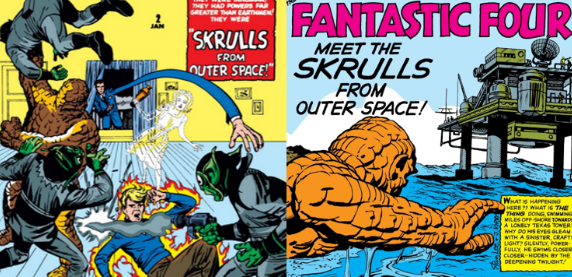
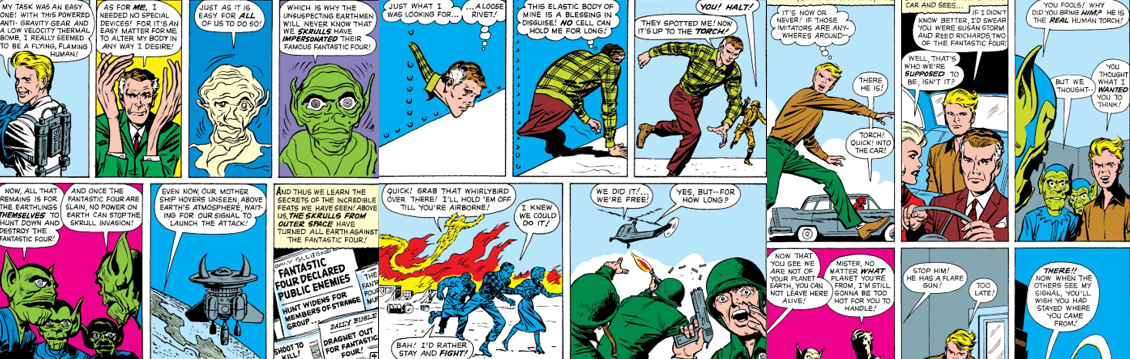
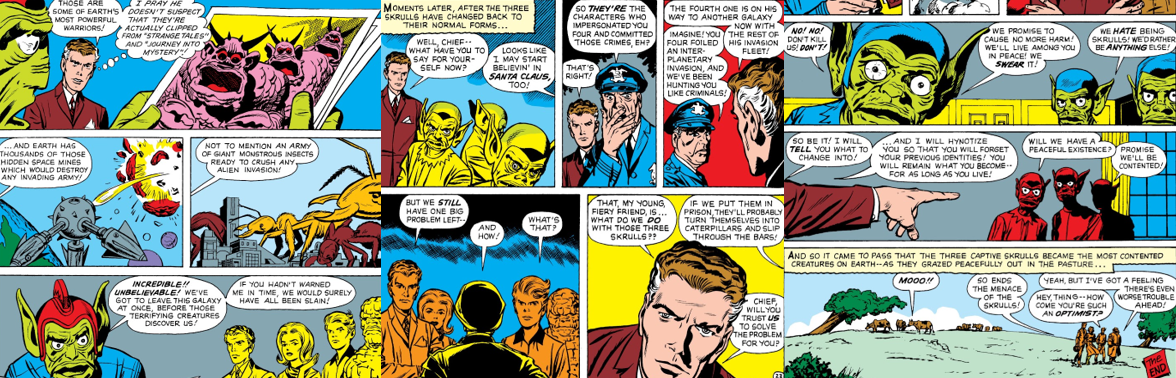
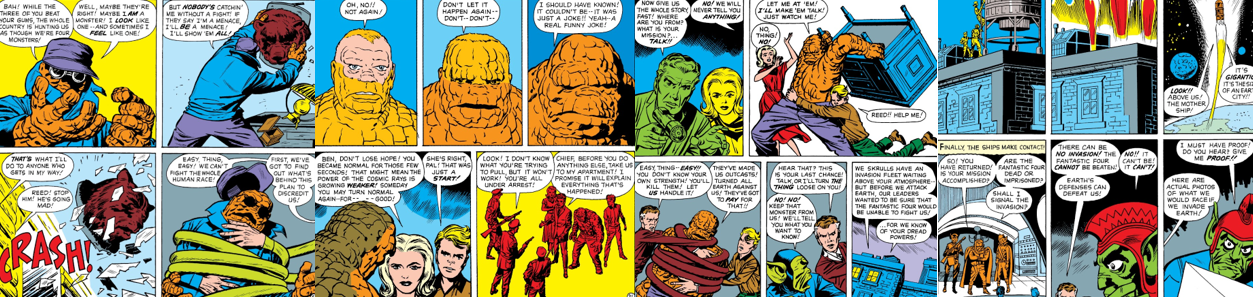




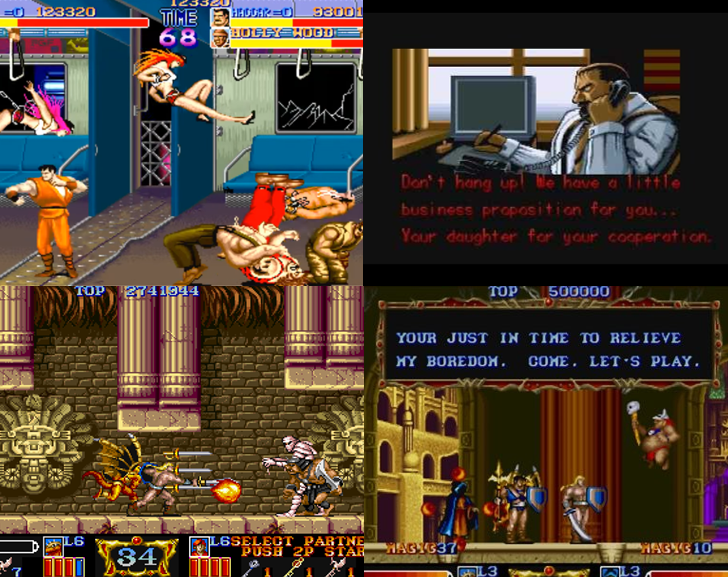
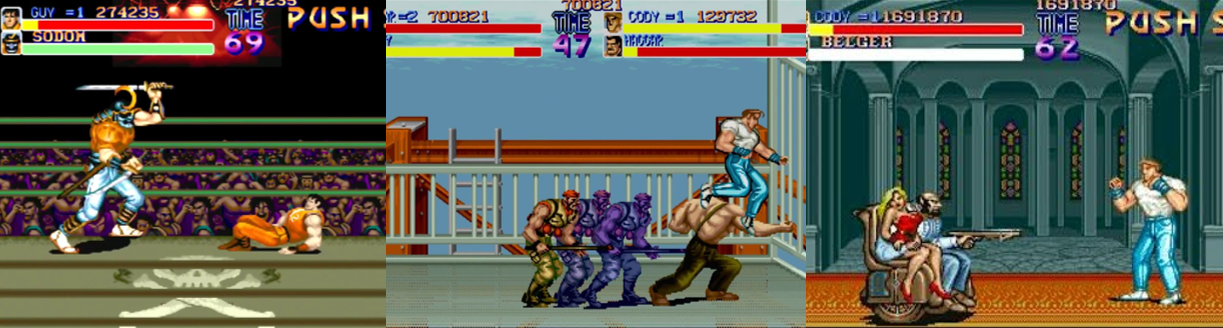
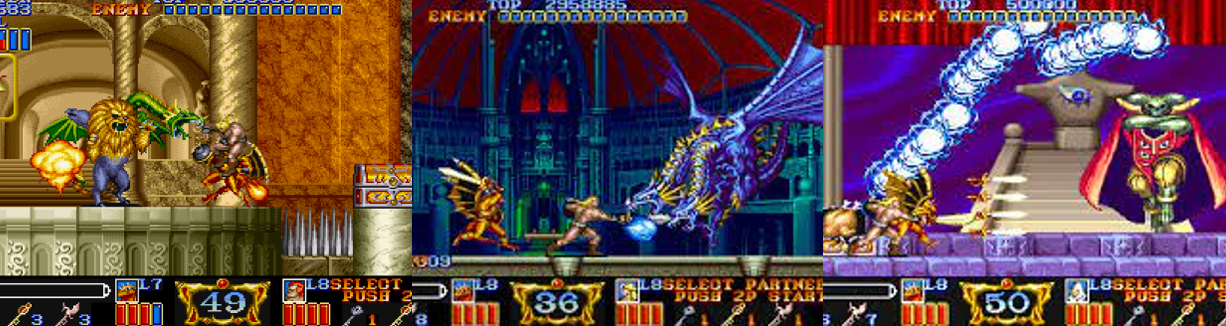



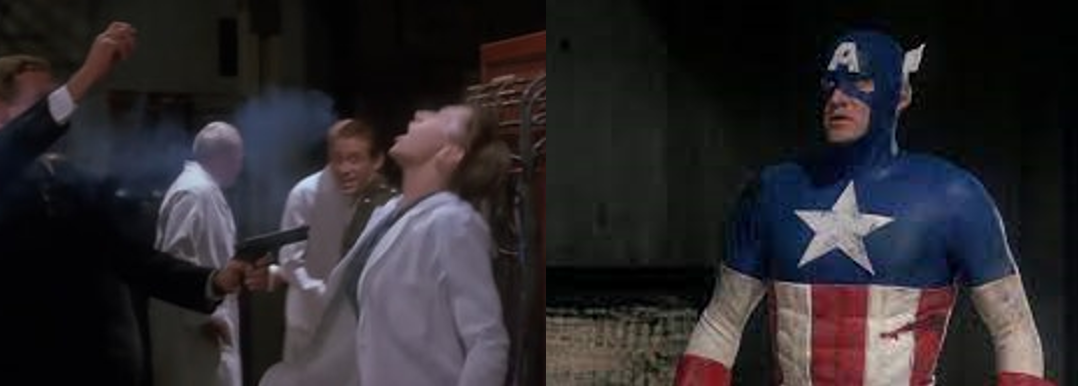

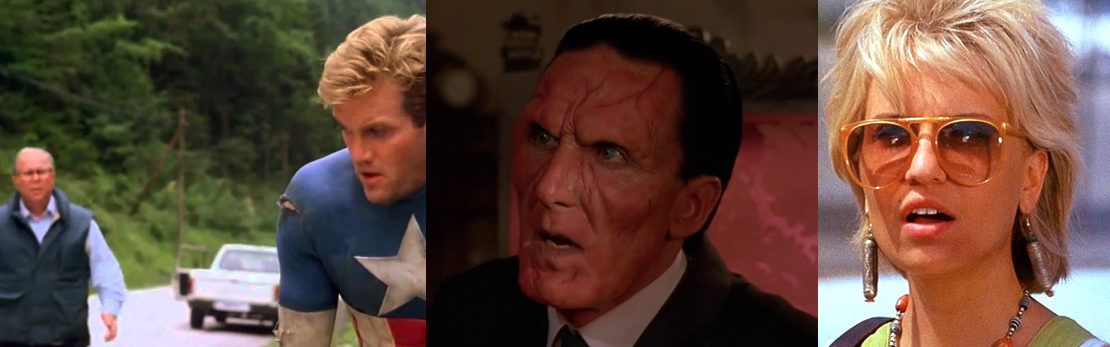
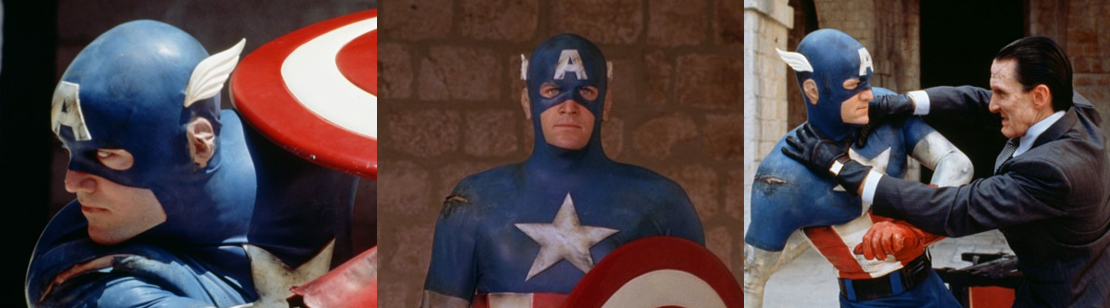
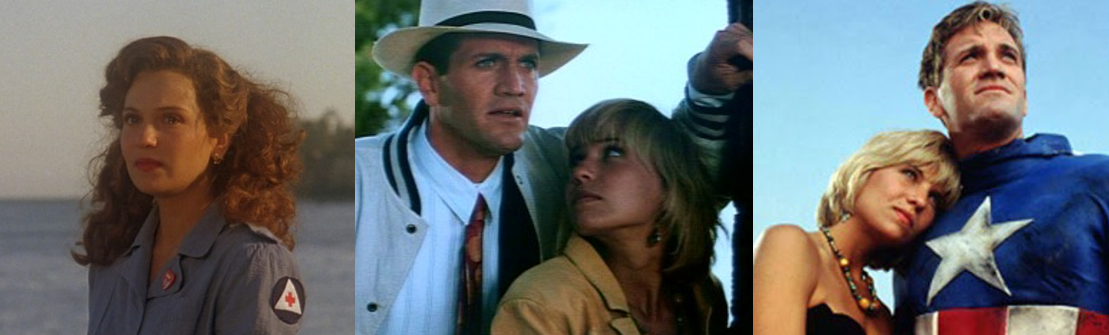


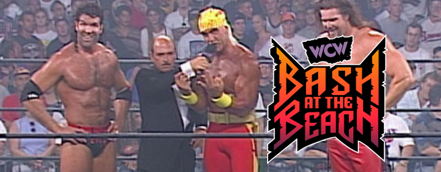
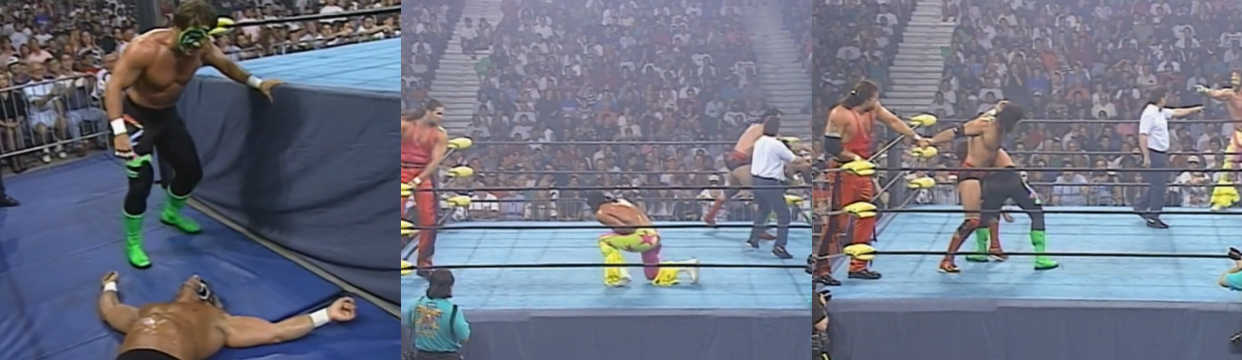
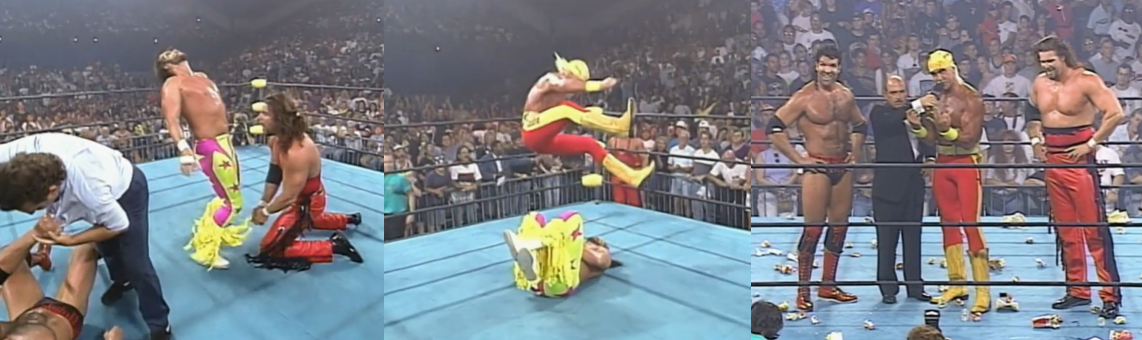


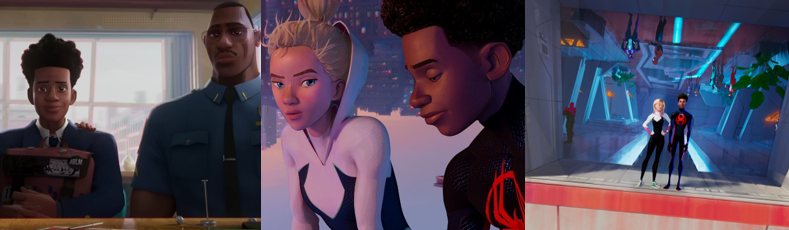

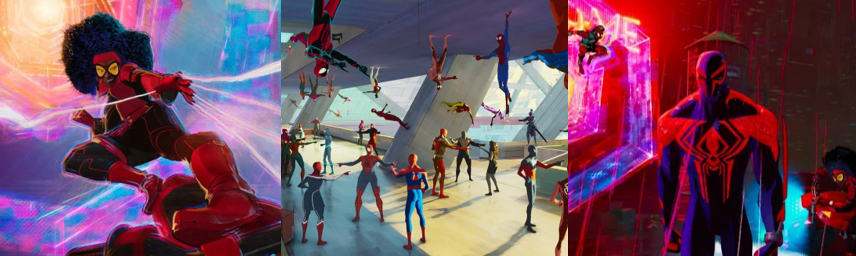




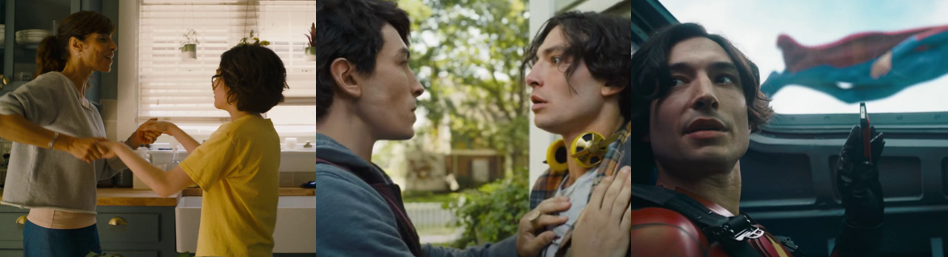


















 Dr. K's Waiting Room
You must be logged in to post a comment.