“Talk about your psalms, talk about “John 3:16”… Austin 3:16 says I just whupped your ass!”
With those immortal words, spoken by the legendary pro wrestler “Stone Cold” Steve Austin after winning the King of the Ring tournament on 23 June 1996, a momentous wrestling career unfolded that would see everyone’s favourite beer-swigging, finger-gesturing anti-hero become not just an industry icon but a mainstream icon as well. Here’s to yah, Steve!
The Date: 14 February 1999 The Venue: Memphis Pyramid; Memphis, Tennessee The Commentary: Michael Cole and Jerry “The King” Lawler The Referee: Mike Chioda The Stakes: Main event steel cage match to decide Austin’s WrestleMania fate
The Build-Up: Ask any wrestling fan and they’ll tell you about the ratings war between the World Wrestling Federation (WWF) and World Championship Wrestling (WCW) andone ofthe greatest feuds of the WWF’s “Attitude Era”: the rivalry between the loud-mouthed, anti-authority “Stone Cold” Steve Austin and WWF Chairman Vince McMahon. After the infamous “Montreal Screwjob” saw Bret “The Hitman” Hart leave the WWF, McMahon’s evil “Mr. McMahon” authority figure frequently clashed with Austin’s rebellious ways. McMahon consolidated his power by ensuring that The Rock captured the WWF Championship and reigned supreme as the “Corporate Champion”, and personally ensured that Austin’s goal of recapturing the belt at WrestleMania XV: The Ragin’ Climax wouldn’t come to fruition by winning the annual Royal Rumble for himself! However, as he was a businessman and figurehead rather than a full-time wrestler, McMahon’s victory was forfeited and Steve Austin was awarded the WrestleMania XV match by default. Enraged, McMahon had only one option left; he goaded Austin into getting what he really wanted, a one-on-one match with the WWF Chairman (inside a steel cage, no less!), if Austin would put his WrestleMania opportunity on the line. Thus, after months of drama, tension, and confrontations between the two, the stage was finally set for Steve Austin and Vince McMahon to face-off for the first time.
The Match: It’s easy to forget these days, in an era where World Wrestling Entertainment (WWE) likes to push that crowds have mixed reactions to their top guys, just how absolutely white-hot Steve Austin was back in the day; anticipation would build in arenas to a fever pitch and then the people would literally explode into rapturous applause and non-stop cheering once they heard that familiar glass shattering, and that was more than evident in this match when Austin made his way down to the ring. Interestingly, as unanimous as the crowd’s support for Austin was here, they don’t exactly descend into a chorus of boos for Mr. McMahon’s entrance; instead, there was largely a feeling of apathy, potentially because they were just itching to see the WWF Chairman finally get his ass handed to him despite the fact that he was jacked up to the nines! Something else worth noting here is that this is the old black-bar cage, before the WWE switched to the much safer and more forgiving mesh-style cages, which not only makes it a lot easier for the competitors to climb (Austin perched himself at the top of the cage to beckon McMahon in) but also much more hazardous to their health.
McMahon taunted Austin and they brawled at ringside before the chairman crashed through the announce table!
Of course, Austin was practically frothing at the mouth as McMahon approached the cage, desperate for his hated rival to get into the ring, but McMahon purposely made him wait by loitering at ringside and taking his sweet time to enter. Naturally, this whipped the crowd into an uproar and incensed Austin, who chased the chairman around the ringside area before the two get into a bit of a slap fight on the cage wall. After toying with each other for a bit, Austin took a tumble to the floor and seemed to twist his ankle. Delighted, McMahon left the cage to try and capitalise on Austin’s injury, only to walk right into a trap! Austin decked McMahon with a clothesline and pummelled him across the announce table, slamming him into the steel cage, and then choking him out with a piece of extension cord. Firmly in control, Austin dumped McMahon over the barricade and put a beating on him in the crowd, refuelling with a cheeky brewski before running McMahon into the steel stairs. McMahon mounted a comeback, however, with a cheap shot and then lured Austin into the crowd for a brawl. McMahon tried to escape amidst the sea of people, but Austin caught him and dragged him back to ringside, slamming him into the barricade and the cage bars over and over, yanking the boss down from the cage when he tried to climb to safety and stomping right on his crotch. When McMahon tried one more time to climb into the ring and escape Austin’s wrath, Austin followed him and, after a bit of back and forth, knocked Vince from the cage and sent him crashing through the Spanish announce table!
McMahon continued to goad Austin and was left a bloody, beaten mess as a result.
Michael Cole and Jerry Lawler prattled on about how shocked and concerned they were at how quickly the match had turned brutal, and the doctors and referees rushed down to ringside to strap Vince onto a stretcher; when Howard Finkel tried to announce Austin as the winner by default (despite the match not having officially started yet), Austin cut him off and demanded that the match continue. Austin commandeered the stretcher and drove the helpless McMahon into the steel cage, pummelling him with the back board, and finally tossing him into the ring so the match can officially begin. The minute the bell rang, Austin wrecked McMahon with a clothesline, ripped off his neck brace, and decimated the defenceless chairman with repeated second-rope elbow drops. Seemingly satisfied, Austin went to leave via the door but McMahon goaded his rival back into the ring by flipping him the bird, receiving Austin’s trademark mudhole stomps in the corner for his troubles. However, McMahon managed to turn things around with a low blow and tried to clamber out of the cage, but Austin recovered fast enough to stop him and fling him back into the ring from the top of the cage wall. The crowd was loving it as Austin rammed McMahon into the cage wall over and over, busting him open and leaving him a bloody mess, but Vince continued to flip Austin off and stop him from leaving the ring. Incensed, Austin returned to the ring and left the chairman a bloody, crumpled heap.
Things come to a blessed and dramatic end when Paul Wight accidentally awarded Austin the victory.
The glorified brawl started to drag a bit as McMahon was completely helpless and fell victim to a big Stone Cold Stunner. However, Austin was so distracted with taunting his bloodied foe that he didn’t notice Paul Wight literally bursting up from under the ring right behind him! The massive giant manhandled Austin, launching him into the cage walls and helping McMahon to his feet so he can taunt his surprised rival. McMahon demanded that Wight throw Austin into the cage wall one more time, desperate for some retribution, but this proved to be his downfall as Wight’s throw was of such force that the cage wall breaks open, which allowed Austin to tumble out to the floor and be declared the winner. Wight was seething and McMahon was absolutely distraught that his grand plan had failed; Austin won the match and secured his WrestleMania championship match after a pretty lacklustre contest. Obviously, I don’t expect too much from Vince McMahon; the guy’s built and clearly know how to take a bump, but his role in his matches is simply to wind up his opponent (and the crowd), take as many cheap shots and shortcuts as possible, and to get the living shit kicked out of him and that’s definitely what happens here but it’s also a whole lot of stalling and mindless brawling. The match really didn’t do too much with the steel cage, and the guys were hardly even in it that much, so the gimmick ends up being a prop for some blood and Austin’s dramatic victory at the end. I think that match might’ve been paced a bit better if we hadn’t had the whole stretcher spot and the longer brawl in the crowd, and this was little more than a drawn out beatdown of a largely defenceless middle-aged man notable primarily for being their first time in the ring together and Paul Wight’s big debut, meaning that you could probably just watch a five minute highlight and see everything this match has to offer.
The Aftermath: St. Valentine’s Day Massacre would end up being the last In Your House event as the WWF changed to permanent pay-per-view names with Backlash the following April, and the In Your House concept wouldn’t be seen again until 2020. Of course, the big story coming out of this match was the addition of Paul Wight to McMahon’s Corporation stable; soon renamed the Big Show, Wight began a tumultuous career flip-flopping between being a good guy and a bad guy depending on the situation and storyline. The Big Show ended up getting into a rivalry with Mankind over which one of them would be the special guest referee for the WWF Championship match at WrestleMania XV, with Mankind winning the match by disqualification and the Big Show seemingly turning against McMahon after being berated for his loss. Austin, of course, went on to have the first of three WrestleMania matches against the Rock, capturing the WWF Championship in the process, and continuing to feud with the Rock, McMahon, and the Corporation in the months that followed. McMahon’s issues with Austin would continue to escalate, leading to the WWF Chairman forging an alliance with the Undertaker to try and get the belt off the Texas Rattlesnake, which ultimately saw McMahon being forced off WWF television for some time as he continued to put more and more on the line in an effort to out Austin. Ultimately, their feud would be abruptly cut off after Austin took time off for neck surgery, but their paths would continually cross as they entered an ill-advised alliance and butted heads continuously even after Austin’s official in-ring retirement.
My Rating:
⭐⭐
Rating: 2 out of 5.
Could Be Better
What did you think to the contest between Steve Austin and Vince McMahon at St. Valentine’s Day Massacre? Which of their encounters, matches, and moments is your favourite? What did you think to Paul Wight’s shocking debut? How are you celebrating 3:16 Day this year, what are some of your favourite matches and moments from Austin’s illustrious career, and what dream match would you have liked to see him involved in? Whatever your thoughts, share them below or drop a comment on my social media to let me know what you think about “Stone Cold” Steve Austin.
Released: 13 March 1987 Director: Sam Raimi Distributor: Rosebud Releasing Corporation Budget: $3.5 million Stars: Bruce Campbell, Sarah Berry, Dan Hicks, Kassie Wesley, Lou Hancock/Ted Raimi, and Denise Bixler
The Plot: After discovering a recorded incantation that unleashes a demonic spirit from the nearby woods and possesses his girlfriend, Ashley “Ash” Williams (Campbell) is tormented and partially possessed by the evil force. Things escalate when locals and scientist Annie Knowby (Berry) arrive at the cabin, only to be set upon by a monstrous, zombie-like demon dwelling in the basement…
The Background: Back in 1981, long-time friends and collaborators Sam Raimi, Bruce Campbell, and Robert Tapert begged and borrowed to turn a simple horror concept into the ambitious, if hazardous, The Evil Dead,a low-budget horror that established Raimi’s directorialstyle but failed to propel him into the mainstream despite surprisingly positive reviews and being a sleeperhit. After his follow-up projects bombed, Raimi returned to his horror roots for an Evil Dead sequel, but production was immediately upended by rights issues; since Raimi didn’t own the rights to his original film, the opening sequence of the sequel served as a partial recap/remake of The Evil Dead, though now streamlined to focus on only Ash and his girlfriend. While shooting the first film, Raimi had conceived of a sequel in which Ash would be transported back to medieval times, an idea that the studios passed on; however, despite The Evil Dead’s financial success, producer Dino De Laurentiis wouldn’t approve of Raimi’s more outlandish ideas, necessitating a return trip to the cabin. Although the script had been conceptualised for some time, Raimi brought in another long-time friend, Scott Spiegel, to make adjustments and it was Spiegel who took the franchise in a more horror/comedy direction, with him and Raimi both drawing inspiration from their love of the Three Stooges. This was especially evident in Campbell’s slapstick fights against both the evil force and his own possessed hand; Evil Dead II dramatically increased Campbell’s abuse and stunt work, and the set remained notably hazardous for the cast and crew. As before, the film’s special effects and horror were achieved in-camera using a series of dollies, animatronics, and traditional filmmaking techniques; footage was run in reverse, large and uncomfortable suits were worn, and shots often tracked the actors from the rafters and through the walls of the set. Over 880 gallons of fake blood were used during filming, a custom-built prop chainsaw was built to be attached Ash’s severed hand, and the KNB EFX Group had to use every trick in the book, from miniatures to matte paintings, to deliver the film’s far gorier and more ambitious make-up and special effects. This meant that the film again had trouble with the ratings board; when they proposed cuts that would severely cripple the film’s runtime, it went unrated upon release, a gamble which may account for its much lower box office gross of $5.9 million. However, Evil Dead II was met with largely positive reviews; critics praised the direction and performances, especially Campbell’s work, as much as the over the top gore and blend of horror, comedy, and action. Of all the Evil Dead films, Evil Dead II is the most influential; it’s regarded as a cult horror classic and its characterisation of Ash and shift towards horror/comedy was replicated in subsequent comic books, videogames, and the unfortunately short-lived television series.
The Review: If you’ve seen The Evil Dead then you might initially be put off by Evil Dead II simply because it immediately retcons a great deal of that film; gone are Ash’s friends and sibling, reducing the cast of the initial cabin experience to a vastly different version of Ash and his doting girlfriend, Linda (Bixler). However, I do believe this is to the film’s benefit; the reshot opening sequence, which effectively retells and replaces the first movie, features all of the best parts of The Evil Dead but with higher production values across the board, meaning you can easily skip the original movie and be all the better for it since Evil Dead II establishes so much of the lore, atmosphere, and characterisations that would continue throughout the remainder of the series. The movie opens with Professor Knowby’s (John Peaks) ominous narration regarding the semi-intelligent book, now rechristened “Necronomicon Ex-Mortis” but still referred to as the “Book of the Dead” and containing the same rituals as before, but now with a far more animated face and a great deal more power and influence seeped into its gory pages. From there, the film very much mirrors the first movie; this time, it’s just Ash taking his girlfriend to a secluded, abandoned cabin for a romantic getaway and elements of Scott’s (Richard DeManincor) character are weaved into him.
Ash is far more well-rounded and made dangerously unpredictable by the evil’s influence.
Consequently, in contrast to the first movie, Ash is no longer bookish or some geek who struggles to be assertive; by borrowing Scott’s bravado, Ash is bolstered and given deeper characterisation by a snarky confidence that translates far better once he assumes the role of unlikely horror hero. He still thinks gifting an awful magnifying glass necklace to his girlfriend is a good idea and still exhibits the same likable charisma and tortured conflict seen in the first film, but he’s much more competent and less wishy-washy here, though all his sexual confidence can’t keep him from giving into curiosity and playing Professor Knowby’s tape and bringing forth the evil lying dormant in the forest. Although he doesn’t have to suffer the pain of watching his sister and friends get possessed and picked off by the evil force they unleash, he’s still tormented when Linda is overtaken by the titular evil dead and becomes a gibbering, maniacal zombie-like creature. Ash’s concern and love for a large group of friends is focused all on Linda, making her a much more prominent character in his life and she returns again and again to spitefully mock him or cause him further harm. He’s also the sole focus of the evil force itself; similar to the last film, the evil possesses Linda and even the house itself to taunt Ash, driving him to near madness in a far shorter and more brutal space of time, but it also infects him more than once. Most prominently, it enters his hand, compelling it to attack him and forcing him to sever it at the wrist with a chainsaw, but it also overtakes him completely on a couple of occasions, something that was strangely missing from the first film and works in tandem with Ash’s fractured mindset to make him a dangerous and unpredictable character this time around since you’re never sure when he’s going to suddenly become a flesh-hungry Deadite.
Ash’s love for Linda keeps him sane, while Annie is the key to banishing the evil.
Although Linda’s role is again quite small, the absence of Ash’s other friends means she takes on a more prominent role in a number of ways. First, as mentioned, all of his attention is focused on her, giving her more to do and more agency in the cabin and allowing Ash’s grief to be largely focused on her. Second, she becomes something of a secondary antagonist after being possessed; Linda proves to be Ash’s Achille’s heel time and again and the evil force doesn’t hesitate to exploit that. While he’s far faster at chopping off her possessed head to defend himself, he remains heartbroken at the loss and even when her headless corpse mocks him and attacks him with a chainsaw, he remains conflicted and reluctant to harm her until he’s pushed to breaking point. Finally, Ash is definitely a much more confident character when it comes to women in this film, but he’s absolutely portrayed as a one-woman man; Linda’s memory is one of the few things that keeps Ash sane and allows him to resist the influence of the evil force, and her necklace has very much the same impact on him as the rising sun, banishing the evil from his body and bringing him to his senses, which allows her to be far more important to the overall plot, and to Ash, than simply being another cackling demon in the corner. Ash also eventually bonds with Annie; while she initially believes that he’s murdered her father and mother, Henrietta Knowby (Hancock/Rami, respectively), her research into the Necronomicon Ex-Mortis means that she’s soon relying on Ash to help them survive until the dawn and recover the missing pages of the book to put a stop to the rampant evil. Like her father, Annie has been researching the book for some time and is excited to get to the cabin so she can bring the book’s missing pages to her father, only to find a deranged man covered in blood and wielding a shotgun. It’s only after hearing about what happened to her parents that Annie starts to realise that the real danger lurks in the cellar and the pages of the Necronomicon and that her ability to read from the book is their only hoping of stopping the evil force.
The supporting cast largely causes problems and get themselves offed in gory fashion.
While Ash’s friends might be gone, Evil Dead II still features an extended cast; Annie comes to the cabin with her research partner, Professor Ed Getley (Domeier), and they enlist the help of two locals, repairman Jake (Hicks) and his girlfriend, Bobby Joe (Wesley), easily the two most annoying characters in the entire film. Thanks to Ash having been tormented by the evil force and jumping at every shadow (not to mention being covered in blood and having a stump for a hand!), Annie and the others instantly distrust and attack him, locking him in the cellar without heeding his warnings. Much like Cheryl Williams (Ellen Sandweiss), sneering redneck Bobby Joe is driven out into the malevolent woods and attacked, though with far less disturbing methods, and Jake becomes so consumed with concern for her that he tosses the Necronomicon’s pages into the foreboding cellar and forces Ash and Annie to go into the woods at gunpoint and find her. Mean, stupid, and cynical, Jake doesn’t believe any of the supernatural mumbo-jumbo Ash and even Annie tries to convince him of, needlessly extending the film and endangering the group and ending up dead as a result. Since Ash is infused with some of Scott’s bluster this time around, it’s poor, unassuming Ed who mirrors Ash from the first film; he’s basically a blank slate there to make up the numbers and add to the body count and give Ash a heroic moment when he puts the possessed academic down with an axe. Professor Knowby takes on a far greater role here as well; not only is he responsible for bringing the Necronomicon to the cabin and first unleashing its demons, he essentially dooms the characters by burying his possessed wife in the fruit cellar. In a desperate attempt to find redemption, his tormented spirit appears before them to provide the key to dispelling the evil and acting as something of a counter to the malevolent force.
The evil force delights in tormenting Ash and attacking through demonic possession.
Of course, the primary antagonistic force in the film is the disembodied “evil dead”. Unlike in the first movie, where it’s pretty clear that the evil force is lurking in the forest and waiting to strike at its prey, the evil is dormant and quiet until Ash plays the tape recording but no less ruthless than before. Indeed, this time around, the evil force is far more diverse; in addition to urging its victims to “Join us!” with a booming whisper (William Preston Robertson) and wrecking the main bridge back to civilisation, it creepily transforms the front of the cabin into a glaring face and delights in torturing Ash by possessing furniture, lights, and stuffed animals inside the cabin for one of the most amusing and disturbing scenes in the film. The evil force repeats many of the same tricks from the first film, sweeping around with erratic and unsettling movements, bashing through doors, wrecking the only bridge to safety, and infecting its victims through possession and bloodletting, but also has many more options for physical manifestation; it turns Linda into a cackling Deadite and even transforms Ash into a hideous demon, but derives much pleasure from possessing his hand and causing him direct physical harm. Even when it’s cut off, Ash’s hand continues to torment him, even stabbing Annie in the back by the finale, but the evil dead’s most prominent manifestation is the bloated, demonic Henrietta (Raimi) who dwells in the cellar. Both Linda and Henrietta are much more vocal than the Deadites from the last film, issuing threats and torturing their victims verbally as well as physically, with the swollen Henrietta swinging Annie around while levitating overhead. As before, there are ways to conquer the evil force; it’s banished by daylight and strong emotional ties, for example, but those possessed can only be stopped by total bodily dismemberment, something that again proves difficult for the likes of Ash given how much he loves Linda. A new wrinkle introduced here, though, is that the Necronomicon itself also holds the secret to stopping the evil force; since Annie is the only one who can read it and the pages she needs are lost in Henrietta’s cellar, this gives the characters more options and motivation for venturing deeper into the cabin, and the book, for a solution, and the book even contains some prophetic passages concerning Ash’s future adventures and greater destiny within the series.
The Nitty-Gritty: There’s no doubt in my mind that Evil Dead II is the superior of the first two movies; the film looks so much better and benefits from a better quality of film grain and lighting, higher production values, and the seasoning of Raimi and Campbell as director and actor. It’s still full of the same sweeping, erratic camera work as the first movie but everything looks like it’s of a much higher quality; this extends to the puppets and practical effects, which shine all the brighter here thanks to the greater budget, and to Campbell’s performance. Before, he was a little quiet and understated but he’s really put through the wringer here, quickly forced to endure horrendous torture from the evil force in the first fifteen minutes of the film and spending a lot of it seemingly on the knife’s edge of insanity after flailing about with his girlfriend’s severed head chomping on his hand, being tormented by laughing furniture, being driven through the windscreen of his car, and having been forced to fight and then chop off his own hand! However, while Bruce Campbell’s performances are far better than in the first film, Evil Dead II is really let down by Jake and Bobby Joe. The former, in particular, is exceptionally grating; I get that that’s the point, he’s meant to be a sweaty, unlikeable, self-serving redneck, but damn is he a pig-headed pain in the ass and the most glaringly unwatchable aspect of the film, which is saying a lot considering all the gore involved!
Ash is put through the wringer but comes out of it as one of horror’s most iconic heroes.
Luckily, Ash is here to counterbalance this. Ash has to go from cocksure college student to horror hero in far less time than in the first film, but it’s pulled off well thanks to Campbell’s refined charisma and the early going being able to directly focus on Ash’s relationship with Linda while still piling on the madness and abuse towards the character. Ash really goes through a gauntlet in this film; not only is he forced to chop up, bury, and continuously fight against his Deadite girlfriend, he fights himself in some of the most memorable sequences in the entire franchise that really showcase Campbell’s comedic chops and physical performance. While I’m no fan of the Three Stooges, it’s hard to deny Campbell’s physical commitment to the movie, which saw him getting beaten up, repeatedly hit over the head, and almost drown in a puddle. Nowhere is this more memorable than during Ash’s battle against his severed hand, which also doubles as an external representation of the battle that rages within himself; thanks to being infected by the evil force, he’s also susceptible to it and must fight to overcome it by remembering his lost love. Ash is also far more forthright and proactive in this film; having been driven to the brink by the spiteful evil force, he openly stands up to Jake even when he’s armed and constantly tries to warn Annie and the others of the evil at the cabin, only to be met with disbelief and aggression. When Annie and Ash are forced to venture into the cellar to retrieve the pages, Ash completes his transformation into one of horror’s most memorable action icons by reconfiguring a chainsaw into an attachment for his bloody stump, arming himself with a sawn-off shotgun, and spouting his most memorable catchphrase: “Groovy!”
The film perfectly balances its cartoonish humour with copious gore and horrifying demons.
Naturally, given it’s of the same splatter-horror subgenre as its predecessor, Evil Dead II still features copious amounts of blood, violence, and gore, though things are definitely much more skewed towards comedy this time around. As unsettling as it is when Ash’s reflection comes to life, deer heads and lamps giggle at his misfortune, and when his hand is twisted into an infectious claw, it’s all much more over the top and campy, with the evil force’s spiteful demeanour now taking a more playful edge, demonstrated when his severed hand flips him the bird and Linda’s decaying corpse does a little dance for him before smashing his head into the boarded up window with skeletal hands that are clearly being moved by Bruce Campbell. Still, there’s a great deal of gore on show here; Ash spends the whole movie sporting a series of weeping cuts on his face, the cabin tries to drown him in all kinds of viscera, and Ash gets a face full of the red stuff when he first chainsaws Linda’s head in two and then lops his hand off at the wrist. Stop motion effects are still employed here, particularly when Henrietta emerges from the cellar floor and her corpse-like face transforms into a more demonic visage, as are traditional, cheap tricks like running the footage of Kassie Wesley in reverse to make it seem like Bobby Joe has swallowed the witch’s eyeball! Similar techniques are again used to bring the trees to life to attack Bobby Joe, though this time they settle for taking root in her flesh, dragging her through the woods, and smashing her against a tree trunk rather than sexually violating her. Like Cheryl, Ed is transformed into a demonic creature through which the evil speaks, becoming a monstrous ghoul that swallows a chunk of Bobby Joe’s hair and ends up chopped into bloody pieces, though his blood takes on a green hue. Easily the best Deadite effect is saved for Ash, who becomes a monstrous version of himself at a couple of points, while Henrietta fulfils the role of the principal physical manifestation of the evil, dragging Jake down into the cellar and leaving him little more than a torrent of blood.
Although Annie dispels the evil, Ash is sucked through a portal and trapped in medieval times!
After shaking off the evil’s influence, Ash tools himself up in his now iconic look and ventures into the cellar to retrieve the expanded pages of the Necronomicon, which hold the key to dispelling the evil: one passage forces it to take on a physical form and another opens a rift through which the spirit can be banished. After successfully retrieving the pages from the flooded, rat-infested cellar, Ash is attacked by Henrietta, who bursts from the cellar with a maniacal glee, transforming into a squealing, demonic mass that would make Ray Harryhausen proud! Thanks to a timely distraction from Annie, Ash is able to chop the witch up and finally finish her off with a shotgun blast to the face and a witty one-liner (“Swallow this!”) However, the evil force attacks the cabin in full force, emerging as a gigantic, terrifying tree-like demon with a face so horrifying that a plant instantly withers and it sends a white streak through Ash’s hair! Although Ash’s bastard limb delivers a mortal wound to Annie, she’s able to finish the incantation with her dying breath, banishing the evil to the void but, sadly, taking Ash and his Oldsmobile as well since she never gets to close the portal. Previously, while examining the pages of the Necronomicon, Ash was overwhelmed by a sudden energy when he saw a depiction of the “Hero from the Sky”, a prophesised saviour who defeated the evil back in ancient times. Keen-eyed viewers will note the figure’s similarity to Ash and this brief picture is no coincidence as, in the finale, Ash finds himself unceremoniously deposited back in medieval times. There, he’s initially greeted with hostility by the armour-clad natives but proves himself to be the prophesised hero when he instinctively shoots down an incoming winged Deadite. However, while he’s subsequently hailed as a hero, Ash is left distraught as he realises he’s trapped in ancient times and his long night is still far from over…
The Summary: I mentioned in my review of the first movie that my first Evil Dead experience was Evil Dead II and, even now, I would always point a newcomer to this movie over any of the original three since it really is the most complete version of the story with the perfect blend of horror, action, and comedy. Thanks to opening with a recreation of the first film, one that reduces the cast down to simply Ash and his girlfriend, you get all the best parts of The Evil Dead with higher production values, better performances, and better effects told in a nice concise twenty-odd minutes. From there, the film expands on the original concept and then ends with Ash being trapped in medieval times for a bleak cliff-hanger ending that’s still more enjoyable than most of the third film even though it’s just a short tease at the end. While it lacks a lot of the raw grittiness of the super low-budget original, Evil Dead II more than makes up for it with higher production values and a much more enjoyable presentation; the gore and ambitious effects are much higher quality and shine so much brighter because of it. There are times when it’s a little cartoonish in its execution but, for me, Evil Dead II has always been the perfect balance of the dirty splatter-horror of the first and the ludicrously comedic action of the third film. Ash is a far more well-rounded character, one who transforms from a meek survivor into an action icon with his chainsaw for a hand and one-liners. Crucially, he remains a flawed and vulnerable character; driven half-mad by the evil and overcome by it more than once, Ash becomes as dangerous as the evil he’s fighting and is given far greater characterisation thanks to the film focusing more on him than bland supporting characters. In the end, if you’ve never seen an Evil Dead movie and don’t know where to start, don’t be intimidated by the II in the title and make sure you start here, with what is, for me, still the quintessential classic Evil Dead experience.
My Rating:
⭐⭐⭐⭐
Rating: 4 out of 5.
Great Stuff
What do you think to Evil DeadII? Do you prefer it to the original film and how would you rate it compared to the other films? What did you think to how Ash’s new characterisation and transformation into a more competent action hero? Were you a fan of his battle against his severed hand and chainsaw appendage? Did Jake and Bobby Joe also grate on your nerves? What did you think to the film’s presentation, gore, and the marriage of horror and comedy? Would you cut your hand off so readily if it got possessed? Whatever your thoughts on Evil DeadII and the franchise, feel free to leave a comment below or on my social media.
So, for no better reason than “Mar.10” resembling Mario’s name, March 10th is widely regarded as being “Mario Day”, a day to celebrate Nintendo’s portly plumber, an overalls-wearing mascot who literally changed the videogame industry forever and shaped the home console market of the nineties.
Released: 28 May 1993 Director: Rocky Morton and Annabel Jankel Distributor: Buena Vista Pictures Budget: $42 to 48 million Stars: Bob Hoskins, John Leguizamo, Samantha Mathis, Fiona Shaw, Fisher Stevens, Richard Edson, and Dennis Hopper
The Plot: Mario (Hoskins) and his younger brother, Luigi (Leguizamo), are out-of-luck plumbers who, upon meeting Daisy (Mathis), are suddenly transported to a parallel world where dinosaurs, rather than primates, evolved into the dominant lifeform and are immediately caught up in King Koopa’s (Hopper) diabolical plans to merge this “Dinohattan” with the real world.
The Background: By 1993, Nintendo’s portly plumber Mario was well-established as a successful videogame and pop culture icon; over sixty videogames had been released that either included Mario or featured him and his brother, Luigi, in a starring role. Super Mario All-Stars (Nintendo EAD, 1993) was released that same year and the characters had featured in numerous animated and live-action productions. Mario’s popularity had captured the mainstream; a 1990 survey revealed that the character’s popularity and eclipsed that of MickeyMouse and, perhaps inevitably, the idea of a live-action feature film began to take shape thanks to Nintendo’s then-director of advertising and public relations, Bill White. Despite bringing in Blade Runner (Scott, 1982) co-writer Barry Morrow and attracting such superstar names as Dustin Hoffman, Danny DeVito, and Tom Hanks, production of the film almost immediately ran into troubles when pages of the script were “rewritten on a daily basis” so the “actors didn’t bother reading the new pages, knowing full well that more would likely follow” (Russell, 2012: 140). Despite some reservations about the script and being typecast, Bob Hoskins eventually signed on for the lead role and ultimately came to regret the experience; reportedly, he and co-star Leguizamo were so frustrated and unhappy on set that they spent the majority of their working days drunk and Hoskins later claimed that the film was the “worst thing” he had ever done and a “nightmare” as the general onset atmosphere was “anarchic”, with Nintendo being “nowhere to be seen [and without] a representative present during the shoot” and the directors being “out of their depth, pulled between the demands of the producers, their attempts to rewrite on-the-hoof and the logistical enormity of the production” (ibid: 140). Budgeted at $42 million and grossing just over $20 million, Super Mario Bros. was met with almost universal derision; everyone from critics, to cast and crew, and even Mario creator Shigeru Miyamoto distanced themselves from the film because of its troubled production and removal from the source material. I, however, loved this movie as a kid; my friends loved this movie back in the day, too, because it was a bright, goofy, fun-packed adventure that was entertaining as hell. As I grew up and moved into studyingvideogame adaptations for my PhD thesis, I also came to appreciate the film as a movie rather than an adaptation, which I think is where a lot of its criticism falls down as people seemed to have been expecting a one-to-one transliteration of the source material and adaptation just doesn’t (or rarely ever) works that way, resulting an a light-hearted, kid-friendly action/adventure romp rather than a 100% recreation of the game’s more obscure fantasy elements (although the later computer-animated movie absolute blew this one out of the water).
The Review: Although Super Mario Bros. was not the only videogame adaptation to be a critical and commercial failure, by virtue of being “the first” it exists as a perpetual reminder that videogame adaptation is difficult and often disappointing. Despite its failure at the box office, movie studios quickly exploited videogame adaptations to entice videogame players into cinemas and allowed the videogame industry the opportunity to license their franchises out with little to lose (Picard: 2008: 295). As a result, Hollywood continues to attract reasonable budgets and high-profile actors and production stuff to videogame adaptations despite the genre “[failing] to receive much in the way of critical or commercial success” and Uwe Boll’s ill-received contributions (ibid). However, while it’s true that the film has many differences from its source material and isn’t much more than a fun kids adventure, that doesn’t necessarily make it “bad”; it’s like a live-action cartoon and, when your source material is a chubby plumber bouncing on the heads of malevolent mushrooms, what else do you really expect?
Though dysfunctional, both brothers have strengths and weaknesses that make them a team.
Bob Hoskins may have spoken out against the film in the years since it released but, whatever his demeanour and mindset on set, he is absolutely fantastic in the role of Mario; the plumber brothers are introduced as normal, everyday working men who are behind on their rent, drive a clapped-out van, and are constantly being scuppered by Anthony Scapelli (Gianni Russo). While Luigi is the young, lazy, overly enthusiastic and imaginative of the two, Mario is the older, more cynical and jaded brother; Luigi is a day dreamer, who is open to all possibilities and probabilities while Mario is realistic and grouchy, concerned about their lack in income and their sustainability. Due to the absence of their parents, Mario has had to fulfil the role of mother, father, and brother to Luigi, raising him since he was a kid and his priority, above all other concerns, is Luigi’s welfare; this manifests itself in a number of ways, from berating his younger brother for his reckless ways and daydreaming, encouraging him to keep his feet on the ground and be realistic and serious for a change, to literally holding Luigi in check physically and emotionally. While Luigi somewhat resents Mario’s constant over-protectiveness and influence on his life, he is also heavily reliant upon his brother; Luigi isn’t much of a plumber and is more like Mario’s apprentice and assistant (he knows the tools and the trade but lacks confidence in tackling big plumbing jobs by himself) and is far my awkward around women compared to his older, far more confident brother. Still, the chemistry between both actors is immediately believable; I totally buy that these two are brothers who wind each other up and get on each other’s nerves in other ways but, nevertheless, share a real bond, their banter is amusing and realistic and, best of all, while they argue and disagree a lot, they never have a big, cliché falling out or anything like that and Mario is always extremely supportive of his younger brother even while he despairs over Luigi’s immaturity.
Though she undergoes a bit of a transformation, Daisy is little more than a damsel in distress.
Furthermore, Mario is given a crippling fear of heights (kind of ironic, you could argue, given the amount of jumping his videogame counter parts takes part in), meaning that he relies on his fearless younger brother when it comes to taking literal leaps of faith; additionally, Mario learns to adopt many of Luigi’s more open-minded characteristics by the conclusion of the film and grows from a reluctant hero to a willing hero, immediately jumping into action to assist Daisy when she pops up for the film’s conclusion. Speaking of which, Daisy is a serviceable enough character for the most part. Like Luigi, she’s an orphan but, unlike him, she’s been driven by an insatiable enthusiasm for dinosaurs and bones and struggled with her identity after she was abandoned as a child (…well, egg, to be more precise). Luigi is instantly enamoured by her based on her beauty and, later, her commitment to this cause and she seems taken by his enthusiasm and awkwardness. While she is able to speak up for herself and is largely calm and emotionally stable, she’s little more than a damsel in distress and doesn’t transform into a proactive heroine until the film’s sequel-bait ending. She directs the brothers when they come to rescue her and sets Yoshi free from his bindings but she doesn’t really factor into the finale in a meaningful way beyond being the only one physically capable of interacting with the meteorite (why, though, is never really explained).
He doesn’t resemble his counterpart but Koopa is a zany, scenery-chewing villain.
And then there’s King Koopa himself, Dennis Hopper. Again, Hopper might have distanced himself from the film but he delivers a glorious over the top, scenery chewing performance. For all their buffoonery, the Mario Brothers play mostly as the film’s straight men and, in comparison, Koopa is a cartoon villain; he’s bombastic, melodramatic, and packed full of weird little character quirks while still being cold, ruthless, sadistic, and the more serious of his many underlings. Koopa’s plot is ridiculous in the best way (he wants to take Daisy as his own and use the meteorite piece (the “Rock”) she wears around her next to complete the meteor that split their worlds into separate dimensions and merge Dinohattan with New York, with him as the ruling dictator) and every decision he makes is equally ludicrous: when he’s told the Rock is in the hands of two plumbers, he calls for a “Plumber alert!”; when his underlings defy him (or he faces defiance of any kind), he subjects them to his De-Evolution machine and turns them into incompetent Goombas; and, when he acquires the Rock, his first course of action is the order a pizza!
While Iggy and Spike are bumbling fools, Lena conspires to rule alongside Koopa.
Koopa’s primary minions are his cousins, Iggy (Stevens) and Spike (Edson); while the Mario Brothers are bumbling at times due to their status as unlikely heroes, Iggy and Spike are bumbling full stop; incompetent in every respect, the two act as the film’s comic relief and are thematic parallels to the titular brothers, echoing the Mario’s love/hate relationship through their verbal and physical banter. In an effort to make them more competent, Koopa opts to subject them to a spell of cranial evolution; however, this does little to improve their competency and actually serves to make them smarter than Koopa in many ways, certainly smart enough to cut a deal with the Mario Brothers and, ultimately, turn against their cousin to ensure their own survival. Koopa does have at least one reliable subordinate, however, in the form of Lena (Shaw); however, Lena is intensely jealous of Daisy, since Koopa favours her, so conspires to remove Daisy from the equation while positioning herself as the only woman capable and willing enough to rule by Koopa’s side. Bat shit crazy, she is also a cartoonish villain, literally cackling like a witch when she tries to merge the Rock with the meteorite and pays the ultimate price for her pride and hubris. Before that, though, she demonstrates far more focus in her sadistic desire to off Daisy and even usurp Koopa’s ambitions as she believes that she can rule without him but is blinded by her mad desires just as Koopa is blinded by his ego and libido.
Dinohattan has a very tangible, “lived-in” feel it its dystopian dressings.
At its core, Super Mario Bros. is little more than a fun kid’s movie; an action/adventure piece that needs to be big, bright, and bombastic and, for the most part, it takes all of these boxes. Dinohattan evokes the murky, gritty, industrial aesthetic of Blade Runner, being this desolate dystopian city that (thanks to an elaborate, practical set) feels real and lived in. Covered with a disgusting fungus, the city is full of little background elements and references (the Hammer Bros, Thwomp, Bullet Bill, and Wriggler all get little cameos as brightly-coloured neon signs, advertisements, and businesses but perhaps the most accurate inclusion is that of the much-feared Bob-omb); sparks, flames, and explosions are aplenty in this gloomy dystopia and the film has a very tangible sense of kinetic energy (things are always moving and bustling and the Mario’s are constantly being herded or pushed forward). Furthermore, there are a lot of amusing scenes and moments in the film; the elevator sequence, for example, where Luigi teaches the Goombas to dance is a stand out, the Mario’s bickering in the desert is gold, and there’s an humorous little side plot later in the film regarding Koopa’s pizza and Toad (Mojo Nixon) bringing Daisy a plate of steamed vegetable amidst her dramatic escape from Koopa’s tower. Not every joke lands, obviously, largely those involving Iggy and Spike (who are a bit too cartoonish) but, again, this is a film designed to appeal to kids so, for the most part, the humour really works, in my opinion, thanks, again, largely to the banter and bickering between the titular brothers.
The Nitty-Gritty: Super Mario Bros. is intrinsically linked with the perceived notion of the film as being a failure and being the first of many big-budget cinematic failings for videogame adaptations. It doesn’t help that the film is largely disregarded by academics (some, like Brookey (2010: 4), who exhibit a blatant misunderstanding about the film’s source material) and critics. Yet, positive reviews of the film can be found, with Thomas Leitch (2007: 263) admirably emphasising the film’s contribution to the field of adaptation by detailing how film-making techniques substitute for the layout of, and interaction with, the videogame world: “[Super Mario Bros.] not only retains but constantly emphasizes the title characters’ absurd names[,] their professional status as plumbers, their unlikely credentials as heroes, and their quest to rescue a kidnapped princess”. I know what you’re probably thinking, though; you’re thinking that the movie is trash because it’s nothing like the videogame. But you’re talking to the wrong person there because, honestly, I don’t care. The only way a Mario movie can hope to recreate the aesthetics of the videogames is to go the all CGI route, in my opinion, and we’ll be seeing that soon enough (hopefully) so, for me, the film does a pretty decent job of translating many of the source material’s more outlandish aspects to live-action.
The film incorporates dionsaurs elements from the videogames in a variety of ways.
The focus on dinosaurs is a bit odd, I guess, but remember that Super Mario World (Nintendo EAD, 1990) was still very fresh in people’s minds at the time and featured a dinosaur setting but also a little film called Jurassic Park(Spielberg, 1993) was due out the very next month and would go on to inspire a brief dinosaur craze so Super Mario Bros. was potentially influenced by that. It also really emphasises the Mario’s profession as plumbers; while pipes and plumber iconography was rife in the Mario videogames at the time, it was most more heavily emphasised in the various Mario cartoons (and, perhaps even more obscurely, Super Mario Bros.: Peach-Hime Kyushutsu Dai Sakusen! (Hata, 1986), a Japanese-exclusive anime that exhbits a number of narrative similarities to its live-action counterpart) that released before the film (which popularised the notion of the Mario Brothers as both plumbers from Brooklyn and everyday, unlikely heroes). Additionally, there are many aspects from the videogames included in the film; the iconic Mario theme opens the movie (and even plays on the DVD menu, despite never appearing in a prominent way in the film), Daisy ends up in a purple dress reminiscent of the pink attire worn by Princess Toadstool (who was largely interchangeable with Daisy at the time), and the film has a heavy emphasis on jumping and running; the production design features “strong verticals [that] provide many reminders of its heroes’ relative freedom from gravity” (Leitch, 2007: 270) and the Mario Brothers are “constantly jumping, falling, and swinging through a series of unusually vertical sets” to reinforce “the ability of video game heroes to surmount obstacles and enemies by [simply] jumping over them” (ibid: 264). Much of this is thanks to the “Stompers”, gas-powered futuristic boots that allow characters to make superhuman leaps and hover in the air to recreate the jumping mechanics of the videogames.
Toad might have gotten a raw deal but Yoshi and the Mario’s outfits turned out pretty good…
Sure, you can cry about the film’s depiction of Toad and even Koopa as much as you want but do you really believe that early-nineties effects would have been able to render a kingdom full of anthropomorphic mushrooms and a fire-breathing dragon/turtle hybrid? Of course, the counterpoint to that is to simply produce an animated movie but they didn’t and that’s ignoring the fact that many of the film’s effects hold up extremely well. Sure, the computer effects are quite janky but they’re used sparingly; as I said, Dinohattan is this huge, bustling set, for one thing, and the film is full of elaborate locations that evoke their source material in more ways than you might thing (there’s an arid desert, for one thing, and Koopa’s tower is full of ominous spikes, much like Bowser’s many castles). Add to this a pretty exciting and action-packed car chase that is full of practical effects and some nice puppetry and effects work (Yoshi, in particular, stands out but the Goomba’s aren’t half bad either) and you have an extremely visually interesting and exciting movie for my money. Also, while their outfits aren’t overalls and it makes little sense for them to wear them (Mario seems to think wearing them will help them get up Koopa’s tower without suspicion but none of Koopa’s minions are dressed that way…), I absolutely love the Mario’s brightly-coloured outfits and there’s a real sense of thematic significance given to the scene where they acquire them as it represents them embracing their roles as heroes. Furthermore, there’s some fun little Easter Eggs in the film, too, such as Koopa’s portable de-evolution guns being Super Scopes and Mario using a piece of fungus to shield himself from the gun’s effects (like in the games, he uses a mushroom allows him to take a free hit).
The Summary: Even now, there is a lot to like about Super Mario Bros.; it’s a fun, bombastic live-action cartoon that is geared towards being adventurous and whimsical. What few elements it does take from its source material are incorporated subtly and slavish devotion to fidelity is secondary to telling a quirky story that will appeal, primarily, to kids and be amusing enough for their parents to sit through. In many respects, the film isn’t really geared towards fans of the videogames at all, at least not those who expect an exact recreation of the source material (something no adaptation, live-action or otherwise, has ever done; no matter how accurate an adaptation may be, it will never be 100% faithful as films are a completely different medium to videogames, being passive entertainment over which the viewer has no control). Sadly, though, Super Mario Bros. is perhaps destined to go down in infamy not just for differing so wildly from its source material but also for being the most often-cited example of why videogame adaptations are doomed to fail again and again. It was the first of its kind, however; no one knew how to translate a videogame into a live-action film and, it can be argued, few have really learned how to refine this process since then. Regardless, however, I think it’s best to view Super Mario Bros. in terms of its genre rather than as an adaptation; it’s so far removed from its source material that you kind of have to and, as a result, you’re left with a pretty decent kids movie that isn’t designed to appeal to everybody but is nowhere near as bad a movie as the majority of people like to make it out to be.
My Rating:
⭐⭐⭐
Rating: 3 out of 5.
Pretty Good
How do you feel about Super Mario Bros.? Did you see it as a kid? If so, what are your memories of it and how do you feel it holds up today? What did you think to the casting and the performances in the film? Do you agree with the majority consensus that it’s a terrible film because it’s nothing like the videogames or do you, perhaps, enjoy it as an entertaining adventure film and nothing more? Do you think a live-action Mario movie could work with today’s technology? Which Nintendo franchise would you most like to see get a live-action adaptation? Whatever you think, leave a comment below and come back next Thursday for more Mario content.
Released: 15 April 1981 Director: Sam Raimi Distributor: New Line Cinema Budget: $375,000 Stars: Bruce Campbell, Ellen Sandweiss, Richard DeManincor, Betsy Baker, and Theresa Tilly
The Plot: Ashley “Ash” Williams (Campbell) and his friends, including his girlfriend Linda (Baker) and sister Cheryl (Sandweiss), drive to a remote cabin in the woods for a vacation. There, they find an audio tape that, when played, unleashes a legion of demonic spirits that possess and torment the group, leaving Ash to defend himself from his zombified friends.
The Background: The Evil Dead was the brainchild of now-legendary horror director Sam Raimi, who had collaborated with his long-time friend Bruce Campbell on several low-budget Super 8mm film projects in the past. When they hit upon the idea of venturing into horror, Raimi produced a proof of concept on a measly $1,600 that served as the prototype for The Evil Dead and sought financing for a larger project by begging friends and family alike to amass the funds he required. With a cast and crew made up of locals, friends, and family, the film was shot entirely on Kodak 16mm film stock and fraught with mishaps: there were many minor injuries, including Betsy Baker accidentally getting her eyelashes ripped off, the contact lenses used to give the cast demonic eyes were extremely uncomfortable to wear, arguments frequently broke out because of the cramped conditions, and Raimi delighted in tormenting his cast, especially Campbell, to capture more realistic emotions on set. The Evil Dead popularised Raimi’s penchant for unsettling gore and sweeping camera movements; Dutch angles, camera dollies, and use of a cobbled together shaky cam all added to the unique visual presentation of the film. The film was also bolstered by some ambitious low-budget gore; Raimi relied entirely on make-up, prosthetics, and painstaking stop motion to create his gory effects, which included copious amounts of animal meat and live cockroaches. Perhaps the most controversial scene in the film saw Cheryl sexually assaulted by a demonic tree, a sequence with Raimi himself later admitted was unnecessarily gratuitous. Raimi went all in for the film’s theatrical premiere by hiring ambulances to wait outside Detroit’s Redford Theatre to build a sense of atmosphere around the film, which was beloved by legendary horror writer Stephen King and became one of the genre’s most infamous splatter-horror movies. Despite being slapped with a dreaded NC-17 rating or outright banned in some countries, The Evil Dead was surprisingly well-received for a horror film; the film was a sleeper hit, making between $2.7 and $29.4 million at the box office, and critics have praised The Evil Dead’s unnerving atmosphere and camera work and its unique twist on the genre, though its low-budget and obvious flaws were highlighted as failings. Despite its praise and financial success, The Evil Dead failed to launch Raimi’s directing career; he was forced to begin work on a follow-up that was part-remake, part-sequel due to rights issues, and this low-budget splatter-horror soon became a cult franchise that made a horror icon out of Bruce Campbell, allowed Sam Raimi to experiment with other genres before achieving mainstreamsuccess, and came to encompass comedy/horror sequels, videogames, and even a stage show!
The Review: As a big horror fan, I became aware of the Evil Dead films largely through reputation; Ash was as much a recognisable horror icon as any of the top slashers when I was a kid, though my first real exposure to the series came with a completely out of context viewing of the second movie back in my youth that obviously impressed me enough to keep an eye on the franchise. When I finally switched from VHS to DVD, either the first or the second boxset I bought was the Evil Dead trilogy; back then, I would religiously watch all the special features and commentaries and it was amazing seeing this low-budget horror franchise being brought to life and becoming a cult phenomenon. I think it’s only fair to say, though, that it’s always been easy for me to rank the original trilogy; the second is clearly the best for me, with the first and third kind of tied at the bottom for different reasons. Still, it’s a horror staple and has been a part of my home movie collection for decades now and it’s always enjoyable to throw on one of these outrageous splatter-horrors and remember a time when the genre had some serious balls.
Ash and his friends are tormented by an evil force that first claims his sister, Cheryl.
The film centres on five college friends – Ash, his girlfriend Linda and sister Cheryl, Scott (DeManincor) and his girlfriend, Shelly (Lilly) – who decide to vacation at an old cabin in the woods that they rented on the cheap because it’s so secluded, rundown, and preceeded by a dilapidated bridge. It’s always weird rewatching the original Evil Dead and seeing Ash portrayed as a decidedly uncool and dorky college student; compared to Scott, who’s aggressively assertive and cynical at times, Ash is contemplative and bookish, far more likely to fumble his way through Latin than he is to spout one-liners. Indeed, it’s Scott who first investigates the basement and is more inclined towards being brash and outspoken, even pointing a loaded gun in Ash’s face just for a laugh and willing to take his chances out in the haunted woods than wait around in the cabin. In comparison, Ash is more empathetic; while he enjoys a gag, he knows when to stop, unlike Scott, and is more concerned with the welfare of others and figuring a way out of their predicament, though his curiosity concerning the Naturom Demonto directly leads to the evil force being unleashed when he plays Raymond Knowby’s (Bob Dorian) tape. Of all the characters, it’s Cheryl who senses the unsettling nature of the cabin and the surrounding woods right from the start; she’s clearly uncomfortable in the cabin, with its creepy decorations and atmosphere, compelled to draw a picture of the Naturom Demonto, and so creeped out by the haunting voice (Sam Raimi) whispering from the woods that she stupidly goes out to investigate and gets disturbingly abused for her curiosity.
While the romance between Ash and Linda is barebones, the tension and horror are palpable.
The attack leaves Cheryl understandably traumatised, so much so that she demands to leave the area right away, despite the disbelief of her friends and brother. Still, Ash agrees to take her to safety, only to discover that the bridge has been destroyed and they are now trapped in the cabin, much to Cheryl’s dismay as she fully gives in to despair following the shock and horror of her attack. Of course, Cheryl isn’t the only one who shares Ash’s affections; The Evil Dead makes an attempt to explore the romance between Ash and Linda when he gifts her probably the ugliest magnifying glass necklace-thing in a fun romantic gesture, but they don’t get many chances to interact with each other. Linda and Shelly are so bland and interchangeable that I often get the two mixed up or forget about whichever one isn’t wearing the necklace and they only really become interesting to the plot after being infected by the evil. The possessed Cheryl essentially becomes the primary antagonist, growling and watching from the basement, while Shelly violently attacks Scott after being claimed by the evil force and Linda becomes a spiteful, child-like demon who delights in mocking and tormenting her former friends. The entire experience rattles Ash and Scott in different ways; Ash refuses to leave behind his injured girlfriend, and later cannot bring himself to dismember her after she becomes possessed, whereas Scott its perfectly happy to save his own skin, only to end up cut to ribbons offscreen, thus leaving Ash as the sole survivor forced to step into a more proactive role to try and save his friends and destroy the evil force torturing them.
The spiteful, evil force lurking is the woods is unleashed with violent and bloody results.
Contrary to later films and entries in the franchise, the titular “evil dead” is somewhat vaguely defined here. Represented as a disembodied, malevolent force that lurks in the woods, the evil is already present even before Raymond Knowby’s tape is played but is fully unleashed upon the recitation of passages from the fabled Naturom Demonto. A Sumerian text containing ancient burial rituals and incantations, this book of the dead is inked in human blood and bound in human flesh and brings forth an intangible evil that possesses not only the main characters, but the surrounding area. It briefly jerks the wheel of Ash’s prized (if unreliable) Oldsmobile, almost causing a head-on collision, and an ominous voice calls for the characters to “Join us!” all before the book is even discovered, so strong is its influence. Of course, perhaps the most memorable incarnation of the evil force is when it possesses the surrounding trees to attack Cheryl. Cheryl then becomes the principal embodiment of the evil force, levitating and barking threats and being hideously transformed into a demonic, zombie-like being. From there, the horror only escalates; Cheryl attacks her friends, demonstrating incredible physical strength by manhandling them and the evil force is easily able to possess anyone injured while in the cabin following her transformation. Cheryl further degenerates into an ashen, cackling, crone-like monstrosity while trapped in the basement, leaving Shelly to attack Scott, her skin cracked and boiling, clawing at him even as her face splits and melts away.
The Nitty-Gritty: While far from the first horror film to employ the “cabin in the woods” cliché, The Evil Dead may very well be the most mainstream and infamous example of it. Personally, I’ve always been a little ambivalent and ignorant towards it; I’m not very outdoorsy and spending a weekend in a secluded, creepy cabin isn’t really something we do here in the UK, so it can be a bit of a hit and miss premise since, much like the idea of summer camp, I can’t readily imagine ever being in such a position. Still, despite the questionable performances of the main actors (it’s clear that this is new territory for them, resulting in some clunky and awkward line deliveries), The Evil Dead does a really good job of making the cabin itself as much a character as the actors. Rusty tools, creaking floorboards, an aggravating ticking clock, and unsettling stuffed animals adorn the interior, creating an ominous atmosphere even before the evil force sweeps through the group. I’m a big fan of Sam Raimi’s unique camera work in this film; the evil force is represented through a series of sweeping first-person shots that fly through the woods, barge through the cabin, and is completely unbound by its surroundings, creating a menacing, unseen force that cannot be fought or escaped no matter how hard the characters try.
The film leaves an impression thanks to its gore and controversial content.
The EvilDead deserves a lot of credit for doing as much as it can with a shoestring budget; yes, the effects haven’t aged too well and are questionable these days, easily being the worst of the franchise, but its commitment to violent gore is commendable. Still, the make-up effects are a bit hit and miss at times; those possessed resemble a combination of the possessed Regan MacNeil (Linda Blair/Mercedes McCambridge) and a zombie, featuring creamy-white eyes, slashes and gouges, a pale complexion, and an abundance of viscera and veins, and they jerk around like puppets with bone-crunching rigidity. The real meat of the horror is in the sickening depiction of gore; pencils are stabbed into ankles and the possessed Shelly is not only half melting but chews her own hand off at the wrist and ends up chopped into quivering, bloody limbs! Later, when Ash is attacked by his possessed friends in full force, he gouges out Scott’s eyes with nauseating brutality and the remains of his friends bubble and melt away as only the finest and most gruesome stop motion can depict. Of course, easily the most outrageous an unsettling part of the film comes within the first thirty minutes when, beckoned by the evil force, Cheryl wanders into the pitch-black woods where the force barrels through the trees and then possesses them, tangling her up in their branches and stripping her naked. The branches then thrash her, choke her, and force her down to be sexually assaulted by them through a combination of reverse footage and in-camera wire work which, while impressive, is maybe taking things a little too far just for the sake of shock value.
After enduring horrendous torture, Ash appears to win the day but the evil seemingly never dies…
If you’re more familiar with Ash as a chainsaw-wielding, shotgun-toting bad-ass then The Evil Dead will be a bit of a shock to you. Ash does use a shotgun in the film, though sporadically and with little effect, and he only fires up a chainsaw one time, though he’s unable to bring himself to chop up his beloved Linda’s body. Instead, he simply tries to bury her alive, resulting in her reanimating and attacking him out in the woods. Although Bruce Campbell would suffer far worse abuse in the later films, he certainly gets a hard time of it here; he’s tossed about by his possessed friends, crashing through furniture each time, beaten with a poker, and ends up caked in blood when Linda’s headless corpse tries to rape him and when he ventures into the basement for more ammo! Still, while he’s more an exhausted survivor than a wisecracking action hero, further study of Knowby’s recording reveals to Ash that the only way to stop the possessed is by bodily dismemberment; though they can fight off their possessed friends and even cause them pain, even causing violent, gory seizures with the Sumerian dagger, they will continue to reanimate unless they’re chopped up. Although Ash is initially hesitant compared to Scott, he’s soon decapitating and beating Linda’s possessed corpse with a shovel and fending off the cackling, mocking games of the evil force. Somehow, he’s even able to remain himself after his leg is gouged by Linda and later chewed on by Scott, potentially because the evil force delights in torturing him, and is forced to find new reserves of resolve to endure the torment. The cabin itself comes to life as the force stalks him, driving him to near madness through fear and exhaustion, and his demonic friends attack in a frenzy for the gore-drenched finale. In the chaos, Ash is able to use the ugly necklace to toss the Naturom Demonto into the fireplace, which causes the possessed to freeze, be torn to bloody ribbons by demonic claws, and then rapidly, sickeningly decompose before his eyes. However, as the blood-soaked and dishevelled Ash stumbles out into the light of dawn, the unseen force charges through the house and seemingly swallows him for one last jump scare!
The Summary: As suggested earlier, The Evil Dead is far from my favourite entry in the splatter-horror franchise; as a horror movie, it’s pretty by the numbers in a lot of ways and more of a standard, low-budget gorefest that seeks to shock through its violent, bloody, and questionable content rather than provide something with real substance. The characters are all very bland and forgettable, even Ash, who exhibits none of his later bravado and impresses only because he’s the most good looking and he happens to be lucky enough to survive. I suppose you can argue that he balances the traits of the other characters – he’s not as brash as Scott or anxious as Cheryl or as forgettable as Linda or Shelly – and there is a tragedy and charisma to him, but I much prefer the tweaks made to his character from the second film onwards. That basically just leaves the gore, horror, and effects which, while ambitious and impressive, pale in comparison to other horror films and even the Evil Dead sequels. The Evil Dead feels like an extended proof of concept; the ideas are there, there’s some potential here, and it certainly shocks in its outrageous gore and content, but it’s definitely inferior compared to its sequel. I would still recommend it as a cult horror film and an example of how to stretch a limited budget and produce shocking content, and I commend the effort that went into it, but it’s hard to rate it much higher when there are better horror films from this era and the second movie so massively outpaces this one and set the standard for the rest of the franchise.
My Rating:
⭐⭐
Rating: 2 out of 5.
Could Be Better
Are you a fan of The Evil Dead? Where would you rate it compared to other entries in the franchise? Which of the characters was your favourite and what did you think to how Ash was portrayed here? What did you think to the evil force and its spiteful, playful nature? Were you impressed by the film’s gore and effects or is it a little too low-budget for you? What did you think to the performances and Sam Raimi’s directorial style? Would you read from a book bound in human flesh and inked in human blood? Whatever your thoughts on The Evil Dead and its franchise, feel free to leave a comment below or on my social media.
Anthony “Tony” Stark/Iron Man first lived, walked, and conquered in the pages of Tales of Suspense #39, published in March 1963 and brought to life by Marvel mastermind Stan Lee, Larry Lieber, and Don Heck. Since then, ol’ shellhead has gone through numerous different armours, served on Marvel’s premier super team, the Avengers, struggled with alcoholism, swapped places with his teenaged younger self, fought against and imprisoned his fellow heroes, featured in numerous videogames and cartoons, and shot into mainstream superstardom thanks to am iconic, career-defining portrayal by Robert Downey Jr.
Story Title: “Alone Against A.I.M.!” Published: May 1968 Writers: Archie Goodwin Artist: Gene Colon
The Background: Long before Robert Downey Jr. uttered that unforgettable line, “I am Iron Man”, Stan Lee’s original Iron Man was to take a concept his readers would hate (a rich military industrialist), throw in a little Howard Hughes and personal tragedy, and make him a character to root for. Mounting deadlines saw Lee’s younger brother, Larry Lieber team with legendary Jack Kirby for the character’s debut in the pages of Tales of Suspense as an anti-communist. After Tales of Suspense was rebranded as a Captain America title in 1968, Iron Man was upgraded to his own solo series, The Invincible Iron Man, which has run pretty much uninterrupted from 1968 all the way up to the present day and has been home to some of the character’s most memorable and influential storylines.
The Review: Oddly for the first issue of ol’ shellhead’s solo magazine, “Alone Against A.I.M.!” is actually the continuation of a story that began in the pages of Iron Man and Sub-Mariner and finds the Armoured Avenger being captured by a “vortex suction beam” courtesy of Advanced Idea Mechanics (A.I.M.) after rescuing Supreme Headquarters, International Espionage and Law-Enforcement Division (S.H.I.E.L.D.) agent Jasper Sitwell. The story takes place out in the vastness of the ocean, with Sitwell onboard a ship controlled by the Maggia crime syndicate hat is scuppered by A.I.M. Sitwell desperately attempts to maintain calm and get out into the open to summon help with his pocket communicator; despite briefly losing his glasses in the fracas, the eloquent agent is able to rescue one of Tony Stark’s admirers, Whitney Frost, and get the two picked up but a hovercraft commanded by none other than Colonel Nick Fury himself. Frost sells herself as a forthright socialite who deceives men with her charm and looks, but she’s actually looking to steal the secrets of Stark Industries and reclaim herself as the “Big M” of the Maggia.
Mordius has A.I.M. capture Iron Man so he can duplicate his armour.
This is merely a side-plot to the main story, however, which sees the bee-suit-wearing A.I.M. grunts entrap Iron Man in a magnetically sealed chamber on the orders of Mordius. Iron Mans fight with Mark Scarlotti/Whiplash in the previous story has drained his Repulsor Rays and the chamber is too tough for him to expend the energy trying to batter through, but he doesn’t have too long to worry about any kind of escape plan as A.I.M. promptly render him unconscious with a knockout gas and transport his helpless form to Mordius’s castle out on a small island off the New England coast. The A.I.M. minions are absolutely devoted to their master’s cause and the sanctity of A.I.M.s…well, aims, but Mordius himself is quite the abusive blowhard: garbed in a blue helmet and white outfit, he doesn’t tolerate tardiness, claims A.I.M.’s greater glory is his for the taking, and makes aggressive demands of his underlings without gratitude or concern for their welfare, but they’re only to happy to bow to his every whim and place the unconscious Avenger in the “X-Ray Photo-Chamber”. Mordius’s goal is less about the main within the armour and more with uncovering the secrets of the technology that powers Iron Man’s superhuman feats and is so confident in his machine that he removes his protective headgear, thus shedding the usual anonymity afforded to A.I.M.’s representatives, which also serves the dual purpose of clearly setting him above and beyond the usual A.I.M. grunts. Mordius delivers a lengthy soliloquy on the advanced capabilities of his machine, which scans and analyses every inch of the Iron Man armour and produces near-perfect replicas that he wastes no time in outfitting to three of his underlings.
Despite Iron Man’s efforts, it’s Mordius’s hubris that destroys A.I.M.’s ambitions.
However, Iron Man proves to not be as subdued as Mordius believed thanks to the oxygen supply contained in his armour; he breaks out of the chamber, destroying the irreplaceable “Vario-Mold Matrix” that allowed Mordius to copy his armour, but Mordius’s copies wildly malfunction when they try to use the Repulsor Ray technology and jet boots, causing only further damage to the A.I.M. master’s laboratory. Incensed at the development and convinced that Iron Man somehow sabotaged the process, Mordius both opens fire and commands his minions to stop messing around with the armour’s ordinance and attack Iron Man directly. Thankfully for the Armoured Avenger, the numbers advantage of his enemies means little; his armour’s “refractory casing” distorted the x-ray enough to produce inferior replicas and the fake Iron Men are nowhere near as skilled in utilising the armour’s full potential, easily allowing him to outfight them. Now determined to obliterate his hated enemy, Mordius fires a massive rocket cannon at the armoured group, no longer caring a lick for the fates of his loyal followers. However, Iron Man is able to avoid this lethal blast and sabotages the generator room; in response, Mordius unwittingly seals his fate and the fate of his fellow A.I.M. soldiers as he causes a massive power overload when he cranks up the auxiliary power. Thus, Iron Man is able to fly to safety while seemingly the entire castle explodes behind him, presumably taking all inside it in its wake and leaving shellhead to ponder that Mordius’s inability to consider himself anything less than perfect ultimately lead to his demise.
The Summary: Well…this was certainly a whole lot of nothing. Just about the only thing “Alone Against A.I.M.!” has going for it is Gene Colon’s stunning artwork and Johnny Craig’s vibrant colouring, which really bring Iron Man to life. I think beginning Iron Man’s first solo series with the conclusion to a previous story was a pretty poor decision; it seems to me like starting a two-story arc and ending the first issue on a cliffhanger would have been far more effective but, instead, we get this forgettable tale where Iron Man feigns being unconscious for the majority of the narrative and we’re left wasting time with the weirdly articulate Sitwell and Mordius, two characters who simply love finding the most dramatic and overblown way to fill up panels with pointless dialogue. Since he’s a far greater part of the story, Mordius obviously carries a lot of the blame for this; he monologues at length about his amazing machine, gloats nonstop about his assumed victory, and seems to be this hyper-intelligent, super-smart tyrant but descends into an enraged madman to moment his plans go awry.
The art, and the bungling Iron Man copies, are the best part of this forgettable story.
I guess the best part of the issue is seeing how flawed Mordus’s Iron Man copies are; their Repulsor Rays hit everything but Iron Man, they fly head-first into the ceiling, and they’re unable to overpowered the Armoured Avenger despite apparently having been briefed on how to utilise the armour. Rather than coming across as a threat, though, they seem little more than bungling fools for Iron Man to toss about, mock at every turn, and are nonchalantly blasted to smithereens by Mordius’s own weapon! Iron Man is then able to destroy the entire castle with minimal effort, and without even meaning too! Half of the demise of Mordius is told off-panel and through an anti-climatic explosion, Iron Man barely even gives a shit that he just killed God-knows how many people, and I’m left wondering just what the hell the point of this issue was. I wouldn’t mind but “Alone Against A.I.M.!” isn’t the only story in the issue as the rest of the pages are taken up with a truncated version of Iron Man’s origin that was completely unnecessary and I can’t help but wonder if those couple of extra pages could’ve been better served adding to this story to maybe flesh out Iron Man’s escape a bit more. Instead, he just…conveniently slips away and then just flies out of their completely unopposed with Mordius dooms himself with his hubris.
My Rating:
⭐
Rating: 1 out of 5.
Terrible
Have you ever read “Alone Against A.I.M.!”? Were you also disappointed by its story and pacing? What did you think of Mordius and what some of your favourite A.I.M. moments? What are some of your favourite Iron Man characters or stories? Where does Iron Man rank in your hierarchy of comic book characters? Are you doing anything to commemorate Iron Man’s debut appearance and, if so, what is it? Either way, I’d love to hear your thoughts on Iron Man so sign up to drop them below or leave a comment on my social media.
So, for no better reason than “Mar.10” resembling Mario’s name, March 10th is widely regarded as being “Mario Day”, a day to celebrate Nintendo’s portly plumber, an overalls-wearing mascot who literally changed the videogame industry forever and shaped the home console market of the nineties.
Released: 27 January 2014 Originally Released: 10 May 1999 Developer: Nintendo Original Developer: Nintendo R&D4 Also Available For: Game Boy Color
The Background: After his debut in Donkey Kong(Nintendo R&D2/Ikegami Tsushinki, 1983) and graduating to his own arcade title alongside his brother, Luigi, Shigeru Miyamoto’s Mario took the world by storm with Super Mario Bros. The game was extremely popular, selling over 40 million copies and was pivotal to Nintendo saving the videogames industry from destitution. The game is also no stranger to being ported to other systems; it was a 16-bit makeover for Super Mario All-Stars (Nintendo EAD, 1993) and re-released on the Nintendo Wii to commemorate its twenty-fifth anniversary but, before that, though, Super Mario Bros. was ported to the Game Boy Color in this version of the game. Although Super Mario Bros. Deluxe suffered from a smaller screen size due to its new portable format, the game featured a few new features, such as additional animated elements, challenge modes, compatibility with the Game Boy Printer, and bonus levels, all of which saw it ranked as one of the greatest Game Boy games of all time and it was highly praised for its additional features. The game later made it onto the Nintendo 3DS Virtual Library, and gamers were even able to receive a free copy by registering their Nintendo Network ID, which further bolstered the game with the 3DS save state features and finally gave me my best opportunity to play through this classic title after years of struggling with Mario’s classic 2D efforts.
The Plot: The Mushroom Kingdom has been invaded by Bowser, King of the Koopas, and this wacky army, the Koopa Troopas. After transforming the citizens into inanimate objects and kidnapping Princess Toadstool, Mario and Luigi set out to liberate the Mushroom Kingdom and rescue the princess from his clutches!
Gameplay: As an updated port of perhaps gaming’s most famous 2D, sidescrolling platformer,Super Mario Bros. Deluxe looks, sounds, and plays exactly the same as Super Mario Bros. except you have reduced visibility due to the screen size and the scrolling is a little janky at times. This basically means that the left side of the screen catches up to you pretty fast, which can be an issue as you can’t freely backtrack in the level (or “World”) so it can cause you to plummet to your death if you’re not careful, and it’s not always immediately clear what dangers or goodies are above or below you, meaning you need to use the directional pad to shunt the screen up and down for a better look but, otherwise, the controls and presentation are exactly what you’d expect from Nintendo’s breakout title. You’re played into the overalls or Mario (or Luigi, if you press the Select button prior to entering a World), who can run by holding B or Y and jump by pressing A. Mario will cain extra height and distance if you hold down the jump button and jump from a run, and jumping on enemies is his primary way of dispatching them. While Mario’s physics are pretty tight and responsive, he can be slippery and awkward at times, especially when bouncing off springs, but Luigi is even worse since he has far less traction and a less manageable, higher jump.
Run and hop around squashing baddies, clearing gaps, and swimming through treacherous waters.
As ever, your goal is to move from the left side of the screen to the right and reach a goal flag within a time limit; this timer is pretty generous and it’s only on later Worlds where the game throws repeating paths at you that it can get a bit tricky reaching the end in time. Mario hops about, bouncing off enemies and hitting blocks to progress, but also has to clear longer gaps with the aid of a spring or moving, weighted, or temporary platforms or smaller ones by running over them. Throughout the Mushroom Kingdom, you’ll find a number of pipes; some of these can be entered to reach secret areas, usually full of Coins, and provide you with a shortcut, but you can also go out of bounds sometimes and find a Warp Zone to skip ahead to a later World. For the most part, you’ll be exploring the block-and-gap-landed Mushroom Kingdom, with only a few different obstacles (either “stairs” or blocks, more gaps, or long stretches of land with enemies to bump off) distinguishing them, but you’ll also venture into underground areas somewhat reminiscent of caves (which tend to be a bit more claustrophobic had have more elevator platforms) and also underwater a couple of times. Here, you’re completely defenceless without a Fire Flower or Super Star and must rapidly tap A to swim ahead; you don’t need to worry about air, which is helpful, but there does seem to be sections where you’re pulled down towards the bottom of the screen (and your death). Although there’s a score counter in the game, it’s more for bragging rights than anything else and doesn’t seem to award you extra lives, though these are awarded for consecutively defeating enemies. Furthermore, while there are no mid-World checkpoints, you can save and end your game at any time from the pause menu and you’re given three save files to play with, and the game keeps track of your lives and completion progress on the new (albeit limited) overworld screen.
Graphics and Sound: Super Mario Bros. Deluxe appears to be an exact recreation of the original title, so it’s Super Mario Bros. as you know and love it and in all its 8-bit glory, though there are a few graphical additions to the water and lava to make them more lively. This means, of course, that animation frames are low, and the presentation is quite basic, but the game is still a colourful and pretty ambitious title, with Mario and Luigi’s sprites being the obvious standout. Sure, they have no idle animations, but they can grow and shrink and change colour from power-ups, do a little slide/turnaround pose when you quickly change direction, perform a breaststroke underwater, and have a little death animation when you stupidly run into an oncoming Koopa shell. Enemies receive even less animation but remain memorable simply because they’re so quirky and weird; mean little mushrooms, hammer tossing turtles, and pouting fish fill the screen, with all of them popping out from the backgrounds thanks to their unique colour palettes, and there’s never a question of not being able to see where you’re going or what you’re doing (as long as it’s not too high up or below you).
Some minor improvements and new additions bolster the classic 8-bit graphics.
The game also seems to pop a little more and run a little smoother, potentially because of the better hardware, and all the classic Super Mario Bros. tunes are here to settle in your ear for the rest of the day. There’s no many, granted, with only a handful of different tunes playing in the game’s different areas, but they’re all chirpy and catchy and help keep everything very whimsical. Sadly, there’s really not much variety in the Worlds; the Mushroom Kingdom stages sometimes have more pipes or blocks or platforms, or slightly different hills or even mushroom platforms at some point, but the closest they get to actually looking any different are the rare occasions when they receive a minor palette swap to simulate night or have brick castle walls in the background. The underwater levels are very visually appealing with their bubbles and seaweed, but are few and far between, same as the underground sections, but the game does impress with its end of World melody and jingle (a little flagpole raises and fireworks go off when you clear Worlds) and in the lava-filled stone castles you must conquer to clear each World. There’s no in-game story offered at all, but a Toad will tell you that the princess is in another castle at the end of every World and there’s fun little animations of the castle crumbling on the new overworld screens, so that’s a nice touch.
Enemies and Bosses: Naturally, all the enemies you’ve come to know and love from Super Mario titles appear and made their debut in this title. The first enemy you’ll come across are the Goomas (pretty unthreatening sentient mushrooms that wander about and can be flattened with your jump) and the Koopa Troopas. These come in two colours (red and green) and a flying variant that can either catch you off-guard in mid-air or act as a temporary jump boost. When you defeat a Koopa Troopa, you can hit their shell to send it flying into other enemies for a score and life bonus but be careful as it’s just as likely to ricochet back at you. You can do the same to the Buzzy Beetles, but these guys are smaller, harder to hit, and are immune to your fireballs. Also of great annoyance are the piranha plants to pop out from pipes, usually when you least expect it, the squid-like Bloopers (who erratically swim about underwater), and Cheap Cheaps (who often dive up out of the water as you run over bridges).
You’ll dodge many enemies and fake Bowsers in you quest to take out the real Koopa King.
By far the worst regular enemies you’ll encounter, though, are Lakitu and the Hammer Bros. Lakitu hovers overhead (just out of reach) and drops Spinys across the stage , though you can take both of these out if you have a Fire Flower. The Hammer Bros usually attack in twos and from higher ground, tossing hammers in a tight arc that can be tough to jump over and even tougher to land with your jump as the window where they’re vulnerable is incredibly small. As for bosses, there’s technically only one in the entire game but you must battle him eight times and each time you have to endure a lava-filled obstacle course and/or pick the correct path to reach him, and this is, of course, Bowser. While seven of the eight Bowsers are actually his minions in disguise, each one attacks just like the real thing; perched over a bridge, Bowser moves back and forth, hops up and down, and spits fireballs at you. Some castles include a moving platform overhead for you to use to get behind him, and the fights become tougher as the amount of projectiles he spits increases, he adds a load of hammers to his arsenal, and Lava Bubbles will pop up from the magma below. However, the strategy to defeating Bowser remains the same every time: either blast at him repeatedly with a Fire Flower until he’s done in, or hop over him (or pass through him after taking a hit) and jump on the axe to remove the bridge beneath him and send him to the lava below.
Power-Ups and Bonuses: Coins are scattered all throughout the Mushroom Kingdom. Collecting these adds to your score tally and will net you an extra life once you get one-hundred of them, after which the counter resets to zero. Your Coin counter carries over between Worlds and you’ll often find bunches of them hidden away beneath pipes or along higher paths. You can also grab a 1-Up Mushroom for an extra life as well, or a Super Mushroom to grow bigger and become Super Mario/Luigi. This lets you take a hit without dying and allows you to smash certain blocks by hitting them from beneath, which can uncover secret routes. A Fire Flower lets you throw bouncing fireballs with the B button, which is great for taking out most enemies (and Bowser) from a safe distance, but you’ll revert to you basic, smaller form if you take a hit in either of these states. Finally, there’s the Super Star, which grants you a brief period of invincibility from all onscreen hazards except bottomless pits and lava pools; consecutively defeating enemies in this state will net you extra points and, eventually, an extra life.
Additional Features: One of the primary reasons I was actually able to finish the game this time around was due to the additional features offered by the Nintendo 3DS, most notably the save state feature, which lets you create a save point wherever you want so you can recover from mistakes much faster and easier, though the base game includes a number of additional features, too. Although you initially can’t backtrack to previous Worlds, you’ll be able to select which World to revisit on your save file after clearing the game. This also unlocks a new, far more challenging adventure, which you can play by selecting the star option when loading your save file. This replaces all Goombas with Buzzy Beetles, speeds up the enemy’s walking speed, reduces the size of elevator lifts, adds more fire bars, and removes the power-ups from the game. New Super Mario Bros. Deluxe also includes a ‘Challenge’ mode that sees you exploring the game’s Worlds once again, this time in search of Red Coins and Yoshi Eggs to unlock content in the game’s Toy Box.
The game’s additional modes and unlockables add a great deal of challenge and replay value.
Once you accumulate 100,000 points in the main game, you unlock ‘You VS. Boo’, a race against a Boo across rejigged Worlds hitting new blocks to clear the way so you can get ahead of the ghost, which can naturally pass through walls. Once you beat the Boo, it’ll get replaced by faster and faster different coloured variants to test your high score. When you earn 300,000 points in the main game, you’ll unlock Super Mario Bros. for Super Players (indicated by the Luigi face now on the main title screen), which is a remake of Super Mario Bros.: The Lost Levels (Nintendo EAD, 1986). This game gives you only one save slot and provides thirteen new, much tougher Worlds, a new item in the injury- (or death-) dealing Poison Mushroom, alongside palette swaps of enemies and a wind that makes jumping even trickier. You can also partake in a ‘VS Game’, which is a two-player challenge mode that’s exactly the same as ‘You VS Boo’ but pits you against another human player, a Toy Box that offers a variety of toys for you to unlock and use, and a Fortune Teller mini game that awards you extra lives on a new save file. Every time you defeat each of the eight castles, a Toad will be added to the Mystery Room which will show you animations or artwork to print out on the Game Boy Printer, you’ll receive medals for clearing the different game modes, and there’s even a calendar included if you want to keep track of the days of the week.
The Summary: I’ve carried the shame of never having beaten Super Mario Bros. for most of my life; to be fair, I didn’t own any of Nintendo’s home consoles until the Nintendo 64 so I didn’t really play any Super Mario titles that weren’t on the Game Boy or played through emulators, and my attempt to play it on the Nintendo Wii was largely just me messing about rather than actually sitting down and trying to finish it. Knowing that the Nintendo 3DS Virtual Console wasn’t long for this world, I jumped at the chance to get Super Mario Bros. Deluxe while I could can give it a go and finally achieved that long-elusive goal of finishing this classic platformer, and I was mostly happy with the results. The game is fun, bright, and full of a steady challenge; while it can be too simple at some times and a little frustrating at others with its obstacle placement, it’s fun hopping about and using the skills you’ve mastered over the course of the game to dash past and jump around the later Worlds. While there’s not a lot of variety to the Worlds and the graphics are very basic, I can excuse that since it was an 8-bit title from the mid-eighties and it still holds up as an entertaining little adventure to keep you busy for a long afternoon. While it’s a shame that a version of Mario Bros. (Nintendo R&D1, 1983) included as well, I won’t hold that against it as the additional features added to this game, including mini games, The Lost Levels, and extra challenges, really make Super Mario Bros. Deluxe the definitive 8-bit version of Nintendo’s classic platformer.
My Rating:
⭐⭐⭐
Rating: 3 out of 5.
Pretty Good
Did you enjoy Super Mario Bros. Deluxe? What did you think to the additions made to the game and how do you feel it compares to the original videogame? Did you play Super Mario Bros. as a child and, if so, what are some of your memories of the game? Did you ever find all the Warp Zones and complete the new challenges introduced in this version of the game? Which of the classic Super Mario titles is your favourite? Are there any retro videogames you didn’t complete until later in like? Whatever your thoughts on Super Mario Bros. Deluxe, feel free to leave a comment below by signing up or drop your thoughts on my social media, and be sure to check back for more Mario content this March!
Stitchface, Stitchface, comin’ to get’cha! Stitchface, Stitchface, comin’ t’kill yah! Mind your manners, Mind your elders, Say your prayers and leave on a light ‘Lest Mr. Stitchface come-a-callin’ on Halloween night!
For thirty years, Jenny Carpenter has lived in fear of “Mr. Stitchface”, the local bogeyman who attacked her on Halloween night when she was just a teenager. She’s so traumatised by these memories that she refuses to celebrate the season, much less let her own daughter, Dottie, go trick-or-treating. However, just as Jenny is prepared to relent, her worst nightmare threatens to come to life when Mr. Stitchface grabs his trusty pickaxe and comes calling once more…
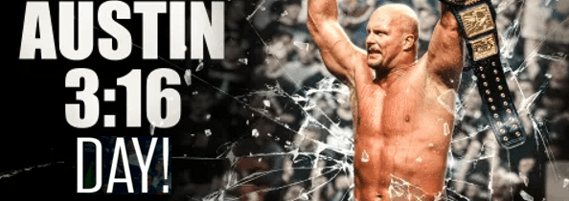

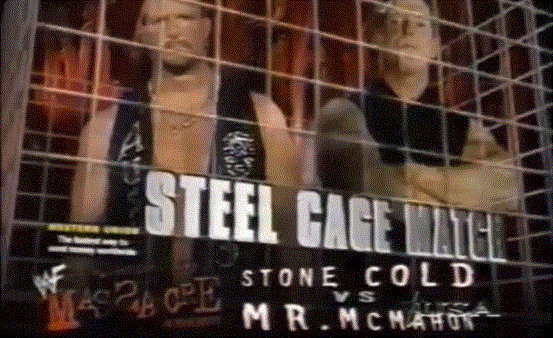
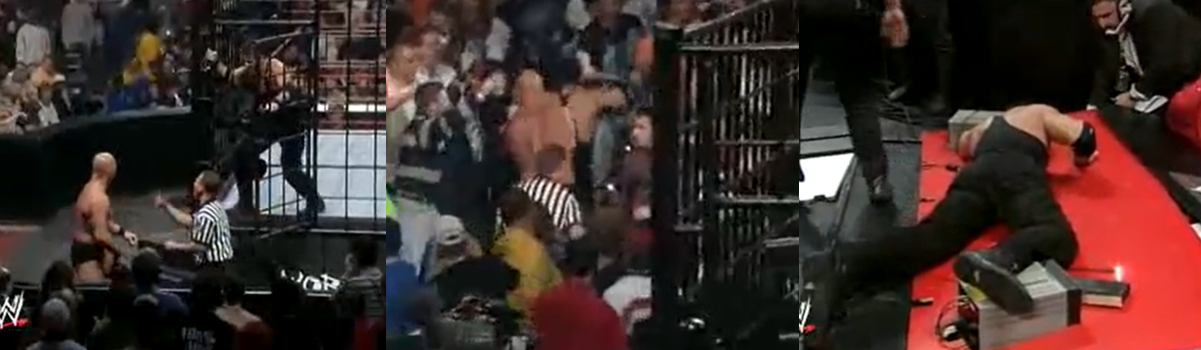
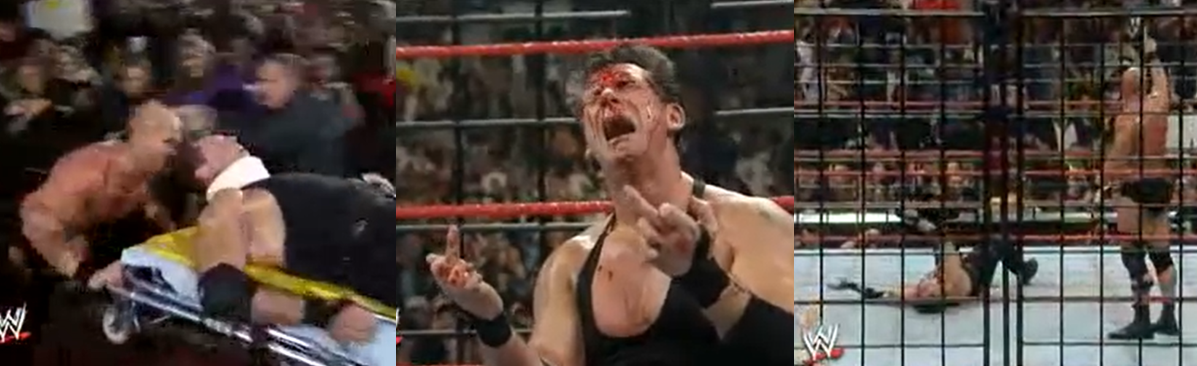
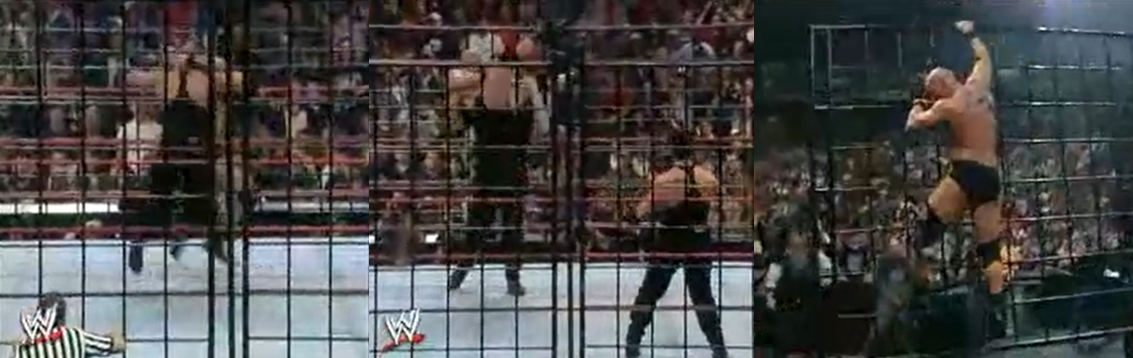


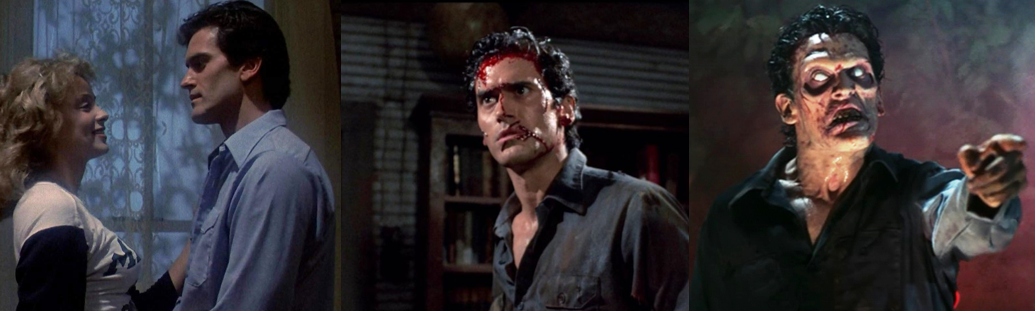


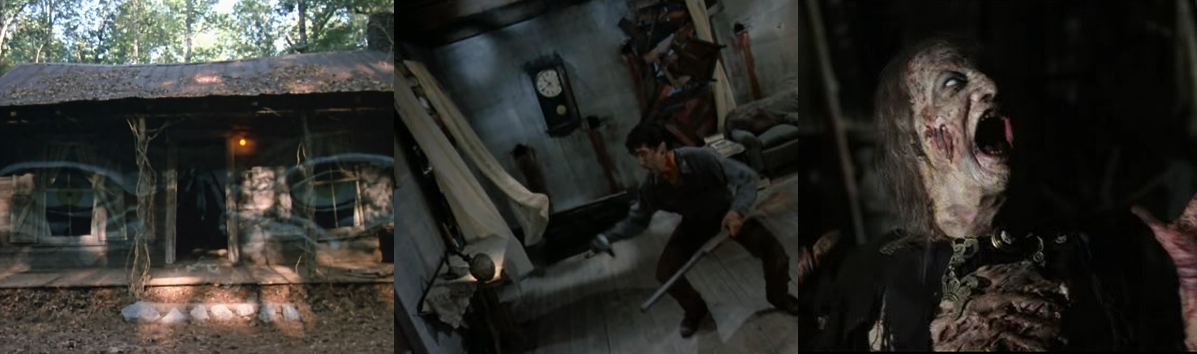

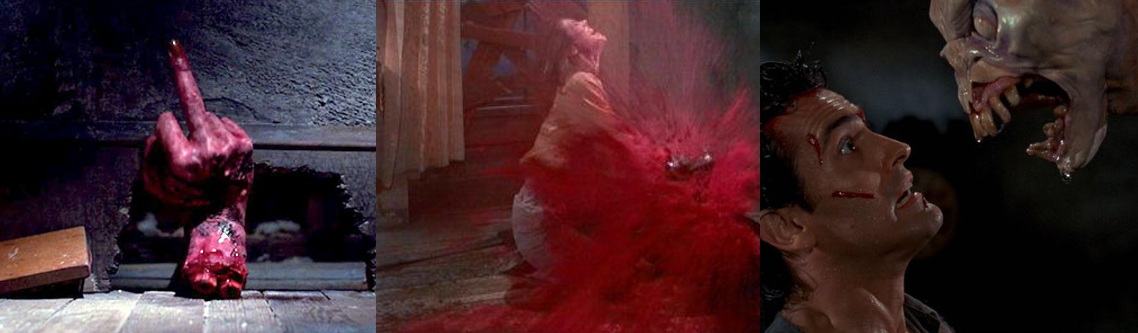
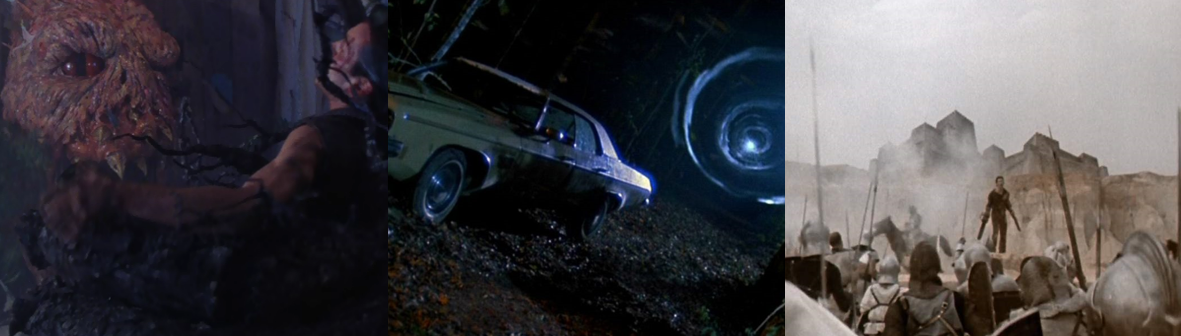



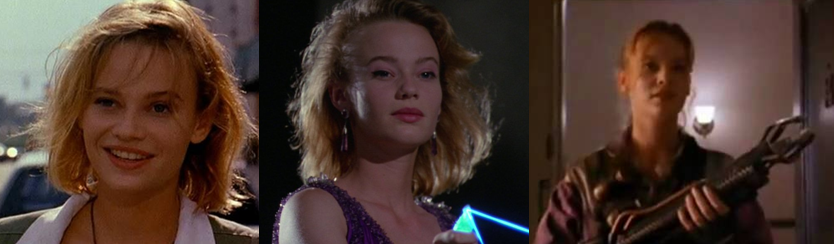
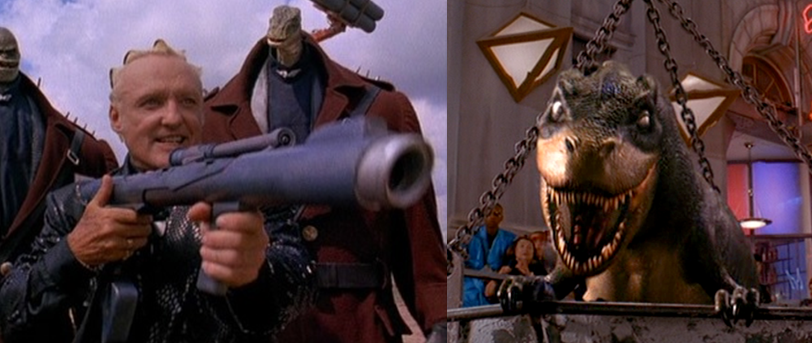


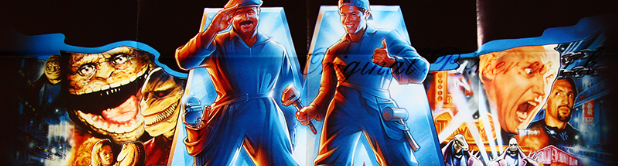

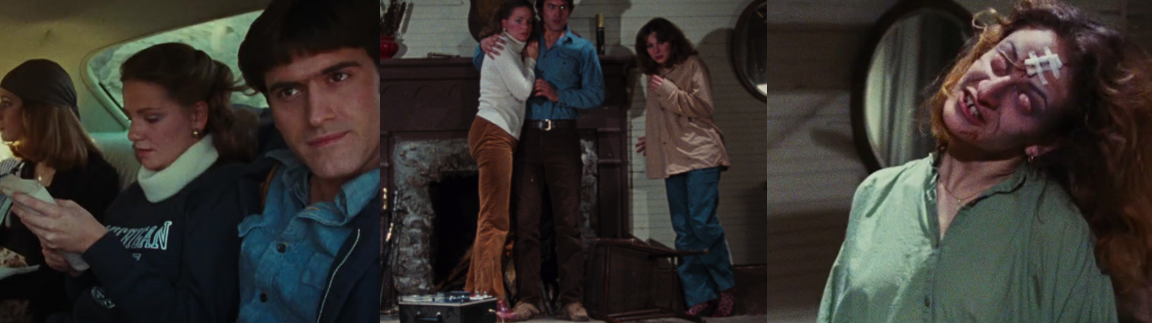
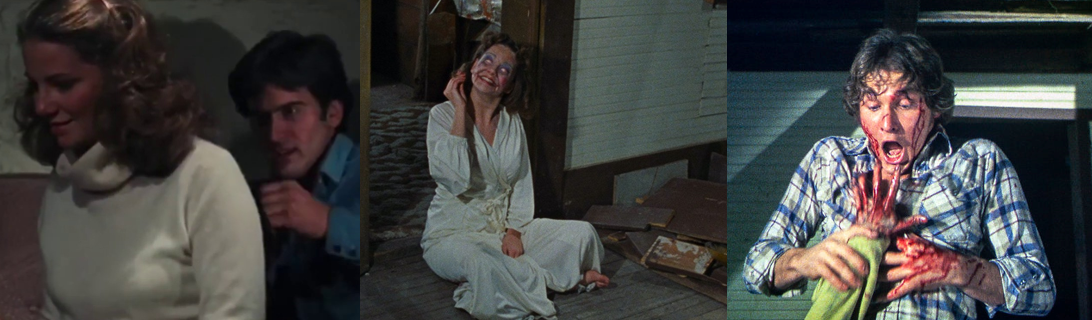
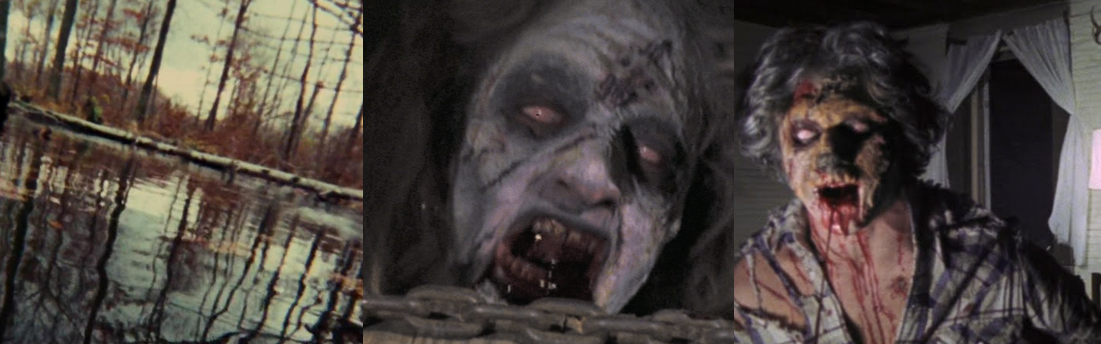
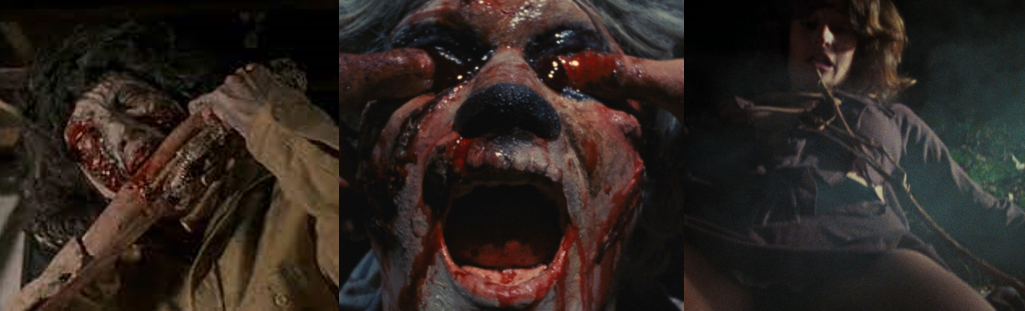
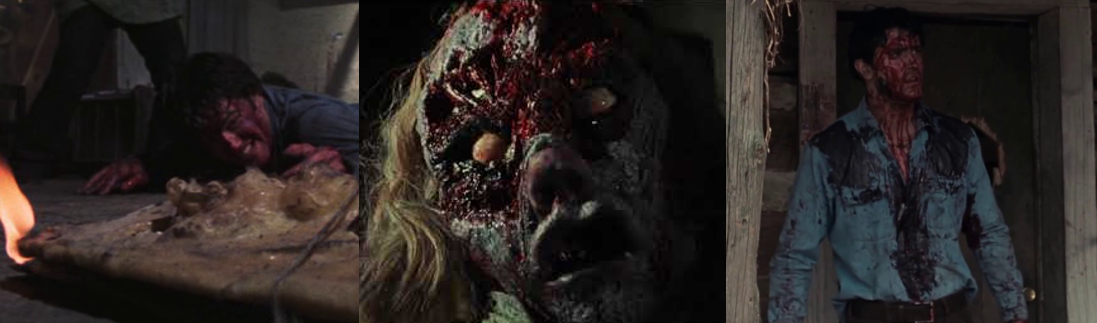



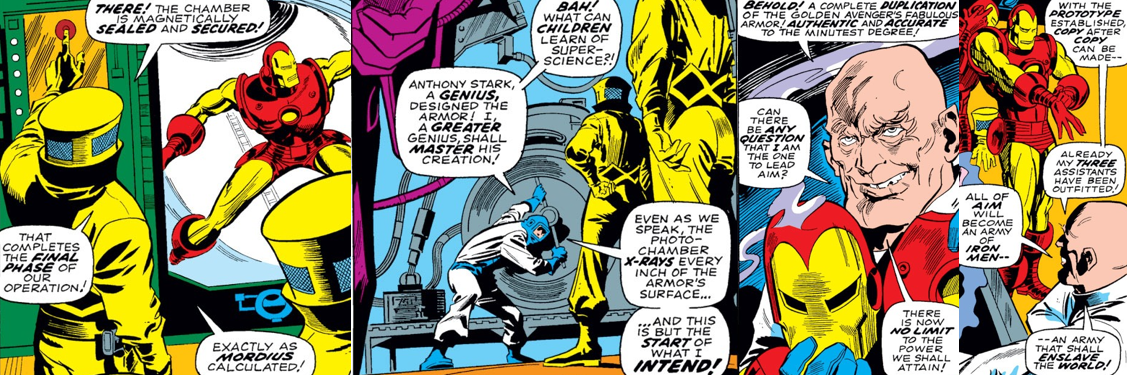
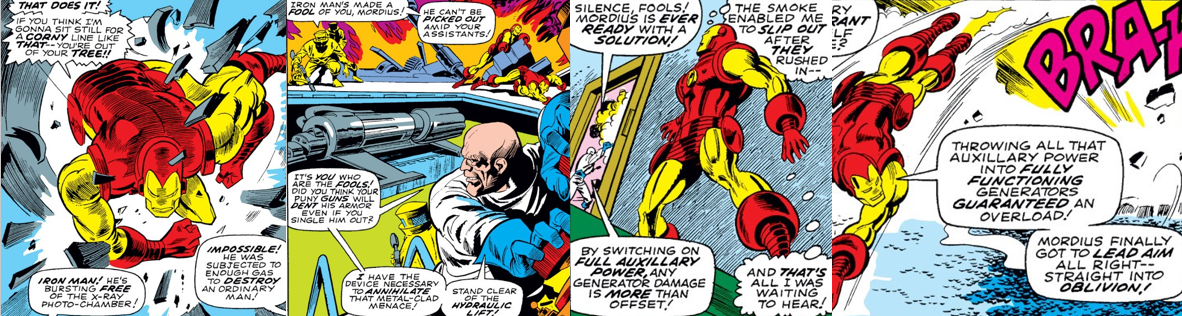
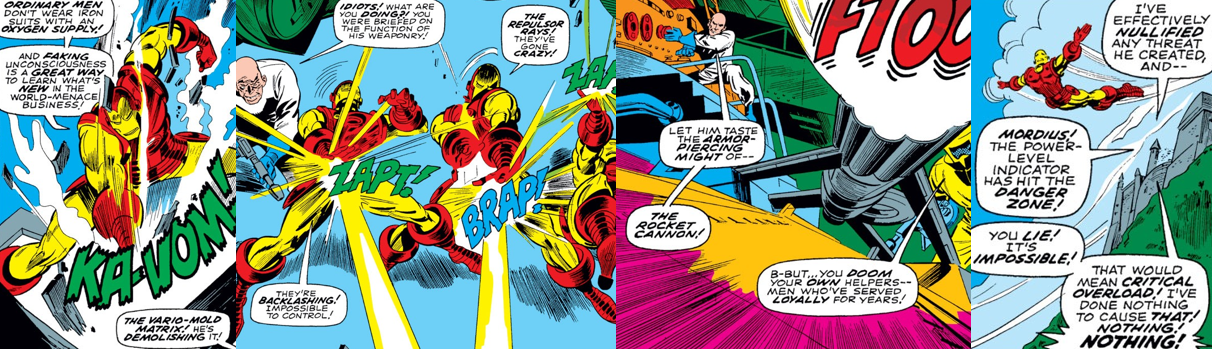




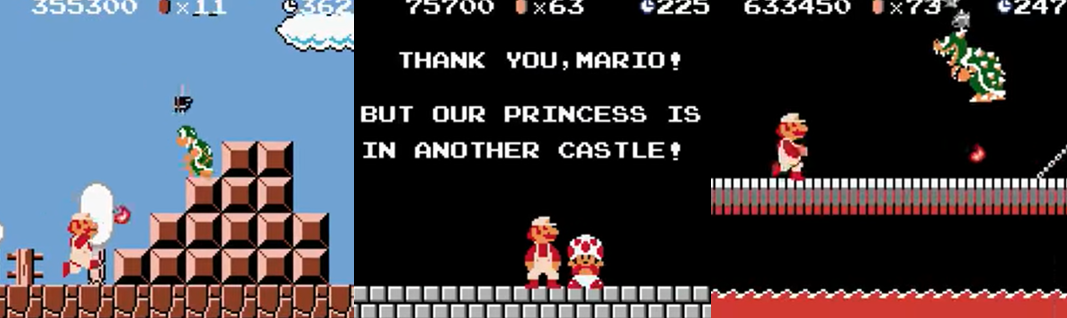



 Dr. K's Waiting Room
You must be logged in to post a comment.