Released: May 2010 Developer: Climax Studios Also Available For: PC, PlayStation 3, Xbox One
The Background: Mate, how absolutely brilliant was Rocket Knight Adventures(Konami, 1993) back in the day? Back when cute, anthropomorphicmascots were all the rage, Sparkster (the titular “Rocket Knight”) really stood out thanks to some absolutely gorgeous graphics, kick-ass music, and fast-paced, rocket-based combat. I used to play that game so much as a kid but never actually managed to finish it (maybe one day); the game did well enough to receive two sequels, one for the Mega Drive and one for the Super Nintendo, but Konami’s long-forgotten and short-lived little franchise went dormant for far too long after these releases. Then, out of nowhere, a revival of the franchise was thankfully put into production thanks to producer Tomm Hulett. A 2,5D, digital-only title, I first played Rocket Knight on the PlayStation 3 but I didn’t hesitate to snap it up once it went on sale on Xbox One so I could get into it again. It’s not an especially long or difficult game but, as one of my favourite franchises that has been sadly lost to the mists of time, I could never not jump at the opportunity to charge up Sparkster’s signature rocket pack once more.
The Plot: Fifteen years after bringing peace to the Kingdom of Zephyrus, Sparkster has been living a quiet life as a family possum. His peaceful life is shattered when the Wolf Army suddenly invades the Kingdom; heeding the call to adventure, Sparkster dons his trademark armour and rocket pack and returns to the fight to defend his home once more.
Gameplay: Rocket Knight is a 2.5D action/platformer in which players take control of Sparkster, a “rocket knight” who seeks to defend his land from invasion. All of Sparkster’s moves and abilities from his debut game return here, meaning he is armed with a large sword for some basic close-quarters action and which is also capable of blasting enemies from a distance as well. Sparkster’s unique selling point was his rocket pack; by holding the B button and pointing Sparkster in a direction, players can blast ahead, mowing down enemies and ricocheting off walls to reach higher areas. Sparkster can also drill through certain breakable elements by tapping B again and briefly hover with a tap of the A button to aid with tricky platforming sections. However, Sparkster’s rocket pack isn’t finite in most stages; you’ll have to keep an eye on the energy bar in the top-left of the screen as you won’t be able to blast away if it’s empty. Luckily, this bar refills quite quickly, meaning you never have to wait too long to burst into action and Sparkster can also blow his energy reserves on a cartwheel-like attack that is super handy for bouncing dynamite back at enemies. Sparkster can also clamber across vines and bars with his tail; sliding down these will allow you to jump higher and further and you can also attack enemies by whirling around in a rocket-powered swing. Stages are generally a simply case of moving Sparkster from point A to point B, with a smattering of enemies and platforming segments to contend with, but every so often you’ll be thrust into a sidescrolling auto-flying stage where you can fly indefinitely.
Blast through enemies with Sparkster’s trademark rocket pack and sword.
In these stages, enemies, obstacles, and mines will try to slow your progress but you can blast at them with Sparkster’s energy shot. You can also hold X to charge up your shot and unleash a screen-clearing beam of energy that is perfect to taking out tricky enemies. Eventually, stages introduce more complex elements, such as when Sparkster finds his rocket pack affected by extreme cold. Your rocket fuel won’t regenerate in these stages unless you pick up a fuel icon or find a burning torch to defrost Sparkster. Other stages have you dodging and ducking fireballs, blasting from airship to airship while massive cannons try to knock you from the sky, hitting switches to open doors or lower energy fields, jumping from precarious moving platforms or navigating short, simple mazes to progress further, or outrunning a massive explosion. Rocket Knight is not an especially long or complex game but it’s simple, easy to play fun that challenges you by increasing the difficulty of its enemies and stage hazards over time. Fortunately, checkpoints are plentiful throughout the game’s stages; Sparkster can replenish his health by collecting hearts, which are sporadically found throughout each stage, and earn extra lives by collecting 1-ups and earning enough points. Points are accumulated by collecting blue and red gems, finding power-ups, and building a combo by defeating enemies in quick succession. Each time you clear a stage, you’ll earn additional points for how fast you completed a stage, encouraging speedrunning and a degree of exploration as you hunt down hidden gems.
Graphics and Sound: Rocket Knight is not an especially ground-breaking game in terms of its graphics but it has a simple, adorable charm; favouring a 2.5D aesthetic over the gorgeous sprite art of its original games, the game resembles a cel-shaded cartoon more than anything. Characters pop out from the background and are lively enough (though Sparkster could be a little more animated when left idle), appearing big and chunky and almost anime-like in their appearance.
Colourful cel-shaded graphics and pantomime-like cutscenes add to the charm.
The game’s simple plot is told through pantomime-like cutscenes, as in the original game, with a brief synopsis greeting the player as each stage loads. These cutscenes are amusing and quaint, getting the point of the game’s uncomplicated narrative across easily enough and are thankfully not bogged down by copious amounts of voice acting (they are also entirely skippable if you prefer to just jump right into the action). The game’s music is just as good; Rocket Knight wisely opens with a remix of the memorable and catchy “Stage 1” music from the first game (still one of the greatest videogame tracks of all time, in my opinion) and takes its cue from there, punctuating each stage with plucky tunes that could maybe have a bit more oomph behind them but are nevertheless enjoyable.
Enemies and Bosses: For the first portion of the game, Sparkster will have to contend with the Wolf Army; these are generally little more than cannon fodder, running head-first into your sword and attacks and easily dispatched of. Soon, they start tossing dynamite at your head (though these are easily knocked back with a swipe of your sword) or clinging from walls and ceilings to toss throwing stars at you. They’ll also pop out of the background or try to overwhelm you with sheer numbers, attack with bazookas, or drop bombs on you but are, for the most part, pretty easy to deal with. However, after taking out Ulfgar the Merciless, the King and leader of the Wolf Army, Sparkster is betrayed by former-enemy-turned-ally General Sweinhart and must contend with a renewed invasion from Sweinhart’s Pig Empire. These swines are far more dangerous enemies, taking multiple hits to defeat and blasting at Sparkster with energy pistols, hiding behind shields, erecting electrical force fields, and piloting intimidating mechs to try and squash Sparkster flat. Since Rocket Knight is only a short game (it’ll probably take about an hour to finish on the “Normal” difficulty), you only have to contend with three bosses and two sub-bosses. The sub-boss battles are a one-on-one duel against Axel Gear, Sparkster’s hated rival; Axel has many of Sparkster’s abilities, including his energy beam and rocket pack-based attacks, but also circles the screen leaving damaging clouds in his wake and tosses grenades Sparkster’s way at any opportunity. These are some of the most fun bouts in the game, though, as it’s thrilling to go against Sparkster’s dark opposite; however, they can be frustrating when playing on “Hard” mode.
Sparkster’s rival, Axel Gear, and general Sweinhart’s gigantic minions offer a significant challenge.
The first true boss you’ll encounter is a giant mechanical forest shredder that tries to stamp, swipe, skewer, and explode you at every opportunity. The boss’s weak spot is the big, red metal “mask” on its head and you can choose to either rocket yourself into this or try to reflect the dynamite it tosses your way back at it but you’ll have to dodge its rockets and giant, scenery-destroying buzz saws as the fight progresses. Ulfgar the Merciless is a slightly less straight-forward opponent; impervious to your attacks, you must instead bait Ulfgar into charging head-first into blocks, knock dynamite back at him, or destroy the platforms he is standing on to damage him all while dodging his charging and melee attacks and the debris he causes to come crashing down from the ceiling. The final boss is a battle against General Sweinhart himself and is also, fittingly, the toughest and most frustrating battle of the game. Sweinhart hides inside a titanic mech shaped in his image for most of the battle, randomly trying to squash you (or cause bottomless spits to emerge) or fry you alive with his laser eyes. When comes close, you must quickly attack on his metal nostrils; take too long and he’ll spawn an enemy or three into the arena, which causes more headaches. Land three hits and the mech goes down, spitting Sweinhart out. Here’s where it gets really tricky; you have to dodge Sweinhart’s laser and bombs all while trying not to touch the electrified parts of his downed mech and using Sparkster’s rocket pack to knock Sweinhart from the sky in such a way that he gets fried instead. If you’re quick about this, you can significantly knock a lot of Sweinhart’s health off but it’s so fiddly and tricky to dodge his attacks and get him to land in the right place that you’ll have to contend with his giant mech at least two times in a standard battle. To make things worse, the game is really stingy with health in this battle; when fighting the other bosses, a couple of health power-ups are available in the arena but, here, it seems completely random when one will drop from the mech’s nostrils, making this far more frustrating than it needs to be at times.
Power-Ups and Bonuses: In keeping with the first game, there’s not much on offer to help boost Sparkster’s performance throughout Rocket Knight; gems will add to your score to help you towards earning extra lives, 1-ups are occasionally found in stages, and certain stages will see you get an instant refill of your rocket fuel but that’s about it. There’s no invincibility or speed up, no shields or damage increasers, and no upgrades to get or worry about; it’s just you, your sword, your rocket pack, and your wits.
Additional Features: As you might expect, Rocket Knight comes with a handful of Achievements for you to earn; sadly, there’s not very many and they’re not especially varied in their content. However, while clearing every stage and beating the game on “Normal” might be easy enough to get, others, like beating every stage below the par time or finishing the game on “Hard” mode, can be a mite trickier. You can select “Hard” mode at any time; however, staying in “Hard” mode is easier said than done. The only way to stop the game from automatically dropping the difficulty back to “Normal” is to land a special attack on each of the game’s bosses (such as damaging the forest shredder with dynamite or causing Axel to fly into his own bombs). Once you manage it, though, you unlock two additional skins: one that lets you play as Axel Gear (which is awesome) and the other is Gold Sparkster, which is also an even more challenging gameplay mode. You can input the famous Konami code on the title screen to unlock these at your leisure but I don’t think that allows you to earn the Achievements associated with them.
The Summary: Rocket Knight is an extremely enjoyable, if all-too-brief, return to form for one of Konami’s more forgotten franchises. Fast paced and simple to play, there’s not much here to really test your skills or have you pulling your hair out as even the game’s trickier moments are fun to play through thanks to the appealing aesthetics of the game’s graphics and soundtrack. The controls are tight and responsive, stages are short bursts of action and enjoyment, and the gameplay is simple yet easy to get to grips with. It would have been nice to see the three original games included as unlockables or bonus content but maybe one day Konami will remember Sparkster and give all four of his titles a bit of a spruce up for a new generation.
My Rating:
⭐⭐⭐
Rating: 3 out of 5.
Pretty Good
What did you think of Rocket Knight? Were you happy to see Sparkster randomly return from obscurity or did you have issues with the game’s length and presentation? Did you ever play Rocket Knight Adventures on the Mega Drive or either of its sequels? If so, what did you think of them and would you like to see more games in the franchise? Either way, whatever your thoughts on Rocket Knight, leave a comment below.
Released: April 2020 Developer: Dotemu/Lizardcube/Guard Crush Games Also Available For: Nintendo Switch, PC, PlayStation 4
The Background: Back in the good old days of the mid-nineties, one of the most prominent genres in arcades was the sidescrolling beat-‘em-up. Simple, mind-numbing arcade action, these titles demanded little more from players than to hold right and mash buttons to take down waves of generic enemies and eat away at your hard-earned pocket money. Beat-‘em-ups were also quite prominent on home consoles; however, while these were mostly ports of arcade titles such as Final Fight(Capcom, 1989) or licensed titles such as Alien vs Predator(Jorudan, 1993) and Teenage Mutant Ninja Turtles IV: Turtles in Time(Konami, 1992), SEGA developed their own exclusive series of beat-‘em-up titles for their consoles and it was called Bare KnuckleStreets of Rage(SEGA, 1991 to 1994). The Streets of Rage trilogy was, functionally, a rip-off of the Final Fight series; players controlled a group of ex-cops and street wise vigilantes who patrolled the mean streets and defeated the many various henchmen of the Syndicate and its figurehead, Mr. X. The brainchild of Noriyoshi Ohba and Yuzo Koshiro, the Streets of Rage trilogy has subsequently been ported and re-released to other consoles through compilations and digital only services but has been largely absent from SEGA’s library for the better part of twenty-five years! The game’s characters didn’t even appear in SEGA’s crossover racing titles, for God’s sake! Streets of Rage 4 changed that, however. Developed by the same team who resurrected Wonder Boy from the depths of obscurity, the game boasts nearly a thousand different frames of animation for each of its characters, all of whom have been redesigned to resemble a comic book come to life. The return of Streets of Rage was a highly anticipated event for me, largely thanks to my love for the series, genre, and SEGA properties in general; for too long, SEGA have allowed their original properties to stagnate in obscurity and I can only hope that the overly positive reception of Streets of Rage 4 prompts them to dust off some of their other franchises and bring them back into prominence.
The Plot: Ten years after defeating Mr. X and his criminal Syndicate in Streets of Rage 3 (SEGA, 1994), Wood Oak City falls under the control Mr. X’s children, the Y Twins, who use hypnotic sound waves to brainwash its citizens and only one team of ex-cop vigilantes are tough enough to stop their nefarious plans!
Gameplay: Streets of Rage 4 is a sidescrolling beat-‘em-up that controls almost exactly as its predecessors; when taking on the game’s story campaign, you have four characters to select and unlock more as you progress through the story and earn Lifetime Points. Initially, your choices are limited to series staples Axel Stone and Blaze Fielding and newcomers Cherry Hunter and Floyd Iraia, Essentially, each character controls the same: X executes a fast attack that becomes a mini combo the more you mash it, Y unleashes a special attack at the cost of some health (though you can replenish your health by attacking enemies after unleashing this attack), A jumps (and you can jump attack), and you can attack enemies who try to flank you from behind by tapping the shoulder buttons. Get close to an enemy and you’ll grab them, which allows you to deal a grapple attack for massive damage or toss them at enemies as a ranged attack, which is always super satisfying. You can also pick up weapons, health, and other items with B and press Y and B together to unleash a screen-clearing special move if you have enough Stars.
Different characters have different stats and special moves that affect gameplay.
However, your character choice does affect gameplay quite a bit; Axel, for example, is an all-rounder but Blaze is much faster in her attacks and Floyd is the slower, more powerful of the four main characters. One thing you’ll immediately notice, and probably by annoyed by, is the lack of a dash function for a lot of the characters; the ability to dash is reserved for the likes of Cherry and the returning Adam Hunter, but every character can perform a rushing attack by tapping forwards twice and then hitting X. As you attack enemies, you’ll begin a combo chain; the longer you can maintain your combo without being hit, the higher your score will be. Thanks to the ability to attack enemies from behind, maintaining a good combo has never been easier (though I still find myself relying on the old jump attack approach) and raking up a high score is imperative to earning all of the game’s Achievements, receiving the higher ranks, and unlocking additional characters as your points are accumulated over time specifically to this end.
Keep attacking enemies to rack up an awesome combo and earn more points.
Streets of Rage 4 has multiple difficulty settings to choose from; if you pick “Easy”, you’ll start with more lives and enemies will be much less aggressive but, when you select harder difficulties, you’ll have less lives and have to contend with tougher enemies. As you make your way through the game’s missions, you can break open various crates or destroy objects in the environment to uncover food and cash; food replenishes your health and cash adds to your score. When you reach 10,000 points, you’ll earn an extra life but, if you lose all of your lives, you can retry the stage with some Assists, which grant you additional lives and Stars, to help you clear difficult stages.
Graphics and Sound: Streets of Rage 4 is rendered with a fantastic comic book-like aesthetic; characters are large and full of life, sporting lots of little animations that add to their charm and personality. The game contains twelve stages, each one either lovingly recreated from the original games or heavily inspired by the first three games and other common beat-‘em-up tropes (yes, there is an elevator stage here; two, in fact!) You’ll begin on the mean streets of Wood Oak City and progress through a prison, the sewers, a pier, a biker bar, a dojo, and even battle on the roof of a train and in an airplane all before you reach Y Island, the game’s final stage, which naturally contains an elaborate castle.
Stages are filled with character, cameos, and variety.
Stages are full of little details, elements, cameos, and intractable elements; you can break open doors, smash apart parts of the environment, and toss enemies into damaging hazards in almost every single one of the game’s stages and each stage is generally broken up into distinct areas to help keep things interesting. The Skytrain stage is the exception to this as you spend the entirety of the stage on top of the titular train, battling waves of enemies and jumping over obstacles as they speed at you.
The game’s story is told through comic book-like cutscenes.
The game’s story is told through simple, partially animated comic book panels; there’s no voice acting to worry about here and all of the game’s cutscenes can be skipped but they are brief and appealing enough to sit through when you do feel like taking in the game’s simple, but effective, story. The game’s soundtrack, composed by Olivier Deriviere and other notable composers is suitably fitting, featuring a mixture of rock and techno, among others, to give each stage a rhythm and a theme. Even better, the game features the option to switch to a retro soundtrack that features music and sound effects from the first two Streets of Rage games, which is perfect when playing as the unlockable 16-bit style characters.
Enemies and Bosses: As a mindless beat-‘em-up, Streets of Rage 4 features a number of enemies that get progressively harder as you advance through the game’s stages; enemies are recycled throughout the game, taking on different colour palettes and slightly tweaked attacks as you can, but are generally assorted enough to keep things interesting. You start off taking out generic, denim-clad street thugs like Galsia (who sometimes charge at you with knives and stabbing weapons) and Y. Signal (who sometimes charge at you with a slide tackle) but soon encounter Donovan (a skinhead who has an annoying tendency to uppercut you out of the air), Raven (a Muay Thai martial artists who leaps at you with knees and kicks), and the lackadaisical Francis (who always has his hands in his pockets but flies at you with whirlwind-like kicks) and their many rainbow-coloured variants. You’ll also take on charging biker girls, emo chicks who lob grenades, toxic sludge, and other items at you, and more rotund enemies like Big Ben who breathe fire or belly flop on to you. Some of the game’s more annoying enemies include Goro (not, not that Goro), a martial artist who can reduce your health to nothing by parrying your attacks and bashing you across the screen, suit-wearing bodyguard types who shoot at you with pistols, the whip-wielding girls, and the Goddamn cops! Cops can actually assist you in stages as they’ll attack your enemies, which is helpful, but they have a tendency to grab you so others can hit you and one particular variant loves to rush you and hit you with a taser which is extremely aggravating. You’ll also fight with riot cops who must have their energy shields broken before you can actually damage them, which can be tricky as you can’t rack up a combo of attacks at they can easily swat you away with their batons.
These boss variants can affect a wide area with their attacks.
The game’s bosses are just as varied and interesting and each one has multiple attacks, phases, and issues to watch out for; like some enemies, bosses often have several invincibility frames and nigh-unavoidable rushing attacks and combos so it’s best to keep your distance, bring a weapon if you can, and make good, strategic use of any health items. The first boss you’ll encounter, Diva, isn’t too difficult as long as you get away when she’s charging her primary attack as it has a lot of range. Later on, you’ll have to fight two similarly-themed variants of Diva at the same time, which can be extremely annoying and difficult as, unlike other enemies and bosses, they don’t appear to be susceptible to their partner’s attacks. In this battle, I found it best to eliminate the flame-wielding Riha first as her attacks do more immediate damage.
The Commissioner doesn’t get any easier when he shows up as a support boss later on!
Stage two really ramps up the difficulty though as not only does it introduce those damnable taser-wielding cops, it also has you battling the Police Commissioner himself. The Commissioner dashes across the screen and charges up a brutal combo and grab attack that can deal heavy damage and he’s just as annoying when he is brought in as support for another of the game’s bosses, Estel, in the Skytrain stage. You’ll battle Estel twice throughout the course of the game and she’s no pushover either as she attacks with bicycle-like kicks, calls in air support, and tosses grenades at you; the key is to attack and then jump away to avoid her attacks and throw her grenades right back at her and try to avoid the Commissioner in the Skytrain fight as the stage will be complete as soon as Estel goes down.
Shiva and Max also make welcome returns.
You’ll also battle Shiva, a boss from the original games, who likes to teleport around the stage and conjure shadow versions of himself, a particularly annoying martial artist at the biker bar, and even a brainwashed version of series protagonist Max Thunder. This latter battle can be particularly gruelling thanks to Max’s invincibility frames, dangerous wrestling moves, and the fact that he doesn’t really get stunned by your attacks. DJ K-Washi can also be a trying boss battle as you must not only avoid his many and varied projectiles and goons but also break through his protective shield before you can whittle down his health bar.
After besting the Y Twins individually, and together, you’ll have to contend with their giant mech!
The game’s primary antagonists, the Y Twins, are fought multiple times; you’ll face Mr. Y in the Airplane stage (where he attacks with an Uzi (similar to his father), a bazooka, and grenades) and Ms. Y (who attacks with a rapier-like sword) on Y Island. Of the two individual fights, Mr. Y is easily the more troublesome thanks to his ranged attacks but, once you defeat Ms. Y, you’ll then have to face both bosses at the same time. Once you whittle one of them down to about half of their health bar, they’ll leap into a massive spider-like mech and try to crush you while their sibling continues to press the attack. In this final battle, I find it easier to take out Mr. Y first as his bullets are much harder to avoid; take him down to half health and then attack the mech as and when you can but be sure to also attack the remaining Y twin as, if you deplete the health of the sibling in the mech to nothing, the remaining twin will jump in the mech so it’s much easier to take the remaining sibling out of the equation so you can concentrate on disposing of the mech.
Power-Ups and Bonuses: The only real power-up you can find in Streets of Rage 4 is the odd Star hidden throughout the game’s stages; otherwise, you’ll mostly be picking up cash for points, health, or a number of weapons throughout the course of the game. These weapons are finite, meaning they will break or disappear after a few hits, but are great for wiping out groups of enemies or throwing as a ranged attack. These weapons range from things such as knives and baseball bats to sledgehammers, swords, and even a razor-sharp boomerang. Often, enemies will be wielding these weapons and can pick them up to use them against you, as well, but you can catch weapons that are thrown at you with a well-timed press of the B button and using an enemy’s weapons against them is imperative to surviving against some of the game’s tougher enemies. Additionally, there are various intractable parts of the environment that you can use to your advantage; you can attack a massive wrecking ball to take out enemies, cause barrels to explode, and toss enemies down pits or cause them to walk into toxic fumes or exposed electrical wires. As helpful as all of these elements are, however, these environmental hazards can also damage you as well so it’s best to keep your distance.
Additional Features: Streets of Rage 4 features a number of Achievements for you to earn; you’ll get these for clearing the Story mode as each of the available characters, completing modes on different difficulty settings, and for performing certain actions (such as killing three enemies with one explosive barrel or causing a chandelier to kill an enemy). When you first play Streets of Rage 4, your gameplay options are surprisingly limited; you can only choose to play Story or Battle mode and must unlock the Stage Select and Boss Rush mode by clearing the Arcade mode once. I actually like this; so often these days, games come with everything either automatically available or hidden behind downloadable content so it’s nice to actually unlock modes and characters through good, old-fashioned gameplay. Earn enough points across each of the game’s modes and you’ll unlock 16-bit versions of the game’s characters who look and play exactly as they did in the original videogames (sadly, Roo is not playable this time around, though). There are also a lot of options available to you in Streets of Rage 4, ranging from the usual (difficulty selection, brightness and volume customisation and the like) and the unique as you can customise how health-restoring food appears onscreen and switch to the retro soundtrack if you wish. If you explore your environments well enough (or, more specifically, attack arcade machines with a taser), you’ll also find some hidden levels ripped straight from the original Streets of Rage trilogy that pit you against a classic boss character from the first three games and net you some bonus points. If you bought the physical version of the game, as I did, you also get a nifty little artbook and a keyring, which is a nice touch, and Streets of Rage 4 can also be played with friends; the game allows couch co-op for up to four players but online play is limited to just two. However, you need to keep a safe distance when playing with a friend in co-op as you can damage each other in true old school beat-‘em-up fashion, necessitating the need to pick to an area or section of the screen and stick to it.
The Summary: Streets of Rage 4 is a fantastic love letter to everything that was so great about sidescrolling beat-‘em-ups. The genre has sadly fallen out of favour in recent years and I really don’t know why; it’s simple, fast-paced, arcade-style fun that is easy to pick up and play and waste a few fun-filled hours on. Arguably, Streets of Rage has never looked or played better; the game’s cartoony aesthetic, multiple nods and cameos and call-backs to the original games, and myriad of features make the game extremely accessible and fun to play. Some of the enemies and bosses can be annoying and cheap at times but, once you play through the game a few times, it’s easy to see their patterns and avoid their attacks. Hopefully, the release of Streets of Rage 4 will inspire SEGA to outsource some of their other franchises so we can see the same love, care, and attention afforded to this once long-dead series applied to other dormant SEGA franchises.
My Rating:
⭐⭐⭐⭐⭐
Rating: 5 out of 5.
Fantastic
What are your thoughts on Streets of Rage 4? Do you feel it lives up to the legacy of its predecessors and old school, arcade-style, sidescrolling beat-‘em-ups? Which Streets of Rage game or character is your favourite? What SEGA property would you like to see get brought back in glorious HD on modern consoles? Whatever you think about Streets of Rage 4, or the series in general, drop a comment below.
Released: March 2013 Developer: People Can Fly/Epic Games Poland Also Available For: Xbox One (Backwards Compatible)
The Background: Gears of War (Epic Games/Various, 2006 to 2019) is a third-person, over-the-shoulder science-fiction military shooter exclusive to PC and the Xbox series of consoles. Originally conceived as more of a traditional first-person shooter in enclosed arenas, the series has seen numerous sequels, spin-offs, comic books, and action figures since the release of the first game and the franchise is easily one of the most successful on the Xbox. My exposure to the series is somewhat limited; though aware of it for some time, I didn’t actually play a game in the series until I was gifted Gears of War: Ultimate Edition (Epic Games, 2015) and I found it to be extremely enjoyably thanks to it’s over-the-top, overly macho characters and plot, all clearly heavily inspired by films such as Aliens (Cameron, 1987) and Starship Troopers (Verhoeven, 1997). Since then, the franchise has been on the fringes of my mind but somewhat intimidating and impenetrable due to the myriad of sequels. Gears of War: Judgment, however, was a prequel to the first game and, as a result, worked as a not only tentative baby step into this wild and frantic bug shooter.
The Plot: Some time before the events of Gears of War, Lieutenant Damon Baird’s Kilo Squad, all soldiers battling the marauding Locust Horde on behalf of the Coalition of Ordered Governments (COG), are placed on trial for disobeying orders, with the majority of the game’s story taking place in the form of flashbacks as each COG tells their part of the story that led to them facing a summary execution.
Gameplay: Gears of War: Judgment is a third-person sci-fi/military shooter; the camera is firmly placed over the shoulder of your character and there is a heavy emphasis on gore, fast-paced shooting and taking cover from incoming damage, as well as some (very) light puzzle solving. Through the course of the game’s story, you’ll play as each of Baird’s Kilo Squad: Augustus Cole, Sofia Hendrick, Garron Paduk, and Baird himself. Each has different personalities (though they’re all mostly infused with the same ultra-macho mindset and physicality as series protagonist Marcus Fenix) but all play exactly the same as each other (in the main story campaign, at least).
Gear up for a bug hunt!
If you’ve played the first Gears of War, you should be immediately familiar with Judgment’s presentation and controls. You can aim and toss a variety of grenades with the Left Trigger and bumper, blow holes in the monstrous Grubs with the Right Trigger and reload with X. When reloading, you’ll see a little white mark on a bar on your heads-up display (HUD); press the Right Button at the right time, and you’ll reload almost instantaneously. If you miss the window, though, your gun will jam and leave you vulnerable to attack.
Don’t hesitate to execute your fallen foes!
When enemies are downed, you can choose to finish them off or use them as a shield to stave off incoming fire. Additionally, you can also melee attack enemies with B; if you have the Lancer, you can press and hold B to activate the gun’s chainsaw attachment and slice your enemies in two in fantastically gruesome fashion. Similarly, the Retro Lancer comes equipped with a bayonet-like blade that allows you to charge at Grubs and skewer them by holding B. You can also run, while ducking, by holding A; while this greatly improves your movement speed, it is a bit unwieldy and you’ll find yourself running head-first into walls and other obstacles when using this function.
Take cover to avoid gunfire and pick off your foes.
Just pressing A allows you to perform a somersault (a manoeuvre that you would think is basically impossible given the heavy armour the COG wear) to dive ahead or away from danger. Pressing A near walls and other fortifications will see you immediately snap to cover; this will keep you safe from gunfire and allow you to shoot out from cover or jump from cover to cover to advance further. As with a lot of shooters, a number of generous checkpoints are scattered throughout each mission and you will automatically regenerate health if you escape from danger for a few seconds. If you’re injured too gravely, you’ll fall to the floor and be forced to crawl away from danger, mashing A to call for help. You can similarly revive your fallen comrades by pressing X when they’re nearby, which is strongly recommended as your fellow COG are instrumental not only to reviving you, but also culling the influx of Grubs and other monstrous aliens.
Ammo and new weapons are plentiful and often within easy reach.
As you explore the various war-torn environments that make up the Gears world, you’ll find a number of weapons, ammo, ammo crates, and other collectables to aid your mission. Again, like most shooters these days, you can only hold two guns at once; sometimes, you can grab a bigger, vastly more powerful weapon that won’t see you automatically drop your current weapon, which is helpful but these larger weapons are often extremely unwieldy and have very limited ammo. You can also carry a number of grenades; these are great not just for blowing Grubs into bloody chunks but also for closing emergence holes and stopping new enemies from entering the area. Each chapter of the story is divided into a series of small missions that generally involve getting from point A to point B, navigating through dishevelled urban environments, or defending either a robot or an area from waves of enemies. As you progress, killing enemies, reviving your team mates, and staying healthy, you’ll acquire Stars to level-up your gamer profile, earning Ribbons, Achievements, and a variety of unlockables for the game’s multiplayer mode.
Quite often, you’ll be tasked with fortifying and defending an area against waves of Grubs.
At the beginning of each mission, you’ll find a massive glowing red Gears logo on a wall; pressing X on these will give you the option of tackling the mission with a number of handicaps to earn more Stars. These handicaps vary from reaching your objective under a strict time limit, fighting with either no ammo or certain weapons, having your vision obscured, more enemies being present, or your health no longer regenerating, among others, and are a nice way to add a little more challenge to each mission. Gameplay doesn’t really amount to much more than taking cover, blasting at aliens, and ploughing ahead (unless, of course, you choose one of the aforementioned optional handicaps). However, you earn more Achievements and in-game rewards if you manage to kill enemies with certain weapons, get headshots, blow shit up, or interact with your environment by completing the game’s few, very simple puzzles. These literally boil down to pressing X on a highlighted area of the environment to turn a valve or set a charge and, maybe, pressing A as well. When defending an area, you’ll be tasked with setting up automated turrets or laying explosive trip wires and you’ll also have to defend your robot from being attacked but there are no vehicles or other gameplay styles to break up the action: it’s simply an unapologetic, super macho bug hunt from start to finish.
Graphics and Sound: Gears of War: Judgment doesn’t exactly move the needle when it comes to its graphics or environments; once again, we have many war-torn, urban environments that are mostly grey or brown, with scattered fire, entrails, and damage all over them. It seems that shooters can’t quite get out of the slump of falling back on these generic colour schemes and locations; every area, whether inside or outside, is deceptively enclosed to localise your firefight to that one area until the danger has passed. This might be in the streets, on a military campus, or on the rooftops over the half-destroyed city but, in either case, you’ll find the same barricades and fortifications to take cover behind.
Surprisingly, the game’s only female isn’t a hyper-sexualised character.
Luckily, Judgment makes up for this by continuing the over-the-top character designs made famous in the first game; every character is bulging with muscles and testosterone the likes of which made famous by movies like Predator (McTiernan, 1987) and clad in a massive segmented suit of armour that looks completely ridiculous and impractical but it all adds to the elaborate character of the game, and the series in general. This time, the COG are joined by a female soldier, Cadet Hendrick, who, while still hyper-sexualised, is actually surprisingly well-covered for a female character in such a blatantly overly masculine videogame. I mean, she’s the only female in the game (and she of course has a questionable sexual history) and she doesn’t really factor into the plot too much beyond being young and naïve but it’s something, if nothing else.
There’s little graphical downgrade between the in-game and cutscene graphics.
The majority of the game’s story is told through cutscenes, of course, wherein the characters all growl and snarl at each other with an amusing level of camaraderie; the cutscenes still hold up really well, being nearly indistinguishable from the in-game graphics, and the in-game dialogue between the soldiers helps to direct your attention and further flesh out the characters. Mostly, though, the game is swamped in either silence, the sounds of gunfire and growling beasts and men alike, or sporadic bursts of suitably military-inspired tunes.
Enemies and Bosses: The COG have a tall order ahead of them as they clash with the seemingly inexhaustible Locust Horde, an army of monstrous aliens of all shapes and sizes who attack using the environment to their advantage and using intelligent swarming and flanking tactics. Locusts fire from behind cover, dash behind pillars and barricades, and clamber out of emergence holes hungry for human flesh but they’re also bolstered by larger, more durable enemies and smaller, bug-like enemies that explode in your face.
Even regular enemies can absorb quite a bit of damage before finally going down.
You’ll have to contend with snipers, Grubs who fire mortars at you incessantly, floating squid-like aliens affixed with machine guns, zombie-like humans, blade-wielding Grubs, massive armour-plated hulks who wield maces and giant protective shields, and even gaunt Kantus enemies who will replenish the Locust’s health and ranks and explode in a suffocating toxic cloud upon defeat. Even the regular, run-of-the-mill Wretches can be quite tough to put down as enemies can absorb a lot of bullets and even then many of them will crawl around on the floor, leaving themselves wide open to a bloody evisceration, but the bigger, tougher enemies will require you to manoeuvre around them to their exposed behinds or simply toss a grenade at them to blast them to pieces.
The game’s bigger, more monstrous enemies act as sub-bosses, of a sort.
Technically speaking, Judgment only features one true boss battle, which forms the basis for the game’s final mission. However, as you progress through the campaign, you’ll battle some larger, far tougher enemies who basically function as mini bosses. These include the crab-like Corpsers (which burrow out of the ground and shield themselves with their claws), Ragers (which are regular Grubs that suddenly transform into rampaging, bloodthirsty monsters rather than dying), the Bloodmounts (massive monsters the Locust Horde ride into battle), and the giant, spider/octopus-like Reavers that fly around the air shooting missiles at you and then come crashing to the ground to try and stamp you to death.
You’ll face General Karn at the game’s finale.
The only actual boss battle takes place in the game’s final mission and sees you battle against the Locust Horde’s General, Karn, who attacks from atop a gargantuan semi-cybernetic spider called the Shibboleth. This battle takes place in a large open area with plenty of massive blocks to take cover behind and ammo to grab and can be made harder to selecting the option handicap, which sees a swarm of Elite Grubs help defend their General. The hardest thing about this boss battle is that Karn doesn’t have a health bar so the only way to you that you’re damaging him is when the HUD says he’s been wounded and you can only damage him when your aiming reticule is red. Otherwise, Karn is a large and lumbering target; as long as you take cover and stay out of the way of his charge attack and missiles (and revive your team mates as needed), he isn’t too tough to put down.
Power-Ups and Bonuses: Despite the game’s over-the-top premise and presentation, there are no power-ups to be found in Gears of War: Judgment. You won’t get any steroids to make you faster, no invincibility power-ups, and there’s no beer to chug to send you into a blood rage. Instead, you have to make do with the game’s wide and impressive array of weaponry; the standard weapon is, as always, the Lancer, which is great for ranged and close quarters combat and, of course, has a fuckin’ chainsaw attached to it, making it the best go-to weapon of the game once again.
Snipe from afar or simply blow the Grubs into bloody chunks!
You’ll also get a few pistols, which can be useful in a pinch, some shotgun variants (which are fantastic for blowing chunks into Grubs when they get in your face), and a couple of different sniper rifle-type weapons. Some Grubs carry heavier weaponry, such as the Boomshot (which is, essentially a shotgun-like grenade launcher), giant Buster Sword-like blades, and one particular weapon that burrows under the ground towards its target and explodes in impact. You’ll also get to use some of the COG’s heavier weaponry; automated turrets, mortars, shielded heavy rifles, and massive hand-held weaponry like the Mulcher and the One-Shot, which are so big and heavy that you fire from a crouched position. They also massively slow you down and have limited ammo, forcing you to pick between mobility and power. You can also set up explosive traps, fire a bouncing grenade, roast Grubs alive with the Scorcher (or “flamethrower”), and defend yourself using a Boomshield.
Additional Features: Gears of War: Judgment has a fair few Achievements tied to it; most of these are tied to story progression and levelling-up your in-game profile but you’ll also earn them by unlocking certain Ribbons and playing the game’s multiplayer component.
There are many options available in Judgment‘s multiplayer.
Judgment’s multiplayer comes in numerous forms; you can play the main story campaign in co-op, take part in local and offline deathmatches and the like, and even compete in similar matches against computer-controller ‘bots. Alongside the standard multiplayer matches you might expect, you can also play “OverRun” and “Free-For-All”, with OverRun seeing you play as the COG and/or the Locust Horde in pursuit of gaining ground and raking up kills. You can also purchase some downloadable content that adds further multiplayer maps and modes to the game, if you like that sort of thing. As you play the campaign, you’ll find the game keeps track of various statistics (enemies killed, times downed, number of executions performed, etc) and compares them to those of your friends, which is a neat feature. You’ll also find a number of COG Tags scattered throughout each mission; whenever you spot a dark, blood-red Gears logo, a COG Tag will be nearby and you’ll need to find all of them to get 100% of the game’s Achievements. Additionally, once you complete the main campaign, you’ll unlock a bonus story, “Aftermath”, which appears to take place after Gears of War 3 (Epic Games, 2011), which sees Kilo Squad reunited and attempting to prepare for a bigger Locust assault.
The Summary: I feel like I came into Gears of War when the series was already deeply entrenched in its lore and nearly impenetrable as a result. While I enjoy the characters and presentation and the gameplay, the idea of playing every single one of the titles is a little daunting to me as there is a lot of content to digest but, after playing first Gears of War: Ultimate Edition and now Gears of War: Judgment, I have to admit that I am tempted to try out more from the Gears franchise. Crucial to this is that fact that, while the game can be challenging, it’s nowhere near as frustrating or aggravating as a lot of similar shooters. Thanks to the game’s optional handicaps, Judgment is only ever as difficult as you choose it to be, meaning you can play as casually or as hardcore as you like. The characters and premise are also massively over-the-top and really appeal to the nineties kid in me, recalling the ultra-macho sci-fi/horror franchises that shaped my childhood and being unapologetically mindless and masculine in its execution. I didn’t see much in Judgment to really make it stand out from the first game or that was especially innovative but there was enough here to appeal to a casual fan of the series such as myself and to inspire me to revisit the title at a later point to try and tidy up a few more of those Achievements.
My Rating:
⭐⭐⭐
Rating: 3 out of 5.
Pretty Good
What did you think of Gears of War: Judgment? Where do you rank it amongst the other Gears of War titles? Which Gears of War videogame or character is your favourite? Whatever you think about Gears of War, drop a comment below.
Released: March 2011 Developer: Behaviour Santiago Also Available For: PC, PlayStation 3, Xbox One
The Background: Ever since the release of Ghostbusters(Reitman, 1984), the concept of four somewhat-bumbling New York parapsychologists running around zapping and trapping troublesome spirits has seen some significant success as a franchise. We’ve had the under-ratedsequel, a reboot that was met with middling to less-than-favourable reviews, a couple of cartoons, a whole slew of action figures and comic books, and, of course, videogames. A few years after the release of Ghostbusters: The Video Game (Terminal Reality/Red Fly Studio, 2009) was released, Atari made the…interesting decision to follow-up with a straight-to-digital twin-stick shooter rather than continue the adventures of the titular Ghostbusters after the decent reception of that aforementioned, semi-official continuation of the film franchise.
The Plot: Some time after the events of Ghostbusters II(Reitman, 1989), the Ghostbusters have been run ragged by an influx of supernatural occurrences through the city. Hiring in four new team members, the Ghostbusters send their rookies out to investigate a disturbance and, soon, the greenhorns stumble upon a plot to summon an ancient evil once more.
Gameplay: Ghostbusters: Sanctum of Slime is a one to four player, top down twin stick shooter reminiscent of the awesome old arcade game Smash TV (Williams, 1990); no matter which of the new Ghostbusters you choose to play as, or whether you’re playing alone or with friends, you’ll bust various ghosts and other supernatural entities in a constant team of four. The controls of Sanctum of Slime couldn’t be simpler; you control your Ghostbuster with the left analogue stick, fire your Proton Pack with the right, and switch to your different Proton Streams with the Left and/or Right Trigger. When a team mate is downed by an attack, you can revive them by rapidly tapping A and they will do the same to you, with surprising speed and efficiency. Your computer-controlled allies are extremely capable and helpful, to be honest; they’ll constantly blasts ghosts with Proton Streams, resuscitate you and the others as a priority, and are generally much more comfortable at navigating the game’s limited areas than you will be. Technically, there’s nothing necessarily wrong with the game’s controls or settings, there’s just not a lot to it; your character controls quite well, being just slippery enough to move at a decent speed but a dash function would have been appreciated.
Watch your health bar as it can drain surprisingly (and frustratingly) quickly.
You and each of your team mates come equipped with a life bar, unlimited lives, and unlimited continues; should you fall in battle and your fellow ‘Busters also be defeated before they can revive you, you can simply continue from the last autosave checkpoint. Unfortunately, these are often placed before gauntlets and boss battles, which can end up with you having to slog through some of the game’s more difficult and frustrating battles again and again as it seems your health can get drained in anywhere from three to one hits with little consistency. There are four playable characters in Sanctum of Slime but there is absolutely no difference between each of the new Ghostbusters other than cosmetic; why the developers felt the need to bring in four completely new characters is beyond me as their word balloon dialogue could easily have been taken up by the original foursome and it doesn’t really add that much to the plot or the lore to bring in four new faces. Even more disappointing is the fact that you can’t even unlock the original Ghostbusters as skins (or anything else for that matter) to play as.
You may as well select “Random” as all the characters play exactly the same.
As you explore the game’s familiar surroundings (we’re back at the Sedgewick Hotel again, a haunted graveyard, and other locations that were rendered far more impressively in Ghostbusters: The Video Game), you can destroy various aspects of the environment with your Proton Stream. Doing so adds to your score and you can gain additional points by reviving your team mates, destroying ghosts, capturing the bosses, and grabbing various power-ups. The score is merely for bragging rights, however, as the team’s performance is ranked (well…not exactly “ranked”…more tallied, I guess) at the end of each mission but you don’t get anything special for getting the highest score. There are no difficulty settings for Sanctum of Slime; the game gets progressively challenging as you venture along, throwing more and bigger ghosts at you and filling the screen with red, blue, and yellow spirits that force you to quickly switch between your three different Proton Streams extremely quickly. This isn’t so bad and things progress quite well until you reach the fittingly-named “Gates of Hell” mission, which sees you having to endure seemingly-endless waves of the game’s most difficult enemies, desperately trying to avoid damage and revive your team mates before you get wrecked and have to restart all over again. As if this wasn’t frustrating and annoying enough, my game crashed on me a few times during one of the more difficult of these gauntlets, which only added to the aggravation in this mission.
Graphics and Sound: Ghostbusters: Sanctum of Slime is pretty basic in terms of its presentation; each area is rendered quite well but there’s not much definition in the character models. This is to be expected considering the perspective the game employs and, clearly, the developers put more effort into rendering the game’s numerous colourful and unique spooks and spirits. Honestly, you’re not going to get the same level of graphical quality as in Ghostbusters: The Video Game or most double-to-triple-A titles and nowhere is this more evident in the fact that there are only a handful of environments to explore. You’ll revisit the same locations in the game’s later missions and maybe they’ve been altered a bit and you battle more difficult ghosts but while the game lacks much in the way of level or graphical variety, for a budget digital-only game, Sanctum of Slime does a decent enough job; you simply move from location to location, busting ghosts and trying to stay on your feet and the game’s pacing is fast and frantic enough where you won’t be stopping to examine the intricacies of the little details.
The original Ghostbusters only appear in the game’s comic book-like cutscenes.
The game’s plot is told using comic book-like cutscenes that use word balloons and the very basics of animation to tell its story; this isn’t necessarily a problem, and you can skip through them (which is always welcome, though you need to watch them all to earn an Achievement), but their visual style clashes somewhat with the more semi-realistic aesthetic of the in-game graphics. Similarly, you’ll hear a bunch of familiar Ghostbusters tunes and sounds in Sanctum of Slime, all of which are ripped or heavily inspired from the first movie to, which adds to the game’s authenticity.
Enemies and Bosses: As you blast your way through the game’s twelve missions, you’ll come up against all kinds of ghosts, spirits, and supernatural entities. You’ve got the bog-standard flaming skulls, bellhops and chefs who throw luggage and knives at you, respectively, and a whole slew of different slime-born creatures ranging from spiders, to giant hands, to huge, mud-like monstrosities. These basically act as mini bosses, of a sort, as they can decimate you and your team mates in no time at all; as if that wasn’t bad enough, they’re often accompanied by flying gargoyles that spit fireballs at you and a slew of other smaller, more generic spooks. When locked into an area, you’ll generally be tasked with clearing the immediate vicinity out of any ghosts present or enduring a frustrating gauntlet that can wipe you and your team mates out in seconds if you’re not careful.
Bosses are bigger and tougher and some are more than familiar…
You’ll also come up against some bigger bosses; like most of the other enemies, these have a health bar that must be whittled down with your Proton Streams but, unlike the other enemies, bosses have a far bigger bar and have numerous phases and methods of attack. Whether by coincidence or design, a few of the bosses are extremely reminiscent of those seen in Ghostbusters: The Video Game; you’ll once again find yourself in the kitchen of the Sedgewick battling a demonic chef and tackling demonic spider in a nest of webs, for example (though, to be fair, this latter boss at least looks significantly different).
Ah, yes, the tried and true demonic final boss…
There are some more original bosses to contend with, though, such as a monstrous, dragon-like possessed subway train and a massive stone gargoyle. However, Sanctum of Slime commits one of the cardinal sins of videogames but having you battle through all the bosses you previously bested before reaching the game’s final boss (which, as in Ghostbusters: The Video Game, involves battling a possessed avatar and the game’s principal antagonist, Dumazu the Destroyer). Ultimately, none of the bosses pose that much of a problem; you simply keep your distance, keep pouring on the heat, chipping away at their health until they are weak enough for you to toss a trap, and then all that’s left is for you to win a quick-time event and the boss is trapped forever. The final boss itself is large and intimidating and can swipe, incinerate, and crush you and your team mates with ease but, for the most part, its pretty simply to stay out of danger and cycle through your Proton Streams to whittle its health down to nothing.
Power-Ups and Bonuses: Every time you destroy an enemy, you’ll earn points; after clearing some areas of ghosts, you can pick various power-ups to increase your score (such as a cash bonus or cash multiplier) but what you really want are the full health and invincibility power-ups, which are few and far between and often dropped by blasting Slimer when he floats into the area. When you start the game, you’re equipped only with the basic Proton Pack and a trap, which you can only use in boss battles. Once you reach the second mission, you’ll receive your first Proton Pack upgrade (the Fermion Shock) and, upon reaching the sewers (because Ghostbusters videogames love a good sewer level), you’ll get the third and final upgrade, the Plasma Inductor.
Racing missions help break up the monotony a little.
Essentially, these are just different coloured beams or bolts for you to shoot out; the Proton Stream fires in an inexhaustible beam and is most effective against red-coloured ghosts, the Fermion Shock fires out in waves and damages yellows ghosts, and the Plasma Inductor fires blue bolts that rebound off walls and are best used against blue-coloured ghosts. You can’t upgrade any of these or spend your points/cash on anything to increase your performance, meaning you’ve pretty much seen everything the game has on offer by the fourth mission. To break up the monotony of the constant ghostbusting, a fifth rookie comes and picks your team up in the ECTO-4WD, a jeep-like vehicle that you have absolutely no control over; you simply sit in the back and blast at ghosts as the vehicle races at break-neck speed through a questionably-rendered New York City.
Additional Features: Ghostbusters: Sanctum of Slime comes with a handful of Achievements for you to earn; honestly, the amount of offer is quite disappointing and the developers simply opted for having you earn them by doing mundane tasks such as beating the first level, the entire game, reviving team mates twenty times, or making it through online with three other players. Yes, the game supports both couch and online co-op and is probably a lot more fun with a few more friends to play alongside. Considering one of my gripes with Ghostbusters: The Video Game was that it foolishly didn’t include a co-op mode for the main campaign so it’s good to see that corrected here but, unfortunately, the game isn’t anywhere near as much fun. Scattered throughout each mission (with the exception of the racing missions and certain boss battles) are a number of collectables; unlike in Ghostbusters: The Video Game, these are all little Stay Puft Marshmallow Men and all you get for collecting them all is an Achievement. They don’t unlock any concept art or skins and the only way to expand upon the main game is to purchase the downloadable content, which consists of a bunch of items for your Xbox avatar and a Challenge Pack that offers you the chance to play completely alone or with a limited number of lives through the game’s more challenging missions.
The Summary: Ghostbusters: Sanctum of Slime is simple, frantic fun; it’s a cheap, digital-only title so you can’t really expect too much from it but, having said that, I have played similar games that have a lot more going for them. Dead Nation (Housemarque/Climax Studios, 2010), for example, is strikingly similar in its execution and presentation but has far more depth to it; in comparison, Sanctum of Slime seems like it was rushed out by Atari simply to maintain the Ghostbusters licence. While there is a lot of arcade style fun to have with Sanctum of Slime, there are a lot of missed opportunities; just adding skins for the original characters or their animated counterparts would have been nice (or, you know, using those familiar characters in the first place) but there also could have been an actual upgrade system or some reason for you to get all those points and collectables. Instead, you’re left with a short, relatively inoffensive little game that is good for a few hours of mindless action but you’re unlikely to come back to it again unless you can find a few other people to play alongside.
My Rating:
⭐
Rating: 1 out of 5.
Terrible
What did you think of Ghostbusters: Sanctum of Slime? Which of the original Ghostbusters and the lame new ones introduced in this game is your favourite? Which Ghostbusters videogame do you have fond, or bad, memories of? Do you think it’s time for a new co-op Ghostbusters videogame? Whatever you think about this game, or Ghostbusters in general, drop a comment below.
Released: February 2010 Developer: Rebellion Developments Also Available For: PC and PlayStation 3
The Background: I’ve mentioned this before but Aliens vs. Predator has been a thing for a long, long time now. These two iconic science-fiction/horror franchises first came to blows in a series of excellent comic books published by Dark Horse comics between 1989 and 1990 and, since then, we’ve seen countless additional comic books, action figures, two divisive movies, and a whole host of videogames based around the concept. In the same year that the exceptional arcade beat-‘em-up was released, Rebellion developments crafted a first-person shooter (FPS) for the short-lived Atari Jaguar (remember that?) that allowed players to take on the role of a Colonial Marine, a Xenomorph, and a Predator in what was, essentially, a reskin of popular FPS games like Wolfenstein 3D (id Software, 1992) and Doom(ibid, 1993). A few years after AVPR: Aliens vs. Predator – Requiem(The Brothers Strause, 2007) effectively killed the concept of seeing the Predators hunting the Xenomorphs onscreen (though I actually quite enjoyed that movie; it was worlds better than the first AVP movie), Rebellion Developments rebooted the concept for then-modern consoles and produced another FPS title that, despite bringing two of cinemas most iconic franchise together for a new generation, failed to really impress players or critics alike. Despite this, and my general disdain for FPS games (I just don’t like the restrictive view or being shot in the back), these are two of my favourite franchises and the game is dirt cheap so I decided to pick it up and see it was really as mediocre as everyone said it was.
The Plot: The malevolent Weyland-Yutani corporation finds their colonies, laboratories, and spaceships under attack when their experiments with Xenomorphs inevitably break out and the alien Predators become enraged at the corporation desecrating their sacred hunting grounds. Roping in an expendable team of Colonial Marines to secure their sites, the corporation scrambles to ensure that their new cross-breed specimen survives to be sold as a military weapon.
Gameplay: Like its Atari namesake, Aliens vs. Predator is a first-person shooter than gives players the option of playing as a Colonial Marine (known as the “Rookie”), a Xenomorph (codenamed “Specimen 6” or simply “Six”, and a Predator (referred to as “Dark”). Each story sees you exploring similar environments and the game’s over-lapping story from different perspectives, with slightly different control schemes, gameplay mechanics, and objectives to fulfil as part of your mission.
Block and slash with wrist-mounted blades or make short work of his prey with the Predator’s plasma cannon.
As much as I love Aliens(Cameron, 1986), I have a soft spot for Predator (McTiernan, 1987) so, naturally, upon booting up Aliens vs. Predator, I completed my first playthrough as the Predator character. In an effort to better evoke the spirit of that first movie, you’re dropped into the middle of an alien jungle to learn the many complex controls associated with the Predator, who has access to the majority of his iconic abilities right off the bat. The Predator engages in combat primarily through the use of his wrist-mounted blades; the right bumper slashes with a weak blow, the left with a stronger attack necessary for breaking through an enemy’s guard, and holding them both down allows you to defend yourself from melee attacks. Pressing the right trigger sends out an energy blast from the Predator’s trademark shoulder cannon and holding the trigger down lets you lock on to a target. You can also press the Y button to activate the Predator’s signature cloak, though both of these abilities drain Dark’s energy meter and this can only be replenished by charging up at various electronic panels scattered across the game’s limited environments. Also, it might just be me but I found the cloak almost completely useless; if you activate it and walk in front of a human enemy, they will still spot you and open fire upon you and they’ll still be able to see and track you even if you leap behind cover. Add to that the fact that the Xenomorphs can detect you whether you’re cloaked or not and Dark’s invisibility is all but ineffective in execution and it’s far easier to simply sneak around behind cover than depend upon this mechanic. Dark can also cycle through various vision modes (the usual thermal vision allows you to see human and android enemies but renders Xenomorphs as nearly invisible and the reverse is true for the green-tinted Xenomorph vision) with a press of the B button and you can even lure his prey into an ambush by pressing X and mimicking cries for help. This is the perfect way to sneak up behind your prey and execute a “Trophy Kill” that sees the Predator wrench a man’s head from his shoulders or skewer them with his wrist blades.
Even with all the Predator’s advantages, first-person doesn’t seem to be a suitable gameplay perspective.
You can also execute these gloriously gory kills by stunning enemies through melee combat and can expand the Dark’s arsenal as you progress through the story and acquire other weaponry popularised by the criminally under-ratedPredator 2 (Hopkins, 1992). As you explore your environments, you’ll be given objectives and hints through your heads-up display (HUD) and can hold down the left trigger to entire a “Focus Mode” that allows you to see points of interest, your exit, and other secrets and items scattered around the environment. The Predator can also jump with the A button and, when in Focus Mode, will leap to higher vantage points automatically to allow you to take the high ground and pick off your targets. Dark has a health bar in the bottom right of his HUD; he can take a decent amount of damage but falls surprisingly quickly under sustained gunfire or Xenomorph clawing. You can restore your health by holding the Y button as long as you have a Health Shard on hand; you can hold three of these at any one time and will find them scattered sporadically across the game’s locations. Luckily, there are numerous checkpoints so, if (well…when) you die, you can simply load up your last checkpoint. You can also manually save the game at any time but this doesn’t create a checkpoint; also, quite often I found that I would reload a checkpoint only to be dumped in the middle of a full-on gunfight, which was a bit annoying, to say the least. Similarly, for me, the FPS perspective is clunky and awkward for the Predator; since you’ll soon run out of energy for your plasma cannon, you’ll be relying on close-combat melee attacks or Dark’s other, less interesting weapons. It’s also slightly awkward and annoying to have to constantly cycle through the Predator’s various vision modes when dealing with combinations of enemies so you rarely get the chance to properly appreciate the game’s surprisingly detailed environments. Personally, I feel like the Predator would have controlled and been realised better if his gameplay had been rendered from the third-person as in Predator: Concrete Jungle (Eurocom, 2005) though, to be fair, I found that game even more daunting in the vast array of controls and mechanics it used to bring to life all of the Predator’s various abilities and weaponry.
The Marine controls much like a typical FPS,but with poorer lighting and a handful of rudimentary puzzles thrown in.
After finishing the Predator’s story, I next took on the role of a Colonial Marine (known as “Rookie”). The Marine’s gameplay is very similar to a standard FPS videogame, which makes the game far less clunky and awkward when compared to playing as the Predator from a first-person perspective; the HUD is simplified, incorporating the Aliens motion tracker to give you a vague idea of where enemies are and pointing you in the right direction, and the Marine also regenerates a small portion of his health as long as you don’t lose an entire block. You can still pick up health, though, this time in the form of Stim Packs, which operate in exactly the same was as the Predator’s Health Shards, but are afforded far more limited options when it comes to your ability to see and navigate through the game’s many dark and dismal corridors. Pressing B will activate Rookie’s torch (or “flashlight” for you Americans) to bring some light to darkened areas and you even have an unlimited supply of flares that you can toss into the darkness for a brief period of light, which is a nice touch. Rookie’s story is one of survival and meeting many varied objectives; the Xenomorph infestation has left Weyland-Yutani’s many facilities in quite a state so you’ll be repairing power points, activating doors, and setting up automated gun turrets to progress further, fortifying the barricades the few remaining Marines have set up, and mowing down swarms of Xenomorphs. Because of this, the Marine’s gameplay feels far more tense and reminds me of playing Doom 3 (id Software, 2004) thanks to the sparse use of lighting, dark, dank, and dreary futuristic environments, and claustrophobic, mounting horror that fills every area. The Marine is your typical silent FPS protagonist and spends most of his time taking orders from fellow Marine Tequila and being directed by Company android turned good Katya. Generally, this means hacking into terminals and then surviving while hoards of Xenomorphs or Combat Androids (or both) fill the immediate area, which can be a tall order in some situations. Other times, you’ll simply be running from certain death and, while Rookie can jump, he isn’t required to do any tricky platforming, which I am very thankful for, but he also can’t duck and there’s no real snap-to-cover system in place so, in the face of a hail of bullets, you’re limited to taking a more old school approach and simply, awkwardly, hiding behind bits of the environment. You can take advantage of the environment to help clear out enemies, though, as you’ll find explosive pipes and barrels conveniently scattered across narrow hallways and bridges that will help to thin out swarms of Xenomorphs or put down those Goddamn Combat Androids.
It can be disorientating playing as a Xenomorph since Six’s clunky gameplay makes stealth tricky.
Honestly, I dreaded playing as the Xenomorph, Six, simply because I could tell that it was going to be the most troublesome and least fun campaign. Six is the fastest and most agile character, able to clamber over walls, ceilings, and pretty much all of the game’s environments just by moving the left analogue stick. While it’s pretty simple to run up walls and use the Xenomorph’s a panther-like leap to traverse the game’s areas, it’s maybe too easy; you’ll slide up walls when you don’t mean too, slip around like you’re constantly on ice, and it’s more than a little disorientating when you’re scuttling upside down on ceilings. Six attacks entirely with melee attacks; while other Xenomorph enemies spit acid, Six isn’t able to do that so must rely on her claws and her spear-like, whipping tail. By holding down the left trigger, you can engage Six’s own Focus Mode to target specific enemies and leap at them at attack; you can also block, like the Predator, and break an enemy’s block with her stronger tail attack. Sneak up on enemies, or damage them enough, and you’ll be prompted to press X to grab them and perform a gruesome instant kill. Six, apparently, performs best when shrouded in darkness so, during her tutorial, you’ll be asked to smash out ceiling and wall lights to keep her shrouded in darkness. In practise, though, I found few opportunities to really do this and, similar to the Predator’s cloaking mechanism, enemies seem to spot you no matter how deep in the shadows you are. Sometimes you can slowly sneak up behind them, other times they’ll turn around with the slightest press of the analogue stick; one time, though, I snuck up on a Marine and skewered her through the chest as she stood next to her team mate…who just stood there, completely oblivious, and let me do the same to him. Scattered throughout Six’s environments are a series of vents that she can dart through to avoid gunfire; unlike the other characters, Six’s health automatically regenerates after a few seconds and she has no other way of refilling her health bar so it’s crucial that you hit and run if you take too much damage. Similar to the Predator, Six can hiss to attract enemies closer to her and you’ll also find some civilians scattered throughout each mission, helpfully highlighted in green. Sometimes, these civilians will run and cower in a corner but others they’ll shoot themselves or blow themselves up so you’ll have to be quick about pouncing on them to harvest them with the X button. If the FPS view is unbefitting of the Predator, it’s really awkward for a Xenomorph; it’s very difficult to know where you are or how to orientate yourself. It’s like the game wants to be like the Predator sequences from the Batman: Arkham series (Various, 2009 to 2015) but it falls way off the mark as it’s difficult to target and isolate Marines in narrow areas. I can’t help but think the Xenomorph campaign would’ve been better as a kind of top down strategy style of game similar to Aliens Versus Predator: Extinction (Zono, 2003) where you play as an Alien Queen and direct drones and other Xenomorphs from the hive to spread her progeny throughout the game’s environments.
Graphics and Sound: Honestly, for an Xbox 360 game and considering the age of this title, Aliens vs. Predator doesn’t look half bad; graphically, the game struggles to render human models in a realistic way, once again making them appear as little more than plastic action figures, but the various Xenomorphs and Predators all look really good and are very true to their source material.
The game’s visual fidelity to the aesthetics of the movies is top notch!
Visual fidelity is key to Aliens vs. Predator’s presentation; the jungle is clearly modelled after the one seen in Predator, for example, and the various Weyland-Yutani corridors all evoke the same lived-in aesthetic as seen in Aliens but there were a few surprising call-backs to Alien (Scott, 1979) in the game’s visuals as well; even Alien3(Fincher, 1992) feels evoked through copper-tinted, wind- and water-swept areas such as the mines and the refinery. While I expected the game to recycle a lot of the alien and mixed dynasty architecture of the AVP movies (which it did, particularly in rendering the ancient Predator hunting grounds and pyramids, with liberal use of hieroglyphics depicting the two species’ long history), I wasn’t expecting the game to so faithfully evoke the spirit and feeling of any movie beyond Aliens so that was a nice surprise for me. Unfortunately, you’ll be visiting the same five different environments across each of the three campaigns. Sure, you’ll have access to different areas, different objectives, and different options available to you but, essentially, Aliens vs. Predator simply recycles the same levels three times, which is a bit of a disappointment.
Sounds are all ripped straight from the movies and even Lance Henriksen is back!
Where Aliens vs. Predator excels, though, is in its sound design; the music and sound effects are all ripped directly from the two Predator movies and Aliens, providing a stamp of authenticity that works really well with the game’s slavishly faithful environments. The pulse rifle sounds exactly as it did in Aliens, the Predator’s various growls and ticks mirror those from the movies exactly, and the Xenomorphs even sequel in pain exactly as they did in Aliens. Aliens vs. Predator even brought back the immortal Lance Henriksen as another iteration of the Bishop Weyland dynasty, lending his likeness and voice to the character and rightfully cropping up more than once through each campaign to add a level of malevolence and quality to the product. The game does feature a number of cutscenes but, honestly, they’re few and far between, especially in the Marine’s campaign. The story is quite minimal, to be honest, and mostly related through onscreen text and in-game dialogue as you progress through each campaign rather than being long, in-depth cinematics that cut away from the game’s many and varied gameplay mechanics. Bare-bones as it is, though, the story is serviceable enough and does a far better job of meshing these two franchises together than either of the movies, which made the inexplicably stupid decision to set their narratives on then-present-day Earth rather than the furthest reaches of future space.
Enemies and Bosses: Typically, the most common enemy you’ll be coming up against as you play through Aliens vs. Predator are the Xenomorphs themselves; these come in a few different shapes and sizes, from the annoying little Facehuggers, which leap out from slimy Xenomorph eggs, to the regular drones and their larger variants that like to block your attacks, to acid-spitting crawlers, all of which can further damage you with their acidic blood so don’t go running over their corpses! When playing as Six, you won’t have to worry about fighting other Xenomorphs; instead, your primary prey are a smattering of Marines who wander around the game’s environments and blast at you with shotguns, pulse rifles, and flamethrowers as soon as they spot you. Combat Androids pop up later in the campaign and are just as bad but the strategy to taking them out remains the same; stay away, strike quickly, and hopefully split them up the middle with your tail.
Xenomorphs and Combat Androids will come at you from all sides!
The Xenomorphs are slippery, agile little devils and will clamber all over the environment to avoid your attacks, sneak in through tunnels, and strike from the darkness with an aggressive fury; quite often, you’ll be faced with endless swarms of the creatures and forced to either run for your life or solve a rudimentary puzzle to escape from them. When playing as Dark and Six, you’ll also have to contend with gun-toting Marines who are far less sporadic than the Xenomorph enemies, moving in specific patterns, taking cover, and blasting to you with their heavy weaponry the moment they catch a glimpse of you. However, while their firepower can easily overwhelm you, they go down pretty easily once you get a good lock on with the Predator’s weapons and you can thin out their numbers by allowing nearby Xenomorphs to run roughshod over them, which is a nice touch. Rookie has a tougher time taking on Xenomorphs, which are much harder to get a good lock on thanks to the Marine lacking the same vision options as the Predator, and, while they don’t have to fight other Marines, they will have to contend with the Combat Androids that patrol Weyland-Yutani’s facilities. When I encountered these as the Predator, they weren’t any different to battling the Marines (except they exploded upon destruction) but the Marine will find himself shot and beaten to death in seconds by these artificial enemies if you don’t attack from a distance with the scope rifle and make liberal use of cover. The androids can only be damaged by shooting their limbs (blow off their heads and they’re still 90% combat efficient) and often suddenly jerk to life and blast at you with a shotgun from the ground; later, they also make use of the Predator’s cloaking technology, practically forcing you to use the scope rifle’s x-ray feature to get a bead on them.
The Praetorian is not as intimidating as it lookswhether you face it as the Predator or the Marine.
Bosses, though, are few and far between in Aliens vs. Predator, which is a bit of a shame considering the vast numbers of different Predator and Xenomorph variants there are and even the presence of those mech-like Loaders from Aliens. Each campaign sees you tangling with different boss battles, though, so at least you won’t have to battle the same bosses over and over again. Dark’s first boss battle is within the walls of an ancient and decrepit coliseum of sorts; here, you’ll face off against a Praetorian Xenomorph variant which looks like a smaller version of the Alien Queen. Though the largest and most intimidating Xenomorph you’ve encountered by that point in the Predator’s campaign, the Praetorian is a joke; you simply strafe around, blasting at it with your plasma cannon or chucking spears at it and it goes down fairly easily. Rookie also gets to take on a Praetorian; the first time, it’s a one-on-one battle in a small, enclosed area as regular drones swarm nearby and, the second time, you take on two after mowing down wave upon wave of Xenomorphs. Luckily, the Marine’s weaponry (particularly the pulse rifle’s grenade launcher and smart gun) are more than up to the task of cutting these monstrous bastards down to size.
The hardest thing about these bosses is the environmental hazards and waves of enemies.
Disappointingly, Rookie only encounters a Predator once or twice during his campaign but you do get to battle one in the combat arena as a boss. This generally involves you running around the arena collecting health and ammo and watching out for the Predator’s laser sight; once you spot it, dodge out of the way and trace the laser back to its source and unload your pulse rifle. The Predator eventually (or sporadically) drops to ground level to try and skewer you but just keep your distance and unload with the shotgun or grenade launcher and he goes down pretty easily. The Predator’s campaign ends with him facing off against the Predalien, a monstrous abomination that is a cross-breed between a Xenomorph and a Predator, which takes place on a series of small platforms floating on instant-death lava! Luckily, in this restrictive arena, your energy bar (not your health, mind) regenerates indefinitely so you can simply keep your distance (especially from the Predalien’s devastating pound attack) and blast away to your heart’s content. Don’t even bother trying to jump from platform to platform; simply stay back and shoot him, landing a few melee attacks when it’s safe to do so, and he’ll be done in no time. As the Marine, quite early into his campaign, you’ll have to destroy an Alien Queen; luckily, this is far easier than the fight in Aliens as the Queen is helpless and chained up. You’re simply required to sweep the nearby eggs with a flamethrower, start up the massive furnace, fend off some drones, and then blast at some explosives conveniently located right near the Queen’s head to put an end to her egg-laying ways.
While Six eventually fights an Elite Predator, the Marine’s final challenge is another Bishop android…
Rookie’s final boss isn’t another Queen, a Predator, or even the Predalien; instead, you go toe-to-toe with Karl Bishop Weyland who, as you might have guessed, is actually an android. I found this to be one of the toughest boss fights in the game as Bishop shrugs off bullets, you quickly run out of grenades, and he just runs right at you, spouting megalomaniacal nonsense and blasting at you with his devastatingly dangerous shotgun. Once you finally manage to put him down, you’re then suddenly tasked with shooting him in the head after a cutscene so don’t put your controller down after defeating him or you might find yourself getting shot. Six gets off slightly easier compared to her counterparts in that the only bosses she has to worry about are some Predators. When you reach the now-familiar combat arena, you’ll have to take on two Predators at once; the key here is to target one with your Focus Mode and stalk them incessantly. Once they reach ground level, leap in and strike and then back away and strafe around them, whittling their health down (hard to judge as they have no health bar), and don’t try to go toe-to-toe with them or to grab them and, if they block your attacks, back away immediately as you’ll be made mincemeat of in seconds. As soon as the two Predators are defeated, an Elite Predator enters the arena and the battle begins again. This time, the boss does have a health bar, which makes tracking your process much easier. However, while the Elite is technically tougher, the fight and your strategy are exactly the same; the only real difference is that, once you’ve weakened the Elite down, you’ll harvest it to give birth to the Predalien from the Predator’s campaign.
Power-Ups and Bonuses: As you explore the game’s different locations, you’ll find a number of collectables to flesh out the game’s lore and contribute towards obtaining all of the game’s Achievements; Audio Diaries, Trophy Belts, and Royal Jelly Containers can be found (or destroyed in the jelly’s case) dotted throughout each of the three campaigns but, unfortunately, this is the extent to which additional bonuses and points of interest go for Aliens vs. Predator beyond admiring the fidelity the game pays to the various movies that comprise each franchise. Of the three available characters, the Predator has the most exotic weaponry; you start off with the wrist blades and the plasma cannon but soon acquire proximity mines (that, honestly, I never actually used during my playthrough), the razor-tipped smart disc (which you must awkwardly direct using your laser targeting), and the Predator’s iconic spear (or “Combi Stick”, which deals massive damage when thrown but is incredibly inaccurate and takes some time to return to your hand).
While the Predator and Marine wields a bevvy of weapons, the Xenomorph has far less combat and gameplay options.
The Marine isn’t exactly lacking in weaponry, though; the Rookie has access to a handgun (which, thankfully, has unlimited ammunition) and all the iconic weaponry from Aliens (the pulse rifle, the smart gun, even the flamethrower and shotgun). Pressing the right trigger allows you to perform a melee attack with each of these weapons and they all feature a secondary firing mode as well; the handgun has a rapid fire mode, the pulse rifle shoots out grenades, and the shotgun can fire from both barrels, for example. The Marine also gets access to a scope rifle that is, essentially, a sniper rifle, which comes with a handy x-ray scope that us extremely useful for picking off enemies (and Combat Androids) from a distance but quite tricky to wield in execution as your enemies generally move faster than your eye can track. Compared to the other two, Six gets the short end of the stick when it comes to power-ups and bonuses in that she has no such options available to her. Once you learn everything she can do, that’s all you get; you don’t get taught how to spit acid or do anything new, despite Six metamorphosing into a Praetorian throughout the story, leaving her as the most limited of the three available characters.
Additional Features: As you might expect, Aliens vs. Predator features a wide variety of Achievements that you can earn as you play through the game’s different modes; the majority of these are tied to unmissable story events or the game’s multiplayer but others will require you to kill a number of enemies with certain weapons or find all of the Audio Diaries, Trophy Belts, or destroy all of those Royal Jelly Containers. The game also features a “Survival” mode where you must hold out against wave upon wave of Xenomorphs for as long as you can using a number of restrictive maps based on the game’s different environments. Unfortunately, you can only play as the Marine in this mode and, honestly, it’s not really all that challenging as your entire health will regenerate in time and there are loads of respawning health packs, ammo, and weapons strewn around the maps. The waves do increase in challenge and aggression as you progress, though, but you don’t really earn anything for playing beyond using the mode to easily grab a few Achievements so there’s not a lot of incentive to revisit the mode. As you might expect from an FPS, Aliens vs. Predator also includes a multiplayer component; unfortunately, I wasn’t able to experience this as there is no couch multiplayer option and I haven’t renewed my Xbox Gold for some time now (if anyone wants to get me a subscription or, better yet, Xbox Ultimate, feel free to drop me a message). The game also apparently did well enough to justify the release of some downloadable content (DLC); however, as this is entirely comprised of additional multiplayer maps and options, I won’t be investing any money into this. How cool would it have been to have an additional single-player DLC that cast you as the Predalien or was themed around the movies? Like recreating the events of Predator or Aliens using the game’s maps, which are already heavily inspired by those movies, or to crawl around in a cobbled together recreation of Fury 161 from Alien3as a Xenomorph, or even play as the likes of Hicks (Michael Biehn) or Ripley (Sigourney Weaver) in a short mission-based campaign?
The Summary: With three different campaigns to play through and a variety of different gameplay styles on offer, you’d think that Aliens vs. Predator had a lot of replay value and incentive to keep you playing. Unfortunately, despite is aesthetic and aural fidelity to its rich source material, the game ends up being just another lacklustre FPS title with little to really tempt you back once you clear the three single-player stories beyond tackling a harder difficulty level. I suppose it’s possible that the game’s multiplayer is worth revisiting the game but I wouldn’t know about that and, even if it as, I generally judge a videogame by the merits of its single-player campaign and options since that’s where I spend the majority of my time. While Aliens vs. Predator is nowhere near as bad as I was led to believe going into it, it’s also quite mediocre in a lot of ways. Enemies and environments are strikingly faithful to the movies but incredibly linear; while this works to evoke the claustrophobic and atmospheric moments of the films, it doesn’t do much for the game’s replayability and there are definitely better FPS, and AVP, games out there.
My Rating:
⭐⭐
Rating: 2 out of 5.
Could Be Better
What did you think of Aliens vs. Predator? Which of the three campaigns was your favourite, or least favourite? Did you also enjoy the level of fidelity in the game’s presentation or were you too put off by the game’s short length and simplistic story mode? Was the multiplayer any better? Which Aliens, Predator, and/or AVP videogame or piece of ancillary merchandise is your favourite? Whatever your thoughts on these franchises, please feel free to leave a comment.
Released: May 2019 Originally Released: October 1990 Developer: Konami Digital Entertainment/Konami Industry Co. Ltd Original Developer: Konami Also Available For: Game Boy, Nintendo Entertainment System (NES), Nintendo Switch, PC, and PlayStation 4
The Background: Well, this is it; over the past few weeks, I have been reviewing each of the titles of the Castlevania Anniversary Collection and we’re finally at the end with perhaps the most obscure title in the collection. By 1990, Konami was pretty much knee-deep into establishing Castlevania as a successful franchise; Castlevania III: Dracula’s Curse (ibid, 1989) had released the previous year and both Castlevania II: Belmont’s Revenge (ibid, 1991) and Super Castlevania IV (ibid) were due to come out in the following year. So, naturally, this was the perfect time for a chibi-style, super-cute parody platformer starring Dracula’s son. No, not Alucard (or, at least, not explicitly…); this title would, instead, be a spin-off starring the titular “Kid Dracula”, a mischievous little imp with a super-deformed, cartoony aesthetic. His self-titled games released exclusively in Japan until the release of the Castlevania Anniversary Collection, which included the original NES version for the first time, in English, but was Kid Dracula worth the wait or is it just another example of a wacky Japanese title that never should have seen the light of day in the West?
The Plot: After waking from a long sleep, the self-proclaimed “Demon King”, Kid Dracula, is challenged by the demon Galamoth. Arming himself with his father’s cape, Kid Dracula sets out to destroy Galamoth and his minions and retake his throne as the Demon King.
Gameplay: Kid Dracula is a 2D, sidescrolling action/platformer that, in a change of pace, has players take on the role of Dracula’s son, Kid Dracula (also called “Lil’ Drac” and, presumably (given their similarities), a super-deformed version of Alucard), and journeying across a number of levels defeating Galamoth’s minions. Rather than using a whip, Kid Dracula attacks with a fireball-like projectile, just like his Dad. You can blast enemies in the direction you’re facing, shoot upwards, and shoot downwards while jumping, making Kid Dracula a relatively versatile character. You can also hold down the attack button to charge up a shot, which will allow you to collect Medals that you can use to play one of the game’s four mini games at the end of each level. Rather than collecting the traditional Castlevania sub-weapons, you’ll acquire new attacks after defeating each of the game’s bosses; you can switch between them by pressing the “Select” button to assist both in disposing of enemies and your traversal through the game’s nine brisk levels, though there is a significant delay in switching between attacks and there’s no option to mix and match them.
Take out enemies with a fireball or charged shot.
Unlike the protagonists of other Castlevania games in the Castlevania Anniversary Collection, Kid Dracula is a floaty, slippery little devil but no less sluggish in his movements. When you jump, Kid Dracula gets some serious height (even more so when jumping underwater) and floats his way downwards slow enough for you to make sudden course corrections to avoid instant-death spikes or attack enemies. However, he also comes to a dead stop when jogging, meaning it’s pretty easy to slip off platforms to your death, especially in the ice world, which has some of the worst slippery ice physics I’ve ever encountered. Kid Dracula’s health is represented by hearts; you start the game in Dracula’s Castle and with three hearts but very quickly upgrade to four and, eventually, five, by picking up bigger heart containers. Regular hearts will replenish Kid Dracula’s health and he can earn as many extra lives as he needs by playing the mini games at the end of each level.
Each level has its own gimmicks and hazards, ranging from the simple to the frustrating.
Kid Dracula features a fair amount of level variety and gimmicks; in level one, you’re tasked with escaping Dracula’s Castle, a journey that takes you from the throne room (traditionally the end of most Castlevania games) and through the obligatory clock tower. It’s a very vertical opening level but the game quickly switches it up in level two, which sees you hopping over clouds across a bottomless pit of death and riding a track. A significant portion of level three is underwater and, after jumping around on rooftops in level five, you’ll end up riding a subway train, dodging low-hanging ceilings and fighting off monsters as the level auto-scrolls you forwards. Generally, Kid Dracula balances these different gimmicks pretty well but you’ll be faced with the same issues that have plagued all of the Castlevania games in the Castlevania Anniversary Collection: wonky physics, tricky jumps, and knockback from damage. As a result, a lot of Kid Dracula’s levels can be more frustrating than enjoyable and the game can be a bit of a chore to get through thanks to some dodgy enemy placement and instant-death traps; in level six (a desert), you have to jump around falling spiked blocks (just brushing the edge of these instant-death spikes will kill you), are chased by a giant boulder that will kill you the moment it touches you, have to out run a collapsing spiked ceiling, and then have to battle the boss on floating hands, meaning that one hit will send you plummeting to your death.
Graphics and Sound: Kid Dracula has an amusingly charming little art style; it’s hyper deformed, turning Castlevania’s traditionally gothic and horrific aesthetic into a chibi, over-exaggerated, cartoony style that is pure Japan through and through. Kid Dracula himself stands out at all times thanks to his massive head and cute little face but each of his enemies hold their own as cutesy-fied monsters that seem more adorable than threatening. It’s a good job that the sprites are so large and cartoony and expressive as the game’s backgrounds leave a lot to be desired. It all kind of falls apart after you leave Dracula’s Castle, which is when Kid Dracula throws such cliché level designs as a pyramid, an ice level, and a city at you.
Kid Dracula suffers greatly from slowdown and sprite flickering.
Though there are some interesting level designs outside of the first level (the second level being set in the clouds and the airship are quite interesting), a lot of the backgrounds are criminally plain and uninteresting at times which you would think would allow Kid Dracula to run quite smoothly but you would be wrong. Instead, Kid Dracula suffers from the worst slowdown and sprite flickering in the Castlevania Anniversary Collection so far…and I’m struggling to see why. It’s not as if the game is overly complicated or full of that many moving elements but you’ll stutter and jitter about during critical moments, slipping to your doom or making fatal errors when fighting the game’s various bosses because the game slows to a crawl and the sprites start bugging out on you. Thankfully, the game has a whimsical soundtrack and loud, cartoony sound effects, all of which add to Kid Dracula’s quirky nature, but none of which can help reduce the frustration the slowdown and sprite flickering brings to the title.
Enemies and Bosses: Kid Dracula has to battle a whole host of wacky enemies in his debut game; level one features all of the staples you’d expect from a Castlevania title (bats, zombies, spear-throwing knights, and Frankenstein’s Monster) but, from level two onwards, you’ll come up against such enemies as a broomstick-riding witch, cloud-riding imps who throw lightning bolts at you, Olympic swimmers, axe-wielding maniacs who wear hockey masks, aeroplane-throwing apes, and even aliens dropped from flying saucers. Each of these is rendered in the same exaggerated, cartoony style as the kid himself, which can often undermine the very real threat they pose to your health. Sure, the skeletons in Kid Dracula look funny but they can still be a pain in the ass when they throw their heads at you, and the enemies still respawn once you leave the screen. Luckily, most can be put down with one of Kid Dracula’s regular fireballs and those that are trickier can be done in with either his charged shot or Bomb technique.
Most bosses are ridiculously easy but Lady Liberty challenges you to a quiz!
As for bosses…well, you fight a giant chicken at one point so what does that tell you? The first boss is a little ghost who runs off and gets his bigger brother after you’ve damaged him enough and most of these encounters are a pretty simple affair where you just dodge their attacks or run underneath them and blast them with your more powerful attacks until they are defeated. However, when you reach the end of level five, you’ll encounter Lady Liberty who challenges you to a quiz rather than battling you, which is an amusing twist. Things get a bit trickier with level six’s sphinx head boss; you have to jump precariously from its disembodied hands and avoid the bubbles it shoots out all while floating over a bottomless pit that spells instant death. Once you reach level nine, you’ll have to run a gauntlet of sub-bosses including an massively annoying, teleporting dragon who can only be damaged in a small window of opportunity by your Ice Shot and a giant mechanical drill and is so big that it’s difficult to defeat it without taking at least one hit.
Neither Galamoth presents much of a threat.
Eventually, you’ll go one-on-one with Galamoth himself not once but twice; the first time, you battle “Demon Lord Galamoth” at the end of level seven and he attacks with both a sword (easily jumped over) and a stream of fire (easily ducked). The second time, you battle “King Galamoth” at the end of level nine but, despite being the game’s final boss, he’s not much of a threat. He’s completely immune to all damage except in the small window where he opens his mouth to drop a fireball on your head; just stay between the lighting bolts he shoots down and keep as far left (or right) as you can and be sure to fire a charged (or Bomb) shot upwards before you miss your window and you’ll be back as the King of all Demons in no time.
Power-Ups and Bonuses: Every time you defeat a boss, Kid Dracula learns a new technique; you can learn the Homing Shot (which fires a spread of projectiles that home in on enemies, but isn’t particularly strong), a Bomb Shot (which deals explosive damage and one-shots every regular enemy), and an Ice Shot (which, apparently, freezes enemies in place but I only ever used it against the aforementioned dragon boss). Kid Dracula also learns two useful techniques to help him progress further through levels and past hazardous obstacles; the first is the Bat transformation, which turns you into a bat, and the second is the “Up Up Down Down” technique that allows you to walk on ceilings. Both of these only last for five seconds so you have to be quick when using them and, while you can fire a standard projectile when on ceilings, pressing the attack button when you’re a bat instantly turns you back into Kid Dracula (and, generally, sends you falling to your death). It’s also worth noting that you’ll lose the bat transformation if you hit a wall and won’t be able to perform it at all if you’re standing too close to a wall, and it’s pretty difficult to control Kid Dracula when he’s in this form, so it’s best to have a route figured out before attempting this transformation. At the end of each level, you are asked to pick a route and, depending on how Kid Dracula makes his way downwards, will play one of four mini games: Roulette, Cancan, Garapon, and Jab ‘N Pop. In each, you must pay to play with your Medals, so it’s advisable to hit as many enemies as you can with your charge shot so you can collect a lot of Medals, and can win extra lives if your luck is in. These mini games aren’t especially difficult, just based more on chance than skill, and the instructions for their play can be a bit vague; I still don’t really get how Roulette works and I just tended to randomly select stuff and hope for the best and still walked away with at least one extra life each time.
Additional Features: Like other Castlevania games, Kid Dracula features a password system that allows you to return to (or jump to) any of the game’s nine levels whenever you want. The Castlevania Anniversary Collection also awards you an Achievement after you clear the game, allows you to make liberal use of the save state feature, and apply different frames and display options to customise the game’s appearance to your liking as standard.
The Summary: Kid Dracula is a quirky, amusing little title; the way the characters talk in cutscenes is charming and the game is clearly meant to be a fun little spin-off of the traditionally dark, broody, and gothic Castlevania series and I can appreciate its humour and artistic direction. Indeed, it’s hard to deny that the sprites look great; everything has this hyper deformed, chibi-aesthetic to it and it’s like playing a peculiar Japanese anime rather than a horrific battle against bloodstained monstrosities. Yet all the humour and artistic charm in the world can’t change the fact that Kid Dracula is a laborious experience; the controls are slippery, the level layouts frustrating, and the slow down and sprite flickering absolutely maddening. Maybe I’m just burned out on the series by this point, especially the issues that dogged the 8-bit Castlevania’s (and many other titles, to be fair), but I feel like Kid Dracula really doesn’t have any excuse to struggle as hard as it does to run at an appropriate speed and level of quality due to its more simplistic nature.
My Rating:
⭐⭐
Rating: 2 out of 5.
Could Be Better
What are your feelings about Kid Dracula? Do you feel it was a worthy attempt at expanding the franchise or do you think it was maybe a bit too “out there” as a concept? What other Castlevania characters would you like to see get their own spin-off? Are there any other genres you think Castlevania could try to fit in to, like racing or a first-person shooter? Whatever your thoughts on Kid Dracula, or Castlevania in general, feel free to leave a comment below and check out my other Castlevania reviews.
Released: May 2019 Originally Released: December 1993 Developer: Konami Digital Entertainment/Konami Industry Co. Ltd Original Developer: Konami Also Available For: Mega Drive, Nintendo Switch, PC, and PlayStation 4
The Background: For the longest time, Castlevania was a series synonymous with Nintendo’s home consoles; handheld or otherwise, Castlevania was generally played on a Nintendo-branded product, meaning those of us (like me) who were playing SEGA consoles missed out on the chance to slay Dracula like those Nintendorks. Castlevania: Bloodlines (also titled Castlevania: The New Generation) changed that…or, at least, it would have except for the fact that Castlevania: Bloodlines is still one of the rarest and most expensive videogames these days. Luckily, the title was not only included as part of the Mega Drive Mini but is also available on the Castlevania Anniversary Collection, being only one of two 16-bit titles available in that collection following Super Castlevania IV(ibid, 1991).
The Plot: It’s 1917 and the dark countess Elizabeth Bartley seeks to resurrect her uncle, none other than the evil Count Dracula. To facilitate his resurrection, she sends her minions across Europe to cause chaos and bloodshed, only to be opposed by two young vampire hunters: John Morris and Eric Lecarde.
Gameplay: Castlevania: Bloodlines is a 2D, sidescrolling action/platformer and the first game in the Castlevania Anniversary Collection to not include one of the legendary Belmont family. Instead, players can choose to control either John Morris or Eric Lecarde right off the bat, making it only the second game in the collection to include another playable character and the only one where this character can be selected from the main menu rather than switched to mid-game as in Castlevania III: Dracula’s Curse (ibid, 1989). Choose John Morris and you’ll be in for a traditional Castlevania experience; like his forefathers, Morris wields the Vampire Killer to fend off the forces of evil. Morris isn’t quite as adept with the whip as Simon in Super Castlevania IV, though; he can only attack diagonally and upwards when jumping and can’t let the whip hang loose to freely aim it or block incoming projectiles. Similar to Simon, Morris can use his whip to swing across gaps but the mechanic is noticeably more clumsy and tricky to pull off here as, rather than swinging from hooks or metal rings, Morris dangles from ceilings and, while you can alter the length and speed of his swing, it’s far easier to just drop to your death than clear the gap.
Each character has their own screen-clearing attack.
Pick Eric Lecarde, though, and you’ll get a fresh, new Castlevania experience; Lecarde wields the Alucard Spear, giving him a greater attack range (if slightly reduced attack power). Lecarde can also attack in all eight directions, swinging his spear in a flourish to quickly attack enemies both in front and behind. Lecarde is also slightly faster and can leap higher thanks to his super jump, allowing him to reach platforms and levels Morris can’t, though I actually found him a bit clunkier and his attacks to be slower than Morris’s. Both characters have access to all the classic Castlevania sub-weapons (and even a few new ones), which are now used thanks to the acquisition of jewels rather than hearts. You have no idea how happy this makes me; like the hearts replenishing health in Castlevania: The Adventure(ibid, 1989), having jewels rather than hearts just makes so much more sense. Unlike Super Castlevania IV, there’s only one piece of meat available to replenish your health, but you can still upgrade each characters’ weapon by collecting orbs and even perform an “Item Crash” manoeuvre; this unleashes a more powerful super attack for each sub-weapon at the cost of a substantial number of jewels.
Platforming is still a risky, tricky business…
Both characters are noticeably faster and more manoeuvrable than their predecessors but still fly backwards upon receiving damage, often to their doom. Thankfully, Castlevania: Bloodlines finally ditches the limit limit of the previous games and is light on the instant-death traps and spikes; often, when you jump or fall into water, your health will be slowly drained as you take damage (presumably to represent the character drowning) rather than immediately dying. That’s not to say that bottomless pits and instant-death spots aren’t present, or that you won’t find yourself just slipping or walking off a ledge when you meant to jump thanks to a slight (but glaring) delay in the game registering your button presses, or that you won’t be tasked with making some difficult jumps or awkwardly swinging across gaps while fending off projectiles or enemies. After two games focused more on rope climbing, the staircases are back! And, what’s more, it’s super easy to climb up and down them, and to stop and attack enemies while on them; there’s no sudden dropping to your doom here…unless you’re stupid enough to jump through the staircases. Like Super Castlevania IV, Castlevania: Bloodlines also uses the power of its 16-bit hardware to render some impressive graphical mechanics; you’ll jump up rotating platforms, traverse the Leaning Tower of Pisa as it sways alarmingly, and hop across floating platforms as the screen auto-rises and auto-scrolls.
Auto-scrolling is far less punishing than in other Castlevania titles.
Yes, auto-scrolling is a thing in Castlevania: Bloodlines but, for the most part, its far less stressful or annoying than in previous Castlevania titles; not only are there are more opportunities to save yourself from death and far less enemies to contend with, you also don’t die from touching the top of the screen, which is always useful. Castlevania: Bloodlines operates using a simple six-stage formula; you progress across Europe via an automated map screen and, in each unique area, you’ll face different platforming requirements, obstacles, enemies, and, of course, a boss. Of all the Castlevania games I’ve played for this marathon, Bloodlines has the most variety in terms of its graphics, stages, and enemies; rather than simply ploughing your way towards, or through, a gothic castle, you’re exploring a munitions factory or exploring the ruins of Atlantis. Some of these locations have been hinted at before, or served as inspiration for the aesthetic and atmosphere of the Collection’s other games, but nowhere have they been more fully-realised than in Castlevania: Bloodlines. That’s not to say that the game is flawless though (but then again, few games are). Sometimes, the game takes its new mechanics and features a bit too far, asking you to jump across platforms while upside down or your vision is distorted by mirrors. While this wouldn’t be too bad, the developers also threw in erratic Medusa Heads and constantly-respawning skeletal demons to make these sections more frustrating. It doesn’t help that I found myself just as likely to simply walk off a platform to my death or pointlessly hop in place rather than make a successful jump, or that you’re seemingly destined to jump right into the path of an enemy or projectile if they’re onscreen but, thankfully, these sections are few and far between and, for the most part, Castlevania: Bloodlines is a crisp and visually impressive experience.
Graphics and Sound: Super Castlevania IV set a high standard for the series, dragging it out of the 8-bit era and into the glory of full-colour, arcade-style 16-bit graphics and Castlevania: Bloodlines only builds upon that foundation. Sprites aren’t as big as in Super Castlevania IV but they’re no less detailed for it; both Morris and Lecarde stand out from the game’s many and varied detailed backgrounds, popping out at you thanks to their unique colour palette and sprite art, and enemies are easily spotted and fantastically animated thanks to the game’s 16-bit engine. Simply put: there is a lot going on in this game’s stages. Not only do they slant or flip upside down, they’re also filled with some fantastic blood and gore as corpses and hanged victims litter the background of a lot of the stages.
Platforms crumble beneath your feet and spiral around you with detail and depth.
You’re also required to pull off some tricky jumps from rotating platforms, gears, and moving platforms and stages are filled with variety and teeming with life and danger alike. Konami borrowed a trick from another of their fantastic titles, the criminally under-rated Rocket Knight Adventures (ibid, 1993), for the water reflection effects seen in stage two, where (as in Rocket Knight Adventures) you’ll use the reflections in the rising and falling water to jump safely across the ruins of Atlantis. You’re also tasked with attacking the crumbling, ancient pillars to create new platforms and jump from others as they collapse beneath your feet and jumping from platform to platform up the swaying Leaning Tower of Pisa, which is a cakewalk compared to having to negotiate the small, annoying, rotating platforms in stage five. Given its more modern setting, you’ll also have to content with conveyor belts, pistons, massive gears, and razor-sharp circular saws in stage four, all of which only add to the game’s more steampunk-inspired aesthetic.
The game mixes the traditional Castlevania gothic with a steampunk aesthetic.
The danger in the stages is compounded further by the way Bloodlines incorporates enemies into each stage; Minotaurs break parts of the marble pillars off and attack you with them in stage three, Fish Men leap from the depths below, Medusa Heads swarm around you as you hop from wooden platforms while the water level lowers, skeletons throw bones at you from behind a chain-link fence in stage four (they also jump over the fence and pop out of barrels without warning) and form (and re-form) from a bloodied water fountain in stage five, where skeletal monkeys wing at you from vines, tossing explosives at you and trying to cut you in half. The game returns to its gothic roots by the time you storm Castle Proserpina, the game’s final stage, which sheds the more steampunk-driven aesthetic for a traditional, stone castle familiar with anyone who has ever played a Castlevania before. All of these graphical and gameplay elements, while impressive, do lead to some noticeable slow-down in many areas of the game, however, which can (literally) drag down the otherwise thrilling experience Castlevania: Bloodlines has to offer. This is accentuated further by the game’s impressive and atmospheric soundtrack; the 16-bit games really did put all their power and benefits to the best use possible, allow this game to not only look fantastic but, thanks to Michiru Yamane’s fittingly gloomy soundtrack, sound amazing as well.
Enemies and Bosses: Castlevania: Bloodlines offers one of the more diverse and varied bestiaries in the Castlevania Anniversary Collection; unlike many of the other titles, which simply recycled the same enemies with some minor tweaks or alterations, I felt like Bloodlines actually put some effort into really giving even the most basic enemies some life and vigour. Sure, all the usual suspects are here (skeletons, bats, ravens, the Pillar of Bones, etc) but even some of these have been spruced up to offer more of a threat. Skeletons wield swords, shields, and whips and there’s a variant that swings a massive axe and another massively annoying one that swings at you from vines. You’ll also encounter Harpies (who attack unevenly from the sky with spears), Mummies (who both float their bandages at you and try to whip you with them), man-eating plants, plants that screw up your controls (which is always annoying), mace-wielding barbarians who leap right in your face, and charging Minotaurs.
You’ll have to get past some monstrous sub-bosses to progress.
In keeping with the game’s more steampunk-inspired aesthetic, you’ll also face a wide variety of knights; there’s knights that sprint at you, ones that brandish swords (as well as that old favourite, the Axe Knight), ones that fire arrows at you in an arc, and even ones with giant mallets, gatling guns(!), and on wheels! The level of detail in each enemy is impressive and even the most small and seemingly-insignificant enemy can be a threat thanks to their placement, attack patterns, and the limitations of Morris’s whip. Castlevania: Bloodlines also stands out by its use of sub-bosses; you’ll face the likes of Hellbound (a bloodied, half-skeletal beast that haunts the ruins of Dracula’s Castle), two large, armour-plated heavies (one with an axe, one with a mace), sentient faces brought to life by some kind of poltergeist and even a Castlevania custom, Frankenstein’s Monster. Some of these are, honestly, a bit more creative and visually interesting than the stage’s actual bosses, such as the giant suit of armour that barely poses much of a threat at the end of the first stage.
Some bosses are better than others but they’re all visually impressive.
Things pick up considerably once you reach stage two’s Golem, however; in this fight, you have to first whittle away chunks of the creature’s mid-section before you can attack its vulnerable head and actually do some real damage, all while dodging falling rocks from the ceiling. Stage three’s Gargoyle can also be a bit of a pain without the right sub-weapon (…unless you use Lecarde) as it buzzes around your head, trying to whip at you with its rock-like tail, all while the top of the tower you’re on (and the background) excitingly rotates. The mess of gears and cogs that acts as stage four’s boss is probably the wildest and most ill-fitting of all the Castlevania bosses I’ve fought so far; don’t get me wrong, I love a good bit of steampunk but this…thing…was not only kind of boring to fight (despite its multiple forms and attacks) but also needlessly frustrating. The Princess of Moss from stage five is marginally better but ridiculously easy even after she transforms into a giant…moth…?
You’ll have to defeat all the previous bosses again before you can face Death.
Once you get to Castle Proserpina, the shit really hits the fan as you have to face a gauntlet of sub-bosses and bosses, each with different forms and attacks at their disposal. First, you’ll battle the Grim Reaper once again; this time, Death surrounds himself with tarot cards and, as you attack, you’ll either spawn a whole mess of health-restoring food, get attacked by a fireball, or be warped to one of the game’s previous bosses. Luckily, these guys are much weaker the second time around but, once you’ve defeated them again, you’ll have to face Death himself once again. Fortunately, Death isn’t anywhere near as formidable or daunting as in previous titles; he glides around above you throwing sickles at you, tries to rush you with his scythe, and sits in the corner throwing his scythe like a razor-sharp frisbee but all of these attacks are easily dodged or avoided and he’ll go down pretty easily (especially if you have the axe). After that, you’ll battle Medusa; this isn’t like the floating, snake-haired head from previous titles, though. This Medusa is a horrific, snake-like creature that blasts at you with two different types of fireball, tries to whack you with its tail, and then awkwardly crawls towards you to try and throttle you. Each attack is predictable and relatively slow, meaning you can deal massive damage even while the Medusa is attacking, to say nothing of when she shuffles towards you like a slug. Once she’s dealt with, you’ll have to fight Elizabeth Bartley herself; ol’ Liz likes to teleport from one side of the screen to the other and throw a fireball at your head and, if you don’t damage her enough times (the number of hits is determined by the different elemental orbs she summons, though these can’t hurt you), she’ll unleash a powerful attack upon you. This shouldn’t happen, though, as it’s ridiculously easy to duck under her one projectile and hit her no matter which side she choose to spawn on, meaning she will fall without much bother at all.
Dracula’s final form is intimidating but his attacks are predictable and easy to dodge.
Finally, you’ll face Dracula himself who, despite your efforts, once again awakens from his coffin. Initially, Dracula attacks very similar to Super Castlevania IV, teleporting in through a column of light and tossing fireballs at you with a sweep of his cape. However, his teleport cannot damage you and, while you only have a small window to hit his head, it’s pretty easy to land a hit and still dispose of his projectiles without taking a hit. After you’ve drained his health, Dracula transforms into a floating, cloaked sorcerer form and darts around the screen above your head in an inconsistent pattern. Being as he’s often just out of reach, this can be tricky with Morris as jumping to hit Dracula may cause you to make contact with him and take damage, so it’s best to keep a safe distance and use the axe. Dracula blasts two fireballs at both sides of the screen in this form (these travel down the screen and across the floor and can be tricky to avoid thanks to the game’s janky jumping physics) and drops columns of energy into the arena that can deal massive damage if you’re not standing in a safe area. Still, this form isn’t especially difficult and I found it more than doable to destroy him before he could unleash this more devastating attack. Once bested, Dracula transforms into his largest and more horrific form yet: a massive, Devil-like creature with a fanged stomach, huge devil horns, wings, and claws. As intimidating as it looks, though, this final form isn’t much of a threat; it lumbers around in a clear and identifiable pattern, first throwing sickles at you in a spray, then trying to roast you with fireballs that are easily ducked (in the far corner) or jumped over, and, finally, spewing bones at you. These can be tricky to avoid if you’re caught on the wrong side but there’s a clear gap between them you can dart into and, even with Morris’s difficulty in attacking upwards and diagonally, it isn’t long before Dracula is done in once more. What makes Dracula so difficult this time around is the fact that you have to face all three forms in a gauntlet, with no healing in between and only the health, ammo, and weapons you have on you.
Power-Ups and Bonuses: All is standard in Castlevania titles, you can upgrade the Vampire Killer and the Alucard Spear to increase their reach and damage output. When you fully upgrade the Vampire Killer, it takes on a glowing, plasma-like appearance that looks more like energy or lightning than the usual fire, while the Alucard Spear glows with an ethereal magical power. Sadly, though, you’ll lose an upgrade when you take damage, meaning that you may be left with you bog-standard weapon by the time you reach the stage boss. As always, this means relying on the game’s items to help turn the tide when things get rough; you can grab 1-Ups on the rare occasions that they appear, briefly become invincible, and wipe out all onscreen enemies and grab one of the three sub-weapons: the axe (which travels in a high arc and is perfect for aerial enemies and bosses whose weak points are out of reach), the Holy Water (which travels along the ground in a fiery path), and the boomerang (here an actual boomerang rather than clearly being a cross, this time being razor sharp and travelling high and low to return to you, which is perfect for dealing additional damage). Additionally, as noted, you can perform an “Item Crash” with each of these weapons and each character has a specific “Ultimate Item” they can pick up: Morris has the Water Dragon (which fills the screen with a powerful, homing orb) and Lecarde has the Thunderbolt Spear, which unleashes a torrent of thunderbolts and lightning.
Additional Features: Castlevania: Bloodlines features thee difficulty levels (Easy, Normal, and Expert) and the ending you get depends on which character you use and which difficulty setting you pick. Finishing the game on Easy takes you straight to the credits, while Normal only gives you a brief glimpse of your character’s ending and challenges you to try the game on Expert in order to earn a more complete ending. The game also employs a password system to allow you to return to the stage where you left of, jump to different stages with different characters, or start the game with extra lives. Castlevania: Bloodlines has two Achievements tied to it; you get one for beating the game as Morris and another for beating it as Lecarde. With the features available in the Castlevania Anniversary Collection you can also save your progress at any time, apply different display filters and effects, and play with one of three different frames around the game screen as with the other titles available in the collection.
The Summary: Castlevania: Bloodlines is easily one of the top three titles available in the Castlevania Anniversary Collection; you should purchase this collection for this game alone and see the others as a bonus as it really is a tight and well-crafted videogame. Despite some issues with slipping off platforms and mastering Morris’s awkward whip-swing mechanic, the controls are smooth and generally responsive; Morris and Lecarde both move at a far faster pace than their predecessors and, between the two of them, offer as much versatility as seen in Super Castlevania IV. Bolstered by its incredibly detailed graphics and atmospheric soundtrack, Castlevania: Bloodlines is probably the darkest and most foreboding title collection thanks to the inclusion of blood and gore. This really lends to the game’s atmosphere and the franchise’s tendency towards macabre horror that it is so often stunted by the localisation and restriction these early Castlevania titles had to endure. The steampunk aesthetic is married with the series’ trademark gothic styling which, while it does include in some weird and ill-fitting enemy designs, results in some amazingly detailed sprites and environments and makes Castlevania: Bloodlines a solid successor to Super Castlevania IV.
My Rating:
⭐⭐⭐⭐⭐
Rating: 5 out of 5.
Fantastic
What did you think of Castlevania: Bloodlines? How do you think it compares to Super Castlevania IV? Were you lucky enough to own an original copy of this game back in the day or did you pay out through the nose to get a copy of it only to find it much more affordable in this collection? Whatever your thoughts on this title, and other Castlevania videogames, leave a comment below and check out my other Castlevania reviews.
Released: May 2019 Originally Released: July 1991 Developer: Konami Digital Entertainment/Konami Industry Co. Ltd Original Developer: Konami Also Available For: Game Boy, Game Boy Color, Nintendo 3DS, Nintendo Switch, Nintendo Wii, Nintendo Wii U, PC, and PlayStation 4
The Background: So far, since I started working my way through the Castlevania Anniversary Collection, I’ve realised two things: first, Castlevania II: Simon’s Quest (ibid, 1987) was easily the worst of the Castlevania titles released on the Nintendo Entertainment System (NES) and, second, Castlevania: The Adventure(ibid, 1989) was a disappointingly frustrating debut for the series on the Game Boy. Yet, despite this, Konami returned to everyone’s favourite monochrome handheld in 1991, just a few months before the release of the fantastic Super Castlevania IV (ibid, 1991). By this time, the Game Boy had finally made the jump to colour and developers were actually able to put its limited capabilities to good use, even as its lifecycle began to wind down, but does Castlevania II: Belmont’s Revenge manage to outperform it’s handheld predecessor or is it more of the same, exasperating gameplay?
The Plot: Fifteen years after defeating Count Dracula in Castlevania: The Adventure, Christopher Belmont, of the renowned Belmont family of vampire hunters, is forced to take up his legendary whip, the Vampire Killer, and confront Dracula once again after the Count’s evil spirit corrupts both Christopher’s son, Soleil, and erects four castles to consolidate his power once more.
Gameplay: Castlevania II: Belmont’s Revenge is a 2D, sidescrolling action/platformer in which players once again take control of Trevor and Simon’s ancestor, Christopher Belmont. Luckily, age has actually improved Christopher’s performance rather than slowing him down as, while he still limps along in the trademark Belmont shuffle, his jumping mechanics are vastly improved over those seen in Castlevania: The Adventure. Now, when you jump, you no longer plummet like a stone or feel as though you’re constantly fighting against gravity in a losing battle; he still jumps backwards (often to his death) when hit and platforming can still be a tricky business, but it’s far better than in the last game, finally bringing the controls back on par with…the first Castlevania (ibid, 1986).
Battle with the whip or the returning sub-weapons!
Christopher once again battles with his whip, the Vampire Killer, which can again be upgraded to be both longer and to shoot fireballs as in the last game. Unfortunately, he can still only attack in the direction he is facing, meaning you’ll have to jump or use ledges to dispose of airborne enemies…or make use of the game’s sub-weapons. Yep, conspicuous by their absence in their last game, sub-weapons return here and, while we only get two of them, they’re the two I’ve used the most in the series thus far (the Holy Water and the axe). As always, you can whip candles to collect hearts, which once again act as the ammo for your sub-weapon due to the debut of meat into the Game Boy series; however, in my playthrough, I never actually found a single piece of health-restoring meat and had to settle for cheesing save states and having my health bar refilled after besting each of the game’s bosses. Like in the last game, you can also grab coins to increase your score and 1Ups to earn extra lives, and this game also features the debut of the traditional door transitions from one area to another, again bringing it more in-line with its NES counterparts. Castlevania II: Belmont’s Revenge is a notable return to form for the Castlevania series in that, of the two Game Boy titles, it is the one that most closely replicates its NES counterparts. Yet, like its predecessor, the game is still short on stages; you’ll visit four castles (Cloud, Rock, Crystal, and Plant), each of which can be selected in any order from the main menu. While it doesn’t really matter which order you take on the castles, each has different enemies and gameplay mechanics to overcome. Take on the Plant and Crystal castles, for example, and you’ll be tasked with travelled from the right-side of the screen to the left, which goes against almost every instinct in my body. I found Rock Castle to be the best one to start with as it has the easiest boss, enemies, and level layout, while Cloud Castle was one of the hardest takes to the inclusion of the Night Stalker enemy. Regardless, once you’ve cleared the four castles, a fifth, Dracula’s Castle, rises up and presents the game’s toughest challenge.
Belmont’s Revenge is all about the ropes.
Like its predecessor, Castlevania II: Belmont’s Revenge is an extremely vertically-orientated videogame; Christopher clambers up and down ropes, rather than taking staircases, to reach higher and lower areas of each castle. Luckily, as he’s often once again faced with walls of spikes looking to impale him, he can now quickly slip down a rope to quickly clear these obstacles, but he’ll also be tasked with jumping from one rope to another, which can be a tricky task. The biggest hindrance to this is that Christopher won’t jump from his rope if he doesn’t have a clear path so you’ll have to make sure to manoeuvre Christopher beyond the edge of the stage or risk taking damage. As part of this, Christopher can now use spider webs to clear gaps; spiders will descend and ascend down a web line and you’ll have to use your weapons to kill them, leaving yourself a series of lines to jump to. As with all Castlevania games, the enemies respawn, so, if you mess up, you can just respawn the spiders by walking a little off-screen so you can try again. The breaking and collapsing platforms of Castlevania: The Adventure also make a return; you’ll again have to contend with Big Eye’s exploding and destroying bridges though, for the most part, you’ll simply drop to a marshy layer below. While this does slow your forward momentum, it’s still preferable to dropping to your immediate death. Rather than hopping from one collapsing platform to another, as in the last game, Christopher is now faced with blocks of crystal; when he lands on them, the block starts to crack; wait too long to make your move and the block will shatter, dropping Christopher to his death, meaning it’s best to plan ahead a bit and hop to safety as soon as possible. Thankfully, the auto-scrolling sections and abundance of instant-death spikes of Castlevania: The Adventure have been ditched; you’re still asked to make some difficult jumps, will have to contend with spiked platforms, and you’ll have to frantically slide away from some spiked walls but it’s nothing like in the last game.
Each castle features its own traps and hazards.
Instead, you’ll now be faced with massive weighted spikes that must have their central column destroyed in order for you to pass by safely; a similar mechanic was present in Castlevania: The Adventure but its far more prevalent here and you’ll have to risk taking some damage to use the weight’s height to reach a rope before the weight drops too low. Plant Castle also uses a blackout feature at one point; whenever you destroy a candlestick in this section, the entire background and foreground will go pitch-black, meaning it’s usually best to avoid destroying the candlesticks unless you’re confident of where you’re walking and/or jumping. Cloud Castle tweaks the rope-based mechanics of the title by having gears turn the ropes up and down in intervals; since touching the gears is liable to drain your health quite quickly, it’s best to jump from rope to rope as quickly as possible. You’ll also jump to ropes weighed down by spiked balls; as you jump to these, the weights will shift and you’ll also be at risk of taking damage from spikes or the gears unless you jump to safety. All of these gameplay mechanics and obstacles are ramped up to eleven by the time you reach Dracula’s Castle, fitting as this is the game’s most difficult level by far. However, despite some tricky platforming and the presence of some truly annoying enemies, Castlevania II: Belmont’s Revenge is far less merciless than its predecessor. Since Christopher no longer drops like a stone every single time he tries to clear even the smallest gap, it’s far easier to navigate through the game’s handful of castles which, while still limited compared to other Castlevania titles, are also much bigger than in the last game.
Graphics and Sound: Castlevania II: Belmont’s Revenge is still a Game Boy title so you can’t expect too much here but, unlike the last game, this title actually features a decent level of detail in each of its environments. Crystal Castle features a Greco-Roman aesthetic in the background and an abundance of semi-transparent crystal platforms and blocks, Rock Castle is dotted with cracks and holes for rats to leap out at you and resembles a cave-like dungeon, Plant Castle seems coated in moss and/or slime and features a quagmire-like swamp beneath its destructible bridges, and Cloud Castle (fittingly) has mountains in the background and is full of gears and pulleys. Dracula’s Castle begins with a fairly elaborate gated courtyard filled with statues, progresses to a rock-like dungeon, and culminates with a stained-glass throne room lined with chandeliers, portraits, and large paned windows. It’s all very elaborate and nicely detailed, giving each area is own unique look and feel, yet not being so detailed that you can’t see the sprites.
Belmont’s Revenge has some varied and nicely detailed environments.
Speaking of which, both Christopher and his enemies look pretty much the same as in the last game; classic, blocky little 8-bit sprites are the order of the day but, thanks to the game better balancing its limited colour palette and backgrounds, it’s much easier to see where Christopher is at any time…except when you’re forced to travel right to left, which always confuses my line of sight. Similar to Castlevania: The Adventure, the Castlevania Anniversary Collection only offers a black-and-white, monochrome, or colour filter rather than the more detailed gradients offered by the original Game Boy Color version but, despite this, the game is noticeably faster and suffers from less (if any) sprite flickering. Unlike its predecessor, Castlevania II: Belmont’s Revenge also features a few limited cutscenes; after clearing the four castles, Dracula’s abode dramatically rises on the map screen and, each time you visit a castle or an area of Dracula’s Castle, you’ll be treated to an animation of Christopher heading there. Additionally, after defeating later bosses, you’ll actually get some dialogue boxes pop up that give some context to the game’s events, which was a nice (and surprising) touch. Similarly, the game features a fairly decent and catchy soundtrack; not only does each castle have its own theme, when you progress far enough into the castle the music will switch to a more ominous tune to help keep things interesting as you play.
Enemies and Bosses: Every enemy from Castlevania: The Adventure makes a return in this sequel, meaning you’ll still be going up against giant eyeballs, sloppy Mud Men, annoying crows, and pizza-spitting globby monsters. The Under Mole boss from the last game is recycled as the regular rat enemies, which leap out at you from holes just like that boss did, and the last game’s worst enemy, the Night Stalker, returns more frustrating than ever as it is nigh-impossible to dodge his flying sickles without taking damage. There are some new enemies on offer here as well, though; there’s a giant bat that, when destroyed, results in two smaller, regular bats buzzing around you until you take them out as well; skeletons make their Game Boy debut, here clambering up and down and jumping to and from ropes erratically whilst throwing bones at you, and you’ll also have to contend with jellyfish-like enemies who soak up damage like a sponge and drain your hearts when touched. Perhaps the most interesting new enemy is the Cave Snail; these are dormant until you make the lights go out in Planet Castle, when they’ll unfurl and plod towards you. They’re not the most difficult, exciting, or sexy enemy but it’s an interesting gameplay mechanic, if nothing else. Aside from the Night Stalker, you may also have difficulty whenever you face off with the dagger-throwing Lizard Men but, once you learn their pattern, it’s pretty easy to safely avoid them as they hop around chucking daggers at you.
Belmont’s Revenge has some massive bosses.
Bosses in Castlevania II: Belmont’s Revenge are a step up from the last game in terms of their size, variety, and threat; while the armoured Iron Doll, statue-like Twin Trident, and teleporting wizard Dark Side aren’t too much of a challenge, you’ll also face the two-headed Angel Mummy, which is a skeletal creature that has fused to a wall, takes up the entire right-side of the screen, and launches both boomerang-like energy waves and fireballs at you, making it perhaps the most difficult of the regular bosses. The Bone Dragon can be a bit of a bastard as well; this is where the auto-scrolling comes back with a vengeance and you’ll be forced to lumber ahead so that you can avoid the dragon’s bony body, spiked tail, and land a few hits to its big ugly head.
Those spheres make this battle with Dracula one of the toughest so far.
Once you reach Dracula’s Castle, you’ll have to battle Christopher’s son, Soleil, who has been possessed by Dracula’s corrupting influence. The toughest boss of the game so far, Soleil not only throws daggers across the screen that can rain down on you, he attacks with his own whip and can absorb a great deal of punishment. Luckily, his pattern is quite easy to predict so you can pre-emptively toss Holy Water at him to damage him when he’s standing still and get a few hits in with your whip at the same time. After freeing Soleil, Christopher goes on to battle Count Dracula once more in an area strikingly similar to the one they fought in in Castlevania: The Adventure (another nice call-back). While Dracula only has the one form this time around, he’s far tougher than before as, this time, he surrounds and protects himself with a series of spheres, blasting them out in a spiral pattern as he teleports around the spiked-lined arena. As always, you can only damage his head and, due to the nature of his teleportation animation and the aforementioned spheres, you have a very limited window to land a hit and get to safety. As a result, the axe is a must-have item for this boss as it allows you to get into a safe position and still hit Dracula without risking the jump to a higher platform but, even then, this was one of the hardest of the 8-bit Dracula boss battles for me.
Power-Ups and Bonuses: Everything for the last game makes a return here, meaning the Christopher can still throw fireballs out of his whip once it’s fully powered up. These do feel slightly nerfed than in Castlevania: The Adventure, though, as they’re slower and can’t be thrown successively (this, however, does seem to have improved the game’s sprite flickering and performance). You also get the axe and the Holy Water as sub-weapons, which is a welcome return, and, while you could complain about the lack of other Castlevania sub-weapons, they’re not needed thanks to the versatility of Christopher’s whip.
Additional Features: Like pretty much every Castlevania videogame, Castlevania II: Belmont’s Revenge features a “Hard Mode” that, as the name suggests, offers a greater challenge. Unlike its predecessors, though, the only way to play the game’s Hard Mode is by inputting a password as beating the game simply leaves you in the “The End” graphic. Passwords can also be used to jump to the game’s various stages and bosses and grant extra lives, but don’t offer any other benefits; there’s no way to play as Soleil, for example, which is a bit of a shame. Furthermore, the Castlevania Anniversary Collection bestows upon you an Achievement after you clear the game, allows you to make liberal use of the save state feature, and apply different frames and display options to customise the game’s appearance to your liking.
The Summary: Castlevania II: Belmont’s Revenge is a dramatic step up from its predecessor; featuring far more detailed and varied environments, the return of classic Castlevania tropes like the doors to new areas and sub-weapons, and proving that the Game Boy is more than capable of producing a worthy counterpart to its NES cousins. Honestly, this is the Castlevania Game Boy title we should have gotten in the first place as, rather than being a frustrating, subpar experience, Castlevania II: Belmont’s Revenge is actually relatively decent to play simply due to the fact that you don’t plummet to your death every time you jump. With far larger and layered stages, more visually striking and challenging boss battles, and a difficulty curve that is based on your level of skill and ability rather than simply (literally) weighing you down with slowdown, sprite flickering, and sloppy physics, it’s still far from surpassing its NES equivalents but Castlevania II: Belmont’s Revenge is a decent enough Castlevania title, especially for a Game Boy game.
My Rating:
⭐⭐
Rating: 2 out of 5.
Could Be Better
What did you think about Castlevania II: Belmont’s Revenge? Do you agree that it showed that Castlevania: The Adventure was capable of so much more or do you still rank it low on the totem pole of Castlevania titles? What was your favourite Game Boy title? Whatever your thoughts about Castlevania II: Belmont’s Revenge, or Castlevania, in general, drop a comment below and check out my other Castlevania reviews.
Released: May 2019 Originally Released: October 1989 Developer: Konami Digital Entertainment/Konami Industry Co. Ltd Original Developer: Konami Also Available For: Game Boy, Game Boy Color, Nintendo 3DS, Nintendo Switch, Nintendo Wii, Nintendo Wii U, PC, and PlayStation 4
The Background: Understandably, it seemed like Nintendo had a rule of sorts back in the day: If a title was successful on the Nintendo Entertainment System (NES) then it was getting a port, or some kind of sister release, on the Game Boy…and Castlevania (Konami, 1986) was no different. Back then, of course, Nintendo’s Game Boy was quite the popular bit of kit; even after SEGA released their technically superior Game Gear in 1990, the Game Boy was still the go-to handheld gaming device. However, Castlevania: The Adventure (not The Castlevania Adventure, as the title seems to suggest) was an early Game Boy title and, as such, is largely subpar even compared to the NES Castlevania but is it still capable of telling a halfway decent Castlevania story or does it crash and burn in all its monochrome glory?
The Plot: A century before Simon Belmont’s adventures in Castlevania, his ancestor, Christopher Belmont, took up the legendary whip, the Vampire Killer, and went on his own journey to confront the dreaded Count Dracula.
Gameplay: Castlevania: The Adventure, despite its title, is a 2D, sidescrolling action/platformer in which players take control of Christopher Belmont. However, just like Trevor and Simon in the series’ NES titles, Christopher is a clunky, heavy lump of meat; he trudges forwards as if walking through soggy mud, has very slow reaction times, jumps backwards upon taking damage, and has some of the most awkward jumping mechanics I’ve ever seen, to say nothing of in the Castlevania series. When you press the jump button, Christopher does a pitiful little hop; holding it allows him to jump higher and, when combined with a direction, theoretically allows him to clear gaps…but he has a hell of a hard time doing this. Generally, when you try and clear a gap, Christopher prefers to drop like a stone to his death, meaning you can burn through your limited lives quite easily just trying to jump across a small gap. Like his counterparts, Christopher wields the Vampire Killer, a whip that you can upgrade to first make it longer and then, revolutionarily, spit out a fireball. Each time Christopher takes damage, he loses a portion of health and his whip downgrades one level, meaning you may struggle with later enemies and bosses if you take too much damage.
Christopher’s whip can be upgraded to shoot fireballs!
Due to the limited power of the Game Boy, Christopher cannot pick up sub-weapons in this game, meaning that you’re heavily reliant upon the whip’s fireball mechanic. This also means that, for the first time in the series, picking up a heart actually replenishes your health! Whipping candles also allows you to pick up coins for extra points (being granted an extra life upon every 10,000 points) and, on the rare occasion, a 1Up that gives you an extra life. And you’ll definitely need to grab these when you see them as Castlevania: The Adventure is one tough cookie, probably the most difficult of the 8-bit Castlevania’s so far. This is primarily due to three prominent gameplay mechanics: the first is the game’s use of breakable and falling platforms. In one particular area, you can destroy Big Eye’s, which explode upon being attacked and take out a section of a bridge. In many other areas, Christopher must jump from one platform to another but, upon landing, the platforms will almost immediately drop, meaning you have to have pitch-perfect timing to even attempt a clumsy jump to the next platform. The second is the game’s use of looping sections; at times, you’ll be faced with the choice of taking a higher or lower path, usually using a rope. Castlevania: The Adventure loves to have you climbing up and down ropes, for some reason, rather than climbing stairs, making for the most vertically-orientated Castlevania title thus far. Sometimes, though, you’ll simply loop around again and again because you’re supposed to take the other route; this isn’t so bad but it’s compounded by the game’s timer, which continually counts down at the top of the screen, and, of course, the fact that the game’s enemies respawn when you leave an area.
You’ll be outrunning a lot of instant-death spikes!
The third and most annoying element is the game’s use of auto-scrolling sections. The game only has four stages so, to make the third stage more difficult and annoying (and, no doubt, to pad the game out by sapping you of all your lives), the stage sees Christopher being inexorably chased by a wall of spikes. You have to climb up ropes and make tricky jumps across gaps (and on to falling platforms) to escape the rising spikes and then rush to the left past enemies and jumping from rope to rope as the spikes chase you from the right. It’s a tense, frustrating section of the game that pretty much lasts for the entirety of the third stage; the fourth and final stage might be lined with instant death spikes but at least they don’t force you to plod along as fast as Christopher’s heavy ass can take him (which is not very fast at all). Unlike every other 8-bit Castlevania title, Castlevania: The Adventure is a cruel, mercilessly cheap little platformer; no matter how good your skills are, the game’s plodding pace and insistence on having Christopher drop like a stone every time you press the jump button means that you are, more often than not, going to die at least once per stage when playing this game. Perhaps this is the reason why the game doesn’t have many enemies (well, that and the Game Boy’s lack of processing power…) and is quite generous with its health and 1Ups because the moment you try and hop across a gap, you’re probably going to plummet to your doom regardless of your skill level.
Graphics and Sound: As a Game Boy title (and a very early Game Boy title at that), Castlevania: The Adventure is, understandably, quite bland. Each of the game’s four stages is unique in its presentation, which is honestly surprising as it would have been so much easier for the developers to have the entire game take place inside Dracula’s Castle. Instead, you’ll journey through a gloomy graveyard, a haunted forest, and different areas of the Count’s spike-filled castle, which helps keep the game visually interesting stage by stage.
Castlevania: The Adventure looks quite good…in colour…
As for the game’s sprites, Castlevania: The Adventure actually does a pretty decent job of replicating the aesthetics of its 8-bit counterpart; unfortunately, the Castlevania Anniversary Collection only offers the original, black-and-white version of the title, which is a shame as the Game Boy Color version is much easier on the eyes. Even with the Collection’s colour filter, Christopher struggles to stand out from his surroundings and enemies and the game suffers from slowdown and blurriness, which leads to some noticeable sprite flickering, all of which only makes the difficult platforming even more frustrating. Surprisingly, the game has quite a decent little soundtrack; each area has its own catchy themes (with the first stage’s “Battle of the Holy” being a standout track), which, again, is surprising as I would have understood if the developers had just used one or two tracks throughout the game.
Enemies and Bosses: Castlevania: The Adventure manages to separate itself from its 8-bit counterparts by featuring a few different enemies; sure, you’ll still have to contend with bats and variations of the crows and fireball-spitting bone pillars, but, rather than being faced with waves of skeletons, zombies, and axe-throwing knights, you’re faced with some unique foes. Christopher battles giant eyes that explode on contact, the shuffling Creeper, variations of the mud men (who don’t split into pieces and are more like the old zombie enemies), annoying little worms that can curl into balls to attack you, and perhaps the game’s most annoying enemy, the Night Stalker. Like the axe knights, the Night Stalker tosses a projectile at you (in this case a sickle) either up high or down low; what makes this guy so annoying, though, is that the sickle will circle around and you’ll have to either awkwardly try and jump over it or desperately try to duck under it in time, meaning the fireball whip is highly recommended against these guys.
The game’s bosses aren’t much of a threat, even when they appear as regular enemies.
As the game only features four stages, you’ll only have to battle four bosses, none of which are particularly difficult. The game throws a wrench in the works by having Gobanz, the armour-clad boss of the first stage who can repel your fireballs (they won’t hurt you though) and wields a retractable spear, pop up as a regular enemy in the final stage but, as long as you attack his head from a distance, he’s not much of a threat. The game even cheaps out a bit by having the Under Mole simply be a gauntlet against a near-endless wave of the creatures but it’s pretty simple to stay completely safe from danger and destroy them as their pattern is pitifully predictable.
Though he has two forms, Dracula is a bit of a pushover here.
The game’s most difficult bosses are easily the Death Bat and the two-stage finale against Dracula. After you destroy Dracula’s human form, he’ll transform into a giant bat and send three smaller bats out to damage you; this battle also takes place over a pit of spikes but, for the most part, its pretty simple to camp out on a platform for both bosses and deal some decent damage before dodging or switching your position, meaning their actual threat is minimal, at best.
Power-Ups and Bonuses: Whip at candlesticks and you may produce an orb; collect one to make the Vampire Killer longer and another to have it shoot fireballs. You can also grab a Cross to receive a generous invincibility but that’s about it for power-ups. Collect coins for points; you’ll get an extra life for every 10,000 points and, the more enemies you destroy, coins you collect, and faster you beat a stage, the more points you’ll receive as a bonus. Otherwise, that’s pretty much all there is.
Additional Features: As is a tradition in the Castlevania series, once you defeat Dracula and sit through the game’s credits, you’ll be deposited back into the first stage only, this time, you’ll be playing in “Hard Mode”. Every time you beat the game, you replay it again and again, with the enemy’s dishing out greater and greater damage each time for an added challenge. Unfortunately, there is no password system for this title, though you are given an infinite number of continues if (well, when) you run out of lives. As with all titles in the Castlevania Anniversary Collection, you can earn an Achievement for clearing the game, use save states to cheese the game’s difficulty save your progress, and apply different frames and display options (but, sadly, there’s no colour option).
The Summary: Castlevania: The Adventure does a decent enough job of recreating the look and feel of the first Castlevania while doing just enough (literally the bare minimum) to stand out as its own title. However, most of the features that make this game unique are the most frustrating parts of the game; omitting the sub-weapons makes the game so much tougher as you really need the fireball whip but you’ll lose it the moment you take damage and the game’s janky controls and insistence on making jumping as difficult as possible means it’s very difficult to jump and whip and clear a gap while collecting an item that much harder. With only four stages, a handful of bland enemies, and four of the franchise’s easiest boss encounters, Castlevania: The Adventure clearly struggles to get the most out of the Game Boy. As an early release, though, it was clearly hampered by the fact that other developers hadn’t yet found ways to working around the handheld’s limited capabilities and, as we have seen, the Game Boy isperfectlycapable of producing decent 2D sidescrolling titles so it stands to reason that Castlevania: The Adventure could have been so much more than a slow, clunky title with a penchant for having you plummet to your death at every press of the jump button.
My Rating:
⭐
Rating: 1 out of 5.
Terrible
Did you ever play Castlevania: The Adventure on the Game Boy? Do you give the game a pass (or, at least, some slack) because it was a Game Boy title or did you think Nintendo’s handheld was capable of producing a much better Castlevania title? What was your favourite Game Boy game back in the day? Whatever you think about the game, or Castlevania, in general, leave a comment below and check out my other Castlevania reviews.
Released: May 2019 Originally Released: October 1991 Developer: Konami Digital Entertainment/Konami Industry Co. Ltd Original Developer: Konami Also Available For: Nintendo 3DS, Nintendo Switch, Nintendo Wii, Nintendo Wii U, PC, PlayStation 4, and Super Nintendo Entertainment System (SNES)
The Background: So, thanks to the Castlevania Anniversary Collection, I recently found out that Super Castlevania IV is actually a remake of Castlevania (Konami, 1986), though the US version of the game positions itself as a sequel to Castlevania II: Simon’s Quest (ibid, 1987). Either way, though, Super Castlevania IV (a grandiose title I adore as it implies there was a “regular” Castlevania IV), is widelyregarded as one of the best (if not the best) entries in the entire Castlevania series thanks to its tight controls, gameplay mechanics, soundtrack, and, of course, sporting some of the most impressive 16-bit graphics ever seen. Despite the fact that I grew up playing the Mega Drive, I’ve probably played Super Castlevania IV the most out of all the classic Castlevania games thanks to emulators and the SNES Classic Edition. Of all the games available on the SNES Classic, this is one of the only ones I actually took the time to play and beat so I was excited to jump back into it as part of the Castlevania Anniversary Collection.
The Plot: When the immortal vampire Count Dracula threatens the land, Simon Belmont, of the legendary Belmont family of vampire hunters, takes up the feared whip of his ancestors, the Vampire Killer, and journeys into Dracula’s castle to end this threat.
Gameplay: Super Castlevania IV is a 2D, sidescrolling action/platformer that once again casts players in the role of Simon Belmont. Unlike every Castlevania I’ve played as part of this marathon, though, Simon actually controls well in this game. And not just “well”; his control is superb and unparalleled to his predecessors thanks to the 16-bit power of the SNES. For the first time, you can properly control Simon as he jumps and he doesn’t feel like he has weighted lead in his boots. As always, he attacks with the Vampire Killer, a whip that can be upgraded to a chained variant within the first few minutes of play. However, unlike in all previous Castlevania games, players can now attack in eight different directions! This means Simon can attack airborne enemies much easier thanks to his upwards and diagonal attacks and while also making short work of those beneath him. Additionally, by holding down the attack button, the whip goes limp, acting as a shield of sorts and can be manipulated by the player to damage enemies.
The whip is at its most versatile in Super Castlevania IV.
Simon can also use the whip to swing across gaps and, of course, to destroy candles to acquire the traditional Castlevania sub-weapons, hearts (the ammo for his sub-weapons), and bags of gold for extra points. In a nice change of pace, he can also acquire a small health boost from chicken drumsticks also found in these same candles (as well as being able to find the odd pot roast by smashing breakable walls). While you can break through some walls to find hidden areas, or will often find power-ups and bonuses hidden away in the game’s stages, the branching path system of Castlevania III: Dracula’s Curse (ibid, 1989) is gone, replaced by a far more linear progression system, but the game’s various stages are so large and varied that I wasn’t even bothered. The game also does away with the frustrating auto-scrolling sections of Castlevania III and replaces them with far simpler (though no less exhilarating) sprints across crumbling platforms and walkways.
Mode 7 allows backgrounds and sprites to dynamically rotate and expand.
The majority of Super Castlevania IV is spent fighting your way towards Dracula’s Castle rather than journeying through it as in the original Castlevania. This takes Simon through some stunning and varied environments, each of which is populated by the usual traps, ghouls, and ghosts of the Castlevania series but also bolstered by some impressive graphical elements. You’ll go through gate doors in chain fences to explore the background of a stage, swing across gaps, leap across swinging chandeliers, and contend with a rotating background thanks to the SNES’s “Mode 7” capabilities. This graphics mode was further employed not only to rotate certain parts of levels in dynamic fashion, but also bolsters some of the boss battles; Simon will encounter the biggest, most complex bosses of the series so far in this game and they’re made all the more impressive by the way they expand or contract thanks to the added power of the SNES. As always, a lot of Simon’s quest will involve him travelling through gothic environments; luckily, platforming has never been better. Simon still flies backwards upon being attacked, which can still send him careening down bottomless pits or into deadly spikes, but the flexibility of Simon’s attack range makes it far easier to strike enemies while making tricky jumps. Additionally, it’s much easier to ascend and descend staircases in this game than in Castlevania III; there was no accidental plummeting to my death when trying to do something as simple as going down stairs in this game and, even better, Simon can even “moonwalk” and is far less open to attacks when on stairs thanks to the flexibility of his whip.
Graphics and Sound: Unsurprisingly, Super Castlevania IV was the best the series had ever looked at that point. Crisp, highly detailed sprites and environments are the order of the day as the game takes full advantage of the SNES’s vastly improved graphics power and colour palette. Backgrounds are alive with animation and additional elements, enemies pop out from behind background obstacles, and Simon and his gothic surroundings are finally fully realised in fantastic detail.
The game can handle multiple enemies and/or effects with only minimal slow down.
Thanks to the added power of the SNES and the Mode 7 graphics, the game can handle multiple enemies and projectiles on screen at once; though there is, admittedly, some slow down in some areas with more graphical effects than others (the rotating corridor springs to mind), it’s nowhere near as bad as in the 8-bit titles and there’s never any sprite flickering here. As for music, Super Castlevania IV has some of the most memorable tunes in the series. Even better, by the time you reach Dracula’s Castle, the game will bust out 16-bit renditions of classic 8-bit tracks like “Vampire Killer” and “Bloody Tears”. The added power of the SNES really bolsters the creepy, gothic atmosphere of the game, allowing for weather and sound effects to punctuate the catchy, energetic soundtrack.
Enemies and Bosses: Being as it was intended as a remake of Castlevania, all of the classic and traditional Castlevania enemies make their 16-bit debut in Super Castlevania IV. Simon primarily contends with skeletons; some will just walk back and forth, some pop out from the background, some throw bones at him, some leap at him and attack with whips, the red variants can reform after being destroyed, and the gold variants are tougher to destroy. He’ll also be swarmed by bats, Medusa Heads, knights who attack with lances or throw axes at either Simon’s head or crotch, and mud men who break into progressively smaller variants the more you attack them. There are some new enemies to content with here, however; the amusingly named “Mr. Hed” (which is a bloodied, disembodied horse’s head that attacks like a Medusa Head), ghosts, floating, severed hands, possessed caskets and dinner tables, and swarms of vipers that spontaneously spawn at Simon’s feet at the most inappropriate times. You’ll also contend with frogs and bothersome little gremlins, who jump around erratically, annoying little hedgehog-like creatures that roll into spiked balls, dogs that rush at you at high speed, and even enemies that emerge from the walls and scenery to grab or injure you.
Some bosses are tougher than others, though at least Death has a more forgiving attack pattern.
Super Castlevania IV’s bosses that range from ridiculously easy (like the skeletal horseman from the first stage and the giant bat made entirely of gold coins from the ninth stage), the visually impressive (the massive golem Koranot, which grows so large it fills the entire screen), and the down-right frustrating (I’m looking at you, Slogra!) You’ll also notice that a lot of the bosses from past Castlevania games return here, rendered in all their 16-bit glory: we’ve got twin-headed, fire-breathing dragons, Frankenstein’s Monster, the Medusa Queen and, of course, the Grim Reaper. Unlike in the 8-bit titles, though, while Death is one of the more troublesome bosses, it is much easier to attack and dodge his scythes and he has a clear attack pattern this time around, making it a challenging encounter but not one I wanted to rage-quit over. Before you can even face Dracula, you’ll have to endure a gauntlet of three bosses: Solgra (who is a massive pain in the ass until you learn to dodge, duck, and jump out of his wide-reaching attacks and hit box), Gaibon (a gargoyle-like creature who, despite having a second, faster form, is a joke compared to Solgra), and the aforementioned Grim Reaper. While you might think that this will leave you at a disadvantage for the final boss, there is a well-known hidden staircase just before this battle where you can refill your health and hearts to give you a fighting chance.
Watch out for Dracula’s lightning attack and fry his ass!
As always, Dracula’s weak spot is his head; this time, however, he initially teleports across this throne room in beams of light and attacks with a spread of fireballs. With the boomerang, you can increase your chances of hitting his weak spot and concentrate on using Simon’s limp whip to block these projectiles; once you’ve done enough damage, Dracula spawns two flaming skulls that follow Simon around. You can destroy them relatively easily but still have to be wary of their splash damage; luckily, though, unlike other Dracula fights, you’ll be able to pick up a little bit of health during this battle, increasing your chances. You’ll also need to use the limp-whip technique to shield yourself from a smaller fireball that blasts projectiles in a circular motion and, after you’ve damaged Dracula enough, he’ll assume a more demonic visage and try to fry you alive with four columns of lightning. Standing between them, you can attack his head and, when his health is depleted, the morning sun will break through the castle windows and destroy the Count.
Power-Ups and Bonuses: All the standard Castlevania power-ups and pick-ups are available here; you can upgrade Simon’s whip three times, acquire the ability to throw two or three sub-weapons in quick succession, destroy all enemies on screen with the Rosary, and briefly turn invincible. All the same sub-weapons return in Super Castlevania IV in exactly the same way you’d expect; this time around, I favoured the axe and the boomerang and had little use for anything else. Honestly, I’m a little disappointed that Konami didn’t take the opportunity to bring in some new sub-weapons or Simon’s fire whip but I guess they were more concerned with tightening up Simon’s controls and gameplay and taking advantage of the SNES’s increased graphical power than changing their tried-and-true combat mechanics.
Additional Features: As with previous Castlevania titles, Super Castlevania IV employs a password system to allow you to return to a saved game after a game over; additionally, once you finish the game, you’ll automatically return to the first stage with your score, lives, hearts, and last-used sub-weapon intact to take on the game’s “Hard Mode”. You can also earn an Achievement on the Xbox One Castlevania Anniversary Collection for finishing the game and apply the same frames and display options as the other games in the collection. In a way, it’s disappointing that Super Castlevania IV doesn’t offer more in terms of replayability (there are no additional characters or even helpful codes to input beyond the level passwords), but I would still rather come back to this title again and again than any of the previous 8-bit games (with, perhaps, the exception of Castlevania III).
The Summary: With its tight controls and impressive 16-bit graphics, Super Castlevania IV finally allows the series to live up to the ambition it was striving for in Castlevania III and the game more than earns the its reputation as an absolute classic of the 16-bit era. I enjoy the first and third Castlevania’s but it was obvious that Konami had ambitions for their franchise that Nintendo’s 8-bit consoles just couldn’t realise; thankfully, the SNES changed that and we finally got a Castlevania game that looked, sounded, and (crucially) controlled the way they always intended. Every bit of praise you’ve heard for Super Castlevania IV is deserved; graphically, it’s on another level. It builds atmosphere brilliantly thanks to its gothic, moody environments, music, and aesthetic and the game’s difficulty builds just as naturally. All the familiar tropes and mechanics that made the Castlevania series work prior to this game are present, meaning you still have to watch out for sudden tumbles to your doom and the game requires only your very best platforming skills, making for a rewarding and thoroughly enjoyable romp through the haunted hallways of Dracula’s infamous castle.
My Rating:
⭐⭐⭐⭐⭐
Rating: 5 out of 5.
Fantastic
What did you think of Super Castlevania IV? Where do you rate it in the Castlevania series? What were your favourite games on the SNES? Whatever your thoughts on Castlevania, drop a comment below and check out my other Castlevania reviews.


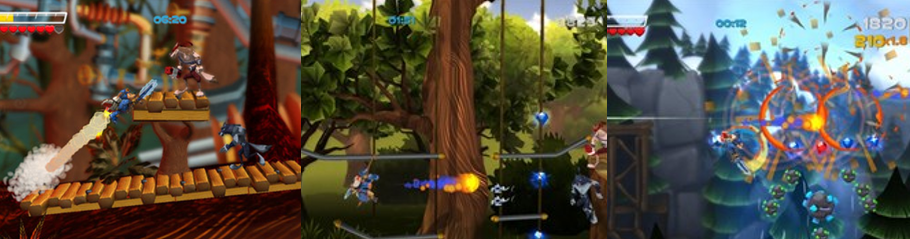
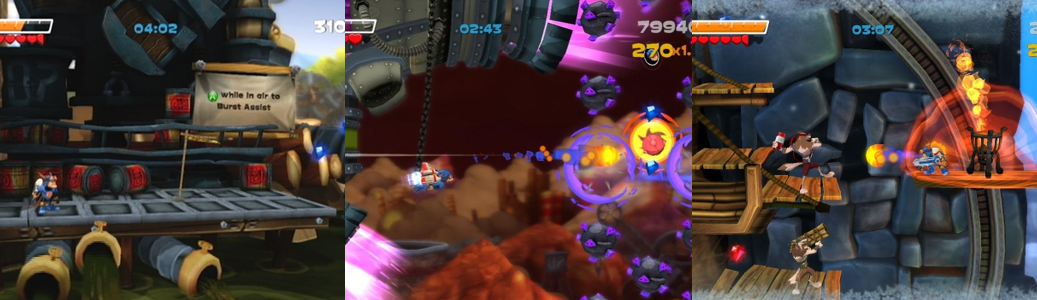
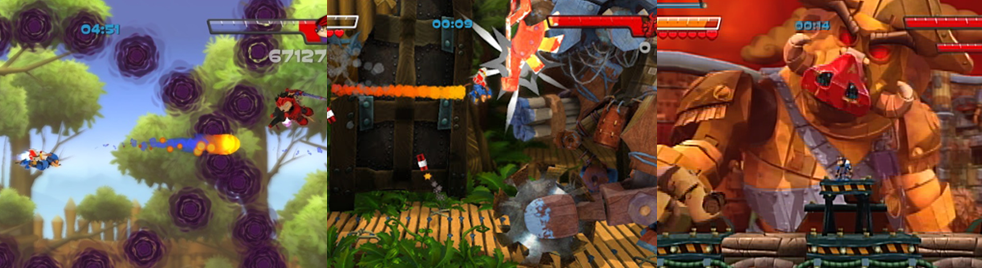




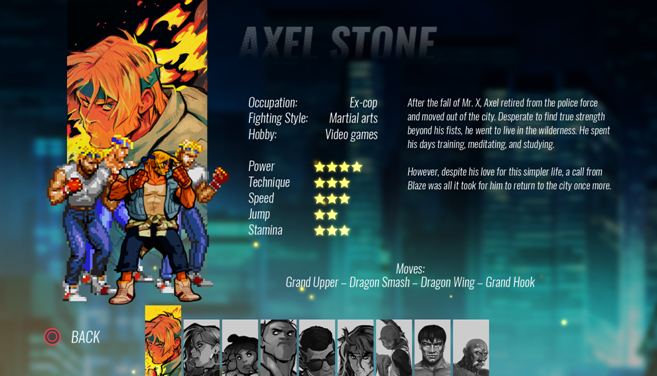
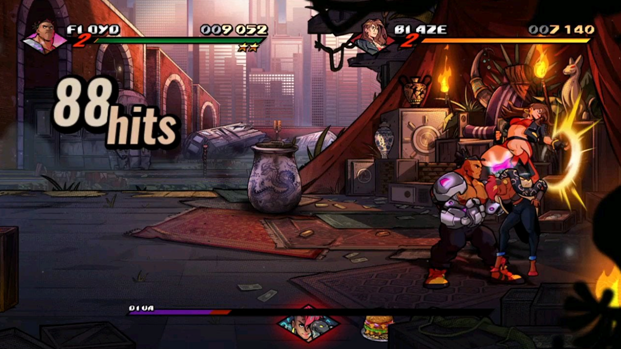


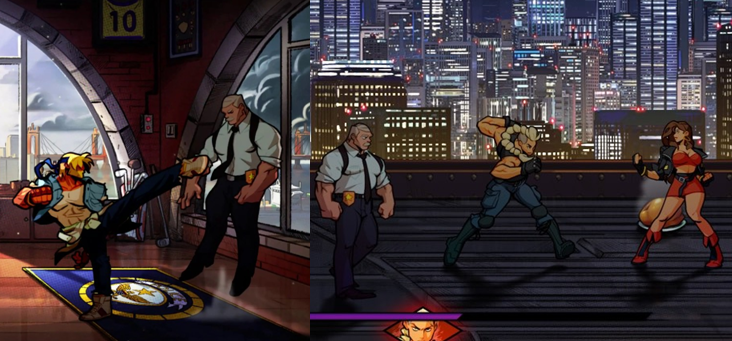
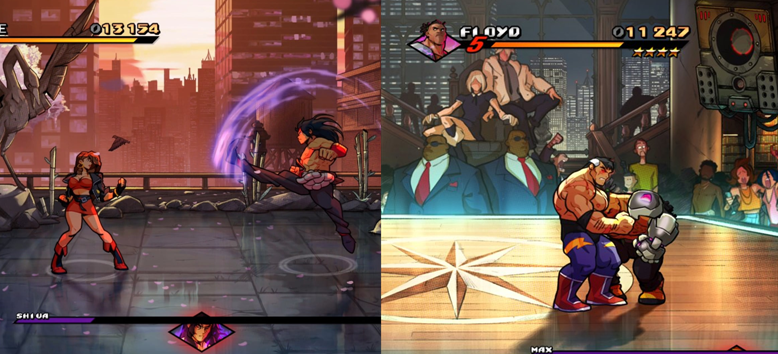


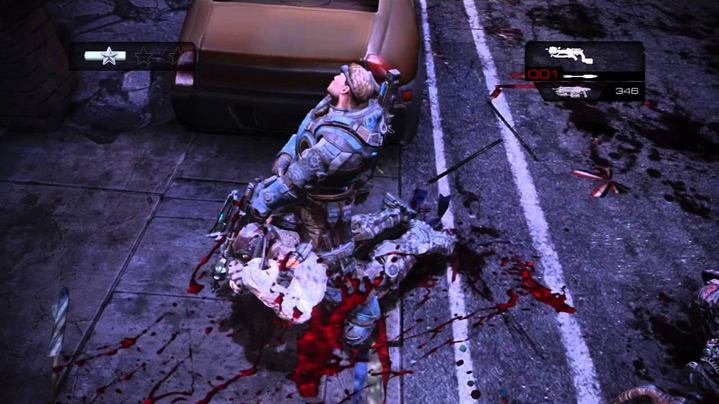
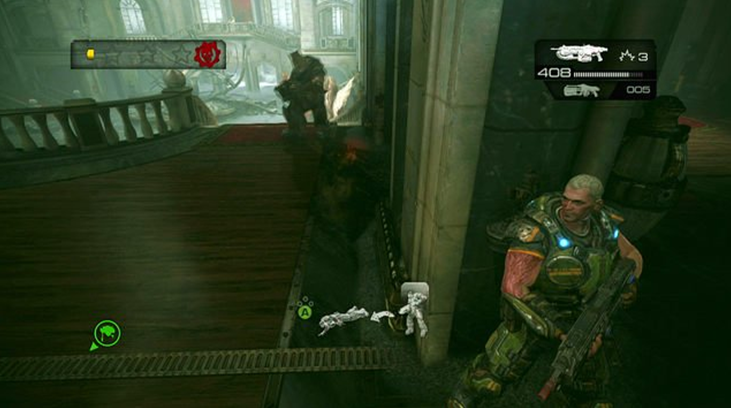

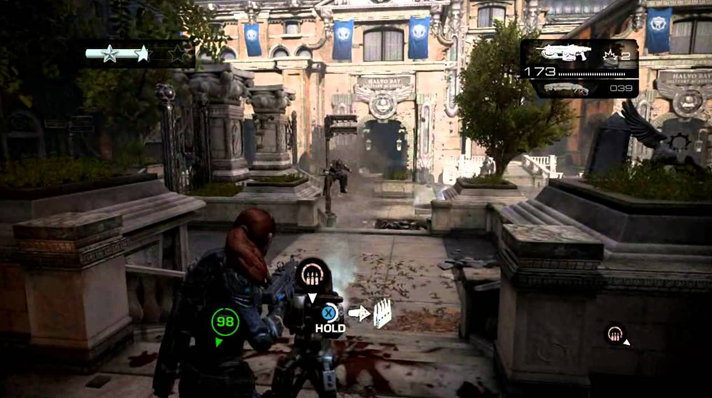


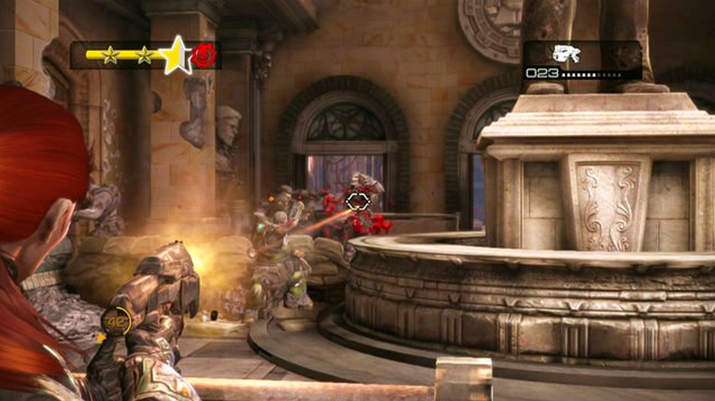




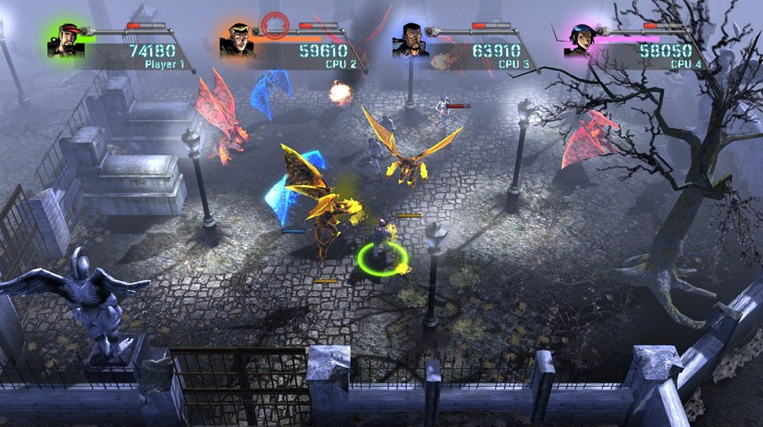
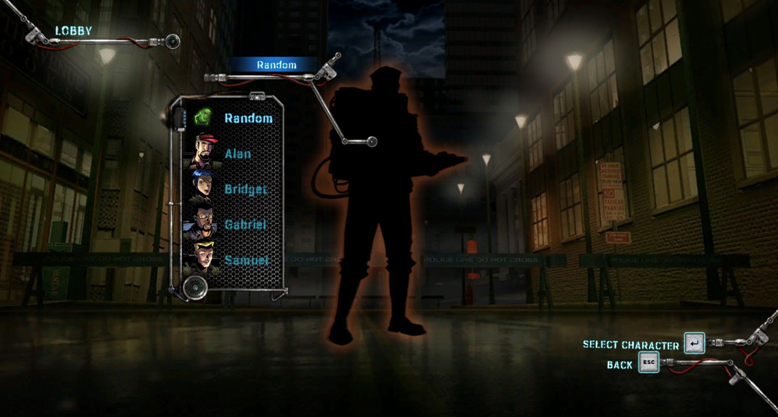
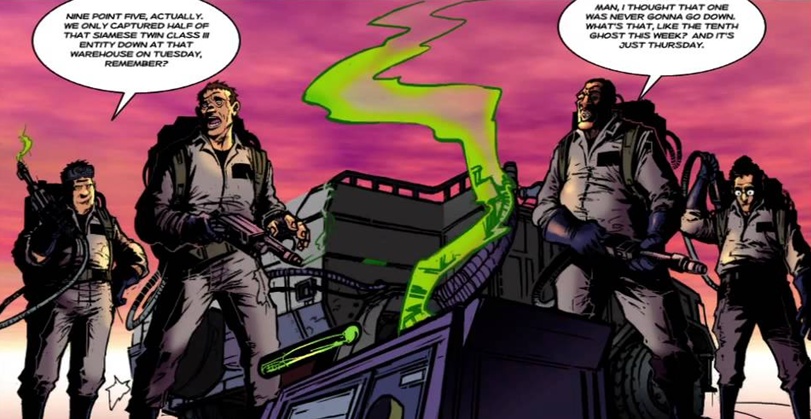
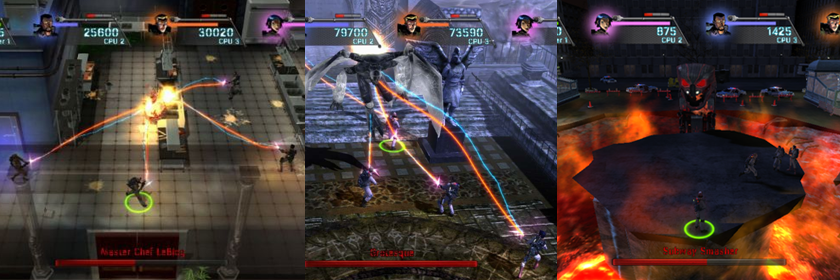
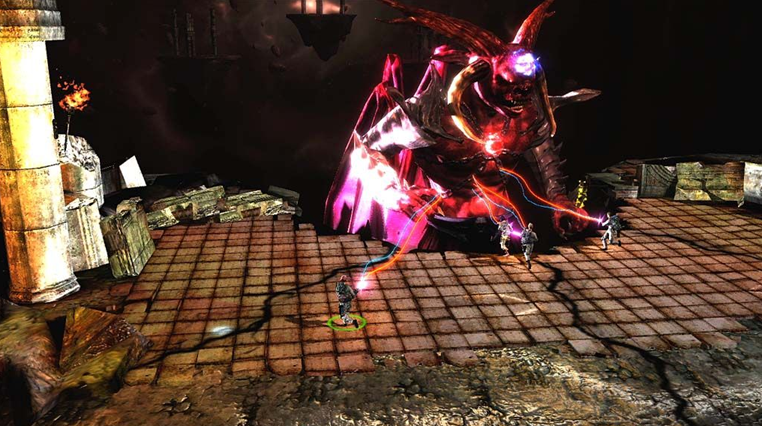
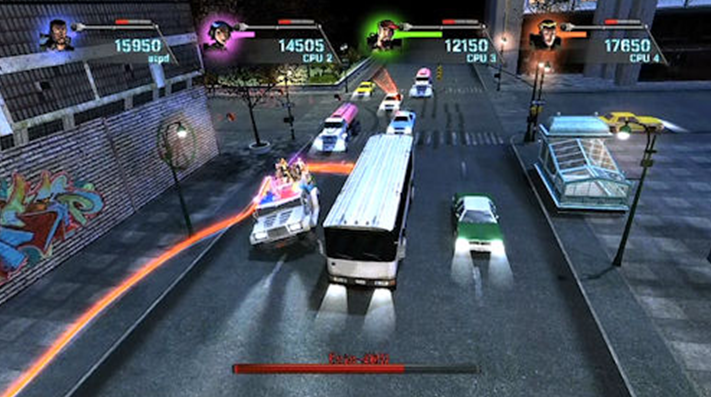


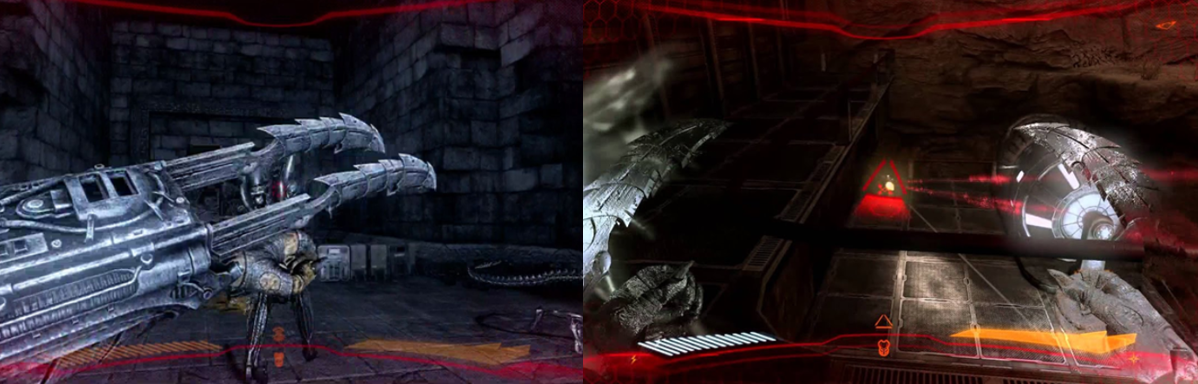
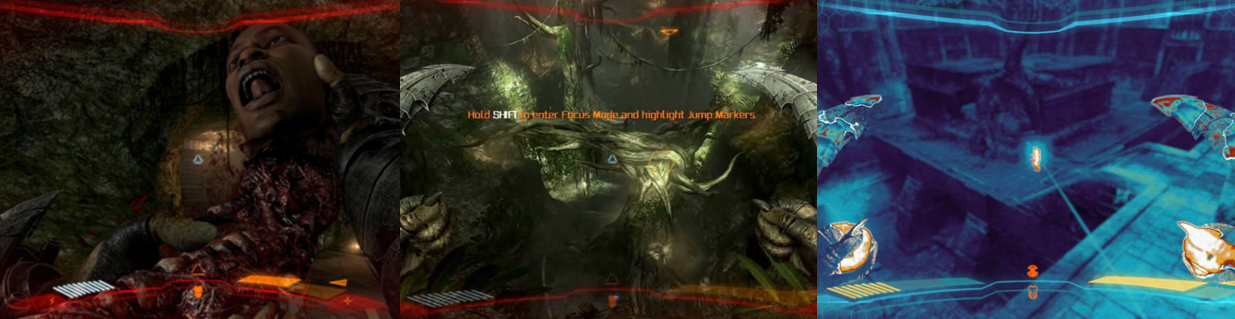
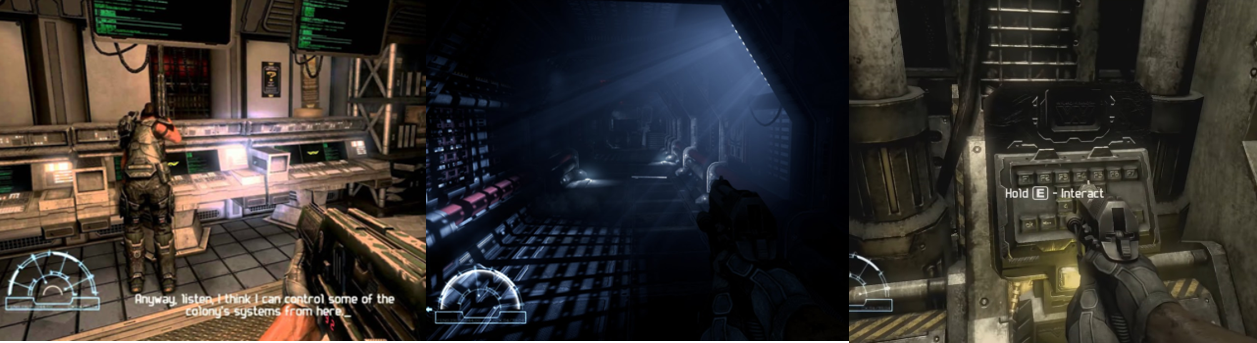


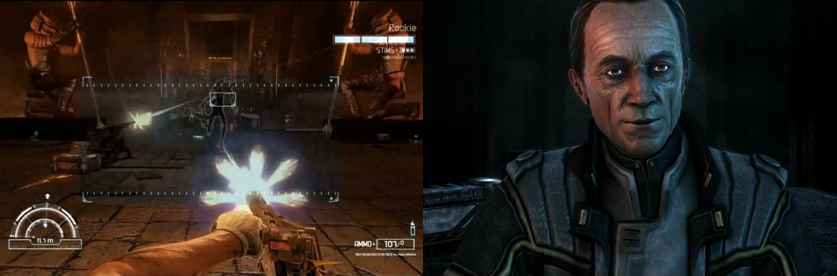
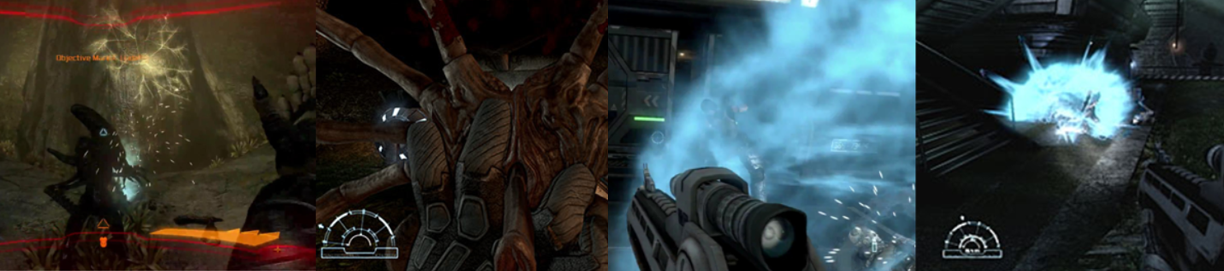


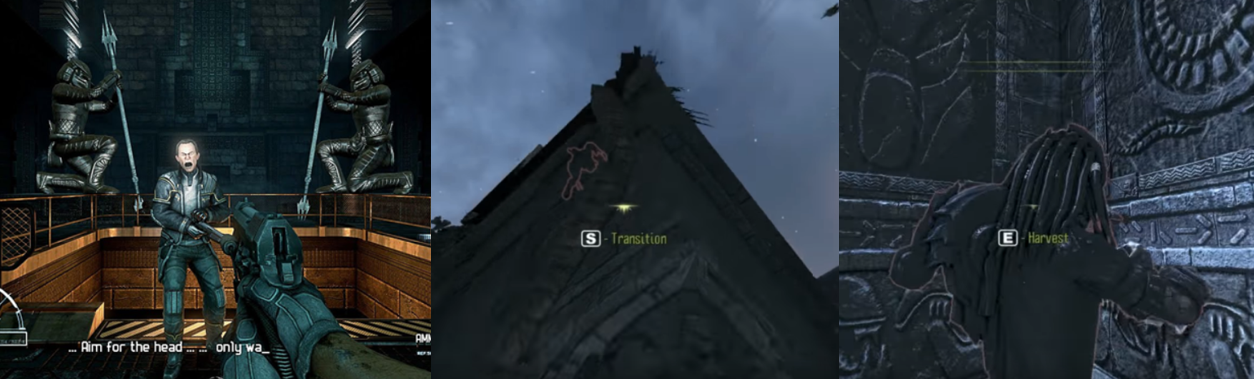





















You must be logged in to post a comment.