Game Corner: Duke Nukem Forever (Xbox 360)

GameCorner
DukeNukemForeverLogo

Released: 10 June 2011
Developer: 3D Realms
Also Available For: PC, PlayStation 3, Xbox One (Backwards Compatible)

The Background:
Man, I was a big, big fan of Duke Nukem 3D (ibid, 1996) back in the day; I spent hours playing deathmatches on PC at a friend’s house and, so great was my love for the alien-blasting, ultra-macho first-person shooter (FPS) that I even bought the Nintendo 64 version in order to continue the carnage at home. Given that I didn’t really have a decent PC back then, I never really experienced Doom (id Software, 1993) and I got ribbed to hell and back for owning Quake 64 (ibid/Midway Games, 1998), Duke Nukem 3D basically was my exposure to the FPS genre…at least until GoldenEye 007 (Rare, 1997) dominated the majority of my social life. So suffice it to say that I was eagerly awaiting the next instalment of the Duke’s ass-kicking series; yet, as we all know, Duke Nukem Forever had a…tumultuous history, to say the least.

DukeNukemForeverDevelopment
Duke Nukem Forever had a long and troubled development period.

Originally announced in 1997 and targeting a release between then and 1998, the game was constantly delayed and reworked as the staff and developers came and went, jumped from game engine to game engine, and constantly found themselves lagging behind more recent FPS games and shooters like Doom 3 (id Software, 2004), Halo: Combat Evolved (Bungie, 2001), and Gears of War (Epic Games, 2006). Rather than simply going back to Duke Nukem 3D, staying the course, and releasing an FPS title that harkened back to that classic style of gameplay, the developers scrambled to compete with modern shooters, cramming Duke Nukem Forever with a multitude of unnecessary additional gameplay mechanics and, ironically, rushing the game out to a release some fourteen years after its first announcement. Upon release, Duke Nukem Forever was pretty much universally lambasted; I originally, very briefly, played the demo version for PlayStation 3 and wasn’t exactly impressed and soon forgot about it once Duke Nukem 3D: Megaton Edition (3D Realms, 2015) was released. Recently, however, I picked the game up (dirt cheap, obviously) and decided to rush through it to nab some easy Achievements and I would be remiss if I didn’t share my thoughts on the game as a whole.

The Plot:
Twelve years after the events of Duke Nukem 3D, Duke Nukem has become a worldwide icon and celebrity and, against the wishes of the President of the United States, returns to action when the rebuilt Cycloid Emperor leads an alien invasion upon the Earth in an attempt to extract a modicum of revenge against the Duke.

Gameplay:
Ostensibly, Duke Nukem Forever is a first-person shooter that once again casts the player in the massive boots of Duke Nukem, a heavily-muscular, one-liner-spewing archetypal 1980s/1990s action hero modelled after the likes of Arnold Schwarzenegger, Bruce Campbell, and Bruce Willis. Duke is a throwback to a far less politically correct time in the world, and in gaming, when games regularly featured an abundance of violence, tits, abusive and coarse language, and toilet humour…and, as a kid back ten, I loved it! Duke was the best parts of all your favourite action heroes rolled into one: charismatic, sharp-witted, and an all-action hero. Not for everyone, of course, and he probably doesn’t fly in today’s social and political climate, but I’ll always have a soft spot for this big, roided-up bastard. Duke Nukem Forever starts off relatively promising as Duke recreates the ending of Duke Nukem 3D, allowing players to once again equip the Devastator (a rapid-firing rocket launcher) and blast the Cycloid Emperor to smithereens in a football stadium. The moment this is revealed to simply be a game within a game, Duke Nukem Forever begins its slow decline into mediocrity; the aliens are back, as is Duke’s trademark wit but, unfortunately, he didn’t exactly bring along his A-game for this instalment.

DukeNukemForeverExecute
Blood and gore is plentiful thanks to Duke’s ability to execute his alien foes.

Initially, Duke is forced to make use of his fists but he soon acquires a firearm and this is one of the game’s first disappointments; unlike in the previous game, Duke can only hold two weapons at a time so, when you come across another weapon, you’re forced to drop one if you want to switch to it. With a press of the B button, you can execute a melee attack to save ammunition and you can also acquire trip mines and pipe bombs to blow aliens to pieces but it’s honestly quite boring to only be holding two weapons at any one time. Luckily, when you come up against tougher enemies or bosses, the game usually leaves a fitting weapon and an infinitely-replenishing ammo crate nearby so you usually always have the right weapon for the right situation but it’s still a bit of a needless handicap. Thankfully, you can use your weapons to blow limbs off of the alien scum you’ll come up against and there’s plenty of blood and gore splattering all over the game’s otherwise bland environments. Additionally, you’ll often find enemies collapsing to their knees and leaving themselves a prime target for Duke to “execute” them with a stiff uppercut, which is a nice little touch.

DukeNukemForeverEgo
Interact with your environment to boost your maximum health.

Unlike in the last game, Duke’s health is represented by an “Ego” bar; the bar drains as Duke takes damage but will automatically refill when Duke escapes from incoming fire, as is the style in many shooters these days. You can duck or hide behind cover scattered throughout the environment but most of these are highly destructible so you won’t be hiding behind pillars for too long before you’re forced to come out all guns blazing. Executing aliens will instantly fill your Ego bar and you can extend its length by interacting with certain parts of the environment and defeating bosses. These intractable elements are a fun distraction fitting of Duke Nukem; you can drink beer, eat chocolate bars, admire your reflection, play arcade and pub games, take a piss, and interact with strippers. All of these, and more, will reward you with an Ego boost so you can take more damage but, even with an extended Ego bar, you’ll still find Duke far more fragile than in previous games; get caught in a crossfire or run head-first into the game’s more formidable enemies and you’ll find your health drained in seconds, forcing you to sit through a good two minutes of load screens as the game struggles to reload your last checkpoint.
DukeNukemForeverEnvironments
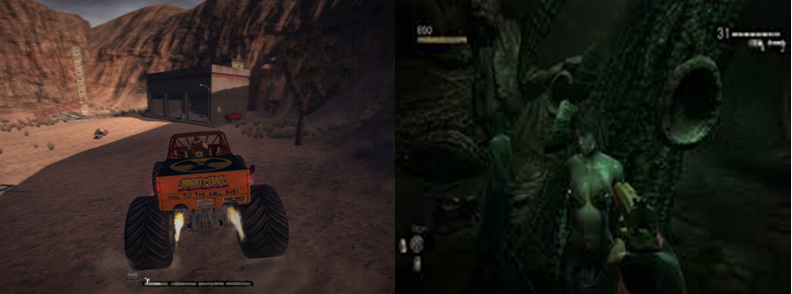
Duke Nukem Forever‘s environments can be varied but are split up by long load times.

These loading times really drag the game down; the game’s missions see you exploring a variety of locations and environments, ranging from alien nests clearing inspired by the Alien (Various, 1979 to present) franchise to stretches of desert and alien-infested cities. These maps are broken up into sections and, when you clear one, the game fades out to a loading screen to load up the next map; then, when you die, you have to sit through another round of loading screens, which makes dying far more frustrating than it needs to be as it takes forever (pun intended) to jump back into the action and try different tactics.

DukeNukemForeverShrunk
Duke spends too long being shrunk down or needlessly jumping to small platforms.

You’ll also find yourself shrunken down to a tiny form, as in Duke Nukem 3D but, while the platforming sections were brief and cursory in that game, the shrunken sections extended in Duke Nukem Forever. Entire sections of missions will see you reduced to the size of a mouse, which is a exasperating experience and, if you’re really lucky, you’ll find yourself faced with the prospect of being tiny and jumping across platforms above an electrified floor that will kill you in seconds. This is not my idea of fun; it’s more like torture as these sections drag on and on with seemingly no end. At various times, you’ll also hop into a monster truck or a radio-controlled car and take part in some of the most janky driving sections I’ve ever experienced. Duke barrels ahead at full-speed, using rocket-powered jumps to clear gaps and flattening enemies beneath the massive tyres of his truck…that is until you happen to collide with the environment. It doesn’t take much to get Duke stuck against buildings and other obstacles, forcing you to try and back up and go around the obstruction in a wide arc, and just clipping walls and objects can send Duke spinning end over end, either ejecting you from the vehicle or forcing you to flip it around to carry on.

DukeNukemForeverTurret
The auto-firing sections can be a lot of fun.

Luckily, the auto-firing sections are a lot more fun; quite often, you can jump behind a gun turret and blast away at enemies, bosses, and enemy ships. You can’t hold the trigger down for too long, though, as the turret with overheat but it’s still quite enjoyable to gun down waves of enemies and blow them to pieces by targeting explosive barrels. Duke can also grab and throw a multitude of objects at his enemies (including barrels (normal and explosive), rats, turds, weights, and priceless vases); all of these, and others can help stem the tide against your enemies and you’re often encouraged to make use of the environment to keep your enemies at bay.

DukeNukemForeverPuzzles
Puzzles and mazes dog you at every turn.

Also helpful is the fact that Duke spends very little time underwater this time around; the final mission of the game is where you’ll find yourself submerged for large periods of time, forced to find air bubbles to replenish your oxygen supply before you drown and struggling to blast the aliens that join you in the dark depths. Unfortunately, though, Duke Nukem Forever not only lacks a map (even a basic wireframe map would have been helpful!), it also has a large number of puzzles scattered throughout its locations. In Duke Nukem 3D, the most you really had to contend with was flipping certain switches or finding coloured keys to progress further but, here, you’ll be jamming large fans with tool boxes, driving forklifts, ripping open doors, and desperately trying to navigate the maze-like environments without a map or a clear indication where you’re supposed to go or what you’re meant to do.

Graphics and Sound:
Considering its troublesome development history, Duke Nukem Forever doesn’t actually look that bad; weapons and enemies are rendered in big, bombastic glory and environments are generally quite detailed and large in scope (even though the maps are split into separately-loading sections). The game also runs relatively well; it can stutter at times, generally when large numbers of enemies are on screen or the game is preparing to load into the next section, but it was smooth sailing, for the most part.

The game’s graphics hold up quite well…when they’re not trying to render human characters.

Where the game fails, however, is in the rendering of its human characters, who all look like lifeless plastic toys. I guess this is actually quite fitting as the game (and the Duke Nukem franchise) is literally akin to a boy smashing his best toys into one another and it’s not unexpected considering the time the game was created and the troubles the developers went through just to produce the title. Duke Nukem Forever doesn’t feature any cutscenes or cinematics; all of the story (such as it is) is told using the in-game engine while the game loads up the next wave of enemies, boss battle, or section to play through. The game is also punctuated by a fitting heavy metal, hard rocking soundtrack that remixes many of the classic tunes from Duke Nukem 3D and adds to the fast-paced, hard hitting action of the game’s inconsistent high points.

Enemies and Bosses:
Duke Nukem Forever brings pretty much every enemy from Duke Nukem 3D back in all their disgusting glory and gives them a nice gloss of paint, updating their designs for a more modern audience, Duke will battle the likes of teleporting, jetpack-wearing alien scum, shotgun-toting Pigcops, and missile-firing Enforcers, each of which takes the time to reload their weapons, can toss pipe bombs at Duke’s head when he’s out of firing range, and include a melee attack for close quarters combat. Duke will also come up against alien eggs, which spew face-hugging Pregnators, and other smaller enemies that are best crushed under Duke’s mighty boot. Easily the game’s most annoying enemy, though, are the Octabrains; these floating, octopus-like aliens hover around your head sucking up items and spitting them back at you and can blast Duke when an energy shot that will kill him in one or two hits. To make matters worse, these bastards also suck up your missiles and pipe bombs, meaning its best to detonate a pipe bomb right as the aliens swallow them and pepper them with the Ripper.

DukeNukemForeverBosses
Duke Nukem Forever‘s bosses are large and require some heavy artillery to put down.

Duke will also come up against some familiar bosses during his adventure; the rocket-spewing Battlelord goes on a rampage on top of the Hoover Dam, the Octaking slowly destroys the small platform you’re standing on as it tries to fry your brains, and the Enforcer poses a significant threat when Duke is shrunk to a small size. Each of the game’s bosses are gigantic, with different phases and attack patterns, and a high point of the game’s action; as bosses are only damaged by explosives and turrets, you’ll generally have to employ different strategies to taking them down while also having to fend off swarms of regular enemies at the same time.

DukeNukemForeverQueen
The Alien Queen is easily the game’s most annoying boss.

Easily the game’s most annoying boss battle is against the three-tittied Alien Queen; this bitch shields herself with her huge arms, forcing you to toss pipe bombs at bouncy pads to get her to lower her guard so you can blast her with rockets. This alone is an annoying aspect of this boss battle but it’s made even more maddening as the Queen not only blasts you on your ass, slams into you with its claws, and spits Pregnators onto the field, she also protects itself with Octobrains for her final stage, which can reduce your health to nothing in seconds. Additionally, if you take too long to initiate the quick-time events needed to humiliate and finish off this boss (and others), she’ll regenerate a portion of her health and the battle will continue on until you get it right.

DukeNukemForeverEmperor
The Cycloid Emperor looks more threatening than it actually is.

The game’s big bad is, of course, the Cycloid Emperor; in the recreation of the finale of Duke Nukem 3D, all you really have to do is strafe circles around the Emperor, blasting away at it with rockets until it goes down and, while this strategy continues to work wonders in the game’s final battle, it’s made far more tiresome by the presence of regular enemies on the field. You’ll need to kill these to grab the RPG, Enforcer Gun, Devastator, and pipe bombs in order to damage the Emperor but, compared to some of the game’s previous bosses, this gigantic monstrosity looks far more threatening than it actually is.

Power-Ups and Bonuses:
Duke has access to a small, but effective, variety of familiar weaponry in Duke Nukem Forever; he can use his fists to pound enemies into bloody mush, grab a simple pistol, or load up with a shotgun. As the shotgun takes time to reload, you might want to grab the Ripper to cut through enemies with a spray of bullets, though you’ll run the clip out quite quickly, or the Railgun to blow enemies away in one targeted hit. You can also grab the RPG, Enforcer Gun, and Devastator to fire rockets at enemies; these are best saved for bosses, as they’re the only weapons besides turrets that’ll do any damage, but you’ll find aiming and directing these weapons troublesome, at best.

DukeNukemForeverWeapons
All of Duke’s signature weapons make a welcome return.

You can also grab a Shrink Ray and a Freeze Ray to reduce enemies in size or encase them in ice, respectively, leaving them wide open for an execution, and even acquire alien lasers from down Assault Troopers to mix things up a bit. Duke can also acquire a few helpful items to tip the balance in his favour; he can see in the dark with his trademark night vision sunglasses, distract enemies with a hologram of himself, swallow some steroid pills to go on a super-powered melee rampage, and drink beer to increase his resistance to injury. Unfortunately, however, you can’t use a jetpack this time around (at least, not in the single player story), and Duke Nukem Forever also, inexplicably, mixes up its FPS gameplay with a variety of different playstyles. The first, and most frustrating, is the abundance of platforming sections in the game; Duke could jump and fly around levels in Duke Nukem 3D but Duke Nukem Forever takes the piss with the platforming sometimes, asking players to awkwardly jump to small platforms or pipes and navigate narrow platforms with the game’s janky, slippery controls.

Additional Features:
Honestly, there’s not a lot on offer in the base game of Duke Nukem Forever; you can play the game on four different difficulty modes for an increased challenge and revisit each chapter to find any Ego boosts or secrets you missed in order to earn every Achievement in the game but, beyond that, there’s not much reason to go back to the game. Once you complete it (on “Let’s Rock” at the very least), you’ll gain access to some additional options that let you turn on helpful cheats like invincibility and infinite ammo; however, you won’t earn any Achievements with these activated, which renders them largely pointless.

DukeNukemForeverMiniGames
Sadly, the game’s controls make these mini games more of a chore than anything else.

At one point in the game, you visit a strip club and are tasked with tracking down some popcorn, a vibrator, and a condom for a stripper; this little side quest also gives you the option of playing a few mini games, including a pinball machine, air hockey, whack-a-mole, mini basketball, and pool. While you’ll get an Ego boost for winning at each of these and there are even some Achievements tied to some of them, the game’s controls don’t really make playing these mini games fun or interesting in any way. Just potting all the balls on the pool table took me about half an hour as there’s no way to judge the power, direction, or spin of your shot and, while I was able to win at air hockey, the janky, floaty, slippery controls mean winning seven to nothing and earning that coveted Achievement is more likely to see you tearing your damn hair out than anything else.

DukeNukemForeverAdditional
Duke Nukem Forever includes multiplayer and even some DLC.

There is a multiplayer component included with the game but my Xbox Live subscription has lapsed so I never explored the options available here. Considering how poorly the game was received, and sold, there is also some downloadable content (DLC) on offer for the game that adds extra modes, Avatar costumes, additional multiplayer maps and modes, and a whole new mission to the single-player campaign. Unfortunately, this DLC costs more than I played for the base game and that, in addition to how dreadful my experience with Duke Nukem Forever was, means I won’t be shelling out to play this DLC any time soon.

DukeNukemForeverBanner

The Summary:
There’s a word to describe Duke Nukem Forever and that word is: disappointment. Honestly, though, it’s nowhere near as bad as reviews and word of mouth had me believe; the basic aspects that made Duke Nukem 3D are still there and, when the game is focused on mowing down alien scumbags and indulging in is crude, crass sense of humour, it really excels and you get the faint glimmer that the game could have lived up to the hype of its predecessor.

DukeNukemForeverConclusion
This image sums up how it feels to hold Duke Nukem Forever

Unfortunately, it’s just too bogged down with unnecessarily long and difficult platforming and driving sections, annoying puzzles, and frustratingly long loading times. Limiting Duke’s arsenal also hurts the game as you’re constantly having to drop weapons and switch to different ones; enemies are way too tough at times as well, soaking up entire clips and blasting your health to shreds as you frantically try to reload or find tenuous cover, and the levels are largely bland, uninspired, or too cliché to really stand out. It’s a shame because there is clearly a lot of potential in Duke Nukem Forever’s concept and, had it released in more like the early-to-mid-2000s and been more like Doom 3 than this hodgepodge of disconnected ideas, it might have actually been really good rather than just disappointingly mediocre.

My Rating:

Rating: 1 out of 5.

Terrible

What did you think about Duke Nukem Forever? Do you think it fails to lives up to its hype or did you find it to be an inoffensive distraction? What do you think of Duke Nukem as a character, especially in our current political and social climate? Do you think he’s a relic from the past or is there room for his brand of humour and action in today’s world? Would you like to see a new Duke Nukem game or do you think it’s best to pull the plug on this once-fruitful FPS franchise? What is your favourite FPS game? Whatever you think, drop a comment below.

Game Corner: Resident Evil (2002; Xbox One)

GameCorner
REmakeLogo

Released: 2015
Originally Released: March 2002
Developer: Capcom
Original Developer: Capcom Production Studio 4
Also Available For: GameCube, Nintendo Switch, Nintendo Wii, PC, PlayStation 3, PlayStation 4, and Xbox 360

The Background:
I mean…you’ve heard of Resident Evil (Capcom, 1996), right? It was one of the seminal titles for Sony’s burgeoning PlayStation and, through its atmospheric horror and stringent emphasis on conserving resources, practically invented (if not massively popularised) the “survival-horror” subgenre. Yet, for everything the game does right, it can’t be denied that the original Resident Evil has seen better days; graphics that were once groundbreaking and innovative have since become embarrassingly blocky and clunky, to say nothing of the dodgy, B-/porn-movie level voice acting peppered through the original release. Thus, in 2002, Capcom developed a complete remake of their iconic horror title as part of a deal to release new Resident Evil titles exclusively on the GameCube. This remake overhauled the graphics and voice acting considerably but also added a whole bunch of new areas to explore and enemies to encounter. Yet, despite improving on its predecessor (and many of its sequels) in almost every way, being one of the most atmospheric and terrifying entries in the series, and being critically praised upon its release, the Resident Evil remake sold comparatively poorly and was one of the many reasons why Capcom would go on to adopt a more action-orientated approach to their popular franchise. I never owned a PlayStation back in the day, though I do recall playing the original Resident Evil here and there, so my first real exposure to the franchise was the amazing port of Resident Evil 2 (Capcom, 1998) for the Nintendo 64. After opting for a GameCube over the PlayStation 2, I went out of my way to pick up the Resident Evil remake and loved it but, at the time, couldn’t really give it the focus and attention such an immersive game required. However, sometime before I reviewed pretty much every single Resident Evil title for the Xbox One, I was gifted the Resident Evil: Origins Collection (ibid, 2016) and put a lot of time into this under-rated remake. I recently returned to the game to sweep up some missing Achievements and decided to make up for not posting a review of it then.

The Plot:
When a series of mysterious and violent deaths occur in the Arklay Mountains outside of Raccoon City, the Special Tactics and Rescue Service (S.T.A.R.S.) Bravo team are dispatched to investigate. However, when all contact with Bravo team is lost, Alpha team heads in to find them, only to be attacked by mutated dogs and driven into a sinister mansion where they are soon separated and attacked by hoards of flesh-eating zombies!

Gameplay:
Resident Evil is a traditional survival-horror videogame that sees players choosing between two playable characters: Jill Valentine and Chris Redfield. While both ostensibly play the same, they do have specific strengths and weaknesses (Jill can carry more items but Chris can take more damage, for example; Jill can also open certain doors and drawers with her lock pick while Chris always carries a lighter to solve certain puzzles) and encounter different characters and use different weapons over the course of the game.

REmakeCamera
Your controls and perspective are limited for increased tension.

Like all mainline Resident Evil titles at the time, Resident Evil employs a restrictive control scheme; however, the “tank controls” of the original game have, thankfully, been tweaked so that characters can freely explore their fully-rendered surroundings with far more freedom of movement. Your perspective is still limited by a series of dynamic and atmospheric camera angles, meaning that you won’t see any two areas from the same viewpoint; this is great for building tension and enabling the game’s jump scares but somewhat intrusive when, in the heat of desperately trying to escape from an enemy, the camera perspective suddenly switches on you and your controls become effectively reversed, meaning that it’s always best to plan ahead for a possible escape route.

REmakeInventory
Inventory management is key to your survival.

This foresight is most emphasised in the game’s stringent inventory system; as was the standard for Resident Evil titles at the time, characters can only carry a certain number of items before their inventory is maxed out and learning how best to manage your inventory is the key to your survival. Many items (herbs, mostly) can be combined together to take up less inventory space while others must be examined to find another item (usually an elaborate key of some kind). If your inventory is full, you can deposit your items into one of the many fourth-dimensional Item Boxes scattered throughout the game’s many locations to be retrieved at a later date. To help you navigate the game’s maze-like areas, you can also find a series of maps that helpfully display locked doors, whether areas have any items you need, and where typewriters and Item Boxes are located. You can also pick-up defensive items (daggers, tasers, and flash grenades) that will either instantly kill or severely incapacitate any zombie that tries to take a bite out of you and also use your fuel canteen and lighter to ignite corpses and stop them returning as Crimson Heads. Story is a huge part of Resident Evil; as you progress, cutscenes will reveal more of the mysteries behind the mansion and Umbrella but you’ll also pick up files and documents as you play that further flesh out the story, the history of the mansion, the specifics of Umbrella’s bizarre experiments, and even provide hints towards the game’s puzzles.

REmakeCombat
Combat is often a case of fight or flight.

Combat in the remake is smoother than in the original but still far chunkier and restrictive compared to the Capcom’s more action-orientated titles, primarily because tackling foes head on is generally discouraged even if you do have ample supplies of ammo. Zombies (and the other Bio-Organic Weapons (BOWs) created by the malevolent Umbrella Corporation) absorb your bullets like a sponge and, even if they do go down for the count, will return after a certain amount of in-game time has elapsed faster and stronger than ever. Even if this doesn’t happen, they are largely replaced by the deadly Hunters later in the game that will require more than your standard pistol ammo to put down so conserving your resources is paramount to your ability to survive. When attacked, your character’s health and current status is displayed through an EKG-like display. When it turns yellow or red, falling into “Caution” or “Danger” status, or a blue-purple for the “Poisoned” status, your odds of survival will decrease dramatically; your character will begin to limp and hobble around, severely reducing your mobility, and it is highly advised that you make use of the herbs and first-aid sprays to replenish your health and return your status to “Fine”. In keeping with the style of the series at the time, your progress can only be saved by using an Ink Ribbon at one of the many typewriters you’ll find across the game’s locations; if you die, you’ll have to re-load your last save point and try again but be warned because your final score takes into consideration how many saves you make across a playthrough so, if you want the best results, it’s encouraged that you limit your saves.

REmakeTraps
You may need help escaping the game’s many death traps.

Some enemies deal more damage than others, some are even capable of killing you in one swipe of their claws, and the game’s many environments are also filled with instant-death traps that require you to solve puzzles in a certain way or make certain choices so that you can be saved by one of the game’s supporting characters. These characters will also provide you with better weapons and helpful items; one, Rebecca Chambers, even becomes playable at a key moment to help Chris synthesis concoctions that normally only Jill can produce. Rebecca, and Barry Burton, also help out by solving puzzles and defeating certain bosses for you if you make the right decisions, which can be extremely useful for conserving your resources and aiding a speedrun. Resident Evil is chock full of puzzles, traps, and elaborate areas to explore; the bulk of your game time is spent exploring the disturbing Spencer Mansion, whose doors are locked behind themed keys and rooms are filled with ornate statues and lavish decorations, but you’ll also explore a neighbouring graveyard, an underwater passageway, an Aqua Ring, and, of course, a high-tech laboratory filled with Umbrella’s bizarre experiments. In each area, you’ll have to solve puzzles either by interacting with them or bringing items with you; these may be a key, or a battery to power a lift, or intricate medallions to access hidden walkways, meaning that no item you find will ever be completely useless.

Graphics and Sound:
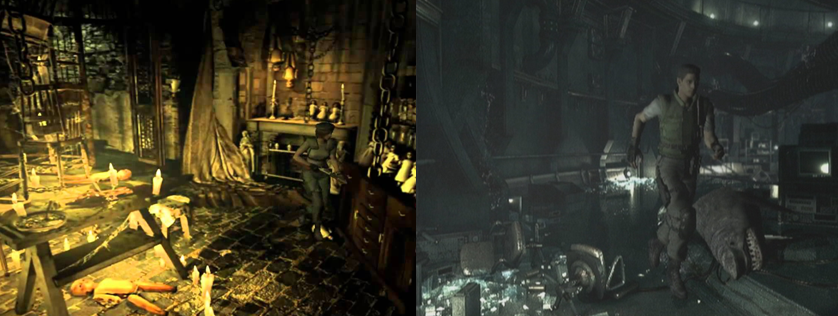
Even now, some twenty years after it was originally released for the GameCube, the Resident Evil remake holds up fantastically well; while the original became dated very quickly, the remake still looks gorgeous and up to the standards of even Capcom’s recent efforts. Environments are fully-rendered and bathed in a variety of lighting; most areas are swamped in shadow or lit only by the suitably dramatic lightning from outside the mansion, while others are fully lit so you can bask in the ornate decorations and Gothic aesthetic of your surroundings.

REmakeGraphics
Resident Evil‘s various Gothic and twisted locations are all rendered beautifully.

As you explore further, you’ll venture out into the wind- and rain-swept areas outside of the mansion, explore a creepy, dilapidated cabin and a disgusting semi-flooded passageway beneath it, and even a dank tomb reminiscent of something out of a Bram Stoker novel. These elaborate locations are offset by the more clinical, high-tech areas created by Umbrella; the Aqua Ring and laboratory have been wrecked by the corporation’s experiments, juxtaposing Umbrella’s fiendish modern technology with the lavish, almost supernatural qualities of the mansion and its surroundings.

REmakeCutscenes
The cutscenes propel the game’s elaborate narrative forward.

Unlike the original, which spliced cringe-worthy live-action sequences in with its equally cringey dialogue, the remake opts for fully-rendered computer-generated cutscenes to tell its story (which, thankfully, is just as over-the-top as ever). The script has been entirely overhauled, meaning that the game makes far more sense and the narrative is played far more seriously this time around, which only adds to the feeling of dread inspired as you skulk around the dark, tight, winding corridors of the mansion. Music is sparse and used (or omitted) to create tension or inform the player that they are in a safe (or dangerous) area; subdued and melancholy, you’re far more likely to hear the rustling of footsteps, the chattering shrieks of some unseen creature, or the soft moans of a zombie waiting just off-screen than anything else. When the jump-scares happen, they are often punctuated by the sudden introduction of a heart-pounding tune that keeps you constantly on edge even when revisiting areas you know have been cleared of enemies.

Enemies and Bosses:
The main obstacle you’ll encounter in your desperate fight to survive will be the many zombies that populate your surroundings; the most common enemy, zombies will slowly shuffle towards you, moaning and groaning, and will try to take a bite out of you at any opportunity. A few well-placed shots will put them down but, to destroy them for good, it’s best to whip out the shotgun and tilt your aim towards their heads, blow them to pieces with the grenade launcher, or hope that your pistol gets a lucky headshot. You’ll also encounter one of the most annoying reoccurring enemies in the entire franchise, the zombified dogs known as Cerberus. These little bastards are fast and agile, leaping at you, pinning you down, and chomping at your arm and are always a bastard to get a good shot at. Ravenous crows can also be found in certain areas but these will generally just sit there, cawing ominously, and won’t attack you unless provoked. To mix things up a bit in the remake and add even more tension to your gameplay, the developers introduced a mechanic whereby any zombie that hasn’t had its head blown off or burned to a charred corpse will return to undead life as a faster, far more vicious and deadly Crimson Head after enough time has passed. This adds another layer to the game as you must choose between dodging the slower, weaker zombies or taking the time to burn up their corpses rather than risking your health and ammo on their supped-up evolution.

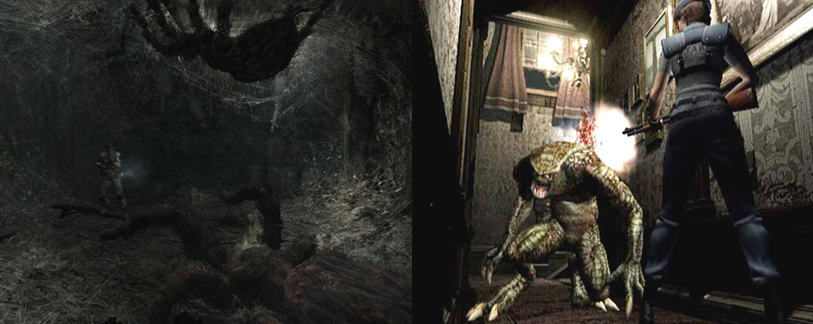
REmakeHunterSpider
Spiders may poison you but the Hunters will rip your head off!

As you venture outside of the mansion, you’ll also have to contend with snakes dropping on you and hissing at your feet, giant spiders that can poison you, and voracious mutated sharks just waiting to chomp you in two. Once you return from this side quest, most of the zombies in the mansion will have been replaced with the ferocious Hunters; these dangerous frog-like creatures leap and run at you, swiping with their claws, can kill you in one hit, and you’ll even encounter a sturdier variant that can also poison you. Once you delve into Umbrella’s secret laboratory, you’ll also have to battle the nightmarish Chimera creatures, weird little human/insect hybrids that skitter along the floors and ceilings just waiting to take your head off!

REmakeBosses
Umbrella’s experiments have mutated animals to monstrous sizes!

Umbrella’s experiments also give birth to some gigantic and horrific bosses; you’ll encounter the giant snake, Yawn, a couple of times, a monstrous tarantula, a colossal acid-spewing plant, and the prototype of the Crimson Heads down in a tomb. Interestingly, a lot of these bosses can either be avoided entirely or destroyed by solving a puzzle or the intervention of a supporting character. Plant 42, for example, can be destroyed by mixing a chemical compound to kill its roots; the aforementioned giant tarantula can be avoided entirely and you destroy the massive shark in the Aqua Ring by electrocuting it with a nearby control panel. The remake introduces a new recurring boss to the story as well, the immortal and unkillable Lisa Trevor. As the prototype for many of Umbrella’s later, more monstrous experiments, Lisa is a deformed, shambling mess who is completely resistant to all forms of gunfire. When you hear the rattling of hear chains and the low, despairing moans, all you can do is run and desperately try to avoid her incredibly powerful blows. Unlike Mr. X or Nemesis, Lisa doesn’t stalk you around the mansion, which is helpful, and your encounters with her pretty much all take place in an area that allows you to easily dodge past her and stay out of her reach. When the time comes to finally confront her, Barry or Albert Wesker will provide cover fire, allowing you to push four stones down a pit, uncovering the corpse of Lisa’s mother and driving the poor girl to leap to her death.

REmakeTyrant2
Hold out long enough and you’ll get the chance to put the Tyrant down for good.

After exploring the length and breadth of Umbrella’s hidden laboratory, Wesker, your commander in chief, reveals himself to be a traitor and unleashes Umbrella’s most powerful BOW: the grotesque Tyrant, which quickly skewers Wesker and seemingly ending his threat forever. You’re then left to deal with the Tyrant yourself, which can be tricky given the creature’s massive reach and damage-inducing claws but, thanks to the layout of the laboratory, you can easily run circles around it, shooting at it whenever you can, and putting it down through a mixture of perseverance and patience. Depending on how you played the game and which characters have survived, you may have to battle the Tyrant once more as the now-obligatory self-destruct countdown takes place and you wait to be rescued from a helipad. This time, the Tyrant is much faster, dashing at you from afar and stabbing and slashing at you with its claws but, after enough damage has been dealt and/or time has past, you’ll soon acquire a rocket launcher to blow the creature to smithereens and make your dramatic escape.

Power-Ups and Bonuses:
Unlike later Resident Evil titles, there’s no way for you to increase your inventory capacity or upgrade your weapons or ammo with add-ons and elaborate combinations. However, as you explore your surroundings, you will find better and more powerful weapons, some of which are exclusive to each character; Chris, for example, gets his hands on a good, old-fashioned shotgun while Jill opts for a grenade launcher. To get the game’s most powerful weapons, though, you’ll need to solve certain puzzles, meet certain criteria, or beat the game within a certain time limit on different difficulty settings. Bring a certain medallion with you on the way to Lisa’s cabin or allow Barry to die at Lisa’s hands, for example, and you can acquire a super-powerful Magnum and the way that you handle fellow S.T.A.R.S. agent Richard Aiken can net you a powerful assault shotgun.

Additional Features:
As you might expect, the Xbox One version of the game has quite a few Achievements linked to it that you can get. Most of these are story-based and therefore unmissable but others test your skills in increasingly challenging ways; there’s Achievements tied to saving (or not saving) your fellow S.T.A.R.S. team mates, one for finding 100% of the items across the game’s many locations, two tied to speed runs, one for acquiring every weapon, and even one that asks you to beat the game using only a knife to kill enemies and bosses.

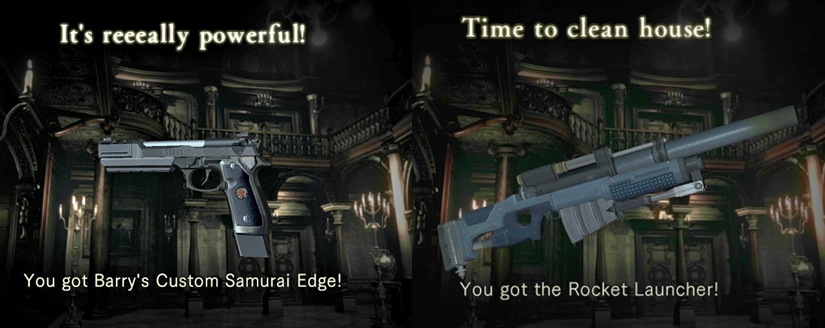
REmakeWeapons2
Beat the game fast enough and you’ll earn infinite weapons.

Beating the game allows you to option to replay it on one of four difficulties, ranging from “Very Easy” to “Hard”, each of which places different items, amounts of ammo and Ink Ribbons, and even enemies across the game. As is the style of Resident Evil titles, you are rewarded for how fast you complete the game, how many saves and deaths you have, and for finishing the game on higher difficulty levels. Beating the game quickly enough or “Normal” or higher can net you the Samurai Edge or even the infinite rocket launcher, both of which will make subsequent playthroughs and absolute breeze. You can also unlock different costumes for your characters, allowing you to play using skins from later Resident Evil titles, and even a couple of new game modes. “Real Survival” is basically Hard mode but you can no longer access all of your items from every Item Box, “Invisible Enemy” mode turns all of the game’s enemies invisible, and beating the game with both characters on “Normal” finds you hounded throughout every subsequent playthrough by one dangerous zombie strapped with game-ending grenades!

The Summary:
The Resident Evil remake is still a fantastic gaming experience; it took everything that worked from its blocky, cringe-inducing original and ramped it up to eleven. Arguably, Resident Evil has never looked better thanks to the game’s gorgeously-rendered environments, atmospheric use of lighting, and impressive in-game cutscenes and this remake still stands as the last true example of a traditional survival-horror Resident Evil title thanks to the way it incorporates the restrictive controls and camera angles of the franchise’s early days but tweaks and refines them with a more modern finish. Honestly, back when this game came out, I fully expected Capcom to use the same engine to remake Resident Evil 2 and Resident Evil 3: Nemesis (ibid, 1999) and I would have perfectly happy with that given how well this worked for not only the remake but also Resident Evil Zero (ibid, 2002). They didn’t, of course, and the closest we’ve gotten to something akin to the Resident Evil remake was Resident Evil 5’s (ibid, 2009) “Lost in Nightmares” downloadable content. As much as I like the remakes Capcom have produced and the way the franchise is heading back towards creepy, atmospheric, almost claustrophobic horror, I can’t help but be saddened that they don’t continue to tweak and refine the game engine they crafted for this remake as it really does deliver the definitive version of Resident Evil.

My Rating:

Rating: 5 out of 5.

Fantastic

What did you think of the Resident Evil remake? How do you think it compares to the remakes Capcom have recently produced, or even to the original? Do you prefer the original over the remake? Would you have liked to see more Resident Evil titles adopt the game engine used here or do you prefer the more action-orientated style of even the recent remakes? Either way, feel free to share your thoughts and comments below.

Game Corner: Jet Force Gemini (Xbox One)

GameCorner
JetForceGeminiLogo

Released: August 2015
Originally Released: October 1999
Developer: Rare
Also Available For: Nintendo 64

The Background:
You wouldn’t really know it now but Rare were a big deal back in the nineties. They were responsible for the excellent Donkey Kong Country series (ibid, 1994 to 1996) on the Super Nintendo Entertainment System (SNES) before taking home console gaming by storm with the renowned GoldenEye 007 (ibid, 1997), one of the few licensed videogames to not only be good but also one of the greatest first-person shooters (FPS) ever made thanks to its highly enjoyable split screen multiplayer. Following this, Rare ventured into the 3D action/platformer genre with Banjo-Kazooie (ibid, 1998), a whimsical collectathon that secured Rare’s places as one of Nintendo’s premier third-party developers. During their time developing for the Nintendo 64, Rare were generally known for producing videogames that were either bright, colourful fantasy adventures. Conker’s Bad Fur Day (ibid, 2001) later turned this expectation on its head with its graphic violence and crude sense of humour but, before that, Rare deviated from this norm through Perfect Dark (ibid, 2000), GoldenEye 007’s spiritual successor, and Jet Force Gemini, both of which were darker, far moodier titles that veered into science-fiction and futuristic technology. Given how much I enjoyed Rare’s titles back in the day, I spent quite a bit of time with Jet Force Gemini on the Nintendo 64, either borrowing it from a friend or actually owning a copy for a brief period of time. One of the main reasons I chose the Xbox One over the PlayStation 4 was that console had the exclusive title Rare Replay (ibid, 2015), a compilation of thirty of Rare’s greatest hits over their many years, which contained, among many other gems, Jet Force Gemini. As I had never finished the game, and often struggled with it at certain points, this seemed like the perfect time to return to the game and put that loose end to rest once and for all.

The Plot:
After their fleet is wiped out by the insectoid armies of the villainous Mizar, the remaining members of the intergalactic law enforcement team Jet Force Gemini split up to infiltrate Mizar’s warships. The team discover that Mizar has enslaved the bear-like Tribals and resolve to defeat the alien’s forces.

Gameplay:
Jet Force Gemini is a third-person action/adventure shooter with a heavy emphasis on exploration, backtracking, and some light (if frustrating) platforming and puzzle solving. When you start the game, you’re put in control of Juno, the male member of the titular team but soon rescue his female partner, Vela, and their mascot, the semi-cybernetic pooch Lupus. Functionally, each character controls the same, running and jumping around their environment and various weapons to blast away any insects that get in their way. When you play Jet Force Gemini, the very first thing you should do is opt to switch to the new control scheme implemented into Rare Replay. Without this, you may struggle to control your character, aiming reticule, and co-ordinate your inventory. I don’t remember this being a problem on the Nintendo 64 version but, in the absence of that system’s C-buttons, the default controls for Jet Force Gemini map the strafe and weapon selection to the right analogue stick, meaning you’ll often switch weapons when trying to strafe. This control scheme also makes precision aiming a tedious and pixel-perfect operation but both of these issues are largely remedied by switching to the duel analogue control scheme offered by the Xbox One version. This doesn’t correct some of the other control issues, though. As you explore, you’ll do so from a third-person perspective, which is where the controls become relatively tight and responsive but the camera is obsessed with staying locked behind your back, somewhat skewing your view when you’re trying to make difficult jumps. When enemies appear onscreen, the view switches to a pseudo-first-person perspective; at the press of the left bumper, your character become translucent, an aiming reticule appears onscreen, and you’re tasked with strafing behind cover and around your foes as you mow down enemies. The new control scheme makes this far more enjoyable but I still found this shift in perspective to be jarring every time it happens and that the game’s base controls don’t necessarily make moving and shooting the easiest task.

JetForceGeminiCharacters
Each character can explore their environments in different ways.

For one thing, your characters control in a variation of the classic “tank controls” of early PlayStation and survival-horror videogames. You can travel in all eight directions and it seems as smooth as the controls in Banjo-Kazooie but this is a deception. For example, you’ll be running ahead at full speed and suddenly have to either make a right turn or turn around; your character then skids to a halt, sliding along the floor as they go, and either makes the turn in a wide arc or you’re forced to reverse backwards like a truck! The slipperiness of the characters is a major flaw; it’s great that Juno and Vela can grab onto ledges, which often saves you from plummeting to your death, but often you’ll fly right off an edge or a platform simply because the characters slip and slide all over the place. The camera really doesn’t help matters; it’s completely out of your control unless you hold down the left bumper and entire the quasi-first-person mode, meaning you don’t have full 3600 control of the camera like in Banjo-Kazooie. As the camera is always seemingly zoomed in just a little bit too much and permanently lodged behind your character, this makes jumping across gaps or to floating platforms a massively annoying task as there’s never a good camera angle to judge your jump and there’s a significant delay in the characters’ jumps (not to mention the slipperiness and the way they kind of freak out a bit when they land from a jump). Each of the three characters explores the environments a little differently and has access to different abilities: Juno can run through magma without issue, Vela can swim deep underwater (and, thankfully, has no need for air during these sections), and Lupus can hover for brief periods of time. Lupus can’t grab edges or duck but all three characters have a super jump (activated by simply holding down the jump button) and are able to find and use new weapons as they explore their surroundings. To progress through stages, you’ll generally have to unlock doors either by destroying all enemies in an area or using a coloured key. You’ll also encounter a number of non-playable characters (NPCs) who offer you additional items but only after you bring them something in return, forcing you to go off on a side quest to another world and run around in desperate circles as each of the characters trying to find what you need as, again, there’s no map or indication of where to go or what to do, forcing you to experiment with the three characters, different routes, or to consult a guide.

JetForceGeminiAmmo
Ammo is plentiful, which is good as you’ll burn through it pretty fast.

As for the weapons, you’ll be relieved to hear that there’s no need to reload in this game; ammo packs are in plentiful supply and often dropped by enemies, though you’ll be burning through some of your more effective ammunition as you mow down your enemies. This wouldn’t be so bad if the standard pistol had infinite ammo but it’s doesn’t. It also comes hampered with a power meter, of sorts, that keeps you from spamming the fire trigger over and over as the speed and power of your shots will decline the more you fire the gun until the bar refills. Each character’s health is represented by a glowing band in the bottom left of the screen; the band surrounds the logo of the team and drains as you take damage. You can replenish your health by collecting Gemini gems and expand your health by finding the appropriate items but, while you effectively have up to four health bars, you’ll find your health whittled away to nothing in short time when you’re ambushed by large groups of enemies if you don’t find cover or beat a hasty (if clunky) retreat. When you begin a stage, you’re given two continues; you can’t earn any additional continues but, if you exhaust them all, you do continue playing from the last auto-save point (and you can also manually save the game from the menu), which seems to make the continue system utterly redundant as you can just keep continuing as often as you need to. Jet Force Gemini begins in a very linear fashion; you can switch to Vela and Lupus after rescuing them from Mizar’s forces and each one makes their way through three different worlds before meeting up with their teammates at Mizar’s Palace. Once you fulfil this objective, the game opens up into a free play mode, of sorts, allowing any character to visit any world or location at any time. Unfortunately, you can’t switch to a character on the fly; when you select your character, the game forces you to sit through an unskippable cutscene of the character arriving and landing or docking at their location and you must begin the stage from the beginning.

JetForceGeminiExplore
It’s tough to properly explore the game’s vast worlds without an onscreen map.

Switching to a new location is easily done from the map screen in the game’s menu but, when you select a location, you’re forced to start from the beginning of the stage rather than jumping to one of the other points of the stage. Also, when you’re exploring a stage, there is no onscreen map or menu-accessible way to help guide you through and this becomes incredibly frustrating during the game’s later stages as a lot of areas in the game’s generally diverse stages look the same and it’s easy to get turned around, lost, or simply struggle to progress as you have no real idea of where you should be going. This becomes even more annoying when you’re forced to backtrack to every location with each character and hunt high and low for the missing spaceship parts you need to reach the final confrontation with Mizar; Rare never liked to hold your hand when it came to exploration but omitting a stage map was a real boneheaded move and makes the game more tedious and annoying than it needs to be. During the free play portion of the game, you’ll have to revisit each location at least three times, once as each character, in order to locate new weapons, upgrades, story-progressing items and, of course, rescue all of the Tribals. As you explore stages, you’ll find these cute little critters scattered around, usually in your line of fire; touching them teleports them to safety and you must rescue every last one of them in order to complete the game. If a Tribal dies, you can continue playing and “simply” replay the stage to rescue them the next time around but, here’s the kicker; even if you’ve rescued Tribals, they still appear in the stage when you return, meaning that you never really feel as though you’re actually progressing with rescuing the little koalas. You can track your progress from the menu screen but, honestly, it isn’t very clear and I would have much preferred it if Tribals disappeared from the stages once they were rescued.

Graphics and Sound:
Jet Force Gemini has a very distinct visual style; ostensibly a sci-fi adventure, the game is filled with large, open areas, futuristic technology, and alien creatures. There’s a mish-mash of all kinds of scenery and styles in this game; one minute, you’ll be exploring a swamp-like world, the next you’ll be trapped in the large vertical halls of a spaceship, then you’ll be dropped into a vast desert or a desolate, metallic prison. Each world and location has its own look and feel though the gameplay mechanics are, largely, the same for each location; even on worlds filled with magma, Vela can find pools to dive into and Lupus will find gaps only he can cross, for example, and most locations task you with making some awkward jumps to desperately trying to navigate maze-like hallways and locations. While I am largely impressed with the size and scale of each of the game’s worlds, in many ways they are too big; a similar issue plagued Banjo-Tooie (ibid, 2000), which featured a large interconnected map that seemed both empty and full of life at the same time. The individual locations of Jet Force Gemini are more akin to somewhere between the size of Banjo-Kazooie’s stages and those of Banjo-Tooie, made even larger by the alternate paths the different characters can take, but some can feel far too monotonous thanks to all the areas looking the same and seeming far too big.

JetForceGeminiCutscenes
Sporadic cutscenes progress the game’s basic plot.

The game features a far more operatic and dramatic soundtrack compared to Rare’s other titles; a mixture of bombastic heroic themes, ominous, foreboding ambient sounds, and heart-pounding boss music all work really well to set the tone of the game but it feels a little more generic compared to the likes of Banjo-Kazooie. Jet Force Gemini also features a few unskippable cutscenes, many of which seem to be masking the game’s loading times; every time to return to an area, you have to sit through the same cutscene of your ship flying in and landing, which gets very annoying after a while. Cutscenes feature no voice acting, relying on text boxes to convey the story, and only a handful of characters speaking in the charming gibberish seen in the Banjo videogames, which is disappointing. The game’s presentation is bombastic and over-the-top (enemies explode in a shower of goo and limbs) but the plot is generally played entirely straight, with only the game’s wackier NPCs showcasing some of that quirky Rare humour.

Enemies and Bosses:
For all the diversity of its worlds and locations, Jet Force Gemini drops the ball a bit when it comes to enemy variety. No matter which location you visit, you’ll encounter the same enemies, with only slight variations depending on the stage you visit or the path you take. Mostly, you’ll come up against the generic blue drones who run around in a blind panic, blasting at you from behind cover and dropping in just a few hits, but you’ll also encounter a couple of variants on this enemy.

JetForceGeminiEnemies
Enemies aren’t especially varied but can have a lot of personality.

One of the more annoying variants are the shield-wielding drones, who constantly hide behind impenetrable shields and force you to either fight with the game’s controls and chase them down or strafe around them or use one of your more powerful weapons. Green drones usually adopt a sniper position to whittle your health down from up high and afar and the large, purple beetle-like enemies will either blast at you with rapid fire or explosive shells, and the red drones are far tougher and smarter. Despite the lack of variety, the enemies are surprisingly smart, ducking behind cover and running from your fire, and have a shocking amount of personality; sometimes, they’ll throw their weapons down and surrender, you can blast their weapons out of their claws and sending them into a panic, some drones will resort to tossing a grenade at you (often committing suicide in the process) or rushing at you head-first, and, if you land a headshot, you can blow their heads off and collect them to unlock bonus features. Alongside these drones, you’ll also exchange fire with variety of flying, or floating, robots. These little bastards will float around in groups of anywhere from three to, like, thirty, either hovering in a swaying formation or swooping around in predictable, but annoying, attack patterns. Usually, you’ll fun head-first into ambushes of these robots, which can whittle your health away in a flurry of laser fire in no time at all, forcing you to back up or find cover and hope that you have enough machine gun ammo to blow the little bastards out of the sky.

JetForceGeminiBosses
Bosses can be hard to hit thanks to the game’s janky controls.

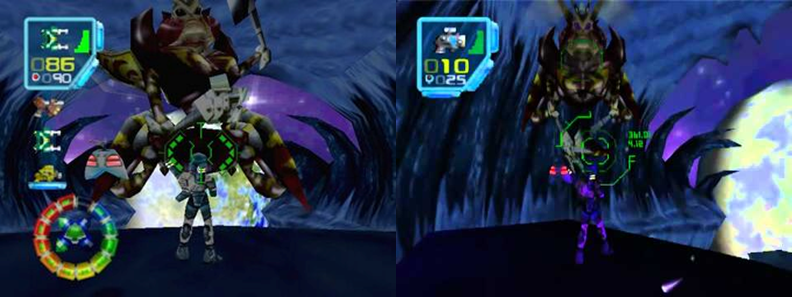
As unfortunate as it is that Jet Force Gemini is lacking in enemy variety, it’s equally unfortunate that there aren’t many bosses on offer here. Luckily, the five bosses we get are gigantic and impressive in their scale but, regrettably, they’re generally more annoying than fun. To battle these bosses, you’re locked into a static area, able only to jump and strafe left and right to avoid incoming fire and their explosive (often cluster-based explosives) shots; the lack of cover and health in these battles is annoying and difficult enough but actually dealing damage to the bosses can be an issue in and of itself.

JetForceGeminiBosses2
These two assholes can go fuck themselves!

Easily the most annoying boss in the game are the Mechantids, two gigantic cybernetic praying mantises (Mantii? …Whatever) who dance around in the background and can only be attacked when they leap onto a platform closer to Lupus. When battling this boss, and the game’s other bosses, you’re given a very small window of opportunity to actually deal some damage; miss it, and your shot will either do nothing or careen off into the void and you’ll either take damage or have to try your luck in the next window. Given how slippery and awkward the game’s aiming mechanics are, this happens more often than not; seriously, I had this same issue in the poorly-implemented shooting sections of Banjo-Tooie and Conker’s Bad Fur Day and I still can’t understand how Rare, the guys who made GoldenEye 007, struggled so much to incorporate shooting and aiming mechanics into their later games or why they ever thought it’d be a good idea to put them into 3D action/platformers and it really makes these boss battles far more frustrating than they need to be.

JetForceGeminiBosses3
Mizar is easily the game’s toughest boss battle.

You’ll do battle with the game’s big bad, Mizar, twice in the course of the game; the first battle is more intimidating than it actually seems and can be easily won by simply blasting Mizar in the face with your tri-rocket launcher when he leaves his head exposed. Once you finally rescue all the Tribals and repair their ship, you’ll battle him again in the game’s toughest battle yet; the final boss battle has four phases, each made all the more difficult by the sheer number, power, and frequency of Mizar’s attacks and the lack of health, ammo, cover, and checkpoints. Oddly, considering the game is so focused on have three distinct characters, you only ever battle Mizar with Juno, which is super annoying as it would make this final battle much more bearable if you could switch between team members. Mizar’s only weak point in this final battle is a small piece of machinery fixed to his back; you have to weather a slew of asteroids that home in on you, dodge his claw attack, and then struggle to get your homing missiles locked in on this impossibly small target to get a few shots in, before desperately dodging his eye lasers, freezing breath, and damnable lightning attacks. Each time you deal damage to Mizar, these attacks increase in frequency until finally, he loses his wings and arms and starts blasting at you indiscriminately. Luckily, in this final phase, all you have to do is unload your tri-rockets and best weapons into his exposed head but that is very much dependant on you having enough health to survive to that point.

Power-Ups and Bonuses:
As you explore Jet Force Gemini’s many locations, you’ll come across a number of collectables and upgrades; these aren’t quite as numerous as in some of Rare’s other titles and collectathons but they are still quite varied, for the most part. You’ll find glowing crates that contain new weapons, keys, or story-progressing items, Gemini gems and ammo crates are scattered across the locations alongside capacity-increasing backpacks and health-increasing power-ups, and you’ll also pick up Mizar Tokens to spend on replenishing your health or ammo at certain automated stations. The game features a wide variety of additional weapons to choose from: there’s the rapid-firing machine gun, the tri-rocket launcher, grenades, cluster bombs, shurikens, homing missiles, a chargeable plasma shotgun, and a sniper rifle, among others. Generally, though, I found myself relying on the basic pistol, machine gun, or tri-rocket launcher as the sniper rifle doesn’t mesh well with the game’s janky, slippery controls, the plasma shotgun is all-but-useless (even when fully charge), and the homing missiles are disappointingly weak. Also, I found I was more likely to toss a grenade right in my face due to the overly exuberant way they bounce around the areas, making them more of a liability than a viable weapon. It doesn’t help that your weapons only really do damage when the aiming reticule emits a lock-on beep, meaning you can literally toss grenades or fire rockets dead-on at enemies and have them do no damage at all because you didn’t get a direct lock on to the enemy.

JetForceGeminiMultiplayer
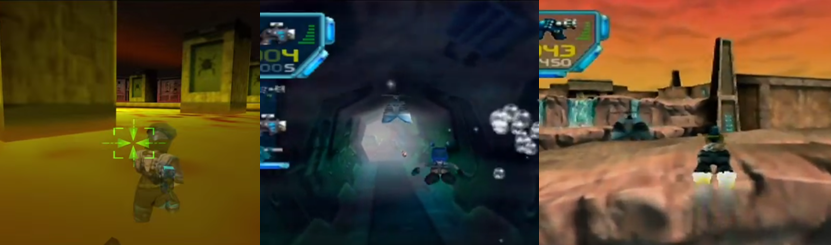
Mini games and multiplayer options are available, however ill-fitting.

Once the three protagonists rendezvous at Mizar’s Palace, the Tribals upgrade their armour; while this doesn’t give them additional health and doesn’t seem to increase their durability, it not only places Lupus into a cute little tank but also allows them each to charge up a jetpack at fuel pads so they can reach new areas. Unfortunately, this can only be done at certain points, though, so you won’t be flying across entire gaps and stages with this mechanic. The game’s action/shooting elements are offset by the inclusion of some racing mini games, none of which control anywhere near as well as Diddy Kong Racing (ibid, 1997), and a split screen multiplayer that is clunky and awkward and the furthest thing from GoldenEye 007’s generation-defining action. You also assemble a little robotic companion, Floyd, who can be controlled by a second player to help take out any enemies; this is super useful for when ammo is tight but I would have liked an auto-fire setting for those (long and lonely) times when you don’t have a friend around. Search hard enough and you’ll find Floyd pads that task you with flying and blasting through tight tunnels from a first-person perspective collecting items under a tight time limit as the cute little robot, earning medals, story-progressing items, and unlocking multiplayer options.

Additional Features:
As you explore your surroundings, you’ll collect Mizar Tokens, drone heads, and find hidden totem poles that, when activated, unlock additional skins for the game’s multiplayer mode. This is largely similar to the mode seen in Conker’s Bad Fur Day, offering a traditional deathmatch, king of the hill, and capture the flag style shooting arenas that ape those seen in GoldenEye 007. You can also take part in target shooting games and race against your friends but none of these multiplayer modes offer the same level of depth or fun as those seen in Rare’s earlier titles. Honestly, Rare should have focused more on the co-operative aspects of the game. Floyd is great for a younger or inexperienced player but the game really should have been expanded to a full-on split screen co-op mode. The game is about team work, after all, and I imagine it would have been much more fun to explore stages as two of the three characters at the same time, uncovering secrets and rescuing Tribals that much faster. Playing the Xbox One version on Rare Replay also allows you to earn some of the most annoying Achievements ever, all for only 20 or 30G apiece. Some aren’t too bad; it’s likely you’ll acquire over 300 ant heads without too much issue as long as you remember to collect the severed heads when they fly off and you’ll easily mow down over a thousand enemies but rescuing every Tribal just to earn 20G is a bit of a piss-take. It’s honestly a shame that Rare didn’t put in a patch to address the Tribal issue; they patched in a new control scheme, after all, and it would have been nice to scrap the need to rescue every single Tribal. I mean, keep the Achievement for an added challenge but keeping this mechanic just drags the entire second half of the game down and ruins the lasting appeal of the game.

The Summary:
Jet Force Gemini has a lot going for it; visually, it’s quite impressive, with a lot happening onscreen at once and some large, layered areas to explore. Unfortunately, it does feel like the game engine is taxing what the Nintendo 64 is capable of; the Xbox One version seems to run better but there’s still a lot of slowdown at times, obvious loading, and some graphical distortion at work. I could live with this if it wasn’t for the game’s dreadful controls and camera; similar issues dragged Banjo-Tooie and Conker’s Bad Fur Day down for me and it’s hard to really hold Jet Force Gemini in as high regard as Banjo-Kazooie when I’m constantly fighting with the slippery controls, taking ridiculous fall damage from the slightest of drops, and desperately trying to get the aiming reticule to go where I want it. It feels like, after seeing success with FPS and action/platformers, Rare decided to mash those two styles together for the majority of their subsequent releases and Jet Force Gemini was the first sign that Rare were planning on bogging down Banjo-Tooie, Conker’s Bad Fur Day,­ and even Donkey Kong 64 (ibid, 1999) with unnecessary FPS and multiplayer elements. Jet Force Gemini’s controls just don’t really mesh well with these features and aspects; they struggle in the core single-player story until you finally get to grips with them and the game would have been much more enjoyable with a two-player, split screen co-op mode rather than awkwardly shoe-horning in traditional deathmatch multiplayer options. Yet, while it’s far from the quality of Banjo-Kazooie, GoldenEye 007, or even Perfect Dark, there is something about Jet Force Gemini that is appealing. When the game veers more into Rare’s trademark quirky humour, it’s a lot of fun; perhaps it would have been better to have the three playable characters have one distinct playstyle (Juno plays like an FPS, Vela as a 3D action/platformer, and Lupus is a racer/shooter) rather than trying to mash everything together. Unfortunately, it’s not like Rare really learned from this experience as they continued to mash other elements into their games and, generally, they just serve to distract from the more enjoyable elements of their titles.

My Rating:

Rating: 4 out of 5.

Great Stuff

What did you think of Jet Force Gemini? Did you also struggle with the controls or did you not have as much of an issue as I did? What did you think of the game’s more mandatory issues, like rescuing the Tribals and finding all the ship parts? Where do you rate Jet Force Gemini on the list of top Nintendo 64 and/or Rare titles? Whatever you think, feel free to leave a comment below.

Game Corner: Injustice 3 Roster Wish List

GameCorner

To say that I was disappointed with Injustice 2 (NetherRealm Studios, 2017) would be an understatement; I really enjoyed the first game, Injustice: Gods Among Us (ibid, 2013), which actually blended the characters of DC Comics with the nuanced, hyper violent fighting of NetherRealm’s recent Mortal Kombat (ibid, 2011 to present) videogames in a way the dismal Mortal Kombat vs. DC Universe (Midway Games, 2008) failed to do. While still lacking in the over-the-top gore and Fatalities of NetherRealm’s infamous franchise and having a few wonky mechanics (such as the rock/paper/scissors-style “Clash” mechanic), Injustice was an enjoyable experience with a wide roster of characters, skins, and additional gameplay options to choose from. While I enjoyed Injustice 2’s story mode and roster for the most part, the game was really let down by the “Gear” system. The randomness of acquiring new Gear for your favourite characters was annoying, the fact that the game basically forced you to pay real money for the best Gear and Premium skins really irked me, and the fact that I couldn’t customise characters exactly as I wanted meant I sold the game soon after completing it. With the release and success of Mortal Kombat 11 (NetherRealm Studios, 2019) and subsequent downloadable characters and content (DLC), and the fact that NetherRealm is owned by Warner Bros., it’s pretty much a foregone conclusion that we’ll be seeing an Injustice 3 at some point in the near future. However, if that is to be the case, I figured I’d take the time to talk about some options I’d like to see implemented into the game’s roster, similar to my thoughts regarding guest characters for Mortal Kombat 11. I should mention, though, that I can’t guarantee that I’ll take the time to purchase Injustice 3 even if all of these were implemented as NetherRealm would need to make a lot of gameplay changes to make up for the poor experience I had with Injustice 2 but it’s always fun to speculate so let’s get to it.

Injustice3WishLogo
Roster Wish List
Injustice3WishBatman
Less Bat-Characters

If it’s one thing I’ve disliked about the Injustice series since the first game, it’s their reliance on Batman and Bat-related characters. Don’t get me wrong, I love Batman; I am a massive Batman fan and I totally get that he’s DC’s most popular and financially successful and bankable character. He’s always at the forefront of any comics, cartoons, movies, and videogames they produce and, as a fan, that’s great to see but Injustice 2 really took the piss with their dependence on Batman, his allies, and his rogues.

Injustice3WishScarecrow
I liked Scarecrow’s design I just wonder if Parallax or Nekron would’ve been a better fit.

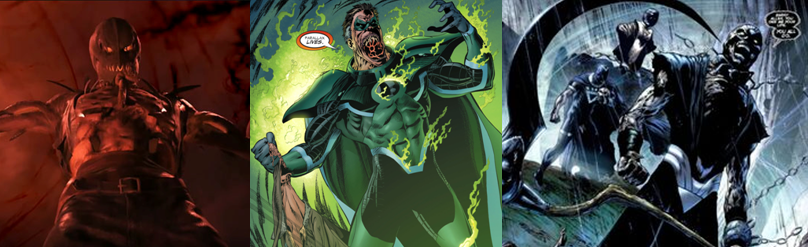
I kind of got behind Doctor Jonathan Crane/The Scarecrow; he was voiced by the always sinister Robert Englund and had a monstrous redesign in Injustice 2 but that’s also part of the problem. Although he’s boasted about his “Crane style” of fighting in the past, the Scarecrow is not a character I traditionally associate as being a physical threat to anyone, much less Batman, and I can’t help but wonder if another fear-based character like Parallax might have been a better fit, or even the Spectre or Nekron, whose design is eerily reminiscent of Scarecrow’s in Injustice 2. Similarly, Red Hood was included as a DLC character and, while I quite liked his design and the way he played, did we really need to go back to the Bat-Family for such a character? I mean Grifter is right there and would have helped diversify the scope of the roster a bit more and they still could have used Red Hood as a Premium skin or something similar to how Black Lightning and Power Girl were slapped on to Raiden and Supergirl, respectively.

Injustice3WishBatman2
DC has plenty of heroes and villains to choose from who aren’t associated with Batman.

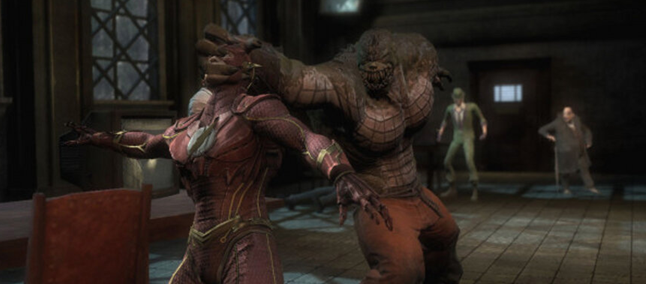
Injustice 2 also brought back Bane, who had a pretty terrible redesign this time around. I get that Bane is popular and one of Batman’s top-tier foes but NetherRealm could have used the likes of Orion or even Big Barda instead if they wanted another power character on the roster. I like Bane but, when your roster includes Poison Ivy and Scarecrow, some Bat-fat needs to be trimmed. Speaking of Poison Ivy, could we not have gotten Golden Glider instead, maybe? The Flash got a surprising amount of representation in Injustice 2 with both Gorilla Grodd and Reverse-Flash being on the roster but could we not have brought back Killer Frost instead? Or even used Silver Swan so that Wonder Woman had another adversary to butt heads with? It’s a tricky thing and I totally get it; you want the Joker and Harley Quinn in the game because they’re popular, mainstream Bat-villains but DC has such a wide assortment of villains who would be just as suitable and allow the roster to be diverse and inclusive at the same time. It just feels like characters like Aquaman and Green Lantern and Wonder Woman get the shaft a bit because they don’t have as interesting of well-known allies or villains to include but, if NetherRealm add too many more Bat-characters, they may as well just rebrand the series as Batman: The Fighter or something.

Injustice3WishObscure
More Obscure Roster

Speaking of obscure, I was really hoping for Injustice 2 to bust out John Constantine as a DLC character and, certainly, including Swamp Thing definitely seemed to be lending some credibility towards that, or Constantine being included in the sequel. Bring back Matt Ryan to voice the character and have the Keanu Reeves version be a separate skin and we could be on to a winner; unlike the likes of Doctor Fate or Zatanna (who I’ll get to later), I feel Constantine should fight mainly through the use of familiars and summoned demons rather than traditional magic or physical attacks, which would help keep him unique amongst his other peers.

Injustice3WishPlasticMan
Plastic Man is at the top of my list for Injustice 3‘s roster.

While I’m on the subject of unique characters, NetherRealm would seriously be missing a trick if they don’t include Plastic Man in Injustice 3. Plastic Man could be such a diverse and wacky fighter thanks to being able to stretch and contort and transform into all sorts of wild and crazy shapes and forms; he could add some comedy relief to the proceedings and you could even have the Elongated Man (terrible name, by the way) and Offspring as optional skins. I’d also like to see Ragman make an appearance; I don’t know what it is about this guy but I really feel like he’s an under-rated and under-exposed DC character. Ragman could take on a wraith like appearance and play like a cross between Spawn and Noob Saibot from Mortal Kombat 11, teleporting across the field, unleashing demonic tentacles and shadows from his cloak, and wrapping opponents up in his rags.

Injustice3WishRagDeadman
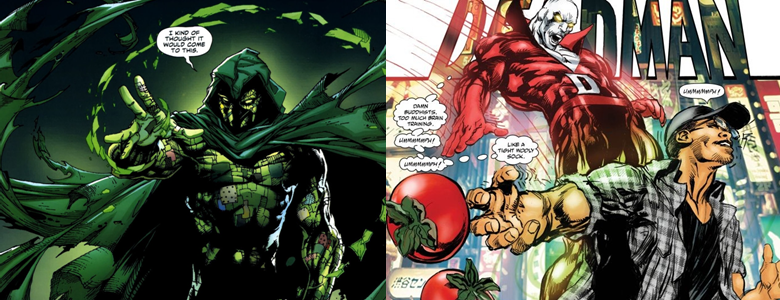
Ragman and Deadman would be great, unique additions to the roster.

Sticking with the supernatural characters, NetherRealm could also bring in Deadman; Deadman could possess other fighters, kind of like Quan Chi would do, or make himself intangible, and again opens the door for some comedy relief in the game’s usually bleak and dire story mode. Finally, as mentioned before, NetherRealm really needs to expand on the roster for the villains they use; I like Black Adam but why not bring in Dr. Sivanna in a multi-purpose mech? He could even have Mister Mind with him or, if NetherRealm wanted to get really wacky, Mister Mind could be a playable character! Some characters are criminally under-rated with their villains and allies as well; Black Manta needs to stay, for example, but Ocean Master should probably be included too. Why not include the likes of Onomatopoeia, Eclipso, or Starbreaker? I’m somewhat expecting Injustice 3 to top the threat of Brainiac with the Anti-Monitor so maybe we’ll also see more characters from across the Multiverse make an appearance, like Doctor Manhattan and Rorschach.

Injustice3WishDiversity
More Diverse Roster

These days, more than ever, diversity is a big deal in media and, being as it’s been quite a big deal in comics for some time, it’s only fair that NetherRealm try to lean into it for Injustice 3. That means bringing back Zatanna, for one thing, maybe bringing in Katana as well for some slice-and-dice sword-based combat and upgrading Black Lightning from a Premier skin to a main roster character.

Injustice3WishDiversity2
DC has plenty of diverse alternatives to popular characters.

NetherRealm have some other options they can use these days as well; why reuse Hal Jordan when you could bring in Simon Baz and Jessica Cruz, either separately or as a tag team character? I’d love to suggest Huntress as well but that kind of violates my call for less Bat-characters but perhaps if she was used in place of Robin or Nightwing it could work. Similarly, I’d quite like to see Connor Hawke used as Green Arrow rather than Oliver Queen; again, there’s nothing stopping NetherRealm having Ollie and Hal and these other characters as skins but push the diversity first rather than burying Black Lightning behind the likes of Raiden.

Injustice3WishGuestFighters
Guest Characters

NetherRealm has gone from strength to strength with their guest characters since the 2011 Mortal Kombat and Injustice 2 had some really good guest fighters: Hellboy and the Teenage Mutant Ninja Turtles were surprisingly fun additions and Starfire and Enchantress should definitely be upgraded to main roster status for the third game.

Injustice3WishGuestFighters2
DC has had a lot of crossovers in the past that NetherRealm could draw from.

NetherRealm have made a habit of including a popular Mortal Kombat character in the Injustice games so far and, while Liu Kang or Johnny Cage would be good choices for Injustice 3, I’d quite like to see Jax make the cut. I reckon his straight-talking, no-nonsense style could lead to some fun interactions with the DC characters and it’d be a less obvious choice. For the other guest fighters, NetherRealm should look into DC’s long history of inter-company crossovers and bring in the likes of the Shadow, the Mask, and even Judge Dredd. I would have loved to see Spawn mix it up with Batman again but NetherRealm don’t reuse guest fighters so, in his absence, bringing in some unexpected guest fighters would be the best way to go; Dredd could borrow a lot of RoboCop’s move set, the Shadow could borrow from Erron Black (maybe even have him as a skin), and ideally the Mask could replace the likes of the Joker but I don’t see that happening any time soon.

Injustice3WishReturnFighters
Returning Characters

I’ve touched on this a bit above but if it’s one thing that’s disappointed me about NetherRealm’s games it’s that they don’t tend to carry fighters over from one game or another; if a character is a DLC fighter in one game, for example, they don’t tend to be promoted to a main roster fighter in the next game and that’s a shame as it means we have to miss out on obscure characters like Tremor or one of my personal favourites, Rain, not making the main roster.

I missed some of these fighters in Injustice 2.

Injustice has been the same so far, meaning the Martian Manhunter was sorely missing in Injustice 2 when he really could have added to the game’s roster. I’m also a little biased in that I’d much rather see Deathstroke rather than Deadshot but that’s because I find Deathstroke to be the more versatile, popular, and interesting character as he’s not just a guy with a gun. This also meant that neither General Zod or Lobo showed up in Injustice 2, a game where Superman could really do with another villain other than Lex Luthor. I get that NetherRealm want to keep the rosters fresh and showcase more of the DC cast of characters but when you have Hawkgirl in one game and Poison Ivy in the other, you’re limiting the scope of your world to just Bat-characters.

What are some things you’d like to see added or tweaked in Injustice 3? Which characters would you like to see return, dropped, or debut? Who are your picks for Injustice 3’s guest fighters? Do you think NetherRealm could pull off another Mortal Kombat vs. DC Universe title now that they’ve done such a good job with the solo efforts? Whatever you think about Injustice and Mortal Kombat, feel free to drop a comment below.

Game Corner: Vasara Collection (Xbox One)

GameCorner
VasaraCollectionLogo

Released: August 2019
Developer: QUByte Interactive
Also Available For: Nintendo Switch and PlayStation 4

The Background:
If there’s two things I can really get behind it’s a good, no-nonsense, old fashioned shoot-‘em-up and high quality arcade games. The best thing about shoot-‘em-ups is how simple they are to play and yet how much skill they require to you master in order to have the perfect run; generally, I am more familiar with sidescrolling space shooters like R-Type (Irem, 1987) but, thanks to arcade titles and mobile gaming apps, you’re never short of a few vertical shooters. Vasara Collection brings together Vasara (Visco, 2000) and Vasara 2 (ibid, 2001) for the first time outside of Japan. Originally developed by Visco Corporation, the Vasara games are a great example of fast, frenetic “bullet hell” vertical scrollers that get a new little re-release in this package, which also contains a new arcade style mode that allows up to four players to take part in the hectic shooting action.

The Plot:
The Vasara games take place in an alternative version of feudal Japan in which battles against a sadistic Shogun are fought not with swords or spears but with futuristic mech bikes, laser beams, and using a variety of ships, mechs, and other advanced technology.

Gameplay:
Functionally speaking, both Vasara and Vasara 2 play very similarly; you and one friend can select between a variety of characters, each with their own different movement speeds, attack power, and special moves, and drop straight into a vertical shooter that mostly takes place in the skies and over the warring lands of feudal Japan.

VasaraCollectionAttacks
These vertical scrollers will put your reflexes to the test.

As you drift all around the screen, either pressing or holding down the trigger to automatically unleash a maelstrom of laser blasts against your seemingly endless array of foes, you’ll be tasked with using your reflexes and quick wits to dodge an assortment of projectiles. If you happen to bash into an enemy craft, you’ll simply bounce off rather than exploding, which is a nice reprieve as you’ll have a hard enough time trying not to get blasted to smithereens by the sheer amount of projectiles onscreen. Luckily, you can hold down the fire button to charge up a special melee attack that will deal additional damage and bounce back certain projectiles to your foes.

VasaraCollectionFreePlay
I’d highly recommend setting the games to “Free Play” mode.

It pays to keep your reflexes sharp, however, as your ship will be destroyed in one shot and you’ll burn through your continues if you simply charge ahead blindly. Luckily, the Vasara Collection allows you to activate “Free Play” mode in the options menu but, even with that providing you will unlimited continues, you’ll be forced to replay each game’s final stage from the beginning if you lose all your lives rather than jumping right back into the action as with other stages.

VasaraCollectionSpecial
You’ll want to charge your “Vasara Meter” as quickly as possible!

Every time you destroy an enemy, you’ll earn points, bonuses, power-ups, and collect gems to build up your character’s “Vasara Meter”, and smart bombs. Smart bombs are only available in Vasara and come in a limited supply; however, Vasara 2 offers more characters to choose from and extends the “Vasara Meter” mechanic. There are a couple of other differences between the two games as well; Vasara features six stages filled with waves of enemies but Vasara 2 lets you pick between a six-stage and a twelve-stage mode, with the twelve-stage mode repeating the first six stages but with tougher enemies and culminating in an extended battle against the game’s true final boss.

VasaraCollectionTimeless
“Timeless” mode allows for frantic four-player action across a widescreen space!

Otherwise, the games are functionally similar except for the types of special moves you can perform, the amount of stages you fly through, and the amount of characters you can pick from. If the classic, arcade shooting isn’t enough for you, the game also offers a four-player “Timeless” mode. This is, essentially, a never-ending gauntlet that allows you to pick from characters from both games and shoot down as many enemies, mini bosses, and bosses as you can, earning points and flying through stages that are randomised, repeat over and over, and increase in difficulty as you progress. This mode is probably the game’s most entertaining feature, though, as it allows more players to take part in the frenetic action, takes places over a widescreen area (thus making it far easier to navigate around the screen), adds a dodge mechanic that renders you momentarily immune to damage, and effectively adds a high definition coat of paint to the original games.

VasaraCollectionTimeless2
“Timeless” mode is the collection’s best feature.

This tightens up the controls and the options available for you, allowing you to move faster, more precisely, and with more options. In Vasara and Vasara 2, you’re a little limited by the vertical format of the screen during gameplay, which can make things a little claustrophobic at times. In all three modes, you may find it difficult to make out projectiles against certain backgrounds as they blend in with the colours, enemy ships, and other pickups but, honestly, this is more about maintaining your focus and attention with the sheer amount of chaos being thrown at you. If you struggle with processing massive amounts of colours, movements, and information, then you may struggle with the Vasara games as it gets very intense at times, with projectiles literally filling the entire screen as you progress.

Graphics and Sound:
Vasara and Vasara 2 are as crisp and gorgeous as any top quality arcade title; ships are large and easy to spot, projectiles come in a variety of different shapes and sizes, and power-ups and gems bounce around the screen to catch your attention. Backgrounds are quite generic but generally act as a simple backdrop to the fast-paced action; some feature destructible elements that will yield gold and other gems, which is a nice touch, and there’s no cheap deaths coming from running into mountains or buildings or getting stuck behind objects, which is a nice change of pace.

VasaraCollectionCutscenes
Anime-style cutscenes provide some context to the frenetic action.

Eventually, you’ll come up against mini bosses and the end of stage bosses; these are rendered as massive mech suits or multi-formed robots and feature a high level of detail and character to help each stand out from the other. When encountering these, you’ll be treated to short little anime-style cutscenes with some dialogue between the characters; similar cutscenes frame the game’s story and ending and add a little context to the action and it all adds to the game’s over-the-top nature thanks to some laughably bad subtitles All of these are given a nice HD coat of paint in the “Timeless” mode, which trades the traditional 2D sprites for a 2.5D aesthetic, adding further depth and layers to the backgrounds and giving all the graphics a bit more oomph.

VasaraCollectionGraphics
Each game looks and sounds fantastic.

Each stage is punctuated by some catchy, rocking tunes that are a mixture of traditional Japanese-style tracks and energetic, metal melodies that keep the intensity in stages high and act as a welcome reprieve from the onscreen chaos. The games are also filled with some rudimentary voice acting (all in Japanese, of course) and some explosive, meaty sound effects that ensure you always know when you’ve fired a shot, picked up an item, and vanquished an enemy.

Enemies and Bosses:
For the most part, you’ll be mowing down a variety of largely generic enemy ships, most of which are based on some kind of insect or animal. Each has a different attack pattern and fires a different type of projectile; some fire in a spread, some in a wave, some pulse out blasts at an angle, and memorising which enemies do what is key to navigating through the bedlam of projectiles.

VasaraCollectionEnemies
There are a variety of mechs and enemies to blow to bits.

In addition to the enemy ships, you’ll also come up against ground-based enemies; boats, ships, and crab- and spider-like tanks blast at you and drop gold to increase your score and a variety of turrets help to fill the screen with projectiles. Some are small and easily disposed of, others change their attacks after you dish out some damage, and others are giant Samurai heads that blast out streams of bullets and soak up your blasts.

VasaraCollectionCommanders
Destroy enemy commanders to increase your score and earn extra lives.

Some enemies also carry little flags and, when destroyed, a splash of Japanese text will flash up onscreen to let you know that you destroyed an enemy commander. You get a similar notification when you destroy a mini boss or boss and, after clearing a stage, get a different ranking depending on how many you destroyed, adding an incentive to make an effort to destroy every enemy you come up against.

VasaraCollectionMiniBoss
Mini bosses will try to block your progress in every stage.

Mini bosses show up mid-way through most stages to block your progress; the best of these are giant Samurai-style mechs who not only send out a flurry of projectiles but also dash at you with a giant sword. While these can absorb a huge amount of punishment, and you can simply dodge them and avoid engaging with them, it’s worth your while taking the time to eliminate them as you’ll get more points and it make it far easier to progress upwards, especially in the original Vasara and Vasara 2 games where the small screen space is easily cluttered by enemies and projectiles.

VasaraCollectionBosses
Giant mechs are the order of the day for the Vasara series’ bosses.

This holds true of the end of stage bosses, too; if you can somehow stay away from their spreads of projectiles and screen-filling lasers, they will eventually fly off-screen without issue. However, this is much easier said than done and it takes less time to destroy the boss than try to outlast it; despite their size and different forms (generally splitting into different phases as you blast parts of them off), bosses all have a specific attack pattern that you must battle through with quick reflexes and a stockpile of special moves and/or smart bombs.

VasaraCollectionFinalBosses
The final bosses see the screen filled with projectiles.

Each game’s final boss, however, presents a far greater challenge not just because of their multiple forms but also because, if you lose all your lives (and you most likely will), you have to restart the final stage from the beginning, which can be frustrating as it can be hard enough reaching the final boss with all your lives and specials intact much less survive long enough to slip through the impossibly small gaps between their projectiles. This is where playing with a friend really comes in handy as, as long as you’re not both out of lives and on the continue screen at the same time, you can continue battling until the boss is defeated. For Vasara 2, though, you’ll have to endure the twelve-stage mode to face the true final boss, which takes place in a trippy, cosmic-style environment and sees the boss filling the screen with projectiles while also being a far smaller target than you’re used to up until that point.

Power-Ups and Bonuses:
Every time you destroy an enemy, you’ll earn some points; destroyed enemies also drop gold (for even more points), 1-Ups (on very rare occasions), and coloured gems to build up your character’s “Vasara Meter”, and smart bombs. Exclusive to Vasara and Vasara characters in “Timeless” mode, smart bombs produce a blast that not only damages or destroys enemies but also reflects all orange projectiles back at your enemies to deal additional damage, giving you a reprieve from damage and helping to clear the screen or chip away at a boss’s health.

VasaraCollectionBombSpecial
Use bombs and specials to deflect projectiles and deal major damage.

Though these are absent in Vasara 2, the sequel offers more options through the “Vasara Meter”. In Vasara, you build up one meter that, when full, you can expend in one huge, screen-clearing special move (though you can unleash your special before that for a far less impressive special move). However, in Vasara 2, each character has three smaller meters that are built up as you collect gems and, once each is full, you can unleash a massive special attack.

VasaraCollectionPowerUp
Grab power-ups to increase the range and power of your shot.

As you destroy certain enemies, you’ll also pick up power-up items that increase the length, power, and effectiveness of your blasts; this is essential to clear the screen of enemies as quickly and efficiently as possible and each character has different attacks in their arsenal (some shoot out fans, other toss out daggers or spears, for example) that translates to their special attack as well. This is best emphasised in “Timeless” mode, which clearly shows the speed and power of each character; the strongest characters may not have the best special attack compared to the faster, weaker characters, meaning each character plays a little differently and requires a different strategy. When you lose a life, your power-ups will bounce around the screen for a while and it’s highly advised that you make the effort to re-acquire them as you’ll need all your power-ups and weapons for the boss battles.

Additional Features:
There are a myriad of options available for each game in the Vasara Collection; each of the arcade titles allows you to set the game to “Free Play” mode for infinite continues (highly recommended), set the amount of lives and the length and strength of your “Vasara Meter”, set display and control styles, and place borders around the screen. Be aware, though, that if you change any of these options mid-game, the game resets to the title screen so it’s best to get yourself setup before you get five stages into the games.

VasaraCollectionExtras
The Vasara Collection offers a lot of options and different modes.

Perhaps the most entertaining part of the collection is the four-player “Timeless” mode; here, you can select every character from each of the two arcade titles, with each having their own strengths and weaknesses, and take part in a never-ending gauntlet in remixed stages from the original games. What’s more, if you clear Vasara 2’s twelve-stage mode, you’ll unlock an additional character for this mode (who has the best overall stats but his special is a bit haphazard as it bounces you around the screen a lot); this mode also adds a dash for each character and is where you’ll earn the bulk of the collection’s Achievements. You can also view artwork, concept art, and the like in the game’s “Gallery”, if you like that sort of thing. Honestly, the only thing this collection is missing is a save state or stage select feature; it’d be nice to be able to jump into the harder, later stages of “Timeless” mode once you reach them, for example, just to get a bit more practice at these tougher stages.

VasaraCollectionBanner

The Summary:
I do enjoy a good, old fashioned vertical shooter and the Vasara Collection has you well covered in this regard. There’s not much depth here, and the concept is as ridiculous as the subtitles, but each game in the collection is tremendous, old school arcade fun. It can be frustrating, at times, when you’re taken out by a stray projectile because of the sheer amount of chaos onscreen but, honestly, it’s a question of skill, memorisation, and paying attention to your surroundings; it isn’t easy to do that sometimes but the games give you all the tools to do this. Honestly, I probably would have been happy with just the “Timeless” mode but the fact that the collection features the original games as well is just the icing on the cake; it’s a lot of fun to just jump into “Timeless” mode, either alone or with a friend, and see how far you can get, stockpiling lives, specials, and smart bombs as you work to beat your high score, earn a “Perfect” ranking, and survive each stage as best as you can.

My Rating:

Rating: 4 out of 5.

Great Stuff

Have you played the Vasara Collection? What is your favourite vertical shooter? Which shoot-‘em-up is your go-to in the genre? Perhaps you dislike shoot-‘em-ups and prefer a different type of videogame; if so, why and what is it? Can you think of any other arcade games that were exclusive to Japan and deserve a re-release like this? Feel free to leave a comment, whatever your thoughts are.

Game Corner: Teenage Mutant Ninja Turtles / TMNT II: The Arcade Game (Xbox Series X)

GameCorner

Released: 30 August 2022
Originally Released: 11 October 1989 (Arcade) / 7 December 1990 (NES)
Developer: Digital Eclipse
Original Developer: Konami
Also Available For: Amiga, Amstrad, Arcade, Atari, Commodore 64, GameCube, Nintendo Entertainment System (NES), Nintendo Switch, PC, PlayStation 2, PlayStation 4, PlayStation 5, Xbox 360, Xbox One, Xbox Series S, and ZX Spectrum

The Background:
If you were a kid in the eighties or nineties, you were probably really into the Teenage Mutant Ninja Turtles (TMNT). If, like me, you lived in the United Kingdom, you were probably just as enthusiastic as the Teenage Mutant Hero Turtles but, either way, before Mighty Morphin’ Power Rangers (1993 to 1996) and Pokémon (1997 to present) dominated playgrounds, Christmases, and birthdays alike, kids were transfixed by the Teenage Mutant Ninja Turtles (1987 to 1996) animated series. A toned down version of the original Mirage Comics characters, Ninja Turtles was incredibly popular, spawning not just three live-action movies (of varying quality), comic books, and a fantastic line of action figures but also a whole host of videogames, without perhaps none being more popular than the original Ninja Turtles arcade game. Developed by Konami at a time when arcades were full of amazing side-scrolling beat-‘em-ups, Ninja Turtles may not have been the first videogame based on the franchise but it definitely defined the genre that would prove most popular for subsequent videogame releases, particularly in the arcade. After Konami helped to define what it meant to be “NES Hard” with their original NES TMNT title, which proved to be a huge success at the time, they turned to the incredibly successful arcade game for the sequel, which proved equally popular thanks to its presentation and ambitious recreation of its technically superior arcade brother. In later years, the arcade version of the game was further ported and emulated to numerous consoles over the years but was de-listed from digital stores for the better part of eleven years until both versions were included in this Cowabunga Collection for modern consoles alongside a host of other games and quality of life features.

The Plot:
The Turtles’ arch-nemesis, Oroku Saki/The Shredder, has kidnapped their friend April O’Neil and their mentor and father figure, Splinter, and swamped the streets with his Foot Soldiers and other minions. Understandably unimpressed, Leonardo, Donatello, Raphael, and Michelangelo waste no time in grabbing their weapons and giving chase in a rescue mission.

Gameplay:
Teenage Mutant Ninja Turtles is a sidescrolling beat-‘em-up that supports up to four players; some arcade cabinets were apparently set up to accommodate just two, and to allow any player to select any character but, generally, cabinets were set up specifically for four players to play simultaneously. Each of the four Ninja Turtles is selectable and has specific strengths and weaknesses: Leonardo is the most well-rounded, Donatello is slower but has a longer reach, and both Raphael and Michelangelo have fast attacks but are limited in their range. Each character can perform a flying kick and a super attack by pressing the jump and attack buttons at the same time which, unlike other sidescrolling beat-‘em-ups of the time, doesn’t appear to drain your health. In addition, they can hurl their enemies around for extra damage but there’s no forward dash and very little in the way of intricate combos on offer here; it’s a simple, pure “go right and mash the attack button” beat-‘em-up, with the exception of one level, where the TMNT race around the streets on rocket-powered skateboards.

Fight with the TMNT’s signature weapons, and the environment, but watch out for hazards!

While levels and environments are noticeably sparse, there are a few intractable elements that both benefit and hinder your gameplay; traffic cones and street signs can be hit to damage enemies, you can smash fire hydrants to push enemies away, or blow up groups of them by attacking explosive barrels. At the same time, though, enemies can drop on you from behind signs or pop up from sewer holes and throw manhole covers at you; there’s also some spiked walls, laser turrets, freezing blasts, and electrical hazards that can be difficult to dodge without a dash or roll manoeuvre. The search for their friends and family takes the TMNT from the streets and sewers of New York City to the Technodrome itself; along the way, they battle various versions of Shredder’s Foot Clan and some other familiar faces, such as Bebop and Rocksteady. If you’re really, really lucky, you can pick up a pizza box to restore your turtle’s health, but these are few and far between, so you’ll either need a lot of money to replay after losing a life or, better yet, make use of the infinite credits made available in this version of the game.

The NES version is surprisingly faithful and even includes new additions!

For the NES version of the game, much of the gameplay and combat remains intact and surprisingly faithful, especially considering the NES’s limited hardware. Naturally, you’re limited to two players at any one time, but you can still attack with X and jump with A, pulling of flying kicks and smacking the odd fire hydrant, parking meter, traffic cone, and explosive barrel to help thin out the enemies coming at you. The Foot Clan will still burst out from window sand jump out from the sewer, and you can still fall down the holes they leave behind, but the amount of onscreen enemies is severely limited compared to the arcade game; on the plus side, this makes crowd control a little easier and you’re rarely swamped with too many enemies at any one time. While a bit sluggish compared to the arcade title, the NES version performs far better than other similar 8-bit ports, like Double Dragon (Technōs Japan, 1988), though it helps that the Cowabunga Collection gives you the option to disable slowdown and sprite flickering. You’re still able to go diagonally down or fight on higher panes, too, as well as blast along on your rocket-powered skateboard; the NES version even includes two new stages, a snow-swept New York City and a Japanese dojo, each including new enemies, hazards (falling ice blocks and bamboo spikes), and bosses alongside additional cutscenes, which was a nice and unexpected touch.

Graphics and Sound:
Teenage Mutant Ninja Turtles is presented in the finest 2D graphics of the time; the four turtles and their enemies are large, bright, and well-animated; though they have limited idle animations, each wields their signature weapons and looks ripped right out of the animated series. Environments aren’t incredibly inspiring, however; the streets of New York are surprisingly bland and there’s not much going on in most of the levels. Rats will run by in the sewers, enemies will jump out from behind buildings or burst out from walls, and there are some layers to some levels that allow you to fight on higher ground but, mostly, the environments are lacking much of the character and interaction of later TMNT games (with the exception of April’s apartment, which features some impressive fire effects, and the final Technodrome level).

TMNTAFeatures
Speech bubbles, and funky soundtrack, and cartoony effects add to the game’s charm.

There are some fun elements to be found here, though; the TMNT can fall down open manholes and hide from enemy attacks while peeping at the player; when electrocuted you can see their skeleton, and when caught in Granitor’s flame burst, they’ll appear charred and damaged. When grabbed by enemies or battling certain bosses, little speech bubbles will also pop up, which is quite a fun inclusion, as they implore you to mash buttons to escape. Accompanying these are sound bites, with the TMNT exchanging quips and taunts with certain bosses or rallying each other with a cry of “Cowabunga!” You’ll always know when you’ve picked up health thanks to their triumphant shout of “Pizza time!” and, alongside these, levels are generally filled with some up-beat, catchy tunes that work well with the constant combat and the game also includes an impressive rendition of the cartoon’s iconic theme song.

Although its obviously much more basic, the NES version recreates much of its arcade counterpart.

Of course, the NES version has taken a hit (well, more of a pummelling!) in terms of graphics and audio; the sprites are incredibly basic, featuring little in the way of animation and detailed, and the backgrounds and environments are incredibly empty. However, it’s still a decent conversion of the arcade title; flames still flicker in April’s apartment, the Foot still drives cars and motorcycles at you and burst out from behind billboards, and the game does a pretty good job of translating the arcade’s cutscenes into NES-capable sprite art, even using the in-game sprites at various points to progress the story. The music is equally ambitious; while there are no sound bites included in this version, there’s a nice chip tune version of the TMNT theme and everything sounds very appropriate for the hardware. Although there’s a greater emphasis on text in this version, there is no boss dialogue and bosses don’t sport life bars; the heads-up display is also changed to one that’s far more simplistic and certain graphics, like the pizza, have been redesigned to fit the engine. Yet you can still splash in and out of water in the sewer, still race along on your skateboard, and the developers even included new stages and enemies. Although you can disable sprite flickering and slowdown, however, the game is still quite sluggish, which isn’t helped by the way the characters just shuffle or hop along, and I noticed some odd screen tearing as I was playing. Also, the screen scrolls a little out of synch to your movement, meaning you’re often right at the edge of the screen, which causes it to lag a bit and forces you to hop back more to the middle to keep things moving smoothly.

Enemies and Bosses:
For the most part, the TMNT will be butting heads with various members of the Foot Clan; these come in all different colours and variants, with the regular, easily dispatched foes wearing the common purple and the tougher, weapon-wielding goons coming in red, silver, or yellow colourings. These foes will toss shuriken at the turtles, stab at them with spears, or try to flatten them with comically large mallets, among other weapons. They can also throw manhole covers, dynamite, or massive tyres at the turtles and, later in the game, zap them with laser blasters, charge at them in sports cars and on motorbikes, and chase after them on skateboards and in annoying helicopter-like crafts. You’ll also battle robotic enemies, such as the Mousers (who will clamp onto your arm and drain your health) and Roadkill Rodneys, which race around the screen, whipping at you, and trapping you in an electrically charged tentacle.

TMNTABosses
You’ll battle some of the TMNT’s most recognisable foes.

As for bosses, the TMNT will contend with classic enemies such as Bebop, Rocksteady, and Baxter Stockman. You’ll first battle Bebop and Rocksteady individually, but they later come together to try and crush the turtles; each wields a projectile weapon (Bebop a machine gun, Rocksteady a laser pistol) and can attack with powerful physical attacks, like charging or punching. Baxter, however, will attack from the air, dropping Mousers on you from his craft, while Granitor and General Traag are much tougher thanks to their rock-like hides and roasting you with their flamethrower and rocket launcher, respectively. These two are not only notorious spam-artists, repeating the same attacks over and over again, but at also immune to “God Mode” available in this version of the game. While this normally allows you to defeat enemies and bosses in one hit, Granitor and General Traag will need to be whittled down like in the original arcade release so it’s helpful to be a bit quicker on your toes and use a character with longer reach, like Donatello.

The Technodrome boasts the game’s toughest bosses, even with God Mode activated!

After fighting through the Technodrome, you’ll be attacked by Krang inside his robot body; Krang’s also a bit of a classic arcade spam-artist as he’ll kick you, and zap you with lasers while you’re down to drain your health in no time. Although Krang is also immune to the benefits of God Mode, he is quite the showboat and will pause to gloat about being invincible long enough for you to land a few decent hits. After defeating Krang, you’ll immediately battle the Shredder. Oddly, Shredder attacks alongside shadow duplicates, effectively increasing his attack power and his threat; Shredder swipes at you with his katana but also unleashes a powerful energy blast that regresses your hero back to a regular turtle and is, essentially, a one-hit kill move. As you battle Shredder, he’ll lose his helmet, which is a nice touch, but there’s not a lot of real strategy to any of the boss battles beyond simply avoiding attacks and striking as fast and as often as possible. Amusingly, the Shredder can be defeated in one hit using the game’s God Mode, which significantly downplays his threat compared to the game’s later bosses. One downside to this game is that the bosses don’t have an energy meter, so the only way you know you’re doing any damage or getting anywhere is by noticing when the boss sprites start flashing.

Three new bosses have been included in the NES version of the game.

Many of the enemies and hazards featured in the arcade version reappear in the NES version, with some alterations and limitations; the Foot can still grab you from behind and Mousers will still bite your hand, but shaking them off is clunkier than before and Roadkill Rodneys now simply fire lasers. There is a new variant of the Foot that tosses dynamite at you, however, and the portraits of tigers randomly spring to life in the dojo stage; you’ll also encounter antagonistic snowmen that fire homing missiles at you in the snow-themed stage. All of the arcade game bosses return as well, but again with less dialogue and being far simpler; Rocksteady and Bebop simply blast at you and kick or punch you up close, for example, but you’ll still get (partially) roasted and blasted by Grindor and General Traag’s heavy ordinance. Two new stages means two new bosses, but there’s actually three new bosses in total as Baxter’s fly form replaces the duo of Bebop and Rocksteady at the end of the parking lot stage, hovering about and firing duel lasers from his antennae (or his wings, it’s hard to tell…) Anyway, Tora the polar bear awaits in the frozen New York City, though I never saw him do anything but wander around and punch at me, and the robotic bounty hunter/samurai, Shogun, battles you at the end of the dojo, swiping with his katana while his disembodied head flies about the place. The fight with Krang and the Shredder remain largely unchanged, except Krang’s sprite isn’t very intimidating and the Shredder can’t seem to one-hit kill you this time around; all enemies and bosses can also be defeated in one hit with God Mode activated as well.

Power-Ups and Bonuses:
Oddly, for a sidescrolling beat-‘em-up, there’s very few power-ups on offer here. The only item you can pick up is the health-restoring pizza and you can’t grab other weapons or gain any temporary buffs or bonuses, though it does seem as though this was originally planned for the game before the option was removed during development. The NES version stays true to the arcade in terms of power-ups and such, however I did notice an annoying lack of pizza, which no doubt would make the game more difficult for anyone not playing with the Cowabunga Collection’s enhancements activated.

Additional Features:
In terms of in-game extra features, you’re obviously somewhat limited here as this was a simple arcade release; you can play through again with a different character and try to beat your high score, or play alongside up to four players, but there’s no additional gameplay modes to be found in the game. The Cowabunga Collection adds a whole slew of additional features, however; first, you’ll gain a sweet 70G Achievement for finishing each game, you can use the Left Bumper to rewind the game if you mess up, and press the Right Bumper to bring up a new options menu that allows save states and display options. Even better, you can opt to activate a number of enhancements, such as the aforementioned God Mode that makes you invincible and allows one-hit kills on most enemies and bosses, alongside a level select, the removal of penalty bombs (which instantly kill you if you linger too long), and the ability to play in “Nightmare Mode”, which vastly increases the number of enemies. For the NES version, you can also remove slowdown and sprite flickering, give yourself extra lives, enable “Easy Menu Navigation” (which I found no use for…), and “Fancy Jump Kicks” for increasing aerial attack effectiveness. The best part is that you’ll still get your Achievements even with these activated; you can also play online, make use of a strategy guide, switch between the American and Japanese versions (though there appears to be little difference between the two), view the game’s box art and manuals, and even choose to watch the game play itself if you wish.

The Summary:
Compared to other games of its era and genre, Teenage Mutant Ninja Turtles is surprisingly light on features and content; there’s the most basic levels of combat and content on offer here, which probably puts it below other games of this type, which offer additional power-ups or combat mechanics. Yet, it’s the original Teenage Mutant Ninja Turtles arcade game! Other TMNT games may have perfected the formula but there’s a charming appeal to the original. The classic 2D graphics, the simple beat-‘em-up gameplay, and the catchy, iconic music all make it feel as though you’re playing an episode of the animated series and really evoke the spirit of the influential cartoon. It might be a case of nostalgia goggles forgiving some of the game’s shortcomings but, for a straightforward TMNT adventure, it’s hard to deny that the arcade game is simple, evocative fun through and through. The NES title was legitimately impressive in its ambition; though obviously hampered by the limitations of the NES hardware, this version carries over all of the features of the arcade title (albeit far simpler in their presentation) as well as including new stages and bosses. For those who didn’t have access to Nintendo’s 16-bit console, the NES version of the arcade title is a decent substitute and a surprisingly faithful conversion considering the graphical downgrade, despite the lack of in-game options generally associated with similar sidescrolling brawlers. The additional features offered by the Cowabunga Collection only sweeten the deal; after years of being denied access to these classic titles outside of ROMS or unlockable bonuses, it’s great to be able to jump into them again at my convenience; both are short, snappy, fun-filled adventures that never outstays their welcome and the arcade title is especially important since it laid the foundation for future TMNT arcade titles so it’s a fun way to waste about half an hour of your life (or less if you plough through on God Mode!)

Arcade Rating:

NES Rating:

Rating: 4 out of 5.

Rating: 3 out of 5.

Great Stuff

Pretty Good

Did you ever get to play Teenage Mutant Ninja Turtles out in the wild or own it on the NES? How do you think it compares to other TMNT videogames and similar arcade fighters? What did you think to the NES version of the game, the new stages it added, and the allowances that had to be made? Which of the characters was your go-to and which of the game’s bosses was your favourite? What did you think to the additional features added to the Cowabunga Collection? Which of the four Turtles is your favourite (and why is it Raphael?) Whatever your thoughts on the Ninja Turtles, be sure to share them down below.

Game Corner: Sonic Adventure 2 (Xbox 360)

GameCorner
SA2Logo

Released: October 2012
Originally Released: June 2001
Developer: Sonic Team USA
Also Available For: Dreamcast, GameCube, PC, PlayStation 3

The Background:
After Sonic Adventure (Sonic Team, 1998) finally brought Sonic into the third dimension and proved to be a rousing success, despite a few flaws, Sonic Team passed development of the sequel over to their US branch. Drawing inspiration from their surroundings, the team infused the sequel with a much greater focus on action, speed, and realism than before, making the game feel decidedly more “Western” than its predecessor. Ironically, Sonic Adventure 2 actually dialled down on the “adventure” aspects of its predecessor but featured, perhaps, the darkest and most science-fiction-orientated story in the series thus far, a decision that would impact the franchise, for better or for worse, for years to come. I’ve talked about Sonic Adventure more than once in the past but, despite it being one of my favourites in the Sonic the Hedgehog (1991 to present) franchise, I actually played its sequel first. I never owned a Dreamcast as a kid as I hedged my bets on the Nintendo 64 so, when I decided to get a GameCube, one of the first two games I got was Sonic Adventure 2: Battle (Sonic Team USA, 2002) and it actually took me a while to acclimatise to Sonic Adventure’s radically different gameplay and presentation when I bought Sonic Adventure DX: Director’s Cut (Sonic Team, 2003). However, while Sonic fans (notoriously one of the worst fanbases in all of fandom) have recently turned on this game in favour of, of all things, SONIC THE HEDGEHOG (ibid, 2006), it’s always been a favourite of mine, to the point where I’ve bought it on GameCube, PlayStation 3, and, now, the Xbox 360 version for Xbox One.

The Plot:
Sonic the Hedgehog finds himself a fugitive on the run from the Guardian Units of Nations (G.U.N.) after security footage appears to show him stealing a Chaos Emerald from a G.U.N. facility. In actuality, the culprit is the mysterious Shadow the Hedgehog, the self-proclaimed “ultimate lifeform” who has been released by Sonic’s long-term nemesis, Doctor Eggman, to help the mad scientist harness the power of the long-defunct Space Colony ARK and hold the world the ransom.

Gameplay:
Sonic Adventure 2 is a 3D action platformer first and foremost that, like its predecessor, divides its core gameplay into a series of distinct gameplay mechanics. Unfortunately, while Sonic Adventure offered six unique playable characters, each with their own distinct style of play, Sonic Adventure 2 features six playable characters who share gameplay styles with their counterparts. As soon as you begin the game, you’re given the option not to select a character but to select a story; if you pick the “Hero” story, you’ll play through the game’s story from the perspective of Sonic, Miles “Tails” Prower, Knuckles the Echidna, and Amy Rose but, when you pick the “Dark” story, you’ll witness the events from the perspective of newcomers Shadow and Rouge the Bat and, for the first time in the series, Dr. Eggman! Whichever story you pick, you’ll play through the narrative, switching back and forth between the hero- and dark-side characters as the narrative directs.

SA2Variety
The game’s three playstyles are spread between the six characters.

If you’ve played Sonic Adventure, you’ll be immediately familiar with the three playstyles of this sequel: Sonic and Shadow play at high speeds, racing through stages that are designed like fast-paced rollercoasters, Knuckles and Rouge glide, climb, and dig as they explore for shards of the Master Emerald, and Tails and Eggman stomp around in massive mechs, blasting robots with their weaponry. The developers lost the slower pace of Amy and Big’s gameplay and the races that Tails had to complete in the original and focused on these three distinct playstyles, which was good for those who disliked the slower, less exciting gameplay of the last game, but not so good when it comes to character variety.

SA2Gameplay
The Hero and Dark characters are functionally identical to control.

Essentially, there’s very little difference between Sonic and Shadow, Knuckles and Rouge, or Tails and Eggman; they get to explore different stages (or, at least, different versions of stages) and obviously look and sound different, with different objectives, but they share the same basic move set. Both Sonic and Shadow can fly along rows of Golden Rings using the Light Speed Dash (which, thankfully, no longer needs to be charged) and use the Homing Attack to smash robots, Knuckles and Rouge explore their stages in the same way and attack enemies with either punches or kicks, and Tails and Eggman can both hover and lock on to multiple enemies at once. It’s fun experiencing the story from the bad guys’ perspective for a change but it’s a bit of a shame that the characters don’t have more to distinguish them from their counterparts.

SA2ShadowEggman
Shadow was a dark, edgy character in a dark, edgy story.

The game’s narrative is perhaps the most elaborate yet; after releasing Shadow, Eggman teams up with him and Rouge to gather the Chaos Emeralds and power up the long-abandoned Space Colony ARK. Eggman’s grandfather, Professor Gerald Robotnik, created the ARK fifty years ago and designed Shadow to be the ultimate lifeform; using a Chaos Emerald, Shadow can instantly teleport great distances at high speeds, making him more than a match for Sonic, and Eggman uses his abilities to threaten the entire world with the ARK’s Eclipse Cannon. Shadow, in his debut appearance, would go on to become one of the series’ most recognisable characters, for better or for worse, and has, arguably, never been characterised better than he was here: haunted by fractured memories of his time on the ARK, Shadow has his own agenda for revenge against the world but ultimately his story becomes one of redemption. At the same time, the story is as ridiculous as ever; to stop Eggman from stealing the Master Emerald, Knuckles willingly smashes it into pieces, which is probably the most arbitrary reason to recreate his gameplay from the last game that I could think of. I would have much preferred Knuckles and Rouge’s stages to involve searching for different items or treasures each time rather than search for the pieces of the Master Emerald yet again. Similarly, for some reason I’ll never understand, everyone in the game mistakes Shadow for Sonic and vice versa; even characters like Amy Rose and Eggman think Shadow is Sonic despite the fact that they couldn’t look more different if they tried.

SA2ShadowGrinding
Sonic Adventure 2 introducing grinding to the series and it’s stuck around ever since.

For the first time in Sonic’s long history, SEGA actually incorporated some prominent product placement into Sonic Adventure 2; billboards for Soap shoes were everywhere in the original and Sonic’s iconic shoes were redesigned in conjunction with this brand to allow him to grind on rails. Shadow can also grind and, while this mechanic is more prevalent in some stages than others, it’s not as obtrusive as you might think. It’s pretty simple to pull off, to; you leap onto a rail, ideally with some momentum behind you, and hold down B to crouch and gain speed; in later stages, you’ll have to pull off jumps to other rails but it’s a very fun, fast-paced experience. Rather than expanding and refining the hub world concept of Sonic Adventure, Sonic Adventure 2’s story plays out one scene and stage after another. If you lose all your lives or choose to quit, you can access a stage from a simple map screen; from here, you can replay stages under different criteria in an extension of Sonic Adventure’s “Mission” mode. Completing each mission and successfully obtaining an A-rank on each nets you both an Achievements and a pretty cool unlockable stage…but considering how hard it is to even get an A-rank in the game, it’s going to take a lot of your skill and patience to achieve this goal. Unlike other Sonic videogames, rankings in Sonic Adventure 2 aren’t just based on how fast you clear a stage; you also need to be holding a certain number of Golden Rings and have accumulated a high enough score to earn the best rank. You can build your score by destroying enemies, jumping through hoops, racking up combination bonuses in the shooter stages, not using hints in the treasure hunting stages, and pulling off tricks in the running stages using the game’s new grinding mechanic.

SA2Stages
Stage gimmicks can be frustrating at times.

Each stage is filled with multiple paths, some of them only accessible using some of the game’s hidden power-ups. If you want to get the best time, score, and rank when playing, you’ll have to take advantage of these alternate routes, which can be difficult. While the game’s controls are decent and improved for the better over its predecessor, the camera can still be jerky at the worst of times, characters have a tendency to slip off platforms and ledges to their deaths down the game’s many (many!) bottomless pits, annoying stage hazards (floors that fall or crumble beneath you, weights that squash you, and even airlocks that flush you out into space!) crop up in every stage, and enemies just love leaping out in your face at a moment’s notice. While Knuckles and Rouge are limited to finding one Emerald shard at a time (unless you’ve played enough to take an educated guess about where to look) and their later space stages can be frustrating, Eggman and Tails don’t have to worry about racing against a time limit like E-102γ “Gamma” did (though it is odd to see Tails stuck inside a mech). Also, when playing as Sonic and Shadow, you’ll often perform a somersault, usually to your death, when you mean to perform the Light Dash since they’re both mapped to the same button, which can be frustrating at times.

Graphics and Sound:
While it looks, feels, and sounds very similar to Sonic Adventure, Sonic Adventure 2 is quite a step up in terms of graphics. While Sonic and Shadow’s stages aren’t as large or as varied as before, they’re tight, focused, and full of impressive set pieces. In City Escape, for example, you end up being chased by a huge truck that is determined to run you down which is a thrill later surpassed by the excitement of grinding at high speeds through space as you make your way down and through the Space Colony ARK.

SA2Graphics
Each stage has its own gimmicks and is packed with little details and cameos.

You’ll also swing, race, and grind through high-speed jungles, explored flooded mines, haunted mountain tops, and even traverse what is basically a 3D recreation of the Death Egg Zone when racing through Crazy Gadget. Each stage is like a short burst of action-orientated fun, featuring different gameplay gimmicks and little details that make them fun to playthrough regardless of which story you’re playing. While Sonic and Shadow’s stages are all about high-octane speed, Knuckles and Rouge’s emphasise exploration and Tails and Eggman’s are also far slower , allowing you to really take in the little details of your surroundings and encouraging exploration.

SA2Music
The game’s soundtrack is top notch.

Sonic Adventure 2 also has one of the best soundtracks in the entire franchise; while Sonic Adventure remixed, borrowed, or leaned heavily into traditional Sonic themes alongside incorporating punk rock, rap, and other genres for character’s themes, Sonic Adventure 2 doubles down on the rocking tunes and is all the better for it. Featuring three of Crush 40’s best tracks (“Live and Learn”, “Escape from the City”, and a remix of Sonic’s theme song, “It Doesn’t Matter”), each character’s stages is accompanied by a theme befitting that character (Sonic is mostly rock, Rouge is jazz-inspired, Knuckles is rap, Shadow’s is techno-inspired, for example) and helps infuse the stages and the otherwise-similar-playing characters with a real life, energy, and distinctive personality.

SA2Dialogue
Lip synching has been vastly improved, though the script and delivery is still a bit janky at times.

Once again, the game features an abundance of voice acting; luckily, the lip synching is vastly improved here, meaning that the cutscenes are far less ridiculous to sit through. Unfortunately, the script and delivery still flounders somewhat and the game’s music tends to drown out the character’s words or the characters often talk over each other due to the translated dialogue taking longer to say than the original Japanese. Despite that, though, many of the voice actors from the last game return here and put in some of their best performances; Ryan Drummond will always be my favourite voice for Sonic and both the late, great Deem Bristow and David Humphrey set the standard for Dr. Eggman and Shadow, respectively, that have continued to be emulated to this day.

Enemies and Bosses:
Sonic Adventure featured some of the most unique designs, and redesigns, of the entire series. Eggman’s Badniks were recreated in all their 3D glory and full of character and quirky personality and Chaos was a breath of fresh air in a series that mostly relied on robotic creatures. Sonic Adventure 2, however, drops the ball quite significantly in this arena; every character battles the same, generic G.U.N. robots throughout every stage. Some stages do feature a few of Eggman’s Badniks but they don’t crop up often enough. Instead, you’re faced with these dull, lifeless cookie-cutter robots that aren’t really much to write home about. That is, of course, until you make it into outer space and on to the Space Colony ARK. Here, you’ll encounter the most annoying enemies in the game: the Artificial Chaos. These watery monstrosities resemble Chaos and have robotic enhancements and, while they’re easily dispatched with a solid shot to their metallic “head”, they can deal serious damage with their elongated limbs and laser blasts, making them extremely irritating enemies to come up against regardless of which character you’re playing as.

SA2Boss1
Bosses that aren’t generic G.U.N. mechs are few and far between.

For the most part, Sonic Adventure 2’s boss battles are as lacklustre as the enemies you’ll fight thanks, largely, to them being comprised of G.U.N. mechs. Yet, while none of G.U.N.s creations can match up to the quirkiness of Eggman’s mechs from he previous games or the likes of the gigantic golem that defends his pyramid base, they’re just different enough to show that G.U.N. is capable of putting some effort into their creations.

SA2Boss2
You’ll have to face your rival in a couple of battles as well.

The rest of the time, you’ll be battling against your rival in fights somewhat similar to the battle between Sonic, Tails, and Knuckles in the last game; the mechanics have been expanded upon somewhat here, though, in that your enemy puts up a bit more of a fight, taking (and dishing out) decidedly more damage as you battle but the real threat in most of these battles will come from the size of the stage you battle on (or in) and how easy it is for you to fall to your death.

SA2Biolizard
The Biolizard is easily the game’s most frustrating boss.

Once you defeat Sonic and Shadow for good at the end of both stories, you’ll play through the “Last Story” and battle the game’s most frustrating and annoying boss, the Biolizard. This Shadow-exclusive battle pits you against a massive lizard-like creature that chases you with its gaping mouth or tries to smack you with its tail. When it stops its attack, you can grind up a rail to attack its sole weak point (the life support system on its back) and, as you deal damage, it starts to spit energy blasts at you that you must either try to jump over or somersault under to avoid losing Rings. To make matters worse, you can instantly be sucked to your death if you land in the water between the stage platform and it spawns these really infuriating homing orbs that you must try to avoiding while using the Homing Attack to hit the life support system. Its final attack is easily the worst; this sees you flung helplessly into the air and all you can do is encircle the creature, hope and try to avoid the projectiles, and slowly edge your way closer to deliver the final blow.

SA2Boss3
You’ll battle the final boss as both Super Sonic and Super Shadow.

Once defeated, the creature uses Chaos Control to attach itself to the ARK and force it towards the Earth, becoming the game’s final boss, the “Finalhazard”. Sonic and Shadow power-up to their Super forms and battle the creature in space in a fight that, fundamentally, resembles that finale against Perfect Chaos. Super Sonic and Super Shadow have to dash into the pulsating boils that act as the creature’s sole weak point but are constantly swatted away by projectiles and erratic laser blasts. Also, like Perfect Chaos, this final boss is more annoying than challenging as you not only have to try and weave through its defences and hope your attack does damage, you’ll also be fighting against two time limits: linger too long and the Finalhazard will successfully drag the ARK to Earth and you also have to land your attack before you run out of Rings. Your allies often shout at you to “switch characters” when your Rings are running low but, even after all these years, the only way I could switch characters was to hit the creature’s weak spot so that advice is basically useless. As before, you don’t get to play as the Super forms in the main game but this finale does culminate in Shadow giving his life to save the planet, completing his character arc of redemption. Of course, Shadow was too popular to stay dead and SEGA brought him back in the very next game and have bungled fleshing out his character and backstory ever since. But, in this one defining moment, this angst-ridden, haunted little black hedgehog won over a significant portion of the fanbase and still remains a popular character to this day.

Power-Ups and Bonuses:
While Sonic Adventure 2 doesn’t feature as many “adventure” elements as its predecessor, you can still acquire power-ups and additional bonuses in each stage: Sonic and Shadow can grab shoes that allow them to Light Speed Dash, rings that let them perform a flaming somersault, bounce, and/or turn enemies into toys that you can throw at other enemies. Knuckles and Rouge grab upgrades that let them dig to find goodies or breathe underwater without fear of drowning, and Tails and Eggman can upgrade their mechs to dish out more damage to enemies and hover across gaps and hazards. As is standard for Sonic titles, you can also acquire additional Golden Rings, health packs (for Tails and Eggman), extra lives, invincibility, and two types of shields (a regular shield and a Ring-attracting electric variant) by breaking or running into item capsules or passing checkpoints in a fast enough time. Additionally, like in Sonic Adventure, every time you beat a stage, boss, or mini game earns you a Sonic Emblem and collecting all of these and will earn you an Achievement and unlock a bonus stage.

Additional Features:
From the game’s “Options” menu, you can choose different character-based themes and backgrounds for the game’s menu screens and even change the spoken dialogue to Japanese if you’re one “those” fans that simply must have the original Japanese dialogue playing during a game. As you might expect, you can also earn a few Achievements when playing the game; unfortunately, there’s not very many on offer here and they’re disappointingly simple to get…for the most part. As you destroy robots and explore the stages, you’ll find “Chaos Drives” and small animals; when you find a Chao box and smash it open, you’ll obtain a key and, after clearing the stage, will be warped to the Chao World where you can use the Chaos Drives and animals to raise and breed Chao to use in other mini games. The Chao Garden has been expanded somewhat; when you visit from the stage select screen, you can take your Chao to the Chao Kindergarten to purchase new items from the Black Market, leave them in the school to learn songs and tricks, rename them, or get review stats and health. Feeding them Chaos Drives, animals, and different fruits will raise their stats and, eventually, allow them to evolve into a stronger, more adult form. If you primarily used Hero characters when caring for your Chao, you’ll get an Angel Chao, while Dark characters birth a Devil Chao; both unlock an additional Chao Garden themed after Heaven or Hell, respectively.

SA2SChao2
Cheer your Chao on as they race or battle each other!

As your Chao’s stats increase, you can have them take part in the Chao Games, a series of races, fights, and mini games to earn you more Sonic Emblems and Achievements. However, as these mini games can be largely luck-based and involve you putting a lot of time and energy into grinding and search for more Chaos Drives, animals, and collecting Golden Rings to buy new items, it can be a very time-consuming process but it’s a nice break from the game’s fast-paced action. Just don’t expect a lot of depth from this mode. Unlike Sonic Adventure, which featured numerous mini games to break up each character’s story and provide a distraction from the main game, Sonic Adventure 2 only features two other playstyles: a boss rush and a janky little kart racer. In the Hero story, you (as Tails) have to race towards the President’s limo to track Eggman’s broadcast and, in the Dark story, you (as Rouge) chase after Tails to intercept him instead. Once you beat one of these stages, you’ll unlock the Kart Race mini game, where you can play as any of the six main characters in short races made incredibly difficult by the game’s stiff, unresponsive controls.

SA2GreenHill
Collect every Emblem to unlock Green Hill Zone!

After clearing both stories, you’ll unlock the “Last Story” mode when you play as each of the six playable characters and race to stop the ARK from destroying the world. This culminates in a space battle where you switch between Super Sonic and Super Shadow and take it in turns to ram head-first into the gigantic lizard-like creature known as the Biohazard. Defeating it earns you the game’s true earning, and an Achievement, but not much else; however, if you manage to complete each of the game’s stages with an A-rank, you’ll unlock one of the coolest rewards in the series: a fully 3D recreation of Green Hill Zone! Unfortunately, you can only play this stage as Sonic and I’ve never actually experienced this as it is way too hard to earn those A-ranks and I just couldn’t do it no matter how hard I tried. Also new to the game is the multiplayer mode where you and one friend can pick between the game’s playable characters and race or battle against them in a series of stages from the main story. If you purchase the game’s downloadable content, you’ll unlock extra stages and characters for use in this mode; these were all available by default in the GameCube port but it’s still fun to play as Metal Sonic, Tikal, and Chaos in the game’s multiplayer. It’s just a shame that, like in the Sonic Adventure ports, Sonic Team decided to leave out certain playable characters and features from the original Dreamcast version (meaning Big the Cat is relegated to mere blink-and-you’ll-miss-it cameos in each stage and certain cutscenes, which is a real shame and a massive downgrade from his last appearance).

SA2Banner

The Summary:
Sonic Adventure 2 takes everything that worked in Sonic Adventure and improves upon it; it trims out a lot of the fat and extraneous elements and focuses on the three, distinct, most enjoyable playstyles of the last game, expanding upon them and improving them to make for a much tighter, more responsive and action-orientated experience. While I do miss some of the things this game dropped (the hub worlds and the diverse characters), I do enjoy the many improvements and innovations that debuted in this game. Making the Light Speed Dash a one-button action was a must, expanding Sonic’s world and lore to include more sci-fi elements helped take the series in a different direction and allowed SEGA to actually tell pretty complex and mature stories in their videogames. While I like the simplicity of the early Sonic titles, I expect a bit more bang for my buck with Sonic’s 3D adventures and Sonic Adventure 2 definitely delivers in that regard, introducing one of the more multifaceted and edgy characters to the series and allowing us to experience events from the bad guys’ perspective for the first time. For many years, Sonic Adventure 2 was the gold standard for the series for many; as SEGA experimenting with different genres and tossed more and more characters and roadblocks into their most popular franchise, fans were clamouring for a return to the Adventure-style formula and the type of gameplay and story of Sonic Adventure 2. While Sonic fans may have lost their mind and turned against this game in recent years, it still holds a special place in my heart; it’s not perfect, obviously, but it’s still fast-paced, high-octane fun and I never fail to have a good time every time I fire it up.

My Rating:

Rating: 4 out of 5.

Great Stuff

What did you think about Sonic Adventure 2? Which of the two Adventure games is your favourite? Which console did you first play Sonic Adventure 2 on? What did you think about the game’s Light and Dark story options, and playing as the villains for the first time? What are your thoughts on Shadow the Hedgehog, his debut, characterisation, and legacy? Does Sonic Adventure 2 still hold up in your view or do you prefer a different Sonic title? Whatever your thoughts on Sonic Adventure 2, and the Sonic series and characters in general, drop your thoughts below and share them with me.

Game Corner: Yooka-Laylee and the Impossible Lair (Xbox One)

GameCorner
YookaImpLogo

Released: October 2019
Developer: Playtonic Games
Also Available For: Nintendo Switch, PC, and PlayStation 4

The Background:
After Rare was purchased by Microsoft in 2002, anticipation was high for the company to continue their track record of releasing extremely polished, high-quality titles as they had during their tenure with Nintendo. Chief amongst the Rare properties most fans were looking forward to revisiting was the Banjo-Kazooie (1998 to 2008) series, which was an extremely well-made 3D action/platformer collectathon for the Nintendo 64 with a quirky sense of humour and memorable, likeable characters. Unfortunately, Rare were disappointingly underused by Microsoft and, while their famous bird-and-bear duo did return, it was in a highly altered form that let down most gamers. Eventually, key members of Rare left the company and formed Playtonic Games, an independent games studio that would allow them to make the types of games they wanted to which, coincidentally enough, meant going back to the Banjo-Kazooie formula with a spiritual successor to that series, Yooka-Laylee (ibid, 2017).

YookaImpDKC
Impossible Lair is inspired more by Donkey Kong Country than Banjo-Kazooie.

While the first game received mostly mixed reviews, I really enjoyed this welcome return to the quirky 3D action/platformers of old and revisiting the Banjo-Kazooie gameplay style of large, interconnected worlds with many peculiar characters and things to collect and discover. The game did well enough, however, and Playtonic’s new characters were popular enough to warrant the production of sequel, in which Playtonic Games decided to veer away from the Banjo-Kazooie style of gameplay and instead draw inspiration from the 2.5D sidescrolling platformers of their 16-Bit days, specifically the Donkey Kong Country (1994 to 2005) series. This was surprising to me, considering the series was meant to be a throwback to the Banjo-Kazooie formula, but I was happy enough with the first game and charmed enough by its oddball world and characters to give this slightly-revised sequel a fair shake of the stick.

The Plot:
After being defeated by Yooka and Laylee in the previous game, Capital B has returned to cause havoc; this time, he has enslaved the Royal Stingdom using the Hive Mind, captured Queen Phoebee’s Royal Beettalion, and locked himself inside the titular Impossible Lair. In order to overcome the Lair’s enemies and obstacles and defeat Capital B, Yooka and Laylee must travel to numerous new worlds and free the Royal Battalion, all while restoring peace and order to the Royal Stingdom.

Gameplay:
Yooka-Laylee and the Impossible Lair is, primarily, a 2.5D action/platformer in the style of the Donkey Kong Country series; players control Yooka, a laid-back chameleon, and Laylee, a wise-cracking bat, simultaneously to explore the large overworld, traverse the game’s numerous stages, and battle the assortment of quirky enemies found within.

YookaImpAbilities
Many of the duo’s abilities return from the first game.

Many of Yooka and Laylee’s abilities from the previous game return here; the duo can run, jump, and roll along in a ball like a certain blue hedgehog. Yooka can use his tongue to grab at certain objects to spit fruit or bombs at enemies or switches or open new pathways and secret areas and the duo can flutter and twirl in the air to extend the reach of their jumps or perform a powerful downward stomp to defeat enemies or drop down to lower levels. Unfortunately, the duo are missing some of their more useful abilities from the last game; you can only spit out projectiles when you find one in a level, and you can no longer turn invisible, walk while in water, or form a protective shield. While the game does provide alternative means to do some of these moves, there is no way to use Laylee to glide, fly, or have Yooka use his tail for a high jump. Instead, you’re tasked with chaining together high-speed rushes with well-timed jumps to gain extra height and cover large distances, which is fine but I can’t help but feel it’s a missed opportunity to not have the duo flying at some point in some way.

YookaImpHit
Get hit and you’ll lose Laylee, leaving you vulnerable until you find a bell to call her back.

Also missing from the first game is a health and power bar; you no longer need to consume butterflies to restore your health or wait for a meter to fill up before you can perform one of the duo’s special moves. Instead, when you get hit by an enemy or obstacle, Laylee will fly erratically around the screen for several seconds like Baby Mario in Super Mario World 2: Yoshi’s Island (Nintendo EAD, 1995). If you can’t retrieve her in time, she will fly away and you’ll be left with just Yooka and missing the few moves the game provided you with; take another hit and you’ll die and be returned to your last checkpoint, with Laylee restored to you. You can, however, find special bells you can ring that will return Laylee to your side and use certain Tonics to extend the length of time you have to retrieve Laylee but, honestly, of all the things to be inspired by! Luckily, Laylee doesn’t whine and cry in an annoying screech like Baby Mario but it can be extremely harrowing and dangerous to retrieve Laylee but, if you don’t you might miss certain collectables and secret areas.

YookaImpCoinsWalls
Collect the T.W.I.T. coins to lower Trowzer’s Paywalls.

To explore the game’s forty stages, you’ll have to navigate an expansive overworld; while nothing compared to the one from the first game, it’s still surprisingly expansive, with many areas connected to others through secret pathways or blocked off by one of Trowzer’s Paywalls. As you explore the game’s stages, you can find five T.W.I.T. coins in each; it is highly recommended that you go out of your way to obtain as many of these as you can as you’ll need to use them to lower Trowzer’s Paywalls and reach new areas and to obtain an Achievement. Each stage is accessed through a magical book, as in the last game, but rather than expanding upon a stage with the Quills you find in the game’s stages, you use these Quills to purchase Tonics and gain new abilities or game-changing buffs (or de-buffs) or to pay for a hint to locate hidden Tonics on the overworld. You can manipulate and alter the overworld, however, by completing a mini game set by a Pagie found in each area; doing this allows you to find new areas (and more hidden Tonics) and open up new paths to link the overworld together.

YookaImpChanges
Completing side quests adds an alternative mode to each stage.

Some of Yooka-Laylee’s other recognisable characters also make a return but in severely reduced roles; they generally hang around the overworld, offering hints or asking you to complete a series of small tasks that will access a stage’s alternative mode. These tasks this many involve freezing Nimbo the Cloud, pushing a shopping trolley off a lighthouse, causing a boiler to cough up ash, or activating a fan. Each task is slightly different and changes the stages in different ways; the stage may be flipped upside down or on its side, for example, or underwater, frozen, or filled with acid or lava. This means each stage has two sections to it for a total of ten T.W.I.T. coins per chapter and altering a stage can turn even the game’s easiest levels into challenging test of your patience and endurance.

YookaImpGhostQuills
Track down the Ghost Quills for extra Quills, coins, and items.

Each stage also sees the return of the five Ghost Writer Quills; each one flies around the immediate area in a different way, leaving regular Quills in their wake, and generally explode in a shower of Quills once you collect all their Quills or chase them down. Others, however, leave behind a T.W.I.T. coin, a piece of fruit or a bomb to aid your progress, or a key that can access a new area of the stage and lead you to another T.W.I.T. coin. You never know what the Ghost Quills are going to yield as a prize so it’s worth trying to hunt them down and collect their Quills whenever you find them. Every time you clear a stage, you rescue a member of the Beettalion, which is crucial to increasing your chances at completing the Impossible Lair. Unlike the last game (and most games, for that matter), you can challenge the game’s final stage, the titular Impossible Lair, whenever you like but, if you have few or even no Beettalions to aid you, you won’t last very long as the Lair isn’t called “Impossible” for fun. Some stages also contain hidden exits that deposit you in different areas of the overworld and lead you to one of the six secret members of the Beettalion and it is highly recommended that you don’t attempt the Impossible Lair without all forty-eight members of the Beettalion to form a protective shield around you.

Graphics and Sound:
Yooka-Laylee and the Impossible Lair is just as gorgeous as its predecessor, perhaps even more so thanks to its extra polish and shine. The world and the characters that inhabit it are bright, colourful, and cheery; playing the game is like playing a cartoon and all the characters are full of life and charm. Thanks to the game’s shifted perspective to 2.5D, the character animations rely far more on pantomime than fully-animated 3D models, meaning the game’s simple animations are far less egregious. Thankfully, the game still uses the charming gibberish of the Banjo-Kazooie series; whenever characters talk, they babble and jabber away like loons and I absolutely love it. Just a few sounds is all it takes to infuse these characters with personality and you always know who is talking and when thanks to these simple, but effectively, sound effects.

YookaImpGraphics
The game looks and sounds fantastic, at least.

The music is just as delightful and affective as ever as well; thanks to the likes of the great Grant Kirkhope, the game’s overworld, stages, and areas are infused with a fairytale-like quality and, no matter how frustrating and difficult some sections might be, you’ll always have a catchy, appealing little tune to hum along to and settle your nerves.

Enemies and Bosses:
Yooka and Laylee’s world is mostly populated by mean-spirited little goblins called Meanyions; you’ll come up against blue versions that simple wander back and forth, red ones that you can only defeat by jumping on them, yellow ones that jump when you jump, and green ones that hover around in a jetpack or with propellers on their heads (which protect them from your jump attack). There are also fatter, blob-like Boundalong Meanyions who bounce you backwards (usually to your death), the spider-like Webwhacks that can only be avoided thanks to their spiked behinds, cannons that blast projectiles or homing missiles at you, and laser-spewing spheres. Generally, though, you’ll find most the most danger and frustration coming from the many death traps in the game’s stages; giant instant-death boulders, laser beams, and saw blades chase you, spikes, icicles, saw blades, and other spiked surfaces can either cause you to take damage or instantly die, acid and lava pits are abundant and, of course, there are the numerous bottomless pits scattered across the stages. A lot of the game’s challenge comes from using the duo’s skills and carefully bouncing from one enemy to another to clear these gaps; make a mistake and you’ll pay, usually with your life.

YookaImpLair
Getting through the Impossible Lair is easier said than done…!

The game only features one boss battle and it’s against Capital B within the Impossible Lair. You might think that this means the game is lacking in challenge but you’d be wrong; not only do you have to first get through the game’s stages to unlock enough (or all) of the Beettalions to allow you to get through the Lair’s many enemies and death traps, you then have to face Capital B in four separate, increasingly difficult encounters. This wouldn’t be so bad but, to reach each of these battles, you first have to survive the Impossible Lair…which more than lives up to its name. Every type of enemy, trap, obstacle, and gameplay mechanic you’ve encountered and bested in each of the game’s stages is incorporated into the Lair; every time you take a hit or fall to your death, you lose one of the Beettalion and there’s no way to get them back. You can return to the Lair from the start of each battle with Capital B but this only really helps if you reached that fight with a decent amount of bees left and can defeat that phase of the boss battle without incurring much damage so you have the best chance of getting through the next stage of the Lair.

YookaImpFinalBoss
Capital B can be tough but getting to him is even tougher!

Thankfully, actually fighting Capital B is much easier than in the last game; he has very clear and predictable attack patterns but it’s very easy to mess up and take a hit in these fights thanks to the lack of a high jump and the surprisingly large hit box of both the titular duo and the boss itself. Add to that the fact that he Impossible Lair is more frustrating than challenging and you have a significant portion of the game that is more of a chore to get through than being fun and charming like the rest of the game. If you really want to torture yourself, you can take on the Lair’s alternative mode, where you must try and make it through without any of the Beettalion to protect and save you…and if you can do that then good luck to you; you’re a better person than me.

Power-Ups and Bonuses:
Like the Banjo-Kazooie games of old, and its predecessor, Yooka-Laylee and the Impossible Lair is a bit of a collectathon; each stage is filled with Quills to collect, T.W.I.T. coins to find, and hidden areas that generally contain one, or both, of these items. Clear a stage and you rescue a member of the Beettalion and can use the Quills and coins you’ve earned to unlock new skills and areas of the game. The Tonics from the last game return here; Tonics are scattered across the overworld and, while some are in plain sight, others are hidden and you’ll have to pay sign posts for hints on how to find them. Either way, simply finding a Tonic isn’t enough to use it; you have to pay for it with the Quills you’ve collected, meaning you’ll have to revisit some of the game’s easier stages again and again to farm for Quills to unlock every Tonic.

YookaImpTonics2
Different Tonics have different effects, buffs, and de-buffs.

At first, you can only use three Tonics at a time but, eventually, you earn the ability to have a fourth Tonic slot (either temporarily or permanently, if you find every single T.W.I.T. coin in the game. You have to be careful, though, as some of the more useful Tonics (like increasing the amount of checkpoints, letting you hold on to your T.W.I.T. coins after you die, or having special attacks that destroy all onscreen enemies) reduces your Quill count at the end of a stage. So, to get more Quills, you have to use the more obtrusive Tonics (which turn the stage upside down or mess up the controls, for example) but, no matter how you play the game and which Tonics you use, they’re completely redundant in the Impossible Lair as you can’t use any of them…which really makes you question why you put all that effort into finding and unlocking all of them in the first place.

Additional Features:
Yooka-Laylee and the Impossible Lair is full of Achievements to earn; you get one for saving certain amount of bees and finding certain secrets but also for finding all the T.W.I.T. coins and, of course, there’s one for beating the Impossible Lair without any bees…so I won’t be getting that one any time soon.The Tonics can help to spice up the game and add some replayability to the stages; you can alter the art style and colour scheme to resemble the Nintendo 64 or the Game Boy, slow down time, and alter other elements to increase (or decrease) your chances to somewhat customise the difficulty of the stages. There is also some downloadable content on offer for the game but it mostly boils down to more Tonics at this point rather than adding new game modes or levels to extend the game’s story and playtime.

YookaImpSummary

The Summary:
I really like the Yooka-Laylee series; I feel it’s a great spiritual successor to the Banjo-Kazooie and Donkey Kong Country series at a time when Microsoft seems perfectly happy to let the bear-and-bird disappear into obscurity. Both games have their flaws, of course; being independently created, largely crowdfunded videogames will do that so some compromises are expected but none of that changes the fact that this series is keeping alive a gameplay style that seems to be dying out these days. Unfortunately, for everything that is good about this game, it is let down by the titular Impossible Lair. I have no problem with testing my skills and being faced with a challenge but the Impossible Lair is such a kick in the ass that it sucks all the fun and enjoyment out of the game’s biggest selling point. This almost makes all of the previous stages and achievements you’ve accomplished redundant; you can’t use any of the Tonics, you can’t collect or replenish the bees once you take a hit, and it’s so easy to slip up and drain all of your bees that, generally, it’s easier to simply quit out and try again than reach Capital B without enough of the Beettalion to make it worth pushing forward. It’s not that the game isn’t fun and there aren’t things to like about it; the graphics and music and controls are, generally, top notch and the game is full of the quirky charm the Banjo-Kazooie series was famous for. But the Impossible Lair lives up to its name maybe too much; I feel the developers were maybe being a bit too clever in piling on the difficulty and precision platforming for this stage and it makes the game more of a chore to get through in its final stages rather than being a fun experience from start to finish.

My Rating:

Rating: 3 out of 5.

Pretty Good

What did you think of Yooka-Laylee and the Impossible Lair? Are you a fan of these characters and their games? Did you have any problems with the Impossible Lair or were you able to beat it without too much difficulty? Which of Rare’s platformers was your favourite back in the day? Would you like to see Banjo and Kazooie get another shot, perhaps even alongside Yooka and Laylee? Whatever you think about the Yooka-Laylee games, feel free to leave a comment below.

Game Corner: Final Fantasy VIII Remastered (Xbox One)

GameCorner
FF8RLogo

Released: September 2019
Originally Released: February 1999
Developer: Square Enix
Original Developer: Square
Also Available For: Nintendo Switch, PC, PlayStation, PlayStation 3, PlayStation 4. PlayStation Portable, and PlayStation Vita

The Background:
So, everyone knows about Final Fantasy VII (Square, 1997); it’s one of the definitive role-playing games (RPGs) and one of, if not the, most popular titles in he Final Fantasy series, selling over twelve million copies worldwide and making its way onto many “top ten” lists over the years. But what about the inevitable sequel? Where does Final Fantasy VIII land in the grand scheme of things? Developed during the localisation of its predecessor, Final Fantasy VIII marked the first time that the Japanese and American teams collaborated on a Final Fantasy title. Like pretty much every single numbered Final Fantasy title, Final Fantasy VIII wasn’t a sequel to Final Fantasy VII but, rather, an entirely new title, set in a new world, with new characters and events taking place, which may have been jarring for those whose only experience with the franchise was Final Fantasy VII. I first played Final Fantasy VIII on the PlayStation 3, immediately after finishing Final Fantasy VII on the same system, and found it to be a dramatic step up in terms of graphics, gameplay mechanics, and features. Where Final Fantasy VII felt like Square where just dipping their toes into the world of 3D and polygonal graphics, Final Fantasy VIII featured far more detailed character models, environments, and graphics overall, resembling titles like Resident Evil 2 (Capcom, 19998) and Parasite Eve (Square, 1999). It also helps that I really like the design and characterisation of the game’s protagonist, the stoic loner Squall Leonhart, and enjoy the game’s more science-fiction-inspired aesthetic. Yet, Final Fantasy VIII is often the subject of criticism, whether due to the dramatic visual and gameplay alterations I takes or simply because of how influential Final Fantasy VII was, but is this a fair assessment of the game or is there more on offer in this under-rated classic?

The Plot:
When the time-travelling sorceress Ultimecia plots to possess the gorgeous Rinoa Heartilly in a quest to “compress time, Squall Leonhart must team up with his fellow SeeD graduates and reconcile his fractured memories and feelings for Rinoa, all while butting heads with his rival, Seifer Almasy.

Gameplay:
Essentially, Final Fantasy VIII plays very similar to its predecessor and other Final Fantasy titles from this time, being a turn-based RPG with a large overworld populated by innumerable non-playable characters (NPCs) and littered with a varied of monsters to battle to gain experience points (EXP). Players take on the role of Squall, who one of only two party members you can rename this time around, and journey across the world map battling enemies, recruiting Guardian Forces (GFs) to his cause, and engaging in a number of side quests and mini games as he goes. When you’re not in one of the game’s towns, many of which incorporate a lot of futuristic technology, you’re travelling across the world map and every other step puts you at risk of being sucked into a random battle encounter. Like Final Fantasy VII, Final Fantasy VIII uses an Active-Time Battle (ATB) system that, unless switched off in the menu, means you’ll take damage from your foes while you select your move. If you choose to attack, you’ll run forwards and deliver a blow, whittling your opponents health points (HP) down until they are defeated and earning you some EXP, items, and Gil (the in-game currency).

FF8RDraw
Draw magic from enemies and either stock it for later or cast it right away.

One of the most controversial aspects of Final Fantasy VIII is the way it complex way it handles magic and Summons; the only way to learn new magic and to restore your magic points (MP) outside of resting at an inn or with items is to use the games “Draw” system. Selecting “Draw” (or visiting a “Draw” point) will have your character literally draw magic and MP from their foe and you’ll be given the choice to either cast that magic or stock it for later use. This effectively means that you can never run out of MP as you can keep sucking it out of your enemies, meaning that you’re never running around looking for an inn or shop to buy Ethers and Elixirs to restore your MP. Personally, I love this system because it eliminates this stress; you can have different characters “Draw” and specialise in different magic, effectively allowing you to customise your party as you see fit. Final Fantasy VIII calls its Summons “Guardian Forces” (or “GFs”); you can use “Draw” to acquire new GFs but, for the most part, you’ll have to battle and defeat GFs in order to recruit them and Squall’s first mission is to do just that with Final Fantasy mainstay, Ifrit. Once you have a GF, you have to “Junction” it to a character; this allows you to summon the GF in battle to deal powerful attacks, buff your character’s stats, and gives you access to other magic and benefits.

FF8RJunction
Use the “Junction” mechanic to increase your stats and abilities in battle.

Effectively, this system is very similar to the Materia system used in Final Fantasy VII; each GF allows you to increase your character’s stats and inflict or resist certain status effects and they even level-up, unlocking new attacks, attributes, and increasing in power, just like Materia. This is pretty much a mandatory mechanic in Final Fantasy VIII since can’t even use your magic or even items without Junctioning a GF as these are commands you can only assign once a GF has been Junctioned to a character. Furthermore, if you want to gain buffs to your stats (like increased HP, strength, speed, or whatever), you need to win battles to earn AP so that your GFs can learn these techniques; similarly, if you want to gain HP whilst walking, reduce (or eliminate) random battles, or even haggle with the game’s various shops to receive a discount, you’ll need that AP. Some of these techniques take less AP than others but, to access the best abilities, you’ll need to earn a lot of AP and, once you have them, you’ll be switching on the fly between different commands depending on what you’re doing. Now, don’t get me wrong, all these gameplay mechanics are very confusing; it doesn’t help that, for the first hour or so of the game, you’re constantly lectured about each new mechanic, how to use it, what it means, and the best way to get the most out of the “Junction” system. In comparison, it seemed like information abut Materia and levelling up and Summons was spread out much more effectively in Final Fantasy VII but, despite that, it’s not that difficult to wrap your head around the “Junction” system…as long as you think of it as being an altered form of Materia and the “Draw” mechanic means you never have to worry about running out of MP, so don’t stress over nothing.

FF8RLimitBreak
Unleash your Limit Break to deal massive damage.

The “Limit Break” system returns, albeit in a slightly altered form; rather than triggering as your party takes damage and a meter builds up, you potentially gain access to your Limit Break when your character’s health drops low enough, making it more of a last-ditch desperation attack. Whereas the Limit Breaks in Final Fantasy VII were largely automatic, here you can choose to interact with the Limit Breaks if you wish; for example, pressing R1 at the right time as Squall attacks with his “Renzokuken” Limit Break delivers additional damage and you’ll be required to press different button combinations to perform different attacks when performing Zell Dincht’s “Duel” Limit Break. You can perform additional, more powerful blows and flourishes when performing a Limit Break by equipping different weapons, reading documents, or acquiring certain items. Interestingly, Final Fantasy VIII features a unique twist on the random battle formula in that the enemies you encounter dynamically increase in strength and difficulty as your party levels-up. in addition, you’ll also level-up every time you time you acquire 1000 EXP points, meaning that you can, effectively become massively overpowered in the early portions of the game with very little effort at all. I prefer to play the game as I play every Final Fantasy and RPG, however, progressing the plot and grinding levels in-between towns and around new areas, meaning I never experienced any advantages or issues with this system.

FF8RMiniGames
A few awkward, button-mashing mini games appear during the course of the game’s story.

You can use magic or items to heal your characters or remove status effects; you also have to heal your GFs as they can also take damage from enemies. Once again, you can only save on the overworld or at specific save points; if you die, you get a game over and have to reload your last save file, so it’s recommended that you save often and heal up at inns whenever you can. You’ll also be tasked with completing a series of awkward mini games; I don’t know what it is about the 3D Final Fantasy titles and having these odd button-mashing sequences shoe-horned in but they can be pretty annoying simply because of how vague the game is about how you’re actually supposed to complete these mini games. Rather than purchasing new weapons, Final Fantasy VIII features a crafting system, of sorts; as you explore the world, you’ll find copies of Weapons Monthly magazine, which contains blueprints that detail the items and gear you’ll need to craft stronger weapons for each character. In order to obtain each character’s most powerful weapon, you’ll need to travel all over the world battling specific monsters and enemies to acquire these items; you can use your GFs abilities to steal these items or increase the odds of them appearing and, once you have them, you can visit a weapon shop to get your upgrade. It’s worth noting, however, that you don’t actually need to read the Weapons Monthly magazines to acquire these upgrades and, with the right amount of patience and a lot of grinding, you can actually acquire Squall’s ultimate weapon, the Lion Heart, on the game’s first disc.

FF8RSquallRinoa
Squall and Rinoa’s relationship forms the core of the game’s story.

As in every Final Fantasy game, narrative and characterisation are the driving force of the game’s complex story. While every main character has an arc of some kind and their own unique characteristics, at its core, Final Fantasy VIII is a love story first and foremost and a battle against a malignant time-travelling sorceress second and it is therefore Squall who undergoes to most dramatic changes as the plot unfolds. Beginning as a stoic loner, he learns to not only emote and open himself up more, but the bulk of the game’s main theme is centred around his growing affection for Rinoa and his acceptance of his love for her and the friendships he has formed. Unfortunately, though, the other playable characters don’t get quite the same focus; none of them have sub-plots or explicit character arcs and, thanks to the game’s emphasis on more realistic character models, the six main playable characters lack a lot of the same aesthetic appeal as those seen in Final Fantasy VII; Squall has a bad-ass look and Zell resembles an anime character but, even though characters like Quistis Trepe have recognisable traits (she struggles with her failure as a teacher), they don’t make an impact in the same way as the likes of Barret Wallace or Vincent Valentine and I struggled to settle on my preferred team. I ended up going with Squall, Irvine, and Rinoa but there were aspects about this line-up that continued to irk me; Irvine’s Limit Break, for example, requires you to buy or craft ammo and Rinoa’s “Angel Wing” Limit Break is useful but only if your swap around her magic and can deal with losing control of her once you select it. Final Fantasy VIII expands upon its world, characters, and narrative by including an entire sub-plot with three additional, playable characters. At various points throughout the game, your party will mysteriously fall asleep and assume to roles of Laguna Loire, Kiros Seagill, and Ward Zabac. These older, more seasoned characters are a battle-tested team and contrast with Squall and his relatively young and untested group. Through their side story, which takes place about seventeen years in the past, we learn about a lot of the events that factor into Squall’s characterisation and the way this world works.

FF8RLaguna
Laguna’s side story fleshes out the game’s world and lore.

The SeeDs are mercenaries trained to perform a wide variety of jobs but, first and foremost, their goal is to assassinate sorceresses before they can become too powerful; this is directly related to the main plot of the game, as the dark sorceress Ultimecia projects her consciousness and manipulates events….completely unaware that she is actually creating her own undoing. Laguna’s side plot serves to further drive the game’s main themes of love and loss; though initially dismissive of Laguna for his foibles and the concept of friendship and relying on others, Squall comes to realise that he is part of a team and a family and progresses from only expressing himself trough his inner monologue to actually opening up to his friends and team mates. Unlike Final Fantasy VII, which gave each of its characters a clear arc and developed them as the story progressed, Final Fantasy VIII pretty much hedges all of its bets on you relating to, and growing to love, Squall, Rinoa, and their relationship and, if you don’t really connect with these characters or their love story, you might struggle to connect with Final Fantasy VIII. Additionally, Final Fantasy VIII is a very complex experience, even for a Final Fantasy title; it’s a slow, atmospheric experience; you can’t skip the cutscenes but, thankfully, you can fast travel in the towns and around the map this time. Luckily, though, the game’s map is a dramatic improvement on Final Fantasy VII’s; areas are actually named and highlighted, making it much easier to know where you have to go…assuming that you paid attention to the dialogue boxes and cutscenes. If you didn’t, you’ll probably have to consult a guide or risk wandering around in circles desperately trying to figure out who to talk to or where to go. As always, I recommend consulting a guide if you need to, over-levelling your party, saving as often as possible, and doing everything you can to simplify the game’s complex mechanics as best you can. It seems daunting but it is possible and, once you have your party set up as you like, all you have to worry about it surviving battles and bosses rather than trying to wrap your head around the intricacies of the “Junction” system.

Graphics and Sound:
There’s no denying that Final Fantasy VIII is a massive step up on it predecessor both in terms of its in-game graphics and cutscenes; rather than replicating Final Fantasy VII’s chibi, anime-style aesthetic, Final Fantasy VIII renders its characters as realistically as possible and the character models remain on model instead of there being several wildly different character models across the overworld, battle screens, and cutscenes.

FF8RGraphics
In-game cutscenes, models, and backgrounds are vastly improved.

This means that Final Fantasy VIII more closely resembles other 3D, polygonal videogames of the time, like the two Resident Evil (Capcom, 1996) sequels rather than a mish-mash of pre-redendered backgrounds and chubby 3D polygons. While I actually really liked Final Fantasy VII’s artistic style and blend of anime cute and bio-organic sci-fi, and it is annoying that Squall pulls his gunblade out of thin air in cutscenes, Final Fantasy VIII is a clear graphical improvement over its predecessor in every way. You’ll travel to many diverse environments, from caves to towns to ornately-decorated castles and sprawling towns, all of which are an impressive blend of natural landscape, a marriage of steampunk and 1950s technology and aesthetics, and elaborate, futuristic sci-fit. Even the battle screen is cleaner, forgoing the traditional battle dialogue box and incorporating more dynamic camera angles and detailed backgrounds and the Xbox One remaster only emphasises this further by applying a crisp, fresh coat of paint to the original.

FF8RGraphics2
CG cutscenes have dramatically increased in number and quality.

Final Fantasy VIII also features a lot more CG cutscenes and, honestly, every one of these is leaps and bounds beyond its predecessor; the action and camera and character movements is slick and fluid and, while they’re still obviously not on par with today’s graphics and cutscenes, they’re far beyond the limited and stilted cutscenes seen in Final Fantasy VII. Final Fantasy VIII also improves on the placement and use of dialogue boxes for in-game cutscenes; dialogue boxes are now much smaller and clearer and appear in various places around the screen like speech bubbles rather and being a large box that obstructs a sizeable portion of the screen. Final Fantasy VII also includes more of long-time Final Fantasy composer Nobuo Uematsu’s greatest work; while none of the game’s tracks are as iconic as “One-Wing Angel”, Final Fantasy VIII still features some fantastic tracks such as “The Man with the Machine Gun”, “The Extreme”, and the awesome “Maybe I’m A Lion”. The game forgoes traditional character themes in favour of its influential main theme ballad, “Eyes On Me”, a pop song performed by Chinese singer Faye Wong that perfectly encapsulates the game’s main themes of love and loss; “Eyes On Me” was so influential that it not only sold over 400,000 copies but it was also the first piece of videogame music to ever win “Song of the Year” at the Japan Gold Disc Awards.

Enemies and Bosses:
As you explore the world of Final Fantasy VIII and resolve Squall’s complex social issues, you’ll take part in a whole bunch of random battles against enemies of all shapes and sizes. Your party will often butt heads with the military force of Galbadia, who are under the influence of Ultimecia’s magic; these battles are generally pretty easy, even when the Galbadian’s attack with magic or in larger groups, and only really become a challenge once you come up against their mechs and robots. Final Fantasy VIII is, of course, absolutely infested with monsters. These range from the dinosaur-like T-Rexaur (one of the most difficult enemies you’ll battle against in the game’s early moments), gigantic dragons, demonic shadows, poison-spewing, man-eating plants, monstrous turtles, weird-ass, floaty face…things, and even these horrific alien creatures who have overrun the game’s Airship and will continually regenerate if you don’t destroy them in coloured pairs. The majority of these monsters fall to the planet in a constant cycle based on the correct alignment of the Moon and even originate from the surface of the Moon; later in the game, you get to see this in motion which, as far as I know, is the first time a Final Fantasy game directly explained where all these weird and wacky monsters actually come from.

FF8RGFBosses
GFs act as the majority of the game’s boss encounters.

It took me a little while to realise that Final Fantasy VIII seems to be lacking in boss battles; most of the time, you’ll fight against a GF as a boss (or mini boss), which doesn’t really feel like a boss battle as it’s more like proving you’re worthy enough to use the GFs power. By that logic, Ifrit acts as the game’s first boss and, as you progress, you’ll come across other GFs in various areas; most of the time, like with Cerberus, you can choose not to engage with these GFs but, if you do, you’ll have to go out of your way to “Draw” the GF from a later, more challenging boss in Ultimecia’s Castle.

FF8RSFRBosses
You’ll battle Seifer, Fujin, and Rajin a few times during the game’s story.

When you’re not fighting GFs, you’ll battle against Galbadia’s finest giant robots; the first one you face, the spider-like X-ATM092, can’t actually be defeated and, instead, must be damaged enough so you can make your escape and then either avoided or disabled long enough for you to run. Other times, you’ll butt heads with the main character’s rivals, Seifer and his buddies, Fujin and Raijin. Although Seifer eventually upgrades to becoming a penultimate mini boss as he is manipulated to act as Ultimecia’s “Knight”, you never battle all three at once, which is a bit of a missed opportunity but, essentially, they’re very similar to the battles against the Turks from Final Fantasy VII.

FF8RCastleBosses
Ultimecia’s Castle is full of powerful superbosses.

Once you reach Ultimecia’s Castle, you’ll be stripped of your abilities and forced to take on the enemies within without your GFs and magic…that is until you defeat one of her eight superbosses. Fittingly, these creatures represent the game’s toughest challenge yet (although the Ruby Dragon can be a pain in the ass thanks to its high HP and “Breath” attack) but, by this point, you should be well levelled-up and full at ease with the game’s various mechanics and controls. Nevertheless, each of these superbosses has a unique design, character traits, and requires specific strategies; Sphinxaur takes on a second form after enough damage is done, the Red Giant can absorb a huge amount of punishment (and spouts a crazed response every time he’s attacked), and Trauma can only be spawned after solving a puzzle and is protected by smaller machines, for example.

FF8RCastleSuperbosses
Tiamat and Omega Weapon offer perhaps the game’s greatest challenge.

Easily the most challenging bosses in Ultimecia’s castle are Tiamat and Omega Weapon, both of which are optional battles (though Omega Weapon involves splitting into two teams, ringing a bell, and running to a specific point to trigger the battle). Like many of the superbosses in Ultimecia’s Castle, you can “Draw” GFs from these bosses if you missed them earlier in the game but you’ll be more concerned with setting up your party to endue their powerful attacks. Both of which can deal massive damage, absorb elemental attacks, and have huge amounts of HP but it is Omega Weapon that offers the greatest challenge. With HP in the millions and capable of casting both “Death” and ending your party with “Light Pillar” (which deals 9999 damage and thus results in a one-hit KO), Omega Weapon offers such a tough challenge that, upon defeat, you’ll earn a special “Proof of Omega” award so you can prove to your friends that you got past this absolute tank of a superboss.

FF8RSorceresses
As a SeeD, it’s your duty to destroy sorceresses.

In addition, you’ll have to face-off with a few sorceresses during a playthrough of Final Fantasy VIII; being as she prefers to possess and manipulate sorceresses from the far future, Ultimecia doesn’t actually physically appear until right at the final parts of the game meaning that, before you confront her in her ominous castle, you’ll mostly be battling the current-day sorceress, Edea, who has been possessed by Ultimecia. As her chosen “knight”, you’ll usually have to dispose of Seifer before you can properly get your hands on Edea, which can make these battles a bit tougher. Later, when the malevolent sorceress Adel literally falls from the sky, she/he/it is leeching off of Rinoa so you have to be sure to target only Adel and not use attacks that hit more than one target or else you’ll risk injuring or killing Rinoa and losing the battle.

FF8RGriever
Griever’s ability to blast away your magic and GFs is a serious threat.

Once you finally fight your way through Ultimecia’s Castle and unlock all of your abilities, your party falls victim to Ultimecia’s “Time Compression” ability and ends up stranded in the far future, where Ultimecia rules unopposed. This final battle has multiple stages, each with their own concerns; initially, you battle Ultimecia one-on-one but she randomly decides which of your three party members she wants to battle against and, during the battle, will erratically KO or remove one of your party from the battle screen. This means that, if you don’t revive your strongest party members, you could be stuck facing Ultimecia with characters you’ve chosen to ignore up until this point. Once she is defeated, Ultimecia summons the most powerful GF in the Final Fantasy VIII world, Griever, a monstrous lion-like creature inspired by Squall’s lion iconography. Griever’s threat mainly comes from its ability to completely drain your MP, blast away entire stocks of your magic, and one-shot your GFs with “Lethal Strike”. However, once defeated, Ultimecia “Junctions” herself to Griever and the two form a monstrous combined form that can do everything both previous bosses could, meaning the longer the battle lasts, the more likely it is you’re going to lose your magic stocks, GFs, or party members and also deal massive damage through your defences with “Great Attractor”.

FF8RUltimeciaFinal
Ultimecia’s final form shows her on the cusp of immortality!

Once you manage to defeat this monstrosity, Ultimecia will ascend to her God-like final form; rather than the resplendent grandeur of Safer∙Sephiroth. Ultimecia’s final form is a grotesque eyesore that is halfway between human, monster, and eldritch horror. In this form, she can again destroy your magic stocks, remove any positive buffs you cast on your party, one-shot your GFs, reduce your HP to one point, and cast “Apocalypse” on the party for up to 8000 points of damage. Destroying different halves of Ultimecia’s body results in her using different spells and attacks but, once she starts narrating, it means she’s all out of HP and all you have to do is keep attacking her until the battle ends and Ultimecia is finally defeated. When I first fought Ultimecia when playing Final Fantasy VIII on the PlayStation 3, I found this battle to be particularly difficult; unlike Sephiroth’s final forms, which increase in difficulty depending on your level, characters, and tactics, Ultimecia can completely ruin any strategy you have by wiping away your most powerful party members or dispelling your magic. It’s hard to revive characters if Griever wipes out your stock of “Life” and your GFs won’t be much use if Ultimecia kills them in one move, meaning you’re constantly having to think on your feet and adapt to the battle; add to that the multiple forms that you must face one after the other and you’re left with a far more challenging final boss than in the previous game.

Power-Ups and Bonuses:
Just like in the Xbox One port of Final Fantasy VII, the remastered version of Final Fantasy VIII allows you to alter the game’s mechanics and difficult by pressing in the analogue sticks: press them both in and you’ll turn off the random battles, press in the left stick and you’ll increase the game’s speed by three times, while the right stick powers up your party, giving them constant access to their Limit Breaks and effectively granting them infinite HP and MP. As I only found out about these latter two options right at the end of Final Fantasy VII, I decided to activate them right from the start for the sequel, dramatically speeding up my playtime. It’s worth noting that, even with these activated, your party is still susceptible to status effects (confusion, poison, etc) and can still be killed by the likes of Omega and Ultima Weapon but, still, activating these boosters basically means you never have to worry about wasting Gil in inns or expending MP healing during battle and makes reaching level 100 an absolute breeze. Not only that, if you switch the battle style to “Wait”, you can end up completely obliterating every enemy and superboss you face by spamming your character’s Limit Breaks and ensuring that they never even get the chance to land a single hit!

FF8RRoaming GFs
A few roaming GFs may randomly appear to aid you in battle.

While you’ll gain access to most of the game’s GFs by Drawing them from certain bosses or battling them head-on in specific areas, some are only accessible by using certain items. Additionally, you can complete a side quest (made difficult thanks to the presence of the deadly Tonberry enemies) to battle Odin; upon defeat, Odin will randomly appear during any of your battles and deliver a one-shot KO to your opposition, which can be an extremely useful feature. That is until Odin tries this against Seifer and is cut cleanly in two; luckily, Gilgamesh fills very much the same role but his attacks cause a random amount of damage to your enemies, meaning he’s often more of a hindrance. Similarly, you can acquire the Phoenix Pinion after a side quest which, upon use, calls forth the Phoenix GF, which will randomly arrive to resurrect your entire party if you’re lucky.

FF8RTransport
There’s a few means of transportation on offer in Final Fantasy VIII.

As usual, you are afforded a few vehicles and means to explore Final Fantasy VIII’s expansive world; if you manage to call forth a Chocobo in one of the game’s many Chocobo forests, you can ride one of the birds across the land but you’ll lose it as soon as you dismount. In a change of pace, you can hire out a car to traverse the map but this costs you Gil and the car’s can run out of fuel. You even get to control the Balamb Garden itself for a while as it conveniently has a mobile form that allows it to float across the sea and land when you’re able to come ashore at a beach front. Eventually, you’ll gain control of the Airship, the Ragnarok, which allows you to travel pretty much anywhere but, as good and diverse as all these options are, the game’s camera when on the overworld is needlessly obtrusive and I struggled to find an angle that actually allowed me to properly see where I was going and enough of my surroundings.

Additional Features:
Whereas a great deal of your time and energy was devoted to the capturing, breeding, and racing of Chocobos in Final Fantasy VII, Final Fantasy VIII instead features the card game Triple Triad as its primary mini game. While you can acquire and ride Chocobos to reach new areas and speed up your traversal across the world map, Triple Triad is a feature in pretty much every town of the game and involves most of the game’s NPCs. The game takes place on a 3x3x3 grid, with each player having at least five cards; ten cards are played, each with a different number and element associated with it, and the goal is to capture all of the opponent’s cards. At least, that’s how I understand it; I’m not very good at card games at the best of times and rushing through the dense, seemingly never-ending tutorial, so I never really had much interest in Triple Triad.

FF8RTripleTriad
Triple Triad is everywhere but I couldn’t really get on with it.

You can acquire new cards after defeating enemies or using the GF Quezacotl’s “Card” ability to turn certain enemies into cards but, outside of acquiring every card and a few Achievements, I never saw any real need to get too involved in Triple Triad and played through Final Fantasy VIII perfectly fine without playing more than one game (though, if you want to earn every Achievement, you’ll have to play at least one game and complete a whole side quest involving challenging NPCs to a game of cards so…good luck with that). While it’s not a requirement to play Triple Triad to access the best weapons and items, it is one of two time-consuming options available to you; the other is to battle specific enemies in the hopes that they drop the item you require or use Quezacotl’s “Card” ability to transform the monster into a card and then use the “Card Mod” ability to transform the card into that item. This can be a bit of a hassle as these enemies are rare, meaning you’ll have to wade through a great deal of random battles to track them down and, to use the “Card” ability, you need to deal enough damage to the monster first, which can be difficult when you’re at a higher level. Once you acquire the Ragnarok, travel across the overworld is much easier than before, allowing you to better access some difficult-to-reach areas of the map and acquire more GFs. The Airship is also the only way to access the unmarked Island Closest to Heaven and Island Closest to Hell, which are teeming with tough enemies and hidden “Draw” points to help you level-up and gain more AP, and the Deep Sea Research Center. Here, you’ll have to walk slowly towards a pulsating piece of machinery to avoid being thrown into random battles and then you’ll be forced to battle two Ruby Dragons back-to-back before you can take on Bahamut.

FF8RDeepSea
Explore the Deep Sea Research Center and you’ll eventually battle another superboss!

After defeating Bahamut (which is easier said than done), you’ll be acquire it as a GF and, when you leave and return, you can access a new area of the Deep Sea Research Center. After diverting power to open a series of doors, you can then travel down several floors filled with the game’s most powerful enemies on your way to confronting the game’s option superboss, Ultima Weapon. You can “Draw” the GF Eden from Ultima Weapon, as well as the powerful “Ultima” magic, but you’ll have to endure the same problems as when fighting Omega Weapon (meaning your party can be decimated in one hit it you aren’t properly prepared for the battle). As you travel around, winning battles, completing quests, and taking steps, you’ll be awarded with a SeeD salary. To increase your SeeD rank and, thus, your salary, you can enter the “Tutorial” menu and take a written test. There are thirty tests, each with ten questions and, every time you complete a test, you’ll gain a rank and earn more Gil to spend on items and upgrades. Luckily, you don’t need to worry about actually knowing the answers as you can just consult an online guide and cheese it, ensuring that you earn the associated Achievement and the maximum amount of Gil. Speaking of Achievements, there’s quite a few on offer here and they’re pretty easy to achieve. You get an Achievement every time to acquire a new GF, ensuring you’ll get the majority of the Achievements even without a guide, one for finishing the game, and one for completing certain side quests. These can be trickier to unlock considering how complex and time-consuming the side quests can be (such as the PuPu side quest that sees you tracking down UFOs and aliens) but they’re generally far easier than the ones seen in Final Fantasy VII. Like in Final Fantasy VII, though, I did encounter some issues in getting the Achievements to pop or my Xbox One to acknowledge that I had completed the Achievement; the only advice I can really give if this happens to make sure you save beforehand and try it again, perhaps after logging out or performing a hard restart on your machine.

FF8RBanner

The Summary:
For me, trying to pick between Final Fantasy VII and Final Fantasy VIII is like trying to pick between The Legend of Zelda: Ocarina of Time (Nintendo EAD, 1998) and The Legend of Zelda: Majora’s Mask (ibid, 2000); in fact, this analogy is strikingly fitting as one is generally universally revered and the other is usually divisive, at the very least. However, I really don’t feel like the game deserves the hate or disdain it often unfairly attracts; the “Junction” system is functionally no different to the Materia system, the “Draw” mechanic means you never have to worry about running out of MP and are free to customise your party as you see fit, and the game as a really slick presentation. Seriously, it blows my mind how much of an improvement Final Fantasy VIII is compared to Final Fantasy VII in terms of graphics and you have to believe that, if Final Fantasy VII had been rendered in the same style as its sequel, no one would have anything bad to say about Final Fantasy VII ever again.

FF8RRemaster
The Remaster only highlights Final Fantasy VIII‘s aesthetic quality.

It’s not just the aesthetics that make Final Fantasy VIII an enjoyable experience in and of itself; the game’s pacing is far better than its predecessor meaning that, while you miss out on truly fleshing out and exploring each party member like in Final Fantasy VII, it’s far easier to stay on track and focused on the game’s core narrative. Plus, Final Fantasy VIII doubles down on Squall’s characterisation and development to have him evolve from a stoic, closed-off loner to a confident, inspiring leader. Not only that, the game puts full focus on his love story with Rinoa, making their relationship the central focus of the game and crucial to squall’s development as a character. Is it perfect? Well…no, but (and here’s a controversial statement) no game is; even Final Fantasy VII had some issues! Newcomers may struggle to come to grips with the game’s new mechanics thanks to the influx of obtrusive tutorials and the unintuitive menus and gameplay mechanics, the overworld camera is disappointingly janky, and game goes way overboard with its random encounters (seriously, these happen almost every other step!) but there’s still a lot to like about this game. Once you simplify the “Junction” system and get your party setup how you want, it’s simple to concentrate on “Drawing” magic, winning battles, and levelling-up your party and their GFs; the map is easy to navigate thanks to the much-appreciated fast travel system and areas being clearly marked; the game’s system of increasing enemy levels as your own level increases means you’re always able to earn the EXP and AP you need to grow stronger; and the game’s story is very engaging. Beyond the exploration and development of Squall and Rinoa’s relationship, we’ve got a story that not only transcends time and space and leads you to battling a truly mental multi-form final boss but also questioning concepts such as life, death, love, and loss, making for a truly enjoyable and unique experience.

My Rating:

Rating: 5 out of 5.

Fantastic

And breathe! So, what did you think about Final Fantasy VIII? Did you struggle with the Junction, Draw, and GF system or, like me, do you find it to not bad as bad as people make it out to be? Where does Final Fantasy VIII rank in your hierarchy or Final Fantasy titles? Who was in your party in Final Fantasy VIII and how did you set up your GFs? Did you like the more science-fiction-orientated approach that the game took or do think that the series strayed too far from the traditional fantasy-inspired aesthetics of the franchise? Do you subscribe to the theory that Squall died at the end of disc one? Did you use the boosters implemented into this Remaster or did you go it old school? Whatever your thoughts on Final Fantasy VIII, and the Final Fantasy series, drop a comment below.
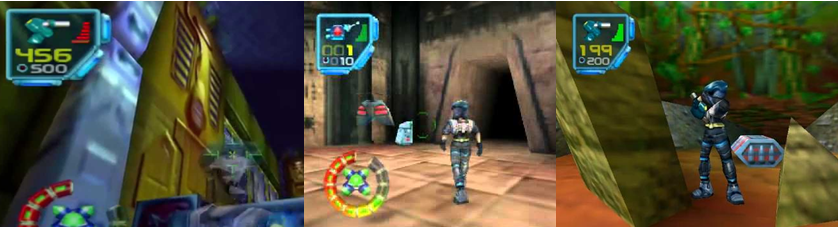
Game Corner: Strider (2014; Xbox One)

GameCorner
Strider2K14Logo

Released: February 2014
Developer: Double Helix Games and Capcom Osaka Studio
Also Available For: PC, PlayStation 3, PlayStation 4, and Xbox 360

The Background:
Capcom’s fast-paced, slash-‘em-up Strider (Capcom, 1989) first debuted as an arcade game; notable for its frenetic hack-and-slash action, the series saw numerous ports and sequels released to home consoles throughout the years, with main protagonist Strider Hiryu often cropping up in other Capcom titles. Thanks to Strider’s popularity, Capcom decided to produce a reboot of the series back in 2014. Rather than being a linear experience, this Strider expanded on the length of the game through “Metroidvania” elements such as backtracking and upgrades to Strider’s abilities. I’ve known about Strider Hiryu for a long time, primarily due to his inclusion in Marvel vs. Capcom 2: New Age of Heroes (Capcom/Backbone Entertainment, 2000), and this version of Strider caught my eye back in the day on the PlayStation 3 thanks to its futuristic, neon aesthetic and frenzied action but it’s only recently that I actually got around to playing the title.

The Plot:
Ostensibly a remake and reimagining of the original arcade game, its ports, and its sequels, top assassin Strider Hiryu is sent to Kazakh City to assassinate Grandmaster Meio, who has established a dictatorial rule over the city and its inhabitants with his robots and cyborg operatives.

Gameplay:
Strider is a 2.5D action/platformer with minor role-playing elements. Players control Strider Hiryu, a visually stunning character who dashes at high speeds through a dystopian city, leaping across rooftops, sliding through air ducts, and attacking Grandmaster Meio’s robotic minions with his plasma sword, Cypher. As Strider barges ahead at full speed, he can slash away at his foes with quick swipes of the Cypher; he can also charge an attack to break through enemy shields and, in time, gains the ability to throw kunai blades at his enemies and activate switches from a distance. Strider also uses these blades to clamber up walls and across ceilings and can acquire additional technology (known as “Options) to reach previously-inaccessible areas of the game. This means that, as you acquire new abilities and upgrade Strider’s arsenal, you’ll have to do a fair amount of backtracking not just to fulfil new objectives but also to find the game’s many hidden power-ups, unlockables, and upgrades to Strider’s health, energy, and weapons.

Strider2K14Combat
Strider slashes enemies apart with his plasma sword.

However, the amount of backtracking is actually quite limited if you just want to finish the game’s primary story mode; you’re mainly tasked with using Strider’s new abilities to take the long way round to your next objective, after which you’ll be able to take a shorter route back to the next objective. Wash, rinse, repeat. As Strider dispatches his enemies, he powers up the meter for his Cypher blade and the abilities offered by the “Option” power-ups. There are numerous checkpoints and save points scattered throughout the game’s large and inter-connected map, which is broken down into different areas and environments, but Strider can also replenish his health by breaking capsules that are generously scattered in each area.

Strider2K14Options
The “Options” allow Strider to perform more powerful attacks.

It pays to use the game’s simple-but-effective mini map to explore a bit, though, to find upgrades to Strider’s health bar as, while the common foot soldiers you encounter are dispatched easily enough, you’ll soon come up against more troublesome enemies, mechs, robots, bosses, and hazards that will drain your health to nothing in no time flat. By the time you storm Grandmaster Meio’s citadel, you’ll be required to make full use of all of Strider’s abilities to overcome the enemies and environments you come across. This often requires you to cycle through the different Cypher plasmas with a press of the directional pad in order to combat certain enemies and get past certain obstacles. While, at its core, the game is extremely fun, fast-paced hack-and-slash action, there’s quite a bit of platforming involved; luckily, you’ll soon upgrade to a double jump and a mid-air dash which makes these much easier but, while I found falling to my death a common occurrence (generally thanks to being blasted out of the air), there’s nothing too taxing or unfair here thanks to Strider’s superhuman flexibility and the range of options available to him.

Graphics and Sound:
Strider is a bit of an oxymoron; it’s a visually stunning and appealing videogame thanks to its largely anime-inspired, Blade Runner (Scott, 1982) aesthetic; the game’s dystopian city is rugged, lived in, and interspersed with neon lights and dynamic lightning choices that often bathe environments in darkness broken only by flashing lights. Yet, at the same time, the majority of the areas you visit are largely uninspired; the majority of the game is spent exploring and traversing Kazakh City, which means a lot of rooftops and street-level action which, while impressive, gets old pretty quickly. The game moves at a fast pace, though, so you’ll soon be making your way through seemingly endless, nearly identical high-tech corridors and buildings, then fighting through the semi-steampunk sewers and industrial areas of the city, before the game finally breaks up the monotony of its environments with an all-too-brief section that takes place in the skies above the city.

Strider2K14Variety
While Strider looks great, most of his enemies are quite bland.

Similarly, while Strider looks absolutely fantastic and moves and animates like greased lightning, most of the enemies he encounters are a massively uninspiring lot. Once the bigger mechs and robots start becoming more commonplace, things get a bit more interesting but fighting these enemies can be a chore as you’ll have to cycle through all of Strider’s different abilities and weapons to take them down. I was likewise unimpressed with the game’s soundtrack; Strider mostly uses ambiant sound and subdued melodies when you’re playing the game and these are often drowned out by the sound effects of Strider’s attacks, so I can’t say the soundtrack really left much of an impression on me. The game features a few cutscenes to relate its story and, while they’re not especially impressive in the way they’re animated, the voice acting is fantastically over the top and cheesy, which really works with the game’s tech-noir aesthetic.

Enemies and Bosses:
Strider will cut his way through a whole slew of Grandmaster Meio’s cyborg minions in his quest to liberate Kazakh City. Most of these will be dispatched in just a few swings of Strider’s Cypher blade but, eventually, even these will become more troublesome as you progress further through the city. All too soon, enemies start holding up shields to block your attacks, take pot shots at you with sniper rifles, and bust out the heavier machinery (such as explosive bolts that stick to you and energy staffs). Some of the more annoying enemies include ones that incessantly teleport across the area and ones that can freeze Strider in energy-draining blocks of ice. Strider will also dismantle a wide variety of robots and mechs as he explores Kazakh City; some simply float about and shoot at you, others are turrets attached to walls and ceilings, but the more troublesome robots are the larger variants that cause massive damage to Strider and take a lot of his skills to put down.

Strider2K14Gorilla
Yeah, a mechanical gorilla. Perfectly normal.

You’ll also come up against a decent variety of bosses in this game; you’ll battle Ouroboros, a large mechanical dragon, a couple of times (the first sees Strider running across the machine’s back amidst high winds, electrical blasts, and a slew of enemies, while the second sees Strider confined to some city ruins and contending with the Ouroboros’ ice attacks), Mecha Pon (a gigantic mechanical gorilla) in one of the game’s penultimate battles, and take part in series of faster-paced battles against the Wind Sisters. Just as you’ll be tested against gauntlets of enemies later in the game, so to will you eventually have to engage all of the Wind Sisters at once but, by that point, your abilities should be more than up to the challenge.

Strider2K14FinalBoss
The final boss is an eldritch nightmare…and in space…

At the end of the game, Strider faces off with Grandmaster Meio in a two-stage final boss battle. The first is a relatively run of the mill affair against the Grandmaster as he teleports around the arena firing energy bolts and lighting at you but, once he is defeated, you’ll be transported into the upper atmosphere to battler Meio’s true final form, Meio Prime, a gigantic Biblical monstrosity that would make Sephiroth blush in its pretentiousness. Yet, for all its bluster, Meio Prime is easily dispatched provided you can avoid its flailing tentacles and dodge its electrical bolts, which are easily its more annoying and hard-hitting attacks.

Power-Ups and Bonuses:
As mentioned, Strider can upgrade his Cypher Blade after defeating certain bosses. He begins the game with the standard red plasma, which allows him to hack-and-slash his enemies, but this is eventually upgraded to deal a downward blow, reflect blaster bolts, set enemies on fire, encase them in ice, or toss out homing blades, each time giving the plasma a new hue (blue, yellow, and purple). Strider can also charged his kunai with these different plasma types of the Cypher blade to also set enemies ablaze or freeze them on the spot. The “Options” Strider gains not only allow him to reach new areas of the game but also allow him to perform more powerful techniques in battle; performing these drains Strider’s power meter but, as this automatically replenishes with time and when you defeat enemies, it’s not often you have to worry about running out of energy (and this bar can be increased when you find hidden upgrades). The most useful of these techniques is easily Option C, which sees a robotic hawk deal massive damage to enemies and was super useful for whittling down the health bar of troublesome bosses. As you explore your environment, you’ll find further upgrade pods to increase Strider’s health and energy bars, throw more kunai, unlock additional costumes for Strider, and unlock concept art and levels for the game’s “Challenge” mode. These aren’t too difficult to stumble across but the game’s map will let you know if there are any in the immediate vicinity; the one downside, however, is that if you fail to find them all before you enter Meio’s citadel, you will have to start a new save file from the beginning to find them as you’re unable to replay a completed save file.

Additional Features:
Strider has three difficulty levels to choose from and, if you want to unlock all of the game’s Achievements, you’ll have to take on and best the game’s highest difficulty. Speaking of Achievements, there are a handful of relatively easy ones to unlock here; mostly, these are unmissable but there are a few that require a bit more effort from you (such as defeating twenty consecutive enemies without being hit, or twenty enemies with Strider’s Panther ability). In addition, the game features two “Challenge” modes: “Beacon Run”, which sees Strider racing to checkpoints as quickly as possible, and “Survival”, in which Strider must survive against wave-upon-wave of enemies. As you pick up secret items in the game, you’ll unlock these modes and additional maps for each mode and, upon successful completion, you can upload your score and time to the online leaderboards.

Strider2K14Conclusion

The Summary:
Strider is simple, fast-paced fun; Strider controls like a dream and the game’s hack-and-slash combat is smooth as silk. The environments and common enemies may be bland but the game is still, visually, very appealing; Strider’s world feels very lived in and layered rather than just being a typical, desolate dystopian future and, while he’s not especially layered in terms of his personality, at least Strider looks and plays very well. Unfortunately, there’s not a lot here to come back to; the game feels long when you’re playing it, mainly due to the fact that you’re largely navigating a bustling, multi-layered city, but it’s hard to get a sense of progression when a lot of the areas look the same. Even with some of Strider’s later time-saving abilities, it definitely feels as though the developers chose to artificially extend the game’s playtime by having you run from one area to the next and always take the longest route to your next objective. Additionally, while some boss battles are grandiose, others are not; some are frustratingly annoying, while others are over in an instant. The lack of consistency drags the game down a bit and not being able to replay a completed save to find everything you missed was a real annoyance for me but, despite some of its flaws, it was a fun, entertaining sprint to play through and I could see myself revisiting Strider in the near future to find everything I missed the first time through.

My Rating:

Rating: 3 out of 5.

Pretty Good

Did you ever play this version of Strider? What did you think of the game’s unique aesthetic and attempt to reboot the Strider franchise? What is your favourite Strider videogame, or appearance of Strider Hiryu? Whatever you think about Strider, feel free to drop a comment below.