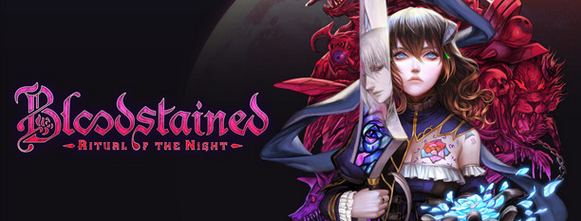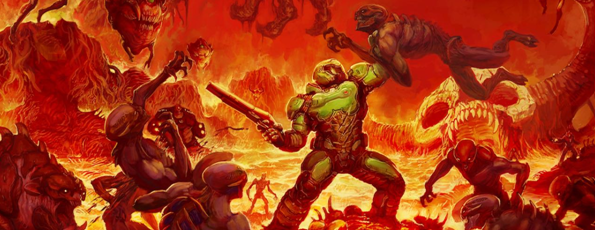

Released: June 2019 Developer: ArtOkay Also Available For: PlayStation 4, PC, and Nintendo Switch
The Background: Developed by Koji Igarashi, famous for his role in producing the Castlevania (Konami/Various, 1986 to present), Bloodstained was funded by Igarashi through Kickstarter with the intention to make a spiritual successor to his popular gothic/horror series, specifically Castlevania: Symphony of the Night(Konami Computer Entertainment Tokyo, 1997). After raising over $5 million, Igarashi also developed an 8-bit style companion game, Bloodstained: Curse of the Moon (Inti Creates, 2018), which was more a spiritual successor to another popular Castlevania title, Castlevania III: Dracula’s Curse (Konami, 1989). While my experience and exposure to Castlevania is a bit limited, I had a good time with both Symphony of the Night and Curse of the Moon; both games required a lot of skill and patience to master their mechanics and, once Ritual of the Night was available on Xbox Game Pass, I decided to give it a whirl.
The Plot: Back in the 18th century, the Alchemy Guild began summoning demons by forcibly infusing humans with demonic crystals to create Shardbinders. One such Shardbinder, Gebel, has begun summoning demons to destroy England and it’s up to another Shardbinder, Miriam, to confront him and put a stop to his efforts.
Gameplay: Ritual of the Night plays pretty much exactly like Symphony of the Night in that it is a 2.5D action/adventure game in which the player guides Miriam through a number of gothic, Victorian locations making copious use of backtracking, exploration, and item management to uncover new areas, confront new enemies, and upgrade her weapons and equipment.
Miriam can attack with a variety of weapons.
When you start the game, Miriam is capable of dodging enemy attacks with a backstep, jumping, attacking with a slide kick, and dispatching monsters with her sword. As you progress, you can expand upon these moves and also acquire and equip other weapons, like a pistol and, of course, the classic Castlevania whip. Miriam is also capable of using magic to move objects and attack enemies; her magic meter slowly replenishes over time but can be refilled faster by smashing candle sticks and similar background item as you explore the massive, maze-like castle and collecting magic orbs. When you destroy enemies, you may also absorb a magic Shard, which will allow you to assign a new ability to Miriam, allowing her to make use of Familiars, throw axes or spears, teleport short distances, or increase her stats.
Use magic books and boss Shards to obtain new abilities.
These Shards make up an essential component to Ritual of the Night’s gameplay as you will need to acquire certain abilities in order to progress further through the castle; they will enable you to backtrack to previous areas and access new locations, overcome certain environmental hazards, and increase your ability to dispatch enemies and bosses. However, you can only equip four different types of Shards at a time; luckily, you cans witch these on the fly by assigning shortcuts but you’ll still find yourself jumping back and forth between menus to equip the right Shard. Miriam will level up as she destroys enemies and gains experience points but, while she is tough, she will die if she takes too much damage. You won’t find any chicken or meat in the walls of this castle, unfortunately; instead, you replenish health by drinking Potions, eating certain foods, or using various Shards.
Save or warp around the map using special rooms.
The game also uses exactly the same save and fast travel system as Symphony of the Night in that you’ll find save rooms (which will fully replenish your health and magic) and mirrors (which allow you to fast travel across the map) dotted throughout the game; but this system is maybe something I could have seen dropped as it creates a massive amount of undue tension when you’re in desperate need of a save room, with no Potions, and die at a critical part and have to replay a difficult section all over again. Also coming over from Symphony of the Night, and Castlevania in general, is the ability to smash through walls to reach new areas or pick up items that increase Miriam’s health or magic bar. You can also chat to non-playable characters in a nearby village; they will sell you goods and wears, ask you to perform tasks (generally just destroying certain monsters) for additional items, and, of course, give you access to the game’s crafting system. You can craft better items, increase the power and ability of your Shards, cook up new foods to increase your stats, or dismantle weapons for extra gear. On the whole, Ritual of the Night controls extremely well; Miriam can’t dash forwards or dodge through enemy attacks (or, at least, I was never able to get her to) but she can utilise special moves with each of her weapons to parry or counterattack enemies. There are a lot of options available for players to change Miriam’s look, upgrade her abilities, and equip gear and weapons and these are all reflected in Miriam’s appearance. In addition, while there are some platforming elements involved, Ritual of the Night is more about exploration but if you wander too far too fast you may jump right into an environment you aren’t ready for and be set upon by enemies you’re too weak to properly battle, which can result in some frustrating deaths. The only way to properly navigate through the game is to master Miriam’s abilities, equip the best gear, and learn the best ways of taking out monsters and crossing the game’s various environments.
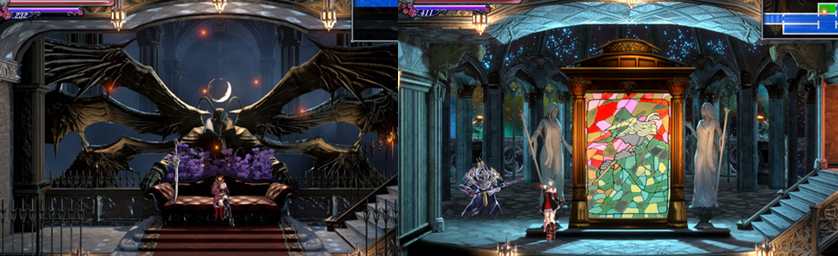
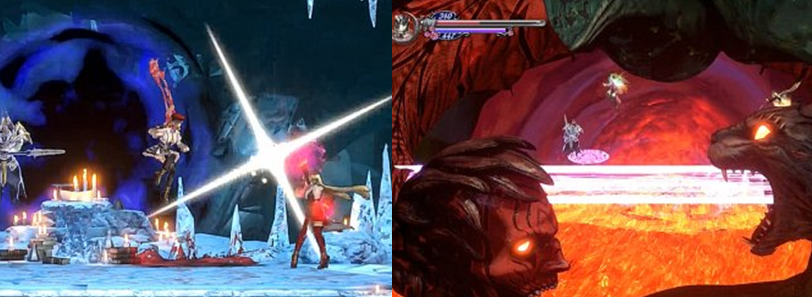
Graphics and Sound: Ritual of the Night closely apes the graphical presentation of Symphony of the Night but expands upon it greatly; the game has a number of environments, each one packed with details and impressive effects in the background. Miriam will scale a massive spiralling tower, wade through underground passageways, battle through both a hellish landscape and a frozen tomb, and trudge through a desert as well as explore a dilapidated ship, among other areas. Each section of the game has new enemies and obstacles to overcome, new secret areas to find, and can be connected to other areas through the warp mirrors or hidden passageways.
The game doesn’t completely avoid cliché dialogue.
Miriam and other characters and enemies are rendered using smooth 2.5D graphics; the game’s cutscenes use a mixture of static images and text with voice acting to fully-animated movies, though these are used sparingly. Voice acting is suitable enough; all the characters have an English accent or an exotic twang to their speech and do a serviceable job; there’s nothing quite as over the top as in Symphony of the Night, but Igarashi, thankfully, doesn’t completely shy away from the corny dialogue that made Symphony of the Night so enjoyable. As for music, there are a lot of tunes here that will be more than familiar with Castlevania/Symphony of the Night fans; there’s also some remixed and upgraded versions of tunes from Curse of the Moon, which was an inspired move considering how fitting and catchy those tracks were. Each one conveys the ominous presence of the area you’re in and brings yet more life to this gothic, nightmarish world.
Enemies and Bosses: Miriam will battle a myriad of enemies more than familiar with any Castlevania fan: we’ve got everything from globby monsters, floating heads, possessed portraits, shrieking spirits, deadly toads, annoying bats, and fire-breathing dragons! Enemies increase in number and danger as you progress through the castle; go from beheading monsters with relative ease to dodging over bigger, armour-plated knights with spiked shields, drill-like swords, or familiar-looking shovels as well as giant werewolves, magic-spewing demons, and skeletal dragons.
There’s some massive bosses here!
The game not only beautifully renders its environments but produces some impressive bosses; you’ll battle titanic beasts such as a two-headed dragon that covers the entire background, a spider-like creature comprised of stained glass, and a giant, demonic mermaid creature. These massive bosses will test your endurance but they’re nothing compared to the more spritely, human-like bosses you’ll encounter; you’ll duel with a blood-spewing vampire, go sword-to-sword with the rogue swordsman Zangetsu, and battle against sorcerers in encounters that will test you reaction times, skill, and patience as you dodge their attacks, learn their patterns, and unleash your most powerful attacks to attain victory.
The two-stage final bosses was a pain in the ass.
The game’s final boss combines both of these elements, pitting you against a demented sorceress who leaps about he screen attacking with her whip-like hair and various elemental magic attacks. Once you finally overcome her, she’ll spawn in a screen-covered, three-headed demon and launch a variety of energy and elemental attacks at you while you leap and dodge around the screen desperately trying to attack her and whittle down her insane health bar.
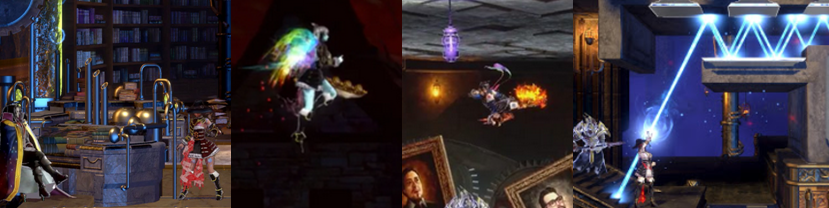
Power-Ups and Bonuses: While you’ll upgrade your stats when you level up, as you explore your environment, you may uncover goblets that will increase your health bar, potions that increase your magic bar, and special pistols that increase how many bullets your guns can carry and fire. You’ll also obtain items and weapons from downed enemies and bosses and from a variety of chests hidden throughout the castle; when you equip a weapon or gear, it will have positive and negative effects on Miriam’s stats. You might increase her attack power, for example, but lose your resistance to fire damage, so you will have to use trial and error and a combination of gear to keep her stats in optimal condition. You can also check out magic books from a shady librarian, which will increase your stats further but the game’s main source of empowering Miriam come from the Shards you will obtain from enemies and bosses. These will eventually allow Miriam to move obstacles out of the way, use a double jump, teleport through narrow gaps or walls, and to breathe and manoeuvre underwater in order to reach new areas.
Additional Features: The game has three different endings, two of which are considered bad endings. To reach the game’s true ending, you’ll have to backtrack to old areas, visit new areas, and battle through the game’s toughest enemies to acquire the items and weapons necessary to confront the true final boss of the game. Whichever ending you get, you’ll gain access to a Boss Rush mode to test you skills against each of the game’s bosses in turn. If you pursue the game’s true, good ending, you’ll eventually find hidden keys to battle three optional bosses and visit an 8-bit area for some classic Castlevania action. Obtaining the game’s true, good ending open up a Sound Test and allows you to play through again on New Game+, where you keep all your weapons and upgrades. If you’re a sadist and in need of an additional challenge, you can try the game in “Nightmare” mode to face much tougher enemies; there’s also a few codes you can enter when naming your game file to access different accessories, weapons, and amusing gameplay modes (like big head mode). To keep you playing and give you an incentive to playthrough the game again, the developers have been planning some free downloadable content that will not only allow access to other game modes and Zangetsu as a playable character, but it doesn’t seem to be available just yet. As you might expect, there are also a fair amount of Achievements available here, ranging from defeating certain bosses and completing a number of side missions, to completing the game’s extensive map and finishing the game on higher difficulties.
The Summary: Bloodstained: Ritual of the Night is an absolutely gorgeous game; for a Kickstarter-funded project, the controls and graphics and features available are impressive, to say the least, and ambitious. This is, in every way, a spiritual successor to Castlevania: Symphony of the Night, offering as much of the same challenge and reward as that game while also birthing an entirely new franchise and offering an entirely new experience for Castlevania fans. I imagine die hard Castlevania fans will get even more enjoyment out of this title but I’d argue that you don’t have to have played those games to enjoy this one, though it would probably help to be somewhat familiar with the concept or else you’ll struggle with the game’s massive amounts of backtracking. There are some aspects that I found frustrating; the save system, for one, the sharp spike in difficulty in certain areas, and the two-stage final boss but, honestly, there is nothing here that cannot be overcome without investing the time to master Miriam’s abilities, find better weapons and gear to increase her stats, and just learning how to overcome the challenges ahead of you.
My Rating:
⭐⭐⭐⭐
Rating: 4 out of 5.
Great Stuff
What did you think of Bloodstained: Ritual of the Night? Have you played Castlevania: Symphony of the Night before? What is your favourite Castlevania, or Castlevania-inspired videogame? Leave a comment below and share your thoughts.
Released: March 2019 Originally Released: January 1997 Developer: Square Enix Original Developer: Square Also Available For: Mobile, Nintendo Switch, PC, PlayStation, PlayStation 3, and PlayStation 4
The Background: It’s hard to talk about Sony’s PlayStation without talking about Final Fantasy VII. Traditionally released on Nintendo’s 8-bit and 16-bit titles prior to Square’s move to the PlayStation, Final Fantasy VII was released at a time when every recognisable videogame franchise worth a damn was making the jump from 2D to 3D. For many, Final Fantasy VII was not only their first Final Fantasy videogame but also their first experience of a role-playing game (RPG). Lauded upon release, the game went on to not only win numerous awards but also to sell over ten million copies on the PlayStation alone. So influential was Final Fantasy VII that it inspired a whole host of additional spin-off media from Square Enix, including the fantastic computer-generated movie Final Fantasy VII: Advent Children(Nomura, 2005) and the under-rated RPG/action shooter Dirge of Cerberus: Final Fantasy VII (Square Enix/Monolith Soft, 2006). Ironically, my experiences of Final Fantasy VII were quite limited at the time; I was knee-deep in my Nintendo 64 phase and still playing Mega Drive titles when it released, so I’m pretty sure it passed me by completely at the time. I had dabbled in a few previous Final Fantasy titles, however, thanks to emulators but I didn’t really become aware of the series until Final Fantasy VIII(Square, 1999) and even watched Final Fantasy VII: Advent Children before I first played Final Fantasy VII on PlayStation 3. However, with Xbox One owners like myself unable to play the recently-released Final Fantasy VII Remake(Square Enix, 2020) thanks to Sony’s current stranglehold on that title, I was fortunate enough to be gifted the Xbox One port of the PlayStation original which, thanks to the coronavirus lockdown, I was able to play through quite recently.
The Plot: The Shinra Electric Power Company harvests Mako energy, draining the Lifestream of the Planet, and making life miserable for the lower classes. Cloud Strife, a former member of Shinra’s military branch, SOLDIER, reluctantly joins forces with the eco-terrorist group AVALANCHE to oppose Shinra, only to end up defending the world when legendary SOLDIER Sephiroth enacts a mad plot to absorb the Lifestream and become a God.
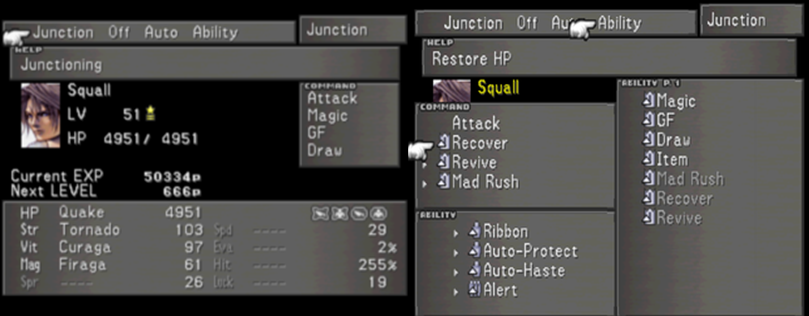
Gameplay: Final Fantasy VII is a traditional, turn-based RPG that emphasises exploration, strategic combat, item and party management, and has a heavy prominence placed on its complex and dense narrative. Players primarily take control of Cloud and form a party of up to three members (each of whom you can re-name, if you want) to engage in random battles across the game’s extensive overworld and many dungeons and locales, encountering a variety of non-playable characters (NPCs), enemies, obstacles, and mini games along the way. Players navigate numerous fantastically varied, pre-rendered environments in their quest; as you explore, you’ll find chests to open, items to pick up, buildings to enter, and innumerable numbers of NPCs to talk to. It’s through conversations with NPCs and your party members that you’ll learn more about Final Fantasy VII’s world, its dense lore, and the different cultures and societies that dwell within it. As a Final Fantasy title, you’ll easily sink over eighty hours of playtime into Final Fantasy VII, most of it watching cutscenes and engaging with the complex narrative. The rest of the time, you’ll most likely be battling and levelling up. As you explore the overworld, you’ll walk over fields, through forests, explore caves, dungeons, high-tech facilities, and even journey to the centre of the Planet itself. When not in a town, every step you take puts you at risk of entering into a random battle against a number of enemies; when a random battle occurs, you can try to run if you wish but, if you turn and fight, you’ll be presented with a number of options. Each character has strengths and weaknesses; some have higher hit points (HP) or magic points (MP); some can take more damage, or deal out more attack power, or are faster or slower. Having a diverse party is the first step towards winning battles, which take place using the game’s Active Time Battle (ATB) system. When a battle begins, the enemy and the player’s party exchange moves until the battle is ended in a constant cycle; take too long selecting your next move and you’ll leave yourself open to an attack.
Unleash your Limit Break to deal massive damage.
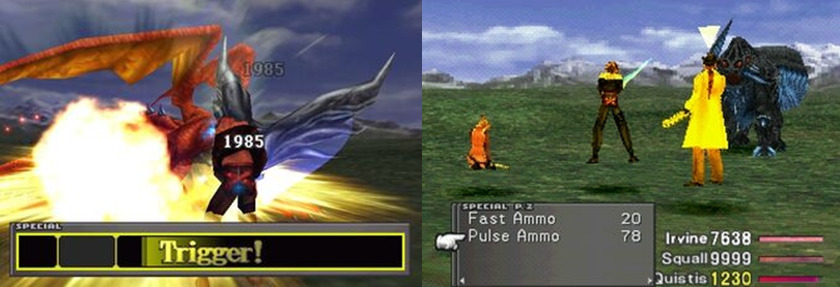
You can, however, alter this system in the game’s “Config” menu, which allows you to both increase the speed of in-game battles and reduce them to a more manageable, turn-based structure. Either way, when battling, you can choose to defend yourself to reduce incoming damage, select which enemy to target, or use an item to heal a character or otherwise turn the tide in your favourite. When battling, once the “Time” meter is full, you can choose how to engage the enemy. If you choose to attack, your character will rush forwards and deliver an attack to deal damage. When hit with an opposing attack, your party’s “Limit” meter will fill; once full, you can perform a powerful Limit Break, which will deal greater damage to your opponents and sometimes provide beneficial aids to your party. When using magic, keep in mind that some enemies will have their HP restored if you use elemental magic against them. Characters use magic when you assign them Materia, which is a kind of crystallised form of Mako energy; Materia allows characters to heal or revive each other, erect protective barriers, cast elemental spells (Fire, Thunder, etc), poison foes, turn them to frogs, and a whole slew of other benefits.
Summon powerful beasts to aid you in battle.
The most powerful and useful Materia you can acquire allows you to call upon the powers of a Summon to aid you in battle; these bestial creatures can deliver heavy damage to bosses and groups of enemies and even resurrect your fallen comrades, but Summons drain a lot of your MP to use and some of them can only be used once per battle unless you link their Materia to another Materia to allow consecutive use or added effects upon their summoning. If all of your party is defeated in battle, the game is over and you must reload from your last save point; if you win, though, you’ll earn experience points (EXP). When you earn enough EXP, your characters will level up, increasing their stats and learning new, more powerful Limit Breaks. You also earn Ability Points (AP), which allow your Materia to level up as well and allow access to more powerful spells (Cure 2, Quake 3, etc); sometimes you’ll get items from victories as well and, of course, you’ll earn Gil.
There are numerous mini games to distract you.
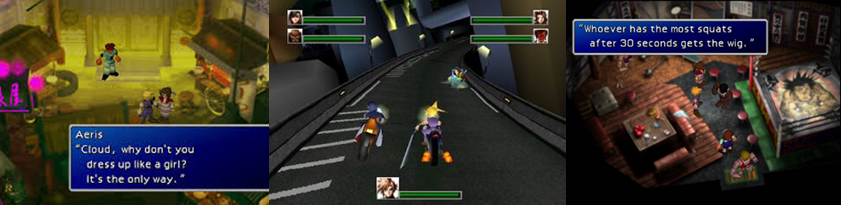
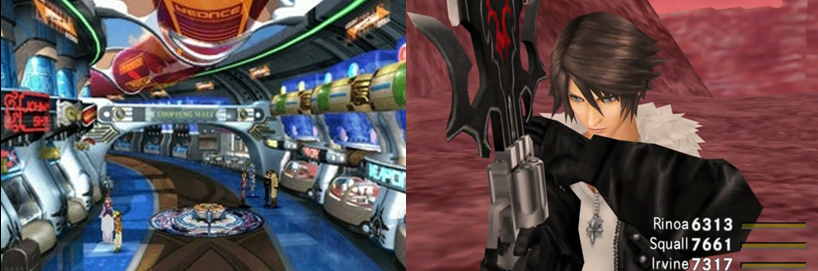
Gil is the currency of Final Fantasy VII; with this, you can purchase items and weapons and pay to restore your HP and MP at the various inns located in the game’s many towns and cities. Each character can be equipped a weapon, an arm band, and an accessory; these have slots that allow them to use Materia, protect them from certain attacks (or types of attack), and raise their stats. To obtain the most powerful weapons and Materia, you’ll have to not only battle some of the game’s toughest enemies and bosses but you’ll also have to complete a number of mini games and side quests. As you explore Final Fantasy VII, you’ll come across numerous side quests, mini games, and distractions from your main quest; there’s a side quest where Cloud most pose as a girl, for example, or a section where you must chase weird creatures through an ancient, maze-like city, defend a mountain from invading forces, snowboard down a mountain, and explore the depths of the ocean in a submarine. Visit the Gold Saucer and you’ll be provided with a wealth of mini games for you to waste your time on while the Planet looms moments from destruction. You can visit the arcade and throw basketballs into hoops, replay the somewhat-clunky motorcycle pursuit (wherein Cloud makes a dramatic escape, swiping at pursuers with his hefty Buster Sword), take on progressively difficult enemies one after another in the Battle Square in hopes of purchasing rare items and upgrades, or take a member of your party on a date.
Capture, race, and breed Chocobos.
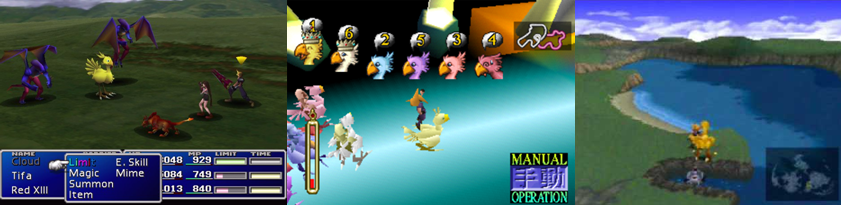
Additionally, if you choose to acquire the game’s two extra characters, you’ll get sucked into their side stories and side quests, one of which sees you first forced to do battle without your Materia and, later, battle progressively-difficult enemies in a pagoda, while the other involves a tough boss battle and a lot of dialogue. After Sephiroth summons Meteor and the Planet edges closer and closer to destruction, you’ll travel the world without Cloud to acquire the Huge Materia; getting this involves a lot of mini games, like button mashing in perfect harmony to speed up and slow down a train, chasing down and destroying an enemy submarine, or strategically placing troops to defend a giant condor egg. One of the game’s biggest side quests involves the capturing, breeding, and racing of Chocobos. These ostrich-like creatures can be found on the overworld when you have a Chocobo Lure Materia equipped and walk over their tracks but, unless your powerful enough to one-shot the enemies they are often accompanied by, you’ll need to shell out for some “greens” to distract them. Once you’ve caught a Chocobo, you can ride them around the overworld but, eventually, you’ll get the chance to buy up to six stables to keep your Chocobos in. You can then feed them to raise their stats and attributes and race them at the Gold Saucer; even when you allow the computer to race for you, though, this can be a time-consuming task as, to breed better, different-coloured Chocobos, you’ll need to win a lot of races and take part in a few battle sin the interim, all to breed the ultimate Chocobo, a Gold Chocobo, which can run over land, sea, and mountains to reach the game’s most powerful Materia. None of this is especially difficult but it is very time-consuming and I can’t say I was happy to have to do it all over again after doing it on the PlayStation 3 but, now that I’ve gotten a Gold Chocobo, I can rest easy in the knowledge that I won’t have to do that again.
You’re asked to perform a lot of different actions to advance the game’s plot.
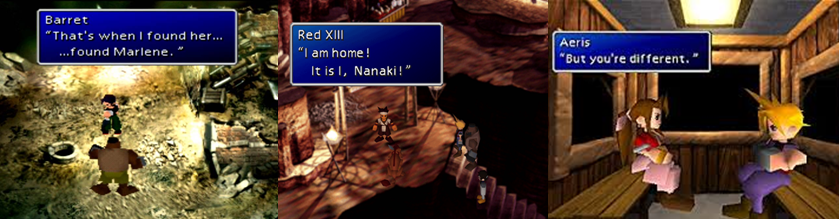
Final Fantasy VII loves to throw a curveball at the player; just as you think you’ve mastered the game’s ATB system, you’ll be asked to press buttons at the right moment to perform a march or provide CPR. These little distractions and varieties in the gameplay can be fun when they’re optional but many of them are required to advance the plot, as well as netting you more EXP, more Gil, better items and Materia, and even a couple of extra party members. At times, they can feel like unnecessary padding as it seems like every time the team visits a town, you spend an hour or so running around doing some kind of arbitrary task that seems contradictory to the game’s otherwise ominous plot. Later in the game, such button-mashing sections are crucial to the game’s plot and failing them can cost you an Achievement or two or cause you to either miss certain rewards and Materia or have to earn them some other way through another side quest or at a high Gil cost. Similarly, just when it seems like you’ve gotten a grip on the game’s quirky nature, the entire complexion changes when Sephiroth murders Aerith, forever removing her from your party and as a playable character, summons Meteor to destroy the Planet, and the kaiju-like WEAPON emerge from the ground and go on a rampage. After this point, Cloud leaves the party for a time and you’re forced to fly around in the Airship with different party members collecting the Huge Materia all while a massive glowing sphere hover sin the sky. Even the overworld theme changes at this point, becoming more ominous; different WEAPON wander around the map and must be battled and Cloud is forced to confront the truth about himself and his path before rallying the team to confront Sephiroth.
Each character has a story arc, a backstory, and nuance to them.
Characterisation is a large part of Final Fantasy VII’s narrative; each party member has a unique backstory and their own personality quirks and, as you progress, you’ll learn more about them and what makes them tick. Characters are surprisingly layered as well; Cloud has a reputation for being an edgy loner but he has some amusing moments, like when he’s forced to act in a play with Aerith (or Aeris, whatever you prefer) Gainsborough, or the way he shrugs dumbfounded whenever talking to Yuffie Kisaragi or Cait Sith. Barret Wallace, too, has a lot of layers to his character; he’s a passionate eco-warrior with a quick temper but also a doting father and carries a dark secret that the game forces him to confront, and this is true of each of the characters, in a way. Final Fantasy VII’s ability to flesh out each of its characters really increases your emotional investment in the game’s plot; even Sephiroth, who kills without a thought and is more than happy to crack the Planet open on a whim, is a tragic figure affected by the machinations of Shinra. Which characters you engage the most with will undoubtedly affect how you arrange and organise your party, though the narrative is structured in such a way that you are forced to have each member of the team in your party at least once (with the obvious exception of the optional characters).
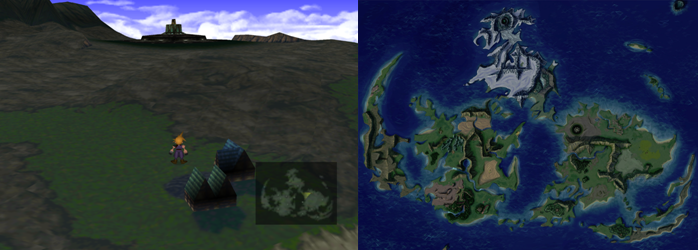
The game’s map isn’t very clear, making navigation tricky at times.
With all that said, Final Fantasy VII can be a stressful experience; like all Final Fantasy titles at that point, Final Fantasy VII is quite a slow, measured experience. Cutscenes can’t be skipped, meaning if you die after a lengthy section of dialogue you have to sit through it all over again; random battles can take place every couple of steps, which can be frustrating when you’re low on HP and/or MP (you can turn them off by pushing in the analogue sticks but then you won’t gain EXP or AP), and there’s no fast travel system. This last is especially annoying thanks to the game’s map; while it’s useful, it’s not very clear. Towns and areas of interest are marked by small dots rather than names and, if you want to travel there, you’ll have to do so manually; I have to say that, once the Highwind upgrades to rocket boosters, it would have been nice to implement a fast travel mechanic. Similarly, as was the tradition at the time, you can only save the game at designated save spots or on the overworld, meaning that if you haven’t saved for a while and make a massive mistake, you’re in for a lot of backtracking. As a result, it’s wise to save often and consult one of the many comprehensive guides to be sure that you haven’t missed anything and are fully prepared for what’s ahead. I favour over-levelling my party so that I don’t have to worry too much about healing during a battle but, even then, you’ll encounter bosses and enemies that decimate your party in just a few hits.
Graphics and Sound: As the franchise’s first foray into 3D, and being an early PlayStation title, Final Fantasy VII favours pre-rendered backgrounds, sprite work, and polygonal graphics, resulting in a game that, it could be argued, has a contradictory tone. On the one hand, you have these dank, desolate, steampunk-like industrial backgrounds or an apocalyptic calamity hanging overhead but, on the other, you have these super cute, chibi-style character models.
No matter the environment, you can always spot your character.
While Square went on to perfect the graphical presentation of the series in subsequent sequels, I actually really like the blocky, polygonal character models. Not only are they full of charm, appeal, and character, they are more than capable of conveying the character’s emotions (whether that is anger, stress, sadness, or confusion). Plus, it helps them to stand out against the game’s myriad of different environments; whether you’re stuck in a sandstorm, infiltrating a Mako Reactor, or exploring an ominous cave, you’ll always be able to spot Cloud and his cohorts.
The cutscenes often mix the in-game models with higher quality CG elements.
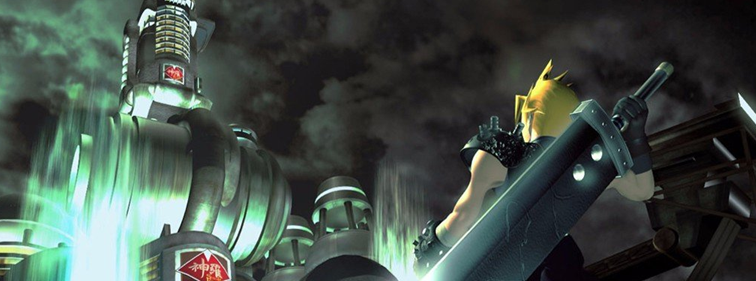
Add to that the fact that the game has some impressive CG cutscenes and, quite often, segues seamlessly from the standard in-game environment to a CG cutscene, incorporating the block characters alongside these striking cinematics. You’ll also be treated to quite a few higher quality CG cutscenes that render the characters in a more visually appealing manner; from the game’s breathtaking introduction, to the awakening of WEAPON, to the tour around the Gold Saucer, Final Fantasy VII is always a visual treat thanks to its distinct visual style. Without question, Final Fantasy VII features some of the best work from long-time series composer Nobuo Uematsu; this game features probably my favourite rendition of the traditional Final Fantasy theme and victory fanfare as well as the super catchy song that plays at the Gold Saucer (I could seriously listen to that all day, every day, and never get sick of it) and what has to be not only the best boss battle theme but also the greatest Final Fantasy theme of all time, “One-Winged Angel”. Even without that, though, that game’s orchestral soundtrack is extremely catchy and diverse, being epic and sombre when required and infusing each area with even more life and character.
Enemies and Bosses: Final Fantasy VII’s world is filled with all manner of strange creatures; we’ve got weird little cacti, giant snakes, dragons, frogs, sentient masks, ghosts, bugs, horrible little lantern-carrying, hooded amphibians who are more than happy to shiv you to death, biomechanical monstrosities, toxic flytraps, laser-shooting fungi, and even sentient houses! Every new area has new enemies to contend with and I swear they get as incomprehensible as the game’s plot at times. All of these weird, obscure creatures exist side-by-side with more human-looking foes; you’ll battle a slew of Shinra flunkies, mechanical creations, and their covert arm, the Turks. Each battle requires slightly different strategies; even though I prefer to simply plough ahead, dealing as much damage as possible, even I will concede that it’s sometimes better to battle smart and use an enemy’s weakness against them. When you fight Reno and Rude of the Turks, for example, Rude won’t attack Tifa Lockheart because, as a smart man, he is infatuated with her; therefore, it can make battles against them much easier to have her in your party. Other times, it may be best to equip items and accessories that nullify status ailments or absorb elemental attacks, keeping your party safe and healed when they’re being attacked.
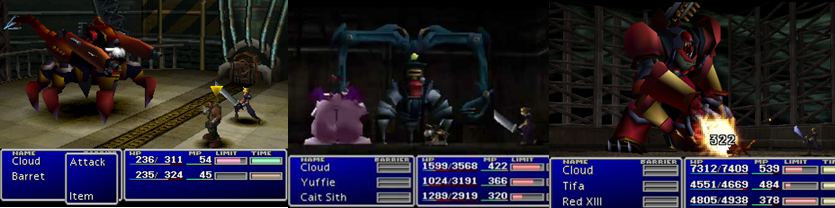
Mechs and robots are plentiful in Final Fantasy VII.
You’ll also come up against some powerful mechs, often piloted or commanded by high-ranking Shinra officials. These mechanical monstrosities often have multiple parts to them, some which exclusively deal certain types of damage or cast certain spells. By the time you confront Shinra’s toughest mechs, you’ll most likely be well versed in casting Big Guard, Regen, and the likes of Comet and Ultima, which can vastly improve your odds in these battles as Final Fantasy VII’s biggest and baddest bosses often end up being a test of your endurance thanks to their high HP.
Battle the monstrous WEAPON to save lives and earn rewards.
You’ll also battle some truly monstrous bosses as you progress through the game’s story; some of these are simply creatures that you have disturbed in your travels or unleashed upon you by Shinra but you’ll also have to do battle the Planet’s defenders, the gigantic WEAPON. The story directs you to oppose Diamond WEAPON as it marches against Midgar but, to battle Ultimate WEAPON, you need to chase it down on the world map and survive a number of encounters with it, causing it to flee until you’re finally able to keep it in one place. The effort is worth it to acquire Cloud’s most powerful weapon, though.
Whatever form it takes, Jenova means bad news for your party.
And then there’s the extraterrestrial calamity known as Jenova, whose cells are responsible for Sephiroth’s uncanny power and resulting madness. You’ll battle this creature in various different forms over the course of the game; mostly, it’ll be this mass of alien tentacles and amorphous lumps but you’ll also battled a mutated form of Shinra scientist Professor Hojo after he infuses himself with Jenova’s cells. Whatever its form, Jenova is a formidable foe that often requires you to attack its different, regenerating parts in specific ways. This comes to a head when you make it through the Northern Cave and to the planet’s core, where you’ll battle Jenova∙SYNTHESIS; how you battle this boss, and which characters you have, will determine the strength of the subsequent boss, Bizarro-Sephiroth. This chrysalis-like shell can have HP in the 180-thousands and is often battled with two or three parties at once, making for an extremely challenging ordeal, especially as it heals itself quite regularly.
Safer∙Sephiroth’s ultimate attack destroys the solar system!
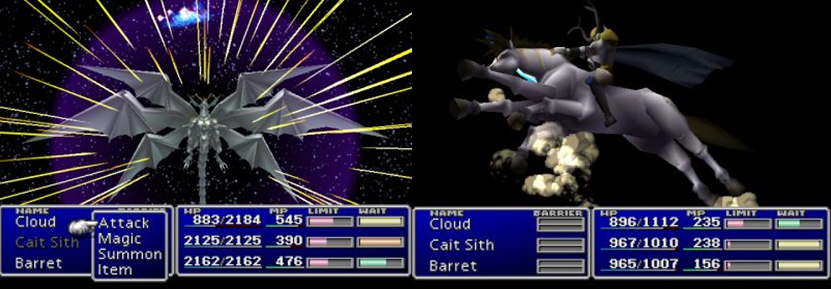
Once you best it, though, you’ll finally go one-on-one with Sephiroth, who by this point has used the Lifestream to transform into the God-like Safer∙Sephiroth, a multi-winged eyesore whose ultimate attack literally destroys the entire solar system! If you’ve over-levelled, acquired the ultimate weapons for your team, unlocked the most powerful Limit Breaks, and acquired the strongest Summons, this boss isn’t too much of a challenge though. When I battled Safer∙Sephiroth in this playthrough, I cast Regen and Wall so that my party’s health would constantly regenerate and incoming attack and magic damage would be reduced, cast DeBarrier on Safer∙Sephiroth to allow my attacks to hit at full force, and put him down with one use of Knights of the Round. In actuality, Safer∙Sephiroth’s health and difficulty increases depending on the average level of your party and how you fought the bosses immediately prior to him, so you may have more difficult against him depending on the choices you make, but, generally speaking, I had more trouble with Ultimecia’s final form in Final Fantasy VIII. As if to reward you for all your hard work and the trials you have endured, Final Fantasy VII presents you with one final confrontation with Sephiroth. Thankfully, though, this is a battle you absolutely cannot lose and is more of a scripted event. Here, Cloud and Sephiroth go face-to-face within the Lifestream itself and, with a simple press of a button, you unleash Cloud’s ultimate Limit Break, the always-cool Omnislash, finally defeating Sephiroth once and for all with both ease and grace,
Power-Ups and Bonuses: The only way to truly master Final Fantasy VII is to grind, grind, and grind some more. Winning battles gains that all-important EXP and AP, both of which are required to strengthen your characters and their magic. Some characters won’t even learn their best Limit Breaks unless you defeat a certain amount of enemies with them, all-but-forcing you to use characters like Aerith and Cait Sith if you want to fully power them up and unlock all of the game’s Achievements. The same is true for Materia; levelling it up not only allows access to more powerful magic, it also duplicates the Materia for others to use and leads you towards acquiring the all-powerful Master Materia, items which are essential to taking on the game’s optional bosses. In nearly every town or city you visit, there will be a weapons shop; here, you can purchase new weapons, arm bands, and accessories for your characters. These can be pricey, though, necessitating a lot of grinding or exploration for extra Gil and it’s worth noting that, while you might get a significant buff by buying a new weapon, you can just as easily find a more powerful one in a chest shortly after spending your hard-earned Gil. To acquire a character’s ultimate weapon, you may be required to complete a side quest or specific task; to get Vincent’s, for example, you first need to acquire him by completing a side quest, then either get a hold of the submarine or breed a coloured Chocobo to access a hidden cave behind a waterfall, then read some dialogue, and then you need to win ten random battles before returning to the cave to acquire the Death Penalty…but, to get Cid Highwind’s, you simply talk to the right NPC three times in a row. Sure, this is quite late into the game and you have to first travel to and from space but it’s a lot simpler.
The game’s map, and modes of transport, open progressively, getting bigger and better as you go.
As mentioned, your Gold Chocobo will allow you to travel anywhere and acquire the most powerful Summon, Knights of the Round, but they’re not the only way to traverse Final Fantasy VII’s extensive overworld. You’ll acquire in a buggy, a little sea-based aeroplane, a submarine, and, eventually, upgrade to the comfort of Cid’s Airship, the Highwind; given how much of your time is spent travelling on foot, you’ll really appreciate the convenience of the Highwind allowing you to heal for free and travel at high speeds. Furthermore, there are two optional characters you can acquire at various points throughout the game; the hyperactive ninja Yuffie will randomly ambush you in forests and only joins you after you defeat her and then pick specific dialogue options, while the stern and stoic Vincent is locked away in a Shinra mansion and can only be acquired by battling a particularly challenging mini boss. There are some benefits to taking the time to get these characters though; not only do you get an Achievement for each, but having Yuffie in your party later on allows you to acquire the Leviathan Materia and Vincent is one of the more useful characters thanks to his powerful Limit Breaks (he also looks awesome).
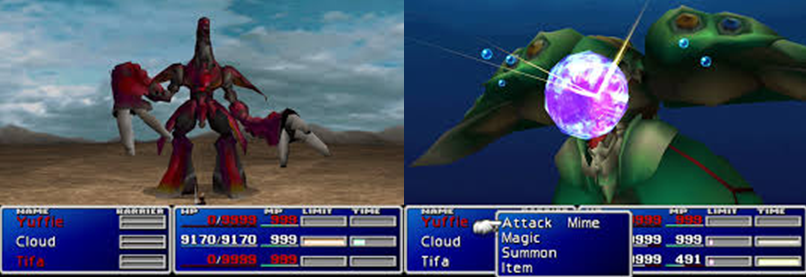
You’ll need to be at the top of your game to battle these two.
As if that wasn’t enough, there are also two optional superbosses: Emerald WEAPON at the bottom of the sea and Ruby WEAPON in a sandy region. To fight Emerald WEAPON, you need a special Materia to eliminate the time limit imposed by being underwater and, to fight Ruby WEAPON, you have to be out of your mind! Seriously, these two are no joke; Ruby WEAPON can blast one of your party out of the battle entirely and both deal massive damage while sporting tank-like HP. In all my attempts at battling them the only one I came close to dealing any real damage to was Emerald WEAPON and even then it wiped the floor with me. To best these two, you absolutely have to have top-tier party members, Materia, and Limit Breaks along with a lot of luck and a well-thought-out strategy. Defeat Emerald WEAPON, and you’ll not only earn a whole bunch of EXP, AP, and Gil, you’ll also get the Earth Harp, which you can take a seemingly-innocuous NPC in the town of Kalm to earn three Master Materia: Master Summon, Master Command, and Master Magic. Not only does this net you an Achievement, it means that you have full access to every Summon, spell, and command in the game, which can not only massively overpower your party but also free up your weapon and armour’s Materia slots to add further buffs. If you visit this NPC prior to fighting Emerald WEAPON, you can trade him another item to earn the Underwater Materia, which can make the battle against Emerald WEAPON a bit easier by eliminating the threat of your party drowning. Defeat Ruby WEAPON, and you’ll get the Desert Rose, which Kalm’s generous NPC will trade you a Gold Chocobo for (though, in my experience, it’s far easier to breed your own Gold Chocobo).
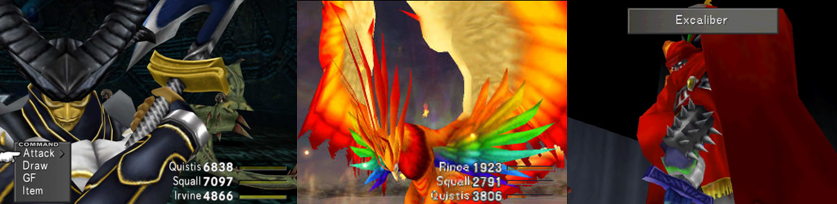
Additional Features: As you might expect, Final Fantasy VII comes with a bunch of Achievements, most of which are tied to some of the game’s more difficult and time-consuming mechanics. There’s one for reaching Level 99, for example, one for acquiring the maximum amount of Gil, one for mastering every Limit Break, one for having Cloud’s drag disguise being more appealing than Aerith or the delectable Tifa, and one each for defeating Emerald and Ruby WEAPON. It’s worth noting that some of the game’s weapons, accessories, and Achievements are dependant on you doing certain actions at various points in the game; you won’t be able to get the “See the Light” Achievement if Aerith is dead, for example, and you’ll have manipulate events early on if you want to take Barret on a date at the Gold Saucer. Similarly, if you don’t properly explore Nibelheim during a flashback, you can’t get Tifa’s last Limit Break. Another thing to note that this game sometimes struggles to register your Achievements; I had to beat the game three times and remove and re-upload my Xbox profile just to get the “A Feat of Meteoric Proportions” and “Wheel of Fortune” Achievements to register and there was a significant delay in the “The Slash to End All Slashes” and “Roundtable Destruction” Achievements popping, too. Apparently, this is a common issue with this game so I’d recommend saving frequently and making sure you have a strong and stable connection to Xbox Live.
Activate these boosters to cheese the game in no time at all!
If you’re finding the game difficult and struggling against these superbosses, the Xbox One version of Final Fantasy VII includes a feature that absolute breaks the game in half. I only found out about this feature after defeating Safer∙Sephiroth but it would have really helped to speed up my play time if I’d known about it beforehand. So, if you press in the left and right analogue sticks, two icons appear on the left-hand side of the screen: a fist and a “X3”. The fist grants you super-regenerating HP and MP and fills your “Limit” meter so fast that your Limit Breaks are constantly available; while can still be defeated with this activated, it’s massively unlikely and allows you to absolutely tank any enemies you encounter. This is made even more advantageous when you pair it with the “X3” booster which, as you might guess, speeds the game up to three times its usual speed. It was only by having both of these activated that I finally bested Emerald and Ruby WEAPON but, had I known they were an option, I would have used them the entire time as they’re absolutely game-breaking and would have really sped up all that Chocobo breeding!
The Summary: Final Fantasy VII is, by no stretch of the imagination, a masterpiece. It is an exhaustive, massively engaging experience filled with action, humour, despair, and hope. While the plot can get side-tracked delving into each character’s backstory, every event is specifically designed to flesh out the lore and characters. It doesn’t take long before you’re hooked on the distinct and charming visual style and the deeply nuanced characters and world-ending plot. Despite a few of the more annoying trappings of the series, the game is pretty much perfect from start to finish; it does a decent job of easing you into its mechanics and eccentricities (unlike Final Fantasy VIII which, as much as I love it, loves to dump information, training, and exposition onto you within the first half an hour) to the point that, after a while, you don’t even realise you’ve gotten the hang of the game’s core gameplay. The mini games and button-mashing sequences don’t last long and you’re often not penalised if you fail them, however if you play smart and save often (making liberal use of the save slots available), you can always better prepare yourself for whatever lies ahead. If you’ve never played an RPG before though, and prefer much more action-orientated titles, than I obviously wouldn’t recommend Final Fantasy VII. When I first played the PlayStation 3 version, I had the official Brady Games guide with me. This time around, I went on memory and instinct for the first chunk and was surprised at how well I did without at guide and how accessible the game can be. Sure, there are moments where you’ll have no idea where to go or what to do but that’s because you probably weren’t paying attention to the dialogue in the cutscenes. However, once I realised I had missed Tifa’s Limit Break (and after Meteor was cast), I went back to a guide to make sure I didn’t miss anything that would improve my chances in the endgame; a guide is also pretty much mandatory to breed a Gold Chocobo, as well. However, if you’re playing the Xbox One version, you can absolute cheese it with the boosters activated, making it more than accessible for casual or first-time players. If you take the time to play at a more appropriate speed, you’ll be required to invest a lot of your time, effort, concentration, and commitment but it’s well worth it. Even characters I don’t really use, like Red XIII and Cait Sith, have layers and nuances to their characters and I found their input to be useful even when the game forces me to deviate from my part of Cloud, Barret, and Vincent. Once you allow yourself to become engrossed in this deep, detailed world with is rich lore of genocide and strife, you’ll find a story rife with themes of alienation, persecution, and betrayal; a story that teaches us to value the life we have now and work with the planet, rather than against it. At the same time, you’ll battle some kick-ass monsters and go toe-to-toe with a literal God…and that’s always cool
My Rating:
⭐⭐⭐⭐⭐
Rating: 5 out of 5.
Fantastic
Phew, so…Final Fantasy VII, eh? What did you think of this much-lauded title? Where does it rank in your list of Final Fantasy games, or RPGs? Who was in your party when you played the game? Did you have a favourite section, Summon, or character? Did you know that you could cheese this version of the game of do you prefer to play at the original pace? Is the knowledge of Aerith’s news to you and are you now enraged because I spoiled a game over twenty years old? Have you been playing the recent remake and, if so, how does it hold up compared to the original? Did you enjoy the other Final Fantasy VII games and media released over the years? Whatever you think, whatever your thoughts, feel free to talk about them in the comments below.
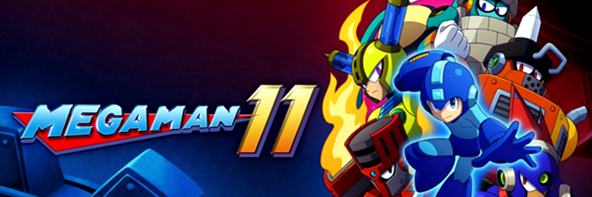
Released: October 2018 Developer: Capcom Also Available For: PlayStation 4, Nintendo Switch, and PC
The Background: Mega Man (or Rockman if you’re in Japan or one of “those” types of fans) is one of Capcom’s longest-running franchises. First debuting in 1987, the Blue Bomber has been blasting robots and navigating some of videogame’s trickiest platforms for decades now. In celebration of Mega Man’s 30th anniversary, Mega Man 11 saw the titular robot-blasting hero move away from the 8-bit-style throwbacks that Capcom had been releasing and back into a 2.5D environment for yet another round against the evil Dr. Wily. This one was a real challenge for me as, growing up as a SEGA kid, I didn’t experience a Mega Man title for quite some time and, while I have played a few of them and given them a fair shot, I’ve never actually played one from start to finish as I struggle with the series’ trademark difficulty spike.
The Plot: The evil Doctor Albert Wily uses his Double Gear technology to empower eight Robot Masters and usurp his old rival, the kindly Doctor Thomas Light. Ever the hero. Mega Man volunteers to use this technology against Dr. Wily to put an end to his plans for world domination.
Gameplay: Just like the classic Mega Man titles, Mega Man 11 is a sidescrolling action/platformer that puts players in control of the titular Blue Bomber. Mega Man must jump, slide, and blast his way through eight different stages to take on Dr. Wily’s eight Robo Masters, opposed by Wily’s other robots and a series of tricky platforming sections and traps.
Blast your enemies with the Mega Buster.
Mega Man can blast enemies with his Mega Buster, which can be charged up to unleash a more powerful blast. As you explore each area, and destroy enemies, you’ll pick up a number of items that will help you on your journey. Yellow capsules will refill your health (and you’ll definitely need these), blue ones will refill Mega Man’s power meter, Bolts can be accumulated to purchase upgrades and buffs from Dr. Light’s lab, and Gears will power-up Mega Man’s Gear gauge.
The Double Gear system increases Mega Man’s speed or power.
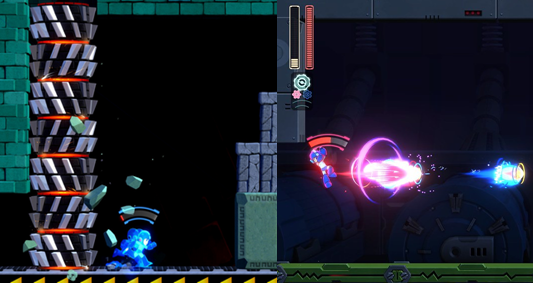
When full, you can press either the R or the L trigger to activate either the Speed Gear or the Power Gear. This is Mega Man 11’s newest gimmick as one will slow down time and enemies to allow you to attack enemies and bosses or navigate difficult areas a bit easier and the other will increase the damage output by Mega Man’s Mega Buster. In addition to this, as always, once Mega Man defeats a Robot Master, he gains their abilities for use in the remainder of the game. This is, once again, a crucial element to succeeding at Mega Man 11 as, if you take on a Robot Master without the necessary ability, the battle will be that much more difficult. Instead, while you can take on the game’s stages in any order, it’s recommended that you tackle them in a specific way so that you can whittle away at your opponent’s health that much easier. Mega Man can also call upon his robotic canine companion, Rush, to reach higher areas or fly across gaps; while this is useful, it can leave you open to attack and at risk of falling to your death.
You’ll want to avoid the spikes as they cause instant death.
And this will mostly likely happen a lot. In keeping with the franchise’s tradition, Mega Man 11 is a tough game; there are different difficulty settings to pick from (that restrict how many lives you have, among other things) but, even on the easiest setting, it’s no cakewalk. Mega Man stutters when taking damage, which can be the difference between making a jump or slipping off a ledge, feels very weighty when he jumps 9which can make precision platforming difficult), and has such an aversion to spikes that he will explode the moment he even brushes past one.
Purchase upgrades and buffs in Dr. Light’s lab.
All of this means that you will need to farm those Bolts and make liberal use of the shop in Dr. Light’s lab. Here, you can buy Tanks to fully refill your health or energy (or both, which can be essential to outlasting some Robot Masters), extra lives, and other items to assist in your adventure. These all carry a weighty price, however, meaning that you’ll have to be able to play through at least one stage in order to farm enough Bolts to help your continued journey.
Mega Man 11 is no walk in the park.
In the end, Mega Man 11 was exactly the same frustrating experience as every other Mega Man I’ve ever played; Mega Man is quite slow, feels like he has bricks in his boots, and will seemingly take any excuse to fall down a bottomless pit or run face-first into enemies and obstacles. Maybe it’s me; I will be the first to admit that I suck at Mega Man games but, despite how difficult and frustrating the game can be (even with some generous autosave points), it’s still a lot of fun to play thanks to the tight gameplay, gorgeous graphics, and catchy tunes.
Graphics and Sound: Unlike most Mega Man titles, Mega Man 11 is a 2.5D adventure with 3D polygonal characters and 2D environments. The game reminds me of the Mega Man X (Capcom, 1993 to 2001) series in terms of its presentation, but the characters and graphics are more based on the classic, chibi-aesthetic of the 8-bit Mega Man, meaning everything looks very polished and highly detailed but also cutesy and cuddly.
Mega Man 11 mixes chibi-cute with an anime-cool.
Mega Man 11 also features numerous tunes, music, and sound effects that will be recognisable to any Mega Man fan; containing remixes and updated version of classic Mega Man tunes, the music and the charming graphical style make even the game’s most frustrating platforming sections enjoyable as you can’t help but marvel at how great the game looks and sounds as Mega Man is exploding into a hundred pieces.
Enemies and Bosses: Mega Man 11 features a number of returning Mega Man enemies, such as the hard-hat-wearing Met and the shield-wielding Sniper Joe. Almost all of these can be dispatched with a few well-placed shots from the Mega Buster, but you may need to charge it up or switch to one of Mega Man’s other abilities to make shorter work of them.
Some enemies affect the environment.
Some enemies can adversely affect their environment; Lamper will light dark areas of Torch Man’s stage but also drops fireballs on you so you’re probably better off dodging its attacks so you can actually see where you’re going. Pipetto will spew chemicals that turn water into acid and the Mash Burner and Fire Server can cause damage to Mega Man after being defeated. Other enemies, like Mawaru C and the Tank Oven, shield themselves from Mega Man’s attacks and will require a precise shot or another ability to break through their defences.
Mini bosses can pack quite a punch.
When travelling through the game’s eight stages, Mega Man must contend with a mid-boss that can be just as tricky as Wily’s Robot Masters. You’ll battle against a spinning, spiked totem that will split into pieces, a fire-spewing turkey, and the ridiculous Frog Balloon (which is pretty much exactly what it sounds like). As with other enemies, and the Robot Masters, you’ll have to make use of Mega Man’s Gear abilities and the weapons you acquire from defeating the Masters to overcome these mid-bosses but, on your first playthrough, they can be quite the challenge and annoyance.
Each Robot Master has a specific weakness.
Then we have the Robot Masters. Mega Man 11 features eight all-new Robot Masters (though their themes and powers are vaguely similar to those of past Mega Man titles) and the key to overcoming them comes from using the right abilities against the right boss. However, when you first start the game, you’ll only have Mega Man’s Mega Buster and Gear abilities, meaning it can be a bit difficult to whittle their health down, especially if you take on Block Man, as I did. Once you defeat one boss though, this pretty much determines which stage you’ll take on next; for example, one I finally defeated Block Man, I then took on Acid Man, who is weak to the Block Dropper, then Impact Man, and so on.
The classic Yellow Devil returns to plague gamers everywhere.
Once you figure out which boss is weak to which weapon, defeating the Robot Masters isn’t that difficult; getting to them, however, is where the game’s real challenge lies. Once you defeat all eight, you’ll storm Wily’s fortress, where you’ll get to face all eight one after another and also take on the classic Mega Man mini boss, the Yellow Devil. This guy splits himself up into sections to bash Mega Man about and attacks with massive lasers and mini versions of himself, but was actually easier for me to defeat than Block Man!
Dr. Wily is no pushover but isn’t as tough as other bosses.
Similarly, Dr. Wily himself was actually much easier to defeat than some of his Robot Masters; Wily’s final machine has two forms, both of which are weak to the Acid Barrier and the Chain Blast. By this point, I knew to carry some Tanks with me to refill Mega Man’s health and energy and utilised the Power Gear to make short work of the mad scientist. Nevertheless, each of the game’s bosses are massive and multi-staged and present a significant challenge and encourages players to learn their weaknesses and the best ways of utilising Mega Man’s various abilities.
Power-Ups and Bonuses: As mentioned, you can pick up capsules to increase your health, energy, and lives as you play. You can also pick up Tanks in stages to use for later but, generally, you’ll be boosting Mega Man’s abilities by defeating Robot Masters or spending Bolts at Dr. Light’s lab. These abilities can also help you navigate stages as well as increase your chances at defeating enemies; Tundra Man’s ice whirlwind can freeze an oncoming wall of lava in Torch Man’s stage and the Acid Barrier allows Mega Man to safely move through acid pools.
Equip your items in the menu screen.
In Dr. Light’s lab, you can also purchase items that greatly improve your chances at clearing the game’s stages, such as boots that keep you from slipping on ice (pretty much mandatory for Tundra Man’s stage), or items that automatically charge up your weapons. You can also purchase a few one-time use items that will protect you from the instant death of spikes, have Beat recover you when you fall down a hole, or turn onscreen enemies into energy.
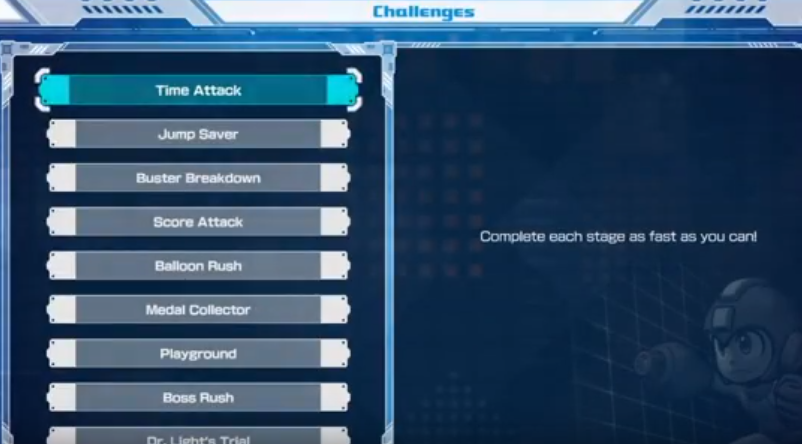
Additional Features: In addition to the main game and its various difficulty settings, Mega Man 11 also features time trials, a challenge mode, character galleries, and online leaderboards. In these modes, you’ll take on the game’s stages under a time limit or with the intention of meeting certain conditions; while you will have access to Mega Man’s other abilities, you won’t get any of the buffs or bonuses you can purchase from Dr. Light’s lab and you’ll have to do it all on one life, so this is mainly recommended for players who are actually good at Mega Man games (so…not me, then).
There are a number of extra modes to keep you busy.
There’s also a boss rush, where you’ll take on the Robot Masters and bosses one after the other, and whole bunch of Achievements to get; most of these are tied to conditions outside of the time trials and challenges. Some can only be get on your first playthrough as well, which is annoying, but you’ll pick up a fair few just on a casual playthrough. Otherwise, there’s no additional characters to play as or unlock here and it seems like we missed out on an additional skin for Mega Man as well, meaning you’ll mainly come back to the game to beat the higher difficulty settings.
The Summary: Mega Man 11 is a challenging experience…unless you are able to plan ahead and utilise all of the abilities the game affords you. If you blunder into a stage without thinking about it, or without the right weapon or extra Tanks, you’ll probably struggle with some of the tricky platforming, bottomless pits, and enemy placements to say nothing of battling the Robot Masters). Unfortunately, this was largely how I approached the game: head on and guns blazing. Once I understood how to use the Gear system and the best way to tackle each stage and Robot Master, the game became much easier. I still had to tackle it one stage at a time, rather than continuously playing, but this made it an enjoyable enough experience. Any time you fail or die, it’s because your skills aren’t up to the task so the only way to succeed is to get better and push a little further. There’s plenty of incentive to do that but, honestly, I feel like hardcore Mega Man gamers will get far more out of this one than novices like me.
My Rating:
⭐⭐⭐
Rating: 3 out of 5.
Pretty Good
What were your thoughts on Mega Man 11? Do you find the series to be a challenge or have you managed to master the Blue Bomber? What is your favourite Mega Man game? Let me know your thoughts and opinions in the comments.
Released: October 2010 Developer: LucasArts Also Available For: iOS, Nintendo DS, PlayStation 3, Nintendo Wii, and PC
The Background: Despite its flaws, Star Wars: The Force Unleashed (ibid, 2008) was a commercial success; as a result, LucasArts rushed into production with a sequel to what was, at the time, the official bridge between the events of Star Wars: Episode III: Revenge of the Sith (Lucas, 2005), and Star Wars: Episode IV: A New Hope(ibid, 1977). My experience with The Force Unleashed was mired by the game’s dodgy camera, wonky physics, and repetitive levels and combat. When the game shined, it shined pretty brightly but even its best moments couldn’t overshadow the flaws in the engine and execution. The story, while interesting, had a few issues as well (even more so considering the games have long since been rendered non-canon by Disney), and was pretty well wrapped up with Darth Vader’s turncoat secret apprentice, Starkiller, dying a martyr to inspire and rabble the Rebel Alliance. But the franchise made money so, armed with the lamest excuse possible, LucasArts came back with this sequel but does it improve on its predecessor’s failings or is it more of the same?
The Plot: After multiple failures, Darth Vader has finally perfected a clone of his secret apprentice, Starkiller. However, haunted by the memories, feelings, and motivations of his predecessor, the clone sets out to uncover the truth of his identity and reconnect with his lost love, Juno Eclipse.
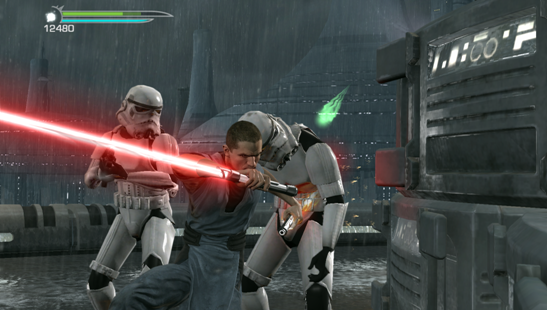
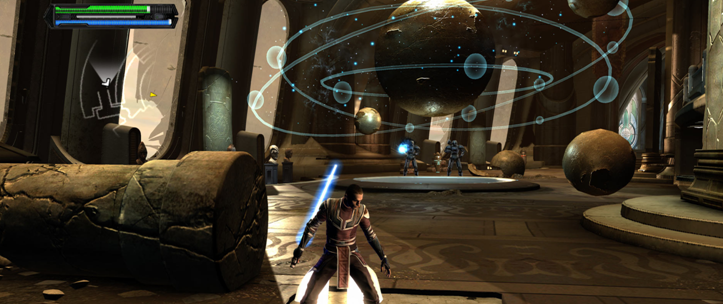
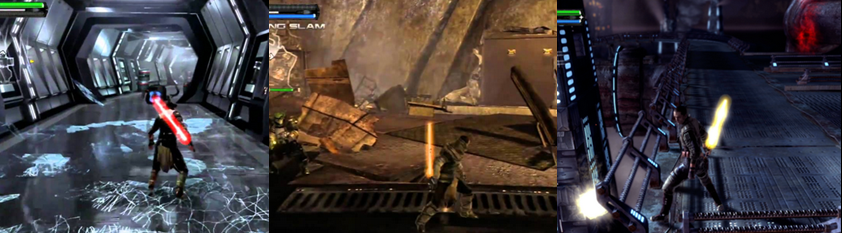
Gameplay: Like its predecessor, Star Wars: The Force Unleashed II is a third-person action title in which the player controls a clone of Vader’s secret apprentice, Starkiller. If you thought Starkiller was a damaged, edgy character torn between his divided loyalties, this clone ramps it up to eleven as duplicating Starkiller’s prowess with the Force also meant duplicating his memories and emotions. Nowhere is this more evident in the fact that Starkiller now wields duel lightsabers, holding them both behind him like an absolute bad-ass. As a result, the already frenetic combat of the original is dialled up in this sequel; whereas you could just mash away at the X button in The Force Awakens to cut down foes, it was also encouraged that you time your strikes to unleash an impressive flurry of damaging attacks. Here, though, the combo system is literally as simple as successively hitting X to turn Starkiller into a laser-sword blur of blades and attacks; regular enemies no longer have their own health bars, meaning you’re literally encouraged to just mash away until they’re defeated.
Starkiller’s Force powers are back, stronger than ever.
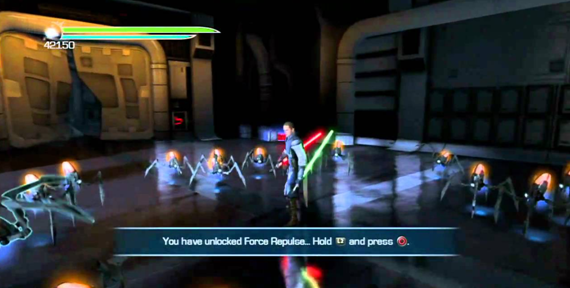
Most of Starkiller’s basic Force abilities make a return; you can fry Stromtroopers with Force Lightning, push or toss them (and objects) with Force Push and Force Grip, or blast them away with Force Repulse. The game also places far more emphasis on pressing Y or O during a lightsaber combo to deal additional damage with Force Lightning or Force Push, which is extremely useful for clearing out waves of enemies or dealing additional lightning damage. While the life-sapping Force Shield is absent, Starkiller can now use a Mind Trick to convince his enemies to turn on their comrades or leap to their deaths which, while handy (and pretty much mandatory in the game’s final battle against Vader), can be clunky; I found it either wore off too fast or enemies just shrugged it off when I applied it. as you cut down enemies, you’ll build up a meter in the bottom left of the screen; once fully charged, pressing down the two analogue sticks will send Starkiller into a “Force Rage”, which increases his attack power and resistance to injure for as long as the meter lasts (which, to be fair, is quite a while). As you cut down enemies, you’ll earn points that can be used to upgrade each of Starkiller’s abilities, similar to the last game but much simpler and more streamlined. Gone are the multiple of combos you had to purchase and you have no need to buy new Force abilities as Starkiller either remembers them or learns them as he progresses, meaning its far easier to power-up Starkiller’s abilities.
The Force Grip is now, thankfully, much easier to pull off.
Also like in the first game, you can acquire crystals to customise the appearance and abilities of Starkiller’s lightsabers; you can mix and match the different blades for added effects and bonuses, though, unfortunately, there’s no way to customise your favourite blade colour with your preferred buff. While Force abilities are still a vital part of the game, and the combat system, I found they were mostly relegated to opening doors (which I still find difficult due to the game’s physics and hit detection) and tossing objects. Thankfully, gripping TIE Fighters and lobbing various bits of the environment at your enemies is much easier here; in the original, it felt like I was always fighting to get a grip on passing TIE Fighters and that they would just go flying wherever they wanted but, here, the system is much improved.
Grapple enemies to deliver massive damage.
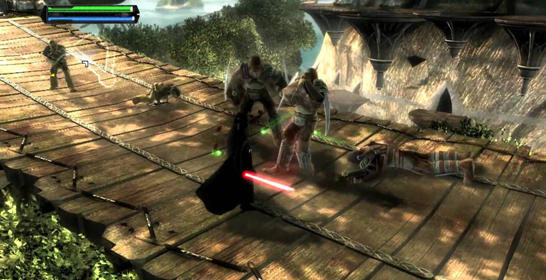
Yet, for the most part, the game’s combat is focused almost exclusively on lightsaber combat. Perhaps because the clone is so emotionally unstable, combat is fast, brutal, and frenetic; Starkiller can grapple his foes to deliver either an instant kill or massive damage; he also lops off Stromtrooper’s heads and limbs this time around and can once again leave enemies open to a devastating parry with a well-timed press of the block button. Starkiller can still hurl his lightsabers at his enemies to cut them down from a distance, too, but I actually found myself using this far less in combat as it leaves Starkiller vulnerable as he waits for his weapons to return; instead, the game mostly focuses on using this ability to cut down platforms.
Don’t let enemies overwhelm you or you’ll have a bad time.
In addition to attacking with more power and proficiency than before, Starkiller also seems to be noticeably tougher; he can still lose health rapidly when pinned down or subjected to multiple attacks but his new combat style allows him to quickly cut down those before him to refill his health and force meter. You’ll need these skills as well as the game’s enemies seem much tougher and smarter this time around; snipers blast at you from the high ground in the distance or behind waves of regular Stromtroopers, who hunker down behind cover or buzz around on jetpacks. Even the bog-standard Stromtroopers can take a beating as well, meaning you should always go for overkill when engaging with hallways filled with enemies. Speaking of which, while the game is far more linear in its environments and level layout than its predecessor, I find it amusing, then, that the game ditches a traditional map and, instead, allows you to “sense” the way you need to do with the directional-pad as it’s highly unlikely that you’ll get lost in the game’s straight-forward environments. You’ll still be tasked with performing some mandatory platforming; Starkiller can double jump and dash on the ground and in the air to cross gaps but, more often that not, you’ll probably have to use the Force in some way to create makeshift bridges.
The Force Unleashed II loves these free-fall sections.
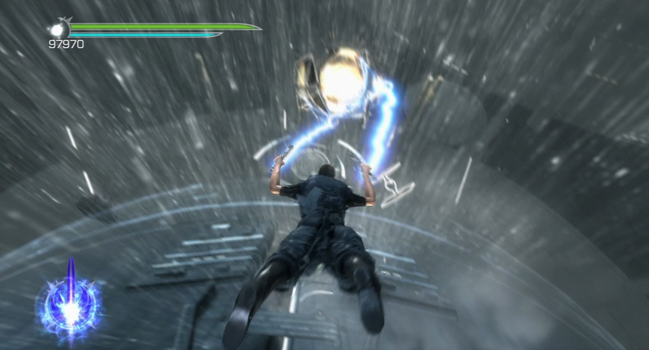
While platforming is light, it is mostly okay; Starkiller is nowhere near as slippery and janky as before and the game’s engine doesn’t seem to be struggling to render everything this time around, meaning you’re far less likely to slip or glitch off a ledge. The game does suddenly through a whole mess of tricky platforming at you when you storm Kamino’s cloning facilities in the final chapter, however, so it’s best you work on perfecting those jumps. Also as before, you’ll be tasked with performing a number of quick-time events (QTEs), especially against largely enemies and during boss battles. While these aren’t anything too complex beyond either pressing or mashing a button (or two buttons) at the right time, I found that the QTE indicators were harder to spot on the screen as they often appear at the edges of the display. There are also numerous moments where Starkiller dives through the air at high speed, dodging obstacles or blasting them (or enemies) with his Force abilities; while these are fun and exhilarating, the game maybe uses them a few too many times. Luckily, the poorly-conceived Star Destroyer section of the original is turned on its head here where Starkiller has to clear a path for a ship that is crashing through Kamino’s atmosphere, which is much improved.
My game glitched out on me, wouldn’t load this boss, and then crashed.
Luckily, the game’s stability has been noticeably improved over its predecessor; enemies no longer turn into stupid ragdolls when you defeat them or toss them around and I encountered far less glitches and issues with jumping or interacting with the environment. However, I did experience a few issues with slowdown, stuttering, and instances where the game didn’t load in the required environment or boss battle. This may have been because of the condition of my game disc, however as, after I cleaned it, the game continued to run fine but it was noticeable.
Before you know it, you’re facing off with Darth Vader and the game is over.
What really lets the game down, though, is its length and variety; I was annoyed that you revisited the same levels in The Force Unleashed and that, while the game evoked the spirit and aesthetic of Star Wars, it didn’t really do much to show us more of this sprawling, multi-cultural galaxy. For the sequel, you’ll battle through hallways-upon-hallways in many grey-coloured environments, whether it’s on a starship or the facilities on Kamino. The game tries to mix it up with some puzzle elements involving you powering up doors and visiting Cato Neimoidia (which is little more than a reskinned Geonosis) and briefly stopping by Dagobah but the majority of your time is spent exploring very similar-looking environments. Additionally, the game seems much shorter than its predecessor; I blew through the main story on the “Medium” difficulty and only missed one lightsaber crystal and with only a few Force abilities left to upgrade (easily remedied with a quick replay of some of the game’s other levels). The game’s length is so noticeably short, and its environment so conspicuously limited, that it almost feels like an extended add-on to the first game, like they took an idea for downloadable content (DLC) for The Force Awakens and simply padded it out to fill four to six hours of repetitive combat and gameplay.
Graphics and Sound: Graphically, The Force Unleashed II isn’t much of an improvement over its predecessor, either; the cutscenes are of about the same quality and the in-game graphics only seem like they have been slightly tweaked and improved. I’ll give it this, though: the game really knows how to render the interior of a starship and the storm-swept landscape of Kamino; while this may mean that the game’s overall stability and quality is noticeably improved as the game isn’t trying to render or process loads of different elements all at once, it does make for a far blander and less interesting aesthetic experience as the game never reaches the heights of the original’s run through the Death Star laser cannon.
The game looks pretty decent, for the most part.
Once again, one of the best elements of the game is the incorporation of John Williams’ iconic Star Wars tracks. While you don’t get the same exhilaration as cutting down Wookies as Darth Vader while the Imperial March plays, the use of familiar Star Wars tracks once again works extremely well with the game’s visual fidelity to the movies to make it feel as though the game and its characters are deeply entrenched in Star Wars lore.
Enemies and Bosses: For the majority of The Force Unleashed II, you’ll be cutting your way through swathes of Stromtroopers; we’ve got the generic minions, sniper and jetpack-wearing variants, and staff-wielding Riot Troopers. Despite the ease at which you can cut through these guys (the jetpackers, especially, go down much easier than in the first game), it does feel as though their intelligence, durability, and aggressiveness has been tweaked slightly to make them a bit more of a threat. Thankfully, the annoying Purge Troopers are no longer present; in there place, are a series of robotic enemies. The large variants wield shields that you must wrench off them with the Force and can attack with explosives, flamethrowers, or even carbonite sprays. You’ll also battle AT-MPs and AT-STs, both of which require to you reflect missiles back at them and, like these larger robots, can be destroying using QTEs.
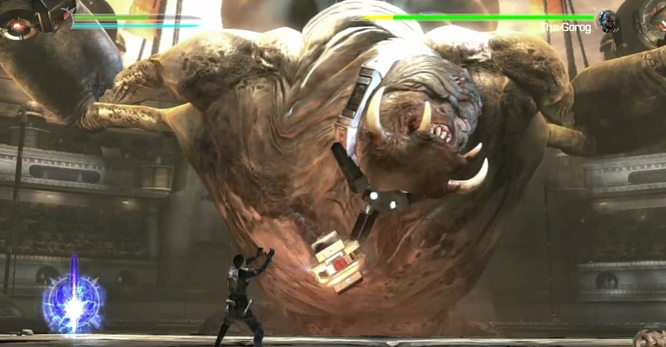
The battle against the Gorog just keeps going on and on!
The game also brings back Force-sensitive and lightsaber-wielding foes, who are resistant to your lightsaber attacks and Force abilities, respectively, though the new grapple move is very useful for breaking through their guard. You’ll also battle spider-like terror droids (who can swarm you in an instant and must be destroyed en masse with Force Repulse) and enemies who are invisible and intangible until you stun them with Force Lightning, but, beyond Stormtrooper and droid variants, that’s about it for the game’s enemies. The Force Unleashed II is also a little thin on the ground when it comes to its bosses; at one point, it seems like the game is building up to a battle against Boba Fett but this never actually occurs, which is a shame. While the first game had far more boss encounters, though they were generally all variations on the same thing but, here, there are as few bosses as there are levels. The game tries to make up for it by making the few boss battles you do have to contend with last a long time; when battling the gigantic Rancor-eating Gorog, for example, you’ll have to dodge its massive claws, charge up its shackles with Force Lightning before attacking them with your lightsaber, and then mash the B button to Force Push the creature back into its restraints. Once you sap its health, you’ll then have to blast it with Force Lightning and attack it (and a few waves of Stromtroopers) from a higher gantry in order to sever the structure holding it in place and then you’ll dive after it at high speed, zapping and slashing at it before it can crush your ally, all of which can be an extremely exhaustive experience.
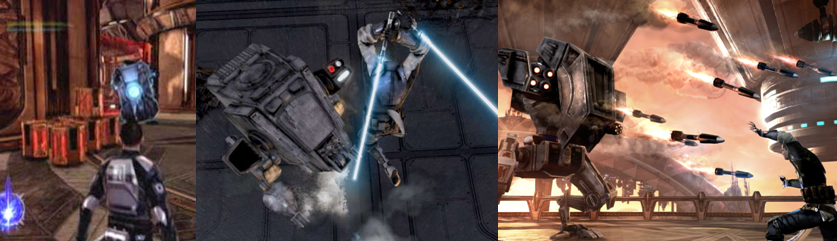
Eventually, the battle is decided by a QTE.
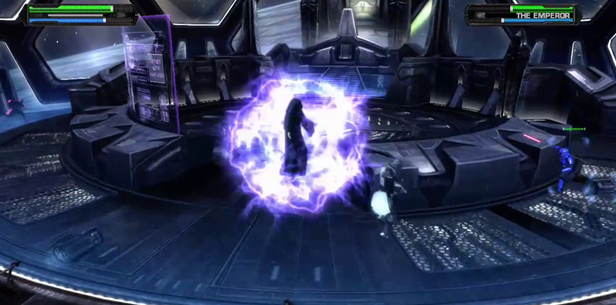
This exhaustion continues with the final bout against Darth Vader; unlike in the first game, where you could choose to battle Vader to the death or take on the Emperor at the end, The Force Unleashed II ends on an annoying multi-stage duel with the Dark Lord himself. Being so thoroughly bested by his apprentice in the first game must have really pissed Vader off, too, as he’s much more of a threat in this sequel; your Force abilities are all but useless against Vader here, requiring you to unleash your best combos against him on the rare occasions when his guard his down. Like the final duel of Star Wars: Episode I: The Phantom Menace (ibid, 1999) and the battle between Yoda (Frank Oz) and Palpatine (Ian McDiarmid) in Revenge of the Sith, this finale takes place on a vertical plane, with Starkiller and Vader having to leap to platforms across a bottomless chasm deep in Kamino’s cloning facilities. As the fight progresses, you’ll have to send debris and objects back at Vader to damage him and then use your Mind Trick to convince flawed Starkiller clones to distract and damage Vader enough for you to really open up on him. Finally, the fight ends out on a rain-soaking landing platform, similar to the fight between Obi-Wan Kenobi (Ewan McGregor) and Jango Fett (Temuera Morrison), where your Force Range will be fully powered and you’ll have to win a few QTEs to finally best Vader in combat and be able to, once again, choose between a Light Side ending and a Dark Side ending.
Power-Ups and Bonuses: as in the first game, you can pick up Jedi and Sith Holocrons hidden throughout every level; these will either give you a bunch of additional points to upgrade Starkiller’s abilities or provide you with a crystal to customise your lightsaber. These Holocrons are far easier to spot than in the first game and there’s even two additional variants, green and blue, which expand Starkiller’s health and Force meter respectively. While you can no longer acquire in-game buffs that make you invincible or the like, the different lightsaber crystals allow you to drain health from enemies, increase the replenishment of your health or Force meter, or earn more points from combat. You can also customise the lightsaber to deal additional lightning damage, possibly set enemies on fire, or even have a chance to disintegrate them entirely with the mythical Darksaber. As you play through the game, you’ll unlock additional costumes for Starkiller; you can also unlock further costumes by succeeding in the game’s “Challenge” mode and, if you have a save file from The Force Unleashed on your hard drive, you’ll gain access to three additional costumes (including the awesome Sith Stalker costume).
Additional Features: As in the first game, you can unlock concept art and data files by playing the game; you can also input various cheat codes that allow you to save you having to unlock costumes and skins such as Boba Fett, though most of the game’s best costumes are restricted to DLC. Also present is the aforementioned “Challenge” mode; as you play the game, you’ll unlock new maps and challenges to take on in this mode, which generally require you to survive against waves of enemies while staying on a platform or collecting Holocrons, all against a clock. Depending on how well you do, you’ll receive either a bronze, silver, or gold medal and unlock additional costumes. DLC is far less extensive in this game; unlike the first, there is only one additional mission available in DLC. This non-canon extension of the game’s Dark Side ending sees players assume the role of the dark clone of Starkiller, who is sent to kill Princess Leia (who has become a Jedi in this timeline) during the Battle of Endor and winds up drop-kicking Ewoks and killing both Han Solo and Chewbacca for good measure.
The Summary: For everything Star Wars: The Force Unleashed II improves from its predecessor, it has a near-equal number of failings as well. The game is far simpler; the interfaces are cleaner and easier to navigate, the plot is much more simplifier, and the combat has boiled down to a simply button masher. While this makes the game fast-paced, frenetic fun at times, it comes at the cost of the game’s length, difficulty, and replayability; the environments are even more limited than its predecessor, the plot is paper thin is the bare minimum excuse to produce a sequel, and it largely adds little to the first game or the overall Star Wars lore. Unfortunately, there’s probably less appeal in The Force Unleashed II than in the original; at least in that game, we got to see some familiar characters return and the formation of the Rebel Alliance be fleshed out but, here, we’re not really learning anything new. All this sequel shows us is that it was foolish for players to be emotionally invested in Starkiller and his new allies as even PROXY, who was clearly destroyed in the original, returns here (adding nothing to the narrative) and Juno, for all the importance the game places on her in Starkiller’s life, is little more than a damsel in distress and is never interacted with until the last moments of the game. Overall, The Force Unleashed II is far less frustrating than its predecessor but still an average gameplay experience. The developers definitely tidied up the combat and the physics but it doesn’t change the fact that this sequel is little more than an shameless cash-in n the success of The Force Unleashed. Were this game’s story condensed into a piece of DLC and its improvements and tweaks placed into The Force Unleashed, we could probably have had a really good Star Wars game but, instead, we got two lacklustre titles that, for all their potential, fail to really provide a coherent gameplay experience between them.
My Rating:
⭐⭐
Rating: 2 out of 5.
Could Be Better
What did you think abouy Star Wars: The Force Unleashed II? Did you consider it to be superior to its predecessor or were you just as unimpressed with the game’s length and variety as I was? What is your favourite Star Wars videogame (or movie, or show, or book, or whatever), if any? Either way, drop a comment below and let me know.
Released: September 2008 Developer: LucasArts Also Available For: iOS, J2ME, N-Gage, Nintendo DS, PlayStation 2, PlayStation 3, PlayStation Portable, Nintendo Wii, PC, and Mac
The Background: Before Disney bought the entire Star Wars (Various, 1977 to present) franchise and decided to reboot it with a bunch of questionablesequels, George Lucas was still firmly behind the wheel of his signature series. Development of a new Star Wars videogame began in 2004, around the time that Lucas was finishing up Star Wars: Episode III: Revenge of the Sith(ibid, 2005), and, eventually, the developers decided to work in close collaboration with Lucas in bridging the gap between that film and the seminal Star Wars: Episode IV: A New Hope(ibid, 1977). The decision was made to introduce the idea that Darth Vader had secretly been training an apprentice, known as “Starkiller”, to not only hunt down and destroy any remaining Jedi but also to assist him in overthrowing Emperor Palpatine. In service of this, Vader would use Starkiller to form the fledging Rebel Alliance, thereby effectively creating his own downfall. While these events would later be rendered non-canon after the Disney buyout, for a time they stood as the established origins of the Rebel Alliance. Personally, I haven’t really enjoyed a Star Wars videogame since Star Wars: Rogue Squadron (Factor 5/LucasArts, 1998) and have only dipped in and out of subsequent titles as the franchise has dabbled in almost every conceivably genre. I’d heard, however, that The Force Unleashed was a pretty decent title, if mired by some frustrating controls and gameplay elements. Nevertheless, distrustful of Electronic Arts and their shameless loot crates and being unwilling (read: poor) to shell out for Star Wars Jedi: Fallen Order (Respawn Entertainment, 2019) yet having a Star Wars itch, I decided to take the plunge with The Force Unleashed and see if it holds up after all this time.
The Plot: During his mission to hunt down and destroy the remaining Jedi, Darth Vader stumbles upon the son of a Jedi, whom he takes as a secret apprentice. Trained in the Dark Side of the Force, Vader’s secret assassin, Starkiller, is sent out into the galaxy to purge the Jedi and lay the foundations for Vader’s coup against the Emperor.
Gameplay: Star Wars: The Force Unleashed is, like many Star Wars videogames, a third-person action title in which the player controls Starkiller, a troubled and damaged young man who is strong with the Force and well-trained in the Sith arts. As a result, Starkiller wields a lightsaber and can use the Force in a variety of ways to strike down those before him. Combat is largely built around the execution of combos that string together successful lightsaber strikes with Force abilities. Starkiller can blast foes with Force Lightning, push or toss them (and objects) with Force Push and Force Grip, blast them away with Force Repulse, or envelop himself in a life-sapping Force Shield. As he cuts down Jedi and Stormtroopers alike, he earns experience points which can be used to unlock additional combos and improves his abilities. Luckily, there’s no crafting system and the skill tree is ridiculously easy; you can acquire crystals that will allow you to customise the look and abilities of Starkiller’s lightsaber and can improve the strength of his various attacks or regenerative abilities by spending Force Points.
Starkiller holds his lightsaber like an absolute bad-ass.
Speaking of Starkiller’s lightsaber, you know he’s a bad-ass not just because he has a no-nonsense buzzcut or a near-permanent scowl but also because he holds his lightsaber backwards! What a rebel! Holding down L2 will allow Starkiller to block incoming blaster fire and attacks (and pressing it at the right moment will also allow him to parry), though he can also automatically send bolts back to his foes as he runs along. Lightsaber combat is simple and fluid; hitting X at the right moment will initiate a fancy flourish that can be chained with subsequent attacks to deal massive damage, and Starkiller can even hurl his lightsaber like a boomerang to take out ranged foes and charge it with his Force Lightning to electrocute his enemies. It’s not all combat and tossing fools to their death with the Force, though; you’ll have your reaction time tested in more than a few quick-time events (QTEs) and Starkiller generally navigates through a limited number of largely limited, if relatively-well-realised environments, jumping and dashing his way to a series of objectives. There’s some light platforming here that requires the use of a double jump and dash, and a few extremely basic puzzles that pretty much always boil down to using the Force to move something to either cross a gap or open a door (or, sometimes, both!)
While impressive, this part is a pain in the ass.
While Starkiller controls very well, what will mess you up is the game’s wonky physics engine, unreliable camera, and janky controls; I struggled endlessly with the Force Grip, which either allowed me to suspend objects uselessly in mid air or sent them careening futilely against a wall and, as many have commented. This becomes a massive source of frustration during what should have been the game’s crowning achievement: pulling a Star Destroyer from the sky. While pulling the ship down wasn’t actually that difficult (though it is frustrating having to angle it into the right position), it’s the wave-upon-wave of TIE Fighters that make this so aggravating. Starkiller can’t deflect TIE Fighter fire and the only way to destroy them is to grab them with the Force and, I swear, it’s damn near impossible to get a grip on them.
Levels are very Star Wars but not very inspiring.
Compounding the matter is the fact that Starkiller is actually quite weak; you can upgrade his health and Force meter and the damage he can receive and dish out, but he bounces around the place like a puppet when he’s blasted with heavy weaponry and sometimes takes so long to jump back up that he can get blasted to death with very little effort. As a result, you’ll be constantly jumping and dashing about cutting down the regular Stromtroopers to refill your health and allow you to pummel away at the game’s tougher enemies. While the game is a decent length and tells a pretty engaging story about Starkiller’s eventual redemption and sacrifice, the level variety leaves a lot to be desired. Every environment feels very Star Wars and you’ll battle through a TIE Fighter factory, the woodlands of Kashyyyk, and even through the Death Star itself but the problem is that you basically revisit the same environments twice over. You begin the game as a fully-powered Vader slaughtering Wookies on Kashyyyk and later revisit this planet as Starkiller; Starkiller journeys to Raxus Prime to assassinate a Jedi and later returns there to rescue key figures of the Rebellion. Other environments, like Tatooine and Coruscant, appear as downloadable content (DLC) but it would have really helped to increase the game’s visual variety to have these levels be a part of the main story.
Graphics and Sound: Graphically, the game is…okay. The computer-generated cutscenes are well-produced but, while the in-game graphics do a serviceable enough job of rendering the game’s handful of levels and environments, they don’t make for very attractive in-game cutscenes. It also seems like the developers were desperate to cram as many different physics engines into the game as possible, from Havok to Euphoria, in order to make the game “state of the art”. However, while the enemies have relatively decent levels of intelligence (Stormtroopers just blast away but the Purge Troopers and Felucian’s systematically attack you with blocks and co-ordinated attacks) and the environments are largely intractable and destructible, the game is riddled with rag-doll physics, glitchy platforms (Starkiller is just as likely to slide off a ledge as he is to land on it), and dodgy graphical elements (the backgrounds are teeming with life and action but then some barriers and trees just disintegrate into dust and fade away).
You’ll really feel as though you are Darth Vader…for about ten minutes.
Yet, the game is filled with familiar Star Wars music and compositions based upon the works of the great John Williams. There’s something incredibly empowering about cutting Wookies down as Darth Vader while the iconic Imperial March plays and the music definitely lends a level of professionalism and quality to the game that is, generally, matched by the game’s recognisable environments.
Enemies and Bosses: The Force Unleashed is filled with all manner of enemies; while you’ll wade through legions of Stormtroopers who go down with relative ease, you’ll also come up against some of the Empire’s more advanced troops who make use of cloaking technology, gatling guns, blast you with concussive bolts from jetpacks, or erect Force-resistant shields. Then there are the enemies who use energy shields or weapons to block and parry your attacks, the likes of the Purge Troopers who grapple Starkiller and want nothing more than to bash his brains in, or the always-annoying Sniper Troopers who pick you off from a distance. Starkiller will also battle Force-sensitive enemies, like the Felucians, or those like the Emperor’s Royal Guard who wield lightsaber-like staffs and weapons and require you to break through their defences to land a combo.
Larger enemies require a bit more strategy.
Sometimes you’ll have to target a specific enemy in order to “demoralise” the other troops; this is essential as, when your enemies are bolstered by these bastards, they can kill you in short order. Starkiller will also frequently come up against AT-STs and Rancors as well; these larger enemies are often flanked by waves of smaller enemies and can whittle your health down to nothing in no time with their powerful attacks so you’ll have to make use of Starkiller’s ranged Force abilities and combos and then win at a QTE to put them down for good.
One boss battle takes place right next to a Sarlacc pit!
As for boss battles, these are pretty much all against Jedi, Sith, or similarly-Force-empowered individuals. While each of these encounters is largely the same (block or parry attacks while you wait for an opening, cut down cannon fodder to refill your health, use your Force powers to throw objects at the boss, and win a QTE), each takes place with slightly different environmental and additional hazards. You’ll duel with Shaak Ti beside a Sarlacc pit, for example, have to contend with Maris Brood’s Bull Rancor, and will have to battle simulations of not only the Jedi you’ve defeated before but also a recreation of Darth Maul when facing off with Starkiller’s droid, PROXY.
The Emperor will try your patience.
The finale of the game obviously sees you butting heads with Starkiller’s former master, Darth Vader; this is a three (or four, depending on your choice) stage fight that begins in a narrow hallway, progresses to a room where the floor is (almost literally) lava, and ends in the Emperor’s observation deck. Ironically, I found Vader to be less challenging than some of the game’s other bosses as, while he has a powerful Force blast and will choke you out of the air, it’s not actually too difficult to weather his attacks and wail on him with your best combos. After besting Vader, you’re presented with a choice to finish him off in a battle to the death (thus earning the Dark Side ending) or going one-on-one with the Emperor to achieve the Light Side ending. Rather than attacking with a lightsaber, Palpatine uses his Force Lightning to roast you alive, shields himself from your attacks, and throws lightning-charged objects at you (that also explode). This battle is more annoying than difficult as, with careful timing, you can bounce Palpatine’s lightning back at him and whittle him away with your combos as long as you can avoid or block his other attacks.
Power-Ups and Bonuses: As mentioned, you can acquire, upgrade, and purchase new combos and abilities as you play through the game and level up; by the time you confront the Emperor, you can take quite a bit of punishment, your Force meter will refill faster, and your attacks will dish out far more damage thanks not just to being upgraded but also to the new combos available to you.
Upgrade your abilities with Force points.
As you explore your environment, you can also pick up Jedi Holocrons, which will refill your health and Force meter, award Jedi points, and yield other awards (like new lightsaber crystals). With the right lightsaber crystal, your lightsaber can deal more damage or suck health from your opponents, and you’ll also unlock additional artwork, costumes, and other bonuses by finding all of the Holocrons. Starkiller can also increase his odds with one-time buffs by picking up Sith Holocrons; these will grant you with limited invincibility, refill your meters, bestow you with an aura that will drain the health from enemies, or give you an unlimited Force meter for a brief time. Against some of the game’s tougher enemies and mini bosses, these can be essential so make the effort to pick them up and take out the more annoying enemies.
Additional Features: As mentioned, you can unlock a bunch of concept art and data files by playing the game and collecting Jedi Holocrons. There are also a large number of additional costumes available for use; none of these offer any benefit beyond being cosmetic changes but they do allow you to play as other Star Wars characters, including Obi-Wan Kenobi and even C-3PO! There are three DLC missions you can also play if you bought the extra content (or the Ultimate Sith Edition); one sees Starkiller undergo a series of trials in the Jedi Temple on Coruscant while the other two take place on Tatooine and Hoth and present an alternative scenario where Starkiller replaced Vader as the Emperor’s assassin and battles some familiar faces. As standard, there are a number of Achievements to unlock; most of these are earned through regular play, while other require you to kill a certain number of enemies in different ways or play on higher difficulty settings.
The Summary: Star Wars: The Force Unleashed is, ultimately, an average experience; the combat is fast and frenetic and it’s fun to fry Stormtroopers with Force Lightning or cut AT-STs in half but the game quickly runs out of depth and steam and it isn’t long before you’ve experienced everything it has to offer. Starkiller was an interesting protagonist but the story of his redemption is, honestly, nothing we’ve never seen before in Star Wars movies or other media. It doesn’t help that he has to constantly travel through the same environments, fighting variations of the same enemies, and battling against some really dodgy physics and a camera that just loves to get stuck behind objects or jitter about the place at crucial moments. The game’s more frustrating elements really hamper the thrill of fighting through the Death Star laser cannon; battling Jedi and the iconic Sith duo is fun but also a laborious experience that generally comes down to dodging an attack and just mashing away at X like a madman until you win. Despite the fact that the game carries a large degree of sensory fidelity to the Star Wars movies and offers perhaps the best lightsaber combat I’ve experienced so far, it seems to be lacking a real polish to bring together is disparate elements into a cohesive and consistently engaging experience.
My Rating:
⭐⭐
Rating: 2 out of 5.
Could Be Better
What were your thoughts on Star Wars: The Force Unleashed? Did you also struggle with the game’s wonky physics, camera, and controls or do you consider it to not actually be that bad? What is your favourite Star Wars videogame (or movie, or show, or book, or whatever), if any? Either way, leave a comment below and let me know.
Released: March 2020 Originally Released: April 1997 Developer: Nightdive Studios Original Developer: Midway Games Also Available For: Nintenfdo 64, Nintendo Switch, PC, and PlayStation 4
The Background: Everyone knows Doom(id Software, 1993), right? The gory, action-packed first-person shooter (FPS) that has seemingly been ported to every console and format known to man and pretty much thrust the FPS genre into the mainstream? Well, if you don’t, then I envy your naivety. Doom was not only the first in a still-ongoing series of fantastic FPS games, it also kick-started a slew of brilliant FPS titles on the PC and home consoles, as well as popularising online “Deathmatches” against other human players.
Doom has been run on nearly every device, including in Doom itself!
In keeping with the fact that Doom has appeared on nearly every piece of hardware available, id Software drafted Midway Games to work on a port for the under-rated Nintendo 64. However, rather than being a straight-up, by-the-numbers conversion of Doom, Doom 64 featured entirely new levels, redesigned weapons, some new enemies, and a greater emphasis on exploration. With the release of Doom: Eternal (ibid, 2020), a game largely inspired by and related to Doom 64, Doom 64 finally saw a wider re-release on modern consoles, bringing this oft-forgotten Doom title back into the spotlight. But does it hold up to the original Doom and its sequel, Doom II: Hell on Earth (ibid, 1994), or was it better left forgotten?
The Plot: After thwarting Hell’s attempt at invading Mars and Earth, the hard-as-nails Doom Marine (or “Doomguy”) is once again forced to take up arms and journey to space stations and through Hell itself, slaughtering demons in a head-on collision with the Mother Demon herself.
Gameplay: As you should probably be aware, Doom 64 is a traditional Doom FPS through-and-through; as in the classic Doom, you control the Doomguy, a silent, no-nonsense marine who enjoys nothing more than blasting demons with a shotgun or skewing them into bloody sushi with a chainsaw. Unlike modern FPS games, aiming and precise camera control are not necessary in Doom 64; you can more left, right, straight ahead, and backwards, and those are the only directions you can shoot in. There’s also no crosshair or aiming recital; you simply point your weapon in the direction of your target, shoot, and let the game’s auto aim direct your shot.
Combat is generally as simple as: Point and shoot!
This is helpful when faced with swarms of enemies and it keeps the action fast and frantic but it can make picking off demons from a distance a bit trickier; I prefer to clear out rooms and areas first so I can explore unimpeded and this often meant to would blast at enemies hiding above or below the game’s maze-like stages. As the game seems to want you to engage demons at point-blank range, the auto aim doesn’t always shoot at enemies up above or below, making this technique tricky, to say the least. As you explore the game’s massive thirty-odd stages, you’ll be tasked with finding a number of coloured keys to open doors and progress further towards the stage exit. Generally, you’ll need three of these (blue, red, and yellow) to progress, but not always, and you’ll also find secret areas and rooms hidden behind seemingly innocuous walls.
Stages can be frustratingly confusing and maze-like at times.
While this is par for the course with Doom videogames, I don’t remember it being this necessary or difficult in Doom or Doom II; it doesn’t help that every one of Doom 64’s stages is labyrinthine in nature. This is fine in small doses but I found myself wandering around in circles in every other stage, desperately trying to figure out where to go next, and was forced to turn to a guide more than once just to find the next key…only to find it seemingly led to a dead-end room. There are a lot of hidden weapons and rooms in Doom 64 and this extends to certain switches and doors; more than once, you’ll have to press a certain switch, or switches in certain combinations, or stand in a certain place or race to a lowered platform or opened passageway before they close. I don’t mind this in principle but, more often than not, I would activate a switch and open a door or lower a platform that is outside of your viewpoint, meaning I would struggle to see where I had to go at the best of times.
You should definitely make sure you get the three Demon Keys.
Additionally, in certain stages, you can find three Demon Keys; these artefacts can only be acquired after solving some of the game’s trickier puzzles but, with them, you can upgrade the firepower and effectiveness of the game’s ultimate weapon, the “Unmaker”, and will greatly increase your chances at defeating the game’s final boss. Ultimately, Doom 64 offers a classic dose of Doom that will be new for many players, even those more than familiar with the first two games. However, I found my enjoyment of the ripping and tearing soured somewhat by the over-emphasis on exploration and puzzle solving; I find these elements ill-fitting in FPS games at the best of times and they feel especially out of place in a Doom game and incorporated simply to mix things up for those who have played Doom and Doom II to death.
Graphics and Sound: Graphically, Doom 64 looks and feels like a classic Doom title; stages are build out of three-dimensional polygons and the game’s wide variety of enemies are rendered using 2D sprites. Enemies are largely and diverse but, as always with classic Doom games, they suffer from this 2D rendering; there are very few frames of animation, meaning enemies can appear a bit jerky and pixelated. Thankfully, this doesn’t stop the blood and gore and the game’s creepy, supernatural aesthetic remaining in full force. Pentagrams, fire, and blood are everywhere, lending a creepy ambiance and horror to the game that is punctuated by the ominous (yet rocking) soundtrack that is pure Doom through and through.
Doom 64 sadly omits the classic Doom HUD.
Sadly, however, Doom 64 omits Doom’s trademark heads-up display (HUD); rather than seeing a pixelated representation of the Doomguy react in pain when hurt or grin sadistically when acquiring new weapons, you simply have numbers showing your health, armour, and ammo status. However, the game’s weapons did receive a new coat of paint and it’s always nice seeing Doomguy slot a fresh shell into the super shotgun before blasting a Cacodemon to pieces.
Enemies and Bosses: Doom 64 features all the classic Doom enemies: you’ll battle shotgun-toting zombies, fireball-spewing Imps, and the lumbering Bull Demons. There’s even a new enemy exclusive to this version, the Nightmare Imp, which is just a faster, more translucent version of the regular Imp but it’s nice to see some exclusivity to this version.
I absolutely hate these bloody things!
Doomguy also battles some more testing enemies, like the big-ass Hell Knight; the worst of which, for me, are the Pain Elementals. These disgusting, blob-like bastards spew the always-annoying flaming skulls known as Lost Souls, which quickly swarm you and drain your health in no time. Seriously, I would rather run in circles like a madman shooting rockets at a slew of Mancubuses or Barons of Hell than take on a handful of these bastards!
Before you face the Mother, you’ll endure an army of demons!
Speaking of which, you’ll often have to battle a rocket-firing Baron of Hell, Mancubus, or Arachnotron as bosses as you progress through the game’s stages but, once you’ve bested them, they’ll crop up in later stages, sometimes in twos or massive groups. In the game’s final level, “The Absolution”, you’ll have to battle through a slaughter of an endurance against an entire army of the game’s enemies, including these bosses, before you can face the Mother Demon…unless you have the three Demon Keys.
Even with the fully-powered Unmaker, the Mother is no cake-walk.
With these, you can close up the portals these enemies spew from and battle the Mother Demon with more of your health and ammo. With these artefacts, the Unmaker will be fully powered, allowing you to make short work of this final boss but, even still, she’s no cake-walk and, without the artefacts, it’s next to impossible to reach the Mother Demon with a decent amount of health, armour, or ammo.
Power-Ups and Bonuses: You begin the game with a simple pistol and the Doomguy’s patented right hand. As you explore your surroundings (or kill certain enemies), you’ll acquire ammo and additional weapons, including the shotgun, super shotgun, the chaingun, a plasma cannon, and a rocket launcher. Doom’s signature weapon, the BFG-9000, can also be found either in secret areas or in later stages of the game; this baby can be charged up and unleash an energy blast that disintegrates all onscreen enemies and makes short work of the game’s bosses. The game’s most powerful weapon, however, is the Unmaker, a demonic weapon that must be powered up with the three Demon Keys in order to cut through enemies and bosses. Ammo for this weapon, and the BFG-9000, is relatively scarce, however, so it’s advisable to only use it when absolutely necessary.
Charge up the BFG-9000 to make short work of demon scum!
Thankfully, you can still grab a chainsaw (this time, it has two blades!) to rip and tear demons into bloody pieces, which won’t cost you any ammo at all. As you explore the stages, you’ll find medikits to restore your health, various armours to increase your resistance to attack, increase your maximum and health and armour points with smaller items, and view any unexplored areas on the game’s awkward map screen. You can also grab the Berserk item to be fully healed and enter a state of rage where the damage you deal with your fists is increased exponentially, pick up a radiation shield so you can walk through lava or radioactive waste, or grab the Supercharge and Megasphere to boost your health and/or armour to their fullest, attain partial invisibility or limited invincibility, or grab a backpack to increase the amount of ammo you can hold.
Additional Features: Doom 64 features four difficulty settings, each of which affects your health, armour, ammo, and the frequency and aggressiveness of the game’s enemies. There are numerous secrets to be found in each stage, one of which is so well hidden that you’ll be destroying certain explosive barrels in a specific order in order to reach the super secret level, “Heretic”. Once you beat either this stage, or the entire game on any difficulty, you’ll unlock “The Lost Levels”, six additional stages that take the Doomguy back to hell to confront the Mother Demon’s sister (and which form the basis of a link to Doom: Eternal). In addition to this, there are a number of pretty simple Achievements to get on the Xbox One version and, as always, some passwords and cheat codes to make the game more interesting or allow you to warp to the challenging “Fun” stages (however, it is notable that you won’t get an Achievement if you have a cheat code activated).
The Summary: Doom 64 is a classic Doom experience first and foremost. At its core, its as bloody and action-packed as the classic Doom and its sequel but, because of its additional features and skewed focus, feels like a fresh experience and an entirely new game rather than a straight-up port. Unfortunately, it can’t be denied that the game’s reliance on maze-like stages, exploration, and keys to progress make the game more frustrating than it needed to be. When I’m playing Doom, I like to blast through demons in a largely linear environment; I don’t really play to think, if that makes sense, and I was forced to a guide more often than I would like for a Doom title. Yet, the game is at its best when you’re fully locked and loaded and faced with a hoard of flesh-eating demons just begging to be blown to bloody chunks.
My Rating:
⭐⭐
Rating: 2 out of 5.
Could Be Better
What are your thoughts on Doom 64? Did you play the original release on the Nintendo 64 or did you play it as part of Doom: Eternal? Which Doom is your favourite? Whatever your thoughts on Doom, or FPS games in general, leave a comment below.
Released: April 2020 Originally Released: September 1999 Developer: Capcom Original Developer: Capcom Also Available For: PC and PlayStation 4
The Background: I’ve touched upon this before but, back in 1999, Capcom were on a bit of a roll with their survival/horror franchise, Resident Evil (Various, 1996 to present). Under pressure to develop multiple Resident Evil spin-offs and sequels, Capcom ending up dividing their production team into two: one would work on a title exclusive to SEGA’s Dreamcast while another would work on Resident Evil 3: Nemesis. Although Nemesis bore a sequential number, it was, for all intents and purposes, more of an extension of Resident Evil 2 (Capcom, 1998); it ran on the same engine, reused a lot of the same locations, and its story ran concurrently with Capcom’s fantastic sequel. The game was noticeably shorter than its predecessor but bolstered by a whole slew of new control mechanics, crafting options, and the presence of the hulking Nemesis, a massive bio-organic weapon (BOW) that would relentlessly chase protagonist Jill Valentine through the zombie-infested streets of Racoon City. Pretty much immediately after the release of the Resident Evil 2(Capcom R&D Division 1, 2019) remake, fans cried out for the same treatment to be afforded to Nemesis. It turned out that they were pestering Capcom for a game that had been in development for about three years. Utilising the same RE Engine as its predecessor to realise its characters and gore in glorious high definition, Resident Evil 3 sought to present this fan favourite sequel with a whole new coat of paint.
The Plot: In the midst of a zombie outbreak in the town of Raccoon City, former Special Tactics and Rescue Service (S.T.A.R.S.) member and survivor of a similar outbreak, Jill Valentine, finds herself relentlessly pursued by Umbrella’s newest BOW, the Nemesis, as she desperately tries to escape the chaos alongside Umbrella Biohazard Countermeasure Service (U.B.C.S.) mercenary Carlos Oliveira.
Gameplay: Ostensibly, Resident Evil 3 plays pretty much exactly as its predecessor but with a few more bells and whistles. The first thing you’ll notice when choosing the play the game’s single-player story is that you only have one option available; unlike Resident Evil 2, which offered the chance to play the story from the perspective of either Leon S. Kennedy or Claire Redfield, Resident Evil 3 places you squarely into the shoes of Jill Valentine and the spotlight pretty much stays on her throughout the game’s story. Although you begin the game in a first-person perspective, this is only a fleeting addition and, instead, many of Resident Evil 2’s gameplay mechanics take precedence; you can place times into magical Item Boxes, save at Typewriters, and combine gunpowder and herbs together to craft more ammo and better healing items. Gunpowder is far more plentiful here than in its predecessor and, while a lot of the same (or similar) weapons return, there’s some new additions and upgrades here (the grenade launcher, for example, fires the traditional grenade, fire, and acid rounds once again and can thankfully fire more than one shot at a time).
Quick-time events are peppered throughout the game.
While the game is far more action-orientated than its predecessor, there’s still a few of the classic Resident Evil puzzles here that’ll have you collecting jewels, picking locks, and adjusting control panels to power up or unlock new areas. Unlike the previous game, there’s a few cheeky quick-time events (QTEs) sprinkled in here for good measure (thankfully nothing to the extent of other Resident Evil titles) that will see you pressing A and holding R1 to start and drive a car at Nemesis or holding the control stick to push levers or escape Nemesis’s tentacles.
You’ll need to master the quick step to avoid damage.
Jill controls exactly the same as Leon or Claire…for the most part. When attacked by zombies or other BOWs, you can perform a side-step by pressing R1. If performed correctly, Jill will roll out of harm’s way, time will slow down, and you’ll be afforded the chance to deliver a critical shot to the enemy’s weak spot. In order to master Resident Evil 3, especially on its higher difficulty settings, it’s basically mandatory that you get good at this dodging mechanic but I can’t say that it’s that easy. I struggled to pull off a perfect dodge at the best of times and found the mechanic to be more clunky than useful. When Jill is attacked, you’ll be prompted to mash the A button. You might be inclined to think that this is a welcome return of the shake-off mechanic from previous Resident Evil titles (and which was sorely missing from Resident Evil 2, where you were guaranteed to get hurt if you were grabbed) but you’d be wrong. Instead, mashing the A button simply lessens the damage the attack does to you rather than allowing you to shake the enemy off. If you think you can use a defensive item to escape the enemy’s clutches you’ll also be disappointed as, while all those items return in this game, you can no longer jam a grenade down a zombie’s throat, though you can blow up groups of zombies using explosive barrells or stun them by shooting electrical boxes.
Resident Evil 3 is far more action-orientated.
This was a major loss for me as these items were incredibly helpful at escaping damage and dispatching enemies in one go but there’s a good reason these have been omitted: Resident Evil 3 is far more action-orientated than its predecessor. This was true of the original game as well but, whereas that title was hampered by the franchise’s signature “tank” controls, Resident Evil 3’s vastly improved control scheme and increased focus on ammo, crafting, and engaging enemies in combat makes it far easier to take the fight to your shambling enemies rather than having to decide been fight or flight. Speaking of which, one feature that was unique to Nemesis was the ability to pick between battling the Nemesis or running from the fight. If you chose to battle it, you’d be rewarded with some upgrades for your weapons and health capacity but you’d be in for a tough fight as Nemesis didn’t go down easily. Resident Evil 3 does away with these options, meaning that, when Nemesis appears, you either dodge past it and run for your life or attack it to stun it (possibly earning yourself an upgrade or two as you go).
Nemesis can enter one save room…
Similar to Mr. X in Resident Evil 2, Nemesis pursues Jill with relentless abandon; it smashes other zombies out of the way, crosses distances in the blink of an eye, bludgeons Jill with powerful swings and slams, and grabs her with its annoying tentacles. Many reviewers and previews stressed that Nemesis would even follow you into save rooms but this isn’t actually true; it can enter one save room if you choose to run back that way but, as you’re more likely to engage with Nemesis or run away from it, it’s not likely you’ll see this in play so you can save without fear.
Carlos revisits some familiar locations…
At a couple of key moments during the game, you’ll switch to playing as Carlos, who plays a little differently to Jill. He has access to different weapons (like an assault rifle), delivers a massive punch to enemies when performing a perfect dodge (similar to Jake Muller), and explores different areas (most notably a truncated version of the police station from Resident Evil 2). Given that Nemesis was much (much) shorter than its predecessor, I was really hoping that Capcom would expand upon the story in the remake by having a separate scenario where players play as Carlos all the way through but, alas, they’ve stuck to the formula of the original game, meaning that you swap to Carlos for a brief period but will be sticking with Jill for the majority of the game. This is disappointing as, like many reviewers have noted, Resident Evil 3 is a much shorter experience than its predecessor. Considering that you have to finish Resident Evil 2 in under three hours to unlock the best weapons and perks, though, having a game that clocks in at around three to five hours (depending on how good you are) doesn’t seem that bad in retrospect. However, it can’t be denied that the game is noticeably shorter; it seems Capcom were banking on Resident Evil: Resistance, an asymmetrical-multiplayer game included with Resident Evil 3, extending the life-span of the game but, while Resistance is an interesting inclusion, dodgy connection issues and my personal lack of interest in online multiplayer make this a questionable choice.
Graphics and Sound: When I reviewed Resident Evil 2, I said that “graphically, the game has no equal right now” and those same, high-quality graphics return here. Resident Evil 3 makes fantastic use of lighting, swamping areas in a moody, unsettlingly darkness that is only lit by Jill or Carlos’ little torch or flickering lights. Resident Evil 3 is far more open than its predecessor; now, you’ll explore the streets of Raccoon City as it descends into chaos around you, entering wrecked pharmacies, restoring power to a spider-infested power plant, and breaking into a toy shop, among other things. Each area is rendered in fantastic detail and Raccoon City has never looked better; areas from the previous game are back in their full glory as well and expanded upon in a natural way. You might be blocked off from exploring the entirety of Resident Evil 2’s locations but seeing where certain previously-blocked alleyways lead or noticing familiar locations is always a thrill.
Just watch those brains splatter everywhere!
The graphics extend to the game’s enemies as well; zombies have never been gorier than in these remakes. You can blast their limbs off and expose their tendons and skulls with well-placed shots and will marvel at how truly grotesque Umbrella’s BOWs can be thanks to the game’s realistic graphics engine, which makes characters (and viscera) look more real and stomach-churning than ever. Having said that though, there were a couple of times when the graphics went a little janky; generally, when picking off zombies from a distance in larger areas, I found the enemy models were jerky and of low quality (though this did remind me of the original PlayStation titles). Of all the Resident Evil titles, I’ve played Nemesis the least so I’m not massively familiar with its soundtrack but, like in Resident Evil 2, the game opts for ominous, subdued melodies as you explore your surroundings and ramps up the tension whenever enemies (especially Nemesis) are onscreen. Seriously, when that bastard is hot on your heels with a rocket launcher, a lot of the adrenaline you’ll feel is thanks to his foreboding theme.
Enemies and Bosses: If you’ve played a Resident Evil title before, you’ll be familiar with a lot of the enemies here; some of the zombies are exactly the same as those encountered in the Resident Evil 2 remake and the annoying zombie dogs are also pretty much identical (though, thankfully, far less prevalent here). There’s some now variants, given the game’s new settings but, for the most part, you’ll be battling or dodging the same neck-munching monstrosities as before; as in the last remake, zombies can take loads of damage before they’ll go down for good. Many times, you’ll think a zombie is finally dead only to find it clambering up your leg moments later.
Some disgusting new enemies lurk around the corner…
There are some new enemies here, though; the Tremors (Underwood, 1990) inspired worm enemy from the original game is gone, replaced with the bipedal Hunter γ, a grotesque, slimy frog-like thing that will eat Jill whole if she gets too close. Notorious by their absence in Resident Evil 2, spider-like enemies crop up at that Raccoon City power plant where they slash at Jill with their spiked legs or infect her with a parasite that will, eventually, burst out of her in gory fashion. You’ll also encounter Pale Heads, naked zombies with regenerative capabilities that are best put down with acid rounds, the returning Lickers and Hunters (which dodge your fire, can rip out your throat in one swipe, and must have their protective shell blasted open before they can be put down), and Nemesis-infected zombies. These are regular zombies with big, stupid-looking globs on their heads; these globs slash at the player with tentacles and can only be destroyed when they open up and expose their glowing eye.
Nemesis eventually becomes a massive, acid-spitting monstrosity.
Throughout the game, you’ll also encounter the Nemesis; like Mr. X, Nemesis is a massive bullet sponge and capable of dealing tremendous damage, meaning it’s usually better to run from these battles (running is generally mandatory as well). Nemesis can be put down, however; if you manage to dodge its attacks and blast its power core, it will eventually drop to one knee stunned, which will give you a chance to run for it. As you battle Nemesis, it will mutate into bigger, more animalistic and uncontrollable forms; these must be fought in a series of boss battles that range from blasting a fuel tank on the monster’s back, to shooting it down from a clock tower, to powering up a gigantic rail gun to finally put Nemesis down for good. As much as I like Nemesis, part of me was always disappointed that it eventually degenerates into yet another massive glob of tentacles, glowing weak points, and sharp spikes but there’s no denying that Nemesis and its various forms greatly benefit from the fresh coat of paint this remake offers (even if its individual encounters are notably reduced).
Power-Ups and Bonuses: As you play and explore your surroundings, you’ll pick up new weapons. Jill begins with a standard handgun but soon acquires a shotgun, a grenade launcher, and a magnum; Carlos, however, starts with a handgun and an assault rifle and doesn’t get to pick up any other additional weapons. Unlike in the original, where Nemesis dropped an upgrade almost every time you put it down, here you’ll only get a couple of upgrades from defeating the creature. Other weapon upgrades can be found in safes or in other areas, allowing you to add sights, grips, and other benefits to your weapons. As you play, you’ll earn points; the better you perform, and the more of the game’s challenges you complete, the more points you’ll earn. Many of these challenges are tied to the game’s Achievements and are story based but many others are purely to unlock new concept art and models; you’ll be awarded points for killing a certain amount of enemies with certain weapons (and overall), finishing the game on higher difficulty settings, and more.
Spend your points in the Shop to get extra content.
Once you clear the game, you’ll unlock the Shop, where you can spend these points on new weapons (including a heated knife and infinite rocket launcher), a new costume for Jill, and other bonus perks like coins that regenerate your health over time or increase your strength and defence. Clearing the game on higher difficulties will also unlock other, even harder difficulty settings (Nightmare and Inferno), which will make the game more challenging and lead to more points being earned.
Additional Features: As many of the game’s unlockables are tied to the Shop, there is far less on offer here than in other Resident Evil titles. There’s no New Game+, no alternative story mode, and no additional costumes beyond the one in the Shop and the pre-order bonuses. Many of the perks and items from the Shop will make your next playthrough easier but there’s a distinct lack of replay value here as there’s not much incentive to play again as all you’ll get are Achievements. Nemesis never included side stories like Resident Evil 2 but it did include the “Mercenaries” mode; both of these are absent here as Capcom instead put all the replay incentive into Resistance. In this mode, you’ll play online with four other plays either as a Survivor or a Mastermind. The Survivors must…survive…in typical Resident Evil fashion (collecting items and ammo, solving puzzles, and battling enemies) while the Mastermind tries to obstruct and kill the Survivors from behind a security camera.
Hinder other players as the Mastermind.
I played a couple of games in each mode and found the game an interesting novelty but it’s not really my thing. For one thing, I had a lot of network and connectivity issues; two games just ended entirely and, more often than not, I kept getting warped, stuck, or glitched into the environment. I had a similar experience with the game’s obvious inspiration, Friday the 13th: The Game (IllFonic/Black Tower Studios, 2017) but, overall, I found that title to be far more stable and enjoyable. A lot of my experience with Resistance may have been tainted by my poor connection while playing and my general dislike of online games so I’m sure people who enjoy such games will find plenty to like about this additional title.
The Summary: Resident Evil 3 is a fantastic companion piece to Resident Evil 2; its predecessor was always more of an extension of Resident Evil 2, kind of like an extended piece of downloadable content (DLC), and this remake doesn’t really do much to change that. When the Resident Evil 2 remake came out, I was hoping that Capcom would merge Nemesis with the game so that, after clearing it, you’d unlock Jill and Carlos’s story and play through their side of the events as I really didn’t think Nemesis had enough content to justify a full-blown remake without massively expanding upon its narrative and gameplay. Unfortunately, this didn’t happen and it really should and could have given that Resident Evil 3 was developed pretty much alongside and immediately after Resident Evil 2 and I would have been happy to wait another year to play a combined Resident Evil 2 and 3 remake. Instead, Resident Evil 3 offers an all-too-brief, action-heavy gameplay experience that, while enjoyable to play and absolutely stunning to look at, just can’t hold up to the depth and variety of Resident Evil 2. Regrettably, it looks as though Capcom won’t be offering anywhere near the level of DLC for this game that they did for Resident Evil 2, meaning that it’s probably best if you wait for this to go on sale before picking it up.
My Rating:
⭐⭐
Rating: 2 out of 5.
Could Be Better
Did you pick up the Resident Evil 3 remake? What did you think of it? Do you agree that it was a bit lacking compared to Resident Evil 2? What are your thoughts on the original game? Which of the classic Resident Evils is your favourite? Leave a comment below and be sure to check out my ongoing review of the WildStorm Resident Evil comics for the remainder of this month.
Released: October 2018 Developer: Traveller’s Tales Also Available For: PlayStation 4, Nintendo Switch, and PC
The Background: You’ve heard of Lego, right? Those little Danish plastic blocks that you can slot together to build all kinds of shit and make you wish you were dead when you step on them? Well, some time ago (around 2014), they started producing playsets based on DC Comics characters. After the release of Lego Star Wars: The Video Game (Traveller’s Tales, 2005) laid the groundwork for what would become numerous licensed Lego videogames, Traveller’s Tales released Lego Batman: The Videogame (ibid, 2008), the first in a series of Lego-themed videogames based on DC Comics characters. Lego DC Super-Villains came hot on the heels of The Lego Batman Movie (McKay, 2017) and was a spin-off of its immediate predecessor, Lego Batman 3: Beyond Gotham (Traveller’s Tales, 2014). While the gameplay and narrative may have expanded beyond simple pantomiming in enclosed environments to fully-voiced open worlds, the core blueprint of building increasingly ridiculous Lego constructs in a DC-themed world remained unchanged.
The Plot: When the evil Justice Syndicate arrive from Earth-3, pose as superheroes, and promptly dispose of the Justice League, the super-villains of the DC Universe must join forces with a mysterious new villain in order to expose the Syndicate as frauds and reclaim their place as the world’s number one villains.
Gameplay: If you’ve ever played a Lego videogame before, you’ve played them all; gameplay is ridiculously simple and yet fun, with the games designed to be accessible to younger players and emphasising pick-up-and-play, co-operative gameplay, and simple, easy to master mechanics. The first thing you’ll do is design your own Lego supervillain from a range of available heads, costumes, and powers, which you’ll unlock more of as you play through the game’s story mode and find hidden Gold and Red Bricks. Once you have your Rookie, you’ll adventure with some of DC’s most notorious super-villains (including Harley Quinn, Lex Luthor, and Black Adam) across some of DC’s most recognisable locations (from Slaughter Swamp, to Metropolis, to the fire-pits of Apokolips).
Learn new abilities as you play through the story mode.
Gameplay couldn’t be simpler; you can attack enemies with combos, ranged weapons, energy blasts, and crowd-clearing ground pounds, or fly and flip across the skies of the game’s various open worlds, amongst many other attributes. The Rookie’s abilities can be customised as you play and his ability to absorb and learn new powers is a crucial part of the game’s amusing story mode.
There are many secrets to find in the game’s many locations.
Considering the Lego videogame formula hasn’t changed since their first Lego Star Wars videogame, there’s a lot to see and do here; every time you complete a chapter of the story mode, you unlock it for use in Free Play mode. As each environment has many hidden secrets that can only be uncovered by using characters and abilities not initially available in the story mode, this encourages a great deal of exploration and replayability if you want to find everything and earn all of the Achievements. Combat and gameplay are simple enough, and the game’s puzzles aren’t generally much to worry about; Lego DC Super-Villains’ challenge comes in the multitude of secrets hidden in the game’s multiple overworlds and individual chapters and in the vast amount of side missions on offer. You’ll be tasked with photographing goons, destroying certain objects, or collecting certain items, all to either obtain another hidden brick or unlock an extra playable character in the game’s already stacked roster.
You’ll need to build all manner of Lego toys to progress.
A crucial aspect of any Lego videogame is smashing everything in your path, collecting Lego studs, and building, building, building. Holding down B near a cluster of Lego pieces will see your character piece together all manner of Lego constructs, from weapons, to computer terminals, vehicles, and even the Flash’s Cosmic Treadmill, all of which will spew out yet more Lego studs, open up new areas, or allow you to progress further.
Everyone is represented, from the iconic to the obscure.
Collecting studs is vital to your progression; although you have a heart-based life system, you can return to the game as many times as you like after dying as long as you have enough studs. However, as they’re scattered across every inch of the Lego DC world, you’ll never be running short of these, and enemies will often drop hearts upon their defeat. Studs can also be used to purchase new characters and vehicles, both of which are essential to earning some of the game’s Achievements.
Graphics and Sound: A key aspect of all of Lego’s multimedia ventures is just how well they recreate the feeling of playing with actual Lego toys; everything in their movies, animated shorts, and videogames has some basis in reality and is either based on, or available as, an existing Lego playset.
You’ll visit some of DC’s most iconic locations.
To that end, all of the characters look and act exactly as a Lego toy would; they’re made of shiny, stiff plastic and it always feels as though you’ve just dropped a bucket of your Lego out on the floor and started playing with them. Iconic DC locales are lovingly crafted out of the iconic bricks to the point where you’re smashing your way through a dark and stormy Gotham City that evokes exactly the same sense of gloomy dread as anything produced by Rocksteady.
You’ll recognise a lot of the voices in Lego DC Super-Villains.
While early Lego videogames based on movie properties utilised the soundtrack and vocal performances of their source materials, Lego DC Super-Villains favours a largely original score and goes all-in with the quality of its voice actors. You’ve got the likes of Kevin Conroy, Clancy Brown, and Michael Ironside reprising their roles from various DC cartoons and animated movies alongside John Barrowman, Zachary Levi, and Brandon Routh voicing their respective characters from DC’s live-action television shows and movies.
Enemies and Bosses: As you journey to expose the Justice Syndicate, you’ll naturally face opposition from local law enforcement and rival goons before squaring off with members of the Justice Syndicate and the Justice League.
You’ll eventually take on Darkseid in an epic encounter!
As a result, you’ll inevitably end up in battle against the likes of Ultraman, Mazahs, Owlman, Johnny Quick, and Superwoman but you’ll also fight against Solivar, Doomsday, and the titanic New God Darkseid. Each boss battle has a unique twist, forcing you to use different abilities to break through their defences and chip away at their health.
Bosses are grandiose, but simple, affairs.
In many instances, bosses will use the environment to their advantage (such as Sea-King, who attacks with a giant octopus) or send waves of goons against you. Luckily, however, you can utilise different abilities to uncover building bricks around these environments to construct weapons and other Lego that will turn the tide in your favour.
Power-Ups and Bonuses: As you play Lego DC Super-Villains, you’ll find Gold and Red Bricks, hidden Batman-branded Minikits, and various graffiti points. Each of these, and the collecting of studs, will unlock and allow you to purchase a treasure trove of in-game modifiers which will double your stud bonus, detect secrets, enable one-hit kills, and even flash up the Batman (1966 to 1968) “Pow!” sound effects.
Some characters drastically change form to reach new areas.
Additionally, every Lego character has their own unique weapon and playstyle; some, like Clayface, can increase or decrease in size to smash through obstacles or fit through vents; others, like Livewire, can charge electrical conduits with their electricity powers. The likes of the Joker and Scarecrow can collect special items to brew up fear gas or laughing gas, respectively, while also commanding goons found in each level to form bridges or activate switches. Similarly, there are some characters, like Tigress, who can dig up hidden treasures or use their acrobatic abilities to jump across rooftops. While it would be wrong to say that no two characters play the same, as there are many who share recognisable traits, playing as Superman is a markedly different experience to playing as Chang Tzu. Add on to that the Rookie’s ability to learn and combine these different abilities and you have a lot of different options available to you to progress through the game’s story and side quests.
Additional Features: Once you clear the game’s substantial story mode, which will see you take command of various different DC villains across multiple locations, you unlock five bonus levels that are narrated by Lobo and located around Apokolips. These extra missions allow you to play as the various members of the Justice League as they battle their way to freedom out of Darkseid’s hellish homeworld. There’s also a fair amount of downloadable content on offer that adds characters and levels based on DC films like Shazam! (Sandberg, 2019) and Aquaman (Wan, 2018) and DC’s live-action shows, like Arrow (2012 to 2020) and The Flash (2014 to present), among others.
The Summary: I’ve always enjoyed the simple pleasure of the Lego videogames; they’re not exactly taxing to play through and are easy to slip right back into after years away as the fundamental basics have remained unchanged since 2005. Not only are they harmless fun to play, they’re also pretty funny; Traveller’s Tales have put a lot of work into the game’s story and dialogue and much of the game’s humour comes from genuinely funny jokes, gags, one-liners, Easter eggs, and sight-gags. Saying that, though, Lego DC Super-Villains is best played with a friend so you can easily smash your way through the story mode and side quests and uncover every hidden trinket on offer. As a solo experience, it’s serviceable enough but these are games built to be enjoyed with a friend or, more ideally, a younger sibling or a child (preferably yours…) as the challenge on offer is tailor made for a younger audience. There’s a lot to like, here, though, especially if you’re a fan of DC Comics or their animated endeavours.
My Rating:
⭐⭐
Rating: 2 out of 5.
Could Be Better
What did you think about Lego DC Super-Villains? Are you a fan of the Lego videogames or do you find the formula to be wearing a bit thin by now? Feel free to leave a comment and give me your thoughts and feedback.
Released: February 2019 Originally Released: February 2000 Developer: Capcom Production Studio 4 Also Available For: Dreamcast, PlayStation 2, GameCube, PlayStation 3, and Xbox One
The Background: After redefining the survival/horror genre with Resident Evil (Capcom, 1996), Capcom were under pressure to release ports of their popular franchise onto consoles other than Sony’s PlayStation. Unable to get a port of Resident Evil 2(ibid, 1998) for SEGA’s ill-fated Dreamcast off the ground, and with Sony claiming first-dibs on Resident Evil’s next numbered sequel, producer Shinji Mikami opted to develop two concurrent Resident Evil sequels. While Resident Evil 3: Nemesis (ibid, 1999) continued the story of Jill Valentine and was, largely, simply a side-story to Resident Evil 2, Resident Evil – Code: Veronica reunited Claire Redfield with her brother, Chris, and utilised the superior processing power of the Dreamcast to diverge what was quickly become a stale narrative formula into a more global story.
The Plot: Three months after escaping the destruction of Raccoon City, Claire Redfield is captured and imprisoned on Rockfort Island while attempting to reunite with her brother, Chris. After an outbreak of the Tyrant-Virus (T-Virus), Claire soon finds herself teaming up with a fellow inmate, Steve Burnside, and once again battling through hoards of zombies and the malevolent Umbrella Corporation’s Bio-Organic Weapons (BOWs) in a desperate attempt to survive.
Gameplay: Code: Veronica features exactly the same survival/horror gameplay as its predecessors; players once again utilise “tank controls” to navigate Claire, Steve, and Chris through a number of environments but, like in Nemesis, players can now pull back on the analogue stick while pressing A to perform a quick 180-degree turn, which makes dodging BOWs and attacks far easier.
Item management is key to your survival.
As is the tried-and-true Resident Evil formula, players must pick up files and notes to flesh out the game’s story and earn hints as well as collect and combine weapons, ammunition, key items, and healing times (herbs and first-aid sprays) in order to progress. It is crucial to your survival to be constantly aware of your environment and your resources as running out of ammo or herbs can be the difference between life and death. Players can store their items in Item Boxes, which are generally located in safe areas where players can restock and save their progress using an Ink Ribbon and a typewriter. You’ll need to make frequent use of these rooms in order to tackle the game’s puzzles, which can be as simple as moving crates and as complex as risking your life to crush a glass sphere under a massive weighted block.
You’ll get to play as this asshole a couple of times…
Unlike the first two Resident Evil’s, but almost exactly as in Nemesis, Code: Veronica sees players jump between different playable characters as they progress through the story. You begin as Claire trying to escape the zombie outbreak on Rockfort Island but also take control of the irritating Steve at one point, before switching to Chris about halfway through the game. Like in previous games, each have different skills that help them progress (Claire has a lock pick, for example) and players can choose to help out their sibling by clearing areas of enemies or leaving weapons or items behind for them to acquire.
Graphics and Sound: Unlike its predecessors, Code: Veronica ditches the classic pre-rendered backgrounds for three-dimensional environments that are rendered in real-time; this means that, while there are still some examples of fixed-camera angles, Code: Veronica features the most dynamic and cinematic camera the series had ever seen at that point. This works fantastically with the game’s incorporation of new, foreign locations for its story; while many of the game’s environments will be familiar to Resident Evil veterans (mansions, underground facilities, sewers and the like), you’ll also travel to the frozen wastelands of Antarctica and visit some gothic-inspired locales, though the “HD” makeover isn’t anywhere near as extensive as it has been in recent Resident Evil renovations.
Claire is suddenly a bullet-time bad-ass…
Thanks to the power of the Dreamcast, Code: Veronica not only features a much higher level of detail in character models, faces, and zombie details but also steps up the game’s use of CG cutscenes, which specifically portray Claire in a far more capable and tougher light than she appeared in Resident Evil 2. Just as Leon S. Kennedy jumped from a relatively competent rookie street cop in Resident Evil 2 to a martial arts superspy in Resident Evil 4 (Capcom Production Studio 4, 2005) with little in-game explanation, Claire is suddenly dodging bullets (from a helicopter, no less!) and performing grandiose, bullet-time actions. The game also features a foreboding soundtrack that echoes those of its predecessors; a lot of the time, areas are devoid of music, meaning all you can hear is the shuffle of rotting feet, the moaning of zombies, or the ominous growling of some unspeakable mutation. Subtle, soothing tunes let you know when you’re in a safe area and the dramatic score kicks in as monsters attack and dies down once they’re defeated, which is all standard fair for these early Resident Evil titles.
Enemies and Bosses: Code: Veronica features a lot of the standard enemies you’ve come to expect from a Resident Evil title; you’ll mainly encounter rotting, bloody zombies who shuffle about, claw along the floor, or burst through windows in their droves. There’s possibly the most variety in the zombies’ appearance here, though, as there’s reanimated corpses from a cemetery, naked zombies in a sauna, zombies with little worker hats, vomiting zombies, frozen zombies, and even zombies with glowing eyes like Albert Wesker. Speaking of which, Code: Veronica inexplicably returned Wesker to the series after he was skewered into ribbons of bloody flesh in the first Resident Evil; while you don’t get to fight Wesker here, he is heavily involved in the game’s plot, which revolves around Alfred and Alexia Ashford developing a new T-Virus strain.
I’m seeing a few similarities here…
The T-Veronica Virus offers a variety of additional BOWs for players to contend with; some will be familiar, like the deadly Hunters and giant spiders, and others are new, like the Tremors (Underwood, 1990) inspired Gulp Worm and Code: Veronica’s most persistent new enemy, the Bandersnatch, which can grab you from afar with its stretchy, clawed arms and will leap and haul tiself around the environment to get at you.
Good luck hitting this fucking thing!
You’ll also battle some messed up, multi-formed bosses that owe more than a small debt to John Carpenter’s The Thing (Carpenter, 1982); there’s a particularly gruelling close-quarters fight with a Tyrant in a plane, the blind, spider-limbed Nosferatu (who can swipe you right off a helipad and must be awkwardly shot at with a sniper rifle during a blizzard), Steve’s transformation into a hulking, axe-wielding frog-like creature that can only be ran from, and Alexia’s mutation from an insectile creature that flings flaming blood at you, bulges out into a grotesque, bug-spewing monstrosity, and finally ends up as a dragonfly-like annoyance that will take not only your best weapons (usually the Magnum) but also the unwieldy Linear Launcher to defeat.
Power-Ups and Bonuses: In true Resident Evil fashion, you can find additional and more powerful weapons as you play and explore your environments; both Chris and Claire can obtain an assault rifle, dual-wield submachine guns, the go-to fan favourite shotgun, and a grenade launcher with four different types of ammo while also being able to upgrade their base pistol to a burst fire mode or improve its power, respectively.
Additional Features: Players can unlock a couple of bonuses through gameplay. Completing the game unlocks “Battle Mode”, a time attack survival mode where you must battle hordes of enemies with infinite ammo and lets you pick between third- and first-person perspectives. You can unlock not only Steve but also Wesker for use in this mode and, as you might expect, finishing the game with an S-rank unlocks an infinite rocket launcher for your use. There’s also a handful of Achievements you can attain but, as this was originally an Xbox 360 title, they’re mostly tied to gameplay progression rather than Easter eggs or obscure actions on the player’s part.
The Summary: Resident Evil – Code: Veronica X is about as classic a Resident Evil title as you can get; it hits all of the beats you would expect from Capcom’s survival/horror franchise while also expanding its scope beyond the confines of Raccoon City for the first time. Narratively, this is also where the series begins to kind of fall of a cliff as the plot suddenly becomes far more dense, layered, and convoluted and shifts towards a focus on Wesker’s evil ambitions and away from a faceless corporation’s machinations. Yet, for as good as it is, Code: Veronica doesn’t really offer anything new; despite the benefits offered by the Dreamcast, the game is firmly entrapped in the gameplay mechanics and restrictions of the series, meaning that it’s more a case of the same-old, same-old rather than offering the fresh take on the series we’d see in Resident Evil 4. However, for those (like me) who were disappointed with the brevity of Resident Evil 3: Nemesis and like jumping back into a traditional survival/horror title, there’s enough here to sustain your interest and engagement, though you’ll most likely soon forget the experience once you jump to one of its successor titles.
My Rating:
⭐⭐
Rating: 2 out of 5.
Could Be Better
What are your thoughts on Resident Evil – Code: Veronica X? Did you play the original Dreamcast title or, like me, discover it through one of its many ports? Would you like to see an HD remaster of this title as well or do you think that it’s best left as it is? Sound off in the comments and come back for more Resident Evil content coming soon.
Released: May 2015 Developer: CD Projekt Red Also Available For: PlayStation 4, PC, and Nintendo Switch
A Brief Background: So, I’d heard of The Witcher III: Wild Hunt for a while now; my Twitter feed was full of praise for the game for some time and, even now, it crops up as being a really good, immersive combat/role-playing experience. Similarly, I’ve heard nothing but praise for the Netflix series, The Witcher (2019 to present), particularly for its portrayal of main character Geralt of Rivia (Henry Cavill), its violence, and its sex scenes. Given that I’m currently in lockdown due to the fact that the world has gone mad, I’ve started watching The Witcher and, while I’m only about six episodes in, I’ve liked what I’ve seen so far. With all that in mind, and at the urging of many of my peers, I decided to download The Witcher III: Wild Hunt as it’s currently on Xbox Game Pass. However, because I have a massive backlog at the moment and still have work to do at home, I can’t devote my entire focus to the game so I’m just going to briefly talk though my initial impressions of the game and leave it up to you guys to decide if I should make the time to continue playing.
First Impressions: One of the reasons I hesitated to play The Witcher III: Wild Hunt sooner was simply that fact that I hadn’t played the previous games, am not familiar with The Witcher (Sapkowski, 1993 to 2013) series of fantasy novels, and I don’t really have the time to immerse myself fully into a layered role-playing experience. I should stress that I have only played about an hour or so of the game, and was skipping through the impressively-realised cutscenes in order to get straight to the gameplay but, from what I pieced together Geralt is a mutated monster-hunter, a Witcher, who is on a quest to located his adopted daughter, Ciri. From what I experienced, it seems the narrative jumps from a time in Geralt’s past (which acts as a convenient tutorial for the game’s mechanics) and a more tumultuous time in the present, where Geralt is far more cold and stoic.
The Witcher III has some impressive aesthetics, and Geralt certainly has a lot of options in combat.
Geralt can use his enhanced senses to scan his environment and interact with other characters and objects, this is necessary to find loot and other useful items that can be used to heal Geralt or crafted in what I am assuming is quite a layered crafting system. Combat is a simple, yet surprisingly complex affair; Geralt can target an enemy and attack with his sword using light and strong swipes. He can block and, with successful timing, parry incoming attacks and also use both throwing weapons (like bombs) and a range of magic (known as Signs) to protect himself or attack his enemies. Soon after completing the tutorial (which involved a bit of free-running around a town, where I accidentally leapt off too high a ledge and died…), you skip ahead in time and take control of a more seasoned Geralt, who is accompanied by his fellow Witcher, Vesemir. This is where you learn how to control Geralt’s horse, Roach, which looks to be your primary mode of transport, and battle monsters that roam the world map on your way to the first town, White Orchard, where you can visit a shop to sell and purchase items, take on various side quests, and interact with other characters using the game’s intricate dialogue wheel.
My Progression: As I said, I only played for about an hour and, even then, I was rushing a bit as I was pushed for time. I literally made it to White Orchard, popped into a tavern, saved my game, and had to stop playing. However, even in that brief bit of time, it is clear how large and sprawling the scope of The Witcher III: Wild Hunt is; not only do you have multiple options to pick from when talking to other characters, but there are many side quests and additional concerns that crop up as you pursue the main story mode and also a lot to occupy yourself with in terms of crafting and item management. One thing I did like was the non-playable characters will react differently to you whether your sword is sheathed or not; during the tutorial, it was a sign that I wanted to spar and, in White Orchard, townsfolk would flee as I slaughtered their chickens and cows. Clearly, there’s a lot to get to grips with in The Witcher III: Wild Hunt and it’s not really a videogame geared towards a casual player or a quick run-through, as I did here. I’ve hardly scratched the surface of what the game has to offer and I’m already intimidated and, considering I have quite a backlog to work through, I’m not sure that I’ll be returning to Geralt’s adventures any time soon.
What do you think of The Witcher III: Wild Hunt, and The Witcher series? Would you recommend putting the hours into mastering everything this game has to offer or do you feel that it was a bit over-rated? Whatever you think let me know in the comments.
You must be logged in to post a comment.