Movie Night: Wonder Woman 1984

Released: 16 December 2020
Director: Patty Jenkins
Distributor:
Warner Bros. Pictures
Budget:
$200 million
Stars:
Gal Gadot, Chris Pine, Kristen Wiig, Pedro Pascal, and Connie Nielsen

The Plot:
Decades after losing her former love, Steve Trevor (Pine), during the First World War, Princess Diana of Themyscira (Gadot) works at the Smithsonian Institution while covertly helping others in her guise as Wonder Woman. After befriending shy geologist and cryptozoologist Barbara Ann Minerva (Wiig), both Diana and her friend find themselves forever changed when business tycoon Maxwell Lorenzano/Max Lord acquires a mystical artefact, the “Dreamstone”, and begins bringing people’s deepest wishes to life.

The Background:
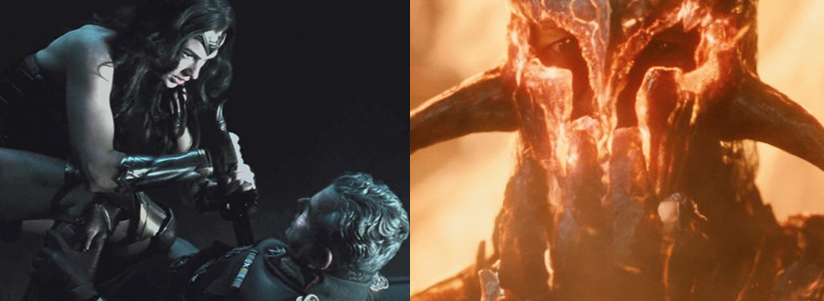
Following her creation by psychologist William Moulton Marston, Wonder Woman has been a firm staple of DC Comics and an influential feminist icon. Wonder Woman achieved mainstream success as a pop culture icon following Lynda Carter’s portrayal of the character in the 1970s and she finally proved to be a massive critical and commercial box office success with the release of Wonder Woman (ibid, 2017). Although the DC Extended Universe (DCEU) was in flux following the poor reception of Justice League (Whedon/Snyder, 2017), production of a Wonder Woman sequel was officially announced in 2017, with both stars Gadot and Pine and director Jenkins set to return. Rather than produce a direct sequel,Wonder Woman 1984 (or simply WW84) jumped ahead to another unexplored period in the character’s long history, the 1980s, to capitalise on the recent interest in the decade. The film’s release was hampered by the COVID-19 pandemic but WW84 finally saw the light of day at the end of 2020, where it was met with a lukewarm and underwhelming critical response. This, coupled with its limited release, meant the film massively underperformed and brought in only $166.4 million at the box office; however, while many criticised certain narrative elements of the film, Gadot’s performance was praised as a highlight and a third entry in the franchise is was greenlit soon after the film’s release.

The Review:
Like the first film, WW84 begins with Diana narrating a flashback to her childhood where, as a girl (Lilly Aspell) on the island of Themyscira, she competes in a gruelling obstacle course. Although she’s able to hold her own for the most part, she is knocked from her horse at a crucial moment and, in order to catch up, opts to take a shortcut and, as a result, is penalised and reprimanded by her aunt and mentor, Antiope (Robin Wright), who teaches her a valuable lesson that forms the basis for the film’s main theme: that she must be honest and true to herself and that she must have patience in order to succeed in life.

Despite claiming to have left the man’s world, Diana is covertly saving lives in 1984.

Despite claiming to have walked away from man’s world for a hundred years after Steve Trevor’s death, Diana is living and working in Washington, D.C. and we’re reintroduced to her as she performs various heroic deeds as Wonder Woman in an amusingly edited montage that is both bright and vibrant thanks to the excess of the eighties and comically exaggerated in a way that recalls Superman (Donner, 1978). Although Diana makes an effort to destroy security cameras and move quickly to largely avoid being seen, she does appear in full costume in the middle of a shopping mall in front of numerous witnesses, though the film does make a point to show that her identity is unknown. Still, regardless of the continuity blip this causes (it’s hard to imagine Bruce Wayne/Batman (Ben Affleck) wouldn’t have been somewhat aware of Diana before he first encountered her judging by this film’s events), it’s a fun and exciting way to be reintroduce to Diana that is immediately offset by the emotion of seeing that she’s largely closed off from the wider world.

The insecure and shy Barbara instantly idolises Diana.

Thanks to brief shots of photographs in her apartment, we see that Diana continued to maintain a friendship with Etta Candy (Lucy Davis) and ties with Steve Trevor but is, otherwise, quite a lonely individual. In this regard, she meets a kindred spirit in Barbara Minerva, a quirky, social inept, and insecure geologist who is largely ignored by her co-workers and those around her. Barbara is excited when Diana actually gives her the time of day and the two bond over their interest in history; the two quickly form a friendship, filling the gaps in each other’s lives, and Barbara comes to idolise Diana for being everything she wishes to be.

Max Lord is a charismatic con man obsessed with obtaining power and the Dreamstone.

After foiling a robbery in the film’s opening, Barbara is asked to examine an artefact that was recovered, which claims to be a wish-granted stone, the Dreamstone. Although both are sceptical about this, the stone’s powers turn out to be genuine when Barbara wishes to “be like” Diana and wakes up the next day to find herself suddenly noticed by others, slipping into sexier clothing, and her fortunes generally turning for the better. Sadly, however, her insecurities remain the same and she is easily tricked by the film’s main antagonist is Max Lord, into allowing him to steal the stone for himself. Lord, a prominent figure in DC Comics and, here, is portrayed as a charismatic and silver-tongued oil tycoon and enigmatic television personality who appears to be another corporate, suit-wearing industrialist. Behind his public façade, however, is a is a con man whose oil business is slowly falling apart around him, whose debts are being called in, and who desperately wishes to make his son, Alistair (Lucian Perez) proud of him.

Diana unwittingly wishes Steve back to life and the two pick up right where they left off.

Another consequence of Barbara’s wish is that she develops superhuman strength and agility, just like Diana has, while Lord does the natural thing and wishes to embody its powers, thus turning his fortunes around overnight. The stone’s powers also have a startling affect on Diana when she unknowingly wishes for Steve Trevor to be resurrected; the stone accomplishes this by having his spirit inhabit the body of another man (Kristoffer Polaha). Overjoyed at being reunited with him, Diana and Steve immediately pick up where they left off and, despite how awkward it is for Diana to be taking advantage of a random stranger, this allows the film to present the reverse of the first movie’s concept. Now, Steve is the fish out of water, confused and puzzled by “the future” he has returned to, and it is Diana who has to guide him through navigating the world and the garish style of the eighties.

The Dreamstone’s powers come at a price, weakening the character’s physical and mental health.

Perturbed by the stone’s powers, Diana and Steve set out to investigate it; while Barbara begins to revel in her newfound confidence, abilities, and popularity, possessing the stone’s powers turn Lord into an influential, Donald Trump-like figure and Diana is horrified to discover that the Dreamstone is a construct of the Gods, specifically Mendacius, the “Duke of Deception”. Like all good things, the stone’s powers come at a cost; Diana finds her superhuman abilities beginning to wane, Max’s mind and body starts to deteriorate from the immense power, and Barbara slowly loses her humanity until she eventually transforms entirely into the cat-like Cheetah. The only way to reverse the damage is for them tor enounce their wishes, something none of them are willing to do at first since it would mean losing everything they have desired for so long

The Nitty-Gritty:
WW84 is a much more character-driven film that it’s predecessor; much of the runtime is spent exploring Diana and Steve’s renewed relationship, acclimatising him to the then-modern world, and rekindling their passion. Thankfully, Gadot and Pine still make for a charismatic and engaging duo and the two gel really well together as equals but it can’t be denied that things would have been much less awkward if the stone had literally returned Steve to life rather than having him possess an unassuming stranger’s body Quantum Leap (1989 to 1993) style.

Diana is forced to let Steve go once again in order to put a stop to Lord’s carnage.

Still, on the one hand, spending so much time on Diana and Steve’s relationship does help to further develop her character; she’s clearly still grieving his loss, even after all these years, and doesn’t have much of a social life, though she still uses her abilities to help others as covertly as possible. She forms a real bond with Barbara, perhaps the first real friendship she’s had in some time, and is elated to be reunited with Steve. Her character arc in this film is learning to rediscover her humanity, somewhat, and to let go of the past, something we know from Batman v Superman: Dawn of Justice (Snyder, 2016) that she doesn’t really do after these events but it’s still wonderfully realised here as Diana applies the lesson she learned as a child to her current situation and, however reluctantly, renounces her wish to regain her strength and put the world to rights after Lord’s actions cause worldwide upheaval.

When the action does kick in, it’s exhilarating and thrilling.

This has a detrimental effect on Lord, who begins to suffer more and more physical pain and consequences for playing Wishmaster (Kurtzman, 1997); driven to desperation, he finds himself unable to stop granting wishes and tries to restore himself by absorbing the energy of others, plunging the world into chaos in the process. Ultimately, rather than engaging him in a fist fight, Diana is able to convince him to renounce his abilities after forcing him to relive his own unhappy childhood and reconnect with his son. That’s not to say that WW84 doesn’t have its fair share of action; the opening sequence in the mall is a lot of fun and Diana’s attempt to chase down Max Lord in Egypt seems to be a homage to the seventies show, and Diana’s lasso-based fight scene in the White House was very thrilling, but the scene-stealing sequence is the moment when Diana dramatically swings her way through the storm-swept sky by lassoing onto lighting!

Diana dons ceremonial armour to battle Cheetah in the film’s finale.

Diana’s journey in WW84 is one of gaining strength from these decisions; she demonstrates the ability to turn a jet invisible, acquires the golden armour of Asteria (Lynda Carter), and gains the ability to fly (to the stirring chords of “Adagio in D Minor”) after renouncing her wish and regaining her full powers. This comes in handy for her big showdown with Cheetah; earlier, Cheetah had been able to defeat Diana since her powers were fading, which helped to showcase Barbara as a physical threat to Diana. Drunk on the power and freedom offered by the stone’s powers, Barbara becomes a formidable and fierce adversary and a far cry from the meek character she was at the start of the film. Unfortunately, Cheetah kind of lets the film down a bit in the effects department; even though her fight with Diana takes place in the murkiness of night, the CGI is quite wonky, which is a shame as the practical effects look pretty good. Still, it’s a thrilling climax to the film, which even goes a long way to showing Diana’s compassion as she chooses to save Barbara and even Max rather than just kill them.

The Summary:
Wonder Woman 1984 is a curious film; rather than being bigger and better than the original, it opts to tell a more dramatic, character-based story that focuses more on Diana coping with her grief and loss and learning to let go of the past rather than being a bombastic, action-packed sequel. This is pretty good for Diana’s character development; it’s clear that she is overjoyed to have Steve returned to her and torn between wanting to be with him even if it means leaving the world to its fate and seeing her step into the role of a full-blown hero and saviour is very gratifying. The twist of Steve being the fish out of water this time around was interesting but, at the same time, could potentially have been handled differently or excised entirely in some ways, and I was surprised to find that Barbara’s “geeky, quirky, obsessed” character cliché wasn’t as annoying or aggravating as in other superhero films; it’s perfectly suited to Wiig’s strengths and she pulled off the character’s descent into villainy really well. Thanks to his charisma and magnetism, Pascal successfully walked the fine line between being a scenery chewing character and a cartoonish villain and it was great to see Pine and Gadot’s chemistry back in action. My only real gripes with the film were its length (and even that wasn’t that big a deal as I was interested throughout) and some continuity hiccups with the larger DCEU but, considering the mess the DCEU has become since then, I think I can forgive it and would say WW84 manages to be just as enjoyable as the first film while still mixing things up with its presentation and narrative.

My Rating:

Rating: 4 out of 5.

Great Stuff

What are your thoughts on Wonder Woman 1984? How do you feel it compared to the first film and were you disappointed by it? Were you happy to see Chris Pine return and what did you think to Diana’s character arc in this film? Were you a fan of Max Lord and Cheetah? What are your thoughts on WW84’s placement in the wider DCEU?What are some of your favourite Wonder Woman stories, characters, and moments? How are did you celebrate Wonder Woman Day this year? Whatever your thoughts on Wonder Woman, drop a comment down below.

Movie Night: Wonder Woman

Released: 15 May 2017
Director: Patty Jenkins
Distributor:
Warner Bros. Pictures
Budget:
$120 to 150 million
Stars:
Gal Gadot, Chris Pine, Danny Huston, Elena Anaya, Connie Nielsen, Lucy Davis, and David Thewlis

The Plot:
Before taking the mantle of Wonder Woman, Princess Diana of Themyscira (Gadot) was an Amazonian warrior raised in seclusion on an island paradise. However, when American pilot Steve Trevor (Pine) crashes on their shores and brings awareness of a worldwide conflict, Diana finds herself compelled to leave her home and take up arms in a bid to destroy the God she believes is responsible.

The Background:
Created by psychologist William Moulton Marston to be a symbol of the superiority of the female gender, Princess Diana of Themyscira/Wonder Woman has been a firm staple of DC Comics since her debut appearance in All Star Comics #8. With her origins heavily drawing from Greek mythology, Wonder Woman has been portrayed as a warrior and an ambassador for peace and, alongside Clark Kent/Superman and Bruce Wayne/Batman, makes up DC’s “Trinity” as a prominent figure on DC’s super teams, the Justice Society and Justice League of America. Wonder Woman’s popularity has spread outside of the comic books, too; Lynda Carter famously portrayed the character in the seventies television show, cementing Wonder Woman as a pop culture icon, and a big screen live-action adaptation had been wallowing in development hell for decades before Gal Gadot made her first surprise appearance in Batman v Superman: Dawn of Justice (Snyder, 2016). Following that dramatic debut, production of a solo film for the character that would act as a prequel to the larger DC Extended Universe (DCEU) finally got underway and released to widespread critical acclaim. The film was also a massive box office success and made over $820 million in worldwide revenue, which all-but-guaranteed the production of a sequel, and galvanised the character as a feminist icon for an entirely new generation. Since tomorrow is “Wonder Woman Day”, this seems like as good a time as any to shine a spotlight on one of DC Comics’ most popular and influential characters.

The Review:
Wonder Woman begins in the present day, between the end of Batman v Superman and the start of Justice League (Whedon/Snyder, 2017), and is framed by Diana’s narration concerning her past after having a photograph of her time in the First World War sent back to her by Bruce Wayne (Ben Affleck). From there, the film flashes back over a hundred years into the past and to the secluded island paradise of Themyscira where we see a young Diana (Lilly Aspell), emulating the ways of her warrior sisters and yearning to begin her training as a warrior. Diana’s mother, Queen Hippolyta (Nielsen) is vehemently against Diana becoming a fighter; instead she wishes that Diana would be better served learning the ways of peace and tolerance. To emphasise the foils of war and conflict, she tells Diana a harrowing story of Zeus’s son, the warmongering Areas, influencing the hearts and minds of man into bloodshed and his subsequent slaughter of the Greek pantheon. After defeating Ares, Zeus created Themyscira with his dying breath to shield them from the outside world so that their natural ways of peace and love could prosper far away from the easily manipulated ravages of Man.

Diana’s curiosity at Steve’s presence turns to rage when German forces kill her aunt.

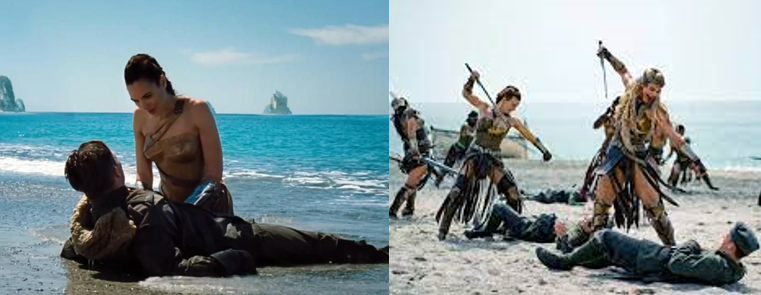
Hippolyta also shows Diana the ancient sword, Godkiller, a weapon only the fiercest of Amazons could hope to wield. Despite her mother’s wishes, the young Diana (Emily Carey) is inspired by the stories of battle and glory and secretly trains with her aunt Antiope (Robin Wright) in the ways of the warrior. Antiope is finally able to convince Hippolyta to train Diana “harder than any Amazon before her” to make her powerful enough to stand against Ares when he inevitably finds her. However, while Diana (now played by the gorgeous Gadot) becomes a fierce warrior thanks to this rigorous training, her powers (mainly tied to her magical gauntlets) make her unpredictable and dangerous. It is while lamenting these issues that Diana rescues Steve Trevor after his plane crash-lands in the waters around Themyscira; this action not only brings a man onto the hidden island for the first time since its creation (which is of immediate curiosity and interest to Diana) but also the greater worldwide conflict currently gripping the globe as German forces invade Themyscira in pursuit of Steve. Although the Amazonians fend off and defeat the invaders, they suffer heavy losses thanks to the German artillery and, in the battle, Diana’s beloved aunt Antiope is killed. It’s a great scene to showcase the warrior ways of the Amazons and their incredible prowess with swords, bows and arrows, and to give Diana a personal reason to leave the island and get involved in the War, while also showcasing that, as powerful and skilled as the Amazons and even Diana are, they are not invulnerable.

Diana is puzzled by “man’s world” and the film’s comedy comes from her being an outsider.

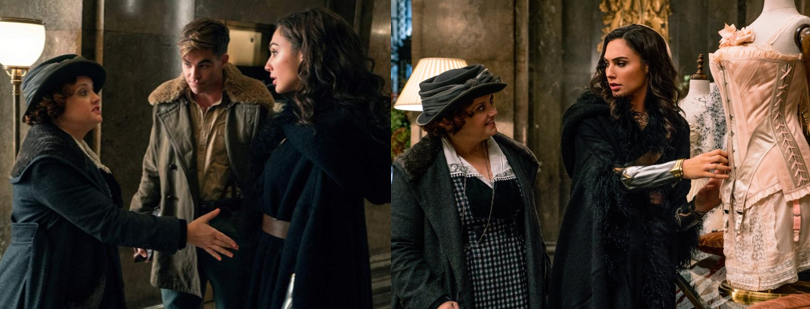
Angered at Steve’s presence and the invasion of men, Hippolyta interrogates him using the magical Lasso of Hestia, which compels him to reveal the truth; in the process, and despite attempting to resist, he reveals that he is a spy for the Allied Forces who discovered a plot by General Erich Ludendorff (Huston) to develop a potent and deadly new strain of mustard gas using the research of the disfigured Doctor Isabel Maru/Doctor Poison (Anaya). This story not only establishes the film’s two main antagonist but also Steve’s conviction and bravery as he goes against his orders to steal Maru’s notebook to warn the Allies of Maru’s weapons. Convinced that this World War is the product of Ares’ return, Diana defies her mother’s wishes once more and arms herself with the Godkiller sword, ceremonial armour, and the magical lasso to accompany Steve back to London. This gives the film a chance to be a bit more playful as Diana is a fish out of water in the modern world; confused and intrigued by men, their society and their ways, she’s puzzled by the simplest of things (watches, ice creams, consumerism, romance, vehicles, revolving doors, and the like) and her interactions with Etta Candy (Davis) really give Gadot a chance to shine and add some depth and personality to Diana’s character. She’s a character of great love, curiosity, and conviction but also naivety; even on Themyscira she is something of an outsider, believing fully in the Amazons’ destiny to defend the world from evil and stop Areas, and her character development includes not just becoming wiser in the world of man but also in the ways of her own world and she is forced to learn, the hard way, that the world’s conflicts are far more complicated than the machinations of one singular being, even a God like Ares.

Steve Trevor has seen a lot in his time and is focused on the big picture.

Steve is similarly intrigued by Diana; obviously, he has a near-instant attraction to her (and, truth be told, she to him) and marvels at her island and her convictions but, as charming and charismatic as he is, he is also somewhat world-weary. Having witnessed first-hand the atrocities of war and the folly of man, he believes that all people are capable of unspeakable acts out of their pure nature rather than the influence of a supernatural being, which is a harsh lesson he is forced to teach Diana. Similarly, Diana is disturbed by Steve’s focus on the big picture and adherence to staying on mission, which leaves innocents suffering the cost of the war, but his reasons are perfectly valid and believable: the War is horrendous and brutal and his focus cannot be on saving every single person, only trying to stop the most direct threat and he remains a likable and appealing character thanks to Pine’s fantastic charisma and onscreen chemistry with Gadot and, even in the face of Diana’s amazing abilities he is able to hold his own as a soldier and a hero.

Lundendorff and Maru are real threats but war-time politics are also an obstacle.

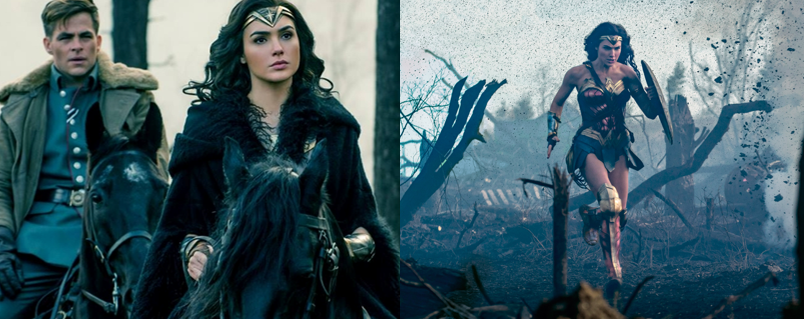
Similarly, Huston is as captivating as always in the role of Ludendorff, a brutal German general who enforces his will through strict corporal punishment and high expectations. Thanks to Mau’s potions and elixirs, he is granted a degree of superhuman strength and heightened aggression and Maru herself is a sadistic and hideously alluring villain whose experiments with chemistry produce a gas capable not just of choking the life out of those exposed to it but also eating through protective gear like gas masks. As real and credible as their combined threat is, however, it is the politics of war and society that prove the greatest hurdle in the early going as Sir Patrick Morgan (Thewlis) and others in the upper echelon are more concerned with agreeing an armistice with the Germans than proactively moving against them. Interestingly, the German forces are depicted as desperate, running low on resources, and on the verge of agreeing to the armistice and, disgusted by their weakness and unable to simply give up on the conflict, Ludendorff assassinates them in order to strike his decisive blow against the Allies. This leads to Steve recruiting a rag-tag team of misfits to head to the Front Line and take out Ludendorff’s chemical facilities; despite them being a little rough around the edges, his group is made up of some colourful characters: Sameer (Saïd Taghmaoui), a smooth-talking French spy; Charlie (Ewen Bremner), an expert sharpshooter with a drinking problem and traumatised by his experiences in war; and the Native American smuggler Chief Napi (Eugene Brave Rock), who initially refuses to take sides in the War given everything his people lost colonisers. With these allies, and surreptitious assistance from Morgan, they are able to reach the Western Front for one of the film’s breakout sequences: with the Allies pinned down by gunfire, Diana boldly steps into No Man’s Land to deflect the gunfire and take the enemy trench and, in the process, not only liberate a village from the Germans but also share an intimate moment with Steve.

The Nitty-Gritty:
One of the most memorable aspects of Wonder Woman’s debut in Batman v Superman was her stirring orchestral theme, which her solo movie beautifully expands upon to turn it from a bad-ass battle theme into a rousing, heroic melody that punctuates Diana’s evolution as a character and her actions throughout the film. Given the film’s period setting, there is also a great deal of commentary on the role of women in society at the time; Diana is confused and insulted by man’s opinions and treatment of women, having grown up in a warrior society where woman are strong and independent, and brings (through her words but also simply by her appearance and actions) these principals to the wider world long before they really became a talking point.

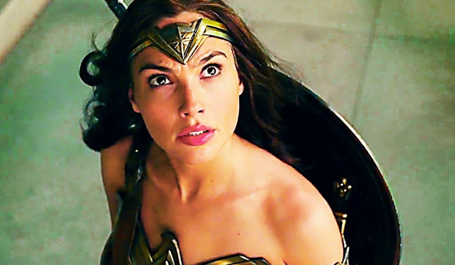
Costume design is on point and Gadot looks breathtaking as Wonder Woman.

Wonder Woman shines in its visual aesthetic and costume design; Themyscira is a beautiful environment and full of interesting little elements and a rich lore that is only hinted at in the film. This is, however, largely for the best as Wonder Woman is more focused on the greater conflict of the First World War, meaning it is full of period-accurate costumes, technology, and bleak depictions of the folly and futility of warfare. Amongst these drab and depressing elements, and against the smoke-filled hustle and bustle of London, Diana stands out wonderfully in her amazingly realised and faithful costume. Wonder Woman’s outfit is often one of contention but the DCEU version of the character brought her classic look to screen in the best way possible by infusing it with realistic elements of Greek armour and it’s honestly one of the best and most accurate comic book costumes ever made.

Diana is obsessed with killing Ares to “free” men from his evil and distraught to learn the truth.

The film’s themes of warfare and suffering are potent thanks to its setting; while there are obvious comparisons to be made to Captain America: The First Avenger (Johnston, 2011), Wonder Woman is a very different film to that one and these comparisons are superficial, at best. Instead the focus is on Diana trying to acclimatise to man’s world and her total dedication to ending Ares’ threat; initially, she believes that Ares has taken Ludendorff’s form in order to spread chaos and devastation and is horrified to learn that her mother and Steve were both accurate in how easily men can be corrupted by their own evils and destructive impulses. This by itself would have made for a striking theme about the inherent evil that we are all capable of but, of course, Wonder Woman is a blockbuster superhero film that needs to end with Diana realising her destiny as the “Godkiller” and battling Ares (revealed to have been Morgan all along). As exciting and thrilling as this conclusion is, since it finally allows Diana the chance to showcase the full extent of her powers, it is kind of a shame that Ares is a vague and ominous threat for the majority of the film rather than actually being a tangible antagonist for us to learn about. In fact, we learn very little about Ludendorff or Maru, who are both criminally underused despite giving really good performances. However, it does serve the overall message of the film and the harsh lesson that Diana is forced to learn about human nature; when Ares finally reveals himself to Diana, it is at her lowest moment and he tempts her into joining his cause and destroying humanity but Diana’s convictions to her cause remain steadfast and are further emboldened when Steve comes to exemplify man’s capacity for good by sacrificing himself to end Maru’s threat just as Diana kills Ares once and for all.

The Summary:
Honestly, I didn’t expect to like Wonder Woman as much as I did; I like the character and enjoy her involvement in team-up comics but have never been a massive Wonder Woman fan but the film won me over with its fantastically realised themes of war, and, sacrifice. The First World War setting was an inspired choice and really gave Diana a chance to see first-hand the atrocities of man and the complexities of human nature. Obviously, both her world and Steve’s world came to be true to a degree, with Ares ultimately revealed to have been influenced the human antagonists and inspiring the tools necessary for war, and this merging of these two separate worlds was wonderfully realised in the characterisations of Steve and Diana and their growing relationship over the course of the film. While I would have preferred Ares to be a more tangible threat throughout the film rather than a surprise twist at the end, I cannot fault the movie for its direction, cinematography, or presentation; there’s just as much heart and humour at work in the film alongside some stunningly realised action sequences that portray Wonder Woman as both beautiful and formidable and Gadot does an impressive job of giving some real depth and tragedy to Diana’s character that help to inform her portrayal and overall character arc in Batman v Superman and subsequent DCEU films.

My Rating:

Rating: 4 out of 5.

Great Stuff

What did you think to Wonder Woman? Do you feel it deserved all the praise that it got? What did you think to Gal Gadot and Chris Pine’s performances, the characterisations of Diana and Steve, and their relationship? Did you enjoy the themes at work in the film and the “fish out of water” aspects? Did you see the Ares reveal coming and would you have preferred that the antagonists got a bit more time to shine or were you satisfied with the film overall? What are some of your favourite Wonder Woman stories, characters, and moments? How are you celebrating Wonder Woman Day tomorrow? Whatever your thoughts on Wonder Woman, leave a comment below and check out my review of the sequel.

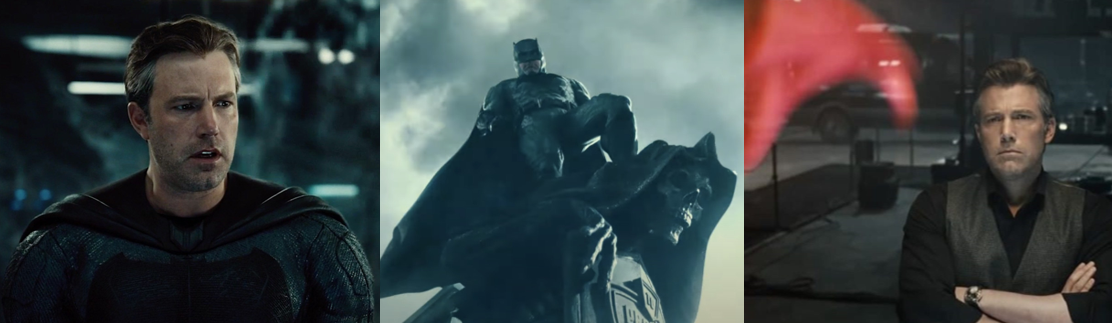
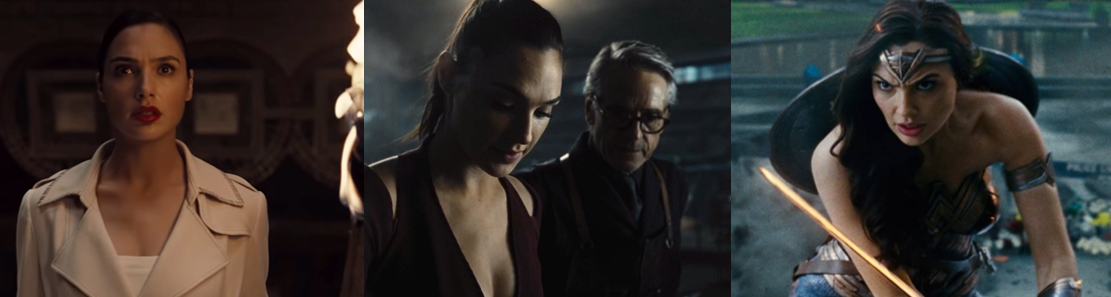
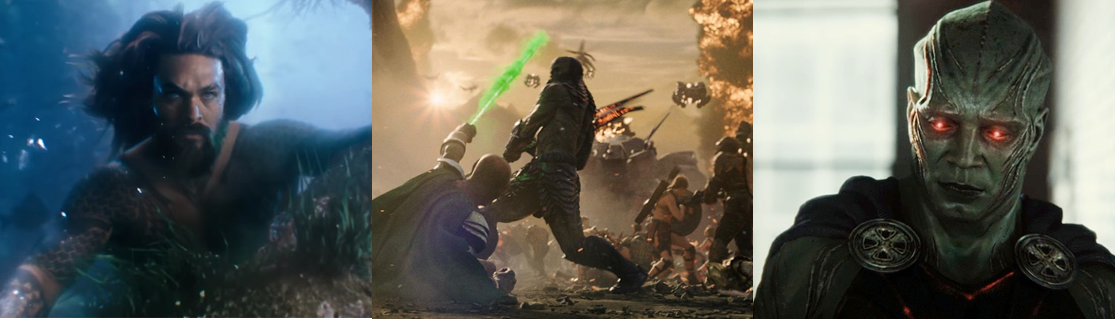
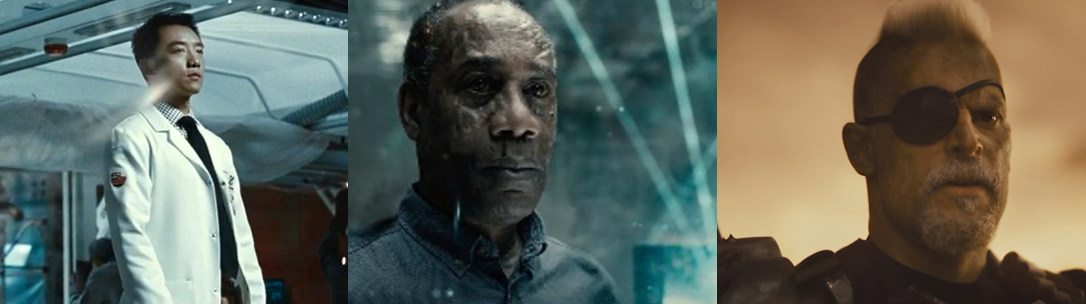
Movie Night: Zack Snyder’s Justice League

Released: 18 March 2021
Director: Zack Snyder
Distributor: HBO Max/Warner Bros. Home Entertainment
Budget: $70 million (on top of the original $300 million production costs)
Stars: Ben Affleck, Gal Gadot, Ray Fisher, Jason Momoa, Ezra Miller, Ciarán Hinds, Amy Adams, and Henry Cavill

The Plot:
Following the death of Clark Kent/Superman (Cavill), Bruce Wayne/Batman (Affleck) scrambles to bring together a team of super-powered heroes when the disgraced New God Steppenwolf (Hinds) arrives on Earth and begins violently searching for the mysterious “Mother Boxes”.

The Background:
Oh God, where to start with this? Okay, so, after the Marvel Cinematic Universe (MCU) became this super successful juggernaut, Warner Bros. scrambled to try and catch up and craft their own cinematic universe. The first step was Man of Steel (ibid, 2013); Zack Snyder was picked to helm the project and steer the direction of the DC Extended Universe (DCEU) and, initially, the results were promising. Despite some mixed reviews, Man of Steel was a financial success but the cracks in Snyder’s vision started to form with Batman v Superman: Dawn of Justice (ibid, 2016). Despite the presence of acclaimed superstar Ben Affleck and reaping a hefty box office, the film divided many due to its pace and bleak tone and Warner Bros. started to get cold feet regarding Snyder’s vision for the DCEU. As a result, they brought in Joss Whedon to lighten the follow-up’s tone and ultimately replace Snyder after the tragic death of his daughter. Despite a similar box office gross to its predecessors, Justice League (Whedon/Snyder, 2017) released to scathing criticism and the film was disowned by even DCEU collaborators. The DCEU chugged along regardless but, very quickly, reports of Whedon’s reprehensible behaviour surfaced alongside rumours that a “Snyder Cut” was all but completed in Warner’s vaults and fans all over the world began campaigning hard for the release Snyder’s original version. While this did lead to a toxic community that I cannot condone, the movement gained serious traction when members of the cast voiced their support and Snyder finally returned to complete the film and was even afforded additional money and resources to film new scenes for his four-hour epic for the HBO Max streaming service. To the delight of Snyder’s fans, Zack Snyder’s Justice League finally released and drew a lot of attention to HBO Max. The general critical consensus, however, was mixed; though reviews praised the film as a coherent story and the culmination of Snyder’s vision, its length and excess were criticised. After the film’s release, Warner Bros. made the decision not to capitalise on its success and fans immediately campaigned to complete Snyder’s vision for the DCEU, despite his lack of interest in returning to the property, proving that some fans are just never satisfied.

The Review:
When I reviewed the original, theatrical cut of Justice League (no, I will not call it “Josstice League”), I gave it a ten out of ten. This was primarily because I am a massive DC Comics fan and, after years (literally decades) of DC’s live-action characters always existing in their own self-contained bubbles, I was just happy to see them all onscreen together and co-existing and felt that this was the most positive thing to take away from Snyder’s rushed attempt to build DC’s cinematic universe. Time, however, has changed this perspective; Justice League is by no means perfect but it was honestly never going to be. Warner Bros. scrambled about trying to play catch up to the MCU and, in focusing on cramming everyone together as quickly as possible and sucking the fun out of many of their most popular characters, they lost me a little along the way. So to say I was excited for the Snyder Cut is to lie, honestly. As much as I enjoyed Man of Steel, Snyder really dropped the ball with Batman v Superman, which was more a collection of ideas and themes than a coherent movie, and I took massive issue with his grandiose vision of the DCEU which jumped from Superman’s origin all the way to Multiversal shenanigans in, like, two films. Still, as a rule, I generally do enjoy a longer director’s cut as you get more bang for your buck and, in that regard, Snyder certainly goes above and beyond to present the closest version of his vision for Justice League as possible, even going so far as to present the film in a 4:3 aspect ratio.

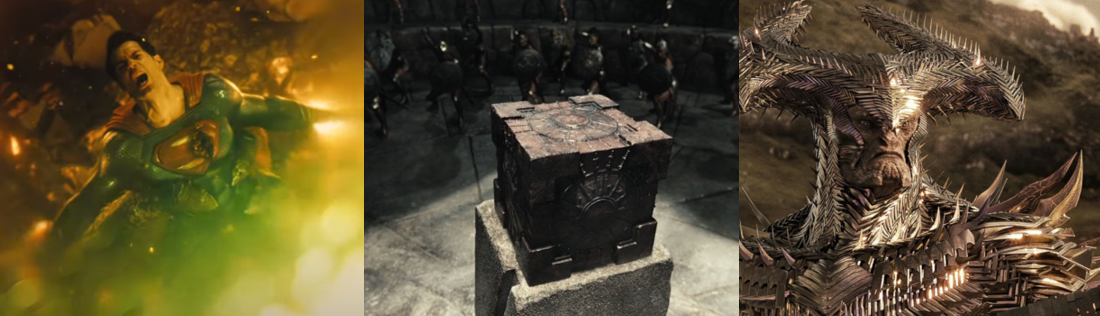
Superman’s death cry activates the Mother Boxes and calls Steppenwolf to Earth.

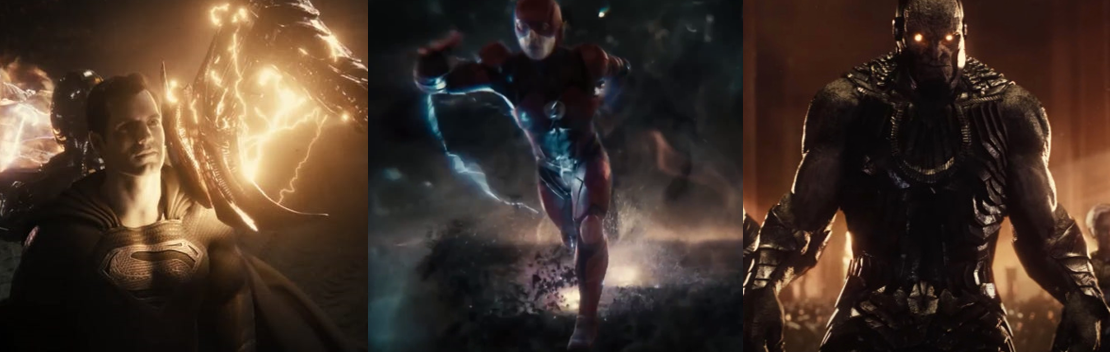
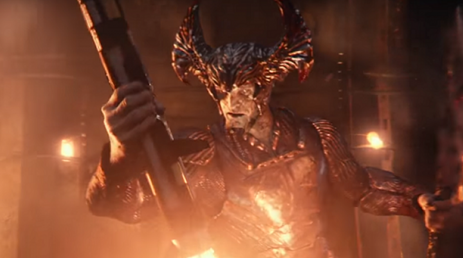
Zack Snyder’s Justice League begins with an egregiously slow-motion recap of Superman’s dramatic (and, in my view, unnecessary) death in battle against Doomsday. His death rattle (which seriously goes on for about six minutes), echoes all around the world, activating the Mother Boxes stored in Atlantis and Themyscira and sending a beacon out into the void of space with a simple message: Earth is vulnerable. Steppenwolf (now dramatically redesigned into a hulking creature wearing razor-sharp armour that honestly looks just as ugly as his original design but for different reasons) once again arrives to reclaim the Boxes; this time, however, his slaughter of the Amazons is much more brutal, featuring far more Parademons and presenting Steppenwolf as a formidable and imposing force. Indeed, compared to his theatrical counterpart, Steppenwolf is a much more well-rounded and interesting character; in the original cut, he was little more than a means to an end, an obscure and generic bad guy for the titular heroes to unite against in order to save the world but, here, he’s a driven, focused, and aggressive foe who is motivated not just by loyalty to his master and devotion to bringing about “the great darkness” but also desperate to regain his place among the New Gods after losing favour centuries before. Owing Darkseid (Ray Porter) a debt of fifty thousand worlds for his failures, Steppenwolf has been ostracised and forced to toil in endless conquest to regain his place at his master’s side; this desperation and motivation transforms Steppenwolf from a mere disposable hulk and into a surprisingly complex villain who seeks redemption and validation in the eyes of his master and will do anything to appease the will of Darkseid.

Superman’s loss affects each of the characters in different ways.

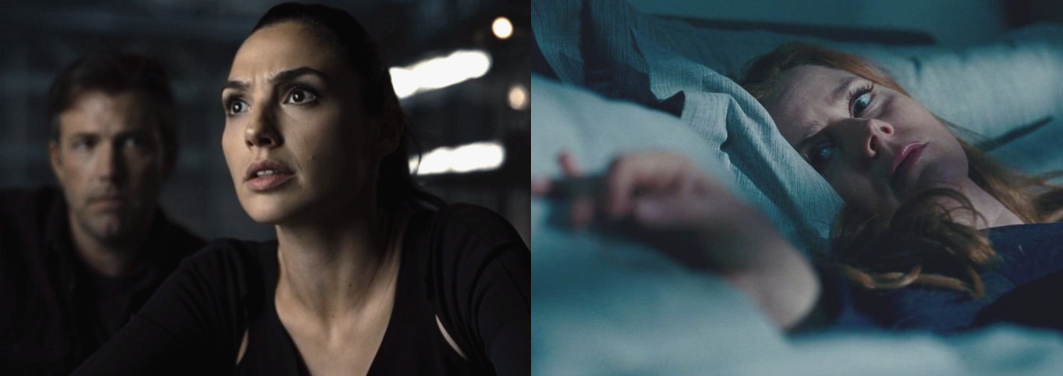
While the Man of Steel’s loss was felt in the theatrical cut, Superman’s death is a much bigger aspect of the Snyder Cut; carrying the guilt of Superman’s death on his shoulders, Bruce Wayne sets out to build an alliance of metahumans to combat this threat. While Diana Prince/Wonder Woman (Gadot) is reluctantly onboard with the plan and Barry Allen/The Flash (Miller) signs up immediately and enthusiastically, Arthur Curry/Aquaman (Momoa) basically laughs in his face and Victor Stone/Cyborg (Fisher) is busy struggling to reconcile his humanity after a horrific accident leaves him part machine. Furthermore, Superman’s loss is embodied here not just in Bruce’s guilt and desire to honour Superman’s legacy with a team of superheroes but in both Lois Lane (Adams) and Martha Kent (Diane Lane), both of whom struggle to adjust to life without Clark. Since Bruce has already been told that “Lois [is] the key” to reaching Superman, it makes sense to give Lois and Martha a little more prominence in the film, especially as her death is what causes Superman’s corruption in the dark future that looms over Snyder’s films.

Batman is now absolutely focused on bringing together a team to honour Superman’s memory.

Bruce Wayne is, of course, extremely different compared to his characterisation in Batman v Superman. Now driven by an obsessive desire to make good on his promise to unite Earth’s heroes in Superman’s name, he works himself tirelessly to track down the metahumans from Lex Luthor’s (Jesse Eisenberg) file, much to the continued chagrin of his faithful butler and father-figure, Alfred Pennyworth (Jeremy Irons). Since he works closely with Diana to find and appeal to these metahumans, there’s even a little (microscopic, even) bit of romantic chemistry between the two and there’s now a nice little scene of Alfred making tea with Diana and showing her Batman’s new Parademon-absorbent gauntlet (which replaces the original cut’s side plot regarding Batman luring the Parademons out with “fear”). Mostly, though, Bruce remains the same character as in the theatrical cut; he’s still blinkered in his focus on bringing the team together, resurrecting Superman, and preparing the world to face escalating threats but all of his weird little attempts at humour are thankfully gone (sadly, that God-awful “I’m rich” line remains but, thankfully, we get the return of his “I’m real when it’s useful” line).

Wonder Woman now warns the team of Darkseid’s intentions for Earth.

Wonder Woman, however, is noticeably different this time around; more time is spent showing her as a willing ally of Bruce’s and she is also part of a pivotal extended scene that explores Steppenwolf’s previous campaign against the Earth. This sequence, which expands upon the prologue seen in the theatrical cut, shows the forces of man, Gods, Atlantis, Themyscira, and beyond uniting not just against Steppenwolf and his Parademons but also their exalted and imposing leader, Darkseid. Darkseid received only a passing mention in the original cut but, here, Diana’s obvious fear of the New God helps to establish early on that an even greater threat looms behind Steppenwolf’s actions. Furthermore, when out in the field with the team, Wonder Woman directs the fledging Justice League in the best way to attack Steppenwolf and his Parademons, which places greater emphasis on her capabilities as a warrior and leader.

The Snyder Cut retains Aquaman’s characterisation but explores a little more of his world.

Aquaman is largely the same as in the theatrical cut except, unsurprisingly, more haggard and bleak rather than being an obnoxious jock. Though he claims to have no interest in Bruce’s crusade or working with others and has turned his back on Atlantis, he continues to do good and help those in need in his own way to get his hands on more whiskey. Bruce’s warning, though, compels him to return to the ocean and converse with Nuidis Vulko (Willem Dafoe), his former mentor, and ultimately to arrive all too late to help Mera (Amber Heard) defend the Mother Box from Steppenwolf. A couple of odd continuity issues are raised with all this, however, that fly in the face of DC’s directors wanting to align their movies with the Snyder Cut; first there’s Mera’s accent, which jumps from British to American to whatever the hell she likes, and second is the Atlantean’s ability to communicate using dolphin squeaks rather than just talking underwater as they do in Aquaman (Wan, 2018). Regardless, this version of Justice League does a far better job of setting up Aquaman’s solo film by showing more hints towards his world and Aquaman remains the film’s breakout character for me for me thanks to Momoa’s charismatic portrayal of the character.

Though still very neurotic, Barry plays a pivotal role in the film’s events and finale.

Barry Allen also gets a bit more time to shine this time around; this includes the restoration of his encounter with Iris West (Kiersey Clemons) and just more time to explore his awkward, energetic, and socially inept character traits. Barry was very much the comic relief of the theatrical cut and those who disliked many of his annoying character traits will be disappointed to find most of them intact and given more prominence in his increased screen time but I can’t fault Snyder’s attention to detail in showcasing Barry’s superspeed: his shoes and clothes disintegrate, the street is wrecked by his footfalls, and he experiences time in extreme slow motion when utilising the Speed Force. While the Flash loses one of my favourite scenes from the original cut (the “Just save one” moment), he plays a far greater role in not just the rescue of scientists from Steppenwolf’s clutches but also the film’s finale where, faced with defeat at the hands of Steppenwolf’s forces, he summons all of his super speed to travel back in time using the Speed Force and ensure that the invasion is halted.

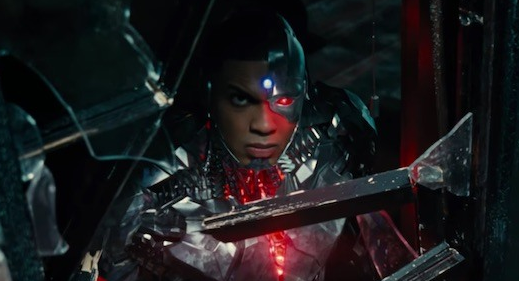
Cyborg’s role is greatly expanded, making him the heart of the film and fleshing out his character.

Of course, the character who benefits the most from the Snyder Cut is Cyborg; in the theatrical cut, Cyborg is a stoic, confused young man who resents his father, Doctor Silas Stone (Joe Morton), for transforming him into a machine-monster in order to save his life. While this remains at the start of Cyborg’s character arc in the Snyder Cut, Snyder restores not just Cyborg’s importance to the film as the “heart” of the Justice League but also his eventual reconciliation with his father and showcases excised scenes of his promising career as a college football player, his natural aptitude for hacking (which he used to help those in need), and the horrific accident which left him near death. While I’m personally not a fan of Cyborg being on the Justice League, it was clear that there was originally more to his inclusion and importance to the film’s plot; since he’s literally comprised on a Mother Box and Apokoliptian technology, he is afforded numerous abilities and insights into the invading New Box forces and, here, Silas actually guides and mentors him in exploring these abilities (which includes his ability to access every technological device and network and essentially makes him the most powerful man on Earth).

Superman returns, now in a black suit, and galvanises the team.

Finally, there’s Superman; as you might expect, Superman is absent for a massive amount of the film on a small account of being dead. Like Darkseid, Superman looms over the film but as a hero lost and much needed as a symbol for the world’s heroes to properly rally behind. Bruce’s plan to resurrect Superman with the Mother Box is discussed (and edited) far more competently this time around; although there’s doubt about the moral and ethical implications of the plan (mainly from Alfred this time around), Bruce and Diana don’t come to blows like in the original film but the outcome remains the same. Like before, Superman is disorientated upon returning to life and attacks the fledgling Justice League in his confusion; his confrontation with Batman is a little different (and not as good as in the original cut, in my opinion) and there’s more to his return to the Kent farm but, upon regaining his senses, he returns to action as the team’s ace in the hole for the finale. Cavill is an absolutely fantastic Superman and Justice League finally got the character to a place where he is the charming symbol of hope and strength that the world needs and, despite his new black suit, Zack Snyder’s Justice League only expands upon that (of course, Cavill’s natural charisma and the absence of a horrible CGI face play a huge part in that).

The Nitty-Gritty:
One word to describe Zack Snyder’s Justice League (apart from “long”) would certainly be “epic”; Snyder pads the film’s runtime out with not only an abundance of never-before-seen footage, alternate takes, and new content but also an overuse of slow-motion and long establishing shots. To help make the film more accessible to viewers, the film is also split into six chapters, which was probably a great way to view it on HBO Max, and the DVD version of the film is split across two discs but, either way you slice it, this is a slog to get through and I have to believe that Snyder simply milked the extra time and money he was afforded just to capitalise on all the hype surrounding his version of the film. The closest comparison I can make is with his director’s cut of Watchmen (Snyder, 2009), which was similarly epic and ambitious in its scope, presentation, use of music, and its presentation of its costumed adventurers.

Some shots effects, and inconsistencies negatively affect the Snyder Cut.

It has to be said, though, that Zack Snyder’s Justice League has quite a few faults; some of the new special effects shots understandably look worse than others (and Cyborg still looks like dog shit), it’s pretty crazy that Darkseid and his forces just forgot where Earth was for hundreds of years (especially considering how badly he wants the secret of the Anti-Life Equation), the score has been completely reworked to remove Danny Elfman’s contributions (though, thankfully, Wonder Woman’s kick-ass musical theme remains), and many of the new scenes shot exclusively for the film suffer from poor lighting, inconsistent editing, and stand out like a sore thumb to the point where I’d much rather Snyder hadn’t bothered including the likes of the Joker (Jared Leto) when it makes little sense narratively (you’re telling me that in a grim, apocalyptic future where Superman has gone bad the Joker is alive but Aquaman isn’t?) Personally, I have never been a fan of Snyder’s “Knightmare” timeline; it made no sense in Batman v Superman and, thanks to Warner Bros. having no interest in allowing Snyder to fully explore this alternate timeline in Justice League sequels, it makes even less sense to me that he chose to continue pushing this dark vision of a future ruled by Darkseid and a corrupted version of Superman in the Snyder Cut (but, at least, it’s mainly confined to the film’s final moments rather than being awkwardly wedged in the middle of the film like in Batman v Superman).

Snyder’s cut expands and recontextualises many of the film’s existing scenes and characters.

Although many scenes and sequences may be familiar to anyone who has seen the theatrical cut of the film, the Snyder Cut expands upon every single one of these and, in many cases, recontextualises them into this larger narrative. This includes a longer scene of Bruce Wayne meeting and attempting to recruit Aquaman (accompanied by a lengthy song of reverence for the Atlantean), an expanded version of Wonder Woman’s introduction (including the first of a handful of pointless f-bombs), a longer version of Steppenwolf’s attack on Themyscira and the recap of Darkseid’s defeat centuries ago, more scenes of Steppenwolf and his Parademons’ search for the Mother Boxes (including torturing Atlanteans for information and a far better sequence where he acquires the final Box), and even recontextualising the interactions between Lois and Martha with the reveal that General Calvin Swanwick (Harry Lennix) has been J’onn J’onnz/Martian Manhunter all along.

The Snyder Cut restores and dramatically changes excised characters.

One of the main selling points of Zack Snyder’s Justice League, however, is the restoration of scenes and plot threads excised from the theatrical version. This includes characters removed from the original film, like Doctor Ryan Choi (Ryan Zheng), Vulko, Iris, DeSaad (Peter Guinness), Cybrog’s mother, Elinor Stone (Karen Bryson), and more time devoted to side characters like Silas (who now gives his life to mark the final Mother Box) and the origins of the Mother Boxes. One of the benefits of this is that we actually get to see an in-depth look into Cyborg’s expansive abilities (which includes a deep dive into the way he now perceives reality). Much of the Snyder Cut’s hype was also built around the inclusion of Darkseid but, in truth, the character is little more than a cameo; he simply takes Steppenwolf’s place in the flashback of the war between the allied forces of Earth and Apokolips and looms over the film like an ominous shadow as the ultimate threat for the united Justice League. Sadly, despite Snyder choosing to push his Knightmare future throughout the film and concluding it with a tease of Darkseid’s impending retaliation against the Justice League, it seems like we won’t be seeing Darkseid (or any of the New Gods for that matter) in the DCEU again any time soon.

Thanks to the team, and time travel shenanigans, Darkseid is left humiliated.

Snyder’s vision of the DCEU remains extremely bleak in its presentation; for all the characters’ talk of “hope” and the better nature of men, Snyder continues to suck all the life and colour out of these vivid characters. One thing I liked about Justice League was that it did a fantastic job of bringing some life and colour to this world, allowing the costumes to pop out on screen but, here, everything retains the same muted look and sombre tones of Batman v Superman. This is best exampled in Snyder’s instance on garbing the resurrected Superman in his black suit; Superman wore this in the comics after returning to life for about three issues and it was later stated to have helped aid his recovery but, here, no real reason is given for his choice of attire and it honestly would have made more sense for the evil Knightmare Superman to have worn the suit instead. Additionally, Snyder removes the red tint and tumultuous skies from the finale of the film, which admittedly does make the climatic battle against Steppenwolf’s forces easier to see but I feel the original colouring worked a lot better as a reference to the red skies that were are of DC’s various Crises. Speaking of the finale, Zack Snyder’s Justice League slightly recontextualises the ending. Although there’s still an implication that Batman is heading into battle with the intention of dying, it’s not as explicit as in the theatrical cut; what is much more explicit, though, is the feeling of team work between the Justice League as they each play their part in breeching Steppenwolf’s defences (Flash, again, gets way more to do in using his Speed Force charge to help Cyborg interact with the Mother Boxes) before Superman dramatically shows up to again completely lay waste to Steppenwolf. I’m glad that this beatdown is maintained as it was always a glorious showcase of Superman’s return and of the team coming together against a common enemy but, here, things go slightly differently as the heroes fail to stop the unity between the Mother Boxes and prevent Darkseid’s arrival. With no other choice, the Flash enters the Speed Force and reverses time in a beautifully surreal sequence, allowing Cyborg to reject the Apokolips’ influence and Wonder Woman to decapitate Steppenwolf right before Darkseid’s eyes.

The Summary:
I went into Zack Snyder’s Justice League with low expectations. Toxic fans and a rabid, almost cult-like online community had beaten any sort of excitement and wonder out of me. I quite enjoyed the theatrical cut; it wasn’t perfect but, news flash: none of the DCEU has been perfect and few films really are. Knowing that Snyder got so screwed over by Warner Bros. stung and it definitely frustrated me that we didn’t get a concise and more accurate version of Justice League years ago so that maybe the DCEU would be in a slightly better place but it was hard for me to feel invested in the film when it was so self-indulgent and so clouded by negativity and entitlement. In this case, though, I am glad to be wrong; there are many benefits to Zack Snyder’s Justice League. For one thing, it actually feels like a coherent story (even more so than Batman v Superman) and each member of the team is given so much more time to shine and showcase their powers and personality. Thus, when the Justice League unite for the finale, it means that much more as we actually get to know them all a little better and see them grow as a team through their interactions; it’s still a rush job as so much had to be crammed into so few films but, as a big fan I am of DC Comics and these characters, it remains a real thrill to actually get to see Batman, Superman, Wonder Woman, the Flash, Aquaman, and Cyborg all in a big budget, live-action film rather than constantly existing in self-contained bubbles (which seems where the DCEU will be heading again going forward). I’m not a massive fan of Snyder’s vision for the DCEU or many of the decisions he made but it’s better than nothing and not seeing an interconnected series of DC films so, while I was initially hesitant to enjoy Zack Snyder’s Justice League, I have to say that I was pleasantly surprised in the end. Had Warner Bros. not interfered and screwed things up, we probably would’ve gotten a two-and-a-half-hour long film that would have satisfied everyone enough to justify at least one more team effort but it is what it as and at least we got to see the closest approximation of Zack Snyder’s true vision of the film in the end and that’s something to be celebrated rather than simply, selfishly, demanding more.

My Rating:

Rating: 5 out of 5.

Fantastic

What did you think to Zack Snyder’s Justice League? Do you think it lived up to all the hype or was it all style and no substance? What did you think to the additional, extended and recontextualised scenes from Justice League and how do you feel the Snyder Cut compares to the theatrical version? Which of the characters was your favourite and what did you think to their extended screen time? How did you watch the film; in sections or as one long movie? Would you like to see more from Snyder’s DCEU or are you happy with the direction Warner Bros. is taking? What did you think to the whole Knightmare timeline Snyder tried to push and were you a fan of Superman donning the black suit? Whatever you thought about Zack Snyder’s Justice League, good or bad feel free to leave a comment below (even if it is super toxic).

Game Corner: Injustice 2: Legendary Edition (Xbox One)

GameCorner
Injustice2Logo

Given that Warner Brothers bought Midway back when they were forced to shut up shop, it should have been seen as inevitable that a videogame would be made that mashed together characters from the Mortal Kombat series with those of the DC Universe. Of course, Mortal Kombat vs. DC Universe (Midway Games, 2008) was quite the barebones, lacklustre effort compared to the spiritual successor, Injustice: Gods Among Us (NetherRealm Studios/Warner Bros. Interactive Entertainment, 2013).

Injustice2Brainiac.png
Brainiac is coming to collect the Earth!

Injustice was generally applauded not only for its graphics, gameplay, and competitive fighting mechanics but also its story mode; NetherRealm Studios have seemingly perfected the art of infusing their fighters with an in-depth and genuinely captivating single play story and Injustice 2 (ibid, 2017; 2018) continues this trend. After the Justice League travel to a parallel world to help end the reign of a dictator-like Superman and his regime of similarly-evil former heroes, the Injustice-world faces a new threat in the form of Brainiac. Though Batman attempts to rally a new generation of heroes against Brainiac, they have no choice but to free Superman from his red sun prison cell in order to combat the threat and enter into an uneasy alliance.

Injustice2Roster
A good roster, bogged down with one-too-many Batman characters.

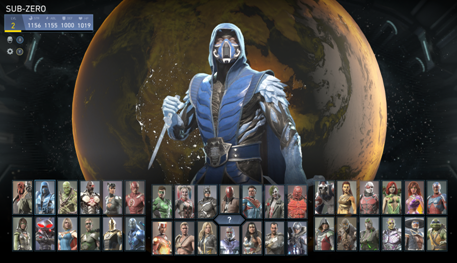
A fighting game is only as good as its roster; like Injustice, Injustice 2 has an unhealthy obsession with Batman characters – Batman, the Joker, Robin, Poison Ivy, Red Hood, Scarecrow, Bane, Catwoman, Harley Quinn, and Deadshot bloat out the roster. While it is a little disappointing that this appears to have caused other, unique characters such as Booster Gold or Doctor Sivana miss the cut, Injustice 2 does bring some welcome new faces to the game; Firestorm, Blue Beetle, Atrocitus, Gorilla Grodd, and Doctor Fate are just some of the new heroes and villains available to play as. The Legendary Edition also includes some fantastic downloadable characters, such as Hellboy, Black Manta, and even the Teenage Mutant Ninja Turtles!

Injustice2Unique
Every character has a unique play style.

Every character boasts their own unique combos, special moves, and super moves and plays a little differently; Darkseid, for example, is slow and methodical, Supergirl is a much faster character, while characters like Green Arrow and Batman rely more on their gadgets and skills to succeed. Successfully pulling off combos, counters, and landing attacks allows players to build up their super meter and power up their special moves or execute a world-ending super move. Each character starts with three loadout slots, which can be increased to five, that allow you to gear up Aquaman, for example, to have one loadout the favours attack, one that favours health, one that favours special moves, and so on, depending on the gear you apply. You can also apply this gear to AI Loadouts and have them fight for you, which is kind of weird and I’m not sure why you would want to do that rather than play the game yourself but it is useful for the game’s Endless and Survival modes.

Injustice2Stages
Injustice 2‘s stage selection levels much to be desired.

While Injustice 2 has a decent roster, it doesn’t have much in the way of stages; there are only twelve stages to pick from and they’re not really that dynamic or interesting. You can still send characters flying to other parts of the stage, which is fun, but it seems there’s a lot less opportunities to do this than in Injustice. There are also some fun stage interactions to be had, like smashing Swamp Thing over the head with a crocodile in Slaughter Swamp, but, again, it seemed that there were more and better stage interactions in Injustice. The primary selling point of Injustice 2 is the Gear System; winning matches not only earns experience points for each character and the player’s profile but also awards numerous gear. Players can then apply this gear to each character to boost their attributes, gain performance buffs (such as greater attack strength against Metahumans), alter the character’s costumes, and even unlock different special moves. Winning matches also earns the player coins and crystals, which can used to buy Mother Boxes and unlock more gear, transform or combine gear to make it stronger, or unlock Premier Skins for certain characters.

Injustice2Skins
Premier Skins are available…at a price.

Premier Skins allow you to play as new characters; Cheetah, for example, has a Premier Skin that turns her into Vixen and Raiden’s Premier Skin is Black Lighting. This is great, as it effectively adds even more characters to the game’s roster; the only downside is that, to purchase Premier Skins, you need Source Crystals, which are few and far between. You’re therefore forced to grind over and over, levelling up your profile and characters, to earn a pittance of Source Crystals or spend real money. This latter appears to be what NetherRealm Studios want you to do as it is extremely difficult to earn enough Source Crystals as the Premier Skins carry a hefty price tag, and only the best Mother Boxes and rewards can be earned through spending real money, it seems, making the in-game currency all but worthless. Unlocking gear and applying it to characters is fun but, let’s be honest, you won’t be applying all of your gear to every character as some characters are better than others and some or just dead weight. The biggest downside to the Gear System is that, unlike in Injustice, it is the gear that determines what your character will look like; therefore, you can’t just select Green Lantern and choose to play as Yellow lantern, you have to unlock the correct gear and colour palette (which also require Source Crystals), which is quite disappointing and annoying.

Injustice2Clash
The clash mechanic as as annoying as ever.

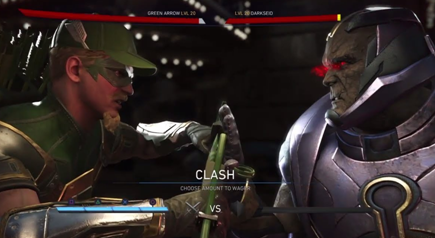
In terms of gameplay, Injustice 2 is very similar to its predecessor with a noticeable increase in AI competency; I played the entire game on Very Easy and, on more than one occasion, noticed that the AI doesn’t take any shit. If you spam moves or favour a certain tactic, the AI calls you out on it and gives you a competitive match more often than not. The story mode is fun to play through but a breeze; I finished it in within two casual days of gameplay and only went back to it to finish off the branching paths. The clash mechanic returns from Injustice and it’s just as annoying as ever; as you take damage, you can spend your super meter initiating a clash and pressing a button in a rock/paper/scissors type of mini game, which will either deal additional damage or restore your health. It seems that the AI always busts out a clash at the worst or most annoying opportunities and it’s easily to most frustrating part of the game.

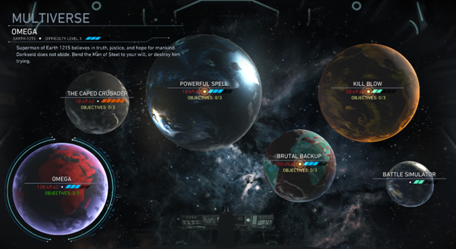
Injustice2Multiverse
Take on the entire Multiverse…once you’re levelled up enough…

Similar to Mortal Kombat X (ibid, 2015), Injustice 2 utilises an ever-changing Multiverse mode that allows players to fight a number of opponents and obtain better rewards. These change hourly, daily, weekly, and monthly and often carry certain themes that will be familiar to DC Comics fans; you can also use the Battle Simulator to play traditional tournament modes or battle endless opponents. One thing I will praise about Injustice 2 is that every battle is different; I don’t think I ever fought the same version of a character twice as it seems every match sees random gear and colour schemes applied to the opponent. You can also join a Guild and take part in Guild Multiverses and challenges to unlock even more Mother Boxes and rewards; these are far more challenging than the regular Multiverse modes and, similarly, the best Multiverse rewards are only available when you’ve levelled a character up to level twenty or thirty, meaning that you’re going to have to play again and again and grind over and over to reap the benefits. Honestly, maybe I’m a bit jaded, but I don’t find myself particularly enthusiastic about stepping up to this challenge; Injustice 2 features a wealth of Achievements, many you can sweep through regular gameplay, but the more specific ones (such as maxing every character’s level out) just seem like too much of a chore. I really don’t like that I have earned so many in-game coins and yet I cannot use them to purchase Premier Skins or extra colour palettes; I don’t really want to spend my actual money buying them, was disappointed to see that they weren’t already unlocked in the Legendary Edition, and am not sure I can be bothered to grind over and over to unlock them.

Injustice2Batman
Want the best stuff? You better have deep pockets!

In the end, Injustice 2 is good; it’s fun to play, the story mode is decent, and the graphics are very impressive but there’s not too much calling me back to it. I played Injustice pretty much to death working my way through the challenge mode but you have to put some serious effort in to challenge the best Multiverses and the motivation is severely lacking this time around just because the best gear and rewards are either really rare or too expensive. Maybe, next time around, NetherRealm Studios should limit the in-game currency to two forms (one to buy stuff, one to upgrade stuff) and move away from forcing players into spending their real-world money on additional extras, especially if they’re going to bring out a Legendary Edition after the initial versions.

My Rating:

Rating: 2 out of 5.

Could Be Better

Talking Movies: Justice League

Talking Movies
JusticeLeagueLogo

It’s no secret that DC Comics and Warner Bros. are a bit late to the superhero renaissance we are still experiencing thanks to the runaway success of the films put out each year by Marvel Studios. They lost a lot of ground with films like the dull Superman Returns (Singer, 2006) and Green Lantern (Campbell, 2011) – even though I personally actually enjoyed Green Lantern and thought the movie was worth salvaging in further DCEU films – and often focus too much of their attention on Batman at the expense of their massive cast of superheroes. However, amidst the many and ongoing critical debates surrounding Man of Steel (Snyder, 2013) and Batman v Superman: Dawn of Justice (ibid, 2016) and the disappointment of Suicide Squad (Ayer, 2016), they apparently scored a far more meaningful success with Wonder Woman (Jenkins, 2017) and their films have been profitable enough to keep the idea of a cinematic universe alive, even if rumours abound every day that it is on life support. Now, I never saw Wonder Woman, for reasons of my own, and I actually really enjoyed not just Man of Steel but also Batman v Superman so, for me, anticipation was high for Snyder’s third cinematic effort, Justice League. While a personal tragedy saw him leave the production process and be replaced by formal Marvel guru Joss Whedon, the film is still credited to Snyder and carries many of his themes and ideas over but does it deliver?

JusticeLeagueInvasion
An invasion from Apokolips is all-but inevitble!

Justice League begins in a world still mourning the loss of Superman (Henry Cavill), which hasn’t resulted in world-wide chaos but has resulted in appearances of insect-like Parademons across the globe. Having witnessed a glimpse into a nightmare dystopian future where these creatures have overrun humanity, Bruce Wayne/Batman (Ben Affleck) has been investigating the creatures and their weaknesses amidst attempting to recruit a superpowered team alongside Diane Prince (Gal Gadot) to fight what he believes to be an inevitable invasion. On Themyscira, Diana’s home island of Amazons, the ancient Mother Box suddenly awakens and opens a Boom Tube, through which appears Steppenwolf (Ciarán Hinds) and an army of Parademons. Slaughtering the Amazonians, he claims their Mother Box and promptly disappears, forcing Bruce and Diana to step up their timetable. Bruce is initially unable to convince Arthur Curry/Aquaman (Jason Momoa) to join their cause due to his desire to be left alone but has far more luck in recruiting Barry Allen (Ezra Miller) who, disillusioned by the wrongful incarceration of his father (Billy Crudup) and struggling to live in a world that now seems painfully slow in comparison to his superspeed, joins up as the Flash without a second’s hesitation. Meanwhile, Diana is able to channel her own experiences with isolation and loss to convince Victor Stone (Ray Fisher) to put his recently-acquired and still developing cybernetic powers to good use in the fight against Steppenwolf.

JusticeLeagueTeam.png
It’s going to take everyone to fight off Steppenwolf.

Aquaman is finally convinced to join the team when he is forced to return to Atlantis to defend the second Mother Box from Steppenwolf, only to be suitably humbled. With two of the boxes in the hands of the enemy and the countdown to the destruction of the planet imminent, Batman struggles to galvanise the team in using the final Mother Box to resurrect Superman to lead the final battle for the fate of humanity. I’m going to say something now that may cause a stir; I’m a fan of both DC Comics and Marvel. Yes, it is possible; for me, just seeing comic book superheroes on screen and coming together is a thrill in and of itself. I don’t get weighed down with debates between which company is better or criticise DC for failing to follow Marvel’s gameplan; however, I do admit that they are very clearly playing catch-up. This was massively evident in Batman v Superman, where Wonder Woman was introduced with a lot of intrigue and mystery surrounding her but which also wedged in cameos from the Flash, Aquaman, and Cyborg. It felt like the movie was trying to do to much but, at the same time, those small glimpses served the purpose of a larger narrative and didn’t distract from the film at all; instead, they were weaved into Batman’s character arc of moving past his misguided vendetta against Superman and towards rejoining the world and uniting a team.

JusticeLeagueFlash
Ezra Miller brings some welcome levity to the DCEU.

While Justice League does suffer form some pacing issues in the first act, each member of the team gets an ample amount of screen time to shine and show some layers. Although I could’ve done without it as we have seen the tale of Barry’s father played out in the first season of The Flash, it nevertheless helped to establish that Barry is currently in a very lonely and confused place in his life and that his powers only make things more difficult for him. Barry primarily serves as the comic relief, once again being infused with more of the characteristics commonly associated with the Wally West version of the character, but shows significant growth when he admits to Batman that he’s never actually been in a real fight before and, upon Batman’s prompting, learns how to be a superhero by simply saving one life.

JusticeLeagueAquaman
Probably the greatest interpretation of Aquaman we’ll ever see!

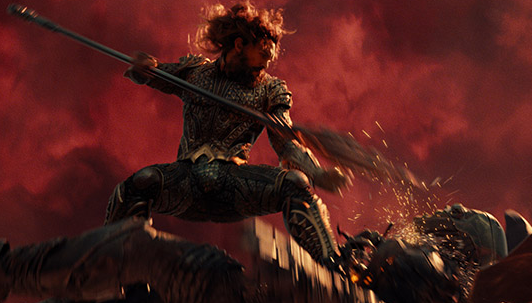
Before the movie came out, I hedged my bets on Jason Momoa’s Aquaman being a kick-ass, breakout character; for years, people have ridiculed Aquaman because “all he does is talk to fish” when that’s simply not the case. Now, I’m not the biggest Aquaman fan because, honestly, he can still be pretty lame for other more pressing reasons, but I am a fan of the Peter David version of the character, which had long hair, a beard, a more armoured outfit, and was a no-nonsense, stern ass-kicker. Momoa’s Aquaman may not have a harpoon for a hand but, man, is he bad-ass! He’s more like a rock star than a clean-cut prince, revelling in the heat of battle, carrying himself with a sense of narcissism, and generally approaching every situation with a nonchalant attitude. He looks fantastic and really brings the muscle to the team in Superman’s absence, but there’s also a sense of a much larger world and backstory behind him through his return to Atlantis and interactions with Mera (Amber Heard).

JusticeLeagueCyborg
Obviously a character mostly created in CGI is going to be CGI!

Probably the character with the most controversy surrounding him is Cyborg; personally, I’ve never liked the idea of Cyborg being on the Justice League, primarily because he’s so closely associated with the Teen Titans and I feel it’s a just a reason to have racial diversity on the team. However, for the purposes of this film, he serves a key purpose; having been created through the machinations of a Mother Box, Victor’s cybernetic parts are constantly evolving and hold the key to interacting with and stopping the Mother Boxes from uniting and destroying the world. Everywhere I look people are bad-mouthing the CGI on Cyborg and, honestly, I don’t see why; Justice League is filled to the brim with top-notch special effects, to the point where even a $300 million budget can be stretched pretty thin. Cyborg is a 90%, at least, CGI character so, obviously, he’s going to have a lot of CGI used on him. Would it have been better if they’d tried more of a Robocop (Verhoeven, 1987) route? Probably, yes. Did I think the sleeker, Teen Titans-inspired look he adopted at the end of the film would’ve looked better than the Transformers (Bay, 2007 to 2017) look? Definitely, but I never let the fact that he was largely comprised of CGI parts distract me from the film and, honestly, if you do then you’re clearly not that interested in the film to begin with.

JusticeLeagueWondy
Gal Gadot continues to impress/surprise.

Gal Gadot continues to impress as Wonder Woman; despite my reservations about her, she is an extremely attractive young lady and her accent actually becomes less distracting the more you hear it. Diana’s arc here is directly tied in to the events of Wonder Woman as she is still apprehensive about rejoining society in the spotlight. Bruce even calls her out on it and accuses her of not being able to move past the death of Steve Trevor (Chris Pine), which only galvanises Wonder Woman’s resolve. Henry Cavill also returns after the team successful manage to resurrect Superman using the same Kryptonian birthing chamber that spawned Doomsday. Unlike the comics, he does not sport a mullet or a black costume, but his memories are briefly fragmented, leading to an awesome fight between Superman and the rest of the team. Superman is actually amazing in this film; he’s clearly overjoyed to be alive again, smiling and cracking jokes, and finally shines as an optimistic symbol of hope to rally behind. His initial period of disorientation also showcases his intense rage as he spits Batman’s “do you bleed” line back into Batman’s face as he is poised to crush Batman’s head. The only things I slightly disliked about Superman were that they didn’t make any effort to address how they explained Clark Kent’s sudden return to life and his resurrection felt like it came too soon; I expected him to return right at the very end, but it comes just before the third act, so it does raise the question of why kill him off in the first place (though I’m glad they did because at least it meant they got that aspect of Doomsday right).

JusticeLeagueBatman
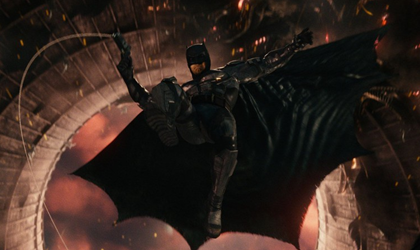
Seriously, how can you not love shots like this!?

Ben Affleck returns as Batman, despite a new rumour springing up online almost every day saying that he wants out of the franchise. When he was first cast, I had my doubts that he would stick around for sequels and, honestly, the more I hear about him wanting to leave the more annoyed I am that he was ever cast in the first place. The fact that he is a fantastic Batman makes it all the more annoying; Warner Bros. seem to want to evoke Marvel Studios’ attitude towards Robert Downey Junior and build their DCEU around Affleck so I really hope that they do everything they can to convince him to see it through because he put in another brilliant performance here. Now focused on facing Steppenwolf’s impending threat, Batman has turned his mission from vengeance and death towards forming a team, saving the world, and atoning for the decisions he made that led to the death of Superman. The guilt he feels is evident and he even descends into some trademark Bat-dickery by manipulating Diana into following Superman’s example and being an inspiration for others. Additionally, the idea that he is so worn down and beaten up from twenty years of being Batman and that he now craves an honourable death continues in Justice League as, even with the team assembled, many of his plans revolve around him making a suicide run; during Superman’s resurrection, Batman even faces him head on with the intention of dying so that Superman can take his place as the more suitable leader of the team, and his joy at seeing Superman returned to life is clear on his face even if he quickly adopts a more stoic façade to save face.

JusticeLeagueSteppenwolf
The traditional bland villain does equal fleshed out heroes…

The action in Justice League is very big and very loud; explosions happen all over the place, water crashes everywhere, buildings topple, and hits land with a satisfying impact. Amidst what could be described as chaos, but actually is a far more cohesive end-of-the-world scenario than the one seen in Suicide Squad, is a fabulous score by Danny Elfman. Elfman even weaves not only his classic Batman (Burton, 1989) theme into the score but also John William’s classic Superman (Donner, 1978) theme; as much as I enjoyed the score from Snyder’s previous films, hearing the return of those classic, iconic, and irreplaceable themes brought a warm feeling of joy and nostalgia to my heart. Probably the biggest issues with the film are easily the most predictable; pacing and the villain. With the film being mandated to be two hours long, there’s a real sense that a lot of content was trimmed back and I look forward to seeing it inserted back in for an extended cut. While I did not experience any jarring leaps in continuity or pacing, it is unavoidable that a large chunk of the film’s early runtime is devoted to introducing and fleshing out not just the new characters but also existing ones; the plus side of this though is the clear influence of Joss Whedon, who not only infused a bright, vibrant colour palette but clearly worked on the film’s dialogue, resulting in a truly enjoyable rapport between the protagonists. As for Steppenwolf, he’s there for the team to unite against and defeat and his motivations are as one-note as possible; he wants to destroy the world, no more and no less. Diana relates his backstory through a pretty impressive flashback that shows that Amazons, Atlanteans, tribes of men, Old Gods, and even a Green Lantern fighting against Steppenwolf and his Parademons, which helps give a sense of the scale of his threat. His name-drop of Darkseid hints that a greater threat could be looming on the horizon but it cannot be avoided that he largely disappears for a big portion of the film. Again, though, this results in better characterisations of the protagonists and, unlike some Marvel villains, Steppenwolf actually makes up for it in the third act by not being a complete push-over and taking on the entire League all at once.

Given the after credits scene, in which freshly-escaped Lex Luthor (Jesse Eisenberg) recruits Slade Wilson/Deathstroke (Joe Manganiello) for a League of their own, I really hope that Justice League does well enough to continue the DCEU and help flesh the protagonists out even more in future films and therefore allow for better characterisations of the villains when they appear. While I may have criticised Eisenberg’s Luthor, I am still glad that he returned as it means there is a chance for the character to grow and evolve beyond Eisenberg’s madcap portrayal; if they had simply recast or abandoned the character, that hope would have been completely dashed and we would be forever deprived of the possibility of a good interpretation of Superman’s greatest nemesis. Honestly, the fact that I’ve heard so much negative criticism about this film really bugs me. Similar to Batman v Superman, I just don’t get it; sure, it isn’t perfect and it has flaws, but it’s actually a really good action romp, with some witty dialogue and some fantastic cinematography. Also, unlike the films of Marvel Studios, the thrill of seeing DC superheroes onscreen individually and as a group has not worn thin yet; it’s pretty amazing to finally see Batman, Superman, Wonder Woman, Aquaman, the Flash, and (I guess) Cyborg all together onscreen at last. I really hope Affleck sticks around and that Justice League does well enough to continue to DCEU as this felt like a massive step in the right direction towards forging the distinct big screen superhero universe that they have wanted for so long now.
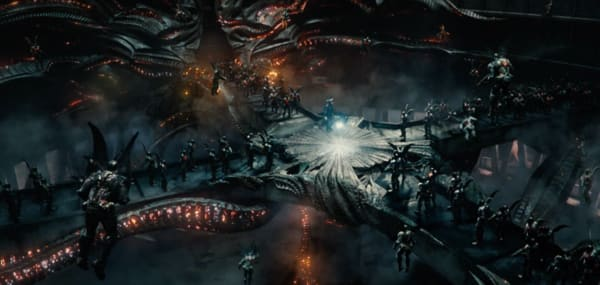
My Rating:

Rating: 4 out of 5.
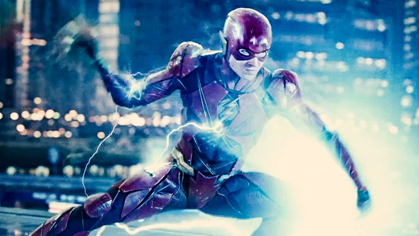
Great Stuff


Recommended: For comic book fans and DC fans, definitely, for the thrill of finally seeing the Justice League on screen, and also for fans of action movies. For those expecting something other than a fun action romp? Maybe stay away and keep your mouths shut.
Best moment: Any time the entire League is onscreen together is always great, especially in the finale, but also the scenes involving Batman and Commissioner Gordon (J.K. Simmons).
Worst moment: Three things were annoying: Steppenwolf, as you’d expect, though again I’d rather have more screen time for the protagonists in a team-up movie; Cyborg, just because I prefer him on the Teen Titans, and all the Amazonians except for Diana were pretty disappointing actresses.