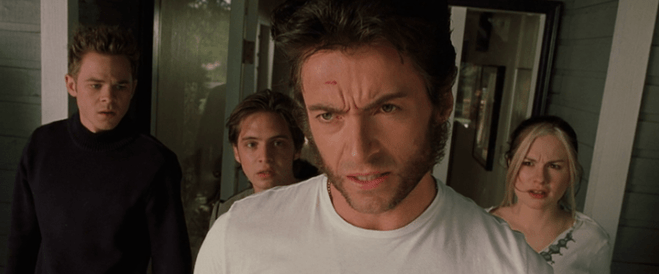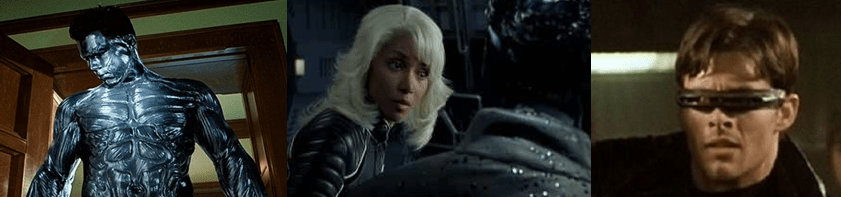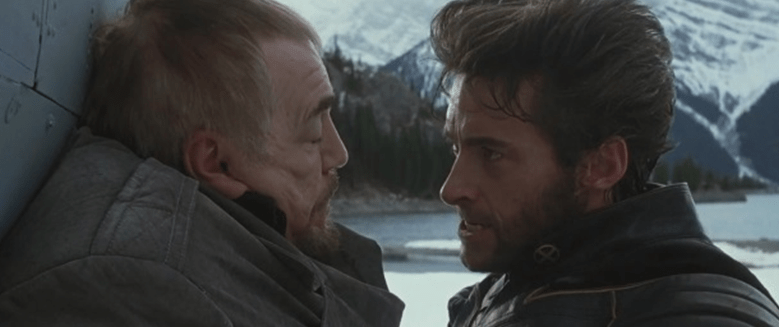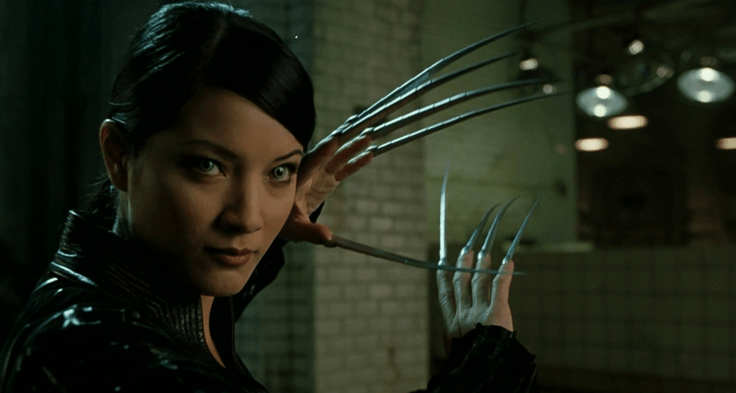
Movie Night: X-Men Origins: Wolverine

Released: April 2009
Director: Gavin Hood
Distributor: 20th Century Fox
Budget: $150 million
Stars: Hugh Jackman, Liev Schreiber, Danny Huston, Lynn Collins, Taylor Kitsch, Daniel Henney, Will.i.am, and Ryan Reynolds

The Plot:
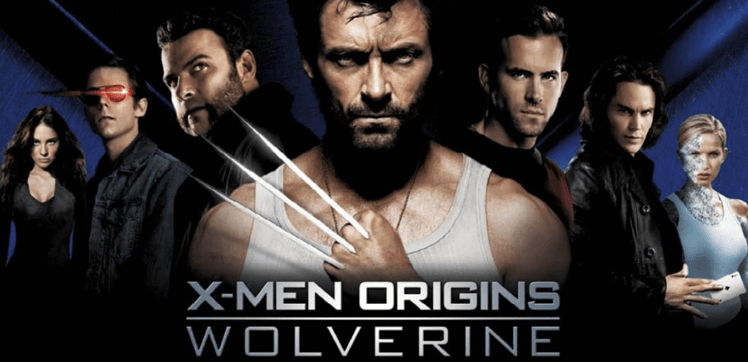
Mutant brothers James Howlett (Jackman) and Victor Creed (Schreiber) are drafted to Major William Stryker’s (Huston) Team X. However, when his murderous sibling goes wild, Logan volunteers for a radical procedure to make him indestructible.

The Background:
20th Century Fox had vastly profited from their acquisition of the X-Men movie rights from Marvel Comics. Under their banner, the first three X-Men movies (Various, 2000 to 2006) had made over $600 million and, soon after X-Men: The Last Stand (Ratner, 2006) brought the trilogy to an end, development began on a series of spin-offs focusing on solo X-Men. Chief among these was, of course, the character of Wolverine; the role had catapulted the relatively-unknown Australian actor Hugh Jackman to superstardom and was the natural choice for a spin-off given how popular the character and his rich recently-uncovered backstory was. Collaborating on the script in order to craft a more interpersonal story, Jackman and director Gavin Hood aimed to explore the duelling nature of Wolverine’s animalistic character. Popular X-Men characters like Wade Wilson/Deadpool (Reynolds) and Demy LeBeau/Gambit (Kitsch) were incorporated into the script, which sought to explore the complex relationship between Logan, Victor, and Stryker based on both their characterisations in the comics and the world Bryan Singer had establish in his first two X-Men movies. Sadly, much like X-Men: The Last Stand, X-Men: Origins Wolverine received mixed to average reviews upon release; despite earning more than double its budget at the box office, X-Men Origins is largely regarded unfavourably by the majority of fans and critics alike. Personally, I always enjoyed the film, which was far more in the vein of X-Men 2 (Singer, 2003) than the third film; I liked that it introduced new and interesting Mutants and feel that it gets a bad reputation despite being an unashamedly enjoyable popcorn action film.

The Review:
When X-Men Origins: Wolverine was released, the details of Wolverine’s early years had already been published in Marvel Comics some eight years prior; still, the revelation that James Howlett (Troye Sivan) had began life as a sickly boy in the 1800s was still relatively fresh for many readers who were more used to seeing Logan hooked into machinery and brainwashed into being a merciless killer as Weapon X. Unfortunately, as interesting as it would be to delve into Howlett’s early years and the details of his friendship with the young Victor Creed (Michael-James Olsen), X-Men Origins has no time for that as, within the first five minutes or so, young James has seen his father murdered, unsheathed his bone claws for the first time, killed his father’s murderer only to discover that his victim was actually his real father, and gone on the run with his similarly-powered half-brother. Sadly, this manic pacing is a theme for X-Men Origins; it’s all quick cuts and revelation after revelation in 1845 and then, as the film’s opening credits roll, we see James and Victor (now Jackman and Schreiber, respectively) taking part in every major war over the next hundred years or so. The montage, easily one of the more impressive parts of the film and which arguably should have made up the bulk of the movie’s runtime, does a great job of showing how James grows increasingly jaded with their mercenary lifestyle and how Victor grows equally bloodthirsty over time.
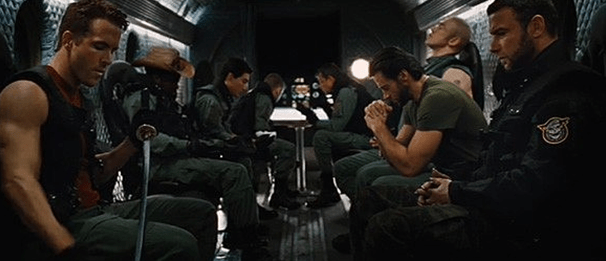
Logan eventually becomes disillusioned with Team X’s increasingly violent methods.

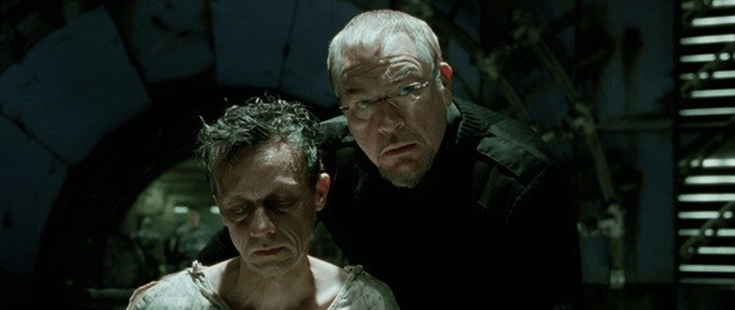
Eventually, the two are put before a firing squad after Victor kills his commanding officer. Obviously, this doesn’t actually kill the two so they are immediately recruited by Stryker, who drafts them into Team X, a group of highly skilled Mutants under his command. James and Victor go on what is implied to be many missions but, thanks to the film’s breakneck pace actually seems more like one mission, alongside such notable Mutants as Wade Wilson, Fred Dux (Kevin Durand), John Wraith (will.i.am), Agent Zero (Henney), and Chris Bradley (Dominic Monaghan). Unfortunately, Victor’s bloodlust can no longer be controlled and, when Stryker orders the team to slaughter innocent sin order to get his hands on a mysterious mineral, James walks away from the team.
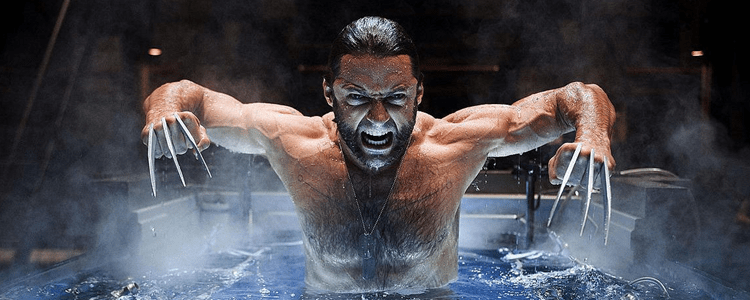
Jackman is unquestionably the star of this film, shining at every turn.

Taking the name Logan (why this name is never explained), James spends the next six years making a modest living as a lumberjack in Canada alongside his lover, Kayla Silverfox (Collins). However, after Stryker shows up to warn Logan that their old team mates are being slaughtered, Kayla is killed by Victor and, overcome with grief and rage, Logan willingly volunteers to have Adamantium surgically grated to his skeleton to give him the tools to enact his revenge against his half-brother. Once again, the star of the show here is Hugh Jackman; now at his most toned and muscular and fully at ease with the role of Wolverine, Jackman’s charisma and animal magnetism help X-Men Origins to stay engaging even in its most head-scratching moments. Jackman does a fantastic job of conveying the myriad of emotions Logan goes through, from his more tender, vulnerable moments to his raw, animalistic brutality. Unfortunately, much is made throughout the film (and in the first three X-Men movies) of Wolverine’s animal side; Stryker (Brian Cox) hinted that, in his past, Wolverine wasn’t a very nice person and X-Men Origins also hints that he did some terrible things during the many wars he fought in…but we never see this. Sure, he’s a tortured character because of his traumatic memories of war and is a formidable beast when enraged but, for the most part, he’s the same honourable, good-natured person we’ve seen in the original trilogy. It would have been far more engaging and interesting to really delve into Wolverine’s time as a cold-blooded killer who slowly grows to become disillusioned with that life compared to Victor, who relishes in killing and giving in to his animal nature.
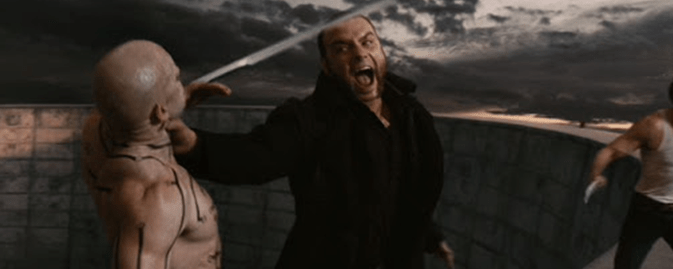
Schreiber is clearly relishing this role and is more than a match for Jackman.

Speaking of Victor, Schreiber was an inspired choice to bring the character to life. Like many comics, X-Men Origins hints very strongly that Victor and Sabretooth (Tyler Mane) are the same character but never fully lands on one side of the fence or the other; certainly, Schreiber’s loquacious nature and cold, calculated charisma separate him from mane’s more bestial portrayal but, in any case, Victor is a fantastic parallel to Logan. Sadistic and heartless, he kills for the fun of it and simply wishes to prove that he’s better than his half-brother, which he does at every turn. It’s surprising, then, when it is revealed that Victor wouldn’t be able to survive the Adamantium bonding process; perhaps this was a lie on Stryker’s part, though, as Victor is consistently shown to be Logan’s better at every turn save for that line and one brief scuffle between them before the finale.
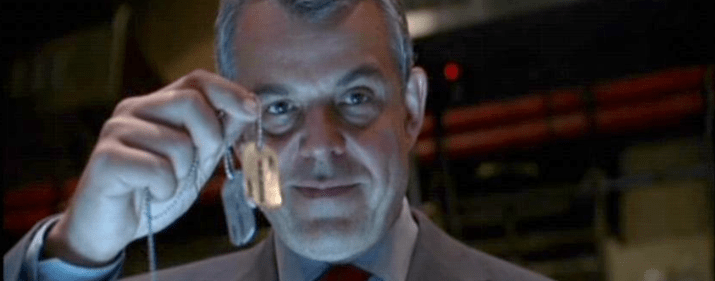
As good as an actor as Huston is, Stryker’s motives and logic are all over the place in X-Men Origins.

After making an impact in X-Men 2 and considering the importance his character has on Wolverine’s early years, it’s only nature that Stryker plays a big role in this film as the puppet master. Yet, while Huston is a great actor and brings a certain scenery-chewing relish to the role, he’s physically nothing like Brian Cox so it’s a bit weird to me that they chose to cast him. Add to that the fact that Stryker’s plan is needlessly convoluted and bone-headed (he tricks Logan into joining Team X, allows him to leave, has one of his agents (spoiler: it’s Kayla) shack up with him, then fakes her death, pretends like Victor isn’t under his control when we know he clearly is, is somehow able to convince Logan to become indestructible and then, when Logan escapes the Weapon X facility, Stryker’s first order (to a guy whose only power is “expert marksmanship”) is to kill their now invincible creation!) and you have a villain who is charismatic enough to fulfil his role as the master manipulator but flawed in his onscreen execution.

Gambit’s role is brief but surprisingly enjoyable and important to the plot.

Such flaws are evident throughout X-Men Origins, I’m afraid to say; the film’s wonky pacing and questionable plot see characters either being tricked or used with ridiculous ease (you’d think Wolverine, of all people, would be able to tell that Kayla’s death was faked, surely) or simply stumble upon the information they need or into the location where the information they need is. The scene where Logan interrogates Dux (now transformed in the Blob) is a great example; it’s a fun scene, one of my favourites, but Dux isn’t able to tell Logan everything he knows so, of course, he sends him to New Orleans to track down another Mutant, Gambit, who knows Stryker’s exact location. Honestly, Gambit has a far bigger and more prominent role in the film than I originally believed; slightly bigger than a cameo but not quite a co-star, he exists to guide Wolverine to what ends up being a pretty obvious location for his final showdown but, while Kitsch is pretty enjoyable in the role, it’s hard to look past his elaborate superhuman acrobatics. I guess you can make the argument that his Mutant ability to super-charge kinetic energy allows him to perform superhuman leaps and bounds but that doesn’t really help explain how Zero goes flying all over the place all the time. Yet…I find myself enjoying these action and fight sequences. They’re loud and over the top but what’s wrong with that? The scene where Wolverine tries to out-race Zero’s helicopter on a motorcycle is pretty awesome, as is his dramatic takedown of said helicopter (which sees him clinging onto it as it crash lands) and the obvious trailer shot of Logan dramatically walking away from the explosion, as cliché as it is, hits all the right spots for me as an action movie fan. Wolverine’s fight scenes are equally enjoyable; similar to Logan’s fight scenes from X-Men 2, Logan fights with a vicious, brutal intensity where the animal side of him everyone likes to talk about so much really comes to the forefront.

The Nitty-Gritty:
As much as I enjoy X-Men Origins, however, it’s tough to look past the film’s narrative flaws. As a prequel to X-Men (Singer, 2000), though, the film does line up fairly well (far better than the quadrilogy of “prequels” that were to follow), it’s just a shame that the filmmakers were in such a rush to cram everything into this one movie. This could easily have been restructured to show Logan’s early childhood and time during the war and then his time with Team X, leading to a falling out and with Victor over their methods. The second film could have then shown Wolverine transformed into Weapon X as we saw in the otherwise-disappointing X-Men: Apocalypse (Singer, 2016), with that film and that procedure being responsible for his memory loss, than then the third and final movie could have just been The Wolverine (Mangold, 2013) or even Logan (ibid, 2017). Instead, we rush through all of Wolverine’s greatest hits at a breakneck pace all to get to a point that somewhat awkwardly leads into the start of the first X-Men.
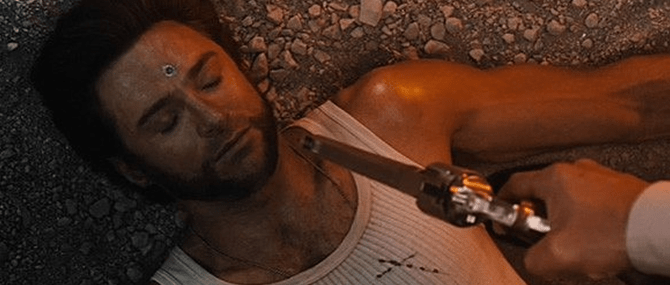
Logan’s ultimate fate is a bit rushed and messy but still somewhat affecting in its bleak execution.

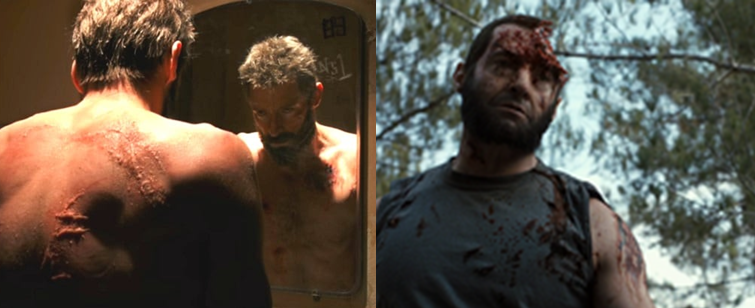
Despite that, however, I still find the scene where Stryker blasts Wolverine in the head with a few Adamantium bullets quite heartbreaking. It’s a messy way to go about his memory loss considering having his healing factor be responsible is a far more cerebral and interesting explanation but it’s still tragic to see him awaken surrounded by death and destruction with no idea who he is or where he is. The implication of this ending, and the final act of the film, is that Logan spent the next fifteen-or-so years relying solely on his instincts, which is kind of ironic considering there was probably some evidence left behind on Three Mile Island to explain his origins. Sadly, however, the X-Men films never filled in the gap between this one and X-Men (at least, not fully, as the films go out of their way to ignore or retcon this entire film) so we never really know what he got up to or what happened to Victor (unless he really did devolve into a mindless, semi-mute brute).
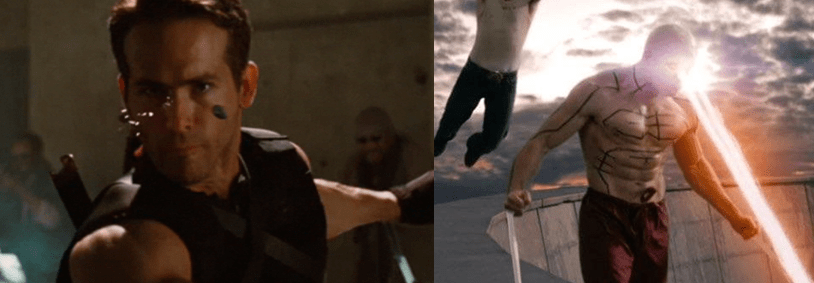
Reynolds was perfectly cast but dealt a bad hand here. Luckily, it wouldn’t be his last time in the role.

Of course, you can’t talk about X-Men Origins without addressing the elephant in the room: Deadpool. Reynolds was perfectly cast as Wade Wilson back in the day and it’s clear from the post-credit sequence that Fox were planning a spin-off for the character all along but, yes, it is disappointing to see the character chopped up and butchered into a weird amalgamation of recognisable Mutant powers as Weapon XI (Scott Adkins) rather than the fast-talking, unkillable “Merc With a Mouth” we all know and love. It’s weird watching this film back now as they could just as easily have had a more traditional Deadpool be Logan and Victor’s final opponent; lose the Adamantium blades and the optic blasts and just have him be a super-healing, super-skilled soldier who is loyal to Stryker. Or, better yet, simply imply that wade was killed and have Victor, now a feral animal, be the film’s final “boss” and then do a post-credits scene that shows Wade alive and well and working as a mercenary. Luckily for Reynolds, and for us all, Deadpool would eventually get his spin-off and it was absolutely brilliant but, thanks to the convoluted mess that the X-Men franchise has become, those films sit in a weird bubble of continuity where everything and nothing is canon at the same time.
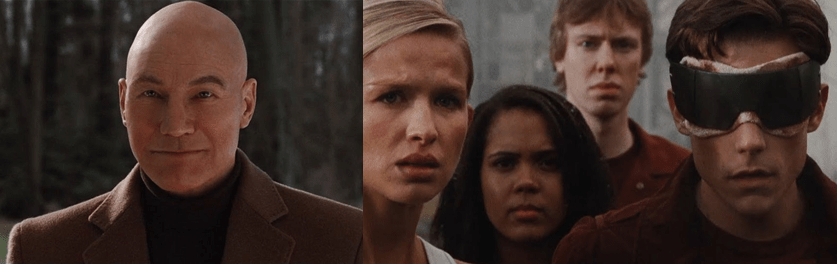
X-Men Origins uses its cameos to fill some gaps in the franchise’s once-stable timeline.

Speaking of canon, this film obviously concludes with what was, to me (at the time, anyway), a pretty shocking cameo by Professor Charles Xavier (Patrick Stewart), who arrives on Three Mile Island to rescue Stryker’s Mutant prisoners. Sure, the de-aging affects aren’t as good as in X-Men: The Last Stand but this was a very welcome cameo for me and helped to fill a gap in what was, at the time, a straight forward timeline. While I also applaud the way the film attempts to place a little bit more spotlight on Scott Summers/Cyclops (Tim Pocock) and even goes out of its way to show that he never sees or hears Wolverine so as not to create a continuity error, once again the character is somewhat shafted by his ham-fisted inclusion; I liked that Stryker sent Victor specifically to hunt Cyclops down, as though his powers were fundamental to Weapon XI, but the fact that Cyclops is already wearing ruby-tinted sunglasses to keep his powers in check is a little odd as I always assumed this was a solution provided by Xavier. Still, it’s fun to him and a few other recognisable Mutants in little cameos and that the film allows for other popular or B-list X-characters to be included without Wolverine sucking all of the spotlight away from the traditional X-Men thanks to Jackman’s screen presence, charisma, and popularity.
The Summary:
I don’t know what it is about X-Men Origins: Wolverine but…I still really like it. yes, the plot is nonsensical and all over the place, rushing through some story beats that could be a movie all by themselves and lingering on others that are far less interesting and yes it does do a disservice to Deadpool and raise a lot of questions that subsequent X-Men movies and spin-offs largely ignore. But it’s just so much fun! Maybe it’s because I grew up with loud, bombastic action movies but I find this film immensely enjoyable in a lot of ways. It’s fun when it needs to be, bad-ass when necessary, and even touching at times. It’s over the top and mindless action, yes, but what’s wrong with that? Honestly, it irks me that the franchise went out of its way to ignore or retcon this film as it cost us Schreiber returning to the series and caused continuity to be thrown out of the window. Maybe Wolverine deserved better than a big, dumb action movie but sometimes big, dumb fun is just big, dumb, and fun and that’s okay.

My Rating:

Rating: 3 out of 5.

Pretty Good

What did you think about X-Men Origins: Wolverine? Do you think it deserves the reputation it gets or do you, like me, find it to be an enjoyable entry in the franchise? How did you feel about the way the film treated Deadpool and the relationship between Logan and Victor? How would you like to see Wolverine re-introduced to the Marvel Cinematic Universe? How are you celebrating the month of Wolverine’s debut? Whatever your thoughts about Wolverine and the X-Men, feel free to leave a comment below.


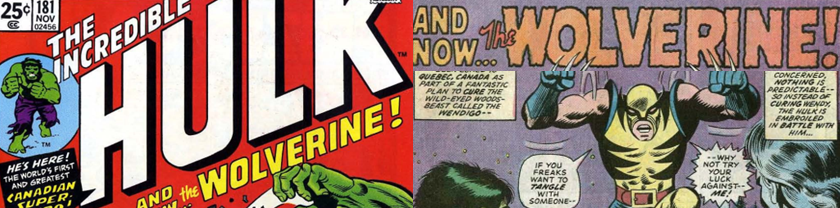
Back Issues: The Incredible Hulk #181

Story Title: “And Now…The Wolverine!”
Published: November 1974
Writer: Len Wein
Artist: Herb Trimpe

The Background:
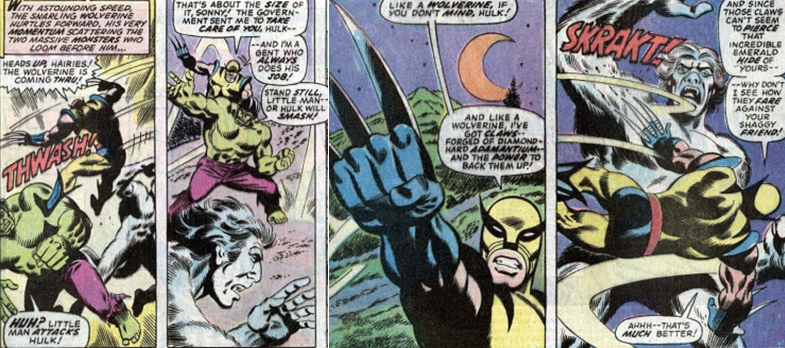
In 1974, Roy Thomas, then editor-in-chief at Marvel Comics, called upon writer Len Wein to introduce readers to the first Canadian superhero; a short, feisty character named “Wolverine” who would be as scrappy and fearsome as his namesake. Though it was the legendary John Romita Sr who sketched up the original design for Wolverine and thought up his now-iconic retractable claws, it was artist Herb Trimbe who finalised the character’s design. In what would become a staple for the character for many years, Wolverine’s past and true identity was initially kept a mystery; however, despite claims for years that Wolverine was to be a mutated wolverine cub, Wein insisted that this was never the plan and that Wolverine was always intended to be a Mutant. Of course, nowadays, James Howlett (better known as “Logan”) has been established as one of Marvel’s most popular characters but back in 1974, Wolverine was simply meant to be another in a long line of one-off characters to spice up an existing title. The character actually made his first, brief appearance at the conclusion of The Incredible Hulk #180 in a one panel cameo after being ordered by the Canadian military to put a stop to a raging battle that is taking place in the forests of Quebec, Canada between Doctor Bruce Banner/The Hulk and Paul Cartier/The Wendigo.

The Review:
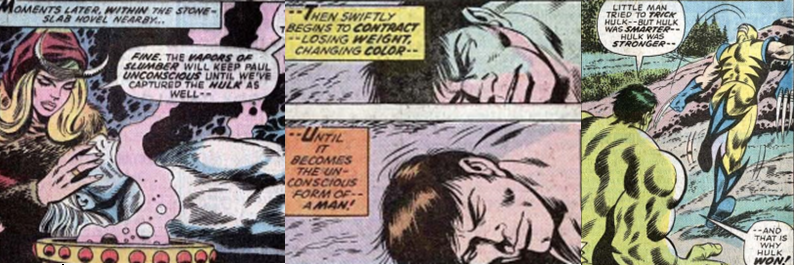
“And Now…The Wolverine!” hits the ground running right from the first panel and doesn’t waste any time with copious flashbacks to the previous issue; we get a lovely one sentence recap of the Hulk’s origin at the top of the first page (which was the style at the time), a few dialogue boxes to give us context as to the place and what’s happening, and then jump right into the action…and rightfully so considering that the battle between the Hulk and the Wendigo was so fierce and destructive in the last issue that the Canadian military had to call in the mysterious “Weapon X” (which, of course, turned out to be “The World’s First and Greatest Canadian Super-Hero!”, Wolverine).

Wolverine attacks both the Hulk and the Wendigo without fear or hesitation.

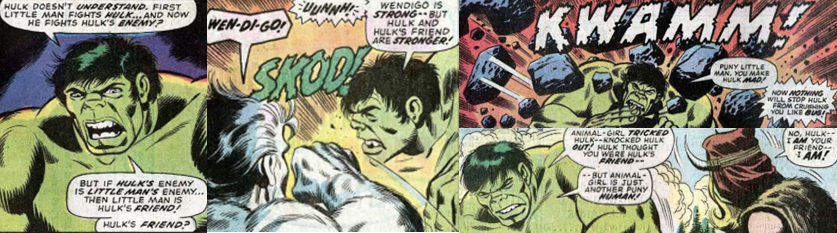
A small, muscular figure in a skin tight yellow outfit, Wolverine makes an instant first impression not just for his striking appearance (not very many superheroes wore yellow back then and his cat-like mask and gleaming metal claws make him instantly unique) but also for leaping head-first into battle with two of Marvel’s most physically daunting creations. Despite being dwarfed by his opponents, Wolverine strikes without fear or intimidation, using his incredible speed and agility to compensate for the two’s superior strength. As mentioned above, Wolverine’s exact origin is largely a mystery but he does boast that his retractable claws are made of “diamond-hard Adamantium”. So dangerous are Wolverine’s claws and so vicious is his attack that he wounds the Wendigo and begins to not just hold is own but actually dominate their battle. Hulk, confused by Wolverine’s appearance and temperament, decides that if Wolverine (or “Little Man” as he calls him) is attacking the Wendigo, whom the Hulk sees as an enemy, then he (Wolverine) must be his (Hulk’s) friend so he jumps in to join the fight against the Wendigo, galvanised at the idea of fighting side-by-side with an ally. Wolverine takes advantage of the distraction and unnecessary assistance and, between the two of them, they are able to fell the Wendigo.

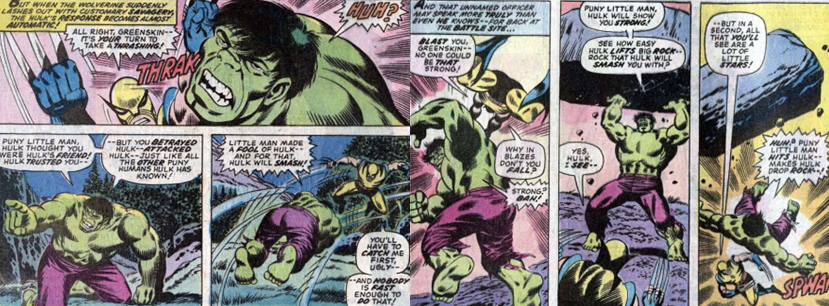
The Hulk is enraged when the Wolverine seemingly turns against him.

Wolverine delivers what appears to be a killing blow to the beast (which is quickly revealed to have only subdued the creature since the Wendigo is functionally immortal) but the Hulk’s momentary victory and elation turns to his trademark fury when Wolverine immediately lashes at him now that the Wendigo has been defeated. Enraged at the betrayal, the Hulk attacks mindlessly, earning Wolverine’s respect and frustration since the Green Goliath refuses to fall and only gets stronger and more enraged as the battle continues. While the fight is going on, Georges Baptiste and Marie Carter (who was the one who originally lured the Hulk to Quebec) take advantage of the situation to bring the Wendigo’s unconscious form to safety. It turns out that the Wendigo curse has overtaken Marie’s brother, Paul, and that she intends to use “the black arts” to transfer it from him and into the Hulk, much to Georges’ horror. To facilitate this, she evokes the “Spell of Subjugation” to render both Wolverine and the Hulk unconscious. However, Georges’ objections to Marie’s intentions are exacerbated when the two watch in stunned awe as the Hulk, now calmed, reverts back into the unconscious form of Bruce Banner. Georges leaves in protest at the idea of cursing an already cursed man to a fate even worse than that he already suffers with but Marie is determined to see her plan through out of the desperate need to see her brother returned to normal.

The Hulk delivers a decisive blow to the Wolverine, ending their fight as the clear victor.

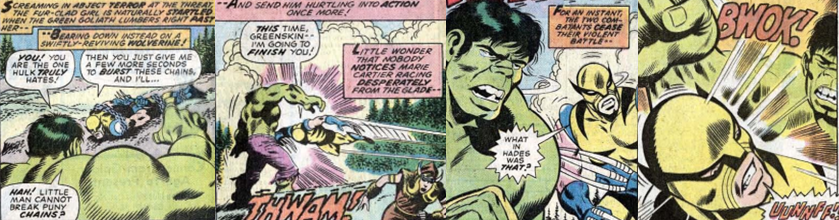
After binding Wolverine with chains, she attempts to drag Banner’s unconscious form to the Wendigo and, in the process, triggers his transformation back into the Hulk. Hulk, equally furious at having been betrayed by Marie (or “Animal-Girl”), is stayed from turning his rage on her only by the sight of Wolverine’s prone and helpless body. Wolverine, however, suddenly and dramatically breaks free from his bindings and their battle begins anew. Marie uses the distraction to slip away but utters a heart-wrenching scream when she comes face-to-face with the Wendigo; this diverts the attention of the two combatants for a split second, which is more than enough for the Hulk to deliver a sudden, powerful blow to Wolverine’s head that finally puts him down for good. Marie’s horror at the Wendigo’s appearance turns to elation and then dismay when she realises that Georges has taken the curse upon himself, thus returning her brother to normal, out of his love for her. With the last of his humanity slipping away, Georges, now the Wendigo, retreats into the forest, leaving Marie a wreck of emotion. The Hulk, despite his rage and simple nature, comes across her and, in a moment of compassion, comforts her, the two of them briefly bound together in their tumultuous emotion.

The Summary:
“And Now…The Wolverine!” is a heavily action-packed story; the entire issue is just a long fight between the Hulk, the Wendigo, and the Wolverine and it’s pretty great, to be honest. I’ve read a few Hulk stories from the seventies and it seems like most of them revolved around the idea of the Green Goliath fleeing from human persecution, befriending or being manipulated by someone, and then lashing out in a rage at that person betraying him and a lot of that is packed into this story since the Hulk believes both “Little Man” and “Animal-Girl” have betrayed his trust. It’s a simple formula made all the more unique with the debut of the Wolverine; we learn next to nothing about this character but he makes an immediate impact because of his actions rather than his words. It’s easy to say now, with the benefit of hindsight and Wolverine’s immense popularity, but Wolverine really does may a dynamic first impression; he jumps right into a battle with the Hulk, probably the most indomitable of Marvel’s heroes, and the nigh-immortal Wendigo without hesitation and is more than capable of holding his own against the two, instantly making him a force to be reckoned with. Of course, Wolverine isn’t quite the character we know him as today; he never says “Bub” and his speech is a bit more eloquent than it would later be written, for one thing, but we do learn that he is a Mutant and that he was specially trained and crafted by the Canadian government and military to be their most savage warrior. Furthermore, while it’s not revealed that his skeleton is also coated in Adamantium and there is no mention of his heightened sense or healing factor, Wolverine is keen enough to partially sense the Hulk’s final blow to save himself from being killed.

The Hulk is much more child-like and quick to anger when he feels he’s been betrayed!

This was a common theme back in Wolverine’s earliest appearances; dialogue, thought balloons, and narration boxes often emphasised that Wolverine was in danger of serious injury or even death, which can be a little jarring since we’ve seen him completely regenerate from being reduced to a skeleton. Oh, also, if you’ve always wanted to know what Wolverine is “the best at”, the answer is right here in this story as he says: “Moving is the best thing I do!” I’ve mentioned a couple of times hits year how the Hulk was originally a far more articulate and intelligent creature rather than a mindless beast; by the seventies, it seems, the Hulk’s intelligence and vocabulary had degraded somewhat. Hulk is far more irritable at this time, with the temperament of a child; he wishes only to be left alone and is disgusted by “Puny humans” but also revels in combat, loudly proclaiming “Hulk is the strongest one there is!” at every opportunity. At the same time, though, he only fights when he is provoked or enraged and is desperately seeking a friend, usually a monster such as he, to connect with. As I alluded to, this basically never happens and every potential friend he encounters either turns against him, turns out to be a villain, or dies, leaving him in a constant state between rage and anguish. Unfortunately, there’s literally nothing for his human alter ego to do in this issue but, since the fight is the centrepiece of the story, I can’t imagine what Banner would have really been able to bring to the narrative and I like that the writers had Hulk ultimately defeat Wolverine in combat rather than the fight abruptly ending because he turned back into Banner.

The side plot exists to give us a break in the action but the main appeal is the fighting!

As for the Wendigo…well, I’ve never been a massive fan of that character. He’s a bit basic and doesn’t have much going for him besides the tragic nature of the curse; generally, he’s more animalistic and feral than even the Hulk, which is an obvious juxtaposition for the Hulk’s unadulterated rage (and, in this case, Wolverine’s primal savagery) and again it’s another of those ways of showing how truly cursed the Hulk is as at least the Wendigo curse can be passed on to another. If there’s anything that lets this issue down, though, it’s the side plot of Marie and Georges; it’s not as annoying as some side plots in other stories I’ve read but I doubt anyone is reading this issue to see Marie and Peter reunited! We’re here for Hulk vs. Wolverine and that is always going to be the more entertaining aspect of the story.

My Rating:

Rating: 4 out of 5.

Great Stuff

What are your thoughts on “And Now…The Wolverine!” and Wolverine’s impressive debut? Did you read the previous issue and, if so, were you intrigued to find out who this “Weapon X” was? What did you think to Wolverine’s depiction and characterisation here? Were you impressed that he held up so well against the Hulk and the Wendigo or was he just another one in a number of one-off characters? Do you like the Wendigo and the curse associated with the character? Which era/incarnation of the Hulk is your favourite? How are you celebrating Wolverine’s debut this month? Whatever you think about this issue, or Wolverine in general, leave a comment below and be sure to check in next Sunday for more Wolverine content!

Movie Night: X-Men: The Last Stand

Released: May 2006
Director: Brett Ratner
Distributor: 20th Century Fox
Budget: $210 million
Stars: Hugh Jackman, Halle Berry, Famke Janssen, Ian McKellen, Kelsey Grammer, Shawn Ashmore, Ellen Page, Aaron Stanford, Patrick Stewart, Rebecca Romijn, Vinnie Jones, Anna Paquin, and James Marsden

The Plot:
The Mutant community is divided when a major pharmaceutical company announces the development of a “cure” that will permanently suppress the Mutant X-Gene. As Erik Lehnsherr/Magneto (McKellen) uses the controversy to step up his war against mankind, Jean Grey (Janssen) inexplicably returns from the dead, her powers having grown exponentially and threatening the lives of humans and Mutants alike.

The Background:
Since Stan Lee and long-time collaborator Jack Kirby created the X-Men in 1963, Mutants have featured prominently in Marvel Comics; unlike most of Marvel’s superheroes, the X-Men (and Mutants in general) are met with near-constant hostility as they stand in for oppressed minorities everywhere. The X-Men grew to greater mainstream prominence thanks to the influential animated series from the nineties, the success of which led to 20th Century Fox purchasing the film rights and producing two well-regarded X-Men films in the early 2000s. The production of X-Men: The Last Stand, however, was far more complex than its predecessors; former director Bryan Singer unexpectedly walked away from the franchise, taking X-Men 2 (Singer, 2003) screenwriters Dan Harris and Michael Dougherty with him in order to make the divisive Superman Returns (ibid, 2006). Many replacements were considered, including Joss Whedon, and the main cast’s contracts were hastily extended before Fox settled on director Matthew Vaughn, who assembled most of the remaining cast. However, family issues and the pressure of Fox’s tight film schedule led to Vaughn exiting the project and Brett Ratner replacing him at the last minute. With limited knowledge of the source material, Ratner trusted the film’s writers, who drew inspiration from the iconic “Dark Phoenix Saga” (Claremont, et al, 1980) and Whedon’s 2004 “Gifted” arc. The sudden mix-up of directors, writers, and creative minds led to X-Men: The Last Stand being far less universally praised compared to its predecessors; despite being regarded as a financial success, the film received mixed to average reviews and is often regarded as a low point for the franchise.

The Review:
Unlike the last two X-Men movies, X-Men: The Last Stand opens with two slightly less exciting scenes; the first is an early example of de-aging effects that we are seeing being incorporated, and perfected, more and more these days. To be fair, the effects actually hold up really well here; both Professor Charles Xavier (Stewart) and the future Magneto look a good twenty-or-so years younger and it’s a great little scene that shows a snapshot of their friendship and relationship that has only been hinted at before and finally fleshes out Jean Grey’s character more than we’ve had in the films so far.

Angel looks impressive but has little impact on the film’s many plots.

The other opening scene introduces us to Warren Worthington III (Cayden Boyd), the Mutant son of corporate mogul Warren Worthington II (Michael Murphy), who is desperately trying to file down the angel’s wings that are sprouting from his back. This scene does a lot to show the shame and fear and desperation many Mutant children feel when they discover that they are Mutants and these emotions play a vital role in one of the film’s central narratives. You would think that the grown-up Warren (Ben Foster) would thus play just as big a role given his prominence in the film’s opening but…no. Unlike Kurt Wagner/Nightcrawler (who is inexplicably absent and not mentioned in this film due to actor Alan Cumming disliking the make-up process), Warren (also known as “Angel” in the comics, where he was a founding member of the X-Men) barely factors into the film at all, disappearing for most of it and serving only to inspire the X-Men to continue Xavier’s dream later in the film (and save his Dad, I guess).

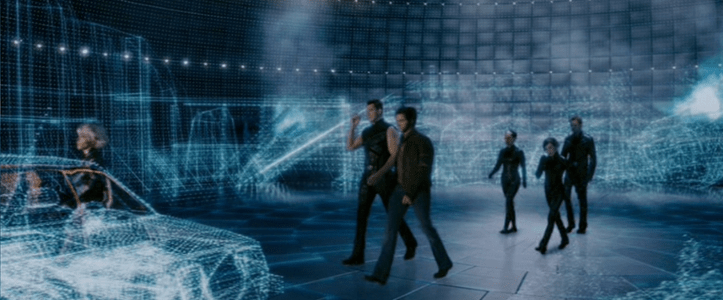
The exhilerating reintroduction of the X-Men is little more than a holographic simulation.

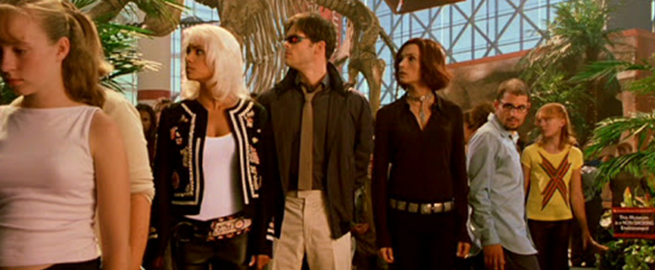
After the opening credits (which thrust Hugh Jackman and Halle Berry’s names to the forefront), though, the film kicks things up a notch by introducing us to the new X-Men team in the midst of what is clearly a Sentinel attack heavily inspired by the seminal “Days of Future Past” (Claremont, et al, 1981) storyline. Ororo Munroe/Storm (Berry) is now the team’s field leader, Logan/Wolverine (Jackman) is the reluctant tag-along, and the core X-Men are comprised of the X-Kids from the previous film: Marie D’Ancanto/Rogue (Paquin), Bobby Drake/Iceman (Ashmore), and Peter Rasputin/Colossus (Daniel Cudmore) finally receive their X-suits and are joined by Kitty Pryde/Shadowcat (Page). Sadly, however, as fantastic this scene is, it is quickly revealed to be nothing more than an elaborate Danger Room simulation. The post-apocalyptic, Sentinel-ruled future of this storyline would be realised far better nearly ten years later but this snapshot is sadly about as exciting as X-Men: The Last Stand gets for some time. Very quickly, we realise that despite the presence of a President (Josef Sommer) who is sympathetic to their cause, and a Mutant, Henry “Hank” McCoy/Beast (Grammer), installed as the Secretary of Mutant Affairs, all is not well at Xavier’s School for the Gifted. Scott Summers/Cyclops (Marsden) is a broken man after the death of his wife, Jean Grey, and no longer fit to lead the X-Men; haunted by memories of Jean and his pain, he abandons the school and returns to Alkali Lake only to discover Jean mysteriously resurrected.

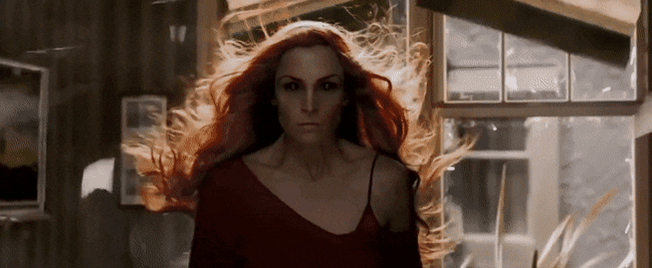
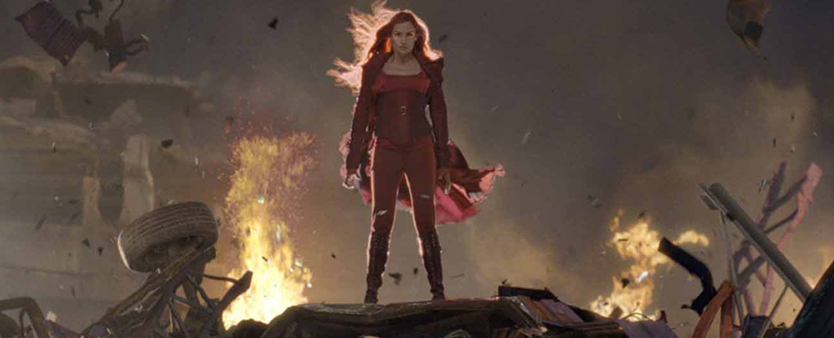
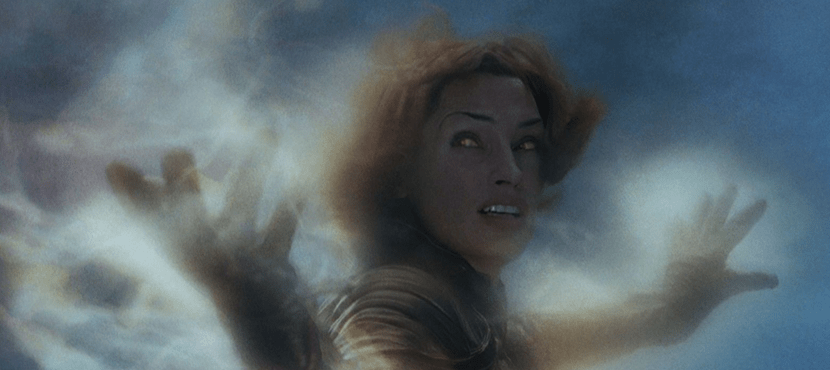
Jean’s Phoenix powers are impressive and destructive…when they’re actually on show.

Despite a heartfelt reunion, their time together is violently cut short and, thanks to a bloated cast and Marsden choosing to join Singer in Superman Returns, Cyclops is disrespectfully killed off…off screen. Yep, in a movie where one of the central storylines is the famed “Dark Phoenix Saga”, the crux of which heavily involved the relationship and love between Cyclops and Jean, the writers chose to kill Cyclops off. Sadly, it would take numerous X-Men sequels and spin-offs to try and patch together Cyclops’ characterisation and prominence and, even then, his character still feels hollow and shafted compared to other X-characters. On the plus side, Jean’s character is suddenly massively fleshed out; Xavier reveals that Jean is a “Class Five” Mutant (…yeah, this film randomly introduces power classes for Mutants but doesn’t really explain them very well) and that her powers are so strong that he had to suppress them so that she wouldn’t be consumed by them. This lead to Jean developing a sadistic, purely instinctual, predatory personality known as the “Phoenix”, which is the personality we largely see throughout this film. The Phoenix drives Jean to indulge her lust for Wolverine, abandon Xavier’s school and his teachings, and even fall under the manipulative sway of Magneto but, honestly, she largely spends a good chunk of the film’s third half just standing around moodily until she is cajoled into unleashing her full power.

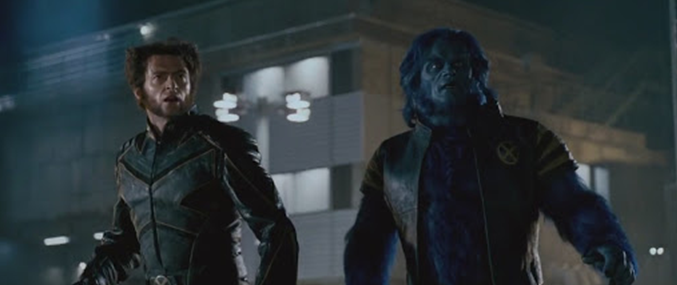
Wolverine has now evolved into a full-time member and leader of the X-Men.

Jean’s extensive characterisation also changes our perspective of Xavier; up until now, he’s has been seen as this benevolent, kind-hearted teacher but both Phoenix and Magneto reveal that Xavier has a dark side to his methods as well. Wolverine is visibly disgusted that Xavier would seek to control Jean but, ultimately, Xavier sacrifices his life to try and calm Jean’s emotions and keep her from letting her powers overwhelm her. The death of Xavier hits hard and, if Cyclops’ death didn’t raise the stakes, Xavier’s really does; even Wolverine is heartbroken at the loss of his mentor and it shakes the team so much that they consider closing the school for good. Speaking of Wolverine, this film sees his story arc from the last two movies reach its natural conclusion; originally a loner, he came to reject his past and hedge his bets with the X-Men and, by the end of X-Men: The Last Stand, has become a full-time member of the team, the school, and basically the co-field leader of the team alongside Storm. To get to that point, though, he has to struggle with the knowledge that he will be forced to kill Jean, whom he is in love with, in order to save her and keep her from going nuts. Storm is uncharacteristically quick to jump to this conclusion but Wolverine spends the majority of the film believing that Jean can be redeemed; it is only when the Phoenix starts disintegrating friend and foe alike that he resolves to save her by ending her threat once and for all.

Magneto holds nothing back in waging his war against humanity and their cure.

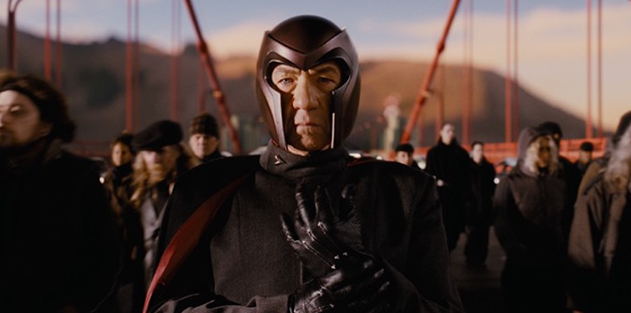
Magneto’s arc in this film is super interesting to me; in the previous films, you could empathise with his motives due to his backstory but, by X-Men: The Last Stand, Magneto has transformed into everything he hates. Gathering an army of angry young Mutants and rallying them against the so-called “cure”, Magneto becomes little more than a xenophobic, hypocritical dictator, delivering speeches clothed in black and red and with disturbingly Nazi-like mannerisms. It’s fascinating to watch him become so consumed by his prejudices that he loses sight of how far into the dark he has fallen; yet, even when he is disagreeing with Xavier’s motives to the point of escalating conflict, he still has immense respect for his former friend and is visibly shaken by his death. Ultimately, Magneto finds himself reduced to a mere human and horrified by the Phoenix’s true powers and left despondent and alone…though thankfully, conveniently, stupidly luckily the cure is, apparently, not as permanent as Worthington claims despite being harvested from a Mutant whose power is to suppress other Mutants’ powers. The side plot of the cure feels like it would have been enough of a plot for the entire film as the film seems to struggle a bit with focusing on the cure plot and the Phoenix plot, with both dipping in and out of importance as the scene requires. Rogue, frustrated at not being able to touch others without hurting them, is ultimately driven to take the cure despite the fact that she seemed far more comfortable with her powers in the second film. Other than Rogue, though, no other characters seem even remotely interested in the cure; McCoy is overwhelmed and in awe of Jimmy/Leech’s (Cameron Bright) abilities and Storm is vehemently against the idea of “curing” mutation but the real conflict about the cure is personified through the rabid, faceless masses. Even Magneto explicitly uses the existence of a cure more as a reason to declare war on humanity and it honestly feels like any kind of excuse would have been enough to set him off.

The Nitty-Gritty
X-Men (Singer, 2000) struggled a bit with balancing its screen time between its large cast and, while X-Men 2 did a decent job of fleshing out Wolverine and the X-Kids, it too struggled a bit with having so many main characters and X-Men: The Last Stand has even more characters to wedge into its limited runtime. As a result, returning characters like John Allerdyce/Pyro (Stanford) and Raven Darkhölme/Mystique (Stamos), are largely the same as in the last movie but reduced to angry henchman and angry captive-turned-turncoat, respectively.

Once again, the film is bloated with far too many characters for its runtime.

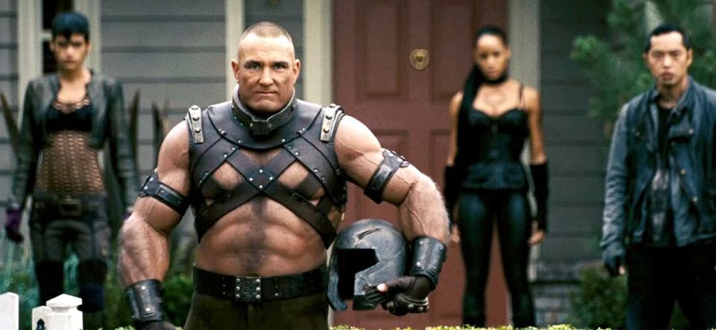
Though upgraded to a member of the X-Men, Colossus is painfully underused; he has exactly one line and exists solely to be this big, handsome, muscular guy with the cool ability to turn into metal and throw Wolverine when he demands it. Even though Kitty is given more characterisation, her sub-plot with Iceman really could have been expanded to include Colossus; like, have Kitty and Colossus be in a relationship and have Rogue be jealous of their closeness just as she is of the relationship between Iceman and Kitty in the film. But, no; instead, Colossus is just…there, some guy on the team we know nothing about who looks cool but is basically a blank canvas. Beast fares slightly better thanks, largely, to Kelsey Grammer’s charisma and dulcet tones; he’s also used far more prominently and, through him, we get a sense of Xavier’s history teaching X-Men we’ve never seen before to help flesh out this world even more. Unfortunately, the film just doesn’t know when to stop as Magneto recruits a whole bunch of new acolytes, most of whom boil down to a one-note character and a cool look or power. Cain Marko/Juggernaut (Jones) stands out the most thanks to Jones’ attempts at characterisation and his meme-inspired delivery but he’s not even a shadow of the character from the comics. James Madrox/Multiple Man (Eric Dane) exists for one fake-out scene, Callisto (Dania Ramirez) is little more than a smarmy bitch for Storm to fight, and Psylocke (Meiling Melançon), Arclight (Omahyra Mota), and Kid Omega (Ken Leung) are just there because they look cool, are recognisable characters, and Magneto needs “pawns” to sacrifice but they’re barely given names much less any kind of backstory. The film does excel at times, though; the score is exceptional, far more memorable than those from the previous films, and the majority of the film’s effects hold up pretty well.

Though a terrifying force, the Phoenix is nothing compared to what she was in the comics.

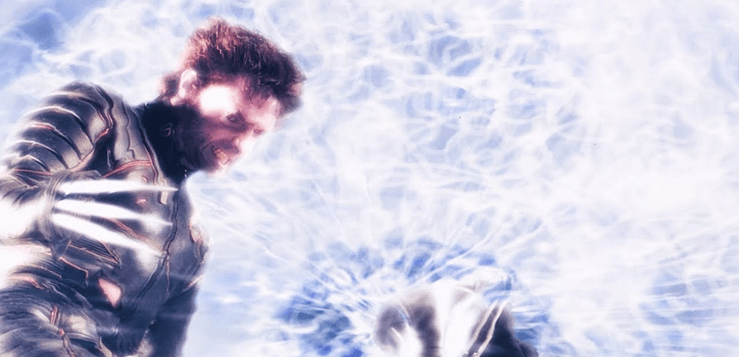
Chief amongst these scenes are those involving Magneto’s vast powers; first, he flips cars and armoured trunks around with simple flicks of his hands and a quiet confidence and then, later, he wrenches the Golden Gate Bridge from its moorings and brings it crashing down on Alcatraz Island, the site of the cure’s production. It’s an impressive scene that is topped only by the explosive and destructive unleashing of the Phoenix’s true powers; enraged, Jean begins destroying and disintegrating everything around her, causing debris, water, and fire to fly into the air and threatening the safety of everyone on the island. Of course, only Wolverine, with his superhuman healing factor, can withstand Jean’s powers long enough to end her threat and, while I disagree that Jean’s peerless power wouldn’t be able to vaporise Wolverine as easily as she does everything and everyone else, it does lead to a few cool shots where we see Wolverine’s Adamantium-coated skeleton beneath his seared flesh.

The Summary:
X-Men: The Last Stand is a loud, confusing mess of a film in many ways. It’s tonally all over the place, being bleak and serious one minute and then comedic at others. The two central plots are both big enough to have films of their own and distilling the entire Dark Phoenix story into one movie, especially one that isn’t even devoted to it, obviously means that this storyline suffers as a result. Yet, to be fair, it does kind of work in the context and world that Singer created in his previous two movies. Unfortunately, though, there’s just way too much going on at once and far too many characters crammed into the film’s runtime. Behind the scenes issues clearly affected the film’s production, necessitating the killing off of many characters and the hasty introduction of new ones who are given little to do and even less characterisation. It’s not as bad as I remember it being, to be fair, and it does annoy me that subsequent X-Men films went out of their way to erase or undo many/all of its events rather than find ways to build upon or write around them but it is, undeniably, a poor way to end what was, at the time, shaping up to be an otherwise strong trilogy of movies.

My Rating:

Rating: 2 out of 5.

Could Be Better

What are your thoughts on X-Men: The Last Stand? Where do you rank it against the other X-Men films? Which of the many, many new characters do you like the most? Were you annoyed at how the film treated Cyclops and the “Dark Phoenix Saga”? How would you have done the film differently? Whatever you think about X-Men: The Last Stand, and X-Men in general, feel free to leave a comment below.
Movie Night: X-Men 2

Released: April 2003
Director: Bryan Singer
Distributor: 20th Century Fox
Budget: $110 to 125 million
Stars: Patrick Stewart, Ian McKellen, Hugh Jackman, Brian Cox, Famke Janssen, Rebecca Romijn-Stamos, Alan Cumming, James Marsden, Halle Berry, Anna Paquin, Shawn Ashmore, Aaron Stanford, Kelly Hu, and Bruce Davison

The Plot:
The war between humans and Mutants escalates after an attack on the President of the United States (Cotter Smith). Having interrogated Erik Lehnsherr/Magneto (McKellen), Colonel William Stryker (Cox) leads an assault on Professor Charles Xavier’s (Stewart) sanctuary for Mutants, scattering his X-Men and setting in motion a plot to rid the world of Mutantkind.

The Background:
After Stan Lee and long-time collaborator Jack Kirby created the original X-Men in 1963, Mutants have long been a staple of Marvel Comics; unlike many of Marvel’s superheroes, the X-Men (and Mutants in general) are hated and feared, standing in for oppressed creeds and minorities everywhere and giving Lee an easy way to produce numerous new superheroes with minimal effort. The X-Men later influenced a whole new generation through the much-lauded animated series from the nineties, the success of which led to 20th Century Fox purchasing the film rights and releasing the first live-action X-Men movie in 2000 with director Bryan Singer at the helm. Against the odds, X-Men proved a success, bringing in over $290 million against a $75 million budget. Production and development of a sequel began almost immediately, with Singer and producer Tom DeSanto both researching the more nuanced storylines of the X-Men comics, specifically God Loves, Man Kills (Claremont, et al, 1982), which introduced William Stryker into the X-Men lore. Singer also clearly drew inspiration from films like Star Wars: Episode V: The Empire Strikes Back (Kershner, 1980) and Star Trek II: The Wrath of Khan (Meyer, 1982) for X-Men 2’s bleaker, more sombre tone and sought to cast a bigger spotlight on the younger pupils of Xavier’s School for the Gifted. Allowances had to be made, however, when developing X-Men 2 (also known asX2” and even “X-Men: United”); after the release of X-Men, Halle Berry had won the Academy Award for Best Actress for her role in Monster’s Ball (Forster, 2001), necessitating that her character, Ororo Munroe/Storm, have more screen time. Other scenes, including the return of Sabretooth (Tyler Mane), the inclusion of the Danger Room, and an expanded role for Scott Summers/Cyclops (Marsden) were all cut due to the expanded cast and to keep the film at a reasonable length. After being released, X-Men 2 was a massive financial success, bringing in over $400 million in worldwide revenue and becoming the ninth-highest-grossing film of 2003. The critical reception was glowing as well and X-Men 2 still stands as one of the more well-regarded entries in Fox’s long-running X-Men franchise.

The Review:
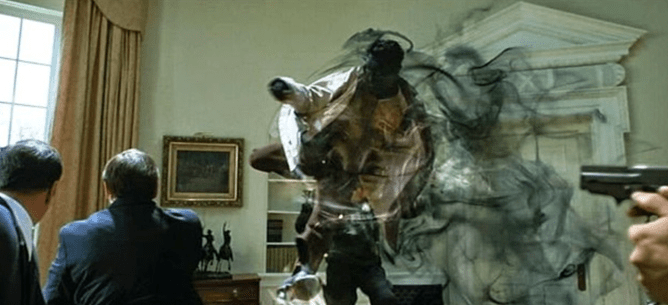
As deep and impactful as the opening of X-Men was, X-Men 2 goes out of its way to top it with one of the most layered, complex, and engaging action sequences put to cinema; the film opens with Kurt Wagner/Nightcrawler (Cumming) infiltrating the White House and attacking Presidential guards. He is stopped short of potentially stabbing President McKenna but leaves behind a blade proclaiming “Mutant Freedom Now”. Immediately, the stage is set for an escalating conflict and that is the key word to describe X-Men 2: escalation. Everything that was great about the first movie is expanded upon and dialled up a notch, increasing both the stakes and the scope of Singer’s X-Men world.

X-Men 2 benefits from not having to waste its runtime on copious amounts of exposition.

As X-Men devoted so much of its time (arguably too much) to establishing the rules and lore of this grounded, quasi-science-fiction take on the X-Men, X-Men 2 doesn’t have to worry about wasting time establishing characters or expositing information. When we’re reintroduced to Doctor Jean Grey (Janssen), Cyclops, and Storm, we already have an idea of their characters as we were exposed to them, albeit briefly, in the first movie. As an added bonus, actions from the first film have consequences in the sequel: Jean’s powers are a bit out of whack after exerting herself in the conclusion of the first movie and Logan/Wolverine (Jackman) is first reintroduced having found the abandoned facility Xavier directed him to in the last film.

Logan’s paternal side is shown as he is left protecting the X-Kids.

The core X-Men are given far more to do this time around but, again, much of their screen time is taken away by other characters; however, whereas the Brotherhood were largely silent, one-dimensional antagonists in the first film, the “X-Kids” (Marie D’Ancanto/Rogue (Paquin), Bobby Drake/Iceman (Ashmore), and John Allerdyce/Pyro (Stanford)) are actually surprisingly well developed. We already know Rogue from the first film but, here, she’s far more comfortable in her own skin and with her powers; she and Drake struggle to reconcile their throbbing biological urges due to the nature of her powers but her story arc is indicative of the story of all of these X-Kids: maturity and growing into the role of an official X-Men. Both Iceman and Pyro get their own separate story arcs as well, both of which are far deeper and more developed than anything either Cyclops or Storm go through in the entire series! When Iceman, Pyro, and Rogue are forced from the X Mansion by Stryker’s team, Wolverine takes them to Iceman’s family in Boston. There, the film explicitly wallops us over the head with its themes by having Iceman “come out” as a Mutant to his family, who react in the same clichéd way as a lot of fictional (and real, I’m sure) parents do when their kids reveal themselves to be gay. Heartbroken at his family’s reaction, he leaves them behind to stick with his real family, the X-Men.

Storm may not get much but she’s got way more to do than Colossus or Cyclops!

Pyro, however, is vastly developed from a brief cameo in the first movie to an obnoxious, fire-obsessed, angry young kid; clearly resentful of Iceman’s comfortable upbringing, he is as hot-headed and temperamental as his powers dictate, aggressively lashing out at cops and growing increasingly tired of Xavier’s more passive teachings. When he meets Magneto, he is clearly in awe and, when Magneto panders to Pyro’s ego, willingly joins the Mutant extremist at the film’s conclusion rather than try to grow beyond his anger. Other Mutants are not so lucky; Peter Rasputin/Colossus (Daniel Cudmore) appears in a tantalisingly frustrating cameo and, as mentioned, Cyclops’ screen time is significantly reduced. Halle Berry may have moaned a lot about her character being side-lined but at least she often has some kind of significant role; here, she doesn’t just fly the X-Jet but she also uses her weather powers to create some bad-ass tornados (twisters? Whatever) and gets a lot of development through her interactions with Nightcrawler. Cyclops, though, bickers with Logan (again), is worried about Jean, has one fight scene, and then disappears for almost the entire movie before Marsden puts in a fantastically heartbreaking performance for the film’s conclusion. I’m not fan of Cyclops but his character deserved so much better than he gets in this, and all of these movies. When he’s missing, Logan implies that Jean doesn’t even love him…when she’s been married to him for years! Speaking of Logan, he has a far bigger, meatier role in this film and the narrative does an excellent job of tying his mysterious past into the plot of the film and the events unfolding. Add to that the fact that we get some absolutely brutal onscreen action thanks to his berserker rage and Adamantium claws and you have a film that really ramps up whenever Wolverine is onscreen.

Wolverine utlimately rejects his past and the chance to learn who he really was.

Wolverine’s past is given a bit more clarification through his interactions with Stryker, who teases Wolverine with hints and promises of revealing his entire past and origin. Ultimately, though, Wolverine rejects his past, whatever it may be, and chooses to side with the X-Men full-time. This character arc would eventually be deconstructed in subsequent sequels and spin-offs but it really works here to show that Logan has decided to put whatever his past was behind him and focus on the present. Stryker is also a fantastic addition to Singer’s world. A cold, calculating, manipulative villain who is motivated by a personal grudge against Xavier and a maniacal, xenophobic desire to control or wipe out all Mutants, his charisma and screen presence is more than up to the task of matching that of Magneto. Sadly, though, Stryker and Alkali Lake would go on to be continually used and beaten into the ground in later X-Men movies but Cox’s captivatingly snake-like performance still makes this first use of the character the best, in my opinion. Speaking of Magneto, X-Men 2 largely defines the grey area the character would come to occupy in subsequent films. Arrogant and pretentious, Magneto takes one step further into the dark in this film; though he and Mystique (Romijn-Stamos) are forced to team up with the X-Men out of mutual survival, they are both happy to mock, manipulate, and betray the team (and humankind) at a moment’s notice. In X-Men 2, Magneto develops into the ultimate opportunist and manipulator; he is the best kind of bad guy as he believes that he is right and you can sympathise and empathise with his beliefs, though his methods grow more and more questionable throughout the film, leaving him firmly in the role of villain by the film’s end.

The Nitty-Gritty:
I said that everything that worked about the first film has been expanded, improved upon, and dialled up a notch and it’s true: the effects are way better, for one thing, and the narrative is paced and constructed a lot better thanks to there not being a need for loads of exposition and world-building. It’s true, though, that Cyclops suffers greatly from the inclusion of so many new characters; even Mystique gets more to do and a bigger role, which is a real shame for the X-Men’s long-standing field commander.

Deathstrike makes for a formidable opponent for Wolverine.

X-Men 2 also has the benefit of included far more interesting and engaging action sequences; the opening, obviously, and Magneto’s escape from his ludicrous plastic prison (seriously, how was that build so fast?) spring to mind but the inclusion of Yuriko Oyama/Deathstrike (Hu) also delivers perhaps the best Wolverine-centric one-on-one fight scene so far. While Deathstrike is little more than another mute henchwoman, this fight more than makes up for her lack of personality; sporting Freddy Krueger-like Adamantium claws, Deathstrike is like a mixture of Sabretooth’s raw animal power and Mystique’s athletic grace and is more than a match for Wolverine. When they get into it, it’s an especially brutal fight that, alongside Wolverine’s enraged skewering of Stryker’s soldiers, would set the scene for further Wolverine spin-offs.

Stryker hates all Mutants and personally blames Xavier for the death of his wife.

Two of the film’s core themes are faith and family; faith is exemplified through Nightcrawler but family is portrayed in numerous different ways. Iceman’s family rejects his true nature, so he turns to his surrogate family; Wolverine also finds himself committing to this same surrogate family by the film’s end and the larger role played by the X-Kids and the pupils helps to emphasise that Xavier is a father figure as much as a mentor and teacher. The other side of this theme is portrayed through Stryker and his Mutant son, Jason (Michael Reid MacKay); convinced that mutation is a disease, Stryker was unable to accept that his son couldn’t be cured and driven half-mad when Jason used his vision-inducing powers to drive his wife to suicide. Stryker then developed a serum to control and brainwash Mutants using Jason’s cerebral fluid and had his son half-lobotomised in order to overpower Xavier; he even declares “My son is dead!”, indicating the lengths to which his madness and obsession with destroying Mutants has gone.

Nightcrawler was a great addition and a continual influence on the franchise.

One of the most influential additions to the film apart from Stryker, though, was Nightcrawler; as a new addition to the world, and the team, a surprising amount of nuance and detail is given to Nightcrawler’s characterisation and backstory. He has far more layers to his character than any of the three X-Men had in the first film and I learn more about Nightcrawler and what makes him tick in this film than I do about Cyclops in the entire series! Nightcrawler was in the circus, he’s a Mutant of devout faith, and he pities those who hate and fear him rather than hating them; despite his demonic appearance, he’s a Mutant of peace and inclusion. Compare this to what we know about Cyclops: he likes cars and motorcycles, is committed to Xavier (though we don’t know the specifics of what drives that devotion), loves Jean, dislikes Logan, and is a bit afraid of his full potential. Who is he? What’s his story? In one scene, we learn more about Nightcrawler than we do Cyclops in two movies and there’s something very wrong about that.

Jean struggles with her powers and ultimately sacrifices herself to save her friends and family.

And then there’s Jean. In X-Men, she was just kind of…there. It was explicitly stated that she was nowhere near as powerful as Xavier, yet she was also a medical doctor so she wasn’t entirely useless (though her characterisation wasn’t up to much). Here, she spends the whole film struggling with her powers, which are wildly in flux and unpredictable. Her doubts cause a few moments of danger for the team but, when her friends and family are about to be wiped out by a wall of water, she ultimately choose to sacrifice herself to save them. Why? Well…because that happened in Wrath of Kahn, obviously, and Singer wanted to lay the groundwork for the much-coveted “Phoenix” arc of the comics. Jean regularly takes on an ethereal, fiery glow as she strains her powers to their limits and the silhouette of a phoenix can be seen after she has apparently died. While this storyline was largely botched in the sequel (and then again a few years later), it’s clear what Singer was going for here but, to me, the execution falls a bit flat. Why didn’t she just stay on the jet?

The Summary:
It’s obvious why X-Men 2 is still so renowned; it’s a far superior film compared to its predecessor and is worlds above its successor. It expands upon the world and the characters of the first film so much and actually feels like a real X-Men movie from start to finish, balancing the use of Wolverine and the involvement of its other characters really well (as long as you ignore Cyclops…) For me, it’s clearly still one of the best, if not the best, X-Men movies and is definitely in the top three but a lot of my enjoyment of it is soured by how poorly its plot threads were handled in the sequel and how Fox continually went back to the well and kept bringing back Stryker, Alkali Lake, and Nightcrawler (or Nightcrawler-like characters). It isn’t enough to make me say I dislike the film, though, as it still holds up really well and is a vast improvement on the original.

My Rating:

Rating: 4 out of 5.

Great Stuff

What are your thoughts on X-Men 2? What title did it have where you are from? How do you feel it holds up these days? Does it still rank high in your list of X-Men movies or do you, perhaps, place it lower? Whatever your thoughts on X-Men 2, or X-Men in general, leave your thoughts below and be sure to check out my review of the thirdX-Men film.

Movie Night: X-Men

Released: July 2000
Director: Bryan Singer
Distributor: 20th Century Fox
Budget: $75 million
Stars: Patrick Stewart, Ian McKellen, Hugh Jackman, Anna Paquin, James Marsden, Rebecca Romijn-Stamos, Famke Janssen, Ray Park, Halle Berry, and Bruce Davison

The Plot:
After discovering her potentially-lethal Mutant powers, Marie D’Ancanto/Rogue (Paquin) goes on the run and crosses path with James “Logan” Howlett/Wolverine (Jackman). When they are attacked by the henchmen of Erik Lehnsherr/Magneto (McKellen), they are rescued by Professor Charles Xavier’s (Stewart) “X-Men” and introduced to a nigh-inevitable conflict between Man and Mutant.

The Background:
The X-Men have been a staple of Marvel Comics since their introduction way back in 1963. Alongside long-time collaborator Jack Kirby, Stan Lee created a team of hip, young teens who had a built-in excuse for having their various and fantastic powers; they were Mutants, born with a latent “X-Gene” that activated at the onset of puberty, since their debut, more and more Mutants have appeared and, in some cases, dominated Marvel Comics, with the superhuman offshoot of humanity standing in for a variety of social issues including oppressed creeds, genders, and minorities everywhere through their deep and complex stories. Perhaps the greatest impact of the X-Men outside of comics was the popular and much-renowned animated series produced between 1992 and 1997 but development of an X-Men movie began as far back as 1984 and struggled to get off the ground for quite some time. After the success of the X-Men animated series, however, 20th Century Fox purchased the film rights and development of a live-action movie truly began to take shape. At the time, superhero movies were a bit dead in the water; Batman & Robin (Schumacher, 1997) had been a devastating critical failure and, while Blade (Norrington, 1998) had proven successful and lit the fuse for the explosion of superhero movies that were to come, it was far too dark and violent to capture a wider audience and we were still a couple of years away from Spider-Man (Raimi, 2002) truly capturing that intended audience. So, to say X-Men was a risk is not an understatement; featuring a cast of relative unknowns, bolstered by Stewart and McKellen’s classical training and professionalism, X-Men was a risky venture that paid off dividends, earning over $290 million, catapulting breakout star Hugh Jackman to superstardom, and kicking off one of the most profitable film franchises ever seen that brought comic book movies into undeniable prominence.

The Review:
X-Men begins with one of the most striking and affecting scenes in a superhero movie, one that instantly grounds and legitimises the film and its intentions. It’s 1944 in Nazi-occupied Poland and a young Erik Lehnsherr (Brett Morris) is being marched into an Auschwitz concentration camp and, most likely, his cruel death. Separated from his parents, the pain and trauma activate his Mutant ability to control metals and immediately you know everything you need to know about the future Magneto’s motivations: he has seen first-hand the atrocities of humankind and the oppression of his people and he has vowed to never again allow himself or his people to suffer at the hands of “Homo sapiens and their guns”.

Senator Kelly advocates for Mutant registration to keep them regulated and under control.

Director Bryan Singer’s approach to Marvel’s colourful and bombastic comics characters is to ground them in a realistic world, one set in the “not too distant future” and strikingly similar to ours. That means relatable characters, realistic costumes, and an abundance of science-fiction over the more fantastical elements of the comics. As a result, when the film jumps ahead in time, we’re thrust immediately into the ongoing political debate regarding Mutants. Senator Robert Kelly (Davison) is adamant that Mutants need to register with the American government so that their abilities and level of threat can be established for the safety and security of all Americans, however his motivations are so pig-headed and blinkered that they can only be from a place of extreme fear and prejudice.

Jackman makes an immediate impression in the role of Wolverine.

With the threat of Mutant registration hanging in the air, the now adult Lehnsherr decides to finally put into motion a plan to level the playing field. He has assembled a group of like-minded Mutants, the Brotherhood, and constructed a machine that…somehow…uses his magnetic powers to generate an energy field that will trigger unexpected mutations in ordinary humans. As this machine drains Magneto’s powers almost to the point of death, he sends Sabretooth (Mane) to capture Rogue, whose mutation allows her to absorb the powers of other Mutants, so that he can sacrifice her life to make his point. However, thanks to the way the narrative is framed, it initially appears as though Magneto’s target is Logan, a Mutant with a superhumanly fast healing factor, heightened animalistic senses, and an indestructible metal called Adamantium surgically bonded to his skeleton (and claws). Suffering from amnesia and content to fight for money, Logan is unwittingly brought into the world of the X-Men when he and Rogue are saved by Xavier’s pupils; initially, he is a loner with no interest in their cause or the coming war but he develops a soft spot for Rogue and comes to begrudgingly team up with the X-Men in order to save her.

The complex relationship between Xavier and Magneto forms a central focus of the film.

Once Logan is brought to Xavier’s School for the Gifted, the movie really blows open; suddenly, Stewart’s dulcet, soothing tones are expositing information in easy to digest bites as the lore and scope of this world are related to us, the audience, through our two surrogates (Logan and Rogue). The school is built into Xavier’s childhood mansion and is a public front for the massively elaborate tools and resources of the X-Men; they even have a military-style jet under the basketball court. It’s a bit crazy when you stop and think about it but it’s probably best not to and just accept that, somehow, Xavier was able to build all his X-related stuff either without arousing suspicion or by wiping the minds of countless contractors. Central to the film, and Xavier’s exposition, is the relationship between Xavier and Magneto; though they share very little screen time together, Stewart and McKellen’s presence and gravitas instantly elevate the film above many of its peers. Xavier’s dialogue and the way he talks to and about Magneto really develops the sense of a fractured relationship, a long brotherly friendship destroyed by their clashing ideals. There’s a respect and an admiration there and it’s clear that they both appreciate how powerful the other is and have no real desire to fight with each other but will do so, if necessary.

The other X-Men sadly don’t get much to do or much in the way of character development.

Despite being an ensemble piece, the film’s breakout character was, of course, Wolverine. Jackman’s natural charisma and impressive physique and commitment to the role saw him return to the character again and again, dominating Fox’s X-Men movies and largely accounting for the success of the franchise. Despite being far taller than the character is usually portrayed, Jackman certainly looks the part and captures the tortured, animalistic spirit of the role. Haunted by nightmares and struggling with his true origins and identity, Wolverine is initially dismissive and antagonistic towards Xavier’s ideals and his pupils; he laughs at their Mutant code-names, mocks the idea of training and preparing Mutants to defend and live alongside humanity, and immediately clashes with the X-Men’s field leader, Scott Summers/Cyclops (Marsden). Sadly, Cyclops, the characteristically straight-laced and officious leader of the X-Men, doesn’t really get a lot to do here. He mainly stands around, looks cute, and bickers with Wolverine over his unpredictability and the fact that he obviously has the hots for Cyclops’ wife, Jean Grey (Janssen). And did you know that Halle Berry is in this film? She plays Ororo Munroe/Storm, a Mutant who can control the weather and whose main purpose is to guilt-trip Logan into picking a side, providing fog cover to mask the approach of the X-Jet (which doesn’t even work as Magneto knows it’s them…), and deliver one of the worst lines in movie history.

As visually impressive as the Brotherhood is, they’re largely silent and underdeveloped antagonists.

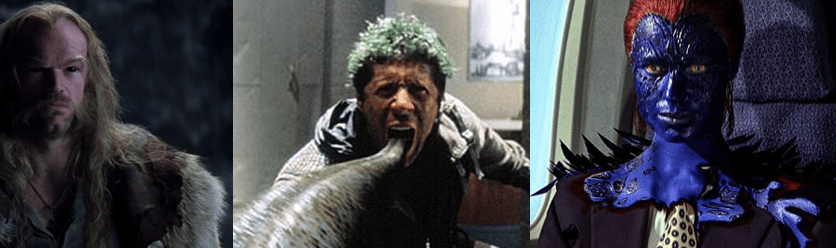
Truthfully, the main X-Men team gets quite shafted by the film’s bloated cast but the Brotherhood suffer even more. Sabretooth is little more than a growling bruiser; nothing is made of his connection to Wolverine, reducing him to Magneto’s muscle rather than the sadistic and murderous character he is in the comics. Toad (Park) is generally a silent character with little going for him other than his little character/body quirks and impressive martial arts abilities. And then there’s Raven Darkhölme/Mystique (Romijn-Stamos), Mangeto’s chief blue-tinted, shape-changing, super sexy henchman who would also go on to be a breakout character of the films. Sadly, however, we learn almost nothing about these characters, their motivations, or their origins and they’re all largely silent. They work as parallels to the X-Men and allow for some tame, but pretty engaging fight scenes but who are they? What drove them to join Magneto? We’re not told as there’s just so many characters and the script and runtime cannot accommodate them all.

The Nitty-Gritty:
I think one of the issues with X-Men is the presence of two audience surrogates; the dynamic between Logan and Rogue is interesting, though, and it almost feels as though the film would have worked better if it was them on the run from the Brotherhood and being assisted by, like, two of the X-Men and only being brought to the school at the end of the film. At the time, though, this narrative choice worked really well for introducing audiences to the world of the X-Men and setting the blueprint for the sequels and spin-offs that were to follow.

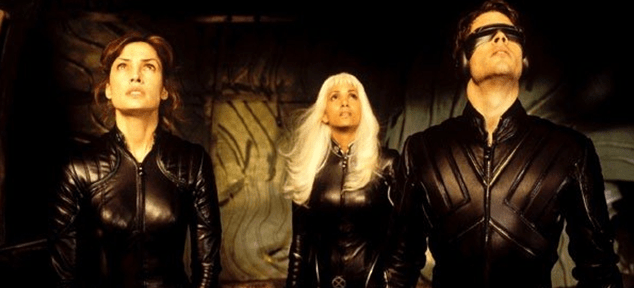
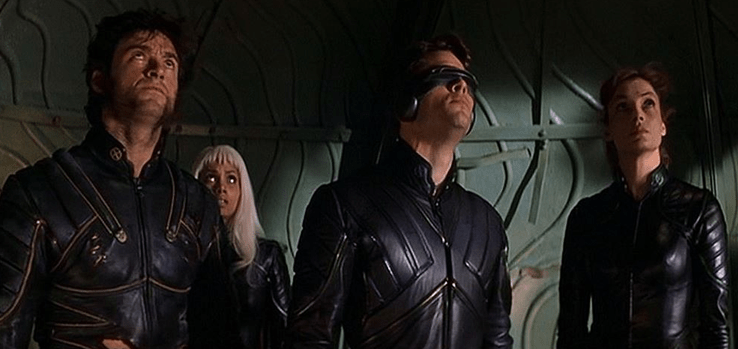
The colourful costumes are dropped for a uniform look that emphasises style over practicality.

Unfortunately, X-Men came out at a time when Hollywood was still cashing in on, and aping the success of, the action and stylistic aesthetic of The Matrix (The Wachowski Brothers, 1999). As a result, rather than the colourful costumes of the comics, the X-Men are decked out in impractical (but cool-looking) leather suits. I actually didn’t mind this at the time and still don’t now; the uniformity of the X-costumes actually works to show their unity and ties into Logan’s narrative arc: he starts off as a dissociated loner but, by the end, suits up and fights alongside the X-Men as one of the team. I’d still like to see more comic accurate costumes in the eventual X-Men reboot but I grew up with Michael Keaton’s Batman and an abundance of black, cool-but-impractical leather costumes so I’m largely okay with that choice.

Many of the film’s effects look a little dated these days.

Some of the effects, however, haven’t aged too well; the weird shimmering field Magneto uses to create Mutants looks quite janky, as does Mystique’s shape-shifting effects but they held up quite well when the film was first released and other effects, like Wolverine’s claws and Cyclops’ optic blast, still hold up really well thanks to an abundance of wire work and practical, on-set effects. The film’s themes still resonate, as well. As I said, Magneto’s motivations are very real and relatable and the disturbingly fitting end of Senator Kelly is surprisingly affecting. Altered by Magneto’s machine, Kelly mutates into a fish-like quasi-Mutant but, as his cells begin to deteriorate, he horrifically half-drowns before degenerating into liquid right before Storm’s eyes. It’s a terrifying visual, one that seems far too harsh a punishment even considering Kelly’s prejudices but there is some solace to be gained from seeing Kelly humbled at his end and turning to a Mutant for comfort.

The Summary:
X-Men works really well as an introduction to the world of Mutants; it grounds its narrative and action in a world not too far removed from our own, which allows it to be grounded and based in some kind of reality so that its more flamboyant, “comic book” elements can be introduced in a way that makes sense. Yet, it’s not a perfect film; there’s a lot of characters here, many of which are left completely one dimensional or underdeveloped. Further sequels would fail to address this for many of these characters, retroactively casting a shadow on X-Men for not doing a better job of dividing its time amongst its large cast a little better. Yet, Stewart, McKellen, and Jackman shine all the brighter as a result of this; the other characters are almost inconsequential compared to their charisma, screen presence, and individual and connected stories. X-Men establishes the rules of its world quite well and definitely laid the foundation for expansion but I can’t help but think that, with the benefit of hindsight and taking into account the lessons of the many X-Men sequels and spin-offs that we’ve had since, that we could the same concept done better in the near future.

My Rating:

Rating: 3 out of 5.

Pretty Good

What are your thoughts on the first X-Men movie? Were you excited for it when it first released? Do you feel it still holds up or do you agree that it’s seen better days? Which X-character was your favourite? How would you like to see a reboot of the franchise go down? How are you celebrating X-Men Day this month? Whatever you think, feel free to leave your thoughts and opinions on X-Men below and check out my other X-Men articles on the site.

10 FTW: Under-Rated Sequels

10FTW

Sequels are funny things; you have to get the balance just right between providing everything people enjoyed about the first moving but expanding upon the plot and characters in a natural way. If it’s difficult for a lot of sequels to get this right, it’s even harder for third, fourth, or other sequential entries to hit the mark. There’s a few prime examples of sequels done right (Back to the Future Part II (Zemeckis, 1989), Terminator 2: Judgment Day (Cameron, 1991), and The Dark Knight (Nolan, 2008) spring to mind as some near-undisputed examples of sequels that were everything their predecessor was and more) and even fewer examples of completely perfect movie trilogies as most stumble by the third entry due to one reason or another. I can’t tell you, though, how often I’ve seen people talk shit about some sequels that are actually not that bad at all and, arguably, criminally under-rated. When movies, comics, and videogames produce remakes or other ancillary media based on these franchises, they either always complete ignore these films or openly criticise them for absolutely no reason. Today, I’m going to shed some light on ten under-rated sequels and, hopefully, try to show why they’re actually not as bad as you might think…

URSaw2
10 Saw II (Bousman, 2005)

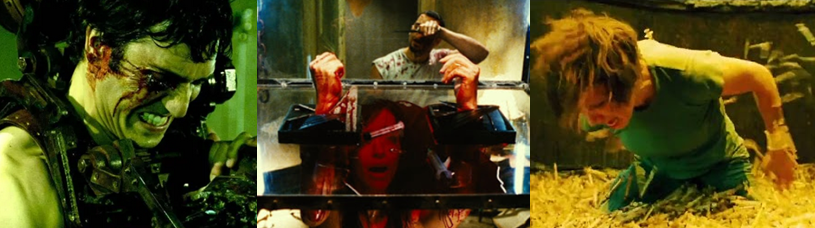
While the Saw (Various, 2004 to present) noticeably dipped in quality as Lionsgate milked the series for all its worth with sequel after sequel after sequel (most of which were actually interquels as they foolishly killed off John Kramer/Jigsaw (Tobin Bell) way too early in the series), I feel like a lot of people don’t give Saw II enough credit. Saw (Wan, 2004) was an intense, terrifying experience that saw two people trapped in a room with the only option of escape being death or sawing a foot off with a rusty hacksaw. It kick-started a whole “torture porn” sub-genre of horror, despite most of its terror coming from the horrific situations rather than copious amounts of gore. Saw II, however, put the focus on Jigsaw, who was an almost mythic figure in the first movie and wasn’t fully revealed until the film’s dramatic conclusion. Here, we delve deep into his motivations for putting people through his gruesome “tests” and this film is a worthwhile watch simply for the subtle menace exuded by Tobin Bell.

URSaw2Traps
Saw II has some gruesome traps.

Not only that, Saw II ramps up the gore and the desperation by having seven shady individuals all infected with a deadly, slow-acting nerve agent and trapped in a horror house, of sorts. The film’s tension comes from the desperation of Detective Eric Matthews (Donnie Wahlberg), who is frantic to save his son from Jigsaw’s trap and to bring Jigsaw in by any means necessary. Yes, there’s more gore and more onscreen violence and, arguably, Saw II set the standard for the myriad of sequels to come by ramping up Jigsaw’s traps and plots to an absurd degree, but this was before the series fell off a cliff. Here, minor characters from the first film are expanded upon, the lore of this world is fleshed out beautifully, and we have some of the franchise’s best traps ever.

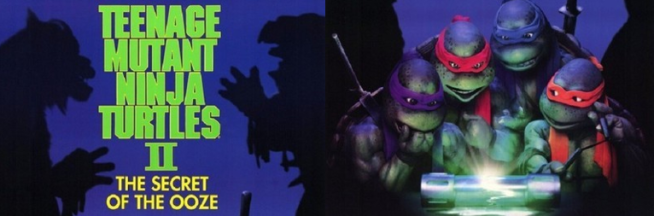
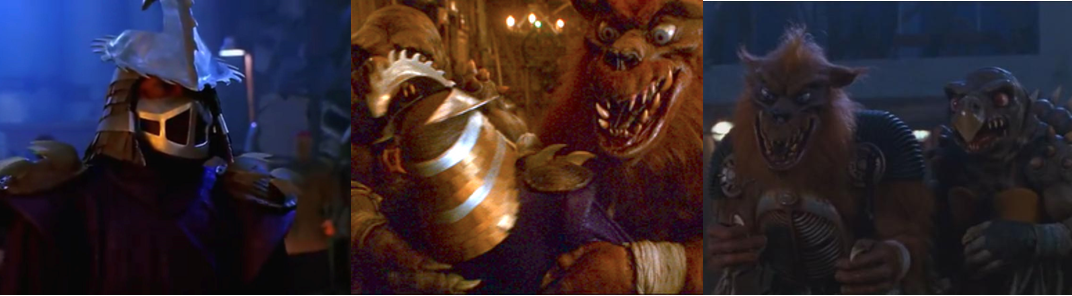
For many of us back in the nineties, Teenage Mutant Ninja Turtles (Barron, 1990) was the first time the “Hero” Turtles were depicted as being as violent and nuanced as in their original Mirage Comics run. Up until the release of this movie, the Turtles were cute, cuddly superheroes who we watched foil the Shredder (James Avery) week after week and whose toys we bought with reckless abandon. However, given how dark and violent the first film was, this sequel does a massive course correction, increasing the silliness and reducing the onscreen violence and decreasing the Turtles’ use of their weapons in an attempt to align the live-action movies more with their more kid-friendly, animated counterparts. Yet, that doesn’t mean this sequel isn’t good in its own right. The Turtle suits (once again brought to live by Jim Henson’s Creature Shop) look amazing and are probably better and more expressive than in the previous movie; the film also stays relatively close to its source material by focusing on the mutagenic ooze that created the Turtles, and it also introduced two mutant antagonists for the Turtles to fight.

Tokka and Rahzar are surprisingly formidable.

While they’re not Bebop (Barry Gordon and Greg Berg) and Rocksteady (Cam Clarke), Tokka (Rock Lyon and Kurt Bryant) and Rahzar (Gord Robertson and Mark Ginther) are a fun, welcome addition. It’s great seeing the Turtles kick the snot out of faceless members of the Foot Clan but Ninja Turtles has always been about the crazy mutated characters and these are two of the most impressive looking and formidable, especially considering their childlike demeanours. The Shredder (François Chau) also returned in this movie and is a lot closer to his animated incarnation, being decidedly more theatrical than in the first movie but no less intimidating. Probably the only thing that lets this movie down for me (no, it’s not the Vanilla Ice rap scene) is the final battle between the Turtles and the ooze-empowered Super Shredder (Kevin Nash) in which Shredder is unceremoniously defeated by being crushed under a pier due to his own foolishness. Apart from that, though, I feel this movie is the perfect balance between the dark, violent Mirage Comics and the light-hearted animated series and this balance is where the Ninja Turtles (a ridiculous concept to begin with) shine the brightest.

URBatmanMcDs
8 Batman Forever (Schumacher, 1995)

Now, admittedly, Batman Forever has its fan-base; there’s plenty of very vocal people out there who rate this quite highly among the many Batman movies (Various, 1966 to present) , especially after viewing the special edition and a lot of the deleted scenes which, had they been implemented, would probably have elevated this movie even higher. There’s a couple of reasons why this film is often unfairly attacked: one is because of how God-awful its sequel, Batman & Robin (ibid, 1997) was. That film’s over-the-top camp, painful performances, and nipple-suits are often considered so bad that both of Schumacher’s Bat-movies are unfairly lumped together and judged as a failure, when this just wasn’t the case. The second reason is because of how dramatically different it is from the previous Bat-movies; after Tim Burton brought us a dark, brooding, serious interpretation of Batman (Michael Keaton) in 1989, he was given free reign on the sequel, Batman Returns (Burton, 1992). While this made for one of my personal favourite Bat-movies thanks to Burton’s Gothic sensibilities, it upset a lot of parents (…and McDonald’s) and, similar to Turtles II, Schumacher was brought in to make Batman more “kid friendly”.

URBatmanForeverRobins
It’d be some time before Robin would truly fly again.

And yet despite the gratuitous neon lighting, the slapstick elements, and an incredibly over-the-top (and massively unsuitable) performance by Tommy Lee Jones, Batman Forever not only brought us a physically imposing Bruce Wayne/Batman (Val Kilmer) for the first time but it actually had the balls to include Dick Grayson/Robin (Chris O’Donnell). Schumacher smartly uses Robin’s origin as a parallel to Batman’s so that the film can tread familiar ground but in a new, fresh way while also bringing us one hell of a bad-ass Robin suit. Thanks to the blinkered, narrow-minded opinion that Robin (a character who has been around basically as long as Batman) is somehow “not suitable” for a Bat-movie, it wouldn’t be until the recent Titans (2018 to present) series that we would finally see Dick Grayson realised in live-action once again (though we came so close to seeing another interpretation of the character in the DC Extended Universe). Also, sue me, I grew up in the nineties and have always been a big fan of Jim Carrey’s. His performance as Edward Nygma/The Riddler might be over-the-top but his manic energy steals every scene he’s in and he genuinely looks like he’s having the time of his life channelling his inner Frank Gorshin and chewing on Schumacher’s elaborate and impractical scenery.

7 Terminator Salvation (McG, 2009)

Okay, I’m just going to come out at say it: Terminator Salvation was, hands down, the best Terminator (Various, 1984 to 2019) sequel after Terminator 2 and always will be, no matter how many times they force Arnold Schwarzenegger to throw on the shades and the jacket. After how perfectly Terminator 2 ended the series, the only smart way to produce further sequels was to have Terminators travel to other times and target other key members of the resistance (a plot point touched upon in the Dark Horse Comics, the dismally disappointing Terminator 3: Rise of the Machines (Mostow, 2003), and threaded throughout the semi-decent Terminator: The Sarah Connor Chronicles (2008 to 2009) television series) or to make prequels that focused on the war against the machines in a post-apocalyptic future. This latter idea would be my preference and, as such, I absolutely love Terminator Salvation. Is it perfect? Well, no, but it’s a different type of Terminator movie…and that is a good thing, people! Rather than making yet another lacklustre retread of Terminator 2, Salvation is, ostensibly, a war movie depicting the last vestiges of humanity driven to the brink of extinction by increasingly-dangerous killer machines.

Christian Bale always makes for fantastic casting.

Not only that, we got Christian Bale as John Connor! After the pathetic casting and portrayal of Nick Stahl (remember him?) in the third movie, we got freakin’ Batman as the last, best hope of humankind! And he gives a great performance; stoic, gritty, hardened, this is a Connor who is on the edge of accepting his true destiny and is desperate to do anything he can to stay one step ahead of Skynet. Add to that we got a pretty decent battle between Connor and the T-800 (Roland Kickinger). People like to shit on this sequence because Kickinger has Schwarzenegger’s likeness digitally laid over his face but, honestly, it isn’t that bad an effect and, if you can’t get Arnold back, this was a great way to utilise him. The only faults I have with this movie are that Connor shouldn’t have received such a clearly-mortal wound from the T-800 (I know he was originally supposed to die but, after they changed the ending, they really should have re-edited this scene to make his wound less deadly) and that the franchise has largely ignored it with subsequent sequels rather than continuing on from its open-ended finale, meaning we’ll forever be denied the bad-ass visual of an army of Arnold’s marching over a field of human skulls!

Okay, just hear me out…Attack of the Clones is not that bad, especially after Star Wars: Episode I: The Phantom Menace (ibid, 1999) focused way too much on boring shit like “trade disputes” and politics, insulted our intelligence with the dreadful Jar Jar Binks (Ahmed Best), and sucked all of the menace and intrigue out of Darth Vader (David Prowse and James Earl Jones) by portraying Anakin Skywalker (Jake Lloyd) a whiny, annoying little brat. Arguably, the Prequel Trilogy would have been better if Lucas had opted to have Anakin discovered as a young adult and cast Hayden Christensen in the role from the start as this would be a far better parallel to his son’s own journey to becoming a Jedi. Christensen is a decent enough actor and he was simply handicapped by Lucas’s dreadful script; if Lucas had opted to let someone else take another pass at his dialogue, we could have seen a bit more of the snarky banter Anakin shares with his mentor, Obi-Wan Kenobi (Ewan McGregor). Despite the copious amount of green screen and computer-generated characters thrown at us here, Attack of the Clones has a lot of visual appeal; from the city planet of Coruscant to the rain-swept Kamino and the dry lands of Geonosis, the only location that lets Attack of the Clones down is its return to the sand planet Tatooine but even that is used as a pivotal moment in Anakin’s turn towards the Dark Side.

I would’ve preferred to see what Boba Fett was capable of.

And let’s not forget the fantastic Lightsaber battles on display here; every battle is as good as the final battle from The Phantom Menace, featuring some impressive choreography and setting the stage for one hell of an epic showdown between Anakin and Obi-Wan in the next movie. While I don’t really care for Yodi (Frank Oz) being a CG character, or wielding a Lightsaber, there is a perverse pleasure to be gained from seeing Yoda flip about like a maniacal spider monkey. Oh, and this movie has freakin’ Christopher Lee in it! Unfortunately, Lee’s Count Dooku/Darth Tyranus is criminally underused in this movie and killed off all-too-soon in the sequel. Another misfire for me was Lucas wasting time introducing Jango Fett (Temuera Morrison); I’ve never really understood why people love Boba Fett (Jeremy Bulloch) so much as he’s a bit of a klutz and doesn’t really do anything, but he does have a rabid fan base and, since we never see his face in the Original Trilogy, I would have instead cast Temuera as Boba so that we could see him actually do something.

URHallraiser4
5 Hellraiser: Bloodline (Yagher (credited as Alan Smithee), 1996)

Hellraiser (1987 to present) is a horror franchise that seems to have struggled to be as successful as some of its other peers. I’ve already talked about how the original Hellraiser (Barker, 1987) really hasn’t aged very well and this applies to every sequel in the series as well as they seem to immediately age to moment they are released thanks to the decision to release every sequel after the third movie direct to video. Admittedly, a lot of my fondness for Hellraiser: Bloodline is based on two things: it was the first Hellraiser movie I was able to sit through from start to finish and was responsible for me becoming a fan of the series, and Event Horizon (Anderson, 1997) is one of my favourite science-fiction/horror movies. Arguably, Event Horizon is a far better version of Bloodline’s core concept (that being “Hellraiser…in Space!”) but there’s an important thing to remember about that: Bloodline isn’t set solely in space! Instead, Bloodline takes place in three different timelines and follows the descendants of Philippe Lemarchand (Bruce Ramsay), an 18th century toymaker who was unwittingly responsible for creating the magical Lament Configuration, a puzzle box that, when solved, summons Cenobites from a dimension where the lines between pleasure and pain are blurred.

URHallraiser4Pinhead
Pinhead has lofty aspirations in Bloodline.

Cursed for this act, Lemarchand’s descendants are driven by an inherent desire to create the Elysium Configuration, a means to forever seal the Cenobites from our world forever Dr. Paul Merchant (also Ramsay) is merely the latest in a long line of these toymakers to encounter the demonic Cenobite dubbed Pinhead (Doug Bradley) and his acolytes; unlike his predecessors, Merchant actually succeeds in his mission and destroys both Pinhead, and the portal to Hell, forever using a massive space station. There’s a few reasons I think people misjudge this movie: one is that it was absolutely butchered by Miramax, who demanded all kinds of reshoots and changes, meaning that the film’s original director’s cut has never been seen. Another is a holdover from Hellraiser III: Hell on Earth (Hickox, 1992), which saw Pinhead ape Freddy Krueger (Robert Englund) and become just another slasher villain with a twisted sense of humour. Similarly, in Bloodline, Pinhead goes from being a representative of the Order of the Gash (…lol), to wanting to unleash Hell on Earth permanently like some kind of invading force, to the point where he takes hostages and transforms people into Cenobites whether they have opened the box or not. Yet none of this changes the fact that Bloodline is a pretty decent film; we finally get to see some background into the mysterious puzzle box, there’s multiple times when the structure and history of Hell is hinted at, and there’s some really disgusting kills and gore. Personally, I rate this film higher than the second (because that film is boring) and the third simply because it doesn’t have a Cenobite with CDs jammed in its head!

4 X-Men Origins: Wolverine (Hood, 2009)

This one is gonna cost me a lot of credibility but I honestly do not get why X-Men Origins: Wolverine gets so much shit, especially considering how incoherent and screwed up the timeline and continuity of the X-Men (Various, 2000 to present) movie series became after this film. Sure, Wade Wilson/Deadpool (Ryan Reynolds) is poorly represented, some of the CG is a bit wonky, and there are a lot of flaws in the plot, but there’s also a lot to like about this film. First, and most obvious, is the film’s opening credit sequence, which many have cited as being their favourite moment of the film. Seeing James Howlett/Logan/Wolverine (Hugh Jackman) and Victor Creed (Liev Schreiber) racing through various wars is stunning and I do agree that the film really should have based around this premise and their slow degeneration into bloodlust, with Logan overcoming it and Victor giving in to it to become Sabretooth. Yet, often, I see a lot of criticism about how the X-Men movies tend to always focus on Wolverine at the expense of other Mutants…yet people still hate on this movie, which puts the spotlight entirely on Wolverine and still manages to feature some new Mutants and fill in a few plot points along the way. We get to see Logan’s time in Team X, the full extent of the procedure that gave him his Adamantium skeleton (although we miss out on the feral Wolverine showcased so brilliantly in the otherwise-disappointing X-Men: Apocalypse (Singer, 2016)), and even how unknowingly pivotal he was in bringing the original X-Men together.

The cast for Origins was pretty much perfect.

The casting really makes this movie shine: Jackman is at his most jacked as Wolverine and, while he’s a little too tame compared to what you’d expect from this point in his life, he always brings a great intensity and charisma to his breakout role. Schreiber was an inspired choice to portray Logan’s brother, who (it is strongly hinted) eventually succumbs to his animalistic ways to become Sabretooth (Tyler Mane), bringing a nuanced menace and sophistication to what is normally seen as a feral character. Danny Huston is always great as a smug, scenery-chewing villain (though he doesn’t exactly resemble Brian Cox) and Reynolds gave a great tease at what he was capable of as everyone’s favourite “Merc with a Mouth” (…until it was sown shut). We also get some new Mutants, which I appreciate even more after subsequent sequels could never seem to let go of having teleporting demons involved in their plots; Fred Dukes/The Blob (Kevin Durand) is fantastically realised in the movie and has a great (and hilarious) boxing match with Logan and everyone’s favourite card-throwing Cajun, Remy LeBeau/Gambit (Taylor Kitsch) also makes his one (and, so far, only) film appearance here. I only expected a brief, unsatisfying cameo from Gambit but he actually has a surprisingly substantial role. Could it have been bigger? Sure, but I’d say he was treated a lot better than Deadpool (who, it should be remembered, was still planned to get a spin-off from this film).

3 RoboCop 2 (Kershner, 1990)

Now, don’t get me wrong: I love RoboCop (Verhoeven, 1987). It told an easily self-contained story of Detroit City police officer Alex Murphy (Peter Weller) being rebuilt from death as a bad-ass cybernetic enforcer of the law and rediscovering his humanity. It’s a classic film, with some amazing effects, hilarious commentary on consumerism, media, and corporate greed, and would be a tough act for anyone to follow. Yet, call me crazy, but RoboCop 2 succeeds far more than it fails. RoboCop has a fresh coat of paint and has (literally) never looked better onscreen; he’s just as efficient and pragmatic as before and, though he seems to have regressed back to a more mechanical mindset, he still exhibits a great deal of humanity but in new and interesting ways. First, he is routinely referred to as “Murphy” by other officers (particularly Anne Lewis (Nancy Allen), his partner) and struggles so badly with reconnecting with his wife and son (who believe that Murphy is dead and buried) that he routinely stalks them, which contributes to his superiors deciding to reprogram him. This results in a deliciously over-the-top sequence where RoboCop, his head full of insane, politically correct directives, tries to calm situations with talk rather than bullets. It eventually becomes so maddening that he is forced to electrocute himself just to clear his head enough for him to focus on the big bad of the film, Cain (Tom Noonan).

RoboCain is an impressively ambitious inclusion.

Now, Cain and his psychopathic gang of untouchable drug dealers are great, but they’re not Clarence Boddicker (Kurtwood Smith); instead of Clarence’s manic energy, Cain brings a quiet, intellectual approach to his menace. He also manages to dismantle RoboCop’s metallic body, just as Clarence destroyed his human one, and is eventually able to go toe-to-toe with RoboCop as the frankly fantastic RoboCop 2 (or “RoboCain”). If you liked ED-209 from the last movie, RoboCain is bigger, badder, and better. A combination of animatronics and stop-motion, RoboCain was an ambitious choice for the film and actually works really well considering the technological limitations of the time. The fight between Cain and RoboCop also holds up surprisingly well and is far more interesting than Robo’s encounters with ED-209 thanks to the villain being far more versatile than his clunky counterpart. I think what brings this movie down, for many, is that Cain’s gang aren’t as charismatic or memorable as Boddicker’s (I can only name two of Cain’s guys off the top of my head, whereas I can name at least five of Boddiker’s), some of the plot is a bit redundant (Robo’s story arc is, essentially, a truncated version of the same one from the first), and the awfulness of subsequent RoboCop movies leaving such a sour taste that people assume all RoboCop sequels are terrible…and that’s just not the case.

2 Predator 2 (Hopkins, 1990)

Okay, full disclosure: as a kid, I was not a fan of this movie. I loved Predator (McTiernan, 1987); it was over-the-top, filled with massive action heroes, and featured a tense build-up to one of cinema’s most memorable alien creatures. The sequel just seemed to be lacking something; maybe it was because we’d already seen the Predator (Kevin Peter Hall) in its full, gruesome glory and didn’t really need to go through the suspense of its eventual reveal all over again. Replacing Schwarzenegger is Danny Glover’s Lieutenant Mike Harrigan, a hardened, smart-mouthed loose cannon who plays by his own rules (as was the tradition for any cop worth a damn in cinema back then). I was in awe at Schwarzenegger as a kid so it was disappointing to go from him to Glover but, honestly, Glover is probably better in many ways: his anti-authoritative, roguish nature makes him more relatable as a character and the fact that he actually gets hurt and struggles to physically prevail makes him far more human. He’s a much more believable protagonist in a lot of ways and, thanks to his more developed acting chops, is more than a suitable replacement for Arnold. Predator 2 also takes the titular hunter out of the jungle and places him in the next most logical place: the concrete jungle. Now, a lot of people hate this change; even Arnold hated that the Predator would be in Los Angles for the sequel but…surely doing the sequel in the jungle again would have just resulted in exactly the same movie as before?

Predator 2 established almost all of the Predator’s lore and society.

It’s so weird that people rag on the city setting as it makes perfect sense, is realised really well, and even set the ground for a lot of the Dark Horse comics. No other sequel around this time repeated the first in this way; Aliens (Cameron, 1986), Terminator 2, Batman Returns, Lethal Weapon 3 (Donner, 1992), just to name a few, all fundamentally alter the concept of the first movie rather than rehashing it so why does Predator 2 get such a hard time for doing it (and doing it well, I might add)? To make matters worse, Predator 2 has been criminally overlooked in subsequent sequels; there was no mention of the film’s events at all in the otherwise-excellent Predators (Antal, 2010), a film that went out of its way to reference (both through homage and direct mention) the first movie, and it only gets a passing mention in the disappointing The Predator (Black, 2018). Jake Busey, son of Gary Busey, even featured as an expert on the Predator species but there was no mention in the film of his relationship to Busey’s character, Peter Keyes, despite the two being father and son! I’ll never understand this; it’s a real insult, to be honest. Predator 2 brought so much to the table; it defined the honour system of the Predator species, introduced a whole bunch of the alien’s iconic weaponry, and laid the foundation for comic books, videogames, and sequels and spin-offs to follow for years to come. Subsequent movies have no problem reusing the weaponry or the culture of the Predator introduced in this movie but when it comes to actually directly referencing the film’s events they shy away and why? It’s a great film! Great kills, great action, great tension, some fantastic effects, and a super enjoyable chase sequence between the Predator and Harrigan across the streets and rooftops of Los Angeles! I just don’t get the hate, I really don’t.

1 Ghostbusters II (Reitman, 1989)

Man, if you thought I was mad about Predator 2, just wait until you hear this one. Ghostbusters II suffers from a lot of the plagues of Predator 2, and other films on this list: it’s unfairly criticised for not being exactly the same as the iconic first film, it’s overlooked time and time again, and direct references to it are few and far between. Just look at the majority of Ghostbusters-related media; be it toys, videogames, or otherwise, the characters almost always look exactly like the first movie rather than this one. And why? Because it doesn’t have the Stay Puft Marshmallow Man in it. Give me a fuckin’ break! As much as I love him, and that entire sequence, it wouldn’t make any sense of Mr. Stay Puft to appear in this movie! The Ghostbusters destroyed it when they defeated Gozer the Gozerian (Slavitza Jovan and Paddi Edwards) and this movie revolves around an entirely different villain and plot so why bring it back? I guess audiences were just used to antagonists returning ins equels at that time but to judge this movie just for not having Mr. Stay Puft is not only unfair, it’s down-right stupid.

The river of slime always freaked me out as a kid.

After all, it has the Statue of Liberty coming to life instead! Sure, it doesn’t match up to Stay Puft’s rampage, but it’s still pretty decent. Also, the film’s antagonist, Vigo the Carpathian (Wilhelm von Homburg), is voiced by Max von Sydow, who is an absolute legend. Vigo’s threat is arguably much higher than Gozer’s in a way as his mood slime has been brewing under New York City for decades and is the direct result of all the animosity in the world (…or, just New York, which is bad enough). It’s powerful enough to cause ghosts to go on a rampage again and turn the Ghostbusters against each other, and is a far more grounded threat than Gozer’s plot to destroy the world. The stakes are raised in Ghostbusters II through the fact that the titular ‘Busters have been forced to disband and go their separate ways. Through this, we see something that is also often overlooked about this movie: character growth. Would you criticise Ellen Ripley’s (Sigourney Weaver) character growth in Aliens? Well, yes, probably; you are the internet after all but this plot point allows Ghostbusters II, like RoboCop 2, to retread the familiar ground of the disgraced Ghostbusters being called upon to save the city in a new way. The characters are all a bit more haggard after how badly the city burned them so seeing them rise up regardless, to the point where they’re even able to resist the mood slime, is a great arc.

There are some really horrific scenes in this film…

Add to that the film’s consistent and enjoyable special effects, the truly gruesome sequence in the abandoned Beach Pneumatic Transit system, and a creepy performance (as always) by Peter MacNicol and you’ve got a film that, like Turtles II, is more than a worthy follow-up to the original. And, yet, like I said, this film is often overlooked, almost with a vendetta. It doesn’t help that co-star Bill Murray despised the movie, which is always bad press for any film; his cantankerous ways also constantly held up the long-awaited third movie to the point where we had to suffer through that God-awful reboot before a follow-up would be approved. Despite Murray’s opinions, Ghostbusters II has managed to endure in some respects, though; characters and events were directly referenced in Slimer! and the Real Ghostbusters (1988 to 1991) and Vigo’s portrait was prominently featured in the true third entry, Ghostbusters: The Video Game (Terminal Reality/Red Fly Studio, 2009). In fact, I was very surprised that Ghostbusters: Afterlife (Reitman, 2021) didn’t completely ignore this movie and even then it barely references it.

URGhostbusters2Conclusion

Do you agree with my list? I’m guessing not and you think most of these movies are terrible but why do you think that? Are there any other under-rated sequels you can think of? Write a comment and give me your thoughts below.
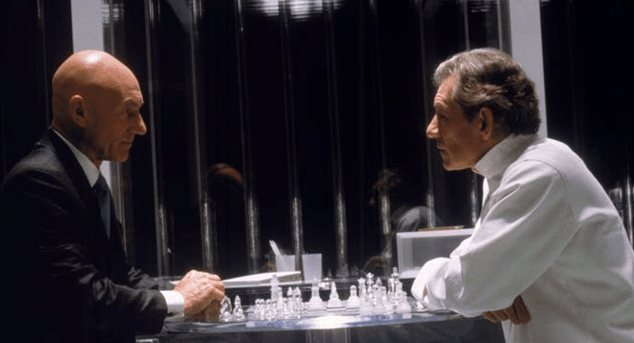
Talking Movies: Marvel Studios’ X-Men

Talking Movies
X-Men Logo

It may seem difficult to believe but there was once a time when Marvel Comics were in a bit of a bind. On top of having lost some of their top talent in the early nineties, a slump in the comic book industry forced Marvel to file for bankruptcy in 1996. Although they avoided going out of business completely (largely due to being purchased by Toy Biz) and launched all new Marvel titles, like the Marvel Knights imprint, the comics industry wasn’t what it once was and, in an effort to diversify and reap greater rewards from their vast library of characters, Marvel began selling the film rights to their properties to film studios. 20th Century Fox purchased the film rights in 1994 and, after a tumultuous development period that saw various scripts and ideas rejected, released X-Men in 2000. Directed by Bryan Singer, X-Men catapulted the titular Mutant team to mainstream success, kicking off one of Fox’s most successful and longest-running franchises. With ten films released over the last seventeen years, the X-Men franchise became such a success that it seemed like Marvel would never be able to regain the rights to their characters in the same way they had with Daredevil and Doctor Strange. Even after the unprecedented deal was stuck between Marvel Studios and Sony Pictures to allow Spider-Man to finally feature in the Marvel Cinematic Universe (MCU), it seemed like Mutants would forever be apart from the most successful cinematic universe ever conceived.

Despite their flaws, you cannot fault the success of Fox’s X-Men films.

Enter the House of Mouse. In 2009, a time when Marvel Studios had already established itself as an unquestionably successful movie-making juggernaut, Disney stepped in and acquired Marvel Entertainment, which included both the comics and the films. Backed by Disney’s already vast media conglomerate, Marvel was able to bypass the entire issue of working out some sort of deal with 20th Century Fox when, in December 2017, Disney simply acquired the film studio’s parent company, 21st Century Fox, and thus opened the door for the X-Men to become part of the MCU. There’s a pretty large problem with this, though. Having been going strong since the release of Iron Man (Favreau, 2008), the MCU has established an entire world and history that is entirely independent of that seen in the X-Men film series. Unlike characters like the Fantastic Four (also (and, for me, more excitingly) acquired in the Disney/Fox deal), integrating the X-Men into the MCU is far from a simple premise.

Coulson
If Coulson says there’s no Mutants then he must be right…right?

For starters, it seems like it would be impossible to simply say that the X-Men films have occurred within the MCU; not only has there never been any mention of the world-changing events depicted in films like X-Men: First Class (Singer, 2011) but Mutants seemingly do not exist within the MCU at all. Instead, we have what are referred to as “Gifted” individuals, who are born with superpowers, or “Enhanced” individuals who are bestowed superpowers by some outside force. I know that the MCU doesn’t really acknowledge or cross over with their television properties, but there was also a line in an episode of Marvel’s Agents of S.H.I.E.L.D. (Various, 2013 to present) in which Agent Coulson (Clark Gregg) specifically states that there has never been a legitimate clairvoyant ever discovered which, at the time, seemed like a pretty blatant dig at Fox’s X-Men films.

Rewriting history just seems a bit…lazy, surely?

Plus, you know, there’s the fact that Quicksilver has appeared in both the MCU and the X-Me­n franchises thanks to some decidedly odd small print in the rights for the character during the initial deal. Considering the universe-changing implications of Thanos (Josh Brolin) unifying the six Infinity Stones in the upcoming Avengers: Infinity War (Russo Brothers, 2018), it seems like the two movie universes colliding and merging is a very real possibility at this point. However, I feel like this would be needlessly complicated. Honestly, the purchase of Fox by Disney couldn’t have come at a worse time; X-Men: Dark Phoenix (Kinberg, 2018), Deadpool 2 (Leitch, 2018), and The New Mutants (Boone, 2019) are all due to be released very soon; Legion (Various, 2017 to present) and The Gifted (ibid, 2017 to present) are both still running on television (though they have very little to do with each other or the X-Men films); not to mention the five or six other X-Men spin-offs apparently in the works. On top of that, for all their flaws, Singer’s would-be-prequel series of films (and the previous movies in the franchise) feature some of the best casting choices for popular X-Men characters.

Like it or not, we may need a new Wolverine.

Hugh Jackman recently retired from the role of Wolverine/Logan (although part of me always suspected he was retiring from playing the role full-time and would be open for cameos and short scenes, especially if offered enough cash) but has previously voiced his desire to team up with the Avengers. Michael Fassbender and James McAvoy are both great actors that are still young and virile enough to believably portray middle-aged versions of Professor X and Magneto, and other actors, like the delectable Sophie Turner and Evan Peters, are hot young fits for playing younger versions of Jean Grey and Quicksilver, respectively. To be clear, I’m not really writing this to list a bunch of fanboy recasting but, to me, it seems like the best and simplest course of action would be to allow X-Men: Dark Phoenix to conclude the original X-Men films and retool Deadpool 3 and The New Mutants to retroactively fit into the larger MCU. After all, they sneakily snuck a S.H.I.E.L.D. Helicarrier into Deadpool (Miller, 2016) and the very nature of Deadpool’s (Ryan Reynolds) metahumour allows for him to more easily slide into the MCU with wry commentary. I would then begin to lay the seeds of the X-Men and Mutantkind being revealed within the MCU over the rest of Marvel’s 2018 film releases but not launch a new movie until 2019 and 2020.

Uncanny X-Men
Let’s kick things off with a new title, shall we?

First things first, Marvel’s X-Men movie needs to separate itself from Fox’s series and the best way to do this is by expanding the title in a classic and timeless way, so I would encourage The Uncanny X-Men as the title of the first movie. Next, I would suggest that Mutants have always been a part of the MCU but Professor Xavier has used his incredible psychic powers to block their presence from the world. Some have suggested that Quicksilver (Aaron Taylor-Johnson) and Wanda Maximoff/Scarlet Witch (Elizabeth Olson) should retroactively be reclassified as Mutants and I am open to that; perhaps, after the fallout of Infinity War, the presence of Mutants and Wanda’s true heritage is revealed and Wanda could be our window into the world of Mutants as she seeks to discover her true origins.

Professor X
How awesome would Mark Strong or Colin Salmon be as Xavier?

The main idea I had in mind, though, was to take inspiration from Spider-Man: Homecoming (Watts, 2017) and, more specifically (as much as I hate to say it), the Harry Potter film series (Various, 2001 to 2011) and depict the X-Men as being young teenagers at Xavier’s school. Their presence shielded from the outside world by Xavier, the film would be a fantasy adventure following the classic five X-Men (Cyclops, Jean, Iceman, Beast, and Angel) as they learn to deal with their powers, their longing to join the outside world, and their teen angst and issues. I have no real suggestions for casting of the X-Men or the kids but, as much as I like McAvoy and Fassbender, I wouldn’t mind seeing someone like Mark Strong or even Colin Salmon as Charles Xavier. Both are old enough to bring some longevity to the role and can play the wise, overly protective mentor to perfection.

Magneto
And who better than Bean or Brosnan for Magneto?

I see Magneto filling a role very similar to Snape (Alan Rickman); he’d be Xavier’s confidante and closest friend, running the school alongside him, but their attitudes and ideologies would be as different as we’ve come to expect from the characters. I’d like to see them clash over the presence of superheroes and the threat it poses to Mutantkind and have Magento slowly, over the course of the film, plan to splinter away from Xavier’s teachings with five of his own students (Toad, the Blob, Mystique, Avalanche, and Pyro), who would all be bullies towards, or otherwise compliment and contrast with, the protagonists. As far as casting Magneto, maybe get Sean Bean or Pierce Brosnan in because these guys need to be in a major superhero role sometime soon. Also, I would rather they didn’t make Magneto a Holocaust survivor since I find it increasingly difficult to believe that age and time wouldn’t have already killed him. Instead, have his father or grandfather have been the one to suffer during the Holocaust and have him carry those teachings but not have witnessed them first-hand.

Sinister
Mr. Sinister is a must and it’d be quite the coup to get Liam Neeson in to play him!

Okay, so let’s talk villains. I don’t really want to see a repetition of what we’ve already gotten; ideally, I’d like to see Magneto slowly rise into a villainous role over the course of the film and not become a full-blown Mutant extremist until the second or even third X-Men movie, after which he can transition into an MCU-level threat like Loki (Tom Hiddleston) did. At the same time, I would love to see Apocalypse be the ultimate threat for the X-Men but it’s possibly too soon after the character’s lacklustre portrayal in X-Men: Apocalypse (Singer, 2016), so let’s buy him some time and bring in someone we’ve never seen before: Mister Sinister. Sinister, perhaps accompanied by the Hellfire Club, should play a similar role to Sebastian Shaw (Kevin Bacon) in X-Men: First Class in that he is a publically-known Mutant extremist who is aggressively striking against humanity. His radical methods only fuel Magneto’s own desires for Mutant supremacy and he could use his telepathic abilities to infiltrate Xavier’s school and help turn some of them to his way of thinking. Indeed, I would suggest that Xavier doesn’t want his students to ever go out into the world as superheroes and actively discourages such thinking, meaning that Cyclops and the others would recognise or uncover Sinister’s plot and rebel against their mentor, suiting up as X-Men to combat Sinister and his minions and, through their actions, announce the presence of heroic Mutants to the world and begrudgingly change Xavier’s mind. I would’ve loved to see a quirky actor like Jeff Goldblum in the role but, seeing as he already portrayed the Grandmaster, maybe Marvel should try and rope in Liam Neeson for the role?

Sentinels
Stark Industries’ Sentinel Program in full force?

I know what you’re thinking, though, “what about Wolverine?” and you’re right, Wolverine should have a place in Marvel’s X-Men movies but not until the sequel. I would take inspiration from the All-New, All-Different X-Men story from 1975 and have Sinister take his revenge by having his newest henchmen (Wolverine, Gambit, Rogue, Psycloke, and Sabretooth) kidnap Iceman, Beast, Angel, and Jean Grey and disable Xavier in such a way that Magneto is forced to spearhead an aggressive recruitment drive that adds Colossus, Storm, Nightcrawler, and Banshee (or Shadowcat) to the team. In addition to having to whip the rookies into shape and struggle with being a leader, Cyclops would continue to face in-school opposition from Magneto’s Brotherhood after Magneto goes a bit Dolores Umbridge (Imelda Staunton) on the school to enforce his world view. In the midst of their attempt to rescue their team mates, the X-Men would discover that Sinister is using genetic engineering and science to boost his powers, thereby bringing his new acolytes under his control. The X-Men would free them in their rescue attempt, leading to Wolverine and Sabretooth realising they’re hated rivals and the X-Men’s ranks being bolstered by rescuing Sinister’s prisoners. I have no idea who to cast as the new Wolverine but I would also prefer him not to officially join the team or attend the school; instead, Wolverine should wander the MCU so he can fight the Hulk (Mark Ruffalo) and Sabretooth, and maybe get a solo movie where go goes up against Omega Red and/or teams up with Deadpool.

Costumes
Marvel should use this opportunity to do the X-Men’s outfits justice.

After the events of the second movie make it clear that Magneto’s intentions are far from noble, he would be a full-blown villain for the third X-Men movie, leading his Brotherhood and actively opposing the X-Men. The MCU’s opinion of Mutants as a race to be feared and hated would be directly attributed to the actions of Sinister (whom Magneto should kill in a display of power to take his place as the X-Men’s primary threat) and Magneto, which would result in the Sentinels (which could be derived from Stark technology) being deployed to end the Mutant threat once and for all. A climactic battle between the X-Men, Brotherhood, and Sentinels could result in Jean transforming into Phoenix to end the conflict and the X-Men relocating to Genosha. Or, given the involvement of Sinister in this hypothetical new trilogy, Magneto could be bumped to the primary threat in the second movie and the third would involve Apocalypse’s resurrection. As for the X-Men’s costumes, I would take inspiration from Ultimate X-Men and the X-Men: Evolution (2000 to 2003) animated series (fitting considering that Evolution was very school-based, just as I’d like to see these new films be) to produce outfits that are functional and realistic but also with that comic book tint that the MCU is known for in their outfits.

It’s not an ideal situation as it’s a shame to have to completely recast all of the X-Men characters but it’s surely easier and simpler than attempting to use time travel or the Infinity Stones to rewrite history and integrate the existing X-Men films into the MCU. Integrating the Fantastic Four is so much easier; you just have them return from being lost in the Negative Zone for, like, twenty years or something but the X-Men are so vast and the implications of their presence so game-changing that it would be difficult and, frankly, a little insulting to either just wedge them into existing continuity or debut Mutants as a new thing kicked off from the Infinity War fallout. But to say that Mutants have always existed but their presence has been hidden by Xavier and the government (Weapon X, for example) and are now being exposed? That seems a much more fitting way to recast and reboot the X-Men franchise. The only real issue is that Disney obviously spent a lot of money acquired Fox so will they be able to wait to capitalise on that purchase? Can they afford to take their time and introduce the X-Men in a smart and logical way or will they be forced to swamp the MCU with X-Men and Wolverine movies in order to profit from the purchase? Time will tell but, until then, I’ll continue to live out my Colin Salmon vs. Pierce Brosnan fancasting.