The Date: 25 August 2002 The Venue: Nassau Veterans Memorial Coliseum; Uniondale, New York The Commentary: Michael Cole and Tazz The Referee: Mike Chioda The Stakes: Singles match for the Undisputed Championship
The Build-Up: By 2002, World Wrestling Entertainment (WWE) was in a state of flux. After their main rival, World Championship Wrestling (WCW), went out of business and the company was purchased by Vince McMahon, an ill-fated “Invasion” angle saw WCW superstars appear on World Wrestling Federation (WWF) programming. Once this storyline was abruptly ended, the WWF was legally forced to rebrand as WWE and, to keep the spirit of competition alive, the first-ever “brand split” occurred. This meant WWE Superstars and championship belts would be exclusive to either Raw or SmackDown!, with each brand favouring a different presentation (Raw focused more on storylines while SmackDown! focused on in-ring wrestling). Despite this, there was still one top prize in the company, the WWE Undisputed Championship, which “The People’s Champion”, the Rock, had captured the previous month. In a first for the WWE, the Rock’s SummerSlam challenger was decided at the annual King of the Ring tournament, which was won by newcomer Brock Lesnar. Debuting the night after WrestleManiaX-8 and embarking on a tear, the monstrous Lesnar was an accomplished amateur wrestler and champion who quickly made a name for himself by decimating his opponents. Coined “The Next Big Thing” by his agent, Paul Heyman, Lesnar went unpinned following his debut and even made short work of the legendary Hulk Hogan on his path to the championship. After winning the King of the Ring, Lesnar immediately targeted the Rock, interfering in his matches and engaging in brawls, and much of the build-up for the match emphasised the training and conditioning the two were undergoing in preparation for it.
The Match: I remember when Brock Lesnar first debuted, decimating opponents with powerbombs and his sick-ass F-5. At the time, I was somewhat unimpressed; he just looked like a generic big guy, after all. He rarely spoke (and, when he did, he sounded awful), and he didn’t have the same aura or charisma as, say, Batista, who debuted around the same time. Yet, I remember being very surprised when Lesnar won the King of the Ring and was catapulted to this main event match and I have to at least give the WWE credit for actually trying to push new stars in the main event scene. While the audience was in relative awe of Lesnar during his entrance, the Rock’s initial pop was soon joined by a chorus of boos since everyone knew he was leaving to film The Scorpion King (Russell, 2002). Yet, undeterred, the Rock sprinted out to kick off a slugfest with his monstrous young challenger. With the crowd chanting “Rocky sucks!”, Lesnar shut down the Rock’s flurry with an overhead belly-to-belly suplex and repeated backbreakers, scoring a couple of two counts. Targeting the Rock’s already injured ribs, Lesnar repeatedly drove his shoulder into the Rock’s gut in the corner and then punted him out of the ring, where Heyman landed a cheap shot to the champion. Lesnar followed, knocking the Rock over the barricade and muscling him into it before the braying crowd. Back in the ring, Lesnar landed an overhead throw for another two count and Heyman tripped the Rock as he mounted a comeback, leading to the champion being stomped and choked on the canvas. A powerslam shut down another Rock comeback, who continued to be berated by the extremely vocal crowd as Lesnar worked the ribs. This eventually cost him when the Rock caused Lesnar to hit the ring post and, after both leapt to their feet and Lesnar challenged the Rock to knock him down, the Rock scored his first two count off a DDT. The Rock decked Heyman and then tied Lesnar into a Sharpshooter (to a sea of boos), but Heyman tossed a chair into the ring. With the referee distracted, Lesnar drove the chair into the Rock’s injured ribs and slapped on the bearhug that “retired” Hulk Hogan. Much to the chagrin of the crowd, the Rock fought out of the hold, hitting a low blow when the referee was distracted (to yet more boos!)
Lesnar’s dominating performance saw the monstrous youngster capture his first WWE Championship.
Lesnar quickly recovered, though, muscling the Rock into the corner, only to get dropped by a massive clothesline and smacked out of the ring. Visibly pissed by the crowd’s apathy and boos, the Rock tore apart the Spanish announce table, slamming Heyman face-first into it and absolutely launching Lesnar into the ring post! This gave the Rock the chance to hit a Rock Bottom on Paul Heyman through the announce table before tossing Lesnar back into the ring to hit another Rock Bottom. However, Lesnar kicked out at two, much to the delight of the crowd and the astonishment of the champion. Lesnar then surprised the Rock by suddenly hitting his own Rock Bottom (or “Brock Bottom”, as Tazz coined it) for another near fall! The Rock then countered an Irish whip, hit with a spinebuster, and prepared to hit the People’s Elbow…only for Lesnar to spring up and whip him out with a clothesline. However, the Rock slipped free when Lesnar went for his patented F-5 and tried for the Rock Bottom twice more. Each time, Lesnar fought back, but the second time saw him scoop the Rock up and annihilate him with the F-5! And, just like that, Brock Lesnar became the youngest WWE Champion in history, much to the adulation of the crowd, who showered the Rock with boos and insults. This was a decent enough match that told a very simple story of the fired-up veteran being absolutely dominated by his young, upstart challenger. The Rock showed no fear, constantly fighting out of the challenger’s holds, but was no match for Lesnar’s pure power. There was a story here about how the Rock’s veteran instincts weren’t to be counted out, but it wasn’t played into much since he spent most of the match on the receiving end of a beatdown. The most interesting thing, for me, is the crowd completely turning on the Rock, to the point where he was clearly annoyed by their jeers. When he tried to do a speech after the match, the crowd absolutely tore him apart, leading to him washing his hands of them.
The Aftermath: As mentioned, the Rock left the WWE for about six months to film The Scorpion King, so he never got a rematch with Brock Lesnar for the title. In fact, the two never fought again in a televised match and, when the Rock did return, it was as an arrogant Hollywood superstar heel. Lesnar’s win meant the WWE Undisputed Championship became exclusive to the SmackDown! brand, leading to the belt being rechristened the WWE Championship. Raw General Manager Eric Bischoff repurposed the WCW Championship as the WWE World Heavyweight Championship for Triple H, kicking off his “reign of terror” with the belt. As for Lesnar, he spent the next few months defending the belt against the Undertaker, leading to a brutal and dominant Hell in the Cell victory at No Mercy, and Edge, before being screwed out of the championship when Paul Heyman turned on him in favour of the Big Show at Survivor Series. Lesnar would turn face in the aftermath, regain the belt (and suffer a nasty concussion) at WrestleMania XIX, and spent most of 2003 feuding with Kurt Angle. He eventually turned heel again and realigned with Paul Heyman before finally dropping the belt to Eddie Guerrero and eventually leaving the WWE in controversial fashion.
My Rating:
⭐⭐⭐
Rating: 3 out of 5.
Pretty Good
What did you think to the generational clash between the Rock and Brock Lesnar? Were you impressed by Lesnar back then? What did you think to Lesnar’s dominating performance? Were you surprised that the crowd turned on the Rock? What did you think to Lesnar’s first run in the WWE? Which SummerSlam match or event is your favourite? Whatever your thoughts on Rock vs. Lesnar, and SummerSlam, leave a comment below, support me on Ko-Fi, and be sure to check out my other wrestling content across the site.
Released: 21 October 2005 Director: Andrzej Bartkowiak Distributor: Universal Pictures Budget: $60 to 70 million Stars: Karl Urban, Dwayne “The Rock” Johnson, Rosamund Pike, Raz Adoti, Richard Brake, and Dexter Fletcher
The Plot: In the year 2046, the Union Aerospace Corporation (UAC) sends a squad of marines – led by Sergeant Asher Mahonin/Sarge (The Rock) – to answer a distress call at their Mars facility, where an alien chromosome has transformed the inhabitants into bloodthirsty demons.
The Background: The influence of Doom (id Software, 1993) cannot be understated. It popularised first-person shooters (FPS) with its online “Deathmatches”, controversial violence, and addictiveacclaim. Followed by bigger, faster sequelwithin less than a year, Doom remained relevant through its manyports and some obscure ancillary media before the long-awaited release of Doom 3(ibid, 2004), which reinvigorated the franchise with its claustrophobic atmosphere and bloody gameplay. Development of a live-action adaptation can be traced back to the mid-nineties, when Universal Pictures and Columbia TriStar vied for the rights, though real-world tragedies kept the film from being produced. After production stalled at Warner Bros., producers Lorenzo di Bonaventura and John Wells returned to Universal and a script, heavily influenced by Doom 3, finally emerged, courtesy of screenwriter David Callaham, though many aspects were cut due to time and budgetary reasons. With director Andrzej Bartkowiak onboard, The Rock was offered the lead role after Arnold Schwarzenegger and Vin Diesel declined, only to gravitate towards the darker role of Sarge, and he and the other actors underwent two weeks of rigorous military training for the movie. The demonic creatures were created by Stan Winston Studios using a combination of practical effects and animatronics and CGI. Visual effects guru Jon Farhat also directed an extended first-person sequence, which was painstakingly edited to appear as one continuous shot and dividedcritics with its execution. Failing to make even $60 million at the box office, Doom was criticallypanned. Yet, while The Rock disowned the movie and Rosamund Pike expressed embarrassment at her unfamiliarity with the source material, Doom co-creator John Carmack enjoyed the film. Though few hadanything good to say about Doom, the success of the 2016 reboot saw Universal produce a direct-to-DVD restart, one that didlittle to improve the franchise’s silver screen prospects.
The Review: Unlike the videogame source material it’s based on, Doom follows not one half-crazed, nigh-superhuman space marine but a whole squad of trigger happy, overconfident soldiers seemingly influenced by Aliens(Cameron, 1986) but who occasionally come across as bland and one-dimensional as the troopers seen in Jason X (Isaac, 2001). The film opens with the Rapid Response Tactical Squad (RRTS) anticipating a well-deserved shore leave, only to be frustrated when their tight-ass commanding officer, simply known as “Sarge”, cancels their leave and orders them to gear up for a “game”. The UAC research facility Olduvai, based on Mars around the site of an ancient, fossilised remains, sends a distress call following a mysterious attack, a call Sarge is only too happy to answer. Stern and by the book, he absorbs his orders without question but also interprets them to suit his needs. While “extreme prejudice” is authorised, he’s fully prepared and committed to “search and destroy” despite first being ordered to contain and protect the UAC scientists and research data based in Olduvai. Still, at the start, Sarge is tough but fair; he’s sympathetic to his men being denied a break but demands nothing but professionalism from his soldiers. Therefore, he reprimands Gregory Schofield/Duke (Adoti) when he voices his frustrations the loudest and Duke responds by immediately reaffirming his loyalty to the corps, like a good soldier. Sarge is also proud to welcome Mark Dantalian/The Kid (Al Weaver) into the RRTS for his first mission. Though excited to finally be getting some action that isn’t cleaning floors, the Kid quickly becomes anxious and hesitates at facing the unknown, earning him not just ribbing from the likes of the lewd Dean Portman (Brake) but a dressing down from Sarge. However, while Sarge orders all his men to fall in line, he initially recommends that his point man, John Grimm/Reaper (Urban) take the leave and stay behind since he has history (both past and present) with Mars and the Olduvai facility, though Reaper naturally chooses to come along and “face his demons”.
Sarge leads his team to Mars, whereReaper’s forced to confront his past.
Specifically, these are events related to Reaper’s past. Ten years previously, he and his sister, Doctor Samantha Grimm (Pike), worked and learned alongside their parents on the dig site, only for them to witness their parents dying in a freak cave-in. Since then, Reaper has stayed away from Mars and grown apart from his sister, who followed in their father’s footsteps to become a genetic researcher. Sarge is sympathetic to this awkward situation in the first act or so and, though Reaper maintains his professionalism, it’s clear there are unresolved issues between him and Sam. For one thing, she doesn’t exactly approve of his dangerous and violent lifestyle; for another, he feels guilty at his estranged relationship with his non-identical twin sister. Sam has orders to download Doctor Todd Carmack’s (Russell) research data which, as far as she’s aware, isn’t anything troublesome or unethical. Instead, she believes they’ve been researching the mysterious humanoid remains found in the dig site, remains that speak to a Martian race that eliminated all diseases and gained superhuman strength through an additional fourth chromosome. As the bodies start piling up and monstrous demonic creatures start attacking the RRTS, Sam discovers Dr. Carmack was actually using C-24 in human experiments, creating the abominations that run riot throughout Olduvai. While Reaper shares her horror at these revelations, Sarge remains focused on their orders; he chews Reaper out for suggesting they destroy UAC property and refuses to believe that the infected masses can be cured of their condition. Indeed, the more the demons attack and the more men Sarge loses, the more the commander loses his grip on reality. At first, he’s seemingly willing to listen to reason and even has the civilians evacuated from the quarantine zone to Earth via the disturbing teleportation system (known as the Ark), but soon he’s ordering a mass purging to contain what he sees as an uncontrollable and violent outbreak. Sam’s the first to see the change in him, though Sarge’s own men and, soon, Reaper question his methods and orders. His obsession with killing all the scientists leads to him being dragged away by the demons, a fate he vehemently rejects, and being infected by C-24, which is naturally drawn towards the vile and wicked.
Despite some undesirable character quirks, the RRTS amount to glorified dead men walking.
The RRTS are a colourful bunch at times. Each one has their own gamer tag handler ID and a couple even have unique weapons; Roark Gannon/Destroyer (Deobia Oparei), Duke’s surrogate family, carries a massive chaingun, for example. This tells you everything you need to know about Destroyer; he’s the big muscle who seldom speaks and gets up close and personal with his foes. Duke is far more outspoken and much more likely to crack wise; he’s immediately smitten by Sam and puts the moves on her even as she’s dissecting a demonic corpse. Excited by her passion, he even braves a nanowall, a piece of technology which he greatly fears, and is distraught when Destroyer is found beaten to death by a Hell Knight (Brian Steele). Eric Fantom/Goat (Ben Daniels) is even more uptight than Sarge, rightly expressing disgust with Portman’s filthy mouth and imagination. He’s also devoutly religious, ritualistically scarring himself whenever he takes the Lord’s name in vain. This means he’s the first to identify the mutated creatures as demons, and his faith also drives him to bash his brains in after he’s infected and begins to transform into a demon. Katsuhiko Kumanosuke Takahashi/Mac (Yao Chin) doesn’t get much to do or say; he’s left in charge of Marcus Pinzerowski/Pinky (Fletcher) and then gets his head lopped off before he can do much of anything. Luckily, the repulsive Portman is on hand to carry the load; a vile, self-styled ladies’ man, Portman disgusts his team with his antics (even Sarge rolls his eyes at his demeanour). However, he’s also the first to outright question Sarge’s orders; despite them facing a clearly unprecedented situation, Sarge stubbornly refuses to call in reinforcements and the two almost come to blows. Portman then takes it upon himself to defy orders and call for help, though his abrasive personality keeps Pinky from alerting the team when he’s attacked and killed. Finally, there’s the Kid, who’s so shaken up by the bloody situation that he begs Portman to slip him some pills. Inexperienced and hesitant, the Kid struggles with his abandonment issues as much as he struggles with Sarge’s orders, eventually standing up to his commander and being summarily executed for daring to defy him.
It’s a shame the film relies so heavily on zombies as the demons look great.
Sam’s research reveals that C-24 (and, by extension, the demons) triggers specific changes in different people based on their genetic makeup. For some, it grants accelerated healing and superhuman strength; for others, it turns them into unholy, monstrous creatures somewhat similar to the demons from the videogames. This means there’s no portal to Hell and no true demonic invasion; Goat coins the creatures demons based on his religious beliefs and Grimm dubs Olduvai “Hell” simply because bad things always happen there. Still, Olduvai is haunted by ravenous, mindless zombies; many of the scientists, including Dr. Carmack, are found this way, with limbs missing or greedily feasting on their victims. Others undergo a more extreme metamorphosis, become analogous to Imps (Doug Jones) and Hell Knights. This is about where Doom ends with its monsters; there are no Cacodemons, Lost Souls, or Cyberdemons here. However, Pinky is apprehended by an Imp and summarily infected. Apparently, his treatment of Portman was enough to trigger a disturbing transformation into a handicapped, bullish demon that catches Reaper off-guard and gnaws on his leg. The overreliance on zombies is disappointing (we’re even denied armed zombies), doubly so because the Imps and Hell Knights are brought to life through some great practical effects. Thanks to some great use of lighting (parts of the film are fittingly as dark as Doom 3), there’s a constant sense of dread in Olduvai’s tight, claustrophobic corridors. When the monsters do appear, it’s in low lighting and quick cuts, with them manhandling even the brutish Destroyer, tearing off limbs, and splattering arterial blood across the walls. Since the RRTS are unprepared for such a threat, their numbers are whittled down across the first two acts. However, when Sam takes a chance and injects C-24 into Reaper to save his life from an errant ricochet, he easily puts down zombies, Imps, and Hell Knights alike in a sequence most akin to the videogames (specifically Doom 3) but which also seems oddly out of place and literal for a videogame adaptation.
The Nitty-Gritty: The primary human element in Doom is the troubled relationship between Sam and Reaper. Though she sent birthday cards over the years, it appears they haven’t spoken since their parents died and their paths and personalities couldn’t be more different. Sam revels in scientific exploration, excited at the prospect of learning more about Mars’ long-dead natives and potentially curing diseases, while Reaper is the consummate soldier, following orders without question until he sees the heinous experiments performed by Dr. Carmack. This even drives him to turn on Sarge, a man he’s seen to have a very amicable relationship based on mutual respect. Indeed, it’s Reaper who chides Portman’s insubordination, making it all the more significant when he first raises his weapon against Sarge after the demented soldier kills the Kid in cold blood. The C-24 thing is a bit odd, and not very Doom. It’s much more like Resident Evil(Capcom/Various, 1996 to present), as is the overuse of zombies; ironically, the inclusion of more vaguely recognisable demon-like creatures actually makes Doom a more accurate Resident Evil adaptation than Pul W.S. Anderson’s dismal efforts. It’s odd that the film takes this scientific angle on the source material, especially considering the rest of the film borrows so heavily from Doom 3. Like, it’s still set on Mars, still has the teleporter, still uses the recognisable weapons (even if “Big Fuckin’ Gun” is just a nickname here), and mirrors the dark, claustrophobic horror of Doom 3. Hell, there’s even blood writing on the walls, a 3D map system, and the screens all look very similar to those in Doom 3. So, you have a lot of visuals and the basic plot lifted from the game, but draw the line at literally having demons invade from Hell? Maybe it was a censorship thing, but then Doom has a lot of curses and bloody action, so it’s just weird to get so close to the source material and pull away from what really made the games so unique.
Doom‘s faithful recreation of the source material extends a little too far to a dedicated FPS sequence.
On the plus side, as I mentioned, the demons do look great. You never really get a good look at them but, like Alien, this only adds to the allure and horror. By its very nature, the film’s more Aliens than Alien, placing heavily armed Marines and gunfights at the forefront, but the foreboding atmosphere and mounting dread occasionally recalls Alien. The Imps and Hell Knights are grotesque, monstrous abominations; they don’t throw fireballs and plasma blasts, but one is wielding a chainsaw at one point and they’re not afraid to tear limbs and head off. In this version of the story, the demons attack everything in sight but only infect those whose DNA marks them as wicked or “evil”. The RRTS are perfect targets in this regard as even the most virtuous of them are marked by their violent lives and high body counts. Even being a spiritual man doesn’t spare Goat, so naturally Reaper is hesitant to get shot up with C-24 lest he be transformed into a monster. Instead, it turns him into a super soldier and essentially gives him the Berserk, Quad Damage, and Invincibility power-ups from the games as he embarks on an action-packed search for Sam, blasting anything that gets in his way, parkouring around the tight corridors and shaking off any damage. This entire sequence is shot in a first-person perspective, a dramatic shift from the rest of the film, and it’s certainly a choice. I enjoy it as an action sequence; it’s definitely unique and helps the scene stand out, but I wonder if it’s maybe too literal an adaptation of the videogames. Like, an earlier scene established the RRTS all have “kill cams”, a system barely utilised unless it’s to suggest the team’s in danger. This FPS sequence could’ve been reworked to an over-the-shoulder perspective that switched to the kill cam whenever Reaper took a shot. Or maybe we could’ve seen Pinky watching the team killing zombies from the kill cam’s perspective just to prepare us for this shift. It reminds me of the shifting comic panels used in Hulk(Lee, 2003), a stylistic visual choice that’s memorable, for sure, but lands a little hollow considering it just makes me wish I was playing the game instead of watching Reaper.
Disappointingly, the film ends with a fist fight rather than pitting Reaper against a demon overlord.
So, yeah, Sam has a look at the demonic corpses and realises they’re the Olduvai staff, infected by the creatures and transformed based on their DNA. She surmises (correctly, it pans out) that some will be empowered by C-24, but her and Reaper’s pleas fall on deaf ears and Sarge orders Duke and the Kid to execute everyone to contain the outbreak. Sarge is dragged off during an attack that also leaves Reaper bleeding out from a bullet, but he’s saved and becomes superhuman thanks to Sam’s intervention. However, by the time they catch up to Sarge, his morals and mind warped by the C-24’s influence, he’s killed all the survivors; he even murders the Kid, chastising his remaining men for their insubordination and firmly setting Reaper against him. However, Sarge has armed himself with the BFG, a massive cannon that fires an acidic plasma burst, leading to an explosive shoot out between the two that sees them exhaust their rounds and resort to settling things mano-a-mano. Yes, the Doom adaptation doesn’t end with Reaper facing off against a Cyberdemon or the Spider Mastermind, but in a fist fight with the Rock. Luckily, Reaper is super strong at this point and the fight is pretty brutal, with some tight, fun choreography (Sarge pulls out some ridiculous, physics-defying throws and slams) but it’s still a bit disappointing. Sarge doesn’t even mutate all that much from the C-24; he just grows some fangs and gets funky eyes and roars a bit, adding to the disappointment. I mean, at least give him a demon arm with claws, maybe screw up half his face, have him sprout spikes…just, something other than being the Rock looking annoyed. Thanks to them both having accelerated healing, the fight’s stakes are further lowered as they can’t really hurt each other. In the end, Reaper sacrifices his hand, impaling it on a length of metal Sarge wraps around his fist, to toss his demonic commander through the Ark. Naturally, Reaper immediately heals from this wound and finishes off Sarge by tossing a simple grenade through the portal; he doesn’t even blast Sarge in the face with the BFG or anything remotely cool. Reaper than gathers up Sam and takes the elevator back up to the surface, apparently relieved at having literally slayed his demons, and the film doesn’t even have the balls or the courtesy to end on a cliff-hanger to show the Earth’s been overrun by demons (or killed Reaper’s rabbit).
The Summary: I’ve always had a soft spot for Doom. I first watched it when I’d only really played the first game and I enjoyed it for what it was, impressed by the practical effects, the dark atmosphere, and the obvious influence of Aliens. The Rock is pretty good here, playing against type and giving us a surprisingly nuanced character. You’d naturally expect him to be the main protagonist and, though he’s harsh, he’s a fair commander for the most part. But then he slips further into madness, before being infected and becoming a spiteful, vindictive antagonist. As I remember, Doom was the first time I became aware of Karl Urban and he’s great here. He plays the tortured, morally conflicted Reaper really well, being the likeable but tough soldier who steps up against injustice even if it means defying his commander. The rest of the RRTS are decent supporting players; some are more one-dimensional than others and just there to make up the body count, making me wonder if a smaller team wouldn’t have been better. It’s not like there weren’t civilians and scientists to be slaughtered by demons, after all. Speaking of, the demons look great; they’re shot just right so you never really get a good look at them and they’re absolutely brutal when they appear. Sadly, they’re just not in it enough and the film spends too much time building up to all Hell breaking loose. Consequently, Doom flounders in the middle, losing what momentum and intrigue it has. It tries to claw it back with the FPS sequence, but I wouldn’t blame you if you didn’t enjoy this as it is tonally odd with the rest of the film and, again, too literal an adaptation. Film is a completely different medium from videogames; no one pays to watch a movie to sit there and wish they were playing the game. It’s more miss than hit, as unique as it is, but the final fight between Reaper and Sarge is the most disappointing thing about Doom. Well, that and not committing to the Hell angle of the source material. Thus, Doom is a decent enough sci-fi action/horror with some fun moments but fails to live up to its potential and merely stands as a basic distillation of the videogames mixed with some liberal borrowing from other, better movies of the same ilk.
My Rating:
⭐⭐⭐
Rating: 3 out of 5.
Pretty Good
Did you enjoy Doom? Do you think it did the source material justice or were you put off by the more science-based angle? Were you surprised that the Rock turned out to be the bad guy? What did you think to the FPS sequence? Were you impressed by the practical demons or annoyed by the dark lighting? Would you like to see Hollywood take another crack at adapting Doom? Whatever you think about Doom, or videogame adaptations, share your opinion in the comments and go check out my other Doom content.
The Date: 17 March 2002 The Venue: SkyDome; Toronto, Ontario, Canada The Commentary: Jim “J.R.” Ross and Jerry “The King” Lawler The Referee: Mike Chioda The Stakes: “Icon vs Icon” grudge match
The Build-Up: On 31st March 1985, Vince McMahon forever changed the face of the wrestling world with the very first WrestleMania, an elaborate pay-per-view event that became the hottest event of the calendar year for World Wrestling Entertainment (WWE) and what better way to celebrate than by looking back at one of the event’s most historic matches! For nearly two years, the World Wrestling Federation (WWF) went head-to-head with rival World Championship Wrestling’s (WCW) Monday Nitro but, in 2001, WCW was crippled by bankruptcy and shockingly purchased by McMahon, bringing the “Monday Night Wars” to a surprising end. When McMahon’s attempts to keep WCW alive fell through, the WWF began a storyline where WCW “invaded” the WWF; unfortunately, since WCW’s top names sat out their high-paying contracts, the WWF was forced to rely on lesser names, resulting in one of the biggest missed opportunities in wrestling. Ironically, within months of the Invasion ending, WCW stalwarts debuted in the WWF, including the dreaded New World Order (nWo). First teased when Scott Hall gatecrashed Nitro, the rechristened “Hollywood” Hogan led the nWo in hijacked WCW’s programming, recruiting numerous allies, capturing the top WCW titles, and even to their own ill-fated pay-per-view before ultimately outstaying their welcome and unofficially dissolving when WCW folded. When the original trio came to the WWF, it was as a “lethal dose of poison” McMahon planned to use to kill his company in a bid to push his rival, “Nature Boy” Ric Flair, out of the WWF. The nWo soon ran afoul of “Stone Cold” Steve Austin and the Rock; when Austin quashed a feud with Hogan due to backstage politics, Hogan and the Rock began a rivalry that saw Hogan and the nWo brutalise the Rock and even attempt to kill him by crashing a truck into an ambulance that the People’s Champion was trapped inside, thus setting the stage not just for a clash of icons but also a blood feud that spanned generations.
The Match: Everyone knew Hulk Hogan back in the day; hell, I’d wager everyone is aware of him now, for better or worse, but even I knew he was a big multimedia star back when I was a kid and barely able to watch wrestling outside of a few choice matches and segments. It was the WCW/nWo videogames that introduced me to the nWo and the despicable “Hollywood” Hulk Hogan but, while I was vaguely aware of the group during my early years as a wrestling fan, I wasn’t able to watch WCW back then, so it was quite the moment when Hogan, Hall, and Nash showed up at No Way Out in 2002. I was a keen watcher of wrestling by then, especially the SmackDown! brand, and was excited to see what these much-hyped interlopers would bring to the table, but even I was immediately disappointed when they downplayed their threat and made it more about their egos than actually taking over the WWF. Still, the hype was real for Hogan vs. The Rock; while, in hindsight, a six-man tag pitting Rock, Austin, and the Undertaker against the nWo might’ve been the bigger, better match for WrestleMania X8, it ultimately worked out all the better for the fans and wrestling history given how rare it was (and still is) to see generational stars clash like this. The first hint that the match wasn’t going to go exactly as planned can be heard the moment that god awful nWo music hits and Hogan saunters down to the ring playing air guitar and pandering, with his usual smug bravado, to a chorus of cheers. Yes, despite Hogan literally trying to murder the Rock in the build up to the match, the Toronto crowd were absolutely unashamed Hulkamaniacs and cheered Hogan all the way down that ridiculously long entrance ramp. It was so obvious that that J.R. had to point out that Hogan’s legacy and star power have almost superseded his more heinous actions and even Hogan seemed confused by the barrage of “Hogan! Hogan! Hogan!” chants coming from the nostalgia-drunk audience. To be fair, it’s not like the Rock was met by anything less than a rapturous reception, but was pretty clear that the fans had altered the execution of the match the moment the two went face-to-face, eye-to-eye in the ring and were met with duelling chants and, after exchanging sly looks with each other and the audience, the two clearly agreed to toss out the plan and give the people what they wanted.
Right as the match started, the crowd insisted on a double turn and both men readily accepted!
The two locked up in a test of strength that Hogan won to the adulation of the crowd; a second lockup saw the Rock caught in a side headlock and then blasted to the canvas by a shoulder tackle. In between each move, the Rock’s facial expressions told the whole story; he was stunned, livid, at Hogan’s power and the crowd’s reaction to his foe’s signature posing, and he flailed like a ragdoll as Hogan chopped at him and cut him down with a clothesline. Although many in the crowd cheered when the Rock floored Hogan with a flying shot of his own and got in his face, these were quickly drowned out by a chorus of boos that the two men milked to the nth degree. A bit of schoolyard shoving led to a flurry of punches from the Rock that caught Hogan off-guard and saw him catching his breath on the outside. The Rock followed, attacking from behind and rolling Hogan into the ring for a few more shots to the face and another explosive clothesline. Dazed, Hogan seemed primed for a Rock Bottom but he fought out of it, much to the delight of the crowd, and regained control with a bionic elbow off an Irish whip. Hogan dropped a few elbows and stamped on the Rock’s face, but the crowd didn’t care (if anything, they encouraged it!), they just kept chanting Hogan’s name as he whipped the Rock from one corner to another and pummelled him with big haymakers and clotheslines. The Rock got himself back in the game with an awkward-looking tackle, however, spitting barbs at the rapturous crowd after they jeered his attempts at a comeback. The audience leapt to their feet when Hogan planted the Rock with a back body drop for the first near fall and they even cheered when Hogan tied the Rock up in an abdominal stretch and attacked his ribs, raked his back a couple of times, went to work smacking him with the old school ten punches, and even biting the Rock’s forehead!
The fans refused to boo Hogan; no matter what he did, they were firmly behind the wrestling icon.
The Rock turned the tables and chopped Hogan, mocking him and the crowd between moves, but found his momentum shut down with a surprising chokeslam-like manoeuvre from Hogan. Even when Hogan blatantly choked the Rock, the crowd wouldn’t be dissuaded from cheering the Hulkster and this only became more apparent as the two exchanged punches and Hogan launched the Rock from the ring to a thunderous ovation! Hogan pressed his advantage by slamming the Rock into the steel steps and the barricade; then they cleared out the announce table, only for the Rock to try to smash his head in with a steel chair. The referee intervened, however, which allowed Hogan to floor the Rock with a stiff clothesline, but poor Mike Chioda got blasted by the Rock after Hogan countered an Irish whip. The Rock got back into it with a spinebuster and his patented sharpshooter; no stranger to the leg lock and operating on pure instinct, Hogan powered to the ropes but the Rock simply dragged him away, giving the Hulkster no choice but to tap out. However, Mike Chioda was still out, robbing the Rock of an early victory, so the People’s Champion roughly tried to bring the referee to his senses (to chants of “Rocky sucks!”), only to walk right into a low blow from Hogan. Hogan followed up with a Rock Bottom but only scored a two count thanks to the referee struggling to make the count. Frustrated, with Mike Chioda still somewhat out of it, Hogan took off his belt and whipped it across the Rock’s back but ended up being planted by the Rock’s super-slick DDT. The Rock then grabbed Hogan’s belt and got a measure of revenge, lashing Hogan over and over and even spitting on it to add insult to injury, but his attempt to finish Hogan off with a Rock Bottom led to the Immortal One powering out of the pin!
Although the Rock won, Hogan won back his fans and embarked on an unexpected nostalgia run.
The crowd leapt to their feet as Hogan “Hulked Up” in the ring; fists clenched, teeth gritted, he shrugged off blow after blow and answered with clubbing blows to the Rock’s face. Hogan whipped the Rock off the ropes and floored him with his signature Big Boot and the crowd were literally frothing as Hogan came crashing down with his patented Atomic Leg Drop. Mike Chioda fell to the mat but the crowd, Hogan, basically everyone lost their damn minds when the Rock kicked out at two! With Toronto at a fever pitch, Hogan went for his finishing combination again, but the Rock rolled out of the way and scored with another Rock Bottom. Rather than go for the cover, the Rock purposely hoisted Hogan up and hit a third Rock Bottom before springing to his feet and earning himself the three count off a People’s Elbow! While the crowd might have been torn, if not against the Rock, throughout the match, they were unanimously elated with this outcome and showered both men with a standing ovation. This only escalated when the clearly exhausted and wounded Hogan sheepishly offered his hand in a show of respect; still milking the electricity of his impromptu heel turn, the Rock hesitated but ultimately shook the Hulkster’s hand and the two briefly embraced before Hogan humbly stepped aside for his better. Unimpressed, Hall and Nash attacked their nWo teammate until the Rock made the save and, together, Hogan and the Rock fought off Hall and Nash to effectively (if unofficially) disband the nWo. Fatigued, Hogan then tried to leave the ring but the Rock couldn’t help himself; he stopped Hogan and all-but begged him to perform one last pose down and, despite his obvious pain and discomfort, Hogan conceded and basked in the unanimous show of respect and adulation from the uproarious Toronto crowd, much to the Rock’s obvious glee!
The Aftermath: This match has been heralded as one of the best wrestling clashes of all time, and for good reason; both men worked extremely well together and played to each other’s strengths and the Rock did a masterful job of working around Hogan’s limitations. What really makes this match, though, is the crowd; they are as big a part of the proceedings as the in-ring action and, without them causing an impromptu double-turn, I don’t know if this would’ve been as memorable as it was. However, the stars aligned perfectly, allowing Hogan to redeem years of wicked deeds during his time in the nWo with this one match and embark on an unexpected nostalgia tour over the next few years. Indeed, if it wasn’t obvious from the ending to this match, Hollywood Hogan turned face for the first time in years after WrestleMania X8. He would team up with the Rock (and Kane) to battle his former nWo teammates and found himself drafted to the SmackDown! brand, where he donned a new version of his classic red and yellow attire and rode his renewed fame all the way to a title shot, and victory, over Triple H the very next month at Backlash. The Rock was pivotal in securing Hogan this match as he gave up his own championship opportunity to film The Scorpion King (Russell, 2002); by the time he returned to the ring, not only was the WWF now known as WWE but Hogan had lost the Undisputed Championship to the Undertaker and was busy feuding with the likes of Kurt Angle and defending the WWE Tag Team Championship alongside Edge. Hogan and the Rock would, of course, face each other again a little under a year after this match. By this time, the Rock was firmly in the midst of his own “Hollywood” heel turn as an abrasive egomaniac and Hogan was embroiled in a feud with Vince McMahon. Before the two faced off at WrestleMania XIX, however, Hogan was forced to battle the Rock again at the 2003 No Way Out pay-per-view to the same result, but with the caveat that the Rock’s victory came after assistance from McMahon and a crooked referee. While both men would go on to have numerous other matches, their next biggest in-ring encounter came during the opening segment of WrestleMania XXX where Hogan, Rock, and Steve Austin shared the ring in an iconic (and hilarious) WrestleMania moment.
My Rating:
⭐⭐⭐⭐⭐
Rating: 5 out of 5.
Fantastic
What did you think to the Icon vs. Icon clash between the Rock and Hollywood Hulk Hogan? Do you think the match would be as memorable without the rampant Toronto crowd? Who was your pick to win this match at the time? Were you a fan of the nWo’s brief stint in the WWF? Would you have preferred to see Hogan face off against Steve Austin? Which generational wrestling icons would you like to see go one-on-one? How are you celebrating WrestleMania’s anniversary this year and what’s your favourite WrestleMania moment? Drop your thoughts below or leave a comment on my social media to let me know what you think about WrestleMania X8 and be sure to check out my other wrestling content across the site.
The Date: 21 January 2001 The Venue: New Orleans Arena; New Orleans, Louisiana The Commentary: Jim “J.R.” Ross and Jerry “The King” Lawler The Stipulation: Thirty man over the top rope battle royale for a WWF Championship opportunity at WrestleMania Notable Competitors: “Stone Cold” Steve Austin (Winner), Jeff Hardy (#1), Rikishi (#30), Kane (Most Eliminations), and Drew Carey (Celebrity Competitor)
The Build-Up: Since 1988, World Wrestling Entertainment (WWE) has brought fans Royal Rumble. The brainchild of the legendary Pat Patterson soon evolved into one of the most exciting events of the year as the winner of the titular over-the-top-rope battle royale would go on to challenge for the World Heavyweight Championship at WrestleMania. Following arguably their best ever year of business in 2000, which had seen the rise of new stars like “Y2J” Chris Jericho and Kurt Angle, the coronation of The Rock as then-World Wrestling Federation (WWF) Champion, and the return of white-hot competitors like Steve Austin and the Undertaker, the WWF took a commanding lead in the ratings war that would see them dominate the industry and anticipation was high for upcoming WrestleMania X-Seven. Heading into the event, five competitors were spotlighted as the odds-on favourites to win: the aforementioned Steve Austin (who had made a dramatic return after being away from the ring for over a year), The Rock (who had recently lost the WWF Championship to Kurt Angle), the Undertaker (simply because of his legendary status), Kane (primarily because of his recent momentum), and the newly-evil Rikishi, who had adopted a mean streak and be propelled into a questionable main event run after it was revealed he helped injure Austin and who had earned the right to enter the match last. The big question heading into the event was whether Kane and the Undertaker were in cahoots; although they’d fought earlier in the year, they had seemingly reforged their alliance in the weeks leading up to the Royal Rumble, and whether WWF Chairman Vince McMahon was seriously going to let comedian Drew Carey put his life on the line by competing in the match!
The Match: This was peak WWF for me; I was finally able to watch WWF programming thanks to a deal they struck with Channel 4, meaning I was actually able to tape and watch this Royal Rumble event on Sunday night. I was really into everything that was happening at the time, especially the on-again, off-again issues between Kane and the Undertaker, Austins big return, and The Rock’s toppling of Triple H and the McMahon-Helmsley regime. It seemed as though everything the WWF produced was a guaranteed win at the time, with new stars, blockbuster main events, and stellar in-ring action and drama captivating audiences, especially me, and it’s largely because of this time (and this, my first real Royal Rumble match) that I became a life-long fan of wrestling. The match began with Jeff Hardy, one half of the high-flying Hardy Boyz who had electrified audiences with their death-defying antics, taking on Bull Buchanan, the stern-faced muscle of the infamous Right to Censor group, who were universally hated for their grating siren music and for opposing violent and risqué content. Although Jeff valiantly tried to topple and outpace the bruiser, Buchanan’s power and surprising agility saw Jeff taking quite a beating until, conveniently, he was joined in the ring by his brother, Matt. The two immediately teamed up to dump Buchanan over the top rope and then, after a respectful fist bump, began going at it (though, as The King rightly pointed out, it would’ve made more sense for them to work together until the end of the match). After a short exhibition between the two, they paused their fight to intercept Faarooq, one half of the Acolytes Protection Agency (APA), who picked up where Buchanan left off with the power game and very nearly tossed out Jeff before falling victim to a Twist of Fate/Swanton Bomb combination and being thrown out of the ring. The Hardyz celebrated by stripping off their shirts (much to the delight of the audience) and going at it again until the fastest two minutes went by and Drew Carey sauntered out, tracksuit and all, slapping hands with the fans as Matt and Jeff took each other out of the match.
Kane was the undeniable highlight, featuring in comedy spots and dominating the in-ring action.
Basking in the adulation of the crowd, Drew’s jovial demeanour was immediately quashed when Kane came to the ring; barely able to continue his excitement, Drew hilariously tried to buy Kane off but promptly eliminated himself from the match after Raven rushed the ring and attacked Kane, sparing the comedian from taking a Chokeslam. Raven came equipped with a kendo stick, kicking off an entertaining impromptu hardcore match as the competitors started bashing each other with plunder and weapons in keeping with the madcap hardcore division. Raven quickly realised he needed these weapons to withstand Kane’s power, blasting him in the face with a fire extinguisher before being attacked by Al Snow, who jumped to gun to extract a measure of revenge against Raven for taking him out of action a few weeks previous. Al Snow went to town, smashing both men with a bin lid and rolling a bowling ball right into Raven’s crotch! Al Snow and Raven soon set aside their differences to keep Kane at bay with metal bins Perry Saturn joined the fight, targeting Kane’s leg, and the competitors ganged up on the Big Red Machine to beat him to the canvas. The hardcore fun continued as the “Lethal Weapon” Steve Blackman rushed the ring with his escrima sticks, attacking everyone in sight, and Grand Master Sexay danced his way into the match. However, Kane got so pissed off with everyone going after him that he went on a rampage and smashed everyone with a bin, clearing the ring in seconds in impressive fashion, only to be met by the Honky Tonk Man! The self-proclaimed greatest Intercontinental Champion of all time cut a promo in the ring and started signing his song, but Kane was having none of it; he bludgeoned the Honkey Tonk Man with his own guitar and tossed him from the ring with a shake of his head for another memorable comedy spot. Things really started to get serious when The Rock rushed the ring and went right for Kane; however, despite the unanimous crowd support and a flurry of strikes, The Rock was quickly overpowered by Kane, who pressed his advantage after taking a quick breather while The Rock made short work of Buchanan’s Right to Censor teammate, the Goodfather. Every time The Rock tried to build some momentum, Kane shut him down; even Tazz racing to the ring was of little consequence as Kane unceremoniously eliminated him within seconds!
Things slowed in the middle until the Big Show and the Undertaker spiced things up with their power.
Kane’s attempt to eliminate The Rock saw the People’s Champion finally start to mount a comeback, but both men were down when Bradshaw (also of the APA) entered the match, allowing the brawler to take immediate advantage. The Rock joined Bradshaw in working over Kane, but Bradshaw ended the alliance in emphatic fashion almost as quickly, flooring The Rock with a clothesline, which in turn earned him a Spinebuster in retaliation which allowed Kane to return to a dominating position. Albert, formally of the tag team T&A, then joined the fight, adding more meat to the match; Kane and Bradshaw briefly teamed up to know the big man down as the match slowed down a little for some brief elimination spots and clubbing offense. Hardcore Holly was out next and joined the lower-carders in trying to eliminate their main event competition; The Rock was able to hold on to the bottom rope but Kane was downed by Albert’s impressive bicycle kick, which very nearly was enough to see him eliminated. K-Kwik was out next and immediately got on the wrong side of Albert; the Right to Censor’s Val Venis hit the ring, followed by the European Champion, William Regal, and Albert’s former tag team partner, Test, to really pad out the middle portion of the match with a lot of rope-hugging, stomping, and miscellaneous grappling in the corners. Test tossed out Regal before going after Albert and then targeting Kane and The Rock continued to find himself absorbing punishment or in a precarious situation despite all his pre-match talk of dominating the match. Things finally got interesting when the Big Show made a dramatic return to th company after an extended absence; the Big Show made his presence known by wrecking everyone with huge Chokeslams before tumbling out of the match courtesy of The Rock. Enraged, the Big Show pulled The Rock under the ropes and sent him crashing through the announce table, effectively eliminating The Rock from the match for some time. Crash Holly entered the ring and the remaining competitors ganged up on Kane once more but he was saved by his brother, the Undertaker, who rode down on his motorcycle and officially solidified his rekindled alliance with Kane by fending off his attackers. The reunited Brothers of Destruction then launched every competitor from the ring and teased a fight before being interrupted by poor Scott 2 Hotty! Despite the horror of the fate that awaited him in the ring, Scotty bravely slid through the ropes and was manhandled, planted with a double Chokeslam, and tossed from the ring like he was a piece of trash.
Neither Haku’s return, Triple H’s attack, or Kane’s impressive performance could keep Austin from victory.
The Brothers of Destruction were then denied the chance to put their newfound partnership to the test against Steve Austin as Triple H attacked Austin during his entrance; earlier in the night, Austin had cost Triple H the WWF Championship in his match with Kurt Angle as part of their ongoing rivalry so the slighted Triple H assaulted the Texas Rattlesnake, busting him open and battering him around the aisleway as The Rock returned to the ring to take a beating from Kane and the Undertaker. As referees desperately forced Triple H off Steve Austin’s bloody, battered body, “The One” Billy Gunn hit the ring and the Brothers of Destruction were momentarily scuppered by the returning Haku, who entered to near silence as many (including myself) didn’t know the notorious former Meng. The final entrant, the sour-faced Rikishi, was attacked by Steve Austin, who then stormed the ring and assaulted everyone before Rikishi sent the Deadman tumbling out with his impressive side kick. Rikishi then tried to crush his cousin with his immense ass, but The Rock countered with a low blow and sent the big man out of the match, leaving the final four as The Rock, a bloodied Steve Austin, a heavily fatigued Kane, and, oddly, Billy Gunn. Why Gunn was chosen over the Undertaker or even Rikishi I don’t know but it was a moot point as he was launched from the ring by Austin within seconds so he could have an electric stare down with The Rock. Although The Rock came out on top when they traded blows, he couldn’t hit the Rock Bottom and ate a Stone Cold Stunner, but the People’s Champion was able to recover when Austin got distracted kicking Kane in the balls. A Rock Bottom shut Austin down but, when The Rock tried to heave Austin out, Kane came up from behind and shoved both men from the wring. While it seemed like the Big Red Machine had won, Austin had managed to hold on; although a Chokeslam seemed to do in Austin, Kane got distracted going for the Tombstone Piledriver and got another kick to the balls as a result. Austin then hit the Stunner and absolutely decimated Kane with repeated chair shots to the head, staggering the Big Red Machine and ultimately forcing him from the ring to award Austin his third Royal Rumble win and a first-class ticket to the main event of WrestleMania X-Seven!
The Aftermath: Although the match meandered in the middle, with the ring filling up with disposable bodies, the 2001 Royal Rumble is largely regarded as one of the best of its kind; Kane’s mammoth stint and dominating performance wouldn’t be toppled for some thirteen years and his reward was a fun match at WrestleMania X-Seven that saw him capture the Hardcore Championship and an extended push alongside his brother throughout 2001. Rather than facing Rikishi and Haku at WrestleMania X-Seven alongside his brother, the Undertaker fought and defeated Triple H and went on to become a primary figure in the resulting “Invasion” storyline. Although he didn’t win the Royal Rumble, The Rock found himself in the main event of WrestleMania X-Seven when he recaptured the WWF Championship the following month at No Way Out. In the weeks leading up to their epic second WrestleMania clash, tensions would rise between Austin and The Rock, especially after WWF Chairman made Austin’s wife, Debra, The Rock’s manager. However, no one could have foreseen that Austin would brutalise The Rock and forge an unholy alliance with McMahon at WrestleMania X-Seven to regain the WWF Championship, kickstarting an ill-advised but somewhat entertaining heel turn for the Texas Rattlesnake that saw him become an unhinged egomaniac who turned his back on friend and foe alike during the Invasion storyline.
My Rating:
⭐⭐⭐⭐
Rating: 4 out of 5.
Great Stuff
Did you enjoy the 2001 Royal Rumble match? Do you think it deserves the praise it gets or do you find it a bit dull in the middle portion? Who was your pick to win and what did you think to Kane’s phenomenal performance? Which of the returns did you think was best and did you know who Haku was? What did you think to the hardcore brawl? Were you excited for WrestleMania X-Seven at the time? Who’s your pick to win this year’s Royal Rumble? Whatever you think about the 2001 Royal Rumble, and thematch in general, drop a comment below or on my social media and check out my other wrestling content across the site.
The Date: 26 November 1987 The Venue: Richfield Coliseum; Richfield Township, Ohio The Commentary: Jim “J.R.” Ross and Paul Heyman The Referee: Earl Hebner The Stipulation: Ten-man elimination tag team match to decide the fate of both organisations The Competitors: Team WWF (WCW Champion The Rock, Chris Jericho, The Undertaker, Kane, and The Big Show) and Team Alliance (WWF Champion “Stone Cold” Steve Austin, WWF Hardcore Champion Rob Van Dam, Kurt Angle, Booker T, and WCW Owner Shane McMahon)
The Build-Up: During its many decades as the dominating force in sports entertainment, World Wrestling Entertainment (WWE) has created some of the industry’s most successful competitors, changed the face of pay-per-view entertainment, and delivered genre-defining match types and wrestling cards. In 1987, the then-World Wrestling Federation (WWF) successfully gambled on WrestleMania then, as the National Wrestling Alliance (NWA) was due to broadcast Starrcade over the 1987 Thanksgiving weekend, WWF chairman Vince McMahon strong-armed many cable companies into airing his showcase of ten-man elimination tag team matches, the Survivor Series, or risk losing out on WrestleMania IV. By 2001, some of the WWE’s biggest events had taken place at the event and, this year, it was chosen as the final battle between the WWF and the alliance of World Championship Wrestling (WCW) and Extreme Championship Wrestling (ECW). The WWF and WCW had gone head-to-head in a ratings war since 1996 but, by 2001, WCW faced bankruptcy and, in a shocking moment, the McMahon purchased WCW and the “Monday Night Wars” came to a surprising end. After attempts to keep WCW alive on WWF television fell through, the WWF began a storyline where WCW joined forces with ECW (also now owned by McMahon) and attempted to “invade” the WWF as the “Alliance”. Unfortunately, as many of WCW’s top names sat out their high-paying contracts, the WWF was forced to rely on lesser names and, all too soon, the angle was more about McMahon feuding with his kids, Shane and Stephanie, and the increasingly paranoid Steve Austin holding onto his WWF Championship. More and more WWF guys joined the Alliance, including one-time saviour Kurt Angle, Chris Jericho slowly turned heel in his quest for gold, and even Austin seemed to consider jumping ship as the angle wore on. Eventually, with viewers and audiences turning away from the product, the decision was made to ditch the entire thing with this “Winner Take All” elimination match that would decide which organisation would prevail. Initially, Vince himself was scheduled to compete on Team WWF but he named the Big Show as his replacement and went about sowing the seeds of dissension throughout the Alliance in the lead up to this premature end to what should have been one of the biggest and longest angles in wrestling history.
The Match: Considering I wasn’t really able to watch much wrestling as a kid, let alone truly be a part of the Monday Night Wars, I was deeply invested in the Invasion storyline at the time. I was pissed when Austin turned heel at Invasion and became a paranoid, self-deluded, cowardly asshole who was obsessed with the WWF Championship. Although the Alliance was missing key figures like the New World Order (nWo), Goldberg, and Sting and had dramatically repackaged top WCW stars like Diamond Dallas Page and Booker T into heels, I was well into their attempts to tear down the WWF. Unfortunately, far too many WWF guys jumped ship for no reason, but I’m not here to re-book this angle, I just wanted to say I was into it, delighted to see these fabled WCW and ECW stars on television, and extremely invested for this match. The build-up was quite good; things weren’t all hunky-dory on Team WWF as Jericho had been feuding with the Rock over the WCW World Heavyweight Championship and, to make matters worse, the Alliance won all but two matches on this Survivor Series card, meaning the stakes were further escalated heading in, something Vince was sure to emphasise backstage when he riled up his competitors with a stirring speech. The match kicked off with its two biggest stars, Austin and the Rock, trading blows; the two went at it in the corner but Austin gained the upper hand with a Lou Thesz Press and an elbow drop for the first near fall. Austin pressed his advantage using his knee braces, but the Rock ducked under a clothesline and hit a Lou Thesz Press and a taunting elbow of his own to rapturous applause and a pin attempt that was broken up by Shane. Thanks to Shane’s interference, the Rock was helpless as Austin tagged in Booker T, who had ridiculously been painted as a poor copy of the Rock during the Invasion storyline when, realistically, the two had barely anything in common!
Things got off to a heated start and only escalated as Shane constantly interrupted pin falls!
Booker laid in some chops but got quickly taken down with a big clothesline for a near fall that was again interrupted by Shane, but the Rock was still easily able to tag in Jericho, who lit up Booker with some chops and planted him with a flapjack. Jericho didn’t press his advantage, however, meaning RVD was able to tag in; of all the new faces from this time, RVD was clearly the most dynamic and popular, so much so that even J.R. had to mention it. RVD showcased his athleticism by nipping up, leapfrogging the charging Jericho, and rolling across his back in a beautiful sequence but, not to be outdone, Y2J answered with a lovely spinning heel kick. RVD showed his cunning by holding the ropes and avoiding a dropkick; he followed up with a slick cartwheel moonsault for a two count. However, when RVD backflipped out the corner and went for a hurricanrana, Jericho countered and locked on the Walls of Jericho; once again, Shane put a stop to this, which also allowed Booker T to tag in. However, Booker got cold feet when Kane (sporting a weird alternative version of his bad-ass vest attire) also tagged in and gladly allowed Kurt Angle to take his place. Angle (who had recently made Kane tap out) tried using his speed to avoid Kane’s power but ended up launched into the corner and assaulted by a flurry of strikes; Kane then whipped him to the opposite corner and crashed in with a clothesline and simply sat up after eating a big German Suplex. Stunned, Angle went for the strikes and ended up taking a sidewalk slam and Kane’s huge flying clothesline off the top. Shane again broke up the pin, so Kane tagged in his big brother, the Undertaker, who also manhandled Angle and then switched his attack to Booker when Kurt made a desperate tag.
The Big Show’s brief rampage was shut down by a finish-fest and, naturally, Shane scoring the pin!
The Undertaker easily knocked Booker down with a big boot and scored a big leg drop for another pin attempt that was again interrupted by Shane; J.R. was getting as annoyed as the WWF competitors, the crowd, and me by Shane’s constant meddling. The Undertaker worked over Booker T’s arm and hit his trademark “Old School” rope walk strike and an arm take down that ended in an armlock on the mat. Shane’s interference allowed Booker to not only kick out of a pin but also tag Austin back in; Austin went right at his old foe, stomping a mudhole in the corner as the crowd sang “What? What? What?” over and over in what is still one of the most annoying chants in wrestling. The Undertaker avoided Austin’s running rope attack and then hit another Old School, only for Shane to break up the pin once more; Team WWF was so riled up that the referee had to hold them back, allowing Team Alliance to work the Undertaker over in their corner and bringing Kurt Angle back into the ring. Angle weathered the Undertaker’s assault and hit a neckbreaker for a near fall but fell to a DDT after missing out on a German Suplex. The Undertaker then made the hot tag to the Big Show, who went on a rampage somewhat neutered by J.R.’s observation that the Big Show often makes big dumb mistakes! RVD illegally charged the ring and ate a clothesline and a standing military press for his efforts; the Big Show then smacked up Team Alliance and went for the Chokeslam but Angle was able to fight out and hit the Angle Slam! Booker T followed up with the Scissors Kick and the Spin-A-Roonie before tagging in RVD, who came crashing down with a Five-Star Frog Splash. Shane then tagged in to hit his big top-rope elbow drop and, naturally, got the pin fall to eliminate the biggest man from the match.
Some eliminations were quite lacklustre as it came down to a four-on-two disadvantage for the WWF.
Thankfully, Shane immediately got his comeuppance as the Rock beat the hell out of him and then tagged Kane back in so he could drill Shane with his trademark One-Arm Chokeslam. The Undertaker followed up with a Tombstone Piledriver, and then Jericho finished Shane off with a Lionsault to finally get him out of the match. Jericho and Angle then went at it; although Y2J won the early advantage with a sick butterfly backbreaker, Austin broke up his pin attempt, allowing Angle to take him down and bring Booker T back into the fold. However, after three consecutive scoop slams and an elaborate knee drop, Booker switched with RVD; RVD landed a kicking combination but his corner shoulder thrusts were countered into a near fall off a roll up. Jericho tagged Kane back in; Kane brought the power and even caught RVD’s fist mid-swing and planted him with a powerslam, fought off Booker T’s interference, and shrugged off the Five-Star Frog Splash. However, as Kane readied a One-Arm Chokeslam, Booker T nailed a Harlem Sidekick; as a brawl broke out, RVD caught Kane with a sidekick off the top rope that was somehow enough to score him the three count. This pissed the Undertaker off so much that he beat up the opposition single-handedly; Snake Eyes and the big boot left Angle primed for the Last Ride but a distraction from Booker T allowed Austin to plant the Undertaker with a Stone Cold Stunner and drape Angle’s lifeless form over him for another elimination! Bolstered by their four-on-two advantage, Booker T attacked the Rock once more, scoring with another Harlem Sidekick but almost being pinned off a desperation DDT and a Samoan Drop, with both pin attempts broken up by Austin. Out of nowhere, the Rock then whipped Booker into Angle and anti-climactically eliminated Booker T with a simple roll-up (your five-time WCW Champion, everybody!) RVD took his place and worked the Rock over with some kicks, before a top rope slam bought the Rock the time to tag in Jericho. A flying forearm, shoulder tackle, and a running neckbreaker scored Y2J a near fall; however, although he managed to land on his feet when RVD countered the Lionsault, Jericho couldn’t avoid a spinning kick. RVD then glanced Jericho with the split-legged moonsault (J.R. postulates that Jericho “got a knee up”) and then ate a pin from the God-awful full-nelson faceplant Jericho was trying to get over as a finisher at this time (I believe it was called the Breakdown…) to even the odds. Things broke down into a brawl again but Angle and Jericho soon paired off in the ring while Austin assaulted the Rock on the outside; after wearing Jericho down with a chin lock and some stomps, Angle tagged in Austin, who planted Y2J with a superplex for a two count.
Despite Jericho’s actions, the WWF (and Vince) came out on top thanks to Angle’s last-second assistance.
An awkward miscommunication off an Irish whip eventually saw Austin switch with Angle. However, when Angle went for a German Suplex, Jericho rolled through and briefly applied the Ankle Lock to a massive ovation; although Angle escaped, he was visibly limping when he tagged out. Austin and Angle continuously tagged in and out but Jericho eventually made the hot tag and the match picked up again as the Rock tied Angle in the Sharpshooter; this surprisingly caused an immediate tap out and an aghast Paul Heyman to almost have a coronary! Austin, the last man standing for his team, Austin countered a diving crossbody and traded Walls of Jericho attempts with Y2J. Although he got his knees up to counter a Lionsault, Austin’s top-rope double axehandle didn’t hit and he barely kicked out after Jericho landed a missile dropkick. However, another awkward exchange saw Austin take Jericho out; although Austin and the Rock immediately rekindled their rivalry, Jericho spitefully planted the Rock with the Breakdown, completing his heel turn and earning him the admonishment of the Undertaker. Thankfully, the Rock was still able to kick out; when the Rock tried a comeback, he was launched outside and smashed off the ring post and the steel steps. Back in the ring, Austin’s spinebuster led to the Rock being trapped in a Sharpshooter that had Paul Heyman screaming for a repeat of the Montreal Screwjob; when the Rock reached the ropes, Austin tried to nail him with the WWF Championship and ended up in the Sharpshooter as well! The Rock countered a Stunner with one of his own, but couldn’t capitalise thanks to a low blow and interference from Alliance referee Nick Patrick. Austin took advantage to nail a Rock Bottom and was so incensed when the Rock kicked out that he took it out on Nick Patrick and forced Earl Hebner back into the ring. After the Rock ate a Stone Cold Stunner, the match seemed to be over; however, Kurt Angle suddenly nailed Austin with the WWF Championship! The Rock then hit the Rock Bottom and finally pinned Austin to eliminate him, win the match, and put the Alliance out of business. As the Alliance reacted in anguish and shock, Vince sauntered out to bask in his victory to really hammer home his superiority.
The Aftermath: Considering how overbooked and chaotic this match was, it’s weird that Angle’s last-minute turn always comes across a little flat to me. Vince had hinted that he had tipped the odds in his favour prior to the match but I always felt like the execution was lacking. The next night on Raw, Vince rechristened the WCW Championship the “World Championship” and prepared to reward Angle by stripping Austin of the WWF Championship and giving it to his mole; however, the status quo of the WWF finally returned to normal by the decree of “The Nature Boy” Ric Flair, who returned to the WWF as a part owner after buying Shane and Stephanie’s shares in the company, turning Austin face again and Angle heel. The World Championship situation culminated in a tournament at the next month’s event, Vengeance, which saw Chris Jericho defeat both the Rock and Austin to become the first-ever Undisputed Championship and go on a disastrous main event run that ended with him dethroned by a returning Triple H. Every member of the Alliance eventually became part of regular WWF programming; some won their jobs at Survivor Series, others were quietly repackaged, and some were forced to kiss Vince’s ass on national television. Other WCW names, such as Eric Bischoff, the nWo, and Rey Mysterio, soon joined the company and the bloated roster eventually led to a brand split that also saw the WCW Cruiserweight Championship and United States Championship adopted by the company. Despite his emphatic victory, Vince never passed up an opportunity to reshape history in his favour or bury WCW; while ECW had an anniversary show and even a short-lived and catastrophic revival, WCW was rarely given its due unless it suited Vince’s purposes and has mainly been evoked to maintain the trademark on their pay-per-views and unique match types.
My Rating:
⭐⭐⭐⭐
Rating: 4 out of 5.
Great Stuff
What did you think to this “Winner Take All” elimination match? Did you ever doubt that the WWF would come out on top? Who would you have preferred to see on Team Alliance? Were you annoyed at Jericho’s actions and how easily some guys were eliminated? Did you see Angle’s turn coming or were you expecting a different end to the match? What did you think to the Invasion storyline and how would you have improved it? Would you like to see WCW get more credibility or do you think it’s better off dead? Who were some of your favourite WCW competitors and what would your dream WWF vs. WCW team be? What are some of your favourite Survivor Series matches and moments? Whatever you think about the Survivor Series 2001 main event, feel free to share your thoughts below or leave a comment on my social media.
The Date: 2 April 2000 The Venue: Arrowhead Pond of Anaheim; Anaheim, California The Commentary: Jim “J.R.” Ross and Jerry “The King” Lawler The Referee: Earl Hebner The Stakes: Fatal-four-way elimination match for the WWF Championship
The Build-Up: On March 31st, 1985, Vince McMahon changed the face of the wrestling landscape forever by bringing together the biggest names in wrestling (alongside a number of celebrity guests) for the very first WrestleMania, a pay-per-view extravaganza that became the hottest event of the calendar year for World Wrestling Entertainment (WWE) and what better way to celebrate than by looking back at one of the event’s most historic matches. By the late-nineties, the World Wrestling Federation (WWF) was clawing back to prominence after being beaten in the weekly ratings by World Championship Wrestling’s (WCW) Monday Nitro for nearly two years. Amidst the adolescent antics of D-Generation X and the violent rivalry between the Undertaker and Kane, fans were caught up in the rivalry between the loud-mouthed, anti-authority “Stone Cold” Steve Austin and WWF Chairman Vince McMahon. Unfortunately, Austin was written off television using a hit-and-run angle so that he could get much-needed neck surgery, and the main event scene of the WWF came to be dominated by Triple H. Triple H became an extremely powerful figure, both on- and offscreen, after marrying McMahon’s daughter, Stephanie, and throwing his weight around as WWF Champion, crushing those with either his political power, his trusty sledgehammer, or his buddies in D-X. After Cactus Jack failed to unseat Triple H, costing the man behind the persona, Mick Foley, his career in the process, the people’s last chance laid, fittingly, in the People’s Champion himself, the Rock. However, the Rock’s path to the WrestleMania main event was disputed by the Big Show following a botched finish to the Royal Rumble; the Rock’s attempts to regain his championship match were further thwarted when the Big Show aligned himself with Vince’s son, Shane, so Vince returned to the Rock’s corner to get a measure of payback against his children. Although Chris Jericho was initially scheduled to be added to the WrestleMania main event, Linda McMahon entered the fray and announced that she would accompanying Mick Foley to the ring at the Showcase of the Immortals and the sage was set for a fatal-four-way with a member of the McMahon family in every corner!
The Match: I should say that, while many fans and critics out there don’t think too much to this match (or this WrestleMania, there’s a very good reason that I’m choosing to review it; this was the very first WrestleMania I ever watched, and I had just started really getting into wrestling just prior to the Royal Rumble, so I was all about Mick Foley, Triple H’s dominating run as champion, and the intrigue surrounding these larger-than-life competitors. As such, considering the emotional ending to their Hell in a Cell bout at No Way Out, I was fully onboard with J. R.’s call that Foley was the “sentimental pick” for this match and had absolutely no qualms about seeing him added to the contest so close to his “retirement” because it just added a lot more emotional stakes to the match after seeing him push Triple H to the limit as Cactus Jack and knowing it could very well be his last shot at reclaiming the WWF Championship. Arguably, if there’s anyone that people didn’t seem too interested in seeing in this match, it’s the Big Show; the mammoth Paul Wight had already switched alignments a handful of times by this point, and been the WWF Champion himself and, despite the allure of his size and strength, just wasn’t as beloved, hated, or revered as the other three competitors so he kind of stands out a little bit. Once the Rock comes out, it’s pretty clear who the crowd is really behind; despite being accompanied by the hated Vince McMahon, the Rock was firmly entrenched as the most popular star on the roster at this point and the people had been begging to see him dethrone Triple H ever since he won the Royal Rumble. And then, of course, there’s the champion himself; Triple H’s big run at the top wasn’t quite as self-serving as his later reign of terror, but he had gone out of his way to make sure that he was the most hated man in the WWF at that point; from throwing his weight around, stacking the deck at every turn, to firing and the retiring Mick Foley, Triple H had every advantage at his disposal, to say nothing of being physically capable of going toe-to-toe with any man, especially each of his opponents in this match.
Despite his size and strength, the Big Show is the first to go after the others team up against him.
With no count-outs, time limits, or disqualifications in effect, and three former World Champions gunning for him, Triple H was at a distinct disadvantage here; not only did he not have to be pinned to lose the belt, he could also be eliminated from the contest entirely if he wasn’t careful, and the four wasted no time in pairing off for a slugfest that saw the Game renew his rivalry with Foley and the Rock and the Big Show go at it in the other corner. Hyped up on adrenaline and emotion, Foley was able to beat Triple H down in the corner and hit his running knee spot, but both men were soon floored by a double clothesline from the Big Show, who showcased his physical dominance in the early going by manhandling each of his opponents indiscriminately with headbutts, tosses, and huge Gorilla Press Slams. Foley’s attempt to choke out the Big Show left him crushed beneath the giant’s weight, and he easily shut down the Rock’s offense with a sidewalk slam, but surprisingly Foley saved the Game from falling victim to the big man’s patented Showstopper chokeslam with a kick to the nuts. Triple H, the Rock, and Mick Foley then got on the same page to pummel the Big Show and finally knock him down for a group stomping. It’s Foley who breaks up the alliance, attacking Triple H and sending himself and the Game to the outside with his Cactus Clothesline; while the Big Show overpowers the Rock on the inside, Foley attacks Triple H with a steel chair in front of the announcers, then wallops the big man across the spine in retaliation for Shane tripping the Rock. Stunned by the shot, the Big Show lumpers right into a Rock Bottom and is summarily eliminated from the match.
It wasn’t long before Rock ‘n’ Sock Connection were battling for victory.
Triple H offers to join forces with each of his two opponents to take out the other, and ends up getting suckered in by the Rock as a result; the former WWF Tag Team Champions stomp the shit out of Triple H, smacking him back and forth between them and flooring him with a double clothesline before dumping him to the outside. Every time Triple H attempts to mount a comeback, the Rock ‘n’ Sock Connection shut him down, but Triple H is wily enough to duck a shot from the Rock that sees Foley get blasted in the head with the ring bell! Triple H follows up by running the Rock into the steel ring steps to turn things around, dropping the Rock chest-first on the barricade, but he’s left cowering in ear with Foley pulls out his trusty barbed wire 2×4! Thanks to a kick to the dick, Triple H fells the former Hardcore Champion and then uses Foley’s own weapon against him; thankfully, the Rock interrupts before Foley can get too shredded, giving Mick the opportunity to hit the Double-Arm DDT and pull out Mister Socko for the Mandible Claw. The Rock then smashes the WWF Championship over Triple H’s face, but Foley interrupts the People’s Elbow by slapping the Mandible Claw on the Rock (which a vocal majority of the crowd are not happy about) and this dissension allows both men to fall victim to a double low blow form the Game. The Rock and Triple H make it to their feet first, and Vince surreptitiously slips a steel chair into the ring for the Rock to use, but nearly has a heart attack when Foley attacks the Rock and almost scores a pin fall off the Double-Arm DDT. Foley’s momentum is cut off, however, when he charges at the Rock with the chair and gets a face full of steel for his efforts, but Triple H breaks up the Rock’s pin attempt (which the announcers question and hastily try to explain as the Game wanting to personally eliminate Foley from the match).
After injuring himself on a risky move, Foley is eliminated and Triple H focuses his wrath on the Rock.
Triple H then clotheslines the Rock down and he and Foley agree to team up to eliminate the Rock and then settle their score, which the crowd also isn’t happy about. Suddenly fending off two men at once, the Rock is pummelled by the unlikely duo’s attacks and double teams but refuses to let himself be pinned to the mat. Foley knocks the Rock to the outside, smashing the Brahma Bull in the face with the steel stairs and leaving him helpless as Triple H lays him across the Spanish announce table. Foley ascends the nearest turnbuckle and absolutely crashes and burns on a diving elbow drop, momentarily taking himself out of the match and leaving Triple H to quickly cover up by smashing the Rock through the table himself. With the Rock incapacitated at ringside, Triple H is infuriated when the injured Foley still manages to kick out of a Pedigree s he smashes the former King of the Death Match over the head with a steel chair and finally puts his dreams to rest with a devastating Pedigree to the chair. The crowd is a sea of boos at seeing their beloved hero eliminated, but applaud his efforts, continuously respectful of his tremendous effort and the sacrifices he made not just throughout his career, but also in this match. Before he leaves, though, Foley clocks Triple H in the head with the barbed wire 2×4, busting him open in the process and allowing the match to boils down to, arguably, the two men who should’ve had the main event to themselves all along: The Champion, Triple H, and the people’s last, best hope, the Rock. After kicking out of a pin fall attempt, Triple H gets decked by the Rock’s signature right hands, and then clotheslined to the outside after a brief miscommunication; the Rock forces Triple H up the aisleway for a brawl on the concrete and, naturally, out into the crowd and back over to the announce table. Triple H uses a steel chair to smack the ring steps into the Rock’s face and pin him to the floor, attacking the steps with the chair to increase the pressure, and then plans the Rock with a piledriver onto the other steel steps! Despite J. R.’s pleas to stop the match, and that such a spot probably should’ve been the finish, the Rock not only kicks out of a pin attempt but even fires up enough to go for a Rock Bottom! Triple H countered out of it but was toss over the top rope and back to the outside when the Rock countered the Pedigree!
Vince screws the Rock out of his victory, but the People’s Champ gets the last laugh on the McMahons.
The two brawl at ringside and through the crowd a bit more, an exchange that sees the Rock slam Triple H to the padded floor with a spinebuster and then smash Triple H through the remaining announce table with a beautiful suplex! When Triple H trips the Rock into the ring steps with a drop-toe hold, Vince attacks the Game and ends up being smashed in the head by a television monitor courtesy of his son. The two McMahons brawl at ringside and Vince gets busted open from a chair shot to take the focus off the ring and give the competitors a chance to catch their breath; this results in the Rock exploding with a series of punches and scoring a near-fall off a DDT and that cool twirling powerslam he used to do around this time. Triple H turns things around with Foley’s 2×4, but the Rock is able to slingshot the Game into Triple H and then plant the champion with a Rock Bottom. Unfortunately, the Rock is too fatigued to capitalise, but is saved from Shane’s chair shot by a returning Vince, who slaps his son around to thunderous applause. Vince grabs the chair and prepares to hit Triple H, but psyche! The WWF Chairman stuns the crowd, and Stephanie, and smashes the chair over the Rock’s head instead! When the Rock kicks out of the pin fall, Vince is infuriated and hits the People’s Champion again, harder this time, and Triple H finally snags the three count, becoming the first heel to ever successfully defend the WWF Championship at WrestleMania. The Rock is left a quivering, beaten mess, the crowd is so pissed off that they’re throwing trash in the ring, and Vince embraces Stephanie and Shane to birth a new alliance in the WWF. Angered at the betrayal, the Rock hits the ring and plants all three McMahons with Rock Bottoms and then hits the People’s Elbow on Stephanie to placate the crowd somewhat.
The Aftermath: Naturally, the Rock wasn’t finished with Triple H following the end of this match; over the next few weeks, the People’s Champion was continuously on the backfoot as the combined forces of the McMahons and D-X conspired to beat him down at every opportunity. Although the Rock was able to earn a one-on-one shot at Triple H at Backlash, the McMahons stacked the deck against him by naming Shane as the special guest referee and Vince’s stooge, Pat Patterson and Gerald Brisco, in supporting roles. This led to Linda announcing that Steve Austin would be in the Rock’s corner at the event; although the Texas Rattlesnake wouldn’t show up until literally the very last minute during the match, his appearance not only helped the Rock to defeat Triple for the WWF Championship but also result in one of the most lauded and financially successfully pay-per-views of the year. The Rock’s issues with Triple H and the McMahons continued for a few months, with Triple H regaining the belt thanks to the return of the Undertaker, and the Rock continued to be pestered by Shane even as he faced new challengers like Chris Benoit.
Each competitor continued to play a pivotal role in the wrestling for years to come following this match.
The Big Show slid down the card after this and was reduced to a impersonator gimmick before being taken off TV completely so he could lose weight; he would make a dramatic return at the 2001 Royal Rumble, languish in the Hardcore division for a while, before finally getting renewed push to the top when he was paired up against rookie Brock Lesnar. Triple H saw out the rest of 2000 feuding with Kurt Angle and the Undertaker, before a horrific injury saw his power team with Austin disrupted. He returned to the ring to main event WrestleMania X-8 and remained in the main event picture scene for years thanks to his time in Evolution and feuds with Shawn Michaels and John Cena and transitioning into an authority figure. As for Mick Foley, he was soon back on TV as a beloved authority figure and mainly acted as a comedic figurehead or special guest referee. Foley returned to the ring in 2004 to team up with the Rock against Randy Orton, Ric Flair, and Batista of Evolution; Foley’s in-ring return was specifically to help sell Orton’s “Legend Killer” gimmick but he had a number of notable matches in the years after this against the likes of Edge, Ric Flair, and Terry Funk and Tommy Dreamer in WWE, and against such names as Scott Steiner, Sting, and Kevin Nash during his time with Total Nonstop Action (TNA).
My Rating:
⭐⭐⭐
Rating: 3 out of 5.
Pretty Good
Did you enjoy the main event of WrestleMania2000? What did you think to the a McMahon being in every corner? Who was your pick to win this match at the time? What did you think to Mick Foley returning to the ring so soon after his retirement? Would you have liked to see Chris Jericho in this match? Did you agree with the finish? How are you celebrating WrestleMania’s anniversary this year and what’s your favourite WrestleMania moment? Drop your thoughts below by signing up or leave a comment on my social media to let me know what you think about WrestleMania 2000 and check back for more wrestling content throughout the year.
Released: 20 March 2009 Developer: Yuke’s Also Available For: Mobile and PlayStation 3
The Background: On March 31st, 1985, Vince McMahon changed the face of the wrestling landscape forever by bringing together the biggest names in wrestling (alongside a number of celebrity guests) for the very first WrestleMania, a pay-per-view extravaganza that became the hottest event of the calendar year for World Wrestling Entertainment (WWE). The WWE has a long and storied history with videogames that can be traced all the way back to the very first videogame ever produced baring the initials of their previous moniker of the World Wrestling Federation (WWF), MicroLeague Wrestling (MicroLeague/Various, 1987). A number of releases made their way to various home consoles and even arcades over the years, with the format slowly evolving to include more and more wrestlers and match types, but the WWE’s foray into digital entertainment largely hit its stride in the late-nineties when Asmik Ace Entertainment, AKI Corporation, and THQ joined forces to produce popular titles for the Nintendo 64 and Yuke’s took their first tentative steps into the SmackDown sub-series (2000 to 2003). Many of the games produced during this time and by these developers are considered to be some of the best wrestling games ever made and, by 2009, the WWE was represented by the multi-platform SmackDown vs. Raw series (Yuke’s, 2004 to 2011), a series which was largely regarded as mostly hit and miss in terms of value for money and year-on-year improvements. Still, the series was profitable enough to convince Yuke’s to attempt a few additional WWE videogames, with Legends of WrestleMania being one of them; pushed intro production to coincide with WrestleMania 25, and focused far more on nostalgia and giving players the chance to relive and redefine some of the company’s biggest moments, Legends of WrestleMania was met with largely lacklustre reviews that took issue with its presentation and control mechanics.
The Plot: Take control of a WWE Legend and relive some of the biggest WrestleMania moments of all time, such as Hulk Hogan’s legendary clash with Andre the Giant and Bret “Hitman” Hart’s bloody showdown with “Stone Cold” Steve Austin, or rewrite and redefine history by playing these matches, and others that never took place, from the perspective of the loser (or another WWE superstar).
Gameplay: WWE Legends of WrestleMania is a wrestling title that gives players the chance to select from a roster of thirty-eight WWE Legends and pit them against each other in a series of matches, many of which will be immediately familiar to fans of the WWE or anyone who’s played one of Yuke’s WWE videogames before. Unlike many of the SmackDown! videogames, the focus here is much more on fast-paced, arcade-style action rather than simulating a real-life wrestling match, which has both positive and negative impacts on the gameplay. Players can move their Legend using either the left analogue stick or the directional pad (D-pad); having grown up playing the likes of WWF No Mercy (Asmik Ace Entertainment/AKI Corporation, 2000), I generally prefer to use the D-pad for these games (and most fighting games) as it feels more intuitive, but there’s little benefits from favouring one or the other. You can double tap towards or away from your opponent to run, but I had extremely minimal success with this; in most WWE games, running is mapped to one of the shoulder buttons, making it quick and easy to use, but that’s not that case here so the majority of my matches were slower, clunkier affairs as a result.
Gameplay is heavily based around QTEs and button mashing.
You can throw a strike at your opponent with X; land a few in quick succession to perform a simple combo or hold X to charge up a powerful strike, with both knocking them to the mat and leaving them prone for a leg or elbow drop or other ground-based offense. Grappling is performed with A; again, you can either tap it for a quick, weak grapple, or hold it for a stronger grapple, and use a directional input in conjunction with A to perform different moves (though your move pool is quite limited). As you attack and mix up your offense, you’ll build up a “Chain Meter”; as it reaches three different levels, you’ll gain access to more powerful grapples, with your finisher being unlocked at Level 3 and performed by pressing X and A together. Successfully landing attacks drains your opponent’s health meter and weakens them for either a pin or submission; submission moves are generally locked in when the opponent’s on the mat and see you mashing buttons to wear your opponent down, or you can pin them with B. If either of these things happen to you, you’ll need to mash buttons or full a circular meter to hit a small target in order to stave of the attack or kick out of the pin attempt.
While reversals can be tricky to pull off, finishers are a matter of hitting onscreen button prompts.
You’ll need to mix and match your offense in order to build up your Chain Meter (though simply mashing X can work just as well), and you can sacrifice a chunk of it by taunting with B and Y and gaining temporary buffs. This can all be a little clunky but it generally works quite well; what doesn’t work quite as well is the game’s reversal system. Rather than map counters to a shoulder button, WWE Legends of WrestleMania has them performed by pressing away from your opponent and Y or holding Y to block. I found this to be incredibly unreliable, as my Legend would often just step backwards or even run away, and I really don’t understand why this wasn’t just mapped to the Right Bumper. Unlike the majority of other wrestling games, WWE Legends of WrestleMania heavily relies on button mashing, button inputs, and quick-time events (QTES); you can’t even Irish Whip your opponent without a QTE flashing on the screen and many of the event matches in the WrestleMania Tour mode start, or are punctuated by, QTE sequences that see you mashing or hitting buttons in a test of strength, chain grapple, and other similar sequences. This also extends to the finishers; after pressing X and A, you’ll need to hit the QTE prompts to land your finisher sequence and do the maximum amount of damage, which is certainly unique but it comes at the cost of severely limiting the amount of finishers available in create-a-wrestler mode
There’s not much to differentiate the wrestlers but managers add a little spice to the matches.
Contrary to other wrestling videogames; there isn’t really a weight class or detection system in WWE Legends of WrestleMania; playing as King Kong Bundy is largely the same as playing as Shawn Michaels, but there are some notable exceptions. For example, while Mr. Perfect can body slam and lift the likes of Yokozuna without issue, some Legends are noticeably more nimble than others and some superheavyweights struggle with climbing cage walls and are limited in their aerial offense. Some wrestling games like to lump their roster into categories and assign them abilities that play to their strengths, but that isn’t the case here so the majority of the roster’s differences are reflected in their move pool: Jimmy “Superfly” Snuka isn’t going to be quite as technically adept as Ric Flair but it’s not as though the Undertaker exhibits any supernatural abilities that other big men, such as the Big Boss Man, have. One major aspect of the game is the presence of managers; the likes of Paul Bearer and “The Mouth of the South” Jimmy Hart can accompany Legends to the ring and can interfere on your behalf at the cost of your current Chain Level, which makes them super useful when they’re in your corner and quite the hindrance when they’re in your opponent’s.
All the standard match types are available, with plenty of button mashing and QTEs sprinkled about.
Wrestling matches have all the standard options you might expect; you can set the difficulty level of the CPU in the options, manipulating the computer’s use of strikes and reversals and such, and customise win conditions (such as turning pin falls and disqualifications on or off and changing the amount of time you can spend outside of the ring). There’s also a number of additional match types on offer that will be recognisable to fans of wrestling games, with most featuring a twist in the game’s new engine and mechanics that mostly boil down to button mashing. You’ll need to mash buttons to either escape from, or prevent your opponent from escaping, a cage or break up a pin fall in a tag team match, for example. Similarly, you’ll find finishers disabled in the Royal Rumble match (there aren’t even special Royal Rumble finishers like in other games) and you’ll instead have to mash buttons to try and force your opponent out of the ring or save yourself from elimination. These components are less prominent in Hell in a Cell and ladder matches, however; you can start Hell in a Cell on top of the structure, which is a nice touch, and can throw your opponent through the cage wall or down to the ring using environmental grapples. Ladder matches are actually much more enjoyable than in other wrestling games I’ve played; you pick up a ladder (or any weapon) by double tapping B and a helpful glowing target shows you where to set it up and climbing and retrieving a championship belt is quite simple compared to other wrestling titles. Retrieving a weapon from under the ring can be a little trickier, though, as can utilising the ringside area or battling into the crowd or up the aisleway, as it requires you to hit A in specific areas around the arena, which can be difficult thanks to the janky controls. You’ll also find such staples as Iron Man matches and Last Man Standing matches on offer here, which are fun ways of mixing up the gameplay, but there’s nothing to really set the game’s matches or gameplay apart from other wrestling titles and very few of these appear in WrestleMania Tour.
WrestleMania Tour sees your reliving, rewriting, and redefining classic matches.
Speaking of which, you’ll be given three single-player options here: “Relive” (where you recreate specific WrestleMania matches), “Rewrite” (where you tackle other WrestleMania matches from the perspective of the historical loser), and “Redefine” (which features unique “dream matches”). Each of these matches is proceeded by a short hype package that features clips from real-life wrestlers and the matches and feud between the competitors, and you’ll be given a series of optional objectives to fulfil in order to earn points. These range from performing a certain number of attacks, grapples, counters, and finishers, winning the match, performing taunts, winning pre-match sequences, and more specific environmental situations (such as winning Chain Grapple sequences, slamming your opponent through an announce table, or grappling up near the entrance). Earning points fills a meter and, once it fills high enough, you’ll earn a medal that will award you with unlockable match types, attires, and more. There’s nothing to gain from playing WrestleMania Tour on anything other than the easiest difficulty, with the computer’s abilities completely neutered in your favour, beyond personal pride so you may as well manipulate the game’s settings to make things easier for you. This mode is also probably the best part of the game as it lets you recreate some iconic WrestleMania moments and matches, and meeting the objectives can be fun, but things quickly get quite frustrating if you’re trying to earn all the medals and monotony sets in quite fast as there’s not much variety in terms of the match types (there are no multi-man matches in this mode, for example) beyond the odd cage or ladder match and you can completely ignore the objectives if you like since winning is all that really matters.
Graphics and Sound: Wrestling games can be a bit hit and miss when it comes to their graphics, especially with their in-game character models. WWE Legends of WrestleMania favours a slightly exaggerated, action figure-like aesthetic for its Legends, which is typically common when bringing the WWE’s old school superstars to life, and for the most part this actually looks a lot better than in some of the SmackDown! titles. This is primarily because WWE Legends of WrestleMania is largely consistent with its presentation, rather than fluctuating wildly between hyper realistic and massively off-model. Notably, however, you won’t find any female Legends or superstars on offer here, and there’s no on-screen referee either, which is a pretty big step back for me.
While character models look pretty good, the camera and arenas leave a lot to be desired.
The number of arenas on offer isn’t exactly much to shout about either. There’s very little variety on offer as you can only fight in WrestleMania arenas; there is a Royal Rumble arena, however, (and ironically you can only ever fight a Royal Rumble match in this arena) but there’s no Raw, SmackDown!, or other pay-per-view arenas on offer. The crowds are as sub-standard as ever, sporting signs and attire tied to their favourite superstars and parting to allow you to fight over the barricade (though essentially acting as barriers to keep you enclosed), but entrances have been a bit neutered. The game does offer the old-school gondola entrances, which is kind of cool, and recreates the old-school name plates and presentation of the pre- and early-“Attitude Era” of the WWE. Unfortunately, however, the presentation does take a bit of getting used to; the camera is very zoomed in, meaning that your Legends take up a lot of screen space and this can make it a little difficult to be fully aware of your surroundings. The camera is prone to wild swings and odd positioning, which is very annoying, and there’s a noticeable delay between button presses and executing grapples, making for a much more deliberate and slower pace to the game. Though I eventually learned to live with these niggling problems, it did take me a while to adjust to the presentation and gameplay style of the game.
Video clips add some historical context but the commentary continues to be mundane and predictable.
The inclusion of video clips and real-world footage adds to the drama and intrigue of the WrestleMania Tour mode, but these are nothing you haven’t really seen before in a wrestling title. The same goes for the entrance videos and music, which is all pretty much as you’d expect (with a few inconsistencies here and there, such as the Big Boss Man utilising his Attitude Era theme), and this extends to the in-game commentary. Provided by the legendary duo of Jim Ross and Jerry “The King” Lawler, the commentary is basically exactly the same as in the SmackDown! series, though there are some specific new sound clips added in to refer to the game’s roster and the rivalries on offer in WrestleMania Tour. I don’t play these games for in-depth commentary or crowd reactions but even I was astounded by how cheap and lazy these aspects were here. The same can be said of the create-a-wrestler options, which offers clothing, body, and hair options all ripped straight from the SmackDown! games but actually have less to offer in some respects: there’s less naming options available, less moves, less finishers, and even less clothing options as everything is geared towards meeting the old-school aesthetic and altered gameplay mechanics of the title.
Enemies and Bosses: Being a wrestling title, every single in-game Legend is potentially your enemy; however, as mentioned, it’s not really necessary to play as or fight against each of the game’s roster in order to learn their strengths and weaknesses. Once you’ve played as and against a couple of the Legends, you’ve pretty much experienced all of the variety the game’s conflicts have to offer; your biggest hurdle will be getting the timing of the weird reversal system down, but you can circumnavigate this by just attacking your opponent head-on with strikes and landing strong grapples as and when they unlock. Guys like Bam Bam Bigelow might look big and intimidating, and the Honky Tonk Man might be the ultimate opportunist, but it’s not like you have to worry about character-specific abilities so what works against one will work against all as long as you can hit the QTE prompts when your opponent does get the drop on you.
Meeting objectives is pretty simple until Steve Austin butts heads with the Rock.
In the Relive portion of WrestleMania Tour, you’ll have to battle against specific opponents in recreations or classic WrestleMania matches; this means you’re forced into assuming the role of the historical victor, or loser, of specific matches. One of the most recurring playable characters in this mode is, of course, Hulk Hogan, who must take on King Kong Bundy in a steel cage, and Andre the Giant and the Ultimate Warrior in recreations of their iconic matches. As long as you win your matches, you’re fine, but you’ll need to meet a certain amount of objectives to earn your medal; this includes stuff like kicking out of a pin attempt, causing the opponent to bleed, or winning with a specific move. As you play through these matches, the amount and difficulty of the objectives will increase; I first noticed them becoming more complex in the classic clash between Steve Austin and Bret Hart, which requires you to attack Austin’s leg five times, fight into the crowd, utilise a steel chair, and win with the Sharpshooter but the difficulty severely ramps up for Relive’s final match. This is a recreation of Austin’s WrestleMania XV bout against the Rock; to achieve this medal, you need to meet every single objective, which can be extremely laborious as one of your objectives is reversing the Rock Bottom, to say nothing of all of the many environmental grapples you need to hit on the outside of the ring. I definitely recommend turning the game’s difficulty level and sliders all the way down in your favour and making liberal use of the health regeneration taunt to increase your chances in this match.
Objectives get even simpler in Rewrite and Redefine, meaning the medals are pretty simple to earn.
In Rewrite, you tackle different WrestleMania matches in the role of the historical loser and must fulfil different objectives in order to change history. Since you’re rewriting the outcome of these matches, these objectives are far less demanding and start off as simple stuff like performing and reversing grapples, taunting, and hitting a finisher and don’t really get more complex than landing more attacks, performing more taunts, maybe making the opponent bleed, and performing multiple finishers and reversals. Honestly, these matches were an absolute breeze, with even Bret and Shawn’s infamous WrestleMania XII Iron Man match providing little challenge beyond a ten-minute time limit. This carries over to Redefine, though the matches and competitors at least have a little more variety; here, you can pick which Legends you want to play as and will witness the likes of Andre and Giant and Big John Studd in a Hell in a Cell match and Mr. Perfect and the Big Boss Man in a ladder match. Redefine culminates with a dead simple no disqualification match between the Undertaker and King Kong Bundy that might have a lot of objectives but they’re nothing compared to the Austin/Rock match (boiling down to stuff like hitting five moves in a row at the start, two top rope moves, three reversals and taunts, and two finishers, which is still laborious but nowhere near as frustrating as in that aforementioned match).
Power-Ups and Bonuses: There are a few options available to you during matches to help turn the tide in your favour; you can toss your opponent to the outside of the ring and interact with the steel steps, announce tables, and barricades to deal more damage to your opponent and, when your opponent is positioned correctly, pull weapons out from under the ring to bust them open or beat them down. When near the aisleway, you can clunkily force them up to the entrance way where there are often other environmental grapple points on offer that let you choke your opponent with wires, toss them into the stage dressing, and even make use of a drum kit but there’s no backstage brawling here. As your Chain Meter builds up, you gain access to taunts that can provide you with temporary buffs; these include regenerating your health, upping your speed and durability, and making reversals easier to pull off for a limited time. Managers can also provide many of the same temporary buffs and also attack or distract your opponent to give you the edge in matches, though utilising these will cost you part of your meter so you’re often asked to pick between receiving a temporary buff or earning your finisher.
Additional Features: There are a mere nineteen Achievements on offer in WWE Legends of WrestleMania, which is astoundingly low for a wrestling title. Achievements are primarily tied to obtaining medals in WrestleMania Tour or making and using a created wrestler but you can also earn them by winning matches using only grapples or with other specific moves. Sadly, in a game featuring so many WWE Legends, there aren’t more fun or notable Achievements; for example, you can use Hogan to slam Andre all you like in the WrestleMania III arena but it won’t pop a “Unstoppable Force” Achievement. As you play, however, your win/loss record and other statistics are recorded in the “Hall of Fame”, which is good for the statisticians out there, but there’s no way to compete for championships outside of the WrestleMania Tour mode, no create-a-pay-per-view mode, general manager mode, or even WWE Universe mode so you’re basically limited to exhibition matches and the WrestleMania Tour. Well, not entirely; there is also the “Legend Killer” mode. Here, you use a created wrestler to take on six tiers, comprised of ten back-to-back singles matches and culminating in a showdown with one of six WrestleMania Legends. You’ll earn experience points (EXP) by winning matches, and even more for mixing and matching your gameplay style as you play, which you can spend upgrading your created wrestler’s attributes and earning more Achievements. The create-a-wrestler mode is basically the same as in the SmackDown! series, including many of the same hair and clothing options as in those games and you can also fully customise their entrance or even create a tag team, though there’s very little incentive without a Universe mode. While there’s no downloadable content on offer here, you can transfer basically the entire male roster of WWE SmackDown vs. Raw 2009 (Yuke’s, 2008) if you have a save file for that game on your system, which greatly expands the amount of moves and finishers available to you. While this is a cool feature, and something I wish WWE games would implement more often, it doesn’t equate to much more than adding modern superstars to the roster (which really doesn’t mean all that much as you can’t play as them in WrestleMania Tour).
The Summary: I do enjoy a bit of a wrestling title, and quickly and easily nabbing a few Achievements, and as a big wrestling fan I enjoy revisiting some of the classic wrestlers of the past but WWE Legends of WrestleMania is a quite a bare-bones title. You can see everything the game has to offer in an hour or so and plough through the main story campaign in an afternoon; the Legend Killer mode might take a little longer but it’s hardly going to take up all your time and attention like a General Manager or Universe mode. The gameplay is a bit jarring at first thanks to the odd camera perspective and the plodding, clunky, QTE-heavy nature of the mechanics, but pretty easy to master and, before long, you’ll be winning matches in no time at all, meaning the game quickly gets boring. Yes, there’s a few other match types on offer but there’s little incentive to play these as you can’t compete for belts and I can’t imagine it’s that much fun to play against other human opponents, either. The create-a-wrestler is more lacklustre than ever and there’s a strange lack of focus on guys like the Undertaker, and some notable omissions from the roster (neither Kane nor Mankind are available, for example), though the ability to transfer the roster from WWE SmackDown vs. Raw 2009 is a neat touch. Ultimately, it’s not bad if you pick it up cheap but probably not really worth keeping in your collection once you’ve mined all of the Achievements. I appreciate the developers trying something a little different but this clearly isn’t a Triple-A title and is really only for fans of the rock ‘n’ wrestling era of the then-WWF. If you’re really in the mood for an arcade style wrestling game from around this time, you’d potentially be better off playing something like WWE All Stars (THQ San Diego, 2011).
My Rating:
⭐⭐
Rating: 2 out of 5.
Could Be Better
Are you a fan of WWE Legends of WrestleMania? Did you like that the developers actually tried to do something a little different with this release or did the dumbed down gameplay put you off? Which of WrestleMania Tour’s matches was your favourite and did you ever achieve Legend Killer status? What did you think to the finisher system and the abundance of QTEs? How did you find the create-a-wrestler mode and were you disappointed by the lack of WWE Universe in this title? Were there any classic WWE superstars you felt were missing from the game and which of the available Legends was your go-to character? How are you celebrating WrestleMania’s anniversary this year and what’s your favourite WrestleMania moment? Drop your thoughts below by signing up or leave a comment on my social media to let me know what you think about WWE Legends of WrestleMania and check back for more wrestling content throughout the year.
Released: August 2019 Director: David Leitch Distributor: Universal Pictures Budget: $200 million Stars: Dwayne Johnson, Jason Statham, Idris Elba, and Vanessa Kirby
Plot: Spinning out of the Fast and the Furious (Various, 2001 to present) franchise, DSS agent Luke Hobbs (Johnson) is forced to team up with mercenary Deckard Shaw (Statham) when rogue MI6 agent-turned-cyborg Brixton Lore (Elba) leads a terrorist organisation in trying to acquire a potentially world-ending virus.
Background: The Fast and the Furious franchise is a funny beast; what started as a vague remake of Point Break (Bigelow, 1991), but with cars rather than surfboards, became an over-the-top heist franchise and, finally, a pseudo-superhero series where its invincible characters can pretty much solve any problem with a bunch of cool cars, the concept of family, and being big, unapologetic alpha males. Seriously, this franchise taught me that the best way to solve any issue is to change gear or hit the nitrous and I am constantly amused at how the franchise has turned the traditional action genre on its head. Like, normally in action moves, you’ll get quick cuts or shots of guys reloaded or throwing punches but, in the Fast and the Furious movies, these are replaced with sudden and dramatic gear changes. Anyway, ever since the franchise returned to prominence with Fast & Furious (Lin, 2009), the films have done nothing but make money…shit-loads of money! With Dwayne Johnson joining the franchise in Fast & Furious 5 (ibid, 2011), the producers have finally decided to capitalise on his charisma, box office appeal, popularity, and money-making ability by throwing him together with Jason Statham as two guys who can’t stand each other and are forced to work together in a big, over-the-top, car-centric, superpowered version of Tango & Cash (Konchalovsky, 1989).
The Review: Right off the bat, Hobbs & Shaw introduces us to Brixton, a man who unapologetically describes himself as the “bad guy”; Brixton is decked out in a bulletproof uniform, has cybernetic implants, and is, for all intents and purposes, “Black Superman”. His goal is to acquire a “programmable virus” that will wipe out the weakest of the human race so that only the strongest and the fittest can survive but, when MI6 agent Hattie Shaw (Kirby) injects herself with the virus and evades him, Brixton uses the vast resources of his shady organisation, Eteon, to frame Hattie, forcing the CIA to draft in Hobbs and Shaw to track her down, acquire the virus, and stop Brixton.
Hobbs and Shaw must put aside their egos to battle Brixton.
Hobbs and Shaw are presented as being polar opposites; Hobbs is a massive mountain of a man who uses his brute strength to get results while Shaw is more about finesse and subtlety. Not only that, their personalities clash in the wildest of ways; despite working together and seemingly burying the hatchet in Fast & Furious 8 (Gray, 2017), Hobbs and Shaw still cannot stand one another and are always a razor’s edge from getting into a fist fight, making for some truly amusing verbal exchanges and insults shared between the two. Hobbs & Shaw is a non-stop thrill ride of a movie; when there aren’t big fight sequences, there’s an over-the-top car chase; when those two things aren’t on screen, there might be a fire fight or, when all else fails, the movie falls back on the chemistry and the banter between Hobbs and Shaw, which could honestly carry the entire movie without the action sequences. I went into this fully expecting a comically over-the-top action movie and I wasn’t disappointed; I swear one day this franchise will end up in space, so “Black Superman” isn’t too much of a stretch and it’s best to just sit back and enjoy the ride once Hobbs and Shaw get behind the wheels of their cars and start pulling off crazy stunts, jumps, and actions that would obviously never work in the “real world” but the real world sucks and is boring so why would you want to see that anyway?
The Nitty-Gritty: Not much to spoil here, really; there’s fights, cars, and guns. Hattie, as you may have guessed from her name, is Shaw’s estranged sister and a big part of the movie is dedicated to revealing that Shaw was setup by Brixton back when they worked together in MI6, which helps to give his previously malevolent character some humanity. It’s never really revealed exactly what Eteon did to improve Brixton; he ahs a mechanical spine and some cybernetic implants in his eyes but there’s no real specifics behind his superhuman status. Eteon is headed up by an unseen, disembodied, digitally-altered voice, however, who hints to a past with Hobbs and is clearly being setup for future movies, which may detail more about what Eteon is about.
Idris Elba clearly relishes being “Black Superman”.
Hobbs also gets a character arc where he is forced to return to his home in Samoa and his estranged family when Hobbs and Shaw are framed by Eteon, leading to the deepest exploration of Johnson’s family heritage than we’ve ever seen on film before. His real-life cousin, Roman Reigns, even pops up as Hobbs’ brother; however, despite this role being promoted as Reigns’ big break into Hollywood, he doesn’t have a single line, doesn’t really do anything except hit a Spear and fight alongside Hobbs and his brothers, and the role is little more than a cameo as Hobbs is primarily focused on repairing his relationship with his brother, Jonah (Cliff Curtis). Speaking of cameos, Helen Mirren, Ryan Reynolds, and Kevin Hart all pop up, to varying degrees of success. Mirren, as Shaw’s mother, is classically understated and never wears out here welcome but Reynolds appears to have been drafted in as Kurt Russell wasn’t available to reprise his role as Mr. Nobody and Hart is clearly there as he’s the Rock’s buddy. Both guys are onscreen, seemingly ad-libbing, for a long time, with Hart’s cameo especially being a glaring addition that left me itching for the scene to move on and get back to the action.
The Summary: Fast & Furious: Hobbs & Shaw is a great time; sometimes, it’s good to just go to the movies, switch your brain off, and enjoy an alpha male odd-couple begrudgingly learning to tolerate each other and work together towards a greater good. The film has some fantastic dialogue between the two, some big action sequences, and walks the line between the ridiculous and the fantastic with such unapologetic glee that it can’t help but be a really enjoyable experience.
Believe it or not, it’s been thirty years since Die Hard (McTiernan, 1988) pitted one lone man against a skyscraper full of charismatic terrorists. Since then, Die Hard has gone on to inspire not only a slew of sequels but also knock-offs and copycats; we’ve seen Die Hard in a hockey arena, Die Hard on a boat, Die Hard on a train, Die Hard in the White House, Die Hard on a plane and, to be honest, some of these have been pretty good in and of themselves.
Who better to assess your safety than the Rock?
Now, director Rawson Marshall Thurber brings it all full circle by giving us Die Hard in a skyscraper…that’s on fire! Which, yeah, is very Towering Inferno (Guillermin, 1974) but with one crucial difference: this burning symbol of capitalist expansion has the Rock in it! Skyscraper tells the story of former FBI agent turned security assessor Will Sawyer (Dwayne Johnson), who lost a foot in a hostage situation that turned sour, who has been roped into signing off on the largest, tallest, most advanced building ever constructed. The brainchild of Zhao Long Ji (Chin Han), the Pearl promises to be a city in the sky in Hong Kong.
The Rock will do anything to rescue his family.
Unfortunately, to build the Pearl, Zhao was forced to do business with terrorist and extortionist Kores Botha (Roland Møller), who infiltrates the Pearl with a gang of gun-toting thugs and proceeds to set the building ablaze in order to retrieve a USB drive that implicates his illegal activities. With his wife and children trapped inside, Sawyer becomes a man on a mission to not only enter the Pearl but also brave the odds and rescue his family.
Watch the Rock spit in the face of physics!
It doesn’t take long to see the clear differences between Die Hard and Skyscraper; Johnson, a physical specimen, is far more the muscleman than the snarky cockroach embodied by Bruce Willis. Sawyer is far more about the physical stunts and acts than John McClane, who was beat up to shit and still kept coming; the role of Sawyer showcases the Rock’s more vulnerable side, it’s true, and he spends much of the film nursing injuries and overcoming his emotion to find unique ways around problems, but he’s far more likely to leap from a construction crane, climb a rope, and stabilise a collapsing bridge than enter into a fist fight with a gun-wielding terrorist. Møller, though relatively well-rounded and reasonably charismatic, is no Alan Rickman but, to be fair, very few actors are. Far from Rickman’s chilling, magnetic Hans Gruber, Botha is a driven and focused individual who is more than capable of backing up his ice-cold threats with physical violence. His willingness to take the Rock’s daughter hostage shows how he will do anything to retrieve his USB drive and he makes for a serviceable villain.
Skyscraper has a lot of heart beneath its action.
Rounding out the cast are Neve Campbell as Sawyer’s wife, Sarah, who is far from a damsel in distress; she holds her own in a fight, uses logical and intelligent solutions to help keep her children safe, and convinces the Hong Kong authorities that Sawyer is trying to save lives rather than being responsible for the blazing skyscraper. Make no mistake, this film is an over-the-top action set piece through and through and going into it expecting anything deeper or more meaningful is a fool’s errand. The Rock defies physics, logic, and gravity on more than one occasion but it’s the freakin’ Rock! Would you really want anything else? If you’re looking for a movie to shut your brain off (not completely, I should add; it’s not a brainless action movie) and just enjoy with some friends, a few drinks, and a pizza than Skyscraper more than meets that criteria.
My Rating:
⭐⭐⭐
Rating: 3 out of 5.
Pretty Good
Recommended: Sure, yeah, the world always needs more Die Hard-like films. Best moment: Anything involving the Rock using his physicality to absolutely absurd limits, like leaping to the Pearl or climbing down it using a precariously-secured rope. Worst moment: The side plot that sees the Hong Kong authorities brand Sawyer a criminal was a bit annoying, and didn’t really play into the overall plot in the end.
As may already be evident, I have a long-standing preference for the WCW and WWF videogames released by AKI/THQ back in my youth; however, another WWF videogame series I have been particularly fond of and spent many hours and days of my childhood playing has been the WWF SmackDown! series released by THQ and Yuke’s on Sony’s PlayStation in 2000. Eventually, this series evolved into the WWE SmackDown! Vs. Raw franchise, which was released on multiple consoles between 2004 and 2010. I believe I came into this series with WWE SmackDown! vs. Raw 2008 Featuring ECW (Yuke’s/Amaze Entertainment/THQ, 2007) and bowed out with WWE SmackDown! vs. Raw 2011 (Yuke’s/THQ, 2010) as, by this point, it was pretty clear to me that I was simply purchasing the same videogame every year with additional wrestlers, some new match types, and minor improvements to the graphics and gameplay. As a result, I decided to buy a new title every two years or so and, after enjoying WWE ’13 (ibid, 2012) and deciding that WWE 2K15 (Yuke’s/Visual Concepts/2K Sports, 2014) was far too stripped back on features to justify the price tag, I settled on getting WWE 2K14 (ibid, 2013) and biding my time.
WWE’s videogames eventually aped the yearly formula of the FIFA series.
As a result, I have not bought or played a new videogame in 2K Sports’ WWE 2K series for about four years now, and with good reason; as the series made the jump to the Xbox One and PlayStation 4, reviews and feedback ranged from resoundingly negative to mediocre displeasure as 2K Sports apparently removed many expected gameplay mechanics and features in what was nothing less than a blatant attempt to sell features seen in previous PlayStation 3-era titles as being “new”. Despite the additions of never-before-seen superstars such as Sting, AJ Styles, and Samoa Joe, I decided to wait it out until the release of WWE 2K18 (ibid, 2017) to give the series a chance to iron out these kinks and to create an ironic sense of symmetry given that the last title I played was WWE 2K14. As such, it took me a little while to become accustomed to WWE 2K18’s control scheme; previously, these titles allowed you the option of controlling your wrestler with the directional-pad (or “D-pad”) and taunting with the analogue stick, which is my preferred control scheme given how it mirrors that of the AKI/THQ titles.
WWE 2K18 loves these little wheels of death!
However, WWE 2K18 does not allow you to change the control scheme, meaning that I was forced to control my wrestler with the left analogue stick and taunt using the D-pad which, for an old school player like myself who dislikes change, took some getting used to. One of the other main reasons I prefer D-pad control is that I find it easier to direct and aim my opponent during running attacks or Irish whips; I find the analogue stick makes such aiming harder as the stick is more sensitive. WWE 2K18 also features some new mini games which replace the ones I had grown accustomed to in WWE 2K14; when being pinned, for example, you now have to press X on a little wheel rather than stopping a little bar that bounces back and forth. This is actually a lot trickier than it sounds as it seems the videogame is set up to make kicking out of pins harder than before to, I guess, allow for more “realistic” matches. Additionally, there is no longer the “Breaking Point” submission system; instead, there’s either a tricky mini game involving the analogue stick or you must mash one of the four action buttons when they appear onscreen. I went with the button mashing option but have found that winning a match by submission is not as easy as it used to be, potentially because you can no longer select a match to be either quicker, normal, or epic; this, and the improved attribute system, means that you are forced to work for your submission victory.
Suffer enough damage and you’ll roll from the ring to take a break.
Other gameplay changes can be seen in multi-man match; now, when you or another player receives enough damage, they automatically roll out of the ring and you must mash buttons to fill up a bar and re-enter the match. It sounds good on paper and, again, appears to be tooled towards making matches more “realistic” but I found it more annoying than anything else as you could end up stuck on the outside and lose the match. This mechanic carries over into ladder/TLC matches as well, making them considerably more frustrating than usual as you incur far more damage much faster in these matches so you’ll spend a lot of time mashing buttons to get back into the matches. Also, in ladder/TLC matches, you no longer pull down the belt of briefcase using the right analogue stick; instead, you have to play a little mini game where you must fill up segments of a circle by rotating a ball into a small hole using the right analogue stick. It’s fun but quite distracting; I found myself concentrating more on the mini game than the match and, if you get interrupted with only a couple (or, even worse, one) segments left to fill, you are almost guaranteed to lose the match as the next wrestler to play the mini game will probably complete the circle while you’re busy mashing buttons to get back into the match.
Multi-man TLC matches are still the worst.
The Royal Rumble match is also noticeably different and, technically, more difficult; rather than hitting buttons in a quick-time event as in WWE 2K14, you now have to mash a button when trying to eliminate an opponent. Honestly, I’ve played a couple of these matches and never once eliminated anyone using the button-mashing mini game no matter what their health and stamina. I found the best way to eliminate wrestlers was the tried-and-true Royal Rumble finisher, clotheslining them out of the ring or countering a run attack, or by exploiting a glitch where, if you whip the opponent onto the apron and quickly punch them repeatedly, they simply fall from the ring.
I struggled to legitimately eliminate anyone in the Royal Rumble…
As I always found ladder, TLC, and Royal Rumble matches tedious any way, these gameplay changes don’t bother me that much; you are not forced to play these matches and, on the whole, I would just avoid them. Some good changes have been made to tables matches, though; every time you hit your opponent with or into a table, it fills up a break meter and, once it’s full, you can smash the opponent through it using some new and expanded options. 2K Sports have also introduced a carry system, similar to the one from WWE SmackDown! vs. Raw 2007 (Yuke’s/THQ, 2006), which allows you to smash your opponent off the ropes, turnbuckles, apron, and other objects. They’ve also brought back in-crowd fighting, to a degree, allowing you to smash your opponent through (or hit them over) the barricade at ringside or toss them from the stage area to fight in little areas near the crowd.
Universe mode is back, bigger and better than ever.
Although create-a-story and create-a-finisher are no longer options, WWE 2K18 is still full to the brim with creation options. I honestly spent maybe five days or so setting everything up the way I wanted it and creating wrestlers, entrances, victories, shows, and teams in the expanded Universe mode. As before, Universe mode allows you to create a show, place wrestlers and championships on the show, and then create monthly pay-per-view events for that show. I like to recreate the product as closely as possible so I created a Raw, SmackDown! Live, and NXT brand (with 205 Live and Main Event as minor shows) and, for all the Legends and duplicate wrestlers, a WCW Monday Nitro brand (with some crossover between them all). You can create more than one Universe at a time but I prefer to have it all in one place rather than jumping backwards and forwards all the time; I then moved every pay-per-view event to their correct calendar month and also created some additional pay-per-vews for my NXT and Nitro brands; this is extremely in-depth, allowing you to choose from a whole bunch of preset or created arenas (with scene transitions, an array of screen filters, a bunch of different referees, and more).
There are loads of colour and customisation options.
You can still create your own championship belts as well, if that’s your thing; given how many old school belts are in the videogame, I don’t tend to do much with this, though. Instead, my focus was on the massively deep create-a-wrestler mode; created wrestlers look more realistic than ever before and you can choose from a whole bunch of options, from wrinkles to scars, facial and body hair, eye colour, veins, muscle definition, and even how much body oil your created wrestler has! There are also a whole load of attire options, including blank attires that you can customise as you desire and also pre-set attires worn by the featured roster; you can change not only the colour of these attires but also the material type, which allows shirts and jeans and the like to be leather, take on a metallic hue, or even glow in the dark! Finally, there are far more options for names for your created wrestler this year and the in-game commentary team will refer to your created wrestler by these throughout their matches.
Apparently you can put a price on greatness.
Although there are many WWE and superstar-related images available to you in this mode, there are noticeably less options for body tattoos this years, unfortunately. This is where the Community Creations option will come into play; you are able to upload images to the 2K Sports website and transfer them into the videogame, meaning you can search in the WWE 2K18 for a whole bunch of professionally-designed images, logos, and tattoos to apply to your created wrestler. You can also download created wrestlers created by others to account for those wrestlers omitted from this years roster, though you are limited to twenty downloads a day and cannot download created wrestlers that feature aspects from wrestlers you’ve yet to unlock or purchase. Speaking of which, WWE 2K18 features an in-ring store mode, as is the norm for this series now. As you play matches, you are awarded virtual currency based on how many stars your match scored; the more stars you get through move variety, countering, and such, the more currency you earn. You can then spend this in the store to unlock Legends, and additional arenas and championships and, make no mistake, this is the only way to unlock this extra content. Previously, in WWE 2K14 at least, you could unlock new wrestlers by playing the 30 Years of WrestleMania mode but, here, you can only do this by purchasing them.
You can do this by playing any match in any mode and, also, through the MyPlayer mode, which is the career mode of the videogame. You have to create a wrestler, using far more limited tools and options, and work your way through training and wrestling on NXT before being called up to the main roster. You can make some limited decisions to decide whether you are a Company Man (a heel) or a Fan Favourite (a face). In my playthrough, I was initially called up to Raw and forced to lose a bunch of matches, so I jumped to SmackDown! Live, where I won the United States Championship, Money in the Bank ladder match, and Royal Rumble match and am currently feuding with Triple H and the Authority on the path towards the WWE Championship. Along the way, you can partake in side quests to earn rewards (new moves, attire, and currency), make a signature t-shirt to earn some extra cash, and perform in-ring promos and run-ins.
You’ll need to pay to get the most out of MyPlayer mode.
Overall, this mode is quite enjoyable but, honestly, it’s a poor substitute for a Road to WrestleMania-type of mode. There are a lot of load times and some noticeable frame drops; you are also forced to walk/run from the garage to the producer and back every single week, which begs the question why they bothered putting in the free-roaming backstage area at all rather than just have a set-up similar to the PlayStation 3-era titles where you had a locker room with a phone and just did everything through text. There are some inconsistencies; I was regularly teaming with Sami Zayn then, randomly and with no explanation, my partner suddenly became Fandango. I was also once asked by Tius O’Neil to attack Primo Colón one week but, when I couldn’t find him, ended up attacking Kassius Ohno. There are also a lot of times when you do more promos than matches, when the match objectives aren’t completely clear (the Money in the Bank match springs to mind), and when your matches end due to interference more often than not but, these issues aside, it’s a pretty decent mode, though I found it more enjoyable and profitable to play Universe mode more than anything.
It’s interesting that the load times for the MyPlayer mode are so atrocious as, normally, they’re not that bad; matches in Universe mode load much faster than in WWE 2K14. I learned from some of my mistakes in WWE 2K14 and don’t have nearly as many custom arenas or created wrestlers, which may help with this, and also towards limiting crashes. WWE 2K14 would crash all the time, usually after a match but sometimes before one, and it was very frustrating. I have had a few crashes in WWE 2K18 but, as the matches and the videogame loads up a lot faster, it’s not as annoying. One bug that is annoying is, when downloading a created wrestler, attached logos and images will sometimes not download, meaning you’re left having to either find them separately or with an incomplete created wrestler/attire.
I haven’t played WWE 2K18 online yet, mainly because I don’t have Xbox Gold or whatever you need to do that but also because online players are trolling, move-spamming sons of bitches; also, the learning curve for timing reversals and having competitive but enjoyable matches that I actually won was quite steep. Sometimes, you’ll have a match and be in complete control and all the opponent has to do is a couple of moves and you can’t recover, then you get hit with one finisher and its over. A good feature, though, is that miss-matched opponents (like Braun Strowman against Kalisto) often trigger a squash match, where you gain full momentum and a finisher after your first hit and win the match in seconds for a decent payday.
All the Sting you could ever want!
The roster in WWE 2K18 is as deep as you could want; there are some noticeable omissions from NXT but, otherwise, everyone you could want and more is in the videogame alongside some decent and surprising Legends. Hulk Hogan and Yokozuna are gone but Vader and the Big Boss Man are back; there are some crazy instances of numerous duplicates, such as five (five!) versions of Sting and separating Finn Balor and his Demon King attire (though the Demon King does still act as an alternative attire to regular Balor) but, mostly, there’s some good inclusions this year. The soundtrack, apparently “curated” by the Rock, is mostly miss rather than hit, with the only decent track being a radio edit version of Disturbed’s Down With the Sickness, though a similarly-edited version of Limp Bizkit’s Rollin’ is used as the entrance theme for Undertaker ’00 despite this particular version of Undertaker’s biker gimmick actually being more associated with You’re Gonna Pay. The in-game commentary is all-new, at least for me anyway, including the three-man team of Michael Cole, Corey Graves, and Byron Saxton; mostly, it is far better than what I experienced in WWE 2K14 but there still times when they refer to women as “guys”, talk inanely about things not even relevant to the match in progress, or ask each other questions that are never answered.
Graphically, WWE 2K18 is very impressive.
Overall, WWE 2K18 is a challenging and enjoyable affair; Universe mode is bigger and more expansive than ever, with shorter load times and significantly less crashes and glitches (so far), and the star rating system does make it feel as though each match is important and worth something. MyPlayer suffers a bit (though admittedly this may also be because I don’t want to waste my virtual currency upgrading the MyPlayer character unless I absolutely have to as I want to unlock the Legends) but is, otherwise, fun enough for what it is. I would have also liked to have seen, at least, Showcase matches similar to previous titles or themed around a wrestler (this year’s pre-order bonus, Kurt Angle, for example, or Shawn Michaels, or even the cover star, Seth Rollins) to assist with the unlocking of extra content. Creation options are deep and versatile; you can waste hours and even days crafting the perfect created wrestler (I know I did!) or downloading extra attires and wrestlers to fill out the already impressive roster. I am glad that I waited for 2K Sports to add in many of the features they previously omitted and refine their current-generation gameplay engine as it seems to have paid off; matches are far more realistic and challenging than in WWE 2K14, where I could win with a minimum of effort, which is good once you’re used to the control scheme and what is expected of you, if admittedly somewhat detrimental to those who just want to pick it up and play a quick match without any obligation to simulating a real-life WWE match. Based on my experience with this title, I will probably wait until WWE 2K20 for my next entry into the series as I would never recommend anyone buys these titles on a yearly basis but, if like me, you’ve been away from the series for a while, I would definitely recommend picking this one up.

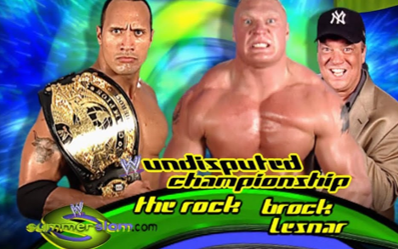


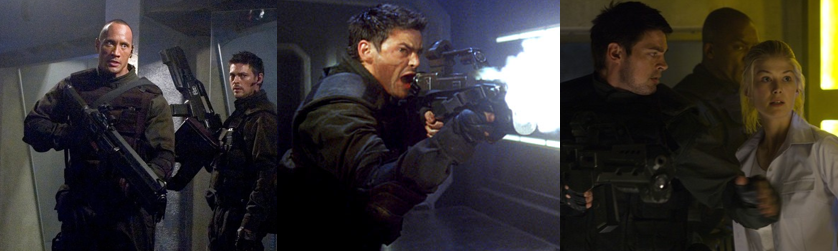
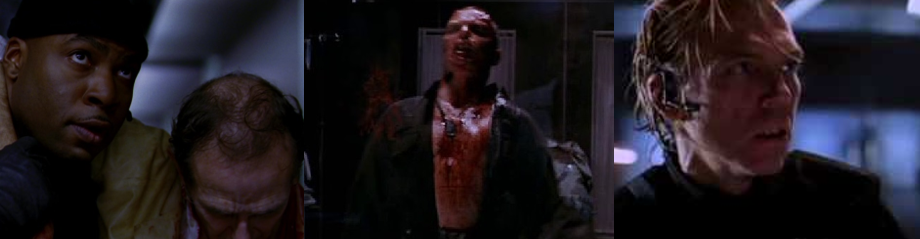
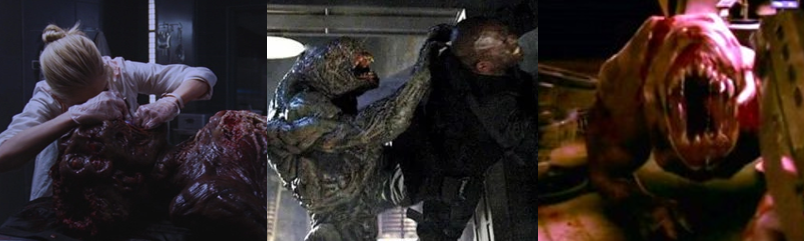
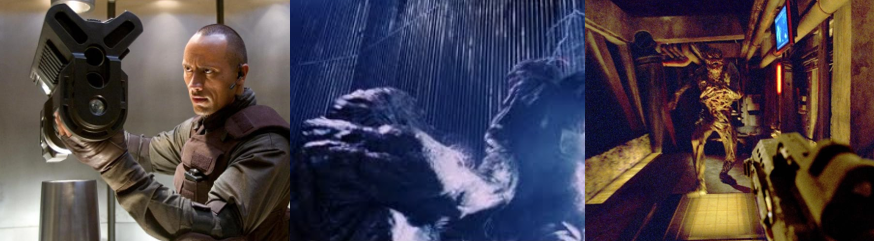
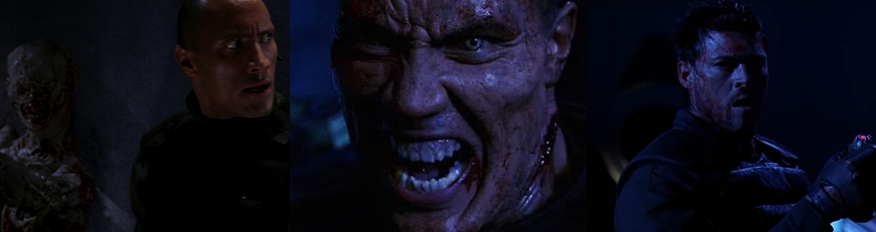




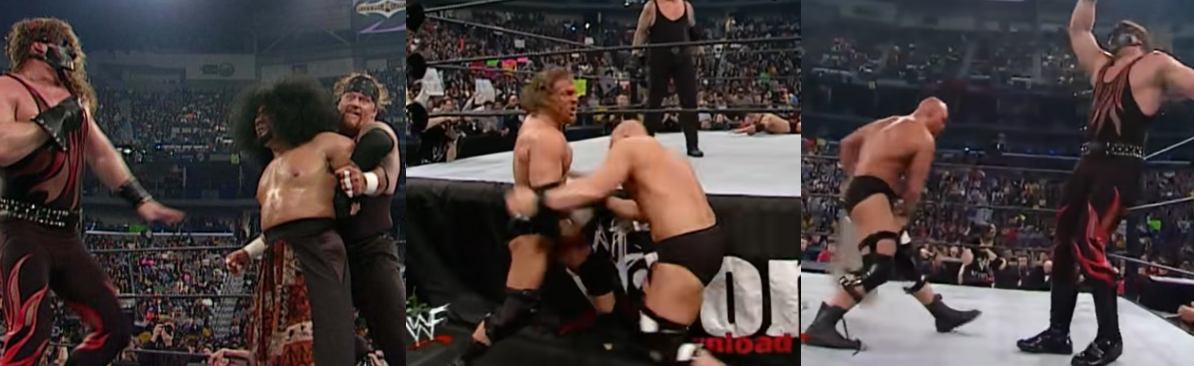


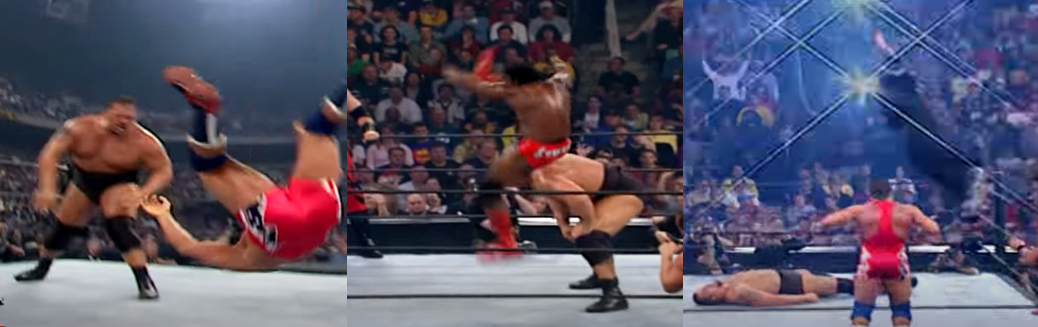

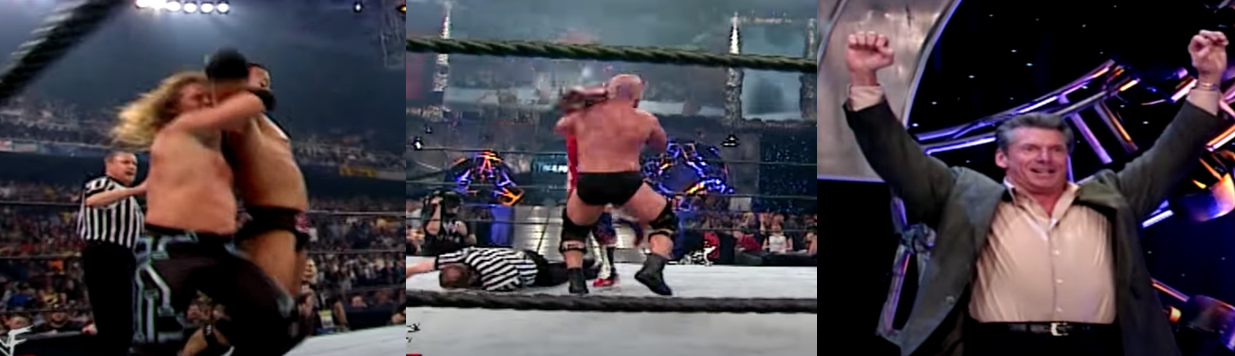


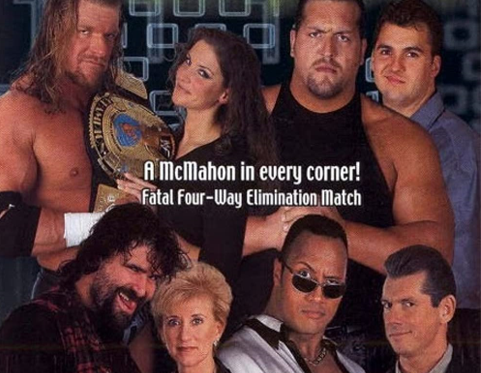
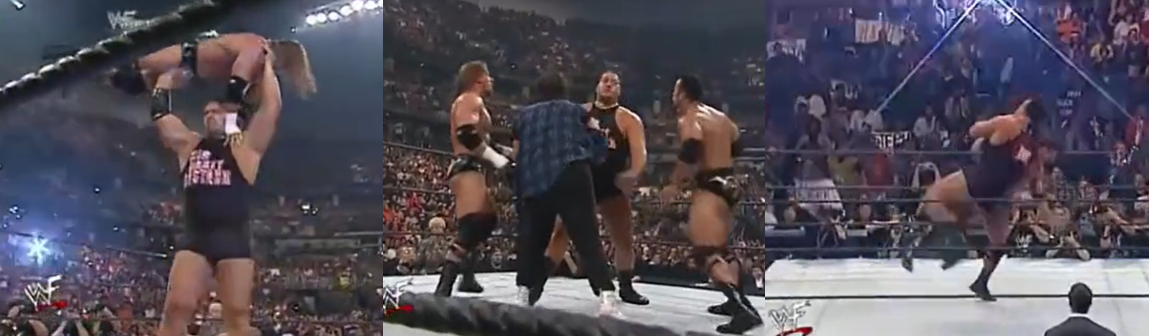
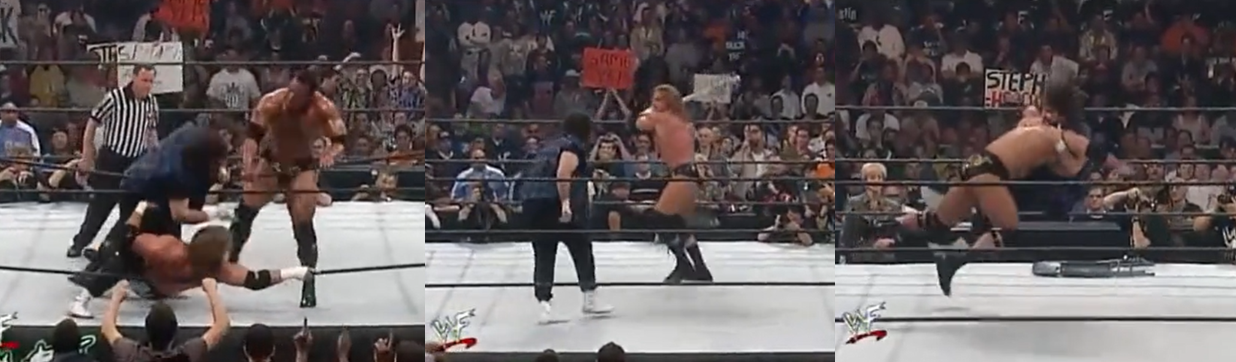
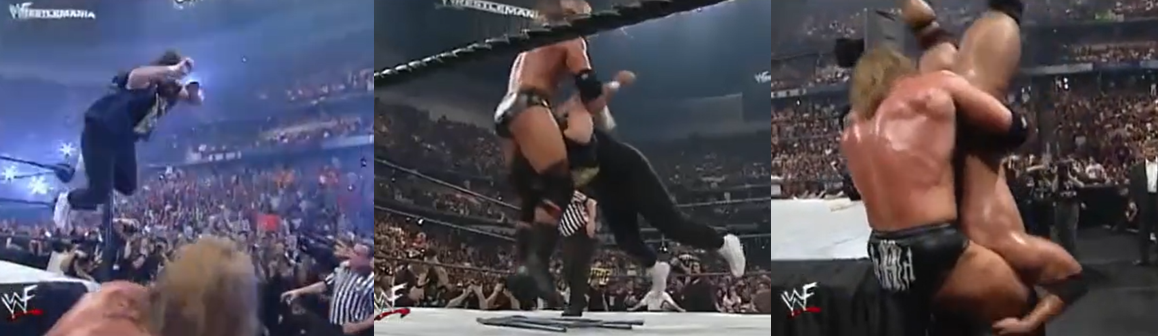
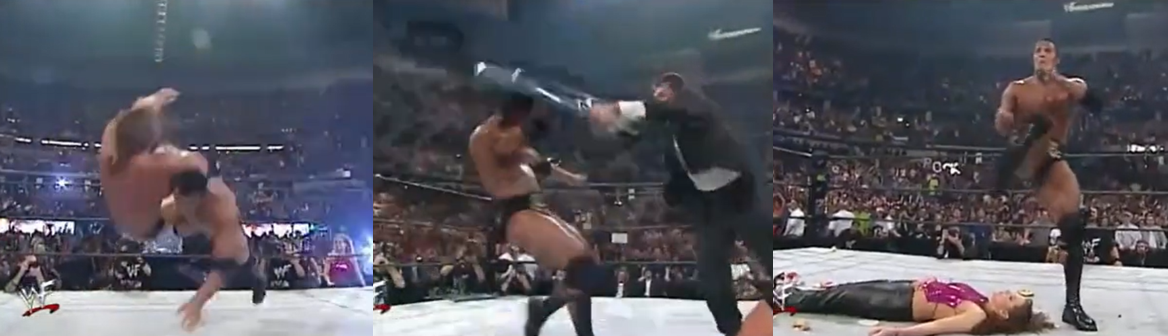
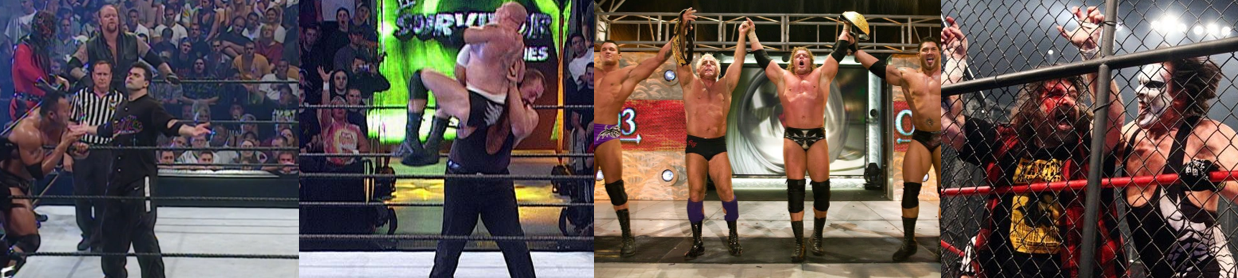










 Dr. K's Waiting Room
You must be logged in to post a comment.