January sees the celebration of two notable dates in science-fiction history, with January 2 christened “National Science Fiction Day” to coincide with the birth date of the world renowned sci-fi writer Isaac Asimov, and HAL 9000, the sophisticated artificial intelligence of Arthur C. Clarke’s seminal 2001: A Space Odyssey (1968), being created on 12 January. This year, however, I’ve been spending every Thursday of January celebrating sci-fi’s toughest lawman, Judge Joseph Dredd!
Released: 16 June 1995 Developer: Probe Software Also Available For: Game Boy, Game Gear, PC/MS-DOS, and Super Nintendo Entertainment System (SNES)
A Brief Background: Still published to this day, British science-fiction comic book 2000 AD first appeared in February 1977 and, in March of that same year, introduced readers to the uncompromising lawman of the future, Judge Joseph Dredd. Created of John Wagner, Carlos Ezquerra, and Pat Mills, Dredd became one of the most popular and iconic British comic book characters of all time. Accordingly, the character has expanded beyond the comic book panels and into the realms of videogames on more than on occasion; his first videogame outing was a largely repetitive platform shooter, a concept expanded upon by its bigger, more graphically impressive Amiga follow-up. Dredd’s relationship with videogames is largely considered to be hit and miss but, when the time finally came for the character to make the jump to the silver screen, an adaptation was put into development. While the movie would become a notoriousbox office bomb, developers Probe Software sought to be as faithful to the production as possible by digitising the film sets to be featured as locations in the game, however their efforts resulted in mixed-to-negative reviews across the board. While some reviews praised the gameplay and fidelity to the source material, others criticised the difficulty and lack of variety, and the game failed to make a lasting impression regardless of which system it was played.
First Impressions: Judge Dredd is a 2D, sidescrolling run-and-gun that, for the most part, emulates the plot and visual aesthetic of the bombastic movie. Players assume the role of Judge Dredd (whose sprite more resembles his comic book counterpart than Sylvester Stallone’s look from the film) and play through twelve stages taking out street punks, mutants, and even Dredd’s fellow Judges just like in the movie. Players are given three lives to start with and can collect more by picking up extra life icons, and each stage has a primary a secondary objective, both of which are relayed to the player using sprite art modelled from scenes of the film and traditional text. Primary objectives range from destroying ammo supplies, locating Dredd’s mentor, Judge Fargo, reaching the council in the Hall of Justice, and defeating specific enemies. Secondary objectives appear to be option, but you must complete the primary objective in order to exit the current stage, something which can prove problematic given how maze-like and strangely designed many of the game’s stages are.
Though often cluttered, the game certainly makes an effort to marry the visuals of the film and comic book.
Judge Dredd is armed with his trust Lawgiver; tapping or holding the A button will see Dredd fire a variety of shots, from unlimited regular bullets to heat-seekers, grenades, and missiles, and you can even hold down the button to fire uninterrupted. Dredd can also sprint by tapping the directional pad (D-pad), and shoot while running, jumping, and crouching, and in all directions (including diagonally!) Although some objectives tell you not to shoot certain enemies, you’re free to be as trigger happy as you like; however, you’ll score more points if you use Dredd’s melee skills (A up close or X if you have a six-button controller) to disarm and arrest perps when “GUILTY” appears over their head. Dredd can jump with B and even fly about for a few seconds if you find an Anti-Grav Belt; you’ll be doing a fair amount of platforming but Dredd can’t jump very high so you’ll often need to make use of ladders, monkey along overhead lines, or even a running jump to reach new areas. Dredd can also crawl about, push some objects, and access terminals to see his current mission progression and health and ammo stats or lock doors in certain stages. Dredd controls quite well but is a bit clunky; pressing up will scroll the screen, which can be disorientating, and there’s a few too many frames of animation at times, meaning there is often a delay between button presses. Dredd is quite sturdy but can replenish his health with small and large hearts, pick up additional ammo, or even grab a temporary forcefield and invincibility to help even the odds.
There’s some variety on display in the different Dredd’s objectives and gameplay mechanics.
After completing each stage, you’re given a score tally and a password to help you skip ahead; while there don’t appear to be any useful passwords for this version of the game, such as infinite health or ammo, it is a handy feature to pick up where you left off or try out different missions. In my case, this is almost mandatory; it took quit a bit of trial and error to complete even the first stage as you can get stuck in an area with no way back. While Dredd will nip up on the spot after being killed, it’s quite easy to get stuck as ladders and hazards aren’t always immediately visible, and while you can duck and shoot most enemies, you’ll be majorly outclassed by the wild mutants in the Cursed Earth and the Atomic, Bacterial, and Chemical Warriors (A.B.C. Warriors) you’re tasked with destroying later on. The game certainly looks good; sprites are a bit small but Dredd has some fun idle animations, such as twirling his gun and cleaning his badge (there’s even a little squeak-squeak sound effect), and there’s some splashes of blood when you off enemies. The environments are visually very faithful to the movie, including trucks, futuristic skyscrapers, and the Statue of Liberty as in the film, but can be cluttered and a little too large for their own good. Gameplay is somewhat broken up by one stage that has you flying through the skies on your Lawmaster while fending off pursuing Judges (Herman Fergusson/Fergee fires at the rear while Dredd fires ahead) and by the fact that some enemies will be possessed by the four Dark Judges; you’ll know when they are as they’ll have an aura about them and a spirit will fly out that you can catch for bonus points if you have some Boing ammo.
My Progression: Judge Dredd is a surprisingly tough game; at first, it reminded me of classic run-and-guns like Turrican (Factor 5, et al, 1990) or Duke Nukem (Apogee Software, 1991), especially with the placement of the heads-up display and dystopian, sci-fi setting. Seconds into the first stage, I hit a literal wall and had to think for a minute as the ladder I needed was so difficult to see and things only got more confusing from there; vents randomly damage you, trash falls from above, and you can’t even step in a small puddle of water in the Cursed Earth without taking damage. Just destroying the ammo crates in the first stage is a chore as they can only be destroyed by your explosive weapons and you need to explore the stage in a specific way so you don’t miss any and get stuck. Rather than running past terminals in Aspen, you need to access them to initiate the lockdown procedure, and enemies can take a few shots before they go down even before the clunky A.B.C. Warriors enter the picture. It appears that most stages end with a boss battle, too; the first is a guy who looked a lot like DC Comic’s James Harper/Guardian and who constantly blocks your shots with his shield while firing at you with a machine gun, tossing Molotov Cocktails, launching an almost unavoidable energy wave, or bashing your head in when you get close. You can use nearby barrels for cover but he absorbs shots like a sponge and the timing required to jump and duck under his shots meant that I couldn’t actually beat him!
Sadly, the game’s difficulty meant I couldn’t get very far and I wasn’t motivated to skip ahead much further.
Using a password, I jumped to stage two and fared much better n the Aspen Penal Colony. There’s some neat effects on the waters of the sewer area and I was actually able to beat the stage the boss, a brute with a big club who rides an elevator that he tries to crush you with, tosses grenades and Molotov cocktails, and smacks you silly up close. It was a slog, but I did beat him, but I couldn’t get past the Cursed Earth for the life of me. Here, the mutated inhabitants live in the ruins of society and Judge Hunters patrol the wooden walkways, but the leaps of faith and confusing level layout got the better of me. I skipped ahead to the Hall of Justice and that wasn’t a problem, nor was the chase on the Lawmaster, but the A.B.C. Warriors stomping about on the construction site around the Statue of Liberty were enough to have me calling it quits. They’re immune to your regular shot, so you’ll need a healthy supply of missiles or other explosives, but their missiles and the stage’s bottomless pits were the last straw for me. it was a bit of a shame as the game’s layout and objectives actually got easier the deeper I got and, from what I can see, there’s a bit of a post-game that looks right up my alley. After dealing with Dredd’s psycho clone brother, Rico, players head to Deadworld, an alternative dimension where all life was deemed a crime, to do battle with Dredd’s reaper-like spectral counterpart, Judge Death! I could’ve used passwords to jump ahead to this point but I decided that enough was enough, but I am impressed that a videogame adaptation from this time actually expanded on the film; the game does a decent job of following the movie’s narrative but infuses it with more elements from the source material, including my favourite Dredd antagonists, the Dark Judges, which is pretty rare for a game of this era in my experience.
I wasn’t really sure what to expect from Judge Dredd; videogame adaptations of movies tended to be more hit than miss back in the 16-bit games, at least in my experience, but sadly there were some issues here that kept me from really enjoying the experience. Visually, the game is both impressive, bland, and confusing all at the same time; the horizon and backgrounds aren’t always very detailed but the foregrounds are almost too detailed, making things a bit cluttered and messy at times. Dredd looks great and plays okay, but I find it amusing that the developers included the ability to arrest people when Dredd is far more likely to just sentence criminals to death for even more infractions. Since the game doesn’t really penalise you if you kill everyone, I recommend taking a traditional run-and-gun approach, especially as you’ll be distracted by vague objectives and the maze-like areas. Overall, it was a mediocre experience, one that I struggled to get through thanks to the difficulty spike and clunky presentation. It’s a shame as I feel the concept could have legs if it was more like Contra (Konami, 1986) or Metal Slug (Nazca Corporation, 1996) and leaned more into arcade-style action rather than tedious exploration. Still, maybe I’m being too harsh? Maybe you actually enjoyed the gameplay on offer here? Perhaps you prefer one of the movie’s other ports or a different Judge Dredd game entirely? Either way, I’d love to hear about it so leave a comment below or on my social media and be sure to check out my other Judge Dredd content.
January sees the celebration of two notable dates in science-fiction history, with January 2 christened “National Science Fiction Day” to coincide with the birth date of the world renowned sci-fi writer Isaac Asimov, and HAL 9000, the sophisticated artificial intelligence of Arthur C. Clarke’s seminal 2001: A Space Odyssey (1968), being created on 12 January. This year, however, I’m spending every Thursday of January celebrating sci-fi’s toughest lawman, Judge Joseph Dredd!
Released: 30 June 1995 Director: Danny Cannon Distributor: Buena Vista Pictures / Cinergi Productions Budget: $85 to 90 million Stars: Sylvester Stallone, Armand Assante, Diane Lane, Rob Schneider, Jürgen Prochnow, and Max von Sydow
The Plot: In the year 2080, the world has become a scorched wasteland and the Judges enforce martial law in the overpopulated Mega-Cities and Mega-City One’s most efficient and decorated officer, Judge Joseph Dredd (Stallone), is framed for murder by his own half-brother, the psychotic Rico (Asante), who plots to usurp the oppressive regime with an army of superhuman clones.
The Background: It was thanks to British science-fiction comic book 2000 AD and the work of John Wagner, Carlos Ezquerra, and Pat Mills that readers were introduced to Judge Joseph Dredd in March 1977, a tough-as-nails lawman known for his extreme political satire. Dredd’s subsequent popularity meant that Hollywood soon came calling, and long-time fan Danny Cannon pursued the project with a passion, even turning down the chance to helm Die Hard with a Vengeance (McTiernan, 1995) in favour of this adaptation. Although development stalled somewhat thanks to the similarly-themed action/sci-fi satire RoboCop(Verhoeven, 1987), production soon got underway once Sylvester Stallone was cast in the title role, beating out his action movie rival Arnold Schwarzenegger despite being unfamiliar with the character. The filmmakers looked to Blade Runner (Scott, 19982), to bring the sprawling Mega-City One to life and rejected designs from famed fashion mogul Gianni Versace for the film’s costumes. Initially shot to be an R-rated feature with a darker, satirical bent, Cannon clashed with Stallone over the direction of the film and was left so disappointed with the star’s insistence towards comedy that he vowed never to work with the Italian Stallion again. This was largely reflected in subsequent reviews, which criticised the film’s confused tone and disappointing production. While the visual appeal of the film has been praised, Stallone’s performance was not; the tie-in videogame was also a disappointment and a box office gross of under $115 million made the film a commercial flop. Both Stallone and Dredd co-creator John Wagner expressed disappointment with the film and it would take nearly twenty years for the character to return to cinema screens.
The Review: As I mentioned in my review of Judge Dredd’s debut story, I’ve been a big fan of the character since I was a teenager, largely because of my dad. I was always ore drawn towards Dredd’s clashes against the Dark Judges and his more momentous storylines, such as “The Cursed Earth” (Mills, et al, 1978), “The Day the Law Died” (Wagner, et al,1978 to 1979), and “The Judge Child” (ibid, 1980), which is fitting since Judge Dredd draws several influences from these stories for its core narrative. I was just the right age for Judge Dredd; while I was regularly enjoying violent sci-fi romps like RoboCop, I also enjoyed colourful, action-packed sci-fi comedies like Demolition Man (Marco Brambilla, 1993), so my expectations for the film were simply to enjoy seeing a stern lawman of the future kicking ass in a visually entertaining environment. This means I have a certain level of nostalgia for the film; it was, after all, the only live-action Judge Dredd movie available for decades and it’s not as if the character had a more violent animated series to fall back on. At the time, if you wanted Judge Dredd, it was either this, the comics, or a handful of videogames, but that doesn’t mean that my opinion of the film hasn’t changed as I’ve gotten older and come to appreciate the subtle dark comedy and violent nature of the source material. It’s a shame as well since Judge Dredd gets off to a good start (it’s always a plus when James Earl Jones provides an opening narration) and has more positives in it than a lot of people like to acknowledge, but it fumbles on some of the most basic characterisations of its title character in order to appeal to a wider, more mainstream audience.
Hard-nosed Dredd is framed for murder and forced to confront his psychotic brother.
Don’t get me wrong, I totally understand this. R-rated movies like RoboCop might kick all the ass but they’re a bit of a risk for producers and investors, especially when it comes to comic book properties and especially back in 1993, when many superheroes where being bastardised commercialised for maximum profit. Thus, Judge Dredd, the straight-laced, grim-faced, by-the-book lawman of the future who is just as likely to prosecute innocent bystanders to nail a perp, is transformed from a tough, no-nonsense future cop into a more heroic figure over the course of the movie. Dredd starts out as a pragmatic and uncompromising officer; he shows no fear, even when outnumbered and outgunned, and has not hesitation in gunning down criminals to quell a riot. Similarly, he doesn’t hesitate to slap former convicted hacker Herman “Fergee” Ferguson (Schneider) with the maximum prison sentence simply for trying to save himself from being caught in the crossfire. Dredd’s rigid enforcement of the law has earned him quite the reputation; ordinary street punks fear him, and rightfully so, and his lack of humanity and propensity to favour summary execution draw criticism from fellow Judge Barbara Hershey (Lane) and Dredd’s mentor and father figure, Chief Justice Eustace Fargo (von Sydow), who orders him to spend time at the academy training the future generation of Judges not in combat but in the enforcement of ethics in an attempt to inject some humanity and compassion into Dredd’s approach. Although Dredd is clearly unhappy with this assignment, he follows his orders because he has such respect for his mentor and he truly believes in the world of the law, following the literal book to the letter and committing his very life and soul to upholding its ideals, even at the expense of his emotions and empathy.
Whether through compassion or “humour”, both Hershey and Fergie help to humanise Dredd.
Dredd’s cold demeanour is contrasted by Hershey, the closest thing he has to a friend. Although Dredd has respect for all of his peers, he openly acknowledges that Hershey is “one of the smartest of the new breed” and turns to her to defend him when he’s accused of murder out of respect for her capabilities. Unlike Dredd, Hershey is far more empathetic; she chastises herself when her rookie Judge is murdered on her watch and openly disagrees with Dredd’s philosophy that Dredd’s must commit their lives to the law until they either die on the streets of venture out into the Cursed earth for “retirement”. Indeed, she’s perfectly happy to openly criticise him for being too harsh and lacking in humanity and is both hut and betrayed when the evidence condemns him as a traitor. Moved by the emotional depths Dredd displays after learning of his true origins, she agrees to help him track down Rico both out of a genuine loyalty and affection for him and to avenge the losses her and her fellow Judges have suffered at Rico’s hands. Much of Judge Dredd comedy is focused on Dredd’s stoic demeanour and the awkwardness of him relying on others after he’s betrayed by the very system he dedicated his life to. Have no fear, though, as Fergie is here to act as the comic relief of the film and boy, does it start to grate very quickly. Unlike his simple-minded comic book counterpart, Fergie is a former hacker who, after serving his sentence, finds himself in the wrong place at the wrong time. Naturally, he objects to Dredd’s harsh sentencing and cannot help but laugh at the irony of the grim Judge being convicted for a crime he didn’t commit, but Fergie has no choice but to rely on Dredd when they crash in the Cursed Earth and end up in the clutches of the notorious Angel Gang. From there, Fergie acts as Dredd’s bungling sidekick; a dead weight he’s forced to lug around. Indeed, Fergie’s hacking talents really have no relevance until the last act; Dredd has Hershey and tech-savvy cadet Nathan Olmeyer (Balthazar Getty) to offer more practical help, so Fergie is literally just there to offer manic “humour” that basically amounts to him being a nuisance. However, his presence does tie into the film’s attempts to humanise Dredd; Dredd’s stoic façade and aggravation towards Fergie noticeably lifts as they spend more time together and there’s a genuine sense that the two have become begrudging friends by the finale.
Fargo reluctantly opts to step down to protect Dredd and the sanctity of the justice system.
The Judges have a great deal of resources at their command, from Lawgiver pistols that fire an array of ammo to Lawmaster bikes that let them blast through the skies (when they actually work). What they don’t have, however, is manpower; with the city growing more volatile, Judges such as Dredd are forced to rely on more extreme measures to safeguard the citizens, and this draws them much criticism from the likes of news reporter Vartis Hammond (Mitchell Ryan). Hammond’s sentiments are echoed by Chief Justice Fargo, a well-respected and long-tenured senior Judge who is burdened by the responsibilities he feels towards the welfare of Mega-City One. He’s reluctant to enforce harsher methods as he wants the Judges to stand for freedom and justice rather than oppression and, while he’s a figure that commands great respect, it’s undeniable that his beliefs are opposed by Dredd and even those in his council, like Judge Jürgen Griffin (Prochnow). Fargo is equally reluctant to reactive “Project: Janus”, an abortive attempt at cloning Judges rather than recruiting them, and is conflicted by his guilt and affection for Dredd, whom he sees as a son since he was cloned from his genetic material. After seeing Rico, Dredd’s clone brother, descend into madness, Fargo fears that he’s made a mistake in placing so much faith in Dredd but ultimately agrees with Griffin’s suggestion to take the Long Walk and spare Dredd’s life rather than risk the truth about Project: Janus being released and what little faith the people have in the justice system being compromised. A compelling and commanding presence, Fargo delivers much of the film’s emotional gravitas thanks to Max von Sydow’s alluring performance; his death is an emotional moment not just for the audience but for Dredd, too, who struggles with his turmoil of emotions his mentor’s revelations and passing stir up in him.
As if the corrupt Griffin wasn’t enough, Dredd has to contend with the cannibalistic Angel Gang.
Of course, it turns out that Fargo’s retirement is orchestrated by Judge Griffin in a conscious effort to remove him from the council, ascend to the role of Chief Justice, and coerce his fellow councilmembers into reactivating Project: Janus. Griffin sees the escalation of crime and violence in the city as an epidemic, one that must be stamped out with every resource at their disposal, in order to bring about “an ordered society”, even if it means suppressing basic human rights. To this end, he conspires to release Rico from his imprisonment, frame Dredd for the murder of Vartis Hammond and his fellow councilmembers, and instil his own brand of order to the city through the deployment of a new batch of genetically enhanced clones. Of all the character sin the film, I’d say that Griffin is the most changed from his comic book counterpart; here, he’s an ambitious and antagonistic schemer who wants to reshape the Judges into his own image, but even he is aghast when Rico tampers with the clones so that they’re born from his genetic material rather than the wise and benevolent council. Griffin is contrasted by the admirably faithful Angel Gang; a mutated group of in-bred misfits who have turned to cannibalism and madness in the wastelands of the Cursed Earth, the Angel Gang are comprised of patriarch Pa Angel (Scott Wilson) and his backwoods sons Junior (Ewen Bremner), Link (Phil Smeeton), and Mean Machine (Christopher Adamson). Unfortunately, we don’t learn too much about them except that they’re God-fearing misfits who openly torture and kill anyone who stumbles into their territory; Mean Machine Angel, always the most visually interesting and tragic of the family, is an obvious standout thanks to his raging temper and cybernetic enhancements but, sadly, they’re mainly included as a brief obstacle for Dredd to overcome while stranded in the radioactive wastelands and could’ve easily been replaced by the same nameless, faceless Judges who later enter the scene anyway, but I appreciate the effort used to translate them to the screen, however brief it was.
Bolstered by his robotic bodyguard, the psychotic Rico plans to cause cause across the city.
Our primary antagonist is, of course, the psychotic and strangely alluring Rico. Like in the comic books, Rico is Dredd’s clone brother but, unlike in the source material Dredd is unaware of this until late into the second act. While Dredd embodies the law and everything it stands for, Rico embodies chaos; a former Judge and Dredd’s only true friend, Rico turned to wholesale mayhem and destruction and was sentenced to death as a result, which directly contributed to Dredd adopting his cold-hearted demeanour. However, Judge Griffin intervened and saw to it that Rico was simply incarcerated so he could use him as his agent to bring about his new order for Mega-City One. Griffin unleashes Rico, hoping he’ll stir up anarchy, but quickly loses control over the maniacal killer, who reprograms a battered old Atomic, Bacterial and Chemical Warrior (ABC Warrior) to act as his bodyguard, murders the council, and sets about birthing his own bath of clones. Rico is an undeniable highlight of the movie thanks to Armand Asante’s snake-like performance; he’s constantly walking the fine line between reason and insanity, flipping on a dime between the two and coming across as a volatile and unpredictable personality with a surprising amount of depth. Rico was hurt when Dredd brought him to justice and feels betrayed by him, but also wishes Dredd to join him in restructuring the justice society, with Dredd as Chief Justice, in a bid to build a true family. Rico is also assisted by Doctor Ilsa Hayden (Joan Chen), a woman who’s primarily there to help Rico with the clone science and to give Hershey someone to fight in the finale; otherwise, she may as well not be there and she’s just a one-dimensional piece of ass-kicking eye candy that just stands next to Rico and reacts to his monologues.
The Nitty-Gritty: It’s interesting that the tone of the film veers so far away from the more violent and dark humour of the source material, especially as the opening credits consist of a collage of various Judge Dredd and 2000 AD comic book covers as an acknowledgement of the film’s roots. To be fair, there is an attempt at evoking the violence of the comics throughout the movie; squibs and blood effects are prominent when characters are shot, especially during the opening Block War and subsequent shootouts, and Warden Miller (Maurice Roëves) suffers a particularly brutal shot to the throat during Rico’s escape. A lot of the more gruesome violence is rendered offscreen, but this is actually beneficial; when Rico orders the ABC Warrior to rip off Chief Justice Fargo’s arms and legs, the noise is enough to know how horrific that fate is, and there’s even a brief shot of the Angel Gang’s latest meal being chargrilled on a spit roast. It’s pretty obvious that the film was cut to avoid being slammed with a higher rating, but my main issue with the tone is the over-reliance on Fergie’s comedic mishaps to counterbalance the few, fleeting violent moments, though I do enjoy the dynamic between him and Dredd, especially when Dredd begrudgingly considers Fergie’s usefulness as a good luck charm and some of the Judge’s stoic one-liners. And Stallone has some great quips here, from his booming declaration of “I am…the law!”, his surly growl of “Courts adjourned”, and his explosive outburst in the trial scene! I also have to compliment Alan Silvestri’s rousing score; it strikes a fantastic balance between heroic, military-esque, and stirring and really bolsters the onscreen action as only Silvestri can.
While some effects haven’t aged well, overall the film holds up and impresses with its visuals.
One area where Judge Dredd really excels is in its visual aesthetic and presentation; obviously drawing much of its inspiration from Blade Runner, the film’s rendition of Mega-City One is as a sprawling, technologically advanced, overcrowded super-city that merges recognisable landmarks like the Statue of Liberty with impossibly high, futuristic skyscrapers. Neon signs, holographic projectors, and impressive technology such as flying cars, artificial intelligence, and mechanical conveniences are commonplace and many of them, like the Judge’s Lawmaster motorcycle, are comically unreliable. Indeed, there’s a definite sense of the city being cobbled together and everything has a very “lived-in” look; while the Judges have access to sleek toys and vehicles in contrast to the gritter back alleys where riots are frequent, there’s a definite sense that everyone’s just trying to make the best of what they have on offer, which ties in perfectly to the rising tensions in the streets over strained resources and overcrowding. The special effects hold up really well thanks to being a combination of miniatures, matte paintings, and practical effects; even the Cursed Earth and the exterior of Mega-City One have a grand sense of scale and CGI use is sporadic and not too glaring, though the Lawmaster chase through the city skyline does look a bit suspect. I can forgive this, however, as the flying vehicles and visual presentation is, overall, very impressive and very reminiscent of the source material. This is true of the Judge’s uniform; if anything, the film adheres too close to the source material here, translating the uniform into a form-fitting body suit bolstered by gleaming armour when it should probably be realised as something a bit more practical. Still, the Judges look great, especially Dredd; their helmets, badges, and armour are all extremely faithful to the source material and the same is true of Mean Machine Angel. My favourite of the Angel Gang, this psychotic cyborg is brought to gruesome life through the use of heavy prosthetics and my only complaint is that he doesn’t get much screen time. Similarly impressive is Rico’s recommissioned ABC Warrior; styled after Hammerstein and brought to live as a fully functioning practical effect, the ABC Warrior has a real weight and presence in the film and all of these real-life special effects make up for the few wonky special effects and help Judge Dredd stand the test of time even to this day, at least in terms of its visual appeal.
After a strong start, the movie commits the cardinal sin of removing Dredd’s helmet and making him a hero.
Of course, Judge Dredd betrays the very essence of the character within the first twenty minutes of its runtime when Dredd “[stands] at ease” and removes his helmet! I absolutely understand why this decision was made; if you’ve hired Sylvester Stallone, you want to see his face and it helps the character, and the actor, to express a greater range of motions but it undeniably goes against everything the character is known for. In the comics, Dredd essentially loses his humanity and individuality after Rico turns against the law, becoming the embodiment of the justice system, flaws and all, rather than a simple man. While he’s still that here and Dredd gives a particularly rousing speech to the young cadets regarding the level of commitment he expects from every Judge, the film is much more focused on humanising Dredd, turning him from a grim, almost robotic character and into a more compassionate, heroic figure… not unlike the narrative arc seen in RoboCop. Unfortunately this really doesn’t fit with Dredd’s characterisation and appeal; the whole point is that he’s a tough, but fair, enforcer of the law in an increasingly lawless society. Any political or social commentary is dumbed down in Judge Dredd, which approaches such aspects with a disappointingly toothless attack, but Dredd removing his helmet is basically a slap in the face to the audience, a way of saying “We’re here to make money”. The biggest irony of this is that the film has the perfect excuse to have its cake and eat it too; all they had to do was cast Stallone in a dual role, playing both Dredd and Rico, then he could’ve kept the helmet on and still been allowed to act with his face unobscured. Asante could’ve been cast as Judge Griffin since Prochnow isn’t exactly the most compelling presence in the movie (his performance is strangely exaggerated at times) and the script could’ve been rewritten to accommodate these alterations. I don’t know if that would’ve necessarily made the movie better but it would’ve at least stayed true to the spirit of the character and perhaps spared us the visual of the citizens cheering Dredd on in the finale like he’s a conquering hero, something his comic book counterpart would probably have deemed a public nuisance.
Dredd destroys his clones, dispatches Rico, and returns to duty as a street Judge.
Still, it’s hard to deny the gravitas that Asante brings to Rico and how captivating his performance is; Stallone definitely can act and has always stood out from his action hero peers as being more than a slab of meat, but he’s a little in over his head here and largely bolstered by his supporting cast as he focuses entirely on tweaking Dredd’s persona from an uncompromising man of the law to a more empathetic individual. Dredd undergoes a great deal of emotional turmoil in the film, from being betrayed and convicted by the system to discovering that he’s a clone of Fargo and that Rico is his genetic brother. The trial is particularly hard on Dredd, who knows he’s innocent but is convicted because of irrefutable genetic evidence, forcing him to see the flaws in the system, but he’s absolutely devastated when Fargo dies before his eyes after revealing the truth to him. After finally opening up to Hershey, Dredd gears up to confront his brother in the remains of the Statue of Liberty, where Project: Janus is situated. In this elaborate laboratory, Rico has spawned a new crop of clones using his own genetic material and, after Dredd refuses to join him in his campaign, Rico orders that the clones are hatched before they’re fully gestated, briefly forced Dredd to contend with the gruesome copies that are little more than monstrous drones. Although injured (by a shot that really should’ve been fatal…), Fergie is able to disable to ABC Warrior and Hershey fends off Dr. Hayden as the laboratory explodes around them, leaving Dredd and Rico to face off in a brutal fist fight in Lady Liberty’s head after just… ignoring the clones, which are basically just there for a jump scare. Despite clearly being Rico’s physical superior, Dredd ends up dangling precariously over a fatal drop after they exchange blows; luckily for Dredd, Rico can’t pass up the chance for one final monologue in which he chastises his brother’s lack of loyalty and vision, given Dredd the opportunity he needs to distract Rico with a flare, deliver one last one-liner, and sent him plummeting to his death. In the wake of Rico’s death, the truth about Griffin’s actions is broadcast, exonerating Dredd and leaving him in prime position to ascend to the role of Chief Justice. Surprisingly, the movie adheres to the spirit of the comics by having Dredd decline and recommit himself to his daily duties, and then deviates from it wildly by having him exhibit only confusion and intrigue rather than insult when Hershey plants a kiss on his lips.
The Summary: So, yeah… I’m a little torn. If anyone knows the complexities of adaptation, it’s me, and I totally get that some things need to change to bring a concept to life. generally, I go into an adaptation looking to see how it stands by itself, what it does differently, and how it works in its new medium and genre and judge it according to those standards. By that measure, Judge Dredd is a pretty by-the-numbers sci-fi action/comedy; it’s colourful and visually stunning, with some decent action set pieces and humour (when Rob Schneider isn’t trying too hard) that has a certain appeal, especially for younger viewers. If you’ve seen Demolition Man, which came out only a couple of years before this, and Blade Runner, this is very much a mash up of those two, with a sprinkling of RoboCop in there; it’s not exactly ground-breaking, but the practical effects and visual presentation go a long way to making it an entertaining flick. Stallone does a decent job here; honestly, he was a great choice to play Judge Dredd and (literally) fills the boots well, carrying himself with a grim, stoic demeanour that perfectly contrasts with his stellar supporting cast. Unfortunately… it’s just not really Judge Dredd for me. it captures some of the essence of the source material, but not enough to truly do it justice. I can understand toning down the violence and changing some aspects, but removing the helmet was a big no-no. Obviously, it would’ve been a very different movie if Stallone had kept it on (and again, I don’t know if it’d really be “better”), but the key thing here is that Dredd’s character is changed to make him a more heroic figure, when that’s really missing the point of what Dredd’s all about. Ultimately, I think the filmmakers just played things too safe; this wasn’t a time when comic book movies were known for taking risks and that really shows here, resulting in a fun action romp but one that is more like a taster introduction to Dredd’s world rather than truly being representative of it, which is a shame.
My Rating:
⭐⭐
Rating: 2 out of 5.
Could Be Better
What did you think to Judge Dredd’s live-action debut? Were you annoyed that he removed his helmet or do you think it made sense considering who was in the role? What did you like to Stallone’s performance and this interpretation of Dredd? Were you impressed by the film’s visuals, costume design, and special effects? What did you think to the plot regarding Dredd’s framing and his clash against Rico? Feel free to share your thoughts in the comments or on my social media and be sure to check out my other Judge Dredd content.
Released: 21 February 2014 Developer: Teyon Also Available For: Arcade, PC, and PlayStation 3
The Background: In 1972, David Morrell’s First Blood was published; a harrowing tale of the horrors of the Vietnam War, the book was well-received upon release eventually led to a live-action adaptation directed by Ted Kotcheff and starring Sylvester Stallone. A commercial success, First Blood(Kotcheff, 1982) is widely regarded as one of the most enduring and influential movies of its genre and was followed by a series of successful and popular action films that helped make Stallone a household name. John Rambo had featured in a number of videogames, most of which were based on the more action-orientated sequels rather than the more introspective First Blood, before Reef Entertainment acquired the rights to the franchise in 2011. Hoping to capitalise on the recent success of Rambo (Stallone, 2008) and the upcoming The Expendables 2 (West, 2012), Reef opted to use voice clips and dialogue ripped straight from the movies for their rail-shooter rather than record new dialogue with existing actors or soundalikes. This was one of many criticisms levelled against the game upon release; critics were equally unimpressed with the game’s over-reliance upon quick-time events (QTEs), the lacklustre enemy intelligence, and the game’s short length and Rambo: The Video Game was generally regarded as being a disappointing and mediocre use of the license. However, since today marks the anniversary of First Blood’s release, this seems like the perfect time to take a look at this poorly-received shooter and see if it truly deserves its overwhelmingly negative reputation.
The Plot: Rambo: The Video Game sees players take control of John J. Rambo (and one of his allies, if you have a friend to play alongside) and reenact key events from the first three movies. This sees Rambo enduring horrendous torture in Vietnam, battling bigotry in Hope, Washington, infiltrate the Vietnam jungle to rescue a number of captured soldiers, and finally stand against a Soviet invasion of Afghanistan.
Gameplay: Rambo: The Video Game is a first-person rail shooter that places you into the role of Rambo (or the likes of Colonel Sam Trautman and Co Bao) and has you playing through a number of missions that are either based on key moments from the first three films or directly recreate some of the most iconic moments of Rambo’s film career. Since it’s a rail shooter, your control and movements options are a little limited; Rambo moves as the story dictates and you’re left controlling the aiming reticule with the right stick and holding the left stick to take cover from fire. The Right Trigger will see you fire one of your two main weapons, which can be switched with either Y or the directional pad (D-pad), and you can occasionally use an alternate fire mode with the Left Bumper.
Shoot down your enemies to enter a Wrath state and unleash the full force of Rambo’s rage.
Rambo can reload his weapon with either X or the Right Bumper; this will bring up a small reloading wheel and you’ll need to press the button again to reload faster to grant yourself additional ammo (though your overall supply is unlimited). Press it too soon or too late and your gun will jam, giving you less ammo and slowing down your reload time, thus leaving you vulnerable. LB and the B button also allow you to throw one of your limited supply of grenades, while the Left Trigger provides you with an aiming lock to target specific enemies, and you can also use the D-pad to cycle through different types of arrowheads once they’ve been unlocked. As Rambo kills enemies, scoring headshots or disarming them or blowing them to pieces by shooting explosive barrels, he’ll not only earn points but also fill up his “Wrath” bar. When a segment of this is filled, players can press X to enter “Wrath” mode, which slows down time, highlights enemies using their body heat, and refills Rambo’s health for every kill he performs during this limited burst of rage. Rambo: The Video Game allows you to play missions in three different difficulty settings: Private, Sergeant, and Green Beret; each one tweaks the aggressiveness and competence of the enemies, provides a different number of checkpoints, and makes quick-time events (QTEs) either easier or harder. If you’re playing on the easiest setting, you’ll be blessed with an unlimited number of checkpoints but won’t earn as many points for your playthrough; Sergeant or higher will limited your checkpoints to five and three, respectively, and end your game if you run out, though you can lower the difficulty setting from the death screen if you’re having a hard time. As you gun down enemies, you’ll rack up a score multiplier, which is key to increasing your final ranking at the end of each mission; you’ll also gain extra points for your accuracy, headshots, the difficulty setting, and how many deaths you suffered during the mission, promoting more efficient and calculated playthroughs on higher difficulty levels in order to level Rambo up, gain Skill Points, and upgrade his stats and unlock Perks and increase his combat proficiency.
QTEs, stealth sections, and explosive vehicle gameplay help add some much needed variety.
However, it’s not just about going in all guns blazing; Rambo will also need to take up his bow and arrow or his iconic knife and sneak through the woods, jungle, or under cover of darkness to take out enemies undetected. This means completing a number of QTEs, which award additional points for pressing the onscreen prompt at the last minute or tapping the button as fast as possible; while QTE time is severely reduced on higher difficulties, the onscreen prompts are always the same so you can simply memorise their order and concentrate on your timing. Sometimes these will crop up mid-mission to have you avoid incoming bullets or mortars, and one particular mission offers you the choice between a stealthy route or a more action-orientated path. You’ll also come across “Cautious Enemies”, indicated by a ! prompt, who will one-shot you if they spot you; enemies can also lean over or shoot through your cover and be bolstered by “Commanders”. Gameplay is given a little variety by the few times you take control of a mounted gun or a helicopter to wreak havoc on the immediate area. These sections are timed and involve blasting at the Hope police station, assaulting a Vietnam base from above, destroying mines and boats while sailing down a river, or blasting away at Soviet forces and their vehicles. These moments of intense action are where the game really excels, though the controls are a little slippery and it can be difficult to aim at your targets with the crosshair slipping all over the screen. This crops up again as Rambo is tasked with disarming and wounding Hope’s police officers for extra points; you can kill them as normal, but you get more points for disarming the cops, which is difficult to do without taking a lot of damage so it’s probably best to turn off the aiming assist option for this mission to make things easier. While sneaking through the Soviet base in Afghanistan, you’ll also have to follow onscreen prompts to arm explosives and can shoot at glowing sections of the cavernous environment to crush your enemies under boulders. If you’re playing alone, you can share your ammo with Co Bao in Vietnam by pressing Y at the right time and she’ll help you out with cover fire, and you’ll even have to take out snipers from afar in Afghanistan. Although the game starts of pretty simply, with you blasting at Viet Cong and diving to cover to reload and catch your breath, things quickly ramp up and get very frustrating and unfair as combinations of the game’s most formidable and annoying enemies ambush you, leaving you on the back foot if you’re out of grenades; things are made all the more maddening by some wonky hit detection than can see your point-blank shots miss or enemies hitting you through normally impenetrable cover.
Graphics and Sound: I’ve played Rambo: The Video Game in the arcades before; there, on a big screen with a real (albeit plastic) gun in your hand, the game looks and plays pretty well for a standard light gun shooter. However, on home consoles, the game is pretty much an embarrassment from top to bottom; while the missions do a decent enough job of bringing to life the dark, dank jungles of Vietnam and recreating the town of Hope and the Soviet cave from the films, there’s a lot of graphical pop up and corners cut here as it’s simply a rail shooter and you’re not really meant to be stopping and taking in the details around you. Similarly, enemy models are decent enough, but ragdoll all over the place at times and you’ll see the same enemy types again and again with very little variation.
While locations are okay, the character models, music, and audio dialogue are all absolutely dreadful.
The actual character models are pretty laughable; Rambo himself looks more like an off-model action figure than the surly Stallone thanks to his ridiculous mane of a haircut. Trautman doesn’t look too bad, but hardly any of the corrupt cops from Hope resemble their onscreen actors. The game’s story is framed as a series of flashbacks at Rambo’s “funeral” as some nameless, unknown military man gives those in attendance a rundown on Rambo’s career and reputation in order to afford him some anonymity for his excursion into Afghanistan. This allows the game to recreate the most memorable moments of the films with the absolute bare minimum of effort; the music is dreadful, repeating in embarrassing loops mid-mission, but it’s the voice acting where the game really falls flat. Stallone and Richard McKenna’s audio are ripped right from the films, making their words distorted and wildly inconsistent and hilariously out of context at times, and only emphasising the cheapness of the title.
Enemies and Bosses: Rambo will gun down a whole host of nameless, faceless, interchangeable groups of enemies themed after each of the game’s missions: Viet Cong, Hope’s police department, and Soviet forces all try to fill Rambo with holes, popping up from the background, the sides of the screen, and rolling in to take shots at you. Enemies make use of cover to avoid your shots, can have their hats shot off, and some can even be disarmed to render them harmless to you but, for the most part, they are easily offed with just a few shots. Soon enough, you’ll encounter more formidable and annoying enemies, such as grenadiers (who take cover and toss grenades you can shoot out of the air), “Heavy” enemies covered in armour and vulnerable only in their face masks, and “Flamers” who wield flamethrowers and force you to shoot at their flame tank. Commanders will bolster the morale and efficiency of all onscreen enemies, so you should prioritise taking them out, though you must duck behind cover when turrets are rolled out into the field as they’ll shred you pretty quickly. Snipers, armoured enemies, and groups of these foes can whittle your health down in no time at all so it’s best to make use over cover, shoot any nearby explosives, and try to get off some one-shot headshots to off your enemies as quickly as possible.
Some familiar faces and final encounters close out each of Rambo’s explosive adventures.
Each of the game’s missions includes a timed sequence where Rambo must destroy parts of the environment, usually by making use of a large cannon or a helicopter but, in Afghanistan, you’ll also be hounded by helicopters and tanks that you cannot destroy and must either avoid by taking cover or run past by eliminating all onscreen enemies (and objective the game makes frustratingly vague) and completing some QTEs. Each mission culminates in something that can be generously described as a boss battle; after laying waste to the Hope police station, you’ll need to avoid Sheriff Teasle’s gunfire by pressing the onscreen prompts when it’s safe to move around, then desperately shoot at him when he peeks out at you from his elevated position. After laying waste to his base with your explosive arrows, you’ll find Lieutenant Tay far less of a challenge as you simply have to fire an arrow at him to blow him up, but you’ll need to take the controls of a helicopter and frantically fire your bullets and rockets at an enemy chopper to finish Rambo’s redemption in Vietnam. Finally, after a harrowing rescue mission in Afghanistan that sees you struggling past formidable and frustrating groups of various enemies, you’ll take the controls of a tank and get into a ground-to-air firefight with Colonel Alexei Zaysen. Jeeps and soldiers run around distracting you, but your primary concerns are Zaysen’s missiles and the tanks, which can severely reduce your vehicle’s health and destroy it in one shot, respectively. You’re thus forced to frantically fire your main gun and your cannon like a madman, desperately hoping to shoot down the missiles and destroy your targets before they can do too much damage, before finally ending Zaysen’s threat in this surprisingly aggravating final showdown.
Power-Ups and Bonuses: Aside from your Wrath state, there aren’t any in-game power-ups to make use of beyond being tossed a grenade or making use of explosive barrels or other environmental hazards. You don’t need to worry about picking up ammo and health is restored in Wrath mode, so your primary focus should be on staying alive, killing as many enemies as possible, and keeping your multiplier chain and accuracy high. This will net you the Skill Points you need to level-up and improve your efficiency; these can be spent upgrading your resistance to damage, your grenade inventory, the power of both light and heavy weapons, and extending the duration of your Wrath bar. When you level-up high enough, and complete certain requirements (known as “Trautman Challenges”), you’ll unlock additional weapons to take with you into each mission, which can definitely turn the tide in your favour in the game’s tougher stages. You’ll also unlock up to three Perk points and a variety of Perks that allow you to perform perfect QTEs or gain increased health and ammo while reloading or killing enemies in Wrath, for example.
Additional Features: There are twenty-seven Achievements on offer in Rambo: The Video Game; the vast majority of these are tied to you getting at least a two-star rank on every mission, which will require you to beat the game in at least Sergeant mode, while others include maintaining a high chain multiplier, using every weapon in the game, completing it on Green Beret mode, and killing a total of 3000 enemies. Sadly, none of this is easily accomplished and meeting these criteria quickly becomes a very laborious and needlessly frustrating process as achieving even a two-star rank can be more trouble than it’s worth at times. The game can also be played in two-player co-op, which is very much appreciated and probably makes some of the tougher sections a bit easier, but there’s no head-to-head multiplayer mode and Trautman’s “challenges” amount to fulfilling certain objectives (which you can’t review in-mission) to unlock new weapons. If you simply must have more Rambo, there was some downloadable content released for the game that included some additional missions and Achievements, but I can safely say that I won’t be checking this out any time soon given how infuriating this game can be at times.
The Summary: I’d heard nothing but bad things about Rambo: The Video Game; however, even after my last few attempts to play the arcade version resulted in my coins being eaten by the machine, I maintained that it would be an inoffensive enough rail gun shooter to blast through and rack up some easy Achievements. Instead, what I got was an absolute slog of a gaming experience; bland environments which, while somewhat faithful to the movies, are way too dark, unimpressive and frustrating enemies, and a lack of variety really bring down the otherwise enjoyable enough gameplay. The stealth and QTE sections are okay, if painfully simple, and the parts where you’re in control of heavy ordinance and vehicles can be a lot of fun, but the presentation is just so cheap and rushed. The muted dialogue ripped right from the movies is the most glaring offense, of course, but the lack of gameplay options, the stringent criteria for unlocking stuff, and the odd little glitches and annoyances peppered through the game definitely don’t make it worth investing your time and money in when there are far better first-person shooters out there. It’s a shame as there’s definitely a lot of potential here, but the execution screams “cheap cash grab” and you really won’t be missing out on all that much if you skip this title, which I’d argue even die-hard Rambo fans would struggle to find enjoyable.
My Rating:
⭐
Rating: 1 out of 5.
Terrible
Have you ever played Rambo: The Video Game? If so, did you enjoy it or were you as disappointed by it as I and many others were? What did you think to the Wrath system and the recreation of the film’s moments? Were you also disturbed by the poor quality character models and audio clips? Which Rambo videogame, or videogame appearance, is your favourite? Which of the Rambo films is your favourite? Whatever your thoughts on Rambo, drop them below or leave a comment on my social media.
Released: 25 January 2008 Director: Sylvester Stallone Distributor: Lionsgate and the Weinstein Company Budget: $50 million Stars: Sylvester Stallone, Julie Benz, Paul Schulze, Graham McTavish, and Maung Maung Khin
The Plot: Twenty years after the events of the third film. Vietnam War veteran John J. Rambo (Stallone) has retired from the civilised world and is working as a snake catcher and boat driver in Thailand. However, when missionaries who hired Rambo’s services are taken hostage by the sadistic forces of Major Pa Tee Tint (Khin), Rambo reluctantly tags along with a group of mercenaries on a desperate rescue mission.
The Background: After Rambo III (MacDonald, 1988) underperformed at the box office, the Rambo franchise lay dormant for the better part of two decades as star and creative force Stallone struggled to find a good excuse to revisit the character. After being inspired by the atrocities in Burma, Stallone was initially reluctant to direct the film himself but became excited when he decided to direct it from Rambo’s skewed perspective. The confusingly-titled movie’s unimpressive $113.2 million box office was accompanied by mixed reviews that criticised the excessive violence while praising the long-awaited return of the beloved character. Undeterred, Stallone began work on a follow-up soon after Rambo’s release that, after numerous revisions and alterations, was pretty much universally lambasted by even the character’s original creator when it eventually released.
The Review: One of the complaints I had about Rambo III was that it really didn’t spent much time at all exploring Rambo’s newfound life away from war; we got the briefest glimpse at his time in Thailand but we never got to see in any real detail how he had adjusted to this life or what his mindset was. Rambo, to its credit, does not make the same mistake; when we re-join Rambo, now much older and more stoic and jaded than ever, he’s still in Thailand but now working as a snake catcher and offering boat trips. We follow him throughout a typical day, witnessing him applying his unique survival skills in a far more practical way as he catches fish with his trademark bow and rounds up snakes with an experienced efficiency.
Rambo has turned his back on the outside world and has no interest in reconnecting to society.
In Rambo III, Colonel Samuel Sam Trautman (Richard Crenna, sadly missing from this film due to his untimely death) all but accused Rambo of hiding and denying himself in Thailand and, while that may have been true, it’s far more prevalent here. When missionary Michael Burnett (Schulze) attempts to hire Rambo’s boat, Rambo vehemently and aggressively turns him down; fully aware of the atrocities occurring in Burma, he bluntly recommends that the missionaries avoid the area entirely and return home unless they plan to bring weapons and it’s pretty clear from his dismissive “Fuck the world” that he’s largely turned his back on the outside world.
The missionaries grossly underestimate the cruelty of Tint and his army.
Full of optimism and blind faith, the missionaries attempt to bring medical aid, religion, and serenity to the troubled villagers but grossly underestimate the cruelty and violence of Burma, especially Tint and his army. When the Burmese attack the village with mortars and gunfire, villagers are literally blown to shreds by the explosions, kids are shot, and limbs are hacked off mercilessly and the missionaries, woefully unequipped and overwhelmed by the violence, are summarily taken captive. It’s a brutal, unrelenting show of force and viciousness and far beyond anything seen in the previous films; indeed, it’s as though Rambo’s version of the world has come to life before our eyes and the missionaries are left petrified prisoners of war at the limited mercy of Tint and his army.
Tint is easily the cruellest and most sadistic of all of the franchise’s villains.
The cruelty of Tint and the Burmese junta army is a significant part of the film and is, literally, the first thing we see; Tint has his soldiers force villagers to cross a swamp-like river filled with mines and guns down any that survive the trip purely for his own amusement. Similarly, he orders his men to pillage the villages, taking their sons and forcing them into joining his army, taking their women to be sex slaves, and threatening to destroy the villages if they try to retaliate or aid the Karen rebels. Of all the villains and villainous forces seen in the Rambo films, Tint and the Burmese are easily the worst and most despicable since we not only see the aftermath of their actions but actually see them exercising their sadistic will in full force not just on the innocent villages but also on the missionaries.
In the end, Rambo can’t fightwhat’s in his blood and gears up to join the rescue mission.
Still haunted by his life experiences, Rambo has returned to his belief that “nothing ever changes” but, despite his bitter and cynical attitude, he is talked into helping the missionaries by Michael’s fiancée, Sarah Miller (Benz), and even refuses to accept any payment based entirely on her plea to the dim recesses of his humanity. Later, after dropping the missionaries off, we see that Rambo is still tormented by nightmares of his experiences and the events of the previous films, and Trautman’s words regarding his true nature and coming “full circle”. Unlike the previous films, Rambo isn’t alone this time around; although he disapproves of the idea of mercenaries, he’s unable to deny that “war is in [his] blood” and agrees to not only ferry them on a rescue mission but also to tag along despite the objections of Lewis (McTavish).
Only a couple of the mercenaries get a chance to stand out but they’re all fully capable soldiers.
Of all the mercenaries, it’s Lewis who is the most outspoken and aggressive; frustrated at the idealism of the missionaries and taking an instant dislike to the country and Rambo, Lewis is a tough, overly-macho, and outspoken asshole who’s only really in it for the money. He’s the most prominent of the group, though School Boy (Matthew Marsden) attempts to keep the peace and acts as the group’s sniper, Reese/Tombstone (Jake La Botz) acts as the explosive expert, and En-Joo (Tim Kang) also manage to stand out amongst the volatile group. For all their equipment and vigour, they are left stunned by Rambo’s prowess at killing and guerrilla tactics; having drastically underestimated him as merely the “boat man”, they are suitably convinced to allow him to tag along after seeing his proficiency with a bow.
The Nitty-Gritty: Rambo is like an amalgamation of the previous three movies as it is dominated by the bleak cruelty of the first film, features a similar gritty approach to its violence as the second film, and concludes with an over the top bloodbath that surpasses even the ludicrous third film. Like its predecessors, Rambo builds towards its action and violence over time but does a much better job of exploring Rambo’s psyche than the last two films; older, world-weary, and bitter, Rambo is a blunt, pragmatic, and realistic instrument who hasn’t lost any of his skill and efficiency over the years. Well versed in the harsh nature of the world, especially Burma, he isn’t afraid to gun down pirates when negotiations fail and his knowledge of guerrilla warfare and the area gives him the edge over the younger mercenaries.
Rambo impresses with his unquenchable aggression and proficiency with a bow.
The presence of a diverse team of combatants allows for much more variety in the film’s action sequences, though guerrilla tactics are still very much the order of the day thanks to Tint’s superior forces. No doubt due to Stallone’s advancing age and sharing double duties as director and star, sharing the action amongst his younger companions also allows the film to stand out from its predecessors, which were largely focused on one man waging war against insurmountable odds. Rambo’s experience and unique set of skills are still able to shine through, though, since he uses both (in co-ordination with his knowledge of the country) to lead a successful rescue of the missionaries under cover of darkness using little more than stealth, grit, and determination.
With the mercenaries held by Tint, Rambo leaps into action using a huge machine gun.
Interestingly, the added numbers also end up being a hindrance for Rambo as, while they offer backup and cover fire and play their part in the rescue, many of them are summarily captured by Tint’s soldiers. While Rambo was captured in the previous films, he largely only had to worry about getting himself out of danger but, this time, he has to consider the lives of many people and, as a result, is somewhat handicapped in a way he might not have been had in gone in to rescue the missionaries alone. Indeed, Rambo proves the advantages of his age and experience as he completely avoids capture this time around and is able to take on Tint’s entire army with only Sarah, School Boy, and a massive machine gun at his disposal!
Tint meets a fittingly gruesome end at Rambo’s hands.
While Tint is a reprehensible antagonist, he doesn’t actually pose a physical threat to Rambo or the mercs; instead, Tint’s threat comes from the fact that he has an entire army of loyal, equally sadistic soldiers at his beck and call and, protected by these numbers, he feels free to exercise his will and indulge his every desire, however despicable and cruel those may be. His preference to watch or to mercilessly beat his captives means that, rather than facing off with Rambo in hand-to-hand combat, Tint directs his forces to do his fighting for him, leading to countless Burmese soldiers being cut to ribbons by Rambo (who has mounted a massive machine gun) and his allies. When the Karen rebels also join the fight, Tint sees defeat at hand and decides to save his own hide and, for his cowardice, is summarily disembowelled by Rambo, putting an end to his reign of tyranny.
Contrary to the usual anti-war sentiment, Rambo‘s message is that violence is always the answer!
Of course, one of the most notable things about Rambo is its depiction of absolutely brutal and gratuitous violence and gore. Rather than being slowed by age, Rambo appears to be more dangerous and lethal than ever as he is now able to rip a man’s throat out with his bare hands and the film is littered with similarly gruesome imagery: heads and limbs are blown and cut off, kids are shown with their legs missing, Tint’s pigs feast on human flesh, Lewis ends up with his leg shredded into little more than meat and bone by an errant mine (but loses none of his aggressive defiance despite the agonising pain), and Rambo detonates a dormant bomb with the impact of a small nuclear explosion! This all culminates in the finale, where Rambo literally guns down hundreds of men with his machine gun, reducing them to dismembered corpses. Even Michael, pushed to his very limits by the violence he has seen and abuse he has suffered, ends up going against his morals and beats a man to death with a rock and, in the end, the message seems to be that uncompromising, brutal violence truly does solve the world’s problems rather than messages of peace and blind optimism.
The Summary: Rambo is an uncompromisingly brutal and bleak piece of cinema with a rather grim and ghastly message; the previous Rambo films basically came down to the simple and enduring premise that war is Hell but, in Rambo, war is the solution rather than the problem. While the missionaries wish the spread a message of peace, their mission would have ended with death and rape had Rambo not been on hand to execute the pirates and, were it not for the intervention of Rambo and the mercenaries, all of the missionaries would doubtless have ended up tortured and beheaded. The violent excess in Rambo compared to even Rambo III is impressive in its gratuity and yet, while Rambo’s methods and perspective on the world turn out to be true and the only productive solution to the conflict, there’s a definite sense that such violence is wholly abhorrent and only necessary because of the way the world is at times. I like the concept of Rambo being this lone wolf who gets sucked into greater conflicts and brings his unique skills and point of view to different scenarios, and the finale of him finally returning home to his father (which, I feel, is a far more fitting end than the shit-storm of the fifth movie), but I feel the decidedly anti-war message that was prevalent in the first film and felt throughout its sequels has been lost somewhat in the indulgence of excess though, if you look hard enough, traces of it are still there behind all the gratuitous and entertaining violence.
My Rating:
⭐⭐⭐
Rating: 3 out of 5.
Pretty Good
What did you think to Rambo? How do you feel it holds up, especially compared to the previous films? Were you as confused by the film’s title as I was or did you appreciate the simplicity of it? What did you think to Rambo’s characterisation in the film and his motivation for helping the missionaries? Were you a fan of the gratuitous violence on display in the film and what was your interpretation of it all, in the end? Do you think that this works better as a finale for the character or were you excited to see more from Rambo? Which Rambo film is your favourite? Whatever your thoughts, drop a comment below and click here for my review of the fifth film.
Released: 25 May 1988 Director: Peter MacDonald Distributor: TriStar Pictures Budget: $58 to 63 million Stars: Sylvester Stallone, Richard Crenna, Kurtwood Smith, Marc de Jonge, and Spiros Focas
The Plot: Three years after the previous film, events in Vietnam, former United States Army Special Forces soldier John J. Rambo (Stallone) has settled in a Thai monastery. Finally content, he refuses to assist his former commander, Colonel Sam Trautman (Crenna), in assisting Mujahideen tribes in Afghanistan against Soviet forces. However, after Trautman is captured, Rambo immediately agrees to undertake a solo rescue on the condition that he will be disavowed in the event of capture or death.
The Background: The impressive box office success of First Blood (Kotcheff, 1982) led to the even more financially successfulRambo: First Blood Part II (Cosmatos, 1985), which transformed the character from a tormented Vietnam veteran and into an explosive, one-man army of an action star. This time around, Stallone was even more hands-on with the production of the film as he not only helped write the script but also hired Russell Mulcahy as the direct…and then promptly dismissed him after creative differences. Sadly, this time around, Rambo III was a box office disappointment after grossing just $89 million (which, while slightly more than First Blood, was a massive drop compared to the sequel). Although Rambo III was also met with mixed reviews, it was the most violent action film ever made at the time and its ludicrous body count was only surpassed by its eventual follow-up.
The Review: Having witnessed first-hand the treatment and abuse he receives in his home country, and having extracted a measure of revenge upon Vietnam for his experiences during the war, Rambo is, understandably, quite disillusioned and reluctant to be a part of “normal” society and has, instead, retreated to Thailand. Here, he desperately attempts to reconcile his two sides (the side that wants peace and the side that craves conflict) by helping to reconstruct and repair a Thai monastery and earning money for the monks by participating in brutal underground fights.
Despite seeing how badly war affected Rambo, Trautman encourages him back into the fight.
Tired of war and content with his newfound life, Rambo is dismissive and uninterested when Trautman and United States field officer Robert Griggs (Smith) arrive with a new mission for him. This is in stark contrast to the previous film, where Rambo signed up to Trautman’s mission (though somewhat begrudgingly) in order to rescue prisoners of war from the same torture he endured and face his demons in familiar surroundings. It’s also a far cry from Rambo’s emotional breakdown at the end of First Blood, where he defiantly declared that “Nothing is over!”; now, he declares that his war is over and that he’s finally at peace. Trautman, however, sees through his claims and believes that Rambo is hiding and denying his true self; it’s an interesting exchange based on their experiences in the previous films, where Trautman was sympathetic towards Rambo’s plight and claimed to have “made” him. Now, his argument is that Rambo was always this way and he (as in Trautman) simply pointed him in the direction of the enemy and, rather than trying to talk Rambo out of fighting, he actively encourages him to “come full circle” and be the soldier that has brought him so much pain and suffering.
Trautman is captured and tortured by Soviet terrorists.
However, Rambo refuses and, honestly, after everything we’ve seen from him, I can’t say that I blame him. But, without Rambo by his side, Trautman is captured by Soviet forces. When Griggs informs Rambo of this, Rambo immediately volunteers to go in, alone and off the books; this time around, at least, Rambo is told upfront that the government will deny any official knowledge of the mission and leave him to be tortured and killed so there’s no subterfuge or deception regarding this mission. Rambo’s motivation for volunteering is based purely out of the loyalty and respect he still feels for Trautman and his mission takes him to Afghanistan and in conflict with the Soviet forces, led by Colonel Alexei Zaysen (Marc de Jonge) and Sergeant Kourov (Randy Raney).
Zaysen and Kourov have different approaches that make them a significant threat.
Zaysen is largely similar to Lieutenant Colonel Sergei T. Podovsky (Steven Berkoff) from the last film; enigmatic and threatening, he attempts to intimidate Trautman with his eloquence. Trautman, however, is defiant and contemptuous towards Zaysen and his unwinnable war against the rebellious Mujahideen even while enduring ruthless torture at the hands of Zaysen and Kourov. Zaysen is very much the cool, calculating commander who only gets involved with the dirty work when his prisoners are held at his (or Kourov’s) mercy but grows increasingly frustrated by Rambo’s interference and disruption while Kourov is the more sadistic and brutal of the two and acts as Zaysen’s muscle.
Rambo’s greatest allies are, again, his grit, adaptability, and unmatched skills in warfare .
Thanks to the presence of the Mujahideen, Rambo is, again, not entirely alone in his campaign but, intimidated by the Soviet’s power and numbers, the tribe are reluctant to help Rambo beyond informing him of the general layout of the Soviet base. Indeed, for his initial assault on the base, Rambo is joined only by his guide, Masoud (Focas), and a young Mujahideen boy, Hamid (Doudi Shoua); the two join him against his wishes and it is through their inexperience that we get so see how cagey Rambo is, as he spots traps they don’t. Once again, Rambo’s greatest advantage for most of the film is his stealth, which allows him to enter the base undetected (by hiding up in the rafters and clinging on the bottom of a tank!), acquire weapons, and plant a number of explosive charges throughout the base to deal significant damage.
The Nitty-Gritty: Similar to the second film, Rambo III wastes little time in reacquainting viewers with Rambo and his newfound life but, again, builds towards its more explosive and action-packed moments. A great deal of time is spent dwelling in the Mujahideen village and watching as Rambo learns their ways and customs; apparently, Rambo has the time to waste talking with Masoud and Hamid and participating in the tribe’s odd (and, if we’re honest, quite cruel) idea of sport rather than formulating a reasonable plan of attack and, as a result, it’s no surprise when the village is suddenly attacked and destroyed by the Soviet’s attack helicopters. As a means to further add to Rambo’s motivation, this isn’t quite as effective as the brief romance from the last film; he’s gained a greater appreciation for the simple life and the ways of the innocent, for sure, but this attack mainly exists to explicitly show how persecuted the Mujahideen are and as an excuse to add to the film’s incredibly-high body count.
Rambo has transformed into a full-blown, mindless action hero for his third outing.
Once the killing starts in earnest, Rambo III almost descends into a parody of the high-octane action films of the time; casting aside all attempts at stealth and subterfuge, explosions and gunfire fill the screen as Rambo wages his largely one-man war and the Soviet forces being blown all over the place and running head-first into a hail of bullets while Rambo stands completely still and out in the open. The firefights actually remind me a lot of Commando (Lester, 1985) in that way and you can’t tell me that the ridiculous conclusion of that film, where musclebound hero John Matrix (Arnold Schwarzenegger) literally mows down hundreds of miscellaneous bad guys in very much the same way, wasn’t an influence on Rambo III’s absurd action scenes.
When teamed up with Trautman, Rambo is suddenly dropping quips and one-liners!
Nowhere is this more explicit than in Rambo’s brutal fist-fight with Kourov; a mute mountain of a man, Kourov poses a significant physical challenge for Rambo and results in the most visceral and brutal fight scene of the film as Rambo manages to not only knock Kourov down a pit with an impressive spinning kick but also breaks his neck and blows him up with a grenade! To top this elaborate death, Rambo III ends with an explosive and ludicrous showdown with Zaysen; with Zaysen piloting a gunship and Rambo at the controls of a tank, Rambo III ends with one of the more unique vehicular firefights I can recall and yet, as a massive fan of Commando and mindless action, I’m okay with this. Seeing Rambo completely unhinged and gunning down or blowing up countless bad guys is very thrilling and it’s even more exhilarating to see him and Trautman finally in the thick of it together. Previously, Trautman was little more than Rambo’s friend and publicist and, while he said that he had been in the midst of all the horrors of Vietnam in First Blood, we only saw Rambo’s time as a victim or torture or out in the field so it’s nice (well…not “nice” but refreshing, maybe?) to see Trautman getting his hands dirty rather than being safely out of harm’s way. Even more surprising is the banter between the two when they’re out in the field; Rambo had a few little quips here and there in the second film but he’s full of little snarky comments this time around which, while amusing and help to cement the unique bond between these two, do feel a little out of character for the normally tormented and focused Rambo.
The Summary: In a lot of ways, Rambo III is very similar to Rambo: First Blood Part II but lacking even the small amount of nuance and subtext that film had compared to the first. Everything has been dialled up to eleven this time around, transforming Rambo from a haunted, persecuted veteran and into another snarky action hero. With more explosions, more bullets, and a far greater body count that the previous film, Rambo III is almost a parody of the second film and it definitely feels as though Stallone was trying to compete against other over the top action films of the time. As a fan of the genre, I’m okay with this as mindless, explosive action and gun fights are always fun but it can’t be denied that something has been lost in emphasising these aspects. Although Trautman accuses Rambo of denying his true self by hiding in Thailand, it’s pretty obvious that Rambo is much more at peace at the start of the film and perfectly happy to have left behind his war and put his skills to use in building, rather than destroying, while indulging his more animalistic sides in stick fighting. In a lot of ways, it makes very little sense for Trautman to even want to deny Rambo the peace he’s found and I can’t help but feel like the film might have landed a little better if Trautman had never visited Rambo to ask for his help and we’d spent a little more time getting an idea of Rambo’s mentality so it meant a little more when he found out that his friend was in trouble.
My Rating:
⭐⭐⭐
Rating: 3 out of 5.
Pretty Good
Are you a fan of Rambo III? How do you feel it holds up today, especially compared to the first two films and the sequels? Were you disappointed that the film emphasised violence and action more than its predecessors or were you a fan of its glorious excess and action tropes? What did you think to Trautman’s extended role? Would you have liked to see more of Rambo’s new life to make his decision to return to war more meaningful? Which Rambo film is your favourite? Whatever you think, feel free to leave a comment below and be sure to check out my other Rambo reviews.
Released: 22 May 1985 Director: George P. Cosmatos Distributor: TriStar Pictures Budget: $25.5 million Stars: Sylvester Stallone, Charles Napier, Julia Nickson, Steven Berkoff, and Richard Crenna
The Plot: Three years after the events of the first film, in Hope, Washington, former United States Army Green Beret John J. Rambo (Stallone) is released from a federal prison by his old commander, Colonel Sam Trautman (Crenna). Rambo is assigned the task of confirming reports of U.S. prisoners of war (P.O.W.s) in Vietnam in exchange for a pardon but is quickly forced to once again rely on his extensive combat training after being betrayed by corrupt governmental bureaucratic Marshall Murdock (Napier).
The Background: After the spectacular box office performance of First Blood (Kotcheff, 1982), a sequel was all-but-inevitable. Initial ideas for the sequel revolved around partnering Rambo up with a sidekick, rumoured to have been played by John Travolta, and legendary movie director James Cameron even came on board to write the film’s script. However, while Cameron was able to capture the more action-orientated focus of the sequel, which plastered Rambo’s name front and centre, Stallone once again stepped in to handle to more meaningful, political subtext of the film. Similar to the first film, Rambo: First Blood Part II was met with mixed reviews; critics were unimpressed with the film’s violence and excess, its lack of poignant commentary and subtlety compared to the first film, and for being a step back for portrayals of foreign threats. And, yet, Rambo: First Blood Part II absolutely smashed it at the box office, making over $300 million (thus making it the most profitable of all the Rambo movies) and propelling the character into mainstream pop culture the very definition of a “breakout sequel”.
The Review: When we re-join Rambo in Rambo: First Blood Part II, he’s toiling away breaking rocks in a prison labour camp; having accepted his lot, and his punishment, he feels safe and secure inside of the prison. However, when Trautman offers him a highly dangerous reconnaissance mission with the potential promise of a Presidential pardon, he accepts the proposal in the hopes of actually being able to “win this time”. In Thailand, he meets with Murdock, who summarises Rambo’s storied and decorated career and even sympathises with him since he’s a former soldier himself; Murdock debriefs on the specifics of the mission, which is to go into Vietnam, completely alone, to find evidence of P.O.W.s.
Murdock turns out to be a corrupt bureaucrat who cares nothing for those stuck in ‘Nam.
Rambo is ordered not to engage the enemy as a follow-up strike team will handle the extraction and is afforded a great deal of equipment and technological backup…all of which is rendered completely mute when he’s forced to separate himself from all of his equipment to avoid being torn apart during his drop into the jungle. Although Murdock comments on Rambo’s stoic demeanour, Trautman continues to have the utmost faith in Rambo even though Rambo remains unconvinced that Vietnam has changed since he was last there and spots a flaw in Murdock’s backstory. Ultimately, Rambo’s suspicions about Murdock are quickly shown to be true as he’s incredulous to the ill-advised Vietnam war, is determined to pull out after the thirty-six-hour mission time is up, and sabotages Trautman’s attempt to rescue Rambo. A corrupt bureaucrat, Murdock merely wished to sweep all the rumours of P.O.W.s under the rug with a convenient patsy and is perhaps the most significant threat due to his betrayal that leaves Rambo at the mercy of the film’s more sadistic villains.
Rambo is betrayed and left captive at the combined forces of the Soviets and the Vietnamese.
It turns out that the Vietnamese forces, led by Captain Vinh (William Ghent) and Lieutenant Tay (George Kee Cheung), are in league with the Soviets, led by Lieutenant Colonel Sergei T. Podovsky (Berkoff) and his right-hand man, the stoic and barbaric Sergeant Yushin (Voyo Goric). When Rambo is captured during his botched extraction, he finds himself at Podovsky’s mercy and once again enduring unspeakable trauma. However, fuelled by his anger at Murdock’s betrayal, Rambo is able to not only endure this torture but also escape from his captors in dramatic fashion before waging a veritable one-man war against the combined forces of the Vietnamese and the Soviets.
Through Co, Rambo’s humanity is explored in greater depth…but it’s not to last.
Since he had to ditch his equipment during the drop, Rambo is immediately left with little more than hits wits and his trademark hunting knife to see him through. This time around, however, he’s joined on the ground by Co Bao (Nickson), a Vietnamese freedom fighter who arranges safe passage for him up the river. While Trautman continues to talk up Rambo’s unparalleled skills and fortitude, interactions between Rambo and Co explore his humanity and mentality; weary of conflict and the world, the world nevertheless only makes sense to Rambo out in the field and he begrudgingly prefers to be back in the fray if only to be able to recognise his enemy. Although Co fights for similar reasons as Rambo (out of duty and loyalty), she is far more idealistic and naïve than he but still a very capable warrior in her own right and even saves Rambo after he is captured by Podovsky.
Rambo’s skills are made all the more impressive through his adaptability and deadliness.
In First Blood, we saw how adaptable and capable Rambo was and his ability to survive in the wild and subdue his opponents through non-lethal methods; this time around, these aspects are downplayed greatly but are still evident in decidedly different ways. Rambo favours a bow and arrow, for example, in order to make less noise and adopts a sneaky, stealthy approach to his rescue effort and fighting skills to pick off the Vietnamese and Podovsky’s men. However, given that he’s now in the midst of a war zone, all pretence is dropped and we get to see just how skilled of a soldier he is; Rambo shoots arrows through guys’ heads, blasts them to bloody chunks with a shotgun, and brutally stabs them to death with his big ol’ knife, proving to be every bit the remorseless and fierce killer Trautman sold him as in the first movie.
The Nitty-Gritty: Right from the start, Rambo: First Blood Part II is a very different film to First Blood; there’s very little time wasted in the early going and Rambo is dropped into Vietnam within the first fifteen minutes. However, despite being a much more action-orientated film, Rambo: First Blood Part II’s pace is largely similar to that of the first film and, while the body count is much higher, the action escalates over time and continues to primarily focus on Rambo’s guerrilla tactics rather than just being a nonstop, action-packed extravaganza.
The first chance he gets, Rambo disregards his mission tosave the P.O.W.s.
This isn’t entirely surprising and is telegraphed during Rambo’s meeting with Murdock; Rambo is appalled at his orders not to attempt a rescue and, whether due to his own previous experiences as a P.O.W. or because of his suspicions about Murdock, he immediately disregards the reconnaissance mission to rescue one of the P.O.W.s, Banks (Andy Wood), and it’s pretty obvious the Rambo always planned on rescuing the P.O.W.s just as much as he relished the idea of getting a measure of revenge against the Vietnamese forces.
Rambo unleashes all of his pent-up aggression to wage a one-man war against his enemies.
Rambo’s mission is much more personal this time around thanks, firstly to him being betrayed by his own government and, secondly to Tay’s killing of Co right as the two began to explore their mutual attraction. Already fuelled by his traumatic experiences in the Vietnam War, these betrayals and losses and being surrounded by enemies on all sides only drive Rambo to fight harder and more aggressively. He cakes himself in mud, fires explosive arrows at enemy encampments from afar (and makes Tay pay for his actions with a similar arrow), and eventually commandeers a Soviet attack helicopter (after a particularly brutal fight with the indomitable Yushin) to rain unrelenting fire down upon his enemies.
Rambo makes an emphatic statement for all soldiers and P.O.W.s by threatening Murdock.
In the end, Rambo: First Blood Part II delivers an exciting and explosive finale as Podovsky and Rambo engage in a helicopter chase and firefight; Rambo, again displaying how smart and cagey he is, feigns defeat and death to fool Podovsky into hovering in range of a fatal rocket strike and he’s able to carry all the remaining P.O.W.s to safety, leaving Vietnam little more than a smouldering mess. Returning to the base, Rambo then confronts Murdock, destroying his office in an iconic hail of gunfire and demanding that he find and rescue the remaining P.O.W.s held in Vietnam before delivering a sobering monologue and walking off the an uncertain future.
The Summary: At its heart, Rambo: First Blood Part II is the ultimate redemption story, especially for Rambo; in the first film, he was haunted by his memories and experiences in Vietnam and was on the razor’s edge of sanity and humanity. Now, far more jaded and disillusioned, he’s given the chance at serving once again and helping to rescue fellow soldiers from the same situation and, in the process, dropped right back into the meatgrinder. However, as dangerous and cunning as Rambo was on home soil, he’s (as Trautman says) right at home in the thick of it all and, thanks to his incredible skills and volatile nature, is able to extract a measure of revenge for all the atrocities he suffered in Vietnam. While the body count is higher and the action is bigger, the film retains the same visceral, bleak undertones as the first and delves a little deeper into Rambo’s psyche to explore his vulnerability a little bit more. A patriot at heart, he’s perfectly willing to put his life on the line for his country and his fellow man but all he wants in return is a little respect and gratitude. It’s not a massive part of the film’s plot but this is clearly a story about a man confronting his demons and, while Rambo might lament conflict and be tired of all the killing and chaos, he’s still a savage and wily soldier when pushed into action and this is emphasised even more here since he’s actually in a war zone so he doesn’t have to worry about pulling his punches. In the end, it’s maybe lacking a little of the nuance of the first film but I’d say it’s just as good, if not better in some ways because of the brutality and more explosive nature of the action.
My Rating:
⭐⭐⭐⭐
Rating: 4 out of 5.
Great Stuff
What did you think to Rambo:First Blood Part II? How do you feel it holds up today, especially compared to the first film and the sequels? Were you disappointed that some of the nuance of the first film was lost in favour of a far higher body count or do you think the sequel compliments the first in providing Rambo the chance at confronting his demons? What did you think to the brief romantic sub-plot and to seeing Rambo’s skills in the field? Which Rambo film is your favourite? Whatever your thoughts, leave a comment below and be sure to check out my review of the third film.
Released: 22 October 1982 Director: Ted Kotcheff Distributor: Orion Pictures Budget: $15 million Stars: Sylvester Stallone, Brian Dennehy, Jack Starrett, Bill McKinney, and Richard Crenna
The Plot: After returning to the United States from the Vietnam War, former United States Army Special Forces soldier John J. Rambo (Stallone) faces not adulation, admiration, or a hero’s welcome but, rather, persecution and abuse at the hands of small-town sheriff William Teasle (Dennehy). Driven into the woods and suffering from post-traumatic stress and nightmarish memories of his time as a prisoner of war, Rambo wages a one-man war against his tormentors using only his unparalleled survival skills and finely-tune guerrilla tactics.
The Background: First Blood is an adaptation of a novel by the same name, which was written by David Morrell and published in 1972. Influenced by Rogue Male(Household, 1939) and horrific stories of the Vietnam War told by his students, Morrell’s book was well-received upon release but the subsequent movie adaptation languished in development hell for ten years. Production began in earnest when Sylvester Stallone signed on to the project; Stallone, who was a proven box office commodity after the success of the first three Rocky films (Various, 1976 to 1982) also wrote around seven different versions of the film’s script but, while an ending was filmed that reflected the bleak conclusion of the novel and Rambo’s death, it was ultimately cut at the agreement of Stallone and Kotcheff. Interestingly, upon release, First Blood was met with mixed reviews, although the actors’ performances were highly praised (with Stallone’s being notably well-received). Regardless, First Blood more than made up for this with its frankly staggering $125.2 million box office and contemporary reviews not only regard the film much more favourably but First Blood is widely regarded as one of the best films of 1982 and one of the most enduring and influential movies of its genre.
The Review: When we’re first introduced to Rambo, he’s little more than a vagrant wandering across the country in a bid to reunite with an old war buddy. Literally carrying his entire life over his shoulder, he’s a simple man just trying to reconnect with a world that has largely passed him by. Sadly, however, his attempts are largely in vain; his friend, Delmar Barry, has died after exposure to Agent Orange and it’s clear that Rambo is basically a stranger in his own country.
Teasle immediately takes a dislike to Rambo based on his rugged appearance alone.
However, this is made undeniably explicit when Rambo crosses paths with Sheriff Teasle, who immediately pegs him as a troublemaking drifter on sight alone. Teasle’s judgement of Rambo boils down to little more than his own personal bias and animosity, no matter how hard he tries to justify himself. I’m sure the ironically-named town of Hope is a nice, quiet little town and that Teasle is proud of the tight ship he runs but his persecution of Rambo is completely unfounded and unnecessarily aggressive. Of course, things only escalate after Rambo is arrested on paper thin charges of vagrancy and carrying a concealed weapon; while being processed, Rambo runs afoul of Teasle’s equally-despicable Deputy Sergeant Arthur Galt (Starrett) and suffers nightmarish flashbacks to his time as a prisoner of war. And, honestly, who can blame him after the disgraceful treatment he receives at Galt’s hands; Galt wallops Rambo with his nightstick, orders him to be hosed down and holds him in an unorthodox choke with that same nightstick but he goes too far when he attempts to have Rambo shaved with a straight razor.
Rambo carries both the physical and mental scars of his time as a P.O.W.
Triggered into a maniacal rage, Rambo easily takes out Teasle’s men with his bare hands and flees into the nearby woods. Earlier, Galt had described Rambo as a wild animal and his initial outburst and escape through town certainly support that; Rambo is an animalistic force of brute strength and unbridled rage, all brought on by flashbacks to his torture. Covered in scars and clearly still haunted by his experiences in Vietnam, Rambo is a force to be reckoned with and the police department vastly underestimate his capabilities. This comes to a head in their ensuing attempts to hunt him down; Teasle spares no expense in tracking Rambo down, pursuing him deep into the woods (and destroying his patrol car in the process), bringing in the dogs, calling in the helicopter for air support, and even drafting in the National Guard for support (who come packing a rocket launcher, no less!) It’s a monumental effort just to capture one man who, so far, is guilty of very little other than walking into town and being forced to relive the worst experiences of his life. Teasle’s obsession completely blinds him to Rambo’s obvious threat even after he is told of Rambo’s unmatched capabilities by Colonel Sam Trautman (Crenna) and directly leads to the accidental death of Galt after he takes this obsession to another level and ends up falling to his death as a result.
Rambo incapacitates his oppressors and pursuers through strictly non-lethal means.
This is, of course, a significant element of First Blood that separates it from the subsequent sequels. Rambo isn’t some ruthless killing machine here; instead, he’s a tortured, desperate man pushed to the edge by ignorant and abusive bigots but, despite his unbridled rage and brute savagery, Rambo doesn’t directly kill anyone in his debut film. Indeed, Rambo goes to great lengths to ensure that his pursuers are incapacitated non-lethally, setting elaborate traps and falling back on his extensive and peerless survival training. The result is actually far more impressive as it emphasises Rambo’s skill, ability, and restraint and he’s clearly deeply affected by Galt’s death. He just wanted to be left alone and would have harmlessly passed through town without incident but, when backed against the wall, easily disables Teasle’s men, and gives him every opportunity to “let it go” but is just pushed further and further until he has no other option than to wage a one-man war against the entire town…all with non-lethal force.
The Nitty-Gritty: First Blood is a deeply moving and bleak representation of the animosity and persecution many Vietnam veterans, and other war heroes, faced back then (and, I’m sure, even now); Rambo did absolutely nothing wrong but was set off by Teasle’s victimisation and Galt’s antagonism. Indeed, the only one of Teasle’s men to actually speak out against their treatment and vendetta against Rambo is the young deputy Mitch Rogers (David Caruso), the one voice of reason in Teasle’s department who begrudgingly follows his orders despite realising the very real threat Rambo poses.
Teasle is unimpressed with Trautman’s warnings of Rambo’s incredible skills.
Of course, Rambo’s history and true danger are related to an unimpressed Teasle by Trautman; Trautman, who takes full responsibility for Rambo’s training, regards Rambo as the literal best of the best, a man trained to survive in the wild with very little resources and who actually thrives under such circumstances. He urges, practically pleads with, Teasle to simply let Rambo slip away, fully confidant that he’ll surrender willingly if allowed to pass on (which is seen to be true when Rambo tries, and fails, to surrender following Galt’s death) but Teasle adamantly refuses to believe that one man can outwit his entire show of force even after everything he’s already seen. Sadly, Trautman’s attempts to quell Rambo’s anger also fall on deaf ears as, by the time he is able to contact him, Rambo has fully committed himself to the fight against Teasle and is basically reliving the war out in the woods.
Rambo’s unique survival skills make him a formidable warrior out in the wilds.
Teasle’s obsessive vendetta against Rambo is only fuelled after Gart’s death and he absolutely refuses to be dissuaded from his crusade no matter how many horror stories Trautman tells him. While Teasle’s humanity is practically non-existent, he does exhibit a bit more than just bigotry and hatred after it appears that Rambo has died; feeling cheated out of his victory, he nonetheless attempts to apologise for his abrasive actions to Trautman. However, it turns out that Trautman’s warnings were all based on irrefutable fact and we clearly see how adaptable and skilled Rambo is; he quickly retrieves his knife, acquires a police radio and other weapons from Teasle’s men, and is able to fashion all kinds of traps using just the woods alone never mind when he commandeers and army supply truck and rolls into town for the explosive finale.
In the end, Rambo breaks down in tears at the torture and abuse he has suffered and surrenders.
In the end, Rambo’s downfall comes not from Teasle or the hundreds of guns pointing his way but from his own traumatic experiences; while his time in Vietnam affords him unprecedented survival skills and allows him to live off the land and overcome superior forces with little more than his wits, it also scarred him both literally and figuratively. Everything he experiences in Hope is a reminder of his time in the war: the straight razor reminds him of his torture, he’s basically reliving his time in the jungles of Vietnam out in the woods, and he is basically attacking an enemy encampment when he storms the town in the end. With Teasle at his mercy, Rambo finally breaks down in despair at the loss of his entire team and the horrors he witnessed in Vietnam; the only one who understands him is Trautman, who validates Rambo’s heart-breaking monologue about the trauma and disrespect he has experienced both in and outside of the Untied States and the film concludes with Teasle injured, but alive, and Rambo surrendering himself to his old mentor and overwhelmed by the atrocities he has had to commit and suffer through.
The Summary: First Blood is an intense and moving experience; essentially a glorified manhunt for the majority of its runtime, it tells the story of a highly trained and skilled soldier pushed to the edge by abusive and cruel cops and forced to both relive, and live with, the horrors and atrocities he faced in combat. Hounded at every turn and judged for his appearance as much as his status as a former soldier, Rambo receives only persecution and abuse rather than admiration or respect and, in the end, his tormentors pay for their mistreatment not with their lives but with their pride. Despite the insurmountable odds against him, Rambo succeeds through sheer grit and determination and is the original one-man army and yet, despite all of this, all he wanted was a little respect and to be left alone. Indeed, so tormented by his experiences is Rambo, and so tired of conflict and killing, that he refuses to kill any of his tormentors even when he has every chance (and right) to do so, making First Blood a haunting action/thriller. A thinking man’s action film, First Blood is a stark reminder of the horrors of war and the foul treatment they received back in the day, as though it was their fault that they were forced to fight and kill for their country; it’s very different to the bombastic and over the top, action-packed sequels that followed it and so might not be for everyone but it remains a sobering and impact film in its own right.
My Rating:
⭐⭐⭐⭐
Rating: 4 out of 5.
Great Stuff
Are you a fan of First Blood? Did you watch it back when it was first released and, if so, how did you find it in the context of the time? How do you feel it holds up today, especially compared to the sequels, and were you disappointed that the sequels veered more towards action and death than introspective commentary on the horrors of war? What did you think to Rambo’s survival skills and Teasle’s baseless persecution and obsession with him? Do you think the film should have ended in the same way as the book and with the cut scene of Rambo dying? Which of the Rambo films is your favourite? Whatever you think, comment below and let me know and check out my review of the sequel.
Released: 2 July 2019 Director: John Herzfeld Distributor: Lionsgate/Universal Pictures Budget: $70.6 million Stars: Sylvester Stallone, Dave Bautista, Max Zhang, Harry Shum Jr, Devon Sawa, and Curtis “50 Cent” Jackson
The Plot: Ray Breslin’s (Stallone) past comes back to haunt him when Lester Clark Jr (Sawa), the son of his former business associate, abducts a number of people, including his girlfriend, and holds them hostage within the “Devil’s Station”, a sadistic supermax prison, leading Ray and his friend, Trent DeRosa (Bautista), to concoct a desperate rescue attempt.
The Background: Escape Plan 2(Miller, 2018) may have been a critical and commercial failure but, during filming, Stallone announced a third entry in the franchise that had started as as a decent excuse to bring him together with his action rival, Arnold Schwarzenegger, and had descended into a mediocre and disappointing straight-to-DVD franchise. Also titled Escape Plan: The Extractors, the third film dropped many of the new cast members from its predecessor and received a very limited theatrical release outside of the United States. Because of this limited release, Escape Plan 3 outperformed its predecessor, making just over $30 million at the box office but falling quite far from the almost $140 million of the first film. It did, at least, receive noticeably more positive reviews than the second film.
The Review: The first thing to note about Escape Plan 3 is that, despite the sequel spending most of its runtime focusing on Breslin’s protégé’s Shu Ren (Huang Xiaoming) and Lucas Graves (Jesse Metcalfe), neither of these characters make an appearance in the third film, which instead introduces even more new characters. This time around, Daya Zhang (Malese Jow), daughter of Wu Zhang (Russell Wong), is kidnapped by Lester Clark Jr as part of an elaborate revenge plot against Ray. Wu Zhang is the head of Zhang Innovations, the company responsible for the construction of the Tomb; you’d think that this would be the catalyst for bring Ray into the fold considering he swore to track down those responsible for such prisons at the end of the last film but, instead, he is only drawn into the plot when Daya’s bodyguard, Bao Yung (Shum, Jr), delivers him Lester’s video threat.
Lester seeks to avenge his father and nab a hefty ransom in the process.
Lester Clark Jr is, of course, the son of Lester Clark (Vincent D’Onofrio), Ray’s former partner who betrayed him and had him locked up in the Tomb; his plan for revenge involves taking a bunch of hostages, including Daya and Ray’s girlfriend, Abigail Ross (Jaime King), hostage inside another supermax prison, the “Devil’s Station”, and demanding a $700 million random. A ruthless, callous mercenary, Lester surrounds himself with imposing goons (including one of my favourite actors and stunt men, the great Daniel Bernhardt) but is perfectly happy to execute his hostages, including Abigail, to make his point and to make his revenge all the sweeter.
Ray assembles a team for his rescue mission and to settle the score with Lester.
All this amounts to a far more personal story this time around for Ray and for his new associates, who get a lead on Lester’s location from DeRosa; in the last film, this took DeRosa about a day and he had to go bust a few heads to get the information Ray needed but, this time, DeRosa simply guesses that Lester’s at the Devil’s Station and that’s it, they’re off without any fuss or muss. Lester alone would be enough to make things personal for Ray but, when Abigail is kidnapped and, later, killed, Ray launches into a vendetta alongside DeRosa, Shen Lo (Zhang), Daya’s former bodyguard and lover, and Yung. It’s personal for these latter two as well; Shen because of his feelings from Daya and Yung because he feels (and is constantly told) that he failed Daya by not being able to keep her safe. Unlike the Tomb and especially unlike Hades, the Devil’s Station is much more of a traditional prison; located in Latvia, the facility is a rundown, desolate hellhole designed to be an intimidating and demoralising maze. There’s no fancy high-tech hazards this time around, they’re not adrift in the sea, and there’s no complex system to hack into; instead, it’s just good, old fashioned iron bars, ruthless inmates, and the foreboding presence of Lester and his callous minions.
The Nitty-Gritty: Thankfully, Escape Plan 3 is much more coherent than its predecessor; with my senses no longer bombarded by erratic shaky cam and frantic editing, the film (and, more importantly, the action scenes) is much easier on the eyes and the pace is much improved as a result. It also helps considerably that the film isn’t bathed in constant near darkness, with many scenes within the Devil’s Station taking on a disconcerting yellow hue.
Despite having a team, this doesn’t really factor into the infiltration plan.
Unlike the last two films, which understandably involved breaking out of prisons, Escape Plan 3 is much more of a rescue movie; Ray and his team have to break into the Devil’s Station to rescue the hostages and confront Lester, meaning the film automatically stands out from its predecessors by putting Ray and his abilities in a much different situation. This necessitates the need for a team, meaning a much bigger role for Bautista this time around; if you’re a fan of 50 Cent and got excited when you saw his character, Hush, on the poster and the actor’s name share top billing then you’re in for a disappointment, though, as, while Hush does contribute more to the film and the team this time around, he’s still relegated to tech support. To be fair, though, the actual “team” aspect of the film isn’t as emphasised as you might expect either as they quickly split up to infiltrate the facility and Breslin largely disappears for a noticeable chunk of the movie.
The fight between Ray and Lester is a brutal, gritty affair, at least.
Unfortunately, given the low-tech approach of the Devil’s Station, the actual infiltration involves a lot of wandering around in poorly-lit sewer tunnels; thankfully, what the film lacks in visual presentation, it more than makes up for with some brutal action and kills. Driven to unbridled rage by Abigail’s death, Breslin’s normally composed demeanour cracks, leading to a vicious showdown with Lester. Devon Sawa, who I only really know for his role in Final Destination (Wong, 2000) and for appearing in the music video for Eminem’s “Stan”, actually makes for a fairly decent antagonist; a damaged and violent individual, Lester’s blind devotion to revenge against Breslin and those whom he feel used and betrayed his father makes for a volatile and unhinged villain. This isn’t some slick, corporate asshole in a suit; this is a ruthless mercenary who isn’t afraid to get his hands dirty or to twist the knife in any way he can and his inevitable contribution with Breslin is easily the highlight of the film. Rather than some slick, overly choreographed affair, this fight is a brutal, hard-hitting brawl that brings Breslin back into the fray with a bang and allows him to extract a measure of revenge.
The Summary: Escape Plan 3 is a definite improvement over the second film and it’s telling that the film goes out of its way to connect more with the first movie than reference the second. Still, as gritty and visceral as the film can be, and as interesting as it is to see a more personal story being told with Breslin and to place him in a different situation (breaking in instead of out), Escape Plan 3 still can’t compare with the first movie. It’s not even about Arnold Schwarzenegger at this point (though his continued absence from the franchise is a bitter pill to swallow), it’s just that the sequels can barely pull together a coherent and engaging film. While Stallone’s role is noticeably bigger this time around, he’s still more of a supporting character; Bautista is similarly criminally underutilised, meaning Escape Plan 3 ends up being about a bunch of new characters who aren’t anywhere near as interesting to look at or follow. If more of the actors from the second film had returned then, maybe, it would have allowed for a bit more investment in their fates but, still, Escape Plan 3 fails to really be anything more than a mediocre action/thriller that is noticeably better than the second…but that’s not exactly a high bar to clear.
My Rating:
⭐⭐
Rating: 2 out of 5.
Could Be Better
What did you think to Escape Plan 3? Did you find it more enjoyable than the second film or did you, perhaps, think it was just as bad, if not worse? What do you think to the trilogy overall? Do you think the films would have been better if Schwarzenegger had returned or would they still have failed to impress upon you? What do you think to Bautista as an actor and do you think he is deserving of bigger, more varied roles? No matter what you think, feel free to leave a comment below and be sure to check back in for more Stallone content later in the year!
Released: 29 June 2018 Director: Steven C. Miller Distributor: Lionsgate Home Entertainment Budget: $20 million Stars: Sylvester Stallone, Huang Xiaoming, Dave Bautista, Jesse Metcalfe, Wes Chatham, and Titus Welliver
The Plot: Ray Breslin (Stallone) has expanded his operation, taking on Shu Ren (Xiaoming) and Lucas “Luke” Graves (Metcalfe) as protégés. However, when Shu is kidnapped and imprisoned in a high-tech prison named “Hades”, Luke, Ray, and Ray’s associate, Trent DeRosa (Bautista), must find a way to infiltrate the most dangerous prison in the world to rescue him.
The Background: After the financial success of Escape Plan(Håfström, 2013), which finally brought action legends Sylvester Stallone and Arnold Schwarzenegger together in a meaningful way, a sequel was announced in 2016. Perhaps due to the fact that the first film recouped most of its box office success from the Chinese market, Escape Plan 2 (also known as Escape Plan 2: Hades) featured a more international cast and even received a limited theatrical release in China. Rather than bring these two stars back together for a bigger, better sequel, Escape Plan was released straight to DVD outside of China, Schwarzenegger was entirely absent, and even Stallone was reduced to more of a supporting role. Unsurprisingly, Escape Plan 2 was therefore a box office bomb, making a little over $17 million at the box office and receiving scathingreviews and Stallone regarded it as the “most horribly produced film [he had] ever had the misfortune to be in”.
The Review: Escape Plan 2 begins in Chechnya where Lucas, Shu Ren, and another of Breslin’s protégés, Jaspar Kimbral (Chatham), are attempting to free hostages; as an opening action sequence to show off our new protagonists, this is a bit of a frantic mess thanks to some shaky editing and low lighting. Regardless, it’s immediately obvious that Lucas is the blunt instrument of the group, Shu is the slick martial artist, and Kimbral is the weak link in the team since, thanks to his blind trust in his “algorithm”, his attempt to go off mission results in the death of a hostage. Unimpressed, Breslin fires Kimbral since he can’t trust him and believes that his algorithm is flawed and that Kimbral is letting his personal rivalry with Shu cloud his judgement in the field.
Shu must use all of Breslin’s teachings and tactics to figure out an escape plan of his own.
About a year later, while protecting his cousin, Yusheng Ma (Chen Tang), Shu is suddenly attacked and wakes up imprisoned in a super high-tech supermax prison known as “Hades”, which has (somehow) been built out of the remnants of the Tomb from the first film. Inside Hades, prisoners are regularly pitted against each other in brutal fights that result in rewards for the winners and punishment for the losers, or those who refuse to fight. Gregor Faust (Welliver), the “Zookeeper” of Hades, reveals that Shu and Yusheng are free to go the moment Yusheng hands over his communications patents. He also bumps into Kimbral and the three form a reluctant team as Shu falls back on Breslin’s training to formulate an escape plan; similar to Breslin in the last film, this involves learning the intricacies of Hades’ layout, staying mentally and physically fit, and manipulating any resource he can to his advantage which, naturally, leads to many a fight with fellow inmates and to him befriending others, such as Akala (Tyron Woodley), from whom he learns about Hades’ routines.
Hades is a largely automated and ridiculously futuristic facility.
Unlike the Tomb, Hades is a fully automated, high-tech prison; prisoners are kept in futuristic cells and restrained by forcefields and paralysing jolts of electricity. In place of guards, Hades favours robots (even the prisoner doctor is a robot!) but, thanks to Breslin’s training, Shu is able to ascertain a rough idea of the layout of the facility from the few areas he can see and even those he can’t. This allows him to figure out that the prison is constantly rotating, shifting, and moving without the inmates noticing and, thanks to manipulating the fight/reward system, learn the exact layout of the prison from a cult-like group of stoic hackers.
Ray turns to DeRosa for help but, sadly, Bautista’s role is very minimal.
Meanwhile, outside of Hades, Breslin and his team work to track down Shu and the location of Hades; this ends up with Lucas also being captured and sent to Hades and Ray meeting up with an old acquaintance, Trent DeRosa, who, despite his size and intimidating nature, is an eloquent and surprisingly intelligent individual. A man of taste and deliberation, DeRosa brings intellect and aptitude as much as his physical capabilities but, sadly, his role is largely minimal; Bautista can be a magnetic presence when he appears in films and I respect the guy’s range but I can’t imagine that being in this dreg of a film really did much to elevate his profile.
The Nitty-Gritty: If there’s one thing Escape Plan 2 has going for it, it’s some pretty decent, hard-hitting action; thanks to an influx of Chinese actors, fights are generally fast-paced, impactful, and full of impressive flips, kicks, and wire work. There’s a slickness to the action this time around that makes fights more heavily choreographed and elaborate than before but still brutal and gritty, just in a noticeably different, more frenetic way. Since the story jumps in and out of Hades to tell its two concurrent plots, we also get a bit more gunplay and a few more car chases this time around but the problem is that everything is shot so cheaply and so shakily and Hades is so poorly lit that it’s incredibly difficult to really follow what’s happening as the camera keeps dashing and darting all over the place, zooming in and out of focus and never stopping to really let the action breathe.
Kimbral is motivated purely by revenge and money, which isn’t very interesting for a villain.
Of course, the big twist of the film is that Kimbral is actually the prison warden and that the entire point of Hades was to one-up Shu and stick it to Ray by building a prison completely immune to his teachings and philosophy. Once this twist is revealed, Kimbral immediately throws on his suit and becomes a slick, arrogant, corporate antagonist who revels in lording his superiority of his former teammates and is motivated by nothing more than good, old-fashioned revenge (and money, of course). Sadly, what brings Escape Plan 2 down (and I mean way down) is the focus not on Breslin or even DeRosa but on his two protégés, who are far less dynamic and charismatic than either actor and no other addition to the cast could ever even hope to match Schwarzenegger’s star power or the appeal of seeing him onscreen with Stallone.
Sadly, neither of Breslin’s protégés are that interesting or dynamic protagonists.
Stallone is relegated to a mere supporting role; his teachings live on through Shu but, as capable and smart as Shu is, Xiaoming is no Stallone and it’s very strange to me that the script chooses not to capitalises on Stallone’s presence. The film could easily have been restructured to have Ray be the one locked up in Hades at the mercy of Shu (rather than Kimbral) and teaming up with DeRosa on the inside to battle against a host of young Chinese newcomers. Instead, Ray enters Hades far too late for me to really care about what’s going on; even when he’s inside the prison, he’s largely absent from the film. You’d think the action and intensity would ramp up almost immediately as the disgruntled student (Kimbral) jumped at the chance to make the master (Breslin) pay but, instead, Ray is able to freely communicate with Hush (Curtis “50 Cent” Jackson) to shut down Hade’s automated systems and to unite the inmates in a desperate escape attempt with very little in the way of opposition. Kimbral’s whole thing is being an arrogant upstart, a slighted child, rather than an imposing or formidable threat to our heroes; the Zoopkeeper makes a valiant effort to try and make up for this and even though Breslin and Kimbral do inexplicably end up settling their difference in a fist fight, both antagonists are easily dispatched with little effort on Ray or Shu’s part.
The Summary: I haven’t really looked into it to check for sure but I’m pretty sure that Escape Plan 2 is the first time a Stallone movie has ever gone straight to DVD; considering the first movie had the weight and star power of two of Hollywood’s biggest action stars, it blew my mind to see the sequel have a smaller budget, significantly less star power, and be relegated to a home media release. However, it’s easy to see why the film went straight to DVD as it’s pretty much a mess from start to finish; poor cinematography, messy editing, and an overly elaborate and unrealistic setting means that all the choreography in the world cannot keep Escape Plan 2 from being anything more than a disappointing waste of time and talent. This could have been a nice little sub franchise of fun action films involving Stallone and Schwarzenegger getting into some entertaining hijinks but, instead, we got a mediocre action film that even Jean-Claude Van Damme would have thought twice about signing up to.
My Rating:
⭐
Rating: 1 out of 5.
Terrible
So…what did you think to Escape Plan 2? How did to compare to the original for you? Were you a fan of the new blood featured in the film or do you agree that Stallone and Bautista should have had bigger roles? Were you surprised that the film went straight to DVD and can you think of any other big budget films that dropped off a cliff in the same way? What’s your favourite prison break movie? Whatever your thoughts, leave a comment below and check back in next Friday for my review of the third film in the franchise.
Released: 18 October 2013 Director: Mikael Håfström Distributor: Summit Entertainment Budget: $54 to 70 million Stars: Sylvester Stallone, Arnold Schwarzenegger, Jim Caviezel, Vinnie Jones, and Vincent D’Onofrio
The Plot: Ray Breslin (Stallone) is the world’s foremost authority on escaping supermax prisons; however, when he’s double-crossed and thrown into the most impenetrable prison ever, the Tomb, he must team up with fellow inmate Emil Rottmayer (Schwarzenegger) in order to escape the supposedly inescapable facility.
The Background: Throughout the eighties and the nineties, Sylvester Stallone and Arnold Schwarzenegger had something of an intense professional rivalry going on; with both best known for their action movie roles, the two musclebound actors frequently clashed over body counts, box office receipts, and caused each other to make some significant career blunders before finally coming together to launch Planet Hollywood and collaborate on the Expendables trilogy (Various, 2010 to 2014). Originally a spec script that was rumoured to be a vehicle for fellow actor star Bruce Willis, Escape Plan brought these two heavy-hitters together in a significant collaboration for the first time which, most likely, contributed to the film’s impressive box office gross of just shy of $140 million. Critical reception may have been mixed but that didn’t stop the production of two direct-to-DVD sequels that I’ll also be covering over the next two Fridays.
The Review: To help sell the concept of the film, and Ray’s abilities as a master escape artist, Escape Plan begins, appropriately enough, with Ray in a prison and concocting an elaborate and multifaceted escape plan; immediately his nigh-impossible adaptability, psychological, and physical aptitude is emphasised for all to see as Ray goes to great lengths to ingratiate himself into prison society and learn the strengths, weaknesses, and routines of the system, its guards, and its inmates. Ray is able to exploit even the smallest flaws thanks to his keen eye, attention to detail, and commitment to his craft; he’s a master psychologist and an extremely intelligent and attentive individual, which is a nice change of pace for Stallone, who is often unfairly typecast as a bit of a meathead.
Thanks to Ray’s skills, his team has developed a reputation for being the best at what they do.
Of course, Ray is physically capable of holding his own as well, and he needs to be considering most of his plans to learn a prison’s systems or affect his escape involve getting into fights with other inmates and guards or a great deal of physical exertion on his part. When the chance arises to test the Tomb’s facilities, Ray’s team is immediately sceptical given the shady nature of the entire operation; Ray, however, cannot pass up the chance at a new challenge for his abilities and agrees to go against all of his usual safeguards to take on the job. Ray’s team is comprised of his partner and friend Lester Clark (D’Onofrio), his point-man Hush (Curtis “50 Cent” Jackson), and Abigail Ross (Amy Ryan), each of whom exhibit a sense of pride and confidence in their reputation and abilities to escape from even the most secure prison facilities thanks to Ray’s unparalleled reputation. Although they, in different ways, assist with Ray’s escape attempts, Ray’s breakouts are largely a result of his own unique set of skills and abilities rather than solely relying on outside help.
Rottmayer has an unusual fascination with Ray, leading to a reluctant team up between the two.
Once he realises that he’s been setup, Ray immediately puts his expertise to use in plotting out an intricate escape plan; at first, he is determined to follow through with this in his usual style, relying on little more than his skills and wits to find a way out but, very quickly, he’s forced to adapt to the Tomb’s complex structure and into forging a shaky alliance with the overly friendly Rottmayer. Seeing Schwarzenegger and Stallone finally sharing some significant screen time together is a blast and, unlike their awkward exchanges in The Expendables 2 (West, 2012), the two have some amusing and engaging rapport going on. Schwarzenegger, in particular, seems to be having a blast as Rottmayer, exuding a variety of different, uncharacteristic emotions and humour while still engaging in some brutal and gritty fight scenes.
Drake acts as the muscle for the malicious and sadistic Warden Hobbes.
The Tomb is overseen by Warden Hobbes (Caviezel), a malicious and sadistic individual who is unimpressed and personally insulted by Ray’s reputation; alongside his equally sadistic and aggressive head guard, Drake (Jones), Hobbes enforces a strict and brutal code throughout the Tomb that severely punishes and tortures any inmate who fails to fall in line or dares to defy his authority. Hobbes is a slick and conceited villain, mixing up the standard “guy-in-a-suit” cliché with a cruel mean streak and a stoic implacability towards his actions, Drake, in comparison, thoroughly enjoys trouncing the inmates and treating them like animals.
The Nitty-Gritty: Of course, the big twist of Escape Plan is that the entire thing is a setup by Lester to eliminate Ray and that the Tomb is actually a complex floating prison; once Hobbes becomes aware of Ray’s true identity, he begins a systematic plan of torture and cruelty towards Ray in an effort to break his spirit and uncover the information he requires about the elusive Victor X. Mannheim. While it appears as though Hobbes is successful in physically and mentally breaking Ray, his determination remains steadfast thanks to his stubbirn nature and unlikely support from Rottmayer.
Of course these two action icons come to blows during the film.
Naturally, one of the highlights and main appealing factors of Escape Plan is the rare opportunity to see two of the biggest action stars in the world interact with each other. Ray and Rottmayer have an amusing and entertaining love/hate relationship where they join forces out of necessity and trade humorous barbs (“You hit like a vegetarian!” is a notable standout for me) as well as punches on numerous occasions not out of any malicious intent but as part of Ray’s elaborate plan to learn the layout and specifics of the Tomb. Rottmayer’s initial amiable attitude towards Ray and eventual, reluctant agreement to numerous stints in the tortuous solitary cubes is all motivated by the fact that he is secretly Mannheim and behind Ray’s hiring. Still, this is an uncharacteristically subdued role for Arnold, who emits a quiet confidence and warmth while also being pragmatic, witty, and physically imposing when required.
Ray’s elaborate escape plan requires the assistance of some unlikely allies.
The reluctant friendship between the two extends even further to other inmates of the Tomb, including the initially antagonist Javed (Faran Tahir); Javed, who is a long-time rival of Rottmayer and his gang, clashes with both on numerous occasions but, ultimately is turned into another ally when Ray is able to cobble together enough of a practical escape plan but requires considerable assistance to bring this into effect. This also includes appealing to the better nature of the jaded Doctor Kyrie (Sam Neill) in order to acquire all the knowledge and tools he needs to escape.
While neither are at their peak, the film is a decent collaboration for these two action stars.
Of course, being an action/thriller starring two of the biggest action stars in the world and Vinnie Jones, Escape Plan has its fair share of action and fight scenes; it’s not as loud and bombastic as many of the two’s previous efforts, instead emphasising a more gritty and brutal kind of violence, but it nevertheless gives its musclebound stars a chance to show off what made them so famous in the first place. The staged fight between Ray and Rottmayer is a particular highlight of mine as is the inevitable showdown between Ray and Drake, which is a particularly violent and hard-hitting confrontation that ends with Drake taking one hell of a fall down some stairs and to his well-deserved death. Hobbes, of course, doesn’t offer much in the way of a physical threat but he has some pretty tight and formidable security and makes an impression with his cold, conceited attitude; he also isn’t afraid to get his hands dirty, which directly leads to his explosive end as the two make their dramatic escape.
The Summary: Escape Plan may not be the greatest film of Stallone and Schwarzenegger’s career, and arguably came about twenty years too late to really capitalise on the two’s star power, but it’s far from the worst, too, and still has a great deal of appeal thanks to the unique and rare opportunity to see the two stars collaborating. It’s a relatively run of the mill concept that I’m sure has been done a few times before but elevated through their star power, the intensity of Caviezel, and the rapport between Stallone and Schwarzenegger. Fans of either man, and action/thrillers in general, should find a lot to like in Escape Plan and I’d say it’s well worth your time as it’s a great way to spend a lazy afternoon.
My Rating:
⭐⭐⭐⭐
Rating: 4 out of 5.
Great Stuff
What are your thoughts on Escape Plan? Which were you a fan of back in the day, Stallone or Schwarzenegger, or were you a fan of both? Would you have liked to see the two team up during their prime or were you satisfied with the product we got? Would you like to see the two join forces again in the future? Are you a fan of prison escape films; if so, feel free to recommend them down in the comments, along with any other opinions you have. Also, be sure to check back in next week for my review of the sequel.



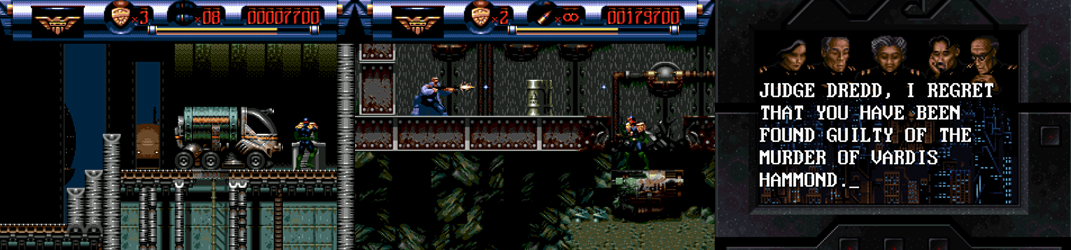
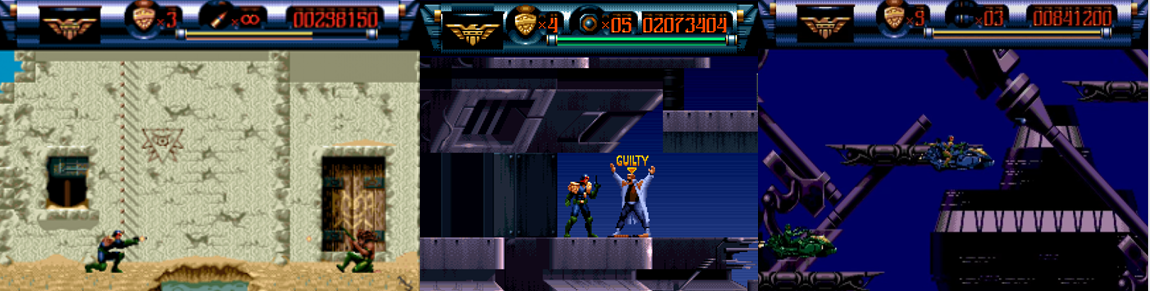
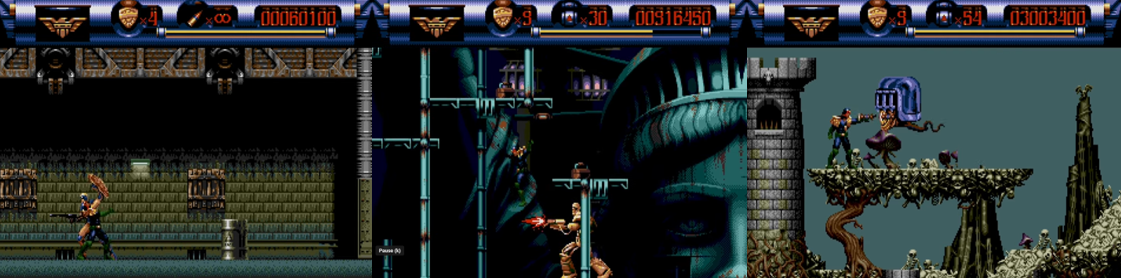


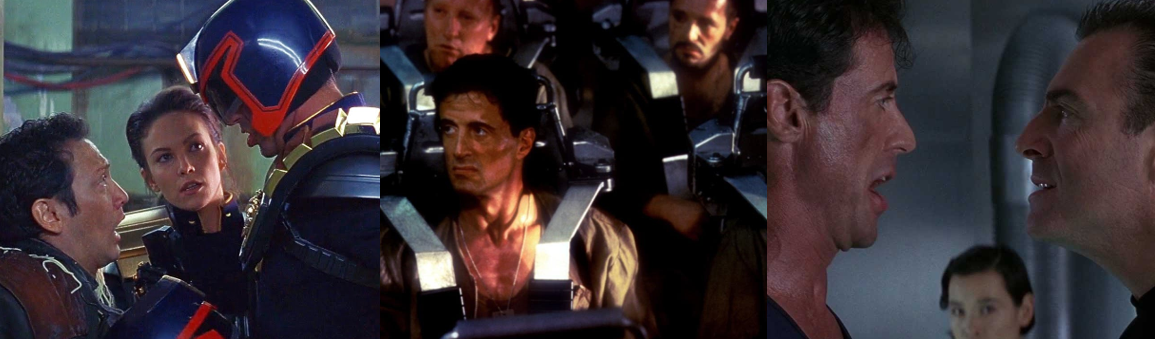
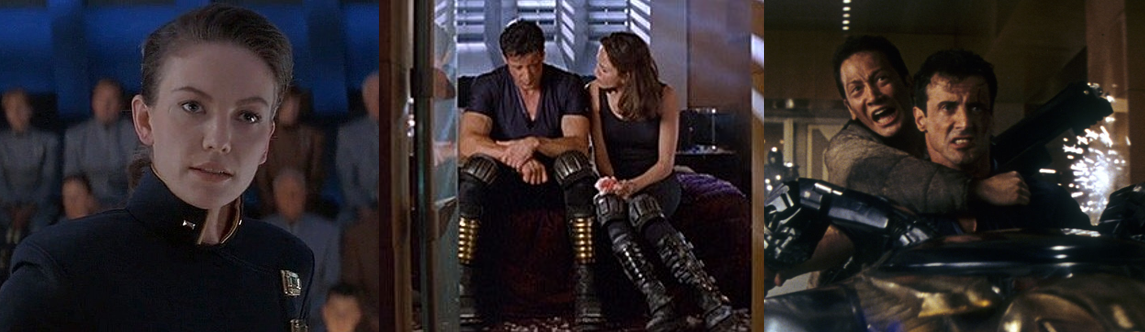
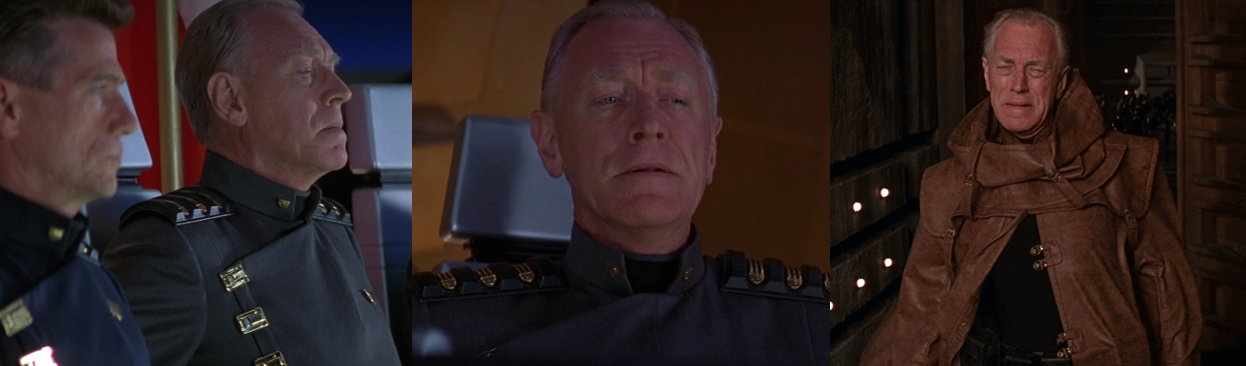
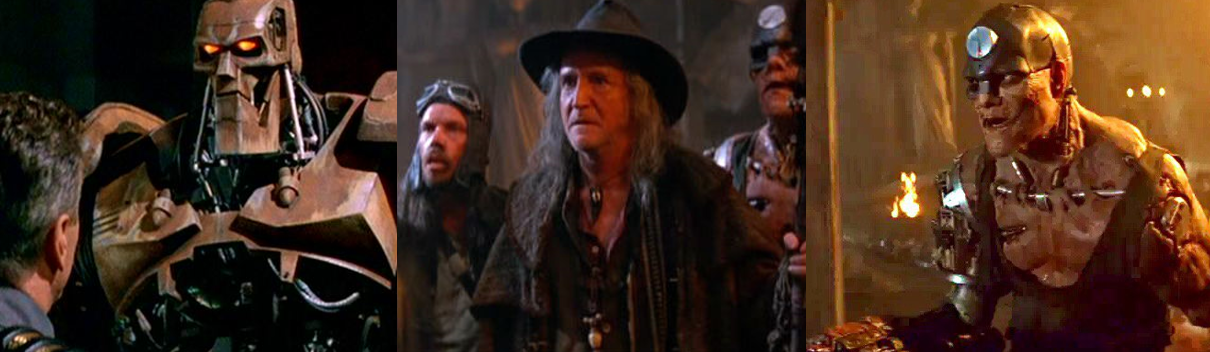

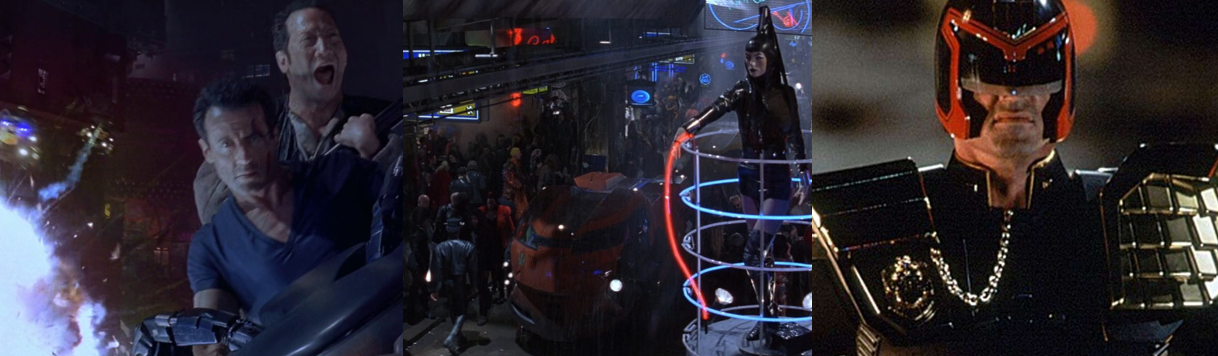
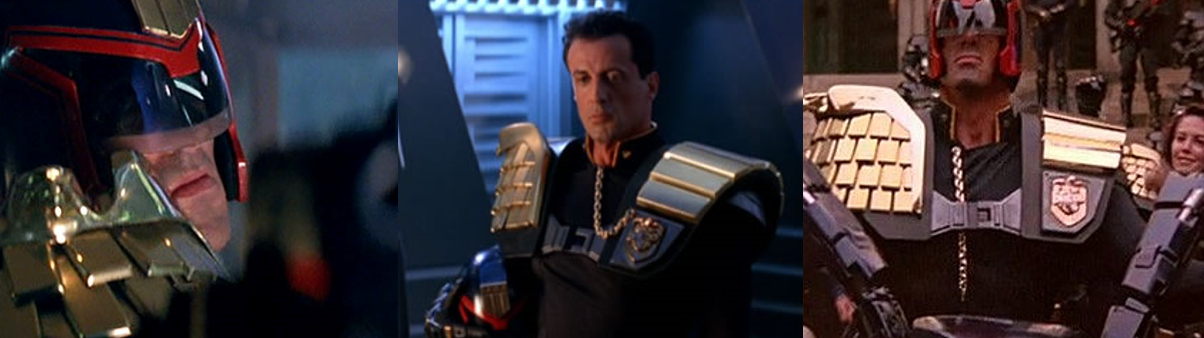
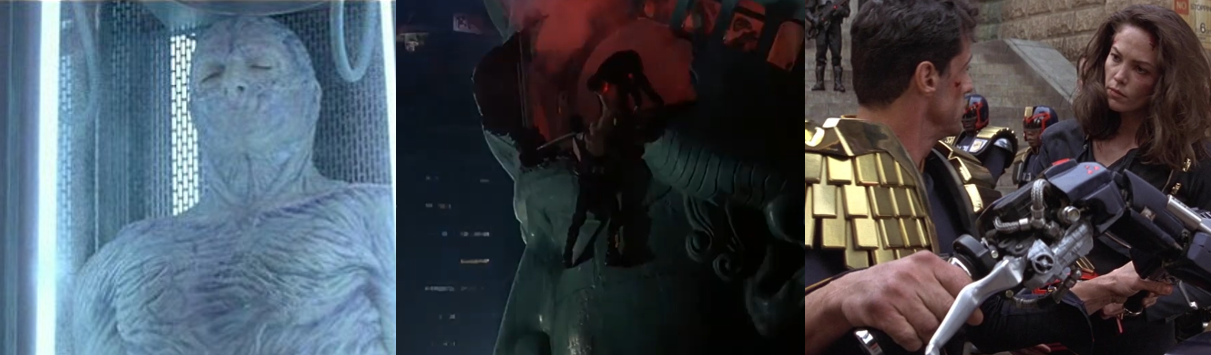




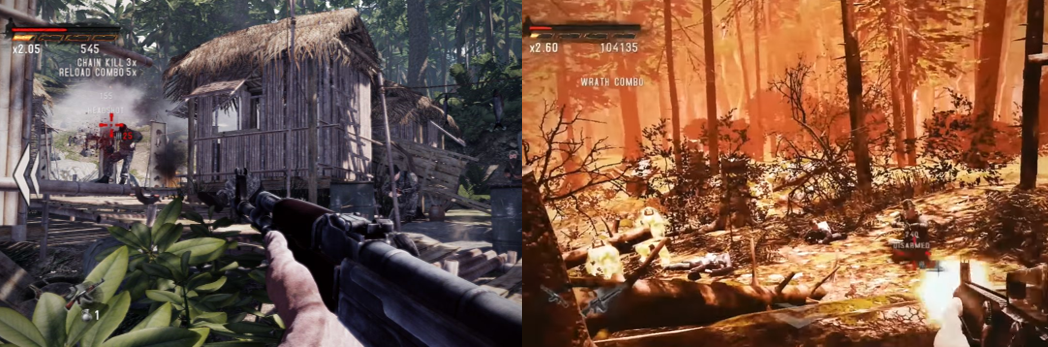
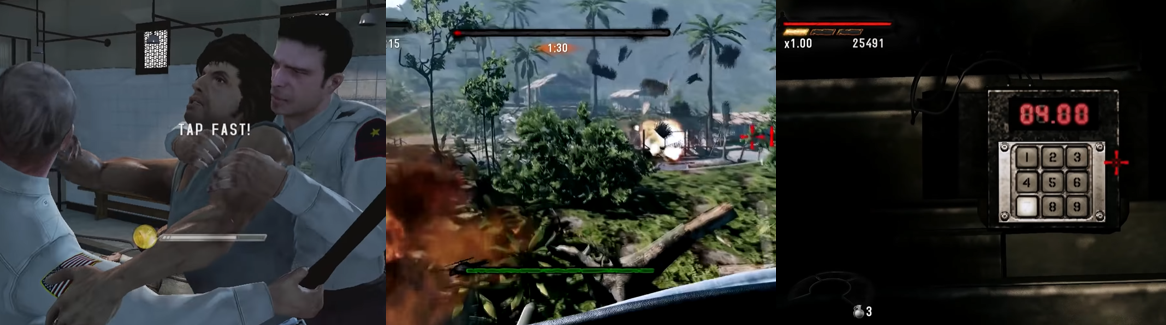
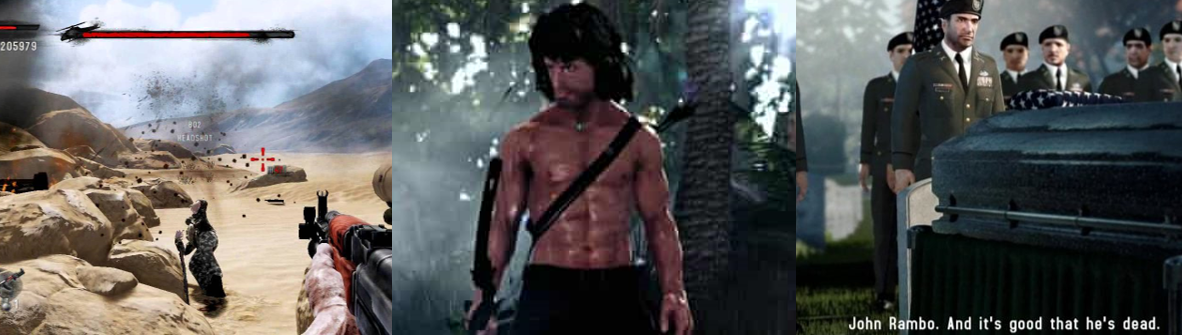
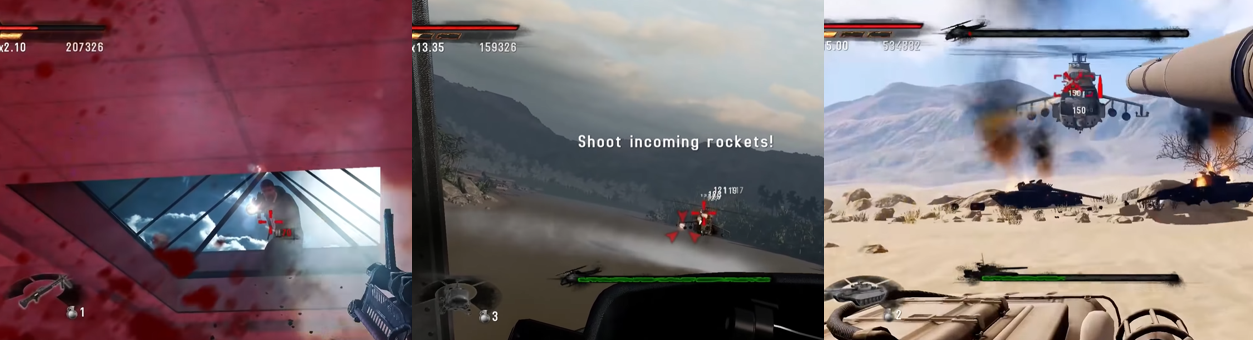


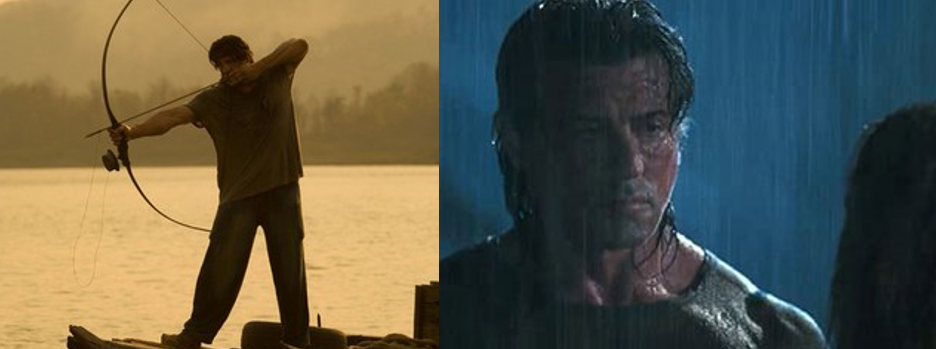
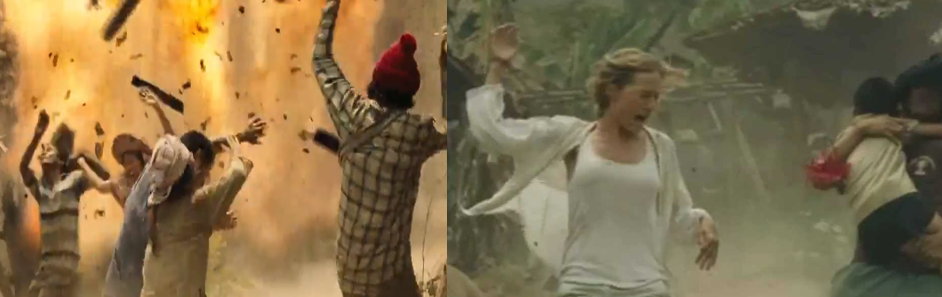
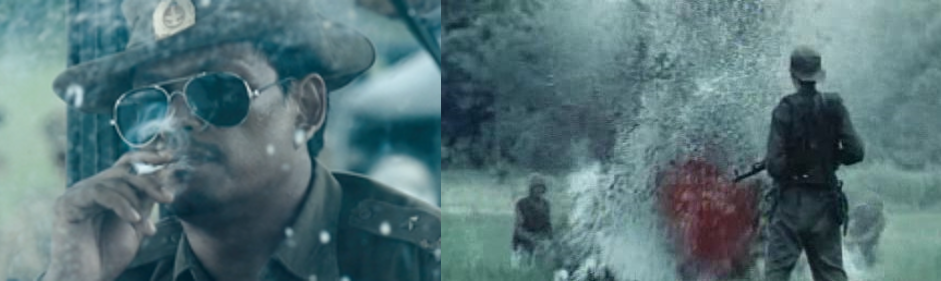
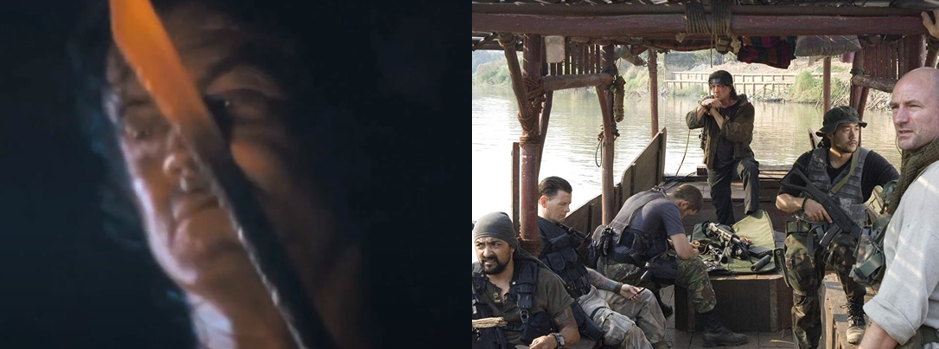
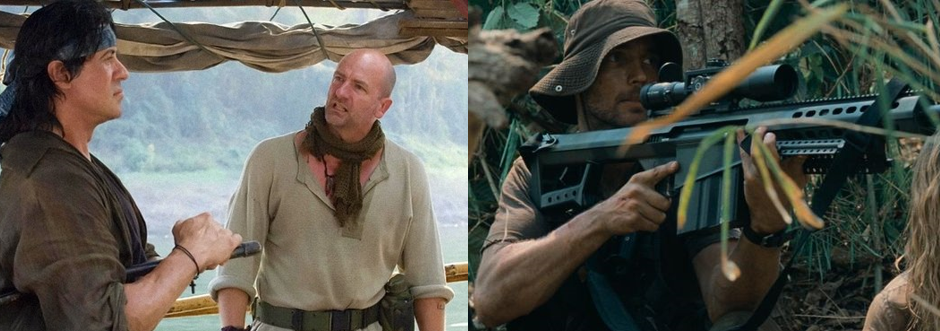
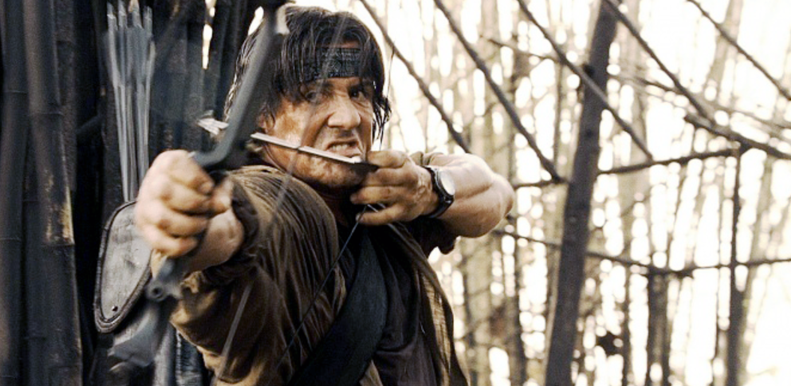
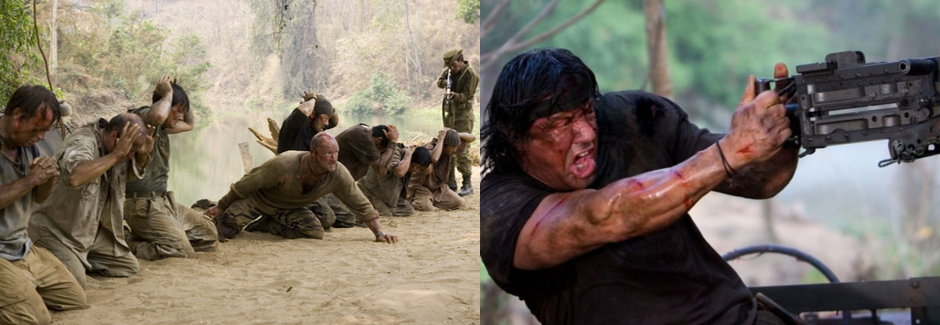
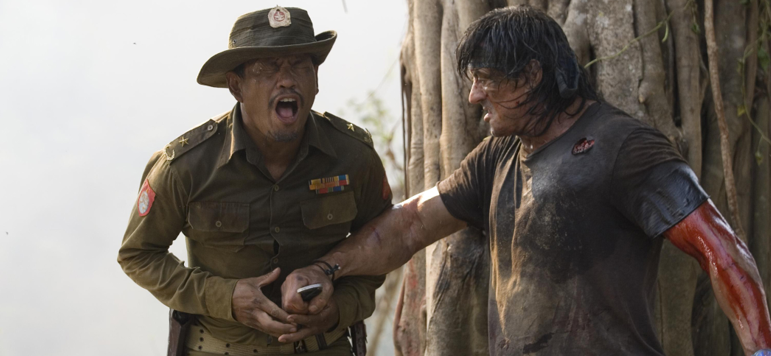
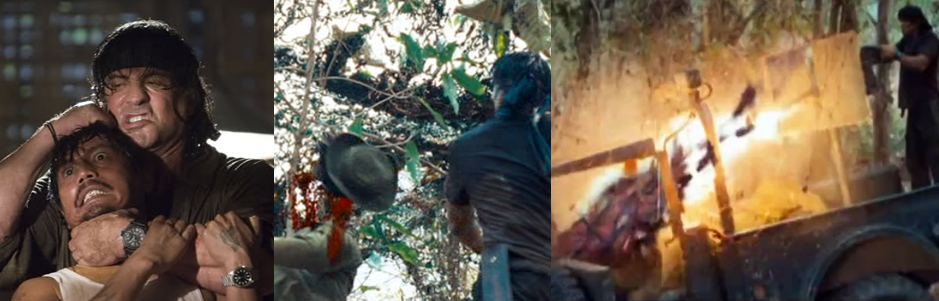



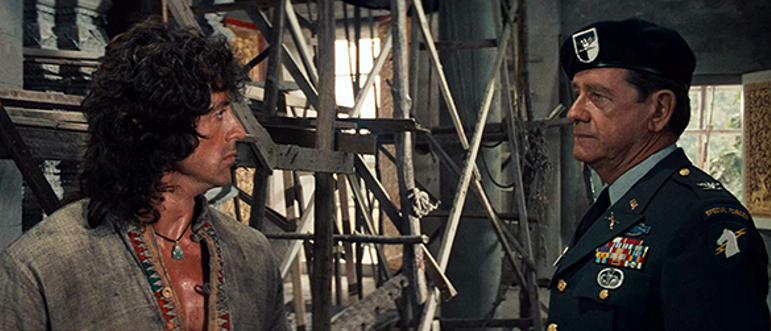
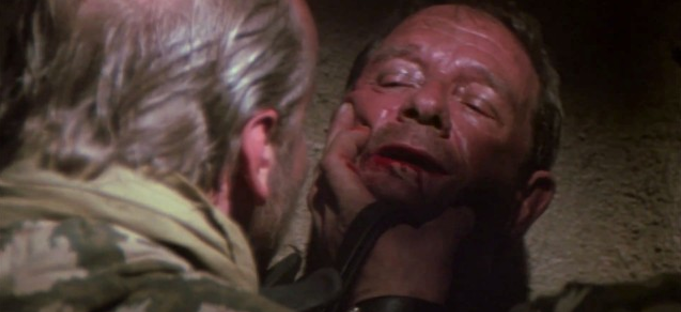
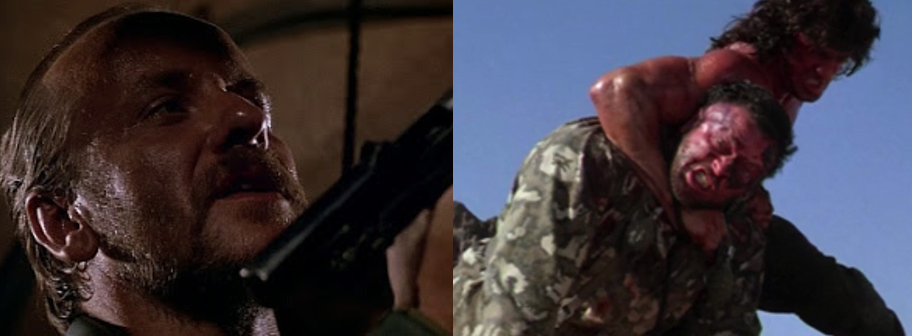
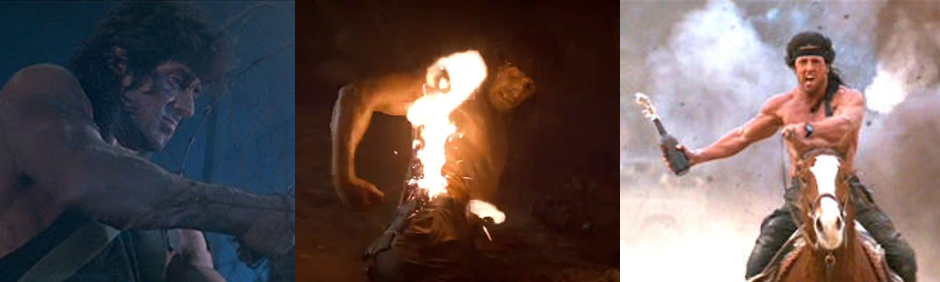
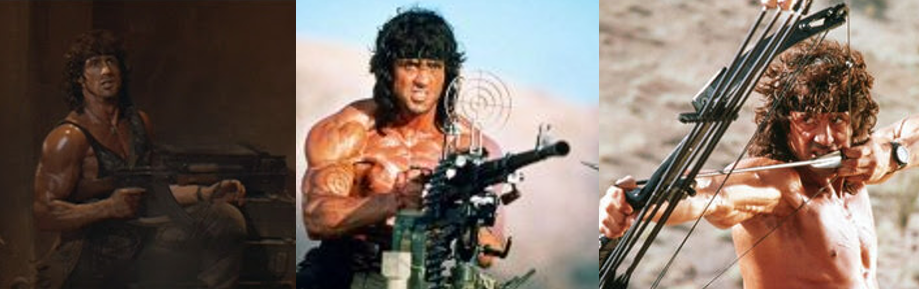
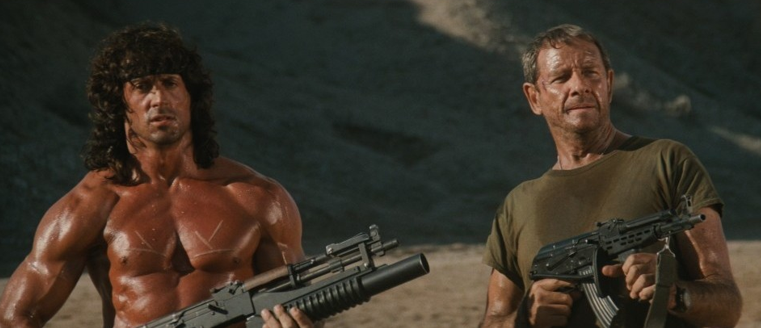


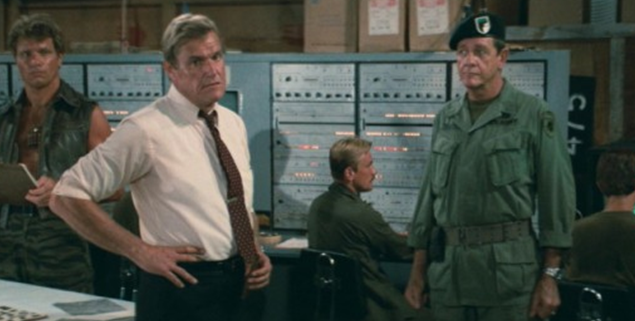
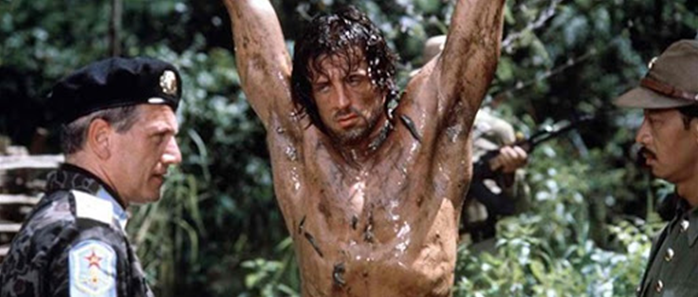
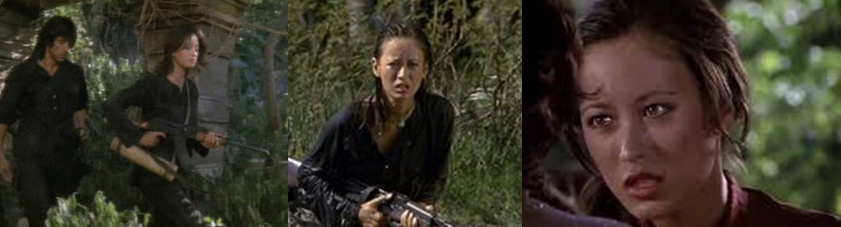
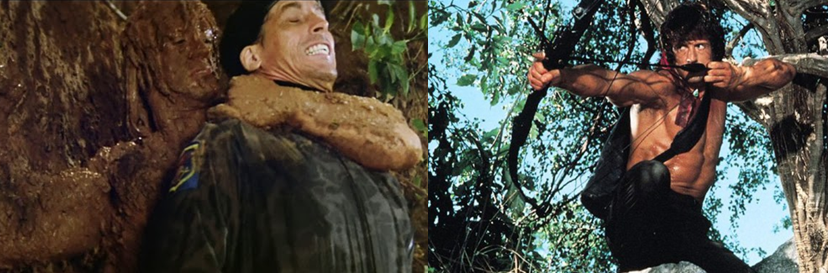
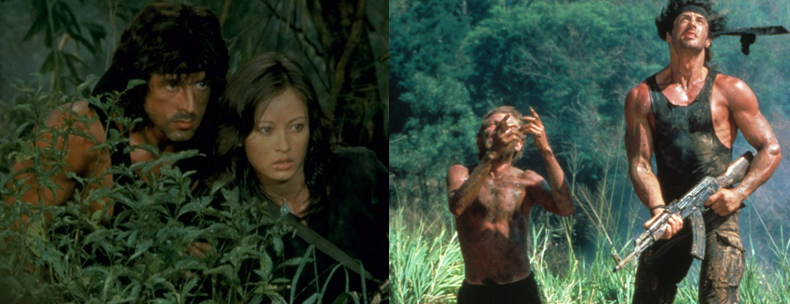
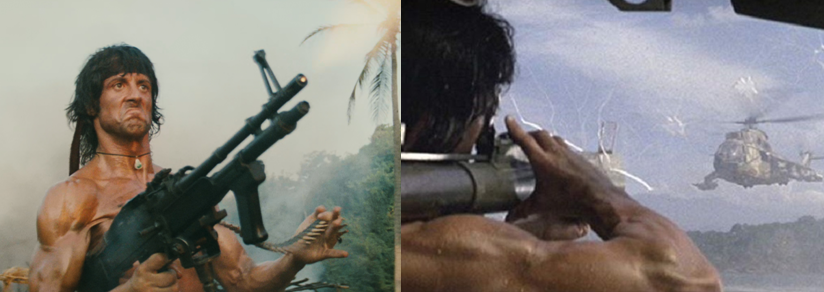
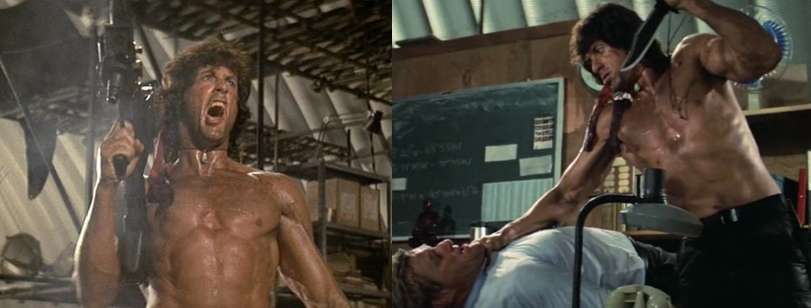


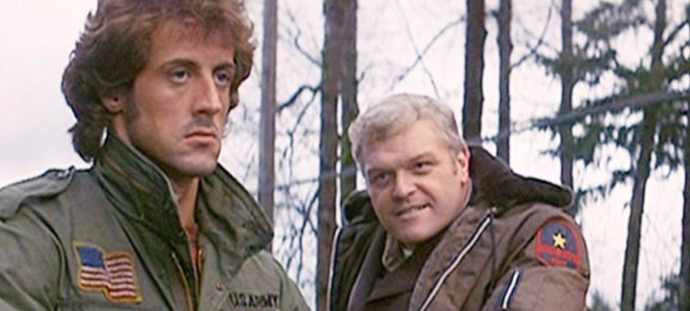
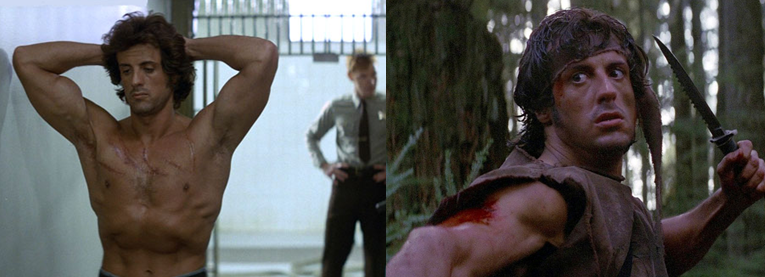
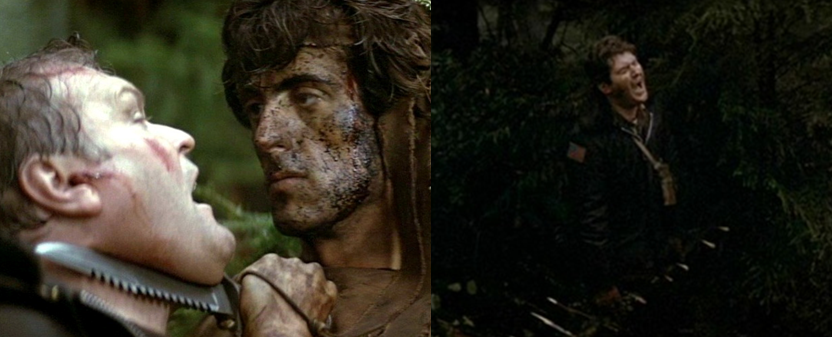
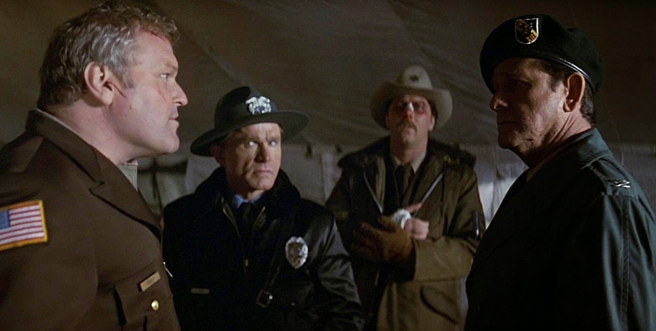
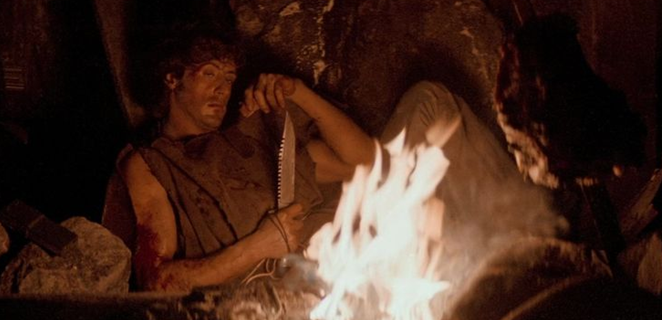
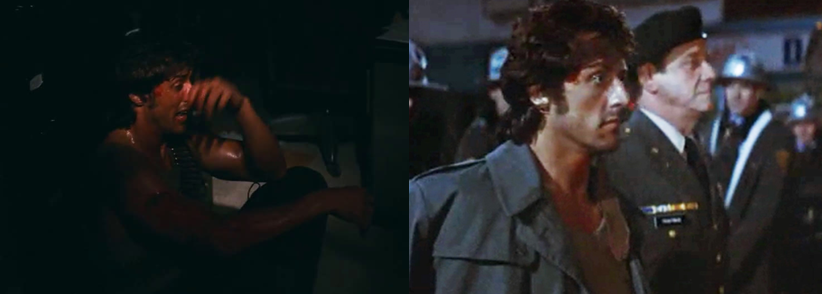




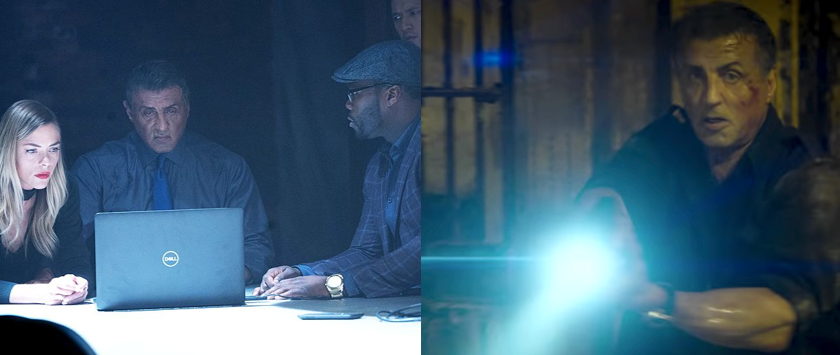
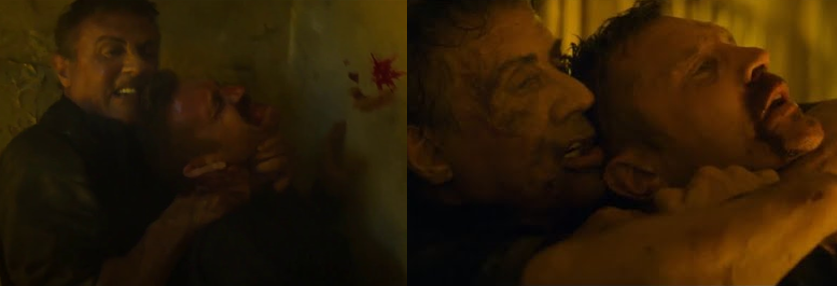


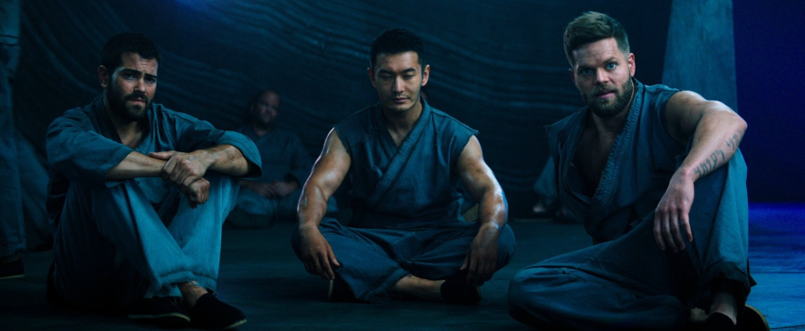




 Dr. K's Waiting Room
You must be logged in to post a comment.