Screen Time [Captain Picard Day]: Star Trek: Picard (Season Two)


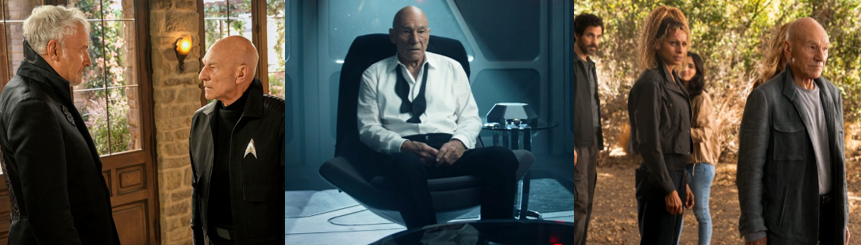
As seen in the Star Trek: The Next Generation (1987 to 1994) episode “The Pegasus” (Burton, 1994), the crew and children of the U.S.S. Enterprise-D celebrates “Captain Picard Day” on Stardate 47457.1, which roughly translates to June 16th. While they bewilder Captain Jean-Luc Picard (Patrick Stewart) with drawings, I see it as a good excuse for some more Picard and Next Generation content.


Season Two

Air Date: 3 March 2022 to 5 May 2022
Network: Paramount+
Stars: Patrick Stewart, Alison Pill, Jeri Ryan, Michelle Hurd, Santiago Cabrera, Brent Spiner, and John de Lancie

The Background:
After the disappointing critical reception of Star Trek: Nemesis (Baird, 2002) cancelled plans for further films focused on the popular Next Generation cast, the Star Trek franchise (1966 to present) shifted to other shows and a lauded reboot series. After the franchise saw a resurgence, showrunner Alex Kurtzman pushed to revisit Captain Jean-Luc Picard. Alongside writer/director Akiva Goldsman, Kurtzman convinced Stewart to return to his famous role for Star Trek: Picard (Various, 2020), a highly successful venture that proved popular enough to warrant a second season, as was always intended. Afforded an unprecedented $20.4 million in tax credits by the California Film Commission, season two was developed back-to-back with season three, though filming briefly stalled due to the COVID-19 pandemic. Aiming to continue exploring Picard’s character and mortality, the writers chose not only to revisit the mysterious Q (de Lacie) but also drew inspiration from Star Trek IV: The Voyage Home (Nimoy, 1986) for its time travel plot. Once it started streaming, season two of Star Trek: Picard proved quite popular and the overall critical reception was very positive. Reviews praised the exploration of Picard’s character and the performances and the execution of the introspective narrative. Though some found season two to be derivative of previous Star Trek stories, it proved successful enough to build anticipation for the third and final season one year later.

The Plot:
After returning to inspire a new age of prosperity in the United Federation of Planets, Admiral Jean-Luc Picard and his allies are unexpectedly deposited in a dystopian timeline by the malevolent Q and must travel to the 21st century to not only restore reality, but also face their personal demons.

The Review:
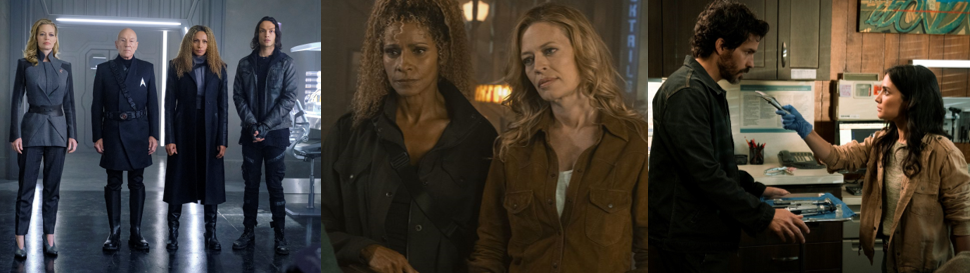
As a lifelong fan of the Next Generation show and movies, I was excited when Star Trek: Picard was  announced. As much as I enjoyed the rebooted movies, I’ve not really been that interested in the Star Trek shows that have come out since as they all explore a pre-Next Generation timeline, something I think has been done to death. Star Trek: Picard represented a unique opportunity to return to the main timeline and see how the universe had changed since Star Trek: Nemesis, but I was surprised to find Picard bitter and alone, familiar characters changed and somewhat jaded, the once tolerant and righteous Starfleet a stubborn and destructive xenophobic regime, and an overall unsettling bleakness to the franchise. Many characters (including Picard) dropped curses with surprising regularity and harboured a resentment towards Picard that needed to be mended over the course of the season. Season one primarily focused on Picard’s age, his failing health and sense of mortality, and his efforts to assist Soji Asha (Isa Briones), the “daughter” of his old friend, Lieutenant-Commander Data (Spiner), cobbling together a new rag-tag crew and ending up in a new synthetic body, seemingly ready for new adventures in the cosmos. Season two begins with Picard back on his family vineyard but still very much involved with Starfleet, having regained his passion now they’ve stopped ostracising synthetics like Soji. This vigour is only further reinvigorated since his crewmates Cristóbal “Chris” Rios (Cabrera), Doctor Agnes Jurati (Pill), Raffaela “Raffi” Musiker (Hurd), and surrogate son Elnor (Evan Evagora) have all joined (or rejoined, in some cases) Starfleet. Rios is now Captain of Picard’s first commission, the USS Stargazer, and Elnor celebrated as the first-ever fully Romulan Starfleet graduate.

Thanks to Q’s machinations, Picard is forced to confront his past traumas while fighting for reality.

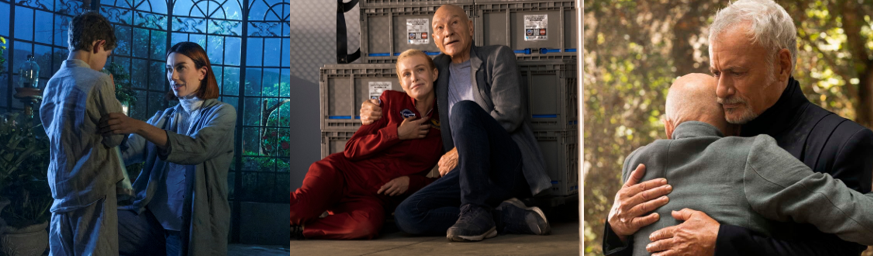
Despite being cured of his fatal illness and gaining a synthetic body, Picard enjoys all the ailments that come with his advanced age. This includes doubts and a resistance towards forming long-term romantic engagements despite the advances of his Romulan housekeeper, Laris (Orla Brady). As long-lived as Picard is, his old Enterprise confidante Guinan (Whoopi Goldberg) remains on hand to offer sage advice, and much of the show is focused on Picard learning to let go of his past and embrace his humanity and the happiness offered by love. Indeed, this is later revealed to be Q’s primary motivation. Although he initially appears as a malevolent figure, a sanctimonious, pompous, malicious demigod seeking to further “test” Picard (and the human race) by forcing him to witness a dystopian timeline where he’s a genocidal madman, Q’s newfound mortality drives him to help Picard face some haunting demons from his past in his own unique way. This season reveals that, as a boy, Picard (Dylan Von Halle) witnessed his abusive father, Maurice (James Callis), drive his loving mother, Yvette (Madeline Wise), to suicide. Q’s manipulation – and Picard’s jaunt to 2024 – force him to see his mother suffered from an unspecified mental illness that made her paranoid and unstable, ultimately driving her to suicide. This event shaped Picard’s entire life, driving him to protect others, stand against injustice, and seek out the truth. However, it weighs heavily on Picard’s conscience and his journey of self-discovery – and forgiveness – is as important as his quest to undo Q’s damage and restore the timeline.

The time travel jaunt sees Picard’s crewmates discovering new aspects to their personalities.

Although they scattered across the galaxy after the first series, Picard’s new crew is reunited by his long-standing nemesis, the Borg. When a gigantic and mysterious Borg craft calls for a parlay, Picard is asked to negotiate, an unusual situation which former Borg Seven of Nine (Ryan) lends her own understandably biased opinion on. Captain Rios is unable to resolve this unexpected situation, however, thanks to Q’s intervention, which sees Picard’s crew deposited in a dystopian alternate timeline where only they retain memories of the way things should be. In this dark world, non-human life is conquered, enslaved, eradicated, and publicly executed by the Confederation of Earth, with Seven (as Annika) as the President and Picard as her military commander. We don’t spend too long in this timeline but it’s enough to establish how awful it is compared to the real world and give Seven a strange euphoria as she finds herself truly human for the first time in decades. When the crew travel to 2024 to undo Q’s interference, Seven explores her newfound humanity. She’s far more cautious, especially compared to hot-headed Raffi, and showcases genuine motion for a change. Seven and Raffi’s partnership leads to some of the show’s most interesting and engaging action sequences and banter as they bicker over the best course of action and balance each other’s different methods towards saving and securing the timeline. This results in them growing so close that they share a kiss by the end, which felt a little out of left field for me. Similarly, the trip to the past has radical implications for Rios, who finds himself separated from his friends and defending Doctor Teresa Ramirez (Sol Rodríguez), her son Ricardo (Steve Gutierrez), and her clinic from overly aggressive immigration officers, falling for her in the process and finding a true home and family for himself at the same time.

The Borg Queen manipulates Agnes, but soon develops a genuine connection with her.

I was happy to see that Picard is treated much better in this season. Not only does Starfleet treat him with the respect he deserves, but his crew now defer to his wisdom and admire his tenacity. However, there are some wrinkles to this: since the incapacitated Borg Queen (Annie Wersching) is their only hope of saving the future, the crew risk their lives to save one of their most dangerous enemies and coerce her into helping them. This results in Elnor’s death as Picard is forced to prioritise saving the Queen over his former ward. This briefly earns him Raffi’s resentment and, though she soon focuses on the mission, much of her aggression stems from this loss and she’s as haunted by Elnor’s death as Picard is by his own past. Concurrently, Agnes is haunted by her past actions. Although she, like Rios, takes solace in her surrogate family, she can’t help but feel alone and somewhat lost, no matter how hard she tries to help. While the others search 2024 for the elusive “Watcher”, Agnes is left on their damaged craft with the weakened Borg Queen, with whom she’s forced to partially assimilate herself with to direct her team. This leads to the Borg Queen emotionally manipulating Agnes, tempting her with full assimilation to give her the sense of belonging she so desires before infiltrating her mind and her personality. This turns Agnes into a secondary antagonist for the last few episodes as the Borg Queen hijacks her body and creates an imperfect Borg army for herself in a bid to take advantage of her unique position and usher in a new age of Borg dominance. This is prevented not just by the intervention of Agnes’ friends but also Agnes asserting her personality over the Borg Queen, ultimately resulting in them merging into a new entity that heads out into the galaxy to create a new sub-species of Borg, one defined by individuality and co-operation rather than emotionless dominance.

Picard needs the reluctant help of a young Guinan to stop Soong and escape Agent Wells.

Considering how much time season one spent focused on Soji and established her importance to Star Trek lore, she’s basically a non-factor in season two, appearing only very briefly and not even joining the crew for their time travel adventure. Isa Briones appears more prominently in 2024 as Kore Soong, the human (if genetically created) daughter of Doctor Adam Soong (Spiner), the ancestor of the man who would one day create Data. Soong acts as the primary antagonist after his genetic research is lambasted, his funding revoked, and his attempts to cure Kore of her debilitating and fatal genetic illness fail. This drives him to desperation and near madness, allowing Q to offer him the chance to build a legacy in the future by preventing the Europa expedition, thereby creating the dystopian timeline briefly visited at the start of the series. When Kore rejects him after she discovers her true origins, Soong’s perfectly happy to indulge his latent psychotic urges by aligning with the Borg Queen and targeting not just Picard and his allies but also Picard’s ancestor, troubled astronaut Renée Picard (Penelope Mitchell), whose death will usher in Soong’s oppressive legacy. Although Picard galvanises Renée’s spirit and counters Q’s psychological abuse m, his mission is jeopardised by xenophobic Federal agent Martin Wells (Jay Karnes), a man convinced that the Earth is threatened by aliens. Luckily, just as Picard is guided through his own personal traumas by Talinn, Laris’ ancestor who has spent years observing and protecting Renée, so too is he assisted – and ultimately coerce Wells into assisting him – by the young Guinan (Ito Aghayere), a jaded and outspoken younger woman ready to give up on humanity before meeting Picard. This melting pot of motions is only exacerbated by Q. Disgusted by humanity and believing they need to be constantly tested, his sights are firmly set on Picard as the bastion of human determination, Q takes every opportunity to try and break Picard’s spirit and spitefully set time itself against him. This is his misguided way of teaching Picard to embrace the past and move forward stronger for everything he’s suffered through, a test that Picard comes to appreciate, even embracing the dying Q as an old friend before they’re returned to their original timeline, changed but, presumably, stronger despite their losses.

The Summary:
Considering the focus of season one, I was surprised that season two is largely set in 2024 and is, essentially, a remake of Star Trek IV: The Voyage Home spliced with the main plot of Star Trek: First Contact (Frakes, 1996). I didn’t expect this, and I’m not entirely sure how much I enjoyed it. I liked the callbacks to The Voyage Home: the abrasive bus punk (Kirk Thatcher) returns, some of the dialogue (especially Rios’s) is revisited, as is his relationship with Teresa, and many of the plot points are repeated, such as the cloaked ship and Picard and Guinan’s capture. However, I think it might’ve been better to spend half the season in the dystopian future, exploring that world and giving the cast more time to play dual roles (Stewart, especially, revels in masquerading as his militant counterpart). Spending so much time in 2024 makes season two feel decidedly less visually impressive, though does allow for some introspective character development for all involved, especially Picard, who’s forced to relive, confront, and ultimately come to terms with his traumatic past. Equally, as mentioned, Seven explores her humanity in ways we’ve never seen before. I also liked the twist given to Agnes, where she becomes a semi-willing vessel for the Borg Queen, but there’s ultimately not much in season two that we haven’t seen in those aforementioned movies or previous time travel and character-centric episodes of Star Trek.

Some character arcs didn’t land for me or felt undercooked due to lack of focus.

The major themes of season two are confronting the past, finding a place in the present, and embracing the potential of the future. While Rios has found himself as a Starfleet captain and sees Picard as a father figure, he only truly feels a sense of belonging once he settles in 2024 and bonds with Teresa and Ricardo. Although this is his primary (and, arguably, only) character arc in the season, it doesn’t get much of the spotlight. Rios feels a kinship to them out of gratitude, respect, and a sense of injustice after seeing how aggressively they are targeted by immigration officers, but I still felt like his decision to stay in the past was a bit rushed and that the three didn’t connect much despite their obvious chemistry. I felt the same way about the apparent romantic relationship between Seven and Raffi. I must have missed the bisexuality of these characters in the last season and I was more focused on the fun contrast of personalities they exhibited here, so their sudden kiss surprised me as I thought the point of their partnership was to see their personalities grow. Seven conveys much more emotion and her arc is focused on her hatred of the Borg and euphoria at finally being human, culminating in her accepting her renewed Borg implants when Agnes uses the Borg Queen’s technology to save her life and considering a career in Starfleet upon returning to the main timeline. Raffi’s arc is primarily one of revenge: she’s incensed and haunted by Elnor’s death, meaning Seven acts as a counterbalance to keep her emotions in check, but Raffi’s conflicted by the finale as she can’t kill the Borg Queen without losing Agnes. Although I found it surprising that Agnes fell under the Borg Queen’s sway considering all Picard’s advice and her own experiences in the Queen’s consciousness, it makes sense given her personal insecurities and the Queen’s machinations. Their relationship becomes surprisingly mutually beneficial, however, as Agnes enjoys the power and sense of belonging offered by the Borg Queen and the Queen comes to see friendship, co-operation, and emotion as a strength rather than a weakness. This ultimately sees them become a new gestalt entity that hints at a Borg partnership with Starfleet to protect the universe from an unspecified threat.

Though an intriguing dive into Picard’s character, season two fell a little flat for me.

Unlike season one and season three, season two is less a Next Generation reunion and more a character study of its titular protagonist and his crewmates. Yet, there’s time for a quick cameo by former ensign Wesley Crusher (Wil Wheaton), who offers Kore a place with the Travellers, Guinan, and even a new role for Brent Spiner, who’s given another chance to showcase his range as he portrays another maniacal and dangerous Soong variant. As expected, this is Picard’s show, through and through. Freed from his bitterness, but no less burdened by guilt and past trauma, Picard is determined to restore the timeline and thwart Q’s diabolical plot but is surprised to learn new discoveries about himself through Q’s final test. Although vehemently opposed to the demigod throughout the show, Picard ultimately expresses gratitude to his old frenemy and ensures he doesn’t meet his end alone since Q’s actions, though questionable, allowed Picard to accept that his past and opens his eyes to a future with Laris and an alliance with Agnes’s Borg contingent. Ultimately, however, I can’t say that season two is any better or worse than the first. The potential of these new characters and the direction of this season is somewhat squandered by the plot, which is simply a rehash of The Voyage Home, and the season seems to have been engineered to write out many of Picard’s newfound crew rather than bring them closer together. It was a fascinating exploration of Picard, and an interesting twist on the Borg dynamic, but fundamentally lacking in terms of visuals and offering something more explicitly new for long-time Star Trek fans.

My Rating:

Rating: 3 out of 5.

Pretty Good

What did you think to the second season of Star Trek: Picard? Were you disappointed that the plot rehashed The Voyage Home or did you enjoy the time travel jaunt? Did you like that Rios stayed in the past, that Agnes became the Borg Queen, and the evolution of Seven’s character? Were you happy to see Q return and by the revelations into Picard’s childhood? What threat do you think is posed by the transwarp conduit? How are you celebrating Captain Picard Day this year? Whatever your thoughts on Star Trek: Picard, let me know in the comments down below.

Screen Time [May the Sith]: Obi-Wan Kenobi


While May 4th is known the world over as Star Wars Day, many also choose to extend the celebrations of the course of three days, with one of them being the “Evil Star Wars Day” of May 6th (as in “Sith”).


Air Date: 27 May 2022 to 22 June 2022
Network: Disney+
Director: Deborah Chow
Stars: Ewan McGregor, Vivien Lyra Blair, Moses Ingram, Rupert Friend, Jimmy Smits, and Hayden Christensen/James Earl Jones

The Background:
In 1977, George Lucas introduced audiences to his pulp sci-fi “space opera” with Star Wars (or Episode IV: A New Hope), which became a near-immediate phenomenon not just at the time, bit for generations. Star Wars achieved this not just through toys, videogames, comics, and novels, but Lucas returning the franchise to the big screen with a prequel trilogy. Though largely seen as inferior to the Original Trilogy thanks to an overreliance on CGI and some questionable performances and dialogue, the Prequel Trilogy was financially successful and has since earned a generation of apologists, with Ewan McGregor’s portrayal of Obi-Wan Kenobi attracting much praise. Accordingly, after Disney acquired the franchise and began producing a new trilogy and spin-off films, talk of an Obi-Wan venture circulated after McGregor expressed interest in reprising the role. Though initially planned as a feature film, the project was re-tooled into a six-episode miniseries after the financial failure of Solo: A Star Wars Story (Howard, 2018) and the critical acclaim of the Disney+-exclusive series, The Mandalorian (2019 to 2023). Eager to explore a more downtrodden version of the titular character, McGregor was ecstatic to be working with Hayden Christensen once more. Christensen leapt at the chance to don the iconic helmet once more and the two were digitally de-aged for a flashback sequence. Pitched as a story about Obi-Wan confronting his past, Obi-Wan Kenobi also explored Princess Leia’s childhood and straddled a fine line between telling its own story and staying true to established canon. Premiering as the most-watched Disney+ original series (at the time) and also one of the most pirated shows, Obi-Wan Kenobi received critical acclaim that praised McGregor’s performance and the emotional reunion between Obi-Wan and Darth Vader. While the action and old-school atmosphere were also praised, some plot elements were ridiculed and the show was criticised for relying too heavily on nostalgia. Still, despite some horrendous racist reactions, the award-winning show was accompanied by a tie-in comic series and McGregor was optimistic about reprising the role again in the near future.

The Plot:
Ten years after the destruction of the Jedi and the rise of the Galactic Empire, former Jedi Master Obi-Wan Kenobi (McGregor) hides on Tatooine. When called to rescue Princess Leia Organa (Blair), Obi-Wan is drawn into a confrontation with his former Padawan, Anakin Skywalker, now the ruthless Sith Lord: Darth Vader (Christensen/Jones).

The Review:
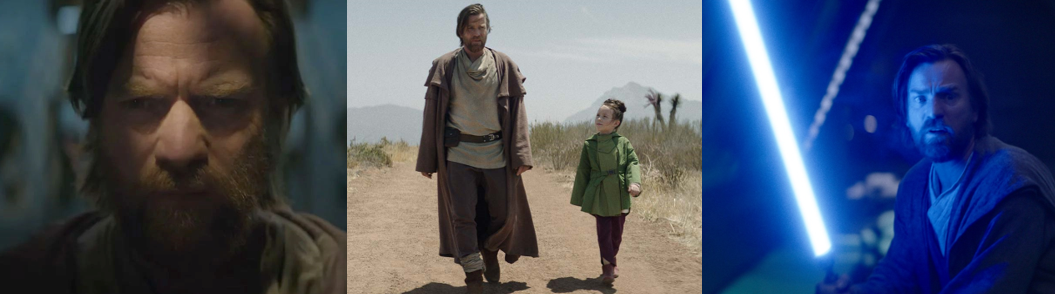
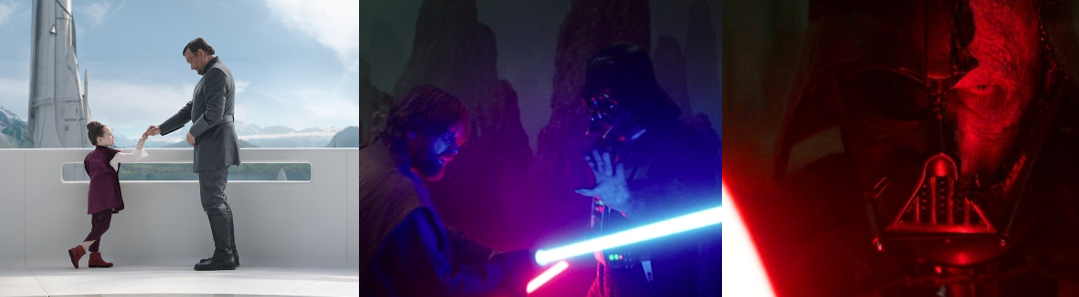
Obi-Wan Kenobi is a six-part miniseries set some ten years after Revenge of the Sith. Accordingly, the malevolent Galactic Empire dominates the galaxy, enforcing martial law across numerous worlds, stationing their nameless, faceless Stormtroopers to harass and intimidate the populace, and ravaging the natural resources of every world they control. Life is tough for many ordinary civilians as they’re either persecuted, deprived of basic needs such as food and credits, or brainwashed into believing that the Empire is a benevolent organisation bringing order to the galaxy. Thus, we see a few different ends of the spectrum in Obi-Wan Kenobi, with friendly, ordinary civilians like Freck (Zach Braff) praising the influence of the Empire, downtrodden, forgotten Clone Troopers (Temuera Morrison) left begging in the streets, senators like Bail Organa (Smits) trying to politically influence opinion away from the Empire, and Imperial offers like Tala Durith (Indira Varma) being disgusted by the Empire’s tyrannical ways. To make matters worse, Emperor Sheev Palpatine’s (Ian McDiarmid) oppression of the Jedi Order saw not only Jedi and their Younglings mercilessly slaughtered by Clone Troopers as part of “Order 66”, but the continued hunting and eradication of any surviving Jedi or Force-sensitive individuals by Darth Vader and his determined, ruthless Inquisitors. While Darth Vader and his cohorts, who were once Jedi before turning to the Dark Side, successfully identify their prey, either by intimidating, threatening, or out-right killing the locals, their true quarry, the elusive and titular Obi-Wan Kenobi, has eluded them for ten years. Like many Jedi, Obi-Wan has accomplished this not only by hiding away on a backwater planet (in this case, Tatooine) but by suppressing his Force abilities. When confronted by desperate Jedi survivor Nari (Benny Safdie) in “Part I”, Obi-Wan strongly advises him to follow his example, literally burying his former life in the desert and refraining from helping others with the Force, advice that Nari doesn’t heed and results in his public execution.

Haunted by his past, a reluctant Obi-Wan ventures out to protect Leia and confront his greatest failure.

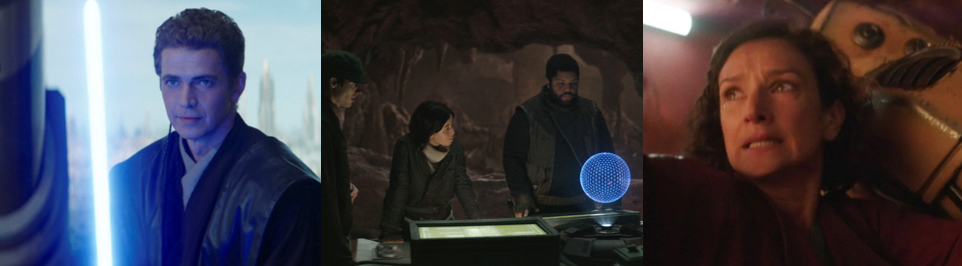
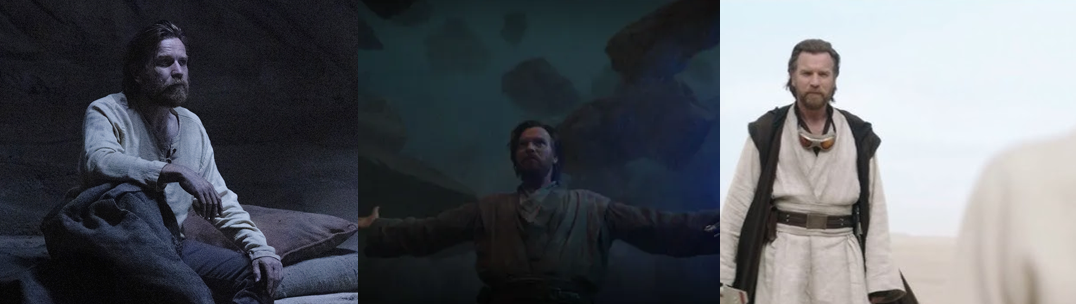
Traumatised by the horrific events that saw his former Padawan, Anakin Skywalker, be seduced by the Dark Side and slaughter his fellow Jedi, Obi-Wan has hidden away on Tatooine, taking the “clever” alias “Ben” and eking out a menial living, with only Owen and Beru Lars (Joel Edgerton and Bonnie Piesse) aware of his true identity. Although Obi-Wan regularly attempts to commune with the spirit of his old master, Qui-Gon Jinn (Liam Neeson), he receives no answer, largely because he’s lost his connection to the Force after a decade of suppressing his abilities and after seeing first-hand the downfall of the Jedi Order. Haunted (literally and figuratively) by the screams and suffering of his former Padawan, Obi-Wan is a shell of his former self who uses his promise to watch over Anakin’s son, young Luke Skywalker (Grant Feely), as an excuse to stay hidden, despite Owen warning him to stay away lest he fail the boy as he failed his father. However, when Reva Sevander (Ingram), an ambitious Inquisitor known as the Third Sister obsessed with gaining Darth Vader’s favour, hires bounty hunters to kidnap young Princess Leia, Obi-Wan is forced back into the fight at the desperate request of Bail, Leia’s adopted father and Obi-Wan’s old Republic ally. While he’s hesitant to answer the call, feeling old and useless and afraid of drawing undue attention, Obi-Wan ultimately agrees since Leia, as Luke’s sister, is just as important to any future hope of opposing the Empire. Thus, Obi-Wan leaves Tatooine with only his wiles and some rusty Jedi tricks to guide him. Obi-Wan finds himself in a galaxy that’s largely lost its way, full of disreputables like fake Jedi Haja Estree (Kumail Nanjiani), bounty hunters like Vect Nokru (Flea), and meek civilians afraid of Darth Vader’s wrath. While Obi-Wan carries his lightsaber, he mostly favours a blaster and avoids using the Force lest he compromise his position. However, he is ultimately forced to take up both to safeguard Leia and defend the innocent, finding that the spark of hope is still alive, if faded, in the unruly galaxy.

Headstrong Leia defiantly resists torture and restores Obi-Wan’s hope for the future.

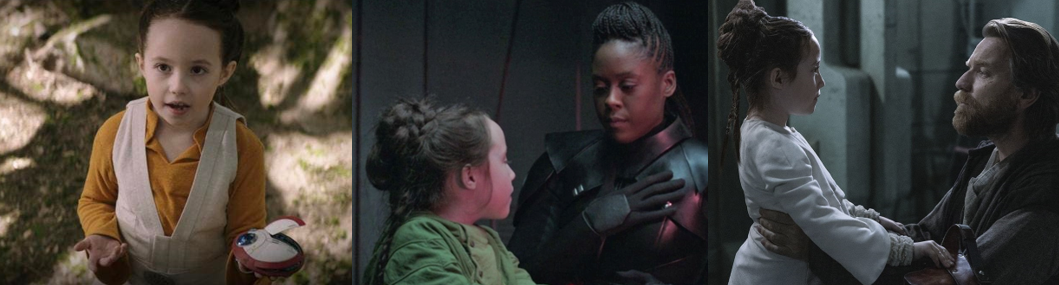
Because of Obi-Wan’s reluctance to use the Force, the stubborn, adventurous, headstrong Leia is initially very wary of him. Already something of a spoiled and reckless child, Leia finds politics boring and desires to find her own path, but is incredibly defiant and brave even when faced with the likes of the Third Sister. Leia never stops to fight back, resisting her captors at any opportunity, and is incredibly insightful. She has a unique way of reading people, even after only just meeting them, and isn’t afraid to speak her mind. Having lived a sheltered life on Alderaan, Leia is naïve to the dangers of the galaxy and walks head-first into situations thinking the best of everyone, confident that she can charm or talk her way out of most situations. Her surprisingly intuitive demeanour impresses Obi-Wan, as she’s wise beyond her years in many ways, but he’s also quick to shield her from growing up too fast and being exposed to violence before she’s ready to put her feisty spirit to good use as a natural leader. Leia and Obi-Wan’s relationship is a true highlight of Obi-Wan Kenobi; I loved her inquisitive nature and how she criticised him at times. It’s also heartbreaking to see Obi-Wan’s reaction to her, as she reminds him of Padmé Amidala (Natalie Portman) in mind, body, and spirit, bringing further pain to the wizened Jedi Master since he was unable to keep Padmé from Anakin’s destructive downfall. Adorable and enthusiastic, Leia relishes the chance to be on an adventure, though recognises that she’s in over her head and caused trouble by disobeying her parents. She eventually bonds with Obi-Wan, querying his sullen demeanour and learning of the tragedies he’s witnessed, and also connects with Tala, who inspires her rebellious attitude. Leia’s stubbornness sees her defy even the Third Sister’s cruel interrogation; resisting the Inquisitor’s attempts to probe her mind with the Force, Leia refuses to sell out her allies even when faced with torture. Similarly, Leia comes to care for Obi-Wan so deeply that she begs Tala to help him when he chooses to face Darth Vader to cover her escape, and eventually sets herself on the path to forging her own identity as a diplomat and a fighter thanks to Tala’s sacrifice and Obi-Wan’s influence, especially as he passes on knowledge of her true parents.

Obi-Wan’s traumatic past with Anakin sees him reluctant to trust his new allies.

While Obi-Wan is faced with danger at every turn, he gains some notable allies in his quest. Naturally distrustful following his traumatic past, Obi-Wan initially tries to keep a low profile and sway suspicion with flimsy cover stories. However, after the Third Sister puts a bounty on his head, Obi-Wan’s forced out of the shadows and to slowly reconnect with the Force and his lightsaber, which means making new allies to escaping Darth Vader and the Inquisitors. His first port of call is Haja, a con man who fakes being a Jedi for credits but who’s inspired by meeting a real Jedi to aid Obi-Wan, eventually watching out for Leia as the Jedi Master confronts Darth Vader. Despite seemingly leading him on a wild goose chase, Haja also puts Obi-Wan in contact with Tala, a disillusioned Imperial officer trying to atone for the blood on her hands by secretly smuggling Jedi and other Imperial targets to safety through an underground resistance network known as “The Path”. Tala’s Imperial authority guides Obi-Wan through the Fortress Inquisitorius to rescue Leia, where he discovers, to his horror, the preserved corpses of slain Jedi in the temple. It’s through Tala that Obi-Wan meets Kawlan Roken (O’Shea Jackson Jr.) and reaffirms his status as a defender of the innocent since Obi-Wan willingly surrenders to cover their escape, though Tala is unfortunately killed during the Imperial assault in “Part V”. Obi-Wan’s reluctance to trust others stems not just from his need to stay hidden, but also from being burned by Anakin’s betrayal. The wonders of modern de-aging technology provide a flashback to Obi-Wan’s younger days, when he duelled with the upstart Anakin and tried to emphasise the need to temper his aggression and desire to prove himself in favour of defending others. Thanks to competent writing and direction, Hayden Christensen gets a chance to shine as the conflicted Anakin, who’s torn between showing his superiority and obeying his master. Despite Anakin’s exuberance in the duel, the two are painted as close brothers, making the pain of Anakin’s turn only sting more. This feeds into Obi-Wan’s guilt and the fear he feels whenever Darth Vader is present since Obi-Wan doesn’t want to see the monster his former protégé has become, much less be forced to kill him.

Reva’s ambition to punish Darth Vader is mirrored in Vader’s obsession with destroying Obi-Wan.

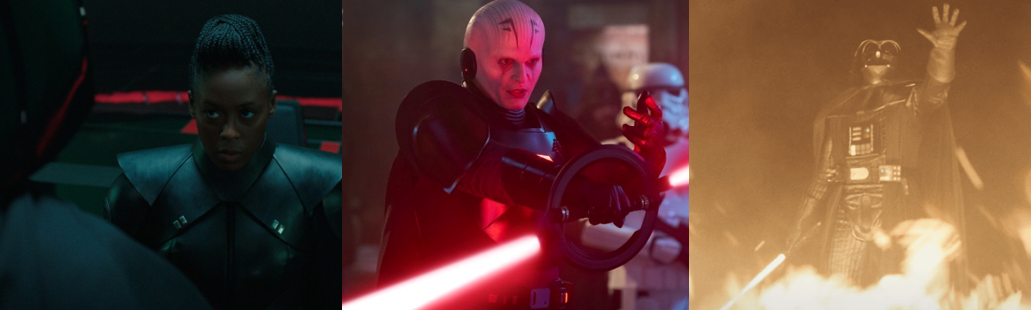
While all Jedi are relentlessly hunted by the Inquisitors, Obi-Wan is specifically targeted by the Third Sister against the orders of the Grand Inquisitor (Friend) and her rival, the Fifth Brother (Sung Kang). While the Grand Inquisitor enjoys a good monologue, intimidating locals into giving up any Jedi amongst them, the Third Sister prefers a more direct approach, publicly executing and maiming people to force the Jedi out. Constantly reprimanded for her reckless ways, the Third Sister’s ambition to impress Darth Vader by delivering his former master sees her seemingly kill the Grand Inquisitor and take his place, gaining Darth Vader’s favour and leading the operation to hunt Obi-Wan down. Reva’s ambition is seeped in hatred of both the Jedi and her dark master since, as a Youngling (Ayaamii Sledge), she witnessed Anakin’s massacre and has pledged to destroy him. Obi-Wan initially sways her into allying with him, providing her with the distraction to attempt an execution, only for Darth Vader to grievously wound her thanks to the surviving Grand Inquisitor. Desperate, the Third Sister heads to Tatooine to slaughter Luke and his family but ultimately spares the boy when she realises she’s in danger of becoming the same monster as Anakin. Strong in the Force and wielding red lightsabers, the Inquisitors inspire fear through their mere presence. This is, surprisingly, echoed in the Stormtroopers, who are far more competent and menacing than usual, especially due to their sheer numbers and Obi-Wan’s rusty Jedi skills. These skills are tested when Obi-Wan inevitably crosses paths with Darth Vader, with the Dark Lord slaughtering and torturing innocents to bait his old master and humbling Obi-Wan during their first, brutal encounter. Here, Darth Vader toys with his prey, dragging Obi-Wan through fire to inflict a measure of the same pain he caused him. In their second encounter, Obi-Wan is far more confident and capable, though Darth Vader’s fury, raw power, and tempered skill still overwhelmed him. After being buried beneath a cave-in, Obi-Wan fully regains his connection to the Force and bombards Darth Vader with debris, damaging his mask and breathing apparatus and leading to a dramatic confrontation between the two. Here, Obi-Wan is distraught to see his scarred former pupil is beyond salvation and, after Vader takes credit for killing Anakin, Obi-Wan leaves him to his suffering, now fully convinced that Anakin Skywalker is dead and that only Darth Vader remains.

The Summary:
As a big fan of Ewan McGregor’s performance s Obi-Wan Kenobi, I’m ashamed at how long it took me to get to his long-awaited self-title series. McGregor shines as the haunted, wary former Jedi Master, easily slipping right back into the role and further echoing Alec Guinness’s original portrayal of the character as an older, wiser, and far less physically capable character. In Obi-Wan Kenobi, Obi-Wan is tormented by guilt and PTSD, haunted by nightmares of Anakin’s downfall and weighed down by his failure to save his apprentice, which he believes cost the lives of countless innocents and Jedi. When Bail calls, Obi-Wan insists that he’s not the right man for the job and, to be fair, he’s not completely wrong. Constantly called out for his age and initially struggling so much to call upon the Force that it exhausts and even pains him, Obi-Wan is a far cry from the confident, commanding General he once was. However, this old dog still has a few tricks up his sleeve. He’s handy with a blaster and some of his Jedi training still remains in a fist fight, allowing him to survive most scuffles, even if he lacks the finesse he once had. He’s somewhat overconfident when he first faces Darth Vader, though it’s more that he’s forced into a lightsaber duel to protect Leia and other innocents. His form is sloppy and weak, as criticised by Darth Vader, and Obi-Wan surely would’ve died if not for Tala’s timely intervention. Though he’s still a step behind his twisted opponent in his second encounter, Obi-Wan is much more formidable and regains much of his former strength through both their duel and the closure given to him by Darth Vader’s assertion that Anakin is dead. This, as much as rediscovering his compassion for others and seeing the flame of hope still flickering in the galaxy, brings Obi-Wan enough inner peace to finally strengthen his connection to the Force. This allows him to commune with his long-dead master, Qui-Gon, effectively laying the foundation for Obi-Wan’s later adventure with the Rebellion.

Obi-Wan Kenobi gives returning actors a chance to revisit their characters and relationships.

As great as Obi-Wan was here, Obi-Wan Kenobi goes a long way to making up for some of the Prequel Trilogy’s many shortcomings. Jimmy Smits gives a magnetic performance as the concerned and desperate Bail, who has a lovely relationship with Leia where he encourages her mischievous ways as well as a brotherly bond with Obi-Wan that sees him turn to the burned-out Jedi in his time of need. We get more of an idea of how devastating Order 66 was, not just through Obi-Wan’s nightmares but Reva’s descriptions and flashbacks, which depict Anakin as a monster who turned on his own people and mercilessly slaughtered children. This memory is as traumatic for Reva as it is Obi-Wan, fuelling her hatred of the Jedi for allowing it to happen and of the Dark Lord for committing the act. Obi-Wan Kenobi brings Hayden Christensen back not just as a digitally de-aged Anakin but as Darth Vader, bolstered by an AI-rendition of the late, great James Earl Jones’s booming voice. Depicted as a scarred, maimed tyrant, Darth Vader relentlessly pursues Obi-Wan even against other, more pressing concerns. He fuels the Third Sister’s lust for power by promoting her under pain of death if she fails and doesn’t hesitate to strike her down when she tries to assassinate him. When confronting Obi-Wan, Darth Vader is disgusted by the state of his master and easily overpowers him, relishing the chance to inflict pain upon the one he blames for his condition. Although I don’t mind Hayden, he was always a weak-link in the Prequel Trilogy; however, Obi-Wan Kenobi proves this was largely because of the awful direction and script he was saddled with. Here, Anakin is a twisted and embittered man consumed by anger and vengeance. Seeing his helmet damaged, his voice box malfunctioning, and the pure animosity in his eyes as he denounces both Obi-Wan and his former life is a truly stirring (if familiar) moment that goes a long way to make up for George Lucas’s clunky dialogue.

Obi-Wan’s dramatic journey sees him rekindle his connection to the Force and the wider galaxy.

Though Obi-Wan relies more on his blaster and his wits, Obi-Wan Kenobi features some decent chases, action scenes, and space battles. The show primarily goes out of its way to depict Stormtroopers as a true threat, which I really enjoyed, and to hammer home how desperate the situation is for the few remaining Jedi and those who would oppose the Empire. The lightsaber action is as thrilling as we saw in the Prequel Trilogy, now given an extra edge through the Inquisitors’ lust to eliminate all Jedi and Darth Vader’s desire to make his former master suffer. Not only that, but I really enjoyed Leia’s portrayal here. She echoes both her mother and her older self in her stubborn, outspoken nature and I enjoyed the dichotomy of her as a naïve but rebellious child who wanted an adventure but was strong enough to resist torture. Her relationship with Obi-Wan was equally adorable and emotional as Leia only causes Obi-Wan further pain because of his failures. These see him become obsessed with watching over Luke, whom Owen aggressively shields to keep him from taking even a single step down the same path his father took. Obi-Wan’s reluctance to leave the boy and embark on some damn, fool adventure turns out to be just what the downtrodden former Jedi needed since Leia shows him that there’s hope for the future. This is only further emboldened through Obi-Wan’s interactions with Tala and Roken, rebellious spirits who place themselves in mortal danger to save who they can and are principal figureheads in the fledgling Rebellion. Forced to literally confront his past, his demons, and his greatest failure, Obi-Wan rediscovers himself and accepts that Anakin is truly lost, ending the miniseries in a stronger position to prepare for the future since he’s no longer haunted by the past. Overall, I really enjoyed Obi-Wan Kenobi. It’s a bit wonky in some ways since I never suspected that Obi-Wan left his exile on Tatooine much less had an encounter with Leia or a rematch with Darth Vader, but the miniseries is clearly positioned as a love letter to the Prequel Trilogy and, in that respect, it succeeds. With fantastic performances from the new and returning cast, there’s a lot to like here and it does a great job of further bridging the gap between the two trilogies and sowing the seeds for future appearances of the likes of the Skywalkers, the Inquisitors, and the Dark Lord himself.

My Rating:

Rating: 4 out of 5.

Great Stuff

Did you enjoy Obi-Wan Kenobi? Were you excited to see Ewan McGregor and Hayden Christensen return to their iconic roles? What did you think to Obi-Wan’s character arc and his depiction as a traumatised former Jedi? Did you enjoy the brutal rematch between him and Darth Vader or did it irk you to see them interact prior to the Original Trilogy? What did you think to Leia, her gusto and bravado, and the allies they made in their journey? Are you a fan of the Inquisitors? Would you like to see other character-specific Star Wars spin-offs? I’d love to see your thoughts on Obi-Wan Kenobi in the comments below, so drop them there, support me on Ko-Fi, and go check out my other Star Wars content.

Screen Time & Knuckles: Knuckles


With the release of Sonic the Hedgehog 3 (SEGA Technical Institute, 1994) in February 1994, gamers were introduced to Knuckles the Echidna. This mischievous, dreadlocked antagonist was created by Takashi Yuda and is my favourite of Sonic’s supporting cast so I dedicated every Sunday to Rad Red!


Air Date: 26 April 2024
Network: Paramount+
Stars: Idris Elba, Adam Pally, Rory McCann, Scott Mescudi, Ellie Taylor, and Cary Elwes

The Background:
As one of the main players in the aggressive Console War between Nintendo and SEGA, Sonic has seen his fair share of adaptations over the years, starring in multiple comic books and cartoons, but various legal and creative issues kept Sonic from the big screen (beyond an awesome original video animation (OVA)). However, once Paramount Pictures acquired the franchise rights, it produced a surprising critical and commercial hit. Sonic the Hedgehogs (Fowler, 2020) success was followed by an equally successful sequel, one that not only incorporated more elements from the videogames but also cast Idris Elba as Knuckles the Echidna. Having also featured prominently in comic books and some cartoons, Knuckles was pegged for a spin-off live-action/CGI hybrid series during Sonic 2’s development. Elba reprised his role and the producers approached the series with the same care and attention as they would a big screen venture. Set between Sonic 2 and Sonic the Hedgehog 3 (Fowler, 2024), the series was pitched as a buddy comedy in the same vein as the first movie. The various visual effects studios thus strived to recreate the same quality of CGI effects seen in the movies (though a hilarious Knuckles puppet was incorporated on-set to give the actors room to improvise). All six episodes dropped the same day on Paramount+ and Knuckles became both the most watched Paramount+ original series and kids/family title ever at the time. Knuckles was met with largely positive reviews as critics enjoyed the fun atmosphere and thrilling action, though it was noted to be derivative of the first movie and lacking in creativity. While a second series hasn’t officially been discussed, Idris Elba and Sonic 3 co-star Keanu Reeves did express interest in doing a team-up series in the future.

The Plot:
Having relocated to Earth, Knuckles embarks on a journey of self-discovery after agreeing to train dim-witted Deputy Sheriff Wade Whipple (Pally) to be an echidna warrior, only to run afoul of an aggressive mercenary (McCann) seeking to steal his power.

The Review:
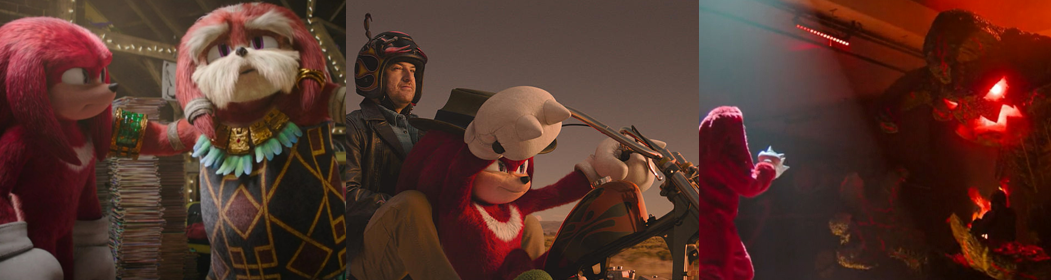
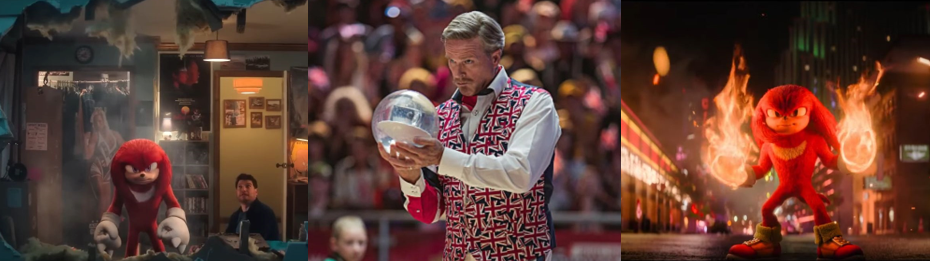
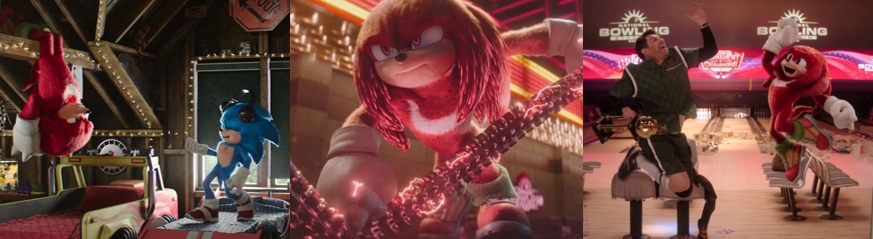
After being duped by the megalomaniacal Doctor Ivo Robotnik (Jim Carrey), Knuckles, the last of the warrior-like echidna race, joined forces with Sonic the Hedgehog (Ben Schwartz) and Miles “Tails” Prower (Colleen O’Shaughnessey) to defeat the mad scientist and safeguard the all-powerful Master Emerald. In the aftermath, Knuckles chose to stay on Earth and formed a bond with the two akin to a brotherhood, with all three staying at the Wachowski residence in Green Hills, Montana. However, while Sonic and Tails enjoy simply relaxing and enjoying the beauty and comforts afforded by Earth, Knuckles is restless and constantly in search of his next glorious battle. Already somewhat naïve and proud, Knuckles struggles with Earth customs and takes almost everything at face value; when workmen come to renovate the Wachowski home, Knuckles attacks, thinking they’re intruders. Similarly, when Sonic advises him to “make himself at home”, Knuckles constructs an iron throne and sets up a combat arena to test the family dog, Ozzie (Unknown), against his mortal enemy, the mailman (Brian Yansen). This proves a step too far for family matriarch Maddie (Tika Sumpter), who grounds Knuckles and leaves him questioning his place in this new world. While enduring his exile in the attic, Knuckles pleads with the ancient echidna spirits to show him the way and is visited by the spirit of Chief Pachacamac (Christopher Lloyd), here portrayed not as a wise echidna leader rather than an arrogant and destructive warmonger. Pachacamac directs Knuckles to train a protégé in the ways of their warrior tribe so that the echidna race can live on, if only in spirit, and points him towards Wade Whipple, the bumbling Deputy Sherrif who recently lost his place on his local bowling team and is struggling with his sense of self-worth. What follows is, honestly, very much a retread of the first Sonic movie (a buddy comedy/road trip where the two main characters learn the value of friendship and their self-worth while battling a madman with a penchant for mechs), but presented with such whimsical, light-hearted fun that I couldn’t help but chuckle throughout.

Knuckles embarks on a quest to train Wade as an echidna warrior and pass on his life skills.

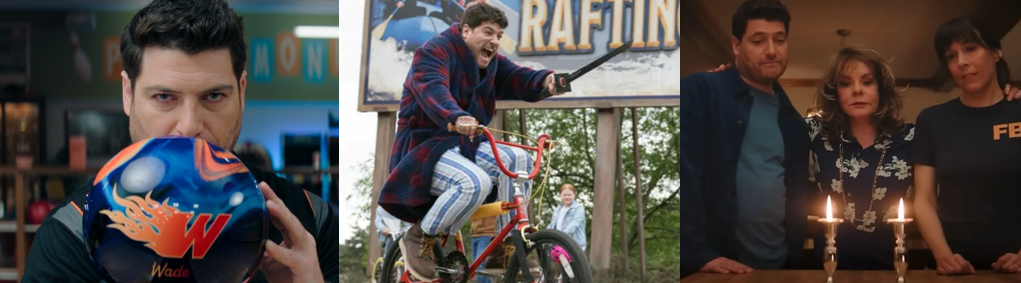
Thanks to its six-episode format, Knuckles delves much deeper into the titular echidna’s character and past. Stated to be the last of his kind and having lived much of his life alone, bouncing between worlds with his cache of Golden Rings, Knuckles isn’t used to having his feet on the ground and constantly tests his incredible strength and warrior skills in both obstacle courses and self-imposed missions. Although he’s initially sceptical, Knuckles takes training Wade very seriously and constantly gives him pointers on how to improve his confidence and be a better warrior, even if Wade’s ultimate goal is to capture a bowling championship in Reno, Nevada. Knuckles even feeds Wade lines when Wade confronts his superstar father, “Pistol” Pete Whipple (Elwes). However, while Knuckles boasts super strength, the ability to glide and dig, and can easily fight his way out of most situations, Wade is far less capable, relying more on dim-witted luck and slapstick buffoonery in combat situations. Thus, he’s easily apprehended by dramatic bounty hunter (and captain of Wade’s bowling team) Jack Sinclair (Julian Barratt). However, while held captive in Sinclair’s electrified cage in “The Flames of Disaster” (Taccone, 2024), Wade endures an incredibly amusing “low-budget rock opera”, courtesy of Pachacamac and some elaborate pantomime costumes, which delves into Knuckles’ tragic backstory. When Giant Owls eradicated the echidna tribe and left young Knuckles alone after killing his father (Andy Heath), Knuckles embarked on a perilous quest to confront what appears to be Iblis and harness the “Flames of Disaster”, a fighting spirit that engulfs his massive fists in flames. Despite rejecting Sonic’s notion that he’s found a home and a family, Knuckles is fiercely loyal to his friends and goes out of his way to help Wade whenever he gets into a bind. This devotion goes both ways, however, as, when Knuckles is captured by renegade Guardian Units of Nations (G.U.N.) agents Mason (Mescudi) and Willoughby (Taylor), Wade resolves to rescue his friend despite being hopelessly outmatched by their superior weaponry. As is his way, Wade envisions a fantasy where he concocts an elaborate rescue attempt only to fumble with his fireworks and to work the duo’s quill-empowered mech glove, barely surviving when Mason attacks him and only succeeding by pure luck. However, in keeping with his optimistic nature, Wade sees even a flawed victory as a win, a philosophy that wins over the proud echidna.

Bumbling Wade must overcome his insecurities and family troubles to seize personal glory.

There are a couple of unavoidable downsides to Knuckles and the first one is that the show is primarily more focused on Wade’s growth into a more confident character. Troubled by abandonment issues and constantly clashing with his loud-mouthed sister, Federal Bureau of Investigations (FBI) agent Wanda (Patterson), Wade struggles with his self-worth since he constantly seems to be making a mess of things. Fully aware that his estranged father will be bowling in Reno, Wade hopes to not only prove his worth as a bowler but to reconcile with his father, who’s initially warm and reciprocal to these feelings but soon proves be every bit the arrogant and self-centred “schmuck” that Wade’s mother, Wendy (Stockard Channing) describes him as. Wade’s much closer to his mother, who welcomes Knuckles into her home in “The Shabbat Dinner” (Trost, 2024) and connects with his troubles due to her Jewish heritage. It’s through spending time with “Mother Whipple” and connecting with Wade’s childhood memories that Knuckles becomes more invested in their shared quest and Wade’s desire to be accepted by his father, a goal he’s doomed to fail since Pete willing sells not only Wade but his wife and daughter out to Mason and Willoughby simply to capture his twenty-eighth bowling championship. While Wade may not be much of a warrior, physically, he makes up for it with an enthusiastic gusto and an overactive imagination. Fully aware of his flaws, Wade vows that he’d never abandon his loved ones like his father and proves true to his word in “What Happens in Reno, Stays in Reno” (Banker, 2024) as he tricks Mason and Willoughby into thinking he’s betrayed Knuckles but is, in fact, in constant communication with his friend. Pachacamac’s vision quest also gives Wade the fortitude to overcome Sinclair, humbling his former best friend and relieving him of his coat, bike, and an all-too-familiar cowboy hat that Wade gifts to Knuckles for helping him realise his true worth.

These three are poor substitutes for Dr. Robotnik but they do their part, such as it is.

Another area where Knuckles somewhat disappoints is the villains. Since Dr. Robotnik is presumed dead, we’re mainly left following Mason and Willoughby, two disgruntled G.U.N. agents who have been secretly selling the alien’s quills and G.U.N.’s technology to another former G.U.N. castoff, “The Buyer”. A former underground fighter with a deep love for his mother, Mason relishes the chance to go toe-to-toe with Knuckles and mostly treats Wade as an afterthought, a miscalculation that costs him each time and ultimately ends with him and Willougby being banished to places unknown through the Golden Rings. Frequently exasperated by her partner’s theatrical nature, Willoughby is more concerned with delivering on their promises to the Buyer since she has no desire to be punished by G.U.N. or killed by the mercenary for their failures. The two go to any lengths, including easily threatening Pete and holding Wendy and Wanda hostage to coerce Wade into delivering Knuckles but, despite their formidable weapons and mech harnesses, the two are about as effective as Team Rocket. As for the Buyer, he’s said to have been a former engineer who built weapons and technology for G.U.N. before they started working with Dr. Robotnik. After Dr. Robotnik went bananas, G.U.N. scrubbed any ties to the madman, including the Buyer, who was left scratching and clawing a living on the black market. Thanks to Mason and Willoughby providing him with quills from the aliens, the Buyer has pieced together some formidable tech, resulting in weapons that give even a regular human a fighting chance against Knuckles. Thus, the Buyer’s deep desire is to match his finest creation against the proud echidna warrior. He realises this dream in the series finale, attacking Knuckles with a bizarre, tentacled mech just as Wade out-bowls and humiliates his father. Similar to the finale of the first Sonic movie, Knuckles is initially overwhelmed by the Buyer’s mech and drained of his power, leaving Wade to step up with the madman’s own technology and deliver an impassioned speech about friendship and fighting spirit. This reignites Knuckles, allowing him to wield the Flames of Disaster once more, and sees him and Wade defeat the Buyer and claim the bowling trophy as a team.

Knuckles and Wade’s journey sees them find their purpose against tragedy and heartbreak.

I say these are two “issues” with Knuckles only because Mason, Willoughby, and the Buyer are poor substitutes for Dr. Robotnik and Agent Stone (Lee Majdoub). It might’ve been better to have Agent Stone take the spotlight and sell the quills and the doctor’s tech to Mason and Willoughby. They then could’ve piloted a refurbished mech from the first movie in the finale and taken centre stage as the primary threat, with the rest of the Buyer’s screen time and limited characterisation being absorbed by the far more interesting and enjoyable Sinclair. These are minor issues, to be fair, since the main purpose of Knuckles is to tell an enjoyable side adventure for the titular echidna. The villains are secondary and are treated as such, being external obstacles for both to overcome just as they overcome their insecurities or reluctance to settle down. Knuckles retains the same high-quality of digital effects for its alien characters and fight scenes, with Sonic and Tails popping up in cameo roles and a beautifully designed version of Pachacamac adding additional comedy and wisdom to the show. For the most part, the narrative is heavily borrowed from the first movie but incorporates a father/son dynamic to the main plot that allows it to stand out. Wade’s relationship with his family is complicated; while he may get on well with his mother, Wendy still despairs of his lack of enthusiasm for Jewish traditions and his constant bickering with Wanda. Wendy is deeply concerned when she sees Wade and Pete building bridges, warning that his theatrical father cares only for the spotlight and is a natural deceiver. Wade disregards this since he’s desperate to reconnect with his father, which only strengthens Wade’s loyalty to Knuckles when Pete betrays him. While Knuckles is loyal to his friends, it’s more out of obligation since he swore an oath; he doesn’t feel at home in Green Hills and isn’t used to being in one place. He’s glad for the chance to pass on some of his warrior knowledge and to learn more about Earth, constantly baffled by our customs but curious about subjects like the Jewish faith. The journey ultimately sees Knuckles learn that he has a new home and a stable family (two, in fact, since he’s equally adopted by the Whipples), things he cares for so deeply that he taps into the Flames of Disaster, a power boost too strong for even the Buyer’s heavily armed mech.

The Summary:
I’d heard conflicting reports about Knuckles that mostly criticised it for being too focused on Wade and too derivative of the first movie. It’s true that Knuckles starts strong with the first episode, “The Warrior” (Fowler, 2024), in which we get a cool training sequence in Knuckles’ obstacle course and appearances by Sonic and Tails, but I think it carried this momentum through really well in subsequent episodes. It helps that I’m a big fan of the character and Idris Elba’s portrayal, and that Knuckles is only six episodes long, so it breezes by. I think harkening back to the first movie for some of the narrative and thematic beats was a good idea. Sonic the Hedgehog had some flaws, for sure, but it did a surprisingly good job of reinventing the character for his big-screen debut and who doesn’t love a buddy comedy/road trip? Knuckles is bolstered by some fun needle drops and an adorable opening paper craft animation, and some fun references for franchise fans. When re-enacting Knuckles’ childhood in a comically ill-fitting costume, Wade races through hills and loops, collecting Golden Rings and even bashing Badniks, to say nothing of Knuckles recontextualising one of the series’ most atrocious videogames and bestowing the Flames of Disaster to Knuckles to make him even more unique. Of course, the most obvious Easter Egg is Knuckles’ hat, styled exactly like his OVA counterpart’s, alongside deep cut, obscure references such as Knuckles being partial to grapes. Sure, it would’ve been nice to see Rouge the Bat, Agent Stone, or maybe even Fang the Hunter take the place of the three villains but I didn’t have much of an issue with Mason, Willoughby, and the Buyer since they fulfilled the functions requires of them by the script and added a decent amount of personality to their roles when they could. Sinclair’s overly dramatic delivery trumped them all, for sure, however, which is why I would’ve liked to see Julian Barratt get more screentime.

An enjoyable show with some fun Easter Eggs, action, and amusing performances.

While I’m not the biggest fan of Wade’s, he acquits himself well here. He’s a flamboyant and comically bungling character, often lost in fantasy or getting in over his head and suffering pratfalls as a consequence, but he’s got a hell of a heart and never backs down from a challenge even when he’s severely outmatched. I liked that him and Knuckles got along and never fell out; the twist that Wade and Knuckles had their earpieces in was a great way to avoid a cliché falling out and resolution after the conclusion of “Reno, Baby” (Banker, 2024). Knuckles seems genuinely invested in Wade right from the start and even more so after bonding with his mother, and Wade gives his all to try and make Knuckles proud, even if he sometimes misses the point or falls on his ass. None of the episodes felt like filler, which was a relief, though I naturally favoured any scenes with Knuckles in since he’s such an adorable little nitwit at times. Each episode had a decent balance of action, drama, comedy, and pathos, with the human characters mostly offering wry commentary when things go amiss (such as Mason being embarrassed when his mother calls mid-fight) and Knuckles struggling to understand simple concepts like CDs, fast food, and not smashing baddies through walls. Knuckles absolutely continues the momentum from the movies, giving the titular echidna a chance to mirror Sonic’s own journey to acclimatise to his new world and giving him a purpose to help him settle. Given his tragic backstory, it’d be easy for Knuckles to be a sullen, brooding loner but he’s more looking for action, glory, and to bring honour to his tribe, both his long-dead civilisation and his newfound family. While the series is obviously catered more towards a younger audience, I’m okay with that as the action was thrilling and the performances were strong throughout. Cary Elwes shined with his pompous, theatrical character and I thought the running commentary throughout the bowling tournament was terrific. In the end, I was pleasantly surprised by Knuckles as I was expecting a more uneven viewing experience but it was a blast to watch and kept me entertained throughout, so I’d highly recommend it if you’re a fan of the movies.

My Rating:

Rating: 4 out of 5.

Great Stuff

Did you enjoy Knuckles? What did you think to the Flames of Disaster being repurposed into an ability of his? Were you disappointed that it borrowed so heavily from the first Sonic movie or did you enjoy the buddy comedy format? What did you think the the antagonists, specifically the Buyer? Which of Sonic’s supporting cast would you like to see get a similar spin-off series? How did you celebrate Knuckles this month? Whatever you thought about Knuckles, comment below, drop me some love on Ko-Fi, and go check out my other Knuckles content!

Screen Time [Sci-Fanuary]: I Am Groot (Season One and Two)


January sees the celebration of two notable dates in science-fiction history, with January 2 christened “National Science Fiction Day” to coincide with the birth of world renowned sci-fi writer Isaac Asimov. HAL 9000, the sophisticated artificial intelligence of Arthur C. Clarke’s seminal 2001: A Space Odyssey (1968), was also created on 12 January. Accordingly, I am dedicating January to celebrating sci-fi in all its forms.


Season One and Two

Air Dates: 10 August 2022 and 6 September 2023
Director: Kirsten Lepore
Network: Disney+
Stars: Vin Diesel, Trevor Devall, James Gunn, Fred Tatasciore, Bradley Cooper, and Jeffrey Wright

The Background:
Created by Stan Lee and Larry Lieber, the original version of Groot was a far cry from the loveable tree-monster who won the hearts of audiences in Marvel Studios’ Guardians of the Galaxy films (Gunn, 2014 to 2023). Vin Diesel’s surprisingly nuanced performance made the character a household name and Marvel wisely capitalized on the cute appeal of Baby Groot with a series of animated shorts to bolster Disney’s new streaming platform. Seeking to hearken back to a simpler time in Disney animation, when short-form storytelling didn’t rely on much dialogue, director and head writer Kirsten Lepore was inspired by her son when exploring Groot’s childhood. She also met with Guardians of the Galaxy director James Gunn to explore Groot’s mischievous characterisation. Though Gunn questioned the canonicity of the shorts, Lepore was open to producing more episodes since she and Marvel Studios had plenty more ideas to pull from. Despite the character’s limited vocabulary, Vin Diesel returned to record new “I am Groot” lines and Bradley Cooper even recorded a cameo as Rocket Raccoon. The second series revisited ideas pitched for the first and featured a cameo by Jeffrey Wright as Uatu the Watcher that injected some comedy into the otherwise stoic overseer. The show also recycled the Baby Groot CGI model created by Luma Pictures and Lepore took inspiration from the original Star Wars trilogy (Various, 1977 to 1983) when suggesting designs for Baby Groot’s supporting cast. When it first streamed, I Am Groot was the third highest streaming series in America and both seasons were widely praised for its adorable main character, quirky humour, and playful nature.

The Plot:
Baby Groot (Diesel) takes the spotlight in a series of shorts exploring his adventures growing up, getting into trouble among the stars, and deciding the fate of the entire multiverse!

The Review:
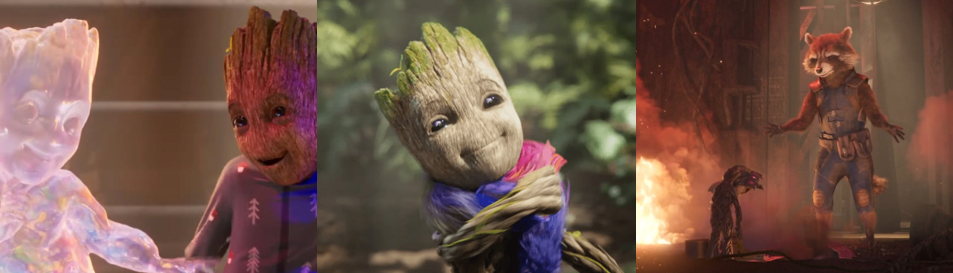
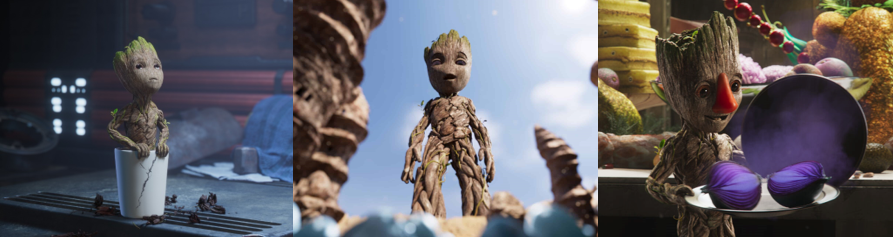
I Am Groot is a CGI animated series of shorts made for little kids. Each episode last about five minutes and features very little dialogue, consisting primarily of Baby Groot’s many different inflections of “I am Groot”. Therefore, they don’t take too much time to watch and it’s easier and fairer to just lump both seasons together into one review. Series one begins some time after Baby Groot first sprung to life in his little plant pot on the Eclector. He’s just a sapling but he still needs care and attention, which is provided to him by a couple of automated robots, who routinely water and tend to him. However, he’s growing so quickly that he cracks his pot, causing the robots to replace him with a sturdier bonsai plant. Naturally, Baby Groot isn’t impressed with this and attacks his replacement, causing both their pots to break from a fall. Luckily, Baby Groot survives and finds he’s got legs, allowing him to take his first steps and get into more mischief. He even makes it up to the bonsai plant by befriending it afterwards, and this caring side to Baby Groot is revisited a couple of times in the show. For example, Groot discovers a colony of ant-sized Grunds living under a rock on an alien world in “The Little Guy”. While Baby Groot initially enjoys toying with them as a God-like figure, he’s stunned when they showcase advanced technology and bombard him with laser fire! While protecting himself in the foetal position, the terrified Baby Groot accidentally farts out a leaf, much to the delight of the Grunds, who immediately devour the offering. Inspired, Baby Groot quickly forgets the attack and gathers up armfuls of leaves to feed the colony, only to accidentally step on them and back away nonchalantly (though the Grunds are actually fine). Similarly, in series two’s “Are You My Groot?”, Baby Groot adopts a strange alien bird, playing with it and feeding it his snacks. Groot’s fondness for the bird and enjoyment of being a surrogate parent are juxtaposed by his annoyance with the bird’s clingy nature and constant pooping. However, Baby Groot still sheds a tear when the bird finds its siblings and flies off with its bulbous, equally quirky mother.

Baby Groot both causes and finds mischief, though always in the spirit of good-natured fun.

In “Groot’s Pursuit”, Baby Groot’s awoken by a mysterious clanging and bravely investigates, hoping to get a good night’s sleep. Though his initial search turns up nothing, he fails to notice a mysterious liquid goop from a broken vial until he’s surprised by the Iwua (Devall), a shape-shifting alien who’s just as mischievous as Groot. Indeed, the Iwua impersonates Groot, leading to a dance-off that Groot thoroughly enjoys until the Iwua first criticises his technique and then reveals its true form, leading to Groot tricking the creature into an airlock and ejecting it into space. In “Groot Takes a Bath”, Baby Groot enjoys some relaxation time in a mud bath, only to find the mud causes his leaves to sprout wildly. Though initially horrified, Groot returns to the mud bath again and again as he grooms himself different hairstyles, outfits, and looks, each time saddened to find the leaves wilt within moments. Eventually, he uses up all the mud, leaving him saddened. When a local bird laughs at his misfortune, glad to see the cheeky little baby tree get his comeuppance after his fun kept the bird awake, Groot improvises and trims the bird’s feather to fashion himself a stylish scarf. Series one ends with Groot’s literal “Magnum Opus”, a meticulously crafted drawing of him and his friends and family, the Guardians of the Galaxy, as they appeared during his emotional sacrifice at the end of the first film. Baby Groot’s so determined to bring the piece to life that he scours the ship for items, including a clipping from Rocket Racoon’s (Cooper) tail and samples from the ship’s fuel cells. This creates a glittery explosion that not only finalises his titular masterpiece but also tears a hole in the Eclector, one Baby Groot adeptly begins sealing with duct tape when Rocket comes to investigate all the noise. Though alarmed that Groot has caused the ship to both flood and catch fire, Rocket’s outrage is quickly quashed when he sees the picture, which warms his heart even as he’s sucked into the hole and rescued by Baby Groot’s extendable arms.

At times, Baby Groot’s hijinks put both him and the entire universe in danger.

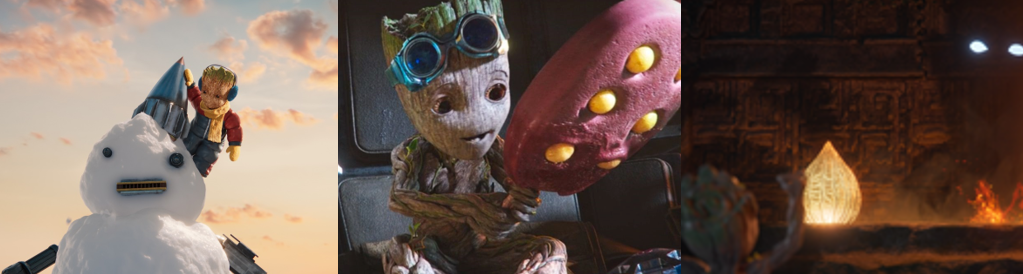
While searching for new batteries for his videogame controller, Baby Groot pulls himself from his pit of snacks and roots around in Rocket’s treasure trove of stolen items, eventually slapping a prosthetic nose to his face and gaining a sense of smell. Amazed, he explores these new sensations but quickly ditches the appendage when he returns to his filth with his batteries and is disgusted by the stench. Though he’s tempted to grab a brush and clean the place up, Baby Groot decides it’s better to just toss the nose away and get back to his game, content to sit in the mess. In “Groot’s Snow Day”, Baby Groot explores a snowy planet and builds a snowman. Deciding his frosty friend would look better with a few modifications, he ransacks the Milano and stuffs the snowman with cybernetic enhancements, unwittingly bringing it to life. The robotic snowman immediately attacks with its lasers and heads to the ship, intent on spreading further destruction, though Groot seemingly destroys it by launching a well-timed snowball at a compromised engine part lodged in its head. Groot then searches high and low for some credits to get himself a sweet treat from a passing ice cream ship, awestruck by its flashing lights and assortment of frozen goodies. After many pratfalls, Baby Groot finally gathers some coins and is left despondent when the ship moves on. Desperate, he commandeers a space capsule and gives chase, ultimately crashing through the ice cream ship and gifting him as many treats as he could want. Finally, the Watcher (Wright) observes and narrates Baby Groot’s exploration of an ancient tomb said to contain a sacred seed that will bring peace and prosperity to the universe. Despite the Watcher’s best efforts, Baby Groot continually puts himself in danger and gets distracted from his quest, preferring to desecrate the tomb and take a nap. By the time he finally spots the seed, Groot’s more interested in retrieving his ball, causing the seed to be consumed by lava and the temple to crumble. However, the Watcher consoles himself with the understanding that the prophecy was a metaphor and that Groot, emerging from the rubble with fresh leaves sprouting, was the “seed” that would rise from the temple.  

The Summary:
I had a good time with I Am Groot. Obviously, your expectations need to be quite low considering it’s primarily aimed at kids, but I enjoyed Baby Groot’s pratfalls and adventures. As ever, Vin Disel does a great job of making “I am Groot” convey so many different meanings. Baby Groot expresses curiosity, sadness, anger, and even affirms his own identity with these three words, showing caring, mischievous, lazy, and poignant aspects of his personality. The entire show is shot from Groot’s perspective (not literally, of course; I mean at his level), not unlike the classic Tom and Jerry cartoons (1940 to present). We never see any of the other Guardians of the Galaxy save for an obscured cameo of Drax the Destroyer in the shower and Rocket’s heart-warming appearance in “Magnum Opus”, though the crew are obviously around as someone’s flying the ship and visiting all these worlds. It might’ve been fun to hear some of the crew shouting or talking off-camera, reacting to Groot’s antics or just giving a bit more life to the ship, but the framing purposely keeps things at Baby Groot’s level to suggest that he gets up to all these adventures on the regular, largely without anyone noticing. As a sapling, Baby Groot is still understanding himself and the universe; he can stretch his limbs at will but is surprised when he sprouts leaves, for example. He learns as he goes, like any child would, and takes pleasure in simple things, like relaxing in a mud bath or eating ice cream. He still enjoys a dance and gets shirty when the Iwua offers him tips and we see the origin of what would become a teenage obsession with videogames as he sits in a fetid pit chomping on snacks and ignoring his personal hygiene.

Unbeknownst to his family, Baby Groot is getting into all kinds of mischief.

Baby Groot also shows a passion for creativity and construction; he cobbles together all sorts of random items to spruce up his picture and (literally, if unexpectedly) bring his snowman to life. These talents seem to be borrowed from Rocket, who’s forever scrounging away parts and putting together outrageous devices, and it shows that Groot is influenced by his adopted family. This also fosters a caring side to him; he’s driven to feed both the Grunds and the weird little bird that imprints on him and is genuinely upset when he thinks he’s crushed them and his adopted baby returns to its kin. A highly volatile and emotional little sapling, Baby Groot lives a life of extremes; he’s super excited to see the ice cream ship pass by, grows increasingly frustrated at failing to find any coins, and is so desperate to get a treat that he collides with the ship at full speed! If you listen to the all-seeing, all-knowing Watcher, you’d be fooled into thinking that Groot is some prophesised hero destined to usher in a golden age for the universe. However, he’s just a cheeky little tree-boy who enjoys playing his games, bouncing his ball, and doodling, even if his work accidentally endangers his family or defiles an ancient tomb. The Watcher is convinced that the seed is pivotal to the safety and security of the universe and comically aghast when Baby Groot fails to recognise this, and is ultimately forced to reinterpret the prophecy since, like Rocket, the Watcher cannot stay mad at the adorable little sapling. Ultimately, I Am Groot is worth checking out if you’re a fan of Groot and the Guardians of the Galaxy, but obviously will have more appeal to little kids, who will no doubt relate to and enjoy Baby Groot’s mischievous antics. It’s fun getting a sense of what these characters do when no one’s looking and how they interact with the world around them, and Baby Groot is a cute little bugger you can’t help but fawn over. The show’s not going to give the Minions anything to worry about any time soon, but it’s a fun enough distraction to have on in the background as a break from Marvel’s increasingly high stakes action and there’s no shame in that.
My Rating:

Rating: 3 out of 5.

I Am Groot

I am Groot? I am Groot, I am Groot? I am Groot, I am Groot, I am Groot? I am Groot? I am Groot? I am Groot? I am Groot, I am Groot? I am Groot, I am Groot, I am Groot? I am Groot? I am Groot?

Screen Time [Sci-Fanuary]: M.O.D.O.K.


January sees the celebration of two notable dates in science-fiction history, with January 2 christened “National Science Fiction Day” to coincide with the birth date of the world renowned sci-fi writer Isaac Asimov, and HAL 9000, the sophisticated artificial intelligence of Arthur C. Clarke’s seminal 2001: A Space Odyssey (1968), being created on 12 January. Accordingly, I am dedicating all of January to celebrating sci-fi in all its forms.


Air Date: 21 May 2021
Directors: Eric Towner and Alex Kamer
Network: Hulu / Disney+
Stars: Patton Oswalt, Aimee Garcia, Ben Schwartz, Melissa Fumero, Wendi McLendon-Covey, Jon Daly, and Beck Bennett

The Background:
Created by Stan Lee and Jack Kirby, George Tarleton, the “Mental Organism Designed Only for Killing”/MODOK first appeared in the pages of Tales of Suspense back in 1967. The deranged, cybernetic would-be conqueror has been a thorn in the side of numerous Avengers and a mainstay of Marvel videogames, though he’s had a tumultuous life on the big and small screen. While I best know the character from his appearances in the 1990’s Iron Man cartoon, most mainstream audiences probably best know him from his infamous appearance in Ant-Man and the Wasp: Quantumania (Reed, 2023). Before that debacle, MODOK received his own adult animated series on Hulu, the first in what was planned to be a bunch of adult animated series before his fellow “Offenders” were summarily cancelled. A stop-motion production in the style of the similarly-themed Robot Chicken (2005 to present), M.O.D.O.K. was well-received upon first airing. Though some found it incomparable to its peers, most reviews praised the vulgar tragicomedy for its workplace humour and entertaining performances. Unfortunately, neither the generally positive reactions or a Golden Trailer Award nomination were enough to produce a second season and M.O.D.O.K. was cancelled after only one season.

The Plot:
After failing to conquer the world, MODOK (Oswalt) loses control of Advanced Idea Mechanics (A.I.M.) when it goes bankrupt and schemes to regain his position while dealing with a failing marriage and a mid-life crisis.

The Review:
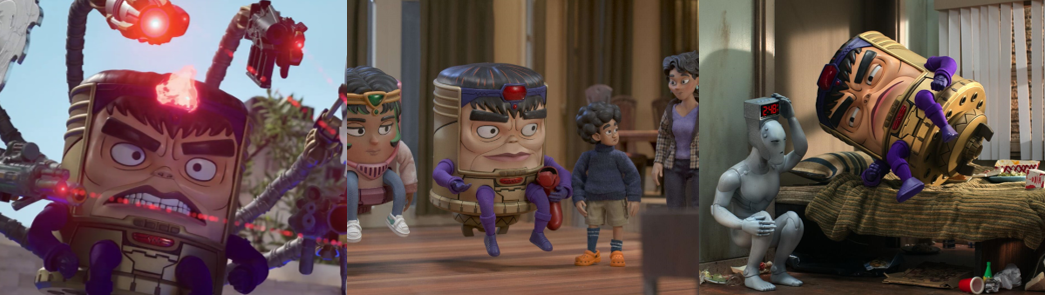
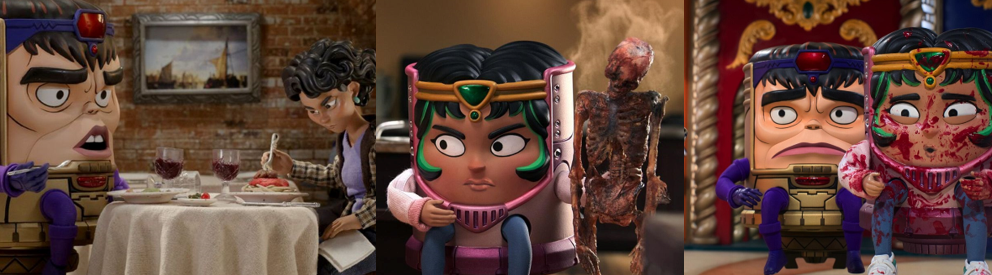
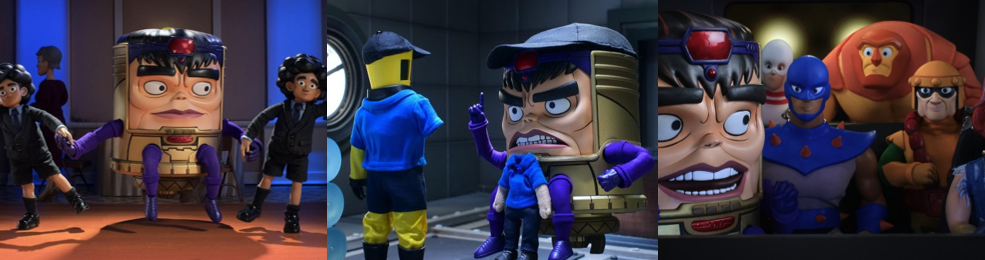
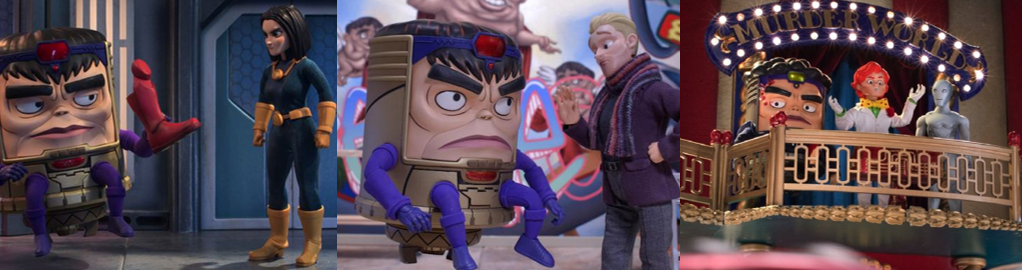
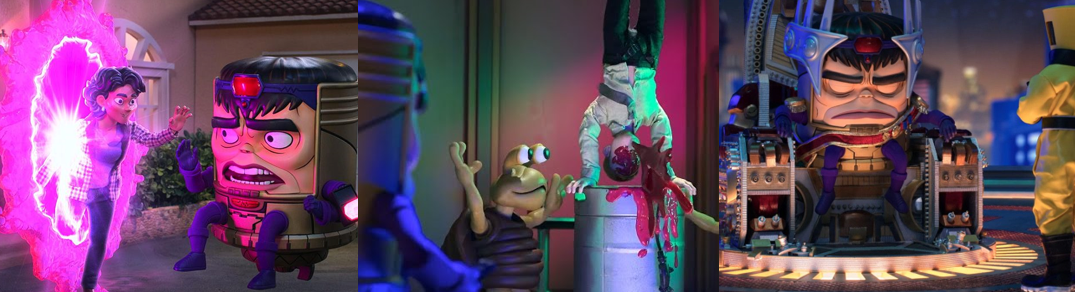
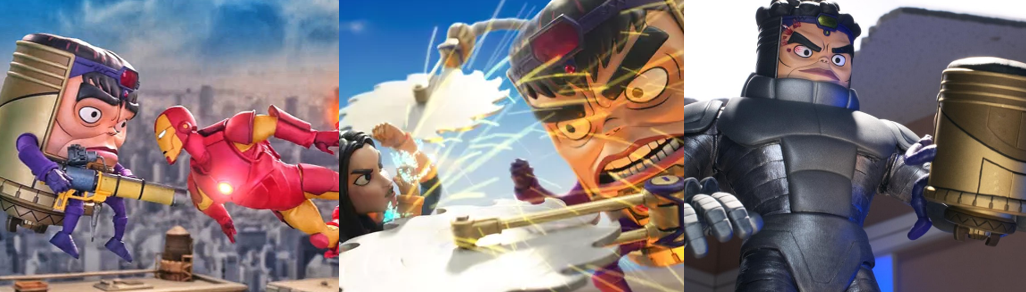
M.O.D.O.K. is an adult stop-motion animated series in the same visual style of Robot Chicken, a show I haven’t watched all that much but have enjoyed its zany take on pop culture. However, I used to watch The Adam and Joe Show (1996 to 1999) as a kid and that regularly included segments featuring stuffed toys and action figures, so it’s a style I’ve always enjoyed. M.O.D.O.K. skews more towards the action figure aesthetic; this is especially evident in scenes where MODOK and A.I.M. attack Avengers Tower and battle Anthony “Tony” Stark/Iron Man (Jon Hamm), who’s styled after the Toy Biz “Marvel Super Heroes” action figure. Considering how painstaking stop-motion animation is, I’m surprised by how long each episode is, with each clocking in at around twenty-five minutes; though it’s my understanding that the animation studio, Stoopid Buddy Stoodios, used elaborate puppets during filming. The result is a very surreal animation style that perfectly matches the bizarre nature of the show, which is much cruder and ruder than the average Marvel production. M.O.D.O.K. features blood, violence, a touch of body horror (both in MODOK’s unsightly appearance and in a Fly-like (Various, 1957; 1958 to 1989) genetic monstrosity), and some swears, thus firmly setting it as a more adult-orientated show. Additionally, and most prominently, M.O.D.O.K. tackles adult themes such as divorce, mid-life crises, and navigating an increasing unstable workplace undergoing corporate mandated overhauls to be more politically correct and accommodating. As enjoyable as it is to see characters have half their faces melted off, blood and guts burst on the screen, and MODOK’s long-suffering (but endlessly enthusiastic) henchman Garfield “Gary” Garoldson (Sam Richardson) get his arm blown off just for standing in the wrong place at the wrong time, it’s the domestic drama where M.O.D.O.K. really shines. There’s an unexpected pathos laced throughout the show as MODOK desperately attempts to win back his frustrated wife, Jodie Ramirez-Tarleton (Garcia), and the approval of his kids, aspiring supervillain Mental Entity Living to Induce Seriously Sinister Anarchy/Melissa (Fumero) and endlessly jovial Lanky Organism Undeniably Irresistible and Syphilitic/Lou (Schwartz).

The once-fearsome MODOK is reduced to squalor by his failing company and family life.

MODOK’s family is acutely aware of his evil deeds; it’s hard for them not to be since the only thing he talks about at home is himself, how superior he is, and spinning disastrous failures into overblown wins just because he stole Iron Man’s boot. MODOK’s obsession with destroying the Avengers and conquering the world stems from his childhood, where he was relentlessly bullied for his big head and supervillain-level genius. However, his loving mother (Unknown) encouraged his ambition and he continuously experimented on himself with science and cybernetics in a bid to take over he world and “improve” it with his own twisted version of a utopia. Unfortunately, MODOK’s preoccupation with this goal has caused him to neglect his family: he barely acknowledges Jodie’s success as a self-help guru or her upcoming book launch, Melissa resents him for embarrassing her and not acknowledging her opinions, and Lou, though seemingly cheerful, is hiding his own insecurities behind a happy-go-lucky façade and an amateur interest in stage magic. When MODOK’s reckless spending pushes A.I.M. to the brink of bankruptcy, MODOK’s forced to sell to young, socially aware Austin Van der Sleet (Bennett), owner of tech company GRUMBL, who, despite his assurances, makes so many changes to A.I.M.’s corporate structure that MODOK is eventually reduced to a mere mailman. His frustrations see his marriage crumble; realising they no longer have anything in common, Jodie demands a divorce and kicks MODOK out, forcing him to live in squalor with the family’s underappreciated robot slave, the Super-Adaptoid (Daly). When MODOK’s begging and pleading for a second chance fail, he and Gary break into the Strategic Homeland Intervention, Enforcement and Logistics Division’s (S.H.I.E.L.D.) headquarters and steal a time machine, desperate to undo a past mistake and take Jodie to a Third Eye Blind concert to rekindle their love. However, the attempts fails when she’s angered at him using the jaunt to also try and assassinate Austin and he inadvertently creates the show’s overarching villain when his ineptitude angers his past self and displaces him from time after he shatters the time machine’s Chrono Crystal.

MODOK’s long-suffering wife and daughter come to resent his selfish attitude.

Jodie’s frustration with MODOK is well founded; he’s an egotistical, selfish, obnoxious braggart who causes chaos wherever he goes. At work, MODOK is largely idolised by A.I.M.’s mostly nameless and faceless beekeepers; MODOK shows he cares for them when he begs Austin to keep them employed, but also treats them as disposable pawns when enacting his plans. Jodie feels a degree of the same disregard, constantly feeling second fiddle to MODOK’s greater aspirations, and forces a separation so she can get her life in order. When she starts dating Simon Williams/Wonder Man (Nathan Fillion), Jodie sees her stock and fame skyrocket due to the sordid publicity surrounding Wonder Man and she shamelessly embraces it. She manipulates both Wonder Man and MODOK to promote her book, coldly using the limelight-loving superhero for her own ends, and even injects Lou with a serum to give him a peanut allergy to give him a personality flaw, showing why she’d fall for a supervillain in the first place. It’s clear Jodie and MODOK still have feelings for each other (when trapped in the past, they grow old and rekindle their feelings, only to be erased from time) but they struggle to reconcile even for the sake of their kids. Melissa, though a female copy of MODOK, is actually very popular and has aspirations of being a supervillain but is continuously let down by him ignoring her input. She expertly teaches him how to psychologically manipulate others during a work conference, only for him to default to a grandiose plan for hero worship by opening a portal to the Broodworld. She works hard to give him a makeover, but he ruins his new look by brawling with Wonder Man. It’s doubly frustrating for Melissa considering she’s the most pragmatic of the family. Indeed, when faced with discovering which of them are murderous robot doubles created by Arcade (Alan Tudyk), Melissa doesn’t hesitate to slaughter their doppelgängers either on a whim or by closely watching their body language and behaviour.    

MODOK’s struggles to regain A.I.M and be taken seriously are compounded by his family life.

Lou is the black sheep of the family. Whereas MODOK and Melissa and even Jodie can be cruel, cold-hearted, and manipulative in their own ways, Lou is kind and jovial, without a care in the world. Not confined to a floating machine like his sister and father, Lou’s free to express his boundless energy, seemingly finding the good in every situation, no matter how dire. The only concern he seems to have is about his upcoming Bar-Mitzvah, and even then he just wants to perform magic for his audience; a desire so great that it drives him to chase after his props when MODOK callously transports them to Asgard. There, he earns the awe and loyalty of the goblin-like Kodolds, setting him against his father but ultimately aiding him in escaping death when he learns the MODOK is just trying to protect him from possible humiliation. While his family love him, Lou’s mostly perplexing to them; he finds a kindred spirit in outcast, sullen goth Carmilla Rappaccini (Zara Mizrahi) and gains a brother when he befriends his robot duplicate, but an overriding concern of MODOK and Jodie’s is that Lou is hiding his pain behind his magic. MODOK’s attempts to be a good father, win back Jodie, and regain control of A.I.M. see him turning to lower-tier supervillains for assistance when big shots like Samuel Sterns/The Leader (Bill Hader) and Doctor Nathanial Essex/Mister Sinister (Kevin Michael Richardson) turn him away. Begrudgingly relying on the Super-Adaptoid for company and transport, MODOK forms a crew consisting of David Angar/Angar the Screamer (Bill Hader), Antonio Rodriguez/Armadillo (Dustin Ybarra), Bruno Horgan/The Melter (Eddie Pepitone), Marion Pouncy/Poundcakes (Whoopi Goldberg), and Alvin Healy/Tenpin (Chris Parnell) to steal Captain Steve Rogers/Captain America’s shield and curry favour. Naturally, this goes hideously awry when the D-listers get distracted by their own personal dramas and incompetence, and when they abandon MODOK after learning he was manipulating them. However, MODOK comes to sympathise with the downtrodden villains and they agree to storm Avengers Tower, only to fall asleep on the trip and the Melter to die from excitement.

MODOK’s abrasive nature creates his own villains and even angers a past version of himself.

MODOK’s abrasive personality and disregard for his underlings means he has many enemies beyond the likes of Iron Man, even within his own company. Most notably, he’s constantly challenged at work by Monica Rappaccini (McLendon-Covey), an A.I.M. scientist whose genius matches, or many even surpasses, that of MODOK. Initially excited to be hired as another disposable beekeeper since she idolised MODOK, Monica slowly came to resent him when he not only undermined her inventions but also took credit for her killing an unnamed Avenger. Monica’s frustrations with MODOK’s leadership lead to her betraying him and siding with Austin, fooling the cybernetic villain with her jelly-like doubles and taking his place as A.I.M.’s “Scientist Supreme”. Despite her lofty position, Monica becomes paranoid when MODOK seemingly embraces his new position as a mailman, but ends up partnering with him when he sells a controlling share of A.I.M. to Iron Man and sets up A-I-M-2 with Gary once it’s revealed that Austin’s masters, a sentient, alien corporation known as the Hexus, plans to brainwash the world with their new GROME device. The exact opposite of MODOK, Austin is an overly friendly and accommodating boss who insists his employees take regular breaks, vacations, and relaxation time. Claiming to idolise MODOK, Austin repeatedly tolerates his abusive behaviour until he’s caught stealing from the company, but eventually turns on his alien masters when they order him to dispose of his beloved dog, though being on the same side doesn’t stop him from being run down by Gary. The show’s ultimate villain is MODOK himself, literally and figuratively. A younger version of him becomes displaced from time and, angered at MODOK’s failures, conspires with the likes of Arcade to kill his family and set MODOK towards world domination. Calling himself “The Anomaly”, this younger MODOK shows his older self that his plans are destined to fail unless his family dies. While MODOK cannot bring himself to sacrifice the ones he loves and is determined to have it all, the Anomaly is not so morally inclined and murders his wife and children, creating a dystopian future where MODOK rules all. However, when he exhausts the energy of the Chrono Crystal and the life of his younger counterpart, the sullen dictator vows to find a way to bring his family back and retain his supreme position, ending the show on an unresolved cliff-hanger.

The Summary:
Though not set in the Marvel Cinematic Universe (MCU), M.O.D.O.K. is clearly influenced by it in many ways. Avengers Tower, for example is basically a carbon copy of the MCU’s version and Iron Man is a snarky asshole like in the films. Other characters, like MODOK’s crew and the assorted villain cameos, are styled more after their comic book counterparts. Even S.H.I.E.L.D.’s uniform is modelled after the comics and A.I.M.’s employees are all rendered anonymous by their comic accurate beekeeper outfits. MODOK, though, is ironically more akin to his later MCU counterpart than the source material. Rather than being a frothing, maniacal supervillain, he’s an insecure, angry, petty cyborg lashing out at the world around him. MODOK is seen as a lesser-tier villain, even more so than in the 1990’s Iron Man cartoon where he was a glorified henchman; he’s not allowed in the supervillain club and ends up slumming it with D-list villains. When MODOK approaches Iron Man with an offer to buy A.I.M., the armoured Avenger initially believes he’s there for a fight and downplays MODOK’s threat, despite the rotund villain sporting various dangerous weaponry such as buzzsaws, claw arms, and his iconic brain blasts. Thus, just as his kids seek his approval and the likes of Gary and the Super-Adaptoid long to be recognised for their significance, so too does MODOK strive to be acknowledged as a (or the) superior being. His plots and ambitions are lofty and often exceed his grasp, causing him to steal technology from others or claim ownership of victories that weren’t his own. Constantly, desperately seeking approval and acceptance, he initially plans to save a party of investors from the Brood then quickly takes credit for the party-loving Ciegrimites who arrive instead. He manipulates an army of Asgardians into attacking the Kobolds since his systems have been damaged and ends up bleeding out when his younger counterpart fatally wounds him, only to be begrudgingly saved by Melissa.

Episodes are full of lewd comedy, bloody violence, and a surprising pathos.

Many episodes have great moments in them, either spontaneous scenes of violence, workplace gags where MODOK is taken to human resources, or emotionally charged explorations of MODOK’s fragmented family life. “The M.O.D.O.K. That Time Forgot!” was a pivotal episode not just for exploring MODOK and Jodie’s past but also for introducing the younger MODOK, who isn’t held back by the domestic drama that befuddles his elder’s life. The plot twist of the Ciegrimites being so party hard that they literally dance people to death was fun, but I really enjoyed watching Melissa teach her dad how to emotionally manipulate people into seeking validation from him, and Monica’s desperate attempts to get out of using her corporate-mandated vacation time in “If Bureaucracy Be… Thy Death!”, which also showed how low MODOK will stoop to be seen as a great villain. “This Man… This Makeover!” showed a darker side to Jodie, who becomes consumed by the fame being associated with Wonder Man brings her and her book, to the point where she disregards Wonder Man’s very real feelings for her and manipulates MODOK into embracing his base instincts just to make headlines. “O, Were Blood Thicker Than Robot Juice!” promises a reconciliation for the family, only to reveal that Jodie, Melissa, and Lou have been replaced by Arcade’s robots. Arcade then forces them to fight to the death against multiple robotic duplicates, a fight easily won by the real family not because they know each other so well, but because Melissa eagerly resorts to violence. I loved the satirical take on corporate greed that comes to the forefront in “What Menace Doth the Mailman Deliver!”, where the Hexus’ plot to control and conquer the world is seen as a heinous by-product of their dislike of Austin’s puppy. This episode also commentated on society’s dependence and love for smart technology like Alexa by having the GROME brutally murder people when activated. The show ends with a surprisingly emotional gut punch in the aptly named “Days of Future M.O.D.O.K.s”, where MODOK’s forced to see that the only way he’ll conquer the world is if his family dies before his eyes. He’s complicit in this and is brought no joy at being the undisputed master and ruler of the world, but is sure to torture the Anomaly to death to both see glimpses of his family and make him pay for making him endure such a loss.

A bizarre and entertaining show bolstered by its toy-like animation and characters.

Thus, MODOK’s characterisation may irk fans of the character. He’s a very co-dependent, egotistical narcissist, one who takes his family for granted and demands adulation without really earning it. The juxtaposition of this gruesome supervillain cackling away with his minions and bludgeoning his enemies retreating to suburban mundanity is amusing. MODOK’s efforts to destroy his enemies and retake his company are seen as equal to his attempts to win the favour of his kids and deal with his messy divorce, casting him as a desperate and clingy villain whose knee-jerk reaction is to blast his way out of every situation. Eventually, he embraces his wife’s teachings and tries to turn his life around, then braves Arcade’s death trap to save them when they’re replaced by robot doubles, ultimately refusing to kill them but, paradoxically, also not trying to save them when they’re targeted by the Anomaly. I loved the biting wit and satire at work in the show, and the explosive violence. Seeing the dolls get torn to shreds, guts and gore splattering everywhere, was really fun and the occasional swears really hammered home that this was a different sort of Marvel project. The animation was commendable, with the dolls and puppets showcasing a lot of personality, none more so than MODOK, expertly brought to life by Patton Oswalt as an insecure, unpredictable villain burdened by time and family life and desperate to make his mark on history. It’s a shame the show was cancelled without a proper resolution as the door was left wide open for more episodes. There were many plot threads left dangling that promised greater things in another season and plenty of places for the characters to go, especially as M.O.D.O.K. wasn’t afraid to explore surreal, colourful, and obscure aspects of the Marvel Universe. I really enjoyed the marriage of suburban drama with violent, over-the-top comic book action; seeing MODOK struggle to adapt to corporate policy and appease his children was as enjoyable as his fight for world domination. He might not be a completely faithful rendition of the character, but he’s endlessly more interesting here due to how complex and layered he is, with the show emphasising that he can be a serious threat if given sufficient motivation.

My Rating:

Rating: 4 out of 5.

Great Stuff

Did you enjoy M.O.D.O.K.? What did you think to his characterisation as a struggling family man and villain? Did you enjoy the animation style and the various cameos spliced throughout the show? What did you think to Austin, Hexus, and the satirical commentary on corporate synergy? Which of MODOK’s family was your most or least favourite, and did you enjoy the family drama? Would you have liked to see another series, or at least a resolution to the ending? What are some of your favourite MODOK stories? Share your thoughts on M.O.D.O.K. in the comments and then go check out my other sci-fi content on the site!

Screen Time [Gazpacho Soup Day]: Red Dwarf (Series Three)


In the episode “Me2” (Bye, 1988) of the classic British science-fiction comedy show Red Dwarf (1988 to 2020), it is revealed the Arnold Rimmer’s (Chris Barrie) last words were “Gazpacho soup!” and that he made a point to celebrate November 25th as “Gazpacho Soup Day” after a particularly traumatising visit to the Captain’s Table.


Series Three

Air Date: 14 November 1989 to 19 December 1989
Director: Ed Bye
Original Network: BBC2
Stars: Chris Barrie, Craig Charles, Danny John-Jules, Robert Llewellyn, and Hattie Hayridge

The Background:
In the mid-1980s, Rob Grant and Doug Naylor created Dave Hollins: Space Cadet, a BBC Radio 4 sci-fi comedy show influenced by classics of the genre like Dark Star (John Carpenter, 1974) and The Hitchhiker’s Guide to the Galaxy (Adams, 1978; Bell, 1981). Dave Hollins was also the prototype for Red Dwarf, a concept the duo struggled to sell despite emphasising character and comedy over genre. After casting impressionist Chris Barrie and Liverpudlian “punk poet” Craig Charles in the lead roles of Second Technician Arnold J. Rimmer and Third Technician Dave Lister, respectively, the cast was rounded out by singer and dancer Danny John-Jules and sardonic stand-up comedian Norman Lovett. Red Dwarf was eventually aired in early-1988 and, while viewing figures dropped during the first six-episode series, audience feedback was so strong that the BBC greenlit a second series. Granted a bigger budget, Grant and Naylor expanded the premise and, thanks to Red Dwarf now having an established audience, series two was more favourably received. The show was now a cult hit and afforded an even bigger budget for the third series, which saw a complete redesign of the sets and the introduction of a new model, and service mechanoid Kryten joining the crew (albeit now played by Robert Llewellyn). Widely regarded as one of the best sets of episodes throughout the show’s entire run, Grant and Naylor enhanced series three seasons with additional digital effects some ten years later, to some criticism. Since then, Red Dwarf continued to be consistently popular even after Grant and Naylor parted ways, returning from a lengthy absence with a series of specials and revivals that arguably struggled to match the quality of this season.

The Plot:
The mining ship Red Dwarf drifts through deep space three million years into the future, crewed by the last human being alive, Dave Lister, Arnold Rimmer, a hologram of his deceased superior officer, a humanoid cat (John-Jules), service mechanoid Kryten, and the ship’s neurotic computer, Holly (Hayridge). Their journey sees them visit a version of Earth where times runs backwards, dabble in time travel, swap bodies with each other, and the imminent arrival of Kryten’s ultra-modern replacement.

The Review:
Series three is really when Red Dwarf hit its stride, in many ways; at least, it is for me. Gone is the slow, strangely ominous opening sequence, replaced with a rockin’ cover of the main theme that plays over clips from the series to give a sense of the zany action viewers can expect. The first episode, “Backwards”, also starts with an amusing parody of the traditional Star Wars (Various, 1977 to present) opening scroll that flies past in the blink of an eye. Eagle-eyed viewers or those who slow down the footage will learn about how Lister returned his twins to the female-dominated parallel universe where they were conceived, how the ship’s computer, Holly, assumed the guise of his counterpart from that same reality after falling in love with her, and how service mechanoid Kryten suffered a horrific accident that saw him rebuilt by Lister to now join the crew. Additionally, Lister and Rimmer have now moved to the far more luxurious officer’s quarters, gaining bigger bunks, an en suite shower, and a far more comfortable and eye-catching space for them to socialize and bicker. Enough time has passed between Kryten’s offscreen repairs for the overly polite and submission mechanoid to have fully ingratiated into ship life, with him anxiously taking his pilot’s exam in the first episode as a way of introducing the show’s newest and most iconic ship-to-surface vehicle, the appropriately named Starbug. Even the ship’s corridors and layout have undergone a dramatic change, switching from the dull grey paintjob to a more ominous and dramatic hallways. Rather than recycle the sets from the first two series, series three introduces new areas, such as a dark room (where Kryten rocks out while developing photos), a club where the crew celebrate what’s believed to be Kryten’s final night before he’s forcibly replaced, and the science lab. The vending machines have a new design, we visit a claustrophobic cargo bay, and more episodes take place off-ship, with Rimmer and Lister literally being marooned on a frigid world at one point and the crew indulging in a bit of fun, if limited, time travel.

Lister and Rimmer’s relationship deepens, with the two sharing as much as they clash.

Lister and Rimmer’s contentious relationship remains a focal point of the series but has evolved to the point where Rimmer simply despairs of his slovenly roommate and Lister openly criticizes Rimmer’s boneheaded decisions. When Rimmer and Kryten prove a smash hit on the backwards version of Earth, Lister lists the many reasons why staying on such a bizarre world make little sense and openly challenges Rimmer’s tenuous authority when his fear is removed by the gruesome polymorph. The two are force to co-exist and we see a deeper representation of their dynamic in “Marooned”. Stuck with only each other for company, Lister must practically beg Rimmer to keep his mind off his seemingly inevitable slow death from either extreme cold or hunger and we explicitly see why Rimmer was chosen to keep Lister company after the ship’s crew were wiped out. Rimmer represents a smug, authoritarian antagonist Lister can focus his despair and loneliness onto and Rimmer fulfils this role admirably, chastising Lister’s short-focused greediness and trying to impress upon him the need to ration himself and make personal sacrifices to stay warm. Of course, Rimmer’s awe at Lister burning his beloved guitar soon turns to rage when he realises the devious slob has actually desecrated Rimmer’s prized camphorwood chest. Their relationship is further tested in “Bodyswap” when Rimmer sees a chance to experience the thrill of being alive once more. After failing to convince Lister to swap minds and bodies, Rimmer forces him to undergo the transfer and immediately indulges his every vice. Trapped in a hologrammatic body and powerless to prevent Rimmer from gorging himself, Lister is horrified when Rimmer hijacks his body and almost dies fleeing from reprisals in Starbug. Finally, the two clash in their attempts to alter the timeline using mutated developing fluid; discovering a limited means to travel to the past, they each vie to create the strangely popular “Tension Sheet” before the other. This gives a glimpse into Lister’s past as an ambitious but untalented musician and into an alternative life where he’s a successful rock star with a giant mansion and an obnoxious attitude. While Rimmer’s motivations for resetting the status quo are purely selfish for he wishes to have that life for himself, it also comes from a deep-seated desire to not be left alone on Red Dwarf, a fate worse than being trapped with people he barely tolerates let alone likes.

Kryten fits right in with the misfit crew and adds an extreme layer of dry comedic value.

While still a flamboyant, self-serving, egotistical narcissist, the Cat is far more well-rounded here. An accomplished pilot in his own right, he’s often partnered with Lister as a far more amicable, if not less self-absorbed, alternative to Rimmer. The Cat and Lister regularly engage in game night, playing various tabletop and physical games to occupy themselves, and the Cat seems genuinely hurt when the despondent Lister refuses to play and lashes out in frustration at being stuck in deep space as the last man alive. While the Cat is seemingly nonplussed when Rimmer and Kryten disappear in “Backwards”, he’s so distraught at Lister’s own disappearance in “Marooned” that he doesn’t “buff his shoes for three days” and reacts with elation upon spotting the crashed Starbug. Additionally, when a sugar-high Rimmer takes Lister’s body hostage and goes for a joyride, the Cat immediately volunteers to pursue him in Blue Midget (though mainly to avoid giving Lister possession of his body) and joins the crew in celebrating Kryten’s life in “The Last Day”. Kryten adds a lot to the ship dynamic, being a logical and deadpan presence amidst such bombastic characters. Though his inclusion makes Holly superfluous since he has a physical presence and isn’t suffering from computer senility, Kryten makes a great impression by performing parlour tricks for the Backworld inhabitants with Rimmer, overseeing the mind swap procedure, and in his surprisingly emotional reaction to the crew risking their lives when Hudzen-10 (Gordon Kennedy) arrives to replace him. Indeed, while Kryten is happy to accept his replacement and inevitable shutdown, Lister rallies against it, openly criticising Kryten’s belief that he’ll be rewarded for a lifetime of servitude in “Silicon Heaven”. Surprisingly, it’s Rimmer who’s the voice of reason here; though also sad, in his own way, he chastises Lister for mocking Kryten’s beliefs, however illogical and unfair they seem. Of course, Kryten really steals the show in “Polymorph”, where we see his various groinal attachments at work, witness him desperately and suggestively remove Lister’s shrinking underpants, and get a taste of his occasional semi-rebellious attitude when the titular monster removes his guilt and he’s suddenly insulting his friends and happy to sacrifice them to the polymorph to save his own hide.

It’s not an exaggeration to say every episode of the series is an absolutely classic.

Indeed, in a series full of standout episodes, “Polymorph” is one of the best. In keeping with series tradition, the titular creature (which is totally not a Xenomorph) isn’t an alien, but a genetically engineered lifeform (GELF) bred to remove its victim’s emotions. Beginning as a comical slug-like creature, the polymorph changes shape to lure in its prey and grows larger and more monstrous the more it feeds. It even feeds on artificial emotions, removing Rimmer’s anger and Kryten’s guilt, turning the former into a peace-loving hippy and the latter into an outspoken rogue. The Cat, normally the most stylish and confident of the crew, is reduced to a whiskey swilling vagrant happy to throw away his life when the creature removes his vanity and Lister becomes an angry, trigger happy brute eager to tackle the creature even if it means “sacrificing his life in some stupid, pointless way”. With only Holly on hand as the voice of reason, the dramatically compromised crew only succeed through pure luck and, even then, the ending suggests that a second polymorph is lurking in the background. “Backwards” is also a favourite of mine; though Lister’s initially amazed to finally be back home, he soon realises that he cannot exist in a world where time runs in reverse. Kryten and Rimmer, however, find a niche as the “Sensational Reverse Brothers” and are prepared to stay before a “barroom tidy” sees them fired as pub entertainers. Finally, “Timeslides” is a fun episode that starts off exploring Lister’s loneliness and anger and evolves into a game of one-upmanship not unlike “Stasis Leak” (Bye, 1988) where Lister and Rimmer desperately travel to different snapshots of their pasts to try and invent a simple but profitable stress reliever and change their fates. When Lister convinces his past self (Emile Charles) to patent the Tension Sheet, he, Cat, and Kryten disappear from the timeline, leaving Rimmer alone with Holly. Refusing to accept this, Rimmer first tries to convince the now wealthy and successful Lister to rejoin the crew and then travels to an earlier point in time to beat him to the punch. While his younger self (Simon Gaffney) fails to follow his instructions, Rimmer inadvertently restores the timeline…and himself to life. However, his elation is short-lived as he accidentally blows himself up, completely restoring the status quo.

The Summary:
As with the previous two series, I generally watch the Remastered version of Red Dwarf’s third season (1998), which replaces all model shots with CGI models and a new opening sequence. Series three includes some additional changes, most notably in “Polymorph” where new CGI first-person shots of the slug-like polymorph’s travels were added alongside a text epilogue to the episode that states the polymorph died in Lister’s underpants drawer, and a bizarre redubbing of Rimmer’s mother (Kalli Greenwood). It’s also worth nothing that the DVD release of the series allows you to watch “Backwards” in reverse, meaning all the Backworld dialogue is now understandable and reveals that the pub manager’s (Arthur Smith) tirade at Rimmer and Kryten is simply the actor mocking the efforts of people to understand his dialogue! Rimmer debuts perhaps his most iconic look here and has become a foil for the entire crew, rather than just Lister. He despairs of Kryten’s constant subservient demeanour but doesn’t hesitate to take advantage of it when it suits him, is more than happy to gorge himself in Lister’s slovenly body, and bemoans Holly’s incompetence when she’s unable to tell the difference between specks of grit and black holes. Lister occasionally shows a surprising emotional maturity this season, desperate to convince Rimmer and Kryten to leave Backworld, revealing much of his chirpy disposition is covering a depressing pain at being the last man alive, and raging at the idea that Kryten could be so easily replaced. Both Lister and Rimmer reveal more about their pasts, such as their sexual experiences and childhoods, adding additional dimensions to their characters even as they try to compromise the other into burning their beloved possessions or change their fates. It’s great seeing their roles literally reversed in “Bodyswap”, where Lister’s powerless to keep Rimmer from ruining his body with cigars and food and Rimmer becomes addicted to the rush of being alive, a euphoria that no doubt informs his short-lived celebration at the conclusion of “Time Slides”.    

The series expands on the characters’ personalities through humour and pathos.

Jokes in series three are absolutely top notch; all the characters feel far more familiar and the actors much more comfortable with each other so their rapport is even more natural. Even Kryten fits in like a glove, with Robert Llewellyn easily taking up the mantle from David Ross and making the character his own. Kryten’s interactions with Lister and Rimmer in episodes like “Polymorph” and “Body Swap” showcase how hilarious this group can be, with Kryten forced to obey every command “no matter how insane” and performing menial tasks by plugging appliances into his groin. I also enjoyed Lister repurposing medical supplies for his meal and scuffling with Adolf Hitler and Nuremberg, and that series three gives the actors a chance to explore different sides to their characters. “Polymorph” is the most obvious example as they all undergo extreme personality changes and are rendered even more inept as a result. “Timeslides” also shows us a version of Lister without his shady moral compass, and his naïve but charismatic younger self, while Rimmer develops a carefree and increasingly insane attitude when he hijacks Lister’s body. Kryten is also faced with his far more efficient, imposing replacement in “The Last Day”, a surprisingly emotional episode in which Lister first refuses to accept and then is determined to celebrate Kryten’s impending shutdown. The drunk crew share some emotional scenes that soon lead to accusations about Lister’s parentage and, though desperately hungover, resolve to defend Kryten from the maniacal Hudzen-10 even though they’re physically outmatched. Similarly, the crew are faced with their pending destruction when Lister accidentally activates the ship’s self-destruct sequence in “Body Swap”, a desperate situation masterfully subverted when it’s revealed Holly disposed of the bomb and never told the crew since they didn’t ask! Additionally, Lister faces his own impending demise in “Marooned” where he’s forced not only to rely on Rimmer for emotional support but also to choke down dog food and Pot Noodles. This is an equally torturous situation for Rimmer not just because he faces the very real possibility of watching the closest thing he has to a friend die before his eyes, but also because Lister burns Rimmer’s prized possessions to stay alive. Interestingly, Rimmer seems to connect with the younger Lister, though his enthusiasm for the “Om” song could easily be interpreted as sarcasm. Still, his impassioned plea to the time-altered Lister seems genuine, though born from his fears of loneliness.

Series three was peak Red Dwarf and established a new standard for the show.

As much as I enjoyed series two, series three of Red Dwarf is where the show really started to land with me. Every episode is a gold mine of comedic situations and memorable moments. While many of these are in “Polymorph” (still one of the best episodes of the entire show), each episode shines as the writers explore the boundaries of the show’s unique sci-fi setting. Kryten was a welcome presence, adding additional comedy by playing the logical but still awkward straight man to his more volatile crewmates. It was fun seeing the crew bumble about on Backworld, riding and driving backwards without really realising it and performing simple tasks to the amazement of their audience, with the reverse brawl being an obvious highlight. I enjoyed exploring Rimmer and Lister’s relationship in “Marooned”, how they genuinely seemed to connect and yet Lister couldn’t help but sabotage Rimmer’s beloved family heirloom to safeguard his guitar. “Polymorph” explored extreme opposites of their personalities, showing that this ragtag crew may be dysfunctional but support each other well despite being very different personalities. “Body Swap” explored these personalities in a fun new way, with Lister left disapproving of Rimmer’s outrageous antics and getting a taste of how helpless Rimmer often feels as a hologram. While there are some logic gaps in “Timeslides”, the time travel shenanigans were fun and I enjoyed exploring a world where Lister never got marooned in deep space yet was still a slob, despite his great wealth. “The Last Day” is a great character showcase for Kryten, showing how much the crew care for him (Lister especially) to the point where they willingly defend him even though Hudzen-10 deems them all “viable targets” for termination. The resolution to this is as ingenious as it is hilarious: the menacing mechanoid is forced into a “metaphysical dichotomy” when Kryten lies about the existence of Silicon Heaven, cementing his place in the crew. Series three is easily the best of the classic era of Red Dwarf and a must-watch for anyone looking to get into the show. It’s sci-fi sit-com at its finest and showcases some of the best and most amusing moments for the crew and remains as appealing today as it was all those years ago.

My Rating:

Rating: 5 out of 5.

Fantastic

Is series three of Red Dwarf your favourite of the show’s run? What did you think to Kryten becoming a full-time member of the crew? Did you enjoy the exploration of Lister and Rimmer’s relationship and their constant one-upmanship? What did you think to the depiction of time travel and solidarity the crew showed towards Kryten? Which episode was your favourite and how are you celebrated Gazpacho Soup Day today? Feel free to share your thoughts and memories of Red Dwarf down in the comments and be sure to check out my other Red Dwarf content on the site.

Screen Time [Doctor Who Day]: The Day of the Doctor


On this day, the 23rd of November, in 1963, the longest-running and most successful science-fiction television series ever, Doctor Who, first aired on BBC One in the United Kingdom. Since then, the rogue Time Lord has gone through numerous incarnations and is widely celebrated as one of the most iconic and recognisable mainstream cultural icons in the world.


50th Anniversary Special:
The Day of the Doctor

Air Date: 23 November 2013
UK Network: BBC One
Stars: Matt Smith, David Tennant, John Hurt, Jenna Coleman, Jemma Redgrave, Ingrid Oliver, and Billie Piper

The Background:
In 1963, the BBC’s Head of Drama, Sydney Newman, commissioned a show that would appeal to be children and adults alike to fill a gap in the BBC’s schedule, one eventually outlined by writer Cecil Webber. The result was Doctor Who, a long-running science-fiction franchise in which a time travelling alien delighted audiences with historical hijinks, battles against terrifying cybernetic aliens, and emotionally charged morality tales. Save for a hiatus in the 1990s, Doctor Who has been a BBC staple for decades, with various actors stepping into the role thanks to the character’s unique ability to “regenerate” when dying. While debates rage about who is the best Doctor, two names often top the rankings: Tom Baker and David Tennent. After five years as the popular Tenth Doctor, Tennent finally passed the torch to Matt Smith, who won over audiences with his youthful exuberance. However, in the style of his predecessors, Tennent returned to the role for this 50th anniversary, reuniting with co-star Billie Piper (though in a dramatically different role). Tennent and Smith joined legendary actor John Hurt, who readily agreed to join the show and had been previously teased as a forgotten incarnation of the Doctor earlier that year. Accompanied by a short cinema release and two short tie-in episodes, The Day of the Doctor was simultaneously broadcasted in 94 countries to avoid plot leaks and met with critical acclaim. Reviews loved the chemistry between the three Doctors and its celebration of the show’s rich history, though the Zygon sub-plot and the handling of the War Doctor was criticised.

The Plot:
A Zygon plot to destroy London sees the Eleventh (Smith) and Tenth (Tennant) Doctors crossing paths with their former renegade incarnation (Hurt). Together, they reconcile their past by revisiting the last days of the Time War between the Time Lords and the Daleks.

The Review:
The Day of the Doctor takes place during a pretty tumultuous time in the Eleventh Doctor’s life. Most of Matt Smith’s run focused on the Doctor’s ultimate end, a seemingly unavoidable fate that would one day see him buried within his own embiggened TARDIS on the barren wasteland known as Trenzalore. Despite being fully aware of the finality of this inevitability, the Eleventh Doctor continues to be his usual energetic self, a quality I really came to enjoy about Matt Smith’s portrayal and one that juxtaposed his youthful appearance and childlike enthusiasm with a haunted, sombre, aged demeanour at times, both aspects of his personality that are exhibited in this 50th anniversary special. Indeed, the Eleventh Doctor is excited to be heading to the National Gallery with one of his most beautiful and charismatic companions, Clara Oswald (Coleman). He is summoned there by the Unified Intelligence Taskforce (UNIT) and meeting with Kate Lethbridge-Stewart (Redgrave), daughter of the Doctor’s old military correspondent Brigadier Alistair Lethbridge-Stewart (Nicholas Courtney, represented through archival pictures). The Eleventh Doctor relishes his impromptu helicopter ride over London and showing off his status amongst the UNIT personnel to Clara (who, despite having wandered through all of the Doctor’s lives, had no knowledge of his past ties to UNIT). Kate shows the Doctor a mysterious painting he knows all-too-well, a graphical depiction of the last day of the Time War; specifically, the fall of Arcadia and the day the Doctor, in a previous, hitherto unknown incarnation, personally ended the conflict. Since Doctor Who returned in 2005, the mystery of the Time War and the impact it had on the Doctor had been hanging over the show, and his demeanour, like a dark cloud. Burdened by guilt and scarred by the atrocities of war, many of which he perpetrated, the Doctor has effectively been running from his past for years now, but The Day of the Doctor forces him to confront in ways he never imagined.

A middling Zygon invasion proves the catalyst for a cathartic multi-Doctor adventure.

The main plot of the special revolves around, of all things, the Zygons. These monstrous shapeshifters try to conquer the Earth by subduing and replacing key figures in human history. One of their earliest efforts occurs back in 1562, when a Zygon attempted to replace Queen Elizabeth I (Joanna Page). Luckily, Queen Elizabeth was swept up in a whirlwind romance with the Tenth Doctor at the time, though even his cobbled together technology, intuition, and previous experience with the Zygons proves largely incapable of detected the Zygon threat. Time and again, both he and his successor fail to spot who’s a Zygon and who isn’t, leading to the Tenth Doctor putting his foot in it when he accuses the real Queen Elizabeth of being a bad fake. Luckily for him, he’s a dishy time traveller and she’s more amused by his incompetence than annoyed by his accusations. She also proves more capable than he is, fooling the other Zygons with her own impersonation skills (though, to be fair, he was distracted by his other incarnations). In the Eleventh Doctor’s time, the Zygons impersonate Kate and UNIT staff like Petronella Osgood (Oliver) to access the “Black Archive”, a super-secret vault deep within the TARDIS-proofed Tower of London that provides the Zygons with the means to take over London. Of all the threats to bring three incarnations of the Doctor together, the Zygons are disappointingly weak. They’re clunky, awkward creatures and this B-plot merely serves to unite the bickering Doctors and provide them the inspiration for saving their people. The Zygons have been using Time Lord technology to freeze themselves in paintings and covertly invade other worlds, technology that the Doctors use to briefly revisit the Time War and to travel back to the present day to force the humans and Zygons into an amicable truce rather than mutual destruction. They’re not a very compelling enemy (the Sontarans would’ve been much better), though they are defeated in an interesting way (the Doctors force both groups to temporarily forget which species they are). Naturally, the Daleks do appear, but merely as a cameo and purely in sequences depicting the chaotic Time War, where their power was at their mightiest and their thirst of victory was matched by the Time Lords.

The forgotten War Doctor sees how his decisions will shape the men he will become.

The Day of the Doctor firmly explains that, during the Time War, the Doctor took on a new face and forsook his name and title. Dubbed “The War Doctor”, this new incarnation fought a ruthless battle against his mortal foe for untold generations. The very nature of the Time War meant it existed in perpetuity, with victories, loss, deaths, and resurrections all happening at once. Finally, after an age of nonstop violence, the War Doctor decided he had had enough. Now aged to an old, battle-weary warrior, he took it upon himself to end the bloody conflict the only way he knew how. Thus, he broke into Gallifrey’s weapons facility and stole a doomsday weapon so destructive even their military General (Ken Bones) was afraid of it. A strangely archaic cube of cogs, the “Moment” can wipe out entire universes and is powered by a sentient artificial intelligence. Taking the form of a figure it knows is (or will be) important to the Doctor, the “Bad Wolf” (Piper), it questions the War Doctor’s motivation and, in a bid to show him what wiping out every single man, woman, child, and Dalek, will do to him, conjures a time vortex to show him his future selves. Honestly, I was never a fan of the War Doctor concept; I would’ve much preferred Paul McGann or Christopher Eccleston returned to portray this role rather than retroactively bump up the Doctor’s incarnations. However, you can’t go wrong with John Hurt and he portrays this forgotten, reviled incarnation with gusto. Despite being beaten down by war and technically being younger than his counterparts, the War Doctor is a cantankerous, grandfatherly figure who initially admonishes his successors’ buffoonery. He’s stunned that they don’t seem to take anything seriously or treat their equipment with respect and, much like the First Doctor (William Hartnell) in the first multi-Doctor special, is portrayed as the more authoritarian and sensible of the three despite being at least 400 years younger than them.

The Tenth and Eleventh Doctors are forced to confront, and embrace, their violent past.

The Tenth and Eleventh Doctor are horrified to see their renegade incarnation, treating him as a dangerous, almost bogeyman-like figure from their past that they’ve buried deep at the back of their minds. Prompted by the Moment, the War Doctor asks pertinent questions to understand how committing genocide will affect him and learns that the Tenth Doctor was haunted by the decision and the Eleventh has tried to move on and forget about it. The Tenth is outraged at such a suggestion, stunned to find his future self has gotten over the worst decision they ever made, but it’s clear that the Tenth Doctor is still tormented by his past and simply trying to find a productive way forward. While they take an instant dislike to each other (the Tenth Doctor hates his successor’s new TARDIS interior, as is tradition), the Tenth and the Eleventh Doctor have a lot in common. Both favour spectacles, suits, and being more flamboyant with their sonic screwdrivers, eschewing the War Doctor’s more practical and scientific approach for a dramatic flair. The Eleventh Doctor is largely critical of his predecessor’s more theatrical approach, especially his way with women, while the Tenth Doctor criticises his successor’s dress sense (particularly the fez). The two bicker here and there but mostly engage in a game of one-upmanship, comparing their sonic screwdrivers and competing to see who can solve problems faster, with both being trumped by the War Doctor’s more measured approach. Hardened by their past experiences and desperate to keep Kate from making the same mistakes, the two intervene to reach a more amicable solution and the War Doctor sees that his decision, while horrendous, will save countless lives since his future incarnations try to atone for their past. Their adventure together sees the Tenth and Eleventh Doctor embrace their forgotten counterpart and, in a bid to help the War Doctor face his decision, they willingly join him in activating the machine, only for Clara’s distraught reaction to show them they can come up with a better solution.

The Doctors’ desperate plan sees Gallifrey saved and their pain eased as a result.

Inspired by their solution to have their sonic screwdrivers calculate a formula to vaporise a door (a plan amusingly foiled when Clara reveals their cell was never locked!), the Doctors use their TARDISes to collude with all twelve thirteen of their other incarnations to utilise the Zygon picture-hopping technique and shift Gallifrey to, essentially, a pocket dimension, destroying the Daleks in the process. While the General initially resists since it would mean the Time Lords are trapped in another dimension, he relents since it means the survival of their race and the Thirteen Doctors co-ordinate their TARDISes to execute the plan, sparing Gallifrey and undoing the Doctor’s darkest moment. Unfortunately, due to the unstable timelines, none of the three will remember this and the War Doctor resigns himself to having to live thinking he committed genocide, knowing he’s earned his title once more and that he’ll be succeeded by such fine men and welcoming his regeneration into the Ninth Doctor (Christopher Eccleston). The Tenth Doctor also urges the Eleventh Doctor to find a solution to their impending demise at Trenzalore, reasoning that their actions in this adventure prove they can always find some way out. Left to ruminate over the depiction of Gallifrey’s last stand, the Eleventh Doctor is visited by a strangely familiar curator (Tom Baker), who hints both that he’s a future incarnation and that the Doctor’s next journey will see him trying to recover his lost people. Of course, The Day of the Doctor was also accompanied by two short tie-ins. While “The Last Day” (Stone, 2013) isn’t that great and weirdly depicts a first-person account of the Daleks’ invasion of Arcadia, “The Night of the Doctor” (Hayes, 2013) saw the long-awaited return of perhaps the most underappreciated Doctor, the Eighth (Paul McGann), and showed how he regenerated into the War Doctor. After failing to save a doomed pilot since the Time Lords are as reviled as the Daleks, the Eighth Doctor is offered a chance to regenerate into a warrior by Ohila (Clare Higgins) of the Sisterhood of Karn, forsaking his name and passive ways in favour of a new form more fitting for a violent war.

The Summary:
As you’d expect from a 50th anniversary special, The Day of the Doctor contains a fair few Easter Eggs and references for long-time series fans. The opening, for example, is basically a shot-for-shot remake of the first-ever episode, An Unearthly Child (Hussein, 1963); Clara teaches at Coal Hill School; the Tenth Doctor echoes the Second Doctor (Patrick Troughton) with his “I don’t like it line”, and the General echoes the Brigadier when multiple Doctors show up. The Black Vault is full of gadgets and callbacks to previous adventures, including photos of previous companions and incidents, and much of the special refers back to the Tenth Doctor’s era. Perhaps the most exciting inclusion was the brief appearance of Peter Capaldi as the upcoming Twelfth Doctor, which was a fun tease that hadn’t been done before. All the Doctors (at that point in time, anyway) cameo in the finale thanks to archival footage and some rather disconcerting digital stand-ins, but it’s Tom Baker’s heartwarming reappearance as a possible future incarnation that steals the show at the end. Honestly, I’m surprised by the restraint, really. There could’ve been loads more lore and cameos and references stuffed in here but, instead, The Day of the Doctor wisely focuses on exploring this unknown chapter of the Doctor’s life and tying into what viewers saw with the Tenth and were currently experiencing with the Eleventh. The special is thus a story of grief, mourning, and dealing with difficult decisions. The Tenth and the Eleventh Doctor are haunted by their actions and the War Doctor is hesitant to activate the Moment but comes to see that the deaths of billions will safeguard innumerable other lives. The relief he feels when his counterparts suggest a wild, outrageous third option is palpable and all three get a sense of catharsis from undoing this one heinous act that scarred them for so many years.

A forgotten era of the Doctor’s life is explored and his character examined in new ways.

While I’m no fan of Billy Piper and never liked her portrayal of Rose Tyler, it was nice to see her here as the Moment, an advisory, sentient AI only the War Doctor can see and hear. Through her, he meets his successors and sees that, while his actions will be traumatic for him, he’ll eventually grow beyond it and also put his lives to good use saving others as recompense. I’m not sure where the Tenth Doctor is being pulled from in his time stream but he’s a little more haggard and broken than what we usually see. He’s still cracking wise and masking his pain behind a bombastic façade, but it’s clear he’s being written to still be very raw over his actions in the Time War. In comparison, the Eleventh Doctor is just as haunted but has found more productive ways to cope. He attacks life with a youthful exuberance and delights in every adventure, determined to help whenever he can so that his dreadful actions can have some positive meaning in the universe. This makes Clara’s intervention when the three prepare to activate the Moment all the more poignant, since she never pictured “her” Doctor’s face as being responsible for so many deaths. Her presence has a positive impact on the War Doctor, too. It’s clear he hasn’t had a companion for some time and is struggling with the blood on his hands and the path that lies before him, but I enjoyed how he was this gruff old man who whipped his younger/older selves into shape. Again, I still would’ve preferred seeing the Eighth or Ninth incarnation fulfil this role just to make things less messy but the mystery surrounding the War Doctor is intriguing and I like how his counterparts are equal parts ashamed, afraid, and disgusted by him. Yet, in spending time with him and finally confronting this dark and oppressed part of their lives, they come to accept that the War Doctor was and still is a part of them and acknowledge him as a necessary evil in their long lives.

Cameos, references, and a heartfelt celebration of the series make for an enjoyable special.

The War Doctor, in turn, comes to feel vindicated and accepted for the first time in ages. Having forsaken his name and pacifist values and committed himself to war for so long, the pride he feels in being known as the Doctor once more shines through and allows him to regenerate with dignity rather than in infamy. While the Zygon subplot isn’t all that interesting and largely detracts from these more interesting narrative beats, I did like how it brought the three together. I just wonder if, maybe, looping in some kind of Dalek plot wouldn’t have been better. Like, maybe Davros (Julian Bleach) or an Emperor Dalek could’ve used the magic picture technology to escape the Time War and threaten to unravel it, spilling it into the universe once more. Sure, we wouldn’t have had the doppelgänger plot or the creative resolution to the Zygon invasion, but it might’ve been more visually and thematically interesting for the three Doctors to team up against their mortal enemy in a more explicit way for the 50th anniversary special. Still, the main selling point here is the exploration of the Time War and the War Doctor’s part in it and delving into how badly his violent actions affected him over the years. This was a constant and recurring thread in the revival series (and even cropped up in later years, especially after Gallifrey was wiped out once again!) and formed a central part of the Doctor’s character from 2005. The Day of the Doctor aims to bring him some catharsis, sewing the seeds in the Tenth Doctor to move past his actions ahead of regenerating into the Eleventh and, in this regard, it succeeds admirably. Throw in some fun cameos, entertaining interactions between the three incarnations, and a solid, emotional narrative core and you have an extremely enjoyable celebration of the long-running franchise.

My Rating:

Rating: 4 out of 5.

Great Stuff

What did you think to The Day of the Doctor? Are you a fan of multi-Doctor adventures or do you find that they’re confusing and lacklustre affairs? Is the Tenth Doctor one of your favourites? What did you think to his interactions with his counterparts? Were you disappointed that a new, unknown incarnation was created, or did you enjoy seeing John Hurt take on the role? Would you like to see more multi-Doctor adventures featuring the modern cast? How are you celebrating Doctor Who Day today? Let me know your thoughts on Doctor Who and its 50th anniversary special down in the comments and go check out my other Doctor Who reviews.

Screen Time: Batman: “Joker’s Favor” (S1: E22)

Series 1, Episode 22: “Joker’s Favor”

Air Date: 11 September 1992
Director: Boyd Kirkland
Original Network: Fox Kids
Stars: Mark Hamill, Arleen Sorkin, Ed Begley Jr., and Kevin Conroy 

The Background:
Gotham’s caped crusader is no stranger to adaptation. Around three years after his debut appearance, Bruce Wayne/Batman was brought to life in an oft-forgotten fifteen-chapter cinema serial and made his first appearance in animation in The Batman/Superman Hour (1968 to 1969), courtesy of Filmation. After the critical and commercial success of Tim Burton’s Batman movies, Batman (1989) and Batman Returns (1992), Batman shed the remnants of the camp trappings that had been associated with him since the sixties and was popularised as a dark, brooding vigilante once more. Perhaps no piece of ancillary media was more influential in this, however, than Bruce Timm and Paul Dini’s Batman: The Animated Series (1992 to 1999), which placed the Dark Knight into a distinctly art deco world and pushed the boundaries of what cartoons could get away with. Eventually expanding into an extremely popular animated DC universe, Batman: The Animated Series not only came to influence subsequent Batman media but also introduced new characters to the Bat-world, with none more prominent than Doctor Harleen Quinzel/Harley Quinn. Created by Dini and Timm for this very episode, Harley was initially planned to simply be a one-off character but Dini decided to make her a recurring antagonist, an abused henchwoman whom the Joker (Mark Hamill) could play off. Initially portrayed by the late Arleen Sorkin, Harley quickly became a popular breakout character and was officially woven into the mainstream DC Comics in 1999. She has seen significant growth since then, transitioning from the Joker’s mistreated plaything to a strong, independent – if maniacal – anti-hero and even joining the Bat-Family in later years. Harley Quinn has become so popular that she made the transition to live-action with a pitch-perfect performance by Margot Robbie and a tone deaf outing from Lady Gaga, got her own hilarious animated series, and has consistently cropped up in videogames and animated ventures, to the point where she’s now considered to be as important to DC Comics as heavy-hitters like Batman and the Justice League

The Plot:
Mild-mannered accountant Charlie Collins (Begley Jr.) insults the Joker (Hamill), who spares his life in return for aiding him and right-hand woman, Harley Quinn (Sorkin), in their latest plot.

The Review:
This is my first time reviewing an episode of Batman: The Animated Series on my website beyond the feature-length productions, and it’ll come as no surprise how much I love this series. I didn’t watch every single episode as a kid (though I have since) but I really enjoyed the entire DC Animated Universe. It was fun seeing these characters and their stories adapted and tweaked and presented in an engaging and serious way, no more so than Batman, whose mainstream popularity was arguably bolstered by Bruce Timm and Paul Dini’s animated series. The show makes an impact right from the start with its stark, gritty opening sequence that’s completely devoid of any titles or text. It screams “Batman” and really sets the tone for what’s to come. That and the stellar voice cast; it’s impressive how many character, veteran, and big-name actors featured on the show, with Mark Hamill’s turn as the Joker widely regarded as one of the best interpretations of the character, to say nothing of Kevin Conroy’s enduring and timeless take on the Batman himself. All this is to say that Batman: The Animated Series rarely missed; it changed superhero cartoons and adaptations for the better and its impact on the source material is just as significant, with Harley Quinn being just one piece of that puzzle. With the obligatory gushing out of the way, let’s get to the episode, which opens to find Charlie Collins stuck in Gotham City traffic on perhaps the worst day of his life: he’s been turned down for a raise, his kid needs braces, the ball game has been delayed, and his wife Bonnie is making meatloaf! Charlie hits his breaking point when a fellow driver rudely cuts him off; sick of being treated like a punching bag, he barges into the car and hurls insults at the driver, only to find the Joker behind the wheel!

After insulting the Joker, hapless Charlie Collins is coerced into aiding his latest devious scheme.

Despite Charlie’s best efforts to drive along amiably and lose the Joker, his car eventually breaks down, allowing the Clown Prince of Crime to confront him in the woods. Amusingly, the Joker is offended by Charlie’s rude behaviour and chastises him for being so impolite, though his teacherly demeanour quickly turns to a sinister anger, reducing Charlie to begging for mercy. Intrigued by Charlie’s desperation to save his hide, the Joker gleefully agrees to spare him on the proviso that Charlie promises to do him a favour at some point, with even the Joker unsure as to what that favour may be. Charlie readily agrees, relieved to be in one piece, and the episode jumps ahead two years and to the office of police commissioner James “Jim” Gordon (Bob Hastings), who’s due to be honoured for his work, something he finds to be a waste of time. The Batman (Conroy) echoes the sentiments of Detective Harvy Bullock (Robert Costanzo) and many others by stating that Jim deserves credit for keeping Gotham safe around the clock, and Jim begrudgingly agrees to attend the function. Unbeknownst to him, the Joker has also set his sights on gatecrashing the event; as he relates to his enthusiastic cheerleader, Harley Quinn, the Joker insists demands the chance to honour Gordon and picks Charlie’s driving license out of his little black book to call in that favour. Despite changing his name to Don Wallace and moving himself and his family to Ohio, Charlie is terrified when the Joker calls him, having kept tabs on him the entire time, and demands that he return to Gotham in return for keeping his family safe. With no other choice, Charlie makes the flight and is picked up by Harley before he can alert the police. The Joker expertly feigns pleasure at seeing his “old pal” once again and promises to send him home once he’s fulfilled his obligation, asking simply that Charlie opens a door for Harley when she delivers a massive celebration cake to Gordon’s gala under the clever guise of Crazy Clown Catering.

The Joker underestimates Charlie’s resolve and ends up falling for his bluff.

Entering the gala, Charlie desperately tries to alert the authorities – and the Batman – to the Joker’s plot by swinging around a convenient bat-shaped model, catching the attention of Bruce Wayne as he’s leaving to search for the Joker. As Gordon delivers his speech, Charlie opens the doors to the function room and Harley wheels in his cake (much to Bullock’s lustful delight), but finds himself glued to the door by a particularly strong adhesive. Harley delivers a rhyming threat and promptly gases the attendees, paralysing them and leaving them powerless to avoid the bundle of dynamite the Joker delivers as a gift to the long-serving commissioner. Charlie is incensed that the Joker welched on his word, but the Batman makes a timely arrival to toss the dynamite out of the building, destroying the Joker’s getaway van. After freeing Charlie and learning of his plight, the Batman easily subdues Harley and the Joker’s goons, but the Joker covers his escape with a series of boobytraps and an explosion. However, while he’s racing away outside, the Joker is confronted by an angered Charlie, who’s ready to blow them both up with one of the Joker’s own bombs, apparently having lost his mind. Terrified, the Joker screams for the Batman’s intervention and willingly hands over all the documentation he has on Charlie and his family, completely falling for the disgruntled civilian’s bluff. Charlie gratefully leaves, happy to taste his wife’s meatloaf, now that the Joker is in Batman’s custody and his family is safe.

The Summary:
This was a fun little side story in the grand tapestry that was Batman: The Animated Series. As ever, the episode is dark and gritty, sporting a neo-noir styling and expertly using shadows and atmosphere to give its simplistic character designs a surprising amount of nuance and paint the Batman as a terrifying, ethereal figure. The Batman himself features only briefly in this episode, primarily appearing in the last five minutes or so to foil the Joker’s plot, but makes an impression when he’s onscreen thanks to Conroy’s distinctive Bat-voice and the effortless way he deals with the Joker’s minions and traps. Indeed, the wider Batman cast takes a backseat in “Joker’s Favor” so the episode can focus more on the Joker and his recent “hobby”, poor, unlucky Charlie Collins, a balding, middle-aged, underappreciated husband and father who’s frequently horrified and dumbstruck by the duality of the Joker’s insanity and menace. Charlie is an incredibly amusing and sympathetic figure; despite his loving wife and child, he’s beset by bad luck almost to the point of parody and completely helpless to avoid the Joker’s reach. Even changing his name and uprooting his family doesn’t help, and his desire to keep them safe is what drives him to both agree to paying the Joker back and going along with his latest madcap scheme. Even the Joker sees Charlie as worthless and impotent, never once believing he would have the guts to raise the alarm or fight back, which allows Charlie to scupper the Joker’s plan with his makeshift Bat-Signal and even bring the Clown Prince of Crime to the verge of tears by threatening his life. This final showdown between them is especially potent given the Joker’s familiarity with how important “one bad day” can be. He pushed Charlie to the edge, terrorising, manipulating, and threatening him, and can see that the man is ready to have his revenge even if it means his own death. However, in an ironic twist, Charlie actually picked up a few of the Joker’s habits, mainly toying with his victims, and pulled a cruel prank on his tormentor, tricking him into giving up the hold he had over the accountant to save his own hide.

Harley shines as the Joker’s colourful cheerleader who follows his every word without question.

Of course, “Joker’s Favor” is best known for including the first appearance of Harley Quinn. Harley actually briefly appears early in the episode, walking through the police department in her civilian disguise, though this isn’t expanded upon in the episode and is more of an Easter Egg for eagle-eyed viewers. Harley is depicted as a joyful, enthusiastic, devoted follower of the Joker. I described her as his cheerleader earlier and that’s incredibly apt as she claps, celebrates, and encourages every idea, action, and word her “Mistah J” says, no matter how bonkers his scheme may be. Although she only appears in her trademark harlequin outfit once in this episode, Harley is seen to be a master of disguise. She dresses as a chauffeur to pick up Charlie and masquerades as a police officer when infiltrating Gordon’s gala, raising no suspicion either time despite her loud and overly cheerful demeanour. Unfortunately, we don’t get to see Harley in action here; she doesn’t bust out any gymnastics or her signature giant mallet. She does try to distract the Batman with her woe-is-me façade and surprise him with a knife attack, but is handcuffed with little effort from the Dark Knight. Similarly, we know nothing of her backstory, and she primarily exists as a more colourful henchwoman for the Joker, one he both openly confides in for his need for an appreciative audience and demeans with menial tasks like cutting his hair. Still, Harley excels in this role; you can tell that there’s more to her than the dumb, brutish thugs the Joker employs, and she steals every scene with her joyful and bombastic personality. Overall, this was an enjoyable episode for its main plot, but fans of Harley would be better served watching “Mad Love” (Lukic, 1993) or reading the original comic book of the same name (Dini, Timm, et al, 1993) for a more in-depth exploration of Harley Quinn, her relationship with the Joker, and her tragic origin story.

My Rating:

Rating: 3 out of 5.

Pretty Good

What did you think to “Joker’s Favor”? Did you enjoy the Joker’s tormenting of hapless Charlie Collins or did the lack of Batman action put you off? What did you think to Harley Quinn at the time, or how do you feel about this being her first appearance? Did she make much of an impression on you at the time and are you a fan of how widespread her popularity has become? What are some of your favourite Harley Quinn stories and moments, or episodes of Batman and the DCAU? There’s a comments section down below, feel free to use it to share your opinions, and be sure to check out my other Batman content across the site.

Screen Time & Knuckles: Sonic Underground & Knuckles


With the release of Sonic the Hedgehog 3 (SEGA Technical Institute, 1994), gamers were introduced to Knuckles the Echidna. This mischievous, dreadlocked antagonist was created by Takashi Yuda and his debut was made all the more impressive by virtue of the fact that Sonic 3 was too big to fit on one cartridge. This meant that Knuckles was the first of Sonic’s supporting characters to co-star in a main series videogame when Sonic & Knuckles (ibid) was released on this very day in 1994.


Episode Title: “Friend or Foe?”
Air Date: 28 February 1999

Episode Title: “Flying Fortress”
Air Date: 31 March 1999

Episode Title: “No Hedgehog is an Island”
Air Date: 7 April 1999

Episode Title: “New Echidna in Town”
Air Date: 13 April 1999

Directors: Marc Boreal, François Hemmen, and Daniel Sarriet
US Network:
BKN Kids II – UK Network: Channel 4

Stars: Jaleel White, Brian Drummond, Garry Chalk, Maurice LaMarche, and Peter Wilds

The Background:
After Sonic the Hedgehog blasted onto the videogame scene with Sonic the Hedgehog (Sonic Team, 1991), SEGA’s aggressive marketing campaign paid off dividends. Sonic’s popularity exploded after the release of Sonic the Hedgehog 2 (SEGA Technical Institute, 1992) and, suddenly, Sonic was everywhere, including two concurrent cartoons courtesy of DIC. While Adventure of Sonic the Hedgehog (1993; 1996) is generally criticised for its slapstick comedy, its darker counterpart, Sonic the Hedgehog (widely known as “SatAM”) is regarded as one of the defining cartoons of the nineties for its darker tone and mature themes. Although the cartoon inspired the original Archie Sonic comics, fans were left confused and disappointed when SatAM ended on an unresolved cliff-hanger. When the time came for SEGA to promote their up-coming Dreamcast, a new Sonic cartoon was commissioned, one that oddly took many visual inspirations from SatAM but told an entirely original story, one that owned more to Alvin and the Chipmunks (1983 to 1990) than its fan-favourite predecessor. Although Jaleel White returned to voice Sonic and his new siblings and writer Ben Hurst had some influence on the show, Sonic Underground became notorious for its musical interludes and struggled to find an audience thanks to the episodes being aired out of order. While the concept had even less to do with the source material than its predecessor (Sonic’s sidekick, Miles “Tails” Prower is nowhere to be found) and is widely regarded as one of the worst Sonic adaptations, Sonic Underground featured the debut of Knuckles the Echidna in Western animation and there was a sadly cancelled attempt to publish an epilogue to the much-maligned cartoon in 2013.

The Plot:
Whilst searching Planet Mobius for their mother, siblings, rebels, and rock stars Sonic, Manic, and Sonia (all voiced by White) cross paths with the distrustful and hot-headed Knuckles (Drummond). However, when the dastardly Doctor Robotnik (Chalk) manipulates Knuckles into providing him with a legendary Chaos Emerald, these four conflicting personalities must set aside their differences to oppose the doctor’s latest evil scheme.

The Review:
I watched all of Sonic’s cartoons when I was a kid. I distinctly remember watching Adventures of Sonic the Hedgehog every weekend, usually recording episodes for prosperity, and enjoying Sonic’s slapstick antics so much that I was shocked and confused when the entire tone and cast of the show suddenly changed. Sonic was no longer ridiculing Dr. Robotnik (Long John Baldry) and his minions and was instead the point man in an outnumbered resistance movement against a far darker, semi-cybernetic dictator much like in Sonic the Comic (1993 to 2002). I adapted to the new format and found myself enjoying Sonic’s dark escapades, only to be left further confused when SatAM ended on a massive cliff-hanger that teased a larger role for Dr. Robotnik’s long-suffering nephew, Snively (Charlie Adler) and a mysterious, red-eyed figure who I hoped would be Metal Sonic or even Knuckles! Sadly, we never got to see this ending resolved, even in the comics, and I was forced to adapt once again to an all-new Sonic cartoon, one that looked very similar to SatAM but was widely different and made the bold and frankly bizarre choice to lumber Sonic with two siblings. Why Tails and Amy Rose weren’t used in these roles I’ll never know but I was still a Sonic fan so I tried to give it a go, but to be fair I was about fourteen in 1999 so I was starting to veer away from cartoons like this.

After some initial antagonism, Knuckles and Sonic team up to safeguard the Chaos Emerald.

Although “Flying Fortress”, “No Hedgehog is an Island”, and “New Echidna in Town” make up a three-episode story arc revolving around Knuckles and the Chaos Emerald, they were broadcast out of order and the character actually made his first appearance in the standalone story “Friend or Foe?” Following the surprisingly catchy opening theme song (one of the few highlights of the cartoon), the episode finds Sonic, Sonia, and Manic travelling to the “dreaded” Floating Island in search of their long-lost mother, Queen Aleena Hedgehog (Gail Webster, and running afoul of boobytraps laid across the island by its mysterious echidna guardian. As ever, Dr. Robotnik is lumbered with two bungling minions: sleazy-but-cunning wolf Sleet (LaMarche) and the block-headed Dingo (Wilds), who transforms into different forms at the touch of Sleet’s remote controller. The two are ordered to the Floating Island to poison Knuckles’ mind against the hedgehogs, distracting him so they can steal the Chaos Emerald and send the island (and their enemies) plummeting to the ground. Thanks to a hilariously bad holographic fake, Knuckles is easily tricked and takes off to confront the three hedgehogs right as they learn from one of the island’s “sacred pools” that their mother was (and possibly still is) there. Despite Sonia’s best attempts to keep the peace, a sluggish and awkward scuffle breaks out between Knuckles and Sonic, which ends with the Sonia and Manic exploring the island’s underground caverns (in a close approximation of the Hidden Palace Zone) and learning of Knuckles’ deception. Although Sonic talks sense into Knuckles, they’re too late to stop Sleet and Dingo from stealing the Chaos Emerald and endangering the island. Luckily, Dingo is distracted by his lust for Sonia and the baddies are forced to flee without the emerald while the three fend off a contingent of SWATbots. In the aftermath, the siblings make amends with Knuckles, who reveals that he knows Queen Aleena and that she left a message indicating that he would become a pivotal ally in their crusade.

The siblings recruit Knuckles to help defeat the flying fortress, only for Sleet and Dingo to steal its Chaos Emerald.

A few episodes later, the siblings are relaxing at the beach when they’re attacked by Dr. Robotnik’s spherical “Fortress of Altitude” (almost a downgraded version of the Death Egg or the Egg Carrier), a flying fortress capable of bombarding his foes and shrugging off the laser blasts from their magic weapons thanks not only to being comprised of “Mobibindum” but also being powered by a Chaos Emerald, which atomises everything it touches. After fending off Dr. Robotnik’s SWATbots and evading the flying fortress, the siblings seek out Knuckles’ help. Initially reluctant to leave the Floating Island, Knuckles is convinced by their awful song (“No One is and Island”), though his resolve falters when the astral spirt of his great-grandfather, Athair (LaMarche), warns that this will result in a greater calamity. After easily fooling Dr. Robotnik with a decoy, Knuckles and the others slip aboard the flying fortress, avoid the ship’s defences, and burrow their way to the Chaos Emerald thanks to Knuckles’ super strength. However, after being callously dismissed by Dr. Robotnik, Sleet and Dingo claim the Chaos Emerald for themselves to both stand on their own and to try and prove their worth to their master. This causes the fortress to fall from the sky and into the sea below. Crippled by hydrophobia and unable to swim, Sonic relies on his family and friend to help get him to safety, but Sleet is stunned when usually thick-headed Dingo swipes the gem for himself! However, Dingo accidentally drops the Chaos Emerald, shattering it and unleashing a wave of unbridled Chaos Energy across the land that causes storms, earthquakes, and threatens the entire planet.

The heroes forge unlikely alliances to save the planet from being torn apart by Chaos Energy.

After his despair is lifted by another of the band’s terrible songs (“Learn to Overcome”), Knuckles leads them to his great-grandfather, who gifts them a special canister to house the shattered pieces and reveals that the only way to save the world is to ally with Dr. Robotnik. Naturally, Sonic and his siblings are aghast at this, but Knuckles is reluctant to defy his elder, especially with the fate of the world at stake. With the planet literally shaking apart from the rising Chaos Energy, the siblings race to find Knuckles and find another way to solve their problem, only to find that he’s been coerced into capturing them on Dr. Robotnik’s orders in exchange for the tyrant’s help in saving the world. Regretfully, Knuckles betrays his friends, only to be immediately double-crossed when Dr. Robotnik reneges on his promise not to roboticize the hedgehogs. Angered by this, a remorseful Knuckles fights back and frees his friends from their sticky bonds and joins them in searching for the Chaos Emerald, but they’re too late to keep Sleet from finding it and containing it in Dingo. This results in Dingo absorbing a full dose of Chaos Energy and transforming into a mindless, clay-like beast that threatens friend and foe alike. In what could arguably be described as a very loose adaptation of Sonic Adventure (Sonic Team, 1998), Dingo goes on a rampage that not only causes a series of volcanic eruptions but also destroys Manic’s magic drum set before heading to nearby Robotropolis, forcing Sonic to manipulate Dr. Robotnik’s ego to help subdue the beast. Toppled by the band’s music (“The Mobius Stomp”) and Dr. Robotnik’s special glue, Dingo spits out the Chaos Emerald, reverting to normal and saving the world and earning him his master’s ire. Knuckles then delivers the reassembled Chaos Emerald to Athair. Although the old echidna charges him with safeguarding the gem on the Floating Island, but the band promises that Knuckles will always have a place with them whether near or far.

The Summary:
Although the show has little in common with SatAM, Sonic Underground’s Sonic remains the same boastful, reckless speedster. In place of Princess Sally Acorn (Kath Soucie), Sonia acts as the voice of reason and intelligence in the trio, chastising Sonic’s irresponsible nature and emphasising diplomacy over impulsiveness wherever possible. Manic is characterised as a laid-back surfer dude who’s not as reckless as Sonic but still isn’t as attentive as Sonia. However, while Sonia might be the smartest of the bunch, she’s from an entirely different world to both. Sonic was raised to be a Freedom Fighter by his beloved Uncle Chuck (LaMarche) and has been fighting Dr. Robotnik for as long as he can remember, Manic is a streetwise thief, and Sonia comes from a life of privilege and luxury. All three were united by a common enemy when Dr. Robotnik roboticized the only family they ever knew and wield magic medallions that transform into music instruments that act as weapons, but Sonic Underground continuously emphasised their strength as a unit more than any previous Sonic cartoon. While Sonic possesses incredible speed, he’s impulsive and also crippled by hydrophobia. Sonia might have some fancy martial arts moves but she’s often too easily trusting of wealthy folk, who are often in Dr. Robotnik’s pocket. And Manic generally gets himself into trouble since he can’t help but half-inch when the temptation arises.

Though tough and wily, Knuckles is easily duped and fiercely loyal to this duties as the island’s guardian.

Of the three Sonic cartoons that aired in the nineties, Sonic Underground is somehow the most bizarre. Its tone is all over the place, lacking the ominous menace of SatAM but also veering more towards comedy like Adventures. Despite still being lighting fast and capable of bending physics, Sonic is surprisingly weak here. Perhaps because of the need desire emphasise themes of teamwork and friendship, Sonic is not only hampered by recklessness but shows fear when confronted by large groups of SWATbots, sluggishly fumbles through his initial fight with Knuckles, and succumbs to an uncharacteristic panic when left floundering in the ocean. Although the Floating Island is common knowledge in Sonic Underground and easily accessible, it’s far more accurate compared to the small mass seen in SatAM. It’s large, with a variety of different environments and wildlife on its soil, and Knuckles is later seen using a radar and communications system, and anti-aircraft cannons to fend off intruders. Knuckles’ reputation proceeds him to the point where even Sleet is aware of how tough he is and his skill at laying traps, and he makes an immediate impression by capturing the two dolts and roasting them over a spit for the local wildlife! However, as fleet-footed and super strong as he is, and despite showcasing a distrustful and snarky attitude, Knuckles is easily duped by Slate and Dingo and, like every character here, suffers from atrociously bad animation, appearing pudgy and disproportionate every time he moves. Knuckles’ go-to move is to spin his arms like a buzzsaw to rapidly burrow through surfaces. Just doing this is enough to knock Sonic on his ass and impress Manic, and Knuckles proves durable enough to withstand Sonic’s patented “Triple Spin Attack” and wily enough to use his knowledge of the island against his foe. Knuckles takes his role of guarding the Floating Island very seriously, to the point where he’s isolated himself from the rest of the world, but he’s equal loyal to his newfound friends and defies his instincts, and the will of his great-grandfather to aid them even though he’s extremely uncomfortable with leaving his island unguarded.

As if Dr. Robotnik wasn’t bad enough, the siblings must content with Knuckles and a rampaging Dingo.

There are some benefits to this for Knuckles; namely, that he spends more time socialising with his friends and bonding with Sonia, with whom he develops a mutual attraction. However, there are major drawbacks, too. Most notably, Knuckles is naïve and easily fooled; not only does he fall for Sleet and Dingo’s lies about the hedgehogs, he trusts his great-grandfather’s word so blindly that he willingly allies with Dr. Robotnik despite knowing full well of the semi-cybernetic dictator’s malicious nature. While he looks just like SatAM’s Dr. Robotnik (save for sporting two robotic arms) and even resides in a similar citadel in the heart of Robotropolis, this Dr. Robotnik lacks the gravelly, mechanical voice, employs wildly different SWATbots, and often spares the aristocracy the indignation of roboticization in return for hefty bribes. Although Dr. Robotnik appears to be at his most dangerous when he launches his Fortress of Altitude, the airship is as disproportionate and inconsistent as everything else on the show. The Mobibindum apparently makes it super heavy and tough, yet both Sonic and Knuckles smash through its structure without issue and a simple drop in the ocean is enough to trash the fortress and leave it literally blowing up in the dictator’s face. Even when Mobius is being torn apart around him, Dr. Robotnik finds a way to turn things in his favour. He’s willing to see the world destroyed if it means being rid of Sonic and strong-arms Knuckles into doing his bidding so that he can have the final victory of his hated enemies. Honestly, there are only a few episodes of Sonic Underground that are worth watching and these four are a handful of them. The animation and voice acting is atrocious (it’s insane that Jaleel White voices all three siblings), with Knuckles sadly getting the worst of both, but it was nice to finally see him in a Western Sonic cartoon. It’s not enough to salvage the series but it certainly makes these episodes more enjoyable. If only it had been an actual continuation of SatAM, it could’ve been even better.

My Rating:

Rating: 2 out of 5.

Could Be Better

Were you a fan of Sonic Underground? What did you think of the four Knuckles-centric episodes? Were you disappointed that we never got a continuation of SatAM? Which of Sonic’s siblings was your favourite and what did you think to the use of rock music in the show? Are you celebrating Knuckles’ big day today? Whatever you think about Sonic Underground, and especially Knuckles, leave a comment down below or let me know by commenting on my social media.

Screen Time [Sonic CDay]: Sonic the Hedgehog: “Blast to the Past” (S2: E17/18)


Developed alongside the blockbuster Sonic the Hedgehog 2 (SEGA Technical Institute, 1992), Sonic the Hedgehog CD (Sonic Team, 1993) released on this day back in 1993. Expanding upon the Blue Blur’s debut title, Sonic CD introduced Metal Sonic (one of Sonic’s most popular and enduring rivals) and Amy Rose, and is considered by many to be one of the best of the classic Sonic titles.


Season Two, Episode 17 and 18:
“Blast to the Past”

Air Date: 1 October 1994 and 8 October 1994
Director: Ron Myrick
US Network: ABC
UK Network: Channel 4
Stars: Jaleel White, Kath Soucie, Jim Cummings, Tahj Mowry, Lindsay Ridgeway, Tim Curry, and William Windom

The Background:
Sonic the Hedgehog took the videogame industry by storm thanks to SEGA’s aggressive marketing campaign. Sonic the Hedgehog (Sonic Team, 1991) was a huge success and Sonic’s popularity exploded after the release of Sonic the Hedgehog 2. Suddenly, Sonic was everywhere: not only was he included in the Macy’s Day Parade but he also made the jump to television with two concurrent cartoons. After seeing the success that DiC Entertainment had producing cartoons that were effectively little more than half-hour advertisements for Nintendo’s videogames, SEGA of America partnered with DiC to develop an animated series for their super-sonic mascot. To help sell their pitch to ABC, DiC signed Jaleel White for the title role but ABC believed their original slapstick pitch was unsuitable for a Saturday morning slot. Undeterred, producer Robby London simply developed an entirely separate Sonic cartoon for the prime Saturday morning slot, giving audiences two very different Sonic cartoons, each with their own tone and animation style. While Adventures of Sonic the Hedgehog (1993; 1996) emphasised over-the-top, memeworthy, slapstick humour, Sonic the Hedgehog (or “SatAM”) was a far darker take on the franchise. Though both cartoons awkwardly collided when Archie Comics published Sonic comic books, the majority of Adventures’ influence was eventually stripped away in favour of those from SatAM and Adventures is generally regarded less favourably than its darker counterpart. For many, SatAM was a defining aspect of their childhood and impressed with its more mature themes. Although it exhibited only questionable fidelity to the source material, SatAM did, occasionally, include elements from the videogames, with this two-part story being one of the most notable examples.

The Plot:
In a bid to stop Doctor Robotnik (Cummings) from conquering the Planet Mobius, Sonic the Hedgehog (White) and Princess Sally Acorn (Soucie) use the legendary Time Stones to travel back in time, only for an error to land them right in the middle of the dictator’s life-changing coup d’état.

The Review:
When I was a kid, I used to watch Adventures of Sonic the Hedgehog religiously. Every Sunday morning (as I recall; it might’ve been Saturday…), I would sit and watch it, usually record it, and delight in seeing Sonic’s slapstick antics. Then, one morning, something was different. The entire tone and cast of the show had changed; suddenly, Sonic wasn’t dressing up in ridiculous costumes and acting like a super-fast version of Bugs Bunny (Mel Blanc/Various) and Dr. Robotnik (Long John Baldry) wasn’t a comical, bumbling buffoon. Instead, Sonic was the point man in an outnumbered resistance movement against a far darker, semi-cybernetic dictator. Miles “Tails” Prower (Christopher Stephen Welch; Bradley Pierce) was completely absent in the first episode I watched, “Sonic Boom” (Sebast, 1993), and the bright, zany world of Adventures was replaced with a grim, polluted hellhole. It was a jarring change for me, but I loved Sonic so I quickly adapted. It helped that SatAM opened with an absolutely jamming theme song and that a lot of its presentation was very close to what was happening in Sonic the Comic (1993 to 2002) at the time, and that the visual style of the show and Sonic’s battle against this far more malevolent Dr. Robotnik were so compelling.

Desperate to defeat Dr. Robotnik, Sonic and Sally seek out the legendary Time Stones.

Although SatAM’s second season would later include concurrent narratives, and there was always an ongoing theme of the Knothole Freedom Fighters desperately opposing Dr. Robotnik’s regime, “Blast from the Past” is the only two-part story arc in the series. The first part opens, as many episodes do, with Sonic, Sally, and some unnamed Freedom Fighters on a covert mission in the polluted hellscape known as Robotropolis. Although a brash and reckless egomaniac, Sonic is instrumental to the Freedom Fighters; he’s classified as “Hedgehog: Priority One” by Dr. Robotmik’s SWATbots (Frank Welker), which immediately deviate from their regular patrols to chase him. While this creates enough of a distraction for their unnamed allies to sabotage Robotropolis’s main power grid, their friends are captured and taken to Dr. Robotnik’s citadel, and summarily roboticized. Although the jovial dragon Dulcy (Cree Summer) tries to alleviate the guilt Sonic and Sally feel for this loss by pointing out that all the planning and moxie in the world can’t oppose Dr. Robotnik’s resources or malice, Sonic can’t help but wish they’d fought back harder when Dr. Robotnik first took over, even though they were only five years old back then. Dulcy suggests that they use the legendary Time Stones to travel back in time and fulfil this wish. Sceptical, an exasperated Sally initially shoots down the plan as she believes the Time Stones and their equally mythological home, the Floating Island, are nothing more than a fantasy, to say nothing of the moral and scientific dangers of violating the time stream. However, Sally reluctantly agrees when the clumsy Dulcy reveals that she once crashed into the Floating Island, but she remains sceptical until Dulcy braves a tumultuous storm and crashes the three on the fabled island. Rather than being home to Knuckles the Echidna and the Master Emerald, the Floating Island is represented as a much smaller land mass that houses an ornate palace guarded by two stone gargoyles. Sonic outraces the guardians and causes them to vanish by running himself and Sally off the island. After being rescued by Dulcy, the two enter the palace and navigate a confusing M. C. Escher-esque labyrinth before being confront by the owl-like Keeper of the Time Stones (Curry). Despite Sonic’s blockheadedness, Sally solves the Keeper’s riddle (the answer is “time”) and the Keeper explains how to use the Time Stones’ power.

Unfortunately, Sonic and Sally are too late to stop Dr. Robotnik enacting a destructive coup d’état.

However, despite Sonic’s best attempts to focus only on the palace fountain in Mobotropolis circa 3224, his mind wanders to chili dogs, throwing off their arrival. The two are overwhelmed to find their home lush and verdant and alive, but even more stunned when their younger selves (Mowry and Ridgeway, respectively) wander by. It turns out that Sonic never really grew out of his childish, arrogant ways as his younger self delights in gobbling down chilli dogs and boasting of his super speed, much to the chagrin of the younger princess. Sonic and Sally go straight to Sonic’s beloved uncle, genius inventor, and loveable father-figure Sir Charles “Chuck” Hedgehog (Windom) and reveal the impending threat to the city. Back in this time, Sally’s father, King Maximillian Acorn (Curry), ruled a thriving, technologically robust city thanks to support from his Grand Vizier, Julian. Julian helped Mobotropolis win the “Great War” with his machinery, earning him a promotion to Minister of Science, though he secretly conspires with his long-suffering nephew, Snively (Charlie Adler), to take over Mobotropolis using not only the decommissioned war machines but Uncle Chuck’s Roboticizer machine. As shocked as Sonic and Sally are to discover that Uncle Chuck invented the nightmarish device, Uncle Chuck is horrified to learn this his invention (which was created to help old people “live longer”) is to be perverted into a tool for evil. Although they initially stay avoid their younger selves, they inevitably meet; introducing themselves as “Alicia” and “Juice” and presented as distant cousins, the Sallys despair of their childish antics and Sonic is stunned to find that his younger self is actually faster than him! However, their fun is interrupted by the realisation that they’ve arrived on the eve of Julian’s destructive coup d’état. Uncle Chuck has Sally’s nanny, Rosie (April Winchell), take the kids to safety in Knothole then introduces Sally to her father. Understandably emotional given that her father has been trapped in the “Void” for most of her life, their heartfelt reunion convinces King Acorn to trust Uncle Chuck’s warnings about Julian. Unfortunately, they’re too late to intercede; Julian reprograms the city’s robotic defences to recognise his commands and sends them to capture the inhabitants, including the young Sonic and his friends, before storming into the king’s throne room. Now garbed in his iconic red outfit, Julian rechristens himself Doctor Robotnik, and Mobotropolis “Robotropolis”, much to the anger and horror of Sonic and his friends.

Although they humiliate Snively, Sonic and Sally are faced with a race against time to salvage the timeline.

After a brief recap, part two picks up with Uncle Chuck disabling the SWATbots and causing a distraction so that Sonic can speed Sally to safety. However, they’re quickly imprisoned alongside their younger counterparts and forced to watch from their cell as Dr. Robotnik’s massive mechanical blimp, the Destroyer, spreads a polluting cloud over Mobotropolis that instantly kills all plant life, transforms the once idyllic landscape into a mechanical hell, just like before. Thanks to the schematics of Dr. Robotnik’s citadel on her pocket computer, Nicole (Soucie), Sally directs Sonic in burrowing them to safety, though Dr. Robotnik arrogantly dismisses the potential threat since he’s already imprisoned 80% of the population. Unfortunately, Sonic and Sally are too late to save their younger selves; since their very existence is threatened by this, the two buy themselves some time by having Nicole cause a brief power outage in the Roboticizer. To amuse himself in the meantime, Dr. Robotnik takes great pleasure in banishing King Acorn to the Void, an extradimensional portal where he once banished his rival, the sorcerer Ixis Naugus (Michael Bell). Luckily, the power outage allows Sally to download the machine’s schematics for future reference, but things are exacerbated when they spot the Destroyer heading for the Great Forest and threatening Knothole and, once again, their futures. Faced with a ticking clock, the two blast away to intercept the Destroyer, earning Snively’s ire by stripping him of his hair with a sonic boom and briefly stopping to rescue Dulcy’s mother, Sabina, from Dr. Robotnik’s forces.

Although they fail to save Mobius, Sonic and Sally’s jaunt isn’t a total loss and renews their fighting spirit.

Using a Power Ring for a speed boost and his anti-gravity sneakers, Sonic rockets himself and Sally up to the Destroyer, where even Sonic’s breezy demeanour is strained by Dr. Robotnik’s inexhaustible forces. Luckily, Sabina fends them off and brings the Destroyer crashing to the ground, so Sonic and Sally race back to Robotropolis to save their younger selves. Sadly, Sonic fails to prevent his defiant uncle’s roboticization, meaning his younger self has to endure the horror of watching the only family he has be transformed into a mindless robotic slave, though Sonic assures the grieving boy that Uncle Chuck will be restored in time. Sonic and Sally get the kids to safety and, in the process, Sonic earns Dr. Robotnik’s boundless fury by not only mocking and defying him, but also roboticizing his left arm. After teaching the younger Sonic a thing or two about trashing robots, the kids are brought to Rosie and spirited to the safety of Knothole. Before she goes, Sally makes Rosie promise to never leave the village to avoid her becoming another of Dr. Robotnik’s minions in the near future. With Dr. Robontik’s full force closing in, Sonic and Sally use the Time Stones to return to the future, infuriating the newly-crowned dictator. Although Sonic believes the entire escapade was a waste of time since they never changed the past like they intended, Sally is bolstered by the odds now that they have the Roboticizer plans, and Sonic is left nursing a migraine when he tries to understand how Rosie is still in Knothole…despite being right there when Sally told her not to leave.

The Summary:
I’ll be the first to admit that reviewing “Blast to the Past” as an adaptation of Sonic CD is a bit of a monumental stretch. To be honest, the tangential link was enough of an excuse for me to talk about SatAM, one of a handful of cartoons that defined my childhood. While, on the surface, there doesn’t appear to be much of a relation between the two, they actually have a fair amount in common: obviously, the Time Stones appear (though in a vastly different format) and Sonic travels through time (again, in a very different way to Sonic CD), but there’s also shared themes of pollution and time paradoxes at work in the episodes. Sonic and Sally travel to the past, where Mobius and Mobotropolis especially were free from pollution and war, in an attempt to stop Dr. Robotnik before he can rise to power. When they fail in this endeavour, the once lush and thriving landscape becomes a dark, grimy, mechanical hellhole (a “Bad Future”, if you will) and we clearly see the consequences of their time travel onscreen just like in Sonic CD’s gameplay. Again, that might seem like a stretch, but you have to remember how few inspirations SatAM took from the source material. While I was disappointed that we never got Knuckles, the Chaos Emeralds, Metal or Super Sonic in the series (especially the first two in these episodes), it was still fun to see gameplay elements adapted to fit the context of this dark and mature series.

While things get very bleak very quickly, the time travel plot showcases our hero’s vulnerable sides.

“Blast from the Past” is easily one of the strongest arcs of SatAM. For the first time, we get to see what life was like before Dr. Robotnik took over. We’re so used to seeing Knothole and the Great Forest being the one bastion of nature in an otherwise ransacked, almost post-apocalyptic world that it’s extremely poignant to see Sonic and Sally react in awe when they walk the streets of the thriving Mobotropolis once more. The episodes give both characters a chance to show some vulnerability; this wasn’t uncommon in SatAM given how bleak their situation was, but it’s heart-warming (and breaking) to see Sonic reunited with his unroboticized uncle and Sally finally reunited with her beloved and long-lost father. It was also quite fun seeing Sonic and Sally interact with their younger selves; their personalities haven’t changed much over the years, with Sonic being impulsive and Sally being more restrained, but the younger Sonic makes an impression by outpacing his elder (and even referring to Sonic as “old”) and breaking down in tears when his cherished uncle is roboticized before his eyes. Although characterised as a brash, headstrong, and snarky speedster, Sonic showcased some surprising emotional depth in SatAM and “Blast to the Past” emphasises that beautifully. We see his anger at Dr. Robotnik’s heinous actions, his desperation to save the future, and the guilt he feels at having potentially screwed up their best chance of saving the world before it goes to hell. Although functionally unstoppable and capable of physics-bending feats, Sonic isn’t beyond fatigue or weakness. Mainly, this is realised in his inability to sit still, focus, or think of or work to a plan, which is why he and Sally work so well together as she does the thinking and he does the fighting (though she’s perfectly capable of holding her own in a pinch, too).
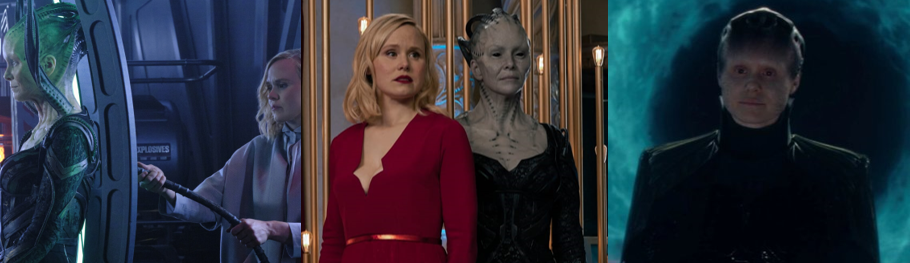
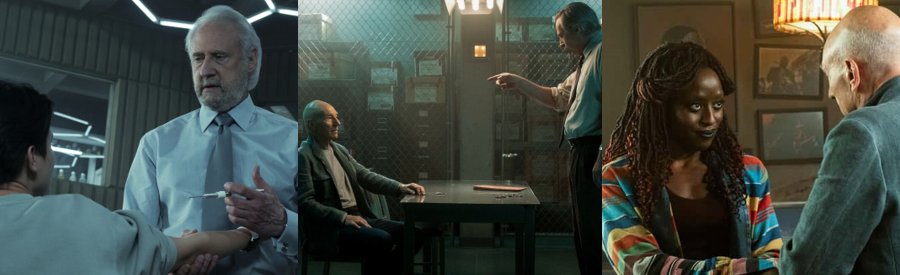
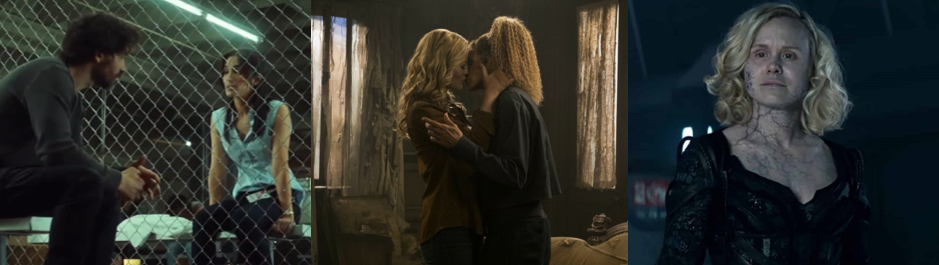
Dr. Robotnik is at his most malicious in SatAM and this two-parter showcases his rise to power.

As ever with SatAM, the star of the show is the reprehensible Dr. Robotnik. Never before or since has the rotund dictator been portrayed as such a malevolent and spiteful force (well, maybe in Sonic the Comic and obviously in the Archie comics…). SatAM-Robotnik was a serious threat, even when he was doing more comical stuff or being humiliated by his foes. Thanks to his incredible resources and relentless craving for power and conquest, Dr. Robotnik delights in subjecting his captives to the Roboticizer and turning them into his mindless, obedient slaves. Abusive towards his long-suffering nephew, Dr. Robotnik cares only about himself and his insane lust for power. Despite his prominent position of trust and authority alongside King Acorn, Dr. Robotnik has grander designs for himself and easily takes what he wants by force, without any real resistance. This oppressive, suffocating malevolence makes battling Dr. Robotnik an uphill, almost unwinnable battle even when Sonic has the speed and power advantage, and even time on his side as in this two-parter. Ultimately, Sonic and Sally’s efforts to prevent Dr. Robotnik’s coup d’état are met with failure but they are bolstered enough to continue fighting after remembering what they’re fighting for. While Rosie ironically didn’t actually show up in future episodes, “Blast to the Past” led to the creation of the De-Roboticizer and the Freedom Fighters’ attempts to restore Dr. Robotnik’s victims to normal. So, yeah, while it may have almost nothing to do with Sonic CD and vastly reimagines the Floating Island, “Blast to the Past” is still an enjoyable and significant two-part arc. SatAM remains one of the most influential Sonic canons and is still heralded as one of the best cartoons of the nineties. While it wasn’t exactly true to the source material and has, in my view, since been surpassed, I can’t deny my love for the series, especially darker and more introspective episodes like these two, so I’m always happy to return to the series and relive my youth.

My Rating:

Rating: 4 out of 5.

Great Stuff

Did you enjoy “Blast to the Past”? Were you disappointed by how few elements from Sonic CD were present in the story or were you just happy to see videogame elements incorporated into SatAM? Did you enjoy SatAM as a kid? What did you think to the depiction of Dr. Robotnik’s rise to power? Which of SatAM’s original characters was your favourite and what did you think to Sonic’s characterisation in the show? How are you celebrating Sonic CD’s anniversary this year? Whatever your thoughts on Sonic CD, or SatAM in general, feel free to leave a comment below or on my social media.