Movie Night: Malignant

Released: 10 September 2021
Director: James Wan
Distributor:
Warner Bros. Pictures
Budget: $40 million
Stars:
Annabelle Wallis, Maddie Hasson, George Young, Michole Briana White, Marina Mazepa/Ray Chase, and Jacqueline McKenzie

The Plot:
After her and her abusive husband are attacked at home, Madison Lake-Mitchell (Wallis) is plagued by terrifying visions of gruesome murders that she soon realises are real. Her plight worsens when the killer reveals a link to her mysterious past and she is forced to confront a horrifying secret about herself that has laid dormant for decades.

The Background:
The gritty, disturbing horror/thriller Saw (Wan, 2004) not only ushered in a new sub-genre of horror and spawned a long-running and influential series of gory films, it also put director James Wan and writer Leigh Whannell on the map. Since then, the duo have seen even more horror success with their Conjuring universe (Various, 2013 to present) that has enabled them to venture into other genres and produce more experimental horror films. An original idea with no connection to Wan’s similarly-titled graphic novel, Malignant was delayed by the COVID-19 pandemic but finally released to mostly mixed reviews and is currently on track to be a box office bomb with its $14.7 million worldwide gross.

The Review:
Malignant opens in the good old days of the early nineties at the Simion Research Hospital, where Doctor Florence Weaver (McKenzie) works to help children with mental and physical reconstruction after severe trauma. One look at the exterior of the hospital, however, should tell you that the facility is hardly the most benign and there’s a strong implication that Weaver and her associates have been experimenting on the children in their care in bizarre ways. The most destructive and promising of their charges is the mysterious and dangerous Gabriel (Mazepa/Chase), a monstrous young boy who is somehow only able to communicate by broadcasting his thoughts through speakers and radios and who can control electricity. One night, he flies into a violent rage, killing several staff, and Weaver has no choice but to “cut out [his] cancer” since he refuses to respond to their treatments.

Though she survives her attack, Madison loses her baby and starts experiencing disturbing visions.

The story then jumps ahead twenty-eight years to find pregnant Madison in an abusive relationship with her husband, Derek (Jake Abel); this is her third pregnancy and she is desperately hoping for the baby to survive this time as she has tragically suffered miscarriages previously. Although it’s said that Derek has beat on her before, this particular incident is caused specifically because of his heartbreak at having to continuously see his children die before they’re born, something he blames Madison for and, during an argument, he violently smashes her head into the bedroom wall and leaves her with a nasty head wound. That night, though, a shadowy supernatural entity toys with Derek before brutally twisting his head around and then attacking Madison; although she survives the assault, her baby doesn’t, and she’s left devastated and paranoid that the entity is still haunting her.

Sydney supports Madison even as she is haunted by visions of gruesome murders that turn out to be real.

On the plus side, this allows her to reconnect with her cute younger sister, Sydney (Hasson); thanks to Derek’s toxic influence, they haven’t been able to see each other for some time but Sydney stays by her sister’s side during her recovery and supports her even after she begins to suffer gruesome visions of murders. While sleeping or performing menial tasks, Madison is seemingly haunted by visions of a gangly, trenchcoat-wearing killer that leave her paralysed with fear and terrified out of her mind; her fear only grows when she realises that the killings are actually taking place and Sydney goes with her to inform the police in the hopes of catching the man responsible. Even when Madison reveals to Sydney that she (as in Madison) was adopted into Sydney’s family at eight years old, Sydney continues to support her and even conducts her own investigation into Madison’s mysterious past after she undergoes hypnotherapy to try and uncover her strange link to the killer.

Madison’s claims to see murders raise the intrigue and suspicion of the cops.

The brutal killings are investigated by Detectives Kekoa Shaw (Young) and Regina Moss (White); while Regina is more of a stern pragmatist, Kekoa is something of a workaholic and is so focused on his cases and crime scenes that he misses obvious flirtatious advances form the likes of Sydney and the equally cute crime scene investigator Winnie (Ingrid Bisu). While investigating Derek’s death, Regina immediately pegs Madison as the prime suspect due to her abusive nature and but Kekoa is more sympathetic to her plight; Regina is equally unconvinced (and even somewhat insulted) at Sydney’s claims that Madison is having visions of the murders but, while chasing up one of Madison’s visions, Kekoa comes face-to-face with their vicious killer, a seemingly supernatural and superhuman man who claims to be Gabriel. When their traditional methods hit a wall, Kekoa and Regina arrange to have Madison sit with a hypnotherapist and soon their investigation leads them down a dark path that forces Madison to go to her mother, Jeanne (Susanna Thompson), for answers to help fill in the gaps in her memory.

The Nitty-Gritty:
If there’s one thing James Wan has become really good at over the years, it’s building a sense of tension and dread; the sporadic and effective use of music definitely helps with this as scenes are either completely silent save for a character’s panicked breathing, punctuated by a chilly melody that rises to a crescendo, or startlingly flip from the mundane to the terrifying with a sharp pull of strings. While such jump scares aren’t for many, I always felt like Wan used them really well in Insidious (Wan, 2010) and his use of them (and music and silence) to help build a foreboding atmosphere is just as good here. it’s a pity, then, that Malignant suffers a bit from uneven pacing; building tension is one thing but the film definitely slows down a bit in the second act and the performances and deliveries don’t exactly make the middle section all that interesting either. The film meanders for some time as though it’s forgotten what it was doing and, when it does get back on track, it does so with a jarringly brutal shift that, while thoroughly bloody and entertaining, end sup feeling a bit rushed.

Horror clichés are given a unique new twist that keeps things interesting.

As a core aspect of Malignant is the question of the killer’s identity, Madison’s mysterious past, and the strange connection they seem to share, it’s difficult to talk about the film without spoiling too much. I will say, though, that anyone who’s had even a passing knowledge of horror films of this kind will probably see the twist coming, however Wan puts an absolutely ghastly spin on this twist that completely turns the film on its head and changes the way you view it. Indeed, much of the film is drawing from horror clichés that have been done before (it’s not the first time a character has had visions of a killer’s actions, for example, or dreamt of/been haunted by a serial killer) but Wan repackages these tropes with his own unique twist and presentation to keep things interesting. Wan further mixes things up with some unique and creative camera angles; when Madison has her visions, her surroundings bleed away into the killer’s location and the camera spins around her dramatically, which is very effective at putting us in her shoes and sharing her dread, and there’s a section where she’s being pursued by an invisible force that’s short entirely from a bird’s-eye view inside her house that is very Sam Raimi.
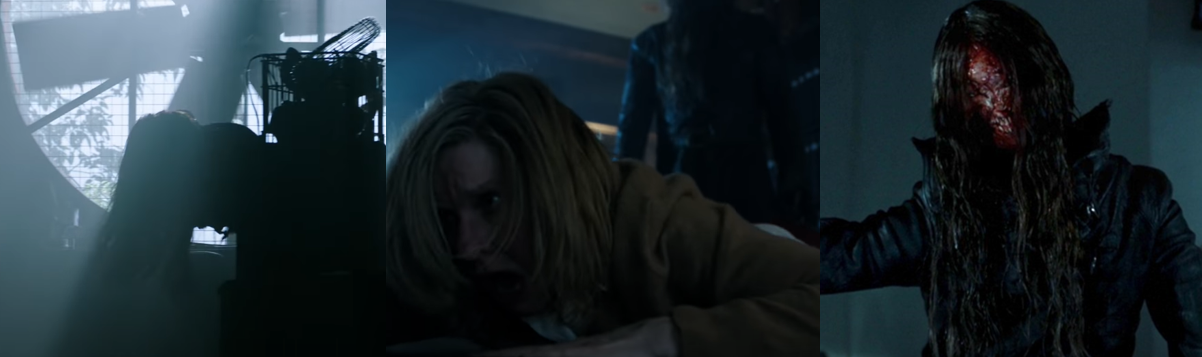
Gabriel ‘s twisted visage and movements make for an unnerving and inhuman killer.

Quite soon into the film, the killer identifies himself as Gabriel; he exhibits the same croaking, cackling voice as Gabriel and also the same control over electricity and lights. The killer is presented as both supernatural and tangible, appearing as an ominous and genuinely frightening black shadow when in Madison’s dreams and visions and as a lanky figure in a trenchcoat with long hair and wielding a trophy fashioned into a deadly knife. His movements are erratic and inhuman and remind me more than a little of the unsettling Onryō from film series like Ringu/The Ring (Various, 1998 to 2017) and Ju-On/The Grudge (Various, 2001 to 2020); the few times we do see his face, he’s a scarred monster of a man and he exhibits an unnatural control over his limbs and incredible superhuman strength, to say nothing of exerting a seemingly supernatural influence upon Madison. His design is extremely effective and makes for some effective scares; scenes are often framed in a way to keep areas of shadow in the background, meaning you’re constantly on edge waiting to catch a glimpse of the killer, and his tendency to bleed out of the darkness or appear out of nowhere makes for some effective jump scares. The film also benefits from his uncanny and superhuman prowess during one particular scene that sees him effortlessly slaughter almost an entire police precinct and the startling reveal of his true nature and connection to Madison completely changes the context of the film and asks for a repeat viewing.

The Summary:
I was intrigued by the trailers for Malignant; obviously, because of the way the world’s been, I wasn’t aware of this film at all until cinema’s opened up again and I found it to be an interesting premise with some creepy visuals. This is reflected in the film; the premise, while nothing groundbreaking, is executed in a unique and interesting way by mixing and matching other horror clichés into a new context and putting a terrifying twist on them. I’ve always said that it’s perfectly fine to go back to the well in movies, especially horror (how many haunted house films have there been, for example?), as long as the filmmakers put an interesting twist on the cliché and Malignant definitely does that. Unfortunately, it’s pretty easy to guess what the main twist is going to be, meaning that you’re just waiting for the film and the characters to catch up. When they do, there’s a horrifying spin on the reveal that helps to get the film back on track but that doesn’t completely make up for a middling middle half of the film and some odd performances and deliveries. Overall, it was an entertaining and chilling horror thriller; I can’t deny that I was expecting a little more from it but I stuck with it and was entertaining by the presentation and the foreboding ambiance being built up throughout the film, though I suspect that it might do better and possibly garner a cult following once it comes to home media.

My Rating:

Rating: 3 out of 5.

Pretty Good

Have you seen Malignant? If so, what did you think to it? Did you see the initial twist coming and what did you think to the twisted follow-up to that? What did you think to the film’s use of horror tropes and jump scares? Did you enjoy the film’s performances and the brutal kills? Would you like to see a follow-up to this concept and are you a fan of James Wan’s horror films? Whatever you thought of Malignant, sign up to leave a comment or leave your thoughts on my social media.


Movie Night: Batman Beyond: Return of the Joker: The Original, Uncut Version

Released: 23 April 2002
Originally Released: 31 October 2000
Director: Curt Geda
Distributor: Warner Home Video
Budget: Unknown
Stars: Will Friedle, Mark Hamill, Kevin Conroy, Angie Harmon, and Dean Stockwell

The Plot:
When the Joker (Hamill) suddenly returns from his apparent death and begins terrorising Neo-Gotham, Terry McGinnis/Batman (Friedle) is forced to go against the advice of his mentor, Bruce Wayne (Conroy), and begin an investigation into the darkest chapter of the former Batman’s career.

The Background:
Although a Batman animated series had been in the works during 1990, the release, and relative success, of Batman (Burton, 1989) and Batman Returns (ibid, 1992) caused a wave of “Batmania” and renewed interest in the character. Consequently, quite by chance, the idea of a new animated series influenced by both films and the 1940s Superman cartoons by Fleisher Studios, was thought up Bruce Timm, Paul Dini, and Eric Radomski, who spearheaded one of the most beloved and influential animated shows ever. Batman: The Animated Series aired eighty-five episodes between September 1992 and 1995 before being succeeded by twenty-four episodes of The New Batman Adventures (also known as The Adventures of Batman & Robin here in the United Kingdom) between 1997 and 1999. Once the show wrapped up, Warner Bros. brought many of the show’s creators back to continue the story in the then-futuristic world of 2019 with Batman Beyond (known as Batman of the Future in the U.K.) Batman Beyond introduced a younger Batman under the tutelage of an aged and long-retired Bruce Wayne and taking on all-new villains in a cyberpunk-style future. Though not quite as well-received and lauded as its predecessors or sister series, Batman Beyond was popular enough to warrant a direct-to-video feature film over other potential Batman concepts. Because the film’s production occurred in the wake of the 1999 Columbine High School shooting, numerous cuts and edits were made to the film upon its release, with an “uncut” version being released once the controversy had died down. Regardless, Batman Beyond: Return of the Joker released to critical acclaim, winning (or being nominated for) a number of awards, and is frequently regarded as one of the finest pieces of Batman media to ever be produced.

The Review:
My exposure to Batman Beyond is, admittedly, very limited; I watched Batman: The Animated Series on and off back in the day, never seeming to be able to get into a proper routine with it, but saw very little of its futuristic follow-up. When I did catch the odd episode, I can’t say that it really bowled me over; it was too different, too far removed from what I expected from Batman, with virtually none of the recognisable cast or characters. Hell, even Gotham City looked and felt different, and the show had very bleak and depressing connotations for fans of Batman: The Animated Series in its portrayal of Bruce as a grouchy, lonely, recluse. Still, the idea of an older, infirm Bruce mentoring a young successor had a lot of appeal to me and is definitely something I would have liked to see the comics do (particularly during the character’s “death” between 2008 and 2010). Despite that, Batman Beyond: Return of the Joker is well deserving of all the praise it gets; while I wouldn’t go as far as to say that it’s better than, or even on par with, the excellent Batman: Mask of the Phantasm (Radomski and Timm, 1993), very few of Batman’s animated features are able to reach that pinnacle and I’d say Return of the Joker does a decent job of coming pretty damn close.

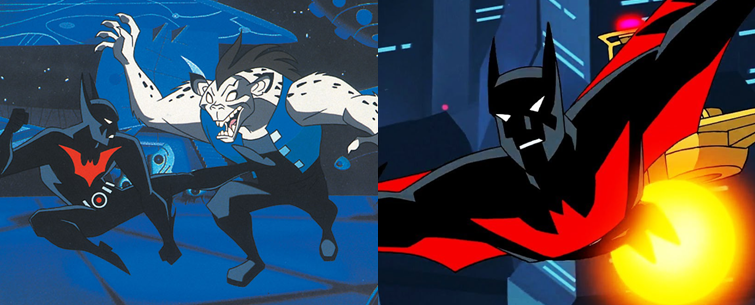
Terry is a very different kind of Batman, sporting more futuristic tech and a more agile physique.

While I’m lacking a lot of context for many of the film’s newer rogues, it’s not much of an issue since the “Jokerz” are generally just minions and cannon fodder to do the Joker’s bidding and to oppose Batman, though I did appreciate how their designs harkened back to Batman foes of old (with Stewart Carter Winthrop III/Ghoul (Michael Rosenbaum) resembling Doctor Jonathan Crane/Scarecrow and Delia and Deidre Dennis/Dee Dee (Melissa Joan Hart) aping Doctor Harleen Quinzel/Harley Quinn). The feature opens with an exciting action sequence featuring lots of laser blasts, explosions, mid-air chases, and action as Batman tries, and fails, to stop the Jokerz from stealing some high-tech computer parts. Despite all the advantages of Terry’s advanced Batsuit (including rocket boots, invisibility, and augmentations to his speed and strength), and the fact that he’s been Batman for a while now, Terry is still in training in many ways; he’s more experienced and capable but he’s still fallible and capable of messing up or being hurt. At times, though, I find him to be very reliant on the suit and the strength and other benefits it provides; it often feels like he was playing into the cliché of the role rather than being his own man at times but he manages to stand out by being a far more agile and witty Batman and approaching situations slightly differently than Bruce would/advises.

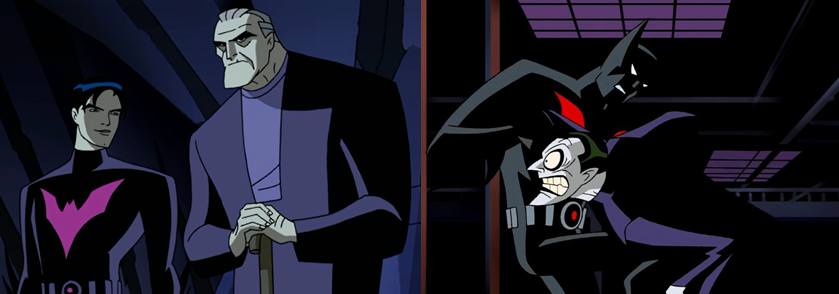
Terry has a complex relationship with Bruce and pulls no punches when fighting with the Joker.

Despite Bruce commending his work and commitment to the role, Terry is insulted when his mentor requests that he return the Batsuit in the wake of the Joker’s return. Terry initially refuses to acquiesce, seeing the role as a chance to make up for his past sins and troubled youth and confirming his commitment to helping others as Batman, and pushes both Bruce and Commissioner Barbara Gordon (Angie Harmon) for the truth about the Joker. This becomes a recurring element in the film, with Terry disliking the comparisons to Bruce’s old partners and striving to prove his worth as Batman rather than a pale imitation or a failed apprentice. This comes to a head in his inevitable confrontation with the Joker, in which Terry fights dirty with a crotch shot and constantly taunts the Joker, laughing at him, criticising his methods, and mocking him to drive the Joker into an angered frenzy.

Bruce is visible stunned by the Joker’s sudden and dramatic return to Gotham.

Bruce, of course, is now a grouchy, crotchety, tough mentor figure who has an interesting relationship with Terry, one that he clearly prefers to keep professional and mutual but you can tell that he values Terry as a replacement/apprentice. Though he’s clearly carrying a lot of ghosts and pain from his past, Bruce is as committed to both Batman and reclaiming his business and has absorbed a lot of wisdom from the long-dead Alfred Pennyworth, showing concern for Terry’s health and well-being and advising against going out on the town after a rough night as Batman, but lacks Alfred’s tact or bedside manner. Bruce’s stoic resolve is shaken upon the Joker’s return; he is visibly horrified by the Clown Prince of Crime’s reappearance and lapses first into moody silence and then into overprotectiveness after verifying the Joker’s identity. Bruce is disgusted at Terry’s sentiment, believing he is as misguided as his other teen partners who never knew what they were getting into, and a rift briefly forms between them because of Bruce’s refusal to explain his troubled past with the Joker. They make amends, however, when Terry saves Bruce from a dose of the Joker’s laughing gas, which is a horrifying sight since Bruce is accosted in his most private abode and the Joker explicitly reveals that he knows Bruce was Batman. Disturbed by being attacked in his civilian identity, Terry races to Wayne Manor and discovers the ‘cave in disarray and Bruce a cackling, grinning corpse-like figure. Succumbing to the Joker’s deadly toxin, Bruce just about manages to direct Terry to the anti-venom, and he is saved from certain death.

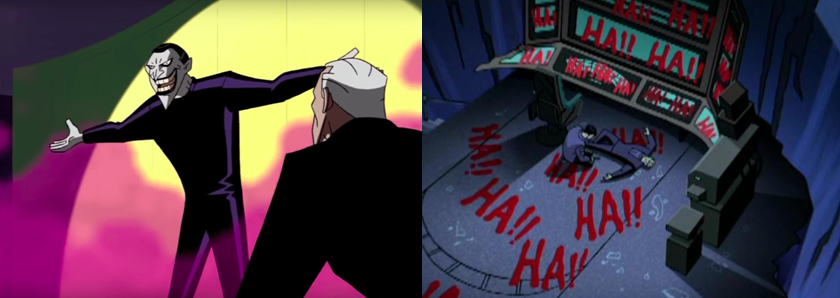
The Joker plans to unleash an orbital laser on Gotham to commemorate his return.

The Joker is, perhaps obviously, the star of the show here; as always, Mark Hamill delivers a sinister, maniacal performance that perfectly encapsulates Batman’s most persistent of foes. The Joker immediately establishes himself as a menacing and cold-hearted villain by callously shooting Benjamin Knox/Bonk (Henry Rollins) through the heart with the old “fake gun” trick and brazenly attacks the gala welcoming Bruce back to Wayne Enterprises. Though the Joker is critical, but admiring, of the new Batman, he dismisses him at every turn (referring to him as “Bat-Fake”) in favour of Bruce and wastes little time in setting in motion his plot to take control of an orbiting satellite and use its laser-firing capabilities to deliver massive damage to Gotham and commemorate his return.

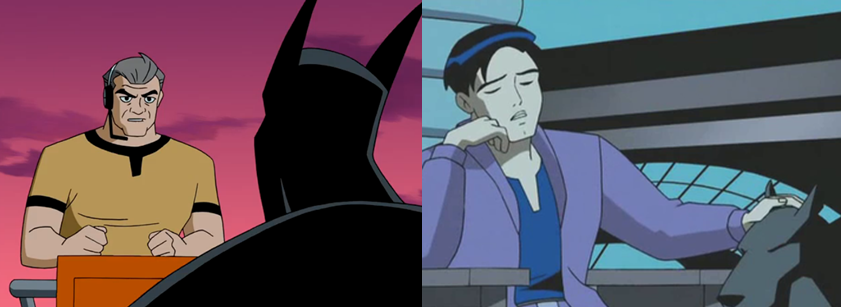
Terry’s deductive skills aren’t quite on par with Bruce’s but he brings a unique approach to the role.

Due to the unexpected and impossible nature of the Joker’s return, much of the film revolves around Terry trying to uncover the details of his last appearance and how and why the Joker has resurfaced, apparently from the grave. With Bruce and Barbara being tight-lipped on the matter, Terry pays a visit to the aged Tim Drake (Stockwell), formally Robin, believing him to be involved somehow. Though now happy, healthy, married, and long retied from the role, Drake is still able to detect Batman even with his fancy cloaking technology, but denies any involvement in the matter, expressing only regret and bitterness at the entire debacle and his gratitude at having left the life behind. When Terry’s next suspect, Jordan Pryce (Hamill), also turns out to be little more than a middle man, he briefly despairs at his inability to duplicate Bruce’s deductive skills and reasoning only to finally solve the mystery by observing the deliberate nature of the Joker’s attack on the Batcave and the common thread that links all the materials he’s stolen, proving again that Terry might not be quite on the same level as his predecessor but is still capable of solving mysteries in his own, unique way.

The Nitty-Gritty:
Of course, the true extent of the Joker’s villainy and viciousness isn’t exposed until Barbara reveals the tragic details of their last encounter with the Joker through a flashback to some thirty years ago when Batman, Barbara-as-Batgirl (Tara Strong), and Robin were acting as a crimefighting trio; one night, while out solo, Robin was kidnapped by Harley Quinn and held captive by the Joker for three weeks. After aggressively hounding the underworld, the duo was finally lured to the rundown, partially demolished Arkham Asylum by the Joker. There, they are horrified to find that Joker and Harley (Arleen Sorkin) have brainwashed and tortured Robin into being their surrogate son, Joker Jr/J.J. and that, despite Tim’s willpower and strength, he eventually cracked and told them everything about Batman and his operation, revealing his true identity (much to the Joker’s disappointment) and transforming Tim into a disfigured, cackling little Joker-boy

The Joker subjects Tim to endless torture and unwittingly seals his fate.

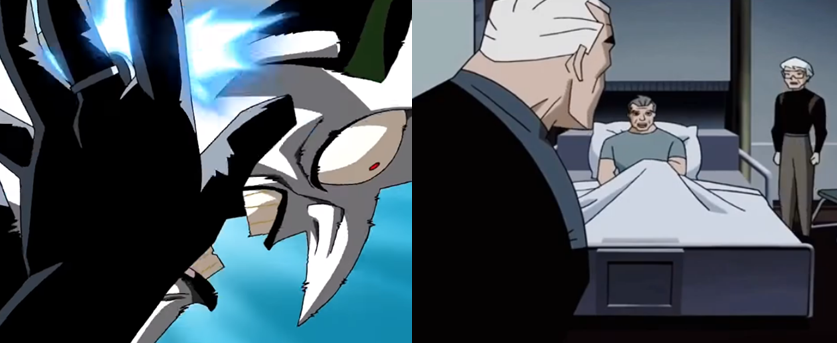
During the highly emotionally-charged fight that consequently breaks out, Harley appears to fall to her death (despite Batgirl’s attempt to save her) and Batman, overwhelmed by his anger, is baited by the Joker, who gleeful shows video footage of Tim’s torture, taunting Batman and his crusade/motivation and receiving a vicious beating as a result (Batman even threatens to “break [him] in two!” in a chilling moment). However, after being incapacitated by the Joker, Batman can only watch helplessly as Tim shockingly chooses to shoot the Joker through the heart rather than kill his mentor, breaking down into a cackling flood of tears afterwards. It’s a truly horrific and terrifying fate for poor little Tim Drake and which, clearly, has fundamentally soured Batman’s character ever since and led to him alienating all of his closest allies in his twilight years. Though Drake recovered from this horrendous experience, it turns out that the Joker has been “possessing” Tim’s body using a special chip he implanted during Robin’s capture and torture; Tim is completely unaware of the Joker’s influence and the Joker has been able to take over more and more often to the point where he can make the change at will and is on the verge of possessing Tim forever. When Batman confronts Drake about his involvement with the Joker, the former Robin grows confused and disorientated before becoming more and more agitated and crazed, incapacitating Batman’s suit and descending into maniacal laughter, literally transforming into the Joker before our eyes in a spine-chilling moment.

The Joker is destroyed and Bruce finally begins to reconcile with his former allies.

With the Joker’s destructive laser damaged and now heading directly towards their location, Batman and Joker engage in a surprisingly evenly-matched fist fight; it seems possessing Drake’s body as afforded Joker the means to go toe-to-toe with the much younger and more formidable Terry but, just as the Joker is about to throttle the life out of him, Batman uses the Joker’s own electrified joy buzzer to short out and destroy the chip on Tim’s neck, defeating the Joker once and for all and returning Tim to his body, sanity, and consciousness. In the end, Batman gets Tim to safety, allowing the former Robin to finally reconcile with Bruce, Harley is revealed to be alive (though a grouchy old woman), Tim (and, more importantly, Bruce) commends Terry’s abilities as Batman, and Terry flies off into the night to continue the never-ending fight as the Batman of the future.

The Summary:
Batman Beyond: Return of the Joker is an action-packed adventure, to be sure, but also easily the darkest of Batman’s animated features; Batman Beyond was already quite a bitter and cynical end for Batman and his allies, with Bruce ending up a grouchy old man with none of his friends or family left, but Return of the Joker really hammers home how bleak Batman’s later years became. Using elements of the “Death in the Family” storyline (Starlin, et al, 1988), Return of the Joker really sticks it to any fans of Robin by having Tim relentlessly tortured and abused and even hinting that Dick Grayson is just as bitter and full of regret as Tim and Bruce. Thankfully, amidst all this bleakness, there is new hope in the form of Terry, a young and very capable but also very different Batman who helps to bring some of the fire and meaning back to an otherwise jaded Bruce. Return of the Joker is framed as Terry’s ultimate test, one that no one else believes he is ready for thanks to the danger and near-mythical threat of the Joker. Throughout it all, though, Terry remains resolute and confident and is able to defeat the Joker in a way that Bruce never could.

My Rating:

Rating: 4 out of 5.

Great Stuff

What did you think of Batman Beyond: Return of the Joker and where would you rank it against other animated Batman films? Which version of the film do you prefer? Were you a fan of Batman Beyond? Whatever your thoughts, leave a comment down below and check back in next Tuesday for Batman Day!

Movie Night [Multiverse Madness]: Superman: Red Son


In September 1961, DC Comics published a little story called “Flash of Two Worlds” (Fox, et al), a landmark story that featured in The Flash #123 and brought together two generations of the Flash: the Golden Age Jay Garrick and the Silver Age Barry Allen. In the process, DC Comics created the concept of the multiverse, the idea that DC Comics continuity was comprised of an infinite number of parallel universes that allowed any and all stories and characters to exist and, more importantly, interact and I’ve been celebrating this ground-breaking concept every Sunday of this month!


Released: 25 February 2020
Director: Sam Liu
Distributor: Warner Bros. Home Entertainment
Budget: Unknown
Stars: Jason Isaacs, Amy Acker, Diedrich Bader, Vanessa Marshall, Roger Craig Smith, and Paul Williams

The Plot:
In an alternate timeline, Krypton’s last son crash-lands in Cold War-era Russia and Superman (Isaacs) is raised to be the figurehead of Joseph Stalin’s (William Salyers) Communist campaign. In response, Lex Luthor (Bader) devises a plan to neutralise and destroy the Soviet Superman while a renegade terrorist known as Batman (Smith) and the alien cyborg Brainiac (Williams) both plot to overthrow the superpowered tyrant.

The Background:
Having met with considerable success with their animated ventures, such as Batman: The Animated Series (1992 to 1999), Warner Bros. Animation began producing a number of direct-to-video animated features based upon existing and popular comic book storylines but Superman: Red Son was a bit of a change of pace as the last few animated features had been part of a shared universe. Red Son was based on the three-issue miniseries of the same name written by Mark Millar in 2003, a story that was part of DC’s “Elseworlds” imprint. A surprisingly dense text, it was a popular and poignant “What If” scenario published by DC Comics for its deconstruction of Superman’s ideals. Similarly, the adaptation received generally positive reviews and sold quite well on home media. Having never gotten around to reading the original comic and, although I’ve been aware of it and the premise for some time, this was actually my first time properly experiencing this alternate take on Superman.

The Review:
These days, the “Evil Superman” story has been pretty much done to death; it was a big part of the Injustice franchise (NetherRealm Studios/Various, 2013 to 2017), movies like Brightburn (Yarovesky, 2019) have explored the concept further, and even Henry Cavill’s version of the character has walked the line more than once, particularly in the questionable “Knightmare” scenario present in the DC Extended Universe films. Interestingly, Red Son takes Superman’s core values of “Truth, Justice, and the American Way” and simply transposes them into Soviet Russia; as a boy, Superman fears hurting others with his powers and hides them from the world as a result but, after showing them to Svetlana (Winter Ave Zoli), is encouraged to “give them to the State” in order to put them to the best use (i.e. for the betterment of their Communist superiors). As a result, the Soviet Superman isn’t initially evil in the way a lot of alternate versions of Superman are; he begins as a humble Communist patriot who is simply acting in the best interests of his country, which is basically what the mainstream Superman does more often than not.

Superman embarks on his own totalitarian regime predicated on peace through force.

At first, the Soviet Superman basically acts as a nuclear deterrent to the rest of the world, ensuring the strength, superiority, and prosperity of Soviet Russia in a similar way to how Jon Osterman/Doctor Manhattan acted for the United States in Watchmen (Moore, et al, 1986 to 1987). This Superman is uncomfortable in the spotlight and sees himself as a “servant of the State”, a man simply doing his part in ensuring Russia’s success, and is quick to attribute his feats to the betterment of the country rather than simply his actions. Similarly, he doesn’t hesitate to act to intervene when Metropolis is threatened by a falling satellite, expressing that the citizens of the United States aren’t his enemy or those of his government, and yet he is sceptical and distrustful of the press, such as Lois Lane-Luthor (Acker). In this version of the DC Universe, Lois is still a reporter but is married to Luthor; Lois’s ideals clash with those of Superman’s, with each of them disapproving of the actions and methods of each other’s governments. Clearly intrigued by Superman, it is Lois who opens his eyes to the horrendous actions of Stalin, which have left his beloved Svetlana dead after being imprisoned in a hellish gulag for knowing his true identity. Disgusted at the torture and treatment of the prisoners, and enraged at Svetlana’s death, Superman frees the inmates and brutally kills Stalin, usurping his authority in the process and beginning his own totalitarian regime. Just as she encouraged him to give his powers to the country, Svetlana’s dying words motivate Superman to be the strongest of the strong and to ensure that the Russian people are never again oppressed. Just as Luthor hoped, this causes Superman to become a significant threat as he easily ends the Korean War and demolishes the Berlin Wall, accepting collateral damage and loss of life to safeguard the majority and spreading a message of peace through aggressive intervention. Luthor’s machinations speed up his vendetta against Superman, which sees his him cloning a bizarre version of Superman using genetic material from this landing craft.

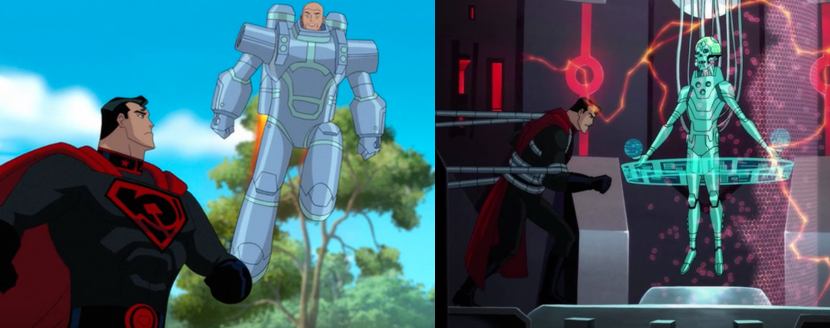
Luthor creates a clone of Superman that he purposely overloads to the point of death just to rattle Superman.

This “Superior Man” (Travis Willingham) resembles the traditional Superman in many ways, save for a “US” symbol on his chest, and has been programmed with complete subservience to his country (and to Luthor), however he’s little more than a blank slate. Luthor unveils Superior Man in a very public display and wastes no time in sending him to confront Superman, leading to a massive brawl between the two through the streets of Moscow. Horrified at the devastation and loss of life their conflict causes, Superman quickly diverts the battle away from innocent lives (interesting that the Soviet version of Superman is more concerned with safeguarding innocent lives than Snyder’s Superman in his debut film…), but the clone soon degenerates into a monstrosity and, finally, painfully dissolves when Luthor purposely overloads him with more power to test Superman’s limits and psychologically unnerve his superpowered opponent.

The Nitty-Gritty:
Superman: Red Son isn’t anything massively new when it comes to animation since it appears very similar to other DC animated movies and draws heavy aesthetic influence from Paul Dini and Bruce Timm’s animated works. The story continuously jumps through time, showing characters aging and noticeably changing (Luthor starts off quite athletic and with a full head of hair but soon grows pudgy and balding while Superman’s costume becomes darker and more adorned with military insignias and accessories as his campaign escalates), which covers a lot of ground very quickly in order to establish that these events take place over a long period of time and slowly shows the expansion of Superman’s Communist strength.

Superman and Wonder Woman forge an alliance in a world where Batman is a violent terrorist.

As with many alternate world stories and animated features, Red Son includes several cameos and additional characters, recast and changed by their place in this parallel world. This Superman forges a powerful alliance with Diana Prince/Wonder Woman (Marshall), who admires his accomplishments and his commitment to his ideals of unity through strength; their relationship is built out of a mutual desire to change the world for the better with their powers and resources rather than a romantic liaison since Diana is a lesbian in this world. In time, however, Diana comes to question Superman’s methods when he turns insurgents into little more than zombies. Similarly, Superman faces opposition from the Soviet Batman, here little more than a terrorist who openly opposes Superman’s regime after suffering in the same gulag as Svetlana and losing all faith the superpowered Premier. As with many alternate versions of Batman, the Soviet Batman is perfectly happy to kill, blowing up a museum dedicated to Superman’s accomplishments and killing numerous innocents in the process. Batman has also inspired several followers, who all wear his symbol and willingly follow his orders, which causes them to be subjected to brainwashing by Superman’s reprogrammed Brainiac technology. After many years of striking against Superman, Batman eventually overwhelms Wonder Woman and subdues her with her own Lasso of Truth in order to lure Superman into a trap. Using artificial red sunlight supplied by Luthor, Batman weakens Superman and mercilessly beats him into submission as payback for his part in the death of his parents and to liberate Russia from his oppressive rule. Ultimately, though, Wonder Woman breaks free from her binds and restores Superman’s powers, though Batman choose suicide over being subjected to Superman’s brainwashing and the whole ordeal causes Diana to walk away from man’s world.

Superman and Luthor team up to defeat Brainiac and Superman uses the opportunity to fake his death.

Finally, Luthor’s ongoing efforts to bring down Superman lead to him not only becoming President of the United States and repositioning the United States as a prosperous democracy, but also discovering Abin Sur’s crashed spaceship and bequeathing the power ring on his finger to Captain Hal Jordan (Sasha Roiz) to create an alternative version of the Green Lantern Corps. Although not wishing to go to war with the United States, or to simply remove Luthor from power, Superman is forced into action when the Green Lantern Corps attack; although saved by Diana, he refuses to listen to her pleas for peace and loses her trust and friendship forever when Themyscira closes its borders to the rest of the world. Although Brainiac’s invasion of the world is limited to a brief montage, its influence on the story is significant; defeated and reprogrammed by Superman, Brainiac not only subtly influences Superman’s methods and gives him the technology necessary to better enforce his rule, but has also been secretly plotting to take over the world through Superman’s increasingly aggressive methods. This comes to a head in the finale, where Brainiac’s machinations lead Superman to the White House and the world to the brink of all-out war. Thanks to Lois, Superman realises the error of his ways and even works alongside Luthor (in a version of his signature mech suit) to battle Brainiac on the White House lawn; Luthor’s technology even ends up playing a pivotal role in disabling Brainiac’s forcefields and allowing Superman to destroy the machine, faking his death in the process and retreating to a simple, unassuming life to allow humanity to make their own destiny…and their own mistakes.

The Summary:
Superman: Red Son is an entertaining glimpse into an alternate version of Superman, one whose ideals of patriotism and justice are skewed by his Communist beliefs and upbringing. Initially a propaganda tool used to showcase the might of the Soviets, Superman evolves into a surprisingly layered dictator, one who laments and avoids the taking of innocent lives but is willing to aggressively expand his empire through force, if necessary. In time, his regime enforces a notable peace through the expansion of Communist ideals, which makes him colder and more inhumane in his efforts as he subjects those who defy him to lobotomies and yet still believes that his methods are more humane than those of Stalin. Superman is positioned as the enemy of the free world, particularly Democratic nations such as the United States, which seeks to liberate the Soviet nations from his oppressive rule but, as with Superman’s methods, Luthor’s aren’t exactly benevolent. One thing I found particularly interesting was that Superman doesn’t have another name; renouncing whatever name he had as a boy and becoming a symbol of Communist power and ideology, he’s also far more separated from humanity because of the emphasis on his alien nature, which is skewed by Communist beliefs. It’s an interesting take on the character and helps to make the story stand out and showcase the surprising amount of depth to Superman, who retains his trademark desire to only do good and help others but this desire is distorted by his totalitarian ways.

My Rating:

Rating: 3 out of 5.

Pretty Good

What did you think to Superman: Red Son? How would you rank it against the other DC animated features and how do you think it holds up against its source material? Are you a fan of the Soviet Superman concept? What other alternate scenario would you like to see Superman thrust into some day? What is your favourite alternative take on Superman and what are your thoughts on the “Evil Superman” trope in comic books and other media? Whatever your thoughts on Superman: Red Son and other parallel versions of iconic characters, go ahead and leave them down below.

Movie Night: Shang-Chi and the Legend of the Ten Rings

Released: 3 September 2021
Director: Destin Daniel Cretton
Distributor:
Walt Disney Studios Motion Pictures
Budget: $150 million
Stars:
Simu Liu, Awkwafina, Meng’er Zhang, Florian Munteanu, and Tony Leung

The Plot:
Desiring a normal life away from his father, Xu Wenwu (Leung), who has led the terrorist organisation known as the “Ten Rings” for a thousand years thanks to his mysterious alien rings, Shang-Chi (Liu), a master kung fu, flees to San Francisco. However, his normal, everyday life is shattered when he is forced to confront his father, who has become obsessed with locating a lost mythical land.

The Background:
Shang-Chi was created by Steve Englehart Jim Starlin and debuted in December 1973 to capitalise on the popularity of kung fu (and, specifically, the late Bruce Lee) during that time. Despite being a staple of Marvel Comics ever since, and me being a die-hard comic book reader and collector, I can’t really say that I have any experience of Shang-Chi at all beyond a few passing mentions and I am much more familiar with Danny Rand/Iron Fist, so I was surprised not only when a movie was announced but also to learn that the concept was kicked around in the 1980s and that an adaptation very nearly saw the light of day in 2004. Seeking to introduce new characters for the fourth phase of the Marvel Cinematic Universe (MCU), MCU producer Kevin Feige saw Shang-Chi as a way to not only do the Mandarin justice but to also expand the scope of the MCU into Asian territories and a whole new genre. Following delays due to the COVID-19 pandemic, Shang-Chi and the Legend of the Ten Rings finally released to overwhelmingly positive reviews; critics praised the film’s martial arts and characters and regarded the film as a breath of fresh air for the MCU and the film managed to defy the pandemic by grossing almost $169 million at the box office.

The Review:
The movie opens with a quick recap of the titular legend of the Ten Rings, which actually doubles as two legends in one; basically, Xu Wenwu found the mysterious and powerful, potentially alien, rings about a thousand years ago and they granted him immortality, everlasting youth, and the power to conquer and reign. Like all men with power, though, he craved even more and, upon learning of the lost land of Ta Lo, ventured there to learn the powers of the Gods. While Trevor Slattery (Ben Kingsley) was a complete mockery of everything the Mandarin stands for, Wenwu isn’t exactly a one-to-one interpretation of the fictional warlord either; rather than controlling different elemental powers and such, the ten rings function more as a kind of magnetic inexhaustible energy field that Wenwu manipulates like whips or uses to fire concussive bolts, propel himself through the air, or form shield. I can understand why (the actual ten rings are probably a little too close to the powers of the Infinity Stones, maybe), though, and it definitely makes for some unique action and fight scenes involving the character.

This new version of the Mandarin end sup as one of the MCU’s most complex and sympathetic villains.

Crucially, however, Wenwu is a surprisingly complex and sympathetic character; in the comics, the Mandarin is generally always this power-hungry dictator who slaughters and destroys simply to feed his lust for power but Wenwu actually gave up his evil ways after meeting, being bested by, and subsequently falling in love with Ying Li (Fala Chen). Together, they sired two children and it was only after Ying Li died that Wenwu returned to the rings, rebuilt his criminal empire, and returned to amassing a formidable armed of well-trained assassins and terrorists. Having studied Ta Lo for years, Wenwu has become somewhat consumed by grief and guilt; he supplants the blame for Ying Li’s death into the people of Ta Lo and, later, even Shang-Chi himself and his entire motivation is based on the belief that storming Ta Lo and opening the “Dark Gate” they protect will return his love to him. Indeed, for the majority of the film, Wenwu is a well-spoken, intelligent, and even kind-hearted character; he’s stern and tough, and seen to be ruthless and uncompromising, and definitely has a dark past soaked in blood but it’s undeniable that he cares for his children, and his lost love, even if the allure of the ten rings is often more provocative for him.

When his father comes looking for him, Shang-Chi is forced to confront his past.

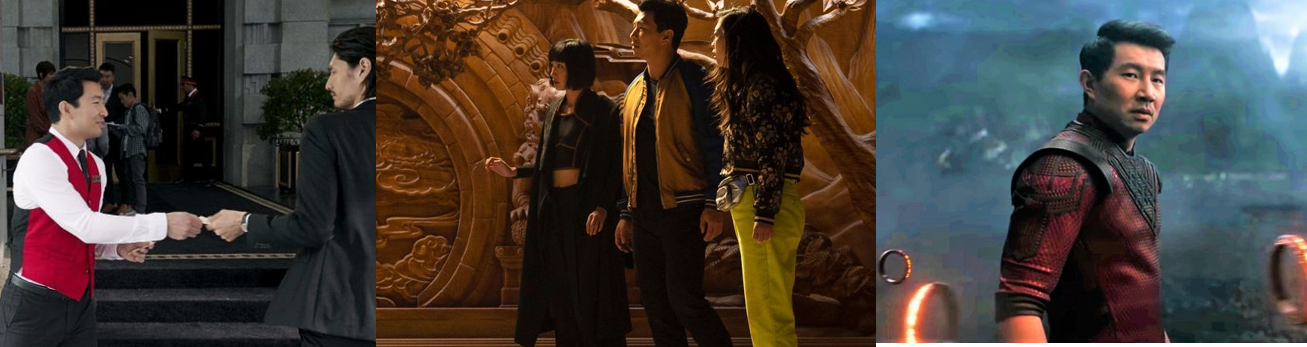
As for Shang-Chi, after his mother died he was trained to be an assassin, like all of the men under Wenwu’s command; a highly adept and dangerous fighter, he was given his first assignment at fourteen and used it as an opportunity to escape from his father’s organisation. Fleeing to America and changing his name to “Sean”, Shang-Chi was content to hide from his true self and his true power and eke out a meagre living as a valet attendant alongside his oldest and closest friend, Katy (Awkwafina). However, when Wenwu’s goons come for him (specifically the jade pendant the wears around his neck, a gift from his late mother), Shang leaps into action to defend himself and Katy using his incredible (and largely unmatched) martial arts skill. Realising this his sister is in equal danger, he travels to Macau (with Katy in tow) and is forced to face his past in the process; ashamed of his upbringing, the heinous acts he has committed in his father’s name, and his inability to save his mother, Shang is reluctant to face his inner demons but nonetheless adamantly opposes his father’s plot to burn Ta Lo to the ground and is convinced that Wenwu has gone mad with grief and needs to be stopped.

Katy provides the comic relief while Shang-Chi tries to repair his relationship with Xialing.

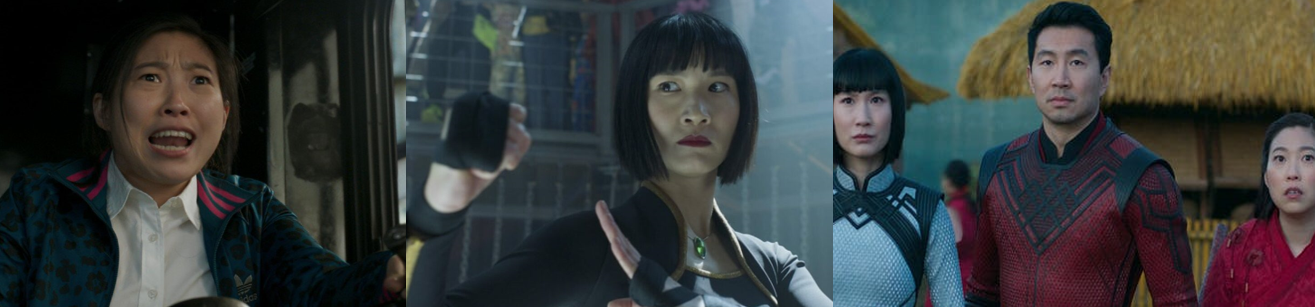
Katy largely fills two very crucial roles in the film: she’s both the audience surrogate and the comic relief, two roles she fulfils beautifully. Her rapport and banter with Shang is genuinely affectionate and entertaining and she is often getting into amusing situations that he has to rescue her from since she’s not really a fighter. Her enthusiasm and kind nature more than make up for this, though; even after learning about Shang’s true name and past, she sticks by him and her faith in him is never shaken. In fact, it’s only bolstered when she sees how good a fighter he is and when they reach Ta Lo, she is eager to help out in the ensuing battle in her own way and ends up not only being a vital part of the finale but also a highlight of the film. Shang’s sister, Xu Xialing (Zhang), more than makes up for Katy’s lack of fighting prowess; a grim and independent young woman, she and Shang were close as children but she grew to resent him after he left and never returned for her, and after spending a lifetime being shunned by her father and denied the same fighting training her brother received. Nonetheless, she has self-taught herself to be as formidable a fighter as he, especially with a roped kunai, and the reforging of their relationship as brother and sister is a key subplot of the film. Though they join forces fairly quickly after reuniting and agree that their father has gone mad, it’s only through truly working together to oppose Wenwu that their tension and lingering issues come to be resolved.

Some formidable, if underdeveloped, goons oppose our heroes alongside some fun cameos.

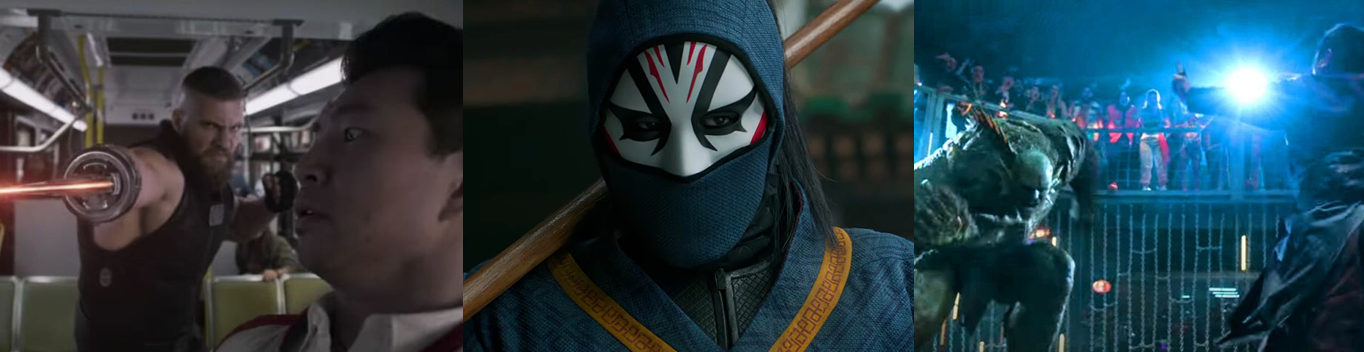
Of course, the odds are fairly stacked against are three heroes; Wenwu sends his two top enforcers, Razor Fist (Munteanu) and Death Dealer (Andy Le), to acquire Shang and Xialing’s pendants, alongside dozens of nameless, faceless, disposable members of the Ten Rings. While Death Dealer is little more than an unnamed mute with a cool look and some swift moves, there’s discord between him and Shang since Death Dealer was so instrumental in Shang’s harsh and brutal training as a child. We get a touch more personality for Razor Fist, a hulking brute of a man with a blade for an arm who follows his orders relentlessly but is still smart enough to know when to withdraw or refocus his goals for his own survival. Rather than being depicted as strictly a terrorist organisation, the Ten Rings is painted as a global, adaptable organisation that can topple governments and change the course of history through many and varied means. The film even has Wenwu comment on the unfortunate situation with Slattery and philosophise on the power and meaning being names and reputations, though I honestly could have done without revisiting this lingering plot point as I wasn’t impressed with the way Iron Man 3 (Black, 2013) handled the character. Of course, there are a few familiar faces from the MCU to be found here as well; both Wong (Benedict Wong) and Emil Blonsky/The Abomination (Tim Roth) appear in the film for what basically amounts to a brief cameo in Xialing’s underground fight club where Wong tricks Abomination into knocking himself out as part of a scam to fun his magical teachings.

The Nitty-Gritty:
Shang-Chi and the Legend of the Ten Rings is an extremely visual film that is heavily seeped in Chinese lore and mythology; aesthetically, it stands out beautifully from other films in the MCU, especially in the fight choreography and the largely oriental setting of the film once the characters move away from san Francisco. Even then, fights and shots are framed in a way that is visually engaging and entertaining, with the camera being fluid and flowing as smoothly as Shang-Chi’s fast and elegant movements. Macau provides an alluring neon background for Xialing’s fight club while Wenwu’s compound embodies his centuries of age and experience. Of course, it is Ta Lo that really makes the film stand out; an alternate dimension of mythological wonders come to life, Ta Lo is a land untouched by the ravages and wars of man and heavily reliant upon the old ways of combat and the benefits of magical armaments. The closest MCU parallels I can draw are to Black Panther (Coogler, 2018) and Doctor Strange (Derrickson, 2016) for the way it mixes traditional oriental folklore and magic with advanced technology, at times, and the use of both to create a whole new corner of the MCU, one rich in notions such as chi and lost lands of wonders that potential hold more dangers for this interconnected world.

Fittingly, the varied and impressive fights steal the show.

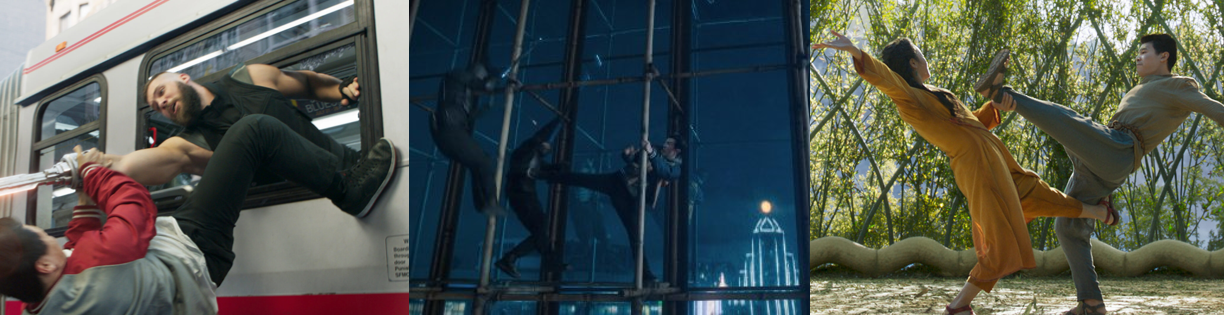
And then there are the fight scenes. Honestly, we haven’t seen fight scenes like this in the MCU at all, and they’re very rarely in cinema these days as well. Fights are fast-paced, kinetic, and full of energy, motion, emotion, and variety. Shang-Chi is every bit a living weapon, easily able to defend himself against numerous armed and unarmed foes even in close quarters like on a double-length bus or on a narrow scaffold while also being so away of his surroundings that has able to keep Katy safe from harm at the same time. At first, he is completely unmatched; even the hulking Razor Fist can’t hold to tough him so expert are his martial arts skills, but Xialing is able to defeat him in their cage fight thanks to Shang-Chi holding back against her and her having trained to be his equal. In Ta Lo, Shang-Chi learns additional martial arts skills, ones more focused on chi and serenity than anger and brute force, in order to stand toe-to-toe with his father, who is an accomplished fighter even without his magical ten rings. Thanks to a fluid camera and some truly incredible shots, Shang-Chi’s fights are a masterpiece of visual cinema that all seem to flow as one continuous shot and really highlight how talented the character (and the actors) are in their craft.

The film culminates in a massive battle against demonic creatures and between father and son.

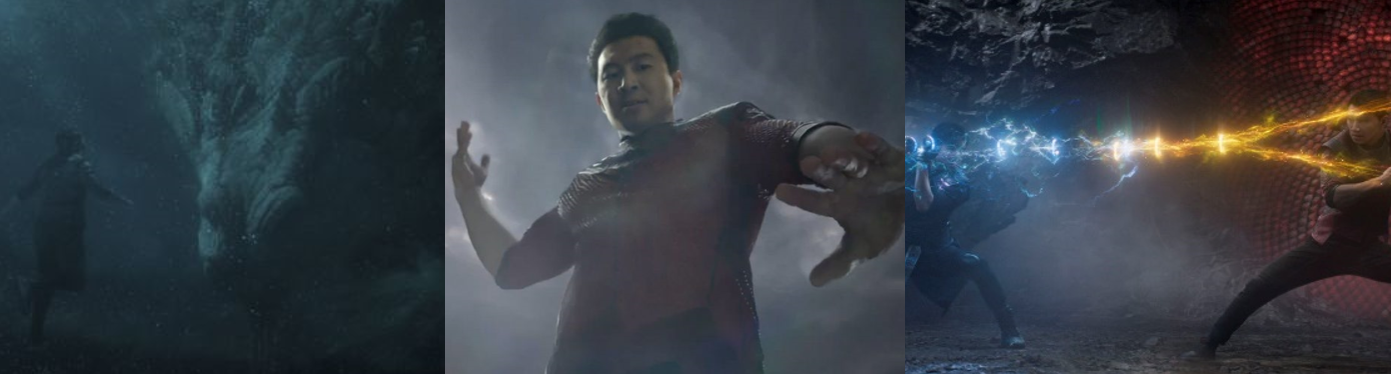
Similar to Black Panther, the film concludes with a dual sequence depicting Xialing and Katy battling alongside the residents of Ta Lo to defend it from the Ten Rings and Shang-Chi confronting his father in a series of escalating fist fights. The stakes become incredibly high as Wenwu fanatically pound son the Dark Gate, convinced that it will return Ying Li to him, only to unleash a swarm of demonic creatures that suck the souls from their victims! While Ta Lo and the Ten Rings are forced to fight together to fend off these winded demons, Shang-Chi desperately tries to talk sense into his father and to stop him from destroying the gate entirely. Thanks to Wenwu’s ten rings and his mad obsession, to say nothing of his centuries of experience and knowledge, to say that the would-be Mandarin is a formidable foe is more than an understatement. Shang-Chi, however, finds the strength to persevere and continue to battle against his father, even turning the power of the rings against him at one point and summoning one hell of a game-changing ally to aid in the fight, as he finally accepts his destiny and true self. While a lot of MCU films can have somewhat disappointing conclusions as the heroes battle a dark mirror of themselves Shang-Chi chooses an intense and emotionally charged finale that pits father against son. While the influx of gigantic CGI creatures can detract from this narrative, it doesn’t change how spectacular a debut and finale this is for the titular character, who makes an impactful first appearance in the MCU that appears as though it’ll have lasting ramifications for this shared universe of films.

The Summary:
Considering I absolutely nothing about Shang-Chi and was only really aware of three characters in this film (one of which being another vastly different interpretation of the Mandarin), I really enjoyed Shang-Chi and the Legend of the Ten Rings. The final battle was maybe a little overblown and dragged a bit and there were a few instances where we told things rather than being showed them but, overall, it was a very entertaining film. It feels like forever since I’ve seen a big budget kung fu film at the cinema and Shang-Chi definitely delivered on that front, showcasing easily the most fluid, complex, and impressive fight scene sin the MCU and shining a long-overdue spotlight on a hitherto unseen corner of Marvel’s interconnected world. Simu Liu is instantly likeable as the well-meaning, but flawed, main character, Awkwafina stole the show with her loveable and amusing escapades, and Tony Leung brought a depth and emotional complexity that I wasn’t expecting from one of Marvel’s most fearsome villains. With top-notch special effects, jaw-dropping fight scenes, and a focus on Chinese mythology and folklore, Shang-Chi has opened a door into even more spectacular territory for the MCU and I’m excited to see where the character and his world go next as Phase Four continues on.

My Rating:

Rating: 4 out of 5.

Great Stuff

Have you seen Shang-Chi and the Legend of the Ten Rings? If so, what did you think to it? Are you a fan of the title character? What are some of your favourite Shang-Chi stories and moments from the comics? Which of the film’s fantastical creatures and cameos was your favourite? What did you think to this new interpretation of the Mandarin and the way the character’s been handled in the MCU? What’s your favourite kung fu movie? Whatever your thoughts, sign up and leave a comment or let me know on my social media.

Movie Night [Star Trek Day]: Star Trek: The Motion Picture


On this day, 8th September 1966, the first episode of Star Trek (1966 to 1969) first aired, that being “The Man Trap” (Daniels, 1966). Since then, Star Trek has become a massive cultural phenomenon that still endures to this day, spawning numerous continuations, spin-offs, and ancillary media to become, perhaps, the most influential science-fiction franchise of all time. Accordingly, the 8th of September has been deemed “Star Trek Day” and is thus the perfect excuse to dedicate some more time to, and celebrate, this massive sci-fi franchise.


Released: 7 December 1979
Director: Robert Wise
Distributor: Paramount Pictures
Budget: $44 million
Stars: William Shatner, Leonard Nimoy, DeForest Kelley, Stephen Collins, and Persis Khambatta

The Plot:
Some time has passed since the conclusion of Star Trek; James T. Kirk (Shatner) has been promoted to admiral and the U.S.S. Enterprise is now under the command of Captain Willard Decker (Collins). When a mysterious and destructive alien cloud known as V’Ger approaches Earth, Kirk reassumes command of the ship, reuniting with his crew in the process, in a desperate attempt to discover V’Ger’s origins and intentions.

The Background:
I’ve mentioned previously that a big question facing many Star Trek fans is the choice between the Original Series and Star Trek: The Next Generation (1987 to 1994) and, thus, between Kirk and his successor, Captain Jean-Luc Picard (Patrick Stewart). As the Original Series never seemed to be on television when I was a kid, I mainly watched The Next Generation and its subsequent spin-offs so the majority of my exposure to the original crew came through the feature-films. Although Star Trek performed well during its original run, it gained significantly more popularity during re-runs; however, production of a feature-length continuation was met with considerable difficulties and took so long to get off the ground that creator Gene Roddenberry even started shopping around a follow-up series, Star Trek: Phase II. The success of sci-fi epics like Close Encounters of the Third Kind (Spielberg, 1977) and Star Wars (Lucas, 1977) convinced executives that they could benefit from a big-budget, feature-length Star Trek film, which was largely adapted from an unproduced script for Phase II. Necessitating the construction of extremely expensive sets, the film’s script underwent numerous rewrites and changes, often with the input and under the scrutiny of the returning cast members. Although the film grossed nearly $140 million, Paramount were disappointed that it didn’t perform as well as they had expected and the film was met with mixed to negative reviews. Even now, the film is largely considered a disappointment and one of the worst in the franchise but, if nothing else, its negative backlash led to a dramatic course correction in how subsequent films were written and produced.

The Review:
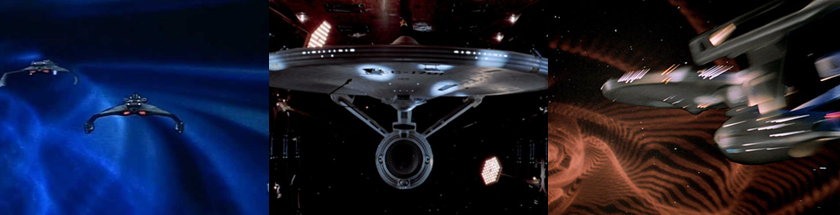
Star Trek: The Motion Picture opens promisingly enough by introducing us to the all-new, far more alien and threatening designs for the Klingons that would go on to define the alien race in all subsequent Star Trek media. An aggressive, war-like race, their first thought upon encountering the V’Ger cloud is to open fire, which promptly results in the destruction of their crafts. While this is a decent enough way to introduce V’Ger and sell the entity as a threat, it’s not much of an engaging or entertaining sequence and this is largely to order of the day for the film. With V’Ger inexorably approaching Earth (and with the Enterprise, of course, the only ship capable of meeting it in time), Kirk manages to convince his superiors to give him back command of the ship in order to investigate the entity. Kirk, now and admiral, appears to have reassumed command of the Enterprise primarily to fuel his ego and to have a command once more as much as because of his experience with the strange and unknown. This, of course, brings him into conflict with the Enterprise’s current captain, Decker, who resents Kirk taking control away from him and believes (rightfully so) that Kirk’s previous experience with the Enterprise is no longer valid due to the ship’s recent refit; this turns out to be the case as Kirk gets a little lost touring the ship and is unfamiliar with its systems and capabilities since they’ve changed so much.

Spock rejoins the crew after becoming aware of, and fascinated by, V’Ger’s consciousness.

You might notice that Mister Spock (Nimoy) is not among the crew members for nearly an hour; indeed, Spock has left Starfleet and is labouring on Vulcan at the beginning of the film and only joins the crew after sensing V’Ger’s consciousness. Having worked to suppress his emotions in the ritual of Kolinahr, Spock’s character at first seems to have taken quite a dramatic step back as he is initially cold towards his crew mates, almost seeming like a stranger amongst them, but he eventually reacclimatises to the crew. As pragmatic and logical as ever, Spock becomes so fascinated by V’Ger’s unique form of consciousness and composition that he takes it upon himself to attempt to make direct contact with the entity and is overwhelmed by the influx of information in the process. Indeed, V’Ger’s cold, logical composition is a direct parallel to Spock’s often unemotional nature but, after mind-melding with the entity, it is revealed that the difference is that Spock’s capacity for emotion separates him from the entity, which is confused and incapable of understanding emotion or appreciating beauty.

The unique friendship between Kirk, Spock, and Bones has very few chances to shine.

While Doctor Leonard “Bones” McCoy (Kelley), Lieutenant Commander Montgomery “Scotty” Scott (James Doohan), Lieutenant Pavel Chekov (Walter Koenig), Lieutenant Uhura (Nichelle Nichols), and Lieutenant Commander Hikaru Sulu (George Takei) all return in their familiar roles, there’s not a whole lot for most of them to do. Scotty gets a fair amount of time to shine in the early going as he introduces Kirk to the refitted ship and struggles to fix up the damaged engines and, while Bones only agrees to come along out of loyalty to his former captain, he plays a relatively influential role in pointing out Kirk’s disingenuous reasons for commandeering the Enterprise and commenting (in his trademark abrasive nature) on his rivalry with Decker. Unfortunately, there are far few moments for Kirk, Spock, and McCoy to interact, robbing the film of their amusing and love/hate relationship and making The Motion Picture a decidedly stale experience.

V’Ger finds a voice by transforming Ilia into a robotic duplicate.

Instead, the Enterprise is manned by a larger unfamiliar crew, the most prominent of which is Lieutenant (Junior Grade) Ilia (Khambatta), a Deltan who acts as the ship’s navigator and has a previous relationship with Decker. Unfortunately, any chance of this relationship being rekindled, or of exploring Ilia’s personality, are quickly dashed when V’Ger abducts her, apparently kills her, and has a robotic duplicate assume her form and act as its emissary. Though now a robotic lifeform, the probe contains Ilia’s memories and experiences, which it is briefly able to reignite through Decker’s influence. The antagonistic force of the film, V’Ger, is the original “cosmic cloud”; a mysterious, incredibly powerful, and seemingly malevolent force that contains a form of consciousness far beyond anything previously encountered. Capable of launching devastating energy attacks, it overcomes its difficulties in communicating with its Ilia double and appears to be a sort of vast ship whose design and concept are more than a little reminiscent of the Borg. V’Ger’s goal is based upon a misinterpretation of the programming of Voyager 6 by an alien race of living machines to assimilate information and then return to Earth and “The Creator”, meaning that the entity is far from malicious and is, instead, a titanic machine that has gained sentience and is simply trying to understand its purpose and is little more than a demanding child. However, when V’Ger’s attempts at communicating with its creator go unanswered, it comes to believe that “carbon lifeforms” have infested the Earth and threatens to eradicate the infestation to fulfil its mission to return to its creator.

The Nitty-Gritty:
I think one of the things that always bugged me about this movie is that so much has changed between the Original Series and the Motion Picture. All of the familiar uniforms for gone, replaced with a dull, uninteresting outfits that are mostly grey and uninspired and, while you might think it’s good that the Enterprise has undergone a dramatic refit as it makes for bigger and far more elaborate sets (and, indeed, these are impressive), the film wastes so much time in introducing us to the ship. The model effects are top-notch, don’t get me wrong, and it really helps sell the awe, ambiance, and iconography of the Enterprise but my God! I still feel like I’m watching it even now, it went on for that long!

The model shots are great, which is good as the film spends a lot of time dwelling on them.

This is, of course, symptomatic of the era that the Motion Picture was made; sci-fi films, especially those set in space, loved their long, lingering shots and to build a sense of atmosphere and grandeur and I can respect that but it constantly grinds the film to a halt and gets in the way since the film seems more interested in showing off its impressive (if, obviously, dated) special effects and model shots than it does with actually moving the plot along. Pacing is a real problem in the film, especially in the first hour or so; it plays very much like an extended episode of the series, with the crew encountering numerous random obstacles in their otherwise straightforward journey and the film constantly featuring Kirk recording his thoughts in the Captain’s Log. Because of the refit, the Enterprise is in chaos as the crew try to get the ship ready for launch, immediately selling the idea that this isn’t the same Enterprise we knew from the Original Series and necessitating a quick tour of the film’s impressive sets. The downside to this, though, is that the transporters are dangerously malfunctioning, and the ship’s capabilities are limited, which mainly exists simply to fuel the animosity between Kirk and Decker since Kirk’s decisions almost get the crew killed when they randomly come across a wormhole.

V’Ger’s core and interior are certainly impressive and mysterious.

The special effects are impressive and ambitious for the time, admittedly; as I said, there’s some lovely model shots at work and the Star Trek concept clearly benefits from having a much larger budget. Sadly, the film opts to have a rather underwhelming antagonist at face value; V’Ger is literally just an ethereal cloud of blue lights but, once the Enterprise penetrates its energy field, it is revealed to be a complex biomechanical entity, of sorts, that is extraordinary to look at and clearly took a lot of time to construct but its more abstract nature makes V’Ger more like a force of nature. This is best seen during Spock’s absolute head-trip of a journey into V’Ger’s vast core, where he witnesses all of the knowledge and experience V’Ger has accumulated over the years. This all culminates in a journey to V’Ger’s core, a frankly extraordinary set that is as grand and complex as it is bland; despite this, it’s a suitably cold, alien environment, with the remains of Voyager 6 sat at its core, that dwarfs the cast. In the end, Kirk and the others figure out that V’Ger requires a now-archaic signal in order to complete its mission but, having learned all that there is to learn (a somewhat contradictory assertion since V’Ger has somehow learned nothing of emotion or carbon lifeforms), it requires tactile human contact in order to “evolve” and, thus, Decker sacrifices himself to facilitate this. Yes, in the end, Star Trek: The Motion Picture basically becomes a rip-off of 2001: A Space Odyssey (Kurbrick, 1968) and Kirk, Spock, and McCoy are left to muse on the ramifications of this new, undisclosed lifeform.

The Summary:
God, what a bore-fest! I feel like I lost two hours of my life and fell into some kind of coma watching this film. There’s a reason that I haven’t seen it in about ten years; it’s just so boring, cold, and clinical…so drab and uninteresting. I can fully understand and appreciate that the seventies were a different time and that seventies sci-fi, especially, was very much about establishing an atmosphere and revelling in the vest intergalactic ambiance of outer space but Star Trek: The Motion Picture pretty much embodies all the worst aspects of Star Trek. Needlessly mired in philosophy and scientific curiosity it sacrifices not just action but characterisation in service of its plot and it’s truly a shame as there are glimmers of the rapport between Kirk, Spock, and McCoy that were so entertaining in the show and subsequent movies and the plot is actually rather fascinating. The idea of a living machine attempting to reconnect with its creator and evolve into a higher form is intriguing and the revelation that it was all because of an old Earth space probe and the suggestion of some vast race of sentient machines all has a lot of potential but it’s so poorly executed. For Star Trek’s big feature-film debut, The Motion Picture just played things way too safe and sucked all the fun and adventure out of Star Trek and no amount of impressive and ambitious sets, models, and special effects can save this one.

My Rating:

Rating: 1 out of 5.

Terrible

Are you a fan of Star Trek: The Motion Picture? If so…why? What is it, exactly, about the film that you enjoy? If you’re not a fan, what was it that turned you off about the film? What did you think to Kirk’s portrayal as an egotistical, self-serving asshole? Did you like the new designs for the Enterprise’s interiors and the new characters the film introduced? What did you think to V’Ger; do you think it should have been officially recognised as being involved in the Borg’s origin or do you think it’s best left as one of those incredible space phenomena? Which Star Trek captain, crew, show, or movie is your favourite and why? How are you celebrating Star Trek Day today? No matter what you think, feel free to leave a comment down below.

Movie Night: Candyman (2021)

Released: 21 August 2021
Director: Nia DaCosta
Distributor:
Universal Pictures
Budget: $25 million
Stars:
Yahya Abdul-Mateen II, Teyonah Parris, Colman Domingo, Nathan Stewart-Jarrett, and Michael Hargrove

The Plot:
Thirty years after Candyman (Rose, 1992), the once crime-ridden area of Cabrini-Green has become an upstanding neighbourhood. However, when struggling artist Anthony McCoy (Abdul-Mateen II) learns of hook-handed bogeyman Candyman, his mental and physical state deteriorate as the fearsome killer begins a new campaign of terror.

The Background:
In 1985, visionary British horror writer Clive Barker wrote a short story titled “The Forbidden”, which was published in the fifth volume of his Books of Blood series (ibid, 1984 to 1985). The story was adapted into the critically and commercially successful Candyman (Rose, 1992), a haunting horror story that immediately turned star Tony Todd into a modern horror icon. While its two sequels were far less successful, the first film stood the test of time for its depiction of racial tensions in American society. Although many parties attempted to get a fourth Candyman film off the ground, the production was stuck in Development Hell for nearly twenty years before Jordan Peele, fresh off presenting similar themes in his lauded films Get Out (ibid, 2018) and Us (ibid, 2019), came onboard to produce a direct sequel to the 1992 original, much to the approval of Tony Todd. After being delayed due to the COVID-19 pandemic, Candyman was finally released to largely positive reviews and eventually produced a box office gross of over $77 million.

The Review:
The original Candyman, while a cult classic, is often lost to the mists of time; in many ways, it’s an under-rated horror classic that often gets overshadowed by bigger budget or more popular horror films and franchises. Yet, with its haunting soundtrack, visceral and shocking kills, and Tony Todd’s enigmatic charisma, the film remains one of the most memorable of its genre. When I heard that it was getting the same “requel” treatment as Halloween (Green, 2018), I was intrigued; unlike many horror franchises, Candyman was never beaten into the ground with endless sequels and remakes so doing a follow-up thirty years later actually felt like a fresh concept. Throw in Jordan Peele, the alluring Yahya Abdul-Mateen II, the advertised return of Tony Todd, and some intriguing trailers and I was left thinking that this follow-up could have a lot of potential.

Brianna loyally supports Anthony as he struggles to find artistic inspiration.

The film picks up some thirty years after the events of the first film; Cabrini-Green, once a crime-ridden ghetto, has been gentrified and largely transformed into a modern, affordable housing estate for artists and creative types like our main character, Anthony McCoy. A struggling artist, Anthony hasn’t produced a worthwhile piece of artwork for some time and is having a hard time finding suitable inspiration; not only that, but his pride is constantly taking hits when friends and family alike continue to insinuate that he’s only able to remain relevant because of the influence of his girlfriend, art gallery director Brianna Cartwright (Parris). Despite this, the two have a very stable and loving relationship; she is incredibly supportive of him, doesn’t seem to mind that she’s having to shoulder their financial responsibilities, and offers both constructive criticism of his artwork and defends him to others not just out of love for him but out of a genuine belief in his artistic talent.

After learning of Daniel Robitaille, Anthony becomes obsessed with the Candyman legend.

Anthony finds himself creatively inspired when he learns of the events of the first film; Cabrini-Green resident and laundromat operator William Burke (Domingo) recaps for Anthony how art student Helen Lyle (Virginia Madsen) came to the area investigating the urban legend of Candyman and then apparently snapped and kidnapped a baby before burning herself to death in a bonfire. These sequences are all beautifully rendered using cardboard cut-outs and shadows to create visually interesting and ominous scenes rather than simply reusing footage from the first film, with Madsen returning in photographs and voice clips when Anthony acquires her tape recorder and notes to learn more about the legend of Candyman. Becoming obsessed with the tale of Daniel Robitaille, who was tortured to death simply for falling in love with a wealthy white woman, Anthony finds his career on the turnaround when his abstract piece “Say My Name”, which hides paintings of violence and strife behind a mirrored façade, is mentioned on the news following a violent killing at the art gallery.

Anthony’s mental and physical state deteriorate as the Candyman is evoked.

Unbeknownst to Anthony, his work summons the Candyman’s vengeful spirit once more; now depicted as a “hive” of unjustly murdered African-Americans, the Candyman in his film is the spirit of hook-handed Sherman Fields (Hargrove), a strange but ultimately harmless Cabrini-Green resident from Burke’s childhood who was discriminatorily beaten to death by overzealous cops after being fingered for placing razorblades in the sweets he offered to Cabrini-Green’s kids. Thanks to Anthony’s work, more and more people feel compelled to try out the legend and say Candyman’s name five times in a mirror, which not only results in their brutal death at his hooked hand but also increases the spirits strength and influence over Anthony, whose physical state deteriorates after suffering a seemingly innocent bee sting and whose mental state crumbles as he becomes both obsessed with Candyman and guilt-ridden over his part in summoning the phantom and enabling his killing spree.

The Nitty-Gritty:
One of the many things that made Candyman so memorable was the haunting score and methodical, ominous shots of rundown urban areas often overlooking in film (and in real life). a prominent theme in Candyman was that Cabrini-Green had basically become a lawless area where gangs and violent criminals were free to terrorise the residents and any passers-by with few repercussions as the police had little authority there, and the real-life danger of the destitute area and its overlooked populace only added to the first film’s menace and mystique. In this new Candyman, Cabrini-Green has been robbed of its ambiance; having been largely torn down and replaced with high-rise condos or left to be reclaimed by nature, the area may no longer home to gangs or downtrodden minors but it is still regarded unfavourably by both the social elite and former residents.

The use of mirrors makes for some great kills but Tony Todd’s absence is notable.

Unlike the original film (and, quite possible, the sequels, though I can’t really speak to this), Candyman places a great emphasis on mirrors; once summoned, Candyman is intangible and invisible and only appears when seen in a reflective surface. This results in a number of unique and memorable kills as Candyman flashes in and out of shot depending on how many mirrors are in the scene and means that you’re left staring intently at the screen any time mirrors or windows are present to try and catch a glimpse of the hook-handed killer. Candyman’s kill count is incredibly high in this film compared to the original; Sherman Fields is much more a sadistic supernatural killer rather than an enigmatic phantom and has no interest in captivating targets into continuing his legend in the same way Daniel Robitaille did. While this results in some vicious, brutal kills and some shocking and well-executed jump scares and shots of Sherman leering through mirrors, I couldn’t help but feel a little disappointed. Candyman is one of the handful of horror villains who is actually as eloquent and charismatic as he is terrifying and, while this new Candyman definitely captures the same ominous atmosphere of the original and is an intense horror experience, it definitely feels as though something is missing without Tony Todd’s booming baritone enticing people to “be [his] victim” and kind of reduces Candyman more to a typical slasher villain with a fancy gimmick rather than the tragic figure he was in the original film.

The film succeeds at standing by itself and being a follow-up, as well as being culturally relevant.

Overall, the film does a great job of continuing the urban legend of Candyman; since the characters discover the events of the first film throughout, it’s not really necessary to have seen to original Candyman before seeing this one; if anything, this new Candyman could inspire new audiences to seek out the original movie to add additional context to some of the revelations brought forth here but I think it does a decent enough job of standing by itself and being a follow-up. As you might expect, bigotry and racism are central themes in Candyman; for the most part, they’re subtle, with the likes of art critic Finley Stephens (Rebecca Spence) casting shade on “people” like Anthony and quickly clarifying that she meant artists rather than racial minorities and her only really becoming interested in “Say My Name” after it is linked to a series of horrific murders. Similarly, Burke relates how white people purposely create ghettos like Cabrini-Green simply so that they have more ammo to use against their people and then profit from gentrifying the areas, and feels an empathy for the original Candyman, Daniel Robitaille, whose only crime was falling in love. Nowhere are the racial tensions more explicit, however, and the film’s message at its most uncomfortable and relevant, in the depiction of local law enforcement; particularly in the ending, but throughout the film, the police are a law unto themselves who literally shoot first and ask questions later. As uncomfortable as this may be, the depiction of police violence against racial minorities has never been more relevant and Candyman is a perfect platform to explore this issue; indeed, Candyman recontextualises the vengeful spirit into one of retribution as he can be evoked to strike back at the same bigotry that created him in the first place.

The Summary:
Unquestionably, Candyman is one of the most intense and gripping horror films I’ve seen in recent memory. The film spectacularly evokes the same haunting atmosphere of the original and is bolstered by some unique cinematography, especially when presenting the titular phantom. Seeing characters be cut to shreds and manhandled by an invisible force that only reveals itself in mirrors makes for some brutal and powerfully violent kills and horror; the fact that Candyman often floats ominous through the air and haunts his victims from the shadows of mirrors only adds to the tension. Candyman does a great job of showing Anthony’s mental and physical degradation as the urban legend begins to literally consume him and, thanks to its resonating themes of racism and bigotry, Candyman is definitely an incredibly relevant film that speaks to today’s society. While I felt a little disappointed by Tony Todd’s absence and Candyman’s depiction as more of a groaning slasher than an enigmatic phantom, Candyman remained a chilling and impressive reintroduction and recontextualization of the titular character and ended up being a more-than-worthy follow-up to the haunting original.

My Rating:

Rating: 4 out of 5.

Great Stuff

Have you seen Candyman? If so, what did you think to it and how do you feel it compares to the original film? What did you think to the film’s performances and the depiction of its new Candyman? Were you a fan of the use of mirrors and which of the film’s kills was your favourite? Which of the Candyman films is your favourite and what do you think to this tendency to create follow-ups that ignore existing continuity? Would you be interested in seeing a sequel to this film or do you think it’s better to leave it as a stand-alone sequel? Whatever your thoughts on Candyman, feel free to share them below.

Movie Night: Constantine

Released: 18 February 2005
Director: Francis Lawrence
Distributor: Warner Bros. Pictures
Budget: $70 to 100 million
Stars: Keanu Reeves, Rachel Weisz, Tilda Swinton, Shia LaBeouf, and Djimon Hounsou

The Plot:
Cynical exorcist John Constantine (Reeves) spends his days smoking and “deporting” demons to Hell in a desperate attempt to earn salvation before he dies from lung cancer. However, in begrudgingly helping troubled police detective Angela Dodson (Weisz) learn the truth about her twin sister’s death, he stumbles upon a much larger and darker plot to bring about the apocalypse.

The Background:
Constantine is an adaptation of DC Comics’ popular cult comic series John Constantine, Hellblazer. Created by Alan Moore and Stephen R. Bissette and first appearing in the pages of The Saga of Swamp Thing #37 (Moore, et al, 1985) and visually inspired by British musician Sting, Constantine earned his own solo series in 1988 and became a popular anti-hero thanks to his grouchy demeanour and surreal occult misadventures and plans for a live-action adaptation of the character can be traced back as far as 1997. After passing through the hands of different directors and having a variety of actors attached to star, Constantine finally gained traction in 2002 but the title change wasn’t the only alteration the filmmakers made to the character: despite drawing inspiration from the “Dangerous Habits” storyline (Ennis, et al, 1991), the character was changed from a blond-haired, brown trenchcoat-wearing Liverpudlian conman to Keanu Reeves in a black coat with a cantankerous attitude. Despite this lack of fidelity to the source material, Constantine did relatively well at the box office, earning over $230 million; sadly, despite earning a well-deserved cult following over the years, the film was met with lukewarm reactions upon release, which has cast doubt over the chances for a sequel. As much as I enjoyed the later, unrelated Constantine series (2014 to 2015) and Matt Ryan’s remarkable turn in the role as part of the “Arrowverse”, I’ve always had a soft spot for Constantine and, considering that today is Keanu Reeves’ birthday, this seems like the perfect time to revisit this underrated gem.

The Review:
While not a snarky, Liverpudlian conman, Constantine is a moody, blunt, egotistical prick through and through; he’s thoroughly unlikeable in many ways with his demanding and condescending attitude but, while he acts like he has no interest in the welfare and interests of others, Constantine goes out of his way to help those in need and to exorcise any demons that are brought to his attention. Of course, he only does this out of his own self-interests; slowly and painfully dying of inoperable lung cancer, he is determined to buy his way into Heaven by “deporting” any demons and spirits that violate the rules and try to cross over. Yet, he doesn’t appear to take payment for his actions and tries, in his own grouchy and irritable way, to keep those around him safe (primarily by pushing them away to keep his conscience clean but still…) Though irritable and cantankerous, Constantine instantly recognises that something is amiss when a demon attempts to cross over to the living world and believes that something bigger and more threatening is coming as a result. He is disgusted when neither Good nor His God’s emissary, the Archangel Gabriel (Swinton), offer any assistance and resolves to sort the issue out by himself in his own sullen way.

Initially sceptical, Angela comes to warm to Constantine’s abrasive demeanour.

Constantine isn’t a man who suffers fools gladly and has no time for red tape, excuses, or time-wasters and, though he knows that he is destined to go to Hell for his sins, and to die from his habitual smoking, he nevertheless continues to oppose demons and angels alike as much as he continues to smoke. Constantine’s investigations into this larger threat eventually cause him to cross paths with Angela, a cop who is haunted by her uncanny ability to sense where her targets are without even seeing them and tormented by the sudden apparent suicide of her twin sister, Isabel (also Weisz). Raised as a Catholic, Angela repeatedly repents for her actions as a cop and her conviction that her sister would never had killed herself leads her to Constantine, with whom she initially has a frosty relationship due to his rude and bitter nature. As the audience surrogate, we learn alongside Angela as Constantine exposits the “rules” of the wager between God and the Devil, Lucifer Morningstar (Peter Stormare), and take a dive through the nightmarish landscape of Hell itself. Angela is a tough and capable character with a real vulnerability to her; Isabel’s death clearly rattles her and there’s a definite sense that she’s way out of her element with all the supernatural mumbo-jumbo that follows Constantine and, yet, she repeatedly calls out his shit and holds her own and she only ends up in need of rescue because of her latent psychic abilities.

Constantine’s allies have complete in faith in him despite their nasty tendancy to die.

Constantine’s investigation is aided by a variety of his old allies; his constant companion is Chas Kramer (LaBeouf), here interpreted as a young and enthusiastic cab driver who is eager to be more involved with Constantine’s work and continually annoyed at the way he keeps him at arm’s length. Two more of Constantine’s allies, Beeman (Max Baker) and Father Hennessy (Pruitt Taylor Vince) help him to piece together the puzzle of the looming threat because they genuinely believe in and care for Constantine. Papa Midnite (Hounsou), meanwhile, is a far more reluctant ally; operating a bar that is “neutral ground” for Heaven and Hell, he refuses to get involved or to favour one side or the other. As detestable as Constantine can be at times, it’s heart-breaking to see his friends and allies die purely by association with him and it really lends a sense of tragedy to the character as it’s easy to see why he keeps them at arm’s length and is the way he is as he “doesn’t need another ghost following [him] around”. One thing I also really like about Constantine is the suggestion that Constantine, Midnite, Beeman, and Hennessy were once this team of exorcists and demon hunters and I would have loved to see their past expanded upon more in a sequel or prequel.

Constantine battles many demons but his true antagonist remains elusive.

A slight downside to Constantine is the lack of a tangible primary antagonist; Manuel (Jesse Ramirez) fulfils this role to a degree as, after finding and being possessed by the Spear of Destiny, he ominously makes his way towards Los Angeles as a constant reminder of the looming threat but he’s not an actual villain of the film and is quickly discarded once the finale kicks in. Balthazar (Gavin Rossdale) somewhat fulfils this role as a scheming, devious puppet master but, again, he’s more of a lingering threat rather than a central one and, for the most part, Constantine battles against various demons and denizens from Hell, such as the decomposing soldier demons and bat-like scavengers. As a result, for most of the runtime, the mystery of the Spear of Destiny and the impending resurrection of Mammon, the son of the Devil, takes centre stage until the very end of the film, where it’s revealed that Gabriel has been conspiring with Mammon. It turns out that Gabriel is just as jaded and weary with humankind as Constantine is with Heaven and Hell; appalled that humanity is allowed the chance to repent, no matter what their sins, and believing that people should earn their place in Heaven through true suffering, Gabriel goes behind God’s back to bring Hell to Earth through Mammon. It’s definitely a twist, especially for Constantine, who would never have guessed that an angel and a demon would join forces, and renders all of his incantations and wit mute since Gabriel’s power is unmatched, forcing him to make the ultimate sacrifice to end their combined threat.

The Nitty-Gritty:
One thing Constantine definitely really has going for it is snark; Constantine has a dry, cynical wit and biting, abrasive tone at the best of times but it makes for some amusing moments, such as when he literally points Angela in the right direction and compares Chas to other famous sidekicks, and it seems he always has a snarky comment and sardonic  response to everything happening around him. Despite this, and his demanding and patronising personality, Constantine inspires a great deal of awe and loyalty in those around him; Hennessy willingly communes with the dead and puts himself at risk even though it gives him horrible nightmares and leads to his death simply out of loyalty to Constantine and Beeman sums it up nicely, and emotionally, when, right before his own death, he tells Constantine that, despite his lack of faith, his friends have faith in him. Such is Constantine’s allure that he is able to convince reluctant middleman Midnite to get off the fence and help him (commenting that he (as in Midnite) is the “only one following the rules”) and, despite their rough start and Constantine’s abrasive nature, he builds a natural chemistry and rapport with Angela. Initially, she detests him and his rudeness but, the more she becomes exposed to his world and his beliefs, the more she comes to relate to and warm towards him. Their clear and obvious attraction is handled well and the two have great chemistry despite their conflicting personalities; they never truly consummate on this attraction, which is both surprising and frustrating since I just wanted to see them break that sexual tension.
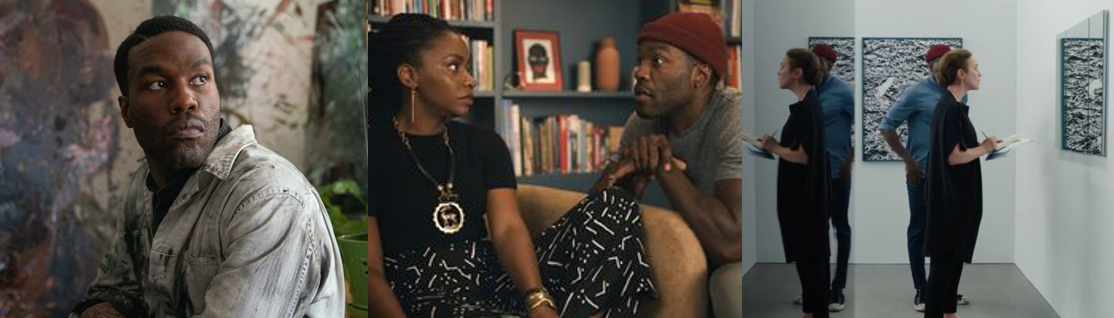
Constantine depicts a nightmarish, fire-strewn version of Hell based largely on Catholicism.

Constantine’s approach to religion is largely based on Catholicism; rather than explore other religions or consolidate them into one, the idea seems to be that Catholicism sets the rules for this world and, as a result, suicides are condemned to Hell and repentance is the road to salvation. This simplifies matters considerably, but it does make one question how other religions fit into this world since we clearly see that Heaven, Hell, demons, angels, God, and the Devil are all real. This is best seen in Constantine’s frequent trips to Hell within the film, which is a nightmarish, post-apocalyptic mirror of our world populated by demons, tormented souls, and full of fire and suffering and even home to an extended version of the Bible. It turns out that travelling to Hell is incredibly easy and that all one has to do is die under the right circumstances for even the shortest length of time or simply sit in a bowl of water with a cat on your lap (though, to be fair, this appears to be a trick that only Constantine can pull off).

Constantine is a much more action-orientated character in the film.

As far as I can tell, Keanu’s Constantine differs from his comic book counterpart in that he is one of the few born with the ability to see demons, angels, and the “half-breeds” that walk among the living; Angela and Isabel also have this ability but, while Angela suppressed it, Isabel was constantly haunted and driven to her death by it. The same thing happened to Constantine, forever damning him to Hell upon death and driving his mission to deport half-breeds from either side when they break the “rules”. Constantine’s sorcery and magicks are downplayed compared to the source material; while Constantine has various religious and spiritual tattoos to help ward off evil spirits and is able to bring Gabriel forth at the conclusion, he primarily relies on special weaponry and gadgets provided to him by Beeman. This makes him a far more action-orientated version of the character; whereas his comic book counterpart would trick his enemies into defeating themselves or con his way out of confrontations, Keanu’s Constantine beats Balthazar into submission with a Holy knuckle duster and loads up a shotgun that blasts dragon’s breath and Holy bullets.

In the end, Constantine gets the last laugh on Lucifer through his selfless sacrifice.

Still, this is only really for one scene and, for the most part, Constantine is still more of a detective than a superhero; his methods involve a degree of preparation but he’s also able to think on the fly and use whatever he has around or on him to ward off demons (such as when he amusingly threatens Balthazar not with being deported to Hell but by reading him his last rites!) In the finale, when faced with Gabriel’s Holy power and Mammon’s inevitable resurrection, he performs the ultimate con, however, by slitting his wrists and bringing Lucifer to Earth to personally collect his soul. In the process, he’s able to bargain for the release of Isabel’s soul and is fully prepared to die and take her place in Hell, only to be lifted towards the Golden Gates of Heaven because of his selfless act. This results in one of the greatest moments in the film when Constantine flips Lucifer the middle finger as he slowly ascends to Heaven, which I always find to be incredibly in-character and enjoyable. Ultimately, though, Lucifer heals Constantine of his cancer and allows him not only to live but also gives him the chance to earn his place in Heaven; while it’s clear that Lucifer believes that Constantine won’t be able to change his cynical ways or contemptible personality, the film ends with him swapping cigarettes for gum and sardonically commenting that, after dying twice, he has come to believe that God truly does have a plan for everyone.

The Summary:
Going into Constantine, I had pretty much no knowledge of the comic book, so this was my first introduction to the character. Instead, I went in as a fan of Keanu Reeves and supernatural films and, as a result, was pleasantly surprised by what I saw. Even now, as big a fan as I am of the character and Matt Ryan’s work, my experience with Hellblazer is pretty much limited to the character’s sporadic adaptations and the Original Sin (Delano, et al, 1993) graphic novel but, even so, it was this film that first made me aware of and spurred my interest in the character. As a result, if you’re unfamiliar with Constantine, I’d highly recommend this as your first exposure to the character; long-time fans of Hellblazer may have been disappointed by the many changes but, even as a Brit myself, I still really enjoy this movie for what it is: a supernatural action/horror film. There’s a lot to like here, from Keanu’s cynical portrayal of the character and his dry, bitter wit and cool, undeniable charisma to a striking and suitably terrifying interpretation of Hell and a pretty fantastic turn by Stormare as Lucifer. Obviously, Matt Ryan has delivered a far more faithful rendition of the character in the years since but, as an Americanised version of a notable British character, I think the film does really well at staying true to the spirit of Constantine and his comic books and I would definitely recommend this to anyone remotely interested in the concept.

My Rating:

Rating: 4 out of 5.

Great Stuff

Are you a fan of Constantine? What did you think of the film’s concept and characters, especially Keanu’s performance? Have you ever read the Hellblazer comics? If so, what are some of your favourite stories and moments from Constantine’s history and how do you think Constantine holds up as an adaptation? Were you put off by the Americanisation of the character and, if so, do you prefer Matt Ryan’s portrayal? Would you have liked to see a sequel or Keanu return to the character in some way? How are you celebrating Keanu Reeves’ birthday today and what are some of your favourite roles of his? Whatever you think, go ahead and leave a comment down below.

Movie Night [Judgment Day]: The Terminator


“Three billion human lives ended on August 29th, 1997. The survivors of the nuclear fire called the war Judgment Day. They lived only to face a new nightmare: the war against the machines”.


Released: 26 October 1984
Director:
James Cameron
Distributor:
Orion Pictures
Budget:
$6.4 million
Stars:
Arnold Schwarzenegger, Michael Biehn, Linda Hamilton, and Paul Winfield

The Plot:
The Terminator (Schwarzenegger), a ramosely, relentless cybernetic killer, is sent back in time from the year 2029 to kill Sarah Connor (Hamilton), who is destined to give birth to the saviour of humankind. Her only hope is Kyle Reese (Biehn), a human Resistance fighter sent back in time to protect her and safeguard the future for humanity.

The Background:
In 1982, filmmaker James Cameron awoke from a nightmare that was destined to give birth to one of the most influential science-fiction films of all time; inspired by an episode of The Outer Limits (1963 to 1965) and surely influenced by the likes of Westworld (Crichton, 1973), Cameron crafted a script that few, even the eventual stars, had any real faith in at the time. Initially uncertain about casting Schwarzenegger in the titular role, Cameron was won over by the Austrian Oak and, despite only having seventeen lines in the film, The Terminator made Arnold a mainstream icon and featured the debut of his famous catchphrase. Despite the studio having little faith in the film, The Terminator went on to gross nearly $80 million at the box office and was a resounding critical success. The film catapulted Schwarzenegger to superstardom, was preserved in the United States National Film Registry, and inspired first a blockbuster sequel then a slew of merchandise (including videogames, toys, and comic books) and mediocre to lacklustre continuations in a seemingly-never-ending bid to milk the franchise for all it’s worth.

The Review:
The Terminator opens with one of the most startling and iconic visions of the future ever put the film; in a dark, post-apocalyptic landscape literally littered with human skulls, remains, and the remnants of a once bustling society, machines reign supreme. Gigantic tank-like constructs and airborne fighters are only a part of Skynet’s vast mechanical army, however, which has over-run the world after directly causing a nuclear apocalypse. With the last vestiges of humanity reduced to a rag-tag group of guerrilla soldiers and desolate, frightened civilians, this is a world where humankind is on the very brink of extinction thanks to Skynet’s superior forces and weaponry. However, the fate of the world is not destined to be decided in 2029; instead, that grim future lives on in the nightmares and memories of Kyle Reese and hangs in the air like an ominous cloud as he desperately attempts to keep Sarah Connor alive.

Reese is determined to see his mission through even at the cost of his humanity and empathy.

After the human resistance, led by Sarah’s future son, John, scored a decisive and crippling victory over their mechanical oppressors in the future, Skynet activated its most daring plan yet by sending a Terminator, a T-800 model, back to 1984 to kill the mother of its enemy to pre-emptively win the war before it can even begin. In the world of The Terminator, time is like the branches of a tree, splitting off down multiple paths, with no one future being set in time; however, victory in one timeline is deemed victory enough for Skynet and so begins one of the more convoluted science-fiction franchises. Disorientated and overwhelmed by the time travel experience (and the sights, sounds, and hustle and bustle of then-present-day Los Angeles), Reese is an agitated, highly-strung, and unpredictable individual. He quickly acclimatises himself to his environment, acquiring a degree of clothing and weaponry, and begins to track down (more like stalk) his assignment. Reese is extremely focused and absolutely dedicated to his mission, determined to protect Sarah even at the cost of his own life and over all other concerns; he never gets unduly distracted and is almost as obsessed and determined as the titular Terminator. Haunted by his traumatic experiences in the future war, Reese has no time for frivolities and very little patience for wasting his time; when psychoanalysed by Doctor Silberman (Earl Boen), he flies into a furious rage at having to answer his questions and being held captive when the Terminator is out there, relentlessly hunting its prey.

Sarah slowly evolves from a meek, frightened victim to a capable and proactive young woman.

Far from the capable and competent character she would later become, Sarah is a meek and relatively uninspiring waitress in The Terminator; the literal definition of a nobody, she’s overworked, underpaid, and underappreciated at work and, despite having friends and a social life, is relatively lonely and unassuming at the start of the film. Disturbed to find that women baring her name have been brutally shot to death across town, Sarah does the smart and logical thing by trying to contact the police but her distress is only increased when she notices Reese following her. When Reese saves her from the Terminator and begins to bark orders at her and rant about a dystopian future and cyborg assassins, she is overwhelmed, clearly scared out of her mind, and, naturally, doesn’t believe a word of what he says. In their earliest moments together, Sarah actually shows some fire when she tries to fight Reese off but, gradually, she comes to see that his ravings are all too true and shows a shadow of the potential she has as an assertive individual by first tending to Reese’s gunshot wound and, in the finale, inspiring him to continue fighting even while mortally wounded and, ultimately, overcoming her pursuer through her own initiative.

The T-800 is a remorseless cyborg assassin who won’t let anything stand between it and its target.

Of course, when you’re talking about The Terminator, you have to talk about Arnold Schwarzenegger; since he’s a walking mountain of a man, it may be difficult to believe that the T-800 was ever an effective infiltration machine but Arnold plays the part of a cold, emotionless cyborg to absolute perfection. The T-800’s monotone voice, unblinking stare, and relentless tenacity make it a chilling villain alone but its menace is only increased by its human appearance; unlike slasher villains and other movie monsters, the Terminator looks and acts human, even sweating and bleeding, and its inhumanity is only revealed in its fittingly machine-like efficiency and the degradation of its outer skin over the course of the film. Cold, remorseless, lacking both empathy and pity, the Terminator doesn’t hesitate to gun down or eviscerate those on its path and is, for all intents and purposes, absolutely unstoppable with the weaponry available to Reese.

Relentlessly hounded by the T-800, Sarah and Reese take advantage of every precious moment.

Because of this, The Terminator is, largely, an escort mission for Reese and a constant race against a unrelenting antagonistic force. Constantly on the defensive, hounded by the Terminator and the police at every turn, Reese and Sarah have few chances to stop and catch their breath but make use of every moment they have together. At first, this means acquiring new vehicles to evade pursuit, finding lodgings, and cobbling together more effective weaponry but, in time, Reese, admits that his motivation to travel through time wasn’t just out of blind devotion to his much-respected commander-in-chief, it was also out of love for Sarah. Though he struggles with these feelings and to stay completely focused on his mission, Sarah, grateful for his affections, protection, and all that he has sacrificed for her (and deeply sympathetic towards the unspeakable horrors he’s lived through in the future), reciprocates his feelings and, amidst the terror of their predicament, they come together (both literally and figuratively).

The Nitty-Gritty:
One of the first and most striking things about The Terminator, thanks to its simple but effective title sequence, is Brad Fiedel’s iconic Terminator theme; a rhythmic, synthetic symphony that resembles a heartbeat, the theme is both memorable and versatile, emphasising the Terminator’s ominous presence whenever it is onscreen and being sped up, slowed down, or played on different instruments to punctuate more emotional or energetic moments of the film. The Terminator also has a grimy, bleak aesthetic and tone that is in stark contrast to its more outlandish science-fiction elements in a style that Cameron described as “Tech-Noir”; sadly, too few films try to emulate this style of filmmaking, to say nothing of The Terminator’s many sequels, which emphasised blockbuster action over tense, atmospheric dread and the unsettling horror of the T-800.

The Terminator’s true nature is revealed the more it takes damage, stripping it of its human façade.

The Terminator is almost genius in its premise; the idea of a cybernetic assassin that is purposely made to appear human means that the film can build towards its more striking sci-fi elements and allows it to use its budget wisely in service of a steadily increasing pace. It isn’t until nearly forty minutes into the film that we first see through the T-800’s eyes or see (and hear) how ineffective conventional firearms are against it and, as the T-800 is further damaged by gunfire, car crashes, and explosions, more and more of its mechanical innards are revealed. This leads to some ambitious practical effects and animatronic shots, such as the T-800 fixing damaged servos in its wrist, amputating a wounded eye, and sporting a bloodied chrome skull beneath its torn skin. While many of these shots now look rather dated, especially compared to the vastly superior special effects of the second film, they’re still impressive for the time and considering the budget of the film. The Terminator also features some complex and remarkable model shots and miniatures, specifically whenever it jumps to Reese’s nightmares of the future war, and concludes with an ambitious, if clunky, stop-motion effect to bring the exposed T-800 endoskeleton to life.

Though necessary to the escalation of the film’s villain, it’s a shame to lose Arnold’s presence.

Thankfully, this is only for a brief scene and animatronics and puppets are used for the remainder of the conclusion and to astonishing effect; with a practical, tangible effect to work against, Reese’s final and tragic last stand against the T-800 and its ultimate destruction are all the more compelling and cathartic since it actually feels as though these characters have overcome a very real and very dangerous threat. If there’s a downside to The Terminator, though, it’s that Arnold’s alluring screen presence is lost in this finale; although it hardly speaks a word throughout the film, the T-800 has a commanding and captivating screen presence thanks to its unflinching, stoic expression and ability to emulate voices to pass as human. Its human façade erodes over time just as Reese’s rational, machine-like efficiency gives way to human emotion and affection, and it becomes noticeably more aggressive and bolder in its pursuit of Sarah. Initially, there’s a sense that you could survive an encounter with the T-800 if you simply acquiesced to its demands for clothes and weapons but, by the end, it’s storming a police station and gunning down countless police officers without any hint of subterfuge or subtlety. Similarly, while it initially tries to mask its decaying exterior, it abandons all pretence and pursues them, gammy leg and all, as little more than a remorseless, inhuman, mechanical monster.

The film isn’t about changing the future, but preserving it to ensure mankind’s ultimate victory.

Of course, a central theme to The Terminator, and the entire Terminator franchise, is of fate. Reese carries with him a message from John, to Sarah, that there “is no fate but what we make”, which is designed to inspire her to allow Reese to protect her and to fight to change the future. Reese describes 2029 as a “possible future”, again indicating that humanity is not necessarily doomed to extinction and extermination, but the very fact that Sarah and Reese’s unity results in her pregnancy ends the film on an ominous cliff-hanger that suggests that, while the future may not necessarily be set in stone, it is destined to happen one way or another. Later films and Terminator media would greatly expand upon this and use it as an excuse to continue the franchise, even when it doesn’t make sense to do so, but, thanks to an excised sub-plot, there’s little in the film to suggest that the goal is to change the future. Instead, the idea is to preserve the future; by ensuring Sarah’s survival, Reese ensures (at the cost of his own life) that John is born, and humanity is victorious in the future. Fate, however, dictates that this future timeline remains on course since not only does Reese inadvertently become the father of the future (so to speak) but they practically bring about the creation of Skynet through their final confrontation with the Terminator; while this is, obviously a major part of the sequel, the fact that the film purposely ends on a cliff-hanger and with a few unresolved loose ends suggests, however implicitly, that fate is as inexorable as the Terminator itself.

The Summary:
The Terminator is another of the formative films of my childhood; it was, to my earliest recollection, one of the first films I watched to revolve around time travel and present a dystopian, nightmarish future where humanity has been reduced to pockets of underequipped soldiers. It had a lasting effect on my imagination thanks to its bleak visuals, horrific special effects, and thought-provoking approach to time and fate, and was directly responsible for my appreciation and affection for the works of Arnold Schwarzenegger over the years. Though the future is a dismal, desolate landscape filled with ruins and suffering, The Terminator is a film as much about hope as it is about inescapable destiny; even with everything lost, humanity continues to fight back against the machines and, even though he’s far from the ravages of that war-torn future, Reese continues to adhere to his mission, whatever the cost, in order to ensure that humanity will, ultimately, triumph. It’s tricky to decide which is better between this and the sequel but, while Terminator 2: Judgment Day (Cameron, 1991) may be bigger, better, and more impressive in almost every way, sometimes it’s just as entertaining to return to the grim, gritty original, which is much more like a traditional slasher or horror film than a sci-fi/action piece and, as a result, just as entertaining in its own right thanks to its simple, but ambitious, story and effects.

My Rating:

Rating: 5 out of 5.

Fantastic

What are your thoughts on The Terminator? How do you think it holds up today, especially compared to its other sequels? What did you think of Arnold Schwarzenegger’s performance in the film and do you think it made sense for him to play the titular cyborg? What did you think to the film’s portrayal of fate, especially considering how the later films skewed the concept somewhat? Would you like to see another Terminator film more in the style of this one rather than the bombastic sequel or do you think it’s better to leave the franchise as it is after everything its been through? How are you celebrating Judgement Day today? No matter what you think about The Terminator, and the Terminator franchise, feel free to leave a comment down below.

Movie Night [Spidey Month]: Spider-Man: Into the Spider-Verse


Easily Marvel Comics’ most recognisable and popular superhero, unsuspecting teenage nerd Peter Parker was first bitten by a radioactive spider and learned the true meaning of power and responsibility in Amazing Fantasy #15, which was first published in August 1962. Since then, the Amazing Spider-Man has featured in numerous cartoons, live-action movies, videogames, action figures, and countless comic book titles and, in celebration of his debut and his very own day of celebration, I’ve been dedicating every Wednesday to talk about everyone’s favourite web-head!


Released: 14 December 2018
Director:
Bob Persichetti, Peter Ramsey, and Rodney Rothman
Distributor:
Sony Pictures Releasing
Budget:
$90 million
Stars:
Shameik Moore, Jake Johnson, Hailee Steinfeld, Mahershala Ali, John Mulaney, Kimiko Glenn, Nicolas Cage, and Liev Schreiber

The Plot:
After being bitten by a radioactive spider and gaining the proportionate strength and agility of the arachnid, Miles Morales (Moore) finds himself caught up in an elaborate plot by Wilson Fisk/The Kingpin (Schreiber) to cross dimensions. In the process, Miles is mentored by, and joins forces with, other incarnations of Spider-Man from across the multiverse while stull struggling to carve out his own identity in the role.

The Background:
In 2011, writer Brian Michael Bendis decided to kill off Peter Parker/Spider-Man and replace him with a younger character in the pages of Ultimate Spider-Man (2000 to 2011), Miles Morales, an African American youth of Puerto Rican descent, a decision which created much controversy at the time. Miles, however, soon became a popular character and appeared not just in cartoons and other merchandise but also the mainstream Marvel continuity (“Earth-616”). After the poor reception of The Amazing Spider-Man 2 (Webb, 2014) led to Spider-Man finally being incorporated into the Marvel Cinematic Universe (MCU), Sony were determined to continue producing Spider-Man films and spin-offs separate from the MCU. Writers Phil Lord and Rodney Rothman chose to focus their efforts on Miles since he hadn’t yet featured in a film and, to further separate the project, it included not only Spider-People from across the multiverse but also a distinct and intricate animation style that was as vital to the story as the music and dialogue. Spider-Man: Into the Spider-Verse received unanimous praise upon release and made over $375 million at the box office, won numerous awards, and is highly regarded as one of the best and most unique Spider-Man movies ever made. Its massive success meant that both a sequel and a spin-off were soon announced and no doubt contributed heavily to Miles’ continued popularity.

The Review:
First and foremost, Spider-Man: Into the Spider-Verse is Miles Morales’ story, even amidst all the chaos and multiverse madness permeating the plot; unlike the traditional Peter Parker, Miles’ parents are still alive and, while he struggles to adjust to boarding school and to make new friends, he’s nowhere near the social outcast Peter is often portrayed as during his teenage years. A big fan of music (though he is amusingly poor at reciting lyrics) and with an artistic flair, Miles is a slightly rebellious and resentful youth who struggles to live up to the expectations of his father, Jefferson Davis (Brian Tyree Henry), a police officer who regards Spider-Man (Chris Pine) as a menace and delights in embarrassing his son at his new school with typical dad humour. A somewhat streetwise kid who was a popular figure at his old school, Miles is largely an outsider at his more officious and pretentious boarding school; he’s uncomfortable in the mandatory uniform, feels like he doesn’t really fit in, and is intentionally trying to sabotage his future there so he can go back to his old school and his old friends. Believing that his father doesn’t really understand him or his dreams, Miles has a far closer relationship with his uncle, Aaron Davis (Ali), who encourages his penchant for street art and actually takes the time to connect with him on a more peer-to-peer level. To Jefferson’s chagrin, Miles idolises his uncle, who indirectly leads to him gaining his spider powers.

Miles’ struggles with his spider powers are directly paralleled to the onset of puberty.

Already somewhat uncomfortable in his new environment, Miles’ newfound spider powers (which are explicitly compared to the onset of puberty) only increase his agitation; he struggles to adapt to and master his abilities, gaining a far louder and more noticeable internal monologue and accidentally attaching himself to Gwen Stacy’s (Steinfeld) hair in an awkward attempt to flirt with her. Interestingly, Miles’ exploration of his abilities is a source of as much entertainment and amusement as it is an integral part of Miles’ character development; throughout the film, Miles struggles to master his powers, which seem to trigger unconsciously or involuntarily, and a massive part of Into the Spider-Verse revolves around Miles living up to the lofty expectations now placed upon him by his amazing new abilities.

In Miles’ world, Peter is a competent, renowned, and experienced superhero.

Miles lives in an alternative world that isn’t quite Earth-616 or the Ultimate universe; it’s one that draws inspiration from all over Spider-Man’s various adaptations and interpretations but one where Spider-Man is a renowned and experienced superhero. Carrying himself with the confidence of a veteran of many battles, life lessons, successes, and failures, this Spider-Man is, honestly, uncharacteristically competent in a lot of ways (he’s still married to Mary Jane Watson (Zoë Kravitz), has the full support of his beloved Aunt May Parker (Lily Tomlin), and even has a Spider-Cave full of different Spider-Suits, for God’s sake). During an intense battle with the monstrous and demonic Norman Osborn/Green Goblin (Jorma Taccone) and the slick and efficient Prowler, Peter is shocked to meet Miles, someone who shares his abilities, and vows to train him and give him the opportunities he never had when he was first starting out, such is his commitment to using great power with great responsibility.

Kingpin may look ridiculous but he’s a formidable threat who killed Peter with his bare hands!

Sadly, and unexpectedly, Peter is killed right before Miles’ eyes by the Kingpin; Fisk, who blames Spider-Man for exposing his criminal deeds to the world and thus driving away his wife and son, has built a gigantic Super-Collider which he plans to use to rip a hole between dimensions and retrieve his family from another time and place. When Peter costs him this opportunity, Fisk beats him to death in a brutal and surprising scene and spends the remainder of the movie desperately trying to track down and reacquire the USB flash drive that allows the collider to work. Like Green Goblin, Fisk is a comically exaggerated version of himself, even compared to the creative flair of some comic book artists, but as preposterously absurd as Kingpin looks, his threat has, arguably, never been more tangible and brutal than in Into the Spider-Verse. Exuding unmatched power, wealth, and authority, he commands some of Spider-Man’s most notorious foes with a cold menace and is more than happy to get his hands dirty in his desperate attempt to be reunited with his family.

Peter B is an out of shape, world-weary version of Spider-Man who’s far from his prime.

Shaken by Peter’s death, and overwhelmed by the immense responsibility now in his hands, Miles is shocked to meet an alternative version of Peter, Peter B. Parker (Johnson), who arrived during the brief period that the Super-Collider was active. Unlike his counterpart from Miles’ world, Peter B is an out of shape, jaded, wreck of a man who has lost his way, and everything near to him, and yet, despite his crushing losses, obvious depression, and having grown weary of the power and responsibility that comes from being Spider-Man, Peter B still continues to be Spider-Man and does his best to tutor Miles in coming to grips with his powers. He’s obviously not as effective or competent a mentor than his counterpart promised to be but he does what he can regardless and is fully willing to put his life on the line to allow his fellow Spider-People to return home.

Thanks to her friendship with Miles, Gwen learns to open herself up to others once again.

Speaking of which, Miles is also joined by a whole host of unexpected Spider-People; the first one he meets is Spider-Woman, Gwen Stacy, although he is unaware of her true identity at the time. A vastly different version of the traditional Gwen, Spider-Woman gained her powers in Peter’s place in her world and is a tough, sarcastic character who, while having a soft spot for Miles, is reluctant to open herself up to him, or anyone else, for fear of losing them. In a film arguably crowded by Spider-People, Gwen stands out by being one of the more recognisable and fleshed out characters and is, basically, a tertiary protagonist as her growing friendship with Miles is a major part of her (and his) character development. Sadly, the same can’t really be said about the rest of the Spider-Crew; Peni Parker/SP//dr (Glenn) is perhaps the least developed and expendable of the group. While she is rendered in an outstanding anime aesthetic and has a heart-warming bond with her spider mech, she’s largely inconsequential to the story and could have been spliced out with any other version of Spider-Man. Spider-Noir (Cage) and Peter Porker/Spider-Ham (Mulaney) manage to stand out a little better thanks to being rendered in monochrome and talking like a thirties gangster or being a literal cartoon character, respectively, but we don’t really learn a great deal about them and they’re mainly there to emphasise that every universe has a Spider-Man and that Spidey’s legacy and ideals are carried by a variety of characters all throughout time and space, which all directly ties into Miles’ character arc of growing into, and finally accepting, his role as Spider-Man.

The Nitty-Gritty:
Spider-Man: Into the Spider-Verse immediately sets itself apart from other Spider-Man movies not just by focusing on Miles as its main character and its cross-dimensional subplot but also by virtue of being an animated movie. Truthfully, animation suits Spider-Man down to the ground as, often, some of the more exhilarating sequences in Spider-Man movies are the computer-generated fight scenes and web-slinging moments and Into the Spider-Verse definitely uses its medium to its full advantage, featuring a unique aesthetic, comic book-like sound effects for emphasis, and even varying the frame rate to emphasise the differences between the various Spider-People and Miles’ comparative inexperienced compared to them. Humour is an important element of the film; Into the Spider-Verse is full of amusing lines, sight gags, and comedic moments that come naturally and are incredibly amusing thanks to some effortless and believable line delivery from the likes of Moore, Pine, and Johnson (Spider-Man’s quips during tough situations and battles are a notable highlight). Characters have an easy banter and sass to them that allows even the least developed of them to appear far more nuanced in the short space of time they have to shine and humour is emphasised through Miles’ inexperience with his powers, wry commentary on his increasingly chaotic situation, and the frantic nature of the action scenes and character beats.

Action and fights are colourful and frantic, ensuring no two fights are the same.

Speaking of action, Into the Spider-Verse is crammed full of some of the most impressive, intense, and frenzied action scenes in any Spider-Man movie; the freedom offered by relying on animation allows for some of the most diverse and varied web-slinging as each Spider-Person swings, fights, and moves differently. The use of music and onomatopoeia emphasises the action, which is fast-paced, memorable, and impactful thanks to the film showcasing a wide variety of Spider-Man’s rogues gallery, which includes the likes of the Green Goblin, Lonnie Lincoln/Tombstone (Marvin “Krondon” Jones III), and Mac Gargan/The Scorpion (Joaquín Cosio).

Though a vicious mercenary, Aaron’s hesitation to kill Miles costs him his life.

Apart from Fisk, though, the most prominent villains of the film are Doctor Olivia Octavius/Doctor Octopus (Kathryn Hahn) and the Prowler; while Doc Ock is a sadistic and formidable, half-crazed scientist, it is the Prowler who has the most emotional significance to both the plot and to Miles. Constantly accompanied by an ominous, animalistic theme, the Prowler is portrayed as Fisk’s top mercenary; a brutal and vicious, cat-like fighter in a sophisticated suit of armour, Prowler stops at nothing to hunt down Fisk’s missing USB drive. Miles is absolutely devastated to find that the one person he thought he could rely on in the whole world, his Uncle Aaron, turns out to be the Prowler and even more crushed when, upon discovering Miles’ identity, Aaron chooses to spare his nephew and is executed by the Kingpin as a result and dies in Miles’ arms while urging him to continue on as a hero.

Miles finally embraces his role as Spider-Man, defeats Kingpin, and returns his new friends home.

In the end, against all the odds and his own doubts and inexperience, Miles customises one of Peter’s suits (crafting an absolutely bad-ass variant in the process) and fully embraces his role as Spider-Man to confront the Kingpin and put an end to his destructive scheme. It’s a real coming of age moment for Miles, who previously could only look up in awe at Spider-Man’s legacy, and allows him to not only finally live up to the lofty expectations placed upon him by his father and the various Spider-People but also repair his relationship with his father (and his father’s opinion of Spider-Man) through his actions. With the Spider-People returned home, Miles becomes the one true Spider-Man of his world, gaining lifelong friends and a renewed sense of responsibility, confidence, and identity in the process. It’s a strikingly effective story largely thanks to how relatable and complex Miles is portrayed throughout the film, being a rebellious and well-meaning kid who is simply struggling to find his place in an ever-changing world.

The Summary:
If I’m being completely honest, I’m not really a fan of how often a street-level superhero like Spider-Man gets caught up in multiversal misadventures and meets alternative versions of himself; just like how I’m often a bit perturbed by how often Bruce Wayne/Batman has to put up with the same events, I feel like Spider-Man works better as a more grounded hero who only occasionally dabbles in cosmic-level events. To that end, I feel like Into the Spider-Verse would have been just as appealing to me, if not more so, had the multiverse elements been dropped; Peter B could have just been the version of Spider-Man in Miles’ world, Gwen could have been the same or swapped out with Cindy Moon/Silk, and the other Spider-People could have been replaced by, say, Ben Reilly or Kaine Parker and the idea of a multiverse of Spider-Man could maybe have been saved for the next movie. However, having said that, that doesn’t mean I’m not a huge fan of Into the Spider-Verse as it is; make no mistakes about it, this is a fantastic movie from start to finish, with an extremely appealing aesthetic identity and some absolutely fantastic action. It also carries a very emotional heart to its story, which is one of identity, legacy, and expectation; a coming of age story that follows a young, emotional kid who is struggling to live up to the role his mentors expect of him, Into the Spider-Verse says a lot about not only the nature of Spider-Man but also the struggles of youth and puberty. I’m glad Into the Spider-Verse did so well and I’m genuinely looking forward to the sequel delivering more of the same high-octane action and heartfelt emotion, visual flair, as well as introducing more Spider-People and, hopefully, expanding upon the brief cameo from one of my favourite Spider-Man, Miguel O’Hara/Spider-Man 2099 (Oscar Isaac).

My Rating:

Rating: 5 out of 5.

Fantastic

What are your thoughts on Spider-Man: Into the Spider-Verse? Where does it rank among the various other Spider-Man movies for you and what did you think of the artistic style and focus on Miles Morales and the other Spider-People? Which of the alternative Spider-Man was your favourite? Would you have liked to see one, or more, get a bigger role and if so, which one? What other alterative version of Spider-Man would you like to see show up in the sequel? Are you a fan of Spider-Man always having adventures with alternate versions of himself or would you prefer to see him tackling more street-level threats? Are you a fan of Miles, and what did you think to Peter’s death both in Ultimate Spider-Man and in Into the Spider-Verse? Whatever your opinion on Into the Spider-Verse, go ahead and drop a reply down in the comments and be sure to check back in next Wednesday as Spider-Man Month continues!

Movie Night [Friday the 13th]: Friday the 13th (1980)


Long considered to be an unlucky day due to superstitions involving the number thirteen and religious connotations, Friday the 13th is perhaps equally as well-known as being the title for a long-running series of slasher movies. As a result, this is clearly the best opportunity to take a look at the Friday the 13th (Various, 1980 to 2009) horror series and to commemorate this unlucky and dreaded date.


Released: 9 May 1980
Director:
Sean S. Cunningham
Distributor:
Paramount Pictures/Warner Bros. Pictures
Budget:
$550,000
Stars:
Adrienne King, Harry Crosby, Jeannine Taylor, Kevin Bacon, Peter Brouwer, and Betsy Palmer

The Plot:
Camp Crystal Lake is attempting a reopening some twenty-odd years after a series of grisly murders and unfortunate events. However, when the enthusiastic crop of would-be camp counsellors begin dying in gruesome ways, the few survivors are left at the mercy of a relentless serial killer out for revenge…and blood!

The Background:
Inspired by John Carpenter’s Halloween (Carpenter, 1978), which is generally regarded as giving birth to the “slasher” sub-genre of horror cinema, filmmaker Sean S. Cunningham desired to make his own slasher film, one that would be visually striking and brutal in its execution. Though Cunningham thought up the basic concept, the screenplay was completed by Victor Miller, who delighted in crafting the vicious and surprising twist for the film’s antagonist. Although Betsy Palmer famously only took this role to buy a new car and found the experience to be somewhat degrading and embarrassing, she later shared some interesting insights into the character’s psychology and motivation that would come to inform the film’s many sequels. Friday the 13th eventually made nearly $60 million at the box office, a financial success that was mired only by scathing reviews that attacked the plot, its derivative nature, and excessive violence. Over time, opinions haven’t really changed much but, regardless of this, the numbers spoke for themselves and Friday the 13th soon inspired one of the longest running and most iconic, influential, and successful slasher franchises in horror history thanks to the iconography of later antagonist, Jason Voorhees (Various), and the gruesome punishment of a slew of horny teenagers for engaging in debauchery.

The Review:
Friday the 13th begins in 1958 where an unseen killer stalks and brutally murders two camp counsellors right in the middle of having sex; the influence of Halloween can immediately be felt as Cunningham borrows wholeheartedly the first-person perspective used by Carpenter at the start of his film. However, while Carpenter did this to hide the fact that his killer was a young boy, Cunningham maintains the perspective throughout the majority of Friday the 13th’s kills. The mystery of the killer is maintained throughout the movie, with only brief glimpses given on the assailant’s hands; we never hear their voice or name and all we really know is that they’re at least the size of a full-grown adult and driven by a vicious obsession to punish all who dare try to reopen the camp. This mystery permeates the film and lingers in the air like an ominous cloud when the story jumps ahead to then-present day; it helps that the film is stuffed with characters, many of whom are intentionally set up as red herrings and to fool us into thinking they are the killer, like “Crazy” Ralph (Walt Gorney), who desperately tries to warn the unsuspecting kids about the camp’s “death curse”.

Steve is a hard taskmaster with a killer moustache and a hands-on attitude.

Indeed, the legend of Camp Crystal Lake is a horror story all unto itself; the townsfolk refer to the camp as “Camp Blood” and are largely distrustful and fearful of the site. Annie Phillips (Robbi Morgan) is told the tragic story of how a boy drowned in the lake in 1957 and how mysterious fires and poisonings have contributed to the camp’s notorious reputation. However, the new crop of camp counsellors are, for the most part, oblivious to the camp’s storied history thanks to the owner, Steve Christy (Brouwer), attempting to maintain order around the camp by intentionally leaving out Camp Crystal Lake’s more gory details; a rugged, hands-on kind of man with one hell of a moustache, Steve is a hard taskmaster who is determined to get the camp refurbished and ready to go and to silence the naysayers from town. Despite this, he disappears for most of the film, leaving his new counsellors to fend for themselves, thus setting himself up as another potential suspect.

She might be one of the original “final girls” but Alice isn’t the most interesting protagonist.

In Steve’s absence, the camp is kept ticking over by his, right-hand woman, Alice (King), an aspiring artist who seems to have a bit of an unresolved or troublesome relationship with Steve; Alice is just as hands-on as Steve and generally acts as his go-between, ferrying messages and jobs to the other counsellors. Despite being the default authority figure, Alice is no more prominent or outstanding than any of the other characters, who are actually slightly more interesting and dynamic thanks to their more memorable, if cliché, characteristics. They might be horny goofballs at times, with few complexities to them, but Alice is a comparatively bland and boring character by comparison; retroactively, of course, her more grounded and responsible nature make her the ideal “final girl” but, unlike some of her contemporaries and counterparts from around the same time, Alice still falls short for me and, even in the finale, is little more than a screaming wreck who gets lucky rather than being an adaptable and capable young woman.

Despite the presence of Kevin Bacon, the counsellors are all largely disposable victims.

To be fair, most of the counsellors are far more interested in mucking about setting the place up, flirting, and shagging; Ned (Mark Nelson) is especially interested in the prospect of hooking up while at camp, mainly because of how brazen and affectionate his friends, Marcie (Taylor) and Jack (Bacon) are. The teens, who are rounded out by Bill (Crosby) and Brenda (Laurie Bartram), quickly bond, finding plenty of time to sunbath, relax, and play lewd pranks on each other all while largely unaware that they’re being watched and stalked from the dense forest. You might think that, maybe, future star Kevin Bacon stands out from the pack but, to be honest, he simply blends in as another disposable victim for the film’s killer and only a die-hard Kevin Bacon fan would say any different. In the end, he like his peers, exists to get laid and then meet a hauntingly gruesome end.

The Nitty-Gritty:
Like any good horror film, Friday the 13th is bolstered by two things first and foremost: the brutality of the kills and the haunting nature of its soundtrack. Just as Carpenter’s iconic Halloween theme helped to increase its dread and horror, so too does Harry Manfredini’s memorable “ki-ki-ma-ma” chant help to personify and represent the largely-unseen killer and takes on additional significance once the killer’s identity and motives are revealed as it represents the desperate pleas of a wronged son for vengeance.

Gruesome special effects and gory deaths are the order of the day in Friday the 13th.

Of course, you can’t talk about any horror film, much less a Friday the 13th, without mentioning the special effects; born from the mind of effects maestro Tom Savini, Friday the 13th’s practical effects and horrific kills might be some of the more subdued in the franchise but they’re still an undeniable highlight of the film. Friday the 13th features such gruesome moments as Annie getting her throat slit (and Ned’s similarly mangled corpse), Marcie taking an axe right to the face, and, of course, the iconic visual of Kevin Bacon getting an arrow thrust through his throat from beneath his bed! Later, Alice is traumatised when she stumbles upon the bloodied and desecrated corpses of the counsellors (with Brenda’s body being launched through a window as she attempts to hide) and the film concludes with a pretty impressive, if now somewhat preposterous, decapitation effect.

Pamela was driven to a murderous rage after her son, Jason, apparently drowned in the lake.

Naturally, with the killer’s identity remaining a mystery throughout the film, the reveal of the killer for the film’s finale is probably one of the most memorable moments of Friday the 13th beyond the score and the gore. As I mentioned, many characters are set up as red herrings throughout the film but the killer is, eventually, revealed to be Pamela Voorhees (Palmer), an old friend of the Christy’s and the camp’s former cook. While this is a shock (mainly because it appeared as though the killer was a male, judging by the hands), it’s also pretty damn obvious that she’s the culprit as she appears literally out of nowhere right at the end of the film after everyone else but Alice has been brutally murdered, although this may still come as a shock to many newcomers or those ignorant to the franchise who believe that the more iconic Jason was the killer all along. Pamela, though, was the original killer of the franchise; driven to a murderous rage after her son, Jason (Ari Lehman), drowned in the lake years ago due to the negligence of the camp counsellors, Pamela is revealed to be the one behind all the killings and unfortunate events that have plagued Camp Crystal Lake ever since. Unlike Jason and Michael Myers/The Shape (Nick Castle/Various), Pamela is an articulate and deviously calculating villain, mimicking the cries of her child to lure Brenda to her death and initially fooling Alice with her affable nature. It doesn’t take long, though, for the extent of Pamela’s psychosis to be revealed and, much like the finale of Psycho (Hitchcock, 1960), she spells her motivations out as plain as day and pursues Alice with a crazed aggression. Luckily for Alice, Pamela becomes massively inept and far less efficient with her final victim, which ultimately leads to her grisly decapitation at Alice’s hands.

The Summary:
While Pamela’s eventual reveal makes for a frantic and exhilarating finale, it comes all-too late to really make up for the tedious monotony of the rest of the film; Friday the 13th does almost too good a job of building tension towards its dramatic conclusion as we’re forced to follow a group of largely uninteresting and dull characters through plodding scenes devoid of energy or intrigue. It’s one thing to establish a foreboding mood but it’s quite another to just be out-right boring and, with a surprisingly low body count and few instances of sex and debauchery, Friday the 13th is largely a chore to get through until Mrs. Voorhees enters the proceedings. The film then pulls a shock twist completely out of nowhere, purely because Carrie (De Palma, 1976) pulled a similar trick, by having Jason’s mangled and monstrous form attack Alice right at the end of the film…only for it to be revealed as a nightmare…or something. The Friday the 13th franchise is full of clunkers and poor efforts but, honestly, one of the weaker entries has to be this original film; while it’s memorable and influential for taking the concepts and troupes of Halloween and largely mapping out the template for slasher films for years (even decades) to come, it can’t be denied that it’s a bit of a slog to get through. Sadly, even for a someone who is as big of a fan of the franchise as myself, all the superbly gory special effects and crazed performances by Betsy Palmer in the world can’t change my aversion towards this first film which, while a classic to be sure, is more of a snooze-fest than anything else.

My Rating:

Rating: 2 out of 5.

Could Be Better

How do you feel about Friday the 13th? Do you believe it to be a horror classic or do you agree that it’s largely unspectacular, especially now after the film’s many sequels? Which of the camp counsellors was your favourite and why, and do you think Alice made for a compelling character or would you have preferred to see someone else survive to the finale? Who did you think the killer was the first time around and what did you think to Mrs. Voorhees’ dramatic reveal? Were you even aware the she was the original killer or have I just spoiled the film for you? Which of the Friday the 13th movies is your favourite? Perhaps you prefer a different slasher film or franchise; if so, what is it? Do you consider Friday the 13th to be unlucky? Are you watching a Friday the 13th movie today? Whatever your thoughts on Friday the 13th (the movie, franchise, and day), go ahead and leave a comment down below and be sure to check in again for more horror content in the near future!