Movie Night: Ghost Rider: Spirit of Vengeance

Released: 17 February 2012
Director: Mark Neveldine and Brian Taylor
Distributor: Columbia Pictures / Sony Pictures Releasing
Budget: $57 to 75 million
Stars: Nicolas Cage, Johnny Whitworth, Violante Placido, Fergus Riordan, Idris Elba, and Ciarán Hinds

The Plot:
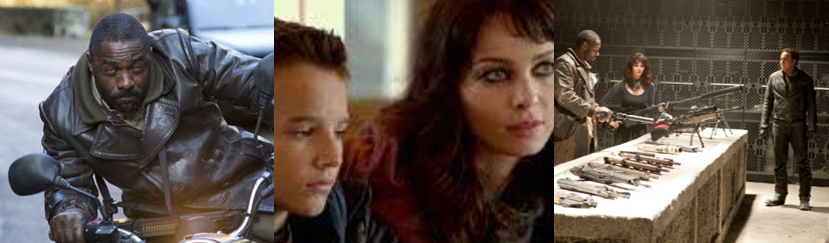
After selling his soul to the Devil, who’s taken mortal form as Roarke (Hinds), and being transformed into the demonic Ghost Rider, Johnny Blaze (Cage) has withdrawn from the world. However, when he’s charged with protecting Nadya and Danny Ketch (Placido and Riordan) from Roarke’s enforcer, Ray Carrigan/Blackout (Whitworth), Blaze discovers a chance to both redeem and rid himself from his nightmarish curse.

The Background:
Gary Friedrich, Roy Thomas, and Mike Ploog’s Ghost Rider first appeared in the pages of Marvel Spotlight #5 and has spearheaded many supernatural Marvel adventures since while invariably appearing in Marvel’s television ventures. After a long period in Development Hell (pun intended) Ghost Rider finally made his live-action debut with noted comic book fan Nicolas Cage portraying a quirky, damaged version of the character that left many critics disappointed. Though labelled as one of the worst films of the decade, Ghost Rider’s (Johnson, 2007) almost $230 million box office was a catalyst for a sequel, with Cage eager to explore a darker side to Blaze’s character. David S. Goyer signed on to pen the sequel, which was strangely framed as a quasi-reboot and lumbered with a far smaller budget than its predecessor. Visual effects studio Creative-Cartel took on the task of bringing the flame-headed spectre to life, producing around 850 visual effects shots and fitting Cage with an LED helmet to help perfect the lighting of Ghost Rider’s flaming skull, which was designed to express the character’s demeanour. Unfortunately, Ghost Rider: Spirit of Vengeance failed to match its predecessor’s box office or redeem Ghost Rider’s live-action career. Reviews were scathing, criticising Cage’s wacky performance, slapdash narrative, and dreadful 3D conversion. While it’s since developed a small cult following, Cage’s dissatisfaction with the film and the role scuppered any chance of a sequel and the character was eventually reacquired by Marvel in 2013.

The Review:
Ghost Rider: Spirit of Vengeance is a quasi-sequel, quasi-reboot of the franchise that picks up some years into former stunt rider Johnny Blaze’s cursed life as the titular Spirit of Vengeance. Thankfully, for those unfamiliar with the character and concept, Blaze is on hand to provide an opening narration (and a few narrative interludes) to catch us up on the story. Similar to the first film, Blaze was devastated when his father contracted terminal cancer and, in desperation, made a literal deal with the Devil to save his life. It’s not related what happened after that, just that the Devil (here given the unremarkable mortal name of “Roarke”) twisted the deal, bonding Blaze to an ancient demon that transforms him into a monstrous, flame-headed creature in the presence of evil. Haunted by this decision, and the guilt behind his selfish reasons for making it in the first place (Blaze later emotionally confesses to charismatic priest-cum-wine connoisseur Moreau (Elba) that he made the deal because he couldn’t bare to lose his father), Blaze flees halfway across the world, avoiding all human contact wherever possible. Unlike in the previous movie, where Blaze hid his tortured soul behind wacky eccentricities, Blaze is now withdrawn, socially awkward, and constantly battling against the demon that rages inside of him. Living a simple life in near squalor, he fights nightly to keep the Ghost Rider at bay. Sensitive to the light and with little interest in helping others, Blaze is initially hostile towards Moreau but is convinced to hear the bombastic priest out when he promises to take Blaze to his sacred order and have his curse finally lifted. Still, he’s naturally reluctant since he has little to no control over the Ghost Rider. The demon possesses him, seemingly taking full control of his body, and both cannot distinguish between those who are truly wicked and those who are merely misguided and has no desire to, simply relishing in violence and satiating its never-ending hunger.

Cage is more unhinged than ever as the tortured Blaze and demonic Ghost Rider.

Later, when sheltered by Methodius (Christopher Lambert) and the other monks from Moreau’s order, Blaze learns the origins of the demon possessing him. It’s said to have once been Zarathos, the Spirit of Justice, an angel sent to defend humanity. However, Zarathos was somehow captured, tortured, and driven insane in Hell, transforming it into the unrelenting Spirit of Vengeance that now engulfs Blaze’s body. The Ghost Rider is a bizarre, disappointingly silent creature of vast, near-unlimited power. There’s little physical threat against his awesome Hell powers. He easily reduces every nameless, faceless goon to ash and cinders with his flaming chains and shrugs off bullets, relishing intimidating his prey by swaying about and striking odd poses. Exhibiting superhuman strength and durability, the Ghost Rider can transform any vehicle, no matter how big, into a flaming vessel but, of course, favours a bitchin’ motorcycle. His most powerful technique remains the Penance Stare, here changed to be the flaming demon simply screaming in his victim’s face for an awkward amount of time. Blaze says that the Ghost Rider consumes souls, but we don’t actually see that happen onscreen; his victims simply cower in fear and burst to ash, which is a bit of a disappointment. At one point, he does absorb and regurgitate a full clip of gunfire at one hapless goon, and he’s left unscathed by bazooka fire, though a desperate grenade shot by Carrigan is strangely enough to incapacitate him. Indeed, the only thing that can even stop the Ghost Rider is the word of Hell, a talent exhibited by Roarke’s unwitting son, Danny, who both commands the Ghost Rider to stop and returns his power in the finale. The Ghost Rider’s presence has clearly been infesting Blaze, driving him half mad; when the demon “[scratches] at the door”, Blaze descends into manic insanity trying to hold him at bay. He also seems to gleefully relish the demon’s incredible power as it literally bursts from him, melting his attire and transforming him into a wicked, bizarre creature said to have no conscience or morality.

Moreau recruits Blaze to keep Nadya and Danny safe from Roarke’s evil plot.

This belief is tested when Moreau begs Blaze to help keep Nadya and Danny safe from Carrigan (and, by extension, Roarke). A Gypsy beauty once caught up in Carrigan’s world of violence and drugs, Nadya was left near death after a botched job and, in desperation, made a deal with the Devil to save her life, unaware that his intention was for her to give birth to a “vessel” for his demonic essence, essentially making Danny the Anti-Christ. Living life on the run, forced to swindle horny businessmen out of their wallets and cars, Nadya is reluctant to trust anyone and seeks only to keep Danny safe and maybe one day build a real life for him. Though a snarky teen with a chip on his shoulder, Danny truly loves his mother and actually enjoys their life as outlaws, despite him longing for a normal family life. Still, he struggles with his half-human heritage; he wants to understand the dark power within him, but both fears and is allured by it. The Ghost Rider can sense his presence, drawn to his blood and power, and Blaze tries to impress upon the boy that he doesn’t have to let his dark side define his life (hollow words considering Blaze’s own struggles with that). Devoid of a father figure, Danny quickly bonds with Blaze, seemingly enamoured by his incredible power and his whole stunt biker aesthetic but resents him for giving up the Ghost Rider at the first opportunity. This comes courtesy of Moreau, easily the most enjoyable and appealing character in the film. Also an accomplished rider, Moreau is a man of deep spiritual belief who’s also very handy in a firefight. Verbose and incorrigible, Moreau gleefully leaps head-first into battle, ready to give his life to keep Danny safe (or rescue him) and Elba’s scenery-chewing enthusiasm makes even clunky exposition scenes entertaining to watch. It’s genuinely a shame when he’s killed by Carrigan, especially as he had a lot of potential as a secondary Ghost Rider.

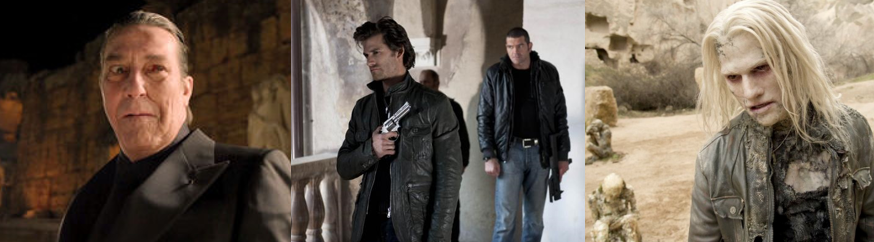
Though weak, Roarke’s power is enough to transform Carrigan into a demonic being.

Speaking of Carrigan, he spends the first act of the movie as little more than an arrogant mercenary. Since Roarke’s human body is slowly dying from the incredible power within it, he contracts Carrigan and his goon squad to do his dirty work. Carrigan has a history with Nadya, resenting her for leaving him, and knows his worth; he demands a bigger payday after barely surviving his first encounter with the Ghost Rider and ups his arsenal for the rematch. However, this leaves all his men dead and him crushed under debris, barely mustering the strength to spit an insult in Roarke’s face before dying. However, death is merely an inconvenience for the Devil and Roarke revives and transforms Carrigan into an adaptation of Blackout, here realised as a zombie-like sadist able to decay anything (unless dramatically convenient) with a touch and rapidly attack foes from a surreal shadow dimension. Unhinged, drunk with demonic power, Carrigan delights in reducing anyone in his path to agonised, decaying husks, leaving them little more than screaming skeletons, slaughtering Methodius and his monks and even killing Moreau. It seems to be the Devil’s modus operandi to birth half-demon creations capable of ending him since, like the Ghost Rider, Carrigan’s demonic power is so strong that even Roarke snaps at him when he goes to touch him, indicating that Carrigan could’ve simply killed the Devil’s mortal form and usurped his position. Lacking the gravitas of Peter Fonda and simply appearing as a broken, half-crippled old man in a suit, the Devil has never been weaker than in this film. His human body is decaying quickly since mortal forms can’t contain his power, so he’s desperate to get his hands on Danny and perform a bizarre ritual that will transfer his essence into the boy’s half-demon body. Still, the Devil exhibits an alluring presence; though he’s still unruly around him, Danny is curious to learn more about the darkness Roarke implanted in him. Roarke also clearly has the power, money, and influence to keep Carrigan and a veritable army of gun-toting minions on hand to be summarily slaughtered by the unstoppable Ghost Rider.

The Nitty-Gritty:
It’s definitely far more accurate to label Ghost Rider: Spriit of Vengeance as a soft reboot, and that really irks me. Blaze’s opening narration uses weird, animated segments to tell a truncated version of his origin when footage from the last movie could’ve easily been supplanted. He also explains how the Devil has taken many forms before, showing Roarke once masqueraded as some of history’s worst dictators (and Jerry Springer…), meaning it would’ve been easy to name-drop Mephistopheles. Instead, the film essentially distances itself from the last movie but remains irrevocably and awkwardly tied to it through Nicolas Cage’s casting. It’s a bit like when Judy Dench stayed on as “M” when Daniel Craig took over as James Bond. Like, it’s obvious it’s a new film continuity but not recasting the lead muddies the water and just has me asking why it wasn’t a straight-up sequel. The movie is also a strangely surreal affair. Whereas Ghost Rider was painfully generic and toothless at times, Spirit of Vengeance is often like an acid trip, skipping frames, using odd camera angles, and utilising a rushed editing style to frame the Ghost Rider as a terrifying, unpredictable figure. In this regard, these techniques are surprisingly effective, but it also results in a confused tone. Sometimes, it wants to be this gritty, gothic horror; other times, it’s got a camp comedic edge (mainly through Moreau’s infectious personality); and at other times, it’s a reluctant meditation on the struggle between good and evil. Nowhere is this more evident, as expected, than in Cage’s crazed performance. I get it when he’s desperately trying to keep the Ghost Rider in check, but that’s no excuse for Cage’s weird mannerisms and line deliveries. It paints Blaze as painfully awkward; he constantly struggles to console Danny and Nadya, and is definitely a man whose actions speak louder than words.

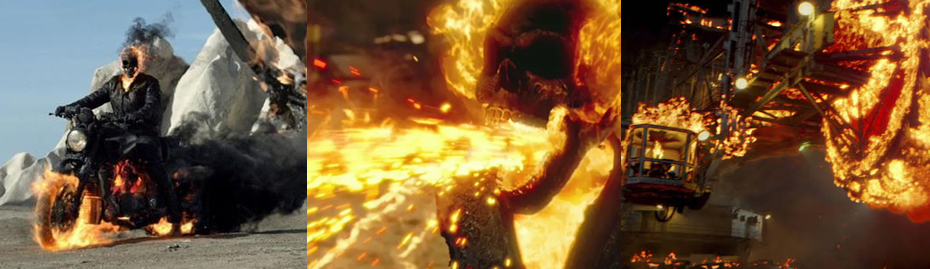
The Ghost Rider effects and action scenes look better than ever, despite his bizarre characterisation.

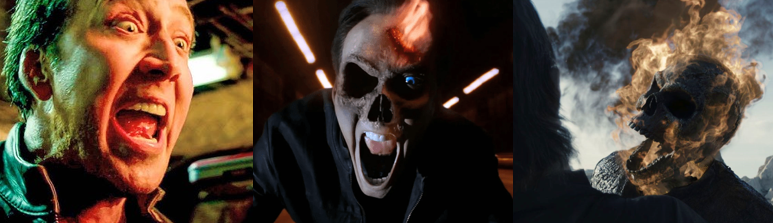
On the plus side, the Ghost Rider looks absolutely fantastic here! He looked pretty great in the last film, but the effects are way better this time around. His skull is charred and spews black smoke; his leather drips and bubbles from his intense Hellfire; and his flames are more realistic than ever. It’s like Clayton Crain’s gothic, realistic artwork has been brought to life and I loved that we got loads of sequences where the Ghost Rider is in action in broad daylight. It really is top-notch effects work that belongs in a better film and any scenes with the Ghost Rider, even when he’s acting like a complete moron, are a highlight. Of course, it helps that he’s an absolute menace; he’s so overpowered that nothing is a threat to him and he can afford to just knob about, toying with his victims before roaring in their face (…err, I mean, consuming their souls). Given the Ghost Rider’s nature, there are a fair few chase sequences here; the Ghost Rider turns cars and even a construction crane into a burning vehicle, decimating everyone in his way. Since Blaze successfully has Zarathos exorcised from his body at Moreau’s temple, he, Moreau, and Nadya are forced to use more traditional firearms and stealthier techniques to infiltrate the Uzak Gökten in the finale. Moreau acquits himself well here, throwing Roarke’s guards off with his brazen antics and openly firing upon his hooded followers. Like Methodius and the other monks, he tries to fight Carrigan and, like them, is rapidly decayed but not before delivering a defiant headbutt. Carrigan’s action sequences mostly take place in a peculiar dark dimension, where he slips up behind, outmatches, and dispatches his foes as easily as Ghost Rider incinerates them with his chains. Not to be outdone, Nadya has a lot of fight in her, even when overpowered or outmatched. She proves a crack shot with a sniper rifle, covering Blaze and Moreau’s backs, and is smart enough to flee with Danny whenever things start to get hairy for them.

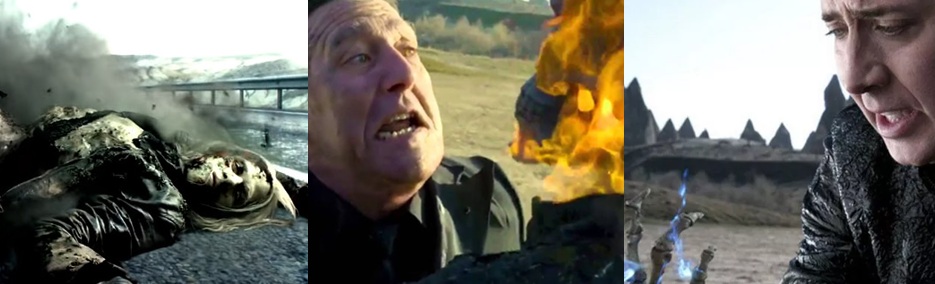
Ultimately, the Ghost Rider triumphs and regains his sanity, bringing some peace to Blaze.

Having successfully dispatched Carrigan and his goons, Blaze brings Nadya and Danny to Moreau’s sanctuary and successfully has his curse lifted. This is a two-stage process that begins with Cage hamming up Blaze’s darkest confession regarding his deal and then being bombarded by strange lights and a cacophony of visuals that, apparently, banish Zarathos from his body. Although Methodius decides it’s better to simply kill Danny to prevent the Devil’s plot, Carrigan shows up and slaughters him and the other monks, kidnapping Danny, and bringing him to Roarke so he can be sedated and forced into a strange ritual. To the chanting of his influential, hooded followers, Roarke comes close to completing the demonic transfer before he’s interrupted by Blaze and Moreau, covered by Nadya and armed with the monks’ impressive arsenal of firearms. Though Moreau is killed by Carrigan and it seems like Danny is ready to embrace his demonic heritage, the boy tricks Roarke and restores the Ghost Rider’s powers to Blaze. Now empowered to exist in daylight, the Ghost Rider aggressively pursues Roarke when he flees with Danny, finally dispatching Carrigan in anticlimactic fashion and violently sending Roarke’s vehicle end over end. His body further damaged by the crash, Roarke is left a helpless wreck before the Ghost Rider’s power. Defiant to the last, Roarke curses the day he made the deal with Blaze but is powerless to avoid being forcefully sent back to Hell by the Ghost Rider’s chain. Nadya is horrified to find that Danny has been…injured? Killed? He’s unconscious, at least…in the crash. However, conveniently, Blaze feels Zarathos’ true nature resurface, changing his flames from red to blue and restoring the angel’s sanity and power as the Spirit of Justice. This allows him to revive Danny and abruptly end the movie with him reaffirming his identity as the Ghost Rider, essentially completing the same character arc we saw in the last movie.

The Summary:
Ghost Rider somehow took one of comicdom’s most visually interesting anti-heroes and delivered a generic action flick that lost momentum halfway through and was bogged down by Nicolas Cage’s bizarre mannerisms. A toothless, impotent affair, it barely scratched the surface of what the character and concept are capable of, disappointing in it squandering its potential. Much of the same criticisms can be lobbied at this awkward re-quel, which is again hampered by too low an age rating to really bring the Ghost Rider to life and Cage is wackier than ever, screaming with a maniac glee or mumbling clumsily through every scene. However, Ghost Rider: Spirit of Vengeance has far more positives than its predecessor: the Ghost Rider looks better than ever, tearing through goons with a vicious relish and impressing whenever he’s onscreen, and Idris Elba steals the show as Moreau, clearly enjoying chewing the scenery. It’s a shame, then, that the Ghost Rider is portrayed so unpredictably. On the one hand, he’s pretty terrifying and an unstoppable force of nature; on the other, he’s lollygagging around or awkwardly screaming in people’s faces. I enjoyed Nadya and Danny’s characters; the actors gave good performances and I liked seeing the kid bond with Blaze, though I think this could’ve been emphasised more in the middle portion. Carrigan was just the right level of camp and menace; like Blaze, he’s gifted with incredible demonic power. Unlike Blaze, Carrigan truly embraces it and relishes rotting his victims, whereas Blaze is constantly at odds with his dark half’s power. However, Roarke is a massive step down from Mephistopheles. Ciarán Hinds isn’t bad, but he’s no Peter Fonda and it’s difficult to reconcile the ham-fisted retconning of the previous film. For me, I would’ve much preferred that the film was a standalone sequel that either used footage from the last movie or didn’t outright contradict it. Therefore, it’s better to treat Ghost Rider: Spirit of Vengeance as a straight-up reboot, as nonsensical as that is. Ultimately, I do think it’s the better of the two, but the flaws still keep it from being a significant improvement over the previous film thanks, ultimately, to Nicolas Cage’s ridiculously over the top performance.  

My Rating:

Rating: 3 out of 5.

Pretty Good

Do you think Ghost Rider: Spirit of Vengeance surpassed its predecessor? Do you think it’s a stronger adaptation of the source material? What did you think to Nicolas Cage’s performance this time and the retconning of the last movie? Do you agree that the Ghost Rider looks far better here? What did you think to Roarke and Carrigan and the way the Ghost Rider decimated his enemies? What are some of your favourite Ghost Rider stories and moments? Whatever your thoughts on Ghost Rider: Spirit of Vengeance, share them below and be sure to check out my other Ghost Rider content on the site.

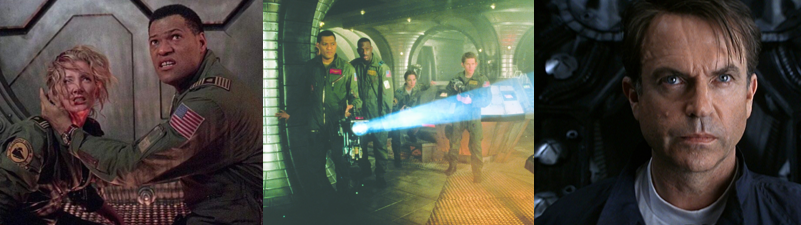
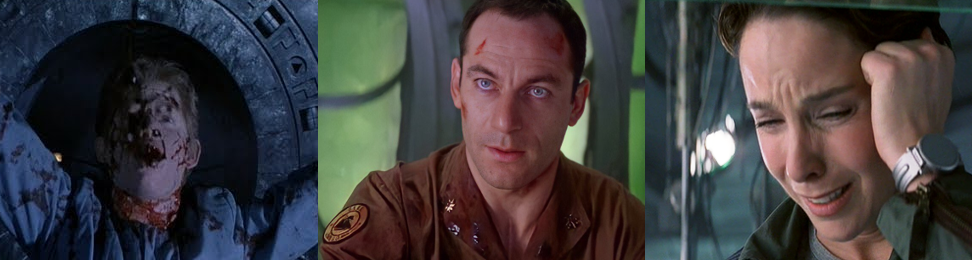
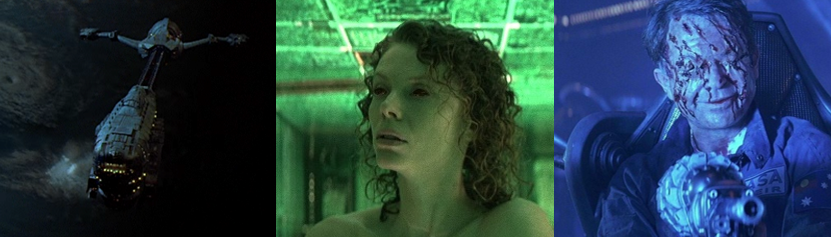
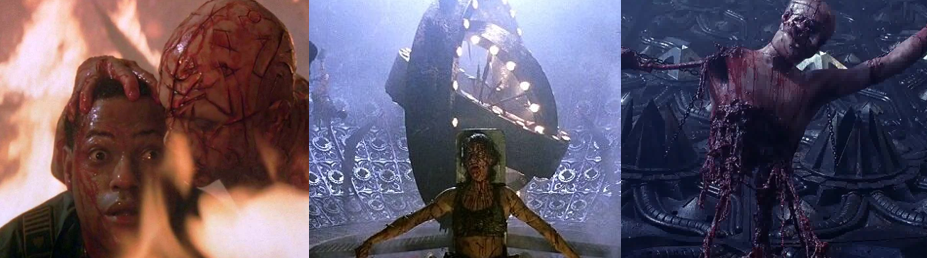
Movie Night: Event Horizon

Click here to listen to my guest spot on the Silver Screen Podcast discussing this film

Released: 15 August 1997
Director: Paul W. S. Anderson
Distributor: Paramount Pictures / United International Pictures
Budget: $60 million
Stars: Laurence Fishburne, Sam Neill, Joely Richardson, Richard T. Jones, Sean Pertwee, and Jason Isaacs

The Plot:
The experimental Event Horizon returns after a mysterious seven-year absence. However, when its designer, Doctor William Weir (Neill), and Captain S.J. Miller’s (Fishburne) crew investigate, they find the ship haunted by a presence from beyond our universe.  

The Background:
It’s not hyperbole to say that Mortal Kombat (Anderson, 1995) made Paul W.S. Anderson’s career. The film’s critical and commercial success saw him bombarded by offers; he turned them all down, even a Mortal Kombat sequel, to make an R-rated horror. Attracted to Philip Esiner’s pitch of a “haunted house in space”, Anderson and producer Jeremy Bolt worked to tweak the script to emphasise these elements and veer away from comparisons to Alien (Scott, 1979), though fans later considered the film a spiritual prequel to Warhammer 40,000 due to similarities between the two. Many effects were done practically, such as constructing moving sets to bring the ominous Gravity Drive to life and harnesses to simulate zero gravity, all on sets said to be oppressive and claustrophobic for the cast. A rushed shooting schedule and pressure from studio executives led to Anderson struggling to deliver a final edit. Test screenings later complained of the extreme gore and subsequent cuts led to the excised footage disappearing, despite fan outcry for a director’s cut. With a box office of just $42 million, Event Horizon was a commercial failure; reviews were equally negative, saved for some praise for the special effects and visuals. However, it has since been re-evaluated and considered a cult classic, inspiring the Dead Space franchise (Various, 2008 to 2023) and getting its due from contemporary reviews, to the point where additional films and even a television series have circled the rumour mill.

The Review:
In the world of Event Horizon, humanity has finally spread its reach beyond our home planet and started to colonise space. First, there was an outpost established on the Moon; then commercial mining began on Mars (where promiscuous women are said to frequent). Then, finally, mankind strived to expand further into the galaxy. To facilitate this, the United States Aerospace Command (U.S.A.C.) first built hyper-fast ion drives and stasis booths to protect their crew from the intense g-forces, then turned to Dr. Weir to develop a prototype for faster-than-light travel. As pilot W. F. Smith/Smitty (Pertwee) and Dr. Weir correctly point out, all the laws of science make light speed unobtainable but, luckily, Dr. Weir found a way around this small hurdle. He developed an elaborate spherical engine, the Gravity Drive, that used focused particles and other complicated pseudo-science to generate an artificial black hole, essentially “folding” space and time and allowing the Event Horizon to instantaneously travel across the galaxy. However, the Event Horizon vanished during its maiden voyage; dubbed the worst disaster in space history, its failure has weighed heavily on Dr. Weir, who focused all his time and attention into the project to the detriment of his marriage. He was so consumed with his work that he failed to notice the failing mental health of his wife, Claire (Holley Chant), until it was too late, and by then she’d already slit her wrists in their bathtub. Haunted by guilt and grief and suffering from constant nightmares of his loss, Dr. Weir is exuberant when the Event Horizon suddenly reappears in Neptune’s orbit transmitting a distress signal and seeks to investigate in hopes of salvaging his life’s work. The true fate of the Event Horizon hasn’t been made public; U.S.A.C. instead concocted a story about it being destroyed due to a power overload. Thus, the rag-tag crew Dr. Weir partners up with to investigate the ship are initially sceptical both of the mission and the Gravity Drive’s ability to tear a hole in the fabric of the universe.

Miller and his crew are roped into a nightmare when Dr. Weir investigates his haunted ship.

Consequently, Dr. Weir is met with a cold reception when he joins the crew of the deep space salvage vessel the Lewis and Clarke. The crew, led by their “skipper”, Captain Miller, are already disgruntled at being recalled from a well-deserved leave and sent to the outer reaches of the galaxy, especially as the last rescue attempt that went that far never returned. They therefore react with hostility when Dr. Weir explains his research to them. Despite also harbouring a resentment towards Dr. Weir, Miller, a by-the-book commander who inspires respect amongst his tight-knit crew, nevertheless chews out some of his more unruly crewmen when they dismiss Dr. Weir’s explanations and is determined to see the mission through as quickly and efficiently as possible. Miller is close to each of his crew, with all of them regarding young engineer Ensign F.M. Justin (Jack Noseworthy) as a surrogate son (they dub him “Baby Bear” and he frequently refers to the ship’s medical technician, Peters (Kathleen Quinlan) as “Mama Bear”). Miller’s served with each of them for a long time and they have a natural rapport based on mutual respect. Miller allows Smitty to light up a cigarette for a job well done and isn’t above joining in with the banter between the crew, ribbing smooth-talking rescue technician T.F. Cooper (Jones) by questioning his contribution to the ship. Like Dr. Weir, however, Miller is carrying a secret pain. He’s wracked by guilt at having left behind a young bosun, Edmund Corrick (Noah Huntley), a decision that has haunted him ever since and driven him to be the efficient commander he is today, expecting nothing less than the highest standard from his crew. As his second-in-command, he expects a lot from communications officer Lieutenant M.L. Starck (Richardson). As their situation worsens, his demands for answers become more forceful, though Miller’s reluctant to entertain her theory that the Event Horizon brought back some lifeforce from wherever it’s been. As Miller is tormented by visions of Corrick and witnesses that suffering of his crew, he directs his grief and anger towards Dr. Weir and the two quickly clash since Dr. Weir comes to be mesmerised and possessed by the ship and Miller’s efforts to escape are constantly thwarted by forces beyond his comprehension. Eventually, Miller’s forced to see that Starck was right and that something has tainted the ship, especially as its influence drives his crew to hysteria and costs him his beloved Lewis and Clarke.

Things go from bad to worse as the ship’s evil influence tortures the crew with visions.

Upon first reaching the Event Horizon, the crew find it to be an ice-cold “tomb” devoid of all life signs (despite driving their scanners crazy) and filled with an ominous dread. When Justin investigates the Gravity Drive, the ship suddenly comes to life; the core (or “gateway”) opens and sucks him in and, though Cooper rescues him, Justin is left catatonic and the Lewis and Clarke is badly damaged. While Smitty works around the clock to repair the damage and the crew risk suffocation aboard the Event Horizon, Peters toils through the ship’s log and is dismayed to find Captain John Kilpack (Peter Marinker) and his crew were driven to a macabre insanity, slaughtering and mutilating ach other in a gore-drenched orgy, the remains of which are still plastered to the ship’s walls. Dr. Weir’s nightmares also come to him while he’s awake. He sees visions of Claire’s eyeless face and hears her voice whispering to him and is enthralled by the Gravity Drive, which slowly influences his decisions and turns him against the crew, dismissing their claims and concerns and causing Smitty to fly at him in a rage. Following a disturbing seizure in which he warns of the impending arrival of “The Dark”, the traumatised Justin is compelled to enter an airlock and kill himself to avoid going back there. To the horror of his crew, Justin is almost killed by decompression, though Miller gets him back in the ship and their resident doctor, the grim-faced D.J. (Isaacs), stabilises him. With Justin sedated in a stasis tank, D.J. is forced to reveal that Kilpack’s distress call, which consisted of Latin, was actually a warning to others to “save [themselves] from Hell”. Though neither Miller or D.J. are the religious type, it seems something evil has latched onto the ship and their situation only worsens when Dr. Weir sabotages their escape plan by blowing up the Lewis and Clarke with an emergency explosive, killing Smitty in the process and trapping the survivors on what is now clearly a very haunted ship.

The ominous Event Horizon transforms Dr. Weir into its demonic agent.

The Event Horizon is the primary antagonist of the film. A needlessly ominous, gothic ship, it looms in space like a haunted cathedral and creates a foreboding presence with its dark, claustrophobic hallways, abundance of spikes and chilling silence, to say nothing of the remnants of Kilpack’s gory orgy the crew eventually find. From the moment the crew step onboard, the ship influences them; not only do Miller and Dr. Weir hear and see their worst fears but Peters is routinely tormented by visions of her infirm son, Denny (Barclay Wright). These are so traumatic that she refuses to work in the medical room, much less alone, and later drive her to a tragic and brutal death when she chases what she thinks is Denny around the Gravity Drive and takes a fatal fall in the process. Of course, the Event Horizon has the greatest influence on Dr. Weir, arguably getting inside his head before he even reaches his beloved ship. Once onboard, his visions intensify; he’s already very protective of the ship and comes up with quasi-logical explanations for the strange events happening, but the crew don’t buy it. Eventually, the ship forces him to relive Claire’s suicide and he’s driven completely off the deep end; he comes to see the ship as “home” and gouges out his eyes, leaving him a half-crazed, demonic figure who coldly destroys the Lewis and Clarke. Miller is deeply affected by Smitty’s death but this explosion also flings Cooper out into space; however, thinking fast, the jovial rescuer blows his air tank and jets back to the Event Horizon. However, he finds Dr. Weir determined to reactivate the Gravity Drive and return to whatever lies beyond. It’s not clear where, exactly the Event Horizon has been; even Dr. Weir doesn’t know where the Gravity Drive leads to. Kilpack dubs the space between dimensions as “Hell”, a name that sticks even for the scarified, possessed Dr. Weir. Rather than jumping from one point in space to another, the Event Horizon punched a hole in reality itself and ventured to “a dimension of pure chaos… pure evil”. While there, the ship was infected by the dimension’s influence and drove its crew mad, apparently gaining a level of sentience and satiating itself on taking their lives (and, presumably, their souls). Accordingly, it delights in torturing Miller and his crew with their worst fears and toying with its prey. It constantly creates roadblocks, forcing them aboard and then trapping them there, intent on dragging the survivors back to Hell to expose them to even more macabre sights and suffering.

The Nitty-Gritty:
Although Anderson may have sought to move away from being compared to Alien, the sci-fi/horror classic’s influence is greatly felt in Event Horizon. For one thing, this is a very gritty, “lived-in” sci-fi world. The controls and technology and aesthetic of the Lewis and Clarke, in particular, are very low-tech, full of buttons and exposed gears, and her crew are very much analogous to the Nostromo’s complement of “truckers in space”. These are working-class space farers, paid a minimum wage and doing the best they can with obsolete technology, and their down-and-dirty attitude makes them very relatable characters who are easy to root for. Miller can be a bit uptight, but he has a great rapport with his crew, even if he gives Starck a hard time more often than not. D.J. is their more sullen crew mate, bluntly introducing himself and even threatening Smitty with a scalpel when he rages at Dr. Weir for perverting the laws of physics. Smitty and Cooper are the most grounded of the crew; however, whereas Cooper is cheerful and fancies himself a ladies’ man, Smitty is more gruff and would rather leave as soon as possible. Honestly, I’m so glad Cooper survived as he’s a fantastic character. He calls Dr. Weir out on his bullshit, earning himself a dressing down from Miller, and brings some infectious levity through his ridiculous return to the ship, which always makes me grin. Peters was perhaps the least interesting for me but she’s given emotional depth through her clear love for her son, while Starck was just trying to be pragmatic and keep her cool. Smitty and Starck immediately sense the bad vibes from the Event Horizon, a ship bathed in a perpetual thunderstorm courtesy of Neptune and constantly seeped in ominous darkness. All too late, Miller turns on the ship, ready to escape and blow it to pieces, only to be scuppered by the cruel-hearted Dr. Weir and his crew picked off one at a time by the ship’s visions or Dr. Weir’s mad designs.

The macabre, gory imagery and effects are especially disturbing, even in brief flashes.

Describing Event Horizon as a haunted house in space is extremely apt, but it’d also be just as fitting to dub it “Hellraiser (Barker, 1987) in space”. In this latter regard, the film performs exceedingly well, offering a far more entertaining and disturbing experience than the actual Hellraiser in space we got. There’s a constant sense of dread as the crew wanders the ship’s dark and claustrophobic corridors. Flashes of lightning reveal disgusting gore on the walls and the frenetic ship logs offer but a taste of the horrors Kilpack and his crew endured while in Hell. The Event Horizon itself is a menacing construction; there’s no reason for it to be as long or intimidating as it is, and yet the Gravity Drive is protected by a “meatgrinder” corridor and full of spikes, creating an unsettling vibe even before the gateway opens. Obviously, there is some dated CGI and green screen effects, most notably in rendering the gateway and when the crew are wandering around the frigid, zero-g interior of the Event Horizon. However, the film makes up for this was some incredible set design (again, everything feels very Alien and suffocating in its aesthetic) and practical effects. Unfortunately, due to studio mangling, we’re denied seeing the full extent of Hell’s wrath and exactly what Dr. Weir does to D.J. but the horror of the unknown lands just as hard. When the scarified Dr. Weir assaults Miller in the finale, he forces Miller to see visions of his crew being raped, tortured, mutilated, and brutalised in Hell. Maggots, scenes of D.J. being strung up in a blood eagle, and flashes of Starck, Justin, and Cooper being flailed and impaled bombard Miller (and the audience) like a fever dream. It’s a disturbing cacophony of frenzied editing, but it works since it forces you to experience Miller’s visions as he’s being shown them. The makeup effects on Dr. Weir are particularly gruesome; first, he tears his eyes out and is left a mutilated, taunting villain obsessed with taking Miller and his crew to Hell. Then, after being blown out of the ship, he’s returned as a completely naked, demonic entity covered in weeping scars, completing his transformation into the personification of the ship’s evil.

Though Miller sacrifices himself to stop Dr. Weir, the ending suggests the nightmare is far from over…

After working tirelessly to repair the Lewis and Clarke, Smitty is dismayed to learn that Dr. Weir has planted an explosive on the ship. Though he frantically searches for it, Smitty’s too late to deactivate it and is blown up with his beloved craft. Angered, Miller arms himself with a harpoon-like nail gun and prepares to make Dr. Weir pay for costing him his ship and his crew. Though he finds Starck alive, he’s left at the scarified Dr. Weir’s mercy, horrified to find the doctor has lost his mind and gouged his eyes out. Now completely consumed by the ship’s influence and determined to defend it at all costs, Dr. Weir activates the Gravity Drive, though he’s seemingly killed when he decompresses the bridge trying to kill Cooper. Miller gets Starck and Cooper to safety and concocts a plan to utilise the Event Horizon’s emergency lifeboat feature. As related by Dr. Weir earlier, the ship was designed to be split in half using explosives placed along its otherwise unreasonably long central corridor. After ordering Starck and Cooper to prepare the foredecks for their departer, leaving them to be assaulted by a very Shining (Kubrick, 1980) inspired torrent of blood, Miller is attacked by Corrick’s enflamed spirit and driven towards the Gravity Drive. There, he sees through the vision and is confronted by the now-demonic Dr. Weir. Subjected to horrifying visions and outmatched by the doctor’s augmented strength, Miller is left with no choice but to set off the explosives to deny Dr. Weir his full victory, sacrificing himself to the Hell dimension to save his crew. Many days later, the wreckage of the Event Horizon is discovered. However, the experience has left Starck traumatised and the film ends with the suggestion that the remains of the ship may be just as haunted as the half that was sucked back to Hell.

The Summary:
I discovered Event Horizon by accident. As a kid, I taped some other movie off the television and accidentally left the VHS running, recording the next movie, which just so happened to be this one. Despite not being into horror back then, I gave it a watch and was immediately enthralled and, to this day, Event Horizon is one of my all-time favourite, go-to horrors. I love the aesthetic of this movie, with its lived-in, gritty, clunky technology and the depiction of Miller and his crew as average Joes caught up in a nightmare they wanted no part of. Laurence Fishburne makes for a great, hard-assed leading man but he’s bolstered by some of Hollywood’s most underrated character actors. Sean Pertwee is always a delight and he’s great as the outspoken Smitty; Jason Isaacs brings a quiet intensity to D.J. who’s just barely keeping his shit together; but the standout was Richard T. Jones as Cooper. He’s just such an infectious and charismatic personality that steals every scene he’s in with his cocksure bravado and blunt honesty. Sam Neill also puts in a great performance as the haunted Dr. Weir; this is a man wracked with guilt who seems on the verge of suicide, and yet who sees the Event Horizon as a second chance. While he’s initially shocked and dismayed by the horrors and death that infest the ship, Dr. Weir is mesmerized by its influence and comes to protect and even love it, willing to butcher Miller’s crew to satisfy his creation’s macabre lust. The horror on offer here is palpable; the Event Horizon is a menacing presence throughout and looms over every scene, seemingly watching and infecting the characters’ every movement. It’s a shame we’ll never see the full extent of the gory visuals but the film works incredibly well despite that. The brief, frantic bombardment of torture and death are enough to hammer home how desolate and wicked Hell is and there’s still plenty of gore on offer. The fantastic use of disturbing practical effects, the unsettling depiction of Justin’s decompression, and Dr. Weir’s transformation into an eloquent and cruel demonic sadistic all make Event Horizon an unnerving and terrifying cult classic. With great performances, some incredible visuals and set design, and a truly frightening premise, Event Horizon will always be highly recommended by me and, if you haven’t seen it or want to see Hellraiser in space done right, now’s the time to change that!

My Rating:

Rating: 4 out of 5.

Great Stuff

Have you ever seen Event Horizon? Do you agree that it’s an under-rated cult horror classic? What did you think to the visuals, the gothic construction of the titular ship, and the foreboding atmosphere? Which member of the crew was your favourite? What did you think to Dr. Weir’s descent into demonic insanity and Miller’s selfless sacrifice? Would you like to see the excised footage full restored to this movie? I’m always happy to talk about Event Horizon so please leave your thoughts below and go check out my other horror content across the site!

Movie Night: Blade II

Released: 22 March 2002
Director: Guillermo del Toro
Distributor: New Line Cinema
Budget: $54 million
Stars: Wesley Snipes, Leonor Varela, Luke Goss, Ron Perlman, Norman Reedus, Kris Kristofferson, and Thomas Kretschmann

The Plot:
Half-human, half-vampire vampire hunter Blade (Snipes) is recruited by vampire overlord Eli Damaskinos (Kretschmann) to lead an elite vampire team against the genetically-engineered “Reapers”, led by Jared Nomak (Goss), who threaten the survival of both humans and vampires.

The Background:
Created by Marv Wolfman and Gene Colan, the extremely obscure, culturally problematic vampire hunter Eric Brooks/Blade debuted in the pages of The Tomb of Dracula and, as unlikely as it was, kick-started the modern superhero genre as we know it back in 1998. After years of development and rewrites, Blade (Norrington, 1998) was both a commercial and critical hit and virtually redefined star Wesley Snipes’ position in Hollywood. Plans for a sequel immediately made the rounds, with writer David S. Goyer initially wanting to feature Doctor Michael Morbius as a main villai. Though rights issues prevented that and director Stephen Norrington refused to return, the production scored noted auteur Guillermo del Toro. A noted comic book fan and desiring vampires to be scary once more, del Toro brought a visual language to the film that drew inspiration from various media sources and ensured the film’s visual effects would stand the test of time by incorporating traditional practical effects, bringing in Tippett Studio and XFX to achieve the best of both. Additionally, Snipes was excited to revisit the role, working hard to maintain his physique and given a lot of creative freedom regarding the character’s portrayal. Despite a worldwide box office return of $155 million, Blade II was met with mixed reviews that praised the gory action but questioned the mindless narrative. Of course, this wasn’t the end for Blade. It was followed by a widelypanned third film two years later, a short-lived TV show two years after that, and Snipes even surprisingly reprised the role in the Marvel Cinematic Universe ahead of a complete reboot.

The Review:
Blade II takes place some years after the first film (at least two, it seems) and opens with Blade giving a quick recap of his origins, powers, and mission statement while also clumsily retconning one of the most emotional moments of Blade. Attacked by Deacon Frost (Stephen Dorff) and left mortally wounded, Blade’s gruff mentor and surrogate father, Abraham Whistler (Kristofferson), demanded Blade leave him his gun so he could finish himself off and avoid turning into the thing they both hated, a blood-sucking vampire. However, it turns out that Whistler either didn’t kill himself or was found by another group of vampires or was potentially too late to stop the change or somehow revived and turned after killing himself as he was spirited away all over Europe. Kept alive in stasis and constantly moved around for reasons not explained here (or ever), the now vampiric Whistler eluded Blade during the time gap, but Blade II catches up with the stoic Dhampir finally locating his lost mentor. Once again, Blade can’t bring himself to finish Whistler off and instead chooses to take him back to his base, despite the inherent risk he poses to him and his new mechanic/armourer/lackey, Josh Fromeyer/Scud (Reedus). Yet, Blade isn’t blind to the possibility that Whistler is beyond salvation. He shoots Whistler up with a concentrated dose of his serum (the only thing keeping Blade’s “thirst” for blood at bay) and threatens to burn him to ash if he hasn’t gone “cold turkey” by the morning. Although Whistler appears to fully recover (except for his gammy leg), the question of his trustworthiness is raised multiple times throughout the film, with Scud and Blade’s newfound vampire allies both being aggressively suspicious of the grouchy old man’s true intentions. Yet, Whistler remains one of the few people Blade truly cares for. While I’m not a fan of undoing Whistler’s poignant death, he’s a great foil to the others, barks some amusing lines, and adds a great deal of emotional depth to Blade, a character largely known for hiding his humanity behind a grim-faced façade.

Stoic Blade risks everything to rescue his mentor and join forces with his hated enemies.

Still, Blade II gives the character (and Snipes) more screen time and more of a chance to showcase some emotional range. He says a lot with just a glance or some quick hand gestures but isn’t above mocking Scud’s reluctance to assist in the Reaper autopsy by calling him a “sissy” and seems to enjoy winding up the Bloodpack. In particular, Blade develops a quick rivalry with unashamed sadist Dieter Reinhardt (Perlman), humiliating the outspoken racist in front of his peers and engaging in a constant game of one-upmanship that naturally results in them coming to blows by the film’s end. A quiet, solitary individual, Blade lives only for his mission. He’s still at war with his base instincts, taking his aggression out on the creatures that created him, but embraces his animalistic side when near death to effortlessly dispatch Reinhardt’s goons. Blade’s physical prowess is at its peak here; Snipes excels in fight scenes, which showcase his dexterity and agility, and Blade easily manhandles and outfights multiple foes, even while unarmed. Gifted with all a vampire’s strengths but none of their weaknesses, Blade can afford to be cool and confident in battle, quickly healing from any wounds and taking the lead whenever their mission ventures into sunlight. When approached by Asad (Danny John-Jules) and Nyssa Damaskinos (Varela) and taken to Overlord Damaskinos with the promise of a truce, Blade goes along out of curiosity, his awesome trenchcoat packed full of explosives, and immediately recognises that getting into bed with the vampires to combat the Reapers will inevitable result in them being betrayed. However, he’s eager to delve deeper into the inner world of his enemy and learn more about them to fight them better, and constantly demonstrates that he can take out the Bloodpack, despite them training for two years specifically to fight him, thanks to his superior skills and fancy toys. Although Blade is initially incredulous about Nomak’s threat since the Reapers actively hunt vampires, he recognises their threat to humanity and the vampires must reluctantly defer to his orders since the best method of fighting the Reapers is to use ultraviolet light. While there’s no mention of what happened to Doctor Karen Jenson (N’Bushe Wright), Blade battles Nomak using a variation of the anticoagulant weapon she developed that finished off Frost, though he’s just as dependent on his serum as ever and it doesn’t appear to have been improved between movies.

Blade’s notoriety makes him a feared and hated (but largely respected) bogeyman.

In her place, Blade has a new love interest: Nyssa. Nyssa delivers a unique insight into Blade, revealing that vampires think of him as a bogeyman, and she’s just as interested to see his world as he is to see hers. While most of the Bloodpack is antagonistic towards Blade and his allies, Nyssa respectfully defers to Blade’s orders while warning him not to interfere in vampire business since their mission is to target Reapers. As they encounter the voracious vampire variants, Blade constantly moves to either protect Nyssa or keep her from being burned up by sunlight. He could easily let her run into danger or be vaporised by Scud’s ultraviolet grenades, but time and again holds her back and orders her to seek cover. Indeed, he saves her life and showcases a honourable valour so often, even slitting his wrist to revitalise her after a Reaper attack, that Nyssa comes to greatly respect him as a warrior and equal. Just as Whistler worries Blade’s loyalties are becoming divided by Nyssa’s allure, so too are Nyssa’s loyalties to her family and her kind tested by the conflict she feels over the man painted as her hated enemy. These feelings are only exacerbated when it’s revealed that Damaskinos engineered the Reaper strain, even infecting his own son with it, and cares little for his children, firmly setting her against her father and her dishonourable species by the finale. Blade brushes off Whistler’s concerns, confident that he retains the upper hand, but Scud remains suspicious of Whistler, especially as the old man leaves his post and seems to have recovered unnaturally quickly. Scud, a pot-smoking rebel, appears to have no love for vampires and delights in pimping out Blade’s muscle car and cobbling together new tech for him, including a small bomb Blade implants on Reinhardt’s head and those ultraviolet grenades.

Nomak’s voracious, monstrous Reapers easily overwhelm even the most elite vampires.

Although Asad and Nyssa seem excited (or, at least, intrigued) to be fighting alongside Blade, the same can’t be said for the rest of the Bloodpack. These colourful and largely one-dimensional, leather-clad vampires have spent the last two years training to hunt and kill Blade and, seeing him before them, struggle to not simply jump him. While mute swordsman Snowman (Donnie Yen) seems to at least respect Blade, Reinhardt doesn’t. He accosts Blade right away, comes close to shooting him in the vampire club, and is happy to leave him to fight legions of Reapers alone. Reinhardt’s hatred of Blade is matched by the pugnacious Chupa (Matt Schulze), who transitions his aggression towards Whistler when the old man’s brief desertion leads to the infection and slow, agonising death of his friend, Priest (Tony Curran). Although Priest immediately and painfully begins to mutate into a Reaper shortly after being bitten, the brutish Lighthammer (Daz Crawford) somehow resists turning for about a day. When he does, he blindsides Snowman with his massive battleaxe and ends up being incinerated by his lover, Verlain (Marit Velle Kile), who takes herself along with him. Though well-equipped, the Bloodpack are slow learners; despite seeing first-hand how ineffectual bullets (both regular and silver) and even blades are against the Reapers, they continue to waste ammo, presumably out of fear of roasting each other with their ultraviolet torches. The Reapers prove to be especially vicious and durable foes; essentially grotesque mutations of vampires, not unlike the goblin-esque Damaskinos, their hunger is likened to that of a crack addict, meaning they quickly spawn an aggressive army. Sporting superhuman strength, advanced healing, and a nigh-impenetrable skeletal structure, the Reapers leap at their prey and latch on with their horrifying split jaw, feeding and creating new minions for Nomak’s crusade against his father. Though they’re also destroyed by sunlight, the Reaper’s physiology is incredibly resilient and Nomak easily recovers from broken limbs and even a bullet to the head. Nomak demonstrates a reluctance to fight Blade, believing they have a common enemy and should be on the same side, but Blade vehemently rejects such a notion and chooses the devil he knows in opposing the new threat since, by and large, the Reapers are far more animalistic than the more sophisticated vampire nation.

The Nitty-Gritty:
Retaining the slick, gothic aesthetic of the first film, Blade II continues to marry leather fetish with a gritty, urban vibe, one bolstered by a surprising earworm of a soundtrack. I’m not really a hip-hop kinda guy but I can never get Massive Attack and Mos Def’s “I Against I” out of my head after watching Blade II. Having manipulated or forced their way into positions of political and social power, there are few resources the vampires don’t have, but only those under Damaskinos’ command enjoy these benefits. Indeed, the Bloodpack are disgusted by the ravers in the club since they’re not “Pure Bloods” and Priest would have happily killrf everyone there to weed out the Reapers. Indeed, one reason Blade’s so quick to join the Reaper hunt is to get a closer look at the high-level vampire hierarchy, quickly learning that fear of him has seen them be less open about marking their clubs and safe houses so as to avoid his attention. The juxtaposition between the elite and the lowers is best exhibited in Nomak’s grubby attire. He’s literally dressed like a vagrant, sporting haggard clothing throughout the film, in contrast to Damaskinos’ elaborate robes, the Bloodpack’s form-fitting leather, and Blade’s armoured attire. The Reapers also scurry about on all fours, often naked, appearing like goblins, shrieking and roaring and swarming their prey like wild animals. Though Nomak, as the carrier and progenitor of the virus, is the exception (essentially the reaper equivalent of a “Daywalker”), the Reapers lack the eloquence and sophistication of the vampire nation. For the most part, vampires keep their hunger in check unless angered or feeding, instead assuming a holier-than-thou allure and utilising their own language and writing. As such, even a brute like Lighthammer is disgusted by the Reapers, which are seen as base vermin, despite the creatures only existing because Damaskinos was trying to engineer Blade’s unique physiology to strengthen the vampire race even further.

Monstrous effects and a greater focus on action make this perhaps the best in the trilogy.

Naturally, Blade II is as impressively gory as the first movie, if not more so. The Reapers attack with a ravenous fury, causing arterial blood to splatter across walls and the creatures clutch and bite at their prey with an intensity that puts vampires to shame. The Reapers themselves are horrifically ghoulish creatures; hunched, spindly, and shrieking, they sport this awesomely gruesome split jaw and a probing tongue that rivals that of a Xenomorph. Even when dead, their bodies desperately try to feed; Preist’s severed head even appears to still be alive after he’s roasted, and the creatures think nothing of disembowelling themselves to escape. Vampires are largely ineffectual against Blade, despite their superior numbers and mostly being armed; thanks to his silver-tinted weapons and superior physical skill, Blade easily turns them to flaming ash with his signature sword, boomerang-like blades, and hefty rapid-fire pistol. Blade II ups the fight sequences from the previous film, showcasing Wesley Snipes’ impressive fighting prowess against multiple foes. Though there are a few questionable instances of CGI doubles (and shades!) involved here and there, the fights all have a raw brutality and are enjoyable to watch. The vampires are constantly overwhelmed by the Reapers and backed against the wall and the Reaper physiology means Nomak offers Blade a physical challenge not readily apparent by his dishevelled appearance. While most of the Bloodpack don’t get much character development, they do at least stand out with their signature weapons. Snowman, especially, makes an impression with his effortless swordsmanship, respectful demeanour, and focused intensity. Chuba hefts a massive machine gun and Lighthammer of course has his big-ass, caveman axe/hammer. While Reinhardt favours a simple shotgun, he takes a fascination with Blade’s sword. Avoiding its booby-trapped hilt, he relishes in brandishing the weapon before the captive Whistler and even claims it for himself when he believes Blade is dead, then tries to skewer him with it when he’s revived by the bloodpool and splits his ruthless rival in two with one simply swipe.

Empowered by a bloodbath, Blade triumphs over Novak, but not without suffering a loss.

After wiping out most of the Reapers with Scud’s ultraviolet bomb and saving Nyssa’s life, Blade’s efforts are rewarded with an inevitable betrayal. Although Blade explosively reveals that he was well aware of Scud’s true allegiance to Damaskinos, the Daywalker is stunned by taser batons and taken to Damaskinos’ secret lair/laboratory. There, Blade once again endures having his life’s blood drained by the vampires to help them engineer a sunlight-resistant variant. However, Whistler escapes and frees the weakened Blade, getting him to a bloodpool to revive and empower him, leading to him easily making short work of Reinhardt. Thanks to the Reaper pheromones sampled by Nyssa, Nomak infiltrates the stronghold, intent on avenging himself on his father. Easily slaughtering Damaskinos’ guards, ripping open his blast doors, and penetrating his inner sanctum thanks to Nyssa turning on her father, Nomak confronts his father, seemingly looking for his approval. In desperation, Damaskinos tries to welcome his wayward son back and offer him a place at his side, only for Nomak to see through the deception and rip the ghoul’s throat out. He then attacks Nyssa before battling Blade once more, proving again to be the Daywalker’s physical equal. However, when Blade stabs Nomak through the heart, forcing his blade past his armoured ribs, the cursed deviant chooses to finish himself off, exploding in a burst of blue flame. Already feeling the Reaper strain threatening to destroy her personality, Nyssa requests that Blade allow her to die with dignity, as a vampire, by the rising sun. Out of respect and a genuine affection for her, Blade stoically agrees, embracing her as she turns to cinders. The film then ends with Blade making a special trip to London to track down Rush (Santiago Segura), a cowardly vampire who earlier led him to Whistler, ending the movie on an amusing note as he had previously promised to tie up that loose end.

The Summary:
Blade was a fantastic action/horror flick back in the day; simple, grounded, gory, and gritty, it was only letdown by some dodgy CGI in the finale. Blade II takes a much more action-orientated approach, increasing the threat against Blade, the fight scenes, and the cast of characters to great effect. I loved the twist of the vampires being so threatened by the Reapers that they were forced to turn to Blade for help, and the added swerve that it was all part of an elaborate deception to get their hands on the Daywalker and synthesise his blood. The Bloodpack, though largely underdeveloped, were surprisingly memorable through their aggression towards Blade, their signature weapons, and simply by being an elite vampire team forced to fight alongside their hated enemy. Wesley Snipes was peak Blade here, impressing in his trenchcoat, armour, grim façade, and slick fighting style. He exudes a cool, convincing authority while still being snarky and witty when necessary…or descending into full-blown animal fury. I loved the humanity Blade shows in his continued shame at relying on the serum, his respect and admiration for Nyssa, and his quest to retrieve Whistler and when reunited with him. Though, as I said, I don’t think it was necessary to bring Whistler back, Kris Kristofferson steals every scene he’s in as the cantankerous old man who’s had enough of this shit, but I wonder if the film might’ve been better swerved to have brought him back as or revealed him to be a vampire, just to add to Blade’s emotional journey. Nomak was a surprisingly effective bad guy; eloquent and expressing some relatable grievances, he and his Reaper kin represent a gruesome, monstrous threat that threatens even the all-powerful vampire nation. Honestly, Blade II is my favourite of the Snipes trilogy; it just as this cool allure to it that elevates it above the first film and stands it head-and-shoulders above the third, especially as it ups the obsession action films had with leather and sunglasses and infectious beats throughout the nineties. However, my personal bias isn’t enough to give it a full five stars. Tweaking a few things (the Whistler conundrum and the Bloodpack’s characterisation, as mentioned) would’ve changed that, but that doesn’t diminish my enjoyment of the film or the fact that I regularly choose to watch it over either of the others.

My Rating:

Rating: 4 out of 5.

Great Stuff

Did you enjoy Blade II? Do you think it’s the best of the original three? What did you think to the Bloodpack and Blade’s rivalry with them? Were you annoyed that Whistler’s emotional death was undone? What did you think to the Reapers, and Nomak’s threat? Did you see Scud’s betrayal coming or did it take you by surprise? What Blade storylines do you enjoy? Whatever your thoughts on Blade II, feel free to share them below and go check out my other Blade content on the site.

Movie Night: Hellraiser (2022)

Released: 7 October 2022
Director: David Bruckner
Distributor:
Hulu / Paramount+
Budget: $14 million
Stars:
Odessa A’zion, Brandon Flynn, Drew Starkey, Adam Faison, Goran Višnjić, and Jamie Clayton

The Plot:
Recovering drug addict Riley McKendry (A’zion) steals a mysterious puzzle box that summons the Cenobites, who demand six sacrifices. When her brother, Matt (Flynn), is taken by the Cenobites, Riley attempts to uncover the truth behind the box and avoid her fate.

The Background:
In 1986, British novelist, playwright, and filmmaker Clive Barker published volume three of his Night Visions anthology series, which included the novella The Hellbound Heart, a horror story heavily influenced by his time as a hustler and experiences in S&M clubs. Just as Barker was being heralded by iconic horror author Stephen King as “the future of horror”, The Hellbound Heart caught the attention of Hollywood and, unsatisfied by previous adaptations of his writings, Barker insisted on writing and directing the adaptation himself despite his lack of experience. Thanks to the macabre Cenobites and the alluring presence of actor Doug Bradley, Hellraiser proved to be a critical and commercial hit, kick-starting a horror franchise that, unfortunately, failed to live up to the original and quickly descended into direct-to-video releases that removed all subtlety and nuance from the concept. For years, Barker distanced himself from later entries, particularly the rushed “ashcan” sequel/remake that was so awful that slasher icon Bradley refused to participate for the first time. The series finally got a shot in the arm with the generally well-received Hellraiser: Judgment (Tunnicliff, 2018) and, after years of fighting to regain the rights to produce a much-needed reboot, Barker finally got his wish to revitalise and return to the franchise when this remake was announced in 2019. Although Bradley turned down a chance at a cameo to preserve his legacy, the real story here was the announcement that his iconic role as “Pinhead” would be played by a woman, a decision that caused a ridiculous amount of backlash that even Bradley admonished. Specifically said to be drawing more from Barker’s original novella and film and with make-up effects by Josh and Sierra Russell, this new Hellraiser made its debut exclusively on streaming platforms like Hulu and Disney+. Hellraiser made a modest $12,640 and garnered mostly positive reviews. Critics lauded the return to form for the redesigned Cenobites and praised it as the best entry in years, despite criticisms of the characterisations. The film’s success was enough to warrant the production of a sequel, though development of an unrelated television series continued to tread water.

The Review:
At first glance, Hellraiser has much in common with another horror remake, Evil Dead (Álvarez, 2013). Not only is it more of a “re-imagining” of the source material, but the main plot revolves around a damaged, recovered addict. Riley McKendry has wasted most of her life to drink and drugs but, after putting her brother, Matt, his boyfriend, Colin (Faison), and their friendly roommate, Nora (Aoife Hinds), through hell with her mood swings and antics, she’s finally on the right path towards sobriety. However, for the long-suffering Matt, there’s still a problem: Riley’s boyfriend, Trevor (Starkey), who she met while going to group therapy and following the “12 Step” program. Not only is Matt immediately suspicious of Trevor because of this and because he so obvious looks like a drug dealer and user, he’s also worried that Riley mixing with a recovering addict will only drag her down when Trevor inevitably relapses. Riley naturally lashes out against Matt’s judgements; whatever trauma drove her to addiction is clearly deep-rooted within her and she latches onto Trevor as a source of escape and sexual comfort. Indeed, when Matt suddenly vanishes after being cut by the mysterious puzzle box, the first thing Riley does is find comfort in Trevor’s arms and it’s in him, not her friends, that she confides in and turns to to help her figure out what the deal is with the box. Speaking of which, it’s Trevor’s fault the puzzle box even ends up in Riley’s hands in the first place. When she mentions that she needs to find a “better job” to start paying her share of the rent and get Matt off her back, Trevor encourages her to help him break into an abandoned warehouse and swipe whatever’s inside, said to belong to some rich asshole, and split the profits. Unfortunately for her, and all of them, what they find is a strange, gold-and-brass puzzle box that immediately enthrals Riley. However, when she returns home drunk and gets into a blazing row with Matt, her brother finally snaps and throws her out, leaving her wandering the city streets late at night in an alcohol and pill-fuelled daze.

Troubled Riley is desperate to solve the mysterious puzzle box when her brother vanishes.

Riley finds solace in a playground. There, her head spinning from the drugs, she tinkers with the puzzle box and is amazed when it starts to move and shift, changing form in her hands. Unlike hapless stooge Joey Coscuna (Kit Clarke) in the film’s prelude, Riley avoids a nasty cut from the box’s blade but is suddenly overwhelmed by a bout of nausea and the distant tolling of bells. As she drifts in and out of consciousness, Riley spies a horrific, scarified creature –The Gasp (Selina Lo) – who demands that Riley offer a blood sacrifice since she missed being sliced. Riley’s thoughts turn to Matt who, either sensing his sister’s plight or enchanted by the Cenobites’ power, heads out to find her, suddenly convinced she’s in danger. Though Matt finds her half out of it in the playground, he accidentally stabs himself on the box and, when he goes to clean up, the Cenobites hungrily abduct him. When Colin and Nora accompany the ambulance crew in finding Riley, they’re all driven out of their minds with worry by Matt’s disappearance. None of them believe Riley’s claims that it’s tied to the box, believing she was off her head at the time. Frustrated, terrified, and burdened by guilt (to say nothing of being haunted by visions of the Cenobites), Riley turns to Trevor to get answers. Though he claims to believe her and shelters her, Trevor’s clearly disturbed by the box. When he tries to dispose of it, Riley launches into a tirade, obsessed with understanding its secrets so she can find her brother and atone for her awful behaviour. Reluctantly, Trevor accompanies Riley to an assisted living facility, where they question former lawyer Serena Menaker (Hiam Abbass), who’s listed as the owner of the warehouse they found the box in. She reveals that box belongs to disgraced corporate mogul Roland Voight (Višnjić). She also exposits some titbits about the box, freaking Riley out as she describes a lot of the same stuff she’s been seeing, and then forcibly tries to take it for herself, ending up cut in the process and being claimed by the Cenobites. Riley then uses the power of the internet to read up on Voight, a hedonistic millionaire who disappeared and was presumed dead, and fixates on breaking into his fortress-like mansion, no matter how hard Trevor tries to dissuade her.

Despite Trevor’s concerns, Riley gets her friends mixed up in her nightmarish situation.

While Matt takes an instant dislike to Trevor, primarily out of concern for Riley’s wellbeing, his assumptions are a little off the mark, at least initially. Trevor’s a surprisingly attentive miscreant; he genuinely seems to care for Riley, even accidentally letting slip that he loves her during sex, and enables her wild claims at every turn. He does, however, try to inject some logic into her increasing mania, which she doesn’t appreciate. No matter how often he tries to dissuade her from investigating the box and Voight, Riley persists like a rebellious child and Trevor’s forced to tag along to keep her safe, seemingly presenting himself as the opposite of the bad influence Matt believes him to be (even if Trevor does encourage her to steal the box in the first place). Matt doesn’t get much screentime but he’s a pivotal plot point since Riley’s entire journey is first about finding and making amends with him, and then about saving and resurrecting him. It’s clear he loves his sister and desperately wants her to turn her life around, but he’s grown tired of her reckless and self-destructive ways and can’t help but lose his patience when she repeatedly throws her life away with Trevor, drink and drugs. Matt’s spectre haunts Riley as much as the Cenobites; she dreams of him, hears him calling for help, and is even confronted by his presence in Voight’s mansion. This is potentially a Cenobite trick since he asks, “Do you want me to be?” when she asks if it’s really him. Embracing him and tearfully apologising for her actions, Riley’s horrified when she catches a glimpse of Matt’s true, skinless form. Reading Voight’s notes teaches Riley about the “gifts” offered by the Cenobites’ “God” and she becomes obsessed with solving the box and bringing Matt back using the box’s dark magic. Matt’s disappearance devastates Colin, who struggles to wrap his head around what’s happened and understand Riley’s babbling about the box and its demons. Then there’s Nora. Nora’s kinda just…there. She’s friendly enough and clearly has Riley’s best interests at heart, but she’s mainly there to add to the body count once they all end up trapped in Voight’s mansion.

Voight desperately seeks to summon the malformed Cenobites and relieve his pain.

The Cenobites are very different to what we’ve seen before. Gone is the bondage leather and dark robed façade, replaced with rendered, pinky-white flesh. It’s a startlingly alternative look, making them more like mutilated angels than gothic demons. They walk around completely naked, exposed muscles and weeping genitals on full display, unashamed of what they perceive as their “beauty” and “perfection”. While I’m not against a drastic redesign for the Cenobites and they each have enough similarity to their predecessors to be identified as suitably Clive Barker-esque, I do think a slightly more traditional look should’ve been used for the pin-headed Hell Priest (Clayton). As is, the Priest is easily mistakable for the Gasp from a distance, and I just feel a being of their stature and authority would’ve benefited from some slick, gory black leather robes. Still, Clayton exudes a cold menace akin to that of the legendary Doug Bradley in bringing this androgynous creature to life. The Hell Priest is ruthlessly stoic, demanding Riley make blood sacrifices – or sacrifice herself – to appease their carnal desires. The Hell Priest may speak in riddles but they’re brutally honest, promising gifts like “power”, “sensation”, and “resurrection” to those who complete ethe puzzle box. Voight, however, learned too late that the Cenobites’ idea of “pleasure” is twisted and sadistic, offering only exquisite suffering, relishing in the agony of their victims. A decadent, self-serving millionaire who thinks nothing of sacrificing others to the Cenobites’ lusts, Voight relished an audience with their God, Leviathan, desiring to experience true sensation. He was rewarded with a horrendous device lodged in his chest that continuously twisted his nerve endings, keeping him in perpetual agony and unable to die. Desperate for relief, Voight spent the next six years trying to summon the Cenobites once more, finally manipulating and bribing Trevor into bringing him a suitable patsy while he lurked in the hidden passageways of his mansion. The box is also very different, sporting six “configurations”, each with a different solution and thankfully being more taxing to solve than just…rubbing it like in previous Hellraiser films. Interestingly, neither the box or the Cenobites care who is sacrificed to its power, allowing Riley to stab and summarily tear apart the gruesome Chatterer (Jason Liles) and concoct a scheme to use Voight’s specially prepared mansion to do the same to the remaining Cenobites and escape her predicament.

The Nitty-Gritty:
It’s inaccurate to describe Hellraiser as a “remake”. It’s more akin to a re-imagining or an all-out reboot since its ties to The Hellbound Heart and Barker’s original adaptation are tenuous, at best. Indeed, this isn’t a suburban tale of hedonistic sex, violence, and lust; instead, it’s a rumination on an addict’s guilt and torment. The characters are all original to the series, with only Voight being analogous to one of Barker’s characters, and the situation is very different. Thanks to the changes made to the Cenobites and the puzzle box, there’s a persistent sense of dread hanging over Riley. She’s not braining unsuspecting bankers to sacrifice them to her lover, or even her brother. Matt may be trapped in what we’ll call “Hell” for simplicity’s sake and sport a skinned form, but he doesn’t escape the Cenobites nor does he truly appear after being taken. Instead, Riley has a ticking clock hanging over her head as she desperately tries to figure out what the box is and how it works to find a way around the Hell Priest’s demands for a sacrifice. The box has a mesmerising power, seemingly calling to any who see it and compelling them to mess with it. Once cut, its victims become dazed and confused and reality shifts, allowing the Cenobites to arrive and claim their victim. When Riley drags her feet appeasing the Hell Priest, the mutilated cleric forcibly cuts her, delivering a final ultimatum and spurring Riley to venture to Voight’s ominous mansion. Although Voight claims that the box is one of a kind, I feel there’s enough leeway here to imagine this is one of many puzzle boxes (we’ve seen copies before, after all) and you could easily think of Hellraiser as a re-quel without too much effort (the Hell Priest has changed forms before, as well). Still, the links to the original are strong, both visually and thematically. The Cenobites favour barbed chains, we see their spinning column of human flesh, Hell is represented as a cold, stone maze, Leviathan (a welcome and unexpected return) is visually similar to what we’ve seen before, the Hell Priest grimly and expertly delivers some of Doug Bradley’s most famous threats and, above all, Ben Lovett’s haunting score draws upon Christopher Young’s previous work, the music now diegetically linked to the puzzle box and the coming of the Cenobites.

The Cenobites return to their roots as disturbing, terrifying, and alluring creatures.

Of course, it wouldn’t be a Hellraiser film without some sex and gore, and there’s plenty of that here. Riley throws herself at Trevor whenever she’s stressed to try and block out her pain and guilt, only to be tormented by visions of the Cenobites or face the judgemental looks of her friends and family. Voight has a fully stocked sex dungeon and is said to be a sadistic hedonist, though it’s very much a case of “tell, don’t show” when it comes to exploring the depraved things he got up to before solving the puzzle box. Hellraiser wisely takes its time building up to the reveal of the Cenobites and their power; Joey’s torn apart in the background and Matt vanishes offscreen with a scream. When the Cenobites appear, they’re initially visions that bombard the drug-addled Riley. However, they soon appear in all their scarified glory, callously observing and patiently stalking their prey, savouring every moment. Of course, we have the familiar Hell Priest with their signature pins, and the ghastly Chatterer, but the Gasp is somewhat analogous to the Female Cenobite (Grace Kirby) as well. Like the Hell Priest, the Gasp is eloquent and vindictive, taking a perverse pleasure in Serena’s pleas for forgiveness just as the Priest delights in tormenting the strung-up Nora. There’s also the strangely fish-like Weeper (Yinka Olorunnife), the Asphyx (Zachary Hing) which wanders around blindly, its vision obscured by its own taught flesh, a disturbing pregnant Cenobite (Gorica Regodić), and, briefly in the finale, the Masque (Vukašin Jovanović), a Cenobite whose face has been removed from its skull! While their primary method of subduing and torturing their victims is their hooked chains, the Cenobites also employ metal wire, pins, and sheer brute force when necessary. Flesh tears and wounds spurt with gore as the Cenobites impale and torment their victims, stringing them up like puppets, drinking their blood as they bask in their agony, and finally tearing them apart. Perhaps the most memorable is poor Nora, who’s stabbed by Voight and drawn into Hell while in the back of a van. It’s a disturbing visual, seeing the back of the van extend into the Labyrinth’s stone corridors. While Riley catches a glimpse of Nora’s predicament, she’s too late to help her and all that’s left is a splatter of blood.

Riley’s research proves key to evading the Cenobites, who further reward Voight’s carnal desires.

Riley pours through Voight’s diaries and learns of the different gifts offered by the puzzle box, believing that she can bring Matt back by asking for his resurrection. When she learns that that the Cenobites are happy to slaughter one of their own as a sacrifice, Riley desperately plots to use Voight’s mansion to lure in the remaining demons and stab them with the box, sparing herself and her friends. While Voight has transformed his mansion into the perfect trap for the Cenobites, keeping them and their chains at bay with a series of gates and doors, Riley’s horrified when Voight, half-mad from his constant torment, lurches from the shadows and stabs Colin to solve the box. She’s even more enraged to learn that Trevor was working for Voight all along, though is numb to his claims that he tried to warn her off and blind to the fact that he did everything he could to keep Riley and her friends from being harmed. When Colin gets tied up in the Cenobites’ metal wire and prepared for a filleted, Riley first begs the Gasp to spare him then offers Trevor as a substitute, stabbing him in the gut when he tries to retrieve the box from her and sparing Colin from a gruesome fate. Meanwhile, Voight finally gets the audience with God he so longed for when Leviathan descends from the tumultuous skies. Confronted by the Hell Priest, Voight demands to be relieved of his pain so he can finally die and is distraught to learn that his gift cannot be taken away, merely exchanged. Impassively stunned that Voight is displeased by his agony, the Hell Priest offers to grant him that which he has truly coveted his entire life: power. Voight readily accepts and is giddy with euphoria when the archaic device falls from his chest and his wounds heal, restoring him and freeing him from his pain. His elation is short-lived, however, as he’s summarily impaled by Leviathan’s gigantic chain and dragged into the heavens to be granted the Cenobites’ greatest gift. With Voight taken away to be brutally transformed into a new Cenobite, a process that sees his flesh peeled back and his body and mind horrifically altered by Leviathan’s unknowable lights, Riley has her own confrontation with the Priest. Although she’s offered her brother, Riley realises that Matt is gone and that the Cenobites gifts are twisted promises and choses to live with her guilt. The Hell Priest is pleased since choosing a life of regret with bitter and brief suffering is almost as torturous as their barbed chains. The Cenobites then vanish and Riley leaves the puzzle box behind, her and Colin wondering if they made the right choice in the end.

The Summary:
Despite my childhood trauma watching Kirsty Cotton (Laurence) unwittingly summon the Cenobites, I’ve become quite accustomed to the Hellraiser franchise. I consider the first the best, have a soft spot for the fourth, and have long hoped for a dark, gritty, atmospheric remake that returns to the ambiguous and intriguing notions raised in the first film rather than muddying the concept with overtly religious nuances that don’t really fit with the franchise since the “Hell” depicted isn’t the Judeo-Christian version. It took a while but, thankfully, we finally got there! Hellraiser may be as far removed from the source material as the other sequels, but it captures its spirit far better than any previous entry. The Cenobites are once again unknowable, strangely alluring creatures that callously mix pain and pleasure into a cacophony of vindictive torture and, while they appear as twisted angels and are referred to as demons, they’re not tied down to religious constructs. I love their redesign, and the changes made to the box; the torment Riley feels trying to figure it out before they take her and her friends is palpable and presented the narrative in a fresh, new way. Riley was a compelling protagonist; damaged and flawed, she’s ripe for the Cenobites’ manipulations, but she’s constantly trying to find ways to outsmart them. Her desire to be reunited with Matt drives her forward and her arc is learning to let him go, to live with what she’s done and, hopefully, grow from it. While Nora and even Colin weren’t much to shout about and Goran Višnjić was hamming it up a bit as Voight, the characters were decent enough and it was a blast seeing them be so cruelly tormented by the Cenobites. Hellraiser has a lull in the middle and a few performance flaws but, overall, is a fantastic reimagining of the concept. It mixes and matches elements from the book and the various films into a bold new presentation that finally makes the Cenobites scary again and leaves an indelible impression that’s on par with the original movie, finally delivering a Hellraiser worthy of the name.

My Rating:

Rating: 4 out of 5.

Great Stuff

Did you enjoy this reimagining of Hellraiser? How did you think it compares to The Hellbound Heart, the original adaptation, and the other sequels? What did you think to the redesign of the Cenobites and Jamie Clayton’s performance as the Hell Priest? Did you like the changes made to the puzzle box and Cenobite lore, and the influences from the other films? What did you think to Riley, her issues, and her desire to resurrect Matt? Which of the Hellraiser sequels was your favourite, if any, and would you like to see a sequel to this movie? Whatever your thoughts on Hellraiser, feel free to share them below and go check out my other horror content on the site!

Movie Night [00-Heaven]: The Living Daylights


To celebrate the release of Dr. No (Young, 1962), the first of the James Bond movies (Various, 1962 to present), October 5th is known as “Global James Bond Day”. This year, I’m spending every Saturday commemorating cinema’s longest-running franchise, and one of the most recognised and popular movie icons.


Released: 31 July 1987
Director: John Glen
Distributor: United Artists
Budget: $40 million
Stars: Timothy Dalton, Maryam d’Abo, Jeroen Krabbé, Joe Don Baker, Art Malik, and John Rhys-Davies

The Plot:
British secret agent James Bond/007 (Dalton) helps KGB officer Georgi Koskov (Krabbé) defect and learns that a policy of assassinating defectors has been instated by new KGB head Leonid Pushkin (Rhys-Davies). After being betrayed by Koskov, Bond’s only lead to him – and a greater plot involving shady American arms dealer Brad Whitaker (Baker) – is naïve cellist Kara Milovy (d’Abo), whom he must coerce into helping him track Koskov down before it’s too late.

The Background:
MI6 super spy James Bond was created by writer Ian Fleming in 1953 based on his time as a Navy intelligence officer. The character was most famously brought to life by Sean Connery, kicking off an unparalleled cinematic franchise. When Connery tired of the role, Roger Moore stepped in and made it his own as a softer, gentler Bond. Though Moore was beloved in the role, his movies took a critical and financial downturn after twelve years and seven films. Moore stated he left the franchise due to aging out of the role, and the search was on for the new James Bond. Although San Neill was initially considered, it was actually Pierce Brosnan who was first cast based on his work on the television series Remington Steele (1982 to 1987). However, the announcement caused renewed interest in the show, meaning contractual obligations would keep Brosnan from the role until 1995 and Timothy Dalton (eventually) agreed to sign on in his place, eager to separate himself from Moore’s portrayal with one more in line with the source material. Although the film’s title was taken from Octopussy and The Living Daylights (Fleming, 1966), very little material was taken from the book beyond the opening sequence, with the film initially planned to include recurring KGB General Anatol Gogol (Walter Gotell) in Pushkin’s role, but Gotell was too sick to handle such a large part. The film saw the return of Bond’s iconic Aston Martin, and complex (and dangerous) mid-air stunts made more troublesome by unfavourable weather. Perhaps due to Bond’s nearly-five-year absence, The Living Daylights outperformed Moore’s last film with its $191.2 million box office (actually making it more profitable than five of Moore’s movies), but was met with mixed reviews. Many both praised and criticised Dalton’s more gruff and serious Bond; while the stunts impressed, the middling plot and unappealing villains drew criticism and, while some have argued that it is an under-rated entry, others maintain Dalton’s second attempt was more fitting for his version of Bond.

The Review:
Everyone has their favourite Bond, and everyone has the Bond of their generation; sometimes they don’t align, and sometimes people prefer aspects of one Bond to another. For me, Pierce Brosnan was both my Bond and the Bond of my generation thanks to 007’s lengthy absence from cinema screens during my childhood. Yet, when I first started getting into the Bond franchise, I had an affinity for the suave, light-hearted take offered by Roger Moore. It might be surprising to learn, then, that I’ve always been a fan of Timothy Dalton’s edgier, more serious take on the character. While this was influenced by his short time in the role and thus often being underappreciated, when I later researched Bond for my Master’s degree, I developed a greater appreciation for his surprisingly faithful portrayal of the character, who’s often a pretty dark character. The differences between Dalton and Moore are apparent right from the start: he takes the deaths of his fellow agents very seriously (almost personally), and throughout the film he’s shown to have more of an edge than his predecessor. He is visibly frustrated with Kara throughout the film and barking his displeasure and just exuding a feeling of exasperation at having to hold himself back because of etiquette or duty. At the same time, Dalton shows a softer, caring side; he begrudgingly goes out of his way to retrieve Kara’s cello and enjoys wooing her while on the move. Yet, he has a ruthless, biting delivery and always seems to be on the verge of snapping into a violent rage, which makes him seem volatile and unpredictable, qualities that I find really enjoyable after the previous flawless, almost superhuman incarnations of the character.

Dalton gives Bond an edge, making him a gruff and blunt character despite his natural charisma.

The Living Daylights coyly toys with the audience in its opening sequence by masking Dalton’s appearance, making the unveiling of the new Bond a dramatic reveal that’s designed to explicitly say, “This is the new guy!” To me, this is plainly establishing that The Living Daylights is supposed to be a soft reboot of the franchise, but this does get decidedly muddled. “M” is still portrayed by Robert Brown, who previously portrayed Admiral Hargreaves but was presumably promoted during Moore’s era, and “Q” is still portrayed by Desmond Llewelyn, suggesting Dalton’s Bond is the same character as the previous iterations. Yet the sudden youthful appearance of both M’s secretary, Miss Moneypenny (Caroline Bliss), and Bond himself lends credence to this being a soft reboot, one that retains many of the previous actors and in which it can be implied that Bond went on similar missions to his predecessors. I think this is probably what The Living Daylights is going for but it’s understandably a little muddled since reboots ad re-quels weren’t part of the mainstream cinema lexicon at this time. This is a Bond with very little time for quips and glib remarks; sure, he does make them but they’re drier than the desert sand. He also tends to be late, flippant, and easily distracted especially by his vices, (booze and women, for example). This, as much as Bond’s arrogance and his standoffish, “lone wolf” persona irks the likes of Saunders (Thomas Wheatley), who prefers to go by the book rather than improvise like 007. Yet, Bond’s reputation as “the best” precedes him; Koskov only agrees to defect if Bond personally protects him, yet Bond has little regard for his orders. Indeed, he seems to welcome the idea of being fired for his insubordination and is portrayed more as a man living on the edge, facing the threat of death every day, and preferring to take the most direct course of action to achieve his objectives. Bond’s instincts do earn him the disapproval of M, meaning he’s reprimanded for sparing Kara, and his disbelief at Koskov’s claims about Pushkin, a man Bond knows quite well, is dismissed after the General is spirited away by KGB enforcer Necros (Andreas Wisniewski). Although Bond refuses to hunt down and kill Pushkin, despite his name being on his Smiert Spionam, he agrees to take the assignment only so he can more efficiently circumvent M’s orders and follow his gut, which tells him to investigate the sniper he wounded.

Naïve cellist Kara fails to impress with her wide-eyed awe and abject cluelessness.

Kara catches Bond’s ear (and eye) almost immediately; he picks her out of her entire choir and admires his beauty and talent, but even he is stunned when she pulls out a sniper rifle. Recognising that the girl has been setup as a decoy, Bond purposely shifts his aim to only graze her since he “only kills professionals”, angering Saunders but showing that Bond has the wherewithal to spot a patsy. Intrigued by her, Bond follows her to discover her exact involvement in the narrative, only to find she’s simply a naïve girl blinded by love and loyalty. Of course, Bond’s instincts are dead right and it turns out Koskov manipulated her to make his defection appear genuine, but Kara’s so infatuated with Koskov that she defends him, even when interrogated by Pushkin and the KGB, and is visibly excited at the knowledge that his “friend”, Bond, has been sent to take her to him as promised. Naturally, Bond is perfectly happy to manipulate her feelings by assuming the role of a concerned mutual friend and keeping her on the move, placated with false promises, half-truths, and sightseeing, in the hopes of luring Koskov out. Bond assumes an almost paternal relationship with her, even requesting two bedrooms and treating her to lavish gifts and experiences, all under the guise of looking after her in Koskov’s absence. Despite her love and devotion to Koskov, Kara is smitten by Bond, whose mask slips the more he gets close to her, but Koskov’s influence runs deep. All it takes is one phone call and a few kind words and Kara is convinced to drug Bond, believing him to be a KGB agent. However, even as he’s crippled by the poison, Bond reveals Koskov’s true nature and that he spared her life while Koskov wanted her dead. Kara realises she’s been taken for a fool when Koskov hands her over to Colonel Feyador (John Bowe) as Bond’s accomplice and, while she shows some fighting spirit in the action-packed finale, remains little more than a wide-eyed, cheerfully enthusiastic (and, ultimately, extremely forgettable) hinderance.

Despite his abrasive nature, Bond finds allies in high, low, and the strangest of places.

At the start of the film, Bond is paired with Saunders and immediately gets on his bad side by being late, distracted, and overly critical of Saunders’ carefully planned out extraction plan for Koskov. Saunders goes by the book and thinks very little of Bond’s cavalier attitude; his anger at Bond deliberately missing Kara turns to humiliation when Bond usurps his operation, showcasing a field awareness and experience that paints Saunders as ineffectual and bumbling, but is convinced by Bond to investigate Koskov. While Saunders comes through and reveals Koskov’s partnership with American arms dealer Brad Whitaker (Baker), and he and Bond find a mutual respect, it indirectly leads to his death as Necros murders him before Bond’s eyes, enraging the already uptight 007. Although he’s a new character to the franchise, Pushkin is said to be a former acquaintance of Bond’s. Bond, ever the remarkable judge of character, smells a rat when Koskov claims that Pushkin has designs on being the next Joseph Stalin but is driven to confront him after Saunders’ death. Holding Pushkin at gunpoint and callously using his mistress, Rubavitch (Virginia Hey), as a distraction to subdue his guard, Bond demands answers and prepares to execute Pushkin as per his orders. However, Bond is convinced to stage an elaborate public execution of Pushkin to try and draw Koskov out, which attracts the local authorities and Bond’s his old ally, Felix Leiter (John Terry), who’s also been monitoring Whitaker’s operation and later helps him breach the arms dealer’s fortified base in the finale. While escaping from his cell in Afghanistan, Bond casually frees Kamran Shah (Malik), who turns out to be the leader of the rag-tag Mujahideen rebels and helps them flee the Soviet air base. Though he shelters them and is grateful for their assistance, Kamran initially refuses to help Bond due to the insurmountable odds and finds his resolve amusing but is convinced to provide him with what little arms and aid they can offer when he learns of the greater threat posed by Koskov’s plot.

Koskov allies with the psychotic Necros and militant Whitaker for a complex scheme to usurp power.

Koskov is initially portrayed as a willing defector to the British government; a terrified, almost bumbling Soviet General who greatly admires Bond, much to 007’s chagrin (though they do share an affinity for fine foods and wines). In exchange for amnesty, he offers information on Pushkin that paints the General as a threat not just to the free world but to Western spies through his Smiert Spionam initiative. Koskov claims Pushkin is targeting spies as part of a diabolical scheme to create political unrest due to a mad lust for power, but it’s simply a ruse conjured by Koskov to coerce Bond into eliminating his chief rival. Of course, this deception isn’t uncovered until later in the film, meaning Bond plays right into Koskov’s hands in his frantic search for the turncoat General, which leads him into conflict with Pushkin and the revelation that they’ve all been fooled by the same man. Koskov. Koskov’s primary enforcer is Necros, a psychopathic KGB assassin who stands out like a sore thumb with his large physique and yet fools everyone with his disguises and accents, Necros makes an immediate impression by infiltrating the highly secure MI6 state house, garrotting victims and tossing explosive milk bottles, and applying a brutality and surprising theatricality to his methods, fully capable of holding his own when his cover’s blown and killing without remorse. Instantly recognisable by his headphones and that annoying song that plays through them, Necros acts as Bond’s physical threat. Easily able to take and dish out punishment, Necros embodies the callous ruthlessness of the “Red Menace” yet takes pride in his methods and is also said to be part of a revolutionary operation. Koskov’s backed by would-be conqueror Brad Whitaker, whose military credentials and credibility are questioned by Pushkin, who terminates their arrangement after learning of his disrepute. An aggressively patriotic nutjob with a fascination for warfare and military tactics, Whitaker has his own private war museum all setup with model recreations of history’s most infamous battles for him to study and even life-like mannequins of him dressed as infamous military leaders (or “surgeons”, as he views them), much to Pushkin’s disgust. Although a blowhard who’s more talk than action, despite his short temper, Whitaker proves a surprisingly threatening opponent for Bond thanks to his proficiency with cutting edge weaponry, his use of theatrics to disorientate 007, and being garbed in “the latest body armour” to essentially resemble a futuristic riot cop.

The Nitty-Gritty:
We might have a spirited, aggressive new Bond but, sadly, the trademark title sequence is still as lacklustre as ever. I know it’s kind of blasphemous to say but very few of the early title sequences wowed me thanks to featuring bland font and surreal, often nonsensical visuals of women and guns, and The Living Daylights is no exception. Sure, the song by a-Ha is a banger but I’m not sure what all the sultry women holding guns and projected 007 logos is supposed to be suggesting, or their relevance to the film’s plot. Still, it’s as traditional as the opening gun barrel sequence and many of the usual Bond cliches are here, too, including a mission debriefing from M, overt flirtation with Miss Moneypenny, and Q’s continued exacerbation with Bond’s childish antics. Indeed, Dalton’s Bond may have more of an edge to him, but he still relishes in winding Q up with his antics, though I’d say that the age gap has slightly altered their relationship into something more akin to a rebellious son acting out against a father figure. Tonally, The Living Daylights can be a little jarring. For all Dalton’s grouchy edge, there are strange moments of levity (no doubt holdovers from Moore’s era), such as his ally, Rosika Miklos (Julie T. Wallace), using her curvaceous girth to distract from Koskov’s escape, the escape itself (which sees the General blasted through a gas pipeline), and the usual shenanigans at Q branch with “ghetto blasters” and trap sofas. While I’m not against comedy in Bond films, and it’s nowhere near as bizarre as that seen in Moore’s outings, it does noticeably clash with the more serious focus on Smiert Spionam. Indeed, “Cold War” tensions are perhaps more rampant than ever here as the lines between ally and enemy are blurred through deception and subterfuge.

Despite being a more grounded Bond, the film still features some wacky and inventive stunts.

Dalton certainly looks the part in sharp suits and Bond’s trademark tuxedo, and wielding 007’s trademark Walther PPK, but his entire demeanour is one of disinterest, frustration, or childish banter, especially on the job (he brazenly smokes in the MI6 offices, appears visibly frustrated with the daily red tape, and takes pleasure whenever he can since his job is so dangerous). Despite Q branch being as wacky as ever, Bond’s field gadgets are noticeably toned down in The Living Daylights to keep things more grounded. He has a fancy looking but otherwise entirely unremarkable pair of binoculars (especially compared to Saunders’ night vision goggles), a practical tuxedo jacket that turns into a stealth suit with a simple strip of Velcro, yet Q’s built a firing ghetto blaster, Bond lugs around a massive sniper rifle at the start, and Q provides him with a whistle-operated explosive device (with built-in skeleton key) that seems more impractical than a simple grenade. The Living Daylights sees Bond back behind the wheel of an Aston Martin, this time the sleek, sexy V8. Yet, in another example of the film’s inconsistent tone, Bond’s car is outfitted with a bevvy of gadgets that include a laser that severs a pursuing police car from the rims, hidden missile launchers in the front bumper, bulletproof glass, and even ski attachments and a self-destruct! Amusingly, Bond not only ends up escaping the Czech police by driving across a frozen lake and blasting over their blockade with a rocket boost (the naïve and awestruck Kara too exhilarated by all the gunfire and explosions to question his implausibly explanations) but also evades his pursuers and crosses into Austria by using Kara’s cello case as a makeshift sledge! After “assassinating” Pushkin, Bond makes a dramatic escape across the rooftops of Tangier, and the third act culminates in a massive shootout between the Mujahideen and the Soviets and Bond fighting with Necros while dangling precariously out the back of a cargo plane in mid-flight!

Despite an explosive finale and showdown with Whitaker, this was a dull first outing for Dalton.

As you expect from a Bond movie, The Living Daylights is quite the globe-trotting adventure. Thanks to Bond bouncing Kara all over the place to rendezvous with Koskov, the film journeys to Vienna, Austria, Whitaker’s personal museum in Tangier, and ends in a Soviet air base in Afghanistan. Bond is taken there by Koskov, who plans to turn him in for Pushkin’s “murder” and be heralded a hero, installing him and Whitaker into a position of wealth and power. While travelling with Mujahideen, Bond also learns that Koskov and Whitaker have been buying opium from them to sell for a profit to fund their arms dealings with the Russians, thus putting the Mujahideen and many others at considerable risk. With Kamran’s help, Bond smuggles some C4 into the bags of opium, ending up trapped in the cargo plane when his flimsy disguise fails him. While the Mujahideen provide a distraction, Bond commandeers the plane and takes off with Kara onboard, only for Necros to leap on at the last second and attack Bond in mid-flight. Massively outmatched by the larger foe and facing a ticking clock thanks to the C4, Bond’s forced to improvise and send the cruel assassin plummeting to his death, disposing of the bomb (and saving the Mujahideen from the Soviet forces in the process), and inexplicably escaping the crashing plane in a jeep when it runs out of fuel. With Felix guiding him, Bond then confronts Whitaker at his museum who surprises Bond with his tenacity, tricks, and advanced weaponry; pinned down and outgunned, Bond gets the upper hand with Q’s quirky explosive gadget, felling Whitaker with one of his own statues. Having narrowly escaped a fiery death at the air base, Koskov swoops in and tries one last deception, but Pushkin doesn’t buy it and has Koskov arrested (and, presumably, sentenced to death). In the aftermath, back in Vienna, Kara receives a standing ovation for her solo performance, which M, General Gogol, and Kamran and his soldiers also attend to offer their congratulations. Although upset by Bond’s absence due to a mission, Kara is overjoyed to find him waiting in her dressing room, with a veritable forest of flowers, for a more personal celebration.

The Summary:
I definitely feel like Timothy Dalton is perhaps the most under-rated James Bond. It’s certainly jarring going from the charming, whimsical Roger Moore to the more gruff and serious Dalton, but, though he really does capture the edge of the character as conceived in the books (at least the ones I’ve read), it’s difficult for Dalton to really impress here. Not only is The Living Daylights bogged down by a pretty middling and confusing plot, but it also still contains a lot of the same over the top elements that made Moore’s run paradoxically so enjoyable and so fantastical. Just as it didn’t suit Moore to be channelling Sean Connery’s meaner spirit, so too does it not suit Dalton’s strengths to be in some of these ridiculous situations, turning a witty quip into a spiteful bark and clashing with the more grounded nature of the film. Still, he is one of my favourite Bond’s; I love how he seems so tense and ready to snap at any moment, his disregard for the rules, and this sense that he does what he does because it’s his job, but that he also takes it very personally. Sadly, Kara didn’t really impress me as a Bond Girl; she’s just kind of there and this naïve, lovesick girl who I have a hard time believing Bond would fall for beyond a passing fancy. Koskov and Whitaker were more enjoyable with their bombastic, almost cartoonish personalities, but Necros really stood out for me. Barring that annoying song that’s always accompanying him, I think he was a really good physical foil for Bond, and I would’ve liked to see more of him. There are some decent stunts and set pieces here, but I find The Living Daylights quite tedious. The tone is all over the place, the plot isn’t that engaging, and I always find myself tuning out near the third act. Dalton was capable of more, and his next film leaned into his strengths a bit more, but this was a pretty disappointing first outing for him and probably doesn’t help bolster his reputation as a Bond actor.

My Rating:

Rating: 2 out of 5.

Could Be Better

Are you a fan of The Living Daylights? Where does it rank against the other James Bond films for you? What did you think to Timothy Dalton’s edgier take on James Bond? Did you find the tone jarring and the plot a bit dull? What did you think to the collusion between Koskov, Whitaker, and Necros? Were you impressed by the film’s stunts, or did they clash with the more serious atmosphere? Which Bond actor, film, story, villain, or moment is your favourite? How are you celebrating Global James Bond Day today? Whatever you think about The Living Daylights, or James Bond in general, feel free to leave a comment on my social media or drop your thoughts down below.

Movie Night: Doom

Released: 21 October 2005
Director: Andrzej Bartkowiak
Distributor: Universal Pictures
Budget: $60 to 70 million
Stars: Karl Urban, Dwayne “The Rock” Johnson, Rosamund Pike, Raz Adoti, Richard Brake, and Dexter Fletcher

The Plot:
In the year 2046, the Union Aerospace Corporation (UAC) sends a squad of marines – led by Sergeant Asher Mahonin/Sarge (The Rock) – to answer a distress call at their Mars facility, where an alien chromosome has transformed the inhabitants into bloodthirsty demons.

The Background:
The influence of Doom (id Software, 1993) cannot be understated. It popularised first-person shooters (FPS) with its online “Deathmatches”, controversial violence, and addictive acclaim. Followed by bigger, faster sequel within less than a year, Doom remained relevant through its many ports and some obscure ancillary media before the long-awaited release of Doom 3 (ibid, 2004), which reinvigorated the franchise with its claustrophobic atmosphere and bloody gameplay. Development of a live-action adaptation can be traced back to the mid-nineties, when Universal Pictures and Columbia TriStar vied for the rights, though real-world tragedies kept the film from being produced. After production stalled at Warner Bros., producers Lorenzo di Bonaventura and John Wells returned to Universal and a script, heavily influenced by Doom 3, finally emerged, courtesy of screenwriter David Callaham, though many aspects were cut due to time and budgetary reasons. With director Andrzej Bartkowiak onboard, The Rock was offered the lead role after Arnold Schwarzenegger and Vin Diesel declined, only to gravitate towards the darker role of Sarge, and he and the other actors underwent two weeks of rigorous military training for the movie. The demonic creatures were created by Stan Winston Studios using a combination of practical effects and animatronics and CGI. Visual effects guru Jon Farhat also directed an extended first-person sequence, which was painstakingly edited to appear as one continuous shot and divided critics with its execution. Failing to make even $60 million at the box office, Doom was critically panned. Yet, while The Rock disowned the movie and Rosamund Pike expressed embarrassment at her unfamiliarity with the source material, Doom co-creator John Carmack enjoyed the film. Though few had anything good to say about Doom, the success of the 2016 reboot saw Universal produce a direct-to-DVD restart, one that did little to improve the franchise’s silver screen prospects.

The Review:
Unlike the videogame source material it’s based on, Doom follows not one half-crazed, nigh-superhuman space marine but a whole squad of trigger happy, overconfident soldiers seemingly influenced by Aliens (Cameron, 1986) but who occasionally come across as bland and one-dimensional as the troopers seen in Jason X (Isaac, 2001). The film opens with the Rapid Response Tactical Squad (RRTS) anticipating a well-deserved shore leave, only to be frustrated when their tight-ass commanding officer, simply known as “Sarge”, cancels their leave and orders them to gear up for a “game”. The UAC research facility Olduvai, based on Mars around the site of an ancient, fossilised remains, sends a distress call following a mysterious attack, a call Sarge is only too happy to answer. Stern and by the book, he absorbs his orders without question but also interprets them to suit his needs. While “extreme prejudice” is authorised, he’s fully prepared and committed to “search and destroy” despite first being ordered to contain and protect the UAC scientists and research data based in Olduvai. Still, at the start, Sarge is tough but fair; he’s sympathetic to his men being denied a break but demands nothing but professionalism from his soldiers. Therefore, he reprimands Gregory Schofield/Duke (Adoti) when he voices his frustrations the loudest and Duke responds by immediately reaffirming his loyalty to the corps, like a good soldier. Sarge is also proud to welcome Mark Dantalian/The Kid (Al Weaver) into the RRTS for his first mission. Though excited to finally be getting some action that isn’t cleaning floors, the Kid quickly becomes anxious and hesitates at facing the unknown, earning him not just ribbing from the likes of the lewd Dean Portman (Brake) but a dressing down from Sarge. However, while Sarge orders all his men to fall in line, he initially recommends that his point man, John Grimm/Reaper (Urban) take the leave and stay behind since he has history (both past and present) with Mars and the Olduvai facility, though Reaper naturally chooses to come along and “face his demons”.

Sarge leads his team to Mars, where Reaper’s forced to confront his past.

Specifically, these are events related to Reaper’s past. Ten years previously, he and his sister, Doctor Samantha Grimm (Pike), worked and learned alongside their parents on the dig site, only for them to witness their parents dying in a freak cave-in. Since then, Reaper has stayed away from Mars and grown apart from his sister, who followed in their father’s footsteps to become a genetic researcher. Sarge is sympathetic to this awkward situation in the first act or so and, though Reaper maintains his professionalism, it’s clear there are unresolved issues between him and Sam. For one thing, she doesn’t exactly approve of his dangerous and violent lifestyle; for another, he feels guilty at his estranged relationship with his non-identical twin sister. Sam has orders to download Doctor Todd Carmack’s (Russell) research data which, as far as she’s aware, isn’t anything troublesome or unethical. Instead, she believes they’ve been researching the mysterious humanoid remains found in the dig site, remains that speak to a Martian race that eliminated all diseases and gained superhuman strength through an additional fourth chromosome. As the bodies start piling up and monstrous demonic creatures start attacking the RRTS, Sam discovers Dr. Carmack was actually using C-24 in human experiments, creating the abominations that run riot throughout Olduvai. While Reaper shares her horror at these revelations, Sarge remains focused on their orders; he chews Reaper out for suggesting they destroy UAC property and refuses to believe that the infected masses can be cured of their condition. Indeed, the more the demons attack and the more men Sarge loses, the more the commander loses his grip on reality. At first, he’s seemingly willing to listen to reason and even has the civilians evacuated from the quarantine zone to Earth via the disturbing teleportation system (known as the Ark), but soon he’s ordering a mass purging to contain what he sees as an uncontrollable and violent outbreak. Sam’s the first to see the change in him, though Sarge’s own men and, soon, Reaper question his methods and orders. His obsession with killing all the scientists leads to him being dragged away by the demons, a fate he vehemently rejects, and being infected by C-24, which is naturally drawn towards the vile and wicked.

Despite some undesirable character quirks, the RRTS amount to glorified dead men walking.

The RRTS are a colourful bunch at times. Each one has their own gamer tag handler ID and a couple even have unique weapons; Roark Gannon/Destroyer (Deobia Oparei), Duke’s surrogate family, carries a massive chaingun, for example. This tells you everything you need to know about Destroyer; he’s the big muscle who seldom speaks and gets up close and personal with his foes. Duke is far more outspoken and much more likely to crack wise; he’s immediately smitten by Sam and puts the moves on her even as she’s dissecting a demonic corpse. Excited by her passion, he even braves a nanowall, a piece of technology which he greatly fears, and is distraught when Destroyer is found beaten to death by a Hell Knight (Brian Steele). Eric Fantom/Goat (Ben Daniels) is even more uptight than Sarge, rightly expressing disgust with Portman’s filthy mouth and imagination. He’s also devoutly religious, ritualistically scarring himself whenever he takes the Lord’s name in vain. This means he’s the first to identify the mutated creatures as demons, and his faith also drives him to bash his brains in after he’s infected and begins to transform into a demon. Katsuhiko Kumanosuke Takahashi/Mac (Yao Chin) doesn’t get much to do or say; he’s left in charge of Marcus Pinzerowski/Pinky (Fletcher) and then gets his head lopped off before he can do much of anything. Luckily, the repulsive Portman is on hand to carry the load; a vile, self-styled ladies’ man, Portman disgusts his team with his antics (even Sarge rolls his eyes at his demeanour). However, he’s also the first to outright question Sarge’s orders; despite them facing a clearly unprecedented situation, Sarge stubbornly refuses to call in reinforcements and the two almost come to blows. Portman then takes it upon himself to defy orders and call for help, though his abrasive personality keeps Pinky from alerting the team when he’s attacked and killed. Finally, there’s the Kid, who’s so shaken up by the bloody situation that he begs Portman to slip him some pills. Inexperienced and hesitant, the Kid struggles with his abandonment issues as much as he struggles with Sarge’s orders, eventually standing up to his commander and being summarily executed for daring to defy him.

It’s a shame the film relies so heavily on zombies as the demons look great.

Sam’s research reveals that C-24 (and, by extension, the demons) triggers specific changes in different people based on their genetic makeup. For some, it grants accelerated healing and superhuman strength; for others, it turns them into unholy, monstrous creatures somewhat similar to the demons from the videogames. This means there’s no portal to Hell and no true demonic invasion; Goat coins the creatures demons based on his religious beliefs and Grimm dubs Olduvai “Hell” simply because bad things always happen there. Still, Olduvai is haunted by ravenous, mindless zombies; many of the scientists, including Dr. Carmack, are found this way, with limbs missing or greedily feasting on their victims. Others undergo a more extreme metamorphosis, become analogous to Imps (Doug Jones) and Hell Knights. This is about where Doom ends with its monsters; there are no Cacodemons, Lost Souls, or Cyberdemons here. However, Pinky is apprehended by an Imp and summarily infected. Apparently, his treatment of Portman was enough to trigger a disturbing transformation into a handicapped, bullish demon that catches Reaper off-guard and gnaws on his leg. The overreliance on zombies is disappointing (we’re even denied armed zombies), doubly so because the Imps and Hell Knights are brought to life through some great practical effects. Thanks to some great use of lighting (parts of the film are fittingly as dark as Doom 3), there’s a constant sense of dread in Olduvai’s tight, claustrophobic corridors. When the monsters do appear, it’s in low lighting and quick cuts, with them manhandling even the brutish Destroyer, tearing off limbs, and splattering arterial blood across the walls. Since the RRTS are unprepared for such a threat, their numbers are whittled down across the first two acts. However, when Sam takes a chance and injects C-24 into Reaper to save his life from an errant ricochet, he easily puts down zombies, Imps, and Hell Knights alike in a sequence most akin to the videogames (specifically Doom 3) but which also seems oddly out of place and literal for a videogame adaptation.
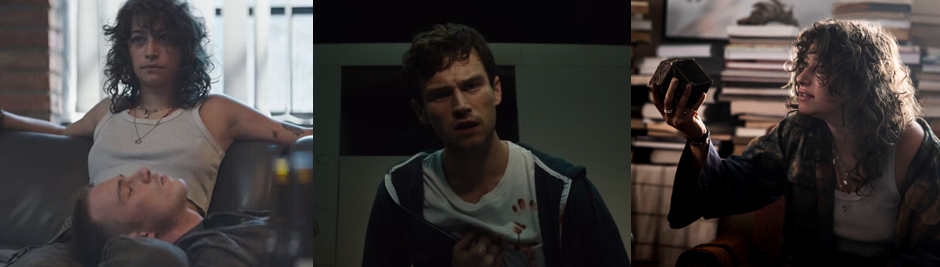
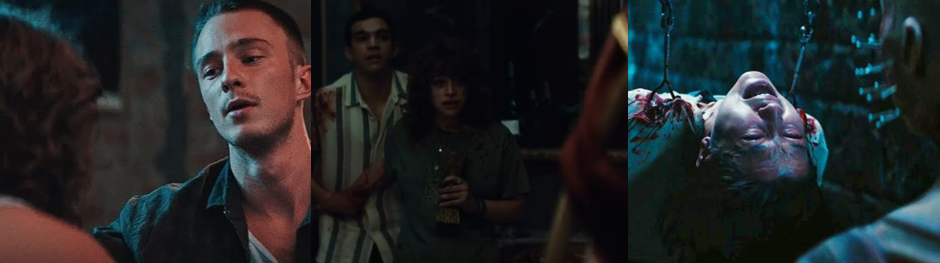
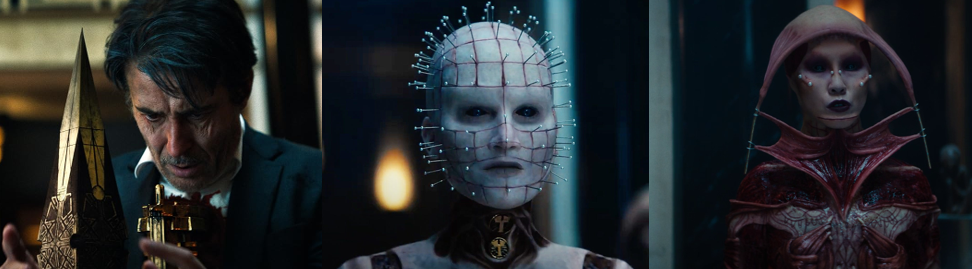
The Nitty-Gritty:
The primary human element in Doom is the troubled relationship between Sam and Reaper. Though she sent birthday cards over the years, it appears they haven’t spoken since their parents died and their paths and personalities couldn’t be more different. Sam revels in scientific exploration, excited at the prospect of learning more about Mars’ long-dead natives and potentially curing diseases, while Reaper is the consummate soldier, following orders without question until he sees the heinous experiments performed by Dr. Carmack. This even drives him to turn on Sarge, a man he’s seen to have a very amicable relationship based on mutual respect. Indeed, it’s Reaper who chides Portman’s insubordination, making it all the more significant when he first raises his weapon against Sarge after the demented soldier kills the Kid in cold blood. The C-24 thing is a bit odd, and not very Doom. It’s much more like Resident Evil (Capcom/Various, 1996 to present), as is the overuse of zombies; ironically, the inclusion of more vaguely recognisable demon-like creatures actually makes Doom a more accurate Resident Evil adaptation than Pul W.S. Anderson’s dismal efforts. It’s odd that the film takes this scientific angle on the source material, especially considering the rest of the film borrows so heavily from Doom 3. Like, it’s still set on Mars, still has the teleporter, still uses the recognisable weapons (even if “Big Fuckin’ Gun” is just a nickname here), and mirrors the dark, claustrophobic horror of Doom 3. Hell, there’s even blood writing on the walls, a 3D map system, and the screens all look very similar to those in Doom 3. So, you have a lot of visuals and the basic plot lifted from the game, but draw the line at literally having demons invade from Hell? Maybe it was a censorship thing, but then Doom has a lot of curses and bloody action, so it’s just weird to get so close to the source material and pull away from what really made the games so unique.

Doom‘s faithful recreation of the source material extends a little too far to a dedicated FPS sequence.

On the plus side, as I mentioned, the demons do look great. You never really get a good look at them but, like Alien, this only adds to the allure and horror. By its very nature, the film’s more Aliens than Alien, placing heavily armed Marines and gunfights at the forefront, but the foreboding atmosphere and mounting dread occasionally recalls Alien. The Imps and Hell Knights are grotesque, monstrous abominations; they don’t throw fireballs and plasma blasts, but one is wielding a chainsaw at one point and they’re not afraid to tear limbs and head off. In this version of the story, the demons attack everything in sight but only infect those whose DNA marks them as wicked or “evil”. The RRTS are perfect targets in this regard as even the most virtuous of them are marked by their violent lives and high body counts. Even being a spiritual man doesn’t spare Goat, so naturally Reaper is hesitant to get shot up with C-24 lest he be transformed into a monster. Instead, it turns him into a super soldier and essentially gives him the Berserk, Quad Damage, and Invincibility power-ups from the games as he embarks on an action-packed search for Sam, blasting anything that gets in his way, parkouring around the tight corridors and shaking off any damage. This entire sequence is shot in a first-person perspective, a dramatic shift from the rest of the film, and it’s certainly a choice. I enjoy it as an action sequence; it’s definitely unique and helps the scene stand out, but I wonder if it’s maybe too literal an adaptation of the videogames. Like, an earlier scene established the RRTS all have “kill cams”, a system barely utilised unless it’s to suggest the team’s in danger. This FPS sequence could’ve been reworked to an over-the-shoulder perspective that switched to the kill cam whenever Reaper took a shot. Or maybe we could’ve seen Pinky watching the team killing zombies from the kill cam’s perspective just to prepare us for this shift. It reminds me of the shifting comic panels used in Hulk (Lee, 2003), a stylistic visual choice that’s memorable, for sure, but lands a little hollow considering it just makes me wish I was playing the game instead of watching Reaper.

Disappointingly, the film ends with a fist fight rather than pitting Reaper against a demon overlord.

So, yeah, Sam has a look at the demonic corpses and realises they’re the Olduvai staff, infected by the creatures and transformed based on their DNA. She surmises (correctly, it pans out) that some will be empowered by C-24, but her and Reaper’s pleas fall on deaf ears and Sarge orders Duke and the Kid to execute everyone to contain the outbreak. Sarge is dragged off during an attack that also leaves Reaper bleeding out from a bullet, but he’s saved and becomes superhuman thanks to Sam’s intervention. However, by the time they catch up to Sarge, his morals and mind warped by the C-24’s influence, he’s killed all the survivors; he even murders the Kid, chastising his remaining men for their insubordination and firmly setting Reaper against him. However, Sarge has armed himself with the BFG, a massive cannon that fires an acidic plasma burst, leading to an explosive shoot out between the two that sees them exhaust their rounds and resort to settling things mano-a-mano. Yes, the Doom adaptation doesn’t end with Reaper facing off against a Cyberdemon or the Spider Mastermind, but in a fist fight with the Rock. Luckily, Reaper is super strong at this point and the fight is pretty brutal, with some tight, fun choreography (Sarge pulls out some ridiculous, physics-defying throws and slams) but it’s still a bit disappointing. Sarge doesn’t even mutate all that much from the C-24; he just grows some fangs and gets funky eyes and roars a bit, adding to the disappointment. I mean, at least give him a demon arm with claws, maybe screw up half his face, have him sprout spikes…just, something other than being the Rock looking annoyed. Thanks to them both having accelerated healing, the fight’s stakes are further lowered as they can’t really hurt each other. In the end, Reaper sacrifices his hand, impaling it on a length of metal Sarge wraps around his fist, to toss his demonic commander through the Ark. Naturally, Reaper immediately heals from this wound and finishes off Sarge by tossing a simple grenade through the portal; he doesn’t even blast Sarge in the face with the BFG or anything remotely cool. Reaper than gathers up Sam and takes the elevator back up to the surface, apparently relieved at having literally slayed his demons, and the film doesn’t even have the balls or the courtesy to end on a cliff-hanger to show the Earth’s been overrun by demons (or killed Reaper’s rabbit).

The Summary:
I’ve always had a soft spot for Doom. I first watched it when I’d only really played the first game and I enjoyed it for what it was, impressed by the practical effects, the dark atmosphere, and the obvious influence of Aliens. The Rock is pretty good here, playing against type and giving us a surprisingly nuanced character. You’d naturally expect him to be the main protagonist and, though he’s harsh, he’s a fair commander for the most part. But then he slips further into madness, before being infected and becoming a spiteful, vindictive antagonist. As I remember, Doom was the first time I became aware of Karl Urban and he’s great here. He plays the tortured, morally conflicted Reaper really well, being the likeable but tough soldier who steps up against injustice even if it means defying his commander. The rest of the RRTS are decent supporting players; some are more one-dimensional than others and just there to make up the body count, making me wonder if a smaller team wouldn’t have been better. It’s not like there weren’t civilians and scientists to be slaughtered by demons, after all. Speaking of, the demons look great; they’re shot just right so you never really get a good look at them and they’re absolutely brutal when they appear. Sadly, they’re just not in it enough and the film spends too much time building up to all Hell breaking loose. Consequently, Doom flounders in the middle, losing what momentum and intrigue it has. It tries to claw it back with the FPS sequence, but I wouldn’t blame you if you didn’t enjoy this as it is tonally odd with the rest of the film and, again, too literal an adaptation. Film is a completely different medium from videogames; no one pays to watch a movie to sit there and wish they were playing the game. It’s more miss than hit, as unique as it is, but the final fight between Reaper and Sarge is the most disappointing thing about Doom. Well, that and not committing to the Hell angle of the source material. Thus, Doom is a decent enough sci-fi action/horror with some fun moments but fails to live up to its potential and merely stands as a basic distillation of the videogames mixed with some liberal borrowing from other, better movies of the same ilk.

My Rating:

Rating: 3 out of 5.

Pretty Good

Did you enjoy Doom? Do you think it did the source material justice or were you put off by the more science-based angle? Were you surprised that the Rock turned out to be the bad guy? What did you think to the FPS sequence? Were you impressed by the practical demons or annoyed by the dark lighting? Would you like to see Hollywood take another crack at adapting Doom? Whatever you think about Doom, or videogame adaptations, share your opinion in the comments and go check out my other Doom content.

Movie Night [Bat-Month]: The Dark Knight


In the decades since his first dramatic appearance in the pages of Detective Comics, Bruce Wayne/Batman has become a mainstream, worldwide, pop culture icon. The brainchild of writer Bob Kane, Batman was brought to life by artist Bill Finger and has been a popular staple of DC Comics and countless movies, videogames, and cartoons over the years. “Batman Day” fell on 21 September this year so I’ve been spending every Saturday celebrating comic’s grim and broody vigilante.


Released: 18 July 2008
Director: Christopher Nolan
Distributor: Warner Bros. Pictures
Budget: $185 million
Stars: Christian Bale, Heath Ledger, Aaron Eckhart, Maggie Gyllenhaal, Gary Oldman, Morgan Freeman and Michael Caine

The Plot:
After his dramatic debut as “The Batman”, billionaire vigilante Bruce Wayne (Bale) is cracking down on organised crime within Gotham City. However, his mettle is tested by the clown-faced anarchistic “The Joker” (Ledger), who seeks to disrupt social order and corrupt upstanding district attorney Harvey Dent (Eckhart).

The Background:
After Joel Schumacher effectively killed the live-action Batman franchise with his dismally received camp adventures, Warner Bros.’ desperate attempts to get a new movie finally paid dividends when visionary writer/director Christopher Nolan, writer David S. Goyer, and star Christian Bale explored Batman’s origins in the highly regarded reboot Batman Begins (Nolan, 2005). Despite teasing the Joker at the finale, Nolan was initially unsure if a sequel would be greenlit but worked closely with Goyer and his brother, Christopher Nolan, to develop a suitable follow-up once Warner Bros. prioritised a sequel. The filmmakers took inspiration from seminal Batman stories like The Long Halloween (Loeb, et al, 1996 to 1997) and some of cinema’s most memorable movie villains to bring their versions of the Joker and Harvey Dent to life. Despite Jack Nicholson’s memorable performance as the character, Nolan confidently cast against type after being impressed by Heath Ledger, who mentally and physically threw himself into the role. In keeping with his preference for practical effects, Nolan signed off on the construction of a fully-working Batcycle, redesigned the Batsuit to be more flexible, blew up a building for real, and flipped an 18-wheeler truck using a massive piston! Sadly, the editing process proved particularly difficult after Ledger unexpectedly died from an accidental overdose; the film was summarily dedicated to him. Following an aggressive viral marketing campaign, The Dark Knight enjoyed a record-setting $1 billion+ box office and was met with widespread critical acclaim. It is widely considered one of the best and most influential comic book movies ever made, praised for its performances and socially relevant narrative, with many praising Ledger’s portrayal of the Joker which won him a posthumous Oscar. Immediately regarding as the best Batman movie of all time and recognised as setting a new standard for comic book movies, The Dark Knight’s success more than justified the production of a third and final (and far more divisive) entry some four years later.

The Review:
After the disaster that was Batman & Robin (Schumacher, 1997), I think it’s safe to say that everyone thought Batman’s feature film career was dead in the water. For me, that’s why Batman Begins was such an exciting and enjoyable experience. Finally, after decades of Batman being either a goof or a psychopath, we got a live-action film that really nailed the heart and drive of the character. The extended and in-depth exploration of Bruce’s psyche, determination, and training to become “more than just a man” really put him at the forefront of the piece and allowed the most accurate depiction of the Dark Knight ever seen in cinema at that point as Bale deftly shifted between numerous subtle personas. With Batman Begins’ conclusion masterfully teasing the Joker, expectations were high for the sequel, but reactions to Ledger’s casting were mixed at the time due to his reputation as a “pretty boy”. To address this, Nolan opens his film with an intense and engaging bank heist, filmed entirely in IMAX, in which the mysterious Joker showcases his hands-on, manipulative abilities by arranging for his clown-faced goons to knock off a mob bank and off each other once their specific tasks are completely, allowing him to easily slip away in the chaos. It’s been about a year or so since the last film and Batman now appears at crime scenes to liaise with Lieutenant James “Jim” Gordon (Oldman), much to the chagrin of cops like rookie detective Anna Ramirez (Monique Gabriela Curnen) because of his vigilante status and the corruption that continues to infest the Gotham City Police Department (GCPD). However, neither Batman or Gordon initially place much stock in the Joker’s continued threat since their focus is solely on taking down the last vestiges of organised crime in the city, represented by mob bosses Salvatore “Sal” Maroni (Eric Roberts), Gambol (Michael Jai White), and “The Chechen” (Ritchie Coster), a decision that’s entirely logical bit which comes back to bite them in due time.

Batman’s war on crime is thrown into chaos by the maniacal Joker.

Bruce has been extremely busy in the time between films. Although he’s forced to operate out of a penthouse and highly equipped bunker in the city as he waits for Wayne Manor to be rebuilt, he’s established quite the reputation both in and out of his cowl. As Bruce Wayne, he’s the bored, party-going philanthropist who’s just as likely to abscond with a bunch of actresses to an isolated yacht as he is to fall asleep in board meetings. Although Bruce is seen by many as an aloof, reckless, and embarrassing billionaire, this persona effectively keeps anyone from questioning his nightly jaunts and he’s still savvy enough to fund and promote any programs or individuals who are committed to bringing Gotham City back to glory, such as Harvey Dent. As Batman, Bruce’s reputation is even stronger; criminals are now so afraid of the Dark Knight that they think twice about being on the streets when the Bat-Signal is in the sky and mobsters hold their meetings during the daytime. Although the Batman is still something of an urban legend, many in the city have been inspired to dress up as him and take the law into their own hands, something Bruce is disturbed to see since it results in a bunch of out of shape blokes with itchy trigger fingers wearing “hockey pads”. Still, Batman’s presence has had a positive impact on the city. He and Gordon collude to tackle the city’s mob, eventually entering a shaky alliance with Dent to apprehend mob banker Lau (Chin Hau) and make mass arrests, and Batman even detains Doctor Jonathan Crane/The Scarecrow (Cillian Murphy) in during the opening, finally taking the maniac’s drugs off the streets. However, night after night fighting crime and getting into fist, fire, and dog fights takes a toll on Bruce. His faithful butler and father figure, Alfred Pennyworth (Caine), continues to offer wry commentary and deep concern for his master’s welfare but Bruce is determined to clean up the streets and make the city safe before even considering giving up his crusade.

The loss of Rachel takes a heavy toll on Gotham’s “White Night” and drives him to murder.

However, Batman’s positive impact, the arrest of hundreds of mobsters, and the public’s approval of Dent give Bruce pause to reconsider his path. Since the last film, Bruce has been keeping a close eye on childhood friend and crush (and assistant district attorney) Rachel Dawes (Gyllenhaal), who works closely with Dent to prosecute the criminals and the corrupt. Thanks to Gyllenhaal being a far superior actress to her predecessor, Rachel has much more gusto this time around. She exudes a confidence and determination that was lacking in Katie Holmes’ performance and allows her to not only appear effective when interrogating Lau but also sees her fighting back against the Joker when he targets her at Bruce’s fundraiser for Dent. Although Bruce is clearly rattled by how close Dent and Rachel have become (the two are shown to be in a relationship) and somewhat condescending towards Dent’s marketing campaign, he’s as impressed by the D.A.’s conviction as the rest of the city. Dent is a square-jawed patriot who makes a buzz in the court room with his no-nonsense approach towards criminals and inspires the wealthy and the destitute alike with his commitment to justice. Dent is also an avid supporter of the Batman and determined to do whatever it takes to keep the city streets clean, even if just for six months, but he’s not as squeaky-clean as everyone believes. Gordon is sceptical of Dent due to his past in Internal Affairs, while Dent is highly critical of the corruption within the GCPD, but the two form an efficient trio alongside the Batman when they agree to pool their resources to bring Lau back from Hong Kong. Dent proves to be a surprisingly complex man. He believes so strongly in the iconography of the Batman and in not giving in to the Joker’s demands, no matter how many lives are at stake, that he publicly outs himself as the Dark Knight to keep the myth alive but also proves that he’s not above threatening criminals at gunpoint, showcasing an unexpectedly erratic side to his character. This is only exacerbated when Dent and Rachel are targeted by the Joker and Batman is forced to choose which one to save. Naturally, he picks Rachel but both he and Dent are horrified to learn that this was a double-cross that leaves Dent hideously scarred and despondent, his faith in both justice and the caped vigilante shattered and replaced by a cruel devotion to “chance”.

Bruce’s allies believe in the Batman and play a hands-on role in aiding and advising him.

As before, Bruce is supported in all things by Alfred, who acts as a field surgeon, conscience, and advisor to his duties both in and out of the Batsuit. We learn a little bit more about Alfred in this film through his entertaining exchanges with Bruce, in which the two share a banter that is both amusing and heart-warming. Alfred spent some time in the Peace Corps in Burma, indicating he’s seen combat and has a military background, and his insight into chaotic aberrations such as the Joker are almost on par with Bruce’s years of training to learn the criminal mind. Initially, Bruce dismisses Alfred’s insight, however, refusing to believe that the Joker is anything more than a thug with a gimmick, but is forced to admit that he’s underestimated his foe when the Joker pushes him to breaking point with his killing spree. Interestingly, Alfred actually encourages Bruce not to give in to the Joker’s demands, to “endure” the slings and arrows so as to maintain the Batman’s incorruptible persona, and also secretly shields Bruce from the knowledge that Rachel ultimately chose Harvey over him to spare his surrogate son further pain. As before, Bruce is provided with new toys and even a sleek new suit by Wayne Enterprises Chief Executive Officer Lucius Fox (Freeman), who now exhibits a working knowledge of Bruce’s dual identity despite both never outright saying it. Fox plays a pivotal role not just in helping Bruce apprehend Lau but also in throwing off the suspicions of Coleman Reese (Joshua Harto) when his number crunching exposes Batman’s identity, and in the creation of a fantastical device that allows Batman to pinpoint the Joker’s location by hacking every cell phone in the city. Though Fox threatens to resign if the device isn’t destroyed because of the dangerous invasion of privacy it offers, his loyalty is rewarded when Batman rigs the machine to self-destruct once the Joker has been located. Finally, we have Gordon, who publicly disavows any knowledge of Batman but regularly colludes with him to fight the mob. Gordon’s role is also crucial to the film as he is seemingly killed protecting mayor Anthony Garci (Néstor Carbonell), only for this to be revealed as an elaborate plan by him and Batman to capture the Joker, a gamble that sees Gordon promoted to police commissioner after the Harlequin of Hate assassinates commissioner Gillian Loeb (Colin McFarlane). Although horrified by the Joker’s murderous antics, Gordon’s riding quite the high when he, Dent, and Batman finally get their hands on the city’s mob, but his hubris comes back to bite him when Dent specifically targets him as failing to protect Rachel since Gordon’s forced to work with corrupted cops and a wayward vigilante.

Ledger delivers a star-making performance as the chaotic and unhinged Joker.

And then there’s the Joker, played with an unnerving, scene-stealing performance by the late Heath Ledger. Unlike in Batman (Burton, 1989) where the Joker was provided with a hefty original backstory, this Joker is a complete enigma. A self-styled “agent of chaos” who proudly showcases both his gruesome facial scars and boasts that he’s simply “a dog chasing cars”, the Joker is as manipulative and psychotic as he is unpredictable and hypocritical. With no identification or fingerprints, the Joker is like a ghost. When he’s introduced, it’s like he’s been conjured by the city itself to challenge Batman’s presence and there’s no definitive explanation for who he is and why he does what he does. Indeed, much like popular depictions of his comic book counterpart, the Joker himself offers conflicting versions of his origin, scars, and motivations. The film suggests he’s been “rippin’ off mob bosses” for some time, he’s shown to have an intense hatred towards city officials and authority figures, and he even openly mocks the city’s mob bosses, threatening and murdering them with a gleeful menace. Although he favours knives over guns since they’re “more personal”, he’s proficient with firearms and, especially, explosives, hinting at a military background but, in true Joker fashion, his origins are completely irrelevant as he “just wants to watch the world burn”. Initially, the Joker encourages the mob to pay him to kill the Batman so they can run rampant over the city but he becomes infatuated by the Dark Knight’s incorruptible nature and refusal to kill. Thus, his motivation switches to opposing Batman’s ideology by corrupting the city’s “White Knight”, Harvey Dent, and breaking the will of the city by exposing their heroes as flawed human beings, demanding that the Batman publicly unmask and forcing both criminals and civilians to make life or death choices to test their mortality. In combat, the Joker is wild, dangerous, and apparently suicidal. He laughs manically in life-threatening situations, practically begs Batman to run him down, and is more than willing to die if it means forcing Batman to breaking point. Although his greatest strength is his unhinged imagination (he absolutely does have a plan, despite his claims, and carries them out with an almost supernatural foresight), the Joker gets the best of even the Batman thanks to appropriating mobsters for his own use and surprising Batman with his tenacity. But his true goal isn’t to simply fight Batman to the death but to instead cripple Gotham City by proving that anyone can turn to psychotic madness after one bad day, necessitating extreme actions from both Batman and Gordon to ensure that Dent’s reputation remains untarnished.

The Nitty-Gritty:
The Dark Knight represents how ingrained Batman’s iconography has become not just in the fictional world, but in ours. Just the fact that we got a Batman movie that omitted the character’s name entirely shows how synonymous this description is with the character, and it takes on a double meaning here since Batman is depicted (and, by the end, explicitly referred to) as a “Dark Knight”, a necessary evil to keep Gotham in check, since a “White Knight” has little chance of surviving the crime and corruption that infests the city. Indeed, Bruce is actively considering hanging up the cape and cowl when he sees how effective and unanimously beloved Dent is. Dent is the hero Gotham deserves without a masked persona, giving Bruce a sliver of hope that he can make good on his promise to be with Rachel once the city no longer needs Batman, but he vastly underestimates the destructive influence of the Joker, who perfectly encapsulates Gordon’s previous concerns about “escalation” through his unique brand of anarchy. The Joker is depicted as a man even Bruce “doesn’t understand”, someone beyond reason, intimidation, and bribery, and we see this when he shows no fear when interrogated by Batman and simply cackles with glee when the Dark Knight unloads on him since the Joker always has an ace up his sleeve (both literally and figuratively). Thus, the film very much focuses on the “battle for Gotham’s soul”, with the Joker shifting his motivation towards opposing and destroying not just the city officials and authority figures, but Batman himself since he’s the ultimate symbol of incorruptibility, to the point where he and his allies allow five people to die rather than reveal his identity because the Batman has become such an iconic force for justice within the city.

Some impressive practical effects and stunts make the film instantly memorable.

Speaking of Gotham, we’re shown a much different side of the city this time around. We’re firmly topside amongst the towering, glistening skyscrapers rather than in the dingy alleys of the Narrows, which is thematically relevant since the Joker is targeting the upper-class façade of the city but does rob it of a lot of its bleak, gothic identity. The Dark Knight also continues Batman’s crusade not against the street-level crime that killed his parents, but organised crime. He, Gordon, and Dent believe cutting the head off the proverbial snake will kill the body, and this is reflected after their big arrest that sees the lower-level scum facing at least six months in jail, giving the city breathing time to recover. However, this has the knock-on effect of reducing Batman’s street-level crimefighting to near zero since he’s more focused on nailing the likes of Maroni and the Joker and less on stopping random muggings and such. This isn’t necessarily a bad thing because, sadly, there’s little to no improvement in the fight scenes here. Nolan again opts for a close quarters, frenetic depiction of Batman’s fighting that does paint him as a brutal and efficient animal but robs us of seeing what he’s truly capable of. On the plus side, The Dark Knight explores Bruce’s detective skills; while it’s a bit confusing how he recreates fingerprints from bullet casings and he’s constantly one step behind the Joker, I liked how he colluded with Gordon and Dent to apprehend the mob and he’s given some fancy new toys to help him in these endeavours. The most prominent remains the tank-like Tumbler but, when this is destroyed by the Joker, Batman spends the remainder of the film blasting through the city streets on the sleek, bad-ass “Batpod”, a motorcycle-like vehicle that performs all kinds of unlikely turns and tricks with its near-spherical wheels, When extraditing Lau from his office building, Batman makes impressive use of his cape to soar through the skyline and then uses a “skyhook” to yank himself and his quarry out of there, just one of many impressive practical effects utilised in the film, with two more being the Joker’s insane truck flip and the fully practical, full-scale hospital explosion.

While I don’t like the new Batsuit, the Joker and Two-Face look especially impressive.

As mentioned, Batman gets a new suit this time around once he realises that he’s “carrying too much weight” and needs more flexibility. Sadly, I’m not a fan of the new suit; it allows full head movement and is less bulky, sure, but the Bat-symbol is too small, it’s unnecessarily “busy”, and just seems incredibly impractical to put on. It’s also far less durable; separation of the plates means Batman’s more vulnerable, which levels the playing field in his fight with the Joker, and the whole suit just looks too plastic-y and ugly for me. On the plus side, the Joker looks amazing; this might be my favourite depiction of the Joker and he looks ripped right out of a Lee Bermejo comic. While he still sports a permanent grin thanks to his facial scares, his clown make-up is haphazard and intimidating, specifically applied to resemble “war paint” and even degrades to reflect his insanity. His suit is also absolutely perfect, and I love how it’s filled with “knives and lint” and little booby traps, like grenades and such. The Joker also assumes various disguises, included dressing up as one of his own henchmen in a callback to the 1960s TV show, masquerading as a police offer at Commissioner Loeb’s funeral, and, most disturbingly of all, dressing up as a nurse to have a heart to heart with Dent! This is where the film really surprised me; obviously I half-expected Dent to become Two-Face (or “Harvey Two-Face” as films insist on labelling him…) but I never expected Nolan to go so comic-accurate with the depiction of Dent’s burns. Two-Face is absolutely gruesome to behold and the perfect example of how CGI can be used sparingly to enhance practical effects. You can see tendons, muscle, and charred flesh as Dent talks and he really does look like the comic come to life, almost to a fault as I find it difficult to believe that he’s talking so coherently and functioning so efficiently despite refusing pain medication. Similarly, I think we could’ve had a few more scenes exploring Dent’s dark side and his “lucky coin” before his scarring. His descent into vengeance and anarchy seems purely motivated by grief, perceived betrayal, and anger at having “lost everything” rather than having always had a dark side deep within him. Sure, there’s one scene where this is hinted at but it’s not what it seems; Dent never leaves anything up to chance since his coin is double-sided, meaning the odds are always in his favour. Accordingly, he was never actually going to hurt anyone, though this is twisted when he goes on a killing spree as Two-Face as he shoots his enemies dead based on the flip of that same coin.  

Crushed by Rachel and Dent’s deaths, Batman sacrifices his reputation to keep hope alive in Gotham.

Another element that doesn’t sit right with me is how everyone (and I do mean everyone) is aware of Batman’s code against killing. Maroni and the Joker challenge him on his “one rule” and Batman openly champions it at every turn, severely diminishing his threat somewhat and presenting a familiarity with him that irks me for some reason. A huge part of the Joker’s final plan is predicated on the notion that even “civilised people” will kill to survive. He even rigs the game in his favour to prove this point and is so determined to tarnish the Batman’s heroic visage that he plummets to his death with a maniacal laugh. However, Batman saves him at the last second and the two have an unnerving conversation about their duality and intertwined fates. This is made doubly uncomfortable not just because of Bale’s strained Bat-voice but knowing that they would never tangle again due to Ledger’s untimely death, and part of me wonders if it might’ve been better to insert an edit that shows the Joker willing die after giving his speech. When I first saw The Dark Knight in the cinema, I was so engrossed in the Batman’s fight against the Joker that I completely forgot about Two-Face and, as much as I enjoy the entire film and the finale, I wonder if it might’ve been better to incorporate Two-Face’s actions into the third film and cap things off here. Regardless, both Dent and Bruce are devastated when Rachel is brutally murdered by the Joker. This helps tip Dent over the edge and to kill those who’ve wronged him, but he forces Gordon to choose which of his family should be killed to teach him a lesson in pain and loss. When Batman arrives to confront Two-Face, both he and Gordon desperately try to appeal to Dent’s better nature and fail. Disillusioned and broken, Two-Face disregards Gordon’s pleas and prepares to kill his son (Nathan Gamble), forcing Batman to tackle him to his death. Glossing over the fact that Batman just killed a man (I guess, technically, it was the fall), Batman decides to heed Alfred’s advice and maintain Dent’s reputation by assuming responsibility for Two-Face’s murders. Though reluctant, Gordon realises that it’s the only way to keep people from losing faith in the justice system and begrudgingly agrees to paint Batman as a murderer, ending the movie with Batman a wanted fugitive who willing endures any punishment, mental, spiritual, or physical to ensure peace in Gotham.

The Summary:
I absolutely loved Batman Begins when it first came out. It was the dark, gritty, comic-accurate Batman I’d been hoping for for years and I was really excited to see where Bale and Nolan took the character in the sequel. To say that The Dark Knight exceeded expectations would be an understatement. The film is an absolute masterpiece not just of comic book cinema, but of the thriller genre. Bale continues to deftly embody the conflicting personalities and introspective drive and determination that fuels Batman’s crusade, and his Batman continues to be the definitive version of the character for me, despite the dodgy fight scenes and my dislike for the new suit. At its core, The Dark Knight works as an intense thriller depicting the fundamental conflict between justice and anarchy, logic and sanity, and truly elevated the genre to a new level by taking elaborate and colourful concepts like a clown-themed terrorist and a guy with half his faced burned off and treating them seriously. Naturally, Heath Ledger steals the show here; we may never see a better performance of the Joker and you can see that he’s as lost in the role as Bale is as Batman. Ledger’s manic energy and subtle touches really create a feeling of dread, mystery, and unpredictability to the villain, and it remains a tragedy that he didn’t live on to have more dramatic roles like this. Add to that the impressive practical effects, sweeping cinematic score and visuals, and the engaging discussion regarding Batman and his influence on the city and its criminal element and you have, for my money, one of the finest Batman movies ever put to cinema. The film masterfully pulls from some of Batman, Joker, and Two-Face’s most iconic and engaging stories to present an emotional and gripping tale of adversity for the Dark Knight. The film absolutely set the standard for both Batman and comic book movies going forward and, while the third film might have stumbled in concluding the story so wonderfully established here, it doesn’t diminish the timeless appeal of The Dark Knight in the slightest.

My Rating:

Rating: 5 out of 5.

Fantastic

Did you enjoy The Dark Knight? Where would you rank it against the other Batman movies? What did you think to Heath Ledger’s portrayal of the Joker? Were you a fan of the new Batsuit or do you also find it a bit too busy? What did you think to the effects and stunt work used in the film? Were you also surprised by how gruesome Two-Face’s scars were? Did you agree that Bruce had to maintain his identity, or do you think you should’ve come forward sooner? How did you celebrate Batman Day this year and what is your favourite Batman movie? Whatever your thoughts The Dark Knight, or Batman in general, share them below or leave a comment on my social media.

Movie Night [Bat-Month]: Batman: Mask of the Phantasm


In the decades since his first dramatic appearance in the pages of Detective Comics, Bruce Wayne/Batman has become a mainstream, worldwide, pop culture icon. The brainchild of writer Bob Kane, Batman was brought to life by artist Bill Finger and has been a popular staple of DC Comics and countless movies, videogames, and cartoons over the years. So, as today is “Batman Day”, I figured this was a perfect excuse to spend every Saturday celebrating comic’s grim and broody vigilante.


Released: 25 December 1993
Director: Eric Radomski and Bruce Timm
Distributor: Warner Bros.
Budget: $6 million
Stars: Kevin Conroy, Dana Delany, Hart Bochner, Bob Hastings, Efrem Zimbalist Jr., and Mark Hamill

The Plot:
Early into his crimefighting career as the Batman, Bruce Wayne (Conroy) finds mobsters being slain by a mysterious and vicious, Grim Reaper-esque vigilante “The Phantasm” (Stacy Keach). In trying to uncover the Phantasm’s identity, Batman reconnects with his lost love, Andrea Beaumont (Delany), and uncovers a terrible connection between the two.

The Background:
Artist Bob Kane may have dreamed up the idea of a new masked crimefighter to capitalise on the success of Clark Kent/Superman’s debut, but it was the long-suppressed efforts of artist Bill Finger that the “Bat-Man” became such an iconic figure. Decades later, the likes of Dennis O’Neil sought to correct the Batman’s image following the gloriously camp (and incredibly popular) 1960s television show, but the release and relative success of Batman (Burton, 1989) and Batman Returns (ibid, 1992) saw renewed interest in the character. Consequently, Bruce Timm, Paul Dini, and Eric Radomski spearheaded a new animated series influenced by both films that became one of the most beloved and influential cartoons of its era. Batman: The Animated Series aired eighty-five episodes between September 1992 and 1995 before being succeeded by twenty-four episodes of The New Batman Adventures (known as The Adventures of Batman & Robin in the United Kingdom) between 1997 and 1999, but its initial success convinced Warner Bros. to task Alan Burnett with writing a full-length animated feature. Heavily influenced by Batman: Year Two (Barr, et al, 1987), the film was set to feature a Grim Reaper-like counterpart to Batman while also acting as something of an origin story for both the Dark Knight and his long-standing nemesis, the Joker. Filming was completed within eight months, and Warner Bros. made the last-minute decision to release it theatrically. Although this negatively impacted its box office return, Batman: Mask of the Phantasm made up for this in home media sales and is widely regarded as one of the best superhero films ever made. Critics praised the presentation and score, the slick animation, and its mature themes, and it remains one of the quintessential adaptations of the character for many Batman fans.

The Review:
I watched Batman: The Animated Series as a kid, alongside a host of other popular cartoons at the time, but my memories aren’t massively clear. This is a general statement of my childhood in this regard, and I think it’s because I usually slept in at the weekends and didn’t get up until after a lot of the big cartoons had already been on, then I’d spend the rest of my time eating, playing videogames, or watching the same video cassettes over and over. Still, Batman: The Animated Series definitely made an impression on me. It was dark, surprisingly violent, and probably the most readily available incarnation of Batman since it didn’t involve buying any books or comics, so it was massively exciting when this animated feature aired on television for the first time or you saw the VHS available for purchase. The film begins in present day Gotham City, where Batman has established himself as a nocturnal vigilante but is still early enough in his career to large be considered an urban myth. As a result, Chuckie Sol (Dick Miller) has no qualms about conducting his business in the dead of night, which naturally means his money laundering deal is interrupted by the Batman. Although Chuckie slips away with his counterfeit money, he’s intercepted by a mysterious, Grim Reaper-like figure we now know as the Phantasm and so intimidated by the spectre that he drives out of the parking lot to a violent death.

The mystery of the Phantasm puts Batman in the frame, but their true identity may surprise you!

Thanks to the Phantasm, and the testimony of bystanders, Batman is fingered for Chuckie Sol’s death and councilman Arthur Reeves (Bochner) wastes no time publicly declaring Batman a violent vigilante who needs to be brought to justice. When Commissioner Jim Gordon (Hastings) remains adamant that sensationalist claims that Batman has snapped and gone on a killing spree are against Batman’s very nature and washes his hands of the entire debacle, Reeves personally leads numerous unsuccessful attempts to apprehend the Dark Knight. Batman is more concerned with analysing a piece of Chuckie’s windshield, which is stained by chemical residue from the Phantasm’s smoke, and investigating the graveyard where Buzz Bronski (John P. Ryan) was killed. Batman: Mask of the Phantasm does a wonderful job of depicting Batman’s detective skills and it’s a nice change of pace from all the thrilling action, chase, and fight sequences to follow his investigation into the murders. Additionally, there are two pressing mysteries in the feature: the identity of the titular Phantasm and the connection between the mobsters left dead in their wake. Of course, these end up overlapping but there’s a decent attempt to throw some red herrings our way. Reeves, Andrea’s father Carl (Keach), and Andrea are all potential suspects but it’s the latter who turns out to be behind the cloak and hand-scythe of the Phantasm. There’s an argument to be made that this isn’t too surprising given we’ve never heard of Andrea before this film, but the stature and physicality of the Phantasm definitely helps to keep this a dramatic reveal at the finale. Unlike the Batman, the Phantasm isn’t above killing; Andrea utilises theatricality to equal Batman, appearing to appear and disappear in a cloud of smoke, brandishes a dangerous scythe-like gauntlet, and is garbed in a heavy-duty armoured suit that makes her more than a match for Batman’s skills and gadgets when they inevitably come to blows.

Kevin Conroy delivers another stellar performance as Bruce is torn between his vow and his heart.

While Michael Keaton may have set the bar for live-action portrayals of Batman, make no mistake that Kevin Conroy remains the standard for depictions of Batman. Any actor looking to take on the iconic role must depict his three dominant personas: Public (Bruce Wayne, socialite and playboy), Private (Bruce Wayne, brooding and melancholy), and Vigilante (the grim and stoic Batman) and Conroy perfectly nails all three of these. When Bruce is attending functions and banquets, he’s a suave and smooth-talking ladies’ man known for being extremely generous with his family’s wealth, hands-on with charities and opportunities from growth and employment in Gotham, and for stringing along a seemingly endless parade of bimbos and lusty women. At home, in both the solitude of Wayne Manor and the sanctity of the Batcave, this public mask slips, allowing Bruce to confide in his faithful butler and father-figure, Alfred Pennywoth (Zimbalist Jr.), and is the closest he gets to being truly honest with anyone. And, of course, under cover of night, he stalks the criminal underworld as a theatrical vigilante, and Conroy expertly depicts the differences in each of these personas and situations with subtle changes to his tone, line delivery, and inflections that really went a long way to making this version of Batman one of the most well-realised, complex, and layered interpretations of the character. This really comes to the forefront here thanks to repeated flashbacks to an earlier time in Bruce’s life where he struggled with how to make good on the vow he made to avenge his parents’ death by tackling the criminal scum that took their lives. At this point, he’s still an angry, directionless young man whose vigilante debut goes sideways because, while he has the physical means to overpower even armed crooks, he’s at a disadvantage because he’s seen as just a man, rather than a force of darkness and justice (as he puts it: “They weren’t afraid of me!”) While brooding at their gravestone, he crosses paths with the beautiful Andrea Beaumont. Though she comes across as dismissive and aloof, she’s actually intrigued and somewhat taken by him since he has all this wealth and privilege but always seems so melancholy. As she’s also lost someone, her beloved mother, the two bond over their shared grief and, when she comes to visit him, she impresses him with her combat prowess and the two begin a whirlwind romance.

As if the mysterious and brutal Phantasm wasn’t enough, the Joker shows up to steal the show!

Bruce is so taken by Andrea that he questions his vow and contemplates a life of happiness as a benevolent entrepreneur with her by his side. He is therefore devastated when she suddenly rejects his proposal and leaves the city, forever setting him on a path of grim vigilantism. When Andrea returns to Gotham some years later, in the present day of the story, Bruce is a fundamentally changed man. A chance encounter between her and Batman accidentally reveals his true identity to her, and she greets the Batman with a cutting hostility when he’s forced to question her as part of his investigation into the recent killings (delivering a biting jibe about how he’s controlled by his parents). Buzz Bronski, a mob associate of Chuckie’s, is the Phantasm’s next target; his henchmen see him chased by the cloaked figure and crushed to death under a gravestone and mistake the “Angel of Death” for Batman, which causes a media sensation. Startled by the murders of his associates, the decrepit Sal Valestra/The Wheezer (Abe Vigoda) fears for his safety and turns to the Joker (Hamill) for protection. As if touching upon Batman’s origins wasn’t enough, Batman: Mask of the Phantasm thus provides a glimpse into the background of the typically mysterious Clown Prince of Crime. Although not named as such here, the Joker was once Jack Napier like in Batman, but we also learn that he was once a chauffeur and assassin for the mob before taking his dive into disfiguring acid. While I appreciate the effort to flesh out the Joker’s backstory a little, and the film does a decent jump of bringing him in late into the runtime, I can’t help but feel like the Joker’s inclusion was a little forced and unnecessary. It’s as though the filmmakers didn’t quite trust the intriguing mystery of the Phantasm, the glimpse into Bruce’s past, or the narrative of Batman being hunted by the police and felt they had to shoehorn the Joker in to make things more exciting.

The Nitty-Gritty:
Of course, I’d be doing Batman: Mask of the Phantasm a disservice if I didn’t mention the absolutely haunting score from the late, great Shirley Walker. Having collaborated with composer Danny Elfman for Batman, Walker was the perfect choice to evoke the same melancholic, gothic undertones of Burton’s blockbuster reinvention of the character, and she’s at her absolute best here. The sweeping, operatic score really gives Gotham City an ominous, looming character, punctuates the action, and makes the more poignant moments of the film all the more heart-breaking and that’s all thanks to Walker’s absolutely iconic and memorable orchestral number. The animation must also be praised; thanks to an emphasis on shadows and darkness, Batman moves like a slick, otherworldly figure and comes across as fearsome, intimidating, and efficient all at once. Nowhere is the use of lighting more impressive than in scenes in the Batcave, where deep, never-ending shadows and darkness are at their most prominent, and this all really adds to the stark contrast between the inky black of night and the brighter, dull pastels of the few day time scenes.

The feature provides a tantalising glimpse into Bruce’s motivation to become the Dark Knight.

One thing that helped Batman: Mask of the Phantasm stand out as an animated feature was how surprisingly adult it was. Batman: The Animated Series always expertly towed the line with the censors by depicting guns and bullets rather than laser pistols, and the feature film gets away with even more to depict people smoking, modern-day pistols rather than Tommy guns, a bit of blood when Batman takes a beating, and an unexpectedly high body count for a “kid’s film” thanks to the murderous Phantasm. A central aspect of the film is the exploration into the motivation and tragedy that pushed Bruce into assuming the Batman guise. Despite travelling the world and gaining the physical and deductive skills to be a crimefighting detective, Bruce is torn between seeing his vow to the fullest extent and using his wealth to benefit the city while living a happy life with Andrea. Alfred naturally pushes him towards the latter, and Andrea even believes that his parents “sent [her]” as a sign that he can go back on his vow. Unfortunately, fate intervenes. Right after she accepts Bruce’s proposal, Carl Beaumont forces Andrea to leave the city after his dealings with the mob threaten both of their lives and, rather than explain the situation to her love, Andrea left him heart-broken and rejected. With his one last chance of a happy, normal life denied him, Bruce returns to his vow and, in a hauntingly impactful scene, embraces the cape and cowl of the Batman, losing himself to the darkness of his never-ending crusade and shocking even Alfred with his monstrous transformation.

The climatic finale sees Batman engage with the Joker, and seemingly lose his one true love forever.

Batman takes his investigation up a notch after figuring out that the Joker is involved, and the cackling madman quickly takes a perverse pleasure in hunting down the one responsible for killing his old buddies. This involves murdering Valestra and wiring to explode, reducing Reeves to a hysterical mess with his laughing gas, and trying to off the Batman with ludicrous contraptions cobbled together from the abandoned world’s fair that the Joker’s taken as his hideout. Oddly enough, once Andrea’s true identity is revealed, the Joker actually holds his own in a fight with her thanks to his acid-spitting flower and turning the fair’s animatronics and rides into death traps. Andrea, however, is driven by a murderous bloodlust. Since the Joker was responsible for killing her father, she has no problem fighting dirty, kicking him in the nuts and tracing him across the hazardous amusement park in a bid to have her revenge. Naturally, Batman makes a dramatic save and chases down his most persistent nemesis, leading to a somewhat ludicrous conclusion where Batman battles a jetpack-wearing-Joker through the skies of a dilapidated amusement park wired to explode. Determined to see the Joker pay, Andrea ignores Batman’s pleas to leave and seemingly perishes along with the Clown Prince of Crime as the world’s fair is dramatically engulfed by explosions, leaving Batman not only heart-broken but guilt-ridden at his failure to save his former flame. In the darkness of the Batcave, he finds solace in Alfred’s reassuring words and Andrea’s pendant, giving him hope that she’s still alive. Hardened by the experience, he returns to the night as the Batman, grim avenger of injustice, while Andrea sails off to an unknown future with only her own heartbreak for company.

The Summary:
It’s hard to get much better than Batman: Mask of the Phantasm for pure, unadulterated Batman action. In many ways it, like the cartoon it spun out from, is one of the most striking, influential, and unapologetically faithful renditions of DC’s Dark Knight ever put to screen and perfectly captures the dark, gothic melancholy of the titular vigilante, his city, and his never-ending crusade against crime. This was one of the rare, few glimpses into a time of Bruce’s life where he was struggling to make the transition from angry, vengeful young man to grim avenger of the night and it’s absolutely tragic to see how close he came to abandoning his crusade for true love and was forced to fully commit to his dark alter ego once fate set him on that path. One of the things I absolutely love about Batman: Mask of the Phantasm is that it’s not afraid to show Batman’s more cerebral side. The mystery of the Phantasm and the killings is as crucial to the narrative as the romance between Bruce and Andrea, and is far more of a focus than the handful of fantastically realised and slickly animated fight and chase sequences. Batman also feels fallible and human while still being a fearsome and intimidating figure. He easily outmatches street level scum but can be hurt by the likes of the Phantasm and the Joker thanks to their skills and/or gadgets. As I’m also a big fan of Batman: Year Two, the Phantasm struck me as a brilliant foil for Batman. As cold and stoic as the Dark Knight, Andrea’s gruesome, cloaked persona is a dangerous and ruthless foe out for blood and nothing more, but more than a match for the Caped Crusader thanks to gadgets, theatricality, and a degree and physical ability. While I find the finale a bit over the top thanks to the focus shifting towards the Joker, you can’t deny that Mark Hamill steals the show at every turn with his maniacal performance, delivering every line with a sadistic glee that makes the Clown Prince of Crime a joy to watch. Honestly, if you know anyone who isn’t sure if they want to get into Batman or who wants to learn more about Batman, I would absolutely recommend you point them towards Batman: Mask of the Phantasm as you’ll be hard-pressed to find a better representation of everything that makes the Dark Knight such an enigmatic and alluring character.

My Rating:

Rating: 5 out of 5.

Fantastic

Are you a fan of Batman: Mask of the Phantasm? Where would you rank it against other Batman films, live-action or otherwise? What did you think to the Phantasm, their depiction, and the reveal of their identity? Were you a fan of the Joker’s inclusion or, like me, did it kind of overshadow the rest of the plot for you? Did you enjoy Batman: The Animated Series growing up? What are some of your favourite episodes, and where would you rank Kevin Conroy’s performance? What was your first experience of Batman and how are you celebrating his debut this month? Feel free to share your thoughts on Batman: Mask of the Phantasm down below, or leave a comment on my social media, and be sure to check back in for more Batman content in the near future!

Movie Night: Beetlejuice Beetlejuice

Released: 6 September 2024
Director: Tim Burton
Distributor: Warner Bros.
Budget: $100 million
Stars: Winona Ryder, Jenna Ortega, Michael Keaton, Catherine O’Hara, Willem Dafoe, and Monica Bellucci

The Plot:
Thirty-six years after Beetlejuice (Burton, 1988), Lydia Deetz (Ryder) and her stepmother, Delia (O’Hara), return to Winter River. However, when Lydia’s rebellious teenage daughter, Astrid (Ortega), is spirited to the afterlife, Lydia must summon Beetlejuice (Keaton) to rescue her.

The Background:
In 1988, gothic auteur Tim Burton brought audiences Beetlejuice. Initially a much darker concept with a deadly titular character, the film was a surprise hit that cemented Burton as a director. A commercial and critical success, Beetlejuice was followed by videogame tie-ins, a lauded cartoon, and even a well-received Broadway musical, but a sequel struggled to emerge over the next thirty years. A sequel was fast-tracked at the time and multiple scripts were developed, two of the most notable being Beetlejuice causing havoc in Paris in search of love and following the Deetzes to Hawaii. Talks started again in 2011, star Winona Ryder was confident about a sequel in 2013, and it almost got off the ground in 2016 before being shelved in 2019. A few years later, Burton and Ryder revisited the concept and production finally got underway with a new story, one that kept the spirit of the first film while expanding the lore into new, bizarre realms. New star Jenna Ortega developed a close bond with Ryder during filming, and Keaton insisted that Beetlejuice’s screentime be as limited as before so as not to overload the narrative. While Burton sought to utilise practical effects wherever possible to retain the B-movie feel of the first film, Father Time and various controversies kept some actors from returning for the sequel. After a few additional delays, Beetlejuice Beetlejuice finally released to widespread acclaim. With a box office of over $330million, reviews praised it as a visual return to form for Burton. Michael Keaton and Jenna Ortega were also praised for their performances, though some criticised the pacing and disparate plot threads and Burton remained characteristically aloof about the chances of a third entry.

The Review:
After a nice recreation of the first film’s overheard shot of Winter River, Connecticut and stirring work (as always) by composer Danny Elfman, we catch up with Lydia, who now works as a psychic medium, investigating haunted houses and discussing the supernatural on a television show. It turns out that her ability to see ghosts never went away; it just became stronger. This means she sees ghosts constantly (though unfortunately not as often as I’d like), though this ability has been exploited by her manager/partner, the flamboyant Rory (Justin Theroux). An overly dramatic narcissist who’s more concerned with keeping Lydia on the air, and him in a position of wealth and power, than her wellbeing or bonding with her daughter, Rory is basically the Otho Fenlock (Glenn Shadix) of the film. It’s difficult to see the attraction as Lydia, Astrid, and even her stepmother find Rory repulsive and two-faced. However, the film reveals that Lydia was previously married to free spirited explorer Richard (Santiago Cabrera), who encouraged and fostered Astrid’s adventurous side, but ended up dying during a trip to South America. Devastated by the loss, Lydia latched onto Rory during grief counselling, and he took advantage right away, moulding her into a television personality he could continue to leech from. Richard’s death drove a wedge between Lydia and Astrid. The teen resented her mother for avoiding the subject and believes she’s a fraud since the only ghost she cannot communicate with is her late father, leading to Astrid barely talking to her mother. Naturally, given the massive time gap, Lydia is very different now; far from a rebellious goth girl, she’s become a troubled mother who’s clearly uncomfortable in her relationship but trapped with no way out. Although Delia is still as overbearing as ever (even more so considering her bizarre art has actually taken off), the two are much closer now that they’re older. Lydia has grown to understand how difficult it was for Delia to deal with an unruly teenager and Delia is far more supportive of Lydia, disapproving of Rory and even reaching out to Astrid to give her mother a break.

Lydia’s forced to turn to Beetlejuice to rescue her estranged daughter from the afterlife.

The three are brought together when Delia bluntly breaks the news that Lydia’s father, Charles (Unknown/Jeffery Jones), has died. And not just died: he survived a plane crash and was eaten by a shark! The sudden, ridiculous nature of his death is constantly returned to throughout the film; there’s an elaborate funeral, Delia tries to capitalise on her grief by turning it into art, and we follow Charles’ beheaded, blood-sprouting corpse as it wanders through the bureaucratic afterlife. Delia’s grief is painted as comical and exaggerated; it’s clear she truly loved him, foibles and all, but her reaction (photographing her agony and sculpting an elaborate and distasteful shark-themed headstone) is as strange as her art. Lydia is saddened but seemingly nonplussed; it doesn’t help that Rory hijacks the wake to surprise her with a proposal, or that Astrid continues to lash out at her. But what’s really bothering Lydia are the constantly visions she has of Beetlejuice. These cause her to react in horror when Astrid discovers one of Beetlejuice’s flyers, compounding the issues between them and causing Astrid to flee from the house. Distracted, she loses control of her bike and crashes into Jeremy Frazier (Arthur Conti), a teenage boy whom she’s immediately smitten by. Against Lydia’s wishes to leave the house out of fear of Beetlejuice, Astrid is allowed to hang out with Jeremy on Halloween night. However, this strangely alluring boy turns out to be a ghost, one who woos Astrid into journeying with him to the afterlife to exploit a loophole in the Handbook for the Recently Deceased that will restore his life. However, Astrid finds out too late that Jeremy wasn’t killed in an accidental fall; he murdered his family and died when the police came for him. He thus tricks Astrid into agreeing to swap her life for his, giving Lydia no choice but to summon Beetlejuice to rescue her.

While Beetlejuice shines and Wolf is entertaining, Delores seems like an afterthought.

Beetlejuice has expanded his bio-exorcism operation, employing an office full of voodoo-cursed mutes to handle his calls while he over his lost love, Lydia. When his ex-wife, soul-sucking witch Delores (Bellucci), literally pulls herself back together and trawls the underworld in search for him, reducing her victims to little more than rolled up deadflesh, Beetlejuice is caught up in the investigation. Headed by former actor turned cliché, hardboiled detective Wolf Jackson (Dafoe), the ghost cops are constantly one step behind Delores and Beetlejuice resorts to barricading his office and dressing his main underling, Bob (Nick Kellington), as a decoy. Luckily, Rory’s reckless calling of his name reunites Beetlejuice with Lydia and her desperation to save Astrid gives him a new opportunity to escape his undead drudgery. Out of options, Lydia agrees to marry him and he willingly brings her to the afterlife, though this act turns Wolf against him since it’s a violation of a sacred law, stacking the deck against the two. Unlike in the first film, Beetlejuice has only two main forms here: either his signature white and black suit or as a couple’s therapist. Michael Keaton easily slips back into the role and carries not just the first, middling half but the entire film. He taps into the same zany, macabre energy that made the first film so memorable and which is sadly lacking from this long-awaited sequel. Monica Belluci casts an alluring and intimidated figure, but Delores just wanders about sucking up souls and barely poses a threat in the finale. It’s Willem Dafoe who steals the show as a B-movie actor-turned-detective; I loved the running gag of his assistant, Janet (Georgina Beedle), constantly handing him coffee, his exposed skull, his over-the-top mannerisms, and his advice to “keep it real” at all times. Unfortunately, neither he nor Delores think to simply call Beetlejuice’s name three times when searching for him. At first, I thought this was maybe because that didn’t work in the afterlife, but Delia summons him when she unexpectedly ends up there, so that was a bit weird. Jeremy is also taken care of without much fanfare. His relationship and betrayal of Astrid seemed like it would be a focal point of the film, but instead it just gets swept under a rug like so many other plot points in this lacklustre sequel.

The Nitty-Gritty:
At its core, Beetlejuice Beetlejuice seems to be discussing the nature of grief. Lydia’s loss drove her to accept an unhealthy relationship in a moment of weakness and has effectively trapped her. That same loss caused Astrid to lose all respect for her mother, and grief similarly drives Delia to exaggerated forms of expression, like draping the house in a mourning shroud. This comes back to (literally) bite her when she’s fatally attacked by two asps she bought for a bizarre tribute to her husband, landing her in the afterlife, much to her chagrin. This was a very strange and uncomfortable moment, as was the Claymation sequence depicting Charles’ unnecessarily violent death. Like, I get it: Jeffery Jones did terrible things, but this just seemed unnecessarily spiteful and over the top. Similarly, death is apparently a subject we should be laughing at, according to this film, and can be played for a gag. That wasn’t really the case in the first one, where Adam and Barbara Maitland (Adam Baldwin and Geena Davis) died in a senseless manner, but it wasn’t played for laughs. Considering how violently Jeremy killed his parents and the continued twisted depiction of the souls stuck waiting for help in the afterlife, this choice just feels odd to me. The surreal nature of death continues when Richard spots Astrid in the afterlife and helps her and Lydia escape: he’s depicted as a half-eaten corpse with wriggling piranha still munching on him. Like, it’s kind of funny, I guess, but it makes these scenes more uncomfortable to watch than entertaining as beloved figures in these character’s lives are made into an undead mockery.

While the practical effects are great, the film is oddly disjointed and many parts don’t land.

In the time between the two movies, it’s fair to say that Tim Burton has heavily leaned into his reputation as a quirky, gothic filmmaker and lost some of the grindhouse charm that made his early films so visually alluring. I give Beetlejuice Beetlejuice props for continuing to use practical effects, puppets, and filmmaking techniques wherever possible. It brings the strange afterlife to un-life in a very tangible way; oddly, however, the sandworms look worse here than before and seem more CGI than stop-motion. Still, we do get to explore more of the underworld that the last film, revealing that the dead take on various jobs after passing on (including cops and dry cleaners) and returning to the joke of them having to wade through red tape to get help. Beetlejuice has essentially franchised his services, presumably keeping him busy between films, but rather than actually see any of that, we’re left with dry scenes of him bossing about his employees. Keaton carries these moments, but I didn’t wait over thirty years to see Beetlejuice messing around behind a desk. He’s more himself when confronting Lydia and Rory, literally spilling his guts at one point, but this scene also repeats gags and moments from the first film, with him sewing Lydia’s mouth shut and terrifying Rory with a demonic visage. His character is expanded upon through some exposition into his past life as a graverobber and his relationship with Delores, but it’s a very odd sequence that goes on a bit too long and does little to make Delores an interesting character. Her look is great, as is her reassembling scene, but the only real threatening moment she has is when she sucks up poor old Bob. There was a great moment where Beetlejuice blows a hole into the afterlife and his employees escape into the real world. I thought this had a lot of potential to up the stakes but, instead, Wolf offhandedly mentions that they closed the breach, killing that plot thread. Then there were gags that just outlived their welcome. Like, Lydia rushes to stop Astrid being taken to “the great beyond” by the “Soul Train”. And that’s exactly what you think it is; the joke lands and you can imagine what that means. But no, we need not one but two extended sequences where the undead jive about to soul music and Burton hammers home that he’s making a pun about Blaxploitation.

Important plot threads fizzle out and the film ends up being a shameless rehash.

Lydia’s venture into the afterlife sees her reunite with Richard and rescue Astrid; however, it’s Beetlejuice who facilitates this as he surprisingly keeps his word and intercepts Jeremy, sending him to Hell before he can escape to the real world. The realisation that her mother was right all along, and getting some closure in seeing her father again, mends the bridges between Astrid and Lydia. However, Lydia begrudgingly agrees to marry Rory regardless since she’s still stuck in that co-dependent relationship. Luckily, her agreement with Beetlejuice solves that problem as he shows up to stake his claim to her hand, leading to one of the best moments of the film where he forces the influencers Rory invited to the wedding to be sucked into the phones they gawk at so often. As per the contract, neither Lydia or Astrid can speak Beetlejuice’s name, meaning he’s free to enchant everyone present into an extended sequence where they all mime and dance to Jimmy Webb’s “MacArthur Park”. Like the “Soul Train” nonsense, this bit just went on way too long; rather than recapture the magic of the similar scene from the first film, it hijacks the finale and derails the pacing. Perhaps if Wolf and Delores’ scenes had happened earlier, making them a part of the proceedings, it might’ve worked better, but it felt like it was never going to end, and the joke wore itself out very quickly. Wolf’s easily subdued by Beetlejuice’s immeasurable powers, though he falters when Delores comes barging in for revenge, a desire I get but it also feels like he would want revenge on her more since she tricked and poisoned him. Anyway, it doesn’t matter as he distracts her with Rory and Astrid just draws a portal to Saturn’s moon to summon a sandworm to devour Delores and Rory (a strangely harsh comeuppance) and rehash the first film’s ending. Though briefly sad to say goodbye to Delia, Lydia’s emboldened by her renewed relationship with Astrid and being free from Rory’s leeching influence; she confidently banishes Beetlejuice once more and quits her job to spend more time with Astrid. However, the film ends with a really shocking nightmare sequence where Lydia dreams of Astrid violently giving birth to a baby Beetlejuice and still being haunted by her memories of the cackling demon in a sequence atmospherically at odds with the rest of the movie, but which might’ve helped spice up the second act if it had been shuffled in there.

The Summary:
I was cautiously optimistic heading into Beetlejuice Beetlejuice. While my relationship with legacy sequels is more miss than hit and I resented how long it took for the film to be made, I was attracted by my love for the first movie, Michael Keaton’s energetic performance, and by how cute Jenna Ortega is. These elements are the strongest parts of the film; Keaton carries the entire movie, salvaging even the strangest sequences and being the most enjoyable part. It feels like Beetlejuice is more of a focal point this time with all the different, halfhearted plot threads revolving around him in some way, but he’s strangely handicapped in ways he wasn’t before, robbing him of any monstrous transformations. Jenna Ortega does a great job as the hurt, resentful Astrid and I enjoyed her budding romance with Jeremy. It was obvious he was going to be a ghost but I didn’t expect him to be a psychopath, but then this plot gets dropped and forgotten about. The whole Delores sub-plot felt wasted to me, too; it added unnecessary backstory to Beetlejuice and didn’t factor into the finale. Characters like Jeremy, Delores, and Wolf (as enjoyed as he was) actually detracted from Beetlejuice’s presence. Like, maybe the film would’ve worked better if Beetlejuice had masqueraded as Jeremy, luring Astrid to the other side to bait in Lydia. Beetlejuice’s threat could’ve then replaced Delores wandering about and Wolf’s pursuit of him, tying into his visions haunting Lydia and making Beetlejuice a vicious, spiteful (and, crucially, sole) antagonist. I wasn’t impressed with how far the film went to bury Charles’ character; Burton beat us over the head with this to the point where it was awkward, not amusing. In fact, the whole movie is uncomfortable in a lot of ways, lacking a lot of nuance and subtlety and viewing like a bad parody of the first film. Jokes and sequences that worked so effectively last time and dug up and puppeted around gratuitously for no reason. The nostalgia was already there with the returning actors and atmosphere, but it felt like everyone was trying too hard to recapture lightning in a bottle and there were too many cooks in the kitchen offering ideas and gags. In the end, Beetlejuice Beetlejuice just wasn’t worth the wait; the visuals and some performances are there, but the execution was lacking and it seemed to go out of its way to not live up to its potential.

My Rating:

Rating: 2 out of 5.

Could Be Better

Were you also disappointed by Beetlejuice Beetlejuice? Did you find the tone and jokes to be oddly disjointed? What did you think to Michael Keaton’s return to form? Were you also disappointed to so many of the plot threads fizzled out? What did you think to the expanded depiction of the afterlife? Would you like to see another Beetlejuice film? Feel free to share your thoughts on Beetlejuice Beetlejuice in the comments below.

Movie Night [Friday the 13th]: Friday the 13th: A New Beginning


Long considered to be an unlucky day due to superstitions involving the number thirteen and religious connotations, Friday the 13th is perhaps equally as well-known as the title for a long-running series of slasher movies. Naturally, this is clearly the best opportunity to take a look at the Friday the 13th (Various, 1980 to 2009) horror series and to commemorate this unlucky and dreaded date.


Released: 22 March 1985
Director: Danny Steinmann
Distributor: Paramount Pictures
Budget: $2.2 million
Stars: John Shepherd, Melanie Kinnaman, Shavar Ross, Carol Locatell, Tiffany Helm, Dick Wieand, and Tom Morga

The Plot:
Several years after murdering hockey-masked psychopath Jason Voorhees, a grown-up Tommy Jarvis (Shepherd) is interned at a halfway house for recuperation. However, when Jason (Morga) seemingly returns and a fresh batch of bodies start piling up, Tommy must face his demons head-on once more.

The Background:
Following John Carpenter’s Halloween (Carpenter, 1978) and the birth of the “slasher” genre, Friday the 13th (Cunningham, 1980) was a surprising box office success and this led to equally financially successful sequels. However, just as producer/director Sean S. Cunningham distanced himself from the franchise, so too did Paramount executives become embarrassed by their shlock franchise. Thus, Friday the 13th: The Final Chapter (Zito, 1984) was developed to bring the series to a definitive end…before it proved to be a commercial success widely regarded as one of the best in the franchise. Consequently, a fifth entry followed only a year after the “Final Chapter”, one that was unusually deceptive in both it methodology and approach. Both stars John Shepherd and Dick Wieand were disappointed to find they’d been duped into a new Friday film and even the director was disgusted by how much footage was excised by the ratings board. Although child actor Corey Feldman could only return for a cameo, the film seemed to be setting Tommy up as the new killer of the franchise but A New Beginning’s disastrous critical reception and audience backlash saw Jason return for real in the very next film. As if being one of the lowest-grossing Friday films of the time with its $22 million box office wasn’t bad enough, A New Beginning is widely cited as one of the worst entries in the franchise.

The Review:
Jason may very well be one of the most, if not the most, prolific killers in all of horror cinema. His reputation as an unstoppable, merciless masked killer is well deserved not just because of his brutality but also because he categorically refuses to stay dead, even when film studios try to do him in! Branding The Final Chapter as the last-ever Friday the 13th was a bold claim, especially as the film ended with the pretty explicit suggestion that killing Jason had a negative effect on young Tommy. The film’s final, haunting shot suggested that Tommy would take over as the franchise’s killer and, honestly, I almost wish we’d seen that happen, at least for one or two movies. Not content with this blatant misdirection, A New Beginning opens with the suggestion that Jason is far from dead. In an opening that’s basically foreshadowing the next, far superior movie, young Tommy watches on, terrified and helpless, as Jason (here played by John Hock) rises from his grave in a zombie-like state to begin his killing spree anew. Sadly, we’d have to wait another year for this to come to pass and this promising opening is quickly revealed to simply be a vivid nightmare of the now grown-up Tommy. Yes, rather than following the traumatised youngster as he deals with the fallout of his actions and a newfound bloodlust rising within him, A New Beginning jumps ahead to find Tommy as the most mid-twenties-looking seventeen-year-old you’ll ever see in cinema but no less disturbed by his encounter with, and recurring visions of, Jason several years prior.

Traumatised by his childhood, Tommy is a deeply disturbed and haunted young man.

Now a disturbed, withdrawn youth, Tommy has bounced around numerous psychiatric hospitals and been subjected to every treatment and drug available short of electroshock therapy. Regardless of how poorly his treatments have taken, he’s been transferred to Pinehurst Halfway House, run by kindly Doctor Matt Letter (Richard Young) and his assistant, Pam Roberts (Kinnaman), in the hopes that he can be reacclimated back into society. Tommy is a very different character here; no longer the chirpy, enthusiastic, curious little boy, he’s sullen and moody and highly aggressive, carrying a nasty-looking flick knife and carrying a seething rage beneath his brooding exterior. Tommy is seen to be massively unstable, liable to flip on a dime and send Eddie Kelso (John Robert Dixon) hurtling through a table and mercilessly pummel anyone who touches him or riles him up with a sudden aggressive outburst. Yet, at the same time, Tommy still has some of his sentimental and playful side. He still carries a photo of his family and is still proud of his homemade masks, but he’s constantly on edge and triggered into violence by the slightest hint of hostility towards him. A New Beginning features two Jasons for the price of one; thanks to his childhood trauma, Tommy hallucinates and has nightmares of Jason, clad more or less in the same attire as he died in, despite it being explicitly stated that Jason was cremated after his death (a plot point later abandoned). The second Jason, though familiar, is noticeably different; not only is he dressed in different clothes, but his hockey mask also features prominent blue triangles rather than red and he’s very much real compared to the ghost that haunts Tommy. This Jason is just as brutal and superpowered as the last, easily manhandling his victims, crushing their bones, and surviving horrific injuries, lending credence to Tommy’s fears that Jason has returned from the grave.

Pinehurst shelters some eclectic, if one-dimensional and comically disturbed, kids.

In a change of pace from previous (and most other) Friday the 13th films, A New Beginning includes a gaggle of eclectic teenage misfits rather than horny camp counsellors, though Pinehurst’s residents are no less promiscuous and cliché. Functioning as an extremely lenient halfway house where the residents are free to do whatever they want thanks to the “honour system”, Pinehurst shelters Eddie and his lover Tina McCarthy (Debi Sue Voorhees), insecure stutterer Jake Patterson (Jerry Pavlon), goth Violet Moraine (Helm), blank slate Robin Brown (Juliette Cummins), compulsive eater Joey Burns (Dominick Brascia), and the violent and unstable Vic Faden (Mark Venturini). As you’d expect, the film wastes little time in establishing each character’s one defining trait and makes very little effort to expand them beyond that before they’re unceremoniously offed. Jake is humiliated when Robin mocks his affections and his corpse ends up in her bed, but she’s immediately killed before properly processing her remorse and grief. Indeed, all we really know about Robin is that she’s into films and a natural with kids. At least Violet has a unique look, her love for music, and her tendency to snap at people…but she’s knifed in the gut before she can do anything other than showcase her slick dance moves. Arguably, the most prominent members of the group are two who are barely even in the film. A loud and child-like teen, Joey desperately tries to be useful and make friends with everyone, only to constantly make a fool of himself. When he tries this with Vic (who really shouldn’t have had access to an axe), he ends up chopped to pieces, horrifying his fellow residents and leaving everyone shellshocked, particularly Tommy and oddly disturbed paramedic Roy Burns (Wiead). With Tommy’s sister, Trish (Kimberly Beck), reduced to a simple photograph, we’re left relying on Pam as our main girl. Of everyone in Pinehurst, Tommy is most receptive to Pam’s influence and persuasion, potentially because he reminds her of his sister or perhaps because of confusing sexual feelings towards her, but she has no idea what he’s seen or of the horrors Jason is capable of since she’s used to just dealing with unruly kids.

Charismatic and likeable, if zany, side characters steal the show and deserved more screen time.

In place of the smart-mouthed, resourceful young Tommy, we have standout character Reggie “The Reckless” Winter (Ross), son of Pinehurst’s grandfatherly cook, George (Vernon Washington). Reggie’s a lot like Tommy was as a child; he enjoys pranks and going where he’s not meant to and cheekily acting like he’s twice his age, especially with the ladies. As memorable and entertaining as Reggie is, he’s got nothing on his older, rockstar brother “Demon” (Miguel A. Núñez Jr.) In a film stuffed with aggravating and forgettable characters, Demon is a breath of fresh air. From his pimped-out van, his smooth tongue, and his meme-worthy singing voice to his devotion to his little brother and his energetic charisma, it’s a real shame when Demon gets skewered while on the crapper. While Matt’s heart’s in the right place, Pinehurst has ruffled a few feathers with the townsfolk, specifically loudmouth hic Ethel Hubbard (Locatell) and her simpleton son Junior (Ron Sloan). Ethel’s outspoken and aggressive not just to Matt and his residents, but even the ineffectual Sheriff Cal Tucker (Marco St. John) and her own son, who she berates constantly, and isn’t afraid to threaten Matt’s horny and disruptive residents with violence when they trespass on her property. As aggravating as Ethel and Junior are, they definitely make the most of their roles; Ethel excels as a suspicious and infuriated redneck, barking colourful swears and treating everyone like dirt, even her simpleton son. Other notable and strangely fun side characters include greasers Pete Linley (Corey Parker) and Vinnie Manalo (Anthony Barrile), who are murdered while experiencing car trouble but make a bizarre impression with their banter and Vinnie’s amusing singsong about his broken-down car! However, this is merely the appetiser for what Demon has in store for us! A charismatic mixture of Prince and Michael Jackson, Demon woos his girlfriend, Anita (Jere Fields), with an infectious melody of “Ooh, baby!” but even his charm has kinks in it. He exhibits uncharacteristic anger when Anita winds him up and ends up struggling with his bowels after eating one too many enchiladas.

The Nitty-Gritty:
I think a good way to describe A New Beginning would be to simply sum it up as a waste of potential. I firmly believe there was a good idea buried in here somewhere; I can’t say if it would’ve been any better or worse if it had taken more cues from Halloween and reframed Tommy as the franchise’s new killer, but it certainly might have been more interesting than this awkward game of whodunnit. Revenge has always been a prominent theme in the Friday the 13th franchise and it’s alive and well here. Like Pamela Voorhees (Betsy Palmer) before him, Roy is driven to madness by a murderous lust for revenge but he’s clearly more unhinged (or the writing just wasn’t as good) since he slaughters his victims seemingly at random rather than targeting those actually responsible. In many ways, A New Beginning mirrors the first film; there, it was pretty damn obvious Pamela was the killer since she showed up at the last minute when everyone was dead, and it’s also pretty obvious that this Lou Ferrigno lookalike is our man since Roy hogs the camera and interjects himself into conversations that are nothing to do with him whenever he’s onscreen. It’s actually very comical; this nobody, who you could easily forget, just randomly pops up and may as well have a big sign over his head saying KILLER. Yet, rather than focus on his grief and descent into madness and appropriation of Jason’s legacy, the film focuses on running the genre’s cliches into the ground with nonsensical padding and zany side characters. The likes of Ethel and Junior and the wacky Pinehurst residents really drag the runtime and make this one of the most boring and tedious entries when really we should be focusing on whether Jason is really back, if Tommy is unknowingly possessed by or acting out the kills, or who the real culprit is but there’s precious few red herrings offered to us throughout.

Although possibly the horniest Friday yet, the film’s gore is butchered by censoring.

Of course, Friday the 13th is a franchise known for three things: Jason, gore, and sex…and A New Beginning certainly has its fair share of the latter. Without a doubt, this may well be the horniest film in the franchise; everyone’s either catcalling, leering, or out-right drooling over each other, especially the girls. Randomly, the film detours from the main plot to up the boobs and body count with waitress Lana Ardsley (Rebecca Wood) and moustachioed ladies’ man Billy Macauley’s (Bob DeSimone) sordid antics. However, while Lana flashes her tits with glee, she’s got nothing on Tina, who basically puts on a softcore porn in the woods with Eddie. While the killing starts when Tommy’s nightmare Jason makes short work of two foolhardy grave robbers (Todd Bryant and Curtis Conaway), this is sadly a double-edged sword as A New Beginning includes several gruesome kills but, thanks to meddling censoring, many are decidedly toothless. However, in some cases this actually works quite effectively; Joey’s hacked-up body is only briefly seen but there’s enough gore and astonished, horrified reactions to tell that Vic really did a number on the lad, and a quick shot of Pete being force-fed a flare is suitably wince-inducing. Unfortunately, Vinnie and Anita’s throat slashes leave a lot to be desired, as does Roy’s axe attack on Billy and Lana, and Roy’s offing of the random drifter (Sonny Shields) is so sudden that you’d miss it if you looked away for half a second. From here, it’s all a bit hit and miss; as gory as Tina’s gouged-up eyes are, I have to believe that she was originally decapitated by those shears, and Eddie is simply crushed to death by a belt across the face. There’s some tension as Roy toys with Demon and a surprisingly explicit shot of him being impaled, and I was more than grateful when Junior’s obnoxious wailing was literally cut off at the neck and Ethel got her head split open, but it’s all so toothless and fleeting and random.

Roy makes for an uninspired reveal, ruining the potential of placing Tommy as our new killer.

Interestingly, it’s Reggie who ends up finding all the dismembered bodies in the final act. Since Tommy’s missing and the bodies are all in his room, Reggie and Trish assume that he’s gone on a killing spree and flee from the masked psychopath into the storm-swept night. “Jason” pursues the two with superhuman persistence, again echoing the finales of the previous films, before being run down by Reggie in a tractor! However, when they stupidly stop to inspect the body, the wounded “Jason” springs to life and corners them in the barn, where Pam briefly fends him off with a chainsaw before Tommy makes a dramatic entrance. “Jason” seems as captivated by Tommy as Tommy is horrified by “Jason”. Thanks to his traumatic childhood and crippling hallucinations, Tommy hesitates and is nearly killed, but strikes a piercing wound with his knife. This lures “Jason” to the barn’s upper level, where Reggie, Pam, and Tommy fight “Jason” once more and drop him onto a bed of spikes below where they get a look at his unmasked face and are stunned to find that it was meek, unassuming Roy all along! However, it’s a little difficult to really get all that invested in Roy’s motivations. It’s mentioned that Joey is an orphan, whose father “took off” when he was little, severely undercutting my emotional investment in Roy’s killing spree. Sheriff Tucker delivers some stilted exposition about Roy’s character and motivations, speculating that he was driven to murder after abandoning his son as much as grief over his brutal murder. It’s pretty obvious that he’s more than just a forgettable side character by the glare he shoots Matt and down the camera after Joey is killed, but it’s easy to forget about him amidst the sex, kills, and Tommy’s apparent descent into madness. Speaking of which, despite facing and conquering his demon once more, Tommy continues to be tormented by nightmares; he envisions himself killing Pam, then Jason standing over his bed ominously. Although Tommy seems to force the apparition to disappear once and for all, the film ends with the suggestion that Jason’s spirit has taken root in Tommy’s body. He dons Roy’s mask (no idea why it was in Tommy’s hospital room) and prepares to kill Pam, with even the iconic “Ki ki ki, ma ma ma” subtly altered to suggest Tommy will be the killer going forward.

The Summary:
Although it tries to play with the formula of the franchise, Friday the 13th: A New Beginning ends up playing things far too safe. The whole reason Jason was killed off in the first place was because of how repetitive and derivative the films were becoming, and changing the setting to a halfway house does little to alter that. Instead, the film goes out of its way to avoid featuring or expanding on the Pinehurst kids and needlessly drags out the runtime with a bunch of random kills that aren’t even fun to watch since the gore is so horrendously butchered. The potential to try something new is here but lost behind a thinly veiled attempt to remake the first film, hit all the cliché expectations of the genre, and pretend like Jason is still alive when he clearly isn’t. In another life, with a stronger script, A New Beginning would’ve taken place mostly in Pinehurst and seen the residents and staff picked off one by one, with Tommy being positioned as the killer only to reveal that it’s actually Roy. At least that would’ve made more sense than Roy targeting random civilians rather than those actually (well, partially) responsible for Joey’s death. Though, ideally, Roy would’ve been dropped entirely (or existed only as a red herring) and Tommy would’ve been positioned as the franchise’s new killer, now horribly traumatised from his experiences and driven to murder, we were sadly left with this mess of a plot. Ultimately, considering the next film basically pretends like this one didn’t happen, you’re best off skipping A New Beginning. It adds nothing to the franchise and stands out as a failed attempt to try something different mired in an insistence on repeating the same tired slasher formula.

My Rating:

Rating: 1 out of 5.

Terrible

What did you think to Friday the 13th: A New Beginning? How do you feel it holds up against its predecessors and its many sequels? Did you guess that Roy was the killer, and if not how did you miss the blatant foreshadowing peppered throughout? Were you disappointed that Tommy didn’t become the new killer and what did you think to his characterisation? Which of the kills was your favourite? What did you think to all the wacky side characters? Which of the Friday the 13th movies is your favourite? Do you consider Friday the 13th to be unlucky? Are you watching a Friday the 13th movie today? Whatever your thoughts on Friday the 13th (the movie, franchise, and day), go ahead and leave them down below or drop a comment on my social media and be sure to check in again for more horror content in the near future!