In Back to the Future Part II (Zemeckis, 1989), Marty McFly (Michael J. Fox) travels to October 21, 2015, which is known as “Back to the Future Day” to celebrate the franchise and science.
Released: 1990 Developer: Image Works Also Available For: Amiga, Amstrad CPC, Atari ST, Commodore 64, MS-DOS, and ZX Spectrum
ABrief Background: Celebrated as one of the most beloved, iconic, successful, and influential film trilogies ever made, the Back to the Future trilogy sits in a rare category where each film is as good, if not better, than the last. As if reaping over $960 million in worldwide gross wasn’t enough, the trilogy expanded into comic books, cartoons, and videogames. Unfortunately, it would take decades for gamers to be treated to a halfwaydecent release (one that effectively functioned as a fourth film, no less) and, until then, players endured a slew of mediocre to sadly obscure to aggravating movie tie-ins. Accordingly, to capitalise on the critical and financial success of the unexpected and ground-breaking sequel, multiple adaptations of Back to the Future Part II made their way to home consoles, with this version being coming courtesy of the UK’s own Image Works. Unfortunately, their efforts were met with negativity and the game was seen as a poor adaptation of the movie, with reviews criticising the stunted gameplay and poor sprite work (though the music was largely praised).
The Review: Back to the Future Part II is a bit of an oddball title that’s a mixture of genres, though it’s primarily a 2D sidescroller. It’s a short game, consisting of only five stages (referred to as “Missions”), with no checkpoints, continues, or opportunities to gain extra lives that I could see. You start the game with at least three lives and a health bar; once you exhaust them all, the game ends and you must start over. I’ve had bad experiences with retro Back to the Future games after a dismal childhood playing Back to the Future Part III (Probe Software, 1991) on the Amiga but I needed Master System-exclusive titles to fill my library and took a risk with this one. Sadly, this didn’t pay off and I never managed to get past the first Mission or finish the last one. Luckily, Back to the Future Part II includes a handy level select code so I experienced everything the game had to offer in terms of level selection, and I feel that’s enough to warrant a full (if short) review rather than categorising it as a “did not finish”. The game honestly gets off to a great start, ambitiously recreating Alan Silvestri’s iconic score in chip tune glory and featuring it throughout as a highlight. The title screen recreates the movie logo and there’s even some surprisingly detailed sprite art and text giving a brief overview of the plot and acting as interludes between Missions. Leave the game running and you’ll see a demo mode play that tells you everything you need to know about the game as the tester clearly fails in the first Mission and quits using the same level select code!
Unfortunately, the game falls flat on its face after a decent first impression.
The plot is exactly the same as the movie, but more fleshed out in the instruction manual and very loosely translated into sidescrolling stages and mini games that offer a great deal of variety but aren’t executed very well. Back to the Future Part II falls apart in its first stage, where you (as Marty McFly) take to a hoverboard and trundle down an autoscroller stage in Hill Valley, 2015. Marty’s sprite (and all the game’s sprites) is woefully basic, with barely any animation to show him pushing himself along or punching. I get that the Master System is a weaker system, but I’ve seen it do far better than this ugly effort. In the first stage, you guide Marty along jumping over hazards (oil slicks, strangely deadly curbs, and guys popping out of manholes) and avoiding Griff Tannen’s gang, random pedestrians, the elderly Biff Tannen, and cars that race along. Your punch does little and helpful robots drop various power-ups that speed you up or replenish your health. However, it’s basically a one-hit kill affair that kicks you back to the title screen before you realise what’s happening. There’s a point system here but I’m not sure what it does; there’s no high score table and I died too quickly to see if you gain extra lives. After trying and failing multiple times to beat this section, I skipped ahead to Mission 2, which is really a glorified mini game. Advertised as a “logic puzzle”, it switches to a top-down perspective and has you selecting doors to guide Jennifer Parker out of her future self’s home. You have three minutes to do this and must avoid the McFly family who’re wandering around, but as far as I could tell it doesn’t matter if you succeed or fail, and you can simply progress on (or retry the Mission) after randomly selecting some doors.
Some impressive backgrounds and gameplay variety can’t save this clunky, frustrating mess.
Mission 3 sees you controlling Marty in the alternate 1985, you’re moving to the right and hopping over barrels and tyres and using the directional pad and button 1 to punch, kick, or throw stuff. This was very clunky and felt like wading through goo; your best bet is to press down and 1 to sweep the leg rather than relying on frisbees and rocks. Mission 3 did impress with its backgrounds, though. Jennifer’s house, Lyon Estates, and Stanford Strickland’s house are all ambitiously represented, and Strickland himself even appears to fill you with lead. You can simply jump over him and carry on, collecting random colourful sprites that refill your health or award points and seem to represent parts for the time machine or the Grey’s Sports Almanac. I managed to beat this stage but it was very anti-climactic as it abruptly ended when you reached a billboard (there’s no in-game rendition of the DeLorean here!) Mission 4 is another glorified mini game that gives you three minutes to rearrange a slide puzzle and complete the picture of Marty playing “Johnny B. Goode” alongside the Starlighters. I hate these games and couldn’t figure out how to finish the image, so I just settled for matching Marty’s head with his torso and waited out the timer. Mission 5, sadly, is a carbon copy of Mission 1 except Marty has a new sprite and the hazards are a little different. There are puddles on the ground, for example, banana peels, barriers, and cones, multiple Old Biff’s, and Young Biff barrelling about in his Ford Super De Luxe Convertible. I did progress far enough for the perspective to switch to an isometric slant, which was disorientating and made Marty’s punch even more useless, but I couldn’t retrieve the Almanac from Biff and was done after a few tries.
The Summary: It’s a wonder we ever got a good Back to the Future game at all with mess like this sullying the franchise. Back to the Future Part II is my favourite of the trilogy so it stings a little more seeing it so poorly brought to life on what I feel is one of retrogaming’s most under-appreciated consoles. Sadly, there’s not much to defend here as the game looks and plays terribly, bringing us sprites that’d make the Atari blush and delivering gameplay so clunky you’d swear your controller was on the fritz. The music is impressive, I’ll admit, as is the sprite art used in the interludes and such, but it’s not enough to save this mess of a game. It’s so bizarre as the Master System was more than capable of delivering solid, colourful platformers and it can’t’ve been that hard to just have Marty hop about collecting pages from the Almanac and racing along on his hoverboard. I appreciated the gameplay variety on offer but the main gameplay is barely a step up from the first movie’s notoriously bad outing on the Nintendo Entertainment System. Shamelessly designed to cash-in on a profitable franchise and have to wasting your pocket money on subsequent rentals, Back to the Future Part II is best avoided, no matter how big a fan of the franchise you are, for its ungainly and off-putting gameplay and presentation.
My Rating:
⭐
Rating: 1 out of 5.
Terrible
Did you ever play Back to the Future Part II on the Master System? If so, what did you think of it? Did you manage to beat the game without using the level select? What did you think of the different gameplay mechanics on offer? Which Back to the Future videogame is your favourite and why? How are you celebrating Back to the Future Day today? Whatever you think about Back to the Future, feel free to share your thoughts in the comments below.
Released: 16 November 1987 Developer: SEGA AM1 Also Available For: Amiga, Amstrad CPC, Atari ST, Commodore 64, IBM PC, Master System, MSX, Nintendo Entertainment System (NES), Nintendo Wii, PC Engine, PlayStation 3, Xbox 360, Xbox One, Xbox Series S/X, ZX Spectrum
A Brief Background: For quite a while, between the seventies and mid-nineties, ninjas were all the rage. Sneaky, costumed martial artists wielded katana and tossed shuriken and appeared in numerous cartoons, comic books, movies and videogames. Games were treated to everything from ninja turtles, rainbow-coloured warriors, and games so challenging that they defined a generation. Since ninjas were so prevalent in the gaming industry, it wasn’t that surprising that SEGA built an arcade game around a skilled ninja warrior. Although vastly surpassed by its Mega Drive sequel, the original Shinobi was a commercial success whose demanding gameplay proved extremely popular. When Shinobi came to the Master System, it received a noticeable downgrade in graphics yet some welcome quality of life features, such as a health bar and the elimination of one-hit deaths, which led to it being equally lauded. Shinobi kicked off a successful side franchise for SEGA, one sadly left to the wayside for many years, and saw numerous ports to other consoles, though many were since delisted.
The Review: Joe Musashi’s debut as the shuriken-throwing Shinobi is a 2D, sidescrolling affair that’s essentially a ninja themed run-and gun. Players can either go it alone or play alongside a friend to fight their way through five stages (known as “Missions”), with three to four rounds per Mission (with the final round being a boss battle). While you’re playing against a three-minute time limit on the arcade version, I never experienced any time outs and you’re given plenty of time to play as each round is quite short. The Master System version lacks the timer but is noticeably harder, even though Musashi can take multiple hits before dying, since the controls are much clunkier and players have no continues. On the arcade version, your game lasts as long as you have pocket change, though there are no checkpoints mid-round. However, the game throws you a bone by not requiring you to rescue hostages each time you lose a life. Yes, Musashi’s goal is to rescue a handful of hostages in each area, with the captives generally guarded by street thugs, ninjas, Mongolian swordsmen, and bazooka-wielding goons. Rescuing hostages awards points, with players earning extra lives with enough points and landing their initials on the high score table at the end of the game, and upgrades Musashi’s attacks. Rescuing them is mandatory on the arcade version, with the exit only accessible once they’re rescued, but is optional on the Master System version, where they also refill your health. By default, Musashi tosses shuriken with one button, though he’s limited to tossing them in the direction he’s facing or while crouching rather than in any direction or off a somersault. When enemies get close, Musashi kicks or punches them (providing he doesn’t take a hit and die), but this is upgraded to a sword slash (and a nunchaku and a ball and chain on the Master System version). Shinobi’s shuriken are swapped out for a missile-firing pistol (very discreet!) and even grenades on the Master System.
Hop about, employ magic, and toss shuriken to rescue hostages and take down the baddies.
Shinobi’s big gimmick is Musashi’s ability to leap onto walls and into the background by holding up and pressing the jump button. These inputs also allow him to drop back down as well, and players must switch back and forth between the foreground and background to rescue hostages, take out or avoid enemies, and progress across stages. It can be clunky at times, and difficult to see where you’re supposed to jump, and some enemies are obnoxiously placed to sap your lives and pocket money. Musashi can duck or jump over crates to avoid incoming fire or progress further, and utilise “ninjitsu” magic at the press of a button. Unlike in later games, this magic is severely limited and changes depending on which Mission and version you’re playing. I saw Musashi duplicate himself and dart around the screen with flying kicks, summon a lightning storm, and conjure tornados, though I couldn’t figure out how to do the magic on the Master System version. After clearing a Mission, players are awarded point bonuses to add to their high score and must take on a first-person bonus round (accessibly by rescuing hostages on the Master System). Here, you frantically toss shuriken at ninjas as they hop from the background, with the round ending in failure if they reach you. While most of Shinobi is geared towards simple run-and-gun action, you’re often tasking with hopping to pillars, wading in water, clambering up and down pipes, or clearing gaps to progress. This can be a tricky prospect as Musashi is incredibly sluggish, has a large hit box, and jumps like he has lead in his shoes, meaning you’re far more likely to plummet down a pit than reach your intended destination. Unlike in later games, though, there are no additional hazards or gimmicks to worry about here, though the sheer number of enemies and projectiles means Shinobi is an incredibly challenging title regardless.
The game’s hit and miss in terms of visuals, but definitely at its strongest on the arcade.
Despite being a SEGA kid, and owning a Master System, I never played Shinobi growing up. I played The Cyber Shinobi (SEGA, 1991) and The Revenge of Shinobi(ibid, 1989), but never this one. Consequently, I can’t help but be disappointed with how the game looks. Sure, there are some fun voice samples and grunts, the distinctly Oriental music was certainly fitting, and the title screen showcasing Musashi’s animated head was somewhat impressive, but the game is very basic compared to its sequels. On the arcade, Musashi and his enemies are large, colourful sprites with limited animations and annoyingly big hit boxes. Musashi is garbed in black and has his face exposed here, and lacks some of his later abilities, but still strikes a dramatic pose when using magic, which fills the screen with fun, varied effects. Each Mission begins with a briefing document showing the boss and your place on a crude map, and the locations are somewhat varied. You’ll battle on the city streets, against a background of Marylin Monroe posters and simplistic skyscrapers, across the docks and inside a large ship, hop across a rocky mountainside, most likely get a headache from the dense and mangled bamboo forest, and finally battle inside a pagoda full of ninjas. I did like the water effects when you’re outside the docks, with enemies casting a shadow so you can anticipate their appearance, and the large structures at the end of most stages, such as caves and Oriental buildings. Bosses are fought in enclosed arenas that are given some visual flair, taking place on a balcony looking out on treetops or against a dragon mural, and the large sprite art and sprite manipulation in the bonus stages was certainly impressive. While your only reward for beating the game is some text regarding the ending and your place on the high score table, that’s more than Master System players get, as the game abruptly ends on home consoles! The Master System version is also far uglier, with loads of sprite flickering, clunkier controls, and a truly awful visual downgrade from the arcade that’s only echoed in other inferior ports.
While some bosses are fun, others are ridiculously cheap thanks to the one-hit-kill mechanic.
Musashi is attacked by knife- and gun-wielding street punks, bazooka-firing troopers, and a slew of colourful ninjas. Some resemble Peter Parker/Spider-Man and pop from water, fly from the thick bamboo forest, or appear in a puff of smoke to flip about with katana. Kabuki-masked enemies toss bones, Mongolian warriors swing or throw their blades, weird little hunchbacks leap about, and bo-swinging monks hop between the foreground and background. Most are defeated in one hit, but their projectiles fire high and low, enemies are often perched right where you need to jump, and some deflect your shuriken. Ken-Oh, a hulking ninja garbed in black armour, is the first boss you face. He launches fires fireballs that can be extremely difficult to avoid as they fill the screen and easily sap your lives as you frantically try to jump and toss your shuriken at his helmet. The Black Turtle attack helicopter was much easier, despite its gatling gun and the ninjas it spawns. You can deal a lot of damage with your ninjutsu magic, and the helicopter even displays battle damage and goes down in an impressive explosion. The Mandara was a crippling step up in difficulty, however, being a two-stage boss battle that features an insta-kill wall of electricity and starts with an advancing troop of boddhisatvas that must be destroyed before they reach you. You must then avoid the Mandara Master’s bouncing projectiles and hit the jewel on its forehead to win. The Lobster, a massive, armoured samurai, was the easiest boss, providing you get your timing down. All this guy does is slowly advance and swing his sword, but he’ll stun-lock you if you’re not careful. To defeat him, you must time your jumps to hit his head, forcing him back and easily besting him if you’re quick enough. Finally, Musashi faces Nakahara, the “Masked Ninja”, in a four-phase challenge. First, the Masked Ninja jumps at you, leaping off the walls, and you must time your shots to land when his shield is briefly gone. Then, he turns into a tornado and flings blades at you, before hopping about while shadowed by duplicates, and finally rushing in to land melee attacks, all of which can be tough to avoid and it’s even hard to know if you’re done damage!
The Summary: Despite my love and nostalgia for The Revenge of Shinobi, and my appreciation for the Master System, I’ve never been that enthused by the original Shinobi. I could tell just from screenshots and a bit of gameplay that it was a clunky and demanding experience, and my opinion has only been cemented after this playthrough. I played through both the arcade and the Master System version and, while there are subtle differences and some tweaks for the home console version, both were unforgiving at times and a chore to get through. Joe Musashi is ridiculously difficult to control, awkwardly leaping to and from the background and being far too big a target for this mission. Enemies are relentless, constantly spawning and tossing projectiles and causing cheap deaths thanks to the outrageous one-hit-kill system. This is mitigated on the Master System, but the game’s still an uphill battle thanks to the awful visuals and problematic controls. Musashi isn’t as spry as I’d like and drops like a stone when trying to clear gaps, and isn’t acrobatic enough to avoid the simplistic bosses’ attacks. His ninjutsu magic, while impressive, is incredibly limited and almost useless against bosses, and you’re barely given a chance to learn enemy patterns or level layouts before you’re pumping in more coins and replaying the same sections over and over. I liked the variety and aesthetic of the game, and the first-person bonus rounds, and that you have to rescue hostages, though these were better implemented in the home console ports. It’s amazing to me that Shinobi was as popular as it was at the time as I find it very difficult to believe anyone got very far in this unforgiving piece of jank, which punishes you at almost every turn, even when playing on the Master System (where some cheat codes ease the pain). I’m honestly glad I started with its superior 16-bit sequel, which outclasses this offering in every way.
My Rating:
⭐⭐
Rating: 2 out of 5.
Could Be Better
Did you ever play Shinobi in the arcade, or own it on home console? Were you impressed with the game and its unique jumping mechanic? Did you also struggle with the one-hit kills and Musashi’s large hit box? Which of the bosses was the most troublesome for you and did you ever clear all the bonus rounds? Did you prefer the changes made for the home console release? Would you like to see a new Shinobi collection? Whatever your memories and experiences of Shinobi, share them in the comments, support me on Ko-Fi, and check out my other Shinobi reviews.
Sonic the Hedgehog was first introduced to gamers worldwide on June 23 1991 and, since then, has become not only SEGA’s most enduring and popular character but also a beloved videogame icon. In keeping with tradition, I will be dedicating the entire month to celebrating SEGA’s supersonic mascot.
Released: 23 November 1993 Developer: Aspect Also Available For: GameCube, Game Gear, Game Gear Micro, Nintendo 3DS, Nintendo Switch, Nintendo Wii, PC, PlayStation 2, PlayStation 4, PlayStation 5, Xbox, Xbox One, Xbox Series S. Xbox Series X
The Background: Sonic the Hedgehog was the major hit SEGA needed to knock Nintendo off their pedestal and assert themselves into the “Console Wars” of the nineties. However, while SEGA were all in on aggressively pushing their 16-bit Mega Drive console, Sonic also appeared on their 8-bit machines, the Master System and Game Gear, as part of their plan to capitalise on Sonic’s mainstream popularity and success. Though noticeably more obscure and divisive in their reception compared to their 16-bit counterparts, Sonic the Hedgehog(Ancient, 1991) and Sonic the Hedgehog 2(Aspect, 1992) reviewedwell and SEGA turned to Aspect to develop a third game, which the developers aimed to be faster and more detailed than its predecessors. Although Sonic Chaos only released on the Master System in PAL regions, the Game Gear version became a top-seller in the United States and it was highly praised at the time. Contemporary reviews may not be as favourable, but I’ve always had a soft spot for the Master System Sonic titles as they were my introduction to the franchise and I can still remember purchasing my copy of this game over thirty years ago and enjoying how much it mirrored its 16-bit cousins.
The Plot: In another mad effort to conquer the world, Doctor Eggman steals the red Chaos Emerald, upsetting the balance between the remaining five jewels and causing them to not only scatter, but South Island to sink into the sea! South Island’s only hope are Sonic the Hedgehog and his two-tailed buddy, Miles “Tails” Prower, who set out to recover the Chaos Emeralds and stop Dr. Eggman before it’s too late!
Gameplay: Like its predecessors, Sonic Chaos is an 8-bit action platformer in which you must race through six levels (known as “Zones”), each split into three parts (or “Acts”), with a boss battled in the third Act, collecting Golden Rings to stave off death and smashing Badniks for points. Unlike the last two 8-bit titles, Sonic Chaos is the closest to its 16-bit counterparts; not only are animations and mechanics from its bigger, better cousins included for the first time, but the game is much faster and finally includes Tails as a playable character, essentially making this closer to Sonic 2 than the actual 8-bit Sonic 2. Being that it’s a Master System title, there are only two buttons to worry about and they both do the same thing: pressing Button 1 or 2 will see your character jump and holding the button will see them jump a bit higher. However, when you use the directional pad (D-pad) in conjunction with Button 1 or 2, you get a few different results; both characters charge up and release a Spin Dash with down and a button and have unique abilities for when you press up and a button. Sonic will charge up a standing run (the “Strike Dash”) not unlike the Super Peel-Out and Tails will briefly fly for a short time. Because Tails’ flight isn’t activated by double pressing a button like on the Mega Drive, it’s a little clunky to pull off and not as useful for saving you from sudden bottomless pits, and the actual flying controls are equally awkward as Tails feels oddly “heavy” when in the air. Finally, you can press up and down to scroll the screen and check for hazards (and duck, in the latter case) and also hold down when running to roll into a ball, as standard, to plough through Badniks, monitors, and certain walls. Equally familiar is the ten-minute time limit assigned to every Act, though Acts are so short that it’s highly unlikely you’ll get caught out by this and you should breeze through every Act in under two minutes as they’re not very long, though there are often branching paths (with the highest being the fastest and safest route).
New abilities and visuals bring this 8-bit title closer to its 16-bit counterparts.
Since Sonic Chaos’ main unique gimmicks are in its power-ups, you won’t see much new in terms of Zone layout; loops, mobius strips, moving and crumbling platforms, and spikes all make an appearance, as you’d expect, but there are fair few boost pads scattered around to send you speeding ahead as well. Equally prominent in later Zones are the booster tubes that rocket you around at high speed, forcing you to make split second D-pad presses to reach secret monitors and new areas or avoid being sent around in a loop or plummeting to your death. Bottomless pits and spike beds are commonplace here, with some Acts requiring precision platforming to small or falling platforms to clear them, which can be a bit tricky as Sonic and Tails are noticeably slipperier this time around and struggle with their traction. You’ll venture underwater, where you’ll be blasted about by water jets and must grab air bubbles to avoid drowning, ride minecarts down slopes (hopping into tubes or to platforms at the last second), run across conveyor belts and laser-firing pressure pads, and encounter an unusual number of springs. Even Badniks have springs on them here, and they’re also at odd angles on walls, meaning you’ll be bounced around like a pinball, often precariously close to a death pit or under a ceiling full of spikes or destructible blocks, which can be somewhat disorientating. As the game progresses, cheap hazards and death pits increase, something that will Game Gear players to struggle thanks to the reduced screen size. When hit, some of your Rings will scatter for you to recollect, which is an improvement over the last game, and none of the finicky gimmicks from Sonic 2 return here, which is a blessing, though Sonic Chaos could’ve used a few of its own to make its Zones stand out a little more.
Graphics and Sound: While I still prefer Sonic’s sprite from the first 8-bit title, Sonic had never looked better in 8-bit than at this point; he’s larger, a little more detailed, and much more expressive when left idle. Many of his animations (jumping, bouncing off springs) are taken from the 16-bit Sonic 2, which adds a degree of legitimacy to the game not shared by its previous 8-bit titles, and he even does a little victory lap upon defeating the Zone’s boss. Sadly, Tails doesn’t come off quite as well; while he’s cute enough and has his own idle animation, his tails only animate when flying or running and disappear completely when jumping; he also can’t swim, which is a bit of a shame, though I liked how he trots far behind Sonic in the opening cutscene. In terms of music, Sonic Chaos does alright but is painfully limited by its hardware. Many tracks are recycled from Sonic 2 or a garbled, distorted mess and the only tracks I really enjoyed were the various boss tunes, which create a sense of dread and excitement every time the heads-up display vanishes and the boss looms into view. Performance-wise, Sonic Chaos also struggles; if there’s a lot on the screen then the game slows down significantly, meaning you really don’t want to take damage when there’s moving platforms and Badniks on the screen as it slows to a crawl and can mess up your counterattack. Sprite flickering and screen tearing are equally common, which is a shame as it plays well – and much faster than the last two games – when everything’s running smoothly.
Despite some slowdown, the game is largely a visual upgrade compared to its predecessors.
Sonic Chaos follows a similar formula to the last game, beginning with a basic sprite-based cutscene and then throwing the title screen at you before you get into the action. Zones are nothing really new or special beyond some minor exceptions; you start out in Turquoise Hill Zone, the grassy, palm tree introductory Zone now so synonymous with Sonic titles. You can see the sea, some islands, and checkerboard walls in the background and run through loops and winding strips, making this feel like a statement that the Master System can pull off what the Mega Drive did so well. Gigalopolis Zone is a sprawling mechanical city with skyscrapers and twinkling lights in the background that showcases that the Master System was capable of more than just blank, low detail backgrounds; however, the Zone is a bit cluttered, especially in the foreground. Things are a little clearer in Sleeping Egg Zone, though you’ll be bouncing about the mossy ruins so much that you can easily fall down the many bottomless pits hidden from view. Green Hill Zone returns for the third time in a row, this time covered in metal, with bombs up the palm trees, bottomless pits everywhere, mechanical blocks sitting under the grass, and gears and other devices poking up from the ground. Aqua Planet Zone is, again, like a do over of Labyrinth Zone, featuring painfully slow underwater sections and ancient ruins, while Electric Egg Zone is a visual nightmare of conflicting colours, high speed tubes, lasers, and cheap hazards. If I’m honest, I think I preferred the visual variety in the 8-bit Sonic 2; take that and add in the faster, less aggravating gameplay of Sonic Chaos and you’d have something much more enjoyable and closer to the 16-bit games, for sure.
Enemies and Bosses: Although four of Sonic Chaos’s small selection of Badniks will be familiar to seasoned Sonic players, the new ones don’t exactly break the bank and destroying them still doesn’t release a woodland critter back into the wild. The four you should recognise are the Buzz Bombers (who strangely lack their stinger projectile attack) and the Motobug-like Boing-o-Bit, which has a spring on its back to protect it from your jumping spin and to launch you into any ceiling spikes. The Bombin enemies are similar to the ones from the 16-bit Sonic 1; they sit right in your path, usually between laser hazards or on crumbling bridges, and explode in a shower of debris soon after. Anyone who’s played through the 8-bit Sonic 2 will remember the bird-like Mecha Hiyokos, who appear in clusters and hop about and also herald the appearance of the Aqua Planet Zone boss. New Badniks are the beetle-like Metal-o Turtle that just move back and forth trying to ram you, the bizarre Veg-o Bots that offer exactly the same attack pattern, and Frogger, a spring-loaded Badnik that bounces about. Badniks don’t appear all that often, though you’ll usually be surprised by them when you’re bouncing about and they’re often hovering near or over springs, pits, and spikes, slowing down the action and making you double think your jump.
Bosses range from ridiculously easy to annoyingly cheap, but are generally quite fun.
Like in the 8-bit Sonic 2, each Zone ends with a battle against one of Dr. Eggman’s “Master Robots”, larger Badniks or robotic creations that must be bested in a short third Act that hides some scarce Rings and miniature platforming challenges. The first Master Robot is the Lady Bug, essentially an enlarged Boing-o Bot that’s impervious to aerial attack thanks to the giant spring on its back but which folds like paper if you just ram it with the Spin Dash over and over. Gigalopolis Zone’s Bead Worm resembles a giant Caterkiller and puts up a bit more of a fight; it’ll launch its spherical body at you and can only be damaged by hitting its head, but as its body just bounces you away when still attached it’s not exactly a gruelling fight. Things get much trickier when battling the Bouncy Boss Robot; this Dr. Eggman-branded unit bounces about on a spring, occasionally performing a big jump to try and squish you, but it’s greatest threat comes from the bullets it fires and the bounce back upon hitting it, which can drop you right in the path of its fire so you really need to grab the Rings for this fight. Mecha Green Hill Zone’s Tree Crawler is a bit of a step back, especially if you continuously bounce on top of it, rendering its straight shot and spread projectile and crushing slam completely ineffectual. This is a good strategy for the Sphere-o Bot, too, though this boss can be troublesome; it also bounces around firing bullets, which is bad enough, but it’ll send missiles raining into the arena when you defeat it, which can be difficult to dodge because of janky hit boxes. The fight against Dr. Eggman is similarly two-phased; he plods back and forth in his Laser Walker mech, firing a single shot or an annoying bolt that ricochets all over the place, usually right into your bounce back off a successful hit to his cockpit or a useless blow to his craft. After enough hits, he transforms into a flying craft and tries to ram you; you must hit his cockpit or you’ll instantly die, but one well-timed hit and the game’s finished.
Power-Ups and Bonuses: As ever, Sonic and Tails can grab Golden Rings for health and smash monitors for power-ups. You can grab ten additional Rings, a temporary speed up or period of invincibility, but no shield this time around. Passing by the Bonus Panel at the end of Act 1 or 2 will also grant you a Ring bonus or continue, depending on which character appears, and your Rings, speed, and final score are all tallied at the end of each Act. As mentioned, Sonic Chaos’ biggest unique gimmicks are in the new power-ups: Sonic can grab a pair of Rocket Shoes to temporarily (if awkwardly) rocket through the sky, passing over huge chunks of Acts or collecting Rings in Special Stages. Both characters can also jump on the new Hop Springs to be launched higher into the air, but these are also very difficult to control and bashing into platforms, even just a glancing blow, will cause you to lose the power-up and plummet to the ground (and, most likely, down a pit).
Additional Features: I mentioned Special Stages just then and, yes, they do appear here, finally mirroring their format from the 16-bit games as they hide one of five Chaos Emeralds but, in typical 8-bit Sonic fashion, with a strange twist. First, only Sonic can enter Special Stages and he must do so by collecting 100 Rings; if Tails gets 100 Rings, all he gets is an extra life and he’ll never see the game’s true ending, effectively making Tails the game’s “easy mode”. Sonic, however, is teleported to a maze-like sub area and given about one minute to find a Chaos Emerald, collecting regular sixed Rings and Giant Rings for extra lives and the odd stopwatch to freeze time here and there. You’ll be racing through the sky on the Rocket Shoes, bouncing on platforms with the Hop Spring, steering Sonic through tubes, clearing gaps with your regular jump and hidden springs, and navigating a far larger, more complex tube maze to find all five gems. In my entire life of playing this game, which is some thirty years as of this writing, I’ve only ever gotten the first two Chaos Emeralds, so Dr. Eggman always escapes from me at the end of the game, but I’d wager save state manipulation on the modern ports of the game would make getting all five marginally easier.
The Summary: My first exposure to Sonic the Hedgehog was on the Master System; I still praise his 8-bit adventures for daring to try something different and not just be downgraded ports of the 16-bit games, but it’s hard to argue against them being flawed, even sub-par experiences compared to the Mega Drive titles. Sonic Chaos seeks to rectify that and largely succeeds; it’s the closest to the 16-bit games the Master System would ever get, featuring far more detailed sprites and environments that make its predecessors seem crude by comparison. The addition of Tails was a welcome inclusion, and I was glad (and surprised) to see his flying abilities retained and Sonic’s skillset expanded at last. The structure of the Zones is also much closer to the 16-bit games, while still being their own thing (with a strange emphasis on springs), though they’re much too short to really be all that memorable and the slowdown really hampers the overall gameplay experience. I’m also not a fan of the Special Stage entry requirements or execution; again, it’s more like the 16-bit games to not have the Chaos Emeralds hidden in Acts but their maze-like structure is a bit of a pain. I did like the new Rocket Shoes, but they weren’t used as much as the cover art would lead you to believe, and I enjoyed most of the bosses, even though some were ridiculously easy, and others were a little cheap and/or frustrating. In the end, Sonic Chaos is the 8-bit Sonic adventure we should’ve gotten with Sonic 2 and shows the potential the Master System had at offering something much closer to its bigger, better counterpart and is definitely worth your time if you were unimpressed by the previous 8-bit games and wanted to see something more familiar.
My Rating:
⭐⭐⭐
Rating: 3 out of 5.
Pretty Good
Was Sonic Chaos apart of your Master System or Game Gear library back in the day? How do you think it compares to the previous 8-bit games and where would you rank it amongst them? Were you glad to see Tails added as a playable character and to see Sonic’s abilities expanded? What did you think to the Rocket Shoes and the Special Stages? Which of the Zones and bosses was your favourite? Did you ever find the five Chaos Emeralds and see the good ending? How are you celebrating Sonic’s anniversary this month and which games are your favourites? Whatever you think about Sonic Chaos, share your thoughts below and go check out my other Sonic content across the site!
Sonic the Hedgehog was first introduced to gamers worldwide on 23 June 1991 and, since then, has become not only SEGA’s most enduring and popular character but also a beloved videogame icon and, in keeping with tradition, I will be dedicating an entire month’s worth of content to SEGA’s supersonic mascot.
Released: 13 June 2013 Originally Released: 25 October 1991 Developer: SEGA Original Developer: Ancient Also Available For: GameCube, Game Gear, Master System, Nintendo Wii, PC, PlayStation 2, Xbox
The Background: I did a deep dive into Sonic’s complex and deliberate history in my review of his incredibly popular debut title for the Mega Drive; however, in October of the same year of Sonic’s 16-bit debut, SEGA also released an 8-bit version of the influential Mario-beater. The Master System version of Sonic was my introduction to the character as it came built-into my Master System II console; originally developed by Ancient specifically for the Game Gear, the Yuzo Koshiiro-lead team were also commissioned to make a version for its bigger brother. Since it was impossible to port the 16-bit game, Ancient started from scratch to craft a similar but fundamentally altered version of its 16-bit counterpart. Reviews were positive and, when the game was subsequently re-released onto the 3DS Virtual Console, it was again positively received and has been considered one of the best titles on SEGA’s 8-bit systems.
The Plot: South Island is under siege! The maniacal Doctor Eggman (widely known as “Robotnik” during this time) has captured the island’s animals and polluted the landscape in his search for the six legendary Chaos Emeralds and only one super-fast, super-cool hedgehog can stop him!
Gameplay: Just like the 16-bit version, Sonic the Hedgehog is a 2D, sidescrolling action/platformer in which players are placed into the red-and-white trainers of the titular blue hedgehog. Sonic is tasked with racing and navigating through six stages (known as “Zones”), with three levels (called “Acts”) each and, in each Zone’s third Act, Sonic will encounter Dr. Eggman and have to battle him to free a bunch of woodland critters from captivity. Sonic’s repertoire is exactly the same as in the game’s 16-bit cousin; moving Sonic in a direction for long enough will see him break from a walk, to a trot, to a super-fast run that turns his legs into a blur of motion. By pressing any button, Sonic will jump and become a ball of whirling blue spikes; this “Super Sonic Spin Attack” is your sole form of attack and can also be performed by pressing down on the directional-pad (D-Pad) while running to smash into Badniks. Pressing up and down on the D-Pad while standing still will allow you to vertically scroll the screen and pressing down when on a steep slope and jumping at the very end will see Sonic fly through the air and travel far across the Act at times. Otherwise, that’s it; there’s no Spin Dash or anything like that.
The game’s much more focused on platforming rather than speed and runs noticeably slower at times.
Consequently, the game remains a much slower experience than the advertising would have you believe. Thanks to the limitations of the 8-bit hardware, this version of Sonic is missing the iconic loop-de-loops that helped Sonic gain speed in the 16-bit version and replaces them (here and there) with the aforementioned ramps and a far more vertically-orientated approach. This means that the game is, at its core, a pure platformer and you’ll be jumping over (many) spiked and bottomless pits, hopping to platforms (moving, stationary, and temporary), and making your way up and across to reach the Goal Sign. While Sonic can still collect Golden Rings to protect himself from harm and death, he is again hampered by the system’s limitations. When hit, Sonic will appear to lose only one Ring but will actually drop all of his Rings and cannot pick them up again, which can easily lead to you getting killed on the very next hit. There are additional limitations on the heads-up display (HUD): if you collect over ninety-nine Rings, you’ll earn an extra life but also reset the Ring counter. Your life display is also capped at nine during gameplay but you can collect extra lives and they do show up on the score tally screen. Speaking of which, yes, you do accumulate points by smashing Badniks and finishing Acts quickly but you only see this score at the end of an Act. You are also still racing against a time limit but the game’s Acts are, for the most part, much shorter than in the 16-bit version so it’s not really much of a factor. Additionally, rather than including Signposts as checkpoints, 8-bit Sonic uses Arrow Monitors, which are worth hunting down if things are getting tough and, even better, your shield will carry across between Acts this time around.
In addition to three new Zones, the game also has its own gimmicks to keep you on your toes.
As far as gameplay goes, though, 8-bit Sonic certainly mixes things up in many ways that separate it from 16-bit Sonic. Acts have different mechanics in them, such as warning signs before death pits, weight-based springboards, rapids, rolling logs to run on, and teleporters. It also includes three game-exclusive Zones: Bridge, Jungle, and Sky Base. Bridge focuses on horizontal platforming across an instant-death body of water and has you running across collapsing bridges while Jungle is focused more on vertical platforming. Both Zones include an autoscrolling section in Act 2, with Bridge Zone forcing you to the right and Jungle Zone forcing you up, which can be a pain as once the screen scrolls up to meet you, falling down will result in instant death. You once again have to find your way through Labyrinth Zone, now much more of a chore to play as it’s not only a fittingly maze-like Zone but the game noticeably slows right down whenever Sonic is in water or too much is happening onscreen. Scrap Brain, while similar to the 16-bit game, is also made noticeably different by the presence of a confusing teleporter loop in the second Act that sees you hitting switches to open certain doors, dodging numerous hazards, and going through the right tunnels and teleporters to reach the end. By the time you reach the game’s final Zone, Sky Base, the difficulty noticeably ramps up a bit; Act 1 is alive with hazards thanks to an impressive thunderstorm raging in the background and sending electrical currents running across the screen and the presence of numerous cannons. Act 2 takes place up in the sky with you suspended over a perpetual death pit and forcing you to hop across propeller platforms and dodge even bigger cannons all without the benefit of your precious Rings.
Graphics and Sound: Even now, Sonic the Hedgehog remains one of the most impressive titles on SEGA’s 8-bit systems. Since the 3DS version is a port of the Game Gear version, it’s not quite the same as I remember it. Sonic’s sprite is noticeably different compared to the Master System one and actually resembles Greg Martin’s artwork thanks to his frowning eye. When left idle, he still taps his foot impatiently and pulls off some amusing expressions when killed, skidding, or gobbling air bubbles in Labyrinth Zone, though obviously the game’s zones aren’t going to be as vibrant and detailed as in the 16-bit version. Indeed, you’ll notice right away that the backgrounds are quite sparse and lack the same depth and level of detail as on the Mega Drive but there’s still quite a lot going on in each Zone; flowers blossom and dance in Green Hill Zone, water rushes by beneath Bridge Zone, and waterfalls and vines are all over the place in Jungle Zone.
Zones are certainly shorter and more sparse but the game is surprisingly colourful and lively.
Labyrinth Zone also still has a lot of detail on the foreground elements and you still need to swallow air bubbles to breathe (though the iconic drowning music has been replaced by a simple ticking countdown); while Scrap Brain Zone remains a mechanical Hell, Sky Base is probably the most visually impressive Zone in the game thanks to its dark, foreboding first Act and the impressive scale of the second Act. One of the best additions to the game is the presence of a map before each Act; this shows your progression through South Island, displays the name of the Zone you’re about to play, and even shows Dr. Eggman hovering in to attack you, the level of pollution in the air, and Dr. Eggman’s Sky Base looming overhead. The game even has a much more elaborate introduction before the title screen and the music is even more impressive; again, largely different from the 16-bit version with the exception of the opening jingle and Green Hill Zone, the game is full of jaunty, catchy little chip tunes, with Bridge Zone, the game’s incredible Scrap Brain Zone track, and Sky Base Zone’s tracks being notable standouts for me. When you finish the game, you’ll also be treated to a large, partially-animated sprite of Sonic with a microphone while one of my favourite ending medleys plays over the credits.
Enemies and Bosses: Even though 8-bit Sonic includes some new Zones, the Badniks remain exactly the same as in the 16-bit version; you’ll still bop on Motobugs, get blasted at by Buzz Bombers, surprised by Newtrons, and nipped at by Chompers. Some Badniks, like Bat Brain and Roller, are missing, however, and you won’t be seeing any fluffy little creatures hopping to freedom when you smash the ‘bots with your Spin Attack. Your main hazards will be the high abundance of spike pits, spike traps, and bottomless pits; spears will also try to skewer you in Labyrinth Zone, flame jets and electrical hazards try to fry you in Scrap Brain Zone, and platforms will constantly collapse beneath your feet.
Dr. Eggman attacks from overheard or underneath but is easy to send packing.
As in the 16-bit version, Sonic will battle Dr. Eggman in Act 3 of each Zone. Unlike in that game, Act 3 contains no Rings, some platforming hazards to navigate through, and a single extra life monitor hidden within it to help you out. Every boss in the game is also completely different from those seen in the Mega Drive version; in Green Hill Zone, Dr. Eggman simply flies overhead a few times (accompanied by a jaunty little boss theme), lowers slowly to the ground, and tries to ram into you but, thanks to the smaller screen size of the Game Gear, it’s pathetically easy to do him in as he flies overheard on the first pass. In Bridge Zone, Dr. Eggman switches to a submersible craft and pops up randomly between bridges to fire three shots at you; this actually differs from the Master System version, which sees you battling Dr. Eggman between two grassy platforms, and can be difficult as it’s very easy to fall through Dr. Eggman on his invincibility frames and lose a life. In Jungle Zone, Dr. Eggman again hovers overheard but this time you’re limited to a curved vine platform and he drops a rolling bomb at you but, just like in Green Hill Zone, it’s way too easy to just mess him up on his first pass.
While he flees from you in Scrap Brain, Dr. Eggman puts up a decent fight in Labyrinth and Sky Base Zone.
Things appear to get more troublesome in Labyrinth Zone; unlike in the 16-bit version, you actually do fight Dr. Eggman here but it’s underwater and in a small arena with a bottomless pit to worry about. While there’s helpfully (if strangely) no danger of you drowning in this battle, you do have to watch out for Dr. Eggman’s rockets and projectiles but, while it can be tricky to jump over the pit thanks to how slow the game runs underwater, this isn’t that much of a chore to get through. In Scrap Brain Zone, you won’t actually fight Dr. Eggman; instead, you have to solve a tricky puzzle and then chase him to his teleporter and you’ll go one-on-one with him in the next Zone in a battle far more grandiose than on the Mega Drive. In Sky Base Act 3, Dr. Eggman hides within a glass tube and hops on a switch, which sends jets of flame randomly up from the floor or a ball of death to fly at you. Thankfully, it’s pretty simple to hop over both of these and bash into him. After he flees, a short cutscene pays that shows Sonic delivering the final blow via teleporter, defeating Dr. Eggman at last.
Power-Ups and Bonuses: Sonic the Hedgehog includes all of the same power-ups as its Mega Drive cousin. You’ll find a number of monitors scattered throughout each Zone that will award you with ten extra Rings, a protective shield, or mark your progress so you can respawn later in the Zone if you die. Interestingly, the game features far more extra life monitors than it does speed-up shoes or invincibility monitors; indeed, I only encountered maybe two of these in my playthrough, to the point where I thought they weren’t even in the game.
Additional Features: The 3DS version of 8-bit Sonic is one of the best ways to play the game thanks to not only being a portable title like the original Game Gear version, but also the inclusion of save states. While you can only create one save slot, this does make it dramatically easier to keep track of your progress and help you hunt down the game’s six Chaos Emeralds.
Bounce around Special Stages all you want but you need to hunt through Zones for Chaos Emeralds.
One of the things I always loved about 8-bit Sonic was its approach to Chaos Emeralds; if you finish an Act with fifty Rings or more, you’ll get to play a Special Stage. In this game, these are timed bonus stages full of bumpers and springs (basically functioning as the game’s version of Spring Yard Zone) and Rings. Here, you can bounce all over the place to stock up on lives or break Continue Monitors to gain an extra continue but you won’t find Chaos Emeralds in these stages. Instead, Chaos Emeralds are hidden within the game’s Zones. Finding them is sometimes pretty simple, such as just taking a certain path while underground in Green Hill or running on a log at the bottom of Jungle Zone, but can also be sneakily hidden behind death traps. To reach the Emerald in Bridge Zone, for example, you have to jump from a falling section of a bridge before you fall to your death and Scrap Brain’s Chaos Emerald is reached by falling down a specific pit that looks just like any other bottomless pit. Nabbing them all rewards you with a hefty score bonus and the game’s true ending, which sees South Island freed of Dr. Eggman’s influence.
The Summary: Even though I grew up playing the Master System version of this game, which is graphically slightly superior, I still have an immense amount of nostalgia and fondness for the 8-bit version of Sonic the Hedgehog. The game is bright, fun, and endlessly charming and packs quite a lot in for an 8-bit title; one of the things I still really enjoy about it is that it’s not just a scaled down version of the 16-bit game. Instead, 8-bit Sonic features new Zones, new gimmicks, and changes up the way the game is played; having you hunt for Chaos Emeralds in the game’s Acts is a great way to tie into the game’s larger focus on platforming and exploration and I always kind of saw this and the 16-bit version as two parts of a greater whole that complimented each other beautifully. Colourful and featuring some extremely catchy tunes, 8-bit Sonic is both easier and slightly harder than its more popular counterpart; there are some glitches here and there (Sonic’s collision detection is a bit wonky and I found myself bounced into oblivion in the Special Stages more than once), there seems to be far more unfair death pits and traps, and the game runs much slower, especially when there’s a lot happening onscreen. Still, these issues are minor and, in many ways (again, most likely because of nostalgia) I actually prefer this game to the 16-bit version but, in my wholly biased opinion, it’s definitely at least on par with Sonic’s bigger, better Mega Drive outing.
My Rating:
⭐⭐⭐
Rating: 3 out of 5.
Pretty Good
What did you think about Sonic’s 8-bit debut? How do you think it compares to the 16-bit version and Sonic’s other 8-bit outings? Did your Master System come with Sonic built-in or did you buy it separately? What did you think to the Chaos Emeralds being hidden in the game’s Zones rather than in Special Stages? Did you own the original Game Gear version and what did you think to this 3DS port? How are you celebrating Sonic’s birthday this year? Whatever you think, feel free to share your thoughts and memories regarding Sonic below or on my social media.
It’s June 9th, which means that it’s National Donald Duck Day! Disney’s foul-tempered fowl first debuted in The Wise Little Hen (Jackson, 1934) way, way back on 9 June 1934 and has since become one of the multimedia conglomerate’s most enduring and popular characters, featuring in a variety of cartoons, videogames, and other merchandise.
Released: October 1991 Developer: SEGA (AM7) Also Available For: Game Gear
The Background: Back in the nineties, it was tough to find better licensed videogames than those produced by Disney; bright, colourful platformers featuring their popular characters and adaptations of their film franchises are highly regarded as some of the best 8- and 16-bit action/platformers on Nintendo and SEGA’s home consoles. While their mascot, Mickey Mouse, obviously featured in the majority of these titles, Donald Duck had his fair share of pixelated adventures over the years as well. The Lucky Dime Caper was technically very similar to Castle of Illusion Starring Mickey Mouse(ibid, 1990) with a few notable alterations; first was that Donald was afforded a melee and ranged attack and, second, was that he was exploring a version of the real world rather than fantasy lands. The Lucky Dime Caper was also one of the very first videogames I ever played and owned for the Master System; over the years, I have never managed to finish it so I’m very excited to be returning to it for Donald’s big day!
The Plot: One day, while showing his prized “Number One Dime” to his nephews, Huey, Dewy, and Louie, Scrooge McDuck is attacked by the evil Magica De Spell, who steals the lucky dime and kidnaps his nephews! Donald hops into his bi-plane and journeys across the world to rescue his nephews, recover the Number One Dime, and put a stop to Magica’s evil aspirations of amassing her own vast fortune.
Gameplay: If you’ve played Castle of Illusion Starring Mickey Mouse, you’ll be immediately familiar with the gameplay and controls in The Lucky Dime Caper Starring Donald Duck; there are no options available to you to change up the game’s difficulty or controls and, following a brief and impressive little introduction video, you’re taken to a world map and given the option to play one of three stages right off the bat. Whichever one you pick, you’ll be placed in the sailor hat and outfit of Disney’s foul-tempered fowl. Donald has a fairly fast standard walking speed, which is nice; he doesn’t race along but it’s also not like he has lead in his non-existent shoes, either. He can jump on enemies to defeat them, which is always a plus, and can hop up to higher levels by holding the 2 button when bouncing off enemies or certain platforms. Donald can also jump onto vines to swing over gaps, though it can be a little clunky to detach him once you’re over to the other side. Donald’s default method of attack is to swing a hefty mallet, which you can bust out with a press of the 1 button; pretty much every enemy dies after one hit and Donald can even smash enemies while in mid-air and can duck to avoid incoming projectiles (though many of these can be jumped on as well).
Swim, collect keys, and dodge blocks over spike pits all while a timer decreases for added pressure.
The game is divided into seven stages, and every single stage has a number of different areas with the except of Stage 1, which consists of a simple trek through the woods to rescue Louie; other stages end at the entrance to a cave or other interior area, which Donald either automatically enters or will open with either a key or a press of up on the directional pad. Although a number of bottomless pits are present in numerous areas, Donald can enter certain bodies of water and swim by furiously tapping the 2 button; luckily, this really doesn’t come up very often as Donald is completely vulnerable while swimming and has no method of fighting back. Donald is mildly durable; when hit my an enemy or spikes, Donald will lose whatever weapon he’s currently holding, leaving him vulnerable, and he’ll lose a life if he’s then hit a second time. As you battle your way through each stage, you’ll also be up against a constant timer; a bar decreases as you progress, turning from blue to yellow to red as you go, and you’ll lose a life if it completely drains. However, the bar regenerates to full when you leave one screen to the next in the longer stages and none of the game’s stages are long enough to drain it unless you just leave the game idle. Donald also carries his current weapon to each stage and even after dying, and he is even blessed with an infinite number of continues; however, you’ll have to restart the stage right from the beginning if you use a continue, as opposed to when you lose a life, which sees you return to the start of the last area you were in.
A number of environmental hazards and spikes will test your platforming skills.
I mentioned keys earlier; this is about as complicated as the game’s stages will get, for the most part. Occasionally, you’ll come across a locked door and will need to progress a little further along to collect a key, and then backtrack to open that door. When in the Pyramids stage, you’ll be able to press up to open doors somewhat hidden in the background tiles, and Magica’s Castle includes a bit of a maze element where you can end up looping around the castle and having to trek back through it again to actually progress. In the Great American Forest, you’ll need to ride on a turtle to cross bodies of water, run down steep slopes making tricky last second jumps over enemies and blocks in the Andes Mountains as well as hopping over a spike pit while avoiding floating blocks that try to smack you out of the air, and avoid fireballs raining down from a volcano in the background of the Tropical Isles. A blizzard will push you onwards, and backwards, across the slippery ground in the South Pole stage (though you can use this to clear longer gaps), and you’ll be forced to duck under and make precarious jumps over spiked walls and ceilings in Magica’s Castle while avoiding a whole mess of obstacles just to reach an anticlimactic showdown with the evil witch.
Graphics and Sound: The Lucky DimeCaper is a bright, vibrant, colourful little platformer for your favourite 8-bit home console. Donald pops out from the backgrounds and is instantly recognisable no matter what stage he’s in or what types of enemies are onscreen, and exhibits a great deal of character in his every movement. He bops along to the cheery in-game music, throws a tantrum when left idle, pants with heat exhaustion when inside the volcano, and shivers when in the South Pole. Sadly, the same can’t be said for his enemies, which are generally very basic, and I did have one instance where the music cut out after my invincibility status ended.
Stages are varied, if a bit cliché, but the use of sprites and animations all add to the game’s charm.
The same can also be said for the stages you’ll journey through; initially, you are presented with just three stages but, once you rescue Huey, Dewy, and Louie, you’ll have to take on three more stages to track down Magica and the lucky dime. It’s cool that you can freely select your stage from the map screen as some stages are trickier than others, but the stages fall into the same platformer clichés such as woods, deserts, and snow levels. While you’ll typically travel from the left side of the screen to the right, Magica’s Castle has you taking upper paths using moving platforms and you’ll drop down into water in the Great American Forest stage. Generally, though, the game is very colourful and surprisingly detailed; it’s all obviously a bit basic compared to 16-bit titles but there are little things to see in the backgrounds, such as a volcano and ice floats and so forth, and the music is very jaunty and cheerful. There is some slowdown here and there when there’s a lot of sprites on the screen, and a noticeable loading time to spawn in the stage boss, but generally the game is quite quick and stable. In addition to the opening and closing cutscenes, you’ll see big partially animated sprites at the end of each stage where Donald chats with his nephews or interrogates Magica’s lieutenants, in addition to using the in-game sprites to show him rescuing his nephews from their cages.
Enemies and Bosses: I mentioned above that the game’s enemies are very basic and it’s true; you’ll battle killer mushrooms, bees, and spiders, club-wielding Mexicans, mummies, bats, and fire-spitting statues, yetis, bone-throwing skeletons, scorpions, and ghosts. Most of these can be defeated in one hit, while others (like the spiders) take two or can’t actually be defeated (like Magica’s skeletons and falling paintings); spikes will dog your progress later in the game and have quite a large hit box (they can even damage and kill you when you’re invincible), lava droplets will cause temporary ice blocks to disappear and drop you into lava, and you’ll also get stuck in rooms where the ceiling threatens to crush you until you open all of the Treasure Boxes contained within.
Of the first three bosses, only the vicious lion provides anything close to a challenge.
At the end of every stage, you’ll have to take on a boss to rescue one of Donald’s nephews or get information from Magica’s lieutenants. When rescuing Louie, you’ll battle a big bear with a bee’s nest on its head; simply jump over him when he rushes at you and whack him with your hammer or toss a frisbee at him and he’ll go down in just a few hits without any real difficulty. Dewey is held captive by a vicious lion that charges at you in a blur; you can use the nearby platforms to avoid this attack but you’ll also need to jump over him when he hops at you. Thankfully, he stops to taunt quite often, leaving him wide open to attack, though he’s noticeably a little trickier than the bear, at least. Finally, you’ll need to take out a couple of possessed statues and an odd floating head to rescue Huey; this boss is actually easier than the bear in a lot of ways as all you have to do is stay to the far left or right of the screen to avoid the boulders they throw and then jump up and smash each statue, before whacking the head as it pinballs around the arena in a slow and predictable pattern.
When armed with the frisbee, Magica’s crow underlings are easily bested.
Once they’re saved, you’ll need to visit three more stages to retrieve their lucky dimes from Magica’s lieutenants, each of which is a large black crow. The Tropical Isles crow flies around above you dropping bombs as it passes, but you can simply stay on the middle platform and either whack it as it flies by or toss frisbees at it without ever being hit. The Pyramids boss can be a little more frustrating; this crow flies around dropping musical notes and a big snake will rise up to spit fireballs at you. If you have the hammer (or no weapons at all), you’ll need to use the snake to get high enough to hit the boss but you’ll need to watch out for the snake’s tongue attack as well, but the boss is a complete joke if you have the frisbee as you can simply toss them upwards to hit it and all you’ll have to do is dodge the projectiles. Finally, at the end of the South Pole, another crow will drop an ice block into an enclosed arena and then try to take a dive at you. However, you can destroy his ice block and simply attack the bird as it lowers itself down to drop another, making it ridiculously easy to defeat once you get into a routine.
Getting through Magica’s Castle is far more difficult than actually battling her.
The final battle against Magica herself is equally just as simple; she positions herself up on a ledge and out of the way and conjures a bunch of different magical attacks to rain down into the arena. However, all you have to do is attack the crystal ball in the middle of the arena and she’ll be defeated; a weapon will help with this but you can just as easily jump on the crystal ball a few times and that’s it. I don’t think I got hit a single time during this battle, meaning that some of the previous bosses were actually harder than the game’s final boss! However, Magica’s Castle is easily the game’s trickiest and most frustrating stage; not only do you have to work out which route actually allows you to progress, you also have to get around the respawning enemies and make pixel-perfect jumps and ducks to avoid spikes and progress through the stage, which can be very annoying.
Power-Ups and Bonuses: There are a number of random items for Donald to collect as he defeats enemies in each stage; although time is against you, you can easily backtrack ever so slightly to respawn enemies and farm items if you need to, which makes stocking up on extra lives or gaining an invincibility pretty simple and key to progressing through Magica’s Castle, which can get very unfair near the end.
Donald can grab a few items to power himself up and launch a ranged attack.
As mentioned, Donald’s default weapon is a mallet but you can also grab a frisbee that allows you to perform a ranged attack; you can also press up and 1 to fire a frisbee upwards, which makes fighting the three crows a complete joke. You’ll also grab two gems for a score bonus if you like racking up a high score, extra lives, and Star items. Each Star will increase the speed of Donald’s attack but will also make him invincible for a very brief period of time once you collect five of them (though don’t get cocky as you can inexplicably still be hurt by spikes while invincible).
Additional Features: There’s nothing, I’m afraid to say. The game doesn’t even have any credits when you beat it, so the main incentive to go back to it is to try and earn a better high score or simply to replay a fun, colourful platformer. There is apparently a push-button cheat to grant Donald infinite lives on the continue screen but I couldn’t get this to work, and you can play the stages in a different order on each playthrough if you like, but it won’t change anything significant about the game.
The Summary: The Lucky Dime Caper Starring Donald Duck has been a staple of my Master System library for about thirty years; I played it over and over as a kid but could never complete it. I don’t really remember if I ever actually managed to make it through one of the three stages after rescuing Donald’s nephews, so I was very excited to come back to it and actually finish it for this review. Considering the game has infinite continues, I must have just gotten frustrated with some of the game’s harder sections and not stopped to stock up on extra lives, which doesn’t take very long to do and makes it a simple test of patience and memorisation to get past those trickier sections. The game is bright, cheery, and full of character; Donald controls really well and has a nice range of attacks, the music and Donald’s animations are terrific, and the stages and bosses are pretty decent in terms of the level of challenge on offer. It’s not really doing anything other platformers, especially those produced by Disney, weren’t doing at the time but there’s enough here to keep you busy for about an hour and a half and it remains a fun and colourful little platformer for SEGA’s 8-bit system.
My Rating:
⭐⭐⭐⭐
Rating: 4 out of 5.
Great Stuff
What did you think of The Lucky Dime Caper Starring Donald Duck? Where do you rate the game compared to other Disney titles of that era? Which of the game’s stages and bosses was the most difficult for you? What game/s did you struggle to finish as a kid and have to revisit years later? How are you celebrating National Donald Duck Day? Whatever you think about The Lucky Dime Caper, Donald Duck, or Disney in general, sign up to drop a comment below or let me know on my social media, and have a great Donald Duck Day!
On 29 October 1988, SEGA released the 16-bit Mega Drive (known as the SEGA Genesis in North America); far superior to Nintendo’s 8-bit Nintendo Entertainment System (NES), and bolstered by both an aggressive marketing campaign and the eventual release of Sonic the Hedgehog (Sonic Team, 1991), this release kicked off the “Console Wars” of the mid-nineties and changed the face of home consoles forever. This year, to celebrate this momentous occasion, I’m going to share some of my memories of this sleek, beautiful machine and the impact it had on my childhood. I was just a kid, something like six or eight, when I had what I am pretty sure was my first ever home console (and videogame) experience; I remember being at my aunt’s house and being introduced to the SEGA Master System II and, more specifically, Sonic the Hedgehog for the first time when I sat down to fumble my way through Sonic the Hedgehog’s (Ancient, 1991) Green Hill Zone. The colours, the sounds, and the user-friendly nature of the system clearly struck a chord with me and it wasn’t long (it was probably my birthday that same year) before my parents gifted me that very same machine and, as I recall, three titles: Spider-Man (Technopop, 1991), Trivial Pursuit: Genius Edition (Domark, 1992), and the aforementioned Sonic built-into the machine.
The Master System II served me well until I got a convertor unit for the Mega Drive.
For a long time, probably something like two or maybe even three years, the Master System more than met my demands. I amassed a pretty decent library considering money was a bit tight back in those days and wasted many hours playing a variety of 8-bit titles. One memory that sticks out for me in particular was when I had a friend come over to play games (this was, of course, back in the days when kids mostly only owned one machine so you had to actually go around someone’s house to play other consoles and games) and he was struggling to get past the Green Hill Zone boss. I took the controller from him and reached the last Zone of the game for the first time, which was quite the achievement for me at the time; though I distinctly recall not actually completing Sonic that day, I did eventually, and many times over. Another memory for me was when I discovered the elaborate method of activating Sonic the Hedgehog 2’s (Aspect, 1992) level select and actually being able to bypass the God-awful Sky High Zone. My love for videogames had well and truly began. I played the NES at a friend’s house, the PC at another friend’s, and enjoyed a handful of ZX Spectrum, MSX, and Amiga titles while routinely playing the Master System, reading Sonic the Comic(Fleetway, 1993 to 2002), and watching the likes of Captain N: The Game Master (1989 to 1991), Adventures of Sonic the Hedgehog (1993 to 1996), and GamesMaster (1992 to 1998).
The article I most attribute for selling me on the Mega Drive.
I bought videogame magazines from car boot sales, drooled over Master System games in the local game’s shop, and doodled pictures of Sonic and his friends at every opportunity. Then, one fateful day, I became aware of another SEGA console; one with far more detailed graphics, bigger, better games, and, more importantly, more Sonic titles. I can’t be exactly sure when I first became aware of the Mega Drive but I distinctly recall owning issue two of Mega (Future Publishing/Maverick Magazines, 1992 to 1995) which had a whole article devoted to the upcoming (or recently released) Sonic the Hedgehog 2 (SEGA Technical Institute, 1992). I was awe-struck; the sprites were so big and colourful, the graphics so crisp and detailed. Unlike in the 8-bit Sonic 2, Miles “Tails” Prower was actually a playable character…and he followed Sonic around onscreen, too! I’m sure I must have seen other photos, articles, and gameplay footage of the Mega Drive across the other magazines and shows I watched but this particular issue of Mega really sticks out in my mind; I read that article over and over, each time more and more attracted to the power and superior graphics of the Mega Drive.
The Mega Drive was for sharing back when I first got it but that was fine by me.
Another memory I distinctly have is pointing the machine out to my parents in an Argos catalogue and trying to explain the benefits of upgrading to SEGA’s newer, sexier console. As I said, money was tight back then for us; we weren’t exactly poor and destitute but we also weren’t rolling in disposable income so I’m sure the decision to buy a Mega Drive didn’t come easily for my parents. Thankfully, however, unlike a lot of parents these days, mine were cleaver and, that Christmas, I received the coveted SEGA Mega Drive and two games (Michael Jackson’s Moonwalker (SEGA, 1990) and my equally-coveted Sonic 2) on one proviso: it was to be a joint present for me to share with my older sister. I’m pretty sure that that gorgeous black machine, with its two control pads and those two fantastic games, was the only present either of us got that year, as well, but I didn’t care: I had it and that’s all that mattered. In 1983, an influx of home consoles, poorly-made titles, and a vastly oversaturated market caused the videogame industry to crash in spectacular fashion; what had once been a booming, attractive business had crumbled under the weight of expectation, success, and a market inundated with machines and titles that retailers just couldn’t sell. A few years later, the industry began to recover thanks to the release of the Nintendo Family Computer (Famicom); known as the NES outside of Japan, the machine was marketed not as a home videogame console but more as an “Entertainment System” (it wasn’t a “home console”, it was a “control deck” and the cartridges were “Game Paks” rather than “videogames”) to give it a better chance at selling in toy shops.
Super Mario Bros. catapulted Nintendo to mainstream success as the home console market leader.
Thanks to a lack of competition and the blockbuster success of Super Mario Bros.(Nintendo EAD, 1985), 30% of American households owned the NES by 1990 and Nintendo absolutely dominated the slowly re-emerging videogame market after the NES sold over 35 million units in the United States, a number that was far beyond those of other consoles and computers. Videogames were back, and more popular than ever, thanks to Nintendo’s efforts and high quality titles, and the industry once again became lucrative and profitably so, naturally, others wanted in on the action. Enter SEGA; formally one of the top five arcade game manufactures in the US, the videogame crash and a decline in the popularity of arcades had seriously hurt the company and led to its purchase by Bally Manufacturing and an eventual restructure towards the home console market with the SG-1000, a precursor to my beloved Master System. Though the console sold well in Japan, it barely made a dent thanks to Nintendo’s stranglehold on the market so, amidst growing competition, SEGA’s research and development team, led by Masami Ishikawa decided that the only way for SEGA to remain competitive was to incorporate a 16-bit microprocessor by adapting their successful SEGA System 16 arcade board into the architecture for a new home console. Mitsushige Shiraiwa led the team that designed the Mega Drive, drawing inspiration from audiophile equipment and automobiles, and the machine was purposely designed to appeal to gamers of all ages, rather than just children like Nintendo’s console.
Aggressive marketing and strong third party support also helped give SEGA the edge.
To impress customers with the system’s power, “16-bit” was slapped right onto the console itself in impressive, striking gold yet, despite shipping 400,000 units in its first year and producing a number of additional peripherals, the console’s launch was overshadowed by the released of Super Mario Bros. 3(Nintendo EAD, 1988) and the system was unable to surpass the NES in terms of sales or popularity. For the Mega Drive’s release in North America, the system was rebranded as the “Genesis” and SEGA of America CEO Michael Katz spearheaded an aggressive marketing campaign to sell the power and superiority of the console compared to the NES. While the Genesis certainly did do what Nintendo didn’t, it still wasn’t enough to topple or compete with NES or their podgy little plumber. Thus, when Tom Kalinske replaced Katz as CEO, he developed a four-point plan that involved cutting the console’s price, create a U.S.-based team to develop games specifically for the American market, continue and expand their aggressive advertising campaigns, and bundle copies of the Genesis with the one game exclusively developed to overtake Mario once and for all: Sonic the Hedgehog. For a time, this plan worked wonderfully; bundling Sonic in with the Mega Drive gave SEGA the edge it needed as gamers who had been anticipating the release of Nintendo’s own 16-bit console, the Super Nintendo Entertainment System (SNES), bought a Mega Drive instead just to play Sonic. Sonic’s popularity also led to the Mega Drive outselling the SNES during the 1991 holiday season and, but 1992, SEGA had wrestling 65% of the market away from Nintendo and overtaken Nintendo as the home console market leader for the first time since 1985.
Had SEGAfocused on the Mega-CD, things might’ve beenvery different for them.
With a focus more on arcade-quality titles, a willingness to consider a greater variety of genres and videogames compared to Nintendo, and Sonic’s explosive popularity as not just a videogame icon but a mainstream icon, SEGA seemed unstoppable. A sleeker, more streamlined version of the Mega Drive released in 1993 and the company even produced a special convertor unit that would allow gamers (such as myself) to play their Master System cartridges on the 16-bit console. SEGA were ahead of the times in many ways; unlike Nintendo, they released Mortal Kombat(Midway, 1993) with its signature blood and Fatalities intact through use of a special code, showing the machine (and the company) to be the more mature and “edgier” of the two, and SEGA soon began to experiment in both CD-based games and 32-bit graphics with the Mega/SEGA-CD and Mega/SEGA-32X add-ons. Unfortunately, despite showcasing some impressive graphics, CD-quality sound, and the sheer potential of these peripherals, producing such expensive add-ons to prolong the Mega Drive’s lifespan ultimately proved financially disastrous for SEGA. When research SEGA and their tumultuous history for my PhD thesis, I was disappointed to see how the company squandered all their success with blunder after blunder in this way. To me, they had the right idea with the Mega-CD and should have stuck with that. Had SEGA simply made the little-known SEGA Multi-Mega the standard and ditched all plans for both the 32X and the SEGA Saturn, producing all the games that released for those console (and the Mega-CD) as CD-based games, the company may have fared better heading into the sixth generation of gaming. I don’t know if would have been enough to make the Dreamcast more competitive but SEGA would definitely have been in a much better financial position without wasting all that money making expensive add-ons and inferior consoles.
My Mega Drive collection is still a work in progress but has always had some quality titles.
Still, it is what it is and, for many years, even when I owned a Nintendo 64, I still returned to the Master System and the Mega Drive. My library of Mega Drive games grew respectfully as I continued to indulge my love of colourful, action-packed action/platformers like Rocket Knight Adventures(Konami, 1993), Marko’s Magic Football (Domark, 1994), The Revenge of Shinobi(SEGA, 1989) and, of course, every Sonic title released for the console. However, to say that I was a fan of Sonic was an understatement; I remember incurring the wrath of my mother for not pausing Sonic 2 right as I beat the game for the first time to go for dinner and I must have played that game endlessly, rejoicing every time I got to play as Sonic and someone else got to play as Tails for a change. I distinctly remember getting Sonic & Knuckles(SEGA Technical Institute, 1994) for a birthday and that I got the game before I owned Sonic the Hedgehog 3 (ibid). I’m not sure exactly how that happened but I remember being fascinated by Sonic & Knuckles’ unique “lock-on” technology and being able to play as Knuckles the Echidna in Sonic 2. Some time later, while at a game’s shop in Northampton, I picked up an unboxed copy of Sonic 3 for £9 and, after reading a guide in Sonic the Comic that showcased the awesomeness of Super Sonic, Hyper Sonic, and the Doomsday Zone, eventually made it my top priority to unlock these forms and reach this final Zone in a precursor to my newfound desire to obtain as many Achievements as possible.
The Mega Drive was pretty great for multiplayer experiences, too.
It wasn’t just about Sonic, though; the Mega Drive was a great two-player console and I lost a lot of hours playing T2: The Arcade Game(Probe Software, 1991), Captain America and the Avengers(Data East, 1992), and Mortal Kombat 3(Midway Games/Sculptured Software, 1995) even while I was playing the likes of WCW vs. nWo: World Tour(Asmik Ace Entertainment/AKI Corporation, 1997) and Quake 64(Midway Games, 1998). While not every title I played or owned for the Mega Drive was a smash hit, I still managed to find plenty to love thanks to the eye-catching graphics, catchy tunes, generally tight controls and gameplay, and the sheer attractiveness of those black boxes and cartridges. I even got a lot of enjoyment out of games that were short-lived in my collection, like Cosmic Spacehead (Codemasters, 1993) and The Aquatic Games Starring James Pond and the Aquabats (Millennium Interactive, 1992), even though they may not have necessarily been the easiest or most suitable games for my tastes at the time. Sadly, as I mentioned, money was always an issue in keeping me from having a truly expansive Mega Drive library; I borrowed a few titles I never actually owned, like Taz in Escape from Mars(HeadGames, 1994) and Street Fighter II’: Special Champion Edition(Capcom, 1993) but, while I played the likes of Golden Axe(SEGA, 1988) and Zool: Ninja of the Nth Dimension (Gremlin Graphics, 1992) on the Amiga, I never actually owned them for the Mega Drive back in the day.
My original mega Drive still sits proudly in the actual, physical game corner.
Thus, once we tore down our unused garage and had a little log cabin built and my dream of having an actual, physical game corner quickly became a reality, I knew what my first priority would be: to build a respectable library of physical, complete Mega Drive games to play at my leisure. It’s an expensive and long-winded process thanks to the fact that complete versions of Mega Drive games can be quite expensive but it’s a much easier prospect than collecting for Nintendo’s 8-, 16-, and 64-bit consoles as Nintendo favoured flimsy cardboard boxes for their games so the only Mega Drive game you really have to worry about having a battered or ripped box is Sonic & Knuckles. I first made my steps towards building this library when I finally bought a boxed and complete version of Sonic 3 a few years ago and, since then, the collection has grown slowly, but steadily. I’m prepared to play the long game when it comes to completing my collection as, while my Odroid console is great for emulating thousands of games and there’s plenty of ports or collections of classic Mega Drive titles available for modern consoles, there’s nothing quite like seeing a shelving unit full of those gorgeous, bulky, black or blue boxes and slotting a physical cartridge into that very same Mega Drive my parents gifted me all those years ago.
What are your memories of the SEGA Mega Drive? When did you first play or own one and which model did you have? Perhaps you preferred Nintendo’s consoles; if so, why and share your memories of those days? Do you also believe that SEGA might still be something of a competitor in the home console industry had they avoided the 32X and the Saturn or do you think their downfall was inevitable given how crowded and competitive the home console market became? What are some of your favourite Mega Drive titles? How are you celebrating this momentous day today? No matter what your thoughts, please feel free to share your opinions and memories of the Mega Drive and this era of gaming below.
Released: June 1993 Developer: SEGA Also Available For: Game Gear
A Brief Background: Back in the nineties, licensed videogames hadn’t quite earned the reputation that they have these days. Anyone who had played one of the many videogame adaptations of Disney movies and properties, particularly on SEGA’s Mega Drive or the Super Nintendo, would generally be in for a good time and treated to big, colourful, well-animated graphics and tight, fun gameplay. One of the most prolific of Disney’s characters to be licensed out to videogames was their enduring mascot, Mickey Mouse. A couple of years afterCastle of Illusion Starring Mickey Mouse (SEGA AM7, 1990) and World of Illusion Starring Mickey Mouse and Donald Duck (ibid, 1992) released for Mega Drive, a similar (though, apparently, unrelated) title was released for SEGA’s 8-bit consoles, the Master System and the Game Gear handheld.
The Review: Land of Illusion is a pretty standard 2D, sidescrolling action/platformer in very much the same vein as previous Disney titles released around that time. Players take control of the affable Mickey Mouse and journey through fourteen stages, dispatching enemies using Mickey’s rump, sliding down slopes, or by throwing objects at them. Mickey controls at a steady, grounded pace; he doesn’t slip and slide around, making precision platforming a much easier task than other platformers of the time. He begins the game with two stars in his Power Gauge, meaning he can take two hits before he must try again from either the beginning of the stage or from the last checkpoint he passed. Players can refill Mickey’s health by smashing blocks and other objects to uncover cake; if you search hard enough, you’ll also find a bonus star in each stage, which will add another star to Mickey’s Power Gauge and thus allow him to take more hits. Mickey can also collect coins, which will add to his score tally; defeating enemies and bosses also adds to this tally and he’ll earn an extra try for every 10,000 points. Mickey must sometimes take to water to navigate through a stage; in these areas, players will have to watch Mickey’s air meter, as he’ll lose a life if it runs out. There’s a few simple push-and-pull-based puzzles that Mickey must also solve by opening blocked areas or turning environments upside down and, occasionally, he’ll need to find a key in order to progress.
Stomp on enemies with Mickey’s butt or chuck a rock at them.
Players must also complete each stage within a time limit (as was the style at the time) but, as Mickey progresses through the game’s story and stages, he frees some familiar-looking faces and is gifted various items that aid his quest; the Magic Flute allows players to replay any stage they’ve previously completed (which can be essential for tracking down other items and extra energy you’ve missed), a Shrinking Potion (which allows Mickey to fit through small tunnels, doors, and spaces), a Rope to climb certain walls, Cloud Shoes to walk on clouds, and a Magic Bean to grow a beanstalk and reach the Phantom’s castle. As mentioned, you can increase Mickey’s health with cake and collect stars to increase Mickey’s Power Gauge but that’s about it. There’s no invincibility, speed ups, or special abilities here. Instead, you can grab Mickey Ears or hit 10,000 points for an extra try and will use the game’s mandatory times to progress further. However, while you can shrink through gaps with the Shrinking Potion, your attacks are useless and being able to jump on clouds doesn’t really help at all except when climbing the magic beanstalk. Otherwise, there’s nothing extra here; the game has one ending, no unlockable or extra characters, and the only incentive to play it again is to beat your last high score.
Though simple, stages are bright and colourful.
While nowhere near its 16-bit counterparts in terms of graphics or sound quality, Land of Illusion is still quite a charming little 8-bit title. The Master System was never known for having particularly exciting backgrounds or environments, so all of the artistic effort seems to have gone into making the sprites (particularly Mickey) as bright, colourful, and animated as possible. You’ll travel to some pretty standard areas in Land of Illusion (a forest, a desert, a couple of castles…) but each one is distinct in its design and features slightly different gameplay mechanics. You might have to let a tornado of leaves carry Mickey over spikes to safety, for example, or have to outrun a wall of spikes or cross poisonous water or lava. The Master System renders these environments simply enough but it’s surprising how vivid and engaging they are for such an under-powered console. Similarly, the game obviously doesn’t match the bright, poppy tunes or sound quality of its bigger brother but the soundtrack nevertheless does a serviceable job; there’s some catchy little tunes, all of which are perfectly in keeping with Mickey’s cute-and-cuddly aesthetic. Enemies here are as generic as they come; you’ll butt-bounce off the likes of spiders, wasps, snakes, and floating skulls. Some present more of a challenge than others, however, shielding themselves from harm, reforming after being hit, or being invulnerable to Mickey’s butt-bounce.
Wait for an opening and then hit him with your butt!
You’ll battle some big bosses while playing Land of Illusion but none will really pose much of a challenge (…I really struggled with the giant crab, though, thanks to how slow Mickey moves underwater). You’ll dodge their attacks, maybe toss one of a limited number of blocks at their head, or wait for an opportunity to bounce off their heads with Mickey’s butt. The final boss, the Phantom, is slightly more complex as you must first traverse his booby-trapped castle and then dodge his energy balls (just crouch right in front of him) and jump over his whirlwind attack before he’ll pause long enough for you to smack him. He’ll mix it up by jumping to the ceiling, forcing you to throw blocks at him, but it’s over within seconds, especially if you’ve completely powered up Mickey’s Power Gauge.
The Summary: While a mere shadow if its 16-bit counterparts, Land of Illusion does a decent job at entertaining; there’s no bottomless pits or cheap deaths, plenty of opportunities to explore, and some charming graphics and tunes on offer. Gameplay is about as simple as it gets, which is to be expected given the Master System’s simple two button setup; as mentioned, you might have to backtrack to previous levels to get items to progress further if you missed them, and you will find a challenge in the game’s final level but, with infinite continues as standard and a leisurely pace to its gameplay, Land of Illusion is a fun enough little jaunt to keep you distracted for a couple of hours.
My Rating:
⭐⭐⭐
Rating: 3 out of 5.
Pretty Good
Did you ever play Land of Illusion? What were your favourite, or most frustrating, Disney videogames from back in the day? Would you like to see a HD compilation of Mickey’s 16- and 8-bit titles? Go ahead and take to the comments to share your thoughts and memories.
Released: March 2012 Originally Released: November 1994 Developer: M2 Original Developer: Aspect Also Available For: Game Gear, Gamecube, and PlayStation 2
The Background: A lot of people forget that, alongside Sonic the Hedgehog’s iconic and much-lauded Mega Drive titles, SEGA also released a fair few Sonic videogames for their 8-bit consoles. The 8-bit versions of Sonic the Hedgehog(Ancient, 1991) and Sonic the Hedgehog 2 (Aspect, 1992) differed considerably from the 16-bit counterparts, featuring entirely different Zones, gameplay gimmicks, and features. While Sonic 2 had almost nothing in common with its bigger, better brother, Sonic the Hedgehog Chaos (ibid, 1993) represented Aspect’s first real attempt at a completely original Sonic title. Released in Japan as Sonic & Tails, Sonic Chaos was a major step up from the first 8-bit Sonic, featuring a playable version of Miles “Tails” Prower, bigger and better graphics, and many other upgrades that left its 8-bit predecessors in the dust. After SEGA switched their focus entirely to the Mega Drive, Triple Trouble and all subsequent 8-bit Sonic titles were released exclusively on the Game Gear.
The Plot: The diabolical Doctor Eggman scatters the Chaos Emeralds across the world but secures one for himself and tricks Sonic’s friendly rival, Knuckles the Echidna, into tracking the remaining gems. However, Nack the Weasel (known as Fang the Sniper in Japan) is hording the Emeralds inside the Special Stages, resulting in Sonic and Tails facing all three in their quest to recover the Chaos Emeralds.
Gameplay: Like its predecessors, Triple Trouble is a sidescrolling, 2D platformer based on speed. Of all the 8-bit Sonic titles, this is easily the biggest and the fastest; players can choose to play as either Sonic or Tails and journey through the game’s six Zones and each plays a little differently.
Run or fly through Zones as Sonic or Tailsand tackle a variety of Special Stages.
Both characters can run, jump, and spin as normal and enter a Spindash by pressing down and A; pressing up and A as Sonic allows him to perform the Strike Dash, a version of the Peel-Out, to blast ahead at full speed. Tails, however, flies instead of performing a Strike Dash and, unlike in Sonic Chaos, Tails can actually access the Special Stages and collect the Chaos Emeralds. Speaking of which, like all 8-bit Sonic titles, Triple Trouble features a unique way of accessing the Special Stages; players must first collect fifty Golden Rings, locate and smash open a Chaos Emerald monitor, then enter the sparkling warp to challenge Nack for a Chaos Emerald. Like Sonic Chaos, each Special Stage offers a different challenge, including bouncing around collecting Rings, piloting the Tornado bi-plane, or navigating a maze.
Nack acts like a tough guy but is really a pushover.
At the end of each Special Stage, they then battle against Nack, who shows up sporadically throughout Triple Trouble to cause Sonic or Tails headaches, similar to Knuckles in Sonic 3. Despite his cool and unique character design, Nack is more a buffoon and an annoyance than an actual challenge, however. Triple Trouble’s Zones borrow heavily from other Sonic titles and yet still manage to stay relatively unique; Tidal Plant Zone has more than a passing resemblance to Sonic the Hedgehog CD(ibid, 1993)’s Tidal Tempest, for example, and Atomic Destroyer Zone is like a combination of Sonic & Knuckles’(SEGA Technical Institute, 1994) Death Egg Zone and 8-bit Sonic 2’s Scrambled Egg Zone thanks to its abundance of maze-like tubes. Oddly, Triple Trouble features a large number, and dependence upon, springs; the first Zone, Great Turquoise Zone, is chock full of them (they’re on the trees, the ground, and even the Badniks!) and one of the main things you’ll find yourself doing when playing Triple Trouble is bouncing around on springs and other bouncy hazards, fighting with the stiff controls to get Sonic or Tails back on track. Being that it’s an 8-bit title, Triple Trouble lacks some of the polish of its 16-bit counterparts but, saying that, its 8-bit predecessors felt a bit easier to handle. Here, Sonic jutters along, refusing to change direction mid-air, and feels sluggish and weighed down, making precise platforming difficult. This is a bit of an issue when trying to explore Zones for those elusive Chaos Emerald monitors and when tackling the Special Stages but, for a simple pick-up-and-play title, isn’t a major handicap, especially as there’s not much in the way of bottomless pits or cheap deaths.
Graphics and Sound: As mentioned before, Triple Trouble is probably the best looking 8-bit Sonic title. The sprites are large and full of character and the Zones and environments are bright and lively. Of all the 8-bit Sonic titles, this comes the closest to matching its 16-bit counterparts, particularly by evoking the same sense of fun and adventure found in Sonic 3.
You may recognise Triple Trouble‘s aesthetic.
What lets the game down, however, is the sound. As it was originally developed for the Game Gear, sounds are muddy and distorted, as though they’re playing underwater. The game’s music is catchy enough and fits perfectly but collecting Rings or smashing Badniks lacks the usual oomph I expect from a Sonic title.
Enemies and Bosses: Triple Trouble features the usual mechanised enemies we’ve all come to expect from a Sonic title, especially one from his heyday; Badniks range from robotic snails with springs on their shells to exploding penguins. Most are easily destroyed by simply spinning into them but there’s a fair few Badniks here that cannot be destroyed, which prove especially annoying when you run face-first into them and then stutter down to a lower level thanks to the game’s janky knock-back feature.
Bosses aren’t lacking in variety, although Dr. Eggman ends up being a bit of a pushover.
Like in the 8-bit Sonic 2 and Sonic Chaos, bosses consist, for the most part, of giant Badniks (such as a giant flying turtles and a bomb-spewing, rocket-powered penguin). However, Sonic and Tails also have to battle Knuckles, who fires bombs and rockets from a cute little vehicle, Nack (who bounces around in a funky spring-loaded contraption), Metal Sonic (in a variation of the iconic battle from Sonic CD), and, of course, Doctor Eggman. Sonic or Tails won’t battle Eggman until the game’s finale, however. This boss battle has three stages but there isn’t much to it; you simply ram his machine until it explodes and transitions to the next phase and, in the final stage (which is eerily reminiscent of the final bosses from the first two 8-bit Sonic titles), you dodge some lightning and smash him as he cycles around a tube.
Power-Ups and Bonuses: Like all Sonic titles, Sonic and Tails can smash monitors to aid their progress; they can get an extra ten Rings, a speed boost from the Power Sneakers, an invincibility, hit a checkpoint, or gain extra lives as standard but can also access some additional items.
Triple Trouble has some fun, unique power-ups, including Tails’s cute little submarine!
There’s a snowboard that lets Sonic cut through the Robotnik Winter Zone with ease, Propeller Shoes that allow him to navigate underwater, Rocket Shoes to allow him to burn through the sky, and a Pogo Spring because…there aren’t enough springs in the game already. These last two popped up in Sonic Chaos as well but it’s nice to see them return here and it’s a welcome change to the usual shield power-ups. Sonic doesn’t get all the toys, though, as Tails can jump into the Sea Fox to navigate through Tidal Plant Zone without the need for air bubbles. Since he doesn’t need to Rocket Shoes, he can also grab the Hyper Heli-Tails to increase the duration of his flying ability. Additionally, players won’t lose all of their Rings when hit; instead, they’ll only lose thirty Rings, which makes playing through Triple Trouble much easier compared to the first to 8-bit Sonic titles where Sonic couldn’t even collect the Rings he lost.
Additional Features: There isn’t much else in Triple Trouble; obviously, as with the majority of Sonic titles, the ultimate goal is to collect all of the Chaos Emeralds to receive the game’s best ending but this doesn’t offer any reward other than not being told to “Try again”. There’s no Super Sonic here, no two player mode, and you cannot unlock Knuckles or anything like that. It’s a very simple, one-player experience with the minimum of effort being asked of you. The Virtual Console version, however, offers a few extra features; you can create a save point (which is quite handy if you need to stop playing but you only get one save), change the aspect ratio of the display, and fiddle about with a few other minor settings but that’s about it. For such an ambitious 8-bit Sonic title, it remains as bare bones as all 8-bit Sonic videogames were back in the day.
The Summary: Sonic the Hedgehog: Triple Trouble is decent enough, for the most part; Zones are bright, vibrant, and easy to blast through, Sonic has never looked better in 8-bit, and there’s a decent amount of variety and challenge on offer. However, for as much as Triple Trouble outpaces its 8-bit predecessors, it’s still an 8-bit title; the controls are clunky and unresponsive, the knock-back from damage is a pain in the ass, and sound effects are distorted. Similar to the Game Gear version of Sonic 2, the screen is zoomed in quite a bit as well, which means you’re never quite sure what you’re running into. Overall, I enjoyed the game; it was probably the best 8-bit Sonic game of the bunch, but it’s still far from perfect. I loved Nack and how he was worked into the game, even if he was, technically, just a rip off of Knuckles, and it’s a shame that he hasn’t been brought back in a similarly high profile role. Honestly, I’d love to see this game get a proper, Sonic Mania (PagodaWest Games/Headcannon, 2017) style remake (alongside, or as part of, it’s other 8-bit brothers) but it seems like SEGA and Sonic Team and happy to let their 8-bit/handheld Sonic titles fade into obscurity, which is a shame really.
My Rating:
⭐⭐⭐
Rating: 3 out of 5.
Pretty Good
What were your experiences with Triple Trouble? Do you also long for Nack’s return to the franchise? What did you think of Sonic’s other 8-bit outings? Drop a line in the comments to let me know.
Released: 1994 Originally Released: 1992 Developer: Arena Entertainment / Probe Development / Midway Original Developer: Midway Also Available For: Arcade, Mega Drive, Mega-CD, Game Gear, Game Boy, Super Nintendo Entertainment System (SNES), PC, Amiga, PlayStation 2, PlayStation Portable, PlayStation 3, Xbox, Xbox 360
A Brief Background: You’ve all heard of Mortal Kombat, right? The violent fighting game series that revolutionarily used digitised sprites instead of traditional 2D sprite art and was filled with all kinds of controversial violence and blood? These days, the blood and brutal Fatalities the series is known for don’t cause nearly as much outrage as they did back in the day but, in the early-nineties, parents and organisations alike were fuming at the levels of violenceMortal Kombat depicted. As you might expect, this meant that Mortal Kombat was massively successful; kids finally turned away from Street Fighter II: The World Warrior(Capcom, 1991) and wasted their hard-earned pocket money trying to tear their opponent’s spines from their bloodied bodies. Given its level of popularity, Mortal Kombat received numerous ports to home consoles; the Mega Drive version reigned supreme thanks to SEGA including the game’s trademark blood and Fatalities (albeit after a code was entered), while Nintendo lagged behind with heavily edited “Finishing Moves” and substituting blood for “sweat”. While the Mega Drive version is sluggish and hasn’t really aged very well, it’s got nothing on this Master System port!
First Impressions: After slotting Mortal Kombat into the Master System, you’re treated with a long diatribe about “codes”, which was the developer’s sneaky way of telling you that you need to enter a code to enable blood in the game. I skipped this, however, and, as always, selected Sub-Zero to take on the game’s arcade ladder. The first thing you’ll notice is that Kano is missing from the game’s roster; the second thing you’ll notice is how absolutely God-awful the game’s graphics are! I grew up playing the Amiga version of Mortal Kombat but, mostly, was playing either Mortal Kombat 3(Midway, 1995) on PC or Mega Drive (except for that odd period were I happened to have a copy of Mortal Kombat II (Acclaim Entertainment/Probe Development, 1994) for the Master System) so maybe I was a little spoiled but…my God, the graphics here are terrible! The downgrade to 8-bit has left the already-questionable digitised sprites looking blocky and blurry. Sprites seem to float or merge with the foreground and background, and so many frames of animation have been lost that there seems to be a delay in every button press!
Backgrounds are okay and everyone has their special moves…but still…
It’s not all bad, though; the backgrounds are okay, for the most part, those there’s a noticeable lack of stages here. Each character also has their signature moves but, thanks to the Master System’s two button setup, I couldn’t throw even one Ice Ball for the life of me. None of this changes the fact that the game plays like absolute garbage, though. One of the things I love about Mortal Kombat (especially the early titles) is how the game is easy to pick up and play and gets deeper the more you master its controls; unlike Street Fighter II and its sequels and spin-offs, you don’t have to stress yourself with worrying about “frame cancels” or whatever. Every Mortal Kombat character basically plays the same, with only their special abilities separating them, meaning it comes down to how good you are at getting through the opponent’s offense and landing your own.
My Progression: In this version of Mortal Kombat, you can technically wipe the floor with the computer without any real problem; if you select the “Easy” difficulty, you can pretty much trounce every opponent with just flying kicks, rapid punches, and leg sweeps no matter how much better they are at throwing their projectiles at you. The issue is, though, that you have to battle against some really dodgy hit detection and slow-down; it’s like the game is taxing the Master System to its very limit, as you’ll slowly stutter through the air and punch through the opponent more often than not.
At first, it’s not too difficult to get the win, especially on “Easy”.
When I fired the game up to have a quick playthrough, I selected the “Easy” difficulty, picked Sub-Zero (because…obviously…!), and played through the arcade ladder. I managed to get all the way to the Mirror Match without losing more than one round (Rayden turned out to be a cheap spam-artist) and was promptly, soundly defeated by my doppelgänger. Truthfully, I’m not too bothered about this as the one thing I always hated about Mortal Kombat was those damn annoying Endurance Matches, where you have to take on two opponents with two health bars while you only get one. That probably wouldn’t be so bad but you need to fight your way through three of these bloody things before you can take on Goro and, eventually, the game’s final boss, Shang Tsung.
Honestly, the original Mortal Kombat has not aged well at all. The only version worth anyone’s time is the arcade version, and even that is slow and graphically sub-par to its later sequels. This 8-bit port of the game is a joke from top to bottom; it’s literally the poor man’s version of Mortal Kombat, made for those kids unfortunate enough to not be able to upgrade to the Mega Drive, and should be avoided at all costs. Am I being too harsh on the Master System port of Mortal Kombat? Which was your favourite version or sequel to Mortal Kombat? Do you have any fond memories of wasting your childhood away in arcades trying to set your opponent on fire? Write a comment below and let me know.


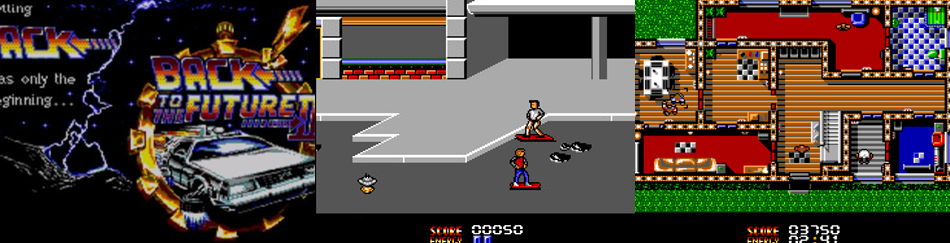
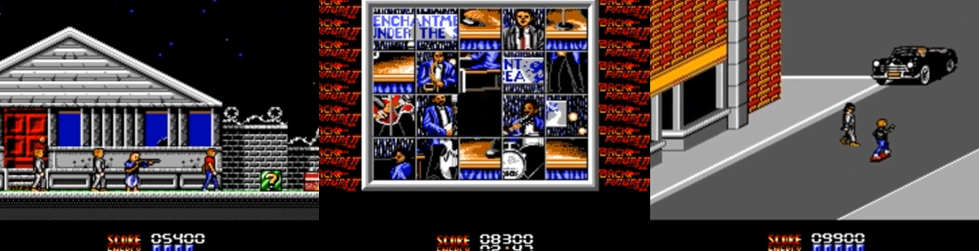



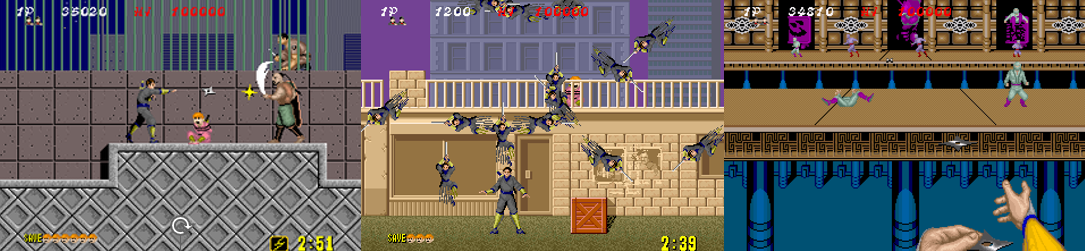
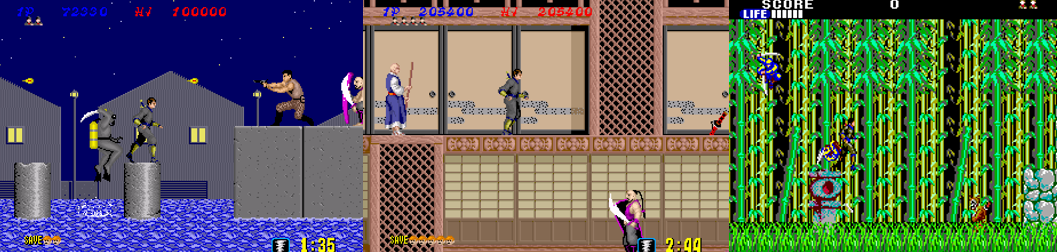
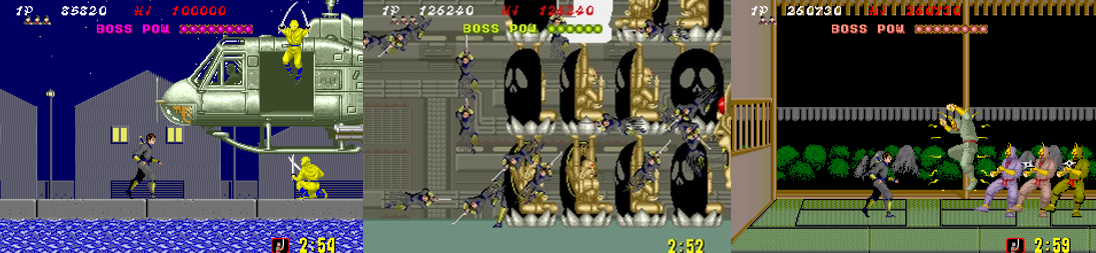





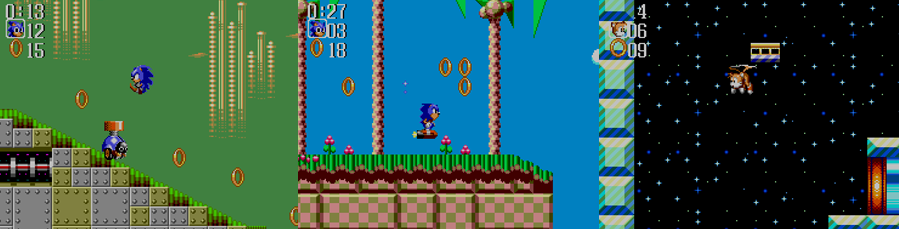
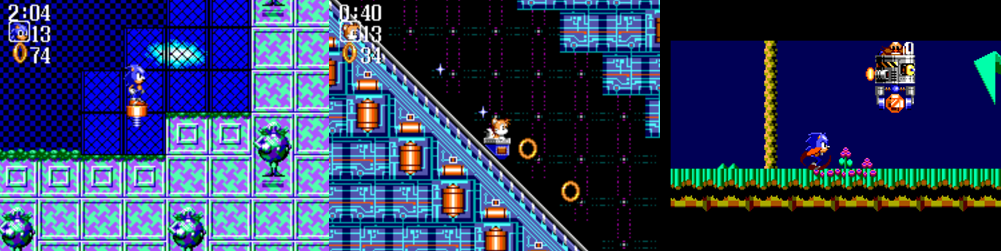
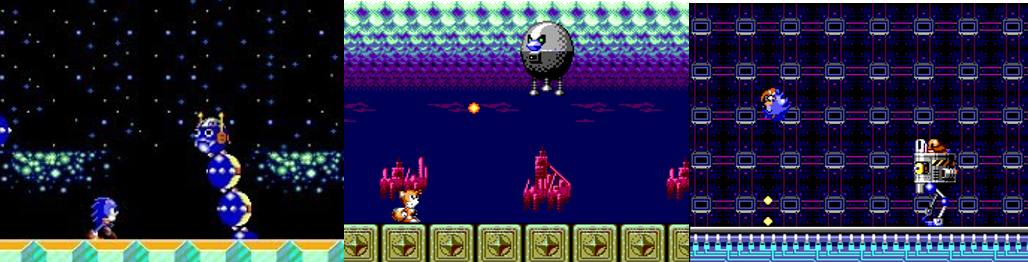




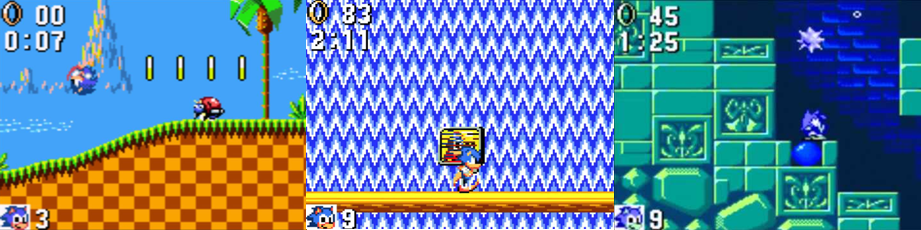
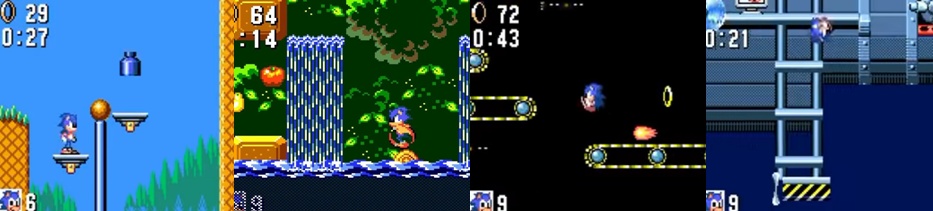
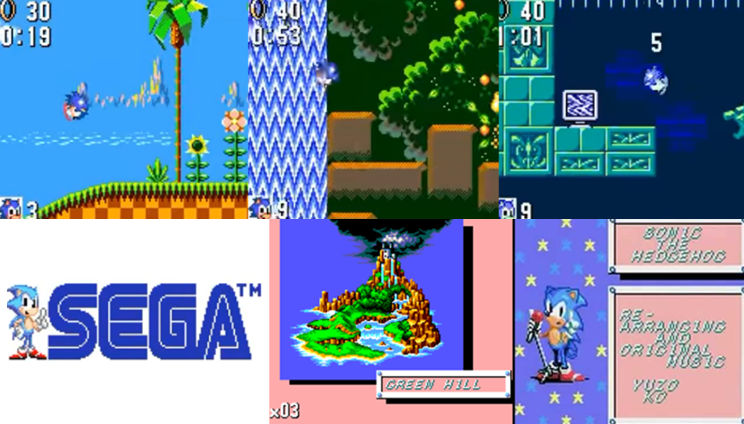

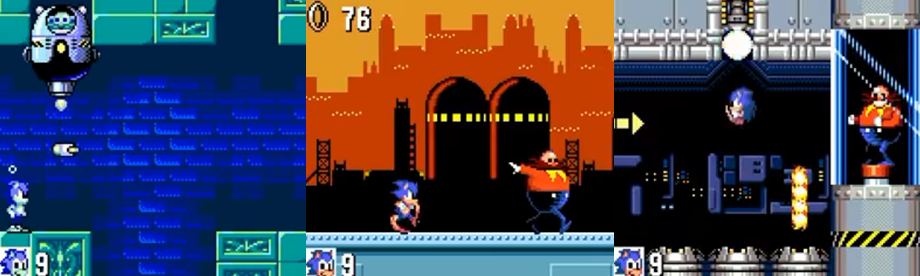
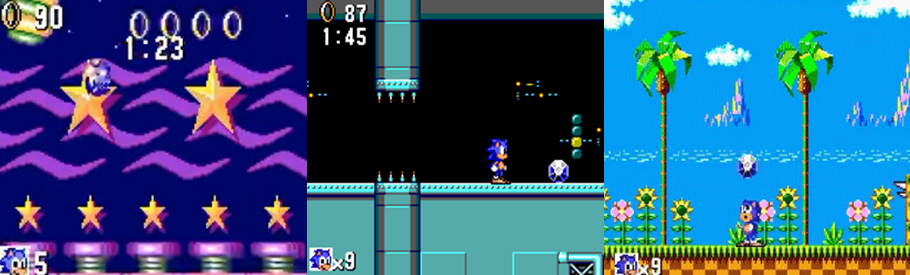




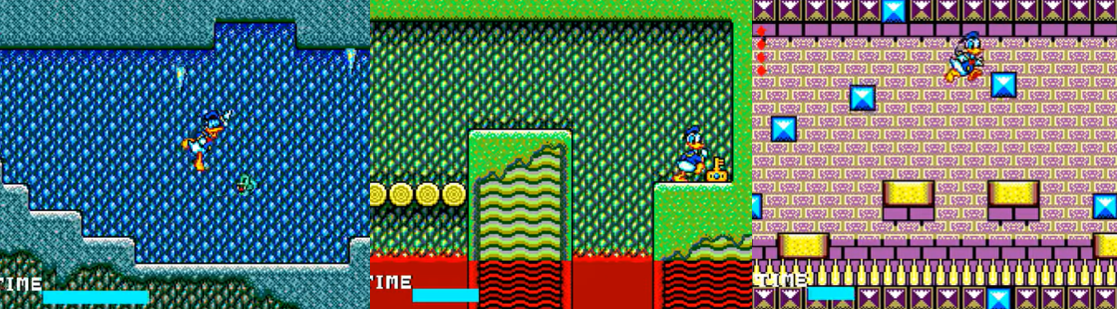
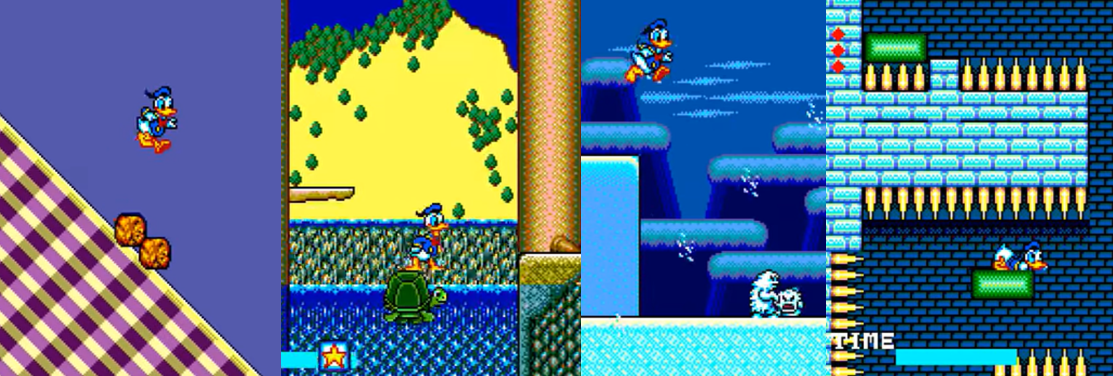
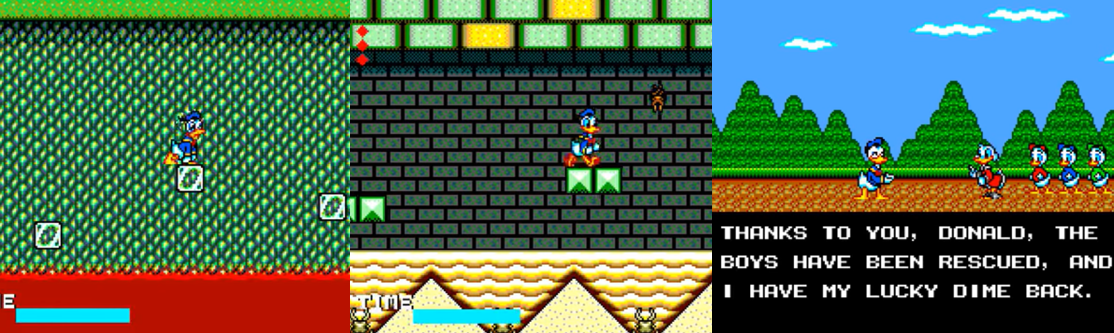
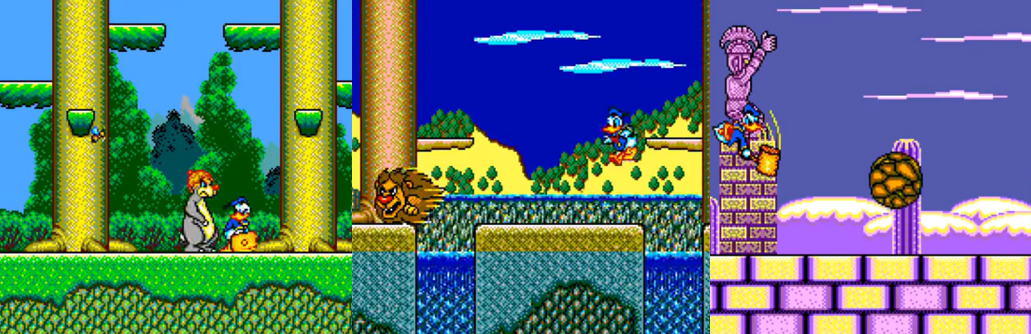
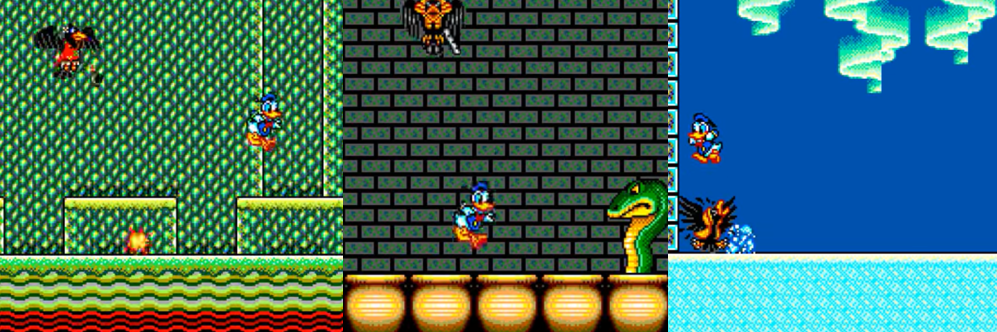
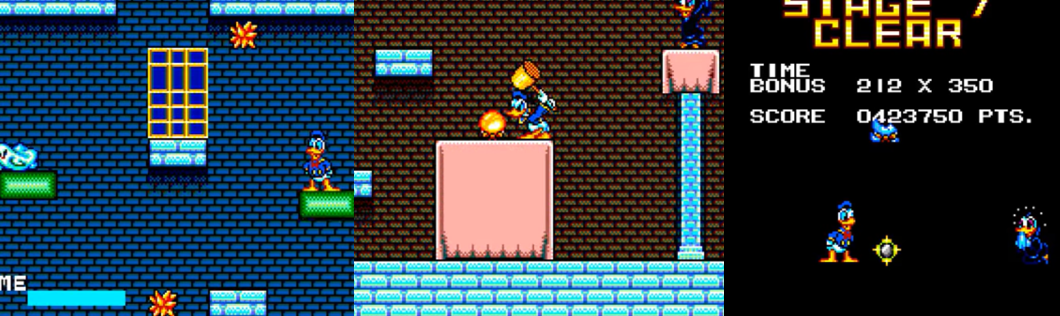
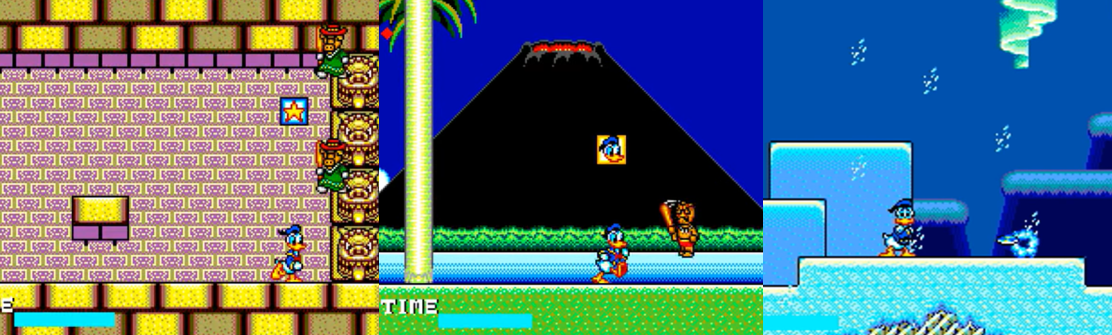



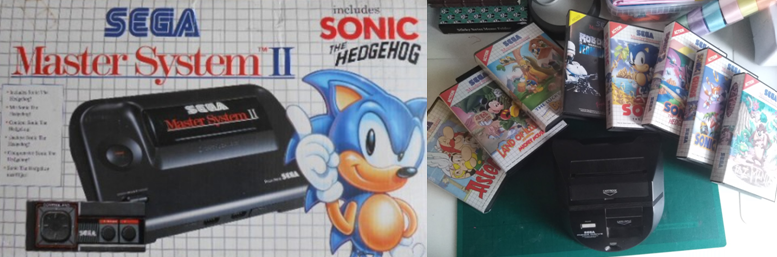
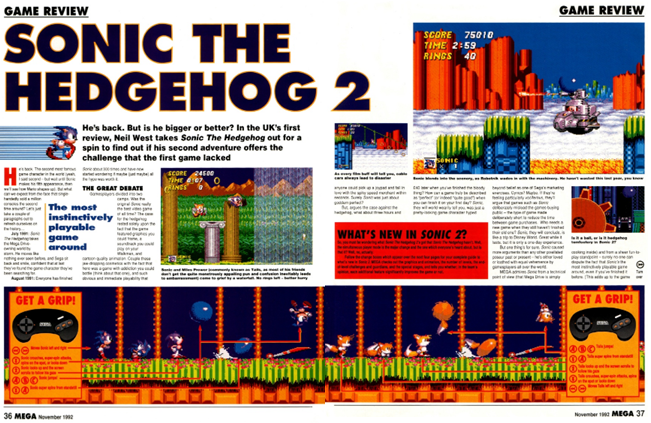

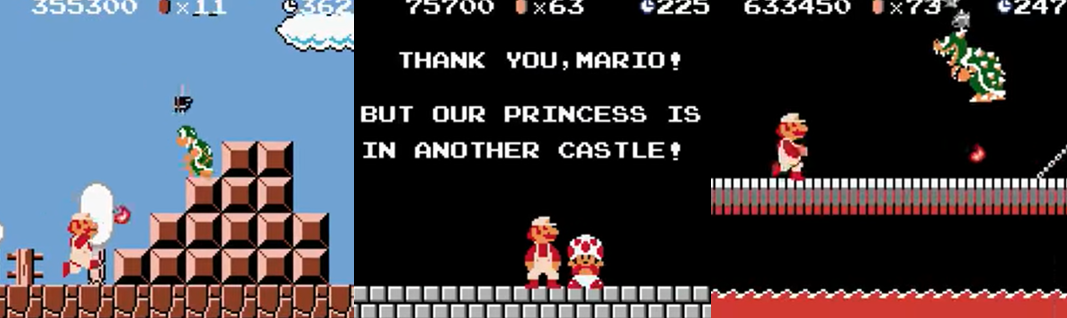


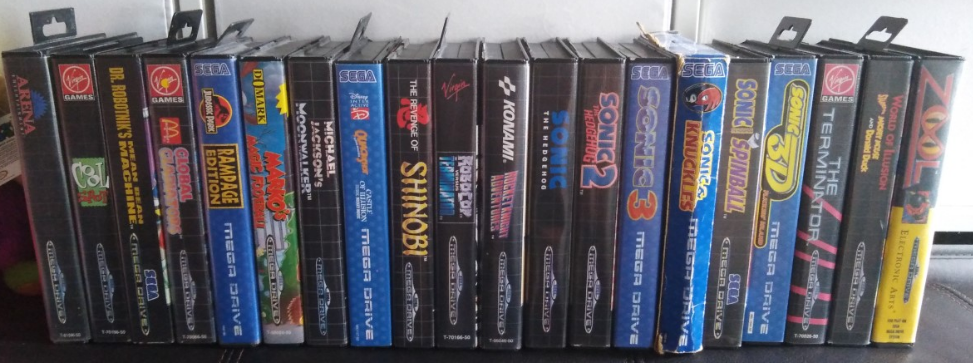
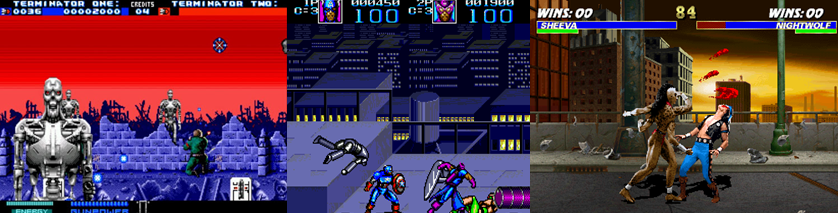
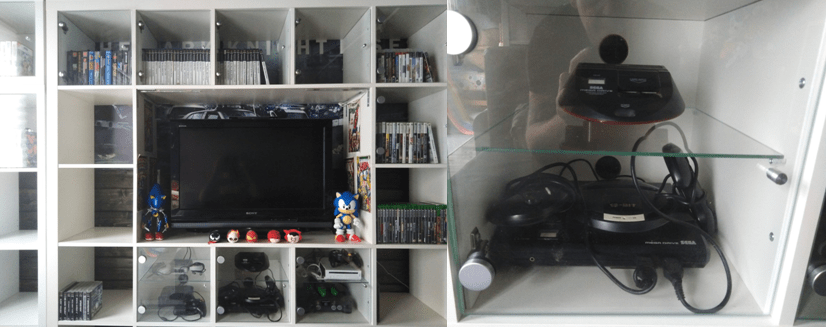
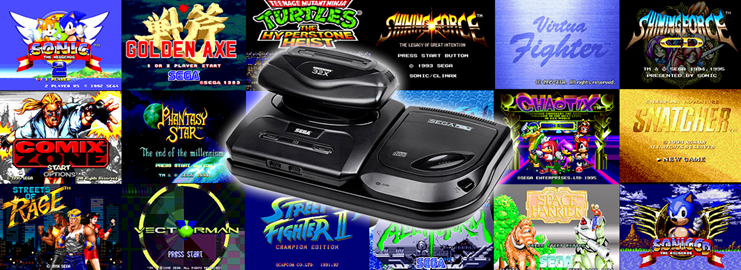


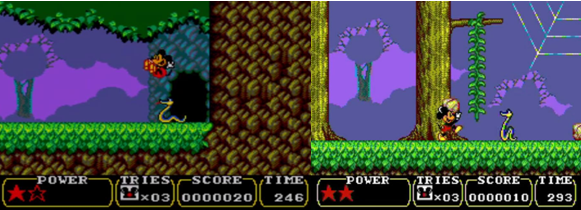
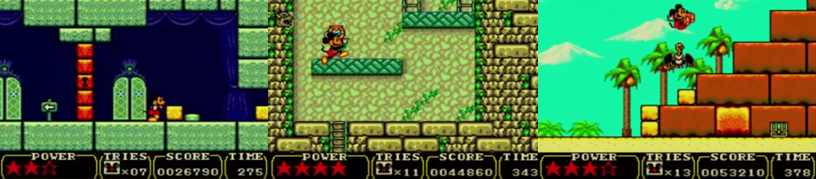
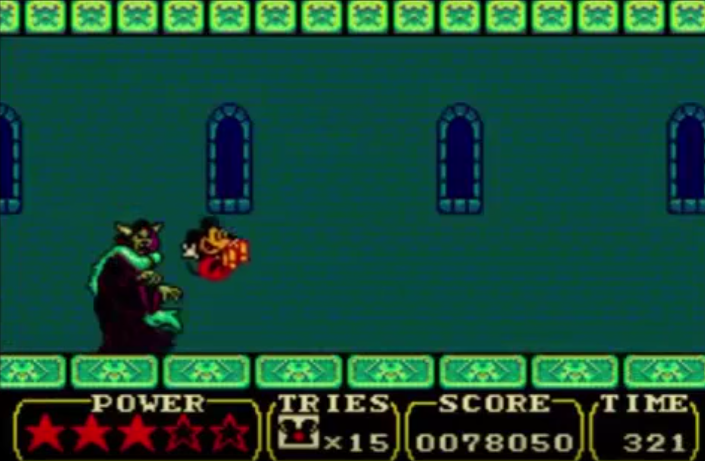

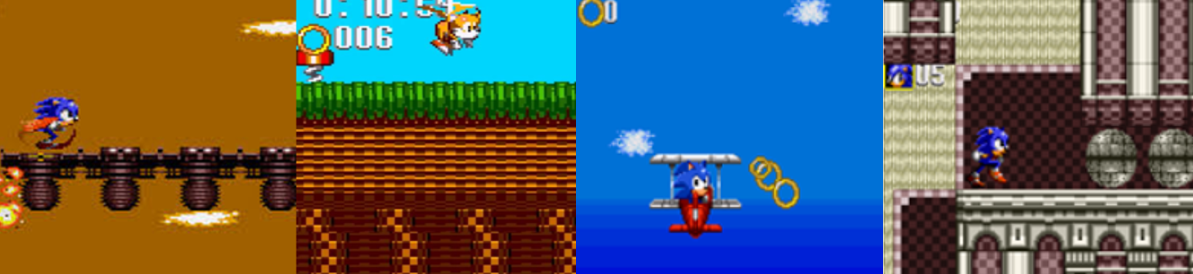
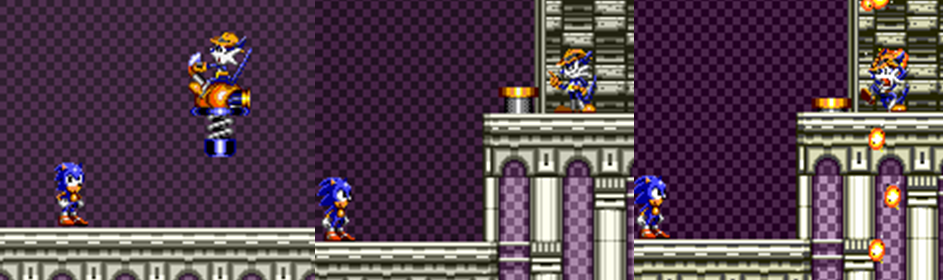
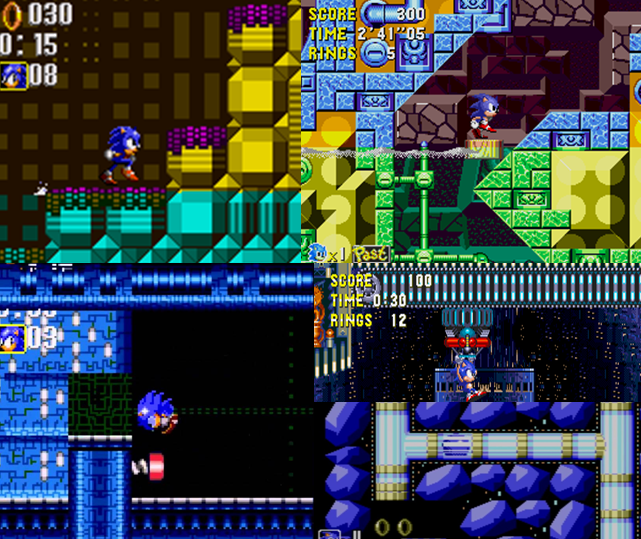
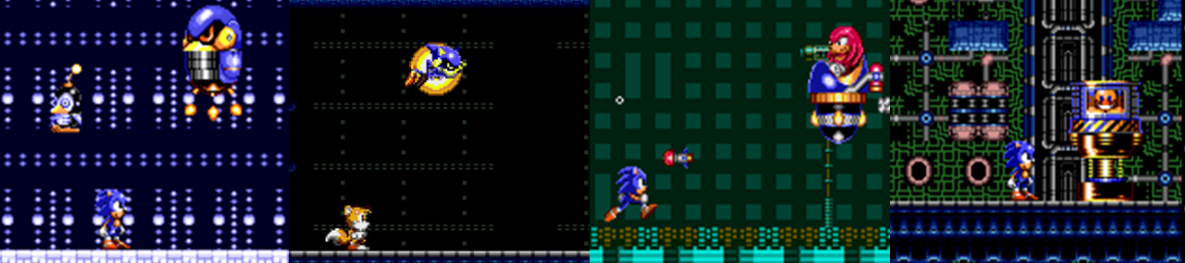
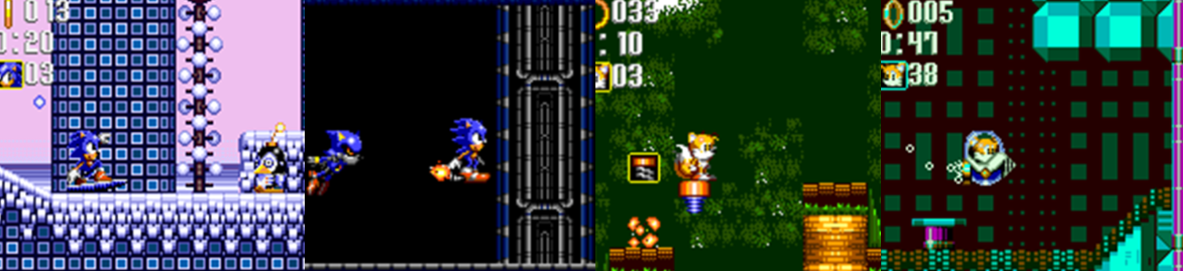


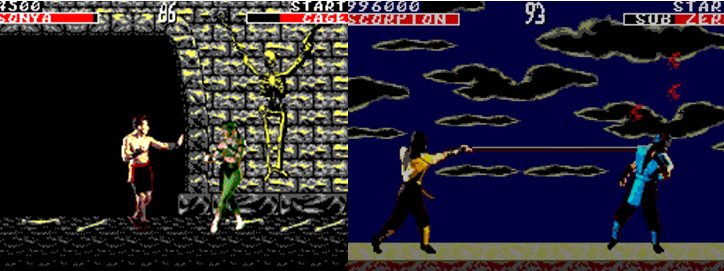


 Dr. K's Waiting Room
You must be logged in to post a comment.