Story Title: “Kraven the Hunter!” Published: 12 May 1964 (cover-dated: August 1964) Writer: Stan Lee Artist: Steve Ditko
The Background: After his success with the Fantastic Four, Marvel editor and head writer Stan Lee created teenage superhero Peter Parker/Spider-Man, whose debut issue became one of Marvel’s best selling publications. Spider-Man’s popularity grew to the point that he headlined other comics, including being partnered up with other, less mainstream superheroes in the pages of Marvel Team-Up, and amassed one of the most colourful and memorable rogues galleries in all of comics. Sergei Kravinoff (better known as Kraven the Hunter) was created by Spider-Man co-creators Stan Lee and Steve Ditko and made his debut in this story, though he’s perhaps best known for his epic (if temporary) death in the celebrated story arc “Kraven’s Last Hunt” (DeMatteis, et al, 1987). Kraven has long hounded the web-slinger as part of the Sinister Six and across a variety of media, featuring in videogames and the 1990’s Spider-Man cartoon. Finally, after years ofstop/start efforts to make it onto the silver screen, Kraven inexplicably made his live-action debut in 2024.
The Review: Our story begins in classic sixties Spider-Man fare, with Spidey dropping in on a bunch of crooks and breaking up their party. In a change of pace, though, Spider-Man doesn’t just beat them up with ease and grace while expositing how his super strength gives him the edge of New York City’s normal, everyday mooks. Instead, he shoots out a web to trap three of the would-be bank robbers but the fourth, who he presumes is their leader, makes a hasty exit out the window. The leader manages to give Spider-Man the slip by activating a special gas from the inside of his suit that instantly changes his appearance into a harmless old man and, when he gets back to his apartment, reveals his true identity as Dmitri Smerdyakov/The Chameleon, the man of many faces who was the very first supervillain Spider-Man ever encountered. Realising the threat Spider-Man poses, and bitter about being deported and exiled after their last encounter, the Chameleon decides to hire an “old friend”, Kraven the Hunter, to destroy the web-spinner once and for all! It turns out that Kraven has amassed a hell of a reputation as the world’s most accomplished hunter. His achievement of having trapped and defeated every type of animal with his bare hands is so impressive that even cantankerous Daily Bugle editor J. Jonah Jameson is in awe of the hunter’s prowess.
Kraven’s world-famous prowess initially sees him get the upper hand on Spider-Man.
Seeing Kraven’s arrival in the United States as a big scoop, Jameson orders his secretary, Betty Brant, and his long-suffering freelance photographer, Peter Parker, to accompany him to the pier to get an exclusive. There, Betty is unreasonably salty when Peter arrives at the same time as Liz Allen and Eugene “Flash” Thompson but Kraven’s mere presence and physical stature are enough to turn their heads and put a stop to the relationship drama. Kraven turns down Jameson’s request for an exclusive with a dismissive bark, so determined is he to “hunt the most dangerous game of all”, and then gives Peter the shock of his life when he single-handedly rounds up the ship’s animal cargo with speed, strength, and wiles so honed that all Spidey can do is watch in amazement. So fantastic is Kraven’s display of power that Spidey completely forgets to take any pictures, angering Jameson. The newspaper editor’s vexation is replaced with intrigue, however, when Kraven lets slip that he’s there to hunt Spider-Man. Peter’s so stunned by this revelation that he’s speechless when Betty gives him the cold shoulder after Liz showers him with attention, which also riles up her muscle-bound flame, Flash. After all that drama, Kraven meets with the Chameleon to read up on his prey using the research and first-hand experience he has acquired, confidentially assuring his ally that the superhuman strength and reflexes he has been afforded by a witch-doctor’s secret potion will enable him to succeed where others have failed. To allow Kraven to stalk Spider-Man more effectively, the Chameleon hires some goons to cause a ruckus, which naturally attracts Spider-Man. Kraven watches with a begrudging respect for his foe’s power, agility, and cunning, impressed with how easily he fights, evades, and subdues multiple crooks, and then catches the web-spinner by surprise by waiting for him on a nearby rooftop.
Kraven’s potion and confidence cause undue stress to the troubled teenage superhero.
Kraven rushes his quarry, explaining that he’s motivated only by the hunt and the personal triumph that defeating Spider-Man will bring him. He immediately puts his enhanced abilities and research to good use by snatching Spidey out of mid-air and tossing him to the ground. Relentless, Kraven presses his attack with a “nerve punch” that Kraven boasts can “down a full-grown charging rhino”. Spidey takes the shot on the arm, which goes completely numb, and surprises Kraven by fending him off with just one arm. In desperation, the hunter resorts to pricking Spidey with one of his special potions, a concoction designed to sap his spider-strength. Kraven then makes a tactical retreat to allow the drug to do its work and Peter returns home, woozy and suffering from tremors as a result, while Kraven astonishes the Chameleon by revelling in the thrill of the encounter and the battle yet to come. Although Peter awakens back at full strength, he’s alarmed to find his hands are still twitching uncontrollably. He desperately tries to hide his condition from his doting Aunt May, who has arranged a blind date with him the niece of their neighbour, Anna Watson, and is relieved when the twitching dies down by the time he gets to the Daily Bugle. There, his exasperation with Betty’s unprovoked jealousy is quickly replaced by astonishment when Kraven comes barging out of Jameson’s office. Although Jameson hates Spider-Man with a vengeance, he refuses to endorse Kraven’s methods since there are laws against hunting human beings. Kraven’s confidence shakes Peter so badly that his hand tremors make a dramatic and embarrassing return while he’s in Science class, much to the amusement of his peers and the annoyance of his professor, Miles Warren. Peter’s condition is so bad that he can’t aim his webs straight and he’s forced to resort to leaping from building to building as Spider-Man as he aimlessly searches for any sign of his would-be hunter.
Kraven’s cunning and prowess ultimately fail to match with Spidey’s spider-sense.
Fully aware that his prey would seek him out, Kraven arranges for the Chameleon to brazenly walk around town in disguise as the world-famous hunter and lure Spider-Man into Central Park to renew the hunt. Despite his suspicions and his blaring spider-sense, Spidey follows the fake and ends up briefly trapped beneath one of Kraven’s nets. Thankfully, exerting the full limits of his spider strength is enough to snap one of the connecting chains, but he’s so disorientated by one of the Kraven’s loudly beating a drum that he’s unable to stop the other Kraven from slapping metal braces to his right forearm and calf. Designed to “hold a hunger-mad tiger”, the manacles have a magnetic attraction so strong that it takes all Spidey’s incredible strength to keep them apart. They also jingle every time he moves to instantly alert Kraven to his presence, however. Relying on his superhuman reflexes and spider-sense, Spidey stays one step ahead of his hunter and buys enough time to spray the manacles with “liquid web fluid”, which successfully negates their properties. His uncanny sixth sense alerts him to someone hiding in the nearby bushes and Spidey is stunned to unmask the Chameleon as the fake Kraven. This victory reinvigorates the web-head, however, and he quickly turns the hunt against his foe, chasing Kraven deep into the woods using his spider signal. No matter where or how he tries to run and hide, Kraven is continually spotted by his foe and resorts to trying to sneak attack him with his nerve punch, only for Spidey’s spider sense and unmatched agility to keep him off-guard. Angered by Spider-Man’s mocking taunts and realising that he’s lost every advantage, Kraven again tries to make a tactical retreat, but this time runs head-first into one of Spider-Man’s webs. Spidey thus leaves him and the Chameleon there, beaten and humiliated, to be deported by the authorities (though, naturally, they both swear revenge). In the aftermath, Jameson is so elated by Peter’s photographs of the action that he allows Peter to have one of his secret stash of chocolate bars. However, the youngster’s relationship dramas continue to mount even after Mrs. Watson’s niece cancels their blind that as Betty gives him the brush-off and Liz goes out dancing with the hunky Flash.
The Summary: Considering I don’t think much of Kraven and consider both him and the Chameleon to be two of Spider-Man’s bottom-tier foes, I actually enjoyed “Kraven the Hunter!” quite a bit. Steve Ditko continues to set the standard for how Spider-Man should move and fight in his comics and the action is fast and packs a hell of a punch whenever the two are trading blows or showing off their superhuman skills. I always enjoy the visual difference between Peter and Spider-Man, how being in the costume is such an exhilarating and freeing experience for the socially-inept photographer, and it was a neat twist to see him go toe-to-toe with someone not just seemingly as strong and agile as he, but also far more cunning and ruthless. As ever, Peter’s relationship and personal drama is a constant distraction from his current predicament. While I’m always glad when stories from this era don’t reduce females to babbling bimbos, Betty’s raging jealousy was a serious pain in the ass here. She gets mad at Peter simply because he arrives at the same time as Liz and Flash, assuming he “[came] with her” even though they’re not even near each other in the panel, and acting like a clingy, co-dependent brat just because Liz fixes his tie and calls him “Petey”. While it’s true that Betty probably should be worried about Liz, especially as she’s one of the few to admonish Flash for his attitude towards Peter, all she ends up doing is pushing him towards Liz, with comical results. This may very well have been the first of many hints towards Peter’s most famous love interest, Mary Jane Watson, though Peter’s actually relieved when she cancels their blind date as he already has enough troubles on his plate and isn’t optimistic about the state of Mrs. Watson’s mysterious niece.
Despite the relationship drama and the Chameleon’s presence, Kraven gets a good showing.
Although this issue features the return of the Chameleon, his presence is thankfully downplayed in favour of the far more visually and physically interesting Kraven. The two are depicted as close friends, which is a nice change as it’s not every day you see supervillains palling about so amicably. Naturally, the story goes out of its way to show that Kraven more than meets expectations. The ship’s animal cargo spontaneously getting loose is the perfect excuse to show how fast, smart, and strong he is and prove that he’s more than capable of subduing even the most dangerous of animals with his bare hands. Living for and relishing the thrill of the hunt, Kraven sees Spider-Man as the ultimate prey and goes to some lengths to get a sense of his prowess. I say “some” as Kraven only spends a few panels observing Spider-Man rather than days, which may have contributed to his downfall as he underestimated Spider-Man’s strength and tenacity and was forced to resort to one of his potions and a hasty retreat. Although Kraven’s potion causes Spider-Man some troubles, all it really does is take away his ability to shoot webs straight and in the end all Spider-Man needed to win was his extraordinary spider-sense and superhuman reflexes. Still, Kraven does match blows with Spider-Man and even briefly cripples one of his arms and is proven to be just as agile and physically strong as the web-spinner but, ultimately, he’s undone, in part, by his own hubris. This all made for a surprisingly enjoyable first appearance of Kraven the Hunter. I can’t say it’s changed my opinion of him, or his lame outfit, but it definitely made for a pretty entertaining villain-of-the month Spider-Man story.
My Rating:
⭐⭐⭐⭐
Rating: 4 out of 5.
Great Stuff
What are your thoughts on Kraven’s debut? Are you a fan of the character and, if so, what are some of your favourite Kraven tales? Were you annoyed by the relationship drama in Peter’s life, or did you enjoy it as a character-building tool? What did you think to Kraven’s depiction, powers, and personality? Are you a fan of the Chameleon or, like me, do you find him disappointing? How excited were you for Kraven’s live-action debut? Feel free to leave your thoughts on Kraven below and be sure to check out my other Spider-Man content.
Released: 25 October 2024 Director: Kelly Marcel Distributor: Sony Pictures Releasing Budget: $120 million Stars: Tom Hardy, Chiwetel Ejiofor, Juno Temple, Clark Backo, and Stephen Graham
The Plot: Now a fugitive wanted for murder, Eddie Brock/Venom (Hardy) go on the run while being hounded by the vindictive General Rex Strickland (Ejiofor) while evading a monstrous being sent to hunt them by the ancient symbiote god, Knull (Andy Serkis).
The Background: Fist appearing as simply a black costume acquired by Peter Parker/Spider-Man on an alien world, Venom would later take on a whole new lease of life when he bonded with the unhinged Eddie Brock to antagonise Spider-Man. Since then, Spidey’s dark doppelgänger has become a popular anti-hero and one of Spider-Man’s most recognisable foes. Venom’s popularity led to them appearing in videogames and cartoons prior to being shoe-hornedinto Spider-Man 3(Raimi, 2008), though the idea of doing a live-action Venom film had circulated since 1997. This finally came to pass when Tom Hardy took on the role in a commercially successful solo film that, despite mixed reviews, led to an equally successfulsequel in 2021 that was received a bit more favourably. With Hardy having signed on for three films from the start, a third was never in doubt, with Hardy and Venom: Let There Be Carnage director Andy Serkis both expressing interest in crossing over with Sony’s otherMarvel films and the Marvel Cinematic Universe (MCU). Tom Holland was even open to appearing in a cameo but, in the end, writer Kelly Marcel took over as director and favouring the introduction of Knull, who she hoped would return as a prominent supervillain in later films. Although Serkis was unable to return to direct, he took on the Knull role and Hardy returned for a cool $20 million payday. The casting of Chiwetel Ejiofor and Rhys Ifans confused some and the trailers led to speculation about Venom’s place in the MCU, a sneaky tactic from Sony that no doubt contributed to the film’s box office of over $430 million. Reviews remained mixed, however, with many praising Hardy’s performance and the dynamic between Eddie and the symbiote while criticising the moronic plot and squandering his talents. Despite this, and the narrative presented in the film, Hardy remained open to the possibility of returning in some capacity later down the road.
The Review: If you told me that we’d get an entire trilogy of Venom movies that didn’t involve Spider-Man, the guy who Venom owes their entire existence to, I’d say you were crazy. But then I’d remember that this is Sony we’re talking about, and this is exactly the kind of nonsense they’d sign off on these days. Yeah, spoilers: no version of Spider-Man appears in Venom: The Last Dance, despite the movie making the ridiculous decision to revisit one of the most pointless post-credits scenes in all of superhero cinema by showing Eddie at a bar in Mexico in the Marvel Cinematic Universe. He’s then unceremoniously transported back to his world not by a magical portal created by Doctor Stephen Strange, but seemingly by a similar portal generated by Knull, the long-imprisoned creator of the symbiotes who sits entombed in a dark prison in a far away galaxy. Once back in his world, Eddie is ravaged by a combination of a drunken headache, a hangover, and a migraine caused by the teleportation that renders him a confused, fatigued, and ultimately bizarre character for the duration of the film. As much as I love Tom Hardy, his portrayal of Eddie has always irked me. Once again, he adopts a weird accent, and he plays Eddie with this weird, twitchy, socially inept awkwardness that makes many scenes (particularly in this movie) difficult to watch. Despite once being a ballsy, confident reporter who took on mega-corporations without fear, Eddie is a paranoid, largely clueless, and often bumbling figure who constantly bickers with his dark passenger. The banter between Eddie and the symbiote is one of the highlights, as ever, and is put to greater effect here through the second act’s “road trip” format as the two randomly decide the best way to avoid the authorities is to head to New York City. However, the symbiote is a growling, gruff character who’s difficult to understand and continues to be childish and unreasonable at times. Impulsive and reckless where Eddie is measured and reserved, the symbiote still desires to bite off heads as a “lethal protector” while Eddie prefer to lay low, meaning their ideals continue to clash in a way that irks me as a Venom fan since the whole point is that they’re supposed to be united in their cause.
Hounded and branded a murderer, Eddie and the symbiote go on the run and reflect on their lives.
Still, it makes for some amusing moments, such as the symbiote impulsively knocked people out (much to Eddie’s dismay) to steal their clothes and his immediate addiction to gambling when they make a pit stop in Las Vegas. Eddie’s easily at his lowest point here. Thanks to the events of the last movie, he’s been branded a murderer and forced to go on the run, separating him from his lost love, Anne Weying (Michelle Williams), who’s sadly absent in this film. After being spotted on CCTV cameras, Eddie attracts the attention of General Rex Strickland, who mobilises his forces to capture Eddie on sight. At first, this is seemingly to arrest him for the murder of Detective Patrick Mulligan (Graham) and others, but in actual fact Strickland oversees both the decommissioning of Area 51 and the symbiote research centre, Area 55, located beneath it. Thus, his mission is more to obtain symbiote samples, if not entire symbiotes, for the “Imperium”, a shadowy government organisation that’s running vague experiments on the symbiotes. Once Strickland learns there’s more to Eddie than he expected, he puts together a crack squad to capture the symbiote and kill Eddie but doesn’t reckon with the two’s abilities and is driven into a vengeful rage when his men are killed in the act. Eddie’s stunned and bewildered to learn that the two of them now carry a “codex” after the symbiote resurrecting Eddie in the climax of Venom. This one-of-a-kind McGuffin is the key to releasing Knull from his prison, and therefore means the two are also hounded by the monstrous Xenophage. This insectile beast can instantly detect the codex whenever Venom fully transforms, meaning much of the film focuses on Eddie as it’s too dangerous for him to fully let Venom out. Unless they happen upon kindly shopkeeper Mrs. Chen (Peggy Lu) in Las Vegas. Then it’s perfectly fine for Venom to overtake Eddie and engaging in a dance sequence with Mrs. Chen to the tunes of ABBA. Except it’s not as, predictably, the Xenophage shows up, wrecks the hotel, and Eddie is both captured and consequently separated from the symbiote. Thus, we’re denied a lot of true Venom action, leaving the symbiote little more than a floating, frothing head, unless the film decides it needs to suspend what little logic it has for an action scene.
Teddy is fascinated by the symbiotes and determined to study them, no matter the risk.
Eddie and the symbiote are taken to Area 55, an underground laboratory where the United States military and a band of scientists – led by Doctor Teddy Payne (Temple) and Sadie Christmas (Backo) – research the symbiotes that landed in the first movie. Unlike the experiments performed by the Life Foundation, these seem to be largely unobtrusive and benign; Teddy is in awe of the alien lifeforms and wishes only to understand and communicate with them. Even Strickland doesn’t want to destroy them, only Venom (and that’s for personal reasons), and this strange turn of event sis only further compounded by the revelation that the symbiotes aren’t actually evil. Instead, they were fleeing from Knull’s wrath and came to Earth looking for safe haven. Quite how we’re supposed to believe this when every symbiote we’ve seen up to this point, including Venom, has been sadistic and violent and wished to either eat humans or drain their bodies completely is beyond me. such concerns are further compounded by the bizarre backstory given to Teddy. As a girl (Brooke Carter), Teddy and her brother (Fflyn Edwards) were inexplicably struck by lightning, which killed him but somehow left her with only a lame arm. since then, she’s dedicated herself to living her brother’s dream of investigating life beyond our world and is fascinated by the symbiotes. It’s thanks to Teddy that Mulligan’s life is saved as she bonds him with a symbiote and learns of Knull’s threat; yet, despite being explicitly told that the only way to stop Knull is for either Eddie or Venom to die, she vehemently opposes Strickland’s offensive against Venom since it would deprive her research. While Teddy is shoe-horned in and a poor substitute for Anne, she at least has some agency and a character arc. Sadie is just kind of there; her “thing” is she likes Christmas and is named Christmas and that’s about it. Then, in the final act, she suddenly gains prominence when a symbiote latches onto her and creates Lasher, who aids Venom in their battle with the Xenophages, while Mulligan and his symbiote are unceremoniously consumed before they can help. This bugged me as I would’ve preferred to see Eddie, Anne, and Mulligan (and maybe Teddy and Strickland) fight together with symbiote partners, but it’s doubly odd as the first movie established that a true symbiosis is very rare and yet Sadie shows no signs of being consumed by her symbiote.
Strickland’s bias almost leads to ruin when the Xenophage’s attack on Knull’s orders.
In place of Venom’s more familiar supporting cast, Eddie stumbles upon hippie Martin Moon (Rhys Ifans) and his family – equally hippie wife Nova (Alanna Ubach), his enthusiastic but scared son Lef (Dash McCloud), and his apathetic daughter Echo (Hala Finley) – who are on a road trip to Area 51 to realise Martin’s lifelong dream of seeing an alien. Though Eddie’s reluctantly to tag along with the Moons, the symbiote insists and, while enduring their cringey singing and crackpot quirks, the two dwell on how they’ve been denied a normal life. Again, I feel like it would’ve made much more sense for Anne and Doctor Dan Lewis (Reid Scott) to have maybe seen or sensed Venom’s danger on the news and come out to help him, especially as the Moons keep sneaking back into the plot simply to put some innocents in peril. What’s really weird is that Reid Scott does feature in a cameo as the shadowy head of Imperium, a man who authorises Strickland’s employment of “The Six”, which you’d think would be a troop of symbiote-infused soldiers but is simply just another strike team. Like Martin, Strickland is shameless stunt cast with an actor known for their previous Marvel work simply to trick people into thinking Venom: The Last Dance is somehow tied to the MCU’s Multiverse Saga. While it technically is, the casting amounts to a bait and switch and nothing more, though Chiwetel Ejiofor was enjoyably charismatic in the role. In contrast, Knull is a complete waste of time. Aside from dumping a bunch of clunky exposition in our laps at the start, he does nothing but send Xenophages after Venom. Why he can’t conjure a portal to release him from his prison is beyond me, and we never see him and Venom interact, meaning it’s up to the scary and surprisingly gory Xenophages to carry the main threat. This would be fine (and admittedly spares us the same nonsensical symbiote-on-symbiote action of the last two films), but the Xenophages are functionally invincible. They immediately heal from all wounds and devour their foes and are extremely aggressive, but immediately lose interest once they can’t see the codex, making them dangerous but also paradoxically dumb.
The Nitty-Gritty: Venom: The Last Dance feels tonally confused. Like its predecessors, it lacks the gore and violence I’d expect from a Venom movie and tries to make up for it with a few s-bombs and even an unexpected “motherfucker!” from Martin. It also delivers some startling gore in depicting the Xenophages’ preferred method of attack, which is to eat their victims whole and spewy their bloody remains from vents on their back! Venom bites the heads off a few bad guys but is again a far cry from the “lethal protector” they wish to be, and I know from the comics. In this instance, it makes sense since Eddie’s on the run, but he makes some baffling decisions in trying to evade Strickland. He wanders around in plain view, constantly being spotted by CCTV, has a good old time in Las Vegas, and his end goal is to go to New York and blackmail a former editor into helping him. The middle part tries to be a road trip movie, but it doesn’t really work; the Moons quickly outstay their welcome and it’s ridiculously convenient that they’re heading towards where all the action’s about to take place. This is why I think Anne and Dan would’ve made just as much sense, if not more. It’s also odd that Eddie mentions he and the symbiote have only been bonded for a year. I find it difficult to believe that these three films take place over a single year and, if that is the case, that’s even more disappointing. The film also squanders any potential from the ending of the last movie; we never see Venom interact with Tom Holland’s Spider-Man and his jaunt into the MCU is nonsensical, at best. I’ve always hated the idea that these films take place in a separate universe when it would’ve been so easy for Sony and Disney to collaborate on a more cohesive spin-off series. They don’t even take place in the same universe as other Sony-Marvel films, or previous Spider-Man continuities, meaning any hope of a Venom/Spider-Man interaction is tossed out the window in favour of him easily evading the Xenophage and never even seeing Knull.
Venom moments are few and far between thanks to annoying side characters clogging up the runtime.
It’s a shame as the film does look really good. The symbiotes held captive at Area 55 look a little dodgy but, when they bond to a host, they look fantastic. Venom, especially, looks amazing whenever they full transform. I love how slick and oozing the symbiote skin is, how they have this impossible, exaggerated teeth, and the way their bodies are all distinct and unearthly. Mulligan’s symbiote, for example, is like water and radiates an awesome presence that rightfully captivates Teddy’s imagination and Strickland’s distrust. Lasher also stands out in the finale, simply because they adopt a Christmas tree colour pattern and are so prominent in fending off the Xenophages. Venom’s abilities are displayed quite well; Eddie makes a crack about the symbiote’s inability to fly so it attaches them to an aircraft to jet him along at supersonic speeds, which was fun. It also jumps to other animals, such as a fish, frog and, most prominently, a horse. However, this sequence is simply a retread of the motorcycle chase from the first movie, which also gets a callback in the finale. Because of this, and Venom simply taunting, manhandling, and beheading some Mexican lowlifes, Venom: The Last Dance doesn’t really gives us anything new in terms of Venom’s portrayal. The symbiote does show fear at the mere mention of Knull; it’s not really clear why but it does establish that Knull is this awesome threat. Sadly, while Knull cuts an intimidating figure with his emo hair, massive sword, and swirling prison of darkness, he’s essentially a non-factor. The Xenophages are the main threat, which again is at odds with the trailer, which suggested that the symbiote’s people were invading Earth. This plot point seems to have been dropped, along with any notion of Strickland employing symbiote soldiers, to tell a far more basic story. There are some decent moments between Eddie and the symbiote where they reaffirm their bond and their desire to live in peace, but they spend so much time at odds or goofing off or being forcibly separated that it falls a bit flat for me.
The symbiote makes the ultimate sacrifice to save its adopted world, though Knull survives the conflict…
Thanks to Eddie defending himself and the initial Xenophage, Strickland pursues Venom relentlessly, ultimately taking them by surprise after a Xenophage attack, separating Eddie from the symbiote, and bringing them to Area 55. Having learned from Mulligan’s symbiote about Knull’s threat and the codex, Strickland is happy to execute Eddie for the greater good, only for the Xenophage to track the two to the bae after the symbiote rebonds with Eddie to save him from a gunshot wound. In the battle, Mulligan is killed and the symbiotes are released, bonding with Sadie and other nearby scientists to assist Venom. This was odd as everyone knows how dangerous the codex is so I would’ve assumed at least some of his brethren would see the value in killing Venom over sacrificing themselves to save them. Regardless, more and more Xenophages arrive, slaughtering the symbiotes and their hosts, wrecking Area 51, and putting the Moons in mortal danger. Luckily, Venom and the symbiotes are on hand to save them, with Lasher chastising Strickland’s reckless use of a rocket launcher and finally convincing them that they’re all on the same side. However, no matter how many bullets and blade can stop the Xenophages, which simply stitch themselves back together, devour Sadie’s symbiote, and mortally wound Strickland. Pinned down with no way to win, Eddie and the symbiote realise that the only way to stop the Xenophages is to sacrifice themselves. Thus, Venom leads the Xenophages to the gigantic acid tanks Strickland was using to decommission Area 51, absorbing the Xenophages into their body and forcibly dragged them into position. Despite being prepared to die alongside his friend, Eddie is aghast when the symbiote spits him out and shields him from the acid shower and the resultant explosion that destroys the entire base. Thanks to having obtained a symbiote, Teddy rushes herself and Sadie to safety as Agony and can only watch as Strickland, the Xenophages, and the Venom symbiote are destroyed. In the aftermath, Eddie finally makes it to New York, now a free man, and gazes upon the Statue of Liberty while remembering the symbiote, unaware that Knull is still waiting in the dark void and determined to enact some kind of vague revenge. Oh, and a piece of Venom also survived. Not to mention the piece he left in the MCU, meaning there are ways for Venom to return and completely squander what’s sold as an emotional ending.
The Summary: Honestly, I didn’t expect Venom The Last Dance to involve Spider-Man. Even if it had, I probably wouldn’t have been happy or impressed that it took three movies to see what should’ve been done in the first film. For me, the Venom movies should’ve been a two-part affair: one involving Spider-Man and the other involving Cletus Kasady/Carnage. Bringing in a more modern antagonist like Knull was a good idea on paper, but the movie doesn’t commit to it. Like, why not have Knull come to Earth leading a symbiote/monster army and have Venom team up with Anne, Mulligan, and other symbiotes to fight them off? The Xenophages were horrific alien creatures, sure, but they’re simply ravenous beasts. We never see Venom tangle with their master and that’s a huge missed opportunity, as is the chance to up the stakes with a world-ending threat. Instead, we have a much more reserved film, one that tries to explore the relationship between Eddie and the symbiote but instead meanders along, squandering any potential it might’ve had. The Imperium plot point goes nowhere, Area 55 is a cauldron of contradictions, and I didn’t really care about Teddy or her confusing characterisation. It’s disappointing that this series ends on such a flat note; it does nothing to earn its sombre conclusion, and I just feel robbed of what I really wanted to see from these characters. I like Tom Hardy, but his portrayal of Eddie is so weird and all over the place, the actual Venom action is disappointingly light, and it just feels like everyone’s going through the motions because they’re contractually obligated to. Add to that the fact that the film’s another example of Sony blatantly lying to audiences with its trailers and trying to trick people into thinking it’s something it’s not and you have an uninspiring end to a franchise that somehow worked when it never should’ve. I can only hope that we get a proper, accurate, and definitive version of Venom sometime in the future… though I’m also happy to let the character lie dormant for about ten years after these efforts.
My Rating:
⭐⭐
Rating: 2 out of 5.
Could Be Better
Have you seen Venom: The Last Dance? If so, what did you think to it? Were you disappointed that Venom couldn’t fully transform or did you enjoy the new spin on their relationship? What did you think to new characters like Teddy and Strickland replacing Anne and Dan? Were you also annoyed that there wasn’t a showdown between Venom and Knull? Which of the other symbiotes was your favourite? What are some of your favourite Venom and/or Knull stories from the comics? Leave your thoughts on Venom: The Last Dance down below and go check out my other Venom content.
In November 1961, Marvel Comics readers witnessed four intrepid explorers be forever changed by mysterious cosmic rays. Marvel’s “First Family” of superheroes were the first of many colourful superheroes for Marvel Comics and are more than deserving of some attention today.
Writer: Stan Lee – Artist: Jack Kirby
Story Title: “The Coming of Galactus!” Published: 9 December 1965 (cover-dated March 1966)
Story Title: “If This Be Doomsday!” Published: 11 January1966 (cover-dated April 1966)
Story Title: “The Startling Saga of the Silver Surfer!” Published: 10 February 1966 (cover dated May 1966)
The Background: In 1961, Stan Lee and Jack Kirby introduced readers of Marvel Comics to the dysfunctional Fantastic Four in a direct response to DC Comics’ Justice League of America. While the team’s creation has been contested by both, Lee and Kirby popularised the “Marvel Method” of writer/artist collaboration and brought comic fans real and relatable characters who introduced pivotalMarvel staples in the following years. Perhaps none are more crucial than the cosmic devourer of worlds himself Galactus. Created by Lee and Kirby and debuting in this trilogy of issues, the entity once known as Galan had Biblical connotations and was specifically designed to challenge pre-conceived notions of “good” and “evil”. Many subsequent stories have characterised Galactus as a force of nature, if not the universe, as inevitable and necessary as life and death. A complex being who spreads genocidal destruction to satiate his never-ending hunger, Galactus is typically served by equally mighty “heralds”, most notably Norrin Radd/The Silver Surfer, and either at the forefront or lurking in the background of Marvel’s cosmic crossover events. Galactus has brought to life in Marvel’s various animated ventures, often appears in Marvel videogames, and was notoriously represented as an indistinct swirling cloud in Fantastic Four: Rise of the Silver Surfer(Story, 2007) before finally being brought to life in live-action in the Marvel Cinematic Universe in 2025.
The Review: The Fantastic Four’s greatest threat begins with them still struggling against Marvel’s newest batch of bizarre costumed superhumans, the Inhumans. Specifically, Maximus Boltagon/Maximums the Magnificent (or, more accurately, Maximus the Mad) has set off the dreaded “Atmo Gun”. While this has no effect on his Inhuman brethren, it’s caused deadly planet-wide vibrations that threaten all human life. While even the hyper-intelligent Doctor Reed Richards/Mister Fantastic cannot fathom the cause of such an event, Blackagar Boltagon/Black Bolt, leader and monarch of the Inhumans, immediately confronts his insane brother, a creature so vile and spiteful that he’d happily destroy every human just so the Inhumans could walk the Earth uncontested. For his mad schemes, Maximus earns a swift backhand from the dangerously mute Black Bolt and is both astonished to find the Fantastic Four still alive and dismayed when his brother easily disables the Atmo Gun’s effects. Regardless of the pleas of the beautiful, red-headed Inhuman Medusalith Amaquelin/Medusa, who’s pledged her life, heart, and loyalty to Black Bolt, Maximus refuses to accept any similarities between the two races. Stubborn to the end, he throws off the Inhumans restraining him and lunges for the Atmo Gun once, more, maliciously reversing its effects before anyone can stop him. The result is the entire Inhuman sanctuary, Attilan, being encased within an impenetrable “Negative Zone”. Thinking fast, the Fantastic Four race to safety and escape before they are also trapped inside, leaving Johnny Storm/The Human Torch heartbroken at being separated from Crystal Amaquelin, Medusa’s pretty little sister who Johnny immediately fell for and who unwittingly brought the two groups together in the first place. Johnny reacts with anger, desperate to burn his way back into Attilan and pleading with Reed to find some way to be reunited with Crystal. However, Johnny’s left to despondently realise that there’s no hope and, sympathetic to his plight, Ben Grimm/The Thing secretly vows that none of them will ever give up hope that the two can see other someday.
Johnny’s anguish at being separated from crystal is supplanted by Galactus’ dreaded arrival.
With the Inhuman saga wrapped up for now, the story then switches to the vast depths of the cosmos where we’re introduced to the enigmatic Silver Surfer for the first time. Deftly dodging a meteor shower as he rides through the void, the Silver Surfer catches the watchful eyes of the Skrulls, who react with panic at detecting his presence, knowing that where the Silver Surfer rides, mighty Galactus is sure to follow. Using their incredible technology, the Skrulls “[black] out” their solar system, apparently causing the dreaded Silver Surfer to pass by. Thus, the Silver Surfer rockets to our solar system, spotting a lush and fertile planet that will satisfy his master’s needs. Meanwhile, while returning from Attilan, the Fantastic Four are stunned to see a second Sun appear in the sky and then flames seemingly engulf the atmosphere. When the Human Torch investigates, the predictably fickle and understandably panicked New Yorkers blame him for the phenomenon and attack. Thankfully, Reed, Ben, and Susan Storm/The Invisible Girl arrive on a suitably Kirby-esque sky cycle and the Thing quickly quells the enraged mob, and Reed ushers them back to his lab to investigate further. A time jump apparently occurs between panels as Reed is suddenly sporting some five o’clock shadow and working himself into a stress, snapping at Sue for interrupting him and, predictably, upsetting her since he’s too busy trying to figure out what’s going on to pay attention to his wife. More concerned for her husband’s wellbeing than the mysterious rocks that’ve now appeared in the sky and determined to not be shut out, Sue forces her way into his lab and is stunned to find Uatu the Watcher has been causing the strange events using his “Matter Mobilizer”. Though normally unable or unwilling to interfere in human history, Uatu has tried to shield the Earth from the Silver Surfer, knowing that catastrophe that will come if he arrives. Unfortunately, the Watcher was unsuccessful; the Silver Surfer arrives, easily evades the Human Torch, and signals for Galactus.
Even the Fantastic Four are powerless to oppose Galactus, who seeks to devour the Earth.
Although the Thing gives the gleaming alien a good clobberin’, the Silver Surfer simply uses the attack as a good excuse to depart and prepare for his master’s arrival, which comes moments later courtesy of an oddly surreal, photorealistic depiction of the being’s incredible technology. A gigantic ship then lands and from it steps forth not the purple/blue, armour clad devourer you may recognise by a massive titan decked out in green and red with a big, stupid “G” on his chest. This colour issue is corrected in the next issue (and can be explained by the Watcher’s statement that “[Galactus] is what he wishes to be!”), in which the giant ignores the Fantastic Four as though they were less than gnats and argues morals with the defiant Watcher. Galactus immediately reveals himself to be a creature of surprising depth by expressing his displeasure at having to harm living creatures, though he’s no less determined to destroy the Earth to sustain his vast energy and quell his never-ending hunger. Displeased by the Thing’s insolent tone, Galactus refuses to find a suitable dead world and, when the enraged Thing dares to strike him, gasses the stony superhero like an insect. Despite the Watcher’s warnings, the Human Torch tries his luck, only to be blasted by Galactus’ eye beams and have his flame doused by soot and ash. Humbled, the Fantastic Four regroup within the Baxter Building, bickering with each other as they lick their wounds, completely unaware that the unconscious Silver Surfer has collapsed into blind sculptor Alcia Marsters’ apartment. Ben’s caring, concerned love immediately tends to the stranger and reveals himself to be a melancholy creature, one baffled by Earth customs and seemingly resigned to sweeping such lives away in service of his demanding master. Galactus sets to work achieving this by constructing an elaborate machine – the “Elemental Converter” – around the Baxter Building, one that will siphon Earth’s very elements into his being as a source of sustenance. The Fantastic Four are horrified when the Watcher shows the destructive impact this weapon will have, reducing the Earth first to a lifeless husk and the shattering the remains before Galactus searches for another world to repeat the process.
It’s only when the Silver Surfer is convinced to help that the battle turns in Earth’s favour.
Alicia is similarly horrified to learn this from the impassive Silver Surfer. She lashes out at him with an emotional outburst, emphasising the strength of the human heart and questioning his aloof servitude. For a moment, the Silver Surfer falters, admiring her courage and feeling the first stirrings of an emotion, one he soon identifies as pity as he sees the panicked masses react to Galactus. The titan is enraged, however, when the Thing delays his plan by trashing a vital part of the Elemental Converter. Angered and insulted when Mr. Fantastic dares to strike him, Galactus summons the Punisher (no, not that one), a strange, frog-like android, to deal with the impudent mortals while he repairs the damage. Though Johnny is eager to help his family in the fight, he’s held back by the Watcher, who has a plan to stop Galactus that requires Johnny’s abilities. Trusting the stoic overseer, Johnny is teleported across space and time to Galactus’ massive, mechanical space station at “the center of infinity”. While the pig-headed Thing tests his mettle against the Punisher’s raw power, Sue keeps the creature at bay with her forcefield long enough for Galactus to tire of the conflict and withdraw his pet. Meanwhile, the Silver Surfer is aghast at the suggestion that he use his great Power Cosmic to defy his master; yet he cannot deny that Alicia’s belief in his quiet nobility has some merit. Thus, having found a world worthy of his protection, the Silver Surfer pleads with Galactus to spare the human race. However, mighty Galactus is unimpressed by his newfound compassion, forcing the Silver Surfer to turn his powers against his master. Amazed by his herald’s betrayal, Galactus is trapped within a vortex and encased within a cocoon, for the Silver Surfer wishes only that they leave the Earth rather than to harm his master. Unfortunately, Galactus is not so easily caged and quickly breaks free, enraged and easily deflecting his herald’s attacks, bombarding him with flaming meteors and offering to spare him harm if he but reaffirm his allegiance.
Galactus begrudgingly leaves to avoid his destruction. but not without punishing his herald.
Powerless to aid their new ally, the Fantastic Four place their faith in the Watcher, a faith rewarded when the Human Torch arrives back on the Earthly plane, briefly overwhelmed by the cosmic wonders he’s seen, and hands Reed a mysterious device he acquired from Galactus’ space station. The Watcher immediately advises caution lest Reed foolishly annihilate the entire solar system trying to explore the machine, which Galactus identifies as the “Ultimate Nullifier”. The Silver Surfer fights valiantly, despite his blasts having no effect on Galactus, who effortlessly conjures giant icicles and threatening to turn his wrath against the humans. Tired of the conflict, Galactus prepares to destroy his once loyal herald, only to react with shock when Reed threatens him with the Ultimate Nullifier. Astonished to see a mere human wielding a weapon so powerful that it could destroy the entire universe, Galactus demands that Reed relinquish the weapon and then chastises the Watcher, stunned that he would “[give] a match to a child who lives in a tinderbox!” However, the Watcher simply affirms that humanity has the right to defend themselves and emphasises their great courage. Weary of the battle and in need of sustenance, Galactus agrees to spare the Earth in return for the weapon. Reed hands it over peacefully as the Watcher swears Galactus to stay true to his word, however the world devourer makes sure to punish his herald before departing. With a blast of his eye beams, Galactus removes the Silver Surfer’s ability to roam the galaxies and banishes him to the planet he defended so bravely. And, with that, Galactus disappears in a brilliant flash of light, leaving the Fantastic Four relieved and amazed. In the aftermath, Ben is distraught by how captivated Alicia seems by the eloquent Silver Surfer and falls into a depression. The Silver Surfer departs to explore his new world, Reed continues to anger Sue by focusing on his work, and Johnny heads off to college, meeting the annoying Wyatt Wingfoot for the first time and still pining for Crystal.
The Summary: The “Galactus Trilogy” is unquestionably one of the most important story arcs not just for the Fantastic Four, but for Marvel Comics in general. It wraps up the initial Inhumans arc, trapping them in Attilan for a spell and adding some significant character growth for Johnny, who spends his days pining over his lost love. While I question how he can be so attached to Crystal despite barely knowing her, it’s a humbling experience for the outspoken Human Torch, who reacts with equal parts and anger and despair, and this informs his defiance of Galactus. Indeed, he shows an unprecedented emotional maturity when he willing goes along with the Watcher’s plan to steal the Ultimate Nullifier, despite being transported to a part of the universe so unknowable and strange that it briefly warps his mind. His characterisation is more akin to the Thing’s at times, since Ben is so often decrying his monstrous appearance and feeling like an outcast. This isn’t a factor until the final parts of the story, where he feels incomparable to the articulate and mysterious Silver Surfer. His reaction, however, comes from his own insecurities and the commonplace reaction to his appearance rather than being reflective of Alicia’s true feelings. Though she finds the Silver Surfer alluring and wishes to foster his emotions and humanity, Alicia breaks a common cycle in comics from this time by not instantly falling in love with the mysterious stranger and is instead more focused on encouraging him to turn on his master and spare the planet. Relationships are a focal part of this arc, as is often the case with the Fantastic Four. As ever, Sue is constantly, selfishly slighted by Reed pouring more of his time into his research than her, a characterisation I normally can’t stand but I enjoyed the wrinkle that Sue is concerned for his welfare rather than simply being upset at being ignored. Though Reed works tirelessly to understand what’s happening, he’s as astonished and powerless as the others against Galactus’ threat. While Ben and Johnny are happy to attack without thinking, Reed holds back and tries to think up a more viable plan, only to end up relying on the Watcher to provide a solution to their unbeatable foe.
The mysterious, enigmatic Silver Surfer is convinced to defy his all-powerful master.
Before I talk about Galactus, let’s discuss the Silver Surfer a bit. An impassive and stoic individual, we learn nothing of the Silver Surfer’s origins here. Indeed, he doesn’t even speak until partway through the second part, though his mere presence is enough to terrify even the mighty Skrull empire. The Silver Surfer’s powers are vast and unquantifiable; slicing through the skies and the cosmos on his signature board, his very appearance summons a being beyond human understanding and, once Galactus arrives, the Silver Surfer simply lets nature take its course. Unlike their previous exploits, the Silver Surfer makes an emotional connection with Alicia. Though confused by human customs such as eating and emotions, Alicia’s mere presence stirs feelings in him long forgotten and, having heard her pleas and seen the panic in the streets, the Silver Surfer comes to admire the human heart and spirit. Thus, he does the unthinkable and turns his powers against his master. These powers are, of course, vaguely defined; he has no need for air or sustenance and simply converts matter into energy to sustain himself, but it’s enough to stun and even briefly imprison his titanic master. Despite Galactus regarding humans, and even the Fantastic Four, as mere annoyances and little more than insects, he’s aghast when his herald turns on him. Indeed, Galactus goes to great lengths to avoid injuring or killing the Silver Surfer during his attack, showing that he does care for and value his herald, but even Galactus’ patience has its limits. Thus, though Galactus admires his herald’s passion, he spitefully banishes him to Earth to teach him a lesson, proving that Galactus triumphs even in defeat. Of course, the star of the show here is Galactus himself, a being so powerful and terrifying that the Skrulls choose to hide themselves rather than risk his attention and the Watcher, a cosmic being sworn never to interfere in human lives, breaks his sacred vows to defend the Earth. Bizarre colourations and stupefying “G” emblem aside, Galactus is an awe-inspiring being, a creature said to be capable of altering his appearance at will and who travels the space ways in a spherical craft around the size of our Moon.
Galactus is a terrifying, complex cosmic being who defies general conventions.
Galactus is an imposing presence, one so vast that he barely acknowledges the presence of humans, even ones as awesome as the Fantastic Four. He sees them as peons, meaningless lives beneath his stature, and refuses to listen to their pleas, much less those of the Watcher. While he and the Watcher don’t come to blows, Uatu does provide the Fantastic Four with the means to deter Galactus, showing that even a being as mighty as he fears utter annihilation. In fact, Galactus shows a lot of depth, far more than you might expect from a cosmic, world-devouring being. He doesn’t relish or enjoy snuffling out billions of lives and has no interest in conflict, shrugging or swatting away attacks or unleashing his cybernetic lapdog on the Fantastic Four when they interfere with his Elemental Converter. Though the Punisher probably could’ve broken through Sue’s forcefield (her strength was already weakening during its attack), Galactus calls it off. Similarly, he tires of the debate and conflict at the end and simply acquiesces. However, he does this on the condition that Reed hand over the Ultimate Nullifier, a small weapon powerful enough to lay waste to the entire universe. Faced with the very real possibility of his destruction and weary from hunger and moral debates, Galactus leaves, promising never to return. While the public naturally debate whether the whole thing was some elaborate hoax, Galactus fundamentally changes the nature of the Marvel Universe, not least because he remains a viable threat but also because the Silver Surfer ends up trapped on Earth. Thus, Marvel’s characters and readers were introduced to two of the most powerful and important beings in this colourful universe. The story is essentially a humbling experience for the Fantastic Four, who are powerless to intervene without the Watcher’s aid, and a debate on the morality of the fickle and dangerous human race. The conflict between the heroes and Galactus is enjoyably one-sided and devolves into a Mexican standoff, with Reed having to bluff his way to a temporary victory, and Galactus is presented as a strangely compelling, morally dubious force of nature, making him a fresh (if ungainly designed) take on the standard depiction of a villain.
My Rating:
⭐⭐⭐
Rating: 3 out of 5.
Pretty Good
What did you think to the first appearance of Galactus and the Silver Surfer? Were you impressed by his stature and complex characterisation? What did you think to the Silver Surfer’s change of heart and the battle between him and Galactus? Were you surprised at how powerless the Fantastic Four were against Galactus? Can you name some of your favourite Galactus stories and moments? Whatever you think about Galactus or the Fantastic Four, go ahead and leave a comment below and check out my other Fantastic Four content.
Released: 17 February 2012 Director: Mark Neveldine and Brian Taylor Distributor: Columbia Pictures / Sony Pictures Releasing Budget: $57 to 75 million Stars: Nicolas Cage, Johnny Whitworth, Violante Placido, Fergus Riordan, Idris Elba, and Ciarán Hinds
The Plot: After selling his soul to the Devil, who’s taken mortal form as Roarke (Hinds), and being transformed into the demonic Ghost Rider, Johnny Blaze (Cage) has withdrawn from the world. However, when he’s charged with protecting Nadya and Danny Ketch (Placido and Riordan) from Roarke’s enforcer, Ray Carrigan/Blackout (Whitworth), Blaze discovers a chance to both redeem and rid himself from his nightmarish curse.
The Review: Ghost Rider: Spirit of Vengeance is a quasi-sequel, quasi-reboot of the franchise that picks up some years into former stunt rider Johnny Blaze’s cursed life as the titular Spirit of Vengeance. Thankfully, for those unfamiliar with the character and concept, Blaze is on hand to provide an opening narration (and a few narrative interludes) to catch us up on the story. Similar to the first film, Blaze was devastated when his father contracted terminal cancer and, in desperation, made a literal deal with the Devil to save his life. It’s not related what happened after that, just that the Devil (here given the unremarkable mortal name of “Roarke”) twisted the deal, bonding Blaze to an ancient demon that transforms him into a monstrous, flame-headed creature in the presence of evil. Haunted by this decision, and the guilt behind his selfish reasons for making it in the first place (Blaze later emotionally confesses to charismatic priest-cum-wine connoisseur Moreau (Elba) that he made the deal because he couldn’t bare to lose his father), Blaze flees halfway across the world, avoiding all human contact wherever possible. Unlike in the previous movie, where Blaze hid his tortured soul behind wacky eccentricities, Blaze is now withdrawn, socially awkward, and constantly battling against the demon that rages inside of him. Living a simple life in near squalor, he fights nightly to keep the Ghost Rider at bay. Sensitive to the light and with little interest in helping others, Blaze is initially hostile towards Moreau but is convinced to hear the bombastic priest out when he promises to take Blaze to his sacred order and have his curse finally lifted. Still, he’s naturally reluctant since he has little to no control over the Ghost Rider. The demon possesses him, seemingly taking full control of his body, and both cannot distinguish between those who are truly wicked and those who are merely misguided and has no desire to, simply relishing in violence and satiating its never-ending hunger.
Cage is more unhinged than ever as the tortured Blaze and demonic Ghost Rider.
Later, when sheltered by Methodius (Christopher Lambert) and the other monks from Moreau’s order, Blaze learns the origins of the demon possessing him. It’s said to have once been Zarathos, the Spirit of Justice, an angel sent to defend humanity. However, Zarathos was somehow captured, tortured, and driven insane in Hell, transforming it into the unrelenting Spirit of Vengeance that now engulfs Blaze’s body. The Ghost Rider is a bizarre, disappointingly silent creature of vast, near-unlimited power. There’s little physical threat against his awesome Hell powers. He easily reduces every nameless, faceless goon to ash and cinders with his flaming chains and shrugs off bullets, relishing intimidating his prey by swaying about and striking odd poses. Exhibiting superhuman strength and durability, the Ghost Rider can transform any vehicle, no matter how big, into a flaming vessel but, of course, favours a bitchin’ motorcycle. His most powerful technique remains the Penance Stare, here changed to be the flaming demon simply screaming in his victim’s face for an awkward amount of time. Blaze says that the Ghost Rider consumes souls, but we don’t actually see that happen onscreen; his victims simply cower in fear and burst to ash, which is a bit of a disappointment. At one point, he does absorb and regurgitate a full clip of gunfire at one hapless goon, and he’s left unscathed by bazooka fire, though a desperate grenade shot by Carrigan is strangely enough to incapacitate him. Indeed, the only thing that can even stop the Ghost Rider is the word of Hell, a talent exhibited by Roarke’s unwitting son, Danny, who both commands the Ghost Rider to stop and returns his power in the finale. The Ghost Rider’s presence has clearly been infesting Blaze, driving him half mad; when the demon “[scratches] at the door”, Blaze descends into manic insanity trying to hold him at bay. He also seems to gleefully relish the demon’s incredible power as it literally bursts from him, melting his attire and transforming him into a wicked, bizarre creature said to have no conscience or morality.
Moreau recruits Blaze to keep Nadya and Danny safe from Roarke’s evil plot.
This belief is tested when Moreau begs Blaze to help keep Nadya and Danny safe from Carrigan (and, by extension, Roarke). A Gypsy beauty once caught up in Carrigan’s world of violence and drugs, Nadya was left near death after a botched job and, in desperation, made a deal with the Devil to save her life, unaware that his intention was for her to give birth to a “vessel” for his demonic essence, essentially making Danny the Anti-Christ. Living life on the run, forced to swindle horny businessmen out of their wallets and cars, Nadya is reluctant to trust anyone and seeks only to keep Danny safe and maybe one day build a real life for him. Though a snarky teen with a chip on his shoulder, Danny truly loves his mother and actually enjoys their life as outlaws, despite him longing for a normal family life. Still, he struggles with his half-human heritage; he wants to understand the dark power within him, but both fears and is allured by it. The Ghost Rider can sense his presence, drawn to his blood and power, and Blaze tries to impress upon the boy that he doesn’t have to let his dark side define his life (hollow words considering Blaze’s own struggles with that). Devoid of a father figure, Danny quickly bonds with Blaze, seemingly enamoured by his incredible power and his whole stunt biker aesthetic but resents him for giving up the Ghost Rider at the first opportunity. This comes courtesy of Moreau, easily the most enjoyable and appealing character in the film. Also an accomplished rider, Moreau is a man of deep spiritual belief who’s also very handy in a firefight. Verbose and incorrigible, Moreau gleefully leaps head-first into battle, ready to give his life to keep Danny safe (or rescue him) and Elba’s scenery-chewing enthusiasm makes even clunky exposition scenes entertaining to watch. It’s genuinely a shame when he’s killed by Carrigan, especially as he had a lot of potential as a secondary Ghost Rider.
Though weak, Roarke’s power is enough to transform Carrigan into a demonic being.
Speaking of Carrigan, he spends the first act of the movie as little more than an arrogant mercenary. Since Roarke’s human body is slowly dying from the incredible power within it, he contracts Carrigan and his goon squad to do his dirty work. Carrigan has a history with Nadya, resenting her for leaving him, and knows his worth; he demands a bigger payday after barely surviving his first encounter with the Ghost Rider and ups his arsenal for the rematch. However, this leaves all his men dead and him crushed under debris, barely mustering the strength to spit an insult in Roarke’s face before dying. However, death is merely an inconvenience for the Devil and Roarke revives and transforms Carrigan into an adaptation of Blackout, here realised as a zombie-like sadist able to decay anything (unless dramatically convenient) with a touch and rapidly attack foes from a surreal shadow dimension. Unhinged, drunk with demonic power, Carrigan delights in reducing anyone in his path to agonised, decaying husks, leaving them little more than screaming skeletons, slaughtering Methodius and his monks and even killing Moreau. It seems to be the Devil’s modus operandi to birth half-demon creations capable of ending him since, like the Ghost Rider, Carrigan’s demonic power is so strong that even Roarke snaps at him when he goes to touch him, indicating that Carrigan could’ve simply killed the Devil’s mortal form and usurped his position. Lacking the gravitas of Peter Fonda and simply appearing as a broken, half-crippled old man in a suit, the Devil has never been weaker than in this film. His human body is decaying quickly since mortal forms can’t contain his power, so he’s desperate to get his hands on Danny and perform a bizarre ritual that will transfer his essence into the boy’s half-demon body. Still, the Devil exhibits an alluring presence; though he’s still unruly around him, Danny is curious to learn more about the darkness Roarke implanted in him. Roarke also clearly has the power, money, and influence to keep Carrigan and a veritable army of gun-toting minions on hand to be summarily slaughtered by the unstoppable Ghost Rider.
The Nitty-Gritty: It’s definitely far more accurate to label Ghost Rider: Spriit of Vengeance as a soft reboot, and that really irks me. Blaze’s opening narration uses weird, animated segments to tell a truncated version of his origin when footage from the last movie could’ve easily been supplanted. He also explains how the Devil has taken many forms before, showing Roarke once masqueraded as some of history’s worst dictators (and Jerry Springer…), meaning it would’ve been easy to name-drop Mephistopheles. Instead, the film essentially distances itself from the last movie but remains irrevocably and awkwardly tied to it through Nicolas Cage’s casting. It’s a bit like when Judy Dench stayed on as “M” when Daniel Craig took over as James Bond. Like, it’s obvious it’s a new film continuity but not recasting the lead muddies the water and just has me asking why it wasn’t a straight-up sequel. The movie is also a strangely surreal affair. Whereas Ghost Rider was painfully generic and toothless at times, Spirit of Vengeance is often like an acid trip, skipping frames, using odd camera angles, and utilising a rushed editing style to frame the Ghost Rider as a terrifying, unpredictable figure. In this regard, these techniques are surprisingly effective, but it also results in a confused tone. Sometimes, it wants to be this gritty, gothic horror; other times, it’s got a camp comedic edge (mainly through Moreau’s infectious personality); and at other times, it’s a reluctant meditation on the struggle between good and evil. Nowhere is this more evident, as expected, than in Cage’s crazed performance. I get it when he’s desperately trying to keep the Ghost Rider in check, but that’s no excuse for Cage’s weird mannerisms and line deliveries. It paints Blaze as painfully awkward; he constantly struggles to console Danny and Nadya, and is definitely a man whose actions speak louder than words.
The Ghost Rider effects and action scenes look better than ever, despite his bizarre characterisation.
On the plus side, the Ghost Rider looks absolutely fantastic here! He looked pretty great in the last film, but the effects are way better this time around. His skull is charred and spews black smoke; his leather drips and bubbles from his intense Hellfire; and his flames are more realistic than ever. It’s like Clayton Crain’s gothic, realistic artwork has been brought to life and I loved that we got loads of sequences where the Ghost Rider is in action in broad daylight. It really is top-notch effects work that belongs in a better film and any scenes with the Ghost Rider, even when he’s acting like a complete moron, are a highlight. Of course, it helps that he’s an absolute menace; he’s so overpowered that nothing is a threat to him and he can afford to just knob about, toying with his victims before roaring in their face (…err, I mean, consuming their souls). Given the Ghost Rider’s nature, there are a fair few chase sequences here; the Ghost Rider turns cars and even a construction crane into a burning vehicle, decimating everyone in his way. Since Blaze successfully has Zarathos exorcised from his body at Moreau’s temple, he, Moreau, and Nadya are forced to use more traditional firearms and stealthier techniques to infiltrate the Uzak Gökten in the finale. Moreau acquits himself well here, throwing Roarke’s guards off with his brazen antics and openly firing upon his hooded followers. Like Methodius and the other monks, he tries to fight Carrigan and, like them, is rapidly decayed but not before delivering a defiant headbutt. Carrigan’s action sequences mostly take place in a peculiar dark dimension, where he slips up behind, outmatches, and dispatches his foes as easily as Ghost Rider incinerates them with his chains. Not to be outdone, Nadya has a lot of fight in her, even when overpowered or outmatched. She proves a crack shot with a sniper rifle, covering Blaze and Moreau’s backs, and is smart enough to flee with Danny whenever things start to get hairy for them.
Ultimately, the Ghost Rider triumphs and regains his sanity, bringing some peace to Blaze.
Having successfully dispatched Carrigan and his goons, Blaze brings Nadya and Danny to Moreau’s sanctuary and successfully has his curse lifted. This is a two-stage process that begins with Cage hamming up Blaze’s darkest confession regarding his deal and then being bombarded by strange lights and a cacophony of visuals that, apparently, banish Zarathos from his body. Although Methodius decides it’s better to simply kill Danny to prevent the Devil’s plot, Carrigan shows up and slaughters him and the other monks, kidnapping Danny, and bringing him to Roarke so he can be sedated and forced into a strange ritual. To the chanting of his influential, hooded followers, Roarke comes close to completing the demonic transfer before he’s interrupted by Blaze and Moreau, covered by Nadya and armed with the monks’ impressive arsenal of firearms. Though Moreau is killed by Carrigan and it seems like Danny is ready to embrace his demonic heritage, the boy tricks Roarke and restores the Ghost Rider’s powers to Blaze. Now empowered to exist in daylight, the Ghost Rider aggressively pursues Roarke when he flees with Danny, finally dispatching Carrigan in anticlimactic fashion and violently sending Roarke’s vehicle end over end. His body further damaged by the crash, Roarke is left a helpless wreck before the Ghost Rider’s power. Defiant to the last, Roarke curses the day he made the deal with Blaze but is powerless to avoid being forcefully sent back to Hell by the Ghost Rider’s chain. Nadya is horrified to find that Danny has been…injured? Killed? He’s unconscious, at least…in the crash. However, conveniently, Blaze feels Zarathos’ true nature resurface, changing his flames from red to blue and restoring the angel’s sanity and power as the Spirit of Justice. This allows him to revive Danny and abruptly end the movie with him reaffirming his identity as the Ghost Rider, essentially completing the same character arc we saw in the last movie.
The Summary: Ghost Rider somehow took one of comicdom’s most visually interesting anti-heroes and delivered a generic action flick that lost momentum halfway through and was bogged down by Nicolas Cage’s bizarre mannerisms. A toothless, impotent affair, it barely scratched the surface of what the character and concept are capable of, disappointing in it squandering its potential. Much of the same criticisms can be lobbied at this awkward re-quel, which is again hampered by too low an age rating to really bring the Ghost Rider to life and Cage is wackier than ever, screaming with a maniac glee or mumbling clumsily through every scene. However, Ghost Rider: Spirit of Vengeance has far more positives than its predecessor: the Ghost Rider looks better than ever, tearing through goons with a vicious relish and impressing whenever he’s onscreen, and Idris Elba steals the show as Moreau, clearly enjoying chewing the scenery. It’s a shame, then, that the Ghost Rider is portrayed so unpredictably. On the one hand, he’s pretty terrifying and an unstoppable force of nature; on the other, he’s lollygagging around or awkwardly screaming in people’s faces. I enjoyed Nadya and Danny’s characters; the actors gave good performances and I liked seeing the kid bond with Blaze, though I think this could’ve been emphasised more in the middle portion. Carrigan was just the right level of camp and menace; like Blaze, he’s gifted with incredible demonic power. Unlike Blaze, Carrigan truly embraces it and relishes rotting his victims, whereas Blaze is constantly at odds with his dark half’s power. However, Roarke is a massive step down from Mephistopheles. Ciarán Hinds isn’t bad, but he’s no Peter Fonda and it’s difficult to reconcile the ham-fisted retconning of the previous film. For me, I would’ve much preferred that the film was a standalone sequel that either used footage from the last movie or didn’t outright contradict it. Therefore, it’s better to treat Ghost Rider: Spirit of Vengeance as a straight-up reboot, as nonsensical as that is. Ultimately, I do think it’s the better of the two, but the flaws still keep it from being a significant improvement over the previous film thanks, ultimately, to Nicolas Cage’s ridiculously over the top performance.
My Rating:
⭐⭐⭐
Rating: 3 out of 5.
Pretty Good
Do you think Ghost Rider: Spirit of Vengeance surpassed its predecessor? Do you think it’s a stronger adaptation of the source material? What did you think to Nicolas Cage’s performance this time and the retconning of the last movie? Do you agree that the Ghost Rider looks far better here? What did you think to Roarke and Carrigan and the way the Ghost Rider decimated his enemies? What are some of your favourite Ghost Rider stories and moments? Whatever your thoughts on Ghost Rider: Spirit of Vengeance, share them below and be sure to check out my other Ghost Rider content on the site.
Story Title: “Life’s Blood” Published:13 March 1990 (cover-date: July 1990)
Story Title: “Do Be Afraid of the Dark” Published:10 April 1990 (cover-date: June 1990)
Story Title: “Deathwatch” Published:8 May 1990 (cover-date: July 1990)
The Background: In 1967, Dick Ayers, Gary Friedrich, and Roy Thomas introduced Marvel Comics readers to Western gunslinger Carter Slade/Ghost Rider, who later became known as the Phantom Rider in the wake of his more popular successor, Johnny Blaze. Initially planned to be a villain, Friedrich lobbied to do more with the character, with artist Mike Ploog asserting that he provided Ghost Rider’s trademark look and the legendary Stan Lee dreaming up his civilian name. After ridding himself of the Ghost Rider curse and the demon who caused it, Zarathos, Blaze and his flame-headed alter ego vanished from Marvel Comics for the better part of seven years. However, the Spirit of Vengeance rose again in this story, which introduced a new host for the demon in teenager Danny Ketch, who would later be revealed to be Blaze’s half-brother. During his tenure as the Ghost Rider, Ketch teamed up with both his half-brother and other supernatural or bloodthirsty Marvel anti-heroes, being a prominent member of the Midnight Suns and even temporarily giving his life to stop Zarathos and vampire queen Lilith from conquering the world with their demonic army. While it’s Blaze who is generally depicted as the go-to Ghost Rider whenever the Spirit of Vengeance appears in other media, many of the character’s most recognisable traits come from his successor. Ketch had a sleeker, more streamlined Hellcycle, employed the Penance Stare, and sported a more fearsome, spiked attire, all of which would later be adopted by Blaze when he resumed the mantle. Still, Ketch has appeared in various Marvel cartoons throughout the nineties, though a planned videogame was cancelled and his sole live-action appearance as of this writing is as a child in the poorly receivedGhost Rider: Spirit of Vengeance(Neveldine and Taylor, 2011).
The Review: Our story begins in Cypress Hills Cemetery, where bickering siblings Danny and Barbara Ketch have come to scope out Harry Houdini’s gravesite…on Halloween Eve, no less…so Barb can take pictures of alleged psychics trying to commune with him. Anxious Danny, not so quick to dismiss the cemetery’s morbid reputation, is spooked when a bunch of kids (the so-called Cypress Hill Jokers) in Halloween masks give them a fright and try to steal Barb’s camera. She sends them packing with a swift kick and forces Danny to investigate sounds of a gunshot and a scream. Peering into Gallagher’s junkyard, they see some of Wilson Fisk/The Kingpin’s goons threatening the mysterious Deathwatch after the masked man shot dead one of their couriers. When the mobsters are executed by the killer’s crossbow-wielding hoodlums, Barb lets out a scream, landing her with an arrow through the chest. While one of the kids, Paulie Stratton, swipes the case Deathwatch killed for, Danny desperately props the bleeding Barb against an abandoned motorcycle; touching it with his bloodstained hands, he undergoes a sudden and dramatic transformation into the Ghost Rider! His body possessed by the Spirit of Vengeance, Danny’s personality gives way to that of the Ghost Rider’s, who takes out the hooded foes using his demonic chains and his signature Penance Stare, which forces his victim to “suffer the pain” they inflicted on others. Paulie slips away as the cops arrive; they fail to apprehend the Ghost Rider, humbled and manhandled when his bitchin’ new Hellcycle blasts him up a wall to safety. Under the light of dawn, Danny regains his senses and his self, eventually collapsing before his terrified mother and Police Captain Arthur Dolan. When he comes to, Danny learns that Barb is stable, but stuck in a coma, and is devastated at having let her down.
The new Ghost Rider on the block is quickly tormented by failure, bad press, and brutes.
Feeling responsible, Danny tests to see if his demonic experience was real or some fantastical dream and soon finds himself possessed by the Ghost Rider again when the resulting turf war between Deathwatch and the Kingpin leaves Paulie’s friend Raphie critically injured. Luckily, the Ghost Rider arrives in time to intervene, easily shrugging off bullets and even a bazooka, retaliating with lethal force and spiriting Ralphie to safety. However, Danny is stunned to find Captain Dolan has pinned everything on the Ghost Rider, a monstrous force that renders Danny a passenger and leaves him tormented at having failed his sister. Regardless, the Ghost Rider continues to defend innocent lives, specifically the Cypress Hill Jokers, who are constantly threatened by both sets of mobsters. Though still using lethal and violent force, the Ghost Rider is sure to interrogate one of the Kingpin’s goons, subjecting him to the Penance Stare but getting no closer to learning what’s in the briefcase the two crime lords are so willing to kill for. His newfound life already taking its toll on him physically and mentally, Danny is as horrified by Captain Dolan’s smear campaign as he is by the terrifying allure of the Ghost Rider. Elsewhere, the sadistic Blackout enters the fray, murdering a cop and his family to learn where the Cypress Hill Jokers hang out and offering to tie up loose ends for Deathwatch, who’s more than pleased by the brute’s cruel methods. Despite a sensitivity to light, Blackout can freely move through shadows, easily slipping into Ralphie’s home, killing his parents, and attempting to defenestrate him in search of the canisters. Once again, the Ghost Rider is on hand to save the boy, and a brief fight ensues between the two superpowers. While Blackout’s attacks are useless against the Ghost Rider’s power, he demonstrates an uncanny deftness and swiftly flees using the shadows, eager to match blows with the Spirit of Vengeance in another time and place.
Though he triumphs as the Ghost Rider, Danny remains conflicted about his violent alter ego.
Strangely unable to recall exactly where she and the Cypress Hill Jokers stashed the briefcase, Paulie is of little help to the cops and even less help when Deathwatch, Blackout, and their goons storm the station, kill everyone, and kidnap her. In response, Captain Dolan steps up the guard around the comatose Barb, leading to Danny returning to the cemetery to try and help. There, he finds Deathwatch and Blackout in the process of murdering Paulie’s friends to try and find the final canister, which contains a mutated biotoxin Deathwatch plans to unleash upon the city. Angered by Deathwatch’s insolence and aptitude, the Kingpin orders his aide, Oswald Silkworth/The Arranger, to intervene and the bureaucrat successfully convinces Deathwatch to hand over the cannisters by surrounding the duo with dozens of armed men. Unfortunately, Blackout isn’t so willing to comply and violently lashes out, taking the cannisters for himself, ordering his men to attack everyone (even Deathwatch), and salivating at the prospect of blanketing the world in a cold, dark nuclear winter. However, the Ghost Rider enters the fray, taking out Blackout’s goons and tackling him before he can open a canister. Though still able to use the Ghost Rider’s strength against him and resist the Penance Stare, Blackout is burned by the demon’s flames, horrifically scarring him and twisting his already warped mind. The next day, the Kingpin muses over his heroic deeds and vows to watch Deathwatch closely. As for Danny, he returns to Barb’s side, still torn between giving up the cursed motorcycle and his dark alter ego and continuing his dual life as a violent (but effective) protector of the innocent.
The Summary: Although my reading experience with the Ghost Rider is limited, Danny Ketch’s time in the role is the one I’m most drawn to. As a typical 1990s comic anti-hero, Danny ticks all the boxes: he’s a reluctant hero, tormented by his violent powers, rides a bad-ass motorcycle, and transforms into a cackling, flame-skulled demon who shreds baddies with chains! Just in terms of the art and the storytelling, Danny’s debut blows Johnny Blaze’s out of the water; but then, the 1990s was a different time. Interestingly, Danny’s debut issues aren’t as over the top and fantastical as you might first expect; the story is firmly grounded, save for the supernatural elements, quick to return time and again to Danny’s turmoil over his sister. In bringing Danny to life, the creators have drawn from multiple other heroes to set the tone: Danny’s as unsure of himself as Peter Parker/Spider-Man, as ruthless in his superheroics as Frank Castle/The Punisher, and is faced with violent gang wars headed by the Kingpin, much like Matt Murdock/Daredevil. Indeed, the story closely echoes the tone and atmosphere of Frank Miller’s time with the Man Without Fear and definitely veers more towards a grounded, gritty aesthetic than fantastical, supernatural adventures. The city police only reinforce this by adopting a “shoot first, ask questions later” mentality towards the Ghost Rider, one exacerbated by catching him in the middle of breaking a man’s neck. Captain Dolan’s J. Jonah Jameson levels of persecution against who he sees as a dangerous individual also see the entire force’s efforts focused on the Ghost Rider rather than the turf war between the two crime lords.
Deathwatch and Blackout make for an enigmatic and sadistic bad guy duo.
Deathwatch makes for an interesting, enigmatic, and mysterious individual. Unlike the Kingpin, he hides behind a literal mask and employs hooded assassins not unlike the ninjas of the Hand. He also exhibits supernatural abilities, forcefully reading his victim’s mind with a touch, and isn’t afraid to get his hands dirty. While the Kingpin prefers to operate from the shadows as an elusive puppet master, Deathwatch readily joins Blackout and his men in terrorising the Cypress Hill Jokers, though he slips away when the Ghost Rider shows up. How Deathwatch obtained his powers and what his true origin is remains as much of a mystery as Blackout’s backstory, but I assume these villains were further fleshed out in subsequent issues. Blackout makes quite the first impression, threatening a child and murdering his family with relish, and appears quite happy to kill others, even children, to get his hands on the bioweapon. No mere mindless brute, Blackout is eloquent, savvy, and well trained in martial arts, to the point he can use an opponent’s momentum and strength against them and therefore knock even the overpowered Ghost Rider off his feet. He also possesses seemingly supernatural powers, moving through shadows and showcasing a near-superhuman durability…until he tries to mess with the Ghost Rider’s flames. Deathwatch and the Kingpin’s underlings are no less lethal, happily shooting and stabbing kids to threaten their victims, and engaging in all-out firefights in the middle of the street. The Kingpin’s goons even break out heavy-duty ordinance like bazookas, while Deathwatch’s are happy to destroy an entire junkyard to ensure they take care of any witnesses. The Cypress Hill Jokers, in comparison, are less than small fry; they’re just kids trying to be tough who get in way over their heads when they steal Deathwatch’s briefcase. Paulie largely exists to repeat this plot and look dumb when she can’t remember where they stashed the third canister, resulting in her friends being badly hurt or killed. Still, protecting her and the other Jokers becomes the Ghost Rider’s short-term mission as, despite their assumed petty crimes and rebellious ways, they remain “innocent”.
The new Ghost Rider reinvigorates the character with a visual bang.
As for the Ghost Rider himself…well, he steals the show. Sporting what I would argue is his definitive look, the Ghost Rider bursts to life whenever Danny touches the cursed motorcycle (which, I assume, is Johnny Blaze’s) and immediately seeks to avenge the innocent with brutal and efficient force. Commanding sprawling chains and easily flipping police cars, the Ghost Rider is a physics-defying, unstoppable force of Hell-born justice; immune to bullets, blunt weapons, and most attacks, it takes a lot to even get him off his feet let alone injure him. In fact, his only weakness appears to be daylight and Danny’s troubled conscience since barricades, walls, and near-superhuman foes barely slow him down. These issues finally helped shed a little light on the nature of this transformation. Danny’s personality takes a back seat when the Ghost Rider takes over, leaving him in a dark place both alluring and terrifying. He appears to have little to no control over the Ghost Rider, even struggling to resist making the change at one point, while retaining full knowledge of his actions as the Spirit of Vengeance. Yet, for all the Ghost Rider’s power, he cannot help Barb and his abilities are used to punish, not heal. His demonic visage terrifies most people, making it difficult for him to earn the trust of the innocent and get the injured to safety, but he perseveres, even though his lethal methods see him branded a menace and a killer. The Ghost Rider’s primary personality is spouting his sacred mission and he will allow nothing, and no one, to keep him from defending the innocent and punishing the wicked, making him an extremely dangerous and driven anti-hero. The conflict within Danny is palpable; he can see the potential for good in the Ghost Rider but is worried about hurting others or losing himself to the darkness. This dichotomy makes me interested to read more, to learn what happens to him and Barb, and to find out more about Deathwatch and Blackout. Thus, I really enjoyed these three issues, especially as it injected a bit of the macabre and supernatural into the gritty, urban warzone Marvel calls New York.
My Rating:
⭐⭐⭐⭐
Rating: 4 out of 5.
Great Stuff
What did you think to Danny Ketch’s debut as the Ghost Rider? Is this the look you most associate with the character? What did you think to Deathwatch and Blackout, especially their ruthless natures? Did you like the more grounded depiction of the fantastical elements? What are some of your favourite Danny Ketch stories or moments? Whatever your thoughts on Ghost Rider, share them below and be sure to check out my other Ghost Rider content.
Released: 22 March 2002 Director: Guillermo del Toro Distributor: New Line Cinema Budget: $54 million Stars: Wesley Snipes, Leonor Varela, Luke Goss, Ron Perlman, Norman Reedus, Kris Kristofferson, and Thomas Kretschmann
The Plot: Half-human, half-vampire vampire hunter Blade (Snipes) is recruited by vampire overlord Eli Damaskinos (Kretschmann) to lead an elite vampire team against the genetically-engineered “Reapers”, led by Jared Nomak (Goss), who threaten the survival of both humans and vampires.
The Review: Blade II takes place some years after the first film (at least two, it seems) and opens with Blade giving a quick recap of his origins, powers, and mission statement while also clumsily retconning one of the most emotional moments of Blade. Attacked by Deacon Frost (Stephen Dorff) and left mortally wounded, Blade’s gruff mentor and surrogate father, Abraham Whistler (Kristofferson), demanded Blade leave him his gun so he could finish himself off and avoid turning into the thing they both hated, a blood-sucking vampire. However, it turns out that Whistler either didn’t kill himself or was found by another group of vampires or was potentially too late to stop the change or somehow revived and turned after killing himself as he was spirited away all over Europe. Kept alive in stasis and constantly moved around for reasons not explained here (or ever), the now vampiric Whistler eluded Blade during the time gap, but Blade II catches up with the stoic Dhampir finally locating his lost mentor. Once again, Blade can’t bring himself to finish Whistler off and instead chooses to take him back to his base, despite the inherent risk he poses to him and his new mechanic/armourer/lackey, Josh Fromeyer/Scud (Reedus). Yet, Blade isn’t blind to the possibility that Whistler is beyond salvation. He shoots Whistler up with a concentrated dose of his serum (the only thing keeping Blade’s “thirst” for blood at bay) and threatens to burn him to ash if he hasn’t gone “cold turkey” by the morning. Although Whistler appears to fully recover (except for his gammy leg), the question of his trustworthiness is raised multiple times throughout the film, with Scud and Blade’s newfound vampire allies both being aggressively suspicious of the grouchy old man’s true intentions. Yet, Whistler remains one of the few people Blade truly cares for. While I’m not a fan of undoing Whistler’s poignant death, he’s a great foil to the others, barks some amusing lines, and adds a great deal of emotional depth to Blade, a character largely known for hiding his humanity behind a grim-faced façade.
Stoic Blade risks everything to rescue his mentor and join forces with his hated enemies.
Still, Blade II gives the character (and Snipes) more screen time and more of a chance to showcase some emotional range. He says a lot with just a glance or some quick hand gestures but isn’t above mocking Scud’s reluctance to assist in the Reaper autopsy by calling him a “sissy” and seems to enjoy winding up the Bloodpack. In particular, Blade develops a quick rivalry with unashamed sadist Dieter Reinhardt (Perlman), humiliating the outspoken racist in front of his peers and engaging in a constant game of one-upmanship that naturally results in them coming to blows by the film’s end. A quiet, solitary individual, Blade lives only for his mission. He’s still at war with his base instincts, taking his aggression out on the creatures that created him, but embraces his animalistic side when near death to effortlessly dispatch Reinhardt’s goons. Blade’s physical prowess is at its peak here; Snipes excels in fight scenes, which showcase his dexterity and agility, and Blade easily manhandles and outfights multiple foes, even while unarmed. Gifted with all a vampire’s strengths but none of their weaknesses, Blade can afford to be cool and confident in battle, quickly healing from any wounds and taking the lead whenever their mission ventures into sunlight. When approached by Asad (Danny John-Jules) and Nyssa Damaskinos (Varela) and taken to Overlord Damaskinos with the promise of a truce, Blade goes along out of curiosity, his awesome trenchcoat packed full of explosives, and immediately recognises that getting into bed with the vampires to combat the Reapers will inevitable result in them being betrayed. However, he’s eager to delve deeper into the inner world of his enemy and learn more about them to fight them better, and constantly demonstrates that he can take out the Bloodpack, despite them training for two years specifically to fight him, thanks to his superior skills and fancy toys. Although Blade is initially incredulous about Nomak’s threat since the Reapers actively hunt vampires, he recognises their threat to humanity and the vampires must reluctantly defer to his orders since the best method of fighting the Reapers is to use ultraviolet light. While there’s no mention of what happened to Doctor Karen Jenson (N’Bushe Wright), Blade battles Nomak using a variation of the anticoagulant weapon she developed that finished off Frost, though he’s just as dependent on his serum as ever and it doesn’t appear to have been improved between movies.
Blade’s notoriety makes him a feared and hated (but largely respected) bogeyman.
In her place, Blade has a new love interest: Nyssa. Nyssa delivers a unique insight into Blade, revealing that vampires think of him as a bogeyman, and she’s just as interested to see his world as he is to see hers. While most of the Bloodpack is antagonistic towards Blade and his allies, Nyssa respectfully defers to Blade’s orders while warning him not to interfere in vampire business since their mission is to target Reapers. As they encounter the voracious vampire variants, Blade constantly moves to either protect Nyssa or keep her from being burned up by sunlight. He could easily let her run into danger or be vaporised by Scud’s ultraviolet grenades, but time and again holds her back and orders her to seek cover. Indeed, he saves her life and showcases a honourable valour so often, even slitting his wrist to revitalise her after a Reaper attack, that Nyssa comes to greatly respect him as a warrior and equal. Just as Whistler worries Blade’s loyalties are becoming divided by Nyssa’s allure, so too are Nyssa’s loyalties to her family and her kind tested by the conflict she feels over the man painted as her hated enemy. These feelings are only exacerbated when it’s revealed that Damaskinos engineered the Reaper strain, even infecting his own son with it, and cares little for his children, firmly setting her against her father and her dishonourable species by the finale. Blade brushes off Whistler’s concerns, confident that he retains the upper hand, but Scud remains suspicious of Whistler, especially as the old man leaves his post and seems to have recovered unnaturally quickly. Scud, a pot-smoking rebel, appears to have no love for vampires and delights in pimping out Blade’s muscle car and cobbling together new tech for him, including a small bomb Blade implants on Reinhardt’s head and those ultraviolet grenades.
Nomak’s voracious, monstrous Reapers easily overwhelm even the most elite vampires.
Although Asad and Nyssa seem excited (or, at least, intrigued) to be fighting alongside Blade, the same can’t be said for the rest of the Bloodpack. These colourful and largely one-dimensional, leather-clad vampires have spent the last two years training to hunt and kill Blade and, seeing him before them, struggle to not simply jump him. While mute swordsman Snowman (Donnie Yen) seems to at least respect Blade, Reinhardt doesn’t. He accosts Blade right away, comes close to shooting him in the vampire club, and is happy to leave him to fight legions of Reapers alone. Reinhardt’s hatred of Blade is matched by the pugnacious Chupa (Matt Schulze), who transitions his aggression towards Whistler when the old man’s brief desertion leads to the infection and slow, agonising death of his friend, Priest (Tony Curran). Although Priest immediately and painfully begins to mutate into a Reaper shortly after being bitten, the brutish Lighthammer (Daz Crawford) somehow resists turning for about a day. When he does, he blindsides Snowman with his massive battleaxe and ends up being incinerated by his lover, Verlain (Marit Velle Kile), who takes herself along with him. Though well-equipped, the Bloodpack are slow learners; despite seeing first-hand how ineffectual bullets (both regular and silver) and even blades are against the Reapers, they continue to waste ammo, presumably out of fear of roasting each other with their ultraviolet torches. The Reapers prove to be especially vicious and durable foes; essentially grotesque mutations of vampires, not unlike the goblin-esque Damaskinos, their hunger is likened to that of a crack addict, meaning they quickly spawn an aggressive army. Sporting superhuman strength, advanced healing, and a nigh-impenetrable skeletal structure, the Reapers leap at their prey and latch on with their horrifying split jaw, feeding and creating new minions for Nomak’s crusade against his father. Though they’re also destroyed by sunlight, the Reaper’s physiology is incredibly resilient and Nomak easily recovers from broken limbs and even a bullet to the head. Nomak demonstrates a reluctance to fight Blade, believing they have a common enemy and should be on the same side, but Blade vehemently rejects such a notion and chooses the devil he knows in opposing the new threat since, by and large, the Reapers are far more animalistic than the more sophisticated vampire nation.
The Nitty-Gritty: Retaining the slick, gothic aesthetic of the first film, Blade II continues to marry leather fetish with a gritty, urban vibe, one bolstered by a surprising earworm of a soundtrack. I’m not really a hip-hop kinda guy but I can never get Massive Attack and Mos Def’s “I Against I” out of my head after watching Blade II. Having manipulated or forced their way into positions of political and social power, there are few resources the vampires don’t have, but only those under Damaskinos’ command enjoy these benefits. Indeed, the Bloodpack are disgusted by the ravers in the club since they’re not “Pure Bloods” and Priest would have happily killrf everyone there to weed out the Reapers. Indeed, one reason Blade’s so quick to join the Reaper hunt is to get a closer look at the high-level vampire hierarchy, quickly learning that fear of him has seen them be less open about marking their clubs and safe houses so as to avoid his attention. The juxtaposition between the elite and the lowers is best exhibited in Nomak’s grubby attire. He’s literally dressed like a vagrant, sporting haggard clothing throughout the film, in contrast to Damaskinos’ elaborate robes, the Bloodpack’s form-fitting leather, and Blade’s armoured attire. The Reapers also scurry about on all fours, often naked, appearing like goblins, shrieking and roaring and swarming their prey like wild animals. Though Nomak, as the carrier and progenitor of the virus, is the exception (essentially the reaper equivalent of a “Daywalker”), the Reapers lack the eloquence and sophistication of the vampire nation. For the most part, vampires keep their hunger in check unless angered or feeding, instead assuming a holier-than-thou allure and utilising their own language and writing. As such, even a brute like Lighthammer is disgusted by the Reapers, which are seen as base vermin, despite the creatures only existing because Damaskinos was trying to engineer Blade’s unique physiology to strengthen the vampire race even further.
Monstrous effects and a greater focus on action make thisperhaps the best in the trilogy.
Naturally, Blade II is as impressively gory as the first movie, if not more so. The Reapers attack with a ravenous fury, causing arterial blood to splatter across walls and the creatures clutch and bite at their prey with an intensity that puts vampires to shame. The Reapers themselves are horrifically ghoulish creatures; hunched, spindly, and shrieking, they sport this awesomely gruesome split jaw and a probing tongue that rivals that of a Xenomorph. Even when dead, their bodies desperately try to feed; Preist’s severed head even appears to still be alive after he’s roasted, and the creatures think nothing of disembowelling themselves to escape. Vampires are largely ineffectual against Blade, despite their superior numbers and mostly being armed; thanks to his silver-tinted weapons and superior physical skill, Blade easily turns them to flaming ash with his signature sword, boomerang-like blades, and hefty rapid-fire pistol. Blade II ups the fight sequences from the previous film, showcasing Wesley Snipes’ impressive fighting prowess against multiple foes. Though there are a few questionable instances of CGI doubles (and shades!) involved here and there, the fights all have a raw brutality and are enjoyable to watch. The vampires are constantly overwhelmed by the Reapers and backed against the wall and the Reaper physiology means Nomak offers Blade a physical challenge not readily apparent by his dishevelled appearance. While most of the Bloodpack don’t get much character development, they do at least stand out with their signature weapons. Snowman, especially, makes an impression with his effortless swordsmanship, respectful demeanour, and focused intensity. Chuba hefts a massive machine gun and Lighthammer of course has his big-ass, caveman axe/hammer. While Reinhardt favours a simple shotgun, he takes a fascination with Blade’s sword. Avoiding its booby-trapped hilt, he relishes in brandishing the weapon before the captive Whistler and even claims it for himself when he believes Blade is dead, then tries to skewer him with it when he’s revived by the bloodpool and splits his ruthless rival in two with one simply swipe.
Empowered by a bloodbath, Blade triumphs over Novak, but not without suffering a loss.
After wiping out most of the Reapers with Scud’s ultraviolet bomb and saving Nyssa’s life, Blade’s efforts are rewarded with an inevitable betrayal. Although Blade explosively reveals that he was well aware of Scud’s true allegiance to Damaskinos, the Daywalker is stunned by taser batons and taken to Damaskinos’ secret lair/laboratory. There, Blade once again endures having his life’s blood drained by the vampires to help them engineer a sunlight-resistant variant. However, Whistler escapes and frees the weakened Blade, getting him to a bloodpool to revive and empower him, leading to him easily making short work of Reinhardt. Thanks to the Reaper pheromones sampled by Nyssa, Nomak infiltrates the stronghold, intent on avenging himself on his father. Easily slaughtering Damaskinos’ guards, ripping open his blast doors, and penetrating his inner sanctum thanks to Nyssa turning on her father, Nomak confronts his father, seemingly looking for his approval. In desperation, Damaskinos tries to welcome his wayward son back and offer him a place at his side, only for Nomak to see through the deception and rip the ghoul’s throat out. He then attacks Nyssa before battling Blade once more, proving again to be the Daywalker’s physical equal. However, when Blade stabs Nomak through the heart, forcing his blade past his armoured ribs, the cursed deviant chooses to finish himself off, exploding in a burst of blue flame. Already feeling the Reaper strain threatening to destroy her personality, Nyssa requests that Blade allow her to die with dignity, as a vampire, by the rising sun. Out of respect and a genuine affection for her, Blade stoically agrees, embracing her as she turns to cinders. The film then ends with Blade making a special trip to London to track down Rush (Santiago Segura), a cowardly vampire who earlier led him to Whistler, ending the movie on an amusing note as he had previously promised to tie up that loose end.
The Summary: Blade was a fantastic action/horror flick back in the day; simple, grounded, gory, and gritty, it was only letdown by some dodgy CGI in the finale. Blade II takes a much more action-orientated approach, increasing the threat against Blade, the fight scenes, and the cast of characters to great effect. I loved the twist of the vampires being so threatened by the Reapers that they were forced to turn to Blade for help, and the added swerve that it was all part of an elaborate deception to get their hands on the Daywalker and synthesise his blood. The Bloodpack, though largely underdeveloped, were surprisingly memorable through their aggression towards Blade, their signature weapons, and simply by being an elite vampire team forced to fight alongside their hated enemy. Wesley Snipes was peak Blade here, impressing in his trenchcoat, armour, grim façade, and slick fighting style. He exudes a cool, convincing authority while still being snarky and witty when necessary…or descending into full-blown animal fury. I loved the humanity Blade shows in his continued shame at relying on the serum, his respect and admiration for Nyssa, and his quest to retrieve Whistler and when reunited with him. Though, as I said, I don’t think it was necessary to bring Whistler back, Kris Kristofferson steals every scene he’s in as the cantankerous old man who’s had enough of this shit, but I wonder if the film might’ve been better swerved to have brought him back as or revealed him to be a vampire, just to add to Blade’s emotional journey. Nomak was a surprisingly effective bad guy; eloquent and expressing some relatable grievances, he and his Reaper kin represent a gruesome, monstrous threat that threatens even the all-powerful vampire nation. Honestly, Blade II is my favourite of the Snipes trilogy; it just as this cool allure to it that elevates it above the first film and stands it head-and-shoulders above the third, especially as it ups the obsession action films had with leather and sunglasses and infectious beats throughout the nineties. However, my personal bias isn’t enough to give it a full five stars. Tweaking a few things (the Whistler conundrum and the Bloodpack’s characterisation, as mentioned) would’ve changed that, but that doesn’t diminish my enjoyment of the film or the fact that I regularly choose to watch it over either of the others.
My Rating:
⭐⭐⭐⭐
Rating: 4 out of 5.
Great Stuff
Did you enjoy BladeII? Do you think it’s the best of the original three? What did you think to the Bloodpack and Blade’s rivalry with them? Were you annoyed that Whistler’s emotional death was undone? What did you think to the Reapers, and Nomak’s threat? Did you see Scud’s betrayal coming or did it take you by surprise? What Blade storylines do you enjoy? Whatever your thoughts on Blade II, feel free to share them below and go check out my other Blade content on the site.
Story Title: “Beware the Legions” Published:1 October 1974 (cover date: December 1974) Writer:Don McGregor Artist:Mike Vosburg
Story Title: “Bloodmoon” Published:3 December 1974 (cover date: February 1975) Writers:Marv Wolfman and Chris Claremont Artist:Tony DeZuniga
The Background: Eric Brooks/Blade, the creation of Marv Wolfman and Gene Colan, was inspired by the 1970’s “Blaxploitation” and came about once comic creators were allowed to publish stories involving vampires and other supernatural creatures. Marvel Comics took advantage with their Tomb of Dracula series, where vampire hunter Blade would battle the titular Count and other supernatural creatures. Heavily inspired by the classic Hammer Horror films, it took some time for The Tomb of Dracula to find its feet as different writers and artists came and went, before Wolfman and Colan turned things around. Originally depicted as a jive talking, mortal vampire hunter, elements of Blade’s origin and motivation were first revealed in these two issues. However, Blade was basically a bit-player in Marvel Comics, despite his association with groups like the Nightstalkers and the Midnight Sons. Regardless, New World Pictures purchased the character rights in 1992, and the subsequent success and popularity of Blade(Norrington, 1998) transformed the character into a stoic, bad-ass Dhampir and saw him become an integral part of Marvel’s supernatural and horror stories.
The Review: This gothic, black-and-white tale kicks off down a squalid London side-street, a back-alley slum for the poor and destitute suddenly brought to macabre life as “Billy-Blue’s” lifeless body is tossed through a window, drained of his blood, with “Beware the Legions” carved into his chest. His body is stumbled upon by courtesan Meva Whytte, leaving her distraught and vowing to avenge herself against “The Legion”. Next, we find exotic dancer Safron Caulder heading back to her dressing room when she’s suddenly grabbed by an unseen assailant, who turns out to be smooth-talking Blade. Since they’re lovers, she’s perfectly happy to be grabbed, smothered by a kiss, and get a playful smack to the ass by the jive Blade, though he’s far too jetlagged for much else. Blade heads to his hotel for a relaxing shower but is interrupted by Neva, who breaks down in tears and blames herself for not running away with Billy-Blue when she had the chance. Since Blade owes his life to Lady Vanity, the head of Neva’s vampire stalking organisation, he doesn’t hesitate to comfort Neva and get involved in the situation. On the drive, Blade relates how Lady Vanity saved and delivered him, how his mother was butchered by a mysterious vampire posing as a doctor, and how Lady Vanity raised him, teaching him everything he knows. Since then, Blade has devoted his life not just to hunting down vampires but also searching for the one who killed his mother, and that extends to defending Lady Vanity’s promiscuous cohorts from the judgemental comments of the local coppers.
When Blade’s allies are threatened, he leaps into action, despite being outnumbered.
One of Lady Vanity’s girls, Tamsin Ling, relates that Billy-Blue came knocking for Neva, like usual, but he was anxious, shaking, desperate for them to leave that very night. Then, a strange man arrived, one reeking of rotting fish and appearing little more than a gaunt skeleton. He commanded Ling to direct him to Billy-Blue and she was forced to obey by the power of his mesmerising gaze, leading to him being jumped and slaughtered by a bunch of bloodsuckers. Blade spends the next three nights preparing and sharpening his stakes, then visits Billy-Blue at the city morgue. The corpse awakens, sporting vampiric fangs, and Blade forces him to reveal where the vampire coven hangs out before regretfully cutting his throat, severing his head, stuffing it with garlic, and burning the remains. His thorough work accomplished, Blade heads to the address Billy-Blue gave and crashes in, stake at the ready, killing the vampires with a near-superhuman deftness. Though one pins him down and threatens to force him into joining their Legion, Blade easily stakes him through the back and tackles the remaining hoard with the same moxie, only to be subdued by the sadistic Lord Anton Vierken. However, while Vierken bites Blade’s neck, he refuses to kill him, instead revelling in his bite having made the vampire hunter little more than a mindless zombie. Blade is therefore helpless as Vierken boasts of their plot to use science to walk freely in the daylight and conquer the humans, even the accursed Van Helsings, enslaving them as livestock, slaves, and entertainment. Vierken’s speech is interrupted by a summons from his mistress, Marguerite D’Alescio, a sultry vampire queen who acts as a mediator between the Legion and their true master, Count Dracula.
Blade’s hatred of vampires only intensifies after Vierken kills his closest allies.
Speaking through Marguerite, Dracula orders Vierken to remain focused on eliminating threats to their species rather than getting distracted by his science projects. The irony is, of course, that Dracula’s distraction allows Blade to slip away, and with crucial data as well, since he has “a built-in immunity to vampire bites” that meant he was simply playing along this whole time. Through sheer tenacity and experience, Blade eliminates the one vampire who tries to stop him and returns to Lady Vanity for some backup, realising the even he can’t take on the entire Legion alone. While they tend to him, Blade calls up Quincy Harker to lend his aid and check out the information he stole from the Legion, but the call is interrupted when a swarm of vampires come crashing in as bats. They target Lady Vanity, biting her and cracking her skull against a wall, enraging Blade, who makes creative use of the nearby fireplace to take out the murderous vampire bats and avenge the only mother he’s ever known. However, the vampires also kill Ling and Neva, spilling their life’s blood across the floor, and flee before the breaking dawn, leaving Blade distraught and incensed at having witnessed his closest allies so brutally murdered before his eyes. A few days later, the crippled Quincy arrives, only to chastise Blade for being so caught up in his need for revenge that he refuses any further help. Marguerite (and, by extension, Dracula) is furious at Vierken for failing to kill Blade. Despite Blade being just one man (though an incredibly lucky one), Vierken is stunned to learn that Dracula fears the hot-headed vampire killer. Despite the superior strength and numbers of the vampires, Marguerite orders that Blade’s death be Vierken’s top priority from now on…or his life will be forfeit, and the story ends with the two seemingly on a collision course.
The Summary: Ooh, baby! The jive is funky in this one! While the Blaxploitation aspects of Blade’s early appearances are problematic, at best, they certainly do add a lot to Blade’s characterisation. This, as much as Blade’s English heritage, adds a distinctive “voice” to the character you don’t see with many, if any, other Marvel heroes from this time. It’s not exactly politically correct, but it sure makes Blade a jivin’, silver tongued bad ass. He’s alluring even to a coven of promiscuous ladies of the night, cocksure, and full of bravado, happily dropping into a gaggle of vampires without hesitation. His cavalier attitude towards his mission is juxtaposed with an incredible efficiency. The narration is almost poetic in describing how his movements are fast, sure, and precise, painting him as a character his overconfident, vicious foes often underestimate. At the same time, Blade’s hatred of vampires is a very personal one; he wants to make them all pay for one vampire killing his mother. More broadly, he has been searching for the one responsible for her death and come up short but is happy to settle for any other bloodsucker that crosses his path. This vendetta only gets more personal by the end of this two-part arc as Vierken and his hoard kill the closest thing Blade had to a mother, Lady Vanity, his lover, and a close friend of his. This enrages the already hot-headed Blade so much that he refuses even old ally Quincy Harker’s aid (despite calling him for exactly that reason) and he’s determined to make the Legion of the Damned pay for their senseless slaughter of his closest allies.
His depiction might be dated, but Blade sure brings a lot of personality to his vampire slaying.
Vampires are presented as demonic, voracious creatures. They’re eloquent enough, showcasing an awareness of impending danger (daylight, fire, and such) but seem overcome by an insatiable bloodlust. They’re also depicted as overconfident; sporting supernatural powers, they’re used to easily swarming and manhandling their prey. Blade, however, has twenty-eight years of training and experience under his belt and is purposely armed specifically to kill the undead. Therefore, he easily catches them unawares, staking them through the heart and even taking the time to properly dispose of Billy-Blue’s body when simply staking him would’ve been sufficient (say what you will about Blade, but he’s thorough!) Lord Vierken appears to be an anomaly among his kind; despite sporting a traditional, decrepit look, he turns to science to improve his race. He’s been so focused on perfecting his daylight research that Count Dracula himself is starting to question his focus, especially as his Legion seems happy to indulge and draw attention to themselves by leaving carved up bodies for the police to find. Vierken’s followers are onboard with his project, but far more comfortable sinking their teeth into human prey or attacking as a swarm of bats. There’s not much to note about Marguerite D’Alescio; indeed, the story doesn’t explicitly state that Dracula is talking through her. Sometimes (especially at the end), it’s not clear which character is meant to be talking. However, she appears to be revered as Dracula’s emissary and shares his goal of wanting Blade dead, simply because he’s a very dangerous man the other vampires constantly fatally underestimate. In the end, this was an interesting glimpse into Blade’s backstory, the scope of his operation, and his reputation amongst the vampire nation. The black-and-white style captures that atmosphere of classic Hammer horrors and allows for some surprisingly bloody action, though it did seem to end anti-climatically and to primarily exist to establish an ongoing vampire threat.
My Rating:
⭐⭐⭐
Rating: 3 out of 5.
Pretty Good
What did you think to this glimpse into Blade’s backstory and world? Did the Blaxploitation aspects of the character bother you? Were you surprised by the violence on show her? What are some of your favourite Blade stories? No matter what you think, share your thoughts below and be sure to check out my other Blade content.
Easily Marvel Comics’ most recognisable and popular superhero, unsuspecting teenage nerd Peter Parker was first bitten by a radioactive spider and learned the true meaning of power and responsibility in Amazing Fantasy #15, which was first published in August 1962. Since then, the Amazing Spider-Man has featured in numerous cartoons, live-action movies, videogames, action figures, and countless comic book titles. To coincide with his debut and his very own day of celebration, I’ve been dedicating every Tuesday of August to talk about everyone’s favourite web-head!
Released: 4 May 2007 Developer: Treyarch Also Available For: Game Boy Advance, Nintendo DS, Nintendo Wii, PC, PlayStation 2, PlayStation 3, PlayStation Portable (PSP)
The Background: It seemed like every single cinema release was accompanied by a videogame adaptation back in the day, regardless of how necessary this was, and Peter Parker/Spider-Man is no exception to this. Considering his popularity, Spider-Man has a long and varied history with videogame adaptations across numerous platforms, but arguably hit an unexpected peak with developer Treyarch’s celebrated adaptation tie-in to Spider-Man 2(Raimi, 2004). Widely regarded as one of Spider-Man’s greatest videogame outings, Spider-Man 2 (Treyarch, 2004) was followed by Ultimate Spider-Man (ibid, 2005), a cel-shaded reskin of sorts that acted as a companion piece to the Ultimate Spider-Man comics (2000 to 2011). This game expanded upon the web-slinging and combat of its predecessor while also offering two ways to play by including the hulking Eddie Brock/Venom as a playable character. Interestingly, though, this latter approach would not be included in Treyarch’s tie-in to Spider-Man 3(Raimi, 2007), which instead simply reduced Venom’s inclusion to some new rage-empowered abilities for the titular wall-crawler. This time around, different villains featured in the different console versions of the game, but Spider-Man 3 ended up being almost as polarising as its source material. Reviews criticised the dull combat and repetitive gameplay, though the thrilling web-slinging and impressive size of the game world continued to be praised.
The Plot: Peter Parker’s superhero life is turned upside down by a turf war in New York City that only escalates when his mentor transforms into a man-lizard, a crazed hunter comes to town, his former friend Harry Osborn seeks revenge, and a common crook is gifted extraordinary sand powers! Pushed to the edge, Peter is tempted by the power and allure of a mysterious black suit from space that greatly augments both his powers and his rage!
Gameplay: If you’ve played the highly-regarded Spider-Man 2 before, then Spider-Man 3 will be very familiar to you. Having perfected the art of open-world web-slinging, developers Treyarch haven’t strayed too far from their game engine here and once again present an expansive map of New York City filled with skyscrapers to swing from, random crimes to stop, and landmarks to visit. Accordingly, the control scheme and gameplay mechanics aren’t much different from Spider-Man 2, but there are some noticeable differences: you can attack enemies with X and Y, holding each button to charge up for a strike to deal more damage and break their blocks and mixing up these button presses (in conjunction with others) to deliver some fun combos that see Spidey webbing foes to lampposts, pinballing about the place, and kicking the crap out of punks in a whirlwind. B sees you webbing enemies, either pulling them in for a strike or temporarily subduing them if you hold the button, and you can press it at the end of a combo to fire a flurry of web balls. B is also used to stick to walls and ceilings, with the camera continuing to go all janky and mess up your perspective every time you do this, while A lets you jump. You can hold the button to charge a big jump and press it again in mid-air for a double jump, and at the end of a swing to gain extra height and distance when web-slinging. Unfortunately, there’s no way to lock-on to enemies or objects here and the camera can be very erratic, meaning you can easily end up punching thin air or getting turned about during chases and combat. However, you can press in the right stick to activate Spidey’s spider sense for a short time, which puts a greyscale filter over the environment to highlight enemies and points of interest.
Spidey’s web-slinging and combat are augmented by the rage-inducing black suit!
The web-slinging mechanics are similar to those in Spider-Man 2. You can start web-slinging by holding the Right Trigger, but Spider-Man will only comply if there’s a building or other tall structure nearby, so once again you’ll see him snapping off webs in a way that more accurately replicates his web-slinging from the films. You can hold down the Left Trigger to speed up your swing (this also allows Spidey to run and crawl faster) and will eventually unlock upgrades that let you swing from two webs by pressing LT and RT at the same time or quickly zip along flat surfaces by tapping RT. Another upgrade lets you climb up a web by pressing up on the directional pad (D-pad) with a ceiling above you (which is great for avoiding laser tripwires). Holding the Left Bumper activates Spider-Man’s “spider reflexes”, which slows down the game for as long as your blue meter lasts, effectively acting as “bullet time” and allowing you to dodge incoming attacks by wiggling the left stick and unleash a counterattack with X or toss missiles back at helicopters with B. This meter automatically refills over time, just as the red super meter fills as you land attacks. Once full, you can press the Right Button and A, B, X, or Y to unleash a super move, such as webbing up and swinging multiple enemies or performing a ground pound for crowd control. Later in the game, Spider-Man will be consumed by the symbiote, and his speed, defence, and strength will be augmented by his black suit. When wearing the black suit, you can tap RB to build up a rage meter and then rapidly tap it to enter an enraged mode that greatly enhances your regular and super attacks for a short time. As you complete missions, stop random crimes, and defeat enemies, you’ll increase your “crime fighter” rating and unlock upgrades to all of Spidey’s repertoire. These extend his health, add new combos to his arsenal, and upgrade his swinging speed, amongst others, and you can view these at any time from the pause menu.
There are many side missions and challenges, from fighting crime to photographing UFOs!
While the game includes a helpful onscreen compass that highlights points of interest, crimes in progress, and enemy placements, you can also view an overheard map of the city by pressing the ‘Back’ button. This time around, you can filter to see story missions, tasks such as time trials and skydiving challenges, and areas where random crimes will catch your attention, and you can also set waypoints to guide you to specific areas, which is extremely helpful. Side missions in Spider-Man 3 involve stopping runaway cars or fleeing criminals by leaping on top of their vehicles, pounding away with X, and then mashing X and B to disable the vehicle, whereupon you’ll invariably need to beat up any remaining goons. You’ll also be stopping bank robberies, encountering various gangs as they fight each other in the streets, hold up armoured vans, rob cash machines and civilians, and generally cause chaos. Thankfully, there are no balloons to recover or civilians in peril from falls here, though you’re still given time trials to reach destinations or track down hoodlums. Gangs will steal stuff and then make a getaway, and you’ll need to use your handy-dandy radar to track them down and recover the items, and you’ll sometimes need to carry civilians to safety, again while racing a time limit. One of the most prominent times you’ll do this is in the Mary Jane/M. J. “thrill ride” missions, where you need to swing fast, high, or low depending on her instructions to earn hearts. You can also collect hearts dotted along the route and these missions get trickier as the game progresses, with short times between locations and gangs scaring your girl, but you’ll also be charged with scaring her later when you aggressively carry her while in the black suit. Occasionally, some missions will see you joined by allies. Generally, these are just regular cops or inadvertent assistance from other gangs as they injure each other, but you’ll team up with MacDonald “Mac” Gragan/The Scorpion for one mission and boss fight and also tentatively work with Detective Jean DeWolfe to bust crooked cops. These missions, like those handed out at the Daily Bugle, generally require you to stay out of sight and photograph some evidence. You can do this by pressing down on the D-pad and the Daily Bugle assignments will see you snapping photos of man-sized lizards (both real and fake), gang wars, and a fake Spider-Man who you have to save from a fatal fall!
Alongside numerous button-mashing sections, the game is crammed full of QTE sequences!
Perhaps the biggest new addition to the gameplay formula here is the inclusion of quick-time events (QTEs). Stopping a car? QTE! Finishing off a boss? QTE! Escaping a collapsing building? QTE! Disarming a bomb? Oh, you better believe that’s a QTE! For the most part, Spider-Man 3’s QTEs aren’t too bad but they definitely pop up at the worst possible times and the margin for error is basically zero. If you fail even once, you have to restart the entire sequence again. Failure also costs you some health so if you’re near death, the chances are that you’ll have to start an entire mission or boss battle over again since the game can be very stingy with checkpoints. Luckily, the button and stick movements required are the same every time so it’s easy to memorise them, but they get very tricky and much faster by the end of the game. You’ll also be using QTEs to stop a runaway subway chain, catch a crashing helicopter, mashing buttons to lift heavy debris off civilians (and even an enemy at one point), wrench open doors, or slingshoting great distances. One of the most prominent QTE sequences is the abundance of bombs you’ll be disarming throughout the course of the “Mad Bomber” missions. These include a little bit of everything, from rotating the right stick to unscrew panels, to re-routing currents, and even a bit of a rhythm mini game…as well as times when you just need to charge a kick to punt the bomb into the river! Other tasks are a little easier in execution but can still be aggravating, such as rescuing hostages (at one point you need to constantly ferry one to safety and even rescue J. Jonah Jameson from a fatal plunge!), activating levers and consoles, chasing helicopters and frantically webbing up their blades in mid-air with B, destroying generators, and defending antidote dispensers in the sewers. Missions can go awry very quickly, especially when there are lots of enemies about, and there’s no way to alter the game’s difficulty so you just need to keep at it until you succeed. There are a couple of fun moments where you take control of different characters, such as fighting off waves of enemies as the Scorpion or battling Flint Marko/The Sandman’s monstrous form as the New Goblin, which are a nice (if equally frustrating in their own way) change of pace.
Graphics and Sound: Beyond a pre-rendered opening cinematic, Spider-Man 3 relies wholesale on its in-game graphics and models for its cutscenes. It doesn’t even include any clips from the movie, which is very surprising for a tie-in videogame, and the game’s story barely even touches upon the events from the film since you’ll be spending more time helping Doctor Curtis “Curt” Connors with his Lizard problem than fighting the likes of the Sandman. This is good and bad in different ways; good in the sense that many sequences and plot threads from the film are actually executed far better here (Peter and M. J.’s argument and break-up, for example, and the complete absence of the Stacys), but bad because every film-related element is swept aside and rushed (Harry disappears from the game completely until the end after the New Goblin fight and Eddie Brock’s issues with Peter are even more rushed than in the film). These issues are compounded by Tobey Maguire’s continued lack of enthusiasm for voicing the titular web-slinger; in fact, all the movie’s returning actors do a lacklustre job and, with the exception of J. K. Simmons as Jonah Jameson, they all sound bored and wooden. This contrasts with how janky the game’s physics can be; while Spider-Man has only basic idle animations until he gets his black suit, he flails around the place like ragdoll and can easily be pummelled and bounced around. Although New York City is fully populated with pedestrians, none of them will react to you. The streets are filled with traffic that obediently follows traffic signals but also crashes into each other (and you!) at various points, and I noticed times when the game suffered from slowdown and odd glitches, like enemies not spawning or clipping through buildings.
As fun as web-slinging is, dull interior levels and atrocious in-game models really let the game down.
Once again, New York City is the focal piece of the game; the game map is vast, including all the peripheral islands and recognisable landmarks both real (like the Statue of Liberty) and fictional (like the Daily Bugle building). Opportunities to go inside are severely limited, which is great for keeping the sense of action and momentum, but it does make things a bit empty and repetitive at times. When you are inside, it’s mainly to explore the subway and sewers under the city, where you’ll have to watch out for speeding trains and wade through the dank sewage water as you investigate the Lizard’s nests. The Scorpion’s missions see you infiltrating the high-tech facilities of MechaBioCon, where the game emulates the first game by trapping you in claustrophobic, futuristic laboratories, hallways, and facilities. Missions see you swinging all over the city, stopping bombs at City Hall and battling psycho schoolgirls in the Natural History Museum and a church, or visiting Peter’s apartment and even a cool sequence where Spider-Man (in a cutscene) stops a helicopter with a giant web. Crimes pop up all over the place as you swing around, with some being more important and worthy of your attention than others. Full scale gang wars can break out, helicopters need to be chased, and day turns to night turns to day as you web around righting wrongs. Unfortunately, Spider-Man 3 still doesn’t include any of the iconic musical cues from the movie and nowhere near the amount of visual variety as the last game. Sure, there’s a mission where you have to photograph a UFO, lizard-men ran rampant in the streets and sewers, and you’ll even have to contend with giant mech suits at one point, but the game’s missing a lot of the bizarre comic book flair, even when the likes of Sergei Kravinoff/Kraven the Hunter and Calypso Ezili/Calypso show up to hunt the Lizard and wield strangely out of place magical abilities. Things do pick up for the final showdown, which includes a monstrous version of the Sandman and a raging sandstorm amidst a construction site, but there’s really nothing we haven’t seen in other Spider-Man videogames, or much to make this one stand-out visually speaking.
Enemies and Bosses: New York City is in the midst of a turf war between three rival gangs: the Arsenic Candies, the Apocalypse gang, and the Dragon Tails. Each has a couple of different types of goons in them, from standard guys who punch, kick, and block to those with ranged weapons like pistols, machines guns, and grenades, to larger or more skilled variants. The Apocalypse gang are a bunch of punks who are often bolstered by larger guys carrying street signs or decked out like rejects from the Mad Max films (Various, 1979 to present). The Arsenic Candies are annoying schoolgirls who attack and block with umbrellas, and the Dragon Tails are martial artists who fly at you with kicks or swords. Even the standard punks can be an issue, but the elite members can be a real pain in the ass. They inexplicably block and dodge all your attacks, forcing you to use your spider reflexes and more elaborate combos to actually land a hit, and often you’ll be greeted by a sneak attack or an explosive to the face! Sometimes the gangs are bolstered by mech suits courtesy of Luke Carlyle/The Mad Bomber, hovering overhead and rapidly firing at or tagging you with delayed explosives, which is super annoying, and you’ll often have to face large groups of them while rescuing hostage, activating consoles, disarming bombs, or rescuing civilians. Thanks to Dr. Connors, New York’s streets (and, more prominently, its subways and sewers) are also over-run by lizard-men. These reptilian bastards like to leap out from the shadows or water, spit acid, and slash at you and will absolutely have you tearing your hair out when you try to defend the antidote capsules from them. You’ll also have to contend with trigger happy crooked cops, the wasp- and spider-like robotic defences of MechaBioCon, inept security guards dressed in riot vests, burning buildings, rocket-toting gang members, and heavily armed mercenaries who like to set bombs and take hostages.
The game takes a sharp, frustrating difficulty spike whenever you battle the QTE-ladened bosses!
As part of your efforts to quell the three gangs, you’ll inevitably come up against their tougher forces, from explosive-bear-toting Arsenic Candies, to well-armed helicopters, and full-on battles in ornate palaces. The brutish leader of the Apocalypse gang is fought down near the docks, you’ll wade through an unending horde of Arsenic Candies when you break up the shotgun wedding of their leader, Priscilla, and you’ll have to fight off the Dragon Tail’s elite fighters to tackle their samurai-like leader, who favours teleporting and forcing you to engage your spider reflexes to land a hit and avoid his sword swipes. All three of these are fought later in the game, in-between extremely frustrating fist fights with Wilson Fisk/The Kingpin. Unlike other fights in the game, the battles against the Kingpin are not ones you can win simply by mashing buttons and pummelling him with combos. Instead, you need to wait for him to strike and the dodge, counterattack, and get out of harm’s way to avoid him making mincemeat of you with a few ridiculously powerful sumo slaps, headbutts, or slams. Once you’ve built up your rage, you can get to button mashing your best combos, but this fight really is a sudden uphill battle compared to those that came before it, which is saying a lot considering how goddamn frustrating Spider-Man 3’s boss encounters are! Depending on how you tackle the game’s missions, you might not see this right away but I sure as hell did when I chose to engage the New Goblin mission. This boss fight sees Peter attacked in the street like in the film, but it’s made up of two phases: the first is a QTE sequence where you must time button and stick presses to avoid the New Goblin’s attacks, and the second sees you battling him at street level as he hovers about. You absolutely must ace the first phase; if you get hurt here or die in the second phase, do not select “Retry” as this drops you in the second phase of the fight with the New Goblin at full health! As Harry’s sword swipes and pumpkin bombs can decimate your health bar very quickly, it’s far easier to get a slight edge by winning the first phase and then spamming your spider reflexes and combos. However, don’t be too trigger happy as this fight (like all the boss fights in Spider-Man 3) ends in a QTE sequence and you can easily mess it up if you mash X too much!
Some of Spidey’s most recognisable C-list villains show up for some aggravating boss battles!
One boss battle that was a bit different is the showdown with the Mad Bomber’s heavily armed helicopter. You must dart behind cover to avoid the chopper’s missile barrage and gatling gun, then use your spider reflexes to send a missile back at it a few times to bring it down, all while the rooftop disintegrates around you and Jonah cowers nearby. Dr. Connors transforms himself into a lizard and, after tracking him and defeating his minions, you’ll battle him on some treadmills that lead into meatgrinder-like blades! You need to use your spider reflexes to counter the Lizard’s dodge and then mash A to flip him into the grinders a few times; after that, you’ll fight him on equal ground, avoiding his slashes and tail swipe and fleeing to safety when he flies into a rage. Later, Kraven and Calypso come to town to hunt the Lizard; fighting Kraven can be tough as his potions grant him bear-like strength, talon-like flight, and panther-like speed, to say nothing of his duplication, invisibility, and charge attacks. Once you defeat him, you tangle with the Lizard again, this time in a monstrous form; in the first phase, he can’t be harmed so you have to mess about webbing up his hands and swinging him by the tail into four generators like he’s fuckin’ Bowser to lower his shield, then you can go to town on him but watch for his chomping bite and wall leap! Another recurring foe is the Scorpion, who attacks with his hooked tail and claws. After chasing him across the city, you’ll also battle him on a bridge and need to subdue him long enough to forcibly use his tail lasers to destroy a shield array but he ends up becoming an unexpected ally when you fight Alexander O’Hirn/The Rhino. The Rhino is so tough and heavily armoured that he’s completely immune to a frontal assault. Instead, you need to avoid his earth-shattering slams and punches and attack from behind (or distract him so that the Scorpion can do this). The Rhino will charge around, destroying the area and swinging girders at you, but these attacks leave him momentarily dizzy and open to a double team attack from Spider-Man and the Scorpion. You can also hop on him and complete QTE sequences to ram him into walls, though this remains as aggravating as the other boss battles.
Spidey gets some help from the New Goblin to battle the monstrous Sandman and ravenous Venom!
Finally, there are the other two villains from the movie, the Sandman and Venom. The Sandman is fought in the subway and acts as a kind of tutorial for your new black suit abilities. You need to avoid being hit by subway trains and dodge his mace and hammer-like arms to build up your rage meter and deliver a hefty beat down. The Sandman can form shields with his body and blast you with sand streams, and you’ll need to complete QTE sequences to both drop him further down the shaft and disintegrate him with a water jet like in the movie. The Sandman then disappears until the final showdown, where he’s approached by an embittered Eddie Brock; in this version of the story, Eddie is slighted when Spider-Man catches him faking pictures of him and threatens the Sandman’s family if he doesn’t help him kill Spider-Man. This final battle is similar to the one in the movie and involves three phases. The first sees Spider-Man fighting Venom in a partially-constructed skyscraper. Venom uses brute strength and cheap tactics to attack you; you’ll need to mash A when he tries to choke you with his webbing and avoid his web/uppercut combo. When he flies into a rage, smash some of the respawning pipes to stun him with noise and deliver a few combos but try to not be tossed from the site as it takes bloody ages to climb back up! The second phase sees Harry (who doesn’t get scarred or amnesia here) suit up as the New Goblin to help his buddy like in the film. The New Goblin can strafe, boost, attack with fast and heavy sword swipes, and toss pumpkin bombs with B and you’ll need to use these to take out the monstrous Sandman. Simply target his arms or his head and complete a QTE sequence, then douse him with water from a hydrant to actually do some damage. I found the best tactic to avoid being hit is to constantly strafe around him, mashing or holding B and using RB and X, Y, and B to unleash a barrage of bombs. You’ll then need to complete another QTE sequence before the fight switches back to Spidey and Venom, who are now surrounded by a raging sandstorm and at very low health. The strategy is the same, but made more difficult by Venom’s increased aggression, the sandstorm, and how annoying it is having to jump up to where the pipes are. Stun and beat on Venom a few times and you’ll initiate one last QTE sequence, the fastest and toughest of the game, that ends with Venom skewered on some spikes and apparently leaves Harry alive.
Power-Ups and Bonuses: Spider-Man 3 is surprisingly light on in-game power-ups. Your health is restored every time you stop a crime or beat up some thugs (assuming you stick around long enough to collect the health that drops) and you’ll occasionally find health scattered throughout the game or hidden in crates, but I found this to be quite rare. You can extend your health and gain upgrades to your abilities by raising your crime fighter status, but this isn’t quite the same as gaining experience points. It simply goes up the more side quests and story missions you complete and that’s it; you don’t spend points and can’t customise your gameplay progression as you might expect. The only real tangible power-up is the black suit, which makes the game far more enjoyable. You’re faster, stronger, hardier, and have access to a rage meter than can make combat much more enjoyable, but you’ll naturally lose this as the story progresses.
Additional Features: There are forty-three Achievements to snag in Spider-Man 3, eleven of which are awarded simply for beating the game and defeating the bosses. You’ll grab Achievements for swinging great distances, webbing up enemies, completing the different side missions, and one for riding around on a vehicle for five miles. Scattered across the city are gang tokens, time trials, combat tours, and skyscraper tokens. Finding and completing each of these nets you more Achievements, as does completing all the Daily Bugle assignments and random crimes that pop up across the city. Time trials are a test of your swinging skills and see you racing about through rings, combat tours have you webbing about to battle the various gangs against a time limit, there are bomb disarming challenges as well, and you’ll occasionally find collectible tokens on the city’s largest buildings. Unfortunately, there are no other difficulty modes to challenge, no comic book covers, concept art, or movie clips to unlock, and the only skin you get is the black suit. When you finish the game, you can switch to the black suit, which allows you to basically play a new game all the way through in Spidey’s symbiote attire and can switch back to your cleared save file at any time to mop up anything you’ve missed there. Sadly, that’s about it. There was some downloadable content that includes various banners and icons for the Xbox dashboard and the ability to play as the New Goblin and take on additional challenges, but there’s not much replay value to be had here, especially if you completed all the missions in your first play through.
The Summary: Spider-Man 3 is an interesting beast. On the one hand, much of the gameplay and appeal of Spider-Man 2 has been recreated with some new bells and whistles to keep things fresh but, on the other hand, a lot of the game is a tedious and frustrating, sometimes even broken, mess of repetitive tasks and unfulfilling combat. While the city looks great, there’s some noticeably pop-up, lag, and glitches in the game world; the character models and voice acting are, by and large, atrocious and don’t seem to be much of a step up from the PlayStation 2 graphics. The villain selection is also very lacklustre; was anyone really crying out to see Kraven and the Scorpion again? And how many times have we seen the same old “Lizard builds a nest in the sewers/turns people into lizards” plot in Spider-Man games? I’m actually surprised the developers didn’t do more with the symbiote aspect of the story, such as having civilians be infected and forcing you to battle endless Venom clones. I basically hated every boss battle in the game, especially the ones against the New Goblin, the Kingpin and the Rhino, which were so frustrating that I was almost tearing my goddamn face off! You can power through, but why aren’t these more exciting and fun to play? Why are they such an uphill battle? Even the regular street punks put up quite a fight and Spider-Man just feels so weak and janky for much of the game that it was hard to find much enjoyment in the content. It doesn’t help that everything’s so repetitive; I lost count of how many speeding cars and bombs I disarmed, not to mention the copious and aggravating use of QTEs with no margin for error that just pop up out of nowhere, so you never get a second to rest! Ironically, I actually enjoyed (if not preferred) the few times game actually bothers with the movie’s story, which drops a lot of the worst parts of the film, but it wasn’t enough to save this. I think what’s happened here is the developers got a little lazy; maybe they were resting on their laurels, maybe they had run out of ideas. Either way, Spider-Man 3 just feels like more of them same but with a tedious focus on distracting you with boring side missions and dull villains rather than delivering a solid overall gameplay experience.
My Rating:
⭐⭐
Rating: 2 out of 5.
Could Be Better
Have you ever played Spider-Man 3? What did you think to the open-world gameplay and Spidey’s symbiote abilities? Were you also frustrated by some of its more tedious features and focus on other villains? What did you think to the battles against the New Goblin, the Kingpin, and the Rhino and the inclusion of QTE sequences? Were you disappointed by the presentation, lack of unlockables, and padded gameplay? Which Spider-Man videogame or movie adaptation is your favourite? Head down below or over to my social media to share your thoughts on Spider-Man3 and be sure to check out my other Spider-Man content.
Easily Marvel Comics’ most recognisable and popular superhero, unsuspecting teenage nerd Peter Parker was first bitten by a radioactive spider and learned the true meaning of power and responsibility in Amazing Fantasy #15, which was first published in August 1962. Since then, the Amazing Spider-Man has featured in numerous cartoons, live-action movies, videogames, action figures, and countless comic book titles and, in celebration of his debut and his very own day of celebration, I’ve been dedicating every Tuesday of August to talk about everyone’s favourite web-head!
Released: 4 May 2007 Director: Sam Raimi Distributor: Sony Pictures Releasing Budget: $258 to 350 million Stars: Tobey Maguire, Kirsten Dunst, James Franco, Thomas Haden Church, Topher Grace, and Bryce Dallas Howard
The Plot: Having finally gotten the girl of his dreams, Peter Parker (Maguire) finds his life on the upswing, but an attack by vengeful Harry Osborn (Franco), and the discovery that recently-superpowered thief Flint Marko (Church) killed his beloved uncle see Peter giving in to the power and allure of a mysterious black suit from space.
The Review: These days, with superhero films dominating the box office, many of them involving one or more heroes teaming up and a variety of villains, it’s easy to forget both the impact that Sami Raimi’s first two Spider-Man films had and state of the genre back in 2007. Superhero films were cropping up more and more and they didn’t always stick the landing; often, they struggled with too many villains, a lack of fidelity to the source material, or just being a bit of a tonal and narrative mess as studios tried to cash-in on the success of Raimi’s films and 20th Century Fox’s X-Menmovies (Various, 2000 to 2020). Still, anticipation was high for Spider-Man 3; Spider-Man 2 was well-regarded as one of the best superhero movies ever made and it ended with a lot of plot threads to carry over into the third film, primarily the inevitable clash between Peter and Harry and the question of whether Mary-Jane Watson/M. J. (Dunst) was truly ready to accept the responsibility of being Spider-Man’s girlfriend. Unfortunately, little else from Spider-Man 2 directly carries over to Spider-Man 3 and this is made evident right from the opening titles, which barely feature Doctor Otto Octavius/Dr. Octopus (Alfred Molina) or any plot points from the second film beyond those that involve Peter, Harry, and M. J. Regardless, things get off to a decent start; the tension between Peter and Harry is emphasised in the reveal that Harry not only stalks Peter at every opportunity but refuses to listen to his explanations regarding the death of his father, Doctor Norman Osborn/The Green Goblin (Willem Dafoe). Although Peter doesn’t really make that much of effort to absolve himself of Norman’s murder, Harry’s mind is clouded by rage and stubbornness, which directly lead to him subjecting himself to a version of his father’s Goblin formula to give him the power to go toe-to-toe with his former friend.
Peter’s attempts to propose are interrupted by his inflated ego and the influence of his black suit.
For Peter, life is pretty good; he’s finally found a balance between his dual identities, or at least feels less conflicted now that he has M. J.’s full support. It’s not made clear how much time has passed between the two films (honestly, given how well the actors have aged and the way Peter and Harry treat each other, it feels like it could only be a few weeks) but Peter’s so at peace with himself and the world that he plans to propose to M. J., despite him still living in a crummy apartment and being stiffed on his wages by the cantankerous J. Jonah Jameson (J. K. Simmons). After receiving his Aunt May’s (Rosemary Harris) blessing, Peter heads out to seal the deal, only to be suddenly attacked by Harry, how sporting sleek, Goblin-inspired armour and weapons of his own. Peter battles this…*sigh*…“New Goblin” through the city skies but is both horrified and relieved when Harry takes a nasty bump to the head and recovers with no memory of Spider-Man’s true identity. This brings even more joy to Peter’s life as he rekindles his brotherly relationship with Harry and basks in the adulation of the city as Spider-Man. In fact, Peter’s so blinded by his own success and happiness that he fails to notice that he’s being a bit self-absorbed and that M. J. is having her own issues, faults that cause him to make the bone-headed mistake of kissing Gwen Stacy (Howard) in front of an adoring crowd and completely disregarding M. J.’s struggles to make it as a successful Broadway actress.
Peter’s relationships suffer because of his actions, leading to a brutal brawl with his former best friend.
Despite the fact that she made it into the cast, to the point where she received top billing, M. J.’s producers aren’t happy with the reviews about her performance and summarily drop her from the play, rattling her confidence and digging up bad memories of her childhood under her abusive father. Although she tries to confide in Peter and understand that his superhero commitments make him very busy, a rift forms between them when Peter fails to recognise how upset she is and keeps focusing on his own success. This scuppers Peter’s carefully-planned proposal dinner and drives M. J. to seek comfort from Harry, who’s only too happy to make time for her now that he’s rediscovered his carefree personality. They grow so close that they even share a brief kiss, though M. J. quickly comes to her senses and leaves before anything else can happen. This humiliation is enough for Harry’s mind to snap once more; visions of his dead father restore his memories and he resumes his vendetta against Spider-Man. He targets M. J. and blackmails her into breaking up with Peter, breaking his heart, and then twists the knife in further by insinuating that he and M. J. are having a love affair. Although Harry plays this conniving, manipulative role well, he can’t resist revelling in Peter’s anguish, meaning Peter immediately figures out that Harry has been using M. J. against him but, by that point, Peter is not only consumed by rage and ego but also fuelled by the negative impulses of his black suit. When Peter confronts Harry in the Osborn home, a brutal fight to the death breaks out between them; previously, Peter simply tried to avoid and quell Harry’s rage but, this time, he unleashes the full extent of his power and easily manhandles his former friend. Stubborn to the last, Harry attempts to blow Peter up with a pumpkin bomb, only to have the explosive tossed back in his face, permanently scarring him and leaving him an embittered recluse.
The Sandman might do bad things with good intentions but his mistakes raise Spidey’s ire.
Peter’s good mood is shattered when he and Aunt May are randomly called into the office of police captain George Stacy (James Cromwell) and told that they’ve been sitting on evidence for the last few years that proves thief Dennis Carradine (Michael Papajohn) didn’t killed Peter’s beloved Uncle Ben (Cliff Robertson). Instead, Carradine is retroactively revealed to have been working with a partner, Flint Marko, who recently (somehow…) escaped from jail. Peter had already had a run-in with Marko not long before this, but by that point the crook had already conveniently fallen into a random particle accelerator and been molecularly altered into a living man of sand. Now able to shift and alter his appearance at will, becoming almost intangible and rock-hard, the Sandman easily robs armoured cars to steal the cash he needs to help his critically ill daughter, Penny (Perla Haney-Jardine), as well as fend off Spider-Man when he inevitably arrives to stop him. Now armed with the knowledge that the Sandman killed his uncle, Peter seethes and obsesses over tracking down the thug and make him pay out of a combination of guilt over the death of both Uncle Ben and Dennis Carradine and the aggression encouraged by his mysterious black suit. Although generally a sympathetic and reluctant villain in the comics, the Sandman is reconfigured into a tragic figure here; he’s painted as a good man driven to crime and hampered by poor choices, and carrying a sense of guilt and responsibility over the evils he’s done and his love for his sick daughter. However, Peter has little time for the Sandman’s sob story and willingly succumbs to the black suit’s influence when they fight in the New York subway. Spider-Man angrily confronts the Sandman over his murderous actions and attacks without quarter, eventually dissolving him into a gloopy, muddy mess with a dismissive “Good riddance!” As if this battle didn’t hammer it home enough, Peter’s discussion with Aunt May reveals that he fully intended to kill the Sandman to make him pay for what he’d done. However, despite being heartbroken by Ben’s loss, May makes it clear that revenge is never the answer and lays the groundwork for Peter finding the courage to forgive the Sandman for his misguided actions.
Peter’s personality is corrupted by the symbiote, which finds a willing host in demented Eddie Brock.
That takes a bit of time, though, as Peter is under the poisonous influence of a mysterious alien goo that randomly (and conveniently) crashed to Earth right by his scooter. Latching on to him in the midst of a terrible nightmare, the viscous substance (later identified by Doctor Curt Connors (Dylan Baker) as a “symbiote”) turns Peter’s colourful costume a deep black and enhances his abilities considerably, granting him a strength and sense of exhilaration beyond his usual web-slinging. However, it also feeds and enhances his negative emotions; anger, fear, and aggression are all heightened by the creature, but Peter is so captivated by the allure of the black suit that he can’t deny himself its power when he gets a lead on the Sandman. Like an addict who doesn’t know when to quit, Peter wears the black suit under his clothes, caressing and stroking it, and even alters his appearance to match the sense of confidence and power the suit inspires in him. After his confrontations with Harry and the Sandman, Peter fully gives in to this rush, parading himself down the street like a dork and believing he’s God’s gift to the world. He all-but-demands a permanent position at the Daily Bugle, takes Gwen to a jazz bar and performs an elaborate dance number to make M. J. jealous, and angrily confronts rival photographer Edward “Eddie” Brock Jr. (Grace) over his doctored pictures of Spider-Man. However, after lashing out at M. J. in a rage, Peter finally sees that the suit is turning him into a literal and metaphorical monster. Fleeing to a church, he tries to remove the suit and is shocked to find that it truly is a living organism. Although the symbiote desperately tries to defend itself, it’s driven off Peter’s body by the ringing of the church bell, leaving him guilt-ridden and despondent over his recent actions, but the creature finds itself a new host when it latches onto Eddie. A snivelling little creep of a man, Eddie is driven to begging the All-Mighty to avenge his recent slights after failing to win Gwen’s heart or cheat his way into a full-time job. This bitterness and borderline psychopathy is all the symbiote needs to birth the film’s third villain, a “strange black-suited figure” (because he’s never referred to as “Venom” onscreen), and immediately set about making Peter pay for his actions.
The Nitty-Gritty: There’s a lot happening in Spider-Man 3; so much so that it’s difficult to watch and not think about how easy it would’ve been to streamline things. I get that Sam Raimi was basically forced to include Venom in the film and I can see how that might’ve clashed with his ideas for the final entry, but just doing another couple of script rewrites really would’ve helped tighten things up because, as is, there’s just too much crammed in here. This is one of the few times where I would’ve been happy to see the film split into two parts to actually do Venom justice, but a far easier solution would’ve been to omit Eddie Brock entirely and just have the symbiote attach itself to Harry. Yes, it goes against the comic lore, but I think it would’ve tied in perfectly with the film’s themes of obsession, revenge, and forgiveness. Plus, it’s not like the Venom mantle hasn’t been assumed by others before. I also think the Sandman should’ve either stayed dead after his fight with Symbiote Spider-Man or been revealed to be alive in a post-credits scene (either using him emerging from the sewer as seen in the film or by repurposing a cut scene with his daughter), which not only would’ve made the final fight between Spider-Man and Venom/Harry less of a cluttered mess but also would’ve shown that the symbiote’s influence had real consequences for Peter as he would’ve had to live with the guilt of killing another man (or, at least, assuming he had).
Some odd decisions, cringe-worthy scenes, and pointless retconsbog down an already bloated film.
However, there is a decent film in here somewhere, it’s just buried beneath odd decisions, bizarre sequences, and a whole mess of characters. Did we really need Gwen Stacy in this when she barely has any relevance to the plot, for example? She’s nothing like her comic book counterpart and is literally there to emphasise what a creep Eddie is. She doesn’t even have a rivalry with M. J. or factor into the climax, so it feels like she was shoe-horned in as fan service more than anything. Peter’s cornball demeanour once he gives into the black suit is also extremely cringey; many have come to defend this decision, claiming that Peter is living out his idea of what it means to be “cool” and I totally get that he would have this dorky perception of what’s “hip” and such. But it’s surreal to see him strutting down the street and then doing this cartoonish dance number in the jazz club that’s immediately juxtaposed with him smacking M. J. and being so wracked by guilt that he goes and broods in the rain on a church! Spider-Man 3 also commits the cardinal sin of retconning the character’s origin to awkwardly wedge Flint Marko in as the man who killed Uncle Ben. Just…why? People moaned to high heaven when this happened in Batman(Burton, 1989) and it just confuses things here. Spider-Man 3 has the perfect means to tell its story of forgiveness in the Peter and Harry story. It didn’t need to complicate matters by forcing a link between him and the Sandman, especially as Marko already had a perfectly understandable and relatable tragic motivation that’s barely touched upon no matter how many times he stares at that damn locket. And then there’s the weird side plot of Harry’s amnesia. Again, I get it, they wanted to show how deep the bond between Harry and Peter is and explore their relationship as brothers, but it just leads to more goofball scenes and unnecessary drama between Peter and M. J. I feel like a similar outcome could’ve been achieved by just having Harry play mind games with Peter throughout the movie, especially if he adopted some of Eddie’s comic book antics and used his knowledge of Peter’s identity against him. And don’t even get me started on this “New Goblin” crap. Just make him the damn Hobgoblin! They even made a damn mask!
Unfortunately, all the impressive visuals and action sequences can’t counterbalance the muddled plot.
Luckily, amidst all of this negativity, Spider-Man 3 has some of the best action sequences and special effects of the entire trilogy. The mid-air fight between Peter and Harry may suffer from a little too much obvious green screen, but it’s far more versatile and fluid compared to the battles between Spidey and the Green Goblin, which were a bit clunky and grounded at times. While I have little love for the Sandman and could take or leave his inclusion, he does allow for some more visually interesting fight scenes. Seeing Spidey punch right through Marko, blast him into particles, and be smashed by his rock-hard appendages makes for some fun sequences. Unfortunately, all this goodwill is undone in the climax where any personality and nuance the Sandman has is completely washed away as he adopts a gigantic, mindless, rampaging sand monster form that, while intimidating and a suitable escalation of his threat, pales in comparison to the surprising emotional depth he shows beforehand, particularly in the admittedly beautiful and heart-breaking scene where Marko first pulls himself together after his accident. As ever, the Spidey suit looks great but it looks even better in black. While I prefer the classic white logo for the symbiote suit, saving it for Venom was a great idea to help him stand out more (even if it doesn’t make much sense for him to randomly have a big-ass symbol) and I loved the twisted, torn webbing and claws used on Venom. Indeed, the fact that Venom barely appears in the film and only for the finale is a massive disservice to both the character and his look in the film. Venom may lack the bulk and plural identifiers, but he looks fantastic when he’s got his claws out and is adopting his ironic, drooling, fang-filled visage. As much as I rag on the film, I do enjoy the visuals of the climax; seeing the construction site covered in Venom’s twisted webbing, the monstrous Sandman looming, and Venom screeching and attacking from the shadows makes for a very different and intense finale. It’s just a shame it’s intercut with cringe-inducing performances from tertiary characters.
Through the sacrifice of his friend and letting go of his hate, Peter earns a bittersweet ending.
After shedding the symbiote, Peter is left trying to pick up the pieces of his fractured life; M. J. has rejected him and is ready to leave town, he’s tried to kill his best friend, and his reputation has been sullied somewhat by his poor decisions. Thankfully, Eddie easily tracks down the Sandman and convinces him to forge a partnership, one primarily based on Eddie avenging himself on Peter by humiliating him and taking away his true love. Unlike Peter, who realised the damaging influence of the symbiote, Eddie is only too happy to give into it’s power (“I like being bad. It makes me happy!”) and refuses to listen to reason since he’s so consumed by hatred and a twisted sense of injustice. Ultimately, he’s unable to resist the power and temptation offered by the symbiote and perishes (quite violently) in a grenade blast, a disappointingly weak ending for a disappointingly weak version of Venom. However, Eddie does leave a lasting impression on Peter by delivering a fatal blow to Harry, who heroically sacrifices his life to save his best friend. Unfortunately, as cool as it is to see Peter and Harry team up for the finale (and it really is an awesome feel-good moment with some great team-up attacks from the two), it comes after Harry’s entire philosophy and vendetta is reversed thanks to a pep talk by his family butler, Bernard Houseman (John Paxton), who decided to wait until the last minute to be honest. Although the result is seeing Harry and Peter set aside their differences and finally make peace as Harry dies in his friends’ arms, this random revelation really detracts from it and takes all the agency out of Harry’s character. The Sandman is equally rattled by all the death; he regrets his actions and tries to justify them, and it’s clear that a massive weight lifts from his shoulders when Peter forgives him (why he let him get away is beyond me, though). Unlike the last two Spider-Man films, Spider-Man 3 ends on an emotional note with Peter having learned valuable lessons about forgiveness and him and M. J. sharing an emotional embrace, apparently ready to start over, rather than ending on a high with the traditional final swing.
The Summary: Spider-Man 3 just can’t help but be a disappointment. There’s just way too much happening in it, too many missteps and odd decisions, and too much of that goodwill tossed aside to rate it much higher. It’s such a shame, too, as it could’ve been an emotional and intense finale to Sam Raimi’s trilogy if only another attempt had been taken at the script to tidy things up. I just can’t help but think it would’ve been so much better to drop Eddie Brock and have Harry become Venom as a nice compromise between the filmmakers because the desperation to do everything and please everyone just results in a disappointing effort. It’s doubly disappointing for me as I’m a huge Venom fan and Venom did look really fantastic for the few minutes he was onscreen, but they really deserved their own dedicated movie or to be incorporated better to justify including them. Although I didn’t really like the forced drama between Peter and the Sandman, I did enjoy how human and relatable Flint Marko was. Ultimately, though, he feels like a bit of an afterthought and the only reason you remember him is because they made an unnecessary retcon to the first film. The drama between Harry and Peter was honestly strong enough to carry the entire film but it’s lost between all the other moving parts and has its legs completely cut out from under it by the amnesia side plot and that damn butler! Sadly, all the effects and impressive visuals in the world can’t salvage this film, which will forever go down as one of the genre’s biggest missed opportunities no matter how hard people try and defend it.
My Rating:
⭐⭐
Rating: 2 out of 5.
Could Be Better
Are you a fan of Spider-Man3? Where does it rank for you against the many other Spider-Man movies? What did you think to Peter’s struggles with the temptation of the black suit? Were you also disappointed by the execution and screen time of Venom? What did you think to Harry’s character arc and were you sad to see him die a hero in the end? What changes would you have made to the film to try and salvage it? Whatever your opinion on Spider-Man3, leave a comment and be sure to check out my other Spider-Man content.
Easily Marvel Comic’s most recognisable and popular superhero, unsuspecting teenage nerd Peter Parker was first bitten by a radioactive spider and learned the true meaning of power and responsibility in Amazing Fantasy #15, which was first published in August 1962. Since then, the Amazing Spider-Man has featured in numerous cartoons, live-action movies, videogames, action figures, and countless comic book titles and, in celebration of his debut and his very own day of celebration, I’m dedicating every Tuesday of August to talk about everyone’s favourite web-head!
Story Title: “Best of Enemies!” Published: May 1993 Writer: J.M. DeMatteis Artist: Sal Buscema
The Background: In 1962, Marvel Comics legend Stan Lee followed up his success with the Fantastic Four with Spider-Man. His Amazing Fantasy #15 debut proved to be one of Marvel’s best selling titles and his resultant popularity led to a solo title barely a year later. Spider-Man quickly amassed one of the most colourful and memorable rogues galleries in all of comics, with easily his most hated and iconic nemesis being the Green Goblin. Though many have assumed this elf-like guise, the most famous face behind the mask is Norman Osborn, industrialist and father to Peter’s best friend, Harry, and he and Spidey would have their most memorable clash during these days after Norman caused the death of Peter’s long-time love interest, Gwen Stacy. Although this storyline appeared to end with Norman’s death, the Green Goblin concept lived on through his son. First introduced in 1965, Harry famously turned to abusing drugs following his father’s demise, which fractured his grip on reality as much as his relationship with Peter. This culminated in Harry exposing himself to a modified version of his father’s Goblin formula, taking up the mantle of the Green Goblin, and ultimately perishing in this tale. However, this wouldn’t be the last time the Osborns would plague Spider-Man. Both would be resurrected time and time again for some of the web-slinger’s mostcontroversial stories, both played pivotal roles in Spider-Man’s animated and live-actionventures, and Harry, especially, has been noted as being perhaps Spidey’s most tragic villain due to his complex and destructive relationship with both his best friend and his maniacal father.
The Review: Our story begins, in suitably dramatic fashion, with Harry Osborn/The Green Goblin closing in on Peter’s wife, actress and model Mary Jane Watson-Parker/M. J. As M. J. walks through Central Park, she spots the Green Goblin coming for her and tries to run, but ends up in his clutches. Across town, in Harry’s apartment, a desperate Peter confronts Harry’s wife, Liz Allan; unfortunately, she’s as deluded as their son, young Norman “Normie” Osborn, is apparently psychotic and has blinded herself to the truth that her husband, already a recovering drug addict, has lost his mind to his father’s Goblin formula. Peter leaves and swings across the city as Spider-Man, lamenting the psychological instability of his best friend and the hatred Harry feels towards both his alter egos for his part in the death of his father. The maniacal Green Goblin flies M. J. to the George Washington Bridge, the very same location where Peter’s former flame, Gwen Stacy, died at the hands of her lover thanks to Norman’s machinations. Although M. J. is sure that Harry has brought her there to recreate the infamous moment, he surprises her by unmasking and opening up to her. Showing his vulnerable side, he expresses his love for her and promises that no matter how bad things get between him and Peter, he would never harm her. Naturally, she finds this a little hard to believe considering he just kidnapped her and the fact that he flies into a rage at the mere suggestion of his father’s involvement in the death of one of his friends, but M. J.’s left with no choice but to try and appeal to his better nature and their friendship to try and convince him to stop before it’s too late.
Harry delights in tormenting Peter at every turn, threatening to reveal his secret identity.
Despite the desperate nature of his search, Spider-Man takes the time to intercept some punks robbing an apartment but chastises himself when he almost loses his cool and takes his anger out on the lowlifes. When Spider-Man returns to his apartment, he’s stunned to find M. J. there alongside an unmasked Green Goblin; assuming that Harry means to harm her, he lunges for his former friend and knocks him clean across the room, but M. J. intervenes before things go too far. Scowling, Harry accuses Peter of always thinking the worst of him and flies off, leaving the two in such a state that M. J. sparks up a cigarette and suggests that maybe it’d be better for Peter’s identity to be exposed and Peter so riled up by it all that he lashes out in anger. A sweaty, neurotic Harry returns home to his equally deluded wife to play “happy families”. Neither of them think it’s unusual that Normie has such a venomous hatred for Spider-Man, and Harry’s temperament is on a razor’s edge, switching between violent outbursts and tender affection. The next day, Peter mulls over his options and is startled when the Green Goblin appears before him in broad daylight simply to taunt him. The Green Goblin then pays a visit to cantankerous Daily Bugle editor J. Jonah Jameson to ask for his help in advertising the “Norman Osborn Foundation”, a charitable organisation in his father’s honour that he plans to debut in six weeks. Peter arrives but is powerless to do more than look on as Jonah cowers behind him and the Green Goblin delivers a vague threat to reveal some “juicy information” to the publisher if he co-operates. Over the next few days, Harry tours the city spreading the word of his intentions and Peter is enraged to find the notoriously fickle public are completely onboard with the idea and assume the Green Goblin attire is simple the “odd affectation [of] a millionaire philanthropist”. Irritated by the entire debacle and frustrated at trying to figure out Harry’s endgame, Peter doesn’t hesitate to attack the Green Goblin as Spider-Man when he next sees him. Spider-Man warns his former friend that he’s sick of all the games and wants to settle their differences then and there but the Green Goblin not only refuses to fight him until he’s ready but also threatens to tarnish his image forever by filing legal action against him if he gives in to his anger. Instead, Harry delights in torturing Peter; he promises that they will throw down, and that he will emerge victorious, but only after his perverse desires are satisfied and vows to destroy his life if Spider-Man tries to stop him.
Harry’s mania sees him fly into a rage and plot an explosive revenge against his father’s enemies.
Liz is delighted at Harry’s newfound project but worries that he’s pushing himself too hard getting things ready for the foundation’s big unveiling; although Harry suffers from frequent bouts of nausea, he shrugs them (and Liz’s worrying) off and resolves to stay strong for his father. Of course, things are far from well in the mind of poor Harry Osborn; he openly converses to a large, ominous portrait of his father and delights in sharing how he’s been driving Peter batty, forcing him and M. J. to move to a new apartment, and promises that the foundation gala will be his ode to his father’s memory, where he’ll make all the enemies to the Osborn name pay for their insolence by blowing them all to kingdom come! The next day, M. J. tries to talk sense into Liz, but her delusion is so complete that she won’t drop either her unnerving smiling façade or her belief that Harry is a good man doing good things after a lifetime of adversity. Later, M. J. tries the same thing with Harry, storming into his apartment, fag on the go, and begging him to let go of his vendetta and rekindle his friendship with Peter. However, Harry refuses to listen to reason not just because of the unbridled power the Green Goblin offers him, but also the opportunity it creates to show the world the man he really is. After also briefly considering facing the consequences of going public, Spider-Man happens upon the George Washington Bridge and resolves to stop Harry no matter what rather than risk losing the woman he loves all over again. However, when he arrives at Harry’s apartment, the deranged Osborn flies into a rage; in his mind, Peter and Spider-Man are the problem and the true enemy, and just the mere sight of him makes Harry snap, throw on his suit, and burst up through the skylight to confront his adversary as the Green Goblin.
Harry ultimately comes to his senses and sacrifices himself to save his friends and family.
Both launch at each other with everything they have, refusing to hold back any longer; the Green Goblin again boasts that he now has the power to crush Spider-Man and even brags that he’s improved upon it since Norman’s days and that he’s glad that his father never killed Spider-Man since it gives him the chance to do so now. Spider-Man counters by arguing that Norman Osborn was a crazed murderer and that he no longer cares if Harry reveals his identity since he’d rather be exposed than leave his family at the Green Goblin’s mercy. Spidey also avoids being skewered by the Green Goblins glider but, when Harry bursts free of Spidey’s webbing, the two stop their war of words and simply trade blows for a few panels. However, Spidey is forced to admit that Harry was right; the new Goblin formula makes them evenly matched, so he suggests they find another, less brutal way of settling their differences, only to be caught off-guard and poisoned into unconsciousness by a hidden syringe in Harry’s glove. Harry’s plan is for the two of them to go up in flames, ridding the world of their toxic influence, but he is horrified when he realises that, in his mania, he forgot that M. J. and Normie were still in the house! Since he’s too out of it to act, Spider-Man begs Harry to set aside his self-doubt instilled in him by his father and save his loved ones. Despite his hysteria, Harry is moved by Peter’s belief in him and rockets M. J. and Normie to safety; Spider-Man collapses, seemingly doomed, but M. J. begs Harry to go back for him and is grateful beyond measure when Harry chooses to rescue Peter at the last second. However, Harry collapses in a violent convulsion as the Goblin formula finally takes its toll on his body. After expressing his gratitude to Peter and recognising him as his best friend, Harry dies before Peter’s eyes, leaving Spider-Man, M. J., and Normie distraught in a series of dramatic and wordless panels.
The Summary: I don’t normally say this but I’m really not a fan of the art in this one; I’ve read a few Spider-Man stories illustrated by Sal Buscema and they’re all as visually bad as each other. Spider-Man and the Green Goblin don’t look so bad, but everyone has this weird angular took to them, the colours are super muted and dull, and Sal Buscema can’t draw faces for shit. It’s a very ugly looking comic and it’s a same since it’s such a pivotal Spider-Man story that’s let down by this atrocious art style. Otherwise, this is a very emotionally-charged story; it’s not often that one of Spider-Man’s villains learns his secret identity and I liked how Harry tormented the web-slinger at every turn, stalking him in broad daylight and threatening to expose him if he gets out of line. One interesting twist was M. J.’s suggestion that Peter get ahead of it by publicly revealing his identity; of course, Peter balks at this this idea since it would only cause more troubled him himself and his loved ones, but it was intriguing seeing him briefly consider it since it would remove Harry’s leverage. Like a lot of Spider-Man stories involving the Green Goblin, “Best of Enemies!” features many references to Gwen Stacy, but I don’t mind that here as it’s thematically relevant. It seems as though Harry’s going to recreate that impactful moment with M. J. at the start of the tale and returning to the site of her death reinvigorates Spider-Man’s fighting spirit, showcasing that there’s nothing he wouldn’t do to protect his loved ones and bringing him to the brink of facing Harry to the death, even though his better nature still keeps him from crossing that line.
A pivotal and emotional Spider-Man story let down by some horrendous artwork.
Harry’s vendetta is also an alluring one; he’s consumed by revenge and hatred towards Peter since he believes that he killed his father and is so obsessed with living up to Norman’s expectations and avenging him that he’s willing to die alongside Spider-Man in the finale. Harry’s always been a complex character; Norman casts a long shadow and his mistreatment of his son led to Harry developing an inferiority complex and turning to drugs long before he exposed himself to the Goblin formula. As the Green Goblin, Harry is more than a physical match for Spider-Man; he has all of his father’s technology and tricks, but relies more on mind games, intimidation, and dirty tactics than pumpkin bombs and his glider. I really enjoyed seeing him rile Peter up into an unbridled rage and cause him misery, and the wordless panels of them beating the hell out of each other only to find they’re evenly matched. All throughout the story, Harry is portrayed as a maniacal, sweaty psycho who can barely keep his emotions in check; this has had an extraordinarily destructive influence on his wife and child, as well as his friendships, but also takes its toll on his body, reason, and sanity. By the end, he’s convinced himself that he and Spider-Man are a blight on the world and need to be removed to keep from “infecting” others, and it’s only when one of his oldest friends and his beloved son are placed in mortal danger that he chooses to shake off his father’s influence. I really liked the hesitation he showed just before going back for Peter and their emotional reconciliation right before he died, and the wordless panels help to emphasise the impact of Harry’s death on all involved, leaving Spider-Man alone and heartbroken by the loss of his best friend. In the end, despite the terrible art, “Best of Enemies!” remains one of Spider-Man’s most poignant stories. Harry’s downward spiral and final, heroic sacrifice were executed so well that it genuinely annoys me that Marvel chose to bring both him and Norman back again and again rather than try something new, but it doesn’t detract from how crucial this story is to the overall Spider-Man mythos.
My Rating:
⭐⭐⭐⭐
Rating: 4 out of 5.
Great Stuff
What did you think to “Best of Enemies!”? Where would you rank it amongst Spider-Man’s many other stories and moments? Do you think I was too harsh on Sal Sal Buscema’s art style? What did you think to Harry as the Green Goblin and his descent into madness and mania? Did you enjoy seeing him torment Peter or would you have preferred to see them throw hands more often? What did you think to Harry’s heroic sacrifice and were you also annoyed to see him and Norman return later down the line? Which incarnation of the Green Goblin is your favourite and how are you celebrating Spider-Man this month? Whatever your thoughts on Spider-Man and the Green Goblin, go ahead and share them below or drop a comment on my social media and be sure to check out my other Spider-Man Month content!

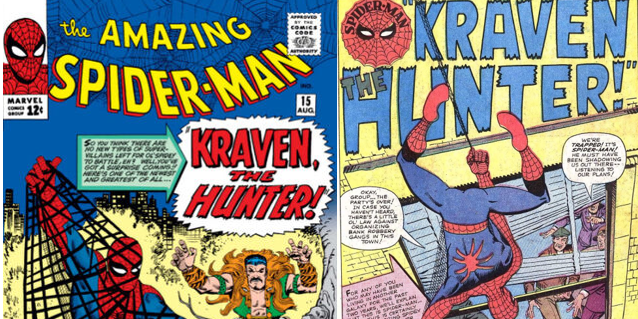
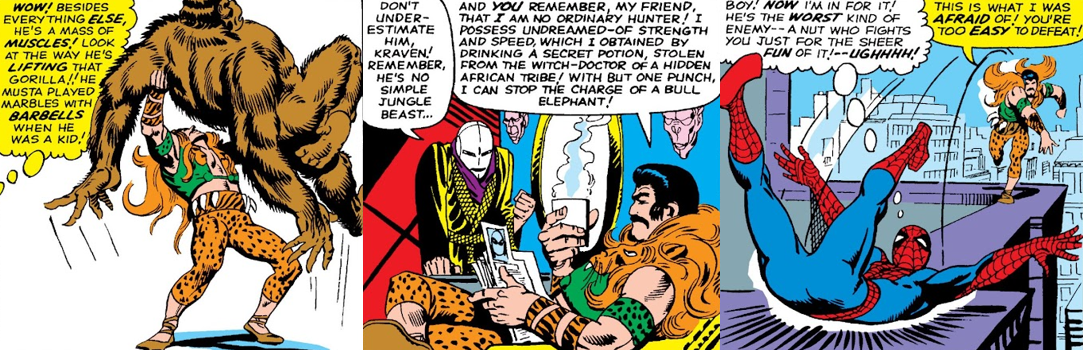
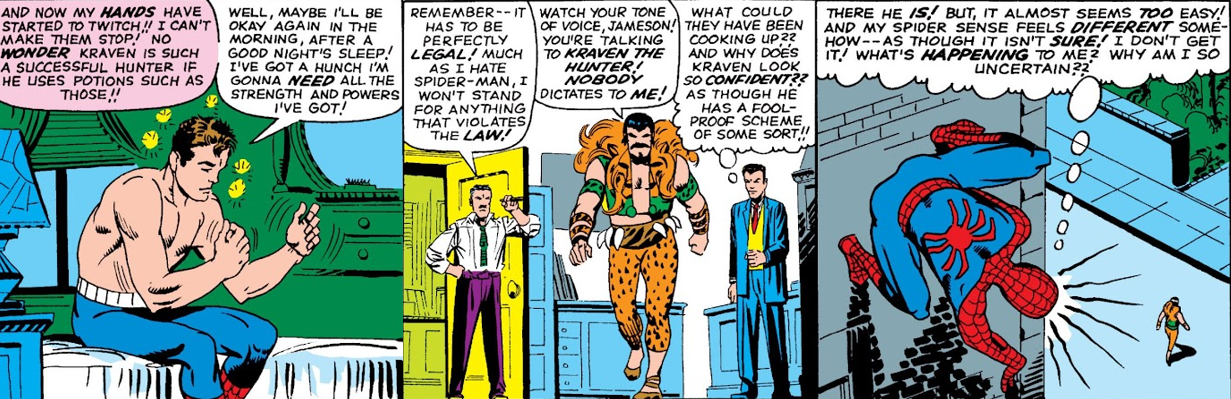
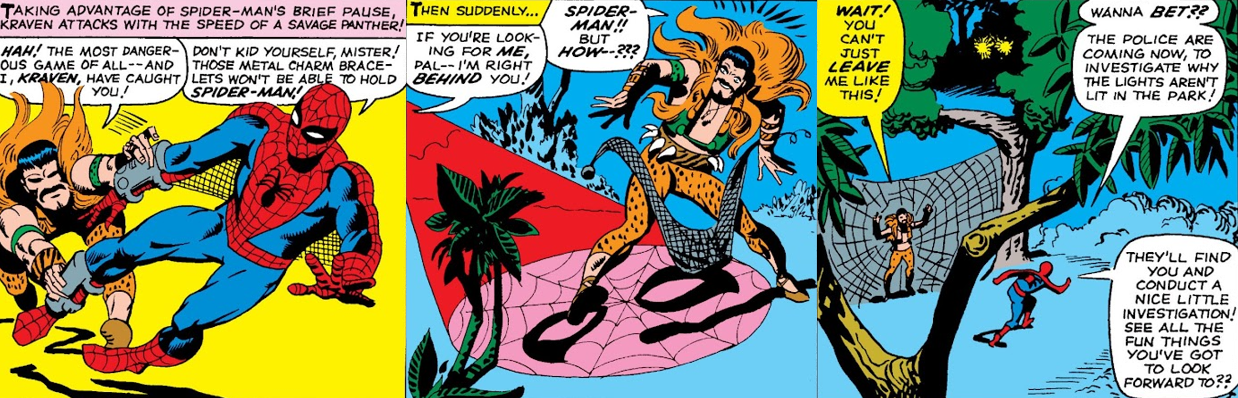
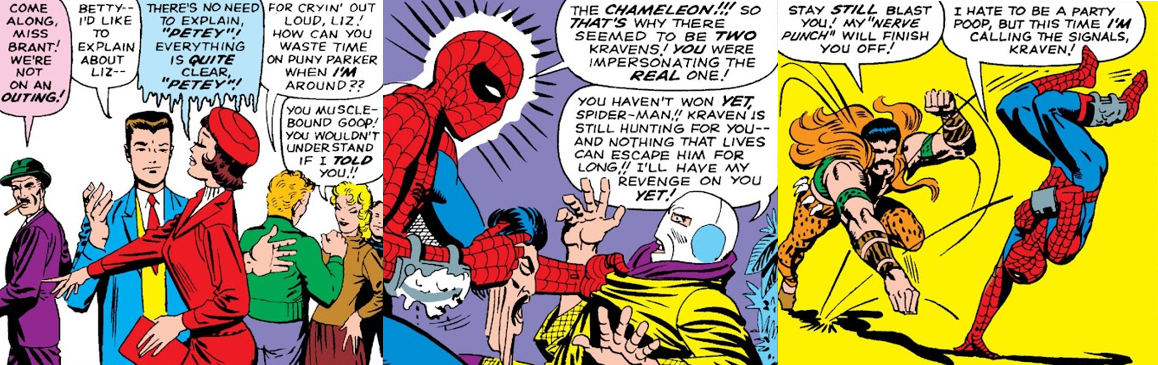


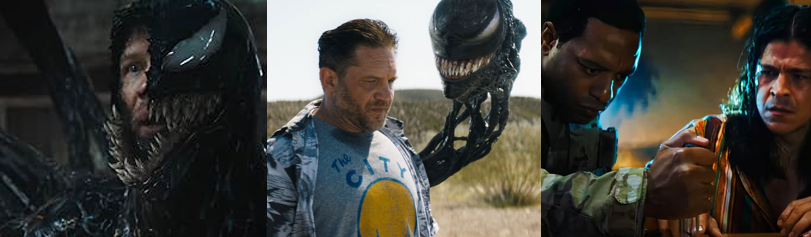
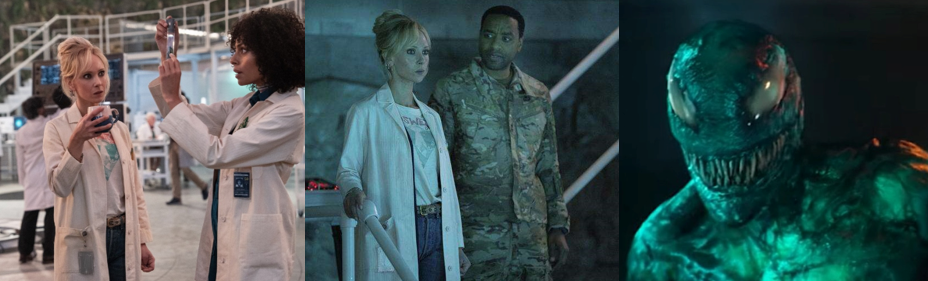
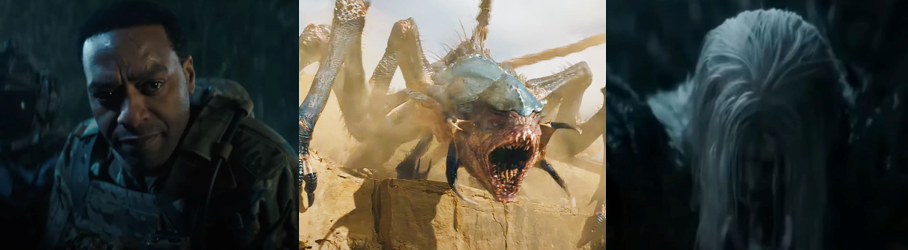
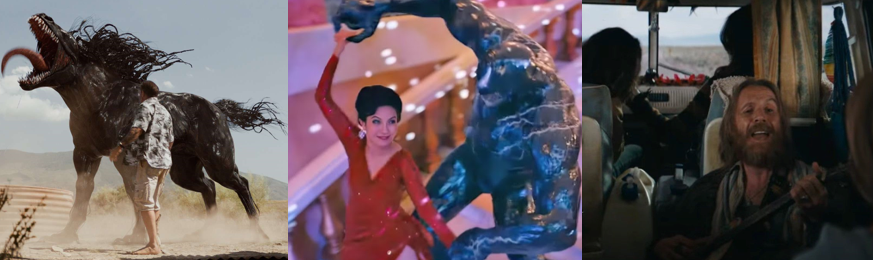
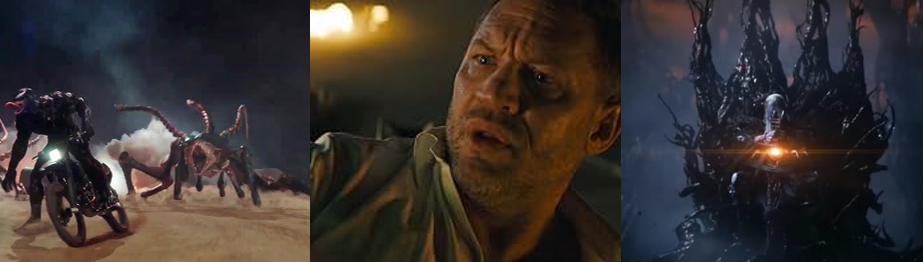


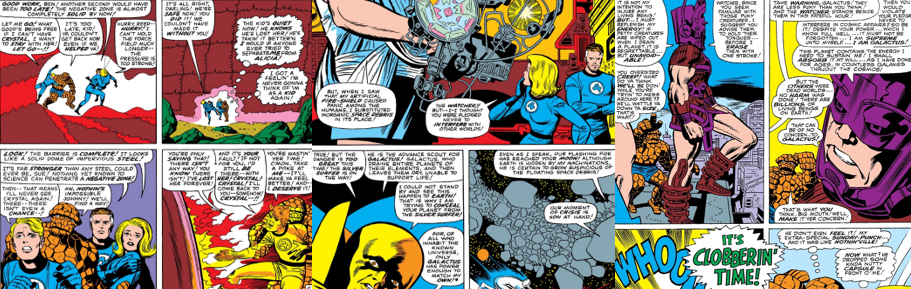
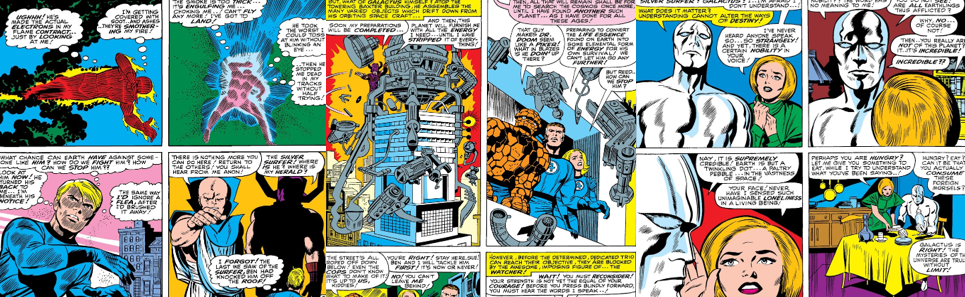
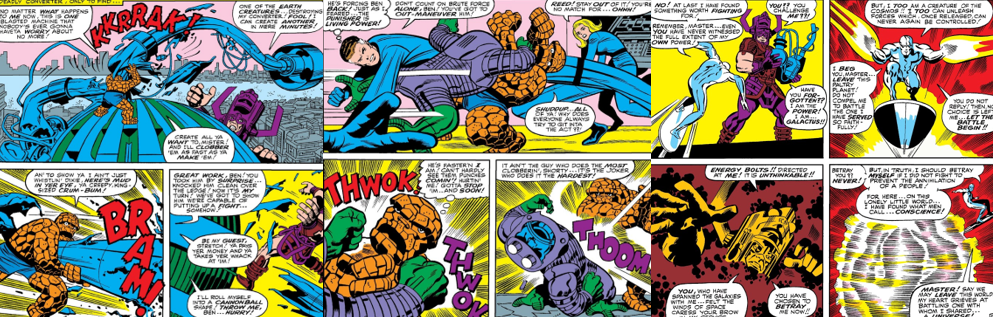
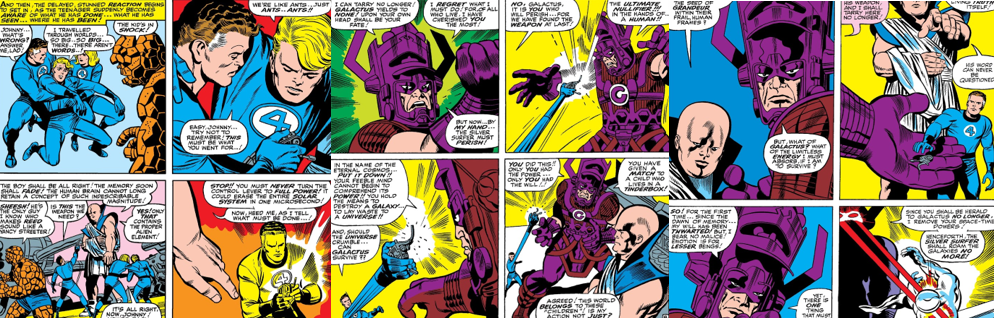
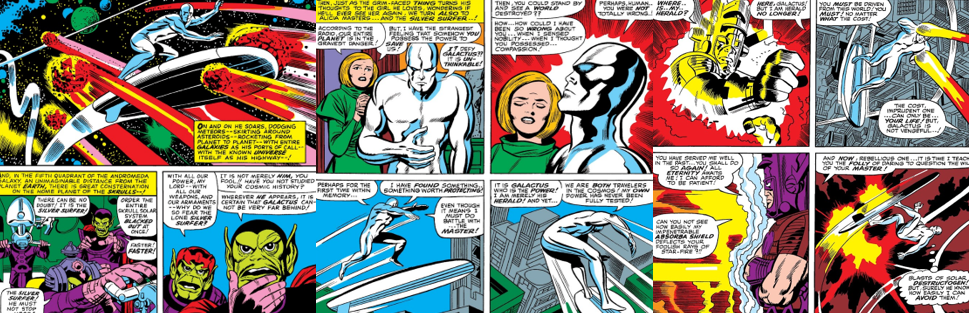
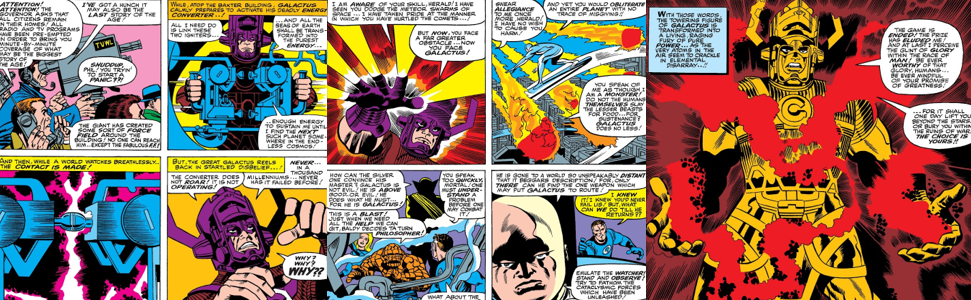


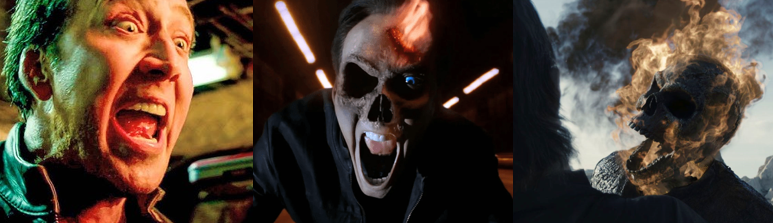
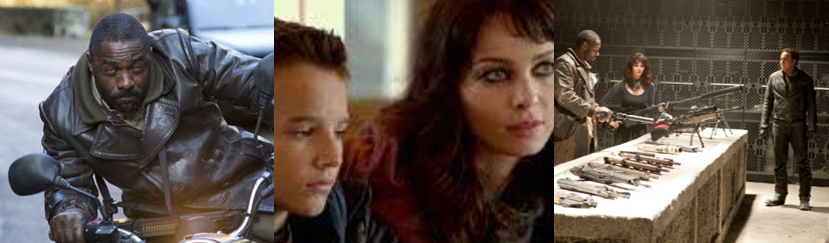
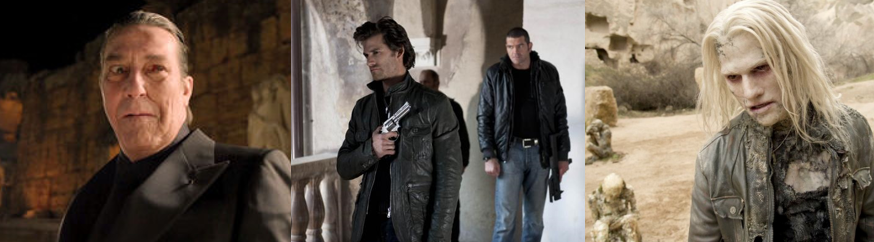
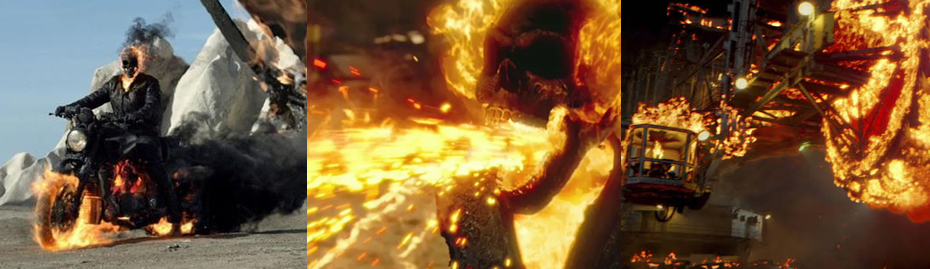
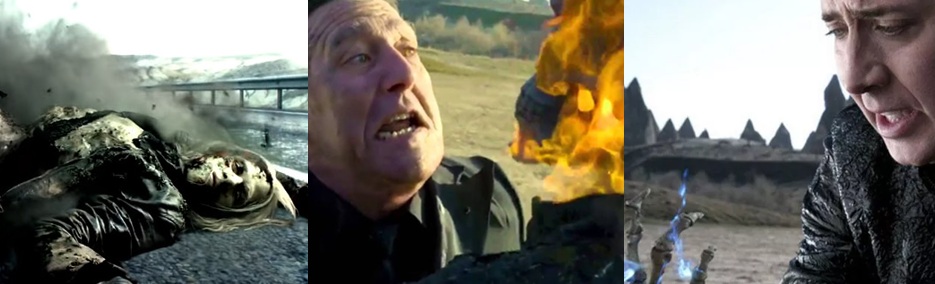
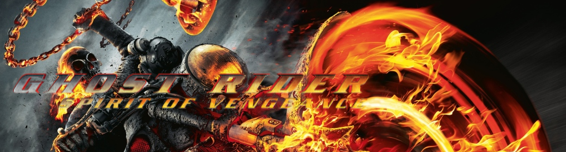

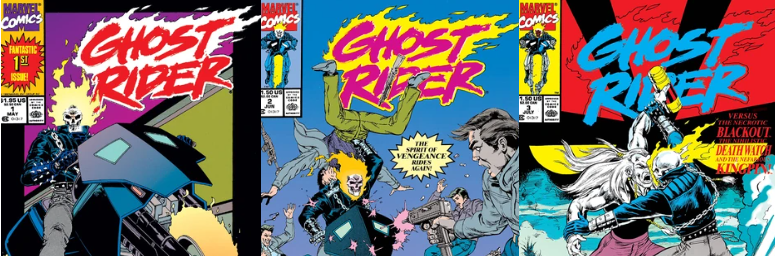
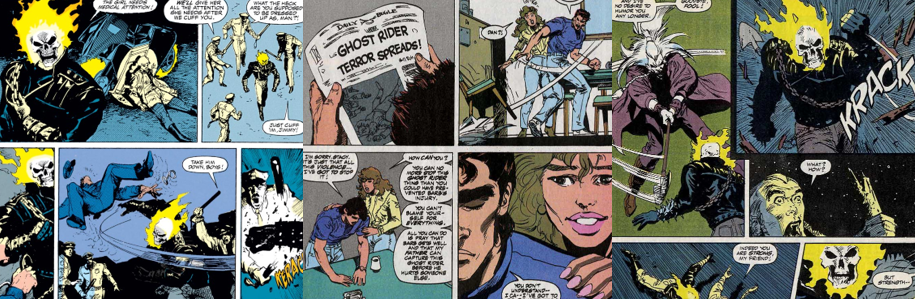
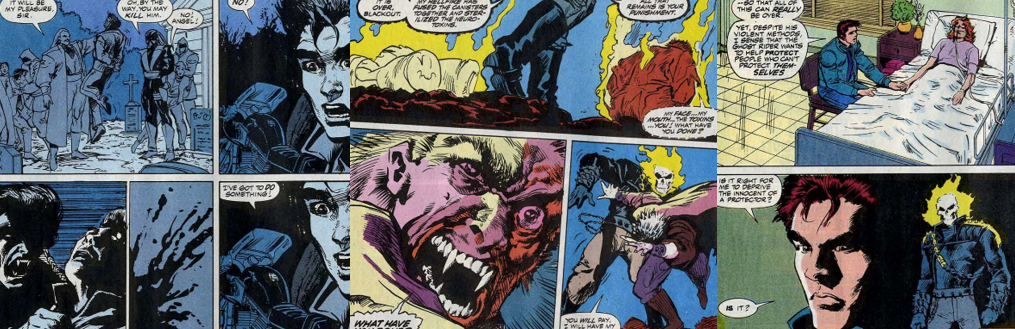
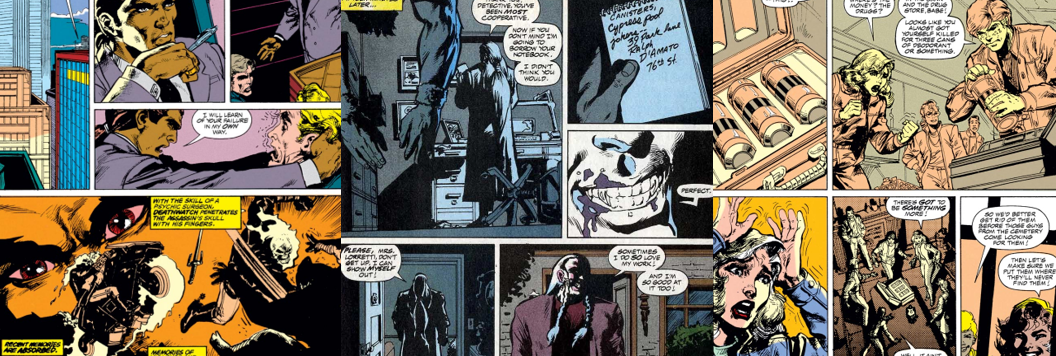
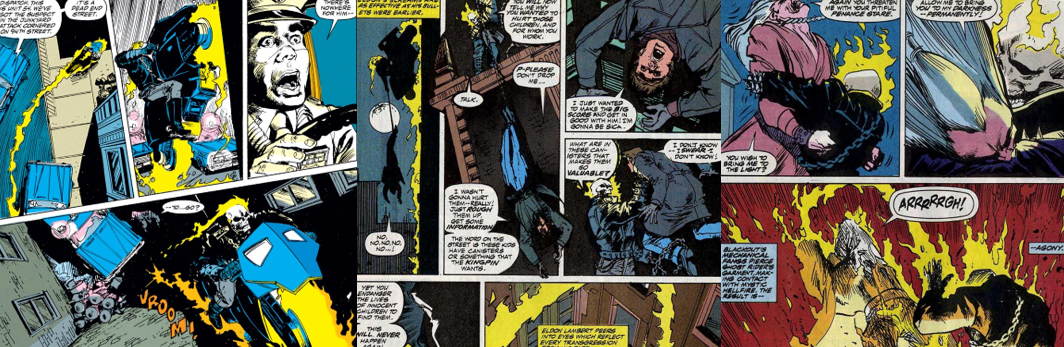


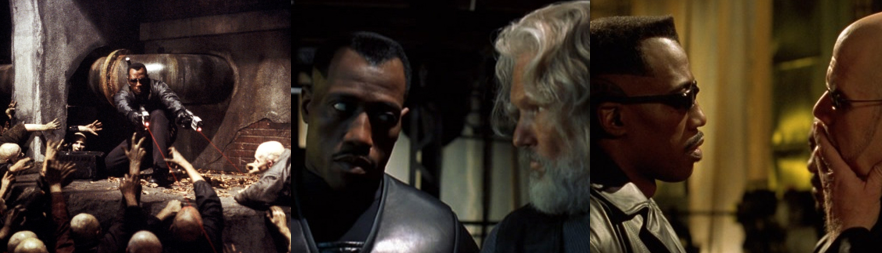
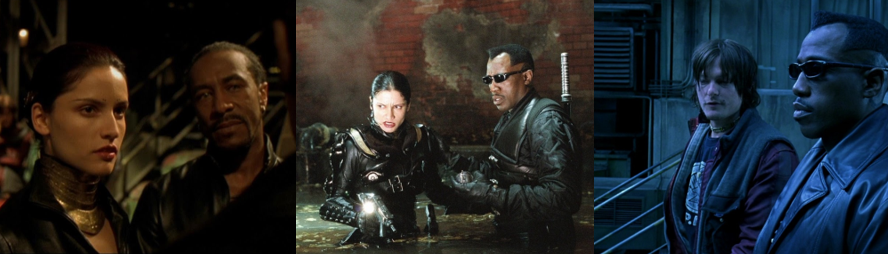







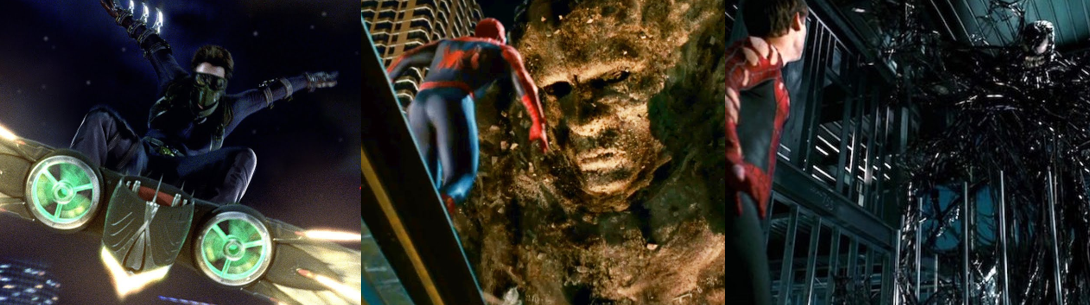
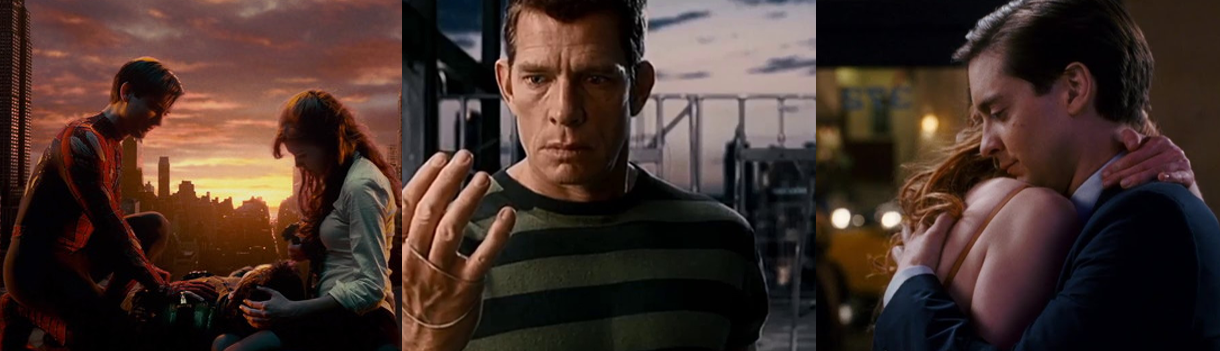

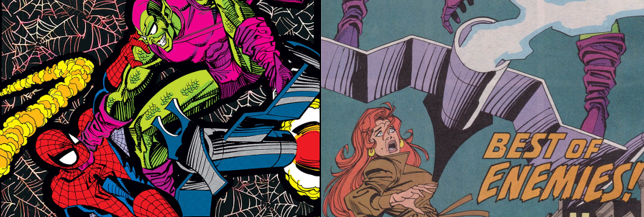
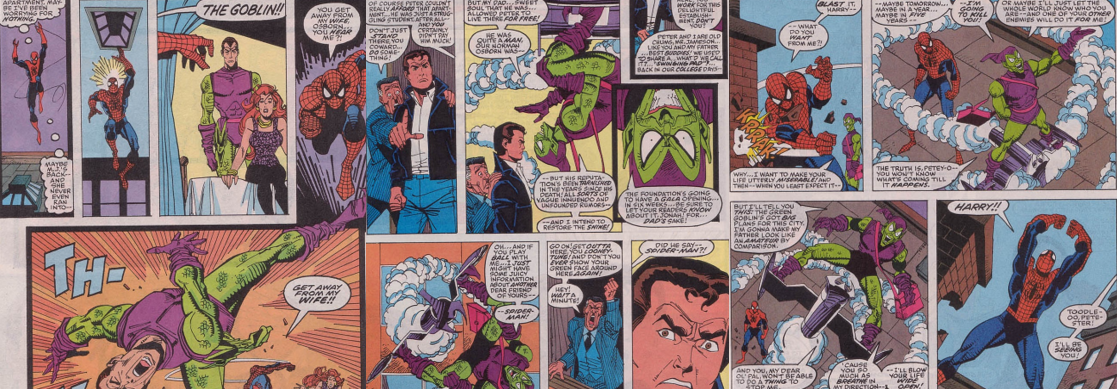

 Dr. K's Waiting Room
You must be logged in to post a comment.