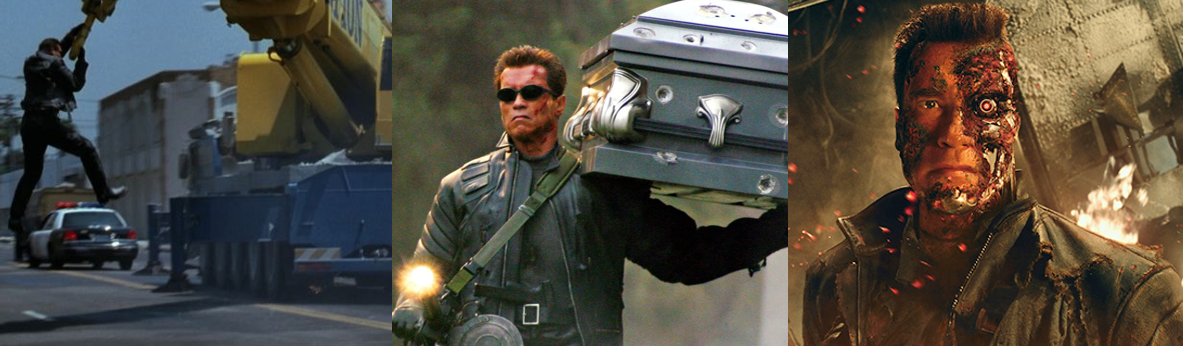
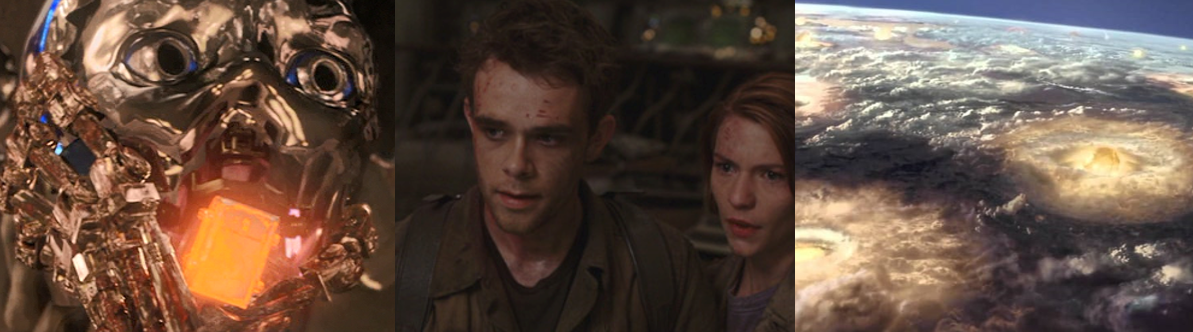
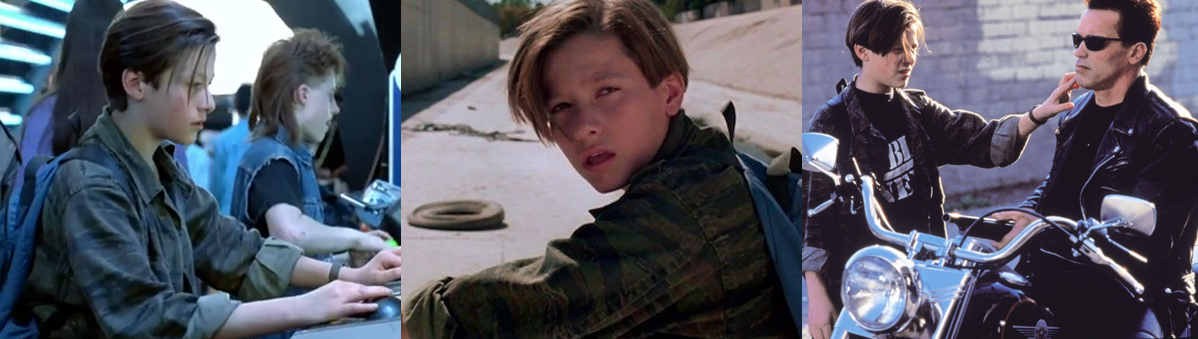
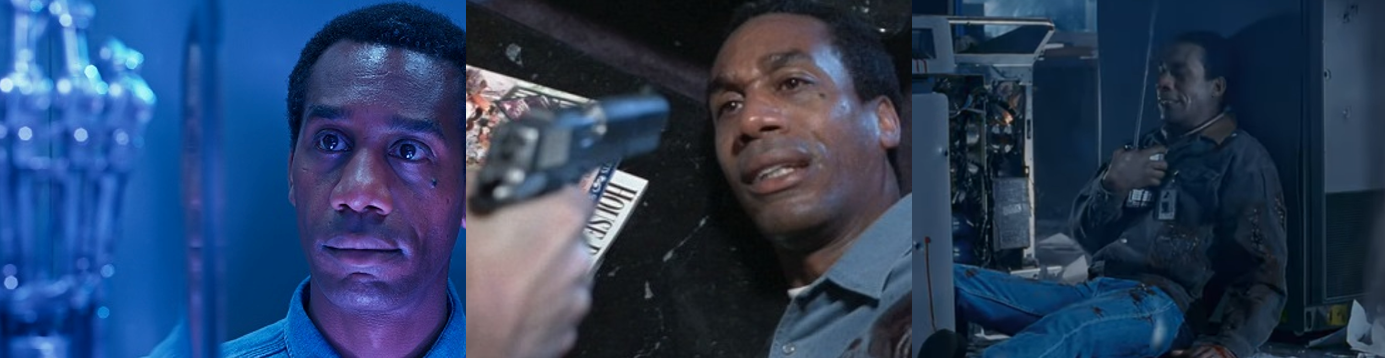
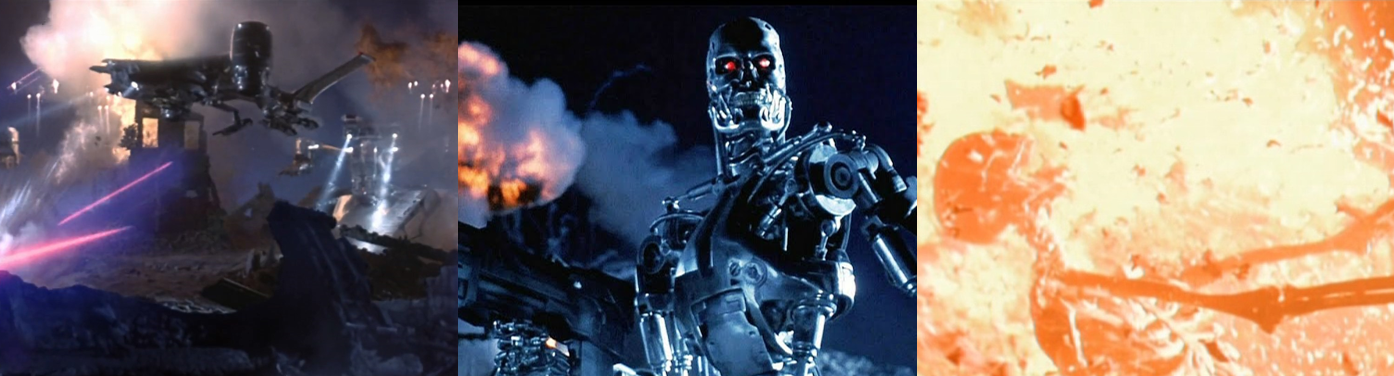
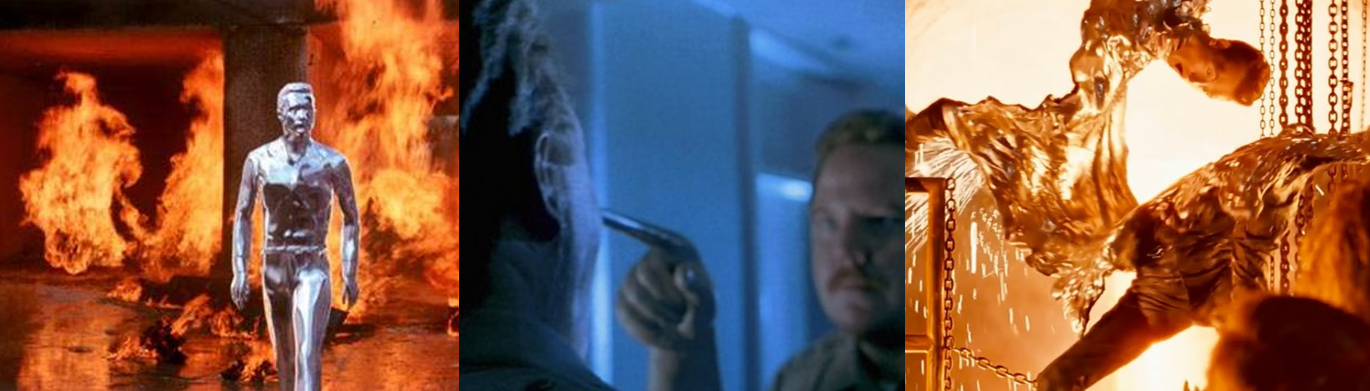
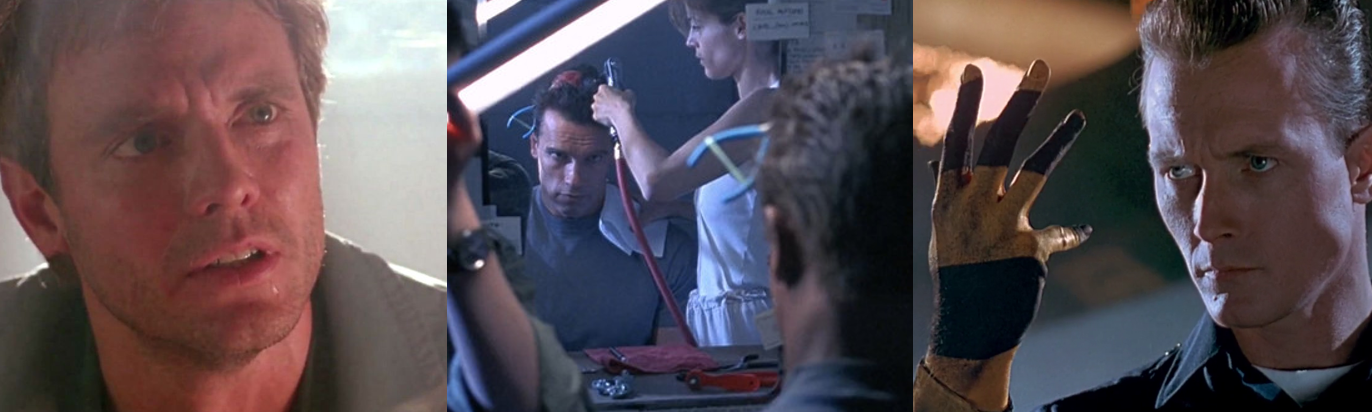
Movie Night [Judgment Day]: Terminator: Genysis


“Three billion human lives ended on August 29th, 1997. The survivors of the nuclear fire called the war Judgment Day. They lived only to face a new nightmare: the war against the machines”.


Released: 21 May 2009
Director: Alan Taylor
Distributor: Paramount Pictures
Budget: $155 to 158 million
Stars: Arnold Schwarzenegger, Emilia Clarke, Jai Courtney, Jason Clarke, and J. K. Simmons

The Plot:
After being saved and raised by a benevolent T-800 (Schwarzenegger), stoic Sarah Connor (Emilia Clarke) reluctantly teams with her would-be protector, Kyle Reese (Courtney), to prevent the creation of Genysis, an operating system destined to wipe out humanity as Skynet.

The Background:
Although The Terminator (Cameron, 1984) was an unexpected financial hit, Terminator 2: Judgment Day (ibid, 1991) was a blockbuster success that is largely regarded as one of the greatest movie sequels ever made. Despite its definitive ending, the franchise made an unexpected return with Terminator 3: Rise of the Machines (Mostow 2003), a near-universal critical flop. However, Terminator 3’s surprising box office meant the franchise was still viable, leading to new creatives to step in with a prequel film. Unfortunately, Terminator Salvation’s (McG, 2009) dismal box office and onslaught of unfair reviews derailed plans for sequels as much as another slew of legal issues. As the franchise rights did the rounds, plans for a 3D animated film fell apart and pitches to return star Arnold Schwarzenegger to the franchise were raised, ultimately resulting in Megan Ellison and Annapurna Pictures consulting with Terminator creator James Cameron with how to incorporate an aging T-800 into a new film. With Paramount Pictures onboard to distribute the film, Alan Taylor signed on to direct out of his love for the franchise and desire to correct its mistakes. Largely inspired by the first two films, the filmmakers opted for a new spin on the established lore with an older T-800 and a story hoped to be the first of a new trilogy. Jai Courtney beat Boyd Holbrook and Tom Hardy for his leading role and Emilia Clarke was chosen over Brie Larson and Tatiana Maslany, with both training extensively for their roles. The production team convinced Nike to reproduce the Vandal sneakers from the first movie, the visual effects teams toiled for hours to render the new nanotechnology effects, and the film painstakingly recreated sequences from The Terminator, digitally recreating Schwarzenegger’s youthful visage so he could fight himself. Though its box office (over $440 million) was impressive, Terminator: Genysis underperformed and was largely mauled by critics who attacked its redundant plot, shallow nostalgia bait, and unimaginative CGI. While some reviews and even Cameron praised the film, the latter later rescinded this statement and Emilia Clarke expressed relief that the planned sequels fell through. Despite this, the franchise was revived again in 2019, only to produce an even more maligned critical and commercial flop.

The Review:
Although Terminator: Genysis could’ve easily opened a little differently, skipping the scene of young Kyle Reese (Bryant Prince) meeting legendary resistance leader John Connor (Jason Clarke) and thus implying that Terminator Salvation is still canon, it offers yet another alternative version of the Future War that initially presents itself as the true version of events before the first Terminator, before John was retroactively given a wife and such. While I’m disappointed to see Salvation swept away, I do enjoy seeing scenes set in the Future War, especially as I’ve long believed the Terminator franchise would’ve been better served focusing on this time period for a series of prequels. Genysis goes a step further by giving the resistance fighters their phased plasma rifles and accurately recreating the bleak, war-torn future depicted by Cameron. Like in Salvation, John is seen by many as a prophet since his unique insight into Skynet leads humanity to many victories, including a final two-pronged campaign against the Skynet system core and a hidden bunker in the remains of San Francisco. Since Reese is both John’s right-hand man and a good friend, Kyle naturally joins the latter assault, amazed by John’s seeming clairvoyance as Skynet is finally defeated and the Resistance discovers their time displacement equipment. These scenes remind me of the Terminator 2 novelisation from back in the day and essentially show how Reese volunteered to pursue the T-800 (Brett Azar/Schwarzenegger) back to 1984. This also gives the most detailed depiction of the time travel device and how it works, and emphasises the close bond between John and Reese, whom the leader kept close since the soldier is destined to be his father.
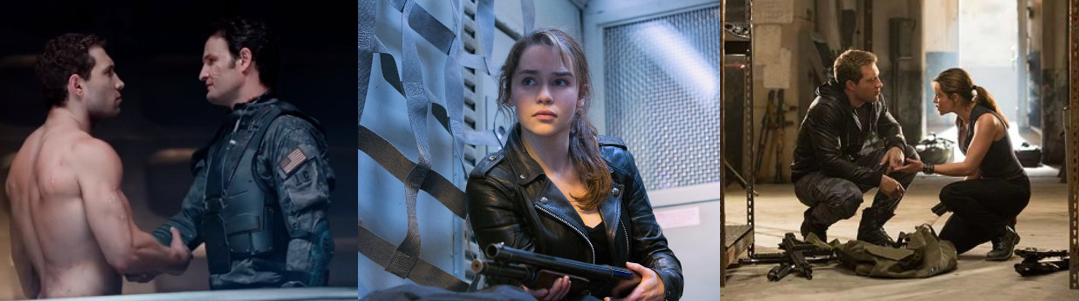
Loyal soldier Kyle Reese travels back in time to find forthright Sarah in little need of protection.

Reese gladly volunteers to protect Sarah not just because he’s John’s most loyal soldier, but also because he’s developed a love for her after being gifted a photograph and told stories about her. Unfortunately for Reese, things immediately go awry as John is attacked by the T-5000 (Matthew Smith), an avatar of Skynet, and Kyle’s deposited in a version of the past that seems very similar but is strikingly different from the first film. For one thing, Sarah isn’t some naïve, terrified waitress and is instead closer to her Terminator 2 counterpart, being proficient with guns, knowledgeable about Terminators, and fully aware of her fate. Reese is confused by this, and by their roles being reversed as Sarah is the one saving him from a liquid metal T-1000 (Byung-Hun Lee) sent back to kill him. Already overwhelmed by this and even more out of his depth than his original counterpart, Reese also struggles with an influx off new memories from a childhood he never had in which he’s enamoured by Sarah and memorising a warning about Genysis being the progenitor of Skynet. Reese’s confusion is only compounded by Sarah’s companion and protector, “Pops”, a reprogrammed T-800 that has acted as her guardian since she was a child. Naturally distrustful of the machine, Reese first leaps to destroy it and then develops a fun rivalry with Pops where they compete for Sarah’s affection and to see which is the more efficient protector. Reese is further perplexed to find Sarah is cold and almost dismissive of him, keeping him at arm’s length as she knows he’s destined to die after falling in love with her. This creates a rift between them, one compounded by her demanding nature and lack of social skills, that slowly mends as they fight and spend time together since she can’t deny her attraction to him despite being frustrated by her fate seemingly being predetermined.
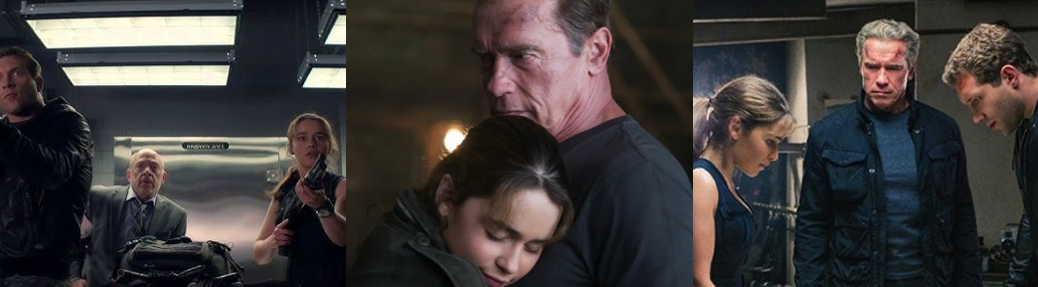
Raised by her “Pops”, Sarah’s reluctant to fall for Kyle lest his destiny play out as intended.

I really liked Emilia Clarke’s work as Sarah here. She does a great job of embodying elements of Linda Hamilton’s performances from the first two films while bringing something new to the table in her relationship with Pops. Sarah is incredibly affection towards her guardian, though frustrated by him dictating her life and pushing her towards a destiny she hopes to avoid. While I find Jai Courtney to be quite wooden and his muscular stature is at odds with Michael Biehn’s more “Everyman” look, I dug Kyle’s chemistry with Sarah and the rivalry between him and Pops, which eventually sees the two come to a mutual respect as they both care about Sarah. Still, Reese is initially hesitant to trust Pops and his plan to bump them forward to 2014, and at Sarah’s refusal to follow his lead. This sees them run afoul of the local cops, unwittingly leading police detective O’Brien (Simmons) to descend into obsession and alcoholism after encountering them in the past. Though his assistance is ultimately not required as Pops constantly pulls the two out of the fire, it provides a background for Reese and Sarah to work out their issues, especially after Kyle learns of his true parentage. The two are further divided when John inexplicably arrives in the past and is revealed to have been forcibly transformed into a T-3000. While Reese is determined to try and reason with John, to bring out his personality and have him fight back against what he sees as invasive programming, Sarah is callous and aggressive towards John, rightfully surmising that her son no longer exists and that he’s been reconfigured into Skynet’s newest creation. The fact that Pops verifies this, explaining that the T-3000 is simply mimicking John’s personality and manipulating them into dropping their guard, Reese naturally pushes back. But even he’s forced to admit that his friend and mentor is gone and to take up arms against him to save Sarah and prevent a cataclysmic future.
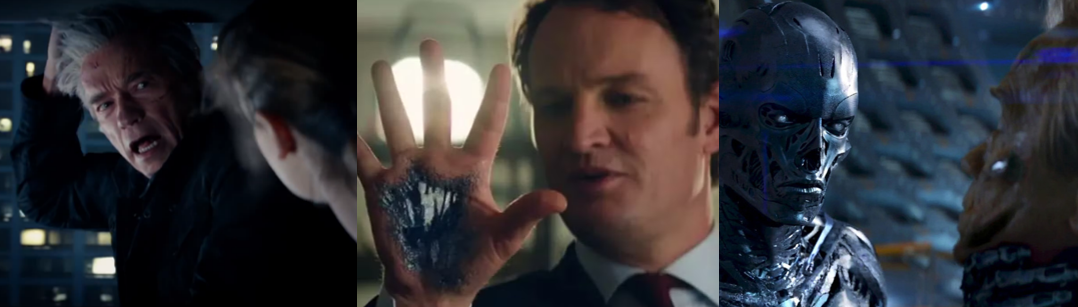
More a father figure than ever, Pops struggles to match up against the advanced T-3000.

Once again, the T-800 returns as a protector, now aged since he’s been protecting Sarah since she was a girl (Willa Taylor). Although Pops has no memory of where he came from or who sent him, his mission to protect Sarah and ensure the survival of humanity (either by destroying Skynet or having her “mate” with Reese) is clear. Unlike Terminator 3, where the T-850 was an “obsolete design”, Pops regularly asserts that he’s “old, not obsolete” and constantly asserts himself to keep Sarah safe and belittle Reese, either by overpowering him or openly mocking him. Unlike his predecessors. Pops has developed a stunted paternal relationship with Sarah where he’s constantly giving her life lessons and acts as her father, while still remaining somewhat stoic to deliver some funny moments. Notably, Pops is the most loquacious of his predecessors, with Genysis lumbering poor Arnold with lengthy exposition regarding the design and function of the time displacement equipment, theories on conflicting and overlapping timelines, and other technical jargon. Sarah’s efforts to teach Pops to blend in are about as successful as those in Terminator 2, leading to Pops having a dry sense of humour and being as awkward in social situations as she is. Pops ages further when he takes the “long way” to 2014, his body noticeably malfunctioning as he struggles to function. Despite his assertions and how well-armed the group is, Pops is no match for the T-3000, who’s essentially a more powerful T-3000. John can shapeshift and form knives and stabbing weapons and instantly heal from all wounds thanks to nanotechnology, though his most potent weapon is his words as he spitefully uses John’s knowledge and visage against Reese and Sarah. John masquerades as a robotics genius specifically to manipulate Miles and Danny Dyson (Courtney B. Vance and Dayo Okeniyi) into funding and creating the Genysis operating system, an artificial intelligence that John protects and fosters so that it can rapidly evolve into Skynet and kick-start the machine uprising.

The Nitty-Gritty:
While I’ve never found the time travel elements of the Terminator franchise to be that confusing, Genysis goes out of its way to muddy the waters more than any film before it. You might not like the retcons of Terminator 3, but at least that stuck to a fairly linear timeline. Here, we see for the first time that the franchise is explicitly made up of multiple timelines and alternative pasts and futures, with the opening sequence appearing as a prologue to The Terminator and then tossing in the T-5000 to shake things up. I loved the idea of revisiting the original film but with elements of Terminator 2 spliced in, but this is largely abandoned once the group jumps to 2014 and there’s a massive question mark hanging over Pops. He has no memory of who sent him back and even John seems confused by his presence, referring to him as a “relic of a deleted timeline”, with the film simply stating that someone sent the T-800 back to ensure Sarah’s survival. This is all clearly sequel bait, as indicated by the post-credits scene showing Skynet survived the group’s assault on the Cyberdyne building, that’s was sadly never paid off as I’d love to know what the deal with Pops and the T-5000 was. Genysis tackles similar themes to the previous movies regarding fate and predestination, with Sarah frustrated that her life is predetermined, Reese struggling to comprehend how the past has changed, and Skynet’s creation being bumped even further forward. Once again, it seems Judgment Day is inevitable as the changes to the timeline simply see Skynet assume a new form, a vague operation system called Genysis, though this time its creation is explicitly linked to the future since Genysis only comes about when John comes back to invent it. These competing timelines are largely embodied through Reese’s new memories, which co-exist alongside his original memories (though they’re noticeably fragmented compared to his memories of the Future War) and this new timeline seemingly solidifies as the “prime” timeline by the film’s end.
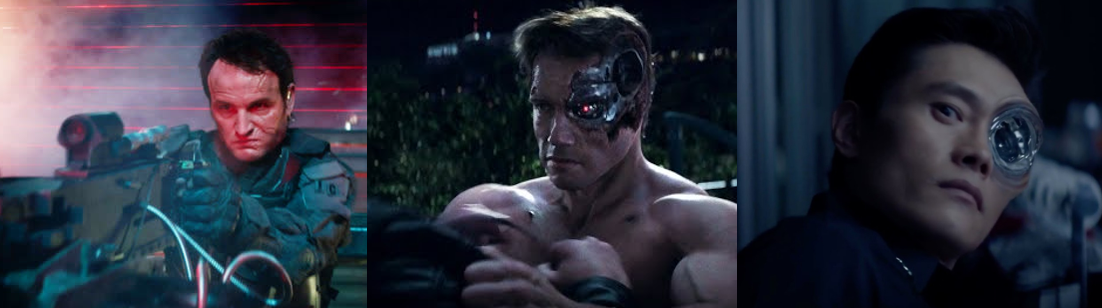
The film’s at its best when it’s relying on nostalgia, though this isn’t enough to sustain it.

Although Terminator: Genysis suffers from an overabundance of CGI (and some wonky CGI, at that), it initially makes a decent impression by recreating the dismal, war-torn future and finally bringing the time displacement facility to life. I also really enjoyed how the film recreates key moments from The Terminator, such as Reese being chased by the cops and the T-800 accosting some punks. It’s obviously toned down from the original and given a new spin as Reese tangles with a T-1000 and the T-800 is immediately attacked by Pops and Sarah, who put it down with a high-powered round. The action is pretty frantic and exciting in these sequences as a confused Reese struggles to comprehend the T-1000’s capabilities, which see it change appearance, spawn blades, and even resurrect the T-800. The T-800’s endoskeleton attacks in impressive fashion, finally moving with a danger and grace befitting the machine but lacks the tangible charm of a physical prop. Conversely, I felt the T-1000 was wasted here as it’s neutralised pretty quickly and effectively by a fun acid trap. I think I would’ve liked to see this new spin on the first two films carried through, with the T-1000 perhaps masquerading as John and being the primary antagonist throughout the film as the T-3000 doesn’t offer much more in terms of its abilities, save for a black metal endoskeleton that’s both horrific and poorly rendered. There are some fun action sequences here, however, such as a chase across the Golden Gate Bridge that sees a school bus be impressively flipped (to the extend I question how Reese, especially, survived). There’s also a great helicopter chase where our heroes try to keep John from reaching the Cyberdyne building, resulting in Pops diving onto John’s helicopter. However, Terminator: Genysis is sadly very tame and bloodless; even shots of bare asses are obscured and deaths are limited to simple stabbings and shootings. When the T-800s are damaged, their endoskeletons appear through cleanly ripped flesh rather than being splattered with blood, with gore completely absent when Pop’s arm is melted to the machinery by an acid spray. Though outmatched against the T-3000, the characters rig up a portable magnet and subdue the machine with high-powered magnetic devices, but John simply recovers time and again and the characters continually use useless small arms fire rather than wielding grenade launchers or high-powered shotguns.
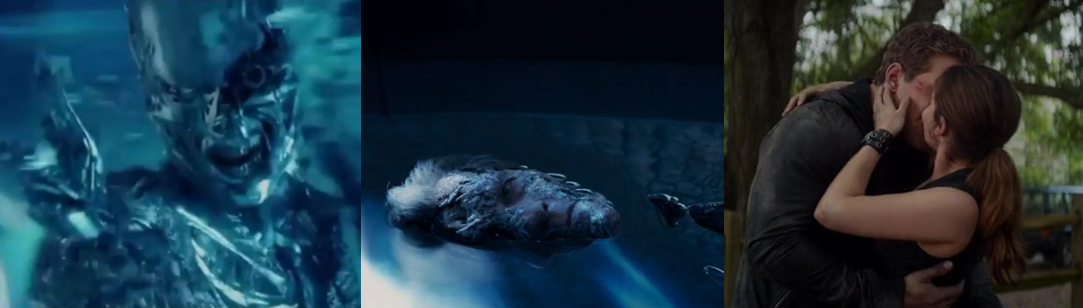
Though the day is saved and Pops is upgraded, there’s a lingering concern over the uncertain future…

Though reeling from John’s betrayal (well, “corruption” is probably a better word), Reese eventually gets onboard with a plan to destroy the T-3000 and kill Skynet before its born. Thanks to Pops working on the Cyberdyne building, the group have all the intel and access they need to infiltrate the complex and plant explosives, only to find the Genysis A.I. rapidly aging and the T-3000 hot on their tails. Interestingly, both the T-3000 and Skynet make valid points about humans always destroying what they don’t understand, yet both are determined to wipe out humanity so there’s no hint towards a peace between the two. While the finale is essentially a more action-packed and over the top recreation of Terminator 2’s Cyberdyne destruction sequence, it does give us a bit more robot-on-robot action as Pops throws himself into battle with the T-3000. Though Pops was evenly matched against the T-800 and still came up short due to being older, and was largely outclassed against the T-1000, he had help both times and gets it again in this fight, with Sarah and Reese chipping in to distract and delay John long enough to Pops to attempt a self-sacrifice. Pops throws himself and the T-3000 into a prototype time displacement chamber, the gravitational forces ripping John apart and destroying him right before their explosives take out the building. Luckily for Pops, he’s thrown into a vat of mimetic polyalloy, upgrading him to a T-1000 so he can reunite with Sarah and begrudgingly offer kudos to Reese. Though still confused about the lingering questions regarding the future and the timeline Pops came from, Sarah finally feels free from the burden of her destiny and embraces her feelings for Kyle, the three forming a dysfunctional family unit as they face an unknown future together. To close the loop, they visit young Kyle (who Sarah ran into while escaping police custody) and implant the memories Reese has been seeing throughout the film, ensuring events play out as expected in this new timeline. However, they’re unaware that, despite their efforts, Skynet still exists as a threat in a deeper bunker…

The Summary:
I remember being quite excited for Terminator: Genysis back in the day. The film’s marketing and first half hour or so was all cleverly geared towards nostalgia, revisiting the first movie, splicing in the T-1000, and promising an alternate take on The Terminator. While this is still technically true by the end, I think Terminator: Genysis suffered a bit from having an unnecessarily complicated script and setting up hints towards sequels that never happened. While I’m no fan of Jai Courtney, I didn’t mind him here. He’s not the Kyle Reese we grew up with, but he works as an alternative version of Kyle, one perhaps better trained and prepared for his mission. He had decent chemistry with Emilia Clarke, who sizzled and impressed as Sarah. She captured the romantic elements of the character and married them with her no-nonsense, mercenary attitude from Terminator 2 while also being a little bratty and lamenting her destiny. Arnold Schwarzenegger is given a lot more to do here beyond looking like an Adonis; he has a lot of technical jargon to exposit while also presenting the T-800 as a true father figure. I enjoyed Pops’ rivalry with Reese and his relationship with Sarah, which felt like an evolution of his Terminator 2 counterpart, and how the film emphasised that the T-800 is still a force to be reckoned with despite Skynet’s superior models. For me, Genysis is let down by retreading the same ground as Terminator 2 but with a new, comparatively lazier A.I., wasting Matt Smith, and focusing on Jason Clarke as the main antagonist. While I like the twist that John was corrupted and this somewhat recalls the proposed ending for Terminator Salvation, I didn’t buy Jason Clarke as a threat and I would’ve much preferred seeing Byung-Hun Lee or Matt Smith take the lead as a T-1000…or had John arrive in the past to help his family. Ultimately, while Terminator: Genysis is better, overall, than Terminator 3 and has a lot of appeal in its nostalgic recreations of the first two movies, I would’ve preferred a direct sequel to Salvation and your nostalgia will be better satisfied by simply re-watching the first two movies.

My Rating:

Rating: 3 out of 5.

Pretty Good

What did you think to Terminator: Genysis? Were you also annoyed that it erased Salvation from the timeline? What did you think to Jai Courtney’s performance as Kyle Reese and Emilia Clarke’s version of Sarah Connor? Did you enjoy seeing the T-800 as an overprotective father or did you find his portrayal a bit cheesy? Where do you think Pops came from and were you disappoint that the cliff-hanger was never resolved? Did you like the twist that John was a Terminator or do you agree that this was poorly executed? How are you celebrating Judgement Day today? Whatever you think about Terminator: Genysis, and the Terminator franchise, leave a reply below and donate to my Ko-Fi to fund more Terminator reviews.


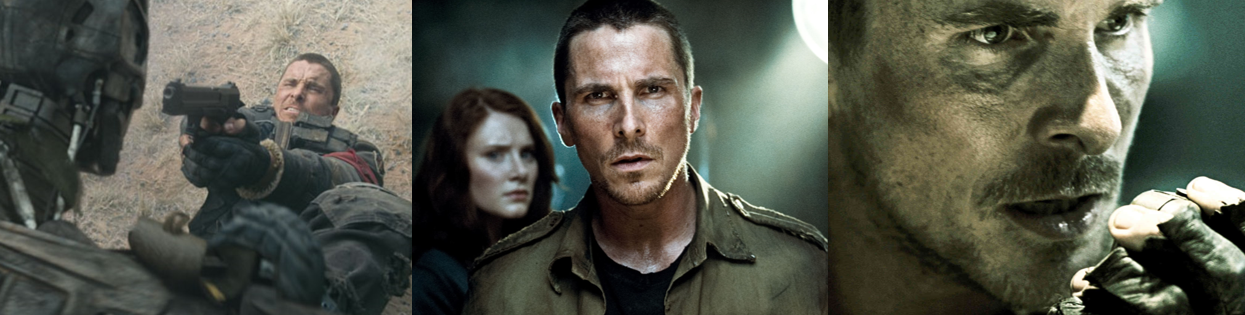
Movie Night [Judgment Day]: Terminator Salvation


“Three billion human lives ended on August 29th, 1997. The survivors of the nuclear fire called the war Judgment Day. They lived only to face a new nightmare: the war against the machines”.


Released: 21 May 2009
Director: McG
Distributor: Warner Bros. Pictures / Sony Pictures Releasing
Budget: $200 million
Stars: Christian Bale, Sam Worthington, Anton Yelchin, Moon Bloodgood, Bryce Dallas Howard, and Helena Bonham Carter

The Plot:
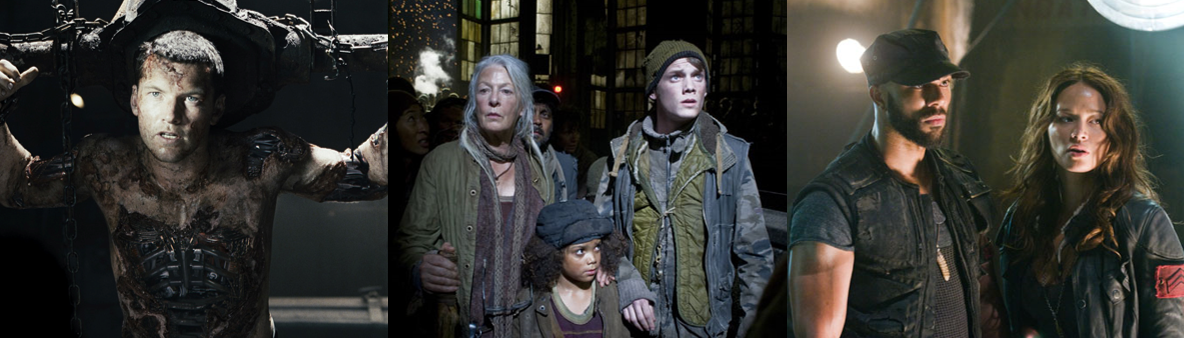
Years after humanity was decimated by Skynet’s nuclear attack, John Connor (Bale) is seen as a prophet by many in the human Resistance due to his future knowledge. However, when Skynet begins targeting Connor’s future father, Kyle Reese (Yelchin), he’s forced to put his faith in Marcus Wright (Worthington), an amnesiac murderer resurrected by the same technology destined to birth Skynet’s Terminators.

The Background:
The Terminator (Cameron, 1984) might have been an unexpected financial success, but Terminator 2: Judgment Day (ibid, 1991) was a blockbuster release that is often touted as one of the greatest movie sequels of all time. Despite T2 being the definitive end of the story, star Arnold Schwarzenegger returned to the franchise for Terminator 3: Rise of the Machines (Mostow 2003), which proved to be a near-universal critical failure. However, Terminator 3 did surprisingly well at the box office and was supposed to be the first of two films revolving around the early days of the Future War before a series of lawsuits saw the rights change hands and McG wind up in the director’s chair. A fan of the first two films, McG initially wanted Robert Patrick to return and even discussed the project with James Cameron. Terminator 3 stars Nick Stahl and Claire Danes were initially set to return but rising star Christian Bale won the lead role, which was expanded following his input to explore his destiny as a leader, though Bale came under media fire following an on-set outburst that he later apologised for. Although Schwarzenegger’s involvement was in doubt since he was serving as the Governor of California at the time, he eventually allowed his likeness to be digitally applied to bodybuilder Roland Kickinger for the finale. The lead cyborg role was assumed (on Cameron’s suggestion) by rugged Australian Sam Worthington, who insisted on performing his own stunts despite a serious on-set injury. McG insisted on there being as many in-camera effects as possible; the film would be one of the legendary Stan Winston’s last projects and boasted large-scale models, repurposed Ducati motorcycles, and complex animatronics alongside digital effects. Initially, the film was to have a far darker and less sensible ending in which Marcus assumes John’’s visage and murders the protagonists, though this (and the entire third act) was changed after an online leak. As it barely cleared $370 million, Terminator Salvation failed to surpass its predecessor at the box office and was (in my view) unfairly shunned by critics. Reviews targeted the mindlessness of the plot, Schwarzenegger’s absence, and the performances, with even the likes of Schwarzenegger, Cameron, and Linda Hamilton criticising the film’s shortcomings. However, others praised the film and, in time, it has developed a bit of a cult following. Although it was accompanied by a videogame and animated tie-in, bankruptcy and legal issues saw the Terminator rights once again shopped around and the new rights holders opt to retread the original films for their reboots.

The Review:
Let’s face it, trying to follow-up Terminator 2 was probably never going to end well, especially when all you’re offering is a toothless rehash of what’s come before. However, as poorly handled as Terminator 3 was, I definitely think there was a perfect opportunity to continue the franchise with some fresh faces by either having new Terminators (or the same T-800) sent to different points in the past to target other members of the future Resistance or by simply producing a prequel set during the Future War. Even now, as I’ve noted, one of the biggest missed opportunities in the entire franchise is not giving us a sweeping, cinematic shot of an army of Arnolds marching across a field of human skulls blasting at the resistance without mercy. So, I was intrigued and cautiously optimistic when the trailers for Terminator Salvation hit, and even more so because it had Christian Bale in the lead role. Bale was riding a wave of mainstream success following his unrivalled turn as Bruce Wayne/Batman and was a far, far better choice than Nick Stahl, so much so that it’s honestly a little difficult believing that Stahl’s version of John became the hardened, driven, semi-prophetic icon that is the John of this movie. However, this is before subsequent movies started needlessly screwing about with the timeline so everything that’s happened before is still canon. The most obvious indication of this is the presence of Katherine “Kate” Connor (Howard), now upgraded from veterinary nurse to actual nurse. Unfortunately, while she’s clearly seen to be pregnant and is depicted as John’s loyal right-hand (to say nothing of also being played by a stronger actor), there isn’t really all that much for Kate to do here since the film is more focused on its new cast of characters.

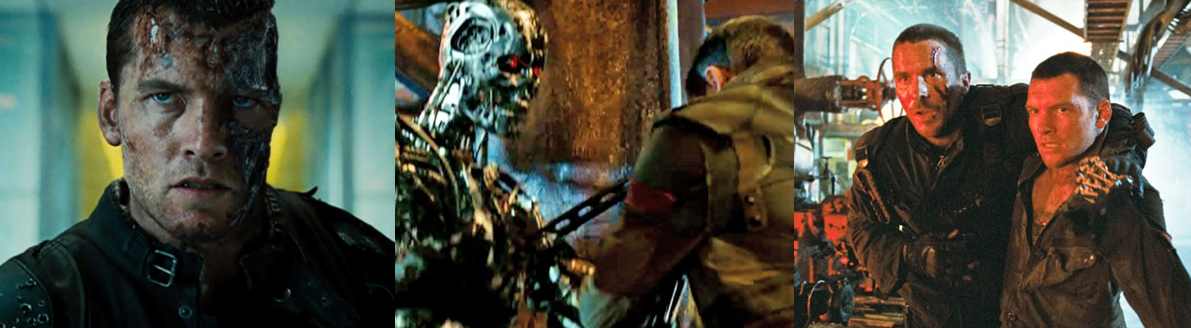
Hardened by conflict, John uses his future knowledge to inspire the Resistance and stay ahead of Skynet.

Terminator Salvation takes place quite early on in the war against the machines; though crippled and decimated by nuclear war, the world hasn’t yet become a nightmarish landscape of human bones and the battlefield isn’t yet filled with laser blasts and, most notably, John hasn’t become the iconic leader of the human Resistance. Instead, he’s a well-respected member of “TechCom” and a fully capable soldier in the seemingly unwinnable war against Skynet. Thanks to the teachings of his mother, Sarah (Linda Hamilton), and the tapes she left behind, John has enough information on Skynet to accurately predict their tactics, target their bases, and fend off attacks from their proto-Terminators, the T-600 model. Although he’s still subject to the will of his superiors, particularly the cantankerous General Ashdown (Michael Ironside), John is regarded by many as a messiah-like figure thanks to his uncanny knowledge and his regular rallying calls to the rag-tag survivors trying to avoid detection in the wastelands. However, even John is stunned to not only learn that Skynet’s construction of the far deadlier T-800 infiltrator model has been fast-tracked but also that the machines possess a “kill list” that names not only him and the Resistance leaders but also his father-to-be, Kyle Reese. With Skynet due to launch a massive offensive against its targets in just four days, John volunteers to test out an experimental signal that can disable the machines and is encouraged to prepare his squad, alongside trusted lieutenant Barnes (Common), in using the weapon to storm Skynet’s main headquarters in San Francisco and rescue Kyle and the other prisoners before the timeline is irrevocably altered for the worst. Brave, driven, and hardened from fully accepting his destiny as the leader of the human Resistance, John has developed an intense hatred of the machines and battles them without hesitation, though he doesn’t do this recklessly. Instead, he uses his mother’s teachings to set traps and target the machine’s weak spots to either disable or reprogram them efficiently, all of which contributes to his celebrated status amongst many within the Resistance and those struggling out in the wilds.

Amnesiac cyborg Marcus wins the trust of the rag-tag survivors trying to oppose the machines.

Of course, John’s story is only one part of Terminator Salvation’s narrative as it was around this time that Hollywood was trying to make Sam Worthington a thing. To be fair, I actually don’t mind him but he’s not exactly the most impressive or charismatic actor out there, especially when placed opposite the intense and captivating Christian Bale. Marcus is first introduced prior to Skynet’s attack as a death row inmate convinced by Doctor Serena Kogan (Bonham Carter) of Cyberdyne Systems to donate his body to her research. The result is his transformation into Skynet’s first cybernetic operative, which is treated as a big surprise when Marcus is injured by a magnetic landmine and taken to John’s base but was both telegraphed by the trailers and blindingly obvious by the fact that Marcus stumbles out of a destroyed Skynet laboratory in the midst of the Future War. Suffering from amnesia and confused by the state of the world, Marcus instinctively heads towards nearby civilisation and finds only the ruins of the old world, deadly (if clunky) robotic soldiers patrolling the wasteland, and young Kyle and mute Star (Jadagrace Berry) struggling to survive. Although he angers Kyle by wearing the colours of the Resistance without earning them and humbles the youngster’s moxie by easily disarming him, Marcus develops a reluctant kinship with the two due to his inherently good heart and he’s so determined to rescue them after they’re scooped up alongside a bunch of other survivors that he fails to heed the warnings of Resistance pilot Blair Williams (Bloodgood) regarding the machines. Injured and shot down while trying to intercept the prisoner transport, Blair grows close to Marcus while stranded in the wasteland and is the only one to defend him when the truth about him is dramatically revealed. Trusting her instincts, Blair decides to set Marcus free rather than leave him in John’s custody since Connor and the Resistance immediately peg Marcus as an advanced Skynet infiltration unit. Though he lacks the imposing nature of the T-800 and is far more vulnerable than the average Terminator thanks to his exposed heart, Marcus proves invaluable to John’s efforts in infiltrating the machine base since he’s essentially one of them, but it’s only when he’s inside the belly of the beast that Marcus learns just how deep Skynet’s influence runs within his body and circuitry.

As dangerous as Skynet’s forces are, they pale in comparison to the threat posed by the T-800!

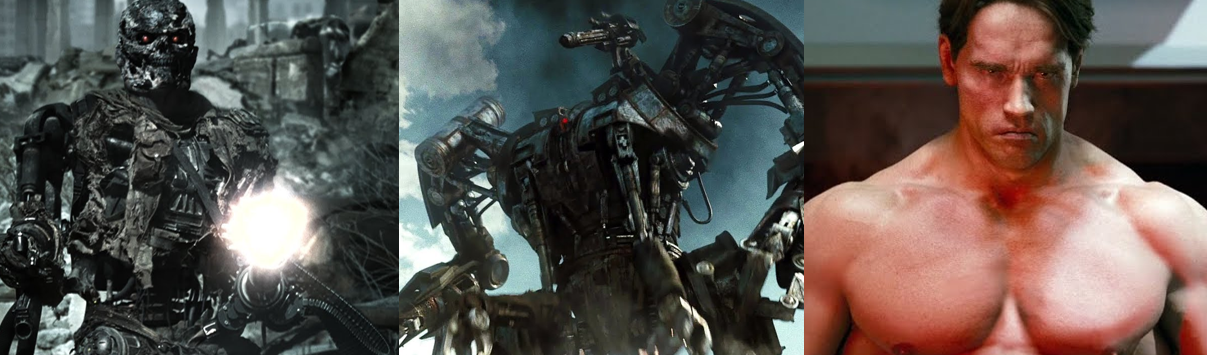
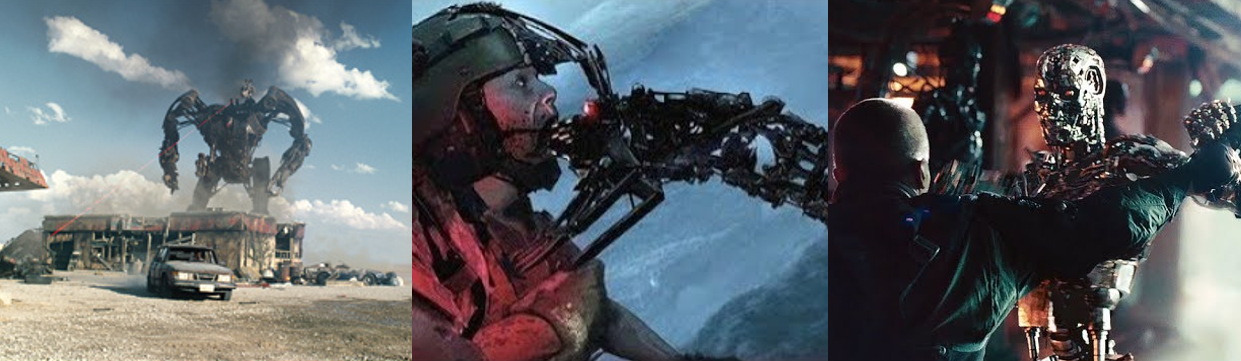
Since we’re at the early stages of the war against the machines, Terminator Salvation offers the greatest variety in mechanical adversaries than any previous Terminator film, though at the cost of having a central antagonist machine for the Resistance to fight against. Primarily, the rag-tag humans must contend with clunky T-600s, bulky endoskeletons that make a scarecrow’s attempt to pass as human and open fire on their targets with miniguns. At one point, John sets a trap for a couple of Moto-Terminators, motorcycle-like robots that race along at high speeds but are easily reprogrammed by the Resistance. Similarly, tentacle-like Hydrobots attack the humans from the water and Hunter Killers (HKs) patrol the air, though all these machines are easily bested by regular weapons such as machine guns and rocket launchers. The gigantic Harvester proves a far more formidable and persistent threat; this hulking machine packs pulse cannons and a flamethrower and easily shrugs off an exploding petrol station, scoops up its targets, and spirits them away to Skynet Central on the back of a massive prisoner transport. When he awakens inside the facility, Marcus confronts the Skynet mainframe, which primarily assumes Dr. Kogan’s form to reveal that he was created to lure John into a trap and that Skynet has led the Resistance into a false sense of security with the fake kill signal, allowing them to easily wipe out the Resistance high command and threatening the survival of the human race by having all their primary targets in one place. The primary threat in Terminator Salvation is the impending development of the T-800 models, which has assumedly been accelerated since this is a slightly altered timeline to the one the elder Kyle Reese (Michael Biehn) came from. While desperately searching Skynet Central for Kyle, John comes face-to-face with the machine that has haunted his family for so long, setting the stage for a brutal and intense showdown with a T-800 (Roland Kickinger/Arnold Schwarzenegger) that echoes the relentless murder machine that targeted Sarah back in the first movie.

The Nitty-Gritty:
As ever, a primary theme in Terminator Salvation is that of fate. John includes the message “There is no fate but what we make” in his nightly addresses and his entire existence and ability to intercept Skynet is based on the idea that his fate has been largely predetermined. I say “largely” because, as mentioned, this isn’t the Future War Sarah learned of from Kyle, which crops up a couple of times as an obstacle for the usually well-informed John to overcome. He’s stunned by Marcus’s existence, which wasn’t expected, and his experiences in the past mean that he naturally believes Marcus is a sophisticated infiltration unit specifically programmed to feign humanity to kill him. This bias briefly makes Kyle forget his own humanity, but he refuses to admonish Blair for following her heart and releasing Marcus since he recognises that she’s simply being human. John also reluctantly decides to trust Marcus in infiltrating Skynet Central since it’s the only chance he has of rescuing Kyle and ensuring his fate. Although he’s now far more capable and experienced as a soldier and a man, John’s greatest strength is in his conviction. While General Ashdown and others in the Resistance high command question John’s prophetic abilities, others (especially those stuck in the wilderness, like Kyle and Star) see John as an inspirational hero who motivates them to fight back against the machines. It’s through John’s nightly addresses that the survivors learn of the machines’ weaknesses and habits and find the strength to dig in and hold on since “They are the Resistance”, something Kyle takes very seriously even though he hasn’t earned this stripes, so to speak, as a fully-fledged member of the Resistance.

The bleak visuals and focus on practical effects make this an under-rated entry in the series.

Terminator Salvation is often unfairly overlooked in the grand scheme of things. While it’s not as dark or visually evocative as the nightmarish Future War sequences from the previous films and it’s a shame that neither side favours laser rifles as their go-to weapon, it’s an effectively bleak sci-fi war film that shows the devastation caused by the nuclear war (even though there’s realistically no way anyone would have survived such an onslaught, including the natural environment). A great selling point of the film is the gritty way it’s shot and the focus on practical effects. The T-600s might be a poor predecessor to the more versatile T-800s but they look great since they’re actually there and recall the animatronics and puppet work of the first movie. The Harvester, especially, impresses as a combination of practical and CGI effects, making for one of the most exhilarating sequences in the film as the gigantic mech smashes into a human hideout in search of its targets and easily shrugs off any attempts to disable or destroy it. Rather than making a massive tank with laser cannons like in the first two films, the Harvester is a lumbering giant built to contain and destroy as part of Skynet’s plot to lure John into the midst. Skynet Central, and the finale in general, is where Terminator Salvation most directly resembles the Future War seen in the previous films. A futuristic prison camp where prisoners are herded like cattle, branded, and summarily executed or put to work building new machines, the machine headquarters is an oppressive mechanical hellhole that’s juxtaposed with the more clinical high-tech Skynet high command and laboratory and the dank industrial factory where the machine’s inexhaustible armies and weapons are produced in bulk. Previously, we could only imagine what the inner workings of Skynet were like (outside of a few toy sets and spin-off media), but Terminator Salvation provides the most in-depth look at their factories and facilities. Again, this is very grounded and clearly meant as a taster for bigger things to come in future films since there’s no mention or concern about the time displacement chamber and the primary threat of the T-800 is more than enough cause for concern for the already-outgunned Resistance fighters.

Marcus rejects his programming and willingly sacrifices himself to ensure the Resistance have their saviour.

With Kyle and Star prisoners of the machines alongside countless other human survivors, John has no choice but the trust Marcus to infiltrate Skynet Central on his behalf and clear the defences so he can follow and rescue those trapped there. Time is not on John’s side in this endeavour as General Ashdown plans to launch an all-out assault on Skynet Central and, even though John uses his influence to override Ashdown’s direct command, the machines are also planning their own counterattack and threaten the fragile time paradox that birthed John in the first place. Rejecting his programming and mechanical nature, Marcus disrupts Skynet, disables their defences, and releases all the prisoners but, in the chaos, Kyle gets distracting trying to keep Star safe and, when John finally tracks them down, they are ambushed by the T-800. Returned to the relentless assassin from the first film, the T-800 silently and ruthlessly pursues its targets, shrugging off John’s attempts to slow it down or destroy it, even those that would have downed the previous T-800s. It endures a blast to the face, a grenade shot, and even being drowned in molten metal to keep attacking John, who it easily manhandles and bludgeons with its superior strength, and even manages to dupe by mimicking Kyle’s voice. After receiving his trademark facial scars, John frantically scrambles to fend off the Terminator, desperately rigging some of the machine’s nuclear power cells to blow the facility but finds an unlikely saviour in Marcus. Marcus battles the Terminator in an all-out brawl but ends up on the losing end thanks to a fatal blown to his exposed heart. Although John revives his cybernetic ally, he’s stabbed right through the chest from behind and left in critical condition. After dispatching the Terminator with surprising ease and escaping Skynet Central with his allies, Marcus heroically offers his own super-powered heart to save John’s life, thus sacrificing himself for the greater good. Sadly, this is a bit of a flat ending for me; John’s injury was obviously too severe for him to ever survive and it’s pretty clear that the finale underwent a frantic reshoot. I think it would’ve worked better if John had been impaled through the shoulder rather than right through the chest. Still, the film ends with a weakened John resolving to continue the fight and turn the tide against the machines, just as he is destined to do, though we’d unfortunately never get any further films set in this particular timeline.

The Summary: 
While I admit that Terminator Salvation is far from a perfect film, it’s definitely nowhere near the worst film in the franchise. In fact, for me, it’s easily in the top three after the first two and is well worth a critical re-evaluation as it actually tries something new, something that respects what came before it, and actually works in the context of the continuity established so far, rather than needlessly retreading everything that came before it. While Sam Worthington and Moon Bloodgood are serviceable enough, the film is bolstered by Christian Bale’s gravelly, intense, admirable performance, but the late Anton Yelchin also impresses as a young Kyle Reese and the inclusion of notable character actors like Michael Ironside and even Common add some spice to the production. Where the film really shines, though, is in its bleak, war-themed aesthetic and impressive emphasis on practical effects. Sure, things are noticeably toned down (Marcus’s torn-up appearance is nowhere near as gory as in the first two movies) and we’re denied laser rifles and the nightmarish version of the Future War from the previous films, but the desolate, desperate nature of the Resistance’s fight against the machines is front and centre. I loved Bale’s intensity here; he stands head and shoulders above all other interpretations of the adult John Connor and gives a stellar, complex performance as a man hardened by war and determined to rally the survivors into a coherent unit. Honestly, I wouldn’t have minded if the T-800 hadn’t made an appearance at all but, while the Terminator only briefly wears Arnold’s visage, it’s absolutely the icing on the cake thanks to being at the centre of the brutal finale that captures the same desperate spirit as the elder Kyle’s fight for survival against the T-800 endoskeleton. Yes, the ending does let the film down a bit as I don’t believe for a second that John would ever survive his injuries and find it far too convenient that Marcus’s heart just happened to be compatible, but I can let that go as Terminator Salvation delivers an under-rated and highly entertaining Future War film that is absolutely where I wanted the franchise to go and it remains an absolute shame that we didn’t get at least one more movie set during this period.

My Rating:

Rating: 4 out of 5.

Great Stuff

Are you also a fan of Terminator Salvation? How do you think it compares to the other Terminator films? Were you a fan of Christian Bale’s performance and how would you rate Sam Worthington’s portrayal of Marcus Wright? What did you think to the practical effects used to bring Skynet’s forces to life? Did you enjoy seeing the T-800 show up for the finale or was it a little too tacked on for you? Would you have liked to see more films set during the Future War with this cast? How are you celebrating Judgement Day today? No matter what you think about Terminator Salvation, and the Terminator franchise, feel free to leave a reply down below and check out my other Terminator reviews.
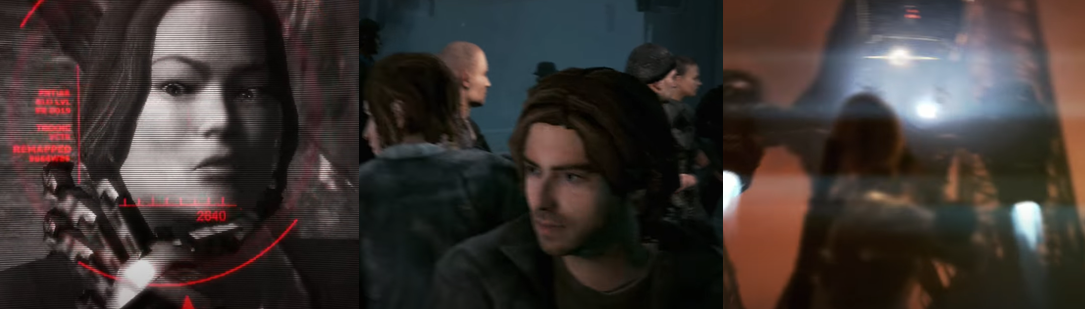
Game Corner: Terminator Salvation (Xbox 360)

Released: 19 May 2009
Developer: Grin
Also Available For: Mobile, PC, and PlayStation 3

The Background:
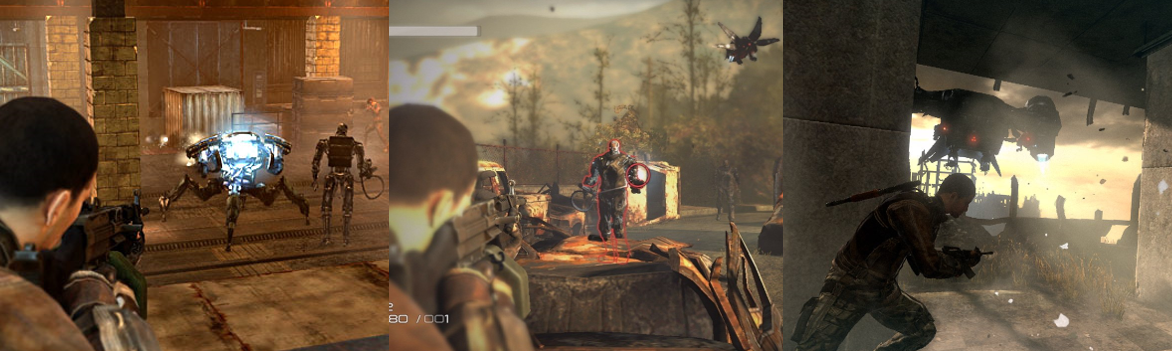
The Terminator franchise (Various, 1984 to 2019) has quite the history with videogame adaptations. Every film in the franchise has been adapted to at least one videogame over the years and the murderous cyborg even matched wits with RoboCop (Verhoeven, 1987) back in the day. Despite the mixed reviews that accompanied Terminator Salvation (McG, 2009), the Halcyon Company turned to developers Grin to produce a tie-in videogame, one whose in-game assets and engine were used to produce a prequel miniseries. Much like the movie upon which it was based, Terminator Salvation was met with mixed reviews that criticised the repetitive combat and lack of replay value and the game was generally seen as a disappointment considering the vast potential offered by its cover-based shooting mechanics.

The Plot:
Years after Judgment Day, John Connor leads Resistance soldiers on a dangerous rescue mission that sees them storming one of Skynet’s main bases and encountering their most dangerous creations: The Terminators!

Gameplay:
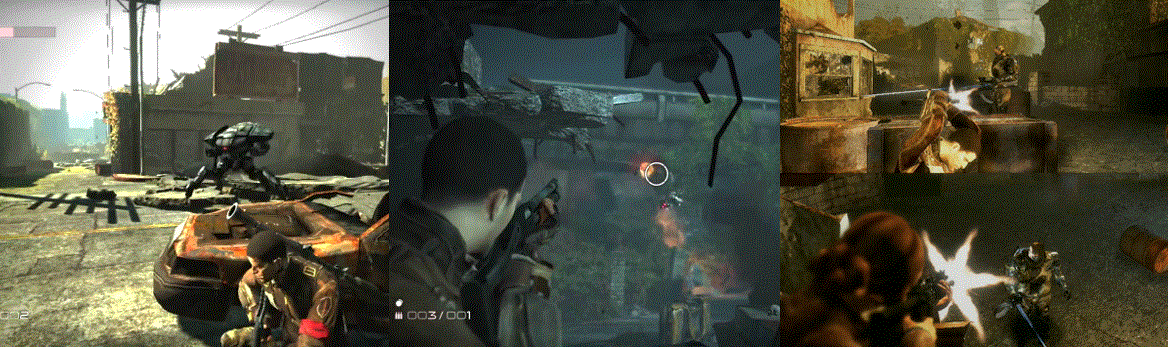
Terminator Salvation is a third-person shooter that can be played alone or alongside another player in co-op. When playing alone, AI-controlled allies will provide cover fire and even a bit of ammo every now and then to help fend off the machines, though you’re unable to issue them with orders or change your playable character. The game’s controls are similar to many other similar shooters of the time, and even now: the Left Trigger lets you aim or peek out from cover, the Right Trigger fires your current weapon, and the Right Bumper tosses a grenade or pipe bomb. You can switch weapons with B; holding the button gives you access to a limited weapon wheel where you can switch to different firearms and bombs, but you can only carry two guns at a time. You can pick up new weapons Y, which also focuses the camera on certain objectives or points of interest and gives you control of nearby turrets. X lets you reload, you can review your objectives by pressing the ‘Back’ button, and you can snap to, from, or dash between cover using A and the left stick. Anything from cars, columns, partial walls, and metal barriers can be used as effective cover. You can quite efficiently fire blindly from behind cover and dash between cover to avoid incoming fire, but some enemies can simply come around whatever you’re hiding behind and murder you on the spot.

Use cover and your partners to take on Skynet’s repetitive forces with some mediocre weapons.

The game’s narrative is told over nine chapters, each of which sees you navigating the war-torn remnants of downtown Los Angeles, various dilapidated buildings and sewers, and infiltrating the ominous factories of Skynet. However, your mission objectives and the basic structure of each chapter is painfully tedious and predictable: you’ll explore a path so linear that there’s no onscreen map required, following your allies to open or enclosed areas where you’ll be ambushed by T-7-T machines and drone-like Aerostats (referred to as “Spiders” and “Wasps”, respectively). You’ll be forced to take cover, or go up stairs to take the high ground, and clear out waves of these enemies, flanking the Spiders to target the battery packs on their backs and opening fire when your aiming reticule turns red so you know you’re dealing maximum damage. Unlike many games where you’re accompanied by AI partners, Terminator Salvation’s AI is almost too good; there were many times when I simply stayed behind cover and waited out the fracas as my AI companions destroyed all nearby enemies. This was surprisingly effective, though not the most enjoyable gameplay experience; it’s great that your partners can’t be killed and will so helpfully destroy incoming enemies, but it can make you superfluous or leave you sitting and waiting for battles to end as you’re out of ammo or close to death. Your health will only be refilled after a battle has been won, but you can recover a bit of health if you avoid incoming fire for a time; unfortunately unlike other third-person shooters with this mechanic, this can take a long time. I don’t know if this was because I was playing on “Hard”, but my health would take ages to recover in these situations, meaning it was usually better just to let myself be killed so I could try again. In co-op mode, you can revive and be revived by your partner to continue the fight, but this doesn’t happen when playing solo. However, there are a decent number of checkpoints in the game, which can be helpful, though it quickly becomes tedious having to go through the same fights again and again with little reward. Occasionally, you’ll be tasked with protecting Barnes as he sets explosive charges but there isn’t actually any danger of him being killed so this is just another case of battling against waves of machines. Similarly, there’s a cool section near the end where you have to pass through a suburban area on the way to Skynet’s control centre. T-600s and “Skin Jobs” patrol the buildings and grounds, which seems to encourage a stealthy approach but, no, you just take cover behind cars and walls and blast at them until they explode and disappear into the ground like always.

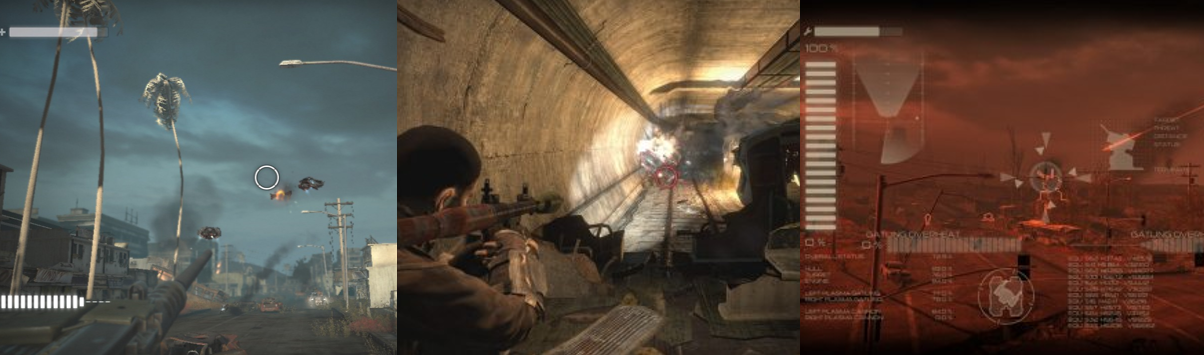
A few rail-shooting and first-person sequences break up the gameplay, but can be frustrating.

Thankfully, it’s not all cover and shooting in Terminator Salvation. In addition to being pinned down, caught in crossfires, or being relentlessly hounded by the T-600s, you can man turrets to blast Spiders and Wasps (though you need to be good with your accuracy as this leaves you completely vulnerable), must run away from pursuing T-600s, and your objectives generally include reaching evacuation sites, finding survivors in the wastelands, and fending off attacks from the machines in open and enclosed areas alongside allies and with weapon caches nearby. Gameplay is broken up further by a handful of rail-shooting stages; in these, you’ll man a gun on the back of a truck or wield a rocket launcher with infinite ammo on the back of a speeding subway train and fire at incoming Wasps, Moto-Terminators, and Hunter-Killers (HKs). Sometimes you’ll need to protect an ally in a truck or a school bus but, while these sections aren’t very long, they can be extremely frustrating and are far from enjoyable. You have no options for cover and no way to regain your health, and enemies can be tough to hit since they’re very small and nimble. Your AI companion is also far less useful in these sections, and you have to endure the annoyance of your gun overheating if you hold the trigger down for too long. Thankfully, these sections aren’t very long and they can be fun when you’re just blasting at HKs, but they were one of the most aggravating parts of the game. Later, you’ll control a gigantic HK Tank; here, the game switches to a first-person perspective and employs the red Terminator vision as you automatically stomp across the devastated landscape using LT and RT and RB and LB to fire your gatling guns and missiles at machines and anti-aircraft turrets. Unfortunately, this is also quite a clunky and frustrating section; checkpoints are plentiful, and your health will refill, but the weapon charge time is a joke and you have no way to avoid being blasted by enemies since you can’t move or dodge, so you need to fire quickly and accurately to get past each section without being blown to pieces.

Graphics and Sound:  
Terminator Salvation is a bit of a mixed bag in terms of presentation. On the one hand, the environments look pretty good; I liked how the streets are littered with cars, debris, burning planes, and the fallout of all-out nuclear war. Buildings are partially destroyed and full of disused furniture; they’re overgrown with vegetation, and everything has a very bleak and ominous feel to it. Like the source material, much of Terminator Salvation’s action takes place in the daytime; if you stop and think about it, it doesn’t make much sense for the world to be in this state considering it was subjected to nuclear war and there’s a disappointing lack of skulls and bodies strewn about the place, but the general presentation works pretty well. When you’re inside, things become suitably claustrophobic and you’ll have to endure stages set inside dilapidated buildings, sewers, and subway tunnels; nothing massively out of the ordinary, but still in keeping with the Terminator theme. The subway actually makes for a really fun and depressing location; the survivors huddled there have built a pitiable shelter from abandoned subway cars and it really speaks to the desperation felt by the rag-tag survivors. The game’s final stage takes place in one of Skynet’s facilities, an industrial factory where they build their machines. These sections more accurately evoke the dark, desolate Future War seen in the first two movies, and there’s even a cool part when John sets of an electromagnetic pulse and you dash past incapacitated T-600 endoskeletons.

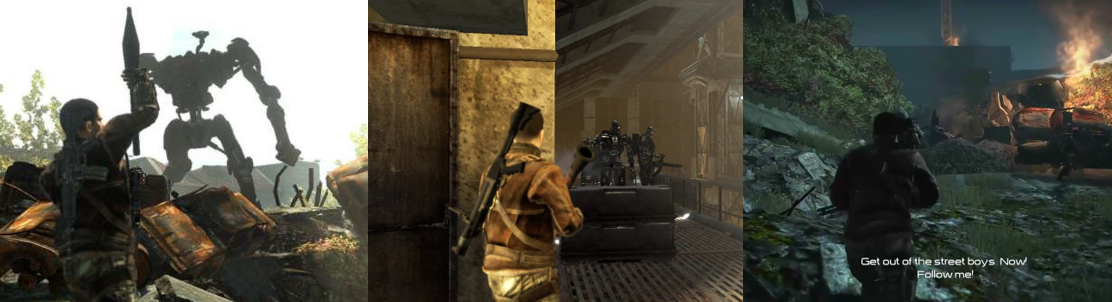
The machines and environments are better than the character models, but it’s a very basic presentation.

While the in-game music generally isn’t anything to shout about, it impresses when the classic Terminator theme kicks in when you complete objectives or to bolster bigger, tougher battles. The T-600 encounters are often accompanied by the ominous T-1000 theme, which I really enjoyed, and the machines themselves are a particular highlight of the game’s presentation. While their intelligence is often questionable (they’re either laughably incompetent or annoyingly relentless), the machines impress when they appear. Spiders scuttle through the ruins, T-600s burst through walls and doors guns blazing, there’s a definite sense of dread every time a HK flies overhead (even if they’re pretty easy to take down with your rockets), and there’s even a few genuinely tense moments as you frantically flee from the gigantic Harvester or from a persistent T-600. It’s a shame, then, that the human character models don’t impress anywhere near as well; John lacks Christian Bale’s voice and likeness and it is just a general Jarhead as a result, though Common and Moon Bloodgood do lend their voices and likenesses to their characters. Sadly, they’re stilted, puppet-like imitations of themselves; as there are very few pre-rendered cutscenes, you’ll have to endure these marionette-like soldiers flailing and yapping about and it’s genuinely laughable seeing them (and their vehicles) being pounded about in the game over sequences. The story itself is actually pretty serviceable and works as a prequel, of sorts, to the movie, but I did notice some instances where the game lagged when too much was happening at once. Some glitches, like enemy fire passing through your cover and the AI just running in place aimlessly or dropping through the ground (both of which were actually very beneficial!) also appeared.

Enemies and Bosses:
As you might expect, you’ll be battling Skynet’s forces throughout Terminator Salvation; unfortunately, the malicious AI doesn’t exactly favour variety and simply sends the same handful of enemies at you over and over again, without even any colour or weapon changes, which makes the game very tiresome very quickly. Drone-like Aerostats sweep across the sky raining fire at you and can be annoying to hit as they’re small and nimble; similarly, the Moto-Terminators can be difficult to destroy as they’re very fast and you’re stuck on a set path that can mess up your shot. The most common enemy you’ll face at the T-7-Ts, large mechanical spiders that scurry about firing incessantly once they spot you or your allies. The only way to destroy them is to get around behind them and target their battery pack, which either you can do, or you can distract them so your partners can take them out, but this becomes extremely aggravating in close quarters situations and when the Spiders are flanked by Wasps and T-600s. The T-600s are easily the game’s toughest enemies; wielding gatling guns and shrugging off your bullets, they relentlessly fire at and pursue you and the only way to defeat them is to lob pipe bombs at them or unload all your ammo into their chests from a safe position.

The game is a non-stop barrage of battles against the same machines over and over again.

The T-600s are initially presented as mini bosses of sorts; at first, all you can do is run away, luring them into traps to try and bury them under rubble, but soon you and your allies are cornered by three of them and you need to dash to a table to pick up pipe bombs to take them out. This is where the game really takes a sharp difficulty spike; the crossfire here is unreal and you only have a limited number of pipe bombs, plus it’s super tough to get close to the T-600s so I actually found it easier to stay under cover, rely on my AI companions, and fire the way overpowered shotgun at the Terminator’s chests to dispatch them. Later encounters are much easier, even when you’re again forced into a tight corridor, as you have better weapons to help you out, like the rocket launcher or a turret. You’ll also encounter “Skin Jobs”, T-600s in rubber skin, which I actually found weaker than their endoskeleton cousins, and these Terminators soon start to appear out in the open and alongside Spiders and Wasps as the game progresses and things ramp up. While you must run for cover when the Harvester makes its single appearance and never get to engage with it, you’ll be taking on a fair amount of HKs. These are some of the best sections as the massive ships linger outside buildings firing plasma blasts and unleashing Wasps to weed you out. You need to grab the nearby rocket launchers to bring these huge ships down, which is a lot more fun than when you’re steaming along in a vehicle or even in that massive tank as you can actually use cover and aim your shots more effectively. Sadly, there’s not really any big, climactic final battle in Terminator Salvation; the entire game is a series of shoot-outs or tense moments against the same enemies over and over, and the finale is much of the same. Sure, there are more T-600s and it can be really difficult juggling between the different enemies, dashing between cover and using the heavier explosives at the right time, but it would’ve been nice to have a big final boss battle, perhaps against a prototype T-800 or even the Harvester. Instead, you simply blast through the machines until John disables them with an EMP in a cutscene, and then just run to the evacuation chopper to end the story.

Power-Ups and Bonuses:
As disappointing as the enemy variety is in Terminator Salvation, the weapon selection isn’t much better. You’ve got an assault rifle, a shotgun, a heavier machine gun, a rocket launcher, and a grenade launcher, alongside standard tossable grenades and pipe bombs. You can only carry two guns at a time, they don’t hold much ammo, and you can’t upgrade or customise them or your character’s abilities in any way. Turrets and vehicles are also on offer, but they’re painfully limited by their cooldown and reload times, and there are sadly no laser rifles to be found here; you can’t even use the T-600’s gatling gun, for God’s sake! However, if you’re going to use any weapon, make sure it’s the shotgun; this thing is ridiculously overpowered and works amazingly well even at long range and against the T-600s, so be sure to keep it in your inventory.

Additional Features:
There are eleven Achievements on offer in Terminator Salvation, with nine being awarded for completing each chapter. You’ll gain an additional two Achievements for beating the game on Medium and Hard, but these Achievements stack and the game really isn’t all that difficult (beyond a couple of really frustrating parts) so you’re better off just playing all the way through on Hard and snagging every Achievement in one playthrough. This is all very disappointing; the game has a co-op mode but there are no Achievements for playing with a friend, there are no items or collectibles to find or unlock, no audio logs or concept art, no additional skins or modes (like deathmatches or anything), and no downloadable content on offer. It really is a disappointingly cheap and barebones presentation; you can replay any chapter after completing the game, but what’s the point when you can sweep all the Achievements in one go and there’s nothing to go back for?

The Summary:
Terminator Salvation is a pretty poor rip-off of the Gears of War games of the time (Epic Games, 2006; 2008); it lacks none of the pulse-pounding action, satisfying weapon combat, or macho bravado of those games and instead distils the gameplay down to a tedious cover-based shooter where you could probably set your controller down at a few key points and let the AI take care of things without your involvement. It’s such a shame as there are some tense and enjoyable moments here; I love how the T-600s and larger machines are portrayed as a real threat and the ominous and desperate atmosphere that accompanies these encounters. Sadly, the enemy AI is absolutely bonkers and easily exploited; even when you’re literally pinned down in a corner and will be cut to ribbons the moment you move, you can still win the day with bucketloads of patience and some well-timed explosives. These sections are incredibly frustrating, though, and result in an uneven pace to the game; even on the hardest difficulty, some chapters and sections will be a breeze (annoying and boring, but not exactly hard) but then others are like running into a brick wall! The rail-shooting sections, especially, are very aggravating due to the lack of cover and small margin for error afforded to you, yet you can be cornered by waves of machines and easily take them all out with no problem at other times simply because you have cover and heavier weapons and competent allies nearby. The lack of real bosses is also an issue; I liked the encounters with the T-600s and HKs, but there could’ve been so much more here, like a showdown with the Harvester or more enjoyable use of the HK Tank. The absolute worst thing, though, is the lack of replayability, collectibles, and unlockables; once you’ve beaten the game and gotten all the Achievements, there’s no reason to play it again over, say, Terminator: Resistance (Teyon, 2019) or any of the Gears of War titles this game so shamelessly apes. There as a bit of an effort made here, but then the developers just kind of gave up. It’s just another videogame tie-in that’s really not worth your effort unless you have nothing else to do and want to earn some quick Achievements, though I’ll give it an extra point for having some decent visuals and moments amidst all the mediocrity.

My Rating:

Rating: 2 out of 5.

Could Be Better

Have you ever played Terminator Salvation? What did you think to it and how do you think it compares to other Terminator videogames, and the movie it’s based on? Were you a fan of the cover-based shooting and repetitive combat or did you grow bored by the gameplay? What did you think to the T-600s and the rail-shooting sections? Did you ever beat this game with a friend? What’s your favourite Terminator videogame and how are you celebrating Judgement Day this year? No matter what you think about Terminator Salvation and the Terminator franchise, feel free to leave a reply down below or drop a comment on my social media, and go check out my other Terminator reviews!

Screen Time: Terminator Salvation: The Machinima Series

Air Date: 18 May 2009 to 24 June 2009
Directors: Tor Helmstein and Ian Kirby
Network: Machinima
Stars: Moon Bloodgood, Cam Clarke, and Jim Meskimen

The Background:
Although The Terminator (Cameron, 1984) was an unexpected financial success, Terminator 2: Judgment Day (ibid, 1991) was a blockbuster release that is widely regarded as one of the greatest movie sequels ever made, something no-one was saying about its ill-advised follow-up, Terminator 3: Rise of the Machines (Mostow 2003). Somehow, though, Terminator 3 did surprisingly well at the box office and eventually led to the sadly critical and financial disappointment that nevertheless remains one of my favourites in the franchise, Terminator Salvation (McG, 2009). Terminator Salvation was accompanied by a videogame tie-in that garnered mixed reviews but also provided the tools to produce a prequel miniseries using the game’s in-game assets and engine. Terminator Salvation: The Machinima Series was comprised of six episodes running around fifteen minutes each and was aired on Machinimia, a now-defunct web-based video platform known for their adaptations of videogame properties. The series was met with mixed reviews; some praised the expansion of the film and game world through the new format, while others criticised the lacklustre presentation of the miniseries. Ultimately, it wasn’t enough to keep the Terminator franchise from entering into legal issues and Terminator Salvation: The Machinima Series is now an often forgotten footnote in the long and complicated history of the science-fiction franchise.

The Plot:
Set in 2016, years after Judgment Day, Blair Williams (Bloodgood) fights the war against the machines in downtown Los Angeles by tracking down computer hacker Laz Howard (Clarke) to persuade him to join the Resistance.

The Review:
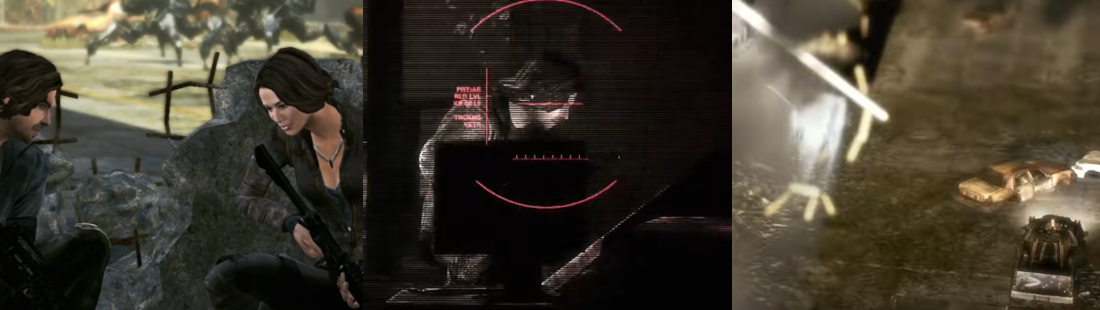
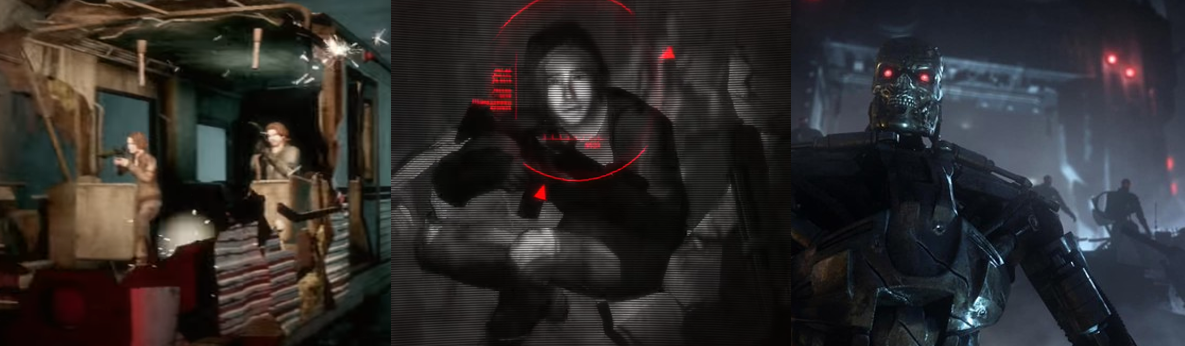
Terminator Salvation: The Machinima Series uses the in-game graphics and assets from the Terminator Salvation videogame, meaning the environments (while a little bland and stale) are serviceable, for the most part, and reflective of the bleak, war-torn world seen in the movie. However, while the machines look pretty impressive, the character models are disturbingly devoid of human emotion in the face. They move okay when in action, it’s just when they stand around or shots linger on facial expressions that they fail to hold up against other CGI movies. The graphics engine used to render the effects also makes them appear a bit like emotionless puppets than anything else (Laz is the most obvious offender in this regard), but at least Moon Bloodgood returned to provide her voice even if her model doesn’t properly capture her natural appearance. Accordingly, the miniseries is blatantly geared towards selling the videogame; action sequences pitting the Resistance against the Spiders not only reflect the in-game action, but they actually are the in-game actions! Blair and other characters sneak from cover to cover, fire blindly from behind dilapidated walls, target the Spiders’ power cell on their back, and take the high ground to get better shots. The miniseries also incorporates the rail-shooting sections form the game, with Blair and Laz fighting back pursuing Moto-Terminators on a half-wrecked train while shooting rocket launchers and blasting at airborne Terminators while racing along in a truck, and it appears that all the locations are ripped wholesale from the videogame, including background elements like burning aeroplanes, wrecked buildings, and destroyed highways. While the voice acting is pretty good, for the most part, and tells a story of trust, desperation, and fraying humanity against the backdrop of widespread nuclear devastation and never-ending conflict, the lip synch is dreadful because the character models weren’t built for this level of emotion.

Blair braves the war-torn landscape to track down a hacker who’s been disrupting machinery.

Blair narrates each episode and takes centre stage; her dreams are haunted not just by memories of life before Judgment Day, but also a time when she hesitated to fire upon a HK while flying a Resistance fighter jet and caused the death of her wingman. After years of fighting alone (or alongside veritable strangers) with no clear perception of who or what she was fighting for beyond basic survival, she’s come to see that the only way to win the war against the machines is for humanity to unite with that singular purpose. While this means she spends a lot of her time pinned down and taking cover from relentless fire from the T-7-T “Spider” machines like in the Terminator Salvation videogame, she at least has allies to watch her back and provide cover fire, though the sheer amount of death and destruction that surrounds her at every turn has left Blair feeling somewhat jaded. Blair runs down the devastation caused by Judgment Day that’s left the few survivors desperately fighting tooth and nail against not just a ruthless and inexhaustible enemy but the fear of all-out extinction. Before she learned to work alongside others, Blair (who claims to be numb to fear) was the perfect choice for dangerous, even suicidal, solo missions like searching through the ruins of Los Angeles for a “ghost” that’s been disrupting the Resistance’s communication lines. During this mission, she had her first face-to-face encounter with a chaingun-wielding T600! Although her grenades proved ineffectual, Blair successfully evades the machine and destroys a troop of Spiders, only to find that the “ghost” is disillusioned Laz Howard, a hacker capable not only of disrupting their communications but also reprogramming the machines (to a limited degree). Determined to keep him from interfering with their operation, and seeing his potential, Blair protects him from the machine counterattack so that he can be brought to her superiors. Following a train crash, Blair and Laz are pursued by the Terminator (accompanied by a remixed version of the T-1000 theme) and, without his equipment, Laz first cowers behind cover as Blair briefly disables the machine then getts into a philosophical debate with her.

Blair and Laz clash over their ideologies and the differences between machines and humans.

Blair despises Laz’s actions and the lives he’s cost with his interference, while Laz argues that he’s just trying to survive and never meant for his algorithm to harm others, and also that he’s more in touch with humanity than Blair since he’s not blindly following orders or threatening others with guns. Their argument attracts a Spider and Blair debates leaving him to the machines since her mission was to eliminate the “ghost”, but she realises the value he could have and ultimately intervenes and resolves to protect him for as long as he can keep up with her in the ruins of the old world. While suffering from dehydration, Laz deliriously reveals that he disagrees with the Resistance’s aggressive methods against the machines since they never stop to learn how they work or how to exploit them, and that he resents the Resistance since he believes they’re as much to blame for the state of the world as the machines. Blair’s stunned when they reach the Resistance outpost and finds her comrades slaughtered by the machines as Skynet is actively trying to eliminate Laz to stop his disruptive algorithm. Blair cancels her evacuation request and mans a nearby turret when they’re attacked by Aerostats and T-600s and, though Laz disables and destroys them with his code so they can retreat, their escape is cut short by an airborne Hunter-Killer (HK). Forced to work together, Blair blasts the Aerostats using a mounted artillery gun as Laz speeds across a ruined highway, eventually forcing the HK to collide with solid concrete . Blair’s patience is tested by Laz’s anti-Resistance stance and his constant criticism; she bluntly tells him that he’s screwed either way since both sides want him dead. She convinces him to give the broad specs of his algorithm, which temporarily scrambles Skynet’s link to the machines (and, as an unfortunate by-product, disrupts Resistance communications) using radio frequencies. A T-600 records their conversation from afar and gets the jump on them, causing them to plummet into a sewer for a brief detour (and an awesome shot of the Terminator’s red eyes glaring at them, unnoticed, from the darkness), only for the T-600 to resume its attack once they emerge from the sewer drain.

Both Blair and Laz witness the machine’s wrath, which alters their perception of the war.

Rather than ripping Blair’s heart out or her head off, the Terminator is content to drag her by the neck as it pursues its primary target. This means Blair’s free to blast the machine point-blank in the head with her shotgun so they can beat a hasty retreat. However, Resistance command (Meskimen) refuses to evacuate Blair as long as the “ghost” is with her. Despite her vehemently advocating his right to life and protection, they insist that she get to the evacuation point alone, heavily implying that he be left behind or killed for “collaborating” with the machines. Despite this, Blair’s determined to bring him to them so he can share his knowledge, though she scolds him for taking her knife and continues to be aggravated by his cynical demeanour and refusal to trust her or the Resistance. When they’re pinned down by Spiders, Blair teaches Laz how to destroy them the old-fashioned way so he can be a little more useful in combat and he enjoys the triumph that comes from reducing the machines to scrap metal. Since Laz insists on having his own gear to broadcast his signal, Blair begrudgingly leads him to some suitable equipment under cover of darkness, which inevitably attracts the attention of more Aerostats and HKs. Once at the evacuation point, Blair lies about Laz’s identity so she can get him to safety but is separated from him when they’re attacked by machines. Overwhelmed, Laz is left alone, terrified, jumping at every shadow, and forced to hide from the machines; thanks to Blair’s teachings, Laz destroys a Spider and is taken in by some survivalists. Moved by their plight and Blair’s selfless attempt to protect him, Laz uses their radio equipment to broadcast his signal and shut down an attacking T-600, thereby making him a heroic figure amongst them. Blair tries to explain things to her commanding officer, and the potential benefits of Laz’s algorithm, but he refuses to risk lives extracting the hacker. Blair is aghast by her commander’s lack of humanity (she even echoes Laz’s sentiments about how “mechanical” the Resistance are) and disobeys his direct orders, leaving in a helicopter as the Resistance fighters deal with a machine incursion.

Laz sacrifices himself to give the Resistance a fighting chance against the machines with his algorithm.

With HKs and other machines inbound, Blair orders her co-pilot to return to base and takes out another HK with a rocket launcher so she can search for Laz. She broadcasts Laz’s name and description to try and track him down and is pointed in the right direction, where she finds the remnants and survivors of the T-600 attack he helped to stop. Since the machines are continuing to hunt him down, Laz went out on his own to keep others safe. Luckily, Blair easily finds him right as another gaggle of killer robots closes in, though he’s traumatised by all the death that’s occurred because of his actions. Once again facing a swarm machines, Blair and Laz get some unexpected backup from the Resistance, which brings the miniseries full circle back to where it began, with them being pinned down by enemy fire. When a T-600 bursts through a wall and looms over Blair, Laz heroically throws himself in front of her and is summarily cut down by its gunfire. As he dies, he reveals that he left the key to activate his algorithm engraved on Blair’s beloved knife. Shaken by Laz’s death, Blair takes her emotions out on the half-crippled T-600 and the miniseries ends with Blair being promised that the disruptive signal will find its way to John Connor (who she hasn’t actually met yet at this point), and the revelation that Laz left behind a series of audio files. One is played to close out the episode that describes his first-hand experiences of Judgment Day and the abject terror he felt that drove him to dig in deep and stay in hiding. Galvanised by the experience, Blair resolves to continue on with the fight not just for herself, but for the countless other survivors out in the field and returns to her rightful place in the cockpit of a Resistance fighter jet to engage with Skynet’s forces once again.

The Summary:  
I honestly didn’t really know what to expect from Terminator Salvation: The Machinima Series; I was vaguely aware of it as a CGI feature but had never really looked too deeply into it until now. It’s an interesting experiment, to be sure; it’s not often that a videogame’s in-game graphics and models are used in this way. Normally, tie-in material like this is a more traditionally-animated CGI affair and Terminator Salvation: The Machinima Series definitely does suffer somewhat by not utilising prerendered graphics on its presentation. While the locations reflect the bleak, desolate, war-torn ruins of the world seen in Terminator Salvation and are clearly ripped wholesale from the tie-in videogame, they’re not exactly diverse or visually interesting as characters stay in the same repetitive locations throughout the miniseries, with only the inky darkness of night and some dilapidated interiors mixing things up. It’s fun seeing characters perform actions from the videogame like sliding into cover, firing blindly at enemies, and using heavy weapons while speeding along in vehicles but it basically amounts to a lengthy advertisement for the game, more than anything. In that respect, I find it odd that Terminator Salvation: The Machinima Series wasn’t included as a bonus feature in the videogame since it basically acts as a prelude to that game and as a showcase of the in-game action offered by it, including sneaking around the Spiders, desperately fending off relentless T-600s, and blasting at aerial machines with projectiles zipping all over the place.

A decent expansion of the movie, but let down by the cheap presentation.

Where Terminator Salvation: The Machinima Series does impress, though, is in the story and the quality of the voice acting; Moon Bloodgood is ironically better than in the movie, adding some real depth to her sadly one-note character by exploring how the war has affected her humanity and her relationships towards others. Her narration paints a picture of a world on the razor’s edge of all-out insanity. Fear and tension run rampant throughout the Resistance, which has grown increasingly cold and battle-hardened by the ever-escalating conflict, to the point where Laz point-bank refuses to help them and criticises them for being no better than the machines. At first, Blair opposes this perspective and sees Laz as little more than a lowly “collaborator” who might have some value to the Resistance, but he comes to see Laz’s opinions aren’t entirely invalid when her superior would rather let Laz die than risk extracting him, not matter how important he might be. Laz represents the everyday folk struggling to survive in the ruins of society, an embittered people who just don’t have the strength to fight back and resent the Resistance for bringing more destruction to an already ravaged world. He’s just trying to use the skills he has to survive and wants no part of the conflict, but comes to see that humanity’s only chance at surviving is to work together, which ultimately leads to him sacrificing his life to save Blair and handing over the key to his machine-disrupting algorithm. Interestingly, however, this signal isn’t the same one seen in Terminator Salvation, which was a trick created by Skynet to lure the Resistance into a trap, which muddies the waters a little in terms of continuity, though the miniseries did a decent job of adding a little more context to this world. Ultimately, it was an interesting extended cutscene and advertisement for the Terminator Salvation videogame. I think it might’ve had more potential as a proper CGI feature but I’m surprised we didn’t see more projects like this back in the day, or even now, as it seems like an easy way to produce some tie-in material. Sadly, Terminator Salvation: The Machinima Series comes across as “cheap” all too often, making it a largely forgettable experience that, as I said, probably would’ve been better as a shorter, simpler bonus feature included on the game disc.

My Rating:

Rating: 2 out of 5.

Could Be Better

Have you ever seen Terminator Salvation: The Machinima Series? If so, what did you think to it and did it help sell you on the tie-in videogame? What did you think to the story and the expansion of Blair’s character? Did the miniseries get a bit repetitive for you considering its short runtime? What do you think to the recycling of the videogame’s assets and would you like to see a proper CGI Terminator feature? Were you a fan of Terminator Salvation? How are you celebrating Judgment Day today? No matter what you think about Terminator Salvation, and the Terminator franchise, feel free to leave a reply down below or drop a comment on my social media and check out my other Terminator reviews.
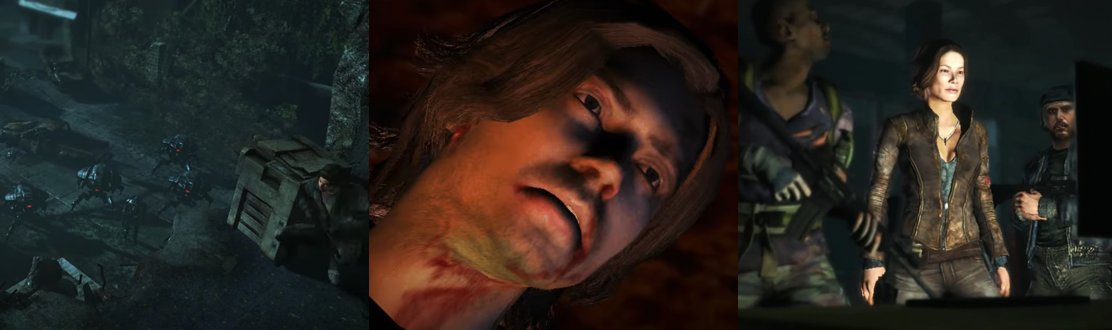
Movie Night [Judgment Day]: Terminator 3: Rise of the Machines


“Three billion human lives ended on August 29th, 1997. The survivors of the nuclear fire called the war Judgment Day. They lived only to face a new nightmare: the war against the machines”.


Released: 2 July 2003
Director: Jonathan Mostow
Distributor: Warner Bros. Pictures / Columbia TriStar Film Distributors International
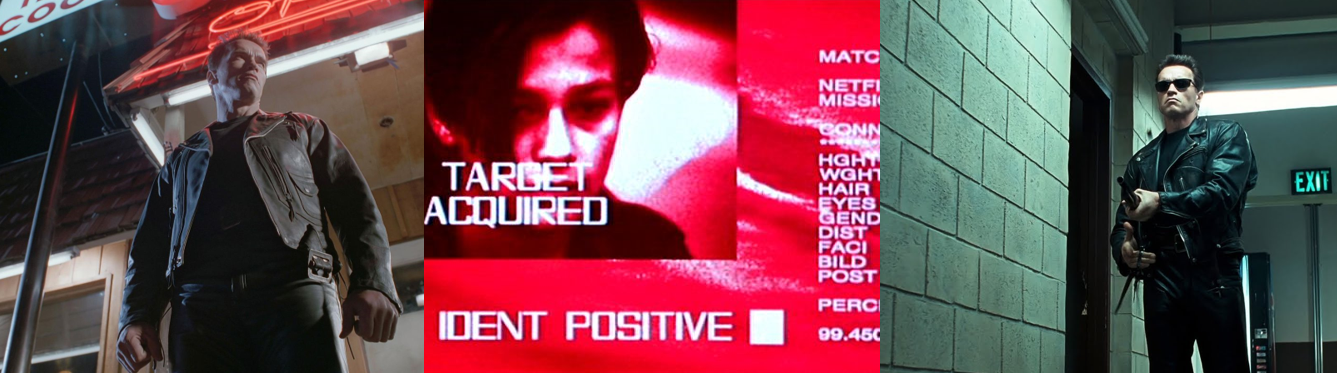
Budget: $187.3 million
Stars: Arnold Schwarzenegger, Nick Stahl, Claire Danes, Kristanna Loken, and David Andrews

The Plot:
Years after ensuring that the malevolent artificial intelligence known as Skynet doesn’t come into creation, John Connor (Stahl) is haunted by dreams of an apocalyptic future. His fears come to life when an all-new Terminator, the T-X/Terminatrix (Loken), travels through time to murder prominent members of the future Resistance. John’s only hope is a reprogrammed T-850 machine (Schwarzenegger) that has been sent not only to protect him…but also his future wife!
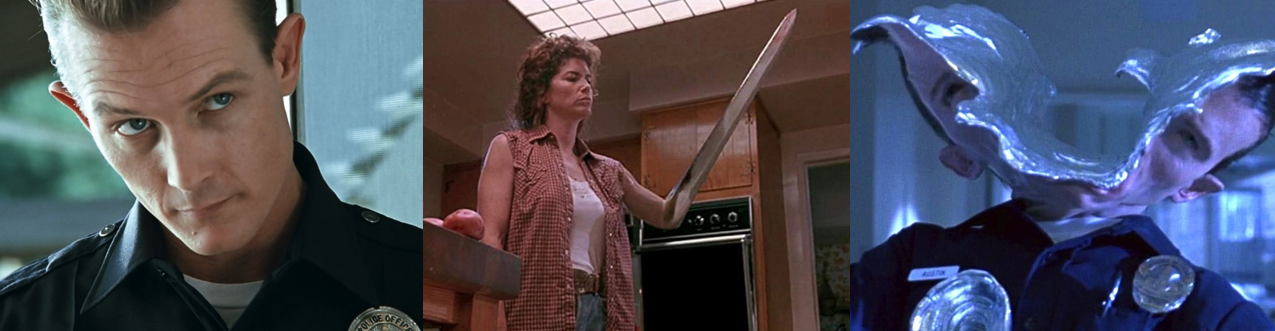
The Background:
Since The Terminator (Cameron, 1984) was an unexpected financial success, there was little doubt that a sequel would soon follow. Terminator 2: Judgment Day (ibid, 1991) not only out-did its predecessor but is frequently regarded as one of the greatest movie sequels. Although the man behind the franchise, James Cameron, and his co-writer were adamant that T2 marked the natural end for the story, producer Gale Anne Hurd and Carolco Pictures both pushed for a third film, and Cameron became involved after working on the theme park ride T2-3D: Battle Across Time. After Carolco filed for bankruptcy, 20th Century Fox negotiated with the stars and filmmakers to try and get the project off the ground, but financial concerns soon saw the rights fall into the hands of Andrew G. Vajna and Cameron eventually giving his blessing for a third film to be made without his involvement after repeated attempts and missed opportunities to purchase the rights for himself. Although initially reluctant to return without Cameron, Schwarzenegger was advised by the director to reprise his role for the money, if nothing else, which ultimately led not only to his staggering $30 million salary and him putting up $1.4 million to complete an elaborate chase scene. Schwarzenegger worked daily to get back into peak shape for his most iconic role, and even had a gym on set to work out in; however, he returned without co-star Linda Hamilton, who declined reprising her role as Sarah Connor due to being unimpressed with the script. Although Edward Furlong initially signed on to return as John Connor, his substance abuse problems led to him being replaced with Nick Stahl, a decision which alienated some fans. Kristanna Loken beat out the likes of Famke Janssen and Vin Diesel for the T-X role, who was once again brought to life by the legendary Stan Winston and Industrial Light & Magic, who used a combination of miniatures, practical, and visual effects brought the new semi-liquid metal Terminator to life. Although Terminator 3: Rise of the Machines impressed with a $433.4 million box office, reviews were dissatisfied with the film’s mindlessness and redundant narrative. Terminator 3’s derivative nature and tone-deaf humour marked it as a low point for the franchise, rather than a return to form. Even a couple of tie-in videogames and Schwarzenegger’s return to his most famous role failed to impress, and it wouldn’t be long before the franchise rights were once again shopped around to a new owner.

The Review:
Personally, as much as I love the Terminator films, I never actually found myself clamouring for a third entry. At least, not one that continued the story past the second film, anyway. I always thought there was potential in a prequel, though, one set during the Future War and showing John Connor’s struggles against the machines. I’ve always felt that it was a missed opportunity that we never got to see this sweeping shot of an army of Arnolds marching over a skull-littered, post-apocalyptic wasteland firing lasers at hapless Resistance fighters. On the other hand, I was mildly excited for Terminator 3 simply because it would be the first time I’d get to see a Terminator movie at the cinema, and the trailers had done a relatively decent job of selling the film as an action-packed spectacle, but this would be the start of a downward spiral for the franchise in which far too many sequels and spin-offs sought to ape the franchise-changing success of Terminator 2 rather than actually try something new.

Haunted by nightmares of the Future War, John is stunned when the Terminator reappears in his life.

Having narrowly escaped with this life after the events of the second film, John Connor is all grown up and has inherited his mother’s paranoid and nightmarish visions of a war-torn future. In the years between Terminator 2 and Terminator 3, Sarah Connor (Linda Hamilton) has died of leukaemia, but had managed to stay alive (against all medical logic) just long enough to ensure that the world didn’t end on August 29th, 1997 as Kyle Reese (Michael Biehn) had once warned. The world continued on as always, but John was forever traumatised by her loss and his knowledge of a world overrun by killer machines, so he took himself off the grid and went on the run, drifting from place to place and job to job before, conveniently, ending right back where he started in California. So distracted by his nightmares is John that he takes a nasty fall from his bike and is forced to break into a veterinarian’s to patch himself up, and in the process coincidentally runs across an old flame of his, Katherine Brewster (Danes), who he’d once made out with as a kid. John’s reputation proceeds him, however, as Kate remembers his foster parents dying and him disappearing under suspicious circumstances, but he’s forced to reveal the truth about himself, and what happened all those years ago, when they’re attacked by the T-X and saved by the Terminator. Like Sarah before him, John is stunned to see the familiar, grim-faced cyborg return; so stunned, in fact, that he inexplicably believes the machine to not just be the same make and model as the last Terminator but to literally be his former father figure, which I guess you can chalk up to the shock of learning that their efforts to stop Skynet’s creation and the onset of Judgement Day simply delayed the inevitable. I never quite “got” the Nick Stahl experiment; he popped up in a few films around this time and he just never really clicked for me. He plays John as a neurotic, quirky, and melancholic drifter, one who feels beaten down by the expectation placed upon him by his mother’s teachings (and, apparently, fate) since he feels ill-equipped to be the future saviour of mankind. Thus, John does everything he possibly can to once again rally against this desolate future; his focus remains not on surviving the oncoming nuclear apocalypse, as the Terminator emphasises, but on stopping it altogether by infiltrating the source of Skynet’s creation, now shifted to Cyber Research Systems (CRS), and his entire character seems to be in this limbo between abject denial of the obvious truth staring him in the face and a resigned acceptance that the world expects more than he is prepared to give.

Unassuming Kate’s feisty nature soon reveals a capable fighter buried beneath her exterior.

New to the lore is the idea that, in the future, John will have a wife and child; thanks to the events of Terminator 2, the timeline has shifted, delaying Judgement Day and altering the future somewhat, to the point where the future Kate ends up being the one who sends the reprogrammed Terminator back through time to act as John’s protector once more. In the present day, however, Kate is little more than a naïve and under-appreciated vet; her priorities involve little more than registering gifts for her wedding to kindly, one-dimensional milksop Scott Mason (Mark Famiglietti), tending to the animals under her care, and trying to build bridges between Scott and her overprotective father, Lieutenant General Robert Brewster (Andrews). Kate acts as the audience surrogate here and, though there’s a brief suggestion that she’s not entirely sure about her upcoming wedding, her simple life is turned upside down in the most violent way possible when the cyborg killers literally come crashing into her vet in search for her. While she’s confused and overwhelmed, Kate is a pretty feisty character; she tricks John and stuns him with a taser, locking him up in a cage until she can figure out what’s going on, and even tries (futilely) to fend off the Terminator when it manhandles her for her own safety. Believing herself to be the victim of an elaborate kidnapping, Kate is sceptical of John’s claims about the future and the machines and escapes at the first opportunity, only to witness Scott transform into the T-X before her eyes and be faced with the undeniable truth that Skynet is a very real, very much impending threat. Kate barely even mourns Scott, however, and instead focuses on safeguarding her father from the T-X and using his connection to CRS to help them locate the Skynet mainframe. In the process, she undergoes a transformation not a million miles away from Sarah’s in the first film (John even remarks that she “reminds [him] of [his] mother”) that shows a glimpse of how proactive and capable she can be under stressful situations. Though she is adamant (nay, disgusted) that she and John will never be a couple in the future, she’s the first of the two to piece together that their mission wasn’t to prevent Judgement Day, but to survive it, and accepts their fate much faster than John in the finale. Kate brings an interesting perspective on the Terminator, one similar to John’s in the second film, as she addresses it as though it’s a person rather than a machine, and, through her curiosity, we learn that the Terminator might not be capable of human emotions but seems nevertheless despondent at the idea of failing its mission, which John later uses to snap it out of the T-X’s corrupting nanites.

In addition to being a protector, this Terminator uses basic psychology to strengthen the humans’ resolve.

While Arnold naturally slips back into his most famous role looking like barely a year has past since his last appearance, the Terminator once again undergoes a transformation for its third outing; although it still has a fancy for leather jackets, sunglasses, and stoic quips like its predecessor (and even has recognisable traits like checking for car keys under the sun visor and ensuring it doesn’t kill), the titular Terminator is, naturally, a completely different machine than before. Hell, it’s actually a different model entirely, being a T-850 rather than a T-800, which actually translates to a few notable additions and alterations, but it’s made explicitly clear that this once fearsome unstoppable killer and heroic father-figure is now a figure of comedy as, rather than ripping apart street punks or tossing aside a bar full of bikers to get its threads, this Terminator wanders into ladies’ night and accosts a male stripper. Additionally, this Terminator is powered by two highly combustible hydrogen fuel cells, making it functionally more vulnerable than its predecessors, and second is its programming in basic human psychology. This allows the Terminator to lie, cross-examine, and offer insight into the mental welfare of its charges (though it admits that its database “does not encompass the dynamics of human peer bonding”), and is largely used to comedic effect as the Terminator awkwardly encourages the two to mate, gets offended at being labelled a “robot”, and barks commands to the hysterical Kate in an effort to calm her down. One scene where this really comes into play is when John, overwhelmed at the burden he’s been forced to carry since he was a child, has a complete breakdown in his mother’s tomb and the Terminator calls his bluff, threatening to choke the hysterical John until he spits vitriol in the Terminator’s face since “Anger is more useful than despair”. This means that, while this Terminator is absolutely a protector figure, it’s far more blunt and less patient with the human protagonists (especially John, who is in real need of a kick up the ass that the Terminator is happy to provide) and concerned only with safeguarding them to meet their destiny. Another difference that is really underplayed is the fact that this Terminator wasn’t chosen at random; it infiltrated the Resistance and utilised Future-John’s emotional connection to its model number to terminate him. It was then reprogrammed by Future-Kate and sent back to protect him, meaning that John is faced not just with the inevitability of his eventual death but also forced to rely on the machine that will one day kill him, and the Terminator consequently only follows Kate’s orders. Again, this is largely played for comedic effect but there was some real potential behind this concept, and the Terminator even seems to deliver John a warning in the finale (“We will meet again”) to perhaps enable him to avoid his fate.

The T-X is a faster, more efficient, anti-Terminator Terminator that’s full of underutilised abilities.

As outclassed as the Terminator was in Terminator 2, there’s no question that it’s on the backfoot this time around; the Terminator even admits that it’s an “obsolete design” compared to the Terminatrix, an apathetic and alluring cyborg assassin that has both a metal endoskeleton and a liquid metal exterior. Somehow, this allows the T-X to shape-shift like its predecessor (I guess the endoskeleton is liquid metal, too…which only raises more questions about how it survived the trip through time…) but the T-X rarely uses this ability; instead, it relies on its ability to transform its arms into weapons. And not “knives and stabbing weapons” like the T-1000 (Robert Patrick); this bitch creates an energy cannon and a flamethrower, though, again, this ability is rarely utilised. The T-X seems to be on a tight deadline here as there’s no question at all that it’s the villain of the film since we see it tracking down and murdering John’s future lieutenants (who are young kids, no less) in cold blood rather than make any attempt at subterfuge. The T-X has other new abilities as well; it can grow its breasts to distract men, identify humans by sampling their blood, and is able to infect and remotely control computer systems and machines using a kind of nanotechnology. This allows it to chase after its prey by controlling police cruisers (which is pretty inconceivable since there’s no way they’d be able to drive in the way she controls them), taking over the T-1 machines at CRS, and even corrupts the Terminator’s systems to set it against John and Kate. The T-X is every bit as formidable as the Terminator, easily overpowering it and taking its shots in their brawl, but is portrayed as being both faster and more powerful in every conceivable way, which contributes to the Terminator’s primary plan of escaping to safety rather than trying to tackle it head-on. The T-X isn’t entirely vulnerable, though; rocket launchers soon damage its arm and it’s rendered temporarily helpless thanks to the magnetic pull of a particle accelerator, but it’s a pretty vicious and vindictive machine; it not only hunts down and murders John’s future allies in cold blood, but shoves its hand through a police offer’s stomach in the film’s bloodiest sequence. I know Kristanna Loken from the under-rated Mortal Kombat: Conquest (1998 to 1999) and this basically remains her biggest film role to date; she does a decent job of portraying an emotionless killer cyborg but, like the Terminator and T-1000 before her, also adds a lot of nuance to the role. The T-X becomes visibly frustrated at the Terminator’s interference and screams with rage, scurrying about like an insect as it desperately tries to fulfil its mission in the finale.

The Nitty-Gritty:
If you’ve seen Terminator 2, then you’ve basically seen everything Terminator 3 has to offer. The film borrows so much from its predecessor that it’s not even funny, which is super ironic considering the film offers a more comedic slant on moments such as the Terminator acquiring its clothing (now from a male stripper who doesn’t seem to match Arnold’s dimensions in the lightest), exhibiting personality and humanity, and even offering neutered versions of actions sequences like the assault on Cyberdyne and CRS, respectively. Consequently, many of the same themes from the second (and first) film carry over here; there’s a focus on fate and destiny, the inevitability of our own destruction, and the dangers of artificial intelligence, but the fundamental message of the Terminator franchise has been twisted simply to justify the existence of this film. Previously, the message was “The future’s not set. There’s no fate but what we make for ourselves” but it turns out that this was a bit of a misdirect; Judgement Day is now seen as “inevitable”, the creation of a destructive A.I. unavoidable, and it no longer matter show hard the characters fight or deny this fact, humanity is doomed to be driven to the point of complete destruction. This means that Terminator 3 has a far bleaker tone than the last film, which ended on a message of hope, and instead skews the narrative into one where it’s somewhat implied that everything that’s happened (including the future messages) has been to get John born, trained, and to safety so he can lead humanity to ultimate victory rather than trying to avoid this outcome altogether.

Since Judgement Day is now “inevitable”, the machines certainly do rise by the end.

Although Sarah is dead, her presence is very much felt throughout the film; one of the many demons John is trying to hide from is the teachings and expectations she placed upon him and, while he loved his mother and clearly misses her, he also resents her for tainting his childhood and screwing him up with stories of war against the machines. Although she held on to ensure that Judgement Day didn’t happen, it turns out that Sarah was also unable to shake off her fear and paranoia and had a casket full of armaments buried in place of her remains, which helpfully enables one of the film’s more visually interesting shoot-outs. Earl Boen makes a surprising and amusing return for his cameo as Doctor Peter Silberman, which sees him offering some mild comfort to Kate and then fleeing in fear at spotting the Terminator, and there are so many mentions of Terminator 2 that it’s genuinely hard for the film to stand on its own two feet. Interestingly, and disappointingly, Terminator 3 fails to borrow the iconic Terminator theme until the end credits; Marco Beltrami’s score is suitably machine-like and has traces of Brad Fiedel’s memorable work laced throughout it, but it’s just not Terminator without the “duh-duh-dun-duh-dun” at the forefront of the soundtrack. And yet, Robert Brewster heads up CRS, which acquired Cyberdyne’s assets and is in the midst of struggling with a particularly aggressive computer virus throughout the film. Although his technicians insist that Skynet will be able to identify and eradicate the virus, Brewster is reluctant to activate the advanced artificial intelligence as he’s uncomfortable with handing over that much power and responsibility to a machine. Unfortunately, he’s over-ruled by his superiors and John and Kate are unable to get there in time to stop him from bringing Skynet online; he realises all too late that Skynet was the virus and that he has effectively doomed humanity to near extinction from the self-aware A.I. Gunned down by the T-X, Brewster pleads with John to get Kate to safety and provides them with the location of Crystal Peak, and their last hope at stopping the nuclear apocalypse.

The film has some decent action and fight scenes, though there’s a heavy reliance on CGI.

Visually, Terminator 3 is still pretty impressive; the opening rendition of the Future War, in which we see an army of Terminator endoskeletons carving a path of destruction across a smouldering battlefield, are as harrowing as those of the previous films. Additionally, this is the first time we actually see the Terminators arrive in the past in full detail, which was cool as I’d always wondered about how they actually materialised in the past. Although the effects have definitely moved more towards CGI than practical puppetry and animatronics, traditional effects remain a constant highlight. Not only does the Terminator cut open its abdomen to remove its damaged fuel cell, but the T-X’s armaments (no pun intended…) are largely practical, and there’s some pretty enjoyable throwdowns between the two machines once they swap out their weapons for hand-to-hand combat. However, the appeal of these fights is, again, more comedic than tense; the T-X grabs the Terminator’s crotch, the two smash each other into toilets, and the main thrust of their combat is based around the once terrifying cyborg killer being manhandled (or, I guess, machinehandled?) by a smaller, female variant against which it has very little chance of success. While the big chase scene is pretty thrilling and involves a lot of destruction, it’s hard to not spot the overabundance of CGI used to flip cars and send the Terminator crashing through walls. Similarly, it’s a bit of an awkward effect when the Terminator reattaches its severed head, though the CGI does allow for probably the best battle-damaged look for the Terminator in the finale. Additionally, the T-1 machines are entirely practical, which makes for some fun (and deceptively impactful) scenes of them trundling around CRS and gunning down technicians like hulking Grim Reapers, and the effects used to bring the Future War to life are better than ever, but a lot of the gritty, weighty, mechanical feel of the previous films is lost in favour of a sleek shine that gives the Hunter Killers (HKs) and the T-X’s endoskeleton a glossy, almost alien aesthetic but also makes them feel very fake. Say what you will about the jerky puppets and stop-motion effects of the first film but I never felt like the Terminator wasn’t “there” in the scene but, here, fights and sequences often boil down to CGI ragdolls flailing about like action figures, which somewhat undermines any dramatic tension we’re supposed to feel.

The TX is destroyed but the world is nuked regardless for an unexpectedly bleak ending.

In fact, dramatic tension is difficult to find anywhere in Terminator 3 because the awkward focus on making jokes, quips, and gags even when the characters are fleeing for their lives or discussing the extinction of humanity. The Terminator throws up a “Talk to dah hand”, which severely dates the film, casually mentions how it assassinated John, and much of its delivery is meant to illicit a chuckle from the audience, which really creates a very tone-deaf film. Moments of levity were few and far between in the last two films, but when they popped up they were natural and didn’t feel anywhere near as forced; when the Terminator snapped “Fuck you, asshole”, it was an amusing glimpse at how human the killer cyborg could be, and the T-1000’s “Say…that’s a nice bike” had an air of menace to it that was only exacerbated by how callously it murdered people previously. Here, the Terminator is going out of its way to shop for designer sunglasses, roughly grabbing John and Kate to assess their physical wellbeing, and spitting out bullets and admonishing Kate all for a cheap laugh and it’s jarring not just for the franchise but in the context of the film. As soon as the Terminator acquires John and Kate, it tries to get them to safety so they can survive the inevitable blast zones, but is constantly derailed from its mission by John and Kate’s insistence that they try to stop the war. Despite continuously emphasising that the war can’t be stopped since there’s no time and they’ve no hope of fighting the T-X, the Terminator is duty-bound to go along with their commands, but John is distraught to find that Crystal Peak doesn’t contain Skynet’s system core but a fallout shelter for governmental officials. The Terminator (literally) crashes in to battle the T-X one last time, ultimately sacrificing itself by jamming its remaining fuel cell into the T-X’s mouth and ending its threat, leaving John with the stark realisation that the future he has long feared and rallied against is finally coming to pass. In a poignant moment that the film in no way earns, the bombs drop as John and Kate embrace in the bunker, begrudgingly left with no choice but to prepare for the fight of their lives, and ending the film on a depressingly bleak note that is decidedly at odds with the majority of its more comedic runtime.

The Summary:
It’s hard to deny that Terminator 3: Rise of the Machines was a massive misfire; rather than trying to do something fresh and new with the franchise, the film settled on being a poor man’s rip-off of Terminator 2, something that would unfortunately continue to plague the series going forward. I get it, I honestly do; if you’ve bought the rights to the Terminator films, you want Arnold back and you want to try and recreate what worked before, but there were so many other avenues that the filmmakers could’ve gone down here. The idea of Skynet hunting down John’s lieutenants has a lot of potential, and could have been the focal point of the film; maybe John could’ve taken on the Kyle Reese role to protect Kate from the Terminator, which would not only draw a bit more from the first film but also allow Arnold the chance to do something a little different by portraying a evil version of his most iconic character once more. Or, even better, do the Future War and show the Resistance fighters battling the machines, which was probably beyond the budget of this movie, but the end result was got is a conflicting, confusing mess of a film that isn’t sure if it wants to be a family friendly action comedy or a dour science-fiction movie laying the foundation for a devastating apocalypse. The tone and atmosphere is all over the place, completely negating any of the high points (and there are some, like the car chase, the Terminator-on-Terminator fight scenes, and the dour ending) and leaving a sour taste in the mouth since it literally feels like we just watched a budget version of Terminator 2. It’s no surprise that, when viewing the timeline of the Terminator movies, it’s pretty easy to skip this one; while Kate does eventually make a return, pretty much every Terminator production after this just ignored this one and I can’t say that I blame them as it’s a pretty disappointing and unnecessary retread of ground we’d seen done bigger and better back in 1991.

My Rating:

Rating: 2 out of 5.

Could Be Better

By any chance, did you enjoy Terminator 3: Rise of the Machines? How do you think it compares to the first two films and the other sequels? Were you a fan of Arnold Schwarzenegger’s performance and the changes made to his character? What did you think to Terminatrix and its abilities? Were you a fan of Nick Stahl’s take on John Connor and what did you think to his relationship with Kate? Did you enjoy the greater emphasis on CGI this time around? How are you celebrating Judgement Day today? No matter what you think about Terminator 3, and the Terminator franchise, feel free to s leave a reply down below.

Movie Night [Judgment Day]: Terminator 2: Judgment Day: Special Edition


“Three billion human lives ended on August 29th, 1997. The survivors of the nuclear fire called the war Judgment Day. They lived only to face a new nightmare: the war against the machines”.


Special Edition

Released: 29 October 2001
Originally Released: 3 July 1991
Director: James Cameron
Distributor:
Tri-Star Pictures
Budget:
$94 to 102 million
Stars:
Arnold Schwarzenegger, Linda Hamilton, Robert Patrick, Edward Furlong, and Joe Morton

The Plot:
After narrowly escaping a killer cyborg from a war-torn future, institutionalised Sarah Connor (Hamilton) is haunted by visions of nuclear war and estranged from her young son, John (Furlong). However, when Skynet sends back an advanced prototype T-1000 (Patrick) composed of liquid metal (or “mimetic polyalloy”) to kill John, Sarah must team with a reprogrammed T-800 (Schwarzenegger) to protect her son and try and prevent the near-extinction of the human race!

The Background:
Considering the financial success of The Terminator (Cameron, 1984), a sequel was all-but-inevitable but initially hampered by a number of technical issues, primarily the question of digital effects and a legal dispute regarding the franchise rights. Once these were resolved, Cameron, Schwarzenegger, and Hamilton reunited to collaborate on the natural next step in the narrative, which recast the T-800 as a protector figure. The sequel was afforded a budget fifteen times that of the original and was the most expensive film made at the time; it was also a ground-breaking film in the field of digital effects and continued to employ the services of the legendary Stan Winston for its complex practical, make-up, and model effects. Terminator 2: Judgment Day was a massive success; it received rave reviews at the time, made over $520 million at the box office, and has come to be widely regarded as one of the greatest science-fiction movies ever made, and one of the greatest movie sequels of all time. Fifteen minutes of additional footage were added to the film’s home release, a digitally remastered 3D version was released on 17 February 2017, and the film was accompanied by a slew of merchandise (such as action figures and videogames) as well as directly informing many of its sequels.

The Review:
Some ten years have passed since the events of the first film and much has changed in that time; first and foremost, Sarah successfully gave birth to John, the son of her protector from the future and the fated saviour of humanity in the war against the machines. However, having been imparted with knowledge of the future by Kyle Reese (Michael Biehn) in the first film and following her terrifying experience with the Terminator, Sarah has transformed from a helpless and confused waitress to a strong-willed woman of action and blinkered focus. We’re told by John that his childhood was one of rigorous training and preparation for his future role, which saw Sarah taking him out to Mexico and “shacking up” with as many men as she could in order to learn and impart skills and knowledge necessary to prepare John to be the future leader of humanity, which has driven a wedge between the two as John simply wants his mother’s love.

Burdened by knowledge, Sarah is driven half insane and is desperate to reunite with John.

The burden of knowledge has fractured Sarah’s mind, however; like Reese, she is tormented by dreams of the Future War and also nightmares showcasing (in graphic detail) the fiery destruction of the vast majority of the human race. In an effort to try and circumvent this future, she tried to destroy Skynet before it could be created and, as a result, was arrested and committed to a mental hospital, where Doctor Silberman (Earl Boen) worked somewhat unsuccessfully to help her through her trauma. A calculating and intelligent woman, Sarah attempts to feign compliance after her aggressive and distraught honesty led only to her being denied access to visitors and with no hope of ever escaping the institute. When Silberman sees through this deception, Sarah snaps and showcases her intense aggression, attacking Silberman and his staff without mercy since, to her, they’re already dead anyway. After learning that she’ll never be allowed to see John again, Sarah puts into a motion a plan to escape that goes surprisingly well until she comes face-to-face with the new Terminator and all of her fight and hostility is instantly replaced with a panicked terror; even after John assures her of the Terminator’s new mission, she remains cold and distrustful of her new ally throughout the film.

John starts the film as a delinquent who’s left guilt-ridden at confirmation of his mother’s tales.

At the start of the film, John is little more than a juvenile delinquent; frustrated by his mother’s harsh upbringing and subjecting him to a childhood that was anything but normal, he frequently defies his foster parents and is concerned more with ripping off cash machines using his hacking skills and spending stolen money in the arcades. Having grown up hearing all about his mother’s knowledge of the future and his destiny as the leader of the human resistance, John is well aware of the Terminator, Skynet, and the Future War but never actually believed in any of it. Consequently, he is both stunned, excited, and guilt-ridden when the Terminator arrives and confirms that everything Sarah told him was absolutely true. Determined to make amends for his lack of belief, John orders his protector to help him rescue her despite the obvious risks involved, and is heartbroken when Sarah rebukes his concerns and chastises him for putting himself at risk. Having grown up without a father, John has had to feel the anguish of his mother’s boyfriends and partners leaving over and over, leaving a void in his heart for a father figure that the Terminator fills with startling efficiency and, in the Terminator, John finds a friend, confidant, and partner with whom he can open up to, teach how to be hip and cool, and also the perfect weapon to assist in ensuring that the apocalyptic future never comes to pass.

The Terminator makes a dramatic return, now a protector charged with securing humanity’s future.

Considering that the Terminator instantly became one of cinema’s most relentless and fearsome screen villains in the first film, the decision to turn that characterisation on its head and recast Schwarzenegger as a protector was an inspired move. Thematically, it works wonders for Sarah’s character arc; indeed, her cold-blooded focus on destroying Skynet makes her just as much of an uncompromising machine as her hated nemesis and one of the principal messages of Terminator 2 is that the titular machine ends up learning the value of human life and being more human than those who created Skynet in the first place. For the first twenty minutes or so, however, the film is shot in a way to suggest that the Terminator is the same emotionless killer from the first film, albeit now seen as this bad-ass villain who we can’t help but root for. It isn’t until the Terminator comes face-to-face with the T-1000 that we truly learn that this new T-800 is here to help John, rather than kill him. From that point on, the Terminator becomes a far chattier and more layered character than in the first film; it exposits information, unquestionably follows John’s orders even when it disagrees with the risk involved, and tirelessly works around the clock to keep him and his mother safe. Crucially, the Terminator is noted to be at an extreme disadvantage this time around; not only does the T-1000 have the same files and knowledge as the Terminator, it’s also faster and more advanced and a “far more effective killing machine”. This means that, for all the Terminator’s strength and capabilities, it’s rarely ever portrayed as being anything other than an inferior model. Like Reese, the Terminator is thus forced to flee more often than fighting and to adapt its tactics to utilise more than simple firearms to keep the T-1000 at bay, which goes a long way to furthering the Terminator’s new role as a vulnerable protagonist.

The T-1000 makes for an unnervingly human, relentless, and formidable villain.

In contrast, the T-1000 is so much more efficient that you would be forgiven for initially thinking that it was another slender human protector sent back to keep John from harm; effortlessly charming and deceptive, it can easily earn the trust of unassuming humans with its candid tones but, when that fails, it can shapeshift into a number of other forms to gain access to restricted areas, equipment, and weapons that the protagonists can’t. Once you set aside the pretty large plot hole of how a machine comprised entirely of liquid metal was able to make the trip back in time when the first film established that “nothing dead will go” through the Time Displacement Equipment, and the question of how it even operates if it’s entirely comprised of ever-changing atoms, the T-1000’s rules and limitations are surprisingly well thought out. It’s established that it can’t transform into guns or bombs because of the additional chemicals and parts that make those up, and than it can’t shapeshift into anything bigger or smaller than its default dimensions. This still makes it an extremely lethal killing machine, however, as it’s easily able to form knives and other bladed appendages out of its limbs, grow an additional arm to help fly a helicopter while reloading, and disguise itself as parts of the environment in order to assimilate additional organic data. As merciless and relentless as the original Terminator was, the T-1000 is made even more callous and terrifying through its nimble speed, its sheer tenacity, and the unsettling way it closes up wounds and returns to the fight within seconds of being downed.

Disgusted by the future his research threatens to bring, Dyson gives his life to prevent Skynet’s creation.

Although the T-1000 remains a constant threat in the film and is so significant as a danger that the Terminator transports its charges all the way to a desolate Mexican desert just to avoid the killer, Sarah’s obsession with preventing Judgement Day leads her to tracking down the man most directly responsible, Miles Dyson (Morton). A simple family man, Dyson has been led to a breakthrough in artificial intelligence and technology thanks to his research on the damaged CPU and severed arm of the original Terminator; these have allowed him to effectively begin the process of Skynet’s creation and unknowingly doom the world to near extinction, something that Sarah is so adamant about preventing that she very nearly kills him in cold blood. Thanks to seeing the monster she has become reflected in the eyes of Dyson and his family, she collapses into a mournful heap before she can go through with it, and Dyson is disgusted to learn where his research will lead. Immediately repentant, he agrees to get the group into the Cyberdyne building so that they can destroy all of his research; this is a poignant decision on his behalf as we clearly see how enthusiastic he was about his work and how he often prioritised it over his family life, however he becomes so willing to eradicate his research that he willingly sacrifices his life to ensure that Skynet can never be created.

The Nitty-Gritty:
It’s tough for me to decide which film I prefer out of The Terminator and Terminator 2: Judgment Day. As fantastic and influential and ambitious as the first film was, the sequel is bigger and better in every way; the score is more foreboding and haunting than ever as the T-1000’s droning theme raises the tension alongside the traditional Terminator theme to help punctuate the film’s many action scenes. Additionally, the special and practical effects are better than ever and the entire film just looks more expensive and of a higher quality; there’s something to be said for the gritty nature of the first film but it’s equally hard to deny the appeal of the sequel’s slick presentation.

The film’s practical effects are absolutely top-notch and deliver a disturbing vision of the future.

We see this immediately as the film opens on an incredible rendition of the Future War; we saw snippets of this conflict in the first film but, here, everything is so much bigger and more impressive. Even now, I find it difficult to believe that this is a complex combination of miniatures, models, and forced perspective to show Hunter-Killers and Terminators flawing, crawling, and marching along a field of skulls and wreckage and exchanging plasma fire with the Resistance fighters. This is the scene that made me want to see a whole movie set during the Future War and I still feel like this would have made for a more effective and fitting follow-up to the first two films; just imagine an army of CGI Arnolds marching through an apocalyptic wasteland while Brad Fiedel’s iconic, imposing score blares out? Similar effects are used to bring to life Sarah’s disturbing nightmares of nuclear holocaust; again realised using complex miniatures and puppets, these make for some of the most unsettling scenes of destruction in any film and remain as impactful as ever thanks to the sheer amount of time and effort than went into creation a realistic depiction of the end of the world.

A blend of CGI and practical effects help keep the T-1000 a timeless and terrifying screen villain.

Of course, the true star of the show in terms of special effects is the T-1000; largely realised entirely through cutting edge CGI, the T-1000 is an unnerving screen villain that switches in a heartbeat from charming and affable to stoic and ruthless and we see in full detail how it is able to assume the form of those it touches and then dispose of the original with gruesome efficiency. I think what makes the T-1000 work so well is how often its more monstrous forms and sharp implements are represented using practical effects such as puppetry and animatronics that work wonderfully with the CGI effects (which still hold up to this day) so we can see the actor reacting to being shot and close range, cut to a squealing, twisted animatronic, and then marvel at the T-1000 zipping itself back together using CGI. Its abilities and aggression escalate as the film progresses, allowing it to start off largely employing subterfuge and then forming sword and claw-like appendages on its arms, being frozen into a fragile statue of pure disbelief at being bested, and finally being left as this wailing, grotesque mess of limbs and silvery innards before being sent crashing to the molten steel below. Considering that the T-1000 had been a great imitator of emotions and deception throughout the film, there’s something incredibly disturbing at seeing and hearing it thrash about in its death throws, screaming in agony and rage before finally melting away to nothingness with a look of undeniable anguish.

The special edition adds in a number of scenes that expand an already fantastic movie.

The Special Edition version of the film adds some additional footage that was cut from the theatrical version. This includes an earlier, short scene of Sarah’s nightmare of the inevitably nuclear war that consumes humanity and, as part of that, a sequence in which she is visited by Kyle Reese in a dream where he encourages her to get back into the fight and to protect John. As a big fan of Michael Biehn and Reese’s character, I enjoyed seeing this scene added back into the film; it also goes a long way to show just how deep Sarah’s fear and psychosis have progressed and lends some credibility to the argument that she’s been driven more than a little mad by her knowledge of the future and terror of the impending destruction of humanity. One of the longest and most impressive scenes reintegrated into the film is an alternative take on the Terminator’s reprogramming; in the theatrical version, the Terminator simply states that all of the T-800s are capable of growing beyond their programming but, here, Sarah and John have to open up the Terminator’s skull and extract its CPU so that it can learn to be more human. This is fantastically realised in a complex sequence involving a model of Schwarzenegger and Linda Hamilton’s twin sister, Leslie Hamilton Gearren, and features a tense confrontation between Sarah and John where he basically orders her to trust his instincts regarding the Terminator rather than destroying the CPU. Other scenes include a somewhat unnecessary shot of the T-1000 discovering that the Terminator tricked him and killing John’s dog, and an extended sequence near the end where, after being blown to pieces by the Terminator, it’s made more explicit that the T-1000 is malfunctioning. I’m a fan of this addition as well as it show just how traumatic being frozen and blasted into pieces was for the T-1000 and allows it to be a step slower and a bit more unreliable than usual; it may also go some way to explaining why it decided to try and intimidate Sarah into calling out to John rather than simply assuming her form as its shapeshifting abilities were clearly screwed up after reassembling itself.

The Terminator learns the value of human life and acts as a friend and father figure to John.

The extended scenes also add a lot more to the Terminator’s characterisation; a pivotal story arc of the film is the Terminator learning what it means to be human and taking on more normal mannerisms, such as smiling, quipping, and just considering the impact of mindlessly killing those in its path. When John first orders it not to kill, the Terminator is confused (disdainful, even) at the idea and is forced by its programming to simply follow John’s orders to the letter. It’s not until much later in the film, after it forms a bond with John, that the once terrifying killing machine understands why human lives are so valued and to be cherished. Until then, though, it takes its orders literally, resulting in scenes both amusing and bad-ass as it goes out of its way to wound or chase off the police with its weapons; seeing the Terminator as a straight “man” awkwardly trying to pass as normal makes for some of the film’s best and most amusing moments: its attempt at smiling is painful, the way it regards children is just fantastic, and it absolutely nails the nineties one-liners John teaches it to deliver some of Arnold’s most memorable quips. Even Sarah has to admit to being impressed with the machine’s absolutely devotion towards John; she even comes to trust it enough to leave John in its care as she goes off on her solo mission to kill Dyson and one of the most moving scenes in the entire franchise comes right at the end where she shakes the Terminator’s hand and gives it her respect.

The film culminates in a showdown wherein the Terminator sacrificing itself to prevent Judgement Day.

Indeed, the entire finale of the film makes for one of the most action-packed and emotionally charged I’ve ever seen, especially in a sci-fi action film; following the massive explosion at Cyberdyne and an absolutely incredible car chase that sees the protagonists desperately trying to out-run a helicopter and a truck full of liquid nitrogen, they’re forced into a final showdown at a steel mill. With Sarah wounded from a bullet to the leg and the Terminator’s human façade cracking from all the shots it has absorbed, they’re forced deeper into the red-hot facility when the T-1000 manages to recover from being frozen and blasted into pieces. We then get an absolutely brutal throwdown between the Terminator and the T-1000 in which no words are said and no sounds are heard except for the clang of metal on metal; here, we truly see how outclassed the Terminator is as the T-1000 effortlessly tosses it around and overwhelms it, smashing its face apart with a huge girder and then seemingly destroying it by impaling it on a spike. Thankfully, the Terminator comes with a back-up power source and it struggles back to “life”; despite missing an arm and being beaten all to hell, it manages to recover long enough to deliver the final blow to the T-1000, ending its threat forever, and their mission to destroy Skynet and prevent the future seems to have been accomplished after John tosses the first Terminator’s arm and CPU into the molten steel. However, the new Terminator still remains and John is absolutely distraught at the idea of his friend and father figure sacrificing itself to ensure the future; yet, despite his desperate pleas and orders, the Terminator’s destruction is the only way to end Skynet’s threat and so, after a heartfelt goodbye to them both, the Terminator is lowered to its demise in an absolutely heart-breaking sequence that sees this once relentless and remorseless killer cemented forever as one of cinema’s most beloved heroes.

The Summary:
It’s difficult to express in words how much I adore this film; I love the original, especially for how dark and gritty it is and how it’s much more like a horror film than a traditional sci-fi action flick but there’s no denying that Terminator 2: Judgment Day does everything bigger and better. The Terminator put Arnold Schwarzenegger on the map but its blockbuster sequel made him a mainstream star. After this, he would forever be cemented as the wise-cracking hero in action films for pretty much the remainder of his career as a film star. Not only that, Terminator 2 became the standard template for every subsequent movie in the franchise bar one; with the except of the under-rated Terminator Salvation (McG, 2009), all of the Terminator sequels and even the short-lived television series tried to emulate this film in some way, which has led only to a string of lacklustre productions as a result. Still, that doesn’t take away from how awesome Terminator 2 is; from Sarah’s physical and mental instability and transformation to the ruthless tenacity of the T-1000, to the incredible depiction of the Future War and the ground-breaking special and practical effects, Terminator 2 pretty much has it all. This extended version of the film remains the definitive version for me thanks to a much-appreciated cameo by Michael Biehn and expanding on scenes of our impending destruction and the two Terminators. Although it’s a longer movie at almost two-and-a-half hours, it’s an endlessly exhilarating experience from start to finish and I could honestly put Terminator 2 on every single day and never get bored; everything from the performances, the ominous score, and the explosive action is absolutely top-notch and it’s quite possibly the greatest film in the entire franchise and possibly Arnold’s career.

My Rating:

Rating: 5 out of 5.

Fantastic

What are your thoughts on Terminator 2: Judgment Day? How do you think it holds up today, especially compared to the first film and the other sequels? What did you think to Arnold Schwarzenegger’s performance in the film and did you enjoy seeing him cast as a protector this time around? What did you think to T-1000 and its abilities? Were you surprised to find the T-800 was the good guy this time and what did you think to the CGI and other special effects used to bring the T-1000 to life? How are you celebrating Judgement Day today? No matter what you think about Terminator 2, and the Terminator franchise, feel free to sign up and leave a reply down below.

Game Corner: Terminator 2: Judgment Day (Arcade)

Released: 31 October 1991
Developer: Midway
Also Available For: Commodore Amiga, Game Boy, Game Gear, Master System, Mega Drive, PC, Super Nintendo Entertainment System (SNES)

The Background:
Terminator 2: Judgment Day (Cameron, 1991) was a blockbuster critical and commercial success; the film made over $520 million at the box office against a $94 to 102 million budget and is widely regarded as one of the greatest science-fiction movies ever made, and one of the greatest movie sequels of all time. As is the case with most of the Terminator movies (Various, 1984 to 2019), the film was accompanied by a number of videogame adaptations. The most prominent of these, for me, was T2: The Arcade Game (Probe Software, 1991), which was one of the first games I ever owned for the SEGA Mega Drive back in the day. The game was the home console port of a light gun arcade cabinet developed by Midway, which I did play as a kid but more recently got the chance to play all the way through at an arcade near where I live. While I have fond memories of the Mega Drive game, the home console ports received mostly average reviews and it’s gratifying to see how successful the arcade cabinet was at the time.

The Plot:
In the nuclear wasteland of 2029, the human race has been driven to near extinction by Skynet, a malevolent artificial intelligence that relentlessly hunts humankind using cybernetic killers, the most prominent of which is their T-880 Terminator infiltrator. In an effort to preserve their victory, Skynet sends an advanced prototype T-1000 composed of liquid metal (or “mimetic polyalloy”) to kill young John Connor before he can grow up to lead the human resistance to victory and only a reprogrammed T-800 (or two, if you have a friend to play with) can protect him…and the future.

Gameplay:
Terminator 2: Judgment Day is a first-person light gun game in which you take on the role of a reprogrammed T-800, just like in the film it is based on, and work to safeguard the future of humanity by blasting everything you see onscreen before it can hit you. In the arcades, you do this by manipulating a big light gun that has two very simple functions: a trigger to shoot and a red button to launch either missiles or blast enemies with shotgun shells depending on the stage (or “Mission”) you’re playing. With your onscreen presence limited to a blue or red crosshair, you’ll have to keep a keen eye on the game’s heads-up display (HUD). Your character’s health is measured in the form of an energy bar running down the left (or right) side of the screen, your supply of missiles or shells is at the top alongside your current score and remaining credits, but the main bar to watch out for is the “Gunpower” meter.

Keep an eye on your Gunpower meter as it’ll drain pretty quick if you’re too trigger happy.

Unlike other light gun games, which have you shooting outside of the screen or pressing a pedal to reload your gun, there is no reload function in Terminator 2 and, instead, you can blast enemies for as long as your Gunpower meter stays full. Thus, if you’re too trigger happy and drain the meter, you’ll fire less and less shots at a far slower and less powerful rate until you give the meter a chance to refill or grab a power-up. Enemies are in high abundance in Terminator 2, way more than I remember from the Mega Drive version; the screen automatically scrolls to the right to pan across the stage but will lock into place quite often and force you to fend off waves of Terminators, Hunter-Killers (HKs), and other enemies, all of whom constantly fire missiles, plasma shots, and bullets at you. Sometimes, they’ll pop up in the foreground and try to fill you full of holes; others, they’ll toss pipe bombs or other such items at you which must be shot out of the air. In a lot of areas, you’ll find members of the human Resistance exchanging fire with Skynet’s forces, usually behind a destructible barricade. Take care when spraying the area with you fire, though, as this can cost you points and destroying barricades will only mean more shots come your way.

Gameplay gets very repetitive, and frustrating, very quickly.

Gameplay is extremely simple and full of intense, arcade shooting action but quickly becomes very monotonous as wave upon wave of enemies fills the screen. Things are shaken up a bit in certain missions, though; two missions see you having to protect John Connor while he’s in a vehicle. These vehicles take up a large portion of the screen and can be damaged by your fire, meaning it’s extremely easy to destroy the vehicle completely by accident and, if this happens, you’ll lose a massive chunk of health and have to restart from the very beginning, which is extremely annoying. When in the Cyberdyne Systems office building, you’ll be tasked with destroying everything you see to erase all evidence of their research into Skynet; thankfully, you can complete the mission without literally destroying very single piece of the environment but it pays to shoot at anything and everything you see to snag a hefty bonus score and beat out your partner.

Graphics and Sound:
Terminator 2: Judgment Day recreates the look and feel of the movie’s biggest action scenes through the use of digitised environments, graphics, and sprites. While they do appear quite pixelated and blurry at times, when playing the actual arcade cabinet you never need to worry about the graphical fidelity as there’s way too much happening onscreen at any one time to really nitpick. While the game’s use of still images and text for cutscenes isn’t really all that much to write home about, the game makes great use of the iconic Terminator theme and sound effects and is full of voice clips from the film (mainly from Arnold Schwarzenegger) and features digitised versions of the film’s key characters, all of whom lend their likenesses to the game with the exception of Linda Hamilton (though you’d never be able to tell).

The game faithfully recreates enemies and locations from the film and creates fitting new ones, too.

Despite being quite a short and repetitive title, Terminator 2 artificially extends its length by having you battle seemingly endless waves of enemies at any one time. Nowhere is this more apparent and monotonous than in the very first stage, which is set during the Future War seen in the opening of the film. The game faithfully recreates the desolate, bleak, post-apocalyptic future and even pulls from the flashbacks seen in the first film for its rendition of the Resistance base and the third mission, which sees your protecting John Connor from an aerial HK. The dark, desolate future soon gives way to the sleek, mechanical construct of Skynet’s main base and the glass-and-steel office building of Cyberdyne Systems as the game veers towards recreating notable action sequences from the film. This all culminates in a lovingly recreated version of the steel mill for the finale and every stage in the game is punctuated by destructible objects (which generally yield various power-ups) and big digitised renditions of enemies as they pop up in the foreground to attack you.

Enemies and Bosses:
Each mission of the game features a variety of enemies; in the first few missions, you’ll exclusively battle against Skynet’s forces, most commonly represented by the T-800 endoskeletons that wander around the war-torn future and blast at you with plasma rifles. T-800 infiltrator units (who are, oddly, dressed exactly like Arnold’s character in the film) can be found in the Resistance base and will take a few more hits to put down as you blast away their living tissue exteriors, and tougher gold variants of the endoskeletons will also appear near the end of this mission.

Enemies will be relentlessly filling the screen and bombarding you with shots to take your money.

You’ll also have to blow aerial HKs out of the sky and contend with snake-like Terminators and little floating orbs that crack open from egg-like shells and buzz around the screen. When you time travel to the past, though, you’ll mainly be met with armed SWAT teams and human scientists in haz-mat suits. These guys are all weaker than the Terminators you’ve fought but no less dangerous; they’ll hang on the outside of buildings firing at you, toss caustic acid in your face, and pop up in the foreground to try and end your mission as good as any machine and there’s a constant, inexhaustible supply of them at all times.

Skynet busts out their biggest and most powerful defences to sap your pocket money.

Each Mission of Terminator 2 culminates in some kind of big finale, generally against a boss but often having you protect John while he’s in a vehicle. At the end of the first Mission, you’ll have to battle a HK Tank which rolls along firing heavy weapons at you from its turret-like arms, “eyes”, and a little opening in its treadmill. Take note of these areas as this is where you should concentrate your fire to keep incoming attacks to a minimum and then put it down quickly; even after you blast off each appendage, though, the battle rages on as a slew of gold endoskeletons pours out so don’t let your guard down for a second. If you manage to defend John Connor from aerial HKs, you’ll battle another HK Tank before storming Skynet’s defence grid, which is a massive wall-like super computer that spits missiles and snake-Terminators from numerous different openings that you’ll need to destroy one by one to access the time displacement chamber.

The T-1000 is a gruelling battle that’ll physically wear you out with its longevity.

Surprisingly, there is no boss battle at the end of the Cyberdyne mission; instead, you simply dispatch wave upon wave of scientists and SWAT police while John steals the CPU and severed arm of the first Terminator. However, the game makes up for it with its most gruelling stages yet; first, you have to fend off the T-1000’s helicopter as it tries to ram into the van John and Sarah are escaping in. This is very tricky without another player as it’s far easier to have one person cover the left-side of the screen and another to cover the top but you only have a few seconds to blast the helicopter and the van is extremely fragile. Once you’re in the steel mill, the difficulty and frustration really ramp up as simply shooting the T-1000 isn’t enough; instead, you have to blast the liquid nitrogen tuck behind it in order to lower its temperature. This is much harder than I remember it being on the Mega Drive as the T-100 is super quick, rolling and “teleporting” around the screen with its liquid metal ability, and its temperate bar refills so fast that I can see kids wasting loads of their pocket money on this boss alone. When you finally get through this bit, you must fend the T-1000 off before it gets close enough to kill John; land enough shots and it’ll back up towards the molten steel, where you must grab a grenade launcher and bombard it with shots to eventually finish it off for good. Fail, and you have to restart all the way from the liquid nitrogen truck, which is more frustrating than you can possibly imagine.

Power-Ups and Bonuses:
As you strafe fire across the game’s various locations, you’ll notice a few little boxes appearing at the bottom of the screen. Be sure to shoot these as they contain all sorts of power-ups that will grant you a temporary shield, full power-up your Gunpower meter or your health (or both), a screen-clearing smart bomb, or even you additional missiles and shots to deal greater damage. When enemies pop up in front of you, try to aim for their heads as Terminators will sometimes spit out their CPU upon defeat, which will grant one of these random power-ups, and try to avoid hitting John and Sarah as they’ll often drop mini guns that will let you blast away at your enemies without fear of losing power.

Additional Features:
As an arcade title, there really isn’t much more on offer here than beating your high score and playing alongside a friend. I highly recommend having another player with you as this game is a long old slog and, if you’re playing with money or on home consoles, you can except to burn through a lot of credits very quickly as just beating the first Mission takes quite a bit of time and energy.

The Summary:
I remember having a blast with Terminator 2’s Mega Drive port. It was clunky to play with the Mega Drive’s controller (I had a Menacer, once, but it was pretty uncomfortable and unwieldy) but I remember being able to play through it without any real issues. When I saw it in my local arcade, it was a must-play title as I had fond memories of playing it as a kid but, while the original arcade cabinet does deliver (especially since the one I played was set to free play), it is a very monotonous and draining game to play. Even with a friend, this is no walk in the park as stages drag on and on and enemies are absolutely relentless; bosses are fine, they’re nice and big and should be a bullet-hell experience, but even regular stages can drag on for a long time thanks to the waves of enemies. The sections where you have to protect John’s vehicles are easily the worst and forcing you to repeat the entire final boss if you die is needlessly frustrating but, at the same time, Terminator 2 is an incredibly enjoyable experience and a faithful recreation of the film’s more action-packed moments. Just be sure to bring some water and settle in for a long-old haul with this one!

My Rating:

Rating: 3 out of 5.

Pretty Good

Have you every played the arcade version of Terminator 2: Judgment Day? How did you find it and where would you rate it against other, similar light gun games? How does it compare to other Terminator videogames? Did you ever own one of the many home consoles ports? If so, which was your favourite? How are you panning on celebrating Judgment Day this year? Whatever your thoughts, drop a comment below and check back in next Monday for more Terminator content!

Movie Night [Judgment Day]: The Terminator


“Three billion human lives ended on August 29th, 1997. The survivors of the nuclear fire called the war Judgment Day. They lived only to face a new nightmare: the war against the machines”.


Released: 26 October 1984
Director:
James Cameron
Distributor:
Orion Pictures
Budget:
$6.4 million
Stars:
Arnold Schwarzenegger, Michael Biehn, Linda Hamilton, and Paul Winfield

The Plot:
The Terminator (Schwarzenegger), a ramosely, relentless cybernetic killer, is sent back in time from the year 2029 to kill Sarah Connor (Hamilton), who is destined to give birth to the saviour of humankind. Her only hope is Kyle Reese (Biehn), a human Resistance fighter sent back in time to protect her and safeguard the future for humanity.

The Background:
In 1982, filmmaker James Cameron awoke from a nightmare that was destined to give birth to one of the most influential science-fiction films of all time; inspired by an episode of The Outer Limits (1963 to 1965) and surely influenced by the likes of Westworld (Crichton, 1973), Cameron crafted a script that few, even the eventual stars, had any real faith in at the time. Initially uncertain about casting Schwarzenegger in the titular role, Cameron was won over by the Austrian Oak and, despite only having seventeen lines in the film, The Terminator made Arnold a mainstream icon and featured the debut of his famous catchphrase. Despite the studio having little faith in the film, The Terminator went on to gross nearly $80 million at the box office and was a resounding critical success. The film catapulted Schwarzenegger to superstardom, was preserved in the United States National Film Registry, and inspired first a blockbuster sequel then a slew of merchandise (including videogames, toys, and comic books) and mediocre to lacklustre continuations in a seemingly-never-ending bid to milk the franchise for all it’s worth.

The Review:
The Terminator opens with one of the most startling and iconic visions of the future ever put the film; in a dark, post-apocalyptic landscape literally littered with human skulls, remains, and the remnants of a once bustling society, machines reign supreme. Gigantic tank-like constructs and airborne fighters are only a part of Skynet’s vast mechanical army, however, which has over-run the world after directly causing a nuclear apocalypse. With the last vestiges of humanity reduced to a rag-tag group of guerrilla soldiers and desolate, frightened civilians, this is a world where humankind is on the very brink of extinction thanks to Skynet’s superior forces and weaponry. However, the fate of the world is not destined to be decided in 2029; instead, that grim future lives on in the nightmares and memories of Kyle Reese and hangs in the air like an ominous cloud as he desperately attempts to keep Sarah Connor alive.

Reese is determined to see his mission through even at the cost of his humanity and empathy.

After the human resistance, led by Sarah’s future son, John, scored a decisive and crippling victory over their mechanical oppressors in the future, Skynet activated its most daring plan yet by sending a Terminator, a T-800 model, back to 1984 to kill the mother of its enemy to pre-emptively win the war before it can even begin. In the world of The Terminator, time is like the branches of a tree, splitting off down multiple paths, with no one future being set in time; however, victory in one timeline is deemed victory enough for Skynet and so begins one of the more convoluted science-fiction franchises. Disorientated and overwhelmed by the time travel experience (and the sights, sounds, and hustle and bustle of then-present-day Los Angeles), Reese is an agitated, highly-strung, and unpredictable individual. He quickly acclimatises himself to his environment, acquiring a degree of clothing and weaponry, and begins to track down (more like stalk) his assignment. Reese is extremely focused and absolutely dedicated to his mission, determined to protect Sarah even at the cost of his own life and over all other concerns; he never gets unduly distracted and is almost as obsessed and determined as the titular Terminator. Haunted by his traumatic experiences in the future war, Reese has no time for frivolities and very little patience for wasting his time; when psychoanalysed by Doctor Silberman (Earl Boen), he flies into a furious rage at having to answer his questions and being held captive when the Terminator is out there, relentlessly hunting its prey.

Sarah slowly evolves from a meek, frightened victim to a capable and proactive young woman.

Far from the capable and competent character she would later become, Sarah is a meek and relatively uninspiring waitress in The Terminator; the literal definition of a nobody, she’s overworked, underpaid, and underappreciated at work and, despite having friends and a social life, is relatively lonely and unassuming at the start of the film. Disturbed to find that women baring her name have been brutally shot to death across town, Sarah does the smart and logical thing by trying to contact the police but her distress is only increased when she notices Reese following her. When Reese saves her from the Terminator and begins to bark orders at her and rant about a dystopian future and cyborg assassins, she is overwhelmed, clearly scared out of her mind, and, naturally, doesn’t believe a word of what he says. In their earliest moments together, Sarah actually shows some fire when she tries to fight Reese off but, gradually, she comes to see that his ravings are all too true and shows a shadow of the potential she has as an assertive individual by first tending to Reese’s gunshot wound and, in the finale, inspiring him to continue fighting even while mortally wounded and, ultimately, overcoming her pursuer through her own initiative.

The T-800 is a remorseless cyborg assassin who won’t let anything stand between it and its target.

Of course, when you’re talking about The Terminator, you have to talk about Arnold Schwarzenegger; since he’s a walking mountain of a man, it may be difficult to believe that the T-800 was ever an effective infiltration machine but Arnold plays the part of a cold, emotionless cyborg to absolute perfection. The T-800’s monotone voice, unblinking stare, and relentless tenacity make it a chilling villain alone but its menace is only increased by its human appearance; unlike slasher villains and other movie monsters, the Terminator looks and acts human, even sweating and bleeding, and its inhumanity is only revealed in its fittingly machine-like efficiency and the degradation of its outer skin over the course of the film. Cold, remorseless, lacking both empathy and pity, the Terminator doesn’t hesitate to gun down or eviscerate those on its path and is, for all intents and purposes, absolutely unstoppable with the weaponry available to Reese.

Relentlessly hounded by the T-800, Sarah and Reese take advantage of every precious moment.

Because of this, The Terminator is, largely, an escort mission for Reese and a constant race against a unrelenting antagonistic force. Constantly on the defensive, hounded by the Terminator and the police at every turn, Reese and Sarah have few chances to stop and catch their breath but make use of every moment they have together. At first, this means acquiring new vehicles to evade pursuit, finding lodgings, and cobbling together more effective weaponry but, in time, Reese, admits that his motivation to travel through time wasn’t just out of blind devotion to his much-respected commander-in-chief, it was also out of love for Sarah. Though he struggles with these feelings and to stay completely focused on his mission, Sarah, grateful for his affections, protection, and all that he has sacrificed for her (and deeply sympathetic towards the unspeakable horrors he’s lived through in the future), reciprocates his feelings and, amidst the terror of their predicament, they come together (both literally and figuratively).

The Nitty-Gritty:
One of the first and most striking things about The Terminator, thanks to its simple but effective title sequence, is Brad Fiedel’s iconic Terminator theme; a rhythmic, synthetic symphony that resembles a heartbeat, the theme is both memorable and versatile, emphasising the Terminator’s ominous presence whenever it is onscreen and being sped up, slowed down, or played on different instruments to punctuate more emotional or energetic moments of the film. The Terminator also has a grimy, bleak aesthetic and tone that is in stark contrast to its more outlandish science-fiction elements in a style that Cameron described as “Tech-Noir”; sadly, too few films try to emulate this style of filmmaking, to say nothing of The Terminator’s many sequels, which emphasised blockbuster action over tense, atmospheric dread and the unsettling horror of the T-800.

The Terminator’s true nature is revealed the more it takes damage, stripping it of its human façade.

The Terminator is almost genius in its premise; the idea of a cybernetic assassin that is purposely made to appear human means that the film can build towards its more striking sci-fi elements and allows it to use its budget wisely in service of a steadily increasing pace. It isn’t until nearly forty minutes into the film that we first see through the T-800’s eyes or see (and hear) how ineffective conventional firearms are against it and, as the T-800 is further damaged by gunfire, car crashes, and explosions, more and more of its mechanical innards are revealed. This leads to some ambitious practical effects and animatronic shots, such as the T-800 fixing damaged servos in its wrist, amputating a wounded eye, and sporting a bloodied chrome skull beneath its torn skin. While many of these shots now look rather dated, especially compared to the vastly superior special effects of the second film, they’re still impressive for the time and considering the budget of the film. The Terminator also features some complex and remarkable model shots and miniatures, specifically whenever it jumps to Reese’s nightmares of the future war, and concludes with an ambitious, if clunky, stop-motion effect to bring the exposed T-800 endoskeleton to life.

Though necessary to the escalation of the film’s villain, it’s a shame to lose Arnold’s presence.

Thankfully, this is only for a brief scene and animatronics and puppets are used for the remainder of the conclusion and to astonishing effect; with a practical, tangible effect to work against, Reese’s final and tragic last stand against the T-800 and its ultimate destruction are all the more compelling and cathartic since it actually feels as though these characters have overcome a very real and very dangerous threat. If there’s a downside to The Terminator, though, it’s that Arnold’s alluring screen presence is lost in this finale; although it hardly speaks a word throughout the film, the T-800 has a commanding and captivating screen presence thanks to its unflinching, stoic expression and ability to emulate voices to pass as human. Its human façade erodes over time just as Reese’s rational, machine-like efficiency gives way to human emotion and affection, and it becomes noticeably more aggressive and bolder in its pursuit of Sarah. Initially, there’s a sense that you could survive an encounter with the T-800 if you simply acquiesced to its demands for clothes and weapons but, by the end, it’s storming a police station and gunning down countless police officers without any hint of subterfuge or subtlety. Similarly, while it initially tries to mask its decaying exterior, it abandons all pretence and pursues them, gammy leg and all, as little more than a remorseless, inhuman, mechanical monster.

The film isn’t about changing the future, but preserving it to ensure mankind’s ultimate victory.

Of course, a central theme to The Terminator, and the entire Terminator franchise, is of fate. Reese carries with him a message from John, to Sarah, that there “is no fate but what we make”, which is designed to inspire her to allow Reese to protect her and to fight to change the future. Reese describes 2029 as a “possible future”, again indicating that humanity is not necessarily doomed to extinction and extermination, but the very fact that Sarah and Reese’s unity results in her pregnancy ends the film on an ominous cliff-hanger that suggests that, while the future may not necessarily be set in stone, it is destined to happen one way or another. Later films and Terminator media would greatly expand upon this and use it as an excuse to continue the franchise, even when it doesn’t make sense to do so, but, thanks to an excised sub-plot, there’s little in the film to suggest that the goal is to change the future. Instead, the idea is to preserve the future; by ensuring Sarah’s survival, Reese ensures (at the cost of his own life) that John is born, and humanity is victorious in the future. Fate, however, dictates that this future timeline remains on course since not only does Reese inadvertently become the father of the future (so to speak) but they practically bring about the creation of Skynet through their final confrontation with the Terminator; while this is, obviously a major part of the sequel, the fact that the film purposely ends on a cliff-hanger and with a few unresolved loose ends suggests, however implicitly, that fate is as inexorable as the Terminator itself.

The Summary:
The Terminator is another of the formative films of my childhood; it was, to my earliest recollection, one of the first films I watched to revolve around time travel and present a dystopian, nightmarish future where humanity has been reduced to pockets of underequipped soldiers. It had a lasting effect on my imagination thanks to its bleak visuals, horrific special effects, and thought-provoking approach to time and fate, and was directly responsible for my appreciation and affection for the works of Arnold Schwarzenegger over the years. Though the future is a dismal, desolate landscape filled with ruins and suffering, The Terminator is a film as much about hope as it is about inescapable destiny; even with everything lost, humanity continues to fight back against the machines and, even though he’s far from the ravages of that war-torn future, Reese continues to adhere to his mission, whatever the cost, in order to ensure that humanity will, ultimately, triumph. It’s tricky to decide which is better between this and the sequel but, while Terminator 2: Judgment Day (Cameron, 1991) may be bigger, better, and more impressive in almost every way, sometimes it’s just as entertaining to return to the grim, gritty original, which is much more like a traditional slasher or horror film than a sci-fi/action piece and, as a result, just as entertaining in its own right thanks to its simple, but ambitious, story and effects.

My Rating:

Rating: 5 out of 5.

Fantastic

What are your thoughts on The Terminator? How do you think it holds up today, especially compared to its other sequels? What did you think of Arnold Schwarzenegger’s performance in the film and do you think it made sense for him to play the titular cyborg? What did you think to the film’s portrayal of fate, especially considering how the later films skewed the concept somewhat? Would you like to see another Terminator film more in the style of this one rather than the bombastic sequel or do you think it’s better to leave the franchise as it is after everything its been through? How are you celebrating Judgement Day today? No matter what you think about The Terminator, and the Terminator franchise, feel free to leave a comment down below.