Movie Night: Batman Beyond: Return of the Joker: The Original, Uncut Version

Released: 23 April 2002
Originally Released: 31 October 2000
Director: Curt Geda
Distributor: Warner Home Video
Budget: Unknown
Stars: Will Friedle, Mark Hamill, Kevin Conroy, Angie Harmon, and Dean Stockwell

The Plot:
When the Joker (Hamill) suddenly returns from his apparent death and begins terrorising Neo-Gotham, Terry McGinnis/Batman (Friedle) is forced to go against the advice of his mentor, Bruce Wayne (Conroy), and begin an investigation into the darkest chapter of the former Batman’s career.

The Background:
Although a Batman animated series had been in the works during 1990, the release, and relative success, of Batman (Burton, 1989) and Batman Returns (ibid, 1992) caused a wave of “Batmania” and renewed interest in the character. Consequently, quite by chance, the idea of a new animated series influenced by both films and the 1940s Superman cartoons by Fleisher Studios, was thought up Bruce Timm, Paul Dini, and Eric Radomski, who spearheaded one of the most beloved and influential animated shows ever. Batman: The Animated Series aired eighty-five episodes between September 1992 and 1995 before being succeeded by twenty-four episodes of The New Batman Adventures (also known as The Adventures of Batman & Robin here in the United Kingdom) between 1997 and 1999. Once the show wrapped up, Warner Bros. brought many of the show’s creators back to continue the story in the then-futuristic world of 2019 with Batman Beyond (known as Batman of the Future in the U.K.) Batman Beyond introduced a younger Batman under the tutelage of an aged and long-retired Bruce Wayne and taking on all-new villains in a cyberpunk-style future. Though not quite as well-received and lauded as its predecessors or sister series, Batman Beyond was popular enough to warrant a direct-to-video feature film over other potential Batman concepts. Because the film’s production occurred in the wake of the 1999 Columbine High School shooting, numerous cuts and edits were made to the film upon its release, with an “uncut” version being released once the controversy had died down. Regardless, Batman Beyond: Return of the Joker released to critical acclaim, winning (or being nominated for) a number of awards, and is frequently regarded as one of the finest pieces of Batman media to ever be produced.

The Review:
My exposure to Batman Beyond is, admittedly, very limited; I watched Batman: The Animated Series on and off back in the day, never seeming to be able to get into a proper routine with it, but saw very little of its futuristic follow-up. When I did catch the odd episode, I can’t say that it really bowled me over; it was too different, too far removed from what I expected from Batman, with virtually none of the recognisable cast or characters. Hell, even Gotham City looked and felt different, and the show had very bleak and depressing connotations for fans of Batman: The Animated Series in its portrayal of Bruce as a grouchy, lonely, recluse. Still, the idea of an older, infirm Bruce mentoring a young successor had a lot of appeal to me and is definitely something I would have liked to see the comics do (particularly during the character’s “death” between 2008 and 2010). Despite that, Batman Beyond: Return of the Joker is well deserving of all the praise it gets; while I wouldn’t go as far as to say that it’s better than, or even on par with, the excellent Batman: Mask of the Phantasm (Radomski and Timm, 1993), very few of Batman’s animated features are able to reach that pinnacle and I’d say Return of the Joker does a decent job of coming pretty damn close.
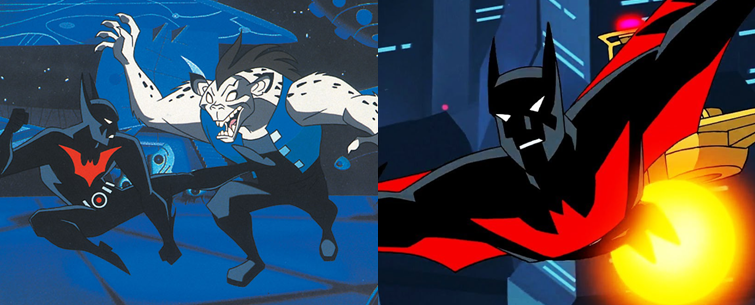
Terry is a very different kind of Batman, sporting more futuristic tech and a more agile physique.

While I’m lacking a lot of context for many of the film’s newer rogues, it’s not much of an issue since the “Jokerz” are generally just minions and cannon fodder to do the Joker’s bidding and to oppose Batman, though I did appreciate how their designs harkened back to Batman foes of old (with Stewart Carter Winthrop III/Ghoul (Michael Rosenbaum) resembling Doctor Jonathan Crane/Scarecrow and Delia and Deidre Dennis/Dee Dee (Melissa Joan Hart) aping Doctor Harleen Quinzel/Harley Quinn). The feature opens with an exciting action sequence featuring lots of laser blasts, explosions, mid-air chases, and action as Batman tries, and fails, to stop the Jokerz from stealing some high-tech computer parts. Despite all the advantages of Terry’s advanced Batsuit (including rocket boots, invisibility, and augmentations to his speed and strength), and the fact that he’s been Batman for a while now, Terry is still in training in many ways; he’s more experienced and capable but he’s still fallible and capable of messing up or being hurt. At times, though, I find him to be very reliant on the suit and the strength and other benefits it provides; it often feels like he was playing into the cliché of the role rather than being his own man at times but he manages to stand out by being a far more agile and witty Batman and approaching situations slightly differently than Bruce would/advises.
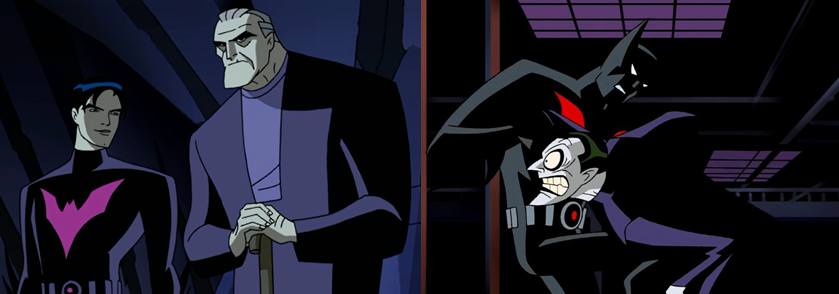
Terry has a complex relationship with Bruce and pulls no punches when fighting with the Joker.

Despite Bruce commending his work and commitment to the role, Terry is insulted when his mentor requests that he return the Batsuit in the wake of the Joker’s return. Terry initially refuses to acquiesce, seeing the role as a chance to make up for his past sins and troubled youth and confirming his commitment to helping others as Batman, and pushes both Bruce and Commissioner Barbara Gordon (Angie Harmon) for the truth about the Joker. This becomes a recurring element in the film, with Terry disliking the comparisons to Bruce’s old partners and striving to prove his worth as Batman rather than a pale imitation or a failed apprentice. This comes to a head in his inevitable confrontation with the Joker, in which Terry fights dirty with a crotch shot and constantly taunts the Joker, laughing at him, criticising his methods, and mocking him to drive the Joker into an angered frenzy.
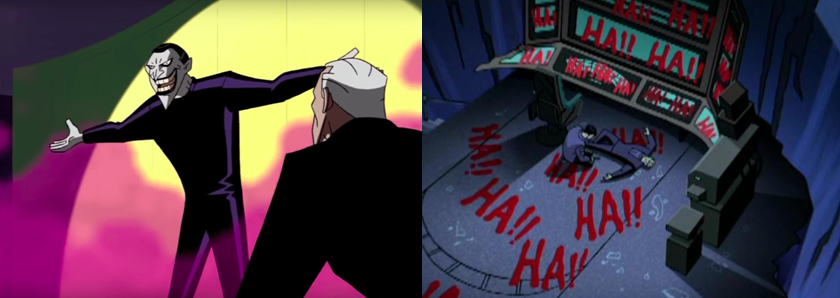
Bruce is visible stunned by the Joker’s sudden and dramatic return to Gotham.

Bruce, of course, is now a grouchy, crotchety, tough mentor figure who has an interesting relationship with Terry, one that he clearly prefers to keep professional and mutual but you can tell that he values Terry as a replacement/apprentice. Though he’s clearly carrying a lot of ghosts and pain from his past, Bruce is as committed to both Batman and reclaiming his business and has absorbed a lot of wisdom from the long-dead Alfred Pennyworth, showing concern for Terry’s health and well-being and advising against going out on the town after a rough night as Batman, but lacks Alfred’s tact or bedside manner. Bruce’s stoic resolve is shaken upon the Joker’s return; he is visibly horrified by the Clown Prince of Crime’s reappearance and lapses first into moody silence and then into overprotectiveness after verifying the Joker’s identity. Bruce is disgusted at Terry’s sentiment, believing he is as misguided as his other teen partners who never knew what they were getting into, and a rift briefly forms between them because of Bruce’s refusal to explain his troubled past with the Joker. They make amends, however, when Terry saves Bruce from a dose of the Joker’s laughing gas, which is a horrifying sight since Bruce is accosted in his most private abode and the Joker explicitly reveals that he knows Bruce was Batman. Disturbed by being attacked in his civilian identity, Terry races to Wayne Manor and discovers the ‘cave in disarray and Bruce a cackling, grinning corpse-like figure. Succumbing to the Joker’s deadly toxin, Bruce just about manages to direct Terry to the anti-venom, and he is saved from certain death.

The Joker plans to unleash an orbital laser on Gotham to commemorate his return.

The Joker is, perhaps obviously, the star of the show here; as always, Mark Hamill delivers a sinister, maniacal performance that perfectly encapsulates Batman’s most persistent of foes. The Joker immediately establishes himself as a menacing and cold-hearted villain by callously shooting Benjamin Knox/Bonk (Henry Rollins) through the heart with the old “fake gun” trick and brazenly attacks the gala welcoming Bruce back to Wayne Enterprises. Though the Joker is critical, but admiring, of the new Batman, he dismisses him at every turn (referring to him as “Bat-Fake”) in favour of Bruce and wastes little time in setting in motion his plot to take control of an orbiting satellite and use its laser-firing capabilities to deliver massive damage to Gotham and commemorate his return.
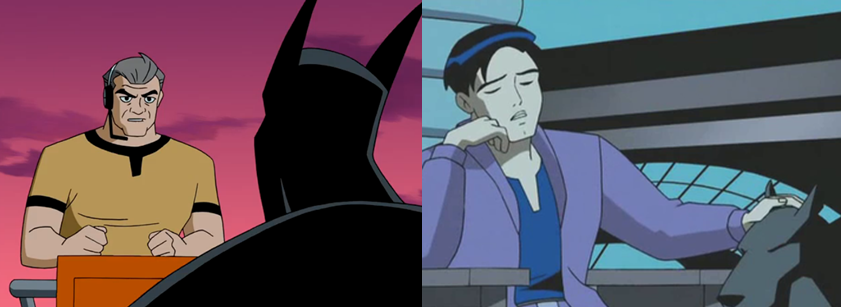
Terry’s deductive skills aren’t quite on par with Bruce’s but he brings a unique approach to the role.

Due to the unexpected and impossible nature of the Joker’s return, much of the film revolves around Terry trying to uncover the details of his last appearance and how and why the Joker has resurfaced, apparently from the grave. With Bruce and Barbara being tight-lipped on the matter, Terry pays a visit to the aged Tim Drake (Stockwell), formally Robin, believing him to be involved somehow. Though now happy, healthy, married, and long retied from the role, Drake is still able to detect Batman even with his fancy cloaking technology, but denies any involvement in the matter, expressing only regret and bitterness at the entire debacle and his gratitude at having left the life behind. When Terry’s next suspect, Jordan Pryce (Hamill), also turns out to be little more than a middle man, he briefly despairs at his inability to duplicate Bruce’s deductive skills and reasoning only to finally solve the mystery by observing the deliberate nature of the Joker’s attack on the Batcave and the common thread that links all the materials he’s stolen, proving again that Terry might not be quite on the same level as his predecessor but is still capable of solving mysteries in his own, unique way.

The Nitty-Gritty:
Of course, the true extent of the Joker’s villainy and viciousness isn’t exposed until Barbara reveals the tragic details of their last encounter with the Joker through a flashback to some thirty years ago when Batman, Barbara-as-Batgirl (Tara Strong), and Robin were acting as a crimefighting trio; one night, while out solo, Robin was kidnapped by Harley Quinn and held captive by the Joker for three weeks. After aggressively hounding the underworld, the duo was finally lured to the rundown, partially demolished Arkham Asylum by the Joker. There, they are horrified to find that Joker and Harley (Arleen Sorkin) have brainwashed and tortured Robin into being their surrogate son, Joker Jr/J.J. and that, despite Tim’s willpower and strength, he eventually cracked and told them everything about Batman and his operation, revealing his true identity (much to the Joker’s disappointment) and transforming Tim into a disfigured, cackling little Joker-boy

The Joker subjects Tim to endless torture and unwittingly seals his fate.

During the highly emotionally-charged fight that consequently breaks out, Harley appears to fall to her death (despite Batgirl’s attempt to save her) and Batman, overwhelmed by his anger, is baited by the Joker, who gleeful shows video footage of Tim’s torture, taunting Batman and his crusade/motivation and receiving a vicious beating as a result (Batman even threatens to “break [him] in two!” in a chilling moment). However, after being incapacitated by the Joker, Batman can only watch helplessly as Tim shockingly chooses to shoot the Joker through the heart rather than kill his mentor, breaking down into a cackling flood of tears afterwards. It’s a truly horrific and terrifying fate for poor little Tim Drake and which, clearly, has fundamentally soured Batman’s character ever since and led to him alienating all of his closest allies in his twilight years. Though Drake recovered from this horrendous experience, it turns out that the Joker has been “possessing” Tim’s body using a special chip he implanted during Robin’s capture and torture; Tim is completely unaware of the Joker’s influence and the Joker has been able to take over more and more often to the point where he can make the change at will and is on the verge of possessing Tim forever. When Batman confronts Drake about his involvement with the Joker, the former Robin grows confused and disorientated before becoming more and more agitated and crazed, incapacitating Batman’s suit and descending into maniacal laughter, literally transforming into the Joker before our eyes in a spine-chilling moment.
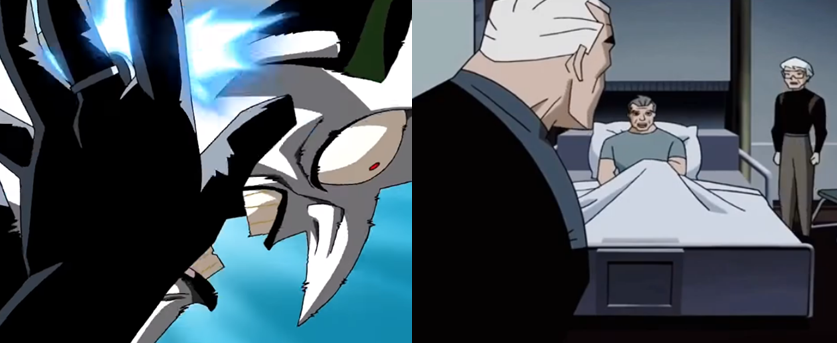
The Joker is destroyed and Bruce finally begins to reconcile with his former allies.

With the Joker’s destructive laser damaged and now heading directly towards their location, Batman and Joker engage in a surprisingly evenly-matched fist fight; it seems possessing Drake’s body as afforded Joker the means to go toe-to-toe with the much younger and more formidable Terry but, just as the Joker is about to throttle the life out of him, Batman uses the Joker’s own electrified joy buzzer to short out and destroy the chip on Tim’s neck, defeating the Joker once and for all and returning Tim to his body, sanity, and consciousness. In the end, Batman gets Tim to safety, allowing the former Robin to finally reconcile with Bruce, Harley is revealed to be alive (though a grouchy old woman), Tim (and, more importantly, Bruce) commends Terry’s abilities as Batman, and Terry flies off into the night to continue the never-ending fight as the Batman of the future.
The Summary:
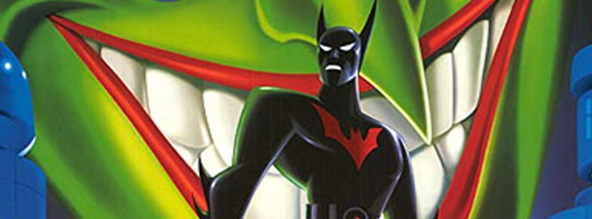
Batman Beyond: Return of the Joker is an action-packed adventure, to be sure, but also easily the darkest of Batman’s animated features; Batman Beyond was already quite a bitter and cynical end for Batman and his allies, with Bruce ending up a grouchy old man with none of his friends or family left, but Return of the Joker really hammers home how bleak Batman’s later years became. Using elements of the “Death in the Family” storyline (Starlin, et al, 1988), Return of the Joker really sticks it to any fans of Robin by having Tim relentlessly tortured and abused and even hinting that Dick Grayson is just as bitter and full of regret as Tim and Bruce. Thankfully, amidst all this bleakness, there is new hope in the form of Terry, a young and very capable but also very different Batman who helps to bring some of the fire and meaning back to an otherwise jaded Bruce. Return of the Joker is framed as Terry’s ultimate test, one that no one else believes he is ready for thanks to the danger and near-mythical threat of the Joker. Throughout it all, though, Terry remains resolute and confident and is able to defeat the Joker in a way that Bruce never could.

My Rating:

Rating: 4 out of 5.

Great Stuff

What did you think of Batman Beyond: Return of the Joker and where would you rank it against other animated Batman films? Which version of the film do you prefer? Were you a fan of Batman Beyond? Whatever your thoughts, leave a comment down below and check back in next Tuesday for Batman Day!

Movie Night: Joker

Released: 4 October 2017 (Hey, that’s my birthday!)
Director: Todd Phillips
Distributor:
Warner Bros. Pictures
Budget:
$55 to 70 million
Stars:
Joaquin Phoenix, Frances Conroy, Zazie Beetz, Brett Cullen, and Robert De Niro

The Plot:
In 1981, party clown Arthur Fleck (Phoenix) suffers from a medical disorder that causes him to laugh at inappropriate times and lives with his mother, Penny (Conroy), in Gotham City. With Gotham overwhelmed by crime and unemployment, Arthur’s dreams of being a stand-up comedian and meeting his idol, talk show host Murray Franklin (De Niro), soon give way to a nihilistic insanity that inspires a violent counter-cultural revolution against the wealthy.

The Background:
The Joker has long been a staple of DC Comics and is widely regarded as Bruce Wayne/Batman’s arch-nemesis. First appearing all the way back in 1940, the self-styled “Clown Prince of Crime” was created by Bill Finger and Bob Kane and has been responsible for a great many tragedies in the Dark Knight’s life, from the death of Jason Todd/Robin to the crippling of Barbara Gordon/Batgirl, and has gone through a number of iterations over the years, from madcap extortionist, to demented serial killer, to self-mutilating madman. The Joker has also been adapted to film on numerous occasions; Cesar Romero famously refused to shave his moustache for the role in the sixties Batman show, Jack Nicholson brought the character to life in Batman (Burton, 1989), Heath Ledger was posthumously honoured for his incredible performance as the Joker in The Dark Knight (Nolan, 2008), and Jared Leto had his time in the role significantly cut from the theatrical release of Suicide Squad (Ayer, 2016). Development of a standalone Joker movie was initially planned as a spin-off of Suicide Squad and would have featured Leto returning to the role; however, after a series of blunders caused Warner Bros. to rethink their strategy regarding the DC Extended Universe (DCEU), production shifted towards an unrelated interpretation of the character. Phoenix, who had previously turned down superhero roles, shared director Todd Phillips’ desire to produce a gritty character study that delved into the psychosis of the character, which is traditionally left ambiguous in the source material.  Afforded a far smaller budget than other DC movies and also the first DCEU film to earn an “R” rating, Joker was a phenomenal commercial success and made over $1 billion at the box office. The critical reception was generally very positive as well; many praised the film’s uncompromisingly bleak narrative and for subverting the norms of comic book movies. Although others were disturbed by the film, which controversially inspired both protesters and deplorable violence, Joker spawned an unlikely musical sequel a few years later.

The Review:
When Joker was first announced, I have to admit that I was sceptical; I wasn’t a massive fan of Leto’s performance in Suicide Squad but, if it’s one thing I desire in my comic book movies these days, it’s continuity. The idea of producing a standalone Joker film didn’t sit right with me in general, much less that it wouldn’t be a part of the DCEU. Instead, Warner Bros. made the decision to lean into the idea of the multiverse, a concept that has been used for decades in comic books to present wildly different, alternative takes on characters and which, essentially, allows everything to be canon even when it’s not. Even as a die-hard, life-long comic book fan, this concept is confusing and I was surprised when the general audience, and many comic book fans, reacted positively to the idea of two Joker’s being active in cinema at the same time. I found it difficult to consolidate these feelings, though, and still firmly believe that the DCEU would be in a much better shape now if the producers had taken the Joker and Birds of Prey (and the Fantabulous Emancipation of One Harley Quinn) (Yan, 2020) and combined the two into something that could actually fit in with the janky continuity of the mainstream DCEU. Thus, I was hesitant to even give Joker the time of day; no matter how much praise I heard or how many awards it won or how much money it made, I just found the idea of having another version of the character active that is separate from the DCEU was a bit daft, to say nothing of favouring a dive into the motivations of one of comic’s most notoriously ambiguous characters over a sequel to Man of Steel (Snyder, 2013).

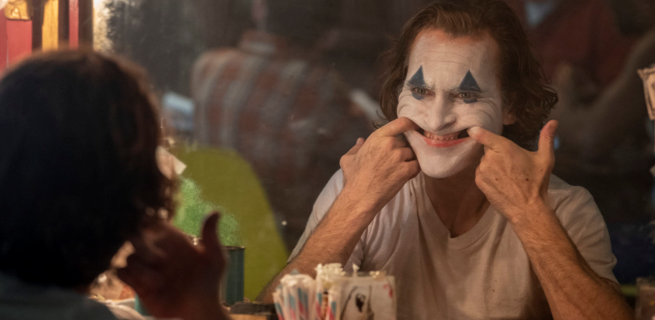
Arthur is just barely able to function in society by putting on a false face.

When we first meet Arthur Fleck, he’s a pathetic excuse for a man; reduced to dressing up in clown make-up and forcing himself to be a smiley, jolly clown for hire, he’s beaten down (literally) by both life and society. Right away, it’s pretty clear that something’s very wrong in his head and with his demeanour; his social skills are questionable, his self-confidence almost non-existent, and his ironic pathological need to laugh uncontrollably at the most inappropriate times make him an inherently damaged individual. In a city drowning in chaos and unemployment, with life at its bleakest, Arthur may be one of the lowliest and most despondent citizens of Gotham. Although he attends regular therapy sessions and is encouraged to write his thoughts and feelings in a journal, these outlets are of little help to his mental state. Awkward, insecure, full of nervous ticks and tricks, he’s kept in a fragile stability only by numerous ambiguous medications and his desire to be a stand-up comedian. Ironically, just as he tends to descend into maniacal laughter in uncomfortable and awkward situations, his comedy routines and sense of humour are openly ridiculed and his medication seems to be holding him back from unleashing all of the pent up aggression and emotion bubbling just beneath his surface.

Arthur searches for surrogate father figures to fill a void in his life.

Arthur’s reality is one of pain and suffering and oppression; when not eking out a mediocre living during the day, he’s looking after his bed-ridden and increasingly confused mother, Penny (Conroy). Arthur’s main source of escapism is in watching Live! With Murray Franklin and imaging forming a bond with its host, and his idol, Murray Franklin. Lacking a true father figure, Arthur imagines himself connecting with Murray to fill that void in his life and this sense of abandonment and desperate need for acceptance, love, and understanding only fuels his despondency and anger. However, already on the razor’s edge of sanity at the best of times, Arthur snaps after first losing his beloved job as a clown and then taking a beating on the subway from three Wayne Enterprises employees, whom he shoots in cold blood. In this version of Gotham City, Thomas Wayne (Cullen) is a Mayoral candidate and both directly and indirectly responsible for Arthur’s state of mind and living conditions, and eventual turn into an anarchistic figure. Condemning the shootings as the work of “clowns”, Thomas champions the social elite and the top one percent over fixing the problems of the destitute and unemployed and, as a result, inspires a great deal of the social unrest and crime that plagues the city. It’s a very different and disturbing take on the character, who is normally a moral and socially just individual; he reacts with anger when Arthur confronts him and seems to care very little for actually improving the lives of the city’s destitute populace.

Arthur finds a freedom in embracing his violent urges, which transforms his demeanour.

The discovery that Thomas may in fact be his biological father fractures Arthur’s already damaged psyche almost as much as Murray’s subsequent mocking of his awkward and embarrassing stand-up act and he is driven further to the edge by the discovery that he was actually adopted. No longer able to rely on his medicine to hold him at bay and finding a freedom in his murderous actions, when Arthur finally does give in to his base urges, his entire demeanour changes; in the beginning of the film, he slouches and slumps around the place like little more than a zombie. A gaunt, lowly speck of a man, it’s all he can do to get through each day much less trudge up the now iconic flight of stairs but, after killing for the first time, he finds himself liberated. No longer bogged down by his inhibitions and embracing his newfound freedom, he stands upright, moves with a grace and flamboyance and breaking into disturbing dances, and his descent into madness and violence only escalates from that moment on.

The Nitty-Gritty:
Joker goes to extreme lengths to evoke the spirit of the eighties; not only is the old school Warner Bros. Pictures logo featured at the beginning of the film, but the whole movie is full of a dirty, grimy appearance indicative of movies such as Taxi Driver (Scorsese, 1976) and The King of Comedy (ibid, 1982), both of which play as big an influence in the film’s plot and Phoenix’s portrayal as classic Joker-centric stories like Batman: The Killing Joke (Moore, et al, 1988). Additionally, Gotham City itself becomes as central as a character to the film as any of the living actors. A desolate, crime-ridden, bleak place overrun with violence, this is probably the best look at the seedy, street-level crime that plagues Gotham. I find this very appealing as, normally, Batman stories tend to focus more on organised crime, supervillains, and corrupt officials rather than the very random acts of violence that caused his creation in the first place.

As many have noted, Phoenix steals the show with his captivating performance.

Of course, the real star of the show here is Phoenix’s performance; thanks to a dramatic weight loss, he appears almost emaciated and constantly on edge, as though his very skin is crawling with repressed emotion. He runs through a gamut of emotions throughout the film, from despondency and oppression to passion and anger, to a cold disgust and an unhinged mania. Phoenix perfectly encapsulates the random, volatile chaos that is the Joker, humanising this traditionally ambiguous and unpredictable madman in an unsettling way. Pathological laughter aside, Arthur is exactly the kind of unassuming, downtrodden man you’d walk past in the street on any given day without a second’s thought; until he finds solace in killing and carnage, Arthur’s only comfort comes from living in a dream world of his own creation where he’s beloved and successful and accepted, but, when that shatters before his eyes, he replaces it with the euphoria of inciting anarchy through his actions as the Joker.

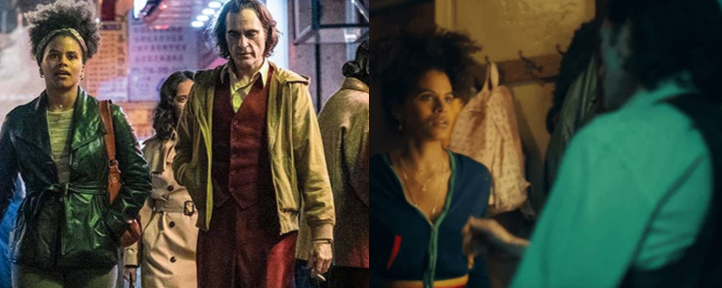
Arthur is tipped over the edge when he realises this relationship is a figment of his deranged imagination.

Nowhere is Arthur’s fragile and demented mindset more apparent than in his relationship with Sophie Dumond (Beetz); as you might imagine, considering he still lives with (and has a worryingly close dependency on) his increasingly frail mother, Arthur’s attempts to woo Sophie are clumsy and disturbing. He follows her (stalks, you might say) across the city but apparently seems to win her over with his sense of humour; feeling the rush of killing, he goes to her and she attends his stand-up routine, which is a hit, and supports his endeavours. After finding out the truth about his parentage, Arthur goes to Sophie for comfort…only to discover that their entire relationship was another aspect of his dream world. Frightened and disturbed by his presence, she begs him to leave and, already driven to the edge by his mother’s lies and the knowledge that his stand-up act was actually a complete screw up that his idol mocked on live television, Arthur reacts to the loss of his last tenuous grip on sanity by brutally killing his mother.

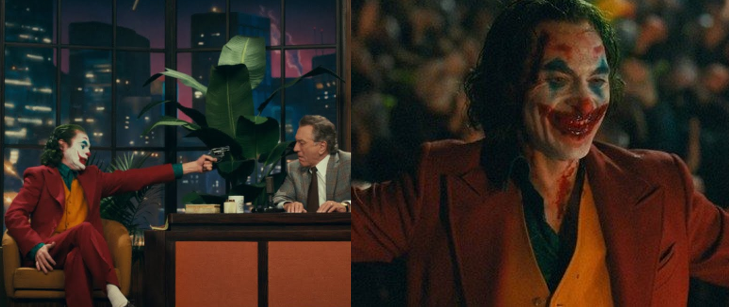
Freed from his inhibitions, the Joker inspires chaos and revels in the adulation of the oppressed.

Thomas’s derogatory comments about the “clowns” of Gotham incite the downtrodden and the desperate, like Arthur, into a rampant mob who don clown masks and believe that the Joker is sticking it to the wealthy and the oppressive elite. Seeing this, and his unintentional influence on people, excites Arthur, who finds himself in a position of power for the first time in his life. Betrayed by everything and everyone he’s ever known, Arthur is apathetic when he’s invited to fulfil his life’s dream and appear on Live! With Murray Franklin and instead sees it as an opportunity to spread his unique message and brand of chaos by shooting Murray in the head on live television while a city-wide riot breaks out. Although immediately arrested for the crime, the chaos that grips the city allows Arthur, now fully embracing his role as the Joker, to escape and stand amidst the adulation of his admirers having finally found his place in the world.

The Summary:
Joker is definitely an intense psychological thriller; as an exploration of the mind of a psychopath, it’s right up there with films like American Psycho (Harron, 2000) for the surreal and disturbing way it presents Arthur’s world and perception of reality. A traditional comic book movie it is not and that is immediately clear from the grounded, dirty aesthetic and twisted nature of the narrative, which focuses on an already disturbed and fractured man’s descent into complete anarchy. Joaquin Phoenix, of course, delivers a spellbinding performance and seems completely lost in the role; his commitment to the physicality and mentality of the character is commendable and he deserves all the praise in the world for delivering one of the most nuance and unsettling interpretations of the Joker ever seen. Sadly, my initial misgivings about the film continue to hold true; the fact that the film ends with the suggestion that all of the events we witness may have been as much a figment of Arthur’s imagination as Sophie or anything else we see really doesn’t help with that, either. It’s perfectly in keeping with the Joker’s status as an unreliable narrator but it just adds to the pointlessness of the film in many ways. Sure, Phoenix is great and the film does a fantastic job of telling a self-contained Joker story without Batman but what is the point of really getting under the Joker’s skin if we’re never going to see him clash with his long-time nemesis? If Arthur isn’t the true Joker, as is also suggested, then again what’s the point as it adds nothing to the actual Joker’s story, which continues to run contrary to Joker in both comics, movies, and television. As a result, while Joker is an impressive and disturbing psychological thriller, it’s not really a very good Joker story and I can’t help but feel that it’s handicapped by being associated with DC Comics as a result. I get why it did so well and got so much praise but it just seems like a waste of time, money, and talent when it’s going to mean nothing in the big picture of the DCEU.

My Rating:

Rating: 2 out of 5.

Could Be Better

Do you agree with my assessment of Joker or do you think I’m just talking bollocks? If you’re a fan of the film, what was it about it that you enjoyed? Do you agree that it’s disappointing that we won’t see this version of the character play a role in the DCEU or do you think such concerns aren’t as important as telling a good story? What did you think to Joaquin Phoenix’s portrayal of the character and how does it hold up for you compared to other Jokers? Are you a fan of the DC movies exploring the multiverse and producing disconnected films or, like me, do you prefer them to be part of a larger shared universe? What are some of your favourite Joker-centric stories over the years? Whatever you think, good or bad, about Joker, drop a comment down below and let me know your thoughts.

Game Corner: Lego DC Super-Villains (Xbox One)

GameCorner
LegoDCVillainsLogo

Released: October 2018
Developer: Traveller’s Tales
Also Available For: PlayStation 4, Nintendo Switch, and PC

The Background:
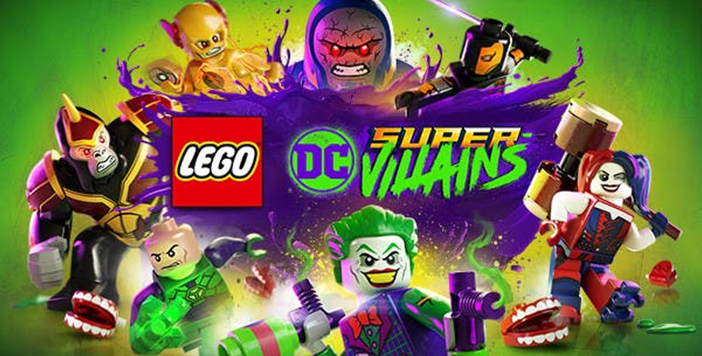
You’ve heard of Lego, right? Those little Danish plastic blocks that you can slot together to build all kinds of shit and make you wish you were dead when you step on them? Well, some time ago (around 2014), they started producing playsets based on DC Comics characters. After the release of Lego Star Wars: The Video Game (Traveller’s Tales, 2005) laid the groundwork for what would become numerous licensed Lego videogames, Traveller’s Tales released Lego Batman: The Videogame (ibid, 2008), the first in a series of Lego-themed videogames based on DC Comics characters. Lego DC Super-Villains came hot on the heels of The Lego Batman Movie (McKay, 2017) and was a spin-off of its immediate predecessor, Lego Batman 3: Beyond Gotham (Traveller’s Tales, 2014). While the gameplay and narrative may have expanded beyond simple pantomiming in enclosed environments to fully-voiced open worlds, the core blueprint of building increasingly ridiculous Lego constructs in a DC-themed world remained unchanged.

The Plot:
When the evil Justice Syndicate arrive from Earth-3, pose as superheroes, and promptly dispose of the Justice League, the super-villains of the DC Universe must join forces with a mysterious new villain in order to expose the Syndicate as frauds and reclaim their place as the world’s number one villains.

Gameplay:
If you’ve ever played a Lego videogame before, you’ve played them all; gameplay is ridiculously simple and yet fun, with the games designed to be accessible to younger players and emphasising pick-up-and-play, co-operative gameplay, and simple, easy to master mechanics. The first thing you’ll do is design your own Lego supervillain from a range of available heads, costumes, and powers, which you’ll unlock more of as you play through the game’s story mode and find hidden Gold and Red Bricks. Once you have your Rookie, you’ll adventure with some of DC’s most notorious super-villains (including Harley Quinn, Lex Luthor, and Black Adam) across some of DC’s most recognisable locations (from Slaughter Swamp, to Metropolis, to the fire-pits of Apokolips).

LegoDCVillainsRookie2
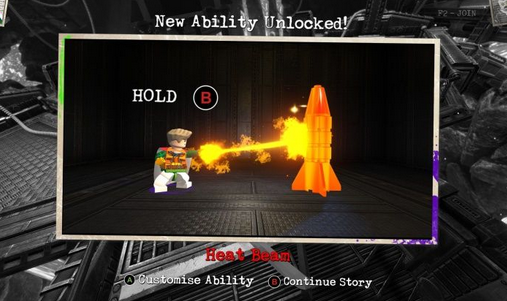
Learn new abilities as you play through the story mode.

Gameplay couldn’t be simpler; you can attack enemies with combos, ranged weapons, energy blasts, and crowd-clearing ground pounds, or fly and flip across the skies of the game’s various open worlds, amongst many other attributes. The Rookie’s abilities can be customised as you play and his ability to absorb and learn new powers is a crucial part of the game’s amusing story mode.

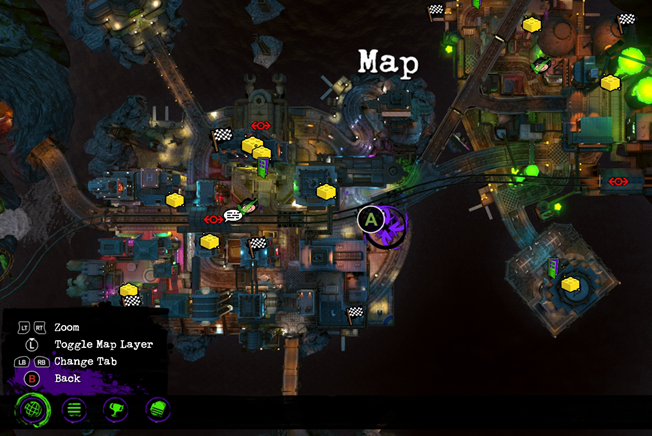
LegoDCVillainsMap
There are many secrets to find in the game’s many locations.

Considering the Lego videogame formula hasn’t changed since their first Lego Star Wars videogame, there’s a lot to see and do here; every time you complete a chapter of the story mode, you unlock it for use in Free Play mode. As each environment has many hidden secrets that can only be uncovered by using characters and abilities not initially available in the story mode, this encourages a great deal of exploration and replayability if you want to find everything and earn all of the Achievements. Combat and gameplay are simple enough, and the game’s puzzles aren’t generally much to worry about; Lego DC Super-Villains’ challenge comes in the multitude of secrets hidden in the game’s multiple overworlds and individual chapters and in the vast amount of side missions on offer. You’ll be tasked with photographing goons, destroying certain objects, or collecting certain items, all to either obtain another hidden brick or unlock an extra playable character in the game’s already stacked roster.

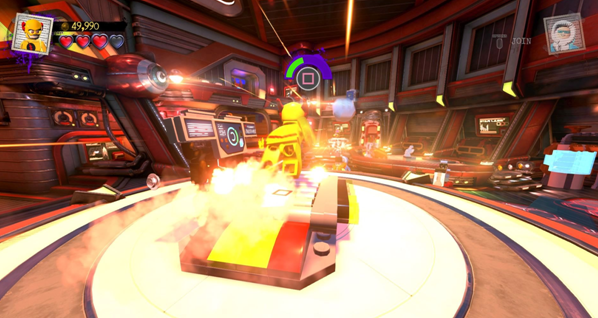
LegoDCVillainsBuilding
You’ll need to build all manner of Lego toys to progress.

A crucial aspect of any Lego videogame is smashing everything in your path, collecting Lego studs, and building, building, building. Holding down B near a cluster of Lego pieces will see your character piece together all manner of Lego constructs, from weapons, to computer terminals, vehicles, and even the Flash’s Cosmic Treadmill, all of which will spew out yet more Lego studs, open up new areas, or allow you to progress further.

LegoDCVillainsCharacters
Everyone is represented, from the iconic to the obscure.

Collecting studs is vital to your progression; although you have a heart-based life system, you can return to the game as many times as you like after dying as long as you have enough studs. However, as they’re scattered across every inch of the Lego DC world, you’ll never be running short of these, and enemies will often drop hearts upon their defeat. Studs can also be used to purchase new characters and vehicles, both of which are essential to earning some of the game’s Achievements.

Graphics and Sound:
A key aspect of all of Lego’s multimedia ventures is just how well they recreate the feeling of playing with actual Lego toys; everything in their movies, animated shorts, and videogames has some basis in reality and is either based on, or available as, an existing Lego playset.

LegoDCVillainsLocations
You’ll visit some of DC’s most iconic locations.

To that end, all of the characters look and act exactly as a Lego toy would; they’re made of shiny, stiff plastic and it always feels as though you’ve just dropped a bucket of your Lego out on the floor and started playing with them. Iconic DC locales are lovingly crafted out of the iconic bricks to the point where you’re smashing your way through a dark and stormy Gotham City that evokes exactly the same sense of gloomy dread as anything produced by Rocksteady.

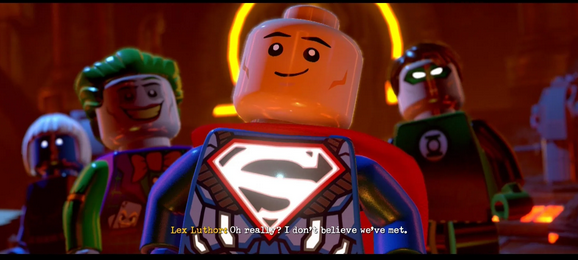
LegoDCVillainsVoices
You’ll recognise a lot of the voices in Lego DC Super-Villains.

While early Lego videogames based on movie properties utilised the soundtrack and vocal performances of their source materials, Lego DC Super-Villains favours a largely original score and goes all-in with the quality of its voice actors. You’ve got the likes of Kevin Conroy, Clancy Brown, and Michael Ironside reprising their roles from various DC cartoons and animated movies alongside John Barrowman, Zachary Levi, and Brandon Routh voicing their respective characters from DC’s live-action television shows and movies.

Enemies and Bosses:
As you journey to expose the Justice Syndicate, you’ll naturally face opposition from local law enforcement and rival goons before squaring off with members of the Justice Syndicate and the Justice League.

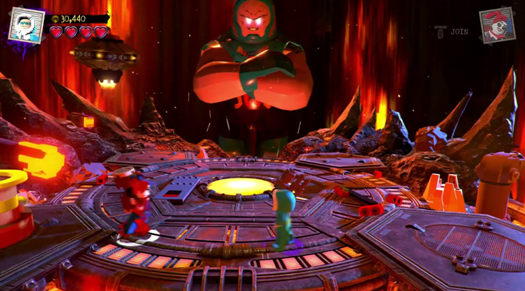
LegoDCVillainsBosses
You’ll eventually take on Darkseid in an epic encounter!

As a result, you’ll inevitably end up in battle against the likes of Ultraman, Mazahs, Owlman, Johnny Quick, and Superwoman but you’ll also fight against Solivar, Doomsday, and the titanic New God Darkseid. Each boss battle has a unique twist, forcing you to use different abilities to break through their defences and chip away at their health.

LegoDCVillainsBosses2
Bosses are grandiose, but simple, affairs.

In many instances, bosses will use the environment to their advantage (such as Sea-King, who attacks with a giant octopus) or send waves of goons against you. Luckily, however, you can utilise different abilities to uncover building bricks around these environments to construct weapons and other Lego that will turn the tide in your favour.

Power-Ups and Bonuses:
As you play Lego DC Super-Villains, you’ll find Gold and Red Bricks, hidden Batman-branded Minikits, and various graffiti points. Each of these, and the collecting of studs, will unlock and allow you to purchase a treasure trove of in-game modifiers which will double your stud bonus, detect secrets, enable one-hit kills, and even flash up the Batman (1966 to 1968) “Pow!” sound effects.

LegoDCVillainsGiant
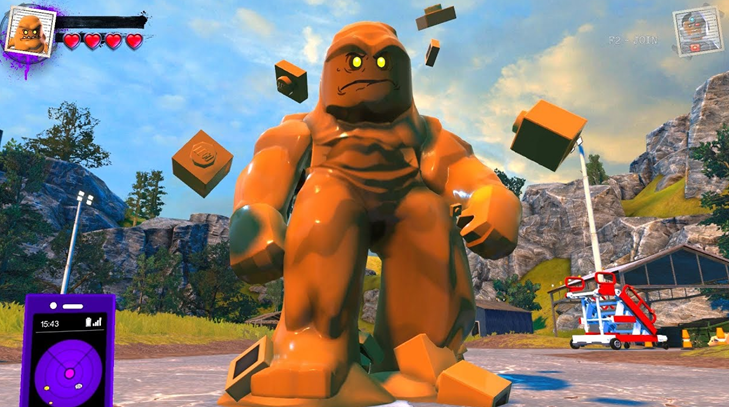
Some characters drastically change form to reach new areas.

Additionally, every Lego character has their own unique weapon and playstyle; some, like Clayface, can increase or decrease in size to smash through obstacles or fit through vents; others, like Livewire, can charge electrical conduits with their electricity powers. The likes of the Joker and Scarecrow can collect special items to brew up fear gas or laughing gas, respectively, while also commanding goons found in each level to form bridges or activate switches. Similarly, there are some characters, like Tigress, who can dig up hidden treasures or use their acrobatic abilities to jump across rooftops. While it would be wrong to say that no two characters play the same, as there are many who share recognisable traits, playing as Superman is a markedly different experience to playing as Chang Tzu. Add on to that the Rookie’s ability to learn and combine these different abilities and you have a lot of different options available to you to progress through the game’s story and side quests.

Additional Features:
Once you clear the game’s substantial story mode, which will see you take command of various different DC villains across multiple locations, you unlock five bonus levels that are narrated by Lobo and located around Apokolips. These extra missions allow you to play as the various members of the Justice League as they battle their way to freedom out of Darkseid’s hellish homeworld. There’s also a fair amount of downloadable content on offer that adds characters and levels based on DC films like Shazam! (Sandberg, 2019) and Aquaman (Wan, 2018) and DC’s live-action shows, like Arrow (2012 to 2020) and The Flash (2014 to present), among others.

LegoDCVillainsSummary

The Summary:
I’ve always enjoyed the simple pleasure of the Lego videogames; they’re not exactly taxing to play through and are easy to slip right back into after years away as the fundamental basics have remained unchanged since 2005. Not only are they harmless fun to play, they’re also pretty funny; Traveller’s Tales have put a lot of work into the game’s story and dialogue and much of the game’s humour comes from genuinely funny jokes, gags, one-liners, Easter eggs, and sight-gags. Saying that, though, Lego DC Super-Villains is best played with a friend so you can easily smash your way through the story mode and side quests and uncover every hidden trinket on offer. As a solo experience, it’s serviceable enough but these are games built to be enjoyed with a friend or, more ideally, a younger sibling or a child (preferably yours…) as the challenge on offer is tailor made for a younger audience. There’s a lot to like, here, though, especially if you’re a fan of DC Comics or their animated endeavours.

My Rating:

Rating: 2 out of 5.

Could Be Better

What did you think about Lego DC Super-Villains? Are you a fan of the Lego videogames or do you find the formula to be wearing a bit thin by now? Feel free to leave a comment and give me your thoughts and feedback.

Game Corner: Injustice 2: Legendary Edition (Xbox One)

GameCorner
Injustice2Logo

Given that Warner Brothers bought Midway back when they were forced to shut up shop, it should have been seen as inevitable that a videogame would be made that mashed together characters from the Mortal Kombat series with those of the DC Universe. Of course, Mortal Kombat vs. DC Universe (Midway Games, 2008) was quite the barebones, lacklustre effort compared to the spiritual successor, Injustice: Gods Among Us (NetherRealm Studios/Warner Bros. Interactive Entertainment, 2013).

Injustice2Brainiac.png
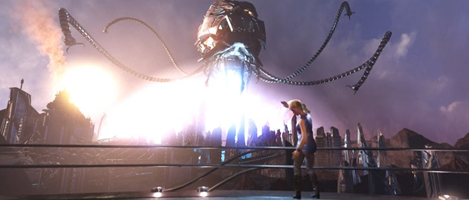
Brainiac is coming to collect the Earth!

Injustice was generally applauded not only for its graphics, gameplay, and competitive fighting mechanics but also its story mode; NetherRealm Studios have seemingly perfected the art of infusing their fighters with an in-depth and genuinely captivating single play story and Injustice 2 (ibid, 2017; 2018) continues this trend. After the Justice League travel to a parallel world to help end the reign of a dictator-like Superman and his regime of similarly-evil former heroes, the Injustice-world faces a new threat in the form of Brainiac. Though Batman attempts to rally a new generation of heroes against Brainiac, they have no choice but to free Superman from his red sun prison cell in order to combat the threat and enter into an uneasy alliance.

Injustice2Roster
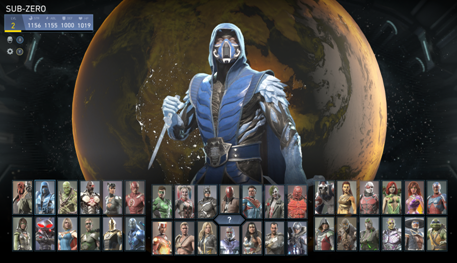
A good roster, bogged down with one-too-many Batman characters.

A fighting game is only as good as its roster; like Injustice, Injustice 2 has an unhealthy obsession with Batman characters – Batman, the Joker, Robin, Poison Ivy, Red Hood, Scarecrow, Bane, Catwoman, Harley Quinn, and Deadshot bloat out the roster. While it is a little disappointing that this appears to have caused other, unique characters such as Booster Gold or Doctor Sivana miss the cut, Injustice 2 does bring some welcome new faces to the game; Firestorm, Blue Beetle, Atrocitus, Gorilla Grodd, and Doctor Fate are just some of the new heroes and villains available to play as. The Legendary Edition also includes some fantastic downloadable characters, such as Hellboy, Black Manta, and even the Teenage Mutant Ninja Turtles!

Injustice2Unique
Every character has a unique play style.

Every character boasts their own unique combos, special moves, and super moves and plays a little differently; Darkseid, for example, is slow and methodical, Supergirl is a much faster character, while characters like Green Arrow and Batman rely more on their gadgets and skills to succeed. Successfully pulling off combos, counters, and landing attacks allows players to build up their super meter and power up their special moves or execute a world-ending super move. Each character starts with three loadout slots, which can be increased to five, that allow you to gear up Aquaman, for example, to have one loadout the favours attack, one that favours health, one that favours special moves, and so on, depending on the gear you apply. You can also apply this gear to AI Loadouts and have them fight for you, which is kind of weird and I’m not sure why you would want to do that rather than play the game yourself but it is useful for the game’s Endless and Survival modes.

Injustice2Stages
Injustice 2‘s stage selection levels much to be desired.

While Injustice 2 has a decent roster, it doesn’t have much in the way of stages; there are only twelve stages to pick from and they’re not really that dynamic or interesting. You can still send characters flying to other parts of the stage, which is fun, but it seems there’s a lot less opportunities to do this than in Injustice. There are also some fun stage interactions to be had, like smashing Swamp Thing over the head with a crocodile in Slaughter Swamp, but, again, it seemed that there were more and better stage interactions in Injustice. The primary selling point of Injustice 2 is the Gear System; winning matches not only earns experience points for each character and the player’s profile but also awards numerous gear. Players can then apply this gear to each character to boost their attributes, gain performance buffs (such as greater attack strength against Metahumans), alter the character’s costumes, and even unlock different special moves. Winning matches also earns the player coins and crystals, which can used to buy Mother Boxes and unlock more gear, transform or combine gear to make it stronger, or unlock Premier Skins for certain characters.

Injustice2Skins
Premier Skins are available…at a price.

Premier Skins allow you to play as new characters; Cheetah, for example, has a Premier Skin that turns her into Vixen and Raiden’s Premier Skin is Black Lighting. This is great, as it effectively adds even more characters to the game’s roster; the only downside is that, to purchase Premier Skins, you need Source Crystals, which are few and far between. You’re therefore forced to grind over and over, levelling up your profile and characters, to earn a pittance of Source Crystals or spend real money. This latter appears to be what NetherRealm Studios want you to do as it is extremely difficult to earn enough Source Crystals as the Premier Skins carry a hefty price tag, and only the best Mother Boxes and rewards can be earned through spending real money, it seems, making the in-game currency all but worthless. Unlocking gear and applying it to characters is fun but, let’s be honest, you won’t be applying all of your gear to every character as some characters are better than others and some or just dead weight. The biggest downside to the Gear System is that, unlike in Injustice, it is the gear that determines what your character will look like; therefore, you can’t just select Green Lantern and choose to play as Yellow lantern, you have to unlock the correct gear and colour palette (which also require Source Crystals), which is quite disappointing and annoying.

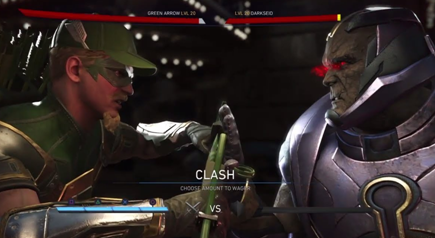
Injustice2Clash
The clash mechanic as as annoying as ever.

In terms of gameplay, Injustice 2 is very similar to its predecessor with a noticeable increase in AI competency; I played the entire game on Very Easy and, on more than one occasion, noticed that the AI doesn’t take any shit. If you spam moves or favour a certain tactic, the AI calls you out on it and gives you a competitive match more often than not. The story mode is fun to play through but a breeze; I finished it in within two casual days of gameplay and only went back to it to finish off the branching paths. The clash mechanic returns from Injustice and it’s just as annoying as ever; as you take damage, you can spend your super meter initiating a clash and pressing a button in a rock/paper/scissors type of mini game, which will either deal additional damage or restore your health. It seems that the AI always busts out a clash at the worst or most annoying opportunities and it’s easily to most frustrating part of the game.

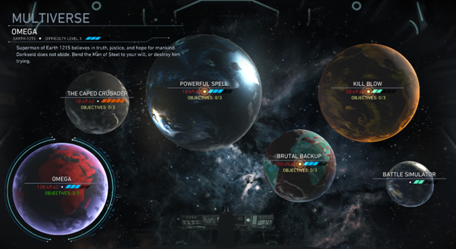
Injustice2Multiverse
Take on the entire Multiverse…once you’re levelled up enough…

Similar to Mortal Kombat X (ibid, 2015), Injustice 2 utilises an ever-changing Multiverse mode that allows players to fight a number of opponents and obtain better rewards. These change hourly, daily, weekly, and monthly and often carry certain themes that will be familiar to DC Comics fans; you can also use the Battle Simulator to play traditional tournament modes or battle endless opponents. One thing I will praise about Injustice 2 is that every battle is different; I don’t think I ever fought the same version of a character twice as it seems every match sees random gear and colour schemes applied to the opponent. You can also join a Guild and take part in Guild Multiverses and challenges to unlock even more Mother Boxes and rewards; these are far more challenging than the regular Multiverse modes and, similarly, the best Multiverse rewards are only available when you’ve levelled a character up to level twenty or thirty, meaning that you’re going to have to play again and again and grind over and over to reap the benefits. Honestly, maybe I’m a bit jaded, but I don’t find myself particularly enthusiastic about stepping up to this challenge; Injustice 2 features a wealth of Achievements, many you can sweep through regular gameplay, but the more specific ones (such as maxing every character’s level out) just seem like too much of a chore. I really don’t like that I have earned so many in-game coins and yet I cannot use them to purchase Premier Skins or extra colour palettes; I don’t really want to spend my actual money buying them, was disappointed to see that they weren’t already unlocked in the Legendary Edition, and am not sure I can be bothered to grind over and over to unlock them.

Injustice2Batman
Want the best stuff? You better have deep pockets!

In the end, Injustice 2 is good; it’s fun to play, the story mode is decent, and the graphics are very impressive but there’s not too much calling me back to it. I played Injustice pretty much to death working my way through the challenge mode but you have to put some serious effort in to challenge the best Multiverses and the motivation is severely lacking this time around just because the best gear and rewards are either really rare or too expensive. Maybe, next time around, NetherRealm Studios should limit the in-game currency to two forms (one to buy stuff, one to upgrade stuff) and move away from forcing players into spending their real-world money on additional extras, especially if they’re going to bring out a Legendary Edition after the initial versions.

My Rating:

Rating: 2 out of 5.

Could Be Better