
Released: 21 November 2003
Developer: Point of View
Also Available For: GameCube and Xbox
The Background:
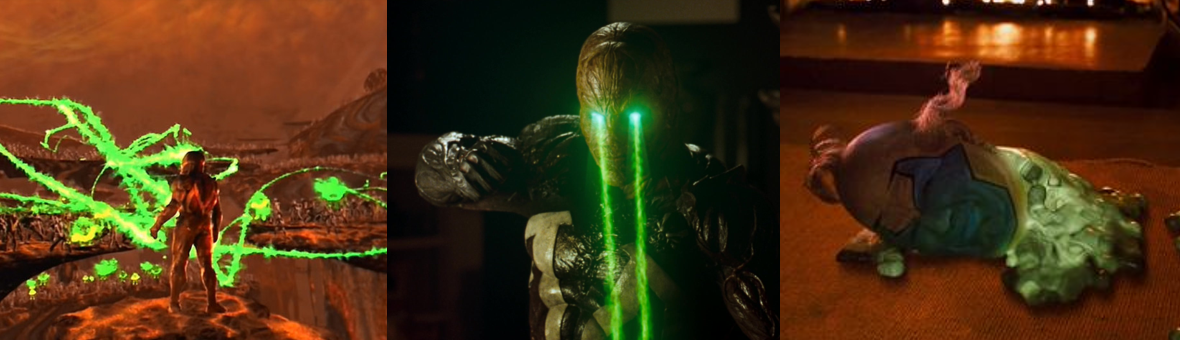
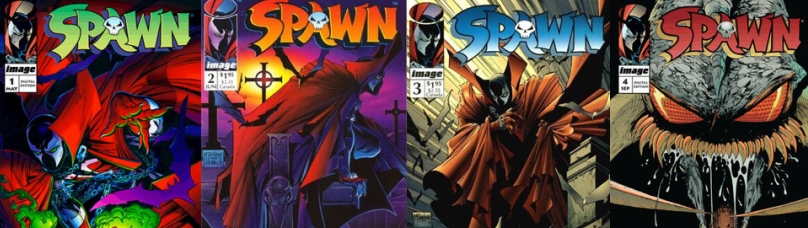
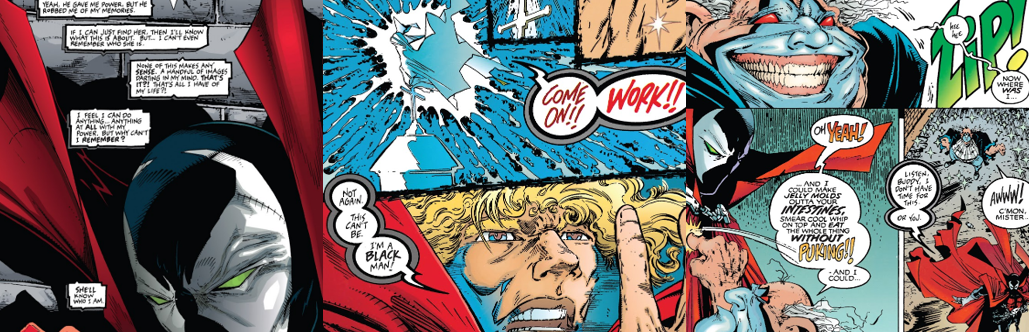
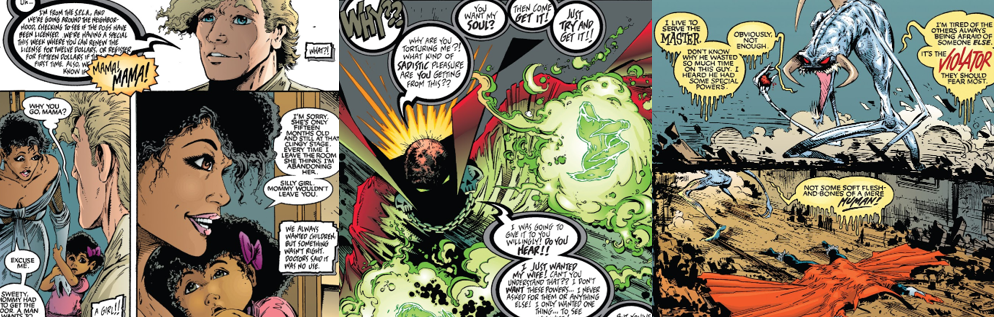
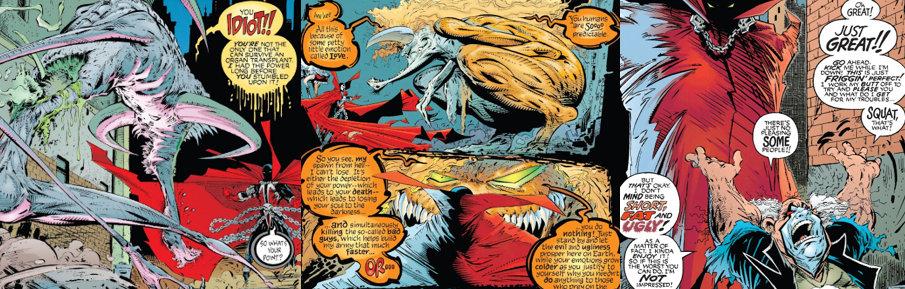
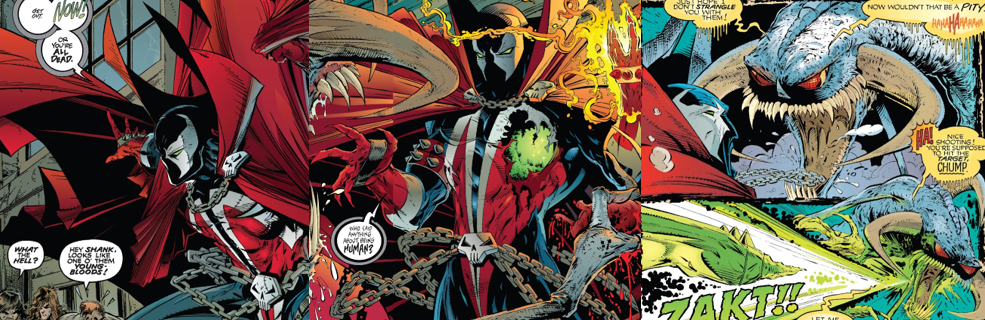
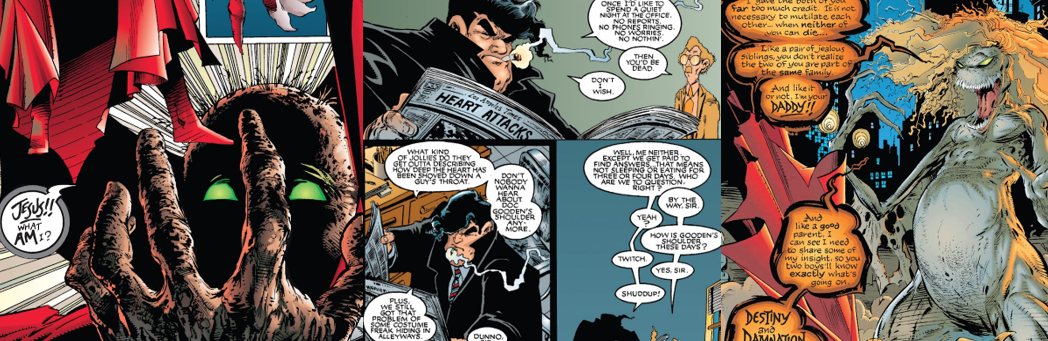
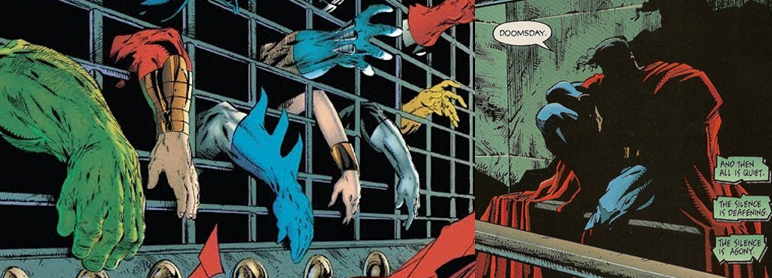
After making his debut in the comic book industry with his work on Coyote, avid artist Todd McFarlane stood out from his peers by revitalising The Amazing Spider-Man with his signature art style. In time, McFarlane became dissatisfied with his lack of creative control at Marvel and established Image Comics alongside other Marvel creatives in 1992. Image was led by Al Simmons/Spawn, a hellborn anti-hero first dreamed up by McFarlane as a teenager. Spawn #1 was a record-setting hit and became the most successful creator-owned comic of all-time. This led to a widely panned live-action adaptation, a beloved animated series, numerous toys, and a handful of videogames. Spawn’s first videogame outing was Todd McFarlane’s Spawn: The Video Game (Ukiyotei, 1995) which set a precedent for his subsequent outings, which garnered mixed reviews across the board. Developers Point of View sought to deliver the definitive Spawn experience in 2003, though there’s sadly little information available online about the development of this game. I can tell you, however, that Spawn: Armageddon received mixed reviews that criticised the repetitive gameplay, though some have praised it as an enjoyable enough title.
The Plot:
When the demonic forces of Malebolgia invade New York City, signalling the onset of Armageddon, Lieutenant Colonel Al Simmons/Spawn turns his supernatural powers against the hordes of Heaven and Hell to defend humanity.
Gameplay and Power-Ups:
Spawn: Armageddon is a third-person action brawler that focuses on melee, gunplay, and magical attacks courtesy of Spawn’s finite “Necroplasm”. Unfortunately, rather than striking a balance between high intensity, action-packed combat and emphasising stylish combo attacks like the Devil May Cry series (Capcom/Ninja Theory, 2001 to present), Spawn: Armageddon limits the player to a handful of melee attacks, assorted regular and supernatural firearms, lacklustre demon powers, and aggravating platforming sections. Offering three difficulty levels (which alter the strength of your enemies) and favouring a mission-based structure, Spawn: Armageddon sees you cutting down demon entities with Spawn’s “Agony Axe” (formed from his sentient cape) with Circle, jumping, double jumping, and gliding short distances with his tattered cape with X, and awkwardly using his chains (fired from his crotch!) to grapple with L1. Players fire Spawn’s currently equipped firearm with Square and unleash his Hell Powers with Triangle, using the directional pad to switch between them. You can (and should) hold R1 to target enemies, though there doesn’t seem to be a way to cycle your targets and you only target the closest one, can hit an axe slam by pressing Circle in mid-air, and open doors with X. Weapons are found as you explore the restrictive, bland environments and each needs ammo. In lieu of your guns, you can attack with your crotch chains, though defeated enemies and smashed crates will yield ammo to keep you topped up.
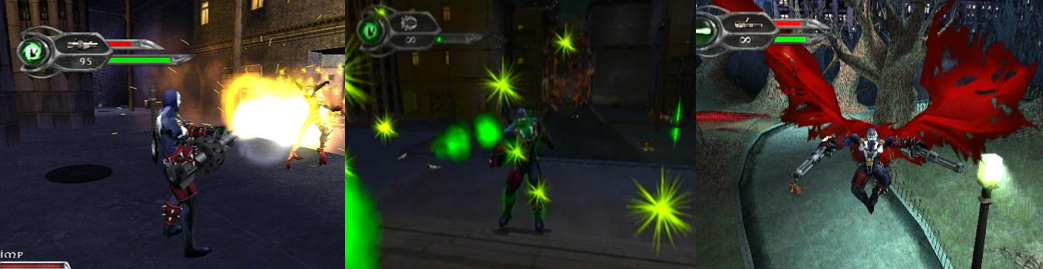
Enemies and crates also drop coloured “Souls” you must collect. Green Souls replenish your Necroplasm, allowing you to use Spawn’s Hell Powers; Red Souls replenish your health; and you trade Blue Souls for upgrades between missions. From here, you can increase Spawn’s maximum health and ammo and the damage output of your guns, though each upgrade costs progressively more so I’d focus on increasing your health since there are no mid-mission checkpoints. Spawn has a shotgun for close-quarters combat, dual pistols, a sub-machine gun, a mini-gun, the Brimstone Cannon, a missile launcher, and the Inferno Cannon, with the latter requiring a charge and larger weapons (such as the mini-gun) weighing you down. Spawn can toss Necroplasm fireballs, fire an energy beam, erect a shield, and use “bullet time” to pummel enemies for as long as his meter lasts. Some enemies are weaker to certain attacks than others; they’ll shrug off your Necroplasm attacks and your explosives do minimal damage, so you must whittle them down with bullets. Like many elements, this isn’t as deep or as developed as it could be. It would’ve been interesting to see demons weak to bullets and angels weak to your Hell Powers, for example. Spawn’s axe combos aren’t very useful or complex, either, and I often forgot I had it. While you’ll largely be jumping or gliding over gaps or grappling about, Spawn can also wall jump. Unfortunately, the finnicky camera and Spawn’s clunky-ass controls make these platforming tricks frustrating. Spawn cannot block and has few options to avoid damage. He can be easily stun-locked and ragdolled by projectiles, making combat aggravating. It doesn’t help that Spawn: Armageddon throws waves of enemies at you, which just serves to expose how shallow and unfulfilling the combat is.
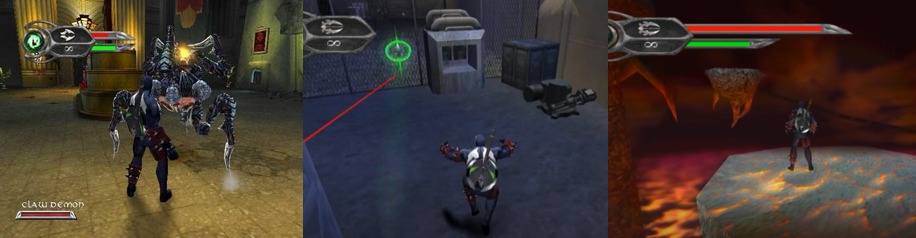
Spawn is often confined by Hellfire barriers or mist dispel or destroy skeletal Guardians once all nearby enemies are dispatched. Each mission has a specific objective you can review from the pause menu, but these mainly focus on destroying all enemies, activating switches, or spawning (pun intended) the end goal. In between awkwardly jumping up walls or between moving platforms, you’ll often destroy objects like junction boxes, generators, and power nodes for Heaven’s ominous space station. This opens doors, lowers barriers, or re-routes power to new areas, though it’s often unclear where you need to go or what you need to do as there is no map system and no onscreen indication of your objectives or when you’ve met them (beyond the end goal appearing). This was especially aggravating in the newspaper factory, where I activated a bunch of switches and was left clueless how to reach a higher platform. In the end, getting Spawn on top of a printing press and forcing the double jump and glide to barely get him close enough to ledge grab was the key. I was equally frustrated when disabling auto turrets, attacking gargoyles to raise bridges in Hell, and following blood trails in the subway since some gaps were very difficult to clear thanks to Spawn’s useless glide and grapple. When inside buildings, the game becomes uncomfortably claustrophobic and difficult to navigate as every area looks the same. When outside, the camera gets stuck and blocks your view. Heavenly bolts can rain down upon you, enemies constantly teleport in, you’ll take lifts and portals to new areas. Spawn must also struggle past laser defences and flame bursts, which only adds to the frustration when navigating the floating platforms and narrow stone columns of Hell. While dropping down pits usually resets you on solid ground, it’s an instant game over when descending deeper into the volcanic malebolge and good luck figuring out the looping, maze-like hallways of the Angel Station.
Presentation:
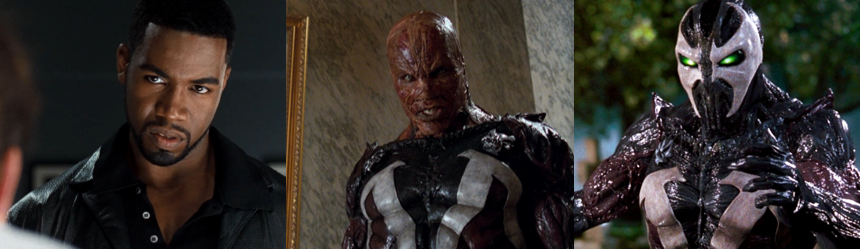
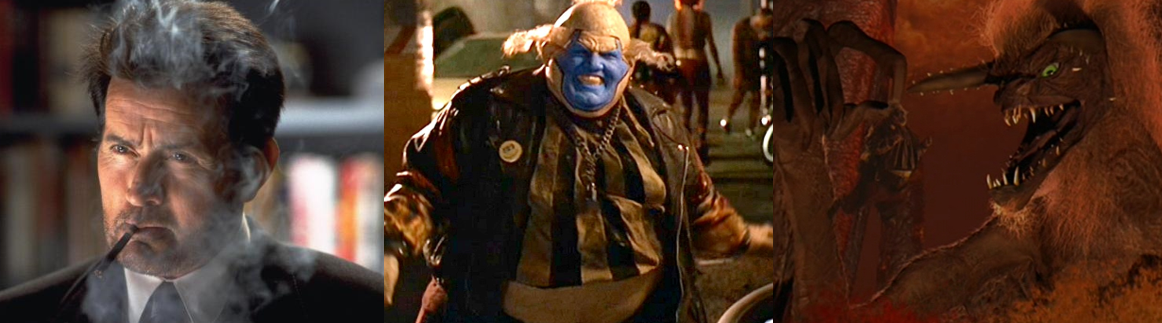
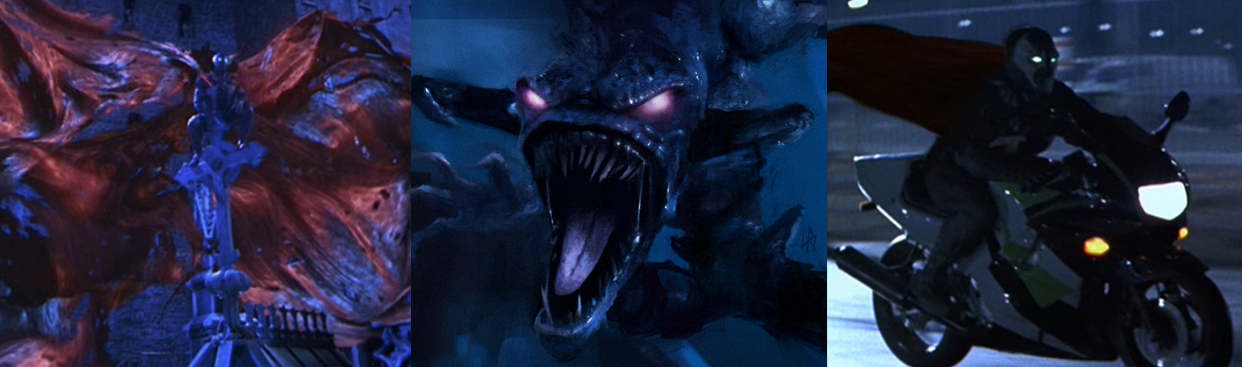
Spawn: Armageddon makes a good first impression. The pre-rendered cinematics bring Todd McFarlane’s distinctive art to life and suggest a game that’s going to at least be visually interesting to look at. You’re only further encouraged when Keith David reprises his celebrated portrayal of the titular anti-hero, but things quickly take a turn with the in-game graphics and painfully generic rock/metal soundtrack. Obviously, you have to give the game some leeway as it is a PlayStation 2 title but…damn, do these character models and environments look ugly and generic. I want to say Spawn fares the best since he closely resembles McFarlane’s artwork but he’s very clunky and struggles to navigate the largely claustrophobic locations. Keith David tries to add some gravitas to the action, punctuation victories with low chuckles and commenting on what’s happening around him, and Spawn’s cape impresses with it unfurls, but it’s odd to me that Spawn looks so low-res when Dante looked sleek and sexy just two years earlier. I liked that demonic creatures like the Violator and Malebolgia communicated through telepathy like in the animated series, though the game is disappointingly light on recognisable characters and villains from the comics. While cutscenes utilise both pre-rendered and in-game graphics, with Spawn being aided/mocked by Mammon throughout, it seems the developers ran out of time or money as major events are often relayed through text prior. This became increasingly noticeable as the game progressed and they were often used to explain a sudden shift in location, but the execution just felt very lazy and cheap to me.
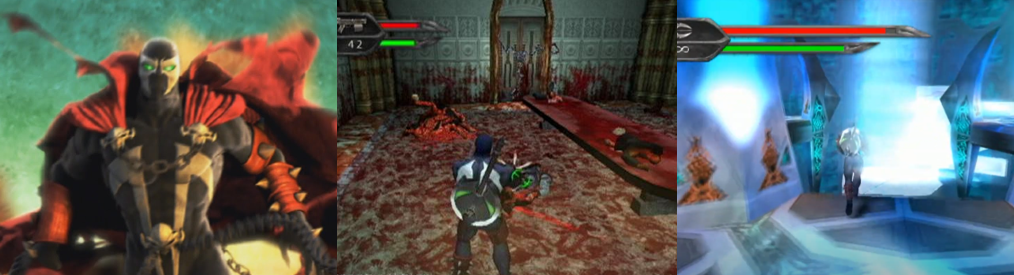
You start the game in the heart of the city and return there often, clumsily wall jumping and hopping across rooftops as you defend Spawn’s alley, Rat City. You can destroy fire hydrants, cars, and bins for goodies and may notice the music awkwardly skipping, looping, or cutting out. This quasi-open environment is then replaced with the restrictive newspaper factory, a warehouse-like interior full of large printing presses that are deceptively difficult to climb on. Spawn raids Jason Wynn’s elaborate office building, though the luxurious corridors and offices aren’t much to shout about. However, I liked the wider foyer with its staircases and rooms were often ransacked, splattered with blood and corpses. Things switch back to generic, muddy, and dull as you explore the docks (you might want to adjust your television’s brightness settings for this game, just saying). While things were more visually interesting in the dilapidated subway, it was equally difficult to figure out where to go as everything looks the same. Spawn fends off angels outside city hall and spends a few missions in a twisted, nightmarish bastardisation of Central Park. Though you’re confined to a set path, the gnarled trees, burning Hellfire, and freakish enemies made this an enjoyable section. After battling in a disappointingly bland opera house (save for the giant props), Spawn’s forced to retreat to Hell to subdue his angelic counterpart, Anti-Spawn/The Redeemer. Hell is a volcanic mess of flame bursts, floating rocks, and chains floating around a central tower. After striking a deal with Malebolgia, Spawn fights through the Angel Tower and into the Angel Station, easily the most visually interesting and repetitive areas. While I enjoyed the ethereal lights, marble-like stone, the strange mixture of alien and otherworldly technology, this was a confusing mess of samey corridors that I was glad to see the back of.
Enemies and Bosses:
Spawn’s most recurring enemies here are imps, scrambling little demons who attack in groups, slashing with their claws, leaping at you, or tossing fireballs from afar. Luckily, they’re very weak and easily disposed of, as are the Hell Leeches that often burrow up from the ground and vomit Necroplasm-draining spit. Flying imps can be a bit trickier as they attack from afar while slaughtered corpses rise as flailing Meat Puppets whose torsos claw their way across the floor. While raiding Wynn’s office, you battle both his armed troops and possessed variants, who are noticeably feeble, unlike the twisted Tree demons who haunt Central Park. Often, these demonic forces are bolstered by the unsightly Lamenting Demon, a thrashing monstrosity that spawns floating eyes and is best fought from a distance. The Berserkers were some of the more annoying enemies as they leap at you with blade arms, strike fast, and take a lot of punishment a d made tougher when joined by the durable Whip Demons. Perhaps the most bizarre of Malebolgia’s forces are the Claw Demons, distinctly crab-like demons that scuttle around and lunge with their large front claws. You’ll also battle the formidable forces of Heaven, who teleport about in a blaze of Heavenly light and attack with lances, rain projectiles, and wield Brimstone Cannons. Angels were easily the most tiresome foes, especially in the Angel Station, where they just kept spawning. The space station’s crew also appear here; angels in their purest form, they travel as beams of Heavenly light and share a health bar, though your Necroplasm attacks can whittle them down quite nicely.
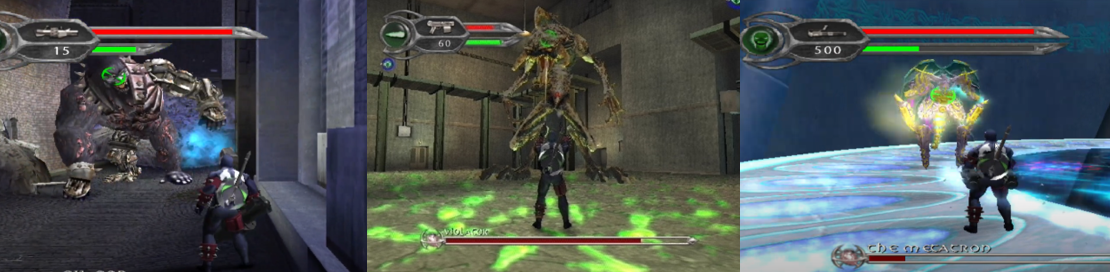
Many enemies are recycled as mini boss encounters, like when you battle angels outside City Hall and when the Hellhole opens in Central Park and you’re forced to fend off waves of Newborn demons who pose a significant threat if you’re low on ammo and Necroplasm. You’ll twice battle the Spider Tank, an arachnid mech possessed by demons; once in the docks and then in the more restrictive military warehouse. Either way, it lurches at you firing mini guns and a powerful front cannon, though it’s vulnerable from the rear. While in the docks, you contend with a hellish bulldozer, which tries to run you down and spawns Berserkers. Its weak spot (a disturbing, tentacle-like tongue) is only briefly exposed and is difficult to hit with those nippy bastards distracting you. This battle echoes the one against the brutish Michael Konieczni/Cy-Gor. This cybernetic ape fills a narrow alleyway and forces you to avoid its shockwaves and the debris it hurls, which is difficult as your movements and resources are limited. Spawn’s archenemy, the Violator, is also fought twice but, while he assumes a “frenzied” form in Hell, both battles are functionally the same. You must stay on an upper, circular path avoiding his claw swipes (which destroy your platforms), grappling to safety, and peppering him with attacks until he keels over. You get a prelude of your later battles with the Redeemer when fighting the Reaver, an armoured avenger who wields a titanic sword that covers a wide arc and which he hurls at you, alongside a devastating beam attack. The Redeemer favours floating above you, igniting the floor (forcing you to grapple to nearby spikes), and attacking with his own massive sword. In the finale, the Redeemer transforms into the Metatron for a two-stage final boss. In the first phase, it resembles a scorpion, attacking with its stinger and pincers and shielding itself at times. In the second, it becomes humanoid and leaps across the arena, fires fast projectiles, and unleashes a massive chest cannon. In every encounter, though, the Redeemer is a slow, lethargic enemy who often leaves himself wide open to your heavier attacks.
Additional Features:
After clearing each mission, no matter how short, your progress is tallied up, awarding you unlockables like concept art. Every enemy you encounter is added to the game’s encyclopaedia, providing additional lore and tips on how to defeat them, and numerous comic books can be found in most of the game’s environments, unlocking Todd McFarlane’s beautiful artwork to view. Clearing missions also allows you to freely replay them, challenging different difficulties if you wish, though your upgrading and saving options are limited when you choose this mode. Spawn: Armageddon also has a few cheat codes, inputted from the pause menu, that’ll bestow you with unlimited ammo and Necroplasm, all guns, unlock every comic and enemy entry in the encyclopaedia, and disable the blood. While it’s annoying that there isn’t an infinite health cheat, these codes make blasting the game’s wildly inconsistent missions a breeze.

The Summary:
I was really excited to play Spawn: Armageddon. I’m a huge fan of the character, and brawlers, and had high hopes for the game from what I’d seen, expecting something like a mixture of the Devil May Cry and God of War games (Various, 2005 to present). As I mentioned, my anticipation was high after seeing the decent FMVs and hearing Keith David’s voice, but it was all downhill after a couple of missions. Spawn: Armageddon looks and plays like an ambitious PlayStation title at times; its blocky visuals and clunky controls do little to showcase the power of the PlayStation 2. While the locations are true to the comics, they’re also painfully empty, generic, and bland, bar a few excepts (such as Central Park and Angel Station). Spawn and the demons may look passable enough, but the Violator and Malebolgia look awful and the game’s disappointingly light on recognisable characters. Take away the Spawn title and it’s just another ugly, muddy, clunky action game that needlessly pads out its awkward gun combat with frustrating platforming sections. Spawn’s powers are largely useless here; his cape and glide are stunted, his chains woefully ineffective, and his movement handicapped by his ungainly nature. Missions are all over the place, forcing you to knob about hopping to platforms or trying to get the damn glide and chains to work and then having you quickly destroy a few enemies and supplanting the cutscenes with cheap-ass text. A lack of unlockables (no skins? Really?) and collectibles and some uninspired bosses only compound matters, as do the endless waves of enemies that simply drive home how repetitive and shallow the combat is. It’s such a shame as there’s the ghost of a good game here but it feels as though the developers ran out of time and/or money and simply slapped together a quick, lacklustre brawler that really doesn’t do the character justice and is barely worth the time of even a die-hard Spawn fan such as myself.
My Rating:
Could Be Better
Did you ever play Spawn: Armageddon? Did you enjoy it or, like me, did you find it a lifeless and disappointing experience? What did you think to Spawn’s firearms and array of powers? Did you also struggle with the gliding, grappling, and camera? Which if the bosses were you most disappointed by? Would you like to see Spawn get another videogame on modern consoles? Which of his videogame outings is your favourite, if any? Whatever you think about Spawn: Armageddon, share your thoughts in the comments, support me on Ko-Fi, and take a look at my other Spawn content.











 Dr. K's Waiting Room
You must be logged in to post a comment.