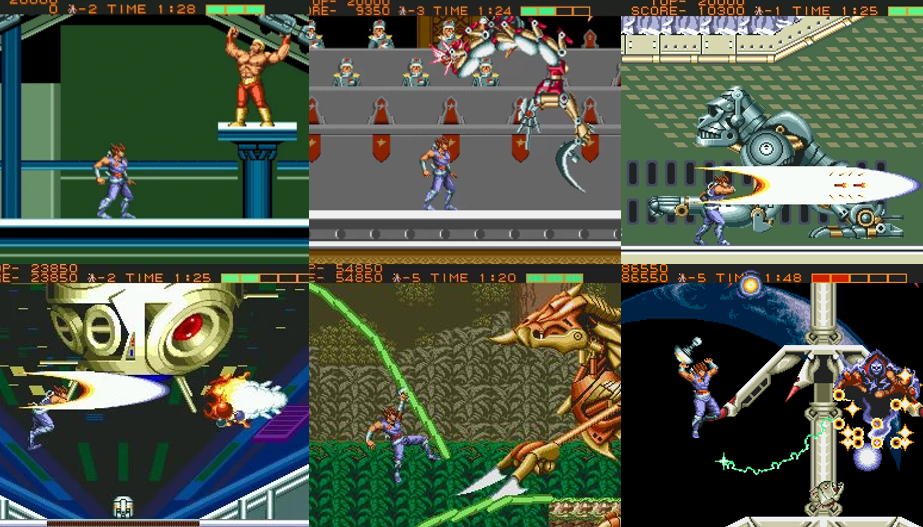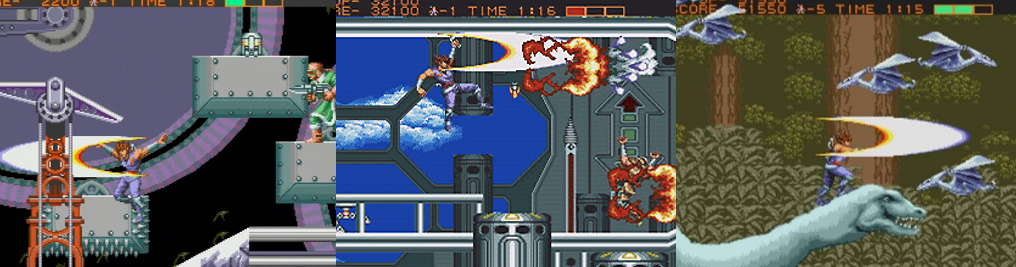
Game Corner: Rocket Knight Adventures (Nintendo Switch)

Released: 11 June 2024
Originally Released: 6 August 1993
Developer: Konami
Also Available For: Mega Drive, PC, PlayStation 4, PlayStation 5

The Background:
Thanks, largely, to the phenomenal success of Sonic the Hedgehog (Sonic Team, 1991), anthropomorphic mascot platformers were all the rage back in the 1990s to the point where, in a landscape featuring a gun-toting jackrabbit, an acrobatic bat, a superpowered earthworm, and an intergalactic adventurer, a sword singing possum with a rocket pack doesn’t seem all that strange! Designed by Nobuya Nakazato, the man behind many of the notoriously challenging Contra videogames (Konami, 1987 to present), Rocket Knight Adventures was lauded as one of the best titles available for SEGA’s all-powerful Mega Drive. Though a popular and well-regarded title, Rocket Knight Adventures was essentially Sparkster’s peak; a Super Nintendo port was allegedly cancelled and its sequels were both region-locked and ridiculously expensive for decades. While Sparkster received a six-part story in Sonic the Comic (1993 to 2002), he didn’t get an animated spin-off like some of his peers and remained in obscurity until Climax Studios attempted a revival in 2010. Mixed reviews notwithstanding, the game captured a lot of Rocket Knight Adventures’ spirit and long-time fans of the franchise finally got a modern re-release of the original three games with this Re-Sparked! collection, a warmly received release that included a handful of bonus materials to celebrate the unfairly forgotten series.

The Plot:
When the Kingdom of Zephyrus is invaded by Emperor Devilgus Devotindos’s pig army, heroic Rocket Knight Sparkster fights to rescue Princess Sherry from the clutches of his rival, Axel Gear, and stop their forces.

Gameplay and Power-Ups:
Rocket Knight Adventures is a 2D, sidescrolling action platformer with elements of run-and-gun action and some sidescrolling shoot-‘em-up sections. Players take control of Sparkster, the titular Rocket Knight, a possum clad head to toe in armour, armed with a sword, and carrying a surprisingly versatile rocket pack on his back. You swing Sparkster’s sword with A or Y, sending out an energy spiral to attack enemies from a set distance, and press B to jump, with Sparkster snagging poles and branches with his tail. By holding A or Y, you charge Sparkster’s rocket pack; once the meter is full and flashing, you can release and Sparkster will fly off in the direction you press. You must often use this manoeuvre to richochet off walls to progress higher in stages, sometimes over lava, and to blast between vines over large, spiked balls. If you don’t press a direction, Sparkster performs a grounded spin attack to deal damage and reflect certain projectiles and Sparkster is often invulnerable when performing his rocket attacks. The rocket pack can take some time to charge so it’s worth planning ahead if you’re looking to quickly blast away and you must often blast off while jumping for additional height, either to reach doors, platforms, or high up goodies. Sparkster has a large health bar (represented by hearts) but it’s whittled down quite quickly. Apples and bananas will partially or fully fill it and you can snag a handful of generous 1-ups along the way. You also earn extra lives if you collect enough points, receiving a bonus at the end of each stage. Before you start, you can also adjust the game’s difficulty, which changes how many lives and continues you have, though trust me when I say the game’s hard enough even on “Easy” mode.

Rocket through colourful stages and take on tricky platforming as the sword-wielding Sparkster.

Occasionally, Sparkster collects a power pack or is dropped into an area where he flies indefinitely. These sections turn the game into a high-speed, action-packed autoscrolling shoot-‘em-up and have you weaving Sparkster between missile and other projectiles while picking off airborne enemies. Sparkster can also swim, automatically treading water and moving through the drink depending on your button presses, attacking with his sword and blasting from the water with his jet pack. However, his movement becomes noticeably sluggish and his hit box alters, making it tricky to navigate the tight, hazard-ladened depths. Each stage tests Sparkster’s platforming and rocket pack skills in different ways, from simple ricochet tricks to jumping to vines and branches, to racing from hazards (such as walls of fire, spiked knights, and crushing floors) that spell instant doom to the Rocket Knight. Platforming is largely satisfactory here and the usual tropes of swinging platforms and precarious handholds appear, but you’ll also be riding mine carts, leaping across bottomless pits and ducking under spiked ceilings. Stage 2 has you pass behind waterfalls using special platforms to progress, Stage 3 sees you using the reflective surface of rising and falling lava to hop to platforms, while Stage 4 has you clambering on the underbelly of Axel’s ship trying not to plummet to your doom. When on the roof, and during the final confrontation with Axel, you battle a strong wind that’ll suck you to an instant death, while Stage 5 has you race through claustrophobic tunnels avoiding knights that kill you on contact. The challenge is palpable but increases as you progress, easing you into the game’s surprising difficulty and introducing new gimmicks that test how you control Sparkster. Unfortunately, there are no power-ups to aid you (no shields or invincibility or anything like that) and you’re limited by your lives and continues, though thankfully this version includes rewind and save state features that finally allowed me to beat the game after more than thirty years!

Various gimmicks and dangerous hazards make the late game a considerable challenge.

It’s not long before hazards become troublesome for Sparkster. Each stage is split into multiple, interconnected areas, with the first stage culminating in you traversing Castle Zephyrus, which is full of burning pits and sees you being chased by a wall of fire. This will instantly kill you if you don’t keep moving, made harder by the stone walls you must hop over and the flame bursts you must duck to avoid, though this is all practice for a similar section in Stage 5, where you must run, ricochet, and jump away from Axel as he pursues in an insta-death mech suit! While it’s simple enough to hop to tree branches in Stage 1, Stage 2 introduces spiked balls to avoid while jumping, while spiked ceilings and surfaces dog both your high-speed jaunts on mine carts and your efforts to control a propeller platform in Stage 5. Stage 4 sees you taking out bazooka-wielding pig soldiers in tight corridors, your progress barred by temporary energy barriers, while Stage 5 introduces the rising floor gimmick that ended my runs as a kid. With enough speed and timing, you can outrun this hazard but it’s very tight, even when abusing the rewind feature. This stage also includes teleporter doors that represent your goal in each section, though they’re functionally no different from the regular doors you enter prior to this stage. Stage 7 introduces a springing ground, almost a quasi-anti-gravity feature, to boost your jumps, though it’s limited to snagging some out of the way goodies and battling a boss. The autoscrolling sections start off simple, with you mowing down aerial enemies and attacking a giant, robotic snake, but your manoeuvrability is tested in Stage 5, where you weave between gigantic missiles and cross-crossing gunfire and engage in glorified dog fights with mech walkers. Things are much simpler when you’re blasting through an asteroid field in Stage 6, though you must still be mindful of the small projectiles that can get lost against the stars. Stage 5 also culminates in you taking control of your own giant mech, though your options are simply limited to stomping back and forth and swinging its buzzsaw arms with A or Y; there’s no block or charge attack or anything.

Presentation:
Rocket Knight Adventures is and always has been a joy to play, purely from a visual standpoint. Released at the peak of the Mega Drive’s popularity, when mascot platformers were extremely popular, the game oozes colourful, cartoonish appeal. Presented with a steampunk-style fantasy land, players explore environments teeming with personality. You see the castle being attacked in the background of the first stage, panicked civilians and chickens run and flutter, and enemies are sent into a panic when hit, running around with their briefs on show! Though he can be a little clunky and his hit box is quite large, Sparkster is a wonderfully realised character. Blasting past the Konami logo at the start and standing proud against the title screen and in the brief prelude, he radiates heroism. Not only does Sparkster bop up and down by default, but he also judges the player when idle and calls to them to get a move on. He also squeals in pain when killed, reacts with panic when falling, and regularly advances towards his objective and enemies in the handful of cutscenes between stages. As if these stunningly lively and detailed visuals weren’t enough, Rocket Knight Adventures is bolstered by an infectious soundtrack, one of my favourites of the era. However, it’s true that the game peaks with Stage 1’s iconic and instantly memorable overture, which is rightly evoked for the end stage score tally. Still, the boss themes are really good and add to the tension when facing these troublesome foes. One negative about Rocket Knight Adventures, however, is the slowdown which occurs when there’s too many sprites on the screen. Thanks to the large scale of some enemies and the many explosions and effects peppering certain moments, the game can struggle along for a few seconds. It’s never impacted my progress, but it is noticeable. Furthermore, the title screen, despite showcasing large sprite art for Sparkster and the game logo, is surprisingly bland, especially compared to the detailed environments.

A visually impressive treat with one of gaming’s best and most memorable soundtracks.

Things start out safe enough with Stage 1’s flat fields, which act as a testing ground for players to test Sparkster’s moves, but even this area is full of detail, from the aforementioned castle in the background to the besieged homes and ransacked environment. As you blast through the skies, mountains and water rush past, with a lovely splash effect appearing as you skim the water’s surface. Sparkster loves to charge head-first into enemy strongholds, the first of which includes busts, skewed portraits, and windows where the first stage’s boss looms. While Stage 2 starts comparatively bland, you’re soon climbing vines and avoiding spikes amidst a large waterfall and racing around on high-speed mine carts. Stage 3 begins in a quartz cavern with a reflective effect applied to the lava, extends to an underwater cavern, and ends with you battling a gigantic robotic fish in a volcano. Stage 4 takes place on Axel’s ship and really leans into the steampunk aesthetic, having you navigate inside and outside the ship, clambering to poles, jumping to platforms, and passing energy barriers powered by pigs on treadmills! Stage 5 takes the steampunk aesthetic to the next level as you blast through the skies of a heavily polluted, heavily guarded pig city. There’s a real depth to the polluted backgrounds that’s married with the mechanical facility to crash into, a robot factory full of narrow corridors and insta-kill hazards. Stage 6 and 7 add a science-fiction twist to the steampunk fantasy and see Sparkster blasting through an asteroid field and infiltrating Emperor Devotindos’s “Pig Star” space station. Though you’re limited to a few rooms and boss battles here, you can see the stars and asteroids in the background and end up falling back to Earth in an escape pod, burning up on re-entry and showered by debris from the exploding space station! The large sprite art returns for the end credits, which feature Sparkster heroically flying towards the camera, and the pantomime-like cutscenes add to the game’s visual charm, with Princess Sherry, King Zephyrus, and Axel gear all exuding the same personality seen in Sparkster’s cartoonish animations.

Enemies and Bosses:
The Devotindos Empire is primary made up of armour-clad pigs, disposable ground forces who stand no chance against Sparkster’s sword and rocket pack. Though they leap from the background, drop down on balloons, and wield swords of their own, the pig infantry is easily dispatched in a single hit. Occasionally, you battle large groups of them, but you can simply rocket through them, making them more of a nuisance than anything. The sailor variants are a bit more formidable thanks to their bazookas and you being confined to tight corridors, as are the jet ski riders, who fire a spread shot while you’re floundering in the water. Pigs also race around in steampunk-style cars and chicken walkers, which can be trickier to put down as they’re much bigger and take more hits to defeat. At least they can be defeated, though, which is more than can be said of the later spiked armour variants. You’ll simply bounce off these guys and be killed if you touch them, so you must run from them and lure them into a molten metal trap to end their threat. Emperor Devotindos bolsters his forces with other robot minions, such as robo-owls who can spoil your jumps and robotic duplicates of himself, which spring to life at the worst possible moments, take a few hits to put down, and offer a significant obstacle thanks to their large hit boxes and pursuing you across the environment.

The piggy pests pilot some perilous mechanical marvels that’ll test your reflexes.

The pig infantry also controls numerous large, steampunk-style craft to act as mini- and end bosses. The first is a lumbering tank that fires slow moving cannonballs and tries to roast you with its flamethrower. Your best bet is to rocket behind it to quickly pummel it, but you’re then forced to avoid and frantically slash it as it pinballs around in the rapids in an exploding frenzy. A large mech greets you at the start of Stage 2, taking up the background and sporting extendable arms with buzzsaw-like hands. You must battle the finnicky swimming controls to avoid being hit, attacking the glowing red sphere on the front of the mech to put it down. Stage 3 sees you battle a gigantic crab mech, attacking its extendable pincers and avoiding its ring shots once they’re destroyed, floating precariously close to the craft to hit its cockpit. This stage ends with you fighting a giant robot fish in a battle not unlike the Lava Reef Zone boss. You must jump to floating platforms, which get faster and faster, avoiding the lava and the shower of pellets the fish spits. When the pilot appears, be sure to smack him a few times and grab the bananas if you’re low on health. A more powerful pig walker attacks in Stage 5, one that fires dual lasers and is protected by an energy barrier you must whittle down before the craft can be destroyed. Finally, Captain Fleagle constantly hounds you in Stage 4. First, he hides behind an energy barrier and tosses bombs which you must reflect back at him (the timing can be tricky and the bombs have a large blast radius, so watch out!) You must avoid Captain Fleagle’s shots on the roof and send him running once more. After knocking sentient bombs onto a flying mechanical pig head on the underside of the ship, Captain Fleagle calls in his large mechanical doppelgänger. Mirroring Captain Fleagle’s movements, this mech causes debris to  by shaking its hips and fires large blasts from its torso, giving you a small window to attack it. Once it’s destroyed, the battered Captain Fleagle runs and jumps around in a panic as the battleship explodes, finally finished for good after a few whacks with your sword.

Giant, steampunk-style robots and mechs often act as gruelling end of stage bosses.

Gigantic mechanical enemies also appear as mini- and end bosses, such as the Snake Mecha that lunges at you in the first flying section and the Big Spider at the end of Stage 1. This thing crashes its head through the castle walls and ceilings, giving you a chance to land some attacks, but you must avoid standing in the wrong place and being smacked by its spiked tail. Stage 2 features a weird collection of spheres, not unlike a mechanical caterpillar, that dives in and out of a waterfall. You must do the same and blast between vines to avoid its wide arc and pummel the weak spot on the end of its tail, which is pretty tricky given the hazardous environment. Stage 2 ends with you battling a menacing steampunk train that charges towards you firing slow shots and then transitions to an upper path, swinging and extending its claw arms, before finally firing bouncing shots from its wrecked behind, its weak spot changing each time. A satellite-like robot challenges you in Stage 6’s asteroid field, blocking your shots with a shield and firing a dual spread shot, and you must take on the strangely sized pig mothership, too. Since this hurts you if you touch it and fires relentlessly, you must target the many turrets to deal damage, switching position as it teleports in and out, taking out its minions, and dispatching its giant mouth cannon before you get fried! As the fight progresses, the cockpit detaches, leaving you to destroy the main body of the ship. However, the cockpit transforms into a mech that fires pellets, a ricocheting laser, and flailing its arms. You must strike the ball it bounces between its hands to deal damage, then fly around as it bounces around the screen in a frenzy, which makes for a troublesome boss due to its large hit box and the lack of health pickups.

Axel Gear and the persistent Emperor Devotindos won’t go down without a fight!

Your most persistent enemy is rival, corrupt Rocket Knight Axel Gear, who kidnaps Princess Sherry and constantly ducks you. When you finally go toe-to-toe with Axel in Stage 5, it’s in a Rock ’Em Sock ’Em Robots mech battle. After racing to your mech, you must avoid his hits and tap A or Y to swing your buzzsaw-like, extendable arms and damage his craft. It’s a bit clunky and difficult to avoid damage but, eventually, Axel’s mech is destroyed. Axel then appears at the end of the asteroid section of Stage 6, now sporting a gigantic laser cannon and firing smaller homing missiles. You must loop behind him to attack and take out his smaller shots, watching for his circular movements as he prepares each shot. Axel than challenges you to a more traditional sword fight mid-way through Stage 7’s gruelling boss gauntlet. Here, Axel sports the same abilities as you, swinging his sword, unleashing a rocket spin, and ricocheting about. Note that your sword beams cancel each other out and he’ll eventually cause explosive decompression! You must cling to the poles, attacking Axel with your sword beam and avoiding his missiles and circle motions, finally flying with your rocket charge when he’s charging his own. Emperor Devotindos is the game’s final boss and certainly doesn’t go down easily! Your first battle isn’t too bad, with you simply dashing from across the screen and charging into the pig monarch, dodging his progressively faster projectiles. After enough hits, he reconstitutes himself into a maniacal cyborg and you must avoid his extendable legs and rocket into him diagonally. Emperor Devotindos downloads his consciousness into the Pig Star’s main core, causing it to float, teleport, and bounce around firing various laser spreads that you must avoid while charging at the small red weak spot. As you escape the exploding Pig Star, Emperor Devotindos (now little more than a television screen) pursues you, thrashing tentacle-like limbs, firing ring projectiles, and barging into you. You cannot attack here and must simply survive until atmospheric re-entry finishes the bovine bastard off, a daunting prospect as Emperor Devotindos is hard to avoid and deals a lot of damage.

Additional Features:
There are four difficulty settings to challenge in Rocket Knight Adventures, with each one altering how many lives and continues you play with and slightly altering the end text. If you beat the game on anything other than the hardest difficulty, you’ll be challenged to try a harder difficulty once the credits have rolled. Interestingly, you can input a code from the pause screen to record your progress as the game’s demo mode, though the level select code apparently only works in the Japanese version of the game. Luckily, Rocket Knight Adventures: Re-Sparked lets you pick between the American and Japanese versions of the game and offers a host of additional features, too. There’s the slick, sexy, anime style opening that makes me wish we’d gotten a cartoon back in the day, various filter and border effects, and the always helpful rewind and save state features. You can also play a boss rush mode and view various advertisements and concept art for the game, peruse the box art and manuals, and freely listen to the game’s kick-ass soundtrack. The PlayStation 4/5 version also comes with numerous Trophies for you to earn, with nine specifically earned from playing this game (best done on the hardest mode to stack them) and clearing its boss rush.

The Summary:
I’ve been in love with Rocket Knight Adventures since I was a kid. I was captivated by its bright, cartoonish visuals and fun, action-packed gameplay from the start and regularly find myself humming that memorable Stage 1 theme in my day-to-day life. One of the biggest gripes of my life-long gaming career is that I was never able to beat this game back in the day; that damn crushing floor always ended my playthroughs. However, this version of the game changed all that. It’s telling that I needed the rewind and save state features to finally beat this game and shows just how challenging Rocket Knight Adventures is. It lulls you into a false sense of security by easing you into the challenge, slowly adding more and more obstacles and insta-death hazards and leaning more on split second reaction times as you progress through its detailed and varied stages. Yet, while the difficulty curve is off-putting at times and the game occasionally seems needlessly unfair and cheap (infinite continues would’ve helped mitigate this), I still find it a hugely enjoyable experience. Sparkster is a fantastic character and often unfairly forgotten in the pantheon of mascot platformers and I loved his sword- and rocket-based gameplay. The ricochet mechanics were a neat feature; however, if anything, they were underutilised and the game relies on traditional platforming tropes and mechanics than its unique selling point, which is a bit odd. I loved all the big enemies and bosses, the switch to sidescrolling shooter sections, and the sheer variety on offer. No two stages are the same and the game’s constantly throwing new gimmicks at you, from mine carts to flying platforms to mech battles and races through mazes. There are few games as visually appealing on the Mega Drive than Rocket Knight Adventures, which has such franchise and merchandise appeal that I’m honestly surprised we didn’t get more games and tie-ins, such as toys and comics and cartoons. Still, that doesn’t diminish how enjoyable Rocket Knight Adventures is. To this day, it’s one of the best platformers on the system and this Re-Sparked version just makes it more accessible and entertaining than ever before.

My Rating:

Rating: 5 out of 5.

Fantastic

Was Rocket Knight Adventures in your Mega Drive library back in the day? What did you think of the rocket-based mechanics and the colourful visuals? Which of the game’s bosses was your favourite? Did you manage to clear the game without modern quality of life features? Which of Sparkster’s sequels was your favourite and would you like to see him brought back from obscurity? Either way, whatever your thoughts on Rocket Knight Adventures, leave a comment below, consider supporting me on Ko-Fi, and check out my other Rocket Knight reviews.

Game Corner [DK Day]: Donkey Kong Country 3: Dixie Kong’s Double Trouble! (Nintendo Switch)


In 1981, Shigeru Miyamoto and his team at Nintendo R&D1 created Donkey Kong, an arcade title that introduced gamers to two of Nintendo’s most recognisable characters: Mario and Donkey Kong. To celebrate everyone’s favourite King Kong knock-off, I’m dedicating a few days this week to gaming’s most famous ape!


Released: 18 December 2020
Originally Released: 18 November 1996
Developer: Rare
Also Available For: Game Boy Advance, Nintendo Wii (Virtual Console), Nintendo Wii U (Virtual Console), Super Nintendo Entertainment System (SNES)

The Background:
After establishing themselves in the United States with the financial and critical success of Donkey Kong, Nintendo captured the home console market. While Donkey Kong was still relevant during this time, legendary British developers Rare reinvigorated the cantankerous ape with their Donkey Kong Country series (Rare, 1994 to 1996). Debuting in 1994, the first game pushed the SNES to its limits, reimagined Donkey Kong for a new generation, and became the third-bestselling game on the SNES. After garnering overwhelmingly positive reviews, Donkey Kong Country was quickly followed by a purposely tougher and less linear sequel that was also critical and commercial hit. Emboldened by their success, rare fast-tracked a third game, using the same pioneering technology to convert prerendered graphics into 2D sprites and seeing Dixie Kong joined not by the titular ape, but her baby cousin! Although Donkey Kong Country 3: Dixie Kong’s Double Trouble! sold over 3.5 million units worldwide, the impending release of the Nintendo 64 is said to have impacted sales. Reviews were largely positive, praising the improved visuals and the expanded gameplay mechanics, though criticising the lack of innovation compared to is predecessors. Like the last two games, Donkey Kong Country 3 was ported to the Game Boy Advance (to some criticism) and featured on Nintendo’s online services, such as this version for the Nintendo Switch.

The Plot:
When Donkey Kong and Diddy Kong suddenly disappear in the Northern Kremisphere, Dixie Kong teams up with her baby cousin, Kiddy Kong, to brave the forces of the robotic KAOS and rescue their family.

Gameplay and Power-Ups:
Just like the last two games, Donkey Kong Country 3: Dixie Kong’s Double Trouble! is a 2D, sidescrolling platformer that utilises 2D sprite conversions of pre-rendered graphics. Like in the second game, Donkey Kong is entirely absent and no longer playable, and this time his nephew joins him on the bench to allow Diddy’s girlfriend, Dixie Kong, to take the spotlight. As ever, you have three save files to work with and three game modes: you can tackle the adventure alone, tagging between Dixie and Kiddy with -, team up with a friend for two-player simultaneous co-op, or go head-to-head with your friend to see who can play better. Donkey Kong Country 3 retains the same controls and fundamental mechanics of its predecessors, meaning you’ll be jumping and swimming with B, attacking with Y, teaming your Kongs up or grabbing barrels with A, and throwing both with Y. Each Kong plays a little differently, with Dixie being lighter and faster and Kiddy being slower and heavier, and also has a different method of attacking. Dixie retains her ponytail twirl (which also allows her to glide across gaps to greatly aid platforming) while Kiddy rolls ahead and can skip across the surface of water (though his stunted jump makes him more of a liability). You must smash DK barrels to spawn your partner if they’re lost because, without them, you’ll lose a life the next time you’re hit. However, you can once again accumulate extra lives by grabbing various colourful balloons, collecting 100 bananas, finding the four KONG letters, in every stage, and playing Swanky Kong’s Sideshow mini game. To play this, you’ll need silver Bear Coins, which are also hidden in stages, while larger, golden DK Coins are earned by defeating the tricky Koin Kremlin hidden in each stage (usually by finding innovative ways of chucking a metal barrel behind them). Those hoping for new in-game power-ups will again have to settle for the odd invincibility barrel (I literally encountered one in my playthrough), and you must still manually save at Wrinkly Kong’s save cave (though the Nintendo Switch’s rewind and save state features largely make this irrelevant).

There’s a greater emphasis on exploration and collectibles thanks to the Kongs’ new vehicles.

There is a far greater emphasis on collectibles in Donkey Kong Country 3, with more hidden items scattered throughout every stage and a family of bear brothers on hand looking for you to bring them special items (which allow access to additional areas on the overworld), often awarded after defeating bosses, offering hints, or selling you items. As you explore each stage, you’ll inevitably find secret hideaways or special barrels that’ll blast you to a timed bonus challenge in these, you must collect stars or green bananas or defeat all onscreen enemies against a strict time limit to earn one of the special coins, or even a Cog. Additional barrels will blast you across the environment (sometimes right into bottomless pits or enemies if you’re not careful), rocket you about, or shield you from enemy projectiles when climbing ropes. Dixie and Kiddy can again call upon a few animal friends to aid them, transforming into, riding, or being joined by them depending on the level. Enguarde, Squitter, and the parrots Squarks and Quarks return from the last two games and function the same (cutting through water, spitting webs, flapping about, and firing peanuts, respectively) alongside three new “First-Class Friends”. Ellie the elephant is the primary addition, though I found her to be a poor substitute for Rambi. She’s smaller, slipperier, and isn’t much use except in certain situations where you need her water spitting technique. Parry was similarly disappointing, simply flying above you and collecting items or defeating certain enemies, and Nibbla was a constant threat since it will take a bite out of your Kong if you don’t swim near enemies and keep it fed. Funky Kong also returns and, this time, builds various vehicles for you to use to navigate the main map. You start out with a motor boat, but soon upgrade to a hovercraft to pass over rocks, a turbo ski to traverse waterfalls, and eventually a gyrocopter, though you’ll need to search high and low and replay each stage to collect everything needed to build these vehicles, which also open up new areas of the map for you to challenge new levels, meet new bears, or discover Banana Fairies.

Varied gimmicks and challenges await, but it’s all a bit too familiar and uninventive.

While bottomless pits and thorny mazes weren’t as prevalent this time around, and Donkey Kong Country 3 generally seemed much easier an experience (as long as you’re not going for 100% completion), it’s still a tough game. Hit boxes are quite large, both Kongs are quite clunky to control, and it’s easy to slip off platforms or down pits even when on stable ground, much less the snowy landscapes and moving platforms you’ll find. Ropes were emphasised far ore than barrels, with you hopping to ropes, clambering up them, or being dragged along by them, all while avoiding Buzzes. Minecarts are gone this time, replaced by a few fun, high speed toboggan challenges, though you’ll still encounter the odd dark, murky level (requiring you to hit special fish to light up the area or use overhead lights). you’re essentially defenceless when swimming, as ever, unless you switch to Enguarde, and vats of molten steel, toxic gunk, or lightning bolts will cause you to rethink your jumps. In “Krack Shot Kroc”, you must hide behind metal shields to avoid an offscreen sharpshooter; you’ll be bouncing off barrels fired by Bazuka Kremlins to cross gaps, and must contend with poisonous water that reverses your controls in “Poisonous Pipeline”. Occasionally, the game switches to a quasi-third-person perspective to have to you toss coconuts or snowballs at targets, you must defeat Sneeks in giant wheels and grab overhead pulleys to open doors, and outrun a gigantic ripsaw in “Ripsaw Rage”’s autoscrollers chase. Some stages see you at risk of falling or looping around by dropping through trapdoors, many contain moving wooden platforms, and occasionally hop up moving or temporary platforms or to barrels to progress to the end goal. It’s all very familiar, though with a largely reduced challenge in terms of onscreen hazards. The game’s quite generous with 1-ups and chances for extra lives, but you’ll definitely want both Kongs on hand, and to favour Dixie, since you’re often tasked with making tricky jumps past, through, or over troublesome enemies and it can be easy to screw up your jump and drop down a pit.

Presentation:
Donkey Kong Country 3 retains the same presentation as the last two games, though even I, someone who’s never been the biggest fan of the franchise’s aesthetic, have to admit that it’s probably the cleanest, best-looking game of the trilogy. Though there’s no introductory story, there’s a fair bit of text as you chat with your allies or are taunted by enemies, and Dixie and Kiddy have a decent amount of personality. Both have idle poses and fun reactions to being hurt or left alone, though the end of level celebrations are gone and basically all of the sound effects are recycled from the last two games. Kiddy might be a fun, childish little soul, but he’s janky as anything to control, which hampered his utility in my opinion and I would’ve liked to see him have a more memorable playstyle to differentiate him from the other Kongs. The title screen is far better than before and there’s more emphasis on exploration here, with new areas opening up as you explore the larger overworld and non-playable characters requiring specific items to unlock additional areas or map features. However, there isn’t much to differentiate the three basic vehicles you acquire. I would’ve liked to see a submarine to access an underwater world or a drilling machine to burrow into a mine, rather than limiting them all to water traversal. The music has taken a hell of a downgrade this time around, too. Sure, it’s decent enough but there’s nothing as memorable as the first game and I just found it to be jaunty noise rather than fun earworms. Similarly, Donkey Kong Country 3 employs a similar approach to its stages as the last two games, with a handful of areas being recycled throughout your adventure. You’ll be hopping past a pier, exploring drainpipes, traversing an underground cave, and swimming in murky coral reefs, with the odd jungle and dungeon thrown in for good measure.

While the visuals are at there best, nothing really jumps out as especially memorable.

I found few of these to be that interesting, to be honest, or different from what came in the last two games. There are some fun background effects at times, such as the time of day changing or a snowstorm raging, or some areas being seeped in darkness. Donkey Kong Country 3 employs colour palettes to give the illusion of variety, changing vast of molten metal to toxic gunk or giving gigantic, hollowed out trees an autumnal glow. I quite liked these latter areas, to be fair, which see you jumping between branches, navigating claustrophobic trees, and outrunning that aforementioned ripsaw. Snowy peaks, with their frigid cabins and snowmen, were also fun, if few and far between, and I did like the cliffside stages, where waterfalls loom in the background and must be moved behind or clambered up using barrels and such. Rather than battling through mines, you’ll be dropping down trapdoors and opening doors in mills; the jungles are full of ancient ruins and raging thunderstorms; and dodging snipers in factories. As mentioned, there are loads of vines and ropes this time, which I definitely prefer to thorns and loads of pits, but everything just felt a little played out for me. while Donkey Kong Country 3 performs really well and looks great for what it is, there were some instances of slowdown and odd hiccups that took me out of the game, and it definitely felt like the game was struggling to justify itself at times and needed more new gimmicks to impress. Indeed, while the game emphasises collectibles on the save screen and in the Brothers Bear’s dialogue, this feels like an afterthought when you’re playing and couldn’t been played up more, like presenting you with unique visual challenges to get what the bears are looking for or Funky’s last piece of scrap.

Enemies and Bosses:
While Dixie and Kiddy are facing a new enemy this time around, you’ll still be dealing with the remnants of the Kremlin army. And “remnants” is a good way to describe them as these guys are far more stripped down this time around, consisting of a regular grunt who just walks about, a spring Kremlin who can give you a boost with good timing, and a larger blue one who’ll shrug off your regular attacks. The Bazuka variant caused me a bit of trouble as it was tricky timing my jumps to bounce off their barrels, while the Kopter Kremlins could be as annoying as the Buzzes, mechanical wasps that hover or swoop about right in your path. Kremlins also hide in barrels this time, clambering on ropes, tossing explosives, or trying to push you down pits, not unlike the Koindozers (who you can trick into giving you a boost). Little crocodiles, dung beetles, rats, and sliding penguins must be hopped on or avoided, you’ll use hopping spider platforms to reach higher areas, and must take cover behind half barrels when Minkeys toss their acorns. Red porcupines spin at you, an invincible swarm of bees incessantly chase you in “Riverside Race”, and various marine animals (from voracious Bazzas, spiny Lurchins, and clown-like Kocos) lurk in the water. You can pop Booty Birds to grab collectibles, dodge fireballs fired from the background by Karbines, and carefully position yourself so lightnign strikes your enemies rather than you! each stage naturally ends in a boss battle, though you get different rewards depending on which boss you’re fighting, two are recycled in the game, and one takes the form of a snowball fight. This is actually one of the more innovative bosses as Bleak pops up from behind snowy ridges in the fore-, mid-, or background tossing snowballs or firing a spread from his top hat. This can be a tricky boss due to the Kongs’ hit boxes and how small the target is you must hit, but it hints at how Donkey Kong Country 3 could’ve used its new mechanics to help it stand out (like, why not have a toboggan race against a boss?)

The big, challenging bosses task you to think outside the box and hint at the game’s full potential.

The first boss you face is Belcha, a giant barrel who spits out barrels and tries to force you down a pit. Immune to conventional damage, you must break open its barrels and toss the bugs that emerge into its mouth until you force it down that same pit. I quite liked Arich, the giant spider that awaits at the end of Kremwood Forest, purely because it was visually very interesting. You must dodge Arich’s erratic movements and venom spit to hop on its back and grab the barrel sitting there, then toss this into its face, which is quite tricky due to the spider’s gigantic size. Squirt was easily the most frustrating boss since you must fight it while riding Ellie, sucking water from Squirt’s waterfall and spitting it into the creature’s eyes when they pop out. However, Squirt fires a continuous stream of water that’s incredibly difficult to fight against, meaning it’s very easily to slip to your doom. Barbes wasn’t exactly a cakewalk either. Fought underwater, while using Enguarde, you must charge into the Lurchins it spawns to then attack its weak spot, but the timing is tricky and its so big and fills the screen with spines that I struggled quite a bit. You battle the malicious tin can robot KAOS twice, once in Mekanos and then as the penultimate boss. In both fights, you must dash beneath it, avoiding its jet burst, and bop its head using the propeller-like blades that emerge from its body. KAOS defends itself with boxing golf fists, its laser-firing head, and a missile barrage, though barrels turn the tide in the second fight. Once you defeat it, King K. Rool (in the guise of mad scientist Baron K. Roolenstein) attacks in a multi-stage battle. You must dash beneath him as he hovers about, grabbing barrels to toss at his butt, while avoiding the electrical bolt he fires, hopping to pulleys, and using stationary and moving wooden platforms. While this is a troublesome fight, it’s not too bad to get the hang of with liberal rewinding, though a much tougher rematch awaits if you unearth Krematoa.

Additional Features:
Every time you save your game, you’ll get a glimpse of you far you’ve progressed and how many collectibles you’ve found. When you finish the game, you’ll be played on a high score table according to completion percentage and be granted a title by Cranky Kong, as well as being treated to a roll call of the game’s enemies and characters. If you want to hit 100% completion, you must reload your save and go searching for KONG letters, defeat Koins for DK Coins, and collect Bear Coins, to say nothing of acquiring the different items for the Brothers Bear and Funky Kong. While the skis patch are easily acquired by defeating bosses, you must buy the mirror, trade it for a wrench, and hunt down presents and other trinkets to access bonus areas. Some of these house Banana Fairies, with the legendary Banana Queen being rescued if you find all the DK Coins and acquire the gyrocopter. By using the turbo ski, you can bring Krematoa up from the depths and tackle its five additional, challenging stages, including a tougher rematch with Baron K. Roolenstein. There are various mini games and challenges to tackle not just in each stage, but at Swanky’s Sideshow, a few fun cheats you can enter by renaming your save file, and of course the usual save states and rewind features when playing this version. If you’re playing the Game Boy Advance version, the game comes with an autosave, a new seventh world, additional collectibles, and graphical and mechanical tweaks to the stages and bosses for an additional challenge.

The Summary:
There isn’t anything fundamentally wrong with Donkey Kong Country 3: Dixie Kong’s Double Trouble!, it’s just not especially innovative or memorable and does little to stand out against its predecessors. The game is simply more of the same, with a noticeable reduction in the moment-to-moment difficulty while still being challenging, though largely because of how clunky the Kongs can be and the cheapness of the hit boxes and enemy placements. I wasn’t a big fan of Dixie Kong in her debut title but she was my go-to character here as Kiddy Kong is just a useless lump, barely utilising his incredible strength and existing simply as a health bar for me. while the visuals are the best they’ve ever been for the series and things have been expanded, particularly on the overworld, I wasn’t exactly blown away by the game’s environments, which either borrowed to heavily from the last two games or didn’t live up to expectations. While the enemies were largely forgettable, I did enjoy the big, colourful, unique bosses that challenged you to think about how to damage them, though the massive hit boxes and awkward controls made them an uphill battle. I was disappointed that the animal friends were so mediocre and that the soundtrack wasn’t more memorable, and that the game didn’t place greater emphasis on the collectibles. I simply aimed to finish the game and still hit 50% by the end, and felt no urge to help out the Brothers Bear or grab every DK Coin. Donkey Kong Country 3 continues the traditional of the franchise, but it really feels like this was a game that was made simply for the sake of it, with nothing really jumping out at me as being especially appealing or on par with the first game. Yet, it’s s visual treat and a fun little challenge, so I don’t want to be too harsh, but there’s really no reason to play this one over the last two unless you’re really itching for some more DK action.

My Rating:

Rating: 3 out of 5.

Pretty Good

Did you enjoy Donkey Kong Country 3: Dixie Kong’s Double Trouble!? Do you think I was too harsh and were you more impressed by the game’s visuals and mechanics? What did you think to Kiddy Kong and Ellie? Did you help all the Brothers Bear and snag all of the game’s collectibles? Which of the bosses was your favourite and what did you think to the game’s difficulty curve? Which of the Donkey Kong Country games is your favourite and why? How are you celebrating Donkey Kong’s anniversary this year? Whatever your thoughts on Donkey Kong Country, leave them below, support me on Ko-Fi, and go check out my other Donkey Kong content.

Game Corner: Banjo-Kazooie: Grunty’s Revenge (Game Boy Advance)

Released: 15 September 2003
Developer: Rare
Also Available For: Mobile

The Background:
After establishing themselves as one of the biggest UK-based videogame developers, Rare built a strong working relationship with Nintendo after revitalising their Donkey Kong franchise on the Super Nintendo Entertainment System (SNES). Rare sought to capitalise on this success with “Project Dream”, a tumultuous concept that eventually evolved into Banjo-Kazooie (Rare, 1998), one of the greatest Nintendo 64 titles. Although we didn’t get a long-running franchise, a similarly successful sequel followed in 2000 and the quirky duo also appeared in this oft-forgotten mid-quel for the Game Boy Advance. When development started, Rare was still a third party developer for Nintendo and the game was initially planned to release on the Game Boy Color. Development continued even after Rare was purchased by Microsoft since Microsoft didn’t have a handheld competitor and the story was originally a bit different, revolving around Banjo curing Kazooie of a curse. It also would’ve been a sidescroller, with more levels than the final game, and there were plans to incorporate a multiplayer feature, though all of this was cut. Banjo-Kazooie: Grunty’s Revenge received mixed reviews that criticised a lack of innovation and a lacklustre experience while praising its gameplay and visuals.

The Plot:
Two months after defeating the evil Gruntilda “Grunty” Winkybunion, Banjo embarks on a time travel adventure to rescue his bird friend, Kazooie, when Grunty returns in a robotic body and tries to keep the bear and bird duo from meeting!

Gameplay and Power-Ups:
Unlike its predecessor and its sequel, Banjo-Kazooie: Grunty’s Revenge is a kind of pseudo-isometric platformer that uses an odd, almost top-down perspective to follow Banjo and Kazooie’s latest collectathon. Interestingly, the game has more in common with Banjo-Tooie (Rare, 2000) than Banjo-Kazooie, acting as a side story between the two games and an alternative sequel. Many of Banjo and Kazooie’s basic actions return from Banjo-Tooie, though flying has been removed and there are some restrictions due to the limited hardware. You begin as Banjo alone and learn the basics: B sees Banjo whack enemies with his backpack while A is used to jump and swim. You’ll tackle the game’s first world alone but soon rescue Kazooie in the second world, adding additional, familiar moves to your arsenal through Bottles’ ancestor, Bozzeyes (as long as you have enough Musical Notes). Kazooie adds a airtime to your standard jump if you press A in mid-air, allows Banjo to backflip to higher areas by holding the Left trigger and pressing A, and performs a roll if you press B when running. Tapping L sees Kazooie carry Banjo up steep hills, and holding L and pressing B sees Banjo hold Kazooie like a shotgun and fire eggs with B. You switch between the different eggs with the Right trigger and fire regular eggs, special eggs that power up generators, ice eggs that put out fires, and fire eggs that melt ice blocks. If you jump and press B, Kazooie attacks with her beak and pressing L in mid-air sees her drill into the ground to defeat enemies and knock Jinjos, Jiggies, and other objects loose when drilling into special cracked areas. When in water, you press R to dive, tapping A to swim to avoid obstacles and grab air bubbles, while Honeycombs restore your health. You can grab a single one, one that restores two, and a randomiser that you must stop to refill more health. Finally, if you find the two Extra Honeycombs hidden in each world, you can bring them to Honey B.’s hive to extend your health bar.

Many of the duo’s familiar moves and abilities return, now skewed by the odd perspective.

As in the Nintendo 64 games, players collect Musical Notes, though they’re used to learn new moves rather than unlock doors. There are 100 Notes in each world and your total carries over if you leave or die in the stage. Like in Banjo-Tooie, Grunty’s Revenge doesn’t use a life system. When you’re defeated, you can choose to continue, respawning at the last doorway you used, which takes a lot of the pressure off but can make trial and error aggravating. Players collect ammo from egg nests and nab Gold Feathers to become invincible for as long as your stock lasts if you press A on a Wonderwing pad, an arbitrary restriction that severely limits the ability. You can again use Shock Spring Pads to rocket higher, though landing can be tricky due to the game’s odd perspective. Every area hides ten Jiggies: some are out in the open, some are awarded after defeating bosses, and others are dislodged with the Bill Drill. You’ll clamber up ladders and vines, cross lava, ice-cold water, and poisonous mists, fire the eggs into toll booth holes to activate platforms, and race down more than a few spiral slides to collect Jiggies. You’ll also get a Jiggy if you find the five Jinjos scattered throughout each location, with the piece spawning by a large Jinjo statue that’ll also give you a tip for every Jinjo you find. Many are awarded by finding objects in the worlds, from blue shells to coins to pieces of gold to be smelted into a Jiggy or ice cream and other treats to reunite a mother with her wayward children. There are also a handful of timed challenges to test you. These see you whacking special pads to spawn Jiggies and/or Shock Jump Pads and give you a few seconds to race to the prize before they disappear. These are easily the game’s toughest challenge prior to the final boss as you barely have time to reach the pad or the Jiggy and the enemies, who respawn as soon as you scroll the screen, certainly don’t help. The game’s worlds are surprisingly large and tricky to navigate as, unlike in Banjo-Tooie, there’s no fast travel system (though some worlds have shortcuts for the duo’s temporary other forms).

Sadly, the transformations are painfully underutilised and the mini games are recycled.

Yes, players still transform into different forms by bringing Mumbo Tokens (here awarded by beating certain bosses) to Mumbo Jumbo. There are four forms to turn into, with players able to use any form in any world (though you’ll be warped back to Mumbo’s Pad if you stray too far and must manually transform back to exit the world). You’ll become a mouse to pass through small holes and chew on wires with B, a candle that lights up a dark cave and performs a flaming somersault with B to light other candles and a TNT barrel, a cute little octopus that passes through water without harm and spits water projectiles with B, and a tank that can’t jump but braves toxic environments and fires its cannon with B. The tank enters special doors and crosses dropping panels to spawn Jiggies while the octopus is washed away through sewer pipes to blast enemies and obstacle and reach yet more Jiggies. Though these are fun, there aren’t any opportunities to explore previous worlds with new transformations and only some worlds require multiple transformations to find all their Jiggies. Each world does contain a mini game that mixes up the gameplay, but there’s only a few and they simply get reskinned. The various slides see you grabbing a set number of collectibles or racing a non-playable character (NPC) using boost pads to speed up and avoiding sticky oil slicks to get a Jiggy. There’s also a fishing mini game (which you first play snagging sheep) that can be pretty tricky; you must move left and right and cast by holding or tapping B to snag a set number. You only have a short time to do this and, later, you can’t see what you’re hooking as they’re underwater and you run the risk of being hurt by Snippets (though you can immediately retry if you fail). There are also two top-down driving challenges, one where you’re in a motorboat and one where you’re on a sled. In the first, you must snag the treasure chest and be holding it when the timer runs out; in the second, you must collect Snowies before the enemies get them. In both, you accelerate with A and fire with R though the craft can be very slippery and you’ll spin out when hit, so these can be problematic. Finally, there are shooting sections where you move back and forth and fire eggs at the Ghost Pirate or Mecha-Grunty, taking advantage of the egg nests and lamenting the lack of Honeycombs.

Presentation:
I was hesitant about Grunty’s Revenge for years simply because of the odd, top-down/isometric perspective and pre-rendered graphics…and I’m still torn after playing it. At times, the game looks great; it’s bright and cartoony and has a lot of visual charm. Other times, jumps are incredibly tricky to judge because of the slanted perspective and it’s not always clear where a wall starts and the ground ends, meaning I often ended up running against cliffs. Banjo and Kazooie look decent, if understandably limited. Banjo simply sways when idle, but all the returning moves look and sound exactly like the Nintendo 64 games. Characters still talk in gibberish, communicating via speech bubbles, and Banjo makes the same grunts and noises as he jumps and gets hurt. Grunty still talks in rhyme and taunts you, though collectibles are no longer anthropomorphic so most of the exposition is related through Bozzeyes, which can interrupt the gameplay. Grunty’s Revenge does a decent job of recreating familiar tunes from its bigger cousin, with Jamie Hughes remixing and sampling Grant Kirkhope’s memorable Nintendo 64 tunes, though these are obviously limited by the hardware and at times sound grating as a result. Enemy sprites and animations are disappointingly limited, however, and the game doesn’t do much with its time travel plot. You journey to each world from Spiral Mountain, which is closer to Banjo-Tooie’s Wooded Hollow since it houses Jiggywiggy’s Temple, though the area doesn’t look that different to what you’re used to. Sure, Grunty’s lair appears to be under construction, but the giant witch’s head is still there, and the inside is still an ominous castle. It might’ve been nice to see the landscape more dramatically changed as I legitimately forgot I was supposed to be in the past as it barely has any relevance beyond it being mentioned in dialogue. Sure, Mumbo’s younger but he still fulfils the same role and Bottles might not be born yet or too young to help, but Bozzeyes isn’t that different. Perhaps if the game had been changed a bit to have the duo flung into the distant past, or numerous time periods, the visuals could’ve been changed more.

While the game tries to capture the franchise’s colourful spirit, the perspective makes gameplay tricky.

This extends to the game’s worlds, too. Cliff Farm was an interesting idea but…it’s still just a farm, which isn’t an interesting location. Sure, there are haybales to jump on, tractors to see, a big barn to venture into, and a mill to explore but you can’t expect much from such a bland setting. Things then venture into the overly familiar with Breegull Beach, which isn’t a million miles away from Treasure Trove Cove and Jolly Roger’s Lagoon, featuring a beach, a sandcastle, a quarry and cliffs. Considering it’s Kazooie’s birthplace, it definitely feels like a wasted opportunity not to do more with that, perhaps include her family or siblings or something. Bad Magic Bayou was like Bubblegloop Swamp, with its poisonous water, broken wooden bridges and platforms, and murky swamp that’ll choke you if you linger too long. You hop to tyres to reach isolated islands and climb a tree using log platforms (taking full advantage of the lack of fall damage if you slip). Spiller’s Harbor is essentially a downgraded Rusty Bucket Bay, featuring polluted water thanks to oil leaking from pipes, a lighthouse (that you never go inside), and a nearby village where you hop onto rooftops like in Jolly Roger’s Lagoon. Freezing Furnace isn’t too dissimilar from Hailfire Peaks in that it’s a wide, frozen landscape of slippery platforms, narrow walkways, and ice-cold water that saps your health (unless you’re an octopus). You must scale mountains, venture into igloos, and enter a cave to reach Grunty Industries. This is a lava-filled industrial factory full of pipes, boilers, and toxic gunk that decimates your health unless you return as a tank. When you collect enough Jiggies to enter Grunty’s lair, it’s simply two screens: a stone arena where her minions watch you battle the final gauntlet and a claustrophobic rooftop where an ominous storm rages in the background. Grunty’s Revenge definitely captures the spirit of the Nintendo 64 games but plays things a little too safe, seemingly afraid to think outside the box and barely utilising the Game Boy Advance’s power to the best of its ability with its fitting, if simplistic, 2.5D aesthetic.

Enemies and Bosses:
Anyone who’s played the Nintendo 64 Banjo games will recognise most of Grunty’s Revenge’s enemies. There two most common baddies are the various Gruntlings and the thrashing tentacles that appear everywhere, even on the overworld. Gruntlings simply lumber about, stomping after you if they spot you, and take more hits to defeat the further you progress and the more their colour scheme changes. They’re echoed in the Bogfoot and Biggyfoot enemies, who take even more hits to defeat and often patrol on narrow walkways and above you on cliffs, which can cause you to fall into hazardous water if you’re not careful. Beehives are soon protected by bee swarms that fly at you, Tee-Hees pass through walls and, like the multi-coloured Spookos, are invulnerable unless you use the Wonderwing or certain eggs, and Gruntweeds burst from the ground, camouflaged by the Game Boy Advance’s limited palette, to slam on you. Chombas leap from portraits to take a bite out of you, Boom Boxes bounce around and explode on contact, Stinglashes block the way or pop from the ground like weeds, and sentient mines often patrol the waters. Most of these enemies are merely a nuisance; they’re defeated in one or two hits and often drop Honeycombs. The drop rate lessens as you progress and they become more formidable, but their biggest threat is that they respawn once you scroll away, even if it’s just for a moment. Sometimes, you’ll battle waves of them for a Jiggy; other times, bosses spawn them in, or they swarm claustrophobic interiors. By far the worst enemies, for me anyway, are the Germuloids, who latch onto you and won’t let go until they’ve drained your health, or you’ve wiggled the directional pad enough to destroy them.

Sadly, there’s a painful lack of variety and innovation in the game’s handful of recycled boss battles.

Grunty’s Revenge is extremely limited with its boss battles, recycling the same encounters with Mecha-Grunty or her chief minion, Klungo, three times each and then forcing you into a gauntlet in the endgame. The Ghost Pirate offers as a unique battle, framed as a limited third-person shooter where you must dodge his cannonballs and fire at his grinning visage when it appears, but even this is recycled for a Mecha-Grunty battle. This is a bit tougher as you must target her hands, hat, and panels on her torso, but the strategy is still the same. Similarly, though the battles against Klungo and Mecha-Grunty get progressively difficult, what works the first time will work the last. Klungo tosses vials and stalks you, only being vulnerable when his shield’s down. He’ll add in temporary invisibility, minions, and a slippery arena as you progress, with the window to attack getting smaller each time. This is echoed in the Mecha-Grunty fights as she also hides behind a shield, though she fires a projectile spread and also tries to crush you. In the endgame, you battle Mecha-Grunty in her arena, watching for her aerial bombardment, then take on Klungo again, with a quiz appearing between each fight. Best these and you’ll face a multi-phase battle against Mecha-Grunty on the castle roof, one where your room to avoid her homing projectiles and other attacks is extremely limited. To make matters worse, you can’t just hit her mech in this final fight like in the others; instead, you must strike her robot body and also attack her spirit when it appears. Additionally, you’re very unlikely to get Honeycombs during these battles and there are no checkpoints between each fight so, if you die at any point, you must not only start all over again but also complete the time switch task to enter Grunty’s lair! This was a difficulty spike I wasn’t expecting; just replenishing your health and eggs for the quiz would’ve helped. Ideally, there would be a doorway in the first arena to return to the overworld, with the entrance remaining unlocked but, as is, this was a gruelling final challenge that I couldn’t get past.

Additional Features:
There are two Extra Honeycombs in every area of Grunty’s Revenge, requiring all your abilities to uncover them to fully extend your health bar, and 600 Musical Notes and ten Jiggies in each as well. You won’t need all of them to learn every move or unlock every world, but you will need at least fifty Jiggies to reach the final boss gauntlet. However, if you want to see the best ending, you’ll need 100% of these collectibles, something that’s a tall order thanks to Breegull Beach’s timed challenge, let alone the final boss. When you finish the game, you play one last sliding game as the credits roll, collecting gold coins as you go. These are spent at an arcade machine in Breegull Beach, where you can replay the mini games at will.

The Summary:
I’ve been on the fence about Banjo-Kazooie: Grunty’s Revenge for years. There was something about the odd, quasi-isometric perspective that always put me off but, in the end, the game isn’t too expensive, and I felt the itch for more of the bear and bird duo. The game makes a good first impression, emulating the bright, cartoony visuals and quirky humour of the Nintendo 64 games and doing a decent job of recreating the characters, locations, and music from its counterparts. It is, in many ways, a 2.5D demake of Banjo-Tooie, featuring relatively large worlds and some fun mechanics with the different forms. However, these transformations are painfully underutilised and the Jiggies were, by and large, easy to collect as long as you weren’t racing against a ridiculously limited timer. There’s nothing here in terms of moves and abilities that you won’t find in the superior Nintendo 64 games…in fact, there’s less since you can’t fly or use the Wonderwing at will. While I enjoyed the visual fidelity to the other games, the worlds and environments are horrible limited and lack innovation. Each world has similar tropes (find stuff, play a mini game, fight a boss, a platforming challenge, etc), with none of the nuance and interconnectivity (or, at times, challenge) of the Nintendo 64 games. These issues are only compounded by Grunty’s Revenge recycling the same mini games and boss battles, forcing you into an unfair final gauntlet, and completely wasting its time travel plot. There was an opportunity to present something a little different and, instead, the developers played things far too safe and tried to give Game Boy Advance players a truncated version of the Nintendo 64 games rather than something that takes advantage of the system’s strengths. As a big, lifelong fan of the franchise, I was left disappointed and, though I don’t regret buying Grunty’s Revenge, I’m not surprised it’s largely been forgotten to the mists of time.

My Rating:

Rating: 2 out of 5.

Could Be Better

What did you think to Banjo-Kazooie: Grunty’s Revenge? Were you impressed by how closely it emulated the Nintendo 64 games, or do you agree that it wasted its potential? What did you think to the semi-isometric perspective and the time travel plot? Which of the new worlds and transformations was your favourite? Were you also disappointed by the recycled mini games and bosses? Did you ever get the best ending, and would you like to see this game more widely available? Whatever you think about Banjo-Kazooie: Grunty’s Revenge, drop your thoughts in the comments, support me on Ko-Fi, and check out my other retrogaming content.

Game Corner [DK Day]: Donkey Kong Country 2: Diddy’s Kong Quest (Nintendo Switch)


In 1981, Shigeru Miyamoto and his team at Nintendo R&D1 created Donkey Kong, an arcade title that introduced gamers to two of Nintendo’s most recognisable characters: Mario and Donkey Kong. To celebrate everyone’s favourite King Kong knock-off, I’m dedicating a few days this week to gaming’s most famous ape!


Released: 23 September 2020
Originally Released: 21 November 1995
Developer: Nintendo
Original Developer: Rare
Also Available For: Game Boy Advance, Nintendo 3DS, Nintendo Wii, Nintendo Wii U, Super Nintendo Entertainment System (SNES)

The Background:
After making a name for themselves Stateside with the financial and critical arcade classic Donkey Kong (Nintendo R&D1, 1981), Nintendo captured the home console market with the Nintendo Entertainment System (NES). Largely supplanted by their moustachioed mascot, Super Mario, Donkey Kong gained a new lease of life thanks to legendary British developers Rare. Donkey Kong Country’s (Rare, 1994) revolutionary pre-rendered graphics pushed the SNES to its limits, saw a redesign of Donkey Kong Jr., and became the third-bestselling SNES game. Accompanied by universal praise, development of a sequel began shortly after Donkey Kong Country’s release and was purposely designed to be more challenging compared to its predecessor. Although it utilised the same pre-rendered graphics pioneered in the first game, Donkey Kong Country 2 was designed to be less linear and focus more on speed, leading to Diddy Kong taking the lead role. He was joined by a new character, Dixie Kong, who was designed to offer gameplay mechanics similar to those in the first game but different enough to be unique. Donkey Kong Country 2 was a massive hit upon release, one met by both critical acclaim and numerous awards. The game was seen as an overall improvement in every way and has been ported to both other platforms and Nintendo’s digital mediums, and inspired Retro Studios’ 2020 revival of the franchise.

The Plot:
When Donkey Kong is kidnapped by the vengeful King K. Rool, his nephew, Diddy Kong, teams up with his girlfriend to rescue him from the Kremling army.

Gameplay and Power-Ups:
Like its predecessor, Donkey Kong Country 2: Diddy’s Kong Quest (a clever pun that took me years to pick up on) is a 2D, sidescrolling adventure brought to life using pre-rendered graphics converted into 2D sprites. This time around, Donkey Kong has been kidnapped, forcing you (and a friend, if you have one) to play as his nephew, Diddy Kong, or Diddy’s girlfriend, Dixie Kong, and traverse the Gangplank Galleon worlds to rescue him. You’re given three saves and three player options: either going it alone, tagging between the Kongs with -, playing two-player co-op or playing a “contest” mode against a friend. The control scheme should be immediately familiar to anyone who’s played the first game: you jump with B, attack with Y, grab your partner with A, and throw them with Y. Your Y attack differs depending on which Kong you’re playing as: Diddy performs a cartwheel to hit enemies in his path and add some momentum to his jump while Dixie twirls her ponytail, which lets her glide for a few seconds and thus makes her the better choice for clearing the game’s many gaps and bottomless pits. Your partner acts as your life bar; as long as you have a partner Kong, you can take at least one hit. You’ll need to smash DK barrels to reunite with your partner and collect bananas, KONG letters, and 1-Up balloons to earn 1-Ups. These can also be earned by spending Banana Coins to play Swanky Kong’s Bonus Bonanza mini game, and you’ll need a fair few lives as the game’s platforming and hazard placement can get pretty tough as you progress. Occasionally, you’ll find the odd invincibility barrel but there are no new power-ups included here. You can save your game at Wrinkly Kong’s Kong Kollege, where you can also spend Banana Coins to learn about various game mechanics, or abuse the Nintendo Switch’s rewind and save state feature to mitigate some of the game’s difficulty.

Diddy, Dixie, and their buddies hop and battle through stages filled with tough hazards.

Whereas Donkey Kong and Diddy Kong controlled very differently in Donkey Kong Country, with one being slower, bigger, and more suited to attacking and the other being fast, nimble, and better suited for platforming, Diddy and Dixie are very similar here. Dixie’s better for crossing gaps, though, and since there’s a lot of platforming and tricky jumps you’re usually better off sticking with her. It’s a shame that Diddy Kong remains unchanged from the last game as there’s little incentive to play as him beyond giving yourself a greater challenge. The Kongs’ animal friends are back, once again freed from crates and opening additional exploration and attack options. Rambi charges through enemies and destructible walls, Enguard slices through water with a sleekness the Kongs can only dream of, and Squawks the parrot spits peanuts with Y. Not only can Rambi charge up a gore, Enguarde attacks with his needle-like nose, and Squawks flies with taps of B, they’re joined by two new animal buddies. Squitter the spider fires a web projectile with Y and creates temporary web platforms with B while Rattly the snake allows you to charge a big leap to reach higher areas. Many of the hidden mini game rooms are played with these companions, too, and multiple animals can be found in certain stages, allowing you to take different routes and acquire different collectibles. The Kongs can also hurl barrels, TNT barrels, cannonballs, and treasure chests, with the latter two activating cannons to bonus games and yielding collectibles, respectively. Your goal is the target at the end of each stage, with each set up to gift different rewards depending on when and how hard you hit the target, awarding you extra bananas, lives, coins, or a KONG letter. Giant DK Coins and Kremkoins are also hidden across the various worlds; the latter are spent at Klubba’s Kiosk to access a bonus world. You can also hire Funky Kong’s airplane to fast travel across the overworld, climb ropes, chains, and ride wind gusts and, of course, blast across the environment using various barrels.

Some incredibly difficult platforming challenges and gimmicks await in this retread.

Barrels either automatically shoot you or you must time your shot to reach an adjacent barrel, often with the risk of plummeting to your death or hitting spiked thorns. Pits, water, toxic gunk, and lava all spell instant death and can be difficult to avoid thanks to some gaps being frustrating to clear. Dixie helps with this, as does bouncing on enemies, but you’ll also want to utilise any animal companions to help squeeze through narrow gaps or around thorns. Some stages have you traveling from the right side of the screen to the left; others force you into a race or a timed challenge. You’ll see many of these in the many bonus rooms, which challenge you to defeat multiple enemies, collect bananas or stars, or reach the end goal after a short obstacle course to earn rewards. Many hazards and gimmicks seen in the first game return here: you’ll ride mine carts and high-speed rollercoasters (hitting lights to open gates and jumping to new tracks), swim through mazes of crates, avoid plenty of pits, and slip on icy ground. Vertical traversal is as prominent as horizontal, requiring you to hop and barrel blast up ship masts as often as you explore the submerged interiors. Sometimes, water, lava, and toxic gunk rises after you, creating a sense of panic as you desperately hop to platforms and climb higher. Others, the floor rises, creating a crushing hazard, or you’re forced to make pixel perfect jumps or fly through thorny mazes. Sometimes, you’ll need to jump on seals to freeze water or cool lava, giving you a short window to slide under enemies or swim to safety. Other times, you’re floating between Zingers, dodging cannonballs, jumping to poles and hooks, and making desperate leaps across chasms to progress. Your animal friends are invaluable in many of these situations but you’ll definitely want both Kongs on hand, especially in the endgame when tight corridors filled with spikes and obstacles make even the simplest movements hazardous.

Presentation:
Donkey Kong Country 2 doesn’t really look or play any better than the first game, in my opinion. I’ve never been a fan of the aesthetic of this franchise and it continues to be ugly, blurry and pixelated here. The sprites, especially, have some mess on them that looks sloppy at times, though I did like how animated and cartoonish the Kongs were. Diddy and Dixie celebrate when you hit the end goal, cry when thrown, juggle and loaf about when left idle, and it’s funny how their eyes comically bug out whenever they see bosses. Each has little exclamations for when they’re hit or victorious and they control pretty well, but they have large hit boxes and can be clunky to move around, making them easy targets for the equally large hit boxes of enemies and hazards. There’s no introduction cutscene this time and the title screen is as basic as you can get, but you can talk to a few more Kongs (including the returning Cranky Kong) for some lore, tips, and to break up the gameplay. The music is mostly the same as before; I recognised some of the tunes from the first game and it’s all very whimsical and enjoyable, if not very memorable. Gangplank Galleon is a more foreboding overworld than Donkey Kong Country’s, featuring lava, dungeons, and a frigid mountaintop. I liked that Pirate Panic starts you on King K. Rool’s pirate ship, essentially starting the game where the first one left off, and the pirate theme continues throughout in the enemy sprites and level layouts.

The visuals, though ambitious, can be muddy and blurry, obscuring the clunky action.

Typically, stages fall into a routine very quickly. You’ll either be hopping about on the deck of a ship, clambering about in the masts up top, or exploring the inside, with these areas being flooded, riddled with lava, or beset by wind and rain. Wind is a particularly dangerous element as, while you can ride updrafts to new areas and it boosts your jump, it also pushes against you and can screw up your platforming. Caves, mines, and frozen mountaintops also appear, with some being remixed into the pirate-themed stages. While the mine cart stages are disappointingly bland, the game makes up for it with Krazy Kremland’s fairground and rollercoaster, where you’ll see fireworks and rides in the background. Stages like Jungle Jinx and Mudhole Marsh can be difficult thanks to the dense forest and contrasting colours, which swallow up the sprites and make for some muddy, ugly visuals. I liked stages set in the beehives, with their sticky nectar offering new platforming challenges, and those like Gloomy Gulch that adopted the haunted forest trope and the scorching volcano aesthetic of Crocodile Cauldron. However, any stages that incorporate the thick, maze-like mess of thorns and brambles can go die in a ditch. By the time you reach Toxic Tower, you’re avoiding toxic gunk in a suitably medieval dungeon before boarding King K. Rool’s steampunk-like airship, The Flying Krock. Gangplank Galleon features many paths, shortcuts, new worlds, and required stages, though it can be clunky to navigate. Also, while Donkey Kong Country 2 performs well, I did notice some frustrating slowdown one I reached K. Rool’s Keep. The game struggled to render all the sprites and hazards, slowing the gameplay to a crawl, and the large hit boxes became aggravating thanks to the sadistic enemy and obstacle placements of the game’s latter stages.

Enemies and Bosses:
King K. Rool’s army is familiar but largely original here in Donkey Kong Country 2. His ships are infested with rats and little snapping crocodiles and seemingly every stage is populated by Zingers, spiked bees whose red variants can’t be killed and who act as much as hazards as they do enemies, flying back and forth, in circles, or in vertical formations that force you to squeeze by. His Kremlin army is still easily dispatched with a simply bop on the head or a barrel to the face, but they’re sporting some new designs. Some bounce in place or at you, larger Kremlins wield cannonball-firing blunderbusses or toss boomerang-like hooks, smaller ones patrol back and forth with cutlasses that have a shockingly large hit box, and others are large and muscular and become enraged (and harmful) when you hit them. The wacky (and somewhat familiar) Cat-O-9-Tails either hurt you or toss you across gaps (or into spikes) with their tentacle-like tails, vultures swoop from the skies, porcupines totter across the ground, and stingrays and voracious fish lurk in water. You’ll be chased by a skeletal pirate ghost while speeding across broken rollercoaster tracks, jump to temporary ropes that are actually snake-like ghosts, slide and jump out of the way of rope-climbing Kremlins, gain a mid-air boost from passing dragonflies, and get bashed about (usually down a pit) by barrel-wearing Kremlins. You’ll race against Screech, hop to Krocheads to clear bodies of water or swampland, hop to Kannon’s barrels to achieve the same goal, tip over Click-Clack beetles to attack their underbelly, and encounter rotund sorcerer-type enemies who toss barrels and suicidal Kremlins at you.

Bosses offer a tough challenge but only King Zing is truly unique.

Each of Donkey Kong Country 2’s worlds end with a boss battle, though you’re awarded a Kremkoin rather than a giant banana this time around. Each boss has at least two phases, no life bar, and rarely a DK barrel to restore your partner if you’re hit, and they’re all essentially invulnerable until a barrel spawns for you to throw. Your first boss is Krow, a large, pirate-themed crow fought up in a crow’s nest (…get it?) Krow dives at you and launches giant egg from his nest. You must hop on this egg and toss it at Krow to deal damage, which eventually sends Krow into such a frenzy that he causes eggs to erratically rain down, making it trickier to score the final two hits. Kleever, a sentient sword, hides in lava for the first phase and tosses fireballs you must dodge. Eventually, a cannonball drops which you must throw at Kleever, then you must use the hooks to cross the lava pool and repeat. In the second phase, Kleever emerges from the lava and flies about, swiping and chasing you as you hop to the many hooks scattered around, tossing cannonballs to finish it whenever you get a chance. Kudgel, a roided-up Kremlin wielding a massive club, leaps offscreen and stuns you when he lands if you’re standing on the ground. He also swings his club like a baseball bat, after which a TNT barrel drops in. Toss this at him enough times and he’ll start pouncing at you, forcing you to run or cartwheel under him and making timing your throws a tad more difficult. King Zing is fought in a sticky beehive after previously chasing the player (on Rambi) in Rambi Rumble. King Zing is unique in that you fight him as Squawks, fluttering around and spitting peanuts at his stinger (a difficult target to hit considering how small it is). After enough hits, King Zing fires a spread of stingers and splits into smaller, regular Zingers, all of which can be tricky to avoid with Squawks’ awkward controls and hit box.

As if the final battle with K. Rool wasn’t bad enough, tougher challenges await to challenge you.

Another giant crow stands as the game’s penultimate boss. Fundamentally, battling the spirit of Kreepy Krow is the same as battling Krow except this time you’re up in the masts and sails of a pirate ship and he sends his minions after you. You must avoid the ghosts and hit the living enemies to spawn a barrel to toss at Kreepy Krow, trying not to plummet to your doom or be hit by the giant bird’s swoop. In the second phase, more baddies fly at you and you must climb hooks and chains, dodging Kreepy Krow’s falling eggs, to finish the deadbeat off. When you finally confront King K. Rool in his stronghold, where he’s gleefully torturing Donkey Kong, the Kremlin captain flees to his airship and you’re forced to beat Screech in a race through dangerous thorns and brambles. With Donkey Kong held hostage aboard The Flying Krock, you battle King K. Rool and his gigantic blunderbuss in a three-stage fight. In the first phase, you must dodge his rocket-powered charge and toss his cannonballs back when he sucks you in for a clobber. After enough hits, he collapses and the game tricks you into thinking you’ve won, only for King K. Rool to rise again and add new attacks to his arsenal. He fires spiked balls that reduce your dodging and jumping area, blue shots that freeze you, red shots that slow you, and purple shots that screw up your controls. He also turns invisible and speeds up his shots which, alongside his large hit box and the lack of DK barrels, makes this the toughest boss fight in the game as it just keeps going on and the margin for error is very small. If you’re playing the Game Boy Advance version, you’ll also battle a final final, version exclusive boss, Kerozene. A titanic Kremlin, Kerozene attacks by slamming his fists and summoning two Kleevers. You must dispatch these with cannonballs and then chuck another at Kerozene’s face when he starts glowing. After ducking his fists, you must jump to them to avoid the plumes of fire he spawns, waiting for them to die down so you can retrieve your cannonball and continue your attack.

Additional Features:
Your save file tracks the collectibles you’ve obtained in your playthrough and Cranky Kong will comment on or criticise your progress once you complete the game. While KONG letters and Banana Coins are easy to spot, they’re not always easy to acquire. DK Coins are even more elusive, requiring skilled platforming and tricks to reach. Many are rewarded by finding and completing bonus stages or discovering hidden paths. These are fun distractions and offer bite-sized challenges, but it can be tedious and frustrating revisiting the stages to hunt these down. If you collect all seventy-five Kremkoins, you’ll not only collect everything the game has to offer but also pay off Klubba and access the Lost World, six additional stages that remix enemies and gimmicks from the main game and offer an even tougher challenge for hardcore players. The final of these, Krocodile Kore, offers another boss battle with King K. Rool that’s a reskin of the regular final boss, but made even tougher. As if that wasn’t enough, the Game Boy Advance version adds Golden Feathers to upgrade Expresso II’s stats in the version exclusive Expresso Racing mini game and Photographs to fill Wrinkly Kong’s scrapbook. Collecting everything sees Cranky commend your performance and places you higher on the pedestal in the final cutscene, but offers no other tangible unlocks.

The Summary:
There’s no doubt that Donkey Kong Country is a Nintendo classic. While I’m not the biggest fan of its visual style or clunky gameplay mechanics, it was an impressive title that breathed new life into the cantankerous ape and showcased the power of the Super Nintendo. Donkey Kong Country 2: Diddy’s Kong Quest is more of the same, which you might think means it’s just as good if not better, but there’s something decidedly off about the execution. The absence of Donkey Kong hurts the game as there’s just not enough visual or gameplay difference between Diddy and Dixie Kong. If Diddy gained some new, tangible gameplay mechanic beyond just being a bit faster, maybe I’d appreciate the game more. Like, maybe Diddy could toss barrels but Dixie couldn’t; or if Diddy’s jumps were shorter to emphasise Dixie’s helicopter mechanic more. Instead, they’re so similar that you may as well stick to Dixie since you need her to clear gaps. The animal friends were fun, as ever, and the new additions added some unique aspects to the game, but I would’ve liked to see them incorporated more. The developers almost did this by giving Squawks race sections and a boss battle, but it would’ve been nice to see the other animal get this luxury, too. There is a load more collectibles this time around, which adds some nice replay value, but many are so difficult to reach and you don’t get anything substantial for finding them all so it’s barely worth your effort unless you want to punish yourself with the more difficult Lost World stages. I liked that the bosses were a bit more diverse this time, but I would’ve liked to see more variety in the environments. Everything feels like a carbon copy of the first game, just with the difficulty cheaply ramped up and very few new mechanics to make this an improvement on the original. It’s a shame as there was a fair but to like here, but the janky hit boxes, aggravating difficulty spike, and lack of originality mean Donkey Kong Country 2 feels like an inferior and less enjoyable retread of the first game to me.

My Rating:

Rating: 3 out of 5.

Pretty Good

What did you think to Donkey Kong Country 2: Diddy’s Kong Quest? Was it part of your SNES library back in the day? What did you think to Dixie Kong and the new animal friends? Which of the boss battles was your favourite? Did you find all of the game’s secrets and bonus rooms? Did you struggle with the dramatic difficulty spike? Which of the Donkey Kong Country games is your favourite and why? How are you celebrating Donkey Kong’s anniversary this year? Whatever your thoughts on Donkey Kong Country 2, leave them below, support me on Ko-Fi, and go check out my other Donkey Kong content.

Game Corner: Banjo-Kazooie (Nintendo 64)

Released: 29 June 1998
Developer: Rare
Also Available For: Nintendo Switch, Xbox 360, Xbox One, Xbox Series S/X

The Background:
Beginning life as Ultimate Play the Game and having established themselves as one of the biggest UK-based video game development companies, Rare built a strong working relationship with Nintendo after revitalising their Donkey Kong franchise on the Super Nintendo Entertainment System (SNES). Eager to capitalise on this success, Rare began work on “Project Dream”, an ambitious adventure game starring first a sword-wielding boy and eventually a bear with a backpack. As the project grew, Rare switched development to the upcoming Nintendo 64, eventually retooling the concept into a 2.5D sidescroller and, ultimately, a 3D action/platformer collectathon heavily inspired by Super Mario 64 (Nintendo EAD, 1996). Rare’s staff ballooned and their work hours increased as they sought to refine the 3D camera system and encourage player exploration across multiple, colourful worlds, infusing the game with a quirky, British sense of humour. Unfortunately, a multiplayer mode was scrapped due to time constraints alongside an ambitious plan to swap data between cartridges to unlock extra content. Banjo-Kazooie was universally praised, with critics praising the gameplay and visuals and technical superiority over Super Mario 64, though the camera was criticised as being unwieldy at times. Although we’ve been denied a long-running series of sequels, we got a Game Boy Advance spin-off and an equally lauded sequel followed in 2000, the characters appeared in various spin-offs and limited merchandise, and Banjo-Kazooie is widely regarded as one of the best and most pivotal 3D platformers of all time.

The Plot:
When his sister is kidnapped by the vain Gruntilda “Grunty” Winkybunion, dim-witted Banjo and loud-mouthed Kazooie quest to retrieve the magical Notes and Jiggies in Grunty’s lair to rescue the terrified bear cub.

Gameplay and Power-Ups:
Banjo-Kazooie is a 3D action/platformer collectathon in which players guide the titular bear and bird duo across nine main worlds, accessed via a main hub world, searching for magical jigsaw pieces (“Jiggies”) and Musical Notes to unlock additional worlds and progress further up Grunty’s lair to rescue Banjo’s sister, Tooty. You begin outside on Spiral Mountain, a diverse area where players can choose to learn or practice the duo’s moves, which are taught by the short-sighted mole Bottles, whom you’ll encounter at various molehills. Banjo and Kazooie have various moves to take out enemies and traverse the game’s worlds, some of which are similar to Mario’s 3D abilities and others which are unique to them. Banjo takes the lead and swipes with his claws in a short combo with B or rolls into enemies when running and pressing B. A sees him jump and pressing it again in mid-air sees him get a boost from Kazooie to cross small gaps. Pressing B in mid-air performs the super useful Rat-a-Tat Rap, where Kazooie pecks at enemies, while holding Z and pressing B when standing still sees Kazooie charge with her peak. Pressing A when standing still sees the duo backflip to higher areas and you can hold either A or B when underwater to swim, though you must collect air bubbles or resurface to avoid drowning. Similarly, you restore your health by collecting Honeycombs, extend your life bar by hunting down Extra Honeycombs, and snag an extra life from the golden Banjo trophies dotted around, You have decent control over the camera, but it can be clunky and get stuck on the environment at times. Indeed, the unreliability of the camera and Banjo’s inability to grab ledges are the only gripes I have with the game, but they’re easily dealt with once you get into the swing of things.

The duo’s abilities are expanded with some fun moves and bizarre transformations.

Banjo and Kazooie’s move set expands as you explore the game’s worlds, constantly adding new abilities to your arsenal that are tested by the environments. Kazooie fires eggs from her mouth or butt by holding Z and pressing C-up or C-down, respectively. This can be unwieldy as it’s difficult to precisely aim at targets but it’s great for picking enemies off from a distance and solving certain puzzles, such as extending bridges. The duo perform a ground pound by pressing Z in mid-air to crush enemies or activate switches to open new areas, reveal Jiggies, or start timed challenges. Holding Z and pressing C-left sees Kazooie dash across the landscape, greatly improving your movement speed and allow you to traverse inclines, while pressing C-right sees Kazooie shield Banjo with her wings, effectively making them invincible. Like your egg attacks, this “Wonderwing” ability lasts as long as you have ammo on hand (specifically Gold Feathers). Similarly, you’ll need Red Feathers and a Flight Pad to take to the air, where you can rise higher with A or blast at enemies and targets with B as long as you have Red Feathers to expend. Kazooie can also spring the duo to higher levels using Shock Jump pads, they can climb pipes and trees just by jumping to them, and Kazooie uses special shoes to vastly (if temporarily) increase her running speed or carry the duo across brambles and red-hot quicksand. You’ll also find numerous Mumbo Tokens everywhere; collect enough and the mystical shaman, Mumbo Jumbo, transforms the duo into various forms. These include a termite, a bee, a tiny crocodile, and a stout little walrus, with the transformation automatically ending once you venture far enough from the world. These forms are both amusing and incredibly useful: Banjo’s pumpkin form, for example, squeezes him into small spaces while his walrus form allows him to compete in a sledge race against the lazy polar bear, Boggy. The bee form lets you fly indefinitely by tapping B (though it’s even more unwieldy than the regular flying) and the termite allows you to clamber up steep surfaces that even best the Talon Trot. The crocodile form is the only one that can attack, snapping its jaws with B and easily crossing piranha-infested water, but it’s very small and no match for the bigger, tougher Mister Vile.

You use all the duo’s abilities to complete various missions to acquire Jiggies.

Like Super Mario 64, each world contains numerous collectibles you need to open new areas. There are 100 Musical Notes in each world and, when you leave the world, the Notes reset, so you’re better off collecting them all on your first go-through (which is possible, even when some areas require additional abilities to access). There are also ten Jiggies in each world, with one awarded when you find the five colourful Jinjos hiding in each world. Some Jiggies are out in the open, sitting on ruins or reached with a bit of platforming or careful traversal over narrow platforms, and others are guarded by bosses, revealed by hitting switches, or earned by solving puzzles. You’ll be smashing huts, hitting targets, completing races and timed events (such as jumping through hoops), and fending off waves of enemies to earn Jiggies. You’ll also aid various non-playable characters (NPCs), such as finding Captain Blubber’s gold, finding Boggy’s kids’ lost Christmas presents, rescuing Snorkel from a weighty anchor, and collecting acorns so Nabnuts can hibernate. Unlike in Super Mario 64, you’re not booted from the world upon collecting a Jiggy and your progress is saved even if you lose a life, though your Notes won’t be. Like that game, Jiggies are also found in the hub world, spawning when you activate switches in the main worlds, and you’ll also play some fun mini games to collect them. You’ll perform with Tiptup’s choir, spell out the game’s title on a sandcastle floor and on a Ouija board, match tiles and race through mazes in ancient pyramids, fly through hexagonal rings, defend sentient Christmas lights, and brave a dangerous fan room all to claim a prize. Jiggies become especially obtuse in Click Clock Wood, a world split into four seasonal sub-sections. You must complete tasks in the spring and summer to earn Jiggies in autumn and winter and vice versa, sprouting and watering a plant and helping Gnwaty throughout the seasons. The difficulty can spike in Clanker’s Cavern and Rusty Bucket Bay, where drowning is a constant threat alongside bottomless pits and polluted water that, like its ice-cold variants, quickly saps your air and health.

Presentation:
Banjo-Kazooie is an absolutely gorgeous game that still holds up today. Obviously, the game looks and runs a lot smoother on the modern re-releases but even the Nintendo 64 original stands the test of time thanks to its colourful visuals and quirky, fairytale-like world. Everything is so full of life and it’s truly remarkable and amusing. Banjo and Kazooie play pranks on each other when left idle, making daft sounds when jumping and attacking, and even the enemies are lively and peculiar, reacting when they spot you (my favourite’s being the Seaman Grublins, who shout an enthusiastic “Hi!” before charging!) Banjo, Kazooie, and all their supporting cast (and even collectibles) chatter with a whimsical babbling, communicating through gibberish, text bubbles, and pantomime movements. Enemies and hazards taunt you, collectibles encourage you to grab them, Bottles and Kazooie bicker constantly, and Grunty taunts you relentlessly as you explore or fail challenges. There’s a little bit of fog and pop-up but I can forgive it considering how large and varied each world is, especially compared to Super Mario 64. Like in that game, players visit worlds via a hub world, but these are unlocked in a fun and interesting way. You may need to explore or activate a switch to reach the puzzle pad and unlock the world, or activate a switch within the worlds to affect the hub world, and utilise various coloured cauldrons to fast travel throughout Grunty’s lair. Grant Kirkhope brings every environment to life with his infectious and whimsical soundtrack, which changes as you explore, becoming muted when underwater or ominous when exploring more dangerous areas. Grunty’s lair is a prime example, with Kirkhope’s rendition of “The Teddy Bear’s Picnic” warping and changing in each area. The soundtrack is, honestly, one of the best parts of the game and immediately makes an impact with Mumbo’s Mountain and only improves from there. Freezeezy Peak has a Christmassy overture that perfectly matches its festive aesthetic, Mad Monster Mansion is suitably spooky, and Click Clock Wood’s music alters depending on the season.

The game’s quirky humour is matched by colourful visuals and an infectious soundtrack.

The worlds on offer are as unique as the game’s quirky humour, which is both snappy and witty and very British at times. While things start very tame in Mumbo’s Mountain, which has no bottomless spits or hazards to worry about (except maybe drowning or taking fall damage), drowning or being bitten by Snacker are constant threats in Treasure Trove Cove, which highlights how large and varied the game’s worlds are with its beach, open sea, lighthouse, and pirate ship. Clanker’s Cavern (essentially Grunty’s sewer) introduces air bubbles to keep you from drowning and centres around the enormous semi-cybernetic shark Clanker and the duo’s efforts to both scale and explore within him. Bubblegloop Swamp is a suitably murky and hazardous environment thanks to the narrow platforms over piranha-infested water, which test your platforming skills. The world branches off to a maze and a giant crocodile, and meeting Tiptup inside a giant turtle. Freezeezy Peak is comparatively smaller but has always been a favourite, despite the ice-cold water and the tricky flying challenges. The annoying Sir Slushes and NPCs like Boggy and his kids and the anxious Wozza the Walrus add a lot of depth to the area. I was never a fan of Gobi’s Valley, which is treacherous like Freezeezy Peak but trickier to traverse as you need to fly, run, ride magic carpets, and complete timed challenges to get inside its pyramids. You’ll brutalise poor Gobi to earn Jiggies, feed Rubee’s snake, and tackle ancient challenges to claim prizes. I’ve always enjoyed Mad Monster Mansion, another wide and varied world sporting a haunted hedge maze, mansion, and church. Tombstones spring to life, brambles prick your feet, pipes must be scaled and dropped down, and you must race into the church to play a giant organ and sneak past a cantankerous ghost. Rusty Bucket Bay can be very challenging with its polluted water and bottomless pits in the engine room; like Mad Monster Mansion, it can also be easy to get lost as there are so many areas to explore. Finally, Click Clock Wood is actually four worlds in one and changes with each season, introducing different enemies and hazards. You’ll run up piles of leaves and snow mounds, for example, or platform using blossoming leaf platforms, but also find the water dried up, frozen over, or some areas are inaccessible depending on the season.

Enemies and Bosses:
Banjo and Kazooie encounter some bizarre enemies on their quest. You can practice your moves against the anthropomorphic vegetables patrolling Spiral Mountain and battle territorial termites and the first of many Grublin variants in Mumbo’s Mountain. Most enemies aren’t much of a threat as, while Buzzbombs swoop at you, Bigbutts try to gore you and can only be stunned, and Chinkers duplicate when hit, but most are easily taken out with a few hits. As you progress further through Grunty’s lair, her Gruntling minions become more durable and the beehives that yield Honeycombs are protected by swarms of bees, adding some challenge to each encounter. Mum-mums and Tee-hees pose a problem as they can only be destroyed with the Wonderwing, while Boom Boxes and Sharpnel mines explode when defeated or they make contact with you. Various Chompas burst from pipes and portraits to deliver a jump scare or take a bite out of you, often knocking you from high places if you’re slow to Rat-a-Tat Rap. Life rings and pipes come to life, monsters burst from wooden panels, mutated and regular crabs must be tipped over to attack their vulnerable bellies, and thrashing tentacles clog up tunnels alongside many environmental hazards. These include fan blades, scorching hot lava, brambles, freezing cold water, unseen piranha, and stinging sandworms but one of your biggest obstacles will be fall damage and bottomless spits, especially by the end game. While you can mitigate fall damage by landing in water or using the Feathery Flap, you’re more likely to plummet to the ground and take considerable damage, so be sure to watch your step, especially in Click Clock Wood. You’ll also have to be mindful of the likes of Snacker and Chump (who are difficult to defeat as the duo have no swimming attacks), Slappas (mummified hands that try to squash you) and the snowballs tossed by the jeering Sir Slushes.

The few boss battles are fun challenges that perfectly match the game’s light-hearted tone.

Banjo-Kazooie is a little light on traditional boss battles. While there are larger or challenging enemies battled in each world to acquire Jiggies, I would only classify a few as being traditional bosses. In Mumbo’s Mountain, for example, you battle Conga atop a tree. You must trick him into tossing his oranges to hit three switches for a Jiggy, feed one of his fruits to a hungry monkey for another, and then head up top to fire eggs at him for a third, but he’s more of an obstacle than a boss. While a tougher crab enemy awaits inside Treasure Trove Cove’s sandcastle, the gigantic Nipper is the game’s first real boss. He tries to clip you with his massive claws but it’s easy to dodge them and Rat-a-Tat Rap his eyes; three hits and he’s done, allowing you to enter his shell for a Jiggy. The closest Clanker’s Cavern has to a boss are the mutated Snippets you fight in a radioactive chamber. Similarly, you battle a gauntlet of frog-like Flibbets in Bubblegloop Swamp and a swarm Zubbas in Clock Clock Wood when you venture into their hive. Bubblegloop Swamp kind of has a boss in Mr. Vile, a mean crocodile who challenges Banjo’s croc form to gobble coloured worms but who isn’t fought in the traditional sense. Similarly, Sir Slushes supplant a boss battle in Freezeezy Peak; you must charge into them when flying to take them out and smash a larger Chinker to earn a Jiggy. Boggy also challenges you to two sledge races, one against your walrus form and one where you’ll need Kazooie’s speed shoes to win, with both being tricky due to you having to pass through slalom gates and avoid the freezing cold water. The closest Gobi’s Valley comes to a boss is when you race to swipe a Jiggy from Grabba, while Mad Monster Mansion simply has you sneak up on Napper. Rusty Bucket Bay does feature a showdown with Boss Boom Box, but it’s essentially just a bigger version of fighting a regular Bomb Box. He’ll split into smaller forms, exploding on contact, so either use your eggs or the Wonderwing, if you have enough Gold Feathers.

The final showdown with Grunty rightfully tests all the skills you’ve learned throughout.

Even when you finally reach the top of Grunty’s lair and confront her, you must first endure Grunty’s Furnace Fun, a quiz show you must complete without dropping to the insta-death lava below. The quiz tests your knowledge of the game, asking you to name worlds and characters, identify music, and even battle previous bosses. As you explore Grunty’s lair, you’ll inevitably meet her kindly sister, Brentilda, who tells secrets about Grunty that’ll be answers in this quiz. Honeycombs and extra lives are strewn about the board and you can earn Joker cards to skip challenges, each of which is timed and deals damage if you fail. You can also take different paths to the end, where you’ll be treated to a roll call and what appears to be the ending before the duo realise that Grunty escaped! You then venture to the rooftop for the final showdown, stocking up on ammo if you have enough Magical Notes to open the doors. The battle against Grunty has multiple phases, each one ending with her tossing a homing shot that you must defend against with the Wonderwing. In the first phase, Grunty swoops down on her broomstick; you must Talon Trot out the way and hit her with a Rat-a-Tat Rap three times, dodging her explosive fireballs after each hit. Things get tricky in the second phase; not only do you have to avoid slipping to your doom but Grunty’s now out of reach. She tosses multiple fireballs from afar and you have a very small window to hop on the ledge and pelt her with eggs, which is incredibly tricky without precision aiming. If you hit her enough times, she’ll fly high up, forcing you to use a Flight Pad to follow. While her fireballs are easily avoided, it’s not so easy to direct your Beak Bomb but, eventually, you’ll hit her enough to cause her to erect an impenetrable shield. In this phase, you activate the Jinjo statues with your eggs, avoiding Grunty’s shots, to bring her to the ground, then frantically avoid her barrage of fireballs and homing shots to power up the Jinjonator and send her plummeting to her doom.

Additional Features:
There are 100 Jiggies to collect in Banjo-Kazooie, ten in each world and ten in Grunty’s lair. While you don’t need all of them to unlock every world, you will need plenty to solve jigsaw puzzles and earn an upgrade to your life bar prior to the final showdown. There are also 900 Musical Notes to find, 100 in each world, which again you’ll need if you want to access every area of Grunty’s lair and the ammo stocks prior to the final boss. You can return to any world at any time to hunt down any Jiggies and Notes you’re missing and check your progress from the pause menu. Each world also has two hidden Extra Honeycombs which are worth collecting as you’ll extend your health bar with them, alongside multiple Mumbo Tokens, which you’ll need to change form. If you explore Grunty’s lair, you’ll activate cauldrons to create short cuts and discover Cheato, Grunty’s rebellious cheat book who gives codes to enter in Treasure Trove Cove’s sandcastle to increase your eggs and feather stocks. You can also utilise online guides to enter longer cheat codes in the same way to access mysterious eggs and a giant Ice Key, items that are completely useless here but unlock extras in the Xbox 360 version. There are other cheats you can enter as well to give you infinite lives, eggs, feathers, and air, though some of these cheats disable leaderboards and saving on the Xbox 360 version. Speaking of which, there are twelve Achievements in this version that are all simple to get, whereas the Nintendo Switch version lets you create save states. Finally, you can return to Banjo’s house and complete Bottles’ timed jigsaw puzzle challenges for additional fun cheats, my favourite being one that transforms Banjo and Kazooie into a washing machine!

The Summary:
I played Banjo-Kazooie to death as a kid. I was absolutely enamoured by everything, from its quirky characters to its colourful visuals, and its infectious soundtrack brought me such delight. I searched high and low for every secret I could find, eagerly testing out the sandcastle cheat codes and trying to open doors or find new areas. The game invites this at every turn, encouraging exploration and experimentation and crafting an intricate and enjoyable interconnected world. There are some nitpicks, of course. The camera is finnicky and awkward, flying can be clunky, the life system is antiquated, and it’s annoying that you must recollect Notes each time you enter a world if you don’t get all 100 on the first go. However, these are minor complaints, and the positives far outweigh these issues. I loved that you stay in each world after collecting a Jiggy and that there was a lot of variety in how you acquired them. From simply grabbing them, to completing puzzles, timed challenges, or the odd boss battle, I always felt a sense of accomplishment with every Jiggy I got. Similarly, the worlds are endlessly enjoyable, even the more annoying ones like Gobi’s Valley. I loved how characters carried over between worlds, how you altered the hub world with switches, and how each world had such a strong visual identity. Banjo and Kazooie steal the show with their quirky antics, versatile move set, and mismatched partnership. I just adore how whimsical and random everything is; it’s a lot of fun encountering new, oddball enemies and seeing them taunt the duo. While some elements were refined and expanded in the sequel, Banjo-Kazooie remains the superior game for me. nostalgia has a lot to do with that but I’ll never say no to playing this game. It’s always a joy to come back to it and I was doubly impressed to learn that I remembered how to get everything even though it’s been years since I last played it.

My Rating:

Rating: 5 out of 5.

Fantastic

Was Banjo-Kazooie part of your Nintendo 64 library back in the day? If you discovered it on modern platforms, how do you think they hold up to the original? What did you think to the game’s colourful visuals and quirky sense of humour? Which of the Jiggies was the most challenging for you to collect? Were you disappointed by the lack of traditional boss battles? Did you ever find all the game’s secrets and collectibles? Which world was your favourite and would you like to see the bear and bird duo make a proper comeback? I’d love to hear your thoughts and memories of Banjo-Kazooie so please share them in the comments, consider supporting me on Ko-Fi, and check out my other retrogaming content on the site.

Mini Game Corner [DK Day]: Donkey Kong ’94 (Nintendo Switch)


In 1981, Shigeru Miyamoto and his team at Nintendo R&D1 created Donkey Kong, an arcade title that introduced gamers to two of Nintendo’s most recognisable characters: Mario and Donkey Kong. To celebrate everyone’s favourite King Kong knock-off, I’m dedicating a few days this week to gaming’s most famous ape!


Released: 7 March 2025
Originally Released: 14 Jun 1994
Developer: Nintendo EAD / Pax Softnica
Also Available For: Game Boy and Nintendo 3DS (Virtual Console)

A Brief Background:
Back in 1981, Nintendo were in a tight spot after their plans to expand into North America with Radar Scope (Nintendo R&D2/Ikegami Tsushinki, 1980) failed. President Hiroshi Yamauchi thus tasked young designer Shigeru Miyamoto to create a new arcade cabinet to turn things around and, when plans to adapt the popular comic strip character Popeye fell through, Miyamoto took inspiration from Beauty and the Beast (Barbot de Villeneuve, 1740) and King Kong (Cooper and Schoedsack, 1933) to create Donkey Kong (Nintendo R&D1/Ikegami Tsushinki, 1981). A critical and financial success, Donkey Kong not only introduced to world to a prototype of Nintendo’s plumber mascot and ensured a foothold for Nintendo in the United States, it also kick-started a slew of ports and sequels. Perhaps the most notable conversion of the title was this version for Nintendo’s popular handheld, the Game Boy. Unlike the version released for the Game Boy’s home console counterpart, this Donkey Kong was more of a puzzle platformer and greatly expanded upon the core gameplay and mechanics of the original, solidifying Mario’s character following his successful solo ventures and bringing more eyes to Nintendo’s Super Game Boy peripheral. Widely praised and highly ranked amongst Donkey Kong’s solo ventures, Donkey Kong inspired a spiritual successor in 2004 and finally saw life outside of the retrogaming scene when it was released digital via Nintendo’s online services in 2011 and 2025.

The Review:
Although this version of Donkey Kong (referred to on the title screen as Game Boy Donkey Kong and widely known as Donkey Kong ’94) is a fundamentally different and expanded version of the original arcade game, it’s still technically quite simple and not varied enough in some aspects to warrant my usual full review. Upon first starting the game, players pick from three save files and immediately get underway playing an adaptation of the arcade hit, guiding a distinctly Mario-looking Mario across girders, through a pie factory, and removing rivets to reach the cantankerous ape, who escapes with Pauline each time. After clearing the first four stages, however, Donkey Kong scarpers across nine additional stages, each with anywhere from eight to fifteen levels, and the game completely changes from a simple platformer to a puzzle platformer. Luckily, Mario’s abilities have been expanded to accommodate this. His jump is far better now, allowing you to hop between platforms and across gaps and even survive falls from short to medium heights, largely eliminating the aggravating fall deaths from the original game. By crouching and pressing A, Mario performs a handstand to protect himself from Donkey Kong’s barrels and other hazards and then performs a somersault jump by pressing A again to hop to higher ground. Mario can also pull off a back flip if you quickly press the directional pad (D-pad) in the opposite direction alongside A, which is great for hopping over enemies or out of tight corners, as well as crouch to fit through narrow gaps. By pressing B on barrels and certain enemies, Mario picks these up and throws them, though you’ll primarily use this to retrieve the many keys hidden across the game’s stages. Finally, Mario can still grab his trusty hammer to take out enemies, though he can’t jump while using it. The game also includes the Super Hammer, which destroys certain blocks, and Mario can toss both weapons and quickly retrieve them to solve puzzles.

Smash blocks with your hammer and utilise various platforming skills to get the key to the door.

Many stages feature ladders and ropes you must climb. Sometimes these ladders rise and fall to make you time you climb, sometimes there are ropes, vines, or chains or you must carefully grab nearby vines, avoiding any enemies or a potentially fatal plummet like in Donkey Kong Jr. (Nintendo R&D1, 1982). There are also wires to spin on by holding up on the D-pad, which will fling you into the air or across the stage, though you must watch for insta-kill hazards like electrical sparks and spikes. Mario can also swim by tapping A, collect extra lives from 1-Up Hearts hidden in stages, and hop over enemies or retrieve Pauline’s lost items for bonus points. Finding all three of these and clearing a level takes you to a bonus game, where you must stop a slot machine or number icons to earn additional lives. Finally, players pull levers to open doors, activate or change the direction of moving platforms, and switch the direction of conveyer platforms, as well as utilise timed item blocks to aid their traversal. You can grab a ladder to quickly reach higher platforms, create a temporary bridge to toss the key to, and spawn a spring to bounce upwards, with some stages requiring multiple item blocks to clear them, avoid a deadly fall, or get the key to higher ground. You must retrieve the key and carry it to the door before the timer expires, taking care not to toss it into pits or water or leave it idle as it’ll vanish. Sometimes, the door is invisible, requiring you to pay attention during the intro cutscene; other times, it’s deep underwater or protected by hazards. While you can toss the key to defeat some enemies, you can’t carry it up ladders so you must use the item blocks, conveyors, platforms, and levers to get the key where you need it to go. While the challenge of getting the key to the door starts quite simple, with you simply avoiding some enemies or hazards, it quickly becomes complicated as the game throws deep chasms, hazardous mazes, and brain teasing puzzles that’ll have you checking a guide or using trial and error. The Nintendo Switch’s save state and rewind feature is a godsend here as it can be tricky figuring out what to do, though often the solution is very simple and you can even ride some enemies to cross gaps and such.

The game’s challenge is bolstered by some impressive visuals for the handheld.

It’s pretty amazing how visually engaging this version of Donkey Kong is compared to the original, and the other home console ports, especially considering the Game Boy’s limitations. Mario, Donkey Kong, and Pauline are all rendered very accurately, with the latter two having some fun animations. I enjoyed seeing Donkey Kong squeeze his butt through doors and the cute little chase animations that play between stages, and Mario has some amusing death animations here. He’ll be squashed flat as a pancake, incinerated, face plant and be left twitching or simply crash to the ground and die, which all adds to the visual charm. Add to that some fun and impressive animated sprite art and in-game cutscenes and you have a game that blows its counterparts away, as long as you don’t focus too hard on the backgrounds and sound. While the backgrounds are varied and you end up exploring a deep jungle, slipping around on a frozen iceberg, swimming through water, exploring a hazardous city, and climbing Donkey Kong’s fortified tower, they’re obviously very limited due. The game performs really well, though, with no real slowdown or sprite flickering, and makes good use of its assets by scrolling the screen in larger areas. It’s also surprisingly long and challenging, with some stages featuring so many levels that it can get quite taxing, though the music is naturally limited and quite repetitious. Each stage introduces new gimmicks, or turns old ones on their head, though, to have you riding Thwomp blocks, clinging to Monchee tails, avoiding Poison Mushrooms, riding platforms, creating bridges over gaps, battling against strong winds, and contending with the cheeky Donkey Kong Jr. as he pulls levers to mess up your progress.

Donkey Kong and his cheeky sprog regularly challenge your platforming skills.

Each stage is filled with puzzles, hazards, and enemies, some of which aid you since you can walk on or get a boost from them, but most of which will immediately kill you. Some resemble recognisable Mario enemies like Piranha Plants, Cheep-Cheeps, and Bloopers, others return from the original Donkey Kong games, like the flammable oil and egg-dropping birds, while others are quirky newcomers ranging from waddling penguins and aggressive crabs to spiky porcupines, deep sea divers, and various oddball anthropomorphs who patrol each platform. Every fourth level pits you against the titular Donkey Kong and forces you to hop up platforms, avoiding his projectiles, and either get to Pauline or toss a barrel at him three times. Sometimes, the action takes place over a bottomless pit, a body of water, or a bed or spikes. Other times, you hop to conveyor belts, ride platforms, or race across disappearing block platforms. Sometimes, you pull levers to reverse the direction of these gimmicks; others, these same levers open doors for you to reach Pauline. Often, Donkey Kong Jr. blocks your path or undoes your progress until you eventually trap him in a cage and take him out of the equation in Stage 9. Donkey Kong is largely stationary but sometimes jumps and causes debris to rain down, or also pull levers to annoy you. He throws barrels that must be picked up and thrown at him, oil barrels that you must jump over, boulders and springs that you can hop on to climb higher, and Poison Mushrooms to shrink you. Reaching and battling him is generally easier than tackling the obstacle courses that precede him, but things can get tricky when enemies spit projectiles or Donkey Kong smashes barrels to spawn Poison Mushrooms. When you reach the finale of Stage 9, you must again climb chains to push keys into holes and send Donkey Kong plummeting, only to be surprised by a three-stage final boss against a gigantic Donkey Kong! In this final bout, you must avoid his crushing fists and hop to higher ground, using your handstand to tip over barrels to toss at his big, stupid face. His fists also slam together and erratically smash the ground to mix things up, but as long as you stay high and in a handstand, you can mostly avoid his attacks and any damage.

The Summary:
I spent a long time regretting not getting this version of Donkey Kong when the Nintendo 3DS Virtual Console was active. I’d heard a lot of good things about it and was attracted to how it expanded upon the core gameplay of the admittedly limited original, though even I was surprised by just how much is packed into this little game! I find it amazing that Nintendo chose to create this expanded version for their less powerful handheld and not their industry changing home console, though it’s quite the technical marvel for the Game Boy. I loved how animated Mario and Donkey Kong were, how much variety was packed into every stage, and the clever way the developers reused and retooled each gimmick in challenging ways. Make no mistake, this Donkey Kong is a thinking man’s platformer and some of the stages really had me baffled about how to get the key to the door. The gameplay loop did become tiresome after a while, though, even with the fun cutscenes and throwaway bonus stages, especially in stages with an obscene number of levels. It was also disappointing that the battles against Donkey Kong and his sprog didn’t deviate too wildly from the original arcade game, especially as the developers could’ve snuck in some autoscrolling chasers to mix up the formula. I enjoyed Mario’s new moves and the item blocks, which had to be placed strategically to solve some puzzles, and the tension of racing to the key before it or your items disappeared. Some levels were more unfair than others, require multiple reloads, but this was a fun way to pass the time and a great expansion on the original title. While the Game Boy Donkey Kong did get a little too tiresome at times for me to rate it any higher, it’s still the best version of the original game, though it’s a shame the Nintendo Switch doesn’t allow for the Super Game Boy colour palette to be utilised.

My Rating:

Rating: 3 out of 5.

Pretty Good

Did you ever own Donkey Kong for the Game Boy back in the day? How do you think it compares to the original arcade version? Did you enjoy the challenge on offer or do you agree that it gets a bit tedious after a while? What did you think to the puzzle/platformer gameplay and Mario’s expanded moveset? Did you ever clear every stage in the game? Which Donkey Kong videogame is your favourite and why? How are you celebrating Donkey Kong’s anniversary this year? Whatever your thoughts on Donkey Kong, feel free to leave a comment below, support me on Ko-Fi, and check out my other Mario and Donkey Kong content.

Game Corner [Sonic Month]: Sonic Frontiers (Xbox Series X)


Sonic the Hedgehog was first introduced to gamers worldwide on 23 June 1991 and, since then, has become not only SEGA’s most enduring and popular character but also a beloved videogame icon and, in keeping with tradition, I have been dedicating an entire month’s worth of content to SEGA’s supersonic mascot.


Released: 8 November 2022
Developer: Sonic Team
Also Available For: Nintendo Switch, PC, PlayStation 4, PlayStation 5, Xbox One, Xbox Series S

The Background:
Although I hate to say it, Sonic has had a tumultuous time in his 3D ventures. One of the lowest points was, undeniably, Sonic the Hedgehog (Sonic Team, 2006) and Sonic Forces (ibid, 2017) was a close second, but Sonic Unleashed (ibid, 2008) and Sonic Colors (ibid, 2010) were largely celebrated as high-speed adventures. Following Sonic Forces, Sonic Team (specifically Takashi Iizuka) began exploring new approaches for the series in anticipation of its 30th anniversary. Looking to expand on feedback from previous 3D games, the developers sought to reinvigorate the gameplay with an open world environment. They aimed to infuse the 3D world with a mysterious tone, repeatedly testing the limits of Sonic’s speed to make exploration fun for players. The game put a lot of focus on combat and told a slightly darker story than normal and was bolstered by pre-order bonuses and post-launch downloadable content (DLC), Sonic Frontiers sold 3.5 million by May 2023 and was met with largely favourable reviews. Reviews praised the controls, visuals, and soundtrack but criticised the combat, repetitive battles, and various technical glitches.

The Plot:
When Doctor Eggman seeks the ancient secrets of Starfall Islands and traps Sonic’s friends in Cyber Space, Sonic searches for the legendary Chaos Emeralds and battles the robotic Titans to save them.

Gameplay and Power-Ups:
Sonic Frontiers is both a massive departure for the franchise and, in many ways, the natural evolution of gameplay mechanics and course corrections first introduced to the series in Sonic Adventure (Sonic Team, 1998). While Sonic Adventure introduced a greater focus on narrative and exploration within limited (but, at the time, impressive) sandbox environments, and subsequent games have included role-playing game (RPG) mechanics to level-up Sonic’s abilities, Sonic has never tackled a fully open-world before. and there may be a good reason for that as Sonic Frontiers is somewhat unbalanced in how it juggles open-world exploration with high-speed action platforming stages and mini games. After selecting the difficulty and tinkering with the game’s extensive options (which allow you to tweak Sonic’s speed and cornering and other options), players explore five islands, collecting Golden Rings to avoid being defeated by enemy attacks and hazards and staying out of large bodies of water to avoid drowning. Hints and tips and handy tutorials are commonplace and, while these can be toggled off, I found them useful as Sonic has more abilities than ever. By default, Sonic jumps with A (performing a double jump when you press it again), attacks enemies or flies at springs or destructible objects with X, crouches with B, and creates a “Cyloop” while running if you hold Y (once you’ve purchased this Skill). You hold the Right Trigger to boost for as long as your stamina wheel lasts, with Sonic gaining a max speed boost and a brief infinite wheel when at maximum Rings, and use the Left and Right Bumpers to quick step and dodge attacks. Although there are no item monitors to collect (meaning no shields or speed ups or invincibility), the life system is gone, meaning you simply respawn from your last checkpoint or autosave when defeated. Defeating enemies and breaking crates yields “Skill Pieces”, which unlock various new skills to expand Sonic’s combat repertoire and abilities.

Sonic’s speed and agility are showcased through a bevvy of impressive and exciting skills and attacks.

The first and one of the most useful is the aforementioned Cyloop. By holding Y, you create a ring of light that, when connected in a circle, spawns Rings (sometimes even Ten Rings), Skill Pieces, and other pickups. This essentially means you can continuously spawn Golden Rings when in the open-world to stay alive, and the Cyloop can even be upgraded to damage or stun enemies. Sonic’s stomp also returns, allowing him to damage enemies and break objects by pressing B in mid-air, as does the Drop Dash and the Spin Dash, performed by holding B in mid-air and while holding the Left Trigger, respectively. Pressing in the left stick lets you Light Speed Dash across trails of Rings while pressing in the right stick locks on to enemies, which is super handy when unleashing Sonic’s new and colourful attacks. By stringing together combos, you fill a meter that sees Sonic duplicate himself with “Phantom Rush” to deal additional damage, you can hold LT when attacking to fire a barrage of sonic booms or hold the Right Tigger and press Y to perform a homing shot, and batter enemies with super-fast kicks and flips. You can wiggle the left stick off certain ramps and springs to perform air tricks and earn additional Skill Points, unlock an auto combo option to make battles even easier, and earn three new special moves after rescuing Amy Rose, Knuckles the Echidna, and Miles “Tails” Prower. You hold LB and RB to parry incoming attacks (sometimes the only way to make enemies vulnerable), press A when hit to instantly perform a recovery smash attack, and further increase Sonic’s abilities by rescuing local Koco and finding Power and Defence Seeds (again, by defeating enemies, smashing crates, or performing Cyloops). Chat to one of the many Elder or Hermit Kocos scattered around each island to trade these in to increase Sonic’s maximum speed or Ring capacity (or swap them round). One of these guys is supposed to up your attack power and defence, but I never saw the option onscreen, and those stats just went up as I played, so I’m not really sure what’s happening there. You must also find “Memory Tokens” for Sonic’s friends and bring them to one of his allies to continue the story, learn more about Starfall Islands, or take on a minigame to earn a Chaos Emerald.

Rails, parkour sections, various mini games, and side missions pad out the game and test your skills.

As you explore islands, you’ll hit springs, ramps, boost pads, or special rings to be rocketed towards collectibles (Seeds, Skill Pieces, etc). Rails will also appear, often spawning after you perform tasks, allowing you to quickly grind across large areas or tackle platforming challenges up high. Sonic can jump from wall to wall with A and must hop between rails, hit springs, avoid spikes, time swings on poles, and run along or up walls to reach collectibles or his objective. Objectives are helpfully signposted on the onscreen compass, but you can also utilise the map screen to set custom waypoints or discover areas of interest. However, the map must be uncovered by completing various tasks, such as hopping or sidestepping to light platforms, sky dive through glowing rings, hitting spheres into rings (or catching them before they fall), using Cyloop to assemble tetrominos, lighting up or extinguishing fires, hitting certain switches, or racing to a pre-set position against a time limit. These are fun, if monotonous distractions that only reveal a small portion of each map, so it takes a while to uncover the entire area. Some of these can only be tackled at night, while others are simply races to collect orbs and yield a letter grade. Exploring, using Cyloop, and defeating the various gigantic robotic Guardians also awards “Portal Gears” and/or “Vault Keys”. You’ll need Portal Gears to activate certain ruins and enter Cyber Space, with at least seven of these stages being present on every island. Each one acts as a short obstacle course and will award you Vault Keys for finishing the stage, finishing in a certain time and with a set number of Rings, and for finding the five Red Star Rings in each stage. Once you have enough Vault Keys, you can unlock a Chaos Emerald, though some Chaos Emeralds are only acquired by beating minigames. These see you herding Koco towards one of Sonic’s friends while avoiding bombs, using Cyloop to do some weeding, or playing a hacking minigame that’s simply a top-down shooter that sees you switching between white and black ammo with the bumpers. You must also move giant mirrors to redirect light beams (or rotate tombstones in an aggravating section) and, at one point, must activate towers scattered across Rhea Island to progress the story.

The Cyber Space stages left a lot to be desired but the Super Sonic parts were thrilling.

When in the open-world, Sonic Frontiers is reasonably impressive and you’re constantly rewarded with collectibles, interactable elements, or fun challenges to test you speed and combat skills. However, the game can be directionless at times and you’ll often be frantically looking for Memory Tokens or struggling to find ruins to access Cyber Space stages. these see players running in either 3D, 2.5D, or a mixture of both through stages inspired by Sonic’s previous adventures. However, these stages are incredibly short and basically amount to high-speed obstacle courses, with players using boost pads, ramps, springs, and loops to blast ahead at breakneck speeds. You may recognise the layouts since they not only reuse assets from Sonic’s more recent 3D adventures but are directly inspired by his 3D games. Once you spot these similarities, the stages can be quite fun but it’s disappointing that the game recycles the same areas over and over. You’ll be racing across multiple paths in Green Hill and Chemical Plant, hopping to cloud platforms and teleporters in Sky Sanctuary, and smashing tanks and attack choppers in Eternal Highway. Blocks, bridges, and platforms rise, fall, or crumble under your feet, spikes jut from every surface, water threatens to drown you, and gliders, rockets, and pulleys fling you across the stages (usually to a grind rail or some mid-air rings). Bottomless pits are plentiful, as are balloons, springs, and Badniks that can be chained together to reach higher platforms. It pays to go slow and explore a bit the first time through to find those Red Star Rings, as you only need to collect them once, and to experiment with different paths to find the fastest route. Once you find all seven Chaos Emeralds, Super Sonic engages in a boss battle against the island’s resident Titan. This sees you fighting against the Ring counter as much as the boss as you lose your Super form when you run out of Rings, meaning it’s best to spam Cyloop before the fight and increase your Ring capacity as some boss fights don’t have Rings to collect.  

Presentation:
Sonic Frontiers is definitely ambitious, especially for a Sonic title, but I wonder if the developers bit off a little more than they could chew in trying to emulate the likes of The Legend of Zelda: Breath of the Wild (Nintendo EPD, 2017). I say this because of the game’s open worlds are disappointingly bland, despite each island trying to stand out with a different theme (Kronos Island is mostly forests and the coastline, for example, while Areas Island is darker, featuring a volcano and lava). The game includes a day and night cycle, impressive rain effects, and lots of different areas to explore on each island. There’s always something to do and find wherever you go, such as Dr. Eggman’s abandoned tech and bases, the ruins of the long-forgotten Ancient civilisation, pyramids, great stone bridges and archways, and canyons and rivers. Unfortunately, you’ll see the same ramps, rings, springs, and boost pads all around. You’ll be blasted into the sky to precariously hop between floating platforms or string together rails and spring jumps, run up walls (both static and moving), and battle robots that pop from the ground or wander between the ruins, all while a lacklustre and morose soundtrack plays. Indeed, with the exception of the main song, “I’m Here”, and some of the more rocking Titan boss themes, Sonic Frontiers really drops the ball with its soundtrack. You can play classic themes on the in-game jukebox, but these won’t play in the Cyber Space stages, which don’t even have the courtesy to feature remixed tracks from the stages they’re ripping off!

While the game’s visually impressive (if repetitive), it’s the darker, bleaker narrative that gripped me.

Sonic is a touch more mature here. He’s still a wisecracking, thrill-seeking hero, but he sounds older and takes his mission very seriously. He has many deep and meaningful discussions with Sage, Dr. Eggman’s newest AI and surrogate daughter, and Tails, with much of the dialogue directly referencing previous games. Talking with Knuckles even includes a brief flashback to their first encounter and the story delves into the Ancients, an alien tribe of water-based creatures who brought the Chaos Emeralds to Earth and directly reference Sonic Adventure. Sonic has a lot of life to him here, racing off at high speeds, performing a flurry of attacks, and having some idle poses, which is all fun. Unfortunately, I found the Cyber Space stage really disappointing. They’re just too short and there are too many of them, and they’re too damn hard to find at times, meaning I often tackled them out of order. When you finally get into one, you’re initially amazed at the depth and distortion effects applied to the backgrounds, which sees islands, loops, and even the Death Egg looming in the distance, but you quickly see everything every aesthetic variant has to offer. Sure, it’s fun playing recreations of Chemical Plant, City Escape, and Rooftop Run, but it’s ridiculously lazy to recycle four themes over and over. SEGA have the assets to these environments from previous 2D Sonic games so it’s asinine to not reuse them here, along with remixes of the original tracks, especially as Sonic explicitly talks about how the Cyber Space environments are conjured from his memories. Badniks don’t even release woodland critters, and these stages are clearly secondary to the wide open-world environments, intended to be as much of a distraction and break from the narrative as the minigames and platforming challenges scattered about the islands. The Guardians, Titans, and various disposable robots are at least visually unique, with each requiring different Skills to defeat one even stealing your Chaos Emeralds, though their design is so alien that they clash as awkwardly with Sonic’s more cartoony and whimsical aesthetic as the Black Arms did years ago.

Enemies and Bosses:
When tackling the Cyber Space stages, a bunch of classic Badniks will pop up to smack you about or act as makeshift bridges to higher ground. These include everything you’d expect from the classic Zones recreated here, such as Buzz Bombers, Crabmeats, and Eggrobos. Spinners, tanks and attack choppers from the Guardian Units of Nations (G.U.N.) appear alongside rocket-firing Eggrobo variants, Choppers, and Moto Bugs, with all of them easily destroyed with a simple Homing Attack. Each of the game’s islands is patrolled by various robotic enemies created by the Ancient. Despite the long-dead civilisation being benevolent, these robots attack Sonic since he’s been fooled into aiding their destroyer, the entity known only as “The End”. The most commonly encountered are the Soldiers, who often attack in large groups but are extremely weak. They have variants who’ll encase themselves in an impenetrable shield, however, requiring the Cyloop to stun them. Cyclones often float around each island, protecting themselves with an electrical barrier but unwittingly helping you to traverse mid-air sections. Wheel-like Bangers race after you on Kronos Island, exploding when defeated, alongside Bubbles (spherical enemies that protect themselves with destructible orbs, not unlike the Metropolis Zone boss), while Ouranos Island boasts the Balloon robot, who will drown you unless you stomp through its body. Occasionally, a Capture will steal your Chaos Emeralds, forcing you to chase them down, grind along their jet trail, and stomp them to retrieve them. Eagles swoop down on Chaos Island and must be parried before you grab their handrails and crash them into the environment, Hoppers appear on Ares Island and must also be stomped on to avoid being endlessly launched into the sky, and various, pillar-like Defensive Weapons must be chopped down to size before their Badnik-like protectors attack. By far the worst of the regular enemies, for me, was the Wolf. These robotic canines attack in a pack and rapidly circle you, quickly striking and giving you little room to parry. You must parry each of them to stun them and deal damage but will instantly lose if the circle shrinks small enough and I could never get the timing right, even though you can just hold LB and RB indefinitely.

The unique and inventive Guardians are the perfect way to test your mettle (and your patience).

Each island is also home to four Guardians, who attack when you get close and respawn during a “Starfall” event. On Kronos Island, you must avoid Asura’s huge arms and shockwaves and race up its limbs to attack the three spikes on its “head”, each one protected by lasers and energy balls. Ninja, Chaos Island’s Shinobi, and Ouranos Island’s Kunoichi and Master Ninja are faster, more agile foes who test your dodge and parry abilities. The Tower, Chaos Island’s Excavator, and its Red Pillar and Silver Hammer variants have you frantically dodging projectiles and racing up its “body” to chip away at its segments, then chasing it down as it flees. Squid emulated Sonic Unleashed’s bosses with a chase across an endless racetrack generated by the robot’s “tails”, dodging projectiles and ramming its “head” when you get close. On Ares Island, Sumo has you ricochet off boxing ring-like ropes to force it into the electrified walls. Shark lurks under the sand and takes you on a joyride before it flails about for a short time and, while Strider may be immense and boast devastating laser beams, it’s completely immobile and generates grindable rings for you to attack it. The Tank was one of the more aggravating Guardians as it whips up a sandstorm, spins around using jet thrusters, and fires a barrage of projectiles and a flamethrower, making stunning it with your Homing Attack as difficult as damaging its thick armour. Chaos Island sees you avoiding bombardments from Fortress, grinding after it while avoiding projectiles to attack its main core, and using Cyloop to attack Spider’s legs before skydiving onto its head. Like Tank, Ouranos Island’s Caterpillar draws you in with a vacuum and, like Strider, you must grind over rings. This time, you avoid red orbs and collect blue ones to spawn yellow orbs that you can Homing Attack to stun it. Then, you must frantically chase after it to attack the weak spot on its back, making this as annoying as fighting Tank. Ghost was even worse, though, as it constantly sucks the Rings from you and floats between statues, forcing you to make tricky jumps just to use Cyloop to cause it damage. Tougher, far more aggressive variants of the Master Ninja, Spider, and Tank are also fought in the free “Another Story” DLC.

As epic as the Super Sonic fights are, the final boss opts for a completely different gameplay mechanic.

Four gigantic Titans, each possessing a Chaos Emerald, pose the greatest threat in Sonic Frontiers, one so great the Sonic requires the seven Chaos Emeralds and his Super Sonic form to stand a chance against them. Giganto is the first, easily shrugging off your attacks and flinging you away until you return and climb it to retrieve the seventh Chaos Emerald. You must parry Giganto’s wild swing to avoid losing time and Rings and get a clear opening to attack its face, frantically tapping X in a quick-time event (QTE) to deflect its giant laser and avoid being eaten. Wyvern is equally untouchable at first, with Sonic fleeing its missile barrage before scaling a massive tower to hop onto its body and then racing across a light trail and avoiding hazards (like when fighting Squid) to power-up. This boss fight is essentially a chase through the skies of Ares Island, with Super Sonic parrying  its missiles and claw swipes, avoiding debris and energy rings, and completing QTEs to fend of missile barrages, dodging its charge, and forcing its ordinance down its throat. By far the most troubling Titan for me was the Knight, primarily due to the lack of Rings and the ground spikes it bursts up to send you flying. The Knight is incredibly fast, striking with a gigantic sword that’s difficult to parry and flinging a buzzsaw-like shield that you must commandeer with a QTE and parry to ricochet into it. Add to that the missiles, lasers, lack of Rings, and how finicky it is targeting the Knight, and this was the worst of the bosses for me. Supreme is far easier, despite packing a massive energy cannon and its annoying sentries that push you back with lasers. Attack them to close the gap and the Supreme fires homing shots, flies with energy wings, and unleashes its massive energy cannon, requiring you to win a QTE. You’ll only take on the true final boss, The End, when playing on harder difficulties; on “Easy”, you simply win a QTE and defeat it in a cutscene. On harder modes, the boss is fought in a top-down shooter format like the hacking minigames, essentially ending the game with a bullet hell shooter that’s hardly a culmination of all the skills you’ve mastered.

Additional Features:
There are forty Achievements up for grabs in Sonic Frontiers, with five awarded each time you defeat a Titan and take out The End, one for defeating a Guardian for the first time, and one for talking to the Elder and Hermit Koco. You’ll get another for upgrading all of Sonic’s Skills (which is super easy to do just through regular play), one for destroying 100 objects, one for scoring your first S-rank in a Cyber Space stage, and one for completing various tutorials. You’ll get Achievements for activating certain Skills during regular gameplay, experiencing a Starfall event, collecting 200 Koco, repairing all Portals, and uncovering the entire map. They’re very do-able Achievements, with none of them tied to the game’s different difficulty settings, meaning the only reason to play on harder difficulties is to battle the true final boss. As you explore the game’s islands, you’ll find musical notes to unlock new tracks for the jukebox, as well as Purple Coins. These are traded at fishing holes found on each map, where Big the Cat lets you hook fish, crabs, treasure chests, and various items from the Sonic franchise. You’ll get an Achievement if you land every item at a single fishing hole and earn tickets to trade for Koco, Seeds, and other goodies. This is a fun little distraction that’s easy to play (just press A when the rings line up), though it’s a bit barebones and the game doesn’t do much with it or the grilling mini game found within. Similarly, Starfall events were more annoying than anything. These see a meteor shower cover the land and activate an aggravating slot machine every time you pick up star pieces, which grants Purple Coins and other rewards.

Sonic’s friends help him conquer Trial Towers and gain a power boost to put the story to rest.

Finishing the game on at least “Easy” mode unlocks “New Game+”, which carries over all your unlocked Skills and Sonic’s stats but not his items, as well as “Arcade Mode”, “Battle Rush”, and “Cyber Space Challenge”. Arcade Mode allows you to replay any Cyber Space stage to aim for a better time and score, Battle Rush sees you take on waves of enemies against a time attack, and Cyber Space Challenge is a regular time attack. You can also return to your original saved game to mop up any missing Achievements and finishing exploring each island, or hop into a Ring Portal to tackle the “Another Story” mode. This sees you take control of Amy, Knuckles, and Tails, exploring Ouranos Island for Chaos Emeralds and tackling tougher Guardians. Amy, Tails, and Knuckles share many of Sonic’s Skills alongside ones unique to them. Amy attacks with her tarot cards (which also allow her to hover) and Piko-Piko Hammer, Knuckles glides, climbs walls, and unleashes devastating punch combos, and Tails flings wrenches and flies for a short time, utilising air boosts to reach new areas, and even spawn his mech walker to freely fly as long his stamina wheel lasts. Each time you reach a Chaos Emerald, you switch back to Sonic to climb Trial Towers (a feat in itself!) to tackle enemy waves and rematches against Guardians. The Cyber Space stages are also much tougher in this mode, featuring five Silver Rings, five number circles, and three Animal Friends to rescue in place of the usual five Red Star Rings and pitting you in races against Tails or precarious drops into the void. Finally, there’s some fun free and optional DLC to use, with Sonic dressing up in Monster Hunter (Capcom, 2024 to 2025) armour, him and his friends and Koco dressing up for Sonic’s birthday and Christmas, and even the island’s getting a (frankly distracting) celebratory facelift.

The Summary:
There’s a lot to admire about Sonic Frontiers. Sonic Team really pushed the boat out in presenting a series of large, open-world environments to explore and showcase Sonic’s speed and parkour skills. Technically, this may be the most ambitious Sonic game yet, presenting sprawling lands alive with real-time enemies and bosses and with loads of tricks and things to discover. It’s a shame, then, that I found the execution so lacking. The islands are large, but often barren and not very visually interesting. The loops and springs and boost pads and such get old pretty quickly and it’s not long before you’ve seen everything Sonic Frontiers has to offer. I found the maps confusing at times, leaving me wandering with little direction as I searched for Portals or forcing me to go back and forth chatting to NPCs. Sonic’s combat abilities were very flashy and fun, but I did find it difficult to remember how to do certain moves and which gauges to keep track of, to say nothing of my confusion regarding raising Sonic’s stats. The Cyber Space stages were also a huge letdown, being mere snippets of action that were over as soon as they got interesting. I’m really disappointed that new assets weren’t used to recreate the areas that inspired these stages, and that the same environments kept being reused. It made these stages feel like an afterthought and as much padding as collecting Vault Keys and Memory Tokens. I enjoyed the Easter Eggs peppered throughout the surprisingly grim and dark story and the Titan bosses were very impressive and epic. I liked playing as Super Sonic and that Sonic’s abilities were tested here, and by the Guardians. However, these also became annoying after a time (and there’s not much incentive to fight them once you’ve accessed every Portal) and it would’ve been nice to play as Sonic’s friends in the main game, perhaps in some Cyber Space stages, mini games, or side missions. Sonic Frontiers is a lot of fun, but I also found it a chore to play through and that the pacing was all over the place. I dare say it might’ve been better if the developers had stuck to the open-world and RPG themes and downplayed the Cyber Space stages, then maybe the side gimmicks could’ve had more time to cook, but it’s probably still worth your time if you’re a fan of the franchise.

My Rating:

Rating: 3 out of 5.

Pretty Good

Did you enjoy Sonic Frontiers? What did you think to the open-world gimmick and did you also find it a bit lacking? Were you also disappointed by how short and mundane the Cyber Space stages were? What did you think to Sage, her emotional connection to Dr. Eggman, and the lore of the Ancients? Which of the Guardians and Titans was your most or least favourite to fight? Did you ever collect everything scattered throughout the game and find all those Koco? Leave your thoughts on Sonic Frontiers down below, send me some love on Ko-Fi, and be sure to check out my other Sonic content!
Game Corner [Sonic Month]: Sonic Rush Adventure (Nintendo DS)


Sonic the Hedgehog was first introduced to gamers worldwide on June 23 1991 and, since then, has become not only SEGA’s most enduring and popular character but also a beloved videogame icon. Thus, in keeping with tradition, I’m dedicating some time to celebrate SEGA’s supersonic mascot.


Released: 13 September 2007
Developer: Dimps / Sonic Team

The Background:
SEGA’s desperate desire to create a mascot to rival Super Mario paid off when Sonic the Hedgehog became a mainstream icon with Sonic the Hedgehog 2 (SEGA Technical Institute, 1992). Despite subsequent success with both 2D and 3D titles, costly business decisions forced SEGA to withdraw from console manufacture, bringing the original “Console War” to an anti-climatic end. Now focused on software development, the unthinkable happened when Sonic and SEGA-branded videogames appeared on Nintendo’s GameCube and Game Boy Advance. Alongside Dimps, Sonic Team created a trilogy of largely lauded 2D throwbacks for the handheld and this partnership extended to the more powerful, dual screen Nintendo DS with the widely praised Sonic Rush (Dimps/Sonic Team, 2005). Introducing series staple Blaze the Cat and pioneering the hotly-debated Boost gameplay, Sonic Rush impressed enough to warrant a sequel. Inspired by adventure narratives, director Sakae Osumi decided the sequel should be set on the high seas, with pirate antagonists, and the developers expanded on the Sonic Rush’s game engine to incorporate more 3D elements and more use of the touchscreen. Released after the universally panned Sonic the Hedgehog (Sonic Team, 2006), critics noted that Sonic Rush Adventure proved the brand was still viable and praised the eye-catching visuals, upbeat soundtrack, and touchscreen functionality for the boat racing sections. While the plot and material collecting were criticised and we never got a third game in this sub-series, its influence was felt in Dimps’ subsequent 3DS port of Sonic Colours (Sonic Team, 2010).

The Plot:
Stranded in Blaze’s world following a mysterious storm, Sonic and Tails team with Blaze and an energetic, wannabe sailor to explore the neighbouring islands and keep the lost Jeweled Scepter away from Captain Whisker and his robo-pirates.

Gameplay and Power-Ups:
Like its predecessor, Sonic Rush Adventure is primarily a 2.5D action platformer focusing on high-speed platforming and Boost-based tricks. Initially, only Sonic is playable but, after clearing the third stage (known as a “Zone”), Blaze will be unlocked once again. While the game takes place on various islands, each Zone contains two stages (or “Acts”) and a third, dedicated boss battle against one of Doctor Eggman and Eggman Nega’s robotic giants (known as “Ghosts”). The game includes an “Options” menu where you can set the game to “Easy” or “Normal” mode to tweak the difficulty of bosses, toggle the ten-minute time limit on or off, and manually save your progress. Sonic Rush Adventure expands on the world map of its predecessor, allowing you to not only draw paths to other islands on the bottom screen but also enter buildings and talk with non-playable characters (NPCs). These allies give you hints, allow you to listen to the game’s soundtrack, offer additional missions to complete, and allow a stage and boss select so you can quickly retry completed Zones. Although Sonic and Blaze are still contrasting personalities, their controls and gameplay and essentially the same and as in Sonic Rush. Both jump with A or B, charge up a dash with down and A/B, and perform various mid-air tricks with A, B, and the Right trigger. You can use the directional pad in conjunction with these buttons to reach higher or further platforms, as well, though Blaze has the added benefit of her Burst Hover, which grants her a limited mid-air glide.

The core, Boost-paced gameplay remains unchanged but is bolstered by some new interactable elements.

In contrast, Sonic can home in on nearby targets and is much faster by default, though Blaze is also immune to fire. Both characters can grind on various rails, tapping B to pull off additional tricks. These tricks and smashing robots fill your “Tension Gauge” which, when partially or completely full, blasts you ahead with the Super Boost or Fire Boost when you hold down X or Y. This allows you to plough through Badniks and breakable walls and across gaps at high speed, completely invulnerable, though you need to be careful as it makes it much easier to miss ramps and other interactable objects that spring you across the environment. Golden Rings act as your life blood, protecting you from attacks and awarding you extra lives when you collect increments of 100, and you can snag all the usual power-ups (extra Rings, a barrier and magnetic shield, and a brief invincibility) alongside boosts to your Tension Gauge and top speed. Your Tension Gauge also gets a boost when you pass a checkpoint, and you’ll use loops, springs, and ramps to blast between both screens across the game’s colourful and distinct Zones. Similar to the last game, there are instances where you get additional gimmicks: Blizzard Peaks starts you on a snowboard for some high-octane grinding, Coral Cave sees you push and jump into large minecarts, and Pirates’ Island sees you riding a dolphin through rings in underwater tunnels. The hang glider reappears in Machine Labyrinth, now steam-powered and letting you Boost along, while catapults, cannons, and giant hooks and anchors carry you to higher platforms. Pirates’ Island includes a water cannon gimmick where you aim, fire, and grind along water streams, crystals allow you to float across deadly gaps in Sky Babylon, and the Haunted Ship’s cannons blast you through the sky, allowing you to press buttons to score points off rings. Occasionally, the game switches perspective, shrinking you to the background, bringing you to the foreground, and putting you in a third-person view as you switch tracks in a mine cart or grind across spiked vines.

The touchscreen is wonderfully utilised in third-person and sea-based race sections.

The “adventure” aspect of the game comes into play in the overworld. You’ll travel across the sea to reach each island and challenge the game’s Zones, which you can only do with Tails’ various sea craft. After plotting a path, you’re placed on the bottom screen and use the stylus to control Sonic as he grabs Rings, performs tricks off ramps, and avoids enemies. In these sections, tricks and other actions are performed by swiping or tapping the screen, which builds your “Boost Gauge” and allows you to rocket ahead by double-tapping the screen or pressing the Left or Right triggers. Clearing Acts awards various materials and a letter grade; the higher your grade, the more materials you acquire. These can be brought to Tails to create newer, more diverse sea craft, such as a submarine and a hovercraft. As each craft needs specific materials to be built and further upgraded, you’ll be revisiting Zones again and again to “farm” for these materials. These can also be located on the sixteen Hidden Islands, which act as brief obstacle courses designed to test your skills and award materials, and you must do this to progress though the story. Sonic starts with the Wave Cyclone, a simple hoverbike, before Tails builds the Ocean Tornado, a sailboat you control and fire the weapons of (comprised of a gun turret, cannon, and flamethrower). The Aqua Blast hovercraft is similar to the Wave Cyclone but players must move it side to side to avoid rocks and other hazards and fire its laser cannon in either short or charged bursts. The last craft you get direct control of is the Deep Typhoon, a heavily armed submarine that sees you exploring the ocean’s depths, tapping commands similar to a quick-time event to lock-on to and destroy enemies and hazards, as indicated by a radar. Additional power-ups are also found in these stages to repair your craft or fill your Boost Gauge, and they certainly offer a fair bit of variety, though the grinding for materials can get tedious at times.

Presentation:
Like Sonic Rush, Sonic Rush Adventure utilises traditional sprite art for its backgrounds alongside polygonal assets. These are primarily seen in the character and enemy models but various interactive elements (such as drums and bouncy ropes and the end goal treasure chests) are 3D models as well. Sonic and Blaze’s models seem to be copied wholesale from the last game, sporting the same animations, playstyles, and voice clips as before and therefore being just as blocky and clunky. Again, I wonder if it might’ve been better to swap things around and have fully polygonal environments and sprites for the characters, though these models do look a lot better when the action switches to the touchscreen for the sea sections or brief third-person sequences. As you might expect from the title, Sonic Rush Adventure places more emphasis on the story, meaning more cutscenes using both 3D models and still images and more interactions with NPCs. The standout of these is the now sadly forgotten Marine, a plucky raccoon girl with a love for the sea and its craft and who hides incredible power behind her boisterous personality. Sporting a quirky Australian dialect, she furthers Blaze’s development from a stoic princess into a more laidback defender of her world and is a joy to talk with, as are the various amusing koalas who help you. Sonic Rush Adventure incorporates a more sea-faring flair to its soundtrack, peppering every stage with upbeat tunes that match the fast-paced gameplay. The opening theme, “A New Venture”, is infectious in its whimsy though it was surprising and a little disappointing to find the game didn’t include voice acting to go with its cutscenes and still relied on simple text. For most of its length, Sonic Rush Adventure focuses on two new antagonists, Captain Whisker and Johnny, and doesn’t reveal Dr, Eggman and Eggman Nega’s involvement until later, though I genuinely think it would’ve worked just as well, if not better, to omit the Eggmen entirely and focus on his pirate-theme doppelgänger and Sonic’s latest rival, just to mix things up a bit.

The game shines through its increased emphasis on story and a unique pirate-aesthetic.

Sonic Rush Adventure is one of the more visually unique Sonic games, especially in its environments. While Zones blast along a mile-a-minute and it’s easy to overshoot ramps or plummet down the many bottomless pits, the new, sea- and pirate-themed aesthetic really benefits the visuals. This is immediately apparent in the heads-up display, whose font is a far cry from the usual, generic lettering in other Sonic titles and more akin to the short-lived “Storybook” games on the Nintendo Wii. Things start pretty standard in Plant Kingdom (which features vines to swing from and grind on, bouncy mushrooms, and robotic dinosaurs) before delving into steampunk in Machine Labyrinth. Similar to Metropolis Zone, Machine Labyrinth features steam-based springs and winding tubes alongside the hang glider, pinwheels, and massive drums that pinball you about. Coral Cave is a coral spin on a mine, featuring crystalline coral, coral bridges, and a partially flooded grotto alongside abandoned mine carts and tracks and waterfalls. Similar to Pirates’ Island, you must pay attention to the top screen or you’ll get crushed by falling hazards that are used as platforms to higher areas, and giant anchors will swing you about, too. The Haunted Ship was probably my favourite Zone. Featuring a misty graveyard of wrecked ships in the background and seeing you dash up ropes and mainsails, you’ll explore the dishevelled interiors, bash robotic pirate ghosts, and blast between ships using massive cannons. You’ll also bounce up to higher areas using special ropes or be forcibly dragged up by barrels. Sky Babylon was also visually very interesting, sporting a green night-time sky and strange, neon-glowing ruins in a mish-mash of Marble Garden, Sky Sanctuary, Altitude Limit, and the Babylon Garden. Strange floating orbs drag you higher, destructible platforms drop you past flaming hazards and to the ever-present electrical bolt lurking below, and you explore both the background and foreground. Blizzard Peaks started strong with its snowboarding section, which allowed some fun grinding, and with its snowy slides and giant icicles that you must jump between. Pirates’ Island is, essentially, Sonic’s version of Venice, featuring stone buildings, flooded ruins, spring-loaded fountains, and helpful dolphins to navigate its waters. These environments and their gimmicks are all recycled for the Hidden Islands, and there’s even a degree of choice in which locations you visit depending on which ships you have.

Enemies and Bosses:
Sonic Rush Adventure bolsters its unique environments with a slew of all-new Badniks, each one the creation of the Dr. Eggman/Eggman Nega duo and in keeping with the nautical/pirate aesthetic of the game. The most persistent of these are the various “Kaizoku” Badniks that toss explosive barrels, glide around on hang gliders, fire small, shoulder-mounted cannons, hide in snowballs, or attack with a cutlass. The Kaizoku Hogan variant is a touch tougher than the usual Badniks, swinging a ball and chain and sporting a health bar. The Hover and Gunner variants fly about using jetpacks, and the Skeleton versions float around like wandering spirits and toss bone sat the player. These Badniks are bolstered by the “Shisaku-gata” series of mechanical miscreants who chuck spanners, hover using steam-powered jetpacks, and push you back with jets of steam. More traditionally designed Badniks also appear, such as the Barrier Angler (a robotic angler fish, which also has an electrical variant), the Jaws-like Nibbles, the Dive Bat (another of Dr. Eggman’s many bat-themed Badniks), and the Rabid Crab (which focus more on melee attacks than Crabmeat’s projectiles). The Triceratank charges you with its horn similar to the Rhinobot, Ptera swoop from the skies, Sky Moons fire projectiles while hovering in the path of your jumps, and steam-powered Bomb Ghosts wander the Haunted Ship ready to explode in your face! Each Zone ends in a boss battle against one of Dr. Eggman and Eggman Nega’s gigantic robot creations. Unlike in the last game, where you were restricted to either a platform or a ring, Sonic Rush Adventure features more variety to its boss battles. You’re still restricted to a set area, but the arena and boss strategies alter as the fight progresses, switching between the screens. Each also possesses a health bar, though you no longer have your allies cheering you on, and ends with a dramatic, slow-motion final blow against the mech.

The massive bosses are far more visually interesting and complex than before.

The first boss you encounter is the Ghost Rex, a gigantic, robot Tyrannosaurus rex that stomps around in the background, stalks around your small stone platform, and tries to munch you with its powerful jaws. Dodge this attack to attack its head and repeatedly strike it when it tries to charge from either side of the platform and you’ll eventually fall to a cavern, where the Ghost Rex elongates its neck to try and crush you and cause shockwaves. The Ghost Pendulum is fought on a ring and stays out of reach and you must run around in a circle, striking its low-hanging fruit to smack them into it. As the fight progresses, more balls appear, with some sporting spikes and electrical barriers and the boss dropping to create shockwaves, which can all be tricky to avoid. The Ghost Kraken is also fought on a ring; it spins its tentacles to attack you, but you can smack these (especially the jewelled one) to damage it. It also tries to grab and slam you into the ground, forces you underwater, and spits ink to either stick you in place or obscure the screen. The Ghost Pirate awaits on the Haunted Ship, spewing fireballs and flaming vortexes and attacking with kicks and its cutlass. You must target the glowing red core, which eventually detaches and must be chased around to deal more damage, which can be tricky, especially if the ship’s swaying. The Ghost Whale is one of the most unique bosses as it’s fought on a rapidly deteriorating ice float. You must smack it when it charges to jump inside, where you have thirty seconds to battle to its inner core, destroying pods for more time and avoiding freezing hazards and ridable missiles.

Sadly, the new baddies are usurped by the Eggmen, who power-up to battle for the fate of both worlds.

The Ghost Condor was probably the toughest of the regular bosses for me. You’re running on a never-ending path on the bottom screen, avoiding mines, spiked platforms, and the boss’s charge. You must hit the green mines to fly up and smack the boss’s weak spot, landing on the platforms to deal additional damage, though the hazards, speed, and aggressiveness ramp up over time. Captain Whisker and Johnny first attack as a duo on a stage full of buzzsaw-spewing platforms. Captain Whisker fires his rocket arms and performs a ground pound to produce a shockwave and Johnny torpedoes at the player, and they have a team attack that must be repelled. Both must be defeated but this looks more intimidating than it is and it’s pretty easy to pepper them with hits. Captain Whisker then jumps into the Ghost Titan for a penultimate showdown not unlike the battleship bosses from the last game. You must hit its missiles to lower the shields on the cannons, then line up the aiming reticle to attack. The Ghost Titan also delivers a big punch, fires laser-guided flame blasts, litters your platform with bullets from its crotch, and spreads flames across the ground. Though there’s a lot happening at times this was a big, fun, boss made even more intimidating by it boxing you in with insta-kill lasers at the end. After collecting the seven Chaos and Sol Emeralds, you’ll battle the true final boss, the Egg Wizard, a super-powerful mech piloted by Dr. Eggman and Eggman Nega and wielding the fabled Jeweled Scepter. This is a three-phase battle that takes place from a top-down perspective in the molten core of Blaze’s world. You control Super Sonic and Burning Blaze, collecting Rings to sustain your transformation and switching between the two with R. In the first phase, you reflect boulders using Super Sonic’s A attack. You must then reflect the Egg Wizard’s fireballs and three flaming dragons to deal damage or switch to Burning Blaze and fire single or charged fireballs with A. Deal enough damage and the Egg Wizard regains some health and adds a targeted meteor, a flamethrower, and gigantic missiles that must be avoided or reflected to deliver the final blow. It’s not the hardest final boss but, with no checkpoints, few Rings, and many of the attacks stunning you, it can be a trifle aggravating to contend with.

Additional Features:
When exploring the seas of Blaze’s world, you’ll inevitable cross paths with Sonic’s latest rival, the arrogant robotic shark, Johnny. When you do, Johnny challenges you to the race, with the prize being a legendary Chaos Emeralds. These races take place on the Wave Cyclone and are thus performed using the touchscreen and stylus. Players can follow Johnny’s trail for a boost and must dodge his mines or they’ll suffer irreparable damage and lose. To stay ahead, you collect Rings and perform tricks off ramps to build and maintain your Boost Gauge, though you can replay each race as often as needed to score the Chaos Emeralds. Like before, Blaze doesn’t get Sol Emeralds from Special Stages like these. Instead, you talk to NPCs to take on various missions, with seven of the 100 available missions specifically relating to the Sol Emeralds. These are acquired by finding Hidden Islands or beating certain bosses again, and only by getting all seven of both will you unlock the game’s true ending. Other missions also challenge you to reach the goal within a certain time limit or while holding a set amount of Rings. You can also explore to find the sixteen Hidden Islands and replay previous Acts to get materials to build and upgrade your craft and score better rankings, and take on a time attack mode. Sonic Rush Adventure also includes a multiplayer component where players race against each other to finish Zones and defeat bosses the fastest, though I’ve never played this mode. Finally, there’s a sound test and movie viewer mode available and you can take on the bosses and Johnny’s race at any time by chatting to NPCs.

The Summary:
Sonic Rush was a fun, if barebones, return to form for Sonic, a natural progression of the Game Boy Advance titles and a nice taster of what the Nintendo DS could do with the franchise. Sonic Rish Adventure takes everything that worked and adds a bit more to it, expanding the narrative and the scope of both Sonic and Blaze’s world and delivering a fresh take on the usual, formulaic events by assuming a pirate aesthetic. I really enjoyed the sea-based sections, exploring the map and playing about with each craft. It was a fun use of the touchscreen that never outstayed its welcome, though it does get a touch tedious having to grind for materials. It might’ve been better if Tails built the ships as the story progressed and the materials were purely to upgrade each one to give you an edge in combat or against Johnny. The Zones were some of the most unique and visually interesting the series has ever seen, finally moving away from tried-and-tested tropes and embracing new aesthetics. The gameplay is fast-paced and fun, with lots happening at once and really gave me a sense of empowerment, though it’s still dogged by bottomless spits, insta-kill hazards, and unavoidable traps. Captain Whisker, Johnny, and Marine are some of the best new additions to the franchise and I’m honestly annoyed that they’ve never been seen again. I’ll reiterate that neither Eggman was necessary for this game, and it might’ve been better without them as Captain Whisker was a familiar enough threat given a quirky edge by being a pirate. It’s a shame that Sonic and Blaze’s gameplay was basically unchanged from Sonic Rush, with no new moves or abilities or playable characters added to the mix, but the 2.5D Boost gameplay was arguably better than it’s ever been here. It really feels like Sonic Rush Adventure filled in some of the blanks of the last game, adding more diversity and complexity to the boss battles, switching up the stage aesthetics, and placing more emphasis on the story. Add to that the fun sea mini games and races and opportunities for exploration and you have a really solid title that definitely deserves more love than it gets as I never see anyone talking about this one, and that’s a real shame.

My Rating:

Rating: 4 out of 5.

Great Stuff

Did you play Sonic Rush Adventure back in the day? What did you think to the new setting and the quirky new characters? Did you enjoy the pirate aesthetic to the stages and trying out new sea-based craft? What did you think to the grinding mechanic and the changes made to the boss battles? Did you ever defeat the Egg Wizard, and do you agree that Captain Whisker and Johnny were strong enough antagonists by themselves? Which of Sonic’s handheld adventures is your favourite and how are you celebrating him this month? I’d love to know what you think about Sonic Rush Adventure so leave a comment and be sure to check out my other Sonic content.

Game Corner [Sonic Month]: Sonic Advance 2 (Game Boy Advance)


Sonic the Hedgehog was first introduced to gamers worldwide on June 23 1991 and, since then, has become not only SEGA’s most enduring and popular character but also a beloved videogame icon. Thus, in keeping with tradition, I’m dedicating some time to celebrate SEGA’s supersonic mascot.


Released: 19 December 2002
Developer: Dimps / Sonic Team
Also Available For: Nintendo Wii U (Virtual Console, Japan only)

The Background:
After a lengthy development process and a conscious effort to create a mascot iconic enough to challenge Super Mario, SEGA’s initial success with Sonic the Hedgehog exploded into mainstream popularity with Sonic the Hedgehog 2 (SEGA Technical Institute, 1992). This was followed by the spectacular Sonic 3 & Knuckles (ibid, 1994) a game too big for one cartridge, but, oddly, one of the best Sonic games led only to many disappointing spin-offs. Following Sonic’s well received jump to 3D, numerous delays, blunders, and costly decisions saw SEGA withdraw from the “Console War”. Alongside ports of their games for other manufacturers, SEGA teamed with Dimps for Sonic Advance (2001), 2D throwback to the classic games that became a best-seller for the Game Boy Advance renowned for its visuals and gameplay. Having solidified SEGA ’s new relationship with Nintendo, development of a sequel was said to have started immediately following the first game. Sonic Advance 2 built upon the existing engine and sought to make a more action-orientated, faster title. The game saw the debut of a brand new character, Cream the Rabbit, who was specifically designed for younger players, and it also went a long way to popularising the “Boost” mechanics of later games. A commercial success, Sonic Advance 2 was praised for its cartoonish sprites, catchy soundtrack, and replay value. While its difficulty deterred some players, Sonic Advance 2 is largely regarded as one of the best Sonic titles and it was followed by a third game just two years later.

The Plot:
When Doctor Eggman vies for the legendary Chaos Emeralds and tricks Knuckles the Echidna into helping him, Sonic the Hedgehog and his friends – Miles “Tails” Prower, Amy Rose, and newcomer Cream the Rabbit – race to end his latest scheme for world domination.

Gameplay and Power-Ups:
Sonic Advance 2 takes the basic engine and core mechanics of the first game, which was already an interesting mash-up of the 2D and 3D gameplay, and expands upon them to create a high-octane, action-packed 2D sidescroller that puts a great deal of emphasis on blasting along at high speeds while holding right on the directional pad. The controls, already heavily borrowed from the 2D games, thus remain relatively unchanged: you can still jump with A, performing a Spin Attack in the process to bust Badniks and power-up pods, perform your character’s signature moves with B, and execute various mid-air “tricks” by pressing B or the Right trigger in mid-air off springs and ramps. Pressing up or down scrolls the screen vertically and pressing down and A charges a Spin Dash, allowing you to blast ahead (even as Amy this time). Although there are five playable characters to pick, each with their own special moves to slightly alter their gameplay, only Sonic is available at the start. The others are unlocked by playing the story mode and, in Amy’s case, by collecting all seven Chaos Emeralds with the four main characters. You play through seven main levels (referred to as “Zones”), each with two stages (or “Acts”) and a dedicated “Boss Attack” stage, with two additional Zones unlocked when certain criteria are met. As ever, Golden Rings are your lifeline; as long as you have at least one, you’ll survive enemy attacks. Every Act is played against a ten-minute time limit, with you losing a life once this expires, though you can disable this from the “Options” menu. You can also switch between “Easy” or “Normal” mode from this menu, though this simply reduces the hits that bosses take to defeat, and select different language options, something far more relevant this time since there are more cutscenes and text dialogue than before. As you might expect, you can also grab various power-ups as you play: you’ll get a 1-up (also from collecting 100 Rings), 5, 10, or a random number of Rings, a shield (and a magnetic variant to attract Rings), a temporary invincibility, and a new power-up that instantly puts you at maximum speed (though is, essentially, a variation on the classic speed up power-up).

Cream lends her game-breaking cuteness to the increased emphasis on speed and tricks.

Much of this is carried over from Sonic Advance and the same is true of your character’s abilities. Each one plays a little differently, which can alter how difficult the game is. Tails and Cream, for example, can fly, easily avoiding the many pits that spell Sonic’s doom. Every returning character sports the same special moves as in Sonic Advance, with Sonic performing his Insta-Shield by pressing A twice, sliding ahead with B, and executing a fairly useless mid-air dash and Homing Attack when in mid-air. Sonic can also now bounce to the ground by pressing B in mid-air, similar to his bounce ability from Sonic Adventure 2 (Sonic Team USA, 2001) and almost as a precursor to the Drop Dash. Tails flies, as normal, and takes out enemies with a tail swipe with B, Knuckles glides and climbs walls and executes a three-punch combo with B and also now drills downwards when you press B in mid-air. Previously the most unique and difficult character to use, Amy now has a Spin Attack and Spin Dash just like her friends, meaning she’s a far more viable character this time (if you can unlock her!) She still swings her Piko-Piko Hammer with B, dives ahead, and uses it to attack aerial enemies. Every character can also grind on various rails, grab overhead poles, swing from vines and such, and blast ahead at break-neck speeds after building momentum. Flying off ramps sees you pull off mid-air tricks, which are essential to clear bottomless pits and reach higher areas and can spell your doom if you fail them. Since every character essentially adopts Sonic’s super-fast gameplay, there are far less opportunities to use their unique special moves beyond flying and gliding and each one loses a lot of their appeal as a result. There is a mild saving grace in newcomer Cream, however. Essentially the “Easy” mode character, Cream can fly like Tails (though seemingly for less time) and, crucially, fire her Chao companion, Cheese, like a homing shot with B. This absolutely decimates bosses and even surrounds her with a protective barrier when used on the ground, making Cheese the go-to choice for the game’s tougher Zones and bosses.

The fast-paced, action-orientated gameplay means bottomless pits and cheap deaths and commonplace.

Sonic Advance 2 structures its Zones like high-speed races and obstacle courses; the “rollercoaster” aesthetic has never been truer than in this game as rails, ramps, loops, springs, and boost pads litter every environment. There is still the occasional instance of water, putting you at risk of drowning, though you’re far more likely to run across the water than sink into it. Moving and temporary platforms also still appear, often placed at the end of solid ground to screw up your jumps, as do slopes, poles, destructible elements, and bouncy surfaces. This latter gimmick is most prevalent in Music Plant, which has you bouncing around on keyboards and cymbals, while Hot Crater is more about overhead rails and annoying spikes. While things start familiar enough in Leaf Forest (functionally an amalgamation of the classic Green Hill Zone and Green Forest) and Ice Paradise is like a fancy do-over of the previous game’s Ice Mountain, things take a turn for the worst in Sky Canyon. Bottomless pits, poor hazard placement, and tricky jumps appear before this point, but Sky Canyon really ramps them up, hiding ramps and springs and platforms behind clouds and forcing you to make split-second decisions at high-speeds that will quickly drain your pathetic stock of lives. It’s very easy to miss jumps or overshoot your landing, or to plummet to your death since you often drop through rails rather than landing on them. This continues in Techno Base and Egg Utopia, which borrows gimmicks like the light-based bridges and topsy-turvy gravity from Sonic 3 & Knuckles’ Death Egg Zone and marries them with rails and pits, pits, pits! Sonic Advance 2 quickly conditions you to “hold right to win” with its emphasis on speed; Badniks are few and far between and everything is geared towards propelling you ahead at incredible speeds. It’s thus incredibly frustrating to settle into this mindless gameplay loop and fall down an endless chasm, get skewered by spikes, or miss a ramp or a rail and drop to your death.

Presentation:
If there’s one area where Sonic Advance 2 truly excels, it’s the visuals. Again, there’s a reason I used these sprites and backgrounds when made sprite comics; they’re so vivid and detailed and really bring the characters to life like never before in 2D. While Sonic Advance 2 features some recycled animations from the last game, every character has loads more frames of animation either in their poses, tricks, or when performing basic functions. Every main Act starts with your character taking their marks and getting ready to race ahead as a countdown ticks place, they’re followed by shadowy afterimages when at top speed, and their run cycles are vastly improved as the game ditches the classic “rubber band legs” animation to more closely emulate the 3D games of the time. This racing aesthetic continues when you finish an Act as you’re no longer passing a signpost or reaching a Goal Ring; instead, you run through a finish line and your character poses while running and your score is tallied. While the introductory cutscene is nothing special (and is actually worse than in Sonic Advance since it just focuses on the island, Sonic Advance 2 utilises a map screen for its stage select that’s almost an exact copy of Sonic Adventure 2’s, and includes bigger, more detailed and cartoonish sprite art for its cutscenes. As you clear Zones, Sonic rescues his friends, chatting with them and unlocking them to be played, though these cutscenes only appear when playing as Sonic and only once. Once you’ve cleared the game, you can’t view them again and the game is irrevocably changed. Cream is no longer held hostage when you fight the EggHammerTankII and Dr. Eggman pilots the Egg Saucer on subsequent playthroughs, as opposed to Knuckles. While the Game Boy Advance sound system is still grating, Sonic Advance 2 features far catchier tunes and more musical variety than its predecessor. Bosses and Acts have differing tracks and game’s more frustrating moments are somewhat alleviated by the jaunty music, with Ice Paradise being a particular highlight.

More story and detailed animations contrast with some garish environments.

Although Sonic Advance 2 doesn’t exactly break the mould with its Zone aesthetics, the presentation is far better than its predecessor. Sonic Advance had a rather blurry, pixelated, bland look that’s been completely overhauled into a smooth, sleek, almost plasticine-like aesthetic. Admittedly, this can make some of the foregrounds more generic and the Zones do suffer from being far more linear, with ramps and long raceways being predominant, but there’s no denying the graphical upgrade. Sonic Advance 2 also borrows more from Sonic Adventure 2 for its overall presentation, especially in Zones like Leaf Forest and Sky Canyon, with the latter basically being a 2D version of Rail Canyon. Given the game’s emphasis on speed, ramps, springs, loops, and boost pads are common gimmicks in each Zone, somewhat robbing them of their individuality, though unique gimmicks can still be found (however sporadically) amidst the cheap-ass pits and hazards. Hot Crater, a mechanical base built into a volcano, features overhead rails, a heat effect to the background, and hooks to fling yourself upwards. Music Plant is a garish slice of ridiculousness that looks like it’d fit right in in Zool: Ninja of the Nth Dimension (Gremlin Graphics, 1992) and begins an annoying trend in Sonic games of this era of featuring an overly kiddified level. Ice Paradise has a Christmas theme to its soundtrack, features a bustling city in the background, flurries of snow, and big neon signs, giving the impression of a ski slope. Sky Canyon is a mess of pits and vertical columns, featuring windmills, those fans from Starlight Zone, and balloons to carry you up. Techno Base is a mess of hexagons, lights, lines, and vulgar colours; it’s essentially a new version of Cosmic Angel Zone from Sonic Advance, though with digitized spikes and some pinball mechanics. Egg Utopia is essentially a 2D version of Final Rush/Final Chase mixed with the Death Egg Zone, featuring rails between different areas of the space station set against the background of space, a gravity gimmick that has you running on the ceiling, cannons, and spiked balls. This aesthetic is carried over to XX, which is simply an autorunner (like all the game’s bosses) gauntlet before the final showdown, while True Area 53 takes place in the void of space with the Earth in the background.

Enemies and Bosses:
No doubt due to the game’s focus on fast-paced action, Badniks are few and far between in Sonic Advance 2. The game would rather surprise you with spikes or bottomless pits than have you free critters from robotic shells, something further emphasised by the lack of capsules at the end of each Act. When Badniks do appear, they’re generally awfully placed to screw up your jumps or tricks and send you plummeting to your death, and they’re largely recycled throughout each Zone. Some of their designs may be familiar to long-time Sonic fans, though: the Geji-Geji aren’t too dissimilar from Caterkillers, the Circues are reminiscent of the monkey-like Kikis, Flickey is literally a robotic version of Flicky, and the Buzzers return wholesale from Sonic Advance. Kikis hide in trees and toss coconuts like in the 3D games and like their predecessor, Coconuts; Spinners return from the 3D games and can be bounced on to cross gaps; and little robot mice scurry about on the ground. Mechanical penguins launch themselves across the snow like Penguinators, clown-like robots swing their own Piko-Piko hammers, and large robotic hammerheads await in the waters at times. Each one releases a woodland critter and adds to your score tally, but they’re mainly there to get in your way and are such a non-factor that it’s easy to be blindsided by them. The E-100 “ZERO”-like Robot Guard also appears, relentlessly pursuing you in Special Stages, sapping your Rings and kicking you out of the stage if it touches you. Having somehow been tricked by Dr. Eggman, Knuckles is battles you in your first playthrough, piloting the Egg Saucer at the end of Sky Canyon, though his presence doesn’t change anything except the cockpit sprite.

The autorunning mechanic used in boss battles makes them needlessly annoying at times.

Therefore, you’ll be battling Dr. Eggman’s newest machines at the end of each Zone. Unlike in Sonic Advance, every single boss battle is an autoscroller that sees you constantly running on an endless loop, snagging Rings and timing attacks and compensating for the knockback and the tougher “pinch” mode, which can get so aggravating that it’s often easier just to cheese the bosses with Cream. Things start off familiar enough with the EggHammerTankII, an upgrade from Sonic Advance that also attacks with a giant hammer but this time it can extend its reach. While the hammer is a large hazard to avoid, this isn’t too tricky. The Egg Bomber Tank is a bit trickier as you can only attack its cannon in the first phase; the main body can only be attacked in the second phase, and both see you avoiding bouncing, explosive cannonballs. Though functionally simple, the autoscrolling gimmick makes the Egg Totem a bit difficult since it’s hard to get up to speed and hop to its spiked platforms to hit the cockpit. Each platform sprouts turrets that must be destroyed to clear the field of projectiles and they also move quiet erratically to screw up your jumps. The Aero Egg also causes problems as its bombs have wide splash damage and you can only attack it by bouncing off its tail platform (unless you just aggressively fire Cheese). Things can get very frustrating against the Egg Saucer as the laser cannon has a wide range and the robotic hand can instantly kill you with its slap attack! Your best bet is to take out the cannon and hang back, way back, running in whenever the cockpit spins into view.

You’ll need to overcome all the bosses again and get the Chaos Emeralds to fight the true final boss.

The Egg-Go-Round was much easier in comparison. This machine flies along on a rail and is protected by four platforms, two that sprout spikes and two that fire projectiles. It can be tricky avoiding these but it’s a hell of a lot easier to ram the cockpit than the Egg Saucer. The Egg Frog is a different matter entirely, though. This boss incorporates the Egg Utopia’s gravity gimmick, hopping to the floor and ceiling and dropping carpet bombs that are very difficult to avoid. While you can switch to the floor and ceiling by holding up and down, the Egg Frog’s hit box is so large and the window of opportunity so small to hit it that it’s better to just give up and use Cheese to decimate it. Similar to the last game, XX features a boss rush…but this time its against all the bosses you previously fought! Though they take less hits to defeat, the only checkpoint occurs after defeating the EggHammerTankII and this gruelling prospect means you’ll likely be low on lives and/or Rings by the time you reach the Super Eggrobo Z, a modified version of Sonic Advance’s true final boss. This giant mech takes up the entire right-side of the screen and fires its claw arms (which can be destroyed) and a sweeping laser from its eyes. Platforms will raise, allowing you to attack its main weak spot (the head) but also putting you at risk of being skewered or crushed against the ceiling spikes. After a few hits, the mech’s attacks increase but, again, you can make a joke of it by using Cream, destroying Dr. Eggman’s newest space station and treating you to a character-specific ending. However, this isn’t the true final boss. Collect all seven Chaos Emeralds with the four main characters and you’ll be taken to true Area 53 where, as Super Sonic, you battle perhaps Dr. Eggman’s most visually disappointing final mech ever, an unnamed, worm-like cannon. I’ve never battled this boss, but you’re limited, as ever, by your Ring count and must bash its missiles back at it, watching for the mech’s freeze ray and suck attack while also avoiding projectiles and dealing with its invisibility gimmick.

Additional Features:
Just like in the classic games, you can challenge Special Stages to collect the seven legendary Chaos Emeralds, which unlocks the game’s true final boss and ending. Unfortunately, if you thought Sonic Advance’s hidden springs were a pain in the ass, let me introduce you to the “Special Rings”. Seven of these are hidden in each of the main Acts and all seven must be collected to enter the Special Stage. If you lose a life in the Act, you’ll lose all the Special Rings you collected and you probably won’t be able to backtrack to get them, especially as Sonic, since many are hidden in hard-to-reach areas. If you somehow find them all, you’re taken to a large, pseudo-3D checkerboard arena and must race around collecting Rings, gaining multipliers and utilising boost pads, all while the Robot Guard chases after you. Because of how difficult the Special Rings are, I’ve never entered a single Special Stage and have therefore never collected even one Chaos Emerald, which is extremely frustrating as a life-long Sonic player. To make matters worse, you must beat every Special Stage with the four main characters to unlock Amy Rose, a needlessly obtuse criteria for a character who was available by default in the last game. Sonic Advance 2 also includes a time attack mode and a Tiny Chao Garden, where you raise and play with Chao and even transfer them to and from the 3D games, though you’ll only unlock this after collecting the seven Chaos Emeralds with a single character. Similarly, you can unlock a boss rush by beating the game with three characters and all seven Chaos Emeralds, which you’d think would invite replayability but instead makes me want to tear my hair out since entering the Special Stages is so ridiculously difficult. You can also play a single- or multi-pack multiplayer mode, racing to the finish or collecting Rings against other players and utilising the additional Attack, Brake, Confusion, and Warp power-ups to gain an advantage.

The Summary:
The visual upgrade between Sonic Advance and Sonic Advance 2 is as startling as the differences between the first two Sonic games. Where one was colourful and fun but handicapped by a slow, meandering pace, the sequel is both brighter, slicker, and much faster and more action-packed in its design. Sonic Advance 2 brings its characters to life like never before with some truly incredible, amusing, and charming sprite work. The animations are great, making the game resemble its 3D counterparts and a cartoon, and the upgrade to the environments makes everything pop so much more. Things are a little tame at times and the Zones can be annoyingly linear, but this ties into the focus on high-speed gameplay. Unfortunately, this approach does hamper the gameplay somewhat since everyone blasts ahead at full speed like Sonic, meaning their individual playstyles fall further to the wayside. This wouldn’t be so bad if the game didn’t throw bottomless pits, annoyingly placed enemies and hazards, and cheap deaths at you in a paper-thin attempt at increasing the game’s challenge. Pits definitely should appear in Sky Canyon and difficult sections should definitely appear by the end, but scattering them throughout every Zone really stunts my enjoyment as you must either memorise the Act layouts or have split-second reactions to make unfair jumps. While I enjoyed the bosses, the autoscrolling mechanic got old fast and I didn’t appreciate the boss gantlet in XX. I think the autoscrollers would’ve worked better if it had only be used, say, three times. I did like the emphasis on story and how the bosses changed because of it, but not that these changes were undone upon beating the game. It’s also maddening that the Special Stages, Amy Rose, and true final boss are all-but inaccessible thanks to the irritating Special Ring mechanic and the fact you need to get the Chaos Emeralds with every character. I liked Cream, she was cute and fun and made the bosses a joke, and the visuals still blow me away, but the difficulty curve is a nightmare. Because of all this, I can’t rate Sonic Advance 2 higher than the original, even if it is technically and visually a better game since my enjoyment is constantly soured by my inability to experience everything it has to offer.

My Rating:

Rating: 3 out of 5.

Pretty Good

Are you a fan of Sonic Advance 2? How do think it compares to the original and the third game? What did you think to Cream and her boss-breaking powers? Were you a fan of the increased emphasis on speed? What did you think to the reliance on bottomless pits and boost pads? Did you ever collect the Chaos Emeralds and unlock Amy…and, if so, how? Which of Sonic’s Game Boy Advance titles is your favourite and how are you celebrating Sonic’s anniversary this year? Whatever your thoughts on Sonic Advance 2, leave a comment below and go check out my other Sonic content!

Mini Game Corner [Sonic Month]: Sonic the Hedgehog Spinball (Mega Drive)


Sonic the Hedgehog was first introduced to gamers worldwide on June 23 1991 and, since then, has become not only SEGA’s most enduring and popular character but also a beloved videogame icon. Thus, in keeping with tradition, I’m dedicating some time to celebrate SEGA’s supersonic mascot.


Released: 23 November 1993
Developer: SEGA Technical Institute
Also Available For: Game Boy Advance, GameCube, Game Gear, Master System, Nintendo Switch Online, PC, Nintendo Wii (Virtual Console), PlayStation 2, PlayStation 3, PlayStation 4, PlayStation 5, Xbox, Xbox 360, Xbox One, Xbox Series S/X

A Brief Background:
At the beginning of the 1990s, SEGA sought to create a videogame mascot iconic enough to knock Super Mario from his perch at the top of the videogame industry, kicking off the “Console Wars” of the era when Sonic the Hedgehog proved a big success. This evolved into mainstream popularity with Sonic the Hedgehog 2 (SEGA Technical Institute, 1992); soon, Sonic was everywhere (including comics and cartoons) and SEGA was quick to capitalise with a slew of spin-off titles. SEGA put everything into crafting a massive third outing for their super-fast mascot, a game so large that it ended up being split into two parts. Realising the highly anticipated title wouldn’t be ready for the 1993 holiday season, SEGA commissioned another Sonic title to fill the void, one developed entirely in the United States. Loosely tying into the popular Sonic the Hedgehog (1993 to 1994) cartoon, Sonic Spinball expanded upon the celebrated pinball-based mechanics seen in the first two games and was hastily put together within a tight deadline. Sonic Spinball was largely well received, with reviews praising the visuals and soundtrack, though many criticised the slowdown and clunky gameplay. Still, Sonic Spinball lived on not just through multiple ports over the years but also a slew of adaptations, with the game providing the basis for not just the cartoons and comics but also a real-world theme park.

The Review:
Sonic Spinball, unlike the mainline games, is a 2D pinball-based action title in which players control Sonic the Hedgehog and bounce around inside Doctor Ivo Robotnik’s ominous Veg-O-Fortress, a volcano-based robot factory. Players can customise the game’s controls to operate different flippers with either A, B, or C or do the smart thing, like me, and map both the left and right bumpers to the A button for convenience. If you’ve played Spring Yard Zone and/or Casino Night Zone from the first two games, or any of those old pinball-based videogames, Sonic Spinball will be mildly familiar to you as you control flippers to send Sonic flying across a vaguely pinball-themed environment, bouncing off bumpers and hitting targets to score points. The difference comes from the awkward incorporation of some Sonic’s more traditional moves. In the rare moments where you’re not bouncing about like a madhog, you can run about and use Sonic’s Spin Dash to blast ahead. Unfortunately, Sonic’s controls are very clunky when he’s on the ground. He feels very heavy, shambling about with none of the grace or speed that you’d expect, the Spin Dash is weak and stunted, and Sonic’s jump is very short and awkward. When you do have to jump over walls, the jump tends to glitch and cause Sonic to fail or judder about on the environment, though thankfully these moments are few and far between. Sonic is also missing all his power-ups – there are no monitors to smash here – and Golden Rings are collected merely for points and to score yourself an “extra ball”. Sonic Spinball is also the only Sonic title that directly ties into SatAM; Sonic’s design heavily evokes the cartoon (though, oddly, Dr. Robotnik’s doesn’t) and his Freedom Fighter pals make cameos in the game’s bonus stages. The link is tenuous at best, however, with the game primarily serving as a pinball-based spin-off whose canonicity can be debated. Finally, unfortunately, Sonic is the only playable character here. Up to four plays can play at any one time, but in a classic turn-based format, which is pretty lame.

Bounce around a pinball nightmare to snag the many Chaos Emeralds.

On paper, Sonic Spinball is a very short game without much happening in it (hence this shorter review). There are only five stages to play through, though each stage is quite large and has multiple paths accessed via teleporters, narrow tubes, or by clearing the way of obstacles. This might mean smashing a door a few times, or pulling switches, or powering up generators. Either way, you’ll be repeating these actions a few times to open new paths or collect one of the many Chaos Emeralds powering the Veg-O-Fortress. Each stage has either three or five Chaos Emeralds to collect and finding them can be a bit of a headache. Not only do you have to factor in alternative paths and these tricky puzzle elements but directing Sonic’s momentum is crucial to obtaining the gems. This is easier said than done as Sonic seems to fly off like he has a mind of his own most of the time, though you can direct his momentum in mid-air. Every stage features instant death hazards at the bottom, though you’re given some leeway in Toxic Caves, and you’ll occasionally be spared by a burst of steam to stay in the fight. Badniks modelled after those seen in SatAM patrol every stage but are mainly used to score points or bounce to higher areas. You’ll be pushed along on jets of steam, ride mine carts, pinball about on balloons and cages, and ride flippers up vertical shafts, often dropping to the first screen and fighting your way back up to reach the boss. Targets, lights, and plugs can all be bounced into or past to score points. The neon billboard overhead constantly updates you on what’s happening, though it’s not always clear if it’s relevant to you getting a Chaos Emerald or not. Lava Powerhouse is easily the most maze-like stage, forcing you to time your steam-boosted attacks on Cluckbirds to enter pressure dial tubes and be blasted further up. The Machine is probably the most dangerous stage, with its grinding gears, collapsible gantries, and being the heart of Dr. Robotnik’s Badnik processing plant. Showdown, meanwhile, is the most open and vertical stage, with you hitting balloons, pulling hooks, blasting about using windsocks, and hopping to bombs to reach Dr. Robotnik’s ship. Once there, there’s a greater risk of plummeting all the way down thanks to the holes and destructible windows, something you want to avoid given how aggravating it is to get Sonic’s lead-filled ass moving in this game.

Rack up a high score and battle Dr. Robotnik’s gigantic mechanical monsters.

Graphically, Sonic Spinball is a mixed bag. The environments look good; every stage is large and detailed and pops with 16-bit goodness. The SatAM-style sprites are serviceable enough but Sonic looks really weird; he’s very squat and out of proportion when not curled into a ball. Things get pretty impressive in the bonus stages, where you see Sonic’s reflection as he controls a real pinball across a giant table, smashing Scratch’s and the Badnik processors to free his furry friends. The game mostly impresses with its music, with memorable tunes punctuating the frustrating and chaotic action. It may lack all the traditional Sonic tunes, but that Toxic Caves theme is an earworm, for sure. Every stage culminates in a boss battle at the very top where your biggest threat is screwing up your momentum and dropping out of the arena. Sonic can’t be hurt or killed by the bosses, but you must aim your shots to deal damage, which gets trickier with each boss. Things start [pretty simple with Scorpius; simply avoid the sewer warp tube and the acidic gloop it spits and flip Sonic into the sweet spot between its tail and its back to clobber it. The Robo-Boiler is a little trickier as you must flip up to a temporary platform on either side and time your jump to avoid the steam vents and smash the Robotnik faces floating inside, though it’s very easy just to fly all over the place. The Veg-O-Machine was another tricky one since it constantly spews Badniks and you must target the tubes on either side to halt their production before finishing it off from the inside. You finally confront Dr. Robontik aboard his ship as he flees the crumbling Veg-O-Fortress. This is the most aggravating fight of the game as Dr. Robotnik is shielded by claw arms and windsocks, which must be deactivated by hitting the button beneath his cockpit. Fail and you could be dropped to the beginning of the stage! However, even when you do deactivate the obstacles, you have only a short window to land hits, making this a tedious final fight. Despite all those Chaos Emeralds, beating the game only earns you a high score for the table and there’s nothing else to come back for. You can use cheat codes to skip ahead or the rewind and save state functions of other ports to make the game easier, however.

The Summary:
There’s always been something about Sonic Spinball. I remember getting my copy as a kid and I have a strange amount of nostalgia for it, despite barely clearing the first stage in my youth. Even now, I’m only able to finish the game through persistence or more modern means and I can’t say I’ve ever enjoyed my time when playing it. It is fun at times, don’t get me wrong. Visually, it’s quite striking and I like little quirks like the alarm and Sonic’s shocked face when he falls, him landing in a little bucket in the Toxic Caves, and the radical nineties slang displayed in the neon bar. It can be fun bouncing around searching for Chaos Emeralds and it’s quite rewarding figuring out how to obtain them and flipping Sonic just right to snag them, and the tie-in to the cartoons is a nice touch (if half-assed) but it’s a very barebones and frustrating experience. There are a lot of bonus stages and a lot of variety in the main stages, but it quickly becomes repetitive as you repeat the same tasks (or variations of them) multiple times to progress. It doesn’t help that Sonic looks and controls like ass; you basically need to be bouncing around all the time or else you’re controlling this sluggish, ungainly hedgehog meandering to the next spring. Sonic’s controls when bouncing aren’t much better; I found it very difficult to properly aim him and his momentum seems to have a mind of its own. It’s also not immediately clear where you need to go and what you need to do to get the Chaos Emeralds, leading to constant falls, warps, and deaths if you’re not careful. The bosses were large and enjoyable, if paradoxically both irritating and simple, and I really dig the music, but there’s just so little to come back to here. I think it might’ve been better to have smaller stages and divide some of the gimmicks between, say, eight distinct areas, with a boss battle after every second one. The pinball mechanics wear out their welcome very quickly thanks to the awful controls and madcap nature of the game, which ruins a lot of the fun and makes Sonic Spinball little more than a visually interesting, quirky little cash grab that fails to engage as powerfully as its mainline cousins.

My Rating:

Rating: 2 out of 5.

Could Be Better

Did you enjoy Sonic Spinball? Were you a fan of the pinball mechanics or did they aggravate you after a while? What did you think to the visual style and the inclusion of elements from the cartoons? Which of the stages and bosses was your favourite? Do you agree that the controls and replay value are lacklustre? Which Sonic spin-off is your favourite and how are you celebrating SEGA’s mascot this month? Let me know your thoughts on Sonic Spinball in the comments and go check out my other Sonic content.