For years now, the Sonic fan community has generally had one thing in common: a desire to see long-forgotten characters from the past return to modern Sonic titles. Characters such as Fang the Sniper/Nack the Weasel, Bean the Dynamite, Bark the Polar Bear, Mighty the Armadillo, and Ray the Flying Squirrel have, for too long, been absent from the Sonic franchise and many, such as myself, have been begging for their return for a long time now. In recent years, SEGA have been fanning this desire and almost trolling the fan community; wanted posters featuring Mighty, Ray, Bean, Bark, and Fang were featured prominently in Sonic Generations(Sonic Team, 2011) yet the characters did not actually appear in the title. Even more recently, Bean, Bark, and Fang all appeared as illusions cast by the Heavy Magician in Sonic Mania(PagodaWest Games/Headcannon/SEGA, 2017), which appeared to be the closest we would ever get to seeing them return to Sonic canon.
Mighty and Ray have made a dramatic return to the franchise, and even have merchandise now!
However, Sonic Mania Plus (ibid, 2018), an expanded and updated version of Sonic Mania, offered a glimmer of hope: for the first time in decades, Mighty and Ray returned to the series as playable characters. Not only that, the two featured prominently in Sonic Mania Adventures (Hesse, 2018), a series of short animated episodes designed to promote the videogame. For me, this was extremely exciting. As a kid, I got the chance to visit SEGA World in London and was lucky enough to be one of the few to actually play SEGASonic The Hedgehog (SEGA AM2/SEGA, 1993); while I don’t recall playing as Mighty or Ray, the fact that this is one of the few Sonic titles to never receive a port of any kind imbues both characters with a sense of mystery and desire. Later, of course, Mighty would make a return in Knuckles’ Chaotix (SEGA, 1995), here as a poorly-veiled substitute for Sonic himself. This is obviously pretty ironic considering that an armadillo was one of the first rejected concepts for the character that would eventually become Sonic and yet, like with SEGASonic The Hedgehog, the fact that Knuckles’ Chaotix has never received a port keeps the character from being openly accessible to modern players. Indeed, when the Chaotix did return for Sonic Heroes (Sonic Team USA, 2003), Mighty was nowhere to be seen and was not acknowledged in any way, despite the fact that he easily could have been incorporated as a victim of kidnapping.
Mighty and Ray were recurring and prominent characters in the Sonic comic books.
However, over the years, both Mighty and Ray were featured regularly in both Sonic the Comic (StC) in the UK and in Sonic the Hedgehog, the long-running comic book series published by Archie Comics in the US. While Ray did not appear in StC, Mighty debuted in issue 52 in the story “Total Chaotix”; in StC, Mighty is the short-tempered muscle of the group, here cast as the designated guardians of the Special Zone. Mighty, who often came to blows with his team mates, was primarily known for his brute strength rather than his speed and agility, as depicted in Knuckles’ Chaotix. Meanwhile, in Archie’s Sonic comics, Mighty first appeared in their loose adaptation of Knuckles’ Chaotix, published in November 1995. This version of Mighty, while also super strong, was more of a pacifist who was originally born into a family of thieves and was deeply devoted to his younger sister (like most Archie Sonic characters, Mighty was lumbered with an extensive family tree) and his best friend, Ray, whom he treated like a younger brother. Speaking of, Ray debuted in issue 26 of Knuckles the Echidna, featuring in a flashback that served as a loose adaptation of SEGASonic the Hedgehog. Lost in a space between dimensions for years, Ray was finally reunited with his friends and joined the Chaotix as a junior member. Ray, a timid youngster who suffered from a stutter, eventually gained a redesign (alongside Mighty) to better fit in with the post-Sonic Adventure(Sonic Team, 1998) designs of the cast and proved to be a tough and resourceful Freedom Fighter. Sonic Mania Adventures, while simplistic in its design and narrative, maintained the strong brotherly bond between Mighty and Ray that was a staple of the Archie comics. In “& Knuckles”, Ray is desperately searching for Mighty, who has gone missing, and the two are reunited in “Mighty and Ray”. Mighty willingly throws himself between Ray and Metal Sonic to defend him and uses his brute strength to hurl a boulder at the robot. When Metal takes Ray hostage, Mighty reluctantly hands over the Chaos Emerald he has in order to spare his friend and the two quickly head out to join Sonic and Tails in regaining their lost jewel. Very quickly, in just one short episode, we very clearly see the friendly bond between the two and their personalities. I’ve always found it interesting that, back when they were building up to the release of Sonic the Hedgehog 3(SEGA, 1994), SEGA held one of their famous internal competitions to come up with a design for a new character.
With his prehensile tail and gliding abilities, Ray could very well have replaced Tails.
This would, of course, eventually become Knuckles the Echidna but they could just as easily have revived Mighty as the guardian of the floating Angel Island. Similarly, although SEGASonic the Hedgehog released some time after Sonic the Hedgehog 2(SEGA Technical Institute, 1992), it isn’t exactly inconceivable that the result of their internal design for Sonic’s sidekick would have resulted in Ray’s early debut and his replacing of Tails. Therefore, imagine, if you will, a slightly different turn of events. Instead of Yasushi Yamaguchi dreaming up the plucky two-tailed fox, Manabu Kusunoki’s Ray is submitted and approved for Sonic 2. Remember that, in Sonic 2, Tails never carried Sonic and, instead, controlled exactly the same; therefore, all Ray would be required to do would be to jump, roll, Spin Dash, and glide down from the heavens in two-player mode. Therefore, Ray would fit in really well with Sonic 2’s restrictions. In Sonic 3, though, Tails obviously carried Sonic in two-player modes and for the Marble Garden Zone boss. It’s difficult to imagine Ray being capable of this, so that aspect of the videogame would ultimately have been lost, however it’s very easy to see Ray borrowing Tails’ swimming mechanic, Knuckles’ glide to manoeuvre around stages, and possibly some kind of swinging mechanic using his bushy tail. While the absence of full-on flight would have been lost from the Triple Threat’s moveset in subsequent 3D titles, Ray could easily have adopted the 3D gliding of Knuckles and possibly even a spring-loaded jump of sorts
Mighty can smash like Knuckles, and his wall-jump helps him scale vertical surfaces.
Mighty, meanwhile, is slightly simpler; like Knuckles, he would have bashed through walls and boulders by running or jumping into them and, if possible, incorporated his dropping bash to smash through boulders beneath him. Mighty could also have kept his wall jumping mechanic from Knuckles’ Chaotix, which could have been implemented in ways that compensated for the loss of Tails’ flight, and potentially even have deflected all projectiles when rolled into a ball. In later 3D titles, Mighty could have kept the physical attacks used by Knuckles and, eventually, have evolved into a brawling/hack-and-slash hybrid similar to that seen in the Werehog in Sonic Unleashed(Sonic Team, 2008). Remember that, in both cases, Mighty and Ray would have exactly the same personalities and character traits as Knuckles and Tails, respectively, so much of the characterisation these two have been given in the comics and Sonic Mania Adventures would instead be supplanted with those seen in Tails and Knuckles. Just as it is easy to imagine Tails and Knuckles adopting some of the mechanics now assigned to Sonic (the bounce, the stomp, the wall jumping, some of the other Wisp abilities), so too can I easily see these being adopted by Ray and Mighty. Ultimately, however, this alternative timeline featuring Sonic, Ray, and Mighty as the Triple Threat would have meant the loss of two of the franchise’s more visually striking and engaging characters.
The gang’s finally all back together!
In the end, as sad as I am that Amy Rose didn’t make the cut for Sonic Mania Plus, I am absolutely overjoyed to see Mighty and Ray finally return to the series. Their sprites are absolutely gorgeous in the videogame and their animation in Sonic Mania Adventures is truly heart-warming. Going forward, I would be completely on board for their return in future 2D/2.5D Sonic titles and, better yet, the mainstream 3D videogames and, if we can finally have these little guys back as playable characters, there’s still hope that, one shining day, Fang will finally return as, at the very least, a secondary antagonist.
So, as may already be apparent, I am a pretty big fan of the Sonic the Hedgehog franchise. I am, by no means, a “Sonic Apologist” though; I am more than capable of admitting to and pointing out flaws in individual videogames and the franchise as a whole. However, unlike what appears to be the majority of Sonic fans (seriously, is there a more toxic fan community that the one adopted by Sonic fans?), I tend to be quite pleased with most Sonic titles. Maybe it has something to do with the fact that, these days, I generally ask little from my videogames than a fun, engaging, pick-up-and-play experience that has some depth but not an infinite amount of depth. It probably also helps that I rarely, if ever, buy videogames first-hand on launch day and therefore spend less money per purchase so have less to complain about. With that in mind, I recently completed Sonic Forces (Sonic Team, 2017) for the Xbox One and figured I would share my thoughts on it. Created to commemorate Sonic’s twenty-fifth anniversary, Sonic Forces ostensibly positions itself as a loose sequel to Sonic Generations (ibid, 2011) and Sonic: Lost World (ibid, 2013) and was developed and released within the development and launch of the massively successful Sonic Mania (PagodaWest Games/Headcannon, 2017), a videogame that successfully (and finally) returned Sonic to his high-speed 2D roots.
It’ll take two Sonic’s and a randomer to save the world!
Sonic Forces, in comparison, sees players once again take control of “Modern Sonic” in 3D and 2.5D action stages and “Classic Sonic” (now retconned as being from “Another dimension” rather than being Modern Sonic’s past self) in 2.5D platforming sections. Players can also create their own custom Avatar from a variety of options, a feature that seems to have replaced the arguably more sensible idea of playing as the Sonic Boom iteration of Sonic. Narratively, Sonic Forces attempts to be the darkest in the series since Shadow the Hedgehog (SEGA Studio USA, 2005); during a routine battle against Doctor Eggman, Sonic is attacked and defeated by Eggman’s latest creation/ally (the exact specifics are a little…blurry, to say the least), Infinite, a villain so dark and emo that you’ll went to throw on a dirty black hoody and bust out some Taking Back Sunday while crying over that girl who cheated on you and writing badly composed poetry every time he’s on screen. Infinite appears to possess the Phantom Ruby from Sonic Mania and uses its reality-warping powers to conjure multiple illusions of some of Sonic’s greatest foes (Chaos Zero, Shadow the Hedgehog, Zavok, and Metal Sonic).
Two of these will not feature as bosses…
With Sonic defeated, Eggman and his forces overrun the entire world and take control, leaving the world’s hopes in the hands of a rag-tag resistance led by Miles “Tails” Prower, Knuckles the Echidna, and (most of) Sonic’s other friends and allies. Vastly outnumbered, they recruit a rookie to help the cause (the player’s Avatar) and, randomly, Classic Sonic, and set out to first rescue Sonic from the Death Egg and then put a stop to Eggman’s nefarious regime.
Boost through stages at break-neck speed as Modern Sonic.
If you’ve played Sonic Generations, then you’ll be immediately familiar with Sonic Forces. Ditching the poorly-conceived “run button” of Sonic: Lost World, Sonic Forces once again sees players smash robots, collect Golden Rings, and collect Wisps to fill up a Boost meter as Modern Sonic. When the meter fills up, you can hold down the Boost button and blast through enemies and stages at break-neck speed; Modern Sonic can also utilise the now-classic Homing Attack to target enemies and other objects and team up with the player’s Avatar to perform a Double Boost or allow the Avatar to attack enemies.
Struggle with dodgy controls as Classic Sonic!
Classic Sonic, meanwhile, can no longer collect Elemental Shields or be assigned different abilities like he could in Sonic Generations, but he does have the Drop-Dash from Sonic Mania (which I honestly used even less than in Sonic Mania, if that’s even possible). As in Sonic Generations, Classic Sonic feels very heavy and floaty and sluggish, especially compared to Modern Sonic’s gameplay and the picture-perfect controls of Sonic Mania and his inclusion in the videogame is an odd question mark for me as he doesn’t really factor into the plot that heavily.
Create your own fan characters with the Avatar creation tool!
Players can create their own Avatar from seven species: hedgehog, dog, cat, bird, bear, wolf, and rabbit. You can customise the Avatar’s skin colour, fur colour, eye shape and colour, ear type, and pile all sorts of clothing and accessories onto them. For a fan community that loves to create recolours and their own characters, this is a fun opportunity to create your own Sonic character, with quite a few options to choose from, but the function does have a few limitations. Firstly, you can apply hats, gloves, and shoes to your Avatar but you cannot recolour them; secondly, you cannot alter their height or width (so you can’t create fatter Avatars); and, thirdly, most of the clothing and accessories must be unlocked by completing Missions during gameplay.
Try to not fly off stages using the Avatar’s Wispons!
You can use the Avatar function to create close approximations of Sonic characters, but they’ll never be perfect; for example, clothing for Tails, Knuckles, Shadow, and Amy Rose are available but you can’t really create any of them in picture-perfect detail. The Avatars attack using a whip-like lasso that allows them to do a poor-man’s Homing Attack and can be equipped with a variety of “Wispons”, gun-like devices that are powered by Wisps and allow the Avatar to perform awkward variations of Sonic’s Wisp abilities from Sonic Colours(Sonic Team, 2010). I say “awkward” because many of these abilities can cause the Avatar to go shooting off the stage and to their death or have a slight delay that cause you to take damage; honestly, I don’t really know why Wisps are even still a thing in the Sonic franchise.
Mash that button for a Double Boost!
As mentioned earlier, you can complete a variety of Missions to unlock clothing and accessories for your Avatars, additional features for Wispons, and bonus stages. Some Missions are stupidly simple, like switching your Avatar’s footwear, and others are more tricky, like completing stages within a time limit. You’ll also be tasked with completing random SOS Missions; occasionally, a blue, green, or red SOS signal will pop up from a stage you’ve previously completed and you can revisit the stage to complete the Mission. These range from finding and freeing prisoners from familiar-looking prison pods, completing stages with your Avatar, or completing them with a random Avatar. Ironically, considering Sonic Forces continues the annoying trend of modern Sonic titles to hand hold you through every arbitrary function (“Press X to jump!” springs instantly to mind), you only ever get one notification about which colour equates to which SOS Mission, so you’ll have to make sure you know what you have to do or you might blast through a stage in record time only to fail the Mission like an idiot because you forgot what the red signal meant. Both Sonics can still collect Red Rings in stages; collecting these allows you to get Achievements and unlocks bonus stages. Bonus stages consist of annoying tasks like dodging lasers and making it through small stages where platforms randomly vanish beneath you, but collecting the Red Rings can be a fun task as it encourages exploration.
The level of graphic detail is quite high.
Graphically, Sonic Forces is gorgeous; running on an updated version of the Hedgehog Engine, you’ll marvel at the level of detail and layers in every stage. Blasting through Green Hill as it’s attacked by giant mechs or through a city under attack by Death Egg Robots is a real thrill and there’s clearly been a lot of thought put into the presentation. Gameplay-wise, there are still times when control gives way to automation (dash pads, boost pads, loop-de-loops, and quick-time events all take control away from the player) but, honestly, I didn’t really care because the game is all about speed and going forward so I am happy to be propelled along as long as it’s not into a bottomless pit. Despite my disappointment at having to play through Green Hill and Chemical Plant again, stages are fun and surprisingly layered; players can take multiple paths in many levels, some of them only accessible when you have certain Wispons equipped, others by simply using the Homing Attack, and they’re short enough that they never become tedious or boring. Indeed, the longest stages are saved for later in the game and, by then, it’s a real sign that the difficulty has ramped up a bit. For me, though, having fun stages to play in short-to-medium bursts makes for a far more enjoyable experience and really assists in speed runs.
Sonic Forces‘ story is quite weak.
On a slightly related note, acquiring trophies/achievements is a blast in Sonic Forces, largely thanks to the short stages and the ease of their requirements; if you like getting trophies/achievements without much effort then you’ll love Sonic Forces. I know that I was so encouraged by how many I popped in my first playthrough that I was more than happy to try some of the more difficult ones and the game really lends itself to a pick-up-and-play mentality. Narratively though…oh boy. This is perhaps the weakest aspect of Sonic Forces; when the videogame uses CGI cutscenes, its amazing and, as always, Sonic Team excel in this area (graphically, anyway; the script still leaves a lot to be desired). Unfortunately, a great deal of the plot is told through talking heads on the world map or through simple white text on a black background. Quite how Eggman acquired the Phantom Ruby is never really explored and Infinite’s back-story (largely told in the free DLC, “Episode Shadow”) is paper thin; he got beaten up by Shadow and has apparently become some kind of weird cyborg-thing. It’s a neat twist to see Eggman win right from the start but there’s never a real sense of urgency or threat; you blast though stages and Eggman’s underlings with very little fear of failure.
Bosses, at least, are larger, layered, and fun to battle.
As for bosses, there’s a surprising lack of them here. You’ll do battle with Zavok, Eggman, Metal Sonic, and Infinite but Chaos Zero is depressingly taking out in a cutscene…by Classic Sonic…with one move…and you never battle against Shadow. Boss battles take three forms; either you battle on a 2.5D arena, race down an infinite highway towards the opponent, or take them on from a slightly skewed overhead perspective. Bosses have a variety of attacks and forms/stages, which can make them challenging but not too difficult, and sometimes require you to team up with the Avatar to win the day. There’s honestly a lot to like about Sonic Forces if you ignore the writing and the poorly-conceived plot; gameplay is fun, action-packed, and blasts along at a decent speed. It’s fun to create Avatars, unlock new gear for them, and to pop trophies/achievements. I do feel like more could have been done, though; honestly, Sonic Team really should have included Boom-Sonic as the third character (maybe include the Avatar function as well, though) because the Avatar is so blatantly and clearly there in place of him that it just feels weird. I also would have liked to see the ability to more accurately create Avatars of other Sonic characters and greater customisation in the Avatar function; it works but it feels very limited at times.
On the plus side, it’s really easy to get S-ranks if you blast through as fast as possible and don’t die, which is great for me, and I didn’t encounter that many cheap deaths or glitches while playing. Sure, sometimes you blast along so fast (especially as free DLC Super Sonic) that you’ll over shoot jumps, pits, or automated sections and fall to your death but I never glitched through anything or found any oddities and the game also ditches the lives system so you don’t have to worry about running out of tries. As great as Sonic Mania was at bringing Sonic back to his roots, I feel like the universal praise for that game has tainted the reception of Sonic Forces and that people are all-too-ready to tear apart the modern, Boost-heavy emphasis of 3D Sonic titles to focus on the positives. I feel there’s room for both, especially given how little funding and development is needed to make a top-notch 2D Sonic game compared to a Triple A 3D title; I just hope that Sonic Team either introduce more of Sonic’s cast back into the 3D games as playable characters or, at least, work on Classic Sonic’s gameplay as he feels jarringly slow and sluggish compared to his Modern counterpart.
I’ve previously spoken about my love and loyalty towards SEGA’s Sonic the Hedgehog franchise and, no doubt, will do again at some point in the future but one thing that I, perhaps, did not mention about Sonic’s impact on my life was a consequential love for fast-paced action platformer videogames. It’s easy to forget these days, when Sonic videogames often struggle to recapture the same success that they enjoyed back in the early-nineties, but Sonic the Hedgehog (Sonic Team, 1991) had an immediate impact on the landscape of videogames at the time. Especially after the release of Sonic The Hedgehog 2(Sonic Team/SEGA Technical Institute, 1992) there was no question: everyone needed a fast-paced, attitude-infused anthropomorphic mascot.
Ludicrous? Maybe so, but this videogame is fantastic fun!
While the idea of a brightly-coloured, family-friendly videogame that incorporated a visually striking mascot who fired projectiles had already been done with Zool: Ninja of the “Nth” Dimension (Gremlin Graphics, 1992) and would, eventually, see perhaps its greatest mainstream appeal at the time with the release of Earthworm Jim(Shiny Entertainment/Virgin Interactive Entertainment, 1994), there was one other title that took the concept of “Sonic with a gun” and really owned it: Jazz Jackrabbit. Designed by Cliff Bleszinski and developed and published by Epic MegaGames, who would go on to create the much-lauded and often-licensed Unreal Engine in 1998, and released exclusively for Windows/DOS and Apple computers on 20 March 1994, Jazz Jackrabbit beat Earthworm Jim to the punch by just over four months. Jazz Jackrabbit casts you as the titular blaster-toting hero in a science-fiction parody of Aesop’s The Tortoise and the Hare; the evil Devan Shell kidnaps Princess Eva Earlong of the planet Carrotus amidst his quest to conquer the universe and the super-fast Jazz, armed with his LFG-2000 gun, must battle across numerous worlds to rescue her. If it sounds bat-shit crazy, that’s because it is but in the most charming way possible. Jazz Jackrabbit is divided into six Episodes, each containing three planets with two levels apiece (and numerous secret levels hidden throughout). Levels are bright, colourful, huge, and filled with loads of branching paths, quirky background scenery, and things to collect as well as numerous enemies (including giant turtles riding rockets, electrified eyeballs, and flying swords).
Armed to the teeth, this speedy little bunny isn’t messing about!
Jazz is super fast; his acceleration is much faster than Sonic’s and, while this comes in handy due to every level having a time limit, it does mean you will often speed head-first into enemies and hazards. Jazz can jump higher and further the faster he is travelling but, although he curls into a ball like Sonic, he can only attack enemies by firing his blaster. This weapon can be powered up by shooting and collecting various icons; the standard Blaster setting has infinite ammo but the upgrades (including the flame-blasting Toaster and RF-Missile rockets) have limited ammunition and Jazz loses all upgrades once he loses a life. Players can collect Carrots to increase Jazz’s health bar, Extra Life icons, and various other items to increase their score and access pseudo-3D hidden Bonus Stages where, if they manage to collect all the Gems within a time limit, they are awarded with an Extra Life. Jazz can also shoot signposts to respawn upon death and pick up various additional power-ups, such as a shield that protects Jazz from damage, a projectile-shooting bird sidekick, a hoverboard, and the traditional speed up and invincibility power-ups we all know and love.
Tackle bonus stages and troublesome bosses all while enjoying the game’s cartoony aesthetic.
To complete a level, Jazz must run, jump, and shoot his way through the various enemies and traps to reach a signpost within the time limit and players receive a grading and percentage bonus depending on how well they did. Thankfully, unlike many action platformers, Jazz Jackrabbit does not feature any bottomless pits for cheap deaths. Instead, players can choose from four difficulty settings (Easy, Medium, Hard, and Turbo), which increase the game’s challenge by giving you less time and health. As you’d expect, Jazz must battle a boss at the end of every level which, along with the steady increase of enemies and hazards, is where the game’s difficulty really lies. Bosses are large and erratic, their patterns difficult to predict, and fire multiple projectiles. Luckily, you have infinite continues and can keep plugging away until you achieve victory. Jazz sports a catchy, upbeat soundtrack and cartoonish sound effects and even some voice acting; like Sonic, jazz grows impatient when you leave him idle, and he will berate the player if they leave him for too long. Sadly, unlike Earthworm Jim, Jazz Jackrabbit was never ported to home consoles, significantly affecting both its mainstream reach and impact on the genre, despite being one of the first titles to bring the action platformer genre to the PC format.
You could even play Christmas-themed levels.
Instead, Jazz Jackrabbit was released as a CD and as shareware; players could freely distribute the first Episode amongst friends but were encouraged to pay for the full game upon completing the first levels. Three additional Epsiodes were included in the physical release of the game, one that transforms Jazz into a lizard, and five more Christmas-themed Episodes were featured in the Holiday Hare shareware editions of the videogame. Jazz Jackrabbit went on to spawn a sequel, Jazz Jackrabbit 2, in 1998. Jazz Jackrabbit 2 introduced numerous new gameplay mechanics (such as a rising uppercut, the ability to jump and butt-stomp on enemies, and allowing Jazz to hover briefly) alongside a second playable character, Jazz’s brother Spaz, and a comprehensive level editor. A third title was apparently in development for Windows and PlayStation 2 and would have brought Jazz and his entire cast of characters fully into the 3D realm, however development ended in 2000 and the videogame never saw the light of day beyond the leaked alpha build. Instead, a complete reboot of the series made its way to the Game Boy Advance. Jazz Jackrabbit (Game Titan/Jaleco, 2002) stripped the titular character of his speed, iconic appearance, and turtle enemies in favour of a more Star Wars-inspired aesthetic. Jazz was redesigned to greatly resemble Han Solo and even wielded a similar-looking pistol, and was pitted against hoards of space-faring chameleons. Make no mistake, the decision to strip away everything that made Jazz Jackrabbit so enjoyable mean that you would be much better served playing the original title or its sequel.
Despite a decent sequel, a canceled 3D title, and a dismay revival, the original Jazz really needs a HD port.
While Jazz Jackrabbit 2 was undeniably bigger and better than its predecessor, there’s something to admire in the simplicity and charm of the original. To this day, neither Jazz Jackrabbit or Jazz Jackrabbit 2 have received ports outside of their PC releases (although the 2013 HD remaster of the similarly-forgotten action platformer Superfrog (Team17, 1993) makes me hope that, one day, Jazz will have his time in the sun once again). Instead, I recommended visiting Gog.com and purchasing the fully-Windows 7-compatible editions of both videogames. Jazz Jackrabbit could have be a simple Sonic knock-off but it is so much more than that; Jazz Jackrabbit has an allure and appeal all its own thanks to its unique cartoonish graphics, outlandish premise, and fun, pick-up-and-play gameplay mechanics. Back in my youth, high quality PC titles were all I would play when I visited an old friend of mine and Jazz Jackrabbit was surely among those videogames and deserves to be rediscovered by a new generation of gamers.
As may already be evident, I have a long-standing preference for the WCW and WWF videogames released by AKI/THQ back in my youth; however, another WWF videogame series I have been particularly fond of and spent many hours and days of my childhood playing has been the WWF SmackDown! series released by THQ and Yuke’s on Sony’s PlayStation in 2000. Eventually, this series evolved into the WWE SmackDown! Vs. Raw franchise, which was released on multiple consoles between 2004 and 2010. I believe I came into this series with WWE SmackDown! vs. Raw 2008 Featuring ECW (Yuke’s/Amaze Entertainment/THQ, 2007) and bowed out with WWE SmackDown! vs. Raw 2011 (Yuke’s/THQ, 2010) as, by this point, it was pretty clear to me that I was simply purchasing the same videogame every year with additional wrestlers, some new match types, and minor improvements to the graphics and gameplay. As a result, I decided to buy a new title every two years or so and, after enjoying WWE ’13 (ibid, 2012) and deciding that WWE 2K15 (Yuke’s/Visual Concepts/2K Sports, 2014) was far too stripped back on features to justify the price tag, I settled on getting WWE 2K14 (ibid, 2013) and biding my time.
WWE’s videogames eventually aped the yearly formula of the FIFA series.
As a result, I have not bought or played a new videogame in 2K Sports’ WWE 2K series for about four years now, and with good reason; as the series made the jump to the Xbox One and PlayStation 4, reviews and feedback ranged from resoundingly negative to mediocre displeasure as 2K Sports apparently removed many expected gameplay mechanics and features in what was nothing less than a blatant attempt to sell features seen in previous PlayStation 3-era titles as being “new”. Despite the additions of never-before-seen superstars such as Sting, AJ Styles, and Samoa Joe, I decided to wait it out until the release of WWE 2K18 (ibid, 2017) to give the series a chance to iron out these kinks and to create an ironic sense of symmetry given that the last title I played was WWE 2K14. As such, it took me a little while to become accustomed to WWE 2K18’s control scheme; previously, these titles allowed you the option of controlling your wrestler with the directional-pad (or “D-pad”) and taunting with the analogue stick, which is my preferred control scheme given how it mirrors that of the AKI/THQ titles.
WWE 2K18 loves these little wheels of death!
However, WWE 2K18 does not allow you to change the control scheme, meaning that I was forced to control my wrestler with the left analogue stick and taunt using the D-pad which, for an old school player like myself who dislikes change, took some getting used to. One of the other main reasons I prefer D-pad control is that I find it easier to direct and aim my opponent during running attacks or Irish whips; I find the analogue stick makes such aiming harder as the stick is more sensitive. WWE 2K18 also features some new mini games which replace the ones I had grown accustomed to in WWE 2K14; when being pinned, for example, you now have to press X on a little wheel rather than stopping a little bar that bounces back and forth. This is actually a lot trickier than it sounds as it seems the videogame is set up to make kicking out of pins harder than before to, I guess, allow for more “realistic” matches. Additionally, there is no longer the “Breaking Point” submission system; instead, there’s either a tricky mini game involving the analogue stick or you must mash one of the four action buttons when they appear onscreen. I went with the button mashing option but have found that winning a match by submission is not as easy as it used to be, potentially because you can no longer select a match to be either quicker, normal, or epic; this, and the improved attribute system, means that you are forced to work for your submission victory.
Suffer enough damage and you’ll roll from the ring to take a break.
Other gameplay changes can be seen in multi-man match; now, when you or another player receives enough damage, they automatically roll out of the ring and you must mash buttons to fill up a bar and re-enter the match. It sounds good on paper and, again, appears to be tooled towards making matches more “realistic” but I found it more annoying than anything else as you could end up stuck on the outside and lose the match. This mechanic carries over into ladder/TLC matches as well, making them considerably more frustrating than usual as you incur far more damage much faster in these matches so you’ll spend a lot of time mashing buttons to get back into the matches. Also, in ladder/TLC matches, you no longer pull down the belt of briefcase using the right analogue stick; instead, you have to play a little mini game where you must fill up segments of a circle by rotating a ball into a small hole using the right analogue stick. It’s fun but quite distracting; I found myself concentrating more on the mini game than the match and, if you get interrupted with only a couple (or, even worse, one) segments left to fill, you are almost guaranteed to lose the match as the next wrestler to play the mini game will probably complete the circle while you’re busy mashing buttons to get back into the match.
Multi-man TLC matches are still the worst.
The Royal Rumble match is also noticeably different and, technically, more difficult; rather than hitting buttons in a quick-time event as in WWE 2K14, you now have to mash a button when trying to eliminate an opponent. Honestly, I’ve played a couple of these matches and never once eliminated anyone using the button-mashing mini game no matter what their health and stamina. I found the best way to eliminate wrestlers was the tried-and-true Royal Rumble finisher, clotheslining them out of the ring or countering a run attack, or by exploiting a glitch where, if you whip the opponent onto the apron and quickly punch them repeatedly, they simply fall from the ring.
I struggled to legitimately eliminate anyone in the Royal Rumble…
As I always found ladder, TLC, and Royal Rumble matches tedious any way, these gameplay changes don’t bother me that much; you are not forced to play these matches and, on the whole, I would just avoid them. Some good changes have been made to tables matches, though; every time you hit your opponent with or into a table, it fills up a break meter and, once it’s full, you can smash the opponent through it using some new and expanded options. 2K Sports have also introduced a carry system, similar to the one from WWE SmackDown! vs. Raw 2007 (Yuke’s/THQ, 2006), which allows you to smash your opponent off the ropes, turnbuckles, apron, and other objects. They’ve also brought back in-crowd fighting, to a degree, allowing you to smash your opponent through (or hit them over) the barricade at ringside or toss them from the stage area to fight in little areas near the crowd.
Universe mode is back, bigger and better than ever.
Although create-a-story and create-a-finisher are no longer options, WWE 2K18 is still full to the brim with creation options. I honestly spent maybe five days or so setting everything up the way I wanted it and creating wrestlers, entrances, victories, shows, and teams in the expanded Universe mode. As before, Universe mode allows you to create a show, place wrestlers and championships on the show, and then create monthly pay-per-view events for that show. I like to recreate the product as closely as possible so I created a Raw, SmackDown! Live, and NXT brand (with 205 Live and Main Event as minor shows) and, for all the Legends and duplicate wrestlers, a WCW Monday Nitro brand (with some crossover between them all). You can create more than one Universe at a time but I prefer to have it all in one place rather than jumping backwards and forwards all the time; I then moved every pay-per-view event to their correct calendar month and also created some additional pay-per-vews for my NXT and Nitro brands; this is extremely in-depth, allowing you to choose from a whole bunch of preset or created arenas (with scene transitions, an array of screen filters, a bunch of different referees, and more).
There are loads of colour and customisation options.
You can still create your own championship belts as well, if that’s your thing; given how many old school belts are in the videogame, I don’t tend to do much with this, though. Instead, my focus was on the massively deep create-a-wrestler mode; created wrestlers look more realistic than ever before and you can choose from a whole bunch of options, from wrinkles to scars, facial and body hair, eye colour, veins, muscle definition, and even how much body oil your created wrestler has! There are also a whole load of attire options, including blank attires that you can customise as you desire and also pre-set attires worn by the featured roster; you can change not only the colour of these attires but also the material type, which allows shirts and jeans and the like to be leather, take on a metallic hue, or even glow in the dark! Finally, there are far more options for names for your created wrestler this year and the in-game commentary team will refer to your created wrestler by these throughout their matches.
Apparently you can put a price on greatness.
Although there are many WWE and superstar-related images available to you in this mode, there are noticeably less options for body tattoos this years, unfortunately. This is where the Community Creations option will come into play; you are able to upload images to the 2K Sports website and transfer them into the videogame, meaning you can search in the WWE 2K18 for a whole bunch of professionally-designed images, logos, and tattoos to apply to your created wrestler. You can also download created wrestlers created by others to account for those wrestlers omitted from this years roster, though you are limited to twenty downloads a day and cannot download created wrestlers that feature aspects from wrestlers you’ve yet to unlock or purchase. Speaking of which, WWE 2K18 features an in-ring store mode, as is the norm for this series now. As you play matches, you are awarded virtual currency based on how many stars your match scored; the more stars you get through move variety, countering, and such, the more currency you earn. You can then spend this in the store to unlock Legends, and additional arenas and championships and, make no mistake, this is the only way to unlock this extra content. Previously, in WWE 2K14 at least, you could unlock new wrestlers by playing the 30 Years of WrestleMania mode but, here, you can only do this by purchasing them.
You can do this by playing any match in any mode and, also, through the MyPlayer mode, which is the career mode of the videogame. You have to create a wrestler, using far more limited tools and options, and work your way through training and wrestling on NXT before being called up to the main roster. You can make some limited decisions to decide whether you are a Company Man (a heel) or a Fan Favourite (a face). In my playthrough, I was initially called up to Raw and forced to lose a bunch of matches, so I jumped to SmackDown! Live, where I won the United States Championship, Money in the Bank ladder match, and Royal Rumble match and am currently feuding with Triple H and the Authority on the path towards the WWE Championship. Along the way, you can partake in side quests to earn rewards (new moves, attire, and currency), make a signature t-shirt to earn some extra cash, and perform in-ring promos and run-ins.
You’ll need to pay to get the most out of MyPlayer mode.
Overall, this mode is quite enjoyable but, honestly, it’s a poor substitute for a Road to WrestleMania-type of mode. There are a lot of load times and some noticeable frame drops; you are also forced to walk/run from the garage to the producer and back every single week, which begs the question why they bothered putting in the free-roaming backstage area at all rather than just have a set-up similar to the PlayStation 3-era titles where you had a locker room with a phone and just did everything through text. There are some inconsistencies; I was regularly teaming with Sami Zayn then, randomly and with no explanation, my partner suddenly became Fandango. I was also once asked by Tius O’Neil to attack Primo Colón one week but, when I couldn’t find him, ended up attacking Kassius Ohno. There are also a lot of times when you do more promos than matches, when the match objectives aren’t completely clear (the Money in the Bank match springs to mind), and when your matches end due to interference more often than not but, these issues aside, it’s a pretty decent mode, though I found it more enjoyable and profitable to play Universe mode more than anything.
It’s interesting that the load times for the MyPlayer mode are so atrocious as, normally, they’re not that bad; matches in Universe mode load much faster than in WWE 2K14. I learned from some of my mistakes in WWE 2K14 and don’t have nearly as many custom arenas or created wrestlers, which may help with this, and also towards limiting crashes. WWE 2K14 would crash all the time, usually after a match but sometimes before one, and it was very frustrating. I have had a few crashes in WWE 2K18 but, as the matches and the videogame loads up a lot faster, it’s not as annoying. One bug that is annoying is, when downloading a created wrestler, attached logos and images will sometimes not download, meaning you’re left having to either find them separately or with an incomplete created wrestler/attire.
I haven’t played WWE 2K18 online yet, mainly because I don’t have Xbox Gold or whatever you need to do that but also because online players are trolling, move-spamming sons of bitches; also, the learning curve for timing reversals and having competitive but enjoyable matches that I actually won was quite steep. Sometimes, you’ll have a match and be in complete control and all the opponent has to do is a couple of moves and you can’t recover, then you get hit with one finisher and its over. A good feature, though, is that miss-matched opponents (like Braun Strowman against Kalisto) often trigger a squash match, where you gain full momentum and a finisher after your first hit and win the match in seconds for a decent payday.
All the Sting you could ever want!
The roster in WWE 2K18 is as deep as you could want; there are some noticeable omissions from NXT but, otherwise, everyone you could want and more is in the videogame alongside some decent and surprising Legends. Hulk Hogan and Yokozuna are gone but Vader and the Big Boss Man are back; there are some crazy instances of numerous duplicates, such as five (five!) versions of Sting and separating Finn Balor and his Demon King attire (though the Demon King does still act as an alternative attire to regular Balor) but, mostly, there’s some good inclusions this year. The soundtrack, apparently “curated” by the Rock, is mostly miss rather than hit, with the only decent track being a radio edit version of Disturbed’s Down With the Sickness, though a similarly-edited version of Limp Bizkit’s Rollin’ is used as the entrance theme for Undertaker ’00 despite this particular version of Undertaker’s biker gimmick actually being more associated with You’re Gonna Pay. The in-game commentary is all-new, at least for me anyway, including the three-man team of Michael Cole, Corey Graves, and Byron Saxton; mostly, it is far better than what I experienced in WWE 2K14 but there still times when they refer to women as “guys”, talk inanely about things not even relevant to the match in progress, or ask each other questions that are never answered.
Graphically, WWE 2K18 is very impressive.
Overall, WWE 2K18 is a challenging and enjoyable affair; Universe mode is bigger and more expansive than ever, with shorter load times and significantly less crashes and glitches (so far), and the star rating system does make it feel as though each match is important and worth something. MyPlayer suffers a bit (though admittedly this may also be because I don’t want to waste my virtual currency upgrading the MyPlayer character unless I absolutely have to as I want to unlock the Legends) but is, otherwise, fun enough for what it is. I would have also liked to have seen, at least, Showcase matches similar to previous titles or themed around a wrestler (this year’s pre-order bonus, Kurt Angle, for example, or Shawn Michaels, or even the cover star, Seth Rollins) to assist with the unlocking of extra content. Creation options are deep and versatile; you can waste hours and even days crafting the perfect created wrestler (I know I did!) or downloading extra attires and wrestlers to fill out the already impressive roster. I am glad that I waited for 2K Sports to add in many of the features they previously omitted and refine their current-generation gameplay engine as it seems to have paid off; matches are far more realistic and challenging than in WWE 2K14, where I could win with a minimum of effort, which is good once you’re used to the control scheme and what is expected of you, if admittedly somewhat detrimental to those who just want to pick it up and play a quick match without any obligation to simulating a real-life WWE match. Based on my experience with this title, I will probably wait until WWE 2K20 for my next entry into the series as I would never recommend anyone buys these titles on a yearly basis but, if like me, you’ve been away from the series for a while, I would definitely recommend picking this one up.
Make no mistake about it, when Pokémon Blue Version and Pokémon Red Version (Game Freak/Nintendo, 1996) were released in 1996, they didn’t just change the videogame industry; they redefined it completely. While other videogame franchises were extremely popular, Pokémon was an unparalleled phenomenon. Literally, when I was a kid, there was nothing like Pokémon; everyone was into it, everyone played it, everyone wanted more of it. I remember wanting to buy Pokémon Blue so badly that I actually bought it brand new for £5 more than the Red Version just so I could play the edition I wanted. Once we had completed the videogames and traded as much as we could, we extended our experience with the various glitches in the videogames by using the infamous Fly glitch to catch Missingno or .M, obtain a whole bunch of Master Balls, Rare Candies, and vitamins, and also to catch the elusive Mew. I remember playing my version of Pokémon Blue for well over 150 hours fighting the Elite Four over and over again and raise my team to Level 100 and to fully evolve every Pokémon. As we were playing the videogames, everyone was also deeply into the anime, religiously watching and following every episode, and even swapping and comparing their trading cards (though I never actually saw anybody battling with them).
Buy them all, buy them twice, buy all the merchandise!
With Pokémon such a huge hit among my generation, and my circle of friends, excitement reached fever pitch with the release of Pokémon the First Movie: Mewtwo Strikes Back (Yuyama, 1998) and when, during the anime, marketing, the film’s fun little short, Pikachu’s Vacation, and the movie itself, we all got our first glimpses of brand new Pokémon. At the time, these Pokémon were referred to as Pikablu and Buru/Snuffle; though they, and Togepi, would later turn out to be rather inconsequential Pokémon in the eventual sequels, they caused a wave of controversy and speculation in the playground. People would catch Missingno’s and rename them “Pikablu” just to trade them into other people’s videogame’s and glitch them out and wild theories ran rampant about how these Pokémon could be caught in Blue, Red, and Yellow Version: Special Pikachu Edition(Game Freak/Nintendo, 1998).
Anticipation was high for Gold and Silver.
Anticipation was so hot for the eventual release of Pokémon Gold Version and Pokémon Silver Version (ibid, 1999) that we rushed to download GameBoy emulators and Japanese ROMs of the videogames just to play them. We even saved them onto floppy disks (remember them!?) and brought them into school to play; it didn’t matter that we couldn’t read the Japanese text and had no idea what was going on, we just wanted the new Pokémon videogames that badly! You have to remember that, back then, the Internet was still really new; where I grew up and went to school, I had the most basic of dial-up connections and was never allowed online for more than a few minutes at a time, meaning that our entire stream of information about Gold and Silver was based on speculation, videogame magazines, and the anime. So when we saw more of these new Pokémon appear in Pokémon the Movie 2000: The Power of One (Yuyama, 1998) and in the anime, anticipation was at an all-time high! In the end, I got a copy of Pokémon Silver from my best friend, who gave me a French copy of the videogame that was, as a European cartridge, in English and fully compatible with UK consoles and, let me tell you, the hype was entirely worthwhile.
Graphical improvements and a striking new rival added to the games’ appeal.
The improvements in the new videogames were immediate; being on the GameBoy Color, the bold, cartoonish graphics were no longer hindered by the GameBoy’s always-primitive colour palette. In addition, the music and sound effects, already one of the most recognisable and enjoyable aspects of Pokémon, had improved dramatically. Having picked Squirtle in Pokémon Blue, I decided to shake things up and choose the fire-type Pokémon, Cyndaquil, for my new adventure in the Johto region (as a general rule, I stay away from grass-types as I feel they have far too many weaknesses and are ineffective as offensive Pokémon). Unlike Blue and Red, your rival is not a fellow Pokémon trainer but, instead, a young boy accused of stealing one of Professor Elm’s starter Pokémon. After your first encounter with him, you’re given the option of naming him for the police, and run into him at various points throughout the videogame. Unlike the rival from Blue and Red, though, this aspect is not as prominent as it originally was; instead, the narrative emphasis is split across numerous objectives: in addition to bringing your rival to justice, you must also catch all the Pokémon and complete the Pokédex, stop the return of Team Rocket, defeat all of the Gym Leaders and the Elite Four to become the Pokémon Champion, capture the roaming legendary beasts Entei, Raikou, and Suicune, investigate the Ruins of Alph, and capture the legendary Ho-oh and Lugia.
Gold and Silver introduced a lot of new elements.
Gameplay-wise, Gold and Silver remained relatively unchanged; alongside super-rare shiny Pokémon, two new Pokémon types were introduced, Steel and Dark, and the Special stat was split into Special Defence and Special Attack (these last three effectively gave players a better chance of combating the previously over-powered Mewtwo). One of the greatest additions to the series ever was a little bar underneath the HP meter that filled up after each battle, allowing you to visually see how many Experience Points your Pokémon had and how close they were to levelling-up; in addition, players were given a Pokégear, which acted as a map, telephone (allowing you to have rematches with trainers you’d previously beaten), and a radio (used for gameplay tips, to awaken sleeping Pokémon, and to pick up transmissions from the Ruins of Alph).
The Pokémon world was expanded through breeding and two regions for the price of one!
Other new features included a day and night system (which would not return until 2006), letting your mother save money for you (which would result in her buying you cool toys for your room), the ability to have your Pokémon hold items (including Berries) that could improve their speed, offensive or defensive capabilities, heal or cure status ailments, or to help them evolve, brand new PokéBalls that were more effective at catching specific Pokémon types, and perhaps the most significant gameplay feature: egg hatching. Up to two Pokémon could be left at a Day Care Center which, if the Pokémon are compatible (or if one is a Ditto), will result in the player receiving an Egg. After walking around with the Egg for varying amounts of time, the Egg would hatch, producing either a brand new Pokémon or a Pokémon that knows a move it normally wouln’t. Egg breeding, for some dedicated players, became as instrumental as EV training to crafting the best Pokémon possible; personally, I just used it to fill up the Pokédex with the brand-new Baby Pokémon like Pichu. What really made Johto stand out from Kanto, though, was the sheer size and variety the region allowed; not only could you walk, cycle, surf, and fly around the region, you could also travel up and down waterfalls and through whirlpools to reach new areas and legendary Pokémon. Best of all, and unlike any other region ever, defeating the Johto Elite Four awarded players with the S. S. Ticket which allows them to board the S. S. Aqua and travel back to Kanto! This basically means that you get to revisit every area from Pokémon Blue and Red (excluding the Cerulean Cave) and rebattle not only all of the Kanto Gym Leaders (some of whom are new, including the previous videogame’s rival, and with new Pokémon) but also the Kanto Elite Four!
In addition to some returning faces, your gender was no longer limited to a boy.
Make no mistake about it, this is still the greatest post-game feature in any Pokémon videogame. I don’t give a damn about the Battle Frontier or any of that noise and, while hunting down legendary Pokémon is fun and rewarding, nothing beats going back to the previous videogame’s region and, effectively, doubling the length of the videogame. The Pokémon in Kanto are a higher level than before, offering a greater challenge to your now-stronger team, and you can even acquire a Pass to take a train back and forth between the two regions. As no Pokémon videogame since has been as big as Gold and Silver, this, coupled with Pokémon being at the peak of its popularity among my generation at the time, means that Johto is, and will forever be, the greatest region ever seen in all of the franchise. Not only can you battle with a friend using the Link Cable and then battle that friend again whenever you wish by visiting Viridian City, not only can you travel back to Kanto and rebattle all the old Gym Leaders and Elite Four, but, once you have completed this, you gain access to Mt. Silver where, after traversing a difficult mountain cave filled with high-level Pokémon and utilising a whole bunch of HMs, you reach the top of the mountain and are challenged by Red, the player character from Blue and Red in what remains one of the toughest Pokémon battles ever! Finally, there was Pokémon Crystal Version(Game Freak/Nintendo, 2000), a third version of the videogame that, like Pokémon Yellow, expanded and improved upon the Gold and Silver experience. For the first time ever, players could now choose to play as a girl, Pokémon sprites had limited frames of animation to bring them to life, the first of the Battle Towers was included, and the videogame featured a brand-new side-plot involving Suicune and the Unown. Given that it contained the best of both versions, and more, Crystal was probably the preferred title to pick up at the time though, for me, its release coincided with a noticeable drop in popularity for the franchise that would not be rekindled for some time.
Updated for a whole new generation, and brought to life in Pokémon Adventures.
In 2009, Game Freak and Nintendo released upgraded and enhanced versions of Gold and Silver for the Nintendo DS; Pokémon HeartGold Version and SoulSilver Version brought Johto up to date with the graphical improvements made to the series since the release of Pokémon Diamond Version, Pearl Version, and Platinum Version (ibid, 2006; 2008) while also reintroducing gameplay mechanics not seen since Pokémon Yellow. While Pokémon titles between Pokémon Crystal and HeartGold and SoulSilver were fun, they paled in comparison to the experience offered by Gold and Silver; because of that, having these videogames updated and enhanced on the Nintendo DS was like downing a glass of sweet-tasting nostalgia and finally allowed me to re-capture that same level of excitement that can only be experienced through the eyes of a child. With 251 Pokémon to capture, Gold and Silver’s Pokédex was nowhere near as impossible to complete as today’s 800-plus. Though the mystery surrounding Celebi never came close to that of Mew, and there was never quite the same amount of rampant rumours or glitches in Gold and Silver as in the previous videogames, Johto’s scope, coupled with the numerous new features that only enhanced the gameplay of Blue and Red, made Gold and Silver far superior to their predecessors in every way. While characters like Red and Blue have been semi-recurring throughout the franchise, Gold/Ethan, Silver, and Kris/Lyra have been cruelly overlooked and under-featured in everything but the long-running Pokémon Adventures manga.
Lightning in a bottle.
Many of the innovative gameplay mechanics introduced in Gold, Silver, and Crystal carried over into later Pokémon titles; shiny Pokémon and egg breeding (and hatching) became recurring themes, hold items gained more prominence, interactivity between the player and non-player characters was increased through various Key Items, Battle Towers were expanded and made increasingly challenging, Pokéballs increased in their variety, and roaming Pokémon became commonplace. However, with each new iteration and expansion, Pokémon always seemed to be striving to recapture the magic of the Johto era. Admittedly, and obviously, a lot of this is due to nostalgia but, for me, Pokémon would never be as popular or as exciting as when Gold and Silver were released and, to this day, I would always choose to revisit Johto above any other Pokémon region, new or old.
With WWE 2K18(Yuke’s/Visual Concepts/2K Sports, 2017) due to be released in a couple of weeks, I thought I’d take the time to revisit some classic wrestling titles on everyone’s favourite polygonal home console, the Nintendo 64. Inevitably, with every new WWE videogame released, debates reignite, resurface, and rage on about why (oh, why, just…why?) can we not get a new videogame in the style of WWF No Mercy (Asmik Ace Entertainment/AKI Corporation/THQ, 2000)? Granted, these debates usually occur on extremely adolescent and unruly forums, such as those on GameFAQs, but there is, nevertheless, a good reason for this. Well, actually, there’s two: nostalgia and the fact that AKI and THQ produced some simplistic and yet incredibly deep and addictive wrestling videogames back in the day. The partnership between Asmik Ace Entertainment and the AKI Corporation began way back in 1996, with Virtual Pro-Wrestling on Sony’s PlayStation, which was later published in North America by THQ as WCW vs. The World in 1997. Following this, AKI and THQ’s wrestling titles would be exclusive to the Nintendo 64 for the foreseeable future and the first instance of this collaboration came with the Japan-exclusive Nintendo 64 title Virtual Pro 64.
Virtual Pro-Wrestling was the precursor to greatness.
I’m not going to delve too deep into the Virtual Pro series as I never played these videogames; instead, with my young mind only grasping the simplest concepts of the pro wrestling world, my first exposure to the series came with the release of WCW vs. nWo: World Tour (Asmik Ace Entertainment/AKI Corporation/THQ, 1997). When I was a kid, this was the wrestling videogame everyone had and everyone played, to the point where I vividly remember finally getting a copy and playing it all through the night during a sleepover with some friends of mine and driving them to near boredom as I worked to unlock and complete everything as they had done weeks and months before. WCW vs. nWo: World Tour’s roster is split into various factions including the titular WCW and nWo but also some fictional wrestling promotions featuring renamed Japanese wrestlers to dance around tricky copyright issues. Each wrestler has four different attires, allowing you to play as Sting in his surfer persona and Hollywood Hogan in the good old fashioned red and yellow. An interesting twist of irony here is that, these days, people will lose their shit about 2K including five separate versions of Sting, yet players of World Tour should be more than used to this given that you can play as Sting and the imposter Sting recruited by the nWo back in the day.
TWO Stings!? Blasphemy!!
World Tour introduced many of the gameplay mechanics that would become staples of this videogame series over the coming years; up to four players can play at once in a variety of matches, though only a single player can take on the league challenge to win championship belts and unlock hidden wrestlers. The core gameplay is built around a simple and yet intricately challenging grapple, strike, and reversal system: players perform a light grapple by tapping the A button and a strong grapple by holding the same button. Pressing a direction on the D-pad in conjunction with either the A or B button will see their wrestler perform one of ten different grappling moves, while light or strong presses of the B button alone (or A and B together) will strike the opponent with a kick or a punch. Players can block incoming strikes with the R trigger and counter grapples with the L trigger. Players can also perform submission holds on a downed opponent, dash at their opponents to land running attacks or dodge around them, drag their prone opponent’s body around the ring, climb the corner turnbuckles, exit the ring and grab weapons from the crowd, or taunt by wiggling the analogue stick. Taunting, and successfully countering and landing moves, raises your wrestler’s Spirit meter; once it is full and flashes “SPECIAL!”, players can perform a strong grapple and wiggle the analogue stick to perform their wrestler’s finishing move and attempt a pin fall.
Nearly every wrestler has a Powerbomb as a Special move.
And good luck with that; World Tour has a steep difficulty curve, even on the easier settings, that can make some matches last nearly ten minutes at a time as you trade counters and moves with your opponent, constantly egged on by the rising and falling cheers and jeers of the crowd and the thumping bass of the in-game music. However, playing through each challenge and winning championships allows you to fight against, and unlock, a number of hidden characters to add to the already-substantial rosters (even Muhammad Ali shows up…as “Joe Bruiser”, whose entire moveset consists of punches!) Sporting a distinct cel-shaded appearance, WCW vs. nWo: World Tour is easily the simplest and least technically-impressive of the AKI/THQ wrestling videogames; there is no create-a-wrestler function (though you can alter the colours of the wrestlers’ attires) and very little options outside of the single and multi-player aspects. However, AKI/THQ took a significant step in the right direction with the subsequent release of WCW/nWo Revenge in 1998.
Some wrestlers came out with valets or managers.
Revenge took every aspect of its predecessor and improved upon it vastly; wrestlers now have individual entrances (sometimes including a valet or holding a weapon, though their individual theme music is unfortunately absent), there are more animations and variety for reversals, a cartoon referee appears onscreen to visualise pin falls and submission holds, an instant replay triggers whenever a wrestler hits their Special move or a signature attack, and arenas are modelled after those seen regularly on television and pay-per-view events. Players can now also steal their opponent’s taunt by rotating the analogue stick in a clockwise direction and a combo system, of sorts, allows certain wrestlers to string together strong striking attacks at the cost of some of their grapple moves. Wrestlers also enter the ring wearing their championship belt and sport more true-to-life finishers and signature manoeuvres thanks to the addition of multiple new animations and moves.
Customisation has always been an option.
However, there were some drawbacks; losing the cel-shaded appearance, characters now appear far more polygonal than before. The difficulty curve remained relatively consistent, meaning that even a dominating performance from a player and the successful delivery of a Special move would not guarantee victory in the majority of matches. Instead, players had to earn their victory, wearing their opponent down with counters, strikes, and grapples in order to win a championship belt and, again, unlock hidden wrestlers. Create-a-wrestler was still absent but the editing options for existing wrestlers was greatly expanded, allowing players to play about with existing attires in interesting and fun ways. WCW/nWo Revenge was the last of AKI and THQ’s titles with the WCW license; from here on out, they would take their revolutionary videogame engine and ideas and apply them to the WWF brands. WWF WrestleMania 2000 (Asmik Ace Entertainment/AKI Corporation/THQ, 1999) was the first of these endeavours and, as before, AKI and THQ took everything that worked in their previous videogames and expanded and improved upon them further still.
Just another chair shot for poor old Mick…
The improvements can be seen immediately; just as Revenge opened with a introduction sequence showcasing its roster and gameplay elements, WrestleMania 2000 begins by showcasing the best of the best of the WWF’s acclaimed Attitude Era. Following this, players are taken to a comprehensive menu screen where they can elect to play a single or multi-man match with the title’s exhaustive roster; while the roster is still arranged in groups, they are no longer organised into factions and the roster is comprised entirely of those seen on a weekly basis back in 1999. Whereas AKI’s WCW titles featured a rather simplistic series of one-on-one matches in the pursuit of individual championships, WrestleMania 2000 includes a lengthy career mode called the Road to WrestleMania. Players select a wrestler and a tag team partner and play a series of matches through one year, facing lower-card wrestlers, taking part in tag team matches, and winning championships in the pursuit of the WrestleMania main event.
After facing Foley’s personas numerous times, you’ll welcome this fight!
Winning multiple championships may mean that the player has multiple matches on one card and the better your progress, the more hidden wrestlers you will unlock; only a 100% success rate will reap the best rewards, which is a pretty tall order considering the mode’s difficulty spikes and drops depending on your success rate and the opponent you are facing. There will even be a few cutscenes in this mode where hidden wrestlers (usually one of the three faces of Foley) will challenge you to defend you championship.
WrestleMania 2000 introduced a proper create-a-wrestler mode.
Perhaps the most significant addition was the comprehensive create-a-wrestler mode, which also allowed players to freely customise their name, music, video, and appearance. Using the create-a-wrestler mode, however, players could piece together close approximations of wrestlers not included in the videogame, such as Kurt Angle or Tazz, in addition to those who hadn’t appeared in a WWF ring at the time, such as Diamond Dallas Page and Goldberg, or entirely original characters. Players could choose from an exhaustive list of moves, many of which are carried over from the previous titles, to pretty much create anyone they could envision.
Only a 100% win streak will reap the best rewards.
In addition, players could create a custom championship belt to defend or entire pay-per-view events; wrestlers all have their own individual entrance themes and tag teams even came to the ring with their team name displayed. The only real downsides were the increased polygonal look of the videogame and the sharp difficulty spike in Road to WrestleMania mode, which could result in players struggling to put away the Godfather but dominating Chris Jericho within two minutes. Finally, the pièce de résistance, the crown jewel in the AKI/THQ partnership, WWF No Mercy. It’s strange to me that the follow-up to WrestleMania 2000 would take its name from a strictly B-level pay-per-view event but there was nothing B-level about this videogame. WWF No Mercy was the culmination of nearly six years of development, refining, and improvement, featuring the biggest and deepest roster yet, the most striking graphics available, the most intricate story mode of all of AKI’s wrestling titles, and the deepest create-a-wrestler you could ask for. There’s a good reason this videogame has been heralded as one of, if not the, best wrestling videogames ever made; more than nostalgia, it’s depth and replayability.
No Mercy believed in gender equality, if nothing else.
After the suitably over-the-top opening sequence, players could enter the Championship mode to compete in a series of matches and win a championship belt. Unlike WrestleMania 2000, players competed for each belt individually (or alongside a friend if they chose to go for the Tag Team Championships) and this mode featured multiple branching paths and cutscenes based on a variety of WWF storylines; for example, players could play through the entire WWF Championship storyline and fight against Triple H in exactly the same manner as Mankind did, even transforming into Cactus Jack for their street fight at Royal Rumble, or they may lose a match and branch off into a storyline mirroring Chris Jericho’s issues with Triple H from 2000. Once the player won a belt, they could play the mode again in order to defend it. With its multiple paths, no longer forcing players to win 100% of their matches, and far more manageable difficulty curve, No Mercy’s Championship mode was light years ahead of anything seen in AKI’s previous videogames and it’s a lot of fun to play differently each time to 100% each path.
Purchase new content in the SmackDown Mall.
New additions to the gameplay in this title included not only a graphical overhaul that makes wrestlers far lass polygonal but also the inclusion of running grapples, both from the front and behind, the return of blood (though early editions of the videogame would randomly wipe themselves due to some glitch involving the blood), guest referee and ladder matches, a breakable announce table at ringside, multiple backstage areas to fight in, a new version of the cage match to better display the in-ring action, the Survival mode (where players faced an endless Royal Rumble against every single wrestler in the title and in which you could unlock hidden wrestlers), and the SmackDown Mall. In the Mall, you could use the money you earn in Championship and Survival mode to unlock loads of extra content, from new moves and gear to use in create-a-wrestler to hidden characters and weapons.
You could create almost anyone in No Mercy.
Speaking of create-a-wrestler, this mode returned better than ever; the moves and attire options made available were more than extensive, allowing you to not only create WCW, ECW, and Japanese wresters not included but also modern day wrestlers to keep the videogame as up-to-date as you desire. The inclusion of wrestler faces (both as avatars and to use on your created wrestler) and certain attires also allowed you to create omitted wrestlers like Gangrel and the Mean Street Posse. Each attire slot could now be assigned entirely unique attributes, meaning you could use one slot to create four separate wrestlers and all that they are forced to share is a moveset. The developers even utilised this to put TAKA Michinoku and Funaki in the same slot, something 2K are seemingly reluctant to do in this day and age (despite proving they are capable of doing so in the past). There were, however, some drawbacks; wrestlers no longer had their entire entrances and tag teams no longer entered as a duo, multi-man matches suffered from slowdown that was not present in previous titles, there were no good mask options to create luchadors like Rey Mysterio, the Big Show was entirely absent from the videogame and (hilariously) replaced in Championship mode with Steven Richards (as opposed to, say, Chris Benoit or even the Big Bossman), and, as mentioned, early copies of the videogame featured a game-breaking glitch that would cause the data to be randomly lost.
Still the best multi-player wrestling videogame, for my money.
This was a major downside to the videogame at the time, as many players had corrupted copies, and even reissued copies of the videogame would often be prone to this glitch. Unfortunately, WWF No Mercy was the last videogame produced by AKI and THQ; despite apparently planning a third title, WWF Backlash, THQ and AKI parted ways, meaning the WWF videogames would follow the model set by the equally-enjoyable WWF SmackDown! (Yuke’s/THQ, 2000) up until the modern era. Since then, the standard set by AKI has not even attempted to be emulated much less imitated by THQ in their subsequent titles. Moving away from the simple, but in-depth grappling system developed on the Nintendo 64, WWE videogames now seek to closely emulate the televised product through simulated gameplay rather than arcade-style action. Although, graphically, AKI’s titles have not aged terribly well, nothing can take away that rush of nostalgia when starting up a new session on WWF No Mercy; instantly, I am transported back to a simpler time when me and as many as three other friends would spend all day and night playing match after match and pushing the cartridge to its very limits. No WWE videogame since has received that kind of constant love and attention from me, as online gaming and the realities of everyday life intervene with the simple pleasure of gathering around a television and throwing Spears at each other endlessly with the very best polygons money can buy.
Announced at the commemoration of Sonic’s 25th anniversary, Sonic Mania (Headcannon/PagodaWest Games, 2017) is a side-scrolling, two-dimensional platformer in the spirit and style of Sonic’s original 1990s outings. Headed up by Christian “Taxman” Whitehead, in collaboration with notable members of the Sonic fangaming community, Sonic Mania sets out to be the true sequel to Sonic the Hedgehog 3 & Knuckles(Sonic Team, 1994) that Sonic fans have been clamouring for for over a decade. Sonic Mania opens almost exactly the same way as Sonic the Hedgehog 3 (ibid), with Sonic and Tails flying in the Tornado towards Angel Island. Sonic’s bad luck with the floating haven continues as he immediately runs into a group of Eggrobos who unearth a mysterious gemstone (the Phantom Ruby), which blasts them all through space (and, possibly, time) back to the Green Hill Zone, where the Eggrobos have been transformed into more powerful variants, the Hard-Boiled Heavies.
The Phantom Ruby empowers the Hard-Boiled Heavies.
From there, Sonic, Tails, and Knuckles (whose encounter with the Eggrobos takes place as they flee with the Phantom Ruby) must travel through twelve zones in pursuit of Doctor Eggman, battling his Hard-Boiled Heavies, in their quest to obtain the seven Chaos Emeralds and put a stop to them wreaking havoc with the Phantom Ruby. Players can choose to play as Sonic, Tails, or Knuckles in a solo adventure or team-up as Sonic and Tails in two-player simultaneous mode. Each character plays differently but exactly as they did in Sonic 3 & Knuckles; Sonic is the fastest and can perform a Drop-Dash, where he instantly drops into a Spin Dash attack, Tails can fly and swim for a limited time (in a welcome twist, solo players using Sonic and Tails can command Tails to fly and then have him carry Sonic around), while Knuckles has the shortest jump, can glide, and can bash through certain breakable walls that the other two characters can’t. As in Sonic 3 & Knuckles, playing as Knuckles will take players on slightly different paths and even involve battling slightly different bosses. As always, players must collect Golden Rings to survive enemy attacks and hazards, break open monitors to acquire shields (the Water, Fire, and Electricity variants also afford Sonic the ability to bounce, blast, and double-jump, respectively), enter Bonus Stages stylised like Sonic 3 & Knuckles’s Blue Sphere stages by passing checkpoints with over twenty-five Rings, and leap into hidden Giant Rings to enter Sonic the Hedgehog CD(Sonic Team, 1993) style Special Stages.
Make no mistake, the Special Stages are no push-over!
In these Special Stages, players must collect Blue Spheres to increase their speed but also collect Golden Rings to add to the strict time limit in order to chase down a UFO holding a Chaos Emerald. Mastering these stages is the game’s hardest challenge as turns are tight, time is extremely limited, hazards are plentiful, and the UFOs do not give up their prize easily. If you try to get cute and run in the opposite direction, you’ll find yourself out of luck as the programmers thought of that and it’s basically impossible. The first thing you’ll notice when playing Sonic Mania is that it is simply gorgeous to look at; the attention to detail is staggering. Backgrounds and environments are vibrant and colourful, full of life and little details that long-time fans will delight in spotting. The game features eight zones lovingly recreated from classic Sonic titles but expanded and given additional gameplay twists and mechanics, many derived from other Sonic gameplay mechanics (for example, Stardust Speedway features the pulleys from Marble Garden Zone, Flying Battery Zone is amalgamated with Wing Fortress Zone, and Mirage Saloon Zone features the Tornado as in Sky Chase Zone). In the case of the Mirage Saloon Zone, the programmers derived the aesthetics from cancelled desert levels from Sonic the Hedgehog 2(Sonic Team/SEGA Technical Institute, 1992) and Sonic CD.
Dust Hill and Desert Dazzle are finally realised.
The fan service doesn’t stop there, though. Chemical Plant Zone features a boss battle ripped straight from Dr. Robotnik’s Mean Bean Machine (Compile/SEGA, 1993). Also, Sonic not only races against Metal Sonic in the Stardust Speedway Zone once more, but also has to battle an endless army of Silver Sonic’s from the Master System/Game Gear version of Sonic the Hedgehog 2 (SEGA/Aspect, 1992).
I certainly didn’t expect this inclusion!
Finally, in perhaps the greatest piece of fan service I have ever witnessed, players will encounter and battle against Fang the Sniper/Nack the Weasel, Bean the Dynamite, and Bark the Polar Bear, three characters long missing from the franchise since 1996. Fans have been literally begging to see these three characters return to the franchise though, up until now, the best we got were some brief homages in Sonic Generations(Sonic Team, 2011). To be fair, their depiction in Sonic Mania looks to be more of an illusion created by the Heavy Magician Hard-Boiled Heavy but the joy I felt upon seeing these three finally return, in glorious sprite form, cannot be understated; the fat little ten-year-old in me was literally geeking out right there.
Fang/Nack, Bean, and Bark make their welcome return at last!
Sonic Mania features numerous endings, with the best ending obviously coming once players have collected all seven Chaos Emeralds. Blue Sphere bonus stages award players with either a silver or a gold medal which unlock additional bonus features (Sonic 3 & Knuckles’s Insta-Shield, Sonic CD’s Super Peel-Out, “& Knuckles Mode” to allow players to play as Sonic and Knuckles, Tails and Knuckles, or even Knuckles and Knuckles(!), a Debug Mode, and a Sound Test). Unfortunately, you are not allowed to save your progress when using these bonus features, which is one of the game’s biggest flaws.
A love letter to the past.
Another is the plot. Honestly, there isn’t much more plot here than there was in Sonic 3 & Knuckles, with the gist of it being expertly told through in-game animations. However, given that this game takes place a short time after Sonic 3 & Knuckles, it makes no sense for Angel Island to be floating on the ocean again. It was also a bit of a contrivance to see the Phantom Ruby being unearthed on Angel Island, a place already known for being home to the Master Emerald; I would’ve preferred to see it be discovered in one of the new in-game locations.
Play as Knuckles and Knuckles…and be rescued by Knuckles!
Furthermore, not every zone ends with an in-game transition to the next, making for a jarringly inconsistent experience at times as the Hard-Boiled Heavies disappear from the plot mid-way through the game. Finally, I can’t be the only one a bit annoyed to see Green Hill Zone and Chemical Plant Zone so soon after their recreations in Sonic Generations; I would’ve liked to have seen more emphasis on Emerald Hill Zone and maybe Mystic Cave Zone (possible with some Underground Zone and mechanical influences) and, while I loved seeing Lava Reef Zone return, the programmers maybe missed a trick by not incorporating some elements from Marble Zone and Sonic 2’s Hidden Palace Zone here. These really are very minor issues, though, as the game plays flawlessly; the controls are just as tight and reliable as they were in classic Sonic titles. There are no cheap deaths or bottomless pits here (well, very few…I only ever fell down maybe two, actually) and the game is exhilaratingly fast and extremely fun to play, while also being very challenging. The ways in which classic zones are remixed add a new layer to the game as even seasoned veterans like myself cannot be sure of what they’re going to encounter. Every boss battle involves a bit of strategy; there is far more to each encounter that just bouncing on Eggman’s head. Honestly, Sonic Mania is a must-buy not just for long-time Sonic fans but for anyone who enjoys beautiful graphics, crisp controls, and a fun, challenging gameplay. From the Sonic CD-inspired animated introduction to the eye-wateringly exquisite graphics and attention to detail in every single element of the sprites and backgrounds, to the remixed levels and soundtrack, Sonic Mania delivers on every single level. Finally, after over a decade of waiting and enduring lacklustre attempts at recapturing Sonic’s classic gameplay, SEGA have done the smartest thing they ever could and handed the keys to a group of developers with a real love and passion for the franchise and Sonic Mania exudes that from every aspect of its presentation.
Sonic the Hedgehog turned 26 this week so I figured it was only appropriate for a very special edition of Game Corner to celebrate the legacy of everyone’s favourite supersonic blue hedgehog. I know that Sonic isn’t exactly as relevant or anywhere near as popular as he used to be but, there was a time back in the nineties, when Sonic the Hedgehog was the videogame icon and the character, and his franchise, have significantly impacted my life over the years. Growing up, I went through many phases where I had franchises and characters I gravitated towards; first it was Thomas the Tank Engine, then Teenage Mutant Ninja Turtles, and so on, alongside superheroes from DC Comics (mainly Batman, Superman, and Green Lantern) and Marvel Comics (primarily Spider-Man, the Incredible Hulk, and the Fantastic Four). However, my first real memories of truly latching on to a franchise and taking it as my own were with my first experiences with Sonic the Hedgehog.
The first Sonic videogame I ever played, and owned, was Sonic the Hedgehog(SEGA/Ancient, 1991) for the SEGA Master System. I remember playing the game for the first time and being struck by the colourful imagery, the addictive tunes, and the simplicity of the gameplay. I used to play that game all the time; one time, my friend came over and struggled to get past the first boss, so I offered to beat it for him and ended up getting further than I ever had before at that point, all the way to the final boss of the game. Sonic on the Master System had many features that were markedly different from its more graphically-impressive counterpart on the Mega Drive; Chaos Emeralds were cleverly hidden throughout the Zones, for example, and the game also featured three Zones not seen in the Mega Drive version and, with the exception of the first boss, it also had completely different boss battles as well. I didn’t have quite the same experience, or have quite the same love, for Sonic the Hedgehog 2(SEGA/Aspect, 1992) on the Master System. Sonic 2 was much harder than its predecessor, with Chaos Emeralds hidden in stupidly-difficult places and a gameplay mechanic whereby you had to collect all five before facing the robotic Silver Sonic or else you’d never get to see the good ending. Unlike the first game, though, Sonic 2 had a rather complex cheat code involved the second player’s controller, which I’m not ashamed to say I would utilise to overcome this issue.
It was around about this time that I acquired a sample of Fleetway’s Sonic the Comic series, which had one-page teasers of the full issue’s stories. The first issue I got was issue two, which I still have, and I got issues here and there throughout the first year of its run before subscribing to it on a fortnightly basis. A few years ago I was able to fill in the gaps in my collection and have managed to collect every single issue bar the last two, which is good for me as the comic was unfortunately cancelled after a long series of reprints. However, the series is being continued at Sonic the Comic – Online. I don’t remember the exact year (it must have been 1992 or 1993) but, after some cajoling, I was able to convince my parents to upgrade me to the SEGA Mega Drive purely based on pictures and reviews of Sonic the Hedgehog 2 (Sonic Team/SEGA Technical Institute, 1992). I got the game, and the console, as a Christmas present and it tided me over for quite some time; I remember getting into trouble because I’d finally defeated Doctor Robotnik’s Death Egg Robot and wanted to watch the final cutscene and credits of the game rather than go eat dinner.
After picking up Sonic the Hedgehog (Sonic Team, 1991) I was set; from that moment on, I bought every Sonic game I could for the consoles I had. I never got a Mega-CD, so I didn’t play Sonic the Hedgehog CD (Sonic Team, 1993) until many years later on PC and, now, PlayStation 3 so, for many years, my absolutely favourite Sonic game was Sonic the Hedgehog 3 & Knuckles(Sonic Team, 1994). We all know the story; Sonic 3 was too big, too complex to be one game so, to save time and make more money, SEGA split it into two, releasing Sonic & Knuckles six months later. The Sonic & Knuckles cartridge would “lock-on” to Sonic 3 (and Sonic 2, or any other Mega Drive cartridge) to unlock the full, complete version of the game. For me, Sonic 3 & Knuckles was a game-changer; it introduced me to my favourite character of the franchise, Knuckles the Echidna, and topped everything its predecessors had done. You could play as Sonic, Miles “Tails” Prower, Knuckles, or Sonic and Tails simultaneously. Each had different paths to take, fought bosses differently, and had a unique ending. The game was bigger, brighter, faster, and more action-packed than its predecessors and had way more options, enemies, power-ups, and replay value. I was absolutely hooked! Then dark times came for SEGA; the failure of the Mega-CD, 32X, and Saturn spelled the beginning of the end of the company. As videogame developers began entering the 32-bit era, I switched to the Nintendo 64 rather than the Dreamcast or Sony’s PlayStation. This was still at a time when parents couldn’t afford to get you every console going; just like back when I used to have to go around to my friend’s house to play the Super Nintendo (SNES) and he would have to come to mine to play the Mega Drive, so to did I opt for the N64 over the Dreamcast or PlayStation. The PlayStation was nothing to me then. It had no iconic characters, no games I was familiar with, and no-one I knew had a Dreamcast so I went with the popular option.
This meant that I didn’t play Sonic Adventure (Sonic Team, 1999) or Sonic Adventure 2 (Sonic Team USA, 2001) until they were re-released on the Nintendo GameCube. Sonic Adventure 2: Battle (ibid) became my new favourite Sonic title, with its crisp 3D graphics, over-lapping narrative, and exciting, fast gameplay variety. Sonic Adventure 2 allowed me to play as Eggman for the first time (by this time I had begrudgingly accepted SEGA’s global acknowledgement or Robotnik’s original Japanese name) and introduced the angst-ridden Shadow the Hedgehog who also became a favourite of mine (he’s like Sonic….but dark!) Sonic Adventure DX: Director’s Cut (Sonic Team, 2003) actually proved even better (it feels like a bigger, more exciting game despite being a bit less pretty to look at and a bit buggier than its sequel) and came with unlockable ports of the Game Gear Sonic titles, allowing me to fill some gaps in my collection. From there, I’d have to say that I actually preferred Shadow the Hedgehog (SEGA Studio USA, 2003) over Sonic Heroes (Sonic Team USA, 2003) simply because it’s a better, more polished videogame. Shadow gets a lot of hatred because Shadow uses guns and vehicles when, to be fair, he doesn’t really need to and the title was, arguably, dark for the sake of being dark. However, I really enjoyed the shooting mechanics; the weapons were varied and ran out of ammo pretty fast (and were also entirely optional) so you can just used the patented Homing Attack instead. The storyline, while a bit convoluted (aliens? Really?) was fun to play through and to see all the many (and many) different endings to the game. The soundtrack and final boss were fantastic, as well, and the game just controls a lot better than Sonic Heroes, which always feels like you’re running on ice!
Of course I also played the variousSonic titles on the Nintendo Gameboy Advance. A personal favourite of mine was Sonic Battle(Sonic Team/THQ, 2004), which featured a really long and decent story with multiple characters and options and a simple, yet addictive, fighting, level-up, and gear system. However, things took a sharp turn for the worst with Sonic the Hedgehog(Sonic Team, 2006). By this point, I had switched over to the PlayStation 3 after everyone raved about how great the PlayStation 2 was (ironically, everyone was now raving about how great the Xbox 360 was…). I bought Sonic ’06 knowing it had gotten bad reviews, having heard all the negative press, but steadfast in my commitment to the franchise. Despite some stumbles along the way (Sonic 3D: Flickie’s Island (Traveller’s Tales/Sonic Team, 1996), for example), Sonic had never steered me wrong and I’d always found something to enjoy in every Sonic title I played.
Unfortunately, Sonic ’06 was a pretty dire title; while I don’t hate it as much as some segments of the fandom, the loading times were stupidly long, the sudden, jarring shift to a real-world aesthetic was a strange choice and the camera and controls could hinder you at some really awkward and frustrating moments but there were some good things about the game. It looked amazing, for starters, had a great soundtrack, lots of variety in characters and gameplay, and told a unique and surprisingly deep story for a Sonic title. Probably the worst thing for me were the Mach Speed sections, where Sonic would speed off at a stupidly fast pace and become impossible to control; these were the sections that gave me the most grief and sucked away my lives. The rest was…okay, I guess. I really hate seeing people online bash this game with images and videos of Sonic casually just walking around a loop; when you actually play the game, you’re moving too fast to do stuff like that so you have to be intentionally looking for it. A similar thing irks me when people criticise Sonic the Hedgehog 4: Episode I(Dimps/Sonic Team, 2010); when I played the game, I did so at a fast pace and threw myself into the action. I didn’t just stop and walk to test and bitch about the physics; normal gamers don’t do that (or, at least, they shouldn’t because videogames are made to be played, not bug-tested!)
Anyway, unfortunately for me, Sonic ’06 made such a negative impact that SEGA decided to strip everything back. While this resulted in some incredible titles, likeSonic Unleashed(Sonic Team, 2008), Sonic Colours(ibid, 2010), and Sonic Generations(ibid, 2011) it came at a price. Sonic videogames were now about Sonic and Sonic alone; you couldn’t play as Tails, Knuckles, Amy Rose, or any of his other cast of characters. We went from Sonic alone, to adding Tails, then adding Knuckles in the first three/four titles, to six playable characters, right back to just one. Even in polished, sleek, incredibly fun titles like Sonic Unleashed and Sonic Generations, you’re limited to playing as Sonic or another version of Sonic (the Werehog, who could’ve just as easily been Knuckles, or Classic Sonic, respectively). Another by-product of this was that abilities and gameplay mechanics afforded to Sonic’s friends now became a part of his move-set. Although this had been happening since Sonic Adventure 2, Sonic Colours (and, later, Sonic: Lost World (ibid, 2015)) made it abundantly clear that you don’t need to play as Tails to fly or swim or as Knuckles to glide, climb, or bash through walls because Sonic now has either default moves or power-ups that let him do all of those things.
The plus side to this is that it seemed like SEGA were finally getting their act together. After being forced to pull out of console manufacturing and focus on software, and the massive screw up that was Sonic ’06, SEGA, and Sonic Team seemed to have rediscovered the formula that made Sonic such a popular and exciting franchise. Then they shot themselves in the foot with Sonic Boom, which was initially presented itself as a complete rebranding of the Sonic franchise, with all-new character designs and a streamlined, refreshed continuity. Then, SEGA backpedalled and said it wasn’t a reboot but a spin-off series. So instead of having one worldwide brand, they now had Modern Sonic (the taller, older-looking one who used Boost gameplay), Classic Sonic (the chubbier, 2.5D version of the character), and Boom Sonic (with sports tape!) all co-existing at the same time. This was also alongside the Archie Comic series which, until recently, had been publishing consistently for over twenty-five years. Although it began as a strange amalgamation of the Adventures of Sonic the Hedgehog and Sonic the Hedgehog (SatAM) cartoons made by DiC in the nineties, Archie’s Sonic comics had since incorporated aspects of the videogames and become a huge, unwieldy lore all unto their own. Recent lawsuits and shenanigans had seen the comics undergo a dramatic reboot which simplified the continuity and brought the comics closer to the videogames, only for SEGA to suddenly undergo an identity crisis with Sonic Boom.
After Sonic Boom: Rise of Lyric (Big Red Button, 2014) was a critical and commercial flop, rivalling only Sonic ’06 for its bugs and issues, the Boom franchise seems too be dead in the water except for the criminally underrated and highly amusing all-CGI cartoon series that accompanied the videogames. throughout the nineties, I used to watch Adventures of Sonic the Hedgehog on Channel 4 on Sunday mornings religiously. It was bright and colourful and fun, even if it was hardly anything like the videogames. Then, one day, I tuned in and it was suddenly all different; the cartoon was darker, populated by all-new characters, and nothing like what I’d been watching before. Initially I was upset and confused, but I quickly grew to love SatAM even more than Adventures. It was darker and more serious, had a truly horrific Doctor Robotnik, and was also smarter and sleeker. Then it ended on a massive cliffhanger and shifted tone once again to Sonic Underground in 1999. By this time, I was a bit older and wasn’t watching cartoon as much and, although I liked the action and animation, Sonic Underground was just way too different for me. So, growing up, I was used to all these different interpretations of Sonic; these days, though, it seems a lot of kids can’t seem to grasp the concept of multiple versions of popular characters. Yet, Sonic Adventure did a great job consolidating Sonic’s conflicting interpretations into one unified brand image only to somehow drop the ball with it.
To me, Sonic Boom should have been a complete rebranding of the character. People moaned about the redesigns but they actually aren’t that bad; I didn’t mind Knuckles’s redesign at all (though I’d rather he was smarter) and all the characters are exactly the same despite looking different. Plus, the Sonic Boom cartoon is amazing; it’s smart and actually laugh-out-loud funny with its self-referential humour. Plus, the episodes are really short s it’s easy to watch over and over. As for the future, it appears as though SEGA and Sonic Team are getting back on track. While Sonic Boom continues to air, future videogames in the franchise appear to be dead; this has actually negatively affected the upcoming Sonic Forces(Sonic Team, 2017), at least for me. Forces is apparently set in a time when Eggman has finally conquered the world, causing Modern and Classic Sonic to team up once again to stop him. There’s also the option to create your own character which, while exciting, seems to have pushed Boom Sonic out of the title (the custom avatar uses an energy beam similar to the one seen in Sonic Boom, lending credibility to custom character feature having replaced Boom Sonic). However, we’re also finally getting a brand new 2D Sonic title that will hopefully be the true Sonic 4 I’ve been wanting since Sonic 3 & Knuckles. As I said, I enjoyed Sonic 4 (Episode II was the much better experience of the two parts, though) but, for me, a true Sonic sequel should offer more than one playable character. The upcoming Sonic Mania(Headcannon, PagodaWest Games, 2017) finally returns Tails and Knuckles as playable characters and appears to be a lovingly-crafted piece of nostalgia for fans of Sonic 3 & Knuckles with its massive, tiered Zones, huge bosses, and gameplay variety. At the same time, there’s apparently going to be a live-action/CGI hybrid Sonic movie coming out in 2019; I’m a big fan of Sonic the Hedgehog: The Movie (Ikegami, 1996) and feel its past time for a new Sonic film (although I’d rather it was all CGI).
Summer of Sonic, 2010
Sonic the Hedgehog has been a part of my life since I was about six years old; that’s nearly twenty-five years now. I went to SEGA World in London when I was a kid and got to play Sonic the Fighters(SEGA AM2, 1996) and SEGASonic the Hedgehog(SEGA AM3, 1993), which ended up being really special as those titles became extremely rare. I went to Summer of Sonic in London in 2010, where I got to play Sonic 4, see Crush 40 perform live, and mingle with many other Sonic fans. Not only did I put together my own series of sprite comics, not only do I even have Sonic tattoos I also wrote over 20,000 words about the development, rise, and fall of both SEGA and Sonic and all about how the cartoons have changed and shaped the videogame canon as part of my PhD. For me, there is no greater videogame icon than Sonic the Hedgehog. He was faster, more expressive, more action-packed than his counterparts; his videogames had more variety and depth, a larger cast of characters, and far more appeal and replay value. He inspired not only a slew of 2D platformers starring attitude-ladened anthropomorphic protagonists, not only one of the fiercest and most competitive marketing wars in the videogame industry, but also me to be more creative and to write and draw about the things I love. So bust out the Mega Drive, blow the dust out of your cartridges, and stick Sonic 3 into Sonic & Knuckles and celebrate the legacy and impact of what I consider to be the greatest videogame icon of all time.
Similar to Banjo-Tooie(Rare, 2000), Conker’s Bad Fur Day (Rare, 2001) is an action-platformer originally released near the end of the Nintendo 64’s lifespan that I had planned on picking up back when it first came out but, due to a combination of having no money and other priorities at the time, I was never able to. I remember borrowing a copy and briefly playing it but nothing concrete; since then, I had trawled Amazon and eBay to try and find a copy, only to find it reaching extortionate prices as one of the rarest and most expensive Nintendo 64 titles even in an unboxed state. In 2005, Microsoft released a prettied-up remake for the Xbox 360 which I planned to get once I bought the Xbox One. Luckily for me, however, the title was including in the Rare Replay (Microsoft Studios/Rare, 2015) collection and, after sixteen years of waiting and anticipation, I was finally able to play this elusive title with high hopes of an experience comparable to that of its predecessors, Banjo-Kazooie(Rare, 1998) and Banjo-Tooie.
Boy, was I disappointed.
In Conker’s Bad Fur Day, you assume control of an anthropomorphic, beer-drinking red squirrel named Conker who, after a particularly bad night of drinking and debauchery, attempts to stumble home to his girlfriend, Berri. However, the Panther King’s side table is missing a leg and his lackey, Professor Von Kriplesac, suggests using a red squirrel as a substitute; thus, Conker is not only beset by the Panther King’s minions but also a series of increasingly daft missions and side quests, and the search for wads of cash that are dotted about the land. Although the overworld and scope of the game feels smaller than Banjo-Tooie, the concept is similar; Conker traverses a large overworld, which provides access to a number of sub-worlds, in which he must complete a number of side quests and missions to be awarded with cash. Once Conker has accumulated enough cash, he can access other worlds and the game expands further. Each world allows Conker to perform new actions and afford him different abilities, but he cannot carry these over into another world (for instance, in one world, Conker wields a shotgun to dispatch zombies, but he cannot use this weapon in the overworld or in other areas). There are also numerous times throughout the game when Conker can utilise a context-sensitive pad to open up new areas or reach the ever-elusive cash.
Conker’s Bad Fur Day utilises a life system, which is a bit of a step back from Banjo-Tooie, which gave the player unlimited lives. Conker has to grab squirrel tails in order to gain extra tries at beating the game but, once they run out, it’s game over and you have to start again from the last save point. Conker’s health is measured in segments of chocolate, which can be found dotted around every level of the game. However, this is where the game’s most glaring issue lies; Conker is probably the weakest videogame protagonist ever. Conker takes damage when he falls from anything higher than a couple of steps (meaning that a fall from a great height will result in instant death more often than not), chocolate segments are few and far between, and there’s no way to expand or enhance his life bar. There are numerous times when Conker either takes double damage or dies instantly from one shot, making the game feel very cheap and frustrating as it’s not so much a question of player skill and more the fact that Conker is so incredibly weak, especially compared to Banjo and Kazooie.
Conker’s basic controls are fluid and smooth; Conker runs, jumps, swims, and can hover in the air by spinning his tail like a helicopter all with the same grace and poise you expect from a Rare title. Conker’s main enemies whenever he is performing these basic platforming actions are the camera, which swings around wildly and is oddly intrusive, and the fact that Conker can easily slip from paths and walkways; without the ability to grab ledges, it’s far too easy to fall to your doom. However, it’s when you gain access to his additional abilities where the game’s flaws begin to really rear their head. When Conker receives the aforementioned shotgun, you have a choice between using it from a third-person perspective (which makes it difficult to aim) or from a first-person viewpoint (where the controls are reversed, slow, and clunky). Similar to the forced first-person shooting segments from Banjo-Tooie, any time Conker has to use guns really brings the game down and makes for some of the most frustrating parts of the game; Conker reloads too slowly, has terrible aim, and the shooting is annoyingly bad from a company that perfected first-person shooting in GoldenEye 007(Rare, 1997) and utilised a far better third-person shooting mechanic in Jet Force Gemini (Rare, 1999). Honestly, I expected much better from Rare after they proved they can do first- and third-person shooting and action platforming a lot better in their previous titles. The fact that all these elements are so poorly implemented in this game really makes it difficult to play through and to enjoy.
However, Conker’s Bad Fur Day has many elements that are enjoyable; the game looks and sounds amazing, with some of the wackiest and strangest anthropomorphic characters you’ll ever encounter (Conker encounters a talking pot of paint, an opera-singing giant turd, mafia weasels, and battles a Xenomorph, amongst other things). Heading into this game, I was fully aware of its mature content; blood bursts from enemies as they are blown apart, characters swear every other word, and the game definitely isn’t taking itself seriously at all. To my surprise, Conker isn’t actually the foul-mouthed character I expected heading into the game. He’s a drunkard (the opening moments have you controlling him as he stumbles about and pees everywhere) and a greedy little git (he attacks wads of cash with a frying pain and stuffs them down his shorts with reckless abandon) but it’s actually the other characters he meets that swear and provide most of the mature content.
Conker’s Bad Fur Day is also, to its detriment, an oxymoron; the game has a lot of variety but also way too much repetition. So, one minute you might be gunning down wasps, rolling balls of poo into a giant turd mountain, or retrieving objects to fulfil your missions but you can guarantee that if you have to do these things once you’ll have to do them again, anywhere from three to five times. It gets extremely frustrating to have to repeat these actions so many times, especially while fighting the controls; for example, in the first level, Conker has to find some cheese for a mouse. You have to find three pieces of cheese and each one has to be collected separately and also find five bees to pollinate a sunflower (which you later have to use to bounce to a wad of cash but good luck getting the timing of the bouncing right and, when you do get the timing right, the controls fight you so you miss the ledge and fall from a height high enough to cause you significant damage!)
Seriously, this damn sunflower took me the better part of forty minutes to get past!
Similarly, there’s a part where you have to scare some cows into pooping to access a new area. To do this, you have to trick a bull into hitting a target, jump on the bull, and scare the cow. Once it’s pooped, you kill the cow and another waddles out, and you have to repeat this again twice more. There’s an even worse task in the Rock Solid disco. Conker has to get drunk, stagger around, and pee on a rock monster so it turns into a ball, then roll it into an opening. You then have to roll it along a narrow path, hope you don’t fall off, and onto a switch to rescue Berri. You then have to do this twice more and, if you don’t get enough pee on the rock monsters, they pop up and attack you. Things like this are so incredibly tedious and laborious tasks that get old and frustrating very quickly. Later on, Conker gets transformed into a vampire bat and must poop on some villages to stun them and then carry them to a meat grinder. The controls make all this extremely difficult and annoying to pull off, especially considering how often you have to repeat the task. Things only get worse in the It’s War! Chapter; in a parody of Saving Private Ryan (Spielberg, 1998), Conker joins the war against the Nazi-like Tediz. While this makes for some of the game’s most amusing and controversial moments, it is also host to easily the absolute worst part of not only this game, but maybe any game I’ve ever played.
After defeating the boss, Conker has a limited time to navigate through tight corridors full of laser trip wires; if you touch the wires, explosives go off and cost Conker at least two pieces of health. At various points, Tediz will also attack Conker with bayonets, forcing you to switch to the awkward first- or third-person shooting perspectives to attack them. Once you make it through these obstacles, though, you get locked in a room full of Tediz who start shooting at you; you get about two seconds to whip out a bazooka before you’re blown to pieces. The only way to succeed is to try and try and try again and again to master the trip wires and the Tediz in the corridor so you get through flawlessly and have all of your health for this final shoot-out to give you a gnat’s wing of a chance to positioning yourself properly to shoot all the Tediz. There’s no health in this areas, no chance for error, oh, and, also, if you shoot your bazooka too haphazardly then you’ll blow yourself up!
Good luck getting through this crap without the fifty-lives code!
However, for every bad part of the game, there are positives; the boss battles are amusing and interesting, the worlds are full of life an activity (although there’s far less to collect than in the Banjo games), and the storyline is very funny and tongue-in-cheek. Ironically, though, the final area and final boss is perhaps the easiest part of the game. In a shocking twist, Berri is killed before Conker’s eyes and a Xenomorph bursts out of the Panther King. Conker has to (clunkily) beat the Xenomorph down and then throw it into an airlock (three times, naturally…). As the Xenomorphs moves in for the kill, the game locks up; Conker breaks the forth wall to get the programmers to help him out and wins the day, but forgets to get Berri brought back to life. Conker ends up being crowned the new king and sits, disenchanted and annoyed, surrounded by the characters he has helped out throughout his little quest (all of whom he hates). Conker’s Bad Fur Day is a beautiful and challenging game…but it’s so damn frustrating and annoying! I don’t mind a challenge but this game takes it to another level! There is absolutely no hand-holding and no quarter given; this would be fine if the controls and camera didn’t work against you all the time and if Conker wasn’t so weak. I wouldn’t mind repeating some of the tasks you have to do if they were actually fun by the third time; once, maybe, but having to repeat some many laborious tasks really gets annoying very quickly. The boss battles are all multi-layered and challenging, though a lot easier than the platforming and puzzle-solving aspects of the game. The humour is crude, rude, and hilarious at certain points; it’s obvious that Rare were having a lot of fun just pushing the envelope and doing whatever they wanted in this title.
However, it also feels like they’re openly mocking the player and purposely implanting terrible gameplay mechanics; that must be the case as I know they can do better action platformers, better first person shooters, and better third person shooters. The game also has a tacked on multi-player component which involves these shooting aspects, however I’ve not played it and have no urge to given how bad the controls are for these parts of the game. And that’s the summary of it all, really. I have no urge or desire to ever play this game again, and that’s really disappointing to me. I loved the Banjo games and everything they did; I love a good, bright, fun action platformer and I’m all for variety and trying now things…but this game just has far too many negative points for me to ever hold it in as high regard as I do Banjo-Kazooie or even Banjo-Tooie, which is a massive personal disappointment for me.
To reach Gruntilda, Banjo and Kazooie had to traverse a variety of worlds and collect a multitude of items, the most important of which were Jiggies – which were required to access new worlds and climb higher up Gruntilda’s castle. The game was a huge success for Rare, heralding a number of successes for the company on the Nintendo 64, and has been a personal favourite of mine for nearly a decade now for its charming aesthetics, catching music, amusing characters, and vibrant worlds.
One of gaming’s most unique duos.
Back in 1998, Rare developed an incredibly intricate and amusing platform videogame called Banjo-Kazooie. The game starred a slightly slow, but very helpful, honey bear named Banjo, who first featured in Diddy Kong Racing in 1997. Banjo, humorously garbed in bright yellow short-shorts, carried around his friend and counterpart – a Breegull named Kazooie – in a blue back-pack. Together, the two were tasked with rescuing Banjo’s kid sister, Tooty, from the evil witch Gruntilda, aided along the way by Bottles, a short-sighted mole who teaches the two their attacks and abilities, and Mumbo-Jumbo, a shaman who transforms the duo into other forms to aid their quest. In 2000, Rare finally produced a sequel, Banjo-Tooie, which was released near the end of the Nintendo 64’s lifespan and has consequently become one of the rarest and most expensive videogames around, even when bought unboxed. As a result, obtaining a copy has been a goal of mine for years, ever since I briefly played it in 2001, and in 2013 I was finally able to procure a copy and play the game through to completion. Of course, since then, the title (alongside the original and many of Rare’s top titles from the area, before, and beyond) was given a high-definition remaster that I later picked up as part of Rare Replay for Xbox One.
Grunty is back and out for revenge!
Banjo-Tooie picks up two years after Gruntilda’s defeat. Trapped underneath a giant boulder, she summons her sisters, Mingella and Blobbbelda, to free her so she can avenge her defeat. Now little more than a skeleton, she destroys Banjo’s house, killing Bottles, and prepares a special ray gun that will suck the life out of the planet and restore her physical form. Eager for another adventure and desiring revenge for he death of Bottles, Banjo and Kazooie head out to travel new worlds and put the witch to rest once and more all. The first thing to note about Banjo-Tooie is how much bigger it is than its predecessor. Not only can players run around Spiral Mountain (the tutorial area from the first game) and re-enter the mouth of Gruntilda’s Castle, the player can explore and travel through an all-new overworld that is intricately connected to the playable levels in the game. For instance, rather than opening up worlds to enter in a central hub as in the previous game, the players go from one hub to the next following the path of Gruntilda’s digging machine through a huge overworld. Whilst exploring each level, the player can open up shortcuts to other levels, the most obvious being Chuffy the Train, but other sluiceways, tunnels, and paths also exist which connect one world to the next and allow players to traverse what now feels like an entire world rather than an enclosed space.
Jamjars has some new moves to teach Banjo and Kazooie.
The main aim of the game is still to collect loads of items, but the actual task is much less tedious. Previously, the player was awarded for collecting each world’s 100 musical notes, but the number you collected reset every time you left a world and re-entered it. Now, the number carries over, and they are a lot easier to find and collect. Jiggies, however, are found in a multitude of ways, as before, with each world now being home to a formidable boss battle which will test Banjo and Kazooie’s new skills. Speaking of which, Bottles’ brother, Jamjars, is on hand to teach the duo additional moves. While Banjo and Kazooie are capable of every move from the last game bar one (Banjo’s bear swipes are absent), Jamjars loads the player up with a variety of new eggs to shoot at enemies (which becomes a focal point in the game during its many first-person-shooter sequences), the ever-handy Grip Grab that allows Banjo to hang on to ledges, and the ability to have Banjo and Kazooie separate from each other to tackle switch-based puzzles. Mumbo now becomes a secondary character, as players use his magic to access unreachable areas and acquire Jiggies, while Humba Wumba’s spells are used to turn the duo into new forms, which are new required for a multitude of Jiggy-based tasks and even to conquer certain bosses.
Banjo-Tooie has many secrets and collectables.
One of the greatest things about Banjo-Kazooie was its many secrets, most of which were meant to be accessed in Banjo-Tooie through a unique “Stop and Swap” feature that, theoretically, would have seen players swap one cart for another to unlock new content. Though this feature was eventually dropped, the ever-mysterious Ice Key and Secret Eggs return in this game, now used to unlock new moves and the awesome Dragon Kazooie, though the full extent of this feature would not be made accessible until the Xbox 360 HD remixes. Banjo-Tooie also features a multiplayer mode, allowing for up to four players to take part in Goldeneye 007-like deathmatches and other modes that, honestly, I haven’t played but I imagine are similar to the same multiplayer modes seen in Conker’s Bad Fur Day. Like The Legend of Zelda: Majora’s Mask, Banjo-Tooie features many recycled characters and character models, as characters encountered in the previous game return to aid or hinder the duo at various points.
It’s all about the story…except when it’s not…
In the end, playing Banjo-Tooie was an awesome experience, but a couple of things let it down for me. Firstly, why remove Banjo’s bear swipes? This seems like a nit-pick, but I expected Banjo to have the attack when he goes solo and he never acquires it, meaning that he is limited to his Pack Whack move. Second, when you acquire a Jiggy, Banjo and Kazooie no longer go into a cute little celebration animation. The Jiggy is simply collected and you move on. While I don’t necessarily mind this, as the lack of the celebration means you don’t get any wasted momentum, it kind of makes acquiring Jiggies mean a lot less as the characters no longer seem to care. Next, the game takes a long time to get started – the opening cutscene is quite long and, at various points at the game’s beginning, the action cuts to a cutscene that shows Gruntilda’s plan in motion. Then you never hear anything of her plot until the final boss, which is pretty jarring – Gruntilda uses her restoration ray once and you never hear anything of it again, so the threat seems diminished and an afterthought by the conclusion. You also never confront her two sisters, which seemed a given, though the addition of a boss for each level kind of made up for that.
There’s a bunch of new transformations to play around with.
Certain other aspects are a bit tedious as well; before, when you tried to exit a level as a transformed Banjo and Kazooie, Mumbo’s magic would automatically wear off. Here though, you must return to Wumba to transform back into the duo to exit – similarly, Mumbo and either character alone cannot exit levels and must switch back to do so, which can get a bit tedious. There’s a ton of backtracking in this game, which can be frustrating but it’s great to see how characters and events in one level can affect and influence the other, so I didn’t mind this too much and it didn’t really feel like it was padding the game out, more that the world was big and interconnected, so backtracking is more like a given. Also, in comparison to the first game, the ending felt a little limp and the overall game time seemed less – I finished the entire game in just under 25 hours, whereas I remember working on Banjo-Kazooie for a long time, but that may have just been rooting around for more secrets and such.
My Rating:
⭐⭐⭐⭐
Rating: 4 out of 5.
Great Stuff
In the end, the game is a masterful example of how to make a great action/platform title – colourful worlds, great music, amusing characters, loads (and loads) to do, see, and collect, great controls (flying and swimming can be a bit testy, as before, however), and a pretty simple premise. Games like this aren’t really made much anymore – once you beat videogames these days, there’s not much incentive to pick up and play again, but in the Banjo titles there’s always more to do. As the Nintendo 64 copy is quite expensive, I recommended Xbox owners download both titles (or purchase Rare Replay) and play them to death and think themselves lucky to be able to experience the full games.


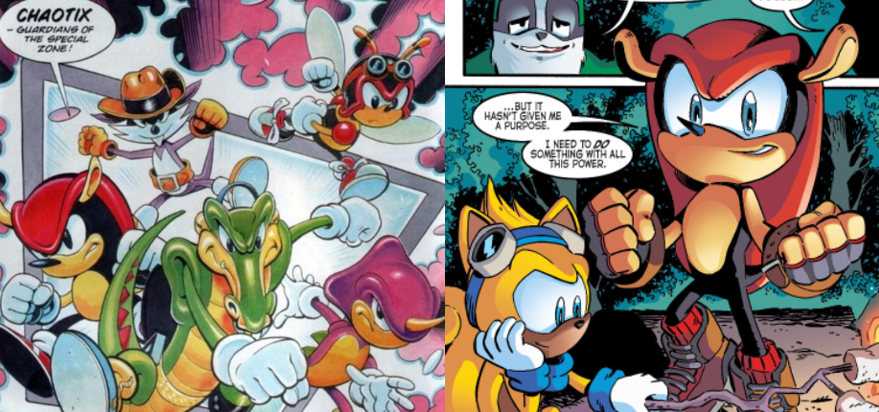

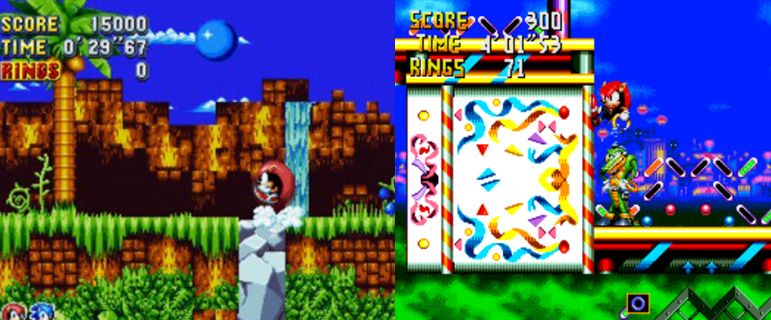


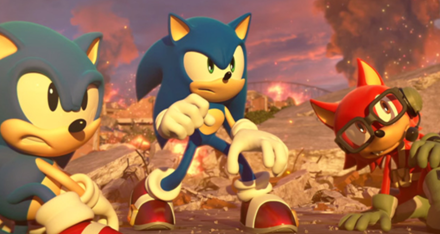
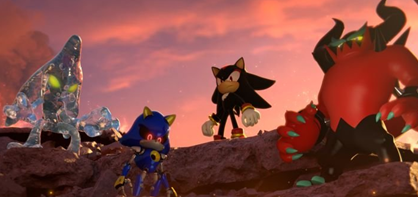
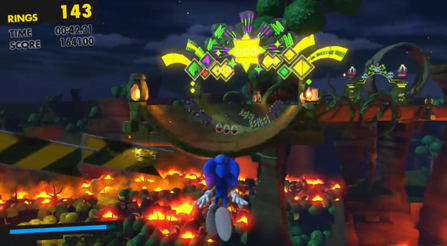
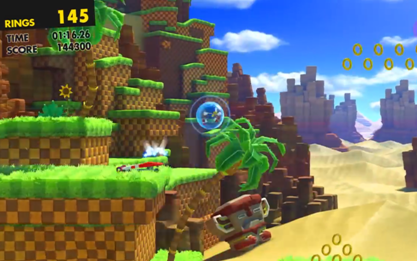
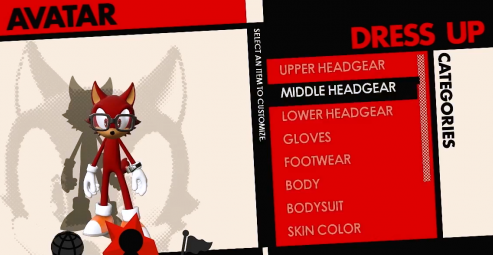
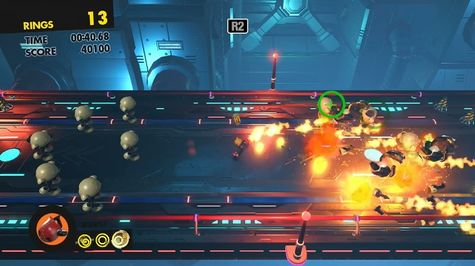
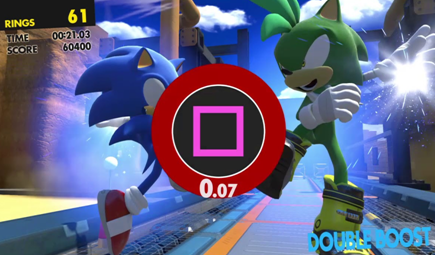
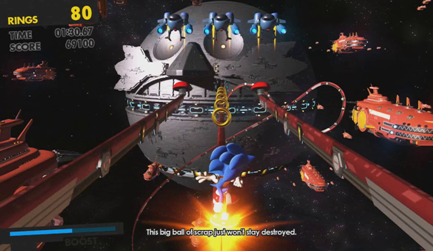
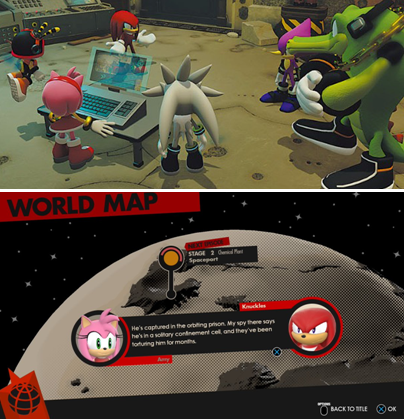
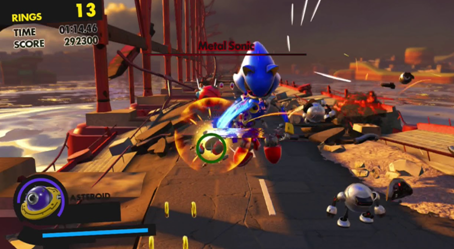


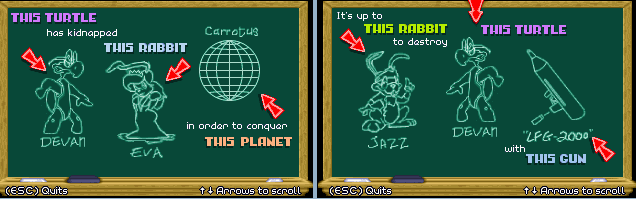

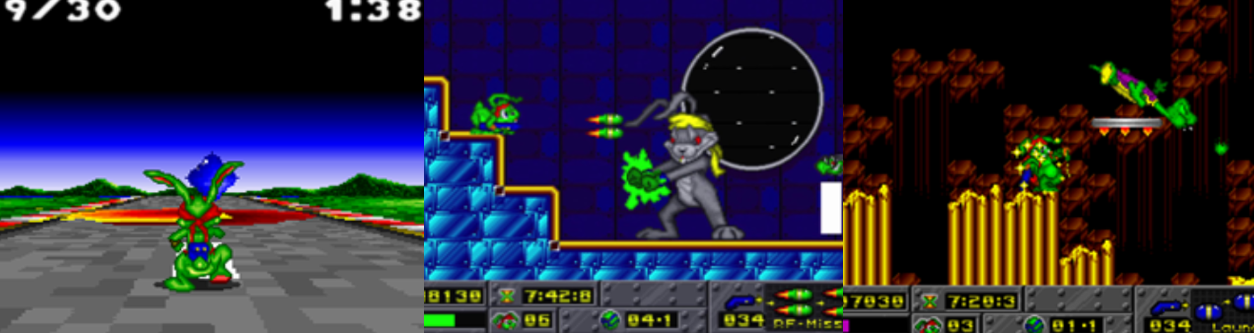

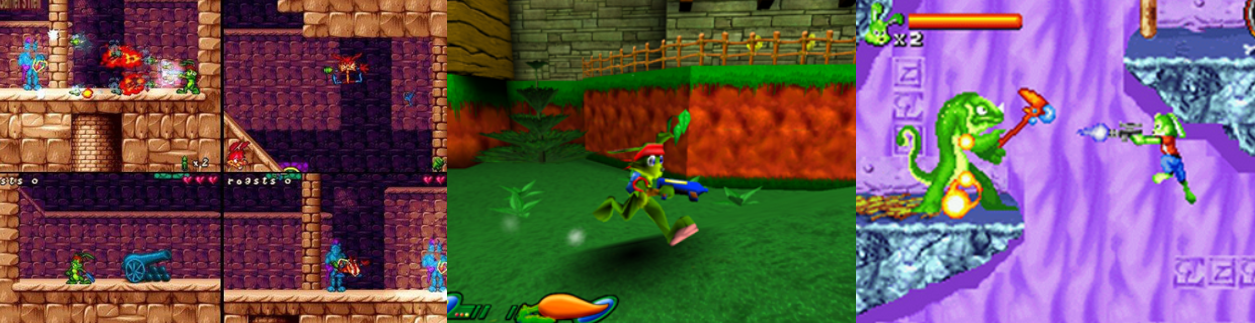


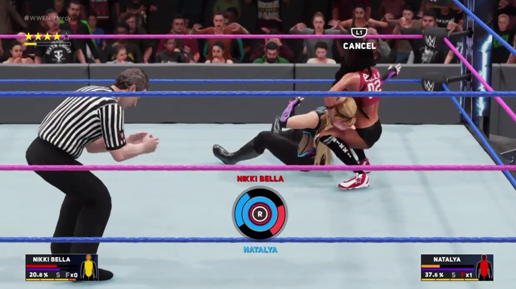
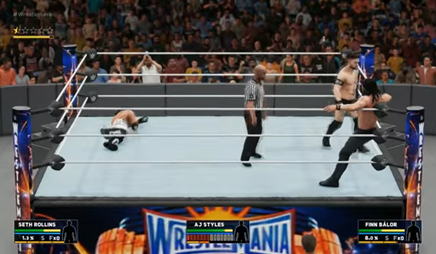
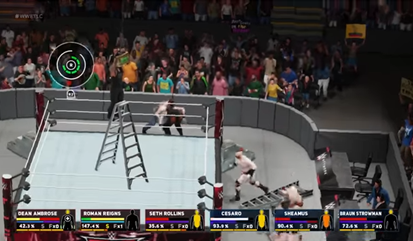
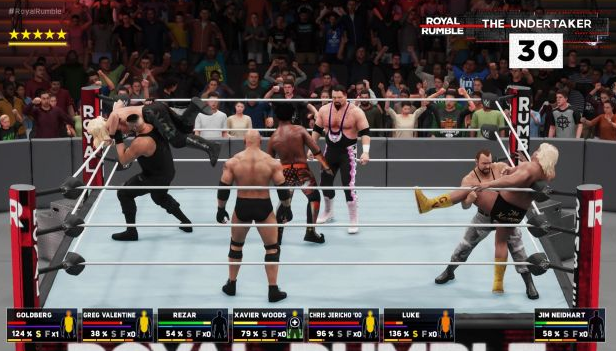
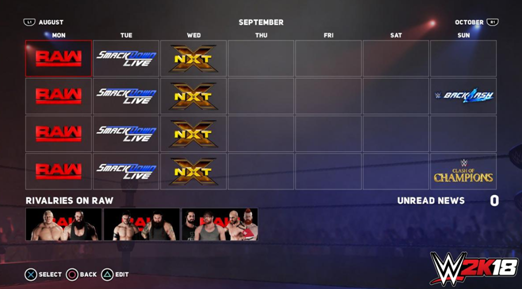
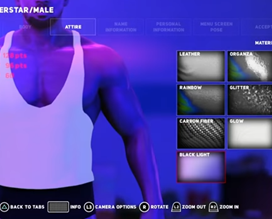
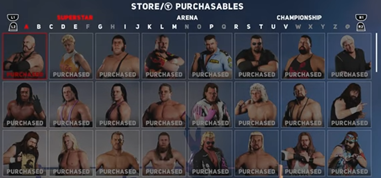
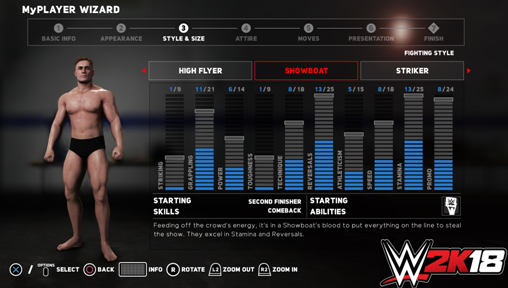
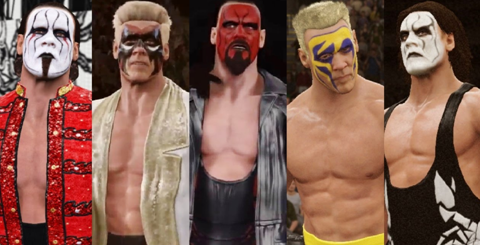


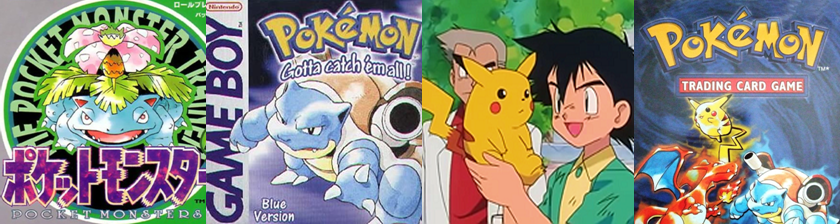


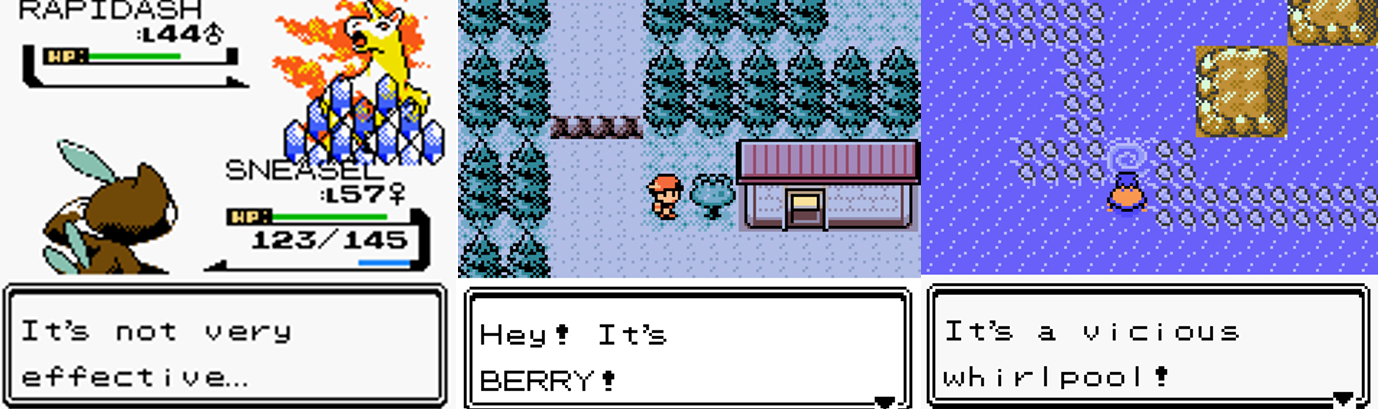

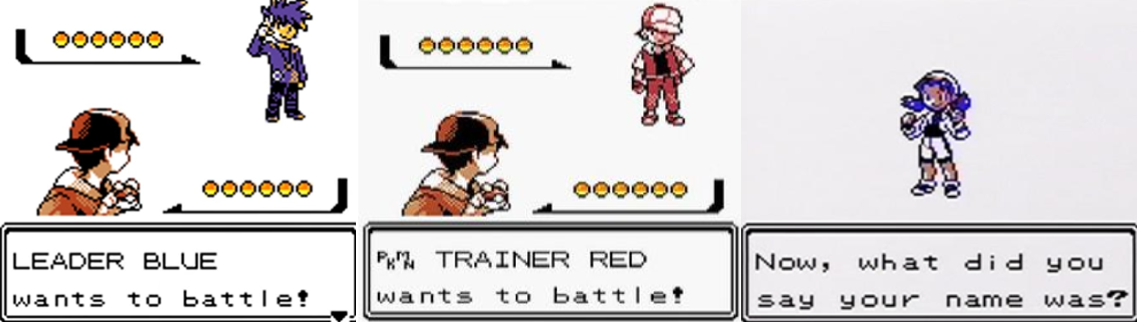
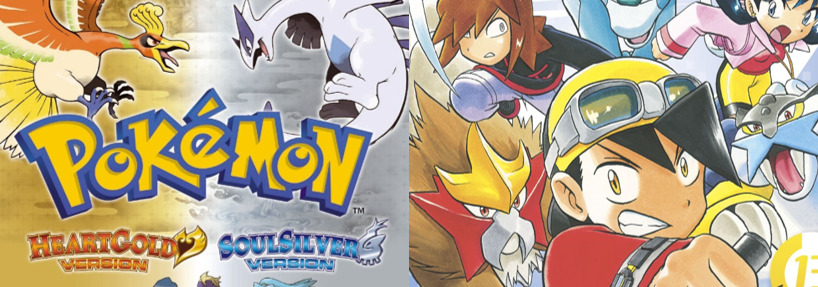


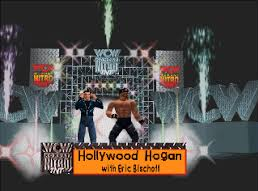
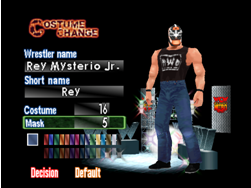

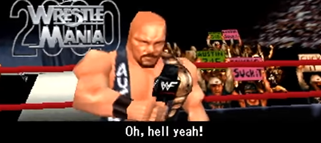
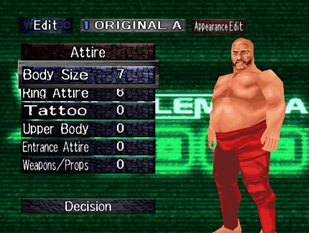

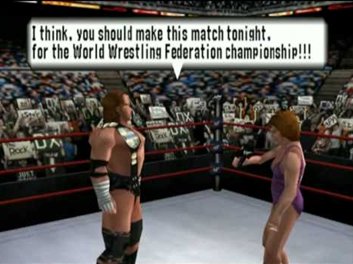
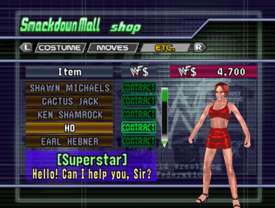



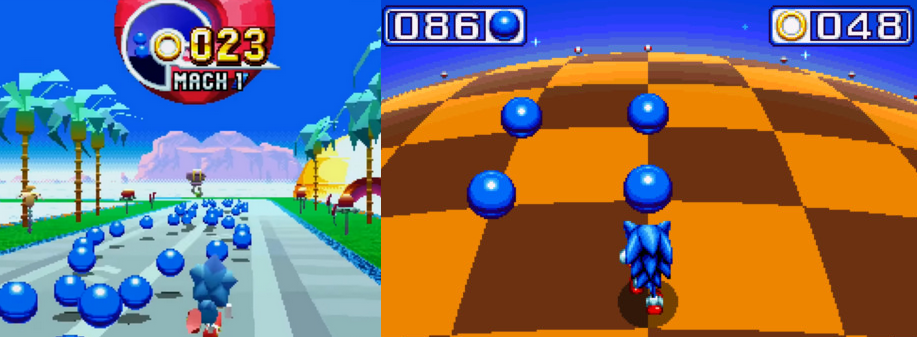

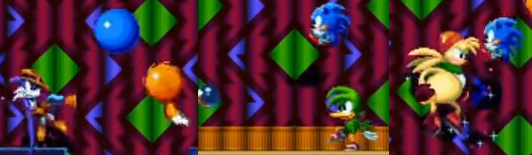


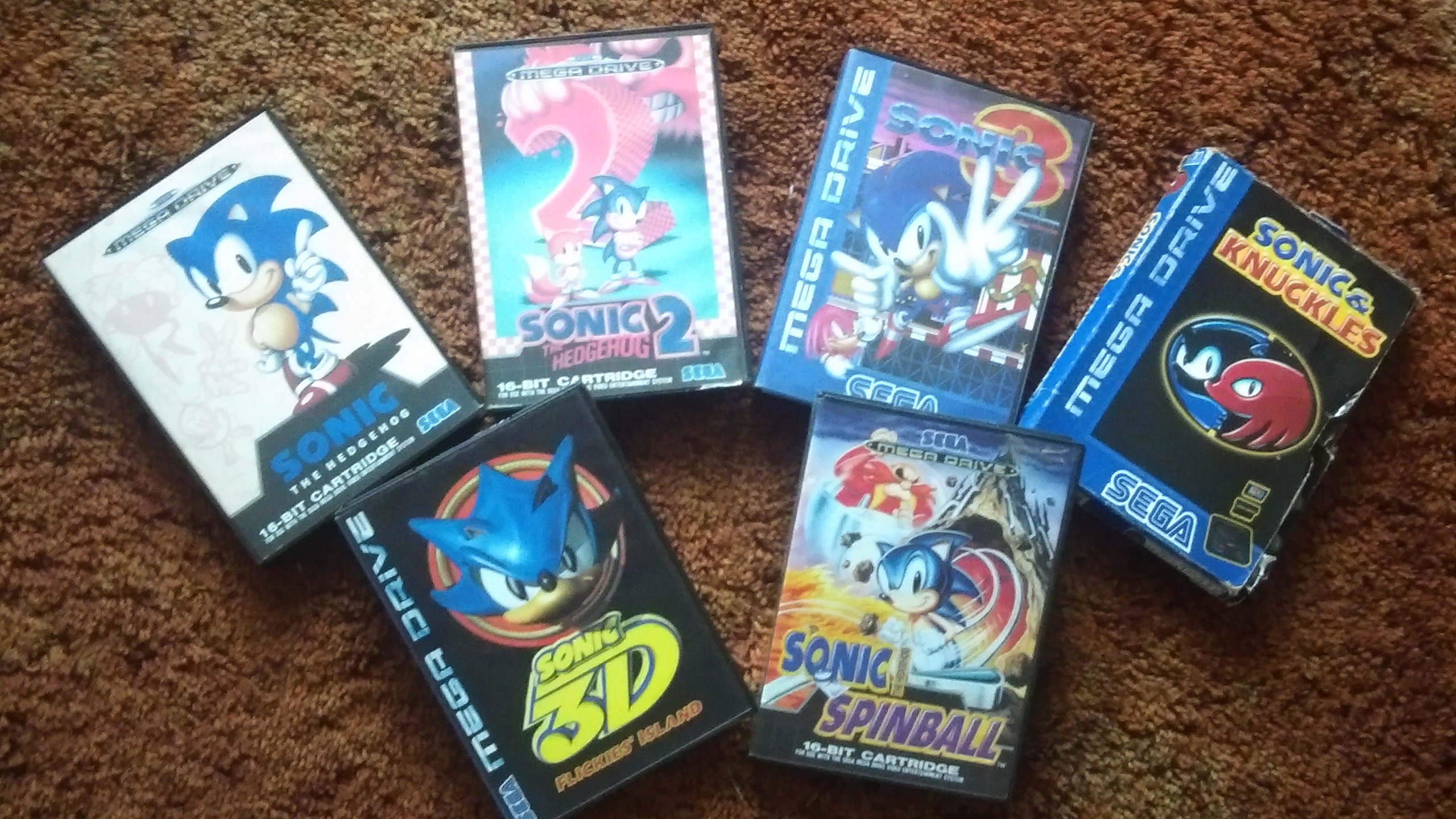

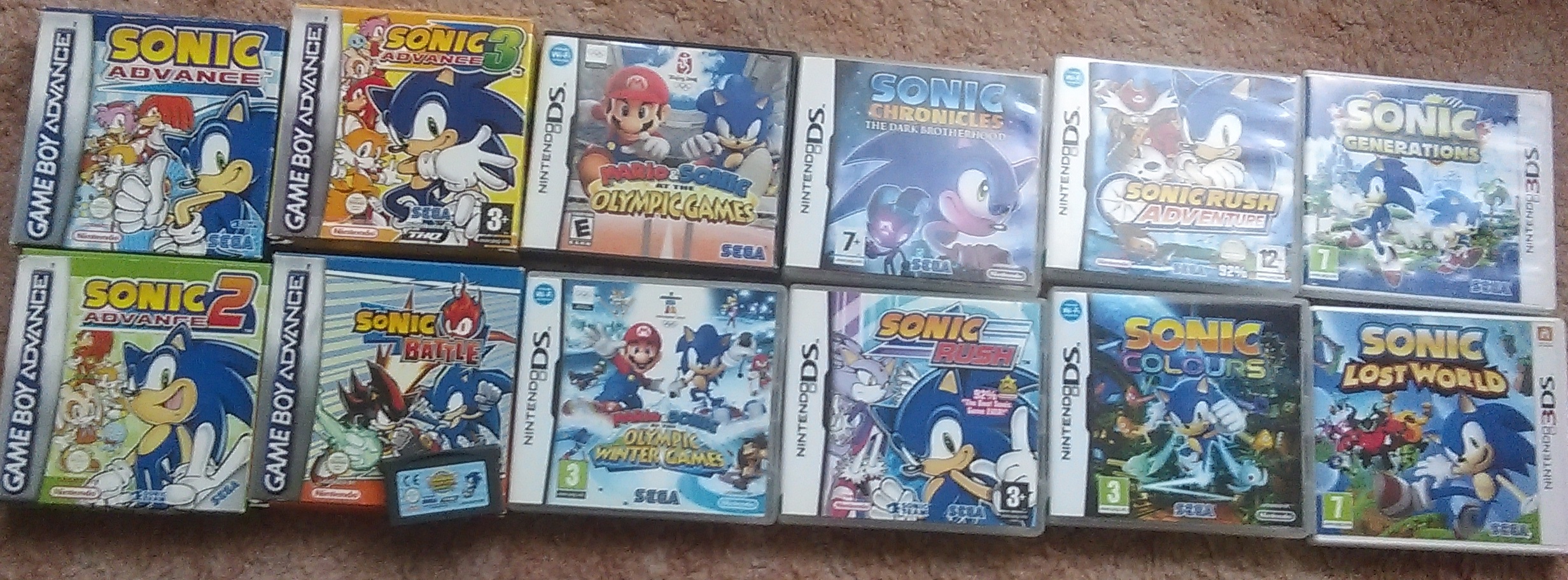
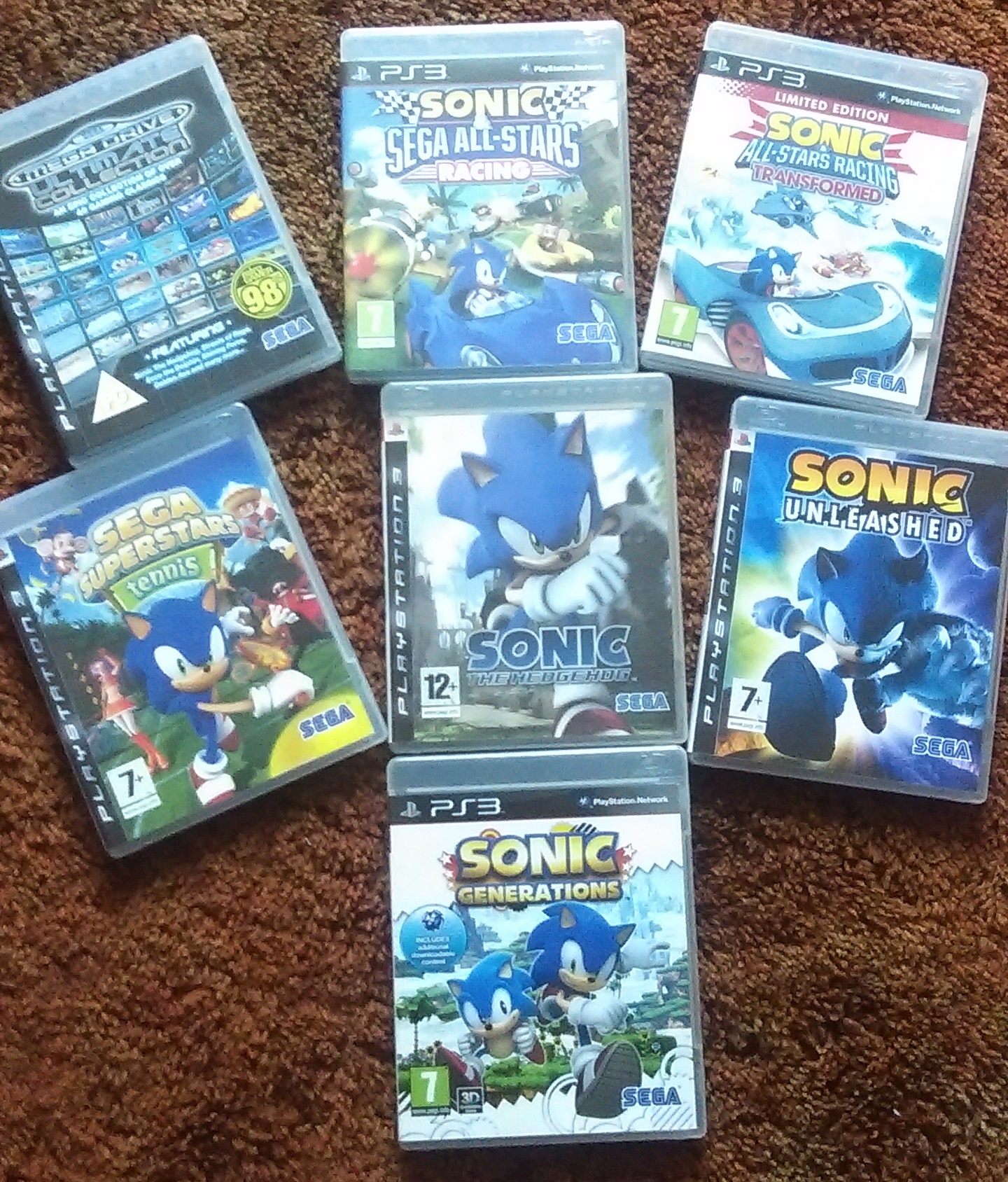








You must be logged in to post a comment.