Easily Marvel Comics’ most recognisable and popular superhero, unsuspecting teenage nerd Peter Parker was first bitten by a radioactive spider and learned the true meaning of power and responsibility in Amazing Fantasy #15, published in August 1962. Since then, the Amazing Spider-Man has featured in numerous cartoons, live-action movies, videogames, action figures, and countless comic book titles and, following this celebration of his debut, I’ll be dedicating every Saturday of August to talk about everyone’s favourite web-head!
Story Title: “Spider-Man Versus Doctor Octopus” Published: 9 April 1963 (cover-dated July 1963) Writers: Stan Lee and Steve Ditko Artist: Steve Ditko
The Background: After achieving incredible success with the Fantastic Four, Marvel Comics editor and head writer Stan Lee sought to capitalise on this with a teenaged superhero for younger readers to identify with. Inspired by a fly climbing up his office wall, Lee created Spider-Man (emphasis on the hyphen) and turned to artist Steve Ditko to settle on the character’s final design. Although Marvel publisher Martin Goodman disliked the concept and relegated the story to the final issue of Amazing Fantasy #15, the comic was one of Marvel’s best selling titles at the time and Spider-Man’s popularity led to him getting his own solo title barely a year later. Undeniably, Spider-Man has since fought some of the greatest and most memorable villains in comicdom, with many of Spidey’s most famous being co-created by Stan Lee. Three issues into The Amazing Spider-Man, Lee dreamed up a new supervillain for the webslinger, a crazed scientist with four mechanical arms grafted to his body simply out of a desire to offer something new and randomly settling on an octopus for inspiration. Since his debut in this issue, Doctor Otto Octavius has become one of Spidey’s most notorious and formidable villains; he not only handed Spider-Man his first defeat, but formed a cabal of villains to hound the web-slinger, almost married his beloved Aunt May, and even once switched bodies with Peter to become the “Superior Spider-Man”. Doc Ock has also been a recurring villain outside of the comics, often acting as a final boss or prominent antagonist in numerous Spider-Man videogames, and being a central villain in Spider-Man cartoons, to say nothing of Alfred Molina’smuch-praised turn as the character in live-action.
The Review: “Spider-Man Versus Doctor Octopus” begins with a pretty typical night in New York City; three mooks are wheeling a giant, cast-iron safe through a warehouse and in the process of stealing the vault when they’re startled by the appearance of everyone’s friendly, neighbourhood Spider-Man! As he was prone to doing from time to time, Spider-Man startles the crooks by projecting his spider-symbol onto the wall to put the wind up them and then makes short work of the three with his incredible spider strength. As Spidey waits for New York’s finest to show up and deal with the thieves, Spidey muses about how he’s run out of real competition and longs for an opponent who can actually put up a fight against his superhuman strength, a wish that he’s soon going to regret as, at that moment on the outskirts of the city, one of his greatest foes is about to be created! The scene shifts to an atomic research centre where genius nuclear physicist Doctor Otto Octavius has made a name for himself not just through his ground-breaking research but also in the development and utilisation of a unique mechanical harness which effectively grants him four additional, robotic arms that allow him to perform experiments no other scientist could dream of from a position of complete safety. While his peers have given him the nickname “Doctor Octopus” and regard him with a mixture of awe and ridicule, Otto is concerned only with his work and, early on, already shows signs of mania as he relishes in the benefits of his arms, which have made him the master of radiation.
Doc Ock’s mechanical arms allow him to manhandle Spider-Man and seize a nuclear facility.
However, tragedy strikes the workaholic scientist when the facility randomly explodes, leaving him not only permanently brain damaged (though we have no basis for comparison between this pre-accident personality and his post-accident one as they both seem very similar) but also fuses his mechanical arms to his body from the “radiation”. When Otto awakens, he’s eager to return to his work and, when the doctors insist that he lay down and rest, assumes that they’re jealous of him and actively keeping him from his research. His desire to escape is realised by his arms, which now obey his mental commands rather than being manually operated, and he basks in his newfound physical abilities. Naturally, cantankerous Daily Bugle editor, J. Jonah Jameson, wants pictures of the injured scientist yesterday so budding freelance photographer Peter Parker heads off to get the photos no-one can as Spider-Man. However, when he crawls his way up to Otto’s room, he’s stunned to see that the scientist, now embracing his nickname of Dr. Octopus, has gone mad with power and taken a few hostages so he can whip up some experiments. Spider-Man swings in to save the day, but Doc Ock is unimpressed by his quips and spider strength and even gives the web-head the shock of his life when he snaps his webbing, overwhelms him with his many arms (bitch slapping him in the process) and tosses him from the room like he was nothing. The shock of suffering his first real, unequivocal defeat runs deep for Peter, who suffers a crisis of confidence that leaves him powerless to stop Doc Ock from returning to the atomic research centre and easily taking command of the “brain centre”, granting him untold (if vague) power.
Peter bounces back fromhis defeat to out-think and defeat his multi-armed new foe.
To demonstrate his superiority, Doctor Octopus destroys part of the facility and rebuilds it to his specifications, setting up electronic barriers and barricades to create an impenetrable fortress; though it’s unclear what his ultimate goal is, it’s enough to put the wind up “the foremost brains of the nation’s armed forces”. Stuck in a deep depression, Peter feels lost and helpless, sleepwalking his way through school and envious of Johnny Storm/The Human Torch’s powers and confidence. However, Johnny’s address to the school makes Peter realise that defeat is inevitable and that the key is to never give up, which Peter takes to heart and finds his passion once more. Ready and raring for round two, Spidey easily infiltrates Doc Ock’s fortress, dodging his many traps and hazards thanks to his superhuman reflexes and spider sense, and dodging the mad scientist’s electronic eyes long enough to use his brains not brawn to whip his own scientific solution to his multi-armed foe. Confident of his unmatched power, Doc Ock opts to attack Spider-Man directly and is impressed when the web-slinger disables two of his arms with a chemical concoction that fuses them together. However, Doc Ock remains a deadly threat thanks to his flailing arms and surprising speed so, rather than trying to fight them off or fight through them, Spidey allows himself to be lured closer to his foe and relies on his superhuman strength and durability to withstand Doc Ock’s assault and lay him out with a single, well-timed knockout punch. Relieved to have ended the threat, Spidey takes no chances and thoroughly webs the dangerous madman up for the military police to find, then drops by Johnny Storm’s hotel room to thank him for his help, leaving the flaming teenager baffled since he has no idea what Spidey’s talking about.
The Summary: Interestingly enough, “Spider-Man Versus Doctor Octopus” was actually the first Spider-Man story I ever read as a kid (or, at least, it’s the one I have any memory of reading first) and, as a result I grew up perceiving Doctor Octopus, rather than the likes of Norman Osborn/The Green Goblin, as Spider-Man’s greatest nemesis. Revisiting the story now, I’m actually surprised at how enjoyable it is; Marvel Comics from the sixties can be a bit hit and miss, bogged down by dated dialogue and traditions or full of bizarre and off-putting artwork, but “Spider-Man Versus Doctor Octopus” is actually a pretty simple and effective story that shows Spidey dealing with the shock of being so handily defeated. Though often a conflicted and heavily burdened character beneath the mask, one of Spider-Man’s greatest assets has always been his unmatched physical confidence and love of aggravating his opponents with quips and jokes so to see him overpowered, smacked about like he was nothing, and cast aside like a mere annoyance was pretty startling at the time. It’s no surprise that Peter takes the defeat to heart, and he even contemplates ending his superhero career since his confidence has been shaken so badly, and it’s only through a conveniently relatable speech from fellow superhero the Human Torch that he’s able to find the motivation to suit back up for the rematch. I also enjoyed that his solution was to use his own scientific acumen as much as his incredible spider strength to best his new foe as it’s always cathartic when the very thing his peers mock him for contributes to him defeating a supervillain.
Doc Ock’s goals may be vague, but his intelligence is more than a match for Spider-Man!
Of course, the standout of the story is Doc Ock himself and much of the story revolves around him and his mad ambitions for power. We don’t really learn anything about Doc Ock except that he’s a genius scientific mind and the accident has driven him to the point of obsessive madness; we never get a sense of who he is before the accident to compare with how it affects his mind and it’s not made clear what his endgame is in taking over the atomic research centre beyond the ambiguous threat of him having access to the strange and dangerous power of nuclear energy and radiation which was rampant in comics at the time. Radiation is such a mysterious and powerful element that it not only granted Spider-Man his powers, but also fused the mechanical arms to Otto’s body and drove him mad with the physical abilities they afford him; responding to his mental commands, the arms can extend, allow him to clamber up walls, easily manhandle his foes, and allow him to perform multiple tasks at once through sheer force of will. The arms are so versatile, dexterous, and powerful that they can even hold back Spider-Man’s superhuman strength, strike fast enough to test even his vaulted spider sense, and can break his webbing with ease. However, behind the arms, Doc Ock is simply a man; one filled with a burning desire for power and determined to prove his superiority by any means, but a man nonetheless, and nowhere is this more evident than in the ease at which Spidey punches him out once he gets close enough. Consequently, Doc Ock is a supervillain who relies on his genius, fractured intellect and his formidable arms rather than having an inherent superhuman durability, which contrasts his daunting threat with an emotional and physical vulnerability to create a villain who is visually interesting and fully capable of out-thinking and out-fighting Spider-Man.
My Rating:
⭐⭐⭐⭐
Rating: 4 out of 5.
Great Stuff
What are your thoughts on Doctor Octopus’s first appearance? Were you a fan of the villain and his unique powers or did you find him to be a bit shallow and ridiculous? What did you think to Spidey’s defeat and crisis of confidence and his solution to besting Doc Ock? Were you a fan of the Human Torch’s cameo or did you think it was a bit forced? What are some of your favourite Doc Ock stories and moments? How are you celebrating Spider-Man Day today? Whatever your thoughts on Spider-Man and Doctor Octopus, leave them below and be sure to stick around for more Spider-Man content!
Published: June 2008 to January 2009 Writer: Brian Michael Bendis Artists: Leinil Francis Yu
The Background: In January 1962, legendary duo Stan Lee and Jack Kirby introduced Marvel Comics readers to the Skrulls, a race of warmongering shape-shifters who have long hounded Marvel’s heroes, particularly the Fantastic Four, by assuming their identities and powers. Experimented on by the all-mighty Celestials and launching aggressive campaigns against both the Earth and their hated enemies, the Kree, the Skrulls have been at the forefront of numerous Marvel stories over the years in addition to featuring as villains in various videogames and animated ventures before making their live-action debut, in a decidedly different manner, in Captain Marvel(Boden, 2019). Perhaps one of their most prominent storylines was the Secret Invasion arc that ran through these eight issues and multiple tie-ins and spin-offs; the brainchild of writer Brian Michael Bendis, Secret Invasion had not only been hinted at for some time and was heavily advertised as a means of changed up the perception of legacy Marvel characters and even return some to mainstream publication. Reviews of the storyline were mixed, with some noting that it was an anti-climatic Marvel event and others praising the marketing and artwork while criticising the religious undertones and spotty dialogue. Still, an adaptation of the story made its way into the Avengers: Earth’s Mightiest Heroes cartoon (2010 to 2012) and it also formed the basis of a six-episode, live-action series of the same name on Disney+.
The Review: This eight-issue event series begins “years ago” after the destruction of the Skrull throneworld, a cataclysmic, prophesied event that leads the few survivors back to their queen, Veranke, who kicks the story’s narrative in motion by seeding Skrull agents throughout our world. It took years for this to be uncovered, and it was revealed in dramatic fashion when it turned out that the resurrected assassin Elektra Natchios was a Skrull in disguise, a revelation that alerted Tony Stark/Iron Man (then the conceited and self-righteous director of the Strategic Hazard Intervention Espionage Logistics Directorate (S.H.I.E.L.D.) following the game-changing events of Civil War (Millar, et al, 2006 to 2007)) to the depths of the Skrull’s infiltration. Recognising that even his armour’s sensors can’t be trusted to identity friend from foe, Stark drafts in his allies – Doctor Reed Richards/Mister Fantastic and Doctor Henry “Hank” Pym/Yellowjacket – to perform an autopsy in an attempt to figure out how the Skrull was able to remain completely undetected to technology, magic, and Mutant probing. Conveniently enough, a Skrull ship chooses this exact moment to come crashing into Earth’s atmosphere and make landfall in the Savage Land, taking Iron Man away from the operating room so he can investigate. Concerned that this could be the full-scale invasion they fear, Jessica Drew/Spider-Woman calls in the renegade “New” Avengers (those who refused to sign up to the ludicrous Superhero Registration Act in Civil War), which leads to Luke Cage/Power Man, Peter Parker/Spider-Man, James “Logan” Howlett/Wolverine, Danny Rand/Iron Fist, Clint Barton/Ronin, and Maya Lopez/Echo subduing Black Widow/Natasha Romanova and stealing her Quinjet to beat Iron Man and his government-sanction Mighty Avengers – Iron Man, Spider-Woman, Black Widow, Carol Danvers/Ms. Marvel, Janet van Dyne/The Wasp, Ares, Simon Williams/Wonder Man, and Robert “Bob” Reynolds/The Sentry – to the crash site. Both sets of Avengers are aware of the potential Skrull threat, which drives an even greater wedge between them as not only are the Secret Avengers being actively hunted by their former comrades, but they can’t even trust each other to be who they say they are.
While the Skrulls cripple Earth’s defenses, the fractured Avengers battle their classic counterparts.
After being brought down by one of the Savage Land’s rampaging dinosaurs, the New Avengers prepare to open up the crashed ship, but they’re intercepted by the Mighty Avengers, with Iron Man immediately trying to arrest them and Luke Cage obviously telling him and his jumped-up thugs to go kick rocks. Iron Man’s attempt to keep the rogue superheroes from overstepping the mark are scuppered when Timothy “Dum Dum” Dugan and his trusted butler, Edwin Jarvis, unexpectedly sabotage not only the orbiting the Sentient World Observation and Response Department’s (S.W.O.R.D.) satellite base but also Stark’s armour and S.H.I.E.L.D.’s Helicarriers and bases, effectively disabling the armoured Avenger and crippling the superhero community’s resources and communications. Additionally, maximum security prisons the Raft and the Cube are suddenly hit by mass breakouts and Mar-Vell/Captain Marvel and Susan Storm/Invisible Woman disable the villainous Thunderbolts and the rest of the Fantastic Four, with each of these supposed heroes flashing ominous eyes and assuring their victims that “He loves [them]”. Meanwhile, a Skrull armada bares down on Earth and Mr. Fantastic finds himself reduced to an elasticated mess right as he figures out the key behind the Skrull’s newfound undetectability, the victim of a shot from Pym, who’s revealed to also be the Skrull Citri Noll! Momentarily setting aside their differences to get Tony Stark to aid, the two Avengers groups are startled when a slew of classic-styled, currently deceased or long-changed superheroes emerge from the Skrull ship; Captain Steve Rogers/Captain America, the Vision, Thor Odinson, Doctor Jean Grey/Phoenix, Doctor Henry “Hank” McCoy/The Beast, Wanda Maximoff/Scarlet Witch, Jessica Jones/Jewel, Emma Frost/The White Queen, and Barbara “Bobbi” Morse/Mockingbird appear alongside classic versions of Spider-Man, Power Man, Wonder Man, Iron Man, Hawkeye, Ms. Marvel, Wolverine, and the Invisible Woman. Naturally, a tense showdown ensues in which both groups assume the other are Skrulls in disguise; guys like Wolverine, Spider-Man, Emma Frost, and the Vision struggle to get any kind of reading on their counterparts beyond sensing their distrust while Ronin is stunned to see his former flame, Mockingbird, alive and well but, despite Ares trying to convince his allies that it’s a trap, tensions boil over and an all-out brawl kicks off!
As more characters enter the fray, internal distrust is as rife as the escalating war with the Skrulls.
With Stark in agony from the alien virus that’s crippled his armour, Ms. Marvel flies him to safety as the others duke it out; the two Spider-Men trade quips and punches, the Vision uses the Sentry’s fear of his destructive and malevolent alter ego, the Void, to disable his God-like power, and Ronin steals his counterpart’s weapons to subdue their attackers but the arrival of a raging Tyrannosaurus rex disrupts the fracas. Trampled to death by the dinosaur, the classic Spider-Man and Hawkeye are revealed to be Skrulls, and Wolverine intuits that the Skrulls are setting them against each other to wipe out any resistance to their invasion plan. However, when he tries to eviscerate Mockingbird, Ronin intervenes and questions her; she’s adamant that she’s not a Skrull and even reveals personal information that only she and Clint would know, which is enough to convince him to trust her. This offers Luke Cage the hope that the Cap and Iron Man aboard the ship are the real deal, which would certainly explain Stark’s recent manic behaviour and allow the recently deceased Cap to still be alive, but Wolverine’s far from convinced. Meanwhile, back in New York City, a portal opens up and a whole slew of Avengers-inspired Super-Skrulls attack; there’s Skrulls combining the powers of various X-Men, a Fantastic Four Super-Skrull, one that’s a mixture of Spider-Man villains, and even an Illuminati hybrid, meaning the Young Avengers – Eli Bradley/Patriot, Dorrek VIII/Hulkling, Billy Kaplan/Wiccan, Tommy Shepherd/Speed, Kate Bishop/Hawkeye, and their mentor, the Vision – are completely overwhelmed despite Hulkling’s efforts to talk down their attackers with his royal status. Thankfully, they receive some back-up in the timely arrival of fledgling superheroes, the Initiative – Joseph Green/Gauntlet, Rachel Leighton/Diamondback, Cassandra “Cassie” Lang/Stature, David Alleyne/Prodigy, Anthony Masters/Taskmaster, Geldoff/Proton, Z’Reg/Crusader, Jimmy Santini/Batwing, Fahnbullah Eddy/Gorilla Girl, Wallace Jackson/Red 9, Delilah Dearborn/Geiger, Melee, Andrea Roarke/Sunstreak, and Alexander Ellis/Annex. Though the Skrull forces prove ruthlessly formidable, and the Vision is lost in the battle, even more help arrives when the Secret Warriors – Colonel Nick Fury, Yo-Yo Rodriguez/Slingshot, Daisy Johnson/Quake, Alexander Aaron/Phobos, J.T. Slade/Hellfire, Jerry Sledge/Stonewall, and Sebastian Druid/Druid – add yet more names and the bodies to the chaotic artwork and conflict.
Heroes and villains set aside their differences to take the fight to the invading Skrull army.
The Skrull threat is doubled thanks to the distrust between the world’s heroes, with even Nick Fury abandoning Ms. Marvel because of her alien DNA. Meanwhile, as a weakened Stark desperately attempts to repair his armour, Spider-Woman reveals herself to be the Skrull Queen, Veranke, and tries to convince him that he’s a Skrull agent so deep undercover that he’s forgotten his true nature. Before her poison (both literal and figurative) can take hold, Black Widow causes her to flee and Stark reveals that the key to victory lies with Mr. Fantastic, who’s currently being tortured aboard a Skull ship. Thankfully, S.W.O.R.D. director Abigail Brand bluffs her way onto the ship and flushes the Skrull into space to rescue him; Reed then fashions a device that exposes the Skrulls’ real forms, arriving just in time to stop another conflict in the Savage Land and revealing not only that the classic Emma Frost, Invisible Woman, Thor, Ms. Marvel, and Jessica Jones are Skrulls but that Mockingbird is as well, enraging Clint. The real Thor transports everyone to New York for a final confrontation, which even the Watcher, Uatu, shows up to observe and also sees Parker Robbins/The Hood’s criminal syndicate and Doctor Norman Osborn’s Thunderbolts pitch in with the nearly-incomprehensible brawl. While Mr. Fantastic and Iron Man try to take out Veranke (still disguised as Spider-Woman) to demoralise the Skrulls, the Wasp targets Citri Noll, who apes Pym’s Giant-Man form, though it’s Stature and the assassin Bullseye who end up taking him out. Iron Man is forced to withdraw so he can sort out his messed-up armour, Fury’s forces save Mr. Fantastic from being torn apart by multiple Skrulls posing as the Invisible Woman, the real Jessica Jones joins the fray, and Kate Bishop ends up gravely injured amidst the chaos. Although Wolverine tries to take out Veranke, the bio-electrical powers she stole from Spider-Woman keep him at bay, meaning it’s an arrow through the face courtesy of the vengeful Ronin that ultimately subdues her.
Although the Skrulls are defeated, the general distrust in Stark allows Osborn to seize power!
With Veranke compromised, Citri Noll activates a device that causes Janet to enlarge uncontrollably and unleash a chemical agent designed to kill humanity and Skrulls alike. With no other choice available, Thor whips up a hurricane with his magical hammer, one so powerful that is destroys the enlarged Janet and dissipates the weird black spots that threaten everyone’s lives. Although Wolverine seeks to make Veranke pay for Janet’s death, it’s Norman Osborn who gets the kill shot, then Iron Man finally gets his shit together and leads an all-out assault on the remaining Skrull ships, with the now disillusioned and leaderless armada being easy pickings. Iron Man also frees everyone the Skrulls impersonated since the shape-shifters conveniently needed the original versions alive in order to make the deception more convincing, meaning Elektra and Mockingbird return to “life”, Reed is finally reunited with his family, and the true versions of the likes of Spider-Woman re-join society. Unfortunately, this also means that Jessica Jones left her and Luke’s baby, Danielle Cage, in the care of the Skrull-Jarvis, a plot thread left unresolved in this story. Although recent tensions are eased in the aftermath and ensuing celebration, there’s an unshakable sense of hesitation given how long the Skrulls had been a part of Earth’s society and superhero community; Thor also condemns Stark’s recent actions and refuses to associate with him. Thanks to having publicly executed Veranke, Osborn is able to manipulate the President of the United States into equally losing faith in Stark, his methods, and his technology; the President thus ousts Stark as director of S.H.I.E.L.D. and names Osborn as the new overseer of any and all superhuman and defensive measures under a new organisation, H.A.M.M.E.R., unaware that this is exactly the opportunity the scheming madman and his Cabal of allies (Emma Frost, Doctor Victor Von Doom/Dr. Doom, The Hood, Prince Namor McKenzie/The Sub-Mariner, and Lady Loki) were waiting for.
The Summary: Now, I am by no means an expert on the Skrulls; I know of them, primarily as an antagonistic, shape-shifting race of aliens who are almost constantly at war with the Kree and getting into scuffles with the Fantastic Four, but they’re generally on the periphery of most Marvel stories I’ve read. Secret Invasion is probably, to date, their most prominent story, at least in my experience, and it definitely adds some nuance to them that I didn’t expect. Normally, I see them as a warmongering race who live to conquer through both subterfuge and force but, here, they’re motivated by a fanatical devotion to their God (the “He” they keep referring to) and their invasion is seen almost as divine intervention. The Skrulls swamp television screens with their pseudo-religious propaganda, hijacking every telecommunications device across the globe and assuming the guise of various political figures, celebrities, and superpowered monarchs like Erik Lehnsherr/Magneto and Dr. Doom, and insist that they’re there to bring glory to our world and that their might cannot be opposed. Given the strength of their invasion and that their Super-Skrulls have mimicked the combined powers of many of Marvel’s heroes, it’s perhaps not surprising that Marvel’s ridiculously fickle citizens embrace their alien overlords, though this scene showcases that the Skrulls aren’t simply defending themselves or there to usher in a new age for mankind as they claim and are hell-bent on conquering the planet.
Having lost everything, the Skrulls throw themselves at Earth with fanatical desperation.
This campaign is spearheaded by their queen, Veranke, a figure of worship for the Skrulls and who has placed herself on the frontline, earning the trust of Tony Stark by posing as Spider-Woman and becoming privy to many of Earth’s defences. Stark even reflects on his role in the invasion and the shame he feels about not recognising the threat sooner in a show of guilt that was somewhat uncharacteristic of him at this time; this is a man who was so blinded by his belief that superhumans needed to register with the government that he actively fought and imprisoned his fellow heroes and abandoned many of them, and his morals, in favour of an uncompromising, borderline fascist mentality that only led to further conflict and resentment Indeed, Veranke revels in the irony of having twisted Earth’s technology and heroes towards her agenda, something she was easily able to do thanks to Stark being so dead-set about forcing or punishing his peers to register their true identities and powers. However, as much as Veranke likes to preach that hers is a Holy mission, she’s actually equally motivated out of revenge, specifically against Mr. Fantastic and the Fantastic Four after they tricked a contingent of Skrulls into believing they were cows decades prior. Since the Skrull home world has been lost and their once-prosperous empire lies in ruins, the Skrulls follow her without question and throw everything they have at Earth; they’re even willing to give their lives in the process, and in a last-ditch effort of mutually assured destruction, only to be defeated and left dejected. Veranke’s death leaves the Skrulls directionless and all their once-formidable might is as nothing; those that survive are left demoralised as they saw this as their last chance at survival and glory. Thus, Veranke’s quest for vengeance and conquest leaves her people devastated and more worse off than ever as a sizable portion of their armada is destroyed and the last thing they had in all the universe, their faith, is also shattered by their defeat.
The Skrulls are so deeply entrenched that the already frayed heroes are strained to breaking point.
I’m generally not a fan of imposter storylines; it’s a tired cliché and one that quickly outstays its welcome, but it actually works quite well in Secret Invasion. Many of the Skrulls seem to be completely unaware of their true nature; the Mockingbird-Skrull believes that she’s the real deal right up until the end and is begging Clint to listen to her even as he attacks her in a rage. This is also true of Captain Marvel, who believed so strongly that he was the deceased former hero that he couldn’t bring himself to kill and was convinced by Norman Osborn, of all people, to turn on his race; he even died begging the Kree warrior Noh-Varr/Marvel Boy to carry on the fight in his stead, so complete was his conditioning. It’s not revealed exactly how the Skrulls have the memories they do but it’s one of the big reasons why so many of them went undetected; however, many of the Skrulls posing as classic Avengers continued to believe they were the real deal after their true nature was revealed rather than immediately attacking the heroes in service of their God, which definitely paints much of this conflict in a morally grey area. The Skrulls pick the perfect time to strike the Earth; its heroes are divided and at war with each other and easy to manipulate, and seeing the return of dead heroes like Captain America, Mockingbird, and Captain Marvel, as well as the original version of Iron Man, only fuelled the flames of conflict between them thanks to Stark’s actions during Civil War leading to many deaths, including Captain America’s. It would’ve been so easy to explain away Stark’s recent actions as being the work of the Skrulls but, interestingly, that doesn’t turn out to be the case and, similarly, Cap’s death isn’t immediately undone with the presence of his classic counterpart. Instead, we’re left with a world where Stark is still shouldering the burden of his actions and where Cap’s mantle has been taken up by his friend, James Buchanan “Bucky” Barnes; there are no quick-fixes in this story to explain away the events of Civil War and there isn’t really a sense that bridges have been mended by the end of it as distrust is still rife and the status quo remains unchanged.
A decent story with some interesting wrinkles but a bit overstuffed and manic at times.
Ultimately, I quite enjoyed this story; it’s hard to read as an eight-issue standalone as you need some knowledge of prior Marvel events, especially Civil War, and it’s clear that there’s a lot of additional story and conflict in supplementary collections and books, but the narrative works just as well if you only read these eight issues. I enjoyed seeing the Mighty and New Avengers be forced to set aside their differences when faced with their classic counterparts and the reveals of which characters were Skrulls, even if none of the major players were aliens in disguise. The quasi-religious bent to the Skrull invasion was an interesting twist, as was them siphoning and combining the powers of Marvel heroes into an army of Super-Skrulls, and the art was pretty consistent and easy to follow throughout. Unfortunately, the biggest issue I had with Secret Invasion was the sheer number of characters jammed into it; it was hard to keep track of it all at times and it’s obvious that teams like the Young Avengers, Thunderbolts, and Secret Warriors all had bigger parts to play in spin-off stories, but I think they could’ve been downplayed a little here. There’s a Skrull-Galactus with absolutely no context or consequence to the story and even Uatu shows up, which is generally a short-hand to indicate that the events are of cosmic importance but, again, it doesn’t actually factor into the story in a meaningful way. Stark spends most of the arc out of action thanks to the Skrull virus messing up his armour, which is great for leaving him vulnerable and in pain and unable to participate in the wider conflict but then he just shows up in an older armour with a throwaway line for the finale. Similarly, Thor just pops in out of nowhere, formally prominent characters like Wolverine and Spider-Man get lost in the shuffle, and late appearances from Jessica Jones and Norman Osborn are simply there to set up the next big Marvel events and stories. Overall, it was pretty enjoyable and not as much of a mess as some Marvel events, but the action got a little too chaotic at times and there were too many characters wedged into these issues, which I think would’ve been far stronger if they’d focused on, say, eight or ten main characters and then just showcased the others in supplementary materials.
My Rating:
⭐⭐⭐
Rating: 3 out of 5.
Pretty Good
Did you enjoy Secret Invasion? Were you shocked to find out which characters were Skrulls in disguise? Were you hoping that some of the classic Avengers would turn out to be the real heroes? Which of the teams featured was your favourite? Did you think there were too many teams and characters in the story and which of the spin-off books did you enjoy? What did you think to Veranke, the pseudo-religious slant to the Skrulls, and the Skrull invasion? Were you also frustrated by Tony Stark’s characterisation during this time, or did you enjoy seeing Marvel’s heroes in dispute? What are some of your favourite Skrull-centric stories? Whatever your thoughts on Secret Invasion, feel free to share them below or leave your thoughts on my social media.
Story Title: “Among Us Hide… The Inhumans” Published: 9 September 1965 (cover-dated December 1965)
Story Title: “Those Who Would Destroy Us” Published: 12 October 1965 (cover-dated January 1966)
Story Title: “Beware the Hidden Land!” Published: 11 November 1965 (cover dated February 1966)
The Background: In 1961, Stan Lee and Jack Kirby came together to introduce comics readers to the Fantastic Four, a dysfunctional family of superheroes created as a direct response to DC Comics’ Justice League of America. While the exact circumstances behind the team’s creation has been contest by both creators, Lee and Kirby’s partnership not only popularised the “Marvel Method” of writer/artist collaboration but also impressed readers with their characters’ real and relatable humanity, essentially birthing Marvel Comics as we know it today. Over the years, numerous characters and concepts that would be pivotal to Marvel Comics would debut in the pages of Fantastic Four, and one of the most contentious of these were the Inhumans. Debuting a couple of years after Lee and Kirby’s similar concept, the X-Men, the Inhumans were first introduced as antagonists to Marvel’s First Family before being expanded to include an entire race of superpowered beings under the lordship of the Inhuman Royal Family. The result of Kree experimentation, the Inhumans were granted their incredible powers and often monstrous appearances by a substance dubbed “Terrigan Mist” and took the dysfunctional family dynamic and unsettlingly aesthetic of both the X-Men and Benjamin Grimm/The Thing and dialled it up to eleven for their colourful and wacky cast of characters. Following their three-issue debut story, the Inhumans graduated to a short-lived solo title and have gone on to be prominent fixtures in Marvel Comics. Their leader, Blackagar Boltagon/Black Bolt, has served on the omniscient supergroup the Illuminati, an Inhuman girl was involved in an ongoing romance with Johnny Storm/The Human Torch, and the species has been at the core of numerous domestic and cosmic wars against both humans, fellow superheroes, and themselves. Perhaps their most infamous legacy, however, comes from that time when Marvel actively tried to downplay the X-Men in favour of the Inhumans, a plan that ultimately backfired when their foray into live-action proved to be a rare misfire for Marvel Studios.
The Review: Our three-issue saga begins with Marvel’s First Family in a spot of bother; a gigantic android gargoyle known as Dragon Man has kidnapped Susan Storm/The Invisible Girl and allowed the mysterious Tomi Shishido/Gorgon to take off with Medusalith Amaquelin/Medusa, a founding member of the Fantastic Four’s evil counterparts, the Frightful Four. In the fracas, Gorgon caused Doctor Reed Richards/Mister Fantastic and the Thing to be buried beneath the stone rubble of an entire building; however, thanks to Mr. Fantastic’s incredible (and unnerving) elasticity and the presence of the Human Torch, all three are carried to safety and given the precious moments needed to gather their wits and catch their breath after the devastating attack. Reed doesn’t waste any time and sends Johnny ahead to search for Sue and he quickly locates her being carried away by the gruesome gargoyle. Although his flaming projectiles have no effect on the beast, a burst of white-hot nova light temporarily blinds Dragon Man but, before the Human Torch can go to town on the creature, Sue talks him down and demonstrates her ability to tame Dragon Man by talking to him as she would a child, and thus the team are reunited without issue.
After taming Dragon Man, Johnny is besotted by the mysterious Crystal and led to a hidden sanctuary.
Well, not entirely. While Medusa’s Frightful Four cohorts wallow in prison, a restless Johnny hits the streets after his current flame, Dorrie Evans, turns him down. There, he just happens upon a gorgeous redhead and is instantly smitten; however, when he attempts to approach her, a gale-force wind knocks him flying, which only further arouses his…well, let’s just go with “curiosity”. The next day, as the team begin shuffling around their gigantic (and nonsensical) Kirby-machines and equipment to make room for Dragon Man, Johnny is too distracted by thoughts of the redhead to offer any assistance, which earns him an ear-bashing from Sue and Ben that riles the lovelorn youth so much that he heads out to the streets once more. Hanging around near where he saw the girl like an absolute creep, he pursues her relentlessly, even as piles of wood explode into flames to stop him and despite her begging to be left alone lest “they” learn she was seen. However, when she sees his ability to control and burst into flames, she assumes that he’s “of us” and immediately stops running to chat, share her name (Crystal), and strike up a friendship. Naturally, Johnny plays along just to get close to her, but even he’s astounded when she introduces him to her friend, a gigantic slobbering dog called Lockjaw who not only loyally follows her everywhere but opens a set of massive hidden doors using a “force ray” from his antennae. Eager to introduce Johnny to her “family”, Crystal leads him into an elaborate sanctuary built for her and her race by the mysterious Black Bolt. Along the way, Johnny is introduced to the deftly powerful Karnak Mander-Azur, who’s strong enough to shatter a block of marble with one karate chop and swift enough to toss any assailant before they can move.
The team race to Johnny’s aid and are tossed about by the powerful Black Bolt!
Although Johnny’s impressed, his awe and confusion soon turn to horror when he spots Gorgon and Medusa amongst the other strangers, whom he correctly assumes are a race of super-powered beings. Despite Medusa (revealed in the chaos to be Crystal’s sister) pleading with her peers to spare Johnny from harm, Gorgon knocks him from his feet with one stomp of his foot and the lizard-like Triton conjures a glass wall to trap him and then attempts to douse his body with water. Acting swiftly, Johnny bursts into flame and manages to escape through the unprotected ceiling, signalling his teammates with a flaming 4 in the sky and interrupting their efforts to calm down the raging Dragon Man with a tranquiliser gun. Spotting the alert, Reed, Sue, and Ben leap into action using a bizarre flying motorcycle seemingly cobbled together from pipes! This “Airjet-Cycle” may not be much compared to the Fantasti-Car but it’s fast enough to carry them to Johnny’s location, where he warns them of the strange “Inhumans” protecting Medusa. The four venture ahead, unaware of their foes watching them from above; thankfully, the Thing’s strength is enough to repel Karnak’s projectile but the four are stunned when the Inhumans’ enigmatic and much-revered leader, Black Bolt, bursts onto the scene. Black Bolt immediately asserts himself by staggering the hardy Thing with one blow and proving fast enough to sidestep Johnny’s attack thanks to the wing-like appendages under his arms. Though he braces for Black Bolt’s next blow, the Thing learns that their foe is as skilled as he is powerful as he’s able to throw even his rock-hard weight without issue.
The threat of the Seeker drives the Inhumans to fight with all their might.
Reed, Sue, and Ben regroup, and two things come to light: one is that Black Bolt hasn’t uttered a single word since he arrived and the other is Reed’s suggestion that he’s drawing power from the strange tuning fork-like antenna on his forehead. Whilst searching for Johnny, Reed is pounced upon by Triton; the scaly-man-monster’s attempts to keep the Inhumans hidden are foiled, however, when Reed discovers that Triton’s suit is actually a special moisture bag that allows him to survive outside of water. With his water supply ruptured, Triton panics, lashes out, and desperately stumbles into the nearby water to keep himself from suffocating. Karnak launches a counterattack but, when his well-trained blows are repelled by Sue’s invisible force field, Gordon sends the two flying into the air with a ground-shaking stomp. While fighting with Reed, Triton lets slip about an enemy of theirs known as “The Seeker”; while Reed and Sue ponder the threat of the Inhumans and the mystery of the Seeker, the story shows that this individual captured Triton from the water and then led an assault on the Baxter Building to get his hands on the unconscious Dragon Man. Armed with his “Universal Control Rod” and commanding a legion of followers, and with a mighty airship at his command, the Seeker is determined to round up any and all Inhumans and orders his men to search the city for more while he heads back to base with his newest prisoners. Meanwhile, back in the city, the Thing presses his attack against Black Bolt, taking his shots and throwing all of his weight behind his blows, but Black Bolt is able to subdue the hot-headed rockman with his “master blow”, a shot that would have spelt death for the Thing were it not for his super tough exterior and Black Bolt running out of energy at the precise moment he was about to land the finishing strike. The sudden reappearance of the teleporting Lockjaw keeps Ben and Johnny from pursuing Black Bolt and Gorgon continues to keep Reed and Sue off balance with his hefty stomps, but the Inhumans abruptly retreat when Crystal brings word that Triton has been captured by the Seeker. Despite Crystal’s desperate attempts to say goodbye to Johnny before they flee, the strange group make a run for it, for without Black Bolt’s might they would be helpless against the Seeker.
The Seeker reveals his motivations and a brief origin for the mysterious Inhumans.
Medusa’s pleas to leave Crystal behind so that she can live a normal life amongst the humans are unheeded and Johnny arrives just in time to see the Inhumans teleported away by Lockjaw’s power; while Johnny’s strong affection for Crystal is weird and has little merit considering he knows basically nothing about her, Reed is determined to uncover the Inhuman riddle and takes the team back to the Baxter Building, where he reviews security footage of the Seeker’s attack and whips up a probe to take after the villain. Speaking of whom, the Seeker is seen gloating before Triton and expositing his desire to imprison his entire race within the “Great Refuge”; he also orders Dragon Man disposed of or released since he’s not an Inhuman and proves more than prepared for the Fantastic Four’s attack, easily trapping them within a bonkers circular device and keeping them under the watchful eye of his guards. The Seeker then regales the Fantastic Four with the origins the Inhuman race; they enjoyed the benefits of a highly advanced technological society while humans still hid in caves and, through the use of impossible advanced genetics, birthed an entire Inhuman species, each with superhuman abilities. However, the Inhumans fled to the Great Refuge when humans evolved the means to persecute them, and the Seeker has been rounding up his fellow Inhumans ever since to keep them from being attacked by humanity. It’s at that moment that Dragon Man comes to and goes on a rampage, swatting aside the Seeker’s guards and rampaging through the city, leaving Triton suffocating outside of his water bubble. Sue’s compassion for the Inhuman wins over Reed, who orders Johnny and Ben to find and subdue Dragon Man while he and Sue tend to Triton; the pressure of worrying about the destruction Dragon Man could cause sees Reed bark orders at his wife, but they’re able to encase him in a forcefield filled with water. The Seeker is impressed, but no less determined to continue his mission as per the orders of “Maximus the Magnificent”. As Ben and Johnny tangle with Dragon Man, they just so happen to crash through the wall of Alicia Masters’ apartment; Ben endures incredible punishment in a bid to keep his blind love from being hurt and begs her to flee, but also finds the strength needed to finally stagger Dragon Man and leave him wide open for a barrage of the Human Torch’s ultra-violet rays, which finally subdues the beast.
Though quickly deposed, Maximus remains determined to wipe out the human race.
The Seeker arranges for Triton to be transferred to a new water tank moments before the strain of maintaining her forcefield becomes too much for Sue; however, the Seeker demands the two leave since Inhuman affairs don’t concern them. This is the second time Reed admonishes Sue for “sounding like a wife” and yet the Seeker’s logic is infallible: his orders come from the Inhuman ruler and the Fantastic Four have no legal right to interfere, so Reed reluctantly leaves but not before planting a homing device on the Seeker’s ship and remaining so determined to track the Seeker to the Great Refuge that he coldly ignores Sue’s pleas. Black Bolt and the others materialise in the Great Refuge; it seems Johnny’s not the only one who’s ridiculously in love as Crystal cannot stop banging on about the Human Torch despite the fact that they’re all facing the wrath of their ruler, Maximus. Speaking of whom, the garishly attired Maximus offers nothing but anger and reprisals for the group and orders his “Alpha Primitives” to be set upon them while he prepares to use his “Alpha Weapon” to conquer the human race, even though this will surely mean the death of Black Bolt, his own brother! The savage, ape-like Alpha Primitives attack and, in an effort to protect his people and his beloved (if clueless) Medusa, Black Bolt doesn’t hesitate to tackle them head-on. However, even his mighty power cannot hope to fend all off all of Maximus’s greatest assassins but, luckily, the other Inhumans realise that they also have superpowers and can help out as well; although Gorgon cannot use his mighty stomp without fear of hurting his friends, Medusa’s flailing locks and Karnak’s uncanny ability to hit the weak spot of any target are enough to push back the swarming enemies. Maximus then enters the fray, commanding a stop to the violence and feigning friendliness and claiming to have ruled with honour since assuming the crown in Black Bolt’s place. While there’s some question about whether the incident which cost Black Bolt his voice (and the crown) was accidental or not, Medusa is duty-bound to marry her king but the sight of seeing her in his brother’s arms proves too much for Black Bolt to bare and he suddenly yanks the ornate crown from Maximus’s head and claims it as his own. In Inhuman society, this is apparently enough to officially be declared the ruler; even if it wasn’t, Maximus is wily enough to realise that his cunning is little compared to his brother’s power and the support of his allies. Thus, Maximus silently chooses to hang onto his “Atmo-Gun” and bide his time, faking loyalty and admiration for Black Bolt until the time is right for him to strike.
Incensed that Black Bolt may be swayed by the four’s pleas, Maximums activates his machine…
Meanwhile, tensions are high between the Fantastic Four; Sue tries to be the voice of reason and calm everyone down with some hot chocolate but Ben is too worked up over Alicia and Johnny can’t get Crystal out of his head. Feeling spurned by the group, Sue does the only logical thing she can think of; she fusses with her hairdo in a bid to make Reed realise that she’s not “one of the boys” (because marrying her wasn’t enough to prove that…) Their drama is thankfully interrupted when Johnny spots a man flying around outside and Ben is easily able to follow the strange Inhuman and land their aeroplane right on top of the Great Refuge. In the midst of this dangerous and unknown situation, Sue decides to turn herself invisible and damn near cause the three to go into full-blown panic stations just to show off her new hairdo, proving herself to be the same scatter-brained bimbo she always was at this time! While the group struggle with their issues and the dangerous terrain, Maximus continues to play coy with his fellow Inhumans over his intentions and yet he cannot deny his desire to rule over the inferior humans. Spotting the four’s troubles outside, Crystal rushes into the arms of her beloved, but the two groups soon threaten to come to blows when Black Bolt intercepts them. Reed demands a parlay and, through Medusa, Black Bolt decrees that the Fantastic Four may leave without quarrel providing they never reveal the location of the Great Refuge, while Reed counters with the belief that the Inhumans have hidden away for no reason for far too long and could make a home for themselves amongst humankind. While the tensions and the debate rages, Maximus storms into the city, enraged at the very idea of Black Bolt being swayed into thinking the humans aren’t a threat, and casually activates his Atmo-Gun against even the Seeker’s advice! Although the Atmo-Gun sends out vibrations across the Earths atmosphere that will spell the destruction of humanity, the exact nature and extent of its threat is left ambiguous for now as the Fantastic Four face an even greater and more present threat to the world starting from the next issue…
The Summary: I haven’t really had much experience of the Inhumans, if at all; I would even go as far as to say that this is the first story I’ve read where they’re a major part of the plot, so I wasn’t really sure what to expect from the Inhumans saga. The story goes to great lengths to explain how the race are different from Mutants; they were explicitly created through science and genetic-engineering for one thing, and their powers are even more wild, for the most part, but principally the difference is that fact that they’re so isolated and mysterious. Mutants like the X-Men are all over the place, prancing around in colourful costumes and showcasing their powers for the world to see and fear, but the Inhumans have been in hiding for centuries and are only now being identified as this new superpowered race (hough in reality they’re about as complex as Mutants, the Kree, and Asgardians thanks to Marvel having a very predictable storytelling methodology during this time). We don’t get to learn too much about the Inhumans, their society, or their way of life but that would all be fleshed out later; we known they live in a monarchy, one based presumably on birthright and where the right to rule can be challenged at any time, and that they have elaborate and advanced weaponry and technology at their disposal, though we don’t really see too much of that here as the story is more focused on their powers.
Each of the Fantastic Four are insufferable and pompous in their own way.
I’m having a hard time working out which of the Fantastic Four I was most annoyed with throughout this story. Reed is a sexist, dismissive, pompous jerk half the time, constantly belittling his wife and enforcing a patriarchal rule in the guise of competent and rational decision-making. He’s all business when they’re out in the field and expects his orders to be obeyed without question; upon encountering the Inhumans, his first thought is to assess and contain any possible threat but, by the end, he’s advocating for them to come out of the shadows and re-join the world despite knowing full well how despicable humanity has treated Mutants (and each other) in the past. The Thing was his same hot-headed, antagonistic self for the most part; he traded barbs with Johnny and delighted in testing his mettle against Karnak and Black Bolt but was thrown off his game the minute that Alicia was put in danger, revealing a vulnerable side to be sure but also just adding to the relationship angst so prevalent throughout this story. Sue was a royal pain in the butt as ever; she’s such a paradox at this time as she constantly fusses and admonishes the others (especially Johnny) and yet yearns to be accepted, trusted, and seen as a valuable member of the team. Indeed, she plays a pivotal role throughout; she’s able to subdue Dragon Man, fends off Gorgon and Karnak’s attacks while Reed is powerless to oppose them, and even saves Triton’s life despite Reed’s constant reprimands. And yet, she craves attention; even amidst a life-or-death situation, she wants Reed to stop and admire or compliment her and she seems just as incapable of setting aside her vanity as he is his scientific curiosity, making for some irritating moments. But the worst of the bunch is easily Johnny; instantly falling in love with Crystal upon first sight, despite him having a girl on the go, he pouts and mopes about and constantly whines about her safety or never being able to see her despite having known her for a day, at most. Even when he learns that she’s an Inhuman, he refuses to acknowledge that she’s anything other than human, showing he really doesn’t get her in the slightest, and yet she’s equally smitten by him simply because…I dunno, he’s cute? Persistent? Can burst into flames? Their romance is one of the most contrived in all of Marvel and really could’ve benefitted from more time, like if Crystal had been a side character for a few issues before this.
It’s fitting that the Inhumans are the most intriguing aspect of this story arc.
Still, the whole point of this story is to introduce Marvel readers to the Inhumans, and, in that regard, it does pretty well. What better way to prove the strength and capability of your new race of superbeings than by having them go toe-to-toe with Marvel’s First Family, and come out on top quite often? Long-time Marvel readers will already be aware of Medusa and Gorgon, whose tendril-like hair and superhuman strength had already been a headache for the Fantastic Four, but they’re joined by some formidable allies in this story. Although Crystal doesn’t demonstrate any superhuman capabilities, meaning she’s always in need of protection, her faithful friend Lockjaw proves to be a key component in teleporting the Inhumans from place to place and entering their hidden sanctuary. The sanctimonious Karnak boasts of being able to pinpoint the weakness of anything, living or otherwise, to strike with precision blows; although he’s not able to pierce Sue’s forcefield, he proves a more challenging adversary than the blunt and inefficient Gorgon. Triton seems like he might be quite powerful, but we never really get to see what he’s capable of since he’s constantly on the verge of suffocating to death, and the same goes for Maximus and the Seeker, who favour subterfuge and technology, respectively (though also in near equal measure). Even in his first appearance, Maximus has much in common with Loki Laufeyson; both covet the throne, seek to rule, have a silver tongue, and rely on minions to do their dirty work, though Maximus is portrayed as being more explicitly unstable since he dares to activate the dreaded Atmo-Gun and is fully willing to wipe out all of humanity. Thankfully, the Inhumans’ greatest asset is their rightful ruler and leader, the stoic Black Bolt; depicted as being fast as lighting and just as powerful, Black Bolt makes an immediate impression with his iconic costume and his ability to battle the ever-lovin’ Thing to a standstill. Although we learn little about him, we see that he is besotted with Medusa, as brave as he powerful, and a noble Inhuman deep down since he’s willing to let the Fantastic Four go at the end. As a showcase for the Inhumans, this arc works quite well; it suffers from a lot of the same handicaps as other Marvel stories, to be sure, but there’s a lot of mystery and unanswered questions raised by the Inhumans and a fair amount of appeal behind the likes of Black Bolt even though the relationship drama really bogs the narrative down.
My Rating:
⭐⭐⭐
Rating: 3 out of 5.
Pretty Good
What did you think to the debut of the Inhumans? Were you put off by the relationship drama or is that something you find appealing in the Fantastic Four’s stories? Which of the four team members is your favourite and why? What did you think to the Inhumans, the depiction of their powers and society, and which of the group was your favourite? Can you name some of your favourite Inhumans stories and moments? Whatever you think about the Inhumans or the Fantastic Four, go ahead and let me know by leaving a comment down below or on my social media.
Story Title: “The Fantastic Four Meet the Skrulls from Outer Space!” (includes “Part 2: Prisoner of the Skrulls”, “The Fantastic Four Fight Back!”, and “The Fantastic Four…Captured!”) Published: 28 September 1961 (cover-dated January 1962) Writer: Stan Lee Artists: Jack Kirby
The Background: In 1961, Marvel Comics readers were introduced to the Fantastic Four (Doctor Reed Richards/Mister Fantastic, Susan Storm/The Invisible Girl, Ben Grimm/The Thing, and a new version of the Human Torch, Johnny Storm), a dysfunctional family of superhumans just as likely to trade blows with each other as they were with their enemies! While the story of their creation has beendisputed, the collaboration between writer Stan Lee and artist Jack Kirby popularised the “Marvel Method” of comic creation and this all-too-human “First Family” of superheroes went on to introduce characters and concepts that would forever influence Marvel Comics in the decades that followed. The first of these premiered in the team’s second issue and took the form of shape-shifting aliens known as Skrulls; also created by Lee and Kirby, these malicious, reptilian war-mongers have been a prominent antagonistic force in Marvel Comics ever since. Not only have they menaced the Fantastic Four and other superheroes through their sheer numbers, devastating technology, and copied their powers with their various “Super-Skrull” variants, they also engaged in a horrific war against the Kree, tried to surreptitiously invade Earth, and have popped up in cartoons and videogames as enemies of the Foursome and other Marvel heroes over the years.
The Review: Our story begins with the Thing swimming far out to sea towards a “lonely Texas Tower”, which I’m just going to call an oil rig going forward. The Thing dives under the waves and shreds one of the oil rig’s support legs, causing the entire structure to topple into the water and forcing the workers to race to safety in lifeboats, where they spot the Thing swimming away and rightly assume that he caused the wreckage. The story then cuts to a jewellery store, where Sue has gone all dressed up to have a look at a particularly large and ridiculously expensive gemstone; plucking the sparkling jewel up, she promptly turns invisible and makes off with the gem, leaving the store owner and the inept guards baffled. Next, the unveiling of a priceless statue of solid marble is reduced to molten slag by the Human Torch and Mr. Fantastic uses his disturbingly stretchy arms to shut off all the power n New York City. The gleeful Foursome meet up to congratulate each other on their evil deeds but, as if something wasn’t already a miss, their overly expository dialogue reveals that they committed these acts not using their superpowers, but by means of technology: the Thing had a concealed detonator in his wrist (why it needed to be concealed beyond fooling the reader is beyond me as no one saw him beneath the sea), the Invisible Girl actually reduced her size rather than turn invisible, the Human Torch made use of anti-gravity gear and a low velocity thermal bomb, and Mr. Fantastic simply used his inherent physical abilities since he, like the other three, is actually a form-changing Skrull! The four imposters shift to their natural forms as goblin-like, reptilian aliens and revel in their actions, which have caused the media and public to turn against the Fantastic Four and therefore allowed the impending Skrull invasion to take place unopposed!
When the Fantastic Four are framed by the Skrulls, they take drastic measures to lure out their foes.
The actual Fantastic Four are off in a secluded lodge having a bit of vacation time hunting in the woods when they learn of what’s happened; while Johnny is confident that Reed will figure out who’s been impersonating them, the news report triggers the Thing, who briefly blows his lid and is ready to fight the entire human race in his mindless rage. When Reed tries to calm him down, the Thing just launches into a tirade lamenting his existence and becomes so consumed by the need to lash out that he starts to sound like Doctor Bruce Banner/The Hulk, it’s very uncharacteristic and odd to see but presumably the Thing’s personality hadn’t quite been worked out at this point. Reed assumes full responsibility for the Thing’s aggressive demeanour; after all, as his obligatory recap of their origin reminds us, he is responsible for Ben being reduced to a rock-covered monster, though none of this brings them any closer to figuring out a plan of action, meaning they’re easily surrounded and captured by the United States military. The Fantastic Four surrender peacefully and are locked up in special cells said to be capable of containing their awesome powers, though this is, of course, just an excuse to pad the story out with visual reminders of what they’re capable of: Sue easily slips out of her cell when the guards foolishly open the door to provide her with food (!), Johnny rips up the flooring to find an air vent, Reed disturbingly squeezes himself out through a single loose rivet, and Ben simply smashes his way out with brute strength in no time at all. They flee in a stolen helicopter and reconvene at one of their “many secret apartment hideouts”, where Johnny and Ben almost come to blows over which one of them will willingly sabotage a space shuttle launch to draw out their doppelgängers. Ultimately, the Thing’s rage is quelled, and the Human Torch attacks the launch site and finds himself picked up by the Skrull impersonators; Johnny learns of their alien nature and plans for world conquest and signals for his teammates, who arrive just as Johnny is facing certain destruction at the Skrulls’ hands.
The Skrulls are easily warded off, the Four are cleared, and their impersonators duly punished.
Thanks to Sue tripping one of them, Reed disarming another, and Ben’s brute strength, the Skrull are subdued and willingly spill the beans when they see the extent of the Thing’s rage towards them; the Skrulls explain that there’s a Skrull invasion fleet waiting to attack and Reed decides that their only course of action is to turn the tables on their doppelgängers by commandeering their shuttle (which is disguised as a water tower) and heading up to the city-sized mothership to try and destroy the fleet. There, they masquerade as their impersonators and tell tales to the Skrull Commander about the might of not just the Fantastic Four, but Earth’s monstrous forces, giant ants, and weaponry hidden in the atmosphere. Incredibly, not only does this dupe work, convincing the Skrull Commander to pull back the entire fleet, but the Fantastic Four are also able to avoid having to shift back to their Skrull forms with a flimsy excuse and are even awarded for their bravery when they volunteer to stay behind and remove all traces of the race from the planet. However, as the Fantastic Four are left to drift back to Earth, the shuttle happens to pass through the same radiation belt that gifted them their powers, which inexplicably returns the Thing to his normal, human form! Upon exiting the shuttle, though, they are immediately placed under arrest and Ben’s joy at finding himself human once more is immediately undone when he just turns back into the Thing within a space of a few panels. Although the police chief refuses to listen to Reed’s explanations, he and the other cops are suitably convinced when they’re attack by a giant snake, a bulbous, spiky-rock-monster-thing, and a large vulture. The Fantastic Four easily subdue these three Skrulls and are exonerated by the flustered police chief; as for the Skrulls, Reed opts not to kill them or take the chance of locking them up or to trust that they can exist amongst humans peacefully as they claim and instead decides to hypnotise them into spending the rest of their lives believing that they’re cows!
The Summary: Generally speaking, I really don’t enjoy stories where characters or heroes are framed for crimes by an impersonator; I find they can be very repetitive and frustrating, but I actually think “The Fantastic Four Meet the Skrulls from Outer Space!” was quite a fun twist on the concept. It’s interesting that the Skrulls regard the Fantastic Four as the sole threat to their invasion plan; everything they do is geared towards removing the Fantastic Four from the battlefield by ruining their reputation, something that’s ridiculously easy to do in Marvel Comics thanks to their fickle civilians. I actually quite enjoyed that Johnny and the others barely even bat an eyelid when they find out that they were being impersonated by goblin-like aliens; they just took it in stride and it’s only their second issue and Marvel hasn’t even had a chance to think up some of the bizarre cosmic shit that they’re known for! Another positive was that Sue didn’t get written like a complete airhead in this issue; sure, she barely did anything except trip a few people, but at least she wasn’t being shallow or idiotic or getting yelled at by Reed. This issue also spent a good deal of time showing how combustible the relationship between the Fantastic Four can be, particularly Johnny and Ben, who argue and almost come to blows a few times throughout the story. It also placed a great emphasis on the agony and despair Ben feels about being trapped in a grotesque, rocky hide. While his characterisation is a bit suspect at times and he’s written to almost evoke the Hulk on more than one occasion with his mindless rage, this aspect of the character, that he feels ostracised and tormented by his appearance, has become a defining trait of the Thing’s personality over the years so it was interesting to see it being spotlighted here, even if it’s set off with little provocation.
While the Skrull’s aren’t much of a threat, the story does a good job of fleshing out the title characters.
This led directly into him clashing with the more laidback Johnny, which in turn allowed Reed and Sue to be further fleshed out as the cooler heads and parental figures of the group while also exploring the guilt Reed feels for causing Ben’s condition. While I was okay with the recap of their origin as it tied into this and didn’t take up much space, the brief detour where they’re captured by the military was a bit of a waste, especially as we could’ve seen them battling the shape-shifting Skrulls instead. The Skrulls are depicted as patient and methodical; their plan isn’t to directly engage the Fantastic Four, but see to it that the world turns against them and does the work for them, though this plan is riddled with holes if you actually stop and think about it. If the Fantastic Four are their only threat, why don’t the Skrulls just use their massive fleet to attack New York City, obliterating their enemies in the process? Also, we don’t really get to see much of the Skrulls abilities or threat here; sure, they can mimic the Fantastic Four’s appearances and abilities and turn into monstrous creatures, but they’re easily defeated and their commander is duped with just a few photos and wild stories, severely diminishing whatever threat they might pose. It’s a bit of a shame, as they have a fun design and it would’ve been cool to see them showcase their power and technology in a proper fight, but it does sell the Fantastic Four as being both intelligent and physically capable. Overall, this was a pretty fun and surreal tale; it helped to flesh out the characterisation of the Fantastic Four both individually and as a group, gave them a chance to showcase a bit more of their powers and personalities, and introduced an intriguing alien race that would eventually be depicted as a far more capable menace than what is seen here. The art was colourful and popped nicely, even if the Thing and the Human Torch still look a bit basic here, and the writing was actually pretty good for a change so I’d definitely say that I enjoyed “The Fantastic Four Meet the Skrulls from Outer Space!” more than I expected.
My Rating:
⭐⭐⭐
Rating: 3 out of 5.
Pretty Good
Have you ever read “The Fantastic Four Meet the Skrulls from Outer Space!”? What did you think to it? Were you impressed by the first appearance of the Skrulls or do you agree that they weren’t presented as much of a threat? What did you think to the characterisation of the Fantastic Four here? Which of the four team members is your favourite and why? Are you a fan of imposter stories? What are some of your favourite stories that include the Skrulls? Whatever you think about the Fantastic Four and the Skrulls, go ahead and leave a comment down below or on my social media, and be sure to check out my other Fantastic Four reviews on the site.
Story Title: “And Men Shall Call Him… Warlock!” Published: April 1972 Writer: Roy Thomas Artist: Gil Kane
The Background: It’s generally accepted that Marvel Comics head honcho Martin Goodman tasked then-editor Stan Lee with creating a superhero team in response to DC Comics’ Justice League of America. Lee used this opportunity to create stories and characters that appealed to him and drafted a synopsis of the dysfunctional Fantastic Four for the legendary Jack Kirby to work on, creating the “Marvel Method” of writer/artist collaboration in the process. Although Kirby disputed this story, the duo are credited as co-creators of Marvel’s First Family, whose comic books went on to introduce characters and concepts that would become integral to Marvel Comics. One such character was the mysterious cosmic entity initially known only as “Him”; also created by Lee and Kirby, He first appeared in Fantastic Four #66 and 67 as an artificial being created by a malevolent group known as the Enclave, who were bent on world domination. After rebelling against his creators and being rechristening “Adam Warlock” by Herbert Wyndham/The High Evolutionary, an arrogant supervillain scientist known for creating bizarre animal/human hybrids, Warlock was imbued with the power of the Soul Gem and headed out into the universe to find his true self. Though a relatively unknown Marvel creation, Adam Warlock was at the forefront of one of the publisher’s biggest stories, The Infinity Gauntlet (Starlin, et al, 1991), fought against his own dark half given physical form, and was often positioned as an allegorical Messiah against the backdrop of cosmic discord. Adam Warlock has featured in minor roles outside of the comics, appearing as a supporting character in Marvel videogames and cartoons, and was name-dropped at the end of Guardians of the Galaxy Vol. 2(Gunn, 2017) as a future threat for the titular Guardians before making his live-action debut in Guardians of the Galaxy Vol. 3(Gunn, 2023), portrayed by Will Poulter.
The Review: Since Marvel Premiere #1, in true Marvel fashion, features a lengthy recap of Adam Warlock’s origin, I didn’t think it was necessary to do an in-depth review of His first true appearance in Marvel Comics but, for those who are curious, He came about after Ben Grimm/The Thing’s blind girlfriend, Alicia Masters, was abducted by the Enclave and taken to their unreasonably complicated, beehive-like lair. There, she learned that the Enclave’s highly advanced scientists desired to create a perfect race of human beings, with “Him” being the first; however, He proved so unstable and powerful that they were forced to contain Him and unable to look upon Him due to his blinding light. They wanted Alicia to sculpt a likeness of Him and she braved His destructive power to reach and appeal to Him, completely unaware that the Enclave wished to use His power to conquer the Earth. Initially encased within a rock-like cocoon, He burst free and enacted a brutal revenge upon his creators, sparing Alicia but exhibiting a cold disinterest in the destruction of the beehive laboratory that birthed Him as He fled to the stars until the world was ready for His power.
Prior to creating his own world, the High Evolutionary finds and forms a bond with Him out in space.
“And Men Shall Call Him… Warlock!” opens in the vastness of space to find the High Evolutionary’s massive asteroid space station drifting through our galaxy; aboard, the High Evolutionary himself muses on the long and difficult journey he has taken in the quest to produce his half-human, half-animal “New-Men”. His highly advanced technology saw him transform an ordinary wolf into a man-sized beast that was savage enough to battle Thor Odinson in combat; the failure of this project exposed the High Evolutionary to the threat his creations pose to his former homeworld, so he transported the Man-Beast and a contingent of “evil” New-Men to a faraway world, where they only further regressed, forcing him to turn to Doctor Bruce Banner/The Hulk to quell their aggression. In the fracas, the High Evolutionary was mortally wounded, forcing him to abandon his armour and subject himself to an experimental process that saw him ascend to the pinnacle of human evolution. Immortal and God-like, he merged with the greater cosmos but was driven to the brink of madness from isolation, thus returning to his armour to fulfil some mysterious purpose. His ruminations are interrupted by Sir Raam, the most loyal of his Knights of Wundagore, who alerts him of His mysterious cocoon floating in space; curious, the High Evolutionary has it brought onboard his planetoid so he can investigate further. Unfettered by His visage, the High Evolutionary is instead captivated by His unblemished perfection and urges the divine man to share his story. After fleeing Earth, He also came into conflict with Thor before retreating to the stars to await the day when He could exist in a universe free from hatred and oppression. Impressed, the High Evolutionary agrees to expediate His journey through the stars but He is intrigued by the immortal’s “Project Alpha”, an ambitious plan to create a mirror version of Earth whose evolution he can directly influence.
With his world tainted, the High Evolutionary reluctantly agrees to send Him to tack down the Man-Beast.
The two agree that humanity is too volatile and too quick to descend into misery and bloodshed, so the High Evolutionary creates a Counter-Earth as a haven for his own creations. Although the process places an intense strain on the High Evolutionary, he pushes through his discomfort to bombard a rock sample with “rays” and accelerate the formation of this new world, one safely hidden from ours by being placed on the opposite side of the Sun and, within the space of a few panels, has created a prehistoric world whose development he’s able to speed up beyond the limits of creation, evolution, and even the divine. This Counter-Earth is thus ripe for the coming of the High Evolutionary’s superior race of men, one purged of their killer instinct, but the effort of creating it is so intense that it causes the High Evolutionary to pass out from exhaustion. This is the moment that the Man-Beast and his followers, who had been observing their creator, choose to strike, gunning down Sir Raam and perverting this new world, introducing violence and aggression and causing the Counter-Earth to descend into generations of war at the simple twist of a dial. The High Evolutionary recovers and surprises the Man-Beast with his newfound superior physical strength; however, a ”bestial mind-blast” and the sheer numbers and savagery of his rebellious creations threaten to overwhelm the would-be deity and, seeing this, He decides to break free from his cocoon to intervene. Emerging garbed in a “resplendent […] armour and ornaments” created by his cocoon, He causes the beasts to flee in terror to the Counter-Earth. Dismayed by the Man-Beast’s actions, the High Evolutionary sees no other choice but to destroy his new world but He beseeches him to spare the world. Retracting his condemnation of humanity and wishing to nurture their better nature, He requests to be sent to the Counter-Earth to track down the Man-Beast. Touched by His words, the High Evolutionary reluctantly agrees; he gifts Him with a mysterious jewel to protect Him from the Man-Beast’s snares and transports Him to the surface of the fledgling world with a heavy heart and bestowing upon Him that which He has never had: a name, “Warlock”.
The Summary: Previously, I only really knew Adam Warlock from The Infinity Gauntlet; I’ve literally never read another story with Him in in all my years of reading comics, so He’s always been a very elusive and mysterious figure for me. It’s actually refreshing that He’s not been wheeled out every time there’s a big cosmic event as it makes Him more alluring and significant, at least to me, so I was intrigued to see some of His background in this story. There was clearly a conscious effort to build a sense of mystery and divine beauty to this character, who is touted over and over as the pinnacle of human scientific acumen and seen as the next step in our evolution, a golden creation so astounding that to look upon Him is to suffer greatly. Yet, He is a deeply sensitive man-god; capable of sensing the intentions of men and fully capable of judging them accordingly, He has no interest in mindless combat and wishes only to isolate Himself until the time is right for Him to walk amongst men. Despite having battled the likes of Thor, He hasn’t ever encountered anyone worthy of his presence until He’s discovered by the High Evolutionary, a mind with whom He can relate to so strongly that He openly shares His assessment of our tumultuous species and His chaotic origins.
Him and the High Evolutionary share many of the same views about our volatile society.
I’m equally unfamiliar with the High Evolutionary, a highly advanced individual who I’ve always seen as a combination of Doctor Victor Von Doom/Doctor Doom and Dr. Moreau from H. G. Wells’ titular 1896 science-fiction story. The parallels are pretty explicit, given both characters like to create monstrous human/animal hybrids but the High Evolutionary isn’t just some sadistic mad scientist. Disillusioned with humanity and our warring wars, he seeks to “improve” upon our aggressive nature and faults not by destroying humankind but by creating his own world and actively directing the course of the counter-humanity’s evolution. However, comic books generally cast anyone who seeks to create life through scientific or magical means, effectively defying the natural order, as a villainous character and, to be sure, the High Evolutionary’s methods are highly questionable, yet he expresses genuine regret over the savagery of the Man-Beast. His plot isn’t to create a race of superpowered or animalistic abominations to dominate the world, or to wage war against the Earth from his asteroid laboratory; he simply wishes to create a utopia on the other side of the Sun to manipulate humanity to be the very best of themselves. In Him, the High Evolutionary sees his dreams take physical form; just seeing His visage is enough to captivate the High Evolutionary, who refers to Him as the son he never had on more than once occasion.
Having championed humanity’s potential for good, He gains a name and a purpose for the first time.
The two share a unique bond, agreeing that humankind is far too quick to resort to warfare than strive towards peace and prosperity, and both are impressed by each other’s abilities. However, He recognises humanity’s inherent potential for “goodness” and, thanks to his divine nature, is perhaps the only one capable of staying the High Evolutionary’s hand when he prepares to destroy the Counter-Earth he created with such ease. The High Evolutionary expresses regret in His decision to be a champion on Counter-Earth but respects Him enough to allow Him the chance to try; he doesn’t rate His chances for success but prepares Him as best as he is able, even bestowing Him with His first true name. Thus, the stage is set for the newly-christened Warlock to be not a destroyer or an impassive observer but an active participant in the formation of this Counter-Earth’s development. Those who read comics looking for some cosmic action and to see what Warlock is truly capable of may be left disappointed; as is often the case, much of the story is taken up with recaps of each character’s backgrounds but, at its core, it’s a rumination on the nature of humanity and the conflict these powerful, God-like beings feel in regards to our volatile ways. Warlock and the High Evolutionary share some engaging and introspective exchanges, there’s an interesting dialogue on offer here concerning their morally grey and ambiguous natures, and I think the story does a decent job of leaving you wanting to know where Warlock’s story goes from here on out and how he goes from desiring to inspire Counter-Earth’s residents to almost literally playing cosmic chess with Marvel’s greatest heroes and characters in The Infinity Gauntlet.
My Rating:
⭐⭐⭐
Rating: 3 out of 5.
Pretty Good
What did you think to the return and naming on the God-like “Him”? Were you intrigued by Adam Warlock’s presence and eager to know more about Him or did you find Him a rather bland character? What do you think to the High Evolutionary, his opinions on humanity, and his plan to create his own Earth? Did you read Adam Warlock’s subsequent stories and, if so, what are some of your favourite moments of His? What did you think to this MCU debut? Whatever you think about Adam Warlock and Marvel’s cosmic shenanigans, please share your thoughts below or leave a comment on my social media.
In 1995, Marvel Comics created “National Superhero Day” and, in the process, provided comics and superhero fans the world over with a great excuse to celebrate their favourite characters and publications.
Released: 24 October 2006 Developer: Raven Software Also Available For: Game Boy Advance, Nintendo Wii, PC, PlayStation 2, PlayStation 3, PlayStation 4, PlayStation Portable (PSP), Xbox 360, Xbox One
The Background: Perhaps few videogame publishers are as synonymous with Marvel Comics than Activision; the publisher has been spearheading adaptations of some of Marvel’s most popular properties since the year 2000. They weren’t all smash hits, of course, but some of their titles have been praised as among the best for characters like Peter Parker/Spider-Man and Marvel’s resident Mutant team, the X-Men. In 2004, the publisher teamed with developers Raven Software and saw big success with X-Men Legends, a team-based brawler that incorporated role-playing elements and simultaneous co-op gameplay. Following similar success with the sequel, Activision’s partnership with Raven Software expanded to incorporate much of the rest of Marvel’s line-up with this title, which was built on Vicarious Visions’ Alchemy engine. The game also greatly benefitted from utilising the Havok physics engine; in addition to including many of Marvel’s most popular characters alongside those added as downloadable content (DLC), Nintendo staples Link and Samus Aran were initially planned to be Wii-exclusive characters before being nixed. Marvel: Ultimate Alliance received generally favourable reviews; critics praised the game’s presentation and for improving and expanding upon its predecessors, and the game was successful enough to warrant an equally-successful sequel three years later and (eventually) a Nintendo Switch-exclusive third entry that received mixed reviews. Sadly, despite a remastered version being developed for PC, PlayStation 4, and Xbox One in 2016, Marvel: Ultimate Alliance is currently delisted from digital storefronts and quite difficult to come back for an affordable price as a result.
The Plot: When Doctor Victor Von Doom and his Masters of Evil launch an attack against the Strategic Hazard Intervention Espionage Logistics Directorate (S.H.I.E.L.D.), Colonel Nick Fury sends out a distress call to all available superheroes for assistance. Steve Rogers/Captain America, Spider-Man, Thor Odinson, and Logan/Wolverine respond to the call and must soon join forces with a myriad of other Marvel heroes in order to put a stop to Dr. Doom after he attains incredible cosmic powers from Odin Allfather.
Gameplay: Marvel: Ultimate Alliance is a top-down, team-based brawer peppered with some very light puzzle solving, opportunities for exploration, and role-playing mechanics. Players can (eventually) assemble a team of four from around thirty available superheroes and journey across a number of recognisable Marvel locations battling against the nigh-on endless minions of the Masters of Evil. Up to four players can play at once, though a single player is able to battle on alone, using the Left Trigger and directional pad (D-pad) to direct their computer-controlled team mates or switching to another superhero by pressing a corresponding direction on the D-pad. Players are given two primary attack options: A for a quick attack and B for a stronger attack, which can be charged up, and alternating between these commands will allow you to string together a few simple combos that will stun, trip, or blast your foe into the air, which can be essential to breaking through some enemy’s guards. X is the “action” button, allowing you to open doors, activate consoles, turn levers, or grab enemies to pummel, throw, or relieve them of their weapons, and Y allows you to swim and jump (you can also double jump, web-sling, or fly by double pressing and holding the button, respectively). Players can block incoming attacks by holding the Left Bumper or tap it to dodge out of the way entirely and each character has their own special abilities, which are accessed by holding the Right Trigger and selecting either A, B, X, or Y. Special powers can only be used if you have another energy, which is represented by glowing blue orbs dropped by enemies or uncovered from smashing crates or opening chests, and allow you to fire energy beams, toss projectiles, entrap enemies (by freezing or webbing them up, among other options), boost you (and your team mate’s) defense, attack, and other attributes, and cause status effects to your enemies like stunning, burning, or electrocuting them. While many of the effects are largely shared amongst the roster, each character pulls them off in their own unique way; Tony Stark/Iron Man’s Repulsor blasts are different from Mark Spector/Moon Knight’s projectiles, even though both can ricochet around the environment, and each character has a variety of special powers that you can power-up and assign to the face buttons from the “Hero Management” menu.
Assemble a team of four superheroes and battle the endless forces of the Masters of Evil.
Each character also has a big, character-specific attack that can be performed when your energy gauge is completely full and you press Y while holding RT this will see them unleash a huge, screen-clearing attack specific to them and each character will perform these in succession if their energy gauge is full. You’ll also earn additional bonuses if certain characters pull off their special moves at the same time, and this also happens if your team is formed of characters who have a history together, like the X-Men or the Fantastic Four. The game’s story mode is comprised of five “Acts”, which drop your team in a variety of locations that should be familiar to Marvel Comics fans. After clearing the first mission, which has you retaking a S.H.I.E.L.D. Helicarrier from Dr. Doom’s forces, you’ll be dropped into one of five hub areas where you can interact with Nick Fury, Natasha Romanoff/Black Widow, and other non-playable characters (NPCs) to learn more about your current or next mission, gain insight into the heroes and villains, and be given side quests to perform. In the hub area, and scattered throughout each location, are S.H.I.E.L.D. Access Points where you can save or load your game, change up and upgrade your team, or revive fallen teammates. Just as blue energy orbs can be acquired during gameplay, so too can red health orbs, but some environmental hazards or bottomless pits will see you or your teammates taken out of action. It can take about three minutes for your fallen ally to be ready for revival, but they can only be brought back into the fight from one of these save points. As you defeat enemies, you’ll earn experience points (XP) and level-up once you’ve gained enough XP, which will improve both your individual and team stats and unlock additional special moves for you to utilise. From the Hero Management screen, you can switch your character entirely, change their costume (which affords different abilities), equip gear to boost their stats, and name and improve the competence of your team to increase your odds when in a fight.
The tedious combat is broken up by some simple puzzles, QTEs, or short bites of variety.
Gameplay in Marvel: Ultimate Alliance quickly grows quite repetitive; you can charge through most missions by repeating the same combos and special moves over and over, and opportunities for exploration are quite limited as areas generally only give the illusion of being large and multi-pathed. Combat doesn’t get much deeper than tripping, stunning, or blasting enemies, or avoiding using physical or energy-based attacks, and it’s surprisingly easy to get turned around in areas even with the presence of a mini map as one dark, grey corridor looks the same as the last. Puzzles aren’t much of a head-scratcher here; you’ll generally fight your way to a console or power generator that needs to be activated or destroyed, though sometimes you’ll need to activate two switches at once with the either of a partner, and you’ll sometimes have to perform these tasks against a time limit. You’ll need to push or pull heavy objects onto pressure pads, redirect sunlight to free Balder Odinson, defend Dum Dum Dugen in a glorified escort mission, perform character-specific motions to activate statues, or complete quick-time events (QTEs) to open doors or take out larger, otherwise-invulnerable bosses. You’ll jump behind the controls of an anti-aircraft cannon, be joined by NPCs like Major Christopher Summers/Corsair, and have to rescue characters like Doctor Bruce Banner and Prince Namor McKenzie/The Sub-Mariner, though some of these are optional side quests. These optional missions appear during the main campaign and often having you searching for items for a specific character, or destroying certain targets along the way, and sometimes you’re faced with an impossible choice between two options which will fundamentally alter the multiple endings. Gameplay really gets interesting, though, when you end up in Murderworld, a twisted funfair featuring bumper cars, a giant pinball set, a hedge maze, and even an old-school Atari-style mini game that sees you awkwardly swinging from ropes and collecting Golden Tickets to rescue Doctor Jean Grey/Phoenix from Arcade’s clutches.
Graphics and Sound: Marvel: Ultimate Alliance is largely an impressive looking title, despite how old it is now, thanks to the zoomed out, almost isometric camera perspective. This means that the in-game character models, while hardly the most detailed, pop out nicely against the various backgrounds and I liked how they all had their own unique flourishes, like Spider-Man being able to web enemies up when he grabs them and Norrin Radd/The Silver Surfer floating around on his cosmic surfboard. Unlike some similar team-based brawlers, this really helps it to feel as though each character plays a little differently since they don’t just share the same animations and have a little individuality to them; you’ll need a stronger character to move certain objects, for example, and it’s much easier to explore the environment with a character who can fly. While your customised team won’t appear in the pre-rendered cutscenes, they do all have a lot of unique dialogue during the game, and when talking to or fighting against other characters; dialogue trees exist so you can ask a number of questions to NPCs or pick different options, which either helps you answer trivia questions, kicks off a side mission, or has you picking to team up with or save a different character, and villains like “Lester”/Bullseye or Quinten Beck/Mysterio. Unfortunately, the music isn’t really on par with the voice acting; it’s all very generic superhero-y or militaristic themes, and the in-game tracks often awkwardly loop, which is very jarring; the music’s also very loud, so you might want to adjust the sound settings in the options.
While the cutscenes aren’t great, the in-game graphics are decent enough and there’s a lot of dialogue variety.
The pre-rendered cutscenes also often let the game down a bit; they haven’t aged too well, and have a very rubbery and surreal quality to them (though they are pretty epic, especially when the Masters of Evil are discussion their evil lot and when Galactus and Uatu/The Watcher enter the story) that I’d criticise more if I could actually see them but the cutscenes are very dark and the only way to brighten them is by changing your television’s settings. The game’s environments often don’t fare much better, either; while it’s fun visiting places like the Sanctum Sanctorum and Valhalla in the hub worlds, the actual mission locations quickly become confusing and boring. While there’s a lot to destroy and see in each area, and even some hidden paths to uncover, rooms, corridors, and sections all start to blend together and the levels themselves can outstay their welcome at times, which only makes the monotonous combat more glaring. That’s not to say that there aren’t some visually interesting locations, though; you’ll swim through the depths of Atlantis, travel to Hell itself, battle across the length of the Bifrost Bridge and through the frozen wastes of Niffleheim, and infiltrate the gothic, regal stone walls of Castle Doom. Easily the most impressive area you’ll visit, though, is the Skrull home world, which is currently under attack by Galactus. The World-Devourer is seen lumbering around in the background between the futuristic skyscrapers and even pursues your across the walkways in an exciting (if frustrating) sequence, though the gameplay and visual variety offered by Valhalla is equally fun as you can visit the Warrior’s Hall (where NPCs are enjoying revels) and hop across Viking ships amidst a cosmic backdrop.
Enemies and Bosses: Since a gaggle of Marvel’s most notorious villains has joined forces in Marvel: Ultimate Alliance, you can expect to come up against a bevy of disposable goons during your adventure. It doesn’t take long for you to basically have seen everything the game has to offer in this regard, but each location does at least change up the appearance, dialogue, and some of the attacks of the enemies you face; you’ll battle Ultron’s minions, Loki Laufeyson’s trolls, and soldiers from the Shi’ar Empire and the depths of Atlantis, all of whom can be defeated using your standard combos or special powers. You can set your team mates to follow, attack, or defend formations, but I always like to choose an aggressive approach to overwhelm the hoards of enemies that can flood each area. Some of these carry weapons, either melee armaments like axes, spears, and swords which you can appropriate, or laser rifles for long-range attacks; others shield themselves and need to be attacked from behind or stunned. Some, like the imp-like demons from Mephisto’s Realm, leap onto you and drain your health, while others fly above taking pot-shots at you, and some are resistant to physical or energy attacks or need to be tripping, stunning, or blasted into the air. Some are larger, dealing and taking more damage, while others regenerate their health (or their allies), sap your health or energy, or boost the attack of other foes, so it’s best to take those guys out first.
A whole host of Marvel villains stand in your way, though most can just be beaten into submission.
The Masters of Evil have assembled quite the smorgasbord of allies; you’ll do battle with almost every single villain from Marvel Comics throughout the course of the game, sometimes more than once, as various underlings dog your progress throughout each mission. Often, you’ll battle at least two of these sub-bosses at a time; sometimes they flee after an initial encounter and need to be fought again, other times they’re powered up to be more formidable, and in other cases they’re able to heal or shield each other from your attacks by working together. However, defeating the likes of Mac Gargan/The Scorpion, Bullseye, James Buchanan “Bucky” Barnes/The Winter Soldier, Chen Lu/Radioactive Man, Valentin Shatalov/Crimson Dynamo, Aleksei Sytsevich/The Rhino, Herman Schultz/The Shocker, Doctor Curt Connors/The Lizard, Hussar and Neutron, Paibok, and even the corrupted superheroes you eventually fight really don’t require much more than you constantly attacking them with combos and special powers. Indeed, while it’s impressive that so many villains appear in the game, very few actually offer much in the way of a challenge beyond being a little tougher than the regular enemies you encounter, with even the likes of notorious villains like Ultron and Titannus proving quite disappointing encounters as, while they keep you at bay with laser blasts or destroy everything in a rampage, respectively, both can be similarly put down without any complicated strategies. Many of these villains are fought in teams, however, and they can also reappear in the simulator missions you unlock by finding discs, allowing you to battle them with different characters and in different situations, but as long as you string together your usual combos and unleash your best special attacks they go down pretty easily, even when bolstered by disposable minions.
Some of the best sub-bosses require a bit more strategy and forethought to put them down.
Other villains, however, do bring a little bit more to the table: Mysterio uses illusions to throw you off and, while Paul Pierre Duval/Grey Gargoyle can disable you by turning you to stone, Baron Carl Mordo, Kl’rt/Super Skrull, and the Mandarin disable you with elemental attacks to encase you in ice or send you flying with a blast of wind. The Mandarin also ends up being a particularly annoying boss as you need to lure his spider-like robots into teleporting to his safe spot to destroy his endless supply of Ultimos and actually bring him down for good. Mental/Mobile/Mechanized Organism Designed Only for Killing/M.O.D.O.K. challenges you to a trivia quiz to get closer to him, then brings in waves of Advanced Idea Mechanics (A.I.M.) minions to annoy you in addition to firing lasers and shockwaves at you. When battling Byrrah Thakorr-So and Krang, you also need to destroy sonic emitters to progress the mission, while Attuma and Todd Arliss/Tiger Shark can be difficult to hit as they’re swimming all over the place, making for a more aggravating encounter. Dragon Man randomly drops in as a tough obstacle to bypass since he’s capable of dishing out some formidable damage, while Blackheart employs multiple versions of himself to attack you and you’ll need to take on all three members of the Wrecking Crew at once (though they fall pretty easily if you’re wielding an axe or other weapon). Amora the Enchantress can allure you and your teammates into not attacking her, and will heal her brutish ally, Skurge the Executioner, Ulik and Kurse can only be defeated by attacking one with melee attacks and the other with energy attacks, and you’ll need to lower the shields protecting the likes of Kallark/Gladiator, B’nee and C’cil/Warstar, and Cal’syee Neramani-Summers/Deathbird (who flies around the arena tantalisingly out of reach and swooping down to grab you otherwise).
The bigger, more formidable bosses offer a bit more variety and spectacle.
Luckily, the game claws back a bit of challenge and intrigue by its large and engaging end of Act boss battles. After fending off Dr. Doom’s attack on the Helicarrier, you’ll battle Fing Fang Foom on the main deck; this gigantic alien dragon blasts fireballs at you from the air, covers the ground with shockwaves when it lands, and can only be brought down by firing anti-aircraft cannons at it and making good use of your ranged attacks. After making it past his robots and death traps, you’ll battle Arcade’s massive mech in a circus tent, which you need to fire yourself at using cannons and succeed at QTEs in order to have it damage itself in frustration. The eldritch Kracken is one of the ore frustating bosses as you can’t damage it directly and must lure it into attacking the nearby columns so you can complete a QTE sequence, but it seems completely random when it’ll actually smash into these columns, meaning the fight drags a bit. Fittingly, Mephisto awaits you in the depths of Hell; this demonic villain spews hellfire at you, protects himself from attacks with a shield, and can even screw up your controls with his powers, though you can disarm him and use his Hellsword to damage him. You’ll have to take extra care when Mephisto compels Kurt Wagner/Nightcrawler or Jean Grey to attack you, however, and will lose that character forever when they sacrifice themselves to stop Mephisto. At first, Loki isn’t really too much of a threat; sure, he’s got lightning attacks that stun you and is assisted by his Frost Giant minions, but he goes down pretty easily. However, it’s all a ruse as he then poses s Nick Fury to have you activate the indestructible Destroyer, which you must flee from while desperately searching for the ice-shielded Loki; once you find him, simply attack him until his shield breaks and the fight is ended. Galactus, however, is a threat far too big for you to tackle head-on; instead, you must desperately flee from him (destroying his drills if you have time) and then avoid his massive fists to activate three consoles and blast at him as the Silver Surfer in a QTE sequence. Finally, you must take on Dr. Doom himself; however, despite stealing Odin’s power to become a literal God, the mad doctor really isn’t too difficult to defeat even with the corrupted Fantastic Four acting as his personal guard. Simply destroy the four generators powering his shield, chase him down as he dashes and teleports across his throne room, mashing buttons when he grabs you, and pummel him as you would any other enemy or boss and, eventually, he’ll be defeated without too much problem regardless of his electrical attacks or shockwaves.
Power-Ups and Bonuses: As mentioned, you can refill your energy and health by collecting blue and red orbs, which are dropped by enemies or found by destroying crates or opening chests. While some hazards can whittle your health down pretty quickly, or kill you immediately, health is pretty easy to come back, and you can also grab weapons to dish out greater damage to enemies (in fact, this is highly recommended as weapon attacks easily cut down even the most intimidating Super Soldiers and Doombots). You will also acquire S.H.I.E.L.D. Credits from enemies and the environment, which can be spent on upgrades to your character’s powers, costume-specific abilities, and upgrading your team’s stats; you cans et these to auto-upgrade, but they increase in cost each time you boost them so you can burn through Credits pretty quickly. Defeating the game’s many sub-bosses and bosses will also yield special gear that you can assign to each character; this will boost your attack, XP, or gauges, resist or inflict elemental damage, and offer numerous other perks but you can only equip one item to each character and your inventory has limits, meaning you’ll need to sell some to make way for new pick-ups as you come across them. Finally, as mentioned, you’ll get boosts to your stats and performance for forming teams of related characters, and performing special moves with certain characters, so it can be beneficial to experiment with different combinations and search around the environments for chests for more loot.
Additional Features: There are forty-six Achievements on offer in Marvel: Ultimate Alliance, with the majority of them popping after clearing each Act and defeating bosses. Other Achievements include tossing enemies to their deaths, performing a certain number of finishing moves, defeating a certain number of enemies, unlocking every character and costume, and finishing the game on Hard mode, among others. Since the only difficulty-based Achievement you get is finishing on Hard, you may as well play through on Easy unless you’re going for that Achievement, and you’ll also get Achievements for finishing missions with another human-controlled character and upgrade every character’s special moves. Throughout each level, you’ll find a number of collectibles scattered about; art books unlock artwork to view, action figures allow you to unlock T’Challa/Black Panther and Matt Murdock/Daredevil as playable characters (and you can play a claw mini game in Murderworld to unlock Eric Brooks/Blade as well), and you can unlock Nick Fury by finishing the game once and the Silver Surfer by earning at least a Bronze medal in the game’s bonus simulator missions. These are unlocked by finding S.H.I.E.L.D. Simulator discs and recreate key moments and battles from each character’s history in a series of tough challenges. You can also take on five sets of trivia questions in each hub world for additional XP and Achievements, replay and revisit any Act, hub, and mission once you’ve finished the game, view movies and other unlocks in the gallery, and go head-to-head with your friends batting for points in an “Arcade” mode. By defeating numerous enemies with each character, you’ll eventually unlock up to four different costumes for each one, with these offering slightly different abilities that you can upgrade. Unfortunately, you can no longer purchase the two additional DLC packs, which added eight new characters to the roster in addition to twelve extra Achievements, none of which can be accessed on home consoles any more, which is a shame as I wanted to have Eddie Brock/Venom on my team and had to settle for symbiote Spider-Man.
The Summary: I’d played Marvel: Ultimate Alliance before on the PlayStation 3 and, while I’d enjoyed it, I remember being put off by the lack of Trophies to earn and the fact that the DLC was only available on the Xbox 360 version. When I finally bought an Xbox 360, this game was on my buy list and, coincidentally, was a bit more expensive than I’d like and the DLC was still unobtainable, unless I wanted to shell out ridiculous amounts for an imported version. When I finally got it again, I enjoyed getting back into it; the game is very action-packed and chock full of playable characters, cameos, and villains to fight, but there’s really not a great deal to the combat, graphics, or the story. It’s fine and enjoyable enough, but things get repetitive very quickly and you’ve basically seen everything the game has to offer (apart from a few bells and whistles) after the first Act. You’ll beat on the same generic goons with the same tedious combos over and over, solving simplistic puzzles and spending your Coins on upgrades, but very rarely will you actually find much t set this apart from other, similar brawlers. The character selection and variety is great, and I like how they feel distinctive despite basically all being the same, and I enjoyed how some stages were more visually interesting than others, allowing you to swim or venture onto the hull of a space craft. While the sub-bosses weren’t up to much, the bigger bosses offered a bit more challenge and entertainment, but it feels a bit like the developers maybe crammed a little too much into the game without trying to make each villain a unique encounter. Overall, it’s a decent enough team-based brawler that’s probably more fun with a couple of friends to play with; there’s some decent replay value on offer with the different endings you can get based on your decisions and the extra missions and unlocks to find, but it does feel a little lacking in presentation and overall content to really score much higher.
My Rating:
⭐⭐⭐
Rating: 3 out of 5.
Pretty Good
Have you ever played Marvel: Ultimate Alliance? If so, what did you think to it and who made it into your team? What did you think to the combat, character selection, and the overall gameplay? Were you disappointed that the boss battles were mostly just a tedious slog? Which of the characters, villains, and locations was your favourite? What endings did you get and did you ever unlock all of the costumes and characters? Did you ever play as the DLC characters? Where would you rate this game against its sequels and other similar games? How are you celebrating National Superhero Day today? Whatever your thoughts, sign up to leave a comment below or leave a comment on my social media, and be sure to stick around for more superhero and comic book content throughout the year.
In November 1961, Marvel Comics readers witnessed four intrepid explorers be forever changed by mysterious cosmic rays. Marvel’s “First Family” of superheroes were the first of many colourful superheroes for Marvel Comics and are more than deserving of some attention today.
Released: 7 August 2015 Director: Josh Trank Distributor: 20th Century Fox Budget: $120 to 155 million Stars: Miles Teller, Michael B. Jordan, Kate Mara, Jamie Bell, Toby Kebbell, Reg E. Cathey, and Tim Blake Nelson
The Plot: Genius scientist Reed Richards’ (Teller) research into teleportation attracts the attention of Professor Franklin Storm (Cathey), who invites him to help complete Victor Von Doom’s (Kebbell) “Quantum Gate”, which he recklessly travels through to a parallel dimension alongside his co-workers. Though they are transformed by their exposure, Doom is stranded and Reed becomes a fugitive, but he is forced to repair his fractured relationships when Doom plots to harness the dimension’s power for his own nefarious ends.
The Background: Considering that there is somecontroversy surrounding the creation of Marvel’s First Family of superheroes, perhaps it’s fitting that Stan Lee and Jack Kirby’s dysfunctional family of intrepid adventurers has had a rocky road towards a big-budget, live-action adaptation. Although German producer Bernd Eichinger’s attempts to get a film off the ground resulted in the production being shut down and the negatives being confiscated to keep it from seeing the light of day, director Tim Story’sefforts at least resulted in actual movies being released. While the films were both modest successes at the box office, they were met with mixed reviews, despite praise for some of their performances, and plans for further movies and spin-offs were cancelled because of this mediocre reception. 20th Century Fox first announced their intentions to reboot the franchise in 2009; the initial script included another interpretation of Galactus but, when director Josh Trank signed on to the film, he immediately set about reworking the script into something more grounded and realistic. While Trank sought to evoke a specific tone and atmosphere with his new take on the Fantastic Four’s origin, other creators and producers offered contradictory statements regarding the reboot’s connection to Fox’s X-Men franchise (Various, 2000 to 2020), and the film attracted controversy by casting up-and-coming actor Michael B. Jordan in the role of Johnny Storm/The Human Torch, a character traditionally depicted as white (though Trank later revealed that he planned to make the entire Storm family black to create more diversity within the team). Additional problems occurred when 20th Century Fox ordered a number of reshoots after being dissatisfied with Trank’s efforts, and the film was further cut up and changed from Trank’s original vision in the editing room. The result was one of the most ridiculed superhero films ever made; Fant4stic’s underwhelming $167.9 million gross made it a box office flop and critics universally panned it, with even Trank actively distancing himself from the finished product. Although 20th Century Fox initially planned to produce a sequel, the film was quietly removed from their production slate; the characters subsequently became the property of Marvel Studios when Disney purchased 20th Century Fox in 2017 and another reboot was soon announced as part of the Marvel Cinematic Universe.
The Review: While Tim Story’s Fantastic 4 movies may not have bee the greatest superhero or science-fiction tales ever produced, they were decent enough in their own right and seemed to be heading in the right direction with the second film; a third movie, and a spin-off, seemed likely and I have to say that I was a little let down that we never got to see another entry in that series of films. When I first heard that 20th Century Fox were producing a reboot, I was sceptical until I saw the first few trailers; the movie seemed to be advertised as a cross between Interstellar (Nolan, 2014) and easily Trank’s most notable film, the excellent Chronicle (Trank, 2012), with its darker, gritter approach and focusing more on the scientific aspects of the team. I was actually okay with this, and some of the casting changes, and barring one exception everything seemed to be shaping up okay…until I started hearing that it really wasn’t very good and saw how poorly it performed. When I first saw it, I remember actually thinking it wasn’t that bad, but it’s true that it’s probably my least-watched of the three commercially released movies.
Reed and Ben’s prototype for a teleporter eventually catches the attention of Franklin Storm.
Fant4stic separates itself from its predecessors by beginning in 2007 to show us Reed’s childhood as a child genius (Owen Judge) who has aspirations of building a teleportation device; although he is mocked by students and even his teacher, Mr. Kenny (Dan Castellaneta), for his claims to already be building the device, he catches the eye of young Ben Grimm (Evan Hannemann). While Reed is unfazed by the mockery he receives, Ben comes from a rough neighbourhood and an even rougher home where he is continuously abused by his brutish older brother, Jimmy (Chat Hanks), and forms a fast friendship with Reed when he sees first-hand that the boy’s prototype (powered by a number of Nintendo 64’s and materials scrounged from Ben’s family junkyard) is able to transport matter to an unknown dimension (though it also causes a massive blackout in the process). Seven years later, the now grown-up friends confidently display their newest prototype at their high school’s science fair (despite clearly being in their mid-thirties rather than around seventeen/eighteen); although Reed’s device is still a little wonky and destructive, it nevertheless works but, oddly, Mr. Kenny continues to be unimpressed (labelling it as a magic trick), and Reed is left dejected at the response to his lifelong project.
Doom agrees to work with the team despite his distrust of the suits overseeing the project.
His sprits soon turn, however, when Dr. Storm and his daughter, Sue (Mara), approach him, seeing the potential in Reed’s research and impressed by his progress; Storm has been working on a similar project but has been unable to retrieve matter from the source dimension, and immediately offers Reed a full scholarship to the Baxter Foundation so that he can help them finalise an interdimensional transporter. Reed jumps at the chance to move to the city and be appreciated for his intellect for a change and, though it means being separated from his childhood friend, Ben fully supports his academic endeavours. Reed awkwardly tries to strike up a conversation with Sue, an intelligent young woman in her own right who uses music to help her concentrate on her work and specialises in “pattern recognition”. Still, Storm’s project attracts scrutiny from Doctor Harvey Allen (Nelson), who doesn’t subscribe to Storm’s claims of alternative dimensions, or his tendency to recruit children from science fairs or unpredictable wild cards like Victor Von Doom. Reimagined as a reclusive, unappreciated genius, Victor distrusts the military and governmental officials behind the Baxter Foundation but agrees to return to the project out of his affection and trust for Sue. Initially, Victor is so paranoid that he believes that Reed stole his research, but despite being critical of Reed’s childish drawings, is nevertheless impressed with his efforts; although he has little faith in the future of humanity or Storm’s dreams of using the Quantum Gate to repair the environmental damage done to the world, he’s willing to work alongside Sue and Reed on the proviso that they get to be the first ones through the gate to explore this mysterious other dimension.
The team is joined by Johnny and forever transformed by Planet Zero’s wild energies.
To complete the project, Storm drafts in his outspoken, hotshot son Johnny (Jordan), a rebellious youngster who’s more interested in street racing than putting his incredible engineering talents to good use alongside his father. Resentful of his father’s work, which has left him feeling undervalued, Johnny is forced to join the project after smashing up his car, but forms a fast friendship with Reed after he actually speaks to and treats him with some respect on a peer-to-peer level. In time, the four complete the Quantum Gate and successfully transport a chimp to this other dimension, dubbed “Planet Zero”, a primordial world of chaos that Storm believes holds the key to understanding human evolution and providing clean, renewable energy sources for the entire planet. However, the team is distraught and angered when Allen refuses to allow the four to be the first to travel to Planet Zero, resulting in them deciding the make the trip against orders after getting half-cut on alcohol. Intoxicated, Reed calls Ben and insists that he join them in making the trip, and in a bizarre turn of events Ben is transported alongside Reed, Johnny, and Victor while Sue…stays behind in the control room and wasn’t even asked to be a part of the experiment. In fact, she only finds out that they’re using the machine when her computer alerts her, meaning that she misses out on visiting the new world, which turns out to be an extremely hostile environment and home to a protoplasmic substance. However, when a series of eruptions force them back into the Quantum Gate, Victor is left stranded and the three are bombarded with the strange energy of the planet, which fundamentally alters their genetic structure to bond them with the four elements of the planet (with Sue being caught by a burst of energy from the returning gate).
The four’s powers are presented as monstrous, painful, and unstable genetic abnormalities to be feared.
Unlike in the 1994 movie and Tim Story’s first film, the four are immediately and horrifically changed by this process; Johnny is left a burning body, Ben is buried under a pile of alien rocks, Sue flickers in and out of sight, and Reed’s limbs are left strewn around the ruined laboratory. Following this, the four are subjected to a series of studies and tests by governmental officials as their powers rage out of control. Interestingly, in this version of the story, neither Ben or Johnny can control their powers; Johnny requires a specially-modified suit to regulate his flames, and even Reed struggles to concentrate on keeping himself in proportion, making the four’s abilities far more monstrous and dangerous as a result. Since she wasn’t at ground zero like the others, Sue’s powers are far more stable and, in time and with training, she’s able to control them, but Ben is left in constant pain and horrified by his rock-like appearance. Terrified and guilt-ridden, Reed flees the facility and goes on the run in a desperate attempt to stabilise his condition and find a cure for Ben’s hideous affliction, however this results in Allen manipulating Ben into becoming a weapon for the government and preparing Johnny for the same fate. After a year in hiding, Reed is finally tracked down by Sue, brought in by the enraged Ben, and agrees to complete a new Quantum Gate in return for the resources to cure his friends, and himself, of their dangerous powers, only to find that Victor also survived and has been irrevocably and dangerously altered by Planet Zero.
The Nitty-Gritty: I mentioned above that Fant4stic is far more focused on the scientific content of the film, and that’s true; once Reed arrives at the Baxter Foundation, he is awestruck by the scope, resources, and technology offered by the facility and much of the film’s first act is devoted entirely to the fledgling team and Victor’s efforts to finalise the Quantum Gate. This involves a hefty montage of such science stuff involving Reed and Victor scribbling on a whiteboard, Sue creating the team’s protective suits, and the construction of the Quantum Gate itself. This is juxtaposed with the four slowly bonding over time, sharing meals and a real enthusiasm for the work they’re doing, though Ben is noticeably absent from the entire team-building process as Reed never once thinks to bring him in on the project.
The government takes an immediate interest in the military applications of the four’s powers.
Once the team returns from Planet Zero, the film takes a dark and dramatic turn; as a stereotypical governmental sleazeball, Allen is determined to not only take advantage of Ben, Johnny, and Sue to sell them as assets to the military, but to also mine the transformative properties of Planet Zero for similar uses. While Johnny is all for using his powers for something worthwhile, and pushing them (and himself) to the limit, Sue is determined to not be used as some tool for the government like Ben, who has become a despondent and stoic killing machine in Reed’s absence. While I question the casting of Jamie Bell in the role of Ben since he lacks the physicality and stature typically associated with the character, he does a pretty good job at portraying a loyal friend to Reed and the Thing’s torment at the emotional and physical pained caused by his grotesque transformation. Kate Mara is a much better fit for Susan Storm compared to Jessica Alba since she’s not some glamorous supermodel cosplaying as the Invisible Girl; instead, she’s a smart and slightly quirky scientist in her own right and has far better chemistry with Reed and Johnny than Alba’s version of the character. All I ever hear is people banging on about the reshoots and Mara’s wig but I can’t say it really bothered me that much or was even something I noticed; similarly, I really enjoyed Teller’s version of Reed as an awkward but likeable young man who is incredibly smart but still very relatable, and Michael B. Jordan delivered a great performance as the Human Torch thanks to his boundless charisma. The only real criticism I had about the casting was to do with some of the script and narrative choices; leaving Ben out of the team means that we don’t really get to see the same rapport between him and Johnny as in the previous movies and comics (Johnny generally directs his snark towards Victor instead), but otherwise this was a really strong cast.
CGI is used to bring the four to life, and for the most part it holds up pretty well and does a decent job.
One area where Fant4stic excels above its predecessors is in the CGI and special effects used to bring the titular heroes to life; while I have to say that I do prefer a practical suit to be used for the Thing, the CGI employed here goes a long way to emphasising just how monstrous and fearsome this version of the character is. A hulking, destructive being of superhuman strength and durability, the tragedy of the Thing is only heightened by his grotesque appearance and his being turned into a weapon by Allen. Similarly, the fire effects used to render the Human Torch are worlds better than in the previous film and probably some of the best fire effects I’ve ever seen, resulting in him being a fittingly blazing inferno. Sue’s invisibility is about the same, though there’s more of a blue tint to her forcefields and such; generally, her powers are used more to protect the others from harm and to allow the Thing to get the drop on Doom in the finale, meaning the vast potential of her abilities is again set aside in favour of trying to highlight each member of the time. Finally, there’s Reed; while he looks a little plasticy when he’s all stretched out following his return to Earth, his elasticity mostly looks much better (while his cobbled together suit isn’t massively comic accurate, it seems more suited to the CGI than the blue used in the last films) and we even get a scene that better showcases his ability to disguise his features.
Doom ends up being a raggedy, obsessive ass who wants to reshape the world in his image.
Rather than being a despicable monarch or a sleazy corporate scumbag, this version of Victor Von Doom is an arrogant, cynical slimeball who believes himself to be the most intelligent person in any room and who is obsessed with Sue (why that has to keep happening in these films is beyond me). Determined that the world will remember his name for his contributions to science, he refuses to be forgotten in favour of some hot-shot astronaut and his obsessions lead to him blundering into Planet Zero’s protoplasmic substance without thought for the consequences, causing the planet to erupt around them, granting the four their powers, and leaving him stranded on Planet Zero, where he is consumed by its strange energies. Infused with his suit and with a mysterious, otherworldly power coursing through his veins, Victor is transformed into a monstrous and vicious being who exhibits deadly telekinetic powers that he uses to explode people’s heads, repel bullets, and lay waste to the facility in order to return to Planet Zero. Driven mad by his powers and time in isolation, Victor takes the name “Doom” and plans to turn the destructive energies of Planet Zero against the Earth in order to forever transform it, reshaping it in his own image in order to avenge himself on those who have wronged him, killing both Allen and Storm in the process and refusing to listen to reason. To put an end to Doom’s plot to destroy the world using a black hole, the four travel to Planet Zero, where they find themselves overwhelmed by Doom’s command of the landscape; when their individual efforts to stop Doom are met with failure, the four set aside their differences in order to work together to defeat him. Following a co-ordinated assault using all of their powers in unison, the four are able to set Doom up so that the Thing can smash him into his own energy beam, disintegrating him and sparing the Earth (though the immediate area is left devastated). In the aftermath, the four are commended by the United States government and enter into an agreement where they are afforded the freedom to operate independently in return for lending their services for the good of the world as a superpowered team.
The Summary: I’m a bit torn, to be honest; I feel there’s a lot of potential in Fant4stic, especially in the cast and the general direction that the film took. Focusing on the science and being this more gritty, grim retelling of the team’s origin was a good way to separate it from what had come before (which, to be fair, is essential for a good reboot), but I can see why this would have put off long-term or even casual Fantastic Four fans. There are some stumbles in the story that I seriously doubt even a director’s cut could fix; not having Ben be part of the Quantum Gate team until the machine is complete being chief among them, as is Sue not accompanying the team to Planet Zero, both of which were very strange choices to make. I liked that the film tied the team’s origin in with an adaptation of the Negative Zone to help mix things up, and having the Thing be tormented by physical pain and turned into a tool for the military was an interesting wrinkle to add to the story, as was the focus on the government desiring to harness and manipulate the team’s powers and those of Planet Zero. As ever, it’s the depiction of Doom where the film falters; had the script stuck to the original idea of him being a herald for Galactus, this may have helped with this new depiction of the character, but this is still a far cry from the maniacal despot of the comics and I almost feel like it would’ve been better to leave Doom’s fate unresolved and have the team battle a Planet Zero native, someone like Annihilus maybe, and tie up Doom’s loose end in the sequel. But, then again, I doubt even that change would have helped a sequel being produced, and that’s a real shame as I feel like a follow-up could have really improved upon the missed potential of this film and given everyone a bit more time to shine. Overall, I find myself actually enjoying this more than I expected, but it’s maybe a little too far away from the source material and the core of what makes these characters work, though I don’t actually think it deserves as much hate as it often gets.
My Rating:
⭐⭐
Rating: 2 out of 5.
Could Be Better
What did you think to Fant4stic? Were you a fan of the new cast and their depictions of the characters and what did you think to Johnny Storm being race swapped? Were you disappointed that Ben wasn’t a part of the machine’s construction and that Sue didn’t travel to Planet Zero? What did you think to the depiction of Victor Von Doom this time around? Do you think CGI is a better way to bring the Thing to life or did you prefer the practical suits of the previous films? Would you have liked to see a sequel to this film, or an extended director’s cut release someday? How have you been celebrating the debut of Marvel’s First Family this month? Whatever your thoughts on Fant4stic, leave a comment below.
In November of 1961, readers of Marvel Comics readers witnessed four intrepid explorers be forever changed by mysterious cosmic rays. On that day, they became known as the Fantastic Four, Marvel’s “First Family” of superheroes, and went on to be the first of many colourful superheroes for Marvel Comics as well as feature in numerous cartoons, videogames, and live-action movies. This year, I’ve been dedicating every Friday in November to commemorating the debut of Marvel’s most famous dysfunctional family.
Released: 15 June 2007 Director: Tim Story Distributor: 20th Century Fox Budget: $120 to 130 million Stars: Ioan Gruffudd, Jessica Alba, Chris Evans, Michael Chiklis, Julian McMahon, and Doug Jones/Laurence Fishburne
The Plot: Doctor Reed Richards/Mister Fantastic (Gruffudd) and Susan Storm/The Invisible Girl (Alba) find their attempts to get married constantly interrupted by a media circus and the extraterrestrial “Silver Surfer” (Jones/Fishburne), who catches Victor Von Doom/Doctor Doom’s (McMahon) attention when it prepares the world for consumption by a cosmic being known only as “Galactus”.
The Background: Stan Lee and Jack Kirby’s family of dysfunctional superheroes have had quite the chaotic journey to the big screen; their 1994 movie was never released and the eventual big-budget adaptation was met with mixed reviews after being in Development Hell for around ten years. Still, Fantastic 4’s(Story, 2005) modest box office success of $333.5 million saw not only the release of an Extended Edition but also the return of director Tim Story and the entire cast for a sequel. Screenwriters Mark Frost and Don Payne came onboard to pen the screenplay and the duo drew significant inspiration from both the original “Galactus Trilogy” (Lee, et al, 1966) and an altered version of that same story seen in Ultimate Marvel (Ellis, et al, 2004 to 2006). The duo aimed to focus more on the enigmatic Silver Surfer than the Devourer of Worlds and there was a lot of speculation and anticipation surrounding the design of Galactus. Much of the film’s promotion was also focused around fan-favourite elements from the original Marvel Comics, such as the Fantasti-Car and the wedding between Reed and Sue, and practical elements such as Ben Grimm/The Thing’s suit were redesigned to allow actor Michael Chiklis to slip it off between takes. The titular Silver Surfer’s digital effects were the work of Weta Digital, who not only completely replaced stuntman Doug Jones with a sleek CGI model but also contributed to the design of Galactus. Fantastic 4: Rise of the Silver Surfer made about $32 million less than its predecessor, coming in with a box office of $301.9 million; though the film’s average review score is higher than the first film, it was also met with mostly mixed reviews, although the general consensus was that it was at least more entertaining than the first film. Plans for a sequel and a spin-off for the Silver Surfer were eventually quashed due to the overall lacklustre response to Story’s films. Thankfully, after a mediocre tie-in videogame and the disastrous decision reboot the franchise some eight years later, the Fantastic Four returned to prominence in the Marvel Cinematic Universe in 2025.
The Review: Fantastic 4 wasn’t really a bad film, really, just quite underwhelming considering some of the outlandish cosmic adventures Marvel’s First Family often get up to. Do I expect them to battle the likes of Galactus and Kang the Conqueror in their first movie? No, of course not, but maybe exploring the Negative Zone and encountering someone like Annihilus could have been possible with a script re-write (Reed discovers the Negative Zone and that’s where they get their powers from, rather than them going to space) while building towards a showdown with Dr. Doom for the sequel (since he was so underutilised and bland in the first film) and maybe, maybe Galactus for the third and final movie. I can’t, however, say that I’m too surprised that Fantastic 4 got a sequel; back then, mediocre movies were getting sequels all the time and it just seemed natural to do, though I definitely am not a fan of the overly long and wordy “Rise of…” title (Fantastic Four: Doomsday would’ve been better in my opinion, but what the hell do I know, right?)
Reed and Sue’s wedding is disrupted by the arrival of the Silver Surfer, who causes global havoc.
Since the end of the last film, the Fantastic Four have become wildly beloved, popular, and successful superheroes; while Johnny Storm/The Human Torch (Evans) continues to revel in their celebrity status and indulge himself with merchandising and sponsorship deals, Sue is troubled by the constant media storm that surrounds their lives. It’s bad enough that the interference of the press has caused Reed and Sue to continuously postpone their wedding, but Sue worries about what sort of impact the attention they bring and the circus of their day-to-day lives will have on any children she and Reed may have in the future. Sue’s characterisation seems to have taken a bit of a step back in this regard; she actually seems to think it’s acceptable to prioritise her wedding day over the fate of the world, arguably costing Reed valuable time in finding a way to track the entity causing worldwide havoc, and while Alba seems more comfortable in the role of the team’s matriarch, something seems a bit…off about her this time around (I think it’s her dazzling contact lenses). The world is thrown into chaos when the mysterious entity known as the Silver Surfer arrives; wielding the same cosmic powers that gifted the Fantastic Four and Doom with their abilities (a neat little wrinkle that I actually really enjoyed), the Silver Surfer is able to dramatically affect weather patterns across the globe, drying up lakes, bring snowstorms to deserts, and disrupting electrical devices the world over.
General Hager isn’t impressed with Reed, or the four, whom he views as freaks.
Reed is troubled by the disruptions; despite promising Sue that he is going to focus on the wedding, he can’t help but investigate the disturbances and is intrigued to find a link between the cosmic radiation and their powers. Johnny is able to turn Reed’s fascination with the ongoing global disturbances to his advantage and blackmail Reed into having a bachelor party, and though Reed adamantly turns down General Hager’s (Andre Braugher) request that he and the four lend their expertise in solving the global crisis, he ultimately goes back on his word and develops a way of tracking the anomalies out of his desire to help and sheer scientific curiosity. Obviously, Sue is angered by this as she’s obsessed with having that one perfect day even if the entire world is being thrown into chaos around them; Reed is trying to please everyone, as always, but ultimately chooses to stand up to Hager’s abrasive nature and demand a little respect for him and his team if the military actually want them to help. When he sees how upset Sue gets by the whole media circus, however, Reed proposes that they leave it all behind after the wedding, but ultimately they’re both able to come to terms with their crazy lives by the conclusion of the film. The Thing, easily the heart of the team, is in a far better place this time around; having taken to wearing an array of clothes and noticeably much more comfortable with himself and being out in public, he’s developed a brotherly relationship with Johnny and has absolute faith in Reed, even when he predicts the end of the world and suggests the team go their separate ways.
Doom is still somewhat underutilised but comes across a bit better in this film.
Although Reed discovers that the Silver Surfer has been preparing worlds for their eventual destruction all across the universe, the entity’s arrival has a more direct impact on the team when it passes over Latveria and awakens Victor Von Doom. A scarred and ruined mess of a man, Doom begins the film in a much more fitting place than he left it (holed up in a grand castle, glaring at an array of monitors, filled with egotistical mania, and fully embracing his role as a scheming and bitter supervillain). After encountering the Silver Surfer, though, Doom’s appearance is sadly restored by the Surfer’s cosmic powers, ruining any menace he may have had in his armoured guise, and he goes right back to being a sleazy, suit-wearing scumbag. Doom even weasels his way into studying the Silver Surfer further by sharing his data with Hager, who orders him to work alongside the Fantastic Four, much to their chagrin. Of course, Doom’s intentions are far from virtuous; realising that the Silver Surfer draws his powers from his “board”, Doom seeks to separate the silver-hued entity from it, depowering the once-might Sentinel of the Spaceways, so that he can claim it for himself. This allows Doom to briefly come close to matching the formidable threat he poses in the comics, and even don a far more impressive and visually interesting set of armour and spit his famous “Richards!” line, but once again it’s too little too late and Doom gets far too little time in the spotlight.
Contact with the Silver Surfer causes Johnny to swap powers with his teammates.
Instead, much of the film is focused on exploring the impact that the Silver Surfer has on the Human Torch; although he seems perfectly happy living a shallow life of materialism and still likes to crack jokes at both Reed and the Thing’s expense as often as possible, Johnny doesn’t hesitate to take off after the Silver Surfer when he disrupts Reed and Sue’s wedding and finds himself changed as a result of physical contact with the entity. Consequently, Johnny switches powers whenever he touches his teammates, which allows the Thing a brief return to his human form (something that never comes up again, despite Ben’s promise) also causes chaos when the Fantastic Four try to intercept the Silver Surfer in London. Feeling isolated because of the danger he now poses to the team, Johnny is distraught to learn that Reed and Sue are willing to break up the band so that they can lead “normal” lives and is forced to learn to set aside his ego and put the team before himself. This all culminates in him absorbing the powers of the entire team in order to match Doom’s stolen cosmic powers in the finale, basically transforming him into a version of Kl’rt/Super-Skrull and kind of negating his character arc since it takes one individual with all of the team’s powers to defeat Doom rather than the combined efforts of the team proper.
The Nitty-Gritty: Strangely, considering that Rise of the Silver Surfer essentially deals with the impending destruction of the entire world, the film’s tone is as light and whimsical as the last film, for the most part, but the comedy definitely lands a lot better this time around. Johnny’s wisecrack about the Thing’s blind girlfriend, Alicia Masters (Kerry Washington), potentially dying in a rockslide is hilarious, as is Sue using her powers to force Reed to listen to her, her “I’m on fire!” exchange with Reed, and Johnny’s all-too-brief transformation into a Thing-like creature. Having lived and operated together for some time now, the team has settled into their dysfunctional family dynamic quite nicely; out in the field, they tend to quarrel and discuss their personal dramas, which angers Hager, who sees them as freaks who can’t take threats seriously as they’re too busy bickering with each other. This leads to an impressive moment for Reed as he finally stands up for himself, and his team; in fact, Reed has adjusted to his role as the team’s leader extremely well compared to his characterisation in the first film. He’s still an easily distracted and awkward nerd, but he’s much more confidant in directing the team and keeping them focused in the field, at least until Johnny’s new powers cause disruption amongst the team.
The Silver Surfer prepares the world for this master’s arrival, who he dare not defy.
Sue ends up playing a pivotal role in humanising and characterising the mysterious Silver Surfer; a stoic and wholly alien lifeform, the entity is like living liquid metal, reflecting everything around him in his silvery skin and slicing through the air and even the vastness of space with a fluid-like ease. Impossibly fast and incredibly powerful, the Silver Surfer can not only cause chaotic events to happen all over the world and create ominous craters in the planet’s very crust, he’s also easily able to shrug off Doom’s electrical bolt, out-pace and exhaust Johnny in the upper atmosphere, and pass through Sue’s invisible barrier. Fascinated and intrigued by the Silver Surfer’s beauty, Sue questions the entity as to his motivations, which causes enough of a distraction to separate the Silver Surfer from his board and allow him to be captured by Doom and Hager. While the Silver Surfer has never exhibited such an obvious weakness in the comics, as far as I am aware, it’s necessary to render him vulnerable and exposit key information about the Silver Surfer’s master, the malevolent Galactus. Helpless and powerless without his board, the Silver Surfer reveals to Sue that he was once known as Norrin Radd and is bound to lead the entity to worlds for it to devour in order to spare his own, but takes no pleasure in this fact and finds himself besotted by Sue as she reminds him of his lost love. The Silver Surfer also reveals that his board draws Galactus closer, but initially refuses to use its power to repel his master since he dare not defy the World Devourer.
Some big set pieces and special effects keep things interesting, with the Silver Surfer being the highlight.
Surprisingly, the Fantastic Four’s costumes haven’t really been changed all that much from the last film; they seem a little darker, and maybe a little more refined here and there, but mostly appear to be identical, which is very unusual as superhero sequels usually always introduce new costumes for the characters. Thankfully, Doom definitely looks much better this time around; I could have done without seeing him return to normal in the middle there, but he definitely makes up for it in the finale with his more regal and detailed armour. The four have firmly established themselves in the Baxter Building and no longer have any money troubles; instead, they have all the resources they could ask for thanks to Reed’s patents and Johnny’s endorsement deals to franchise the team out to anyone and everyone. Reed’s focus is still on the science, and using his genius and the team’s abilities to help others, but he’s not above creating new toys for the team to use, such as the futuristic and criminally underused Fantasti-Car. While the Thing looks just as good as ever thanks to the impressive practical suit, some of the CGI and special effects have taken a bit of a hit, most notably Reed’s stretching powers (though this could just be because they’re showcased more often here). Still, the film has some impressive action set pieces on offer, such as the team’s efforts to repair the damaged London Eye, and the effects used to bring the Silver Surfer to life are absolutely top-notch. The Silver Surfer appears unsettlingly alien and unnaturally fluid; the chase between him and Johnny is quite exhilarating and the way he just kind of hovers and slips into frame is incredibly unnerving, and I think it was a wise move to spend more of the film focusing on the Silver Surfer as an antagonistic and mysterious force rather than the Devourer of Worlds.
Galactus may have just been a disappointing cosmic cloud but at least they tried to bring him to life.
Speaking of which, you can’t talk about this film without mentioning Galactus; one of Marvel’s most iconic and destructive cosmic entities, Galactus gained notoriety for being represented as a gigantic, abstract space cloud. I can understand the backlash about this as Galactus represents one of the most morally grey entities in the Marvel universe (he has to “eat” worlds in order to satisfy his great hunger, and does so not out of malice or evil but simply because he has to in order to survive and his existence is part of the cosmic balance of death and rebirth) and reducing him to a swirling, indistinct mass of cosmic energy is quite an insult to die-hard comic book fans. I can also understand the apprehension; these Fantastic Four movies are clearly drawing inspiration from Fox’s original X-Men trilogy (Various, 2000 to 2006) and going for a more grounded take on the comic’s more fantastical elements and the filmmakers definitely seem to have thought that a gigantic humanoid clad in purple armour stomping around New York City was probably a step too far. I, however, disagree and think these films (and any future Fantastic Four films) should totally embrace the more bonkers aspects of the source material, but I do have to applaud the filmmakers for even using Galactus in the first place. They didn’t have to do that and it’s pretty ballsy to jump into the character for the team’s second movie as how the hell do you top a world-devouring entity? Also, they seem to have pulled inspiration from “Gah Lak Tus”, the Ultimate version of the character that was a swarm of robotic drones rather than one massive being; the shadow and fiery silhouette of Galactus and his ship can also be briefly seen, hinting that the cloud is masking the being’s true form, and the proposed Silver Surfer spin-off was also supposed to reveal the character in full. Additionally, seeing Galactus’ smoky tendrils devour that world at the start, watching it ominously advance through the galaxy and learning about its destructive history, and the shot of it preparing to swallow the Earth whole are all really effective at building a sense of awe and dread around the entity. I can definitely see that the filmmakers had some good intentions with the character but the execution does fall a bit flat; I think maybe it would have sufficed to see a gigantic hand reaching out from the cloud, or see hints of Galactus’ helmet poking through the storm and maybe his eyes glistening, but, again, I admire that they even tried to use the character, if nothing else.
After repelling Galactus, Reed and Sue finally marry and the Silver Surfer is freed from his master.
Despite the threat of Armageddon looming ever closer, Doom manipulates events to get his hands on the Silver Surfer’s board; conveniently cobbling together a wrist-mounted device that somehow allows him to assume control of the board, and thus the Surfer’s Power Cosmic, Doom kills Hager in spectacular fashion and refuses to give up his newfound power even in the face of worldwide destruction. In the process, Doom kills Sue when she takes a shot to protect the Silver Surfer, which finally convinces him to rebel against Galactus. After Johnny absorbs the abilities of his teammates in order to separate Doom from the board in an all-too-brief fist fight, thus restoring the Silver Surfer to full strength, the Silver Surfer uses the Power Cosmic to resurrect Sue and heads up into the atmosphere to confront Galactus as the titanic cloud prepares to drain all life and energy from the planet. There, in the centre of the swirling, chaotic mess of cosmic energy, he renounces his service and uses all of the board’s power to dissipate Galactus in a very obvious Christ metaphor, presumably transporting it away or destroying it outright, and is assumed dead from the exertion. In the aftermath, Johnny is returned to normal (though I think it would have been a nice touch to allow Ben to change to and from the Thing at will as a result of contact with the Silver Surfer), Reed and Sue finally marry in a small ceremony away from prying eyes, and the team resolves to stick together, even with the chaos of the superhero fame, while the Silver Surfer is revealed to have survived in the depths of space.
The Summary: Well, this was certainly a step up from the last film; the cast, dialogue, and world definitely all seems to feel a lot more comfortable and work a lot better, and overall Fantastic 4: Rise of the Silver Surfer feels like a much more enjoyable movie since it doesn’t have to be bogged down with an origin story or explaining and exploring the team’s powers. The characters all seem very familiar with each other and gel as a dysfunctional family, operating as a cohesive team in the field while still bickering and having interpersonal dramas regarding their superhero celebrity status. The banter between Ben and Johnny remains the clear highlight of the four, though I much preferred Reed this time around (leadership definitely suits him), with Sue remaining the weak link for me just because of the way Jessica Alba is presented and the fact that she’s so woefully miscast as the Invisible Girl. Doom looked and acted a bit more like his boastful comic book counterpart, but was again way too underutilised for a villain of his stature, but thankfully the film does a brilliant job of bringing the Silver Surfer to life. Mysterious, powerful, and inhuman, the Silver Surfer is also vulnerable and tragic and a true visual marvel. Yes, it’s massively disappointing that one of Marvel’s most enigmatic and iconic entities is reduced to a mere cloud, but I do admire the filmmakers for daring to even utilise Galactus and it’s clear that they had plans to do him justice in a later film, but again I feel like if you’re going to go big like that just go all-in and leave it all on the table.
My Rating:
⭐⭐⭐
Rating: 3 out of 5.
Pretty Good
What did you think to Fantastic 4: Rise of the Silver Surfer? Did you feel it was an improvement over the last film or were you just as disappointed with this effort? What did you think to the sub-plot of Johnny being able to absorb the team’s powers? Did you like the depiction and characterisation of the Silver Surfer or do you feel he was a little underpowered compared to the source material? What was your reaction when Galactus appeared as a giant cloud and would you like to see the character done justice in the Marvel Cinematic Universe some day? How have you been celebrating the debut of Marvel’s First Family this month? Share your thoughts on Fantastic 4: Rise of the Silver Surfer in the comments below.
Writers: Stan Lee and Jack Kirby – Artist: Jack Kirby
Story Title: “The Black Panther!” Published: 12 April 1966 (cover-dated July 1966)
Story Title: “The Way It Began…!” Published: 10 May 1966 (cover-dated August 1966)
The Background: The popular story behind the Fantastic Four is that Marvel Comics head honcho Martin Goodman wanted then-editor Stan Lee to create a superhero team in response to DC Comics’ Justice League of America. Lee used the opportunity to create stories and characters that appealed to him and drafted a quick synopsis of a dysfunctional superhero family for legendary Jack Kirby to work on, thus creating the “Marvel Method” of writer/artist collaboration. While Kirby disputed this story, the two are credited as co-creators of Marvel’s First Family – Doctor Reed Richards/Mister Fantastic, Susan Storm/The Invisible Girl, and her brother Johnny, the Human Torch, and Ben Grimm/The Thing – whose comic books eventually introduced characters and concepts that would forever impact Marvel Comics. One such character was T’Challa, the Black Panther, whose name and appearance actually predate the Black Panther Party in a strange coincidence; initially dubbed the Coal Tiger in Kirby’s concept art and briefly flirting with the name Black Leopard, the Black Panther is notable for being the first-ever black superpowered character in comic books. Like the Fantastic Four, Lee and Kirby disputed which of them came up with the character and concept of the Black Panther, though both claimed to have created the character out of a desire to include more racial diversity in their publications. Soon after his debut appearance, the Black Panther made several guest appearances in numerous Marvel Comics before hits first critically acclaimed series and graduating to a short-lived solo title in 1977. The Black Panther became a pretty consistent presence in Marvel’s line-up, building his own supporting cast, joining the Avengers, forming the super secret superhuman cabal known as the Illuminati, and featuring in a number of pivotal Marvel events and politically charged storylines. The Black Panther is also no stranger to adaptation, featuring in the 1994 Fantastic Four cartoon, getting his own Marvel Knights motion comic series, and being brought to life in live-action by the late Chadwick Boseman in the Marvel Cinematic Universe. Black Panther (Coogler, 2018) proved to be a spectacular critical and commercial success and, as the sequel is due out this Friday, this seems like a great excuse to revisit his debut story arc.
The Review: “The Black Panther!” opens with three of the Fantastic Four (Reed, Sue, and Ben) flying through the skies of New York City in a fancy, high-tech craft unexpectedly gifted to Reed by a mysterious African chieftain known only as the Black Panther. Powered by magnetic waves, the ship is extremely nimble and manoeuvrable, but Ben is less than thrilled by the experience, which makes him more than a little air sick (to the surprise of even Sue, since Ben is an ex-air force pilot). After concluding their little joyride, the three land on the roof of the Baxter Building to chat with the Black Panther’s emissary; the enigmatic robed ambassador allows them to keep the futuristic craft if they accept an invitation to join the Black Panther (who goes unnamed beyond this throughout the arc) as honoured guests in the kingdom of Wakanda, where “the greatest hunt of all time” will be held in honour of their visit. Marvelling at the Wakandan’s clearly advanced technology and eager to see more, and noting that the team could do with a vacation, Reed accepts to invitation and the emissary sends word back to his nation using a peculiar communication device that uses “Cosmic Channel Waves” to instantaneously send messages across the globe. In the faraway jungle city of Wakanda, the chieftain rejoices at having correctly guessed that his invitation would be accepted and enters a vast, highly advanced bunker held within a colossal stone statue of a panther where he garbs the sleek, form-fitting “stalking costume” of the Black Panther to prepare for the team’s arrival.
The cunning Black Panther catches the Fantastic Four completely off guard.
Meanwhile, back in the U.S., the story switches over to Johnny Storm, who’s stressing over his recent exams when his teammates literally drop in on him to bring him along on their trip. Unfortunately for me (but not, as we’ll see, the team or the plot), Johnny asks to bring his roommate, college athlete Wyatt Wingfoot (one of comic’s most boring and unnecessary characters) along as well. Johnny is grateful for the distraction, however, as it keeps him from pining over Crystalia Amaquelin, a beautiful Inhuman girl he recently met who’s currently trapped (alongside the rest of her race) behind an impenetrable barrier (the story even briefly cuts away to show that all of the Inhumans’ incredible powers are as nothing compared to the “Negative Zone” shell that the mad Inhuman, Maximus Boltagon, has sealed them within). Once the team enter Wakanda, they’re both in awe, and suspicious, of the lush, verdant jungle that greets them. Although Wakanda shows no signs of industrialism or human pollution, it is merely a façade for the sprawling, technical jungle made up of a veritable chaos of computer dynamos, mechanical apparatus, and elaborate tubes and wires. Naturally, Reed is enthralled at the scientific wonders on display, but he tempers this with caution, which is only ignited when their guide suddenly spirits away to an elevator. Unimpressed with the wonderous technology surrounding them and suspecting a double-cross, the Thing leaps into action without hesitation and suffers a massive electric shock that leaves him “as weak as a blamed Yancy Streeter” (because we had to constantly have those Yancy Street references in Ben’s dialogue back then) and thus vulnerable when the Black Panther suddenly strikes to begin the great hunt…with the Fantastic Four as the prey! The Black Panther easily dodges Mr. Fantastic’s elongated fist, and just as easily tricks the Human Torch into flying into a fireproof trap that subdues him with an asbestos lining and powerful vacuum blasts. While the Black Panther watches them from the shadows, the Thing recuperates his strength and Wyatt and Reed stress that they need to think ahead as they have no idea what other boobytraps await them. In an effort to be useful and put his Native American ancestry to good use, Wyatt runs off to scout the area, meaning he’s not around when Wakandan soldiers suddenly rush in and blast Reed, Sue, and Ben with “magnetic polarity guns” that cause them to violently repel off each other like human pinballs.
After overcoming the Black Panther’s assault, the Fantastic Four learn his tragic origin.
Though the Invisible Girl tries to outwit their pursuer by turning invisible, the Black Panther’s keen senses easily lead him to her and he’s so fast that he’s able to leap inside of her forcefield as she’s raising it and render her unconscious with a blast of sleep gas. Rather than heed Wyatt and Reed’s suggestion, the Thing stops for a drink of water and finds his strength sapped once more, allowing the Black Panther (who boasts of being the continent’s boxing champion) to go toe-to-toe with him. In the end, though, it’s Ben’s impulsive nature that is his undoing as he blindly charges into a refrigeration unit and ends up frozen solid! Somehow, Wyatt stumbles across a hidden observation post and makes short work of those stationed there (though, realistically, you’d think Wakanda’s soldiers would stand more of a chance against some roided-up football star…), trashing the equipment to disrupt the Black Panther’s communications, but it’s of little consequence to the chieftain’s battle with Mr. Fantastic. Plunging the room into complete darkness, the Black Panther easily out-fights the elasticated scientist and successfully completes his hunt by trapping Reed in titanium cuffs. However, the Back Panther’s hard-fought victory is short lived as Wyatt frees Johnny from his trap, catching him completely off-guard; he’s even more off balanced when the entire team regroups around him, their strength restored and free from their confinement thanks to Wyatt and Johnny. Outnumbered and humbled in defeat, the Black Panther unmasks with the promise of revealing his motives and explaining his tragic origin story; this is related in “The Way It Began…!”, which finds the five being treated to a traditional Wakandan ceremony of friendship. Again, while the others are in awe of Wakanda’s technology and self-sufficient, primitive ways, the Thing is unimpressed and rudely dismissive of the Black Panther’s origin story since he’s seen it a hundred times in films and books about Tarzan. While casually lighting up a cigarette, the Black Panther regales them with the story of his warrior king father, T’Chaka, who pledged his life to defending the people’s virtually inexhaustible supply of super rare, super expensive, super absorbent “Vibranium”. However, when the unscrupulous mercenary known as Klaw, Master of Sound, led heavily armed goons into Wakanda to steal the Vibranium and power his “sound transformer” (which would let him change sound waves into any living form he can conceive), T’Chaka was brutally gunned down for opposing him. Despite the Wakandan’s advanced technology and tribal lifestyle, they are a largely peaceful nation and had no defence against Klaw’s machine guns and T’Chaka’s entourage are mercilessly gunned down, leaving only the young prince to stand against them.
The Fantastic Four hold back Klaw’s sound creatures while the Black Panther avenges his father.
As Klaw and his men burned down the village and slaughtered everyone, the grief-stricken youth turned Klaw’s sound blaster against him, destroying their weapons, damaging Klaw’s hand, and finally driving him from their lands in humiliation and defeat. Now, ten years later, the Black Panther has amassed a vast fortune from selling Vibranium to “various scientific foundations”, constructed his elaborate mechanised jungle “for a lark” to test his skills, and relates that his incredible superhuman abilities and senses come from special herbs and rigorous secret rituals. After a lifetime of preparation, he decided to hone all of his skills against the “supreme test”, the Fantastic Four, so that he’d know that he was truly ready to battle Klaw once more. Although the Black Panther knew that Klaw was planning to return at some point, the so-called Master of Sound conveniently makes his return in suitably dramatic fashion right as this origin story is wrapped up with a massive red gorilla made entirely of sound waves. Despite Wakanda’s best efforts, the beast absorbs any attack and hurls it back as a pure, devastating rush of destructive sound waves. Now that they’re all on the same page, the Fantastic Four (and Wyatt…) leap into action alongside the Black Panther to combat the beast, which shows no fear of the Human Torch’s flames and blasts the Thing aside with a sonic boom, completely invulnerable to conventional attack as it’s comprised of living sound and simply strikes back with a magnified version of whatever force is thrown at it. Rather than attack the creature head-on, the Black Panther goes directly to the most likely source of its creation, a large cave kitted out with more of Kirby’s bizarre mechanical art. There, he finds Klaw, now sporting a “force glove” in place of his shattered hand and the final version of his diabolical master conversion system, which allows him to sic a panther of pure sound energy onto his foe! Although the Thing is unable to triumph over another of Klaw’s creatures, this one a massive elephant, the Black Panther actually battles the panther to a standstill, much to Klaw’s shock. However, Klaw’s attempt to blast the Black Panther with his force glove results only in his beloved machine being destroyed, taking the entire cave and all his creatures with it. Finding solace in the defeat of his father’s killer, the Black Panther is encouraged to use his fortune and abilities to serve all of humanity rather than give up his crusade for justice. And what of Klaw? Defeated, humiliated, and desperate for revenge, he plunges into the master convertor and willingly transforms himself into a being of pure sound so that he may avenge himself on the Black Panther another day.
The Summary: This two-issue story arc did a decent job of introducing readers to this striking new character; clad all in black and sporting a superhuman agility and intelligence that is a cut above most Marvel characters, the Black Panther certainly makes an impression even beyond his race. Most prominently, he’s smart and capable enough to lure in the Fantastic Four (which includes one of Marvel’s smartest characters and is easily one of their most powerful and tightly-knit groups) and subdue them with relative ease thanks to his abilities and extensive research into the group. What better way to introduce a new character than by having him best the Fantastic Four, and not just through convenient or overpowered means but by using his wiles? Indeed, while the Black Panther’s abilities are somewhat vague (he boasts of his boxing prowess, agility, and keen senses but they’re not as dramatically on show as you might think) and Wakanda’s technology is seen as wonderous and almost magical, neither of these are explored in much detail so the Black Panther’s accomplishments seem more like skill than him being unnecessarily overpowered. Interestingly, there’s very little social commentary on the Black Panther’s race; Reed and the others are awestruck by Wakanda’s wealth and power and the mixture of traditions and technology, but never does anyone express incredulity that a Black man or a race of Black people could be powerful adversaries or allies. Even the Thing’s unimpressed demeanour is based more on his familiarity with pulp media rather than a disbelief in a Black man’s capabilities, and the entire experience is seen as an eye opening excursion for the team, who are completely caught off guard by how prosperous and dangerous such an out of the way nation is. Similarly, unlike many Black characters (and other characters at this time, particularly women and teenagers), the Black Panther and his cohorts never speak in some stereotypically contrived fashion; there’s no jive talk, no street slang, and no creole to depict them as being “lesser” or one-dimensional clichés and, instead, Wakanda is depicted as a place of very sacred traditions and an almost fantastical place with its mixture of technology and tribal customs.
While the Black Panther and Wakanda impressed, I wasn’t as taken by Wyatt Wingfoot or Klaw.
Although it seems like there’s a strange juxtaposition with this as Wakanda is comprised of a warrior race who wield both spears and special weapons and fully capable of creating these amazing technological wonders, but they’re easily gunned down by Klaw’s assault rifles and weapons, it’s clear that Wakanda has only fortified their defences and technology in the ten years since T’Challa’s death and that things were considerably less advanced before the chieftain’s son began accumulating his wealth and knowledge. There was a lot to like here; the action was fun, particularly in the Black Panther’s methods in subduing the Fantastic Four, and, while Sue often spouts some air-headed dialogue, it’s nowhere near as bad as the blatantly sexist and dismissive shit she normally says. If there are downsides, it’s Kirby’s surreal art (I’m not really a big fan of his overly elaborate and incomprehensible backgrounds) and the presence of Wyatt Wingfoot, who sticks out like a sore thumb and has no place running around with the Fantastic Four. He offers absolutely nothing to the story and he’s really just there to rescue the four after they’re subdued by the Black Panther, which seems incredibly lazy to me and completely unnecessary as the Black Panther later reveals that he had no evil intentions towards the team and probably would’ve set them free anyway. Klaw is also a pretty uninspiring and unnecessarily grandiose villain who basically amounts to a glorified ivory trader. He easily guns down T’Challa’s forces with his automatic weapons and the Black Panther’s entire mission is based on wanting to avenge his father’s death at the mercenary’s hands, but he doesn’t really have a visually interesting look (even after acquiring his metal hand…weapon…thing) and his sound creatures seemed overly cartoony. He’s basically just there to give the Black Panther and the Fantastic Four someone to fight against, spawning unbeatable sound creatures, and allowing the Black Panther to end the threat and thus further paint him as a formidable force. It’s a great cathartic moment for the new hero, for sure, but not a particularly interesting villain to pit him against and Klaw’s aspirations are ended pretty easily. These criticisms aside, the two issues are very enjoyable and it’s easy to see readers being interested to learn more about the Black Panther (whose true name we never learn) and Wakanda (whose society and traditions and technology are just barely touched upon), and I liked seeing the team completely overwhelmed by first his abilities and then Klaw’s sound monsters. For all their smarts and bluster, the Fantastic Four were very much on the back foot here, allowing the Black Panther to take the spotlight, and it went a long way to humbling the team and debuting this visually interesting character in a dynamic way.
My Rating:
⭐⭐⭐⭐
Rating: 4 out of 5.
Great Stuff
What did you think to the Black Panther’s debut story arc? Did you enjoy seeing him running circles around the Fantastic Four or do you think he was a little too good in his first appearance? What did you think to Wakanda and Jack Kirby’s artwork? Are you a fan of Klaw or do you agree that he’s quite an underwhelming villain? What are your thoughts on Wyatt Wingfoot and the Inhumans sub-plot that both appeared in the comics at the time? What are some of your favourite Black Panther stories or moments? Whatever your thoughts on Black Panther, sign up to leave them below or drop a comment on my social media and be sure to check back in for more Fantastic Four and Black Panther content throughout November.
In November of 1961, readers of Marvel Comics readers witnessed four intrepid explorers be bathed in mysterious cosmic rays and forever changed. On that day, they became known as the Fantastic Four, Marvel’s “First Family” of superheroes, and went on to be the first of many colourful superheroes for Marvel Comics as well as feature in numerous cartoons, videogames, and live-action movies. This year, I’m dedicating every Friday in November to commemorating the debut of Marvel’s most famous dysfunctional family.
Released: 8 July 2005 Director: Tim Story Distributor: 20th Century Fox Budget: $87.5 to 100 million Stars: Ioan Gruffudd, Jessica Alba, Chris Evans, Michael Chiklis, and Julian McMahon
The Plot: When Doctor Reed Richards (Gruffudd) is forced to turn to unscrupulous Victor Von Doom (McMahon) to study cosmic energy, a cosmic rays crew transformed into superpowered beings. While Reed works to find a cure, Doom becomes consumed by his powers, forcing the dysfunctional group to set aside their differences and join forces as a superhero team.
The Background: While I wasn’t really a fan of the Fantastic Four’s debut issue, Stan Lee and Jack Kirby’s the concept of a dysfunctional family of superheroes went on the be a cornerstone of Marvel Comics, and even saw a decent amount of success in cartoon adventures outside of the comics. Their first effort at a live-action movie, however, didn’t exactly go as smoothly; not only was it hampered by a shoestring budget but the film never saw the light of day as Marvel executive Avi Arad shut down the production and confiscated the film’s negatives to avoid the film’s release tarnishing their brand. German producer Bernd Eichingerstill held the rights to the characters, however, and the 1994 film’s universal derision and rushed production didn’t preclude him from continuing to push for a big-budget adaptation of Marvel’s First Family. With Arad now onboard as a producer, Chris Columbus was initially signed on to write and direct a new film the following year; however, writers and directors continued to join and drop out of the project over the course of around ten years. Eventually, Tim Story, a fan of the comics, signed on for the job and production began in earnest in April of 2004. Star Michael Chiklis lobbied hard for the role of Ben Grimm/The Thing and to don a practical suit to bring the character to life, though the film underwent significant rewrites after the release of The Incredibles (Bird, 2004), which was arguably the best Fantastic Four movie not titled Fantastic Four. Although the film’s $333.5 million box office meant that Fantastic 4 was a decent box office success, the film was met with mixed to mediocre reviews (although the chemistry between Chiklis and co-star Chris Evans was highly praised). To build anticipation for the upcoming sequel, this Extended Edition of the film was released on home media that restored several deleted scenes (including a longer opening title sequence and a strange cameo by Hugh Jackman) to the film, and that will be the version I look at today.
The Review: Rather than dwelling on the past of its core characters, Fantastic 4 focuses on the present, which is great for getting things going but leaves a few questions unanswered; at the start of the film, Reed and his best friend, former pilot and astronaut Ben Grimm (Chiklis), are presenting to Victor Von Doom the opportunity to study a vast cosmic cloud that hopes to uncover the secrets of life and cure diseases. However, this isn’t the first time Reed’s made this presentation; having been turned down by the National Aeronautics and Space Administration (NASA), and with time and money running out, the two are forced to turn to the “larger than life” Doom for help as they’re in financial ruin. Reed’s finances are in such dire straights that he is forced to sign over 75% of the proceeds and all of the patents to the research to Doom just to get the project off the ground. Reed is even further dumbstruck to find his former flame, Susan Storm (Jessica Alba), working as Doom’s Director of Genetic Research, but sets aside any grievances he has literally because he has no other choice and is determined to help people with his research.
Desperate for funding, Reed and Ben turn to the egotistical Victor Von Doom.
While Ben and Sue get along amicably enough and embrace each other as old friends, there are clearly some lingering issues between Reed and Sue; here, they were college sweethearts who dated pretty seriously for a time, but the relationship fell apart after Sue proposed them moving in together and Reed couldn’t quite take that next step. Indeed, Reed’s major character arc is balancing his obvious genius with his awkward social skills; his focus is always on the maths, the research, and the science, to the point where he is more interested in the uniforms made from “unstable molecules” than he is in how hot Sue looks in them (or anything for that matter). Sue is frosty towards Reed at the start of the film, but her icy demeanour soon melts as she sees his genius in action; it’s obvious that she’s still attracted to him, but she wants him to be proactive, take charge of his life, and be a little bold rather than always being so timid and clinical. While Doom believes that he has a chance with Sue, and can turn her head with money and wild gestures, she’s not interested in him beyond a professional relationship; something of a scientist herself, Sue is perfectly capable at holding her own when it comes to the science, which allows her to be so much more capable and world’s beyond the blond bimbo she was characterised as in the last film and the early comics. Sadly, though, as attractive as Jessica Alba is, I can’t help but feel like Sue was miscast; there’s a reason why Sue ends up in her underwear, after all, and it’s got nothing to do with how smart she is.
Conflict brews between the arrogant, hot-headed Human Torch and the gruff, tragic Thing.
Easily the standout characters in the film are Ben and Sue’s hotshot younger brother, Johnny Storm (Evans); while Ben is as gruff and grim as his namesake, he’s a consummate professional when it comes to his job and a stern military man, which is the perfect foil for Johnny’s brash arrogance. Relishing the opportunity to be his former commanding officer’s superior, Johnny takes every chance to wind Ben up and get under his skin; a show-off and an adrenaline junkie, Johnny cares more about the limelight and the attention than any kind of moral or scientific implications and prefers to flirt and hook up with as many attractive young women as he can rather than stay devoted to one, like Ben. Consequently, Johnny is the first and only one of the four to actually enjoy his newfound powers, which he immediately sets out to showcase and use for personal gain; his showboating only further aggravates Ben, whose monstrous appearance causes him to be shunned and feared by all, including his fiancé, and Sue’s efforts to curb Johnny’s behaviour do little to spare Ben’s pain.
Doom, a corporate scumbag, gains electrical powers and organic metal skin that send him into a frenzy!
Undeniably, the most altered character from the comic books is Victor Von Doom; rather than being a bombastic, egotistical monarch with a penchant for monologing and dark magic, this version of Doom is my absolute least favourite type of villain: a sleazy corporate slimeball dressed in a suit. Wealthy beyond measure, and chairman of Von Doom Enterprises, Doom has accumulated a vast amount of money and power and established a foothold in a number of scientific endeavours, not the least being his orbiting space station. However, he’s greedy and lustful and always wants more, especially that which he cannot have; despite his lofty stature, he delights in watching Reed squirm when he comes asking to use the space station and in lording himself over Reed’s genius, and he goes to any lengths, including referring to a proposal as a “promotion”, to try and woo Sue away from Reed and into his arms. Since his ties to Latveria are only vaguely hinted at (he doesn’t even have an accent or appear to be of gypsy descent), just about the only personality aspects Doom shares with his comic book counterpart are his hatred of Reed and his egomania. Doom is frustrated at having received a small facial scar from his time on the space station since it blights his perfect façade, but ironically only ruins his appearance further by indulging in his newfound powers, which escalates the organic metal infection to the point where he’s forced to hide behind an iron mask.
The team have plenty of time to interact and build their dysfunctional family dynamic.
Much of the film revolves around the four discovering their awesome new powers and trying to figure out how to first control, and ultimately cure, them; gifted to them by a mysterious cosmic storm, all five gain abilities that link their personality quirks with the elements (Reed’s “always stretching” so becomes fluid, Johnny’s a hot-head, Sue feels invisible around Reed, Ben is rough and rocky, and Victor is vain and cold), but Ben is permanently affected as he was outside of the space station’s protective shields, which is a nice way to address that lingering plot hole. Like in the 1994 film, Ben’s transformation takes some time to take effect, which is used largely for a genuinely hilarious wind-up on Johnny’s part, and Reed is somehow able to recoup finances enough to move them all into the Baxter Building to conduct tests on their newfound powers. Determined to restore Ben to normal, Reed works around the clock to try and recreate the cosmic storm, but Ben allows his frustration and despair to get the better of him and comes to blows with his friend, which also makes him easily manipulated by Doom. Although he tries to hide his transformation, Doom soon comes to enjoy the destructive potential of his powers, and embarks on a vendetta against Reed, whom he blames for costing him his good looks and his company. To that end, Doom takes the Thing out of the equation by curing him, freezes Reed with liquid nitrogen, tries to kill the Human Torch with a heat-seeking missile, and doesn’t hesitate to turn his devastating electrical blasts against the Invisible Girl in order to overpower them individually, and it’s only by putting their differences aside and coming together as a team that the four are able to overcome their foe.
The Nitty-Gritty: Released at a time when superhero films were still struggling to break into consistent, mainstream box office success, Fantastic 4 falters a little when it comes to its tone and direction; clearly, it’s straddling a fine line between a fun family adventure and a slightly campy kids’ movie, which is fine as the concept is quite whimsical and the four are known for having very fantastical adventures, but the film also wants to keep things grounded like X-Men(Singer, 2000) and Spider-Man(Raimi, 2002), so it never pushes the concept as far as it could possibly go. After the four’s big debut on the Brooklyn Bridge, they become instant celebrities (despite the Thing causing the accident…) but then withdraw from the public eye so that Reed can run his tests, which is largely where the film flounders; the four don’t really do anything of interest in that time, beyond Johnny’s motorcycle stunt show, which isn’t too great in terms of exciting or engaging the audience.
Distraught at his monstrous appearance, the Thing eventually grows tired of waiting for Reed’s cure.
However, in those moments, the film does do a far better job of developing and highlighting the unique dysfunctional family mechanic of the Fantastic Four. Sue struggles to maintain order as the default matriarch of the team and to keep the “kids”, Johnny and Ben, from arguing and getting under each other’s skin, and to help Reed better balance his time between work and relaxation. Guilt-ridden at the pain and trauma he has caused his friend, Reed works tirelessly to cobble together a suitably Jack Kirby-esque machine that he hopes will revert the Thing to normal, and Reed is so distraught by his friend’s outburst that he tests it on himself and nearly kills himself in the process. Annoyed at the constant criticism and lack of appreciation for their superpowers shown by his new teammates, Johnny revels in showing off his new abilities for the world to see, which only exacerbates the conflict between him and the others, especially Ben. Distraught at his grotesque appearance, Ben is only further dejected when his fiancé walks away from him and to find that his new rocky body is cumbersome, awkward, and hideous to others. While he finds momentary reprieve in using his newfound strength to put right the accident he unwittingly causes on the Brooklyn Bridge, he allows Doom to get in his head and is enraged to find Reed cosying up to Sue rather than making good on his promise to help, despite the fact that Reed has clearly been dedicating his every moment to fixing Ben’s predicament.
A combination of CGI and practical effects do a decent job of bringing the Fantastic Four to life.
Undeniably, the Thing’s practical suit is the film’s most impressive visual effect; due to being augmented by rocky sound effects and subtle CGI, there’s a real weight and physicality to the Thing thanks to the suit, which keeps him from appearing cartoony and out of place like some CGI characters from that time, such as such as Doctor Henry Jekyll/Mister Edward Hyde (Jason Flemyng) from The League of Extraordinary Gentlemen (Norrington, 2003). The Fantastic Four’s suits are also nicely translated to the screen; while they lean a little more towards the sexy onesie look than being realistically practical, the texture and colour look good and they’re a decent bridge between the bright, colourful costumes of the comics and the film’s more grounded direction. Doom eventually takes on an extremely faithful comic accurate look as well; however, it comes very late in the film and I feel his hood and outfit lacks detail in some areas, making him a far cry from the imposing despot who is one of Marvel’s most ruthless and formidable villains. Obviously, the CGI and special effects are going to be of a higher quality than the 1994 film, and for the most part the hold up pretty well (thanks, largely, to the film utilising practical effects, sets, and stunts that are merely augmented by CGI); the Human Torch’s flames look pretty good, though his flaming body effects can still be a little cartoony, and Reed’s elasticity is rendered quite well but again suffers from there being few instances where it can actually be of practical use. Sure, he rescues a man from falling off a bridge, ties Ben up, and helpfully directs a water hydrant in the finale, but Mister Fantastic never seems to get as many chances to shine through his powers as the others; the focus is always more on his genius, which is fine, but it can make for quite a bland character (in many of the promotional materials, for example, he’s just…standing there…). Sue’s powers extend beyond simple invisibility; she’s able to project invisible forcefields, which helps here to contain fire, form protective shields, and blast foes away, making her one of the most versatile in the team.
After some additional scenes, the four triumph over Doom and bask in their newfound glory.
This Extended Edition of the film also includes a number of new, extended, or alternate scenes; the first of these is seen right at the beginning where the film is proceeded by an animated set of credits showcasing the film’s key characters, followed by a couple of additional quick shots in the foyer of Von Doom Industries that establish what Doom’s company does and that it’s a bit of a snobby place to be. While some alterations are quite minor (such as Reed and Sue having a moment in his supply room, Johnny increasing the temperature in the lift to get women all hot and bothered, and Sue reading fan letters sent to the team), others are more poignant and add some punch to the film (like the Thing having additional interactions with blind artist Alicia Masters (Kerry Washington), Doom blasting a hole through one of his shareholders rather than simply electrocuting him, Victor trying to tempt Johnny away from the team with women and merchandising offers, and him being humbled while showing off). Of course, the most noticeable addition is a brief cameo by Hugh Jackman as Logan/Wolverine, which makes for quite an awkward scene as it’s basically a repetition of one that came right before it and the effect is more of a cheap CGI wash than Reed actually transforming his features. Still, the crux of the film remains unchanged; separately, the four are capable of great things but, together, they form an almost unbeatable team that is the perfect balance of power, intelligence, and charisma, though they struggle to build that rapport throughout the movie. Once Ben sees how vital his abilities as the Thing are to stopping Doom, he willingly subjects himself to the cosmic rays once more to battle Doom and free Reed, bringing the team together for a brief scuffle with Doom on the city streets that involves a lot standing around, exchanging blows and cliché lines from Doom, before Reed and the Thing knock their enemy off balance a bit so that the Invisible Girl and the Human Torch can superheat him and turn him into a living statue. In the aftermath, the four embrace their newfound powers and celebrity status as superheroes, with Reed and Sue rekindling their romance, the Thing accepting his new status quo, and Johnny reveling in their fame as Doom, who still shows signs of life, is shipped back to Latveria…
The Summary: It’s not that Fantastic 4 is a bad film, it’s just that it’s a bit underwhelming considering the concept; I think it definitely played things a little too safe by leaning into that grounded sci-fi aesthetic of X-Men and could have benefitted from being a little more over the top and adventurous in its scope. As a fun, family movie, it works very well and I’m sure there’s a lot here for kids to enjoy, and there are a lot of positives to the film: the effects and presentation are really good, and Chris Evans and Michael Chiklis are fantastic in their roles. Of all the actors in the film, they perfectly capture their characters; Ben’s anguish is as much a highlight of the film as his rapport with Johnny, which basically saves it complete mediocrity. It’s a shame that they’re not in a better movie, to be honest, as they were perfectly cast and did a great job; Ioan Gruffudd is okay as Reed, if a little bland and wooden, and I like Jessica Alba but she really wasn’t right for this character. Of all the cast, though, Julian McMahon is the biggest misstep; I almost feel like it might have been better to save Dr. Doom for the sequel as he’s so neutered and lacklustre compared to the maniacal despot seen in the comics. Some decent comedy and fun action scenes help keep the film interesting, and it’s a reasonable first attempt at a big-budget adaptation of the team that’s bolstered a little further by the additions seen in this Extended Cut, but you’re not really missing much anything if you skip it, if I’m being brutally honest. I get that it’s a difficult and expensive concept to bring to life, but the Fantastic Four should be this wacky hybrid of science-fiction and fantasy, not a middling affair that plays it safe simply because grounded, semi-fantastical superhero films were the norm.
My Rating:
⭐⭐
Rating: 2 out of 5.
Could Be Better
Were you a fan of Fantastic 4? Which of the cast and characters was your favourite and what did you think to the relationship between Johnny and Ben? What did you think to the film’s portrayal of Dr. Doom and do you think that the character got shafted a little here? Were you a fan of the direction the film took or do you think it played things a little too safe? How are you celebrating the debut of Marvel’s First Family this month? Whatever you think about Fantastic 4, leave a comment below.


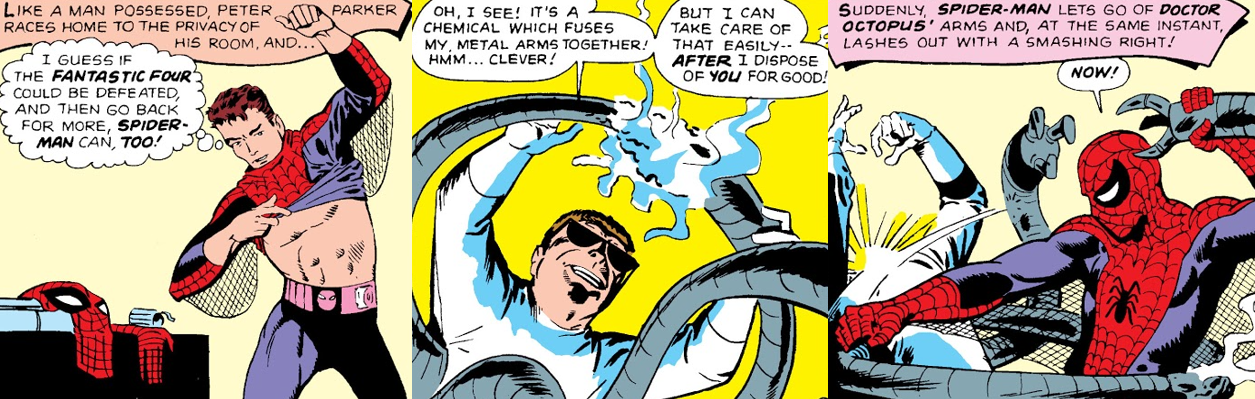
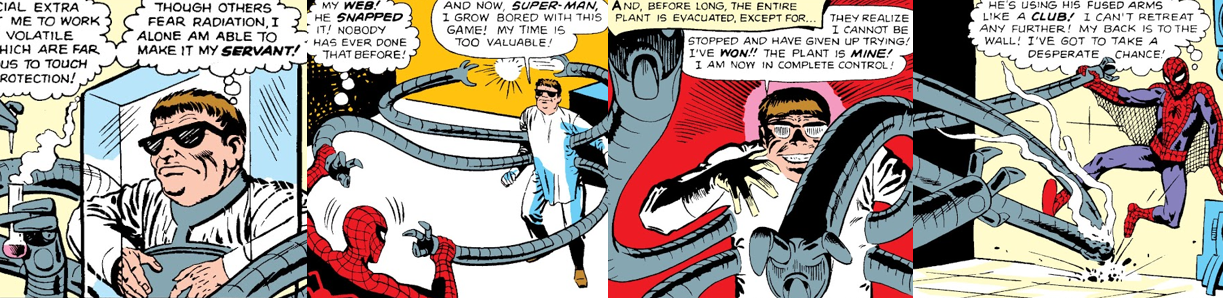


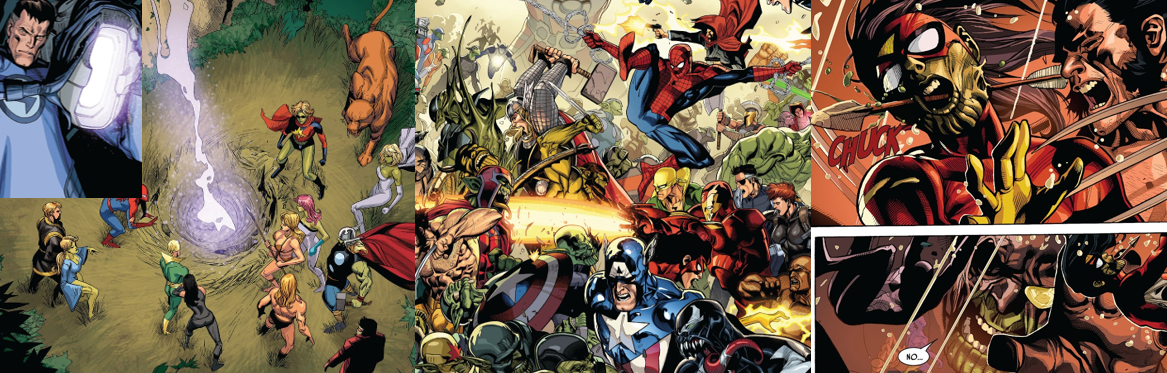

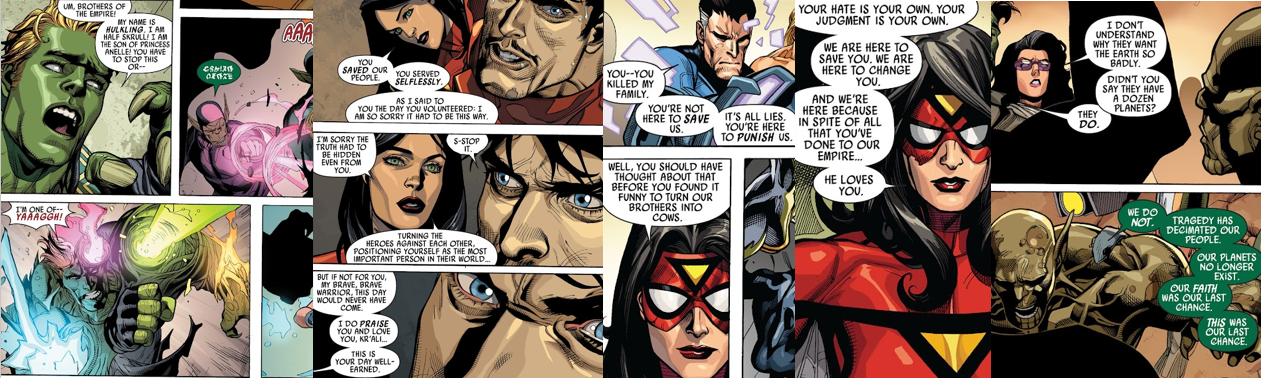
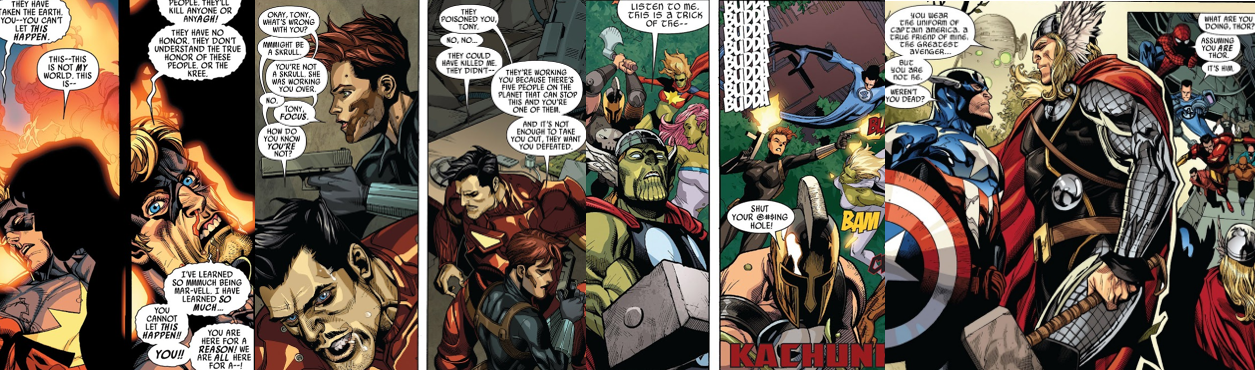


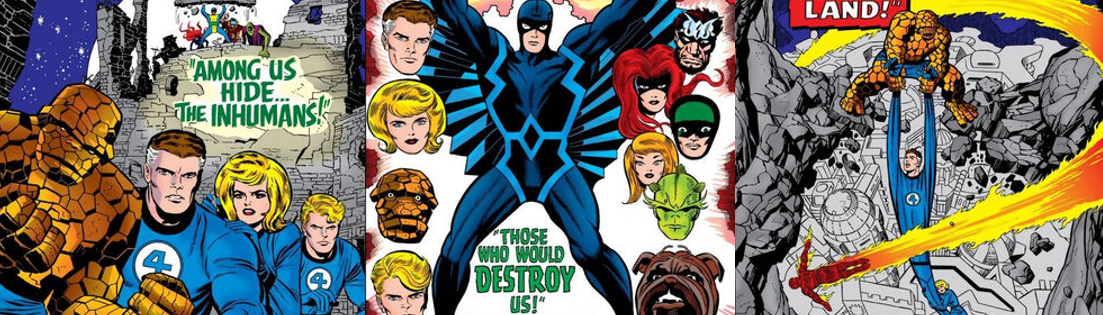
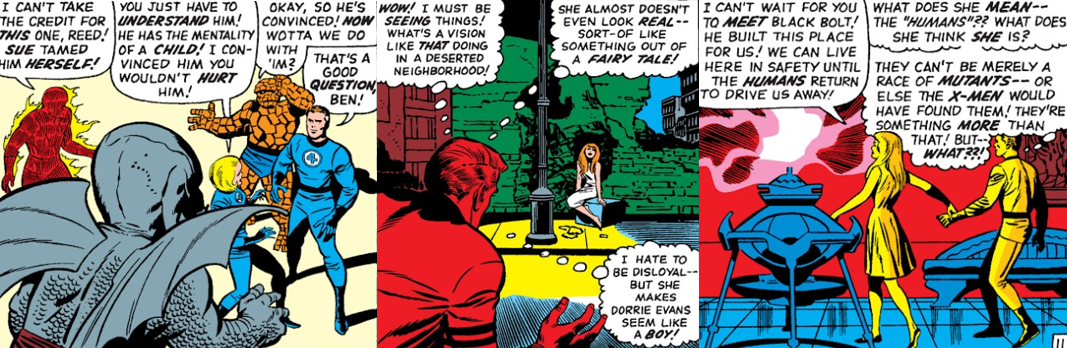
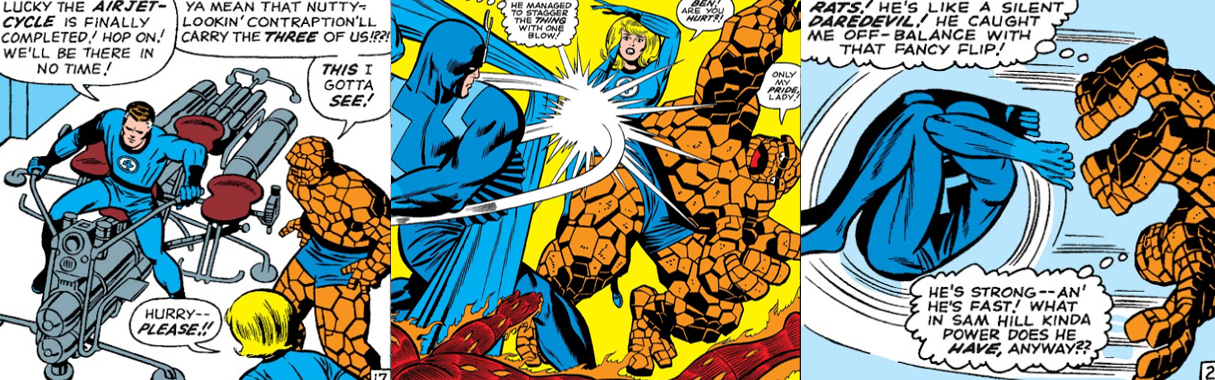
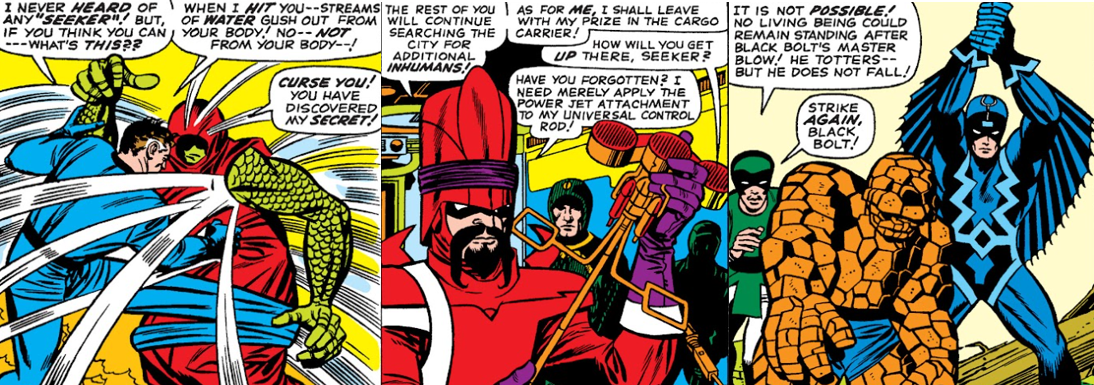
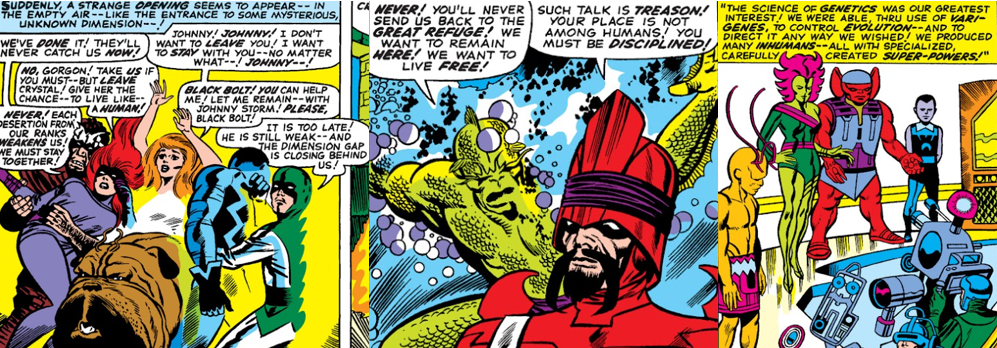
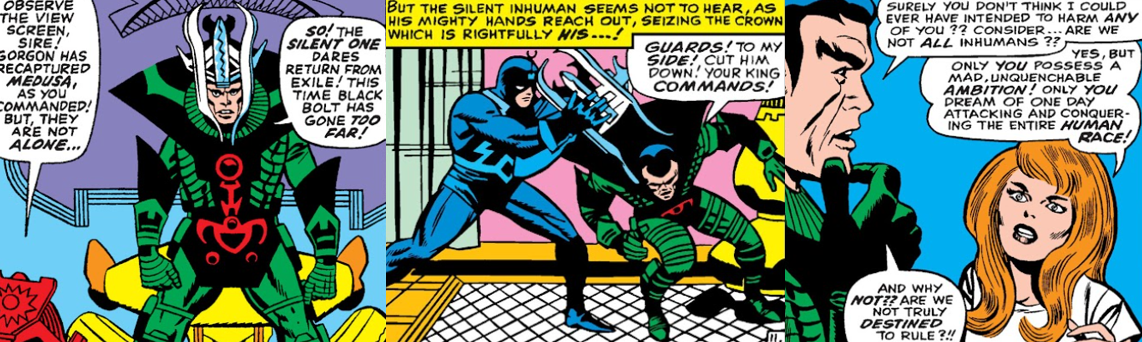
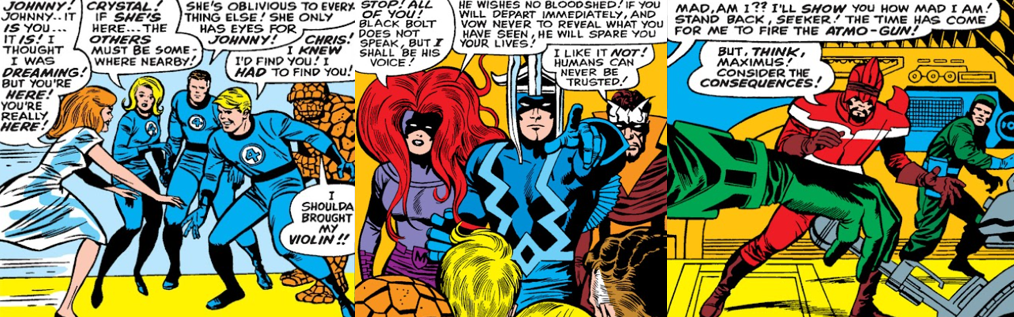
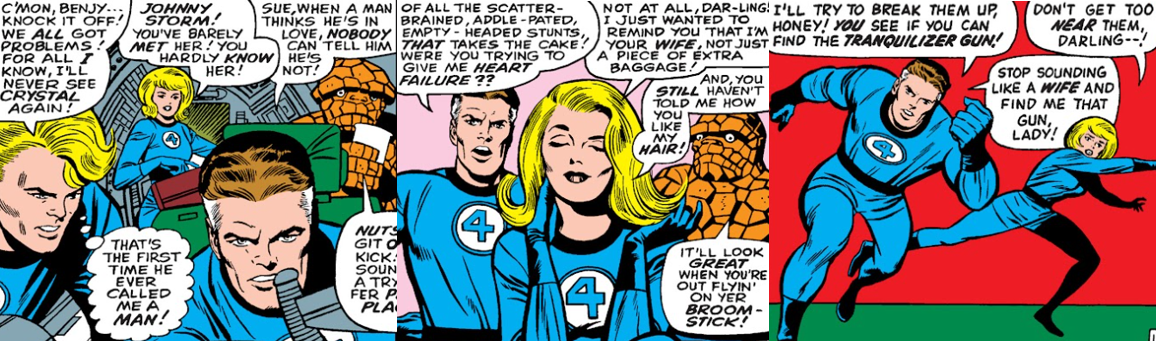
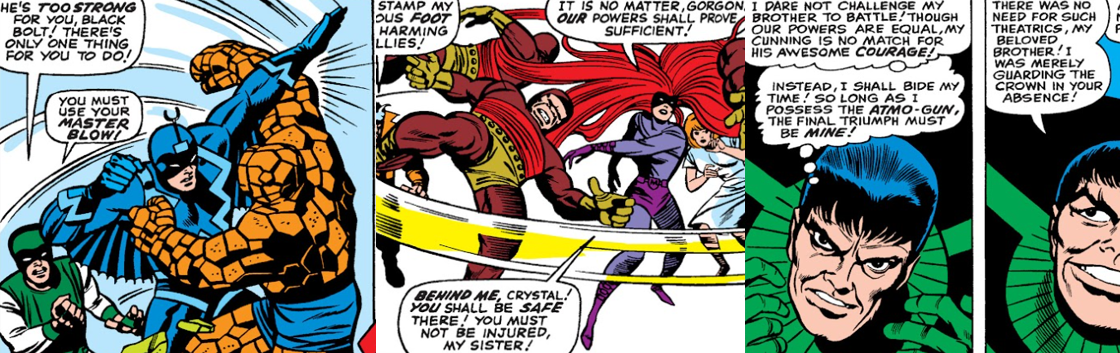

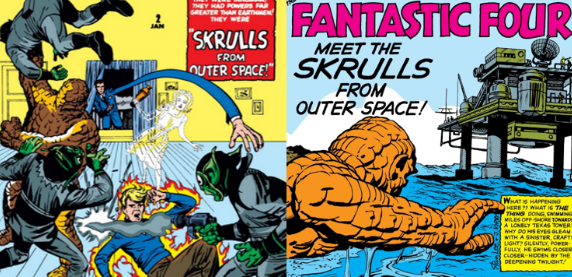
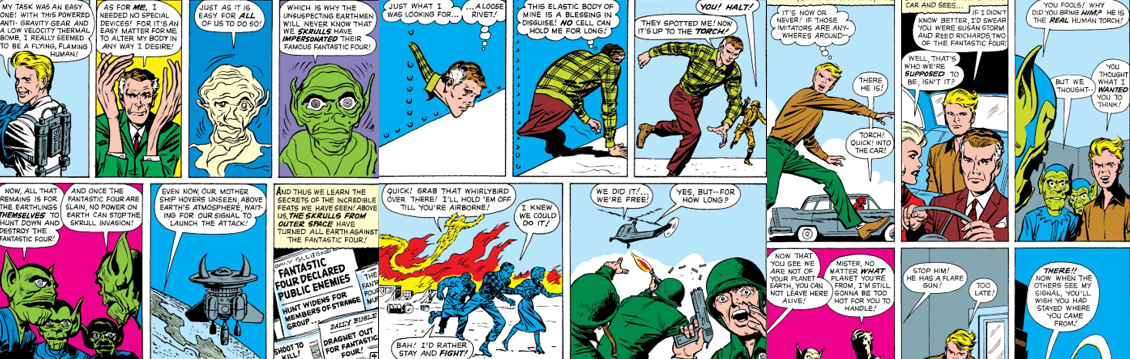
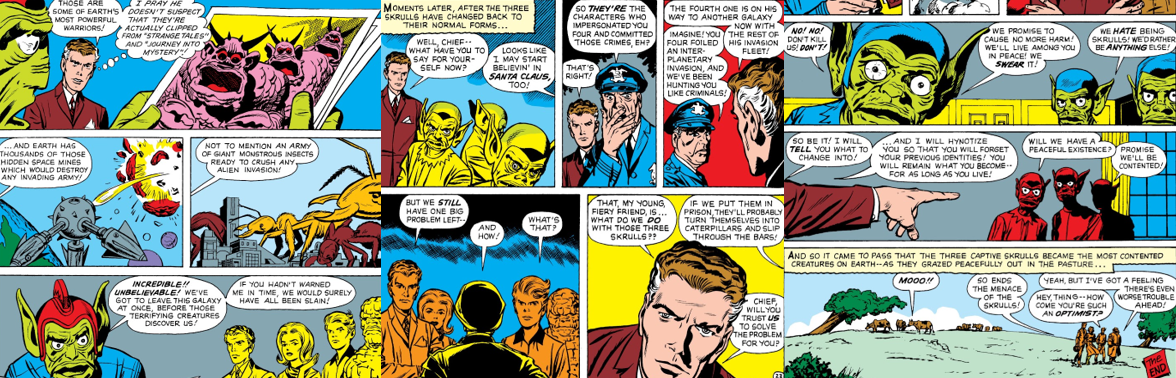
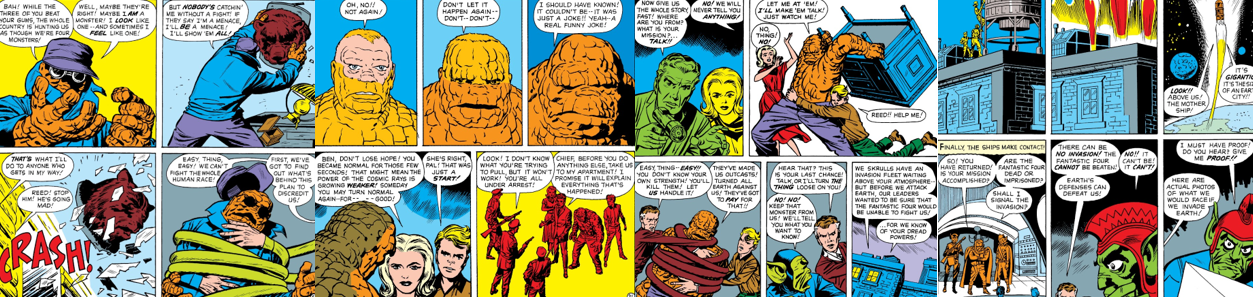

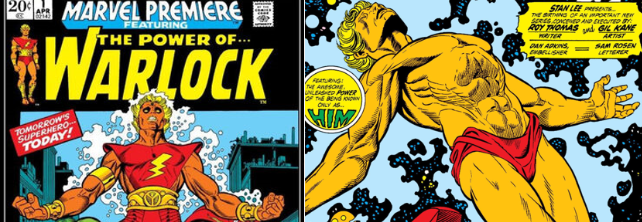


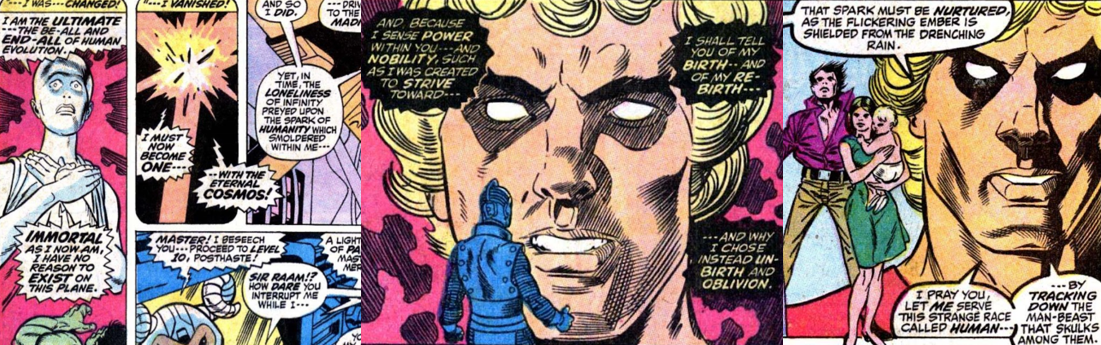
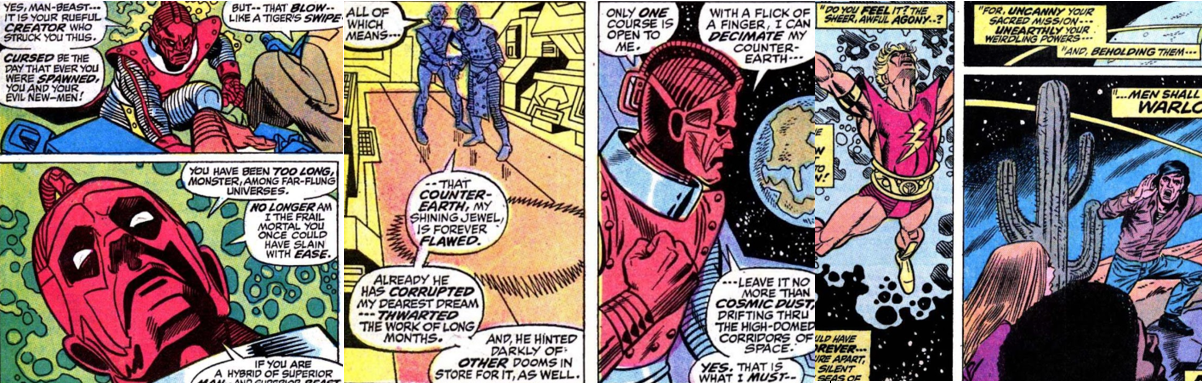









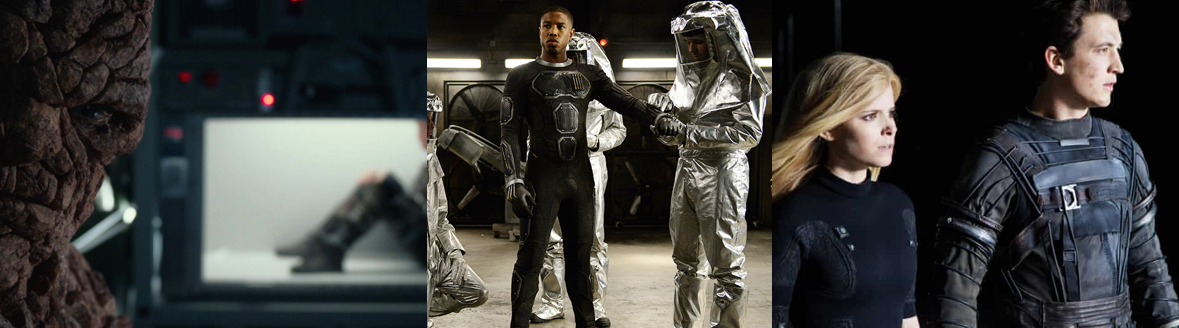
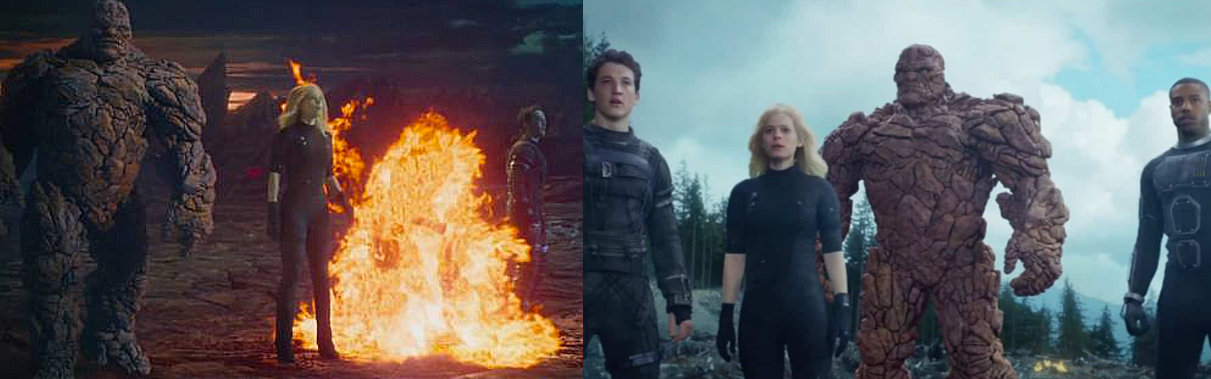




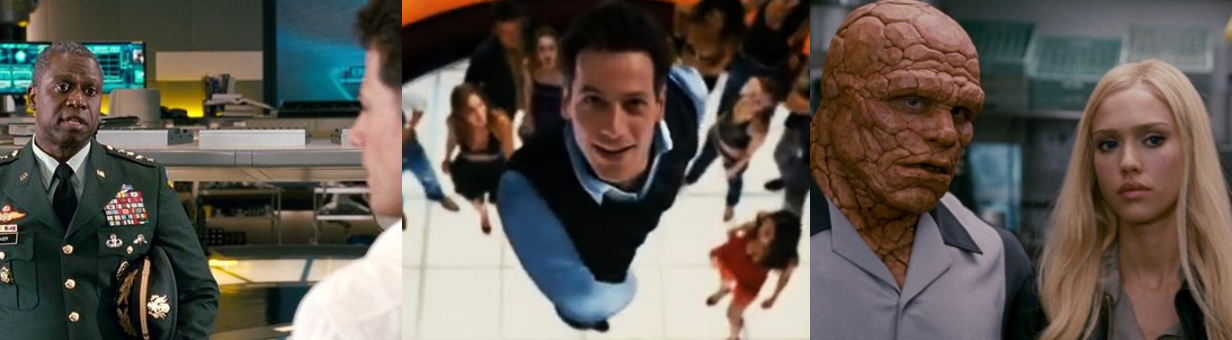



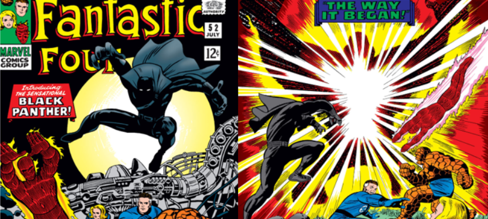
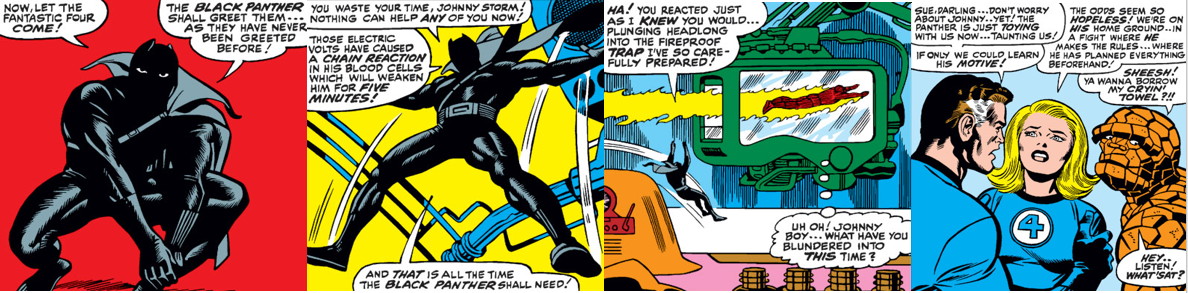
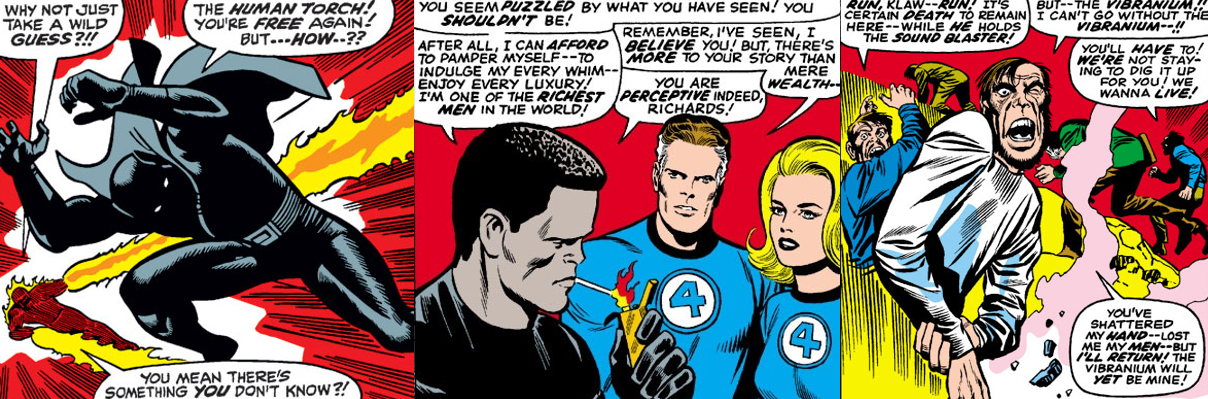
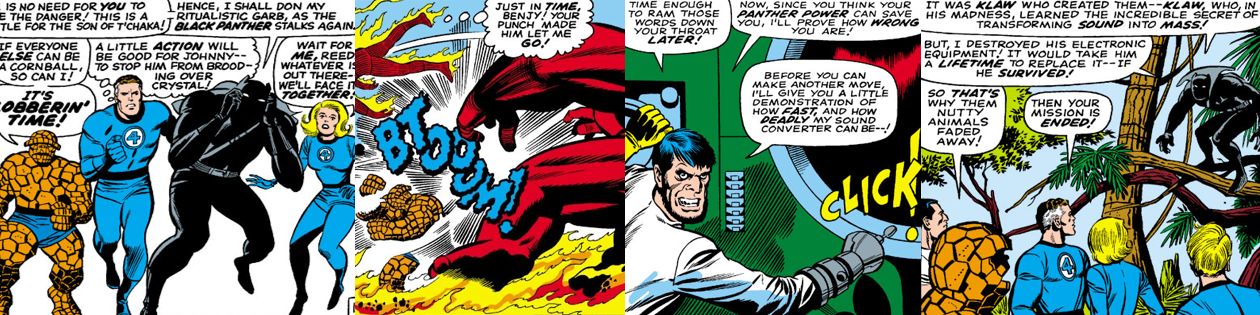
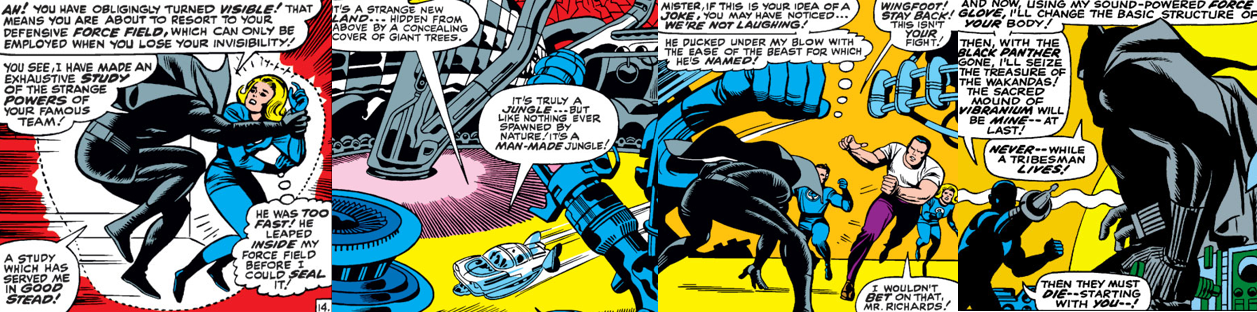

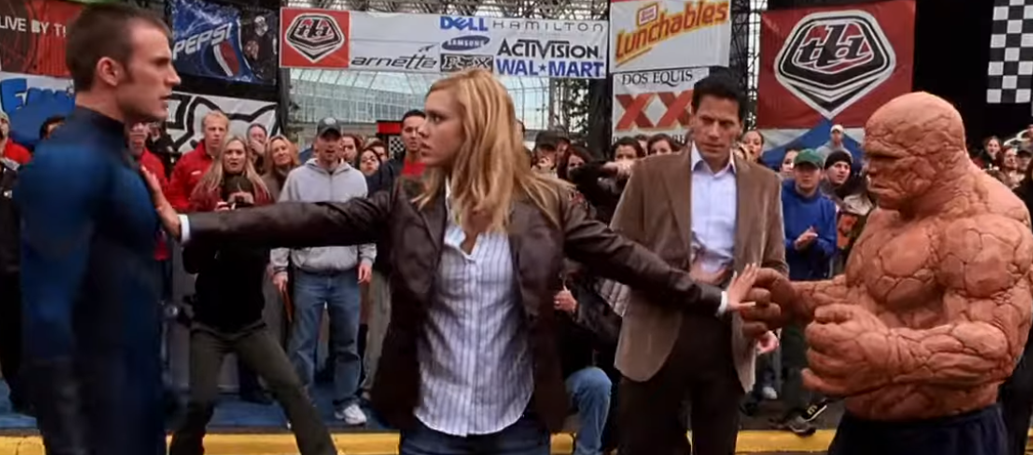
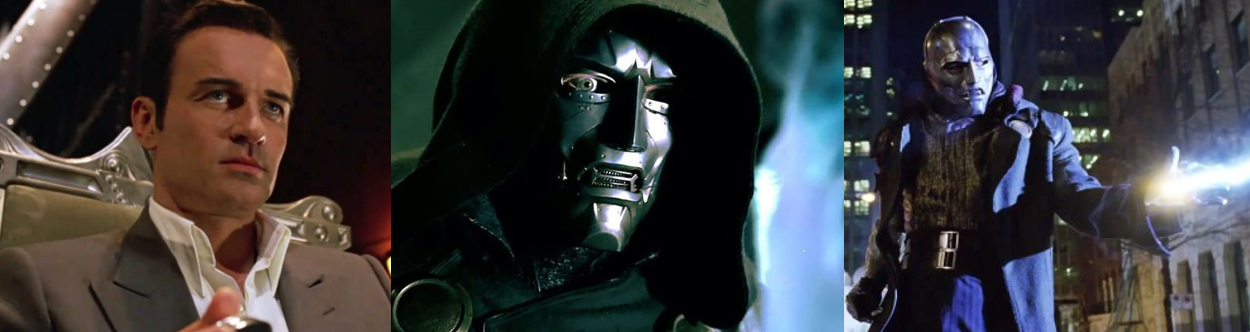
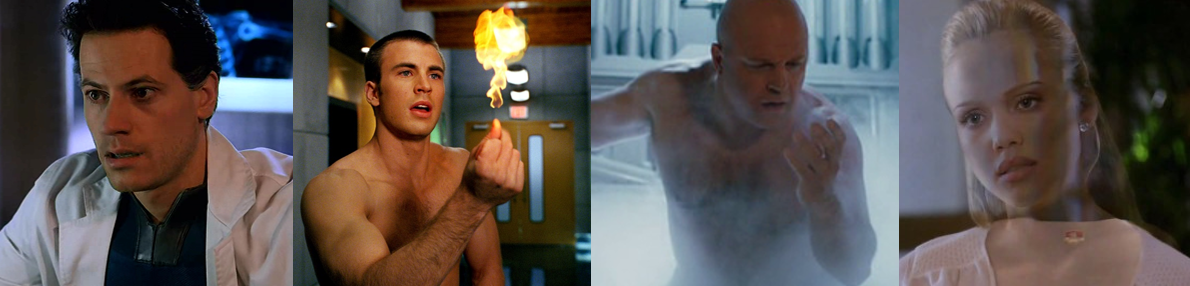
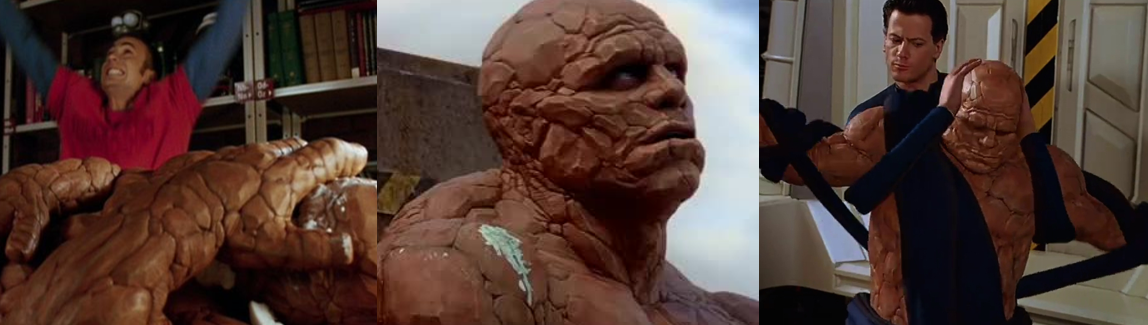
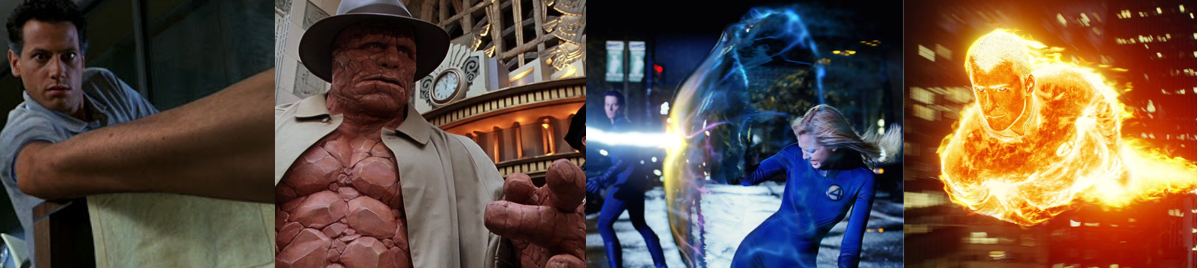
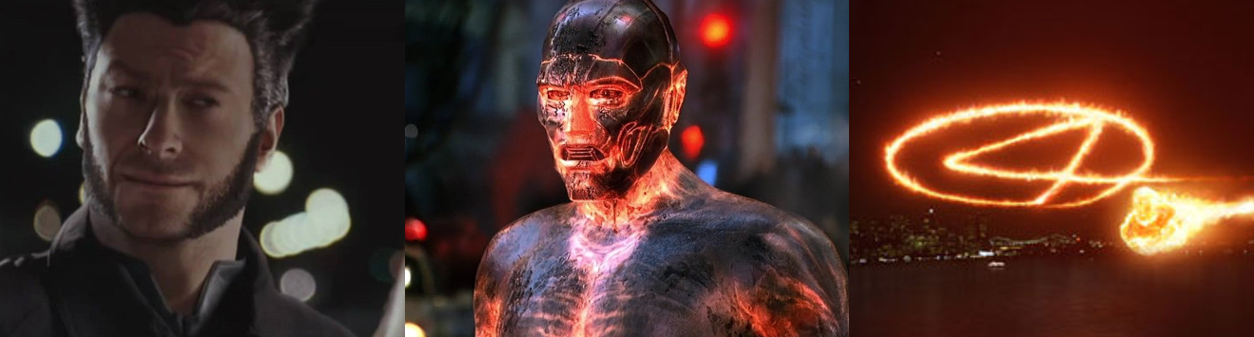

 Dr. K's Waiting Room
You must be logged in to post a comment.