

Released: 4 August 2020
Originally Released: 13 May 2016
Developer: id Software
Also Available For: Nintendo Switch, PlayStation 4, PlayStation 5, Stadia, Xbox, Xbox One, Xbox Series S
The Background:
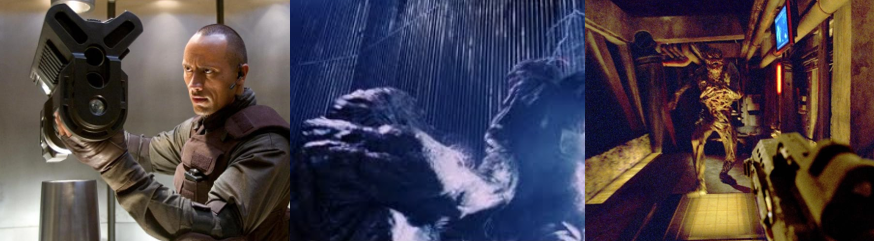
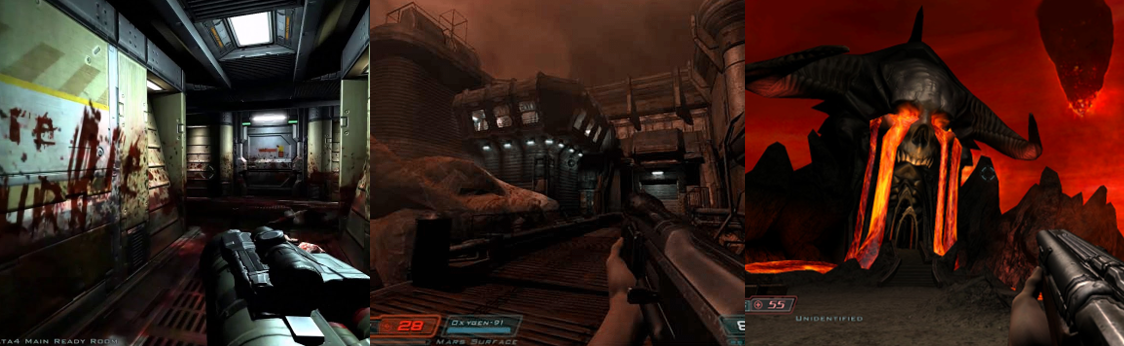
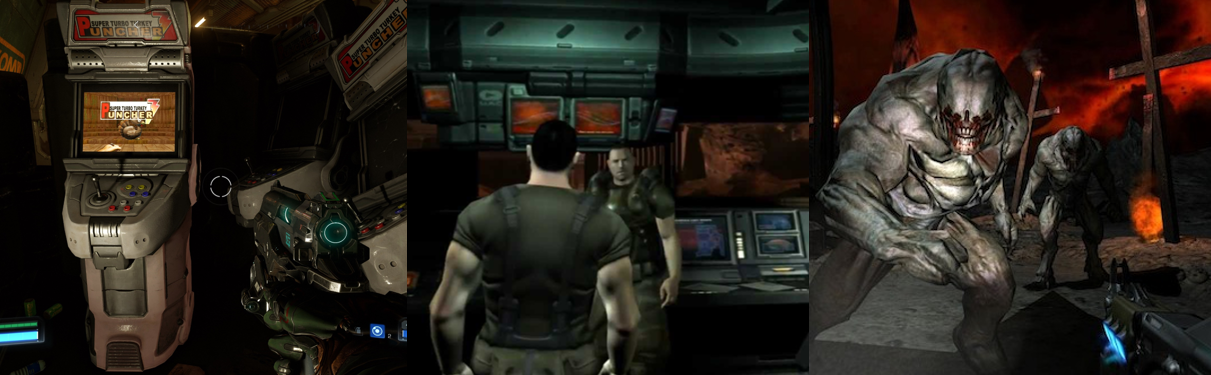
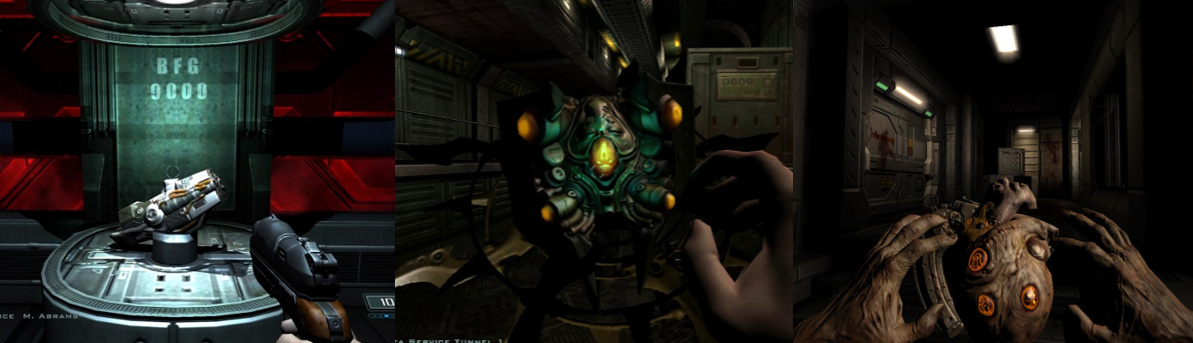
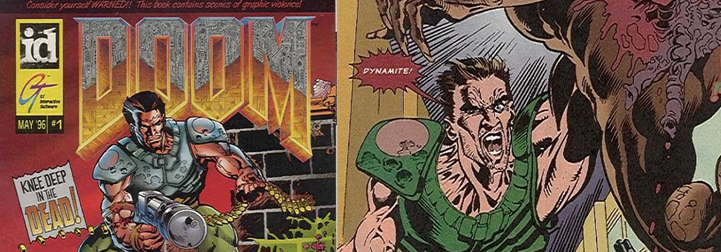
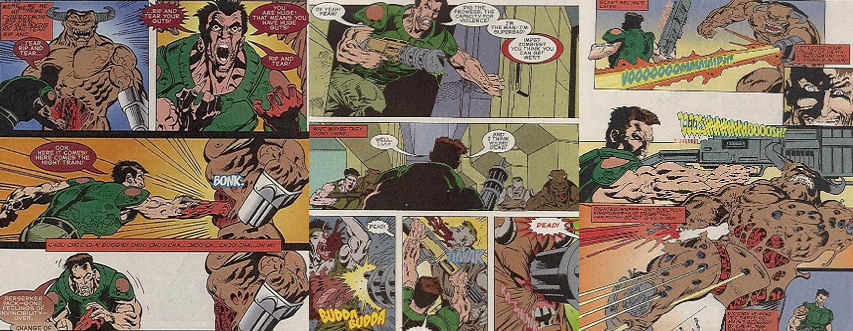
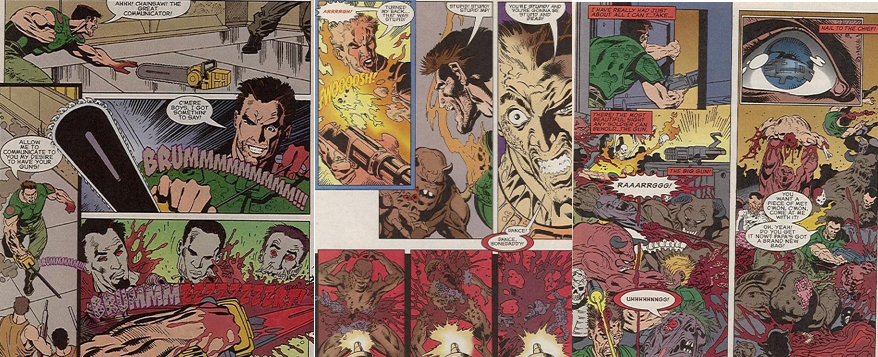
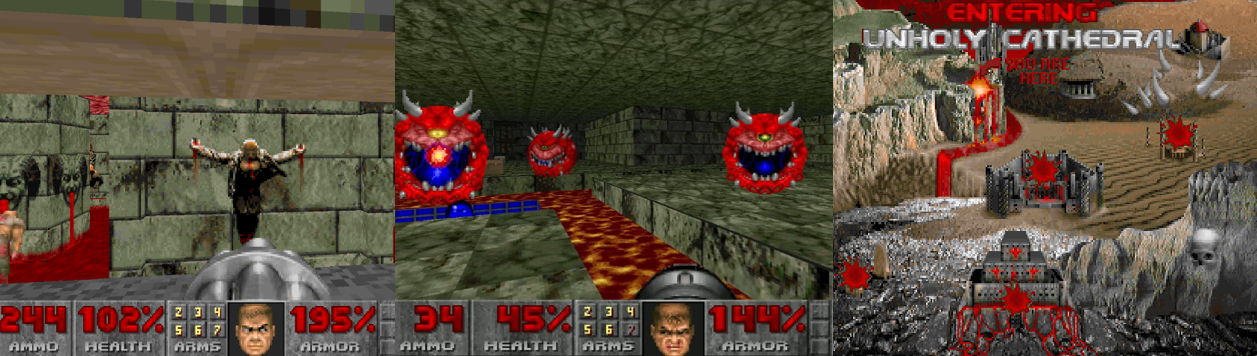
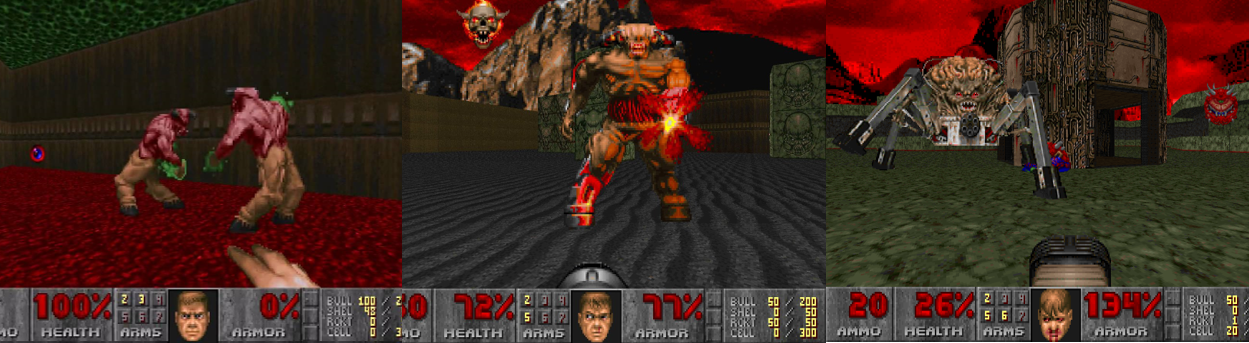
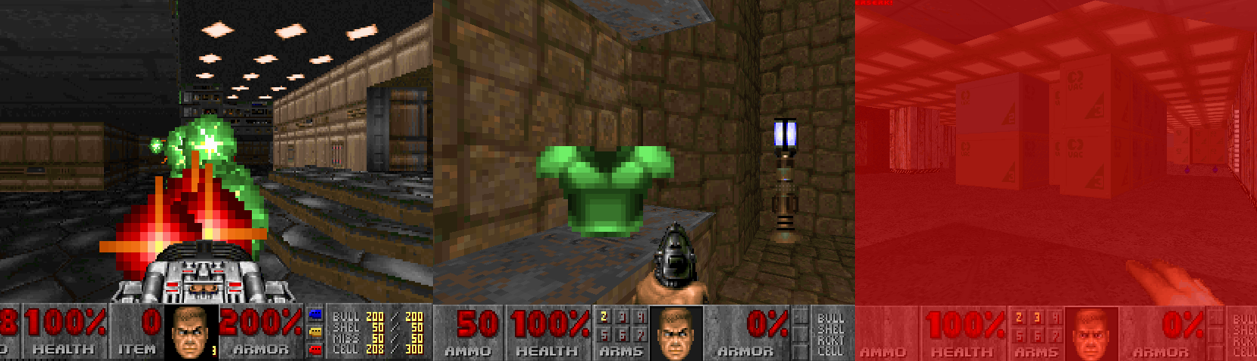
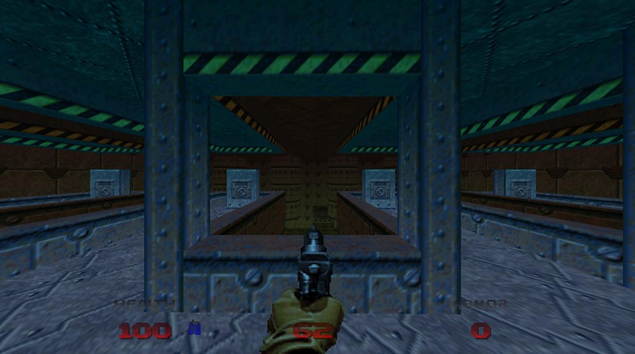
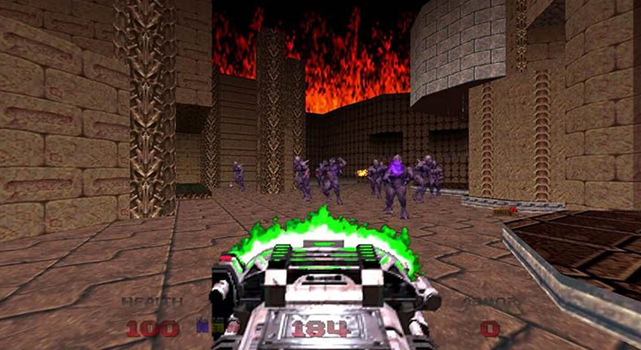
First-person shooters (FPS) existed before Doom (ibid, 1993), but that celebrated title popularised the genre with its online “Deathmatches” and multiple ports. Although sparking much controversy, Doom was incredibly successful and this translated into a bigger, equally successful Doom II (ibid, 1994). It then took ten years for id Software to release Doom 3 (ibid, 2004), a more story-focused title that was celebrated for its claustrophobic atmosphere and gory combat. Following this, id Software tried to launch a new FPS series with Rage (2011) and outsource a fourth Doom as they had with their Wolfenstein franchise (Various, 1981 to 2019), a difficult proposition that Bethesda Softworks revised after purchasing id Software. Originally set on Earth as a spin on Doom II, Doom 4 struggled to build momentum and was eventually retooled into a series reboot. Now simply titled Doom, the game sought to emphasise fast-paced combat rather than story, taking inspiration from the bloody action/horror movies of the 1980s and rewarding bloodthirsty players. Lauded as one of the best games of 2016, Doom received top scores from critics, who praised the gory visuals, heavy metal soundtrack, and action-orientated gameplay. Doom was further bolstered by three packs of downloadable content (DLC) that added extra content to the uncharacteristically divisive multiplayer mode, all of which was later bundled alongside the first three games in one handy collection. Having successfully revitalised the franchise, Doom was followed by an even bigger, widely praised sequel in 2020 and a fantasy-orientated prequel in 2025.
The Plot:
In the far future, crippled Union Aerospace Corporation (UAC) researcher Olivia Pierce opens a portal to Hell to enslave humanity, prompting UAC cyborg scientist Doctor Samuel Hayden to awaken the legendary Doom Slayer to combat the invading demons.
Gameplay and Power-Ups:
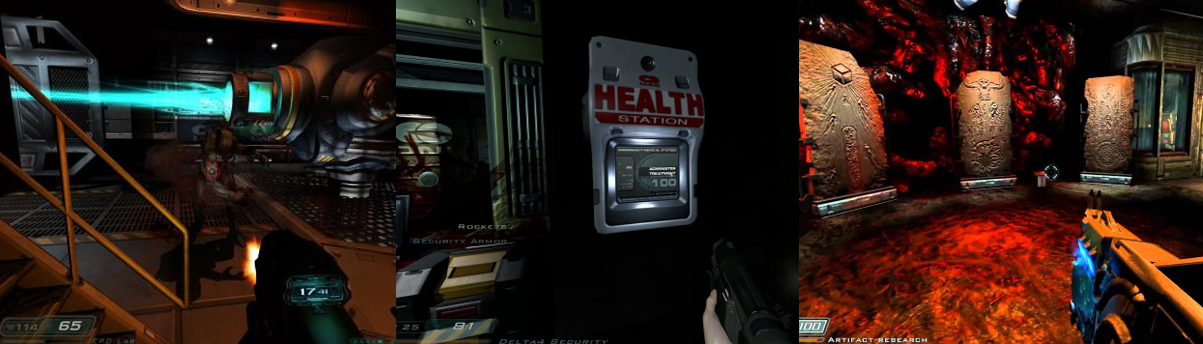
Unsurprisingly, Doom is a first-person shooter in which you assume the role of the legendary Doom Slayer, a mute, violent warrior greatly feared by the demons of Hell. Before beginning Doom, you may wish to tweak the game’s settings. Alongside the standard difficulty modes, you can change the heads-up display, crosshair, compass and objective display, and even the position of your weapons. Naturally, the game’s controls are equally adjustable, but the default settings are perfectly fine. You jump with A (eventually upgrading to a double jump), crouch with B, and switch to the chainsaw or Big Fucking Gun/BFG with X and Y, respectively, once you acquire them. Pressing the left stick activates photo mode to share your bloody accomplishments, while pressing the right stick interacts with consoles, switches, map stations, etc. The Right Bumper switches your weapon; holding it opens the weapon wheel and you can toggle whether you want to automatically switch to new weapons. The Right Trigger fires (no need to worry about reloading here and there’s even aim assist), the Left Bumper uses items (typically a grenade), and the Left Trigger activates your weapon’s currently equipped modification to deal additional damage. You need Medikits of different sizes and special stations to replenish health and armour pick-ups to reduce the damage you take.
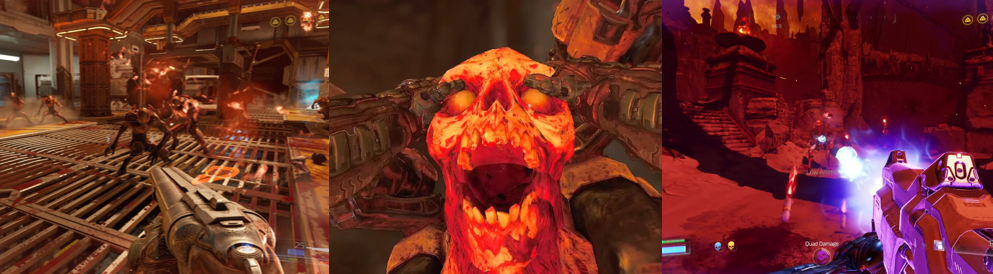
Health and ammo are further replenished by slaughtering demons with the chainsaw (though fuel is limited) and performing “Glory Kills”. Shooting enemies eventually stuns them, which is your prompt to press the right stick and tear them to shreds with your bare hands. Similarly, you occasionally find more traditional power-ups (Berserk, Haste, Invincibility, Quad Damage, etc) to temporarily empower you. The Doom Slayer begins with a simple pistol that boasts unlimited ammo and a charged shot modifier. You soon grab a shotgun (which can be modified with either a charged or explosive shot), the heavy assault rifle (which can be modified into a sniper rifle or to fire cluster missiles), a plasma cannon (which can emit a stun or heat blast), and my personal favourite, the Super Shotgun (which fires two shots at once). You’ll also grab a massive chaingun (which can become a sentry turret), the Gauss Cannon (a heavy-duty laser cannon that I struggled to aim), and the ever-reliable rocket launcher (which can fire homing missiles). You can toss frag grenades, siphon grenades (which replenish your health at the cost of your target’s), and distract enemies with a hologram. Enemies also attack each other, especially in Hell, and you can shoot explosive barrels to thin out their numbers. Of course, the most powerful weapon is the BFG, acquired quite late in the game, which obliterates all nearby enemies. Weapon modifications are purchased from field drones and applied using Upgrade Points earned from completing various Mission Challenges (such as finding secrets or killing certain enemies in certain ways). To master a weapon, you must perform specific kills on certain enemies (such as 50 headshots with the sniper function). Furthermore, you occasionally find dead UAC soldiers who yield Praetor Tokens that upgrade your suit to increase your resistance to environmental damage, better spot secrets, and reduce weapon charge time, amongst other buffs.
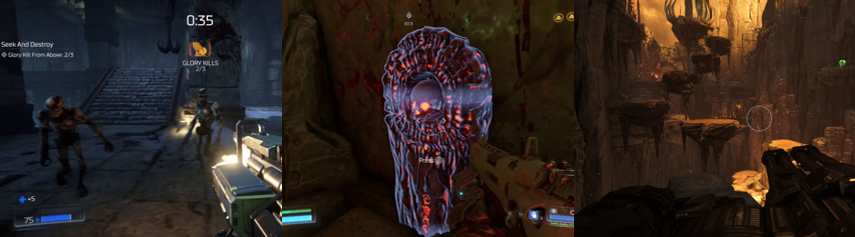
You also find UAC crates containing Argent Cells that increase your maximum health, armour, and ammo. Various datapads contain lore about each area, weapon, and monster, and you download map data to locate secrets, such as Doom Slayer figurines. Eventually, the game introduces hidden Rune Trails that warp you to Hell and challenge you to defeat enemies or destroy barrels or other timed tasks. Completing these earns your demonic Runes; you can eventually equip and upgrade up to three of these, which offer buffs like increasing your pick-up rate, performing faster Glory Kills, and negating ammo cost when you’re at full armour. These are worth seeking out and, like each mission, can be replayed from the main menu (which also carries over your upgrades and weapons). You’ll often venture onto the rocky wastelands of Mars, but you thankfully won’t have to worry about zero gravity sections or maintaining your oxygen supply. To counteract this, you must frequently destroy demon nests to spawn increasingly difficult demons fought under lockdown. As in the classic games, you search for coloured keys and skulls and activate switches, though thankfully I never had trouble navigating even the more confusing areas. Mostly, you must simply kill everything in your way, but you’re often forced to perform some awkward platforming (without fall damage, but at risk of bottomless pits) and clambering ledges to higher areas. You must avoid being cut to ribbons by the BFG’s laser grid system, a puzzle that took me way too long to figure out (get to safety and shoot the power nodes on the energy ring…and don’t fall!) Otherwise, you’ll activate portals, overload power cores, lay demonic souls to rest, and destroy specific targets to progress. Occasionally, you use the right stick to muscle open doors or grates and be forced to battle increasingly difficult waves of seemingly never-ending demons without a checkpoint, which can get tiresome.
Presentation:
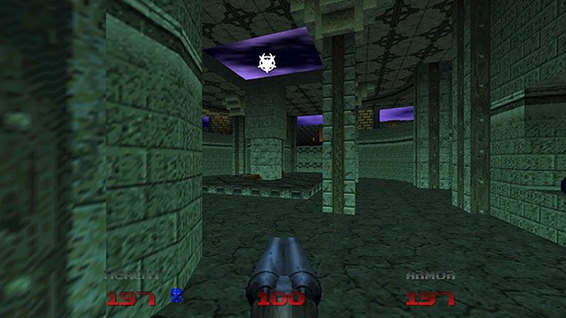
Doom wisely drops the obsession with flashlights and nigh-impenetrable darkness that dogged the third game. Every area is nicely lit and makes effective use of shadows, steam, flickering lights, and darkness to create a foreboding atmosphere. Even when you enter slick, clean, futuristic facilities, it’s not long before you see dismembered corpses, blood tails, or gripping gore plastered everywhere. These, alongside pentagrams, altars with still-beating hearts on, skewered bodies, screaming skeletons, and a bloodbath of carnage, make Doom a gore-fest for the eyes. The Doom Slayer is entirely mute and never seen in full; windows are conveniently smashed and you barely catch a glimpse of his visage, which is great as I’d much rather have a silent killer than a generic Jarhead. He’s aided by the cybernetic Dr. Hayden, who gives directions and exposition over the comms, though the Doom Slayer rarely listens to his advice. Demonic whispering and screaming add to the creep factor, while rocking music kicks in whenever demons appear. Unfortunately, while Doom runs incredibly smoothly, with short load times and highly detailed, gory environments, textures sometimes take a second to render properly, which surprised me for such a top-tier title. Still, the over-the-top gore makes up for it. Even the Doom Slayer’s death scenes see his entrails or limbs blowing off, and you’ll see demons get blown to bloody chunks with each shot, which makes the combat very satisfying.
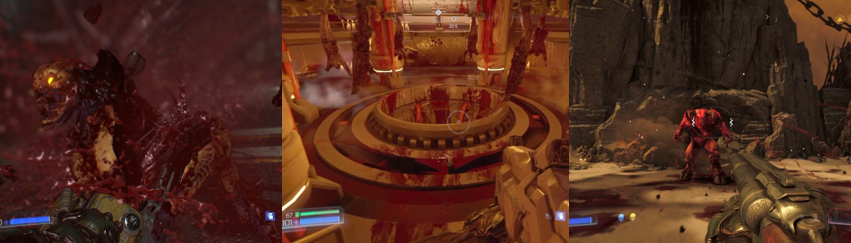
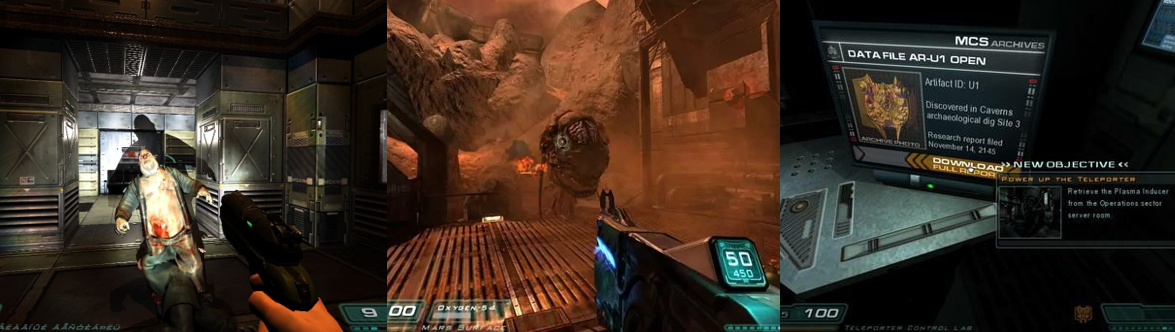
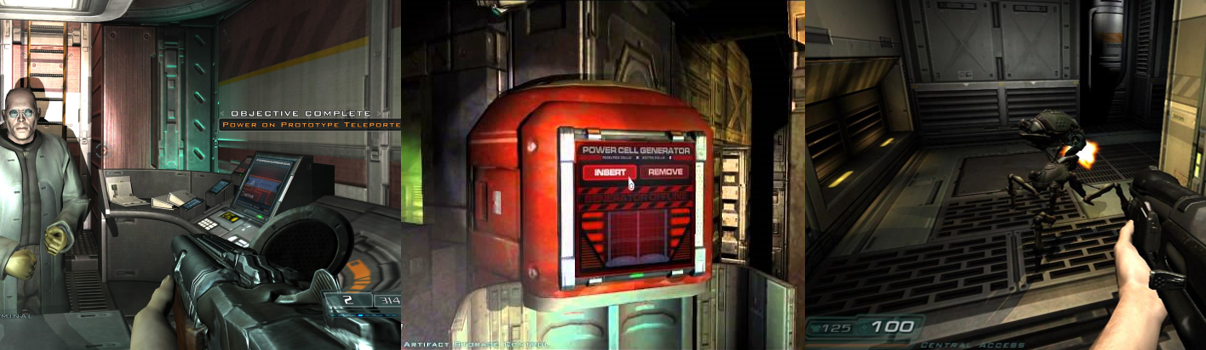
The game’s story is as simple as the original games, but also amusingly convoluted thanks to Dr. Hayden’s constant exposition, Dr. Pierce’s manic desire to unleash Hell, and even the moments where you learn the lore of Hell. These are easily ignored in favour of the action, however, and I enjoyed the attention to detail in each area. The developers clearly drew inspiration from sci-fi/horror classics when putting the UAC facilities together, and their Mars outpost features all kinds of laboratories, offices, a monorail system, and more. Sometimes, you’ll rip limbs and even torsos off bodies to access high-level areas; you’ll activate turbines, overload the reactor core in the frigid cooling room, encounter Nests in storage facilities, and traverse large vertical shafts, hopping to gantries and walkways as you desperately try to curb the demonic infestation. While many UAC areas are still brightly lit, others are in utter disarray. Darkness and jump scares (like steam vents, pop-up holograms, and flickering consoles) make it more terrifying when enemies suddenly appear from behind walls or portals. Things take a turn towards the industrial as you venture to the less refined areas of the Mars base, encountering pistons, chasms, and more rundown areas. You’ll often be transported to Hell, like Doom 3. Hell is a desolate, warped environment made up of rocky structures, floating boulders, chains, medieval dungeons, and depraved scenes of torture and agony. With a tumult in the flaming clouds and demons lurking around every corner, Hell is where Doom really shines, especially with its gigantic skeletal remains, looming stone statues, and ominous demonic structures imbedded with depictions of Hell’s finest, like the Icon of Sin. Acid pits, tricky platforming, and torture chambers are the order of the day, with demons fighting and constantly swarming each area to keep you on your toes.
Enemies and Bosses:
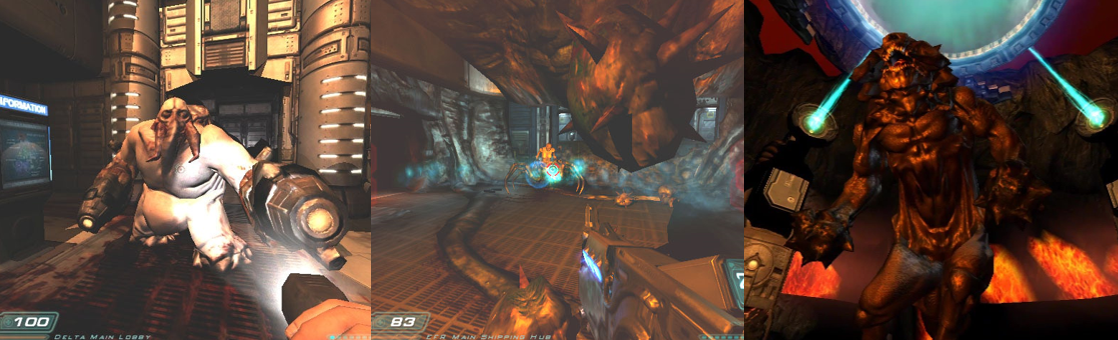
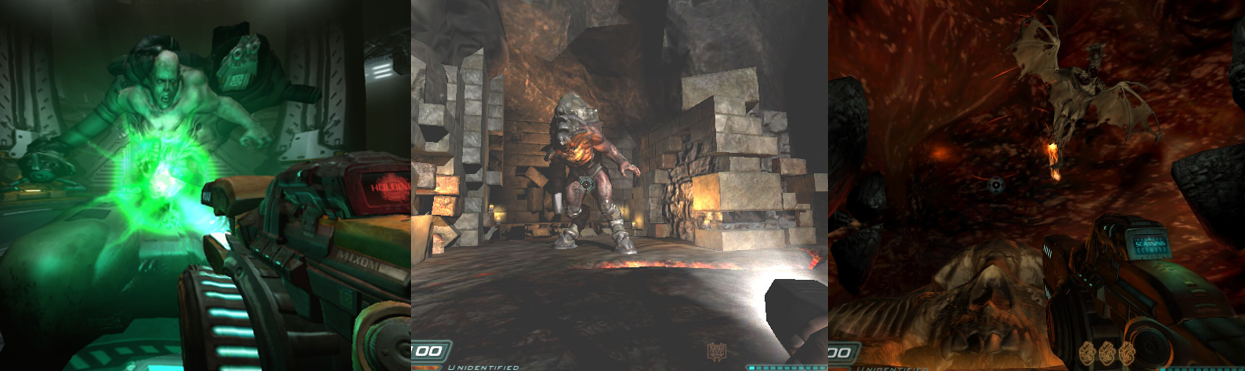
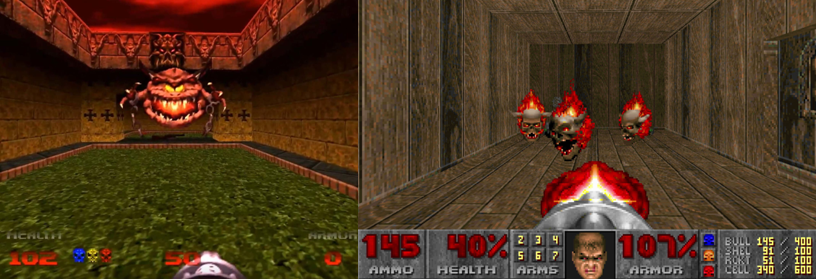
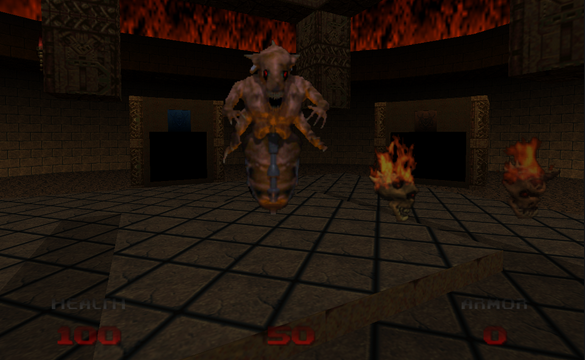
As near as I can tell, all the classic Doom enemies are back and looking better than ever. Common enemies include the zombie-like Possessed, who shamble about and swipe at you, and their more demonic counterparts, the Unwilling, who are functionally the same cannon fodder. The Possessed can be soldiers and security forces wielding bio-organic hand cannons, the security variants hide behind energy shields, some are missing arms, and others have explosives strapped to them that you can use to take out multiple enemies. Imps scurry up walls and ceilings, tossing fireballs while their armoured cousins, the Hell Razer, fires concentrated energy beams. The ever-annoying Lost Souls fly at you in a shrieking kamikaze attack and are as frustrating as the bulbous Cacodemons, which float about spitting energy blasts and biting you and, for some reason, I found far more difficult to deal with in this game. You’ll also encounter the equally frustrating Summoner, a regal and effeminate demon that teleports about, fires energy waves, and must be prioritised to keep it from spawning more demons. The screaming, skeletal Revenants are also back, still packing missile launchers on their back and now leaping and flying about using a jet pack. Pinkies (and their invisible counterparts, the Spectres) are also back and equally aggravating, charging at you from behind and taking a lot of shots to be put down. These enemies are bolstered by some bigger, tougher demons who are initially introduced as mini bosses, of sorts, but quickly become regular enemies. The most common are the Hell Knights, large, brutish demons who leap in with a slam and run at you like a rhino.
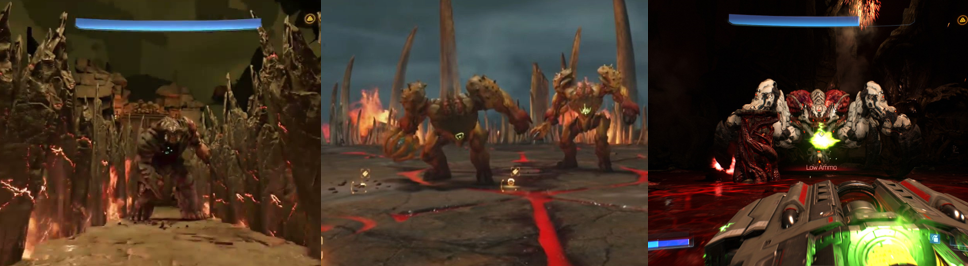
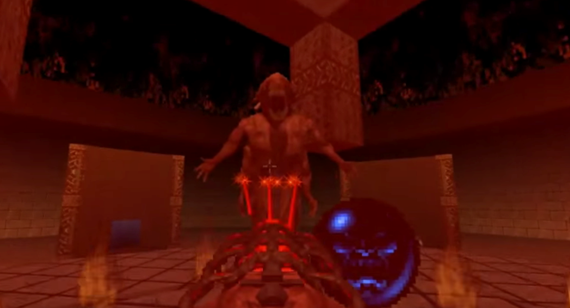
Hell Knights are often joined by a Mancubus or two and their cybernetic variants; these rotund ghouls pack arm cannons that spew flames, push you back with an energy wave, or fire toxic blasts. And then there’s the Baron of Hell, a massive, horned, goat-legged monster who tosses green energy balls and stomps about. These larger enemies will have you switching to the BFG or employing a fully fuelled chainsaw, or madly spitting rockets, and make each encounter a fight for survival. It’s a good thing you’re constantly tearing through these hordes as Doom only has three boss battles. These all occur in Hell and feature big, stubborn health bars. The Cyberdemon is initially fought in the Lazarus Labs and then finished off in Hell. This gigantic demon pelts you with rockets, charges a big laser cannon, and throws energy waves that must be ducked or jumped over. It also traps you in stone walls and, like all bosses, can be stunned with the BFG and will drop resources to aid you. The Hell Guards guard the Crucible and are invulnerable within their shields, attack with a staff, erratically spin and throw fireballs, or swing a massive hammer for a gruelling two-stage fight. The damnable Spider Mastermind slashes with its metallic claws, fires a chain gun, sweeps the area with laser, erects pillars, electrifies the floor, and psychokinetically tosses boulders. Its skull-like face is its weak point, and you’ll want to stun it with the BFG and blast it up close with the Super Shotgun, keeping your distance otherwise and hoping you get lucky with its frequent and damaging attacks.
Additional Features:
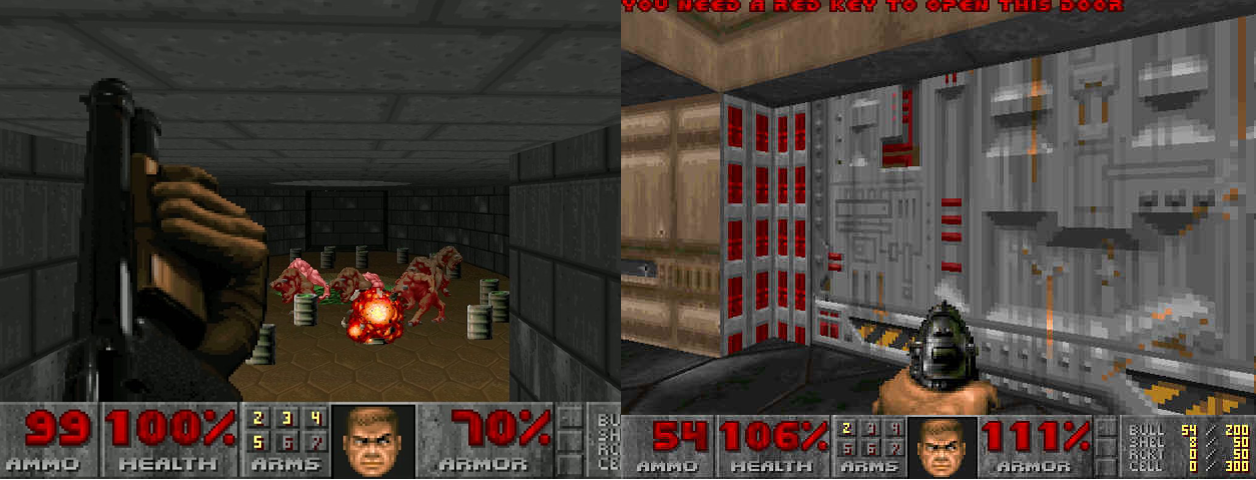
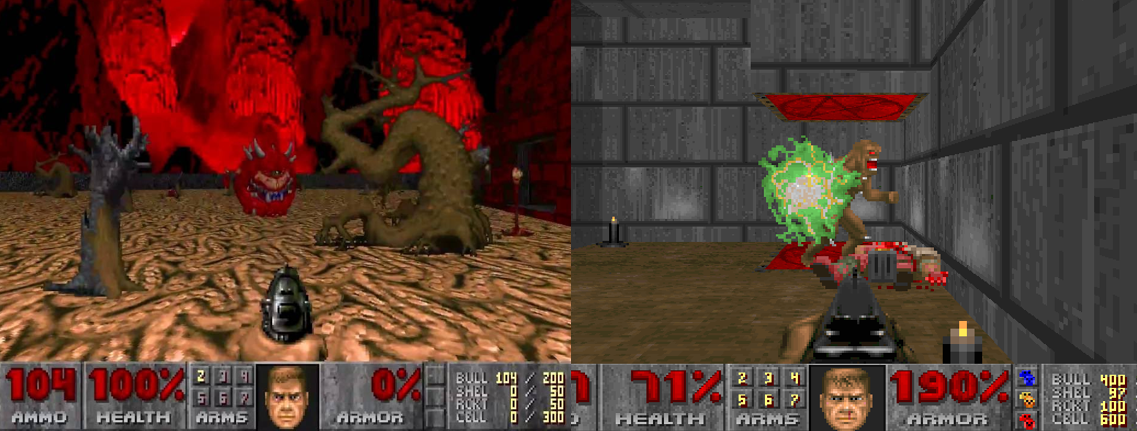
Doom yields fifty-four Achievements, with six awarded simply for playing the main campaign. You can easily snag a few more by performing 200 Glory Kills, killing fifty enemies with a chainsaw, 100 more with explosive barrels, and by upgrading any of the Praetor suit categories. You’ll get additional Achievements for finding and upgrading all Runes, completing all Mission Challenges, and mastering first one and then all weapons. You can play on harder difficulties and take on the game’s more casual ‘Arcade’ mode, earning medals and Achievements for your performance, and even create and publish your own levels using the ‘SnapMap’ option (though you need an Xbox Live subscription to do this). Similarly, there is no couch co-op or multiplayer here; you need to get online to play the various deathmatches. This version includes all the DLC, allowing you to play as demons (including the new Harvester variant) and use different weapons in this mode. I couldn’t play it so I can’t speak to it, but I imagine the multiplayer offers the standard free-for-all, king of the hill, and team-based slaughter popularised by the original Doom. Finally, every stage contains a hidden room modelled after the classic Doom, old-school graphics and all, which are fun Easter Eggs even if there are no Achievements tied to these beyond finding every secret in the game.

The Summary:
After being disappointed by Doom 3, I was hesitant to get into Doom, despite hearing nothing but praise for it and its sequel. However, I was wrong to hesitate as this is a phenomenal first-person shooter that perfectly marries old-school sensibilities (an action-orientated focus) with modern gameplay mechanics. I was so relieved to find I could see what was going on, that I wasn’t wandering a pitch-black maze, and that the focus on searching for keys and alternate paths was put to the side. The focus on gory action was very satisfying; it’s fun ripping demons apart with your bare hands, shredding them with a chainsaw, and blowing them to bloody chunks with the Super Shotgun. However, it’s true that I did find the mindless combat tiresome at times. When you’re forced to fight waves of increasingly difficult demons with no checkpoints between them, it can become aggravating. However, the satisfaction of getting better skilled at dispatching these enemies and using nearby power-ups or the benefits of the chainsaw and BFG can’t be understated. I loved the gore-infested environments; it truly seemed like these idiot scientists had unleashed the furies of Hell and had their entrails painting across the walls for their efforts. The demons were monstrous and many, sporting little quirks like fleeing from you or fighting each other, and I enjoyed that you were constantly earning upgrades or motivated to master your weapon’s abilities. While the Doom title might seem derivative, it’s incredibly fitting as Doom really felt like a modern reimagining of the original games. Retaining that arcade-style accessibility with the constant euphoria of bloody combat made me happy to push on past the more troublesome sections and made this a bloody good time that I’d be happy to revisit to mop up the remaining Achievements.
My Rating:
Fantastic
Were you a fan of Doom? Did you enjoy its modern reimagining of the original game’s simplicity? Which weapon was your favourite, and did you ever master them all? What did you think to the outrageous gore and the Glory Kills? Did you also struggle against the demon hoards and the Spider Mastermind? Did you ever play the multiplayer and, if so, how does it hold up? Whatever your thoughts on Doom, or FPS games in general, drop a comment below and go check out my other Doom reviews.




















 Dr. K's Waiting Room
You must be logged in to post a comment.