So, for no better reason than “Mar.10” resembling Mario’s name, March 10th is widely regarded as being “Mario Day”, a day to celebrate Nintendo’s portly plumber, an overalls-wearing mascot who literally changed the videogame industry forever and shaped the home console market of the nineties.
Released: 2 November 2022 Originally Released: 18 December 1998 Developer: Nintendo
Original Developer: Hudson Soft Also Available For: Nintendo 64 Metacritic Scores: 79 / 7.8
The Review: As you might’ve guessed, Mario Party is a party game where players compete against their friends or computer-controlled opponents, rolling dice and making moves and playing various Mini-Games, across six initial board-like stages and two unlockable areas, to become the “Super Star”. Players pick from six recognisable characters, though they all play the same, which is a shame considering Wario (my go-to) and Donkey Kong are known for their strength and Luigi is known for his low traction and high jumping, characteristics that sadly don’t factor into the Mini-Games. Players are guided by Toad and a friendly Koopa Troopa, who teach the rules, award Coins and Stars, and detail the controls and objectives. When starting a game, you can set the number of human and computer players, set the difficulty level, and establish how many “turns” it takes to finish. You then select a board, with each sporting different gimmicks and difficulty ratings, and finally hit a rolling dice to decide the order of play. Unfortunately, there’s no way to speed up the games and you must sit and watch as each player takes their turn, navigates the board and its hazards and gimmicks, and competes in single-player Mini-Games, which gets very tedious. Mario Party’s controls are super simple: you press A to hit dice and confirm selections or to jump or swim in some Mini-Games, press B to exit menu screens, view the entire map from the main board, or attack or speed up in some Mini-Games, use A and ZL to perform a butt stomp, and press the Right trigger for an alternative view of the main board map. Your goal is to do circuits of the board, collecting Coins from Blue Spaces and Mini-Games and reaching Toad to buy a Star, avoiding Red Spaces (which sap your Coins) and Bowser spaces, where possible. The player with the most Stars (or Coins, in the event of a tie), wins, and players are awarded additional Stars for having the most Coins, winning the most Mini-Games, or landing on the most “Happening Spaces”.
Navigate colourful boards, dealing with hazards and earning Coins and Stars to claim victory.
Happening Spaces do different things depending on the board but generally swap Toad’s position with Bowser’s, which can be good or bad depending on where you are on the board. If you land on a “Chance Time Space”, you play a roulette-style game where you hit spinning dice to swap Coins or Stars between players, which can again aid or hinder you. Bowser Spaces see the Koopa King challenging you to tougher Mini-Games where you lose more Coins if you fail, or initiate a faster Chance Time game where he steals your Coins, or he forces you to buy a useless item. You’ll also encounter ghostly Boos who steal Coins from any player for free or grab a Star from them for a small fee, Bob-Ombs blast you across Wario’s Battle Canyon, and Koopa Troopa awards 10 Coins each time you pass him. When you’re close to the end, this is upped to 20 and each Blue and Red Space gifts or removes additional Coins. Players can take alternate paths in most boards, either by selecting an arrow, paying to pass a Thwomp or a Whomp, activating a trap, or depositing Coins to open or shut doors. When playing Princess “Peach” Toadstool’s Birthday Cake board, you can plant one of four seeds to be shunted towards Bowser or Toad or plant Strawberry Seeds to spawn Piranha Plants that steal Stars from passing players. Upon completion, your Coins and Stars are deposited in the Mushroom Bank to spend them at the Mushroom Shop to purchase helpful items. These earn you additional interest on your Coins, double or half your current Coin stock, unlock the credits and sound test, and can remove Boos or Koopa Troopas from some boards. Other items randomly award or take away Coins, randomly switch player positions, and randomly spawn a Boo, Bowser, or Koopa Troopa, none of which I found particularly useful. While some boards are quite simple to navigate, others force you to take different paths to avoid Bowser or reach Toad, while others have you hopping around seemingly at random to reach Toad. Wario’s Battle Canyon was the worst for this as the Bob-Omb cannons keep switching targets and some areas are filled with Mini-Game Spaces or Red Spaces, which drags the tedious game out even more.
Though often frustrating, the Mini-Games are the best part of this tedious party game.
The main draw of Mario Party are the Mini-Games, which are played either solo, in a free-for-all, in teams, or pit one character against the other three. It seems to be random which player is fought against in these latter Mini-Games unless you land on a Bowser Space, where you’re usually on the defensive. Each Mini-Game has a time limit and has you capturing the most Coins. You’ll dig through dirt to locate treasure chests, dive to the ocean floor (with or without a partner) to grab treasure while avoiding Bloopers and sharks, toss a Bob-omb between players to avoid being blown up, and play a Mario-themed version of musical chairs where you must race to the big red mushroom and its treasure when the music stops. You’ll be desperately cutting out shapes as accurately as possible, warping Bowser’s face like the face manipulation minigame in Super Mario 64, alternating button presses to inflate a Bowser balloon, and smashing Coin Blocks. In Skateboard Scamper, you must frantically tap B to skateboard along a crumbling path, jumping over Thwomps and snagging floating Coins, while Box Mountain has you smash boxes for Coins, Grab Bag has you playing “capture the flag” with loot, and Platform Peril has you awkwardly hopping between falling platforms not unlike Rainbow Ride. Some Mini-Games have you frantically wrestling the game’s odd momentum and physics to avoid falling in water, such as Mushroom Mix-Up, Bumper Balls, Hammer Drop, and Bombs Away. Tipsy Tourney sees you completing a picture puzzle by running over squares, Mario bandstand has you tapping A at the right time to play a song, Shy Guy Says has to tapping either A or B to avoid being set adrift, and Cast Aways sees you clumsily flicking the left stick to try and snag floating loot. You’ll be running from Boos as you carry a lightbulb through a haunted corridor, playing jump rope with flames, spinning about like crazy in Slot Car Derby, and trying to (or hoping that) drop a treasure chest through a pipe maze.
Greater challenges await if you can stand to put in the time to grind for Coins and Stars.
In one-on-three Mini-Games, you must all attack a player dressed as Bowser (or avoid those attacks), play bowling, smash Coin Blocks with a massive hammer, gingerly cross a tightrope (or blast the player with your cannon), try not to snap your console futility wriggling free in the Crane Game, butt stomp a raincloud to have a Piranha Plant eat a player (or desperately outrun it), play tug o’ war, and splash about in a paddle boat. Two-on-two games see you randomly paired with another player for some bobsled racing, wiggling the left stick to hobble across a desert, stealing and dunking a bombsketball, and pumping a handcar and steering into tight corners to avoid falling in lava. I rarely got to play a single-player Mini-Game but these see you matching picture squares, playing a slot machine, smacking the right Boo out of a gaggle of ghosts, playing whack-a-mole with Piranha Plants, and pounding tree stumps. Mini-Games are purchased from the Mini-Game House to be freely played but, while they’re the best part of the game, it does get tedious when you play the same ones over and over or must watch players tackle them alone. Mario Party is also quite challenging even on the easiest difficulties as it’s very easy to do laps of a board and not buy any Stars or for players to steal all your Coins and Stars. While the Nintendo Switch’s save state feature helps with this, it won’t help with the game’s janky-ass mechanics that see what should be random actions be pre-determined, ensuring you land on the wrong spaces or are robbed. The computer generally always targets you, which doesn’t help, and it gets very annoying being denied a Star thanks to the board shifting. If you collect 100 Stars, you unlock the Eternal Star board and you can buy Bowser’s Magma Mountain for a mere 980 Coins, finishing each board sees the Power Stars change the map and title screen, and there’s even a special Mini-Game Island that challenges you to play and win all fifty Mini-Games. This mode utilises a life system, with players earning extra lives for every 100 Coins and losing lives when they fail a Mini-Game, and also includes some helpful shortcuts. Clearing every Mini-Game and setting records and beating Toad to the goal unlocks the Bumper Ball Maze Mini-Games, though I’d say this mode is only for die-hard Mario Party players.
Final Thoughts: I was hesitant to play Mario Party as I didn’t like the idea of being screwed over by chance or landing on bogus spaces, but I figured I could manipulate the save state system to counteract this. Unfortunately, the game isn’t designed that way; if Mario rolls a six, he rolls a six each time you reload and if Yoshi chooses to swap your Stars with Peach then you’re losing those Stars. Things started out decent enough; the game’s very colourful and whimsical, even with the low-poly models, and I liked how each board had different gimmicks. Unfortunately, things become very tedious very quickly as there’s no way to fast forward or skip computer-controlled player turns, dragging each game out even with the least amount of turns selected. It’s also frustratingly easy to lose Coins and Stars thanks to spiteful players, some games see you earn less Stars because Toad keeps fucking moving (!), and I got annoyed at being forced to watch or play a Mini-Game every thirty seconds. Luckily, the Mini-Games are fun and, in many ways, the campaign is just window dressing for these games, which I’m sure led to many fallouts between friends back in the day. While some or more aggravating than others, they’re bite-sized challenges that can (mostly) be easily mastered, meaning it’s probably better to stick with Mini-Game Island than tackle the main boards. My opinion may be skewed because I played alone against three computer-controlled opponents, but I quickly lost patience with Mario Party. It annoyed me that the characters didn’t have different stats or abilities to make them unique and I wasn’t enthusiastic about grinding for all the Coins and Stars to unlock the bonus boards. I’m also even less enthusiastic about the series as a whole and have no plans to play other Mario Party games, though maybe that Top 100 game would be more my speed.
My Rating:
⭐⭐
Rating: 2 out of 5.
Could Be Better
Do you think I was too harsh on the original Mario Party? Which of the playable characters was your go-to and were you also disappointed they didn’t have unique attributes? Did you also find the main game tedious or do you have fond memories of playing with your friends? Which of the boards, Mini-Games, and gimmicks was your favourite? Did you ever unlock the bonus boards and best Mini-Game Island? Which Mario Party game is your favourite and how are you celebrating Mario’s birthday this year? Whatever your thoughts on Mario Party, share them below and, if you want to see me tackle other Mario Party titles, drop a donation on Ko-Fi!
In 1981, Shigeru Miyamoto and his team at Nintendo R&D1 created Donkey Kong, an arcade title that introduced gamers to two of Nintendo’s most recognisable characters: Mario and Donkey Kong. To celebrate everyone’s favourite King Kongknock-off, I’m dedicating a few days this week to gaming’s most famous ape!
Released: 18 December 2020 Originally Released: 18 November 1996 Developer: Rare Also Available For: Game Boy Advance, Nintendo Wii (Virtual Console), Nintendo Wii U (Virtual Console), Super Nintendo Entertainment System (SNES)
The Plot: When Donkey Kong and Diddy Kong suddenly disappear in the Northern Kremisphere, Dixie Kong teams up with her baby cousin, Kiddy Kong, to brave the forces of the robotic KAOS and rescue their family.
Gameplay and Power-Ups: Just like the last two games, Donkey Kong Country 3: Dixie Kong’s Double Trouble! is a 2D, sidescrolling platformer that utilises 2D sprite conversions of pre-rendered graphics. Like in the second game, Donkey Kong is entirely absent and no longer playable, and this time his nephew joins him on the bench to allow Diddy’s girlfriend, Dixie Kong, to take the spotlight. As ever, you have three save files to work with and three game modes: you can tackle the adventure alone, tagging between Dixie and Kiddy with -, team up with a friend for two-player simultaneous co-op, or go head-to-head with your friend to see who can play better. Donkey Kong Country 3 retains the same controls and fundamental mechanics of its predecessors, meaning you’ll be jumping and swimming with B, attacking with Y, teaming your Kongs up or grabbing barrels with A, and throwing both with Y. Each Kong plays a little differently, with Dixie being lighter and faster and Kiddy being slower and heavier, and also has a different method of attacking. Dixie retains her ponytail twirl (which also allows her to glide across gaps to greatly aid platforming) while Kiddy rolls ahead and can skip across the surface of water (though his stunted jump makes him more of a liability). You must smash DK barrels to spawn your partner if they’re lost because, without them, you’ll lose a life the next time you’re hit. However, you can once again accumulate extra lives by grabbing various colourful balloons, collecting 100 bananas, finding the four KONG letters, in every stage, and playing Swanky Kong’s Sideshow mini game. To play this, you’ll need silver Bear Coins, which are also hidden in stages, while larger, golden DK Coins are earned by defeating the tricky Koin Kremlin hidden in each stage (usually by finding innovative ways of chucking a metal barrel behind them). Those hoping for new in-game power-ups will again have to settle for the odd invincibility barrel (I literally encountered one in my playthrough), and you must still manually save at Wrinkly Kong’s save cave (though the Nintendo Switch’s rewind and save state features largely make this irrelevant).
There’s a greater emphasis on exploration and collectibles thanks to the Kongs’ new vehicles.
There is a far greater emphasis on collectibles in Donkey Kong Country 3, with more hidden items scattered throughout every stage and a family of bear brothers on hand looking for you to bring them special items (which allow access to additional areas on the overworld), often awarded after defeating bosses, offering hints, or selling you items. As you explore each stage, you’ll inevitably find secret hideaways or special barrels that’ll blast you to a timed bonus challenge in these, you must collect stars or green bananas or defeat all onscreen enemies against a strict time limit to earn one of the special coins, or even a Cog. Additional barrels will blast you across the environment (sometimes right into bottomless pits or enemies if you’re not careful), rocket you about, or shield you from enemy projectiles when climbing ropes. Dixie and Kiddy can again call upon a few animal friends to aid them, transforming into, riding, or being joined by them depending on the level. Enguarde, Squitter, and the parrots Squarks and Quarks return from the last two games and function the same (cutting through water, spitting webs, flapping about, and firing peanuts, respectively) alongside three new “First-Class Friends”. Ellie the elephant is the primary addition, though I found her to be a poor substitute for Rambi. She’s smaller, slipperier, and isn’t much use except in certain situations where you need her water spitting technique. Parry was similarly disappointing, simply flying above you and collecting items or defeating certain enemies, and Nibbla was a constant threat since it will take a bite out of your Kong if you don’t swim near enemies and keep it fed. Funky Kong also returns and, this time, builds various vehicles for you to use to navigate the main map. You start out with a motor boat, but soon upgrade to a hovercraft to pass over rocks, a turbo ski to traverse waterfalls, and eventually a gyrocopter, though you’ll need to search high and low and replay each stage to collect everything needed to build these vehicles, which also open up new areas of the map for you to challenge new levels, meet new bears, or discover Banana Fairies.
Varied gimmicks and challenges await, but it’s all a bit too familiar and uninventive.
While bottomless pits and thorny mazes weren’t as prevalent this time around, and Donkey Kong Country 3 generally seemed much easier an experience (as long as you’re not going for 100% completion), it’s still a tough game. Hit boxes are quite large, both Kongs are quite clunky to control, and it’s easy to slip off platforms or down pits even when on stable ground, much less the snowy landscapes and moving platforms you’ll find. Ropes were emphasised far ore than barrels, with you hopping to ropes, clambering up them, or being dragged along by them, all while avoiding Buzzes. Minecarts are gone this time, replaced by a few fun, high speed toboggan challenges, though you’ll still encounter the odd dark, murky level (requiring you to hit special fish to light up the area or use overhead lights). you’re essentially defenceless when swimming, as ever, unless you switch to Enguarde, and vats of molten steel, toxic gunk, or lightning bolts will cause you to rethink your jumps. In “Krack Shot Kroc”, you must hide behind metal shields to avoid an offscreen sharpshooter; you’ll be bouncing off barrels fired by Bazuka Kremlins to cross gaps, and must contend with poisonous water that reverses your controls in “Poisonous Pipeline”. Occasionally, the game switches to a quasi-third-person perspective to have to you toss coconuts or snowballs at targets, you must defeat Sneeks in giant wheels and grab overhead pulleys to open doors, and outrun a gigantic ripsaw in “Ripsaw Rage”’s autoscrollers chase. Some stages see you at risk of falling or looping around by dropping through trapdoors, many contain moving wooden platforms, and occasionally hop up moving or temporary platforms or to barrels to progress to the end goal. It’s all very familiar, though with a largely reduced challenge in terms of onscreen hazards. The game’s quite generous with 1-ups and chances for extra lives, but you’ll definitely want both Kongs on hand, and to favour Dixie, since you’re often tasked with making tricky jumps past, through, or over troublesome enemies and it can be easy to screw up your jump and drop down a pit.
Presentation: Donkey Kong Country 3 retains the same presentation as the last two games, though even I, someone who’s never been the biggest fan of the franchise’s aesthetic, have to admit that it’s probably the cleanest, best-looking game of the trilogy. Though there’s no introductory story, there’s a fair bit of text as you chat with your allies or are taunted by enemies, and Dixie and Kiddy have a decent amount of personality. Both have idle poses and fun reactions to being hurt or left alone, though the end of level celebrations are gone and basically all of the sound effects are recycled from the last two games. Kiddy might be a fun, childish little soul, but he’s janky as anything to control, which hampered his utility in my opinion and I would’ve liked to see him have a more memorable playstyle to differentiate him from the other Kongs. The title screen is far better than before and there’s more emphasis on exploration here, with new areas opening up as you explore the larger overworld and non-playable characters requiring specific items to unlock additional areas or map features. However, there isn’t much to differentiate the three basic vehicles you acquire. I would’ve liked to see a submarine to access an underwater world or a drilling machine to burrow into a mine, rather than limiting them all to water traversal. The music has taken a hell of a downgrade this time around, too. Sure, it’s decent enough but there’s nothing as memorable as the first game and I just found it to be jaunty noise rather than fun earworms. Similarly, Donkey Kong Country 3 employs a similar approach to its stages as the last two games, with a handful of areas being recycled throughout your adventure. You’ll be hopping past a pier, exploring drainpipes, traversing an underground cave, and swimming in murky coral reefs, with the odd jungle and dungeon thrown in for good measure.
While the visuals are at there best, nothing really jumps out as especially memorable.
I found few of these to be that interesting, to be honest, or different from what came in the last two games. There are some fun background effects at times, such as the time of day changing or a snowstorm raging, or some areas being seeped in darkness. Donkey Kong Country 3 employs colour palettes to give the illusion of variety, changing vast of molten metal to toxic gunk or giving gigantic, hollowed out trees an autumnal glow. I quite liked these latter areas, to be fair, which see you jumping between branches, navigating claustrophobic trees, and outrunning that aforementioned ripsaw. Snowy peaks, with their frigid cabins and snowmen, were also fun, if few and far between, and I did like the cliffside stages, where waterfalls loom in the background and must be moved behind or clambered up using barrels and such. Rather than battling through mines, you’ll be dropping down trapdoors and opening doors in mills; the jungles are full of ancient ruins and raging thunderstorms; and dodging snipers in factories. As mentioned, there are loads of vines and ropes this time, which I definitely prefer to thorns and loads of pits, but everything just felt a little played out for me. while Donkey Kong Country 3 performs really well and looks great for what it is, there were some instances of slowdown and odd hiccups that took me out of the game, and it definitely felt like the game was struggling to justify itself at times and needed more new gimmicks to impress. Indeed, while the game emphasises collectibles on the save screen and in the Brothers Bear’s dialogue, this feels like an afterthought when you’re playing and couldn’t been played up more, like presenting you with unique visual challenges to get what the bears are looking for or Funky’s last piece of scrap.
Enemies and Bosses: While Dixie and Kiddy are facing a new enemy this time around, you’ll still be dealing with the remnants of the Kremlin army. And “remnants” is a good way to describe them as these guys are far more stripped down this time around, consisting of a regular grunt who just walks about, a spring Kremlin who can give you a boost with good timing, and a larger blue one who’ll shrug off your regular attacks. The Bazuka variant caused me a bit of trouble as it was tricky timing my jumps to bounce off their barrels, while the Kopter Kremlins could be as annoying as the Buzzes, mechanical wasps that hover or swoop about right in your path. Kremlins also hide in barrels this time, clambering on ropes, tossing explosives, or trying to push you down pits, not unlike the Koindozers (who you can trick into giving you a boost). Little crocodiles, dung beetles, rats, and sliding penguins must be hopped on or avoided, you’ll use hopping spider platforms to reach higher areas, and must take cover behind half barrels when Minkeys toss their acorns. Red porcupines spin at you, an invincible swarm of bees incessantly chase you in “Riverside Race”, and various marine animals (from voracious Bazzas, spiny Lurchins, and clown-like Kocos) lurk in the water. You can pop Booty Birds to grab collectibles, dodge fireballs fired from the background by Karbines, and carefully position yourself so lightnign strikes your enemies rather than you! each stage naturally ends in a boss battle, though you get different rewards depending on which boss you’re fighting, two are recycled in the game, and one takes the form of a snowball fight. This is actually one of the more innovative bosses as Bleak pops up from behind snowy ridges in the fore-, mid-, or background tossing snowballs or firing a spread from his top hat. This can be a tricky boss due to the Kongs’ hit boxes and how small the target is you must hit, but it hints at how Donkey Kong Country 3 could’ve used its new mechanics to help it stand out (like, why not have a toboggan race against a boss?)
The big, challenging bosses task you to think outside the box and hint at the game’s full potential.
The first boss you face is Belcha, a giant barrel who spits out barrels and tries to force you down a pit. Immune to conventional damage, you must break open its barrels and toss the bugs that emerge into its mouth until you force it down that same pit. I quite liked Arich, the giant spider that awaits at the end of Kremwood Forest, purely because it was visually very interesting. You must dodge Arich’s erratic movements and venom spit to hop on its back and grab the barrel sitting there, then toss this into its face, which is quite tricky due to the spider’s gigantic size. Squirt was easily the most frustrating boss since you must fight it while riding Ellie, sucking water from Squirt’s waterfall and spitting it into the creature’s eyes when they pop out. However, Squirt fires a continuous stream of water that’s incredibly difficult to fight against, meaning it’s very easily to slip to your doom. Barbes wasn’t exactly a cakewalk either. Fought underwater, while using Enguarde, you must charge into the Lurchins it spawns to then attack its weak spot, but the timing is tricky and its so big and fills the screen with spines that I struggled quite a bit. You battle the malicious tin can robot KAOS twice, once in Mekanos and then as the penultimate boss. In both fights, you must dash beneath it, avoiding its jet burst, and bop its head using the propeller-like blades that emerge from its body. KAOS defends itself with boxing golf fists, its laser-firing head, and a missile barrage, though barrels turn the tide in the second fight. Once you defeat it, King K. Rool (in the guise of mad scientist Baron K. Roolenstein) attacks in a multi-stage battle. You must dash beneath him as he hovers about, grabbing barrels to toss at his butt, while avoiding the electrical bolt he fires, hopping to pulleys, and using stationary and moving wooden platforms. While this is a troublesome fight, it’s not too bad to get the hang of with liberal rewinding, though a much tougher rematch awaits if you unearth Krematoa.
Additional Features: Every time you save your game, you’ll get a glimpse of you far you’ve progressed and how many collectibles you’ve found. When you finish the game, you’ll be played on a high score table according to completion percentage and be granted a title by Cranky Kong, as well as being treated to a roll call of the game’s enemies and characters. If you want to hit 100% completion, you must reload your save and go searching for KONG letters, defeat Koins for DK Coins, and collect Bear Coins, to say nothing of acquiring the different items for the Brothers Bear and Funky Kong. While the skis patch are easily acquired by defeating bosses, you must buy the mirror, trade it for a wrench, and hunt down presents and other trinkets to access bonus areas. Some of these house Banana Fairies, with the legendary Banana Queen being rescued if you find all the DK Coins and acquire the gyrocopter. By using the turbo ski, you can bring Krematoa up from the depths and tackle its five additional, challenging stages, including a tougher rematch with Baron K. Roolenstein. There are various mini games and challenges to tackle not just in each stage, but at Swanky’s Sideshow, a few fun cheats you can enter by renaming your save file, and of course the usual save states and rewind features when playing this version. If you’re playing the Game Boy Advance version, the game comes with an autosave, a new seventh world, additional collectibles, and graphical and mechanical tweaks to the stages and bosses for an additional challenge.
The Summary: There isn’t anything fundamentally wrong with Donkey Kong Country 3: Dixie Kong’s Double Trouble!, it’s just not especially innovative or memorable and does little to stand out against its predecessors. The game is simply more of the same, with a noticeable reduction in the moment-to-moment difficulty while still being challenging, though largely because of how clunky the Kongs can be and the cheapness of the hit boxes and enemy placements. I wasn’t a big fan of Dixie Kong in her debut title but she was my go-to character here as Kiddy Kong is just a useless lump, barely utilising his incredible strength and existing simply as a health bar for me. while the visuals are the best they’ve ever been for the series and things have been expanded, particularly on the overworld, I wasn’t exactly blown away by the game’s environments, which either borrowed to heavily from the last two games or didn’t live up to expectations. While the enemies were largely forgettable, I did enjoy the big, colourful, unique bosses that challenged you to think about how to damage them, though the massive hit boxes and awkward controls made them an uphill battle. I was disappointed that the animal friends were so mediocre and that the soundtrack wasn’t more memorable, and that the game didn’t place greater emphasis on the collectibles. I simply aimed to finish the game and still hit 50% by the end, and felt no urge to help out the Brothers Bear or grab every DK Coin. Donkey Kong Country 3 continues the traditional of the franchise, but it really feels like this was a game that was made simply for the sake of it, with nothing really jumping out at me as being especially appealing or on par with the first game. Yet, it’s s visual treat and a fun little challenge, so I don’t want to be too harsh, but there’s really no reason to play this one over the last two unless you’re really itching for some more DK action.
My Rating:
⭐⭐⭐
Rating: 3 out of 5.
Pretty Good
Did you enjoy Donkey Kong Country 3: Dixie Kong’s Double Trouble!? Do you think I was too harsh and were you more impressed by the game’s visuals and mechanics? What did you think to Kiddy Kong and Ellie? Did you help all the Brothers Bear and snag all of the game’s collectibles? Which of the bosses was your favourite and what did you think to the game’s difficulty curve? Which of the Donkey Kong Country games is your favourite and why? How are you celebrating Donkey Kong’s anniversary this year? Whatever your thoughts on Donkey KongCountry, leave them below, support me on Ko-Fi, and go check out my other Donkey Kong content.
In 1981, Shigeru Miyamoto and his team at Nintendo R&D1 created Donkey Kong, an arcade title that introduced gamers to two of Nintendo’s most recognisable characters: Mario and Donkey Kong. To celebrate everyone’s favourite King Kongknock-off, I’m dedicating a few days this week to gaming’s most famous ape!
Released: 23 September 2020 Originally Released: 21 November 1995 Developer: Nintendo Original Developer: Rare Also Available For: Game Boy Advance, Nintendo 3DS, Nintendo Wii, Nintendo Wii U, Super Nintendo Entertainment System (SNES)
The Background: After making a name for themselves Stateside with the financial and critical arcade classic Donkey Kong (Nintendo R&D1, 1981), Nintendo captured the home console market with the Nintendo Entertainment System (NES). Largely supplanted by their moustachioed mascot, Super Mario, Donkey Kong gained a new lease of life thanks to legendary British developers Rare. Donkey Kong Country’s (Rare, 1994) revolutionary pre-rendered graphics pushed the SNES to its limits, saw a redesign of Donkey Kong Jr., and became the third-bestselling SNES game. Accompanied by universalpraise, development of a sequel began shortly afterDonkey Kong Country’s release and was purposely designed to be more challenging compared to its predecessor. Although it utilised the same pre-rendered graphics pioneered in the first game, Donkey Kong Country 2 was designed to be less linear and focus more on speed, leading to Diddy Kong taking the lead role. He was joined by a new character, Dixie Kong, who was designed to offer gameplay mechanics similar to those in the first game but different enough to be unique. Donkey Kong Country 2 was a massive hit upon release, one met by both critical acclaim and numerous awards. The game was seen as an overall improvement in every way and has been ported to both other platforms and Nintendo’s digital mediums, and inspired Retro Studios’ 2020 revival of the franchise.
The Plot: When Donkey Kong is kidnapped by the vengeful King K. Rool, his nephew, Diddy Kong, teams up with his girlfriend to rescue him from the Kremling army.
Gameplay and Power-Ups: Like its predecessor, Donkey Kong Country 2: Diddy’s Kong Quest (a clever pun that took me years to pick up on) is a 2D, sidescrolling adventure brought to life using pre-rendered graphics converted into 2D sprites. This time around, Donkey Kong has been kidnapped, forcing you (and a friend, if you have one) to play as his nephew, Diddy Kong, or Diddy’s girlfriend, Dixie Kong, and traverse the Gangplank Galleon worlds to rescue him. You’re given three saves and three player options: either going it alone, tagging between the Kongs with -, playing two-player co-op or playing a “contest” mode against a friend. The control scheme should be immediately familiar to anyone who’s played the first game: you jump with B, attack with Y, grab your partner with A, and throw them with Y. Your Y attack differs depending on which Kong you’re playing as: Diddy performs a cartwheel to hit enemies in his path and add some momentum to his jump while Dixie twirls her ponytail, which lets her glide for a few seconds and thus makes her the better choice for clearing the game’s many gaps and bottomless pits. Your partner acts as your life bar; as long as you have a partner Kong, you can take at least one hit. You’ll need to smash DK barrels to reunite with your partner and collect bananas, KONG letters, and 1-Up balloons to earn 1-Ups. These can also be earned by spending Banana Coins to play Swanky Kong’s Bonus Bonanza mini game, and you’ll need a fair few lives as the game’s platforming and hazard placement can get pretty tough as you progress. Occasionally, you’ll find the odd invincibility barrel but there are no new power-ups included here. You can save your game at Wrinkly Kong’s Kong Kollege, where you can also spend Banana Coins to learn about various game mechanics, or abuse the Nintendo Switch’s rewind and save state feature to mitigate some of the game’s difficulty.
Diddy, Dixie, and their buddies hop and battle through stages filled with tough hazards.
Whereas Donkey Kong and Diddy Kong controlled very differently in Donkey Kong Country, with one being slower, bigger, and more suited to attacking and the other being fast, nimble, and better suited for platforming, Diddy and Dixie are very similar here. Dixie’s better for crossing gaps, though, and since there’s a lot of platforming and tricky jumps you’re usually better off sticking with her. It’s a shame that Diddy Kong remains unchanged from the last game as there’s little incentive to play as him beyond giving yourself a greater challenge. The Kongs’ animal friends are back, once again freed from crates and opening additional exploration and attack options. Rambi charges through enemies and destructible walls, Enguard slices through water with a sleekness the Kongs can only dream of, and Squawks the parrot spits peanuts with Y. Not only can Rambi charge up a gore, Enguarde attacks with his needle-like nose, and Squawks flies with taps of B, they’re joined by two new animal buddies. Squitter the spider fires a web projectile with Y and creates temporary web platforms with B while Rattly the snake allows you to charge a big leap to reach higher areas. Many of the hidden mini game rooms are played with these companions, too, and multiple animals can be found in certain stages, allowing you to take different routes and acquire different collectibles. The Kongs can also hurl barrels, TNT barrels, cannonballs, and treasure chests, with the latter two activating cannons to bonus games and yielding collectibles, respectively. Your goal is the target at the end of each stage, with each set up to gift different rewards depending on when and how hard you hit the target, awarding you extra bananas, lives, coins, or a KONG letter. Giant DK Coins and Kremkoins are also hidden across the various worlds; the latter are spent at Klubba’s Kiosk to access a bonus world. You can also hire Funky Kong’s airplane to fast travel across the overworld, climb ropes, chains, and ride wind gusts and, of course, blast across the environment using various barrels.
Some incredibly difficult platforming challenges and gimmicks await in this retread.
Barrels either automatically shoot you or you must time your shot to reach an adjacent barrel, often with the risk of plummeting to your death or hitting spiked thorns. Pits, water, toxic gunk, and lava all spell instant death and can be difficult to avoid thanks to some gaps being frustrating to clear. Dixie helps with this, as does bouncing on enemies, but you’ll also want to utilise any animal companions to help squeeze through narrow gaps or around thorns. Some stages have you traveling from the right side of the screen to the left; others force you into a race or a timed challenge. You’ll see many of these in the many bonus rooms, which challenge you to defeat multiple enemies, collect bananas or stars, or reach the end goal after a short obstacle course to earn rewards. Many hazards and gimmicks seen in the first game return here: you’ll ride mine carts and high-speed rollercoasters (hitting lights to open gates and jumping to new tracks), swim through mazes of crates, avoid plenty of pits, and slip on icy ground. Vertical traversal is as prominent as horizontal, requiring you to hop and barrel blast up ship masts as often as you explore the submerged interiors. Sometimes, water, lava, and toxic gunk rises after you, creating a sense of panic as you desperately hop to platforms and climb higher. Others, the floor rises, creating a crushing hazard, or you’re forced to make pixel perfect jumps or fly through thorny mazes. Sometimes, you’ll need to jump on seals to freeze water or cool lava, giving you a short window to slide under enemies or swim to safety. Other times, you’re floating between Zingers, dodging cannonballs, jumping to poles and hooks, and making desperate leaps across chasms to progress. Your animal friends are invaluable in many of these situations but you’ll definitely want both Kongs on hand, especially in the endgame when tight corridors filled with spikes and obstacles make even the simplest movements hazardous.
Presentation: Donkey Kong Country 2 doesn’t really look or play any better than the first game, in my opinion. I’ve never been a fan of the aesthetic of this franchise and it continues to be ugly, blurry and pixelated here. The sprites, especially, have some mess on them that looks sloppy at times, though I did like how animated and cartoonish the Kongs were. Diddy and Dixie celebrate when you hit the end goal, cry when thrown, juggle and loaf about when left idle, and it’s funny how their eyes comically bug out whenever they see bosses. Each has little exclamations for when they’re hit or victorious and they control pretty well, but they have large hit boxes and can be clunky to move around, making them easy targets for the equally large hit boxes of enemies and hazards. There’s no introduction cutscene this time and the title screen is as basic as you can get, but you can talk to a few more Kongs (including the returning Cranky Kong) for some lore, tips, and to break up the gameplay. The music is mostly the same as before; I recognised some of the tunes from the first game and it’s all very whimsical and enjoyable, if not very memorable. Gangplank Galleon is a more foreboding overworld than Donkey Kong Country’s, featuring lava, dungeons, and a frigid mountaintop. I liked that Pirate Panic starts you on King K. Rool’s pirate ship, essentially starting the game where the first one left off, and the pirate theme continues throughout in the enemy sprites and level layouts.
The visuals, though ambitious, can be muddy and blurry, obscuring the clunky action.
Typically, stages fall into a routine very quickly. You’ll either be hopping about on the deck of a ship, clambering about in the masts up top, or exploring the inside, with these areas being flooded, riddled with lava, or beset by wind and rain. Wind is a particularly dangerous element as, while you can ride updrafts to new areas and it boosts your jump, it also pushes against you and can screw up your platforming. Caves, mines, and frozen mountaintops also appear, with some being remixed into the pirate-themed stages. While the mine cart stages are disappointingly bland, the game makes up for it with Krazy Kremland’s fairground and rollercoaster, where you’ll see fireworks and rides in the background. Stages like Jungle Jinx and Mudhole Marsh can be difficult thanks to the dense forest and contrasting colours, which swallow up the sprites and make for some muddy, ugly visuals. I liked stages set in the beehives, with their sticky nectar offering new platforming challenges, and those like Gloomy Gulch that adopted the haunted forest trope and the scorching volcano aesthetic of Crocodile Cauldron. However, any stages that incorporate the thick, maze-like mess of thorns and brambles can go die in a ditch. By the time you reach Toxic Tower, you’re avoiding toxic gunk in a suitably medieval dungeon before boarding King K. Rool’s steampunk-like airship, The Flying Krock. Gangplank Galleon features many paths, shortcuts, new worlds, and required stages, though it can be clunky to navigate. Also, while Donkey Kong Country 2 performs well, I did notice some frustrating slowdown one I reached K. Rool’s Keep. The game struggled to render all the sprites and hazards, slowing the gameplay to a crawl, and the large hit boxes became aggravating thanks to the sadistic enemy and obstacle placements of the game’s latter stages.
Enemies and Bosses: King K. Rool’s army is familiar but largely original here in Donkey Kong Country 2. His ships are infested with rats and little snapping crocodiles and seemingly every stage is populated by Zingers, spiked bees whose red variants can’t be killed and who act as much as hazards as they do enemies, flying back and forth, in circles, or in vertical formations that force you to squeeze by. His Kremlin army is still easily dispatched with a simply bop on the head or a barrel to the face, but they’re sporting some new designs. Some bounce in place or at you, larger Kremlins wield cannonball-firing blunderbusses or toss boomerang-like hooks, smaller ones patrol back and forth with cutlasses that have a shockingly large hit box, and others are large and muscular and become enraged (and harmful) when you hit them. The wacky (and somewhat familiar) Cat-O-9-Tails either hurt you or toss you across gaps (or into spikes) with their tentacle-like tails, vultures swoop from the skies, porcupines totter across the ground, and stingrays and voracious fish lurk in water. You’ll be chased by a skeletal pirate ghost while speeding across broken rollercoaster tracks, jump to temporary ropes that are actually snake-like ghosts, slide and jump out of the way of rope-climbing Kremlins, gain a mid-air boost from passing dragonflies, and get bashed about (usually down a pit) by barrel-wearing Kremlins. You’ll race against Screech, hop to Krocheads to clear bodies of water or swampland, hop to Kannon’s barrels to achieve the same goal, tip over Click-Clack beetles to attack their underbelly, and encounter rotund sorcerer-type enemies who toss barrels and suicidal Kremlins at you.
Bosses offer a tough challenge but only King Zing is truly unique.
Each of Donkey Kong Country 2’s worlds end with a boss battle, though you’re awarded a Kremkoin rather than a giant banana this time around. Each boss has at least two phases, no life bar, and rarely a DK barrel to restore your partner if you’re hit, and they’re all essentially invulnerable until a barrel spawns for you to throw. Your first boss is Krow, a large, pirate-themed crow fought up in a crow’s nest (…get it?) Krow dives at you and launches giant egg from his nest. You must hop on this egg and toss it at Krow to deal damage, which eventually sends Krow into such a frenzy that he causes eggs to erratically rain down, making it trickier to score the final two hits. Kleever, a sentient sword, hides in lava for the first phase and tosses fireballs you must dodge. Eventually, a cannonball drops which you must throw at Kleever, then you must use the hooks to cross the lava pool and repeat. In the second phase, Kleever emerges from the lava and flies about, swiping and chasing you as you hop to the many hooks scattered around, tossing cannonballs to finish it whenever you get a chance. Kudgel, a roided-up Kremlin wielding a massive club, leaps offscreen and stuns you when he lands if you’re standing on the ground. He also swings his club like a baseball bat, after which a TNT barrel drops in. Toss this at him enough times and he’ll start pouncing at you, forcing you to run or cartwheel under him and making timing your throws a tad more difficult. King Zing is fought in a sticky beehive after previously chasing the player (on Rambi) in Rambi Rumble. King Zing is unique in that you fight him as Squawks, fluttering around and spitting peanuts at his stinger (a difficult target to hit considering how small it is). After enough hits, King Zing fires a spread of stingers and splits into smaller, regular Zingers, all of which can be tricky to avoid with Squawks’ awkward controls and hit box.
As if the final battle with K. Rool wasn’t bad enough, tougher challenges await to challenge you.
Another giant crow stands as the game’s penultimate boss. Fundamentally, battling the spirit of Kreepy Krow is the same as battling Krow except this time you’re up in the masts and sails of a pirate ship and he sends his minions after you. You must avoid the ghosts and hit the living enemies to spawn a barrel to toss at Kreepy Krow, trying not to plummet to your doom or be hit by the giant bird’s swoop. In the second phase, more baddies fly at you and you must climb hooks and chains, dodging Kreepy Krow’s falling eggs, to finish the deadbeat off. When you finally confront King K. Rool in his stronghold, where he’s gleefully torturing Donkey Kong, the Kremlin captain flees to his airship and you’re forced to beat Screech in a race through dangerous thorns and brambles. With Donkey Kong held hostage aboard The Flying Krock, you battle King K. Rool and his gigantic blunderbuss in a three-stage fight. In the first phase, you must dodge his rocket-powered charge and toss his cannonballs back when he sucks you in for a clobber. After enough hits, he collapses and the game tricks you into thinking you’ve won, only for King K. Rool to rise again and add new attacks to his arsenal. He fires spiked balls that reduce your dodging and jumping area, blue shots that freeze you, red shots that slow you, and purple shots that screw up your controls. He also turns invisible and speeds up his shots which, alongside his large hit box and the lack of DK barrels, makes this the toughest boss fight in the game as it just keeps going on and the margin for error is very small. If you’re playing the Game Boy Advance version, you’ll also battle a final final, version exclusive boss, Kerozene. A titanic Kremlin, Kerozene attacks by slamming his fists and summoning two Kleevers. You must dispatch these with cannonballs and then chuck another at Kerozene’s face when he starts glowing. After ducking his fists, you must jump to them to avoid the plumes of fire he spawns, waiting for them to die down so you can retrieve your cannonball and continue your attack.
Additional Features: Your save file tracks the collectibles you’ve obtained in your playthrough and Cranky Kong will comment on or criticise your progress once you complete the game. While KONG letters and Banana Coins are easy to spot, they’re not always easy to acquire. DK Coins are even more elusive, requiring skilled platforming and tricks to reach. Many are rewarded by finding and completing bonus stages or discovering hidden paths. These are fun distractions and offer bite-sized challenges, but it can be tedious and frustrating revisiting the stages to hunt these down. If you collect all seventy-five Kremkoins, you’ll not only collect everything the game has to offer but also pay off Klubba and access the Lost World, six additional stages that remix enemies and gimmicks from the main game and offer an even tougher challenge for hardcore players. The final of these, Krocodile Kore, offers another boss battle with King K. Rool that’s a reskin of the regular final boss, but made even tougher. As if that wasn’t enough, the Game Boy Advance version adds Golden Feathers to upgrade Expresso II’s stats in the version exclusive Expresso Racing mini game and Photographs to fill Wrinkly Kong’s scrapbook. Collecting everything sees Cranky commend your performance and places you higher on the pedestal in the final cutscene, but offers no other tangible unlocks.
The Summary: There’s no doubt that Donkey Kong Country is a Nintendo classic. While I’m not the biggest fan of its visual style or clunky gameplay mechanics, it was an impressive title that breathed new life into the cantankerous ape and showcased the power of the Super Nintendo. Donkey Kong Country 2: Diddy’s Kong Quest is more of the same, which you might think means it’s just as good if not better, but there’s something decidedly off about the execution. The absence of Donkey Kong hurts the game as there’s just not enough visual or gameplay difference between Diddy and Dixie Kong. If Diddy gained some new, tangible gameplay mechanic beyond just being a bit faster, maybe I’d appreciate the game more. Like, maybe Diddy could toss barrels but Dixie couldn’t; or if Diddy’s jumps were shorter to emphasise Dixie’s helicopter mechanic more. Instead, they’re so similar that you may as well stick to Dixie since you need her to clear gaps. The animal friends were fun, as ever, and the new additions added some unique aspects to the game, but I would’ve liked to see them incorporated more. The developers almost did this by giving Squawks race sections and a boss battle, but it would’ve been nice to see the other animal get this luxury, too. There is a load more collectibles this time around, which adds some nice replay value, but many are so difficult to reach and you don’t get anything substantial for finding them all so it’s barely worth your effort unless you want to punish yourself with the more difficult Lost World stages. I liked that the bosses were a bit more diverse this time, but I would’ve liked to see more variety in the environments. Everything feels like a carbon copy of the first game, just with the difficulty cheaply ramped up and very few new mechanics to make this an improvement on the original. It’s a shame as there was a fair but to like here, but the janky hit boxes, aggravating difficulty spike, and lack of originality mean Donkey Kong Country 2 feels like an inferior and less enjoyable retread of the first game to me.
My Rating:
⭐⭐⭐
Rating: 3 out of 5.
Pretty Good
What did you think to Donkey Kong Country 2: Diddy’s Kong Quest? Was it part of your SNES library back in the day? What did you think to Dixie Kong and the new animal friends? Which of the boss battles was your favourite? Did you find all of the game’s secrets and bonus rooms? Did you struggle with the dramatic difficulty spike? Which of the Donkey Kong Country games is your favourite and why? How are you celebrating Donkey Kong’s anniversary this year? Whatever your thoughts on Donkey KongCountry 2, leave them below, support me on Ko-Fi, and go check out my other Donkey Kong content.
In 1981, Shigeru Miyamoto and his team at Nintendo R&D1 created Donkey Kong, an arcade title that introduced gamers to two of Nintendo’s most recognisable characters: Mario and Donkey Kong. To celebrate everyone’s favourite King Kongknock-off, I’m dedicating a few days this week to gaming’s most famous ape!
Released: 7 March 2025 Originally Released: 14 Jun 1994 Developer: Nintendo EAD / Pax Softnica Also Available For: Game Boy and Nintendo 3DS (Virtual Console)
A Brief Background: Back in 1981, Nintendo were in a tight spot after their plans to expand into North America with Radar Scope (Nintendo R&D2/Ikegami Tsushinki, 1980) failed. President Hiroshi Yamauchi thus tasked young designer Shigeru Miyamoto to create a new arcade cabinet to turn things around and, when plans to adapt the popular comic strip character Popeye fell through, Miyamoto took inspiration fromBeauty and the Beast (Barbot de Villeneuve, 1740) and King Kong (Cooper and Schoedsack, 1933) to create Donkey Kong (Nintendo R&D1/Ikegami Tsushinki, 1981). A critical and financial success, Donkey Kong not only introduced to world to a prototype of Nintendo’s plumber mascot and ensured a foothold for Nintendo in the United States, it also kick-started a slew of ports and sequels. Perhaps the most notable conversion of the title was this version for Nintendo’s popular handheld, the Game Boy. Unlike the version released for the Game Boy’s home console counterpart,this Donkey Kong was more of a puzzle platformer and greatly expanded upon the core gameplay and mechanics of the original, solidifying Mario’s character following his successful solo ventures and bringing more eyes to Nintendo’s Super Game Boy peripheral. Widely praised and highly ranked amongst Donkey Kong’s solo ventures, Donkey Kong inspired a spiritual successor in 2004 and finally saw life outside of the retrogaming scene when it was released digital via Nintendo’s online services in 2011 and 2025.
The Review: Although this version of Donkey Kong (referred to on the title screen as Game Boy Donkey Kong and widely known as Donkey Kong ’94) is a fundamentally different and expanded version of the original arcade game, it’s still technically quite simple and not varied enough in some aspects to warrant my usual full review. Upon first starting the game, players pick from three save files and immediately get underway playing an adaptation of the arcade hit, guiding a distinctly Mario-looking Mario across girders, through a pie factory, and removing rivets to reach the cantankerous ape, who escapes with Pauline each time. After clearing the first four stages, however, Donkey Kong scarpers across nine additional stages, each with anywhere from eight to fifteen levels, and the game completely changes from a simple platformer to a puzzle platformer. Luckily, Mario’s abilities have been expanded to accommodate this. His jump is far better now, allowing you to hop between platforms and across gaps and even survive falls from short to medium heights, largely eliminating the aggravating fall deaths from the original game. By crouching and pressing A, Mario performs a handstand to protect himself from Donkey Kong’s barrels and other hazards and then performs a somersault jump by pressing A again to hop to higher ground. Mario can also pull off a back flip if you quickly press the directional pad (D-pad) in the opposite direction alongside A, which is great for hopping over enemies or out of tight corners, as well as crouch to fit through narrow gaps. By pressing B on barrels and certain enemies, Mario picks these up and throws them, though you’ll primarily use this to retrieve the many keys hidden across the game’s stages. Finally, Mario can still grab his trusty hammer to take out enemies, though he can’t jump while using it. The game also includes the Super Hammer, which destroys certain blocks, and Mario can toss both weapons and quickly retrieve them to solve puzzles.
Smash blocks with your hammer and utilise various platforming skills to get the key to the door.
Many stages feature ladders and ropes you must climb. Sometimes these ladders rise and fall to make you time you climb, sometimes there are ropes, vines, or chains or you must carefully grab nearby vines, avoiding any enemies or a potentially fatal plummet like in Donkey Kong Jr.(Nintendo R&D1, 1982). There are also wires to spin on by holding up on the D-pad, which will fling you into the air or across the stage, though you must watch for insta-kill hazards like electrical sparks and spikes. Mario can also swim by tapping A, collect extra lives from 1-Up Hearts hidden in stages, and hop over enemies or retrieve Pauline’s lost items for bonus points. Finding all three of these and clearing a level takes you to a bonus game, where you must stop a slot machine or number icons to earn additional lives. Finally, players pull levers to open doors, activate or change the direction of moving platforms, and switch the direction of conveyer platforms, as well as utilise timed item blocks to aid their traversal. You can grab a ladder to quickly reach higher platforms, create a temporary bridge to toss the key to, and spawn a spring to bounce upwards, with some stages requiring multiple item blocks to clear them, avoid a deadly fall, or get the key to higher ground. You must retrieve the key and carry it to the door before the timer expires, taking care not to toss it into pits or water or leave it idle as it’ll vanish. Sometimes, the door is invisible, requiring you to pay attention during the intro cutscene; other times, it’s deep underwater or protected by hazards. While you can toss the key to defeat some enemies, you can’t carry it up ladders so you must use the item blocks, conveyors, platforms, and levers to get the key where you need it to go. While the challenge of getting the key to the door starts quite simple, with you simply avoiding some enemies or hazards, it quickly becomes complicated as the game throws deep chasms, hazardous mazes, and brain teasing puzzles that’ll have you checking a guide or using trial and error. The Nintendo Switch’s save state and rewind feature is a godsend here as it can be tricky figuring out what to do, though often the solution is very simple and you can even ride some enemies to cross gaps and such.
The game’s challenge is bolstered by some impressive visuals for the handheld.
It’s pretty amazing how visually engaging this version of Donkey Kong is compared to the original, and the other home console ports, especially considering the Game Boy’s limitations. Mario, Donkey Kong, and Pauline are all rendered very accurately, with the latter two having some fun animations. I enjoyed seeing Donkey Kong squeeze his butt through doors and the cute little chase animations that play between stages, and Mario has some amusing death animations here. He’ll be squashed flat as a pancake, incinerated, face plant and be left twitching or simply crash to the ground and die, which all adds to the visual charm. Add to that some fun and impressive animated sprite art and in-game cutscenes and you have a game that blows its counterparts away, as long as you don’t focus too hard on the backgrounds and sound. While the backgrounds are varied and you end up exploring a deep jungle, slipping around on a frozen iceberg, swimming through water, exploring a hazardous city, and climbing Donkey Kong’s fortified tower, they’re obviously very limited due. The game performs really well, though, with no real slowdown or sprite flickering, and makes good use of its assets by scrolling the screen in larger areas. It’s also surprisingly long and challenging, with some stages featuring so many levels that it can get quite taxing, though the music is naturally limited and quite repetitious. Each stage introduces new gimmicks, or turns old ones on their head, though, to have you riding Thwomp blocks, clinging to Monchee tails, avoiding Poison Mushrooms, riding platforms, creating bridges over gaps, battling against strong winds, and contending with the cheeky Donkey Kong Jr. as he pulls levers to mess up your progress.
Donkey Kong and his cheeky sprog regularly challenge your platforming skills.
Each stage is filled with puzzles, hazards, and enemies, some of which aid you since you can walk on or get a boost from them, but most of which will immediately kill you. Some resemble recognisable Mario enemies like Piranha Plants, Cheep-Cheeps, and Bloopers, others return from the original Donkey Kong games, like the flammable oil and egg-dropping birds, while others are quirky newcomers ranging from waddling penguins and aggressive crabs to spiky porcupines, deep sea divers, and various oddball anthropomorphs who patrol each platform. Every fourth level pits you against the titular Donkey Kong and forces you to hop up platforms, avoiding his projectiles, and either get to Pauline or toss a barrel at him three times. Sometimes, the action takes place over a bottomless pit, a body of water, or a bed or spikes. Other times, you hop to conveyor belts, ride platforms, or race across disappearing block platforms. Sometimes, you pull levers to reverse the direction of these gimmicks; others, these same levers open doors for you to reach Pauline. Often, Donkey Kong Jr. blocks your path or undoes your progress until you eventually trap him in a cage and take him out of the equation in Stage 9. Donkey Kong is largely stationary but sometimes jumps and causes debris to rain down, or also pull levers to annoy you. He throws barrels that must be picked up and thrown at him, oil barrels that you must jump over, boulders and springs that you can hop on to climb higher, and Poison Mushrooms to shrink you. Reaching and battling him is generally easier than tackling the obstacle courses that precede him, but things can get tricky when enemies spit projectiles or Donkey Kong smashes barrels to spawn Poison Mushrooms. When you reach the finale of Stage 9, you must again climb chains to push keys into holes and send Donkey Kong plummeting, only to be surprised by a three-stage final boss against a gigantic Donkey Kong! In this final bout, you must avoid his crushing fists and hop to higher ground, using your handstand to tip over barrels to toss at his big, stupid face. His fists also slam together and erratically smash the ground to mix things up, but as long as you stay high and in a handstand, you can mostly avoid his attacks and any damage.
The Summary: I spent a long time regretting not getting this version of Donkey Kong when the Nintendo 3DS Virtual Console was active. I’d heard a lot of good things about it and was attracted to how it expanded upon the core gameplay of the admittedly limited original, though even I was surprised by just how much is packed into this little game! I find it amazing that Nintendo chose to create this expanded version for their less powerful handheld and not their industry changing home console, though it’s quite the technical marvel for the Game Boy. I loved how animated Mario and Donkey Kong were, how much variety was packed into every stage, and the clever way the developers reused and retooled each gimmick in challenging ways. Make no mistake, this Donkey Kong is a thinking man’s platformer and some of the stages really had me baffled about how to get the key to the door. The gameplay loop did become tiresome after a while, though, even with the fun cutscenes and throwaway bonus stages, especially in stages with an obscene number of levels. It was also disappointing that the battles against Donkey Kong and his sprog didn’t deviate too wildly from the original arcade game, especially as the developers could’ve snuck in some autoscrolling chasers to mix up the formula. I enjoyed Mario’s new moves and the item blocks, which had to be placed strategically to solve some puzzles, and the tension of racing to the key before it or your items disappeared. Some levels were more unfair than others, require multiple reloads, but this was a fun way to pass the time and a great expansion on the original title. While the Game Boy Donkey Kong did get a little too tiresome at times for me to rate it any higher, it’s still the best version of the original game, though it’s a shame the Nintendo Switch doesn’t allow for the Super Game Boy colour palette to be utilised.
My Rating:
⭐⭐⭐
Rating: 3 out of 5.
Pretty Good
Did you ever own Donkey Kong for the Game Boy back in the day? How do you think it compares to the original arcade version? Did you enjoy the challenge on offer or do you agree that it gets a bit tedious after a while? What did you think to the puzzle/platformer gameplay and Mario’s expanded moveset? Did you ever clear every stage in the game? Which Donkey Kong videogame is your favourite and why? How are you celebrating Donkey Kong’s anniversary this year? Whatever your thoughts on Donkey Kong, feel free to leave a comment below, support me on Ko-Fi, and check out my other Mario and Donkey Kong content.
So, for no better reason than “Mar.10” resembling Mario’s name, March 10th is widely regarded as being “Mario Day”, a day to celebrate Nintendo’s portly plumber, an overalls-wearing mascot who literally changed the videogame industry forever and shaped the home console market of the nineties.
Released: 2 April 2010 Originally Released: 27 August 1992 Developer: Nintendo EAD Also Available For: Nintendo 3DS, Nintendo Wii, Nintendo Wii (Virtual Console, original version only), Super Nintendo Entertainment System (SNES), SNES Classic Edition
The Review: I was a SEGA kid growing up. My only experiences of the Super Mario franchise came from his Game Boy titles and the times I would visit a friend and play SNES with him. I don’t believe he ever owned Super Mario Kart, so my experiences with the game came much later, when I was older and more jaded. Indeed, I’m not a big fan of racing games; I enjoyed Sonic the Hedgehog’s attempts to ape Super Mario Kart’s success, but I’ve never been a fan of racers. Super Mario Kart has always had an appeal to me, though. I may have had more experience with its Nintendo 64 follow-up as a kid, but its cartoony graphics and brand appeal have always called to me. This is the first time I’ve really spent any time with the game, though. Sure, I’ve raced a bit here and there, but I’d never sat down and played through it before. It turns out that, for all its visual appeal and its undoubtable gaming legacy, Super Mario Kart is quite short on features, meaning a shorter review feels more appropriate. Following the fun title screen where the racers mess with each other on a 2D plane, players are given a few options. You can play a one- or two-player game, tackle the grand prix (GP) or time trial modes, and pick a “class” to play on. For my playthrough, I chose the “50cc” class but the harder “100cc” class is also available, with the even more challenging “150cc” class and nightmare-inducing Rainbow Road course being unlocked if you best these latter courses (or choose to play the “SP” version on Nintendo Switch, which has every course unlocked). From there, you select your racer; I imagine each character has different states, with Toad being faster and weaker and the likes of Bowser and Donkey Kong Jr. being slower and tougher. I played as Mario, Luigi, Bowser, and Toad and found they all handled about the same, but I’m pretty sure some are faster than others (bigger characters certainly make for larger targets, if nothing else).
Race across colourful courses as some of gaming’s most recognisable characters.
You can then pick a cup to race for. You’ll race on five courses for each cup and must finish in the top three to qualify, earning points for where you place and gaining 1-ups and a spot on the coveted podium if you race well. B sees you accelerate, A brakes, allows you to drift, and uses an item, X changes the view on the lower screen to either the course map or a rear view, and L and R let you hop over hazards. Since many courses include tight bends and turns, it’s probably beneficial to master the drift function. Unfortunately, I found it a bit finnicky and often span out more often than not, so it was easier for me to simply plough ahead and release B to make those tight turns. Players collect Coins scattered around every course that increase their acceleration, losing them whenever they bump into other racers, and can drive over ? blocks to acquire a random item. Players can place banana peels to cause other racers to spin out, get a much-needed boost from a Mushroom (though I found few courses had straight paths to take full advantage of this), blast other racers with either a Green Shell (which fires straight ahead or can be left on the track like the banana peel) or a Red Shell (which targets the nearest racer), gain a few extra Coins, hop over obstacles with the Feather’s spinning jump, shrink the other racers with a lightning bolt, or gain temporary invincibility with a Starman. In the game’s two-player “Battle Mode”, you can also acquire a Boo, which turns you invisible, invulnerable, and steals an item from an opponent. Additionally, the computer-controlled racers have access to extra items that you never get: Yoshi, for example, tosses eggs onto the track, Bowser spits fireballs, and Princess “Peach” Toadstool and Toad lay Poison Mushrooms that shrink anyone that drives over them. As you progress through the courses, the racetracks not only become more challenging but include ramps and speed boost arrows that can give you an advantage.
Take on the battle mode, or harder classes, to access the game’s most challenging tracks.
Courses are themed after recognisable locations from the Mario series, including Chocolate Island, Boo’s Mansion, and Bowser’s Castle. While things start off pretty easy on Mario Circuit 1, even this course has warp pipes you must avoid and some tricky bends. Hazards become more apparent very quickly, with Donut Plains 1 including a lake you can fall into and muddy water that’ll mess up your controls, and Ghost Valley 1 introduces ramps and gaps in the course you can fall down. If you take a plunge into water or off the course, you’ll lose valuable time (and probably your position) as Lakitu sets you back down, though Super Mario Kart oddly forces players to complete five laps to win, so you’ll probably catch up if you’re lucky. Courses are relatively short, to be fair, which probably explains why you complete five laps instead of the traditional three. Bowser’s Castle usually represents the toughest challenge of any cup, featuring lava pits and Thwomps that squash you or push you back. Other hazards include oil slicks, cracked ice, and Monty Moles that pop up from holes and cling onto your racer. The Star Cup and unlockable Special Cup contained the most visually interesting tracks for me, with Koopa Beach being a fun dash over shallow water and between sandy land masses and Vanilla Lake offering a unique challenge with its ice blocks and snow drifts. Graphically, the game is very impressive; racers all react and showcase a lot of personality both on the course, on the map, and on the podium. Courses are bright and colourful, for the most part, and have a lot of variety, from wooden tracks to stone paths, with the tougher tracks either having destructible blocks or not barriers at all to cause a fall, bumpy surfaces to jiggle you about, or even alternate routes or bridges.
The Summary: I can totally see why people enjoyed Super Mario Kart so much back in the day. I’m sure it was a blast playing against friends and battling for pole position, as well as racing to complete each cup. I completed the “50cc” class, getting first place in every race (thanks, largely, to the Nintendo Switch’s rewind function, I admit) and enjoying each character’s podium celebration. The game definitely ramps up in the “100cc” class, though, with the CPU racers blasting off and gaining on you with a surprising aggression. It was only by booting up the “SP” version that I got a taste of the “150cc” class, which is even tougher, and had a quick race on Rainbow Road, a psychedelic track of twists and turns designed to send you plummeting into the void. Still, I enjoyed the time I put into the game. Each character is full of personality and it’s fun to see them idling around the course on the bottom screen or reacting to a win (or loss). However, I did have some issues with Super Mario Kart. Five courses for each cup with five laps each got a bit tiresome for me, some of the turns and hazard placements were aggravating, and I never seemed to get any good items when I was racing, often being lumbered with Coins or banana peels. While the game does look great, it’s a bit hard on the eyes at times; courses and the backgrounds get very pixelated and distracting, which caused me to make mistakes. Vanilla Lake and Coco Island, for all their unique appeal, were the worst offenders in this regard. Still, it’s pretty fun to tackle the easier courses and cups and just blast around a colourful track with some of gaming’s most recognisable characters. The music is jaunty and memorable, the gameplay is pretty solid (as long as you make good use of your brake and items), and I can’t deny the game’s impact on the genre. However, it’s possible that I would enjoy Super Mario Kart more if I played with a friend, and I do think I’d be more inclined to play one of the modern iterations of the game rather than this classic, but obviously dated, title.
My Rating:
⭐⭐⭐
Rating: 3 out of 5.
Pretty Good
Was Super Mario Kart part of your SNES library back in the day? Which racer was your favourite? Did you ever best the “150cc” class? Which item did you find the most enjoyable to use? Do you think the game still holds up today? Which Mario Kart title is your favourite? How are you celebrating Super Mario this month? Whatever you think, comment below and let me know and don’t forget to check out my other Mario content.
In July 1981, Shigeru Miyamoto and his team at Nintendo R&D1 created Donkey Kong, an arcade title that was not only one of the earliest examples of the platform genre but also introduced gamers everywhere to two of Nintendo’s most recognisable characters: Mario and Donkey Kong. Mario, of course, shot to super stardom but July’s a good excuse to celebrate everyone’s favourite King Kongknock-off.
Released: 5 April 2019 Originally Released: 28 September 1983 Developer: Nintendo R&D2 Also Available For: Arcade, Family Computer Disk System (Famicom), Game & Watch, Game Boy Advance, Nintendo 3DS (Virtual Console), Nintendo Entertainment System (NES), Nintendo Wii, Nintendo Wii U (Virtual Console)
A Brief Background: At the start of the eighties, Nintendo had run into some issues when their plan to expand into North America with Radar Scope (Nintendo R&D2/Ikegami Tsushinki, 1980) failed. Nintendo’s then-president Hiroshi Yamauchi thus tasked young designer Shigeru Miyamoto with creating a new arcade cabinet to get the company back on track. When his plan to base it on popular comic strip character Popeye fell apart, Miyamoto took inspiration from Beauty and the Beast (Barbot de Villeneuve, 1740) and King Kong (Cooper and Schoedsack, 1933) to create Donkey Kong (Nintendo R&D1/Ikegami Tsushinki, 1981). A financial and critical success that introduced players to “Jumpman” (now known as Nintendo’s mascot, Super Mario), Donkey Kong was followed by the equally successful (if obscure) Donkey Kong Jr.(Nintendo R&D2, 1982) the very next year. Based on this success, Donkey Kong 3 came the year after that, with the gameplay significantly altered; even Mario was gone, in favour of bug exterminator Stanley. Although allegedly successful in Japan, the videogame crash of 1983 stunted its release in North America and, while somewhat praised upon release, it hasn’t stood the test of time and effectively killed the franchise until the 16-bit era of gaming rolled around.
The Review: Donkey Kong 3 deviates wildly from its predecessors in a few ways; first, Mario is strangely absent, replaced by Stanley the Exterminator and, secondly, it’s now a 2D shooter-type game not unlike Space Invaders (Taito, 1978) or Galaga (Namco, 1981). Secondly, Donkey Kong is now a central antagonistic figure, appearing in the vines atop each screen (or “Round”) and shaking beehives to spawn enemies that swoop in and take away your flowers (and your lives). Thirdly, the game has a traditional timer; you have a limited amount of time to fend off the enemies and Donkey Kong himself before you lose a life, but you also have to keep the pressure on Donkey Kong with your bug spray or else he’ll come crashing down and cost you a life. Once again, you can pick between two one-player games and two two-player games, with “Game B” offering a greater challenge, though the controls are a little more versatile. You fire your bug spray with A or B (sadly, there’s no auto- or continuous fire option), jump by pressing up on the control stick and drop down a level with down. Falling won’t cost you a life but Stanley is hard-pressed to jump over enemies; instead, you must drop down and move about to get underneath them and spray them. Very rarely (literally once per life), you’ll be able to make use of a super bug spray power-up that’ll make fending off Donkey Kong and defeating enemies much easier; this even carries over between Rounds, but its effects wear off after a few seconds. As before, defeating enemies awards you points; if you clear a Round with all flowers intact, you’ll get a point bonus, with an extra life being awarded for every 50,000 points you earn, though there’s still no high score table, so it’s all about maintaining the top score at the top of the screen.
Blast at bugs and a looming Donkey Kong with your bug spray to keep your flowers safe.
Donkey Kong 3 also deviates from its predecessors by sporting two screens that repeat in a perpetual loop until you lose all your lives or get bored and quit, though they are made a little more varied in the colour palettes changing, the platforms being trickier, and the number of enemies increasing as the loops recycle. The first Round is in the forest and sees you hopping up stone platforms to fend off Donkey Kong, and the second Round is in the treetops and sports vines that annoying worms crawl across to block your shots. Once you’ve played both screens, you’ve basically seen everything Donkey Kong 3 has to offer, and you can even clear Rounds in a couple of seconds if you’re quick enough. Sure, faster, more aggressive enemies appear later, darting at you or sending out stingers, and Donkey Kong will toss coconuts at you, and the trees might be red or green, but there’s even less visual variety here than in the last two games. Stanley doesn’t make as much of an impression as Mario and I found myself easily losing him against the stone platforms. His bug spray is weak and incredibly limited, he can’t jump over enemies, and there’s often so much onscreen that you’re guaranteed to lose a flower, if not a life. Although the music also isn’t all that much to shout about, being on the same level as the previous games, Donkey Kong is now a large, detailed, and animated sprite; he’s mischievous and daunting, grinning at you and always edging closer. Though there’s no true final showdown or end to the game, you can force him up the vines and trap his big, stupid head in a beehive, which I counted as a victory. As ever, you can use save states and rewind the game to address any mistakes, but it can be tricky to figure out your attack strategy as, unlike in the last two games, pausing the game inexplicably covers the in-game action with a black screen.
The Summary: I, like I suspect a lot of people, was not very familiar with Donkey Kong 3 before heading into it. In fact, I’m not sure I’d ever even seen a screenshot of it, let alone really knew it existed, and I have to say that it really isn’t worth your time. It borrows more elements from other games than it innovates and lacks even the mild appeal of Donkey Kong Jr. since Mario is entirely absent. It’s nice to see Donkey Kong back as a big, foreboding antagonist and there was some fun to be had in blasting him up the ass with bug spray, but that’s about where my praise ends. Even compared to the last two games, Donkey Kong 3 wears out its welcome pretty quickly; there’s just not enough variety to hold my attention and very little incentive to keep playing without a high score table. I liked that the palette changed as you progress, but the lack of visual variety really hurts the game. The enemies are little more than uninspired and annoying bugs, too, and the lack of other power-ups and mechanics just makes this a bland and forgettable title. It seems like Nintendo were trying to milk Donkey Kong a little too hard back in the day, including similar gameplay mechanics but adding one or two tweaks to try and keep things fresh, but I wonder if simply expanding on Donkey Kong, adding new mechanics and stages and such like in the Game Boy release, wouldn’t have been a better idea than releasing dull titles like this. These days, Donkey Kong 3 is all-but forgotten, and with good reason; just play the original or the 16-bit titles if you’re itching for some nostalgic ape action and leave this one in the dirt where it belongs.
My Rating:
⭐
Rating: 1 out of 5.
Terrible
Was Donkey Kong3 in your NES library back in the day? How do you think it compares to the last two games? What did you think to Stanley and the new shooting mechanics? How far did you get in the game before you failed or quit? Which Donkey Kong videogame is your favourite and why? How are you celebrating Donkey Kong’s anniversary this year? Whatever your thoughts on Donkey Kong, feel free to leave a comment below or on my social media, and check out my other Donkey Kong content on the site.
Released: 21 December 2018 Originally Released: 30 June 1982 Developer: Nintendo R&D2 Also Available For: Arcade, Atari, BBC Micro, Coleco Adam, ColecoVision, Family Computer Disk System (Famicom), Intellivision, GameCube (via Animal Crossing (Nintendo EAD, 2001)), Nintendo 3DS (Virtual Console), Nintendo Entertainment System (NES), Nintendo Wii, Nintendo Wii U (Virtual Console)
A Brief Background: In early 1980, Nintendo were in a spot of bother; their plans to expand into North America with Radar Scope (Nintendo R&D2/Ikegami Tsushinki, 1980) had failed, so then-president Hiroshi Yamauchi tasked young designer Shigeru Miyamoto to create a new arcade cabinet to turn things around. After plans to adapt popular comic strip character Popeye fell apart, Miyamoto took inspiration from Beauty and the Beast (Barbot de Villeneuve, 1740) and King Kong(Cooper and Schoedsack, 1933) to create Donkey Kong (Nintendo R&D1/Ikegami Tsushinki, 1981), a financial and critical success that introduced players to “Jumpman”, who would go on to become Nintendo’s mascot, Super Mario. During Donkey Kong’s development, many of the team’s concepts had to be cut due to time and hardware constraints. As they worked to develop these further, and given Donkey Kong’s success, the team developed a follow-up title that was initially planned to star the cantankerous ape himself before a smaller, more manageable substitute was created. Although Donkey Kong Jr. is now one of Nintendo’s more obscure characters, having largely been supplanted in the 16-bit era, Donkey Kong Jr. was very successful in its native Japan. Reviews praised the colourful presentation and gameplay loop and the game became very popular in the competitive play arena.
The Review: Donkey Kong Jr. is, essentially, more of the same game as its predecessor. Like Donkey Kong, players can pick from four game modes: two single-player options and two two-player options, with “Game B” being the more difficult of the two as it includes more onscreen enemies. Regardless of which mode you pick, Donkey Kong Jr. utilises the same simplistic control scheme as before, with A being the only button you need to press to jump over enemies, to vines, and across platforms. Donkey Kong Jr. has the rare distinction of being perhaps the only Mario-adjacent videogame where the portly plumber is an antagonist. Players now control the titular Donkey Kong Jr., a stout baby ape who slowly clambers up vines, quickly slides down them, and whose only method of attacking the many critters Mario sends out to obstruct him is to touch various fruits high up on vines; these will then fall, destroying any enemies beneath them. While Donkey Kong Jr. is a far more complex-looking sprite, with a humorous and over the top death animation and being slightly more animated overall, he’s no less clunky and actually less useful than Mario was in the last game as his hit box is bigger and he doesn’t get a hammer power-up. There is a spring on one screen, but it’s just as likely to send you plummeting to your death as it is to the next platform, so you’ll need to carefully time your jumps to avoid enemies and snag some points. But don’t take too long; like in Donkey Kong, the longer you take, the lower your bonus score will be upon completing a screen, which in turn impacts your high score. While you don’t seem to earn extra lives by accumulating points and there’s no high score table to display your best score, it is displayed at the top of the screen and is the only goal available to work towards so you may be somewhat protective of this.
Junior must clamber up vines, jump over hazards, and use keys to rescue his dad from Mario.
Donkey Kong Jr. is comprised of four screens that repeat in a nigh-never-ending loop until you finally die, with the enemies increasing in number and aggression the more you play. In three screens, your goal is to reach the top, acquire a key, and scare off Mario, and this culminates in a final showdown where you need to take down the devious plumber and rescue your kidnapped father. In the first screen, you simply navigate between vines being careful not to fall in the static water below or even drop a short distance as both will instantly kill you. In the second screen, you’ll bounce on the spring to smaller moving platforms and use a pulley to cross a gap and, in the third screen, you’ll hop over electrical hazards that erratically move back and forth across the platforms. Finally, you’ll climb up six chains, pushing six keys up to a bridge and avoiding bees and little alligators. Once you’ve pushed all six up to the top, the bridge is destroyed, Mario is defeated, and Donkey Kong is rescued and it all begins again until you either lose all your lives or quit from boredom. Although the game lacks the iconic music of its predecessor, each screen has some fun little jingles and sound effects but nothing especially innovative. Donkey Kong and his son are the most colourful and visually interesting sprites, with Mario only impressing due to him wielding a whip this time around, and the enemies are simply snapping alligators, egg-dropping birds, and electrical bolts. Naturally, this version allows you to create save states and rewind the game if you make a mistake, effectively destroying any difficulty curve it might’ve had and reducing the average playtime to around ten minutes.
The Summary: Donkey Kong Jr. reeks of cheap, money-grabbing desperation. Donkey Kong was an innovative and popular arcade release and it’s obvious that Nintendo simply wanted to capitalise on that with a “new title”, but there’s very little new about this game. Sure, moving to vines is different and having to time fruit-grabbing to defeat enemies adds a little more strategy and I quite liked the final showdown with the keys on the chains, but the gameplay experience is largely the same and lacks a lot of the nostalgia and charm of its predecessor as the setting is so weird. Even now, it’s bizarre seeing Mario as a whip-cracking antagonist. Donkey Kong Jr. has a lot of visual appeal, but I wonder if this game might’ve been better if Junior actively chased Mario across the stages? Or if a two-player mode saw one player as Junior and the other as Mario trying to intercept him? I feel like Nintendo could’ve bundled these two games together into one experience at the time, creating an eight-screen loop where you first track down and capture Donkey Kong and then switch to Junior to rescue him, but, as is, I can’t see myself choosing to play Donkey Kong Jr. over its more popular and nostalgic predecessor.
My Rating:
⭐⭐
Rating: 2 out of 5.
Could Be Better
Did you ever own Donkey KongJr. for the NES back in the day, or play the arcade version out in the wild? How do you think it compares to Donkey Kong? What did you think to Junior and seeing Mario as an antagonist? How far did you get in the game before you failed or quit? Which Donkey Kong videogame is your favourite and why? How are you celebrating Donkey Kong’s anniversary this year? Whatever your thoughts on Donkey Kong, feel free to leave a comment below or on my social media, and check out my other Donkey Kong (and Mario) content on the site.
In 1981, Shigeru Miyamoto and his team at Nintendo R&D1 created Donkey Kong, an arcade title that was not only one of the earliest examples of the platform genre but also introduced gamers everywhere to two of Nintendo’s most recognisable characters: Mario and Donkey Kong. Mario, of course, shot to super stardom but today’s a day to celebrate everyone’s favourite King Kongknock-off and to say: Happy birthday, Donkey Kong!
Released: 15 July 2020 Originally Released: 18 November 1994 Developer: Nintendo Original Developer: Rare Also Available For: Game Boy Advance, Game Boy Color, Nintendo 3DS, Nintendo Wii, Nintendo Wii U, Super Nintendo Entertainment System (SNES), Super Nintendo Entertainment System (SNES), SNES Classic Edition
The Background: After establishing themselves in the United States with the financial and critical success of Donkey Kong (Nintendo R&D1, 1981), Nintendo then captured the home console market with the Nintendo Entertainment System (NES) and their moustachioed mascot, Super Mario. Although Donkey Kong wasn’t completely forgotten during this time, featuring in sequels and spin-offs during the NES’s lifecycle, it was legendary British developers Rare who breathed new life into the cantankerous ape with their Donkey Kong Country series (Rare, 1994 to 1996) that pushed the SNES hardware to its limits with their revolutionary pre-rendered graphics. Rare impressed Nintendo back in the day with their ability to reverse-engineering the NES and publishing over sixty titles for the console, and by utilising Nintendo 64 workstations to produce SNES titles. Wishing to compete with SEGA’s Aladdin (Virgin Games USA, 1993), and seeing the long-dormant Donkey Kong franchise as low risk, Nintendo handed the character to Rare and they assembled a team of twelve developers (their biggest yet) to develop the title. Inspired by the level design of Super Mario Bros. 3(Nintendo R&D4, 1988), Rare sought to make the game’s levels short bursts of challenging fun that tailoured to a player’s increasing skill level. Kevin Bayliss redesigned Donkey Kong to be more muscular and cartoonish to aid with animation and Rare were given license to completely redesign Donkey Kong Jr. into a brand-new character, Diddy Kong, to act as DK’s physical opposite. Donkey Kong Country was one of the first videogames to utilise pre-rendered 3D graphics; their computers ran night and day to decompile the 3D models into traditional 2D sprites and, although physically taxing for the team, the result was the third-bestselling game on the SNES. Reviews were overwhelmingly positive, with the game seen as a significant benchmark in the presentation of videogames; the visuals and soundtrack have stood the test of time and the game is still heralded as a classic. Donkey Kong Countryre-established the popularity of the brand was followed by a couple of equally well-regardedsequels but has only been sporadically released on other hardware due to legal issues. Thankfully, it was later included in the SNES Classic Edition and to Nintendo Switch Online subscribers in 2020 and developers Retro Studios made the franchise relevant again with their 2.5D rebranding of this influential title.
The Plot: When the greedy King K. Rool steals his beloved banana hoard, Donkey Kong and his nephew, Diddy Kong, set out to recover them from the king’s Kremling army.
Gameplay: Donkey Kong Country is a 2D, sidescrolling action/platformer that, thanks to the benefit of its pre-rendered sprites and backgrounds, takes on a bit of a 2.5D aesthetic at times. Players take control of the titular ape, now reimagined as a tie-wearing, banana-obsessed scamp more likely to bop on a lizard’s head than toss a barrel at a plumber, but the game does support two players and offers two characters to control. You can go it alone, tagging between the brutish Donkey Kong and his nimbler nephew Diddy Kong with the A button, or play with a friend in simultaneous co-op not unlike Sonic the Hedgehog 2(SEGA Technical Institute, 1992), or take it in turns to clear levels in a competitive contest mode. Both Donkey and Diddy Kong share many of the same abilities but are physically distinct in a number of ways: B allows your Kong to jump, Y sees Donkey roll into enemies and Diddy cartwheel into them and also allows both Kongs to pick up and throw a variety of barrels. Donkey Kong is slower, a far larger target, and has a bit of a stunted jump compared to his more agile nephew, though he can slap the ground by pressing down and Y, but you’ll probably want to switch to Diddy to make getting past larger obstacles a little easier or have more control when making jumps. Both Kongs can also squeeze through small gaps and act as the game’s health system; if you have both Kongs onscreen, a hit from an enemy or obstacle won’t kill you, but it will send your partner running off, though you can call them back by finding and tossing one of the many DK barrels scattered across the game’s environments.
The Kongs can use their allies, jumping abilities, and barrels to progress through levels.
For the most part, Donkey Kong Country has you hopping across gaps (often with the aid of swinging ropes), bopping on enemies and collecting bananas. It’s not long before you’re jumping into barrels to clear greater distances and progress forwards; some of these rotate or move side to side and up and down, some automatically fire you and some are activated by a button press, with timing being key to avoiding a fall down a bottomless pit or damage from a spiky Zinger. Platforming quickly becomes trickier as the game progresses, with gaps becoming longer, requiring a roll or cartwheel into a jump for a longer jump, slanted platforms and greater hazards all testing your reaction times. Some stages require you to jump at special Stop & Go barrels to briefly light up the area or deactivate Rockkrocs so you can progress, others are set underwater and see you swimming about with no means of defending yourself unless you find one of the Kongs’ many animal friends, Enguarde. One of the most prominent stage designs are those set in the mines where you’re stuck in a runaway mine cart and must make split second decisions to jump over gaps, hazards, and from mine cart to mine cart to progress, which can be difficult with the low lighting and oncoming enemies. Level hazards soon play their part in the platforming as well, with snowy stages robbing you of your traction, Gnawties trying to crush you in giant wooden wheels, and flaming oil drums not only spitting out an endless supply of baddies but also charbroiling you when you hop to them as temporary platforms. As if falling and moving platforms didn’t make things difficult enough, there’s also a time where you’re forced to jump from a moving conveyor belt to grab fuel drums; you can’t afford to miss a single one or else your platform will fall and won’t come back so you need to make quick decisions about when to jump.
Use lighting, runaway mine carts, and animal buddies to progress and rack up those extra lives.
The game features forty levels, all accessed via a word map; between levels, you’ll automatically progress onwards into new areas, including jungles, rainforests, temples, mines, and caverns, and interact with the Kongs’ allies. Funky Kong allows you to fast travel across the island once you’ve visited at least two areas, Cranky Kong offers fourth-wall breaking advice that comes across more like bitter criticism, and Candy Kong allows you to save your progress (though you can obviously create a save state at any time using the Nintendo Switch’s menu options). The Kongs are also aided by allies within levels as well; they can ride Rambi, Enguarde, Expresso, and Winky to bash through enemies, charge through water, temporarily fly, and spring up even higher, respectively, while Squawks will light your way with a useful lantern. These buddies also act as another hit point and, if you’re hit or jump off them, you can often hop back onto them as they run around the environment, and you can use their abilities to find secret areas in each level. These lead to hordes of more bananas, balloons, or K-O-N-G letters. Collecting a hundred bananas, all four K-O-N-G letters, or a balloon awards an extra life and you’ll be stockpiling a fair amount of these without even trying, but you’ll also find golden buddy statues that will take you to bonus games where you control that animal and must collect as many bananas as possible within a time limit. This all adds to your completion percentage and injects a little gameplay variety to the title, but also encourages exploration as sometimes bananas floating just out of the way indicate a hidden barrel or tossing an explosive barrel at a wall will open up a new bonus area.
Graphics and Sound: If I’m being brutally honest, I never really thought too much of Donkey Kong Country’s visual presentation; even as a kid, seeing these pre-rendered 3D models pixelated down to 2D sprites looked a little messy and not quite as crisp as other 2D platformers of the time. However, having said that, I rarely had the chance to be hands-on with the game as a kid, or in the years since, so this is my first time actually playing it from start to finish and the visuals work really well when in motion. Donkey and Diddy Kong are full of life and personality, sporting idle animations and having distinctive movements and quirks when performing the same or similar moves. Their enemies are equally charming, sporting that exaggerated anthropomorphic quirkiness that Rare did so well back in the day, though their animations are noticeably less varied than the two protagonists. One thing I did enjoy was how clean the screen is; the heads-up display is absent until it’s actually required (appearing when you grab pick-ups or earn or lose a life), allowing you to really appreciate the variety of visuals on offer here. While you’re not going to see anything you’ve not seen in a hundred other platformers from Donkey Kong Country’s environments, the game presents them in a wholly unique way with its pre-rendered aesthetic. You’ll be swinging through jungles, jump to broken mine cart tracks in dank mines, and hopping to conveyer belts in a rusted factory all while some absolutely jamming tunes play throughout the game.
The pre-rendered graphics, while a little fuzzy, definitely add to the game’s visual appeal.
There are some opportunities for exploration and experimentation (try charging walls when on Rambi or jumping to bananas up above on Winky) and the game does a fairly decent job of recycling its level tropes with new hazards and such, like having Croctopi chase after you in later underwater sections rather than just spinning around or having you bounce on tyres on moving platforms to cross gaps and gain the extra height needed to avoiding enemies and obstacles. Even better, the game’s locations are bolstered by some environment effects; day turns to night, jungles are battered by thunder, lightning and rain, the frozen mountains become swamped by blizzards, and the mines and caves are seeped in low lighting. Often, there’s no lighting at all, with your sprites being the only things being visible onscreen until you free Squawks or activate a light-up barrel, and the use of lighting and foreground objects really helps to add to the tension when trying to avoid slipping off the edge of a platform and jump to another. Although the game is light on cutscenes, they story is effectively told using dialogue strings between the Kongs and their allies, though the focus here is very much on dropping you into the next action-orientated area to take on an ever-escalating challenge rather than trying to overcomplicate the simple plot. All you need to know is that the banana hoard has been stolen and Cranky is better than you.
Enemies and Bosses: Donkey and Diddy Kong will face a number of King K. Rool’s most disposable pawns in their quest, from regular Kremlings like the Kritters to their more jumper variants, to voracious little crocodiles, sharks, and slippery snakes. Wasp-like Zingers will often be found hovering around in mid-air, usually surrounding a platform or a barrel you need to blast to; larger enemies will prove difficult for Diddy to take out without a barrel so you might want to switch to Donkey Kong if you’re having trouble, and orangutans will incessantly throw barrels at you in a fun call-back to the original Donkey Kong. Spiked wheels, hungry fish, and vultures will also cause a headache, especially the latter as you’re often asked to fire your Kong/s at a flock of vultures to bounce off them and reach out of the way platforms, which can be tricky to do as if you hold the directional pad for too long you could overshoot and if you don’t hold it long enough then you’ll undershoot.
While Queen B. stands out, the repeats of Gnawty and Necky were disappointing to see.
Each area of Donkey Kong Country houses a boss battle; victory against one of King K. Rool’s elite earns the Kongs a large, Nintendo-branded banana and allows them to progress onwards to the next area but, while you’ll fight seven bosses in the game, only three of them are unique and the others are, disappointingly, reskins and repeats of each other. The first boss you’ll take on is Very Gnawty, a giant beaver who hops about in a cavern full of the Kongs’ bananas; with each hit he takes, his jumps get a little faster, but it doesn’t take much at all to put him down. It’s thus disappointing when this same boss is repeated for the fourth battle, even though Really Gnawty jumps much higher and is noticeably much more aggressive in his attack patterns. The second boss you’ll fight is the Master Necky, a huge vulture who pops his head in from the left or right side of the screen to spit bouncy coconuts at you; thankfully, there’s a tyre conveniently placed in the centre of the boss room that you can use to avoid his projectiles and hop onto his head. This boss is recycled for the penultimate boss battle as well; again, Master Necky Snr. might have a different colour palette and be a bit more aggressive, but he’s essentially the same boss battle, which I can’t help but be a little let down by considering how good the game is otherwise. Thankfully, Queen B. mixes things up a little bit; this gigantic Zinger flies around the arena in a specific pattern, immune to all attacks except a barrel to the face. However, she becomes temporarily invulnerable and hyper aggressive after each hit, so you’ll need to position yourself in the right place to avoid her erratic swoops.
While Dumb Dum destroys itself, King K. Rool tricks you into thinking you’ve won…
Dumb Drum also stands out as a unique boss battle; a giant, sentient drum, this guy tries to crush you from above and spits out a number of enemies into the area that you’ll need to take out. You can’t damage Dumb Drum no matter how hard you try; you simply have to outlast it and it’ll take itself out from ramming the ground once too often. Finally, you’ll confront the Kongs’ mortal enemy, King K. Rool, onboard his pirate ship, which stands as the final area of the game. King K. Rool has two methods of attack; first, he’ll run from one side of the screen to the other and try to charge into you, then he stands on one side and tosses his crown at you as a projectile. When he does this, it leaves him vulnerable to attack so you can jump on his head and, after a few hits, he’ll fold like paper and the credits will roll. Well, the “kredits”, at least, and it turns out that this is a fake-out as King K. Rool pops back up for another round. This time, his charge is much faster, and he also causes bouncing cannonballs to rain down from above, which can be difficult to avoid unless you make use of Diddy’s smaller hit box. Otherwise, your strategy remains the same; jump over him, avoid his projectiles and hazards, and hop on his head until he’s done in for good and you get to enjoy the real credits sequence (and Cranky’s embittered criticism of your performance).
Power-Ups and Bonuses: Your primary power-up in Donkey Kong Country will be those DK barrels; you’ll want to break these open every chance you get to have both Kongs at your disposal and stave off a death from your next hit but be sure to not accidentally break them if you don’t need them. Star-branded barrels acts as checkpoints and a number of other barrels (wooden, metal, and TNT ones) can be thrown as projectiles to take out one or a whole group of baddies in single throw. Otherwise, you’ll want to collect every banana you see and hunt down those K-O-N-G letters and red balloons to rack up some extra lives and keep an eye out for golden buddy statues or hidden rooms where you can earn more of them to access bonus stages. Finally, of course, there are the buddies themselves, with Enguarde being especially useful to making navigating those maze-like coral reefs that much easier.
Additional Features: The ending you get (or, at least, the feedback you get from Cranky Kong) is directly tied to how many of the game’s secrets you uncover; this includes finding all of the K-O-N-G letters, hidden rooms, and bonus areas, all of which adds to the completion percentage seen on your save file. However, while you’re free to revisit and replay every level in the game and try to find every secret, it’s not actually necessary and you don’t get anything for it except for bragging rights. Thankfully, the Nintendo Switch Online version of the game allows you to make use of the save state and rewind features to make playing this game a breeze; now, if you make a mistake, you can just rewind or reload your game and try again, which is a God send in some of the game’s trickier sections.
The Summary: It’s always exciting for me, a childhood SEGA boy, to finally play classic Nintendo titles. I’ve always had a fascination with the SNES and love to get my hands on the system’s most famous games whenever I can, and a full playthrough of Donkey Kong Country has been a long time coming for me. Despite my apprehension concerning the graphical style, the game holds up really well; environments pop through some fun and unexpected weather and lighting effects and Donkey and Diddy Kong never fail to impress when they’re onscreen, controlling and animating beautifully. Enemy and hazard placement becomes increasingly challenging, but not impossible, and I liked how many of the levels were short, sharp bursts of action that tested your reaction times. I can’t imagine playing the game on the original hardware without the aid of save states or the rewind feature, however, as I think it would’ve become quite frustrating quite quickly even though the game dishes out the extra lives like they’re going out of business. It’s a little disappointing that the game didn’t do more with its levels and bosses; repeating boss battles is always as much of a let down for me as a boss gauntlet, but I enjoyed the addition of ridable animal buddies, the hidden secrets and bonus rooms, and that trademark Rare humour that pushes you to find everything. In the end, I can see why Donkey Kong Country is so beloved; I’ve definitely played better 2D platformers but there’s so much more happening here than the unique visual style and it’s easily one of the best, basic platforming adventures of the 16-bit era.
My Rating:
⭐⭐⭐⭐
Rating: 4 out of 5.
Great Stuff
What did you think to Donkey Kong Country? Did you own the game for the SNES as a kid and, if so, were you surprised by Donkey Kong’s dramatic visual overhaul? Did you find all of the game’s secrets and bonus rooms? Which of the animal buddies was your favourite to control and did you favour Donkey or Diddy Kong when playing? Were you disappointed that the boss battles weren’t more diverse and what did you think to the fake-out ending? Which of the Donkey Kong Country games is your favourite and why? How are you celebrating Donkey Kong’s anniversary this year? Whatever your thoughts on Donkey KongCountry, leave them below or share them on my social media.
In 1981, Shigeru Miyamoto and his team at Nintendo R&D1 created Donkey Kong, an arcade title that was not only one of the earliest examples of the platform genre but also introduced gamers everywhere to two of Nintendo’s most recognisable characters: Mario and Donkey Kong. Mario, of course, shot to super stardom but today’s a day to celebrate everyone’s favourite King Kongknock-off and to say: Happy birthday, Donkey Kong!
Released: 24 May 2013 Originally Released: 21 November 2010 Developer: Monster Games Original Developer: Retro Studios Also Available For: Nintendo Wii, Nintendo Wii U, and Nvidia Shield (Original Version)
The Background: After establishing a foothold in the United States with Donkey Kong (Nintendo R&D1, 1981), which was a financial and critical success, Nintendo quickly went on to capture the home console market with the Nintendo Entertainment System. While their moustachioed mascot, Super Mario, was at the forefront of this, Donkey Kong wasn’t completely forgotten as the character continued to be featured in sequels and spin-offs during the NES’s life. However, legendary British developers Rare breathed new life into the cantankerous ape with the Donkey Kong Country series (Rare, 1994 to 1996), a series of sidescrolling platformers released for the Super Nintendo Entertainment System (SNES) that expanded upon Donkey Kong’s cast of characters and pushed the SNES hardware to its limits with their revolutionary pre-rendered graphics. After years of being relegated to guest appearances and spin-offs, Donkey and Diddy Kong returned to prominence at the specific request of DK’s creator, Shigeru Miyamoto, with Retro Studios brought in to create a nostalgic throwback title for the Nintendo Wii. Donkey Kong Country Returns was met with generally favourable reviews and sold nearly five million copies by the end of March 2011. This, potentially, led to Nintendo commissioning a revamp of the title for their new 3DS console, which included additional game modes and levels alongside the 3D feature, and saw equally strong reviews and sales.
The Plot: The evil Tiki Tak Tribe emerge from an erupting volcano and immediately set about hypnotising the inhabitants of Donkey Kong Island to steal Donkey Kong’s beloved bananas. Enraged at the loss of his coveted banana hoard, DK once again teams up with Diddy Kong to travel across the length and breadth of the island to retrieve his bananas and defeat the Tiki Tak Tribe’s leaders.
Gameplay: Donkey Kong Country Returns 3D is a 2.5D action/platformer in which players take control of the titular ape Donkey Kong and travel across nine worlds to collect his beloved bananas and defeat the Tiki Tak Tribe. As with all Nintendo 3DS titles, players have the option of adjusting the game’s 3D effects, which pop out at players during certain situations and provide a great deal of depth to the game’s vibrant stages but, also as with all 3DS games, I chose to keep the 3D option turned down because I find it distracting. Fans of the original Donkey Kong Country might be disappointed to discover that they can only play as Donkey Kong this time around; rather than using a tag team mechanic and switching between Donkey and Diddy Kong at any time to make use of their unique abilities, players are stuck as Donkey Kong and Diddy is relegated to merely a supporting role, buffing your health and forward roll and providing a very limited hover boost with his jetpack. The only way you can play as Diddy (who is apparently faster and can stun enemies with his Popcorn Gun) is if you happen to have a friend to play with in two player mode; otherwise, you’re stuck with Donkey Kong.
Pound, cling, and swing your way over endless bottomless pits and death traps.
Donkey Kong is a bit of a lumbering beast; as he moves, he gains momentum which allows him to go faster and jump higher (he also jumps higher the longer you press the A or B button) but he’s also quite large and cumbersome, which not only makes his hit box quite big but also means it can be pretty difficult to pull off the tight platforming and jumps the game requires. DK can attack enemies by rolling into a ball with L or R when running, pounding the ground or other objects when standing still with L or R, and grabbing and throwing barrels with Y or X. By pressing down and L or R, he’ll also blow out a puff of air which can be used to blow out fires, flaming enemies, or stir up parts of the environment to find secrets and you’ll also be asked to mash L and R at certain points in mini quick-time events to earn extra rewards. Your main aim in every stage is to travel from the left side of the screen to the right and reach the Slot Machine Barrel that awaits you at the end of each stage. This is easier said than done, however; Donkey Kong is tasked with pulling off some tricky jumps and platforming in order to clear each stage and you’ll have to search high and low, passing through hidden areas and smashing through blocks, to uncover every collectible, often at the risk (or cost) of a life. Each stage except for at least one contains a couple of checkpoints, where you’ll respawn after dying. If you die while partnered with Diddy, you’ll respawn without him; however, while you’ll also have to reacquire any KONG letters you collected before you died, your total banana and Banana Coin count carries over and both of these can also be collected again so you can stock up on each and replenish your lives a little faster.
Once again, the Kongs blast across stages using barrels and runaway mine carts.
You’ll definitely need to take advantage of this as the game is very demanding and incredibly frustrating at times, requiring you to bounce off enemies, swing from vines, and cling to ceilings, walls, and rotating platforms in order to progress. Two of Donkey Kong Country’s principal gameplay mechanics also make a return here: Barrel blasting and mine carts. You’ll find two types of barrel cannons in the game, one which launches you when you choose and one which launches you automatically. While barrels often blast you into the background and towards secret areas, they’re just as likely to be moving, requiring you to time your shot to reach other stationary or moving barrels, which becomes harder and harder as you’re faced with collapsing platforms, pillars, and other obstacles that will cause instant death. The mine carts are even worse, though; these will race ahead uncontrollably and unceasingly, requiring split second jumps on your behalf to reach collectibles, clear gaps and obstacles, or reach vines and grassy verges. These sections become incredibly frustrating and unfair when you’re required to jump at precisely the right moment with the exact amount of control and timing to avoid instant death spikes, duck under low ceilings, or hop over enemies; hit anything in these stages and it’s instant death, regardless of how much health you have, which I find to be incredibly unreasonable considering Diddy can boost your maximum health up six hearts.
The Rocket Barrel is just one of the many clunky mechanics you’ll struggle with in the game.
As if that wasn’t bad enough, you’re also required to jump on to a Rocket Barrel for similarly frustrating and difficult chase sequences that see you flying horizontally (and, eventually, vertically) through a stage while stalactites and rocks fall from above, obstacles rise from below, and enemies and projectiles fly at you. While you have more control over the Rocket Barrel compared to the mine cart, it’s extremely imprecise and slippery; you must tap or hold A to maintain just the right amount of height, which can be extremely difficult when you’re forced to pass through narrow, often collapsing and winding, passageways, and it’s far too easy to lose a life because your hit box is so big and enemy explosions tend to linger onscreen just long enough to knock you from your precarious perch. It’s no wonder the game constantly encourages you to take a break with sections such as these, which only exacerbate the abundance of temporary platforms, bottomless pits, and instant death traps that fill every single stage of the game.
Graphics and Sound: If there’s one area that Donkey Kong Country Returns 3D excels, its in its presentation; a far cry from the digitised graphics of its original incarnation, the game is a colourful, vivid 2.5D adventure that pops out even without the 3D effect. Donkey and Diddy Kong are pretty big and lively protagonists full of little quirks and characteristics, if a bit stilted at times, and their enemies are quite varied and zany. The game’s worlds and stages are pretty varied but nothing that hasn’t really been seen before in previous and similar titles: you’ll swing through a jungle, blast across a beach, smash your way through some ancient ruins, race through a crumbling cave, clamber through a forest, avoid the murky mud of the bone yard that is the cliff, barrel through a factory, and dodge rising lava inside of an active volcano.
Very occasionally, gameplay and stages are varied by unique lighting and effects,
The game is pretty good, whoever, at mixing and matching gameplay mechanics from each world into another; so, you might have to dodge past collapsing pillars in the jungle but you’ll also find collapsible hazards in the cliff stage. Similarly, mine carts and Rocket Barrels appear invariably throughout each world and you’ll be asked to swing from vines and cling to grassy verges across the entire game. While each world has a unique theme and varies up the gameplay quite a bit, the emphasis is always on platforming and various methods of jumping and traversing the environment. This means that you won’t find any underwater stages in Donkey Kong Country Returns 3D, which would be a good thing but it results in water being an instant death hazard and replaces such mechanics with tiny, crumbling platforms, chase sequences, high speed jaunts on runaway mine carts or rocket-powered barrels, and precarious jumps over bottomless pits, beds of spikes, or bubbling lava as you hop from one tiny platform to another or ride a slowly deteriorating egg shell across a dangerous landscape. Other times, you’ll rush down water slides or have to outrun a giant Squeekly or stages are rendered entirely in silhouette or filled with a thick fog that limits your field of view and helps to mix up the presentation, though these instances were few and far between in hindsight.
The cinematics hold up really well but, for the most part, cutscenes use the in-game engine.
Donkey Kong Country Returns 3D tells its incredibly simple story through the employment of pantomime-like cutscenes that are beautifully brought to life through some sadly underused high quality cinematics. When entering a stage or approaching a boss, the in-game graphics take over to show the Kongs encountering the next leader of the Tiki Tak Tribe and each of these can be skipped at any time, which is useful. When you visit Cranky Kong’s shop, the wizened Kong will offer tips and instructions on his wares through the use of speech bubbles and the game also features numerous remixes of classic Donkey Kong Country tunes, such as “DK Island Swing”, which help lend a sense of legitimacy to the title as a continuation of those 16-bit games.
Enemies and Bosses: Being that the Kongs are going up against an entirely new antagonist force this time around, they are fittingly faced with a slew of new enemies that replace the Kremlings of the classic games with such bizarre foes as sentient bongo-bongo drums that also resemble owls or are engulfed in flames that they toss your way. You’ll also have to hop or, or roll into, crab-like Snaps and Pinchly, Frogoons, bat-like Squeeklys, the parrot-like Awk and Rawk, and the voracious Toothberrys. When in the mines, you’ll have to contend with a variety of moles (who race at you in mine carts of their own or toss bombs your way), jump over massive sharks that leap out of the water in the ruins, avoid being splattered by indestructible octopus tentacles, and bop on the heads of a number of skeletal or wacky robotic enemies when exploring the quagmire of the cliff stage or the mechanical mayhem of the factory, respectively.
Patience is the key to defeating Mugly and the Scurvy Crew.
Of course, eight worlds means eight different bosses to face; before you tackle each one, you’ll get to smash open a DK Barrel and I highly recommend that you take advantage of this as Donkey Kong Country Returns 3D’s boss battles can be quite laborious. The first boss you face, Mugly, is a giant toad-like creature that likes to charge or jump at you from one side of the arena to the other, producing shockwaves in the process. He also protects himself from attack with a row of spikes on his back, meaning your window of opportunity to jump on his back is limited to when the spikes are retracted or the times when he knocks him self silly. The second boss, the Scurvy Crew, is comprised of three crabs that you must jump on when their claws are down or roll into when they’re up. Though they also form a three-tiered totem, you’ll continue using this tactic but they move much faster as the fight progresses and it just seems never-ending at times, which can lead to you making stupid mistakes.
Stu is a walk in the park compared to getting to, and fighting, Mole Miner Max.
To clear the ruins stage, you’ll have to battle Stu (no relation…), a massive, cracked out bird that protects itself with a cauldron. Stu alternates between trying to dive bomb you and tossing bombs into the arena, which you must grab and throw back at him while watching out for the shockwaves caused when he drops a big missile into the arena and the fire that spreads from his incendiary bombs. The big boss of the cave stage is Mole Miner Max but, to reach him, you must first survive his gruelling mole train, jumping over or ducking under axe projectiles (without moving forward or backwards or else you’ll die because of the train’s momentum and physics), and tossing bombs away before they can hurt you. Max himself isn’t too difficult (it’s reaching him that’s the tricky part!) as you can pre-empt where he will appear to bop him on the head, just be sure to avoid standing on the mine carts when they sparkle or else you’ll be thrown to your death! One of the more frustrating boss battles is against the Mangoruby; this boss requires a far less direct approach as you must cling to the circular platforms dotted around the arena and pound the five triangular switches on each one to get past the Mangoruby’s electrical field. You must then frantically chase it down (preferably without falling to your death) and jump on its back (not its horned head) before the switches reactivate and while avoiding the bombs it eventually drops into the arena.
Before you can even reach the final bosses, you’ll endure a tough Rocjet Barrel section.
Afterwards, you’ll battle Thugly, who is very similar to Mugly and charges and jumps at you. This time, you need to jump over him at the last possible second and then quickly roll under his jump attack, avoiding the shockwaves he produces upon landing while also dodging rocks that rain down from above, his flame breath, and his fireball projectiles. Thugly gets faster and more aggressive as the battle progresses down the arena and can only be damaged when his protective plates slide back (but, again, watch out as these also glow red hot!) Before you can even reach the Stompybot 3000 (and the final boss), you first have to beat a Rocket Barrel section, which requires split second timing on your behalf to avoid the obstacles and moving hazards that appear just off-screen for maximum annoyance. The Stompybot 3000 is another of the game’s more frustrating bosses because of how random it is; you need to stay away from it as it clomps around the arena and roll under it when it leaps into the air (but only when the little flap opens up, otherwise you’ll get hurt), then cling to the bottom of it to deal some damage. Once its legs are broken off, it’ll start dropping BuckBots into the arena that you can attack to try and get some health back. You’ll have to grab on to the green chains to deal further damage to the machine, though, which will also spit flames into the arena if you take too long and try to crush you if you hold on for too long.
The game’s final boss, Tiki Tong, is the most challenging boss battle of the entire game.
Easily the toughest boss of the game, though, is the final boss, Tiki Tong; as mentioned, you must endure a gruelling Rocket Barrel section to even reach this boss, which will most likely leave you with few lives or exhaust your inventory so you lose the much needed edge of Cranky’s items in the battle. Additionally, if you die while fighting Tiki Tong, you respawn right before the final fight but without Diddy, making it even tougher! Tiki Tong first tries to slap and crush you with its hands, which must be ducked under, rolled away from, or jumped over (when they’re at the far side of the arena) to avoid damage. When you dodge its downward slam, quickly jump on the jewel to damage and, eventually, destroy each hand (grabbing any wayward hearts you see in the process) and Tiki Tong will start attacking with its big, stupid head by spitting out Flaming Tiki Buzzes that will home in on you and basically blanket the arena, giving you the smallest window to avoid being hurt (the rare hearts that appear during this time are also on fire and you have very little time to wait or blow them out). Tiki Tong also crashes to the ground, producing a shockwave that you must jump over in a desperate attempt to bop the big red button on its head; miss-time your jump, though, and you’ll simply bounce harmlessly off the button for maximum frustration and the boss also increases in speed and aggressiveness as the fight drags on, giving you less and less time to hit that weak spot and crush it with the Moon when you finally do defeat it.
Power-Ups and Bonuses: As you explore each of the game’s stages, you’ll find a multitude of collectibles that will aid your quest: hearts will restore one unit of your health, red balloons will award you with an extra life, and DK Barrels will see Diddy join your side. Of course, you’ll also find a number of bananas in each stage; collect one hundred of these and you’ll also be awarded with an extra life but you can also find Banana Coins to spend in Cranky Kong’s shop, Puzzle Pieces to unlock artwork in the game’s Gallery, and KONG letters that must be collected in every stage to unlock a hidden temple for each of the game’s worlds. It pays to explore and experiment with your surrounds, too, as you can find more bananas and Banana Coins by blowing flowers or windmills or by smashing blocks and chests. KONG letters, deposits of bananas and Banana Coins, and Puzzle Pieces can often be found hidden behind parts of the environment, too, as can hidden bonus stages that see you hopping across moving platforms or using barrels to collect everything in the enclosed arena within a time limit to earn extra lives and Puzzle Pieces.
Use Cranky’s items or hop on Rambi to help you out, or just sit back and activate Super Kong.
The Banana Coins you find can be spent in Cranky’s Shop; the elderly Kong has a range of items for sale that can be added to your inventory before the start of each stage. You can equip up to three different items at a time (though some are locked out of certain stages) and these can be incredibly useful, especially in the game’s more frustrating sections. You can purchase an extra heart piece, make yourself temporarily invincible (which actually gives you three extra hit points), spawn in a DK Barrel, and/or protect your mine cart or Rocket Barrel from one hit. You can also purchase green balloons, which will save you when you fall down bottomless pits, hire out Squawks the Parrot to alert you to nearby secrets, or buy a Map Key to unlock an extra stage in each world that can provide a shortcut to the boss. Since the game lacks any underwater sections, the only one of DK’s animal friends to make a return is Rambi, who can charge through special blocks, beds of spikes, and through enemies without fear. You can mount and dismount Rambi at any time and even use Diddy’s jetpack boost to help you plough through stages but he does make the already finicky platforming sections even more troublesome. If you die repeatedly in a stage, you’ll also be given the option (from your last checkpoint), to activate “Super Kong”; in this mode, a white version of Donkey and Diddy Kong will play through the stage or tackle the boss on your behalf. While this allows you to clear any areas that are causing you to rage quit and progress to new stages and worlds, you won’t get to keep any of the collectibles Super Kong picks up and the level won’t appear as completed on the main map screen so you’ll always know that the game bested you.
Additional Features: Being an expanded version of Donkey Kong County Returns, Donkey Kong County Returns 3D contains everything that was available in the original Wii game plus a few extras. You’re given three save slots to play around with and are asked to pick between two game modes right from the start: “Original”, which plays exactly the same as the Wii version, and “New”, which grants players an additional heart, reduces the cost of items in Cranky’s shop, and allows you to purchase (for the low, low price of fifty Banana Coins each) eight Rare Orbs to enter the Golden Temple rather than forcing you to collect every KONG letter to access this stage. The Golden Temple transports players to the new world, Cloud, where you can take on eight additional stages, each one modelled after the game’s existing levels, before tackling the ninth and final stage, which is, without question, the game’s toughest and most frustrating challenge yet.
Take on the Golden Temple and try to not rage quit when playing the final level.
This stage takes place high in the clouds and, thus, entirely over a bottomless pit and sees you hopping from precarious fruit-based platforms without the aid of any checkpoints. Green balloons and Diddy Kong are a must to clear this stage, which had me tearing my hair out on more than one occasion thanks to DK’s lumbering jump, awkward controls, and the minuscule or slippery platforms that comprise the arena. Clear this final stage, though, and you’ll unlock the delights of the game’s Mirror Mode. However, only a madman would put themselves through the demanding torture of tackling every single stage all over again…but in reverse and with only one heart and no help from Diddy or Cranky’s items. You can also tackle a time attack after clearing each stage and are pushed to find every single KONG letter and Puzzle Piece to not only unlock all the artwork in the Gallery but also achieve 200% completion (because, yes, you need to find everything in Mirror Mode, too) but, if you can do all that, then you’re much more skilled and patient than I am as I tapped out after clearing the Cloud world.
The Summary: I had high hopes for Donkey Kong Country Returns 3D; being a SEGA kid growing up, I’ve only had partial exposure to a lot of Nintendo’s best titles from the 8- and 16-bit era but I’ve always had a fondness for Donkey Kong Country and tried on numerous occasions to give at least the first game a full playthrough. There’s no denying that Donkey Kong Country Returns 3D looks and sounds fantastic; the 3D is implemented quite well and the game is very vibrant and full of quirky, cartoony appeal that is decidedly at odds with the game’s absolutely horrendous difficulty curve. Donkey Kong is just so slow, clunky, and clumsy; when forced to outrun instant death traps or jump to small, temporary platforms, he struggles to get his big ass in gear and you’ll be fighting with the game’s awkward, slippery controls and frame-perfect demands as often as the split second timing and trial and error of the gameplay. Not being able to freely switch to Diddy was a massive disappointment as it takes away a lot of the appeal of the game for us single players and, ultimately, despite some fun visuals and moments sprinkled throughout, I found the game to be more of a chore to get through than anything that simply required me to throw myself at its toughest sections over and over to barely squeeze past rather than actually enjoying the whole experience.
My Rating:
⭐⭐
Rating: 2 out of 5.
Could Be Better
What did you think to Donkey Kong Country Returns 3D? If you played the original, how do you think this enhanced/portable version holds up? Did you also struggle with the game’s finicky controls and demanding difficulty or were you able to overcome the challenge without much trouble? Were you disappointed that the tag team mechanic and other recognisable elements of Donkey Kong Country were dropped? Which of the Donkey Kong Country games is your favourite and why? How are you celebrating Donkey Kong’s anniversary this year? Whatever your thoughts on Donkey Kong, sign up to leave them below or share them on my social media.
In 1981, Shigeru Miyamoto and his team at Nintendo R&D1 created Donkey Kong, an arcade title that was not only one of the earliest examples of the platform genre but also introduced gamers everywhere to two of Nintendo’s most recognisable characters: Mario and Donkey Kong. Mario, of course, shot to super stardom but today’s a day to celebrate everyone’s favourite King Kongknock-off and to say: Happy birthday, Donkey Kong!
Released: September 2018 Originally Released: 15 July 1983 Developer: Nintendo R&D2/Ikegami Tsushinki Also Available For: Game & Watch, Game Boy Advance, GameCube (via Animal Crossing (Nintendo EAD, 2001)), Nintendo Entertainment System (NES), Nintendo Wii (Virtual Console)
A Brief Background: Early into 1981, Nintendo had run into a bit of trouble; their plans to expand into North America with Radar Scope (Nintendo R&D2/Ikegami Tsushinki, 1980) had failed and then-president Hiroshi Yamauchi turned to young designer Shigeru Miyamoto to create a new arcade cabinet to turn their fortunes around. When plans to base this new machine on the popular comic strip character Popeye fell through, Miyamoto, inspired byBeauty and the Beast (Barbot de Villeneuve, 1740) and King Kong (Cooper and Schoedsack, 1933), retooled the concept into Donkey Kong, a classic tale of man versus ape that would see gamers guide the character of Jumpman across conveyer belts and up construction sites to rescue Lady from the clutches of a cranky, stubborn ape. Following some suggestions from Nintendo’s American distributors, “Jumpman” and “Lady” were renamed to “Mario” and “Pauline”, respectively, and Donkey Kong was released across the United States in July 1981 and became the financial and critical success Nintendo desperately needed to break into the U.S. Naturally, ports soon followed; versions ofDonkey Kong showed up on the ColecoVision, Atari 2600, and Intellivision as well as other home systems like the ZX Spectrum and MSX. A modified, scaled-down version of the game was also released as one of the launch titles for the NES, the console which dragged the videogame industry out of its darkest hour, and it is this version of the game which was later released for the Nintendo Switch Online and which I’ll be discussing here.
The Review: Donkey Kong is as 8-bit as 8-bit can be; stages consist of a stark, blank black background and are dominated by the iconic red girders and the large, looming, grinning features of the titular ape. While the arcade original was one of the first games to tell an onscreen story through the use of simple animations that we would, today, describe as cutscenes, the NES version omits these entirely but the game is charming enough to look at regardless. Donkey Kong’s genre is a bit difficult to define given that videogame genres hadn’t really been fully established back in the early eighties beyond space shooters and obscure puzzle games but it is, essentially, a vertical action/platformer in which an early iteration of Nintendo’s flagship character and mascot, Mario, must run and jump up and across a series of platforms while avoiding hazards in order to rescue Pauline from Donkey Kong’s clutches at the top of the screen. Generally, I find Mario to be quite a slippery and unwieldy character to play as but, in his debut appearance, he moves more like he has lead weights in his shoes; his default movement is a steady but weighty jog and his jumps constantly feel like he’s struggling against the pull of gravity. The game also employs little to no momentum-based physics, meaning it’s easy to clip hazards and lose a life as a result. Gravity continues to be the bane of your existence as Mario takes a ridiculous amount of fall damage in Donkey Kong; drop from any height, be it one platform above or from the top of the screen, and you’re going to die. Leaping from a moving conveyer to a small platform that’s slightly below you? Instant death. Accidentally fall down a hole when you remove the rivets from stage three? Dead. As a result, there’s little margin for error in Donkey Kong and, if you screw up, you’re gonna die; there are no second chances here.
The game’s three stages loop continuously, getting faster and harder with each playthrough.
As you play, you’ll notice a ‘Bonus’ score counter in the game’s limited heads-up display (HUD). This continuously counts down as you play, reducing the bonus score you’ll get upon completing a stage if you take too long. Also, if it reaches zero, guess what? Yep, you lose a life, making it a combination bonus score/time limit for additional pressure. Unlike the original arcade game, the NES version of Donkey Kong features only three stages: the first is a construction site, the second features conveyor belts, and the third and final stage has you removing rivets to bring Donkey Kong crashing to the ground. Each time you complete these three stages, the game continues on a loop, getting faster and harder with each subsequent playthrough, however there is no true end to the game; Mario simply keels over and dies once you reach stage twenty-two, meaning that your main incentive to play the game again and again is to beat your own personal high score. As you jump your way to rescue Pauline, you’ll be able to earn points by leaping over enemies (whatever you do, don’t jump on to them like you might expect Mario to do!) and collecting (what I assume are) Pauline’s parasol and purse from across the stages, Mario’s sole method of fighting back in this game is his trusty hammer; two hammers can be found in stage one and three (you’ll just have to fend for yourself in stage two) and collecting one will send Mario into barrel-and-fireball-bustin’ frenzy as a frenetic tune plays. The hammer will destroy anything it touches, allowing you to clear the way for your progress, but you cannot jump while holding it which, honestly, makes it kind of useless as hazards will have respawned by the time you’re ready to progress further.
Barrels, springs, and living fireballs are the game’s primary hazards and enemies.
Mario is an extremely simple and yet surprisingly expressive sprite; unlike other avatars like Pac-Man, he has clearly-defined features such as a prominent nose, moustache, and his signature overalls and cap meaning that he easily stands out against the game’s otherwise-limited colour palette. Pauline looks like a bit of a mess but, luckily, Donkey Kong makes up for it by being big and full of character despite his obviously-limited frames of animation. The game features some iconic and simple melodies, boasting such features as separate tunes for the title screen, each of the game’s three stages, and for completing a stage. It’s limited by the hardware of the time, clearly, but it’s enough to have you humming along as you play. Far from the Goombas and Koopas that would later plague Mario’s every waking hour, Donkey Kong mainly has you avoiding barrels tossed at you by the giant ape. These can roll along, drop off ledges, and fall down ladders seemingly at random, meaning you constantly have to be on your toes to make split-second decisions about when to jump or climb a ladder. These barrels can also bounce around the screen, drop down vertically, and take a dip into some oil to transform into anthropomorphic flames. In stage two, Donkey Kong will also toss bouncing springs at you; as the game speeds up, these can be extremely difficult to avoid as the window of opportunity is so small and the game’s hit boxes are deceptively big. In stage three, you’ll also have to watch out for more troublesome balls of fire that wander around the stage seemingly at random, going up ladders and suddenly changing direction to cost you a life. Of course, the game’s primary antagonist is Donkey Kong himself; should you brave his many hazards and attempt to tackle him directly, you’ll lose a life. As a result, the only way to defeat him is to get to the game’s third and final stage. Here, you’ll have to avoid the aforementioned fireballs while jumping over eight rivets. Once all eight are removed, the girders will vanish from beneath Donkey Kong and he will crash comically down onto his head so you can make love hearts with Pauline. Honestly, it’s probably the game’s easiest stage as the first two can get pretty hairy when the game speeds up, making the climax a little anticlimactic even for an 8-bit title.
The Summary: I’ve played Donkey Kong before; I’m pretty sure I had it on the Amiga back in the day and I remember sucking at the version that was included as a mini game in Donkey Kong 64 (Rare, 1999) but this is the first time I’ve properly sat down and put some time into the game. It’s a simple bit of 8-bit fun and an enjoyable slice of nostalgia; gameplay is easy to get to grips with and the controls are responsive even if Mario does feel a bit weighty in his movements. The sprites and music and charming and indicative of their era and the game offers a fair amount of challenge thanks to it speeding up the more you play. Being an 8-bit title, the main motivation for playing is to achieve, or beat, a high score. The game does offer four gameplay modes: two for a solo player and two for two players but I don’t have anyone to play with so I was only able to play the one-player game. From what I can tell, though, the two-player mode is a case of each player taking it in turns to play rather than a simultaneous co-op mode. When playing Donkey Kong on the Nintendo Switch, you get a few extra options that dramatically reduce the game’s difficulty thanks to the Switch’s ‘suspend menu’ mode, which allows you can create a save point at any time and rewind the game back so you can correct any mistakes you might have made. It’s obviously limited in terms of its features and options, which does affect my rating of the game, but it’s a fun enough title that’ll keep you occupied for as long as you feel like playing (in my case…about half an hour or so).
My Rating:
⭐⭐
Rating: 2 out of 5.
Could Be Better
Did you ever own Donkey Kong for the NES back in the day? Perhaps you played the arcade version out in the wild; if so, when and what was that like? Which port of Donkey Kong is your favourite? Which Donkey Kong videogame is your favourite and why? How are you celebrating Donkey Kong’s anniversary this year? Whatever your thoughts on Donkey Kong, feel free to leave a comment below.


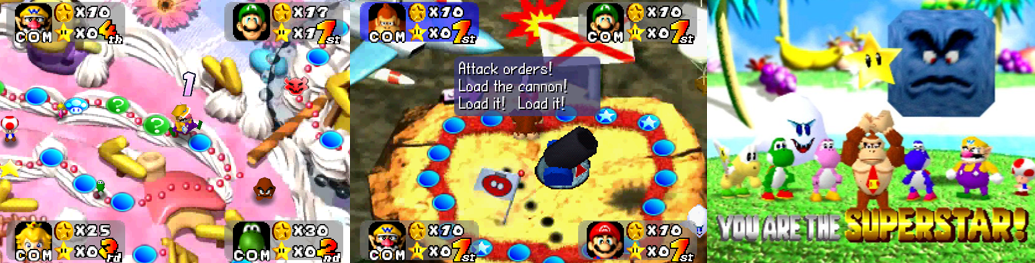
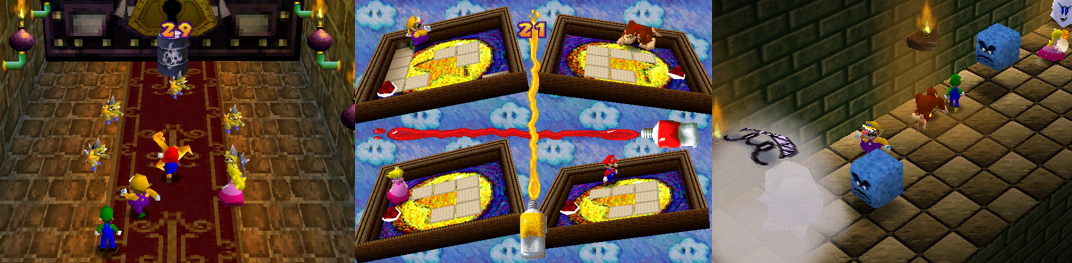
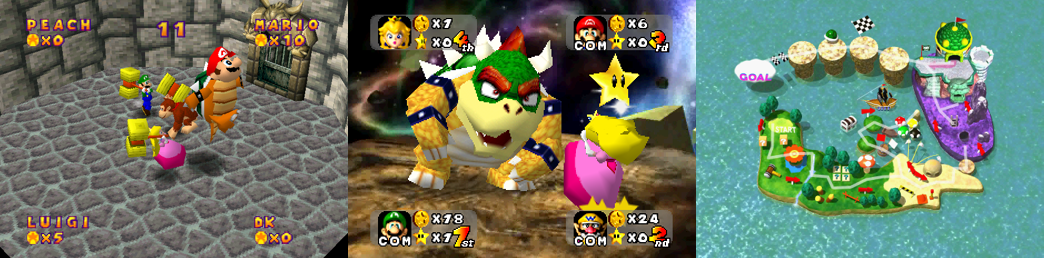




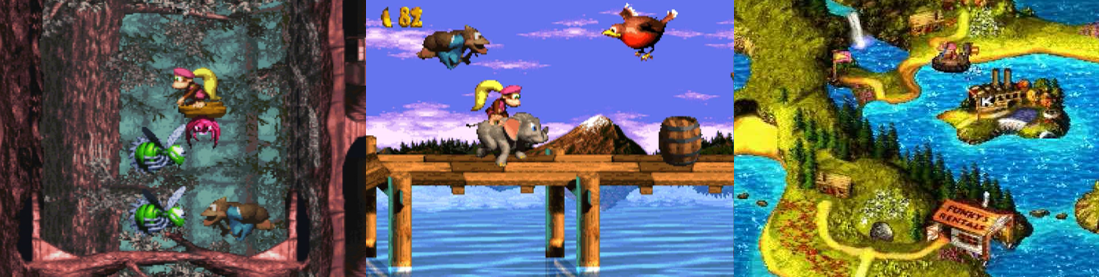
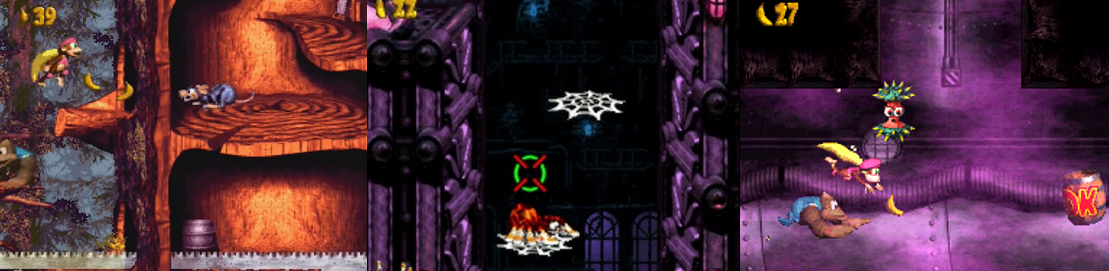
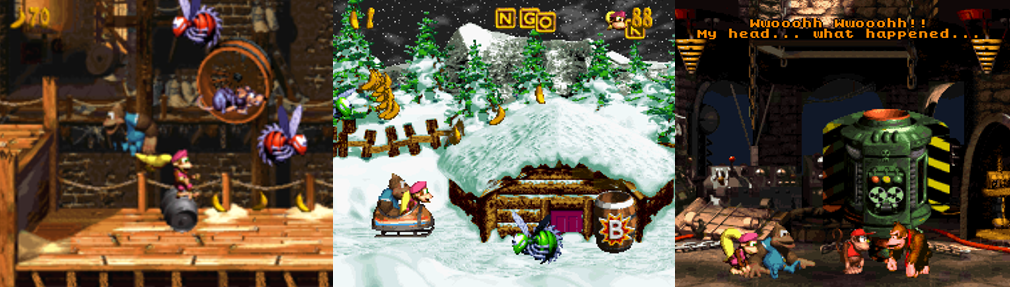
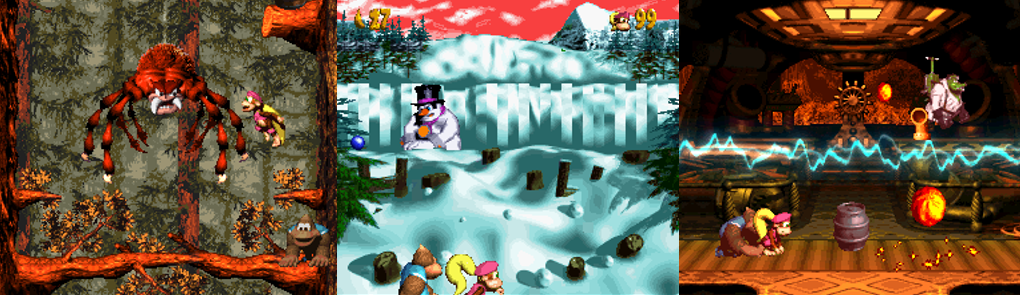

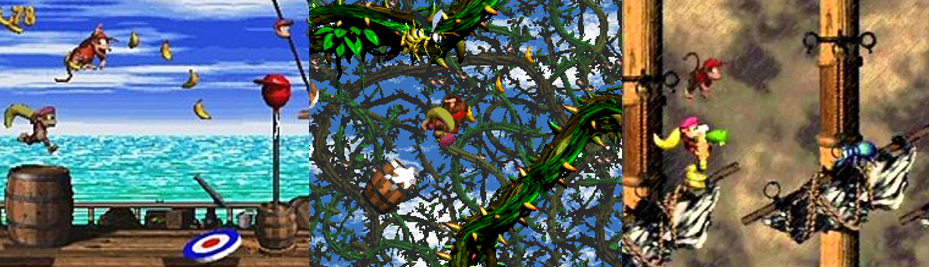
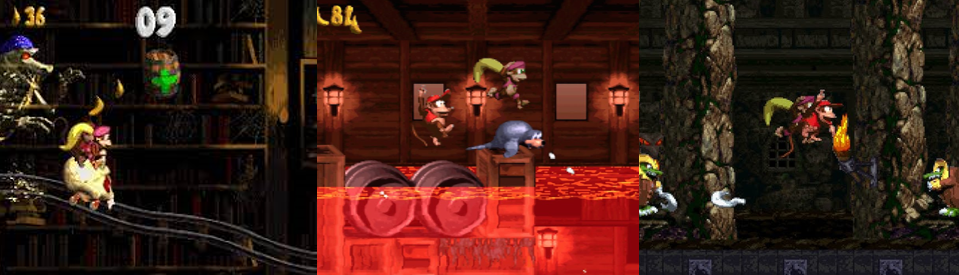
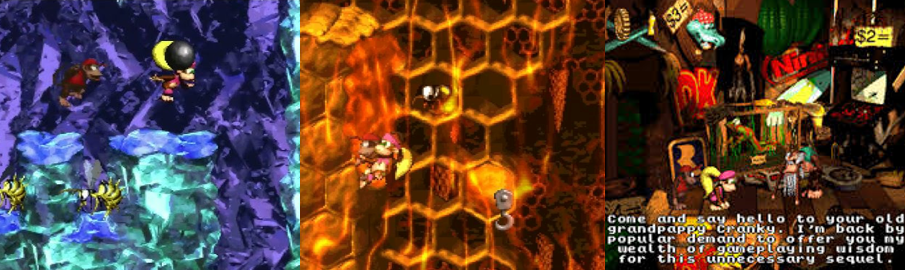
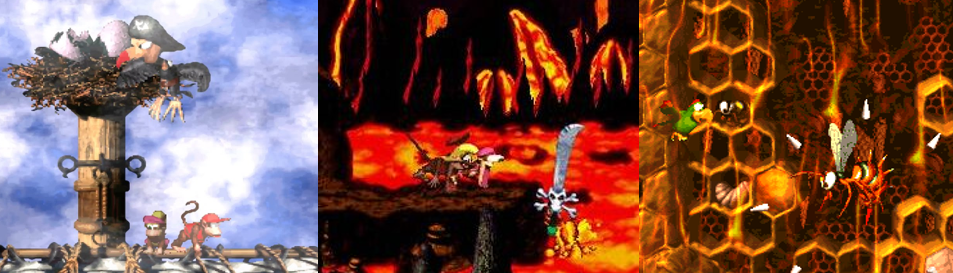
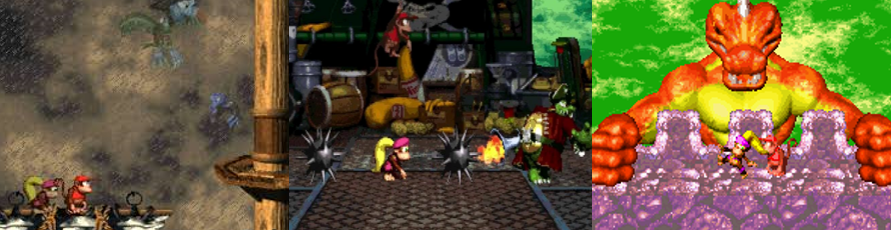



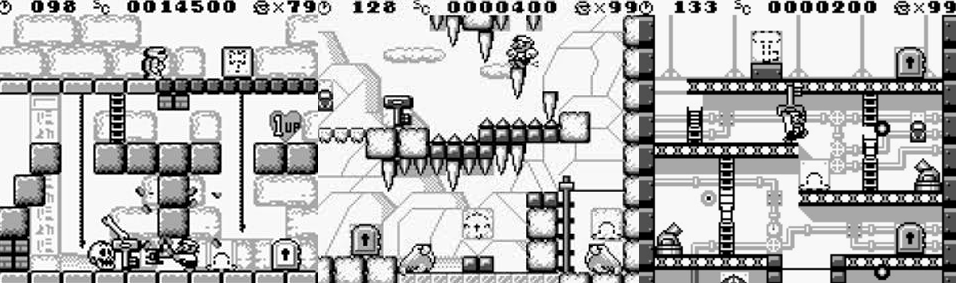
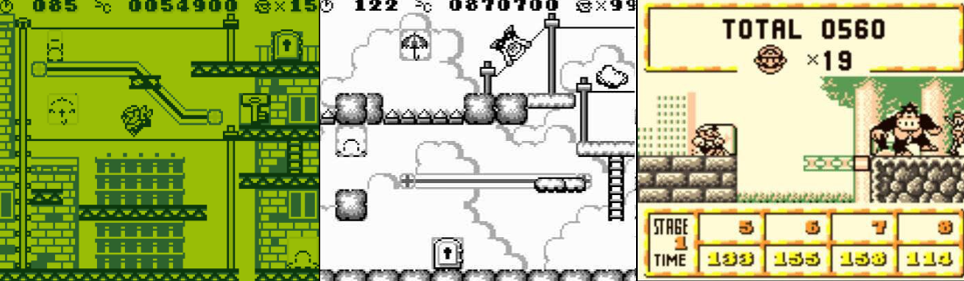
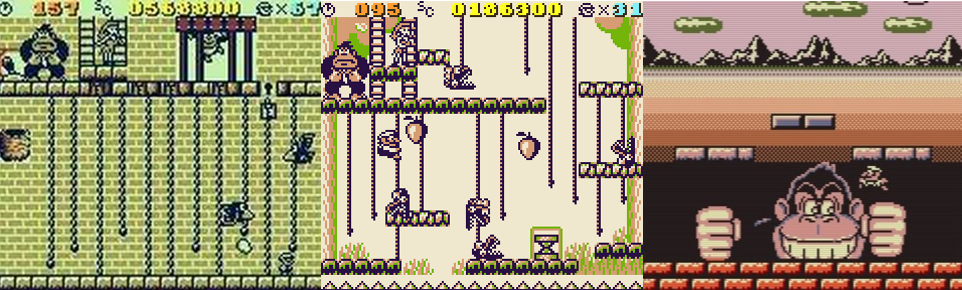


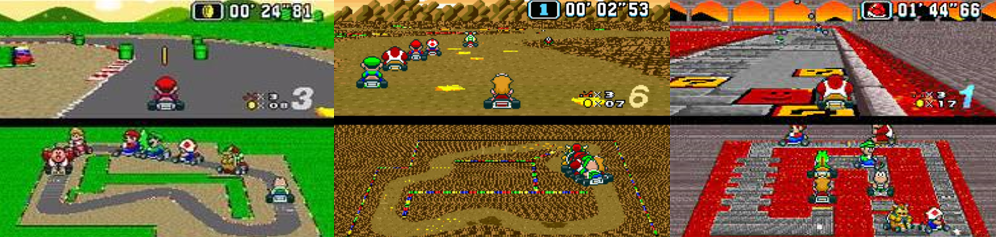
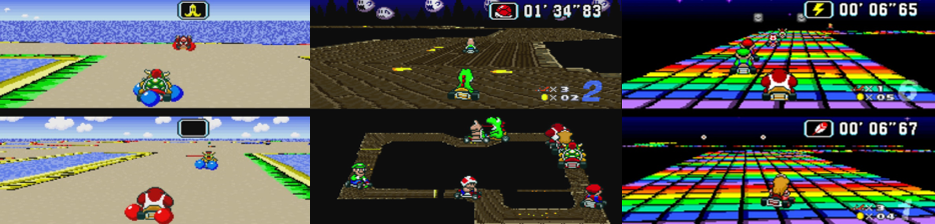



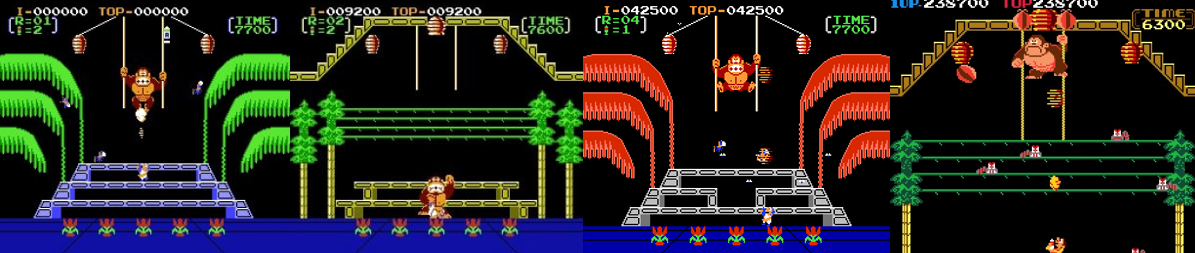


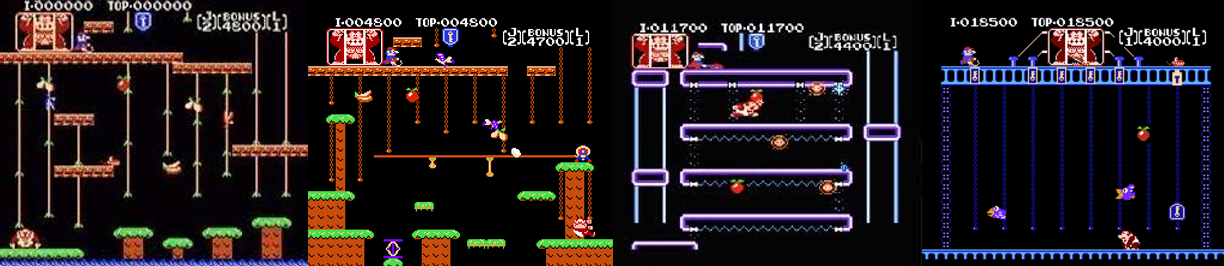
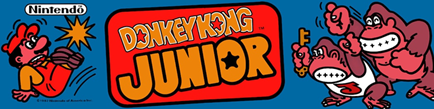


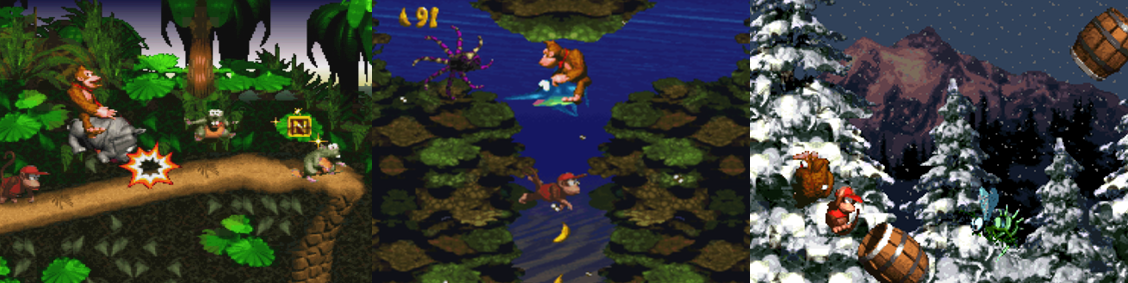
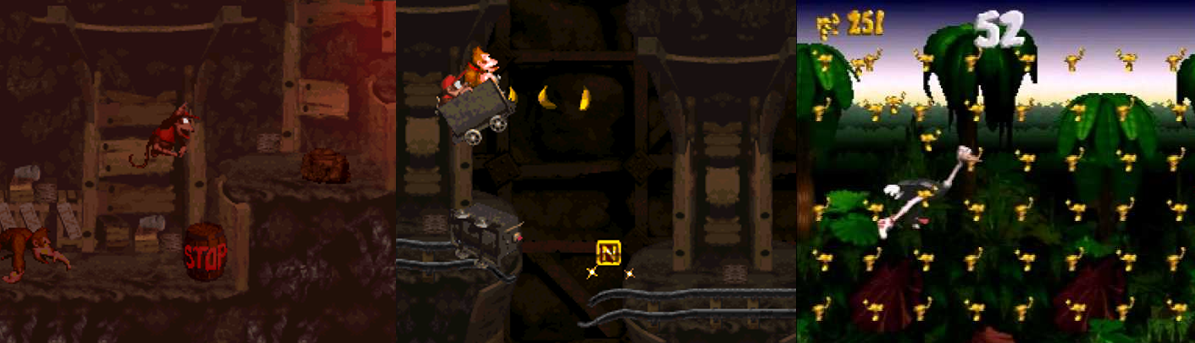
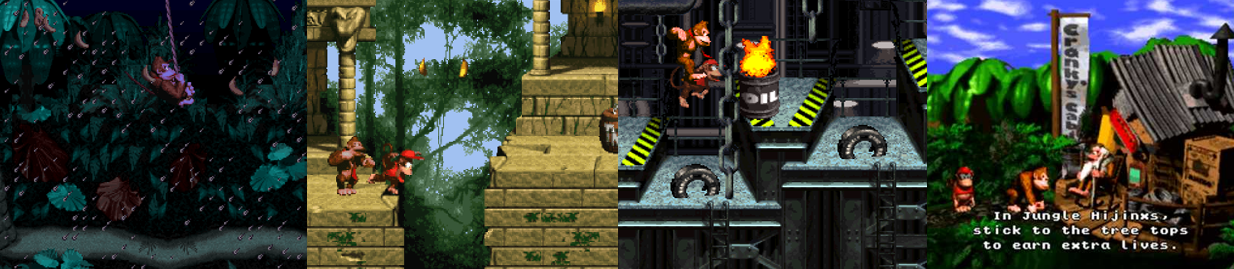
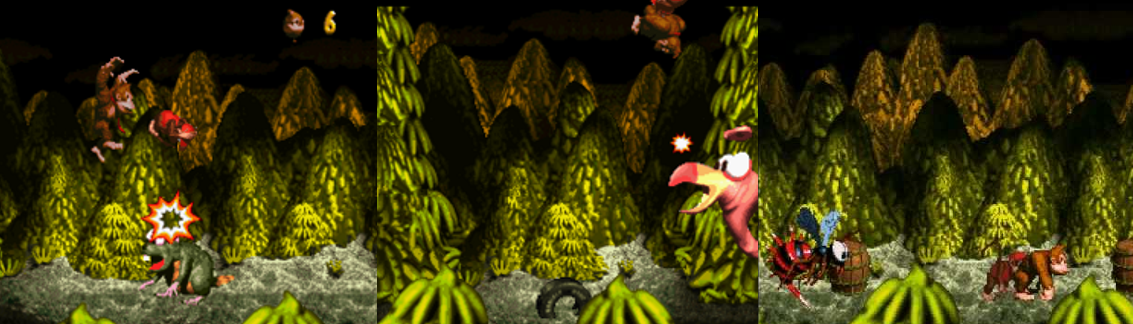
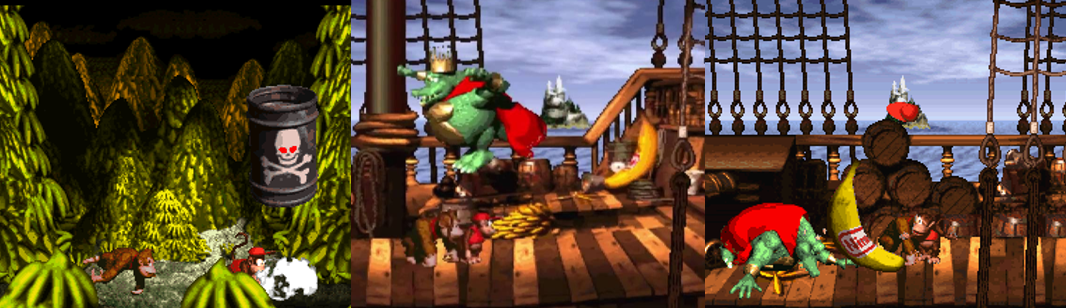



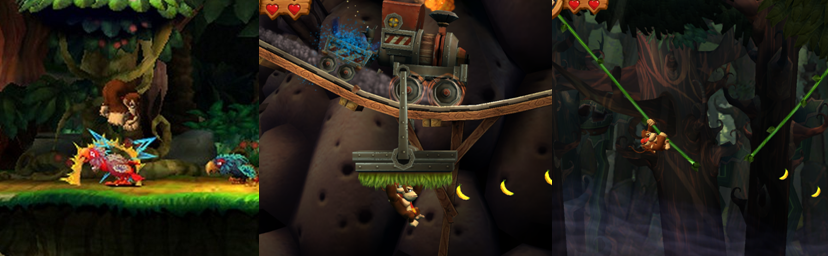
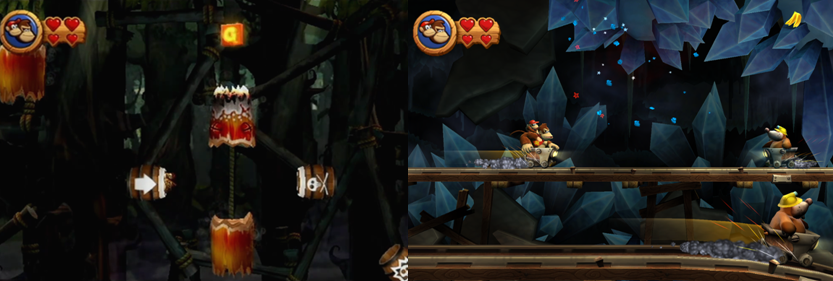
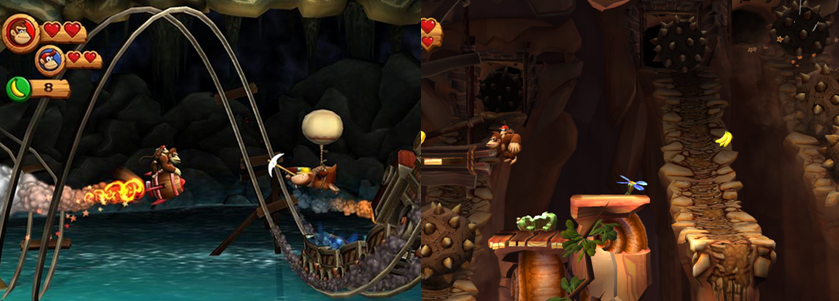

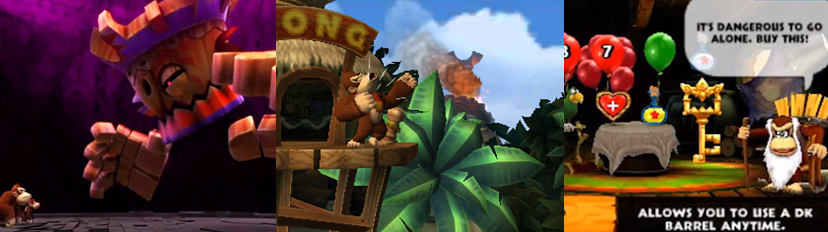
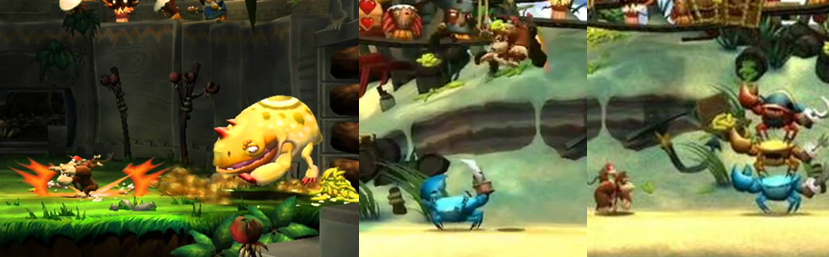


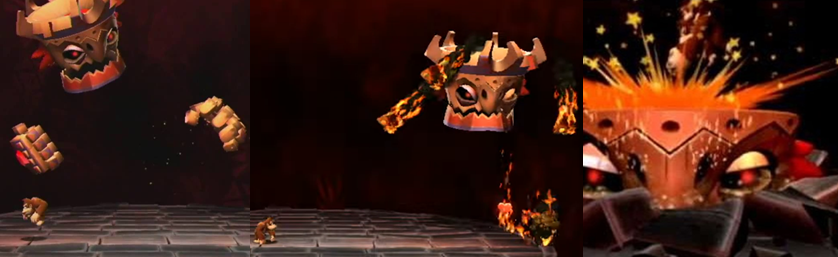
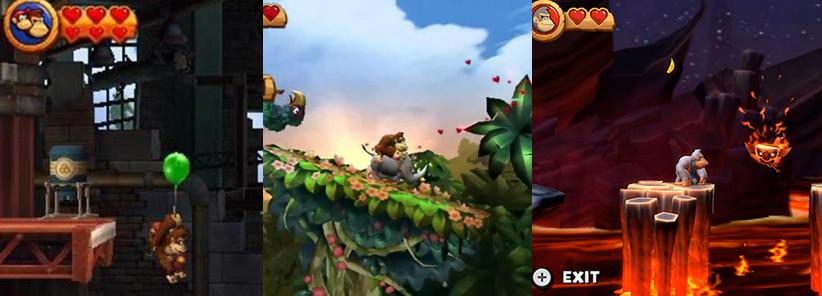
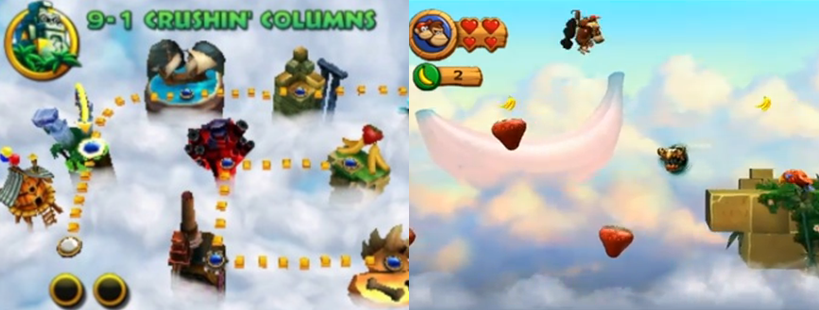


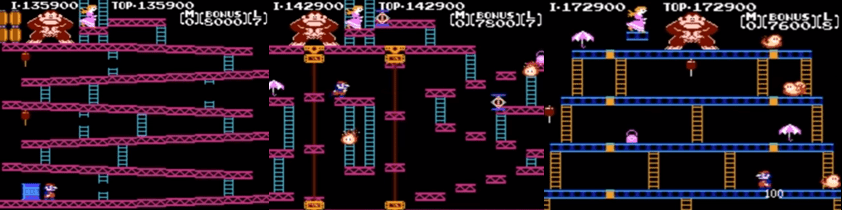
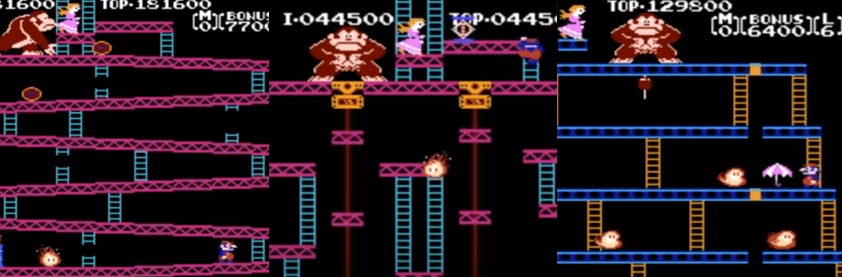

 Dr. K's Waiting Room
You must be logged in to post a comment.