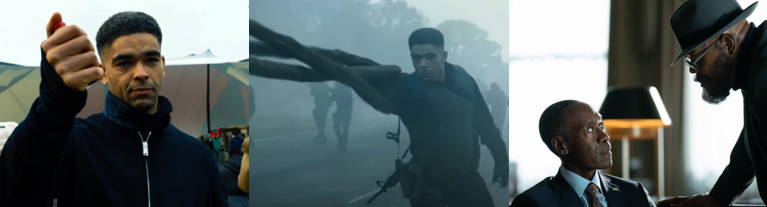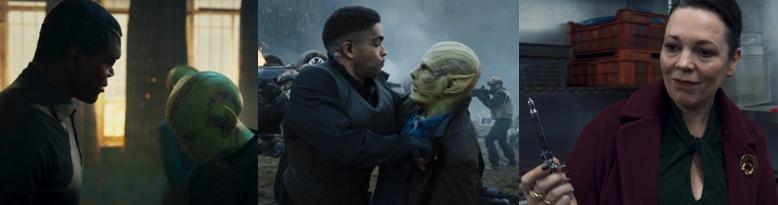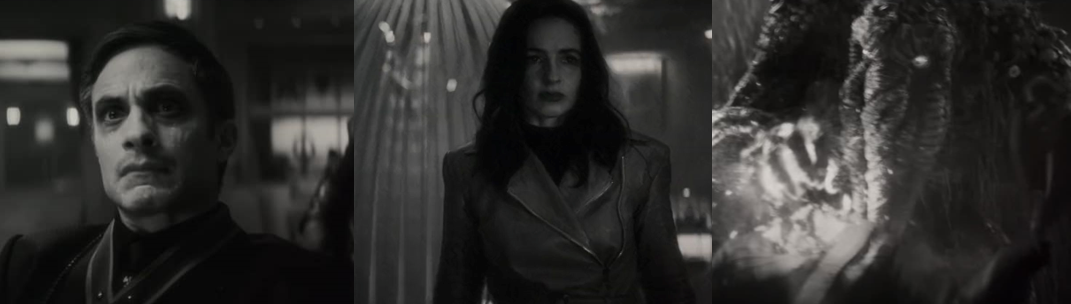
Screen Time: Agatha All Along

Air Date: 18 September 2024 to 30 October 2024
Network: Disney+
Stars: Kathryn Hahn, Joe Locke, Aubrey Plaza, Debra Jo Rupp, Sasheer Zamata, Ali Ahn, and Patti LuPone

The Background:
Created by the legendary writer/artist duo of Stan Lee and Jack Kirby, aged witch Agatha Harkness first appeared in Marvel Comics back in 1970 and has been at the forefront of many magical adventures, tutoring Wanda Maximoff/The Scarlet Witch and often associated with the mystical Darkhold tome. After becoming an unprecedented cinematic success, the Marvel Cinematic Universe (MCU) expanded into television ventures through the Disney+ streaming service. WandaVision (Shakman, 2021) was one of their first and most successful efforts for its exploration of Wanda’s (Elizabeth Olsen) fractured mental state and fun exploration of television eras. The miniseries also introduced Katherine Hahn as a radically different version of Agatha Harkness, one who became a breakout character thanks to her catchy theme song. After WandaVision head writer Jac Schaeffer signed a three-year television deal, he repeatedly suggested Agatha in his pitches, prompting MCU head honcho Kevin Feige to sign off on a dark comedy Agatha-centric spin-off that was to be the second part of a loosely connected trilogy. Initially titled Agatha: House of Harkness, the show underwent numerous title changes before eventually settling on Agatha All Along as a metatextual joke. A team of writers were assembled to offer further insight into Agatha’s character, casting her as a manipulative anti-hero through whom they could further satirise television genres and expand upon the supernatural aspects of the MCU by drawing from popular culture. With many effects realised through practical means and boasting another popular earworm, Agatha All Along sparked much debate over its inclusion of Lady Death and bringing back actors from WandaVision. Agatha All Along attracted 9.3 million global views in its first week and was widely regarded as one of the better MCU streaming shows. Reviews praised the focus on character relationships, Agatha’s theatrical (yet nuanced) performance, and its depiction of queer characters. While some criticised the show’s repetitive formula and bloated premise, the overall reception was very positive and Hahn was enthusiastic about reprising her role in future MCU projects.

The Plot:
Three years after being trapped by a spell, witch Agatha Harkness (Hahn) escapes and travels the mythical “Witches’ Road” to regain her powers alongside a new coven of witches.

The Review:
Much like WandaVision, Agatha All Along begins in something of a fantasy world, with Agatha living a crime drama fantasy as “Detective Agnes O’Connor” that the residents of Westview tolerate and even encourage to keep her placated. While Agnes of Westview only lasts for the first episode, “Seekest Thou the Road” (Schaeffer, 2024), the spirit of WandaVision is further evoked when Agatha and her coven journey across the Witches’ Road and revisit the 1960s, 1970s, and 1980s, dressing accordingly and even dealing with supernatural elements not dissimilar from The Exorcist (Friedkin, 1973) and Sam Raimi’s Evil Dead films (1981 to 1992). Enchanted by Wanda as recompense for her heinous actions, Agatha spends three years believing herself to be a tough, no-nonsense Westview detective called to solve a murder frustrated by Federal Agent Rio Vidal (Plaza). While Agnes begrudgingly shares her theories with Vidal, the agent appears coy, questioning her lifestyle choices and her ties to Westview, adding to Agnes’s frustration and unease. This is only exacerbated when Agnes almost pieces together that the victim’s book was the Darkhold, a mythical tome that corrupts anyone it touches. When questioned by Vidal over pizza and beer, Agnes as a mind blank regarding her life outside of Westview and cannot remember why she hates Vidal beyond Agnes being naturally abrasive. After apprehending a teenage thief (Locke) who breaks into her house searching for the “Road” and unnerves Agnes with an incantation, Agnes’s true memories finally return (with some prodding by the mysterious Vidal). Incensed that Wanda has taken her powers, Agatha scuffles with Vidal, seemingly a fellow witch who begrudgingly allows Agatha to regain her full strength for a more competitive battle but alerts the venge-seeking “Salem Seven” to Agatha’s location.
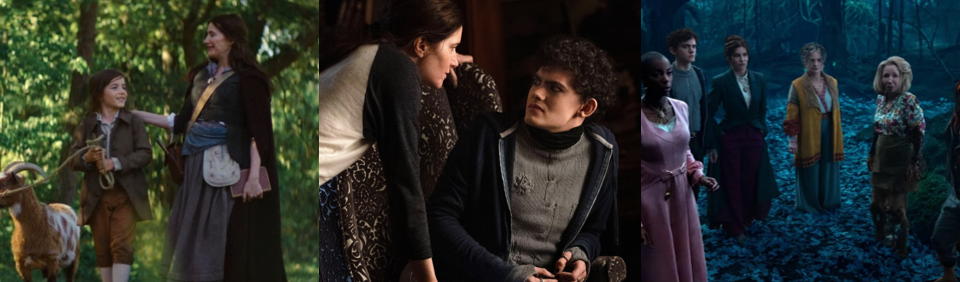
After a lifetime of killing witches, Agatha forms a new coven to travel the Witches’ Road.

Though initially dismissive of “Teen” (whom she comes to regard as a “pet”), Agatha’s intrigued when she cannot learn his name or anything about him due to a “glamour” cast by a magical sigil. Impressed that Teen broke the Scarlet Witch’s curse, Agatha uses him as a chauffeur and he enthusiastically joins her in recruiting a new coven to walk the Witches’ Road, a legendary pilgrimage that promises power to those who overcome its trials. Agatha All Along reveals that Agatha has a horrendous reputation as a witch killer not just because she sacrificed her coven and mother, Evanora (Kate Forbes), but also because she actively murdered her fellow witches alongside her reluctant son, Nicholas Scratch (Abel Lysenk). “Maiden Mother Crone” (Monteiro, 2024) reveals that Agatha provoked other witches into attacking her, allowing her to drain their magic and lifeforce, and the miniseries repeatedly states that Agatha is largely responsible for the negative reputation associated with witches, who were generally kind and compassionate before Agatha inspired lynch mobs to hunt them down. Consequently, Agatha encounters resistance when recruiting her coven, with Lilia Calderu (LuPone), Jennifer “Jen” Kale (Zamata), and Alice Wu-Gulliver (Ahn) only signing up because they’ve also lost their powers or become shells of their former selves. While Teen is very supportive of Agatha and enthusiastic about the quest, the others are sceptical, unified only by their mutual dislike of Agatha and their desire to regain their powers. Since Agatha claims to have walked the Witches’ Road before, they’re forced to defer to her experience, only to find her reluctant to participate in many of the trials and constantly withholding key information from them, leading either to their deaths or dissension as the journey becomes more perilous. Indeed, Agatha knows far more than she’s letting on, constantly manipulating events to suit her grander plan, though she does become very protective of Teen, primarily because he reminds her of her lost son.
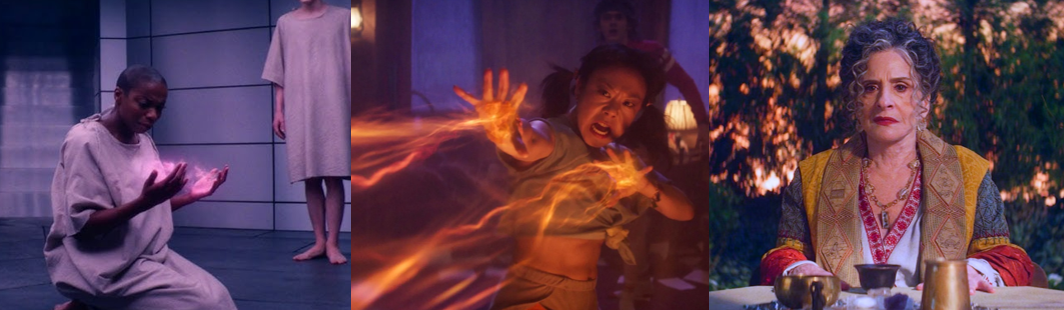
While the Witches’ Road spells doom for the coven, they briefly benefit from their time with Agatha.

While Lilia has no interest in joining the coven and is content as a fortune teller, Jen runs a successful (if dubious) skin care business, and Alice is perfectly happy believing the Witches’ Road is merely a fairytale that made her mother (Elizabeth Anweis) a rock star and led to her death, the three begrudgingly join the coven to regain their magic and out of curiosity regarding the Road. Each is chosen according to the legendary “Ballad of the Witches’ Road”, which calls for witches proficient in different magics, and each has their craft testing by the Road. Jen, who was accidentally bound by Agatha a hundred years ago, is pushed to cobble together an antidote in “Through Many Miles / Of Tricks and Trials” (Goldberg, 2024) and even saves Teen’s life after he’s injured conjuring the winged demon that’s cursed Alice’s bloodline. Alice learns that her mother performed “The “Ballad of the Witches’ Road” to protect her from this curse and gets to put it to rest before unexpectedly dying trying to save Agatha. Equally, the Road gives Lilia the chance to finally feel a sense of belonging after being left despondent at failing to save her previous coven with her clairvoyancy, which sees her experience time in a non-linear way and therefore appear crazy. The one outlier is Agatha’s kindly neighbour, Sharon Davis (Rupp), returning from WandaVision, who’s duped into joining the coven and dies during their first trial since they’re too busy squabbling to work together. She’s replaced by Vidal, an unpredictable and sadistic green witch who refuses to elaborate on her true relationship with Agatha, which is repeatedly depicted as frosty. Although the group are largely suspicious of each other, particularly the enthusiastic Teen and the untrustworthy Agatha, they soon bond, sharing stories of their personal tragedies and regrets, resulting in Jen being distraught when Lilia sacrifices herself in “Death’s Hand in Mine” (Schaeffer, 2024).
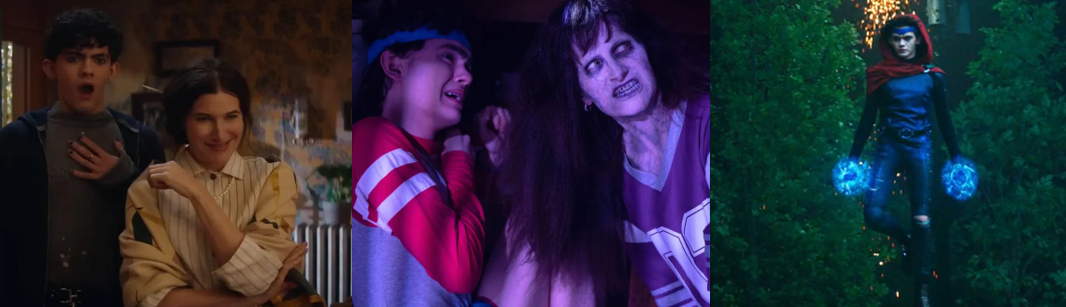
Initially supportive of Agatha and enduring the Road’s trials, Teen’s true power comes to the forefront.

Much of the miniseries revolves around the mystery of Teen, a talented but inexperienced witchling who carries a pocketbook of spells and is eager to travel the Road to gain ultimate power. Agatha is intrigued by his true nature and becomes very attached to him, pleading with Jen to save him in “If I Can’t Reach You / Let My Song Teach You” (Goldberg, 2024), but ultimately unable to deny her selfish nature. Like Agatha, Teen gets a spotlight episode in “Familiar by Thy Side” (Monteiro, 2024) that reveals he’s more than just a familiar face from WandaVision. Originally William Kaplan, Teen died in a car crash caused by Wanda’s Westview Hex and was possessed by the soul of her son, Billy. However, Kaplan awoke with amnesia and to find he could read minds, finding only worry in the heads of his parents (Maria Dizzia and Paul Adelstein) and living the next six years with no idea of who he really was. Supported by his boyfriend, Eddie (Miles Gutierrez-Riley), Kaplan meets with traumatised former Westview resident Ralph Bohner (Evan Peters) and learns of Wanda, her kids, and Agatha, realising what happened and believing that the Witches’ Road could lead him to his twin brother, Tommy (Jett Klyne). Thus, Teen breaks into Agatha’s house where she was living out her cop drama fantasy and deceives her into letting him tag along, unaware that she suspected his true identity when the Witches’ Road turned out to be real and not a con she’d made up. Though protected by Lilia’s sigil, Teen’s powers are unstable, manifesting when his emotions are at their peak, yet Agatha sees the potential in him to wield the same destructive powers as his mother. While Teen comes to resent and reject Agatha, refusing to trust her and renouncing the Witches’ Road, her tutelage allows him to locate Tommy’s soul and bind it to a dying boy, resurrecting him somewhere in the world. Teen also embraces his dual identity and even receives a glow up in “Follow Me My Friend / To Glory at the End” (Monteiro, 2024), wearing a variation of his Wiccan costume and coming to Agatha’s aid against Death.
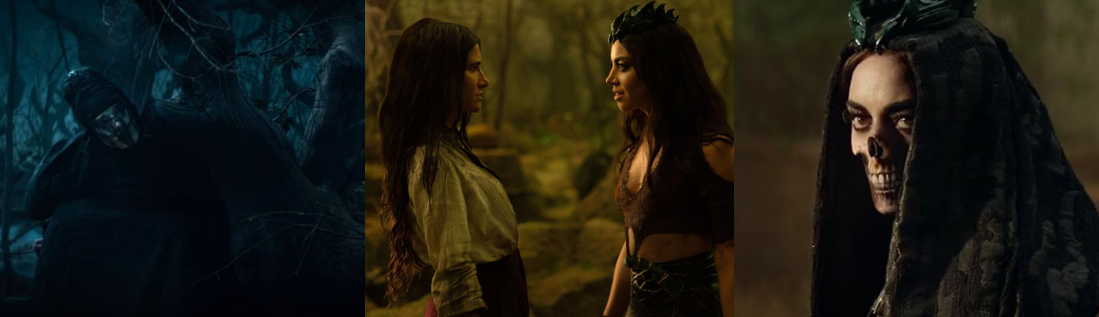
Death easily eclipses the forgettable Salem Seven with her alluring and psychotic charisma.

While Agatha is pursued by the twisted, malformed Salem Seven throughout the miniseries, they’re a minor nuisance, at best. A monstrous hive mind comprised of the children of Agatha’s first coven, they occasionally accost the group across the Witches’ Road before being killed by Liana’s sacrifice. The Witches’ Road also causes the coven a lot of grief, forcing them to complete trials based around dubious riddles, which sees them cobbling together an antidote, summoning and destroying the demon plaguing Alice, and battling the spirit of Agatha’s vengeful mother, who possesses Agatha and encourages the coven to leave her deceitful ass behind. Despite her faults, the coven sticks by Agatha to see the journey through, only for her villainous behaviour to repeatedly bite them since she can’t help but be selfish and abrasive. Liana’s tarot reading reveals that Vidal is actually the personification of death, who’s depicted as a terrifying figure with a job to do. Having had a past sexual relationship with Agatha, Death is more compassionate towards her than others, “gifting” Agatha six years with her son and demanding Billy’s life in exchange for Agatha’s as he’s an insult to the natural order. Though Agatha initially delivers on this promise, she’s convinced to sacrifice herself since Billy reminds her of her son and dies protecting him, knowing her spirit would return. In truth, the true enemy in Agatha All Along is Agatha herself as she spent centuries draining the magic and life from her fellow witches, deceiving them with stories of the Witches’ Road only to dupe them into attacking her. When the Witches’ Road suddenly became real thanks to Billy’s unpredictable magic and vivid imagination, Agatha adapted and fostered the myth, manipulating events to gain the power she so lusted after. However, Agatha’s horrified when Billy tries to banish her to the afterlife since she cannot face her son and, somewhat remorseful for her past deeds, agrees to help him find Tommy as promised.

The Summary:
Agatha All Along acts as the perfect companion to WandaVision and Doctor Strange in the Multiverse of Madness (Raimi, 2022), being coy about Wanda’s fate and showing the effect her actions had on others. Indeed, Westview remains fearful of the Scarlet Witch, choosing not to say her name or interfere with Agatha’s eccentricities since they all suffered greatly at both their hands. Ralph is especially scarred by his time as Agatha’s puppet, reduced to a paranoid hermit who sells tales of his experiences to Reddit users. While Teen never regains William’s memories and largely puts on a front to keep his parents from worrying about him, he also doesn’t acknowledge Wanda as his mother and is simply looking to discover who he is. That Teen is a queer character with a clear goth fixation only adds to this, painting him as an outcast in his own skin who’s just trying to belong. Teen believes that reuniting with Tommy will fill the void in his life but, while he’s elated to locate Tommy’s soul, he’s torn at having to nudge Tommy into the body of a recently drowned boy. Indeed, Billy is horrified to learn that he subconsciously created the Witches’ Road, making him responsible for Alice, Liana, and Sharon’s deaths. Agatha tries to alleviate his guilt by stating that she was going to kill them anyway and pointing out that he technically saved Jen, who regains her magic and confidence and flies off to an uncertain future, but it’s the search for Tommy that really gives Billy a sense of focus by the end. Though he’s the son of her enemy, Teen has a significant impact on Agatha as she sees him as a surrogate son and she repeatedly keeps him out of harm’s way across the Road. While this is for her own selfish ends, she goes out of her way to help him in “Follow Me My Friend / To Glory at the End” and ultimately choses to die in his place after initially being happy to hand him over to Death.
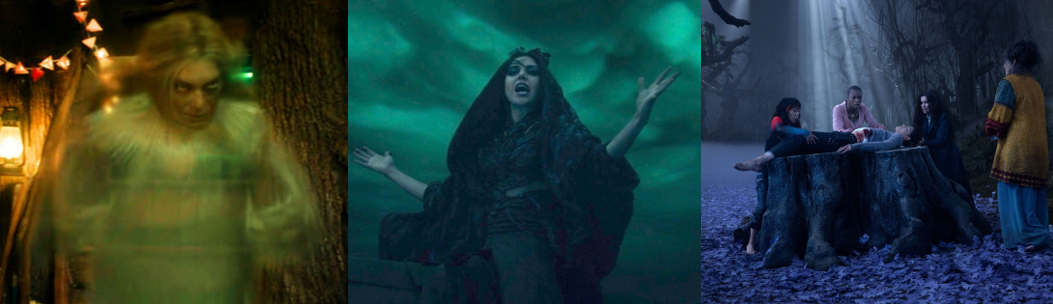
Travelling the Witches’ Road is perilous but nonetheless brings the coven together in entertaining ways.

I was happy to see Agatha All Along lean into the horror genre, presenting a unique take on witches (that they’re naturally kind-hearted and only have a bad reputation because of Agatha) and finally bringing Lady Death into the MCU, casting her as a necessary companion to those who have passed, a spurned lover, and a sadistic psychopath. The clear influence of classic horror films is felt throughout the miniseries, with possessed characters bending, contorting, and scurrying in unnatural ways, the coven messing around with a Ouija board, and introducing ghosts to the MCU. The miniseries also draws upon fairy tales and classic cinema, which subconsciously influence Billy’s interpretation of the Witches’ Road, and tells a heart-warming story of these down-and-out misfits coming together for a common cause. Each of the coven has been wronged by Agatha, either directly or indirectly, and each is looking to gain something from the Road. Poor Sharon is the exception, whisked along with the promise of adventure and being poisoned and constantly dismissed by Agatha after her death. While Alice also ends up dead, she dies protecting someone and finally exorcises her literal demons, though she’s initially dismayed at not getting to live free from the curse. Jen and Liana greatly benefit from the pilgrimage, finally regaining their confidence and their abilities, with Liana finally feeling like she belongs after being alone for so long. Each has heard of the Witches’ Road thanks not just to Alice’s mother’s popular song but the story being popular among the witch community, and each finds themselves tested by the increasingly dangerous and obtuse trials presented to them. The Witches’ Road is a perilous place that constantly pushes the coven onwards and shows them their worst fears, forcing Agatha to be confronted by her past misdeeds and exposing her deceitful nature for all to see.
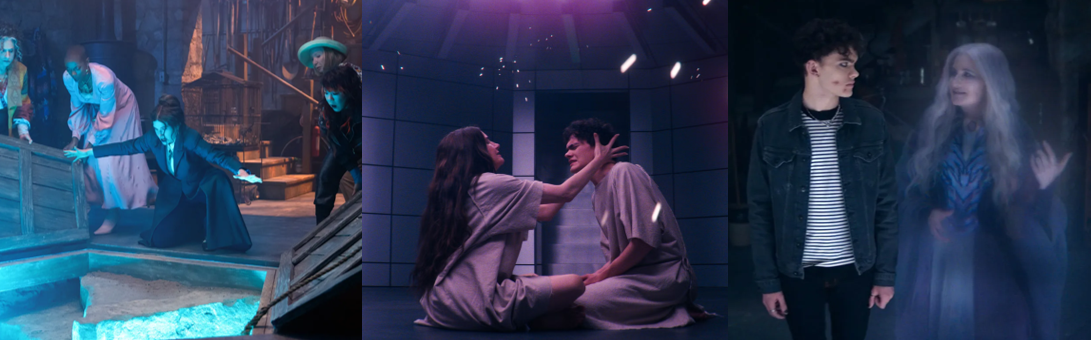
Scheming, deceitful Agatha seemingly seeks atonement by the conclusion of this enjoyable miniseries.

Katherine Hahn stole the show as Agatha, being just the right level of theatrical and dramatic and slowly depicting Agatha’s desperation manifest in aggression and spite as the miniseries progressed. A despicable, selfish character, Agatha seeks only more power and relishes stealing from others, leading them on with stories of the Witches’ Road and caring little for integrating into the witch community (or any society). It’s not made clear why she’s driven to kill, but she doesn’t stop, even when raising Nicholas, and seemingly turns her grief against her kind after he’s taken from her. Bitter and twisted, she’s perfectly happy to manipulate anyone she can and easily adapts to any situation to turn it to her advantage, encouraging stories about her and flaunting her feared reputation. Agatha All Along avoids descending into a big CGI light show battle, emphasising the futility of fighting Death, and instead hinges its confrontations and finale on interpersonal drama and overcoming physical and emotional challenges. The visual identity of the miniseries was captivating, fully committing to its horror aspects and presenting a twisted forest full of dangers and surprises. I liked that the witches couldn’t use their magic and had to come up with different ways to pass their trials, and that Agatha was forced to manipulate events when Billy conjured the Witches’ Road. Even dying was part of her plan, with her continuing on as a spirit and seemingly committed to atoning for (some of) her past by guiding Billy to Tommy and even honouring her coven. It was fun spotting all the references to classic horror films, and enjoying the different variations of “The Ballad of the Witches’ Road”, and learning more about how witches function in the MCU. The miniseries shines most in the way the characters interact, begrudgingly forming a coven and learning to work together and care for each, bickering the entire time and bringing a lot of energy to the show. I’m interested to see what’s next for Agatha and Billy and how this all pays off in the wider picture of the MCU, but I’d be more than happy to see future miniseries for both and in this world going forward.

My Rating:

Rating: 4 out of 5.

Great Stuff

Did you enjoy Agatha All Along? What did you think of Katherine Hahn’s performance and the additional lore afforded to Agatha? Which of the coven was your favourite and did you guess that there was more to Teen and Vidal? What did you think of the Witches’ Road and the way Agatha fostered the legend for her own ends? Were you disappointed that there wasn’t a more spectacular fight between Agatha and Death? Would you like to see more from these characters, and are there any specific Agatha Harkness stories and moments you’d like to see in the future? Whatever your thoughts on Agatha All Along, leave them below, check out my other Marvell content, and donate to my Ko-Fi to fund more reviews like this.


Screen Time [May the Sith]: Obi-Wan Kenobi


While May 4th is known the world over as Star Wars Day, many also choose to extend the celebrations of the course of three days, with one of them being the “Evil Star Wars Day” of May 6th (as in “Sith”).


Air Date: 27 May 2022 to 22 June 2022
Network: Disney+
Director: Deborah Chow
Stars: Ewan McGregor, Vivien Lyra Blair, Moses Ingram, Rupert Friend, Jimmy Smits, and Hayden Christensen/James Earl Jones

The Background:
In 1977, George Lucas introduced audiences to his pulp sci-fi “space opera” with Star Wars (or Episode IV: A New Hope), which became a near-immediate phenomenon not just at the time, bit for generations. Star Wars achieved this not just through toys, videogames, comics, and novels, but Lucas returning the franchise to the big screen with a prequel trilogy. Though largely seen as inferior to the Original Trilogy thanks to an overreliance on CGI and some questionable performances and dialogue, the Prequel Trilogy was financially successful and has since earned a generation of apologists, with Ewan McGregor’s portrayal of Obi-Wan Kenobi attracting much praise. Accordingly, after Disney acquired the franchise and began producing a new trilogy and spin-off films, talk of an Obi-Wan venture circulated after McGregor expressed interest in reprising the role. Though initially planned as a feature film, the project was re-tooled into a six-episode miniseries after the financial failure of Solo: A Star Wars Story (Howard, 2018) and the critical acclaim of the Disney+-exclusive series, The Mandalorian (2019 to 2023). Eager to explore a more downtrodden version of the titular character, McGregor was ecstatic to be working with Hayden Christensen once more. Christensen leapt at the chance to don the iconic helmet once more and the two were digitally de-aged for a flashback sequence. Pitched as a story about Obi-Wan confronting his past, Obi-Wan Kenobi also explored Princess Leia’s childhood and straddled a fine line between telling its own story and staying true to established canon. Premiering as the most-watched Disney+ original series (at the time) and also one of the most pirated shows, Obi-Wan Kenobi received critical acclaim that praised McGregor’s performance and the emotional reunion between Obi-Wan and Darth Vader. While the action and old-school atmosphere were also praised, some plot elements were ridiculed and the show was criticised for relying too heavily on nostalgia. Still, despite some horrendous racist reactions, the award-winning show was accompanied by a tie-in comic series and McGregor was optimistic about reprising the role again in the near future.

The Plot:
Ten years after the destruction of the Jedi and the rise of the Galactic Empire, former Jedi Master Obi-Wan Kenobi (McGregor) hides on Tatooine. When called to rescue Princess Leia Organa (Blair), Obi-Wan is drawn into a confrontation with his former Padawan, Anakin Skywalker, now the ruthless Sith Lord: Darth Vader (Christensen/Jones).

The Review:
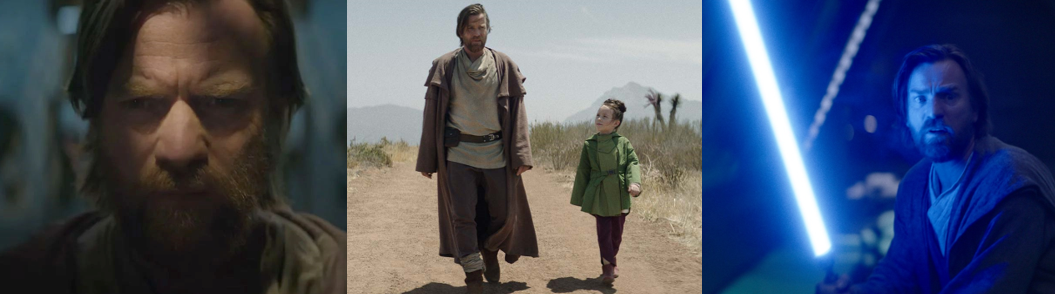
Obi-Wan Kenobi is a six-part miniseries set some ten years after Revenge of the Sith. Accordingly, the malevolent Galactic Empire dominates the galaxy, enforcing martial law across numerous worlds, stationing their nameless, faceless Stormtroopers to harass and intimidate the populace, and ravaging the natural resources of every world they control. Life is tough for many ordinary civilians as they’re either persecuted, deprived of basic needs such as food and credits, or brainwashed into believing that the Empire is a benevolent organisation bringing order to the galaxy. Thus, we see a few different ends of the spectrum in Obi-Wan Kenobi, with friendly, ordinary civilians like Freck (Zach Braff) praising the influence of the Empire, downtrodden, forgotten Clone Troopers (Temuera Morrison) left begging in the streets, senators like Bail Organa (Smits) trying to politically influence opinion away from the Empire, and Imperial offers like Tala Durith (Indira Varma) being disgusted by the Empire’s tyrannical ways. To make matters worse, Emperor Sheev Palpatine’s (Ian McDiarmid) oppression of the Jedi Order saw not only Jedi and their Younglings mercilessly slaughtered by Clone Troopers as part of “Order 66”, but the continued hunting and eradication of any surviving Jedi or Force-sensitive individuals by Darth Vader and his determined, ruthless Inquisitors. While Darth Vader and his cohorts, who were once Jedi before turning to the Dark Side, successfully identify their prey, either by intimidating, threatening, or out-right killing the locals, their true quarry, the elusive and titular Obi-Wan Kenobi, has eluded them for ten years. Like many Jedi, Obi-Wan has accomplished this not only by hiding away on a backwater planet (in this case, Tatooine) but by suppressing his Force abilities. When confronted by desperate Jedi survivor Nari (Benny Safdie) in “Part I”, Obi-Wan strongly advises him to follow his example, literally burying his former life in the desert and refraining from helping others with the Force, advice that Nari doesn’t heed and results in his public execution.

Haunted by his past, a reluctant Obi-Wan ventures out to protect Leia and confront his greatest failure.

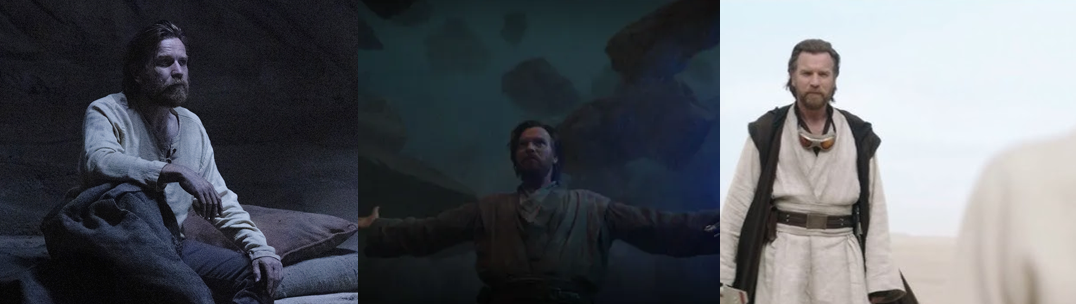
Traumatised by the horrific events that saw his former Padawan, Anakin Skywalker, be seduced by the Dark Side and slaughter his fellow Jedi, Obi-Wan has hidden away on Tatooine, taking the “clever” alias “Ben” and eking out a menial living, with only Owen and Beru Lars (Joel Edgerton and Bonnie Piesse) aware of his true identity. Although Obi-Wan regularly attempts to commune with the spirit of his old master, Qui-Gon Jinn (Liam Neeson), he receives no answer, largely because he’s lost his connection to the Force after a decade of suppressing his abilities and after seeing first-hand the downfall of the Jedi Order. Haunted (literally and figuratively) by the screams and suffering of his former Padawan, Obi-Wan is a shell of his former self who uses his promise to watch over Anakin’s son, young Luke Skywalker (Grant Feely), as an excuse to stay hidden, despite Owen warning him to stay away lest he fail the boy as he failed his father. However, when Reva Sevander (Ingram), an ambitious Inquisitor known as the Third Sister obsessed with gaining Darth Vader’s favour, hires bounty hunters to kidnap young Princess Leia, Obi-Wan is forced back into the fight at the desperate request of Bail, Leia’s adopted father and Obi-Wan’s old Republic ally. While he’s hesitant to answer the call, feeling old and useless and afraid of drawing undue attention, Obi-Wan ultimately agrees since Leia, as Luke’s sister, is just as important to any future hope of opposing the Empire. Thus, Obi-Wan leaves Tatooine with only his wiles and some rusty Jedi tricks to guide him. Obi-Wan finds himself in a galaxy that’s largely lost its way, full of disreputables like fake Jedi Haja Estree (Kumail Nanjiani), bounty hunters like Vect Nokru (Flea), and meek civilians afraid of Darth Vader’s wrath. While Obi-Wan carries his lightsaber, he mostly favours a blaster and avoids using the Force lest he compromise his position. However, he is ultimately forced to take up both to safeguard Leia and defend the innocent, finding that the spark of hope is still alive, if faded, in the unruly galaxy.

Headstrong Leia defiantly resists torture and restores Obi-Wan’s hope for the future.

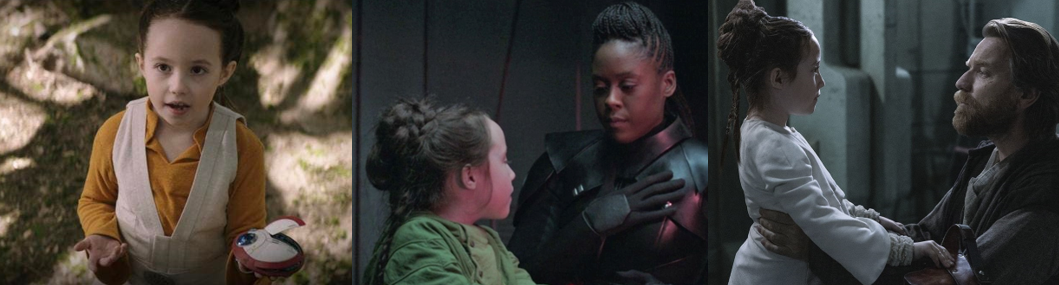
Because of Obi-Wan’s reluctance to use the Force, the stubborn, adventurous, headstrong Leia is initially very wary of him. Already something of a spoiled and reckless child, Leia finds politics boring and desires to find her own path, but is incredibly defiant and brave even when faced with the likes of the Third Sister. Leia never stops to fight back, resisting her captors at any opportunity, and is incredibly insightful. She has a unique way of reading people, even after only just meeting them, and isn’t afraid to speak her mind. Having lived a sheltered life on Alderaan, Leia is naïve to the dangers of the galaxy and walks head-first into situations thinking the best of everyone, confident that she can charm or talk her way out of most situations. Her surprisingly intuitive demeanour impresses Obi-Wan, as she’s wise beyond her years in many ways, but he’s also quick to shield her from growing up too fast and being exposed to violence before she’s ready to put her feisty spirit to good use as a natural leader. Leia and Obi-Wan’s relationship is a true highlight of Obi-Wan Kenobi; I loved her inquisitive nature and how she criticised him at times. It’s also heartbreaking to see Obi-Wan’s reaction to her, as she reminds him of Padmé Amidala (Natalie Portman) in mind, body, and spirit, bringing further pain to the wizened Jedi Master since he was unable to keep Padmé from Anakin’s destructive downfall. Adorable and enthusiastic, Leia relishes the chance to be on an adventure, though recognises that she’s in over her head and caused trouble by disobeying her parents. She eventually bonds with Obi-Wan, querying his sullen demeanour and learning of the tragedies he’s witnessed, and also connects with Tala, who inspires her rebellious attitude. Leia’s stubbornness sees her defy even the Third Sister’s cruel interrogation; resisting the Inquisitor’s attempts to probe her mind with the Force, Leia refuses to sell out her allies even when faced with torture. Similarly, Leia comes to care for Obi-Wan so deeply that she begs Tala to help him when he chooses to face Darth Vader to cover her escape, and eventually sets herself on the path to forging her own identity as a diplomat and a fighter thanks to Tala’s sacrifice and Obi-Wan’s influence, especially as he passes on knowledge of her true parents.

Obi-Wan’s traumatic past with Anakin sees him reluctant to trust his new allies.

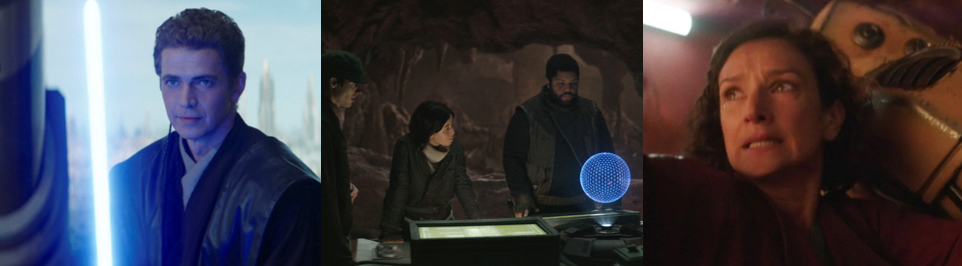
While Obi-Wan is faced with danger at every turn, he gains some notable allies in his quest. Naturally distrustful following his traumatic past, Obi-Wan initially tries to keep a low profile and sway suspicion with flimsy cover stories. However, after the Third Sister puts a bounty on his head, Obi-Wan’s forced out of the shadows and to slowly reconnect with the Force and his lightsaber, which means making new allies to escaping Darth Vader and the Inquisitors. His first port of call is Haja, a con man who fakes being a Jedi for credits but who’s inspired by meeting a real Jedi to aid Obi-Wan, eventually watching out for Leia as the Jedi Master confronts Darth Vader. Despite seemingly leading him on a wild goose chase, Haja also puts Obi-Wan in contact with Tala, a disillusioned Imperial officer trying to atone for the blood on her hands by secretly smuggling Jedi and other Imperial targets to safety through an underground resistance network known as “The Path”. Tala’s Imperial authority guides Obi-Wan through the Fortress Inquisitorius to rescue Leia, where he discovers, to his horror, the preserved corpses of slain Jedi in the temple. It’s through Tala that Obi-Wan meets Kawlan Roken (O’Shea Jackson Jr.) and reaffirms his status as a defender of the innocent since Obi-Wan willingly surrenders to cover their escape, though Tala is unfortunately killed during the Imperial assault in “Part V”. Obi-Wan’s reluctance to trust others stems not just from his need to stay hidden, but also from being burned by Anakin’s betrayal. The wonders of modern de-aging technology provide a flashback to Obi-Wan’s younger days, when he duelled with the upstart Anakin and tried to emphasise the need to temper his aggression and desire to prove himself in favour of defending others. Thanks to competent writing and direction, Hayden Christensen gets a chance to shine as the conflicted Anakin, who’s torn between showing his superiority and obeying his master. Despite Anakin’s exuberance in the duel, the two are painted as close brothers, making the pain of Anakin’s turn only sting more. This feeds into Obi-Wan’s guilt and the fear he feels whenever Darth Vader is present since Obi-Wan doesn’t want to see the monster his former protégé has become, much less be forced to kill him.

Reva’s ambition to punish Darth Vader is mirrored in Vader’s obsession with destroying Obi-Wan.

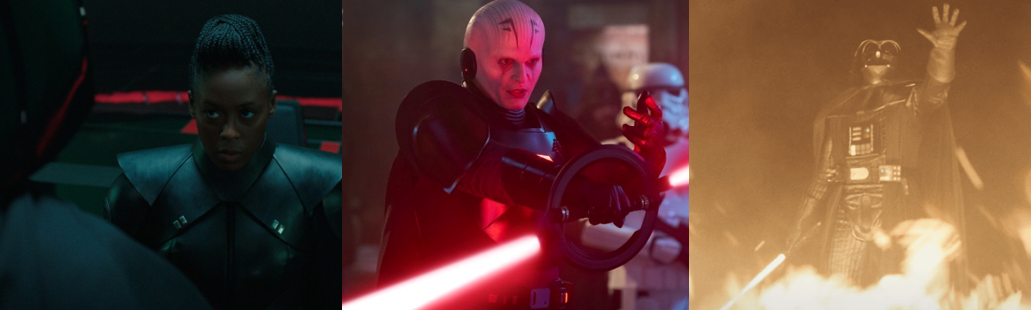
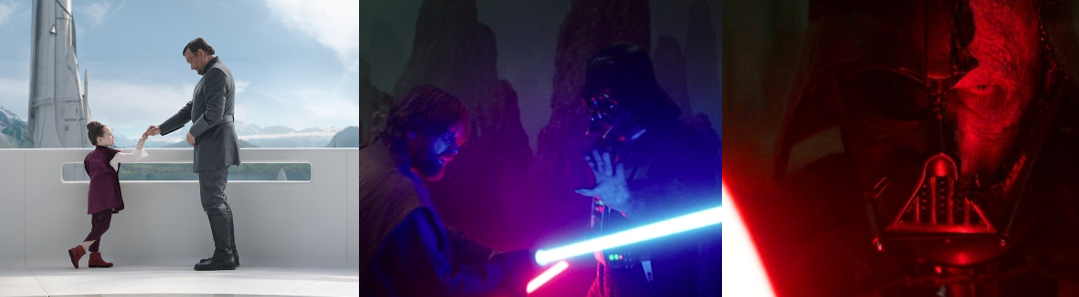
While all Jedi are relentlessly hunted by the Inquisitors, Obi-Wan is specifically targeted by the Third Sister against the orders of the Grand Inquisitor (Friend) and her rival, the Fifth Brother (Sung Kang). While the Grand Inquisitor enjoys a good monologue, intimidating locals into giving up any Jedi amongst them, the Third Sister prefers a more direct approach, publicly executing and maiming people to force the Jedi out. Constantly reprimanded for her reckless ways, the Third Sister’s ambition to impress Darth Vader by delivering his former master sees her seemingly kill the Grand Inquisitor and take his place, gaining Darth Vader’s favour and leading the operation to hunt Obi-Wan down. Reva’s ambition is seeped in hatred of both the Jedi and her dark master since, as a Youngling (Ayaamii Sledge), she witnessed Anakin’s massacre and has pledged to destroy him. Obi-Wan initially sways her into allying with him, providing her with the distraction to attempt an execution, only for Darth Vader to grievously wound her thanks to the surviving Grand Inquisitor. Desperate, the Third Sister heads to Tatooine to slaughter Luke and his family but ultimately spares the boy when she realises she’s in danger of becoming the same monster as Anakin. Strong in the Force and wielding red lightsabers, the Inquisitors inspire fear through their mere presence. This is, surprisingly, echoed in the Stormtroopers, who are far more competent and menacing than usual, especially due to their sheer numbers and Obi-Wan’s rusty Jedi skills. These skills are tested when Obi-Wan inevitably crosses paths with Darth Vader, with the Dark Lord slaughtering and torturing innocents to bait his old master and humbling Obi-Wan during their first, brutal encounter. Here, Darth Vader toys with his prey, dragging Obi-Wan through fire to inflict a measure of the same pain he caused him. In their second encounter, Obi-Wan is far more confident and capable, though Darth Vader’s fury, raw power, and tempered skill still overwhelmed him. After being buried beneath a cave-in, Obi-Wan fully regains his connection to the Force and bombards Darth Vader with debris, damaging his mask and breathing apparatus and leading to a dramatic confrontation between the two. Here, Obi-Wan is distraught to see his scarred former pupil is beyond salvation and, after Vader takes credit for killing Anakin, Obi-Wan leaves him to his suffering, now fully convinced that Anakin Skywalker is dead and that only Darth Vader remains.

The Summary:
As a big fan of Ewan McGregor’s performance s Obi-Wan Kenobi, I’m ashamed at how long it took me to get to his long-awaited self-title series. McGregor shines as the haunted, wary former Jedi Master, easily slipping right back into the role and further echoing Alec Guinness’s original portrayal of the character as an older, wiser, and far less physically capable character. In Obi-Wan Kenobi, Obi-Wan is tormented by guilt and PTSD, haunted by nightmares of Anakin’s downfall and weighed down by his failure to save his apprentice, which he believes cost the lives of countless innocents and Jedi. When Bail calls, Obi-Wan insists that he’s not the right man for the job and, to be fair, he’s not completely wrong. Constantly called out for his age and initially struggling so much to call upon the Force that it exhausts and even pains him, Obi-Wan is a far cry from the confident, commanding General he once was. However, this old dog still has a few tricks up his sleeve. He’s handy with a blaster and some of his Jedi training still remains in a fist fight, allowing him to survive most scuffles, even if he lacks the finesse he once had. He’s somewhat overconfident when he first faces Darth Vader, though it’s more that he’s forced into a lightsaber duel to protect Leia and other innocents. His form is sloppy and weak, as criticised by Darth Vader, and Obi-Wan surely would’ve died if not for Tala’s timely intervention. Though he’s still a step behind his twisted opponent in his second encounter, Obi-Wan is much more formidable and regains much of his former strength through both their duel and the closure given to him by Darth Vader’s assertion that Anakin is dead. This, as much as rediscovering his compassion for others and seeing the flame of hope still flickering in the galaxy, brings Obi-Wan enough inner peace to finally strengthen his connection to the Force. This allows him to commune with his long-dead master, Qui-Gon, effectively laying the foundation for Obi-Wan’s later adventure with the Rebellion.

Obi-Wan Kenobi gives returning actors a chance to revisit their characters and relationships.

As great as Obi-Wan was here, Obi-Wan Kenobi goes a long way to making up for some of the Prequel Trilogy’s many shortcomings. Jimmy Smits gives a magnetic performance as the concerned and desperate Bail, who has a lovely relationship with Leia where he encourages her mischievous ways as well as a brotherly bond with Obi-Wan that sees him turn to the burned-out Jedi in his time of need. We get more of an idea of how devastating Order 66 was, not just through Obi-Wan’s nightmares but Reva’s descriptions and flashbacks, which depict Anakin as a monster who turned on his own people and mercilessly slaughtered children. This memory is as traumatic for Reva as it is Obi-Wan, fuelling her hatred of the Jedi for allowing it to happen and of the Dark Lord for committing the act. Obi-Wan Kenobi brings Hayden Christensen back not just as a digitally de-aged Anakin but as Darth Vader, bolstered by an AI-rendition of the late, great James Earl Jones’s booming voice. Depicted as a scarred, maimed tyrant, Darth Vader relentlessly pursues Obi-Wan even against other, more pressing concerns. He fuels the Third Sister’s lust for power by promoting her under pain of death if she fails and doesn’t hesitate to strike her down when she tries to assassinate him. When confronting Obi-Wan, Darth Vader is disgusted by the state of his master and easily overpowers him, relishing the chance to inflict pain upon the one he blames for his condition. Although I don’t mind Hayden, he was always a weak-link in the Prequel Trilogy; however, Obi-Wan Kenobi proves this was largely because of the awful direction and script he was saddled with. Here, Anakin is a twisted and embittered man consumed by anger and vengeance. Seeing his helmet damaged, his voice box malfunctioning, and the pure animosity in his eyes as he denounces both Obi-Wan and his former life is a truly stirring (if familiar) moment that goes a long way to make up for George Lucas’s clunky dialogue.

Obi-Wan’s dramatic journey sees him rekindle his connection to the Force and the wider galaxy.

Though Obi-Wan relies more on his blaster and his wits, Obi-Wan Kenobi features some decent chases, action scenes, and space battles. The show primarily goes out of its way to depict Stormtroopers as a true threat, which I really enjoyed, and to hammer home how desperate the situation is for the few remaining Jedi and those who would oppose the Empire. The lightsaber action is as thrilling as we saw in the Prequel Trilogy, now given an extra edge through the Inquisitors’ lust to eliminate all Jedi and Darth Vader’s desire to make his former master suffer. Not only that, but I really enjoyed Leia’s portrayal here. She echoes both her mother and her older self in her stubborn, outspoken nature and I enjoyed the dichotomy of her as a naïve but rebellious child who wanted an adventure but was strong enough to resist torture. Her relationship with Obi-Wan was equally adorable and emotional as Leia only causes Obi-Wan further pain because of his failures. These see him become obsessed with watching over Luke, whom Owen aggressively shields to keep him from taking even a single step down the same path his father took. Obi-Wan’s reluctance to leave the boy and embark on some damn, fool adventure turns out to be just what the downtrodden former Jedi needed since Leia shows him that there’s hope for the future. This is only further emboldened through Obi-Wan’s interactions with Tala and Roken, rebellious spirits who place themselves in mortal danger to save who they can and are principal figureheads in the fledgling Rebellion. Forced to literally confront his past, his demons, and his greatest failure, Obi-Wan rediscovers himself and accepts that Anakin is truly lost, ending the miniseries in a stronger position to prepare for the future since he’s no longer haunted by the past. Overall, I really enjoyed Obi-Wan Kenobi. It’s a bit wonky in some ways since I never suspected that Obi-Wan left his exile on Tatooine much less had an encounter with Leia or a rematch with Darth Vader, but the miniseries is clearly positioned as a love letter to the Prequel Trilogy and, in that respect, it succeeds. With fantastic performances from the new and returning cast, there’s a lot to like here and it does a great job of further bridging the gap between the two trilogies and sowing the seeds for future appearances of the likes of the Skywalkers, the Inquisitors, and the Dark Lord himself.

My Rating:

Rating: 4 out of 5.

Great Stuff

Did you enjoy Obi-Wan Kenobi? Were you excited to see Ewan McGregor and Hayden Christensen return to their iconic roles? What did you think to Obi-Wan’s character arc and his depiction as a traumatised former Jedi? Did you enjoy the brutal rematch between him and Darth Vader or did it irk you to see them interact prior to the Original Trilogy? What did you think to Leia, her gusto and bravado, and the allies they made in their journey? Are you a fan of the Inquisitors? Would you like to see other character-specific Star Wars spin-offs? I’d love to see your thoughts on Obi-Wan Kenobi in the comments below, so drop them there, support me on Ko-Fi, and go check out my other Star Wars content.

Screen Time [Sci-Fanuary]: I Am Groot (Season One and Two)


January sees the celebration of two notable dates in science-fiction history, with January 2 christened “National Science Fiction Day” to coincide with the birth of world renowned sci-fi writer Isaac Asimov. HAL 9000, the sophisticated artificial intelligence of Arthur C. Clarke’s seminal 2001: A Space Odyssey (1968), was also created on 12 January. Accordingly, I am dedicating January to celebrating sci-fi in all its forms.


Season One and Two

Air Dates: 10 August 2022 and 6 September 2023
Director: Kirsten Lepore
Network: Disney+
Stars: Vin Diesel, Trevor Devall, James Gunn, Fred Tatasciore, Bradley Cooper, and Jeffrey Wright

The Background:
Created by Stan Lee and Larry Lieber, the original version of Groot was a far cry from the loveable tree-monster who won the hearts of audiences in Marvel Studios’ Guardians of the Galaxy films (Gunn, 2014 to 2023). Vin Diesel’s surprisingly nuanced performance made the character a household name and Marvel wisely capitalized on the cute appeal of Baby Groot with a series of animated shorts to bolster Disney’s new streaming platform. Seeking to hearken back to a simpler time in Disney animation, when short-form storytelling didn’t rely on much dialogue, director and head writer Kirsten Lepore was inspired by her son when exploring Groot’s childhood. She also met with Guardians of the Galaxy director James Gunn to explore Groot’s mischievous characterisation. Though Gunn questioned the canonicity of the shorts, Lepore was open to producing more episodes since she and Marvel Studios had plenty more ideas to pull from. Despite the character’s limited vocabulary, Vin Diesel returned to record new “I am Groot” lines and Bradley Cooper even recorded a cameo as Rocket Raccoon. The second series revisited ideas pitched for the first and featured a cameo by Jeffrey Wright as Uatu the Watcher that injected some comedy into the otherwise stoic overseer. The show also recycled the Baby Groot CGI model created by Luma Pictures and Lepore took inspiration from the original Star Wars trilogy (Various, 1977 to 1983) when suggesting designs for Baby Groot’s supporting cast. When it first streamed, I Am Groot was the third highest streaming series in America and both seasons were widely praised for its adorable main character, quirky humour, and playful nature.

The Plot:
Baby Groot (Diesel) takes the spotlight in a series of shorts exploring his adventures growing up, getting into trouble among the stars, and deciding the fate of the entire multiverse!

The Review:
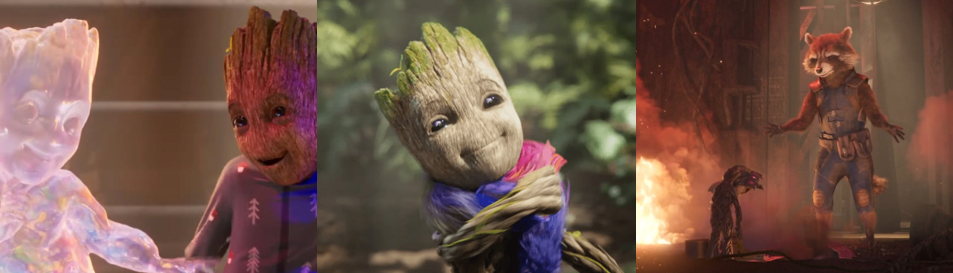
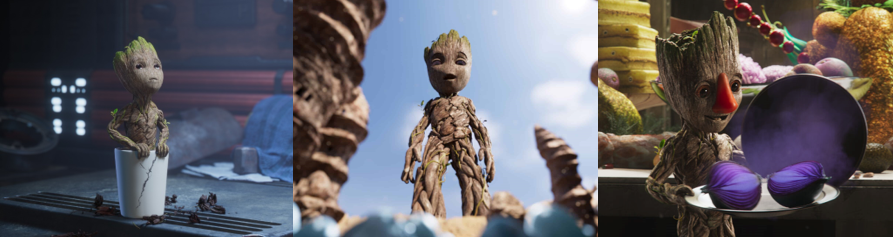
I Am Groot is a CGI animated series of shorts made for little kids. Each episode last about five minutes and features very little dialogue, consisting primarily of Baby Groot’s many different inflections of “I am Groot”. Therefore, they don’t take too much time to watch and it’s easier and fairer to just lump both seasons together into one review. Series one begins some time after Baby Groot first sprung to life in his little plant pot on the Eclector. He’s just a sapling but he still needs care and attention, which is provided to him by a couple of automated robots, who routinely water and tend to him. However, he’s growing so quickly that he cracks his pot, causing the robots to replace him with a sturdier bonsai plant. Naturally, Baby Groot isn’t impressed with this and attacks his replacement, causing both their pots to break from a fall. Luckily, Baby Groot survives and finds he’s got legs, allowing him to take his first steps and get into more mischief. He even makes it up to the bonsai plant by befriending it afterwards, and this caring side to Baby Groot is revisited a couple of times in the show. For example, Groot discovers a colony of ant-sized Grunds living under a rock on an alien world in “The Little Guy”. While Baby Groot initially enjoys toying with them as a God-like figure, he’s stunned when they showcase advanced technology and bombard him with laser fire! While protecting himself in the foetal position, the terrified Baby Groot accidentally farts out a leaf, much to the delight of the Grunds, who immediately devour the offering. Inspired, Baby Groot quickly forgets the attack and gathers up armfuls of leaves to feed the colony, only to accidentally step on them and back away nonchalantly (though the Grunds are actually fine). Similarly, in series two’s “Are You My Groot?”, Baby Groot adopts a strange alien bird, playing with it and feeding it his snacks. Groot’s fondness for the bird and enjoyment of being a surrogate parent are juxtaposed by his annoyance with the bird’s clingy nature and constant pooping. However, Baby Groot still sheds a tear when the bird finds its siblings and flies off with its bulbous, equally quirky mother.

Baby Groot both causes and finds mischief, though always in the spirit of good-natured fun.

In “Groot’s Pursuit”, Baby Groot’s awoken by a mysterious clanging and bravely investigates, hoping to get a good night’s sleep. Though his initial search turns up nothing, he fails to notice a mysterious liquid goop from a broken vial until he’s surprised by the Iwua (Devall), a shape-shifting alien who’s just as mischievous as Groot. Indeed, the Iwua impersonates Groot, leading to a dance-off that Groot thoroughly enjoys until the Iwua first criticises his technique and then reveals its true form, leading to Groot tricking the creature into an airlock and ejecting it into space. In “Groot Takes a Bath”, Baby Groot enjoys some relaxation time in a mud bath, only to find the mud causes his leaves to sprout wildly. Though initially horrified, Groot returns to the mud bath again and again as he grooms himself different hairstyles, outfits, and looks, each time saddened to find the leaves wilt within moments. Eventually, he uses up all the mud, leaving him saddened. When a local bird laughs at his misfortune, glad to see the cheeky little baby tree get his comeuppance after his fun kept the bird awake, Groot improvises and trims the bird’s feather to fashion himself a stylish scarf. Series one ends with Groot’s literal “Magnum Opus”, a meticulously crafted drawing of him and his friends and family, the Guardians of the Galaxy, as they appeared during his emotional sacrifice at the end of the first film. Baby Groot’s so determined to bring the piece to life that he scours the ship for items, including a clipping from Rocket Racoon’s (Cooper) tail and samples from the ship’s fuel cells. This creates a glittery explosion that not only finalises his titular masterpiece but also tears a hole in the Eclector, one Baby Groot adeptly begins sealing with duct tape when Rocket comes to investigate all the noise. Though alarmed that Groot has caused the ship to both flood and catch fire, Rocket’s outrage is quickly quashed when he sees the picture, which warms his heart even as he’s sucked into the hole and rescued by Baby Groot’s extendable arms.

At times, Baby Groot’s hijinks put both him and the entire universe in danger.

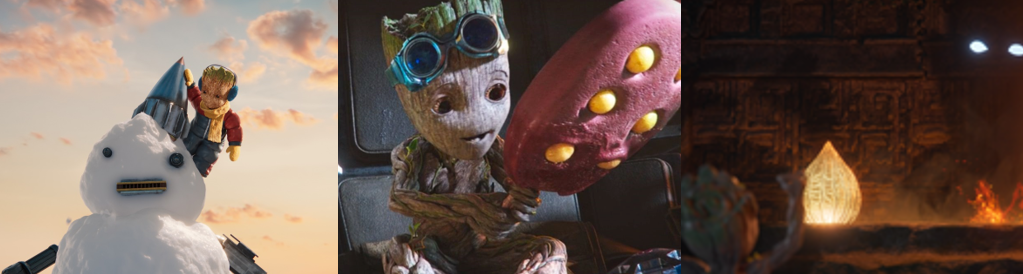
While searching for new batteries for his videogame controller, Baby Groot pulls himself from his pit of snacks and roots around in Rocket’s treasure trove of stolen items, eventually slapping a prosthetic nose to his face and gaining a sense of smell. Amazed, he explores these new sensations but quickly ditches the appendage when he returns to his filth with his batteries and is disgusted by the stench. Though he’s tempted to grab a brush and clean the place up, Baby Groot decides it’s better to just toss the nose away and get back to his game, content to sit in the mess. In “Groot’s Snow Day”, Baby Groot explores a snowy planet and builds a snowman. Deciding his frosty friend would look better with a few modifications, he ransacks the Milano and stuffs the snowman with cybernetic enhancements, unwittingly bringing it to life. The robotic snowman immediately attacks with its lasers and heads to the ship, intent on spreading further destruction, though Groot seemingly destroys it by launching a well-timed snowball at a compromised engine part lodged in its head. Groot then searches high and low for some credits to get himself a sweet treat from a passing ice cream ship, awestruck by its flashing lights and assortment of frozen goodies. After many pratfalls, Baby Groot finally gathers some coins and is left despondent when the ship moves on. Desperate, he commandeers a space capsule and gives chase, ultimately crashing through the ice cream ship and gifting him as many treats as he could want. Finally, the Watcher (Wright) observes and narrates Baby Groot’s exploration of an ancient tomb said to contain a sacred seed that will bring peace and prosperity to the universe. Despite the Watcher’s best efforts, Baby Groot continually puts himself in danger and gets distracted from his quest, preferring to desecrate the tomb and take a nap. By the time he finally spots the seed, Groot’s more interested in retrieving his ball, causing the seed to be consumed by lava and the temple to crumble. However, the Watcher consoles himself with the understanding that the prophecy was a metaphor and that Groot, emerging from the rubble with fresh leaves sprouting, was the “seed” that would rise from the temple.  

The Summary:
I had a good time with I Am Groot. Obviously, your expectations need to be quite low considering it’s primarily aimed at kids, but I enjoyed Baby Groot’s pratfalls and adventures. As ever, Vin Disel does a great job of making “I am Groot” convey so many different meanings. Baby Groot expresses curiosity, sadness, anger, and even affirms his own identity with these three words, showing caring, mischievous, lazy, and poignant aspects of his personality. The entire show is shot from Groot’s perspective (not literally, of course; I mean at his level), not unlike the classic Tom and Jerry cartoons (1940 to present). We never see any of the other Guardians of the Galaxy save for an obscured cameo of Drax the Destroyer in the shower and Rocket’s heart-warming appearance in “Magnum Opus”, though the crew are obviously around as someone’s flying the ship and visiting all these worlds. It might’ve been fun to hear some of the crew shouting or talking off-camera, reacting to Groot’s antics or just giving a bit more life to the ship, but the framing purposely keeps things at Baby Groot’s level to suggest that he gets up to all these adventures on the regular, largely without anyone noticing. As a sapling, Baby Groot is still understanding himself and the universe; he can stretch his limbs at will but is surprised when he sprouts leaves, for example. He learns as he goes, like any child would, and takes pleasure in simple things, like relaxing in a mud bath or eating ice cream. He still enjoys a dance and gets shirty when the Iwua offers him tips and we see the origin of what would become a teenage obsession with videogames as he sits in a fetid pit chomping on snacks and ignoring his personal hygiene.

Unbeknownst to his family, Baby Groot is getting into all kinds of mischief.

Baby Groot also shows a passion for creativity and construction; he cobbles together all sorts of random items to spruce up his picture and (literally, if unexpectedly) bring his snowman to life. These talents seem to be borrowed from Rocket, who’s forever scrounging away parts and putting together outrageous devices, and it shows that Groot is influenced by his adopted family. This also fosters a caring side to him; he’s driven to feed both the Grunds and the weird little bird that imprints on him and is genuinely upset when he thinks he’s crushed them and his adopted baby returns to its kin. A highly volatile and emotional little sapling, Baby Groot lives a life of extremes; he’s super excited to see the ice cream ship pass by, grows increasingly frustrated at failing to find any coins, and is so desperate to get a treat that he collides with the ship at full speed! If you listen to the all-seeing, all-knowing Watcher, you’d be fooled into thinking that Groot is some prophesised hero destined to usher in a golden age for the universe. However, he’s just a cheeky little tree-boy who enjoys playing his games, bouncing his ball, and doodling, even if his work accidentally endangers his family or defiles an ancient tomb. The Watcher is convinced that the seed is pivotal to the safety and security of the universe and comically aghast when Baby Groot fails to recognise this, and is ultimately forced to reinterpret the prophecy since, like Rocket, the Watcher cannot stay mad at the adorable little sapling. Ultimately, I Am Groot is worth checking out if you’re a fan of Groot and the Guardians of the Galaxy, but obviously will have more appeal to little kids, who will no doubt relate to and enjoy Baby Groot’s mischievous antics. It’s fun getting a sense of what these characters do when no one’s looking and how they interact with the world around them, and Baby Groot is a cute little bugger you can’t help but fawn over. The show’s not going to give the Minions anything to worry about any time soon, but it’s a fun enough distraction to have on in the background as a break from Marvel’s increasingly high stakes action and there’s no shame in that.

My Rating:

Rating: 3 out of 5.

I Am Groot

I am Groot? I am Groot, I am Groot? I am Groot, I am Groot, I am Groot? I am Groot? I am Groot? I am Groot? I am Groot, I am Groot? I am Groot, I am Groot, I am Groot? I am Groot? I am Groot?

Screen Time [Sci-Fanuary]: M.O.D.O.K.


January sees the celebration of two notable dates in science-fiction history, with January 2 christened “National Science Fiction Day” to coincide with the birth date of the world renowned sci-fi writer Isaac Asimov, and HAL 9000, the sophisticated artificial intelligence of Arthur C. Clarke’s seminal 2001: A Space Odyssey (1968), being created on 12 January. Accordingly, I am dedicating all of January to celebrating sci-fi in all its forms.


Air Date: 21 May 2021
Directors: Eric Towner and Alex Kamer
Network: Hulu / Disney+
Stars: Patton Oswalt, Aimee Garcia, Ben Schwartz, Melissa Fumero, Wendi McLendon-Covey, Jon Daly, and Beck Bennett

The Background:
Created by Stan Lee and Jack Kirby, George Tarleton, the “Mental Organism Designed Only for Killing”/MODOK first appeared in the pages of Tales of Suspense back in 1967. The deranged, cybernetic would-be conqueror has been a thorn in the side of numerous Avengers and a mainstay of Marvel videogames, though he’s had a tumultuous life on the big and small screen. While I best know the character from his appearances in the 1990’s Iron Man cartoon, most mainstream audiences probably best know him from his infamous appearance in Ant-Man and the Wasp: Quantumania (Reed, 2023). Before that debacle, MODOK received his own adult animated series on Hulu, the first in what was planned to be a bunch of adult animated series before his fellow “Offenders” were summarily cancelled. A stop-motion production in the style of the similarly-themed Robot Chicken (2005 to present), M.O.D.O.K. was well-received upon first airing. Though some found it incomparable to its peers, most reviews praised the vulgar tragicomedy for its workplace humour and entertaining performances. Unfortunately, neither the generally positive reactions or a Golden Trailer Award nomination were enough to produce a second season and M.O.D.O.K. was cancelled after only one season.

The Plot:
After failing to conquer the world, MODOK (Oswalt) loses control of Advanced Idea Mechanics (A.I.M.) when it goes bankrupt and schemes to regain his position while dealing with a failing marriage and a mid-life crisis.
The Review:
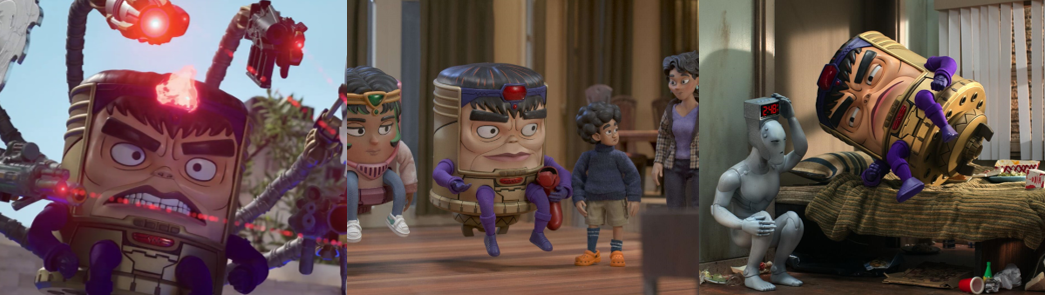
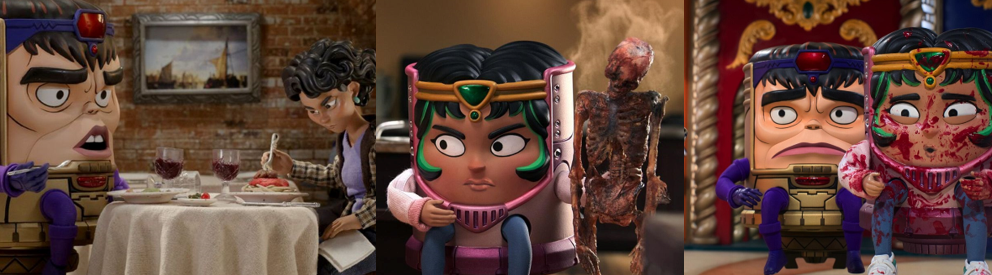
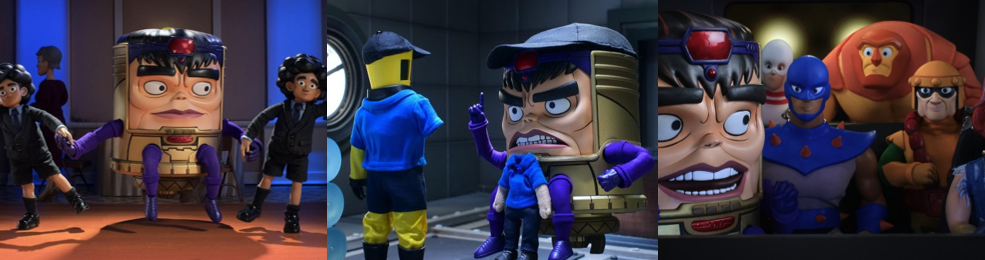
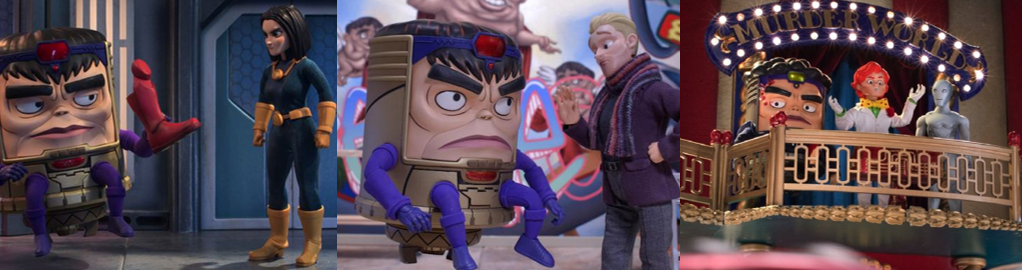
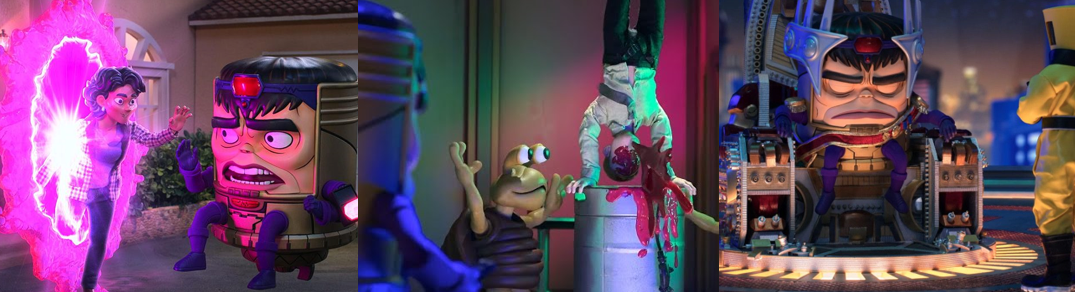
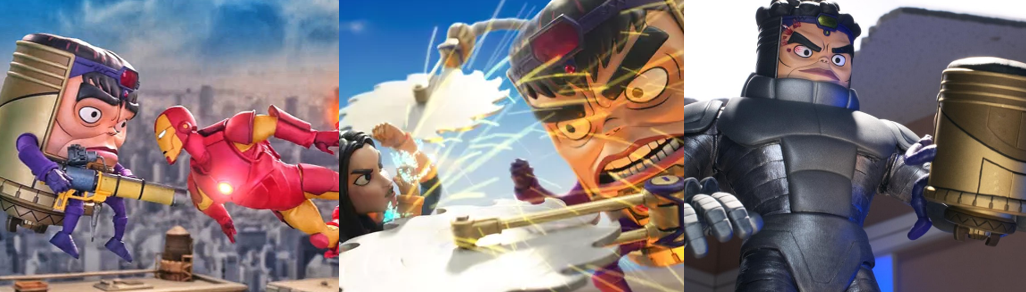
M.O.D.O.K. is an adult stop-motion animated series in the same visual style of Robot Chicken, a show I haven’t watched all that much but have enjoyed its zany take on pop culture. However, I used to watch The Adam and Joe Show (1996 to 1999) as a kid and that regularly included segments featuring stuffed toys and action figures, so it’s a style I’ve always enjoyed. M.O.D.O.K. skews more towards the action figure aesthetic; this is especially evident in scenes where MODOK and A.I.M. attack Avengers Tower and battle Anthony “Tony” Stark/Iron Man (Jon Hamm), who’s styled after the Toy Biz “Marvel Super Heroes” action figure. Considering how painstaking stop-motion animation is, I’m surprised by how long each episode is, with each clocking in at around twenty-five minutes; though it’s my understanding that the animation studio, Stoopid Buddy Stoodios, used elaborate puppets during filming. The result is a very surreal animation style that perfectly matches the bizarre nature of the show, which is much cruder and ruder than the average Marvel production. M.O.D.O.K. features blood, violence, a touch of body horror (both in MODOK’s unsightly appearance and in a Fly-like (Various, 1957; 1958 to 1989) genetic monstrosity), and some swears, thus firmly setting it as a more adult-orientated show. Additionally, and most prominently, M.O.D.O.K. tackles adult themes such as divorce, mid-life crises, and navigating an increasing unstable workplace undergoing corporate mandated overhauls to be more politically correct and accommodating. As enjoyable as it is to see characters have half their faces melted off, blood and guts burst on the screen, and MODOK’s long-suffering (but endlessly enthusiastic) henchman Garfield “Gary” Garoldson (Sam Richardson) get his arm blown off just for standing in the wrong place at the wrong time, it’s the domestic drama where M.O.D.O.K. really shines. There’s an unexpected pathos laced throughout the show as MODOK desperately attempts to win back his frustrated wife, Jodie Ramirez-Tarleton (Garcia), and the approval of his kids, aspiring supervillain Mental Entity Living to Induce Seriously Sinister Anarchy/Melissa (Fumero) and endlessly jovial Lanky Organism Undeniably Irresistible and Syphilitic/Lou (Schwartz).

The once-fearsome MODOK is reduced to squalor by his failing company and family life.

MODOK’s family is acutely aware of his evil deeds; it’s hard for them not to be since the only thing he talks about at home is himself, how superior he is, and spinning disastrous failures into overblown wins just because he stole Iron Man’s boot. MODOK’s obsession with destroying the Avengers and conquering the world stems from his childhood, where he was relentlessly bullied for his big head and supervillain-level genius. However, his loving mother (Unknown) encouraged his ambition and he continuously experimented on himself with science and cybernetics in a bid to take over he world and “improve” it with his own twisted version of a utopia. Unfortunately, MODOK’s preoccupation with this goal has caused him to neglect his family: he barely acknowledges Jodie’s success as a self-help guru or her upcoming book launch, Melissa resents him for embarrassing her and not acknowledging her opinions, and Lou, though seemingly cheerful, is hiding his own insecurities behind a happy-go-lucky façade and an amateur interest in stage magic. When MODOK’s reckless spending pushes A.I.M. to the brink of bankruptcy, MODOK’s forced to sell to young, socially aware Austin Van der Sleet (Bennett), owner of tech company GRUMBL, who, despite his assurances, makes so many changes to A.I.M.’s corporate structure that MODOK is eventually reduced to a mere mailman. His frustrations see his marriage crumble; realising they no longer have anything in common, Jodie demands a divorce and kicks MODOK out, forcing him to live in squalor with the family’s underappreciated robot slave, the Super-Adaptoid (Daly). When MODOK’s begging and pleading for a second chance fail, he and Gary break into the Strategic Homeland Intervention, Enforcement and Logistics Division’s (S.H.I.E.L.D.) headquarters and steal a time machine, desperate to undo a past mistake and take Jodie to a Third Eye Blind concert to rekindle their love. However, the attempts fails when she’s angered at him using the jaunt to also try and assassinate Austin and he inadvertently creates the show’s overarching villain when his ineptitude angers his past self and displaces him from time after he shatters the time machine’s Chrono Crystal.

MODOK’s long-suffering wife and daughter come to resent his selfish attitude.

Jodie’s frustration with MODOK is well founded; he’s an egotistical, selfish, obnoxious braggart who causes chaos wherever he goes. At work, MODOK is largely idolised by A.I.M.’s mostly nameless and faceless beekeepers; MODOK shows he cares for them when he begs Austin to keep them employed, but also treats them as disposable pawns when enacting his plans. Jodie feels a degree of the same disregard, constantly feeling second fiddle to MODOK’s greater aspirations, and forces a separation so she can get her life in order. When she starts dating Simon Williams/Wonder Man (Nathan Fillion), Jodie sees her stock and fame skyrocket due to the sordid publicity surrounding Wonder Man and she shamelessly embraces it. She manipulates both Wonder Man and MODOK to promote her book, coldly using the limelight-loving superhero for her own ends, and even injects Lou with a serum to give him a peanut allergy to give him a personality flaw, showing why she’d fall for a supervillain in the first place. It’s clear Jodie and MODOK still have feelings for each other (when trapped in the past, they grow old and rekindle their feelings, only to be erased from time) but they struggle to reconcile even for the sake of their kids. Melissa, though a female copy of MODOK, is actually very popular and has aspirations of being a supervillain but is continuously let down by him ignoring her input. She expertly teaches him how to psychologically manipulate others during a work conference, only for him to default to a grandiose plan for hero worship by opening a portal to the Broodworld. She works hard to give him a makeover, but he ruins his new look by brawling with Wonder Man. It’s doubly frustrating for Melissa considering she’s the most pragmatic of the family. Indeed, when faced with discovering which of them are murderous robot doubles created by Arcade (Alan Tudyk), Melissa doesn’t hesitate to slaughter their doppelgängers either on a whim or by closely watching their body language and behaviour.    

MODOK’s struggles to regain A.I.M and be taken seriously are compounded by his family life.

Lou is the black sheep of the family. Whereas MODOK and Melissa and even Jodie can be cruel, cold-hearted, and manipulative in their own ways, Lou is kind and jovial, without a care in the world. Not confined to a floating machine like his sister and father, Lou’s free to express his boundless energy, seemingly finding the good in every situation, no matter how dire. The only concern he seems to have is about his upcoming Bar-Mitzvah, and even then he just wants to perform magic for his audience; a desire so great that it drives him to chase after his props when MODOK callously transports them to Asgard. There, he earns the awe and loyalty of the goblin-like Kodolds, setting him against his father but ultimately aiding him in escaping death when he learns the MODOK is just trying to protect him from possible humiliation. While his family love him, Lou’s mostly perplexing to them; he finds a kindred spirit in outcast, sullen goth Carmilla Rappaccini (Zara Mizrahi) and gains a brother when he befriends his robot duplicate, but an overriding concern of MODOK and Jodie’s is that Lou is hiding his pain behind his magic. MODOK’s attempts to be a good father, win back Jodie, and regain control of A.I.M. see him turning to lower-tier supervillains for assistance when big shots like Samuel Sterns/The Leader (Bill Hader) and Doctor Nathanial Essex/Mister Sinister (Kevin Michael Richardson) turn him away. Begrudgingly relying on the Super-Adaptoid for company and transport, MODOK forms a crew consisting of David Angar/Angar the Screamer (Bill Hader), Antonio Rodriguez/Armadillo (Dustin Ybarra), Bruno Horgan/The Melter (Eddie Pepitone), Marion Pouncy/Poundcakes (Whoopi Goldberg), and Alvin Healy/Tenpin (Chris Parnell) to steal Captain Steve Rogers/Captain America’s shield and curry favour. Naturally, this goes hideously awry when the D-listers get distracted by their own personal dramas and incompetence, and when they abandon MODOK after learning he was manipulating them. However, MODOK comes to sympathise with the downtrodden villains and they agree to storm Avengers Tower, only to fall asleep on the trip and the Melter to die from excitement.

MODOK’s abrasive nature creates his own villains and even angers a past version of himself.

MODOK’s abrasive personality and disregard for his underlings means he has many enemies beyond the likes of Iron Man, even within his own company. Most notably, he’s constantly challenged at work by Monica Rappaccini (McLendon-Covey), an A.I.M. scientist whose genius matches, or many even surpasses, that of MODOK. Initially excited to be hired as another disposable beekeeper since she idolised MODOK, Monica slowly came to resent him when he not only undermined her inventions but also took credit for her killing an unnamed Avenger. Monica’s frustrations with MODOK’s leadership lead to her betraying him and siding with Austin, fooling the cybernetic villain with her jelly-like doubles and taking his place as A.I.M.’s “Scientist Supreme”. Despite her lofty position, Monica becomes paranoid when MODOK seemingly embraces his new position as a mailman, but ends up partnering with him when he sells a controlling share of A.I.M. to Iron Man and sets up A-I-M-2 with Gary once it’s revealed that Austin’s masters, a sentient, alien corporation known as the Hexus, plans to brainwash the world with their new GROME device. The exact opposite of MODOK, Austin is an overly friendly and accommodating boss who insists his employees take regular breaks, vacations, and relaxation time. Claiming to idolise MODOK, Austin repeatedly tolerates his abusive behaviour until he’s caught stealing from the company, but eventually turns on his alien masters when they order him to dispose of his beloved dog, though being on the same side doesn’t stop him from being run down by Gary. The show’s ultimate villain is MODOK himself, literally and figuratively. A younger version of him becomes displaced from time and, angered at MODOK’s failures, conspires with the likes of Arcade to kill his family and set MODOK towards world domination. Calling himself “The Anomaly”, this younger MODOK shows his older self that his plans are destined to fail unless his family dies. While MODOK cannot bring himself to sacrifice the ones he loves and is determined to have it all, the Anomaly is not so morally inclined and murders his wife and children, creating a dystopian future where MODOK rules all. However, when he exhausts the energy of the Chrono Crystal and the life of his younger counterpart, the sullen dictator vows to find a way to bring his family back and retain his supreme position, ending the show on an unresolved cliff-hanger.

The Summary:
Though not set in the Marvel Cinematic Universe (MCU), M.O.D.O.K. is clearly influenced by it in many ways. Avengers Tower, for example is basically a carbon copy of the MCU’s version and Iron Man is a snarky asshole like in the films. Other characters, like MODOK’s crew and the assorted villain cameos, are styled more after their comic book counterparts. Even S.H.I.E.L.D.’s uniform is modelled after the comics and A.I.M.’s employees are all rendered anonymous by their comic accurate beekeeper outfits. MODOK, though, is ironically more akin to his later MCU counterpart than the source material. Rather than being a frothing, maniacal supervillain, he’s an insecure, angry, petty cyborg lashing out at the world around him. MODOK is seen as a lesser-tier villain, even more so than in the 1990’s Iron Man cartoon where he was a glorified henchman; he’s not allowed in the supervillain club and ends up slumming it with D-list villains. When MODOK approaches Iron Man with an offer to buy A.I.M., the armoured Avenger initially believes he’s there for a fight and downplays MODOK’s threat, despite the rotund villain sporting various dangerous weaponry such as buzzsaws, claw arms, and his iconic brain blasts. Thus, just as his kids seek his approval and the likes of Gary and the Super-Adaptoid long to be recognised for their significance, so too does MODOK strive to be acknowledged as a (or the) superior being. His plots and ambitions are lofty and often exceed his grasp, causing him to steal technology from others or claim ownership of victories that weren’t his own. Constantly, desperately seeking approval and acceptance, he initially plans to save a party of investors from the Brood then quickly takes credit for the party-loving Ciegrimites who arrive instead. He manipulates an army of Asgardians into attacking the Kobolds since his systems have been damaged and ends up bleeding out when his younger counterpart fatally wounds him, only to be begrudgingly saved by Melissa.

Episodes are full of lewd comedy, bloody violence, and a surprising pathos.

Many episodes have great moments in them, either spontaneous scenes of violence, workplace gags where MODOK is taken to human resources, or emotionally charged explorations of MODOK’s fragmented family life. “The M.O.D.O.K. That Time Forgot!” was a pivotal episode not just for exploring MODOK and Jodie’s past but also for introducing the younger MODOK, who isn’t held back by the domestic drama that befuddles his elder’s life. The plot twist of the Ciegrimites being so party hard that they literally dance people to death was fun, but I really enjoyed watching Melissa teach her dad how to emotionally manipulate people into seeking validation from him, and Monica’s desperate attempts to get out of using her corporate-mandated vacation time in “If Bureaucracy Be… Thy Death!”, which also showed how low MODOK will stoop to be seen as a great villain. “This Man… This Makeover!” showed a darker side to Jodie, who becomes consumed by the fame being associated with Wonder Man brings her and her book, to the point where she disregards Wonder Man’s very real feelings for her and manipulates MODOK into embracing his base instincts just to make headlines. “O, Were Blood Thicker Than Robot Juice!” promises a reconciliation for the family, only to reveal that Jodie, Melissa, and Lou have been replaced by Arcade’s robots. Arcade then forces them to fight to the death against multiple robotic duplicates, a fight easily won by the real family not because they know each other so well, but because Melissa eagerly resorts to violence. I loved the satirical take on corporate greed that comes to the forefront in “What Menace Doth the Mailman Deliver!”, where the Hexus’ plot to control and conquer the world is seen as a heinous by-product of their dislike of Austin’s puppy. This episode also commentated on society’s dependence and love for smart technology like Alexa by having the GROME brutally murder people when activated. The show ends with a surprisingly emotional gut punch in the aptly named “Days of Future M.O.D.O.K.s”, where MODOK’s forced to see that the only way he’ll conquer the world is if his family dies before his eyes. He’s complicit in this and is brought no joy at being the undisputed master and ruler of the world, but is sure to torture the Anomaly to death to both see glimpses of his family and make him pay for making him endure such a loss.

A bizarre and entertaining show bolstered by its toy-like animation and characters.

Thus, MODOK’s characterisation may irk fans of the character. He’s a very co-dependent, egotistical narcissist, one who takes his family for granted and demands adulation without really earning it. The juxtaposition of this gruesome supervillain cackling away with his minions and bludgeoning his enemies retreating to suburban mundanity is amusing. MODOK’s efforts to destroy his enemies and retake his company are seen as equal to his attempts to win the favour of his kids and deal with his messy divorce, casting him as a desperate and clingy villain whose knee-jerk reaction is to blast his way out of every situation. Eventually, he embraces his wife’s teachings and tries to turn his life around, then braves Arcade’s death trap to save them when they’re replaced by robot doubles, ultimately refusing to kill them but, paradoxically, also not trying to save them when they’re targeted by the Anomaly. I loved the biting wit and satire at work in the show, and the explosive violence. Seeing the dolls get torn to shreds, guts and gore splattering everywhere, was really fun and the occasional swears really hammered home that this was a different sort of Marvel project. The animation was commendable, with the dolls and puppets showcasing a lot of personality, none more so than MODOK, expertly brought to life by Patton Oswalt as an insecure, unpredictable villain burdened by time and family life and desperate to make his mark on history. It’s a shame the show was cancelled without a proper resolution as the door was left wide open for more episodes. There were many plot threads left dangling that promised greater things in another season and plenty of places for the characters to go, especially as M.O.D.O.K. wasn’t afraid to explore surreal, colourful, and obscure aspects of the Marvel Universe. I really enjoyed the marriage of suburban drama with violent, over-the-top comic book action; seeing MODOK struggle to adapt to corporate policy and appease his children was as enjoyable as his fight for world domination. He might not be a completely faithful rendition of the character, but he’s endlessly more interesting here due to how complex and layered he is, with the show emphasising that he can be a serious threat if given sufficient motivation.

My Rating:

Rating: 4 out of 5.

Great Stuff

Did you enjoy M.O.D.O.K.? What did you think to his characterisation as a struggling family man and villain? Did you enjoy the animation style and the various cameos spliced throughout the show? What did you think to Austin, Hexus, and the satirical commentary on corporate synergy? Which of MODOK’s family was your most or least favourite, and did you enjoy the family drama? Would you have liked to see another series, or at least a resolution to the ending? What are some of your favourite MODOK stories? Share your thoughts on M.O.D.O.K. in the comments and then go check out my other sci-fi content on the site!

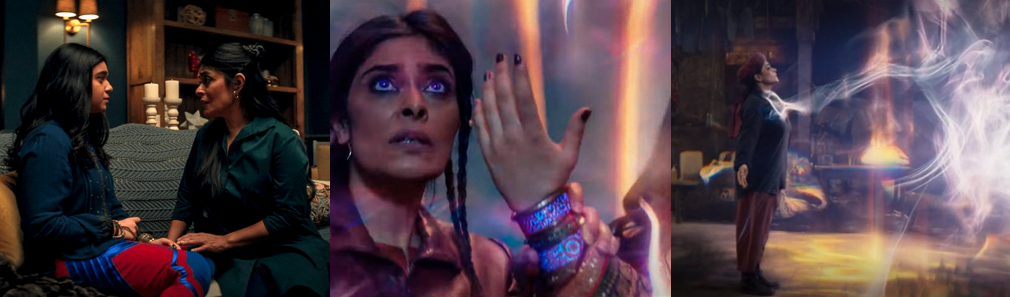
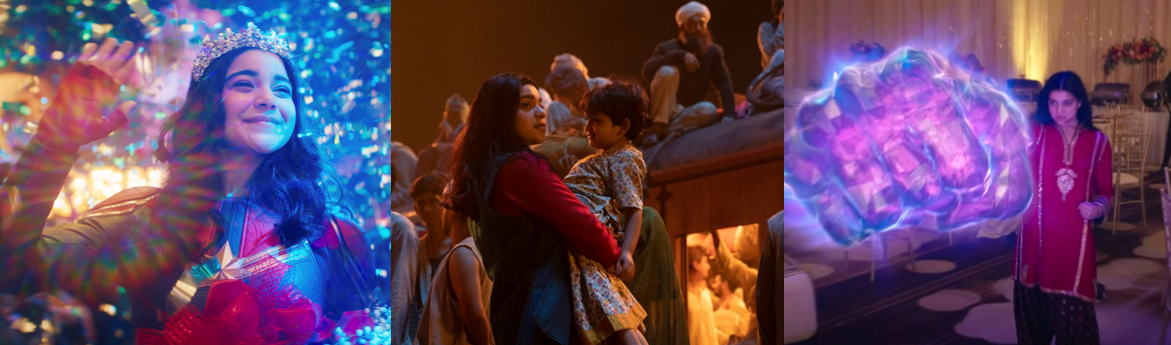
Screen Time: Ms. Marvel

Air Date: 8 June 2022 to 13 July 2022
Network: Disney+
Stars: Iman Vellani, Zenobia Shroff, Matt Lintz, Nimra Bucha, Aramis Knight, and Mohan Kapur

The Background:
In 1939, Fawcett Comics introduced readers to the magically-empowered boy-turned-superman Billy Batson/Captain Marvel; however, a 1953 lawsuit forced them to cease publication of their Captain Marvel comics and allowed Marvel Comics to trademark the name for themselves. While Stan Lee and Gene Colan’s Mar-Vell ended up being more famous for his death from cancer, his mantle was continued by a number of successors, most notably Carol Danvers. However, before she took name Captain Marvel, Carol went by Ms. Marvel, an identity later adopted by young Kamala Khan, an Inhuman Muslim girl who idolised Carol. Created by Sana Amanat, Stephen Wacker, G. Willow Wilson, Adrian Alphona, and Jamie McKelvie, Kamala’s adopting the Ms. Marvel mantle and subsequent solo series marked the first time a Muslim character headlined a Marvel publication and she drew significant praise from the Muslim community and for representing a marginalised youth demographic. After Captain Marvel (Boden and Fleck, 2019) proved a critical and commercial hit, star Brie Larson expressed interest in including Kamala in the MCU, something Marvel Studios were keen to do considering the character’s diversity and mainstream popularity. Development of a six-episode series for streaming service Disney+ began in 2019, with the writers keen to stay true to the source material (despite some alterations to Kamala’s powers) and tell both a coming-of-age story for the fledgling heroine and explore aspects of the Muslim faith and traditions through Kamala’s whimsical perspective. Newcomer Iman Vellani won the title role and her outfits and costumes, which are infused with cultural trappings, were designed by Arjun Bhasin; the showrunners also took great pains to ensure cultural authenticity throughout the entire process. Despite complications from the COVID-19 pandemic, Ms. Marvel released in weekly instalments on Disney+ and the first three episodes received a cinematic release in Pakistan. Although suffering from short-sighted hatemongering, the show was met with overwhelmingly positive feedback; reviews praised the blend of quirky humour with its authentic representation of Pakistani-American culture, Vellani’s performance, and the depiction of her new powers, and Ms. Marvel was heralded as a turning point for the MCU and mainstream representation of the Muslim faith. Although there has been no mention of a second season as of this writing, Kamala and her family featured prominently in the The Marvels (DaCosta, 2023), ensuring that the character has a future in the MCU in one form or another.

The Plot:
Sixteen-year-old Kamala Khan (Vellani) idolises Captain Carol Danvers/Captain Marvel (Brie Larson) but her strict Muslim mother, Muneeba Khan (Zenobia Shroff), disapproves of her constant daydreaming. Already struggling to fit in at school and juggling the minefield of a teenage social life, Kamala’s world is changed forever when she acquires cosmic powers from a family heirloom and discovers a mystical background to her family lineage.

The Review:
So, first of all I think it’s only fair to say that I know practically nothing about Ms. Marvel; if she’s appeared in some of the crossover events I’vr read, it was usually in a minor, supporting role and just about all I know about her is that she’s a Muslim girl with stretchy powers and has become quite popular in recent years. I say this only to establish that I went into Ms. Marvel without any kind of expectations, thus I didn’t really care that they altered her powers and, as I understand it, her origin into an amalgamation of her comic book counterpart, perennial sidekick Rick Jones and the Nega-Bands, and even a splash of the various Green Lanterns from DC Comics. I think it was probably a good idea; it ties into the mystical slant to the MCU’s cosmic side, separates her from Doctor Reed Richards/Mister Fantastic, and makes her powers a little more visually diverse. Kamala is probably the most relatable and grounded MCU protagonist yet; a young high schooler who’s just trying to find her way in the world, she’s an avid fan of the Avengers, specifically Captain Marvel, and makes fun animated videos about them and the battle against Thanos (Josh Brolin). Thanks to Scott Lang/Ant-Man’s (Paul Rudd) podcast interviews, she and the rest of the world have a pretty good idea of what happened in this battle but, despite the effort she puts into her videos, she only has two subscribers, barely any views, and a lot of her comments are just spam…which I can totally relate to! Kamala represents the MCU’s core audience in many ways; youngsters who have grown up with these films and characters and want to emulate them, decorate their rooms in superhero paraphernalia, and eagerly attend conventions so they can dress up as their heroes and be around likeminded, hardcore fans. Kamala is so excited about AvengerCon that she and best friend Bruno Carrelli (Lintz) cobble together an impressive costume for the event and she’s amazed in the finale when her father, Yusuf (Nimra Bucha Kapur), tells her that her name can be translated to mean “marvel”, which only makes her idolisation of Danvers even stronger.

Kamala idolises Captain Marvel and is absolutely adorable but has a strained relationship with her mother.

If there’s a word to describe Kamala, it’s “adorable”! She’s a little shy and introverted and other kids and even teachers are dismissive and rude to her, but she’s not exactly harassed like in a lot of high schools. Her powers do give her a newfound confidence that sees her become more assertive and engaging but she remains a bit clumsy and accident prone and is constantly reprimanded by her mother, Muneeba, and her try-hard principal (Jordan Firstman) about her constant doodling and daydreaming. Like all teens, she’s at a crossroads in life and is always being told that she needs to think about her future; her belief that girls should be able to make their own choices, to go out into the world and discover themselves, is met with stern disapproval by her mother since she firmly believes that Muslim women need to get married, put down roots, and start a family rather than drift away into fantasy, something Kamala can’t help but do as she has such an overactive imagination. Her relationship with Muneeba throughout is thus strained throughout; while she accepts Bruno and her older brother, Aamir (Saagar Shaikh) can seemingly do no wrong, Muneeba has high expectations of Kamala and isn’t impressed that she wants to “go to a party…at night” while dressed in a tight costume. To Yusuf’s chagrin, Muneeba initially openly admits that she doesn’t trust Kamala and she is constantly frustrated by her stubbornness. Kamala does truly love her parents, and wants to make them proud, but she also wants to pursue her dreams; this results in her causing them pain and shame when she lashes out at Muneeba’s insistence that Yusuf accompany her to AvengerCon and when she’s forced to disrupt Aamir’s wedding to safeguard her family and friends later in the series.

Muneeba’s strict nature stems from her relationship with Sana but she comes to accept and encourage Kamala.

Muneeba is quite the contradiction a lot of the time; she’ll defend Kamala and be warm and loving towards her one minute, and then chip away at her self confidence and desires the next. Because of this, Kamala has a much closer relationship with her elderly grandmother, Sana (Samina Ahmad), who is a dreamer just like her. Aamir and Kamala were raised on stories of how young Sana (Zion Usman) was forced from her home during a period of social unrest known as “The Partition”, which saw India divided up following years of British oppression. Separated from her mother, Aisha (Mehwish Hayat), and her father, Hasan (Fawad Khan), Sana was led back to her father by a mysterious trail of stars, but Muneeba was driven to leave her homeland after Sana’s tall tales brought her nothing but persecution and shame. Muneeba hasn’t had the easiest life, to be fair; she shares with Kamala how difficult it was after the Partition and how she found solace in the United States through the local mosque, their community, and, most importantly, her family. Indeed, there’s no question that she doesn’t love and care for Kamala; both her and Yusuf just want the young girl to be safe and to not be ogled over and Muneeba is clearly distraught when Kamala disappears in Karachi while investigation Sana’s past. Having long denied that magic that is a part of their heritage, the show eventually brings Muneeba closer to her daughter and her mother; when Kamala’s powers are revealed to her, she accepts her and even provides her with an upgraded costume, with Yusuf christening her “Ms. Marvel” in the finale and the two encouraging her to use her powers for good while still whittling over her wellbeing because parents gotta parent.

After initially struggling with her powers, Kamala masters them as she embraces her past and true self.

Kamala’s powers are activated by a mysterious bangle sent to her by Sana; this bangle is one of at least two and was discovered back in the 1940s on the dead body of an unidentified blue humanoid by a group of interdimensional travellers known as the Clandestine. When Kamala wears it, she’s bathed in a strange cosmic energy and beset by visions of her grandmother’s escape from India, which eventually lead her to the Clandestines and discovering that she shares their bloodline as a Djinn, a mythological race of people from the Noor dimension who have been interpreted as both angels and demons in folklore. Alongside Bruno, Kamala tries to get to grips with her powers, which don’t come with super strength, speed, or dexterity but do allow her to form hard light constructs that, after many pratfalls, she’s able to run and jump on, form shields with, cover herself in a protect crystalline armour of sorts, and occasionally “embiggen” herself to give her stretchy limbs like her comic book counterpart. Visually, these powers manifest quite well but the CGI is a bit wonky and cartoony at times; it could be argued that this ties into her artistic side but that’s a bit of a stretch (no pun intended). Unsurprisingly, considering the young cast, Kamala’s unstable powers flare up as a metaphor for puberty at one point; she flees to the toilets when her nose glows (like with a spot) and her other best friend, Nakia Bahadir (Yasmeen Fletcher), offers her a period pad when she misreads the situation. Despite having no formal training, Kamala generally holds her own in a tight spot; when attacked by Kareem/Red Dagger (Aramis Knight), she’s at a disadvantage due to his superior acrobatic and fighting skill but still defends herself, at least on instinct. When the Djinn try to force her to co-operate with their plot and gate-crash Aamir’s wedding, Kamala fends them off mostly through instinct and panic and is only able to focus her powers when Bruno is injured in the fracas. Indeed, Kamala’s powers quickly exacerbate her struggles to find her place in the world; often misunderstood at home and an outsider at both school and the mosque, she doesn’t always feel like she belongs and this means her powers are often dangerous to those around her, which only makes her question herself further. It’s only after literally reliving Sana’s past and reconciling with her mother, and accepting her newfound heritage, that Kamala is able to master her powers for the finale and win the support and appreciation of her community.

Damage Control, particularly Deever, are now fully framed as a prejudiced and antagonistic force.

However, because of her public demonstrations of power, Kamala attracts some undue attention. She’s immediately identified as a potential threat by the Department of Damage Control (DODC), which is now firmly an antagonistic government agency in the MCU that uses Stark Tech to track down and isolate or imprison potentially dangerous superpowered people. Here, they’re primarily represented by agents P. Cleary (Arian Moayed) and Sadie Deever (Alysia Reiner); however, it’s Deever who takes the most explicitly antagonistic role as she immediately targets the local Muslim community, disrespecting their culture and traditions at every turn, and then uses armed forces to barricade and openly attack Kamala and her friends at school. When Cleary realises the bad press this will bring them thanks to Kamala having her former friend turned avid supporter Zoe Zimmer (Laurel Marsden) livestream the incident, he orders Deever to withdraw but she refuses to listen and even advocates for lethal force simply because the confused and unstable Kamran (Rish Shah) refuses to get down on the ground when ordered. There’s definitely a sense that Deever fully believes she’s doing the right thing and protecting lives from dangerous individuals but she also makes many subtle prejudice comments that edge her closer to the black and out of the grey. Damage Control have no qualms about subduing their targets, interrogating and threatening vulnerable high schoolers, and locking prisoners in supermax prisons, which is literally the opposite of what the organisation was founded for and their trigger-happy agents are clearly positioned as an allegory for the racial prejudice and gung-ho nature of America’s police department throughout history, but particularly in recent years.

Najma’s obsession has driven her to violence and leads her to sacrifice herself to atone for her actions.

Kamala also attracts the attention of the Clandestines, Djinn who were trapped on our world decades ago and have been trying to return to the Noor dimension ever since. Their leader, Najma (Bucha), reveals to Kamala that they’ve existed on Earth for hundreds of years, maintaining their youth and vigour thanks to the Noor, an extradimensional energy from their dimension and which is channelled by the bangle. Initially, Najma adopts a warm and friendly demeanour as she asks for Kamala’s help in returning them home and Kamala believes helping them would make up for the mistakes she’s made since receiving her powers, but Najma quickly becomes far more sinister as she leads the Clandestine in forcibly acquiring the bangle. Kamala is stunned by this, even after Bruno’s initial research suggests that helping the Djinn could result in an explosive catastrophe and is even more shocked when an impromptu trip to the 1940s reveals just how malicious Najma can be. When Aisha fell in love with Hasan and chose a life amongst humanity, she hid the bangle from her fellow Djinn to keep them from destroying the world by breaching the Veil of Noor and thus consuming the Earth with the Noor dimension’s destructive energy. For her defiance, Aisha was fatally stabbed by Najma and the Clandestines have been searching for the bangle ever since; when they recognise its power in Kamala, Najma sends her son, Kamran, to befriend her so they can acquire it, but they’re so obsessed with returning home that they quickly turn to violence to achieve their goals. When Kamala returns from the past, she unwittingly breaches the Veil, resulting in a rift between dimensions that vaporises on contact and grows increasingly destructive. Although Kamala isn’t able to talk Aisha out of approaching the rift, she is able to convince her to close it; her sacrifice saves the world and sees Kamran endowed with powers comparable to Kamala’s for the finale, which sees him struggling with both them and his emotions.

The Summary:  
Honestly, I have very little knowledge of Muslim religion or the history of India and Pakistan; it’s not something that’s ever really come up in my life and, while I’m aware that it’s a very rich and spiritual faith, my exposure to it is understandably limited since that’s not my culture. However, it’s naturally a central aspect of Ms Marvel and is presented in a very engaging and digestible way. It helps that Kamala is struggling to find her place in the world; she’s just as uncomfortable and awkward at school as she is at mosque (where women are literally separated from the men by a partition), around her “aunties”, and when being dressed up for Aamir’s wedding. Born and raised in New Jersey, she’s very much a modern American girl; she likes superheroes and YouTube and isn’t exactly an expert in her culture and heritage like her elders. Consequently, it makes sense for people to relate some of the tradition and folklore of her people to her, so it never comes across as blatant exposition. When in Karachi, Kamala is awestruck by the colours, the bustling crowds, and how different it is from the graffitied streets of her neighbourhood, where her culture is primarily kept alive in homes, the mosque, or annual Eid Al-Adha celebrations. A lot of the Muslim faith and culture is reflected through Nakia’s small side story; she chooses to wear a hijab as part of her identity but also actively advocates for more equality for her gender by running for the Mosque Board, a pursuit she accomplishes with Kamala’s encouragement. One thing I particularly liked was that, despite how strict Muneeba is, she fully accepts Bruno; she regularly texts him about Kamala’s life, much to her embarrassment and, since he doesn’t have a family, he’s kind of been adopted by Kamala’s, to the point where he’s invited to join them for Eid and helps sort out their tech issues.

Kamala certainly isn’t short on allies and potential boyfriends as she uncovers the truth about her heritage.

This culture is also represented by Sheikh Abdullah (Laith Nakli), a relatively down to earth religious figurehead who cares for everyone in their community despite holding on to the tradition of separating the genders to preserve their modesty. Still, he unknowingly offers Kamala some useful advice when she struggles with how to use her powers and greets the constantly disrespectful Deever with ridicule when she shows up at his mosque looking for Kamran, stalling her and allowing Kamala, Bruno, and Kamran to slip out garbed in the sheikh’s flimsy disguises, and also imploring Kamran not to hurt others just because they hurt him. The partnership between Bruno and Kamran is one of desperation; Bruno clearly has a crush on his long-time friend Kamala and is slighted when she takes an instant like to the fit and mysterious new kid, Kamran, who drives a fancy car and is into the same music and movies as she. It doesn’t help that Kamran constantly calls him “Brian”, which is a genuine mistake on his part, but Bruno remains loyal to Kamala even though he feels hurt. Ultimately, this quasi-love triangle resolves itself since Bruno eventually accepts an unprecedented opportunity to put his near-genius technological skill to good use at to the California Institute of Technology (Caltech) and Kamran is forced to flee the country after his very public display of power in the finale. While in Karachi, Kamala also connects with Kareem, an adept vigilante who is the latest in a long line of scarfed vigilantes dedicated to defending the world from threats like the Clandestines. A mysterious organisation operating out of an elaborate temple hidden behind a restaurant, the Red Daggers are far better equipped and adept than Kamala and help her to further home her powers through training as well as filling in some gaps about the Djinn, and opening her eyes to their true threat. As adorkable as Kamala and Bruno’s friendship is, her banter with Kareem is just as entertaining and the two have real chemistry; in fact, Kamala has great chemistry with all her supporting cast, winning over Zoe with her heroic nature and even quickly patching up a falling out with Nakia after failing to tell her about her powers.

Kamala’s coming-of-age story is wonderfully told and allows her personality to shine through her cosmic powers.

At its heart, Ms. Marvel is a coming-of-age story. Kamala is an wide-eyed, enthusiastic dreamer who isn’t quite ready to take her first steps into adulthood but is on the cusp of facing some big changes in her life as she inevitably gets older. When low or bored, Kamala daydreams Captain Marvel and the Avengers as construction paper cartoons, which distracts her from reality; these animation techniques are also frequently employed to bring her imagination, elaborate plans, and even her text messages to life, which really gives the show a distinct visual style. When she gets her powers, Kamala’s first instinct is to help people and emulate her heroes, something she struggles with due to her inexperience and her youth and the damage she causes impacts her self-confidence almost as much as Muneeba constantly trying to keep her head out of the clouds. This, as much as the budget, is why her constructs are rarely more elaborate than shields and platforms but, when Muneeba accepts her and helps complete her superhero outfit, she’s able to do so much more with her powers, from “embiggening” her entire body to containing Kareem’s raging powers with a cocoon of her own. Kareem reacts to his powers with fear and panic and, having lost his mother and finding himself hounded by Damage Control, lashes out despite Kamala and her friends trying to protect him. His anger and instability make him extremely dangerous and everything Kamala feared she was after just a few mistakes but also provide Ms. Marvel with the perfect opportunity to put her newfound confidence to the test and defend Kareem from himself and others. This earns her the respect and protection of her grateful community, who shield her and allow her to escape just as she does for Kareem, whom she talks down and arranges safe passage to Karachi so he can come to terms with his powers and potentially use them for good, as she has learned to. The result of this is that the once unsure and awkward girl who stood unconvinced in her cosplay outfit now stands tall and proud in a comic-accurate outfit and ready to truly live up to the standards of her heroes by defending her community.

Ultimately, Kamala embraces her powers and identity and is set for a much bigger adventure!

I really enjoyed Ms. Marvel. I was honestly worried that I wouldn’t really connect with it since I’m not exactly the target audiences but it’s a really fun and charming coming-of-age story with an absolutely adorable main character. I loved Kamala’s awkward enthusiasm and her attempts to strive for her own independence while still being respectful to her elders and really connected with her strife; what teenager hasn’t felt their parents are holding them back, after all? I appreciated that she wasn’t a pouty, moody teen and that she always strived to make amends with those she’d hurt and that she was driven to do the right thing after being inspired by Captain Marvel. The Djinn aspects were an interesting adaptation of Indian folklore; while Najma is the only Clandestine who really matters, she’s quite a compelling antagonist since she just wants to return home and is willing to kill and even sacrifice our entire world to achieve that. There’s still a fair amount of mystery surrounding them and the bangle; although we learn a bit about the Noor and the Djinn, it’s not revealed why the bangle was in a Ten Rings temple, what the creature was that was holding it, and the series ends on a massive cliff-hanger as Kamala spontaneously trades places with Captain Marvel to set up their feature-length team up. Not only that but Bruno’s investigation into Kamala’s powers reveals that she’s different from her family and potentially her fellow Djinn because her DNA contains a “mutation”, effectively making her the MCU’s first acknowledged mainstream Mutant, clearly laying the foundations for bigger things in the character’s future. Most importantly, though, none of this overshadows Ms. Marvel’s main plot; it’s a visually unique series that flies by despite most episodes being nearly an hour long and I really enjoyed all the quirky and colourful characters, their lovable interactions with Kamala, and the acknowledgement of the hardships her people have gone through in the past. What it lacks in action it more than makes up for with entertaining dialogue and character beats and establishing a new corner of the MCU, one both grounded and cosmic in its scope and which further broadens the diversity of this ever-growing superhero universe in compelling and interesting ways.

My Rating:

Rating: 4 out of 5.

Great Stuff

Did you enjoy Ms. Marvel? What did you think to Kamala; did you find her adorable or did you think she was annoying? Did you enjoy her interactions with her family and friends and her doubts about her powers and place in the world? Were you annoyed that they altered her powers and origins and what did you think to the Djinn and their plot to return home? Did you like Kamala’s final costume, the revelation that she’s a Mutant, and Damage Control being cast as villains? Do you think the series did a good job of representing Indian culture and folklore or did that alienate you? What are some of your favourite Ms. Marvel stories and moments and are you excited to see her in future MCU projects? Feel free to leave your thoughts about Ms. Marvel in the comments and be sure to check out my other Captain Marvel content!

Screen Time: Secret Invasion

Air Date: 21 June 2023 to 29 July 2023
Director: Ali Selim
Network: Disney+
Stars: Samuel L. Jackson, Ben Mendelsohn, Kingsley Ben-Adir, Don Cheadle, Emilia Clarke, Olivia Colman, and Cobie Smulders

The Background:
January 1962 saw legendary duo Stan Lee and Jack Kirby introduce the Skrulls to Marvel Comics readers. This race of warmongering shape-shifters have long hounded Marvel’s heroes but are perhaps best known not just for their long-standing conflict against the Kree but also the divisive Secret Invasion story arc (Bendis, et al, 2008 to 2009), an eight-issue story accompanied by multiple tie-ins and spin-offs that detailed a lengthy and aggressive infiltration of Earth’s mightiest heroes, Following their live-action debut in Captain Marvel (Boden, 2019), the Skrulls have appeared sporadically throughout the Marvel Cinematic Universe (MCU) but took centre stage in this series, which MCU head honcho Kevin Feige claimed would impact future MCU productions. The series was also produced as a means to explore the potential of Nick Fury (Jackson), a character mainly utilised in a supporting or administrative role, and evoke the atmosphere of classic Cold War/espionage thrillers (rather than load the narratives with superpowered imposters) by playing into the paranoia and distrust of the original storyline. Although Secret Invasion received heavy backlash for utilising AI for its opening title sequence, the series was praised for its darker, more mature direction; the tension and drama evoked through the narrative was equally praised, as was Jackson’s performance, though some found Secret Invasion to be a dull and tedious affair.

The Plot:
Nick Fury, former director of the Strategic Homeland Intervention, Enforcement, and Logistics Division (S.H.I.E.L.D.) returns to Earth to investigate and intercept a faction of shape-shifting Skrulls who have infiltrated all aspects of human life and society.

The Review:
Secret Invasion is a six-part miniseries that takes its title from the action-packed Marvel event of the same name. In many ways, the plot of this series is what I originally envisioned would permeate the MCU when Captain Marvel’s first trailer dropped. Before the movie recast the Skrulls as sympathetic refugees, I imagined we’d see an extended plot concerning their infiltration of human society throughout Marvel’s movies, however that didn’t actually happen. On the one hand, I was glad of this as plots like that annoy me for how cliché they are but, on the other hand, it’s resulted in this miniseries that takes that basic concept and significantly downplays its scope to deliver what’s actually more of a character inspection of Nick Fury than a significant shake-up of the MCU status quo. At first, though, it seems like this isn’t the case; the opening sequence of the series sees recurring MCU side character Everett Ross (Martin Freeman) pursued and killed by Talos (Mendelsohn), revealing him to have been a Skrull in disguise, and this same episode ends with frequent Avenger ally Maria Hill (Smulders) dead and Fury himself publicly blamed for her murder thanks to the actions of Skrull revolutionary Gravik (Ben-Adir). However, although Colonel James “Rhodey” Rhodes/War Machine (Cheadle) co-stars, now working as an advisor to the United States President Ritson (Dermot Mulroney), he’s the only Avenger-level inclusion in Secret Invasion, which reframes the paranoia and subterfuge of the source material into less of a colourful classic of bombastic superheroes and more of a political thriller in the same vein as Captain America: The Winter Solder (Russo and Russo, 2014) and The Falcon and the Winter Soldier (Skogland, 2021). In fact, this last comparison is startlingly apt as much of Gravik’s plot to wipe out humanity and the motivations of his Skrull loyalists is reminiscent of Karli Morgenthau (Erin Kellyman) and her Flag Smashers; the show even has a similar visual style and focus on grounded and practical explosions, again keeping things gritty and intriguing but perhaps at the cost of being a visually engaging, unique, or exciting narrative.

Nick Fury takes centre stage, showcasing a more nuance and vulnerable side to his character.

Fury returns to Earth after being absent for some time; he’s spent what’s said to be years out in deep space aboard the S.A.B.E.R. space station, working with Skrulls to establish an outer space defence network for the Earth. However, what he’s really been doing is hiding; ever since returning from the Blip, Fury is noted to have changed. His age is constantly brought up, and even he admits that the years he spent gone have caused him to lose more than a step or two; his appearance is dishevelled for most of the series, meaning it’s a thematic celebration when he visits one of his many gravesites and retrieves his iconic eye patch and coat, and much of the series focuses on exploring Fury in a way we’ve never seen before. Far from the influential spy of spies, Fury is recontextualised as a simple agent who got lucky; Talos tears into Fury, telling him that he owes his entire career to the information and assistance offered to him by the many Skrulls who agreed to act as his eyes and ears in return for a safe haven and we get to see a far more nuanced and vulnerable side to Fury. Specifically, flashbacks and de-aging effects show him in his younger days, forging an alliance with Talos and the Skrulls and even falling in love with the Skrull Varra (Charlayne Woodard), who takes the form and life of Priscilla and eventually marries him. Feeling a deep sense of obligation and respect towards the Skrulls, Fury promised to find them a new home in return for acting as his personal spy network, but was unable to deliver on this promise, infuriating Gravik and many of his followers, and therefore Fury has a personal stake in outing the Skrull infiltration since he’s largely responsible for their antagonism towards humans. Fury and Talos were united in their belief that the Skrulls would be accepted by humanity if they were willing to compromise; if they defended the Earth and kept their true selves hidden, they would be safe and able to thrive, but many came to resent having to hide themselves and joined Gravik in scheming to wipe out humankind. While Fury’s main concern is safeguarding the world, he maintains the belief that Skrulls and humans can co-exist throughout the series and constantly pleads with Gravik to end his vendetta despite how personal he makes their conflict. Ultimately, it’s a much deeper characterisation of Fury; we see him more relaxed, less authoritative, incredibly vulnerable, and relying on a handful of trusted allies to curb Gravik’s threat before it’s too late, while exploring how utterly broken he was following the Blip and his inability to prevent such a disaster.

Talos sacrifices everything to campaign for human/Skrull relations, which inspires G’iah.

One of the best aspects of Secret Invasion is the relationship between Talos and Fury; since their first adventure, the two became close friends and were united in their love of humanity and the belief that the Skrulls need to work together with humans to be accepted and safe. Unfortunately, there’s a bit of resentment between them in Fury’s absence; Talos is frustrated that Fury refuses to open up to him about his near-death experience and feels slighted that Fury would use his people to his own ends, but they maintain a begrudging mutual respect since they both know they need each other to oppose Gravik. Talos is grieving the loss of his wife, Soren (Sharon Blynn), at Gravik’s hands, his ousting from the Skrull council in favour of Gravik’s more fanatical ways, and the fracturing of his relationship with his daughter, G’iah (Clarke), who’s signed up to Gravik’s cause both to spite her father and because she resents having to hide away. Talos’s motivations in stopping Gravik are thus as multifaceted as Fury’s; his personal vendetta against Gravik sees him explode in a violent and uncharacteristic rage on more than one occasion and he’s left heartbroken and frustrated when G’iah continues to give him the cold shoulder even after she learns the truth about Gravik and his plan and decides to work against him from the inside. Talos is convinced that the Skrulls will be accepted by humanity if they prove themselves through heroic deeds, so much so that he teams up with Fury to defend President Ritson from Gravik’s attack and ends up fatally wounded as a result. Although the series initially makes it a bit unclear, this sees Talos killed before he can reconcile with G’iah and leaves Fury devastated; on the plus side, G’iah connects with Priscilla, who performs a traditional (if sadly intimate) funeral for her father and his death is enough to push G’iah into fully standing against Gravik, if only to get revenge. Spirited and forthright, G’iah is also young, brash, and quite bratty; she joins with Gravik mainly out of spite and continues to subscribe to the belief that the Skrulls deserve their own home rather than to hide amongst people who hate and fear them. However, the sheer magnitude of Gravik’s plot is enough to shake her faith in his deals, especially as he becomes more unstable; to that end, she’s forced to expose herself to Gravik’s “Super-Skrull” machine to grant herself additional superpowers to both survive his reprisals and confront him in the final.

Gravik feels slighted by Fury and, alongside his followers, is determined to destroy humanity.

Though also young and headstrong, Gravik is equally passionate and violent in his beliefs; recruited into Fury and Talos’s cause from a young age, Gravik initially carried out his orders without hesitation, killing in the name of Fury and his people in the firm belief that Fury would find them a home. However, as the years passed, the guilt and the blood on his hands mounted up, and Fury became increasingly absent, meaning bitterness and resentment took root in Gravik and turned him against all humans, but especially Fury, whom he sees as the embodiment of humankind and against whom much of his aggression is targeted. Gravik goes to great lengths to mess with Fury, having his followers impersonate people close to Fury and even assuming his form to frame him for Hill’s murder, all to show the world that this legendary figure is a fallible, untrustworthy, broken-down old man. As much as he desires power, granted to him by both the Skrull Council and Doctor Rosa Dalton’s (Katie Finneran) work in constructing his Super-Skrull machine, Gravik wishes to break Fury’s spirit, have him witness both his greatest failure and the death of his people, and then kill him for going back on his word. To facilitate this, Gravik has placed his followers in key roles within the world’s superpowers and is stoking the flames of conflict between the United States and Russia from a glorified refugee camp dubbed “New Skrullos” and sitting in a deeply irradiated area of Russia, where his people are safe from reprisals and live simple lives as farmers or take more active roles as soldiers. However, Gravik’s desire for revenge sees him place the settlement right in the line of fire and willing to sacrifice (or out-right execute) his own people to achieve victory, something many of his followers are unable to speak out against thanks to his ruthlessness and being imbued with various superpowers from his experiments. Undeniably, Gravik’s chief agent in encouraging President Ritson to strike back against Russia is Rhodey, who’s revealed to be a Skrull in disguise; an arrogant, pompous sellout, Rhodey continually dismisses Fury’s claims of a Skrull invasion and takes great pleasure in both firing him and labelling him a criminal and constantly gets in Ritson’s ear about the Russian/Skrull threat against the United States, bringing the world on the brink of annihilation simply through choice words and evidence supplied by Gravik himself. Naturally, this doesn’t end well for Rhodes; like many of the rebellious Skrulls loyal to Gravik’s cause, he’s ultimately killed to prevent this catastrophe, but Gravik’s followers are more than willing to give up their lives if it means dying as their true selves rather than pretending to be something they’re not.

The Summary:
Oddly, Secret Invasion’s episodes get shorter as the series progresses, starting at around an hour and going as short as just over half an hour, indicating to me that there wasn’t as much story as other Marvel shows. Episode two was the longest at nearly an hour, while most episodes (including the finale) were less than forty minutes. Indeed, I wonder if this could’ve been a two-hour streaming film or cut down to four episodes if some of the padding, like Priscilla, was omitted. Priscilla definitely adds new layers to Fury’s character; there was never a hint that he was married or had much of a personal life before, but here we get to see his secluded home, his loving and equal relationship with Priscilla, and see him as more of a man, all masks cast aside. Naturally, their relationship isn’t perfect; Priscilla also notes a change in Fury and has even been somewhat swayed to Gravik’s cause in her husband’s absence, ultimately causing their relationship to fall apart until they reconcile in the finale. Again, this allows for a looser, less uptight characterisation for Fury but it somewhat bogs down the series; I wonder if expanding on his relationship with Hill might’ve been a better option, or perhaps spending more time developing his past with MI6 agent Sonia Falsworth (Coleman), an unnervingly polite and yet surprisingly devious ally of his who is happy to blatantly torture and murder Skrulls to get information on Gravik’s plot. Even saying that makes me wonder what the point of Falsworth really was when the show could’ve easily slotted Valentina Allegra de Fontaine (Julia Louis-Dreyfus) into this role to explore her vaguely defined relationship with Fury and offer to help G’iah in the finale for her own unscrupulous ends.

Themes of trust, race, and political intrigue are rife in this gritty, if small-scale, thriller.

Still, I did enjoy Fury’s characterisation here; his interactions with Talos, in particular, Priscilla, G’iah, and even Gravik show a man who’s been worn down by secrets, conflict, and bigotry and is striving to find a way for humanity to co-exist with extraterrestrial beings in a mutually beneficial way, even if it means compromises on both sides. He openly plays the race card when talking with Rhodey in an attempt to convince him to believe him, reinstate him, and take the Skrull threat seriously only to be met with hostility, and likens the Skrull’s displacement to the same persecution his people went through in the past (and even today). This adds an extra layer onto his motivations for helping the Skrulls as he feels a kinship to them, but he couldn’t help but use their unique shape-shifting powers to his benefit to ensure global security. As Talos mentions, this makes Fury quite the hypocrite since he had no problem exploiting the Skrulls for a “good” reason, making him thematically similar to Gravik, who exploits them for a “bad” reason. Rather than have the Skrull campaign against the Earth be religiously motivated and their people impersonate key superhero figures, Gravik and his followers are entrenched within the world’s governments and want to destroy humanity to claim the Earth for themselves. With a million displaced Skrulls hiding on Earth, many have every right to fear for their lives and to resent having to hide themselves, which sees those loyal to Gravik branding Talos as weak and a traitor, sentiments largely echoed by G’iah until she reluctantly comes to see how extreme Gravik’s plot has become. While Secret Invasion is built around the fundamental question of trust, there are very few Skrull reveals that surprised me or made me care; I think everyone assumed Rhodey would be a Skrull, though I wasn’t expecting Ross to be one until he showed up in the first episode, and everyone else who’s shown to be a Skrull is a new character for the show to avoid messing up the status quo, which is predictably restored in the finale when the real Rhodey and Ross are rescued by G’iah since the Skrulls conveniently need to keep their hosts alive to better maintain their façade and leech off their memories, experiences, and personalities.

Ultimately, Gravik’s plan is foiled but the Skrull presence is perceived as a nationwide threat.

On the one hand, I do like that Secret Invasion opted for a more grounded, gritty thriller story; it would be unrealistic to expect some of the MCU’s biggest names to appear and be revealed as Skrulls and the intimate nature of the narrative helps to make things more personal and raw. Car chases, explosions, and fire fights feel more visceral and real as, mostly, the series has two feet firmly on the ground if you ignore the sparing use of shape-shifting aliens. When the Skrulls do utilise their powers, or more fantastical elements like Extremis or that holographic-mask technology are employed, it’s treated as a big deal since, for the most part, we’re just following two old blokes trying to coerce or beat information out of people. However, a lot of this is done away with in the last episode; by then, G’iah has already gained additional powers from Gravik’s machine and Gravik himself uses the “Harvest” to gain the powers of all the Avengers and multiple of superpowered and alien entities to become a Super-Skrull. This means the ending comes down to a big ol’ fist fight between G’iah and Gravik and Fury and Falsworth exposing Rhodey’s true nature to the baffled and horrified President Ritson. One is an overly elaborate CGI punch-up that ends in anti-climactic fashion and the other is tense showdown that ends with the Rhodey-Skull dead because of his own hubris and President Ritson so rattled by the Skrull invasion that he openly declares war against all Skrulls, leading to a brief montage of trigger-happy bigots gunning down suspected Skrulls whether they’re innocent or not. This leads Fury and Priscilla (who reassumes her Skrull name and form) to return to S.A.B.E.R. to negotiate a peace treaty with the Kree and Falsworth offering G’iah the resources to fight back against Ritson’s campaign, essentially ending the series where it started with Fury off-world, Skrulls in hiding, and tensions high within the world’s governments. Sadly though, as much as I liked the peek into Fury’s private life and seeing him take centre stage, Secret Invasion felt like a mixed bag to me. Although Gravik’s plot is to kickstart World War Three, the stakes never felt very high and it was difficult to care when characters died as they were either expendable, had outlived their usefulness (Hill), were revealed to still be alive (Ross and Rhodey), or their deaths were strangely rushed to the point where I’m sure they’ll be revealed to be fake later (Talos). The relationship and banter between Fury and Talos was great, I enjoyed Gravik’s impassioned speeches and maniacal bent, and it’ll be interesting to see where Super-Skrull G’iah factors into the MCU going forward but this felt like a series you could easily skip over without missing anything and I’ll be surprised if it actually has any lasting impact on the MCU since it goes to such lengths to restore the status quo by the end.

My Rating:

Rating: 2 out of 5.

Could Be Better

What did you think to Secret Invasion? How do you think it compares to the source material and Marvel’s other Disney+ shows? What did you think to the deeper dive into Nick Fury’s characterisation and personal life? Did you enjoy his relationship with Talos and kinship with the Skrulls? What did you think to Talos and G’iah’s resentment towards him? Were you impressed with Gravik and his plan or did you find it a bit too derivative? What did you think to what few Skrull reveals we got, and would you have preferred to see this narrative stretched out throughout the MCU rather than rushed in a miniseries? Whatever you think about Secret Invasion, feel free to drop a comment below or share your thoughts on my social media pages and don’t forget to check out my other MCU reviews across the site!

Screen Time: Werewolf by Night

Air Date: 7 October 2022
Director: Michael Giacchino
Network: Disney+
Stars: Gael García Bernal, Laura Donnelly, Harriet Sansom Harris, Kirk R. Thatcher, and Carey Jones/Jeffery Ford

The Background:
Back in February 1972, Roy Thomas, Jeanie Thomas, Gerry Conway, and Mike Ploog (under the direction of the legendary Stan Lee) introduced readers to Jack Russell/Werewolf by Night in the pages of Marvel Spotlight. After a ridiculous ban kept Marvel from publishing stories about werewolves and other supernatural creatures, the writers were finally free to explore these elements, and Werewolf by Night, soon graduated to his own self-titled series later that same year. Coming from a long line of lycanthropes and sharing a complex history with Count Dracula and the cursed Darkhold, Jack Russell became a feral beast under the light of a full moon and was repeatedly targeted by a nefarious cabal known as the Committee, who also introduced the emotionally damaged vigilante Marc Spector/Moon Knight to Marvel’s readers. Despite being one of Marvel’s more obscure characters, Werewolf by Night was pegged for a big-screen adaptation back in 2001; after numerous drafts and delays, Crystal Sky Pictures seemed ready to begin shooting when the project simply vanished from their slate. Hopes for the Werewolf lived again, however, when Kevin Smith was denied use of the character for a 2019 project, and the character was officially announced to be a part of the Marvel Cinematic Universe’s fourth phase in a one-hour, horror-themed special for Disney+. Director Michael Giacchino drew specific inspiration from the classic monster movies of the 1930s and 1940s and promised that the special would include some of Marvel’s most famous monster characters, such as Doctor Ted Sallis/Man-Thing. Upon its release, Werewolf by Night was met with largely positive reviews; critics praised the aesthetic and brisk pace, and the homage to classic Hammer Horror films, while also noting that the characters and certain visuals were somewhat disappointing.

The Plot:
A group of monster hunters gather at Bloodstone Manor following the death of their leader and engage in a mysterious and deadly competition for a powerful relic, which will bring them face to face with a dangerous monster.

The Review:
I might not know much, if anything, about Werewolf by Night but I’m more than familiar with the Hammer Horrors of yesteryear, classic black-and-white terrors that laid the foundation for popular depictions of screen monsters such as Count Dracula, Frankenstein’s Monster, and Larry Talbot/The Wolf Man. I’m actually more a fan of the 1930 Hammer Horrors than the later renaissance spearheaded by the likes of Christopher Lee; there’s just something about the gothic aesthetic surrounding the likes of Bela Lugosi and Lon Chaney Jr. that I find endearing and appealing in its simplicity. Plus, those classic horrors are super brisk; you could probably watch all of them, or a good three or four, in just a few hours and that’s perfect for when you just want a short, sharp fix of horror rather than sitting through a two-hour feature film. Similarly, as someone who struggles to binge-watch even six-episode shows for these reviews, I couldn’t be happier that Werewolf by Night opts to simply be a short special presentation, clocking in at a little under an hour. I miss when Marvel used to produce one-shots to fill in gaps between movies and definitely think they would benefit from producing more one- or two-hour specials to flesh out some of their more obscure characters. Similar to how the old Hammer Horrors would open with some text or a voice over, so too does Werewolf by Night begin with an opening narration touching upon the malevolent monsters lurking in the darkness and those who hunt and kill them, with none being more prominent than the legendary Bloodstone family, whose patriarch has slaughtered monsters across the generations with the supernatural relic known as…well…the Bloodstone.

Jack and Elsa reach an agreement to allow him to free the Man-Thing and her to claim the Bloodstone.

Following the death of Ulysses Bloodstone (Richard Dixon), the Bloodstone is in need of a new master, a process determined by inviting monster hunters from all over the world to take part in a ritualistic hunt to establish who is worthy of this powerful relic. Ulysses is survived by his widow, Verusa Bloodstone (Harris) and his estranged daughter, Elsa (Donnelly); Verusa is Elsa’s stepmother and is greatly disappointed by Elsa’s lack of interest in continuing the family tradition. Once thought to be capable of surpassing Ulysses’s abilities, Elsa instead abandoned her duties and her training but is nonetheless determined to take the Bloodstone for herself. Verusa acts as the hostess for the gathering of hunters, with over two-hundred confirmed kills shared between the death-dealers. Jovan (Thatcher) is easily the most bombastic of the group, making an impression through his impressive beard and facial scars, though only Jack Russell (Bernal) can claim over a hundred kills just for himself. With the exception of Elsa, all present see their crusade as a righteous one, a mission of mercy for the cursed and their victims, though there’s a definite flavour of cult-like sensibilities to their hunt. The hunt itself takes place on the grounds of Bloodstone Manor, a dark forest that leads to an Maurits Cornelis Escher-like labyrinth guarded by members of the Time Variance Authority (TVA), which probably explains why the layout and logic of the labyrinth makes little sense. Sporting tribalistic make-up to honour his ancestors, Jack is randomly selected to head out into the woods ahead of the others and his life is deemed to be as fair game as the monster, and any of the other hunters. Despite his impressive reputation as a monster killer, it turns out that Jack isn’t there to hunt their quarry, the swamp creature we know as the Man-Thing (Jones/Ford), but is actually there to rescue him and even refers to him by his real name, Ted. Thus, Jack wants no part of the hunt and even suggests to Elsa that they forget they saw each other, Jovan is driven into a frenzy by his desire to earn the Bloodstone, attacking Elsa with his axe and being surprised and unarmed by her martial arts skill. She then uses Jovan’s axe to more literally disarm Liorn (Leonardo Nam) and kill him with his own wrist-mounted crossbow, proving that she hasn’t been neglecting her training in her time away from Bloodstone Manor.

Verusa triggers Jack’s transformation into the titular Werewolf and seals her fate.

Although the Man-Thing is incapable of communicating beyond a few grunts and creaks, Jack is fully capable of understanding him and promises to relieve him of the Bloodstone, which hurts and weakens him, and blast their way out of there and to freedom. Although Azarel (Eugenie Bondurant) isn’t quite so altruistic, her attack does lead to Jack and Elsa finding some common ground and agreeing to help each other in return for her getting the Bloodstone and him getting the Man-Thing to safety. Although sceptical about Jack’s motives and his relationship to Man-Thing, Elsa is duly convinced that the creature is only a threat when provoked or senses a threat when he calms down after she reluctantly refers to him by his real name and takes Jack’s advice to treat him like an old friend rather than a monster. After some pratfalling with the explosives, Jack succeeds in freeing his friend but, when he tries to pick up the Bloodstone, it rejects him because he’s also hiding a monster within himself. Naturally, Verusa is disgusted by Jack’s charade and has him locked up with Elsa for her part in freeing the Man-Thing; although embittered that Jack kept his secret from her, Jack assures Elsa that he has “systems” in place to manage his monstrous side and that he works hard to keep that part of himself from hurting others. Unfortunately for him, Verusa doesn’t need to wait for the next full moon to witness Jack’s transformation as she possesses the Bloodstone; fearing what he’s capable of, he desperately tries to remember Elsa’s scent and begs for a merciful death, but Verusa forces him to undergo a startling transformation into a ravenous werewolf with her family relic. Naturally, the Werewolf goes on an animalistic rampage, savaging and tearing his way through anyone he deems a threat, but even his supernaturally-enhanced strength is nothing compared to the debilitating power of the Bloodstone, necessitating Elsa’s intervention to keep him from being killed. Retrieving the Bloodstone, Elsa is spared an evisceration after showing compassion for the Werewolf and Verusa meets a gruesome end when the Man-Thing gets his hands on her.

The Summary:  
Werewolf by Night establishes itself as a very different kind of Marvel production right from the start; not only is the entire feature in black-and-white like the old Hammer Horror films, but the Marvel Studios logo and main theme have been altered to evoke the gothic horror aesthetic of those classic horror films, all the way down to flashes of lightning over the logo, a suitably Hammer-esque orchestral score, and even film grain to give it that weathered, 1930s feel. Everything about the special screams Hammer Horror, right down to the gothic Bloodstone Manor and its hieroglyphics depicting the generations of monster hunting to the stuffed monster heads adorning the walls and the presence of the Bloodstone family crypt. In fact, the only time colour is even used in the special is when the Bloodstone itself is on screen, with the gem shining with a piercing blood-red light and breathing colour into the film after Elsa claims it in the finale. Sadly, the visual presentation doesn’t extend to the cast of characters; it takes about thirty minutes to learn Jack’s name and none of the characters introduce themselves so it was pretty difficult to tell who was who. None of the hunters except Jovan really stood out and we never really get a sense of who they are or their backgrounds; even Elsa and Jack’s origins are left frustratingly vague and Verusa came across as a cackling pantomime villainess that, while suitable for the Hammer vibe of the special, didn’t exactly make her any more nuanced than wanting to destroy all monsters simply because they are monsters.

Both Man-Thing and the Werewolf end up being startlingly brought to life.

On the flip side, I have to say that it’s great to see a character as obscure and visually interesting as the Man-Thing finally make it into the MCU after years of subtle allusions and references. Although an entirely CGI creature rather than being a marriage of digital and practical effects like in the 2005 film, the Man-Thing certainly impresses when onscreen. While the Man-Thing is supernaturally powerful and capable of melting a man’s head with one giant claw-like hand, he also showcases a childish demeanour; the creature is in pain and frightened by his current situation and desperate to get to safety, there’s a definite sense of victory when Jack and Elsa are able to work together to free the lumbering swamp monster from his pain and bondage. Even better, we get to see the Man-Thing in full colour and even handing Jack a cup of coffee after he recovers from his transformation, showing that the creature isn’t just some mindless beast and has not just a measure of intelligence but also a sense of humour. Interestingly, Werewolf by Night bucks a trend of many werewolf tales by not drawing upon the classic An American Werewolf in London (Landis, 1981) for its transformation sequence; instead, Jack’s transformation is largely relegated to a CGI light show and silhouette, which adds an air of mystery to the Werewolf, for sure, but half the fun of a werewolf feature is the gruesome body horror of the transformation. The Werewolf’s look, in the few instances where he is shown, is a nice throwback to The Wolf Man (Waggner, 1941); a furry, voracious humanoid wolf, the Werewolf makes short work of Verusa’s TVA guards, mangling, mauling, and manhandling them as Elsa takes out the last two hunts, all while framed by flashing lights and with a generous helping of gore splattering across the screen.

While I enjoyed the Hammer Horror homage, I don’t feel the special lived up to its potential.

Ultimately, I’m somewhat torn; I enjoyed the visual presentation of the special, which is unlike anything else we’ve seen in the MCU and a fantastic throwback to the classic 1930s Hammer Horror films, but the characterisations are severely lacking. Obviously, it’s only an hour-long special so there’s only so much you can cram in there, and there’s something to be said for keeping an air of mystery around Jack and the Bloodstone family. However, it’s hard to care about the other hunters when none of them are ever named onscreen and they’re simply there to be cannon fodder for Elsa and the Man-Thing; even the appearance of TVA agents is a real head-scratcher and is never explained, nor do we learn anything about the Man-Thing’s backstory even as a throwaway line. The effects are pretty decent, but we don’t get to see the titular Werewolf until the last twenty minutes or so and even then he’s kept in shadow and framed in a way that keeps him monstrous to enhance his threat. I enjoyed seeing the Man-Thing in action, but I guess I was just expecting more monster action from this monster-centric special. I can understand wanting to showcase Jack as a human being trying to suppress his monstrous alter ego and I enjoyed that he goes out of his way to help monsters rather than hunt and kill them, but I didn’t find him a particularly compelling character. Similarly, there was some nuance to Elsa and potential in her conflict with her stepmother and her father’s legacy, but it just wasn’t expanded upon sufficiently enough for me. She’s just another bad-ass female fighter who distances herself from her family’s actions, but it’s not really explained why and all we’re really told is that Verusa and Ulysses recently Elsa for not living up to her potential (yet we see she’s the most capable fighter of all the hunters). In the end, I applaud the attempt at something new, visually and stylistically, and the introduction of monsters to the MCU, but, as presented, Werewolf by Night could easily be skipped or ignored at this point and I’d be surprised to see it directly referenced in later MCU projects.

My Rating:

Rating: 2 out of 5.

Could Be Better

What did you think to Werewolf by Night? Were you disappointed by the lack of insight and characterisation in the hunters? What did you think to Man-Thing, his visuals and his portrayal? Would you have liked to see more monsters featured in the special? What did you think to the Werewolf, his transformation and his bloody rampage? Did you enjoy the references to classic Hammer Horror films? Would you like to see more from these characters, and are there any specific Werewolf by Night and Man-Thing stories you’d like to see adapted into the MCU? Whatever your thoughts Werewolf by Night, leave them below or drop a comment on my social media.

Screen Time: The Falcon and the Winter Soldier

Air Date: 19 March 2021 to 23 April 2023
Director: Kari Skogland
Network: Disney+
Stars: Anthony Mackie, Sebastian Stan, Wyatt Russell, Erin Kellyman, Daniel Brühl, and Emily VanCamp

The Background:
Unquestionably, the Marvel Cinematic Universe (MCU) has become more than a success; from humble beginnings, it has evolved into a nigh-unstoppable multimedia juggernaut that has brought some of Marvel Comics’ most beloved, and obscure, characters to life in a way that no one could have ever predicted. Only a handful of the films produced by Kevin Feige and Marvel Studios have met with any kind of negativity or mixed reaction, and in a world that is becoming increasingly bleak and cynical the MCU achieved an impossibility by making the Star-Spangled Avenger himself, Captain America, a blockbuster movie franchise. Although Marvel Studios had dabbled in television ventures before, most notably with Agents of S.H.I.E.L.D. (2013 to 2020) and their various Netflix shows, they really ramped up their focus on TV productions to coincide not just with the MCU’s fourth phase but also the release of Disney+, the streaming service of their parent company. Unlike other MCU TV shows, these shows were spearheaded by Feige and focused heavily on maintaining and expanding the continuity of the MCU going forward. One of the first pitches for this concept was a “buddy cop” series the focused on the dysfunctional friendship and grating banter between Sam Wilson/The Falcon (Mackie) and James Buchanan “Bucky” Barnes (Stan); the series aimed to not only explore this relationship and Sam’s struggles with accepting the mantle of Captain America, but also tackle relevant social issues such as racism and coping with grief and change. Although delayed due to the COVID-19 pandemic, The Falcon and the Winter Soldier eventually released weekly on Disney+ starting from 19 March 2021 and was the most-watched show on the service for some time. Critically, The Falcon and the Winter Soldier was extremely well-received, with reviewers praising the show’s depiction of racism and the dynamic between the two leads, though some criticised the show’s pacing and execution. Still, the show was successful enough to earn not only a second season but also a fourth Captain America movie that continued the plot threads left hanging at the end of the season.

The Plot:
Six months after Avengers: Endgame (Russo and Russo, 2019), Sam Wilson struggles to live up to the mantle of Captain America and Bucky is still recovering from his brainwashing as the Winter Soldier. The two are forced to begrudgingly join forces with not only each other, but one of their worst enemies, to investigate a terrorist group in a worldwide adventure that tests both their abilities and their patience.

The Review:
I am a bit late to the party when it comes to Disney+ and their various original content. The main reason for that is the sad fact that neither my television nor my service provider actually carry the app, and I didn’t really want to be watching the shows on a smaller screen. Ordinarily, I would wait for the home media release but it seems as though we might have to wait a while for that, or might not get it at all, so I finally decided to get started on working through them earlier this year and was excited to finally sink my teeth into The Falcon and the Winter Soldier since it was the one that looked most like what I enjoy about the MCU. Naturally, given the title, The Falcon and the Winter Soldier primarily focuses on Sam and Bucky and the fallout from Avengers: Endgame. At the start of the show, Sam continues to run missions for the United States military as the Falcon, quickly making an enemy out of Georges Batroc (Georges St-Pierre), and enjoying the chance to make a positive difference in people’s lives. Sam is determined (obsessed, almost) with helping people, trying to offer his services and council, and protecting others, even when it’s beyond him, but he is conflicted about taking on the mantle of Captain America.

Sam gives up the shield, feeling he can’t live up to expectations, and tries to help his family.

Believing that he’s not able to live up to Steve Rogers’ (Chris Evans) legacy, Sam delivers an emotional speech in Washington, D.C. at a ceremony (more like a eulogy) at the Smithsonian Museum for Captain America where he entrusts the shield to the museum so it can be displayed as a symbol of hope and unity. In a recurring motif throughout the show, Colonel James “Rhodey” Rhodes/War Machine (Don Cheadle) questions this decision, believing that times have changed, and that the world is “broken” and in need of fixing, and that Captain America is more important than ever before. Sam, however, remains steadfast in his decision to give up the shield since he can’t shake the feeling that it doesn’t belong to him, and instead tries to direct his attentions to reconnecting with his family. Sam’s sister, Sarah (Adepero Oduye), and his nephews Cass (Chase River McGee) and AJ (Aaron Haynes), maintain the family fishing business in Louisiana, but fell on hard times during the Blip and have struggled to stay afloat since the snapped were returned. While Sam is still somewhat stuck in the pre-Blip past, Sarah is faced with the cold, hard fact that she is out of options thanks to getting into debt; Sam, however, is determined to help, despite her cynicism, and is sure that he can help broker a new deal/loan at the bank and turn the business around. However, despite the adulation of the bank clerk for his heroics, Sam faces greater hurdles than he expected; things changed after the Blip, Sam’s income is questionable (apparently Tony Stark (Robert Downey, Jr) didn’t pay the Avengers, which I find odd), and the Wilson’s don’t have the collateral or standing to qualify for a loan. However, there’s also an undercurrent of racial prejudice throughout this meeting; though Sam refuses to quit, Sarah isn’t surprised that they got turned away and somewhat resents Sam’s absence (whether by choice or by fate) and efforts to swoop in and save the day when she’s been struggling so hard for so long, by herself, to keep the business afloat.

Bucky and Sam clash over the shield, but are forced to unite against a new breed of super soldiers.

Already greatly troubled by these burdens, Sam is clearly conflicted when the United States government opt to reactivate the shield and pass the mantle of Captain America on Captain John Walker (Russell). The former Winter Soldier, Bucky Barnes, isn’t quite as shy about hiding his feelings regarding the matter, however. Although he’s received a full pardon for his past crimes, Bucky is legally mandated to attend regular therapy sessions with Doctor Christina Raynor (Amy Aquino) and continues to be haunted by vivid, explicit memories of his heinous past. Although he routinely lies to and criticises her, Dr. Raynor sees through his bullshit and he reluctantly relates that he’s been going through a list of his victims and trying to make amends with their families or bring those responsible for his conditioning to justice according to Raynor’s strict series of rules that prohibit him from killing, harming others, or doing anything illegal in order to help stave off his nightmares. Bucky is aggravated that Sam gave up the shield; he believes that Steve trusted in Sam, that he believed in him, and that Sam threw it all away like it was nothing and his stoic demeanour cracks when he states that if Steve was wrong to believe in Sam then maybe he was wrong to believe in him (as in Bucky) as well. This causes a great deal of tension between the two, who already had a pretty frosty relationship to begin with, which only escalates as they investigate a terrorist group known as the Flag Smashers. Led by Karli Morgenthau (Kellyman), the Flag Smashers believe that society was better during the Blip and want to restructure the world to remove all borders, both political and social, but are radical in their methods. Karli, and seven of her followers, have been granted superhuman strength and durability thanks to a new version of the super soldier serum, and use that power to launch a campaign against the oppressive governments and conglomerates, particularly the Global Repatriation Council (GPC), who seek to return the world to the way it was before the Blip. Sam is first alerted to the group by his military liaison, Joaquin Torres (Danny Ramirez), who is badly injured trying to fight Karli during a bank robbery in Switzerland, and the bulk of the series revolves around his efforts (and the efforts of others) to track them down. Karli comes across as very sympathetic and morally grey antagonist; her idea for a united world free from corruption is an admirable one, but she enforces her ideals through extremism and violence, which clearly puts her in the wrong. With slightly different methods and motivations, she could have rallied people into a productive force for good but, instead, she is a revolutionary posing as a freedom fighter. In a very short time, she has amassed a cult-like following of people only too eager to offer them food, shelter, and resources and Karli is determined not to let the same people who were in power before the Blip return to positions of authority, and to go to any lengths necessary to bring about “One world, One people”.

Walker is made the new Captain America, but his psyche deteriorates from the pressure.

While Sam actively sympathises with Karli’s plight, and makes every effort to try and talk her down, neither Bucky or Walker share his unique approach to the situation; a former high school football star, decorated soldier, and American patriot, Walker initially struggles with the weight of expectation placed on him by assuming this mantle of Captain America. His wife, Olivia (Gabrielle Byndloss), and best friend, Sergeant Major Lemar Hoskins (Clé Bennett), offer him their utmost encouragement and support and Walker quickly takes to the public limelight, signing autographs and appearing live on Good Morning, America, and coming across as humble and appreciative of the opportunity (despite his impressive military record, physical fitness, and intelligence quotient) and selling himself not as a super soldier, but as a brave man looking to continue Steve’s legacy. Walker’s position as Captain America causes a great deal of friction between him and Sam and Bucky; although he helps them to (unsuccessfully) fight Karli and the Flag Smashers, his repeated attempts to work with them are met with reluctance and hostility (especially from Bucky, who quickly senses something is off about Walker). Bucky and Sam’s resentment of Walker is only exacerbated by his increasing arrogance and bravado; Walker’s mental stability is fractured further when he’s repeatedly left one step behind (or out of the loop) in the pursuit of Karli, is met with scorn and disrespect by the Flag Smashers, and is repeatedly bested in combat by both super soldiers and the Wakandan special forces, the Dora Milaje. He’s resentful of those with enhanced abilities, and the judgement he faces from the likes of Sam, and being forced to sit on the side lines, which causes him to blunder into situations full of piss and vinegar and even disrupts Sam’s attempts to talk Karli down.

Walker is driven to the edge by Lemar’s death, but given a new opportunity by the mysterious Val.

Walker is joined in the field by Lemar, who fights by his side as Battlestar. While Bucky is ready to simply force Walker to give up the shield, Lemar acts as the voice of reason and not only manages to keep Walker focused but tries to keep the peace between them and Sam and Bucky to better pool their resources. When Walker is distraught at being so handily beaten by the Dora Milaje, Lemar admits that he would jump at the chance to take the super soldier serum since the benefits would far outweigh any side effects, arguing that they could have saved lives (and spared themselves a lot of bloodshed) during their time in Afghanistan. This is all the convincing Walker needs to take the serum for himself, but his already unstable mind and quick temper are only exacerbated by the serum, and by Lemar’s death at Karli’s hands. Walker’s grief quickly turns to outrage, and he takes his anger and pain out on Nico (Noah Mills), Karli’s close friend, beating him to death with the shield in front of numerous bystanders, many of whom record the incident on their phones. Walker is so traumatised by these events that he actually tries to justify them as being part of his duties as Captain America, and a brutal fight breaks out between him, Falcon, and Bucky when Sam tries to reason with Walker and Walker’s paranoia kicks in. Walker rips Falcon’s wings off, half-crazed by ego and madness, and Falcon is forced to break Walker’s arm to get the shield off him. Although Walker avoids a court martial for his actions thanks to his service record, he’s stripped of his rank, benefits, and the mantle of Captain America. Understandably, Walker is outraged at this betrayal but is given a second (well, third, technically) chance by Contessa Valentina Allegra de Fontaine (Julia Louis-Dreyfus), who sympathises with his plight and offers him a new assignment as the U. S. Agent.

Zemo adds an extra dimension to the show, offering a twisted but logical perspective on the world.

Walker’s instability isn’t helped by Sam and Bucky’s decision to turn to Helmut Zemo (Brühl) for help; although Zemo is a dangerous radical and terrorist who cannot be trusted, he knows more about super soldiers than anyone left alive, but even Sam is aghast when Bucky orchestrates Zemo’s escape from prison and convinces him to aid them based on their common enemy. Zemo is only too eager to help rid the world of super soldiers, who go against everything he believes in, and the two reluctantly agree to utilise Zemo’s wealth and resources as a baron (not to mention his knowledge of Hydra and the super soldier serum). Zemo adds an extra dimension to the abrasive relationship between the two leads, riling up both Bucky and Sam with his mind games and taunts; Zemo questions the logic behind giving symbols and people too much power as you forget their flaws and it brews conflict. Despite being a bigot and a terrorist, Zemo makes some great points about the parallels between good and bad, heroes and tyrants; Zemo argues that his willingness to murder Hydra scientist Doctor Wilfred Nagel (Olli Haaskivi) shows he has the will to complete their mission, indicating his intention to kill Karli, whose attacks are becoming more and more frequent and dangerous. He also makes a convincing argument that to be superhuman is to be a supremacist, that Karli will not be able to stop herself escalating her methods and her goals, and basically comparing the Avengers to the Nazis and other supremacist powers on principal alone, while also expressing respect for Captain America for his strength of character. Zemo’s poisonous philosophies and mind games continually grate on Sam and Bucky, and his very presence causes controversy, especially when Ayo (Florence Kasumba) and the Dora Milaje come looking for him. Ayo only allows Bucky (whom she still refers to as the “White Wolf”) eight hours to make use of Zemo out of a fraying sense of respect, however while nobody trusts Zemo (and rightfully so), he actually proves to be super useful to the group’s investigation: he leads them to Madripoor, a desolate, neon-drenched haven for disreputable types run by the mysterious “Power Broker”, and to Nagel’s knowledge of the new super soldier serum. He often slips away from conflict and is ordered to stay out of the way, but actually goes out of his way to help Sam and Bucky, even donning his iconic ski mask to clear a path for his unlikely allies.

Both the Dora Milaje and the jaded Sharon disapprove of Zemo, but Sharon is hiding a dark secret.

Zemo’s even able to use Turkish Delight and his way with children to lead them to Karli, but doesn’t show his whole hand to maintain his leverage, which riles Bucky up almost as much as Zemo’s smug, self-righteous, condescending hospitality. Still, his single-minded campaign against super soldiers causes some problems for the more righteous heroes; he not only executes Nagel, but he wounds Karli and angrily destroys the majority of her serum vials, which only serves to galvanise her extremism further. Zemo is instrumental not just in aiding Sam and Bucky but also in granted Bucky some of the closure he desperately needs; his code words no longer trigger Bucky’s conditioning, and Bucky opts to spare him so he can face imprisonment, and the two even part ways with a kind of mutual respect and understanding for each other. Zemo actually proves to be more of an asset than Sharon Carter (VanCamp), who was driven off the grid to Madripoor after helping Sam and the other Avengers during Captain America: Civil War (Russo and Russo, 2016). Resentful that she was left without the aid of the Avengers and to fend for herself, Sharon is less than welcoming to them, especially Zemo, because she’s been forced to live on the run, without contact with friends and family, and has been alone this whole time. Begrudgingly, she offers them shelter and has set herself up as the owner and proprietor of an art gallery filled with stolen, priceless pieces; recent events have left her cynical of the whole hero gig and she openly criticises their devotion to a cause she no longer believes in. Distrustful and bitter, Sharon agrees to help in return for Sam’s help in clearing her name and returning her home; while Sharon brokers a deal with some clients, the three blend in at her party, resulting in the now-infamous clip of Zemo partying down to some beats! Although Sharon’s information proves fruitful, and she’s instrumental in stopping Karli and the Flag Smashers in the finale, she is repeatedly shown to be somewhat shady and untrustworthy throughout the show, making suspicious phone calls and even hiring Batroc to add a wild card to the final episode. When Sam, Bucky, and Walker join forces to chase Karli down, Sharon is revealed to be the Power Broker in a tense showdown that sees her gun down Batroc for having the insolence to blackmail her and then shoot Karli to save Sam’s life after his attempts to reason with her fall on deaf ears. Despite her odd behaviour, Sam arranges for her to receive her full pardon, but, while she gratefully returns to a governmental role, she makes a suspicious call to an unknown party promising to deliver full access to the government’s resources going forward.

A central theme of the show is racism and overcoming oppressive labels and bigotry.

A central theme throughout The Falcon and the Winter Soldier is of racism and the power of symbols, labels, and Captain America; racist struggles and undertones permeate every aspect of the show, from Sarah’s efforts to keep the family business afloat to Sam being referred to as “Black Falcon”, and there’s even an unsettling scene were some cops randomly accost Sam, with the implication that they only backed down after realising that he’s the Falcon. These racial tensions are explicitly emphasised through the introduction of Isaiah Bradley (Carl Lumbly), an African American veteran super soldier who fought, and defeated, the Winter Soldier in the Korean War. Jaded and betrayed by his country, Isaiah was imprisoned and experimented on for thirty years to help replicate the super soldier serum, leaving him a cynical and tortured individual. Sam is angered that a Black super soldier existed and has been buried and forgotten, and how many people got screwed over just to make the shield and Captain America a thing, regardless of how much good both have done. Isaiah bitterly talks about the oppression faced by Black people everywhere, especially soldiers who put their lives on the line for their country only to face bigotry and hatred upon returning. Isaiah reveals that his wife died while he was in prison, and that a bunch of prisoners such as himself were subjected to super soldier experiments and sent on missions even if they were unstable. After some of them got captured, Isaiah learned that the higher-ups were planning on destroying the camp rather than let their dirty little secret get out and rescued his comrades, only to be left a lab rat whose only salvation came from a sympathetic nurse. Sam is moved by his tale, and desperate to use every resource he has to tell it to the world, but Isaiah doesn’t share Sam’s optimism since Black people have been oppressed and erased for generations; he maintains that “they” will never let a Black man be Captain America, and that no self-respecting Black man would want to represent such a flawed symbol.

Sam finally embraces the Captain America mantle and delivers an impassioned speech about responsibility.

Although Isaiah’s tale causes Sam to contemplate if he should destroy the shield, Bucky emphasises that the shield is a symbol of hope to many, including himself. When Sam calls in the favours owed to his family by the neighbourhood, even Bucky gets stuck in with fixing up the family boat, and apologises for judging Sam’s decision. He helps Sam train with the shield and Sam encourages him to find his own path in life rather than looking to other people to guide him, and to “do the work” to make amends for his past by offer his victims closure, or a service, to properly put his sins to rest and, in that moment, they forge their friendship (though they still maintain their grating banter). Bucky’s support helps Sam to conclude that, while Isaiah may have a point, he owes it to all of those who suffered and sacrificed to stand up and keep fighting…and take on the shield, which he eventually manages to get the hang of after an inspirational training montage. This culminates in Sam making a dramatic appearance in the finale garbed in his all-new Captain America costume, courtesy of Wakanda, which is heavily based on his Cap suit from the comics and incorporates elements from his Falcon outfit, including the wings. As faithful as the suit is, though, I do feel like it’s a bit “busy”; it’s got white and blue and red and all kinds of different parts and details to it, which is fine, but it does seem like it could be streamlined and simplified going forward. Crucially, while Cap has (presumably Vibranium) wings and his additional technology and abilities allow for particularly exciting chase and action sequence involving a helicopter and a rematch with Batroc, Sam refuses the super soldier serum and uses his position to make an impassioned speech to the GRC representatives, the crowd, and the press about the dangers of labels and the importance of asking why people do the things they do. In a poignant address, Cap emphasises that that they all have a chance to make real change, to help those in need, and acknowledges that people will hate and judge him for being a Black Captain America but, despite that, he’s still there, a simple man with a strong belief that people can do better and the importance of setting a strong example and wielding power responsibly.

After much loss, Sam and Bucky form a real partnership, while Val prepares her own schemes…

This comes after a dramatic and tragic final confrontation with Karli and the Flag Smashers, who launch an attack on a GRC conference; earlier in the series, Nico expressed his belief that the world needs heroes that “look like them”, that can relate to their plight, and even suggests that Karli has the potential to be as influential as Captain America because of her willingness to fight for those in need and to get her hands dirty in the process. Karli believes that the shield is “a monument to a bygone era” and serves as a reminder only of the people history forgot, and that the serum is the only way to bring about real change, and as part of that she only plans on killing people that “matter”, like John Walker and even Sam, as it will send a stronger message. This dismissive attitude raises the ire of Walker in the finale, but Sam consistently sympathises with Karli’s plight; for five years, the world completely changed the way it operated, offering aid and co-operating in a way that had never been seen before, but things have returned to normal and that is a jarring transition for many, especially the poor, underprivileged, and oppressed, who see Karli as a freedom fighter. Sam attempts to reach out to her, and convince her to come along peacefully, and is met with aggression and resistance; Karli rejects the notion that she’s a supremacist because she’s fighting against big, oppressive corporations but Sam argues that she’s killing recklessly, and heading down a dark path. Even when Karli threatens Sam’s family, he continues to try and reason with her and, when they go head-to-head in the finale, he refuses to fight her…or to back down…even as when she flies into a rage and mercilessly attacks him. After Karli is fatally shot by Sharon, she dies in Cap’s arms, leaving him with only an apology and regret at the unnecessary loss of life, and that tragedy fuels his big speech at the end.

The Summary:
I really enjoyed The Falcon and the Winter Soldier; everything about it was indicative of a top-notch MCU production, from the music to the presentation, characterisation, and world-building. It was literally like watching a six-hour long movie rather than an episodic show, and a lot of that is due to how well the two leads characters are written. Sam and Bucky share some relatable and entertaining banter and dick measuring regarding their knowledge of pop culture, the craziness of their superhero lives, and it’s clear that they have a begrudging, grating, almost brotherly relationship. Bucky despairs of Sam’s reluctance to make or share his plans and goes out of his way to match his efforts, even leaping out of a plane at two-hundred feet without a parachute just to prove a point. When Karli threatens Sam’s family, Bucky insists on suiting up with him and has his back, despite the two having an abrasive relationship; this is best seen in an amusing moment where Dr. Raynor forces the two to sit down for some therapy and they push back against Dr. Raynor’s methods, rile each other up, and are forced to confront their issues. Although the two agree to part ways and never see each other again following this, they are soon bonded by their mutual respect and come to trust and even help each other with their doubts and issues. Bucky even has a little flirty banter with Sarah (which Sam warns him about) and, by the end, is laughing and enjoying himself with Sam’s family and neighbours. Their dysfunctional, brotherly, odd-couple dynamic is one of the highlights of the show and it’s great to see them ending the season as trusted allies.

Walker becomes increasingly unhinged, but it remains to be seen if he’s truly redeemed himself.

A clear standout of the show was also John Walker, who gave a great turn as an unstable, violent, and unhinged version of Captain America. At first, he’s the humble, dutiful poster boy but it doesn’t take long for cracks to begin to show in his façade; the pressure of living up to Cap’s legacy weighs heavily on his shoulders and his ego and anger are only exacerbated by the disrespect and lack of recognition he receives from Sam, Bucky, and others. Walker has a tumultuous relationship with Sam and Bucky, who both see him as unworthy of the shield, and their attempts to join forces almost always become a war of words and very nearly lead to them coming to blows. The super soldier serum only escalates things further, finally granting Walker the power he so desperately craved but also driving him to sully his image by literally staining the shield with blood. However, Walker remains a complex and layered character; a tool of the system, he was used and abused just like countless other soldiers and left hanging after the government that made him washed their hands of him. After being stripped of the shield, Walker fashions his own, far less durable one and heads into the finale looking to kill Karli to avenge Lemar, but ultimately chooses to abandon his crusade in order to help save a truck load of hostages. Despite Sam and Bucky’s very valid reservations about Walker, he comes through in the end, but the series ends on a slightly ominous note with him rebranded to U. S. Agent and signed up to whatever Valentina has in store for him.

The longer run time allows for a deeper exploration of these complex and flawed characters.

Other highlights of the show obviously include Zemo, thanks to his moral ambiguity and his twisted philosophies that actually make a great deal of sense; his inclusion was a masterful addition and really added to the dynamic between Sam and Bucky, as well as allowing the character to shift gears towards a more comic-accurate depiction, and it was fun seeing him rile the two leads up. Equally, Karli proved to be a surprisingly sympathetic and relatable antagonist; just as Zemo predicted, she grows increasingly bolder and more violent in her methods, eventually becoming willing to die and execute hostages for her cause, which unsettles even her followers. Yet, even when pushed right to the edge, she has a vulnerability to her; her adopted mother gave her shelter and love, and she’s just looking to provide for those in need and to stand up for the oppressed, but has turned her crusade against corporate or governmental propaganda and symbols like Captain America and her physical strength more than matches the strength of her beliefs thanks to the super soldier serum, making for an extremely dangerous and unpredictable enemy to unite these unlikely allies. Another emotional highlight was Bucky’s quest for redemption; haunted by this past and lost in a world that has passed him by, Bucky is desperately trying to find some purpose in life but finds himself constantly hampered by his violent actions. Not even a cute little date with a waitress (Miki Ishikawa) helps to alleviate his guilt and it’s only through fighting alongside Sam and that he’s able to start to come to terms with his sins. This comes to a head in the finale when he finally heeds Sam’s advice and finds the courage to confess his part in death of his friend Yori Nakajima’s (Ken Takemoto) son; it’s clear that he’s still got a long way to go to find the peace he wants but he ends the show in a far better place that he started it thanks to the partnership (and friendship) he builds with Sam.

Sam resolves to use the shield as a positive for for real change, and to help Bucky through his trauma.

The Falcon and the Winter Soldier is full to the brim with the biting, witty banter you’d expect from an MCU production and some exhilarating and exciting action sequence; Falcon dives and barrel-rolls through the air in freefall, Bucky throws bombs with his cybernetic arm, and action scenes are given a real punch (no pun intended) thanks to the Flag Smashers being augmented by the super soldier serum. Sam’s refusal to enhance himself in this way might be a questionable decision given he’s taking on the mantle of Captain America, but it goes a long way to keeping him humble, vulnerable, and relatable; he’s just a normal man striving to do better, without the shortcuts that Walker takes. Ayo and the Dora Milaje also contribute to some epic fight scenes, particularly in the way they humble Walker and even subdue Bucky by disabling and removing his Vibranium limb. Even more impactful, though, are the socially relevant themes in the show, such as racism and the power of labels and symbols; it’s no surprise that Isaiah’s story is framed as a dark parallel to Steve’s, and it’s deplorable to hear about what he went through while Steve was heralded a hero for similar deeds. It thus carries a significant impact when Isaiah ultimately gives Sam his begrudging approval and respect after being won over with Sam’s determination to be a symbol of his people and all those who suffered to make America the country it is today. Isaiah is moved when he sees that Sam has made good on his promise and arranged for him and his fellow soldiers to finally be recognised and honoured at the Smithsonian’s Captain America wing, and I applaud the show for tackling these unsettling issues head-on, even if Sam’s big speech might be a bit on the nose. Overall, this was a fantastic experience; it was literally like a fourth Captain America movie and really helped to flesh out Sam and Bucky and the changes brought to the MCU following Avengers: Endgame. I do wonder how explicitly subsequent movies and productions will relate to the events of this show, but it was a fun journey to go on and I’m excited to see how all the loose threads will be connected together going forward and for Sam’s big-screen debut as the new Captain America.

My Rating:

Rating: 5 out of 5.

Fantastic

Did you enjoy The Falcon and the Winter Soldier? What did you think to the banter between Sam and Bucky, and the dynamic added to the duo by Zemo? Were you happy to see Sam accept the mantle by the end or would you have preferred Bucky become the new Captain America? What did you think to Karli and her motivations, and did you enjoy the moral ambiguity of the show’s characters? Did you enjoy the introduction of U. S. Agent to the MCU and what do you think the future holds for him? Are there any Captain America stories and villains you would like to see make it to the MCU? How have you been celebrating the Star-Spangled Avenger’s debut this month? Whatever your thoughts on The Falcon and the Winter Soldier, or Captain America in general, sign up to let me know below or drop a comment on my social media.

Game Corner [Donald Duck Day]: The Lucky Dime Caper Starring Donald Duck (Master System)


DonaldDuckDay

It’s June 9th, which means that it’s National Donald Duck Day! Disney’s foul-tempered fowl first debuted in The Wise Little Hen (Jackson, 1934) way, way back on 9 June 1934 and has since become one of the multimedia conglomerate’s most enduring and popular characters, featuring in a variety of cartoons, videogames, and other merchandise.


GameCorner

Released: October 1991
Developer: SEGA (AM7)
Also Available For: Game Gear

The Background:
Back in the nineties, it was tough to find better licensed videogames than those produced by Disney; bright, colourful platformers featuring their popular characters and adaptations of their film franchises are highly regarded as some of the best 8- and 16-bit action/platformers on Nintendo and SEGA’s home consoles. While their mascot, Mickey Mouse, obviously featured in the majority of these titles, Donald Duck had his fair share of pixelated adventures over the years as well. The Lucky Dime Caper was technically very similar to Castle of Illusion Starring Mickey Mouse (ibid, 1990) with a few notable alterations; first was that Donald was afforded a melee and ranged attack and, second, was that he was exploring a version of the real world rather than fantasy lands. The Lucky Dime Caper was also one of the very first videogames I ever played and owned for the Master System; over the years, I have never managed to finish it so I’m very excited to be returning to it for Donald’s big day!

The Plot:
One day, while showing his prized “Number One Dime” to his nephews, Huey, Dewy, and Louie, Scrooge McDuck is attacked by the evil Magica De Spell, who steals the lucky dime and kidnaps his nephews! Donald hops into his bi-plane and journeys across the world to rescue his nephews, recover the Number One Dime, and put a stop to Magica’s evil aspirations of amassing her own vast fortune.

Gameplay:
If you’ve played Castle of Illusion Starring Mickey Mouse, you’ll be immediately familiar with the gameplay and controls in The Lucky Dime Caper Starring Donald Duck; there are no options available to you to change up the game’s difficulty or controls and, following a brief and impressive little introduction video, you’re taken to a world map and given the option to play one of three stages right off the bat. Whichever one you pick, you’ll be placed in the sailor hat and outfit of Disney’s foul-tempered fowl. Donald has a fairly fast standard walking speed, which is nice; he doesn’t race along but it’s also not like he has lead in his non-existent shoes, either. He can jump on enemies to defeat them, which is always a plus, and can hop up to higher levels by holding the 2 button when bouncing off enemies or certain platforms. Donald can also jump onto vines to swing over gaps, though it can be a little clunky to detach him once you’re over to the other side. Donald’s default method of attack is to swing a hefty mallet, which you can bust out with a press of the 1 button; pretty much every enemy dies after one hit and Donald can even smash enemies while in mid-air and can duck to avoid incoming projectiles (though many of these can be jumped on as well).

Swim, collect keys, and dodge blocks over spike pits all while a timer decreases for added pressure.

The game is divided into seven stages, and every single stage has a number of different areas with the except of Stage 1, which consists of a simple trek through the woods to rescue Louie; other stages end at the entrance to a cave or other interior area, which Donald either automatically enters or will open with either a key or a press of up on the directional pad. Although a number of bottomless pits are present in numerous areas, Donald can enter certain bodies of water and swim by furiously tapping the 2 button; luckily, this really doesn’t come up very often as Donald is completely vulnerable while swimming and has no method of fighting back. Donald is mildly durable; when hit my an enemy or spikes, Donald will lose whatever weapon he’s currently holding, leaving him vulnerable, and he’ll lose a life if he’s then hit a second time. As you battle your way through each stage, you’ll also be up against a constant timer; a bar decreases as you progress, turning from blue to yellow to red as you go, and you’ll lose a life if it completely drains. However, the bar regenerates to full when you leave one screen to the next in the longer stages and none of the game’s stages are long enough to drain it unless you just leave the game idle. Donald also carries his current weapon to each stage and even after dying, and he is even blessed with an infinite number of continues; however, you’ll have to restart the stage right from the beginning if you use a continue, as opposed to when you lose a life, which sees you return to the start of the last area you were in.

A number of environmental hazards and spikes will test your platforming skills.

I mentioned keys earlier; this is about as complicated as the game’s stages will get, for the most part. Occasionally, you’ll come across a locked door and will need to progress a little further along to collect a key, and then backtrack to open that door. When in the Pyramids stage, you’ll be able to press up to open doors somewhat hidden in the background tiles, and Magica’s Castle includes a bit of a maze element where you can end up looping around the castle and having to trek back through it again to actually progress. In the Great American Forest, you’ll need to ride on a turtle to cross bodies of water, run down steep slopes making tricky last second jumps over enemies and blocks in the Andes Mountains as well as hopping over a spike pit while avoiding floating blocks that try to smack you out of the air, and avoid fireballs raining down from a volcano in the background of the Tropical Isles. A blizzard will push you onwards, and backwards, across the slippery ground in the South Pole stage (though you can use this to clear longer gaps), and you’ll be forced to duck under and make precarious jumps over spiked walls and ceilings in Magica’s Castle while avoiding a whole mess of obstacles just to reach an anticlimactic showdown with the evil witch.

Graphics and Sound:
The Lucky Dime Caper is a bright, vibrant, colourful little platformer for your favourite 8-bit home console. Donald pops out from the backgrounds and is instantly recognisable no matter what stage he’s in or what types of enemies are onscreen, and exhibits a great deal of character in his every movement. He bops along to the cheery in-game music, throws a tantrum when left idle, pants with heat exhaustion when inside the volcano, and shivers when in the South Pole. Sadly, the same can’t be said for his enemies, which are generally very basic, and I did have one instance where the music cut out after my invincibility status ended.

Stages are varied, if a bit cliché, but the use of sprites and animations all add to the game’s charm.

The same can also be said for the stages you’ll journey through; initially, you are presented with just three stages but, once you rescue Huey, Dewy, and Louie, you’ll have to take on three more stages to track down Magica and the lucky dime. It’s cool that you can freely select your stage from the map screen as some stages are trickier than others, but the stages fall into the same platformer clichés such as woods, deserts, and snow levels. While you’ll typically travel from the left side of the screen to the right, Magica’s Castle has you taking upper paths using moving platforms and you’ll drop down into water in the Great American Forest stage. Generally, though, the game is very colourful and surprisingly detailed; it’s all obviously a bit basic compared to 16-bit titles but there are little things to see in the backgrounds, such as a volcano and ice floats and so forth, and the music is very jaunty and cheerful. There is some slowdown here and there when there’s a lot of sprites on the screen, and a noticeable loading time to spawn in the stage boss, but generally the game is quite quick and stable. In addition to the opening and closing cutscenes, you’ll see big partially animated sprites at the end of each stage where Donald chats with his nephews or interrogates Magica’s lieutenants, in addition to using the in-game sprites to show him rescuing his nephews from their cages.

Enemies and Bosses:
I mentioned above that the game’s enemies are very basic and it’s true; you’ll battle killer mushrooms, bees, and spiders, club-wielding Mexicans, mummies, bats, and fire-spitting statues, yetis, bone-throwing skeletons, scorpions, and ghosts. Most of these can be defeated in one hit, while others (like the spiders) take two or can’t actually be defeated (like Magica’s skeletons and falling paintings); spikes will dog your progress later in the game and have quite a large hit box (they can even damage and kill you when you’re invincible), lava droplets will cause temporary ice blocks to disappear and drop you into lava, and you’ll also get stuck in rooms where the ceiling threatens to crush you until you open all of the Treasure Boxes contained within.

Of the first three bosses, only the vicious lion provides anything close to a challenge.

At the end of every stage, you’ll have to take on a boss to rescue one of Donald’s nephews or get information from Magica’s lieutenants. When rescuing Louie, you’ll battle a big bear with a bee’s nest on its head; simply jump over him when he rushes at you and whack him with your hammer or toss a frisbee at him and he’ll go down in just a few hits without any real difficulty. Dewey is held captive by a vicious lion that charges at you in a blur; you can use the nearby platforms to avoid this attack but you’ll also need to jump over him when he hops at you. Thankfully, he stops to taunt quite often, leaving him wide open to attack, though he’s noticeably a little trickier than the bear, at least. Finally, you’ll need to take out a couple of possessed statues and an odd floating head to rescue Huey; this boss is actually easier than the bear in a lot of ways as all you have to do is stay to the far left or right of the screen to avoid the boulders they throw and then jump up and smash each statue, before whacking the head as it pinballs around the arena in a slow and predictable pattern.

When armed with the frisbee, Magica’s crow underlings are easily bested.

Once they’re saved, you’ll need to visit three more stages to retrieve their lucky dimes from Magica’s lieutenants, each of which is a large black crow. The Tropical Isles crow flies around above you dropping bombs as it passes, but you can simply stay on the middle platform and either whack it as it flies by or toss frisbees at it without ever being hit. The Pyramids boss can be a little more frustrating; this crow flies around dropping musical notes and a big snake will rise up to spit fireballs at you. If you have the hammer (or no weapons at all), you’ll need to use the snake to get high enough to hit the boss but you’ll need to watch out for the snake’s tongue attack as well, but the boss is a complete joke if you have the frisbee as you can simply toss them upwards to hit it and all you’ll have to do is dodge the projectiles. Finally, at the end of the South Pole, another crow will drop an ice block into an enclosed arena and then try to take a dive at you. However, you can destroy his ice block and simply attack the bird as it lowers itself down to drop another, making it ridiculously easy to defeat once you get into a routine.

Getting through Magica’s Castle is far more difficult than actually battling her.

The final battle against Magica herself is equally just as simple; she positions herself up on a ledge and out of the way and conjures a bunch of different magical attacks to rain down into the arena. However, all you have to do is attack the crystal ball in the middle of the arena and she’ll be defeated; a weapon will help with this but you can just as easily jump on the crystal ball a few times and that’s it. I don’t think I got hit a single time during this battle, meaning that some of the previous bosses were actually harder than the game’s final boss! However, Magica’s Castle is easily the game’s trickiest and most frustrating stage; not only do you have to work out which route actually allows you to progress, you also have to get around the respawning enemies and make pixel-perfect jumps and ducks to avoid spikes and progress through the stage, which can be very annoying.

Power-Ups and Bonuses:
There are a number of random items for Donald to collect as he defeats enemies in each stage; although time is against you, you can easily backtrack ever so slightly to respawn enemies and farm items if you need to, which makes stocking up on extra lives or gaining an invincibility pretty simple and key to progressing through Magica’s Castle, which can get very unfair near the end.

Donald can grab a few items to power himself up and launch a ranged attack.

As mentioned, Donald’s default weapon is a mallet but you can also grab a frisbee that allows you to perform a ranged attack; you can also press up and 1 to fire a frisbee upwards, which makes fighting the three crows a complete joke. You’ll also grab two gems for a score bonus if you like racking up a high score, extra lives, and Star items. Each Star will increase the speed of Donald’s attack but will also make him invincible for a very brief period of time once you collect five of them (though don’t get cocky as you can inexplicably still be hurt by spikes while invincible).

Additional Features:
There’s nothing, I’m afraid to say. The game doesn’t even have any credits when you beat it, so the main incentive to go back to it is to try and earn a better high score or simply to replay a fun, colourful platformer. There is apparently a push-button cheat to grant Donald infinite lives on the continue screen but I couldn’t get this to work, and you can play the stages in a different order on each playthrough if you like, but it won’t change anything significant about the game.

The Summary:
The Lucky Dime Caper Starring Donald Duck has been a staple of my Master System library for about thirty years; I played it over and over as a kid but could never complete it. I don’t really remember if I ever actually managed to make it through one of the three stages after rescuing Donald’s nephews, so I was very excited to come back to it and actually finish it for this review. Considering the game has infinite continues, I must have just gotten frustrated with some of the game’s harder sections and not stopped to stock up on extra lives, which doesn’t take very long to do and makes it a simple test of patience and memorisation to get past those trickier sections. The game is bright, cheery, and full of character; Donald controls really well and has a nice range of attacks, the music and Donald’s animations are terrific, and the stages and bosses are pretty decent in terms of the level of challenge on offer. It’s not really doing anything other platformers, especially those produced by Disney, weren’t doing at the time but there’s enough here to keep you busy for about an hour and a half and it remains a fun and colourful little platformer for SEGA’s 8-bit system.

My Rating:

Rating: 4 out of 5.

Great Stuff

What did you think of The Lucky Dime Caper Starring Donald Duck? Where do you rate the game compared to other Disney titles of that era? Which of the game’s stages and bosses was the most difficult for you? What game/s did you struggle to finish as a kid and have to revisit years later? How are you celebrating National Donald Duck Day? Whatever you think about The Lucky Dime Caper, Donald Duck, or Disney in general, sign up to drop a comment below or let me know on my social media, and have a great Donald Duck Day!

Game Corner [Mickey Mouse Day]: World of Illusion Starring Mickey Mouse and Donald Duck (Mega Drive)


It’s November 18th, which means that it’s Mickey Mouse Day! Disney’s beloved mascot first debuted in Steamboat Willie (Disney and Disney, 1928) and has since become one of the most recognisable and influential cartoon characters in the world, the face of an entire multimedia conglomerate, and one of the most enduring and popular characters of all time, featuring in a variety of cartoons, videogames, and other merchandise.


GameCorner

Released: 14 December 1992
Developer: SEGA AM7
Also Available For: Mega Drive Mini

The Background:
As I’ve talked about a few times in the past, videogames based on popular Disney characters and licenses had quite the reputation back in the nineties and resulted in some of the best 8- and 16-bit action/platformers of the era. As Disney’s loveable and successful mascot, Mickey Mouse was obviously at the forefront of this but Disney’s foul-tempered fowl, Donald Duck, had his fair share of pixelated adventures over the years as well and what better way to guarantee a success than to team these two popular characters up in their own fantasy adventure. Taking inspiration from a variety of Disney’s animated feature films, most prominently Alice in Wonderland (Geronimi, Jackson, and Luske, 1951) and Snow White and the Seven Dwarfs (Hand, et al, 1937), and, despite how easy the game was, it was both reviewed very well at the time of release and fondly remembered years later.

The Plot:
While practising for their magic show, Mickey and Donald discover a magical box that sucks them into a bizarre magical world. Now, the two must join forces to travel across five treacherous fantasy worlds, defeat the evil Magic Master, and return home safely.

Gameplay:
World of Illusion Starring Mickey Mouse and Donald Duck is a 2D action/platformer in which, as you might be able to guess, players can pick between playing as Mickey or Donald or team up to play as both in simultaneous play. Whichever character you select, the game’s controls are basically the same and can be customised from the main “Options” menu; you can jump, hold down a button to dash ahead, and press down on the directional pad to duck. Although you cannot defeat enemies by jumping on their heads as is the standard of the majority of 2D platformers, Mickey and Donald can attack enemies with a swipe of their magician’s capes.

Attack with your magical cape and lend a hand to your partner to get through tight spots.

The cape produces a small flurry of magical sparkles, which can stun enemies if it grazes them or if they need more than one hit to defeat, and defeated enemies will be transformed into harmless forms (such as flowers or butterflies) when hit. There are actually some notable gameplay differences between Mickey and Donald as well; Mickey is able to crawl through small gaps but Donald gets his wide load stuck and will need pulling through with Mickey’s help. This means that, when playing as Donald alone, you’ll explore different levels compared to Mickey, which encourages at least two playthroughs of the game in order to see everything it has to offer. Additionally, when playing with a friend, you can help them out further by dropping a rope so they can reach higher level.

While not especially difficult, there are some annoying moments you’ll have to deal with.

Mickey and Donald’s vitality is measured in magical playing cards; you begin the game with five cards, meaning you can take five hits before you lose one of your three “Tries”. You can, however, pick up Candy and Cake to restore one of all of your cards and are gifted with unlimited continues. However, when you lose all of your Tries and choose to continue, you’ll have to restart from the very first part of the level you were last on. When playing with a friend, you’ll share a stock of six Tries; when your partner loses a Try, you can expend one to revive them and, when you only have one left, the last player to die can choose to continue solo.

Some tricky jumps are made clunky thanks to the game’s extremely slow pace.

World of Illusion isn’t an especially long game; there are only five levels to venture through, with each one split into smaller sub-sections and with some minor puzzles and hidden paths or areas that you can find by exploring a bit. While these generally just lead you towards Candy or other power-ups, other times you’ll find short sub-areas to playthrough for similar bonuses. Each level only has a handful of enemies and none of them are particularly menacing but they do respawn if you end up having to backtrack and can cause you to fall down a bottomless pit if you’re hit mid-jump thanks to a bit of knockback damage. The game is also extremely slow; the dash function helps with that but, still, Mickey and Donald move painfully slowly and the game is more about taking your time and enjoying the moment rather than blasting through at breakneck speed, which is fine but it does feel like playing underwater sometimes since everything’s so sluggish.

Donald has his own unique levels and hazards to contend with.

Your main concern in most levels will be dealing with the game’s platforming sections; mostly, this involves reaching the exit on the far right of the screen but other times you’ll be hopping from spider’s webs and web lines, floating leaves or clouds, and other similar platforms. These will invariably be large, small, moving, or even temporary; even solid ground isn’t safe in this respect as you’ll have to contend with floorboards cracking under your feet and dropping you to your death. Levels also contain a number of helpful gimmicks as well, though, such as see-saws, flowers, staples, and bottle corks that fling and spring you higher and further up the level and towards the goal.

Graphics and Sound:
Like all of the 2D Disney videogames, World of Illusion features large, colourful, and charming cartoony graphics. Mickey and Donald both have amusing edge and idle animations and little reactions that perfectly capture their distinct personalities. There’s also a very small number of voice clips in the game; Mickey and Donald will yelp and squeal when attacked and give a cry of “Alakazam!” when performing their magic tricks, which is a lot of fun.

The game definitely looks the part but can be a bit muted and empty at times.

Enemies are similarly colourful and instantly recognisable from Disney’s classic animated films, such as Alice in Wonderland. The game also draws aesthetic influences form Pinocchio (Sharpsteen, Luske, et al, 1940) and The Little Mermaid (Clements and Musker, 1989), with all three films (and others) likewise evoked in the levels you’ll journey through. However, while levels are bright and very fitting, they’re every short and also very bland and empty in a lot of ways. Levels can be a bit inconsistent like that; the chocolate-and-sweetie-filled level is bursting with colour and sometimes there’s large trees or vines or other elements in the foreground or little details in the background, but other times they’re just very barren a bit muted.

The story is told using a fairytale book and in-game sprites with brief dialogue boxes.

The game’s story is told through text in a storybook that can be skipped through, or entirely, at will; while these are only accompanied by static images, the supplementary music (and the music of the entire game) is suitably jaunty and uplifting (if nothing spectacular). After defeating the game’s bosses, a similar cutscene will play in which the characters learn their new magic and, at a few points, the game will use the in-game sprites and a speech box to convey dialogue. As is the case for many 2D videogames from this era, the cutscenes are most impressive for the opening (which pans through the theatre’s backstage area) and the ending (which differs for each character and in which the two perform their magic show before an auditorium full of Disney cameos) before heading off through the forest as the credits roll.

Enemies and Bosses:
While they draw inspiration from many of Disney’s most celebrated animated features, World of Illusion’s enemies aren’t really anything to shout or worry about. You’ll take on armoured bugs, avoid literal tiger sharks, swipe at carnivorous starfish, toy bi-planes, and spiders but none of them are really a threat as they come at you quite slowly and make for large targets. Eventually, you’ll have to contend with wild lightning striking at the ground and conjuring little flaming imps and come up against some more colourful and zany opponents, such as anthropomorphic biscuit men, sharks wielding saws, and rose-throwing playing cards from Alice in Wonderland.

While the spider boss couldn’t be simpler, the little dragons can be a bit tricky to land a hit on.

Each of the game’s levels culminates in a battle against a boss. The first of these is a giant spider that crawls down and across the webbing that is spreading across the background of the boss arena; sometimes it’ll crawl down harmlessly on the other side of the web and taunt you but, for the most part, it’s pretty easy to edge out of the way and swipe at it with your cape. The second boss you’ll face is a series of small dragons that resemble the one from The Sword in the Stone (Reitherman, 1963) or Pete’s Dragon (Chaffey, 1977); these little buggers will pop out from blocks, hop around, and spit fireballs at you but, again, it’s not exactly difficult to avoid them and it helps that they attack one at a time.

The sharks speed and unpredictability, and Mim’s erratic flight, make for challenging boss fights.

At the bottom of the sea, you’ll battle against a giant shark that rushes at you ominously beneath the floorboards of a sunken ship. When it charges towards you, jaws snapping, or leaps out from the ground to pounce at you, this is your moment to quickly attack and hop out of danger, but the shark’s speed and unpredictability actually makes this a somewhat challenging bout. Next, you’ll battle against Madam Mim, which was an amusing and entertaining surprise Mim flies about just above you on her broomstick and tosses flames down to the floor. You can easily jump up to attack her, though, and she stupidly drops down to the ground to taunt you, leaving herself wide open to reprisals in the process.

The Magic Master might be big and ugly but he’s sadly as simple as any of the other bosses.

Finally, you’ll take on not the anthropomorphic cloud beast seen in the game’s cover art but the Magic Master, who is a gigantic background sprite and greatly resembles Mickey’s long-time nemesis, Pete. Taking place up in the clouds, this battle features randomly rising and falling columns that you can use to get close to the Magic Master’s big ol’ head and swipe at him with your cape. The boss conjures smaller, ghost-lime doubles of himself that resemble the Grim Reaper and float around the arena for a bit to damage you but, otherwise, is a bit of a pushover (especially if you have full health, which you probably will as there’s a number of health-restoring items on the way to the final confrontation).

Power-Ups and Bonuses:
There aren’t too many power-ups to pick up in World of Illusion; as I mentioned before, Candy and Cake will partially or full refill your health but you can also earn yourself an extra Try by either finding a magician’s hat or collecting fifty-two playing cards. You can also occasionally find a firework that will shower the screen in explosions and destroy all onscreen enemies or a Silver Card for a brief period of invincibility.

Mickey and Donald learn new magic tricks to help them progress through the game.

After defeating each of the bosses, Mickey and Donald will learn a new magical ability to help them progress in the next level. The first of these is a magic carpet, which you can cause to ascend by tapping the jump button and ride through the skies avoiding tornados and buzzards. Next, you’ll get a magic bubble that allows you to slo-oo-wly navigate the underwater stage, again by tapping the jump button. The next spell allows you to teleport across the library when you’re shrunk down and is probably the least interesting of all of the magic tricks. Finally you’ll be able to cause specific playing card enemies to arrange themselves into platforms and bridges to help you get through the iconic garden and dining hall from Alice in Wonderland. All of these are performed in specific circumstances rather than at will and don’t really afford you any useful in-game benefits beyond allowing you to get to the end of the level you’re on, though.

Additional Features:
That’s about it for World of Illusion. The game uses a password feature that allows you to warp to later levels as either Mickey, Donald, or both if you have to suddenly top playing but that’s about it. I’m a bit confused as to why the game has this password system, though, as it’s not exactly difficult and easy to fly through it in about a hour or so.

The Summary:
World of Illusion Starring Mickey Mouse and Donald Duck certainly looks and sounds the part of a typical 1990s D16-bit Disney videogame; it’s bright, fun, and full of gorgeously animated sprites and instantly recognisable Disney characters and locations. Mickey and Donald are always two of the most versatile characters in videogames, I find, and excel when dropped into fantastical environments and tasked with getting through them using a number of gimmicks; while the attack range of their magic capes leaves a lot to be desired, I enjoyed the magical spin on their arsenal and, especially, the flying carpet sections of the game. Sadly, though, it’s just a bit too short and bland in a lot of ways; two of the five bosses are just generic, large creatures and the game is just way too slow and sluggish through and through rather than being action-packed and entertaining. It’s a decent way to send an hour or so and fun to be able to team up with a friend for simultaneously play; it’s pretty cool how you get a slightly different experience when playing as each character but it’s lacking in a lot of content and options, some of which (such as score and certain gimmicks) actually featured in Castle of Illusion Starring Mickey Mouse (SEGA AM7, 199) which released three years earlier and stuff like that does bring the score down a little bit for me despite how striking the game’s presentation is.

My Rating:

Rating: 3 out of 5.

Pretty Good

What did you think about World of Illusion? Where does it sit in your hierarchy of 16-bit Disney games? Which of the 16-bit Disney was your favourite, or least favourite, and who is your favourite Disney character? How are you celebrating Mickey Mouse Day today? Whatever your thoughts on World of Illusion, and Disney and Mickey games in general, drop a comment below and share your thoughts and have a great Mickey Mouse Day!