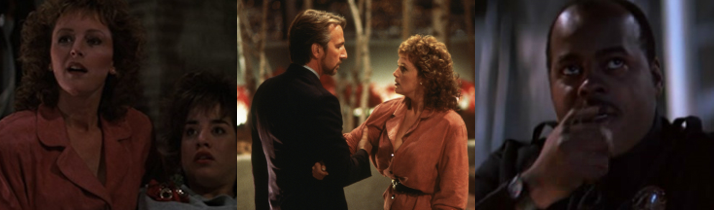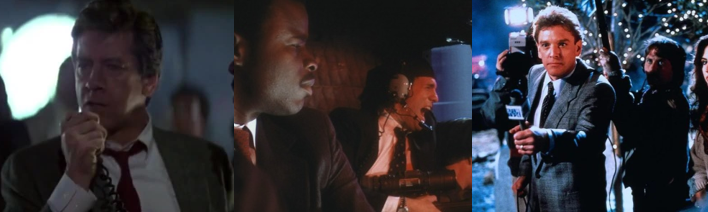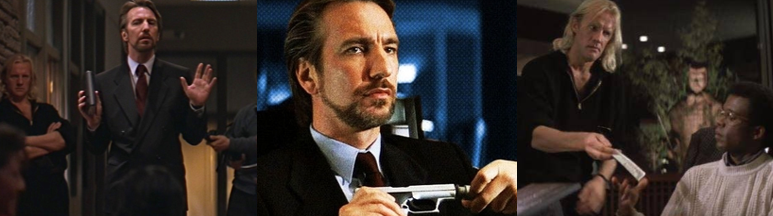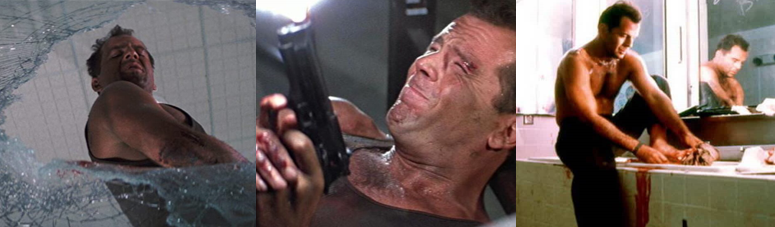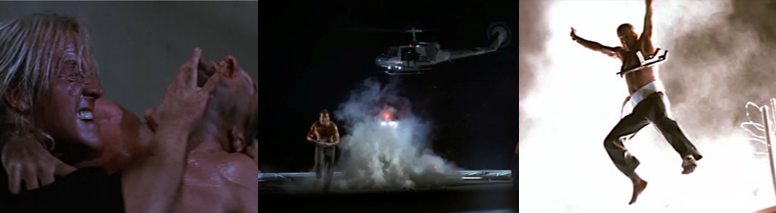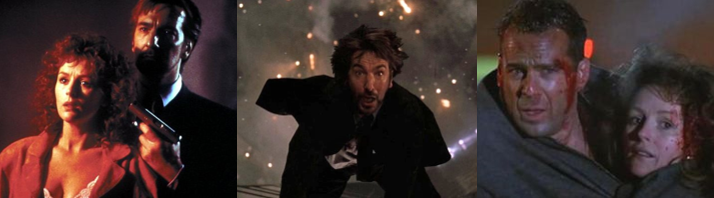

Movie Night [Christmas Day]: Die Hard 2

Released: 4 July 1990
Director: Renny Harlin
Distributor: 20th Century Fox
Budget: $60 to 70 million
Stars: Bruce Willis, William Sadler, Fred Thompson, John Amos, Art Evans, and Bonnie Bedelia

The Plot:
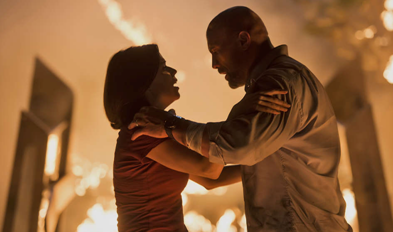
While waiting at Dulles Airport to pick up his wife, Holly Gennero-McClane (Bedelia), Lieutenant John McClane (Willis) is embroiled in a complex cat-and-mouse plot by disgraced Colonel William Stuart (Sadler) to hijack the planes and liberate a corrupt foreign military leader.

The Background
Roderick Thorp published a follow-up to his 1966 thriller, The Detective, in 1979, to decent reviews. Accordingly, an adaptation of Nothing Lasts Forever did the rounds before being retooled by struggling screenwriter Jeb Stuart. Stuart reimagined Thorp’s aging Detective Joe Leland into a flawed everyman, a role so expertly portrayed by Bruce Willis that it changed the perception of action heroes forever. Despite garnering mixed reviews, Die Hard’s (McTiernan, 1988) $140-odd million box office made it a a massive financial success that revitalised 20th Century Fox and redefined the action hero stereotype. For the sequel, the filmmakers turned not to Thorp’s writing but to Walter Wager’s 58 Minutes (1987), a thriller in which a police officer has less than an hour to stop terrorists who have hijacked an airport. Inspired by the Iran/Contra affair, Steven E. de Souza helped rework the concept into a Die Hard sequel, which saw star Bruce Willis return to the tune of $7.5 million and producer Joel Silver removed after his spending ballooned the budget. Also marketed with the subtitle Die Harder, Die Hard 2 was the first film to digitally compose live-action footage with a traditional matte painting, which was used for the final runway scene. With a box office of $240 million, Die Hard 2 exceeded expectations and held the largest pre-opening record for six years, though reviews were mixed. Even positive reviews noted issues with the plot and it was dubbed another disappointing sequel of the era that failed to capture the magic of the first film. Still, there are some who claim it to be an under-rated entry and the box office success alone was enough to justify a third entry some five years later.

The Review:
Die Hard 2 immediately expands the focus of its action by pivoting away from a claustrophobic, confined location and dropping grizzled, promoted cop John McClane into a bustling airport over the holiday season. In Die Hard, McClane was burned out, irritable, and desperately trying to win back his estranged wife. His personal issues were compounded by the terrorists who took over Nakatomi Plaza and he vented his anger and frustration on them with sharp-tongued relish. In Die Hard 2, things are going much better for McClane: he’s looking a little less haggard, he’s been promoted and has transferred to the Los Angeles Police Department, and he and Holly are back together. Unfortunately, while they might be on much better terms, they’re still apart as Holly’s flying in to spend Christmas with him, the kids, and her family. Still, they remain in contact through the miracle of airphones and McClane’s excited to meet her at Dulles Airport. Things get off to a shaky start for McClane, however; bad luck seems to follow him around, even when things are going well, as he’s unceremoniously towed by Sergeant Vito Lorenzo (Robert Costanzo) for illegally parking outside the building. McClane’s appeals fall on deaf ears as, in a taste of the disregard McClane’s later shown, Vito’s unimpressed by his rank and stature. To make matters worse, it was his mother-in-law’s car! Still, a $40 fine is the least of McClane’s worries when he wanders through the airport and not only bumps into a strangely familiar face and spots a handful of guys acting very suspiciously. Attentive and curious, McClane observes as the men covertly talk, sync their watches, and Sergeant Oswald Cochrane (John Costelloe) and Miller (Vondie Curtis-Hall) slip into a restricted baggage sorting area. Interestingly, McClane’s first thought isn’t to investigate himself but to instead alert the airport police. However, when he’s greeted by Vito’s smarmy grin, he realises they’ll never take him seriously and follows the two alone. When confronted by McClane, the two open fire and a brief fracas ensues that leaves Cochrane dead, McClane in custody, and Miller alive to tell the tale to his commander, shamed military veteran Colonel William Stuart (the man McClane had bumped into earlier).
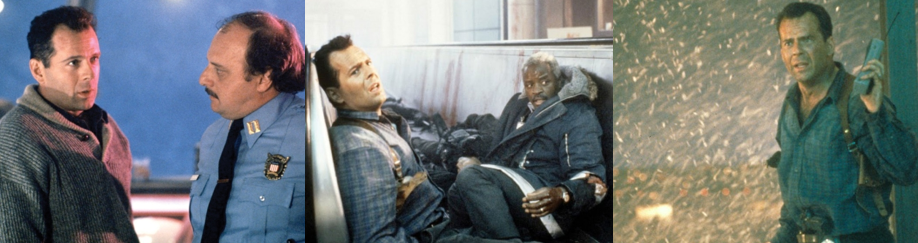
Met with opposition at every turn, McClane faces another Christmas ruined by a new terrorist plot.

After McClane verifies his identity, he’s brought to Captain Carmine Lorenzo (Dennis Franz), who just so happens to be Vito’s brother and who’s not only dismissive of McClane’s reputation, but personally offended by his presence and his attitude. Consequently, Carmine angrily rebukes McClane’s suspicions that the two men were anything more than simple luggage thieves and has him removed from his office. Stubborn and unimpressed by Carmine’s failure to take the situation seriously, McClane takes matters into his own hands and faxes a copy of Cochrane’s fingerprints to his old friend, Sergeant Al Powell (Reginald VelJohnson), who reveals that they’re fake. Based on this, and the men’s weapons, and the impending arrival of the crooked General Ramon Esperanza (Franco Nero), McClane realises that something bad is about to go down and forces his way into the airport control tower to warn Carmine and air traffic controller Ed Trudeau (Thompson) that a group of mercenaries are obviously planning something. While Trudeau seems to take the threat seriously, especially when the tower starts losing power and access to their systems, Carmine refuses to entertain any of McClane’s warnings, believing he’s an overhyped, out of his depth cop trying to steal the spotlight. McClane is unceremoniously booted from the tower and accosted by keen reporter Samantha Coleman (Sheila McCarthy), who name-drops Colonel Stuart and puts the final pieces of the puzzle together for McClane. Unlike in the last film, McClane is surrounded by potential allies but constantly met with antagonism, resentment, and dismissal. No one takes his warnings seriously, causing not only the tower to be compromised when Colonel Stuart hijacks their systems, but also many deaths when Carmine’s crack troops are gunned down by Colonel Stuart’s men (leaving airport chief engineer Leslie Barnes (Evans) wounded) and Stuart brings down an aeroplane in retaliation. Although McClane desperately tries to provide a warning to the doomed aircraft, he ultimately fails and those deaths weigh heavily on his troubled conscience throughout the film. While Trudeau shows some compassion to McClane following this, he continues to be met with hostility from the airport staff and from no-nonsense Major Grant (Amos), who arrives with a bunch of troopers to take control of the situation and, like Carmine, immediately butts heads with McClane, who’s seen as a dangerous loose cannon despite his best efforts to help.
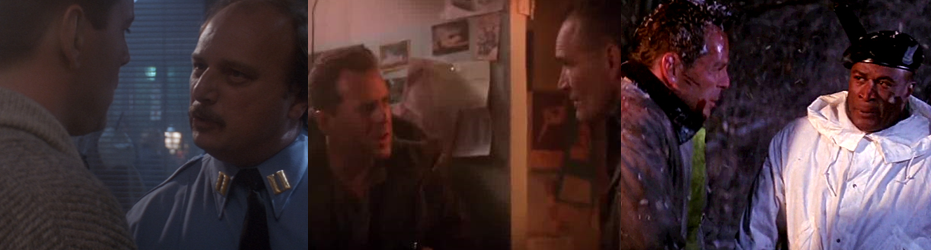
McClane’s reputation and aggressive demeanour mean he’s as short on allies as he is time.

Luckily, McClane does have some allies amongst all these hot-headed egos. While Powell is sadly relegated to a cameo, he does confirm McClane’s suspicions that something’s amiss at Dulles. Barnes proves extremely helpful in offering alternative ways to signal the aircraft, though Colonel Stuart angrily retaliates each time or has set up contingencies for these. Barnes is also the one who clues McClane in that Colonel Stuart’s men are using a coded frequency (though he’s unable to break it) and who re-routes the emergency beacon to covertly communicate with the pilots. While racing to find solutions and workarounds to Colonel Stuart’s plot, McClane ends up in a network of access tunnels beneath the runway and bumps into Marvin (Tom Bower), a quirky janitor with racks upon racks of blueprints who helps McClane get to different areas of the airport, try new ways of signalling the planes, and locate Colonel Stuart’s outpost at a nearby church. Marvin also retrieves the coat and pre-coded walkie-talkie of one of Stuart’s men, allowing McClane to listen in and retort to Stuart directly. This gives McClane the chance to vent his anger on the man responsible for ruining his latest Christmas, though Colonel Stuart isn’t easily baited and out-thinks McClane at every turn. While Major Grant and McClane clash, McClane earns his begrudging respect after he helps storm Colonel Stuart’s church, raiding their operation and driving off Stuart’s men. This resolution is short-lived, however, when McClane realises he and Major Grant’s men were firing blanks the entire time. While Carmine again refuses to believe McClane’s claims, he’s forced to realise they’ve all been duped when McClane dramatically opens fire on Carmine (somehow not being gunned down by the cops present) to demonstrate his point and Carmine finally comes on side, giving McClane clearance to intercept the villains. While McClane treats Coleman with about as much respect as Colonel Stuart and has no time for her sniffing around for a story, she proves somewhat useful first in identifying Stuart and then in joining him in intercepting Stuart’s Boeing 747, giving McClane the chance to dramatically tackle the bad guys and end their plot.
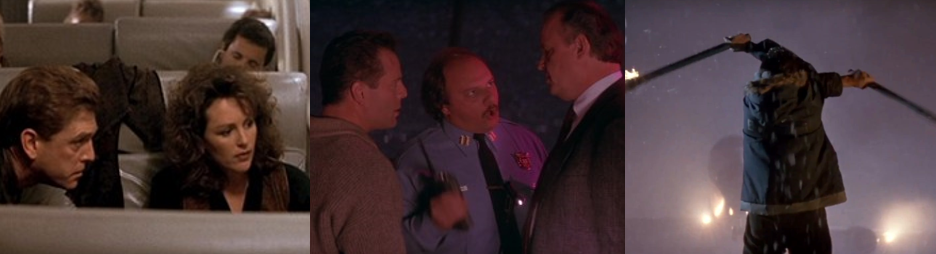
Holly’s safety means McClane has a personal stake in the film’s events.

While Holly returns, she’s far less of a factor and has far less agency this time around. She’s stuck in the air, as far out of McClane’s reach as before, but with even less control over her situation. While she communicates with McClane using an airphone, she has no idea why her landing has been delayed and only becomes concerned about the situation after the returning Dick Thornburg (William Atherton) points out the circling aircraft in the nearby skies. As obnoxious and grating as ever, Thornburg feels slighted and threatened by Holly since a right-hook to his jaw knocked out two of his teeth after he endangered her children in the last movie, leading him to take out a restraining order against her. While this earns Holly the admiration of Connie (Karla Tamburrell), an air hostess equally repulsed by Thornburg, Holly’s forced to endure his presence as the situation worsens. Ever the opportunist, Thornburg patches into the cockpit radio and learns of the situation, then remotely forces his way on-air to report on the situation live, selfishly thinking only of his career and not the panic it causes those waiting at Dulles Airport. As perceptive and feisty as her husband, Holly not only catches on that their situation is going to become a real problem due to lack of fuel but also retaliates against Thornburg once more by subduing him with a fellow passenger’s taser. Still, while Holly doesn’t get much else to do, it’s the drive to save her from plummeting to a fiery death that pushes McClane on downside. His personal stake in the events sees him aggressively interject himself into the situation and causes as much of the animosity he receives as his smart mouth, though McClane excels in a pressure situation and simply forces himself to fight harder or find other ways around problems, even if it means pissing off those in authority. The subtext of Die Hard 2 is lesser than the first, with more generic masculine and pseduo-sexual connotations, but the premise of this stubborn, determined “Everyman” fighting against the odds to save the woman he loves is strong, though I would’ve liked to see Holly have a more active role in the main plot.
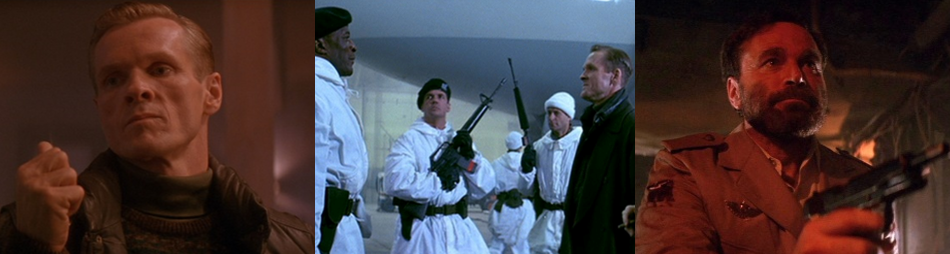
Colonel Stuart enacts a diabolical plan to liberate his anti-communist idol.

This time, McClane is up against an opponent just as intelligent, ruthless, and heavily armed as Hans Gruber (Alan Rickman) but one with the added benefit of a lifetime of military service and equally well-trained, incredibly loyal followers. A former Special Forces officer and one time student of Major Grant, the anti-communist Colonel Stuart strongly supported General Esperanza and even funded his operation, being dishonourably discharged and disgraced as a consequence. After fleeing the United States prior to his court martial, Colonel Stuart and the imprisoned General Esperanza plotted an elaborate scheme to hijack Dulles Airport, intercept Esperanza’s plan, and abscond to safety in a Boeing 747. A stoic, calculating martial arts expert, Colonel Stuart plans everything to the smallest detail, easily infiltrating Dulles Airport and hijacking their communications and power array and duplicating much of their control room in a nearby church. From here, Colonel Stuart and his men easily dupe the aircraft into thinking ground control is experiencing nothing more than heavy weather and effectively holds all incoming aircraft hostage, crashing them without a second’s thought whenever and reprisals are attempted. Though he doesn’t hesitate to take lives, even those of his men, Colonel Stuart reprimands Trudeau and McClane for not obeying his instructions and forcing his hand, indicating that he’s trying to rescue his beloved General with as little bloodshed as possible. His patience with McClane quickly wears thin, however, especially when John intercepts Esperanza’s aircraft and nearly brings him into custody. Aggravated that one stubborn cop could cause his meticulous plan so much trouble, Colonel Stuart has his men open fire on the craft and tosses a bunch of grenades in to take out McClane but is forced to flee when McClane miraculously survives thanks to his quick thinking. Colonel Stuart’s men are fiercely loyal; while they briefly hesitate upon being ordered to trick an aircraft into crashing, they obey his every word without question out of fear of his reprisals. Colonel Stuart’s joined by Major Grant, a deceptive and equally ruthless military man who slits newcomer Telford’s (Patrick O’Neal) throat just for not being “one of them” and aids in duping McClane to cover their escape. When push comes to shove, Colonel Stuart finally gets his hands dirty in a one-on-one fight with McClane, being far more physically capable than Gruber. He’s also much more in control of his emotions and motivated not by greed, but by a warped sense of patriotism and pride.

The Nitty-Gritty:
Die Hard is a Christmas movie. I don’t care what you say or think; it just is. Die Hard 2 is also a Christmas movie, but the season is far less of a factor in the plot. Seasonal jingles aren’t as prominent in Michael Kamen’s score and Christmas trappings aren’t as easily noticeable thanks to how bustling Dulles Airport is, but the entire crux of the plot is Holly coming home for Christmas and half the reason the weather is so bad is because we’re deep into the festive season. McClane does note that his bad luck constantly ruins the season for him, but this seems more emblematic of him than of the festive period. Indeed, Major Grant notes that McClane is in the “wrong place at the wrong time” during one of the many tirades launched against him for trying to help, and the situation only escalates as things spiral out of control. McClane is in a slightly better position this time around, though; he’s wearing shoes, for starters, is fully armed, and has more resources at his disposal to try and help. Unfortunately, he’s constantly hampered by those around him. Since Carmine doesn’t take his concerns seriously, Trudeau doesn’t prepare the control tower for a possible hijacking; since doors are constantly shut in his face, McClane can’t share his insight or opinion on the situation; and since Colonel Stuart is so resourceful and intelligent, the odds are stacked against him in a far greater way than before. This time, McClane battles to save not just his and Holly’s lives, but the lives of all the people on the planes unable to land because of Colonel Stuart. McClane might be selfishly driven to intervene to ensure Holly’s safety but he doesn’t just sit back and do nothing when Stuart hijacks a British airliner. He runs out onto the landing strip and desperately tries to do something, though this is of little comfort when his efforts inevitably fail. While Die Hard 2 is therefore more of a typical action/thriller and less of a tale of reclaiming masculinity and enforcing masculine power like the first film, some aspects of this still remain. Half the reason Vito, Carmine, and Major Grant clash with McClane is because they view him as a threat to their authority and masculinity. McClane is a loose cannon who shouts his opinion and acts impulsively, with little respect for local authority and the chain of command, which especially irks Carmine and equally annoys Major Grant, who believes McClane’s interference is doing more harm than good.
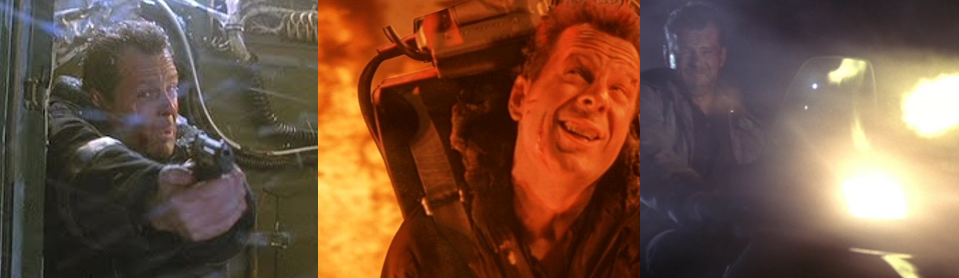
Aside from some explosive moments, McClane is largely a gunfighter this time around.

Ironically, even if McClane approached these figures with a more reasonable and respectful tone, it probably wouldn’t have helped since McClane is something of a celebrity now after his actions in Die Hard. This, and departmental xenophobia, are equally strong reasons for them to dislike McClane and dismiss his concerns, only to begrudgingly realise that he’s been the only one making sense the entire time, which is frustrating but still an improvement over the bungling police presence in the last film. While thematically and narratively very similar to Die Hard, Die Hard 2 broadens its scope for action set pieces; there are more characters involved so more opportunities for big shoot outs, with McClane even engaging in a snowmobile chase near the climax. However, I’ve never thought of Die Hard 2 as being “bigger” or “better” than the first one in terms of its action. It’s often far more explosive, that’s for sure; the plane crash is a notable set piece, as is the destruction of General Esperanza’s plane. However, it’s pretty obvious both are model and composite shots, making them ironically less impressive than McClane’s leap from the exploding Nakatomi helipad. McClane doesn’t get as many opportunities to throw hands this time; he always has his pistol and ammo on him, so he’s more apt to just gun down his foes with a wry remark, meaning we see less of McClane’s physical tenacity. However, this is supplanted by his “die hard” nature; he’s a stubborn cockroach of a man who won’t quit and keeps fighting even when met with a hail of gunfire. Ironically, he’s far less banged up and bloody than in the first film despite the greater odds against him and McClane’s resourceful nature comes not from finding innovative ways to kill his enemies but from finding creative ways to save lives, galvanising McClane into a more broadly heroic character. That’s not to say Die Hard 2 is tame, by any means: plenty of guys are executed by gunshot to the head, people are strangled, have their throat cut, and are riddled with bullets or blown to pieces. But it does feel far less personal this time around; before, McClane was desperately picking Gruber’s men off one by one but Colonel Stuart has far more men with far less memorable characteristics, so it just feels more generic when they’re killed rather than a rousing victory for our lone hero like before.
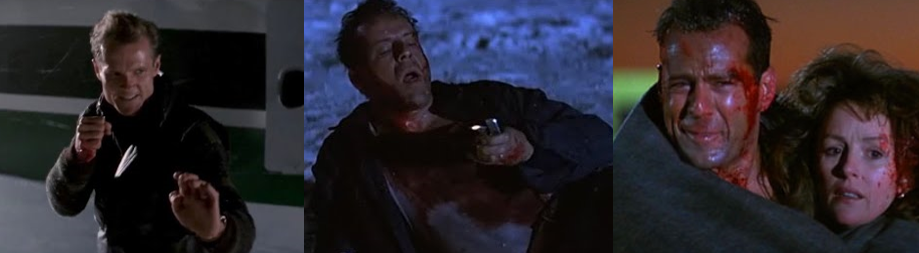
Though he’s no match for Stuart, McClane gets the last laugh and rescues his wife once again.

McClane is against a ticking clock throughout Die Hard 2. He only has ninety minutes before Holly’s plane runs out of fuel so he does everything he can to restore communications with the planes and find a way to negotiate her safety. He experiences ups and downs in this endeavour as Barnes does manage to contact the pilots, but McClane is intercepted by Colonel Stuart and his men before he can barter Esperanza’s life for Holly’s. The wounded General Esperanza escapes but things start to look up with Major Grant comes along and leads an all-out assault on Colonel Stuart’s church base, only to dupe McClane and the others with blanks and betray them to aid Stuart and Esperanza’s escape. With time running out and Holly’s plane preparing for an emergency landing, McClane finally gets the assistance he’s been demanding the entire movie and has Coleman’s pilot chase after the escaping villains. With no way to block the larger aircraft, McClane is forced to make a desperate drop to the wing on their Boeing 747 to try and stop them. Unlike the first movie, which ended with a tense showdown akin to an Old West duel between the exhausted McClane and the smug Gruber, Die Hard 2’s climax centres around bare-knuckle fistfights on the wing of a speeding aircraft trying to take off. Major Grant is the first to head out to put a beating on the outmatched McClane. However, thanks to his tenacity and resourcefulness, McClane manages to trip Major Grant and send him into a jet engine, splattering him across the plane and further screwing up Esperanza’s attempts to get off the ground. Thus, Colonel Stuart takes matters into his own hands and beats the shit out of McClane in a way Gruber could only dream of, finally kicking him to the speeding runway below. Returning inside to celebrate with his men, Colonel Stuart is completely oblivious to the fact that McClane opened the plane’s fuel valve. Bloodied and beaten, McClane delivers his “Yippie-ki-yay, Mister Falcon motherfucker!” catchphrase and tosses his lighter at the fuel trial, which naturally defies all physics and logic to burn into the plane and explode it in mid-air. As an added bonus, the flame trail and burning wreckage act as a marker for the planes to use to make a safe landing, reuniting McClane and Holly once more and bringing their latest Christmas drama to a close.

The Summary:
Die Hard is a Christmas tradition for me. I watch it every year and every year I enjoy it as much as the last time I watched it. Die Hard 2 also makes the Christmas watch list, but I’d be lying if I said I looked forward to it as much as the first movie. It’s not that it’s bad, really, just not as enjoyable or memorable as the first film. The atmosphere is both familiar and yet different, which is what you want from a sequel but something just feels off. Narrative beats, returning characters, and a sense of repetition help thematically link it to the first movie while also expanding upon the characters and setting. John McClane is far less beaten down than before, but no less tenacious; however, his character is noticeably different, largely because of the supporting cast. He’s face-to-face with the same type of bureaucrats who got in his way last time and we live his frustration with their dismissive attitude and his desperate attempts to do something while they sit around, stubbornly refusing to believe him due to their slighted pride. McClane is as resourceful and enjoyable as ever, delivering some wry quips and surviving some unbelievable situations, but he’s recast as a more typical heroic figure this time. Die Hard 2 isn’t just about saving a handful of hostages; it’s about saving thousands of lives from Colonel Stuart’s reprisals. It’s not about reclaiming masculinity; it’s about reinforcing it and a clash of “Alpha Male” figures and egos. Colonel Stuart exemplifies this; unlike Gruber, he’s a physical and intellectual challenge for McClane, after all. Oddly, despite its greater scope, I find Die Hard 2’s action to be lacking compared to the first. Things don’t feel as intimate and personal and a lot of the impact is dulled, as though everyone’s just going through the motions despite some enjoyable performances. In the end, I still watch Die Hard 2 at Christmas and still enjoy it, but I would much rather watch Die Hard twice or skip to one of the other sequels as they delivered a new challenge for McClane in a far more unique way than what we see here.

My Rating:

Rating: 4 out of 5.

Great Stuff

Are you a fan of Die Hard 2? How do you think it compares to the first films? What did you think to Colonel Stuart and his cold-hearted depiction? Did you like seeing McClane face new challenges, especially following his infamy from the first movie? Were you also disappointed by the action sequences? Is Die Hard 2 on your Christmas watch list? What are your plans for Christmas Day today? Whatever your thoughts, feel free to comment down before and have a great Christmas!

Movie Night [Christmas Day]: Die Hard

Released: 15 July 1988
Director: John McTiernan
Distributor: 20th Century Fox
Budget: $25 to 35 million
Stars: Bruce Willis, Alan Rickman, Bonnie Bedelia, Reginald VelJohnson, Paul Gleason, and William Atherton

The Plot:
New York City police detective John McClane (Willis) arrives at the Nakatomi Plaza in Los Angeles to reconcile with his estranged wife, Holly Gennero-McClane (Bedelia). Things quickly turn south when Hans Gruber (Rickman) and his gang of terrorists take the building hostage, leaving McClane to wage a one-man war.

The Background
In 1979, writer Roderick Thorp published a sequel to his 1966 thriller, The Detective; inspired by The Towering Inferno (Guillermin, 1974), Nothing Lasts Forever was well-received and soon shopped around Hollywood, with Thorp hoping Frank Sinatra would reprise his role from the adaptation of The Detective (Douglas, 1968). Instead, the concept ended up in the hands of struggling screenwriter Jeb Stuart, who was given free reign as long as he retained the Christmas-in-Los-Angeles setting. Drawing from personal experiences with married life, Stuart reimagined Thorp’s aging detective, Joe Leland, into a flawed everyman, though remained largely faithful to the spirit of the source material. After Sinatra turned down the lead role, the project was offered to some of Hollywood’s biggest action stars, including Arnold Schwarzenegger and Sylvester Stallone, before Bruce Willis (then known more for his comedic efforts) was cast as the wisecracking John McClane and subsequently redefined not only his career, but the portrayal of action heroes in general. Die Hard was the silver screen debut for the late, great Alan Rickman, who was won over by the wit and intelligence of the script and even had some creative input on his character thanks to his theatre background. Screenwriter Steven E. de Souza came onboard for a rewrite, which framed the narrative as though Hans Gruber were the protagonist, though director John McTiernan allowed Willis and the other actors room to improvise during the shoot, which was based almost entirely in and around the Fox Plaza in Central City. Willis performed many of his own stunts, suffering partial hearing loss as a result; the stunts were dangerous and complex for cast and crew alike, though McTiernan couldn’t resist dropping Rickman early to produce a genuine look of fear for Gruber’s fall. In defiance of low expectations, Die Hard was a massive financial success, making around $140 million at the box office, revitalising both 20th Century Fox and the action genre. Although initial reviews were mixed, praising the direction and stunts but questioning Willis’s performance, the film was seen as a breakout role for the actor, one that redefined the action hero stereotype into a more vulnerable and snarky tough guy. After proving to be equally popular on home video, this success naturally translated into a sequel two years later, a venture that proved even more profitable and led to an entire franchise of additional sequels, videogames, and ancillary media of varying quality that nonetheless cemented Willis’s status as a smart-mouthed action hero.

The Review:
Believe it or not, but there was a time when I wasn’t much of a Die Hard fan. Despite growing up on action movies, specifically those starring Arnold Schwarzenegger, kid me always found Die Hard to be a little too slow and “grown up” compared to the Austrian Oak’s films. Eventually, however, I grew up a bit and did a binge watch of the then-trilogy of Die Hard films and realised what I’d been missing out on. Specifically, Bruce Willis establishing himself as a mainstream action icon with these films, in particular this first Die Hard movie, which is still the undeniable best of a surprisingly strong action franchise. McClane separates himself from his action movie counterparts by being the quintessential “Everyman”; he’s physically fit, yes, but not some musclebound brute and he’s far from invincible, gradually becoming more injured and fatigued as the movie goes on. He’s easy to relate to because he’s a very flawed character; his marriage is on the rocks, he’s seen as insubordinate and a liability by his peers, he makes mistakes, and he’s forced to adapt, always one wrong move away from certain death. This is in stark contrast to the likes of Schwarzenegger and Stallone; while they have certainly portrayed more grounded, vulnerable, and human characters, they’re best known for being virtually unstoppable and overcoming the odds through sheer brute force, whereas McClane has to use his wits, cunning, and sheer force of will to triumph.

Smart-mouthed John McClane is the only man tenacious enough to rescue the terrified hostages.

John McClane is portrayed very much as a fish out of water since he is both a New York City cop in the unfamiliar surroundings of Los Angeles and a rugged working man amidst a skyscraper full of well-heeled business types. Although rough around the edges, he’s treated warmly and with respect by Joseph Takagi (James Shigeta) and invited to join the Nakatomi Christmas party, but he’s focused solely on reconnecting with Holly, who has managed to build a successful career for herself without McClane, much to his chagrin. While he’s clearly still in love with her and wants to build bridges, if only for the sake of their young children, McClane is handicapped by a natural immaturity that causes only further arguments rather than him simply admitting to his mistakes. A career cop, McClane is always taking in his surroundings and has a suspicious nature that allows him to separate bullshitters like Harry Ellis (Hart Bochner) from the honest, like Argyle (De’voreaux White), his overly chatting limo driver. This talent goes hand in hand with his adaptability and stubborn nature, from which the film takes its title; though outnumbered and outgunned and definitely in way over his head, McClane keeps his wits about him and is always trying to find some way to get help or pick off his assailants and is intuitive enough to assess the threat posed by the terrorists based on their accents, firearms, and tactics. Basically caught with his pants down, McClane finds himself the only one capable of raising the alarm when Hans Gruber and his goons take over the tower, executing Takagi and taking his employees hostage while they work on breaking into the vault. Outnumbered, outgunned, and without even his shoes, McClane’s first instinct is to call for help, only to be repeatedly met with scepticism, endangering himself and forcing him to flee or fight, with tenacity in equal measure. Though armed only with his service pistol, McClane soon acquires a machine gun (“Ho-ho-ho”), but it’s not enough to tackle Gruber head-on. Instead, McClane fights with a brutal and rabid animal spirit; often physically outmatched by his foes, he takes quite a beating in every encounter and only emerges victorious due to his stubborn nature or taking risks that further damage his body, slicing his feet on glass shards, tumbling down stairs, getting shot, crawling through ventilation ducts, and defying physics and death alike with a desperate leap from the rooftop with only a firehose as a lifeline!

McClane’s only ally and supporter in rescuing his equally spirited estranged wife is Powell.

If anyone knows about McClane’s stubborn nature, it’s his wife, Holly. A driven and determined career woman, Holly moved to Los Angeles with their kids to make a go out of it in the corporate world and, despite McClane’s doubts (and hopes), actually succeeded in her new role. Though warm, kind, and friendly, Holly is sick of McClane’s thick-headed ways and bullish nature; she has no problem calling him out or standing up to him and just wants to be treated with some respect. Although he knows what he needs to do to repair their relationship, McClane struggles to express himself and often falls back on accusations and jealousy, widening the gap between them. When she’s taken hostage, Holly remains calm and composed but brings the same fiery energy when she’s forced to speak up for her fellow colleagues in place of Takagi; even Gruber comments on her dependable and forthright nature, which helps her act as a mediator between the groups in a far more effective way than her coked-up colleague, Ellis. When she learns that McClane is at large in the building and causing Gruber trouble, Holly begins to hope; despite their differences, she knows that McClane will fight to the bitter end to get the job done, but even she is shocked by the state he’s in by the end. While Los Angeles’ finest are often more of a hinderance than help to the fatigued and aggravated McClane, his most vocal supporter outside of the tower is Sergeant Al Powell (VelJohnson), a Twinkie-loving father to be who’s struggling with guilt after accidentally shooting a kid. Alerted to gunfire and a disturbance at Nakatomi Plaza, Powell is horrified by what’s happening inside. Going with his gut, Powell becomes McClane’s primary contact, much to the ire of Deputy Chief Dwayne T. Robinson (Gleason). While Robinson believes McClane is as much of a problem as the terrorists, if not one of them, and prefers to go by the book and suck up to Agent Johnson and Johnson (Robert Davi and Grand L. Bush) of the Federal Bureau of Investigation (FBI), Powell is much more “boots on the ground” and helps McClane stay sane and motivated and to stop and think about the big picture regarding the takeover.

McClane feels very unappreciated by the bureaucratic and arrogant pen-pushers on the outside.

Although he means well, Robinson is clearly not used to being in the field; he refuses to listen to McClane’s warnings and outright criticises his attempts to help and desperately tries to negotiate with Gruber, completely oblivious to the fact that he’s being played for a fool. When the LAPD’s Special Weapons and Tactics (SWAT) team try to storm the tower by force, he witnesses a taste of Gruber’s firepower when Gruber’s men shoot out their spotlights and destroy the armoured transport vehicle (APV) with a rocket launcher. Rather than thank McClane for his assistance, which sees him kill several of Gruber’s men with a hastily-constructed bomb, Robinson chastises him for damaging the building, but even his ineffectual nature pales in comparison to the arrogant and self-righteous FBI agents. Even Powell can see that the FBI are just like Robinson, working from a checklist and foolishly believing that they’re in charge of the situation without realising that they’re just expediating Gruber’s plan and causing unnecessary danger. Indeed, the agents are so arrogant that they personally accompany the helicopters to retrieve the hostages, relishing the chance to kick some ass and paying the ultimate price for it when they’re caught in an explosion, despite McClane’s best efforts to ward them off (which almost get him killed!) As if that wasn’t bad enough, snivelling reporter Richard Thornburg (Atherton) learns of the commotion and forces himself into the investigation, doing a deep dive on McClane and his family in order to advance his career. This directly impacts the finale when Gruber learns of Holly’s connection to McClane from Thornburg’s invasive and wholly inappropriate report, which see her kids and family plastered all over the media. This is enough to earn him her undying wrath and she gives him a good sock to the jaw after finally being rescued, proving that her drive to protect her family is just as strong as her husband’s.

Composed psychopath Hans and his goons are riled up by McClane’s cowboy vendetta.

So, to say McClane is against the odds is putting it mildly. With only a single security guard on duty, he has no backup inside the building against Gruber’s heavily armed and physically imposing forces. McClane immediately antagonises Gruber’s most brutish henchman, Karl Vreski (Alexander Godunov), after he kills Karl’s brother, Tony (Andreas Wisniewski), in a brutal scuffle. A cold-blooded and merciless killer, Karl swears revenge and his burning need to kill McClane sees him disregard Gruber’s orders, warn his allies not to rob him of his quarry, and ends with him hanging from a chain, seemingly dead because of his vendetta. Gruber’s other most notable ally is Theo (Clarence Gilyard), the group’s wisecracking and enthusiastic tech specialist who happily applies his skills to cracking Takgaki’s safe, seeing it as a personal challenge, and directs his allies in fending off the SWAT team, laughing with glee at how outmatched the LAPD are against their firepower and his intellect. And then there’s Hans himself, a smooth talking, eloquent, unnervingly polite terrorist who commands not just the respect and loyalty of his crew but the attention of every room and scene he’s in. While he’s a reasonable man, Gruber is as psychotic as his underlings when pushed; he thinks nothing of executing Takagi and Ellis and is fully prepared to kill everyone in the building to pull off his heist, despite agreeing to Holly’s terms to treat the hostages humanely. Although positioned and selling himself as a revolutionary terrorist fighting against oppression, he’s actually little more than a common thief as his goal is to steal $640 million in untraceable bearer bonds from Takagi’s vault and abscond to a faraway beach, free from persecution thanks to his elaborate and well-executed plan. While he’s largely the commanding voice of reason and directs his men to focus on the big picture, such as retrieving his C4 explosives rather than wasting time and energy hunting McClane, he didn’t factor a lone New York cop into his schemes and his demeanour noticeably becomes more frustrated the more his operation is scuppered by this smart-mouthed “cowboy”. Gruber even comes face to face with McClane at one point when looking for his detonators and gains a deeper understanding about his foe; though Gruber’s accent and charade are good, McClane shows he’s more than a meathead by seeing through the act, but Gruber matches him at every turn, ordering Karl to “shoot the glass” when he notices McClane’s bare feet and even taking Holly hostage to ensure their escape in the finale.

The Nitty-Gritty:
I’ve never understood the debate regarding Die Hard’s status as a Christmas movie. Every year, memes and posts and arguments rage about whether it “counts” as a Christmas movie when the evidence is pretty clear that it absolutely is a festive film. For starters, it takes place on Christmas Eve and at the Nakatomi Christmas party; that alone is enough to qualify in my book, but we’ve also got an abundance of Christmas decorations (including trees and presents), a hip Christmas song, and a Christmassy jingle laced into the film’s score. For me, all it takes is for a film to be set during the Christmas season for it to be considered a Christmas movie, making the entire debate redundant from my perspective; plus, it’s a great excuse to watch Die Hard while the turkey’s roasting. The Christmas setting is a great excuse to have Nakatomi Plaza be empty save for its partying employees; it also helps set up some great puns and aggrieved commentary from McClane, who regularly laments about how unfair the situation is. Thanks to a combination of fear, adrenaline, anxiety, and his own juvenile nature, McClane provides a running commentary throughout the film to himself, Powell, and his foes. It’s clear he does this to cope with the extreme danger of his situation, but it also showcases his investigative mind as he ponders the accents and gear of Gruber’s gang, chastises his own reckless behaviour and bad ideas at every opportunity, and assaults his enemies with colourful insults as much as bullets and body blows.

John McClane embodied a different type of action hero, a vulnerable, flawed, smart-ass everyman.

Whilst studying for my PhD thesis, I did a lot of background research into action cinema and, unsurprisingly, Die Hard came up quite a bit, especially regarding discussions of masculinity in Hollywood (and, specifically, this genre). For decades, action cinema and gender roles were defined by physicality; masculinity, especially, was embodied by hyper-masculine heroes like Schwarzenegger and Stallone, but this perception was challenged by the AIDS crisis and smaller, less troublesome statures and heroes became more prominent. Thus, not only did Stallone dramatically reconfigure his persona at this time, but McClane represented something very different to his peers; defined “through the voice, more wise-guy than tough-guy” (Tasker, 1993: 239), McClane was a “perpetual adolescent [who seemed] to be playing games”, cracking jokes and carrying “a sense of surprise and confusion that [the] explosive events are happening to him”. He thus personified the more relatable, rugged “Everyman” action hero; proactive individuals who faced danger not just with a fist or a gun but a smirk and a hefty amount of icy dialogue (ibid). However, McClane remains a figure of masculine power like his peers; Barry Grant (2007) noted that McClane survives multiple milestones throughout and ultimately triumphs, believing McClane’s heroics were linked to masculinity, patriarchy and their mythic representations since he conquers a clearly phallic structure, overcomes numerous male henchmen who challenge his masculinity, and ultimately defeats these villains to reclaim both his masculine potency and his wife. Indeed, Die Hard was noted by Steve Neale (2001) to be progressive in these gender codings as “fantasies of class- and gender-based resistance to the advent of a post-feminist/post-Fordist world [and] all the old lines of force and division between races, classes and genders are both transgressed and redrawn”. While you can read gender and political messages into almost any narrative, there’s some really interesting reading on the subject out there, especially in relation to Die Hard. I think what impresses me the most about this is how it allows the film, and this largely dismissed genre, to gain a bit more legitimacy in the eyes of academics; sure, it’s a bombastic action flick filled with blood squibs, wise cracks, and elaborate stunts but that doesn’t stop it from having intriguing academic appeal and opening discussions regarding gender roles.

Amidst the explosions and gunfights, Die Hard has a raw and brutal edge to its set pieces.

Indeed, while Die Hard is easily the most grounded and subdued of the franchise, which upped the ante to almost ridiculous (but no less entertaining) degrees, it still has some impressive set pieces, especially for a film set largely in one location. There’s the aforementioned APV assault, which sees the foyer rocked by explosions and ends with an impressive (if slightly dodgy) composite shot of McClane chucking C4 down an elevator shaft. And before this we have fun stuff like McClane blasting Marco (Lorenzo Caccialanza) through a table and then tossing him out a window, where he crashes onto Powell’s car and finally gets the LAPD out in full force. McClane’s fist fights with Tony and Karl are very brutal affairs; McClane takes quite a beating in each case and survives only by the skin of his teeth and is left sweaty and bloodied as a result. The damage he accumulates racks up to the point where he starts to consider that the odds aren’t looking too good in his favour; as he gingerly pulls glass shards from his feet, he tries to confide in Powell, who remains the steadfast voice of encouragement and hope. Things continue to escalate when Theo finally cracks the vault and Gruber enacts his final deception; he agrees to let the hostages go in exchange for safe passage on a helicopter, knowing full well that the FBI will double-cross him and rigging the rooftop landing pad to blow. Thanks to McClane, the hostages get to safety but Johnson and Johnson aren’t so lucky as their chopper is engulfed by the explosion. McClane, however, proves as resourceful as ever, leaping from the roof with a firehose as a makeshift safety line and smashing his way back into the building, narrowly avoiding a fatal fall in the process. Indeed, the film’s title is certainly apt as McClane continually avoids death even when he should probably have died several times over, though this takes a visual toll on his body and his mind as the film progresses, with him becoming noticeably bloodier and more desperate as things escalate.

An injured and exhausted McClane ultimately topples Gruber and reunites with his wife.

Thankfully, Powell in on hand to keep him together; their many radio exchanges see Powell shamefully admit to his mistake, which saw him transfer to a desk job and holster his revolver, an emotional arc that reaches a crescendo in the film’s final moments when Powell is forced to shoot Karl dead when he suddenly springs to life, thus allowing Powell to regain his confidence (and, if you want to read it that way, his own sense of masculinity; guns are a very phallic object, after all). After spending the whole movie pretending to be this cultured, intellectual terrorist revolutionary, Holly is disgusted and stunned to learn that Gruber’s simply in it for the money. Although many of his men have been killed by McClane, Gruber finally gets into Takagi’s safe and prepares to make his getaway, taking Holly as his hostage for collateral. However, McClane stumbles out from the embers, exhausted and bloody, to confront Gruber once more; as ever, though, he’s outnumbered and outgunned and dare not make a move since Gruber has Holly at gunpoint. With no other choice, McClane drops his gun and surrenders to Gruber, who prepares to shoot him and mockingly repeats a taunt McClane had flippantly thrown his way earlier, “Yippee-ki-yay, motherfuker”, causing them both to break out in laughter. This is all the distraction McClane needs to enact his final, desperate gambit; with his hands behind his head in a submissive gesture, he retrieves a pistol he taped to his back, guns down Eddie (Dennis Haden), and incapacitates Gruber with a shot, despite taking another bullet in the process. This sees the mortally wounded Gruber topple out the window, but he proves as persistent as his nemesis; caught up on Holly’s wristwatch (a gift from Takagi for her hard work), he prepares to shoot McClane only to be sent suddenly plunging to his death when McClane rips the watch from his wife’s wrist, symbolically shedding Holly from her career and returning her into the arms of her grateful and remorseful husband, their relationship having been galvanised by the whole traumatic ordeal.

The Summary:
Christmas is a great time of year. The food, the atmosphere, the presents…and the movies! Every year, I get to re-watch some of my favourite Christmas-themed films and Die Hard absolutely makes that list. Yes, you can (and should) watch it any time of the year but why not at Christmas, when the movie is set? Honestly, this is one of the all-time greats of the genre; more of an action/thriller, the film is a hugely entertaining depiction of one tenacious man’s fight against overwhelming odds and, while it can sometimes feel a little lengthy, it’s very fun and always enjoyable to watch every time. John McClane is a very different type of action hero; he’s vulnerable and flawed and has a smart mouth and a never-say-die attitude. He’s the perfect monkey wrench in Hans Gruber’s meticulous plot to get rich quick and the dichotomy between the two is half the fun of the movie. Even though they share very little screen time together, you can see them both growing more desperate and riled up and eager to take the other out as the film progresses, and this rising tension is both palpable and reflected in the escalating violence and destruction. I loved McClane’s snarky attitude, his quips and one-liners, and the humanising relationship between him and Al Powell, which really helps you remember that these action heroes are just normal people, deep down beneath the machismo. Another thing I love is how raw Die Hard is; it’s grounded and dirty and gritty and it really makes you feel it every time McClane takes a shot or a beating or a fall. Although it’s easy to just turn your brain off and enjoy a good time, I do like how the film invites deeper readings and academic discussion with its depiction of gender, masculinity, and violence. For me, Die Hard has endured the test of time; it reinvigorated the action genre and created one of the best protagonists of action cinema and it’s one of those films I both genuinely look forward to watching time and time again and which just gets better the more you watch it.

My Rating:

Rating: 5 out of 5.

Fantastic

Are you a fan of Die Hard? Did you like how it reinvigorated the action genre with a snarky everyman hero or are you a fan of the more over-the-top protagonists? What did you think to Hans Gruber’s plan, his portrayal, and his crew? Did you enjoy McClane’s tenacity and snarky attitude? What did you think to the set pieces? Do you consider Die Hard to be a Christmas movie? What are your plans for Christmas Day today? Whatever your thoughts, feel free to comment down before and have a great Christmas!
10FTW: Bad-Ass Movie Dads

10FTW

Being a dad in a movie is tough; often, dads are portrayed as slovenly, uncaring, even abusive individuals who care more about drinking beer, watching football, cheating on their spouses, or work than their kids. It’s a bit of a cliché at this point and also quite a bum rap, to be honest, and often seems like a case of lazy writing to have the dad be the cause of all the problems and negativity in a child’s life in a film.

10FTW: Badass Movie Dads

I suppose it makes sense, in a way; many movies involve a story about a child, son, or daughter standing up to adversity or challenging, even confronting, their neglectful parents to say nothing of the myriad of stories out there of fathers more concerned with work than the well-being of their child. Still, good movie dads do exist, even while being flawed characters in their own right, and so, seeing as today is Father’s Day, I’m going to run through ten that I consider to be amongst the most bad-ass of all movie dads…

10 Steven Freeling – Poltergeist (Hooper, 1982)

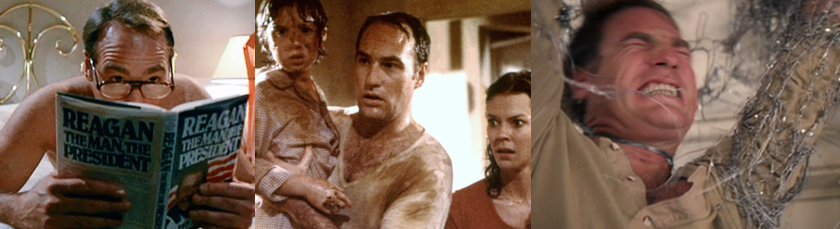
If I’m being completely honest, Poltergeist is more the story of a bad-ass mother as, throughout the film, it is Diane (JoBeth Williams) who eventually steps up after the demonic force inhabiting their house kidnaps her daughter, Carol Anne (Heather O’Rourke). Diane is the one who first feels and alerts her family to the presence in their house, she’s also far more emotionally stable despite her exhaustion and grief, and of course there’s the fact that she leaps into the “other side” to rescue Carol Anne and then has to suffer through a veritable horror show as their house is torn inside and out. Yet Steven (Craig T. Nelson) is the ever-reliable rock of the household; a bit of a goofball and perhaps (even by his own admission) too soft on his kids, he is the one who contacts a group of parapsychologists to assist them (despite his scepticism) and let’s not forget that Diane and Carol Anne never would have made it to back to the real world had Steven not been holding their literal lifeline. Despite his will weakening, Steven steps up even more in the sequel, Poltergeist II: The Other Side (Gibson, 1989), even landing what appears to be a killing blow to the malevolent Reverend Henry Kane (Julian Beck) who has been terrorising them, but, while reliability is an admirable quality, he takes the lowest spot for largely just being a supporting player (and for him and Diane sending Carol Anne away out of fear by the third film).

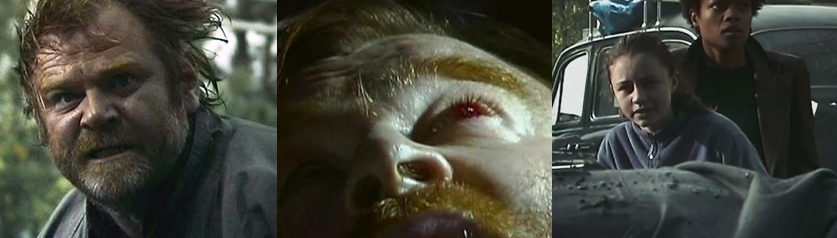
9 Frank – 28 Days Later (Boyle, 2002)

Here’s a shocking revelation for you: I’m not actually that big a fan of 28 Days Later. It starts off with such promise and with all those eerie shots of London but it’s a slow, plodding, miserable little film and the only thing I really like about it is that it made zombies faster, more aggressive, and ferocious as, for me, it otherwise wastes its potential. Still, amidst all of this we have Frank (Brendan Gleeson), a former cab driver and one of the few survivors of the infection. Initially hostile and a largely grouchy character, to say the least, Frank’s sole concern (beyond survival) is the safety of his daughter, Hannah (Megan Burns) but he soon bonds with Jim (Cillian Murphy) and Selena (Naomie Harris). Sadly, though, Frank can’t place much higher as, despite his capability as a father and a combatant, he grows complacent; in a world where the highly contagious Rage plague has turned the majority of the population into ravenous, zombie-like creatures, characters must constantly be on their guard and, for a split second, Frank lowers his. However, even while the Rage quickly overwhelms his body, his first thought is to warn Hannah back for her own safety before he is summarily put down.

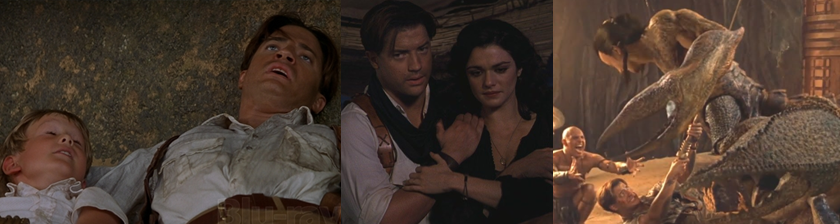
8 Rick O’Connell – The Mummy Returns (Sommers, 2001)

I miss Brendan Fraser; whatever happened to him? Arguably best known for his appearances in the Mummy trilogy (ibid/Cohen, 1999 to 2008), in which he portrayed a quick-witted and capable Indiana Jones-style adventurer, Fraser’s Rick O’Connell undergoes an interesting character arc throughout the trilogy, beginning as a disillusioned soldier and transforming from a reluctant hero motivated only by his libido to a doting father and content family man who was happy to put his adventuring days behind him. In The Mummy Returns, Rick is mortified when Imhotep’s (Arnold Vosloo) minions kidnap his smart-alecky little git of a son, Alex (Freddie Boath), and relentlessly uses every resource at his command to track Imhotep across the globe to rescue his son. Encouraging of the boy’s mischievous nature, one could argue that Alex only gets himself into a position to be kidnapped thanks to his father’s influence and their relationship has soured somewhat by the start of the third movie but that doesn’t take away from the fact that Rick travels across the world braving sea, air, and all manner of mummified atrocities to rescue his boy. When his beloved Evelyn (Rachel Weisz) is temporarily killed, we see a heartbreaking vulnerability to Rick’s usual bravado and his first action is to shield Alex from watching his mother suffer and die. Fuelled by rage and vengeance, he then takes on a now-mortal Imhotep in a fist-fight and rapidly accepts his destiny as a Medjai to deliver a killing blow to the monstrous Scorpion King (The Rock) to not only avenge his fallen wife but also as payback for putting his son in danger.

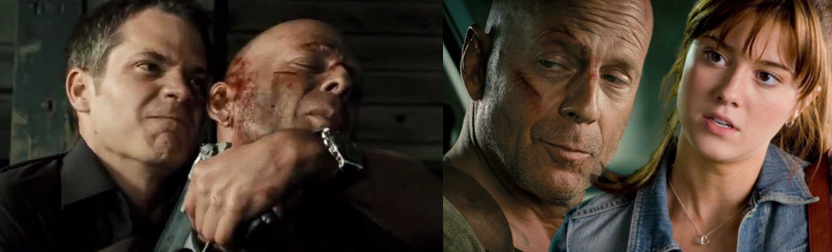
7 John McClane – Die Hard 4.0 (Wiseman, 2007)

In my experience, Die Hard 4.0 (also known by the far better title, Live Free or Die Hard) is generally not as highly regarded as its predecessors and I will always take issue with this; sure, it’s massively over the top and essentially turns the wise-cracking John McClane (Bruce Willis) into a superhero but that doesn’t make it bad. For me, it’s easily in the top three of the Die Hard films (Various, 1988 to 2013) thanks to Willis’ portrayal of McClane as weary, out of touch, and hiding a lot of his emotions behind a snarky attitude and grouchy demeanour. Now, to be fair, McClane doesn’t start the film as the greatest father; his daughter, Lucy (the always appealing Mary Elizabeth Winstead) is initially hostile towards him, refusing to call him “Dad” and preferring to take her mother’s last name. However, when she is kidnapped by Thomas Gabriel (Timothy Olyphant) as payback for McClane interfering in his “fire sale”, McClane doesn’t hesitate to throw himself into danger to rescue her, accumulating numerous injuries, enduring shots from a F-35B Lightning II, and even shooting himself in the shoulder at point-blank range to kill Gabriel. When taken by Gabriel, Lucy not only fights back at every opportunity but knows full well that her father will stop at nothing to rescue her, defiantly taking his last name and ultimately reconciling with him after seeing the lengths he would go to for her safety.

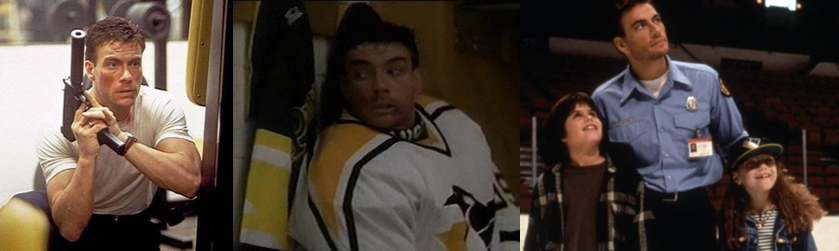
6 Darren McCord – Sudden Death (Hyams, 1995)

I feel like people don’t talk about Sudden Death enough; sure, it’s just “Die Hard on a boat” but it’s pretty decent for the most part, even with Jean-Claude Van Damme’s characteristically awkward acting and line delivery. McCord is very much like McClane, being a normal, average fire-fighter-turned-fire-inspector who has the odds against him. Though he’s much less cynical and grouchy compared to McClane, he is tormented by his failure to save a young girl from a house fire and has an extremely strained relationship with his ex wife. Similar to McClane, McCord’s relationship with his kids is a little shaky at the start of the film; Emily (Whittni Wright) views him with a heroic awe, believing him to still be a fire-fighter, while Tyler (Ross Malinger) is slightly more antagonistic and resentful. Still, he does obediently stay in his seat even as the hockey arena falls into chaos around him and Emily bravely stands up to terrorist Joshua Foss (Powers Boothe) after she is kidnapped, never faltering in her belief that her father will come to rescue her. For his part, McCord is slightly irresponsible as he leaves his young kids alone at the hockey game but more than makes up for it by taking it upon himself to disarm as many of Foss’s bombs as he can and take out the terrorists with little more than his wits, ingenuity, and some impressive kicks.

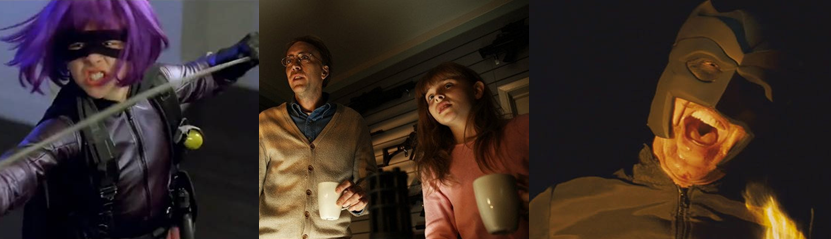
5 Damon Macready / Big Daddy – Kick-Ass (Vaughn, 2010)

Although his look and the specifics of his motivations were wildly different from his comic book counterpart, Nicolas Cage really stole the show for this awesome adaptation of the comic book of the same name (Mark Millar, John Romita Jr, et al, 2008 to 2014). Channelling the spirit of Adam West while wearing a particularly Tim Burton-esque “Bat-Suit”, Cage channelled his usual manic energy into a far more nuanced, complex performance that showed Macready to be both slightly unhinged and eerily logical. To be fair, you could argue that Macready is a pretty awful father since he pulled his daughter, Mindy (Chloë Grace Moretz) out of school and trained her to be his crimefighting partner, Hit-Girl, causing her to be more interested in elaborate knives and skewering criminals than…whatever it is pre-teen girls are into these days. However, you’d be forgetting the fact that Macready is tough but fair on Mindy, always encouraging her and pushing her to test her limits. Thanks to his training, she’s fully capable of taking out entire rooms full of armed men with ease; not only that, he also does cool stuff like purchase a whole bunch of weapons, toys, and even a jetpack. When’s the last time your dad bought you a jet pack!? Plus, there’s the fact that he continues to encourage and help his daughter even while burning to death before her eyes.

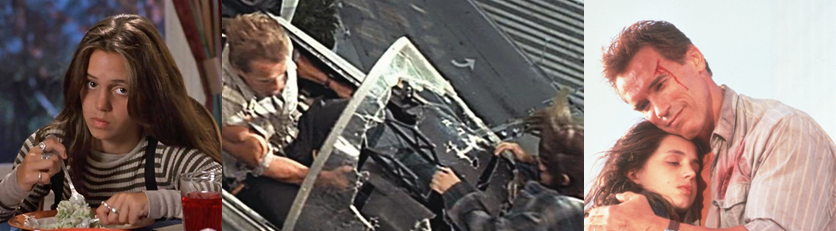
4 Harry Tasker – True Lies (Cameron, 1994)

Arnold Schwarzenegger has a bit of an iffy record when it comes to portraying dads, as we’ll see; sometimes he’s the career-obsessed type, other times he’s the overly protective type. In True Lies, he lies to his wife, Helen (Jamie Lee Curtis) and daughter, Dana (Eliza Dushku), on a daily basis to keep his true identity as a secret agent just that: a secret. As a result, and because she’s in that moody teenage phase of her life, his relationship with Dana is somewhat strained at the start of the film in that she sees him as dull and unreliable, unappreciative of the token gifts he brings her, casually stealing from his partner, Albert Gibson (Tom Arnold), and running off with her boyfriend or to her room to escape from him. However, like her mother, Dana’s entire perception of Harry is changed after she is kidnapped by terrorist Salim Abu Aziz (Art Malik) and it is her unassuming father who comes to her rescue…in a Harrier Jump Jet, no less! What makes Harry a bad-ass dad is that, when the chips are down, he drops all pretenses and shows his family exactly what he is capable of, gunning down countless terrorists and flying through city airspace just to rescue his daughter and shouldering the burden of keeping his true life from them in order to protect them. Once the secret is out, though, his relationships with both alter dramatically and they become a much more stable, contented, and united family.

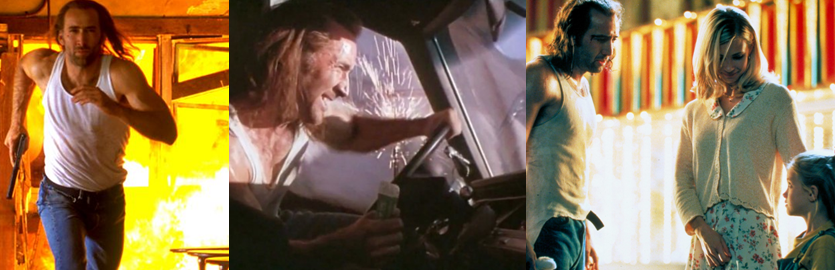
3 Cameron Poe – Con Air (West, 1997)

Aaah, yes, Con Air; a ridiculously over-the-top action film, to be sure, featuring Nicolas Cage not only with an absolutely gorgeous head of hair and henched up to the nines but also sporting possibly the worst Southern draw I’ve ever heard outside of The Fast and the Furious: Tokyo Drift (Morgan, 2006). Still, as ridiculous as Cage sounds (and as ludicrous as it is that his character, a decorated Army Ranger, would be sent to prison for ten years for what amounted to a clear case of self defense, at best, and manslaughter, at worst), the film is full of equally bombastic action and performances, with John Malkovich, especially, stealing the show (and, presumably, all that scenery he chewed) as the malicious Cyrus “The Virus” Grissom. Poe stands out from the other dads on this list as he doesn’t actually meet his daughter, Casey (Landry Allbright), until the film’s conclusion; however, through his numerous correspondences with Casey, he encourages her to stay in school and listen to her mother and builds the best, loving relationship he can given his position. His entire motivation throughout the film is to get back to his daughter and, while he’s tempted to simply let things play out in order to meet that goal, his morals won’t let him stand idly by and he fights through overwhelming odds and explosions galore to not only finally meet Casey but also to teach her valuable lessons about paying for your sins and standing up against injustice.

So, I said early that Schwarzenegger has a bit of an iffy reputation as a movie dad. Well, Commando, in addition to being, perhaps, the quintessential action movie of the eighties, also showcases Arnie as one of the most devoted and bad-ass dads ever put to film. A retired Colonel, Matrix (a gloriously ridiculous name if there ever was one) is perfectly content to have put down his guns and to live peacefully amidst nature with his young daughter, Jenny (Alyssa Milano). However, when Matrix’s past (or, more specifically, the fantastically sadistic Bennett (Vernon Wells)) catches up with him and Jenny is taken as a hostage, Matrix has only around twelve hours to track Bennett down to recover his daughter. Like Poe, Matrix’s entire motivation is geared towards rescuing Jenny but, while Poe (and many of the dads on this list), must use subterfuge to meet this end, Matrix instead literally moves Heaven and Earth to find Jenny, violently dispatching of all of Bennett’s henchmen and literally walking right into a camp full of seemingly-endless, fully armed soldiers, mowing them down with such reckless abandon that he barely needs to aim or reload. Witty, determined, and possessing a razor-sharp focus, Matrix is a veritable one-man army, capable of besting anyone who stands in his way, and yet still vulnerable and human enough to be injured when dramatically appropriate and fully prepared to go to any lengths to rescue her since, as he puts it: “All that matters to [him] now is Jenny”.

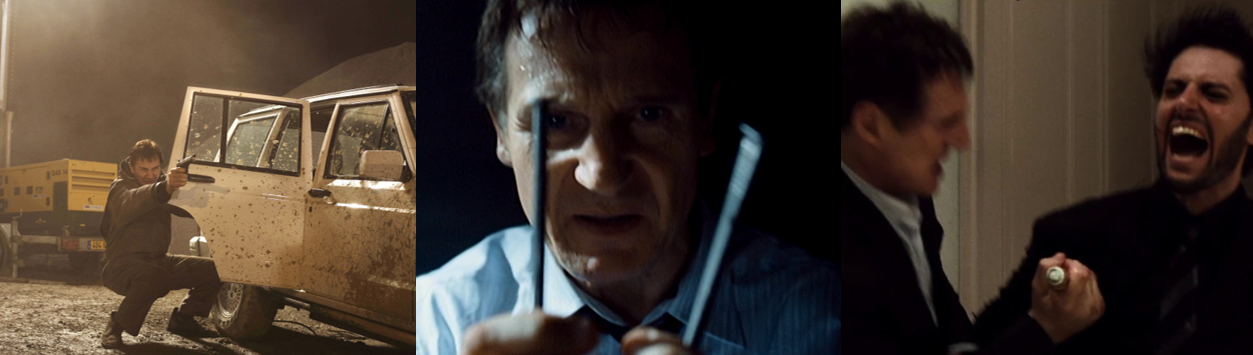
I mean, honestly, could it really be any other dad? Who else but Bryan Mills (Liam Neeson) could make the top of a list like this? Like a lot of the other dads I’ve talked about, Mills is a devoted father who has left behind a violent life to focus on building a relationship with his daughter (Kim (Maggie Grace), in this instance) despite having a frosty relationship with his ex-wife, Lenore Mills-St John (Famke Janssen). Having lost his marriage, and many years of bonding with Kim, due to his work as a “preventer” for the government, Mills is a loyal, if somewhat overprotective, father who just wants to be there for Kim and to encourage her dreams of being a singer. However, when she is taken by Albanian sex traffickers, Mills puts his unique set of skills to good use; like Matrix, his entire motivation revolves around finding his daughter but Mills has even less to go on and yet, within twenty-four hours, manages to track down enough of a lead to bring him within arm’s reach of Kim’s location. Along the way, Mills dispatches anyone who opposes him with a cold, calculating efficiency; age, clearly, hasn’t dwindled his skills or resources and, for the most part, he’s still able to function at peak efficiency with very little sleep or food. Of all the dad’s on this list, Mills is the most determined and competent; every movement is premeditated, meticulously thought through, and executed with alarming proficiency and yet Mills is still humble and vulnerable enough to show real pain, fatigue, and to deliver Kim back into the arms of her mother and stepfather.

Do you agree with my list? Perhaps you have another favourite movie dad who you think should have made the cut; if so, who is it and who are some of your favourite (or least favourite) movie dads? What are you doing this year for Father’s Day? Do you have any particularly fond memories of your dad? If so, feel free to share them, and any other comments, below.

Game Corner: Die Hard Trilogy (PlayStation)

GameCorner
DieHardTrilogyLogo

Released: August 1996
Developer: Probe Entertainment
Also Available For: PC and SEGA Saturn

The Background:
In 1996, we would be some eleven years or so away from a fourth entry in the action-packed Die Hard (Various, 1988 to 2013) film series. The third movie, Die Hard with a Vengeance (McTiernan, 1995) had just dropped the previous year so the only way fans of John McClane (Bruce Willis) were going to get more Die Hard action was to turn to videogames. Developed by Probe Entertainment, Die Hard Trilogy utilised three distinct, different gameplay styles to recreate a slightly altered version of the first three (and, at the time, only) movies in the increasingly over-the-top franchise.

The Plot:
Terrorists take over the Nakatomi Plaza and McClane must work his way up the tower, freeing hostages along the way; another group of terrorists then take control of Dulles Airport and McClane must once again save the day; finally, McClane must race through New York City defusing bombs placed at key points by, you guessed it, a terrorist.

Gameplay:
Die Hard Trilogy plays differently depending on which of the game’s scenarios you tackle; each of the three movies has a different gameplay style and, thus, a different perspective and different gameplay mechanics, camera perspectives, and controls. When playing through the events of Die Hard (ibid, 1988), players guide McClane through the Nakatomi Plaza from a third-person perspective in an arcade-style action shooter. Being a third-person shooter, the player can run, jump, dodge, and shoot at terrorists all while using the directional pad (D-pad) and a version of the “tank controls” made (in)famous by the PlayStation and such titles as Resident Evil (Capcom, 1996).

DieHardTrilogyDHHostages
Try not to shoot the hostages as you play…

This means that you can’t use the analogue sticks to control McClane, making for a clunky, awkward gameplay style where McClane will walk straight backwards when reversing and, due to the game’s more restrictive gameplay style, doesn’t really have to do much in the way of aiming: you simply point McClane in the general direction of your target, shoot, and will probably blow them away. McClane starts Die Hard with no shoes (as in the movie, though this doesn’t factor into the game) and his trusty Beretta, though he can acquire other weapons (such as a shotgun and machine gun) from weapons crates or downed terrorists. His health is measured by a police badge; when taking damage, the badge will deplete and, if completely depleted, McClane will die and the game will be over.

DieHardTrilogyDHBomb
Race to the exit before the bomb goes off!

McClane journeys through nineteen maze-like levels of the Nakatomi Plaza (though it feels never-ending), shooting terrorists and rescuing hostages on each floor. Once a set number of terrorists have been shot, some more will spawn in from the elevators but, once they’re all cleared out, McClane is given about thirty seconds to reach an exit before the Plaza is destroyed.

DieHardTrilogyDHBonus
Speed the hostages away to safety.

You’ll also travel up to the rooftop for a bonus level where a whole slew of hostages will try to escape via helicopter; you’ll have to take out the terrorists scattered around here and, again, race for the exit before the bomb goes off to score some bonus points. This last minute time limit is probably the most frustrating part of the Die Hard section of the game; well, that and trying to navigate through the labyrinthine floors of the Plaza using the game’s rubbish mini map. Sure, you can zoom in and out but, when you’re trying to race to the exit, it’s almost useless at pinpointing exactly where you’re supposed to go.

DieHardTrilogyAirport
Terrorists have overtaken Dulles Airport and only McClane can stop them!

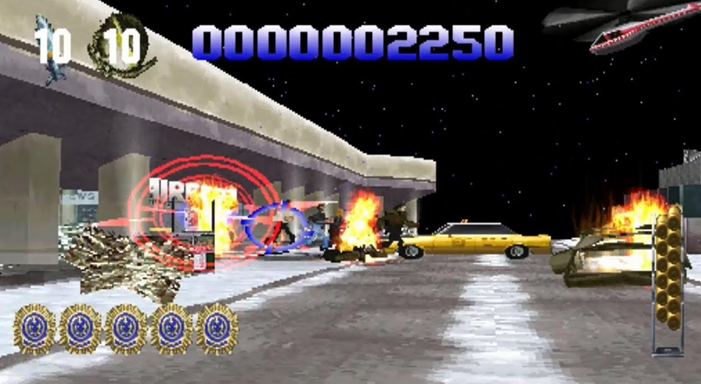
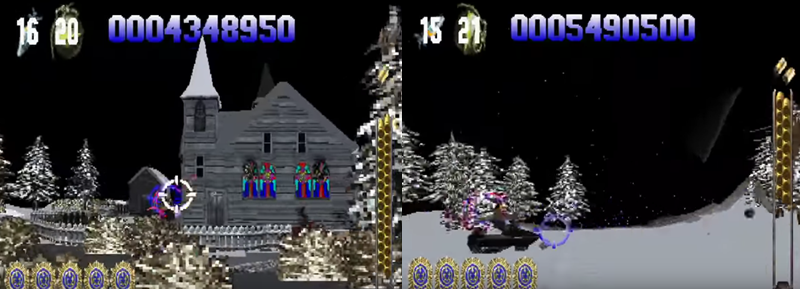
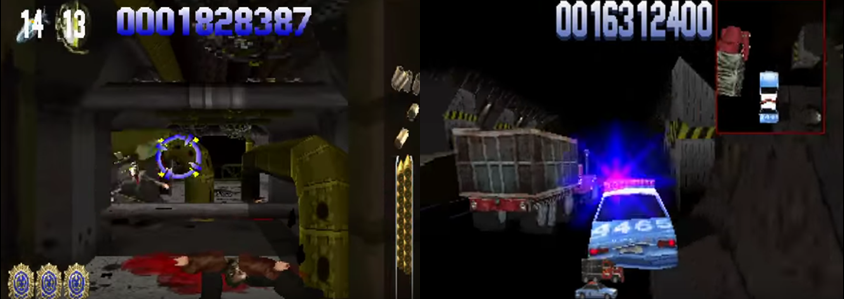
The game shifts to a first-person, on-rails shooter to retell the events of Die Hard 2: Die Harder (Harlin, 1990), similar to the likes of Time Crisis (Namco, 1995). Using the D-pad, you’ll manoeuvre a crosshair around a variety of maps, ranging from the car park and foyer of Dulles Airport, to the maze-like underground passage beneath the airport, to the runway and even into the skies above the airport to blast away at terrorists with reckless abandon. McClane must, again, blast the seemingly endless supply of terrorists away while avoiding and rescuing numerous hostages. You can also blast crates and other parts of the environment to pick up health and other temporary weapons and toss grenades at the bad guys again but will only find reprieve from injury when the camera decides to place him slightly behind some scenery.

DieHardTrilogy2Locations
You’ll blast through all the film’s locations.

You also get to storm the church and race through the snowy landscapes on a jet-ski, as in the movie, and the on-rails gameplay mechanic is actually a lot better in its execution that the third-person style of Die Hard. Sure, it’s never easy moving a crosshair with a D-pad but the polygonal graphics are a lot less obtrusive and, even better, there’s no sudden or enforced time limit rushing you to an exit. You simply blast away at terrorists before they hit you, reload, and continue until they’re all dead.

DieHardTrilogy3Levels
There’s not much variety in Die Hard with a Vengeance.

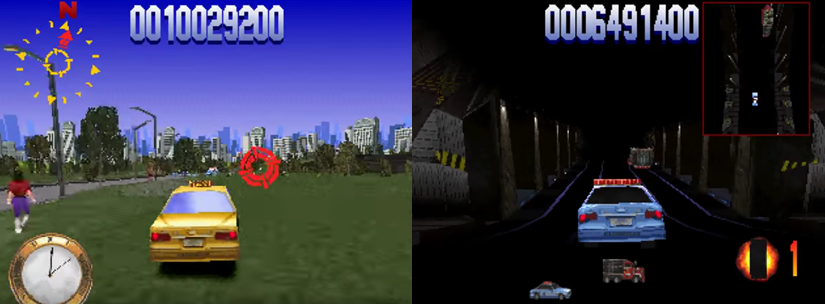
For Die Hard with a Vengeance, the game switches to a race against the clock throughout the streets and subways of New York City as McClane and Zeus Carver (sadly not voiced by Samuel L. Jackson) race to reach a series of bombs placed in various locations by Simon Gruber (Jeremy Irons). There’s no shooting to do here; you simply accelerate as fast as possible, making hard turns with the L or R triggers, and using limited boosts and jumps to increase your speed. The mini map returns but, this time, it’s more like a compass and is actually useful here; even if, for some reason, you can’t follow the compass points, Zeus will yell instructions to tell you when to make turns or that time is running out. Yes, the time limit returns but, this time, it’s a constantly ticking down clock on the lower left of the screen; you can pick up time bonuses as you race through the streets but the time you have to reach each bomb is tight, to say the least.

DieHardTrilogy3Controls
The controls could use some polish.

As you plough your way through the streets, you’ll have to dodge other cars and traffic and civilians; as you’re racing across Central Park (in an amusing interpretation of a similar scene in the movie), you’ll also have to worry about the massive body of water in the middle of the map, which will sink your car. After every stage, you’ll race against a truck in the subway tunnels to reach a bomb; if you fail to reach the bomb in any of the stages, it will explode and obliterate the entire city (so…I guess they’re all nuclear bombs, then?) It took me a little while to get to grips with the controls of Die Hard with a Vengeance; the PlayStation seems pushed to its limits here as it’s easy to bash against the sides of buildings or get caught in between the environment, where you’ll jitter away in a glitchy mess until you finally break free. Yet, once you get the timing of your hard turns right, this was fun, frenetic action even without any gunplay.

Graphics and Sound:
Die Hard is rendered in full janky-ass 3D polygons, the trademark style of 3D games around this time. As you explore the Nakatomi Plaza, objects will “pop up” out of thin air or turn see-through if you get to close to them and, rather than use a thick, obscuring fog to mask this effect, the game opts for pitch blackness, especially on the rooftop stages.

DieHardTrilogyDHGraphics
McClane is, at least, recognisable in Die Hard.

As a polygonal recreation of Willis’ character, however, McClane doesn’t look half bad; he looks exactly like Willis does in the film (though, obviously, a bit blocky), which is more than can be said for the game’s non-playable characters, who are just generic blocky figures to be shot or rescued.

DieHardTrilogyOpenWorld
The more open levels work a lot better.

Taking McClane out of the narrow hallways of the Nakatomi Plaza actually seems to improve the game’s presentation and stability; in both Die Hard 2 and Die Hard with a Vengeance, the more open environments reduce the annoying pop-up of obstacles and walls. I find this odd, as it seems like bigger environments would only exacerbate this issue but, apparently, it’s the opposite.

DieHardTrilogyJerkyOpen
The environments and graphics can still be a bit janky.

It’s not all good news, though; when Die Hard 2 switches to night-time levels or the underground passageways, the distorted, jerky effects come back in full force. Similarly, while you can switch between different camera perspectives so you can drive from the inside of McClane’s car, and the game’s version of New York City is rendered in surprising stability in Die Hard with a Vengeance, the buildings jerk and move as you race through the streets and it’s easier than it should be to get clipped into the environment. Unfortunately, my copy of the game kept skipping or bugging out when playing music but, from what I heard, there’s a pretty decent, techno/rocking beat to every level. There’s also some fairly decent and amusing voice acting, particularly from the Willis sound-alike who provides McClane’s constant quips. Sure, these (like all the game’s dialogue) are limited and repetitive (and there’s “Yippee ki-yay” but no expletives) but the game does a decent job of recreating McClane’s snarky wisecracks.

Enemies and Bosses:
In Die Hard, McClane guns down countless numbers of terrorists; if these are the same guys from the movie then Hans Gruber (Alan Rickman) really got to recruiting for the videogame because there are a lot of henchmen to wade through here. One thing I did like was how, sometimes, hostages will turn out to be enemies in disguise and pull a gun out on McClane, similar to Gruber.

DieHardTrilogyDHHans
This as close as Hans gets to appearing in Die Hard

Speaking of Hans…well, he doesn’t really appear. Occasionally, in some levels, you’ll encounter a “Boss” who is slightly different coloured enemy, maybe with more health and a better weapon, who’ll grant an extra life upon being killed. There is one in the game’s last level, but it doesn’t look like Gruber and there’s nothing to say it actually is so that’s a bit of a downer.

DieHardTrilogy2Bosses
Bosses aren’t really a thing in Die Hard 2.

This trend continues in Die Hard 2, where you’ll get to blast “Head Honchos” but won’t actually tackle Colonel Stuart (William Sadler) head-on. Instead, you’ll have to settle for McClane inexplicably circling Stuart’s aircraft in the game’s finale, which you’ll blast away at until it’s nothing more than a flaming mass of wreckage. Die Hard with a Vengeance, however, bucks this trend; in most levels, you’ll end up chasing after a “Bomb Car”, which will explode and destroy everything if you don’t destroy it first. These are the equivalent of the game’s boss battles until you reach the final stage of the game but, unlike the other two games, Simon Gruber will taunt McClane as he completes (or fails) each of his missions, making him a near-constant presence.

DieHardTrilogy3Boss
Finally, a familiar face!

Gruber also makes an appearance in the game’s final stage, in which McClane must chase after Gruber’s helicopter and use launch points to literally use his car as a weapon to take Gruber down. There’s something incredibly amusing about McClane solving every problem, from city-destroying bombs to helicopters, by simply ploughing into it head-first with a car!

Power-Ups and Bonuses:
In Die Hard, you’ll rack up a score as you shoot terrorists and rescue hostage; this, along with killing a Boss, will grant McClane an extra life. You can also replenish McClane’s health with medical packs and acquire new weapons as you play, but these all have limited ammo so you’ll eventually revert back to McClane’s basic Beretta.

DieHardTrilogyDHWeapons
Grab a grenade and blow those buggers away!

Also, I dunno if it’s just me, but I couldn’t figure out how to switch between McClane’s different weapons; grabbing a new one automatically switches to it and you switch back to the Beretta once it’s spent. You can, however, also acquire secondary weapons (like grenades and smoke bombs), which you can switch between and which are vital to dispatching large groups of enemies.

DieHardTrilogy23PowerUps
The third game is lacking in power-ups compared to the first two.

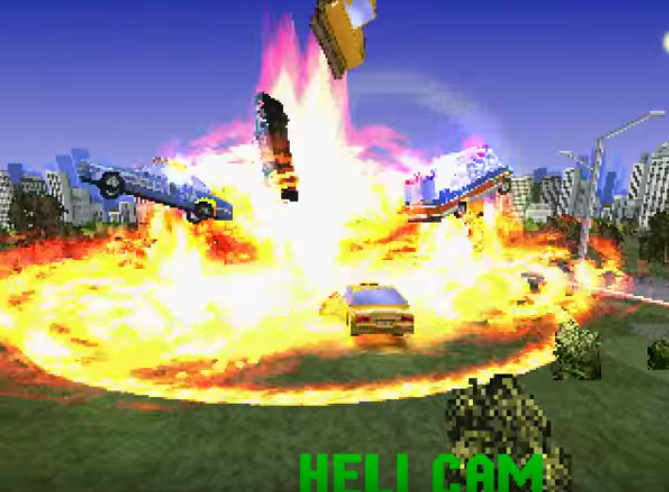
In Die Hard 2, enemies and destroyed crates will yield additional weapons; as in Die Hard, these have limited ammunition but you can still pick up a machine gun, shotgun, explosive shotgun, and even a rocket launcher to blow terrorists away. In Die Hard with a Vengeance, however, the only power-up you can pick up are the boosts. These will blow your car into the air and give you a short burst of speed but aren’t as effective as I would expect from a boost. You can also pick up additional points and time and hit launch points to fly dramatically through the air at certain key points.

Additional Features:
Well, I hate to say it, but there’s nothing. When you play Die Hard Trilogy, you play for a high score; it’s a very arcade experience in that way, right down to how you enter your name on the high score screen.

DieHardTrilogyCheats
There’s some weird-ass cheats available in this game…

There are, however, a whole slew of cheats you can enter to each of the three games that will affect or spice up your gaming experience; these range from the usual stuff like infinite ammo and invincibility to odd stuff, like plants that scream when they’re shot and a fat mode.

DieHardTrilogyConclusion

The Summary:
Your enjoyment of Die Hard Trilogy is somewhat dependent upon how well you get on with each of the games, and gameplay mechanics, available within it; Die Hard is a pretty uninspiring third-person action shooter but Die Hard 2 is a surprisingly well-realised on-rails shooter and Die Hard with a Vengeance is an enjoyable racer. However, while each game as positives and negatives, there have definitely been better games of each type, even on the PlayStation, but I appreciate that, back then, developers were very restricted by the limitations of the technology of the time. In the end, there’s quite a bit on offer in Die Hard Trilogy as an arcade-like experience; going into it, I expected each of the movies to be a short, maybe five to ten level game, but they just kept going on and on. This would be good but there’s not much to come back to beyond getting to gun down hundreds of terrorists whilst spewing the snarky witticisms of John McClane but there are far better options if you want to do things like that…like just watching Die Hard.

My Rating:

Rating: 2 out of 5.

Could Be Better

Did you play Die Hard Trilogy back in the day, or still play it now? What do you think of it? Has it held up over time or is it just a bad example of the limitations of early-PlayStation titles? What’s your favourite Die Hard movie? Drop a comment below and share your thoughts on Die Hard.

Talking Movies: Skyscraper

Talking Movies
SkyscraperLogo

Believe it or not, it’s been thirty years since Die Hard (McTiernan, 1988) pitted one lone man against a skyscraper full of charismatic terrorists. Since then, Die Hard has gone on to inspire not only a slew of sequels but also knock-offs and copycats; we’ve seen Die Hard in a hockey arena, Die Hard on a boat, Die Hard on a train, Die Hard in the White House, Die Hard on a plane and, to be honest, some of these have been pretty good in and of themselves.

SkyscraperSecurity
Who better to assess your safety than the Rock?

Now, director Rawson Marshall Thurber brings it all full circle by giving us Die Hard in a skyscraper…that’s on fire! Which, yeah, is very Towering Inferno (Guillermin, 1974) but with one crucial difference: this burning symbol of capitalist expansion has the Rock in it! Skyscraper tells the story of former FBI agent turned security assessor Will Sawyer (Dwayne Johnson), who lost a foot in a hostage situation that turned sour, who has been roped into signing off on the largest, tallest, most advanced building ever constructed. The brainchild of Zhao Long Ji (Chin Han), the Pearl promises to be a city in the sky in Hong Kong.

SkyscraperProtector
The Rock will do anything to rescue his family.

Unfortunately, to build the Pearl, Zhao was forced to do business with terrorist and extortionist Kores Botha (Roland Møller), who infiltrates the Pearl with a gang of gun-toting thugs and proceeds to set the building ablaze in order to retrieve a USB drive that implicates his illegal activities. With his wife and children trapped inside, Sawyer becomes a man on a mission to not only enter the Pearl but also brave the odds and rescue his family.

SkyscraperPhysicality
Watch the Rock spit in the face of physics!

It doesn’t take long to see the clear differences between Die Hard and Skyscraper; Johnson, a physical specimen, is far more the muscleman than the snarky cockroach embodied by Bruce Willis. Sawyer is far more about the physical stunts and acts than John McClane, who was beat up to shit and still kept coming; the role of Sawyer showcases the Rock’s more vulnerable side, it’s true, and he spends much of the film nursing injuries and overcoming his emotion to find unique ways around problems, but he’s far more likely to leap from a construction crane, climb a rope, and stabilise a collapsing bridge than enter into a fist fight with a gun-wielding terrorist. Møller, though relatively well-rounded and reasonably charismatic, is no Alan Rickman but, to be fair, very few actors are. Far from Rickman’s chilling, magnetic Hans Gruber, Botha is a driven and focused individual who is more than capable of backing up his ice-cold threats with physical violence. His willingness to take the Rock’s daughter hostage shows how he will do anything to retrieve his USB drive and he makes for a serviceable villain.

SkyscraperHeart
Skyscraper has a lot of heart beneath its action.

Rounding out the cast are Neve Campbell as Sawyer’s wife, Sarah, who is far from a damsel in distress; she holds her own in a fight, uses logical and intelligent solutions to help keep her children safe, and convinces the Hong Kong authorities that Sawyer is trying to save lives rather than being responsible for the blazing skyscraper. Make no mistake, this film is an over-the-top action set piece through and through and going into it expecting anything deeper or more meaningful is a fool’s errand. The Rock defies physics, logic, and gravity on more than one occasion but it’s the freakin’ Rock! Would you really want anything else? If you’re looking for a movie to shut your brain off (not completely, I should add; it’s not a brainless action movie) and just enjoy with some friends, a few drinks, and a pizza than Skyscraper more than meets that criteria.

My Rating:

Rating: 3 out of 5.

Pretty Good

Recommended: Sure, yeah, the world always needs more Die Hard-like films.
Best moment: Anything involving the Rock using his physicality to absolutely absurd limits, like leaping to the Pearl or climbing down it using a precariously-secured rope.
Worst moment: The side plot that sees the Hong Kong authorities brand Sawyer a criminal was a bit annoying, and didn’t really play into the overall plot in the end.