Back Issues: The Amazing Spider-Man #210

Story Title: “The Prophecy of Madame Web!”
Published: 12 August 1980 (cover-dated November 1980)
Writer: Dennis O’Neil
Artist: John Romita Jr.

The Background:
After a blockbuster success with the Fantastic Four, Marvel editor and head writer Stan Lee spearheaded one of Marvel’s best selling publications with teenage superhero Peter Parker/Spider-Man. Spidey’s popularity soon saw him headlining other comics, such as Marvel Team-Up, amassing one of the industry’s most colourful and memorable rogues galleries, and his supporting cast ballooning as Parker aged and his life became more complicated. In November 1980, The Amazing Spider-Man readers were introduced to blind, crippled psychic Cassandra Webb/Madame Web, an enigmatic figure who both tasked Spider-Man with opposing certain villains and used her clairvoyance to direct his destiny. Madame Web played a significant role once Spider-Man was threatened by outside and multiversal forces, ultimately dying at the hands of a vengeful Vladimir Kravinoff/Grim Hunter, with her last act being to pass her powers to Julia Carpenter/Spider-Man. Madame Web’s most significant portrayal, however, was in the Spider-Man animated series (1994 to 1998), where she was voiced by Stan Lee’s wife, Joan, and acted as a mysterious mentor to Spider-Man (Christopher Daniel Barnes), often frustrating him with her manipulative ways. Years later, Sony Pictures inexplicably decided the best way to capitalise on their limited library of Spider-Man characters was to produce a Madame Web live-action movie, teaming this obscure side character with a handful of Spider-Women in an attempt to subvert audience expectations.

The Review:
We begin in the basement storage room of the New York Globe, a rival newspaper to the Daily Bugle, where Robert Dockery, circulation manager for the newspaper, directs a gang of masked hoodlums whom he’s hired in a bid to seize complete control of the publication. This plot point is then put on hold as the story joins Peter Parker, who’s strolling through Chinatown alongside Debra “Debbie” Whitman, an obscure love interest of Peter’s even for me whom he met while studying at Empire State University. Peter’s surprised to learn that the normally level-headed and pragmatic Debra has booked an appointment with a fortune teller, the titular Madame Web, though Debra insists that she’s simply exploring the fascinating subject of psychic phenomena rather than being scammed by a faux clairvoyant. Although Peter enjoys teasing her over this, he’s unable to join her to see Madame Web in action as, wouldn’t you know it, he’s late for a meeting at the New York Globe. Rather than web-sling over there, Peter takes the more traditional route but is forced to switch to Spider-Man when he’s denied access to the editorial department due to a managerial mandate. This is all part of Dockery’s plot, of course. He’s taking a meeting with his senior staff and introducing them to Katrinka Janice “K.J.” Clayton, publisher of the New York Globe, a provocative woman who, until now, has been a silent partner of the newspaper. Just as she announces Dockery’s ascension to power, those masked hoodlums burst in, accost the staff members, and take Clayton hostage.  

When a publishing mogul is seemingly kidnapped, Spidey turns to a mysterious psychic for help.

Luckily, Spider-Man was climbing up the outside of the building, so he bursts in to break up the party, easily dodging their machine gun fire with his superhuman speed and reflexes and fighting off the armed thugs even when they dog-pile him. They do, however, delay him long enough for Clayton to be kidnapped and, thanks to Dockery “clumsily” getting in his way, Spidey is a step too slow to pursue them and is unable to catch up due to a lack of windows. With no other options, Spidey decides to indulge Debra’s fantasy and pay Madame Web a visit to see if the elderly medium can help him track Clayton down. Spidey web-slings over the Madame Web’s apartment and is stunned to find she’s an elderly blind lady who’s hooked up to an elaborate web-based life support machine, created by her late husband, that sustains her so she can aid others with her gifts. She describes herself as a “soothsayer, a psychic, a witch” and claims to be capable not just of “second-sight” but fostering the psychic powers of others. Impressed by her presentation and boastful claims, Spider-Man asks for her insight into Clayton and, though she stresses that her abilities aren’t 100% guaranteed due to the nature of the paranormal, she immediately picks up that Clayton is the victim of a malicious deceit, perpetrated by Web’s own student, Belinda Bell, to be held hostage for financial gain. At Spidey’s urging, Madame Web intuits that Belinda and Clayton will perish in a horrific train crash if he doesn’t find Bell, who is his only hope of tracking down Clayton. The next scene shows that the deceit runs even deeper as Belinda was paid to impersonate Clayton and, for her assistance, she finds herself tied up in a toy store (of all places) and at the mercy of Dockery’s ruthless mercenaries. 

Thanks to Madame Web, Spidey saves Clayton, though her true nature remains a mystery.

Across town at the New York Gloe, Dockery confronts the real Clayton (actually a much older woman) and openly threatens her, mocking the vanity that so easily allowed him to have her impersonated to hand control of the newspaper over to him. Confident in his victory, Dockery calls his thugs and orders Belinda’s execution, but Spider-Man arrives to save her, having deduced that Madame Web’s vision of crashing trains actually meant the toy store that Dockery owns which…is a bit of a leap but sure, okay. Once again, Spider-Man easily dispatches of the goons, burying them beneath shelving units and stock, and freeing Belinda. Angered by the betrayal and grateful for the rescue, Belinda warns Spider-Man of Dockery’s intentions towards Clayton so he races over to the New York Globe, arriving just in time to find her office engulfed in flames thanks to Dockery dousing gasoline everywhere and starting a raging inferno. Spider-Man brings Clayton to safety, setting her down outside the building just as Dockery makes a run for it, only to find his car up-ended by the web-slinger. Defeated, Dockery folds like paper and Peter later reads that he’s run similar scams before, although Dockery’s imprisonment means that Peter is now out of work (I’m not sure exactly why, surely the New York Globe is still publishing and employing staff, but then I’m unfamiliar with this period in Peter’s life so maybe his job was somehow linked to Dockery?) Before he can descend into complete despair, Peter suddenly gets a phone call from Madame Web, who learned of his dual identity through her powers; she both promises to keep his secret and reassures him that his financial woes will soon be resolved. While this sounds positive on paper, the final panel of the issue reveals that his cantankerous former boss, J. Jonah Jameson, is literally chomping at the bit to re-employ the troubled young hero! 

The Summary:
“The Prophecy of Madame Web!” was an inauspicious debut for the mysterious psychic; Madame Web herself was more of a secondary (or even tertiary) character to the main plot, which was surprisingly low-key for a Spider-Man story, involving no colourful supervillains and being a simple story of a greedy man going to extreme lengths for more power. In other Spider-Man stories, Dockery would’ve employed the services of a low-tier Spider-Man villain, someone like MacDonald “Mac” Gargan/The Scorpion, Herman Schultz/The Shocker, or even Dmitri Smerdyakov/The Chameleon either to take Belinda’s role of impersonating K.J. Clayton or masquerading as Dockery himself. Indeed, I do wonder if maybe the story would’ve been more enjoyable with a supervillain in place of Dockery’s nameless, faceless goons, who offer no physical challenge to Spider-Man and don’t even respond to his witty remarks and cheap quips. Without a colourful villain, the fights aren’t as interesting and the stakes are quite low in terms of Spidey’s safety; there’s no question he can out-punch these mercenaries, so the drama revolves around ensuring Belinda and Clayton are safe instead. This would be fine but, again, there isn’t much emphasis on them being in danger; Belinda is tied up and taunted as the mercs wait for the order to kill her, rather than just being shot right away, and Dockery goes to the effort of setting Clayton’s office on fire to stage her death as an accident rather than just shoving her out a window or gunning her down. I don’t mind a more grounded, low-stakes Spidey story – in many ways, it’s a change of pace – but the narrative here is littered with contrivances and conveniences that make it decidedly run-of-the-mill compared to other Spidey tales. 

Madame Web’s look and powers impress, but the plot is middling and forgettable.

Madame Web makes for a visually interesting character; decked out in a slick black/red dress with a spider motif, blindfolded, and hooked up to a web-like life support system, she’s got a memorable design, for sure. Although Peter dismissed her as a fraud (which is a bit odd considering Peter has chummed with the X-Men before, a team known for their psychics), she proves to be completely legitimate, though her clairvoyance is paradoxically accurate and unreliable, meaning she can only vaguely point Spidey in the right direction and stress fatal consequences should he fail. Thankfully, Spider-Man uses his head (off panel, of course) and, rather than searching every trainyard in the city, realises that Dockery owns a toy shop, which turns out to be the right location. Truthfully, though, I didn’t really like this; it felt rushed and forced and again lowered the stakes as it meant we wouldn’t be seeing Belinda or Clayton threatened by oncoming trains. The twist of Madame Web learning Spidey’s secret identity was interesting as very few characters were in on this back then and taints her mysterious aura with a potential menace as her intentions might not be as benevolent as they seem, but she’s ultimately a non-factor in this story. I have no issues believing that Spider-Man could’ve figured out where Belinda was without Madame Web’s help, making her largely superfluous. I almost wonder if it might’ve been better to have Madame Web be the linchpin of the story; perhaps she’s a true medium who’s targeted by gangsters or hosts a psychic television show and is kidnapped by a villain for a ransom, or just something a little more engaging that Spider-Man giving up pursuing the hoodlums and randomly deciding to ask for her help.  

My Rating:

Rating: 2 out of 5.

Could Be Better

Have you read “The Prophecy of Madame Web!”? If so, what did you think to it? Were you impressed by her debut, or did it fall as flat for you as it did for me? Did you like that it was a more grounded story, or would you have preferred to see Spidey tangle with a supervillain? What are some of your favourite Madame Web stories or moments? Are you excited to see her live-action debut? Whatever your thoughts on Madame Web, drop a comment below or on my social media and be sure to check out my other Spider-Man content across the site. 

Back Issues & Knuckles: Sonic Quest


Following a highly anticipated release, bolstered by an extravagant marketing and release schedule, Sonic the Hedgehog 2 (SEGA Technical Institute, 1992) not only improved on every aspect of its influential predecessor but also became the second best-selling SEGA Mega Drive game of all time. Expectations were high for the equally-anticipated third entry, a game that ended up being so big that SEGA split it in two, birthing perhaps the greatest 2D Sonic adventure in the process.


Writer: Michael Gallagher – Artist: Manny Galan

Story Title: “The Death Egg Saga Book One: Scrambled”
Published: September 1996

Story Title: “The Death Egg Saga Book Two: Poached”
Published: October 1996

Story Title: “The Death Egg Saga Book Three: Over Easy”
Published: November 1996

The Background:
When Sonic the Hedgehog blasted onto the videogame scene in 1991, he was an immediate hit thanks to his debut title being bundled with the Mega Drive and SEGA’s aggressive marketing campaign. His popularity exploded with Sonic the Hedgehog 2 (SEGA Technical Institute, 1992), however, and Sonic merchandise was suddenly everywhere; not only did he feature in the Macy’s Day Parade and in cartoons but he also starred in a number of comic books. Following the initial four-part miniseries, which mashed together narrative elements of Sonic’s cartoon adventures, Archie Comics began regular publication of what would become the longest-running videogame comic book ever. In time, to capitalise on Sonic’s continued popularity, a number of spin-off comics were produced, including limited issue releases such as this one designed as adaptations of various Sonic videogames. While the videogame lore often clashed with Archie’s unique continuity, and later led to a series of convoluted retcons, these did introduce popular franchise characters like Knuckles the Echidna into the comics and helped to broaden Archie’s continuity.

The Review:
Since I wasn’t able to get my hands on Archie’s Sonic comics over here in the United Kingdom, I’ve always had a bit of a fascination with them, despite how complex their narrative eventually became with a whole mess of original lore and characters clogging up the pages. Still, one of the first priorities for me when these comics were collected in mini volumes was to pick up the “Death Egg Saga”, which was published in one of those Sonic the Hedgehog Select collections, primarily because Sonic 3 & Knuckles is my favourite of the classic Sonic games but also because I was intrigued to see the Death Egg, and Knuckles, looped into Archie’s quasi-continuation of the notoriously popular Sonic the Hedgehog/SatAM cartoon (1993 to 1994). For context, “The Death Egg Saga” picks up shortly after the long-lost King Maximillian Acorn was finally rescued from the Zone of Silence after being trapped there around about the same time Doctor Ivo Robotnik conquered Planet Mobius. While the Freedom Fighters celebrated their liege’s return, this would come to upset the balance of power and focus of their crusade against Dr. Robotnik as the out of touch King Acorn undermined the authority of his daughter, Princess Sally Acorn, and favoured the likes of the abrasive Geoffrey St. John over Sonic. Consequently, the story begins with St. John (one of my least favourite Archie characters) skulking around the Freedom Fighter’s hidden haven, Knothole Village, at the crack of dawn; he’s spotted by Sonic and the two get into a war of words that almost comes to blows before Sally intervenes and reveals that her father is slowly losing his mind and body to a bizarre crystalline infection.

When Sonic and Tails look for Magic Rings to help the King, they stumble upon the Death Egg!

As best as Knothole’s resident physician, Doctor Horatio Quentin Quack, can figure, this is a result of the King’s extended stay in the mysterious Zone of Silence; in order to keep the Freedom Fighters from panicking, King Acorn’s condition has been deemed top secret and Sally orders St. John to stand guard over the King while they explore their options. Their trusty mechanic and science expert, Rotor the Walrus (occasionally called “Boomer”), is at a loss but rookie Freedom Fighter Miles “Tails” Prower hits upon a possible solution when he observes that the King’s crystalline skin resembles the texture of Chaos Emeralds. This prompts Sonic to retrieve his recently-acquired “one-billionth Magic Ring” to try and use its Chaos Emerald powers to reverse King Acorn’s condition, though it proves to be a fleeting solution. Rotor theorises that the Ring is unique to Sonic and suggests gathering as many others as possible to try again, prompting Sally to send Bunnie Rabbot and Antoine D’Coolette out to the mysterious Lake of Rings in the forest and Sonic and Tails to the Ring Grotto outside Robotropolis, Dr. Robotnik’s industrial, mechanical city. This area has been irrevocably changed and damaged following a recent fight between Super Sonic and Hyper Knuckles, and Dr. Robotnik’s attacks, and the two are stunned to find the Ring Grotto has been sealed beneath an impenetrable steel dome. Sonic leaves Tails to watch over the area while he races off to recruit a bruiser named Carl Condor to help bust it open, and the young fox-boy is shocked when the dome suddenly opens up and the Grotto’s entire supply of Magic Rings is sucked up into the clouds courtesy of a giant vacuum tube, which also takes Tails along with it! At the Mobian Cliffs, Sonic is shocked by a sudden and unnaturally faster solar eclipse, almost as if something artificial were crossing the Sun’s path, and horrified to find that Carl has been robotocised; caught off-guard, Sonic is rendered unconscious by the mechanical vulture and carried into the sky towards an ominous, egg-shaped superstructure.

Knuckles and the Chaotix are aghast when the Death Egg tries to submerge the Floating Island!

This is, of course, the Death Egg, Dr. Robotnik’s newest and most dangerous creation. After leaving his nephew and whimpering subordinate Snively in charge of overseeing Robotropolis’s reconstruction (a position he immediately and amusingly abuses), the cybernetic dictator revels in his glory as he powers up the Death Egg with the Magic Rings and prepares to use it to roboticise every living thing on the planet! However, while the Magic Rings ensure that the Death Egg is effectively invulnerable to external attack, Dr. Robotnik still needs a Chaos Emerald to bring the station to full power; additionally, he sucked up some unwanted additional weight that’s keeping it from reaching its proper orbit, but has no idea that Tails is in amongst the trees and debris. Thinking quickly, Tails jams himself into the discarded wreckage of a disobedient SWATbot so he can explore the space station undetected, while Sonic escapes the talons of the Condorbot and defies the laws of physics to pinball his way onto the Death Egg just as Tails jettisons the crap that was weighing it down. With the Death Egg scrambling their communications signal and the King’s condition worsening, Dr. Robotnik guides the Death Egg towards the Floating Island (as it was then known), which naturally attracts the attention of the island’s hot-headed guardian, Knuckles. Swooping up to intercept the Death Egg, Knuckles is hit by a laser blast from the satellite’s “eye”; luckily, this simply stuns him and he falls into the arms of his friends, the Chaotix (Mighty the Armadillo, Vector the Crocodile, Charmy Bee, Espio the Chameleon and…*sigh* Archimedes the Fire-Ant). The group watch as Dr. Robotnik drops a squadron of gigantic Burrobots to dig up the island’s Chaos Emeralds, which they race to stop to keep the island from plummeting from the sky. While the Chaotix attack the massive drilling mechs, Sonic tears his way through the Death Egg but arrives too late to keep Dr. Robotnik from ramming the satellite into the Floating Island! The Chaos Emerald is able to keep the island aloft, but the sheer weight and thrust of the Death Egg causes it to tip to one side and forces it into the sea below!

Thanks to repurposing Dr. Robotnik’s mechs, Sonic and Tails are able to destroy the Death Egg.

Naturally, Sonic leaps into action, only to end up attacking Tails by accident. To make matters worse, Dr. Robotnik shields himself from Sonic’s attack with a thick wall of plexiglass and then chokes him out with a spew of poisonous gas. Luckily, Tails recovers from his assault and uses his SWATbot suit to break through Dr. Robotnik’s defences and destroy his control panels, saving Sonic from suffocation and sending the satellite uncontrollably hurtling into space. Thanks to a “stabilising field” built into his “Gravi-Gauntlet”, Dr. Robotnik staves off the sudden drag of inertia and escapes to his auxiliary control room; he then sics a massive robotic Sonic doppelgänger on the two. While a far cry from his sleeker, more popular counterpart or even Sonic’s more versatile Mecha Sonic form, this “Silver Sonic” has the muscle and armour to shrug off Sonic’s attacks and manhandle (or should that be hoghandle?) him with punches, kicks, and slams but proves disappointingly susceptible to an electric shock from some conveniently-placed severed cables. Despite the failure of his Silver Sonic, Dr. Robotnik resorts to another back-up plan, donning his “most sophisticated battle armour ever”, the Eggs-O-Skeleton, which augments his physical strength by drawing power from the Death Egg itself! Sonic evens the odds by (…somehow…) commandeering Silver Sonic’s mechanical body and battling the rotund dictator on equal ground. The melee escalates but, ultimately, Sonic hurls Dr. Robotnik up through the ceiling and out of the Death Egg; during the fight, Tails was somehow able to rig the Death Egg to explode and the two beat a hasty retreat, swiping the stolen Magic Rings and making it safely to the surface before the Death Egg’s destruction (which, while somewhat anti-climactic on paper, is “seen and felt” all around the planet). While Snively faces the wrath of his uncle and master and the mad cyborg swears revenge upon Sonic and the Freedom Fighters, Sonic and Tails race back to Knothole to see if the Rings will cure the King, which is a plot thread left unresolved in this miniseries.

The Summary:
As ever, one of the main appeals of Archie’s attempt at a Sonic 3 & Knuckles adaptation is the artwork; Archie Comics, especially at this time, did a great job of emulating the character designs and locations seen in SatAM, with Patrick “Spaz” Spaziante being their standout artist. Manny Galan is no slouch here, though, and there are times when his version of Sonic evokes the character’s more dynamic and streamlined Japanese presentation; Archie’s original characters, like St. John, don’t fare too well but SEGA’s characters all hold up quite nicely, though I’m not massively onboard with the artistic shortcuts taken to basically show Sonic and Knuckles flying simply because they need to get up to the Death Egg. Everything is still early Archie, though, meaning the Floating Island doesn’t look that great, the Death Egg has an ugly and needlessly “busy” design, and there’s an element of daft childishness in some areas as the comic still hadn’t quite shaken off the influences from SatAM’s more slapstick sister series. As if often the case, the first few pages are bogged down with recapping the events from previous issues and even prior Archie stories, but it’s not too invasive.

While there’s some decent build up to the Death Egg, it feels secondary to King Acorn’s plight.

The biggest issue with Sonic Quest is that it’s not much of an adaptation of Sonic 3 & Knuckles. Much like in their other videogame tie-ins and those seen in Fleetway’s publications over here in the UK, Archie’s writers pick and choose elements from the videogames to incorporate, almost as if they were drip-fed footage and details of SEGA’s upcoming games rather than being privy to full details ahead of time. Thus, elements of Sonic 3 & Knuckles are spread out across different stories and one-offs, such as introducing Knuckles and even the Chaotix before the Death Egg. While the Death Egg is at the centre of Sonic Quest, it’s not really the narrative focus; the satellite doesn’t appear until the end of issue one and is destroyed before it can really do anything other than steal some Magic Rings, blast Knuckles, and almost submerge the Floating Island. On the plus side, the story does a great job of building the threat of the Death Egg; hiding it, seeing it on computer monitors, and especially the “eclipse” sequence all add to the anticipation of the space station’s big reveal and it’s portrayed (on paper) as being a serious threat as it’s allegedly capable of roboticising the entire planet. However, since it lacks a Chaos Emerald, it cannot actually do this and it’s one attack is enough to simply stun Knuckles, significantly diminishing its menace. I think the story would have benefitted from being five or even six issues long and seeing Dr. Robotnik successfully attack the Floating Island with the battleship and steal a Chaos Emerald to robotoicise large areas of Mobius, which would have greatly raised the stakes of the narrative.

Things pick up when Silver Sonic appears but the story wastes a lot of its more interesting elements.

As presented, Sonic Quest doesn’t even require Sonic to begrudgingly join forces with his hot-headed rival; Knuckles’ involvement is more of a glorified cameo and, while he and the Chaotix do fend off the gigantic Burrobots, he does nothing to help destroy the Death Egg. Indeed, since Sonic and Tails do all the work from inside the space station and sabotage its controls, there was never any danger of Dr. Robotnik acquiring a Chaos Emerald so Knuckles could’ve been entirely absent from the story. Additionally, we don’t really get a sense of the interior of the Death Egg; we only see a few corridors and rooms, with the bulk of the story taking place in a confined control room, and the main concern of the plot is more about getting the Magic Rings to cure King Acorn, with the Death Egg presented as more of an inconvenience since that’s where the Rings are being held. Things pick up a bit once Dr. Robotnik unleashes Silver Sonic but, while I enjoyed this fight and the artwork here, this mechanical monstrosity is defeated with a ridiculous amount of ease, exhibits no personality, and is somehow easily controlled by Sonic after it’s defeated. Even the showdown between Sonic and Dr. Robotnik ends up being quite disappointing; not only is Dr. Robotnik’s Eggs-O-Skeleton a weak design and a poor substitute for his more imposing Death Egg Robot, we never get a sense of what he’s capable of while wearing it beyond “being stronger” and he’s easily trounced by Sonic piloting the remains of Silver Sonic. There’s almost an intriguing element to this in the panels where Sonic is so fixated on ending Dr. Robotnik that he briefly considers risking his life, but it’s swept under the rug by a quick word from Tails and wouldn’t really resurface until the comic’s fiftieth issue. In the end, this was an enjoyable three-issue adventure; the art is good, the writing isn’t too hammy, and there’s some fun visuals whenever the Death Egg is looming over the Floating Island. However, it just reads like another Archie Sonic adventure; the Death Egg should’ve been a massive event, one stretching across multiple issues, but just comes across as another of Dr. Robotnik’s many maniacal schemes. As soon as we see it, it’s destroyed without really doing anything except threatening the Floating Island, something easily solved by Tails being a bit trigger happy, and there’s never a sense that this is truly the final victory for Dr. Robotnik in his war against the furries. It’s a shame, really, as this could’ve been a great way to build bridges between Sonic and Knuckles or even have the Chaotix team up with the Freedom Fighters, but it just comes across as a throwaway tie-in with little impact on the ongoing narrative beyond finding a cure for the King.

My Rating:

Rating: 2 out of 5.

Could Be Better

Did you enjoy Sonic Quest? Did you collect the miniseries when it first released or, like me, did you pick it up in a later collection? What did you think to the depiction of the Death Egg? Do you agree that it was neutered compared to the videogames or were you impressed with its appearance? Were you disappointed that Sonic and Knuckles didn’t team up to fight at and by how easily it was brought down? What did you think to Silver Sonic and Dr. Robotnik’s Eggs-O-Skeleton armour? Which of Archie’s videogame tie-ins was your favourite? How are you celebrating the anniversary of Sonic 3’s release today? Please feel free to share your memories of Archie’s Sonic comics and Sonic 3 & Knuckles below or on my social media.

Back Issues [Sci-Fanuary]: 2000 AD #2


January sees the celebration of two notable dates in science-fiction history, with January 2 christened “National Science Fiction Day” to coincide with the birth date of the world renowned sci-fi writer Isaac Asimov, and HAL 9000, the sophisticated artificial intelligence of Arthur C. Clarke’s seminal 2001: A Space Odyssey (1968), being created on 12 January. This year, however, I’m spending every Thursday of January celebrating sci-fi’s toughest lawman, Judge Joseph Dredd!


Story Title: “Judge Dredd” (also known as “Judge Whitey”)
Published: 5 March 1977
Writer: John Wagner
Artist: Carlos Ezquerra

The Background:
Everyone knows DC and Marvel Comics; they’re unquestionably the top two comic book publishers in the United States and have birthed some of the greatest comic characters. Over here in the United Kingdom, comics are a little different; generally focusing on slapstick strip characters, British-made superheroes are a little more niche compared to those in the US. And then there’s 2000 AD, a sci-fi comic book that began life in February 1977 and is still published to this day; although the comic wasn’t expected to last long, 2000 AD briefly revitalised British pulp icon Dan Dare before crafting an entirely original character to appeal to their readers’ love of anti-authoritarian attitudes and narratives. Created by John Wagner, Carlos Ezquerra, and Pat Mills, the uncompromising Judge Dredd was the logical extreme from Wagner’s previous hardened cop, Jackson McBane/One-Eyed Jack and his name came from modifying the title of Mill’s unproduced horror strip, Judge Dread. Inspired by the leather-clad appearance of Death Race 2000’s (Bartel, 1975) “Frankenstein” (David Carradine), artist Carlos Ezquerra developed Dredd’s signature look of body armour, zips, and chains and placed Dredd into a futuristic setting far beyond the original intention, necessitating script alterations, with more reportedly coming about after the original story proved too violent. Known for keeping his face entirely obscured, aging in real time as the years went on, and his steadfast dedication to upholding law in a lawless futuristic society, Judge Dredd became one of the most popular and iconic British comic book characters of all time. Essentially an extreme parody of the US politics and judicial system, Judge Dredd has been involved in some violent and politically-charged tales in his nearly fifty years on the force, including crossovers with DC and Dark Horse properties and even meeting his two live-action counterparts in a one-off special. Judge Dredd has also made the leap into prose texts, videogames, and movies (with varying success) and even inspired the concept of the all-action sci-fi classic RoboCop (Verhoeven, 1987), proving that this ultra-violent lawman is one of the UK’s most enduring and influential fictional characters.

The Review:
Like all my comic book, sci-fi, and action fondness, I owe my love of Judge Dredd to my dad; my dad is a big fan of the character and 2000 AD comics and is responsible for getting many of Dredd’s collected adventures and individual issues into my hands when I was a kid. Personally, I prefer Dredd’s more epic and horror-themed tales, especially those involving the Dark Judges, but I’m always up for reading more of his adventures and have familiarised myself with a fair few of this escapades over the years. His earliest stories are a little different to later tales, with Dredd’s character being noticeably different and his appearance more subdued compared to the stony-faced grimace and imposing physique he’s now known for and this is noticeably right from the first impressive splash page of his debut tale. “Judge Dredd” introduces us to New York in the year 2099 A.D., so right away we have a few things different compared to established Dredd canon; rather than operating within the overcrowded walls of Mega-City One, Dredd enforces the law on the futuristic and crime-ridden streets of New York some seventy-five years from now (and over 120 years into the future from the date the story was published), with even the ruins of the Empire State Building factoring into the narrative over more recognisable Mega-City One structures and trappings. It’s a moot point in many ways since Mega-City One encompasses New York but an interesting observation that the story initially had its roots more firmly planted in real-world locations. Similarly, the captions tell us: “Judges are special lawmen of the 21st century. Elected by the people to enforce the law” which, as far as I’m aware, is decidedly at odds with the more totalitarian nature of the Judges, who are often a borderline dictatorship since crime and social chaos are so rampant within the city walls.

Judge Dredd doesn’t hesitate to show some Judge-killing punks who’s the law in the far future!
Anyway, one of these Judges races along a futuristic highway to intercept a gang of criminals, led by the sadistic and Judge-hating Whitey, only to be cut down by Whitey’s high-impact laser blast. Although he and his disreputable cohorts are disappointed to find they murdered Judge Alvin instead of the legendary Judge Dredd (who already has a reputation as “the toughest of the Judges” even in his first appearance), Whitey consoles himself with the promise of killing more Judges, especially Dredd, and in taking Judge Alvin’s helmet and badge for his own, rechristening himself “Judge Whitey”. Whitey’s true target, Judge Dredd, is in the middle of being praised by the “Grand Judge” for his efforts in reducing the crime rate in Section Six when they’re interrupted by the arrival of Judge Alvin’s dead body strapped to his motorcycle with a threatening note from Judge Whitey. Incensed, the Grand Judge prepares to order an air strike to obliterate Whitey at the Empire State Building but Judge Dredd volunteers to go in alone to teach people to have “respect for the law”. Dredd easily avoids Judge Alvin’s fate by distracting them with his bike, which he sets to automatic so he can get the drop on them from behind. Despite being outnumbered and outgunned, Judge Dredd lives up to his reputation and his skill as a lawman by gunning down Whitey’s minions and taking it to the would-be Judge with his bare hands. Although no match for the Judge, Whitey promises to escape from prison and continue his vendetta, only to be reduced to a tears when Dredd sentences him to life at “Devil’s Island”, a huge traffic island in the middle of a dangerous and bustling inter-city highway complex where any escape attempt is comparable to suicide. The Grand Judge approves of Dredd’s stern sentencing and laments that it’s perhaps the fate of all Judges to die in service of their duties, a destiny Dredd fully supports if it means upholding the law.

The Summary:
Although a brisk, five-page story with some notable differences to later Judge Dredd canon, Judge Dredd’s debut appearance establishes much of the lore and characterisation that would become so synonymous with the lawman and his world for the next fifty-plus years. What little we see of this proto-Mega-City One is beautifully rendered as a bustling futuristic landscape full of oddly-shaped buildings, dangerous stretches of highway, and clogged with traffic all amidst the ruins of New York City. Although the strip is brought to life in black-and-white, there’s a level of detail here that really gives a depth and intrigue to this far-flung world, where criminals use high-powered laser rifles, the Judges ride around on supped-up motorcycles, and the technology of the time is rendered with a kind of 1960s-esque fantasy that makes everything feel lived in and somewhat anachronistic. It’s interesting seeing so many references to the Judges acting on behalf of the public and being talked about as celebrated civil servants by the righteous citizens; my experience with Judge Dredd is that he’s just as likely to arrest or punish an innocent bystander for being a public nuisance as he is a violent criminal so it’s kind of fascinating seeing that the Judges were initially painted as being more virtuous rather than an exaggerated pastiche of militant, martial law.

The groundwork for Judge Dredd’s long and colourful history is all nicely established here.

A tougher, more violent law enforcer for a chaotic futuristic society, Judge Dredd is seemingly the embodiment of law and order, willing diving head-first into even the most dangerous situations simply to set an example to the people. Although there’s a sense that he’s just as angered by Judge Alvin’s death as the Grand Judge, his motivation for tackling Whitey and his gang is more about sending a message to criminals and the general public that the Judges are a force to be reckoned with; he believes that an air strike would diminish the people’s faith in their law enforcers and so volunteers to re-establish that there are consequences to killing one of their number. Judge Dredd’s faith in the system is so total that he considers dying in the line of duty to be the highest honour and he respectfully places Judge Alvin’s badge amongst the dozens hanging from a commemorative wall at “Justice H.Q.”. His sentencing of Whitey to such an inhumane punishment is also motivated by his disgust at the death of a comrade, something he would rather see Whitey suffer for than be granted a merciful death. Judge Dredd is clearly younger and a bit less stoic than I’ve come to know him; he shows respect and appreciation towards the Grand Judge and even cracks a bit of sass with Whitey’s gang before executing them. While many characters talk about Dredd’s reputation, we immediately see that he’s a far more skilled and wily Judge than Judge Alvin as he’s not only smart enough to avoid being so easily gunned down but effortlessly kills Whitey’s comrades and brings the perp in without breaking a sweat. Overall, this was an enjoyable little romp; the basic sense of Judge Dredd and his crime-infested world is all here and it’s fascinating to witness the character’s origins and trace his evolution as a more complex and multifaceted character as time goes on. It’s maybe a little too short and probably lacking in deep characterisations and world-building, but there’s enough here to whet the appetite and give a sense of this no-nonsense lawman of the future.

My Rating:

Rating: 3 out of 5.

Pretty Good

What did you think to Judge Dredd’s debut story? Did you like that he started out in a futuristic New York City or do you prefer the more unique setting of Mega-City One? What did you think to Dredd’s characterisation as an uncompromising lawman? Did you find Whitey and his gang to be disappointing first enemies for Dredd or do you prefer seeing him effortlessly gun down punks? What are some of your favourite Judge Dredd stories, characters, villains, and moments? Share your thoughts on the lawman of the future in the comments below and be sure to check out my other Judge Dredd content.

Back Issues: Aquaman #35

Story Title: “Between Two Dooms!”
Published:
August 1967
Writer: Bob Haney
Artists: Nick Cardy

The Background:
In November 1941, readers of More Fun Comics were introduced to Arthur Curry/Aquaman for the first time; while superficially appearing to be a knock-off of writer/artist Bill Everett’s Prince Namor McKenzie/The Sub-Mariner, the two aquatic supermen are actually very different characters. Mort Weisinger and Paul Norris created the character as part of DC Comics’ (then known as National Comics) call for new costumed heroes to captialise on the success of Clark Kent/Superman and Bruce Wayne/Batman, and Aquaman proved popular enough to prominently feature throughout the 1950s and beyond. In addition to seeing his cast of supporting characters expand to include a wife and ill-fated son, Aquaman amassed quite the gallery of nautical rogues; while his half-brother, Orm Marius/Ocean Master, tops most lists as his archnemesis, one of his most persistent antagonists is David Hyde/Black Manta. Initially debuting without a definitive origin, Black Manta was revealed to have a deep-seated hatred for Aquaman (and the sea as a whole) and proved to be a malicious and dangerous adversary;. Utilising a number of weapons and technology built into his distinctive battle suit, Black Manta was responsible for the death of Aquaman’s aforementioned son and frequently clashed with the Atlantean King alongside the Injustice Society. Black Manta has proven persistent enough to appear in DC’s animated ventures and videogames and made his live-action debut in Aquaman (Wan, 2018), where acclaimed actor Yahya Abdul-Mateen II shined in the role of secondary antagonist and promised to further explore the character in the sequel.

The Review:
Our story begins deep beneath the ocean at the long-lost underwater city of Atlantis, now prosperous and protected by an impenetrable dome and home to the Atlantean Royal family: Aquaman, his wife, Mera, their babbling baby, Arthur Curry, Jr./Aquababy, and Aquaman’s teenage sidekick, Garth/Aqualad. Like their fellow citizens, the three are startled when a menacing submarine begins orbiting their city, but both Mera and Aqualad are aghast when Aquaman volenteers to investigate alone; he states, very plainly, that it’s his duty as the Guardian of Atlantis and that he relies on Aqualad to safeguard the city in his absence, and then torpedoes himself towards the sinister-looking craft. Upon latching onto the submarine, a slew of comically expressive mutated Manta-Men burst forth, cluing Aquaman in that it’s the work of his old enemy, Black Manta. Black Manta has come more than prepared, trapping Aquaman to the ship’s hull through “bio-magnetics” and leaving him an open target for the Manta-Men’s deadly stun blasts and unable to intercept the villain’s assault on Atlantis. In an altogether different, far sleeker underwater craft, Black Manta heads towards Atlantis; garbed in an armoured outfit and sporting two enormous, glowing eyes on his helmeted head, Black Manta mocks Aquaman’s foolishness as he attaches a strange tube to the outer dome that protects the city. Within, Atlantis’s leading scientist, Doctor Nuidis Vulko assures Queen Mera and Aqualad that the dome cannot be penetrated, but both of them are horrified to see Aquaman under attack on their “radar-video” and, despite Aquaman’s orders, marshal themselves to go to his aid, with Mera using her command over water to open the heavily-guarded main lock and Aqualad commanding two giant seahorses, Imp and Storm, to carry them to their king.

Black Manta leads a life-changing assault on Atlantis and even kidnaps Aquababy!
They arrive just as Aquaman is heaving the ship into a spin, thereby making himself a more difficult target, and Mera promptly destroys Black Manta’s craft with a massive hammer made from “hard water”. Despite Dr. Vulco’s assurances, Black Manta throws Atlantis into chaos by using a “photon transducer ray” to bombard the dome with concentrated light particles that flash-boil the city’s water, forcing Dr. Vulco to empty Atlantis of the life-giving liquid and dooming its inhabitants to death as they cannot survive outside of water for longer than one hour. Although grateful for the assistance, Aquaman chastises Aqualad for leaving Atlantis undefended and orders the three of them back to the city to intercept Black Manta, where Aquaman is aghast to find the city empty of water. Black Manta’s efforts have succeeded all too well; Dr. Vulco’s attempts to refill Atlantis with water are met with disaster and he’s equally unsuccessful at removing the chemical substance the villain has affixed to the dome, potentially dooming the Atlanteans. With no options left, Aquaman orders Dr. Vulco to employ “Project X”, a radical solution that sees every Atlanetan administered with a serum that enables them to breathe air, with the exception of the Royal Family as they’re needed to protect the waters. The serum has a near-instantaneous effect, thereby nullifying Black Manta’s threat and temporarily causing his tactical retreat. Aquaman takes Aqualad into the ocean to ensure that the threat has finally passed and, mere moments after they’ve gone, Black Manta threatens the city once more, this time by launching a missile at them and kidnapping Aquababy after rendering Mera unconscious with a strange mist emitted from his craft. With the leverage swung back in his favour, Black Manta orders Aquaman to surrender in return for his son’s life and Aquaman has no choice but to give in to the villain’s demands.

Surprisingly, it’s the villainous Ocean Master who comes to the aid of Aquaman and his son.

Although Black Manta goes back on his word and attempts to have both Aquaman and his child as his prize, the villainous Ocean Master just happens to be passing by, himself swearing revenge against Atlantis and his half-brother, and intercepts Aquababy simply to have the pleasure of destroying Aquaman for himself. Helpless within Black Manta’s strange, unbreakable capsule…thing…Aquaman can only watch as his two foes wage war on each other using their crafts, with Aquababy at risk from the devastating missile salvo. Following an underwater dogfight, Ocean Master lands a crippling blow to Black Manta and causes his craft to crash into a coral reef. However, Black Manta scuppers Orm’s ship with one final missile, leaving him unconscious and at the mercy of his monstrous Manta-Men. Thankfully for the would-be despot, Aquababy has taken a shine to him and uses his own command over hard water to fend off the mutated monstrosities, much to Ocean Master’s chagrin as he’s humiliated to owe his life to the son of his worst enemy. Meanwhile, Aquaman asks two whales to free him and he engages Black Manta head on, only to be wounded by the villain’s harpoon gun and left staring death in the face. At the last second, Aquaman’s life is spared by a begrudging Ocean Master, who grapples with Black Manta and the two engage in a brutal fist fight even as they’re being carried away by a powerful (and convenient) current. Black Manta’s fate is left ambiguous, but Ocean Master returns to find Aquababy crawling alone, so he delivers him to his unconscious foe; however, this one act of charity is accompanied by the promise of one day battling and ending Aquaman in the near future. When he comes to, Aquaman is overjoyed to find Aquababy safe and sound; Mera and Aqualad are equally happy to find them both alive, and the threat having been ended, but none of them notice an envious Ocean Master glaring at them from the murky depths and swearing to conquer Atlantis.

The Summary:
A lot has changed between Aquaman’s debut story and this issue; Atlantis is now a thriving underwater community, a city inhabited by sea-breathers and protected by its impenetrable dome. Aquaman also appears to be somewhat revised, now installed as king of Atlantis and having bolstered his social circle with friends and family. His overall demeanour remains unnervingly chirpy; his dialogue is a little too “hip” for my tastes at times and it’s a little cringy to see him refer to Aqualand as “Tadpole”, but this is nothing compared to Aqualad’s excited exclamations. In the style of quintessential boy sidekick Dick Grayson/Robin, Aqualad is not only impulsive and eager to battle at the side of his mentor and king, but also prone to spitting out such cries as “Holy Haddocks!”, “Suffering Swordish!”, and “Wailing Wolf Fish!” While he doesn’t really get much to do in this story, Aquaman clearly trusts Aqualad to safeguard Atlantis in his absence and he appears to share many of the same abilities as his mentor, but he’s not depicted nearly as capable as the water-bending Mera. While Mera is largely defined by her role as a wife and a mother, and thus has some of that air-headed demeanour that was commonplace in female comics characters back in the day, her ability to create hard water constructs and willingness to battle at Aquaman’s side show there’s more to her than just being a bit of arm candy.

A dramatic debut sadly somewhat overshadowed by Aquaman’s extended cast and villains.

Aquaman himself is generally depicted as a proud and dutiful defender of his city and its people; at the first sign of danger, he volunteers to meet it head-on, but his impulsiveness leads to him falling for Black Manta’s trap and almost being blasted to smithereens by his ridiculous Manta-Men. Although this is Black Manta’s first appearance, the dialogue indicates that this isn’t the first time he’s battled Aquaman or Ocean Master; we don’t get any kind flashback hinting at the villain’s origin or true name and appearance and he’s largely absent for most of the story, represented mainly by his various armoured crafts and his monstrous underlings. When he does appear, he’s a pretty intimidating figure with his armoured outfit and distinctive helmet, and he makes quite an impression by constantly fooling Aquaman, boiling Atlantis’s water and forcing them to undergo physiological (and presumably permanent) changes in order to survive, and even stooping so low as to kidnap Aquababy all to get his hands on Aquaman, who he injures and drives to the point of exhaustion. Black Manta also goes toe-to-toe with Aquaman’s half-brother Ocean Master, whose appearance somewhat pads this story be is actually quite beneficial to his character; though he has every reason to hate Atlantis and Aquaman and is as driven to destroy both as Black Manta, Ocean Master actively opposes Black Manta simply to have the honouring of conquering Atlantis and killing Aquaman. Him going out of his way to save Aquababy also shows that Orm has a code of honour unlike most villains and he ends the story being reasonably well-rounded as a character rather than just mercilessly evil for the sake of it like Black Manta. Unfortunately, this means that the story does more for Ocean Master, overall, than its debuting villain but I still think Black Manta came off pretty well here and proved himself to be a cunning and vindictive new foe for Aquaman.

My Rating:

Rating: 4 out of 5.

Great Stuff

What did you think to Black Manta’s debut story? Were you impressed by his cunning and guile or were you put off by his lack of physical presence? What did you think to his attack on Atlantis and the last-second intervention of Ocean Master? Are you a fan of Aquaman’s family and extended cast? What are some of your favourite Black Manta stories and moments and are you excited for his return to the big screen? Whatever you think about Aquaman and Black Manta, feel free to leave a comment below or start the discussion on my social media.

Back Issues: More Fun Comics #73

Story Title: “The Submarine Strikes”
Published: November 1941
Writer: Mort Weisinger
Artists: Paul Norris

The Background:
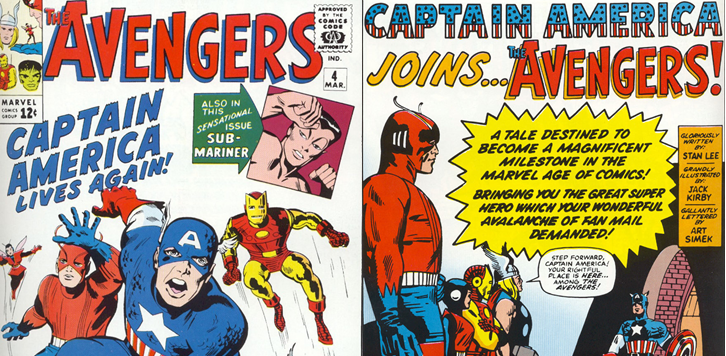
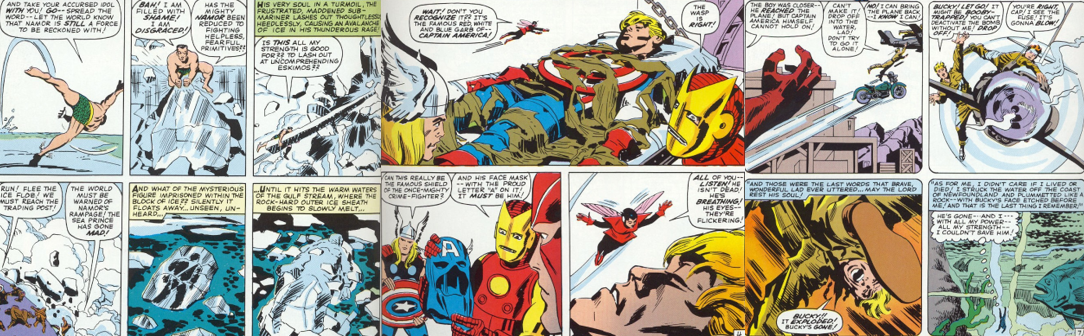
In April 1939, writer/artist Bill Everett introduced readers to Marvel Comic’s first Mutant, Prince Namor McKenzie/The Sub-Mariner, the superpowered prince of Atlantis who could live on land and in the sea and was just as likely to wage war against humanity as he was to defend it. While, on the surface, Arthur Curry/Aquaman appears to be another instance of blatant borrowing from their competitor, Mort Weisinger and Paul Norris’s aquatic superman couldn’t be more different. Aquaman was co-created by Weisinger after he moved to National Comics (the precursor to DC Comics) and was charged with coming up with some new costumed heroes to captialise on the success of Clark Kent/Superman and Bruce Wayne/Batman; after More Fun Comics changed its focus from superheroes to humour, Aquaman switched to Adventure Comics and was prominently featured throughout the 1950s. In addition to getting the cover spot on issues of Showcase and backup features in Detective Comics, Aquman had his own self-titled series, which saw him gain a wife, an ill-fated son, and undergo some pretty radical changes (including losing his hand). Often the subject of unfair ridicule for his ability to talk to fish and presumed uselessness, Aquaman has been part of DC’s biggest stories and proved popular enough to feature in numerous DC cartoons, a poorly-received videogame, and very nearly got his own teen drama show before Jason Momoa made a huge impression in his live-action debut as the character, portraying him as a bad-ass king of the deep and helping to change the character’s perception.

The Review:
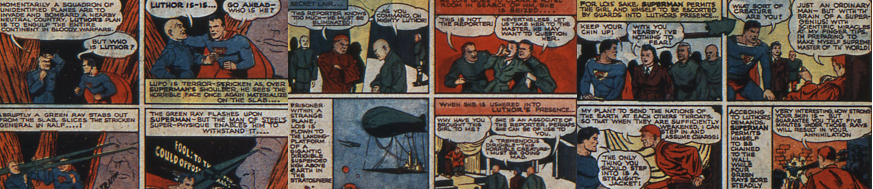
As the story begins, a helpful text box informs the reader that many, especially those at sea, are well aware of the legend of the Aquaman, a water-dwelling do-gooder who emerges from the dark depths of the sea to battle evil and injustice, though even they consider him to be just that, a legend. While out on a mission of mercy, an unarmed ship is suddenly scuppered by a torpedo fired from an unseen submarine, the U-112; immediately, the captain orders an evacuation and stays behind to ensure that the crew and their consignment of refugees and hospital workers gets safely off the ship before he himself boards a lifeboat. At first, it’s not made clear where the enemy submarine is from or why they targeted the ship but it’s soon revealed that they’re goddamn Nazi sons-of-bitches who are determined to leave no witnesses to their heinous act. Luckily, just as the Nazis open fire upon the lifeboat, the scaled figure of the Aquaman arrives to help; his strength tempered by the crushing ocean depths, it’s no trouble at all for Aquaman to shunt the lifeboat out of the path of the submarine’s torpedo. Aquaman then turns his attention towards the “metal fish” and its maniacal crew.

Aquaman saves a boatload of refugees then delivers a startlingly different take on his origin.

Aquaman leaps aboard, sending one Nazi overboard with a good kick to the chin, but the commander sends the sub into a dive and makes a getaway. Although Aquaman vows to track them down and make them pay, his first priority is the safety of the ship’s compliment; to that end, he commands a pod of dolphins to help push the boat to dry land. The porpoise purpose of this seems to be to demonstrate Aquaman’s ability to clearly and openly communicate with sea life as he could have easily pushed the lifeboat to shore himself, and while that works the cynic in me also views it as him kind of making slaves out of the dolphins. Anyway, once on dry land, the captain begs to know Aquaman’s secret and he freely relates his origin story: his father was a famous undersea explorer who vowed to discover the secrets of the ocean after his wife’s death. This eventually led to him discovering the lost kingdom of Atlantis and constructing a water-tight home within its ruins, where he read up on ancient tomes and learned the secret of living under the ocean from Atlantean science and writing. Somehow, by “drawing oxygen from the water and using all the power of the sea”, the man who would come to be known as Aquaman was able to thrive underwater and continues his father’s work at the bottom of the ocean. So…quite a different Aquaman origin than I am familiar with, and one that’s absolutely full of plot holes and unanswered questions.

After escaping from the Nazi’s death trap, Aquaman puts an end to their threat.

With his story told, Aquaman dives back into the sea to get on the trail of the U-112, determined to do his share of punishing the evil that dwells on the surface world. By this point, the submarine has docked at a small island where the captain tells tales of his success and the strange sea-man who attacked them. Although his commanding officer balks at such an unlikely story, he’s forced to eat crow when Aquaman comes riding in on the back of a dolphin! Aquaman dives under the waters to avoid their bullets and, with a single powerful blow, sinks their submarine before their horrified eyes, trapping the Nazi bastards on their island. When Aquaman confronts them, he effortlessly swats away the commander’s pistol and chastises them for thinking him a “helpless refugee woman” but…somehow…the U-112 captain and his commander escape to their munitions house and then, even more startlingly, knock Aquaman unconscious by dropping a mallet on this head! Patting themselves on the back for their victory, the two tie Aquaman up, clamp weights to him, and toss him into the ocean, where he plummets into the mouth of an extinct sea-volcano. The sheer crushing depths restricting him, Aquaman desperately signals his dolphin friends by rubbing against a bulb-like plant and secreting an inky liquid (why he didn’t just shout for help isn’t clear; I guess he’s too deep?) The dolphins rush to his aid and allow him to easily break his bonds and return to confront the two Nazis. He knocks the submarine captain out with a stiff uppercut but the commander manages to slip back to the munitions room again; this time, he lobs a grenade at Aquaman’s head and, out of sheer instinct, he tosses it right back, blowing up the munitions storehouse and sending the commanding hurtling into the sky with comedic effect (but killing him nonetheless…) The deed done and the wicked punished, Aquaman returns to the sea, ready and willing to fight for justice in all its forms in the future.

The Summary:
So, yeah, Aquaman’s first story is decidedly different from his Marvel Comics counterpart; for one thing, Aquaman isn’t a murderous, ignorant fool ready to wage war against humanity but, and perhaps most strikingly, he’s not a native Atlantean and his powers don’t come from his heritage but are instead mysteriously and vaguely manufactured through a combination of “training” and “science”. It’s left incredibly vague exactly how Aquaman survives and breathes underwater or how he communicates with dolphins “in their own language” and, is so often the case in these early tales, we don’t really learn what his limits are (he can survive underwater but was effectively powerless when dumped in that sea-volcano because it was too deep; he can swim super-fast but is also seen riding dolphins, and he exhibits some superhuman strength but is knocked out by a mallet!) or even what his true name is! Garbed in a striking orange-scale outfit with green, fin-like gloves and a generally jovial personality, Aquaman stands out against his peers for lacking a cape and operating exclusively underwater; depicted as a highly trained and superhuman man, Aquaman is seen as the defender of injustice in all its forms, but especially out at sea, rather than being the Prince (or even King) of Atlantis.

A whimsical tale, despite some holes in the plot and Aquaman’s limits and origins.

Nowhere is this more evident than in the story’s choice of antagonist; no one’s going to mourn the death and destruction of Nazi soldiers and munitions and depicting the Nazis as openly firing upon innocents and mocking their foes is a great way of depicting them as morally reprehensible, if a little cliché (both the captain and the commander wear monocles and snigger about their superiority over others). The action is almost as haphazard as the artwork, however; Paul Norris shines in depicting the Greek-God-like Aquaman, panels at sea, and scenes that take place underwater, but the Nazi island is a bit bland and it’s jarring that the Nazis are able to just run away from Aquaman, especially as he’s right there in front of them! They even get the drop on him, again making me question his powers and durability, but this also seems to just be another excuse to reinforce Aquaman’s knowledge of the sea and command over its denizens. When Aquaman does leap into action, it’s with a cringey pun or taunt and he’s swift and efficient, easily knocking grown men out cold and tossing back grenades even if he doesn’t understand what they are. In the end, I was a bit surprised that Aquaman’s origin didn’t originally tie him as a native of Atlantis; this skewed my perception of the story somewhat as it raises a lot of questions that naturally aren’t answered here, but it was a pretty whimsical and enjoyable little tail tale that stands out against those of other superheroes, if nothing else.

My Rating:

Rating: 3 out of 5.

Pretty Good

What did you think to Aquaman’s debut story? Are you a fan of the character and, if so, what is it about him that you like? Were you also surprised by his differing origin and what do you think about his ability to talk to fish? What are some of your favourite Aquaman characters, stories, and moments and are you excited for his return to the big screen? Whatever you think about Aquaman, feel free to leave a comment below or start the discussion on my social media.

Back Issues [Sonic 2sday]: StC in Sonic 2


After the release of Sonic the Hedgehog (Sonic Team, 1991), Sonic firmly established himself as the hot new gaming icon and catapulted SEGA to the forefront of the “Console Wars”. Anticipation was high for a sequel and, in keeping with their aggressive marketing strategies, SEGA dubbed November 24, 1992 as “Sonic 2sday”, a marketing stunt that not only heralded the worldwide release of the bigger, better sequel but changed the way the videogame industry went about releasing games for years to come.


Story Title: “Attack on the Death Egg”
Published: 7 August 1993
Writer: Nigel Kitching
Artist: Ferran Rodriguez

Story Title: “Super Sonic”
Published: 21 August 1993
Writer: Nigel Kitching
Artist: Richard Elson

Story Title: “Megatox”
Published: 2 October 1993
Writer: Nigel Kitching
Artist: Richard Elson

Story Title: “Casino Night: Part 1/2”
Published: 22 January 1994/5 February 1994
Writer: Nigel Kitching
Artist: Richard Elson

Story Title: “Hill Top Terror”
Published: 19 February 1994
Writer: Nigel Kitching
Artist: Ferran Rodriguez

Story Title: “Pirates of the Mystic Cave”
Published: 2 April 1994
Writer: Nigel Kitching
Artist: Richard Elson

The Background:
Sonic the Hedgehog was a massive success for SEGA; thanks to an aggressive marketing campaign and including it with their 16-bit Mega Drive, SEGA saw sales of over 15 million copies upon its release. However, all was not right at SEGA as Sonic mastermind Yuji Naka quit for the California-based SEGA Technical Institute. After bringing in many of his own Japanese staff, Naka spearheaded the creation of a sequel while an entirely separate, Japan-based team worked on Sonic the Hedgehog CD (SEGA, 1993). Though mired by an influx of ideas, another internal contest decided Sonic’s new sidekick, Miles “Tails” Prower, and improved graphics and gameplay saw Sonic 2 become incredibly successful; 400,000 copies were sold in its first week alone, with over 6 million units during the Mega Drive’s lifespan. SEGA’s control of the home console market shot up by 40% as a result of Sonic 2; the game was widely praised upon its release and is still held in high regard, with many claiming that it is the best in the series. This, more than anything, helped catapult Sonic to mainstream success and saw SEGA briefly usurp Nintendo’s position at the top of the videogame industry and SEGA were quick to capitalise with a slew of merchandise, including cartoons and comic books. About six months after Archie Comics began publishing a weird amalgamation of the Adventures of Sonic the Hedgehog (1993 to 1996) and Sonic the Hedgehog/SatAM (1993 to 1994) cartoons, United Kingdom publisher Fleetway Editions Limited brought us “Britain’s Official SEGA Comic”, Sonic the Comic (StC), a fortnightly publication that I collected diligently until its unfortunate end. Though pulling much of its lore from the now-defunct Mobius and Doctor Ovi Kintobor storyline that was prevalent outside of Japan, StC quickly veered away from the source material to recast Sonic the a mean-spirited leader of a gang of Freedom Fighters made up of both videogame characters and anthropomorphic characters adapted from the videogames. Like the Archie comics, StC often included a few very loose adaptations of the videogames, though these were often heavily truncated and adapted to fit with its noticeably different lore. Sonic 2 was no different, with many elements of its plot and gameplay being loosely peppered throughout the comic’s early issues.

The Review:
So, as I mentioned, StC often included truncated videogame adaptations. Sometimes these stretched over a few parts, or a handful of separate parts; sometimes they carried on through spin-off strips. But, quite often, StC simply adapted the general sense of the source material over various issues and stories, and that’s very much the case with their adaptation of Sonic 2. From issue one, StC quite clearly takes place after the first videogame, with Sonic generally sticking to the Green Hill Zone and other locations from the first game but also visiting or at least referencing events from the second game, if only because Tails was regularly included as Sonic’s sidekick. I suppose you could argue that Sonic 2 takes place between issues, but I always assumed that the first two games happened, and the comic went from there. All this is to say that, initially, I was simply going to review “Attack on the Death Egg” but I decided to make things more difficult for myself and review a bunch of StC stories that are clearly pulling from the second game, while also inserting their own lore. One of the most prominent bits of original lore in StC was their version of the Kintobor origin; in StC, the kindly Doctor Ovi Kintobor was transformed into the evil Doctor Ivo Robotnik after an accident involving a rotten egg and a massive dose of chaos energy from the six unstable Chaos Emeralds. Somehow, Dr. Kintobor’s consciousness was imprinted onto a Golden Ring and then transferred to the computer and acted as a guide, warning system, and information network for Sonic and his gaggle of Freedom Fighters, and an occasional emphasis was placed on Sonic carrying or hiding his guilt for his role in the creation of Mobius’s power-hungry dictator.

Sonic and Tails return to the Death Egg to stop it from destroying the Emerald Hill Zone.

I offer this context because “Attack on the Death Egg” opens with Sonic operating the Kintobor Computer and Tails expressing childish curiosity about the kindly doctor’s holographic face, which acts as an interface to make the machine easier for Sonic to use. The computer reveals that Dr. Robotnik’s all-powerful Death Egg space satellite is not only still in one piece after Sonic 2 but is currently on a collision course with the Emerald Hill Zone, so Sonic has Tails fly them to Dr. Robotnik’s “flying fortress” (obviously the Wing Fortress Zone), though Tails is clueless as to why they’re heading there and not to the Death Egg. While the fortress is largely abandoned, it’s not without some recognisable defences; Sonic dodges a Cluck’s cannonball and ends up battling the laser cannon boss from the videogame (though Sonic’s dialogue and inner monologue implies he’s never encountered this before). Similarly, Tails is completely clueless about the Wing Fortress; he doesn’t even realise it has a spaceship there, which is a bit odd as the Sonic 2 cutscene clearly showed him helping boost Sonic onto the same craft. One quick stomach-churning trip to space later and the two are back onboard the heavily damaged, egg-shaped space station; there, Sonic is…not surprised, more excited and insulted…to see Mecha Sonic is still operational, albeit badly damaged. Sonic makes short work of his chunky robotic doppelgänger, ramming it with a Super Sonic Spin Attack and then kicking its head off, before ordering Tails to take the one and only escape pod while he (as in Sonic) manually redirects the Death Egg to plunge into the ocean rather than destroying the Emerald Hill Zone (which I believe causes a continuity issue for later in StC when Knuckles the Echidna makes his debut). Although Tails weeps for his friend and vows to tell tales of Sonic’s heroics, Sonic obviously escapes certain death and appears to bask in the glory of his bravery.

A near-death experience in the Oil Ocean Zone sees Sonic briefly become the enraged Super Sonic!

StC returned to Sonic 2 in the very next issue, which saw Sonic and Tails help with a raging inferno at the Oil Ocean Zone; while original character Red and the other firefighters have battled the blaze for three days with little success, Sonic easily disperses the burst of flaming oil by creating a “Sonic-Cyclone” with his super speed. However, the dangers of the gigantic oil refinery remain and Red implores Sonic to help them clean the place up with his unprecedented knowledge of the many traps placed around the Zone. Naturally, Sonic agrees without hesitation, but is surprisingly caught off-guard by a lone Aquis; this robotic seahorse singes him with its flame shot and forces him into one of those slippery oil slides, apparently incinerating him alive in a pool of oil! Thankfully, Sonic survives but the stress of the anticlimactic near-death experience transforms him into Super Sonic! Now, this is something else StC took major liberties with; in StC, Super Sonic is a mindless, enraged, demonic entity hell-bent on destruction and chaos and much more akin to Doctor Bruce Banner’s green-skinned alter ego than a conscious, Super Saiyan-like power-up. Sonic first transformed into this being after absorbing a massive dose of chaos energy from the volatile Chaos Emeralds, and then again after collecting too many “Mobius Rings”, and he would undergo the transformation whenever pushed too far, such as here. Now faster than light and able to fly, Super Sonic ploughs through the Aquis in a fit of rage but is so consumed by hatred and evil that he then tries to murder the little woodland critter than pops out of the Badnik! Thankfully, Tails talks some sense into the rampaging, invincible hedgehog, calming him down before his temper got the best of him, returning him to normal and allowing him to make good on his promise to clean up the Oil Ocean Zone.

A daring rescue mission to the Chemical Plant Zone sees Sonic battling the vile Megatox.

After a two-issue gap, StC tapped into Sonic 2 for inspiration for one of the most memorable stories of the comic for me, “Megatox”. This one has special meaning to me as, when I was a kid, before we could afford to buy StC on the regular, I only had two issues; one was issue two, and one was issue ten, so I read “Megatox” to death back in the day. By this time, Dr. Robotnik has overtaken Mobius thanks to taking advantage of a time dilation a few issues back; his Badniks and military Troopers are everywhere and Sonic and his friends have been forced on the run in disguise as Bob Beaky’s traveling circus. This is why Sonic infiltrates the Chemical Plant Zone dressed in a massive snow suit and hat and pretending to be Bob Beaky, loyal servant of Dr. Robotnik’s; this allows him to get into the toxic facility, where Troopers are working woodland critters to exhaustion and disciplining them with energy whips. Disgusted at the Trooper’s mistreatment of innocent Mobians, Sonic quickly abandons his disguise and trashes Dr. Robotnik’s goons; since they don’t use animals as power sources, Sonic doesn’t have to worry about holding back and literally bursts through them to lead a desperate escape attempt through a tunnel full of a strange, pink, toxic gunk. Although Sonic gets the critters to safety (and even frees another from a Grabber), he’s startled when the toxic gunk (known as “Mega Mack”) suddenly comes to life and attacks him, assuming a sentient, corporeal form called Megatox. Once a scientist charged by Dr. Robotnik to create a poisonous chemical to kill Sonic, he was transformed into living Mega Mack after a freak laboratory accident and wastes no time in fulfilling his objective by choking and poisoning Sonic with its toxic body. Already feeling the effects of the poison, and unable to directly attack Megatox since it is essentially living water and incapable of being destroyed through conventional means, Sonic instead burrows through the ground and disperses Megatox all over the countryside (no doubt indirectly polluting the nearby environment in the process) using a vortex, ending the strange creature’s threat…for a time.

Sonic ends up captured during his mission to liberate the Casino Night Zone.

Eight issues later, Sonic 2 was used as the basis for a two-part story; these weren’t uncommon in StC, and a lot of Sonic’s stories were two-part tales. This one takes place in the Casino Night Zone, here realised as a gigantic fun park adorned with Dr. Robotnik’s visage. The Casino Night is also home to a number of…well, casinos. Sonic and his buddy, nervous but tech-savvy Porker Lewis, sneak into the Zone and are disgusted to find the Dr. Robotnik has not only rigged all the games to strip guests of their money and worldly possessions but is turning them into compulsive gamblers using hypnotising beams from a massive, garish statue in his image. Dr. Robotnik (here still sporting his sadly underused videogame design and spitting out egg puns aplenty) has left the Casino Night in the hands of three original characters knock-off villains, the Marxio Brothers – cigar-chomping leader Grouchio, underappreciated stooge Chicio, and the mute trumpet-honker Harpio – thinly-veiled composites of the Marx and Super Mario Brothers from the never-seen (but, assumedly, terrible) Marxio World. When Porker’s specially-created disruptor fails to work from a distance, a frustrated Sonic resolves to get closer so he can put a stop to Dr. Robotnik’s diabolical scheme and, afraid of the hedgehog’s wrath, Grouchio orders Chicio to unleash a swarm of laser-firing Troopers into the Zone. Although Sonic fights them, the sheer numbers cause him some concern and see him fall into a trap; more specifically, a giant pinball machine that batters him about and almost ends with him becoming a hedgehog kebab…until he simply gets out of it with relative ease. Unfortunately, Sonic is forced to surrender when Porker gets captured and tied up by the Marxio’s, ending the first part with him admonishing his nerve-wracked friend even as they await certain death tied to rollercoaster tracks.

After winding up Porker, Sonic humiliates his captors and ends Dr. Robotnik’s casino plot.

“Casino Night” continues in the next issue, picking up right where the first part left off and, thankfully, sparing us any flashbacks or wasted time recapping the previous events. StC was great like that; they just did the smallest text box or a bit of dialogue and that was it. Another thing it was good at was painting Sonic as an absolute prick; like, he was heroic and brave and all that, but Goddamn was he an abrasive, self-absorbed, egotistical bully sometimes. Mostly, he threw his insults at Tails, but he wasn’t above tormenting Porker either, and he does that in this issue, driving the poor pig into a panic by pretending like they’re doomed to die. After getting his kicks from Porker’s abject terror, Sonic vibrates the ropes that bind them at super speed and breaks them free seconds before their gruesome demise. Spotting the Marxio’s nearby, now in possession of the disruptor device, Sonic pursues them into the nightmarish pinball machine that functions as the heart of the Casino Night Zone and runs rings around them as they try to smash and bash him with their metal pole…things (a weapon Sonic’s ill-fated ally, Johnny Lightfoot, would later take as his own). Although Grouchio smashes the device, Sonic is far from perturbed; in fact, he was simply stalling for time to allow Porker to reprogram the Casino Night’s main computer and cause all of the machines to pay out bucketloads of cash. As an exclamation point, Sonic has Porker destroy the head of Dr. Robotnik’s statue, disrupting his hypnotic rays and delivering a decisive victory in the ongoing war against the egg-shaped tyrant.

Sonic’s efforts to save a Hill Top Zone village see him becoming the maniacal Super Sonic once more.

Super Sonic made a return in the very next issue, which took place at one of my favourite Sonic 2 Zones, the Hill Top Zone. “Hill Top Terror” sees Sonic and Tails assist a small village at the base of an active (and very close to erupting) volcano. Before landing, Sonic has to take out a small group of Turtloids, oddly seeming to fly at superspeed and then observing that he can’t actually fly and needs Tails to rescue him with his biplane (which earns the two-tailed fox what can be loosely called a compliment). Sonic and Tails meet the bird-like tribe and their leader, Chief Kordon, who explains that the Mountain of Destiny threatens to wipe them out, claiming it to be the wrath of the Gods, which Sonic dismisses with a casual flippant comment. Racing to investigate, Sonic and Tails are surprised by a Rexxon dwelling in the boiling lava of the mountain; with Tails struggling to keep them from falling to their deaths, the stress of the situation causes Sonic to transform into his demonic other half once more. After taking his anger out on the Badnik, Super Sonic is left hungry for something to destroy and therefore unimpressed by Dr. Robotnik’s seismatron, which causes the volcano to violently explode and spells doom for the village. Thankfully, Tails hitches a ride out of there on Super Sonic’s leg and then manipulates the malevolent creature into stopping the volcano by questioning his power and ability. The effort of creating a “Super Sonic fan to cool the lava” is enough to not only save the villagers from a horrible death but also to return Sonic to normal; though he has no memory of his time, actions, or the threats he made towards Tails as Super Sonic, just enough of his personality remained to carve an effigy of himself on top of the mountain for the villagers to admire.

Sonic encounters the greedy Captain Plunder deep in the Mystic Cave Zone.

Finally for today, we have “Pirates of the Mystic Cave”; this story is actually something of a prelude to StC’s later adaptation of Sonic CD and introduces readers to one of StC’s more annoying recurring original characters, Captain Plunder and his Sky Pirates. The story sees Sonic, Tails, Porker, and Johnny exploring the Mystic Cave Zone in search of Amy Rose, Sonic’s lovelorn number one fan who joined the Freedom Fighter team some issues prior and had a knack for getting herself in trouble. While there, they’re attacked by the caterpillar-like Crawltons but, unlike usual, these Badniks are empty of helpless woodland critters. Sonic and Tails are soon cut off from Porker and Johnny by a massive steel door and summarily attacked, and knocked out, by electrical bursts courtesy of a gaggle of Flashers. When they awaken, they find themselves in a cove where Amy is held prisoner in a wooden cage by the hulking, warthog-like Captain Plunder. Desiring Sonic’s cache of Chaos Emeralds, Captain Plunder first threatens Tails with walking the plank and then ruthlessly kicks him down a chasm, but Sonic reminds his young friend that he can fly and therefore the attempted murder is easily thwarted. While Sonic is unable to hurt Filch, Captain Plunder’s resident poltergeist (whom the captain himself murdered for being greedy with the biscuits), he is able to fight the hook-handed warthog. However, far from a mere meek damsel in distress, Amy talks sense into the two and convinces them to join forces against Dr. Robotnik; although Sonic can’t surrender the Chaos Emeralds, he can offer information which of Dr. Robotnik’s air freighters are worth robbing and the cutthroat crew offer the Freedom Fighters some much-needed backup in the fight against the dictator. Although Captain Plunder agrees to the deal and the Freedom Fighters are allowed to leave unharmed, he vows to use the situation to his advantage regardless and steal the Chaos Emeralds at the first opportunity.

The Summary:
There’s a real variety in these six (technically seven, I guess) stories; none of them are a direct adaptation of Sonic 2 by any means and, indeed, the comic plays fast and loose with the game’s continuity at the best of times. One thing I enjoy about Sonic’s comics is how the game locations are actually used and expanded upon, becoming intricate cities, populated areas, and really feeling alive and part of this diverse and often wacky fictional world. The cartoons and movies really struggle with this aspect; occasionally, Zone names and locations are referenced, seen, or somewhat evoked, but it’s never as explicit as in the comics, where anthropomorphic characters live and work and struggle like in the real world. Other concepts, like gameplay mechanics such as Golden Rings and such, were never quite as easily translated in the comics; like the cartoons, these were downplayed or ignored, with stories largely focusing on the Chaos Emeralds and using Rings very sparingly, as though this mechanic were something that only existed in the context of the videogames and wasn’t quite the same thing in this new fiction.

The stories do a great job of bringing Sonic 2‘s locations to life.

Regardless, these stories tell quite a few fun and interesting tales in just a few pages. All but two of these were illustrated by the great Richard Elson, the premier artist of StC who always delivered some of the best, dynamic, and visually interesting sequences and panels. However, this isn’t to discredit Ferran Rodriguez; while his art style is noticeably less detailed than Elson’s and far more simplistic, his characters and locations evoke the anime aesthetic channelled in the manuals and advertisements for the games, especially over in Japan, therefore bringing a more “SEGASonic” version of the character to StC. While some of the writing is a little off (Sonic’s constant heckling of Tails and Porker can make him out to be more of a bully) and it’s a little weak that Super Sonic’s first big appearances were a result of mediocre Badniks like Aquis and Rexxon, the visual representation of the Zones used is absolutely spot on. StC rarely, if ever, took much inspiration from the actual plots of the videogames beyond Dr. Robotnik enslaving animals and polluting the environment, but they always did a bang-up job of bringing the game’s Zones to life in their adaptations, and all of these look great. Sure, Wing Fortress and Death Egg are a little lifeless and dull and Hill Top Zone is less of a lush mountainscape and more of a barren, rocky volcano, but Elson’s depictions of the bustling, pollution-spewing Oil Ocean and Chemical Plant Zones is a joy to behold. There’s so much detail there, with elements from the games (like the oil slides, the toxic gunk, the pinball arena, and the ominous caves) tweaked to become somewhat believable and fully flesh out environments. This is probably best evident in the Casino Night Zone, which takes more from the bustling city you see in the background of the Zone but still includes the bounce springs and bumpers, though Oil Ocean Zone really came off incredibly well, too.

Some unique supporting characters and world-building bolster these stories.

Like basically all external Sonic media, StC was rife with original characters; many, especially those in Sonic’s gang, were adapted from the Mobius lore but others, like Captain Plunder, were a little more surreal and yet fit quite well with this version of Sonic’s world. Few of them make much impression in these stories beyond Captain Plunder and, I guess, the Marxio Brothers for being parodies of SEGA’s rival, Nintendo. One thing you may notice is that Dr. Robotnik doesn’t show up much in these stories and Sonic doesn’t actually fight him directly; this was actually quite common, especially after Dr. Robotnik took over Mobius and became virtually untouchable, and much of the ongoing story was about striking victories and disrupting his operations, not unlike what we saw in SatAM, casting Sonic firmly as the underdog despite him always coming out on top. For those who were hoping to see a traditional Zone-by-Zone adaptation or a bigger, more dramatic showdown on the Death Egg, these stories will probably be a disappointment; indeed, the Death Egg wouldn’t be properly explored or seen as a real threat until later, after Knuckles’ introduction, so I can understand why “Attack on the Death Egg” might fall a little flat in that regard. Still, I think these stories collectively do a decent job of capturing some of the essence of Sonic 2 and recontextualising the Zones and gimmicks into something that would actually work as a living, real place. Many of the elements seen in these stories would return in later issues, with Captain Plunder, Megatox, and the Marxio Brothers becoming recurring villains and anti-heroes, and basically all of Super Sonic’s unique characterisation as this out of control, destructive force was established here. Naturally, there’s a lot of bias on my part; I grew up reading these stories and was an avid collector of StC and really enjoy how they adapted the source material into something recognisable, but still distinctive in its own right, and I definitely think their efforts to incorporate and expand upon Sonic 2 resulted in some fun and visually engaging stories here.

My Rating:

Rating: 4 out of 5.

Great Stuff

What did you think to Sonic the Comic’s adaptations of Sonic the Hedgehog 2? Did you read StC as a kid and, if so, what did you think to its unique take on the source material? Which of these stories was your favourite and what did you think to the StC version of Super Sonic? Would you have liked to see a more direct adaptation of the games in the comics and how would you compare with StC did with the American comic books? What are some of your favourite stories, characters, and moments from StC? How are you celebrating “Sonic 2sday” this year? Whatever your thoughts on Sonic 2, and Sonic comics in general, share them below or join the discussion on my social media.

Back Issues [JLA Day]: Justice League of America #9


To celebrate the release of Justice League (Snyder/Whedon, 2017), DC Comics named November 18 “Justice League Day”. Setting aside all the drama surrounding that movie, this provides a perfect excuse to spotlight DC’s premier superhero team, which set the standard for super teams in comics by bringing together DC’s most powerful heroes.


Story Title: “The Origin of the Justice League”
Published: February 1962
Writer: Gardner Fox
Artist: Mike Sekowsky

The Background:
All Star Comics (1940/1941) brought together eight superheroes from different publishers for the first time, birthing not just the Justice Society of America (JSA) but also the first ever superhero team in comics, allowing readers to see their favourite characters interacting all for the same price as any one comic. The JSA’s roster expanded and changed over the years but the team underwent their most significant change in the late-1950s when then-editor Julius Schwartz tasked writer Gardner Fox with reintroducing and rebranding the team as the Justice League of America (JLA) to capitalise on the popularity of the American Football League and Major League Baseball’s National League. The Clark Kent/Superman, Bruce Wayne/Batman, Diana Prince/Wonder Woman, Hal Jordan/Green Lantern, Arthur Curry/Aquaman, Barry Allan/The Flash, and J’onn J’onzz (or “John Jones”)/Martian Manhunter debuted as the JLA in The Brave and the Bold #28, a title famous for featuring superhero team-ups. However, the team’s actual origin wasn’t revealed until this issue of their self-titled series, which became one of DC Comic’s best-selling titles. Over time, the JLA’s roster has also changed and many splinter groups and spin-offs have been introduced, but perhaps there is no more iconic line-up than this original roster of DC’s heavy-hitters.

The Review:
I was going to open this review by saying how odd it was that the Justice League’s debut story wasn’t actually a bumper tale about how these seven characters first came together, but quite a few first appearances of famous comic book teams and characters simply started with them already in their superhero role or somewhat established as a team, so I guess it wasn’t completely against the norm. “The Origin of the Justice League” gets off to a rocky start with perennial hanger-on, Lucas “Snapper” Carr, racing to the Justice League’s cavernous headquarters, the Secret Sanctuary, to celebrate a birthday, though he can only imagine which member of the team is to be honoured. When he gets there, he finds Green Lantern, Wonder Woman, Aquaman, and Oliver Queen/Green Arrow in the midst of getting the place and spik-and-span for the party; there’s something a bit odd about seeing Amazonian warrior and peacekeeper Diana Prince wiping down a table like a scullery maid but it’s great to see them making Snapper do menial chores like mopping the floor and cleaning out their display cabinets since this aggravating hipster youth really isn’t fit for anything else. It doesn’t take Snapper long to get distracted, however, when he spies a display case filled with wooden splinters that is directly tied to the team’s first mission. Wonder Woman has the entire Justice League pitch in getting the Secret Sanctuary ready for their event, which is of course to celebrate the anniversary of the first time they came together, and each of Leaguers take it in turns to share the story with their overexcited mascot.

J’onn and Aquaman are the first to encounter alien beings and to be transformed into trees!

J’onn J’onnz starts things off since it was he who first discovered the threat that would unite the world’s greatest heroes. After hearing a “queer report” about people spontaneously having turned to stone, J’onn investigated and found an entire town full of people turned to stone and confronted the source of the petrification: a massive stone giant that proves impervious physical assault. Using his “Martian vision”, the Martian Manhunter learned that the giant came from the alien world Appellax and was one of seven contenders to the throne who came to Earth in a meteor storm with the goal of conquering the planet to earn the title of Emperor (or “Kalar”) of his home world. Although the giant briefly sapped J’onn’s strength after learning of his weakness to fire, J’onn easily used his “Martian breath” to suck up some water from a fire hydrant to extinguish the flames and then attacked the giant’s weak spot with his great Martian strength. With the giant rendered unconscious, his victims returned to normal and J’onn summoned the police to “take the giant into custody” (apparently leading to them smashing the alien rock monster with sledgehammers!) but was transformed into a tree when he investigated the meteor that brought the being to Earth. While swimming through the Indian ocean, Aquaman learned from a dorado of another meteor, one causing panic in the seas after spawning a strange alien creature made of glass who turned underwater life to glass. Although also turned to glass the moment he investigated, Aquaman was still able to call upon his fishy friends to attack the creature, first attempting to shatter it with brute force and then succeeding in defeating the alien by causing massive sonic vibrations. However, when learned of another meteor and raced to oppose its threat, he too was transformed into a tree.

Wonder Woman and Green Lantern overcome their limitations to defeat their alien threats.

Wonder Woman’s arrival on Themyscira was ruined by the presence of strange glittering globs all over the island that unleashed a living blob of mercury that transformed the Amazons into liquid. Calling upon Hera for strength, Wonder Woman whipped out her magical lasso to ensnare the blob-like alien; although she was unable to simply fling it into space since her strength was divided between fending off the creature’s “queer radiation”, Wonder Woman was, inexplicably, able to swing the creature around so fast that it was destroyed by the resulting friction heat. Although this caused her great strain, Wonder Woman was ultimately successful and returned her sisters to normal, but she too was turned into a twisted tree-like being when she investigated the other meteor. Around the same time, Green Lantern was returning to Earth and was startled by the sudden appearance of one of these meteors, and even more shocked when it spawned a gigantic golden bird that systematically began transforming humans and animals alike into ghastly winged creatures using a “white ray”. Since his Power Ring is useless against anything even remotely yellow, Green Lantern was powerless and being partially transformed into a bird-man himself before luring the creature into a nearby waterfall and using his Power Ring to freeze both solid. With the winged terror effectively subdued, all of its victims returned to normal and Green Lantern got them to safety but found himself becoming a gnarled tree at the same time as Wonder Woman!

The Flash and the others help to free their comrades so Wonder Woman can finish off the wood alien.

While in Europe acting as a representative to an Interpol meeting, the Flash learned of a strange meteor falling near Italy and raced out to investigate, finding a flaming humanoid creature transforming humans into similarly blazing monsters. His attempts to whip up a strong wind, douse the flaming alien with water, and snuff it out with sand were all unsuccessful, however, when the creature proved powerful enough to turn these to steam and glass. The Flash quickly discovered the solution was the same as almost every situation he ever finds himself in and he simply ran around super fast to create a vacuum that extinguished the flaming beast, returning its victims to normal, but he wasn’t fast enough to avoid becoming a tree like his fellow costumed heroes. Their great powers rendered mute and their strength inert by the meteor’s radiation, the fledgling Justice League were powerless to stop a massive wooden alien from emerging from its cocoon and compelling them to follow its bidding. Did I say powerless? Well, not quite as Aquaman (of all people) summoned the strength necessary to chip a small piece of wood from Green Lantern’s hand, exposing his Power Ring and enabling him to free J’onn’s face. J’onn then used his Martian breath to free the Flash, who then helped to free Wonder Woman, thereby allowing her to regain just enough control over themselves to easily destroy the wood-like alien by stripping it to splinters with her magical lasso.  

Superman finishes off the last alien with little to no help from the other heroes.

This wasn’t the end for the colourful heroes, however; one last meteor landed in Greenland but, when they flew over to confront the final claimant to Appellax’s throne, they found Batman and Superman already clashing with the alien, this one a jagged, slender ice being. Although the other heroes were content to leave this last alien to the World’s Finest, Superman ran into a spot of bother when the meteor turned out to be made of Kryptonite, leaving him weak and vulnerable. Although his arms and legs were rapidly turning to diamond as a result of the creature, the Batman was able to use his Batplane to get the meteor away from the Man of Steel, allowing Superman to instantly destroy the creature by using one of his many crazy super powers to turn it into harmless coal. In the aftermath, despite none of the individual heroes even remotely learning anything about working as a team or coming together to destroy a threat greater than any one of them with the exception of Batman and Superman (who had already worked together numerous times by this point), the seven superheroes agree to form a the Justice League to oppose any threats to the sanctity of peace and justice. Back in the Secret Sanctuary, Snapper is blown away by the story, and Superman’s solution to the problem; although awestruck, he wants to know even more of the team’s secrets, like how the Secret Sanctuary was built, but is content to set these questions aside and join his masked friends in celebrating their anniversary.

The Summary:
Have I mentioned how much I detest Snapper-bloody-Carr? Jeez, I mean, of all the jive talkin’, hipster teenage characters in comics from this era, he’s got to be the dirt worst. At least he’s not constantly snapping his fingers like a moron throughout this story, but the way he talks just grates on me. Did the writers really think kids would appreciate seeing a character like this mooching off their favourite superheroes? It really blows my mind to think that this was ever considered a good idea; I mean, if you want to toss in a teenager for the young ‘uns to relate to, just use Dick Grayson/Robin! Anyway, luckily, Snapper is hardly in this story and he doesn’t get to take all the glory for himself like in the Justice League’s first issue, but that doesn’t make this story any better, to be honest. Like in their first issue, the Justice League is painfully divided here, and the focus is more on the less popular superheroes, meaning Batman and Superman don’t show up until the very end. To be fair, though, I don’t actually mind this; especially in today’s world, where Batman is everywhere, on every team, all the time and massively overexposed, it’s nice to see guys like Green Lantern and the Flash get a bit more of the spotlight (Hell, all Batman does is get the Kryptonite away from Superman; he’s probably in the story less than Snapper Carr!)

The combination of Snapper, a weak threat, and lack of teamwork make for a mediocre origin story.

Unfortunately, this isn’t really a compelling origin story. The idea that these seven elemental aliens have landed on Earth and are causing havoc has a lot of potential; seven threats for seven heroes to unite against. Instead though, each threat is dealt with individually; while this does showcase the power of Wonder Woman and the extent of Aquaman’s telepathy, it’s really not a good way to justify them forming a team. The only time they even remotely do anything even slightly team-orientated is when they free each other from the wood-alien’s control; they don’t get overwhelmed and need another hero’s help and they don’t come together to face off a greater threat. They just dispose of their individual menaces, get turned into wood like idiots, and then watch on as Superman finishes off the last alien since he doesn’t need their help. How much better would it’ve been if, say, one alien was boiling or freezing the sea, so the Flash had to use friction to help out Aquaman? Or if Wonder Woman had to bail out Green Lantern after his Power Ring proved useless? Or if J’onn faced the fire alien and Aquaman helped him out with water? The primary appeal of this story is paying the same price you would for a solo book and seeing seven superheroes in action, but the action and narrative really isn’t all the compelling; the aliens have no personalities or characterisations or motivations beyond this throwaway desire to rule the world, and they’re all pretty weak. The wood one is built up as this major threat, but it’s disposed of pretty easily, and the ice/diamond one is similarly undone in the blink of an eye by Superman. Honestly, I feel like Starro the Conqueror was a far more credible and League-worthy threat and, if you recall from my review of that story, he was basically a joke as well, meaning I can’t really take this menace that seriously or find the idea that these heroes would ever want to form a team after this lacklustre experience.

My Rating:

Rating: 2 out of 5.

Could Be Better

What did you think to the JLA’s origin story? Were you satisfied with the explanation of how the seven came together or, like me, did you find the threat and motivation incredibly weak? What did you think to the aliens the heroes faced off with and would you have liked to see the heroes interacting a little more? Are you a fan of Snapper Car and, if so, why? Which era or incarnation of the JLA is your favourite and what are some of your favourite JLA stories? Who would you like to see in the JLA some day? How are you celebrating Justice League Day this year? Whatever your thoughts on the JLA, feel free to share them below or join the discussion on my social media.

Back Issues [Wolvie Wednesday]: Wolverine #1-4


When readers were first introduced to the character of James Howlett, better known by the names “Logan” and “Wolverine”, it was in the pages of The Incredible Hulk. From his first full debut in issue 181 all the way back in November 1974 to him officially joining the X-Men in 1975, the character has become one of Marvel Comics’ most recognisable and enduring superheroes, regularly featuring in solo and team comics, cartoons, movies, videogames, and countless other merchandise.


Writer: Chris Claremont – Artist: Frank Miller

Story Title: “I’m Wolverine!”
Published: 1 June 1982 (cover-dated September 1982)

Story Title: “Debts and Obligations”
Published: 29 June 1982 (cover-dated October 1982)

Story Title: “Loss”
Published: 3 August 1982 (cover-dated November 1982)

Story Title: “Honor”
Published: 31 August 1982 (cover-dated December 1982)

The Background:
In 1974, Roy Thomas, editor-in-chief at Marvel Comics, tasked writer Len Wein with creating the first Canadian superhero; a short, feisty adventurer named “Wolverine” who would be as scrappy and fearsome as his namesake. Though the legendary John Romita Sr came up with the original concept art for Wolverine and his now-iconic retractable claws, it was artist Herb Trimbe who put the finishing touches to the character’s design. In what would become a staple for Wolverine for decades, Wolverine’s past and true identity was initially quite the mystery; yet, despite claims that Wolverine was originally conceived to be a mutated wolverine cub, Wein insisted this was false and that Wolverine was always intended to be a Mutant. These days, Wolverine is established as one of Marvel’s most popular characters thanks not only to him joining the X-Men a year after his debut but also the success of his first solo miniseries courtesy of X-Men scribe Chris Claremont and legendary comic book artist Frank Miller. Largely regarded as one of Marvel’s best miniseries, Claremont and Miller’s work helped to define many of Wolverine’s now recognisable character traits, from his time in Japan, his knack for brutality, and his iconic no-nonsense attitude. The popularity of the miniseries led to an ongoing solo book from 1988 but it’s not hyperbole to say that Wolverine probably wouldn’t be as big of a star as he is today without this influential four-issue series, which would come to inform the character’s later adaptations into films, cartoons, and videogames.

The Review:
Wolverine’s first solo outing begins within him freeclimbing his way through the Rocky Mountains, back in his home soil in Canada, on “business”; as he explains in his blunt and characteristically glib dialogue boxes, he’s “the best there is at what [he] does. But what [he] does isn’t very nice”, which may very well be the first instance of him saying this iconic catchphrase. He’s there to track, hunt, and kill a ferocious grizzly bear that’s been slaughtering locals as they venture onto the mountain; thanks to his heightened senses, Adamantium laced skeleton, and innate ability to tackle even a berserker grizzly bear head-on, Wolverine easily challenges, dismembers, and kills the beast with a minimum of fuss but he’s not happy about it. Not only does he recognise that the bear is simply being true to his nature, but he also spots an illegal poison-barbed arrow in the dead beast’s back, evidence of a hunter landing a hit on the bear but not sticking around to finish it off and thus driving it into a frenzy. With seven men, three women, and five kids dead as a result, Wolverine tracks the foolish hunter to a bar some fifty-seven miles away and confronts him; riled up, the hunter picks a fight, much to Wolverine’s pleasure. Though we don’t see what Wolverine does to the man, he assures the reader that he let the hunter live…and that the bear put up a better fight. He makes sure the hunter pays for his actions in a court of law and prepares to head home to the X-Men when he spots a pile of letters on his doorstep; they’ve all been returned, unopened, from an old flame of his: Mariko Yashida, the daughter of one of the oldest and most respected families in Japan. Although the Japanese embassy tells him that Mariko was called back to Japan, her home line hangs up on him, so Wolverine takes the next flight to Japan and meets up with an old contact of his, Asano Kimura, who informs him that Mariko’s long-lost father recently returned and reclaimed his position at the head of the Yashida clan and family, thus forcing Mariko to marry.

Wolverine dishonours himself trying to fight for his love’s freedom.

Despite the fact that Mariko was obligated by ages-old traditions of duty and honour, and Asano warning Wolverine off, Logan lets his anger and emotions overrule his common sense, dons his brown and yellow outfit, and forces his way into the Yashida ancestral stronghold and confront Mariko even though Asano may be legally obligated to hunt him down as a result. After easily bypassing Yashida’s near-feral guard dogs, Wolverine scales the main tower and conveniently comes across Mariko standing beneath a gigantic, ostentatious Buddha statue; Mariko tries to brush him off, citing the same explanations of duty and honour, and even accuses him of shaming her, but he’s enraged to find her face bruised. However, Mariko calms his rage and even admits that she loves him, but is bound to the will of her father, who promised her hand to another to pay a debt. When Mariko’s abusive husband, Noburu-Hideki, interrupts, Wolverine is ready to gut him on the spot, but allows Mariko to talk him out of it, only to be briefly rendered unconscious by a barrage of poisoned shuriken. Thanks to his superhuman healing factor, Wolverine recovers and is confronted by Mariko’s father, Lord Shingen, who brands him a gaijin (a derogatory term for an outsider) and chastises his arrogance. Deeming the X-Man unworthy, Lord Shingen challenges Logan to fight for Mariko’s affection with wooden swords (bokken, here referred to as “Bokan”). Although Lord Shingen is an old man, Logan is still feeling the effects of his poisoning and is out of practice with a sword; Lord Shingen also specifically targets nerve clusters and pressure points to cause maximum pain and rile him up to the point where he abandons his toy weapon and attacks with his claws, dishonouring himself before his beloved. Despite now having a lethal edge, Wolverine never gets the chance to land a mortal or killing blow; Lord Shingen’s skill half-cripples him and leaves him abandoned, beaten and humiliated, on the bustling streets of Tokyo.

Yukio manipulates Wolverine to drive him from Mariko and into her bed.

Naturally, Logan’s immediately set upon by punks and soon drawn into an all-out ambush with the highly skilled ninjas known as the Hand by the mysterious Yukio. The Hand have the superior numbers, and even wound Yukio, but Wolverine’s Mutant abilities and enhanced bones give him the edge and he leaves them all dead. Yukio is astounded by his regenerative abilities, which she would use to destroy the Hand, a supposedly peerless ninja clan commanded by a ruthless and powerful crime lord. Due to their shared killer instinct, things quickly get heated between them, but Wolverine can’t shake the image of Mariko and walks away, much to Yukio’s despair. An interlude sees her storm into Lord Shingen’s office, revealing he hired her to win Wolverine’s trust and lure him into a two-pronged attack that will see both Logan and Lord Shingen’s rival, Katsuyori, dead at Yukio’s hand. Although Wolverine notices Yukio’s changed demeanour, a half-veiled version of the truth is enough to convince him to accompany her in confronting Katsuyori at a theatre performance. Although Logan hesitates when he sees Mariko in the crowd, he leaps into action when the actors try to assassinate the Yashidas. While Wolverine cuts his way through the ninjas, driven berserk by their attack, Yukio takes out Katsuyori with a car bomb and is delighted when Mariko expresses shock and even fear at witnessing Wolverine’s bloodthirsty berserker rage. In the aftermath, Wolverine takes solace in alcohol, Yukio’s affections, and in a random brawl, but rebukes Asano’s pleas to assist in combating the recently united Japanese underworld. After narrowly avoiding being splattered by a bullet train simply so Yukio can get a sadistic thrill, Wolverine passes out and is tormented by dreams of his lost love. While he sleeps, Yukio is accosted by the Hand, who demand she redeem herself by cutting out Logan’s heart, but she opts to fight them off instead; however, when she tries to rouse him, she’s enraged when he speaks Mariko’s name and leaves him to his stupor, cursing her foolishness for believing he could ever love anyone but Mariko.

After a bloody conflict, Logan finds himself victorious and betrothed to his beloved Mariko.

By the time Logan returns to their apartment, he’s dismayed to find Asano dead at Yukio’s hand. Finally, realising Yukio’s deception, he chases her across the rooftops of neon-drenched Tokyo and prepares to eviscerate her, regardless of their kinship, but is suddenly ensnared by roped arrows fired by the Hand. Angered at ignoring his instincts, Wolverine makes short work of the ninjas but Yukio slips away in the chaos. Determined to prove that he’s a man, rather than some mindless beast, Wolverine systematically disrupts Lord Shingen’s operation, angering the crime lord and forcing him into a rematch. After being captured, Yukio is given the chance to kill Lord Shingen in a desperate attempt to win back Wolverine’s affection after killing Asano, but she’s hopelessly outmatched compared by Lord Shingen’s strength, speed, and skill. Ultimately, she partially redeems herself when she frees Mariko from Noburu-Hideki’s abuse; unable to forgive her for Asano’s death, or repay her for saving Mariko, Wolverine simply allows her to leave so he can face Lord Shingen one-on-one. This time, Lord Shingen grabs a Muramasa katana to see if Logan is truly worthy and they engage in blood combat largely bereft of dialogue or sound effects. Although Wolverine gets impaled on Lord Shingen’s sword, this allows him to close the gap between them and end the crime lord’s life by stabbing him through the face and head with his claws (something kept off-panel but clearly implied by the artwork). Mariko is stunned by the sight; duty and honour, the two driving forces behind her entire life and unwanted marriage, dictate that she avenge her father’s death yet, despite being able to stop her and kill her even with his wounds, Wolverine chooses to do nothing. However, Mariko delivers a soliloquy about how her father’s actions brought shame to the Yashida clan; she bequeaths the sword to Wolverine and dubs him worthy not just of the blade but of the clan and her heart. Wolverine’s dialogue reveals that Marko fully planned to kill her father herself, and then commit ritualistic suicide, had Logan not emerged the victor, and the two recuperate in the mountains before sending a most unexpected invitation to their wedding to the X-Men!

The Summary:
I’m reasonably familiar with Frank Miller; I’ve read his work on Batman, Daredevil, RoboCop, and some of his original work, like 300 and Sin City and, as a rule, I’m not always his biggest fan. His writing is repetitive and atrocious most of the time, often to the point of self-parody, and his art can be ridiculously simplistic and childish in a lot of his work. Thankfully, that isn’t the case here; not only is he kept away from the script but his art is coherent and impressive, while still making great use of shadows, silhouettes, and panel positioning in a way that makes some of his later work look amateurish in comparison. The result is a very different presentation and atmosphere to the story, one decidedly at odds with the more colourful X-Men and deeply entrenched in the gritty, grounded, and realistic. The only ludicrous things happening in this miniseries are Wolverine’s status as a Mutant and the sheer number of Hand ninjas; no other Mutants appear, save for a brief cameo by the X-Men, and Wolverine opts to wear his darker, more serious costume rather than his bright yellow and blue X-Men outfit. The dialogue and writing are also far more mature than in your regular X-Men comic to take a deeper dive into Wolverine’s brutal nature, and that means getting a sense of his self-loathing, his acceptance of his animalistic side, and that he’s a well-travelled, highly experienced fighter and killer with a chequered past that we’re only just scraping the surface of.

Logan’s tumultuous love life is a primary element of this four-issue solo run.

This is explicit in the depiction of Wolverine’s relationship to Lady Mariko; while we don’t really get much sense of how they first met and their previous relationship here, it’s clear that Logan cares deeply for her (he describes her as the woman he loves on more than one occasion, to the point where he not only flies all the way to Japan to check on her but willingly dishonours himself by interjecting himself into her current situation. For her part, Mariko obviously loves Logan as well but it’s clear she’s torn; tradition, honour, and duty mean she must do as her father commands, even if it means enduring a loveless and abusive relationship, yet she also chastises Wolverine for his tardiness and for trying to force her out of her duties when he should know that she cannot disobey her father without bringing disgrace and shame upon her family. Submissive and unable to defy her father, Mariko even shuns Wolverine and his efforts to help, and is shocked by his berserker rage since, apparently, she’s never seen that side of him, hinting that she may not know him as completely as she claims. Yukio, on the other hand, is like Logan’s mirror opposite; like him, she’s a killer at heart, highly skilled, and delights in showcasing her skills through combat and death-defying situations. In this way, they’re naturally attracted to each other and make for a well-oiled unit yet, despite the passionate spark between them, Wolverine longs for the pure, innocent love he feels towards Mariko. As ever, Wolverine is torn between his animal instincts and his desire to rise above them and Mariko represents a chance for him to lay down his arms, so to speak, and have a normal life away from bloodshed and combat, and he’ll fight and kill whoever he has to just to see her happy, whether it’s with him or not.

The miniseries is a violent deep-dive into Wolverine’s complex character.

This is startlingly brought to life throughout the miniseries; it’s not often that Marvel Comics were so explicitly violent back then but there’s a fair amount of blood, death, and injury throughout Wolverine’s first solo run. Even better, this is still at a time when Wolverine wasn’t some nigh-invincible force; it’s stated repeatedly that his Mutant abilities and Adamantium skeleton mean he can endure a great deal of punishment and heal from virtually any wound, yet he’s still slowed by injury, poison, and is hurt or knocked out from attacks. Lord Shingen bests him with an ease that, these days, would never be heard of and even random mooks draw blood by piercing him with arrows or blasting him in the nose. Wolverine is almost constantly receiving deep cuts and injuries throughout the mini, which keeps things grounded and levels the playing field for his opponents. More often than not, he gives as good as he gets and leaves an incalculable number of bodies in his wake, but it takes a toll and he still needs to recover rather than his body instantly sewing itself back together so he can tank through his fights. Similarly, he’s susceptible to alcohol, stumbling about and even passing out from over drinking, and significantly weakened by Yukio’s poisons, which leave him as vulnerable to Lord Shingen’s precise and measured attacks as his heartache over Mariko. Still, his keen senses and abilities (both superhuman and artificial) make him a fearsome and formidable individual; the driving force here is the question of worthiness. Wolverine knows that he can never truly be worthy of Mariko since he’s both a killer and a gaijin, yet he fights for her regardless; he eschews tradition and respect to ensure her safety and happiness and is even willing to dishonour himself in her eyes even it means she can be free. Ultimately, she chooses to see the best in him and offer a glimpse of the happiness that’s long eluded him, and it’s easy to see why this four-issue run is so well-regarded as so much of Wolverine’s character, his motivation and the dichotomy of his personality, were established here to portray him as a fiercely loyal and driven individual, but one surrounded by death and tragedy and his own feral nature, all of which he must constantly battle to overcome to be the lesser of two evils.

My Rating:

Rating: 4 out of 5.

Great Stuff

What are your thoughts on Wolverine’s first solo run? Did you enjoy seeing him battling ninjas in Japan? What did you think to Wolverine’s depiction and characterisation here? Were you surprised at how vulnerable he was and the greater insight into his personality? What did you think to Mariko and Yukio and which of the two do you think is a better fit for Wolverine? Were you a fan of Claremont and Miller’s work with the character? How are you celebrating Wolverine’s debut this month? Whatever you think about this four-issue run, or Wolverine in general, leave a comment below or on my social media.

Back Issues: Ms. Marvel #1 (1976)

Story Title: “This Woman, This Warrior!”
Published: 5 October 1976 (cover-dated January 1977)
Writer: Gerry Conway
Artist: John Buscema

The Background:
In 1953, DC Comics sued Fawcett Comics for breach of copyright over a claim that their superpowered champion, Billy Batson/Captain Marvel, was too similar to Clark Kent/Superman, and Fawcett ceased publishing Captain Marvel comics. The trademark to the name “Captain Marvel” subsequently lapsed and, fittingly, Marvel Comics snapped it up for themselves in 1967 and began putting out regular Captain Marvel titles to retain the copyright. Originally debuting as a superpowered Kree warrior named Mar-Vell, Captain Marvel was created by Stan Lee and Gene Colan and would swap place with perennial sidekick Rock Jones using the cosmic “Nega-bands”. Mar-Vells stories werent much of a priority at Marvel, however, and, when sales flagged, Jim Starlin famously penned one of the more impactful (and surprisingly permanent) comic book deaths by having the character die from cancer in 1982. To maintain their copyright, Marvel had Mar-Vells legacy live on through a number of successors; one of whom, Carol Danvers, was a supporting character in Mar-Vells life before gaining her own superpowers. It would be over four decades before Carol assumed the mantle of Captain Marvel, however; instead, she spent a chunk of her superhero career known as Ms. Marvel, during which time she joined the Avengers and was involved in a pretty disgusting sexual assault story amongst other storylines. Widely considered to be one of Marvels top-tier female superheroes, Carol has since cemented her legacy by being portrayed as the de facto Captain Marvel in cartoons, videogames, and the unstoppable juggernaut that is the Marvel Cinematic Universe.

The Review:
Ms. Marvel swoops into action right from the word “Go!” in her “Fabulous First Issue!”, coming onto the scene of a particularly violent bank robbery occurring in broad daylight. The thieves, who are all wearing stockings over their heads, dismiss Ms. Marvel as merely “Some dame in a costume!” but soon realise she’s so much more than that; not only can she fly with ease and grace but she’s more than capable of punching out one of the crooks and making mincemeat of their getaway car by lifting it over her head and smashing it to the ground. The remaining thief tries to get the drop on her, but Ms. Marvel’s handy-dandy “seventh sense” warns her of the danger and allows her to knock the mook out with a huge haymaker. However, thieves weren’t acting alone; instead, they were muscle for the unstable superpowered villain Mac Gargan/The Scorpion, who easily takes care of the bank’s one inept guard with his formidable tail and sneaks out the back with his loot. Although the gaggle of bystanders are initially awestruck by Ms. Marvel, they soon showcase their fickle and cynical nature and, when the cops arrive to arrest the crooks, they immediately try to run in Ms. Marvel as well, though she’s easily able to evade them by taking to the air. The story then jumps over to the offices of the Daily Bugle, where cantankerous editor J. Jonah Jameson catches wind of Ms. Marvel and hits upon the idea of writing an expose on her for a new female-orientated magazine he’s creatively titled Woman.

Ms. Marvel and Carol Danvers immediately assert themselves, while Scorpion seeks to avenge himself.

He pitches the idea to Carol Danvers, though his motives are geared more towards degrading women with articles about diets and fashion and continuing his slander of superheroes with stories on New York City’s latest colourful crimefighter. Carol agrees and forcefully negotiates a weekly pay cheque of $30,000 (which seems high for a weekly salary so I assume this is actually her annual earnings); she also refuses to go along with his plan for the magazine, thereby showing more backbone than long-suffering photographer Peter Parker/Spider-Man ever would. Speaking of which, Peter just happens to be passing by with his girlfriend, Mary Jane Watson/M. J., who’s a fan of Carol’s work and stops to bend her ear. Carol takes M. J. back to her apartment, but she suffers a bout of nausea shortly after stating that she left behind her job as a security consultant at Cape Kennedy after failing to capture Captain Marvel. Meanwhile, the Scorpion makes it across town to the hidden, booby-trapped laboratory of his latest client, Professor Kerwin Korman, a former armourer for villainous groups like Hydra, who hands Gargan the keys to his lab and all its technology in return for the cash he stole. The Scorpion goes and knocks Jameson out cold in the middle of the day as part of his lifelong mission to avenge himself against his former employer since it was Jameson who trapped Gargan in his elaborate scorpion-themed armour. Although alerted to Jameson’s kidnapping by her seventh sense (which apparently extends to some form of clairvoyance), Ms. Marvel is too late to save him, so she flies over to the Daily Bugle to focus her vaguely-defined mental powers. Although the police and staff interrupt her, she gets a mental image of where the Scorpion has taken Jameson but is left rattled by the familiarity of the newspaper offices and when asked for her name.

Ms. Marvel is victorious, but both she and Carol remain unaware of their dual life.

Ms. Marvel heads over to the brownstone she saw in her mind’s eye, where the Scorpion begins lowering Jameson into a vat of acid as recompense for ruining his life. Pushing aside her concerns and her unprovoked belief that she’s a Kree warrior, Ms. Marvel overcomes Korman’s high-tech defensive systems. Facing certain death, Jameson momentarily sets aside his anti-superhero bias to beg for his life, and the ensuring brawl with the Scorpion triggers Ms. Marvel’s memories of Captain Marvel and the Kree race. The Scorpion refuses to believe Ms. Marvel’s claims and angrily lashes out, believing that she’s trying to intimidate him with a false alien lineage and durability, but her powers cannot be denied. In the melee, she not only easily manhandles the villain but also exposits how she’s suffering from amnesia and blackouts and cannot explain her past, powers, or origin, though she exhibits the strength necessary to hurl the Scorpion into his own acid and send him fleeing. Relieved at making the connection between her powers and costume to Captain Marvel, Ms. Marvel amusingly refuses to free the grouchy Jameson and takes the name Ms. Marvel for herself. Slighted, Jameson orders Carol to write a slanderous exposé on the costumed avenger; she agrees, but slyly, and heads to her fancy new office to mull over the situation. There, she ponders the blackout spells she’s been having, the significance of the name Ms. Marvel, and the mystery that is her own life, showing absolutely no knowledge of the fact that they are one and the same.

The Summary:
I was a little hesitant going into “This Woman, This Warrior!”; if there’s one thing that irks me about reviewing comic books from back in this era, it’s the characterisation and treatment of women, who are generally seen as lovelorn bimbos or dismissed as being insignificant compared to their masculine overlords. Thankfully, the story primarily has such sexist attitudes strictly restricted to derogatory remarks from anti-social crooks and the always condescending blowhard J. Jonah Jameson. Still, while his views of women may be way off the mark, at least he has the foresight to even publish a female-centric magazine and hire a woman to edit the publication, especially as he could easily just do the job himself and print whatever drivel he wanted. The aim of this story is clearly to establish that Ms. Marvel isn’t some air-headed dame; she exhibits flight, super strength, and a weird sixth sense-like ability that means she easily overpowers a regular man and tanks even the Scorpion’s best shots, so there’s no question that she’s to be taken lightly. Even more importantly, both she and her alter ego are portrayed as strong, independent, and successful women; Carol has a nice apartment, is backed by an impressive reputation, and not only negotiates an amazing salary for herself but is awarded a swanky office to go with her position.

The story went in a different direction that has you wondering what’s going on with Carol…

The only weakness either character shows is the nagging concerns about their blackouts and memory loss. Indeed, I wasn’t expecting that the story would portray the two as being unaware of their dual identity or background, which created a bit of intrigue even though the story makes it pretty obvious that the two are one and the same. I imagine anyone who had been keeping up with Captain Marvel’s adventures would find it odd that Carol had undergone such a personality shift, but also that they’d be able to piece together that her references to the Kree, her powers, and her costume clearly have been inherited from or at least have something to do with Mar-Vell. It’s the distraction of her amnesia and confusion regarding Mar-Vell that allow the Scorpion to briefly get the upper hand in their fight, thereby forcing Ms. Marvel to get her shit together to win the day. It would’ve been so easy to just have Spider-Man come swinging in to save her but, instead, we get a pretty decent moment of affirmation and self-realisation as Ms. Marvel is empowered by her legacy and uses that conviction to overpower the Scorpion. The Scorpion is generally a bit of a low-level threat but he has enough personality, presence, and backstory to work well here; he’s always trying to get back at Jameson and previous stories have showcased that he’s quite physically formidable and this familiarity makes it all the more impressive when Ms. Marvel beats him. in the end, “This Woman, This Warrior!” was an interesting story; clearly the truth behind what happened to Carol and gave her the powers and memories of Captain Marvel is revealed in a later story but there was enough here to keep me engaged and I gained a deeper insight and appreciation for the live-action adaptations of the character by reading this story.

My Rating:

Rating: 3 out of 5.

Pretty Good

What did you think to Ms. Marvel’s debut story? Did you read it when it was first published and, if so, what was your reaction to Carol’s newfound abilities? What did you think to Ms. Marvel’s portrayal and powers? Did her defeat of the Scorpion impress you or would you have preferred to see her tangle with a different foe? Which Captain Marvel is your favourite and what are some of your favourite Captain Marvel stories? Whatever your thoughts on Captain Marvel, go ahead and share them below or leave a comment on my social media and be sure to check out my other Captain Marvel content!

Back Issues: Savage Tales #1

Story Title: “…Man-Thing!”
Published: May 1971
Writer: Roy Thomas and Gerry Conway
Artist: Gray Morrow

The Background:
Following widespread public concern over gory and horrific comic-book content, New York magistrate Charles F. Murphy established the Comics Code Authority (CCA) in 1954 to protect vulnerable child readers from such horrors as violence, supernatural threats, and sexual content. This posed a problem for comic book publishers like Marvel, who had to dance around these nonsensical rules, and any comics not baring the CCA seal of approval were often seen as taboo. This, as much as anything, led to publisher Martin Goodman cancelling Savage Tales after just one issue; the series wouldn’t return to publication until Goodman left Marvel some three years later and the CCA was eventually (thankfully) phased out over time. Still, while Savage Tales was burdened by this tumultuous edict, readers were introduced to Doctor Theodore “Ted” Sallis/Man-Thing in this issue; created by writers Stan Lee, Roy Thomas, Gerry Conway, and artist Gray Morrow, Man-Thing attracted some controversy due to resembling a similar swamp-based monster hero, Alec Holland/Swamp Thing, over in DC Comics. After guest starring in other comic books, Man-Thing eventually graduated to a solo title, with writer Steve Gerber having the most significant impact with his distinctive second-person text boxes, establishing much of the character’s early lore and coining the tagline, “Whatever knows fear burns at the Man-Thing’s touch!” Despite being one of Marvel’s more obscure monster characters, the Man-Thing has had a not insignificant impact since his debut and has even been a part of superhero teams, despite his monstrous appearance. The character also popped up in small roles in Marvel cartoons and videogames over the years, and even got his own poorly received live-action adaptation in the years prior to the birth of the Marvel Cinematic Universe (MCU) before finally debuting in the MCU, after many sly allusions, in the Werewolf by Night special (Giacchino, 2022).

The Review:
Man-Thing is another obscure Marvel character who, in all my years of reading comics, I have basically never encountered in any story except for a Howard the Duck special I had as a kid. This isn’t that difficult to believe, however; over here in the United Kingdom, we were lucky to get yearly annuals and a few black and white pocketbooks and reprint comics and even those tended to focus on Marvel’s biggest names rather than obscure swamp creatures. Still, I was somewhat aware of the character prior to seeing his live-action debut, mainly because of the many obvious and hilarious jokes that can be made from his most memorable title, Giant-Size Man-Thing, but, similar to with the Swamp Thing, I remain largely unfamiliar with the character and continue to mix up their lore even now so I was somewhat intrigued to reas Man-Thing’s debut story. Our tale begins, fittingly enough, in a dark, fetid swamp were alligators (…or crocodiles, I don’t know the difference) exist as the apex predator…or they would, were it not for the monstrous, tortured soul that is the Man-Thing. Struggling to even remember its time as a man, the Man-Thing easily bests the ravenous lizards with its enormous strength, acting more on a predatory instinct than anything else, before venturing through the swamp with only the vaguest desire for food and drink.

The Man-Thing struggles to recall its past life as a human scientist changed by the swamp.

Although these concepts are quickly growing alien to the swamp monster, its feral mind is haunted by dim memories of a man, Ted Sallis, and his scantily-clad beauty, Ellen Brandt. Ellen is frustrated at being cooped up in Ted’s swamp-based laboratory, but Ted is a desperate man who’s been forced to flee to the ass-end of the world out of guilt. His research into some vaguely-defined chemical was perverted into weapons of mass destruction and he’s burdened by the many deaths these caused, which is enough to stop Ellen’s whining and for her to show her emotional (and physical) support to her man. It’s all very vague but basically Ted is waiting for a government agent, Hamilton, to meet him at his lab and take the last vial of whatever this dangerous chemical solution is. Although Ted doesn’t have the guts to destroy it (why this is I’m not quite sure), he burns the written formula and heads out into the swamp with Ellen and is startled to find Hamilton dead in his house. His horror quickly turns to dismay as Ellen betrays him, siding with the two gun-toting brutes who killed Hamilton and demanding that Ted hand over his mysterious vial so she can continue living the life of luxury she’s grown accustomed to. Enraged, Ted fights off gunmen by playing possum and speeds into the spawn overgrowth; however, with nowhere left to run and no hope left, Ted chooses to drive his car right the swamp and expose himself to his chemical solution.

The Man-Thing attacks out of pure, primal instinct.

As Ted flails around in the swamp water, the narrative finally touches upon what this chemical is; apparently, he was developing some kind of solution to turn ordinary soldiers into indestructible warriors. However, the swamp waters cause an unforeseen side effect, turning the chemical into a high unstable and volatile compound that horrifically twists and mutates Ted’s body into the lumbering, feral monstrosity that is the Man-Thing! His grotesque body unwieldy, his senses dulled, and his rational mind rapidly degrading, the Man-Thing acts only on instinct and vague memory. It attacks the gunmen ferociously, apparently choking one to death and then snapping the other’s spine across its hulking knee. Upon seeing Ellen’s screaming, terrified, trembling form, the Man-Thing hesitates; unable to explain why it chose not to simply kill her, or the feelings it felt at seeing her, the Man-Thing is equally baffled when the slightest touch of its swamp-like hands causes Ellen’s face to burn and a blistering scar to be left as a permanent reminder of her betrayal. Confused and seeking refuge in the murky depths of the swamp, the Man-Thing shuffles away, its former life as a guilt-ridden scientist fading, and with little realisation (or interest) in the fact that Ted Sallis’ dream of creating the ultimate, indestructible super solider has come true in most grotesque way imaginable.

The Summary:
“…Man-Thing!” is quite the harrowing monster story. Told entirely in black and white and featuring an omniscient narrator who conveys the hopeless tragedy of the titular swamp beast, the story is an exploration of the feral instincts and primal rage of nature unleashed on one forsaken scientist. The Man-Thing itself is largely devoid of any real character; capable only of a few strained groans, its thoughts are primarily on survival and sustenance. It haunts the swamps that provided its ghastly appearance and incredible strength and is similarly haunted by fading memories of its time as a human being. Interestingly, the narration makes a point to explain that the creature’s vision and hearing are dulled and that it senses approaching threats and reacts purely on savage impulse rather than out of a real malicious intent. Its memories of being hurt and betrayed drive it to attack, kill, and wound its would-be murderers but it’s left perplexed by these feelings, and by its burning touch, and is more akin to a child or wild animal than a rational human being.

A story of sex, greed, murder, and with a visually horrific monster on top of it all!

I find the time spent with the Man-Thing to be the most compelling, despite its lack of characterisation and personality, simply because it’s very visually appealing and a tragic, lumbering monster. In comparison, Ted Sallis is a bit of a shady bloke; we don’t really get any real insight into what he’s been up to, but his research has definitely been used to cause a great deal of death and destruction and seems to be linked to the neutron bomb. He carries a great deal of guilt and shame regarding this, but it’s not entirely clear if he was developing his super soldier formula as a means to atone for that or if he was simply trying to keep that from falling into the wrong hands as well. His emotional fragility means he’s easily manipulated by Ellen, who seduces and betrays him to try and steal his mysterious vial for herself, her motivation purely being for selfish, financial gain rather than being an outright villain or a Russian spy or something. Her betrayal was shocking, even though she’s designed to look every bit like an alluring femme fatale, and I’m glad the story avoided the cliché of her being murdered and Sallis left for dead by those seeking to pervert his vague vial of chemicals. Sallis’ transformation into the Man-Thing is as sudden and violent as it is unexpected; it’s not clear why Sallis didn’t just drink or inject the vial into himself, but the result is a terrifying swamp creature that snaps men like twigs and burns with a touch. In the end, “…Man-Thing!” isn’t really changing the formula too much; it’s a tragic tale of betrayal and science gone wrong and of a repentant scientist becoming a grotesque monstrosity, but there’s a visual and awful appeal to the Man-Thing and its plight that does inspire my curiosity to see what else it’s capable of in further stories.

My Rating:

Rating: 3 out of 5.

Pretty Good

What did you think to the Man-Thing’s debut appearance? Did you ever read Savage Tales back in the day or did you discover Man-Thing in a different way? What did you think Ted Sallis was developing and did you see Ellen’s betrayal coming? Are you a fan on Man-Thing’s monstrous appearance and characterisation? What are some of your favourite Man-Thing stories and moments? I’d love to hear your thoughts on the Man-Thing so drop them below or leave a comment on my social media.