January celebrates two notable dates in science-fiction history: “National Science Fiction Day” on January 2 to coincide with the birth of world renowned sci-fi writer Isaac Asimov, and 12 January being when Arthur C. Clarke’s HAL 9000 was created. Accordingly, I dedicate January to celebrating sci-fi in all its forms.
The Review: Bucky O’Hare is a 2D, sidescrolling beat-’em-up that essentially acts as a series finale for the cult classic cartoon. In it, up to four players battle across eight stages, fighting the Toad Empire, who have conquered planets in the “Aniverse”, imprisoned their inhabitants, and stolen the life force of the worlds for nefarious purposes. Players can pick from titular space rabbit Bucky, four-armed Dead-Eye Duck, Bucky’s strangely alluring first-mate, Jenny, and boisterous robot Android First Class/AFC Blinky, each voiced by the voice actors from the cartoon. While each is armed with a different pistol and has a different special attack, all four play exactly the same and your options are naturally limited to three buttons: attack, jump, and special. You can float for a short time by holding the jump button, occasionally hold fire to rapidly shoot (or melee attack up close), press jump and attack together for a jumping kick, and activate your character’s special move as often as you like. Bucky tosses a bomb, Dead-Eye surrounds himself with a temporary energy field, Jenny tosses an energy wave, and Blinky unleashes a flame-like blast. You cannot dash and, as far as I can tell, there are no co-op moves, but temporary power-ups, health restoring orbs, and extra life gold bars occasionally spawn from special doors. These briefly power-up your standard shot or your bomb to deal greater damage, though there are no other weapons to pick up, no objects to throw, and no explosive barrels or destructible objects to mix-up the gameplay. Two stages see you flying around on a jetpack and one has you barrelling through the Toad mothership on a spacebike, avoiding barricades and blasting enemies, though there are no bonus rounds to break up the monotony.
Sadly, there’s little innovation or to differentiate the characters in this mindless brawler.
Bucky O’Hare mimics the cartoon to an impressive degree, featuring fully voiced, partially animated cutscenes that include cameos from Willy DuWitt and Mouse (who never appeared in the show). Cutscenes progress the story and raise the stakes between each stage and the sprites are full of life and character, with the Toads fleeing in fear, marching along or saluting, and each playable character sporting colourful idle poses or being scorched by flaming hazards. Everything looks ripped right out of the cartoon and there’s generally always something happening in the background, from battleships looming by or burning up, to Toad tech filling the horizon or the mechanical depths of the heavily fortified Toad Star. Things are a tad clunky, however, as your sprite often disappears when respawning (though this might’ve been an emulation issue) and characters are quite sluggish to control. While most stages simply have you travelling from the left to the right, gunning down nigh-endless enemies, Stage 4 is an autoscroller that forces you along an unstable asteroid belt. You must jump when prompted to avoid falling when the asteroids crumble and fight to rescue Mouse, who makes traversing the level much easier by spawning grassy platforms (though you’ll still have to watch out for meteor showers). When jetpacking in Stage 3, you’re hard pressed to avoid the electrical hazards filling and darting across the screen, and bursts of flame or erratic burning rods often dog your progress when on the ground. Stage 2 introduces diagonal, sloping paths and sees you freeing captive rabbits before fending off enemies and wall-mounted missile turrets in a rising elevator section. Turrets attack from the background or rise from the sand, giant cannons fire explosive shots from behind barricades, electrical hazards sometimes creep across the floor, and enemies occasionally spawn from pods or leap in from passing ships to add to your troubles.
A colourful and fitting finale to the cartoon, but largely forgettable as an arcade game.
It’s quite impressive seeing how many enemies fill the screen in Bucky O’Hare. The Toad Empire use laser rifles, knives, grenades, and jetpacks and are bolstered by mechs, robots, mines, and starships. Most bosses are cumbersome and simple to defeat, however, such as Al Negator who fires a pistol and whips with his cybernetic tail. Toad Borg appears in Stage 2 and Stage 7, where electricity hazards add a bit more danger to his jumping punch, extending fist, and energy wave attack. After bringing down Stage 3’s climate convertor and taking out a gigantic, rock-like fish-thing, you battle the crazed Total Terror Toad. This dude jumps all over, blocking your shots, tossing a meat cleaver, and comically falling down the screen upon defeat. A handful of slippery, rock-hardened Toads guard Mouse in Stage 4, which is cleared by destroying a heavily armed Toad attack craft, which blasts across the screen and fills the arena with various laser blasts. After making short work of a strangely archaic, gear-tossing tank-like vehicle, Stage 5 culminates in a disappointingly simple fight against the Cyborg Spider, who wanders about firing energy bolts from its abdomen and summons web pillars. Although the race through the Toad mothership is exhilarating and includes a fight against a mechanical, shark-like submarine over boiling lava, the stage ends with a largely forgettable fight against a deadly Toad tank. This thing may be a huge target and might sport a second phase, but that’s just the gear mech again and it simply uses lasers and drill appendages to attack. Although you first encounter the Air Marshall on Stage 5, he flees after you destroy his fortified cockpit and largely avoids the fight in Stage 7. Instead, he floats about in his hovercraft and lets his minions fight for him, which is a bit of a letdown. The game then ends with a three-phase confrontation with Komplex-2-Go. At first, it stomps about causing splash damage with its energy bombs, then it loses its legs and causes flaming rods to rain down, before finally careening about the central core spewing debris and bursting into flames.
Final Thoughts: Bucky O’Hare may be a sadly forgotten beat-’em-up title and franchise, but you’re not missing out on all that much if you’ve never played this mindless brawler. While the presentation is top-notch, with the game perfectly aligning with and providing a fitting conclusion to the cartoon, the gameplay is needlessly tedious and simple. It’s mindboggling to me that the developers didn’t try to differentiate the characters more, like making Jenny faster or Blinky slower or Dead-Eye hit harder or shoot faster (he fours have four arms, after all!) It might’ve helped if the game had more power-ups, perhaps allowing you to call in other allies or the Righteous Indignation for assistance, or included a bonus game or two to rack up your score and compete against friends. While the sprites look fantastic and are full of life and colour, the backgrounds are painfully bland until the late game, with only a few memorable moments springled throughout (the asteroid belt, for example, and the Toad Star). I liked that the bosses sported text boxes and voice clips and were huge sprite, but they were disappointingly simple for the most part (though this may have been intentional to balance how grossly outnumbered players will be in this obvious coin-muncher!) Fans of beat-’em-ups will likely find Bucky O’Hare lacking compared to others in the genre, though it has a colourful appeal and is a decent enough way to waste about an hour of your time, especially if you’re a big fan of the cartoon and wanted some closure on it. It can’t be denied that it’s not as good as it could’ve been, though, or that it’s noticeably lacking compared to other brawlers of the time.
My Rating:
⭐⭐
Rating: 2 out of 5.
Could Be Better
Have you ever played Bucky O’Hare out in the wild? How do you think it holds up compared to other beat-’em-ups and the Nintendo title? Were you also disappointed that the characters all played the same? Which of the boss battles was your favourite? Do you agree that the game is lacking compared to other beat-’em-ups? Were you satisfied with how the game concluded Bucky’s story and would you like to see him back a comeback? What are some of your favourite sci-fi-orientated videogames? Feel free to share your memories of Bucky O’Hare in the comments and then donate to my Ko-Fi to suggest other sci-fi content for the site.
Released: 16 November 1987 Developer: SEGA AM1 Also Available For: Amiga, Amstrad CPC, Atari ST, Commodore 64, IBM PC, Master System, MSX, Nintendo Entertainment System (NES), Nintendo Wii, PC Engine, PlayStation 3, Xbox 360, Xbox One, Xbox Series S/X, ZX Spectrum
A Brief Background: For quite a while, between the seventies and mid-nineties, ninjas were all the rage. Sneaky, costumed martial artists wielded katana and tossed shuriken and appeared in numerous cartoons, comic books, movies and videogames. Games were treated to everything from ninja turtles, rainbow-coloured warriors, and games so challenging that they defined a generation. Since ninjas were so prevalent in the gaming industry, it wasn’t that surprising that SEGA built an arcade game around a skilled ninja warrior. Although vastly surpassed by its Mega Drive sequel, the original Shinobi was a commercial success whose demanding gameplay proved extremely popular. When Shinobi came to the Master System, it received a noticeable downgrade in graphics yet some welcome quality of life features, such as a health bar and the elimination of one-hit deaths, which led to it being equally lauded. Shinobi kicked off a successful side franchise for SEGA, one sadly left to the wayside for many years, and saw numerous ports to other consoles, though many were since delisted.
The Review: Joe Musashi’s debut as the shuriken-throwing Shinobi is a 2D, sidescrolling affair that’s essentially a ninja themed run-and gun. Players can either go it alone or play alongside a friend to fight their way through five stages (known as “Missions”), with three to four rounds per Mission (with the final round being a boss battle). While you’re playing against a three-minute time limit on the arcade version, I never experienced any time outs and you’re given plenty of time to play as each round is quite short. The Master System version lacks the timer but is noticeably harder, even though Musashi can take multiple hits before dying, since the controls are much clunkier and players have no continues. On the arcade version, your game lasts as long as you have pocket change, though there are no checkpoints mid-round. However, the game throws you a bone by not requiring you to rescue hostages each time you lose a life. Yes, Musashi’s goal is to rescue a handful of hostages in each area, with the captives generally guarded by street thugs, ninjas, Mongolian swordsmen, and bazooka-wielding goons. Rescuing hostages awards points, with players earning extra lives with enough points and landing their initials on the high score table at the end of the game, and upgrades Musashi’s attacks. Rescuing them is mandatory on the arcade version, with the exit only accessible once they’re rescued, but is optional on the Master System version, where they also refill your health. By default, Musashi tosses shuriken with one button, though he’s limited to tossing them in the direction he’s facing or while crouching rather than in any direction or off a somersault. When enemies get close, Musashi kicks or punches them (providing he doesn’t take a hit and die), but this is upgraded to a sword slash (and a nunchaku and a ball and chain on the Master System version). Shinobi’s shuriken are swapped out for a missile-firing pistol (very discreet!) and even grenades on the Master System.
Hop about, employ magic, and toss shuriken to rescue hostages and take down the baddies.
Shinobi’s big gimmick is Musashi’s ability to leap onto walls and into the background by holding up and pressing the jump button. These inputs also allow him to drop back down as well, and players must switch back and forth between the foreground and background to rescue hostages, take out or avoid enemies, and progress across stages. It can be clunky at times, and difficult to see where you’re supposed to jump, and some enemies are obnoxiously placed to sap your lives and pocket money. Musashi can duck or jump over crates to avoid incoming fire or progress further, and utilise “ninjitsu” magic at the press of a button. Unlike in later games, this magic is severely limited and changes depending on which Mission and version you’re playing. I saw Musashi duplicate himself and dart around the screen with flying kicks, summon a lightning storm, and conjure tornados, though I couldn’t figure out how to do the magic on the Master System version. After clearing a Mission, players are awarded point bonuses to add to their high score and must take on a first-person bonus round (accessibly by rescuing hostages on the Master System). Here, you frantically toss shuriken at ninjas as they hop from the background, with the round ending in failure if they reach you. While most of Shinobi is geared towards simple run-and-gun action, you’re often tasking with hopping to pillars, wading in water, clambering up and down pipes, or clearing gaps to progress. This can be a tricky prospect as Musashi is incredibly sluggish, has a large hit box, and jumps like he has lead in his shoes, meaning you’re far more likely to plummet down a pit than reach your intended destination. Unlike in later games, though, there are no additional hazards or gimmicks to worry about here, though the sheer number of enemies and projectiles means Shinobi is an incredibly challenging title regardless.
The game’s hit and miss in terms of visuals, but definitely at its strongest on the arcade.
Despite being a SEGA kid, and owning a Master System, I never played Shinobi growing up. I played The Cyber Shinobi (SEGA, 1991) and The Revenge of Shinobi(ibid, 1989), but never this one. Consequently, I can’t help but be disappointed with how the game looks. Sure, there are some fun voice samples and grunts, the distinctly Oriental music was certainly fitting, and the title screen showcasing Musashi’s animated head was somewhat impressive, but the game is very basic compared to its sequels. On the arcade, Musashi and his enemies are large, colourful sprites with limited animations and annoyingly big hit boxes. Musashi is garbed in black and has his face exposed here, and lacks some of his later abilities, but still strikes a dramatic pose when using magic, which fills the screen with fun, varied effects. Each Mission begins with a briefing document showing the boss and your place on a crude map, and the locations are somewhat varied. You’ll battle on the city streets, against a background of Marylin Monroe posters and simplistic skyscrapers, across the docks and inside a large ship, hop across a rocky mountainside, most likely get a headache from the dense and mangled bamboo forest, and finally battle inside a pagoda full of ninjas. I did like the water effects when you’re outside the docks, with enemies casting a shadow so you can anticipate their appearance, and the large structures at the end of most stages, such as caves and Oriental buildings. Bosses are fought in enclosed arenas that are given some visual flair, taking place on a balcony looking out on treetops or against a dragon mural, and the large sprite art and sprite manipulation in the bonus stages was certainly impressive. While your only reward for beating the game is some text regarding the ending and your place on the high score table, that’s more than Master System players get, as the game abruptly ends on home consoles! The Master System version is also far uglier, with loads of sprite flickering, clunkier controls, and a truly awful visual downgrade from the arcade that’s only echoed in other inferior ports.
While some bosses are fun, others are ridiculously cheap thanks to the one-hit-kill mechanic.
Musashi is attacked by knife- and gun-wielding street punks, bazooka-firing troopers, and a slew of colourful ninjas. Some resemble Peter Parker/Spider-Man and pop from water, fly from the thick bamboo forest, or appear in a puff of smoke to flip about with katana. Kabuki-masked enemies toss bones, Mongolian warriors swing or throw their blades, weird little hunchbacks leap about, and bo-swinging monks hop between the foreground and background. Most are defeated in one hit, but their projectiles fire high and low, enemies are often perched right where you need to jump, and some deflect your shuriken. Ken-Oh, a hulking ninja garbed in black armour, is the first boss you face. He launches fires fireballs that can be extremely difficult to avoid as they fill the screen and easily sap your lives as you frantically try to jump and toss your shuriken at his helmet. The Black Turtle attack helicopter was much easier, despite its gatling gun and the ninjas it spawns. You can deal a lot of damage with your ninjutsu magic, and the helicopter even displays battle damage and goes down in an impressive explosion. The Mandara was a crippling step up in difficulty, however, being a two-stage boss battle that features an insta-kill wall of electricity and starts with an advancing troop of boddhisatvas that must be destroyed before they reach you. You must then avoid the Mandara Master’s bouncing projectiles and hit the jewel on its forehead to win. The Lobster, a massive, armoured samurai, was the easiest boss, providing you get your timing down. All this guy does is slowly advance and swing his sword, but he’ll stun-lock you if you’re not careful. To defeat him, you must time your jumps to hit his head, forcing him back and easily besting him if you’re quick enough. Finally, Musashi faces Nakahara, the “Masked Ninja”, in a four-phase challenge. First, the Masked Ninja jumps at you, leaping off the walls, and you must time your shots to land when his shield is briefly gone. Then, he turns into a tornado and flings blades at you, before hopping about while shadowed by duplicates, and finally rushing in to land melee attacks, all of which can be tough to avoid and it’s even hard to know if you’re done damage!
The Summary: Despite my love and nostalgia for The Revenge of Shinobi, and my appreciation for the Master System, I’ve never been that enthused by the original Shinobi. I could tell just from screenshots and a bit of gameplay that it was a clunky and demanding experience, and my opinion has only been cemented after this playthrough. I played through both the arcade and the Master System version and, while there are subtle differences and some tweaks for the home console version, both were unforgiving at times and a chore to get through. Joe Musashi is ridiculously difficult to control, awkwardly leaping to and from the background and being far too big a target for this mission. Enemies are relentless, constantly spawning and tossing projectiles and causing cheap deaths thanks to the outrageous one-hit-kill system. This is mitigated on the Master System, but the game’s still an uphill battle thanks to the awful visuals and problematic controls. Musashi isn’t as spry as I’d like and drops like a stone when trying to clear gaps, and isn’t acrobatic enough to avoid the simplistic bosses’ attacks. His ninjutsu magic, while impressive, is incredibly limited and almost useless against bosses, and you’re barely given a chance to learn enemy patterns or level layouts before you’re pumping in more coins and replaying the same sections over and over. I liked the variety and aesthetic of the game, and the first-person bonus rounds, and that you have to rescue hostages, though these were better implemented in the home console ports. It’s amazing to me that Shinobi was as popular as it was at the time as I find it very difficult to believe anyone got very far in this unforgiving piece of jank, which punishes you at almost every turn, even when playing on the Master System (where some cheat codes ease the pain). I’m honestly glad I started with its superior 16-bit sequel, which outclasses this offering in every way.
My Rating:
⭐⭐
Rating: 2 out of 5.
Could Be Better
Did you ever play Shinobi in the arcade, or own it on home console? Were you impressed with the game and its unique jumping mechanic? Did you also struggle with the one-hit kills and Musashi’s large hit box? Which of the bosses was the most troublesome for you and did you ever clear all the bonus rounds? Did you prefer the changes made for the home console release? Would you like to see a new Shinobi collection? Whatever your memories and experiences of Shinobi, share them in the comments, support me on Ko-Fi, and check out my other Shinobi reviews.
The first issue of Kevin Eastman and Peter Laird’s Teenage Mutant Ninja Turtles (TMNT) was published in May 1984. Since then, the TMNT achieved worldwide success thanks not only to their original comics run but also influential cartoons, videogames, and wave-upon-wave of action figures.
Released: 10 September 2009 Developer: Ubisoft Singapore Also Available For: Xbox 360
A Brief Background: Back in the late-eighties and early-nineties, the Teenage Mutant Ninja Turtles (or Teenage Mutant Hero Turtles for us Brits) took kids by storm long before Mighty Morphin’ Power Rangers(1993 to 1996) and Pokémon(1997 to present) dominated playgrounds. Kids were as transfixed by the Teenage Mutant Ninja Turtles (1987 to 1996) cartoon (a toned down version of the far darker Mirage Comics) as they were by all the toys and videogames. While Konami’s original TMNT arcade gameset the standard for some of the franchise’s most influential gaming ventures, the equally beloved sequel, Turtles in Time(Konami, 1991),wowed gamers both in the arcades and at home. So beloved was Turtles in Time that license holders Ubisoft decided to atone for the mediocre reception of their TMNT (Munroe, 2007) tie-in game (Ubisoft Montreal, 2007) with a digital-only, cel-shaded Turtles in Time remaster for home consoles. Sadly, despite impressing with its new coat of paint, Re-Shelled was met with mixed reviews. Critics praised the online functionality and multiplayer but were left disappointed by the difficulty and lack of replay value, and the game was sadly delisted when Ubisoft lost the TMNT license in 2011, never to be seen again.
The Review: I’ve reviewed the original arcade release of Turtles in Time before, including its Super Nintendo port and the heavily altered version that came to the Mega Drive, so this review will be a bit shorter and focus on what’s similar and different rather than being massively in-depth as, fundamentally, Re-Shelled is the same game as Turtles in Time but with a new coat of paint. Turtles in Time Re-Shelled is a 2.5D arcade-style beat-‘em-up, just like the original, in which up to four players battle across nine stages, from the streets of New York City to the prehistoric past and the far future, bashing seven kinds of shit out of waves of robotic and rainbow-coloured Foot Soldiers and taking on some of their most recognisable enemies in a bid to recover the Statue of Liberty from their archenemies, Krang and Oroku Saki/The Shredder. After selecting your difficulty level and altering some of the usual in-game settings, you pick your character. Each Turtle has different attributes, though perhaps not in the way you’d expect (Raphael is strangely the fastest while Donatello is the toughest, for example), and different weapons that change their special moves and their reach in combat. While Re-Shelled now allows you to attack in eight directions rather than the original’s two, the TMNT’s abilities aren’t that varied. You attack with Square, pulling off simple combos with subsequent button presses, jump with X (executing a jump attack when in the air), press X while running for a dash attack, and pull off an energy-draining special attack with Triangle. This ranges from a lacklustre spin kick for Raph, a wide sword swipe for Leonardo, and a screen-crossing pole vault for Don, with Raph and Michelangelo really drawing the short straw in this aspect. Health is replenished by pizzas scattered throughout each level and you can temporarily enter an invincible spin mode when you grab some pizza power to clear out any enemies, though I never played this game with a friend so I can’t say if there are any team attacks.
The classic TMNT arcade game got a cel-shaded glow up that retains much of the original mechanics.
As before, you can also grab and slam Foot Soldiers or hurl them at the screen, which is always fun, and hit barricades, traffic cones, explosive items, and fire hydrants to help with crowd control. Some onscreen hazards like wrecking balls can also damage enemies, but you must watch out for loose planks, spiked mines, crushing gates, and freezing panels as they’ll all hurt you and momentarily slow you. The TMNT’s recovery time is a bit of a joke; if you get knocked down, it takes a while to get back up, which caused me to get pummelled when fighting Leatherhead. You’re given nine lives on “Easy” mode and the game autosaves as you play, allowing you to continue where you left off or jump to any completed stage in “Quick Play” mode. If you’re feeling extremely sadistic, you can take on the “Survival” mode, which challenges you to finish the entire game with just one life, something I wouldn’t recommend. The TMNT battle an assortment of colourful Foot Soldiers, including blue variants with swords and axes, green ones who fire arrows, and yellow ones who carry bombs. They swarm the screen, occasionally jumping from the background and comically struggling with their hoverboards, but are easy cannon fodder. The Technodrome’s robotic forces are a bit more annoying, teleporting in and stunning you with energy blasts, as are the various hulking Rock Soldiers who stomp around with massive cannons or girders. You’ll visit all the same locations from the original game, with a familiar enough remixed soundtrack and the enjoyable voices of the 2003 to 2009 voice cast keeping you entertained, though cutscenes are limited to simple motion comic-like sequences with a sprinkling of text and voice acting.
The new visuals work, for the most part, but the game is distinctly barebones at times.
Graphically, the game looks pretty decent. It uses a cel-shaded art style somewhat akin to a mixture of the classic cartoon, the aforementioned 2003 revival, and the original comics, but a lot of the colour and vibrancy is lost in some levels. When things are brighter and more open, like in Alleycat Blues or Bury My Shell at Wounded Knee, the game pops quite admirably. While the TMNT have only limited idle poses, they celebrate with vigour when clearing a stage and show a lot of personality when hurt by stage hazards, and I really liked the comic book-style sound effects that appeared with every attack. Stages have a decent amount of detail and depth, including graffiti, Krang’s giant robot body, a bubbling lava pit within a dark cave, a neon-drenched futuristic city, and a speeding Old West train carrying crates and circus supplies. It’s basically everything from the original game, but with a 2.5D twist. Very little has been added to each environment and there’s been no attempt to add new elements like additional power-ups or even bosses from the Super Nintendo version. At times, the gameplay feels very sluggish and unresponsive. The TMNT are both slippery and very heavy, awkwardly performing dive attacks and lumbering around and then breaking into a sprint, which can mess up your attacks. As before, it’s not all mindless button mashing; two stages are autoscrollers where you race around on surf- and hoverboards. This can be fun as long as you avoid the hazards and don’t try to jump attack the hovering Foot Soldiers, respectively (just use your regular attacks, it’s oddly much more accurate). Additionally, this is a bit of a barebones package as, while you can earn Trophies and tackle harder difficulties, there are no new skins, characters, or features to unlock, which actually puts it a step behind the Super Nintendo version.
Bosses are largely unchanged and simple, until you reach the formidable Shredder.
For me, the highlight of the game are the titular foursome and the bosses they encounter at the end of each stage. These are the same as in the arcade version, unfortunately (so you won’t see Slash in Prehistoric Turtlesaurus, for example), and can be beaten fairly easily on “Easy” if you stay on the move and land quick combos. Doctor Baxter Stockman battles you in his fly form in Big Apple, 3.A.M. flying overhead and firing an uzi or his weird goo gun. Again, it’s better to just use your ground combos than to try and land jumping attacks, especially when he’s on the ground. Metalhead comes crashing in at the end of Alleycat Blues, sporting extendable arms and a rocket kick, but he’s quite slow and clunky so you can easily overwhelm him. Sewer Surfin’ sadly retains the gauntlet against the Xenomorph-like Pizza Monsters rather than the more impressive Rat King; simply jump-kick them when they pop from the water and you’ll soon be warped to the past by the Shredder. Cement Man is where the boss difficulty ramped up a bit for me; he turns to goo and slimes about the place, which can quickly whittle down your health. Similarly, the duo of Tokka and Rahzar can be troublesome, especially alone, as they can charge, swipe, and grind at you with a spinning shell attack. As mentioned, Leatherhead was a bit of a pain for me; not only does he toss and stab with daggers but he spams this scuttle move that can stun lock you if you don’t jump over him fast enough. In comparison, the fights against Krang are much easier. His robot body is easily attacked in Neon Night Riders, despite his rocket kick and double-hand slap, and his regular form is simple enough to combo to death in Star Base, though his teleport is annoying and I did struggle to avoid being smashed into a pancake by his slam. You’ll face the Shredder in the finale; armed with a sword and some mystical energy, he can seemingly regenerate his health, kick and swipe at you, levitate and fire projectiles, and unleashes an energy burst if you get too close. He’s by far the toughest boss, tanking damage like a brick wall, but you can get into a good routine of jumping in, landing a quick combo, and jumping away without too much trouble.
The Summary: I was genuinely upset when I finally said goodbye to my PlayStation 3 as it had my copy of Turtles in Time Re-Shelled installed on it. When the game first released, it was the only affordable way to experience the arcade classic and I had a lot of fun playing it then, and for this review. I’m a big fan of the TMNT and arcade beat-‘em-ups so there’s a lot to like in Re-Shelled in that regard as it plays just like an arcade beat-‘em-up, warts and all, and nicely updates the original to then-modern times in a way that I think works pretty well. Sadly, it is a bit of a barebones experience and there’s barely anything new added to the game beyond its cel-shaded glow up. It’s lacking additional features, unlockables, and gameplay modes, and I was disappointed not to see elements from the Super Nintendo version incorporated to further expand on the original game. While it’s perfectly fine to play, the gameplay is clunky and chaotic at times, especially the controls. It’s hard to judge where your attacks will land and how fast you’ll move, meaning I couldn’t decide if it was better to use the directional pad or the analogue stick, and it’s easy to get caught by attacks and hazards because of how haphazard the controls can be. Ultimately, this was a great alternative for players at the time; Turtles in Time wasn’t readily available to play so this was a decent compromise. Since then, Turtles in Time has been re-released and I’d definitely recommend picking up the Cowabunga Collection (Digital Eclipse, 202) for the definitive Turtles in Time experience (although, honestly, I would’ve liked to see this included in that collection as well, just for the sake of game preservation).
My Rating:
⭐⭐⭐
Rating: 3 out of 5.
Pretty Good
Did you ever play Teenage Mutant Ninja Turtles: Turtles in Time Re-Shelled? How do you think it compares to other TMNT videogames and the original versions? What did you think to the new graphics and voices? Which of the characters was your go-to and which of the game’s bosses was your favourite? Would you like to see this game re-released? Which of the four Turtles is your favourite (and why is it Raphael?) Whatever your thoughts, I’d love to see your memories of Turtles in Time down in the comments!
January celebrates two notable dates in science-fiction history, “National Science Fiction Day” on January 2 and Arthur C. Clarke’s HAL 9000’s birthday on January 12. Accordingly, I’m dedicating January to celebrating sci-fi with an event I call “Sci-Fanuary”.
Released: 22 July 2022 Originally Released: August 1996 Developer: Capcom Also Available For: Arcade, GameCube, GameTap, Nintendo Switch, PC, PlayStation 2, PlayStation 4, PlayStation 5, Xbox, Xbox One, Xbox Series S
The Review: Like its predecessor, Mega Man 2: The Power Fighters is a 2D, largely one-on-one tournament fighter (though two players can team up to dominate their foes). The original playable cast (the titular Mega Man, his loner older “brother” Proto Man, and grim anti-hero Bass) are joined by the mysterious Duo and again pick from three story paths. Although I’ve heard that each of the four characters has different attributes, I noticed only minor differences between them, with the except of Duo. While the others all fire shots from their arm cannons, Duo attacks with an extendable arm and fires out a fist; he’s also a bigger target and potentially a bit slower. The controls remain unchanged, with players attacking with A and holding the button to charge a more powerful shot or using a rapid-fire variant with X. You jump with B (jumping higher the longer you press it), executing either jumping shots or wall jumping off the arena sides to dodge incoming attacks. Pressing down and B sees you dash ahead, while Y switches between your available Special Weapons. As ever, you acquire these by defeating Robot Masters and they’re tied to an energy meter, though this time you must pick up the Special Weapon orb after a victory and your friend can steal it from under you. Finally, you can press in the right-stick to enter a coin and continue fighting where you left off if you’re defeated, selecting a new character if you wish, with your health and weapon energy fully restored. Visually, sprites and attack animations are lifted wholesale from its predecessor. I didn’t find the all-new backgrounds as interesting as the first game’s and it was a little disappointing to not see more detailed environments or additional cameos included. The same can be said of the music, which is more of the same, though more sound bites are included here alongside additional cutscenes. These often feature Roll bestowing you an upgrade or Doctor Thomas Light giving exposition on your enemy and advancing the paper-thin plot, with the more impressive sprite art being saved for the endings, as you’d expect.
New abilities, new allies, and a new character slightly expand the scope of this sequel.
Some other tweaks include the pre- and post-fight text being more animated, characters having victory poses, and enemies dropping health and weapon energy pick-ups as you attack, giving you a bit more leeway in tougher bouts. Enemies can also block your attacks and reflect your shots, two abilities that you’re denied, and will enter a “pinch” mode when their health drops to half, increasing and varying their attacks and putting you on the defensive. To even things up, each character has a special attack they can perform by pressing up and X with a fully charged shot, with Mega Man unleashing a jumping uppercut, Proto Man firing a short-range burst of energy, Bass performing a crescent kick, and Duo hitting an uppercut/slam combination. Furthermore, Eddie appears during fights and bestow a robot helper who temporarily replaces your Special Weapon function until their life bar runs out. Mega Man is aided by Rush, allowing him to spring higher by jumping on the robo-dog’s back and send him flying at foes by charging his primary shot. Proto Man and Duo are aided by Beat, who grants them a temporary invincibility, and Bass is joined by Treble, who fires his own attack when you press X and can also be sent charging at enemies. Additionally, each story path sees you gifted an “upgrade” that either increases your attack power, adds a super jump (performing by pressing up and B), or increases the length of your weapon energy bar. These additions appear alongside the same features as the first game, including customisable borders and filters, a helpful rewind and save state feature, the ability to alter the game’s speed, difficulty, and the length of the one-round fights, and an optional invincibility mode that will disable both Capcom Arcade 2nd Stadium’s Achievements and the in-game “Triumphs” you can earn by playing. Again, you shouldn’t really need this option with the rewind and save state features. No Achievements are tied to beating the game without taking damage, earning a perfect no-damage victory bestows only points, and the game is just as easy as before, with the exception that I noticed enemies seem to take more hits to defeat this time around.
Alongside new Robot Masters, foes gain additional attacks when their health drops.
In true Mega Man fashion, you can circumvent this by acquiring specific Special Weapons to target specific Robot Masters. This time, you can freely select which enemy you face, though the damage you take in each fight still carries over to the next, so it pays to think about the order you tackle the Robot Masters. You’ll have an easier time against Plant Man, for example, if you defeat Heat Man and get the Atomic Fire weapon; similarly, Dive Man is weak to the Thunder Beam and Napalm Man is weak to the Gemini Laser. Gameplay is largely unchanged from the last game, with no stage hazards to be concerned about and the backgrounds noticeably changing to different times of day, locations, or other visuals depending on which path you take. There are no chases to worry about this time (though you can fight on stages that appear to spin or bob up and down in water or lava) and battling the Robot Masters still consists of an arcade-style rendition of the main games’ boss battles. Your foe will jump about firing their signature weapon, then add a few extra attacks when their health drops. Those that return from the last game (Heat Man, Plant Man, Gyro Man, Slash Man, Cut Man, Shade Man, Gemini Man, Napalm Man, and Guts Man) remain largely unchanged except for their “pinch” attacks, though I did notice that their health bars increase as you gain victories. New Robot Masters fit in very well with their counterparts, with Air Man blowing you back with his chest fan and firing mini tornados, Bubble Man capturing you in his slow but powerful bubbles, Centaur Man charging you and firing arrows, Dive Man bestowing homing torpedoes, Elec Man blasting three-way Thunder Beam, Pharaoh Man floating around with telekinesis and utilising a two-way wave attack, Quick Man moving with a shadow effect and speeding up your attacks with the Quick Boomerang, Shadow Man bombarding you with Shadow Blades, and Stone Man erecting stone walls and giving you a slow stone hand to fire as a ground shot. With enemies able to block, reflect, and power up, bouts do last a little longer, but the continued absence of combos and other mechanics means you can simply plough through to win as before.
It’s surprising how much of the game is a tease for Mega Man 8…
After defeating the six Robot Masters in your chosen path, you’ll enter Dr. Wily’s fortress and fight one of three additional bosses before meeting the mad doctor face-to-face. Returning from the last game is the Yellow Devil; slightly redesigned and far tamer than before, the Yellow Devil jumps more, fires a barrage of cubes and a focused laser blast from its eye, as well as slapping you, firing projectiles, and transforming into a sphere. The Mad Grinder from Mega Man 7(Capcom, 1995) appears to fire buzzsaws and flatten you with his steamroller appendage, flinging his mohawk and spitting fireballs but being notably weak to the Centaur Arrow, while Mega Man 2’s (ibid, 1988) Mecha Dragon pops up to roast you with large fireballs, deal continuous damage with its flame breath, and spawn smaller minions. Defeat each other these and Dr. Wily will attack in his newest contraption for a three-stage final bout. In the first phase, Dr. Wily summons a robot minion to distract you, fires a robotic fist to punch or flick you, and defends himself with those same hands, firing small projectiles or a larger mouth cannon. In the second phase, he takes to the air as a smaller target, launching bombs, taking shots, and trying to target you with an explosive attack. Take this out and you’ll be given ten seconds to finish him off as he teleports between pods, though you’ll only be denied seeing Dr. Wily beg for mercy if you fail to finish him. You’ll get different endings depending on which character or character combination you play as, with Duo’s being a massive tease for Mega Man 8 (ibid, 1996) and the introduction of Zero, Mega Man briefly questioning his morals, Proto Man refusing Dr. Light’s help, and Bass continuing to disrespect his creator. After viewing these, and the end credits, you can enter your name in the high score table and try a different story path or play again to try and beat your best score.
The Summary: Although Mega Man 2: The Power Fighters expands on the original game with a few new features, it remains as barebones as the original and thus there isn’t too much to say about it. I definitely think it’s a superior game thanks to the deeper variety in the playable characters, Robot Masters, and in-game action, but it’s not enough to bump the overall score any higher. I wasn’t exactly blown away by what Duo brought to the table and, while I liked the robot helpers, it bugged me that you have to pick between using them or using your Special Weapons. Having health and weapon energy drop in fights made things a touch more interesting, and I like the competitive nature of two players fighting to snag the Special Weapon after defeating a Robot Master, but it remains a colourful, enjoyable, but strangely shallow arcade interpretation of the boss battles from the mainline games. The new story paths weren’t bad, though I could’ve done with more story being included in each, and the addition of upgrades and special attacks helped mix things up, but the combat is still ridiculously simplistic compared to other fighters so there’s not much incentive to come back, especially as Capcom Arcade 2nd Stadium doesn’t include game-specific Achievements. I’ll give it this: the fights lasted longer and were more engaging this time, both because the Robot Masters seem tougher and have that “pinch” mode, and Dr. Wily’s sub-bosses were definitely more impressive this time around. But the uninteresting backgrounds, the lack of a tangible differences between the fighters, and the simplistic nature of the combat keep this from being the glow up it had the potential to be. It’s still a nice bit of cartoonish arcade fun, but you’ll quickly be returning to deeper, more challenging fighters after blasting through this one.
My Rating:
⭐⭐⭐
Rating: 3 out of 5.
Pretty Good
Did you ever play Mega Man 2: The Power Fighters in an arcade? What did you think to Duo and the added combat mechanics? Which of the new Robot Masters was your favourite? Did you like the addition of robot helpers? Would you like to see Mega Man tackle the fighting genre again someday? How are you celebrating the science-fiction genre this month? Whatever your thoughts on Mega Man 2: The Power Fighters, share then below and check out my other Mega Man reviews!
January celebrates two notable dates in science-fiction history, “National Science Fiction Day” on January 2 and Arthur C. Clarke’s HAL 9000’s birthday on January 12. Accordingly, I’m dedicating January to celebrating sci-fi in an event I call “Sci-Fanuary”.
Released: 22 July 2022 Originally Released: October 1995 Developer: Capcom Also Available For: Arcade, GameCube, GameTap, Nintendo Switch, PC, PlayStation 2, PlayStation 4, PlayStation 5, Xbox, Xbox One, Xbox Series S
A Brief Background: Created to be Capcom’s big debut in the home console market, Mega Man(Capcom, 1987) was a bighit despite its excessive difficulty and, by 1995, the Blue Bomber was a staple of Nintendo’s consoles, with no less than twelve different titles available. At the same time, the arcade scene was as popular as ever thanks, largely, to Capcom’s game-changing 2D tournament fighter, Street Fighter II: The World Warrior(1991). Before long, fighting games swamped arcades as developers and publishers sought to have a piece of the action, though Capcom remained at the forefront of the genre. Unlike in later years, when Capcom seemed reluctant to make new Mega Man games, we got this relatively obscure fighting game in the mid-nineties, one that garnered largelypositive reviews despite its simplistic gameplay. It was followed by a sequel the very next year and enjoyed a healthy post-arcade life as it was ported in numerous home console collections, most notably in Capcom Arcade 2nd Stadium, which is the version I’m reviewing here.
The Review: Mega Man: The Power Battle is a 2D, one-on-one tournament fighter in which players pick between the super fighting robot Mega Man, his mysterious “brother” Proto Man, and edgelord anti-hero Bass. Two players can choose to play simultaneously, teaming up against Doctor Albert Wily’s refurbished Robot Masters, and you can pick one of three different story paths to play through, with each one boasting different Robot Masters and therefore different obtainable Special Weapons. Regardless of which character you pick, they all play the same and have the same attacks, though they’re visually very different. Mega Man attacks with his patented Mega Buster, Proto Man carries a useless shield and has a flame effect to his shots, and Bass fires purple energy. As far as I can tell, there are no other differences between them (although Proto Man seemed like he was a touch slower). Your primary attack is unleashed with A; you can hold the button to charge a more powerful shot and fire mid-jump, but there’s no ducking or directional attacks here and you can’t string together combos. X offers a rapid-fire setting to your attacks, the speed of which you can customise from the main menu, while B lets you jump (with you jumping higher the longer the button is pressed) and wall jump off the sides of the arena to avoid damage. You can also press down and B to dash across the screen, and switch between your Special Weapons with Y. Special Weapons are obtained by defeating Robot Masters just like in the mainline games, and just like them they’re tied to an energy meter. If you’re defeated in battle, you can choose to continue (pressing in the right-stick as many times as you like) and even switch characters, returning where you left off with full health and weapon energy.
Players can team up to defeat refurbished Robot Masters and acquire their signature Special Weapons.
This version of the game offers quite a few options to the player, from adjusting the game’s difficulty (though it’s pretty easy, overall), changing the borders and filters, switching to the Japanese version, rewinding the action with the Right Bumper, creating save states, and even enabling an invincibility. However, Capcom Arcade 2nd Stadium has nineteen Achievements to earn (which are further represented in the game as “Triumphs”) and these will be deactivated if you use the invincibility. Not that you really need it with infinite continues and the rewind, and with the game being so easy. Whichever route you pick, you’ll be taken to a world map and must select which stage and Robot Master to challenge on a roulette wheel. You then have as long as 99 in-game seconds to defeat your foe in a one-round match that basically amounts to an arcade remake of previous Robot Master boss battles. Any damage you take carries over to the next match and you’ll obtain your foe’s Special Weapon, as well as a score tally, upon victory. As in the mainline games, each Special Weapon is effective against a different Robot Master so it can be useful to time your button presses on the world map to make things easier on yourself. Depending on which route you pick (and, potentially, the game’s difficulty), you’ll face different Robot Masters and the stages will even change. The time of day will be different, elements in the background will have changed or, in Gyro Man’s case, you’ll be chasing your foe in a bit of sidescrolling action. There are no stage hazards or in-game power-ups to concern yourself with, with the exception of Magnet Man causing his arena to raise as you fight and the ability to score extra points for avoiding any damage, which will in turn put you higher on the high score table.
Each Robot Master has a specific weakness, though you can just plough through regardless.
Mega Man: The Power Battle sees you battle Robot Masters from the first seven Mega Man games and acquire their signature weapons. Each has a very similar attack pattern consisting largely of jumping, hopping, or stomping about and firing their weapon, though some also charge at you or suck you in. Considering your limited move pool, this means that your overall attack strategy will be to dodge their projectiles and pepper them with shots, either a charged one or a suitable Special Weapon, to make mincemeat of their health bar. Each Robot Master gets a signature intro, both before the stage and before the round starts (such as Cut Man literally cutting his way through the background and Wood Man dropping down in a log), and most are pretty simple. I had little issue powering through Ice Man’s Ice Slasher arrows or Guts Man’s Super Arm that sees him tossing boulders, though Heat Man represented a tougher challenge thanks to him being invulnerable when on fire and immolating you to cause continuous damage. Similarly, Wood Man and Magnet Man erect elemental shields and cause leaves and magnets to rain down, respectively. Gemini Man duplicates himself and fires a ricocheting shot, Plant Man spawns pellet-shooting minions and also has a shield, and Cloud Man summons lightning bolts to electrify the ground. As mentioned, Gyro Man was probably the most unique regular battle as the stage auto scrolls as you fight. Freeze Man peppers the ground with icicles that are all-but impossible to avoid, Turbo Man (not that one) charges as a racing car, and Slash Man is easily the most agile foe, dive-bombing you and slashing when you’re up close. Shade Man stays in the air firing ring blasts and sending out little smoke projectiles, Dust Man spits a cube of trash and draws you in with his cannon, and Crash Man tosses explosive Crash Bombs that can be tricky to dodge.
Your path inevitable leads to Dr. Wily’s fortress and a character-specific ending.
Once you’ve bested the six Robot Masters, you enter Dr. Wily’s fortress and fight either what seems like two versions of the Yellow Devil or this funky pumpkin robot. The Yellow Devil is a gigantic, slow foe who can only be damaged by shooting its eye. It’ll jump about, squash you with is hand, explode into fists or balls, or split itself into three smaller forms. Just target the eye or its exposed core, cycling through your Special Weapons, to cream it. Similarly, the pumpkin robot is invulnerable when closed up and fills the screen with projectiles when open, but it easily bested by pummelling its inner core. Dr. Wily battles you in a three-phase final boss at the end, with players receiving different endings for each character. In the first phase, his robotic fists will fly at you, flick you, or defend or deflect your projectiles. In the second, he floats up high and sends buzzsaws your way, and in the third you have ten seconds to finish him off as he teleports between pods. Successfully finish him and he’ll beg for mercy; but fail and he’ll escape, though you’re victorious nonetheless. Visually, the game looks great; there’s a short introduction that showcases the playable cast, and the different endings all boast big, cartoonish sprite art and ludicrous translation errors. The game’s music features remixes of classic Mega Man themes and character sprites change colour when you have Special Weapons equipped, as you’d expect. Although the stages are quite empty and small, they’re very detailed and change depending on which path you pick. You’ll see a big robot whale coming up through ice, robotic crows, Dr. Wily’s take on Jurassic Park, and even battle in the clouds. The time alters depending on your path and you’ll also be placed at different points: you fight Guts Man on a busy highway of a futuristic city and can see cars racing by in the foreground, but you’re right in the middle of the road when you come back here to fight Turbo Man, and Dr. Wily’s background can either be a rushing tunnel or a weird psychedelic vortex.
The Summary: There really isn’t a whole lot to Mega Man: The Power Battle, hence the short review. The game looks great, with sprites being big and colourful arcade-style renditions of their 16-bit counterparts and the stages, though simple, changing up depending on which path you take was a nice touch. I also liked that the final bosses slightly changed with each path, though I didn’t notice the difficulty of the Robot Masters altering all that much. The game is very easy overall, to be honest, but I’m not really that bothered by this as sometimes it’s fun to sit down and have a quick gaming session with a fun title. However, those expecting a Street Fighter II-level experience will be disappointed. Gameplay is ridiculously simple, with no combos, counters, or blocking involved. Instead, you’re simply dropped into an arena and face off against a refurbished Robot Master, essentially giving you an arcade rendition of the early games’ boss battles and not much else. It’s cool that you can play as the different characters and team up with a friend, but I barely noticed any differences between them, which was a shame. It’s also weird to me that this wasn’t ported to home consoles at the time as it might’ve been found a home there, especially on the Super Nintendo. Ultimately, while Mega Man: The Power Battle is a fun-but-brief experience, there’s not much else happening here and, oddly, the Capcom Arcade 2nd Stadium doesn’t even include Achievements specific to this game, meaning you can plough through it in about an hour and be done.
My Rating:
⭐⭐⭐
Rating: 3 out of 5.
Pretty Good
Have you ever played Mega Man: The Power Battle out in the wild? Which story path was your favourite to take? Were you disappointed that there wasn’t much distinction between the playable characters? Which of the Robot Masters do you think got the best glow up? Do you think the game suffered by not being a more competitive experience? How are you celebrating the science-fiction genre this month? Whatever you think to Mega Man: The Power Battle, share your thoughts below and check out my other Mega Man reviews across the site!
Throw on your proton pack and get ready to bust some ghosts because June 8th is, officially, “Ghostbusters Day”! Ghostbusters (Reitman, 1984) was first released on this day back in 1984 and, since then, has become a majorpopculture franchise that includes comic books, a popular cartoon and line of action figures, and videogames and it is, easily, one of my favourite films and franchises from that era.
Released: 1987 Developer: Data East Also Available For: Amiga, Amstrad CPC, Atari ST, Commodore 64, and ZX Spectrum
A Brief Background: After Ghostbusters became a bighit, it spun off into a pretty significant franchise comprised of an under-ratedsequel, a questionable reboot, some okay modernfollow-ups, and a handfulofvideogames. The first Ghostbusters-branded videogame was a multi-platform release from Activision that was a huge success despite being wildly different across each home console and containing humorous grammatical errors. This was followed up by an arcade title loosely based on one of the most memorable Ghostbusters spin-offs, the much-loved cartoon. Licensing issues saw the game released as Meikyuu Hunter G in Japan, which included redrawn sprites, the removal of the iconic Ray Parker Jr. song, and the multi-player stripped down to two players instead of three. Unlike the beloved cartoon, The Real Ghostbusters attracted mixed reviews across its various iterations; while some praised the fun gameplay and graphics, many others disagreed and criticised it as an ugly, repetitive, unfair and undemanding, and overall unimpressive shooter.
The Review: I’m doing things a little differently for my review of the Real Ghostbusters arcade game. It’s a naturally shorter review but that’s mainly because the game is so short and simplistic that I don’t see the point in dragging it out too much, but I was also able to finish it so I want to touch base with everything I saw and give it a proper rating. The Real Ghostbusters is a top-down, semi-isometric shooter not unlike its successor, Smash TV (Williams, 1990), perhaps the most popular of this genre. The game allows up to three players (because, once again, Winston Zeddemore gets the shaft) to play simultaneously, but your character is never identified onscreen by name (they’re just “1Up”, “2Up”, and “3Up”) and their sprites are just palette swaps, so you have to go by the colour of their uniforms (blue for Doctor Egon Spengler, yellow for Doctor Ray Stantz, and orange for Doctor Peter Venkman). They also all play exactly the same; there are no stats or attributes to differentiate them, so it really doesn’t matter which character you play as (though “2Up”/Orange/Venkman stands out a little more against the backgrounds). The Real Ghostbusters offers basic, arcade-style gameplay; you simply move your character around the ten stages and blast at monsters with your proton pack using two buttons: one that fires a slower, infinite projectile shot and one that unleashes your proton stream. The proton stream is tied to a yellow meter under your character’s name and score. As you fire it, the meter depletes and you’ll need to grab power-ups or insert a coin to replenish it, which is necessary as the proton stream is the only way of sucking up the ghosts that pop out from defeated baddies and earning points to both out-do your friends between stages and work towards earning extra lives, which are awarded for every one hundred ghosts you capture.
Players compete against each other to grab power-ups and capture the most ghosts.
Following the big title font and a fun scene of Ecto-1 pulling up outside of the Ghostbusters’ headquarters, you’re dropped into the first stage and tasked to “Capture the ghosts, collect the keys, save the city” which is done by zapping the bizarre monsters and ghouls that swarm every area and confronting a boss at the top of the stage. This earns you a key to move on to the next stage, but the game very quickly recycles its environments; you’ll explore the dilapidated rooftops on the first and final stages, then play through a canyon (with bones scattered all about), a graveyard (containing gravestones and tree stumps), a moss-infested catacomb, and a more Hellish variant of the graveyard over and over between the first and last stages. While the environments are quite repetitive, the action is thick and fast. Ghoulies, goblins, and nightmarish creatures infest every screen, constantly respawning, shooting lightning bolts or other projectiles, and making a beeline towards you. As if that wasn’t bad enough, laughing spikes pop up from the floor and the excised spirits will steal power-ups if you’re not fast enough. You’ll also have to climb (well, just walk up) ladders and cross tree trunks to progress, sometimes by blasting rocks or trees to make them appear. Be careful, though; there are a lot of things you can blast, like toxic waste bins and barrels and such, but some of these are just as likely to spawn more enemies as they are power-ups! Power-ups include upgrades to your proton stream and projectile shot to make them more powerful and replenish your meter, an “aura” shield that protects you from damage, and a “Green Ghost” (because, apparently, Slimer wasn’t a popular name just yet?) that both protects you and takes out enemies for a short time. There is also a power-down item, helpfully indicated by its skull-and-crossbones symbol, that debuffs your shot, so watch out for that, but two or more players are able to cross their streams for a more powerful attack. You also have to deal with a timer; you have five in-game minutes to clear each stage, but you can earn more time by inserting a coin or grabbing a power-up. Finally, The Real Ghostbusters is classic coin-muncher if I ever saw one; it’s one-hit kills here and you’ll die a lot throughout the course of the game as the enemies just never stop coming. It’s actually quite impressive how many appear onscreen at once and the sheer variety on offer; it’s a shame that the music didn’t get the same attention as the chip-tune rendition of the iconic Ghostbusters soon wears out its welcome after a few minutes.
The gruesome bosses are recycled and poor substitutes for more iconic Ghostbusters foes.
The Real Ghostbusters is similarly limited in its gameplay variety; between each stage, the Ghostbusters deposit the spirits they’ve captured into the containment unit for bonus points and extra lives, but this is purely a non-interactive cutscene and there are no bonus games to break up the action here. The same goes for the game’s bosses; sure they’re bigger and tougher than the regular enemies and are accompanied by a boss theme, but they don’t require any more skill on your part than to keep blasting and avoiding taking a hit. As if that wasn’t bad enough, the game both recycles bosses and substitutes a boss battle with a gauntlet against swarms of enemies. I gave this a pass at first since the first two introduced two new enemies to the game (weird rotund bird-things that extend their beaks and scythe-wielding demons), but the third gauntlet is simply against the bulbous purple bolt-shooting monsters you’ve been busting all along. The first boss is two large, cloaked figures that resemble the Grim Reaper and bop about shooting spooky napkins. The second is a disgusting, blob-like monster with a gnashing face in its stomach and a single, disgusting eye at the end of an extendable neck, and both of these guys appear again at the end of stage nine. Extendable appendages and swarms of projectiles are commonplace with The Real Ghostbusters’ bosses; the two wall-mounted demons in stage four, the scarier robed priests of stage six, and the lava/rock golems of stage seven all featured these tactics though the priests mix things up a bit by being able to teleport and the golems come armed (literally) with swinging maces. Rather than taking on the iconic Stay Puft Marshmallow Man, your final challenge is to fight to the end of the rooftops and battle two of these golem-like giants, something that’s barely a challenge at all since you can easily make mincemeat of all the game’s enemies with three players. Defeat them and you’re treated to an odd scene of the ghosts and monsters all escaping the Ghostbusters’ firehouse (it’s almost as if the intro and outro cutscenes should’ve been reversed to show the ghosts escaping and the Ghostbusters returning home victorious), a bit of congratulatory text, and the chance to enter your initials into the high score table.
The Summary: I love a good, mindless arcade title, especially one where you can just keep pumping in coins and mowing down waves of enemies to achieve victory. I actually have memories of playing the Amiga version of The Real Ghostbusters back when I was a kid and quite enjoying it, especially compared to the more confusing and taxing Ghostbusters (Activision, 1984), and I could definitely see myself and other kids blowing our pocket money on this fast-paced action shooter back in the day. Having said that, the game is painfully basic; the lack of bonus stages and gameplay variety is staggering, even for an arcade title, and things quickly become repetitive and chaotic. I was obviously emulating the game, so I had unlimited credits, making it a breeze to blast through; while enemies swarmed the screen and took me out again and again, I was back in action at the press of a button but all this tells me was that The Real Ghostbusters was unfairly cheap and designed to rid you of your hard-earned coins with its one-hit kills, strict timer, and sheer amount of enemies. While the chip-tune music gets grating and the semi-isometric perspective can be a little confusing, the game looks decent enough. The Ghostbusters might look awful, but the monsters are all suitably bizarre, Lovecraftian creatures, though this visual appeal is diminished by the fact that most of them just bounce, fly, or wander about shooting the odd projectile. The power-ups are kind of fun but, again, basic; why not change up the projectiles the Ghostbusters shoot or have a screen-clearing bomb or something? Also, the lack of Mr. Stay Puft really diminished the appeal and finale of the game; he was the obvious final boss, but The Real Ghostbusters chose to play it cheap and safe and cycle previous bosses instead. Overall, The Real Ghostbusters was a decent enough arcade game, especially with three players, but nothing massively memorable or innovative.
My Rating:
⭐⭐
Rating: 2 out of 5.
Could Be Better
Have you ever played the Real Ghostbusters arcade game? If so, what did you play it on and did you enjoy it? Which Ghostbuster did you play as, and were you upset by Winston’s absence? Were you disappointed by the recycled bosses and environments? What are your memories of The Real Ghostbusters and how are you celebrating Ghostbusters Day today? Whatever your thoughts and memories of Ghostbusters, feel free to share them below and be sure to check out my other Ghostbusters reviews across the site.
A Brief Background: The Alien franchise (Various, 1979 to present) has certainly had a long and complicated history with videogame adaptations that includes real-time strategies, crossover titles, survival/horror experiences, and a fair number of first-person shooters. Similar to how director James Cameron more thanmet the challenge of delivering a sequel to Ridley Scott’s commercial and highly influentialAlien (ibid, 1976), Konami produced a popular arcade port of Aliens(Cameron, 1984) that came to be regarded as one of the best games in the franchise. However, Konami lost the rights to the Aliens license by the time the divisive third film was released; hampered by production woes, delays, and script problems, it took some time forAlien³ (Fincher, 1992) to become a cult favourite for many fans. It was, however, accompanied by two videogame adaptations, the first being a decent, if confusing, run-and-gun adventure, and the second being this arcade-exclusive rail shooter. In many ways a precursor to SEGA’s later success with the House of the Dead series (SEGA/Wow Entertainment, 1996 to 2022), Alien³: The Gun was lauded as one of the best light gun shooters around at the time, one that successfully merged the atmospheric horror elements of the film with the action-packed enjoyment of a rail shooter.
The Review: I’m tackling my review of Alien³: The Gun a little differently to my other game reviews; it’s still going to be a shorter review because of how short the game is, but I did finish it so I want to go over my thoughts in a little more detail and give it a proper rating. The first thing I need to say is that the game’s title is pretty ridiculous; yes, Alien³: The Gun tells you everything you need to know but could they really not have come up with something a little more interesting and exciting for a subtitle than just The Gun? Secondly, I emulated this game and the ROM I played was a little buggy; elements like the heads-up display (HUD), aiming reticule, foreground, and background would often be invisible or appear corrupted, which was a bit of an issue but I was still able to power through the game thanks to the gift of unlimited credits. Finally, Alien³: The Gun is an Alien³ game only in the sense that it takes place on Fiorina “Fury” 161 and contains locations and Xenomorphs that mirror the film, but it’s actually more like a sequel to the movie and has far more in common with Aliens than the third movie. Rather than playing as Lieutenant Ellen Ripley, you and a friend take on the role of two United States Colonial Marines charged with investigating the Sulaco and cleaning up the rampant Xenomorph infestation on Fury 161, though movie stills are used at certain points to convey story beats like the Alien’s demise from the end of the film. Your standard issue pulse rifle has two basic fire modes; the first is a rapid-fire function tied to a firepower meter and the second sees you tossing out a limited supply of grenades (or “bombs”) to clear all onscreen enemies. If you simply hold down the trigger, you’ll run out of firepower and be left vulnerable as the game automatically moves you through the various corridors and locations; when you input a coin to continue, your bombs will clear a path for you and you acquire a flamethrower to mix things up or restore your health by shooting supplements.
You’ll gun down swarms of Aliens in a game whose action is closer to Aliens than Alien³.
Your main objective is to survive each stage of the game, wipe out any Xenomorphs, robots, or androids in your path, and take out the boss waiting at the end of the stage. There are five stages but, at various points, you’re asked to pick a floor or door or need to shoot through a door to reach a different area, which leads to different routes, thus adding a bit of replay value to the game. You start off on the Sulaco, which is now infested with Alien eggs; Facehuggers leap at the screen and Xenomorph warriors scuttle about on the floors, walls, and ceilings, slashing at you and being left a quivering mess of green goo as you blast off their limbs. Sentry turrets also take shots at you, dead bodies are everywhere, and you’ll be treated to the familiar squeals of defeated Aliens and a few voice samples as you progress. While the Sulaco is obviously based on the location seen in Aliens, right down to the cryo-sleep chamber, the rest of the game’s stages take place either on the storm-swept surface of Fury 161 or in the prison and refinery on the planet. You’ll blast through the mess hall, infirmary, tunnels, and furnace as you go but watch out for the prisoners; not only do you need to avoid shooting them, but you’ll also have to try and save them when Aliens grab them from the vents. Other memorable moments from Alien³ are also surprisingly recreated, such as the scene where the inmates use themselves as bait to trap the Alien in the corridors (they even explode like in the movie), you encountering a Xenomorph in the bowels of the prison, and a final confrontation with the Alien in the lead works. The amount of enemies or prisoners you killed and the damage you took is tallied up at the end of each stage; do well and you’ll gain a higher rank and score higher on the high score table, though this is mainly for bragging rights.
Alien variety is a bit lacking, and nowhere is this clearer than in the final, unimpressive boss.
Although Alien³: The Gun doesn’t feature any of the recognisable music from any of the films, the action comes thick and fast; since it’s a rail shooter, you’re given very little time to breathe and, unlike other light gun games, there’s no cover or reload options so you’re left ploughing ahead into the claws of swarms of Aliens. Weyland-Yutani androids and robots pad out the enemies you’ll encounter, and you’ll see other Alien variants, such as bipedal ones like in Alien³ and “warrior” Aliens like those from Aliens and even Chestbursters (with some even exploding out of the chests of the prisoners!) Each stage ends with a boss battle that basically amounts to you being guided around an enclosed space and blasting at a larger foe until their health bar is depleted; the first boss you’ll face is the “Super Face-Hugger”, a bigger variant that scuttles about, pops back up time and time again no matter how much it appears to be dead, and spits acid at you. After escaping the flaming wreckage of your shuttle and braving the harsh landscape of Fury 161, which is swarming with Aliens and salvage robots, you’ll battle a massive tank-like vehicle. Target its cannons and turrets and it’ll eventually detach and hover in the sky shooting missiles at you! After passing through a pitch-black area with your infrared goggles, you’ll fight a larger Alien drone at the prison entrance. This critter is pretty fast and agile for such a big bugger; it also slashes at you, whips you with its tail, and charges at you with a headbutt and basically sets the standard for the subsequent Alien boss fights. You’ll battle Alien³’s bipedal creature, the “Super Dogburster”, in the bowels of the prison; this one also charges at you and likes to hide behind the many pillars but has the added threat of spitting purple goop from afar to damage you and briefly obscure your vision. After surviving the tunnels, you fight another large Alien by the lead works; this time, you’re stuck in place but it’s pretty simple to stun-lock the Alien until it flees. You catch up to it at the blast furnace and must unload everything you have to force it into the lead works; though it appears defeated, it’ll claw its way back out and you’ll need to shoot the pipes overhead to rapidly cool it and finish it off. After that, you have one last challenge to beat and, thankfully, it’s not a Xenomorph Queen! Instead, you’re confronted by an “unidentified man” (who I assume is Bishop II from the movie) who unloads on you with a flamethrower after learning that you destroyed all the Aliens; simply shoot at him until he stops getting up and you’ll earn yourself a bit of text to wrap things up and a place on the high score table.
The Summary: I love a good, action-packed light gun game; they’re mindless fun but, sometimes, that’s exactly what you want and Alien³: The Gun certain delivers in this regard. Unfortunately, like its home console cousin, Alien³: The Gun is a little restricted by being associated with the Alien³ movie. It’s pretty obvious that this is an Aliens game dressed up to resemble Alien³; you have all the same weapons, sound effects, and even a few locations from Aliens featuring prominently against the background of Fury 161 to bolster Alien³’s far more subdued and bleak narrative. I can understand that, as it’s hardly exciting to make an action-shooter based on a movie with only one Alien in it, but it begs the question of why anyone thought a videogame adaptation of the slower, more contemplative Alien³ was a good idea. Still, that aside, this is a really fun game; it’s painfully short and light on additional weapons and such, but there’s some great attention to detail sprinkled throughout. You can blast off Alien limbs, destroy many parts of the environment (both for fun and to damage foes), and it’s interesting that the developers added in a limited branching path system; it doesn’t change the game that much, but it adds replay value, if nothing else. The Aliens are fun to blast into smithereens, the weather effects on the planet’s surface add a bit of atmosphere, and I enjoyed how aspects of the film were recreated, especially in the mess hall and candle-lit corridors. The bosses could’ve had a little more variety, for sure; as much as I applaud the game for not wheeling out an Alien Queen, it feels like Alien³: The Gun has less Alien variety than other Alien videogames from around this time and plays things a little too safe by just offering bigger, scarier versions of the Xenomorph. In the end, there are obviously better rail shooters out there, but you could do a lot worse than giving Alien³: The Gun a shot; of all the Alien³ videogame adaptations, it’s the best (though not the most faithful) simply for its brevity and the fast-paced, explosive action it offers.
My Rating:
⭐⭐⭐
Rating: 3 out of 5.
Pretty Good
Have you ever played Alien³: The Gun? If so, how do you think it compares to the home console adaptation of Alien³? Were you disappointed to see the bleak, atmospheric Alien³ adapted into an all-action shooter? Which of the branching paths did you take and what did you think to the boss variety on offer here? Are you a fan of Alien³? While Alien videogame is your favourite and how are you celebrating Alien Day this year? Whatever you think about Alien³: The Gun, or Alien³ in general, share your thoughts below or drop a comment on my social media, and go check out my other Alien reviews across the site.
Released: 15 April 2010 Originally Released: 25 November 1989 (Final Fight) / 25 July 1990 (Magic Sword) Developer: Proper Games Original Developer: Capcom Also Available For: PlayStation 3 (This version); Amiga, Amstrad CPC, Arcade, Atari ST, Commodore 64, CPS Changer, Game Boy Advance, Java ME, Mega-CD, Nintendo Switch, PC, PlayStation 2, PlayStation 4, PlayStation Portable, SEGA Mega Drive Mini II, Super Nintendo Entertainment System (SNES), X68000, Xbox, Xbox One, Xbox Series S/X, ZX Spectrum (Original, Ports and Re-Releases)
The Background: The arcade scene was in a boom period during the late-eighties and early-nineties; coin-operated machines stole weekends and pocket money away from an entire generation as they frantically went head-to-head and traded secrets in the playgrounds. For me, two of the biggest names in arcade gaming were Konami and Capcom, both of which produced many of the most celebrated fighters and beat-‘em-ups of the era. Designed by Akira Nishitani and initially planned as a sequel to the modest arcade hitStreet Fighter (Capcom, 1987), Final Fight was redesigned with an original premise and characters and took many thematic and narrative cues from movies. Despite switching from a one-on-one fighter to a sidescrolling brawler, Final Fight was a huge hit in arcades across the globe; although concessions and revisions had to be made for the home console release, these ports were also highlypraised and the game spawned not only a number of sequels but was also absorbed into the Street Fighter canon. Although arguably far less well known, Magic Sword was also a popular arcade title; though the home console port was criticised, Magic Sword lived again when it was included alongside the more influential Final Fight in this digital bundle that included a host of additional features and even received an Xbox 360-exclusive physical release alongside some of Capcom’s other digital titles.
The Plot: Crime runs rampant in Final Fight’s Metro City; Mayor Mike Haggar, a former pro wrestler, is forced to recruit expert fighters and martial artists Cody Travers and Guy when the Mad Gear Gang kidnaps his daughter, Jessica, as an intimidation tactic. Meanwhile, the world of Magic Sword is threatened by the dark lord Drokmar and only the Brave One and his allies have a hope of opposing him by scaling Drokmar’s hazardous fifty-floor tower, the Dragon Keep.
Gameplay: It’s tough to get much better for pure, classic sidescrolling beat-‘em-up action than Final Fight and I say that as someone who’s never even played the game out in the wild; my experiences have all been through emulations and ports such as this collection, which I first owned on the PlayStation 3, and yet everything about Final Fight so perfectly encapsulates this genre of arcade game for me. A lot of that is due to the game setting many of the standards that its successors would build upon and improving upon the gameplay of its predecessors, making for a much faster and more action-packed experience than the comparatively slow and clunky Double Dragon (Technōs Japan, 1987). This simplicity is echoed in the controls; X and Y see you attack with a few punches and kicks that, upon landing, turn into a surprisingly complex and lengthy combination of attacks, and A and B let you jump. You can, of course, perform jumping attacks such as a flying kick when up high and a knee strike when in mid-air, and pressing an attack and a jump button together sees you perform a super attack at the cost of some health. There’s no dash function, unfortunately, but the game’s pretty brisk so you don’t really need it; you can alsograb and toss enemies to wipe out others when you attack up close and you can pick up and use a variety of weapons you find strewn over the streets.
Fight alongside a friend to bring law to the lawless with fun combos and special moves.
Final Fight can be played alone or alongside one other friend, either locally or online; players can pick from three characters – Guy, Cody, and Haggar – and each has their own strengths and weaknesses. Guy (my preferred choice) is a bit faster, throws short jabs and a lot of kicks, and seems to be a little weaker; Cody is much more of an all-rounder in comparison, and Haggar is a slow, powerful brute of a man who sends foes crashing to the ground with devastating wrestling moves. Your goal, as ever in this genre, is to get from the left side of the screen to the right, pummelling enemies and collecting loot for points as you go; you’ll also be battling a timer that counts down at the top of the screen, though the pacing of the game is such that you’re never dawdling in one area for too long. The game is made up of six stages (referred to as “Rounds”), with each one comprised of a number of screens to add some visual variety and onscreen hazards to watch out for; plumes of fire, Molotov cocktails, and “granades” will set you alight and rolling barrels will send you flying but, on the plus side, these hazards will also damage your foes. Naturally, there’s a section where you’re confined to a rising elevator and must battle enemies as they drop in; you’ll also be forced into a caged ring to battle a couple of the game’s tougher enemies, though you can take advantage of the nearby weapons to even the odds in both cases. Finally, there are two bonus stages to break up the action and rack up some extra points; the first sees you kicking the shit out of some poor dude’s car and the second has you smashing glass panels. The time limit is quite strict for both, but I particularly struggled with the latter; the panels simply rotated when I hit them and wouldn’t break so I’m not sure what I did wrong there. Although there’s no end of level scoreboard or anything, you’ll want to smash up crates, phone booths, and barrels to grab loot as you can earn yourself an extra life with enough points. You also get to enter your name on the high score table and upload your score to the online leaderboards, so you’ll want to get as many points as possible if that sort of thing is important to you.
Team up with AI allies to tackle fifty floors of medieval madness!
Although Magic Sword features the same basic controls and the premise of getting from one side of the screen to the other, the gameplay is quite different. X and Y still allow you to attack but a meter also allows you to unleash a magical projectile and you can of course attack while jumping with A and B or whilst crouching and press attack and jump together for a screen-clearing magic attack, again at the cost of some health. Magic Sword is like a more action-orientated and chaotic version of Ghosts ‘n Goblins (Capcom, 1985); though one hit won’t kill you, you are beset by an endless, constantly respawning swarm of medieval and fantasy enemies and asked to crack open chests for keys, loot, and the occasional power-up or hazard. Drokmar’s tower is full of locked doors generally holding an ally prisoner; freeing them sees them join your quest and there’s a decent variety of AI-controlled partners to follow you about, from spear-throwing knights, to winged gargoyles, wizards, and ninjas. They have their own life bar and unique attacks and will be replaced with whoever you free next, so if you find one you like it’s best to not open every door you come across (especially as some hide enemies). An ally will also join your side after you enter a credit to continue and they’ll often drop loot and health after you free them. A second player can also join in the fight, though they’re basically a palette swap; AI partners will also unleash stronger attacks depending on how full your magic meter is, and you can acquire items to provide temporary buffs. There’s also a basic level-up system; I didn’t pay that much attention to it but you are awarded a new sword after every boss, changing the appearance of your blade and the projectile it fires (replacing it with flames or lightning, for example), and you’ll grow in levels as you progress but I’m not sure how as I was too busy focusing on the action. Gameplay is more basic than Final Fight but also far more hectic; this is a game designed to eat up your pocket money as there’s so much danger happening all around you, but the levels are nice short, bite-sized chunks of action so there’s definitely an addictive element as you want to keep getting higher and higher.
Graphics and Sound: Of the two, Final Fight is definitely the graphically superior; sure, there’s more happening at any one time in Magic Sword and the game’s faster and has more visual appeal thanks to its fantasy aesthetic, but Final Fight favours quality over quantity. Magic Sword’s sprites aren’t onscreen for very long to have many frames of animation and the avatars are required simply to perform basic functions so, while they look great, they’re not exactly the most detailed, especially compared to Final Fight. Guy, Cody, and Haggar all have very distinct visual identities that tell you everything you need to know about how they play and fight just by looking at them; Cody might be extremely basic compared to the hulking Haggar and skilled Guy but the range of animation in his combos is impressive for such a simplistic game. Both games feature some very appropriate and bopping tunes, though again I favour Final Fight’s as the soundtrack perfectly matches the beat-‘em-up gameplay and switches mid-level, too, though that’s not to say that Magic Sword’s fantasy-themed soundtrack isn’t suitably appropriate, just that it’s easy to dismiss when you’re ploughing through floors so quickly. Both games utilise large sprite art and text/dialogue to tell their story, but only Final Fight sees your characters strapped to a chair before a stick of dynamite if they run out of lives and includes them walking back through the previous stages as the credits play (though I still don’t get why Guy attacks Cody at the end…) There’s essentially at least fifty rooms to Magic Sword; many don’t look much different but are still unique enough and contain hazards such as falling axes, flaming pits, damaging water, and deadly spikes. A helpful compass, of sorts, at the top of the screen shows you whether you need to go right or, shock of shocks, left towards the nearest exit; though there’s no onscreen timer and most floors are pretty short, there are a lot of enemies onscreen and a timer will appear if you dawdle.
Both games have fantastic presentation.
While there’s a fair amount of depth and attempt at variety in Magic Sword’s environments, there’s no getting around the fact that you’re stuck inside a stone tower for the entire game save for the start, where you battle through a village, parts where you’re on the outside of the structure, and the finale, where you face Drokmar in a surreal, cosmic room. Some rooms feature an impressive shimmering heat effect to sell the notion of the boiling hot flames, others are overrun by vegetation or have strange Lovecraftian monstrosities in the background, and others have more of an Aztec/Egyptian flavour to them, but most are simply palette swaps of the same stone blocks and platforms. It works because each floor is so brief but there’s only so much you can do with that aesthetic; the developers could have leaned more into the elemental themes for a few floors, had some take place underwater or completely in forests, but that would probably be a bit out of place in a stone tower so you have to settle for crashing waterfalls, flame pits, and what looks like blood rapids here and there. By contrast, there’s quite a lot of visual variety in Final Fight; ironically, you spend more time on the city streets than in SEGA’s home console counterpart and will battle through the desolate slums, the subway (complete with flickering lights and moving subway train), a busy and dangerous factory, a construction site, and the elaborate inner sanctum of Belger, head of the Mad Gear Gang. There’s always something happening in the background, from barking dogs to enemies emerging from doorways to graffiti on broken toilet doors and chandeliers dropping from the ceiling. It’s a far more urban aesthetic, to be sure, and one that has been done to death in the genre, but it really works here thanks to the multiple transitions to different areas in each Round.
Enemies and Bosses: Every scumbag and roided-up thug in Metro City is out to get you in Final Fight; each one has their own name (many of them being named after rockstars like “Axl” and “Slash” and “Poison”) and life bar, with some defeated in a couple of hits and others taking a bit more punishment. The basic skinheads and punks aren’t much of an issue, but they’re often accompanied by more skilled fighters who stab and toss knives at you, annoying buggers who quickly appear just to toss Molotov cocktails, cartwheeling hookers who hit you with flipping kicks, and larger thugs who have an annoying tendency to guard against your attacks. You’ll also face larger, more rotund enemies who charge at you from off screen, though you can still toss these with ease, and members of the “Andore” family; these hulking brutes have all the grace, finesse, and power of the late wrestling legend André the Giant and will charge at you with a body strike, effortlessly toss you aside with their meaty hands, and often spam a jump splash to easily drain your health bar. In Magic Sword, Drokmar’s forces encompass a wide spectrum of supernatural and fantastical foes, most of whom are defeated in a single hit: lizard-like gargoyles fly about throwing spears at you, skeletons attack with swords, wizards cause rocks to fall, summon lightning, or surround themselves with flame-spitting skulls while teleporting about, bats, poisonous rats (who temporarily keep you from attacking), and Mummies are all over, as are elemental dragon-type enemies who leap out of fire and water alike. Wandering spirits, mace-wielding ogres, raging bears, and large stone golems also inhabit the near-endless tower, as do strange rock monsters modelled after the Easter Island heads and little dragons who flutter about the place. Unlike the enemies in Final Fight, who can be “shy” and stay offscreen, Magic Sword’s charge at you head-on and never stop coming; you also will need to be wary of your partner in Final Fight as friendly fire cannot be disabled, unlike in Magic Sword where co-operation is often key to survival.
Three of Final Fight‘s bosses can be tough customers to take on, especially with a friend!
Six Rounds means six bosses to contend with in Final Fight, though you will have to face two (or three in two-player mode) Andores at once in a cage halfway through Round 3. Each boss except for one is joined by a slew of regular enemies but this can actually be beneficial as you can toss them into the boss to do some much-needed damage. The first boss, Damnd, is the only one who actively calls for reinforcements with a wolf’s whistle, briefly taking a powder from the action to do so. Apart from his flipping about and the usual tendency of this game’s bosses to just tank through your attacks, he’s not especially difficult to beat down but the fight can drag a bit with him hopping away for a breather. After fighting through the subway, you’ll end up in an underground fighting ring where you’ll face the far tougher Sodom; this hulking armoured samurai wields two katana that he slashes at you. Though you can disarm him and use them against him, be sure to jump away (or in for an attack) after doing so or knocking him down as he has a pretty annoying dash attack that can be hard to dodge. Next, you fight Edi. E, a rotund police officer who looks like a reject from the Village People and who beats you senseless with his truncheon when up close and fires bullets from the hip from a distance. Probably the most annoying boss is Rolento, a super-fast military man who jumps and rushes all over the place, leaping at you with a diving kick and raining “granades” all over the arena. He also whacks you with his little stick-thing when up close and can be a real pain to land a decent hit or combo on due to his incredible speed. Battling Round 5’s Abigail isn’t all that different to fighting an Andore, making him the most disappointing boss; he does have the biggest life bar of any enemy you’ve faced up until the point, though. Finally, after battling through a gauntlet of the game’s enemies in his elaborate headquarters, you’ll get to fight Belger; oddly, he starts the fight in a wheelchair and with Jessica held hostage, though this is soon destroyed by your attacks. Belger will wander and jump about firing and raining arrows with his crossbow; luckily, you can hit these out of the air and he’s not too difficult to defeat as long as you can keep up with him and stave off the endless hoards.
While you’ll face a lot of repeating bosses in Magic Sword, Lord Drokmar poses a real challenge.
Although Drokmar’s tower boasts fifty floors, there are only eight bosses to face and you’ll battle two of them three times each, just with slightly different palette swaps and attack patterns. The first of these is Quimyra, a Chimera-like creature sporting three heads (a dragon, a lion, and a ram), wings, and hooves. While the Skull and Queen variants (who are referred to as Chimeras) are surrounded by skulls, the first one isn’t, and the battle goes pretty much the same for all three save for the arena differences (with spike pits and other enemies and hazards occurring in later bouts) and the Chimeras being capable of spitting fireballs in addition to relentlessly pouncing at you. You’ll also face three different dragons: the first, the Gold Dragon, swoops about an elaborate throne room shooting lightning while you’ll have to battle the Emerald variant without the aid of platforms and a weaker version even appears mid-way through one floor of the tower. The final dragon is actually a blue, two-headed hydra; it attacks in very much the same way, though in an ominous cathedral and with added speed and a swirling fire attack. Aside from these reskins, you’ll also have to contend with two Celestial Serpents; these monstrous, skeletal worms snake out from an asteroid in the background and can be tricky to dodge as they’re so big, but they share the same health bar and have no projectile attacks so they’re technically the game’s easiest bosses. Finally, at the end of the game, you’ll face the demonic Lord Drokmar himself; this vile demon floats around the swirling arena blasting lightning bolts from orbs and his hands to create walls of flames. His attacks only increase as you do damage, with him adding wheels of flame to his attacks, but once you defeat him he’ll offer you the chance to take his place as the King of Evil or bring peace to the land by destroying his magical Dark Orb. What you choose to do is entirely up to you…
Power-Ups and Bonuses: Compared to Magic Sword, Final Fight is a little lacking in this area; both games see you picking up loot (gold, jewels, and the like) for points and various food items (roasts, fruit, and such) to replenish your health but only Magic Sword sees you acquire useful items from chests that can aid your journey. The King’s Crown will increase your ability to take damage, the gauntlet increases your attack power, the crystal ball allows hidden chests to appear faintly visible, and the diamond ring allows you to befriend certain enemies, among other useful buffs. You can also acquire additional shields from chests and will be awarded new swords from boss battles that change the nature of your projectile attack, though be warned as these can both be sent flying out of your hands by certain enemies and attacks. Some chests contain hazards, but others also destroy all onscreen enemies, so there can be a degree of chance at work whenever you open a chest. In Final Fight, you’re limited to your individual character’s special attack and the weapons you can use against your foes; you’ll find knives, pipes, and swords all over the place, all of which are great for some crowd control but be careful not to stand over a pile of them or you’ll leave yourself wide open for an attack as you endlessly swap or pick up weapons.
Additional Features: There are twelve Achievements up for grabs in Final Fight: Double Impact; five for Final Fight, six for Magic Sword, and one tied to both games. You’ll earn Achievements for beating Final Fight as all three characters, for finishing all Rounds in co-op, and for between every level using less than eighteen continues. This latter is true for Magic Sword, where you’ll also earn some G for completing all levels (which you might need another run at as it’s possible to find secret exits and skip a floor or two), finishing any level without being hit or using your magic, and for seeing both endings, all of which are more than do-able. The last Achievement involves unlocking all of the concept art and bonuses in the game’s “Vault”; this is achieved by competing a number of in-game challenges for each title, such as finishing levels in a certain time or with certain characters or within a set number of lives. This is where Final Fight: Double Impact’s true challenge lies as some of these can be very demanding, but it’s fun seeing them pop up (even if they can obscure the gameplay) and looking through the concept art and such. Also on offer in this version are save states (though these are somewhat limited; once you finish a game, you cannot replay that save and they only save from the last checkpoint, usually the start of a level, rather than literally where you were when you saved the game), display and border options, leaderboards, and the ability to pick between the remastered and original music. I have to say I really dig the menu interface for these options, which is done up like an arcade cabinet, and there is an option in Magic Sword to start from certain floors to help with those challenges and Achievements.
The Summary: Even now, years after I first played this collection on the PlayStation 3, I’m a little confused by it; why did Capcom pair Final Fight with Magic Sword and not, say, the other two Final Fight games? Don’t get me wrong, it adds some variety to the package but it’s a bit of an odd pairing, to say the least. Still, the number of options and unlockable bonuses on offer make this an attractive collection; the in-game challenges add a nice bit of replay incentive and the Achievements are largely nice and easy to earn, but all of that pales in comparison to the gameplay. For me, Final Fight set the standard for what an arcade beat-‘em-up should be; three distinct characters, an urban environment filled with disposable goons, bigger, tougher bosses, and some fun bonus stages to break up the action. It’s not too short and not so long that it outstays its welcome; it may be missing a dash attack, but the combo animations, super moves, and weapons are all the template for the genre, to say nothing of the thumping techno-rock soundtrack and large, detailed sprites. And then you get Magic Sword as a bonus, an addictive if quickly repetitive sword-and-sorcery adventure that stands out from similar games with its AI allies, basic level-up system, and floor-based mechanics. These would also crop up in other arcade titles, from Capcom and by others, but they’re implemented well here, even if the title’s not as memorable as Final Fight. Ultimately, fans of classic, 2D sidescrolling brawlers from the arcade heyday should find a lot to enjoy from this double pack and I certainly found it to be hugely enjoyable, mainly because of the simple and impactful gameplay of Final Fight, and it’s a shame that this particular version of the game isn’t as easily accessible any more, but thankfully Final Fight is still out there to play and you should absolutely seek it out if you get the chance.
Final Fight Rating:
Magic Sword Rating:
⭐⭐⭐⭐⭐
Rating: 5 out of 5.
⭐⭐⭐
Rating: 3 out of 5.
Fantastic
Pretty Good
Have you ever played Final Fight: Double Impact? How do you think it compares to other versions of Final Fight, and which of those versions do you have the most experience with? Which character was your go-to in Final Fight and which of Magic Sword’s allies did you prefer to fight alongside? Did you struggle with any of the bosses and levels in either game and, if so, which ones? Were you able to unlock everything in the game’s Vault? Why do you think these two were paired together for this collection and would you like to see more arcade titles re-released for modern consoles? What’s your favourite beat-‘em-up videogame from this era of gaming? To share your thoughts on Final Fight and Magic Sword, pop down to the comments or leave a reply on my social media and be sure to check out my reviews of SEGA’s answer to Final Fight next week.
This review has been supported by Chiara Cooper. If you’d like to support the site, you can do so at my Ko-Fi page.
Released: August 1985 Developer: Atari Games Also Available For: Amiga, Amstrad CPC, Apple II, Atari ST, Commodore 64, DOS, MSX, ZX Spectrum
The Background: In 1981, director Steven Spielberg joined forces with George Lucas and Harrison Ford to bring Indiana Jones to life in Raiders of the Lost Ark (Spielberg, 1981), a critical and financial success that launched one of cinema’s most beloved franchises and expediated Ford’s rise to superstardom. The movies soon led to a wealth of multimedia merchandise, including toys, comic, a spin-off television series, and videogames, beginning with an extremely basic 8-bit adventure for the Atari. Although Spielberg’s sequel, Indiana Jones and the Temple of Doom(ibid, 1984) made slightly less than its predecessor at the box office and attracted controversy for its performances, potentiallyinsensitive cultural depictions, and its darker aspects, it too was accompanied by a videogame. Thanks to a graphically superior version being released in arcades, Temple of Doom was allegedly the first Atari System 1 game to include digitised speech, voice clips, and even John Williams’ iconic music. Seen as a marked improvement over its predecessor, Temple of Doom was also reportedly the fourth-most-successful upright arcade unit of August 1985 in Japan and has been noted as being one of the best videogame adaptations of a movie at that time.
The Plot:Archaeologist and adventure-seeker Doctor Henry Jones Jr., better known as “Indiana Jones” (or simply “Indy”), infiltrates a Thuggee cult to free the children they’ve kidnapped as slaves, recover the mystical Sankara Stones, and defeat the cult’s leader, Mola Ram.
The Review: Anyone who actually makes a habit of reading my reviews will notice that this review is laid out a little differently from my usual ones and there’s a very good reason for that: there’s honestly not enough to Indiana Jones and the Temple of Doom to warrant a more extensive analysis. Considering the accolades it apparently received at the time, I was left very disappointed by the barebones presentation and mechanics offered by the game, which is a simple 2D adventure that takes place entirely in the lava-and-ladder-infested caves of the Thugee cult. Players, obviously, take control of Indy, in an extreme basic control scheme that allows him to whip in multiple directions, including diagonally, but unable to jump. Indy’s whip will only stun the Thugee enemies who relentlessly pursue him, however; to actually kill them, you’ll need to whip an explosive barrel or knock them to their deaths. Luckily, the snakes and weirdo, dinosaur-like bats can be killed but this is a small consolation considering how many enemies swarm you at any one time.
Whip, swing, and explore to reescue the children from their cages.
Upon starting the game, you’re presented with a pretty decent piece of sprite art depicting Indy and one of the game’s handful of voice samples from the film, which are muffled and painfully basic. From there, you select to play with either three or seven lives (which you’d ever pick less is beyond me) and pick from the Easy, Medium, and Hard difficulty setting and are tasked with rescuing several captured children from cages scattered all around the looping screens. Here, you’ll need to run up ladders, avoid slipping from platforms, swing over gaps using your whip, and try not to fall into lava as you rescue the kids and allow access to the minecart that acts as the level’s exit. Unfortunately, Indy is not only extremely limited in his abilities, being unable to jump, duck, punch, or shoot, but he’s extremely fragile, too. One touch from an enemy or spikes will do him in and, while he can drop from small heights, a high plummet will also kill him and the game’s clunky, slippery controls make it very easy to fall to your death and end up being asked to enter your initials on the high score table. Luckily, you’ll be granted an extra life after accumulating a set number of points and the only time you’ll face a time limit is when picking your difficulty setting; however, the amount of kids you need to rescue, and the hazards and enemies you’ll face, increase with each playthrough and it doesn’t matter how many credits you have, once you get a game over you’re done, so I recommend playing on an emulator to make liberal use of save states.
Even if you somehow best the minecarts and acquire the stones, you still have to face Mola Ram…
Gameplay is broken up a bit by two other sections; after reaching the minecart, you’ll race along a track just like in the film, leaning this way and that to avoid dead ends, and using your whip to dispatch enemies or set off explosives. At this, these sections are quite fun but, by the end, they feature such fast-paced, winding, and hazard-filled tracks that I have no idea how you’re supposed to legitimately get past them. After each of these, you’ll need to snag one of the three Sankara Stones from Mola Ram’s volcanic altar. You’ll need to quickly cross a wooden bridge, avoiding the trapdoor that leads to the lava, or swing across from the far ends of the room while fending off Thugee enemies. Once you have all three and conquered one final, vertically inclined cave section with ten children to rescue and more enemies than you can shake a stick at, you’ll reach the wooden bridge from the finale of the film for a final confrontation with Mola Ram. Mola Ram randomly appears during the game’s other stages, teleporting in and sending a flaming heart that is very difficult to hit and follows you around incessantly, and he represents the game’s most frustrating challenge here. Thugee will constantly spawn in from behind as you clunkily cross the bridge, forcing you to quickly whip them to the deaths and then turn the other way to smack Mola Ram’s projectiles out of the air, which requires split second timing and more luck than this game sees fit to gift you. If you somehow do get close enough, a cutscene will play showing Indy collapsing the bridge and you’ll get to play through a bonus round in the cave section where you run, climb, and slide about whipping golden statues for extra points until your lives are exhausted.
The Summary: I was excited to play Indiana Jones and the Temple of Doom; I love old arcade games, and even got to play it in the wild at an arcade place a short drive from where I live. Technically, the game’s presentation is pretty good; sprites are large and colourful, if a bit crude and repetitive, and the handful of environments certainly are faithful to the movie. If you were a fan of anything other than the temple scenes, minecart chase, and the final, though, and characters other than Indy, Mola Ram, and random Thugee cultists, you’re shit out of luck as the entire game is built around these few individuals and locales. The classic Indiana Jones music is barely included, playing only as a celebratory jingle, and the voice samples, while cute, aren’t really worth praising. The main issue with the game is its crippling, unforgiving difficulty; this is another rare arcade game where credits mean nothing, a clearly conscious decision to account for the game’s limitations and short length. Indy is depressingly fragile, crumbling from the lightest touch, and the weird, quasi-isometric perspective our untimely death makes it far too easy to slip from platforms to your untimely death. It’s a shame as Indiana Jones could easily have worked as a fun, mindless run-and-gun (or run-and-whip) adventure, with thrilling minecart chases and button mashing sequences sprinkled throughout. Instead, the developers went for the cheapest, easiest route to force kids to waste their hard-earned pocket money trying to shift Indy’s useless ass around the cave and make blind, near impossible decisions in the minecart, making for a frustrating experience that looks far more appealing than it actually is.
My Rating:
⭐⭐
Rating: 2 out of 5.
Could Be Better
Have you ever played the arcade version of so Indiana Jones and the Temple of Doom? If so, what did you think to it and were you also put off by its unrelenting difficulty? Were you impressed by the visuals and the voice samples? What did you think to Indy’s limitations and vulnerability? Did you enjoy the minecart and Sankara Stone sections and were you ever able to best Mola Ram? Which Indiana Jones videogame is your favourite and why? Whatever your thoughts on Indiana Jones and the Temple of Doom and classic arcade games, feel free to share them in the comments or on my social media.
This review has been supported by Chiara Cooper. If you’d like to support the site, you can do so at my Ko-Fi page.
Released: 1991 Developer: Data East Also Available For: Amiga, Amstrad GX4000, Atari ST, Commodore 64, Game Boy, Nintendo Entertainment System (NES), ZX Spectrum
The Plot: Detroit is being over-run by gangs, crime, and corruption thanks to the machinations of Omni-Consumer Products (OCP) and only cybernetic police officer RoboCop can hope to maintain law and order on the city streets.
Gameplay: Like its predecessor, RoboCop 2 is a 2D, sidescrolling action shoot-‘em-up in which players once again assume control of Alex Murphy, cybernetic police officer RoboCop, and are tasked with cleaning up the streets of Detroit. Much like every RoboCop title I’ve ever played, RoboCop remains a sluggish, clunky, and awkward playable character. The controls couldn’t be simpler; you move RoboCop left and right with the joystick and can fire his iconic Auto 9 either directly ahead or directly behind him, allowing you to blast at enemies quickly and efficiently (though I did have some trouble remembering which button corresponded to which direction, and you can’t just hold down the fire button like in other run-and-gun games). RoboCop can’t duck but he can still haul his metal butt into the air to jump; thankfully, you won’t be required to do any kind of platforming and this is purely to allow you to hit certain bosses in their weak point with a “Jumping Shot” since you can’t aim your Auto 9 in any direction but the one you’re facing.
RoboCop must blast away thugs both horizontally and vertically, and chase them down on his bike.
You’ll have to contend with quite a few onscreen enemies at once, as well as a time limit, but each credit you enter will give you two lives and RoboCop is far more durable this time around. When enemies get up close, RoboCop will unleash a few piston-like punches and toss them away, which is super useful not just for clearing enemies off you but also dealing damage as enemies can take quite a few shots before going down but seem weaker to your melee attacks. You won’t really have to worry about anything except battling your way ever onwards, no matter how different the environment around you gets; you’ll occasionally get to fire at barrels or crates for power-ups or smash through pipes and doors, but I found these often just blinked out of existence rather than exploding. Gameplay is mixed up a little bit with a brief instance where you must frantically mash the fire button and waggle the joystick to overpower a car and, more consistently, when the perspective shifts to a vertical shooter and you have to pick off goons when they pop out from behind columns like a shooting range and in first-person bonus stages where you’re riding on a motorcycle or in a car for a bit of rail shooting.
Graphics and Sound: One area where RoboCop really takes a hit is in the sprite work; sure, RoboCop and the enemies he encounters are much bigger and more detailed than in the last game, but they’re lacking in personality and animations. There might be a few voice samples from the films included but RoboCop doesn’t have an idle animation anymore; he just stands there like a statue until you get him plodding along. He’ll twirl and holster his Auto 9 after clearing a stage, which is all very well and good but, ironically, he only seems at his most alive when he’s being knocked down or killed. He scrambles to his feet and is rendered a smouldering mess of limbs upon death, which is a nice touch, but sadly this kind of detail is missing from his active sprite.
Sprites and environments are big, detailed, and accurate but lack animation and personality at times.
Thankfully, the recognisable bosses and areas from the movies fare much better in this respect; you start off on the graffiti-stained wreckage of the Detroit streets, passing behind wrecked cars and battling through the arcade past arcade machines and an air hockey table and into the Nuke production factory, and eventually end up at the OCP building. Like the gun shop and the Nuke factory, this area is ripped straight from the movie (it even has the little model of Delta City in the background) and you’ll battle through its hallways, up a lift, and fall from the rooftop to the streets below just like in the movie’s finale. Various pixelated shots from the movie are incorporated into the game’s opening sequence and the title screen, though the ending is related using only simple text; however, if you’re playing the Japanese version of the game, you’ll be treated to a pixel-art recreation of the first film that plays before and during a whole new opening stage that recreates RoboCop’s showdown at OCP headquarters from the end of that movie.
Enemies and Bosses: Detroit’s finest scumbags are out in force in RoboCop 2; these mohawk-wearing punks initially attack with knives and guns but are soon busting out axes and large mallets to pummel you with. They’ll also race around on motorcycles, sport some nifty karate moves, and whip out heavier ordinance when you reach the gun shop. Soon, you’ll match wits with OCPs security droids, have arcade machines tossed at you, and be shot at by laser rifles and rocket launchers. Punks will also take shots at you from the backs of vans and from helicopters in the rail shooter sections, and you’ll find the enemies get mixed and matched as you reach the end of the game.
Despite Cain having a gang of thugs in the movie, they don’t really show up as the game’s bosses.
Each stage ends in a boss battle that’s made all the more tedious by the fact that each once can absorb a great deal of damage before being put down. Even the first stage boss, which is just a frog-footed motorcycle thug swinging a chainsaw around, doesn’t go down easy, and things quickly escalate when you come across a goon in a mechanised suit. This bugger flies around dropping mines everywhere and blasting at you with a machine gun and missile launcher, and even crops up again later in the game for a rematch; be sure to shoot at the pilot when he ejects, if only for a bit of catharsis. In the Nuke factory, you’ll encounter some mutated enemies clearly inspired by the first film’s “Melting Man” effect, and even battle a monstrous version of Catzo after dunking him in a vat of the stuff. You’ll also have to contend with a massive hopping cannon than leaps about the place blasting at you with its main weapon, tosses grenades at your head, and fires a machine gun at you. While you won’t take damage if you touch it and the main cannon can be put out of commission, it’ll become more erratic and aggressive when near defeat.
Battle ED-209 and then take on your would-be replacement in a multi-stage battle!
When you get to the OCP building, you’ll finally face off against one of the franchise’s most memorable foes, the Enforcement Droid 209/ED-209. Of course, you initially battle against this in the prelude in the Japanese version, but both battles are the same; you must avoid ED-209’s machine gun fire and missiles and shoot at its big domed head with your jumping shot. This is all you really need to worry about as ED-209 doesn’t really move that much or have other attacks but, while you’ll employ the same strategy against RoboCain, you’ll find this final boss much more formidable and mobile. First, the battle against RoboCain takes place over three phases; in each phase, RoboCain gains more health and adds additional attacks to its arsenal. At first, RoboCain plods about blasting at you with its machine gun arm and swiping at you with its metallic talon, then it gains its extending arm attack and flails its arms around like a whirlwind, and then it attacks with its electrical claw up close and fries homing missiles at you. When you crash to the ground outside the OCP building, RoboCain will lose some of its armaments the more your pour on the attacks, eventually crumbling to its knees and leaving itself wide open for RoboCop to rip its brain out and end its threat once and for all.
Power-Ups and Bonuses: Health is extremely scarce in RoboCop 2, but you can occasionally grab pills to refill your health bar. Your main in-game upgrade, however, will be the additional, extremely temporary weapons you can grab here and there as you battle through each stage. You can grab such state-of-the-art bang-bangs as the Cobra Assault Cannon, a mini gun, and a bazooka, all of which deal heavy damage but are only good for a few shots before you lose them, which is extremely disappointing.
Additional Features: Your main reason to replay RoboCop 2 will, of course, be to beat your high score. However, the game can be played in two-player co-operative mode, with player two taking control of a blue chromed RoboCop for twice the action. As mentioned, the Japanese version also features an additional opening stage so it’s probably best to play that version of the game so you can wring a little more game time out of it.
The Summary: RoboCop 2 is very similar to its predecessor in a lot of ways; it remains a simplistic, action-packing shoot-‘em-up with a little variety thanks to the first-person and vertical shooter sections. While RoboCop is far more durable this time around, so are his enemies and, although there’s far less onscreen hazards to have to worry about, RoboCop remains as unwieldy as ever. The game features some nice big, detailed sprites and environments that are ripped straight from the movie, but the lack of personality and animation frames makes it all the clunkier to play. It’s a decent enough way to spend about forty minutes of your life, but it really doesn’t bring anything new to the table and is, in a way, a little less appealing than the first game due to the lack of enemy variety and entertaining action sequences. RoboCop 2 just about saves itself with an impressive amount of attention to detail, especially in recreating the brawl between RoboCop and RoboCain, and the additions found in the Japanese version absolutely make that the definitive version of this game, but you’re not really missing out on much if you skip this one or only play about ten minutes of it.
My Rating:
⭐⭐⭐
Rating: 3 out of 5.
Pretty Good
Did you ever play RoboCop2 in an arcade? Which RoboCop videogame is your favourite? Would you like to see a new RoboCop game; if so, what genre do you think would best fit the source material? Which RoboCop movie is your favourite? Either way, leave your thoughts about RoboCop2 below, or drop a comment on my social media.


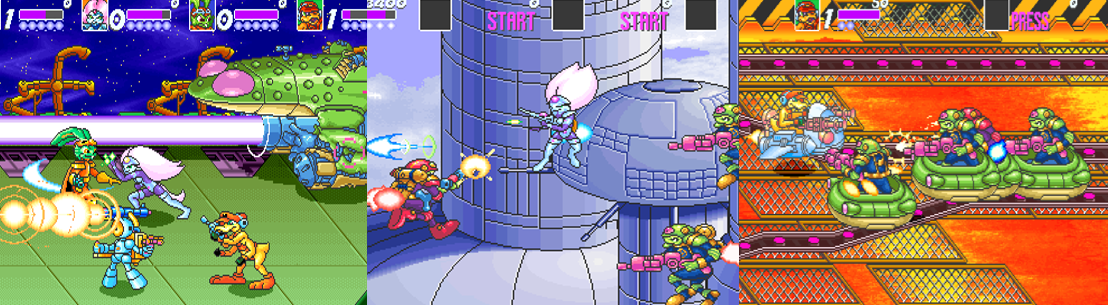
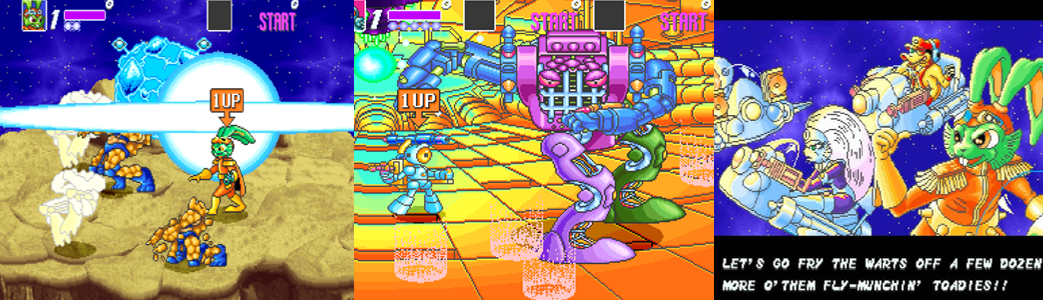


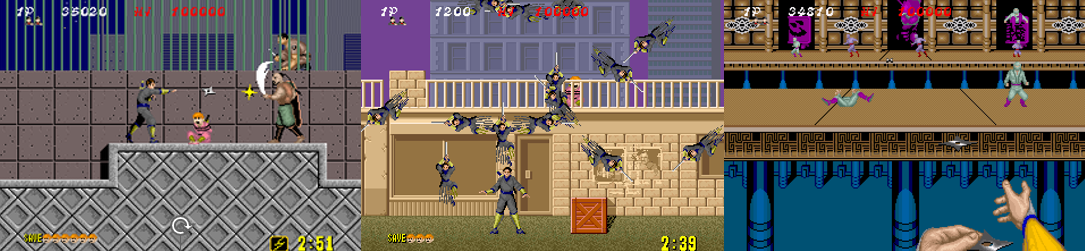
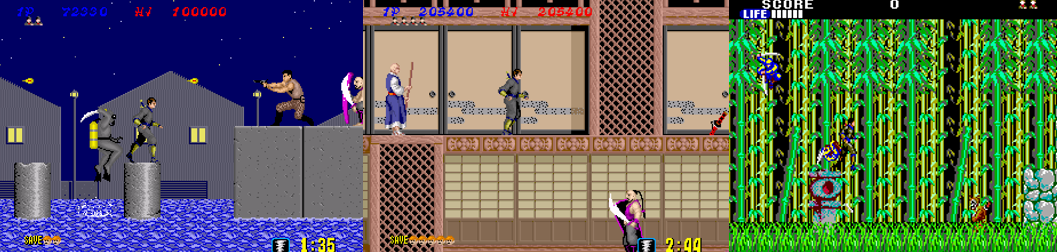
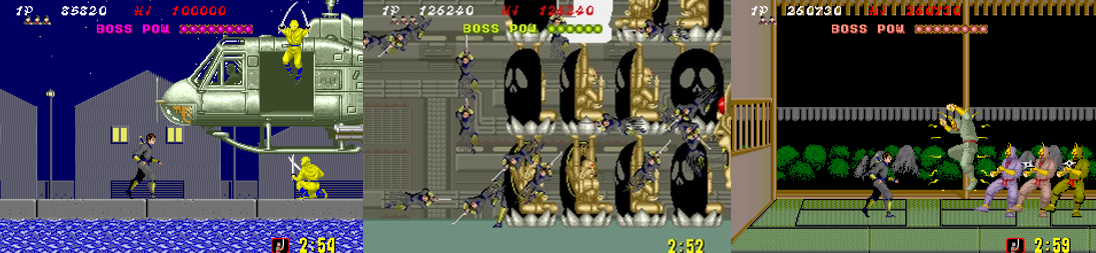





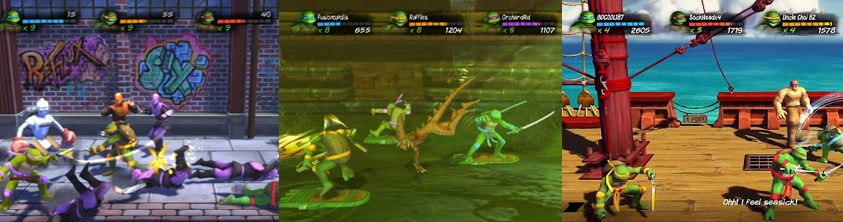
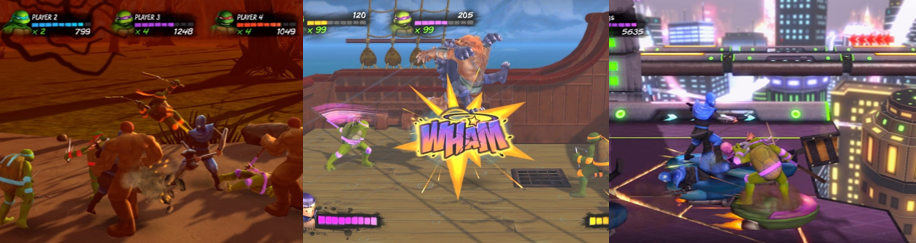
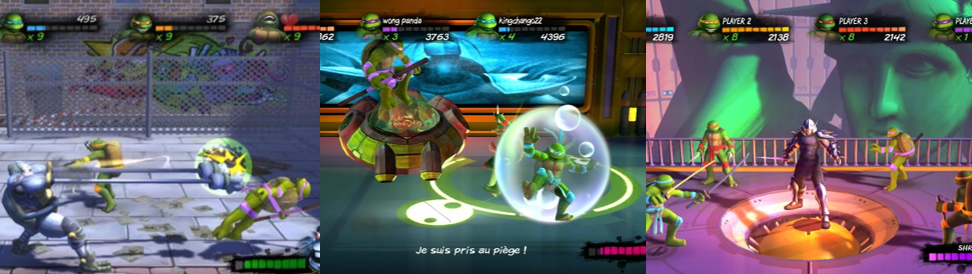

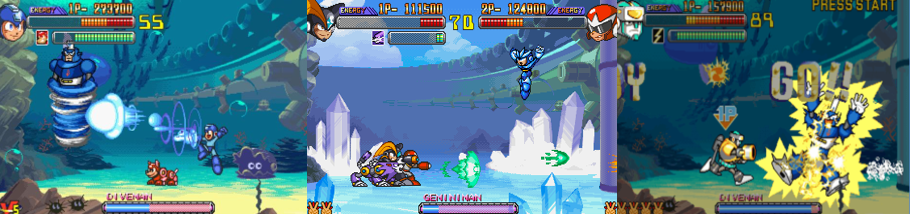
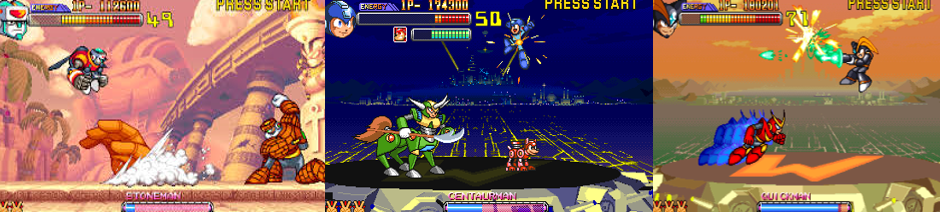
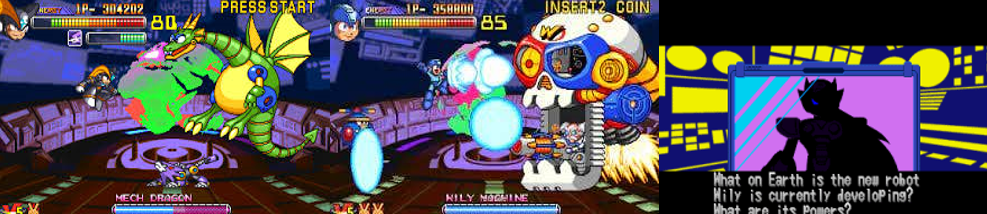



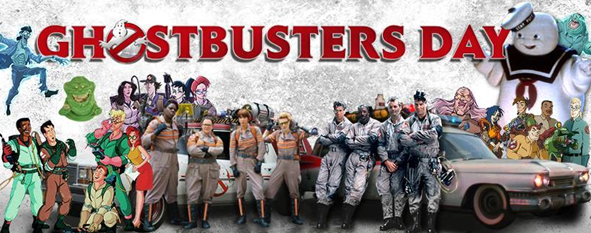

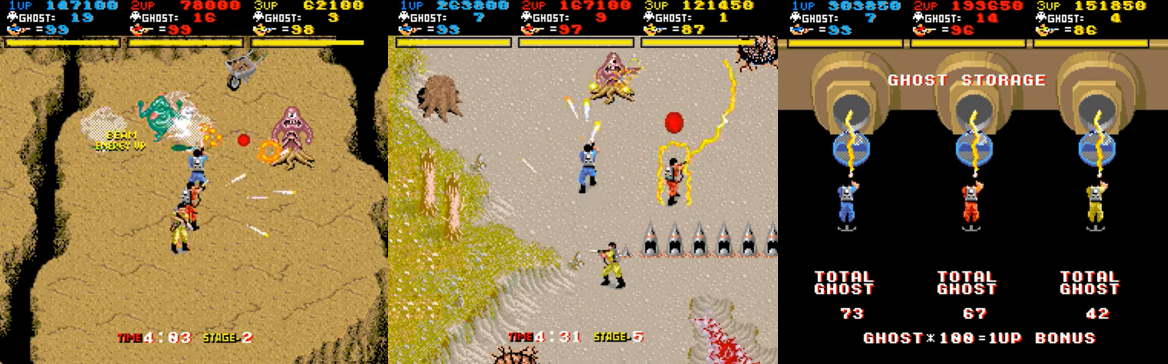
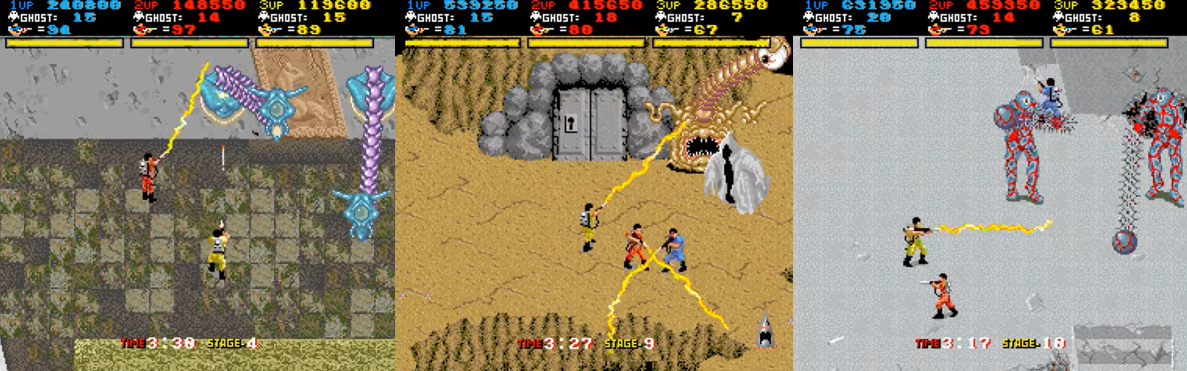



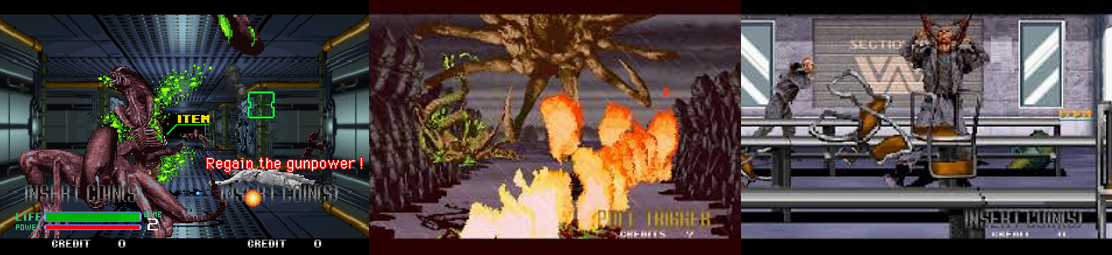
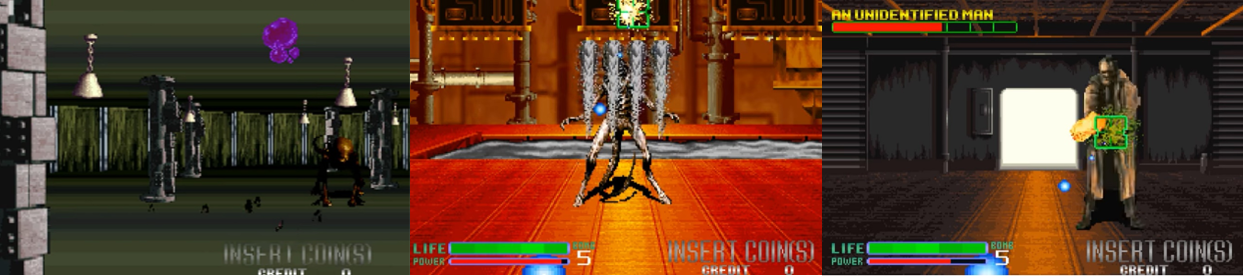




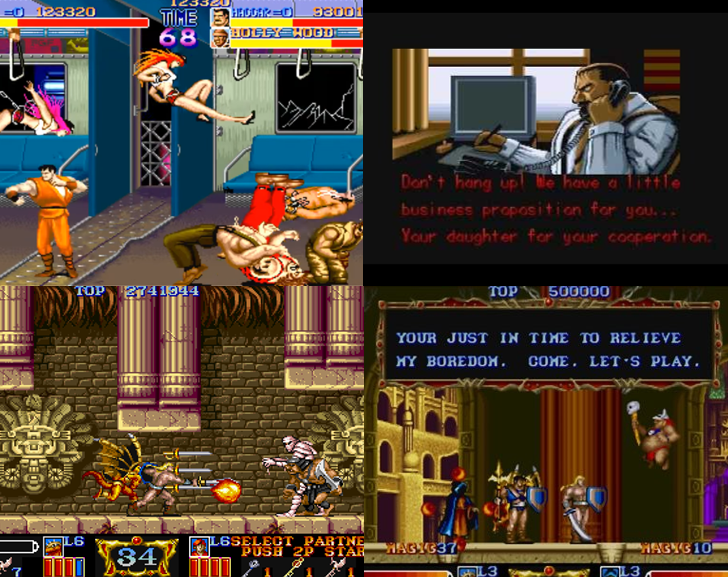
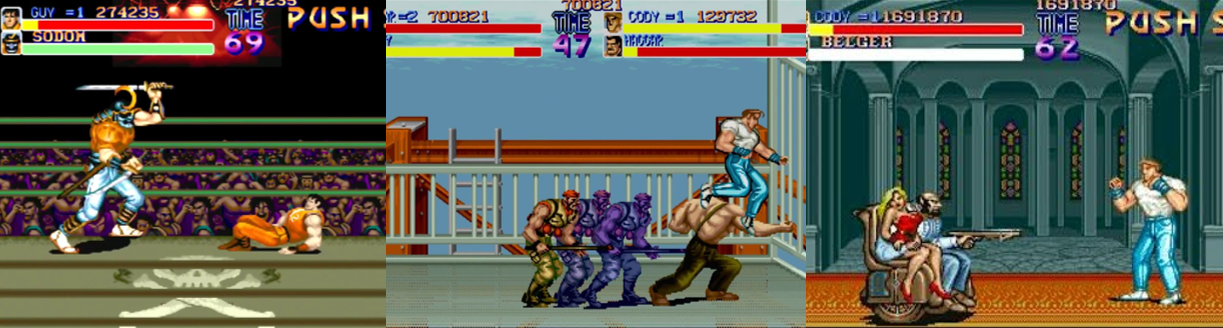
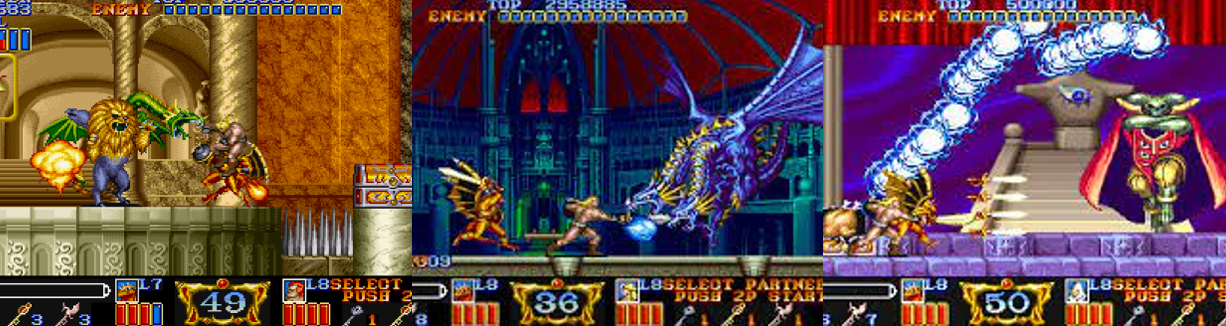



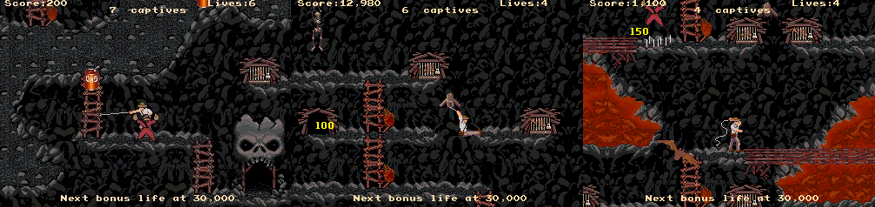
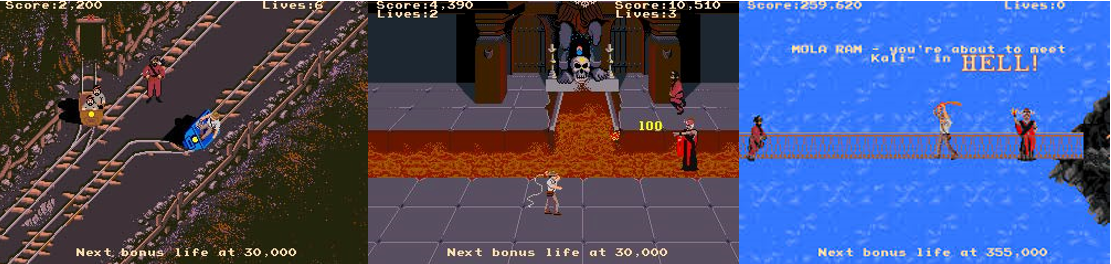






 Dr. K's Waiting Room
You must be logged in to post a comment.