Movie Night: Zack Snyder’s Justice League

Released: 18 March 2021
Director: Zack Snyder
Distributor: HBO Max/Warner Bros. Home Entertainment
Budget: $70 million (on top of the original $300 million production costs)
Stars: Ben Affleck, Gal Gadot, Ray Fisher, Jason Momoa, Ezra Miller, Ciarán Hinds, Amy Adams, and Henry Cavill

The Plot:
Following the death of Clark Kent/Superman (Cavill), Bruce Wayne/Batman (Affleck) scrambles to bring together a team of super-powered heroes when the disgraced New God Steppenwolf (Hinds) arrives on Earth and begins violently searching for the mysterious “Mother Boxes”.

The Background:
Oh God, where to start with this? Okay, so, after the Marvel Cinematic Universe (MCU) became this super successful juggernaut, Warner Bros. scrambled to try and catch up and craft their own cinematic universe. The first step was Man of Steel (ibid, 2013); Zack Snyder was picked to helm the project and steer the direction of the DC Extended Universe (DCEU) and, initially, the results were promising. Despite some mixed reviews, Man of Steel was a financial success but the cracks in Snyder’s vision started to form with Batman v Superman: Dawn of Justice (ibid, 2016). Despite the presence of acclaimed superstar Ben Affleck and reaping a hefty box office, the film divided many due to its pace and bleak tone and Warner Bros. started to get cold feet regarding Snyder’s vision for the DCEU. As a result, they brought in Joss Whedon to lighten the follow-up’s tone and ultimately replace Snyder after the tragic death of his daughter. Despite a similar box office gross to its predecessors, Justice League (Whedon/Snyder, 2017) released to scathing criticism and the film was disowned by even DCEU collaborators. The DCEU chugged along regardless but, very quickly, reports of Whedon’s reprehensible behaviour surfaced alongside rumours that a “Snyder Cut” was all but completed in Warner’s vaults and fans all over the world began campaigning hard for the release Snyder’s original version. While this did lead to a toxic community that I cannot condone, the movement gained serious traction when members of the cast voiced their support and Snyder finally returned to complete the film and was even afforded additional money and resources to film new scenes for his four-hour epic for the HBO Max streaming service. To the delight of Snyder’s fans, Zack Snyder’s Justice League finally released and drew a lot of attention to HBO Max. The general critical consensus, however, was mixed; though reviews praised the film as a coherent story and the culmination of Snyder’s vision, its length and excess were criticised. After the film’s release, Warner Bros. made the decision not to capitalise on its success and fans immediately campaigned to complete Snyder’s vision for the DCEU, despite his lack of interest in returning to the property, proving that some fans are just never satisfied.

The Review:
When I reviewed the original, theatrical cut of Justice League (no, I will not call it “Josstice League”), I gave it a ten out of ten. This was primarily because I am a massive DC Comics fan and, after years (literally decades) of DC’s live-action characters always existing in their own self-contained bubbles, I was just happy to see them all onscreen together and co-existing and felt that this was the most positive thing to take away from Snyder’s rushed attempt to build DC’s cinematic universe. Time, however, has changed this perspective; Justice League is by no means perfect but it was honestly never going to be. Warner Bros. scrambled about trying to play catch up to the MCU and, in focusing on cramming everyone together as quickly as possible and sucking the fun out of many of their most popular characters, they lost me a little along the way. So to say I was excited for the Snyder Cut is to lie, honestly. As much as I enjoyed Man of Steel, Snyder really dropped the ball with Batman v Superman, which was more a collection of ideas and themes than a coherent movie, and I took massive issue with his grandiose vision of the DCEU which jumped from Superman’s origin all the way to Multiversal shenanigans in, like, two films. Still, as a rule, I generally do enjoy a longer director’s cut as you get more bang for your buck and, in that regard, Snyder certainly goes above and beyond to present the closest version of his vision for Justice League as possible, even going so far as to present the film in a 4:3 aspect ratio.
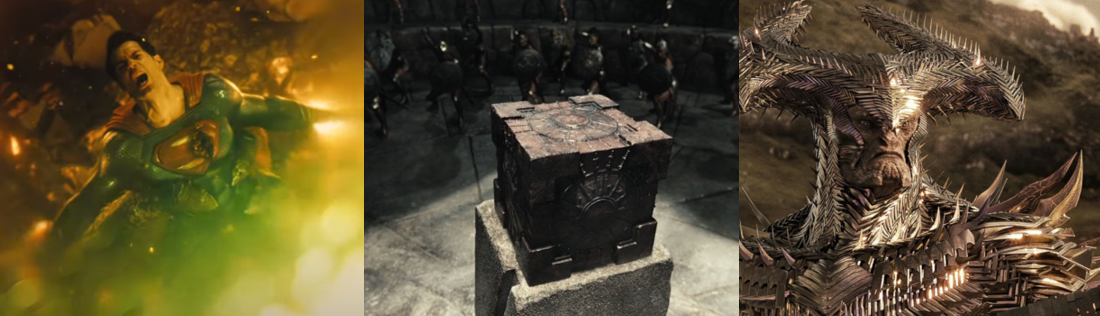
Superman’s death cry activates the Mother Boxes and calls Steppenwolf to Earth.

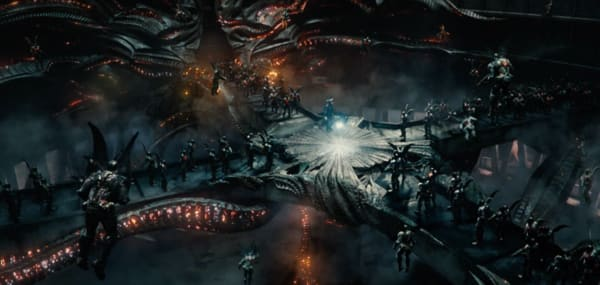
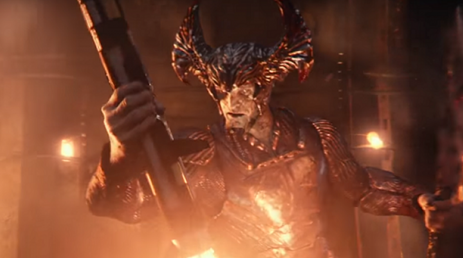
Zack Snyder’s Justice League begins with an egregiously slow-motion recap of Superman’s dramatic (and, in my view, unnecessary) death in battle against Doomsday. His death rattle (which seriously goes on for about six minutes), echoes all around the world, activating the Mother Boxes stored in Atlantis and Themyscira and sending a beacon out into the void of space with a simple message: Earth is vulnerable. Steppenwolf (now dramatically redesigned into a hulking creature wearing razor-sharp armour that honestly looks just as ugly as his original design but for different reasons) once again arrives to reclaim the Boxes; this time, however, his slaughter of the Amazons is much more brutal, featuring far more Parademons and presenting Steppenwolf as a formidable and imposing force. Indeed, compared to his theatrical counterpart, Steppenwolf is a much more well-rounded and interesting character; in the original cut, he was little more than a means to an end, an obscure and generic bad guy for the titular heroes to unite against in order to save the world but, here, he’s a driven, focused, and aggressive foe who is motivated not just by loyalty to his master and devotion to bringing about “the great darkness” but also desperate to regain his place among the New Gods after losing favour centuries before. Owing Darkseid (Ray Porter) a debt of fifty thousand worlds for his failures, Steppenwolf has been ostracised and forced to toil in endless conquest to regain his place at his master’s side; this desperation and motivation transforms Steppenwolf from a mere disposable hulk and into a surprisingly complex villain who seeks redemption and validation in the eyes of his master and will do anything to appease the will of Darkseid.

Superman’s loss affects each of the characters in different ways.

While the Man of Steel’s loss was felt in the theatrical cut, Superman’s death is a much bigger aspect of the Snyder Cut; carrying the guilt of Superman’s death on his shoulders, Bruce Wayne sets out to build an alliance of metahumans to combat this threat. While Diana Prince/Wonder Woman (Gadot) is reluctantly onboard with the plan and Barry Allen/The Flash (Miller) signs up immediately and enthusiastically, Arthur Curry/Aquaman (Momoa) basically laughs in his face and Victor Stone/Cyborg (Fisher) is busy struggling to reconcile his humanity after a horrific accident leaves him part machine. Furthermore, Superman’s loss is embodied here not just in Bruce’s guilt and desire to honour Superman’s legacy with a team of superheroes but in both Lois Lane (Adams) and Martha Kent (Diane Lane), both of whom struggle to adjust to life without Clark. Since Bruce has already been told that “Lois [is] the key” to reaching Superman, it makes sense to give Lois and Martha a little more prominence in the film, especially as her death is what causes Superman’s corruption in the dark future that looms over Snyder’s films.
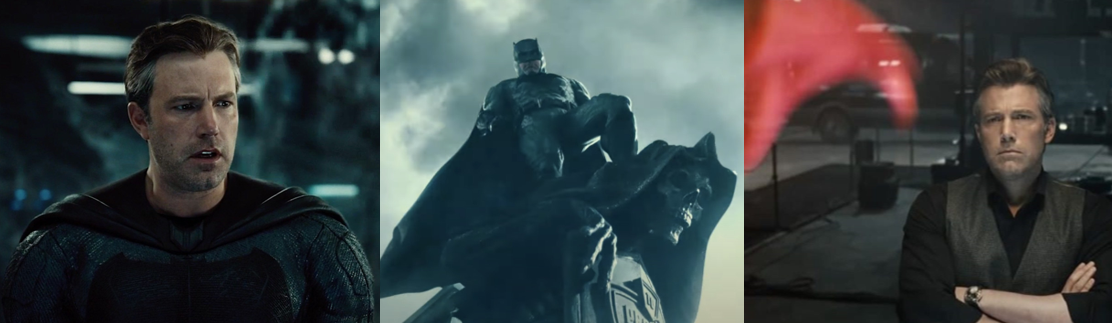
Batman is now absolutely focused on bringing together a team to honour Superman’s memory.

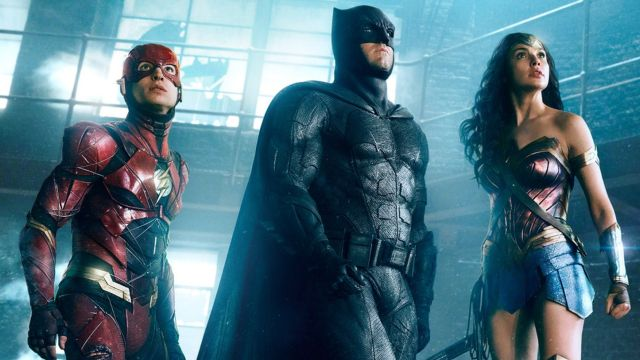
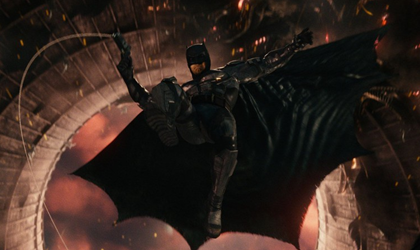
Bruce Wayne is, of course, extremely different compared to his characterisation in Batman v Superman. Now driven by an obsessive desire to make good on his promise to unite Earth’s heroes in Superman’s name, he works himself tirelessly to track down the metahumans from Lex Luthor’s (Jesse Eisenberg) file, much to the continued chagrin of his faithful butler and father-figure, Alfred Pennyworth (Jeremy Irons). Since he works closely with Diana to find and appeal to these metahumans, there’s even a little (microscopic, even) bit of romantic chemistry between the two and there’s now a nice little scene of Alfred making tea with Diana and showing her Batman’s new Parademon-absorbent gauntlet (which replaces the original cut’s side plot regarding Batman luring the Parademons out with “fear”). Mostly, though, Bruce remains the same character as in the theatrical cut; he’s still blinkered in his focus on bringing the team together, resurrecting Superman, and preparing the world to face escalating threats but all of his weird little attempts at humour are thankfully gone (sadly, that God-awful “I’m rich” line remains but, thankfully, we get the return of his “I’m real when it’s useful” line).

Wonder Woman now warns the team of Darkseid’s intentions for Earth.

Wonder Woman, however, is noticeably different this time around; more time is spent showing her as a willing ally of Bruce’s and she is also part of a pivotal extended scene that explores Steppenwolf’s previous campaign against the Earth. This sequence, which expands upon the prologue seen in the theatrical cut, shows the forces of man, Gods, Atlantis, Themyscira, and beyond uniting not just against Steppenwolf and his Parademons but also their exalted and imposing leader, Darkseid. Darkseid received only a passing mention in the original cut but, here, Diana’s obvious fear of the New God helps to establish early on that an even greater threat looms behind Steppenwolf’s actions. Furthermore, when out in the field with the team, Wonder Woman directs the fledging Justice League in the best way to attack Steppenwolf and his Parademons, which places greater emphasis on her capabilities as a warrior and leader.

The Snyder Cut retains Aquaman’s characterisation but explores a little more of his world.

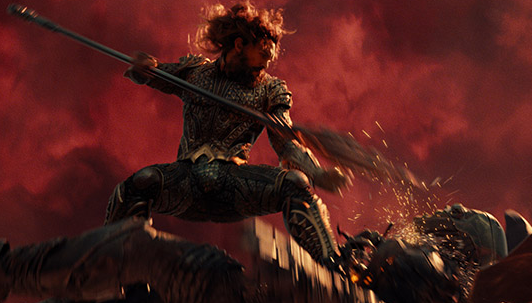
Aquaman is largely the same as in the theatrical cut except, unsurprisingly, more haggard and bleak rather than being an obnoxious jock. Though he claims to have no interest in Bruce’s crusade or working with others and has turned his back on Atlantis, he continues to do good and help those in need in his own way to get his hands on more whiskey. Bruce’s warning, though, compels him to return to the ocean and converse with Nuidis Vulko (Willem Dafoe), his former mentor, and ultimately to arrive all too late to help Mera (Amber Heard) defend the Mother Box from Steppenwolf. A couple of odd continuity issues are raised with all this, however, that fly in the face of DC’s directors wanting to align their movies with the Snyder Cut; first there’s Mera’s accent, which jumps from British to American to whatever the hell she likes, and second is the Atlantean’s ability to communicate using dolphin squeaks rather than just talking underwater as they do in Aquaman (Wan, 2018). Regardless, this version of Justice League does a far better job of setting up Aquaman’s solo film by showing more hints towards his world and Aquaman remains the film’s breakout character for me for me thanks to Momoa’s charismatic portrayal of the character.

Though still very neurotic, Barry plays a pivotal role in the film’s events and finale.

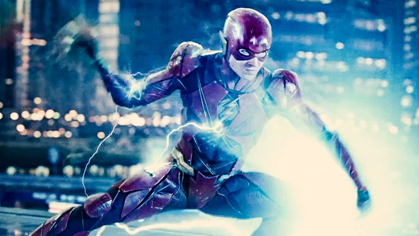
Barry Allen also gets a bit more time to shine this time around; this includes the restoration of his encounter with Iris West (Kiersey Clemons) and just more time to explore his awkward, energetic, and socially inept character traits. Barry was very much the comic relief of the theatrical cut and those who disliked many of his annoying character traits will be disappointed to find most of them intact and given more prominence in his increased screen time but I can’t fault Snyder’s attention to detail in showcasing Barry’s superspeed: his shoes and clothes disintegrate, the street is wrecked by his footfalls, and he experiences time in extreme slow motion when utilising the Speed Force. While the Flash loses one of my favourite scenes from the original cut (the “Just save one” moment), he plays a far greater role in not just the rescue of scientists from Steppenwolf’s clutches but also the film’s finale where, faced with defeat at the hands of Steppenwolf’s forces, he summons all of his super speed to travel back in time using the Speed Force and ensure that the invasion is halted.

Cyborg’s role is greatly expanded, making him the heart of the film and fleshing out his character.

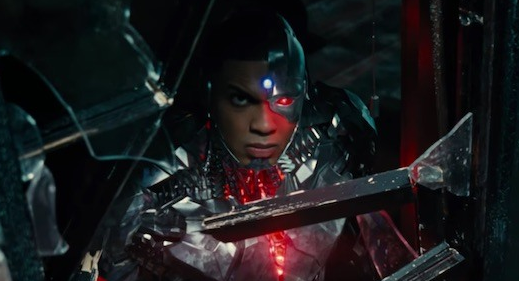
Of course, the character who benefits the most from the Snyder Cut is Cyborg; in the theatrical cut, Cyborg is a stoic, confused young man who resents his father, Doctor Silas Stone (Joe Morton), for transforming him into a machine-monster in order to save his life. While this remains at the start of Cyborg’s character arc in the Snyder Cut, Snyder restores not just Cyborg’s importance to the film as the “heart” of the Justice League but also his eventual reconciliation with his father and showcases excised scenes of his promising career as a college football player, his natural aptitude for hacking (which he used to help those in need), and the horrific accident which left him near death. While I’m personally not a fan of Cyborg being on the Justice League, it was clear that there was originally more to his inclusion and importance to the film’s plot; since he’s literally comprised on a Mother Box and Apokoliptian technology, he is afforded numerous abilities and insights into the invading New Box forces and, here, Silas actually guides and mentors him in exploring these abilities (which includes his ability to access every technological device and network and essentially makes him the most powerful man on Earth).

Superman returns, now in a black suit, and galvanises the team.

Finally, there’s Superman; as you might expect, Superman is absent for a massive amount of the film on a small account of being dead. Like Darkseid, Superman looms over the film but as a hero lost and much needed as a symbol for the world’s heroes to properly rally behind. Bruce’s plan to resurrect Superman with the Mother Box is discussed (and edited) far more competently this time around; although there’s doubt about the moral and ethical implications of the plan (mainly from Alfred this time around), Bruce and Diana don’t come to blows like in the original film but the outcome remains the same. Like before, Superman is disorientated upon returning to life and attacks the fledgling Justice League in his confusion; his confrontation with Batman is a little different (and not as good as in the original cut, in my opinion) and there’s more to his return to the Kent farm but, upon regaining his senses, he returns to action as the team’s ace in the hole for the finale. Cavill is an absolutely fantastic Superman and Justice League finally got the character to a place where he is the charming symbol of hope and strength that the world needs and, despite his new black suit, Zack Snyder’s Justice League only expands upon that (of course, Cavill’s natural charisma and the absence of a horrible CGI face play a huge part in that).

The Nitty-Gritty:
One word to describe Zack Snyder’s Justice League (apart from “long”) would certainly be “epic”; Snyder pads the film’s runtime out with not only an abundance of never-before-seen footage, alternate takes, and new content but also an overuse of slow-motion and long establishing shots. To help make the film more accessible to viewers, the film is also split into six chapters, which was probably a great way to view it on HBO Max, and the DVD version of the film is split across two discs but, either way you slice it, this is a slog to get through and I have to believe that Snyder simply milked the extra time and money he was afforded just to capitalise on all the hype surrounding his version of the film. The closest comparison I can make is with his director’s cut of Watchmen (Snyder, 2009), which was similarly epic and ambitious in its scope, presentation, use of music, and its presentation of its costumed adventurers.

Some shots effects, and inconsistencies negatively affect the Snyder Cut.

It has to be said, though, that Zack Snyder’s Justice League has quite a few faults; some of the new special effects shots understandably look worse than others (and Cyborg still looks like dog shit), it’s pretty crazy that Darkseid and his forces just forgot where Earth was for hundreds of years (especially considering how badly he wants the secret of the Anti-Life Equation), the score has been completely reworked to remove Danny Elfman’s contributions (though, thankfully, Wonder Woman’s kick-ass musical theme remains), and many of the new scenes shot exclusively for the film suffer from poor lighting, inconsistent editing, and stand out like a sore thumb to the point where I’d much rather Snyder hadn’t bothered including the likes of the Joker (Jared Leto) when it makes little sense narratively (you’re telling me that in a grim, apocalyptic future where Superman has gone bad the Joker is alive but Aquaman isn’t?) Personally, I have never been a fan of Snyder’s “Knightmare” timeline; it made no sense in Batman v Superman and, thanks to Warner Bros. having no interest in allowing Snyder to fully explore this alternate timeline in Justice League sequels, it makes even less sense to me that he chose to continue pushing this dark vision of a future ruled by Darkseid and a corrupted version of Superman in the Snyder Cut (but, at least, it’s mainly confined to the film’s final moments rather than being awkwardly wedged in the middle of the film like in Batman v Superman).
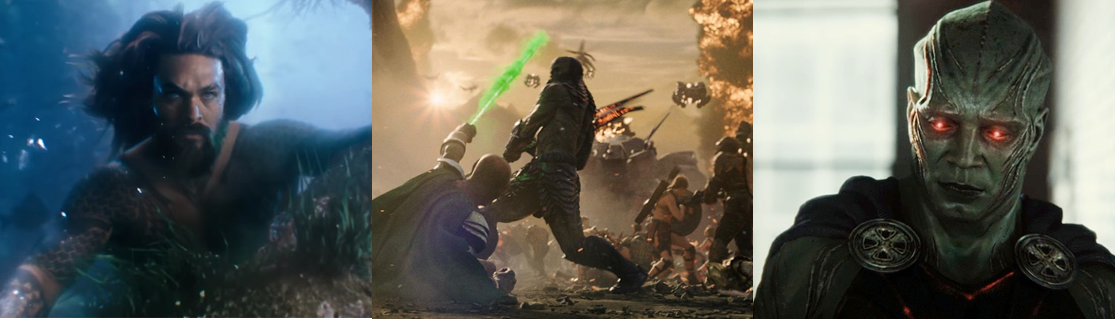
Snyder’s cut expands and recontextualises many of the film’s existing scenes and characters.

Although many scenes and sequences may be familiar to anyone who has seen the theatrical cut of the film, the Snyder Cut expands upon every single one of these and, in many cases, recontextualises them into this larger narrative. This includes a longer scene of Bruce Wayne meeting and attempting to recruit Aquaman (accompanied by a lengthy song of reverence for the Atlantean), an expanded version of Wonder Woman’s introduction (including the first of a handful of pointless f-bombs), a longer version of Steppenwolf’s attack on Themyscira and the recap of Darkseid’s defeat centuries ago, more scenes of Steppenwolf and his Parademons’ search for the Mother Boxes (including torturing Atlanteans for information and a far better sequence where he acquires the final Box), and even recontextualising the interactions between Lois and Martha with the reveal that General Calvin Swanwick (Harry Lennix) has been J’onn J’onnz/Martian Manhunter all along.
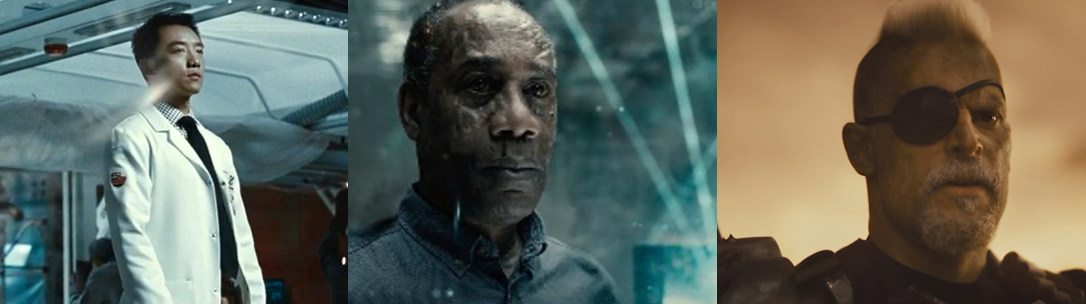
The Snyder Cut restores and dramatically changes excised characters.

One of the main selling points of Zack Snyder’s Justice League, however, is the restoration of scenes and plot threads excised from the theatrical version. This includes characters removed from the original film, like Doctor Ryan Choi (Ryan Zheng), Vulko, Iris, DeSaad (Peter Guinness), Cybrog’s mother, Elinor Stone (Karen Bryson), and more time devoted to side characters like Silas (who now gives his life to mark the final Mother Box) and the origins of the Mother Boxes. One of the benefits of this is that we actually get to see an in-depth look into Cyborg’s expansive abilities (which includes a deep dive into the way he now perceives reality). Much of the Snyder Cut’s hype was also built around the inclusion of Darkseid but, in truth, the character is little more than a cameo; he simply takes Steppenwolf’s place in the flashback of the war between the allied forces of Earth and Apokolips and looms over the film like an ominous shadow as the ultimate threat for the united Justice League. Sadly, despite Snyder choosing to push his Knightmare future throughout the film and concluding it with a tease of Darkseid’s impending retaliation against the Justice League, it seems like we won’t be seeing Darkseid (or any of the New Gods for that matter) in the DCEU again any time soon.
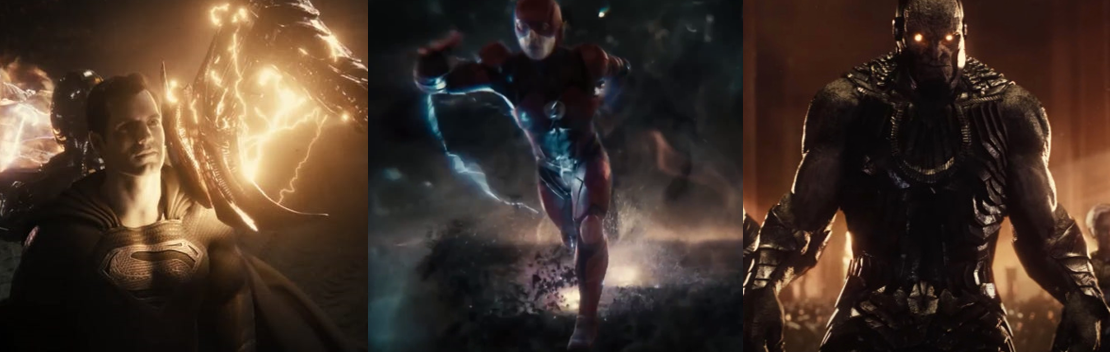
Thanks to the team, and time travel shenanigans, Darkseid is left humiliated.

Snyder’s vision of the DCEU remains extremely bleak in its presentation; for all the characters’ talk of “hope” and the better nature of men, Snyder continues to suck all the life and colour out of these vivid characters. One thing I liked about Justice League was that it did a fantastic job of bringing some life and colour to this world, allowing the costumes to pop out on screen but, here, everything retains the same muted look and sombre tones of Batman v Superman. This is best exampled in Snyder’s instance on garbing the resurrected Superman in his black suit; Superman wore this in the comics after returning to life for about three issues and it was later stated to have helped aid his recovery but, here, no real reason is given for his choice of attire and it honestly would have made more sense for the evil Knightmare Superman to have worn the suit instead. Additionally, Snyder removes the red tint and tumultuous skies from the finale of the film, which admittedly does make the climatic battle against Steppenwolf’s forces easier to see but I feel the original colouring worked a lot better as a reference to the red skies that were are of DC’s various Crises. Speaking of the finale, Zack Snyder’s Justice League slightly recontextualises the ending. Although there’s still an implication that Batman is heading into battle with the intention of dying, it’s not as explicit as in the theatrical cut; what is much more explicit, though, is the feeling of team work between the Justice League as they each play their part in breeching Steppenwolf’s defences (Flash, again, gets way more to do in using his Speed Force charge to help Cyborg interact with the Mother Boxes) before Superman dramatically shows up to again completely lay waste to Steppenwolf. I’m glad that this beatdown is maintained as it was always a glorious showcase of Superman’s return and of the team coming together against a common enemy but, here, things go slightly differently as the heroes fail to stop the unity between the Mother Boxes and prevent Darkseid’s arrival. With no other choice, the Flash enters the Speed Force and reverses time in a beautifully surreal sequence, allowing Cyborg to reject the Apokolips’ influence and Wonder Woman to decapitate Steppenwolf right before Darkseid’s eyes.

The Summary:
I went into Zack Snyder’s Justice League with low expectations. Toxic fans and a rabid, almost cult-like online community had beaten any sort of excitement and wonder out of me. I quite enjoyed the theatrical cut; it wasn’t perfect but, news flash: none of the DCEU has been perfect and few films really are. Knowing that Snyder got so screwed over by Warner Bros. stung and it definitely frustrated me that we didn’t get a concise and more accurate version of Justice League years ago so that maybe the DCEU would be in a slightly better place but it was hard for me to feel invested in the film when it was so self-indulgent and so clouded by negativity and entitlement. In this case, though, I am glad to be wrong; there are many benefits to Zack Snyder’s Justice League. For one thing, it actually feels like a coherent story (even more so than Batman v Superman) and each member of the team is given so much more time to shine and showcase their powers and personality. Thus, when the Justice League unite for the finale, it means that much more as we actually get to know them all a little better and see them grow as a team through their interactions; it’s still a rush job as so much had to be crammed into so few films but, as a big fan I am of DC Comics and these characters, it remains a real thrill to actually get to see Batman, Superman, Wonder Woman, the Flash, Aquaman, and Cyborg all in a big budget, live-action film rather than constantly existing in self-contained bubbles (which seems where the DCEU will be heading again going forward). I’m not a massive fan of Snyder’s vision for the DCEU or many of the decisions he made but it’s better than nothing and not seeing an interconnected series of DC films so, while I was initially hesitant to enjoy Zack Snyder’s Justice League, I have to say that I was pleasantly surprised in the end. Had Warner Bros. not interfered and screwed things up, we probably would’ve gotten a two-and-a-half-hour long film that would have satisfied everyone enough to justify at least one more team effort but it is what it as and at least we got to see the closest approximation of Zack Snyder’s true vision of the film in the end and that’s something to be celebrated rather than simply, selfishly, demanding more.

My Rating:

Rating: 5 out of 5.

Fantastic

What did you think to Zack Snyder’s Justice League? Do you think it lived up to all the hype or was it all style and no substance? What did you think to the additional, extended and recontextualised scenes from Justice League and how do you feel the Snyder Cut compares to the theatrical version? Which of the characters was your favourite and what did you think to their extended screen time? How did you watch the film; in sections or as one long movie? Would you like to see more from Snyder’s DCEU or are you happy with the direction Warner Bros. is taking? What did you think to the whole Knightmare timeline Snyder tried to push and were you a fan of Superman donning the black suit? Whatever you thought about Zack Snyder’s Justice League, good or bad feel free to leave a comment below (even if it is super toxic).

Movie Night: Aquaman

AquamanLogo

Released: December 2018
Director: James Wan
Distributor: Warner Brothers
Budget: $160 to $200 million
Stars: Jason Momoa, Amber Heard, Patrick Wilson, Yahya Abdul-Mateen II, Willem Dafoe, Temuera Morrison, and Nicole Kidman

Plot:
Fresh off saving the world in whichever version of Justice League (Snyder/Whedon, 2017) you consider canon, Arthur Curry/Aquaman (Momoa) returns to Atlantis when his half-brother, Orm Marius (Wilson), prepares to war with the surface world. Assisted by Princess Y’Mera Xebella Challa/Mera (Heard), Arthur is tasked with finding and retrieving a legendary trident and claiming his birth right as the rightful King of Atlantis.

The Background:
The character of Arthur Curry, everyone’s favourite fish-talking aquatic superhero, was created by Mort Weisinger and Paul Norris way back in 1941 when National Comics (the precursor to DC Comics) were eager to capitalise on the success of Clark Kent/Superman and Bruce Wayne/Batman with more costumed heroes. Despite being unfairly ridiculed over the years, Aquaman has been a part of DC’s biggest stories and proved popular enough to feature in numerous DC cartoons, a diabolical videogame, and even almost got his own teen drama show. Development of a live-action solo film can be traced back to 2004, when Robert Ben Garant was hired to write a screenplay; when that project fell through, the character was slated to appear in the ill-fated Justice League: Mortal, but development didn’t truly take off until the successful of Man of Steel (Snyder, 2013) heralded the birth of the DC Extended Universe (DCEU). With Aquaman now a priority, the character cameoed in the divisive Batman v Superman: Dawn of Justice (ibid, 2016) and was one of the standout elements of Justice League, meaning excitement was high for his solo venture. Filming primarily took place in Australia and Europe and much of the production was focused on bringing Atlantis to life and showcasing Aquaman’s underwater abilities; there were over 700 shots for hair simulations alone, to say nothing of the many ships, architecture, and visual effects required to have the actors move dynamically and believable when seen underwater. Aquaman proved a smash hit; with a worldwide gross of $1.148 billion, it became the fifth-most-profitable release of 2018 and reviews were generally very positive. While some criticised the plot and dialogue, the performances and spectacle drew much praise and a sequel was quickly greenlit. The film was also followed by a short-lived animated spin-off on HBO Max and there was even, strangely, talk of director James Wan revisiting his horror roots in a spin-off movie focusing on the monstrous Trench that, thankfully, never materialised ahead of the sequel.

The Review:
Aquaman has always been a bit of a divisive character; thanks to decades of misconceptions about his powers, he’s often portrayed as a useless and ineffectual superhero despite basically being the Superman of the sea and having the potential to be one of the most formidable metahumans in all of comics, much less in DC Comics. Personally, because of this, I’ve always had a soft spot for the character; I’m not massively well-read on his adventures but I really enjoyed Peter David’s run, which transformed him from a white-meat goody two-shoes into a bitter, rugged monarch with a harpoon for a hand! It’s fair to say that attempts to adapt Aquaman outside of the comics haven’t fared too well either, so I was genuinely excited to see that Jason Momoa, who had impressed me with his performance in the surprisingly enjoyable Conan the Barbarian (Nispel, 2011), had been cast and been done up into a barbarian-of-the-sea appearance to tie into his Polynesian heritage. His brief appearance in Batman v Superman and the marketing for that movie (which was oddly focused on the fledgling Justice League) made me anxious for his reinterpretation and I was very happy with Momoa’s portrayal of the character in Justice League as this bad-ass, arrogant loner who was kind of a mixture of Aquaman and Thor Odinson (Chris Hemsworth), showcasing the same brash pride as the latter alongside a genuine love for battle that made him a joy to watch in an otherwise mediocre superhero movie (regardless of which version you’re watching).  

The film delves into Arthur’s origins and his resentment towards Atlantis for taking away his mother.

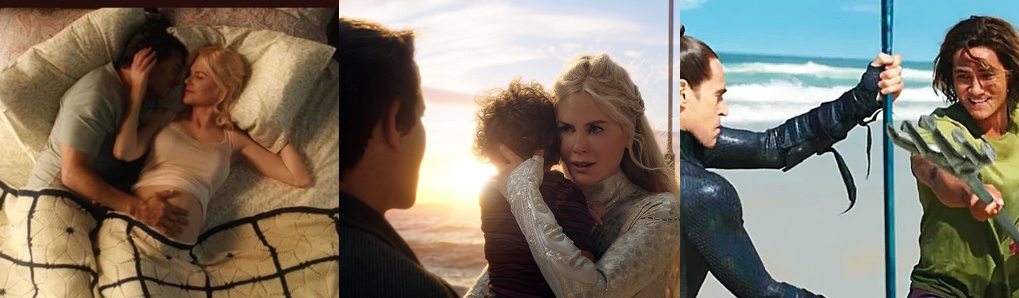
Thanks to Zack Snyder hastily introducing Aquaman and the other Justice Leaguers in Batman v Superman and rushing into a team-up movie before the DCEU could be properly established, Aquaman’s opening moments (and, indeed, much to the plot) revolve around addressing his origin, his powers, and establishing him has a well-rounded character with complex motivations. Because of this, it’s perhaps unsurprising that the film is bookended by Arthur’s narration, with Aquaman taking us through the unlikely romance that built between simple lighthouse keeper Thomas Curry (Morrison) and Atlanna (Kidman), the Queen of Atlantis who fled her arranged marriage and literally washed up outside Tom’s lighthouse. Confused, injured, and bewildered, it naturally takes Atlanna some time to adjust to the surface world, but she quickly becomes enamoured by Tom’s kindness and simple life and the two fall in love and give birth to a young son, Arthur, whom she sees as the potential bridge between humanity and Atlantis. When Atlantis’s soldiers come to force her return, Atlanna showcases some of the fighting spirit her son would eventually be known for, but this is more an emotional outburst and she’s forced to return to Atlantis, and her arranged marriage, to keep not only Tom and Arthur safe but also prevent a war between Atlantis and the surface world. Despite this, Atlanna commands her vizier, Nuidis Vulko (Dafoe), to continue training Arthur, allowing him to master communicating with marine life using a form of echo-telepathy, survive and see in the ocean depths, and blast through water at subsonic speeds. Jason Momoa is an absolute highlight of the movie and is perfect for the title role; Justice League briefly touched upon the resentment he feels towards Atlantis (although that sentiment is revisedhere so that he’s not bitter about his mother leaving him for Atlantean duties and is instead aggrieved that Atlantis shunned him and his mother) and portrayed him as a free-spirited individual with a taste for the booze and adulation. Aquaman develops this further by showing that Arthur holds a grudge against Atlantis for apparently murdering Atlanna for her forbidden love. Despite having saved the world in Justice League, Arthur’s loyalties to the surface world are equally tenuous; he’s uncomfortable being celebrated as the Aquaman and carries a true sense of conflict and sadness over his unresolved issues regarding his heritage that really hammers home that he’s torn between wanting to be left alone and reclaiming his birthright.

A reluctant Arthur must reclaim his birthright to keep his half-brother from destroying the surface world.

Atlantis comes calling, however, when the ridiculously gorgeous Mera arrives to bring Arthur back to his people. Like Vulko, Mera has been feigning loyalty to Orm’s throne but secretly desires to displace him with Arthur; while Mera has no love for the surface world, she prefers Atlantis to remain hidden and in peace rather than at war. Mera is more than capable of holding her own due to her unique hydrokinetic powers, which allow her to hold and command water, extract water from bodies, and turn wine into deadly spiked projectiles in addition to being highly skilled with a blade. Witnessing Orm’s first strike against humanity and the devastation it causes, Arthur reluctantly follows Mera to Atlantis to reunite with Vulko, a man he greatly respects as a mentor despite being sceptical of his plans. Arthur’s reluctance to assume this role is seeped as much in his self-doubt as it is his animosity towards Atlantis; seeing himself as unworthy, the legend of King Atlan (Graham McTavish) as nothing more than a fairy tale, and believing he has no standing or authority within the undersea realm, Arthur is only spurred into embarking on a quest to find King Atlan’s lost tomb and trident after being humbled in mortal combat against Orm. Though she struggles to adjust to Arthur’s snarky, dismissive attitude and is constantly exasperated by his unfamiliarity with Atlantean customs, Mera warms to him while on their quest. Just as he was a stranger in Atlantis, she too is a stranger to the surface world; disgusted by the polluted, overcrowded nature of Arthur’s world, she manages to find some beauty in flowers and the kindness of others and, united in their common goals and the exhilarating of their experiences, an unlikely romance blossoms between the two that sees Mera realise that it’s the very qualities Arthur believes hold him back that make him suitable to be king.

Orm is maniacally driven to unite the undersea kingdoms in a war against the surface world!

I’ve always said that for any good action movie to really work, you need an accomplished actor to portray the villain and offset the musclebound protagonist and Aquaman has the distinction of casting Patrick Wilson in a far more action-heavy role than we’re used to seeing. A stickler for tradition, Orm longs to return the seven Kingdoms to prominence as a united underwater civilisation against the destructive surface world and believes it’s his birthright to lead the united underwater realms in a pre-emptive strike against the surface. While King Nereus of Xebel (Dolph Lundgren) believes that humanity will destroy themselves and aren’t a concern, Orm is insistent that it’s only a matter of time before their conflicts come to the ocean. King Nereus, however, sees through Orm’s golden tongue; with only four of the seven Kingdoms still standing, and the armies of Xebel the only reliable fighting force outside of Atlantis, Orm requires King Nereus’s allegiance if he’s to unite the empire as “Ocean Master” and wage his war. An alliance with David Kane (Abdul-Mateen II), a mercenary with a grudge against Aquaman, allows Orm to stage an attack that convinces King Nereus of mankind’s threat, painting Orm as a scheming and manipulative, power-mad dictator who is determined to wage way regardless of the consequences. However, Orm isn’t simply some conniving armchair villain; he delivers a scathing warning to the surface world by ejecting decades of ships, waste, and wreckage out of the sea as an act of aggression and almost kills Tom in the process. Additionally, Orm is armed with the full knowledge of Atlantean society, well aware of what commanding the united kingdoms, possessing King Atlan’s trident, and trial by combat really means. Because of this, and having lived his entire life under the sea, Orm is an accomplished fighter underwater who easily bests Arthur’s sloppier fighting style. Orm’s mental state, however, is clearly on a razor’s edge; desperate for war, he lashes out and makes demands of all those around him, fully willing to kill to fulfil his ends, and yet is intelligent enough to understand the importance of allegiances and allies. This leads him to keeping Vulko close, despite being fully aware of his betrayal, and to marry Mera to secure the loyalty of King Nereus, all while preparing to destroy countless human lives in his quest for power and glory.

Out for revenge, David Kane outfits Atlantean tech to become the dangerous sub-villain Black Manta.

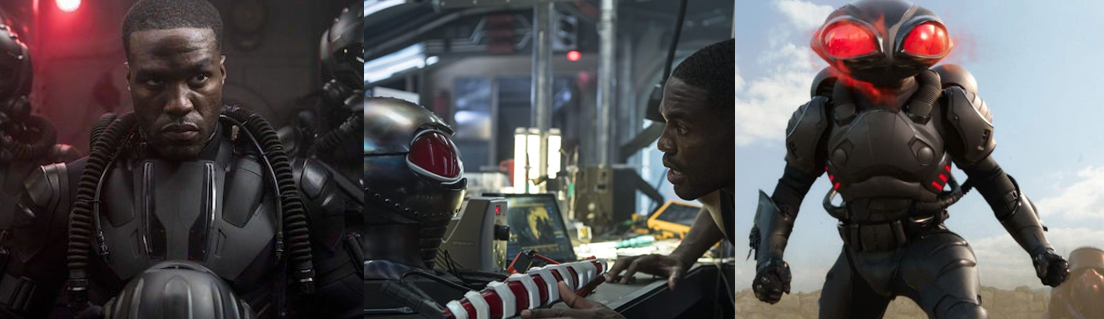
As mentioned, Orm allies with David Kane (Abdul-Mateen II), a pirate we’re introduced to in the film’s first act. Alongside his father, Jessie (Michael Beach), David sports intimidating advanced diving gear (with a Baraka-like blade built into his gauntlets) and commands a squadron of similarly-clad minions in hijacking a nuclear-powered submarine. Having planned and taken the lead on the heist, David is not only afforded his father’s respect but also gifted a blade, a family heirloom, as a rite of passage. His pride at this touching moment is almost as strong as his deep-rooted desire to lock horns with the fabled Aquaman, believing it to be an inevitable conflict, but his fervour to best Arthur soon turns to desperation when Jessie is left pinned under a torpedo and subsequently drowns despite David’s pleas for mercy. Seething with rage, David demands Orm gives him the means to avenge himself on Aquaman, which the would-be conqueror initially balks at but, after Mera helps Arthur to escape to the Sahara Desert, Orm gives David advanced Atlantean technology that allows him to assume the identity of Black Manta so he can track them down and kill them before they can find King Atlan’s trident. While Black Manta could have been featured a little more in the film, which juggles many different stories and ideas simultaneously, his appearance is a welcome one as he fully embraces the all-encompassing outfit and manages to project his rage and lust for vengeance despite being completely obscured. His presence here is primarily to give Arthur a secondary villain to butt heads with in the second act and to set him up for a greater, or recurring role, in future films, possibly alongside disgraced scientist Doctor Stephen Shin (Randall Park).

The Nitty-Gritty:
Aquaman released at a time when there was a conscious effort to lighten up the bleak, grim-dark DCEU; while I appreciate the DCEU’s attempts to separate itself from the more family-friendly jaunts of Marvel Studios, I have to admit that there’s something very off about a morose Superman (Henry Cavill) and a disillusioned Batman (Ben Affleck) swearing and going on a murder spree so I, for one, enjoyed the infusion of more comedic aspects into the DCEU and embracing some of the source material’s more outrageous notions to focus on bombastic, blockbuster fun rather than melancholic deconstruction of the genre. Consequently, there’s a great balance of action, drama, and humour in Aquaman right from the start when Queen Atlanna hurls her trident at an episode of Stingray (1964 to 1965). Much of the film’s humour is delivered by the super charismatic Jason Momoa; his Aquaman is a bit of a bonehead at times and never short of a smart-ass quip, resulting in him making a bit of a fool of himself around Mera, subverting expectations by having him drinking with some overzealous fans rather than engaging in a barroom brawl, his own disgust at his personal hygiene, and, my favourite gag, the “Drunk” graphic listed as one of his cons during his ritualistic combat against Orm. The film is also rife with familial themes; Arthur’s life has been ruled by the belief that Atlantis killed his mother, but he’s very close to Tom, drinking with him and sharing mutual respect even while being exasperated by this father’s efforts to push him to be more. The central conflict between Arthur and Orm is essentially a clash between slighted brothers not unlike what we saw in Thor (Branagh, 2011) except the two are far more equally matched; it’s telling that Orm’s conquest against the surface world only ends upon seeing his mother alive and well, after all. Mera also has a complex relationship with her father; she wants to do right by him but isn’t happy about being forced to marry Orm, nor does she agree with his war against the surface world, and she openly defies both and risks being charged with treason in order to bring Arthur back so he can prove his birthright, no matter how unworthy he may initially be.

Aquaman‘s costume design and visual spectacle is a true highlight of the movie.

To the delight of many viewers, I’m sure, Arthur spends most of the film topless, showing off his impressive physique and his array of tribal tattoos; although he donned Atlantean armour in Justice League, he appears to have ditched this in favour of his more streamlined appearance but, after meeting the Lovecraftian Karathen (Julie Andrews) and reclaiming the trident of the legendary King Atlan, he emerges garbed in the king’s golden scale armour, effectively wearing a comic-accurate suit that turns the orange scales and green tights and turns into this absolutely bad-ass armoured look that really works (though at the cost of those abs). I was similarly taken by Mera; Amber Heard might be persona non grata these days (and rightfully so), but my God does she cut an alluring figure in that slick, skin-tight outfit and with the glossy red hair (wig or not). I was equally blown away by the film’s villains; not only does David end up sporting an extremely faithful Black Manta suit, complete with oval head and laser blasts, but Patrick Wilson cuts an intimidating figure even in the ridiculous Ocean Master armour, which boasts a flexible cowl to allow him greater emotional range during the film’s climactic fight scene. When not garbed in his own ostentatious golden armour, Orm prefers a darker attire and rides vicious sharks outfitted with concussive cannons to demonstrate his command over one of the sea’s most aggressive predators; conversely, King Nereus and his people don striking emerald and gold ceremonial armour and traverse the waterways on great seahorses. Atlantis is but the central kingdom of a vast and diverse underwater society comprised of numerous fish-like races; the most human of them all, Atlantis’s citizens are physically impeccable, with Atlanna, Orm, Mera, and Arthur himself all being beautiful and strong physical specimens. Their technology is fantastically advanced, allowing their soldiers to wield concussive staffs and pilot underwater craft that are not only futuristic but almost alien in their design. Convenient air pockets exist within the underwater kingdom, and can be created by Mera’s powers, but only the “Highborn” are capable of breathing water and air, meaning Orm’s soldiers use breathing equipment outside the water. There are many layers to Atlantis, from the enigmatic dwellings of the Highborns to the harsh traditional of the Ring of Fire (complete with a drum playing octopus!), and Aquaman really goes all-in to bring the spectacle of Atlantis and her technology; ships and weapons have a bioluminescent glow that makes them magical and also a little alien and the entire kingdom is a mixture of ancient ruins and highly advanced, futuristic technology where beautiful luminous structures and sleek structures exist side by side.

Alongside thrilling action, Aquaman dabbles in horror to keep things visually exciting.

Hidden beneath the depths of the Atlantic Ocean is the lost civilisation of Atlantis, a submerged civilisation comprised of seven underwater kingdoms, of which only five are thriving: Atlantis itself, where Orm has taken the crown; Xebel, ruled by King Nereus birthplace of Mera; the Trench, home to a vicious and aggressive tribe; the Brine, a race of anthropomorphic crustaceans; and the Kingdom of the Fishermen, who are ruled by King Ricou (Andrew Crawford/Djimon Hounsou). Mera also mentions the Deserters during their excursion to the Sahara Desert; though she claims their civilisation was destroyed, remnants of their technology are still present and easily reactivated with just a drop of sweat. To use another Marvel comparison again, it’s very much like a mixture of Asgard and Wakanda but underwater; the underwater kingdom brings a true sense of history, one that really expands the lore of the DCEU by relating the history of Atlantis, a technologically advanced civilisation seeped in magic not unlike Themyscira, but which paid the price of their ambition by being submerged beneath the ocean and lost to mythology. There, they ether evolved or regressed and its these differences that really make Aquaman a visual treat; when conversing underwater, there’s an echo effect applied to the dialogue to indicate the affect the depths of the ocean has on communication; while telepathy probably would’ve made more sense, this method allows the actors to properly convey emotions and also ties into the somewhat fantastical nature of Atlantis. Characters are also almost constantly depicted swimming, floating, or otherwise drifting in the ocean, with their hair and ceremonial robes and such all being affected by the constant movement of water to really help make the underwater scenes both immersive and accessible to audiences. When venturing into the Kingdom of the Trench, Aquaman allows director James Wan’s horror background to shine in bringing these nightmarish, carnivorous creatures to life; their mindless brutality is in stark contrast to the more elegant Alanteans and even the otherworldly beauty and outrageousness, respectively, of the Fishermen and the Brine. Thankfully, Aquaman’s visuals hold up really well; the choking depths of the ocean help to mask more CG-heavy effects such as the Karathen, but the film certainly doesn’t pull any punches for the massive conflict that rages throughout the final act.

Explosive and hard-hitting fight and action scenes break out at the drop of a pin.

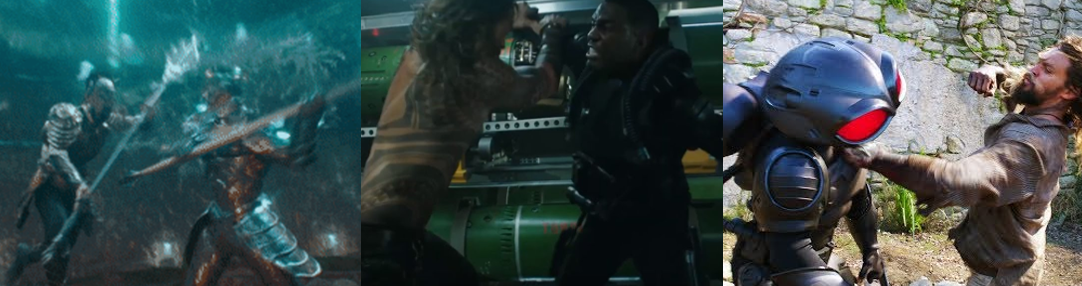
With the narrative building towards an epic climax, Aquaman certainly isn’t short on action sequences; amusingly, the movie is constantly interrupting dialogue and exposition scenes with explosions and action scenes, almost to the point of ridiculousness as it happens three times (during the Orm’s discussion with King Nereus, interrupting Vulko’s mission debriefing to Arthur and Mera, and right as Arthur solves King Atlan’s riddle in Sicily). I mentioned before that Aquaman is basically the Superman of the sea and this is reinforced with Arthur’s bad-ass introduction, in which he hefts a submarine to the surface, shrugs off bullets and even grenades to the chest, and decimates Kane’s soldiers with a brawling, no-nonsense fighting style that unwittingly creates his resentful archvillain, Black Manta. Arthur is also depicted as leaping out of the water and darting through the depths in very much the same way Superman flies through the sky and his half-breed physiology certainly hasn’t dampened his superhuman abilities and he only encounters a challenge when he goes toe to toe with Orm’s soldiers due to their advanced technology and his inexperience with underwater fighting. Arthur has a couple of run-ins with David throughout the film; their first fight is ridiculously one-sided, despite David’s passion and swordsmanship, as he cannot make a dent on the metahuman half-breed and is left beaten, humiliated, and swearing revenge. The second time they fight, it’s in Sicily and David has rechristened himself Black Manta; now able to fly and emit concentrated blasts of concussive plasma from his saucer-shaped helmet, Black Manta is finally able to fight Aquaman on equal ground thanks, in no small part, to the addition on Atlantean steel and a plasma-like whip to his arsenal. The first time Arthur battles Orm, it’s on the would-be conqueror’s turf, surrounded by water and the jeers of the crowd. Having lived his whole life underwater, training to be the best, Orm easily humbles Arthur, unleashing all of his spite and disgust for his older brother, even severing their mother’s trident in the battle to prove his dominance. Indeed, it’s only due to Mera’s interference that Arthur is saved from death, and he learns from the experience to challenge Ocean Master outside of the water for the finale.

Ultimately the rugged Arthur reclaims his birthright and defeats his half-brother’s mad ambitions.

Arthur and Mera’s journey leads them on a globe-trotting quest to solve King Atlan’s riddle, which takes them to the Kingdom of the Trench, a vast and hazardous pitch-black underwater kingdom full of the carnivorous beasts that also hides a wormhole to the centre of the Earth, where Atlanna is revealed to be alive and well. Arthur is conflicted by this revelation; clearly overwhelmed, he’s brought a sense of closure by his remorseful mother, who’s first concern is to reassure him and to ask about Tom, who still waits for her return. Before any of them can escape, however, Arthur must face his fears and brave the dwelling of the Karathen to claim King Atlan’s trident, something he’s able to succeed at thanks to his ability to communicate with sea life. With Orm having killed King Ricou to force the Fishermen’s loyalty, and Vulko imprisoned for treason, the newly crowned Ocean Master leads his army against the forces of the crustacean Brine race to force them to submit to him. However, Aquaman and Mera arrive, with the former commanding the mindless Trench and triumphantly riding the Karathen into battle, and wielding King Atlan’s trident, its power amplifying his own and allowing him to turn Orm’s steeds against him and his allies. Although this is enough to finally convince King Nereus to stand down, Ocean Master is not so easily swayed and so stubborn in his refusal to yield that he recklessly battles Aquaman on the surface of his ship against the backdrop of a raging thunderstorm as the sea people watch on. Thanks to a technique of Vulko’s, which sees Aquaman generate a swirling shield of hard water, and his experience with fighting on land, Arthur topples Ocean Master but, in defiance of Atlantis’s ways and Orm’s desperate pleas, refuses to kill him. Orm finally yields upon seeing his mother alive and is imprisoned, with Arthur extending the olive branch to his wayward little brother and assuming his rightful place as the King of Atlantis. However, though Black Manta appeared to suffer a fatal fall at the hands of Arthur and a handed ball and chain, a mid-credits scene reveals he’s alive and well thanks to Dr. Shin and willing to lead the marine biologist to Atlantis in return for his assistance in repairing his armour.

The Summary:
Aquaman is, in a word, bad-ass. It takes some of the best elements of superhero, science-fiction, and fantasy films and smashes them together in a glorious, over-the-top thrill ride that never slows down and never has a dull moment. It was great giving Arthur a platform to shine so we could learn more about his origins and motivations, with the plot literally centring around Arthur’s heritage and his grudge against all of Atlantis. Jason Momoa shined in this role and carries the film with his physique and endless charisma; he carries himself with such a swagger and confidence while also being a loveable goofball that it’s impossible not to like him or root for him reclaiming his birthright. Patrick Wilson was equally amazing as Orm; so much of Orm’s motivation stems from his disgust at having a half-breed older brother and his quest to become the Ocean Master is layered in a desire to destroy Aquaman, dominate the surface world, bring Atlantis back to glory, and his personal lust for power. The film’s pacing is really fun, as well, with massive action scenes breaking out at the drop of a pin and it also does a great job keeping things visually interesting by contrasting cinematic genres, such as when Arthur and Mera journey to the Kingdom of the Trench and the film suddenly becomes a monster/horror movie but, by the time they return to Atlantis, it shifts easily into a massive full-scale war movie! I cannot stress enough how much fun Aquaman is; the film is bright, constantly moving, full of action, and has a real dramatic weight to the story. While it’s obviously a big CGI-fest at times, all the effects look great, with special props to the costume design, and the film is also full of humour and hard-hitting action. Ultimately, while I disagree with the decision to fast-track to a Justice League film before the DCEU was properly established, I’m so glad that Jason Momoa got the chance to bring this character into the mainstream in such an entertaining way and Aquaman definitely went a long way to changing the public’s perception of the character for the better, in my opinion.

My Rating:

Rating: 5 out of 5.

Fantastic

What did you think to Aquaman? Did you enjoy Jason Momoa’s portrayal and the changes made to his character for the film? Do you think we should’ve gotten more solo DC movies before a Justice League film was made? What did you think to the conflict between Aquaman and Ocean Master? Would you have liked to see a bigger role for Black Manta? What did you think to Atlantis, the different undersea tribes, and the film’s costume design? What Aquaman stories, characters, and moments would you like to see adapted in the future? Whatever your thoughts on Aquaman, feel free to leave a comment below and be sure to check out my other Aquaman reviews.


Game Corner: Injustice 2: Legendary Edition (Xbox One)

GameCorner
Injustice2Logo

Given that Warner Brothers bought Midway back when they were forced to shut up shop, it should have been seen as inevitable that a videogame would be made that mashed together characters from the Mortal Kombat series with those of the DC Universe. Of course, Mortal Kombat vs. DC Universe (Midway Games, 2008) was quite the barebones, lacklustre effort compared to the spiritual successor, Injustice: Gods Among Us (NetherRealm Studios/Warner Bros. Interactive Entertainment, 2013).

Injustice2Brainiac.png
Brainiac is coming to collect the Earth!

Injustice was generally applauded not only for its graphics, gameplay, and competitive fighting mechanics but also its story mode; NetherRealm Studios have seemingly perfected the art of infusing their fighters with an in-depth and genuinely captivating single play story and Injustice 2 (ibid, 2017; 2018) continues this trend. After the Justice League travel to a parallel world to help end the reign of a dictator-like Superman and his regime of similarly-evil former heroes, the Injustice-world faces a new threat in the form of Brainiac. Though Batman attempts to rally a new generation of heroes against Brainiac, they have no choice but to free Superman from his red sun prison cell in order to combat the threat and enter into an uneasy alliance.

Injustice2Roster
A good roster, bogged down with one-too-many Batman characters.

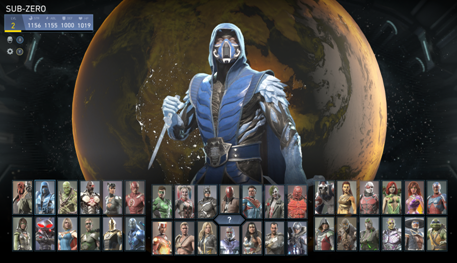
A fighting game is only as good as its roster; like Injustice, Injustice 2 has an unhealthy obsession with Batman characters – Batman, the Joker, Robin, Poison Ivy, Red Hood, Scarecrow, Bane, Catwoman, Harley Quinn, and Deadshot bloat out the roster. While it is a little disappointing that this appears to have caused other, unique characters such as Booster Gold or Doctor Sivana miss the cut, Injustice 2 does bring some welcome new faces to the game; Firestorm, Blue Beetle, Atrocitus, Gorilla Grodd, and Doctor Fate are just some of the new heroes and villains available to play as. The Legendary Edition also includes some fantastic downloadable characters, such as Hellboy, Black Manta, and even the Teenage Mutant Ninja Turtles!

Injustice2Unique
Every character has a unique play style.

Every character boasts their own unique combos, special moves, and super moves and plays a little differently; Darkseid, for example, is slow and methodical, Supergirl is a much faster character, while characters like Green Arrow and Batman rely more on their gadgets and skills to succeed. Successfully pulling off combos, counters, and landing attacks allows players to build up their super meter and power up their special moves or execute a world-ending super move. Each character starts with three loadout slots, which can be increased to five, that allow you to gear up Aquaman, for example, to have one loadout the favours attack, one that favours health, one that favours special moves, and so on, depending on the gear you apply. You can also apply this gear to AI Loadouts and have them fight for you, which is kind of weird and I’m not sure why you would want to do that rather than play the game yourself but it is useful for the game’s Endless and Survival modes.

Injustice2Stages
Injustice 2‘s stage selection levels much to be desired.

While Injustice 2 has a decent roster, it doesn’t have much in the way of stages; there are only twelve stages to pick from and they’re not really that dynamic or interesting. You can still send characters flying to other parts of the stage, which is fun, but it seems there’s a lot less opportunities to do this than in Injustice. There are also some fun stage interactions to be had, like smashing Swamp Thing over the head with a crocodile in Slaughter Swamp, but, again, it seemed that there were more and better stage interactions in Injustice. The primary selling point of Injustice 2 is the Gear System; winning matches not only earns experience points for each character and the player’s profile but also awards numerous gear. Players can then apply this gear to each character to boost their attributes, gain performance buffs (such as greater attack strength against Metahumans), alter the character’s costumes, and even unlock different special moves. Winning matches also earns the player coins and crystals, which can used to buy Mother Boxes and unlock more gear, transform or combine gear to make it stronger, or unlock Premier Skins for certain characters.

Injustice2Skins
Premier Skins are available…at a price.

Premier Skins allow you to play as new characters; Cheetah, for example, has a Premier Skin that turns her into Vixen and Raiden’s Premier Skin is Black Lighting. This is great, as it effectively adds even more characters to the game’s roster; the only downside is that, to purchase Premier Skins, you need Source Crystals, which are few and far between. You’re therefore forced to grind over and over, levelling up your profile and characters, to earn a pittance of Source Crystals or spend real money. This latter appears to be what NetherRealm Studios want you to do as it is extremely difficult to earn enough Source Crystals as the Premier Skins carry a hefty price tag, and only the best Mother Boxes and rewards can be earned through spending real money, it seems, making the in-game currency all but worthless. Unlocking gear and applying it to characters is fun but, let’s be honest, you won’t be applying all of your gear to every character as some characters are better than others and some or just dead weight. The biggest downside to the Gear System is that, unlike in Injustice, it is the gear that determines what your character will look like; therefore, you can’t just select Green Lantern and choose to play as Yellow lantern, you have to unlock the correct gear and colour palette (which also require Source Crystals), which is quite disappointing and annoying.

Injustice2Clash
The clash mechanic as as annoying as ever.

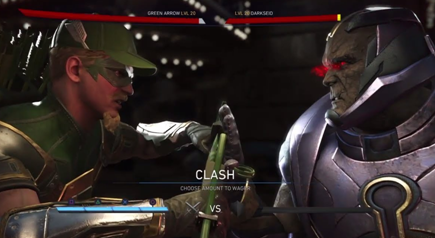
In terms of gameplay, Injustice 2 is very similar to its predecessor with a noticeable increase in AI competency; I played the entire game on Very Easy and, on more than one occasion, noticed that the AI doesn’t take any shit. If you spam moves or favour a certain tactic, the AI calls you out on it and gives you a competitive match more often than not. The story mode is fun to play through but a breeze; I finished it in within two casual days of gameplay and only went back to it to finish off the branching paths. The clash mechanic returns from Injustice and it’s just as annoying as ever; as you take damage, you can spend your super meter initiating a clash and pressing a button in a rock/paper/scissors type of mini game, which will either deal additional damage or restore your health. It seems that the AI always busts out a clash at the worst or most annoying opportunities and it’s easily to most frustrating part of the game.

Injustice2Multiverse
Take on the entire Multiverse…once you’re levelled up enough…

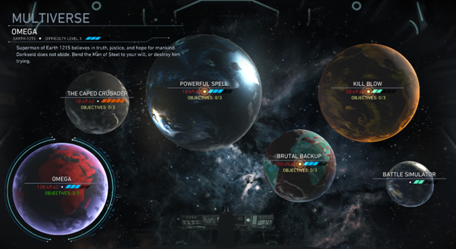
Similar to Mortal Kombat X (ibid, 2015), Injustice 2 utilises an ever-changing Multiverse mode that allows players to fight a number of opponents and obtain better rewards. These change hourly, daily, weekly, and monthly and often carry certain themes that will be familiar to DC Comics fans; you can also use the Battle Simulator to play traditional tournament modes or battle endless opponents. One thing I will praise about Injustice 2 is that every battle is different; I don’t think I ever fought the same version of a character twice as it seems every match sees random gear and colour schemes applied to the opponent. You can also join a Guild and take part in Guild Multiverses and challenges to unlock even more Mother Boxes and rewards; these are far more challenging than the regular Multiverse modes and, similarly, the best Multiverse rewards are only available when you’ve levelled a character up to level twenty or thirty, meaning that you’re going to have to play again and again and grind over and over to reap the benefits. Honestly, maybe I’m a bit jaded, but I don’t find myself particularly enthusiastic about stepping up to this challenge; Injustice 2 features a wealth of Achievements, many you can sweep through regular gameplay, but the more specific ones (such as maxing every character’s level out) just seem like too much of a chore. I really don’t like that I have earned so many in-game coins and yet I cannot use them to purchase Premier Skins or extra colour palettes; I don’t really want to spend my actual money buying them, was disappointed to see that they weren’t already unlocked in the Legendary Edition, and am not sure I can be bothered to grind over and over to unlock them.

Injustice2Batman
Want the best stuff? You better have deep pockets!

In the end, Injustice 2 is good; it’s fun to play, the story mode is decent, and the graphics are very impressive but there’s not too much calling me back to it. I played Injustice pretty much to death working my way through the challenge mode but you have to put some serious effort in to challenge the best Multiverses and the motivation is severely lacking this time around just because the best gear and rewards are either really rare or too expensive. Maybe, next time around, NetherRealm Studios should limit the in-game currency to two forms (one to buy stuff, one to upgrade stuff) and move away from forcing players into spending their real-world money on additional extras, especially if they’re going to bring out a Legendary Edition after the initial versions.

My Rating:

Rating: 2 out of 5.

Could Be Better

Talking Movies: Justice League

Talking Movies
JusticeLeagueLogo

It’s no secret that DC Comics and Warner Bros. are a bit late to the superhero renaissance we are still experiencing thanks to the runaway success of the films put out each year by Marvel Studios. They lost a lot of ground with films like the dull Superman Returns (Singer, 2006) and Green Lantern (Campbell, 2011) – even though I personally actually enjoyed Green Lantern and thought the movie was worth salvaging in further DCEU films – and often focus too much of their attention on Batman at the expense of their massive cast of superheroes. However, amidst the many and ongoing critical debates surrounding Man of Steel (Snyder, 2013) and Batman v Superman: Dawn of Justice (ibid, 2016) and the disappointment of Suicide Squad (Ayer, 2016), they apparently scored a far more meaningful success with Wonder Woman (Jenkins, 2017) and their films have been profitable enough to keep the idea of a cinematic universe alive, even if rumours abound every day that it is on life support. Now, I never saw Wonder Woman, for reasons of my own, and I actually really enjoyed not just Man of Steel but also Batman v Superman so, for me, anticipation was high for Snyder’s third cinematic effort, Justice League. While a personal tragedy saw him leave the production process and be replaced by formal Marvel guru Joss Whedon, the film is still credited to Snyder and carries many of his themes and ideas over but does it deliver?

JusticeLeagueInvasion
An invasion from Apokolips is all-but inevitble!

Justice League begins in a world still mourning the loss of Superman (Henry Cavill), which hasn’t resulted in world-wide chaos but has resulted in appearances of insect-like Parademons across the globe. Having witnessed a glimpse into a nightmare dystopian future where these creatures have overrun humanity, Bruce Wayne/Batman (Ben Affleck) has been investigating the creatures and their weaknesses amidst attempting to recruit a superpowered team alongside Diane Prince (Gal Gadot) to fight what he believes to be an inevitable invasion. On Themyscira, Diana’s home island of Amazons, the ancient Mother Box suddenly awakens and opens a Boom Tube, through which appears Steppenwolf (Ciarán Hinds) and an army of Parademons. Slaughtering the Amazonians, he claims their Mother Box and promptly disappears, forcing Bruce and Diana to step up their timetable. Bruce is initially unable to convince Arthur Curry/Aquaman (Jason Momoa) to join their cause due to his desire to be left alone but has far more luck in recruiting Barry Allen (Ezra Miller) who, disillusioned by the wrongful incarceration of his father (Billy Crudup) and struggling to live in a world that now seems painfully slow in comparison to his superspeed, joins up as the Flash without a second’s hesitation. Meanwhile, Diana is able to channel her own experiences with isolation and loss to convince Victor Stone (Ray Fisher) to put his recently-acquired and still developing cybernetic powers to good use in the fight against Steppenwolf.

JusticeLeagueTeam.png
It’s going to take everyone to fight off Steppenwolf.

Aquaman is finally convinced to join the team when he is forced to return to Atlantis to defend the second Mother Box from Steppenwolf, only to be suitably humbled. With two of the boxes in the hands of the enemy and the countdown to the destruction of the planet imminent, Batman struggles to galvanise the team in using the final Mother Box to resurrect Superman to lead the final battle for the fate of humanity. I’m going to say something now that may cause a stir; I’m a fan of both DC Comics and Marvel. Yes, it is possible; for me, just seeing comic book superheroes on screen and coming together is a thrill in and of itself. I don’t get weighed down with debates between which company is better or criticise DC for failing to follow Marvel’s gameplan; however, I do admit that they are very clearly playing catch-up. This was massively evident in Batman v Superman, where Wonder Woman was introduced with a lot of intrigue and mystery surrounding her but which also wedged in cameos from the Flash, Aquaman, and Cyborg. It felt like the movie was trying to do to much but, at the same time, those small glimpses served the purpose of a larger narrative and didn’t distract from the film at all; instead, they were weaved into Batman’s character arc of moving past his misguided vendetta against Superman and towards rejoining the world and uniting a team.

JusticeLeagueFlash
Ezra Miller brings some welcome levity to the DCEU.

While Justice League does suffer form some pacing issues in the first act, each member of the team gets an ample amount of screen time to shine and show some layers. Although I could’ve done without it as we have seen the tale of Barry’s father played out in the first season of The Flash, it nevertheless helped to establish that Barry is currently in a very lonely and confused place in his life and that his powers only make things more difficult for him. Barry primarily serves as the comic relief, once again being infused with more of the characteristics commonly associated with the Wally West version of the character, but shows significant growth when he admits to Batman that he’s never actually been in a real fight before and, upon Batman’s prompting, learns how to be a superhero by simply saving one life.

JusticeLeagueAquaman
Probably the greatest interpretation of Aquaman we’ll ever see!

Before the movie came out, I hedged my bets on Jason Momoa’s Aquaman being a kick-ass, breakout character; for years, people have ridiculed Aquaman because “all he does is talk to fish” when that’s simply not the case. Now, I’m not the biggest Aquaman fan because, honestly, he can still be pretty lame for other more pressing reasons, but I am a fan of the Peter David version of the character, which had long hair, a beard, a more armoured outfit, and was a no-nonsense, stern ass-kicker. Momoa’s Aquaman may not have a harpoon for a hand but, man, is he bad-ass! He’s more like a rock star than a clean-cut prince, revelling in the heat of battle, carrying himself with a sense of narcissism, and generally approaching every situation with a nonchalant attitude. He looks fantastic and really brings the muscle to the team in Superman’s absence, but there’s also a sense of a much larger world and backstory behind him through his return to Atlantis and interactions with Mera (Amber Heard).

JusticeLeagueCyborg
Obviously a character mostly created in CGI is going to be CGI!

Probably the character with the most controversy surrounding him is Cyborg; personally, I’ve never liked the idea of Cyborg being on the Justice League, primarily because he’s so closely associated with the Teen Titans and I feel it’s a just a reason to have racial diversity on the team. However, for the purposes of this film, he serves a key purpose; having been created through the machinations of a Mother Box, Victor’s cybernetic parts are constantly evolving and hold the key to interacting with and stopping the Mother Boxes from uniting and destroying the world. Everywhere I look people are bad-mouthing the CGI on Cyborg and, honestly, I don’t see why; Justice League is filled to the brim with top-notch special effects, to the point where even a $300 million budget can be stretched pretty thin. Cyborg is a 90%, at least, CGI character so, obviously, he’s going to have a lot of CGI used on him. Would it have been better if they’d tried more of a Robocop (Verhoeven, 1987) route? Probably, yes. Did I think the sleeker, Teen Titans-inspired look he adopted at the end of the film would’ve looked better than the Transformers (Bay, 2007 to 2017) look? Definitely, but I never let the fact that he was largely comprised of CGI parts distract me from the film and, honestly, if you do then you’re clearly not that interested in the film to begin with.

JusticeLeagueWondy
Gal Gadot continues to impress/surprise.

Gal Gadot continues to impress as Wonder Woman; despite my reservations about her, she is an extremely attractive young lady and her accent actually becomes less distracting the more you hear it. Diana’s arc here is directly tied in to the events of Wonder Woman as she is still apprehensive about rejoining society in the spotlight. Bruce even calls her out on it and accuses her of not being able to move past the death of Steve Trevor (Chris Pine), which only galvanises Wonder Woman’s resolve. Henry Cavill also returns after the team successful manage to resurrect Superman using the same Kryptonian birthing chamber that spawned Doomsday. Unlike the comics, he does not sport a mullet or a black costume, but his memories are briefly fragmented, leading to an awesome fight between Superman and the rest of the team. Superman is actually amazing in this film; he’s clearly overjoyed to be alive again, smiling and cracking jokes, and finally shines as an optimistic symbol of hope to rally behind. His initial period of disorientation also showcases his intense rage as he spits Batman’s “do you bleed” line back into Batman’s face as he is poised to crush Batman’s head. The only things I slightly disliked about Superman were that they didn’t make any effort to address how they explained Clark Kent’s sudden return to life and his resurrection felt like it came too soon; I expected him to return right at the very end, but it comes just before the third act, so it does raise the question of why kill him off in the first place (though I’m glad they did because at least it meant they got that aspect of Doomsday right).

JusticeLeagueBatman
Seriously, how can you not love shots like this!?

Ben Affleck returns as Batman, despite a new rumour springing up online almost every day saying that he wants out of the franchise. When he was first cast, I had my doubts that he would stick around for sequels and, honestly, the more I hear about him wanting to leave the more annoyed I am that he was ever cast in the first place. The fact that he is a fantastic Batman makes it all the more annoying; Warner Bros. seem to want to evoke Marvel Studios’ attitude towards Robert Downey Junior and build their DCEU around Affleck so I really hope that they do everything they can to convince him to see it through because he put in another brilliant performance here. Now focused on facing Steppenwolf’s impending threat, Batman has turned his mission from vengeance and death towards forming a team, saving the world, and atoning for the decisions he made that led to the death of Superman. The guilt he feels is evident and he even descends into some trademark Bat-dickery by manipulating Diana into following Superman’s example and being an inspiration for others. Additionally, the idea that he is so worn down and beaten up from twenty years of being Batman and that he now craves an honourable death continues in Justice League as, even with the team assembled, many of his plans revolve around him making a suicide run; during Superman’s resurrection, Batman even faces him head on with the intention of dying so that Superman can take his place as the more suitable leader of the team, and his joy at seeing Superman returned to life is clear on his face even if he quickly adopts a more stoic façade to save face.

JusticeLeagueSteppenwolf
The traditional bland villain does equal fleshed out heroes…

The action in Justice League is very big and very loud; explosions happen all over the place, water crashes everywhere, buildings topple, and hits land with a satisfying impact. Amidst what could be described as chaos, but actually is a far more cohesive end-of-the-world scenario than the one seen in Suicide Squad, is a fabulous score by Danny Elfman. Elfman even weaves not only his classic Batman (Burton, 1989) theme into the score but also John William’s classic Superman (Donner, 1978) theme; as much as I enjoyed the score from Snyder’s previous films, hearing the return of those classic, iconic, and irreplaceable themes brought a warm feeling of joy and nostalgia to my heart. Probably the biggest issues with the film are easily the most predictable; pacing and the villain. With the film being mandated to be two hours long, there’s a real sense that a lot of content was trimmed back and I look forward to seeing it inserted back in for an extended cut. While I did not experience any jarring leaps in continuity or pacing, it is unavoidable that a large chunk of the film’s early runtime is devoted to introducing and fleshing out not just the new characters but also existing ones; the plus side of this though is the clear influence of Joss Whedon, who not only infused a bright, vibrant colour palette but clearly worked on the film’s dialogue, resulting in a truly enjoyable rapport between the protagonists. As for Steppenwolf, he’s there for the team to unite against and defeat and his motivations are as one-note as possible; he wants to destroy the world, no more and no less. Diana relates his backstory through a pretty impressive flashback that shows that Amazons, Atlanteans, tribes of men, Old Gods, and even a Green Lantern fighting against Steppenwolf and his Parademons, which helps give a sense of the scale of his threat. His name-drop of Darkseid hints that a greater threat could be looming on the horizon but it cannot be avoided that he largely disappears for a big portion of the film. Again, though, this results in better characterisations of the protagonists and, unlike some Marvel villains, Steppenwolf actually makes up for it in the third act by not being a complete push-over and taking on the entire League all at once.

Given the after credits scene, in which freshly-escaped Lex Luthor (Jesse Eisenberg) recruits Slade Wilson/Deathstroke (Joe Manganiello) for a League of their own, I really hope that Justice League does well enough to continue the DCEU and help flesh the protagonists out even more in future films and therefore allow for better characterisations of the villains when they appear. While I may have criticised Eisenberg’s Luthor, I am still glad that he returned as it means there is a chance for the character to grow and evolve beyond Eisenberg’s madcap portrayal; if they had simply recast or abandoned the character, that hope would have been completely dashed and we would be forever deprived of the possibility of a good interpretation of Superman’s greatest nemesis. Honestly, the fact that I’ve heard so much negative criticism about this film really bugs me. Similar to Batman v Superman, I just don’t get it; sure, it isn’t perfect and it has flaws, but it’s actually a really good action romp, with some witty dialogue and some fantastic cinematography. Also, unlike the films of Marvel Studios, the thrill of seeing DC superheroes onscreen individually and as a group has not worn thin yet; it’s pretty amazing to finally see Batman, Superman, Wonder Woman, Aquaman, the Flash, and (I guess) Cyborg all together onscreen at last. I really hope Affleck sticks around and that Justice League does well enough to continue to DCEU as this felt like a massive step in the right direction towards forging the distinct big screen superhero universe that they have wanted for so long now.

My Rating:

Rating: 4 out of 5.

Great Stuff


Recommended: For comic book fans and DC fans, definitely, for the thrill of finally seeing the Justice League on screen, and also for fans of action movies. For those expecting something other than a fun action romp? Maybe stay away and keep your mouths shut.
Best moment: Any time the entire League is onscreen together is always great, especially in the finale, but also the scenes involving Batman and Commissioner Gordon (J.K. Simmons).
Worst moment: Three things were annoying: Steppenwolf, as you’d expect, though again I’d rather have more screen time for the protagonists in a team-up movie; Cyborg, just because I prefer him on the Teen Titans, and all the Amazonians except for Diana were pretty disappointing actresses.