

Released: February 2010
Developer: Rebellion Developments
Also Available For: PC and PlayStation 3
The Background:
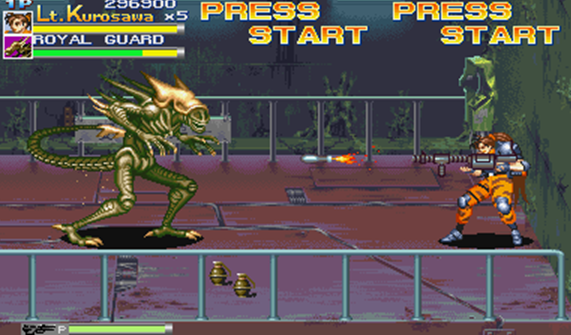
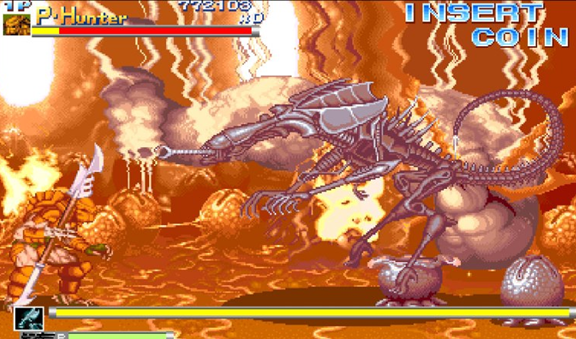
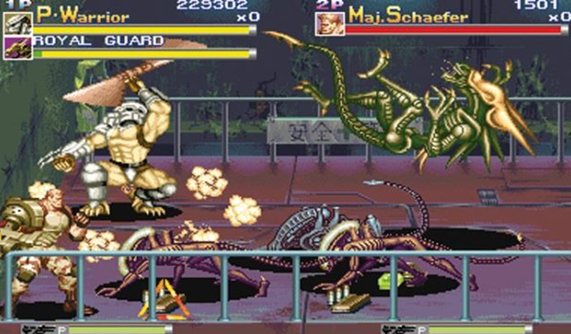
I’ve mentioned this before but Aliens vs. Predator has been a thing for a long, long time now. These two iconic science-fiction/horror franchises first came to blows in a series of excellent comic books published by Dark Horse comics between 1989 and 1990 and, since then, we’ve seen countless additional comic books, action figures, two divisive movies, and a whole host of videogames based around the concept. In the same year that the exceptional arcade beat-‘em-up was released, Rebellion developments crafted a first-person shooter (FPS) for the short-lived Atari Jaguar (remember that?) that allowed players to take on the role of a Colonial Marine, a Xenomorph, and a Predator in what was, essentially, a reskin of popular FPS games like Wolfenstein 3D (id Software, 1992) and Doom (ibid, 1993). A few years after AVPR: Aliens vs. Predator – Requiem (The Brothers Strause, 2007) effectively killed the concept of seeing the Predators hunting the Xenomorphs onscreen (though I actually quite enjoyed that movie; it was worlds better than the first AVP movie), Rebellion Developments rebooted the concept for then-modern consoles and produced another FPS title that, despite bringing two of cinemas most iconic franchise together for a new generation, failed to really impress players or critics alike. Despite this, and my general disdain for FPS games (I just don’t like the restrictive view or being shot in the back), these are two of my favourite franchises and the game is dirt cheap so I decided to pick it up and see it was really as mediocre as everyone said it was.
The Plot:
The malevolent Weyland-Yutani corporation finds their colonies, laboratories, and spaceships under attack when their experiments with Xenomorphs inevitably break out and the alien Predators become enraged at the corporation desecrating their sacred hunting grounds. Roping in an expendable team of Colonial Marines to secure their sites, the corporation scrambles to ensure that their new cross-breed specimen survives to be sold as a military weapon.
Gameplay:
Like its Atari namesake, Aliens vs. Predator is a first-person shooter than gives players the option of playing as a Colonial Marine (known as the “Rookie”), a Xenomorph (codenamed “Specimen 6” or simply “Six”, and a Predator (referred to as “Dark”). Each story sees you exploring similar environments and the game’s over-lapping story from different perspectives, with slightly different control schemes, gameplay mechanics, and objectives to fulfil as part of your mission.
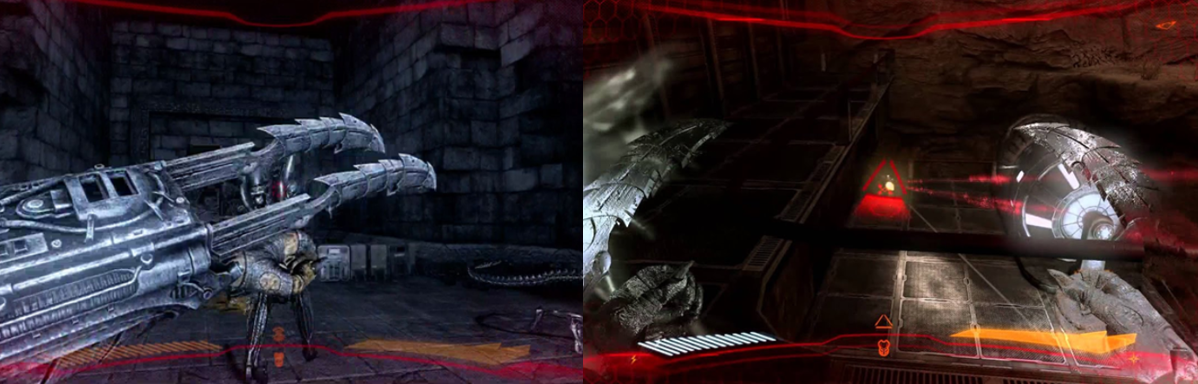
As much as I love Aliens (Cameron, 1986), I have a soft spot for Predator (McTiernan, 1987) so, naturally, upon booting up Aliens vs. Predator, I completed my first playthrough as the Predator character. In an effort to better evoke the spirit of that first movie, you’re dropped into the middle of an alien jungle to learn the many complex controls associated with the Predator, who has access to the majority of his iconic abilities right off the bat. The Predator engages in combat primarily through the use of his wrist-mounted blades; the right bumper slashes with a weak blow, the left with a stronger attack necessary for breaking through an enemy’s guard, and holding them both down allows you to defend yourself from melee attacks. Pressing the right trigger sends out an energy blast from the Predator’s trademark shoulder cannon and holding the trigger down lets you lock on to a target. You can also press the Y button to activate the Predator’s signature cloak, though both of these abilities drain Dark’s energy meter and this can only be replenished by charging up at various electronic panels scattered across the game’s limited environments. Also, it might just be me but I found the cloak almost completely useless; if you activate it and walk in front of a human enemy, they will still spot you and open fire upon you and they’ll still be able to see and track you even if you leap behind cover. Add to that the fact that the Xenomorphs can detect you whether you’re cloaked or not and Dark’s invisibility is all but ineffective in execution and it’s far easier to simply sneak around behind cover than depend upon this mechanic. Dark can also cycle through various vision modes (the usual thermal vision allows you to see human and android enemies but renders Xenomorphs as nearly invisible and the reverse is true for the green-tinted Xenomorph vision) with a press of the B button and you can even lure his prey into an ambush by pressing X and mimicking cries for help. This is the perfect way to sneak up behind your prey and execute a “Trophy Kill” that sees the Predator wrench a man’s head from his shoulders or skewer them with his wrist blades.
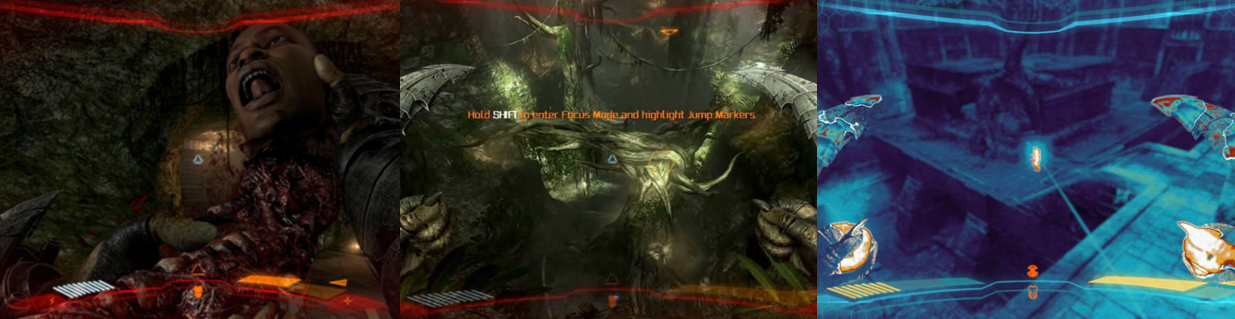
You can also execute these gloriously gory kills by stunning enemies through melee combat and can expand the Dark’s arsenal as you progress through the story and acquire other weaponry popularised by the criminally under-rated Predator 2 (Hopkins, 1992). As you explore your environments, you’ll be given objectives and hints through your heads-up display (HUD) and can hold down the left trigger to entire a “Focus Mode” that allows you to see points of interest, your exit, and other secrets and items scattered around the environment. The Predator can also jump with the A button and, when in Focus Mode, will leap to higher vantage points automatically to allow you to take the high ground and pick off your targets. Dark has a health bar in the bottom right of his HUD; he can take a decent amount of damage but falls surprisingly quickly under sustained gunfire or Xenomorph clawing. You can restore your health by holding the Y button as long as you have a Health Shard on hand; you can hold three of these at any one time and will find them scattered sporadically across the game’s locations. Luckily, there are numerous checkpoints so, if (well…when) you die, you can simply load up your last checkpoint. You can also manually save the game at any time but this doesn’t create a checkpoint; also, quite often I found that I would reload a checkpoint only to be dumped in the middle of a full-on gunfight, which was a bit annoying, to say the least. Similarly, for me, the FPS perspective is clunky and awkward for the Predator; since you’ll soon run out of energy for your plasma cannon, you’ll be relying on close-combat melee attacks or Dark’s other, less interesting weapons. It’s also slightly awkward and annoying to have to constantly cycle through the Predator’s various vision modes when dealing with combinations of enemies so you rarely get the chance to properly appreciate the game’s surprisingly detailed environments. Personally, I feel like the Predator would have controlled and been realised better if his gameplay had been rendered from the third-person as in Predator: Concrete Jungle (Eurocom, 2005) though, to be fair, I found that game even more daunting in the vast array of controls and mechanics it used to bring to life all of the Predator’s various abilities and weaponry.
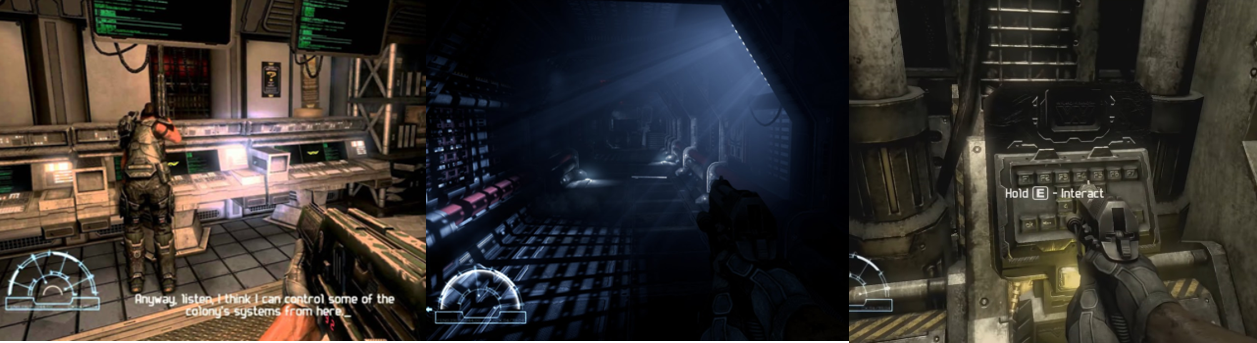
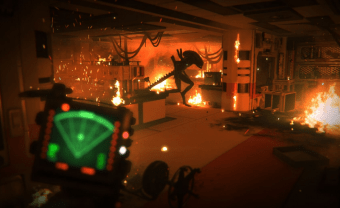
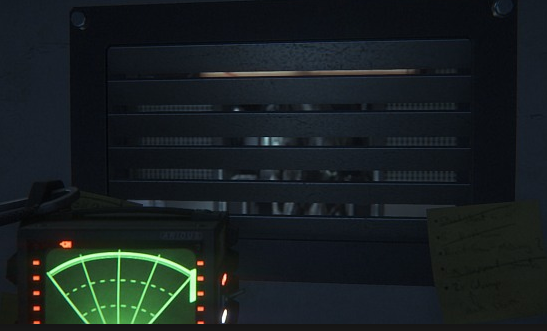
After finishing the Predator’s story, I next took on the role of a Colonial Marine (known as “Rookie”). The Marine’s gameplay is very similar to a standard FPS videogame, which makes the game far less clunky and awkward when compared to playing as the Predator from a first-person perspective; the HUD is simplified, incorporating the Aliens motion tracker to give you a vague idea of where enemies are and pointing you in the right direction, and the Marine also regenerates a small portion of his health as long as you don’t lose an entire block. You can still pick up health, though, this time in the form of Stim Packs, which operate in exactly the same was as the Predator’s Health Shards, but are afforded far more limited options when it comes to your ability to see and navigate through the game’s many dark and dismal corridors. Pressing B will activate Rookie’s torch (or “flashlight” for you Americans) to bring some light to darkened areas and you even have an unlimited supply of flares that you can toss into the darkness for a brief period of light, which is a nice touch. Rookie’s story is one of survival and meeting many varied objectives; the Xenomorph infestation has left Weyland-Yutani’s many facilities in quite a state so you’ll be repairing power points, activating doors, and setting up automated gun turrets to progress further, fortifying the barricades the few remaining Marines have set up, and mowing down swarms of Xenomorphs. Because of this, the Marine’s gameplay feels far more tense and reminds me of playing Doom 3 (id Software, 2004) thanks to the sparse use of lighting, dark, dank, and dreary futuristic environments, and claustrophobic, mounting horror that fills every area. The Marine is your typical silent FPS protagonist and spends most of his time taking orders from fellow Marine Tequila and being directed by Company android turned good Katya. Generally, this means hacking into terminals and then surviving while hoards of Xenomorphs or Combat Androids (or both) fill the immediate area, which can be a tall order in some situations. Other times, you’ll simply be running from certain death and, while Rookie can jump, he isn’t required to do any tricky platforming, which I am very thankful for, but he also can’t duck and there’s no real snap-to-cover system in place so, in the face of a hail of bullets, you’re limited to taking a more old school approach and simply, awkwardly, hiding behind bits of the environment. You can take advantage of the environment to help clear out enemies, though, as you’ll find explosive pipes and barrels conveniently scattered across narrow hallways and bridges that will help to thin out swarms of Xenomorphs or put down those Goddamn Combat Androids.

Honestly, I dreaded playing as the Xenomorph, Six, simply because I could tell that it was going to be the most troublesome and least fun campaign. Six is the fastest and most agile character, able to clamber over walls, ceilings, and pretty much all of the game’s environments just by moving the left analogue stick. While it’s pretty simple to run up walls and use the Xenomorph’s a panther-like leap to traverse the game’s areas, it’s maybe too easy; you’ll slide up walls when you don’t mean too, slip around like you’re constantly on ice, and it’s more than a little disorientating when you’re scuttling upside down on ceilings. Six attacks entirely with melee attacks; while other Xenomorph enemies spit acid, Six isn’t able to do that so must rely on her claws and her spear-like, whipping tail. By holding down the left trigger, you can engage Six’s own Focus Mode to target specific enemies and leap at them at attack; you can also block, like the Predator, and break an enemy’s block with her stronger tail attack. Sneak up on enemies, or damage them enough, and you’ll be prompted to press X to grab them and perform a gruesome instant kill. Six, apparently, performs best when shrouded in darkness so, during her tutorial, you’ll be asked to smash out ceiling and wall lights to keep her shrouded in darkness. In practise, though, I found few opportunities to really do this and, similar to the Predator’s cloaking mechanism, enemies seem to spot you no matter how deep in the shadows you are. Sometimes you can slowly sneak up behind them, other times they’ll turn around with the slightest press of the analogue stick; one time, though, I snuck up on a Marine and skewered her through the chest as she stood next to her team mate…who just stood there, completely oblivious, and let me do the same to him. Scattered throughout Six’s environments are a series of vents that she can dart through to avoid gunfire; unlike the other characters, Six’s health automatically regenerates after a few seconds and she has no other way of refilling her health bar so it’s crucial that you hit and run if you take too much damage. Similar to the Predator, Six can hiss to attract enemies closer to her and you’ll also find some civilians scattered throughout each mission, helpfully highlighted in green. Sometimes, these civilians will run and cower in a corner but others they’ll shoot themselves or blow themselves up so you’ll have to be quick about pouncing on them to harvest them with the X button. If the FPS view is unbefitting of the Predator, it’s really awkward for a Xenomorph; it’s very difficult to know where you are or how to orientate yourself. It’s like the game wants to be like the Predator sequences from the Batman: Arkham series (Various, 2009 to 2015) but it falls way off the mark as it’s difficult to target and isolate Marines in narrow areas. I can’t help but think the Xenomorph campaign would’ve been better as a kind of top down strategy style of game similar to Aliens Versus Predator: Extinction (Zono, 2003) where you play as an Alien Queen and direct drones and other Xenomorphs from the hive to spread her progeny throughout the game’s environments.
Graphics and Sound:
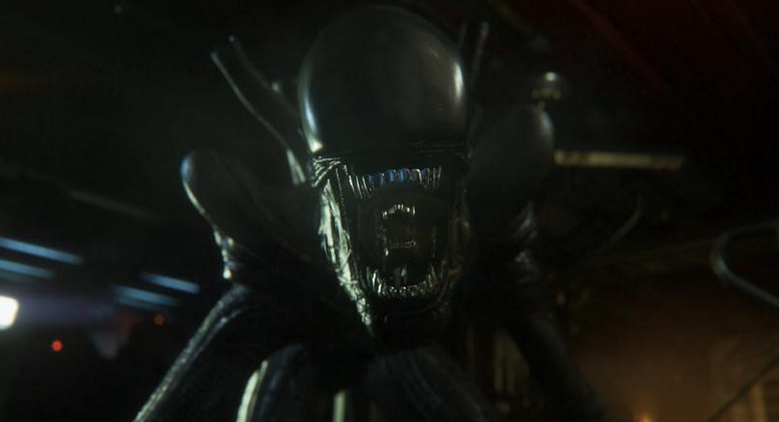
Honestly, for an Xbox 360 game and considering the age of this title, Aliens vs. Predator doesn’t look half bad; graphically, the game struggles to render human models in a realistic way, once again making them appear as little more than plastic action figures, but the various Xenomorphs and Predators all look really good and are very true to their source material.

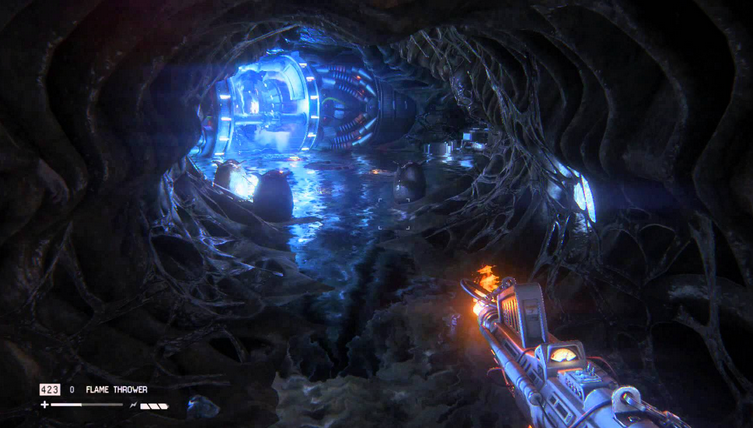
Visual fidelity is key to Aliens vs. Predator’s presentation; the jungle is clearly modelled after the one seen in Predator, for example, and the various Weyland-Yutani corridors all evoke the same lived-in aesthetic as seen in Aliens but there were a few surprising call-backs to Alien (Scott, 1979) in the game’s visuals as well; even Alien3 (Fincher, 1992) feels evoked through copper-tinted, wind- and water-swept areas such as the mines and the refinery. While I expected the game to recycle a lot of the alien and mixed dynasty architecture of the AVP movies (which it did, particularly in rendering the ancient Predator hunting grounds and pyramids, with liberal use of hieroglyphics depicting the two species’ long history), I wasn’t expecting the game to so faithfully evoke the spirit and feeling of any movie beyond Aliens so that was a nice surprise for me. Unfortunately, you’ll be visiting the same five different environments across each of the three campaigns. Sure, you’ll have access to different areas, different objectives, and different options available to you but, essentially, Aliens vs. Predator simply recycles the same levels three times, which is a bit of a disappointment.
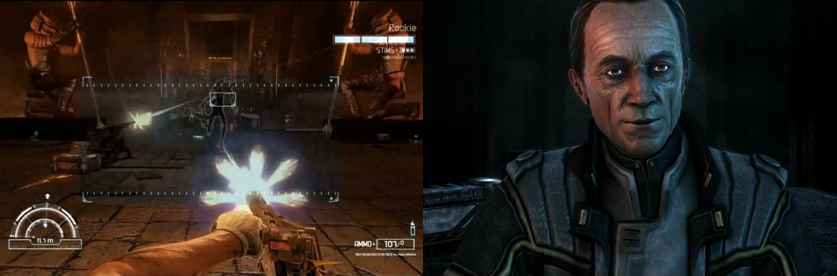
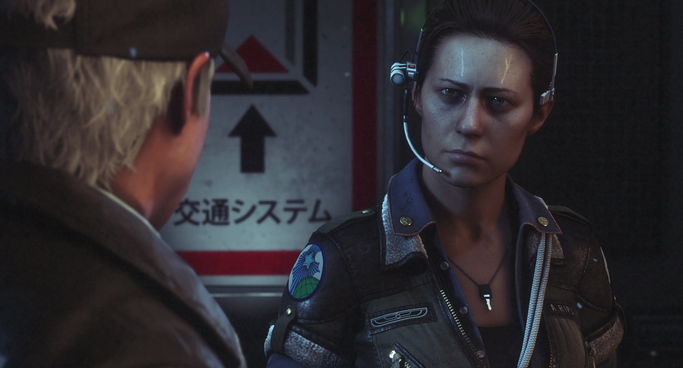
Where Aliens vs. Predator excels, though, is in its sound design; the music and sound effects are all ripped directly from the two Predator movies and Aliens, providing a stamp of authenticity that works really well with the game’s slavishly faithful environments. The pulse rifle sounds exactly as it did in Aliens, the Predator’s various growls and ticks mirror those from the movies exactly, and the Xenomorphs even sequel in pain exactly as they did in Aliens. Aliens vs. Predator even brought back the immortal Lance Henriksen as another iteration of the Bishop Weyland dynasty, lending his likeness and voice to the character and rightfully cropping up more than once through each campaign to add a level of malevolence and quality to the product. The game does feature a number of cutscenes but, honestly, they’re few and far between, especially in the Marine’s campaign. The story is quite minimal, to be honest, and mostly related through onscreen text and in-game dialogue as you progress through each campaign rather than being long, in-depth cinematics that cut away from the game’s many and varied gameplay mechanics. Bare-bones as it is, though, the story is serviceable enough and does a far better job of meshing these two franchises together than either of the movies, which made the inexplicably stupid decision to set their narratives on then-present-day Earth rather than the furthest reaches of future space.
Enemies and Bosses:
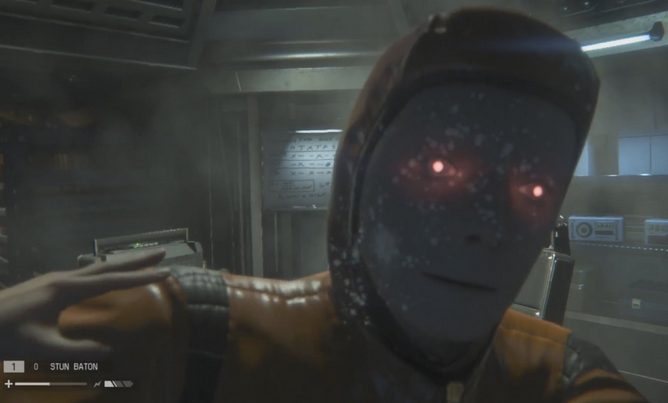
Typically, the most common enemy you’ll be coming up against as you play through Aliens vs. Predator are the Xenomorphs themselves; these come in a few different shapes and sizes, from the annoying little Facehuggers, which leap out from slimy Xenomorph eggs, to the regular drones and their larger variants that like to block your attacks, to acid-spitting crawlers, all of which can further damage you with their acidic blood so don’t go running over their corpses! When playing as Six, you won’t have to worry about fighting other Xenomorphs; instead, your primary prey are a smattering of Marines who wander around the game’s environments and blast at you with shotguns, pulse rifles, and flamethrowers as soon as they spot you. Combat Androids pop up later in the campaign and are just as bad but the strategy to taking them out remains the same; stay away, strike quickly, and hopefully split them up the middle with your tail.
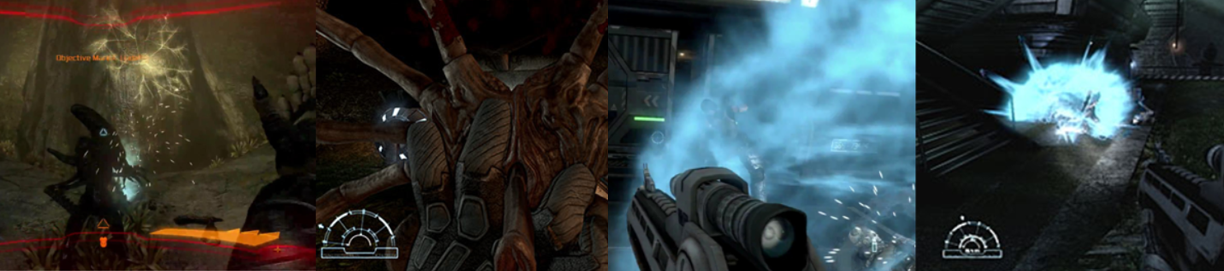
The Xenomorphs are slippery, agile little devils and will clamber all over the environment to avoid your attacks, sneak in through tunnels, and strike from the darkness with an aggressive fury; quite often, you’ll be faced with endless swarms of the creatures and forced to either run for your life or solve a rudimentary puzzle to escape from them. When playing as Dark and Six, you’ll also have to contend with gun-toting Marines who are far less sporadic than the Xenomorph enemies, moving in specific patterns, taking cover, and blasting to you with their heavy weaponry the moment they catch a glimpse of you. However, while their firepower can easily overwhelm you, they go down pretty easily once you get a good lock on with the Predator’s weapons and you can thin out their numbers by allowing nearby Xenomorphs to run roughshod over them, which is a nice touch. Rookie has a tougher time taking on Xenomorphs, which are much harder to get a good lock on thanks to the Marine lacking the same vision options as the Predator, and, while they don’t have to fight other Marines, they will have to contend with the Combat Androids that patrol Weyland-Yutani’s facilities. When I encountered these as the Predator, they weren’t any different to battling the Marines (except they exploded upon destruction) but the Marine will find himself shot and beaten to death in seconds by these artificial enemies if you don’t attack from a distance with the scope rifle and make liberal use of cover. The androids can only be damaged by shooting their limbs (blow off their heads and they’re still 90% combat efficient) and often suddenly jerk to life and blast at you with a shotgun from the ground; later, they also make use of the Predator’s cloaking technology, practically forcing you to use the scope rifle’s x-ray feature to get a bead on them.

Bosses, though, are few and far between in Aliens vs. Predator, which is a bit of a shame considering the vast numbers of different Predator and Xenomorph variants there are and even the presence of those mech-like Loaders from Aliens. Each campaign sees you tangling with different boss battles, though, so at least you won’t have to battle the same bosses over and over again. Dark’s first boss battle is within the walls of an ancient and decrepit coliseum of sorts; here, you’ll face off against a Praetorian Xenomorph variant which looks like a smaller version of the Alien Queen. Though the largest and most intimidating Xenomorph you’ve encountered by that point in the Predator’s campaign, the Praetorian is a joke; you simply strafe around, blasting at it with your plasma cannon or chucking spears at it and it goes down fairly easily. Rookie also gets to take on a Praetorian; the first time, it’s a one-on-one battle in a small, enclosed area as regular drones swarm nearby and, the second time, you take on two after mowing down wave upon wave of Xenomorphs. Luckily, the Marine’s weaponry (particularly the pulse rifle’s grenade launcher and smart gun) are more than up to the task of cutting these monstrous bastards down to size.

Disappointingly, Rookie only encounters a Predator once or twice during his campaign but you do get to battle one in the combat arena as a boss. This generally involves you running around the arena collecting health and ammo and watching out for the Predator’s laser sight; once you spot it, dodge out of the way and trace the laser back to its source and unload your pulse rifle. The Predator eventually (or sporadically) drops to ground level to try and skewer you but just keep your distance and unload with the shotgun or grenade launcher and he goes down pretty easily. The Predator’s campaign ends with him facing off against the Predalien, a monstrous abomination that is a cross-breed between a Xenomorph and a Predator, which takes place on a series of small platforms floating on instant-death lava! Luckily, in this restrictive arena, your energy bar (not your health, mind) regenerates indefinitely so you can simply keep your distance (especially from the Predalien’s devastating pound attack) and blast away to your heart’s content. Don’t even bother trying to jump from platform to platform; simply stay back and shoot him, landing a few melee attacks when it’s safe to do so, and he’ll be done in no time. As the Marine, quite early into his campaign, you’ll have to destroy an Alien Queen; luckily, this is far easier than the fight in Aliens as the Queen is helpless and chained up. You’re simply required to sweep the nearby eggs with a flamethrower, start up the massive furnace, fend off some drones, and then blast at some explosives conveniently located right near the Queen’s head to put an end to her egg-laying ways.
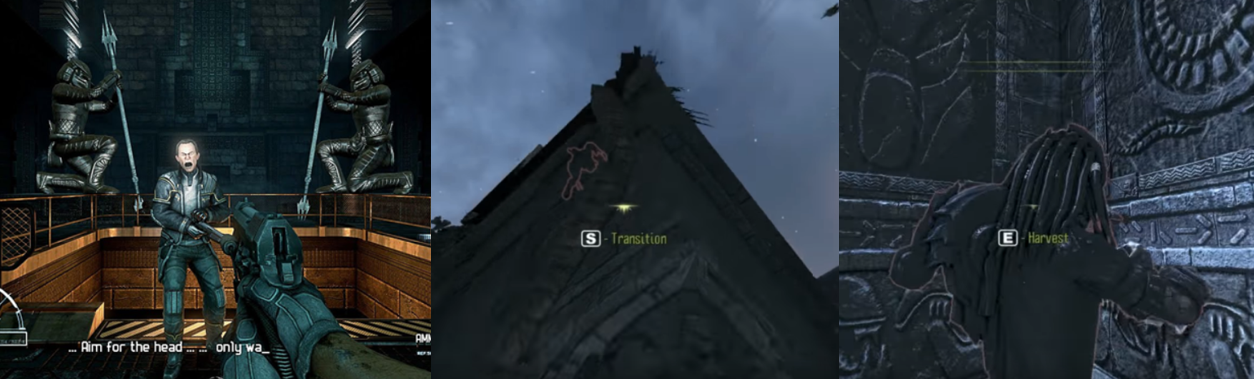
Rookie’s final boss isn’t another Queen, a Predator, or even the Predalien; instead, you go toe-to-toe with Karl Bishop Weyland who, as you might have guessed, is actually an android. I found this to be one of the toughest boss fights in the game as Bishop shrugs off bullets, you quickly run out of grenades, and he just runs right at you, spouting megalomaniacal nonsense and blasting at you with his devastatingly dangerous shotgun. Once you finally manage to put him down, you’re then suddenly tasked with shooting him in the head after a cutscene so don’t put your controller down after defeating him or you might find yourself getting shot. Six gets off slightly easier compared to her counterparts in that the only bosses she has to worry about are some Predators. When you reach the now-familiar combat arena, you’ll have to take on two Predators at once; the key here is to target one with your Focus Mode and stalk them incessantly. Once they reach ground level, leap in and strike and then back away and strafe around them, whittling their health down (hard to judge as they have no health bar), and don’t try to go toe-to-toe with them or to grab them and, if they block your attacks, back away immediately as you’ll be made mincemeat of in seconds. As soon as the two Predators are defeated, an Elite Predator enters the arena and the battle begins again. This time, the boss does have a health bar, which makes tracking your process much easier. However, while the Elite is technically tougher, the fight and your strategy are exactly the same; the only real difference is that, once you’ve weakened the Elite down, you’ll harvest it to give birth to the Predalien from the Predator’s campaign.
Power-Ups and Bonuses:
As you explore the game’s different locations, you’ll find a number of collectables to flesh out the game’s lore and contribute towards obtaining all of the game’s Achievements; Audio Diaries, Trophy Belts, and Royal Jelly Containers can be found (or destroyed in the jelly’s case) dotted throughout each of the three campaigns but, unfortunately, this is the extent to which additional bonuses and points of interest go for Aliens vs. Predator beyond admiring the fidelity the game pays to the various movies that comprise each franchise. Of the three available characters, the Predator has the most exotic weaponry; you start off with the wrist blades and the plasma cannon but soon acquire proximity mines (that, honestly, I never actually used during my playthrough), the razor-tipped smart disc (which you must awkwardly direct using your laser targeting), and the Predator’s iconic spear (or “Combi Stick”, which deals massive damage when thrown but is incredibly inaccurate and takes some time to return to your hand).

The Marine isn’t exactly lacking in weaponry, though; the Rookie has access to a handgun (which, thankfully, has unlimited ammunition) and all the iconic weaponry from Aliens (the pulse rifle, the smart gun, even the flamethrower and shotgun). Pressing the right trigger allows you to perform a melee attack with each of these weapons and they all feature a secondary firing mode as well; the handgun has a rapid fire mode, the pulse rifle shoots out grenades, and the shotgun can fire from both barrels, for example. The Marine also gets access to a scope rifle that is, essentially, a sniper rifle, which comes with a handy x-ray scope that us extremely useful for picking off enemies (and Combat Androids) from a distance but quite tricky to wield in execution as your enemies generally move faster than your eye can track. Compared to the other two, Six gets the short end of the stick when it comes to power-ups and bonuses in that she has no such options available to her. Once you learn everything she can do, that’s all you get; you don’t get taught how to spit acid or do anything new, despite Six metamorphosing into a Praetorian throughout the story, leaving her as the most limited of the three available characters.
Additional Features:
As you might expect, Aliens vs. Predator features a wide variety of Achievements that you can earn as you play through the game’s different modes; the majority of these are tied to unmissable story events or the game’s multiplayer but others will require you to kill a number of enemies with certain weapons or find all of the Audio Diaries, Trophy Belts, or destroy all of those Royal Jelly Containers. The game also features a “Survival” mode where you must hold out against wave upon wave of Xenomorphs for as long as you can using a number of restrictive maps based on the game’s different environments. Unfortunately, you can only play as the Marine in this mode and, honestly, it’s not really all that challenging as your entire health will regenerate in time and there are loads of respawning health packs, ammo, and weapons strewn around the maps. The waves do increase in challenge and aggression as you progress, though, but you don’t really earn anything for playing beyond using the mode to easily grab a few Achievements so there’s not a lot of incentive to revisit the mode. As you might expect from an FPS, Aliens vs. Predator also includes a multiplayer component; unfortunately, I wasn’t able to experience this as there is no couch multiplayer option and I haven’t renewed my Xbox Gold for some time now (if anyone wants to get me a subscription or, better yet, Xbox Ultimate, feel free to drop me a message). The game also apparently did well enough to justify the release of some downloadable content (DLC); however, as this is entirely comprised of additional multiplayer maps and options, I won’t be investing any money into this. How cool would it have been to have an additional single-player DLC that cast you as the Predalien or was themed around the movies? Like recreating the events of Predator or Aliens using the game’s maps, which are already heavily inspired by those movies, or to crawl around in a cobbled together recreation of Fury 161 from Alien3 as a Xenomorph, or even play as the likes of Hicks (Michael Biehn) or Ripley (Sigourney Weaver) in a short mission-based campaign?

The Summary:
With three different campaigns to play through and a variety of different gameplay styles on offer, you’d think that Aliens vs. Predator had a lot of replay value and incentive to keep you playing. Unfortunately, despite is aesthetic and aural fidelity to its rich source material, the game ends up being just another lacklustre FPS title with little to really tempt you back once you clear the three single-player stories beyond tackling a harder difficulty level. I suppose it’s possible that the game’s multiplayer is worth revisiting the game but I wouldn’t know about that and, even if it as, I generally judge a videogame by the merits of its single-player campaign and options since that’s where I spend the majority of my time. While Aliens vs. Predator is nowhere near as bad as I was led to believe going into it, it’s also quite mediocre in a lot of ways. Enemies and environments are strikingly faithful to the movies but incredibly linear; while this works to evoke the claustrophobic and atmospheric moments of the films, it doesn’t do much for the game’s replayability and there are definitely better FPS, and AVP, games out there.
My Rating:
Could Be Better
What did you think of Aliens vs. Predator? Which of the three campaigns was your favourite, or least favourite? Did you also enjoy the level of fidelity in the game’s presentation or were you too put off by the game’s short length and simplistic story mode? Was the multiplayer any better? Which Aliens, Predator, and/or AVP videogame or piece of ancillary merchandise is your favourite? Whatever your thoughts on these franchises, please feel free to leave a comment.













You must be logged in to post a comment.