Movie Night: The Wolverine

Released: July 2013
Director: James Mangold
Distributor: 20th Century Fox
Budget: $100 to 132 million
Stars: Hugh Jackman, Tao Okamoto, Rila Fukushima, Hiroyuki Sanada, Haruhiko Yamanouchi, Svetlana Khodchenkova, Will Yun Lee, and Famke Janssen

The Plot:
Haunted by memories of Jean Grey (Jansssen), Logan/Wolverine (Jackman) is called back to Japan by the dying wish of an old friend, Ichirō Yashida (Yamanouchi), who offers to end Logan’s immortality. However, when Yashida dies, his granddaughter, Mariko (Okamoto) is targeted by assassins, and Logan’s healing factor is compromised, Logan is begrudgingly forced to protect her and uncover a conspiracy with Yashida’s vast corporation.

The Background:
20th Century Fox had vastly profited from their X-Men movies, the first three of which earned them over $600 million. Though X-Men Origins: Wolverine (Hood, 2009) was met with mixed reviews, the film grossed over $300 million against a $150 million budget and Hugh Jackman’s popularity as the character all-but ensured that some kind of sequel would be put into production. After deciding to draw upon elements from Chris Claremont and Frank Miller’s work on the character’s time in Japan, famed director Darren Aronofsky was brought on to direct; Aronofsky was responsible not only for the film’s blunt and unimaginative title but also restructuring the film as a standalone spin-off rather than a straight-up sequel to X-Men Origins. By 2011, however, Aronofsky had exited the project due to vast amount of overseas shooting the film would require and James Mangold was brought in as a replacement. Produced on a smaller budget than X-Men Origins, The Wolverine had a somewhat shaky box office; it’s currently the seventh-highest grossing film in the franchise, earning less in worldwide revenue than the much-maligned X-Men: The Last Stand (Ratner, 2006) but still more than the much-lauded X-Men 2 (Singer, 2003). Critically, however, the film fared far better than its predecessor, with the general consensus being that it was a far more accurate portrayal of the character. Personally, I have to admit that I missed the more recognisable X-characters of the previous film and the chance to shed more light on Wolverine’s complex and storied history but I did appreciate the film’s more brutal nature and grittier, more focused direction.

The Review:
In keeping with the theme of the previous X-Men movies, The Wolverine opens with a particularly gruelling and thrilling scene that sets the tone for the film to follow. In this case, we find Logan being held in an armour-plated well as a prison of war in Nagaski mere moments before the fateful atomic bomb is about to drop. Understandably panicked by the incoming wall of fiery death, young Japanese soldier Ichirō Yashida (Ken Wamamura) is too afraid to commit ritual seppuku but, having seen how Yashida risked his life to free prisons and give them a chance to escape, and fully aware of what’s to come, Logan manages to escape from his prison and shield Yashida from harm at the bottom of the well.

Memories of Jean haunt Logan’s dreams.

Surprisingly, rather than continue this narrative and fill in a large missing chunk from Wolverine’s early life, the film then jumps ahead to a few years after the events of X-Men: The Last Stand. Although Wolverine has not only recovered his missing memories, this is both a blessing and a curse as not only is he now (conveniently for this film’s plot) haunted by memories of Nagasaki, he’s also haunted by dreams of Jean Grey (Janssen). In them, he and Jean are happy and content in the afterlife; however, this perfect illusion is continually shattered by the brutal remind of how he skewered the love of his life and his desire to be with her in death. It seems that, despite appearing content and well-adjusted at the end of The Last Stand, Logan was unable to cope with what he did to another man’s wife that he decided, after minimal interactions with, that he loved and walked away not only from the X-Men but also the name of the Wolverine, vowing never to kill or endanger others again.

Thanks to Viper, Logan spends most of the movie with his healing factor on the fritz.

However, Logan is soon approached by Yukio (Fukushima), a Mutant with limited pre-cognitive powers who tracks him down to not only offer him Yashida’s blade but also accompany Logan to Tokyo so that Yashida can pass along his thanks before he succumbs to the caner that is eating away at his body. Initially resistant, Logan is eventually convinced to tag along for one day and is horrified to find that Yashida is offering to somehow remove his superhuman healing factor so that others can benefit from it and he can finally live out a normal, mortal life. While in Japan, Logan has a tense introduction to Yashida’s son, Shingen (Sanada) and granddaughter, Mariko (Okamoto), but is nevertheless adamant about heading back home as soon as possible. However, while tormented by his nightmares, Logan is attacked by Yashida’s doctor, Viper (Khodchenkova), and wakes to find Yashida has died in the night. Receiving a frosty reception at the funeral, Logan is immediately alerted to things not being quite right and is thrust into action once more when Yakuza thugs open fire and attempt to kidnap Mariko. In the fracas, Logan receives a few gunshots (included a blast from a shotgun and point-blank range) and is confused, and shocked, to find that his healing factor is mysteriously dulled. This does little to keep him down, though, and he is able to largely shrug off gunfire long enough to get Mariko to relative safety. As a result, a large portion of The Wolverine focuses on Logan’s damaged healing factor causing him both here and there and questions regarding his perceived immortality as he both tries to reconcile his past actions and get to the bottom of a conspiracy within Yashida’s vast organisation.
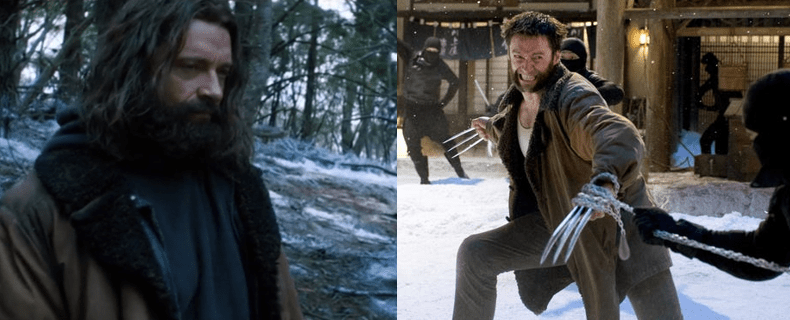
Logan’s complex, volatile character is finally explored in some depth.

As you might expect, Hugh Jackman is the unmistakable star of the show once more; now a far more tortured, broken man than we’ve seen before, this is a Logan who is visibly tired of the death and heartbreak that seems to follow him at every turn. Initially content to hide away from the world, he is forced back to Japan out of little more than the last vestiges of honour within him but is quick to do the right thing and defend Mariko when it appears her fiancé and father want her dead. Rather than being the cool, charismatic loner we’ve seen before, however, this Logan is a cynical, grouchy ex-soldier who just wants to be left alone and is desperately trying to suppress his violent urges. Honestly, it’s the version of Logan we should have gotten in X-Men Origins: Wolverine; world-weary and wanting death but not quite ready for it, he slowly comes to realise this his animalistic nature can be used for good and eventually comes to reclaim his title of the Wolverine.
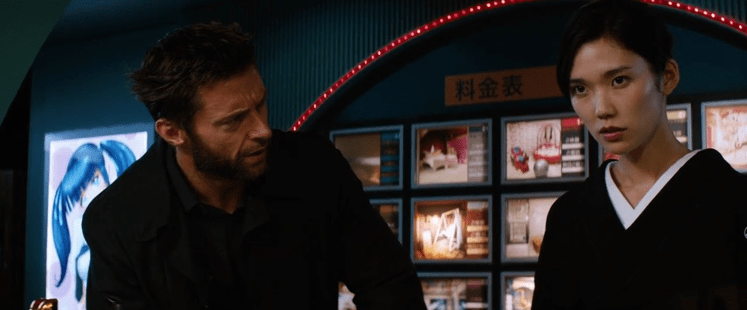
Japan, and Japanese culture and traditions, plays a big role in the film’s plot and visual identity.

Compared to every other X-Men movie that came before it, The Wolverine is a much grittier, more focused affair; the story centres entirely on Logan and his inner emotional turmoil and his reluctance to get involved in the convoluted drama and conspiracy that has infected Yashida’s company. The Japanese setting works wonderfully to visually separate it from the other films as well and much of the film is focused on Japanese traditions and mysticism; Logan is like a vagrant stranger in his world, constantly referred to as a rōnin (a “samurai without a master”) or a gaijin (a derogatory Japanese word for an outsider or foreigner), who doesn’t fit and is not welcome. The simple, open countryside’s and urban landscapes of Tokyo give the film a visual identity that is truly unique; this isn’t another bombastic X-Men movie taking place in a large, familiar urban space or a grey-coloured military lab and it really adds to the film’s appeal at aesthetic.

Mariko and Yukio both help to bring Logan back into the fight in different ways.

It also helps that a large portion of the film includes subtitles; Japanese characters routinely speak to each other, and Logan, in their native tongue, adding a coat of legitimacy to its setting. All too often, foreign characters simply speak in English all the time and having them speak in Japanese helps to add to the other-worldliness of the setting and empathise with Logan, who doesn’t understand a word of Japanese. Logan’s newfound vulnerability is also clearly meant to help us empathise with him as it means he struggles to recover from injuries and is in near-constant pain, a step slower than usual, and actually has to struggle to succeed rather than simply charging head-first into battle. Of course, he’s not alone in his fight but rather than sharing screen time with other colourful, fan favourite Mutants, Logan spends most of his time associating with Yukio and growing closer to Mariko. The moment she is introduced, Yukio is portrayed as a bad-ass character in here own right; her pre-cognitive abilities work in conjunction with her athleticism and skill with a blade to make her a formidable opponent and ally. Mariko, on the other hand, is much more of a damsel in distress; initially, Logan sees her as little more than a pampered, self-entitled princess but she’s soon revealed to be oppressed by the desires of her father, fiancé, and her devotion to maintaining the honour of her family. She’s a damaged, conflicted character but is also able to put up a bit of a fight when needed so she isn’t just some screaming, helpless trophy to be fought over.

The Nitty-Gritty:
Up until now, we’ve seen glimpses of Logan’s vicious nature but The Wolverine goes above and beyond in portraying just how brutal and savage Wolverine can be. Initially reluctant to fight, much less kill, when Logan unsheathes his claws to fight, it’s with a fast, ruthless ferocity; every blow is designed to either kill or maim and you truly get the sense of an animal being unleashed in full force. For the majority of the film, Logan is chopping apart nameless, faceless Yakuza goons; he faces a new test in the form of Viper, a seductive, snake-like Mutant who is able to use her toxins to dull his senses and her medical expertise to suppress his healing factor. While the two don’t really come to blows (the honour of dispatching her is left to Yukio), Logan is able to match swords with Shingen, who has garbed himself in the ceremonial armour of the Silver Samurai. It’s in this fight that Logan regains his sense of identity and honour but it’s merely the beginning of the end for the film.

Logan is forced to operate on himself to restore his full abilities.

The decision to dull Logan’s healing factor didn’t sit right with me at the time as I was more interested in seeing a nigh-invincible Wolverine cutting down foes and being emotionally vulnerable rather than physically but it actually does work quite well in the film. That is until the revelation that it’s not some toxic or Mutant suppressant keeping his powers dulled but a weird little spider robot thing attached to his heart. Quite how that works is beyond me but it makes for a tense scene where Logan, having already been told by Yukio that he would die holding his heart in his hand, is forced to cut himself open and remove the device. It’s been suggested that Yukio’s vision actually foreshadowed Logan’s eventual, dramatic death in Logan (Mangold, 2017) but I don’t actually agree with that; Yukio specifically says that he saw Logan lying on the operating table with his lifeless heart in his hand but Logan is clearly impaled on a tree in a forest holding the very-much-alive hand of his “daughter” in Logan so I think this is a bit of a stretch, to say the least.
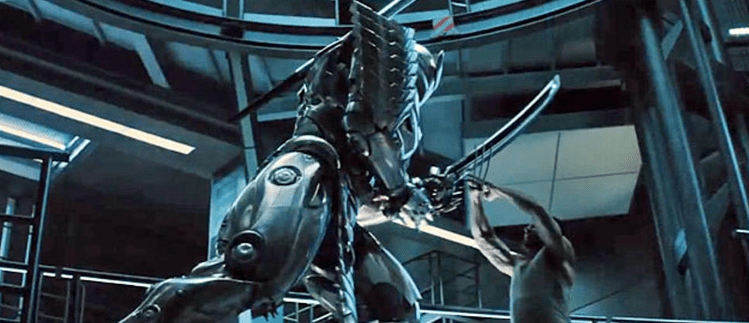
The actual Silver Samurai seems to conflict with the film’s more grounded, gritty tone.

After spending most of its runtime being almost the exact opposite of X-Men Origins (gritty and introspective, brutal and reflective rather than loud and bombastic), The Wolverine ends with a massive, knock-down brawl between Logan and a huge mech suit of armour. This true Silver Samurai is not only made from the same indestructible Adamantium that coast Logan’s bones but also wields two gigantic blades that are able to cut off Logan’s claws! Revealed to be Yashida, who faked his death and orchestrated everything just to forcibly extract Logan’s healing ability from the marrow of his bone claws, this finale is notably at odds with the tone of the rest of the film but is, nevertheless, quite the exciting end to the film. You really get the sense at Logan is in actual danger thanks to the Silver Samurai’s ability to actually hurt him, which is good for raising the stakes for the finale, but I wasn’t a fan of how Wolverine leaves the film with his entire Adamantium skeleton intact exact for his claws. The bone claws are a fun addition to his character and backstory but are pretty lame by themselves and I would have liked to see him just dip them into some Adamantium to recoat them or something.
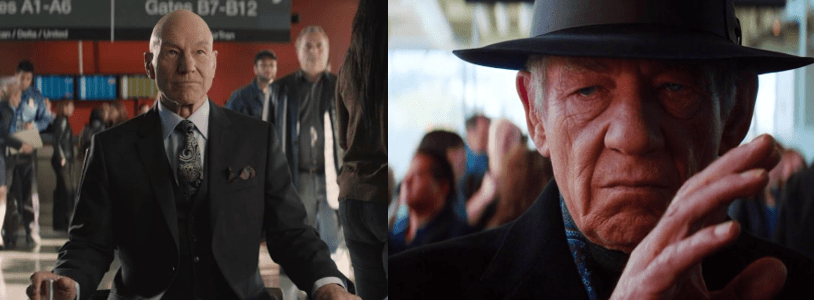
Xavier and Magneto turn up alive and fully powered, hinted at a greater threat to come…

Simultaneously, though, I wasn’t a fan of how the next film simply gave him back the Adamantium claws without any explanation. Speaking of which, The Wolverine’s mid-credits sequence sees the inexplicable return of the fully repowered Erik Lehnsherr/Magneto (Ian McKellen) and Professor Charles Xavier (Patrick Stewart), who seek to recruit Wolverine to face an impending threat. A tantalising scene that raises a lot of interesting questions, this scene, and all the character development and story potential of The Wolverine’s finale, would be either swept away or forgotten completely in subsequent films. What happened to Yukio, for example, who ends the film as Logan’s self-appointed bodyguard? What happened in the two years between the final scene and the mid-credits scene? Why did Fox cut a scene in which Logan receives his traditional costume? Well…okay, I can kind of understand that last one but, thanks to the mess Fox made of the X-Men timeline and their complete disregarding of continuity, The Wolverine ends up being this really good, really engaging partially standalone story that exists in a weird bubble where it’s not really canon, but kind of is, but nothing that happens in it factors into Logan’s next appearances in any way.

The Summary:
Ever since Wolverine’s introduction in the first X-Men movie, I was waiting for a movie, and a depiction of the character, like The Wolverine. Far darker, grittier, and more brutal than his previous depictions, this is the first X-Men film to truly delve into the meat of the character’s complexities. As much as I enjoy, and apologise for, X-Men Origins: Wolverine, there’s no denying that The Wolverine, despite its bland title and tonally contradictory finale, surpasses its predecessor in every way. The oriental setting really adds to the film, as does Jackman’s bulkier (and yet more streamlined) look. Showing Logan as being constantly torn by his actions, haunted by his memories, and struggling with the dichotomy of being a weary immortal soldier who is tired of life but not quite ready die is a fascinating dive into the character’s nuances and psyche. Punctuated by fight scenes that cast a wider light on just how vicious the character can be and let down only by the fact that subsequent sequels failed to really expand upon where The Wolverine leaves the character, The Wolverine is easily one of the best X-Men movies, perhaps surpassed only by the even bleaker and grittier Logan.

My Rating:

Rating: 4 out of 5.

Great Stuff

What did you think about The Wolverine? Do you find that it’s a far better portrayal of the character compared to X-Men Origins: Wolverine or do you, perhaps, feel that it’s a bit over-rated? How did you feel about Wolverine’s healing factor being suppressed and the inclusion of the Silver Samurai? Which Wolverine story arc from the comics was your favourite? How would you like to see Wolverine re-introduced to the Marvel Cinematic Universe? Whatever your thoughts about Wolverine and the X-Men, feel free to leave a comment below.


Movie Night: X-Men Origins: Wolverine

Released: April 2009
Director: Gavin Hood
Distributor: 20th Century Fox
Budget: $150 million
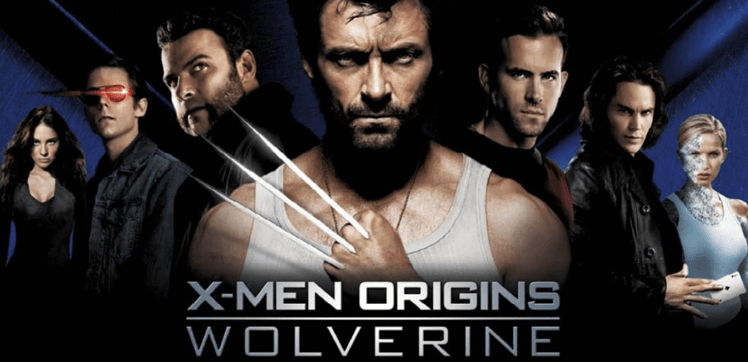
Stars: Hugh Jackman, Liev Schreiber, Danny Huston, Lynn Collins, Taylor Kitsch, Daniel Henney, Will.i.am, and Ryan Reynolds

The Plot:
Mutant brothers James Howlett (Jackman) and Victor Creed (Schreiber) are drafted to Major William Stryker’s (Huston) Team X. However, when his murderous sibling goes wild, Logan volunteers for a radical procedure to make him indestructible.

The Background:
20th Century Fox had vastly profited from their acquisition of the X-Men movie rights from Marvel Comics. Under their banner, the first three X-Men movies (Various, 2000 to 2006) had made over $600 million and, soon after X-Men: The Last Stand (Ratner, 2006) brought the trilogy to an end, development began on a series of spin-offs focusing on solo X-Men. Chief among these was, of course, the character of Wolverine; the role had catapulted the relatively-unknown Australian actor Hugh Jackman to superstardom and was the natural choice for a spin-off given how popular the character and his rich recently-uncovered backstory was. Collaborating on the script in order to craft a more interpersonal story, Jackman and director Gavin Hood aimed to explore the duelling nature of Wolverine’s animalistic character. Popular X-Men characters like Wade Wilson/Deadpool (Reynolds) and Demy LeBeau/Gambit (Kitsch) were incorporated into the script, which sought to explore the complex relationship between Logan, Victor, and Stryker based on both their characterisations in the comics and the world Bryan Singer had establish in his first two X-Men movies. Sadly, much like X-Men: The Last Stand, X-Men: Origins Wolverine received mixed to average reviews upon release; despite earning more than double its budget at the box office, X-Men Origins is largely regarded unfavourably by the majority of fans and critics alike. Personally, I always enjoyed the film, which was far more in the vein of X-Men 2 (Singer, 2003) than the third film; I liked that it introduced new and interesting Mutants and feel that it gets a bad reputation despite being an unashamedly enjoyable popcorn action film.

The Review:
When X-Men Origins: Wolverine was released, the details of Wolverine’s early years had already been published in Marvel Comics some eight years prior; still, the revelation that James Howlett (Troye Sivan) had began life as a sickly boy in the 1800s was still relatively fresh for many readers who were more used to seeing Logan hooked into machinery and brainwashed into being a merciless killer as Weapon X. Unfortunately, as interesting as it would be to delve into Howlett’s early years and the details of his friendship with the young Victor Creed (Michael-James Olsen), X-Men Origins has no time for that as, within the first five minutes or so, young James has seen his father murdered, unsheathed his bone claws for the first time, killed his father’s murderer only to discover that his victim was actually his real father, and gone on the run with his similarly-powered half-brother. Sadly, this manic pacing is a theme for X-Men Origins; it’s all quick cuts and revelation after revelation in 1845 and then, as the film’s opening credits roll, we see James and Victor (now Jackman and Schreiber, respectively) taking part in every major war over the next hundred years or so. The montage, easily one of the more impressive parts of the film and which arguably should have made up the bulk of the movie’s runtime, does a great job of showing how James grows increasingly jaded with their mercenary lifestyle and how Victor grows equally bloodthirsty over time.

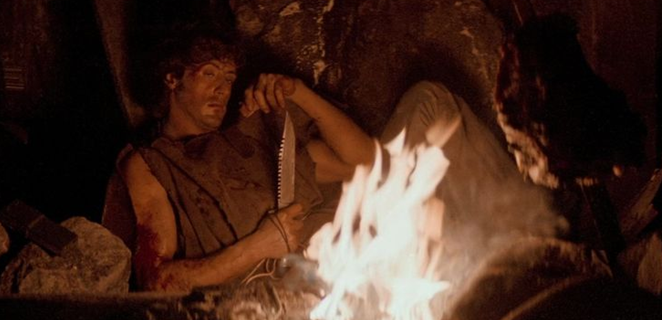
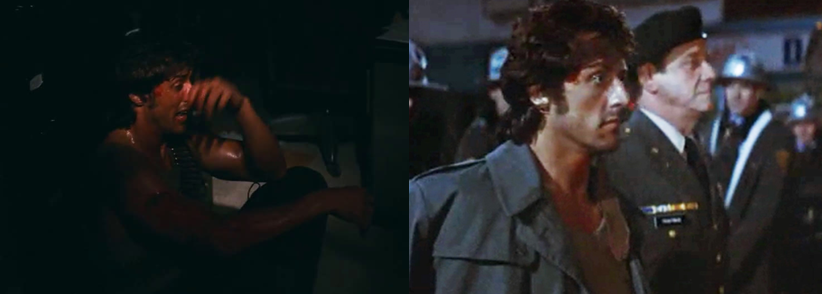
Logan eventually becomes disillusioned with Team X’s increasingly violent methods.

Eventually, the two are put before a firing squad after Victor kills his commanding officer. Obviously, this doesn’t actually kill the two so they are immediately recruited by Stryker, who drafts them into Team X, a group of highly skilled Mutants under his command. James and Victor go on what is implied to be many missions but, thanks to the film’s breakneck pace actually seems more like one mission, alongside such notable Mutants as Wade Wilson, Fred Dux (Kevin Durand), John Wraith (will.i.am), Agent Zero (Henney), and Chris Bradley (Dominic Monaghan). Unfortunately, Victor’s bloodlust can no longer be controlled and, when Stryker orders the team to slaughter innocent sin order to get his hands on a mysterious mineral, James walks away from the team.

Jackman is unquestionably the star of this film, shining at every turn.

Taking the name Logan (why this name is never explained), James spends the next six years making a modest living as a lumberjack in Canada alongside his lover, Kayla Silverfox (Collins). However, after Stryker shows up to warn Logan that their old team mates are being slaughtered, Kayla is killed by Victor and, overcome with grief and rage, Logan willingly volunteers to have Adamantium surgically grated to his skeleton to give him the tools to enact his revenge against his half-brother. Once again, the star of the show here is Hugh Jackman; now at his most toned and muscular and fully at ease with the role of Wolverine, Jackman’s charisma and animal magnetism help X-Men Origins to stay engaging even in its most head-scratching moments. Jackman does a fantastic job of conveying the myriad of emotions Logan goes through, from his more tender, vulnerable moments to his raw, animalistic brutality. Unfortunately, much is made throughout the film (and in the first three X-Men movies) of Wolverine’s animal side; Stryker (Brian Cox) hinted that, in his past, Wolverine wasn’t a very nice person and X-Men Origins also hints that he did some terrible things during the many wars he fought in…but we never see this. Sure, he’s a tortured character because of his traumatic memories of war and is a formidable beast when enraged but, for the most part, he’s the same honourable, good-natured person we’ve seen in the original trilogy. It would have been far more engaging and interesting to really delve into Wolverine’s time as a cold-blooded killer who slowly grows to become disillusioned with that life compared to Victor, who relishes in killing and giving in to his animal nature.

Schreiber is clearly relishing this role and is more than a match for Jackman.

Speaking of Victor, Schreiber was an inspired choice to bring the character to life. Like many comics, X-Men Origins hints very strongly that Victor and Sabretooth (Tyler Mane) are the same character but never fully lands on one side of the fence or the other; certainly, Schreiber’s loquacious nature and cold, calculated charisma separate him from mane’s more bestial portrayal but, in any case, Victor is a fantastic parallel to Logan. Sadistic and heartless, he kills for the fun of it and simply wishes to prove that he’s better than his half-brother, which he does at every turn. It’s surprising, then, when it is revealed that Victor wouldn’t be able to survive the Adamantium bonding process; perhaps this was a lie on Stryker’s part, though, as Victor is consistently shown to be Logan’s better at every turn save for that line and one brief scuffle between them before the finale.

As good as an actor as Huston is, Stryker’s motives and logic are all over the place in X-Men Origins.

After making an impact in X-Men 2 and considering the importance his character has on Wolverine’s early years, it’s only nature that Stryker plays a big role in this film as the puppet master. Yet, while Huston is a great actor and brings a certain scenery-chewing relish to the role, he’s physically nothing like Brian Cox so it’s a bit weird to me that they chose to cast him. Add to that the fact that Stryker’s plan is needlessly convoluted and bone-headed (he tricks Logan into joining Team X, allows him to leave, has one of his agents (spoiler: it’s Kayla) shack up with him, then fakes her death, pretends like Victor isn’t under his control when we know he clearly is, is somehow able to convince Logan to become indestructible and then, when Logan escapes the Weapon X facility, Stryker’s first order (to a guy whose only power is “expert marksmanship”) is to kill their now invincible creation!) and you have a villain who is charismatic enough to fulfil his role as the master manipulator but flawed in his onscreen execution.

Gambit’s role is brief but surprisingly enjoyable and important to the plot.

Such flaws are evident throughout X-Men Origins, I’m afraid to say; the film’s wonky pacing and questionable plot see characters either being tricked or used with ridiculous ease (you’d think Wolverine, of all people, would be able to tell that Kayla’s death was faked, surely) or simply stumble upon the information they need or into the location where the information they need is. The scene where Logan interrogates Dux (now transformed in the Blob) is a great example; it’s a fun scene, one of my favourites, but Dux isn’t able to tell Logan everything he knows so, of course, he sends him to New Orleans to track down another Mutant, Gambit, who knows Stryker’s exact location. Honestly, Gambit has a far bigger and more prominent role in the film than I originally believed; slightly bigger than a cameo but not quite a co-star, he exists to guide Wolverine to what ends up being a pretty obvious location for his final showdown but, while Kitsch is pretty enjoyable in the role, it’s hard to look past his elaborate superhuman acrobatics. I guess you can make the argument that his Mutant ability to super-charge kinetic energy allows him to perform superhuman leaps and bounds but that doesn’t really help explain how Zero goes flying all over the place all the time. Yet…I find myself enjoying these action and fight sequences. They’re loud and over the top but what’s wrong with that? The scene where Wolverine tries to out-race Zero’s helicopter on a motorcycle is pretty awesome, as is his dramatic takedown of said helicopter (which sees him clinging onto it as it crash lands) and the obvious trailer shot of Logan dramatically walking away from the explosion, as cliché as it is, hits all the right spots for me as an action movie fan. Wolverine’s fight scenes are equally enjoyable; similar to Logan’s fight scenes from X-Men 2, Logan fights with a vicious, brutal intensity where the animal side of him everyone likes to talk about so much really comes to the forefront.

The Nitty-Gritty:
As much as I enjoy X-Men Origins, however, it’s tough to look past the film’s narrative flaws. As a prequel to X-Men (Singer, 2000), though, the film does line up fairly well (far better than the quadrilogy of “prequels” that were to follow), it’s just a shame that the filmmakers were in such a rush to cram everything into this one movie. This could easily have been restructured to show Logan’s early childhood and time during the war and then his time with Team X, leading to a falling out and with Victor over their methods. The second film could have then shown Wolverine transformed into Weapon X as we saw in the otherwise-disappointing X-Men: Apocalypse (Singer, 2016), with that film and that procedure being responsible for his memory loss, than then the third and final movie could have just been The Wolverine (Mangold, 2013) or even Logan (ibid, 2017). Instead, we rush through all of Wolverine’s greatest hits at a breakneck pace all to get to a point that somewhat awkwardly leads into the start of the first X-Men.

Logan’s ultimate fate is a bit rushed and messy but still somewhat affecting in its bleak execution.

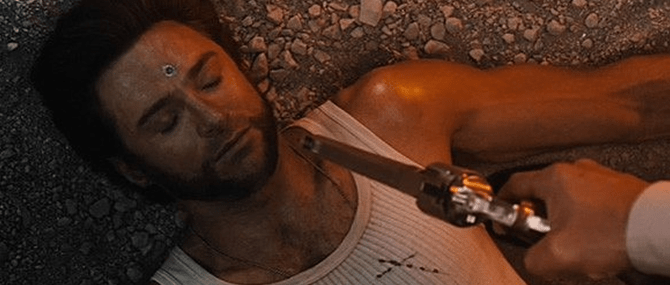
Despite that, however, I still find the scene where Stryker blasts Wolverine in the head with a few Adamantium bullets quite heartbreaking. It’s a messy way to go about his memory loss considering having his healing factor be responsible is a far more cerebral and interesting explanation but it’s still tragic to see him awaken surrounded by death and destruction with no idea who he is or where he is. The implication of this ending, and the final act of the film, is that Logan spent the next fifteen-or-so years relying solely on his instincts, which is kind of ironic considering there was probably some evidence left behind on Three Mile Island to explain his origins. Sadly, however, the X-Men films never filled in the gap between this one and X-Men (at least, not fully, as the films go out of their way to ignore or retcon this entire film) so we never really know what he got up to or what happened to Victor (unless he really did devolve into a mindless, semi-mute brute).

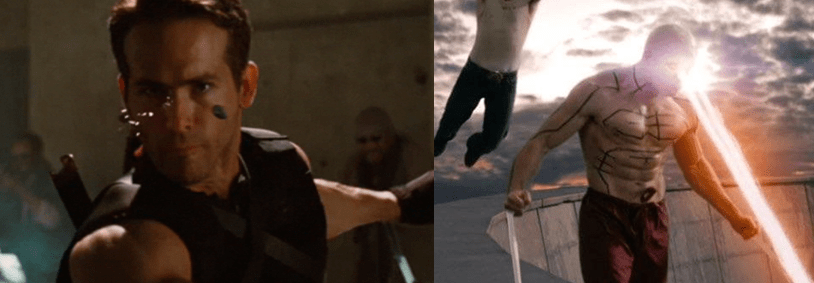
Reynolds was perfectly cast but dealt a bad hand here. Luckily, it wouldn’t be his last time in the role.

Of course, you can’t talk about X-Men Origins without addressing the elephant in the room: Deadpool. Reynolds was perfectly cast as Wade Wilson back in the day and it’s clear from the post-credit sequence that Fox were planning a spin-off for the character all along but, yes, it is disappointing to see the character chopped up and butchered into a weird amalgamation of recognisable Mutant powers as Weapon XI (Scott Adkins) rather than the fast-talking, unkillable “Merc With a Mouth” we all know and love. It’s weird watching this film back now as they could just as easily have had a more traditional Deadpool be Logan and Victor’s final opponent; lose the Adamantium blades and the optic blasts and just have him be a super-healing, super-skilled soldier who is loyal to Stryker. Or, better yet, simply imply that wade was killed and have Victor, now a feral animal, be the film’s final “boss” and then do a post-credits scene that shows Wade alive and well and working as a mercenary. Luckily for Reynolds, and for us all, Deadpool would eventually get his spin-off and it was absolutely brilliant but, thanks to the convoluted mess that the X-Men franchise has become, those films sit in a weird bubble of continuity where everything and nothing is canon at the same time.

X-Men Origins uses its cameos to fill some gaps in the franchise’s once-stable timeline.

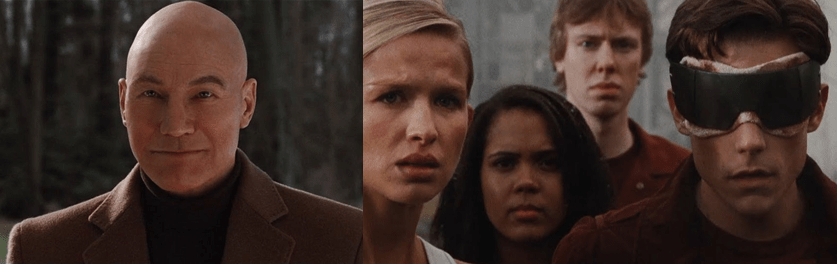
Speaking of canon, this film obviously concludes with what was, to me (at the time, anyway), a pretty shocking cameo by Professor Charles Xavier (Patrick Stewart), who arrives on Three Mile Island to rescue Stryker’s Mutant prisoners. Sure, the de-aging affects aren’t as good as in X-Men: The Last Stand but this was a very welcome cameo for me and helped to fill a gap in what was, at the time, a straight forward timeline. While I also applaud the way the film attempts to place a little bit more spotlight on Scott Summers/Cyclops (Tim Pocock) and even goes out of its way to show that he never sees or hears Wolverine so as not to create a continuity error, once again the character is somewhat shafted by his ham-fisted inclusion; I liked that Stryker sent Victor specifically to hunt Cyclops down, as though his powers were fundamental to Weapon XI, but the fact that Cyclops is already wearing ruby-tinted sunglasses to keep his powers in check is a little odd as I always assumed this was a solution provided by Xavier. Still, it’s fun to him and a few other recognisable Mutants in little cameos and that the film allows for other popular or B-list X-characters to be included without Wolverine sucking all of the spotlight away from the traditional X-Men thanks to Jackman’s screen presence, charisma, and popularity.

The Summary:
I don’t know what it is about X-Men Origins: Wolverine but…I still really like it. yes, the plot is nonsensical and all over the place, rushing through some story beats that could be a movie all by themselves and lingering on others that are far less interesting and yes it does do a disservice to Deadpool and raise a lot of questions that subsequent X-Men movies and spin-offs largely ignore. But it’s just so much fun! Maybe it’s because I grew up with loud, bombastic action movies but I find this film immensely enjoyable in a lot of ways. It’s fun when it needs to be, bad-ass when necessary, and even touching at times. It’s over the top and mindless action, yes, but what’s wrong with that? Honestly, it irks me that the franchise went out of its way to ignore or retcon this film as it cost us Schreiber returning to the series and caused continuity to be thrown out of the window. Maybe Wolverine deserved better than a big, dumb action movie but sometimes big, dumb fun is just big, dumb, and fun and that’s okay.

My Rating:

Rating: 3 out of 5.

Pretty Good

What did you think about X-Men Origins: Wolverine? Do you think it deserves the reputation it gets or do you, like me, find it to be an enjoyable entry in the franchise? How did you feel about the way the film treated Deadpool and the relationship between Logan and Victor? How would you like to see Wolverine re-introduced to the Marvel Cinematic Universe? How are you celebrating the month of Wolverine’s debut? Whatever your thoughts about Wolverine and the X-Men, feel free to leave a comment below.
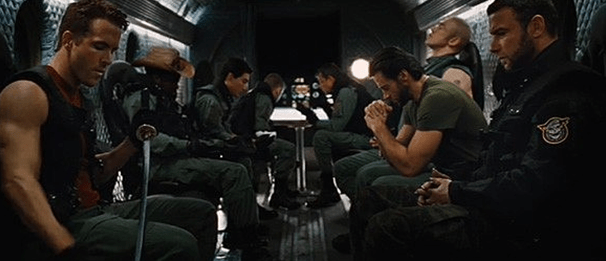
Movie Night: Eternals

Released: 5 November 2021
Director: Chloé Zhao
Distributor:
Walt Disney Studios Motion Pictures
Budget: $200 million
Stars:
Gemma Chan, Richard Madden, Kumail Nanjiani, Lia McHugh, Brian Tyree Henry, Lauren Ridloff, Barry Keoghan, Don Lee, Angelina Jolie, Salma Hayek, Bill Skarsgård, and Kit Harington.

The Plot:
Over 7,000 years ago, the God-like Celestials charged their superpowered, immortal creations, the Eternals, with defending the fledgling planet Earth from their evil counterparts, the Deviants. After destroying the Deviants, the Eternals lived among humanity and went their separate ways; however, when the Deviants re-emerge following the return of half the world’s population, reunite to protect humanity from this monstrous threat.

The Background:
Jeez, okay…this is a tough one for me. So, after the legendary Jack Kirby left Marvel Comics in 1970, he created a race of cosmic, God-like beings called the New Gods and intended to tell a finite story with his creations before the comic book was cancelled. When he then returned to Marvel, he developed a startling similar concept initially titled “The Celestials” before being legally advised to change the title. Although The Eternals was cancelled, Kirby’s plotlines were later resolved in other Marvel publications and the characters and their mythology played a pivotal role in the wider Marvel universe. Although I am mildly aware of the Celestials and Thanos’ status as a Deviant, however, I can’t say that I have ever encountered the Eternals in all my years of reading comics so I was intrigued when the team was announced as being part of the fourth phase of the Marvel Cinematic Universe (MCU), which director Chloé Zhao aimed to further expand the scope of the MCU. Featuring a diverse cast of characters and story spanning several centuries, MCU maestro Kevin Feige was eager to delve further into the MCU’s cosmic history and introduce a new ensemble of characters to their ever-growing series of interconnected films. Although Eternals was delayed due to the COVID-19 pandemic, the visual effects team continued to work remotely and the film was finally released to largely mixed reviews. After being review-bombed by bigots, critics praised the visuals of the film while also questioning the pace and characterisation; others questioned Marvel’s attempts to branch out from their usual formula while praising the deconstruction of the superhero genre, though Eternals’ worldwide gross of over $171 million would point to it being a relative financial success.

The Review:
So, as I mentioned, I had no expectations for Eternals; I know absolutely nothing about the characters and have never encountered this group in all my years of reading comics, but I often find that this actually helps with my perception of a movie (I wasn’t really familiar with the Guardians of the Galaxy and I loved those films). Still, it seems like we’re only really getting this movie because Inhumans (Various, 2017) failed to impress as there was a time when Marvel where really pushing the Inhumans to the forefront of their comics. In fact, I believe the Inhumans are tangentially related to the Eternals in the comics, but it definitely seems like Marvel Studios are abandoning tackling the Inhumans and have turned to the Eternals in their stead. Introducing the Eternals means expanding the cosmic scale of the MCU beyond even the scope of the Thor movies (Various, 2011 to present) as these characters, and their creators, came into existence before even the Infinity Stones were created, meaning that they’re not just akin to Gods but also responsible for inspiring humanity’s evolution, innovation, and mythology.

The film doesn’t spend much time dwelling on the romantic drama between these characters.

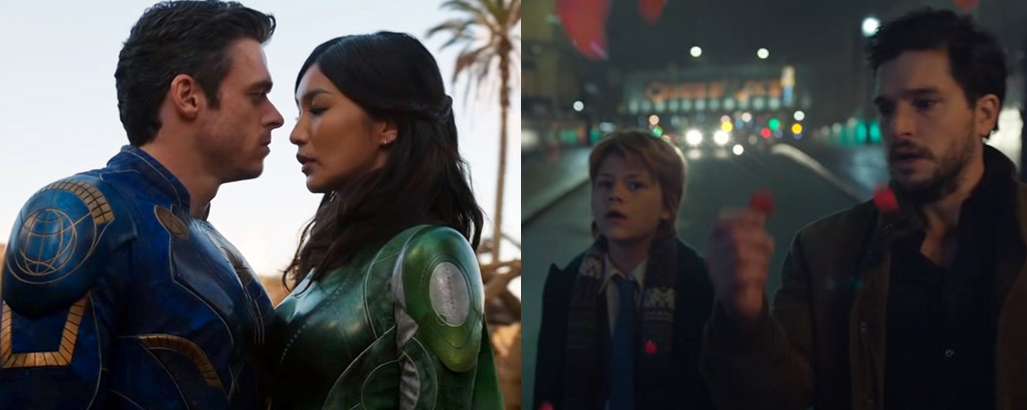
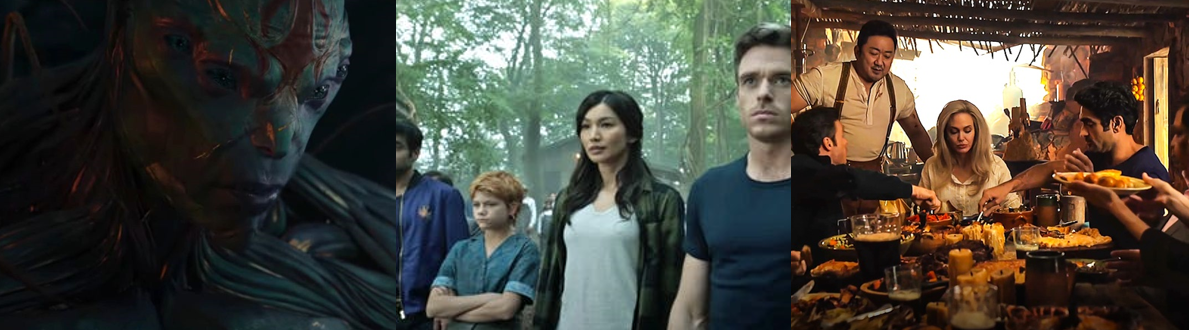
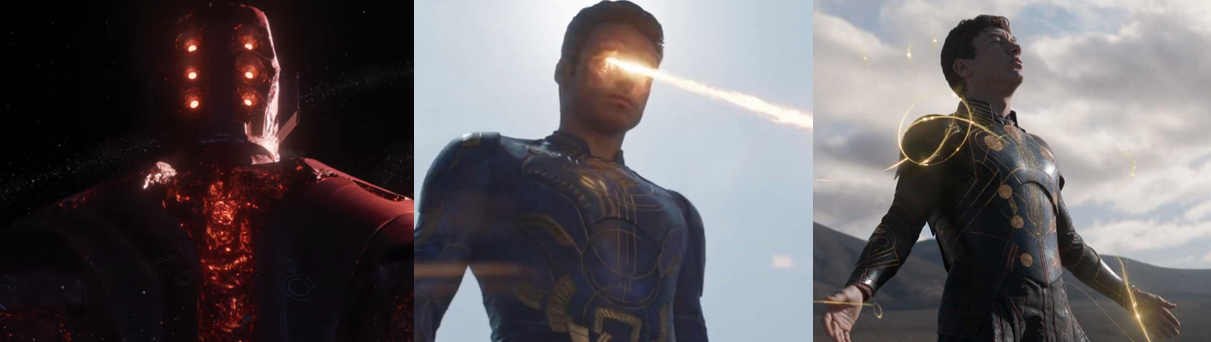
Even more than the Guardians of the Galaxy films (Gunn, 2014 to present), Eternals is an ensemble film and, more so than any other MCU movie so far, the film’s characters are a tight-knit group of superhuman character. Before Eternals, the MCU’s teams have been a mishmash of egos and personalities who struggled to get along, but the Eternals are more like a family of God-like beings who are initially heartbroken when they go their separate ways. Sersi (Chan) is the closest thing we have to a main character; an empathetic Eternal who’s able to transmutate matter upon physical contact and who has a strong connection with humanity. For centuries, Sersei was engaged in a romantic relationship with Ikarus (Madden), the most powerful of the Eternals; while all of the Eternals exhibit superhuman strength and durability, Ikarus can fly and fire lasers from his eyes and yet, despite his great power, he isn’t chosen to lead the team: the honour falls to the conflicted Sersei. Left heartbroken after their relationship ended with little explanation, Sersei has been living as museum curator and dating Dane Whitman (Harrington), who actually barely appears in the film; I expected Dane to be the audience surrogate but he only really bookends the film and we simply learn what’s happening alongside the Eternals as they reunite. This means that their isn’t really a love triangle between Sersei, Dane, and Ikarus, though a mild one does exist thanks to the presence of Sprite (McHugh), an Eternal cursed to remain a child and who can conjure illusions at will, who carries a torch for Ikarus.

The Eternals have gone their separate ways and lived amongst us in secret for centuries.

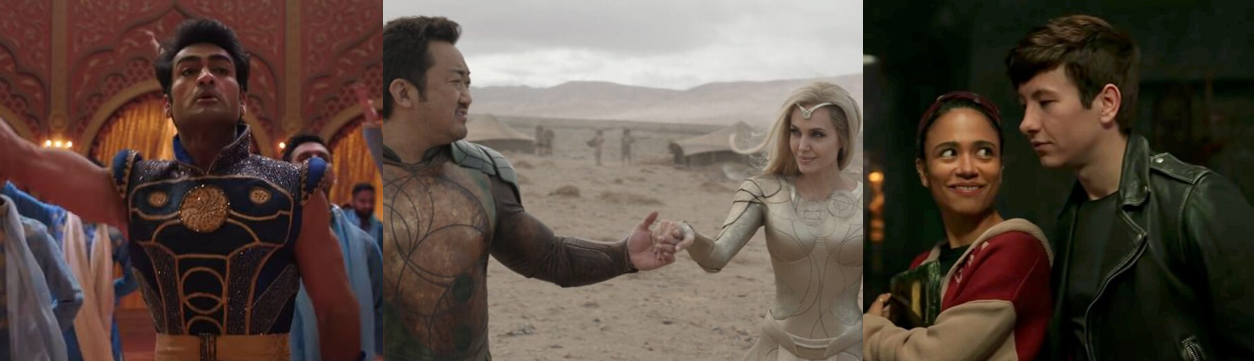
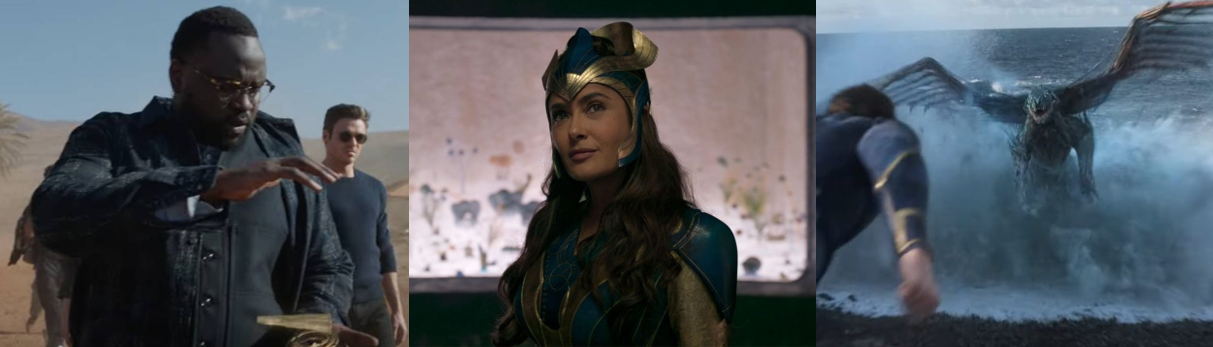
When the Deviants suddenly appear, Sersei, Dane, and Sprite are saved by Ikarus and, since the Eternals were charged with destroying these monstrous beings, they quickly realise that they need to reunite with their comrades. Naturally, they seek out their spiritual leader Ajak (Hayek), who not only has the ability to heal their injuries but can also commune with their creator, the titanic Celestial Arishem (David Kaye), and communicates His will to the team. However, they discover Ajak dead, slaughtered by the Deviants, and this responsibility passes to Sersei and, in the process, she learns a terrible truth about the Eternals’ origins and the true nature of their mission on Earth. This only spurs her to reunite with her follow Eternals, which leads them to India, where they find Kingo (Nanjiani) revelling in fame as a popular Bollywood star. Easily one of the most entertaining characters in the film, Kingo can fire bolts of cosmic energy from his fingers and brings along his valet, Karun (Harish Patel), to document the trip and, in the process, provide not only an audience surrogate but another highlight of the film. As powerful as Ikarus is, he is matched perhaps only by Gilgamesh (Lee) and Thena (Jolie), who retired to Australia hundreds of years ago after the battle-hungry Thena began to suffer from the “Mahd Wy’ry”, a condition that causes her to remember her past conflicts and drives her into a mindless aggression against her fellow Eternals. While Thena is able to conjure weapons from thin air and lives for battle, Gilgamesh turns his cosmic powers into his hands to boost his physical strength ever further. This comes in handy when the group braves Druig’s (Keoghan) sanctuary and defend it from Deviants; able to manipulate the minds of others at will, Druig was the first of the group to question their mission and Arishem’s decree that they not interfere in human conflicts unless Deviants are involved, and chose to separate himself not just from his fellow Eternals, but the wider world itself in order to protect generations of people. While Druig is initially sceptical, he’s soon convinced to rejoin his comrades by the scale of the threat they face and after being reunited with Makkari (Ridloff), an Eternal with superhuman speed and who can only communicate through sign language.

Easily Marvel’s most diverse movie yet, though the main antagonists were largely forgettable.

At this point, you’ve probably noticed that Eternals is packed full of diversity and representation; each character looks and sounds different and Marvel are definitely widening the scope of their fictional world with this team. Nowhere is this more prevalent than in the depiction of Phastos (Henry) as not only being openly gay, but in a same-sex relationship and raising a young boy, giving us the MCU’s first male-on-male kiss. Like Druig, Phastos is initially reluctant to reunite with his fellow Eternals; a master builder, he lost faith in humanity after his technological innovations eventually led to the creation of nuclear weapons and further conflict. However, his love for his family and desire to protect them spur him forward and the group is finally reunited…only to find that the Deviants have changed significantly over the years. Amongst their number stands an alpha, Kro (Skarsgård), who starts off as the largest and most intimidating of his monstrous brethren and eventually evolves into a sentient, humanoid form after absorbing the powers and lifeforce of a few of the Eternals. This gives him the ability to speak, heal his wounds, wield similar cosmic energy as the Eternals, and alter his fellow Deviants into far more grotesque and versatile forms. This means the Deviants can fly, attack with razor-sharp claws, and chomp down on their prey; they’re also incredibly durable and aggressive, but actually don’t appear all that much in the film. Kro, especially, doesn’t reach his humanoid form for some time and then vanishes for a huge hunk of the movie, only reappearing very briefly in the finale, as the Deviant threat is soon usurped by another, far more personal and dangerous menace.

The Nitty-Gritty:
It actually kind of sickens me to see so many bigots and haters dump on this film just because it features a lot of diversity; sure, there’s quite a lot packed in here all at once but we live in a world where diversity is the norm. just look around your office, or school, or local supermarket; everyone looks and sounds different, so why shouldn’t that be the case in superhero movies? Eternals was, in many ways, a great way to highlight diversity in the MCU for the first time and, since I’m unfamiliar with these characters, I really don’t care if this means their gender, skin colour, or sexual orientation has changed. Take Kingo, a recognisably Indian and very spiritual Eternal; he’s easily a stand-out character in the film thanks to his egotistical attitude and him revelling in his celebrity status, and Karun helps to add a real heart to the film since he is in awe of the Eternals. Then there’s Makkari, the MCU’s first deaf character, who exhibits a fantastic sense of enthusiasm and personality through her sign language, and the fact that all of the characters have distinct and interesting accents to help them standout from the rest of the MCU. Eternals is also a visually impressive movie; it’s clear that the MCU is definitely going for more visually distinct and experimental films in Phase Four and Eternals is probably the most beautiful MCU movie to date. The film constantly jumps to different eras and moments in human history, and different locations across the globe, as well as bombarding the viewer with some surreal cosmic imagery and some incredible costume design for the titular group.

While the film is incredibly visually appealing, its hampered by a bloated cast and some redundancies.

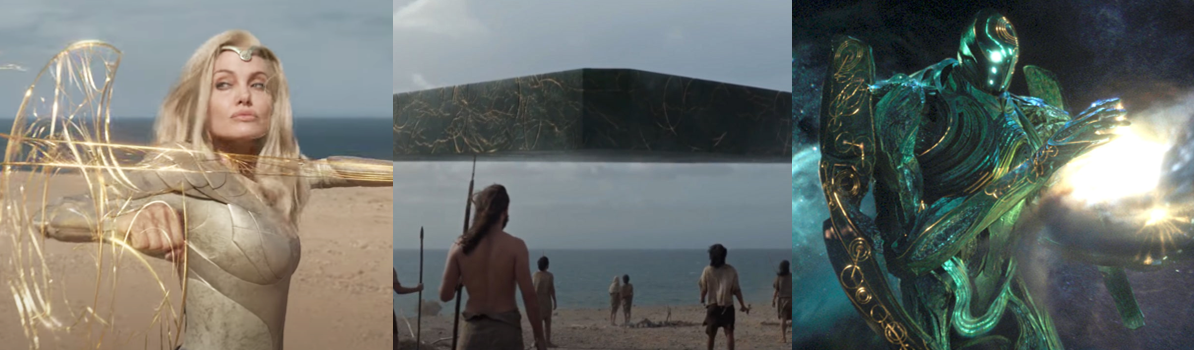
The Eternals’ powers and technology are equally intriguing; there’s a real Stargate (Emmerich, 1994) vibe to the presentation of their ship and influence upon humanity, and their cosmic powers are augmented by distinct, gold-laced CGI that’s comprised of suitably Kirby-esque swirls and patterns. Their costumes, though sadly absent for a great deal of the film, are equally impressive; unlike any other costumes in the MCU, the Eternals are garbed in a form-fitting, regal attire that is sleek, sexy, and colourful while still appearing comfortable and practical. Everything looks great until Kro takes on his human form; then the CGI takes a noticeable hit and he appears extremely out of place and cheap-looking, which is a shame as the Deviants didn’t look too bad for the most part (even though they were just big, generic monster-things). Thankfully, the film excels in the depiction of the Celestials and when fleshing out the cosmic history of the MCU; we’ve seen hints to this before, and even some brief scenes of Celestials here and there, but Eternals goes all-in with depicting these God-like beings in full and basically positioning them as being responsible for life on Earth and countless other worlds and integral elements of the wider cosmic balance. It has to be said, though, that the film does suffer from being a bit bloated; there are ten main characters, each of whom only exhibit the one power, and while the cast is very charismatic and does a pretty good job of standing out and making the most of their screen time, it definitely feels like six or maybe eight characters would have been more manageable. Like, Makkari was fine but probably could have been removed completely, and Gilgamesh could probably have been cut as well, and Ajak’s personality traits probably could have been merged into Thena to give her a bit more to do beyond just going crazy here and there.

Kro’s effects are a bit of a letdown and there’s a lot of exposition to sit through here.

Similarly, there are some other areas where Eternals also fails to hit its mark; although there is a great deal of action and the trademark MCU snark in the film, there’s noticeably far les than in other MCU movies. That’s not necessarily a bad thing; not every movie, even if it’s a superhero movie, needs to be full-on mindless action all the time, but there isn’t really anything on show here to separate this from other MCU movies where we’ve seen similar powers and abilities done far better. Eternals is, however, a much more deliberate and meditative entry in the MCU; the debates between the Eternals regarding whether to weigh the lives of one world against countless others in the vast cosmos is intriguing, and the Eternals are quite a complex group of characters; created to do Arishem’s bidding, they follow Arishem’s word without question and regard Him with the reverence we reserve for our Gods. Over time, some of them question Arishem’s design for them and the world, while others remain steadfastly loyal to the will of Arishem to a fault, which infuses the film’s narrative with a fascinating religious undercurrent. However, Eternals falls into a trap that plagues many movies that need to explain a lot of lore; it’s the first MCU film to feature opening text explaining the background of the Eternals, but then Sersei relates some of it to Dane, and the others bring Kaurn up to speed, and then there’s a long piece of exposition between Arishem and Sersei that she then tells the others about. For me, that’s a lot of redundant exposition; I feel it might have been better to veer more towards a more visual and implied narrative and then spread the exposition out a bit, but I also suspect that the opening text was added in just to make sure audiences understand what’s going on.

The Eternals are rocked to learn the truth behind their origins and mission.

I suppose it’s not too surprising that the Deviants and Kro fail to make much of an impression as antagonists in the film as their threat is completely overshadowed by Ikarus. Initially a devout follower of Arishem, Ajak grows to truly care for the Earth and sees the vast potential of humanity after they reversed the effects of the Snap, which leads her to planning to oppose Arishem’s true design for the Eternals. It turns out that they’re not there to protect the world, but are actually there to help foster the planet’s population to feed a young Celestial, Tiamut, who’s growing in the centre of the Earth and will destroy the world upon awakening. Ikarus is so devoted to Arishem that he allows Ajak to be killed by deviants and then actively fights against his friends and family, and even his beloved Sersei, to bring their mission to an end so that their memories can be erased and they can be sent to another world, as has happened over and over throughout the ages. It has to be said, though, that there are some flaws in this twist; it turns out that the Eternals are basically akin to robots, creations of the Celestials that are programmed “not to evolve” (even though they clearly do, emotionally at least), so why wouldn’t the Celestials just recall them after the Deviants are wiped out and only dispatch them when the creatures return? It also seems extremely unlikely that the Eternals wouldn’t have rebelled against their master’s grand plans in the past, so a bit strange that Arishem wouldn’t do a more thorough job of wiping their memories. The emergence of the Deviants is also more of a coincidence than anything else, and Tiamut’s awakening has only been hastened by the Snap, and Kro’s potential as a character and an antagonist is completely stunted by Ikarus’ mid-way heel turn and I almost feel like it might’ve been better to have him and Sprite teaming up from the start and have the Deviants the Eternals face be mere illusions. Regardless, Sersei and the others are determined to save the world and spare Tiamut’s life so that thousands of lives can be created by His powers; initially, they plan to do this by creating the “Uni-Mind” and vastly augmenting Druig’s power to put Tiamut to sleep. However, Ikarus’ fanatical devotion to awakening the Celestial leads Sersei with no choice but to turn the emerging Celestial to marble, freezing it in place, and Ikarus is so remorseful for his actions that he willingly commits suicide by flying into the centre of the sun. In the aftermath, Druig, Thena, and Makkari head out into the galaxy to find the other Eternals and inform them of the truth, while Arishem dramatically arrives to abduct Sersi, Phastos, and Kingo and judge whether humanity is worthy of saving and Dane is so rattled by the experience that he prepares to take up the cursed sword of his ancestors…

The Summary:
As I said, I went into Eternals with little no expectations; I saw the trailers and imagined that it would be a visually stunning and atmospheric entry in the MCU, and it definitely is that. Marvel are clearly taking some chances in Phase Four and experimenting with more diversity, variety, and unexpected directions going forward; it’s fascinating to see them go all-in with some of Marvel and Jack Kirby’s more surreal cosmic aspects and really opens the franchise up to an endless number of possibilities. This is juxtaposed by the same grounded, realistic approach to the subject matter that we saw in the likes of Thor (Branagh, 2011) that helps to introduce these wild concepts by framing them against real-world events, technology, and mythology to show how this fictional world has been influenced by these demigods. When the action does kick in, it’s pretty impressive and I like how each of the Eternals looks, sounds, and feels distinct and exhibits unique powers that make them formidable in their own right but almost unstoppable when their united against their monstrous enemies. However, Eternals is far more interested in world-building, moral discussions, and character analysis in a bid to present something of a deconstruction of the typical superhero movie. This may or may not land for you; for me, it did for the most part, but I felt the exposition could have been paced out better and the film would have benefitted from a little less hand-holding and veering more towards abstract visuals, but there’s no denying that it did an exceptional job of bringing a fresh group of sexy and powerful characters into the MCU which I imagine will have a significant impact on the franchise going forward.

My Rating:

Rating: 3 out of 5.

Pretty Good

Have you seen Eternals? If so, what did you think to it and where would you rank it against the other films in the MCU? Which of the characters was your favourite? What did you think to the diversity and variety on offer in the film? Do you like seeing the cosmic scope of the MCU or do you prefer their more grounded and relatable stories? Are you familiar with the Eternals and, if so, how do you think the film worked as an adaptation? Whatever you thought about Eternals, sign up to leave a reply down below or drop a comment on my social media.

Movie Night: V for Vendetta

Released: 17 March 2006
Director: James McTeigue
Distributor:
Warner Bros. Pictures
Budget:
$50 to 54 million
Stars:
Hugo Weaving, Natalie Portman, Stephen Rea, Tim Pigott-Smith, Roger Allam, Stephen Fry, and John Hurt

The Plot:
In a world where the United Kingdom is subject to a neo-fascist totalitarian regime headed by High Chancellor Adam Sutler (Hurt), the unassuming Evey Hammond (Portman) find sherself caught up in masked anarchist and freedom fighter V’s (Weaving) attempts to ignite a revolution through elaborate terrorist acts themed after the legendary Guy Fawkes.

The Background:
V for Vendetta began life as a black-and-white serial written by the legendary Alan Moore and illustrated by David Lloyd and published in the short-lived UK anthology Warrior between 1982 and 1985 before being picked up, colourised, and completed, by DC Comics in 1989. Influenced by a variety of literary works, V for Vendetta was a bleak, uncompromising tale of a morally ambiguous anarchist rallying against a totalitarian government and is generally regarded as one of the more subversive and influential comic books ever made. The production of a live-action adaptation can be traced back to 1988, when producer Joel Silver acquired the rights, but didn’t begin to gain traction until the late-nineties when Andy and Larry Wachowski (as they were known then) became involved in the production. Actor James Purefoy famously walked out of the title role after six weeks of filming and Moore, of course, hated the script and the idea of an adaptation, but V For Vendetta was a decent box office success with a gross of over $130 million. Critically, the film was also quite well received and became an influential cult hit.

The Review:
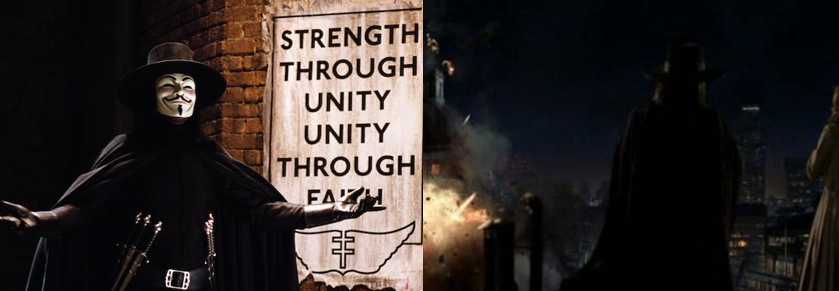
V for Vendetta immediately begins by emphasising the overall thrust of V’s crusade: that, while a man might be forgotten, killed, or mere flesh and blood, an idea can live forever to inspire others into acting. It’s this belief that permeates throughout the film alongside the oppressive governmental regime that dominates this alternative version of the United Kingdom. When we are first introduced to V, it’s on the eve of the beginning of his masterplan for revolution; garbing himself in a black outfit, cape, and eerily emotionless Guy Fawkes mask, he stumbles upon Evey being assaulted by Fingermen, the secret police of this world, and immediately beats them into submission while spouting eloquent quotations. V’s mystery is immediately apparent not only because his entire face and figure is obscured but also through the verbosity of his vocabulary; approaching his crusade like a dramatic role, he exudes a theatrical flair and polite, curious personality that immediately captivates Evey’s attention despite her better nature.

V is an enigmatic, anti-authoritative persona is a mixture of eloquence and violence.

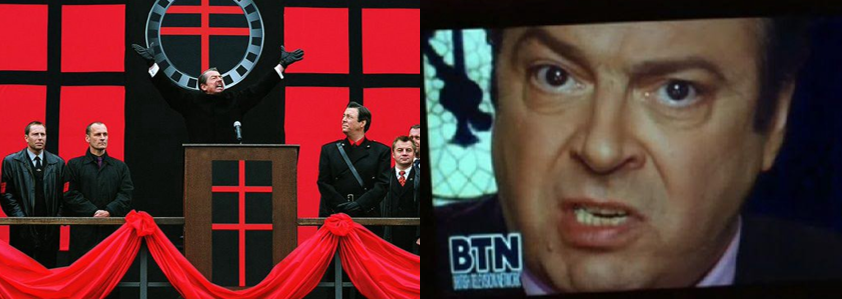
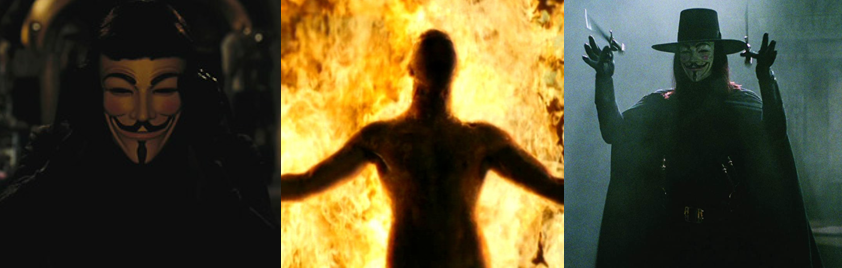
V’s more melodramatic and articulate moments are offset by a disturbing unpredictability and ambiguity that makes him appear more than a little insane through his explosive methods, revolutionary opinions, and anti-authoritative stance. V destroys the Old Bailey using explosives, theatrical fireworks, and the sounds of Pyotr Ilyich Tchaikovsky’s ‘1812 Overture’. From there, V’s methods and agenda only escalate as he storms the office of the British Television Network (BTN) and forces them to broadcast a message of insurrection and revolution to take place in one year’s time, on the fifth of November, to take a stand against the oppressive government. V’s message affects the film’s characters in a variety of ways; Evey is awe-struck, families and viewers are puzzled and curious, and he is quickly branded a terrorist by the tyrannical government.

After rising to power, Norsefire continued to spread fear and oppression by controlling the media.

The Nordic supremacist and neo-fascist totalitarian regime that rules the UK, the Norsefire Party, spreads its God-fearing message primarily through the media in the form of Lewis Prothero (Allam); an extremely aggressive and spiteful individual, Prothero has an immense level of power and influence on the country as he spreads lies and messages of fear and hate to keep the populace under the rule of, and dependent upon, Chancellor Adam Sutler. Norsefire’s rise to power came after a series of orchestrated events that saw the country besieged by plague and death and, in their fear, they turned to Sutler and his promises of order, only to find that minorities, faiths, and sexualities were not only oppressed but cruelly ostracised, hunted, experimented upon, and killed by Sutler’s party.

Creedy is Sutler’s main force in removing insurgents and seeks to usurp Sutler’s authority.

Years later, the United Kingdom has become a bastion of law and order because of this fear; whereas former political powers like the United States are now little more than a “leper farm”, “England prevails” thanks to Sutler blacklisting music and arts, controlling the media, and having Creedy (Pigott-Smith) remove those who dare to oppose him. Creedy, a spiteful and cruel man, was the one who suggested Norsefire launch a viral attack on their own country to consolidate their power and takes his job very seriously; when insurgents rise up, he personally leads his men in breaking into their houses, beating them mercilessly, wrapping their heads in a black sack, and taking them away to be tortured and killed. His relationship with Sutler deteriorates over the course of the film when Sutler places the blame on V’s actions and elusiveness solely on Creedy’s inability to track him down and end him and V is able to manipulate Creedy’s aspirations to usurp Sutler’s position while still making him pay for his past crimes.

While Finch is horrified by the truths he uncovers, Deitrich is inspired to mock the government.

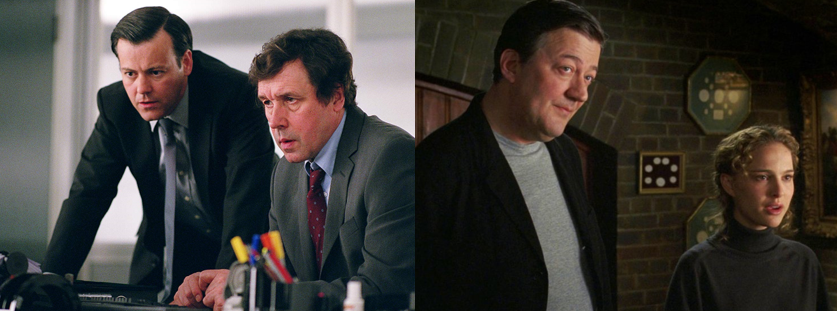
Equally perplexed by V’s crusade is Chief Inspector Finch (Rea), an Irish-born policeman who is horrified by V’s actions and broadcast but, in the course of trying to find him before Creedy can make him disappear, is horrified to uncover evidence that the Norsefire Party were responsible for a devastating plague and numerous deaths. His faith in the system already faltering at the beginning of the film, it is shaken to its core when he learns of V’s backstory and the horrifying experiments he and many others were subjected to, which turn him into something of a reluctant ally. V’s message strikes a chord with many others across the country, including Gordon Deitrich (Fry), a charismatic and entertaining talk show host who has been forced to live a lie his entire life since he is secretly gay and homosexuals are effectively outlawed. This leads to an amusing sequence in which he openly mocks Sutler on live television which, in turn, emphasises the tyrannical cruelty of the government when he is quickly bagged up and killed by Creedy. Other random members of the public are similarly inspired by V’s message and pay the price for it and, in turn, inspire others to take a more proactive stand against their oppressors.

Evey has been beaten down by her losses but is awestruck by the strength of V’s conviction.

V’s primary ally, however, is Evey; acting as the audience surrogate, we are introduced to V’s world (the “Shadow Gallery”) and learn about the specifics of his agenda through her; initially a timid and inconsequential character, she is captivated by V’s mystery, the strength of his conviction, and magnetic presence. Having suffered through many losses and tragedies, Evey is initially a product of the oppressive world in which she lives; she doesn’t like the rules, regulations, and actions of the government but feels powerless to do anything about it and prefers to stay out of politics. While she comes to bond with V even after his more questionable and violent actions, and feels an immense deal of pity and sympathy for him, she nonetheless attempts to escape and finds herself subjected to round the clock torture and isolation.

The Nitty-Gritty:
Conspiracy, revenge, and oppression are the name of the game in V for Vendetta; Norsefire went to extreme lengths to secure the vote and confidence of the public and covered everything up, from deleting military records and killing those who would expose or oppose them. The St. Mary’s virus devastated Ireland, and much of the UK, resulting in numerous deaths and was purposely released into the water supply by Norsefire to consolidate their power. Ever since, they’ve enforced strict curfews, rounded up homosexuals, people of colour, and all those with conflicting religious beliefs and lorded their superiority over those who were once their political betters. Hurt, who famously portrayed a contrary role in Nineteen Eighty-Four (Radford, 1984), demands nothing less than complete obedience, compliance, and results from his underlings; represented as a an aggressive, demanding voice shouting through a television screen for most of the film, his position and authority is never in question and he takes V’s actions and open defiance as a personal insult to him and everything he’s built.

Delia is the only one to regret her part in V’s suffering and welcomes her end at his hands.

Those within the Norsefire Party are deplorable and reprehensible individuals. Prothero was formally the commander of the detention camp that was responsible for producing the St. Mary’s virus and the suffering V and his fellow prisoners underwent; Bishop Lilliman (John Standing) is little more than a disgusting paedophile; and Creedy is a sadistic thug. The only real exceptions are Finch, who begrudgingly complies with the will of his superiors even before his faith is shaken, and Doctor Delia Surridge (Sinéad Cusack), the woman responsible for the experiments that led to the creation of V and the St. Mary’s virus and vaccine. Back during her time at the detention centre, she was a morally appalling woman who grew to hate the lethargic and miserable state of those she was experimenting on but, upon seeing her work go up in flames and coming eye-to-eye with a horrifically burned inmate, came to regret her actions. Changing her name and living in constant fear of reprisal, she accepts her fate at V’s hands willingly and is the only one of his tormentors to repent for her part in his suffering and to whom he shows a modicum of mercy.

V’s true face and identity remain a mystery as he is 100% committed to his vendetta and ideals.

V’s mission, for all his theatricality and grandstanding about brining down the government, boils down to simple revenge; referring to his actions as “justice”, he is driven by the desire to hunt down and punish those responsible for his suffering and the horrific scars he clear still carries from the fire. We never see V without his mask or without his face being obscured by shadow or some other disguise and his true identity is never fully revealed; clearly, he was some kind of genetic aberration to have been locked up and experimented on but there’s also more to him than simply being gay or a different creed or colour since he is able to endure unimaginable pain, exhibits near-superhuman levels of strength and durability, and is skilfully adapt with knives and in hand-to-hand combat.

V subjects Evey to round the clock torture to free her from the fear that has been holding her back.

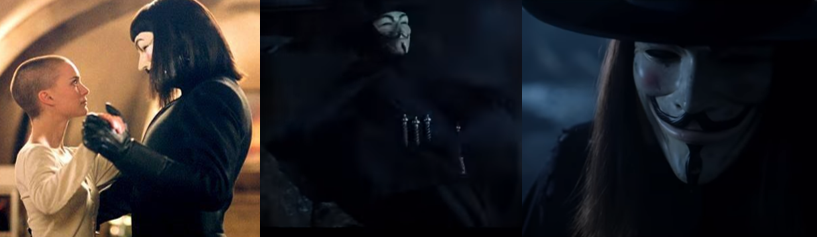
The mystery of V’s true nature and origin is left intentionally vague, as it is in the comic book, in favour of the idea of V being more important than his physical form. In an effort to teach Evey the same lessons he learned, he subjects her to round the clock torture and forces her to live a very similar life of isolation and desperation as he was subjected to so that she can both better understand his motives, see the world for what it really is, and be freed of the fear and lethargy that has held her back her whole life. While Portman’s English accent is a bit dodgy at times, she more than makes up for it during this horrific sequence where she has her beautiful curly locks shaved, is hosed down and interrogated over and over again, and left in a cold, dank, desolate cell with only a rat and the writings of a fellow prisoner for comfort. Enraged at V’s treatment, she nevertheless discovers a strength and resolve she never knew existed and honours her promise to return to him for his revolution; however, while he pulls the lever that will usher in V’s new age, she doesn’t assume his identity like in the comic book but remains a changed and resolute character nevertheless. V’s treatment of Evey adds to his questionable moral nature; he’s fully willing to maim and kill those who wronged him, or who get in his way, to say nothing of forcing Evey to endure constant torture and, yet, he is disgusted not just at his actions but at those who made him the man he is today.

Despite having fallen in love with Evey, V is committed to his idea of a world free from oppression.

Having turned his back on his humanity and committed himself to a bulletproof idea, his conviction is strong enough to allow him to endure multiple gunshots and to give his life for his cause, knowing full well that he won’t live to see the dawn of his new age and grateful for the end of his suffering. Through Evey, though, he finds a kindred spirit and she even offers him something else to live for, something more akin to a normal life for the two of them, but he adamantly refuses, despite his love for her, since he is so dedicated to his crusade. Arguably insane and blinded by his obsession, V’s message of revolution is the kick up the arse the British public need to shake them out of their apathy; this dystopian version of the UK is ruled by fear and hatred of other races, creeds, and sexualities even before the rise of Norsefire, who are little more than a Nazi regime. Until V came along, normal, everyday civilians merely went along with the ruling body, accepting it as the way things were and beaten down by submission and subjugation but, in the end, it is the normal, every British public who assume V’s guise and march through the streets of London, stand up to the government’s military might, and witness the dramatic destruction of the Houses of Parliament. In that moment, they all become V and witness the symbolic destruction of the ruling authority just as V’s actions remove the tyrants in power and give power, and truth, back to the people to do with as they wish. It’s a startlingly effective message to stand up to totalitarian rule, whether foreign or domestic, and the lengths to which governments will go to to control their people; in the end, it takes subversive, even terrorist acts to force people into action, though the film goes to great lengths to justify V’s actions and to only have those who are morally questionable label him as a terrorist.

The Summary:
When I first saw V for Vendetta, I hadn’t read the original comic book; based on how much I enjoyed the film, I was inspired to read the source material and, while there are a great deal of thematic and notable differences between the two, V for Vendetta is still a really solid adaptation and an effective film in its own right. Much of this is, largely, due to the incredible enigmatic performance of Hugo Weaving in the title role; despite his face being completely obscured by an unnerving visage, he exudes a multitude of emotions, from conviction to sympathy to self-righteous anger, and his eloquent delivery and dulcet tones bring as much characterisation as his dramatic body language and gestures. It’s a captivating performance, one sadly rarely replicated in comic book movies where actors constantly remove their masks, and is surpassed only by the political and emotional heart of the film. V for Vendetta’s world is one that seems to grow more and more relatable each day as cameras, surveillance, and control dominate our everyday lives more and more each day; governments become unreliable, their methods questionable, and the idea that apathy rules our society is powerfully relatable in an age were media controls us with carefully constructed messages and versions of the truth. The message is clear; V even says it himself in the film: “People shouldn’t be afraid of their government. Governments should be afraid of their people” and, while the comic’s more subtle and intricate means of depicting its messages are replaced by for more explicit Nazi iconography and action-packed moments, the film does a commendable job of bringing Moore’s work to life and it remains one of the more thought provoking comic book movies.

My Rating:

Rating: 4 out of 5.

Great Stuff

Are you a fan of V for Vendetta? How do you feel it compares to the source material? What did you think to Hugo Weaving and Natalie Portman’s performances and the themes and message of the film? What do you think V’s true origins were? How comfortable are you with the power of the media and the increased surveillance we are met with these days? Which of Alan Moore’s works is your favourite? How are you celebrating Bonfire Night tonight? Whatever your thoughts on V for Vendetta, or the works of Alan Moore, go ahead and leave a comment down below.

Movie Night [Asterix Anniversary]: Asterix: The Secret of the Magic Potion


Asterix the Gaul (and his best friend Obelix) first debuted on 29 October 1959 as a serial in the French/Belgium magazine Pilote. Since then, the plucky Gauls have gone on to have many adventures in comic books, videogames, and feature-length productions and Asterix himself has become a popular and enduring character in his native France and around the world as Asterix’s stories have been translated into over a hundred languages across the world. I may be a day early in celebrating this anniversary as it coincides with the release of the SEGA Mega Drive but I’ll take any excuse to talk about Asterix’s amusing escapades.


Released: 5 December 2018
Director:
Louis Clichy and Alexandre Astier
Distributor:
Société Nouvelle de Distribution/Altitude
Budget:
Unknown
Stars:
Ken Kramer, C. Ernst Harth, John Innes, Fleur Delahunty, and Michael Shepherd

The Plot:
In 50 B.C. ancient France (then known as Gaul), has been entirely conquered by Julius Caesar (Mark Oliver) and his army of Romans…except for one small village of indomitable Gauls given superhuman strength by the druid Getafix’s (Innes). However, when Getafix starts to worry about his mortality, he embarks on a quest across Gaul, accompanied by the village’s most powerful warriors, Asterix (Kramer) and Obelix (Harth), in search of an heir.

The Background:
Asterix was created by writer René Goscinny and artist Albert Uderzo in 1959 and first appeared in Pilote before being collected into a single volume. Since then, the duo produced volumes on an annual basis until 1997, when Goscinny tragically died; after continuing solo for a while, Uderzo eventually signed the rights over to a new generation of creators so that Asterix’s stories could continue. Since then, Asterix has been an incredibly popular character the world over, selling nearly 400 million books and has been adapted into a series of animated, and live-action, features. The first, Astérix the Gaul (Goossens, 1967), was produced with Goscinny and Uderzo’s input and the two were heavily involved in subsequent productions. Nine animated features were produced between 1967 and 2014, where the animation made the jump from 2D to 3D with Asterix: The Mansions of the Gods (Clichy and Astier, 2014), which was France’s highest-grossing animated film of that year. Asterix: The Secret of the Magic Potion followed about four years later; based on an original story by Astier, the film made over $2 million on its opening night and eventually grossed over $46 million.

The Review:
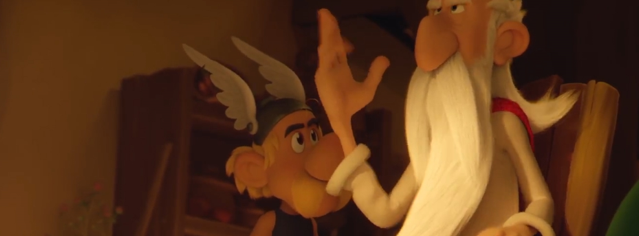
Asterix: The Secret of the Magic Potion begins with Getafix out in the forest cutting ingredients for his magic potion with a golden sickle; he’s a sprightly, lively old man, hopping and jumping all over the place and handling his sickle with an effortless pizazz. Unfortunately, his luck runs out and he takes a particularly nasty fall from a treetop. Having seriously injured his ankle, Getafix is despondent and angry at his stumble and decides to search out a young successor in order to pass down his greatest secret; since the secret can only be passed from one druid to another, this means Getafix must leave the village to seek out his heir. Getafix’s decision to seek out an heir worries both Asterix and the village chief, Vitalstatistix (Don Brown), as they’re concerned that Getafix is giving up too easily and that a new druid will misuse the magic potion. To allay their fears, Getafix suggests that Asterix and Obelix accompany him to ensure that his chosen successor uses the magic potion as wisely as he and that their village can continue to resist the Roman invasion.

Getafix’s injury causes him to a crisis of confidence, much to Asterix’s chagrin.

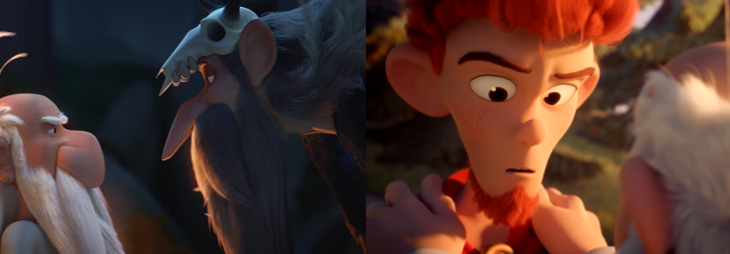
Getafix’s mission is opposed by the malevolent druid Demonix (Shephard), a practitioner of forbidden magic who greatly resembles Prolix from Asterix and the Soothsayer (Goscinny and Uderzo, 1972) and is capable of conjuring will-o’-the-wisps to hypnotise and manipulate others. His power is so frightful that he’s even able to freeze the mighty Obelix in his tracks like a statue Demonix is disgusted that Getafix has wasted his magic potion on his village and wishes to take the secret from himself to satisfy his desires for power and glory. To facilitate this, he strikes a deal with Caesar that will see him manipulate the promising young druid Cholerix (Michael Adamthwaite) in order to learn the secret of the magic potion. After forcing Cholerix to mage the potion, Demonix augments it further and consumes it, becoming a super-powered sorcerer and threatening not only the Gauls but the Romans as well with his vast powers.

Demonix’s plot to learn Getafix’s secret sees him manipulate the young druid Cholerix.

Getafix is dismayed to find that all the young druids he meets are either charlatans or incompetents and, as a result, he’s excited at the potential Cholerix. Although Cholerix initially rejects Demonix’s advice, he falters when standing before his peers and potential mentor and decides to conjure Demonix’s useless spell and, in the process, impresses Getafix. However, Cholerix is almost immediately dismayed at Getafix’s choice as he knows he basically deceived the druid and is forced to brew up the magic potion before Demonix’s eyes in order to save the village from being destroyed by the Romans.

Pectin impresses with her curiosity, gumption, and inventiveness.

Asterix is enraged to discover that a young girl from the village, Pectin (Delahunty), has stowed away in Getafix’s cauldron; despite women being forbidden from the Forest of the Carnutes, Getafix is impressed with Pectin’s ingenuity and craftsmanship and allows her to accompany him to the druids’ gathering in disguise as a boy. Her presence and curiosity is the perfect way to coax exposition out of the druids (in the form of a traditional, hand-drawn animation) regarding Getafix’s past with Demonix and she proves instrumental in thwarting Deominx after he consumes his augmented magic potion, proving herself to, potentially, be worthy of taking Getafix’s place someday.

The Nitty-Gritty:
Asterix: The Secret of the Magic Potion is full of little gags and slapstick comedy, mainly revolving around fights and the physical pratfalls the many characters get into; the routine of village life and the Roman garrisons is amusingly introduced to the tunes of Dead or Alive’s ‘You Spin Me Round (Like a Record)’, with characters performing their everyday actions in tune to the beat of the song. As is the case with many Asterix stories, there’s an ongoing rivalry and animosity between Unhygienix (Jason Simpson) and Fulliautomatix (Scott McNeil), a gang of pirates continuously run afoul of the Gauls even when they’re safely out at sea, the Romans are generally portrayed as being reluctant warriors who are in fear of the Gauls’ strength, and the Gauls using chickens to fly in and attack the Romans. There’s also a running gag in the film that the druids can speak and understand the snorts and grunts of boars; indeed, boars themselves play quite a large role in this animated and are far more prominent than they usually are, getting into all kinds of scrapes and hijinks similar to Scrat from the Ice Age films (Various, 2002 to present).

As there are a lot of characters in the film, some inevitably get reduced to mere comic relief.

There’s a great number of characters in the film, more so than usual since Gettafix’s search takes him all over Gaul. However, all the village men (except for Cacofonix (Cownden)), decide to follow along with the quest to add some additional comic relief to the film through their tendency to argue and brawl with each other at the slightest provocation. Although the village is left only in the care of the women and Getafix’s limited magic potion reserves, the Gaulish women are, as always, more than capable of holding their own against the Roman forces, who are ordered to attack again and again to exhaust their reserves. The druids also get a lot of play in the film; their gathering is little more than a piss-up and the druids misunderstand the boar’s message and think Getafix has just brought them all together for a big party and Getafix is stunned to discover that the druids’ age-old traditions of passing information only through word of mouth has given way to “crib notes”.

Rather than focus on Asterix and Obelix, the film is much more about Getafix and a group effort.

When Getafix’s search initially proves fruitless, Asterix loses his temper; he’s annoyed that Getafix has let such a simple stumble throw him so completely and, in an amusing outburst, hands his helmet, dagger, magic potion, and status as the village’s top warrior over to Geriatrix (Ron Halder) in order to make his point and storms away. This does, however, allow him to stumble upon Demonix’s plot to collaborate with the Romans but he basically disappears from a big chunk of the film after he’s helplessly bound and gagged. Even when he’s rescued, he’s just one part of an unsuccessful team effort between the Romans and the Gauls to take down the gigantic, invincible, and super-strong Demonix and, in the end, it is Getafix’s resourcefulness and magic that saves the day. It’s a bit unusual to watch an Asterix film where Asterix ends up having such a small role but the bulk of the story revolves around Getafix and his shaken self-confidence so I guess it makes sense but Asterix and the Big Fight (Grimond/Weiss, 1989) was a very Getafix-heavy film and that still placed Asterix in a prominent role in its narrative.

The Summary:
Asterix: The Secret of the Magic Potion is a very fun and entertaining little romp. While I preferred the traditional, 2D animation of the previous films, the computer-generated characters are gorgeous to look at, full of life and little details and character quirks that really make them lively and amusing. It’s not one of the more action-packed Asterix stories, and it’s a little disappointing how small a role Asterix and, especially, Obelix play in the plot but it’s got a lot of funny little moments and gags peppered throughout it and really captures the quirky spirit of the comic books. As a lifelong Asterix fan, it’s heart-warming to see the character is still so popular and beloved that he continues to be relevant in a crowded genre and there’s clearly been a lot of care and attention put into bringing these unique and memorable characters to life. The story is pure Asterix and feels reminiscent of many of the books but also manages to stand out on its own merits through its distinctive visual and narrative flair and I’d say it’s definitely worth a watch for fans of the source material and should keep both kids and parents sufficiently amused with its wackier moments.

My Rating:

Rating: 3 out of 5.

Pretty Good

Have you seen Asterix: The Secret of the Magic Potion? If so, what did you think to it? Are you a fan of the CGI Asterix films or do you prefer the traditional, 2D animated features? Which character, book, or movie is your favourite? How are you celebrating Asterix and Obelix’s birthday this year? Whatever your thoughts on Asterix, feel free to leave a comment below.
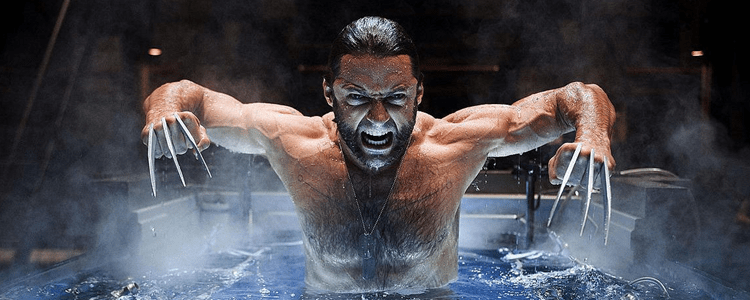
Movie Night: Venom: Let There Be Carnage

Released: 15 October 2021
Director: Andy Serkis
Distributor:
Sony Pictures Releasing
Budget: $110 million
Stars:
Tom Hardy, Woody Harrelson, Michelle Williams, Naomie Harris, and Stephen Graham

The Plot:
After the events of Venom (Fleischer, 2018), investigative journalist Eddie Brock’s (Hardy) struggles to co-exist with the alien symbiote Venom. Their lives are further complicated when serial killer Cletus Kasady (Harrelson) gains his own symbiote and begins a reign of terror as the maniacal Carnage.

The Background:
Originally depicted as a simple black costume acquired by Peter Parker/Spider-Man on an alien world, Venom eventually became their own character when the costume was revealed to be alive and bonded with the unhinged Eddie Brock to torment Spider-Man. Since their debut, Spidey-Man’s dark doppelgänger has become one of Marvel Comics’ most popular anti-heroes and one of Spider-Man’s most recognisable foes. So popular are Venom that they’ve made regular appearances in Spider-Man videogames and cartoons and were awkwardly shoe-horned into Spider-Man 3 (Raimi, 2008) for an impressive, if rushed, big-screen debut. Although the idea of a live-action Venom film had been doing the rounds in Hollywood since 1997, the idea only gained significant momentum after this film and eventually culminated in the frankly unprecedented casting of Tom Hardy in the title role for what became a commercially successful solo film despite mixed reviews and questions as to its relations to the Marvel Cinematic Universe. Development of a sequel began in 2019; although Ruben Fleischer was unable to return, Andy Serkis took over directing duties and worked closely with Hardy to develop the film’s script. Although popular Venom antagonist Carnage was nixed as the main antagonist of the first film, Woody Harrelson appeared as the character’s human host as a tease for the sequel and took a gamble by signing on for the sequel before a script was even written. Although Venom: Let There Be Carnage was delayed several times due to the COVID-19 pandemic, Serkis aimed to use the additional time to help spruce up the film’s visual effects and Hardy confirmed that he was signed on for a third film. Upon release, Venom: Let There Be Carnage was met with mostly positive reviews that praised the madcap nature of the relationship between Eddie and Venom. Though some criticised the film’s over-the-top moments, Let There Be Carnage eventually grossed over $500 million worldwide, more than justifying a third entry in 2024.

The Review:
After coming to terms with his newfound relationship with the alien symbiote known as Venom, Eddie Brock ended Venom in a pretty good place: he was determined to get back to written journalism,  and win back the heart of his old flame, Anne Weying (Williams), and reached a compromise with the symbiote where the creature would be allowed to live within Eddie’s body on the provision that it only attacked, killed, and, crucially, ate bad guys. Venom: Let There Be Carnage walks the characters back a little bit and finds the two not operating as a lethal protector, but once again largely at odds with each other.

Eddie is burdened by Venom’s constant need to feed and desire to take out bad guys.

This is primarily because Eddie has been placating the symbiote with chocolate and live chickens rather than letting it ate the brains of bad guys; frustrated at being held back by Eddie’s morals, the symbiote frequently lashes out at him and demands to be let loose, but Eddie continues to exert his control over the alien parasite to avoid attracting undue attention. This gives the movie a very prominent “odd couple”/“buddy cop” feeling as Venom is basically an oversized toddler who just wants to go out and have a good time and doesn’t see why they have to hide themselves. A constant, nagging voice in Eddie’s head, Venom continually tries to give Eddie advice and push him into giving into his violent urges, which weighs heavily on Eddie; he seems to be absolutely burdened by the responsibility of housing and pacifying Venom, who represents his inner desires that he suppresses in order to live a simple life out of the spotlight. Venom resents Eddie’s hesitation in holding them back and wants to be out there, stalking bad guys and letting itself loose, rather than being cooped up in Eddie’s body and apartment. Still, Eddie’s concerns are largely validated; Detective Patrick Mulligan (Graham) is incredibly suspicious of Eddie, not just because he always happens to be in the wrong place at the wrong time and the unexplained events of the first film, but also because he’s the only person that notorious serial killer Cletus Kasady will talk to and Mulligan believes that Eddie is holding back information purely to bolster his own journalistic career.

Mulligan’s convinced Eddie’s holding out on him, while Eddie laments losing Anne.

Still a far cry from having his own, regular journalism show on television, Eddie endures Cletus’s repeated requests to talk to him primarily to help get his life back on track and to bring some relief to the families of Kasady’s victims. However, he comes across as being a selfish, self-serving reporter since to reveal the truth to Mulligan would mean his imprisonment, at best, and him and the symbiote being shipped off to some governmental facility somewhere. Venom’s near-perfect visual recall and artistic ability help Eddie to identify where Cletus has buried a number of his victims, instantly making Eddie an overnight celebrity and condemning Kasady to a lethal injection. Eddie’s exhilaration at his career turnaround is short-lived, however, when Anne reveals that she’s now engaged to the kindly Doctor Dan Lewis (Reid Scott); heartbroken at having lost his former love, tensions between Eddie and Venom finally come to boiling point, resulting in an amusing physical confrontation between the two that sees the symbiote separating itself from Eddie and heading out to live its own life. This results in a pretty amusing little side story where Venom jumps between multiple, unsuitable hosts, using them up one at a time as it tours through the colourful city streets and seeks out enjoyment. Being separated from Eddie causes Venom to slowly starve and realise how much it took Eddie for granted, while Eddie’s life generally improves without the symbiote weighing him down. This is where Anne plays her most prominent role; she doesn’t have as much to do as in the first film but makes for a great mediator between Edie and Venom, interjecting in their domestic dispute to bring them back together and force them to admit how much they need each other.   

Kasady and Shriek’s relationship is taken to the next level when he obtains his own symbiote.

The two are soon forced to make amends, however, when Kasady suddenly sprouts a symbiote of his own; an absolutely crackpot murderer, Kasady feels a connection with Eddie due to believing them to be very similar people, with comparable backgrounds. Heavily abused as a child and with a long history of violence, Cletus is seemingly out of his mind and completely unremorseful of his actions, which have condemned him to death. During his final interview with Eddie, Kasady suddenly snaps and takes a bite out of Eddie’s hand, consuming a part of the symbiote which violently bubbles to the surface while he’s receiving his lethal injection. Dubbing himself Carnage, Kasady goes on an absolute rampage throughout the prison, killing several guards and breaking free of his confinement; he quickly comes to an understanding with his newfound alien partner that sees them joining forces to destroy their “father” and to reunite Kasady with his old girlfriend, Frances Barrison/Shriek (Harris), a Mutant sporting an ear-piercing scream who was the one source of light in Kasady’s life as a child. Of course, like Venom in the first movie (and also this one), Carnage is somewhat hampered by the film’s 15 rating; in the comics, Kasady is one of the most extreme and brutal villains from the “Dark Age” of comic books, slicing and dicing people on a whim and causing… well, carnage…with no rhyme or reason and entirely for the thrill of it. The entire point of the character was to be a more extreme version of Venom so that the symbiote could shift into more of an anti-hero role but, in the movies, Eddie is a far more stable and much nicer guy than his comic book counterpart, and Venom repeatedly states its desire to protect people from bad guys, meaning that the two are already much softer than in the comics. Still, Kasady remains as nutty as his comic book counterpart, but also far more focused; he genuinely loves Frances and wants to not only reunite with her for a killing spree but also protect her from harm, a weakness not shared by his Marvel Comics incarnation. His motivation for targeting Eddie also stems from a need to feel a genuine connection with someone, which is a far cry from just desiring senseless slaughter, but the abilities of the symbiote certainly dial all of Kasady’s worst impulses up to eleven. While bloodshed is kept to a minimum and there’s little in the way of the slasher-villain antics of his comic book counterpart, Carnage quickly amasses a pretty impressive body count and certain looks completely unhinged thanks to some top-notch CGI and being augmented to be larger and more unhinged than its “father”. With Carnage going on a tear and endangering lives, Eddie and Venom are reunited by Anne and forced to once again realise that they need each other to survive and to be special, and come together once more to confront their progeny and establish themselves as a lethal protector.

The Nitty-Gritty:
Director Andy Serkis definitely ups the ante in terms of the film’s presentation and the balance between action and humour; flashbacks to Kasady’s past are rendered using both younger actors an crudely-drawn animations to depict some of the younger Kasady’s more violent acts, which all helps to add to the character’s unhinged state of mind. The banter and dialogue between Eddie and Venom is one of the highlights of the film; Venom is constantly popping out and threatening to eat people’s heads or berating Eddie for being “weak”, and its tentacles are often whipping around mashing together food or causing mischief, which was very amusing. Thanks to having spent the majority of Venom’s runtime establishing Eddie and Venom as characters, Venom: Let There Be Carnage doesn’t have to worry about being shackled by the restraints of an origin story for them and we get to see Venom in all their glory pretty soon into the movie, which is great but does result in a bit of a rushed beginning to the film where it seems like it’s going to be a mindless, jump-cut-heavy action film but, thankfully, Serkis soon gets the film’s pacing under control and focus on the evolving dynamic between Eddie and Venom.

The conflict between Eddie and Venom forms a central element of the film’s plot.

Since we know who these characters are, much of the time spent with them is focused on showing how tension between the two are growing. This is primarily so that Eddie can lose his “powers” midway through the film and the two can relearn just how dependant they are on each other, but also allows the film the time to flesh out Kasady’s character and backstory, something he sorely needed. I actually disliked how Kasady was just tacked onto the end of Venom as a mid-credits teaser; it kind of came out of nowhere and probably left a lot of audiences unfamiliar with the characters confused as to why Woody Harrelson was sitting in a cell and sporting a bizarre wig. Personally, I would have had a recurring element of Venom be Eddie trying to gain an audience with Kasady in order to turn his career around, and only be granted this by the end, just to help foreshadow their meeting a bit but Venom: Let There Be Carnage definitely makes up for this. Harrelson seems to be having the time of his life, chewing the scenery and stealing the show as the unhinged Kasady, a madman who writes postcards and letters in a bizarre script and brags about how many people he’s killed. He was a psychopath even before acquiring his symbiote, and joining with Carnage simple allows his sordid ambitions to be completely free from any mortal restraints.

The effects do a great job of bringing Venom and Carnage to life and making them visually distinct.

The relationship between Kasady and Carnage is as different from the comics as the one between Eddie and Venom, too; in the comics, Kasady and his symbiote form a perfect union, a symbiosis so complete that they refer to themselves as “I” instead of “we” and the symbiote even merged with Kasady’s blood, making them functionally inseparable. Here, the two converse independently like Eddie and Venom and come to a mutually beneficial arrangement very quickly, meaning that there is no conflict between the two like there is between Eddie and Venom, which allows the character to fulfil its criteria of being the most violent impulses of Venom dialled up to eleven and completely off the hook. Carnage’s threat is also accentuated by the fact that its actually bigger and much more versatile than Venom, which is also a welcome change; unlike Carlton Drake/Riot (Riz Ahmed) in the last film, Carnage is so much more visually distinct, being red, rippling with tentacles and malice, and sporting so many different abilities that even Venom is hesitant to go head-to-head with it because of how violent and dangerous the “red [ones]” can be. This results in some far more impressive and visually interesting action and fight scenes; indeed, Venom looks better than ever, all glossy and shiny and ferocious, and the effects used to bring the symbiote and its tentacles to life look much more impressive this time around. Carnage, especially, looks fantastic; I love how its so visually distinct from Venom, which really helps make their fight scenes easier to follow and far more vicious than in the last film; Kasady’s transformations are disturbing and violent as well, and just about the only thing I disliked about Carnage was that its voice was a little low (I always imagined Carnage to just shriek like a madman).

The Summary:
My expectations for Venom: Let There Be Carnage were quite low, to be honest; I enjoyed Venom but I think it was a major misstep to do the character’s story without involving some version of Spider-Man. The film just about pulled it off, but I still feel like critical elements of the character were (and continue to be) missing as a result; still, it was a pretty decent, if somewhat flawed, little action piece that was only hampered by its rating. I knew all along that Venom: Let There Be Carnage wouldn’t be rated any higher than a 15 as it just makes business sense to help it make the most money it possibly can, so I was fully prepared to see a more neutered version of Carnage but I was pleasantly surprised by how much I enjoyed this film. The odd couple dynamic between Eddie and Venom was brilliant, as was their banter and their tumultuous relationship in general, and it’s great seeing Tom Hardy’s physicality and dedication to these characters on show. The special effects were far better this time around as well; I may not like that Venom is lacking their iconic spider-symbol, but they look phenomenal here and there are far more scenes and action sequences of Venom this time around, which I greatly appreciate as a long-time fan of the character. Woody Harrelson absolutely stole the show as Cletus Kasady and Carnage, though; sure, the character is notably altered and he’s not tearing hapless innocents apart with reckless abandon, but I think this is the closest and most accurate portrayal of the character that we’re ever likely to get and they did a great job of accentuating Kasady’s madness and the ferocious nature of his symbiote. In the end, I expected Venom: Let There Be Carnage to be little more than just more of the same of the last film but it ended up being so much more and something far closer to the Venom I grew up reading in Marvel Comics.

My Rating:

Rating: 4 out of 5.

Great Stuff

Have you seen Venom: Let There Be Carnage? If so, what did you think to it? Did you like the relationship between Eddie Brock and Venom and their odd couple dynamic? What were your thoughts on Celetus Kasady and Carnage? Were you happy with the action and pace of the film and how do you feel it compares to the first movie? What did you think to the mid-credits teaser and where would you like to see the character go in the future? What are some of your favourite Venom and/or Carnage stories from the comics? Sign up to leave your thoughts on Venom: Let There Be Carnage down below or comment on my social media with your opinions.

Movie Night: No Time to Die

Released: 30 September 2021
Director: Cary Joji Fukunaga
Distributor: United Artists Releasing / Universal Pictures
Budget: $250 to 301 million
Stars: Daniel Craig, Rami Malek, Léa Seydoux, Lashana Lynch, Ben Whishaw, Ralph Fiennes, Jeffrey Wright, and Christoph Waltz

The Plot:
Five years after the capture of Ernst Stavro Blofeld (Waltz), super spy James Bond/007 (Craig) has retired from active service to be with his love, Doctor Madeleine Swan (Seydoux). However, when he his old friend Felix Leiter (Wright) asks him to investigate a missing scientist, Bond is brought violently back into the world of betrayal and terrorism when he is pitted against terrorist Lyutsifer Safin (Malek).

The Background:
James Bond, the charming and sophisticated MI6 agent with a license to kill, is the creation of former navy intelligence officer-turned-writer Ian Fleming. As beloved as his 007 novels were, the character was forever immortalised through the late, great Sean Connery, who would be just one of many actors to portray the superspy in perhaps the most successful cinematic franchise of all time. In 2005, amidst much unwarranted controversy, Daniel Craig assumed the iconic role for a gritty, modern reboot of the long-running franchise; Casino Royale (Campbell, 2006) was a massive critical and commercial success and effectively revitalised the series after it had become stagnated. Much to the chagrin of Craig, who became increasingly disillusioned with the role, more successes soon followed, with Skyfall (Mendes, 2012) surpassing Casino Royale’s achievements and Spectre (ibid, 2015) earning rave reviews. Development of the twenty-fifth Bond film began in 2016, with director Danny Boyle initially attached to the project before he bowed out over script concerns. Cary Joji Fukunaga came onboard in 2018 and the film’s title was announced in 2019 but the jury was out over whether Craig would reprise his role. Although Craig eventually signed on to No Time to Die, he stated that the film would be his last go-around as 007 and the script was tailoured to reflect this sentiment. As with al of Craig’s Bond movies, No Time to Die was set to feature a sequential narrative from the previous films and included a number of returning cast and characters; like all great Bond movies, filming took place all around the world and included a number of spectacular stunt sequences. The film’s release was repeatedly delayed due to the Covid-19 pandemic but No Time to Die finally released in the United Kingdom on September 30th to largely positive reviews that emphasised Craig’s performance and the film’s action sequences while criticising the film’s lengthy runtime, and a final worldwide gross of almost $775 million.

The Review:
No Time to Die kicks off with one of the most longest, if not the longest, pre-title sequences in any James Bond film that basically serves a number of purposes; first, we get to see a flashback to Madeline’s childhood where, as a young girl (Coline Defaud), witnessed her mother being brutally gunned down by Safin, a psychotic killer with a bit of a limb and sporting an unsettling Noh mask. Safin’s motivation here is actually somewhat relatable as Madeline’s father, Mister White (Jesper Christensen), killed Safin’s entire family as part of a Spectre assassination. Although Madeline and Bond have retired to Italy to be together, leaving behind Bond’s tumultuous life, but are still haunted by the ghosts of their respective pasts; Madeline promises to reveal this part of her past to Bond after he makes peace with his former love, Vesper Lynd (Eva Green), and in process unwittingly sets Bond’s paranoid into overdrive as he is summarily attacked by Spectre agents, led by Primo/Cyclops (Dali Benssalah), and he separates himself from Madeline to both keep her safe and because he feels he can’t trust her. The film then jumps to five years later, Bond has set himself up in Jamaica and is so far off the grid that MI6 has assumed that he has died. However, when Spectre agents kidnap scientist Valdo Obruchev (David Dencik) to weaponise the devastating “Heracles” virus that MI6 chief, Gareth Mallory/M (Fiennes) developed off the books to specifically target and eliminate individuals while negating collateral damage, both MI6 and the Central Intelligence Agency (CIA) are understandably perturbed at the implications of this virus being in the wrong hands. When M discovers that his darkest secret has been dug up for the world to see, he becomes very cagey and snippy with his employees Eve Moneypenny (Naomie Harris), Q (Wishaw), and Bill Tanner (Rory Kinnear) and demands that Obruchev and his research be retrieved as quickly and surreptitiously as possible. Bond is begrudgingly brought into the investigation by CIA operative Felix Leiter, whom he embraces as an old friend; having been absent from the last two Bond movies, it’s great to see Felix make a comeback, if only briefly, and it’s just one of many heartwarming moments in the film that help humanise Bond, with Bond even referring to Felix as his brother at one point.

Bond is drawn back into espionage after appearing to be betrayed, only to find he’s been replaced.

Bond doesn’t truly return to his former, violent life until he crosses paths with Nomi (Lynch), a no-nonsense, militaristic agent who, in case you couldn’t guess, has replaced Bond as the new 007. The two initially have a frosty relationship, with Nomi brushing off Bond’s advice and experience and basically continuing on her mission with little regard for Bond’s presence. While Bond played it fast and loose with the rules and regulations, Nomi is all business and follows her orders without questions, making for a less glamorous but strikingly efficient spy, but her heckles are raised when M ends up reinstating Bond as an active 00 agent following a tense and heated confrontation between the two. The more they work together, however, a mutual respect develops between the two, to the point where Nomi requests that Bond regain his 007 number (his actual new 00 number is never revealed), and any concerns that Nomi is being setup to replace James Bond in future films are largely dashed as she never takes the spotlight away from Bond and she largely exists as a competent support character for Bond. Bond has a number of other allies helping him both officially and unofficially; when Bond agrees to help Felix, he is partnered with the lovely and excitable Paloma (Ana de Armas), a CIA agent on her first assignment who’s more than capable of kicking ass even while in a very revealing silk dress. Paloma helps Bond infiltrate a mass gathering of Spectre agents, which is revealed to be a trap setup by Blofeld to kill bond using Heracles, however all of Spectre end up being killed instead when Obruchev reprograms the nanobots to target the Spectre agents, which was a bit of an anti-climatic end to one of Bond’s most notorious and iconic evil organisations. After arguing with M over Heracles, Bond works independently to find out more information about the virus and concludes that he needs to gain access to Blofeld; to do this, he asks Moneypenny and Q for help, and they’re able to help him hack into a bionic eye used my Primo to reveal crucial information that gets Bond reinstated at MI6. Q actually plays a surprisingly big role in the film as he’s out in the field on more than one occasion and even communicates with Bond and Nomi through their earpieces in the finale, which is something I’ve never seen in a Bond film before. It does lead to an amusing moment where Q prepares to walk Bond through a complex procedure to open up the blast doors and allow Safin’s base to be bombarded with a missile assault and Bond simply frantically presses every button and pulls every lever.

Safin makes an immediate impression before becoming a bit of a cliché, fanatical villain.

The main villain of the film, Safin, is largely absent for much of the film and left as this mysterious, unknown third party. Instead, most of the film’s early going is focused on the remnants of Spectre, which Blofeld is secretly controlling while being locked up and isolated in prison. He’s been able to do this because he’s been diagnosed as clinically insane and spends his days muttering and mumbling in his cell and refuses to talk to anyone except his psychiatrist, Madeline. This leads to an awkward reunion between Bond and Madeline, and a tense reunion between Bond and his adopted brother; Blofeld delights in taunting Bond and having outwitted him, and the irony that the two now have a common enemy as Safin is specifically targeting Spectre agents and Blofeld himself to get his revenge. Unfortunately, we don’t really get to see too much of Blofeld here, and I continue to be unimpressed with Waltz’s performance as the character, which just a little too quirky and unhinged for my tastes considering how refined the character usually is. Safin picks up some of the slack in this regard, appearing to echo classic bond villains such as Doctor Julius No (Joseph Wiseman), Karl Stromberg (Curt Jürgens), and Hugo Drax (Michael Lonsdale) in his soft-spoken, unsettling menace and sporting a disturbing skin condition. Safin is motivated to kill all of Spectre after they caused the death of his family, but his plot shifts to worldwide mass murderer after he acquires Heracles, which escalates his favoured method of using plants for a variety of nefarious purposes into reshaping the world into his own image. When he’s first introduced, Safin is clad in a white snowsuit and wearing an expressionless mask, resulting in a twisted visage as he hunts down the young Madeline, and the entire sequence is framed like a slasher horror film; however, when Safin finally returns later in the film, he’s set aside his mask and is just another disquieting, unhinged Bond villain in a suit with delusions of grandeur.

The Nitty-Gritty:
One of the most highly anticipated traditions of any James Bond film is the title sequence, in which the chosen song for the film plays over images of scantily-clad women, guns, and other obscure imagery tangentially related to the film. No Time to Die not only brings back the iconic gun barrel sequence (which also gets a call-back later in the film when Bond shoots an assailant down a curved tunnel) but the title sequence even recalls the very first title sequence of the series by bringing back the multiple circular dots that blared at the screen in the opening of Dr. No (Young, 1962), before descending into the usual iconography of guns firing and images of the main actors looking morose. It’s a pretty decent title sequence but for one crucial element; the title song itself, “No Time to Die”, by Billie Eilish. Now, admittedly, I am not a fan of Eilish; I find her music grating, depressing, and uninspiring, but I went into this willing to set aside these prejudices (after all, I’m not fan of Adele or Sam Smith and their Bond themes were pretty good) and remained unimpressed. I just don’t think the song really works; it never properly kicks into a higher gear and just sets a bleak, miserable tone for that the film doesn’t really reflect. The song really should have been a celebration of Bond’s life and emphasised this being the end of an era, and instead just conveys the same dullness of your average gloomy Billie Eilish song. Thankfully, some of these themes of it being a celebration of all things Bond and the end of Craig’s time as the character are revisited throughout the film; Louis Armstrong’s “We Have all the Time in the World” plays in the beginning and ending of the film, which is a nice (if unexpected) call-back to On her Majesty’s Secret Service (Hunt, 1969), and even had me half-expecting to see Madeline gunned down by one of Blofeld’s agents as she and Bond are racing through Italy.

Armed with his most iconic gadgets and teamed with beautiful allies, Bond is as effective as ever.

Additionally, Bond drives his iconic Aston Martin DB5, which is outfitted with all of the classic gadgets of old, and there’s even a touching tribute to Judi Dench and Bernard Lee as portraits of them adorn the walls of MI6. I actually really love the call-backs to classic Bond aesthetics that finally got reintroduced to the series in Skyfall, such as the door to M’s office (and the office itself) while still keeping things grounded in the current times with modern technology. We even get a spin on Bond’s classic watch gadget as Q furnishes him with a watch capable of emitting a short-range, high-frequency electromagnetic pulse that pays off beautifully in offing Primo (but is apparently unable to affect the nanobots coursing through Bond’s bloodstream, which is where I expected the gadget to really come into play). As mentioned, the film’s opening is starkly different to those of other Bond films not just for its length but also for the way its short, which mirrors a slasher horror film, with Safin even appearing and being portrayed as an unsettling masked home invader. Safin’s casual brutality is mirrored in Bond’s ruthlessness; both characters are completely at ease with killing (even executing) others in the line of duty, and Safin even proposes that the two are more alike that they may seem at first glance. Interestingly, the idea that Bond has “lost a step” due to his advancing age, injuries, and being out of action for so long is largely cast aside here; it could have been revisited once he meets and works alongside Nomi but, instead Bond is running, fighting, and chasing down bad guys with very few signs of having slowed down. If anything, Bond’s more effective and brutal than ever; he’s easily able to evade Primo and his mercenaries by leaping from a bridge with only a precarious wire for support, races across Italy on a motorcycle, has a series of brutal fistfights that continue to highlight Craig’s Bond’s adaptability when brawling, and the film is punctuated by a number of car chases against both jeeps and a helicopter to help keep things exhilarating. Yes, it’s a long film, even for a Bond movie, but all Bond movies are quite long and it never really felt like it was dragging all that much; I could see a few scenes and even characters being trimmed and maybe cutting back on some of the sweeping establishing shots, but overall I was quite satisfied with the length of the film and the amount of action packed in between its slower, more poignant moments.

Blofeld manipulates events from his prison cell before being unceremoniously offed by Safin.

Many Bond films become so iconic because of their villains, and as ever there’s a number of bad guys bumping around in No Time to Die; Primo stands out for his bulging bionic eye, but is mainly just Spectre’s main henchman and gets very little to do beyond cropping up to cause Bond headaches throughout the film. Bond’s focus shifts towards tracking down CIA operative Logan Ash (Billy Magnussen) after he proves to be a double-agent working for Spectre; Nash, a nervous and overly enthusiastic agent, plays a pivotal role in the film’s early going when his betrayal leads to the tragic death of Felix and it’s incredibly cathartic seeing Bond brutally brush the slimy little weasel under a jeep. Obruchev is the living McGuffin of the film, being a slightly neurotic Russian scientist who at first seems to be reluctantly assisting Spectre and Safin and soon turns out to enjoy his work on the nanobots a little too much, meaning he more than deserves his gruesome dip into an acid bath at Nomi’s hands.  And then there’s Blofeld, the ultimate puppet master of the film who continues to torment his stepbrother even while locked up; their interaction is a bevy of emotions, with Bond flipping between eccentricity and seething rage, leading to him choking Blofeld while spitting “Die, Blofeld!” Although Bond pulls back at the last minute, and gets berated by Tanner for losing control of his emotions, Blofeld is revealed to have died thanks to Bond unknowingly being exposed to nanobots specifically programmed to kill the Spectre head honcho, which was a death as anticlimactic as it was predictable (we see Madeline spraying herself with Safin’s nanobots, and Bond grab her wrist, prior to Bond choking Blofeld). Safin’s plot involves the use of Heracles, a vast array of nanobots that can be set to kill specific targets by programming them with DNA; once they’re inside your body, they’re there for ever and will pass from host to host until they reach their intended target, and Safin even has Obruchev modify them to kill the bloodline of the target as well. M’s direct involvement in this project casts an ugly shade of grey on the character, leading him into conflict with Bond and driving him to use every resource available, even at the expense of keeping the Prime Minister out of the loop and the world on the brink of war, just to eradicate Heracles once and for all. Safin’s jump from wanting revenge against Spectre to destroying most of the world’s population is quite the leap, but he is fully prepared to do this and has more than enough resources to pull it off; how he has these resources isn’t really explained (I guess he appropriated them from Spectre?) but he does sport a suitably ominous repurposes World War Two base as his headquarters and apparently has a background in using poisonous and otherwise toxic plants in his research. This only bolsters his nanobot technology and, while he is far from a physical threat to Bond, actually ends up making him Bond’s most formidable adversary ever as he’s able to infect Bond with nanobots that make his touch lethal to Madeline, effectively destroying any hope he could have of a normal life with her in the process.

To ensure the safety of his love, his child, and the world, Bond makes the ultimate sacrifice.

The movie may not have time to die, but the characters certainly do! As mentioned, Felix is the first to go in an emotionally charged scene that sees Bond desperately trying to haul his friend’s injured body to safety and then being forced to watch him die right in front of his eyes after he succumbs to Nash’s gunshot. Much of his immediate motivation revolves around wanting to avenge and honour Felix’s death, though I do think it might have had even more impact if Felix had joined Bond and Paloma on their mission (or even, dare I say it, replaced Paloma entirely) just so we could have seen the two interacting a little bit more and working together in the field. Blofeld also lives to die another day as, despite Bond’s best efforts to ensure that he has a long and unhappy existence rotting away in prison, Safin succeeds in offing the Spectre head through his proxies. I wasn’t exactly blown away by Waltz’s performance in the role, but I do have a fondness for the character’s iconography and impact on the franchise, so it was a bit disappointing to see him brought in as a Doctor Hannibal Lecter-type (Anthony Hopkins) character only to be killed off in anticlimactic fashion. Finally, believe it or not, No Time to Die actually has the balls to kill off the iconic superspy! All throughout the movie, Bond experiences and cheats death at every turn (he survives at least two explosions at close range with minimal damage beyond impaired hearing) and has been assumed dead for at least five years, but No Time to Die finds the character in a position where he’s finally achieved a sense of happiness that he had been searching for since the days of Casino Royale. However, his past haunts him so much that he immediately believes that Madeline has betrayed him, which costs him valuable time with her, and the two quickly rekindle their romance once they reunite, but, more crucially, means he misses out on experiencing fatherhood as he finds Madeline has sired his child, Mathilde (Lisa-Dorah Sonnet). While she’s initially stated to not be his, it’s pretty obvious that she is, even to Bond, and he makes it a priority to rescue her, and Madeline, from Safin after he and Nomi infiltrate his base to shut down his operation. While successful, Bond is injured by multiple gunshots and drawn into a physical altercation with Safin, which sees him brutally snap the terrorist’s arm but being infected with nanobots that will kill Madeline and Mathilde if he touches them. After executing Safin, Bond is forced to stay behind on the island and open the blast doors so that the military’s missile strike will destroy the facility, bidding a heartfelt farewell to Madeline before being killed in the bombardment. In the aftermath, his life and sacrifice are toasted by M, Nomi, Q, and Moneypenny while Madeline prepares to regale her daughter with stories of her father. I kind of suspected that this might happen given the trailers and Craig’s desire to step away from the role, but also thought that the character would simply fake his death to finally retire from his violent life and be succeeded by Nomi, but the film actually went all-in with finishing off the character in perhaps the most dramatic way possible that hit with an impact I honestly wasn’t expecting.

The Summary:
No Time to Die is another strong effort in the Daniel Craig-era of James Bond movies; since his Bond films have all largely been sequential, it’s definitely advisable to be somewhat familiar with his previous outings as the character since the entire film is framed as a celebration of Bond’s life and career and a swansong not just to Craig but the character itself. Never before has a James Bond film positioned the renowned superspy in such an uncharacteristic position where he is largely retired from active service and focused entirely on living a normal life as the world passes him by, and his return to action seems to reinvigorate not just the character but those around him as well, with many of his allies excited to be working alongside him once again. Safin starts off as a strong and visually intriguing character, before descending into cliché Bond villainy and plotting to destroy the world for tenuous reasons, and Blofeld’s big return may be largely squandered but these issues are largely secondary compared to the continued character study into Bond’s emotional journey. Craig’s Bond is probably to most developed and complex of all the Bonds since we’ve witnessed his tumultuous and tragic evolution into an impassive spy and his struggle to reconcile his duty with his desire to lay down his guns, and all of this culminates in his stunned discovery that he has a child out their in a world and something more tangible worth fighting, and dying, for. The execution of Bond’s ultimate end may not land well for some; yes, it’s overly dramatic and reminded me of the overblown farewells modern-day Doctor Who actors give when they leave the role, and leaves a lot of questions regarding the series going forward. Will they recast and reboot again, or will they try and continue the story in this world with Nomi as the new 007? It’s hard to tell, and the film may end up being overshadowed by being “the one where Bond dies”, but I felt that it was an emotional and poignant journey and end for the character, and that the film was a strong and enjoyable outing throughout, and I’m excited to see where the series goes next if they do recast.

My Rating:

Rating: 4 out of 5.

Great Stuff

Have you seen No Time to Die? If so, what did you think to it and where would you rank it against other James Bond films, especially Daniel Craig’s earlier efforts? What did you think to Safin, his characterisation and his plot, and Blofeld’s brief return? Were you impressed by Nomi and would you like to see her get her own solo film as 007 going forward? Which of the character’s deaths was the most surprising and memorable for you and what did you think to the decision to kill Bond off? Are you pissed off that I spoiled the entire film rather than dancing around the plot? What is your favourite James Bond film and who would you like to see cast in the role someday? Whatever you thought about No Time to Die, sign up to leave a comment below or leave a response on my social media.

Back Issues: Resident Evil (2009)

BackIssues

Issue One
Story Title:
“One if by Land, Two if by Space…”
Published: May 2009
Writer: Ricardo Sanchez
Artists: Kevin Sharpe, Jim Clark, et al

Issue Two
Story Title:
“Dirty Jobs”
Published: June 2009
Writer: Ricardo Sanchez
Artists: Kevin Sharpe, Gabe Eltaed, and Randy Mayor

Issue Three
Story Titles:
“If You Meet the Zombie on the Road…” and “Holiday Sugarman: Special Operations Agent”
Published: January 2010
Writer: Ricardo Sanchez
Artist: Jheremy Rapaak

Issue Four
Story Titles:
“Ich Bin Ein Schlechtes Genie…” and “Mina Gere: Special Operations Agent”
Published: May 2010
Writer: Ricardo Sanchez
Artist: Jheremy Rapaak; Al Barrionuevo

Issue Five
Story Title:
“The Bio-Weapons of Urador”
Published: July 2010
Writer: Ricardo Sanchez
Artist: Jheremy Rapaak

Issue Six
Story Title:
“Schafft Chaos Und Lasst Die Kriegshunde Los”
Published: February 2011
Writer: Ricardo Sanchez
Artist: Jheremy Rapaak

The Background:
As I’ve detailed previously, WildStorm comics first published a five issue anthology series based on the first two Resident Evil videogames (Capcom, 1996; 1998). Resident Evil: The Official Comic Magazine featured stories and characters, both primary and secondary, from the videogames and fleshed out the lore surrounding the Raccoon City outbreak and the malevolent Umbrella Corporation’s experiments with the Tyrant Virus (T-Virus) and the Golgotha Virus (G-Virus). While many of these events have since been rendered non-canon, WildStorm also went to the trouble of creating a number of original characters, who were revived for a subsequent four-issue series, Resident Evil: Fire and Ice, published between 2000 and 2001. This series focused on the hitherto-unknown Special Tactics and Rescue Service (S.T.A.R.S.) Charlie team and was, honestly, pretty terrible compared to WildStorm’s previous efforts. With Resident Evil 5 (ibid, 2009) having been released earlier in the year, WildStorm returned to the franchise with another six-issue series, simply titled Resident Evil, that featured an entirely new creative team and was marketed as a prequel to Resident Evil 5 despite its events also being rendered non-canon almost immediately.

The Review:
Our story begins exactly where you would expect a Resident Evil story to start…in space. Thanks to some expository text boxes, we discover that the President of the United States has been made aware of some illegal bio-organic weapons (B.O.W.) research being conducted onboard the Joint Nations space station, so he authorises a shuttle to be sent up to investigate. The investigation is assisted by rookie agent Mina Gere of the Bioterrorism Security Assessment Alliance (B.S.A.A.) who, after arriving on the space station, discovers no response from the crew and that the station has suffered a non-lethal hydrogen leak. Much of Mina’s backstory is later revealed through a two-page backup story that details that she was arrested for hacking into the Federal Bureau of Investigation’s (F.B.I.) most wanted and added her school principal’s name to the last as an April Fool’s joke. After choosing to enlist rather than go to prison, she excelled during her training with the Marines and as part of an experimental space combat unit, all of which made her an ideal candidate to join the B.S.A.A.

Of course the story begins in space, just like every classic Resident Evil story.

Her deployment to the space station is her first official B.S.A.A. assignment and she immediately lives up to her reputation by dispatching a Licker with her “shotgun pistol” that fires special “flechette loads” to keep her from accidentally depressurising the space station with an errant shot. Investigating the space station further, Mina confirms that the space station has suffered an outbreak of the T-Virus after they conducted experiments by exposing “Cnidaria” samples to the virus and that they launched satellites containing a G-Virus sample down to Earth before the station went offline. The danger to her is still very present, however, as not only do zombies roam the station but a monstrous, tentacled creature is also looming within, absorbing everything it touches, being completely immune to her gunfire, and Mina postulates that the creatures (and the virus) will evolve and mutate further thanks to the lack of gravity. This, apparently, rules out sucking the creatures into space so Mina fights her way past the zombies and escapes into space (and the safety of the space shuttle) after setting the space station to explode.  

Maybe if Holiday spent less time quoting philosophy he wouldn’t have lost his team…

The story also follows the B.S.A.A. Alpha Team, lead by Holiday Sugarman (a Barry Burton lookalike of sorts with an annoying penchant for quoting the literary greats and historical figures) who are dispatched to the hostile territory of Grezbekistan to contain a B.O.W. outbreak caused by one of these satellites. When the team are suddenly over-run with what appear to be Las Plagas, Holiday has no choice but to kill his own team after they are eviscerated by the creatures. This leaves him alone against the rampant creatures and hunted by a larger alpha who more closely resembles Doctor William Birkin’s “G” form. Holiday conveniently stumbles upon a weapon cache when trying to outrun the creatures which, even more conveniently, also includes a rocket launcher that allows him to hurt the “G” creature. Figuring out that all of the lesser B.O.W.s feel the pain of the Alpha, Holiday leaps in and stabs it repeatedly in its exposed brain with his trusty knife and causes all of his pursuers to die as a result. As his evacuation team flies in to retrieve him, he ensures that the mission wasn’t in vain by busting out a flamethrower and destroying all traces of the infected in the area.

While neither are happy about their partnership, it’s clear that they both need each other’s expertise.

Holiday doesn’t get much time to rest on his laurels, though, as he’s told that Giesel Industries made the satellite and is ordered to head to Übelandia, partner with Mina, and investigate further. Holiday is unimpressed with the assignment, believing it’s a waste of his time and is even more perturbed at the nothing of partnering with a “little [girl] who [has] no business in the field”. In Übelandia, Mina and her partner, Cruz, find a lone survivor, a terrified young girl, in a village on the way to Fritz Giesel’s estate and are summarily attacked by a hoard of zombies. Luckily, though, the three manage to fight their way to a jeep and escape without injury rather than trying to fight them all off but Mina’s insult at being assigned a partner after how capably she performed without one on the space station quickly takes a back seat in terms of priorities when the little girl suddenly attacks Cruz, biting him on the arm before she’s executed by Mina. This incident is used by her commanding officer, Espinoza, to emphasise how Mina is inexperienced and that partnering with Holiday, despite his rough and pig-headed demeanour, will help her to gain valuable experience. On his way to rendezvous with Mina, Holiday’s internal monologue reveals that much of his demeanour comes from the death of his daughter, Summer, who has many similarities to Mina. The exact specifics of his backstory are further elaborated on in a short, two-page backup story, which reveals that he gave up his former life as a teacher to become something of a mercenary before settling down with his wife and daughter in Raccoon City. The zombie outbreak took their lives and saw him return to action as a member of the B.S.A.A.; angered that men like Giesel caused the death of his daughter, Holiday made a vow to bring all of those responsible to justice.

Despite some obstacles and disagreements, the two reach Giesel’s estate and meet his supposed nephew.

Upon the two meeting, they immediately air their grievances at being partnered with a “greenie” and a “babysitter”, respectively, but the two are able to fill in the gaps in each other’s knowledge (Mina has intel on the local area, the unrest between Übelandia and Urador, and the use of viral agents in the region and Holiday has more combat and field experience, not to mention being more seasoned overall). When their jeep is suddenly ambushed by zombies, Holiday thins out much of the infected heard by blowing up the vehicle with a grenade launcher (or, more specifically, a “tank buster” that fires a “depleted uranium armor piercing casing with a high-energy explosive core on a short delay”). Impressed by the weapon, Holiday quickly switches to plan B when Mina’s request for an air evacuation is denied and the group salvage what they can and prepare to make their way on foot instead. Upon reaching Giesel’s estate, Holiday and Mina disagree on how to get past Giesel’s massive armoured doors; Holiday wants to blow them with C4 but Mina manages to talk their way in more peacefully by stating their intentions to Giesel’s nephew, Neurmann (or “Neu” for short). Neu takes the team on a tour throughout his uncle’s elaborate estate, which more than resembles the Spencer Mansion from the first game and the various estates from Resident Evil 4 (Capcom Production Studio 4, 2005). Impressing with his eccentric demeanour, Neu leads the team into Giesel’s greenhouse where they are attacked by mutated plants, zombies, and infected apes, much to Neu’s giddy pleasure.

Although suffering heavy losses from B.O.W.s, Mina takes out the Tyrant using a knife and a grenade.

While a number of their team are skewered and dismembered by the plant or ripped to shreds by the apes, Holiday and Mina manage to lead themselves and the few survivors to safety and, under Holiday’s supervision, immediately set about setting up a narrow kill zone to fight their way out using the remainder of their resources in clever combination with the supplies in the surrounding environment. This plan works but, again, Neu is more excited by their victory than troubled since he also has a Tyrant (the Ubersoldat prototype) at his command! Holiday’s improvised “fertiliser bomb” only causes the Tyrant to mutate into a more monstrous form but Mina proves her worth and her ingenuity by having the team distract the creature with gunfire so she can slice it open and blow it apart with a grenade. Still undeterred by these events, Neu watches the team through a series of monitors and prepares to send more B.O.W.s their way. Still, despite being beset by more infected apes and even Hunters, the team are able to shoot their way to Neu’s control room…only to helplessly watch he fly away to safety on a biplane. Thanks to Mina’s hacking skills, though, the team are able to locate a B.O.W. manufacturing depot that is, of course, hidden beneath a Ziggurat pyramid in Urador and that the local villages were attacked by B.O.W.s as a demonstration for the local fascist dictator, Del Valle. As the entire area has been overrun with zombies and B.O.W.s, Espinoza is unable to spare a helicopter or any backup for Holiday and his team but authorises them to pursue Neu by any means necessary.

While Holiday struggles against Giesel, Mina and the others place explosives while fending off B.O.W.s.

While searching for more intel, Mina discovers that Neu has used T-Virus-based gene therapy to enhance his “metabolic function [and increase his] regenerative capabilities” and that Neu is Fritz Giesel but enhanced and restored to the prime of his life. The team take what they can salvage and head out on an armour-plated truck to rendezvous with a supply drop; along the way, Mina explains that the B.O.W.s have been fitted with an explosive charge to execute them if they ever become a threat to their masters. Loading up with heavy ordinance, the team begin a co-ordinate attack strategy on the pyramid (which is guarded by Hunters and Cerberuses) and manage to sneak in using a combination of sniper rifles and stealth. Inside, the team splits up; Holiday follows Del Valle in a bid to get to Giesel and Mina leads the rest of the team in planting explosive charges throughout the facility, which greatly resembles the hi-tech laboratories and facilitates from Resident Evil 5. Holiday is surprised by Giesel, who sets his Überhund B.O.W.s (basically albino Cerberuses that don’t appear to be much of a threat compared to the Hunters or Tyrants) against his team while he personally deals with Holiday. Absorbing bullets like they were nothing and exhibiting superhuman strength, Giesel easily overwhelms Holiday and has him at his mercy while Mina and the others place the remainder of their charges (ensuring that the finale as the trademark final countdown that accompanies basically all Resident Evil videogames) and fend off the Überhund.

Thanks to his enhancements and mutations, Giesel keeps coming but is finally defeated by Holiday.

Although Holiday is able to incapacitate and then execute Giesel using an “infrasonic weapon” that causes his organs to explode from the inside out, Mina discovers that Giesel planted B.O.W.s all across Übelandia and rigged them to remotely activate if the facility were destroyed. While Holiday guards the door, Mina works to disable the “No Go” signal before the explosives detonate; while the two are injured in the explosion, she is successfully able to cause the implants to detonate rather than activate, stopping the B.O.W.s from being unleashed across the country. However, Giesel suddenly returns, now mutated into a “G”-like Tyrant and attacks Holiday; although he shrugs off their bullets and instantly regenerates from even a shotgun blast to the head, he is finally put down for good when Holiday uses his trusty knife to slice his head off. In the aftermath, while Mina recovers from her concussion, Holiday reveals that the documents they recovered from the facility show that Neu was a clone of Giesel and that the real Giesel is not only alive and well but publically absolved of any involvement in the events of the story. However, it’s not a total loss; Del Valle was summarily executed by the Uradorian military and the entire experience sees Holiday and Mina forge a strong bond, partnership, and friendship.

The Summary:
If there’s one area where Resident Evil excels, especially compared to Fire and Ice, it’s in the artwork; the art is much more in line with WildStorm’s first Resident Evil comic book series, with Holiday featuring a bulky build similar to Chris Redfield’s from Resident Evil 5 and Mina (and the other females) being very curvy and sexy but still bad-ass in their demeanour and ability, like Claire Redfield and Jill Valentine. Sadly, zombies and other B.O.W.s don’t benefit from the comic’s otherwise impressive art style as they take a backseat in the narrative. When zombies, Las Plagas, and other B.O.W.s do show up in a mindless hoard to be gunned and knifed down while ripping chunks of flesh from their prey, which is where the art fails to properly do them justice. When the more monstrous B.O.W.s like the Lickers, Hunters, and Tyrants appear, however, they are used sparingly and with dramatic effect but are still reduced to slightly tougher cannon fodder like in WildStorm’s other efforts. I’ve never really understood this; you’d think in a comic released to coincide with the more action-orientated Resident Evil 5 that the B.O.W.s would make more of an impact or be a bit more formidable but it really doesn’t take much for Holiday or Mina to survive a Tyrant’s attack and put them down using heavy weapons or even just their knives and grenades.

Holiday and Mina might be one-note characters but at least they have names and some personality.

The story is also a little weak; it’s great that it focuses on Mina and Holiday but, even with their little backup stories, they’re largely one-note characters given a bit more personality through their frosty relationship but even this is largely put to one side as the two work together to reach the same goal. They are surrounded by numerous other characters, very few of which are named; even those that avoid being eaten or killed and actually play a more pivotal role in the story largely go unnamed and are just there to provide backup or be killed. Again, I find it very odd that these comics always leans towards a squad as the games generally only focus on two or maybe four characters in a survival situation and I think this story might have benefitted more from Mina and Holiday being the lone survivors after their team is wiped out at Giesel’s hands in, say, issue two. Speaking of Giesel, he’s this really elaborate, over the top German, a mad scientist type whose motivations are geared more towards his own self-interests (and amusement) and lust for power and superiority rather than anything else. He’s kind of an amalgamation of Birkin and Albert Wesker but, for all his eccentricities, is a shadow of those more iconic villains; for one thing, he’s dispatched stupidly easily, even in his Tyrant form, and he wastes time gloating and toying wit his prey rather than actually being a significant threat. One thing that is really underdeveloped is that he seems to have a vendetta against Holiday, specifically, but it’s not really shown why; sure, Holiday is actively hunting him and opposing him but so is Mina and the rest of their team but Giesel remains fixated on Holiday alone.

It’s bloody and action-packed but still doesn’t do much with the license and misses the mark at times.

In the end, it was a pretty good story; way better than Fire and Ice and more coherent than the anthology format seen in Resident Evil: The Official Comic Magazine but let down byfocusing a little bit too much on trying to inject some life and personality into these characters rather than some good, old-fashioned gory zombie action. A resident Evil comic seems like it’d be really easy to do; you tell stories of ordinary people trying (and, possibly, failing) to survive against zombies and B.O.W.s or follow iconic characters as they clear out a facility and battle one or two super tough B.O.W.s that require a bit more than a few bullets or one shot to put down, or maybe even follow ordinary Umbrella scientists as they experiment on animals and humans. And, yet, WildStorm’s efforts always seem to miss the mark just a little bit; it’s not quite horror, it’s not quite action, it’s not quite a mystery, it’s not quite a battle for survival, and it does very little to really add to the lore of the Resident Evil mythos. This particular comic actually doesn’t do that bad a job of expanding upon the world seen in Resident Evil 5, which is dramatically different to that seen in the first game, but I think maybe tying into that game with a story involving Chris, Jill, and Wesker and the development of the viral outbreak seen in that game might have been better and more enjoyable.

My Rating:

Rating: 3 out of 5.

Pretty Good

Did you ever read Resident Evil? If so, what did you think to it and how do you feel it holds up compared to WildStorm’s other Resident Evil comics? What did you think to the new characters and villains introduced in this story? Did you like the art work and the use of B.O.W.s or do you think the comic could have emphasised these elements, and others from the videogames, a bit better? What is your favourite piece of Resident Evil media apart from the videogames and do you think a Resident Evil comic book could work in a different format? Whatever you think, feel free to leave a comment below.
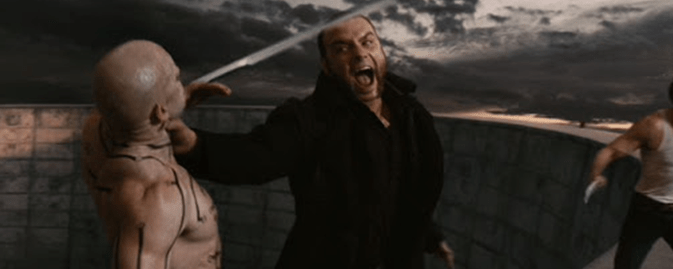
Movie Night: Color Out of Space

Released: 7 September 2019
Director: Richard Stanley
Distributor: RLJE Films
Budget: $6 to 12 million
Stars: Nicolas Cage, Joely Richardson, Madeleine Arthur, Brendan Meyer, Julian Hilliard, and Elliot Knight

The Plot:
Nathan Gardner (Cage) and his family have moved out to his late father’s farm following his wife Theresa’s (Richardson) mastectomy. Their simple life of raising alpacas is interrupted when a strange alien meteorite lands in their garden and a strange, unquantifiable and seemingly intelligent and malevolent living colour begins to infect and infest the local wildlife, the animals, and the Gardner family in increasingly strange and horrific ways.

The Background:
Being a big fan of horror, fantasy, and Stephen King’s, it’s perhaps almost inevitable that, at some point in my admittedly-limited scope of reading, I would have heard of the works of H. P. Lovecraft. Born in 1890, Howard Phillips Lovecraft is perhaps one of horror/fantasy fiction’s most surreal and complex writers; known for conjuring nightmarish imagery and madness-inducing concepts and creatures, Lovecraft created an interconnected set of works that delved into the deepest, darkest fears of the human psyche and posited the idea that humanity is a mere speak in the grand scheme of the cosmos. In 1927, Lovecraft penned “The Colour Out of Space”, a story which he hoped would buck the trend for traditional, humanoid depictions of alien life forms. Interestingly, despite the immense mainstream success of his more notable stories, like “The Call of Cthulhu” (Lovecraft, 1926), Lovecraft considered “The Colour Out of Space” to be his favourite work and the story saw a number of adaptations over the years before director Richard Stanley began putting together this modern-day adaptation. Though planned as the first in a trilogy of films based on Lovecraft’s works, the film’s limited release and near-minuscule box office may scarper those plans despite it receiving generally positive reviews.

The Review:
If there’s one thing that might put the general audience off of viewing Color Out of Space (beyond the Americanised title), it’s the inclusion of Nicolas Cage in the lead role. Far from the blockbuster action hero he was in the nineties, Cage has somewhat reinvented himself in recent years, taking on more experimental and outlandish roles in productions with a fraction of the budget and release he is known for. Indeed, his reputation in Hollywood has become almost farcical as he brings a manic, unpredictable energy to each role he plays so you’re never really quite sure of what to expect when he shows up in a film.

Cage makes for a surprisingly relatable, ordinary man affected by an extraordinary event.

It’s fitting, then, that Cage is cast in a film based on a Lovecraftian tale; Lovecraft was notorious for conjuring up unspeakable entities that would turn the minds of us insignificant humans to a fine paste so it’s actually surprisingly remarkable foresight on the filmmakers’ part to cast the infamously kooky Cage in the lead role of Nathan Gardener. At the beginning of the film, Gardener is your typical everyman; a doting and devoted husband and father, he’s just trying to eek out a living on his father’s old farm and to return his family to some sort of normalcy after his wife’s battle with cancer. Cage brings a quiet, subdued energy to this portion of the role; you can tell he still deeply loves and cares for his wife and kids and is struggling to keep things together after all they’ve been through but he is. Nevertheless, a relatable and vulnerable character whom you buy as just a regular Dad trying to do what’s best.

Cage can always be relied upon to bring the crazy to any film he is cast in.

Things immediately take a turn into the bizarre and the surreal when the mysterious meteorite crashes into their garden; though Nathan isn’t the first to truly feel the effects of the alien Colour, he is the first to react to it, smelling a pungent stench that no others can before slowly being transformed and twisted by the influence of the titular Colour. Before long, he’s spouting all kinds of weird nonsense, exploding into unpredictable and even violent outbursts, and clearly becoming possessed by this unquantifiable alien influence to the point where he almost becomes a kind of avatar for the Colour and the closest thing the film has to a tangible antagonist.

Theresa is horrifically influenced by the presence of the Colour.

Of course, it’s not just the Nic Cage show; Joely Richardson plays his wife, Theresa, a relatively normal, everyday woman who is just trying to get back on track with her work, family, and sense of self confidence after her battle with cancer. She is, unfortunately, the first of the family to really feel the influence of the Colour, slipping into a zombie-like stupor and accidentally slicing off two of her fingers. As the Colour’s influence grows, her conversations and interactions with Nathan and the kids become increasingly disjointed and erratic but, through it all, her primary concern is for the welfare of her children (which, as I’ll discuss in a bit, turns out to be her downfall).

I really enjoyed, and believed, the chemistry between Benny and Lavinia.

As for the Gardener’s kids, Color Out of Space features some pretty decent casting; Lavinia (Arthur) is the couple’s only daughter, a Wiccan who is just on the cusp of growing old and rebellious enough to resent her family but is still devoted enough to truly care for her younger brother, Jack (Hilliard) and have a pretty believable friendly rivalry with her older brother, Benny (Meyer). Benny is depicted as a bit of an absent-minded stoner and the young muscle of the family as he’s constantly being roped into helping his father with the farm’s course and his outrageous alpacas but, despite annoyance and apathy being etched onto his face, he never once complains or throws a tantrum over this; as with all of the Gardener’s, family unity remains at the heart of these characters, however rocky that ground might have become before the film begins. And then there’s Jack, a cute and naïve sort of kid who has a natural curiosity and a fitting child-like whimsy about him. While his older siblings comment on the Colour’s influence but don’t truly succumb to it (with the eventual exception of Lavinia), Jack is the first one to really acknowledge the Colour’s alien presence, seemingly hearing and seeing it and attempting to communicate with it. Sadly, his affection for the Colour (which he views as a kind of imaginary friend) leads him to nothing but a heartbreakingly gruesome fate thanks the Colour’s apparent malevolence (or, perhaps, naivety).

The Nitty-Gritty:
One of the things that often proves so difficult for filmmakers when it comes to adapting the works of Lovecraft is just how obscure and indescribable his many horrific creations are; perhaps, of all of Lovecraft’s monsters, the Colour is the most “unfilmable” since the written word is far better at positing a living, alien Colour that is beyond human comprehension. Film is, obviously, an inherently visual medium so a colour must be shown onscreen and I feel that the filmmaker’s realised the Colour in perhaps the best way they possibly could. Rather than a traditional alien beast, the Colour is just that; a twisted, distorted sentient spectrum of light that is at once beautiful and horrific, blinding and awe-inspiring, resembling a flash of pure light one moment and then a vortex of extraterrestrial intent the next. For the most part, the Colour is realised in an unsettling hue of purple, magenta, and pink surrounded by a clear distortion of physical reality; when it emerges from the Gardener’s well, it almost resembles a tentacled monstrosity but it is wisely never really given a true, quantifiable physical form.

Theresa and Jack suffer a horrific fate due to the Colour’s touch…

Instead, the Colour acts through the things it influences, whether that is water, plants, or animals. It affects and distorts time and space, making moments drag out or flash past in an instant, causing characters to experience aggressive mood swings and events to seemingly happen at random and with no explanation. At first, the Colour’s influence is subtle, induced trance-like states, sending the Gardener’s animals into a frenzy, and making Lavinia sick when she drinks the tainted water but, all too soon, its influence begins to take on a more malicious note. When the Colour directly interacts with other creatures, it distorts and mutates them in gruesome ways; the Gardener’s alpacas end up fused together into a squealing, nightmarish beast like something from the imagination of David Cronenberg or John Carpenter. Described as “just a colour…but it burns”, it’s as tough the Colour were attempting to figure out the life forms it has found itself living with and, since it is unable to recognise them, transforms them and the surrounding area into forms it is more accustomed to. This is directly speculated upon by another of the Colour’s victims, Ezra (Tommy Chong), who is left a hollowed out dusk that decays into fragments of sizzling colour when he is discovered.

Lavinia offers a glimpse of the nightmare hellscape the Colour calls home…

Yet it is Theresa and Jack who arguably suffer the most due to the Colour’s influence; in trying to shield Jack from the Colour, Theresa and her young son become enveloped by its light and the result is a mutilated, agonisingly disgusting amalgamation of the two that, thankfully, is masterfully never lingered on for more than a few seconds at a time. While Nathan affords his beloved alpacas a mercifully swift death, the Colour’s influence drives him mad with distraction, allowing the Jack/Theresa creature to mutate into a ghastly spider-like….thing that attacks Lavinia in a monstrous fury before finally being put out of its misery. In the end, after the Colour has claimed her entire family, Lavinia falls back on her Wiccan ways, drawing solace from her copy of the Necronomicon and attempting to cast a series of spells and prayers to shield herself and her family, this leads to her self-mutilating herself in a vain attempt to ward off the Colour but she too becomes possessed by its influence, affording us a glimpse of the nightmarishly indescribable world that the Colour originated from before it blasts its way back to the space between waking worlds, taking the Gardener’s, their farm, and most of the surrounding area with it and leaving behind a sole survivor, Ward Phillips (Knight), a visiting Hydrologist who tries to help the family and ends up traumatised by the horrific events he bares witness to.

The Summary:
I’ve read my way through my fair share of Lovecraft’s tales and, of them, “The Colour Out of Space” was indeed one of the stronger stories. Though Lovecraft’s writing can be, at times, impenetrable and obtuse, “The Colour Out of Space” told a relatively simple tale of a normal, everyday family coming onto contact with a force of nature far beyond that of human comprehension and I have to say that Color Out of Space does a commendable job of not only bringing Lovecraft’s story to life but also expanding upon it with influence form his other works. With stellar, believable performances from top to bottom and some truly incredible special effects work (both on the Colour itself and the monstrosities it creates), Color Out of Space is quite the psychological thrill-ride with plenty of gory and gruesome moments to satiate more impatient audience members. It’s one of those films that truly leaves you questioning what is beyond our world, offering little in the way of explanations for the events that unfold, and dropping normal, everyday, relatable characters into an extraordinary and terrifying situation that has a suitably bleak and thought-provoking conclusion.

My Rating:

Rating: 4 out of 5.

Great Stuff

What did you think to Color Out of Space? Did you appreciate the film’s subtle, nuance, mounting dread and atmosphere or was it, perhaps, too surreal and slow for you? Have you read the original short story, or any Lovecraft for that matter? What did you think to how the film realised the Colour and do you think it could have been done better or differently? Which Lovecraft story is your favourite and why? What other Lovecraft works would you like to see get a big-screen adaptation? Whatever your thoughts, feel free to leave a comment below.
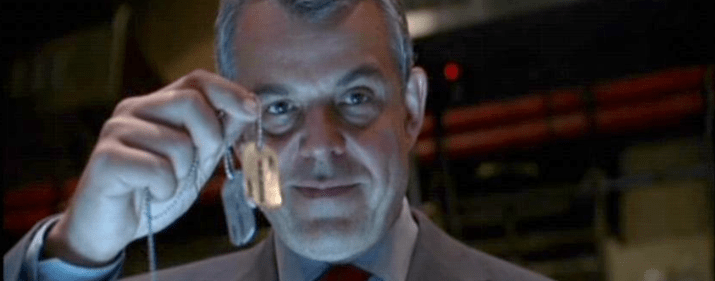
Movie Night: First Blood

Released: 22 October 1982
Director: Ted Kotcheff
Distributor: Orion Pictures
Budget: $15 million
Stars: Sylvester Stallone, Brian Dennehy, Jack Starrett, Bill McKinney, and Richard Crenna

The Plot:
After returning to the United States from the Vietnam War, former United States Army Special Forces soldier John J. Rambo (Stallone) faces not adulation, admiration, or a hero’s welcome but, rather, persecution and abuse at the hands of small-town sheriff William Teasle (Dennehy). Driven into the woods and suffering from post-traumatic stress and nightmarish memories of his time as a prisoner of war, Rambo wages a one-man war against his tormentors using only his unparalleled survival skills and finely-tune guerrilla tactics.
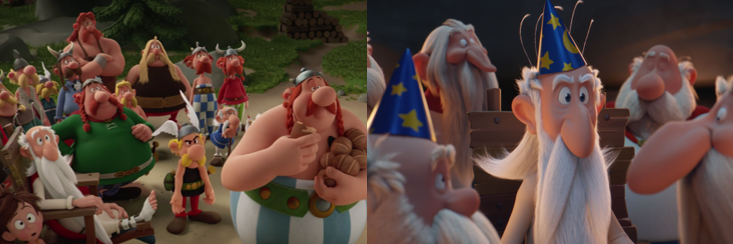
The Background:
First Blood is an adaptation of a novel by the same name, which was written by David Morrell and published in 1972. Influenced by Rogue Male (Household, 1939) and horrific stories of the Vietnam War told by his students, Morrell’s book was well-received upon release but the subsequent movie adaptation languished in development hell for ten years. Production began in earnest when Sylvester Stallone signed on to the project; Stallone, who was a proven box office commodity after the success of the first three Rocky films (Various, 1976 to 1982) also wrote around seven different versions of the film’s script but, while an ending was filmed that reflected the bleak conclusion of the novel and Rambo’s death, it was ultimately cut at the agreement of Stallone and Kotcheff. Interestingly, upon release, First Blood was met with mixed reviews, although the actors’ performances were highly praised (with Stallone’s being notably well-received). Regardless, First Blood more than made up for this with its frankly staggering $125.2 million box office and contemporary reviews not only regard the film much more favourably but First Blood is widely regarded as one of the best films of 1982 and one of the most enduring and influential movies of its genre.

The Review:
When we’re first introduced to Rambo, he’s little more than a vagrant wandering across the country in a bid to reunite with an old war buddy. Literally carrying his entire life over his shoulder, he’s a simple man just trying to reconnect with a world that has largely passed him by. Sadly, however, his attempts are largely in vain; his friend, Delmar Barry, has died after exposure to Agent Orange and it’s clear that Rambo is basically a stranger in his own country.

Teasle immediately takes a dislike to Rambo based on his rugged appearance alone.

However, this is made undeniably explicit when Rambo crosses paths with Sheriff Teasle, who immediately pegs him as a troublemaking drifter on sight alone. Teasle’s judgement of Rambo boils down to little more than his own personal bias and animosity, no matter how hard he tries to justify himself. I’m sure the ironically-named town of Hope is a nice, quiet little town and that Teasle is proud of the tight ship he runs but his persecution of Rambo is completely unfounded and unnecessarily aggressive. Of course, things only escalate after Rambo is arrested on paper thin charges of vagrancy and carrying a concealed weapon; while being processed, Rambo runs afoul of Teasle’s equally-despicable Deputy Sergeant Arthur Galt (Starrett) and suffers nightmarish flashbacks to his time as a prisoner of war. And, honestly, who can blame him after the disgraceful treatment he receives at Galt’s hands; Galt wallops Rambo with his nightstick, orders him to be hosed down and holds him in an unorthodox choke with that same nightstick but he goes too far when he attempts to have Rambo shaved with a straight razor.

Rambo carries both the physical and mental scars of his time as a P.O.W.

Triggered into a maniacal rage, Rambo easily takes out Teasle’s men with his bare hands and flees into the nearby woods. Earlier, Galt had described Rambo as a wild animal and his initial outburst and escape through town certainly support that; Rambo is an animalistic force of brute strength and unbridled rage, all brought on by flashbacks to his torture. Covered in scars and clearly still haunted by his experiences in Vietnam, Rambo is a force to be reckoned with and the police department vastly underestimate his capabilities. This comes to a head in their ensuing attempts to hunt him down; Teasle spares no expense in tracking Rambo down, pursuing him deep into the woods (and destroying his patrol car in the process), bringing in the dogs, calling in the helicopter for air support, and even drafting in the National Guard for support (who come packing a rocket launcher, no less!) It’s a monumental effort just to capture one man who, so far, is guilty of very little other than walking into town and being forced to relive the worst experiences of his life. Teasle’s obsession completely blinds him to Rambo’s obvious threat even after he is told of Rambo’s unmatched capabilities by Colonel Sam Trautman (Crenna) and directly leads to the accidental death of Galt after he takes this obsession to another level and ends up falling to his death as a result.

Rambo incapacitates his oppressors and pursuers through strictly non-lethal means.

This is, of course, a significant element of First Blood that separates it from the subsequent sequels. Rambo isn’t some ruthless killing machine here; instead, he’s a tortured, desperate man pushed to the edge by ignorant and abusive bigots but, despite his unbridled rage and brute savagery, Rambo doesn’t directly kill anyone in his debut film. Indeed, Rambo goes to great lengths to ensure that his pursuers are incapacitated non-lethally, setting elaborate traps and falling back on his extensive and peerless survival training. The result is actually far more impressive as it emphasises Rambo’s skill, ability, and restraint and he’s clearly deeply affected by Galt’s death. He just wanted to be left alone and would have harmlessly passed through town without incident but, when backed against the wall, easily disables Teasle’s men, and gives him every opportunity to “let it go” but is just pushed further and further until he has no other option than to wage a one-man war against the entire town…all with non-lethal force.

The Nitty-Gritty:
First Blood is a deeply moving and bleak representation of the animosity and persecution many Vietnam veterans, and other war heroes, faced back then (and, I’m sure, even now); Rambo did absolutely nothing wrong but was set off by Teasle’s victimisation and Galt’s antagonism. Indeed, the only one of Teasle’s men to actually speak out against their treatment and vendetta against Rambo is the young deputy Mitch Rogers (David Caruso), the one voice of reason in Teasle’s department who begrudgingly follows his orders despite realising the very real threat Rambo poses.

Teasle is unimpressed with Trautman’s warnings of Rambo’s incredible skills.

Of course, Rambo’s history and true danger are related to an unimpressed Teasle by Trautman; Trautman, who takes full responsibility for Rambo’s training, regards Rambo as the literal best of the best, a man trained to survive in the wild with very little resources and who actually thrives under such circumstances. He urges, practically pleads with, Teasle to simply let Rambo slip away, fully confidant that he’ll surrender willingly if allowed to pass on (which is seen to be true when Rambo tries, and fails, to surrender following Galt’s death) but Teasle adamantly refuses to believe that one man can outwit his entire show of force even after everything he’s already seen. Sadly, Trautman’s attempts to quell Rambo’s anger also fall on deaf ears as, by the time he is able to contact him, Rambo has fully committed himself to the fight against Teasle and is basically reliving the war out in the woods.

Rambo’s unique survival skills make him a formidable warrior out in the wilds.

Teasle’s obsessive vendetta against Rambo is only fuelled after Gart’s death and he absolutely refuses to be dissuaded from his crusade no matter how many horror stories Trautman tells him. While Teasle’s humanity is practically non-existent, he does exhibit a bit more than just bigotry and hatred after it appears that Rambo has died; feeling cheated out of his victory, he nonetheless attempts to apologise for his abrasive actions to Trautman. However, it turns out that Trautman’s warnings were all based on irrefutable fact and we clearly see how adaptable and skilled Rambo is; he quickly retrieves his knife, acquires a police radio and other weapons from Teasle’s men, and is able to fashion all kinds of traps using just the woods alone never mind when he commandeers and army supply truck and rolls into town for the explosive finale.

In the end, Rambo breaks down in tears at the torture and abuse he has suffered and surrenders.

In the end, Rambo’s downfall comes not from Teasle or the hundreds of guns pointing his way but from his own traumatic experiences; while his time in Vietnam affords him unprecedented survival skills and allows him to live off the land and overcome superior forces with little more than his wits, it also scarred him both literally and figuratively. Everything he experiences in Hope is a reminder of his time in the war: the straight razor reminds him of his torture, he’s basically reliving his time in the jungles of Vietnam out in the woods, and he is basically attacking an enemy encampment when he storms the town in the end. With Teasle at his mercy, Rambo finally breaks down in despair at the loss of his entire team and the horrors he witnessed in Vietnam; the only one who understands him is Trautman, who validates Rambo’s heart-breaking monologue about the trauma and disrespect he has experienced both in and outside of the Untied States and the film concludes with Teasle injured, but alive, and Rambo surrendering himself to his old mentor and overwhelmed by the atrocities he has had to commit and suffer through.

The Summary:
First Blood is an intense and moving experience; essentially a glorified manhunt for the majority of its runtime, it tells the story of a highly trained and skilled soldier pushed to the edge by abusive and cruel cops and forced to both relive, and live with, the horrors and atrocities he faced in combat. Hounded at every turn and judged for his appearance as much as his status as a former soldier, Rambo receives only persecution and abuse rather than admiration or respect and, in the end, his tormentors pay for their mistreatment not with their lives but with their pride. Despite the insurmountable odds against him, Rambo succeeds through sheer grit and determination and is the original one-man army and yet, despite all of this, all he wanted was a little respect and to be left alone. Indeed, so tormented by his experiences is Rambo, and so tired of conflict and killing, that he refuses to kill any of his tormentors even when he has every chance (and right) to do so, making First Blood a haunting action/thriller. A thinking man’s action film, First Blood is a stark reminder of the horrors of war and the foul treatment they received back in the day, as though it was their fault that they were forced to fight and kill for their country; it’s very different to the bombastic and over the top, action-packed sequels that followed it and so might not be for everyone but it remains a sobering and impact film in its own right.

My Rating:

Rating: 4 out of 5.

Great Stuff

Are you a fan of First Blood? Did you watch it back when it was first released and, if so, how did you find it in the context of the time? How do you feel it holds up today, especially compared to the sequels, and were you disappointed that the sequels veered more towards action and death than introspective commentary on the horrors of war? What did you think to Rambo’s survival skills and Teasle’s baseless persecution and obsession with him? Do you think the film should have ended in the same way as the book and with the cut scene of Rambo dying? Which of the Rambo films is your favourite? Whatever you think, comment below and let me know and check out my review of the sequel.