In August 1962, Stan Lee, Larry Lieber, and Jack Kirby introduced readers of Marvel Comics (specifically Journey into Mystery) to Thor Odinson, God of Thunder and mightiest of the Asgardian deities. Through associations with Marvel’s premier super team, the Avengers, and a number of cosmic, mythological adventures, Thor has gone on to become another of Marvel’s most successful and versatile characters, with appearances in cartoons, videogames, and a number of incredibly profitable live-action movies. Being as it’s the first Thursday (or “Thor’s Day”) of the month, what better way to celebrate the God of Thunder than to take a look back at his impressive MCU debut!
Released: 6 May 2011 Director: Kenneth Branagh Distributor: Paramount Pictures Budget: $150 million Stars: Chris Hemsworth, Natalie Portman, Tom Hiddleston, Stellan Skarsgård, Kat Dennings, and Anthony Hopkins
The Plot: The heir to the legendary throne of Asgard, Thor Odinson (Hemsworth) is a brash warrior who longs for glory and is almost unstoppable thanks to his enchanted hammer, Mjölnir. After inciting war between Asgard and the Frost Giants of Jotunheim, he is banished to Earth by his father, Odin Allfather (Hopkins), and forced to learn humility to reclaim his lost powers.
The Background: Thor may have been the fourth film in the Marvel Cinematic Universe (MCU) but a big-screen adaptation of the character was originally pitched by director Sam Raimi to 20th Century Fox back in the nineties; though the project lay dormant for nearly a decade, it gained momentum after the success of X-Men(Singer, 2000). After the character and movie rights changed hands numerous times, writer Mark Protosevich came onboard to draft a script that was part-superhero, part-Biblical allegory for the fledging Marvel Studios as part of producer Kevin Feige’s outrageous plan to introduce a number of Marvel’s greatest heroes in solo movies before uniting them against a common foe. After Matthew Vaugh dropped out of the project, Guillermo Del Toro briefly flirted with the concept before Marvel scored a massive coup by securing Kenneth Branagh as the film’s director. Relative-unknown Chris Hemsworth beat out his own brother and co-star Tom Hiddleston for the title role and Branagh landed a coup of his own by casting renowned actor Anthony Hopkins as Odin, who lent a credibility and gravitas to the production. As the first film in the MCU to introduce cosmic, magical elements, Thor was to be a bridge betweenscience and magic and to help expand the scope of Marvel’s shared universe, while still laying the foundation for their first big team up. Thor released to widespreadacclaim; the film made just under $450 million at the box office and catapulted Hemsworth and Hiddleston to superstardom in the process.
The Review: After Iron Man(Favreau, 2008) proved to be such a phenomenal success, I was cautiously optimistic about the fledgling MCU; when Nick Fury (Samuel L. Jackson) appeared in the film’s post-credits scene and hinted at other “[superheroes] flying around” and name-dropped the “Avenger Initiative”, the excitement for what was to come was palpable. And yet even I was curious as to how the films, which had been so heavily based in technological and science-fiction, would introduce more bizarre, cosmic events and characters such as Thor. When Mjölnir appeared in the post-credits scene of Iron Man 2(ibid, 2010), the possibilities for Thor’s inclusion in this world suddenly seemed endless; was he known to the Strategic Homeland Intervention, Enforcement, and Logistics Division (S.H.I.E.L.D.)? Had he appeared in Marvel’s shared world before? For me, Thor was the true test of whether the MCU would be an actual success because its one thing to present characters augmented by science but it’s quite another to have them rub shoulders with a literal Norse God!
Thor was our introduction to what would become a much larger and more dangerous universe.
Thor was also a first in the MCU for opening with a narration, fittingly enough by Odin himself, that briefly introduces the idea of the Nine Realms and Asgard’s place in the tapestry of the universe; thankfully, this information isn’t made completely redundant when it’s shared with other characters later in the story as Thor notably relates the true nature of the universe in a different way from his more grandiose father. A wise, enigmatic, and stern figure, Odin has high hopes for both of his children regarding their destiny as future kings of Asgard. It’s important to not that, while Asgard is certainly populated by beings we would consider to be superhuman, they are not strictly Gods in the MCU. Instead, they are others of their kind have been worshipped as Gods, had stories told about them as though they were Gods, but are just as mortal and fallible as we are for all their superior strength, technology, and durability. For me, this doesn’t diminish Thor’s appeal or that of the Asgardians; they’re still incredibly long-lived, with Thor himself being thousands of years old and yet still very much a child, and capable of wondrous acts, such as instantaneous travel across the Nine Realms thanks to the Bifröst and summoning thunder and lightning with their incredible weapons.
Be merciful, say “death,” For exile hath more terror in his look, Much more than death. Do not say “banishment.”
Asgard is a realm of great prosperity and peace; for centuries, Odin has led the Asgardians in defending the Nine Realms from chaos and incursions and the film begins with him ready to step down and pass those responsibilities onto Thor, his eldest son. Heralded as a hero, Thor is a battle-hungry warrior who has proved himself in conflict time and again to be brave and strong enough to lead his people into battle, but Odin cautions that a true king must also be wise, fair, and just. Nevertheless, he’s fully prepared to pass the crown to Thor when the ceremony is interrupted by Frost Giants from the desolate ice realm of Jotunheim who attempt to reclaim the mystical Casket of Ancient Winters from Odin’s treasure vault. Angered at the Frost Giants’ blatant disrespect and consumed by his pride, Thor disregards his father’s decree that he is to launch no counterattack and heads into Jotunheim alongside his allies to confront their king, Laufey (Colm Feore), an action that angers his father as it breaks the shaky, but long-standing, truce between the two realms. With Asgard now on the brink of an unnecessary all-out war, father and son rage at each other in a fantastically well-acted scene in which Odin’s heartbreak at Thor’s sheer blind arrogance is all too clear; enraged at Thor’s reckless actions, Odin strips Thor of his powers and armour and banishes him to “Midgard” (what we call Earth) without his hammer in a burst of fury.
Thor finds allies on Earth but is devastated when he finds he can’t lift his enchanted hammer.
Rendered a mortal, Thor is both angered and dismayed at what he sees as his father’s cruel and unjust punishment. Almost immediately, he (quite literally) bumps into a group of scientists in New Mexico: Doctor Jane Foster (Portman), Doctor Erik Selvig (Skarsgård), and spunky intern Darcy Lewis (Dennings). The three are conducting research in the area when Thor is deposited in their laps through what they perceive as a wormhole and become immediately captivated by him for his physicality, lineage, and knowledge of worlds beyond our own. Her curiosity piqued, Jane becomes enamoured by Thor; the mysteries of his being are as attractive to her as a scientist as his allure is to her as a woman and he is equally taken by her inquisitive nature and scientific tenacity. Thor’s arrival also attracts the attention of S.H.I.E.L.D., who dispatch Agent Coulson (Clark Gregg) to secure the area, resulting in Jane’s notes and equipment being seized. Eager to retrieve Mjölnir, atone for disrupting Jane’s work, and to prove to the group that he is the God of Thunder, Thor is aided in infiltrating the S.H.I.E.L.D. base but is left devastated when he finds his hammer has been enchanted so that only one who is “worthy” can lift it. Finally realising the folly of his impetuous ways, Thor becomes repentant and is heartbroken to learn from Loki (Hiddleston) that his father has died of a broken heart and that he can never return home, but finds solace in regaling Jane and his newfound friends with stories of Asgard and the Nine Realms.
Loki is a manipulative trickster who conspirers to seize the throne of Asgard for himself.
Of course, Thor has been deceived, as has all of Asgard, but the God of Mischief himself, Loki. Raised alongside Thor and having fought by his side in countless battles, Loki nonetheless finds himself constantly in his brother’s shadow; smaller and slighter than his muscle-bound brother, Loki’s strengths lie in illusions and manipulation rather than brute force and strength. With his silver tongue, he easily encourages Thor’s campaign into Jotunheim with but a few words all while conspiring with Laufey to murder Odin and take what will not be willingly given to him. Craving the throne of Asgard for himself, Loki showed the Frost Giants a way into Asgard that even the all-seeing Heimdall (Idris Elbra) was blind to and, after learning his true heritage as Laufey’s son, he flies into a distraught rage at his adopted father that exacerbates his falling into the “Odinsleep”. Seizing his opportunity, Loki claims the throne and prepares to allow his true father to enact revenge on his fated enemy; after toying with his brother and leaving him distraught with his lies, Loki resolves to tie up loose ends with the Destroyer, a massive mechanical construct that he sends to Earth to kill Thor so that his rule can never be challenged. There’s a reason why Loki is one of the MCU’s most enduring characters, both as a villain and an anti-hero, and that’s largely due to Hiddleston’s masterful performance at capturing the God’s anguish and fury at being denied his rightful time in the sun; there’s a tragedy to Loki that motivates his actions and an intriguing dichotomy as he both loves and hates his brother and father, respects and is envious of them, and his every motivation is geared towards winning the affection and approval of both by any means necessary.
Thor’s allies provide him with the support necessary to be a great warrior and a better man.
Luckily for Thor, his Asgardian allies learn of this plot and arrive on Earth to aid him. The large and ravenous Volstagg (Ray Stevenson), the grim and stoic Hogun (Tadanobu Asano), Fandral the swashbuckling romantic (Josh Dallas) – collectively known as the “Warriors Three” – and Lady Sif (Jaimie Alexander), the strong-willed warrior maiden, all willingly follow Thor into even the depths of Jotunheim and have fought many battles alongside him and Loki. At first, they are devastated to learn of Thor’s banishment but pledge their allegiance to their new king out of loyalty to the throne of Asgard. When they learn the truth of Loki’s deception, however, neither they nor Heimdall hesitate to provide Thor with back-up but, fundamentally, these characters are primarily there for comic relief, to flesh out Thor’s world and relationships, and to add a few more superhuman bodies to the battle against the Destroyer. Indeed, the film wisely places much of its focus and runtime on Thor’s burgeoning relationship with Jane and grounding him in the “real world” of the MCU in the process. Not only does this provide some amusing moments (Darcy tasing Thor, his attempt to escape the hospital, and Erik trying to match beers with him are notable highlights), but it also gives Thor the chance to learn that there’s more to life than glory and battle and he grows from a selfish, arrogant warrior into a selfless hero who puts others before himself and is willing to sacrifice his own life to save even those he has only just met.
The Nitty-Gritty: At its core, Thor is a tale of fathers and sons; fittingly Shakespearean in its grandeur and scope, Thor weaves a story of betrayal and secrets as Odin’s attempts to maintain and foster peace between Asgard and Jotunheim ultimately lead to the destruction of his family. Though a benevolent figure, Odin is harsh and uncompromising; he doesn’t hesitate to subject Thor to a punishment worse than death as recompense for his foolhardy and rash actions. At the same time, though, it’s pretty clear that Odin does this fully expecting Thor to learn humility and to prove himself worthy of Mjölnir once more. Doing away with the dual persona of Doctor Donald Blake was a great move, I feel (and I enjoyed the quick shout-out to Thor’s traditional alter ego), as it really isn’t necessary to tell this story and it’s so much more impactful seeing the muscled, fittingly God-like Thor struggle to adapt to being a mortal.
Thor is forced to learn a lesson in humility to earn back his power and his hammer.
Of course, the downside to this is that Thor isn’t really Thor for the vast majority of Thor’s runtime; we get to see him in full regalia at the beginning of the film, where Asgard is rendered in stunning beauty, and for the climatic finale but, in the middle, he’s stripped down to the basics. However, this is obviously the entire point of the film and it works fantastically as a way to slowly introduce these cosmic and outlandish concepts to the otherwise grounded MCU. Dumped on Earth as a mortal, Thor’s history is related to us and the other human characters by Selvig so we can see how Asgardians were worshipped as Gods here on Earth, and Thor reveals to Jane that magic and science are one and the same in the realm of Asgard and directly relates outlandish concepts like Yggdrasil to Jane’s more scientific understanding of the universe. This grounded approach to the subject also results in two extremely emotional and impactful scenes: the first is Thor’s cry of utter anguish when he finds that he cannot lift Mjölnir and the second is his triumphant return to full power after giving his life. Thanks to us following Thor’s journey from braggart to humility, it’s not hard to share Thor’s adulation at having proved himself worth once more.
I absolutely love Thor‘s visual style and costume design.
One of the things I absolutely love about Thor is the costume design and aesthetic of the film; Asgard is a gorgeous golden city full of wondrous and grandiose architecture and technology and its inhabitants, particularly our main characters, look absolutely fantastic all decked out in their armour and attire. Even now, the sheer spectacle of seeing the likes of Thor, Odin, and Loki in glistening armour remains impressive and I absolutely love how weighty Mjölnir seems and how intricate all of the costumes are. Clearly inspired by Olivier Coipel’s 2007 redesign of the character, Thor looks both familiar and suitably updated for his big-screen debut and I love how the film showcases even ridiculous aspects of his powers, such as spinning Mjölnir around rapidly in order to fly. That’s not to discount Loki, Heimdall, and Odin, who all look stunning as well; garbed in regal armour, Odin appears both wise and glorious and Loki looks both regal and menacing fully garbed in his green and gold attire and sporting a fearsome horned helmet. Add to that the visual of the Destroyer wrecking its way through New Mexico, the dark and dreary ice wasteland of Jotunheim, and the imposing, demonic appearance of the Frost Giants and you have a film that, while not necessarily action-packed like other MCU movies, is visually breath-taking to behold.
Loki is defeated and presumed lost, just like Thor’s road back to Earth and Jane.
Thor also turns things on their head a bit by kind of casting S.H.I.E.L.D. as antagonists; concerned only with isolating Mjölnir and learning everything they can about the hammer’s arrival, both S.H.I.E.L.D. and Coulson appear much shadier and untrustworthy than in their previous appearances. However, this is obviously just a misunderstanding and, by the end of the film, Thor pledges to Coulson that he is a trusted ally and the S.H.I.E.L.D. agent is more than willing to return Jane’s work to her after getting to the bottom of the incident. Restored to full power, and now fully aware of his brother’s deception, Thor returns to Asgard to confront Loki, who has killed Laufey as part of his desperate attempt to win Odin’s approval. Although Loki is far from a physical match for his brother, he’s more than capable of holding his own thanks to his illusions and his prowess with daggers and a staff, and refuses to listen to Thor’s pleas to end his mad aspirations for power. Although bested by his inability to lift Mjölnir, Loki sets the Bifröst to remain open, thus threatening the very existence of Jotunheim and forcing Thor to make another sacrifice, this time of the heart as he willingly destroys the Rainbow Bridge and strands himself on Asgard (…for a short time) to end Loki’s theat. In the end, Thor tries to save his brother from falling into the chaotic abyss beyond Asgard but the mischief-maker ends up willingly falling into it after his pleas for Odin’s approval are rejected. With Loki presumed dead and the doorway to Earth closed, Thor reconciles with his father, having grown into a wiser man over the course of the film, and is moved to learn from Heimdall that Jane is tirelessly searching for signs of his return.
The Summary: Honestly, Thor may very well be my favourite solo film of the MCU’s first phase; if this film were to be made now, I have no doubt that Marvel Studios wouldn’t have played the concept anywhere near as safe as they did here but it’s thanks to Thor easing the general audience into the fantastical, cosmic aspects of the MCU that we now just take for granted that we now have so many mystical and alien heroes and stories in this interconnected universe. A fantastic marriage of action, humour, and resonating themes of betrayal and humility, Thor is both grandiose and grounded in its scope; add to that some absolutely stunning visuals, costume design, and performances from Hemsworth, Hiddleston, and Hopkins and you have a truly unique superhero film that set the standard for the genre to be so much more than just mindless action. The sheer gravitas that Kenneth Branagh brings to the narrative and these often ludicrous characters is astounding and his vision of the story as this Shakespearean epic was absolutely spot-on, resulting in one of the most beloved and memorable anti-villains in the MCU and the beginning of a far largerstoryarc for Thor (and his brother) within these films and it all began here, with a harsh lesson in humility for the battle-hungry Thunder God.
My Rating:
⭐⭐⭐⭐⭐
Rating: 5 out of 5.
Fantastic
Are you a fan of Thor? Where does it sit for you in MCU hierarchy, especially in Marvel’s first phase? What did you think to the performances by the actors and the Shakespearean slant on the narrative? Were you impressed with the film’s visuals and costume design? What did you think to Thor’s lesson in humility and his romance with Jane and what are your opinions on Loki as a villain? How are you celebrating Thor’s debut this month, if at all? I’d love to hear your thoughts on Thor in the comments or on my social media so feel free to drop me a line and be sure to check back in next Thursday for my review of the sequel!
Easily Marvel Comic’s most recognisable and popular superhero, unsuspecting teenage nerd Peter Parker was first bitten by a radioactive spider and learned the true meaning of power and responsibility in Amazing Fantasy #15, which was first published in August 1962. Since then, the Amazing Spider-Man has featured in numerous cartoons, live-action movies, videogames, action figures, and countless comic book titles and, in celebration of his debut and his very own day of celebration, I’ll be dedicating every Friday of August to talk about everyone’s favourite web-head!
Story Title: “Spider-Man” and “Spider-Man vs. The Chameleon!” Published: 1 March 1963 Writer: Stan Lee Artist: Steve Ditko
The Background: By 1962, Marvel Comics had achieved incredible success with the Fantastic Four and, eager to follow up on this, Marvel editor and head writer Stan Lee sought to create a teenaged superhero for his younger readers to identify with. Inspired by a fly climbing up his office wall, Lee created Spider-Man (with the emphasis on the hyphen) and turned to artist Steve Ditko to finalise the character’s costume and accessories. Spider-Man’s debut almost didn’t happen, however, as Marvel publisher Martin Goodman disliked the concept and relegated the story to the final issue of Amazing Fantasy. However, Amazing Fantasy #15 proved to be one of Marvel’s best selling titles at the time; Spider-Man’s subsequent popularity led to him getting his own solo title barely a year later and The Amazing Spider-Man has been in publication ever since.
The Review: The issue begins with what has, in my experience, become a tried and true staple of all Spider-Man comics and that is the recap of Spider-Man’s origin. Some time after the death of Uncle Ben and bringing his murderer to justice as Spider-Man, Peter Parker recounts to himself (and the reader) the story of how he was bitten by a radioactive spider, took on a costumed persona to try and earn some money, and inadvertently caused his uncle’s death by not using his powers responsibly.
Maybe the other kids are right to mock Peter; he should have taken cash in hand!
Now, he and his beloved Aunt May are in a bit of a bind; they have no money to pay their bills and the landlord is literally on their doorstep demanding the rent! Although Peter offers to quit school to get a job, May insists that he continue his studies to become the scientist his uncle always dreamed he would be and, very briefly, Peter considers using his superhuman abilities to commit crimes to pay the bills. Quickly, though, he realises that his Aunt May would be devastated if he was ever caught and imprisoned and, instead, decides to fall back on show business. His duel commitments as Spider-Man and bookish nature continue to make Peter a laughing stock at school since all the hip kids of the sixties want to do is have fun and “jive” rather than study. Still, they would be amazed if they knew that Peter was really Spider-Man, who puts on a dazzling show at the town hall but, while he gets paid, he’s unable to actually get a hold of the money since he not only foolishly asks for a cheque but he asks that it’s made out to “Spider-Man”! I mean, come on, Pete; at least take cash in hand! At the same time, Spidey finds public opinion of him is immediately swayed thanks to the efforts of J. Jonah Jameson, writer and editor of the Daily Bugle, who not only writes a scathing editorial branding Spidey a “menace” but also goes all over New York City delivering lectures that paint Spidey as a bad influence and an outlaw compared to “real heroes” like his son, astronaut John Jameson, because he hides behind a mask.
Spider-Man runs rings around the Fantastic Four when they try to contain him.
Although many aren’t taken in by Jameson’s words, his efforts are enough to put an end to Spidey’s media appearances. Peter is similarly driven to frustration at his inability to get a part-time job and the fact that Aunt May has resorted to pawning her jewellery to make ends meet. The next day, Peter is on hand to witness John Jameson lose control of a space capsule shortly after launch after the guidance device malfunctions. While the guys in charge of the launch fail to think of a way to save the astronaut, Peter suits up as Spider-Man and, despite Jameson’s protests, hitches a ride on a plane to intervene. After webbing himself to the capsule, Spidey is able to manually engage the emergency chute and the capsule glides safely to the ground. However, despite his good deed, Peter is shocked and angered to find that Jameson has called for Spider-Man’s arrest following the incident and has even publicly blamed the wall-crawler for the entire thing as a means to fool the public into thinking him a hero. This time, public opinion is swayed massively in Jameson’s favour and a wanted notice is posted for Spidey’s capture; even worse, Aunt May also believes Spider-Man to be a dangerous criminal. Thankfully, in the next story, Peter hits upon the genius idea of trying to repair his reputation (and make some cash) by joining the much-loved Fantastic Four, thinking the team would jump at the chance to work with a super-powered teenager (why, especially when they have Johnny Storm/The Human Torch on the team already, is anybody’s guess). Since you apparently can’t just walk into the Baxter Building, Peter does the only natural thing and breaks in as Spider-Man; unsure of his intentions, Doctor Reed Richards/Mister Fantastic activates the building’s self-defence measures and tries to hold him captive in a plexi-glass cage.
The Chameleon impersonates Spider-Man to steal military plans!
Contrary to the now-iconic front cover image, Spidey immediately breaks free of this trap and, as a result, gets into a tussle with the Fantastic Four. He tosses Benjamin Grimm/The Thing aside with ease, webs up Mr. Fantastic’s elastic arms, easily outmanoeuvres Susan Storm/The Invisible Girl’s pathetic efforts to ensnare him in a rope thanks to his spider-sense, and uses his fantastic agility to run rings around the Human Torch. Eventually, cooler heads prevail and the five are able to talk it out. However, when Spidey learns that the Fantastic Four are a non-profit organisation, and that they are in doubt about his reputation thanks to Jameson, he promptly leaves, disgruntled. Meanwhile, at a military installation across the city, Dmitri Smerdyakov/The Chameleon uses his incredibly life-like masks and disguises to steal documents from a restricted area to sell to Soviet Russia. After hearing of Spidey’s failed attempt to join the Fantastic Four, and his status as a public menace, the Chameleon not only deduces that Spidey must be desperate but also that he would make for a perfect fall guy for his plot to steal more missile defence plans. To that end, he uses his fancy technology to broadcast a message that only Spider-Man, with his heightened senses, would be able to hear (the Chameleon apparently being smart enough to work that out as well, conveniently) and, unable to pass up the chance to make some money, Peter (oddly referred to as “Peter Palmer” in one panel) heads to respond to the call.
Spidey apprehends the Chameleon but does little to repair his reputation.
At the same time, the Chameleon masquerades as Spidey and steals the plans using a specially-created web gun and fleeing in a helicopter right as the real Spidey arrives to be accosted by the cops. Realised he’s been played for a fool, and having spotted the helicopter’s escape, Spidey dramatically slingshots and parachutes his way across the city using his webs and then steals a motorboat to track the Chameleon to a Soviet submarine. Despite the Chameleon’s best efforts, Spider-Man is able to force him to the ground and convince the cops of his innocence. However, the Chameleon escapes custody using a smoke pellet and slipping into another face mask, that slippery devil! Despite being out of web fluid, Spider-Man is easily able to track the Chameleon down in the local vicinity using his spider-sense but, just as he nabs the crook, the cops accost Spidey, believing him to be the fake! Enraged and despondent, Spider-Man escapes into the night completely unaware that the cops did catch the Chameleon in the very next panel and thus proving that he was innocent all along.
The Summary: The Amazing Spider-Man #1 is a pretty decent comic, overall. Like all comic books published in the sixties, it suffers a little bit from the narrative style of the time but, unlike others I’ve reviewed from around this time, these are nowhere near as bad; characters aren’t constantly yabbering on in “hip” slang, for instance, and while Spidey and the Chameleon do constantly narrate their actions as they go, it’s not as intrusive as in other comics. As a result, I found this an enjoyable enough read but it’s not as good as it could be simply because it wastes quite a bit of time reminding readers of Spider-Man’s origin. Still, The Amazing Spider-Man #1 quickly establishes many of the character traits and recurring themes that would plague Peter throughout his career; mainly, money troubles, public opinion, Jameson’s endless crusade, and the frail nature of his Aunt May.
I’ve always found the Chameleon to be an underwhelming villain but he’s good enough here.
Peter Parker is a youth constantly on the short end of life; nothing ever seems to work out for him in either of his guises and he is constantly beaten down by society no matter what he does, and yet he perseveres. This aspiring quality is emphasised here; though Peter does get angry and dejected at his lot in life, he never gives in to the temptation towards crime and is steadfast in his decision to use his powers for good. One good thing that comes from this issue is the answer to the question of who Spidey’s first super-villain was and the answer, disappointingly, was the Chameleon. It might just be me but I’ve never been a fan of this character, or of stories of mistaken identity and fraud in my superhero comics, but thankfully that latter aspect is only a small part of The Amazing Spider-Man #1. If anything, more time could have been spent on the Chameleon framing Spidey for crimes; this would have made Jameson’s tirade against the web-slinger make a little bit more sense (he just comes across as an asshole and a blowhard here), to say nothing to turning the public (and the Fantastic Four) against him and adding to Peter’s woes.
The Fantastic Four dropped in for what amounted to a quick cameo amidst some classic Spidey action.
Also, I feel like the front cover is deliberately misleading; clearly designed to attract readers of the Fantastic Four, who were Marvel’s first big superhero success story, it kind of implies a greater conflict with the group that, in reality, is confined to just a few panels. This is good, on the one hand, as Spidey never needed their help in getting out of danger or anything but it does kind of set the foundation for a bad practice in Marvel (and all of comics for that matter) to use popular or established characters to sell their new releases (ironically, Spider-Man would come to be one of the most infamous examples of this). Still, the comic is full of relatable teenage woes and angst, colourful and larger-than-life characters, and set the standard for Spidey’s status quo going forward. There could maybe have been a little more action and web-slinging amidst all the angst but it’s still an enjoyable read and a must-have for any die-hard Spider-Man fan.
My Rating:
⭐⭐⭐⭐
Rating: 4 out of 5.
Great Stuff
What are your thoughts on Spider-Man’s iconic debut solo outing? Were you a fan of the character at the time or were you introduced to him through some other means and, if so, what were they? How relatable did (or do you) find Spider-Man as a character? What is your favourite Spider-Man storyline, costume, or character and why? What did you think to the Chameleon being his first villain? Do you like the angle that the public is so easily turned against Spidey or do you think it doesn’t make much sense given how many superheroes run around New York? How are you celebrating Spider-Man Day today? Whatever your thoughts on Spider-Man, leave a comment below and be sure to stick around for Spider-Man Month starting this Friday!
Released: 4 October 1985 (Hey! That’s my actual birthday!) Director: Mark L. Lester Distributor: 20th Century Fox Budget: $50 to 60 million Stars: Arnold Schwarzenegger, Rae Dawn Chong, Alyssa Milano, Vernon Wells, David Patrick Kelly, Bill Duke, and Dan Hedaya
The Plot: Retired United States Special Forces Colonel John Matrix’s (Schwarzenegger) attempt to live a normal, quiet life with his young daughter, Jenny (Milano), are shattered when she is kidnapped by a former member of his unit, the psychotic Captain Bennett (Wells), on behalf of would-be-dictator President Arius (Hedaya). Defying Arius’ demands, Matrix is left with just eleven hours to track Jenny down and works his way through Arius’ henchmen using his untouchable military skills and abilities.
The Background: Thanks to the success of The Terminator(Cameron, 1984), Arnold Schwarzenegger was on the cusp of superstar greatness and about to enter the peak of his career as an action movie star. Writer Steven de Souza once explained that Commando came about when Barry Diller, then-head of 20th Century Fox, stated that he would greenlight any Schwarzenegger project that was under $12 million. The original draft, as penned by Joseph Loeb III, was actually very different and about an Israeli soldier who had turned his back on violence but de Souza revamped the story to suit Arnold’s larger-than-life persona and even performed the story for the Austrian Oak at his house! To oppose Schwarzenegger, the filmmakers had only one choice in mind: Vernon Wells, who brought an intense, psychopathic quality to the character, who was both enamoured by, and driven to kill, his former commander. With a worldwide gross of just over $57 million, Commando was a big success for Fox and was met with relatively positive reviews that veered towards highlighting the film’s more ridiculous aspects. Commando has always been a personal favourite of mine; when the Director’s Cutwas released, I went out of my way to pick it up and, considering today is Arnold’s birthday, this seems like the perfect time to revisit this bombastic action classic.
The Review: I once made the bold claim that Predator (McTiernan, 1987) is probably the manliest film an action movie fan could ever ask for but, if we’re being brutally honest, Commando has it beat in that regard. This is the kind of over the top excess that I absolutely adore about action films and yet, amidst all the mindless action and over the top set pieces, it manages to tell a decently heartfelt story of betrayal and a father’s devotion to his child while also being incredibly amusing and entertaining throughout.
When Matrix’s men are targeted, his quiet, normal life is disrupted by his violent past.
The stakes of the film are relayed to us before the opening credits even roll as three men are killed seemingly at random, with two of the murders perpetrated by Cooke (Duke). These assassinations are enough to convince Major General Franklin Kirby (James Olson) to seek out Matrix since the men killed were once part of John’s elite special unit back when he was a soldier under Kirby’s command. Matrix, however, has no interest in returning to war and is perfectly content living out in the woods with his daughter, Jenny. The Director’s Cut reveals that Jenny’s mother died during child birth and that Matrix has missed a great deal of his daughter’s life due to his years of travelling and black ops missions; as a result, he’s trying to make up for that lost time and the two have a very close and loving relationship and spend their days together swimming, adventuring, and playing in the wilds around their home and the nearby town. However, both Kirby and Matrix quickly surmise that the murders are most likely part of a co-ordinated effort to track him down and flush him out of hiding and Kirby posts guards at Matrix’s house to try and keep him safe.
Bennett relishes the opportunity to enact revenge on his former commanding officer.
However, the two are immediately killed in the ensuing firefight and, while Matrix busies himself picking off the intruders, Jenny is kidnapped and held as a bargaining chip by Arius, the vindictive former president of the fictional nation of Val Verde whom Matrix ousted from power back in his glory days. Eager for revenge, and to reclaim his vaulted position, Arius has hired former soldiers like Cooke, Sully (Kelly), and even Bennett to force Matrix into killing Val Verde’s current president or lose his daughter. Matrix is shocked to see Bennett alive (despite having only just learnt of his apparent demise…) and an intense rivalry is immediately stoked between the two since Bennett harbours a deep resentment after being kicked out of John’s unit and takes a perverse pleasure in having the opportunity to enact revenge on his former commander. Much more than just a sadistic thug, Bennett is a dangerous, unpredictable, and formidable foe since he was trained by Matrix and thus knows exactly how capable he is, what his play will be, and how to push his buttons. Furthermore, while Matrix dispatches his enemies with a cold, stoic efficiency in a single-minded quest to rescue his daughter, Bennett actually enjoys killing and is obsessed with proving himself Matrix’s physical and mental superior.
To track down Jenny, Matrix has to work his way through some colourful goons.
Thanks to Bennett and Arius spiriting Jenny away to Arius’ secret island base, Matrix has to work his way up the food chain before he can complete his mission. The first victim of his reprisals is Henriques (Charles Meshack), who is dispatching in one smooth, sudden movement by Matrix before he escapes from his plane during take-off. With just eleven hours before the plane lands and his ruse is discovered, Matrix tracks down Sully, a creepy little weasel whose arrogant taunting of Matrix soon turns to abject terror when he sees the titular commando tracking him down in the local shopping mall. Although Sully makes a valiant escape attempt, he’s left begging and bargaining for his life after Matrix runs him off the road and is ultimately dropped to his death after underestimating Matrix’s detective skills. Thanks to a key in Sully’s car, Matrix tracks down Cooke at a seedy motel and a brutal fist fight breaks out between the two big men that sees Cooke beaten senseless and impaled on a piece of wood. From there, Matrix is finally able to track Jenny to the island and gear up for his spectacular final assault on Arius’ main base.
Although overwhelmed, Cindy proves a valuable ally while Kirby is always one step behind Matrix.
Of course, Matrix isn’t alone in his mission; while tailing Sully, he crosses paths with Cindy (Chong), an off-duty flight attendant who attracts Sully’s unwanted attention and who he coerces into helping him. Though feisty, Cindy is also initially terrified and driven to near hysteria by the chaotic events surrounding her and smartly takes the first opportunity to try and rid herself of the crazy hulk who has effectively kidnapped her but, after seeing Matrix fight off the mall’s security single-handedly and saving him from being shot, she becomes invested in his mission after learning about his plight. A lively and adaptable young woman, Cindy ends up being invaluable to Matrix’s cause when she rescues him from the back of a police van using a rocket launcher (once she turns it the right way around…) and then successfully pilots him to Arius’ island. Though she lacks confidence and is clearly in over her head, Matrix’s stoic assurances and pragmatic demeanour push her into going out of her comfort zone and to break the law in order to assist him. Once Matrix is on the island and laying waste to Arius’ private army, Cindy again helps by sending a distress call to Kirby, who is basically the Colonel Samuel Trautman (Richard Crenna) of the film. Like Trautman, Kirby is Matrix’s former commander officer and mentor; he goes out of his way to bend the rules and clear Matrix’s actions with the local authorities but is laughably ineffectual. In the end, Kirby is pretty much useless as Matrix simply takes the most direct and blunt approach to his goal and Kirby is left trailing behind and cleaning up the mess (and bodies) in his wake (something he does willingly considering the righteousness of Matrix’s mission and how highly Kirby regards him).
The Nitty-Gritty: In addition to the hard-hitting action and massive explosions that permeate the film, Commando is bolstered by a rousing score composed by James Horner that adds an extra punch to the film but also knows when to cut out to let the sound of punches and explosions tell the story. Another aspect that really helps Commando stand out from the competition is its tongue-in-cheek humour; Matrix is a surprisingly complex character in that, while he’s clearly affected by his military days, he’s not haunted by them and is a doting and loving father who reacts so well to pressure that he’s able to drop dry witticisms all over the place. Instantly adaptable, Matrix goes right to his gun shed to arm up against the intruders and is smart enough to play along with his captors until he’s on the plane. Once he gets off, he immediately switches to “mission mode” and sets out tracking down his one lead, Sully, to begin tracking Jenny down. However, as he works his way through Arius’ goons, he always has time for a quip, catchphrase, and other “macho bullshit” to showcase his supreme confidence. Indeed, I feel Commando often gets overlooked in Arnold’s filmography as it was basically the first chance he got to showcase that he was much more than just a stoic muscleman; he’s got great comedic timing and his delivery of Matrix’s dry quips makes for a film full of amusing quotes and one-liners (“This is my weak arm!”, “I eat Green Beret’s for breakfast!”, “I let him go”, and “Let off some steam, Bennett!” are all classic Arnold-isms).
Matrix’s skill with weapons and physical strength make him a veritable one-man army!
Indeed, Matrix is the ultimate super soldier; he’s “silent and smooth”, able to sneak up on even a veteran like Kirby without being detected, and his senses and spatial awareness are especially keen (he hears Kirby’s helicopter long before it actually comes into range, can detect approaching enemies using the “downwind”, and is constantly aware of what’s happening around him at all times). Of course, in addition to his unmatched proficiency with all kinds of weapons (from pistols to machine guns to rocket launchers and remote explosives), his greatest strength is the fact that he’s a walking mountain of a man! Easily handling tree trunks, manually pushing and flipping cars and trucks, and fully capable of beating a man to death, Matrix rips a telephone booth from its mooring, tears the passenger side seat from Cindy’s car, and easily hefts around heavy ordinance like it was nothing. Yet, at the same time, Matrix isn’t invulnerable; he takes a great deal of punishment throughout the film, especially in the many car crashes he survives and in his fist fight with Cooke and Bennett, leaving him a sweaty, bloodied mess by the end of the film.
Matrix single-handedly lays waste to an entire army and overcomes the psychotic Bennett.
And let’s talk about the finale, where Matrix loads himself up from head to toe with guns, ammo, and weaponry and storms Arius’ private army single-handedly; once again, Arnold rarely if ever, reloads and Matrix instead simply casts aside his weapons once his ammo is spent and switches to another on his person (he even slices up a few unfortunate souls with saw blades, an axe, and a machete after briefly being cornered in a tool shed). If you’re looking for bombastic excess, this is where you’ll find it as Arius’ soldiers literally run into Matrix’s bullets while he’s standing still, cannot seem to hit him despite having the numbers advantage, high ground, and several hundred guns firing at him, and Matrix blows barracks and buildings (and dummies…) apart from the inside using explosives placed on the outside! After laying waste to an untold number of nameless, faceless soldiers and coming out of it with just a few cuts, Matrix makes short work of Arius as he searches the would-be-dictator’s mansion for his daughter. This leads him into a final confrontation with Bennett; while Bennett is much shorter and smaller than Matrix, he is more than able to hold his own thanks to taking Matrix by surprise, Matrix’s obvious fatigue, and the fact that Matrix is distracted by his daughter’s plight. However, Bennett is psychotic and his mental state only becomes more unhinged as the fight progresses; Matrix easily take advantage of this, goading and taunting Bennett into giving up his advantages (Jenny and his gun) and coming for him with a knife. Ultimately, despite taking a severe beating and a bullet in the arm, Matrix’s will proves too strong for his former protégé and he’s able to skewer Bennett with a pipe he wrenches off the wall! Having left a trail of bodies and wreckage in his wake, Matrix has more than proved that he remains the best of the best but, despite Kirby’s insistence that he has to return to the fight, Matrix is concerned only with returning to his peaceful life with his daughter (and, presumably, Cindy).
The Summary: Commando may very well be the quintessential action film of the 1980s; a perfect balance of action and humour, the film is just mindless, unapologetic fun from start to finish. It’s paced beautifully, with very few lulls in the action and, even when the film is going a little slower, it’s all used to great effect to build tension regarding Matrix’s ticking clock, the relationship between him and Cindy, and even showing how Bennett is mentally preparing for Matrix’s inevitable counterattack. This film is Arnold at his action best, showcasing all of his strengths and giving him the rare opportunity to show his range as an actor and to turn even the most mundane lines into memorable one-liners. And the action! Jesus! Like I said, this film is excess to the nines and features a car chase, a massive brawl in a shopping mall, a brutal bare-knuckle fight between two beefy guys, and a one-man ground assault against an entire army filled with disposable goons getting wrecked by blood squibs! Rambo III (MacDonald, 1988) wishes it could be this film, which is probably the last great action film of the eighties before things started skewing towards science-fiction and superheroes. Obviously, I’m biased but I just find this film tremendous fun and one of Arnold’s very best; it’s dumb and stupid at times but that’s not a negative and just adds to the entertainment value, and it’s a definite must-watch for fans of the genre.
My Rating:
⭐⭐⭐⭐⭐
Rating: 5 out of 5.
Fantastic
What are your thoughts on Commando? How do you think the film holds up to others in the same genre and what would you rank it against Arnold’s other films? What did you think to Schwarzenegger’s dry wit and portrayal of an untouchable super soldier? Which of the underlings, one-liners, and action scenes was your favourite? What did you think to his rivalry with Bennett and who do you think made for the better mentor, Trautman or Kirby? Would you have liked to see a sequel to this film back in the day? How are you celebrating Schwarzenegger’s birthday today and what is your favourite Schwarzenegger film? Whatever your thoughts, go ahead and leave a comment down below or on my social media.
Gillian Church posts regular Writing Prompts on her Horror Prompts Instagram account and I like to take part with a few snippets and pieces of flash fiction.
The Prompt: Pool
The Submission: Polly had been whining for a pool since last summer. Warwick had been pulling some serious overtime to help pay for it, and my veg patch will never be the same, but it’s coming along really well.
Of course, the builders conveniently found a reason to bulk up the price, saying our “ground swell” was dangerous for the “intake valve”, but it was worth it to see her smiling face every day.
“Is it ready, Mummy?” she’d ask, eyes glistening. “Can we go swimming??”
“Soon, Honey,” I soothed reassuringly, hugging her close.
Warwick was out there, surveying the hole, scratching the back of his neck and no doubt wondering how we’d pay for the tiling. I brought him a mug of tea, intending to coax him out of there before he looked a little too closely, and he glance dup at me, a look of horror and confusion on his face.
He held a small, dirty, mangled femur in his hand.
Grimly, I set down his tea and grabbed a spade.
I hoped the pool would alleviate Polly’s grief.
What did you think to this piece? Did you submit anything for Gillian’s Horror Hullabaloo prompt? Have you ever written any flash fiction before? I’d love to know what you think to my snippets and writing prompts, so feel free to sign up and let me know what you think below or leave a comment on my Instagram page. You can also follow Gillian Church and Horror Prompts to take part in the Horror Hullabaloo challenge.
Air Date: 19 March 2021 to 23 April 2023 Director: Kari Skogland Network: Disney+ Stars: Anthony Mackie, Sebastian Stan, Wyatt Russell, Erin Kellyman, Daniel Brühl, and Emily VanCamp
The Background: Unquestionably, the Marvel Cinematic Universe (MCU) has become more than a success; from humble beginnings, it has evolved into a nigh-unstoppable multimedia juggernaut that has brought some of Marvel Comics’ most beloved, and obscure, characters to life in a way that no one could have ever predicted. Only a handful of the films produced by Kevin Feige and Marvel Studios have met with any kind of negativity or mixed reaction, and in a world that is becoming increasingly bleak and cynical the MCU achieved an impossibility by making the Star-Spangled Avenger himself, Captain America, a blockbuster movie franchise. Although Marvel Studios had dabbled in television ventures before, most notably with Agents of S.H.I.E.L.D. (2013 to 2020) and their various Netflix shows, they really ramped up their focus on TV productions to coincide not just with the MCU’s fourth phase but also the release of Disney+, the streaming service of their parent company. Unlike other MCU TV shows, these shows were spearheaded by Feige and focused heavily on maintaining and expanding the continuity of the MCU going forward. One of the first pitches for this concept was a “buddy cop” series the focused on the dysfunctional friendship and grating banter between Sam Wilson/The Falcon (Mackie) and James Buchanan “Bucky” Barnes (Stan); the series aimed to not only explore this relationship and Sam’s struggles with accepting the mantle of Captain America, but also tackle relevant social issues such as racism and coping with grief and change. Although delayed due to the COVID-19 pandemic, The Falcon and the Winter Soldier eventually released weekly on Disney+ starting from 19 March 2021 and was the most-watched show on the service for some time. Critically, The Falcon and the Winter Soldier was extremely well-received, with reviewers praising the show’s depiction of racism and the dynamic between the two leads, though some criticised the show’s pacing and execution. Still, the show was successful enough to earn not only a second season but also a fourth Captain America movie that continued the plot threads left hanging at the end of the season.
The Plot: Six months after Avengers: Endgame (Russo and Russo, 2019), Sam Wilson struggles to live up to the mantle of Captain America and Bucky is still recovering from his brainwashing as the Winter Soldier. The two are forced to begrudgingly join forces with not only each other, but one of their worst enemies, to investigate a terrorist group in a worldwide adventure that tests both their abilities and their patience.
The Review: I am a bit late to the party when it comes to Disney+ and their various original content. The main reason for that is the sad fact that neither my television nor my service provider actually carry the app, and I didn’t really want to be watching the shows on a smaller screen. Ordinarily, I would wait for the home media release but it seems as though we might have to wait a while for that, or might not get it at all, so I finally decided to get started on working through them earlier this year and was excited to finally sink my teeth into The Falcon and the Winter Soldier since it was the one that looked most like what I enjoy about the MCU. Naturally, given the title, The Falcon and the Winter Soldier primarily focuses on Sam and Bucky and the fallout from Avengers: Endgame. At the start of the show, Sam continues to run missions for the United States military as the Falcon, quickly making an enemy out of Georges Batroc (Georges St-Pierre), and enjoying the chance to make a positive difference in people’s lives. Sam is determined (obsessed, almost) with helping people, trying to offer his services and council, and protecting others, even when it’s beyond him, but he is conflicted about taking on the mantle of Captain America.
Sam gives up the shield, feeling he can’t live up to expectations, and tries to help his family.
Believing that he’s not able to live up to Steve Rogers’ (Chris Evans) legacy, Sam delivers an emotional speech in Washington, D.C. at a ceremony (more like a eulogy) at the Smithsonian Museum for Captain America where he entrusts the shield to the museum so it can be displayed as a symbol of hope and unity. In a recurring motif throughout the show, Colonel James “Rhodey” Rhodes/War Machine (Don Cheadle) questions this decision, believing that times have changed, and that the world is “broken” and in need of fixing, and that Captain America is more important than ever before. Sam, however, remains steadfast in his decision to give up the shield since he can’t shake the feeling that it doesn’t belong to him, and instead tries to direct his attentions to reconnecting with his family. Sam’s sister, Sarah (Adepero Oduye), and his nephews Cass (Chase River McGee) and AJ (Aaron Haynes), maintain the family fishing business in Louisiana, but fell on hard times during the Blip and have struggled to stay afloat since the snapped were returned. While Sam is still somewhat stuck in the pre-Blip past, Sarah is faced with the cold, hard fact that she is out of options thanks to getting into debt; Sam, however, is determined to help, despite her cynicism, and is sure that he can help broker a new deal/loan at the bank and turn the business around. However, despite the adulation of the bank clerk for his heroics, Sam faces greater hurdles than he expected; things changed after the Blip, Sam’s income is questionable (apparently Tony Stark (Robert Downey, Jr) didn’t pay the Avengers, which I find odd), and the Wilson’s don’t have the collateral or standing to qualify for a loan. However, there’s also an undercurrent of racial prejudice throughout this meeting; though Sam refuses to quit, Sarah isn’t surprised that they got turned away and somewhat resents Sam’s absence (whether by choice or by fate) and efforts to swoop in and save the day when she’s been struggling so hard for so long, by herself, to keep the business afloat.
Bucky and Sam clash over the shield, but are forced to unite against a new breed of super soldiers.
Already greatly troubled by these burdens, Sam is clearly conflicted when the United States government opt to reactivate the shield and pass the mantle of Captain America on Captain John Walker (Russell). The former Winter Soldier, Bucky Barnes, isn’t quite as shy about hiding his feelings regarding the matter, however. Although he’s received a full pardon for his past crimes, Bucky is legally mandated to attend regular therapy sessions with Doctor Christina Raynor (Amy Aquino) and continues to be haunted by vivid, explicit memories of his heinous past. Although he routinely lies to and criticises her, Dr. Raynor sees through his bullshit and he reluctantly relates that he’s been going through a list of his victims and trying to make amends with their families or bring those responsible for his conditioning to justice according to Raynor’s strict series of rules that prohibit him from killing, harming others, or doing anything illegal in order to help stave off his nightmares. Bucky is aggravated that Sam gave up the shield; he believes that Steve trusted in Sam, that he believed in him, and that Sam threw it all away like it was nothing and his stoic demeanour cracks when he states that if Steve was wrong to believe in Sam then maybe he was wrong to believe in him (as in Bucky) as well. This causes a great deal of tension between the two, who already had a pretty frosty relationship to begin with, which only escalates as they investigate a terrorist group known as the Flag Smashers. Led by Karli Morgenthau (Kellyman), the Flag Smashers believe that society was better during the Blip and want to restructure the world to remove all borders, both political and social, but are radical in their methods. Karli, and seven of her followers, have been granted superhuman strength and durability thanks to a new version of the super soldier serum, and use that power to launch a campaign against the oppressive governments and conglomerates, particularly the Global Repatriation Council (GPC), who seek to return the world to the way it was before the Blip. Sam is first alerted to the group by his military liaison, Joaquin Torres (Danny Ramirez), who is badly injured trying to fight Karli during a bank robbery in Switzerland, and the bulk of the series revolves around his efforts (and the efforts of others) to track them down. Karli comes across as very sympathetic and morally grey antagonist; her idea for a united world free from corruption is an admirable one, but she enforces her ideals through extremism and violence, which clearly puts her in the wrong. With slightly different methods and motivations, she could have rallied people into a productive force for good but, instead, she is a revolutionary posing as a freedom fighter. In a very short time, she has amassed a cult-like following of people only too eager to offer them food, shelter, and resources and Karli is determined not to let the same people who were in power before the Blip return to positions of authority, and to go to any lengths necessary to bring about “One world, One people”.
Walker is made the new Captain America, but his psyche deteriorates from the pressure.
While Sam actively sympathises with Karli’s plight, and makes every effort to try and talk her down, neither Bucky or Walker share his unique approach to the situation; a former high school football star, decorated soldier, and American patriot, Walker initially struggles with the weight of expectation placed on him by assuming this mantle of Captain America. His wife, Olivia (Gabrielle Byndloss), and best friend, Sergeant Major Lemar Hoskins (Clé Bennett), offer him their utmost encouragement and support and Walker quickly takes to the public limelight, signing autographs and appearing live on Good Morning, America, and coming across as humble and appreciative of the opportunity (despite his impressive military record, physical fitness, and intelligence quotient) and selling himself not as a super soldier, but as a brave man looking to continue Steve’s legacy. Walker’s position as Captain America causes a great deal of friction between him and Sam and Bucky; although he helps them to (unsuccessfully) fight Karli and the Flag Smashers, his repeated attempts to work with them are met with reluctance and hostility (especially from Bucky, who quickly senses something is off about Walker). Bucky and Sam’s resentment of Walker is only exacerbated by his increasing arrogance and bravado; Walker’s mental stability is fractured further when he’s repeatedly left one step behind (or out of the loop) in the pursuit of Karli, is met with scorn and disrespect by the Flag Smashers, and is repeatedly bested in combat by both super soldiers and the Wakandan special forces, the Dora Milaje. He’s resentful of those with enhanced abilities, and the judgement he faces from the likes of Sam, and being forced to sit on the side lines, which causes him to blunder into situations full of piss and vinegar and even disrupts Sam’s attempts to talk Karli down.
Walker is driven to the edge by Lemar’s death, but given a new opportunity by the mysterious Val.
Walker is joined in the field by Lemar, who fights by his side as Battlestar. While Bucky is ready to simply force Walker to give up the shield, Lemar acts as the voice of reason and not only manages to keep Walker focused but tries to keep the peace between them and Sam and Bucky to better pool their resources. When Walker is distraught at being so handily beaten by the Dora Milaje, Lemar admits that he would jump at the chance to take the super soldier serum since the benefits would far outweigh any side effects, arguing that they could have saved lives (and spared themselves a lot of bloodshed) during their time in Afghanistan. This is all the convincing Walker needs to take the serum for himself, but his already unstable mind and quick temper are only exacerbated by the serum, and by Lemar’s death at Karli’s hands. Walker’s grief quickly turns to outrage, and he takes his anger and pain out on Nico (Noah Mills), Karli’s close friend, beating him to death with the shield in front of numerous bystanders, many of whom record the incident on their phones. Walker is so traumatised by these events that he actually tries to justify them as being part of his duties as Captain America, and a brutal fight breaks out between him, Falcon, and Bucky when Sam tries to reason with Walker and Walker’s paranoia kicks in. Walker rips Falcon’s wings off, half-crazed by ego and madness, and Falcon is forced to break Walker’s arm to get the shield off him. Although Walker avoids a court martial for his actions thanks to his service record, he’s stripped of his rank, benefits, and the mantle of Captain America. Understandably, Walker is outraged at this betrayal but is given a second (well, third, technically) chance by Contessa Valentina Allegra de Fontaine (Julia Louis-Dreyfus), who sympathises with his plight and offers him a new assignment as the U. S. Agent.
Zemo adds an extra dimension to the show, offering a twisted but logical perspective on the world.
Walker’s instability isn’t helped by Sam and Bucky’s decision to turn to Helmut Zemo (Brühl) for help; although Zemo is a dangerous radical and terrorist who cannot be trusted, he knows more about super soldiers than anyone left alive, but even Sam is aghast when Bucky orchestrates Zemo’s escape from prison and convinces him to aid them based on their common enemy. Zemo is only too eager to help rid the world of super soldiers, who go against everything he believes in, and the two reluctantly agree to utilise Zemo’s wealth and resources as a baron (not to mention his knowledge of Hydra and the super soldier serum). Zemo adds an extra dimension to the abrasive relationship between the two leads, riling up both Bucky and Sam with his mind games and taunts; Zemo questions the logic behind giving symbols and people too much power as you forget their flaws and it brews conflict. Despite being a bigot and a terrorist, Zemo makes some great points about the parallels between good and bad, heroes and tyrants; Zemo argues that his willingness to murder Hydra scientist Doctor Wilfred Nagel (Olli Haaskivi) shows he has the will to complete their mission, indicating his intention to kill Karli, whose attacks are becoming more and more frequent and dangerous. He also makes a convincing argument that to be superhuman is to be a supremacist, that Karli will not be able to stop herself escalating her methods and her goals, and basically comparing the Avengers to the Nazis and other supremacist powers on principal alone, while also expressing respect for Captain America for his strength of character. Zemo’s poisonous philosophies and mind games continually grate on Sam and Bucky, and his very presence causes controversy, especially when Ayo (Florence Kasumba) and the Dora Milaje come looking for him. Ayo only allows Bucky (whom she still refers to as the “White Wolf”) eight hours to make use of Zemo out of a fraying sense of respect, however while nobody trusts Zemo (and rightfully so), he actually proves to be super useful to the group’s investigation: he leads them to Madripoor, a desolate, neon-drenched haven for disreputable types run by the mysterious “Power Broker”, and to Nagel’s knowledge of the new super soldier serum. He often slips away from conflict and is ordered to stay out of the way, but actually goes out of his way to help Sam and Bucky, even donning his iconic ski mask to clear a path for his unlikely allies.
Both the Dora Milaje and the jaded Sharon disapprove of Zemo, but Sharon is hiding a dark secret.
Zemo’s even able to use Turkish Delight and his way with children to lead them to Karli, but doesn’t show his whole hand to maintain his leverage, which riles Bucky up almost as much as Zemo’s smug, self-righteous, condescending hospitality. Still, his single-minded campaign against super soldiers causes some problems for the more righteous heroes; he not only executes Nagel, but he wounds Karli and angrily destroys the majority of her serum vials, which only serves to galvanise her extremism further. Zemo is instrumental not just in aiding Sam and Bucky but also in granted Bucky some of the closure he desperately needs; his code words no longer trigger Bucky’s conditioning, and Bucky opts to spare him so he can face imprisonment, and the two even part ways with a kind of mutual respect and understanding for each other. Zemo actually proves to be more of an asset than Sharon Carter (VanCamp), who was driven off the grid to Madripoor after helping Sam and the other Avengers during Captain America: Civil War (Russo and Russo, 2016). Resentful that she was left without the aid of the Avengers and to fend for herself, Sharon is less than welcoming to them, especially Zemo, because she’s been forced to live on the run, without contact with friends and family, and has been alone this whole time. Begrudgingly, she offers them shelter and has set herself up as the owner and proprietor of an art gallery filled with stolen, priceless pieces; recent events have left her cynical of the whole hero gig and she openly criticises their devotion to a cause she no longer believes in. Distrustful and bitter, Sharon agrees to help in return for Sam’s help in clearing her name and returning her home; while Sharon brokers a deal with some clients, the three blend in at her party, resulting in the now-infamous clip of Zemo partying down to some beats! Although Sharon’s information proves fruitful, and she’s instrumental in stopping Karli and the Flag Smashers in the finale, she is repeatedly shown to be somewhat shady and untrustworthy throughout the show, making suspicious phone calls and even hiring Batroc to add a wild card to the final episode. When Sam, Bucky, and Walker join forces to chase Karli down, Sharon is revealed to be the Power Broker in a tense showdown that sees her gun down Batroc for having the insolence to blackmail her and then shoot Karli to save Sam’s life after his attempts to reason with her fall on deaf ears. Despite her odd behaviour, Sam arranges for her to receive her full pardon, but, while she gratefully returns to a governmental role, she makes a suspicious call to an unknown party promising to deliver full access to the government’s resources going forward.
A central theme of the show is racism and overcoming oppressive labels and bigotry.
A central theme throughout The Falcon and the Winter Soldier is of racism and the power of symbols, labels, and Captain America; racist struggles and undertones permeate every aspect of the show, from Sarah’s efforts to keep the family business afloat to Sam being referred to as “Black Falcon”, and there’s even an unsettling scene were some cops randomly accost Sam, with the implication that they only backed down after realising that he’s the Falcon. These racial tensions are explicitly emphasised through the introduction of Isaiah Bradley (Carl Lumbly), an African American veteran super soldier who fought, and defeated, the Winter Soldier in the Korean War. Jaded and betrayed by his country, Isaiah was imprisoned and experimented on for thirty years to help replicate the super soldier serum, leaving him a cynical and tortured individual. Sam is angered that a Black super soldier existed and has been buried and forgotten, and how many people got screwed over just to make the shield and Captain America a thing, regardless of how much good both have done. Isaiah bitterly talks about the oppression faced by Black people everywhere, especially soldiers who put their lives on the line for their country only to face bigotry and hatred upon returning. Isaiah reveals that his wife died while he was in prison, and that a bunch of prisoners such as himself were subjected to super soldier experiments and sent on missions even if they were unstable. After some of them got captured, Isaiah learned that the higher-ups were planning on destroying the camp rather than let their dirty little secret get out and rescued his comrades, only to be left a lab rat whose only salvation came from a sympathetic nurse. Sam is moved by his tale, and desperate to use every resource he has to tell it to the world, but Isaiah doesn’t share Sam’s optimism since Black people have been oppressed and erased for generations; he maintains that “they” will never let a Black man be Captain America, and that no self-respecting Black man would want to represent such a flawed symbol.
Sam finally embraces the Captain America mantle and delivers an impassioned speech about responsibility.
Although Isaiah’s tale causes Sam to contemplate if he should destroy the shield, Bucky emphasises that the shield is a symbol of hope to many, including himself. When Sam calls in the favours owed to his family by the neighbourhood, even Bucky gets stuck in with fixing up the family boat, and apologises for judging Sam’s decision. He helps Sam train with the shield and Sam encourages him to find his own path in life rather than looking to other people to guide him, and to “do the work” to make amends for his past by offer his victims closure, or a service, to properly put his sins to rest and, in that moment, they forge their friendship (though they still maintain their grating banter). Bucky’s support helps Sam to conclude that, while Isaiah may have a point, he owes it to all of those who suffered and sacrificed to stand up and keep fighting…and take on the shield, which he eventually manages to get the hang of after an inspirational training montage. This culminates in Sam making a dramatic appearance in the finale garbed in his all-new Captain America costume, courtesy of Wakanda, which is heavily based on his Cap suit from the comics and incorporates elements from his Falcon outfit, including the wings. As faithful as the suit is, though, I do feel like it’s a bit “busy”; it’s got white and blue and red and all kinds of different parts and details to it, which is fine, but it does seem like it could be streamlined and simplified going forward. Crucially, while Cap has (presumably Vibranium) wings and his additional technology and abilities allow for particularly exciting chase and action sequence involving a helicopter and a rematch with Batroc, Sam refuses the super soldier serum and uses his position to make an impassioned speech to the GRC representatives, the crowd, and the press about the dangers of labels and the importance of asking why people do the things they do. In a poignant address, Cap emphasises that that they all have a chance to make real change, to help those in need, and acknowledges that people will hate and judge him for being a Black Captain America but, despite that, he’s still there, a simple man with a strong belief that people can do better and the importance of setting a strong example and wielding power responsibly.
After much loss, Sam and Bucky form a real partnership, while Val prepares her own schemes…
This comes after a dramatic and tragic final confrontation with Karli and the Flag Smashers, who launch an attack on a GRC conference; earlier in the series, Nico expressed his belief that the world needs heroes that “look like them”, that can relate to their plight, and even suggests that Karli has the potential to be as influential as Captain America because of her willingness to fight for those in need and to get her hands dirty in the process. Karli believes that the shield is “a monument to a bygone era” and serves as a reminder only of the people history forgot, and that the serum is the only way to bring about real change, and as part of that she only plans on killing people that “matter”, like John Walker and even Sam, as it will send a stronger message. This dismissive attitude raises the ire of Walker in the finale, but Sam consistently sympathises with Karli’s plight; for five years, the world completely changed the way it operated, offering aid and co-operating in a way that had never been seen before, but things have returned to normal and that is a jarring transition for many, especially the poor, underprivileged, and oppressed, who see Karli as a freedom fighter. Sam attempts to reach out to her, and convince her to come along peacefully, and is met with aggression and resistance; Karli rejects the notion that she’s a supremacist because she’s fighting against big, oppressive corporations but Sam argues that she’s killing recklessly, and heading down a dark path. Even when Karli threatens Sam’s family, he continues to try and reason with her and, when they go head-to-head in the finale, he refuses to fight her…or to back down…even as when she flies into a rage and mercilessly attacks him. After Karli is fatally shot by Sharon, she dies in Cap’s arms, leaving him with only an apology and regret at the unnecessary loss of life, and that tragedy fuels his big speech at the end.
The Summary: I really enjoyed The Falcon and the Winter Soldier; everything about it was indicative of a top-notch MCU production, from the music to the presentation, characterisation, and world-building. It was literally like watching a six-hour long movie rather than an episodic show, and a lot of that is due to how well the two leads characters are written. Sam and Bucky share some relatable and entertaining banter and dick measuring regarding their knowledge of pop culture, the craziness of their superhero lives, and it’s clear that they have a begrudging, grating, almost brotherly relationship. Bucky despairs of Sam’s reluctance to make or share his plans and goes out of his way to match his efforts, even leaping out of a plane at two-hundred feet without a parachute just to prove a point. When Karli threatens Sam’s family, Bucky insists on suiting up with him and has his back, despite the two having an abrasive relationship; this is best seen in an amusing moment where Dr. Raynor forces the two to sit down for some therapy and they push back against Dr. Raynor’s methods, rile each other up, and are forced to confront their issues. Although the two agree to part ways and never see each other again following this, they are soon bonded by their mutual respect and come to trust and even help each other with their doubts and issues. Bucky even has a little flirty banter with Sarah (which Sam warns him about) and, by the end, is laughing and enjoying himself with Sam’s family and neighbours. Their dysfunctional, brotherly, odd-couple dynamic is one of the highlights of the show and it’s great to see them ending the season as trusted allies.
Walker becomes increasingly unhinged, but it remains to be seen if he’s truly redeemed himself.
A clear standout of the show was also John Walker, who gave a great turn as an unstable, violent, and unhinged version of Captain America. At first, he’s the humble, dutiful poster boy but it doesn’t take long for cracks to begin to show in his façade; the pressure of living up to Cap’s legacy weighs heavily on his shoulders and his ego and anger are only exacerbated by the disrespect and lack of recognition he receives from Sam, Bucky, and others. Walker has a tumultuous relationship with Sam and Bucky, who both see him as unworthy of the shield, and their attempts to join forces almost always become a war of words and very nearly lead to them coming to blows. The super soldier serum only escalates things further, finally granting Walker the power he so desperately craved but also driving him to sully his image by literally staining the shield with blood. However, Walker remains a complex and layered character; a tool of the system, he was used and abused just like countless other soldiers and left hanging after the government that made him washed their hands of him. After being stripped of the shield, Walker fashions his own, far less durable one and heads into the finale looking to kill Karli to avenge Lemar, but ultimately chooses to abandon his crusade in order to help save a truck load of hostages. Despite Sam and Bucky’s very valid reservations about Walker, he comes through in the end, but the series ends on a slightly ominous note with him rebranded to U. S. Agent and signed up to whatever Valentina has in store for him.
The longer run time allows for a deeper exploration of these complex and flawed characters.
Other highlights of the show obviously include Zemo, thanks to his moral ambiguity and his twisted philosophies that actually make a great deal of sense; his inclusion was a masterful addition and really added to the dynamic between Sam and Bucky, as well as allowing the character to shift gears towards a more comic-accurate depiction, and it was fun seeing him rile the two leads up. Equally, Karli proved to be a surprisingly sympathetic and relatable antagonist; just as Zemo predicted, she grows increasingly bolder and more violent in her methods, eventually becoming willing to die and execute hostages for her cause, which unsettles even her followers. Yet, even when pushed right to the edge, she has a vulnerability to her; her adopted mother gave her shelter and love, and she’s just looking to provide for those in need and to stand up for the oppressed, but has turned her crusade against corporate or governmental propaganda and symbols like Captain America and her physical strength more than matches the strength of her beliefs thanks to the super soldier serum, making for an extremely dangerous and unpredictable enemy to unite these unlikely allies. Another emotional highlight was Bucky’s quest for redemption; haunted by this past and lost in a world that has passed him by, Bucky is desperately trying to find some purpose in life but finds himself constantly hampered by his violent actions. Not even a cute little date with a waitress (Miki Ishikawa) helps to alleviate his guilt and it’s only through fighting alongside Sam and that he’s able to start to come to terms with his sins. This comes to a head in the finale when he finally heeds Sam’s advice and finds the courage to confess his part in death of his friend Yori Nakajima’s (Ken Takemoto) son; it’s clear that he’s still got a long way to go to find the peace he wants but he ends the show in a far better place that he started it thanks to the partnership (and friendship) he builds with Sam.
Sam resolves to use the shield as a positive for for real change, and to help Bucky through his trauma.
The Falcon and the Winter Soldier is full to the brim with the biting, witty banter you’d expect from an MCU production and some exhilarating and exciting action sequence; Falcon dives and barrel-rolls through the air in freefall, Bucky throws bombs with his cybernetic arm, and action scenes are given a real punch (no pun intended) thanks to the Flag Smashers being augmented by the super soldier serum. Sam’s refusal to enhance himself in this way might be a questionable decision given he’s taking on the mantle of Captain America, but it goes a long way to keeping him humble, vulnerable, and relatable; he’s just a normal man striving to do better, without the shortcuts that Walker takes. Ayo and the Dora Milaje also contribute to some epic fight scenes, particularly in the way they humble Walker and even subdue Bucky by disabling and removing his Vibranium limb. Even more impactful, though, are the socially relevant themes in the show, such as racism and the power of labels and symbols; it’s no surprise that Isaiah’s story is framed as a dark parallel to Steve’s, and it’s deplorable to hear about what he went through while Steve was heralded a hero for similar deeds. It thus carries a significant impact when Isaiah ultimately gives Sam his begrudging approval and respect after being won over with Sam’s determination to be a symbol of his people and all those who suffered to make America the country it is today. Isaiah is moved when he sees that Sam has made good on his promise and arranged for him and his fellow soldiers to finally be recognised and honoured at the Smithsonian’s Captain America wing, and I applaud the show for tackling these unsettling issues head-on, even if Sam’s big speech might be a bit on the nose. Overall, this was a fantastic experience; it was literally like a fourth Captain America movie and really helped to flesh out Sam and Bucky and the changes brought to the MCU following Avengers: Endgame. I do wonder how explicitly subsequent movies and productions will relate to the events of this show, but it was a fun journey to go on and I’m excited to see how all the loose threads will be connected together going forward and for Sam’s big-screen debut as the new Captain America.
My Rating:
⭐⭐⭐⭐⭐
Rating: 5 out of 5.
Fantastic
Did you enjoy The Falcon and the Winter Soldier? What did you think to the banter between Sam and Bucky, and the dynamic added to the duo by Zemo? Were you happy to see Sam accept the mantle by the end or would you have preferred Bucky become the new Captain America? What did you think to Karli and her motivations, and did you enjoy the moral ambiguity of the show’s characters? Did you enjoy the introduction of U. S. Agent to the MCU and what do you think the future holds for him? Are there any Captain America stories and villains you would like to see make it to the MCU? How have you been celebrating the Star-Spangled Avenger’s debut this month? Whatever your thoughts on The Falcon and the Winter Soldier, or Captain America in general, sign up to let me know below or drop a comment on my social media.
Released: 7 March 2012 Originally Released: 4 December October 1997 Developer: Konami Original Developer: Konami Computer Entertainment Also Available For: Game Boy
A Brief Background: In the hierarchy of videogame characters, you would be forgiven if you’ve never heard of Goemon, the spiky-haired protagonist of Konami’s Ganbare Goemon series of adventure games. Loosely based on the legendary Robin Hood figure of Ishikawa Goemon, Goemon was first introduced to gamers back in 1986 as “Mr. Goemon” and was best known outside of Japan for his critically acclaimed Super Nintendo Entertainment System (SNES) title, The Legend of the Mystical Ninja (Konami, 1991). While the world was waiting with baited breath for the release of The Legend of Zelda: Ocarina of Time(Nintendo EAD, 1998), 3D adventure fans were treated to Goemon’s bizarre Nintendo 64 jaunt, Mystical Ninja Starring Goemon (Konami Computer Entertainment Osaka, 1997), my first exposure to the character and the franchise and still one of my favourite N64 games of all time. Mystical Ninja was accompanied by this release for the original Game Boy, a divisive adventure title that was criticised for its high difficulty and for being a poor knock-off of The Legend of Zelda(Nintendo R&D4, 1986). Regardless, Mystical Ninja made its was to the 3DS Virtual Console in 2012 and, based on my enjoyment with the N64 title and desire to play something akin to the SNES game, I snapped it up before the service was shut down.
First Impressions: Mystical Ninja Starring Goemon is a top-down action/adventure game far more in the style of The Legend of Zelda than its sidescrolling SNES predecessor and third-person N64 jaunt. The game’s story is split into chapters, with story text, dialogue boxes, and map screens depicting the efforts of Goemon, Ebisumaru, and Sasuke to rescue their friend Yae from the malevolent Black Ship Gang. Before each chapter, you can pick from one of the three protagonists, who all essentially control the same way and have the same abilities; each character has a weapon to attack with by pressing B and can jump by pressing A, though each has slightly different attributes. Goemon is an all-rounder, for example, while Ebisumaru’s jump isn’t quite as good as Sasuke’s. Like Link, you character will fire a projectile from their weapon when at full health, though you still have access to a projectile in the form of a limited supply of shurikens, which you can switch to by pressing ‘Select’ and each character has a different range to their shot. The pause screen brings up a rudimentary grid-like map that gives you some idea of where you are, where you’ve been, and where you need to go, though the game is pretty linear and it’s not especially difficult to find your way around. Each chapter starts you out in a town of some sort, one either ruined by enemies or that’s a port for the Black Ship Gang, and you can explore, chat to non-playable characters (NPCs) for some vague hints and lore, and visit shops and inns to replenish your health and ammo. This is the only way to refill your strength gauge outside of collecting Crystal of Life items from chests, which add an extra hit point to your bar and, as you only get one life and the game’s passwords make you start from the beginning of the chapter, this can make for an incredibly difficult gameplay experience.
Limited graphics and gameplay options make this a disappointing Game Boy title.
You’ll wander through the town, taking out enemies (who don’t drop anything useful and respawn when you return, making backtracking a chore), and finding stairs down to underground passages, ant hills, castles, and through the Black Ship Gang’s ship. Exploration generally amounts to finding chests that contain a life or weapon power-up, extra shurikens, and coins to spend, but you’ll occasionally find shops and inns in here too and you’ll pretty much always be tasked with finding an NPC with a story-specific item (bamboo, a bomb, the symbol of the Black Ship Gang) that you need to progress further. Graphically, the game really isn’t anything to shout about; considering we were seven years into the Game Boy’s life span by this point and we’d seen an incredibly detailed and layered adventure game in the form of The Legend of Zelda: Link’s Awakening (Nintendo EAD, 1993) about four years prior, it’s hard to not judge Mystical Ninja, which more resembles Super Mario Land(Nintendo R&D1, 1989) than Link’s Awakening. The sound is pretty good, but the sprites are small, lacking in detail, and the environments all become very samey very quickly. Add in the fact that some locations are veritable mazes and include hazards like pits, water, and lava that take a whole chunk off your health and send you back to the beginning and you have a game that just looks dated and lacks all of the visual charm I associate with the Mystical Ninja franchise. By taking advantage of the 3DS’s save state system, you don’t really need to explore all that much as you can just reload if you make a mistake, but that won’t help you when you come across the various mini games that accompany the game’s bosses!
My Progression: Mystical Ninja’s enemies aren’t really all the difficult to get past; you’ve got samurais, ghosts, giant ants, bats, and pirates scattered throughout but also some trickier enemies, like teleporting ninjas, ink-spitting squids, and these weird…I dunno…golems? Walking tree-things? Most enemies can be defeated in one hit, but some take more, and it can be tricky lining up your shot or blow because of the game’s rigid grid system and the character’s weapons not having a wide arc like Link’s sword. The hardest thing about the enemies, though, is that they all respawn when you return to where they were meaning that it’s usually easier and faster to just jump around and avoid them, especially as you don’t get any health or coins or anything for beating them. Some areas include mini bosses, like a sumo, a flying queen ant, a hook-handed pirate captain, and a large octopus, but most of these are pretty easy to pummel into defeat from afar. When you explore Skeleton Island, defeating the club-wielding ogre-things opens up a new part of the area to explore and brings you one step closer to the final boss, but it’s actually highly unlikely you’ll even get past the first boss without using the password system. My playthrough was going pretty well; I was disappointed by the graphics, lack of power-ups, and the inability to switch characters on the fly, but the game wasn’t too much of a challenge to figure out. I beat the sumo, got the bamboo, and used it to cross the water to a castle, where I eventually reached this rocket boss…thing.
Sadly, while bosses are easy to beat, the mini games that accompany them are hard as balls!
It was a little sporadic but I managed to defeat it but Baron Skull, leader of the Black Ship Gang, challenges you to a 100-meter race afterwards that is, frankly, impossible. You need to tap A as fast as possible to beat him but, no matter how fast I was, I couldn’t even get close so, technically, my run ended there. I used the password to jump to the next chapter, though, to see what else was on offer; here, you battle this big stone boss in a cave that constantly throws boulders and its extending arms at you and, when you beat it, you have another impossible tapping game to complete, this time a tug of war! I couldn’t beat that either, so I jumped to chapter three; here, you need to answer five out of ten questions right in a timed quiz to board the Black Ship Gang’s ship, which isn’t too hard, and the big octopus has you quickly select which lantern doesn’t match to finish the chapter, so I was actually able to beat this one! Things properly broke down in chapter four, where you cross a bridge to another ship and are challenged to a number of mini games; the first isn’t too bad (especially with save states) and simply has you matching pairs of cards, but the second was, again, impossible as no matter how hard I tried I couldn’t get all of the images to match the main picture. I skipped ahead to the final chapter, where you easily defeat Baron Skull’s ogres and rescue Yae, then hop over some lava and battle him to the finish in a first-person mech fight. This sees you summoning the giant robot Impact (though you only see him from inside his cockpit) and punching Baron Skull when he pops up, following the helpful arrows to prepare your attack. Unfortunately, you can’t block or fire projectiles and I couldn’t even see what or when Baron Skull was firing at me, and this is a multi-stage fight, with Baron Skull getting faster and harder to hit, so this was where I officially gave up.
To say I was disappointed by Mystical Ninja Starring Goemon would be a massive understatement. Obviously, I wasn’t expecting it to be anything like the Nintendo 64 game of the same name that’d so massively captured my attention and imagination, but something more akin to the SNES game or even more in line with Link’s Awakening would’ve been fine. I was expecting the game to be hard because it was a long and involved role-playing adventure game that had you going from town to town, exploring dungeons and castles, and acquiring new weapons and items…not because of nigh-impossible button mashing mini games with absolutely no margin for error! The game is stupidly simple 99% of the time, coming across as a kiddified version of the original Legend of Zelda and barely presenting much of a challenge as long as you remember where you’ve gone in the maze-like areas. The bosses are pretty simple to beat as well, but those mini games, while quirky and in keeping with the series’ bizarre sense of humour, are such a brick wall that I honestly have no idea how you’d get past even the first one! Add to that the dated the graphics, the lack of variety between the playable characters, and the disappointingly bland locations and you are basically left with a forgettable Game Boy experience that I can’t say I’ll be motivated to try and finish any time soon. But maybe you think I’m being too harsh? Maybe you’ve beaten this game without issue? If so, I’d love to hear about it, and your thoughts on the Ganbare Goemon series, down in the comments or on my social media.
Gillian Church posts regular Writing Prompts on her Horror Prompts Instagram account and I like to take part with a few snippets and pieces of flash fiction.
The Prompt: Itch
The Submission: I never should’ve opened that crate! What even was that stuff? Stinking, slimy meat … and those maggots, God! I thought I’d covered myself; I washed my hands for a good ten minutes after touching it.
Now, the itch is almost unbearable! The boils, the lesions … they’ve started to leak a gloopy pus and all the creams have only made them more aggressive. I can’t stop scratching them … maybe I’ll have better luck with the razor …
What did you think to this piece? Did you submit anything for Gillian’s Horror Hullabaloo prompt? Have you ever written any flash fiction before? I’d love to know what you think to my snippets and writing prompts, so feel free to sign up and let me know what you think below or leave a comment on my Instagram page. You can also follow Gillian Church and Horror Prompts to take part in the Horror Hullabaloo challenge.
Released: 6 May 2016 Director: Anthony and Joe Russo Distributor: Walt Disney Studios Motion Pictures Budget: $250 million Stars: Chris Evans, Robert Downey Jr., Scarlett Johansson, Sebastian Stan, Anthony Mackie, Elizabeth Olsen, Daniel Brühl, and Chadwick Boseman
The Plot: After saving the world, Steve Rogers/Captain America (Evans) and Natasha Romanoff/Black Widow (Johansson) work alongside a new team of Avengers. However, Wanda Maximoff’s (Olsen) unpredictable nature threatens to the the team unless they fall under governmental jurisdiction. This causes tensions between Steve and Tony Stark/Iron Man (Downey Jr.) that are exacerbated when Helmut Zemo (Brühl) activates James Buchanan “Bucky” Barnes/The Winter Soldier’s (Stan) brainwashing.
The Background: Considering that Captain America: The Winter Soldier (Russo and Russo, 2014) was such a massive hit and that, by 2016, the Marvel Cinematic Universe (MCU) had basically become an unstoppable franchise juggernaut, a third Captain America movie was never in question. The first film of Phase Three of the MCU was originally revealed under a very different title before it was revealed to be taking inspiration from the controversial storyline of the same name. Pitched as a psychological thriller, Captain America: Civil War quickly became the biggest solo Marvel movie when many returning characters and Avengers signed on to feature. The film saw not only the debut of a new team of Avengers and the introduction of T’Challa/Black Panther (Boseman) but also the long-awaited inclusion of Peter Parker/Spider-Man (Tom Holland) to the MCU. The directors lobbied hard to include Spider-Man and, after much negotiating, Marvel were able to reach an agreement with Sony Pictures to recast and share the character. Though ostensibly Avengers 2.5, Captain America: Civil War was incredibly successful; it made over $1.150 billion and was the highest-grossing film of 2016. Like its predecessor, the film was almost universally praised; while some criticised the film’s bloated cast and premise, many were impressed with the film’s action and intrigue and the dramatic wayit fractured the Avengers to set the stage for the MCU’s biggest film yet.
The Review: I honestly can’t say that I really had much of a reaction when I found out that the third Captain America movie wouldn’t be tackling the Serpent Society; I only really know the group from the Avengers: Earth’s Mightiest Heroes (2010 to 2012) cartoon, where I found them to be annoying and over-used. However, I was a bit concerned when it was revealed that Marvel Studios would be adapting the “Civil War” (Millar, et al, 2006 to 2007) storyline as not only was I not a fan of how out of character everyone (especially Iron Man) acted in that story but the MCU Avengers had just ended Avengers: Age of Ultron(Whedon, 2015) on a high note and, like the downfall of the Strategic Homeland Intervention, Enforcement and Logistics Division (S.H.I.E.L.D.), it seemed a bit too soon to be tearing these characters apart when they were still so new as a group.
Cap’s efforts to train a new Avengers team are disrupted when his loyalties are divided.
One thing I’ve always found odd about the “Civil War” storyline is the fact that Captain America, the living embodiment of America’s ideals, is the one fighting against the government and Stark, the arrogant industrialist who actively spits in the face of governmental boards, is the one pushing for registration and culpability. Yet, it sends a clear message when the bastion of truth and freedom finds something oppressive about the ruling body and Steve is a proud man who sees the world in old-fashioned shades of black and white and has learned enough about the modern world to become suspicious of those who wield too much political power and who just wants to do the right thing without compromise. The trailers and hype for the film excited me and I was keen to see a Marvel solo movie featuring so many additional costumed characters in supporting roles as I am a big fan of that in my superhero movies after years of them all living in isolated bubbles. Plus, even with the expanded cast, the film remains, at its core, a Captain America story and is completely focused on Cap’s divided loyalties between his Avengers team-mates and his old friend-turned-brainwashed assassin, Bucky. Cap begins the film as the field commander of the newly-formed team of Avengers we first saw at the end of Age of Ultron; as always, he is all business when on the job and determined to teach the younger members of the team, like Wanda Maximoff, how to best scope out potential targets and situations and build a rapport as a team.
Wanda’s unpredictable powers are the catalyst for the film’s events.
The catalyst for the eventual conflict within the Avengers is Wanda; unlike the other members of the Avengers, she’s still very young, inexperienced, and an outsider. Add to that the fact that her “Hex Powers” are both unpredictable and volatile and she is a bit of a powder keg, despite her generally calm and composed demeanour. Deep down, she just wants to help people and do the best she can so, when she instinctively uses her powers to hurl Brock Rumlow/Crossbones (Frank Grillo) into the air to keep his suicide bomb from killing innocents, she is devastated when her throw goes awry and kills several Wakandan humanitarians. Although Steve tries to console her, rightfully pointing out that no-one, however (super)powerful can save everyone, she only really feels a connection with the Vision (Paul Bettany), another being born of an Infinity Stone to whom she has grown very close and who desires to not only explore his abilities and humanity but who also seeks to understand the nature of the Infinity Stone embedded in his forehead.
The Avengers are divided on the Sokovia Accords, which would see them conform or retire.
Cap’s team is also comprised of his friends, Sam Wilson/The Falcon (Mackie) and Black Widow. Now much more comfortable in his role as a superhero, the Falcon has built a camaraderie with the other Avengers and is a vital member of the team thanks to his drone, Redwing, and his specialised flight suit, both of which allow him to provide unprecedented air support. Natasha, meanwhile, continues to be an absolute bad-ass in the field, striking with speed, precision, and power, while also sharing the responsibility of teaching Wanda how to conduct herself out in the field. They, and many of their team mates, live and train at a specialist compound, paid for by Stark’s not-inconsiderable funds. Stark, meanwhile, has semi-retired from the superhero life and is only brought back into the fold after the incident in Lagos which, especially after the devastating events in Sokovia in Age of Ultron, call into question the unchallenged actions of the Avengers. Thus, in a continuation of his growing sense of impending cosmic danger and his desire to protect the planet by any means necessary (and due to his guilt at being responsible for collateral damage caused by the Avengers’ actions), Stark is immediately onboard with the “Sokovia Accords”. Although Thaddeus “Thunderbolt” Ross’s (William Hurt), now promoted to Secretary of State, acknowledges that the world owes the Avengers an unpayable debt, he stresses that they must register to answer to a democratic committee before acting so that they can be properly held accountable for their actions. The Sokovia Accords rattle each member of the team in different ways based on their previous experiences and relationships; James “Rhodey” Rhodes/War Machine (Don Cheadle) and the Vision, for example, look at the numbers and the orders and, influenced by their relationship with Stark, believe that signing the Accords is the only logical action whereas Sam is adamant that it will only be a matter of time before the government screw them over.
Zemo plots to destroy the Avengers from the inside out and is focused only on his vengeance.
Steve, ever the soldier and pragmatist, argues against “[surrendering] their right to choose” and his conviction to take a stand against being controlled, even by the United States government, is galvanised after the death of his former flame, Peggy Carter (Hayley Atwell), who firmly believed in standing up for her beliefs. However, when it appears as though Bucky has attacked the ratification of the Accords and killed the peace-affirming Wakandan king, T’Chaka (John Kani), Steve makes it his mission to personally track down his former friend and bring him in before he can be arrested by the authorities. T’Chaka’s son, T’Challa, overwhelmed by grief and bloodlust, dons the ceremonial Vibranium suit of the Black Panther to hunt down and kill Bucky, causing tensions to bubble to boiling point. It is into this tumultuous storm of ideals, emotions, and conflicting beliefs that Zemo enters the fray. A survivor from Sokovia who relentlessly goes on a hunt torturing and murdering Hydra operatives to acquire “Mission report. December 16. 1991”, a document that proves the final spark to ignite the titular civil war within the Avengers. Zemo has acquired the Soviet’s book of codewords and is able, through his charm and false documents, to gain access to Bucky after he is arrested and activate him in order to acquire the information he seeks. Bucky, who has been living off the grid and on the run since the end of The Winter Soldier, continues to suffer from decades of cryogenic stasis, manipulation, brainwashing, and memory wiping, which have made him a confused and purely instinctual creature. Although Steve still remembers their time together as friends and the entirety of Bucky’s past, Bucky is haunted by fragmented memories of his time as an assassin and naturally paranoid, lashing out at friend and foe alike when they try to reach him.
Everyone, especially Black Panther, is after Bucky thanks to Zemo’s machinations.
While Wanda shoulders a lot of the guilt for what happened in Lagos, Steve feels he is also to blame as he was distracted by Rumlow’s mention of Bucky. Still, he is steadfast that what he, and the other Avengers, do cannot be regulated by a governing body, especially after how deeply entrenched Hydra was into S.H.I.E.L.D. This causes a clash of ideals and beliefs between and Stark; showing his partial growth as a character, Stark is now more than willing to compromise and work within the system to keep them in check and also to ensure that the team stays together but Steve is adamant that they shouldn’t have to answer to anyone lest they be stopped from intervening where they are most needed. While the Sokovia Accords themselves probably would have divided the Avengers enough to cause some kind of conflict, they potentially wouldn’t have come to blows if it wasn’t for Zemo’s manipulations and Bucky’s apparent culpability in T’Chaka’s death. When he comes to his senses, Bucky reveals that he was just one of many Winter Soldiers created by the soviets and that Zemo was responsible for the bombing at the ratification. Stark, however, remains oblivious to the deception that has taken place and takes it upon himself to lead his allies in apprehending Bucky, even if it means recruiting the young and relatively untested Spider-Man to help throw Cap off his game and fighting against his allies for the greater good. Steve, realising that he is now, once again, a fugitive, puts together a team of his own to defend Bucky and fight their way to uncovering and exposing Zemo’s plot. To this end, he recruits Clint Barton/Hawkeye (Jeremy Renner) and, on Sam’s suggestion, Scott Lang/Ant-Man (Paul Rudd) to help him out, and such is the strength of Captain America’s conviction and fortitude that he is able to convince ex-cons like Scott, retired heroes like Clint (both of whom have familial responsibilities), and Agent Sharon Carter (Emily VanCamp) to put themselves and their careers at risk to help his cause.
The Nitty-Gritty: Being as it’s basically an Avengers movie in disguise, Captain America: Civil War is a natural escalation of The Winter Soldier in every way. As a result, it’s bigger and far more intricate and bombastic than the previous Captain America movies but, arguably, maybe not the definitive ending to a trilogy of standalone movies in the same way as, say, Iron Man 3(Black, 2013) tried to be. However, there is a very good reason for this and that is that, at this point, MCU movies were much more about focusing on a singular hero but also expanding their shared world exponentially in the lead-up to their biggest movies ever. Despite its heavy subject matter and action-packed events, the film also has time for absolute tone-perfect comedy; Bucky and Sam’s reaction to Steve’s admittedly awkward kiss with Sharon, Scott’s gushing over meeting Captain America and the other Avengers, and Spider-Man’s incessant quips and references during the big airport fight all brilliantly break the tension and add some pitch-perfect levity to the film.
Tom Holland made an immediate and exhilarating impression as the all-new Spider-Man.
Of course, one of the main selling points of the film is the climatic fight between Team Cap and Team Iron Man and the introduction of Spider-Man to the MCU. As much as I loved Andrew Garfield in the role and still think it would’ve been a lot simpler and easier to simply fold him and the Amazing Spider-Man films (Webb, 2012 to 2014) into the MCU, casting a younger actor as an inexperienced version of the character was a great way to introduce Spider-Man with a clean slate and Tom Holland played the role to perfection. Although enthusiastic about getting a shot to team up with heavy-weights like Iron Man and the Vision and eager to impress both Stark and the Avengers, Spider-Man is in way over his head; still he holds his own and delivers both quips for days and some of the best web-slinging in just one big fight scene even after (at the time) nearly fifteen years of Spider-Man movies. Though young and operating in a homemade suit that allows him to use his powers responsibly, Peter is still portrayed as something of a child prodigy as he manufactures his own webbing and web shooters and, despite not mentioning his beloved Uncle Ben by name, has the same strict moral code as any other iteration of the character, making for perhaps the most well-rounded portrayal even after many decades of Spider-Man adaptations.
The fight between the two teams soon escalates when Rhodey is critically injured.
The clash between Team Cap and Team Iron Man isn’t just about Spider-Man, though, or even Steve and Stark; instead, it’s a reluctant fight between close friends and allies, many of whom use known weaknesses against their team mates in order to gain a bit more ground. While you might think that a guy like Hawkeye is no match for the Vision, his various trick arrows do a decent job of disrupting the synthezoid and burying Iron Man beneath a pile of cars. Similarly, Cap is technically physically outmatched and reluctant to fight against a teenager like Spider-Man but is able to best him using his shield and distracting him with falling debris. Another star of the conflict is Ant-Man who, in addition to enlarging vehicles with Pym Particles, makes an entertaining and amusing debut as Giant-Man, and we even get to see Hawkeye and Black Widow go at it, albeit with an acknowledged reluctance. Even Stark doesn’t actually want to fight; he brings his team to the airport to convince Cap to stand down out of respect for their friendship and for the sake of the team, and specifically orders them to subdue their former allies rather than grievously harm them. However, despite this, and as entertaining as this clash between the two groups of Avengers is, things end up becoming much too real when an errant shot from the Vision ends up crippling Rhodey from the waist down, which only adds further fuel to Stark’s fire.
Cap is forced to defend Bucky from Stark in the finale as the Avengers implode from within.
Both Steve and Stark make compelling arguments for and against signing the Sokovia Accords but, as is to be expected of the storyline and these larger than life characters, take their argument to the extreme. In the source material, this led to Stark hunting down and imprisoning his fellow heroes in the ultimate act of uncompromising betrayal, becoming something of a tyrant in the process. Here, he doesn’t go quite that far until he has absolutely no other choice; despite his grating personality, it’s clear that Stark sees Steve and the others as trusted friends and allies and like Natasha, is more than willing to compromise to keep the team together, in check, and to advocate for amendments to the Accords later down the line. However, both Steve and Stark are pushed too far when the others continuously refuses to see things from their perspective and to compromise their integrity or conscience. After the climatic airport fight, however, and the truth of Zemo’s manipulations is revealed, Stark swallows his pride and heads to Siberia to investigate the other Winter Soldiers. Unfortunately, his conflict with Steve and Bucky is reignited when it is revealed that Bucky was brainwashed into killing Howard and Maria Stark (John Slattery and Hope Davis, respectively) to acquire super soldier serum for the Soviets. Stark’s introduction to the film, and a major sub-plot of his previous appearances, dealt with his unresolved issues with his father and, upon learning that both of his parents were taken from him, he flies into a mindless rage and attacks the two in a fantastically realised and emotional fight scene. Though torn between his friendship with Stark and his loyalty to Bucky, Steve ultimately has no choice but to choose to defend his old friend in order to get him the help he needs and, in the process, Zemo’s master plan succeeds as the Avengers are torn apart and Cap gives up his shield to go on the run with Bucky.
It’s a bittersweet ending as the Avengers are left divided andscattered thanks to Zemo’s efforts.
This finale is the perfect culmination of a film that is packed full of fantastic action sequences and fight scenes; expanding upon the brutal, gritty action of The Winter Soldier, Civil War continues to deliver some hard-hitting action from the likes of Cap and Black Widow, especially. Their fight against Rumlow is a great way to open the film and, following an equally engaging conflict of ideologies and beliefs, the action only escalates as Steve desperately tries to reach Bucky and bring him in independently only to end up fighting against the German police in a cramped stairwell and racing across the rooftops and streets of Berlin. Black Panther joins the battle for this latter sequence in a brilliant introduction to the character that only scratches the surface of his physical capabilities. Unlike other MCU villains who, by this point, showed glimmers of complex personalities and had somewhat multi-faceted personalities but were often just dark mirrors of the titular heroes, Zemo is quite the layered villain. Unlike his comic book counterpart (who, visually, he wouldn’t come to resemble for some time), Zemo isn’t some crazed fascist dictator or maniacal supervillain. Instead, he’s a former Sokovian soldier haunted by the loss of his family in Sokovia due to the Avengers’ actions and who wants to bring them down from the inside out in order to ensure that they never again threaten the safety of innocents. Simultaneously, Zemo has no love for Hydra either and wishes to see both costumed heroes and villains made a thing of the past; he also views his crusade to be a suicide mission as, once he sees Iron Man driven to the point of murderous rage, he considers his mission complete and prepares to kill himself. He is stopped, however, by Black Panther who, having witnessed the Avengers tear themselves apart over grief and rage, chooses to spare his father’s killer and see him brought to true justice. The damage, however, is done; even though the film ends with Cap going to rescue his friends from imprisonment on the Raft and offering an olive branch to Stark, the Avengers are effectively disbanded and wouldn’t come together again until the greatest threat imaginable came knocking.
The Summary: As brilliant as the last two Captain America films were, Captain America: Civil War was a massive escalation for the character. In many ways, you could make the argument that Marvel Studios could have had the third Cap film focus solely on his hunt for Bucky and made a third Avengers movie for the “Civil War” storyline, but it does a surprisingly good job of balancing its different characters and themes. None of the extra Avengers or the wider conflict between them overshadow Cap’s story or the continuation of his character arc and story with Bucky and, if anything, all of the different conflicts and personalities help to bolster this narrative. At its core, Civil War is a film about secrets, truths, and complex ideologies; both Steve and Stark have valid points for and against superhero registration and Bucky is a tortured soul responsible for an untold number of tragedies and atrocities and yet he wasn’t in full control of himself and was forced into perpetrating those acts and that, as much as their friendship, motivates Steve to protect him to see that he gets help rather than be unjustly imprisoned or killed. Black Panther vows to kill Bucky to avenge his father but chooses to spare Zemo when he learns the truth, showing a fundamental moral compass that helps to define him in his brief screen time. Stark is also driven to avenge his parents when he learns that the Winter Soldier killed them and the result is the complete fracturing of any trust between him and Steve, disassembling the Avengers and, similar to the destruction of S.H.I.E.L.D. in The Winter Soldier, fundamentally changing the nature of the MCU to ensure the stakes are as dire as possible for when Thanos (Josh Brolin) comes calling. As under-rated a gem asCaptain America: The First Avenger(Johnston, 2011) is and as impressively thrilling as The Winter Soldier is, Civil War edges both out in terms of sheer spectacle and showed that even a solo MCU film could have Avengers-level implications for Marvel’s shared universe.
My Rating:
⭐⭐⭐⭐⭐
Rating: 5 out of 5.
Fantastic
Were you a fan of Captain America: Civil War? What did you think to the conflict between Steve and Stark and were you on Team Cap or Team Iron Man? Did you enjoy seeing the other Avengers in the film or do you feel like it got a bit too crowded for a Captain America movie? What did you think about Zemo, his character and motivations, and Bucky’s overarching story? Are you a fan of the “Civil War” comic book? Did you enjoy the debut of Black Panther and Spider-Man? What did you think to the decision to tear the Avengers apart at that stage in the larger MCU story? Are there any Captain America stories and villains you would have liked to seen make it to the big screen? How have you been celebrating the Star-Spangled Avenger this month? Whatever you think about Civil War, or Captain America in general, drop a comment down below.
Released: December 2019 Originally Released: 26 June 2014 Developer: Yacht Club Games Also Available For: Amazon Fire TV, Nintendo 3DS, Nintendo Switch, Nintendo Wii U, OS X Linux, PC, PlayStation 3, PlayStation 4, PlayStation 5, PlayStation Vita, Xbox Series X/S
The Background: Shovel Knight began life as a lunch time joke between the development team that soon grew into a serious videogame concept. Inspired by the bright, colourful 8-bit platformers from the Nintendo Entertainment System (NES) days, the game sought to combine ludicrous concepts with backtracking, exploration, and simple pick-up-and-play mechanics to make it as accessible as possible. Following a wealth of interest and support, the game easily surpassed and exceeded its Kickstarter goals and released to widespread critical acclaim and sold over 700,000 copies. Shovel Knight quickly became an influential indie title; the character cameoed in a number of other titles and the game was accompanied by a bunch of equally-lauded downloadable content (DLC) that was eventually collected in this Treasure Trove edition of the game.
The Plot: During a fateful adventure up the Tower of Fate, Shovel Knight’s partner and lover, Shield Knight, is cursed by a mysterious amulet. Grief stricken, Shovel Knight goes into exile but takes up arms once more to rescue his beloved when the malevolent Enchantress rises to power and unseals the Tower of Fate, though he’ll have to travel far and combat the Enchantress’s “Order of No Quarter” in order to triumph.
Gameplay: Shovel Knight: Treasure Trove is a collection of 8-bit-style platformers that are heavily inspired by the platforming titles that populated the NES back in the day, and these are comprised of four sidescrolling, story-based campaigns and a multiplayer battle mode. I’ll cover these other modes later in the review but the main story, Shovel of Hope, puts players in control of the titular armoured knight, a cute little figure who travels across a fantasy land smacking enemies with his trusty shovel, collecting gems and gold, defeating the Order of No Quarter, and acquiring powerful relics to aid his righteous quest. Shovel Knight’s controls and options are fully customisable; players are given ten save slots and can name, copy, and delete each one, can adjust the volume and sound effects, the screen shake and flash, and can customise the game’s controls to their liking. I was happy with the standard setup, though, which sees Shovel Knight jumping with A, attacking with X or B, and switching relics with the Left- and Right Bumper but I did map the relics to the Y button for faster use. Shovel Knight moves at a brisk pace and has a generous jump; he’s never too slippery or unwieldy and can reach most platforms with no problem, though carelessness will see you tumble into a bottomless pits or a bed (or ceiling) of instant-death spikes and lava.
Use Shovel Knight’s pogo attack to traverse levels and be sure to recover your lost gold!
While Shovel Knight can dispatch most enemies with a few swipes of his trusty shovel, one of his most useful attacks is a pogo stick-like manoeuvre that allows him to bounce off enemies, break blocks, and hop around to reach higher areas by holding down as you jump in the air. This quickly becomes the most versatile move in your arsenal and absolutely essential to traversing the game’s levels even right from the off as you use it to bounce off bubbles to cross chasms. Bottomless pits and instant death spikes and lava are peppered all throughout Shovel Knight, alongside a variety of enemies who will respawn when you leave the screen or fall from an upper area. Shovel Knight begins the game with four hearts, and can take eight hits before dying, though these (and your maximum item total) can be increased at the village hub world. Although you are blessed with infinite lives, and a number of generous checkpoints are littered throughout the game’s levels (though be wary as these can be destroyed, which can set you back a bit), you’ll lose some of your accumulated gold upon death. After respawning, you can try to reclaim your lost gold, but often this can simply result in another death as they float around near hazardous areas and, if you die before reclaiming your loot, it’ll disappear and be replaced with your next set of lost gold. Thankfully, enemies will drop gold and gems upon defeat, you can dig up mounds of dirt and fish in sparkling areas to grab more coins and ammo, and you’ll find apples and roast chickens sporadically spawning after defeating certain enemies or opening certain chests (though again, be wary as these often contain bombs, too!)
Each DLC character is similar but has unique differences, like King Knight being hampered by a card game.
The other characters in the DLC modes control similarly, but also very differently: Plague Knight tosses bombs with X, and holding X will charge up his “bomb burst” to allow him to reach higher, further areas. He has no equivalent to the pogo attack but has a double jump and can stay airborne by rapidly tossing bombs while in mid-air, and can alter his bombs and his burst to attack in more diverse ways. Specter Knight can run up walls and attacks with his deadly scythe; he also breaks blocks just by jumping on them and absorbs magic (or “Darkness”) from enemies, but lacks a double jump. Of the four playable characters, King Knight provides the most startlingly different gameplay; his platforming levels are much shorter and occasionally have secret exits, bosses are fought in special areas on the overworld, and he must barge into enemies and walls to progress with a little tornado twirl, but the main focus of his story is on Joustus. This is an aggravating card game that you must play to complete his story and sees you placing cards to fill a small grid (usually 2×2), shoving your opponent’s cards away and claiming gems at the same time. Sadly, I absolutely suck at card games and had no patience for this; your opponents use better, more powerful cards as you progress, meaning you need to shuffle your deck accordingly but risk losing your better cards as a result. Personally, I found it easier to limp my way through and use the “Card Thief” cheat to steal a victory when needed.
Levels are soon peppered with a variety of tricky sections and hazards to keep you on your toes.
Shovel Knight starts off pretty simply but you’ll soon find your platforming skills tested by bigger chasms and more elaborate onscreen hazards and enemy placements. Very soon, you’ll have to contend with temporary platforms, explosive enemies, burning lava falling from above, and tricky bouncing trips across floating enemies to reach higher paths and find bigger and better gems and loot out of the way. It’s also worth swiping at walls here and there as they often contain treasure chests and can help provide an extra platform for you to get your bearings, and you can occasionally reflect enemy’s fireballs back at them with your shovel, which is a nice touch. Soon, you have to cross chasms on moving or temporary platforms, use your shovel to bounce along on small and large cannonballs or enemies, and jump from ladder to ladder across smaller and smaller platforms. In Pridemoor Keep, you’ll have to hit a magical book to spawn platforms for a short time, while you’ll have to cross deadly waters in the Lich Yard using carefully weighting red skeletal platforms. Both enemies and platforms will explode in the aptly-named Explodatorium and flames will burst from the ground to knock you to your death, and you’ll need to make carefully-timed jumps in the Iron Whale’s underwater sections, where the water makes you extra floaty.
Levels are accessed from an overworld map and feature a number of mechanics to test your skills.
Stages are accessed via an overworld map that’s clearly inspired by Super Mario Bros. 3 (Nintendo R&D4, 1988), with paths and areas unlocking as you progress; from here, you can also enter the village and other safe areas where you can interact with non-playable characters (NPCs) very much like in Zelda II: The Adventure of Link (ibid, 1987) to learn hints and flesh out the game’s story and upgrade Shovel Knight’s abilities. NPCs are full of life and character and will often ask for payment of some sort, or have you watch a little dance or indulge their whims before they’ll help you. You can also access shortcuts to literally catapult you across the map and challenge a number of additional bosses on the overworld; between stages you’ll be occasionally be asked to catch Shield Knight as she falls from the sky (often after fending off a hoard of enemies) and you can even uncover smaller bonus areas where you can farm a few extra gems and gold for your troubles. Levels eventually get much more difficult and feature staples such as vertical and horizontally autoscroller sections, slippery ice platforms, winds that will propel you over gaps or up towards a dreaded spike ceiling, and a weird floating platform you have to hit to spawn temporary rainbow platforms that allow you to cross a dangerous chasm. All of your skills will be tested when you reach the three-stage final area, the Tower of Fate, which brings back some of the trickiest stage hazards from the levels prior and remixes them with tougher enemies, intangible platforms, and light tricks to really test your mettle.
Graphics and Sound: Shovel Knight is presented exactly like an 8-bit title from the glory days of the NES, and looks absolutely fantastic as a result; everything from the levels to the sprite work not only looks exactly akin to the likes of DuckTales (Capcom, 1989) and Castlevania (Konami, 1986) but also sounds just like those old school titles, as well. Levels are punctuated by some incredibly catchy, 8-bit-style chip tunes that, like Bloodstained: Curse of the Moon (Inti Creates, 2018), perfectly captures the look and feel of the bygone area of videogaming while bringing in modern gameplay tweaks and quality of life improvements, especially when it comes to the controls and presentation. While Shovel Knight doesn’t have much in the way of an idle animation (his armour simply glints when he stands still), levels are packed full of colour and detail, including background elements and all kinds of different objects to interact with or explore; the drapes in Pridemoor Keep, for example, hide gems and the chandeliers will fall from the ceiling and there’s even a beautiful aurora borealis in the background of the Stranded Ship stage.
The game’s environments are full of life and colour and perfectly capture the 8-bit aesthetic.
Speaking of which, this level, like many in the game, features a variety of areas to keep each level visual interesting; it starts off as an ice and snow world before you venture on to a Viking ship. Similarly, the Iron Whale features underwater sections but also sees you fighting through a submerged submarine. Areas are generally as cliché as you might expect from a platformer of this kind (forest-like plains, a castle, the aforementioned ice and water stages, and a lava stage) but are made all the more visually appealing and interesting thanks to this variety. The Lich Yard is both a haunted town and a spooky graveyard, for example; Mole City is an underground cavern filled with different types of dirt and rock and lava, and the Tower of Fate is a suitably ominous, gothic castle. In some stages, you’ll encounter a near-total absence of light as the environments and sprites are cast in silhouettes, or lit only by brief flashes of lighting; rain will beat down, revealing tangible platforms, and you’ll be hard pressed to stay on safe, solid ground as you desperately hop around on the Flying Machine. The entire game as a charming, fantasy aesthetic that is perfectly evoked in every area, from the overworld map to the safe areas, to the varied stages and it was genuinely impressive to see how much detail was crammed into the game considering the 8-bit graphical aesthetic.
NES style graphics, sprites, and text do a wonderfully charming job of telling the story.
The game’s story is told through the use of classic NES-style text and larger sprite work for certain cutscenes; there’s no voice acting here at all beyond a few chuckles and such, but text scrolls by at a decent speed to keep you invested. Encounters with bosses and rivals is proceeded by using text boxes over the in-game graphics, and you can freely skip any of the game’s cutscenes whenever you like. After clearing the game, you’ll view a nice little coda that shows you how the kingdom repaired following the Enchantress’s defeat, and the additional story missions take this all one step further since each of these takes place either before or before and during the main story to flesh out some of the game’s bosses. This allows you to see the tragic backstory and downfall of the Specter Knight and the events that led to him serving the Enchantress, King Knight’s lust for power and riches causing him to sell out his friends and family, and Plague Knight’s unsuccessful attempt to usurp the Enchantress’s power for himself. All of this presents the game’s levels in different ways, with layouts switched up, music remixed, NPCs presented differently (enemies will act as NPCs in many of these stories, which is fun), and even an altered overworld map and presentation of levels (taking place at night or at dusk, for example), which really helps to add extra variety to the game and expand the story even though you are, essentially, replaying the same levels.
Enemies and Bosses: There are a variety of enemies populating Shovel Knight’s world, ranging from little bugs and rats (which either explode or float around on propellers), to sword-wielding skeletons, a number of wizards (who throw out fireballs, gears, bombs, or snowflakes), to ghosts who either turn intangible or fly towards you to take a bite out of you and charging lance-wielding horses! As you progress, more elaborate enemies will appear, such as a range of knights (who can both shield against your attacks and toss projectiles in an arch, alongside their sword attacks), the liquid samurai (who rushes at you with a sword or fires arrows at you), pharaoh-like skeletons who try to submerge you in water, electrified frogs, and a barrage of needle-like enemies, erratic birds, and electric eels and jellyfish who try to knock you into pits or spikes. You’ll also have to be mindful of crushing hazards, bombs dropping from overhead, and other onscreen dangers that can send you to your death, though you can also turn these against your enemies if you attack them just right.
In addition to recurring mini bosses like Black Knight, you’ll also fight Shovel Knight in the DLC!
Some larger enemies will also appear in levels and act as mini bosses, of sorts. The first these you’ll encounter is a large, bubble-spitting dragon who can only be attacked by bouncing on his bubbles and his head; next, you’ll comes across a stationary griffin who tries to swipe at you when you’re up close and spits wavy fireballs at you (and, again, is vulnerable only on its head). A massive skeleton haunts the Lich Yard and will bounce around trying to crush you or drop you to the deadly waters below, and collapses into a pile of bones when attacked; a giant angler fish chases you through the watery caverns of the Iron Whale stage and can only be damaged by hitting the treasure chest dangling from its head; and a giant, spear-wielding, armoured grunt dogs your progress in Mole City. There’s a mad scientist in the Explodetorium who frantically tosses vials at you and transforms into a rampaging beast, spear-throwing Vikings in the Stranded Ship whose helmets protect them from aerial attacks, gear-tossing brutes in the Clockwork Tower, and a bomb-throwing airship in the Flying Machine stage, and remixed versions of these mini bosses are peppered throughout the Tower of Fate and the other stories (the dragon spits snowflakes, for example, and the angler fish attacks from above as well as from the side). Before you can even battle the Order of No Quarter, you’ll have to contend with the Black Knight, Shovel Knight’s rival who acts as the first boss and a recurring boss throughout the game. In the first battle, the Black Knight attacks very similar to Shovel Knight (shovel swings and a pogo-like attack) while also tossing out purple fireballs that you can reflect back, but he later gets a big power-up and sprouts swings! Flying around the entrance to the Tower of Fate, he dashes around faster than you can see and launches numerous fireballs at you, and conjures meteors and rocks to rain down on you. He’s also noticeably more challenging when playing Specter of Torment as he hops onto a rhino-like creature to charge at you, and you’ll also battle against Shovel Knight himself in this mode, in the Explodatorium, who attacks very similar to the Black Knight (only using Shovel Knight’s relics).
You’ll encounter altered versions of bosses depending on which character you choose.
At the end of Pridemoor Keep, you’ll battle King Knight, who hops around his throne room occasionally dropping down for a stunning attack and dashes towards you for a quick attack, and causes confetti to rain down in the arena while posing. When battling him as Specter Knight, King Knight will cause holes to appear in the floor and also floats overheard dropping blocks and cards. In the King of Cards story, when playing as King Knight, you’ll battle his father, King Pridemoor, instead: King Pridemoor hops into a mech-like armour and wields a mace, a devastating charge attack, and even calls on a griffin to fly overhead and spit fireballs at you. Specter Knight awaits you in the Lich Yard; this Grim Reaper-like figure hovers around, tossing his scythe like a buzzsaw and rushing at you, conjuring skeletons and causing lightning flashes to limit your visibility, forcing you to hop around on the platforms and toss projectiles or swing at him as he passes. This is actually a bit easier as Plague Knight thanks to his different bomb casings, and is entirely absent in Specter of Torment, where it’s supplanted by the otherwise optional bout against the Phantom Striker. Plague Knight himself guards the end of the Explodatorium, bouncing and teleporting all over the arena, tossing bombs, and conjuring jars of chemicals and doubles of himself. While Plague Knight battles Shovel Knight in this area, he does have to battle a dark mirror of himself later in Plague of Shadows, while King Knight must first battle Plague Knight’s underling, Percy, and then Plague Knight and Percy at the same time in King of Cards, both of whom feature similar bomb/projectile-based attacks and destructible blocks beneath your feet.
Later bosses will use their environment to attack, defend, and endanger you.
Treasure Knight, who greatly resembles one of Mega Man’s (Capcom, 1987) Robot Masters, waits at the end of the Iron Whale and attacks using a retractable, claw-like anchor on a chain; he also floats overhead, grappling down at you or landing with a shockwave that kips up sand or causes mines to float around the arena in bubbles. When facing him as Specter Knight and King Knight, you’ll find the arena slightly changed up and that Treasure Knight also drains the water and attacks by kicking up gold. Mole Knight opts to charge at you through the dirt walls of his boss arena, sending sparks flying at you as he skids along the floor, and also burrows into the ground, causes lava to form a protective shield over himself while also spitting embers out at you, and drops blocks into the arena to damage or entrap you. In the DLC stories, he spawns in bouncy green gel that actually helps you to fight him since the new characters have different moves and abilities. Similarly, Polar Knight drops in extra pillars to aid your progress in the DLC stories, while still sending giant snowballs towards you with his snow shovel, dropping down from above, and digging up snow to uncover deadly spikes in the arena. You can also pay 5000 gold to enter the Hall of Champions, where a massive ghost awaits; you can actually damage him, however, thanks to the lanterns in the area that you can hit to spit off light blasts to damage him or dispel his little minions. This boss also reappears in the Eerie Manor in King of Cards, and you can do the reverse of the Hall of Champions in Plague of Shadows (i.e.: slaughtering a bunch of knights and turning the hall dark rather than brightening it up by defeating ghosts).
Bosses become much trickier and you’ll need to conquer a boss rush before taking on the Enchantress.
After besting the spiral pillars and turning gears of Clockwork Tower, you’ll face off with Tinker Knight, a tiny little welder guy who frantically runs around tossing spanners at you. Once you defeat him, he hops into a giant mech, which fires small missiles and larger ones that you can use to hop up to his head and land some good hits. In the DLC stories, this latter stage is repurposed as an autoscrolling chase, with Tinker Knight hovering just overhead to the right and the mech endlessly pursuing you while churning up the ground. Propeller Knight was probably the trickiest boss in my first run; this guy darts at you with a rapier, blows you towards the gaps in the arena, and tries to skewer you before destroying parts of the platform with cannonballs from his airship. In the DLC stories, a new, much easier second phase is added to this where you’re in freefall, jumping from debris and platforms and avoiding the bombs he drops across the screen. As if battling these knights wasn’t enough, you’ll have to fight them all again in a boss rush in the Tower of Fate; each one attacks you in turn, though you are given health and magic power-ups between each fight to tip the odds in your favour, and you’ll even have to fight Shovel Knight again when playing the Plague of Shadow story. Once you get past this, though, you’ll reach the final area; after avoiding and crossing some floating blocks intent on killing you, you’ll battle the Enchantress, who rapidly fires energy blasts at you that you can reflect back at her, floats around, dashes at you diagonally, and conjures flames to destroy the blocks of the arena. You’ll also have to be careful of using your pogo attack as that’ll destroy the blocks beneath you, which makes this quite tricky but it’s even harder as Plague Knight as your bombs (your primary attack) frequently destroy these same blocks (though I found the battle easier as Specter Knight and King Knight since the blocks disappeared less frequently and there were more opportunities to attack her, and she spawns temporary blocks that you can use to your advantage).
Each story ends with a massive, increasingly difficult and frustrating boss battle.
Once she’s defeated, she transforms into her ultimate form and begins showering the arena with energy balls and wrecking the ground; luckily, you’re joined by Shield Knight, who shields you from these attacks and creates a platform you can pogo off to hit the Enchantress’s head (which can be tough to pull off until you get the timing down) and, even better, you won’t have to battle the Enchantress’s first phase if you die on her second phase. When playing Plague of Shadow, Specter of Torment, and King of Cards, you’ll be treated to a unique second phase to this boss battle. Plague Knight battles a gigantic, corrupted version of himself that spits orbs from its mouth, fires dual laser beams, and jumps all over the arena and will need a very specific weapon combination (the lob casing, cluster powder, and big bomb arcane) to actually attack the weak spot in its mouth, which took me a while to figure out. Specter Knight battles an empowered version of Reize, one of the wandering travellers you’ll encounter on the overworld, which sees you dashing along and attacking from a series of rails while avoiding Reize’s fireballs and attacks (though I actually found this far easier than the last two final bosses). King Knight has to battle a giant mechanical king, which proved to be the most annoying final boss by far. This mech fires homing orbs at you, lasers that ricochet all over the arena, and tries to crush you and destroy the ground with its hands. You need to hop onto its hands (carefully, as touching them can hurt you) to shoulder barge into the jewels on the side of its head until the outer casing is destroyed. Then, you have to stay on its hands in a vast void, avoiding homing shots and spiralling into its exposed brain, which can be very frustrating even though it spits out hearts after a few hits.
Some familiar faces, allies, and NPCS show up as optional and surprise bosses!
In addition to this, as mentioned, you’ll encounter a few additional bosses on the overworld; these wandering travellers appear on the map (or in certain stages for some DLC stories) and challenge you to a fight, and include the would-be-swordsman Reize, the lighting-conjuring Phantom Striker, and a beefy version of Simon Belmont, Baz, complete with Vampire Killer whip. After being fleeced by the customers in the armor outpost shop, you’ll have a fight against the proprietor, Mister Hat, and you’ll even face off against the Battletoads at one point in a three-stage boss battle that sees you descending down a shaft, challenging the damnable Turbo Tunnel, and fighting all three at once to prove your worth. The DLC stories not only include the chance to battle Shovel Knight, but also Shield Knight in Specter of Torment and a handful of entirely new bosses in King of Cards, such as the Troupple King (who surrounds himself with Troupple Fish while you battle on a precarious little boat being careful not to fall in the deadly water) and the King Birder (who floats around a steadily claustrophobic arena shooting lasers as you desperately bash and twirl off the blocks that circle the walls). King Knight also has the added headache of having to challenge the Joustus Judges to Joustus, a card game that saps Shovel Knight of all its action and fun.
Power-Ups and Bonuses: As you battle through the game’s stages, you’ll pick-up health and pots to refill your item count (similar to the Hearts in Castlevania), and gold and jewels to add to your currency. The bigger the gem, the more money you’ll get, so it literally pays to explore all around, attacking walls to uncover jewels or treasure chests as you’ll find caches of sparkly gems or even a hidden musical scroll that you can sell to the bard in the village. You can buy (and find) meal tickets to increase your health, and also pay more money to increase the amount of ammo you have and purchase additional relics, such as the chalices that the Troupple King and his allies will fill with one-use power-ups to grant you invincibility or full health.
Shovel Knight can gain new abilities from relics, which Plague Knight can trade for better gear.
You can also acquire relics in the levels, usually by defeating mini bosses but also by buying them from Chester, who’s hidden in special treasure chests; these increase your versatility and allow you to access new areas in stages, encouraging replayability. At the cost of some ammo, you can fish in sparkly areas for bonus items, fire a projectile with the Flame Torch, render yourself briefly intangible to all harm (except lava) with the Phase Locket, attack airborne enemies with the Throwing Anchor, bash through dirt blocks with the Dust Knuckles, destroy all onscreen enemies with the War Horn, ride the Mobile Gear to reach higher areas, and dash through the air with the Propeller Dagger. In the armor outpost, you can also upgrade Shovel Knight’s shovel to make digging instantaneous, charge a more powerful swing, or send out a spark when at full health, and your armour to reduce the gold you lose, sacrifice ammo for more durability, or just look cool. All of these relics reappear in Plague of Shadows, but Plague Knight must trade them with Chester for his own weapons; Plague Knight has a magic meter that depletes as he uses stuff like the big bomb, smoke bomb, and the Staff of Surging but it will automatically refill over time. You can also increase his maximum health and magic meter, upgrade his outfit in the same way as Shovel Knight’s armour, and also acquire additional casings and powders for his bombs, and elements to his bomb burst jump. This allows you to toss bombs that leave a trail of fire or swirl around in a protective circle, toss them in an arch, or float through the air after a charged jump or even spin through enemies in a blaze, and you can also find (and buy) tonics to increase your health even further. While Plague Knight can also find his own set of musical scrolls, you’ll also need to find green Cipher Coins hidden in new areas of levels to fully upgrade Plague Knight’s repertoire.
Both Specter and King Knight have to earn their upgrades but only the king has to worry about Joustus.
Similarly, Specter Knight needs to find Red Skulls to access all of his “Curios”; after trading in for these, though, Specter Knight has to complete a short stage where he can only use the Curio to get past the enemies and obstacles (something that is repeated in King of Cards). These Curios allow him to throw a small scythe projectile, attack enemies up close with a swipe, regain health, or even target the nearest onscreen enemy regardless of hazards or the environment. Specter Knight can also find (or buy) “wilful wisps” to increase his health and Darkness meter, and can pay to upgrade his cloak to reduce the gold he loses from death, grind across all surfaces, or charge up his scythe attack, amongst other bonuses. Much of this is the same for King Knight, though he is somewhat handicapped as his upgrades and “Heirlooms” are at a much higher cost; you’ll need to spend both gold and Merit Medals to fully upgrade his health, magic, and armour, and these are earned not just from defeating enemies and finding chests but also winning games of Joustus. Chests, Chester, and victory in these card games will also net you additional Joustus cards (ranging from weak level one cards to more powerful, rarer level four cards) and I’d heavily advise buying Chester’s cheat cards to make the game easier on yourself. For an absolutely extortionate amount (30,0000 in total), you can also pay for some aesthetic paintjobs on the game’s presentation and environments in this mode, too.
Additional Features: There are forty-five Achievements (known in-game as “Feats”) on offer in the main Shovel of Hope game, which range from finishing levels without taking damage, eating food, or collecting gold, defeating certain bosses without taking a hit or in certain ways, or full upgrading Shovel Knight and acquiring all of his relics and musical scrolls. An additional sixty Achievements are included in the three DLC packs, bringing the total up to 105, with many of these being repeats of those in Shovel of Hope (don’t take damage, finish the game, get all upgrades and such). Disappointingly, there are a great deal of 0G and 5G Achievements in the game, which is frustrating as things like beating all of the wandering travellers or uncovering hidden rooms should really net you more than nothing. Some of the hardest Achievements are best acquired in the New Game+ modes that you unlock for each story after completing the main game as you are charged with finishing the game without spending any money or acquiring any upgrades, but by far the hardest will ask you to finish the game without falling into bottomless pits or by destroying every checkpoint.
In addition to New Game+, you can battle head-to-head in Showdown or tackle extra challenges.
Shovel Knight also has a “body swap” feature that I think is to further customise the game for male and female players, and also comes with a co-op mode, though there are no Achievements and few benefits to playing with a friend; although you both share gold and have your own health bar, if one of you dies, it’ll cost health from the remaining player to respawn your partner. The game does warp the player who is lagging behind to the next area, which is good, but, similar to Contra (Konami, 1986), Shovel Knight is much harder with two players. After clearing each story, you unlock the aforementioned New Game+ (which lets you keep all the health, magic, gold, and upgrades you’ve acquired but delivers a tougher overall gaming experience), additional challenges for the Challenge Mode (where you must survive waves of enemies, perform tricky platforming tasks, collect gold, and many other varied tasks though, again, there are no Achievements linked to this mode), and extra music for the game’s sound test. Shovel Knight: Treasure Trove includes the Plague of Shadows, Specter of Torment, and King of Cards DLC packs, all of which remix and repurpose the existing game’s levels to accommodate the new character’s abilities. The story, cutscenes, and dialogue are all changed as well, with many of the stories being prequels to the main game, and new areas, collectibles, and gameplay modes are accessible. Specter Knight, for example, doesn’t get an overworld map and must warp to each level from the Tower of Fate; King Knight gains a completely different overworld map, and an airship to ride around in. Beyond all the various story modes, there’s also a battle mode, Shovel Knight Showdown, a competitive fighting mode very much like Super Smash Bros. (HAL Laboratory, 1999) that sees you battle through a series of story-based fights on one of three difficulties (Easy, Medium, and Hard), with the story and opponents differing depending on which character you pick. You can also fight up to three computer-controlled opponents (or friends) in battles that range from stock, time, and gem-based fights in a variety of arenas with intractable hazards, elements, and items. Shovel Knight’s basic three-button gameplay doesn’t really translate that well into a 2D fighter but it’s a fun little distraction; though there aren’t any Achievements tied to this mode either, it’s probably quite fun with a few friends. There are also a huge number of cheat codes available for the game that will change it in bizarre ways, though they also disable Achievements, and numerous little side quests to keep you busy. For example, you need to hunt down all the collectibles, defeat every Joustus player (which includes a super tough final, final boss), and purchase every item to get full, 100% completion so there’s definitely a lot to keep you coming back for more.
The Summary: I didn’t grow up playing the NES titles that Shovel Knight: Treasure Trove owes its existence to; I was playing the MSX, Spectrum, and Master System around that time instead, so I’m much more a fan of the 16-bit era of gaming, but I do enjoy a good retro throwback and Shovel Knight may very well be the best retro throwback out there. I went into it concerned that it would be “NES Hard” like games like the aforementioned Mega Man and Contra but, thankfully, it was much more in the same style as DuckTales and Castlevania in terms of difficulty, challenge, and presentation. Shovel Knight was a really good time, with loads to see, do, and collect across its many worlds and different gameplay modes; the titular knight is a fantastic modern icon and his 8-bit world is both familiar and incredibly unique in its presentation. His gameplay is tight as a drum; there are some frustrating moments and deaths but they’re all down to poor luck or skill on your part rather than dodgy mechanics or unfair difficulty spikes, and it’s extremely gratifying mastering his pogo skill to conquer tricky areas. The additional story modes are a fantastic addition as well; remixing and redressing the music, levels, and mechanics was a novel idea and each character plays in similar, but different, ways so you can easily get to grips with them and adapt to the new layouts and gameplay styles. They expand upon both the gameplay and the story by fleshing out the lore and characters of this world, repurposing enemies into NPCs and presenting levels in ways that challenge your familiarity with the game. The only blight against the game are the numerous 0G Achievements, which just seem like a complete waste of time to me; why even bother programming them in if you get nothing for your efforts? Also, I could have done without the Joustus gameplay of King of Cards; I dislike card-based games at the best of times and it was easily the least fun part of the game. These issues are minor, though, and the package is more than worth it for the other characters and the sheer amount of gameplay, content, and variety on offer in the remainder of Shovel Knight: Treasure Trove. Fans of the NES-era of gaming should be well at home with this little package and I was extremely pleased with the overall game, and all of the replayability on offer here, so I would definitely recommend it, especially to fans of retrogames.
My Rating:
⭐⭐⭐⭐
Rating: 4 out of 5.
Great Stuff
Were you a fan of Shovel Knight: Treasure Trove? Did you enjoy Shovel Knight’s NES-style mechanics and abilities or did you struggle to get to grips with his pogo-like attack? Which of the Order of No Quarter was your favourite and why, and which boss did you struggle against? Did you enjoy the DLC story modes? Which of the three was your favourite? Were you a fan of Joustus or, like me, did you struggle to adapt to the card-based gameplay? Did you ever get all of the Achievements in the game and were you also annoyed at the amount of 0G Achievements on offer here? What are your favourite games from the 8-bit era, or your favourite retro throwback titles, and would you like to see another Shovel Knight game in the future? Whatever your thoughts on Shovel Knight: Treasure Trove, sign up to leave your thoughts below or drop a comment on my social media post.
Released: 8 July 2022 Director: Taika Waititi Distributor: Walt Disney Studios Motion Pictures Budget: $250 million Stars: Chris Hemsworth, Natalie Portman, Christian Bale, Tessa Thompson, Taika Waititi, and Russell Crowe
The Plot: After helping to restore half the universe’s population, Thor Odinson (Hemsworth) travels the galaxy looking for inner peace. However, when the embittered Gorr (Bale) sets out to slaughter all Gods, Thor fights alongside his Asgardian allies…and his former flame, Doctor Jane Foster (Portman), who has now taken up the mantle of the Mighty Thor!
The Review: Considering that Thor’s first two live-action films are often under-rated and unfairly overlooked in the grand scheme of the Marvel Cinematic Universe (MCU), I find it incredibly gratifying that the God of Thunder is the first (and, currently, only) member of the original Avengers line-up to get a fourth film to his name. While I can’t say I fully agree with many of the thematic, narrative, and atmospheric decisions of the last solo Thor movie, I absolutely love that director Taika Waititi transformed Thor from a somewhat naïve, grandstanding, Shakespearian warrior and gave him a whitewash of glam metal, 1980s science-fiction, and Masters of the Universe as it really helps the action and these outlandishly cosmic concepts to stand out from other MCU efforts. As much as I enjoy Thor, however, I’m not the most well-read when it comes to him; as a result, I haven’t actually read any of Jane’s time with Mjölnir. I think her Thor turned up in a few crossovers I’ve read, like Generations (Various, 2017), but I haven’t properly experienced what she got up to in the pages of The Mighty Thor, though I found the idea of an unworthy Thor Odinson and a female Thor to be intriguing. Similarly, I haven’t read any of the stories or comics featuring Gorr the God Butcher; I’ve been on the fringe of his path of destruction by following the Knull stuff in the pages of Venom, but have yet to actually read his primary story arc, so I went into Thor: Love and Thunder without any expectations except for another outlandish, sci-fi/fantasy jaunt with one of my favourite MCU characters.
Thor’s quest to find himself leads him to opposing a sadistic God killer alongside some powerful allies.
When we catch up with Thor at the start of the film, he’s back to his blusterous, buff self and still running around with the Guardians of the Galaxy. Having gotten himself back into shape, Thor has thrown himself into galivanting across the cosmos on all sorts of cosmic adventures with Peter Quill/Star-Lord (Chris Pratt) and the other Guardians and alongside his loyal, if incredible foolish, Kronan friend, Korg (Waititi). Though revered and regarded as a benevolent and courageous hero, Thor continues to feel an emptiness inside himself; having left behind the throne of Asgard and in search of his true destiny beyond that which he was raised to assume, Thor longs for both a purpose and a love that can match the one he had with Jane. Thor’s yearning for battle and glory remain as powerful as ever, though, and are only matched by his rage when he and the Guardians pick up a number of distress calls from Gods all over the universe; splitting away from his cosmic allies (much to Star-Lord’s relief), Thor and Korg rush to the aid of Lady Sif (Jaimie Alexander) and learns of Gorr’s desire to slaughter every God to avenge his losses. Without hesitation, Thor transports himself and Korg to New Asgard to fend off Gorr’s attack and is stunned to find his beloved Mjölnir repaired and in the hands of his old flame, now transformed into a Thor of her own. The sight of Jane garbed in Asgardian armour and wielding his hammer with such proficiency is quite the blow for Thor, who struggles to reconcile his conflicting emotions of elation, jealousy, and admiration for Jane’s worthiness in battle. Indeed, a running joke throughout the film is that Thor struggles to remain loyal to his new weapon, the mighty Stormbreaker, after seeing his dear Mjölnir back in one piece and with expressing his feelings of love for Jane. Thankfully, Gorr’s threat gives him (and both of them) a pressing objective to focus on; when Gorr kidnaps the Asgardian children and spirits them away to the Shadow Realm (a place of pure and literal darkness), Thor rallies his people and his ragtag team (comprised of himself, Jane-Thor, Korg, and King Valkyrie (Thompson)) into recruiting other Gods for aid in recovering the kids and destroying Gorr before he can slaughter them all.
Imbued with the powers of Thor, the dying Jane is only too eager to embark on a cosmic adventure.
It’s wonderful to see Natalie Portman back as Jane; I’ve always had a bit of a soft spot for her and she’s definitely put in the physical work to transform herself into a warrior worthy of the mantle of Thor. However, Jane’s physique and competency in battle are as much a by-product of Mjölnir’s magic as they are a façade for the pain she is in. Between movies, Jane was suddenly afflicted with terminal cancer and, at the start of the film, is coming face to face with her impending mortality despite the best efforts of herself and the scientific community. Although it appears as though she randomly travels to New Asgard in a last-ditch effort to cure herself with Mjölnir, she later states that the hammer “called to [her]”, however, despite being rejuvenated and granted Thor’s incredible powers, Mjölnir is actually stunting Jane’s ability to fight her cancer and accelerating her condition. Although she has very little time left, Jane is determined to go out in a blaze of glory and revel in the power of Thor, and to that end she willingly joins Thor’s quest to defeat Gorr and recover the Asgardian children. As long as she wields Mjölnir, she remains superhumanly strong and she can even direct the hammer to shatter into fragments to defeat multiple enemies at once, to say nothing of channelling the same lightning powers as Thor. Along the way, we get a deeper insight into Thor and Jane’s relationship; we see how loved up they were, how work and obligations drove a wedge between them until they finally parted ways, and how both still harbour those same feelings for the other. Their reconciliation fills a void in both their hearts but is sadly doomed to tragedy due to Jane’s illness; as far as swan songs go though, it’s tough to get any better than cruising through the cosmos on a Rainbow Bridge and visiting the land of the Gods!
Following a lifetime of suffering, Gorr wages war against all Gods to expose their failings.
Gorr is probably one of the most tragic and complex villains we’ve seen in the MCU so far; played with haunting, often maniacal glee by the always-excellent Christian Bale (I still can’t believe Marvel Studios were able to get him for this role), Gorr is a broken, embittered man who has watched his entire race and beloved daughter, Love (India Hemsworth), suffer and die from starvation and dehydration after all their prayers and beliefs in their God, Rapu (Jonathan Brugh), go unanswered. At the brink of death, Gorr encounters Rapu and finds him to be an arrogant, nonchalant, and dismissive blowhard who couldn’t care less about his people or his pain, but he also conveniently finds the Necrosword, a feared weapon from the dawn of time that gives its wielder the power to kill Gods. Corrupted by the sword’s influence, Gorr becomes a driven, sadistic butcher; using the blade, he can teleport through shadows, is granted incredible, God-like strength and endurance, and can even bring shadows to life to conjure various Lovecraftian beasts to do his bidding. Though he wages war against all Gods, we only see a handful of his victims and most of his kills are glossed over on the Guardians’ distress monitor, but his threat is so great that Thor goes to Zeus (Crowe) and the other Gods at Omnipotence City for aid. Compared to some of Thor’s other villains, Gorr gets a bit more screen time; he has a few clashes with Thor throughout the film, proving a ferocious and underhanded fighter, and his body and mind are corrupted into that of a twisted, malicious murderer who not only kidnaps children but delights in tormenting them. His ultimate goal is to lure Thor to the Shadow Realm in order to claim Stormbreaker, which is the key to him gaining an audience with Eternity and wiping out all Gods with a single wish. This is only fuelled by the Necrosword, which not only distorts his mind and body and encourages his anger and heartbreak but is also the source of his power. Like Jane, Gorr is living on borrowed time, both empowered by and slowly being killed by the very weapon he carries but chooses to use what little time he has left to avenge himself on all Gods after being slighted by his own. Just like Jane’s struggle against cancer, Gorr’s pain and rage are only too relatable; the desire to curse some All-Mighty power is strong in today’s increasingly bleak world and seeing Gorr, this emaciated, scarred, black bile-spewing zombie-like being loom over the MCU’s deities like an oppressive shadow makes him a fitting embodiment of the cold inevitability of death.
Although Thor finds no help from his fellow Gods, his allies are more than willing to fight by his side.
When Thor travels to Omnipotence City, he talks of how he admired and modelled himself after Zeus, the greatest and most powerful of the Gods. Unfortunately, Thor’s hero turns out to be another callous and disinterested God, one who would prefer to hide away in their impenetrable realm and revel rather than tackle Gorr’s threat head-on. Luckily, Thor is not without more reliable allies; Korg loyally follows him on his adventures, offering much of the film’s explicit humour in his mannerisms and soft-spoken observations, and it was quite a blow when it seemed as though Zeus had killed the good-natured Kronan. I almost wish Korg had died, however (but by Gorr’s hand as it would have helped add an extra layer of animosity to their relationship and raise the stakes of the film), but he survives and continues on as a literal talking head. Valkyrie also returns, gladly signing up for the venture after finding the bureaucracy and boredom of the throne unfulfilling; since Avengers: Endgame, New Asgard has become a popular tourist attraction and the Asgardians are starting to make a real life for themselves on Earth, but Valkyrie craves battle almost as much as she longs for passion in her life once more. Interestingly, the film spends a great deal of time establishing Thor, Jane-Thor, Korg, and Valkyrie as the team that will spearhead the fight against Gorr but Korg ends up shattered and just a head and Valkyrie is taken out of the fight after Gorr skewers her with Zeus’s thunderbolt, meaning Thor initially heads into the final battle alone until Jane powers up for one last bout. Another aspect I found interesting, but which quickly grew a little grating, was the introduction of Thor’s screaming goats and the expansion on the idea that Mjölnir and Stormbreaker are sentient. This is amusing at some points, such as when Thor talks to or tries to call Mjölnir only to be surprised when Stormbreaker comes floating by, but got a little bit more focus than I was expecting. It took up more screen time than Sif, for example, who appeared in basically a glorified cameo and ended up missing an arm thanks to Gorr. Similarly, Doctor Darcy Lewis (Kat Dennings) and Doctor Erik Selvig (Stellan Skarsgård) are only brief inclusions, and the film kind of rushed through Thor’s time with the Guardians of the Galaxy, which was odd as I honestly expected him to feature in the team’s third film but it looks like that won’t be happening now.
The Nitty-Gritty: Like Thor: Ragnarok (Waititi, 2017), Thor: Love and Thunder is, essentially, a throwback to the sci-fi/fantasy epics of the 1980s and has a soundtrack fitting for this genre. This really benefitted the last film but, as much as I came to love Led Zeppelin’s “Immigrant Song”, it was a little disappointing that this track was somewhat overused in the trailers and within the film. Thor: Love and Thunder opts to reignite your love for Guns N’ Roses; of course, “Sweet Child o’ Mine” is the main track of the film, but I loved that Waititi chose to have the awesome guitar solo from “November Rain” play during Thor’s final battle against Gorr alongside a couple of my other favourites from the band, “Welcome to the Jungle” and “Paradise City”. I mentioned up top that Waititi’s take on Thor owes a lot to the Master of the Universe franchise and that’s certainly true of Love and Thunder, which visually reminds me a lot of the under-rated live-action film while also heavily borrowing from the art style of the legendary Jack Kirby. This means we (briefly) get to see the classic Thor costume, characters are garbed in all manner of outrageous and garish outfits and armours, and the sheer heights of the cosmic bizarreness at work in the film really show just how far the MCU has come. When Thor was first introduced, Marvel Studios took great pains to explain him and his race as more like long-lived, super powerful aliens rather than literal Gods; now, that’s all out the window and we have actual Greek, Roman, and other Gods freely existing, Celestials, and mind-bending concepts like the embodiment of eternity being out there in the universe without apology. While this does raise some questions (if Eternity can grant any wish, why did the Avengers need to go on that time heist? If Thor could share his power with others, why didn’t he do this in previous films? Is there a one, true God above all other Gods?), I choose not to dwell on these too much as the MCU, for all its planning, has always been about escalation and introducing new elements, just like the source material.
The visuals continue to impress as the MCU goes all-in with its cosmic aspects.
Nowhere is this escalation more evident than in the introduction of Omnipotence City; with the golden realm of Asgard having been obliterated, Omnipotence City shines all the brighter as this floating realm of magnificence, a place for Gods of all worlds, creeds, shapes, and sizes to gather and revel in their glory. Sadly, we didn’t get a cameo from Khonshu (Karim El-Hakim/F. Murray Abraham) even though this would’ve been the perfect place for that, but Crowe absolutely stole this somewhat lengthy sequence as the unruly Zeus. A far cry from the implacable Odin Allfather (Anthony Hopkins), Zeus is unbelievably self-absorbed and arrogant with a dodgy Italian accent; he prefers to mock Thor and refuse his request for aid, forcing the Thunder God to seemingly kill his hero and take his thunderbolt for himself. Valkyrie briefly takes possession of this, effectively giving us three wielders of thunder and lightning for a short time, and thus the film’s fight sequences are heavy on the lightning and bombastic action. Gorr is able to conjure numerous, disposable shadow monsters for Thor and the others to wade through, blasting them with their enchanted weapons, frying them with lightning, and splitting them with blades. When Thor and Gorr clash, it’s a much more visceral and brutal affair; Gorr wields the Necrosword with a vicious, deliberate stance, easily fending off Stormbreaker and even Mjölnir with the blade’s dark magic. Visually, Thor: Love and Thunder certainly delivers; playing up due to jealousy over Mjölnir and Thor’s blundering ways, Stormbreaker’s ability to summon the Bifrost is channelled through Valkyrie’s ship, allowing them to sail through the cosmos and delivering some awesome sights. The beauty and eye-popping colour palette of the universe is fittingly contrasting with the Shadow Realm, a place where all light and colour are non-existent, giving the film a grainy, black and white hue that is only broken when the Thors utilise their magic weapons. Furthermore, Thor’s movies continue to outdo themselves with their costumes and armours; Thor rocks a number of different looks, from a space-faring Ravagers outfit that is similar to his short-lived successor, Eric Masterson/Thunderstrike, to a very Kriby-esque gold and blue variant of his usual armour, and finally rocking an outrageous helmet once more. Jane looks fantastic in her Thor outfit; she favours a helmet far more often and manages to look both sexy and powerful in her Asgardian armour, while Gorr cuts a menacing figure in his simple, tattered robes and bare feet, almost as if he has no regard for his personal safety thanks to submitting himself completely to the Necrosword’s power.
Although the price of victory is high, Thor finds a new, unexpected lease of life by the film’s final.
When Gorr kidnaps the Asgardian children, Thor, Jane-Thor, Valkyrie, and Korg immediately vow to track him down and rescue them, and to make him pay for the Godly lives he has stolen in his vendetta. When Zeus refuses to aid them, they steal his thunderbolt and journey to the Shadow Realm, only to learn that Gorr’s true goal was to lure them into a trap so he could steal Stormbreaker since the only way for him to gain an audience with Eternity is by using the Bifrost. With Valkyrie too injured to carry on and Jane’s health at risk, Thor opts to travel to Eternity’s altar to stop Gorr alone. Armed with Zeus’s thunderbolt, Thor is able to share his awesome powers of thunder and lightning with the Asgardian children, empowering them to help fend off Gorr’s shadow monsters while he tackles the twisted God Butcher personally. Gorr’s drive and skill with the God-killing Necrosword prove to be equal to Thor’s power, but luckily Jane comes riding in on Valkyrie’s horse, choosing to go out in a blaze of glory as the Mighty Thor. However, while Thor is able to free Stormbreaker from Gorr’s influence, the God Butcher succeeds in entering Eternity’s dream-like realm, a vast, serene ocean where the humanoid embodiment of the cosmos sits in silence. With Jane succumbing to her failing health, Thor chooses not to oppose Gorr’s ambition any longer; rather than fighting, he decides to be with his true love in their last moments and, realising the extent of the evils he has done, a repentant Gorr decides to wish his daughter back to life rather than destroy all the Gods. After professing their love for each other, Jane dies peacefully, ascending to Valhalla and urging Thor not to close off his heart and, indeed, the God of Thunder gives the dying Gorr his vow to watch over, protect, and raise Love like his own. Thus, in a turn of events I sure as hell didn’t expect to see, Thor ends the film with a new reason for living; now a surrogate father, he gifts Love Stormbreaker, takes up Mjölnir once more, and begins teaching her the ways of an Asgardian warrior! I had a feeling that one of the Thors would die; I was surprised that Natalie Portman even agreed to come back but legitimately thought it would be a coin toss between which of them would survive given how the MCU is shaking things up in its fourth phase, but the twist of having Thor become a father was very unexpected, even in the narrative of the film, and I’ll be interested to see where that leads. Of course, it wouldn’t be an MCU film without a post-credits sequence; in this case, we get two, one that reveals Zeus survived his encounter and has charged his son, the Mighty Hercules (Brett Goldstein), with killing Thor for his blasphemous actions, and another which shows Jane being welcomed into Valhalla by Heimdall (Idris Elba), presumably giving her a peaceful ending but I wouldn’t be surprised if they find some way to bring her back later down the road.
The Summary: I’ve really enjoyed Thor’s time in the MCU; right from his first movie, I’ve been a massive fan of the character, his attitude, and the way he’s been portrayed. His character arc from egotistical warrior to a humbled protector, to being plagued with doubt and being a bit more carefree and aloof has been fascinating and really helped to open up new avenues into the cosmic side of the MCU. As mentioned, these days it seems like nothing is off the table and Marvel Studios are far more confident adapting even their most outlandish concepts since we just accept that this universe is full of wonderous things, and that’s very evident in Thor: Love and Thunder through its many Gods and Gorr’s quest to reach Eternity. It’s humbling seeing Thor struggle to balance his warrior instincts with his emotions; seeing him be bashful and tripping over himself around Jane (and Mjölnir) continues to show him as a flawed character, one who is hiding behind bravado and his heroic reputation but just wants to be loved and happy. It was a blast seeing him upended by Jane’s time as Thor; she acquitted herself well in the role, easily proving herself his equal, but also brought a tragic vulnerability through her terminal battle with cancer. I was especially impressed with how her arc paralleled that of Gorr, a similarly tragic character who has every right to rally against the Gods and chooses to be a bitter and twisted killer in his grief and anguish. While I could’ve done with seeing more of him and his wrath in the film, Bale impressed every time he appeared, and even Waititi’s focus on jokes and light-hearted action was far more tolerably than in the last film, where the tonal shift really downplayed the significance of Ragnarok. While there were some awkward moments and sections that were either rushed through (like Thor’s time with the Guardians) or dragged out (like their time in Omnipotence City), Thor: Love and Thunder delivered a visually stunning and action-paced spectacle; some aspects might not hold up under close scrutiny but it was a fun and poignant entry that ended with Thor in a place I never expected him to be and I’m interested to see how that will impact the MCU going forward.
My Rating:
⭐⭐⭐⭐
Rating: 4 out of 5.
Great Stuff
Did you enjoy Thor: Love and Thunder? What did you think to Gorr, his motivation and his portrayal in the film and his vendetta against the Gods? Did you enjoy Thor’s character progression and the reconciliation between him and Jane? Are you a fan of Jane as Thor? What did you think to her being afflicted with cancer and her God-like power accelerating her illness? Where do you see Thor going as the MCU continues on? Whatever your thoughts about Thor: Love and Thunder, sign up and leave a comment below or drop a line on my social media, and be sure to check out my other Thor content.


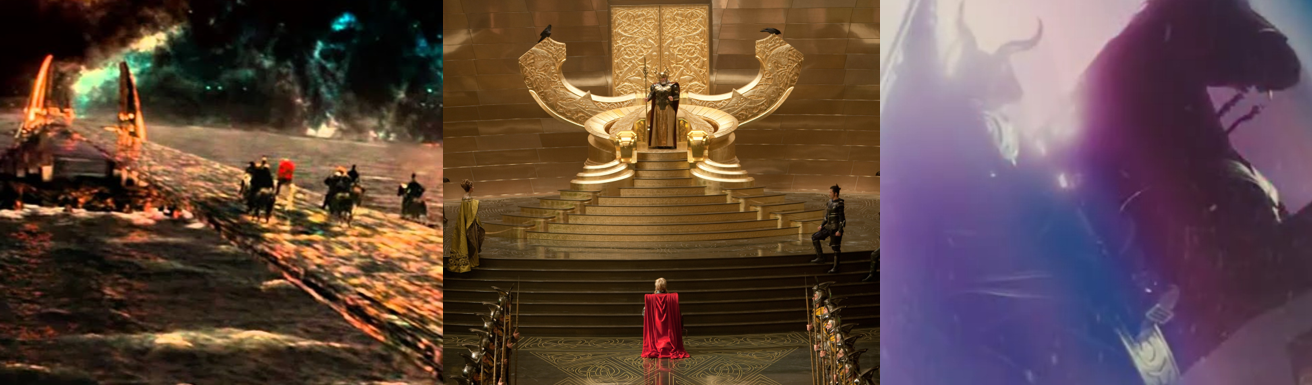
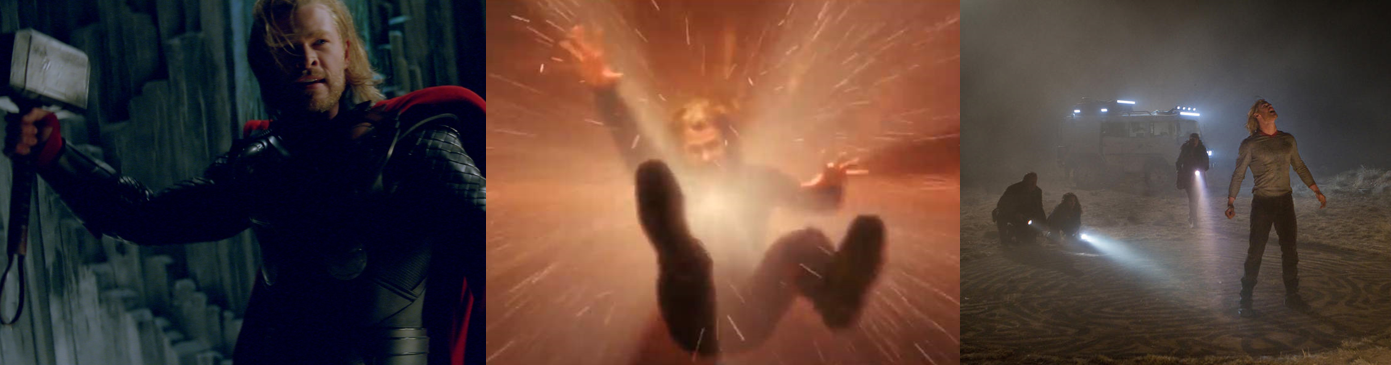
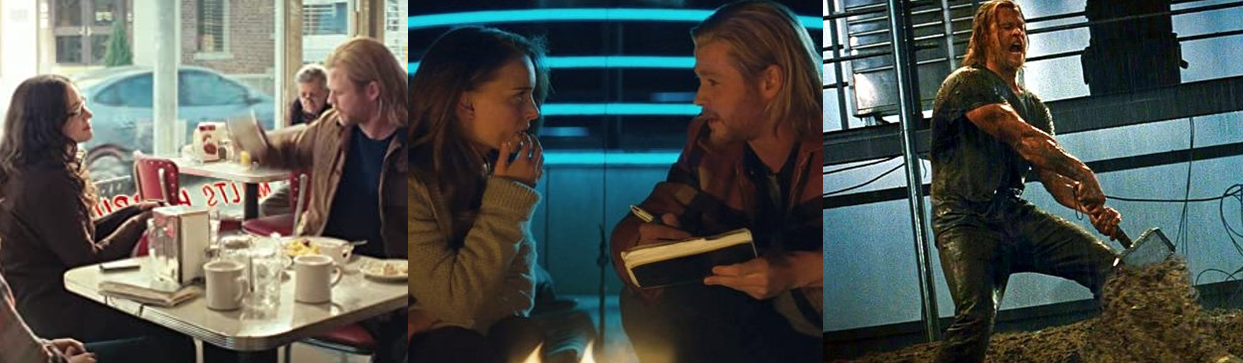

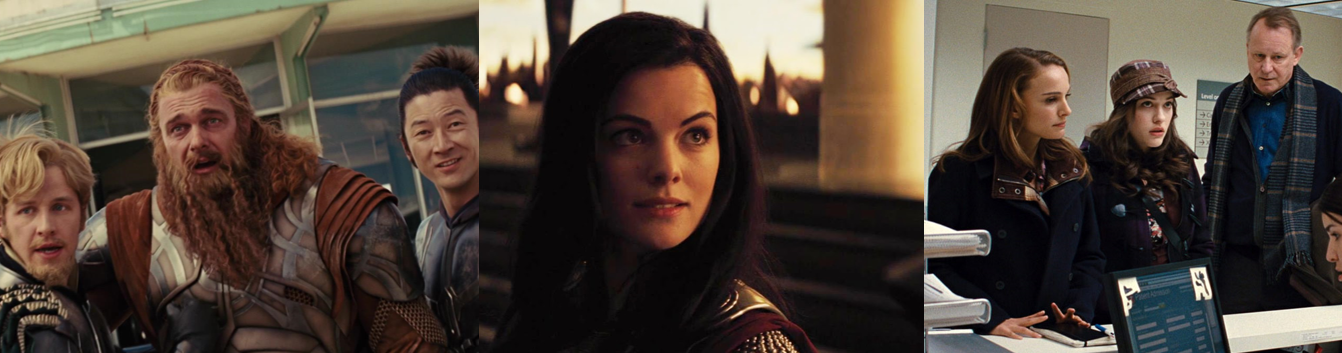


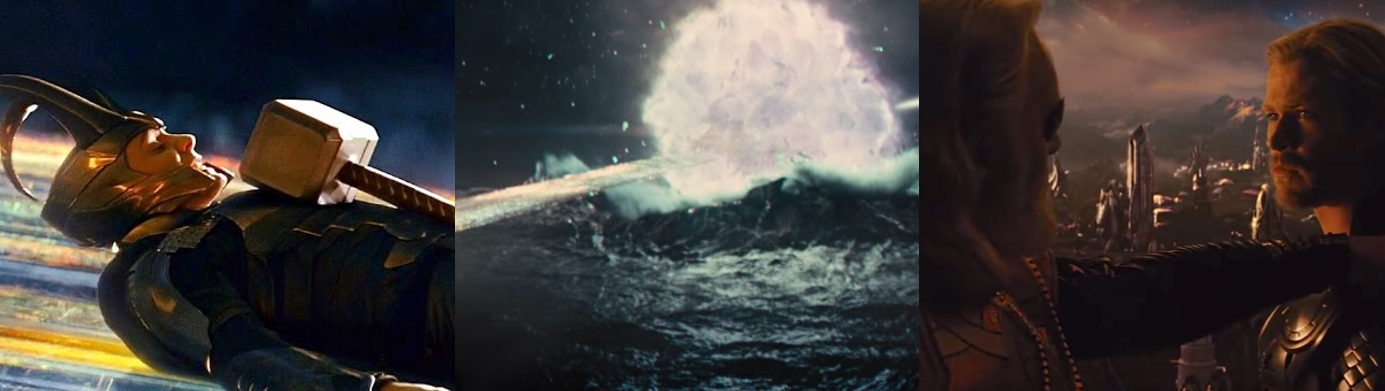



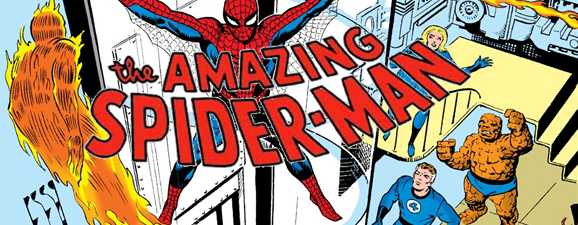
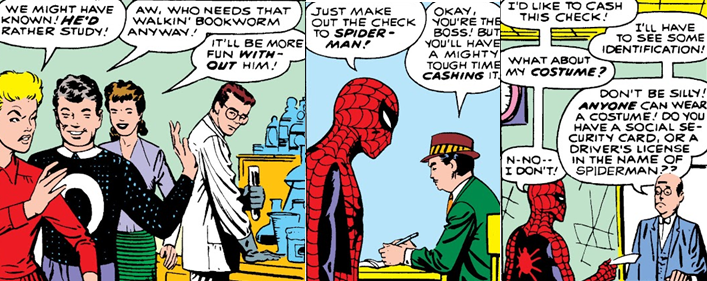
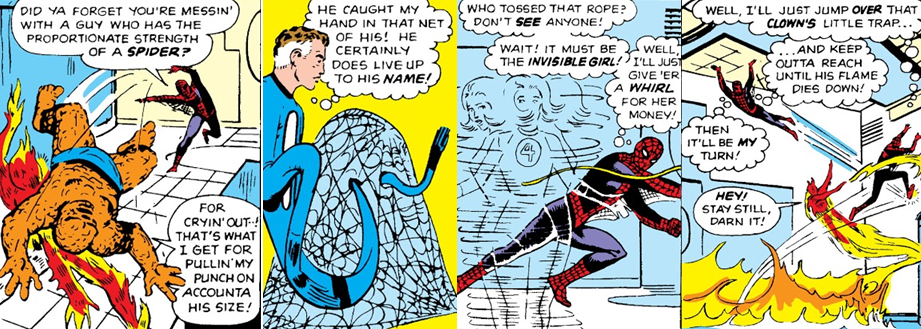
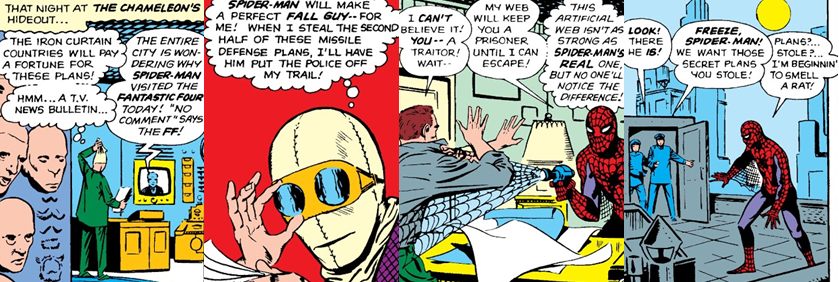
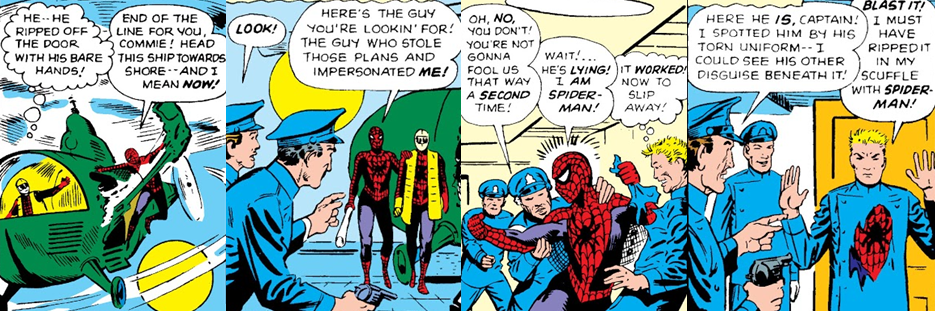
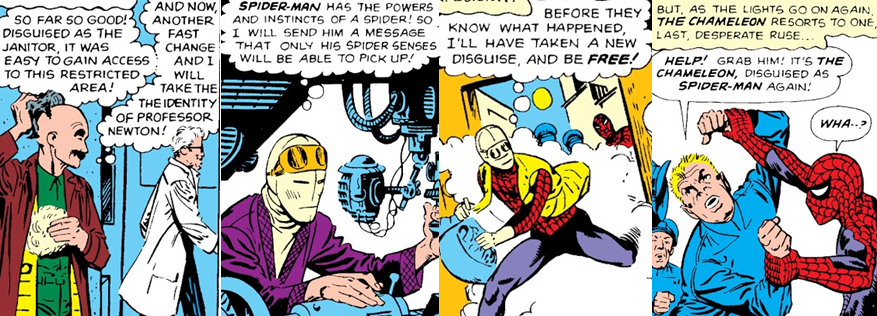
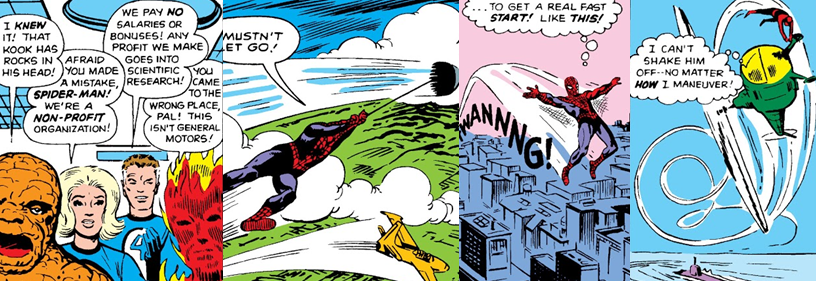


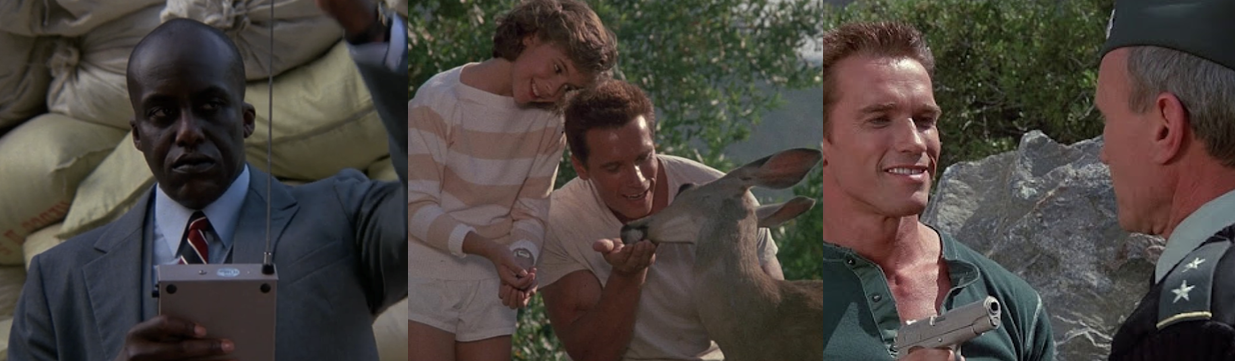


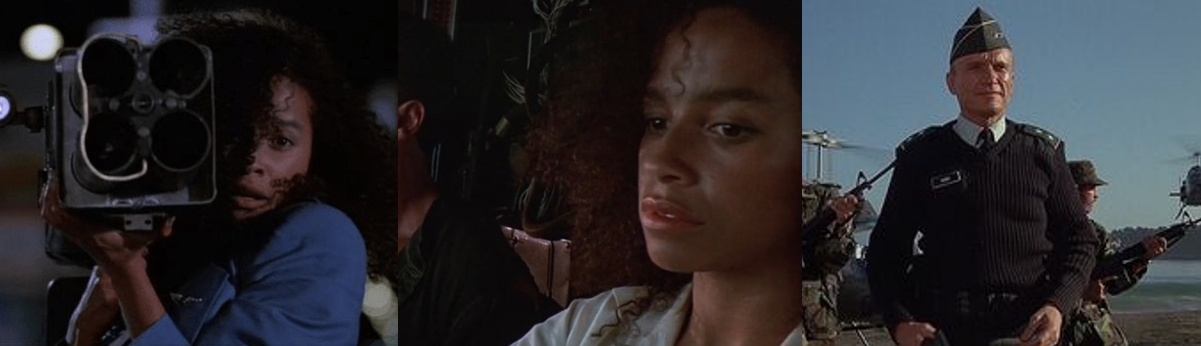







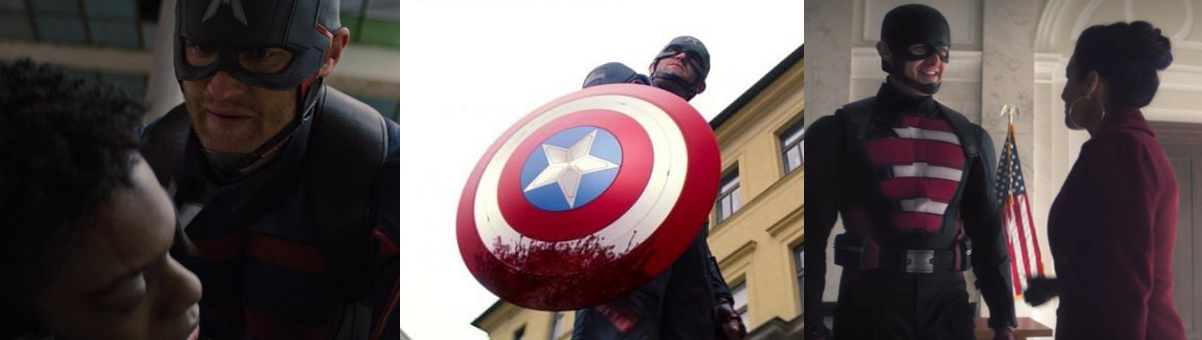
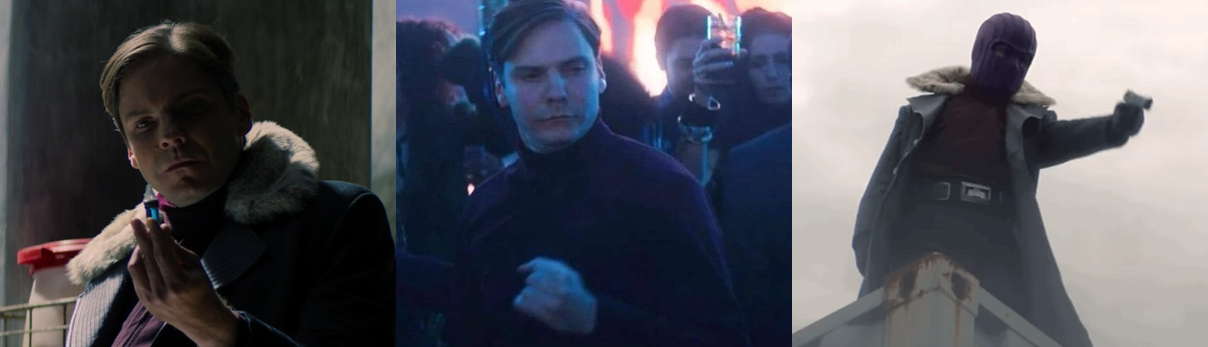


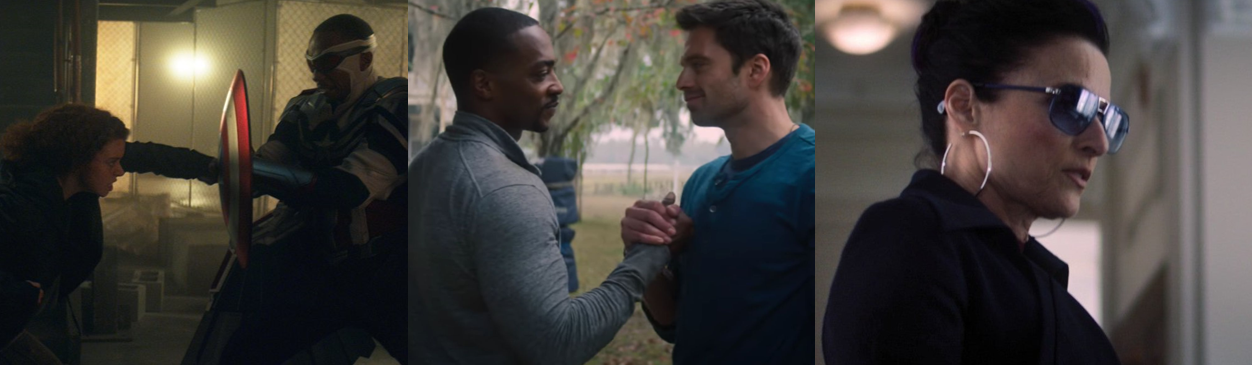


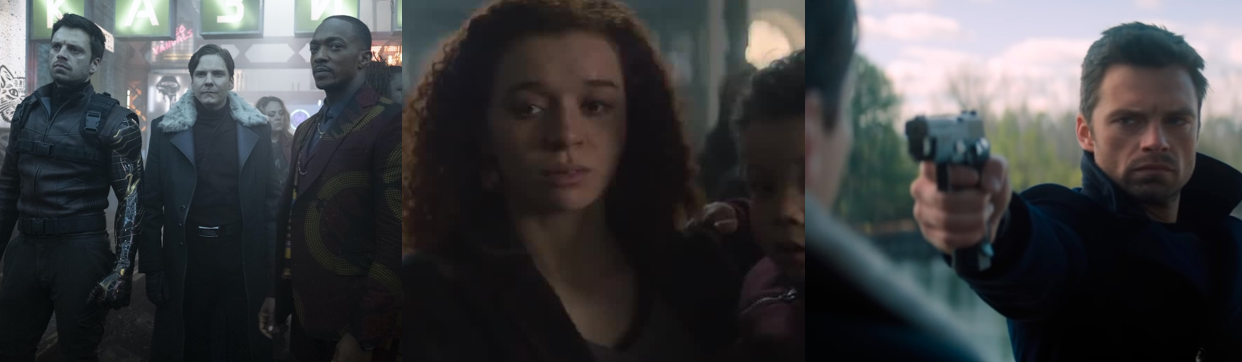




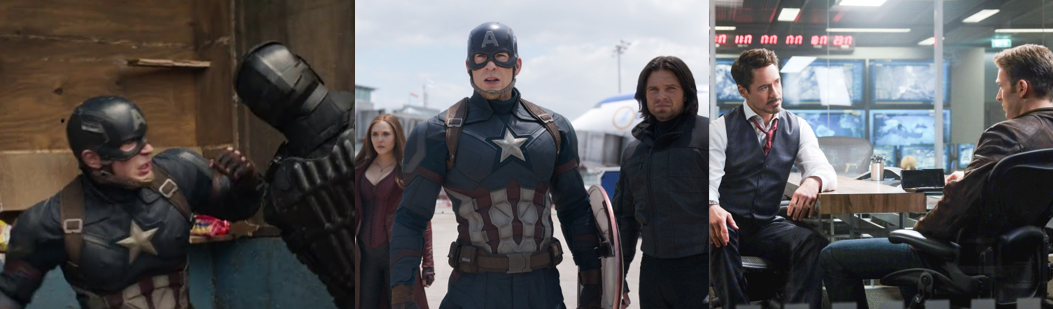












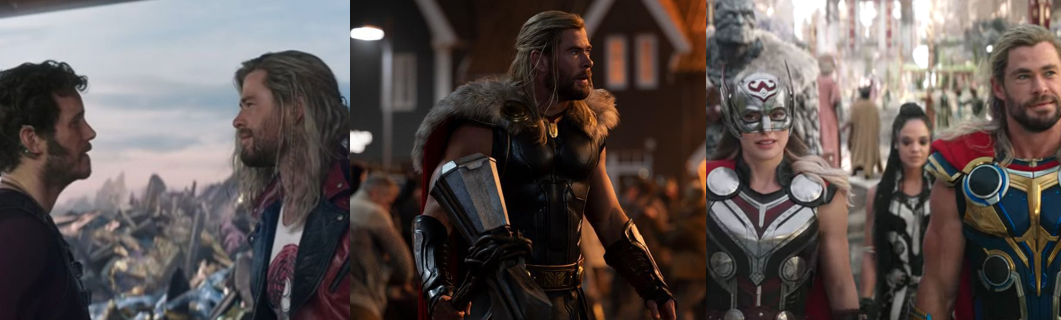
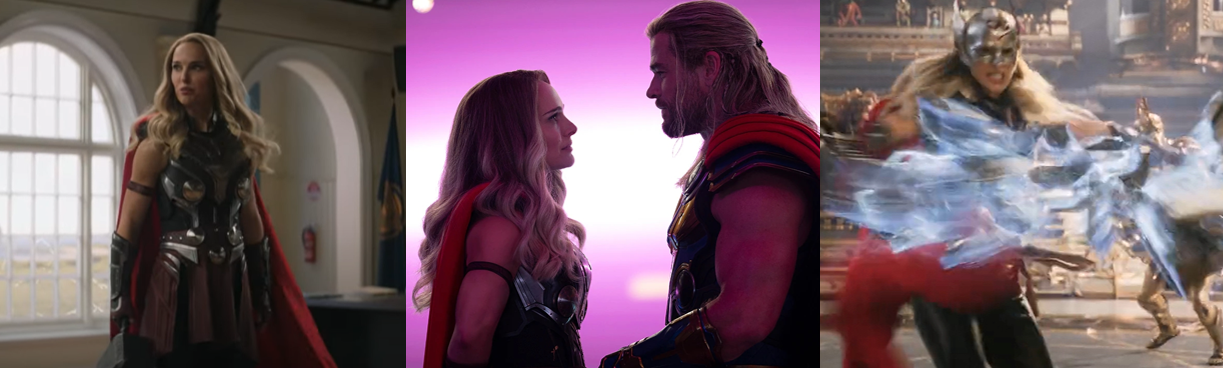
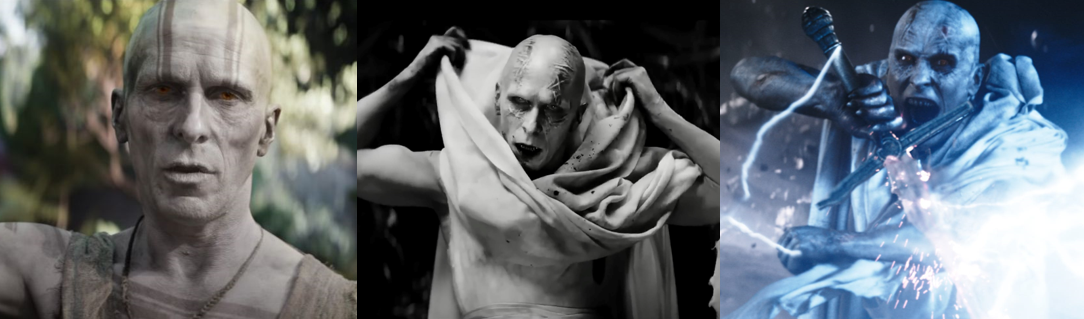
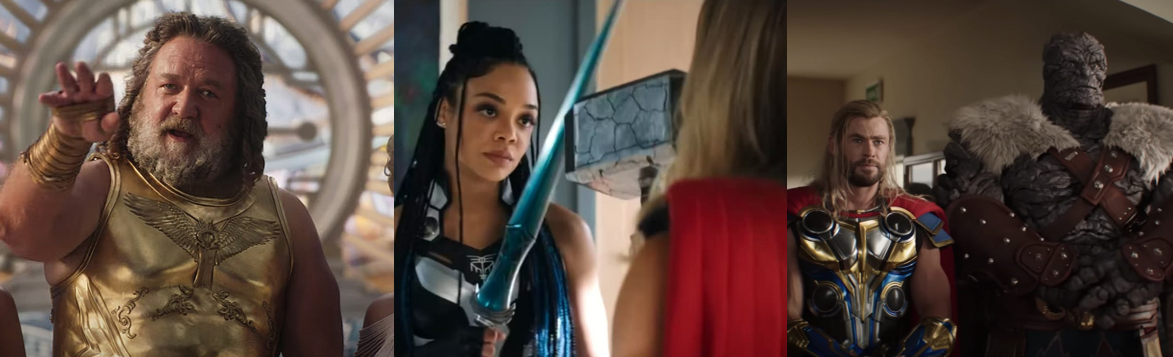
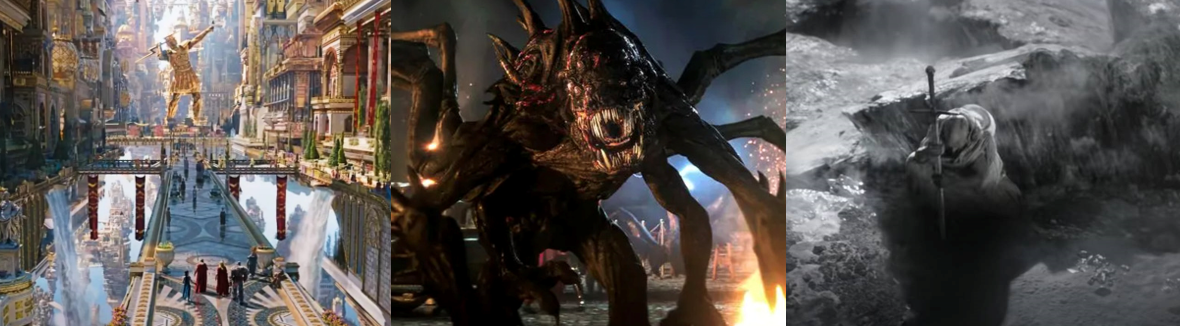
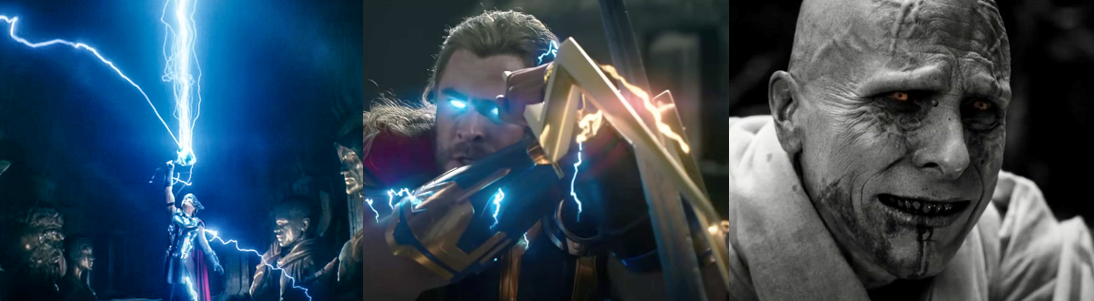


 Dr. K's Waiting Room
You must be logged in to post a comment.