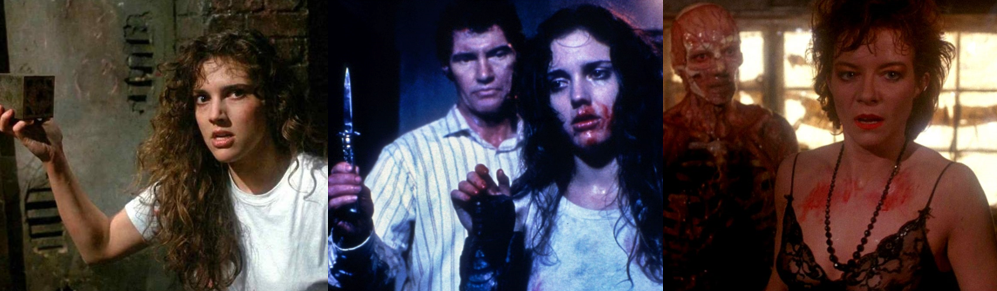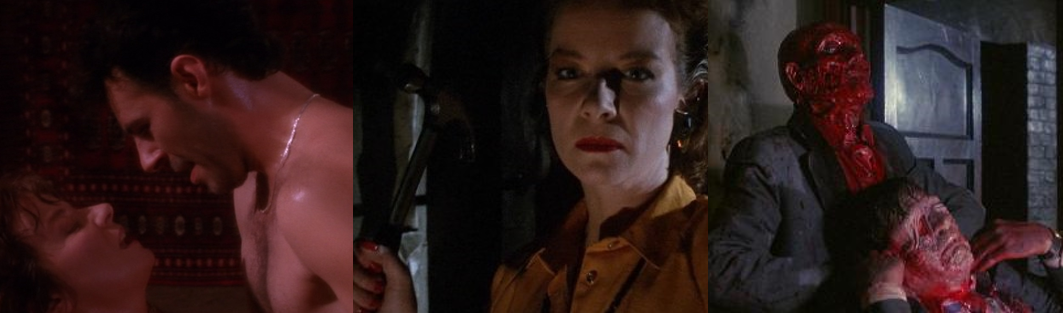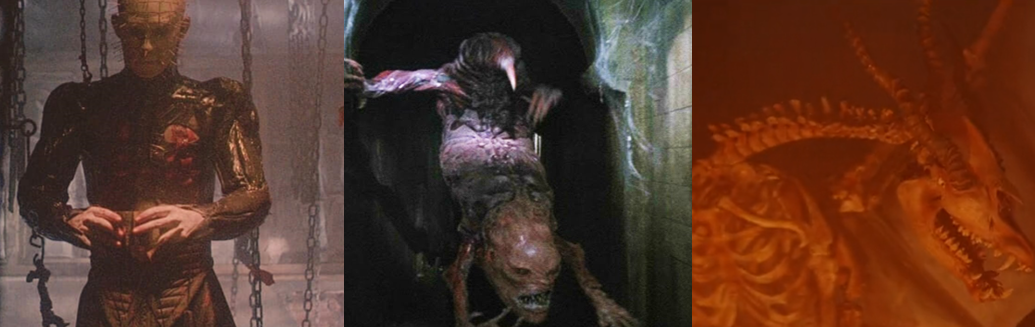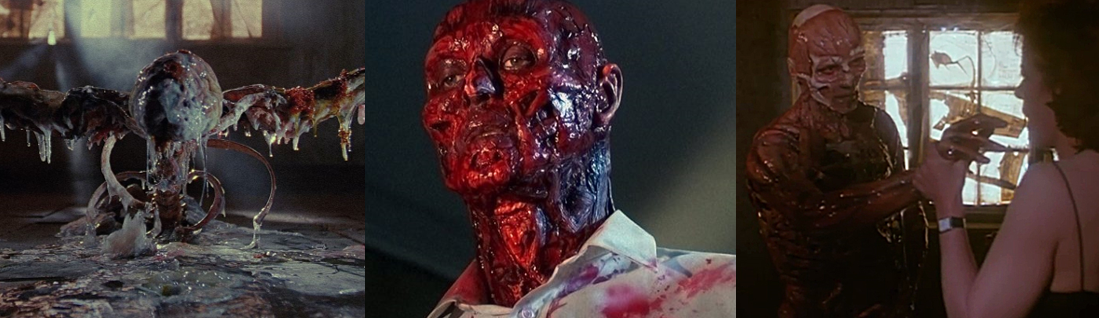
Movie Night: Halloween Ends

Released: 14 October 2022
Director: David Gordon Green
Distributor: Universal Pictures
Budget: $20 to 30 million
Stars: Jamie Lee Curtis, Andi Matichak, Rohan Campbell, and James Jude Courtney/Nick Castle

The Plot:
Four years after Michael Myers/The Shape’s (Courtney/Castle) last killing spree, Laurie Strode (Curtis) is trying to move on with her granddaughter, Allyson Nelson (Matichak). However, when local pariah Corey Cunningham (Campbell) starts down his own dark path of violence, Laurie is forced to confront her bogeyman one last time.

The Background:
In 2018, director David Gordon Green helmed a direct sequel to John Carpenter’s seminal horror classic to largely positive reviews and an impressive $255.6 million box office. Initially, Green and his co-writer, Danny McBride, pitched filming two movies back-to-back but, after their “requel” proved to be a success, they chose to focus on one film at a time. Although Jamie Lee Curtis and Nick Castle returned for the sequel, Halloween Kills (Green, 2021) received mixed reviews and fell a bit short of its predecessor’s success with its $131.6 million box office, but performed well enough to justify a third and final entry in Green’s new trilogy. Although his stars were set to return, Halloween Ends was understandably delayed due to the COVID-19 pandemic, an element that Green stated would be addressed in the film’s story. Both legacy star Jamie Lee Curtis and franchise producer Malek Akkad hyped the film as being a more self-contained film, one they hoped would enrage audiences with its content, as well as confirming that Halloween Ends would be the final entry in Blumhouse’s trilogy due to rights issues. Ultimately, Halloween Ends released to largely negative reviews; critics were unimpressed by the monotonous presentation of the violence and themes, its status as a definitive finale, and its unexpected focus on someone other than Michael. Some praised it as the best of this new trilogy, however, and praised Jamie Lee Curtis’s performance, though, as of this writing, the film has made only $64.4 million at the box office and the general consensus was that it was a lacklustre finale for the franchise.

The Review:
I think I’ve made my feeling about this new string of Halloween “requels” pretty clear but, just as a reminder…I wasn’t massively impressed by Halloween; we’ve seen the whole “decades later Laurie comes back to face Michael” thing and I really hated how it just swept away everything but the original film and went out of its way to criticise what the sequels did without really offering anything new. As the film ended, I was begging to see Michael go up in flames and be definitively killed off because at least it’d be something new but, of course, that was never going to happen. Halloween Kills somehow managed to be even worse; the film spent its entire runtime musing on Michael’s motives without coming at any real conclusion, making all of that discussion pointless, and having idiotic characters running around trying to end him and just acting like crazy fools who all ended up being slaughtered. It was filler and nothing more and smacked of a creative team who weren’t properly thinking out their three-film plan, which just made me question why it was even made in the first place. Again, if he’d actually been killed and someone else had took up his mantle then maybe I could’ve gotten behind it but it gave us probably the best chance to legitimately kill Michael (what better visual than the town he’s haunted rising up to stamp him out?) and just went “oop, no, he’s somehow supernatural, or maybe he’s not, we don’t know…he wants to go home! Even though he was at home earlier…look over there!” and then just snapped to the credits like it was clever. So, yeah, my excitement for Halloween Ends wasn’t exactly tipping the scale heading in; it’s hard to deny the allure of these movies and Michael’s iconography, but it’s also very difficult for me to care about these films as they so rarely do anything new because, when the formula is changed, the general audience flip out.
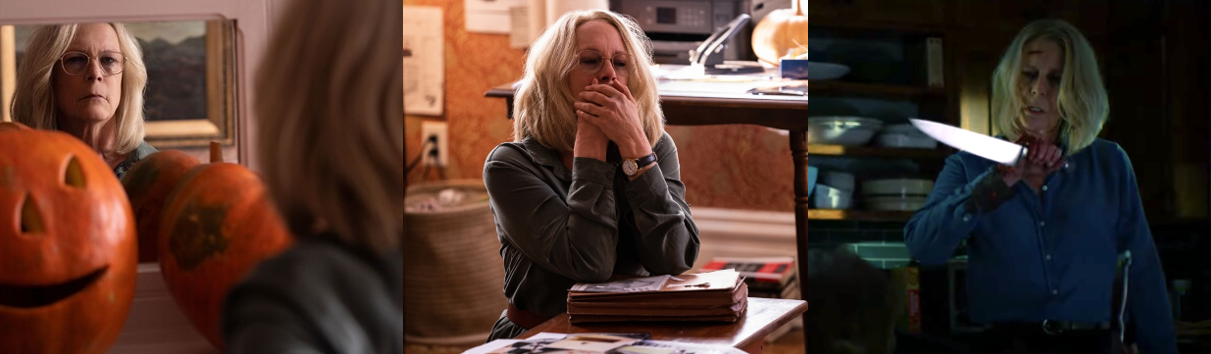
Although she appears to be in a far healthier state, Laurie’s fighting spirit is as strong as ever.

Unfortunately, Halloween Ends doesn’t exactly break the mould when it comes to improving my perception of these new films. In the four years that have passed since the last film, Michael has mysteriously vanished again, the Myers house has been demolished (quite how or why that was able to happen when the last film made it explicitly clear that his entire goal was to reclaim his former home. I guess he didn’t like the décor?), and Laura and Allyson live together in a fancy new house that the former was somehow able to purchase despite the fact that she doesn’t appear to have a job. Instead, Laurie is working on her memoirs, which provides a convenient and entirely pointless excuse to give a recap of the original film and the last two, with footage and such being spliced in to catch us up with the plot, something no Halloween film has ever needed to do before. Framed as a survivor of an extremely traumatic series of events, Laurie has abandoned her paranoia and now throws herself into helping others cope with similar trauma and providing a safe and happy home for Allyson, who’s lost her parents and friends thanks to Michael’s rampage. Laurie even decorates the house for Halloween and considers rekindling her romance with the criminally underutilised Deputy Frank Hawkins (Will Patton), a character who, quite frankly, could easily have been removed from this film (or actually been left as dead as he clearly was in Halloween) and the plot wouldn’t have been affected at all. personally. I would’ve liked to see him take on a Doctor Samuel Loomis-style (Donald Pleasance) role as an aging, somewhat unhinged Myers expert whose warnings are ignore but, instead, he gets a couple of scenes where he flirts with Laurie and talks to her about food and flowers and that’s it. No longer intent on preparing for an encounter with a nigh-supernatural force of evil, Laurie seems to be happy and excitable; she encourages Allyson to put herself out there more, shares drinks with the equally-underutilised Lindsey Wallace (Kyle Richards) and seems to be in a far healthier place than in the last two films.
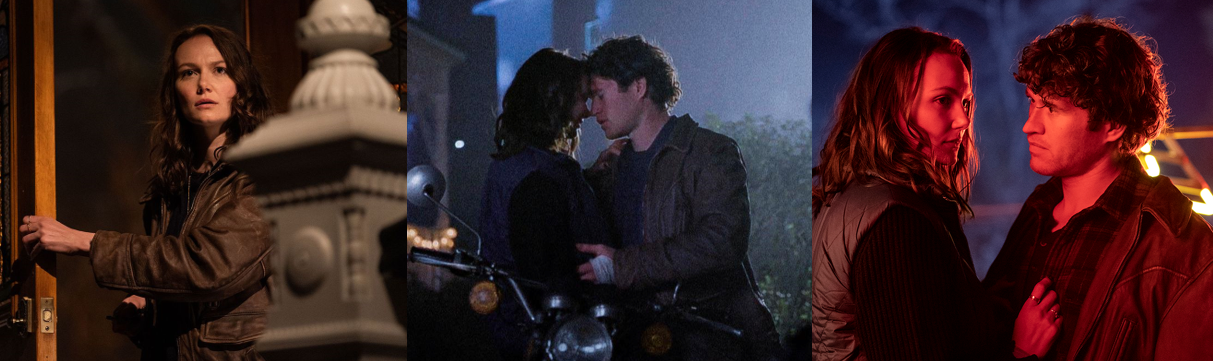
Corey brings out the worst of the traumatised Allyson and fuels her desire for a new life.

It takes time, but this is eventually, awkwardly, revealed to be a bit of a lie. Haddonfield has been left irrevocably scarred by Michael’s actions; the town openly blames Laurie for “provoking” him, an accusation that makes absolutely no senses, especially as it was the idiotic Tommy Doyle (Anthony Michael Hall) who riled up the mob in the last film and lead to all those deaths while Laurie was given the shaft and confined to a hospital. At first, it seems both Laurie and Allyson are coping quite well despite all of this, but it’s not all sunshine and rainbows; Allyson is now working as a nurse, where she’s treated very poorly by her lecherous boss, Doctor Mathis (Michael O’Leary), and she’s constantly harassed by her obsessive ex-boyfriend, Officer Doug Mulaney (Jesse C. Boyd). Although Laurie is the only family she has left, put herself at risk to defend her, and actively advised against joining the mob in the last film, Allyson secretly resents her grandmother and longs to escape the confines of Haddonfield, where treasured memories of her family and friends are mired by unwanted accusations and looks from the public. When Laurie brings an injured Corey to the hospital for treatment in a thinly-veiled attempt to set them up, Allyson is surprisingly and ridiculously instantly attracted to him; it’s not clear exactly why (he’s not that cute, after all), but it’s implied that she feels a kinship in him as the town also turned on him, and that she wants to “fix” him in some way. Corey allows Allyson the chance to indulge herself and to act a little naughty; this only exacerbates when Laurie realises something’s terribly wrong with Corey and tries to warn her granddaughter off, which sees all of her pent-up resentment bubble to the surface and her even encouraging Corey to give in to his dark side, despite her also appearing to have no knowledge of what he’s been up to even though he openly admits to killing people, regularly breaks down before her about the conflict inside him, and is clearly a deranged psychopath.
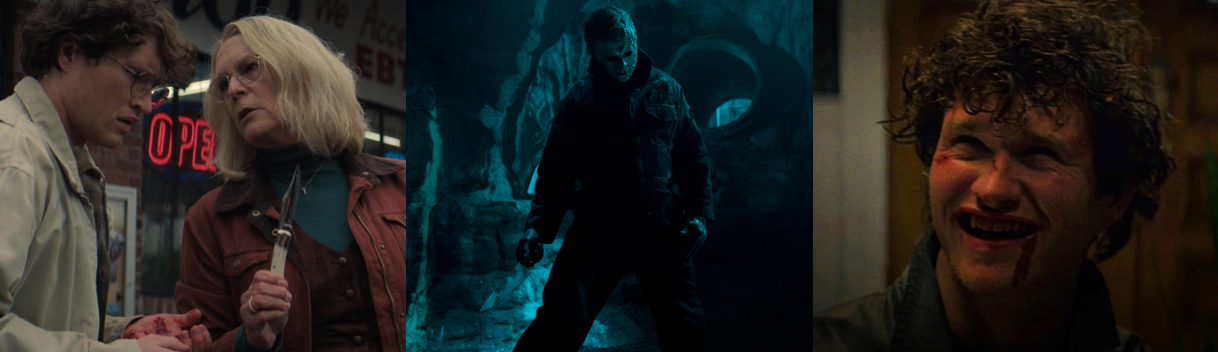
Chance encounters with Laurie and Michael turn Corey from a pariah into an unhinged psychopath.

If you go into Halloween Ends based on the trailers and posters alone, you’d be fooled into thinking this is the climactic showdown between Laurie and Michael. Nothing could be further from the truth, however, as the main focus for the vast majority of the film is Corey’s downward spiral into madness and murder. The film begins with Corey as a simply twenty-one-year-old babysitter with aspirations of going off to college; however, when he accidentally kills the bratty little kid he’s babysitting in what is clearly a freak accident, the town turns against him and he’s forever labelled as a baby-killing pervert. Although he tries to pull his life together and earn a modest living as a mechanic, he’s constantly berated by his overbearing mother, Joan (Joanne Baron) and targeted by a local gang of bullies who go out of their way to antagonise him. It’s because of Terry (Michael Barbieri) and his shit-kicking friends that Corey ends up injured and meeting Allyson, that he gets his first taste of vengeance when Laurie encourages him to flatten Terry’s tyre, and when he has a fateful encounter with Michael Myers. Far from the invincible, inexhaustible supernatural force he was painted as in the last two films, Michael is now decrepit and pitiful, surviving in a storm drain on the outskirts of town and burdened by the injuries he’s suffered in recent years. When he gets his hands on Corey, a strange moment passes between them; either a transfer of power or evil or a recognition that the same darkness that dwells within Michael lies dormant in Corey, and the Shape inexplicably lets him go as a result (despite the fact that he unceremoniously murdered Doctor Ranbir Sartain (Haluk Bilginer) when he tried to take over Michael’s legacy). Shaken by this near-death experience, Corey descends down a dark path; accidentally manslaughter leads to accidental murder, then premeditated murder, until he’s donning his own Halloween mask and adding more numbers to his body count. Corey even leads Michael to Doug and Dr. Mathis in order to see the Shape in action with his own eyes, which only pushes him further over the edge, to the point where he effortlessly overpowers the once almighty Shape of Evil and steals his mask to reignite the terror Michael started decades ago.

The Nitty-Gritty:
Although every Halloween movie has a thematic undercurrent concerning the power of literal and metaphorical masks, Halloween Ends attempts to explore this a little more explicitly, but ultimately fails in its execution. Laurie is hiding behind a mask of good-natured enthusiasm; far from the paranoid and unhinged drunk she was before, she seems to be much healthier and attempting to let go of her hate and fear, however this mask slips pretty quickly once she gets a look at Corey’s eyes and seems the same darkness dwelling within him as she saw in Michael. Allyson has a similar mask, ignoring the maltreatment she receives at work and from her ex simply to try and get on with her life, but she quickly casts this aside and turns on her grandmother with such vitriol that it appears like she’s encouraging Corey’s killing spree. Corey attempts to hide away, burying his head in the sand and avoiding conflict, but is constantly goaded into fight or flight situations by bullies and accusing townsfolk. When he dons a Halloween mask of his own and goes dancing with Allyson, he finds a freedom and a joy that have been lost for some time, but it doesn’t take much to snap him back into a guilt-ridden, morose state, one that makes him easy prey for the likes of Terry and the infectious evil of Michael Myers. Michael, obviously, famously hides behind a mask, one now aged and heavily damaged, but which still has such an allure and power to it that Corey claims it as his own to foster his bloodlust.
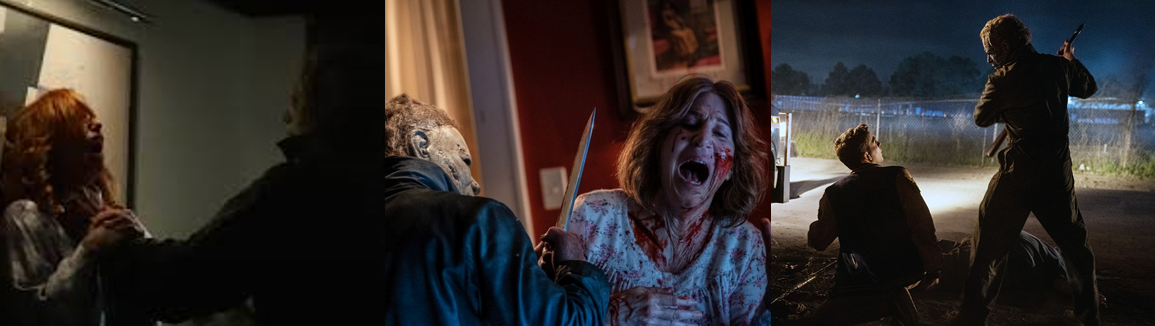
Sadly, only a couple of the film’s kills live up to the legacy of the franchise.

As much I disliked the previous Halloween films, they were mildly salvaged by three factors: Michael, the conflict between Michael and Laurie (and the greater town of Haddonfield), and the kills. As Michael is largely absent until the last act of Halloween Ends, and the film completely wastes the potential of Haddonfield descending into anarchy and increasing violence as a result of Michael’s “curse”, we’re left to rely on the kills. Sadly, these aren’t all that impressive as it’s left up to Corey to shoulder this burden and, as a largely reluctant killer, he lacks the supernatural skill and power of the iconic Michael Myers. I will say, though, that a couple stood out; Corey’s accidentally murder of obnoxious Jeremy Allen (Jaxon Goldberg) in the opening sequences was as shocking as it was amusing, and it was pretty gruesome seeing him take a blowtorch to Terry’s mouth. Probably the best kill is when Corey, now donning the Shape’s visage, mercilessly beats shock DJ Willy the Kid (Keraun Harris) until his jaw is hanging from his face and then cuts his tongue off and leaves it spinning on the record player. For the most part, Corey opts for simple murder tools such as a switchblade and bottle opener, resulting in some unfortunately tame and lacklustre kills; when he lures his bullies to the scrapyard where he works, he switches to using a truck to chase after them and borrows Michael’s head-stomp kill to finish of the unfortunate Margo (Joey Harris). Michael’s kill count is pathetically low in this film and relies entirely on nostalgia for John Carpenter’s original as he stabs and kills Allyson’s work frenemy, Deb (Michele Dawson), in exactly the same way as he killed Bob Simms (John Michael Graham) in the first film. Call-backs such as this are scattered throughout Halloween Ends; not only does the film ape the opening credits of the original, it uses the same font as Halloween III: Season of the Witch (Wallace, 1982) – fitting considering this mess of a film is on par with that ill-fated entry – and there’s even a short sequence shot from Corey’s perspective to mimic the iconic opening of Carpenter’s original. Sadly, though, it takes far too long for the blood and bodies to start piling up; Halloween has always traditionally been a more psychological franchise but the psychology on offer here is weak and flawed. The film attempts to paint Corey as a victim of society and nurture, rather than the pure natural evil embodied by Michael, but we learn paradoxically too much about him and at the same time not enough, meaning he lacks the mysterious menace of Michael and just comes across as a pouty kid lashing out at people who, for the most part, deserve to be punished, rather than killing innocent and otherwise likeable characters.

Unfortunately, Halloween Ends doesn’t live up to its premise and makes a mockery of Michael’s menace.

Upon first meeting, Allyson is instantly smitten by Corey and is inexplicably horny for him throughout the film; Corey initially tries to warn her off, since associating with him is bad news for her, but he can’t resist how good she makes them feel and they’re soon head over heels with very little motivation beyond being young, damaged, and wanting to escape. When Laurie recognises Corey’s turn to the dark side, she tries to warn both of them off but is labelled as a paranoid hypocrite, forcing her to take matters into her own hands. Somehow realising that Corey is walking the same dark path as Michael, she lures him to her house by staging a suicide attempt and shoots him down, apparently prepared to kill him before he can harm Allyson, or anyone else, and thus keep Michael’s curse from growing stronger. However, Corey’s mania is so complete that he willingly kills himself rather than live without Allyson, making the entire runtime up until that point a waste of time as he’s unceremoniously offed and then his thunder is stolen by Michael, who finally gets his shit together after spending the whole movie cowering in hiding and attacks Laurie. Although vulnerable after Allyson caught her holding a knife over her lover’s dead body, it turns out that Laurie isn’t as meek and content as she first seemed, and she engages in a brutal knife fight with Michael in her kitchen. Age, injury, and this film’s efforts to piss all over Michael’s legacy have left him a shell of his former self, however, and it’s not long before he’s pinned helpless to a table and has his throat slit by Laurie. Allyson arrives in time to help finish the Shape off and the two drive his dead body to the scrapyard with a police escort so all of Haddonfield can finally witness their bogyman by unquestionably killed off in pretty gruesome fashion; Laurie shoves his mutilated and lifeless body into an industrial shredder, which crushes him into bloody chunk and finally ends Haddonfield’s long, dark night. Unfortunately, the film really doesn’t deserve this definitive finale; the climactic and emotional finale of Halloween H20: 20 Years Later (Miner, 1998) remains unbeaten, in my eyes, as the most cathartic and dramatic end to Michael and Laurie’s story. I also feel like the finale might’ve benefitted from taking place at the scrapyard, with Michael being forced into the shredder by Laurie and Allyson, but I do give it props for actually killing the Shape off, even if 90% of the movie was focused on an entirely different and far less interesting plot and killer.

The Summary:
Just like with Halloween Kills, I went into Halloween Ends with low expectations; I admit that a lot of this was based on my dislike for Green’s Halloween movies, especially Halloween Kills, but even setting that aside it’s pretty despicable how this movie treats one of cinema’s most iconic slashers. Michael’s absence is to the film’s detriment; at one point, it seemed like him and Corey were going to go on a killing spree together, but that evaporated almost immediately, and it’s depressing seeing this jumped-up loser wrestle the Shape to the ground and steal his mask like it’s nothing, especially after the last two films tried to sell Michael as this unstoppable supernatural force. In another film, Corey’s story might’ve been interesting, and I have longed to see someone else take up Michael’s ways, but it just doesn’t stick the landing here; maybe if Corey had used Michael’s mask all along and Haddonfield had been led to believe the Shape was back, it might’ve worked better but, as is, he’s a very underwhelming character. Jamie Lee Curtis tries her best to get this movie on track, but Laurie’s character turn is so sharp from the last two that she feels like a completely different person, one who I have a hard time believing could go toe-to-toe with Michael. Michael himself makes an impact for the finale, but the ending feels like it was slapped on to an unrelated psychological slasher film and then the script was hastily rewritten to be a Halloween sequel. Ultimately, this entry was as unnecessary as the last one; I didn’t care for Halloween but it would’ve made poetic sense to end things ambiguously and then try another reboot, but these last two films have just dragged the story on for no reason except to cash-in on the franchise name and I was left underwhelmed by this apparent definitive end to the story.

My Rating:

Rating: 1 out of 5.

Terrible

What did you think to Halloween Ends? Where would you rank it against the last film and the other entries in the franchise? What did you think to the shift towards Corey and his descent into madness? Did you buy his relationship with Allyson or did it fall flat for you? What did you think to Laurie’s portrayal and the side-lining of her vendetta against Michael until the ending? Were you also annoyed by Michael’s absence and how easily he was dispatched? Which of the kills was your favourite and where would you like to see the franchise go in the future? Feel free to sign up and leave your thoughts down below and drop a reply on my social media to let me know what you thought about Halloween Ends.  

Movie Night: Trick ‘r Treat

Released: 6 October 2009
Director: Michael Dougherty
Distributor:
Warner Bros. Pictures
Budget: $12 million
Stars:
Anna Paquin, Dylan Baker, Brian Cox, Samm Todd, Britt McKillip, and Quinn Lord

The Plot:
It’s Halloween night in Warren Valley, Ohio and all sorts of ghouls and demons have come out to join the residents for their fun and games; a high school principal moonlights as a vicious serial killer, a cruel prank awakens the restless souls of a bus crash, a young virgin finds her search for that special someone taking a gruesome turn, and a mischievous little demon terrorises an irritable old man to teach him the true meaning of Halloween.

The Background:
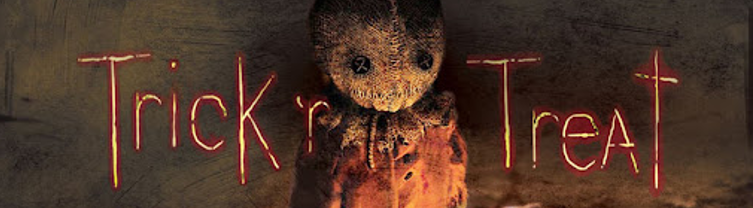
Trick ‘r Treat began life in 1996 when Michael Dougherty created an animated short, Season’s Greetings, that featured burlap-sack-wearing Sam being stalked on Halloween night. A self-confessed Halloween fanatic, the idea stayed with Dougherty and was expanded into a horror anthology that he aimed to be both timeless and rewarding to viewers who paid attention to the little details in the film. Having previously written big-budget superhero films, Dougherty relished the opportunity to craft a more down-to-earth story and interact with horror fans at conventions and screenings since they were always so passionate to see new, interesting horror productions. Trick ‘r Treat was screened at a number of horror film festivals before being released on home media without a widespread cinematic release; nonetheless, the film received largely positive reviews and became an instant cult classic, though a sequel has languished in Development Hell regardless.

The Review:
Like the other films I’ve been reviewing on the road to Halloween, Trick r Treat is an anthology film; while it differs from the others by having all of its different narrative threads intertwine and overlap, I’ll still be talking about each story individually before moving on to the overall film, which again means that my review is structured a little differently from my usual ones. The film uses its opening sequence to establish both the setting for the film and how important the age-old traditions of Halloween are to Trick ‘r Treat’s narrative; it’s a cold, dark Halloween night in Warren Valley but, while the kids might be enjoying dressing up and going door to door for sweets and chocolate, Emma (Leslie Bibb) is less than thrilled at being dragged out into the night by her husband, Henry (Tahmoh Penikett). While Henry enjoys the fun and traditions of season, Emma finds it aggravating and frustrating; although Henry cautions her that it’s bad luck to blow out the jack-o’-lantern before midnight, she dismisses such superstitions, puts out the flame, and begins tearing down the decorations in their yard, unaware that she’s being watched by an unseen figure who brutally attacks her beneath a sheet and leaves her mutilated corpse out on display.

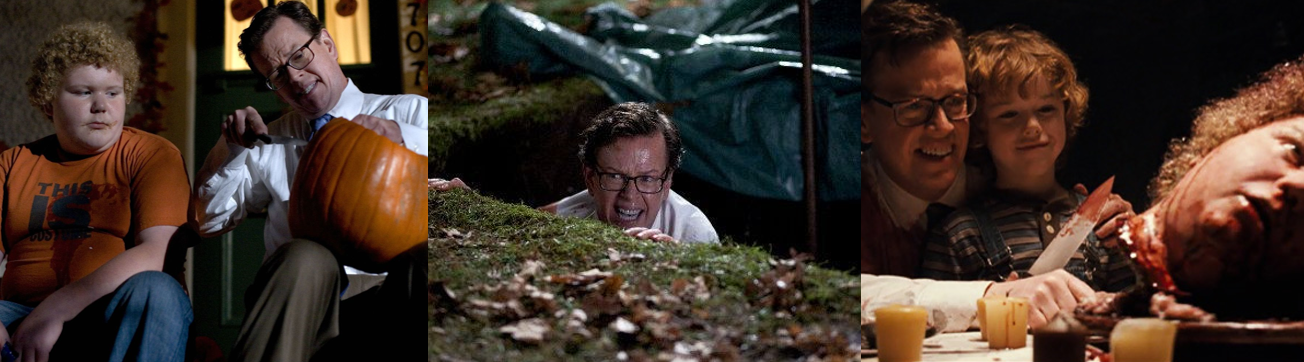
Wilkins taints his sweets to add bodies to his garden and craft a gruesome jack-o’-lantern.

The story then segues to earlier in the night, when the town was alive with Halloween cheer and celebrations; the only thing Charlie (Brett Kelly) is interested in, however, is smashing his neighbour’s pumpkins and stealing sweets from the porch of local high school principal Steven Wilkins (Baker). Though he chastises Charlie for ruining his health with chocolate, Wilkins confides in the boy that he used to be the same way before his father taught him that Halloween was about showing respect for the dead since it’s the one night of the year that they’re allowed to come back to the world of the living. He’s dismayed that Halloween’s traditions, once put into place to protect the living, are lost on today’s world, though he proves that he still holds them true to heart as he poisoned his sweets to teach kids to “check their candy” to avoid being “tricked”. This causes Charlie to vomit up black bile but Wilkins’ attempt to bury him in his back garden are continually interrupted by his amusingly obnoxious son, Billy (Connor Levins), and his cantankerous neighbour, Mr. Kreeg (Cox). Annoyed by his son’s constantly whining, Wilkins appears to be on the verge of stabbing Billy to death with a knife and adding to his body count but story ends with the twist that he and Billy are in on it together and preparing to carve Charlie’s severed head like a jack-o’-lantern.

A group of teens play a cruel prank but soon get their just desserts!

Wilkins was visited by a group of teenage trick-or-treaters earlier and these kids – Macy (McKillip), Sara (Isabelle Deluce), Chip (Alberto Ghisi), and Schrader (Jean-Luc Bilodeau) – become the focus of another segment of the film. After borrowing a jack-o’-lantern from the licentious Mrs. Henderson (Christine Willes), the group invite Rhonda (Todd) – a Halloween fanatic and “idiot savant” – to go with them to a flooded quarry that is the subject of an urban legend. According to Warren Valley, a school bus full of mentally challenged children was sent over the edge of the quarry, where they drowned in the water below, after the bus driver was paid off by their exhausted parents to dispose of them. While the driver survived, he disappeared and legend has it that the busload of kids still sits at the bottom of the quarry, so Macy leads the group down to the bottom in a rickety lift to light eight jack-o’-lanterns as a tribute to the lives lost. When she hears her newfound friends screaming for help, Rhonda braves the misty quarry to investigate and comes across the wreckage of the school bus before being attacked by the muddy, swamp-like, zombie school kids, but it turns out to be the kids playing a cruel prank on the impressionable, innocent girl as orchestrated by the callous and vindictive Macy. However, when Macy kicks a lit jack-o’-lantern into the water, actual zombie children crawl up and attack them; when the kids head to the lift, Rhonda has locked herself in and, despite Schrader showing kindness to her, she refuses to let the bullies in and rides it up alone, leaving them to be torn apart by the malevolent ghouls.

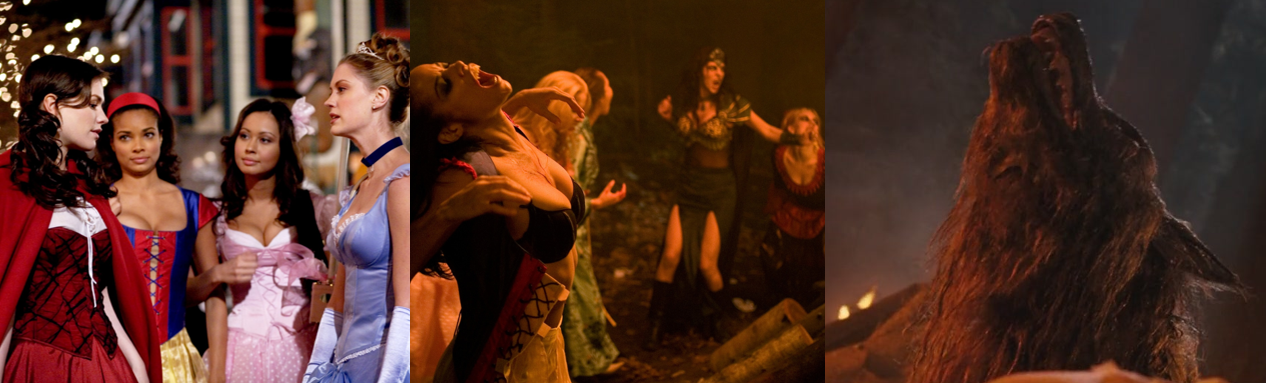
A group of promiscuous girls turns out to be a pack of ravenous werewolves!

New in town are Laurie (Paquin), her sister Danielle (Lauren Lee Smith), and her friends Maria (Rochelle Aytes) and Janet (Moneca Delain). Compared to her brazen and promiscuous sibling and friends, Laurie is a self-conscious sceptic of their plan to dress up as slutty fairy tale characters and get laid, especially as she is the only virgin in the group. While Danielle and the others easily pick up guys to take to a secluded area, Laurie (dressed as Little Red Riding Hood) opts to stay in town, where she catches the eye of a masked serial killer dressed in a black hood. Although he attacks her on her way to the bonfire where her sister and friends are, Laurie turns the tables on the killer (revealed to be Wilkins in disguise) and leaves him a bloodied mess in the woods. When Laurie arrives at the bonfire, it’s dramatically revealed that she, her sister, and their friends are actually werewolves who have been luring prey out to the woods for a feast; rather than being nervous of her first time having sex, Laurie was anxious about her first time feeding on human flesh but she nonetheless engorges herself on Wilkins’ horrified form.

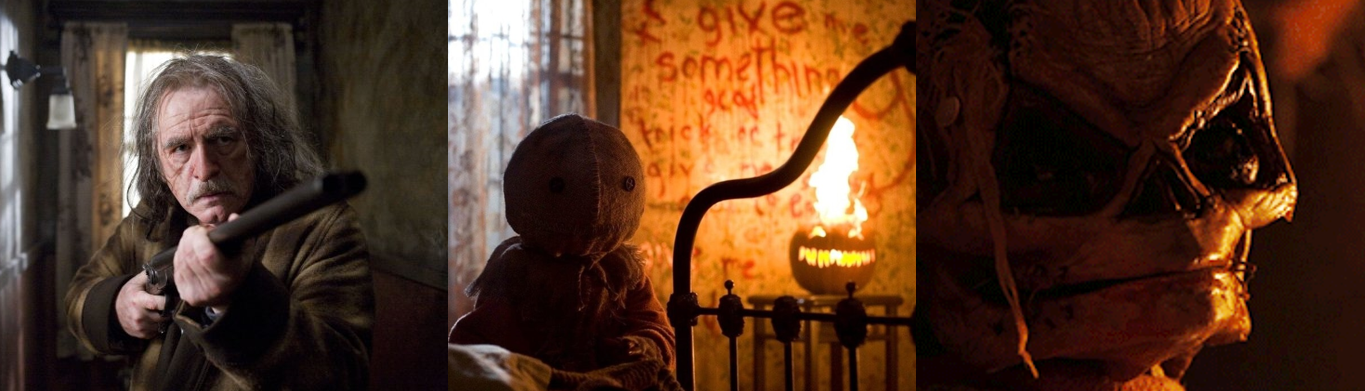
The cantankerous Mr. Kreeg is tormented by a mischievous demon who embodies the season.

Present in some for or other throughout the film is Sam (Lord), a small boy with a burlap sack over his head who witnesses many of the events unfold throughout the movie; he takes a chocolate bar from Wilkins, shares a knowing glance with Rhonda, watches the werewolves feed on their prey, and kills Emma for disrespecting his traditions but takes centre stage for the film’s final segment. Mr. Kreeg is a grouchy and ill-tempered old man who has little time or interest in Halloween except to scare away trick-or-treaters so he can steal their sweets and chocolate. However, he finds himself tormented by Sam, who eggs his house, leaves a whole load of lit jack-o’-lantern on his front lawn, and runs around inside his house leaving bloody trick-or-treat messages on the walls. Sam then takes the direct approach and attacks Kreeg with a razor-filled chocolate bar before tearing up Kreeg’s hands with shards of glass and revealing himself to be a demonic entity (apparently Samhain, the embodiment of Halloween itself) with a gruesome pumpkin for a head! Shrugging off Kreeg’s bullets and supernaturally stitching himself back together, Sam is poised to deliver a killing blow but seems satisfied when he stabs a chocolate bar on Kreeg’s person instead. Battered, injured, and terrified, Kreeg hands out treats to the kids at his door but ends up falling victim to the zombie children from the quarry who have come to enact revenge against him since he turns out to have been the bus driver responsible for their deaths.
The Nitty-Gritty:
Of course, Trick ‘r Treat owes quite a lot to the influential Creepshow (Romero, 1982), a horror anthology laced with black humour, and the spirit of Creepshow is evoked in the comic book panels and artwork seen in the opening and closing titles of Trick ‘r Treat just as much as it is in the anthology format. Unlike Creepshow, though, and the other horror anthologies I’ve reviewed over this October, Trick ‘r Treat interweaves, intertwines, and overlaps its stories and characters and jumps between different time periods. This means that we regularly see characters from one segment in the background or interacting with others and previously deceased characters alive and well elsewhere. The film is, however, laced with some amusing black comedy; mostly physical stuff and the absurd believability of an unassuming neighbour pulling horrible pranks on kids or poisoning them and burying them in their garden.

Trick ‘r Treat puts a unique and grisly spin on the depiction of werewolves.

One of the ways Trick ‘r Treat stands out against other horror films is its focus on Halloween; generally speaking, the appropriately-titled Halloween franchise (Various, 1978 to present) has a stranglehold on the season outside of a few low-budget and straight-to-video releases so it was very refreshing to see an original Halloween-themed horror movie that pulled from the deep lore of the macabre season. It even succeeds where many films have failed (in my experience) by putting a grisly spin on werewolves; typically, I find werewolves are much more miss than hit in films as they’re often rendered in terrible CGI, dated effects, or just look stupid and fake when onscreen. Here, seeing the girls strip off their human flesh and reveal their canine forms was very disturbing and an extremely effective way to show the creatures without them looking fake or ridiculous as is so often the case. Generally, werewolves are often male characters so it was refreshing to see a group of girls turn out to be lycanthropes in a twist on “Little Red Riding Hood” and subverting the expectations of Laurie’s “first time” was a fun inclusion that hinted at a larger society of werewolves stalking and feeding on unassuming, horny men.

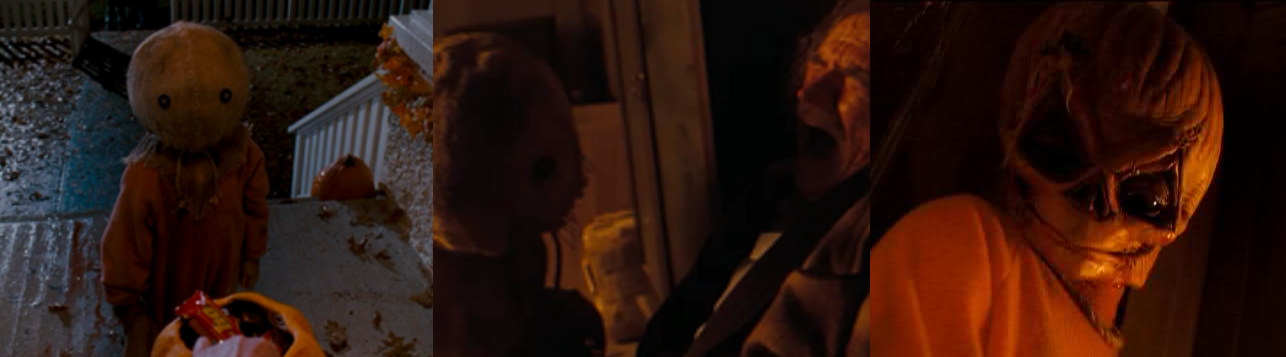
Sam made an immediate impact and became a modern horror icon.

Indeed, Trick ‘r Treat excels through its visuals; the whole film takes place on a dark Halloween night in a town that goes all-in with celebrating the event, meaning there’s trick-or-treaters, jack-o’-lanterns, and auburn leaves everywhere, all of which really helps to set the ominous mood of the film. The visuals also extend to more explicit horror as well; the zombie kids are a great twist on an overdone horror trope and their story is equal parts tragic and gruesome as they shamble up from the depths to get their revenge. And then there’s little Sam, an under-rated modern horror icon who has yet to be beaten into the ground through overexposure; while the pumpkin-head reveal was shocking and the effect looks great, the burlap sack look is equally as effective and I enjoyed how he would just pop in throughout the film, silently watching and observing events unfold. A scuttling, vindictive little demon, Sam attacks using sweets and chocolate stuffed with glass and razors and only targets those who disrespect or tarnish the traditions of Halloween rather than being just another mute, masked slasher.

The Summary:
I was a little late to the Trick ‘r Treat party; I don’t think I saw it until it had been out for some time and I haven’t really seen it that much compared to other horror films, which turns out to be a massive mistake on my part. Trick ‘r Treat is easily a fantastic Halloween tradition and a great horror anthology in its own right; I love how the stories and characters intersect and overlap with each other as it really helps to bring the town to life and show how all kinds of horrific creatures and events rise up from the darkness on Halloween night. The use of dark comedy was a great way to keep things light and fun and Dylan Baker and Brian Cox definitely seem to be having a good time in their roles; all of the performances are great, actually, especially Samm Todd (though all of the kids were really good, which is always a nice surprise to see in films). While the variety of monsters, horror, and gore on show are all suitably macabre and brutal for any horror fan, Sam is unquestionably the star of the show; lingering around town and in each segment, he makes an immediate impact in his campaign against Mr. Keech, which is the perfect balance of creepy and ludicrous. An intriguing, childlike demon, I would love to see more of Sam in some way, shape, or form as I think he has an impactful look and a lot of potential as the mischievous (but no less vindictive) embodiment of Halloween and Trick ‘r Treat did a wonderful job of presenting a fresh new take on the macabre season that didn’t involve a babysitter killer.

My Rating:

Rating: 5 out of 5.

Fantastic

Are you a fan of Trick ‘r Treat? Which of the segments featured in the film was your favourite? What did you think to the presentation of the zombies and werewolves? What are your thoughts on Sam and his status as a modern horror icon? Would you like to see a sequel or an anthology series some day? What horror films have you been watching this month in preparation for Halloween? Whatever you think about Trick ‘r Treat, feel free to leave a comment by signing up or visiting my social media and check in next Monday for my Halloween review!

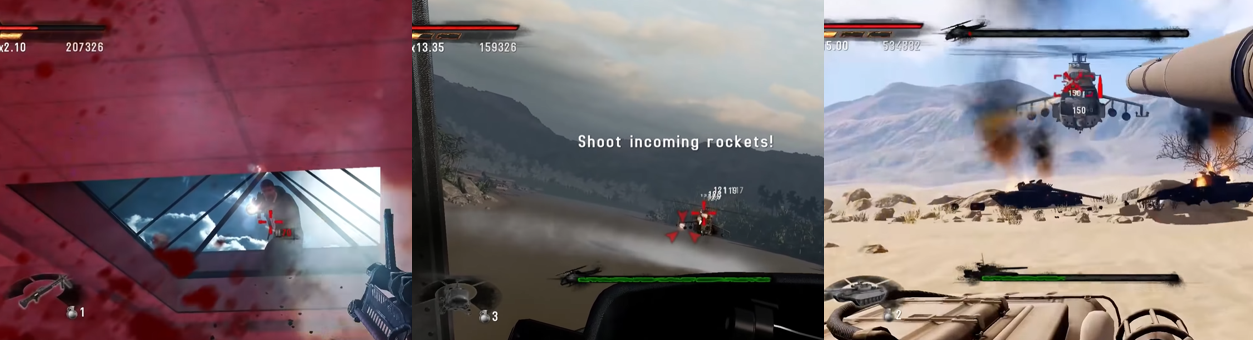
Game Corner: Rambo: The Video Game (Xbox 360)

Released: 21 February 2014
Developer: Teyon
Also Available For: Arcade, PC, and PlayStation 3

The Background:
In 1972, David Morrell’s First Blood was published; a harrowing tale of the horrors of the Vietnam War, the book was well-received upon release eventually led to a live-action adaptation directed by Ted Kotcheff and starring Sylvester Stallone. A commercial success, First Blood (Kotcheff, 1982) is widely regarded as one of the most enduring and influential movies of its genre and was followed by a series of successful and popular action films that helped make Stallone a household name. John Rambo had featured in a number of videogames, most of which were based on the more action-orientated sequels rather than the more introspective First Blood, before Reef Entertainment acquired the rights to the franchise in 2011. Hoping to capitalise on the recent success of Rambo (Stallone, 2008) and the upcoming The Expendables 2 (West, 2012), Reef opted to use voice clips and dialogue ripped straight from the movies for their rail-shooter rather than record new dialogue with existing actors or soundalikes. This was one of many criticisms levelled against the game upon release; critics were equally unimpressed with the game’s over-reliance upon quick-time events (QTEs), the lacklustre enemy intelligence, and the game’s short length and Rambo: The Video Game was generally regarded as being a disappointing and mediocre use of the license. However, since today marks the anniversary of First Blood’s release, this seems like the perfect time to take a look at this poorly-received shooter and see if it truly deserves its overwhelmingly negative reputation.

The Plot:
Rambo: The Video Game sees players take control of John J. Rambo (and one of his allies, if you have a friend to play alongside) and reenact key events from the first three movies. This sees Rambo enduring horrendous torture in Vietnam, battling bigotry in Hope, Washington, infiltrate the Vietnam jungle to rescue a number of captured soldiers, and finally stand against a Soviet invasion of Afghanistan.

Gameplay:
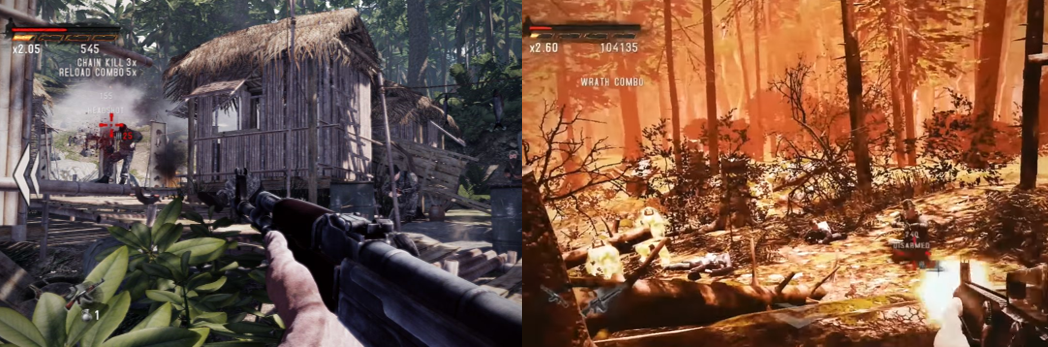
Rambo: The Video Game is a first-person rail shooter that places you into the role of Rambo (or the likes of Colonel Sam Trautman and Co Bao) and has you playing through a number of missions that are either based on key moments from the first three films or directly recreate some of the most iconic moments of Rambo’s film career. Since it’s a rail shooter, your control and movements options are a little limited; Rambo moves as the story dictates and you’re left controlling the aiming reticule with the right stick and holding the left stick to take cover from fire. The Right Trigger will see you fire one of your two main weapons, which can be switched with either Y or the directional pad (D-pad), and you can occasionally use an alternate fire mode with the Left Bumper.

Shoot down your enemies to enter a Wrath state and unleash the full force of Rambo’s rage.

Rambo can reload his weapon with either X or the Right Bumper; this will bring up a small reloading wheel and you’ll need to press the button again to reload faster to grant yourself additional ammo (though your overall supply is unlimited). Press it too soon or too late and your gun will jam, giving you less ammo and slowing down your reload time, thus leaving you vulnerable. LB and the B button also allow you to throw one of your limited supply of grenades, while the Left Trigger provides you with an aiming lock to target specific enemies, and you can also use the D-pad to cycle through different types of arrowheads once they’ve been unlocked. As Rambo kills enemies, scoring headshots or disarming them or blowing them to pieces by shooting explosive barrels, he’ll not only earn points but also fill up his “Wrath” bar. When a segment of this is filled, players can press X to enter “Wrath” mode, which slows down time, highlights enemies using their body heat, and refills Rambo’s health for every kill he performs during this limited burst of rage. Rambo: The Video Game allows you to play missions in three different difficulty settings: Private, Sergeant, and Green Beret; each one tweaks the aggressiveness and competence of the enemies, provides a different number of checkpoints, and makes quick-time events (QTEs) either easier or harder. If you’re playing on the easiest setting, you’ll be blessed with an unlimited number of checkpoints but won’t earn as many points for your playthrough; Sergeant or higher will limited your checkpoints to five and three, respectively, and end your game if you run out, though you can lower the difficulty setting from the death screen if you’re having a hard time. As you gun down enemies, you’ll rack up a score multiplier, which is key to increasing your final ranking at the end of each mission; you’ll also gain extra points for your accuracy, headshots, the difficulty setting, and how many deaths you suffered during the mission, promoting more efficient and calculated playthroughs on higher difficulty levels in order to level Rambo up, gain Skill Points, and upgrade his stats and unlock Perks and increase his combat proficiency.

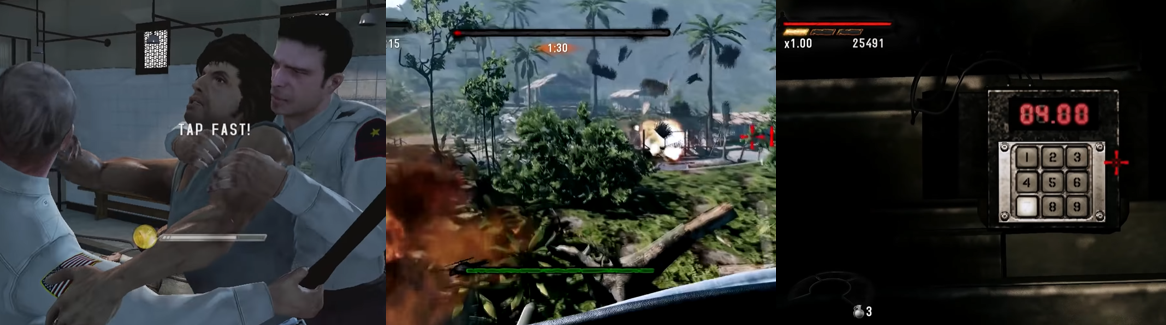
QTEs, stealth sections, and explosive vehicle gameplay help add some much needed variety.

However, it’s not just about going in all guns blazing; Rambo will also need to take up his bow and arrow or his iconic knife and sneak through the woods, jungle, or under cover of darkness to take out enemies undetected. This means completing a number of QTEs, which award additional points for pressing the onscreen prompt at the last minute or tapping the button as fast as possible; while QTE time is severely reduced on higher difficulties, the onscreen prompts are always the same so you can simply memorise their order and concentrate on your timing. Sometimes these will crop up mid-mission to have you avoid incoming bullets or mortars, and one particular mission offers you the choice between a stealthy route or a more action-orientated path. You’ll also come across “Cautious Enemies”, indicated by a ! prompt, who will one-shot you if they spot you; enemies can also lean over or shoot through your cover and be bolstered by “Commanders”. Gameplay is given a little variety by the few times you take control of a mounted gun or a helicopter to wreak havoc on the immediate area. These sections are timed and involve blasting at the Hope police station, assaulting a Vietnam base from above, destroying mines and boats while sailing down a river, or blasting away at Soviet forces and their vehicles. These moments of intense action are where the game really excels, though the controls are a little slippery and it can be difficult to aim at your targets with the crosshair slipping all over the screen. This crops up again as Rambo is tasked with disarming and wounding Hope’s police officers for extra points; you can kill them as normal, but you get more points for disarming the cops, which is difficult to do without taking a lot of damage so it’s probably best to turn off the aiming assist option for this mission to make things easier. While sneaking through the Soviet base in Afghanistan, you’ll also have to follow onscreen prompts to arm explosives and can shoot at glowing sections of the cavernous environment to crush your enemies under boulders. If you’re playing alone, you can share your ammo with Co Bao in Vietnam by pressing Y at the right time and she’ll help you out with cover fire, and you’ll even have to take out snipers from afar in Afghanistan. Although the game starts of pretty simply, with you blasting at Viet Cong and diving to cover to reload and catch your breath, things quickly ramp up and get very frustrating and unfair as combinations of the game’s most formidable and annoying enemies ambush you, leaving you on the back foot if you’re out of grenades; things are made all the more maddening by some wonky hit detection than can see your point-blank shots miss or enemies hitting you through normally impenetrable cover.

Graphics and Sound:
I’ve played Rambo: The Video Game in the arcades before; there, on a big screen with a real (albeit plastic) gun in your hand, the game looks and plays pretty well for a standard light gun shooter. However, on home consoles, the game is pretty much an embarrassment from top to bottom; while the missions do a decent enough job of bringing to life the dark, dank jungles of Vietnam and recreating the town of Hope and the Soviet cave from the films, there’s a lot of graphical pop up and corners cut here as it’s simply a rail shooter and you’re not really meant to be stopping and taking in the details around you. Similarly, enemy models are decent enough, but ragdoll all over the place at times and you’ll see the same enemy types again and again with very little variation.

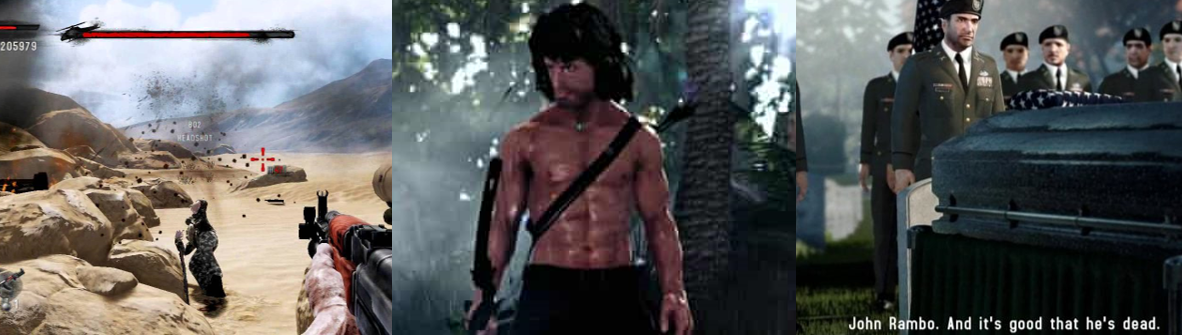
While locations are okay, the character models, music, and audio dialogue are all absolutely dreadful.

The actual character models are pretty laughable; Rambo himself looks more like an off-model action figure than the surly Stallone thanks to his ridiculous mane of a haircut. Trautman doesn’t look too bad, but hardly any of the corrupt cops from Hope resemble their onscreen actors. The game’s story is framed as a series of flashbacks at Rambo’s “funeral” as some nameless, unknown military man gives those in attendance a rundown on Rambo’s career and reputation in order to afford him some anonymity for his excursion into Afghanistan. This allows the game to recreate the most memorable moments of the films with the absolute bare minimum of effort; the music is dreadful, repeating in embarrassing loops mid-mission, but it’s the voice acting where the game really falls flat. Stallone and Richard McKenna’s audio are ripped right from the films, making their words distorted and wildly inconsistent and hilariously out of context at times, and only emphasising the cheapness of the title.

Enemies and Bosses:
Rambo will gun down a whole host of nameless, faceless, interchangeable groups of enemies themed after each of the game’s missions: Viet Cong, Hope’s police department, and Soviet forces all try to fill Rambo with holes, popping up from the background, the sides of the screen, and rolling in to take shots at you. Enemies make use of cover to avoid your shots, can have their hats shot off, and some can even be disarmed to render them harmless to you but, for the most part, they are easily offed with just a few shots. Soon enough, you’ll encounter more formidable and annoying enemies, such as grenadiers (who take cover and toss grenades you can shoot out of the air), “Heavy” enemies covered in armour and vulnerable only in their face masks, and “Flamers” who wield flamethrowers and force you to shoot at their flame tank. Commanders will bolster the morale and efficiency of all onscreen enemies, so you should prioritise taking them out, though you must duck behind cover when turrets are rolled out into the field as they’ll shred you pretty quickly. Snipers, armoured enemies, and groups of these foes can whittle your health down in no time at all so it’s best to make use over cover, shoot any nearby explosives, and try to get off some one-shot headshots to off your enemies as quickly as possible.

Some familiar faces and final encounters close out each of Rambo’s explosive adventures.

Each of the game’s missions includes a timed sequence where Rambo must destroy parts of the environment, usually by making use of a large cannon or a helicopter but, in Afghanistan, you’ll also be hounded by helicopters and tanks that you cannot destroy and must either avoid by taking cover or run past by eliminating all onscreen enemies (and objective the game makes frustratingly vague) and completing some QTEs. Each mission culminates in something that can be generously described as a boss battle; after laying waste to the Hope police station, you’ll need to avoid Sheriff Teasle’s gunfire by pressing the onscreen prompts when it’s safe to move around, then desperately shoot at him when he peeks out at you from his elevated position. After laying waste to his base with your explosive arrows, you’ll find Lieutenant Tay far less of a challenge as you simply have to fire an arrow at him to blow him up, but you’ll need to take the controls of a helicopter and frantically fire your bullets and rockets at an enemy chopper to finish Rambo’s redemption in Vietnam. Finally, after a harrowing rescue mission in Afghanistan that sees you struggling past formidable and frustrating groups of various enemies, you’ll take the controls of a tank and get into a ground-to-air firefight with Colonel Alexei Zaysen. Jeeps and soldiers run around distracting you, but your primary concerns are Zaysen’s missiles and the tanks, which can severely reduce your vehicle’s health and destroy it in one shot, respectively. You’re thus forced to frantically fire your main gun and your cannon like a madman, desperately hoping to shoot down the missiles and destroy your targets before they can do too much damage, before finally ending Zaysen’s threat in this surprisingly aggravating final showdown.

Power-Ups and Bonuses:
Aside from your Wrath state, there aren’t any in-game power-ups to make use of beyond being tossed a grenade or making use of explosive barrels or other environmental hazards. You don’t need to worry about picking up ammo and health is restored in Wrath mode, so your primary focus should be on staying alive, killing as many enemies as possible, and keeping your multiplier chain and accuracy high. This will net you the Skill Points you need to level-up and improve your efficiency; these can be spent upgrading your resistance to damage, your grenade inventory, the power of both light and heavy weapons, and extending the duration of your Wrath bar. When you level-up high enough, and complete certain requirements (known as “Trautman Challenges”), you’ll unlock additional weapons to take with you into each mission, which can definitely turn the tide in your favour in the game’s tougher stages. You’ll also unlock up to three Perk points and a variety of Perks that allow you to perform perfect QTEs or gain increased health and ammo while reloading or killing enemies in Wrath, for example.

Additional Features:
There are twenty-seven Achievements on offer in Rambo: The Video Game; the vast majority of these are tied to you getting at least a two-star rank on every mission, which will require you to beat the game in at least Sergeant mode, while others include maintaining a high chain multiplier, using every weapon in the game, completing it on Green Beret mode, and killing a total of 3000 enemies. Sadly, none of this is easily accomplished and meeting these criteria quickly becomes a very laborious and needlessly frustrating process as achieving even a two-star rank can be more trouble than it’s worth at times. The game can also be played in two-player co-op, which is very much appreciated and probably makes some of the tougher sections a bit easier, but there’s no head-to-head multiplayer mode and Trautman’s “challenges” amount to fulfilling certain objectives (which you can’t review in-mission) to unlock new weapons. If you simply must have more Rambo, there was some downloadable content released for the game that included some additional missions and Achievements, but I can safely say that I won’t be checking this out any time soon given how infuriating this game can be at times.  

The Summary:
I’d heard nothing but bad things about Rambo: The Video Game; however, even after my last few attempts to play the arcade version resulted in my coins being eaten by the machine, I maintained that it would be an inoffensive enough rail gun shooter to blast through and rack up some easy Achievements. Instead, what I got was an absolute slog of a gaming experience; bland environments which, while somewhat faithful to the movies, are way too dark, unimpressive and frustrating enemies, and a lack of variety really bring down the otherwise enjoyable enough gameplay. The stealth and QTE sections are okay, if painfully simple, and the parts where you’re in control of heavy ordinance and vehicles can be a lot of fun, but the presentation is just so cheap and rushed. The muted dialogue ripped right from the movies is the most glaring offense, of course, but the lack of gameplay options, the stringent criteria for unlocking stuff, and the odd little glitches and annoyances peppered through the game definitely don’t make it worth investing your time and money in when there are far better first-person shooters out there. It’s a shame as there’s definitely a lot of potential here, but the execution screams “cheap cash grab” and you really won’t be missing out on all that much if you skip this title, which I’d argue even die-hard Rambo fans would struggle to find enjoyable.

My Rating:

Rating: 1 out of 5.

Terrible

Have you ever played Rambo: The Video Game? If so, did you enjoy it or were you as disappointed by it as I and many others were? What did you think to the Wrath system and the recreation of the film’s moments? Were you also disturbed by the poor quality character models and audio clips? Which Rambo videogame, or videogame appearance, is your favourite? Which of the Rambo films is your favourite? Whatever your thoughts on Rambo, drop them below or leave a comment on my social media.

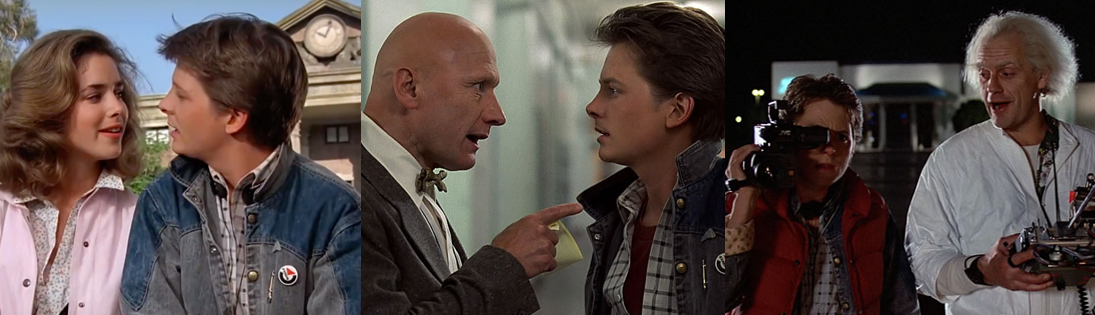
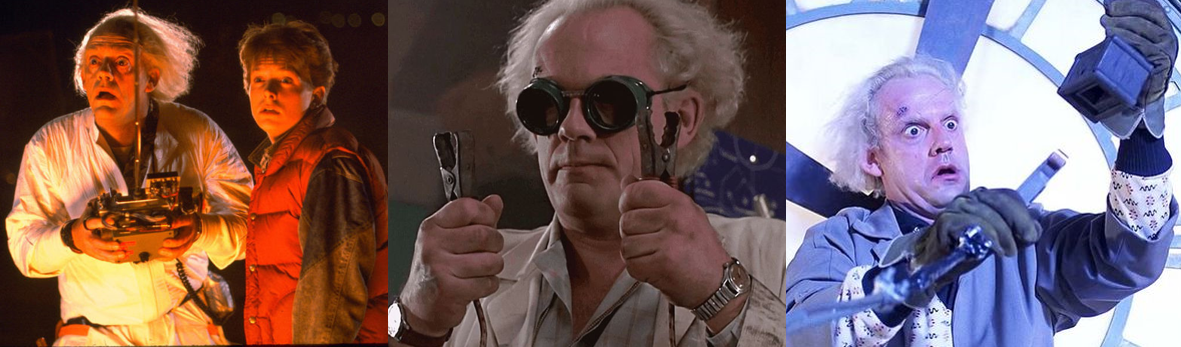
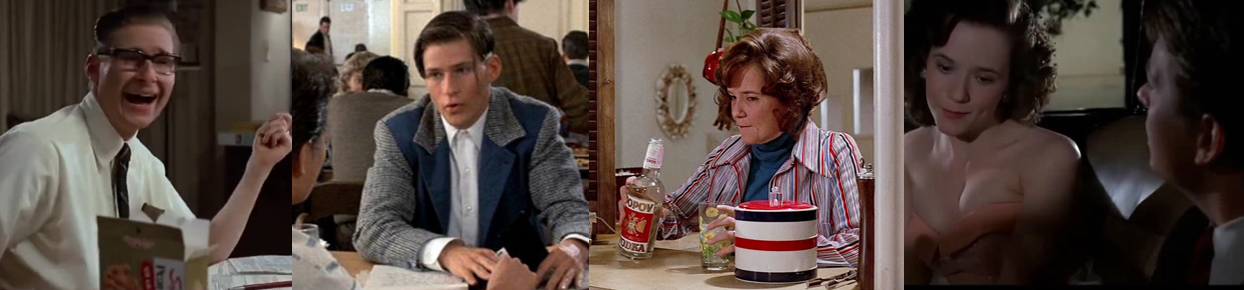
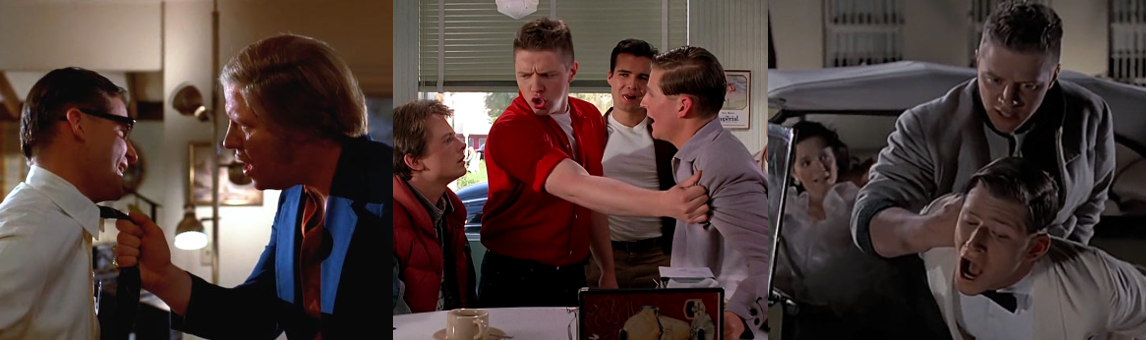
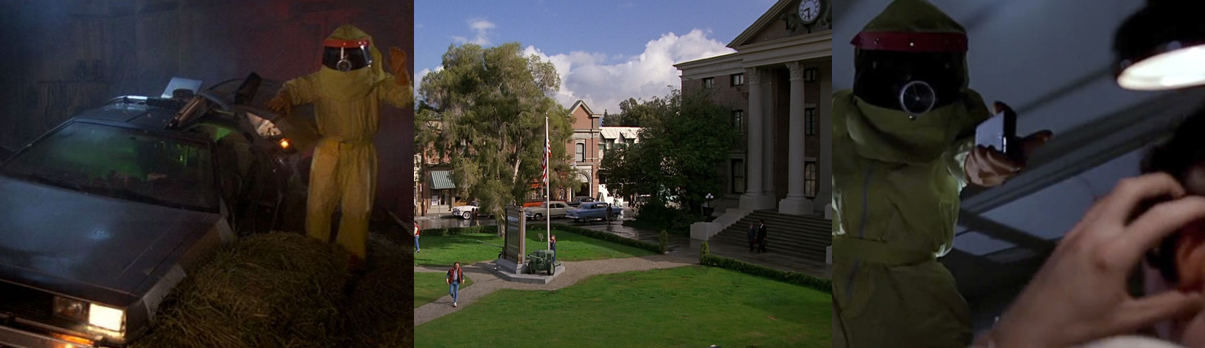
Movie Night [Back to the Future Day]: Back to the Future


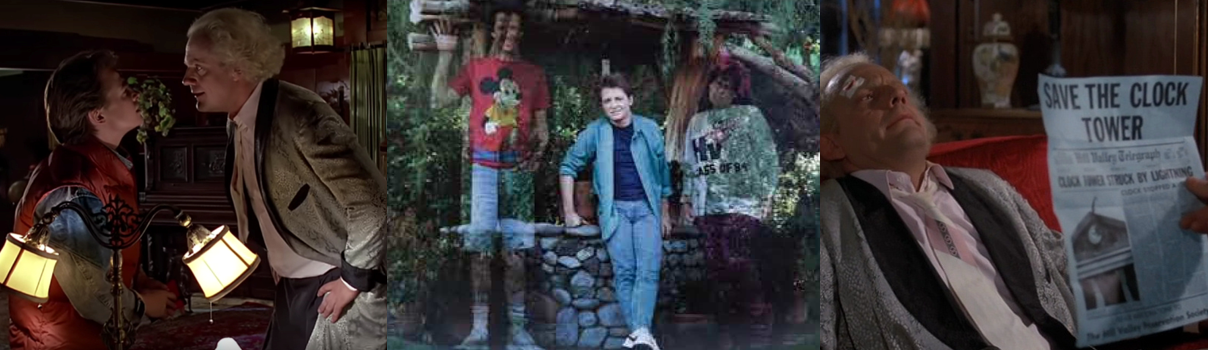
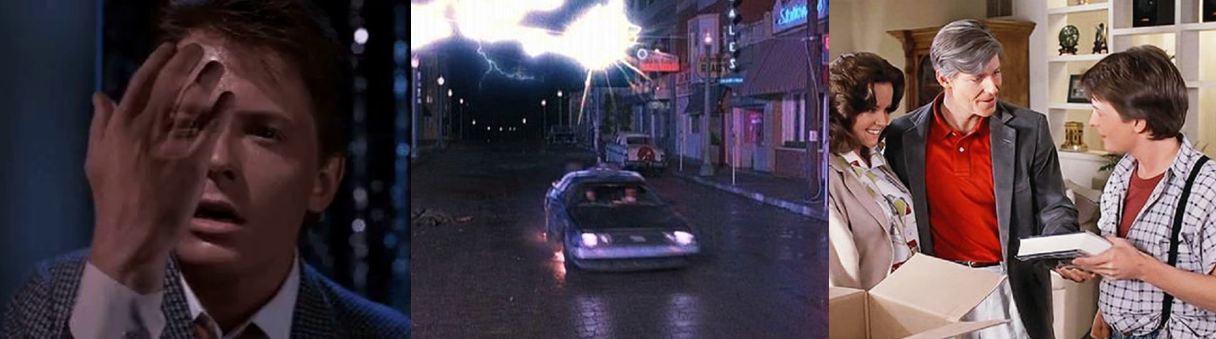
In Back to the Future Part II (Zemeckis, 1989), Marty McFly (Michael J. Fox) travels to October 21, 2015, which is known asBack to the Future Day” to celebrate the franchise and science.


Released: 3 July 1985
Director: Robert Zemeckis
Distributor:
Universal Pictures
Budget: $19 million
Stars:
Michael J. Fox, Christopher Lloyd, Lea Thompson, Crispin Glover, and Thomas F. Wilson

The Plot:
High school student Marty McFly is accidentally sent back to 1955 in a time-travelling DeLorean built by his eccentric scientist friend Doctor Emmett “Doc” Brown (Lloyd). Trapped in the past, Marty inadvertently prevents his future parents’ meeting, which threatens his very existence, and is forced to reconcile the pair and somehow get back…to the future.

The Background:
Back to the Future was the brainchild of long-time collaborators Bob Gale and Robert Zemeckis, who wanted to develop a film about time travel but were struggling for a satisfying narrative and were desperate for a successful project after a number of critical or commercial failures. After Gale was inspired by his mother’s conflicting memories of his high school years, the duo worked on numerous versions of the film’s script, which was rejected and criticised multiple times during development (and even after the film was greenlit). Michael J. Fox was the duo’s first choice for the lead role but, when the in-demand youngster’s schedule wouldn’t allow him to sign on, they initially settled for Eric Stoltz. Although several scenes were shot with Stoltz portraying Marty, the filmmakers were dissatisfied with his performance and unique approach to the role and he was eventually replaced, with full pay, by Fox when the young actor’s busy schedule allowed him to participate. Initially, the time machine was conceived of as a refrigerator but, after concerns that kids would endanger themselves by climbing inside of fridges, the concept was re-worked into an automobile; Gale reportedly turned down a $75,000 deal to use a Ford Mustang in favour of the sleek and futuristic DeLorean. Three of the cars were purchased for the production and, though they were notoriously unreliable, the time machine became one of the most iconic vehicles in film history and creator John DeLorean personally thanked Gale and Zemeckis for using his unique, if flawed, automobile. Back to the Future was a big success at the time and eventually went on to gross just under $390 million worldwide. While the film was met with extremely positive reviews at the time, it has gone on to be regarded as one of the greatest science-fiction films ever made; the film’s presentation, performances, and comedic take on sci-fi drew significant praise and the film not only inspired two sequels and an abundance of spin-offs and merchandise but has gone down as one of the most influential sci-fi films ever made.

The Review:
Back to the Future is another of those formative, influential movies from my childhood; I was born in 1985, so I was watching this movie alongside the likes of Batman (Burton, 1989), Ghostbusters (Reitman, 1984), and The Terminator (Cameron, 1984) in the early-nineties and distinctly remember taping it when it aired on, I believe, BBC One. However, full disclosure, I was always more of a fan of the sequel; everything about it was bigger and better and I always found the first movie a little tame and mundane in comparison since I was far more interested in the exciting technology seen in the future and the plot of Marty revisiting the events of the first film. Over time, my appreciation for Back to the Future has definitely grown and I’ve come to regard it more favourably but it’s still the weakest of the three films for me, much like I see Star Wars: Episode IV: A New Hope (Lucas, 1977) the weakest of the original Star Wars trilogy.

Marty’s branded a slacker but just wants to make something of himself as a musician.

The movie follows the life of average high schooler and aspiring rock star Marty, who is a close friend and assistant of Doc’s. It’s never explained exactly how Marty and Doc met or became friends but there’s clearly a mutual respect and appreciation between the two; Doc depends on Marty to assist with his various science projects and ferry him equipment, while Marty gains the benefit of Doc’s inventions to help bolster his guitar playing. Though a good kid at heart, Marty suffers from all the usual foibles that befall a teenager: he’s easily distracted, a little clumsy, often loses track of time (he’s distraught to find out that he’s late for school, despite the fact that he’s wearing a watch and so should’ve known the time before arriving at Doc’s place), and is a little lazy at times. Because of this, he has earned a reputation with his principal, Gerald Strickland (James Tolkan), for being a “slacker” because he’d rather put his time and energy into hanging out with Doc, trying to steal a kiss from his girlfriend, Jennifer Parker (Claudia Wells), or practising his music. However, Marty’s lackadaisical attitude is clearly attributed to an uninspiring and discouraging family life; his father, George (Glover), is a meek and pathetic individual with few aspirations and his mother, Lorraine (Thompson), is a slovenly alcoholic. Neither set the bar particularly high for Marty or his siblings, who are equally unimpressive duds, and his father’s wishy-washy attitude is starting to negatively affect Marty’s perception of himself and his abilities, much to the boy’s dismay.

Doc’s an eccentric mad scientist who vows to help Marty return to his proper place and time.

Doc is the quintessential scatter-brained, well-meaning mad scientist; his home is little more than a giant garage filled with all kinds of gadgets and inventions of the Rube Goldberg variety that have been designed to automatically take care of menial chores such as turning on the television and feeding his dog, Einstein (Tiger), and a massive sound system for his young apprentice. Doc has been working pretty much around the clock for about thirty years on perfecting his time machine, which came to him in a moment of inspiration after falling off a toilet and hitting his head and envisioning the “flux capacitor” that makes time travel possible. Doc has not only sunk his entire family fortune and estate into the project, but has also acquired a consignment of plutonium from a group of Bolivian terrorists in order to power the machine; this sets in motion a chain reaction that kicks the film’s main plot off as the terrorists track down Doc, brutally riddle him with machine gun fire, and force Marty into the time machine and back to 1955. Luckily for Marty, the Doc of 1955 is every bit the same madcap scientist as the man he knew, except he lives in slightly better conditions and is frustrated by a string of unsuccessful and unremarkable scientific failures. At first, Doc is incredulous to Marty’s claims of being from the future, but his interest is piqued when Marty shares his knowledge of Doc’s life and past with him. Upon discovering the time machine and corroborating that it’s actually his invention, Doc is ecstatic to have finally invented something that works and instantly resolves to help Marty by any means necessary. Unfortunately, the flux capacitor can only work when fuelled by plutonium, a substance that’s not exactly easy to come by in 1985 and all-but-impossible to acquire in 1955. Thankfully, however, Doc is nothing if not adaptable and brilliant and suggests that a direct bolt of lightning could serve as a suitable substitute; thanks to Marty having advanced knowledge of an upcoming lightning storm, the two prepare to channel the lightning’s awesome power into the time machine, a plot that requires precise time and cobbled-together scientific equipment, but which is compromised by Marty jeopardising his very existence.

Marty is shocked by his father’s creative side and his mother’s promiscuity back in 1955.

This is, of course, a completely unintended side effect of Marty’s desperate escape; he had already witnessed the time machine proving to be a success, as it transported Einstein a few moments in time, and was preparing to wish Doc a farewell on his trip thirty years into the future, but the boy was so caught up in his fleeing from gunfire that he didn’t really think about exceeding eighty-eight miles per hour and what the consequences of this would be. Arriving in 1955, Marty is disorientated and in disbelief as he stumbles through downtown Hill Valley, and decides to turn to the only person who can possibly help him: Doc Brown. However, he runs into his father’s teenage self along the way; in 1955, George struggles with confrontations and is every bit the insecure and awkward character he was in 1985, only fuelled by teenage hormones and more interested in keeping his head down and writing science-fiction stories than pursuing girls or trying to stand out. Forgetting all about his mother’s whimsical story of how she met and fell in love with George as a teenager after her father (George DiCenzo) hit him with his car, Marty doesn’t even hesitate to push his would-be father out of harm’s way, thus taking the hit himself and altering his future. Marty thus finds himself being cared for by the young Lorraine, who instantly becomes infatuated with him. While George’s character is mostly the same, if not worse, between the two timelines, Lorraine’s is significantly different; in 1985, Lorraine has let herself go somewhat and is a jaded, cynical woman who disapproves of “girls chasing boys”, so Marty is shocked to find that she was such a horny, rebellious girl in her youth.

George has been bullied by Biff all his life but Marty teaches him the confidence to overcome his tormentor.

George’s lifelong tormentor is local bully and blowhard Biff Tannen (Wilson); in 1985, Biff works at the same miscellaneous company as George and uses his position as George’s supervisor and physical stature to intimidate George into lending him his car (which Biff totals while driving drunk and insists that George should compensate him for) and writing up his work reports. Biff’s personality is very much the same back in 1955, only he’s bolstered by being in the prime of his life and surrounded by a gang of cackling hyenas who eagerly follow his lead in tormenting the young McFly. An arrogant, loud-mouthed youth, Biff sees everyone as beneath him and revels in overpowering and intimidating “Buttheads” like George while lusting after Lorraine, whom he makes several uncomfortable and unappreciated advances towards. Obsessed with his car and determined to force Lorraine to accompany him to the “Enchantment Under the Sea” dance at their high school, Biff is a constant thorn in Marty’s side as his negative influence is largely responsible for George’s timid demeanour. Thus, in order to correct the timeline and ensure he’s not erased from existence, Marty has to bolster George’s self-confidence with his 1980’s sensibilities, and this inevitably means George having to summon the courage to not only approach Lorraine but also overcome Biff.

The Nitty-Gritty:
One area where Back to the Future makes an immediate impact is in its sound design; while Alan Silvestri’s bombastic and iconic theme doesn’t kick in until the time machine is first introduced, it provides the necessary emotional and dynamic punch to accentuate scenes with the time machine and help create a sense of awe at the DeLorean’s capabilities and design. The film is bolstered by two absolutely fantastic tracks from Huey Lewis and the News, “The Power of Love” and “Back in Time” (which, thanks to being covered as the theme song for the short-lived cartoon series (1991 to 1992), has become synonymous with the franchise for me), which perfectly capture the rock ‘n roll lifestyle Marty leads. Marty is even the lead singer and guitarist for a high school rock band, the Pinheads, and (thanks to singer Mark Campbell) concludes the film with a banging rendition of Chuck Berry’s “Johnny B. Goode”, unknowing birthing the musical genre that he loves so much!

After shaking his disorientation, Marty uses his 1985 technology and knowledge to his advantage.

Back to the Future is a film all about parallels and repeating elements, which would be continue throughout the two sequels; we get a decent amount of backstory and a good look at Hill Valley of 1985, in which the central clock tower has been damaged following a lightning storm and farmland has been converted into a sprawling mall and housing estates. When Marty arrives in 1955, he is stunned to see how different the town is; cars and clothing styles are dramatically different and lacking in denim and “life preservers”, the clock tower chimes, and technology is far behind the convenience and excess that Marty has grown up with. While the disorientation means Marty struggles at first to acclimatise to the time period (he’s initially mistaken for an alien, Lorraine’s family is confused by his talk of “re-runs”, and even Doc is sceptical of the idea of Ronald Reagan becoming president), he eventually uses his future knowledge and technology to his benefit. As the DeLorean and his radiation suit are mistaken for a spacecraft and alien suit, Marty uses this to his advantage to scare the wits out of the imaginative and sci-fi mad George; posing as “Darth Vader, an extraterrestrial from the planet Vulcan”, Marty hooks some Eddie Van Halen up to George’s ears with his Walkman and threatens to “melt [his] brain” if he doesn’t as Lorraine out to the dance.

Marty is against the clock to keep himself from being erased from existence.

For many people, Back to the Future was one of the most influential sci-fi films in establishing a clear and simple portrayal of time travel; the rules of time travel in Back to the Future may be a little different than in the sequels, but it approaches the element in a way that’s easy to understand and makes for great dramatic tension. The film presents time as a straight line of causality; while the present is currently in progress, the past has happened but can be changed and the future has also happened and can be affected by events in the past and present. When Marty saves George’s life, he endangers his very existence because now he will never be born; rather than addressing the mind-bending implications of such a “Grandfather Paradox”, the film uses this device as a ticking clock for Marty rather than immediately blinking him out of existence the moment he alters the timeline. The more it seems like Lorraine and George won’t get together, the more his brother, sister, and even Marty himself are erased from his photograph of the three from the future; indeed, Marty himself begins to fade away at the dance and is only restored to full health and vitality, his future assured, when George finally kisses Lorraine on the dance floor.

Marty secures his future, gets back to 1985, and finds things have changed for the better.

Marty continually attempts to use his knowledge of Doc’s impending fate to save his friend’s life, but the scientist vehemently rejects wanting to know too much about his own future; concerned about the metaphysical impact this could have on reality and the timeline, Doc is focused only with helping Marty right what he put wrong and getting him back to the future, and is content to let fate play out as uninterrupted as possible. Against all odds and with time literally against him, Doc is able to set up an elaborate system of wires to channel the bolt of lighting into the flux capacitor and send Marty back to 1985; upon arrival, Marty desperately races across town to save Doc’s life and is stunned to find that his friend took his warnings to heart and came prepared with a bulletproof vest this time around. While Marty doesn’t notice subtle changes to the timeline (Twin Pines Mall has become Lone Pine Mall), he awakens to find his home life dramatically different compared to what he left behind: his parents are deeply in love, his father is a published science-fiction author, and his brother and sister are both successful and attractive. George and Lorraine show nothing but encouragement and love towards their kids and George’s knockout punch to Biff has reduced the once unruly bully to a meek car washer who ekes out a humble existence. Just as the film ignores the plot hole of why George and Lorraine don’t recognise Marty as the mysterious “Calvin Klein” who brought them together and changed their lives so much, it also glosses over the fact that Marty has interfered so heavily in the timeline that the alternate-1985 he returns to would probably have produced a similarly different version of himself who might not have socialised with Doc. However, I maintain that Doc’s knowledge of the future meant that he probably took a proactive role in meeting and befriending the teen and ensuring that things played out as close to the original timeline as possible.

The Summary:
Although I admit to seeing the first Back to the Future as the weakest of the three films, it’s still an incredibly enjoyable experience; by focusing on the characters and infusing the script with a charming, bumbling comedy, the film expertly approaches the subject of time travel in a way that remains incredibly accessible and was massively influential on many subsequent time travel stories that followed. Sure, under close scientific scrutiny, the film’s depiction of time travel may go against what we understand of physics, but I don’t really think anyone watches Back to the Future, or any sci-fi film, expecting a lesson in quantum mechanics and, if you do, then you’re kind of missing the point. It’s a film made to entertain, and it certainly does that; it’s quaint focus on the 1950s allows it to be grounded in a way its bigger, better sequels aren’t as they veered more towards fantastical spectacle and, at its heart, it’s a story more about characters overcoming their insecurities and becoming the best versions of themselves. Marty initially despairs of his father’s weaknesses and wishes not only that he could be more assertive but also to avoid becoming him; when stranded in 1955, Marty has the opportunity to impart life lessons to his teenage father that help him to become a more confident and self-assured man in the future, thus changing all of their lives for the better and getting a better understanding of his parents and himself in the process. The relationship between Marty and Doc is equally pivotal to the film, and equal to the sci-fi elements surrounding the iconic DeLorean, and cemented the duo as one of the most amusing and memorable in all of cinema, and the film as one of the most exciting and poignant movies about a kid travelling back in time and being seduced by his teenage mother!

My Rating:

Rating: 4 out of 5.

Great Stuff

Are you a fan of Back to the Future:? How do you rate it compared to the other two films and which of the trilogy is your favourite? What did you think to the film’s depiction of time travel and the use of a DeLorean as the time vehicle? Were you a fan of the relationship between Doc and Marty and what did you think to the plot of Marty having to unite his teenage parents? If you had a time machine, what year would you travel to and why? How are you celebrating Back to the Future Day today? Whatever you think about Back to the Future, feel free to share your thoughts down below or drop a comment on my social media.

Back Issues: Marvel Family Comics #1

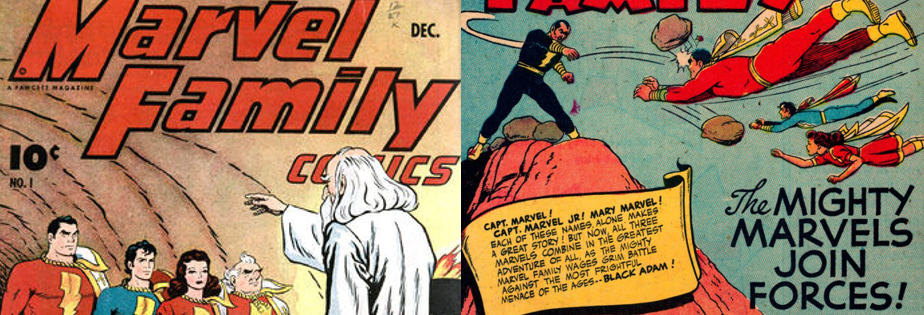
Story Title: “The Mighty Marvels Join Forces!”
Published:
December 1945
Writer: Otto Binder
Artists: C.C. Beck

The Background:
Following the incredible success of Clark Kent/Superman and Bruce Wayne/Batman over in National Comics (the precursor to DC Comics), Fawcett Publications desired their own colourful superheroes to get in on the new craze. While the initial plan was for a team of heroes, each sporting the powers of Greco-Roman Gods, Ralph Daigh made the executive decision to combine them into one superpowered entity to directly oppose Superman. Originally dubbed “Captain Thunder” and debuting in a comic published as both Flash Comics and Thrill Comics, trademark issues led to artist Pete Costanza suggesting the alternative name of “Captain Marvelous”, soon shortened to Captain Marvel, and the character was a big success for the publisher. Captain Marvel soon became a franchise all unto himself thanks to sharing his powers with a colourful extended family and, about six years after his debut, he and his Marvel Family met their dark opposite in the form of Teth-Adam/Black Adam, who had the same magical as the Big Red Cheese but was corrupted by greed and power. In his original form, Black Adam only appeared once in Fawcett’s original run but saw a new lease of life after the publisher was absorbed into DC Comics; under the direction of the likes of Jerry Ordway, Geoff Johns, and Peter J. Tomasi, Black Adam became a complex and aggressive anti-hero, one who was at times as reprehensible as the villains he opposed, and who was capable of great love and loyalty but also nigh-unstoppable wrath. Ranked as one of the most interesting anti-heroes in comicdom, Black Adam has also featured in many of DC’s animated ventures and, after nearly twenty years of Development Hell, finally set to make his live-action debut in 2022 with Dwayne “The Rock” Johnson in the role.

The Review:
By the time of this story, Captain Marvel had already shared his awesome powers (which grant him the wisdom of Solomon, the strength of Hercules, the stamina of Atlas, the power of Zeus, the courage of Achilles and the speed of Mercury whenever he shouts the magic word “Shazam!”) with his crippled friend, Freddie Freeman, his long-lost sister, Mary Bromfield to create a superhero family with them as the similarly powered and attired Captain Marvel Jr. and Mary Marvel alongside former con artist Dudley H. Dudley as the non-powered Uncle Marvel. As the story progresses, we’re treated to a recap of how this is possible but it’s basically thanks to the blessing of the Wizard, himself also called Shazam, who resides in a magical realm known as the Rock of Eternity. Billy’s first encounter with the Wizard literally amounted to him being summoned there, being bestowed with God-like powers, and then being directed by the Wizard’s spirit to put those powers to good use as Earth’s Mightiest Mortal. After saving Freddie’s life, Billy brought him to the Wizard and he was similarly empowered, while Mary was just able to transform simply because she shared Billy’s bloodline and the trio accepted Uncle Marvel as an honorary member/mascot because he means well despite his lack of superpowers. Quite how the Wizard is able to carve Captain Marvel’s continued adventures despite being a ghost is beyond me, but the mysterious old mystic also carries the burden of failure from his first champion, whom he called Mighty Adam before he turned to evil, was rechristened Black Adam, and banished to “the farthest star” for his crimes.

Black Adam returns for revenge after being exiled for thousands of years.

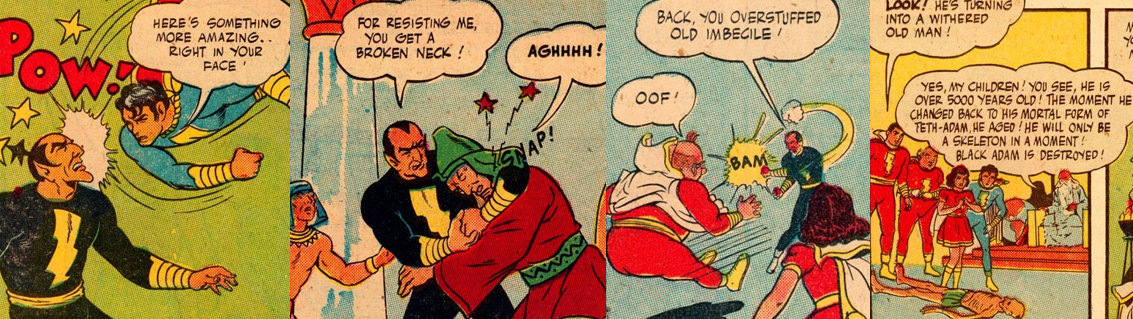
Before that can come back to bite Captain Marvel in the ass, though, our story switches over to the Big Red Cheese’s youthful alter ego, star child newscaster Billy Batson, who’s sent to the “astronomical observatory” to investigate reports of an unidentified object that’s hurtling its way towards Earth. While viewing the object (which is apparently traveling at the speed of light, which seems like something you wouldn’t be able to tell with a telescope such as this), Billy is forced to transform into Captain Marvel to save the astronomers life when his damaged telescope threatens to crush him. Freddie then returns the favour by saving Billy from being run over by a couple when they’re distracted by something flying overheard, which turns out to be the sinister Black Adam. Garbed in a black version of Captain Marvel’s costume (sans the cape) and sporting a widow’s peak and a permanent scowl, Black Adam has returned to Earth after five-thousand years of space travel hell-bent on conquering the planet. He wastes no time in causing an affray, blocking traffic, swiping aside cops, proving impervious to gunfire, and even breaking a cop’s back over his knee before Captain Marvel Jr. intercepts him. though momentarily amazed by the flying boy’s appearance, both Black Adam and Captain Marvel Jr. are stunned to find their powers are equally matched; when Captain Marvel joins the fray, his punch does stagger Black Adam but that’s about it as the three are equally matched in terms of power. Shocked to find that he’s no longer the most powerful man on Earth, Black Adam chooses to lose himself in the passing crowd so he can rethink his strategy and, after witnessing the two Marvels transform back and head to the Wizard for council, follows the two to get the revenge he has craved for centuries.

Despite all his great power, Black Adam is easily tricked into a defeat.

The Wizard’s spirit is distraught to learn of Black Adam’s return and regretfully tells them the story of how, five-thousand years ago, he bestowed the power of the Gods upon Teth-Adam and charged him with fighting the evils of the world as Might Adam. However, the Wizard chose poorly; the power immediately corrupted Mighty Adam, easily allowing him to overpower the Pharaoh’s guards and then snap his neck to claim himself ruler of Egypt! Mighty Adam’s reign was ridiculously short-lived, however, as the Wizard immediately showed up, dubbed him Black Adam, and banished him from Earth. It took the Wizard five-thousand years to figure out that his mistake was empowering a man, rather than a pure-hearted child, and he also underestimated Black Adam’s ability to breathe and fly through space, meaning it now falls to the Marvels to undo the Wizard’s mistakes. Unfortunately for the boys, Black Adam strikes at that very moment, choosing to bound and gag them and then plan to kill them to stick it to the Wizard (again, kind of daft as he could’ve just killed them on the spot but then we wouldn’t have a story, I guess…). However, after learning of Billy and Freddie’s disappearance, Mary and Dudley decide to ask the Wizard for help and arrive just in time to help fight with Black Adam; although Uncle Marvel is no match for Black Adam, he does untie the boys while Mary tries to fight him but Black Adam remains unfazed even when all three of them attack him at once! In the end, though, it’s Uncle Marvel who saves the day; after the Wizard relates that the only way to stop Black Adam is to force him to say his magic word, Uncle Marvel’s buffoonery is enough to trick Black Adam into doing so! Captain Marvel then delivers a good wallop to Teth-Adam’s face and the Marvels look on as the would-be tyrant’s body withers and decays before their eyes, apparently ending Black Adam’s threat once and for all.

The Summary:
One of the big appealing factors of Captain Marvel’s comics from this time was the artwork; C.C. Beck employs a cartoony, almost “rubber hose” style aesthetic that really helps the art and characters to pop out almost as much as their brightly coloured costumes, though the backgrounds and level of detail are noticeably lacking. This isn’t unusual for comic books of this time, but it is quite noticeable here, especially in the Rock of Eternity, which is an especially bland and lifeless environment save for the ridiculous depictions of the Seven Deadly Sins and the crude explanation of Shazam’s powers carved into the wall. Interestingly, if you’ve never read a Captain Marvel story before, “The Mighty Marvels Join Forces!” is actually a good place to start as the story wastes quite a bit of time recapping Billy, Freddie, and Mary’s origins when it could have been showcasing the villain of the piece a little more.

As brutal as Black Adam is, he doesn’t really get to do much and is defeated very easily.

Black Adam is built up reasonably well; right from the beginning, it’s clear that the Wizard carries a great deal of shame and regret for having made a mistake in empowering Teth-Adam and his looming threat remains in the background amidst such hijinks as a collapsing telescope and inattentive driver. Once he arrives, he certainly makes a visual impression; I always like it when a villain or anti-hero wears a dark version of a hero’s costume and the black really works for Black Adam. Unfortunately, he doesn’t really do all that much; he just kind stands around, laughing and mocking any attempts to harm him and easily manhandling any mortals who stand in his way. He does, however, show a mean streak that was actually rather shocking, even considering how morally ambiguous comics could be back then; Black Adam snaps a guy’s spine and breaks a guy’s neck, which is pretty brutal considering he uses his bare hands, but sadly that’s about as far as his actions go. He’s banished by the Wizard as soon as he seizes the throne and there isn’t really a proper fight between him and the Marvels since none of them can really harm or even faze the other, meaning he has to be duped into depowering himself, which seems like something even the arrogant and haughty Black Adam just wouldn’t fall for. I guess it works as a comedic twist of fate to have the bungling Uncle Marvel stumble upon the solution, but I also feel like there could’ve been a better way to neutralise Black Adam’s threat.

My Rating:

Rating: 2 out of 5.

Could Be Better

Were you a fan of Black Adam’s debut story? What did you think to the way he was portrayed, and defeated? Do you agree that the story was unnecessarily padded? Which of the Captain Marvel family is your favourite? What are some of your favourite Black Adam stories and moments? Are you excited for Black Adam’s live-action debut? Whatever your thoughts on Black Adam and Captain Marvel, feel free to leave them below or drop a comment on my social media.

Screen Time: Werewolf by Night

Air Date: 7 October 2022
Director: Michael Giacchino
Network: Disney+
Stars: Gael García Bernal, Laura Donnelly, Harriet Sansom Harris, Kirk R. Thatcher, and Carey Jones/Jeffery Ford

The Background:
Back in February 1972, Roy Thomas, Jeanie Thomas, Gerry Conway, and Mike Ploog (under the direction of the legendary Stan Lee) introduced readers to Jack Russell/Werewolf by Night in the pages of Marvel Spotlight. After a ridiculous ban kept Marvel from publishing stories about werewolves and other supernatural creatures, the writers were finally free to explore these elements, and Werewolf by Night, soon graduated to his own self-titled series later that same year. Coming from a long line of lycanthropes and sharing a complex history with Count Dracula and the cursed Darkhold, Jack Russell became a feral beast under the light of a full moon and was repeatedly targeted by a nefarious cabal known as the Committee, who also introduced the emotionally damaged vigilante Marc Spector/Moon Knight to Marvel’s readers. Despite being one of Marvel’s more obscure characters, Werewolf by Night was pegged for a big-screen adaptation back in 2001; after numerous drafts and delays, Crystal Sky Pictures seemed ready to begin shooting when the project simply vanished from their slate. Hopes for the Werewolf lived again, however, when Kevin Smith was denied use of the character for a 2019 project, and the character was officially announced to be a part of the Marvel Cinematic Universe’s fourth phase in a one-hour, horror-themed special for Disney+. Director Michael Giacchino drew specific inspiration from the classic monster movies of the 1930s and 1940s and promised that the special would include some of Marvel’s most famous monster characters, such as Doctor Ted Sallis/Man-Thing. Upon its release, Werewolf by Night was met with largely positive reviews; critics praised the aesthetic and brisk pace, and the homage to classic Hammer Horror films, while also noting that the characters and certain visuals were somewhat disappointing.

The Plot:
A group of monster hunters gather at Bloodstone Manor following the death of their leader and engage in a mysterious and deadly competition for a powerful relic, which will bring them face to face with a dangerous monster.

The Review:
I might not know much, if anything, about Werewolf by Night but I’m more than familiar with the Hammer Horrors of yesteryear, classic black-and-white terrors that laid the foundation for popular depictions of screen monsters such as Count Dracula, Frankenstein’s Monster, and Larry Talbot/The Wolf Man. I’m actually more a fan of the 1930 Hammer Horrors than the later renaissance spearheaded by the likes of Christopher Lee; there’s just something about the gothic aesthetic surrounding the likes of Bela Lugosi and Lon Chaney Jr. that I find endearing and appealing in its simplicity. Plus, those classic horrors are super brisk; you could probably watch all of them, or a good three or four, in just a few hours and that’s perfect for when you just want a short, sharp fix of horror rather than sitting through a two-hour feature film. Similarly, as someone who struggles to binge-watch even six-episode shows for these reviews, I couldn’t be happier that Werewolf by Night opts to simply be a short special presentation, clocking in at a little under an hour. I miss when Marvel used to produce one-shots to fill in gaps between movies and definitely think they would benefit from producing more one- or two-hour specials to flesh out some of their more obscure characters. Similar to how the old Hammer Horrors would open with some text or a voice over, so too does Werewolf by Night begin with an opening narration touching upon the malevolent monsters lurking in the darkness and those who hunt and kill them, with none being more prominent than the legendary Bloodstone family, whose patriarch has slaughtered monsters across the generations with the supernatural relic known as…well…the Bloodstone.

Jack and Elsa reach an agreement to allow him to free the Man-Thing and her to claim the Bloodstone.

Following the death of Ulysses Bloodstone (Richard Dixon), the Bloodstone is in need of a new master, a process determined by inviting monster hunters from all over the world to take part in a ritualistic hunt to establish who is worthy of this powerful relic. Ulysses is survived by his widow, Verusa Bloodstone (Harris) and his estranged daughter, Elsa (Donnelly); Verusa is Elsa’s stepmother and is greatly disappointed by Elsa’s lack of interest in continuing the family tradition. Once thought to be capable of surpassing Ulysses’s abilities, Elsa instead abandoned her duties and her training but is nonetheless determined to take the Bloodstone for herself. Verusa acts as the hostess for the gathering of hunters, with over two-hundred confirmed kills shared between the death-dealers. Jovan (Thatcher) is easily the most bombastic of the group, making an impression through his impressive beard and facial scars, though only Jack Russell (Bernal) can claim over a hundred kills just for himself. With the exception of Elsa, all present see their crusade as a righteous one, a mission of mercy for the cursed and their victims, though there’s a definite flavour of cult-like sensibilities to their hunt. The hunt itself takes place on the grounds of Bloodstone Manor, a dark forest that leads to an Maurits Cornelis Escher-like labyrinth guarded by members of the Time Variance Authority (TVA), which probably explains why the layout and logic of the labyrinth makes little sense. Sporting tribalistic make-up to honour his ancestors, Jack is randomly selected to head out into the woods ahead of the others and his life is deemed to be as fair game as the monster, and any of the other hunters. Despite his impressive reputation as a monster killer, it turns out that Jack isn’t there to hunt their quarry, the swamp creature we know as the Man-Thing (Jones/Ford), but is actually there to rescue him and even refers to him by his real name, Ted. Thus, Jack wants no part of the hunt and even suggests to Elsa that they forget they saw each other, Jovan is driven into a frenzy by his desire to earn the Bloodstone, attacking Elsa with his axe and being surprised and unarmed by her martial arts skill. She then uses Jovan’s axe to more literally disarm Liorn (Leonardo Nam) and kill him with his own wrist-mounted crossbow, proving that she hasn’t been neglecting her training in her time away from Bloodstone Manor.

Verusa triggers Jack’s transformation into the titular Werewolf and seals her fate.

Although the Man-Thing is incapable of communicating beyond a few grunts and creaks, Jack is fully capable of understanding him and promises to relieve him of the Bloodstone, which hurts and weakens him, and blast their way out of there and to freedom. Although Azarel (Eugenie Bondurant) isn’t quite so altruistic, her attack does lead to Jack and Elsa finding some common ground and agreeing to help each other in return for her getting the Bloodstone and him getting the Man-Thing to safety. Although sceptical about Jack’s motives and his relationship to Man-Thing, Elsa is duly convinced that the creature is only a threat when provoked or senses a threat when he calms down after she reluctantly refers to him by his real name and takes Jack’s advice to treat him like an old friend rather than a monster. After some pratfalling with the explosives, Jack succeeds in freeing his friend but, when he tries to pick up the Bloodstone, it rejects him because he’s also hiding a monster within himself. Naturally, Verusa is disgusted by Jack’s charade and has him locked up with Elsa for her part in freeing the Man-Thing; although embittered that Jack kept his secret from her, Jack assures Elsa that he has “systems” in place to manage his monstrous side and that he works hard to keep that part of himself from hurting others. Unfortunately for him, Verusa doesn’t need to wait for the next full moon to witness Jack’s transformation as she possesses the Bloodstone; fearing what he’s capable of, he desperately tries to remember Elsa’s scent and begs for a merciful death, but Verusa forces him to undergo a startling transformation into a ravenous werewolf with her family relic. Naturally, the Werewolf goes on an animalistic rampage, savaging and tearing his way through anyone he deems a threat, but even his supernaturally-enhanced strength is nothing compared to the debilitating power of the Bloodstone, necessitating Elsa’s intervention to keep him from being killed. Retrieving the Bloodstone, Elsa is spared an evisceration after showing compassion for the Werewolf and Verusa meets a gruesome end when the Man-Thing gets his hands on her.

The Summary:  
Werewolf by Night establishes itself as a very different kind of Marvel production right from the start; not only is the entire feature in black-and-white like the old Hammer Horror films, but the Marvel Studios logo and main theme have been altered to evoke the gothic horror aesthetic of those classic horror films, all the way down to flashes of lightning over the logo, a suitably Hammer-esque orchestral score, and even film grain to give it that weathered, 1930s feel. Everything about the special screams Hammer Horror, right down to the gothic Bloodstone Manor and its hieroglyphics depicting the generations of monster hunting to the stuffed monster heads adorning the walls and the presence of the Bloodstone family crypt. In fact, the only time colour is even used in the special is when the Bloodstone itself is on screen, with the gem shining with a piercing blood-red light and breathing colour into the film after Elsa claims it in the finale. Sadly, the visual presentation doesn’t extend to the cast of characters; it takes about thirty minutes to learn Jack’s name and none of the characters introduce themselves so it was pretty difficult to tell who was who. None of the hunters except Jovan really stood out and we never really get a sense of who they are or their backgrounds; even Elsa and Jack’s origins are left frustratingly vague and Verusa came across as a cackling pantomime villainess that, while suitable for the Hammer vibe of the special, didn’t exactly make her any more nuanced than wanting to destroy all monsters simply because they are monsters.

Both Man-Thing and the Werewolf end up being startlingly brought to life.

On the flip side, I have to say that it’s great to see a character as obscure and visually interesting as the Man-Thing finally make it into the MCU after years of subtle allusions and references. Although an entirely CGI creature rather than being a marriage of digital and practical effects like in the 2005 film, the Man-Thing certainly impresses when onscreen. While the Man-Thing is supernaturally powerful and capable of melting a man’s head with one giant claw-like hand, he also showcases a childish demeanour; the creature is in pain and frightened by his current situation and desperate to get to safety, there’s a definite sense of victory when Jack and Elsa are able to work together to free the lumbering swamp monster from his pain and bondage. Even better, we get to see the Man-Thing in full colour and even handing Jack a cup of coffee after he recovers from his transformation, showing that the creature isn’t just some mindless beast and has not just a measure of intelligence but also a sense of humour. Interestingly, Werewolf by Night bucks a trend of many werewolf tales by not drawing upon the classic An American Werewolf in London (Landis, 1981) for its transformation sequence; instead, Jack’s transformation is largely relegated to a CGI light show and silhouette, which adds an air of mystery to the Werewolf, for sure, but half the fun of a werewolf feature is the gruesome body horror of the transformation. The Werewolf’s look, in the few instances where he is shown, is a nice throwback to The Wolf Man (Waggner, 1941); a furry, voracious humanoid wolf, the Werewolf makes short work of Verusa’s TVA guards, mangling, mauling, and manhandling them as Elsa takes out the last two hunts, all while framed by flashing lights and with a generous helping of gore splattering across the screen.

While I enjoyed the Hammer Horror homage, I don’t feel the special lived up to its potential.

Ultimately, I’m somewhat torn; I enjoyed the visual presentation of the special, which is unlike anything else we’ve seen in the MCU and a fantastic throwback to the classic 1930s Hammer Horror films, but the characterisations are severely lacking. Obviously, it’s only an hour-long special so there’s only so much you can cram in there, and there’s something to be said for keeping an air of mystery around Jack and the Bloodstone family. However, it’s hard to care about the other hunters when none of them are ever named onscreen and they’re simply there to be cannon fodder for Elsa and the Man-Thing; even the appearance of TVA agents is a real head-scratcher and is never explained, nor do we learn anything about the Man-Thing’s backstory even as a throwaway line. The effects are pretty decent, but we don’t get to see the titular Werewolf until the last twenty minutes or so and even then he’s kept in shadow and framed in a way that keeps him monstrous to enhance his threat. I enjoyed seeing the Man-Thing in action, but I guess I was just expecting more monster action from this monster-centric special. I can understand wanting to showcase Jack as a human being trying to suppress his monstrous alter ego and I enjoyed that he goes out of his way to help monsters rather than hunt and kill them, but I didn’t find him a particularly compelling character. Similarly, there was some nuance to Elsa and potential in her conflict with her stepmother and her father’s legacy, but it just wasn’t expanded upon sufficiently enough for me. She’s just another bad-ass female fighter who distances herself from her family’s actions, but it’s not really explained why and all we’re really told is that Verusa and Ulysses recently Elsa for not living up to her potential (yet we see she’s the most capable fighter of all the hunters). In the end, I applaud the attempt at something new, visually and stylistically, and the introduction of monsters to the MCU, but, as presented, Werewolf by Night could easily be skipped or ignored at this point and I’d be surprised to see it directly referenced in later MCU projects.

My Rating:

Rating: 2 out of 5.

Could Be Better

What did you think to Werewolf by Night? Were you disappointed by the lack of insight and characterisation in the hunters? What did you think to Man-Thing, his visuals and his portrayal? Would you have liked to see more monsters featured in the special? What did you think to the Werewolf, his transformation and his bloody rampage? Did you enjoy the references to classic Hammer Horror films? Would you like to see more from these characters, and are there any specific Werewolf by Night and Man-Thing stories you’d like to see adapted into the MCU? Whatever your thoughts Werewolf by Night, leave them below or drop a comment on my social media.

Talking Movies: V/H/S/2

Talking Movies

Released: 12 July 2013
Directors: Simon Barrett, Adam Wingard, Eduardo Sánchez and Gregg Hale, Timo Tjahjanto and Gareth Huw Evans, and Jason Eisener
Distributor:
Lionsgate
Budget: Unknown
Stars:
Lawrence Michael Levine, L.C. Holt, Adam Wingard, Hannah Hughes, Jay Saunders, Oka Antara, Fachri Albar, Hannah Al Rashid, Rylan Logan, and Samantha Gracie

The Plot:
Two private investigators are hired to look into the disappearance of a boy and find his home deserted except for a stack of VHS tapes, each of which contain a gruesome horror story in the form of found footage depicting a man recieving an ocular implant that allows him to see ghosts, a keen biker who is turned into a flesh-hungry zombie, a film crew investigating a bizarre cult, and a violent alien abduction.

The Background:
In 2012, Bloody Disgusting founder and film producer Brad Miska reached out to the directors and creative minds he had met through his website to create V/H/S (Wingard, et al, 2012), a horror anthology that was positively received at the 2012 Sundance Film Festival, received mixed reviews upon release, and managed to gross $1.9 million. A sequel (originally titled S-VHS) was rushed into production in 2012 and featured an abundance of new directors and creators joining a handful of returnees from the first film. Like its predecessor, V/H/S/2 first debuted at the Sundance Film Festival before being widely released on video-on-demand and at a limited number of cinemas. The film’s $805,574 gross meant it made significantly less than the first film but, in comparison, reviews were far more positive and a poorly-received third entry followed in 2014.

The Reviews:
As with the first film, because V/H/S/2 is an anthology film made up of a framing narrative and several short horror stories, I’m changing up my usual review format to talk about each segment individually before sharing my thoughts on the overall film.

Two private investigators discover a disturbed young man’s collection of gruesome videotapes.

As in the first film, V/H/S/2 features a framing narrative that allows for the film’s short stories to be told; “Tape 49” (Barrett) follows Larry (Levine) and Ayesha (Kelsy Abbott), two unscrupulous private investigators who are hired by a concerned mother to check on her son, Kyle (Holt), who has been missing for a few days. When they arrive at the college kid’s house, they find it to be deserted; stacks of VHS tapes are piled up everywhere and Kyle’s laptop has been left recording a video. Kyle’s video log shows him discussing his obsession with the tapes and, while Larry searches the rest of the house, Ayesha checks out some of the tapes. After each short, the film cuts back to Ayesha, who comes to be physically affected by what she has watched (which, according to Kyle, must be viewed in a certain order to have the greatest effect) and is unaware that she is being stalked. Eventually, Larry comes in the room to find Ayesha has killed herself with a bullet to the head but she returns to attack him as a zombie after he watches the final film. Though he’s able to fight her off, Larry ends up being strangled to death by Kyle, who attempted to kill himself on camera to make his own tape and ended up blowing his entire lower jaw off in the process! Regardless, he delivers a thumbs up, indicating that he succeeded in his goal.

Herman’s ocular implant allows him to see and be tormented by vengeful spirits.

The first short story is “Phase I Clinical Trials” (Wingard), which puts a unique spin on the first-person, found footage concept by telling its story through an ocular implant inserted into Herman’s (ibid) head to replace his eye. Though disturbed to find that his every moment will be recorded throughout the trial period, Herman has little choice but to accept the restrictions that come from the implant, which Doctor Fleischer (John T. Woods) explains may also be accompanied by some “glitches”. After arriving home, Herman is spooked to find his game controller moved while he goes to make some tea, the kettle knocked from the stove when he leaves the kitchen, an invisible figure laying in his bed, and a bloodied phantom (Brian Udovich) who gives him a fright. The bloody man is joined by an unsettling child (Corrie Lynn Fitzpatrick) and the two terrify Herman, banging on his bathroom door and forcing him to sleep in the bathtub out of fear. The next day, he finds his house has been ransacked by the ghouls and is visited by Clarissa (Hughes), who received a similar implant to restore her hearing and, like Herman, has been tormented by ghosts ever since. Clarissa believes that removing the implants would simply take away their ability to perceive them and that the spirits grow stronger the more they are interacted with. Although she tries to use sex to take his attention away from the disturbing spirit of her uncle (John Karyus), who it’s implied assaulted her in the past, she’s dragged into his pool and, despite his best efforts to save her, is drowned by a particularly malevolent, invisible entity. Desperate to make the ghosts go away, Herman uses a razor to slice out his implant, however this only leaves him blind to their presence and allows them to easily overwhelm him and choke him to death with the same device.

Mike’s ride through the woods ends with him becoming a mindless zombie.

“A Ride in the Park” (Sánchez and Hale) follows keen cyclist Mike Sullivan (Saunders), who affixes a camera to his helmet and his handlebars before going for a morning cycle through the woods. Almost immediately, however, he runs across a hysterical girl (Bette Cassatt) who begs him to help her boyfriend; seeing that the poor bloke has been set upon by shambling, flesh-hungry zombies, Mike tries to escape with the girl but she pounces on him and tears a chunk out of his neck. Bleeding profusely, Mike staggers through the woods and begins vomiting the same black blood as the girl before collapsing and choking to death. When another couple of cyclists come across him, Mike reanimates and attacks the man (Dave Coyne), ripping open his cheek and then taking a bite out of his female companion (Wendy Donigian), who also becomes a zombie and joins Mike in devouring her former lover. When the male cyclist also reanimates, the three stumble through the woods and attack a child’s birthday party, biting many of the terrified guests and creating more zombies in the process. In a tragic and horrifying twist, Mike is momentarily subdued when he catches sight of his reflection and regains some small semblance of his humanity when he accidentally pocket dials his girlfriend, Amy (Devon Brookshire). Distraught at the monster he has become, Mike uses the last of his senses to shoot himself in the head with a discarded shotgun.

A film crew become witnesses, and victims, of a cult’s efforts to summon a demon through ritual sacrifice.

Easily my favourite of the film’s stories is “Safe Haven” (Tjahjanto and Evans), which depicts a film crew – comprised of interviewer Malik (Antara), his fiancée and producer Lena (Rashid), his best friend Adam (Albar), and cameraman Joni (Andrew Suleiman), all of whom are wired with hidden cameras and microphones – investigating a mysterious cult known as Paradise Gates, who are very secretive and mistrustful of outsiders. Lena is able to convince the cult’s leader, known only as “Father” (Epy Kusnandar), to permit them entrance to his compound so that they can produce a fair and accurate report that challenges the slander and rumours surrounding the cult. Once inside, they find bizarre symbols and effigies adorning the walls and that the cult worships Father and his teachings of immortality and providence; several children are present on the grounds, all of whom are heavily indoctrinated in Father’s teachings, and it’s heavily implied that the girls have been subjected to their leader’s sexual appetites. While Malik interviews Father, who vehemently defends his religion and his actions while condemning wider society for their ignorance, Lena reveals to Adam that he’s the father of her unborn child right before Father issues a command over the intercom that incites widespread suicides throughout the compound. In the chaos, Adam discovers a woman in the compound’s basement who has been strapped to an operating table and had her womb carved out, Father cuts Joni’s throat with a Stanley Knife for interrupting him, and Malik is executed on Father’s followers. Lena finds herself abducted by woman in surgical attire and, when Adam goes to rescue her, he’s rocked by an explosion, is disturbed to see a man crawling across the ceiling, and watches as the bloodstained Father explodes in a shower of gore. As demonic chanting and an air raid siren fill the air, Adam finds Lena being restrained by wailing, possessed nurses but can only watch as a grotesque horned demon not unlike Baphomet forces its way from her stomach! Fleeing in terror, Adam fights his way past the reanimated cultists and races away in his car; however, the demon pursues him and forces him off the road, spilling him out of the vehicle and driving him to maniacal insanity as it utters a single, gruesome word: “Papa”.

A group of kids and their doggy are violently attacked by monstrous grey aliens!

The film ends with another strong tale, “Slumber Part Alien Abduction” (Eisener), in which brothers Gary (Logan) and Randy (Cohen King) attach a miniature camera to their Yorkshire Terrier, Tank (Riley Eisener), to film their fun and games at their lakeside house. The boys delight in tormenting their older sister, Jen (Gracie), and her friends while their parents are away and are so caught up in their adolescent antics that they fail to notice a grey alien lurking beneath the lake and an ominous, deafening noise when they play a prank on Jen and her boyfriend, Zack (Jeremie Saunders), as they’re trying to have sex. Similarly, they also fail to pay much attention to a mysterious light show out over the lake but their tomfoolery is soon violently interrupted by the blaring noise, the power cutting out, and the presence of disturbing grey aliens outside their house. The monstrous beings grab the group, seal them in their sleeping bags, and try to drown them in the lake, with only Gary, Randy, Jen, and Tank surviving. Fleeing towards the strobing red and blue lights, they realise all too late that they’re running towards a trap rather than police assistance and both Jen and Randy are violently taken when Tank inadvertently attracts the aliens. Although Gary tries to flee with Tank up a ladder in the barn, they are ensnared by the aliens’ tractor beam and, in a distressing finale, Tank plummets to the ground and lies whimpering and dying as his family are abducted into the unknown.

The Nitty-Gritty:
The first thing you’ll notice about V/H/S/2 is the upgrade in camera quality; while there is still an abundance of nausea-inducing shaky cam, the quality of the picture and sound is much improved over the original. Next, there is a far more unique use of the camera perspective compared to the first film, which only really did something different with one of its stories; the ocular implant (which continues to show us the disturbing imagery even after Larry’s removed it), Mike’s helmet camera, using a film crew, and placing a small camera on a dog all allow for far more natural shots as I find the biggest issue with found footage films to be the believability that someone would hang onto a video camera during moments of chaos. The shorts also seem a bit longer this time and far more visceral and terrifying, and it’s pretty clear there the budget was slightly higher than in the last film (even if I wasn’t able to find out what the film’s budget actually was).

The film makes even better use of its format to provide unique and horrifying twists on familiar tropes.

As much as I enjoyed the original film, I found that I was more engaged and unsettled by each short story on offer in V/H/S/2. Additionally, the film brings a few unique ideas to tried-and-tested clichés through its found footage presentation; I’ve never seen a zombie film framed from the infected’s perspective quite like this, for example, and it’s deeply disturbing to see Mike succumb to his bite and return to unlife, feasting on the flesh of the living, and witness first-hand the degradation of his humanity into ravenous hunger and the tragic spark of his personality that drives him to end his monstrous existence. Even shorts that present recurring ideas in horror and science-fiction are given an unnerving slant thanks to the direction and presentation of the stories; “Phase I Clinical Trials” isn’t the first time the “haunted implant” story has been told but the presentation of the spirits as vengeful, malevolent phantoms really adds an extra punch to the story and we’ve all seen alien abduction films before but rarely are grey aliens depicted so monstrously. Roaring, clutching, and clawing at their prey, and constantly accompanied by blinding lights and ear-splitting sounds, the greys are at their most horrific and seeing them mercilessly abduct the children and cause the painful and heart-wrenching death of their dog is particularly unnerving.

The film’s scares and presentation definitely benefit from an increased budget.

As I mentioned, though, my favourite piece of the film is “Safe Haven”. This one may put off many viewers since not only is much of it told through the use of subtitles but it touches upon uncomfortable themes of suicide, maniacal cults, and Satanic imagery. Still, the short is easily the most bloody and visceral of V/H/S/2 and its predecessor; while the goat-headed, winged demon is easily the short’s most impressive and ambitious effect, “Safe Haven” also includes zombies, heads and faces being blown off, a man being blown to pieces, and women being torn apart from the inside out. For fans of blood and gore, “Safe Haven” is a definite standout but, for me, it’s the unsettling imagery of the demon itself and the implications of the story that cause this piece to have the most impact. “Phase I Clinical Trials” and “Slumber Part Alien Abduction” are equally impactful but in different ways; making copious use of jump scares, loud noises, and lingering shots of disturbing monstrosities, these two definitely make an impression, meaning that “Tape 49” and “A Ride in the Park” are left as the film’s weakest entries (and even those are bolstered by a unique camera perspective and visceral gore).

The Summary:
Although I feel like I prefer V/H/S/2 overall compared to its predecessor, it’s difficult for me to favour one over the other as there are short stories in the first film that I enjoy quite a lot. Generally, I prefer to watch the two as a double feature, thereby experiencing the best that each has to offer, but it’s hard to deny that the presentation and visuals are much more appealing and improved in this sequel. Everything feels much more focused and less rough around the edges, with some interesting, fun, and unique takes on the massively overdone found footage genre. Not only that, but each of the stories on offer are genuinely disturbing; even those that draw from tried and tested horror clichés are given a distinctive slant to deliver an unsettling and memorable anthology experience. Honestly, V/H/S/2 is worth it for “Safe Haven” alone but there’s plenty for horror fans of all kinds to enjoy on offer here. Again, it’s not really a film focused on characters and is more geared towards unnerving audiences, and the abundance of gore, terrifying ghouls, monstrous aliens, and ravenous zombies definitely succeeds in that regard in my opinion. I’ve heard negative things about the subsequent films in the series but I have a real soft spot for these first two, especially the second film, and I definitely recommend them to fans of independent, gory, disturbing horror films who are looking for something both a little familiar and a little different.

My Rating:

Rating: 4 out of 5.

Great Stuff

Are you a fan of V/H/S/2? What did you think of it, especially compared to the original, and which of the short stories was your favourite? What did you think to the way the short stories put a unique slant on familiar themes? What did you think to the ways the film made use of their found footage genre and the obvious increase in budget? Would you like to see more anthology films and which anthology show is your favourite? What horror films are you watching this month in preparation for Halloween? Whatever you think about V/H/S/2, feel free to leave a comment below or on my social media and pop back next Monday for one last anthology film before Halloween!

Movie Night: Hellraiser (1987)

Released: 10 September 1987
Director: Clive Barker
Distributor:
Entertainment Film Distributors
Budget: $1 million
Stars:
Clare Higgins, Ashley Laurence, Sean Chapman, Andrew Robinson, and Doug Bradley

The Plot:
Newlyweds Larry (Robinson) and Julia Cotton (Higgins) try to start a new life in Larry’s family home. However, when Frank’s depraved brother, Frank (Chapman), returns to gruesome life following a drop of blood, Julia is compelled by lust to help him reconstitute himself and escape the wrath of the extra-dimensional Cenobites, whom he summoned with a mysterious puzzle box.

The Background:
In 1986, British novelist, playwright, and filmmaker Clive Barker published the third of his Night Visions anthology series; contained within this was a novella titled The Hellbound Heart, a horror tale heavily influenced by Barker’s time as a hustler and experiences in S&M clubs. The story of a hedonist trying to escape the pull of extra-dimensional beings from a dimension that blurs the line between pleasure and pain, The Hellbound Heart caught the attention of Hollywood right at a time where Barker was being heralded by iconic horror author Stephen King as “the future of horror” and when Barker was feeling dismayed at the reception of previous adaptations of his writings. Determined to helm the film himself, despite having no experience in movie directing, Barker nonetheless enjoyed the experience even though the studio demanded that the setting and accents by altered to be more American and he was forced to make cuts to secure an “R” rating. Barker’s disturbing vision for the twisted, sadomasochistic Cenobites was brought to life in gruesome detail on film, especially for actor Doug Bradley, who was blinded by his pitch-black contact lenses and endured roughly six hours in make-up to be transformed into the Lead Cenobite. Although largely praised for its disturbing atmosphere and visuals Hellraiser attracted its fair share of detractors and controversy. However, its $14.6 million box office made it successful enough to justify a sequel, which soon ballooned into a long-running horror franchise of largely diminishing returns, with both Barker and Bradley distancing themselves from later entries. Still, despite the franchise being mired in direct-to-video affairs, Barker persisted in his attempts to regain the rights in order to produce a reboot to revitalise his original concept.

The Review:
When I was a little kid, I couldn’t stand horror movies; I would hide behind comic books whenever my family put one on and had more than my fair share of nightmares from watching a handful of slashers and haunted house classics. One of my earliest memories of being disturbed by horror was when I crept downstairs one night for some reason (probably food) and found my parents watching Hellraiser, specifically the scene where Kirsty Cotton (Laurence) unwittingly summons the Cenobites while in hospital, and it scared me for so long that the film, and its sequels, took on an almost mythic quality in the back of my imagination. Now, decades later and having become largely desensitised to all horror, I’ve had the unenviable pleasure of watching all but two (as of this writing) entries in the franchise and have witnessed it decline from a truly unsettling meditation on the limits of human depravity to a run-of-the-mill slasher series with an iconic villain, all subtle and nuance having been stripped away as easily as the Cenobites strip flesh. Furthermore, I’m also of the belief that Clive Barker’s original movie really hasn’t aged too well; some of the special effects falter here in ways they don’t in later movies, and I’ve always hoped for a dark, gritty, atmospheric remake that can do the movie, and its franchise, justice. Still, there’s little doubt in my mind that the original is clearly the best in the series; it told a horror story that had a lot of nuances to it beyond simply being a mindless slasher or a cliché bout of “good” versus “evil” and really emphasised atmosphere and desperation over cheap scares.

Larry just wants to start his new marriage but is unaware of Julia’s sordid past with his brother.

The film is commendable in its simplicity, revolving as it does around four central characters, the Cotton family, and their dealings with a mysterious puzzle box we now know as the Lament Configuration (or, occasionally, the Lemarchand Configuration). Larry is moving his new wife, Julia, into his dilapidated childhood home in hopes of building a new life together, presumably away from the bustle and bustle of big city life though it’s not really made explicit (nor is it explicitly stated what either of them do for a living; Julia seems to be a kept woman and Larry is just “generic eighties businessman” by the looks of it). What is explicit, however, is the gulf that exists between them; Larry is very optimistic about the move, and about setting down roots in the old homestead. He gets stuck in with the moving men, loves to host social get togethers with their mutual friends, and has a playful, if naïve, approach to life. Julia, in contrast, seems largely lethargic to the whole situation; she agrees to go along with it simply to keep him quiet and happy and doesn’t once lift a finger to help make the house into a home throughout the drama of the move. A major point of contention between the two is Larry’s daughter, Kirsty; clearly, Kirsty had a strong bond with her deceased birth mother and views Julia more like the wicked stepmother, so she’s quite abrupt and dismissive towards Julia despite the latter’s best (if half-hearted) attempts to build bridges between them. Kirsty is a typical Daddy’s Girl; she visits and plays nice only to see her beloved father and she’s primarily interested in his safety and happiness above Julia’s, who she could happily live without.

Kirsty is determined to protect her beloved father from all threats, no matter what shape they take.

As Larry is painted as this foolish, if lovable, patriarch, a man who can’t stand the sight of blood and who really enjoys his boxing despite being the furthest thing from a fighter, Kirsty is able to shine all the more as the film’s protagonist. Indeed, as Julia sinks into murderous depravity, the film actively shifts its focus away from following Larry’s naïvety concerning his wife’s twisted nature and more towards Kirsty as she first works to stand on her own two feet with her own place and job, dabbles in romantic trysts with veritable blank canvas Steve O’Donnell (Robert Hines), and then uncovers the truth behind Julia’s shady antics. Were it not for his dislike of her stepmother, Kirsty would’ve been in the Cotton house from the beginning and potentially would’ve fallen victim to the horrors that laid within but her pride and desire to make it as an independent young woman see her firmly on the outside and able to see the warning signs of infidelity that fly completely over Larry’s head. And why wouldn’t they? Larry has no reason to suspect that his hedonistic brother, Frank, didn’t just use their old home as a base camp but literally and figuratively left a part of himself there after solving the Lament Configuration. A seeker of carnal desire, Frank purchased the puzzle box after learning that it opened a doorway to wonders and experiences beyond human imagination, but even he didn’t expect to be confronted by the four scarified, mutilated, androgynous Cenobites or their hellish dimension of chains, pain, and pleasure. It’s only because of his depraved nature that Frank was even able to reconstitute after Larry’s blood spills on the floor where he was torn asunder by the Cenobites’ hooked chain and, having assumed a desiccated appearance (Oliver Smith), Frank is eager to return to his former self and elude the Cenobites out of fear of suffering further untold torments in their nightmarish dimension.

Julia’s lust-filled tryst with Frank is enough to convince her to kill in order to restore him.

To do this, he manipulates Julia, with whom he had forced into a rough and list-filled affair shortly before her wedding to Larry. Julia is both haunted by the experience, which follows her all around the house, and exhilarated by the memory; in the flashbacks, she seems to be a very different person, loving and devoted, before encountering the rugged and forceful Frank and becoming immediately obsessed with desire for more of his particular brand of affection. Although Julia’s absolutely horrified to find Frank’s skinless, desperate form trapped in the attic, her need to be with him, to experience that sensation once more, and to feel truly alive and wanted and not just lethargic overtakes her logic and she readily agrees to lure unsuspecting men back to the house for him to “feed” upon. At first, Frank is far too weak to kill these poor fools but, after literally sucking the flesh off a few of them, he could easily handle the deed himself but, instead, he allows Julia to bash their heads in with hammers. Initially, she’s mortified by her actions, and the sight and sound of Frank’s absorption of the corpses, but she soon not only becomes numb to it but actually starts to enjoy it. By the time Frank begins to feel sensation and has reconstituted himself into something more closely resembling a man, she’s more than happy to touch him and ultimately willing to sacrifice even Larry and Kirsty to get Frank back to normal so she can get laid again. Without a doubt, Julia is the true villain of this piece; a vile, wicked, selfish woman who’s only interested in satisfying her urges, she’s every bit as depraved as Frank, but her downfall comes from trusting that he’s just as devoted to her as she is to him when, in reality, all he cares about is indulging his sick fantasies and staying away from the Cenobites.

The horrific Cenobites are alluring in their morbid eloquence and regal stature.

Speaking of whom, the Order of the Gash actually get very little screen time here compared to later films and other slasher villains, but they certainly steal the show when they do appear and their presence looms over everything. Just listening to the mixture of fear and awe as Frank describes their realm, their utter commitment to extreme sadomasochism to the point where they can no longer distinguish between pain and pleasure, is enough to evoke a feeling of dread, to say nothing of their horrific appearances. Mutilated and twisted into demonic figures, the Cenobites may appear vaguely human but are anything but; lead by an enigmatic priest with pins driven into his head (popularly referred to as “Pinhead”; Bradley), the Cenobites come from an unseen realm that thrives on the indulgence of flesh, the exploration of suffering, and the most excessive forms of pleasure. One of the most alluring aspects of the Cenobites is that they’re not mindless, mute killers; Pinhead is chillingly eloquent, speaking with booming, monotone menace and seeking to impose his twisted design upon whomever solves the box. However, while the Cenobites are clearly beyond pity and have lost all touch with humanity, they’re not beyond reason; Pinhead and the Female Cenobite (Grace Kirby) are enraged at the idea that Frank has escaped their clutches and agree to Kirsty’s plea to reclaim him in exchange for her if she can get him to confess. Although their abilities and origins are kept rather vague here, the Cenobites are beings of considerable extradimensional powers; once the puzzle box is solved, they bleed into reality through schism and openings in the real world and their dimension of chaos and torture comes along with them, meaning hooked chains and pillars of torture spontaneously appear in our world. To travel to their dimension is not to die in the strictest sense of the word but merely to be shunted from this realm to one where you suffer the endless agony of their whims without the reprieve of death. As Pinhead so expressively puts it, the Cenobites are “Demons to some…Angels to others” but, while “Hell” is reference in the title and Kirsty explicitly tells them to “Go to Hel!”, they’re not actually from the Judo-Christian version of Hell and damned souls do not spend eternity in their dimension, it’s simply that their realm is so depraved and gruesome that it is seen to be Hell.  

The Nitty-Gritty:
This is what sets Hellraiser apart from its sequels, and almost all extended canon, and what has constantly bugged me ever since the second and third movie. I get the idea of characters in the films seeing the Cenobites as demonic beings and believing their dimension to be Hell, but I think the franchise lost the message Clive Barker was shooting for in his original, far vaguer, and more disturbing notions of Hell in this movie. Frank actively seeks out the puzzle box to experience new heights of pleasure so, for him, it was a gateway to pleasure and “Heaven” until he was confronted with the horrifying reality of the Cenobites, who’s lusts far exceeded his small-minded fantasies. When they appear to Kirsty, they are framed as fiendish creatures; “Chatterer” (Nicholas Vince) holds her in place, initially with his fingers down her throat, while Pinhead and the Female bark threats at her for her naïvety so, to her, they’re demonic entities. However, while there’s definitely an ambiguity surrounding the Cenobites in this first film, it’s undeniable that they’re far from righteous or moral individuals; they show leniency to Kirsty only to retrieve that which has escaped them and turn on her at the first chance they get. The aura exuded by the Cenobites is bolstered by a terrifically haunting and atmospheric score courtesy of Christopher Young; ominous and daunting with its gongs and almost religious undertones, the orchestral soundtrack really creates a tense and uncomfortable ambiance that goes hand-in-hand with the film’s dark and moody presentation.

While the Cenobites impress, other Hellspawn and special effects don’t fare quite as well.

When the Cenobites appear, all Hell literally lets loose; at their, their appearance is subtle and mostly takes place offscreen and all we see are the hanging chains, the twirling pillar, and the bloody chunks of flesh that were once Frank being carefully (and lovingly) assembled by Pinhead. When Kirsty accidentally summons them, the walls of her hospital room steam, blood fills her IV drip and splatters across the room, and the Cenobites appear in a burst of questionable lightning, all while bright lights and a suffocating smoke fill the room. The Cenobites themselves are absolutely horrific to look at; malformed into walking testaments to sin and excess, their flesh has been stripped back, mutilated, and left them largely devoid of anything resembling humanity. While Pinhead obviously makes an impression with his long leather robes, torn open pectorals, and the grid of pins nailed into his head, the Female is easily the least impressive of the four since she “only” has her throat perpetually ripped open by a strange wire trap. The Chatterer and Butterball (Simon Bamford) more than make up for this, however, by being the most monstrous of them all; while Butterball is the embodiment of perverted gluttony, the Chatterer is cursed with unending blindness and his exposed, raw teeth constantly chattering away as he prepares victims for their pleasure. Two more monstrous beings join the film in the thrilling and horrifying climax, wherein the Cenobites try to forcibly bring Kirsty with them to their realm after reclaiming Frank; one is a strange, hideous puppet known as “The Engineer” (John Cormican). Apparently, this is supposed to be the leader of the Cenobites, at least according to the source material, but it just comes across as a laughable animatronic that flies in the face of the disturbing beauty offered by the main Cenobites. Similarly, the janky skeletal dragon that the weird homeless man (Frank Banker) transforms into was a bit of a misstep considering how intriguing the film’s horror is until the end, and these two creatures are a big part of the reason I feel a remake would benefit Hellraiser is it seems obvious that Barker’s imagination was far exceeding his grasp…and his budget.

The effects use to bring Frank to life are matched only by his repulsive depravity.

However, as striking as the Cenobites are in their gruesome allure, the real star of the show here are the myriad of make-up effects and filmmaking techniques used to bring Frank back to ghastly life. after Larry’s blood is spilt, a disgusting sequence takes place in which the finest stop motion, animatronics, and reversed film footage of the eighties are used to show his dripping, gory skeleton bubbling up from the floor tiles, his spinal column thrusting into his oozing brain, his gnarled bones reconstructing, and him screaming in pain and triumph as he returns to consciousness in the real world. It’s truly an impressive sequence in its design and execution and it’s gut-wrenching seeing Frank’s ribs close up around his guts and entrails as they spill up from the floor and back into his body. Following that, we see Frank in various stages of desiccation; skinless, his veins and muscles and parts of his skeleton on show, he’s a pathetic shell of his former, vigorous self until he sucks enough living flesh up to start feeling and looking a little more like himself. Frank even starts smoking and wearing suits, undeterred by the gore he’s leaving behind on either or on Julia’s hands and lips, and he never seems to be in physical pain throughout any of this (though this is addressed, somewhat, as he states that taking lives is slowly returning his sensation, so I can only imagine the agony he would’ve felt when his nerves fully returned to life before his reconstitution was complete). It’s fitting that Frank spends the majority of the film in a monstrous state as he’s an abolsutely reprehensible and repulsive man; not content with screwing his brother’s fiancée right before their wedding, he makes lewd remarks towards Kirsty and there’s definitely a suggestion that he’s engaged in his fair share of child molestation in his selfish pursuit of pleasures and excess.

When the Cenobites come to collect their souls, Kirsty’s left relying on her wits to survive.

So determined is Frank to return to his human self that he’s willing to manipulate Julia into killing men for him to strip of their flesh in grisly fashion. Although he assures Julia that they’ll run away together and have all the rampant sex they want together once he’s whole again, it’s pretty obvious that he has less intention of living up to this promise than the Cenobites do of honouring their agreement with Kirsty. When Kirsty stumbles upon the skinless Frank while trying to find evidence of Julia’s infidelity, she makes off with the Lament Configuration; terrified at the Cenobites’ reprisals, Frank accelerates his schedule and come sup with an ingenious plan to further avoid detection. Earlier, Julia had begged Frank not to harm Larry and seemed content to simply leave him with Frank but, at this point, she’s perfectly happy for him to kill Larry and slap his skinned face over his own so she can finally get laid. Despite the fact her father clearly has a weeping, open wound around his face, Kirsty is initially horrified to learn that Larry has killed Frank and this unwittingly doomed her to an eternity of torture at the hands of the Cenobites, and she angrily tries to escape the creatures when Pinhead, furious at Frank’s apparent death, demands Larry as recompense. However, Frank’s deception is quickly revealed as he can’t keep up the façade for long; in the ensuring struggle, he accidentally stabs Julia and the betrays her without remorse by sucking out her flesh as she dies. Having revealed his true identity, Frank is dismayed when the Cenobites come to collect him, stretching his flesh to the limit with their chains before exploding him in a shower of blood and guts. Afterwards, the Cenobites try to claim Kirsty as well but she’s able to banish them one by one by fiddling with the puzzle box as the house collapses around her. A surprise and completely useless appearance from Steve gets Kirsty out of harm’s way and, shellshocked by the entire events, she tosses the Lament Configuration into the smouldering fire…only for the homeless man to retrieve it, transform into a roaring skeletal dragon, and spirit the box away to another potential victim of the Cenobites.

The Summary:
There’s no denying that Hellraiser is a true horror classic; it’s dark and gritty and wonderfully visceral in its presentation, with a foreboding score and some truly disturbing sexual undertones that really help it to stand out against other slashers and horror of the time. The Cenobites are some of the most imaginative and horrific entities every brought to life; clearly, the bulk of the film’s budget went into bringing them and Frank’s desiccated corpse to life and the movie is all the better for it as you really can’t cheap out when it comes to creating horror icons such as these. With his stately, almost regal demeanour and abrasive, sinister eloquence, Pinhead stands far and apart from the mute, masked killers and psychotic brutes that ran rampant in horror cinema at this time; there’s a troubling allure to him and his fellow Cenobites, one that makes you wonder what they went through to become what they are, what their Hellish dimension is like, and just how depraved their imaginations go. Hellraiser benefits from keeping all this vague and looming like a shadow and focusing its plot on the manipulations of Frank and Julia’s descent into sadistic murder in a selfish attempt to get her end away with a genuinely repulsive masochist. Although she’s not the strongest female protagonist or “Final Girl” in horror cinema, there’s an innocence and simplicity to Kirsty; she just wants to protect her father, whether it’s from wicked stepmothers or demonic explorers of the furthest regions of experience and I liked that she was both vulnerable but cunning enough to try and cut a deal with the Cenobites. While some of the visual and practical effects haven’t aged too well, and it’s true that only three of the Cenobites are interesting to behold, there’s a lot of ambition and passion crammed into Hellraiser, certainly more than you see in many horror films. Clive Barker’s depraved imagination is on show in all its twisted glory here and it makes for a fundamentally unique horror experience, one that opts for a horror both subtle and explicit at the same time and which presents a concept that’s terrifying in its implications and sadly robbed of all nuance in subsequent sequels.

My Rating:

Rating: 4 out of 5.

Great Stuff

Are you a Hellraiser fan? If you read The Hellbound Heart, what did you think to the film as an adaptation? What did you think to the Cenobites and the gruesome practical effects used to bring them, and Frank, to life? Were you intrigued by the disturbing mixture of sex and torture offered by the Cenobites? What did you think to Pinhead compared to other horror villains? Which of the Hellraiser sequels was your favourite, if any, and what did you think to their degradation of the original’s nuance? Whatever your thoughts on Hellraiser feel free to share them below or start the discussion on my social media.

Game Corner: Dead Space (Xbox 360)

Released: 13 October 2008
Developer: EA Redwood Shores
Also Available For: PC, PlayStation 3, Xbox One and Xbox Series S/X (Backwards Compatible)

The Background:
Dead Space was the creation of Glen Schofield, who was inspired by the likes of Silent Hill (Konami/Various, 1999 to 2012) and Resident Evil (Capcom/Various, 1996 to present) and attracted the attention of a small, but committed, team of developers and Electronic Art’s (EA) Redwood Studios. The team worked tirelessly to put together a proof of concept and push the game within the company, and constantly tweaked the different gameplay mechanics to keep things action-packed and tense. Crucially, Dead Space opted to forgo a traditional heads-up display (HUD) and render cutscenes and story sequences using the in-game engine to avoid breaking the player’s immersion, and combat became more about dismembering enemies rather than mindlessly blasting away. Dead Space is an extremely well-regarded title; reviewers praised the innovative mechanics and horrifying atmosphere, though the story faced some criticism. Still, the game sold over one million copies and kicked off a successful new survival-horror franchise that came to be comprised of animated tie-ins, two sequels, and even a next generation remake.

The Plot:
When a massive deep-space mining ship goes dark after unearthing a strange artifact on a distant planet, troubled engineer Isaac Clarke joins the repair mission. There, he finds a nightmarish bloodbath as the ship’s crew have been horribly slaughtered and infected by alien scourge known as Necromorphs.

Gameplay:
Dead Space is a third-person, survival/horror action shooter with an emphasis on atmospheric horror, light puzzle solving, and exploration. Players are placed into the mute boots of engineer Isaac, who spends pretty much the entire game garbed in a steampunk-like work suit and hiding behind a glowing helmet. Isaac comes armed with a Plasma Cutter by default, but has a few options available to him when it comes to combat: players can hold down the Left Trigger to enter aiming mode (and, crucially, can move while aiming and shooting) and press the Right Trigger to fire their weapon. Outside of aiming mode, you can press RT to throw a slow, clunky, and awkward melee attack to fend off Necromorphs, hold the Left Bumper to jog along a bit faster, to press the Right Bumper to deliver a big stomp to downed Necromorphs or break open crates. There’s no jump or dodge function, but you can press A to interact with consoles or shake off Necromorphs when they grab or claw at you; providing you have some Med Packs on hand, you can heal yourself by pressing X, the directional pad (D-pad) functions as a shortcut to your weapons and allows you to quickly switch between up to four guns on the fly, and you can reload by pressing LT and A or switch to an alternative fire mode by pressing LT and RB.

Dismember enemies, move objects with Kinesis, or freeze them in place with Stasis.

While most of this is standard third-person fare, Isaac also acquires a couple of “modules” that allow him to perform a few unique tricks: You can activate the Kinesis Module by holing LT and pressing B, which will allow you to move certain obstacles out of the way, activate certain consoles, and move platforms and doors to progress further and solve problem. While you can use this as much as you like, the Stasis Module is limited by a meter than can only be replenished at refill stations scattered around the game’s locations or with a pickup. Stasis can be used to freeze enemies in place for a limited time, slow fans or other hazards, and is crucial to keeping you safe from attacks or the game’s many instant-kill traps. Unlike many other videogames, Isaac’s health, ammo, and Stasis meter are all displayed either on his suit or on his weapon, a system that easily allows you to see how well you’re doing or when you need to reload or replenish your meters. You can access your inventory, map, and current objectives by pressing the ‘Back’ button (though this won’t pause the game) and are given the option of dropping items if your inventory is full, or dropping them in a safe at Store stations found around the game’s environments. While the map isn’t too clear, you can press in the right analogue stick at any time to drop a light that will briefly point you in the right direction, which is super helpful; slightly less helpful is the abundance of text and holographic imagery that appears onscreen to advance the story and mask the game’s loading screens, though this does flesh out the story and point you towards your next objective. Although you have to manually save the game at save stations, the game does actually contain checkpoints; so, if you die halfway between save points, you’ll respawn pretty close to where you were split in two by a Necromorph.

Puzzles involve activating or repairing consoles, avoiding hazards, and eliminating Necromorphs.

Dead Space’s story is split into twelve chapters, with each one separated by a tram-like system around the ship, and can initially be played on Easy, Normal, or Hard difficulty settings, with additional difficulties being unlocked after you complete the story. You cannot replay previous chapters at will, so if you miss any of the pick-ups or collectibles, you’re either going to have to start over or make multiple save files. For the most part, it’s pretty simple to figure out where to go and what you need to do but the camera is placed very close to Isaac at times; when aiming, I found that his character model took up quite a bit of the screen, which made it difficult to get off a good shot (something that’s pretty important considering you need to dismember the Necromorphs to kill them rather than shooting at their bodies). Isaac’s objectives don’t tend to get more complicated than exploring a foreboding area of the ship, fending off Necromorphs, and recovering key items such as a key card, a piece of machinery, or other object and bringing it (or them) back to another area or non-playable character (NPC) to repair a console, machine, or other part of the ship or progress further. Sometimes, areas will get locked down as a quarantine is put into effect and you’ll need to hold out against waves of Necromorphs; other times, the ship decompresses or starts exploding around you; but, mostly, you’ll need to use Stasis or Kinesis to slow down hazards, move platforms, or activate switches to get closer to your objective. While you’re often tasked with moving big batteries around with Kinesis to power up lifts, you’ll also need to kill special Necromorphs that are poisoning the air in the botanical gardens, watch out for air vents, whipping power lines, and laser cutters that threaten to splatter or skewer you or your enemies, clear an area of radioactive material in order to restore gravity and power, and dash through (or shield yourself) from bursts of flame while shooting electrical panels to open doors.

Watch your air supply in a vacuum, jump around in zero gravity, and blast asteroids with gun turrets.

Indeed, a prominent aspect of Dead Space is the presence of zero gravity areas; here, you need to hold down LT and press Y to leap across the environment, often while fending off Necromorphs, moving items with Kinesis or activating consoles. You can’t jump to every part of the environment, and the game will notify you when you’re trying to jump to the wrong part of the floor (or ceiling), and it can be a bit disorientating trying to direct yourself in these areas, though they do help to break up the gameplay a bit. There are also many sections that take place either in a vacuum or out in the depths of space; here, sounds are suitably muted, your flamethrower won’t work, and you are in a race against time to cross through the vacuum to the next air lock before your oxygen supply runs out. You can replenish your oxygen supply at refill stations or with items, though, and increase your capacity using Power Nodes; sometimes, you’ll have to deal with zero gravity and a vacuum at the same time. A little more variety is added to the game in a couple of sections where Isaac takes the controls of a massive gun turret to fire at incoming asteroids or a gigantic Necromorph using LT and RT (both separately and at the same time) to keep the ship from being destroyed, but don’t get too trigger happy or you’ll have to wait for the turret to cool down from overheating.

Graphics and Sound:
If I had to use one word to describe Dead Space, “atmospheric” would spring instantly to mind. Players spend the majority of the game exploring a deep space mining vessel, the Ishimura, which has been absolutely wrecked by the outbreak of the Necromorph virus. Dead bodies, blood stains, claw marks, and even dismembered NPCs are all over the place; sometimes they’re still alive and shoot themselves in a frenzy, other times they’re torn apart by Necromorphs, and there’s one harrowing moment where it looks as though a mass suicide has taken place. Ominous words written in blood can be seen everywhere and you can never be too careful when turning a corner as Necromorphs have a nasty tendency to burst out from air vents, glass capsules, or from every nook and cranny to attack you. Sometimes, a massive tentacle will grab at you and drag you around by the ankle, forcing you to blast at its tumour-like weak spot, and visibility it often low thanks to a foreboding darkness, intermittent lighting and power failures, and bursts of flames and electrical sparks in the flickering darkness.

The environment is suitably bleak, blood-soaked, and teeming with atmospheric horror.

The best way to describe this game is by calling it Resident Evil meets Event Horizon (Anderson, 1997). The technology and environments all have the same “lived in” feel of that gloriously entertaining space horror and the sense of dread that constantly hangs in the air is just as palpable. Nowhere is this comparison more apt than in one particularly annoying mission where you have to plant markers on a giant asteroid being mined by lasers; the asteroid is protected by huge concentric rings that will slice you in two and is heavily reminiscent of Event Horizon’s Gravity Drive. Other notable areas of the ship include a cargo bay medical facility, the aforementioned botanical gardens, and the main bridge, all of which are crawling with hazards or Necromorphs waiting to pounce on you. You’ll find workstations in disarray, ammo, credits, and collectibles in lockers and crates, and areas frozen from exposure to the void of space. At one point, another ship crashes into the Ishimura and you have to help guide and load up a shuttle with the dangerous “Red Marker” that is the cause of all this chaos, a mission that also forces Isaac to face up to some unsettling truths on the hellish planet of Aegis VII for the finale.

Isaac may not say anything, but he gets lots of video messages and is a surprisingly complex character.

You don’t really interact with too many NPCs outside of holographic messages, video calls, or seeing them shielding behind glass or trapped in other rooms. There are some exceptions, however, such as Isaac’s frequent encounters with his wife, Nicole, who he thought was dead and whose voice and memories haunt him throughout the story. Although Isaac himself doesn’t actually talk (always a weird decision for a third-person shooter, I find), you can review his thoughts in his mission log and objectives, and he cuts a formidable and interesting figure. His suit and helmet are instantly iconic and, though they hide his face throughout the game, they make him seem almost as horrific as the creatures he encounters and his grunts of pain and panting wheezes when in a vacuum or running low on health really add to his otherwise blank personality. Transferring the HUD to Isaac’s suit and weapons is a great way to keep the screen from getting too cluttered, and the use of ambient sounds (particularly a haunting rendition of “Twinkle, Twinkle, Little Star”) really add to the game’s horrifying, ominous sense of dread and claustrophobia. Even brightly lit or familiar areas aren’t always a safe haven as the ship can be thrust into a lockdown or dead bodies can suddenly burst to life as Necromorphs, often even while you’re trying to save the game.

Enemies and Bosses:
Isaac is hounded throughout his treacherous and nightmarish mission by demonic Necromorphs, which come in all shapes and sizes and are the result of a horrific alien virus that reanimates corpses and transforms them into shrieking, taloned beasts hungry for human flesh. The most common variant is the Slasher, a blood-soaked, malformed corpse that sports blade-like appendages and shambles towards you either alone or in groups. As with the vast majority of the Necromorphs, these are best dispatched by targeting their limbs rather than their central mass; dismember their insectile arms to keep them from skewering you, and cut off their legs to slow their movement, but be sure to make sure they’re really dead as these bastards have a tendency to take a lickin’ and keep on tickin’! Other common enemies includes the Lurker (a sort of disembodied head that sports three tentacles, hops all over the walls and ceilings, and fire projectiles at you), the Leaper (which, as its name suggests, leaps at you (appearing to float in zero gravity areas) and scuttles across surfaces whipping its scorpion-like tail at you), and the bulbous Pregnant (which lumbers about and bursts forth a swarm of tiny Necromorphs that can quickly whittle down your health bar). Rather than facing off against a boss at the end of each chapter, Isaac will generally encounter newer and deadlier variants of the Necromorphs in each area: The Exploders shuffle about and try to blow you up with their huge, explosive arm (which you can shoot to blow them up, and any nearby Necromorphs), bat-like Infectors will try to attach themselves to you and cause any nearby corpses to burst to life as dangerous Necromorphs, and the corpse-like Dividers are gangly, gory corpses that split into smaller, equally dangerous Necromorphs after being downed.

Some massive monstrosities await you in Dead Space, but most have nice, obvious weak spots to shoot.

Large Brutes often act as sub-bosses and must be slowed with Stasis so you can target their various weak spots across their armour-like hide, and you’ll encounter Guardians merged with the walls and have to fend off the Pods they spit out, watch for their instant-kill attack, and severe the tentacles tying them to the Corruption that covers the environment. That’s not to say that there aren’t encounters that could be called boss battles in the game; the intimidating Hunter regenerates lost limbs and tissue so fast that, at first, all you can do is hit it with Stasis or temporarily immobilise it while running to safety. To properly destroy these creatures, you’ll need to lure them into a cryogenic chamber or behind the thrusters of a space shuttle and hold them in place with Stasis and get them into their regeneration animation to put them down once and for all. You’ll also battle the gigantic Leviathan in the food storage area of the ship; this battle takes place in zero gravity and sees you dodging tentacles and firing at the tumorous lumps on its appendages to kill it off. A similar creature, the Slug, attaches itself to the outer hull of the Ishimura and begins ripping it apart, forcing you to man the controls of a gun turret and blast at its tentacles and the debris it throws your way. After being tricked into activating the Red Marker, Isaac must face down the Hive Mind on Aegis VII; this eldritch abomination is a mess of flesh, tentacles, and teeth but sports yellow/green tumorous growths in its gaping maw that you can shoot to damage it. As long as you avoid its massive tentacles and target these areas when its rib cage opens up, you can put this beast down pretty quickly and bring the Necromorph threat to an end.

Power-Ups and Bonuses:
Isaac has a decent variety of weapons at his disposal; the Plasma Cutter he begins the game with is pretty much capable of taking care of every enemy you come across, but you can also pick up a Pulse Rifle for rapid fire, a Line Launcher to shoot out explosives, a flamethrower, and the Ripper, which shoots out buzzsaw-like blades that you can direct to chop up incoming Necromorphs. Each weapon has an alternative fire mode and some are more useful against different enemies; you can charge up the Contact Beam to blow apart bigger enemies, for example, but it’s probably best to use the flamethrower when swarmed by little Necromorphs or to subdue large groups. It pays to explore your environment from top to bottom, and to ransack the corpses of the Necromorphs you kill, to find ammo, health and restorative items, credits, and other items. These are often found in smashable boxes, crates and lockers or strewn around the environment, but be wary as you only have a limited inventory. You can, however, expand your inventory, health bar, Stasis meter, and the power, capacity, and reload speed of your weapons at Workbenches. Here, you can spend Power Nodes you’ve either found or bought on the skill tree of each weapon, your modules, and your suit, though you’ll need a hell of a lot of them to upgrade all of Isaac’s weapons and equipment. You can also find blueprints to allow you to buy new weapons, better restorative items, and even better suits that increase your maximum health, meter, and air supply, so be sure to search all around and focus your efforts on upgrading what works best for you.

Additional Features:
There are forty-eight Achievements on offer in Dead Space, with one popping after you complete each chapter. You’ll get Achievements for dismembering a certain number of limbs, killing a certain number of enemies with each weapon, acquiring every weapon in the game, and completing the story, and for upgrading every weapon and piece of equipment available to you. There are also audio logs to be found to flesh out the story and earn you some G, secret areas to find, and mini games to play that will pop an Achievement. These include a shooting gallery and a zero gravity ball game, and you’ll also get Achievements for keeping the ship’s hull integrity above a certain percentage when shooting down incoming asteroids. After finishing the game on Easy mode, I unlocked a new suit for Isaac, additional logs, 50000 credits, ten Power Nodes, and “Impossible Mode” (which, I assume, is a one-life-only type of mode). While you don’t get to replay specific chapters, you can replay the game from the beginning with all of the weapons, upgrades, and gear you’ve collected, but the lack of a chapter select means that tracking down the last of those Achievements can be a bit of a slog.

The Summary:
Being a big fan of the Resident Evil franchise, and having largely exhausted the games available to me in that series, I was eager to get my teeth into Dead Space and found that it more than scratched my itch for an atmospheric, claustrophobic survival/horror experience. Infusing a desolate sci-fi aesthetic into the genre was an ingenious idea and had me constantly thinking back to films like Event Horizon and games like Doom (id Software, 1993) thanks to the merger of horror, sci-fi, and demonic imagery. While I could have done with the camera being pulled back just a tad and Isaac could be a little clunky to control at times (a quick-turn function really would have helped), and it was pretty much impossible to upgrade all of his gear in one playthrough, I found myself really enjoying the ominous aesthetic of the game, the tight dark corridors, and the thrill of each encounter and managing my resources. I was worried that the limb-targeting system would be difficult to get the hang of but I picked it up pretty easily and was soon dismembering Necromorphs left and right, but even on the easiest setting the game offers a decent challenge as enemies can take a fair bit of damage before finally going down and it’s easy to get overwhelmed or blunder into traps and instant-death hazards. Still, the game had a fantastic atmosphere, tight controls, and intriguing premise, and a suitably morbid and gory presentation and I found myself thoroughly entertaining as I ploughed through each chapter, splattering Necromorph (or Isaac’s) guts all over the walls and clear just one more chapter and I’m excited to tackle the second game in the near future.

My Rating:

Rating: 4 out of 5.

Great Stuff

Have you ever played the original Dead Space? How do you think it compares to other survival/horror titles and do you think it still holds up today? What did you think to the game’s enemies, aesthetic, and mechanics? Did you like the mixing of sci-fi with survival/horror or did you find the game a bit derivative? Which of the game’s weapons and was your favourite and what did you think to Isaac as a protagonist? Which game in the Dead Space franchise is your favourite and are you looking forward to the remake? What horror-theme videogames are you playing this October in anticipation of Halloween? Whatever your thoughts on Dead Space, drop them below or comment on my social media.

Screen Time: Moon Knight

Air Date: 30 March 2022 to 4 May 2022
Network: Disney+
Stars: Oscar Isaac, Ethan Hawke, May Calamawy, Gaspard Ulliel, and Karim El-Hakim and F. Murray Abraham

The Background:
In May 1975, Doug Moench, Don Perlin, and Al Milgrom’s silver-clad mercenary, Mark Spector/Moon Knight, debuted in the pages of Werewolf by Night. The character, who was inspired by 1930s pulp heroes like Lamont Cranston/The Shadow, evolved into one of Marvel’s more complex and bizarre characters thanks to his Dissociative Identity Disorder (DID), which went a long way to quash unfair comparisons between him and Bruce Wayne/Batman. Although easily one of Marvel’s more obscure superheroes, Moon Knight featured in a number of Marvel videogames and cartoons; a live-action appearance was also hinted at in Blade: The Series (2006) and development of a Moon Knight television series has done the rounds at Marvel Studios since 2008. Things finally got underway in 2019, when the series was greenlit for streaming on Disney+, with Marvel bringing in writers and directors to develop the series with a focus on the character’s Egyptian history and mythology. Marvel Studios head honcho Kevin Feige specifically saw Moon Knight as a means to push the boundaries of the Marvel Cinematic Universe (MCU) by offering a darker product than their usual output and through exploring the character’s DID. Oscar Isaac landed the title role and emphasised that the show would explore aspects of the Jewish faith alongside delving into the character’s complex multiple personalities, while Marvel scored another coup by getting Ethan Hawke onboard as the main antagonist (and without showing him a script). Meghan Kasperlik designed the eponymous vigilante’s costume, incorporating a functionality and an otherworldliness that would be in keeping with the show’s supernatural slant, alongside the more formal “Mr. Knight” suit. After some delays due to COVID-19, Moon Knight released in weekly instalments on Disney+ and was met with extremely positive reviews; critics praised the visuals and subversion of expectations offered by the series, and the bizarre nature of the show was particularly lauded, though some did question the execution and Moon Knight’s lack of screen time. Although Oscar Isaac didn’t initially sign on for future appearances, Kevin Feige stated that Moon Knight would eventually cross over into other MCU properties, and he and many of those involved were open to returning in the future.

The Plot:
Mild-mannered gift-shop employee Steven Grant (Isaacs) is plagued with blackouts and memories of another life thanks to suffering from DID. When one of his personalities, mercenary Marc Spector, bubbles to the surface, he learns that he’s actually Moon Knight, the cloaked avatar of the Egyptian moon god Khonshu (El-Hakim and Abraham), and Steven is drawn into zealot Arthur Harrow’s (Hawke) plot to “heal the world” through the malicious power of the Egyptian goddess Ammit.

The Review:
Moon Knight is a character I know next to nothing about beyond some sporadic appearances in Marvel videogames, and a general understanding of him, so his appeal, for me, has always been a very visual one. There’s something about his silver, hooded outfit and crescent moon gadgets that really speaks to me and I’ve always wanted to read more his stories but haven’t yet found an appropriate place to start. I’m a big fan of Oscar Isaac, Egyptian mythology, and the psychology and visual spectacle exploring a character like Moon Knight offers, however. I was hoping that Moon Knight would help to establish a contingent of street-level vigilantes in the MCU, ones whose concerns weren’t with sky beams and alien invasions, and delivering something a little more gritty and violent compared to the generally family-friendly MCU formula. When we’re first introduced to Steven Grant, he’s a simple gift shop clerk at the British Museum and having a great deal of trouble with his sleeping habits; suffering from insomnia and blackouts, he chains himself to his bed and rigs precautionary measures throughout his flat to track when he’s gone walkabout and stays up late playing with a Rubik’s Cube and reading up on the Ennead, a group of nine Egyptian Gods due to have a special exhibition at the museum. Steven’s tardiness and constant attempts to put his knowledge of and respect for Egyptian lore to better use as a tour guide earns him the ire of his boss, Donna (Lucy Thackeray), and he comes across as a bit awkward and frustrated with his lot in life. He wants more from life, and aspires to be more and put his knowledge to good use, but people frequently get his name wrong and he’s constantly shot down by Donna and held back by that quirky British politeness that keeps us from complaining. Steven’s only confidantes are his one-finned fish, Gus, and a mute, motionless living statue, Crawley (Shaun Scott), to whom he can freely vent about his issues and anxieties; however, he does leave regular messages for his beloved mother and has a crush on his co-worker (and actual tour guide), Dylan (Saffron Hocking). Although he has no memory of arranging a date with her, he’s excited at the prospect and consequently left absolutely devastated when his frequent blackouts cause him to miss entire days, thus ruining his chances with her.

Steven’s mundane life is thrown into chaos when he finds his body houses another, more violent personality.

It’s said that Steven’s blackouts have caused him to find himself in odd situations with no memory of how he got there, and he often treats many of the things he witnesses as nightmares, but his perception of reality is shattered when he finds himself being chased by armed men in the Austrian Alps! There, he not only discovers a strange golden scarab and encounters the measured and fanatical Arthur Harrow for the first time, but the mysterious, disembodied voice of Khonshu chastises him, calling him an “idiot” and a “parasite” and demanding that he “surrender the body to Marc”. Steven’s nightmare literally comes to life, however, when Harrow proves to be real and shows up at the museum looking to retrieve the scarab, which is actually a compass that can lead him to the tomb of Ammit, an Egyptian Goddess whom he serves and whose power he uses to judge whether souls are (or will ever be) capable of good or evil deeds. Recognising Steven as a “mercenary” who stole the scarab from his sect, Harrow is a former servant of Khonshu’s who became disillusioned with the moon god’s reactionary methods and has pledged himself to Ammit, who sees and knows all and judges people fairly according to their character, which he believes could’ve prevented some of the world’s most disastrous tragedies and wicked tyrants from rising to power if she hadn’t been betrayed and imprisoned by the Ennead. Like Steven, Harrow also hears a “maddening, relentless” voice in his head but he’s a far more emotionally composed and subdued individual, speaking with confidence and conviction and fully at ease with himself and his life’s mission. When he tries to judge Steven, the scales remain out of balance due to there being “chaos in [him]”; this chaos is Marc Spector, an alternate personality who inhabits Steven’s body and takes control of it whenever he’s in danger. This leads to a number of jarring and amusing jump cuts that show Steven having an episode and then waking up to find himself in the middle of a high-speed car chase or surrounded by dead bodies, but it’s not until Harrow’s jackal-like minion comes after him that Steven is forced to acknowledge that the voice in his head and his independent reflection are actually real and allow Marc to take control.

While Steven struggles to use the suit, Marc utilises it to be a brutal and efficient agent for Khonshu.

While Steven is somewhat awkward, a little sarcastic, very honest, and polite and speaks with the facsimile of a British accent, Mark speaks with an American accent and is a far more confident and self-assured individual. A disgraced and dishonoured soldier who turned to working as a mercenary, Marc is a dangerous and formidable fighter who carries a great deal of guilt on his shoulders; the avatar of Khonshu, Marc is charged with protecting the vulnerable and delivering Khonshu’s “justice” to the wicked, but this is contingent on Steven not interfering and Khonshu regularly admonishes Marc for not being able to keep Steven under wraps. Believing that he’s suffering from paranoid delusions and fully prepared to seek medical advice about his condition, Steven is confused and intrigued when Marc’s wife, archaeologist and adventurer Layla El-Faouly (Calamawy), tracks him down to finalise their divorce. After months of trying to get a hold of him and believing him to be dead, Layla initially believes that Marc is indulging in a deep cover story and is frustrated by his odd accent and behaviour, so she is understandably distraught to find that he not only doesn’t remember their life or adventures together, but also that Marc never confided in her about his condition. For his part, Marc has desperately been trying to keep both Steven and Layla safe; he’s distanced himself from his wife to keep her out of Khonshu’s grasp, since he’s always on the lookout for a new avatar, and the moon god effectively manipulates Marc into prolonging his service by threatening to take Layla if he doesn’t prevent Harrow from awakening Ammit. Marc is given the power to accomplish this through Khonshu’s “armour”, a wrapping of magical bandages that he can summon at will to become the titular Moon Knight. Armed with crescent moon weapons and capable of gliding on his matching cape, Moon Knight exhibits superhuman strength, agility, and durability, easily beating Harrow’s jackal to death and overwhelming a number of armed foes. The suit grants him accelerated healing and effectively makes him unkillable, allowing him to survive being shot at and impaled, but he’s not resistant to pain and loses his power when Khonshu is imprisoned in a small stone ushabti by the Ennead. Marc is well versed in the suit’s capabilities and has amassed quite the body count carrying out Khonshu’s will, but Steven is far more awkward; when he’s attacked by another jackal, Steven summons a literal three-piece suit and matching mask, much to Marc’s disappointment, and uses two far less lethal batons as Mr. Knight. However, just being granted superhuman abilities doesn’t make Steven a competent fighter and, when innocent bystanders are put at risk or the situation gets out of hand, Steven allows Marc to take control as Moon Knight so he can glide through sky, flinging himself across rooftops, and impale such monstrous creatures in suitably dramatic fashion.

Egyptian folklore plays a huge role in the series, with its Gods and myths playing an important part.

Steven greatly disapproves of the bloodshed, however, and constantly interferes whenever Marc or Moon Knight are close to killing; when chasing down leads in Cairo, Marc is frustrated by these constant blackouts, which see Steven trying to get them out of the country before Marc can hurt or kill anyone, but both of them are confused when the bodies continue to pile up without their knowledge and they’re left without a lead when Harrow’s men demonstrate their commitment through suicide. Thus, they’re forced to turn to the Ennead for help and Khonshu summons a meeting of their avatars within the Pyramid of Giza by manipulating the sky; this is a problem, however, as the Gods disapprove of Khonshu’s theatrical and volatile nature as it threatens to expose them to the world. While Khonshu claims to be “real justice” since he punishes those who’ve done “real harm”, Harrow believes that Khonshu is a fickle and unstable liar who preys on those with a strong moral conscious, and it’s true that none of the Gods have much respect for him. In attempting to warn of Harrow’s intentions, Khonshu condemns himself to the Gods’ avatars – their leader, Selim (Khalid Abdalla), avatar of Osiris; Yatzil (Díana Bermudez), avatar of Hathor; and the avatars of Horus (Declan Hannigan), Tefnut (Hayley Konadu), and Isis (Nagisa Morimoto) – by accusing them of abandoning humanity. This enraged outburst is all the ammunition Harrow needs to manipulate the Gods into imprisoning Khonshu, thereby stripping Marc and Steven of their superhuman abilities, by branding the moon god a paranoid, jealous, unhinged outcast who’s so off the deep end that he acts through a psychologically unstable avatar. Although she’s powerless to prevent Khonshu’s imprisonment, Yatzil gives Marc a lead on Ammit’s tomb out of respect for her previous relationship with Khonshu and, thanks to Layla’s connection, they’re able to locate a sarcophagus in the possession of conceited, condescending self-styled philanthropist Anton Mogart (Ulliel). While Harrow pursues them and ultimately destroys the sarcophagus in a demonstration of power, Steven uses his knowledge of Egyptian scripture and hieroglyphics to help piece together the location of Ammit’s tomb, proving his usefulness despite not being as physically useful as his alter or Layla in a fight. Along the way, Steven becomes excited at the prospect of an adventure and exploring an actual Egyptian tomb and a strange love triangle eventually develops between Steven, Layla, and Marc as Layla warms to Steven because of his honesty and morals and they share both a kiss and a tender moment when she reminisces about the adventures of her father, Abdallah El-Faouly (Usama Soliman).

Harrow’s machinations see Steven questioning reality and discovering uncomfortable truths about his past.

In contrast to Steven, who’s ungainly and full of self-doubt, and the mercenary Marc, Harrow is a well-spoken, composed, and enigmatic religious zealot and cult leader who willingly subjects himself to daily pain by filling his shoes with glass. His cane not only carries the likeness of Ammit but also contains a fraction of her power; with it, he’s able to determine whether a person is or ever will be good or evil, with the impure instantly dropping dead on the spot. Such is his allure and silver tongue that he’s easily able to manipulate regular mortals and Gods alike with just a few words and has swayed many to his cause; enough, in fact, to have established an idyllic society free from fear, crime, and selfishness where he is heralded as a savour, father figure, and leader. There, food is free, information and experience are openly shared, and everyone strives to better themselves…and all he asks is utter servitude to Ammit’s unbiased judgement. Having also spent time as Khonshu’s “Fist of Vengeance”, Harrow sympathises with Steven’s plight and encourages him to resist the moon god’s demands, but Steven finds the idea of pre-judgement disturbing and is disgusted when Harrow likens Ammit’s genocidal methods, which includes the murder of innocent children, to the severing of a diseased limb. Harrow’s cane grants him unique insight into Steven’s mind and this eventually impacts his relationship with Layla; although he tries to avoid discussing his bloody past and downplay Harrow’s poisonous words, he’s ultimately forced to admit that he was there when her father died. However, Marc was trying to save him and, for his insubordination, was also left fatally wounded by his former commanding officer, Bushman, and forced to accept Khonshu’s bargain in order to survive. This, however, is merely scratching the surface of Marc’s emotional damage; after being shot and killed by Harrow, Marc finds himself in his interpretation of the Duat (the Egyptian afterlife and just one of many “intersectional panes” that await us after death; since the Duat is impossible to comprehend, Marc interprets it as a psychiatric hospital in a reflection of his fractured mind. There, Marc and Steven exist as separate beings under the care of their therapist, Doctor Harrow, who tries to convince them that they’ve simply created an elaborate fantasy for themselves based on their love of adventure film Tomb Buster and to cope with a childhood trauma. Initially, Marc is more inclined to believe that he’s crazy and simply imagining everything rather than accept that an anthropomorphic hippo, Taweret (Antonia Salib), is guiding them to the afterlife, but is forced to face the truth when he sees the vast sands of the Duat for himself. Marc’s relief that he’s dead rather than insane quickly turns to desperation when the adorable Taweret urges the two to reconcile their unbalanced heart before they read Aaru, the Field of Reeds, as they won’t be able to find eternal paradise otherwise. Despite Marc’s best efforts to convince Steven not to dig into his fractured memories and to simply take control of Taweret’s boat for themselves, Steven is distraught to learn that he’s simply an alternate personality Marc constructed as a child to shield himself from the emotional and physical abuse of his mother, Wendy (Fernanda Andrade).

After reconciling his fractured psyche, Moon Knight and Khonshu take the fight to Harrow and Ammit.

Wendy was left devastated when Marc’s younger brother, Randall (Claudio Fabian Contreras), accidentally drowned to death while play-acting Tomb Buster alongside young Marc (Carlos Sanchez). She not only spitefully blamed Marc for it, punishing and condemning him, but constantly shunned him and took every opportunity to make him suffer despite the best efforts of his father, Elias (Rey Lucas). Terrified of Wendy’s reprehensible outbursts, Marc created the alternate identity of Steven Grant (Tomb Buster’s Indiana Jones-type hero) to give himself a normal, happy life to retreat to rather than suffer his mother’s abuse. Initially, Steven is overwhelmed by the truth (and the revelation that his mother has been both dead for some time and wasn’t the doting woman he believed she was) but his anger turns to sympathy after witnessing first-hand the immense guilt and abuse Marc had to suffer. He’s even more disturbed when he witnesses Khonshu’s manipulation of Marc; appearing before him when he was on the brink of suicide, Khonshu offered to make him into an instrument of vengeance and encouraged his self-deprecating view of himself as nothing more than a killer, an event that Steven interprets as the moon god simply taking advantage of Marc when he was at his most vulnerable. Finally having found common ground, Marc is so devastated when Steven is dragged from the boat by hostile spirits and turned to sand that he rejects the peace and tranquillity of the Field of Reeds to reunite with his “brother” in the Duat and return to life through the Gates of Osiris (and the intervention of Tawerert). Thanks to Layla freeing Khonshu from his prison, Moon Knight is restored to full health and power, with Marc and Steven sharing the body equally, rapidly switching personalities and between Moon Knight and Mr. Knight as a united force, allowing them to broker a new deal with the moon god. After Harrow kills the Ennead, frees Ammit, and has his followers conduct mass judgement, Khonshu battles his fellow God in a kaiju-like brawl across Cairo while Moon Knight tackles Harrow. He’s not alone in this endeavour, however; since it takes multiple avatars to seal Ammit, Layla reluctantly agree to temporarily become Taweret’s avatar, the Scarlet Scarab, gaining her own armour and wing-like blades to help fight Harrow. In the end, though, Harrow is summarily defeated following another of Steven’s blackouts and Moon Knight ultimately rejects Khonshu’s urging to kill Harrow and Ammit. However, while it seems as though Marc and Steven have finally found a peaceful co-existence and been freed from their service to the moon god, a mid-credits sequence shows that there was a third, far more violent personality all along when Khonshu has this psychopathic alter, Jake Lockley, execute the Ammit-possessed-Harrow.

The Summary:  
Moon Knight is definitely a different flavour for the MCU; while there’s many of the traditional elements we’ve come to expect, especially in the high-stakes, CGI-infused finale and Harrow’s abilities basically boiling down to shooting electrical bolts, the depiction of duality and conflict and suffering in its main character really helps it to stand out. These days, we’re used to the MCU dipping its toe into Norse mythology and cosmic deities so exploring the Egyptian side of things really added a unique slant to the show. Steven treats Egyptian culture with a great deal of respect and is dismayed that the once grandiose society has been reduced to trinkets, toys, and sweets; he showcases an intricate knowledge of Egyptian folklore and traditions, particularly when it comes to their burial techniques and beliefs of the afterlife, and Cairo and its pyramids and society take the spotlight from the third episode, lending themselves to some stunning visuals and parkour chases. I really enjoyed how the show went balls-in with the depiction of Egyptian Gods and lore as well; Khonshu is this terrifying, robed figure with a bird’s skull for a head, we’ve got anthropomorphic alligators and hippos, and eight of their most prominent holy figures were represented in the Ennead. The depiction of the Duat was incredibly striking as well; Black Panther (Coogler, 2018) delved into the afterlife through the Celestial Pane and Moon Knight runs with this concept, postulating that all religions and afterlifes not only exist but that they are also connected and that there is some kind of serenity (and judgement) awaiting us in death. This set the stage for the show’s biggest revelations but also delivered its most harrowing scene; seeing Steven find his inner strength and then turn to sand was absolutely heart-breaking and it was very rewarding (if incredibly easy) when Marc decided to go back for him rather than be at peace.

Oscar Isaac shines throughout Moon Knight, effortlessly switching between his personas on the fly.

Make no mistake about it, Moon Knight is the Oscar Isaac show. Just as Split (Shyamalan, 2016) showcased James McAvoy’s incredible range and versatility as an actor, so too does Moon Knight allow Isaac to show exactly what he’s capable of. Everything from his accents, his body language, and his little physical quirks helps to differentiate his personalities, to the point where Steven is horrified when he sees himself on security camera footage and can tell, simply through the way he’s carrying himself and the look on his face, that it’s not “him”. Mirrors play an important role throughout the film; reflective surfaces are plentiful, especially when Stephen is suffering from hallucinations, and he and Marc communicate through them. It’s absolutely captivating watching Steven have an emotional breakdown while Marc is pleading for control of the body, and Marc also exhibits his own unhinged side when he’s in control. Since he’s more composed and aware of their condition and what’s going on, his priority is always to shield Steven (and Layla) to protect them, even if it means pushing them away, lashing out, or fighting for control. The banter and interplay between Steven and Marc is a real highlight and an absolute testament to Isaac’s acting ability; the two bicker and squabble like brothers over the body, tactics, and even girls, with Marc threatening to throw them off a cliff and then forcing Steven to punch himself right in the nose for kissing Layla! This kind of physical comedy was also showcased in the first episode, where Steven was physically unable to hand the scarab over to Harrow and was jerked around like a puppet before blacking out so Marc could take control of the situation. As fantastic as Isaac as at switching between his personalities, you really get a sense of camaraderie and affection for the two when they’re split into separate beings in the Duat. Watching them endure Dr. Harrow’s manipulations while going on a painful and emotional journey of self-discovery was a harrowing experience and learning just how vindictive and abusing Marc’s mother was really drove home how damaged he was by the whole experience. It’s thus extremely cathartic when they come together for the finale, effortlessly sharing the body and their knowledge and experience to be a more effective whole, even though the hints to their more destructive third personality were peppered throughout the show and hint towards a greater conflict in the future.

Both Layla and Harrow prove extremely competent and the kaiju-like finale really stands out.

Moon Knight was also a visual highlight as well and I really liked how his costume was interpreted as a magical construct of bandages and that it granted him superhuman abilities; while different from the comics, Mr. Knight persona also looked brilliant and Isaac’s quirky movements and snarky behaviour in this guise helped to make it a real treat when it showed up. Unfortunately, both incarnations of Moon Knight are used quite sparingly; thanks to Steven and Marc’s blackouts, we rarely get to see much onscreen violence and are generally left with the chaotic aftermath, which I actually found to be quite an amusing and unique narrative device. It really helped to build the mystique around Moon Knight and this was reflected in the few fight scenes of his we did get where the character is so ruthless and nigh-unstoppable that it’s difficult to believe he’s at risk so limiting his appearances helped make him more special, like he was Steven’s “big gun” to bust out and solve a situation. Plus, there’s a decent amount of action on offer; we’ve got car chases, parkour, and some pretty violent scenes as bad guys are squashed and sliced up or people simply drop dead from Harrow’s power. Layla proves herself extremely competent in a combat situation, gunning down and taking out Harrow’s men and undead Egyptian priests and even trying to assassinate Harrow before she agrees to become the Scarlet Scarab. These abilities make her an even more effective combatant and she and Moon Knight are clearly positioned as equals for the finale, where Harrows proves incredibly formidable, though he’s presumably overwhelmed by the brutality of Jake Lockely. Furthermore, we get a big kaiju fight between Khonshu and Ammit; it can be presumed that the general public doesn’t actually see this since Khonshu and Harrow’s jackals were invisible to those not “touched” by the Gods, but if you told me back when Robert Downey Jr was bombing about in a suit of armour that we’d eventually see two Egyptian deities fighting in Cairo then I would’ve called you a liar! Still, as great as these bursts of action, suspense, and the occasional bit of horror are (particularly whenever Khonshu is on screen), the interpersonal drama is the heart of this story; Steven is a deeply troubled man, one who’s been allowed to live a normal, mundane life thanks to Marc shouldering all the pain and regret, and seeing his unsatisfied but still chirpy demeanour falter when he discovers the truth was pretty tragic. Yet, his moral resolve holds true; while he lashes out at Marc for lying to him, he quickly comforts his “brother” and is always pushing for them to do the right thing, whether it’s apologising for his violent actions with that trademark British politeness, begging Mark/Moon Knight not to kill, or out-right trying to remove them from violent situations when he’s in control.

The harrowing series ends with the suggestion that Khonshu is still in control of Marc through his third alter.

While it was a bit disappointing that we didn’t get to see more of Moon Knight or his fight scenes and it was admittedly a little cliché reveal that Steven wasn’t the true personality, there was an awful lot to like here. I found Marc’s justification for sparing Harrow to be a little odd considering the body count he’s amassed in Khonshu’s name (the souls of whom literally return to haunt and attack him in the Duat); I have to agree with the moon god that Harrow and Ammit’s threat was too great to let him live while other, less dangerous criminals were killed but I understand the sentiment. Not only did it tie into Marc’s now far more productive outlook on life and refusal to blindly obey all of Khonshu’s commands, it also led nicely into showing just how deep the moon god’s deceptions and machinations grow with Jake’s reveal at the end. All throughout, I was captivated by Isaac’s deeply emotional and incredibly impressive performance; watching him jump from an awkward, confused milksop to a focused and grim mercenary was fascinated and he was perfectly supported by a beautiful and adventurous co-star and juxtaposed by a disturbing and intense villain. Harrow is the best type of bad guy, one who truly believes that he’s doing the right thing in his intention to end suffering and selfishness by weeding out impurities and evil, and he’s so committed to Ammit that he’s more than ready to accept her judgement when she decrees that his soul is also unbalanced and tainted from his actions. Having formally been pledged to Khonshu, he knows full well what the moon god is capable of but, while he condemns Khonshu’s temperament and deceptive nature, he is grateful for being set on his path towards what he perceives as the greater good and often regretful of the lives that have been sacrificed to achieve that. Composed, measured, and a true manipulator, Harrow doesn’t necessarily need to pose a physical threat to be dangerous since he has Ammit’s power, a slew of disciples, and his principles behind him and yet he’s still able to fend off Moon Knight and the Scarlet Scarab in the finale. Supporting characters like Khonshu and Taweret also help to make Moon Knight incredibly enjoyable; I loved how Khonshu was this disgraced outcast, how dead set he was on his particular brand of justice no matter the cost to his reputation or the psyches of his avatars, and he was perfectly paralleled by the delightful Taweret and the scathing condemnation of the Ennead. For telling an incredibly moving and complex story of duality and guilt, delivering one of the MCU’s most visually impressive and brutally efficient superheroes, and delving into Egypt’s colourful folklore, Moon Knight definitely made an impression on me and I really hope that we see Marc, Steven, Jake, Layla, and Khonshu show up again for another round to see what other dark secrets and surprises are lurking in Steven’s fractured mind.

My Rating:

Rating: 5 out of 5.

Fantastic

Did you enjoy Moon Knight? What did you think to Oscar Isaac’s performance and the depiction of his multiple personalities? Which of the two personalities was your favourite and did you guess early on that Jake Lockley would be involved? What did you think to the Ennead, Khonshu, and the other aspects of Egyptian folklore? Were you impressed by Harrow’s threat or did you find him to be a bit underwhelming? What did you think to Moon Knight and Mr. Knight, their suits and abilities, and Layla’s transformation into the Scarlet Scarab? Would you like to see more from these characters, and are there any specific Moon Knight stories and villains you’d like to see in the future? Whatever your thoughts on Moon Knight, leave them below and donate to my Ko-Fi.