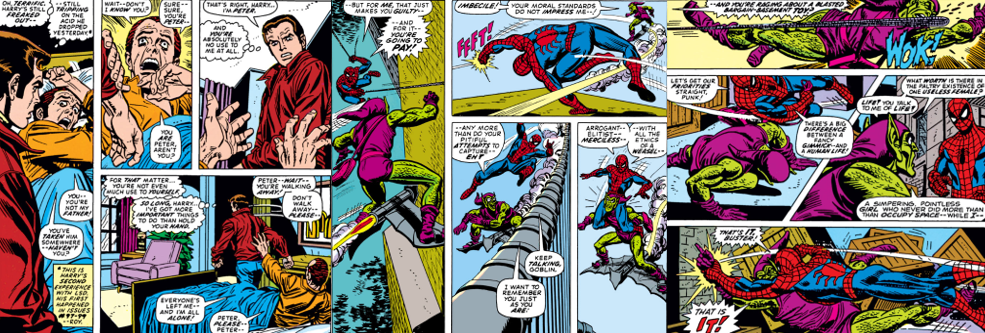
Back Issues [Spidey Month]: The Amazing Spider-Man #9


Easily Marvel Comics’ most recognisable superhero, unsuspecting teenage nerd Peter Parker was bitten by a radioactive spider and learned the meaning of power and responsibility in August 1962. Since then, the Amazing Spider-Man has featured in cartoons, movies, videogames, and countless comic books. To coincide with his day of celebration, I’m dedicating every Monday of August to everyone’s favourite web-head!


Story Title: “The Man Called Electro!”
Published: 12 November 1963 (cover-dated: February 1964)
Writer: Stan Lee
Artist: Steve Ditko

The Background:
After his success with the Fantastic Four, Stan Lee (Marvel’s editor and head writer at the time) continued his winning streak with teenage superhero Peter Parker/Spider-Man, whose debut in Amazing Fantasy #5 was a best seller. To capitalise on his subsequent popularity, Marvel had Spider-Man headline other comics and match wits against some of comics’ most colourful and memorable villains. Former electrician turned supervillain crook Maxwell “Max” Dillon was transformed into Electro in this, the ninth issue of The Amazing Spider-Man, thanks to Stan Lee and Steve Ditko. Unlike most of Spider-Man’s villains, Electro was a simple man who turned to crime after his accident, relishing the incredible power bestowed upon him. While initially a small time nuisance, Electro became a founding member of the Sinister Six, received more than one power boost over the years, and even destroyed the Daily Bugle office building! Electro received a dramatic redesign in Marvel’s Ultimate comics, one that influenced his much-decried live-action debut in The Amazing Spider-Man 2 (Webb, 2014), and featured prominently as a low-level threat in various Spidey videogames and cartoons. Electro also got a notable redesign when he returned to live-action in 2021, got a significantly reworked backstory for his appearance in the 1990’s Spider-Man cartoon, and has secured his place as one of Spidey’s most recognisable villains.

The Review:
The first electrifying (heh) tale of Electro starts with a typical day in New York City for Spider-Man. To the amazement of the startled bystanders, the web-slinger is seen leaping from rooftop to rooftop presumably on a matter of life and death. As a bunch of crooks shoot it out with New York’s finest, the tense stalemate seems to end when Spidey swings overhead. However, both parties are stunned when the young superhero simply passes by without intervening. Arriving in Queens, Spider-Man races through the streets, changing to his civilian identity as he goes, and arrives at his childhood home, where his sickly Aunt May lies in bed. Peter dotes on his grateful old aunt, delivering her the medicine she so badly needs but, as she sleeps, worries over her frail condition and the severity off her illness. While the troubled youngster begins his nightly vigil, the man once known as Max Dillon garbs himself in a garish green and yellow costume and charges his incredible electrical powers in anticipation of his debut as Electro. Seeking to challenge himself, Electro targets an armoured car carrying a gold shipment. When the armed guards mock him, Electro proves his power by zapping their wrists with “electric shocks” and surrounding them with a ring of electricity, terrifying them into giving in to his demands for the gold. The next morning, Peter’s alarmed when the doctor tells him that Aunt May is worsening and must be admitted to hospital (though, naturally, the old dear is more concerned with Peter’s health). Peter’s so distracted by his aunt’s deteriorating condition that he appears aloof at school, ignoring his classmate’s taunting and giving Eugene “Flash” Thompson the cold shoulder when the arrogant knob tries to reach out to the troubled teenager. Peter’s mood lifts later that day when Aunt May’s condition improves, and when he finds Betty Brant sitting with his old aunt. Betty notes that Peter seems to be bottling up his emotions and putting on a calm façade and, when he swings around the city as Spider-Man, his inner monologue reveals a boy desperate to raise the cash needed for his aunt’s operation.   

Distracted by Aunt May’s health and Jonah’s headlines, Spidey is caught off-guard by Electro.

Peter’s issues only worsen as a rainstorm sweeps the city, ruining any chance of taking decent photos of Spider-Man and getting cash from his tight-fisted employer, J. Jonah Jameson. Speaking of the grouch, we jump to the next day to find Jonah getting some figures from the Forest Hills Bank, meaning he’s at ground zero when Electro attacks! Toying with the accountant and Jonah with his electrical bursts, Electro brazenly rips open the vault with his powers, grabs a bag of cash, and scales a building across the street thanks to magnetising his hands and feet! Naturally, Jonah sees this (and Electro’s familiarity with him and having spotted Spidey swinging past moments later) as proof that Electro is Spider-Man in disguise and immediately prints a scathing headline, and loudly shouts his accusations at anyone who’ll listen. Predictably, many New Yorkers believe Jonah’s claims despite the lack of proof, which only exacerbates the stress Peter feels about his aunt’s operation. After Jonah refuses Peter’s request for a loan, Peter realises he can cash in if he captures Electro and immediately swings out as Spider-Man in search of the crook. After a couple of false alarms, Spidey’s spider-sense alerts him to Electro’s presence and he finds him searching for a hidden safe using his bizarre powers. After snapping some pictures, Spidey leaps into action, barely dodging Electro’s bolts and temporarily blinding him with his webs. However, Spidey receives the shock of his life (literally) when he grabs Electro and is zapped by a burst of electricity so powerful that it knocks the youngster unconscious. When he recovers, Peter successfully dupes Jonah with doctored photographs, getting the money he needs but finding himself wracked by guilt and shame for stooping to such measures. Elated to have the “proof” he so desperately wanted, Jonah prints a story confirming that Spidey is Electro, shocking the civilians and taking the heat off the real Electro.

Unburdened by Aunt May’s condition, Spidey uses innovative methods to subdue the powerful Electro.

While gloating in his secret lair, Electro ruminates on his origin. Some time ago, Max Dillon, ordinary electric lineman, was a selfish ass who refused to help an endangered co-worker unless he was paid for his time. After rescuing his co-worker from a high-tension pole, fate saw Max struck by lightning; incredibly, rather than being killed, Max found himself transformed by the electricity. Realising he could generate and control the element, Max experimented with his powers, constructing a harness to perpetuate his electrical charge and learning to toss lightning bolts. Back in the present, Electro breaks some prisoners out of jail to recruit some muscle for his operation and, though he’s compelled to intervene when he learns of the jailbreak, Peter’s forced to stay at the hospital while Aunt May goes into the operating theatre. Though the prisoners refuse to listen to Electro’s warnings and clash with the guards and cops, Spider-Man’s absence only strengthens belief that he and Electro are the same man. Thankfully, Aunt May’s operation is a success, much to Peter’s relief. However, when he insists on taking pictures of the riot, Peter’s shocked when Betty accuses him of thrill seeking. Still, free from the worry about his aunt, Peter leaps into action as Spider-Man, much to Jonah’s chagrin, and slips on rubber gloves and shoes to negate Electro’s powers. After easily manhandling the violent inmates, Spidey tackles Electro, using his scientific know-how to redirect Electro’s lightning bolts with a steel chair and landing a solid left hook. After receiving a quick power boost, Electro grabs a discarded gun and demonstrates his awesome power by turning a flurry of sand Spidey kicks at him into glass! Even with his rubbers, Spidey finds Electro’s attacks too aggressive, forcing him to think on his feet and use a nearby water hose to short circuit Electro. Afterwards, Peter smugly downplays Jonah’s threats to fire and sue him for selling him fraudulent pictures by selling him pictures of the fight between Spidey and Electro. Additionally, not only is Aunt May still doing well but Peter and Betty resolve to work through their misunderstanding and explore their feelings for each other by the story’s end.

The Summary:
For a story titled “The Man Called Electro!”, Electro is more of a secondary concern here. Instead, the primary focus is on Aunt May’s mysterious and worrisome illness. It’s possible that a previous issue detailed exactly what was wrong with her, judging by Peter’s internal monologue, but she’s definitely in a bad state here. Aunt May’s so ill that Peter’s forced to ignore both regular street crime and a prison riot to bring her medicine and be by her side. However, he’s more disturbed by the depths he sinks to pay for her operation. After being surprised by Electro’s incredible power, Peter’s left without any photographs of the super-powered crook and forced to super-imposed himself over the pictures he does have, providing Jonah with “proof” that Spidey is Electro and leaving Peter filled with shame at being so deceitful. Sadly, this aspect isn’t explored beyond a few panels. On the one hand, I’m glad as I could easily see it leading to an unnecessary recap of Uncle Ben’s death. On the other hand, seeing Peter shun his responsibilities and forced down such a dark path could’ve made for good drama. It’s still here, obviously, as both Betty and even Flash note Peter’s changed demeanour, but I’ve seen Peter in similar situations before where he worried himself into a fever and was driven into a panic attack or blind rage from his various dramas. Jonah is on top form here, forcing misshapen jigsaw pieces to fit his narrative of Spider-Man turning to crime as Electro and publishing his wild claims without any proof. Not that half of New York requires proof, though, as the disturbingly fickle and easily swayed civilians find themselves doubting the web-slinger simply based on a sensationalist headline. This issue really hammers home how devoted Peter is to Aunt May and how much she cares for her nephew. While she mollycoddles him a little too much for his age and disregards her own health in favour of his, Peter ignores everything (from his studies to his responsibilities as Spider-Man, to his peers and even Betty) to care for her and to get her the help she needs, even if it is unclear what’s wrong with her and what operation she underwent (I assume it was something to do with her heart).

Though Electro uses his powers for petty crime, Peter’s forced to use dubious methods to raise funds.

These factors aid in Electro slipping under Spider-Man’s radar for a while. It’s only when the Daily Bugle prints scandalous headlines that Peter gets investing in tracking down the super-powered crook, and he ensures his aunt’s welfare before tackling Electro again. Electro has incredible power: he can super-charge his body to electrocute on contact, toss lightning bolts, magnetise his hands and feet to climb walls, and basically manipulate anything with an electrical current. Garbed in an elaborate costume that’s both ridiculous and iconic, Electro’s nearly inexhaustible powers means that, on paper, he should be a formidable foe. Indeed, Spider-Man’s reflexes barely avoid Electro’s attacks, which strike with (presumably) lightning-fast speed, and Spidey dons rubbers to protect against Electro’s current…and even then, he struggles to ward off Electro’s whip-like lightning in the finale. However, rather than being  a significant threat, Electro sticks to his working-class roots and resorts to petty crimes. Limiting himself to knocking off armoured vans and banks, Electro’s all about the cash, which he spends kitting out a vast lab to super-charge his body. It isn’t until he starts making headlines that Electro assembles a crew and, though he demonstrates his powers in the prison break, he doesn’t have a commanding enough presence to sway the inmates (at least, not until they turn to him for protection from Spider-Man). Most tellingly, after being defeated by a simple water hose, Electro is unmasked by the wall-crawler…who naturally has no idea who he is, setting up the long-running thread of Electro being a nobody with extraordinary powers that he doesn’t use to their full potential. However, he makes for a visually interesting villain, and I enjoyed the well-balanced focus on drama and action in this story, especially regarding Aunt May and Jonah. Though I would’ve liked to see Peter’s shame explored further, it was amusing seeing Jonah publicly humiliated and then readily accepted Peter’s next set of photos as real after being duped the first time. I also liked the suggestion that there’s more to Betty than we (and Peter) realises and that Spidey was forced to think on his feet to find was to counter and subdue Electro’s otherwise awesome powers.

My Rating:

Rating: 4 out of 5.

Great Stuff

Did you enjoy Electro’s debut story? Are you a fan of the villain and, if so, what are some of your favourite Electro moments and stories? Would you have also liked to see Peter’s shame explored in more detail? What did you think to Electro’s origins and the way he utilised his powers? Would you be so easily swayed by one of Jonah’s headlines? Where does Electro rank in your tier list of Spidey villains? Share your opinions on Electro in the comments, support me on Ko-Fi, and go check out my other Spider-Man content.

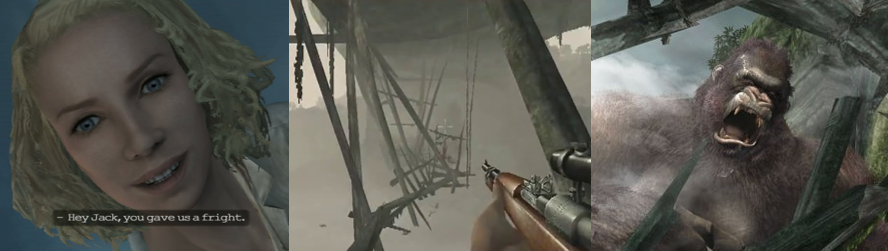
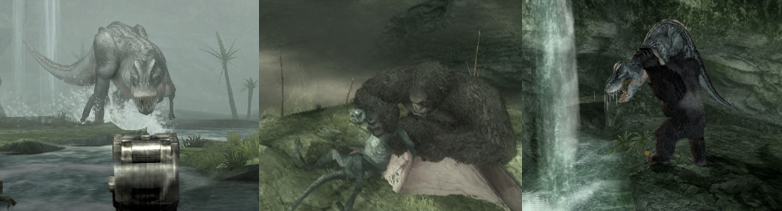
Movie Night [K-Month]: Peter Jackson’s King Kong


In the absolutely bonkers science-fiction film Pacific Rim (del Toro, 2013), the monstrous Kaiju first attacked humanity on 10th August 2013, which was subsequently branded “K-DAY”. To celebrate this event, and giant monster movies, I’m dedicating every Sunday in August to one of cinema’s most prolific monsters: King Kong!


Released: 14 December 2005
Director: Peter Jackson
Distributor: Universal Pictures
Budget: $207 million
Stars: Adrien Brody, Naomi Watts, Jack Black, Andy Serkis, Kyle Chandler, and Thomas Kretschmann

The Plot:
Vaudeville performer Ann Darrow (Watts) joins struggling filmmaker Carl Denham (Black) on a venture to Skull Island, only to be kidnapped by the might giant ape “Kong” (Serkis), prompting playwright Jack Driscoll (Brody) to lead a rescue.

The Background:
About a hundred years ago, filmmaker, adventurer, and former World War I aviator Merian C. Cooper brought his vision of a giant gorilla ascending the Empire State Building to life with King Kong (Cooper and Schoedsack, 1933), one of the most influential movies ever made. Followed by a comedic and divisive sequel that same year, a profitable but polarising clash with Godzilla, and a “Suitmationblunder that ended Toho’s brief stint with the creature, an ambitious remake impressed critics and turned a profit in 1976. Although the 1986 sequel was critically and commercially panned, Universal Pictures pursued life-long King Kong fan Peter Jackson about a remake during the mid-nineties. Though initially hesitant, Jackson eventually agreed to the project, though production stalled due to studio concerns and wouldn’t pick up again until Jackson’s Lord of the Rings films (ibid, 2001 to 2003) proved box office hits. Though this gave Jackson carte blanche to revive King Kong, the budget ballooned during pre-production, which included the restoration of a lost scene of the original. The filmmakers spent hours reviewing footage of real-world gorillas and star Andy Serkis threw himself into the role, playing an integral part in the character’s motion capture process. Weta Digital supervised the visual effects, which reimagined Kong as a less anthropomorphised creature and pitted him against various dinosaur-like creatures. On the human side of things, Jack Black played against type as the opportunistic Denham, Adrien Brody enjoyed the challenge of such an effects-heavy film, and Jackson kept and released comprehensive production dairies during filming. The result was a nearly-$600 million blockbuster that was accompanied by an innovative videogame and wowed audiences with its visuals, Serkis’s captivating performance, and impressive reimagining of the original. Although some criticised the runtime and bloated script, there were plans for a sequel, and then a prequel, before both were scrapped in favour of a “MonsterVerse” reboot in 2017.

The Review:
While some visuals and shots appear to have been inspired by the 1976 remake of King Kong, Peter Jackson’s big-budget, CGI-stuffed epic is a love letter to the 1933 original at its core. Thus, King Kong is a period piece taking place in the middle of the Great Depression, when times are so hard that theatres are largely empty, working class people struggle to make ends meet, and the streets are filled with the destitute and homeless. Naturally, the 1% are still thriving and there’s still money to be thrown around and made, but it’s all firmly in the hands of the upper class and the rich, meaning aspirational filmmaker Carl Denham must beg for funding for his projects and struggling stage actress Ann Darrow resorts to stealing and being sorely tempted by to the burlesque scene. Whereas the original King Kong moved at a brisk pace, quickly spiriting characters between scenes, Peter Jackson’s movie takes its sweet time, building atmosphere and giving audiences ample time to become familiar with its bloated cast. Thus, we spend the first twenty minutes following Denham and Ann as their divergent paths cross due to happenstance. Hoping to film a romantic adventure in the jungle, Carl (…somehow…) acquires a map to the mysterious and uncharted Skull Island, where he plans to wow audiences with sights and sounds they’ve never experienced. Unfortunately, his producers are unconvinced by his bold claims and impulsive nature and eventually issue a warrant for his arrest, to say nothing of his lead actress quitting and forcing him to trawl the burlesque scene for a quick replacement. This is where he spots Ann, who he’s immediately entranced by and whom he woos with talk of high adventure and romance, convinced she’s the perfect fit not just physically but also emotionally since she’s the “saddest girl [he’s] ever seen”. Known more for her comedy, Ann is sceptical of Denham and, despite being close to starvation, initially rejects his offer before finally acquiescing since his project’s being penned by her idol, Jack Driscoll.

Duped by Denham, Driscoll and Ann find love and brave the dangers of Skull Island.

Thanks to Denham being a natural showman with a silver tongue and his fearless, convincing nature, the filmmaker convinces everyone of his vision even though they all seem to know that he’s bullshitting and they’ll never get paid. Cameraman Herb (John Sumner) and Denham’s personal assistant Preston (Colin Hanks) are touchingly loyal but the mysteriously gruff and confrontational Captain Englehorn (Kretschmann) is extremely sceptical and only convinced to cast off by promises of more money. This is exactly how Denham stalls Driscoll when he turns in his rough fifteen-page draft and tries to leave, only to be trapped onboard the ship and forced to work on the script in the animal pen (because Englehorn conveniently specialises in live animal captures). Despite this, Driscoll seems happy to join the venture, inspired by the mysterious allure of Skull Island and captivated by Ann, who admires his work and is equally attracted to him (despite a rocky start). Ann changes once on the ship, seemingly putting on the façade of a Hollywood starlet, and throws herself into the gig, delivering cheesy lines alongside arrogant film star Bruce Baxter (Chandler) and inspiring Driscoll to write a stage comedy tailored to her strengths. By the time they reach Skull Island, the two are unquestionably lovers and Driscoll shows a surprising amount of guts, desperately trying to shield Ann from the wild natives and partially leading the rescue attempt when she’s taken by Kong. While it takes time for Bruce to live up to his reputation as a screen hero, Driscoll eagerly arms himself and heads into the jungle, fighting giant bugs, outpacing rampaging dinosaurs, and even going alone when separated. Luckily, Driscoll encounters no further obstacles and goes right to where Kong has Ann captive and even returns to the native village in record time. However, the experience changes him (and all the survivors) and he distances himself from Denham’s Kong circus, sharing Ann’s shame in separating the giant beast from his homeland. Driscoll’s then inspired by his own writing to reunite with Ann and recaptures the fire he showed on Skull Island to brave Kong’s rampage and lure him away from civilians.

While Carl’s obsessed with fortune, Ann comes to bond and care for the lonely, misunderstood Kong.

This is true of Ann as well. Although she’s initially horrified by Kong, Ann keeps her head and tries numerous ways to disinterest the beast, from playing dead, to running away, and finally performing her comedy routine. While the film heavily implies that Kong has toyed with and devoured his previous offerings, Ann’s dancing and buffoonery amuses him and spares her. Even when she admonishes him for pushing her around, Kong throws a tantrum and sulks rather than simply squashing or eating her, and Ann comes to be taken by not only him, but the beauty of Skull Island. This is matched only by the dangers living there and Ann is tossed about, firmly held in Kong’s grasp as he battles ferocious Vastatosaurus rexes, leading to her not only sympathising with his great loneliness and constant strife but also being indebted to him. While almost reluctant to leave Kong’s side, Ann is grateful to be saved but horrified when Kong is wounded and knocked unconscious by chloroform. She’s so guilt-ridden that she refuses to star in Denhem’s Kong show but seemingly senses Kong’s anguish, willing approaching him on the frigid streets of Broadway and sharing a few tender moments before the National Guard attack. While Driscoll echoes this sympathy, Denham does not; he misleads the crew from the start and is obsessed with making his picture, no matter the danger. Even when his crew are killed, he spins it into a positive and urges the survivors to rally, his enthusiasm turning to a malicious spite when his footage is wrecked. This sees him pivot towards capturing the beast, challenging Captain Englehorn’s reputation and being the one to KO Kong. Denham then fully transforms into a conniving showman under the bright lights of New York City, despite the survivors judging him for his actions, and never receives any comeuppance aside from his show and reputation being left in tatters.

A lot of screen time is spent on characters who either die horribly or disappear once Kong is captured.

Had King Kong focused on these three and the way their experiences change them, it might’ve benefitted the run time. Ann is stunned by how hardened Denham is when she’s rescued from Kong and it’s clear all three are traumatised by their near-death experience, but the film focuses its runtime on the Venture’s motley crew. First, there’s Lumpy (Serkis), the gruff and disgusting chef who shares stories about Skull Island and its mysterious beast and who meets a gruesome end courtesy of some monstrous (if cartoonish) worms. Then there’s Ben Hayes (Evan Parke), a natural leader thanks to his days in the military who acts as a mentor to young Jimmy (Jamie Bell), whom he found as a savage stowaway some years ago. These two eat up a lot of screen time on the lengthy journey to Skull Island, with Jimmy eager to impress his mentor, strangely determined to rescue Ann despite them never sharing any screen time, and making not-so-subtle allusions to Heart of Darkness (Conrad, 1899) to emphasise the dangers of Skull Island. I do feel this dialogue and these allusions could’ve easily been given to Driscoll (he is a writer, after all) to reduce or even remove these two from the film as they don’t add anything and stick out like a sore thumb. Jimmy’s forced to step up after Hayes suffers a surprisingly violent death at Kong’s hands, comically saving Driscoll from some giant bugs, but he vanishes once they get to New York. Similarly, while I enjoyed Captain Englehorn’s strangely confrontational nature, he also vanishes after Kong’s subdued. He plays a vital role in rescuing the group when they’re trapped in the bug pit, however, and conveniently has enough chloroform to knock out a giant ape since he coincidentally deals in live animal capture, something that doesn’t come up until Denham decides to capture Kong. Finally, screen star Bruce turns out to be a complete coward but, considering none of them were prepared for Skull Island’s dangers, he’s absolutely right to be. Though he steps up to encourage Englehorn’s rescue, Bruce reverts to type when he’s cast as the “hero” in Denham’s Kong circus and then flees during the ape’s rampage, his sole focus on saving his own skin.

The savage natives live alongside a bunch of monstrous, prehistoric predators.

While it’s never made clear how Denham got the map to Skull Island, the Venture discovers it easily, only struggling with the thick fog, rough seas, and jagged rocks. Though the island appears deserted, it casts a distinctly ominous and malevolent appearance with its Kong-like rocks and the gigantic wall adorned with skeletons of previous sacrifices. The native tribe are more vicious and animalistic than ever, resembling Orcs from Jackson’s Lord of the Rings movies and often shot with shaky cam to highlight how savage they are. A primitive tribe who both worship and fear Kong, the natives assume more ape-like characteristics, appear to be cannibals, and are shockingly violent, murdering some of the crew with spears and skull bashing. Though scared off by gun fire, they comically pole vault to the Venture to abduct Ann, subjecting her to a ritual that is far more ghastly than usual thanks to torrential rain and their wild movements. Even the wall and its massive door is so much more elaborate here, with Ann suspended over a gorge filled with flames and magma like something out of Indiana Jones and the Temple of Doom (Spielberg, 1984). However, like the Venture’s crew, the natives disappear after Kong abducts Ann, never interfering with Denham’s capture plan or suffering Kong’s wrath when he chases her. Skull Island’s jungle is equally hostile, being a veritable lost world populated by giant, disgusting bugs and dinosaurs. Although there’s a palpable danger, isolation, and unpredictability and I appreciate that it’s populated by prehistoric creatures, they don’t always look good and there’s a definite sense of quantity over quality. The stampeding Brontosaurus baxteri are particularly cartoonish, especially when they fall and pile up, and I’m not sure we needed the bug pit scene. It’s great that Jackson revived it but it goes on way too long and it would’ve been much faster to have some of the crew perish from the fall or be picked off by a few giant bugs as they explore.

The fierce jungle king is reduced to a mere spectacle in the U.S.

Unlike in previous King Kong movies, Kong is unmistakably a gigantic ape, with mannerisms and influences from various primates and Homo sapiens thanks to Serkis’s experience with portraying these creatures. Kong leaps, swings, clambers, and moves on all four limbs rather than being anthropomorphised. While this certainly makes him more realistic, he does lose some allure as he appears to be a unique and undiscovered prehistoric ape rather than some mythical beast. Still, there’s a lot of intrigue around Kong as the giant ape bones hint that he’s the last of his kind and he’s a very lonely creature who constantly fights for his position as “king” of the island. While Kong toys with his prey and is clearly an ancient being, he throws tantrums, reacts violently to trespassers, and flies into such a rage when Driscoll rescues Ann that he blunders into an obvious trap. Kong is a savage fighter, brutalising opponents and even devouring people, but is also capable of great sadness and emotion. He fiercely protects Ann from the V. Rexes and scoops her onto his shoulder, sharing his quiet place with her and being so captivated by her that he flies into a rage when Denham presents him with a substitute (Julia Walshaw). Strangely, despite nearly an hour on the Venture, we never see how Kong is brought aboard the ship or the conditions he’s kept in on the (presumably long) journey home. However, when Denham unveils Kong, he’s weak, possibly malnourished, and completely defeated. He’s enraged by the substitute and the flash bulbs, tearing through Broadway and scooping up any screaming blonde he comes across. Kong is as out of his depth in the concrete jungle as Denham’s party were on the island, struggling to navigate the cramped streets and being drawn to the highest point on pure instinct. Kong is probably his most impressive and nuanced here and a great deal of time and effort has gone into him, but I can’t help but be a little disappointed by how familiar he is. Like how many critics attacked Godzilla (Emmerich, 1998) for being an enlarging an iguana, I remain disappointed that Kong wasn’t more unknowable and bestial.

The Nitty-Gritty:
King Kong is an adventure into the unknown, with Denham selling his entire crew on the fortune and glory of the mysterious Skull Island. It’s honestly strange that more characters don’t call him out on this, with even the gruff Captain Englehorn going along despite not being paid and orders to turn Carl in. I really enjoyed the references to Fay Wray and Merian C. Cooper, the lines spoken by Ann and Bruce aboard the Venture mirroring the clunky dialogue of the original film, and even the photographers clambering on Kong’s corpse like in the 1976 film. While I appreciate the film fleshing out its characters, it really should’ve focused on Ann, Carl, and Jack. It takes twenty minutes for the Venture to cast off, almost an hour to reach Skull Island, over an hour for Kong to appear, and over two hours to get back to New York! Every aspect of the original is bigger, longer, and more grandiose but that doesn’t necessarily make it “better” as Jackson takes twice as long to make the same points. The pacing is also really strange as we spend so much time blundering though the jungle and yet Ann and Driscoll get back to the village in record time (even with the Terapusmordax obscenus’ assist). We have time to waste with a slow-motion reveal of the island’s name but not showing how Kong gets on the ship, or any of the return trip. Similarly, we get to see Ann and Kong slipping about on a frozen pool (an admittedly sweet scene) but interactions between her and Kong on the ship that could’ve achieved the same goal and been less cheesy. Finally, it’s bizarre that so many characters we’ve been forced to follow vanish once the film returns to New York. There’s no real payoff to Jimmy’s sub-plot and even Bruce reverts to type, with only Preston reappearing to cast judgement on Denham during his circus.

While Kong and the period aesthetic look great, some effects suffer and are too cartoonish.

Still, King Kong’s greatest strengths are its visuals. The film emphasises that this is the 1930s with the accents, attitudes, and society of the time. I would’ve liked Ann to be more motivated by her desperate hunger and desire to avoid stripping off for money, but I liked how tactile and gritty the Venture was. Skull Island makes an immediate impression thanks not only to how menacing it’s portrayed but how real-world locations are used alongside practical effects, miniatures, and CGI. This makes the many pitfalls the crew suffer more believable, but sadly also makes obvious green screen moments stand out more. To be fair, Jackson may be evoking old school rear projection techniques, but that’s a generous excuse as the Brontosaurus baxteri stampede, Ann fleeing the V. Rex, and her and Hayes being manhandled by Kong are all times instances where the effects take a hit. The dinosaurs, especially, are far too cartoonish and I think Jackson was being far too ambitious here. Like, pick between the bug pit and the dinosaur stampede and put more time, effort, and money into one big effects scene rather than two. Jackson’s desire to outdo the original is most apparent when Kong fights three V. Rexes while clutching Ann, tumbling over a cliff, and being entangled in vines! Still, this is a big, heroic moment for Kong and he’s easily the best effect here, even in full light, with detailed fur and facial expressions conveying many emotions. Covered in scars from constant battle and sporting a cracked tooth, there’s a real sense of power, speed, and size when Kong’s crashing through the jungle and leaping about. These sequences cleverly focus on Ann to make them more harrowing, but Kong still lacks the true impact of a physical effect. There’s nothing practical about him, which is a shame as he really does look great, and I give the film credit for staging its finale in broad daylight to fully showcase Kong’s effects and dramatic end.

Despite Ann’s best efforts and his valiant fight, Kong’s rampage ends with his tragic death.

Even when his most loyal followers are killed, Denham persists with his obsession, only pivoting towards capturing Kong after he loses his precious footage. To his credit, Denham does mention the lives lost in capturing the “Eighth Wonder of the World” but goes full P.T. Barnum when introducing Kong, revelling in the accolades and spotlight and never once showing any remorse, even after Kong dies. Though weak, Kong flies into a rage during the show and easily breaks his heavy chains, rampaging through the theatre and charging through the slippery New York streets, desperate to reunite with Ann and causing destruction and death in his wild pursuit. Indeed, Kong Kong is surprisingly violent and bloody at times, with people impaled by spears, having their skulls crushed, being tossed aside or eaten by Kong, and Kong tearing apart the V. Rexes. Ann seems to sense Kong’s distress and goes to him to calm him after Driscoll valiantly tries to lure him away from people. Sadly, their sweet reunion is interrupted by the National Guard and Kong is soon scaling the Empire State Building, attracted by its lights and height. Ann goes with him willingly, no longer afraid and seeking only to calm Kong’s anger, and the two share another moment basking in the beauty of the city before the biplanes close in. As ever, Kong protects Ann first and foremost, even saving her from a plummet even as he’s bleeding to death from bullet wounds, but he’s noticeably more aggressive in the finale. Kong challenges the planes, swatting them from the sky when they fly too close, but ultimately succumbs to his wounds when they relentlessly fire upon him. Though Ann desperately pleads for them to stop, they attack when Kong’s back is turned and he collapses, sharing his final breaths with Ann on the top of the Empire State Building before plummeting to the street below. Though powerless to assist in this tragic end, Driscoll does push past the military to comfort Ann after the fall, which sees Kong reduced to a sad spectacle once again as the discredited Denham looks on.

The Summary:
As a big Kong Kong fan, and someone who loved Peter Jackson’s Lord of the Rings movies, you better believe I was hyped for this remake at the time. I remember going to see it at the cinema and being so disappointed and bored that I never bothered to pick it up on DVD and have largely avoided it whenever it’s on television. Visually, this King Kong is unparalleled even to this day. Skull Island has never been so terrifying and alive as it is here, with the natives giving off Cannibal Holocaust (Deodato, 1980) energy and the many dinosaurs evoking the Jurassic films (Various, 1993 to present). Oddly, though they’re unprepared for Skull Island’s dangers, Denham’s crew adapts remarkably well to the environment, braving the unknown to rescue Ann simply to be crushed or devoured by the wildlife. Sadly, though, “bigger” doesn’t always mean “better” and Jackson seems to have been far too ambitious here, cramming so much into the film that it takes away from Kong’s spectacle. And it’s a shame because Kong is spectacular here, despite essentially just being a giant ape rather than some otherworldly beast, showcasing a range of emotions and being a brutal, savage fighter who openly mocks his prey. Jackson’s efforts to pay homage to the film that inspired his career leads to a bloated, tedious film whose pacing is all over the place. While it’s nice to have more three-dimensional characters, it’s bizarre that so much screen time goes to characters who either die or disappear rather than to the three leads, who would’ve benefitted from this extra exposure. The film oddly glosses over some key points and seems strangely rushed at the end, with little emphasis placed on the juxtaposition of Kong in the concrete jungle versus the real jungle. I did like how Kong was more aggressive and fought so valiantly in the finale as it matched his fighting spirit on Skull Island, and his death remains as tragically hollow as ever, but it all lacks a lot of punch because the film is just way too long. The runtime would’ve greatly benefited from trimming or cutting some scenes because, as it is, King Kong is an undeniable visual spectacle and an amazing modern take on the concept, but too self-indulgent, too ambitious, and crippled by its lengthy runtime that does nothing but make it an obnoxious and tedious chore to sit through.

My Rating:

Rating: 3 out of 5.

Pretty Good

Did you enjoy Peter Jackson’s version of King Kong? Do you agree that it’s far too long and focuses on too many side characters or did you appreciate the characterisations? Were you surprised at how violent the natives were and the viciousness of Skull Island’s inhabitants? What did you think to Kong, his appearance, and his more animalistic portrayal? Which version of Kong is your favourite how are you celebrating K-Day today? Whatever your thoughts on this big-budget King Kong remake, or other monster movies, drop a comment below, support me on Ko-Fi, and check out my other King Kong and Kaiju content!
Back Issues [Thor’s Day]: The Mighty Thor #337-339


In August 1962, Stan Lee, Larry Lieber, and Jack Kirby debuted Thor Odinson, God of Thunder and cosmic adventurer, who became another of Marvel’s most successful and versatile characters. As today the first Thursday (or “Thor’s Day”) of the month, this is the perfect time to celebrate the God of Thunder!


Writer and Artist: Walter “Walt” Simonson

Story Title: “Doom”
Published: 2 August 1983 (cover-dated: November 1983)

Story Title: “A Fool and His Hammer…”
Published: 30 August 1983 (cover-dated December 1983)

Story Title: “Something Old, Something New…”
Published: 4 October 1983 (cover-dated: January 1984)

The Background:
After debuting Doctor Robert Bruce Banner/The Incredible Hulk, legendary Marvel Comics writer, editor, and creator Stan Lee took inspiration from Norse legends to create an even more powerful superhero. Working alongside his brother, Larry Lieber, and the immortal Jack Kirby, Marvel Comics introduced a new version of the Norse God Thor Odinson, who claimed ownership of Journey into Mystery before replacing it with his own self-titled comic in 1970. Thor was a founding member of Marvel’s premier super team, the Avengers, regularly clashed with his adopted brother, Loki Laufeyson, and was even transformed into a frog! In 1983, writer and artist Walt Simonson sought to shake up The Mighty Thor by introducing a new, alien character, Beta Ray Bill the Korbinite, who, despite his monstrous appearance, would not only be eloquent and heroic, but also worthy of lifting Thor’s enchanted hammer, Mjölnir. After clashing with Thor in his three-issue debut, Beta Ray Bill gained an enchanted weapon of his own, Stormbreaker, and operated as a cosmic superhero, battling the likes of Surtur and the mythical “Great Beasts” and even driving the mighty Galactus to the brink of starvation. Though a largely obscure character amidst Marvel’s heavy hitters, Beta Ray Bill has a strong cult  following, headlined a few self-titled comics, and has often appeared in videogames as a skin for Thor. Beta Ray Bill has also appeared in a few Marvel cartoons, with The Avengers: Earth’s Mightiest Heroes (2010 to 2012) loosely adapting his debut, though he was cut from an early draft of Thor: Ragnarok (Waititi, 2017).

The Review:
The ballad of Beta Ray Bill begins with the destruction of a faraway galaxy, which leaves behind a chunk of “molten ingot of star-stuff” that’s grasped by a leering, titanic cosmic being wielding an equally massive pair of tongs. The impact of the star-stuff being smashed against a gigantic anvil reverberates across “a billion billion worlds”, though they’re buried beneath the sounds of Grant Park, Chicago, where Doctor Donald Blake, alter ego of the Mighty Thor, is taking a stroll. Somewhat envious of humanity’s carefree nature, Dr. Blake ruminates on how blessed he is to be amongst mortals when he’s suddenly abducted by Colonel Nick Fury of the Supreme Headquarters, International Espionage and Law-Enforcement Division (S.H.I.E.L.D.) Demonstrating knowledge of Dr. Blake’s dual identity, Fury flies the two to the strangely phallic looking S.H.I.E.L.D. Helicarrier so Agent Jasper Sitwell can fill him in one their current crisis. Agent Sitwell explains to Thor that S.H.I.E.L.D. developed a hyper-advanced probe to transmit pictures of the cosmos back to Earth and discovered an alien vessel destroying an entire star to refuel its engines. Concerned about a potential threat, Fury requests Thor check out the ship and, curious himself, the God of Thunder agrees. While Lady Sif seeks a great battle to ease Thor choosing “Midgard” over her, Balder Odinson drowns his sorrows, and Volstagg hopes to dine with better company, Loki’s abject boredom is suddenly broken by the arrival of the alluring Lorelei, whose very words send Asgard’s warriors fleeing and whose presence intrigues the God of Mischief. When the story jumps back to Thor, he arrives at the alien vessel’s location courtesy of Mjölnir, Thor presses his pursuit, only to be repeatedly blasted by the ship’s energy cannons.

Thor’s power is usurped by the cybernetic alien Beta Ray Bill, who’s determined to protect his people.

Angered, Thor rips into the ship and is attacking by a monstrous, horse-faced brute who’s the subject of this review. Impressed by Thor’s strength, the imposing cyborg nonetheless attacks, determined to stamp out “all of demonkind” and confusing Thor, since the warrior has clearly mistaken him for some other “breed”. Regardless, Thor matches Beta Ray Bill blow for blow but, in his warrior rage, he forgets his hammer and, having been separated from Mjölnir for too long, magically and forcibly reverts back to his human form! This allows Beta Ray Bill to easily knock the stunned Avenger out, however the damage causes his ship to crash land on Earth. When Nick Fury and S.H.I.E.L.D. surround the ship and try to negotiate, the prideful Beta Ray Bill desperately searches for his foe’s powerful weapon. When he finds only a wooden stick, the cyborg lashes out in anger but is amazed to be imbued with the power of Thor! Suitably empowered, Beta Ray Bill attacks Fury’s forces and revels in his newfound might, only for Odin Allfather to suddenly appear and, mistaking Beta Ray Bill for his son, spirit him to Asgard, leaving Dr. Blake stranded and “forsaken” on Earth! Despondent and heartbroken, Dr. Blake is comforted by Fury, while Beta Ray Bill angrily and blindly lashes out at the Asgardians as they celebrate “Thor’s” return, believing them to be demons. Naturally, Odin immediately realises something’s amiss and demands answers so Beta Ray Bill, ever the hothead, immediately and arrogantly attacks. Odin easily reclaims Mjölnir and finds truth in Beta Ray Bill’s claims that he won the hammer “in combat”. Odin immediately sets to put things right and summons Dr. Blake to Asgard, where he becomes Thor once more, and then apologises to Beta Ray Bill and offers him sanctuary. Wary, Beta Ray Bill demands that the Asgardians prove they’re not demons before he relaxes his guard, so Odin takes the two to the frigid summit of Hliðskjálf to parlay.

Beta Ray Bill bests Thor in a fight to the death and lays claim to Mjölnir.

While Loki and Lorelei use their illusions to anger Lady Sif and make her think Thor is cheating on her, Beta Ray Bill tells his story to Odin and his son. Claiming to come from an “ancient and noble race”, Beta Ray Bill tells how his once prosperous people were all-but destroyed when the core of their galaxy suddenly exploded. The survivors fled in spacecrafts and Beta Ray Bill was chosen to be genetically and cybernetically altered into their protector. While leading his people in his warship, the Skuttlebutt, as they slept in cryogenic chambers, Beta Ray Bill was suddenly attacked by destructive demons, whom he’s been pursuing ever since. Determined to use Mjölnir to destroy the demons and safeguard his people, Beta Ray Bill refuses to give up the hammer. Since both his son and the cyborg have valid claims to it, Odin orders them to face each other in equal combat, with the victor claiming the prize and aiding Asgard in battling the demonic horde. Thus, Odin transports the two to Skartheim, a barren and dangerous landscape, for their fight. Beta Ray Bill attacks while Thor searches for more stable ground and the two grapple and exchange blows with equal might and bluster. Impressed by his foe’s strength and conviction, Thor doubles his efforts, unaware that Beta Ray Bill feels the same awe and respect for his opponent. Striking while Thor’s readying his next attack, Beta Ray Bill hurls boulders at the Avenger, one of which Thor tosses back to bring Beta Ray Bill close to a horrific fall into lava. However, when Thor flies in to press his attack, the two warriors collapse from exhaustion. Beta Ray Bill recovers first and, seeing his foe is still unconscious and heading to a nasty end, flies Thor to safety and returns to Asgard victorious!

Odin arranges events to gift Beta Ray Bill with his own weapon so he can fight alongside Thor.

When Beta Ray Bill collapses immediately after, Odin has the two brought to the Royal physicians, where the disgusted Lorelei keeps a close eye on them during their recovery, clashing with Lady Sif in the process. Feeling he’s disgraced his father, Thor denounces his Godhood and believes he’s no longer worthy of Mjölnir, while a grateful and concerned Beta Ray Bill worries that he may lose the hammer’s power, as Thor did, and begs Odin to help with his dilemma. Impressed by the bionic warrior’s conviction, Odin travels to the tranquil realm of the dwarfs, Niðavellir, to ask the surly Dwarf King Eitri for a favour. Despite his race being shunned by the Gods, Eitri agrees on the condition that Odin provide their champion with a woman to either best him in combat or “serve as his chattel”. While Thor commends Beta Ray Bill’s victory and wishes him well as Mjölnir’s wielder, determined to forsake his former life, the cyborg humbly points out that his victories have largely been luck. Their conversation is interrupted when Thor spots Lady Sif battling the dwarves champion, the hulking Throgg, as requested by the Allfather. Lady Sif deals first blood to her foe and knocks him unconscious, choosing to spare her grotesque foe the sharp edge of her blade. Eitri reveals that Throgg was a menace who’s now been suitably humiliated, but honours his bargain and commands his people to light the incredible furnaces of Niðavellir, moulding Uru, the material of the Gods, into a mighty battleaxe – dubbed Stormbreaker – that Odin enchants so that its mighty powers will belong to Beta Ray Bill alone. Thus, the cyborg claims his prize, and his power, and vows to wield it proudly. Odin then returns Mjölnir to his son and, learning of the demons’ pending approach upon Beta Ray Bill’s slumbering people, Thor leaps aboard his enchanted chariot, alongside Lady Sif, to meet the threat with his newfound ally.

The Summary:
I’ve always been fascinated by Beta Ray Bill, a monstrous and unlikely wielder of Thor’s magical hammer, and the implications his character has on Thor’s mythos. Until Beta Ray Bill, Thor was a person, not a mantle or a title, despite what the hammer’s enchantment said, with even Thor’s human form being the same personality, just as a mortal to keep him humble. Suddenly, the enchantment wasn’t just a threat to Thor’s ability to command thunder and lightning, it was a promise that any “worthy” champion would essentially become Thor, which opened the floodgates for future stories. While the art is a bit janky at times, this story was very bold and cosmic in its scope, with the narrative punctuated by some unknown, titanic figure forging a massive sword that apparently speaks to a looming threat. There’s also a side plot concerning Lady Sif’s desire to prove herself worthy of Thor’s attention in battle, which actually feeds into the finale when she readily faces Throgg and then insists on accompanying Thor and Beta Ray Bill to battle the demons. The secondary sub-plot concerning Loki and Lorelei’s efforts to discredit Thor was interesting, and clearly sowing the seeds for a future story, but somewhat took away from the battles between Thor and Beta Ray Bill, limiting them to tests of physical strength and dramatic claims by our unseen narrator. I enjoyed the portrayal of Thor here, who starts out so proud and happy to be this all-powerful warrior and then feels so humbled by his losses that he’s ready to give up Mjölnir, only to still be deemed worthy by his father. It’s interesting as it speaks to Thor’s brief wish to be relieved of his responsibilities, and even Beta Ray Bill tries to talk him out of so readily giving up his awesome power, as much as the bionic warrior needs it to protect his people.

An action-packed and thought-provoking debut for an interesting, if grotesque, new hero.

Naturally, Beta Ray Bill is the standout character in these issues. I would’ve loved to see a bit more time and effort spent fleshing out what, exactly, the “demons” are that threaten his people, but it’s enough to know that he’s desperate to protect what’s left of his civilisation from a very real theat. So much so that he willingly allowed himself to be altered, even gene spliced with his people’s most deadly predator and augmented with cybernetics, to serve as their protector. This single-minded need somewhat blinds Beta Ray Bill, leading to him to attack Thor on sight and even lashing out at Odin before he’s convinced that the Asgardians aren’t demons. Despite his horrific appearance, Beta Ray Bill is deemed worthy enough to lift and be empowered by Mjölnir and immediately relishes having the power necessary to wipe out his enemies. Thus, while Beta Ray Bill respects Thor, sparing his life and recognising that his victories may not have been entirely honourable, the cyborg champion is reluctant to give up his newfound Godhood. Depicted as Thor’s equal in terms of strength and conviction, Beta Ray Bill is a stubborn, hot-headed, but ultimately honourable character, so much so that it’s implied Odin is subtly manipulating events to grant him Godly power and that the Allfather goes to Eitri for help, despite the dwarves being wary of their Gods. While Beta Ray Bill proves himself in battle against Thor, Odin compromises and ensures that he’ll never lose his power as long as he wields Stormbreaker, gifting the cosmos a new champion and providing Thor with a powerful and equally worthy ally. This was a fun story with a lot of action, a lot of discussions regarding duty and worthiness, and some fun asides that fed into the main plot. I really dig the juxtaposition of this grotesque alien cyborg being such an honourable warrior that he’s worthy of Thor’s power, and his own Asgardian weapon, and that the two came to respect each other through combat. The art was a bit wonky at times and I would’ve loved to see more of their powers on display in their fights, but this was a great introduction to Beta Ray Bill and I’d happily read more stories featuring him.

My Rating:

Rating: 4 out of 5.

Great Stuff

Are you a fan of Beta Ray Bill? What did you think to his debut story, and the dichotomy of his grotesque appearance and honourable nature? Were you shocked when Beta Ray Bill went toe-to-toe with Thor and lifted his hammer? Did you enjoy seeing the two clash ad that Odin commissioned a weapon for the cyborg? What are some of your favourite Beta Ray Bill moments? Do you have a favourite character, arc, or era in Thor’s long publication history? How are you celebrating Thor’s debut this month, if at all? I’d love to see your thoughts on Thor and Beta Ray Bill in the comments below, and it’d be great if you supported me on Ko-Fi and checked out my other Thor content.

Movie Night [Spidey Month]: The Amazing Spider-Man


Easily Marvel Comics’ most recognisable superhero, unsuspecting teenage nerd Peter Parker was bitten by a radioactive spider and learned the meaning of power and responsibility in August 1962. Since then, the Amazing Spider-Man has featured in cartoons, movies, videogames, and countless comic books. To coincide with his day of celebration, I’m dedicating every Monday of August to everyone’s favourite web-head!


Released: 3 July 2012
Director: Marc Webb
Distributor: Sony Pictures Releasing
Budget: $200 to 230 million
Stars: Andrew Garfield, Emma Stone, Rhys Ifans, Denis Leary, Sally Field, and Martin Sheen

The Plot:
Bitten by a genetically enhanced spider, Peter Parker (Garfield) tries to atone for the death of his beloved Uncle Ben (Sheen) as Spider-Man while romancing science-whiz Gwen Stacy (Stone) and opposing Doctor Curtis “Curt” Connors’ (Ifans) mad plot to turn New York City into lizard people like him!

The Background:
After his debut issue became one of Marvel’s best selling titles, Spider-Man’s popularity cemented him as their flagship character, though his cinematic debut was infamously delayed by rewrites and legal issues. Eventually, Sam Raimi and Sony Pictures Entertainment produced a critical and commercial success with Spider-Man (Raimi, 2002), and one of the greatest superhero movies ever made with Spider-Man 2 (ibid, 2004), before closing the trilogy with the profitable but divisive Spider-Man 3 (ibid, 2007). Initially, Sam Raimi and star Tobey Maguire were set to return for a fourth movie and Raimi even got as far as casting and storyboarding the film before creative and deadline issues saw the sequel scrapped and Mark Webb hired to helm a reboot. Determined to reinvent Spider-Man, Webb insisted upon including Spidey’s web shooters and worked with costume designer Kym Barrett to create a darker, sleeker costume. Andrew Garfield, a fan of Tobey’s portrayal, took over the title role and went to a lot of effort to research how to move in the suit, as well as legitimately falling for co-star Emma Stone during filming. Though striving for a grounded approach to the action, 3ality Technica presented the new Spidey’s swinging and like never before with their 3D conversion process, and Sony Pictures Imageworks brought classic, tragic Spidey villain the Lizard to life using a mixture of stand-ins, motion capture, and star Rhys Ifans’ performance. The result was a film that earned a little under Spider-Man 2’s final gross and somewhat divided critics. While most of the cast, particularly Garfield, were as praised for their performances as the impressive Spidey effects, the Lizard’s CGI was slated and many labelled the film as an unnecessary rehash of Raimi’s previous efforts. Still, The Amazing Spider-Man did well enough to get a notoriously lambasted sequel two years later, and both Garfield and Ifans reprised their roles about ten years later for the multiversal epic Spider-Man: No Way Home (Watts, 2021).

The Review:
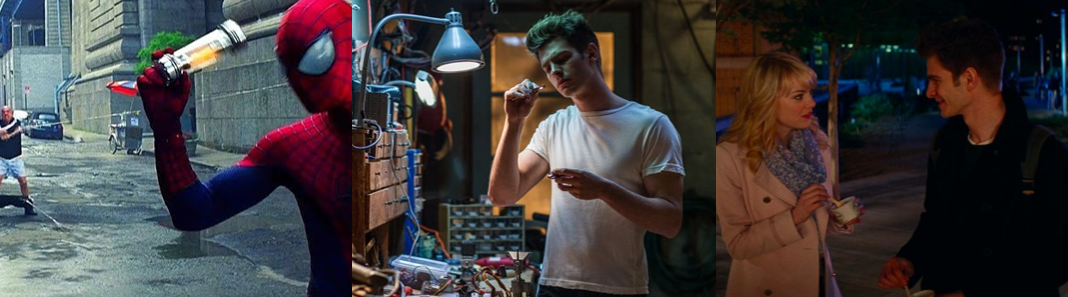
Personally, I’ve always felt it was a bit odd to do a full-on Spider-Man reboot just five years after the end of Sam Raimi’s trilogy. Considering how much The Amazing Spider-Man borrows and rehashes form Raimi’s films, I’ve often wondered if it might’ve been better to simply recast and continue in the world he established, like with the James Bond films or Joel Schumacher’s Batman movies. Even The Amazing Spider-Man’s title sequence is a truncated version of Raimi’s, and James Horner’s score is stylistically similar to Danny Elfman’s. Still, The Amazing Spider-Man tries to separate itself in the early going by showing a glimpse into Peter’s past, where young Peter (Max Charles), is spirited away in the middle of the night by his parents, his heartbroken mother, Mary (Embeth Davidtz) and his secretive scientist father, Richard (Campbell Scott), after his father’s office and work was ransacked during the night. Of course, the confused and scared Peter is left with his doting Aunt May (Field) and Uncle Ben Parker, who raise him after his parents die, offscreen, in a plane crash. The loss of Peter’s parents weighs heavily on him, despite his close relationship with Ben and May, and he’s left with many questions regarding their disappearance and feeling an outcast at home and at school, since he inherited his father’s aptitude for science. However, while Tobey Maguire was a moronic geek who clammed up at the first sign of confrontation, Andrew Garfield is a snarky, skateboarding kid who stands up to the bullish antics of Eugene “Flash” Thompson (Chris Zylka) despite being physically outmatched and who’s more quirky and reclusive than a stereotypical bookworm. When he’s not skateboarding or studying, Peter’s taking photographs for the school bulletin board and helping his uncle with odd jobs, which is how he discovers his father’s battered old briefcase and discovers a bunch of scientific documents and a photograph of his father with a mysterious, one-armed scientist. This piques Peter’s curiosity and leads Ben, remorseful at rarely speaking about Richard, to identify the scientist as Dr. Curt Connors.

Greif-stricken outcast Peter embarks on a vigilante quest for revenge after his beloved uncle is killed.

This leads Peter to amusingly tag along with an intern group at the towering, high-tech Oscorp skyscraper, where the beautiful Gwen Stacy works alongside Dr. Connors as his head intern. There, Peter impresses Dr. Connors (while shocking Gwen with hiss appearance) with his knowledge of cross-species genetics, the very subject Dr. Connors and Richard Parker worked on in the hopes of curing diseases and ailments by infusing the DNA of other species into sick or maimed people. Despite Gwen warning Peter to behave, his curiosity gets the better of him and he wanders into a restricted laboratory, where he discovers a batch of genetically modified spiders created by his father and, while being chastised by Gwen, receives a painful bite. As in Raimi’s first film, Peter experiences bouts of nausea and passes out, only this time he blacks out on the subway and discovers his powers purely on instinct when he’s accosted by other passengers, suddenly springing and clinging to the ceiling and demonstrating superhuman strength and reflexes. This Peter is far more unnerved by his powers, which initially make him anxious and eccentric as he reacts to his enhanced senses, leading to an insatiable hunger, him snatching a fly in mind-air, and some pratfalls as he adapts to his incredible strength. This also gives him the edge to humiliate Flash, much to his uncle’s chagrin, and the additional confidence to up his adorable flirting with Gwen. However, while the film wastes a good hour with all this setup and exploring Peter’s abilities with a skateboarding montage, the euphoria again leads him to forget his responsibilities, leading to a chewing out by his uncle that sees Peter storm out. This time, Peter runs afoul of a convenience store clerk (Michael Barra) and is therefore dismissive when a thuggish gunman (Leif Gantvoort) robs the place. Unfortunately, Uncle Ben gets shot when confronting the robber, leaving Peter grief-stricken and embarking on late-night searches for the killer, accosting any street thugs he encounters and continuously coming up short, eventually crafting a disguise after punks see his face and being inspired by luchador masks.

While Dr. Connors get some spotlight, it’s the chemistry between Peter and Gwen that really impresses.

However, this Spider-Man far less virtuous. Although Peter later gets into a heated debate with Police Captain George Stacy (Leary) he’s about “protecting people” and “stopping bad guys”, Spider-Man is obsessed with finding his uncle’s killer, neglecting his aunt, constantly bruised and morose, and only saves innocents by proxy. It isn’t until Dr. Connors’ first rampage as the monstrous Lizard that Peter realises Spider-Man is capable of more, saving saves young Jack (Jake Ryan Keiffer) from a fall and earning his father’s (C. Thomas Howell) eternal gratitude. This Spider-Man is also far more scientifically gifted, cobbling together his trademark webshooters, piecing together the solution to the “decay-rate algorithm” that’s been dogging Dr. Connors’ work, and helping to synthesise a cure for the Lizard alongside Gwen. Gwen is far more capable than her predecessor as well. Not only does she have fantastic sexual chemistry with Peter, but she’s just as much of a science nerd as he is and aids him in created the cure in the finale. Though attracted to Peter, Gwen’s interest skyrockets when he impulsively reveals his identity, and she remains infatuated despite her apprehension due to her father’s dangerous profession. Similarly, I adored Sally Field as Aunt May. She’s a lot younger than Rosemary Harris and much more of a working-class Aunt May than a doting old woman, but her grief at losing her husband and her anguish at Peter’s constant injuries is palpable. Yet, her love for him remains strong and she desperately tries to reach him even when he’s consumed by anger and guilt, something reflected in the change in Peter’s relationship with Flash. While he starts out as a jock asshole, Flash awkwardly tries to connect with Peter after Ben’s death, leading to them forming a more stable friendship by the film’s end.

While the Lizard suffers from questionable CGI, Stacy embodies the spirit of J. Jonah Jameson.

Although Peter investigates Oscorp and Dr. Connors works there, and the criminally underutilised Doctor Rajit Ratha (Irrfan Khan) exudes the same shady menace as the laughably faceless Norman Osborn, the company merely facilitates the film’s drama and action. Dr. Connors has dreamed of improving himself (and curing others) with his research, only to be labelled a mad scientist and be frustrated by roadblocks, both scientifically and politically. When Peter offers a solution, Dr. Connors’ hope and excitement is reignited, especially after they successfully implant lizard DNA into a rat and regrow its limb. However, when Ratha steals his research and fires him for his hesitance to start human testing, a desperate Dr. Connors injects himself with the serum and is elated when his arm grows back. This quickly turns to horror, however, as he undergoes a startling and monstrous transformation, losing his rational mind to animalistic rage. Stunned by the Lizard, Peter investigates and stupidly leads the crazed scientist to him by leaving his name on one of his cameras! Thirsty for revenge, the Lizard attacks Midtown Science High School and, when Spider-Man pursues him to his makeshift sewer lab, Peter discovers his identity and his plot. Dr. Connors, driven mad, plots to use a mutagenic solution to twist his dream of making everyone “equal” and healthy by transforming them into lizards! As much as I enjoyed finally seeing the Lizard get his time to shine, I have to admit I’ve always been disappointed by his appearance. He looks very off and far too dinosaur-like, sadly shedding his signature tattered lab coat. The film also wastes so much time retreading Spidey’s origin that Dr. Connors’ family is omitted, meaning he lacks a lot of the sympathy often associated with the character. Though Peter tries to warn Captain Stacy of the threat, he’s dismissed, largely because Stacy was unimpressed by Peter’s defence of what he sees as a dangerous and unpredictable vigilante. Indeed, while J. Jonah Jameson is absent, his spirit lives on in Captain Stacy, who publicly denounces Spider-Man, orders his arrest, and hounds him on sight. Still, Stacy’s sharp enough to investigate Dr. Connors and later sees the true threat first-hand, leading to an unlikely team up between the webslinger and the police captain in the finale.

The Nitty-Gritty:
The Amazing Spider-Man initially advertised itself as the “untold story” of Spider-Man and, if you squint, some of that remains amidst all the rehashing of Raimi’s films. The sub-sub-plot about Richard and Mary Parker is intriguing, but sadly little more than a tease as we learn nothing about what happened to them beyond a brief flash of a headline and it’s left somewhat vague about what they were working on and why that was a threat. While threatening Dr. Connors, Ratha suggests the Parkers’ deaths were due to Oscorp but it all feels very tenuous and isn’t as big a deal as I would’ve liked. Instead, The Amazing Spider-Man wastes a lot of time retreading familiar ground, dwelling on Peter’s pre-Spidey life, showing him exploring his powers and making his suit, and detailing how he abandons his selfish crusade for a higher purpose. As much as I loved all the actors and performances, I really think this is a detriment to the film and things could’ve been sped up. It means Dr. Connors doesn’t get much screen time and it makes it harder for Andrew to stand out from Tobey, despite being a far better fit for the role with his uncanny physical performance and much more natural smart mouth. I absolutely think rewriting the film to be a continuation of Raimi’s movies would’ve been far better. We could’ve reduced the origin to a montage and jumped into the action, with Gwen still being the love interest and exploring Peter’s relationship with Dr. Connors in more detail. To its credit, The Amazing Spider-Man does a lot better than Raimi: the webslinging is much more exciting, Peter’s characterisation is a vast improvement, and even the webshooters are a fun addition (as much as I like and prefer organic webbing). It just really hurts the pacing to waste a whole hour redoing the origin rather than getting to the action, especially when the chemistry between Peter and Gwen is so captivating…and hot! Seriously, these two are horny for each other and I am all for it!

While Spidey has never looked or been embodied better, the Lizard’s CGI is questionable, at best.

Still, The Amazing Spider-Man separates itself from Raimi’s films in a few ways, most obviously the redesigned Spidey suit. While I recall many hating the redesign, I’ve always been a fan of it and I was actually a bit disappointed that they switched to a more traditional costume for the sequel. Just as Andrew’s performance and poses are more animalistic and bug-like, so too is his suit more menacing and insectile, sporting a slick, almost wet-looking texture that makes it seem otherworldly. Another way the film stands out is by his dark it is! So much of The Amazing Spider-Man takes place at night, obscuring a lot of the action and CGI (a conscious decision, I’m sure) and also giving an additional menace to Spider-Man, especially when he’s unloading on thugs and evading the cops. Ironically, this Spider-Man is the wittiest and most amusing yet; I especially loved when he feigned horror when a carjacker (Keith Campbell) pulled a small knife on him! This Spidey is faster and leans into his bug-like nature more than ever, cocooning the Lizard in webbing, making a spread of webs to detect the Lizard in the sewers, and being hyperaware of his surroundings in a way not seen before. I was strangely okay with the first-person shots and odd camera choices, and even the obvious moments shot for 3D viewings, especially as I first saw this in 3D and it absolutely worked like a charm. It’s unfortunate, then, that the Lizard looks so awful. I’ve always been forgiving and understanding of this since it’s a difficult, CGI-heavy character and the film had a reduced budget compared to the last film, but the rest of the movie looks so slick and gorgeous (when you can make out the actions) that the Lizard can’t help but be a letdown. Perhaps if the filmmakers had gone for a gradual transformation, using prosthetics with CGI enhancements and saving the final, complete transformation until the end (or using the heavy shadows), it might’ve been executed better. It’s a shame as the Lizard is pretty impressive, slashing and smashing everything in sight and giving Spider-Man not only a far greater physical challenge but also a mental one, as he (and Gwen) must science-up a way to reverse the mad scientist’s formula.

While Spidey foils the Lizard’s plot, the cost is high and a mysterious threat lingers in the background…

This culminates in an action-packed and emotionally charged finale. After clashing with Captain Stacy over branzino and their different opinions on Spider-Man, Stacy goes all-out to try and apprehend Spider-Man even after confirmation of the Lizard’s threat. After realising Dr. Connor’s plot, Spidey races to stop him and is accosted by the cops, eventually shot mid-swing with a taser bolt and left unmasked before the police captain. Stunned, realising he’s been mistaken and yet conflicted between his duty and his morals, Stacy reluctantly allows Peter to leave but Spidey takes a bullet in the process. Luckily, Jack’s father organises some crane operators to clear a path to Oscorp Tower, though the injured Spidey is physically outmatched by the monstrous scientist. Luckily, Stacy (…somehow…) arrives in time to help with a shotgun and the anti-lizard cure, courtesy of the resourceful Gwen. Unfortunately, though Stacy slows the Lizard with repeated shots and some well-placed liquid nitrogen, he gets skewered through the gut, though Spidey just manages to insert the cure before the device activates. The results are near-instantaneous, painfully reverting the Lizard and restoring his sanity in time to not only save Peter and lament the loss of his arm but to realise the gravity of his murderous actions. Though Peter tries to save him, the mortally wounded Stacy begs him off and reconciles with the young hero, begging Peter, with his dying breath, to leave Gwen out of his double life for her safety. Though grief stricken, Peter honours Stacy’s wishes, ending the relationship, only for Gwen to realise it’s because of her father and for Peter to almost immediately walk back his promise, which I think was supposed to be a subversion of Spider-Man’s ending but came across as a bit awkward and spiteful on Peter’s part. Though Peter heads out into the night for a celebratory swing, now fully embracing his newfound purpose as Spider-Man, he’s unaware that a mysterious individual (Michael Massee) visits the remorseful, incarcerated Dr. Connors regarding the Parkers, hinting at some deeper plot concerning Peter’s parents…

The Summary:
Despite the circumstances surrounding its creation, I think time has been quite kind to The Amazing Spider-Man and, on the whole, removed from the confusion and disappointment of the time period, it holds up pretty well. Andrew Garfield remains my favourite Peter Parker/Spider-Man, embodying the character like never before at the time with his physicality, his wit a d his quirky performance. His absolutely raw emotional range and chemistry with Emma Stone oozes off the screen and I loved how capable and smart and sassy Gwen was, a far cry from the source material and her wooden predecessor. The cast, all around, is superb here, with Rhys Ifans giving a sombre and magnetic performance that turns into the right level of over-the-top camp once he transforms and Denis Leary grumbling his way through every line. I just wish we’d gotten more time with some of the actors. Spidey’s suit, movements, and action sequences were top-notch as well, far beyond anything Raimi’s films did, and I loved the subtle edge given to him, where he’s initially driven more by anger and revenge. Unfortunately, The Amazing Spider-Man stumbles due to a hesitancy to go all-in with the reboot idea. Visually and thematically, it’s very similar to Raimi’s films and it retreads far too much of Spidey’s origin to truly stand alone, again making me wish it had simply been a soft reboot set in the same world. Any intrigue surrounding Peter’s parents is swept under the rug and it’s simply there as sequel bait and to make you think this is something new and the reliance on Oscorp was disappointing after three movies of Osborn shenanigans. As much as I enjoyed Ifans as Dr. Connors, the Lizard is painful to watch at times, barely resembling the source material and losing many of the qualities that made him such a strong and sympathetic villain, meaning the film falls back on the tired “crazy scientist” trope that Raimi drove into the ground. It’s a thrilling and exciting adventure at times with some incredible visuals and moments, but a lot of it is lost in all the darkness and poor lighting, meaning Spider-Man doesn’t pop with colour like he should. It’s a shame as there’s a lot to like here, but The Amazing Spider-Man stumbles more than it strides and it’s difficult to look past some of its failings, despite the appeal of its charismatic cast.

My Rating:

Rating: 3 out of 5.

Pretty Good

Were you a fan of the Amazing Spider-Man or were you surprised to see a reboot so soon after Raimi’s films? What did you think to Andrew Garfield’s performance and his suit? Were you also disappointed by how much of the origin was rehashed and how dark the film was? What did you think to the chemistry between Peter and Gwen? Which Spider-Man film is your favourite and how are you celebrating the wall-crawler this month? Let me know what you think about The Amazing Spider-Man in the comments, support me on Ko-Fi, and check out my other Spider-Man content.

Movie Night [K-Month]: King Kong (1976)


In the absolutely bonkers science-fiction film Pacific Rim (del Toro, 2013), the monstrous Kaiju first attacked humanity on 10th August 2013, which was subsequently branded “K-DAY”. To celebrate this event, and giant monster movies, I’m dedicating every Sunday in August to one of cinema’s most prolific monsters: King Kong!


Released: 17 December 1976
Director: John Guillermin
Distributor: Paramount Pictures
Budget: $23 to 24 million
Stars: Jeff Bridges, Jessica Lange, Charles Grodin, Rick Baker/William Shepard/Peter Cullen, and René Auberjonois

The Plot:
Ruthless oil executive Fred S. Wilson (Grodin) discovers a primitive world ruled by the giant ape “Kong” (Baker/Cullen/Shepard). When the beast kidnaps beautiful castaway Dwan (Lange), stowaway primate palaeontologist Jack Prescott, (Bridges) tries to save her amidst Wilson’s plot to commercialise the creature.

The Background:
As hard as it may be to believe, it was nearly a hundred years ago that filmmaker, adventurer, and former World War I aviator Merian C. Cooper dreamed up the iconic visual of a giant gorilla ascending the Empire State Building and wowed audiences with King Kong (Cooper and Schoedsack, 1933), largely regarded as one of the most influential movies of all time. Amazingly, King Kong was followed by a sequel that very same year, though Son of Kong (Schoedsack, 1933) leaned more into comedy and largely divided critics. After a planned revival fell through in the 1960s, the concept and character were repurposed into a battle against Godzilla, much to Cooper’s displeasure, resulting in a profitable but divisive clash. After a stint in animation, King Kong returned to cinema screens for a loose tie-in, King Kong Escapes (Honda, 1967), a much-maligned entry that ended Toho’s brief stint with the legendary ape monster. About ten years later, the idea of a then-modern remake was pitched, though there are conflicting reports about who we have to thank for this: some say it was Michael Eisner and veteran producer Dino De Laurentiis, while De Laurentiis claims it was all his idea. Regardless, Paramount Pictures financed the project and De Laurentiis worked with screenwriter Lorenzo Semple Jr. to update the story to focus on the energy crisis and culminate at the World Trade Center. To save on costs, all dinosaurs were omitted and an elaborate suit, animatronic, and puppets were used in place of laborious stop-motion techniques. Special effect artist Carlo Rambaldi constructed an impressive £500,000 mechanical Kong that infamously failed to work when the cameras rolled, forcing the production to rely on what Rick Baker saw as an inferior suit. Thousands of onlookers flocked to the World Trade Center for the dramatic finale, many being paid to be extras, and an extended cut of the film was assembled for home media. King Kong was largely praised for revamping the original unorthodox love story and for its impressive practical effects, though it’s also been criticised for its janky editing and composition and its strange balance of humour and drama. Though De Laurentiis was disappointed by the film’s $90.6 million box office, a critically and commercially panned sequel followed ten years later and the franchise remained dormant until Peter Jackson’s big-budget remake in 2005.

The Review:
Though it’s narratively very similar to the classic 1933 original, this King Kong separates itself in a few ways to put a different spin on the formula. I don’t mind this so much as I’ve always argued that remakes should try to do something new with their properties rather than being shot-for-shot or beat-for-beat recreations. In this case, we’re not following an adventurous film crew and their misadventures on Skull Island, but instead Fred Wilson, executive of the childishly named Petrox Oil Company, who assembles a crew to sail to an uncharted island. Since Petrox has been in a slump and the world is facing an energy crisis – and competition from other oil and petrol sellers is high – Wilson is banking everything on claiming a hitherto-undiscovered oil reserve on the mysterious Skull Island. Thanks to paying off an unnamed official in Washington, D.C., Wilson obtains top secret satellite imagery of the island which, as his resident science expert Roy Bagley (Auberjonois) explains, reveals the landmass hidden by a thick and mysterious fog. Their data indicates that the island is rich in oil and other minerals and Wilson is determined to get his hands on it to turn Petrox’s fortunes around, though stowaway associate professor Jack Prescott offers another, far more sinister perspective on the island. Prescott talks of journals and other evidence indicating that the island is not only inhabited, but ruled over by some gigantic, unknowable beast and attempts to persuade Wilson of Skull Island’s dangers and to let him join the expedition out of sheer scientific curiosity. Believing he has the inside track on Skull Island, Wilson is naturally sceptical and accuses Prescott of being a spy from a rival oil company, ordering Captain Ross (John Randolph) to lock the troublemaker up and doing a deep dive into Prescott’s background to figure out who he is. When this only corroborates Jack’s story, Wilson reluctantly allows him to join the crew as their official photographer but, for a good while, the two seemingly reach a mutual respect, especially when leading their later rescue mission.

Wilson’s search for oil and Jack’s awkward romance are scuppered by a giant, horny ape!

This comes about when Wilson’s ship happens upon a stray life raft carrying beautiful aspiring actress Dwan, who was left adrift when her yacht  suddenly exploded. Dwan joins the crew as something of a mascot and a fancy, immediately catching Prescott’s eye and flirting with him, sharing her dreams of being a big star. While the romance angle was extremely rushed in the original film, I understood it as the film was much shorter and that was in keeping with the style at the time. Here, I’m not sure why Jack is so smitten with Dwan beyond her looks as she’s a bit of an airhead who wanders around with big doe eyes, chattering about her dreams, blabbering about how beautiful things are, completely oblivious to obvious dangers and being painfully naïve. Though she’s more likely to babble about her star sign than anything meaningful, it seems Prescott is captivated by her whimsical, carefree nature and he becomes very protective of her, as does the rest of the crew since she’s initially ordered to stay behind when they reach Skull Island. Instead, she accompanies the group and, predictably, observes the native’s rituals with a naïve wonder compared to Prescott’s more measured caution. When the tribe’s shaman (Keny Long) spots her, he immediately orders (in his native tongue) for her to be handed over as a sacrifice to their God, even offering six of the native women in return for Dwan, though both Prescott and Wilson naturally decline. This sees the natives kidnap Dwan in the dead of night and force her to be strung up as Kong’s latest bride and, like Prescott, Kong is immediately taken by the blonde-haired maiden. Dwan is helpless in Kong’s grasp, resorting to screaming and begging and then lashing out in fear and anger since she’s afraid of heights. Not wishing to anger the beast, whom she and Wilson believe intends to eat her, Dwan tries to soothe him with kind words, though her attempts to flee fail and she’s reduced to a mere damsel in distress. This gives Jack the chance to step up as he leads the rescue mission, exasperated by Wilson being more concerned with his oil (which turns out to still be gestating and thus unsuitable for mining), though he’s ultimately left to rescue Dwan alone when Kong kills most of the rescue party.

Though a king in his native land, Kong’s reduced to a wild animal by Wilson’s theatrics.

Since his plan has gone awry, Wilson comes up with a new plot to capture Kong and parade him around the United States as Petrox’s mascot. After calling in some supplies, he orders Captain Ross and his men to prepare an elaborate trap rather than send out a search party, digging a huge pit to chloroform the giant ape. While Kong’s busy battling a giant snake, Prescott grabs Dwan and bring her back to the native’s village. However, when the angered Kong pursues, he falls into Wilson’s trap and is soon being transported to America. The gas and lack of food and water take their toll on Kong, who sits heartbroken and throws a tantrum as they near the mainland, with his rage only soothed by Dwan. Once they reach America, Wilson turns from a greedy but otherwise reasonable man into a full-blown megalomaniac as he wins over Dwan by casting her in the lead role in Petrox’s new advertising campaign to recreate her time on Skull Island before the braying masses as Kong is held in chains. While Prescott initially signs on for this, his moral compass sees him reject the offer and urge Dwan to leave with him, but she’s so obsessed with being a star that she can’t turn Wilson down. While Dwan is terrified of Kong, she feels a great deal of sympathy for him and puts her life on the line to calm him when he threatens to sink the boat. Similarly, she begs Kong not to let her go in the finale so he’ll be spared death and even Jack is cheering Kong by the end after he’s double-crossed. Thanks to his extremely expressive face, Kong is more human and emotive than ever, showing great affection, pain, and anger as required. Though revered as a God by the natives, Prescott sees Kong as a unique species that needs to be preserved. He’s aware of the beast’s danger and desperate to get Dwan away from him, but constantly advocates for Kong to be left unharmed and is deeply disturbed when Wilson takes Kong from his homeland.

The Nitty-Gritty:
One of the things I love about the original King Kong is how it moves at a brisk pace and yet still showcases a lot of amazing effects and action. The romance subplot is hammy, for sure, but it’s all in good fun. Sadly, this King Kong suffers from a bloated runtime. It’s not as bad as the next remake, but the film chugs along at a snail’s pace, spending way too much time on the boat and trying to make us care about the blossoming attraction between Jack and Dwan. While Bridges and Lange have chemistry, Dwan’s portrayed as such a fickle and flighty bimbo that I find it hard to believe Jack could stand being with her beyond a quick bunk up. Hell, he even says to her (after she interrupts their desperate escape from Kong’s rampage for a drink) that she’d quickly grow bored of him since he can’t afford to keep her in the lifestyle she’s accustomed to. While she seems to genuinely deny this, I’m on Jack’s side here; Dwan would be seeking the next thrill after a month or two, for sure. I enjoyed Grodin’s bombastic performance as Wilson, who becomes quite affable during the second act but quickly descends into a spiteful villain who cares only about making a theatrical showcase of Kong. Having sacrificed many lives and shown a complete disregard for others, and Kong’s welfare (seriously, how did the big ape survive the trip back to America?), it’s only fitting that Wilson goes out in the stupidest way possible: running right into Kong and being crushed under his foot, despite him literally being able to flee in any direction! The natives don’t get much play here and disappear after sacrificing Dwan, but they’re portrayed as a stereotypical, primitive tribe who seek only to appease their God. They regularly repair the great wall to keep Kong out and send him women to satisfy his needs and Jack states that the tribe will most likely be disillusioned and downcast after they kidnap their deity.

While Kong is impressive, the effects don’t land or age as well as the ambitious original.

Though comprised of various real-world locations and elaborate sets, Skull Island isn’t as impressive as in the original film as this King Kong chooses not to have dinosaurs and other prehistoric creatures on the island. Indeed, the only other giant creature is a massive snake that Kong awkwardly wrestles with, which is a shame as I would’ve much rather seen more time spent exploring the island’s dangers than trapped on the boat with these assholes. Skull Island’s threat is thus in its landscape, which is comprised of a thick jungle and deep chasms and Kong who, despite his obnoxiously loud roar and thundering footsteps, can apparently sneak up out of nowhere and send Jack’s rescue party plummeting from their log bridge. As you’d expect, Kong is the film’s most impressive aspect and the suit really does look amazing. Kong towers over the miniatures and has a far greater range of movement than stop motion can provide, though he looks janky and awkward when briefly substituted for a robotic duplicate or filmed against rear projection. There’s obviously a lot of that (and forced perspective) here and it hasn’t aged as well as the black and white original, which gets more slack due to being limited by the technology of the time. Here, it’s painfully obvious when a giant Kong hand is holding Dwan before a projection of Kong and when Kong is smashing through miniatures. To be fair, these look far more impressive during Kong’s rampage through New York City, where he overturns a train and terrorises the public, though he looks extremely ungainly when climbing the World Trade Center. Kong’s most impressive feature is his highly expressive face, which sees him gaze upon Dwan with lovesick eyes, glare at people when they shoot him, and illicit a great deal of sympathy when trapped on the ship or suffering mortal wounds. Kong’s definitely more human than in the original, standing upright and lumbering about like a man, though the little head tilts and constant roaring tie into his animal side, as does his confusion and rage when surrounded by the unfamiliar sights and sounds of New York City.

Kong’s rampage is tragically ended in spectacularly gory fashion!

Remarkably, despite being unprepared for Skull Island’s true danger and having lost the chance to rape its oil deposits, Wilson snatches victory from the jaws of defeat by hastily trapping Kong. Being drugged, malnourished, and separated from his land and new love seems to physically drain Kong, allowing him to be chained up in a seemingly inescapable cage and paraded before the masses amidst Petrox’s massive billboards. However, Kong’s rage is stoked when reporters rush Dwan and push her about, giving him the strength to break free and rum amok, crushing people under his feet and terrorising the streets in his pursuit of her. While Jack gets Dwan to safety, she randomly demands a drink, sure that the river will deter the ape, and is naturally snatched by Kong when he simply wades through the water without issue. Luckily for Dwan, Prescott intuits that Kong will be drawn to the World Trade Center since the Twin Towers resemble a rock formation on Skull Island. Though Jack barters with the city officials to take Kong alive, he’s immediately double-crossed when soldiers shoot flamethrowers at Kong. Though unable to reach the roof of the South Tower, Jack’s even more helpless when Kong leaps to the North Tower, kills his assailants, and is approached by three attack choppers. Though the pilot (George Whiteman) orders his men not to fire with Dwan in the ape’s hand, Kong seemingly recognises the threat and accepts his fate, placing the aghast Dwan on the roof and prepares to face his attackers. While Kong does take a couple of the choppers down when they fly a little too close, he’s basically dead meat the moment they fire their massive chain guns. It’s honestly disturbing seeing bloody chunks and spray fly from Kong’s chest, neck, and belly and seeing his fur matted by gore, his breathing becoming more laboured and his screams more anguished as he’s riddled by seemingly explosive bullets. In the end, the assault is too much and Kong collapses first to the roof and then to the ground below. As reporters clamber on his prone body and Dwan desperately tries to comfort him, Kong’s heart slowly beats to a stop. The masses celebrate, jostling Dwan about and trying to snap her picture, all while a despondent Jack looks on, unable (and seemingly unwilling) to reach her.

The Summary:
This is the King Kong I grew up with. As a kid, I remember being awestruck by the Kong suit, which still holds up really well and is a fantastic way to give Kong more movement and expression than stop-motion or animatronics. While he lacks a lot of the charm of the original and doing a man-in-a-suit might seem a bit cheap, Kong is still incredibly impressive, especially his emotions and face, and he’s only let down by some dodgy rear projection and questionable performances. I didn’t mind Jeff Bridges here, he took the lead pretty well and seemed very charismatic, but he had more chemistry with Charles Grodin than Jessica Lange. Dwan is one of the weakest aspects of the film, being a shallow and wholly uninteresting character who seems too fickle and flighty for Jack to waste his time on. Wilson was great as a bombastic, greedy antagonist who takes any opportunity to turn his fortunes around. Sadly, King Kong is a slog to watch, with the film dragging on and offering little but a dull romance sub-plot and actors fumbling about on a jungle set. Things pick up in the finale but, by then, I wouldn’t blame you if you’d tapped out from boredom as the film lacks the magic of the original and doesn’t pace out its set pieces well. It’s a shame as I have fond memories of this one from my childhood but this King Kong is tough to rewatch, despite how unsettling the ending is and its ambitious suit effects.

My Rating:

Rating: 2 out of 5.

Could Be Better

Have you ever seen the this 1976 remake of King Kong? If so, did you like it and how do you think it compares against the original and other King Kongs? What did you think to the suit effects and animatronics? Were you disappointed we didn’t get more giant monsters on Skull Island? Did you also find the film boring at times? What did you think to the changes it made to the original? Which version of Kong is your favourite and how are you celebrating K-Day this month? Whatever your thoughts on King Kong, Kaiju, or monster movies in general, leave a comment below, support me on Ko-Fi, and go check out my other King Kong and Kaiju content!
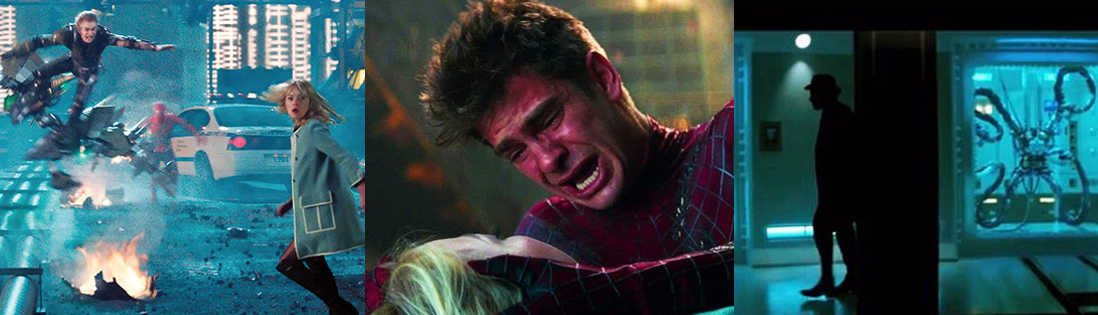
Wrestling Recap: Rock vs. Lesnar (SummerSlam ’02)

The Date: 25 August 2002
The Venue: Nassau Veterans Memorial Coliseum; Uniondale, New York
The Commentary: Michael Cole and Tazz
The Referee: Mike Chioda
The Stakes: Singles match for the Undisputed Championship

The Build-Up:
By 2002, World Wrestling Entertainment (WWE) was in a state of flux. After their main rival, World Championship Wrestling (WCW), went out of business and the company was purchased by Vince McMahon, an ill-fated “Invasion” angle saw WCW superstars appear on World Wrestling Federation (WWF) programming. Once this storyline was abruptly ended, the WWF was legally forced to rebrand as WWE and, to keep the spirit of competition alive, the first-ever “brand split” occurred. This meant WWE Superstars and championship belts would be exclusive to either Raw or SmackDown!, with each brand favouring a different presentation (Raw focused more on storylines while SmackDown! focused on in-ring wrestling). Despite this, there was still one top prize in the company, the WWE Undisputed Championship, which “The People’s Champion”, the Rock, had captured the previous month. In a first for the WWE, the Rock’s SummerSlam challenger was decided at the annual King of the Ring tournament, which was won by newcomer Brock Lesnar. Debuting the night after WrestleMania X-8 and embarking on a tear, the monstrous Lesnar was an accomplished amateur wrestler and champion who quickly made a name for himself by decimating his opponents. Coined “The Next Big Thing” by his agent, Paul Heyman, Lesnar went unpinned following his debut and even made short work of the legendary Hulk Hogan on his path to the championship. After winning the King of the Ring, Lesnar immediately targeted the Rock, interfering in his matches and engaging in brawls, and much of the build-up for the match emphasised the training and conditioning the two were undergoing in preparation for it.

The Match:
I remember when Brock Lesnar first debuted, decimating opponents with powerbombs and his sick-ass F-5. At the time, I was somewhat unimpressed; he just looked like a generic big guy, after all. He rarely spoke (and, when he did, he sounded awful), and he didn’t have the same aura or charisma as, say, Batista, who debuted around the same time. Yet, I remember being very surprised when Lesnar won the King of the Ring and was catapulted to this main event match and I have to at least give the WWE credit for actually trying to push new stars in the main event scene. While the audience was in relative awe of Lesnar during his entrance, the Rock’s initial pop was soon joined by a chorus of boos since everyone knew he was leaving to film The Scorpion King (Russell, 2002). Yet, undeterred, the Rock sprinted out to kick off a slugfest with his monstrous young challenger. With the crowd chanting “Rocky sucks!”, Lesnar shut down the Rock’s flurry with an overhead belly-to-belly suplex and repeated backbreakers, scoring a couple of two counts. Targeting the Rock’s already injured ribs, Lesnar repeatedly drove his shoulder into the Rock’s gut in the corner and then punted him out of the ring, where Heyman landed a cheap shot to the champion. Lesnar followed, knocking the Rock over the barricade and muscling him into it before the braying crowd. Back in the ring, Lesnar landed an overhead throw for another two count and Heyman tripped the Rock as he mounted a comeback, leading to the champion being stomped and choked on the canvas. A powerslam shut down another Rock comeback, who continued to be berated by the extremely vocal crowd as Lesnar worked the ribs. This eventually cost him when the Rock caused Lesnar to hit the ring post and, after both leapt to their feet and Lesnar challenged the Rock to knock him down, the Rock scored his first two count off a DDT. The Rock decked Heyman and then tied Lesnar into a Sharpshooter (to a sea of boos), but Heyman tossed a chair into the ring. With the referee distracted, Lesnar drove the chair into the Rock’s injured ribs and slapped on the bearhug that “retired” Hulk Hogan. Much to the chagrin of the crowd, the Rock fought out of the hold, hitting a low blow when the referee was distracted (to yet more boos!)

Lesnar’s dominating performance saw the monstrous youngster capture his first WWE Championship.

Lesnar quickly recovered, though, muscling the Rock into the corner, only to get dropped by a massive clothesline and smacked out of the ring. Visibly pissed by the crowd’s apathy and boos, the Rock tore apart the Spanish announce table, slamming Heyman face-first into it and absolutely launching Lesnar into the ring post! This gave the Rock the chance to hit a Rock Bottom on Paul Heyman through the announce table before tossing Lesnar back into the ring to hit another Rock Bottom. However, Lesnar kicked out at two, much to the delight of the crowd and the astonishment of the champion. Lesnar then surprised the Rock by suddenly hitting his own Rock Bottom (or “Brock Bottom”, as Tazz coined it) for another near fall! The Rock then countered an Irish whip, hit with a spinebuster, and prepared to hit the People’s Elbow…only for Lesnar to spring up and whip him out with a clothesline. However, the Rock slipped free when Lesnar went for his patented F-5 and tried for the Rock Bottom twice more. Each time, Lesnar fought back, but the second time saw him scoop the Rock up and annihilate him with the F-5! And, just like that, Brock Lesnar became the youngest WWE Champion in history, much to the adulation of the crowd, who showered the Rock with boos and insults. This was a decent enough match that told a very simple story of the fired-up veteran being absolutely dominated by his young, upstart challenger. The Rock showed no fear, constantly fighting out of the challenger’s holds, but was no match for Lesnar’s pure power. There was a story here about how the Rock’s veteran instincts weren’t to be counted out, but it wasn’t played into much since he spent most of the match on the receiving end of a beatdown. The most interesting thing, for me, is the crowd completely turning on the Rock, to the point where he was clearly annoyed by their jeers. When he tried to do a speech after the match, the crowd absolutely tore him apart, leading to him washing his hands of them.
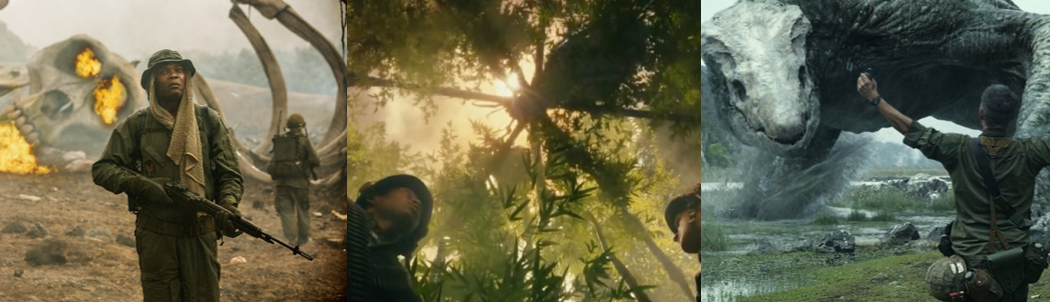
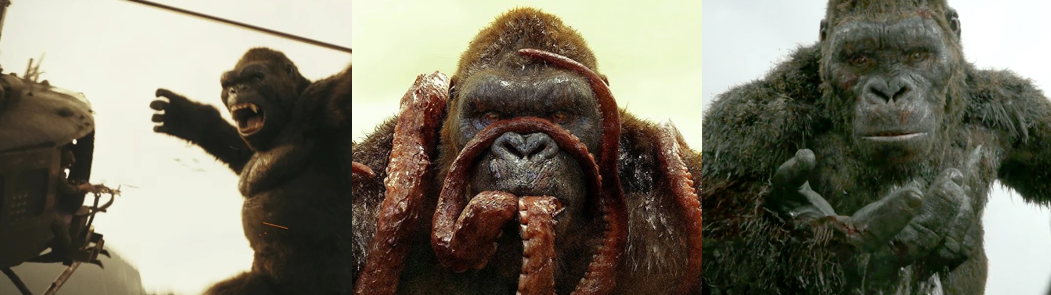
The Aftermath:
As mentioned, the Rock left the WWE for about six months to film The Scorpion King, so he never got a rematch with Brock Lesnar for the title. In fact, the two never fought again in a televised match and, when the Rock did return, it was as an arrogant Hollywood superstar heel. Lesnar’s win meant the WWE Undisputed Championship became exclusive to the SmackDown! brand, leading to the belt being rechristened the WWE Championship. Raw General Manager Eric Bischoff repurposed the WCW Championship as the WWE World Heavyweight Championship for Triple H, kicking off his “reign of terror” with the belt. As for Lesnar, he spent the next few months defending the belt against the Undertaker, leading to a brutal and dominant Hell in the Cell victory at No Mercy, and Edge, before being screwed out of the championship when Paul Heyman turned on him in favour of the Big Show at Survivor Series. Lesnar would turn face in the aftermath, regain the belt (and suffer a nasty concussion) at WrestleMania XIX, and spent most of 2003 feuding with Kurt Angle. He eventually turned heel again and realigned with Paul Heyman before finally dropping the belt to Eddie Guerrero and eventually leaving the WWE in controversial fashion.

My Rating:

Rating: 3 out of 5.

Pretty Good

What did you think to the generational clash between the Rock and Brock Lesnar? Were you impressed by Lesnar back then? What did you think to Lesnar’s dominating performance? Were you surprised that the crowd turned on the Rock? What did you think to Lesnar’s first run in the WWE? Which SummerSlam match or event is your favourite? Whatever your thoughts on Rock vs. Lesnar, and SummerSlam, leave a comment below, support me on Ko-Fi, and be sure to check out my other wrestling content across the site.

Back Issues [Spidey Month]: The Amazing Spider-Man #6


Easily Marvel Comics’ most recognisable superhero, unsuspecting teenage nerd Peter Parker was bitten by a radioactive spider and learned the meaning of power and responsibility in August 1962. Since then, the Amazing Spider-Man has featured in cartoons, movies, videogames, and countless comic books. To coincide with his day of celebration, I’m dedicating every Monday of August to everyone’s favourite web-head!


Story Title: “Face-to-Face with… the Lizard!”
Published: 8 August 1963 (cover-dated: November 1963)
Writer: Stan Lee
Artist: Steve Ditko

The Background:
After finding success with the Fantastic Four, Marvel editor and head writer Stan Lee dreamed up teenage superhero Peter Parker/Spider-Man, whose Amazing Fantasy debut became a best seller for Marvel Comics. Spider-Man’s subsequent popularity saw him headline numerous comics, including partnering with other, less mainstream superheroes in Marvel Team-Up, and amass perhaps the most colourful and memorable rogues gallery in all of comics. Doctor Curtis “Curt” Connors/The Lizard first appeared in the sixth issue of Spidey’s long-running Amazing Spider-Man book, courtesy of Stan Lee and Steve Ditko. Like many of Spider-Man’s villains, the Lizard was a tragic victim of science gone wrong and very much in the same vein as Doctor Henry Jekyll and Mister Edward Hyde: a seemingly normal man who underwent a horrific mental and physical transformation due to science. Spidey’s relationship with Dr. Connors became a complicated one, with the two often working together to try and cure the scientist or figure out solutions to Spidey’s latest drama, and them desperately trying to keep the doctor’s condition a secret from his family. Though he’s threatened to turn all of New York City’s inhabitants into lizards and even regressed into a monstrous form, the Lizard has turned towards the light before, though he’s primarily used as a low-tier supervillain in Spidey videogames. The Lizard has also featured in Spider-Man’s animated ventures. Most notably, he featured in the first episode of the 1990’s Spider-Man cartoon (Richardson, 1994) and later helped Spider-Man in the cartoon’s Secret Wars (Shooter et al, 1984 to 1985) adaptation. While we never got to see Dr. Connors (Dylan Baker) become the Lizard in Sam Raimi’s films, the Lizard was the main villain in The Amazing Spider-Man (Webb, 2012). While his design was heavily criticised, Rhys Ifans returned to voice the character nearly ten years later, and the Lizard is generally seen as one of Spidey’s more under-rated villains.

The Review:
Our story opens in “the murky swamps of Florida’s everglades”, where a group of…well, I assume they’re tourists but one of them has a gun so maybe they’re poachers? Or perhaps they just have a well-prepared tour guide? It’s hard to tell and ultimately inconsequential. Anyway, a group of men are suddenly attacked by a giant, man-sized lizard in purple trousers and a lab coat. As if the sight of a six-foot lizard wasn’t shocking enough, the creature speaks (and quite eloquently, too), voicing rage and displeasure at the men for venturing into his swamp. After proving bulletproof, the Lizard causes the trespassers to flee by uprooting a massive tree and waving it about in a threatening manner. Further reports of additional encounters and attacks soon spread, leading the locals to avoid the swamplands and live in fear of the man-lizard in the region. The news is so astonishing that it even reaches the streets of New York, courtesy of the Daily Bugle, whose editor, the miserly J. Jonah Jameson, wastes no time using his publication to challenge Spider-Man to defeat the Lizard. Though he scoffs at the headline, Spider-Man reasons that he might be able to convince Jonah to send him to Florida to snap some pictures of the Lizard. However, Jonah shoots him down, primarily because he believes the whole thing’s a hoax anyway (making me question why he’d risk the Daily Bugle’s reputation printing the headline). Though dejected, Peter heads to the Natural History Museum to brush up on his lizard knowledge. During a lecture on dinosaur anatomy, Peter’s spider-sense alerts him to two thieves, who he quickly subdues, and he’s so bolstered by his actions that he decides to approach Jonah in his masked identity. Spider-Man humiliates Jonah in his office and accepts his challenge, but on the caveat that Jonah sends a photographer to capture the fight, however Peter’s plan backfires somewhat when Jonah insists on tagging along! After saying his farewells to his doting Aunt May, Peter takes his mind off the uncomfortable plane ride by researching Dr. Connors, a lizard expert in the Everglades who he tags as a possible source.

After hearing of Dr. Connors’ tragic fate, Spidey works to find a cure and stop his monstrous rampage.

After ditching Jonah, Peter checks out the swamp-like Everglades and is ambushed by the Lizard! Dragged underwater and nearly drowned, the web-slinger’s reflexes are all that save him from a swipe from the monster’s tail, though the Lizard proves to be as strong as he is fast as he sends the youngster flying with a flick of the appendage! Convinced that he needs more intel, Spidey drops by Dr. Connors’ house and finds his wife, Martha, in tears. She not only reveals that her husband is the Lizard but also fills Spidey in on the whole backstory. A former surgeon, Dr. Connors was forced to retire after losing an arm “during the War” and became obsessed with the unique regenerative properties of lizards. Hoping to not only regrow his arm but also help countless others, Dr. Connors worked tireless in his experiments, fully supported by his loving wife and awestruck son, Billy. After many months, Dr. Connors synthesised a serum from lizard DNA and successfully tested it on a rabbit. Emboldened by this, Dr. Connors wasted no time and downed the solution and, after a brief spot of agony, was delighted when his arm grew back! Unfortunately, his elation quickly turned to horror as he transformed into a hideous, half-human lizard. Although the monstrous Dr. Connors returned to try and reverse the process, his mind quickly degenerated and, with the last vestiges of his humanity, he begged Martha to get herself and Billy to safety. However, some trace of Dr. Connors obviously still remains in the Lizard as Martha’s story is interrupted by Billy being accosted by the creature outside. After getting Billy to safety, Spider-Man fights the Lizard again, this time noting the creature’s tough, dinosaur-like armour plating and ability to snap his webs! When Martha rushes to Billy, the Lizard flees in horror and Spidey spends the next few hours going through the doctor’s notes to try and create a cure.

Spidey endures the Lizard’s assault and cures Dr. Connors, but gets screwed by Jonah.

Thanks to his scientific acumen, Spider-Man is successful and, right on cue, the Lizard attacks the lab. Overwhelmed by the creature’s speed, ferocity, and incredible strength, Spider-Man is beaten unconscious, allowing the Lizard to retrieve his serum to empower the local lizards in a mad plot to conquer the Earth. With no time to call for help and no choice but to pursue, Spidey whips up a pair of “web swamp-shoes” and goes paddling through the stream into the Lizard’s territory, pondering how he’s going to subdue the Lizard without harming Dr. Connors. Reaching an abandoned fort, Spider-Man spots the Lizard monologing to a congregation of alligators, who listen intently and obey his every command, attacking Spider-Man when instructed and forcing the hero to scale the fort’s tower to escape. Determined to keep the Lizard distracted, Spider-Man throws webs and his quick wit at the creature and stays on the move, eventually trapping them both within the fort. When the Lizard pursues him up the walls, Spidey makes a desperate gamble and plunges to the ground, tackling the Lizard in mid-air and forcing the antidote down his throat. Spidey is stunned by the Lizard’s powerful tail and left powerless but, just as the Lizard moves to strike, the antidote takes effect. In a few panels, the Lizard’s transformation regresses and Dr. Connors returns, human and sane again (though still missing an arm) to reunite with his family. After Dr. Connors vows to destroy his research, Spidey takes pity on him and promises to keep his secret, much to their relief. In the aftermath, Jameson destroys the photos Peter brings him, convinced the Lizard was all made up and the trip was a waste. He therefore refuses to pay Peter, adds the cost of the trip to his bill and, to make matters worse, Peter’s shot down by Elizabeth “Liz” Allen since she’s got the hots for Spider-Man!

The Summary:
It’s always funny to me to look back at these old stories and see these now-iconic and nuanced villains treated as simple, run-of-the-mill, monthly issues for our favourite web-spinner. “Face-to-Face with… the Lizard!” has a bit more meat on its bones than some stories from back then thanks to Dr. Connors’ tragic origin story, but it’s still full of a few blunders. I’m not the biggest fan of these single issues wasting time on Peter’s supporting cast and this issue definitely does that with Peter’s visit to the museum. It makes sense for him to brush up on his lizard knowledge, but he visits the dinosaur exhibit, which isn’t really the same thing, and later gets exposition from Martha so this feels like a waste. Sure, we get to see Spidey in action but I feel those panels could’ve been used to add to his later fights with the Lizard. And, yes, we see Eugene “Flash” Thompson and Liz Allen there and that ties into Peter’s ongoing social angst, but he also flirts with Jonah’s secretary, Betty Brant, so I do feel some reshuffling could’ve been done. The worst example, though, is the whole side plot with Jonah tagging along. He doesn’t factor into the story at all except as a bookend so it seems like a waste of time to have him go to Florida. It’s not like we cut away from the main story to see him searching for Peter, arguing with hotel staff, or trying to prove the Lizard is a hoax. He just belittles Peter, laughs at the idea of a man-lizard despite printing headlines about it, then disregards the photographic evidence and vows to make Peter reimburse him. I definitely think Jonah should’ve been taken out or reduced or had some significance to the plot if he was gonna be there. Perhaps he could’ve gotten involved in the Spidey/Lizard fight and the story would end with another outrageous headline claiming Spider-Man is in cahoots with the Lizard. As it is, it feels like unnecessary padding to add to the page count.

Despite some colourful battles, the story and its plot felt very rushed and didn’t live up to its potential.

This is a shame at the best of times but particularly disappointing considering the unique tragic backstory of the Lizard. While we get a decent insight into this thanks to Martha, freeing up panels and page space could’ve gone into more detail about his accident, his drive to help similarly disabled people, and his loving relationship with his family. It also could’ve added to the Lizard’s fights with Spider-Man, which felt very rushed. I was hoping we’d see Spidey out of his element in the swamp and therefore at a disadvantage because of the trees, murky water, and aggressive wildlife and, while these elements are briefly touched upon, it’s nowhere near as in-depth as I’d expect. The fights aren’t given much time to breathe; the Lizard boasts of his superior strength and speed and demonstrates it, but it doesn’t have the impact I’d expect. It’s as though everything’s rushing along rather than having a more natural pace. I liked that Peter scientific acumen was put to the test but find it awfully convenient that he whipped up an antidote in a few hours. The reveal that the Lizard can command alligators was fun but underutilised; again, we could’ve had a few more panels of Spidey tangling with the ‘gators to add to the tension. The serum the Lizard steals disappears, never to be seen again; the Lizard’s said to be a ruthless and animalistic creature but he’s incredible articulate and calculating; and, while the idea that Spidey had to be careful not to harm Dr. Connors had legs, I never felt like there was a danger of that since Spidey couldn’t penetrate the Lizard’s hide and had a magic antidote to cure him. Everything’s very colourful, at least, and I liked seeing Spider-Man in a new environment. I also dug the tragedy of the Lizard and that Spidey took pity on him rather than bringing him to the authorities, especially as Dr. Connors didn’t really hurt anyone. However, I don’t think this is all it could’ve been and it felt very rushed and nonsensical at times. That might not be surprising given the rate Marvel were pumping out stories back then, but it is disappointing and hurt my enjoyment of this issue.

My Rating:

Rating: 2 out of 5.

Could Be Better

What are your thoughts on the Lizard’s debut? Are you a fan of the character and, if so, what are some of your favourite Lizard stories? Did you also think the whole Jonah side plot was a waste of time? What did you think to the Lizard’s tragic backstory and his plot to conquer the world with lizards? Were you also disappointed with the pacing of the story? Which of the Lizard’s appearances outside of the comics is your favourite? Feel free to leave your thoughts on the Lizard below, support me on Ko-Fi, and be sure to check out my other Spider-Man content.

Movie Night: The Fantastic Four: First Steps

Released: 25 July 2025
Director: Matt Shakman
Distributor: Walt Disney Studios Motion Pictures
Budget: $200 million
Stars:
Pedro Pascal, Vanessa Kirby, Joseph Quinn, Ebon Moss-Bachrach, Julia Garner, and Ralph Ineson

The Plot:
On a 1960s-inspired retro-futuristic parallel Earth, the celebrated superpowered adventures, the Fantastic Four, are called to save the world when a mysterious silver entity (Garner) heralds the arrival of the planet-consuming Galactus (Ineson).

The Background:
Considering the controversy behind the creation of Marvel’s dysfunctional First Family of superheroes, it’s poetic that Stan Lee and Jack Kirby’s colourful adventurers have had some ups and downs on the big screen. German producer Bernd Eichinger’s first attempt at an adaptation saw the production shut down and the negatives confiscated, Tim Story’s efforts were modest successes met with mixed reviews, and Josh Trank’s gritty reboot was a universally panned box office flop. 20th Century Fox thus quietly removed a sequel from their slate and the characters became the property of Marvel Studios when Disney purchased 20th Century Fox in 2017, eventually leading to a new reboot set in the Marvel Cinematic Universe (MCU). MCU head honcho Kevin Feige was excited to do the characters justice and Jon Watts was initially tapped to direct, before stepping away from superhero films and being replaced by Matt Shakman, who was attracted to the sci-fi elements and family dynamic. Although John Krasinski and Chris Evans portrayed variants of Doctor Reed Richards/Mister Fantastic and Johnny Storm/The Human Torch in the MCU, Pedro Pascal took over as Reed after an extensive search and Joseph Quinn took on Johnny. The filmmakers went to great lengths to find the perfect actress for Susan Storm/The Invisible Woman, attracted mindless bigots by featuring the Shalla-Bal incarnation of the Silver Surfer, and surprised audiences by including Galactus right away. Pitched as a retro-futuristic family drama, the film chose to gloss over the team’s origin and utilise practical effects wherever possible, leading to star Ralph Ineson being fitted into a fully practical armoured suit to portray the world-devourer. Alongside a box office gross of over $470 million, The Fantastic Four: First Steps broke the trend of its predecessors by being widely praised. Reviews praised that the film jumped right into the action with a pre-established team, the unique setting of the movie, and the riveting performances by the lead actors.

The Review:
In keeping with the whole “Multiverse Saga” the MCU was going through at the time, The Fantastic Four: First Steps takes place on an alternative version of Earth, Earth-828, a world that’s essentially a live-action version of The Jetsons (1962 to 1963; 1985 to 1987). This world is very much trapped in the swinging sixties, but with a super fun sci-fi twist. Flying cars are everywhere and the Fantastic Four’s Baxter Building is kitted out with all sorts of funky, throwback tech, including their adorable and much appreciate robot helper, Humanoid Experimental Robot B-Type Integrated Electronics/H.E.R.B.I.E. (Matthew Wood). This world doesn’t seem to have any superheroes apart from the titular team, who are so beloved and world renowned that they’ve monopolised space travel and saved the world countless times from the likes of the sadly excised Ivan Kragoff/Red Ghost (John Malkovich) and the maniacal Harvey Elder/Mole Man (Paul Walter Hauser). The Fantastic Four are more than just superheroes, though; they’re celebrities and even politicians, establishing the “Future Foundation” to share their knowledge with other world leaders and broker peace dealers while also hosting science programmes and advertising products. In a welcome change of pace, their origin is largely glossed over with a montage: four years ago, Doctor Reed Richards (Pascal) led his wife, Susan Storm (Kirby), her hotshot brother Johnny (Quinn), and ace pilot Benjamin “Ben” Grimm (Moss-Bachrach) on a space expedition and, due to an unforeseen event, the group were forever changed by cosmic radiation. In another nice change of pace, the team has been active for four years at the start of the film and well acclimatised to both their powers and their celebrity status. Thus, while it’s clear Mister Fantastic still carries a lot of guilt for his friend’s transformation into a gruesome rock-thing (and it’s implied this is why the team hasn’t returned to space since their ill-fated voyage), Ben has accepted his appearance and is a cherished national treasure.

The dynamic between the team is not only at the forefront, but better and richer than ever before.

As the team live in the limelight, it’s no surprise that the world is deeply invested in the Invisible Woman’s surprise pregnancy, an event that brings Reed much joy but also sees his over analytical brain kick into overdrive babyproofing the building and running countless tests to ensure their baby hasn’t been negatively affected by their mutated DNA. This concern also comes from a place of guilt (he clearly worries his mistakes may harm Sue and the baby) but also doubt as he finds himself out of his depth concerning fatherhood and Reed, being the smartest man alive, is thrown off when he doesn’t know all the answers. The Human Torch and the Thing delight in ribbing Reed about this, which is just one way First Steps perfectly captures the spirit of these characters being more than a team: they’re a family. Rather than Johnny being a mean-spirited prankster or an egotistical skirt-chaser, he’s seen to be surprisingly smart in his won right, approaching problems from a different angle and figuring out a way to communicate with the implacable Shalla-Bal/Silver Surfer when she comes heralding the destruction of the world. While Johnny and Ben bicker at times, it’s nowhere near as hostile as in previous films and is very light-hearted, with Johnny giving backhanded compliments about Ben’s rock beard that see him rock the unconventional look. The group has fantastic chemistry together, with Reed and Sue working perfectly as a duo and yet still butting heads when contemplating Galactus’s outrageous demands. Nowhere is the team’s dynamic more apparent than when they take the Excelsior into space to confront Galactus and work in harmony to guide and maintain the ship. Later, they work in unison to collaborate with the world’s governments on defence plans, though they constantly underestimate Johnny and are therefore stunned when he figures out the Silver Surfer’s native tongue and attempts to parlay with her.

When the Silver Surfer heralds Galactus, the team desperately try to find solutions to the threat.

The Fantastic Four’s elation at their pending arrival is dashed when the Silver Surfer suddenly arrives to warn the planet of its eventual destruction at the hands of Galactus. While immediately smitten by the stoic, metallic alien, Johnny tirelessly goes over recordings to learn her origin and try to save the world from another angle. With the world under threat, Reed reluctantly agrees to refit the Excelsior and utilise his faster-than-light technology to get intel on Galactus, assuring the world that they will confront and defeat the treat as ever. Despite Sue being heavily pregnant, she joins them for the jaunt, arriving in time to see a faraway world decimated by Galactus’s titanic world-breaker. The Silver Surfer greets them and dispassionately allows them to converse with her master, easily evading their futile attacks and chasing them through a wormhole when they flee following Galactus’s demands, yet she vehemently defends her master when the team oppose him. It’s only when Johnny reminds her of her tragic past and the bargain she made with Galactus, and the countless lives she’s ended in serving him, that the Silver Surfer is taken off the board (no pun intended). Rather than being some stupid space cloud or shying away from his outrageous appearance, Galactus is a towering, God-like celestial being who is intrigued by the Fantastic Four’s curiosity and bravery but nonetheless determined to devour their world since he’s driven by an insatiable hunger. However, Galactus offers to spare the Earth if the four hand over Sue’s child. Franklin (Various/Ada Scott), whom the world-eater sees is a being of such vast cosmic power that he could be his successor. Naturally, Sue and the others strongly reject this offer, causing the world to turn against them since they refuse to sacrifice one life for billions. While Sue is outraged that Reed would even consider the possibility of acquiescing, he steadfastly refuses to entertain the idea, and she eventually placates the masses with the promise that the team will do whatever it takes to fend off the looming threat.

The Nitty-Gritty:
I was surprised to find that First Steps is sent entirely on Earth-828 and that the team appear to be natives of this world. I suspected that they would’ve been trapped there somehow and even speculated that they’d fail to save their world and be driven to the mainstream MCU by the end. Instead, the Fantastic Four inhabit this retro sci-fi world and act is its guardians and leaders, with the Thing exchanging pleasantries with the Yancy Street locals, Sue acting as a diplomat, Johnny being a poser boy, and Reed teaching science. This world has become so reliant on the fantastic Four that they’re almost powerless without them as they dictate politics and defend the masses from numerous supervillains. The world is thus amazed to learn that the team couldn’t defeat Galactus and turn to anger and resentment when a shellshocked Reed makes the bizarre choice to tell them of Galactus’s demands. This raises many ethical and moral quandaries that the film briefly touches upon, with the public largely calling for Franklin to be sacrificed and the team desperately exploring other options. Reed finds himself at a loss to think of alternative plans but ultimately embraces the uncertainty about Franklin’s destiny and fatherhood, taking inspiration from Sue’s speech to adapt his teleportation technology in a desperate bid to move the Earth. This sees the second act of the film emulate classic doomsday movies as the team scramble to assemble giant devices and conserve energy to enact the plan, only for it to be immediately undone when the besmirched Silver Surfer returns from a black hole and wrecks their toys. I love seeing Reed’s hopeless desperation as he struggles to conjure up the formulas to present alternatives, and that Ben and Johnny remained optimistic, searching for other ways to defend themselves and eager to take the fight to Galactus if necessary.

For the first time, these bizarre characters were done justice in live-action.

Though it’s a shame the Fantastic Four aren’t based in the mainstream MCU, this unique world allows them to take centre stage and steal the show. For the first time since the 1994 movie, the team have been ripped right out of the comic books, sporting throwback outfits that appear functional and comfortable. While I usually prefer practical suits wherever possible, the Thing has never looked better, perfectly emulating Jack Kirby’s art style and sporting some nifty threads throughout the film (including his iconic trenchcoat and hat). While First Steps largely deals with the interpersonal drama between the team and preparing for Galactus’s arrival, they do get a chance to shine in fun montages, including a recreation of their first appearance and numerous good deeds. Of all the team, Sue really impressed here. Not only was she a strong-willing and believable matriarch and team member, but she displayed some awesome feats of power, being so desperate to protect Franklin that she threw even mighty Galactus off-balance. Sue’s powers are represented wonderfully here, appearing as shimmering tricks of light rather than cartoonish bubbles or blue aura, while Johnny’s flame effects also looked better than ever. Reed was a little short-changed as his stretching powers are used sparingly, but his genius intellect and leadership skills were emphasised instead. Reed is a little awkward and analytical at times, but he also isn’t afraid to tackle Galactus when diplomacy fail, strategically targeting vents on the giant’s back to slow him down and get his attention. Reed’s smarts also enable the construction of the main generators the team initially hope to use to teleport Earth to safety, led to the creation of the versatile H.E.R.B.I.E., and see the team fly around in a super sleek modified Firebird IV. However, it was Galactus that caused me to smile from ear to ear as we finally got to see him in all his glory and watching him nonchalantly stride through the streets of New York City, absently swatting away the Fantastic Four’s attacks, was like seeing Alex Ross’s beautiful artwork come to life.

After refusing Galactus’s demands, the team pushes their fantastic abilities to the limit to fend him off.

Desperate to come up with a solution that doesn’t involve handing their newborn son over to a cosmic being, Reed hits upon the idea of co-ordinating the world’s resources into building teleporter relays to get the Earth to safety. When the Silver Surfer destroys all but one of these and flees after being grief-stricken by the Human Torch, Sue begrudgingly agrees to use Franklin as bait and the team enact a risky plan to first convince the Mole Man to shelter the city’s inhabitants and then lure Galactus onto the teleporter pad and send him to parts unknown. At first, the plan works: Galactus heads to baby Franklin despite the obvious signs of a trap, barely registering when the team attack him. Thanks to Sue’s forcefield, Johnny temporarily blinds Galactus, allowing Franklin to be switched for a decoy. Right at the last second, almighty Galactus senses something’s wrong and reacquires his target, easily snatching Franklin from the Baxter Building and finally readying himself to be free of his cursed existence. In a fit of motherly rage, Sue unleashes her full power upon Galactus, restraining him long enough for Reed to rescue the baby and then overexerting herself to force Galactus into the teleporter. When Galactus attempts to reemerge in a rage, Johnny prepares to sacrifice himself for his family, only for the Silver Surfer to take his place, determined to atone for presumably eons of death caused by her master. Though Galactus and the Silver Surfer are teleported away, Sue’s efforts prove fatal and, despite Reed’s desperate attempts, she dies on the street. However, it turns out Franklin really does have some cosmic significance as his mere touch brings Sue back to life, much to the relief of her family. Although the team is uncertain what the future holds for Franklin, they resolve to face it together and spend the next four years raising him as a normal boy, only for Sue to be shocked when a cloaked, iron-masked figure (Robert Downey Jr.) suddenly appears before the boy in the mid-credits sequence…

The Summary:
I was really looking forward to The Fantastic Four: First Steps and the team’s introduction to the MCU, having previously speculated on casting and the direction the film should go. While the movie obviously went in a very different direction, I think this was for the best as it allowed the movie to be solely focused on the team, their relationship with each other, and how they react to the crisis at hand. The retro sci-fi aesthetic of Earth-828 resulted in a unique visual treat, one that expertly brings Jack Kirby’s characteristic art to life while also showcasing the Fantastic Four’s incredible powers.  was surprised, maybe even sceptical, when Galactus was chosen as the antagonist, but I was so happy to finally see him brought to life with near-perfect fidelity to the source material. Depicted as a somewhat tragic and apathetic force of nature, Galactus simply is and I really enjoyed how disinterested he was in “little people”, at least until he senses Franklin’s awesome potential. The sense of scale given to Galactus was honestly awe-inspiring and terrifying and it was super fitting to see the middle half of the film resemble end of the world movies. I also liked the twist of using Shalla-Bal as the Silver Surfer and Julia Garner captured the tortured essence of the herald well. The chemistry between the four leads was easily the best we’ve ever seen from live-action interpretations of the characters, with them portrayed as a well-established and celebrated group and a functioning team and family dynamic. I loved the changes made to Johnny’s character, how he was a quick study and not just some hotshot with a hard on, and that Ben had fully come to terms with his position while still showcasing some regret when tempted by beautiful schoolteacher Rachel Rozman (Natasha Lyonne). Reed and Sue were the main draws for me, though. Sue was such a strong character, both in her convictions and her raw power, and I loved seeing Reed struggle with considering the worst decisions and being at a loss to think of alternatives. For me, this was the most faithful filmic adaptation of Marvel’s First Family to date, one that perfectly represented their unique family dynamics and presented them as an intelligent, quirky, and formidable team to hopefully make an unforgettable impact in the wider MCU.

My Rating:

Rating: 4 out of 5.

Great Stuff

Did you enjoy The Fantastic Four: First Steps? How do you think it compared against the previous live-action films? Were you surprised to find it set on an alternative Earth? Did you enjoy the cast, their chemistry, and the way their powers were represented? Were you glad to see Galactus finally brought to life in full armour? Would you have given up your child to save the world? Where would you like to see the MCU take the Fantastic Four? Let .e know your thoughts on The Fantastic Four: First Steps in the comments, go check out my other Fantastic Four content, and donate to my Ko-Fi to support the site.

Movie Night: Conan the Barbarian (1982)

Released: 14 May 1982
Director: John Milius
Distributor: Tri-Star Pictures
Budget: $20 million
Stars: Arnold Schwarzenegger, James Earl Jones, Gerry Lopez, Bergman, Ben Davidson, and Mako

The Plot:
Cimmerian barbarian brute Conan (Schwarzenegger) is freed from slavery, falls in with a gang of thieves, and quests for revenge against Thulsa Doom (Jones), the mystical cult leader who slaughtered his family.

The Background:
Readers were first introduced to Robert E. Howard’s Conan in the pages of Weird Tales, after he expanded on the lore while vacationing by repurposing a previously rejected Kull of Atlantis story. Before his unfortunate suicide in 1936, Howard had written twenty-one complete Conan stories, published seventeen of them, and left behind multiple unfinished fragments. Development of a film adaptation can be traced back to the 1970s when, after a lengthy battle, Edward R. Pressman acquired the franchise rights. Eager to helm a Viking-inspired film, director John Milius joined the project (despite having no knowledge of Conan) and Oliver Stone penned a costly script that was reworked after Dino De Laurentiis provided additional funding. After considering Sylvester Stallone and Charles Bronson for the lead, the producers cast relative unknown Arnold Schwarzenegger after being impressed by his bodybuilder physique. In addition to undergoing rigorous training and learning sword fighting for the role, Schwarzenegger was forced to do all his own stunts, resulting in some nasty injuries during filming. The magnetic James Earl Jones was cast as the main antagonist and offered Schwarzenegger many pointers on set and the filmmakers used incredibly detailed miniatures to save money on expensive sets, alongside a large-scale animatronic snake. With a box office of somewhere between $68.9 and 79.1 million, Conan the Barbarian was a modest success met with mixed reviews. While some praised it as a fantasy thriller and championed the gory action, others decried the violence and criticised Schwarzenegger’s performance. Praised for its adaptation of Howard’s writing and for re-popularising the sword-and-sorcery genre, Conan the Barbarian shot Schwarzenegger to superstardom. Unfortunately, its sequel failed to recapture the same success, the 2011 reboot proved unfairly divisive, and a third movie has been stuck in Development Hell for decades.

The Review:
Conan the Barbarian is set during a fictional, lost age of mankind – the “Hyborian Age”, as stated in the books – a time of much conflict and where scattered tribes and pockets of civilisation worshipped many Gods. For young Conan (Jorge Sanz) and his people, the Viking-like Cimmerians, the only God worth talking about is Crom, a miserable, Odin-like figure who sits atop a mountain and actively ignores the prayers of those who worship him. Those who die worshipping Crom must answer a simple question to take a seat in Valhalla: What is the riddle of steel? Conan’s father and tribe leader (William Smith) impresses upon him from a young age how important steel is to their culture, stating that a man can only trust his blade and that steel came about after man harnessed the “secret of fire” following a battle between the Gods and the Great Giants. Conan listens attentively and seems a willing student, yet he can only watch in horror when Thulsa Doom and his cohorts – namely Rexor (Davidson) and Thorgrim (Sven-Ole Thorsen) – suddenly attack their village and slaughter his people. While his father fights valiantly, Conan watches, shielded by his mother (Nadiuska), as he’s mortally wounded by an axe and then torn apart by attack dogs. Thulsa Doom then claims his father’s sword and mesmerises his mother, lopping her head off and forcing the surviving children to toil day and night, through all seasons, pushing the “Wheel of Pain”. This entire opening sequence is conveyed without any dialogue (beyond the wizard Akio’s (Mako) narration and the teachings of Conan’s father), so we don’t learn the reason behind the attack until much later, when a nonplussed Thulsa Doom muses that he once pursued steel before learning of the strength of flesh. This strength comes to be embodied by the largely silent and stoic Conan, who pushes the wheel seemingly non-stop for years, outlasting his peers and growing to maturity as a man so massive and musclebound that he can push the wheel alone without exerting himself. Conan’s seemingly forgotten in that time and is therefore forcibly taken from the wheel and pushed into vicious pit fights where he quickly gains acclaim as a natural gladiator and efficient killer.

From orphan to gladiator to warrior, Conan’s life of hardship prepares him for battle.

Turning a profit for his captors, Conan is afforded  luxuries like language and writing, beautiful women to “breed” with, and training from master swordsmen. Eventually, Conan earns his freedom and is let loose into the wilderness, with no home and little understanding of anything other than violence. Chased by wild dogs, he stumbles into the tomb of a long-dead warrior and acquires a sword, garbing himself in wolf skin and embarking on a quest to track down those responsible for the death of his people. All he knows is Thulsa Doom’s symbol (“two snakes coming together… facing each other… but they’re one!”) but, luckily for him, an extremely horny and animalistic witch (Cassandra Gaviola) points him in the right direction… “for a price!” Conan’s mission is one of vengeance; he wants the man who killed his parents and stole his father’s sword, and braves any hardship without fear to accomplish this goal. A towering man-mountain, Conan is effectively superhuman at times, easily sprinting long distances while carrying his gear and besting multiple enemies not just with his incredible strength, but his skill with a blade. Conan is described as a barbarian but isn’t just some mindless brute; he’s more of a nomad, with allegiance to none other than himself. He’s a man of great honour and loyalty, however, and is surprisingly affectionate towards women (unless he’s drunk, and then they’re “all sluts!”) Conan becomes more loquacious and carefree after meeting Subotai (Lopez), a thief and archer he quickly befriends despite them worshipping different Gods, and who teaches him to be a thief. Subotai’s far less serious than his cohort, unless it comes to jewels and gold, though he aids Conan in investigating the Thulsa Doom cult. This leads them to cross paths with fearless fellow thief Valeria (Bergman) and King Osric (Max Von Sydow), a burned-out monarch who’s impressed by their gall at defying the much-feared death cult. Their raid gives Conan a rare chance to come out of his shell as he tosses his jewels around and indulges in alcohol and passionate sex with Valeria, only for his revelry to comically take a toll on him. When brought before King Osric, Conan shows visible shame for his actions but gladly accepts the king’s plea to rescue his wayward daughter, Princess Yasmina (Valérie Quennessen), from Thulsa Doom.

Conan’s colourful allies not only aid him in a fight but also help to humanise the stoic barbarian.

Subotai and Valeria are not so keen to get involved however, so the stoic Conan infiltrates Thusla Doom’s temple alone. Along the way, he bumps into Akio, an eccentric and aged wizard who keeps a tentative commune with the Gods and offers Conan some advice. When he’s discovered, beaten, and brought to Thulsa Doom a blood mess, Conan’s angered to learn that his lifelong vendetta is of little consequence to Thulsa Doom, who callously dismisses and lectures the barbarian on the superiority of flesh over steel. Thulsa Doom orders Conan to be crucified and, by the time Subotai tracks him down, the barbarian is near death. Desperate to save her man, Valeria first begs and then threatens Akio to pull any mystical strings he can, gladly prepared to pay the “price” the Gods demand for sending wrathful spirits to heal Conan. Fully restored, Conan continues his quest, seemingly set on murdering Thulsa Doom but ultimately heeding Subotai’s reasoning and simply rescuing Princess Yasmina from the Temple of Set. However, Thulsa Doom’s retaliation is swift and brutal as he fires a snake like an arrow and mortally wounds Valeria. Though Conan’s creed means he’s incapable of showing true emotion regarding his lover’s death (hence why Subotai “[cries] for him”), he visibly mourns her, ensures she gets a proper send-off, and is clearly enraged by her death. His subsequent retaliation sees him lure Rexor, Thorgrim, and Thulsa Doom’s disposable soldiers into a confrontation. In this instance, Conan fights with his head rather than pure, brute strength and he and his remaining allies triumph through wiles, determination, specially laid traps…and a touch of divine intervention as Valeria briefly returns as a Valkyrie to make good on her promise to fight by her lover’s side in the event of her death.

The strange and enigmatic Thulsa Doom is bolstered by mindless slaves and soldiers.

Although much of Conan the Barbarian is very grounded (people talk of Gods but they’re largely absent, save of Valeria’s brief return), there are supernatural elements here, specifically regarding Thulsa Doom. Said to be thousands of years old, Thulsa Doom is an enigmatic and mysterious individual who boasts hypnotic powers that work in tandem with his silver tongue to brainwash countless numbers into become his slaves, followers, and soldiers. Initially, Thulsa Doom seems merely a raider, slaughtering people, stealing their steel, and using their children as slaves. Thulsa Doom seems nonplussed by his actions and even somewhat bored during the sacking of Conan’s village, leaving the heavy lifting to Rexor and Thorgrim, and basically never needs to take up a blade since his hypnotic eyes leave all powerless before his gaze. While Conan grows and embarks on his quest, Thulsa Doom builds a feared and oppressive cult worshipping the snake-God Set, and spends his days overseeing orgies and twisting people to his whims. While we never learn the source of his power or much about him, Thulsa Doom reveals that he once coveted the “Riddle of Steel”, as the Cimmerians did, and ultimately found that flesh had more power over steel. Thulsa Doom’s subsequent exploration of the flesh sees him brainwash even princesses into concubines so blindly loyal that they call him “father” and hang on his every word, die in his name (or at his command), and are seemingly willing to commit mass suicide to embrace the ”emptiness” he often touts. Though Thulsa Doom carries blades, he rarely uses them. Instead, he relies on his mysterious command over snakes, firing them as arrows and even transforming  into one. Thorgrim echoes his master’s love of snakes, raising a giant serpent to guard Thulsa Doom’s greatest treasures and flying into a rage after Conan hacks the creature to pieces. Indeed, both Rexor and Thorgrim take after Conan with a vengeance after being repeatedly humiliated by him. Armed with a giant Warhammer and Conan’s father’s sword, respectively, the two largely silent henchmen are formidable warriors and carry their master’s standard into battle, though are ultimately deemed as worthless to Thulsa Doom as any of his underlings.

The Nitty-Gritty:
I’ve never read any of the Conan books or even the comics. My knowledge of the character is exclusively limited to the films, though I have heard that Conan the Barbarian has more in common with Robert E. Howard’s other pulp creation, Kull the Conqueror. However, I am a big Arnold Schwarzenegger fan and Conan was one of the first (if not the first) films of his I saw as a kid. However, I’ve not always been its biggest fan. The film’s a bit too long and drags quite a lot. It doesn’t help that there isn’t much dialogue, especially from Conan, which may be off-putting for some. It certainly gives the film a moody, introspective atmosphere, one bolstered by the late, great Basil Poledouris’ thumping orchestra. I also appreciate that much of the nuance is conveyed through body language, but it does make Conan a less attractive watch than some of Schwarzenegger’s other films. Still, he looks phenomenal here, swelling with muscles and yet swinging his sword with a deftness and skill that’s almost unmatched. Though Conan is a stoic and silent character, he showcases a fair bit of personality at times, especially with Subotai or when seducing women. Conan has a very charismatic presence that instantly catches the eye, and is absolutely merciless in a fight, cutting down foes with a near-superhuman strength and coming out of every encounter unscathed. Yet, he remains vulnerable, as seen when he’s beaten and tortured basically to death by Thulsa Doom’s minions. This is the only time we see Conan as a mere man, bloody and raging at his tormentor, and powerless to fight back. Even when crucified on the tree of wool, Conan fights against a vulture picking at his wounds and, upon being healed by the dark spirits, has only a moment of quiet, internal reflection before returning to his quest for revenge.

The brutal, bloody violence helps break up the slow pacing, and even includes a monstrous snake!

And what a quest it is! Conan the Barbarian is a hell of a bloody time, with blood splattering from neck and gut wounds in nearly every fight and most conflicts seeing limbs and heads being hacked off. Our three anti-heroes show absolutely no mercy to their opponents, whether they’re regular guards or Thulsa Doom’s soldiers, and happily stab them in the neck, cut open their bellies, and bash their heads against stone walls. Conan is depicted as a fierce and formidable fighter when without a weapon, enduring horrific beatings in pit fights and overpowering even heavily armed foes with his superior strength. He knows when to take a stealthier approach and is smart enough to use his environment as a weapon, muscling over a giant cauldron of stew to fend off Thulsa Doom’s soldiers and beating one of his followers to steal his robes. Conan faces a daunting opponent when attacked by Thorgrim’s snake, but it’s one he handily overcomes (with some assistance from Subotai) through sheer tenacity. This is a man who’s spent his entire life fighting and is “survival of the fittest” in physical form, giving Conan incredible endurance both when running and when faced with torture. Yet, even Conan is mortal and can’t take on Thulsa Doom’s entire army. Luckily, Subotai is handy in a fight, attacking from afar with arrows and using stealth and cunning to shop down foes. Valeria is similar as, like Subotai, she can’t rely on brute strength to win the day. Instead, she sticks to the shadows, scales walls using ropes, and utilises disguises to gain an edge. As a more carefree and impulsive spirit, she’s more likely to taunt her opponents to throw them off balance and to throw herself off a building while laughing. Yet, she and Subotai also recognise a good deal and urge Conan to simply take King Osric’s riches and disappear, but Conan refuses, both because of his vendetta and to rescue the princess. While they lose a formidable adversary and close friend when Valeria is killed, Conan, Subotai, and Akiro outfit the area with booby-traps and weapons to whittle down Thulsa Doom’s forces. This is by far the film’s biggest action set piece and sees Conan settle the score with Rexor and Thorgrim, impaling Thorgrim on a massive wooden spike and going toe-to-toe with Rexor. This fight sees Conan briefly overwhelmed but, after Valeria’s spirit buys him some time, he redoubles his attack, shattering his father’s sword and cutting down his foe to avenge his people and being sure to offer praise to Crom after.

A touch of divine intervention sees Conan get his revenge and prepare for greater adventures…

Thulsa Doom’ s campaign sees him spread across the lands like a plague, pillaging and converting over the years until he’s amassed incredible wealth and power. His symbol is feared by many and his actions abhorred, but none, not even King Osric, can stand against him. Conan and his allies, however, have no fear of the cult and strike critical blows against Thulsa Doom by infiltrating his temples, stealing his treasure, killing his giant snake, and kidnapping Princess Yasmina from under his nose. While Thulsa Doom retaliates with a vengeance, his greatest flaw is his arrogance. Seeing himself as an all-powerful messenger for his God, Set, Thulsa Doom is visibly disturbed when Conan and his friends cut down his stories with their traps and weapons. Before fleeing like a coward, Thulsa Doom attempts to execute Yasmina, thereby convincing the princess to lead Conan into the cult leader’s main base after seeing her beloved “father” turn against her so callously. Conan easily slips into the temple via a back entrance as Thulsa Doom prepares his followers to set themselves on fire in hopes of being granted eternal life upon their death. Thanks to his commanding voice and hypnotic powers, they stand as poised to follow his command as the poor girl he convinced to leap to her death earlier. Luckily, Conan confronts him but, rather than being enraged or engaging the barbarian in a sword fight, Thulsa Doom greets his foe as a wayward son. Indeed, Thulsa Doom confidently quells Conan’s rage by claiming that the barbarian would have no purpose if he were to strike down his “father” and, for a moment, Conan seems to be as mesmerised as his mother was in the opening. However, Conan quickly comes to his senses and strikes with the shattered remains of his father’s blade, hacking Thulsa Doom’s head off and tossing it to his stunned followers. Freed from the villain’s spell, the cultists abandon their religion and, after some quiet brooding, Conan sets the temple ablaze and leaves to return Princess Yasmina to her father…and to go on to further adventures!

The Summary:
As I alluded to earlier, I have a bit of a love/hate relationship with Conan the Barbarian. It’s rare that I make the effort to put it on and, when I do, it’s the kind of movie that demands my attention since you have to endure a lot of long, intense moments without much dialogue or even much happening. Then, it suddenly spikes to eleven and you’ve got blood splattering the camera, brutal sword combat, a giant snake and what-not! Arnold Schwarzenegger gives a commanding performance as the titular Conan, drawing the eye with his impressive, God-like physique and portraying Conan as a fairly nuanced character. He’s a man of few words, unless he’s drunk or totally relaxed and having fun, and a man of unbreakable conviction. He’s determined to avenge his people, no matter the odds, and fights past every obstacle. Even the death of his lover doesn’t break him, so strong is his upbringing and stoic fortitude, and Conan even denounces his cantankerous God when faced with seemingly impossible odds, so powerful is his defiance. Conan’s surrounded by some fun supporting characters: I really enjoyed Mako’s unhinged, scenery-chewing performance as Akio and Subotai made for a likeable and light-hearted counterpart to Conan’s stone-faced resolve. Valeria was also great, being as fierce and formidable as her male peers but also showcasing a devil-may-care attitude and a devotion so strong it allowed her to return from the beyond. Of course, it’s James Earl Jones who steals the show here, delivering a magnetic performance as the mesmerising and callous Thulsa Doom. He demands your attention every time he appears and delivers every line with the right level of silky-smooth, bombastic glee that it’s not hard to see why so many tripped over themselves to follow his every command. The film’s bolstered by an infectious score and some brutal, bloody action sequence, impressive animatronics, sweeping locations, and painstakingly crafted costuming, and there’s even some sex and boobs to keep the slower, more introspective pace moving. It’s not a typical action flick, that’s for sure, and Schwarzenegger is somewhat limited in the role, but he makes up for it with his larger-than-life presence and endlessly quotable lines. While Conan the Barbarian isn’t really a favourite of mine and avid fans of the character may not enjoy how much was changed during the adaptation process, there’s a decent amount to like here if you can give the film your full attention.

My Rating:

Rating: 3 out of 5.

Pretty Good

Do you enjoy Conan the Barbarian? If you’re a fan of the books, what did you think of this adaptation and where would you rank it against Arnold’s other films? What did you think of Conan’s portrayal as a stoic and determined warrior? Were you shocked when Valeria died and happy to see her brief return? What did you think of Thulsa Doom, his sway, and this strange ability to turn into a giant snake? Can you answer the Riddle of Steel? How are you celebrating Schwarzenegger’s birthday today and what is your favourite Schwarzenegger film? Whatever you think, go ahead and leave your thoughts below, support the site on Ko-Fi, and check out my other Schwarzenegger content on the site.

Game Corner: Klonoa 2: Lunatea’s Veil (Xbox Series X)

Released: 7 July 2022
Originally Released: 22 March 2001
Developer: Monkey Craft
Original Developer: Namco
Also Available For: PlayStation 2 (Original Release); Nintendo Switch, Nintendo Switch 2, PC, PlayStation 4, PlayStation 5, Xbox One, Xbox Series S (Phantasy Reverie Series)

The Background:
After Sonic the Hedgehog (Sonic Team, 1991) put anthropomorphic mascots on the map with its incredible success, bizarre characters like Sparkster, Earthworm Jim, and even a sentient period paved the way for later 3D platforming icons. When it came time for Namco Bandai to toss their hat into the market, videogame director Hideo Yoshizawa originally envisioned a ceramic fighting robot named Amenti before Yoshihiko Arai pitched the strange, rabbit-like Klonoa to appeal to kids and adults. Klonoa: Door to Phantomile (Namco, 1997) impressed critics with its simple controls and cute visuals, and development of a sequel began soon after. Initially planned for the PlayStation, Klonoa 2 transitioned to the more powerful PlayStation 2 in order to expand the 3D space and give players more control and freedom. Klonoa’s design was tweaked to make him easier to animate and more mature, which was reflected in the more emotionally nuanced story. Like its predecessor, Klonoa 2 was met with universal praise for its addictive gameplay, impressive visuals, and near-perfect controls. However, Klonoa 2 was also criticised for its short length and, despite largely positive reviews, its sales were lacking and a planned Wii remake was allegedly cancelled. After decades of being stuck as an expensive PlayStation 2 exclusive, Klonoa 2 was finally re-released and remastered in this well received, modern overhaul for new generations.

The Plot:
When Klonoa is fished from the waters of Lunatea by Lolo, a priestess-in-training, and her friend, Popka, he joins them to stop sky pirates from spreading hopelessness.

Gameplay and Power-Ups:
Surprisingly, given most 2D and 2.5D franchises made the jump to 3D back in the day, Klonoa 2: Lunatea’s Veil is a 2.5D action platformer that looks and plays exactly like its predecessor. I was fully expecting that Klonoa would’ve transitioned to something more akin to the Spyro videogames (Various, 1998 to 2018) as even Earthworm Jim got a clunky, third-person 3D adventure back in the day. Instead, Klonoa 2 sticks to its roots so closely that it barely changes anything from the first game, though some of this may be because this version of the game is based upon the game engine of the short-lived Wii revival. This means that players once again travel through various colourful stages (known as “Visions”), though they’re much larger and each area has anywhere from two to seemingly five levels. Klonoa 2 still allows a second player to jump in and give Klonoa a boost with Y and the controls remain unchanged from before. By default, you’ll jump with A or Y, holding the button to flutter Klonoa’s ears to help cross gaps, and pressing B or X to fire “Wind Bullets” from his magical ring. You again use these to grab nearby enemies and throw them at other baddies, to the background or foreground to activate switches or smash Nagapoko Eggs for goodies, or to activate switches. When an enemy is in your grasp, pressing the jump button twice launches them beneath you to destroy whatever’s under you and boost you higher, and I was happy to see that there are far less sections where you must desperately string double jumps together to hit switches in a certain order. Enemies usually always respawn to give you plenty of “ammo”, though no new features have been added to Klonoa’s arsenal beyond you now pressing the Left or Right Bumper to pull off a taunt or a useless twirl. You can disable the onscreen timer and tutorials from the game’s settings and (to start with) pick between “Easy” (which grants infinite lives and more health) and “Normal” (which limits your lives and reduces your maximum health) difficulties. While bottomless pits and flaming hazards still spell instant death for Klonoa, you can partially or fully restore his health with Small or Large Hearts, hit Memory Clocks to activate checkpoints, collect one of the many 1 Up Coins for extra lives, or earn even more for every 100 Dream Stone collected.

While Klonoa 2 adds some new gimmicks, the original’s core gameplay remains unchanged.

Mirror Spirits still appear to temporarily double the value of Dream Stones, Klonoa will often need keys to open doors in Visions (usually backtracking to use them and then activate something to progress further), and he can now collect six stars in each Vision rather than rescuing Phantomiles. Though they function the same (held within bubbles in Visions), these earn you “Mommett Dolls” to deliver to the Mommett House to unlock extra game modes. Though you’re more likely to hit switches to open paths, timed switches still appear, as do disappearing platforms, which get smaller and more precarious as the game progresses. Gondolas and moving platforms also appear, as do springs to rocket you high into the air, and you’ll also hit switches to spawn (or despawn) blocks. You’re more likely to be working out how to toss Boomies at just the right time so they explode to activate these switches from afar, or nabbing Likuries to absorb enemies and change their colour to then break matching coloured crystals. These can be surprisingly taxing puzzles as you must work out how to clamber to higher ground before the Likurie returns to you, requiring you to snag coloured bulbs to get higher (or carry you across endless pits). You’ll also be tossing enemies to gigantic Ow-Gows so they’re distracted from eating you, grabbing Erbils to rocket higher and smash through crates above you, tapping A while holding a Kiton to fly around for a short time, or blasting away using a Jetimo. Klonoa also gains a gnarly hoverboard that he uses to surf over water, sand, and surfaces alike. These effectively replace the water slide sections from the first game and appear quite often, either from a 2.5D or 3D perspective, and see you hopping gaps, making tight, precise movements to stay on narrow or crumbling paths, and using your double jump to reach higher ground. Twice you’ll cut through the sky on either a bird or a plane, tossing enemies to break obstacles in your way. You must often press B to ring magical bells to progress the story, and you’ll be constantly backtracking to Baguji’s Island from the larger world map to get more information and unlock new areas.

I would’ve liked to see the new mechanics expanded further to move the series forward.

While Klonoa 2’s worlds are noticeably bigger than before, the basic gameplay loop remains unchanged, and a lot of the same gimmicks return. You’ll be clearing gaps, using swinging, moving, and stationary platforms, activating lifts, and battling against conveyer belts in your quest. Klonoa 2’s “big” new gimmick are the many cannons dotted all over, which blast you across stages, up higher, or to and from the foreground. Often, you must toss enemies or Boomies to the background and then quickly rocket over to use them to blow up rocks to snag keys; othertimes, they simply lead to alternate paths and goodies. However, there are some new mechanics at work here, mainly in Mira-Mira’s “Maze of Memories” which includes twisted geometry, a maze of doors, and a feature when you rotate the screen to make the floor the ceiling. When in the endgame, you’ll revisit previous areas, now made more dangerous, and must stick close to Goddess statues to avoid choking to death on poisonous gas, toss Boomies into three engines and flee to safety before they explode, and get carried across a disturbing void. While it seems daunting dodging Spikers, flame bursts, and hopping to platforms or other handholds, you can just cling to whatever’s carrying you and take a hit without being knocked off, which makes it much easier. La-Lakoosha features a pendulum you must toss enemies at the destroy pillars to progress, the Mobile Tank Biskarsh chases you with a laser through the war-ravaged streets of Volk City, giant enemies also chase you in Mira-Mira, and players must grab Flolo to light up dark areas when traversing the nightmarish Dark Sea of Tears. Often, big springs blast you high up and you must direct Klonoa to land on other springs or platforms to progress, enemies sometimes chase you towards or away from the camera to add a little spice, spike pits threaten to end your run, and the funfair-like Joliant has you dodging rollercoasters, tossing enemies at a Nagapoko Egg shooting range, and smacking a pirate ship so it swings you to higher ground.

Presentation:
As mentioned, I was surprised to find Klonoa 2 barely deviates from the last game, recycling many of the same enemies and hazards and retaining the rigid 2.5D presentation. It does open out a little bit, though, offering more third-person sections through its hoverboard gimmick but, for the most part, everything looks, feels, and sounds as good as it did before. While much of the game’s colourful aesthetic still recalls NiGHTS into Dreams (Sonic Team, 1996), Klonoa 2 features a fantasy land being invaded by nightmares and doubts rather than taking place in a dream world. Though nothing’s changed about his abilities, Klonoa has had a bit of a visual downgrade, now wearing a hoodie rather than his cool buckle outfit and strangely having taunts mapped to the shoulder buttons. He’s still a fun character, though, and seems a touch more mature this time around, and still speaks in  gibberish and sound bites. Dialogue is thus related through speech bubbles and there are a few more happening here as Klonoa chases down the mischievous Tat, offers council to Lolo, and gets the lowdown on besmirched sky pirate Leorina from Baguji. Klonoa and his enemies still have large hit boxes that can make platforming tricky, but this time I noticed some odd distortion in the music at times, as though the hardware were struggling to keep the game running. Lunatea is a pretty varied world whose map opens up as you progress the story and has you backtracking to Baguji and even in some Visions to move things along. While Klonoa 2 only recalls the bizarre visuals of the first game at the end, each area has a lot to see in the backgrounds and many of them are mismatched and remixed for the endgame, where the King of Sorrow throws the land into chaos and makes previously simplistic areas more taxing with tougher enemies, trickier puzzles, and so many pits.

Things are as colourful and bizarre as the first game, though the tone is a touch darker at times.

Players begin in the Sea of Tears, a stormy, rainswept port where lightning flashes and waves crash against the rocks in the background. This area leads you through an ethereal coral cave and features a large priestess statue near the end. This brings you to La-Lakoosha, a town situated near a large waterfall where wind currents carry you between platforms, and Klonoa explores a mushroom cave and travels a spiral path to the Claire Moa Temple. While Joliant impresses with its carnival lights, sounds, rides, and fireworks, it’s also home to a funky haunted house that includes a haunted library, scary trees, a graveyard, and a spook working a giant cauldron. You’ll also board through a jungle-themed water slide stage and then drop into the rancid sewers beneath Volk City, which is on fire and under heavy bombardment that sees buildings crumble and flaming debris litter the streets. After avoiding insta kill sewage and molten metal in the city’s distinctly steampunk underground factory, you must activate and explore the ancient Ishras Ark. The vessel sits near towering mountains whose windmills and gears must be activated and their frigid peaks boarding past (and into) a gigantic dragon’s skeleton and down past a snowy village. All these areas are remixed by the King of Sorrow, often having you work backwards through previous areas or go from the left to the right, encountering more Ow-Gows and puzzles involving Boomies and Likuries. These more nightmarish, topsy-turvy levels can be daunting with their desolate, patchwork backgrounds and ominous music, and things only get more troublesome with how many pits, temporary platforms, and changes have been made. Previously stationary platforms will now swing, more insta-kill fire appears, tranquil caves will be full of toxic gas, and the very sea will have dried up, revealing only sand, floating islands, and an exposed coral palace whose statues try to crush you. Things get very surreal when you battle the corrupted Leorina and the maniacal King of Sorrow, with cosmic voids and swirling vortexes replacing the previously whimsical and cartoonish backgrounds, and the game again ends on an emotional note as Lolo learns to overcome her doubts thanks to Klonoa’s support.

Enemies and Bosses:
As far as I could see, almost every enemy encountered in the first game returns in Klonoa 2, completely unchanged in every way. Klonoa must grab and toss these constantly respawning enemies to defeat others or activate switches, or to reach higher ground, with all but the large ones and those wearing helmets dying in one hit. The various coloured Moos are still your most persistent enemy, with Red Moos patrolling back and forth, bird-like Green Moves hovering overhead, and Black, Gold, and Silver Moos hiding behind shields and/or carrying spears. Moos also jump on snowboards to chase you, Zippoes still run full tilt at you, some enemies toss spiked balls from the background and floating Spikers are a constant headache before you, and Slazzas still toss boomerangs (though appear far less frequently). Glibz return, still armed with twin cannons, Spindles must still be defeated by double jumping over them, and Boomies have a much expanded role as you toss them at switches or into engines. There are some new enemies here too, such as hornets that attack with their stingers, shark-like Digons who dive from the background, and Ow-Gows, who must be fed to keep them from munching on Klonoa. Just as Leorina acts as a dark opposite of Klonoa, wielding a makeshift magical ring, so too does her companion, Tat, act as a counterpart to Popka. You’ll chase Tat through Joliant’s fun park, tagging her either on foot or while boarding along, and even fight her in two mini boss battles. The first sees her (in a spooky disguise) rolling cannonballs along the floor in Joliant’s haunted house, where you must propeller fly up to pop the balloons. In the second, giant mechanical Tat’s pop from pipes in Volk City’s underground factory, again rolling cannonballs. This time, you must grab Moos and toss them at her constructs as they spiral around, kind of like a game of Whac-A-Mole. There are also six bosses to fight, each with two phases and two health bars, though this time the game at least mixes things up and sometimes has you boarding along instead of just running on a circular or stationary platform.

Bosses now have two phases each and are much bigger and require a little more strategy.

The “Armored Beast” Folgaran spins in the centre of a circular path, exposing its weak spot (its butt) as it rotates but spinning faster and extending its claw-like arms as the fight progresses. While this is extremely easy, Leptio can be trickier as you must throw Moos at him while avoiding his duplicates, hit him as he rolls around the ring, and knock over his drill-like enclosure, dodging his flailing robotic limbs. As he rolls in this mech, you must time a throw from across the stage to put him down. The Mobile Tank Biskarsh can also be difficult as you must grab a Green Moo and spring high up, dropping your projectile into the vent on the tank’s roof and avoiding its leap. It then jumps further and faster and drives at you from the background, meaning it can be difficult timing your shots. Polonte is fought as you snowboard down a mountain. You must jump over spike balls and ice formations, passing through gates to speed up and ram him. In the second phase, these are far harder to avoid and you must snag and toss snowboarding Moos (best done while jumping). When you finally face off with Leorina, she transforms into an insectile beast and stomps around a stage, only being vulnerable when you Erbils-jump into her underbelly. When she hides beneath the platform and you must blast away her orb and smash an enemy into the ground to damage her, finally finishing her off with another Erbils-jump as she charges her big attack. Finally, there’s the King of Sorrow, a much easier final fight than Nahatomb’s. First, you board through a swirling vortex, passing between spiked trails and tossing Nemo Moos at him. Though he’s a difficult target and bops you with his staff up close, he’s pretty easy to beat in this phase. In the second, he hides behind an energy shield, blasting flames and trying to hit you with the mechanical tips of his tentacles. You must snag these and toss them at the orbs on his shield a few times, easily ending his threat after a couple of rotations.

Additional Features:
This version of Klonoa 2 has ten Achievements up for grabs, with players earning one each time they defeat a boss and gaining an additional one if they get every Achievement in both games. You get another Achievement for finding all the Mommett Dolls, which also unlocks a couple of additional Visions to play. If you find all 150 Dream Stones in every Vision, you’ll also unlock a Picture Viewer at the Mommett House, where you can battle the bosses again (though you can also do this by revisiting the boss Visions). Completing the game on either difficulty unlocks “Hard” mode and the movie viewer, and this version also offers an awful pixel filter if you feel like making the game look like an early PlayStation title.

The Summary:
I was slightly hesitant about Klonoa 2: Lunatea’s Veil as I was sure that it would’ve evolved the original game’s fun, if simplistic, 2.5D gameplay into something more akin to a 3D collectathon. Instead, the game is almost indistinguishable from the first, with no additional power-ups or abilities for its funky (but adorable) title character beyond a snowboard. This isn’t a bad thing as the game’s still fun to look at and play, it’s just surprising that the developers didn’t expand upon or change the formula for the jump to the PlayStation 2. I was glad to see that the janky double and triple jump sections were largely gone and I did enjoy the hoverboard sections, though the game still didn’t do as much as it could with its main throwing gimmick. I liked the expanded role given to Boomies and how the Likurie puzzles make you rethink your actions, though the reliance on cannons took a lot of control away from me and constantly returning to Baguji got annoying. Still, I liked that the Visions were much bigger, the bosses had more phases and strategy to them, and that the game was as colourful and quirky as before. I can’t say there’s anything in Klonoa 2 to make it any better or worse than the original as the differences are extremely minor. I ultimately had just as much fun with it as I did the first game, so it’s only fair to give it the same score, but it might’ve scored higher had those nightmarish remixes been giving more prominence and if the developers had expanded Klonoa’s abilities a bit more.

My Rating:

Rating: 3 out of 5.

Pretty Good

Did you enjoy Klonoa 2: Lunatea’s Veil? What did you think to the changes made for the Phantasy Reverie Series version? Were you surprised to see the game virtually unchanged from the first entry? What did you think to the boarding sections and new puzzles? Do you agree that Klonoa’s design isn’t as strong this time around? Did you find the bosses too easy, despite their additional phases? Which Klonoa game is your favourite and do you think the franchise needs a new entry? Tell me your thoughts on Klonoa in the comments and go support me on Ko-Fi for more reviews like this.